



The NCERT Class 11 Sociology Chapter 1 Sociology and Society PDF brings together the official textbook pages on personal troubles, public issues, social inequality, common sense and the rise of sociology as a discipline for the 2026-27 session.
- Core focus: the link between individual choices and wider society.
- Best use: read the PDF first for NCERT wording, then revise the examples.
- Exam value: short answers often ask for sociological imagination and common sense differences.
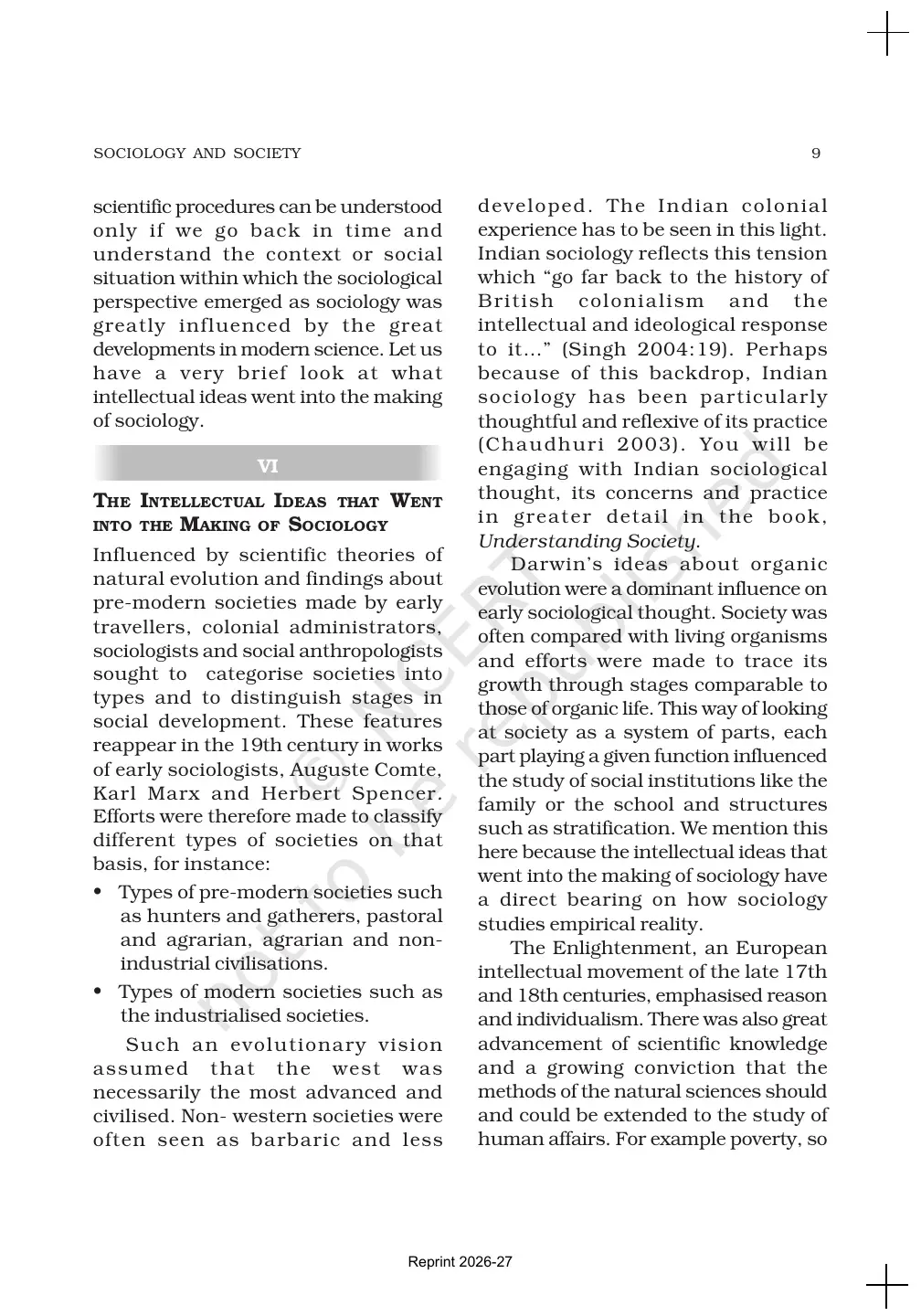
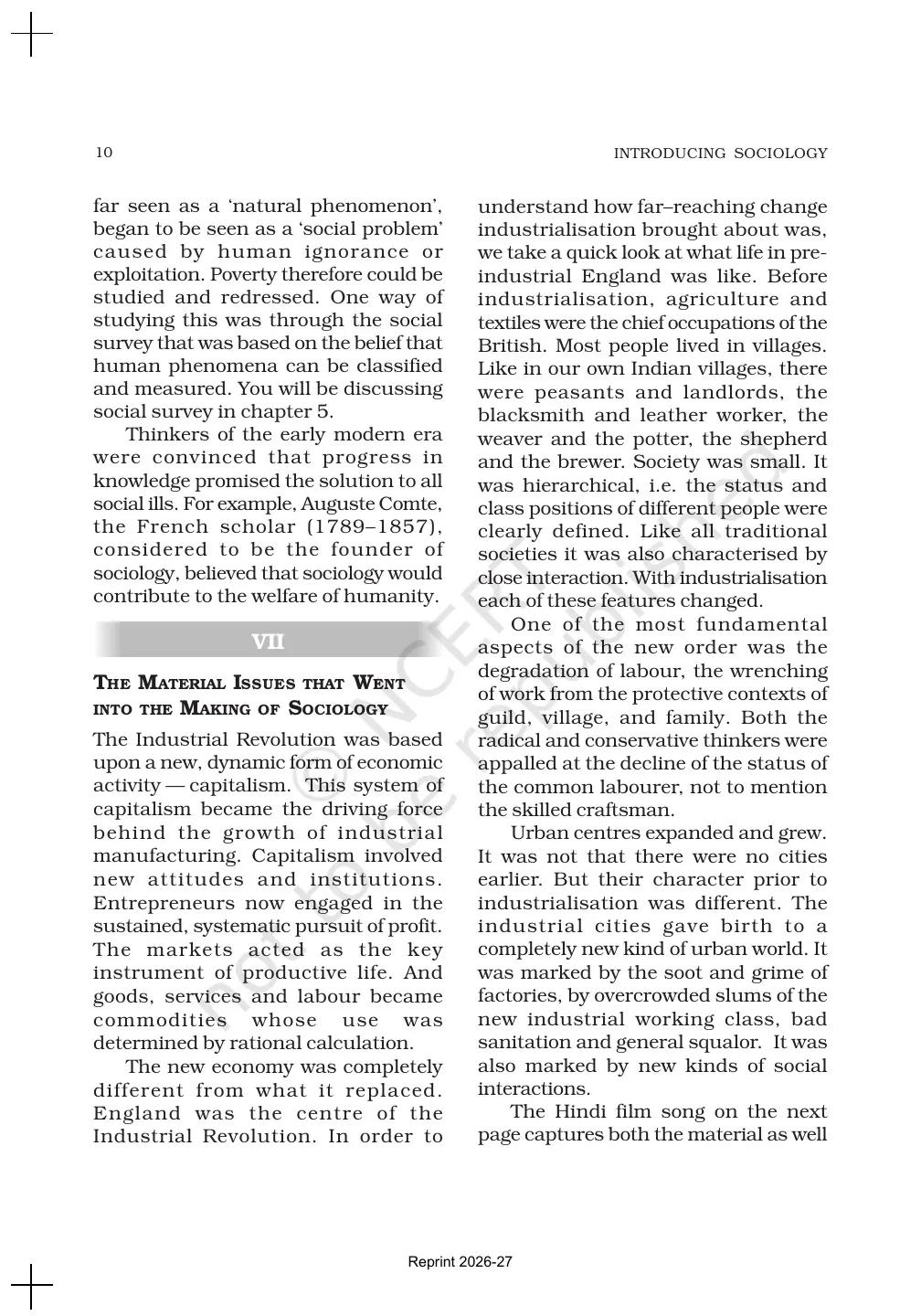
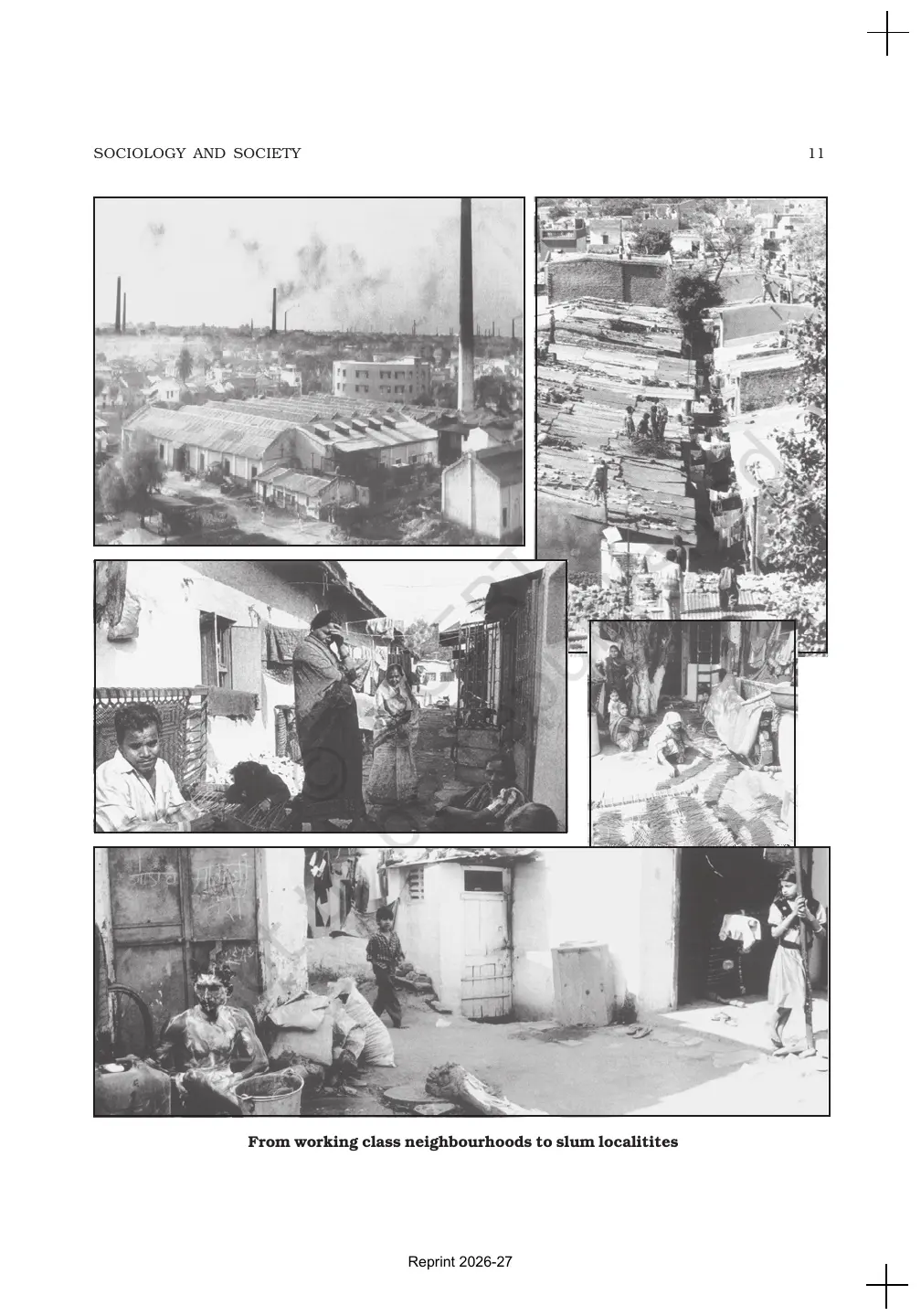
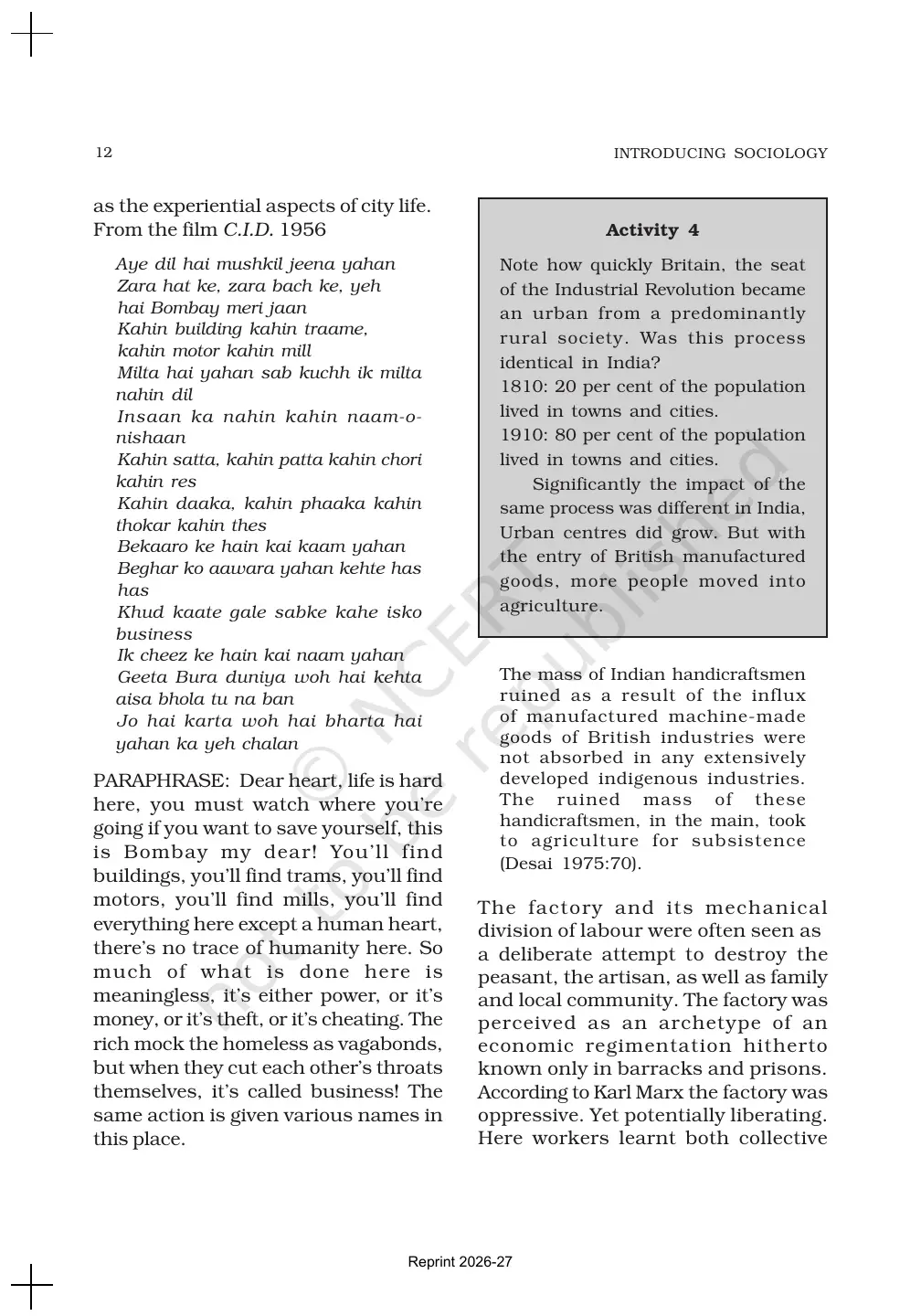
Student Feedback: In a Collegedunia check of 7,400 Class 11 humanities students, 72% said they used the NCERT book PDF to quote definitions and examples exactly in Sociology answers.
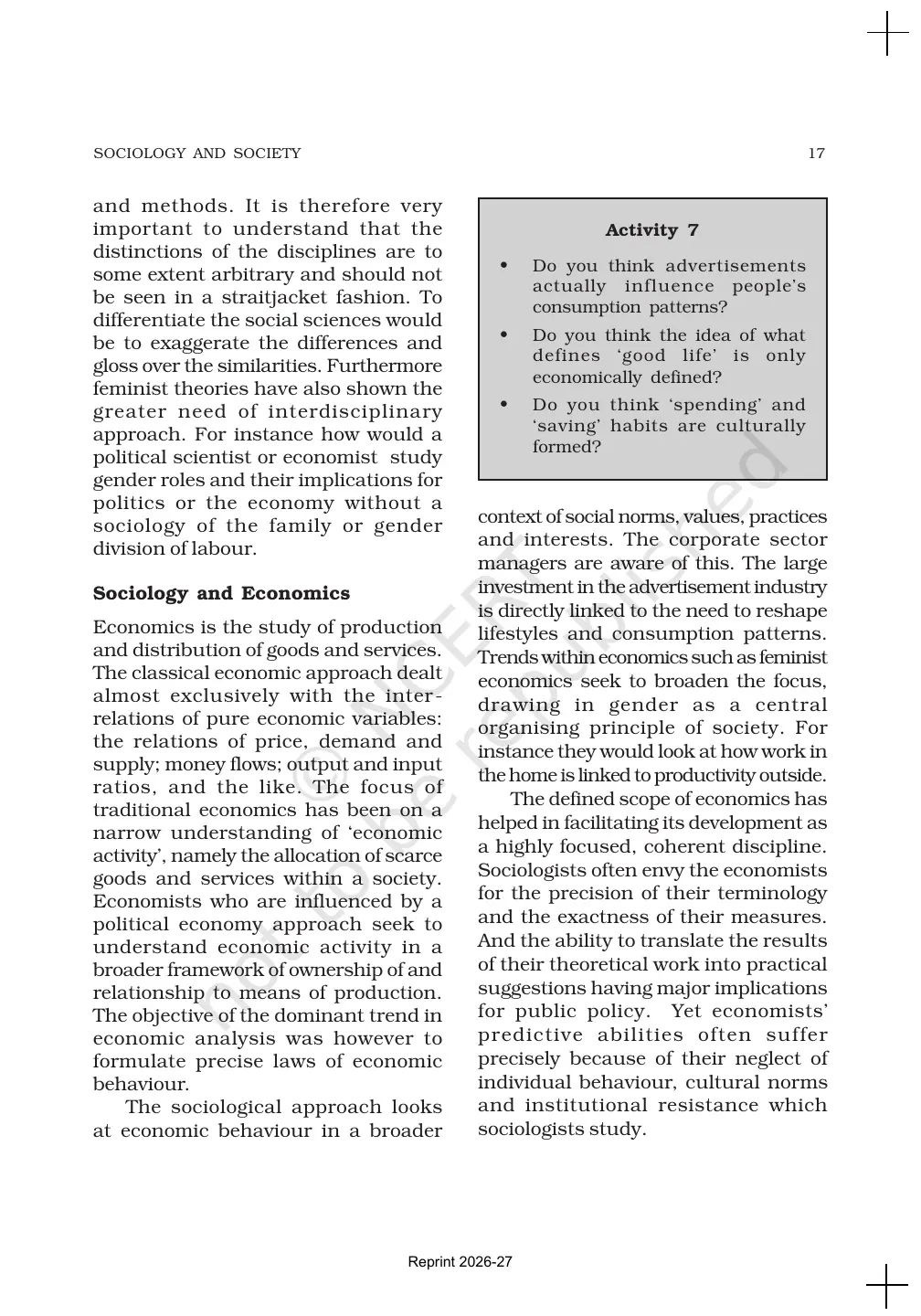
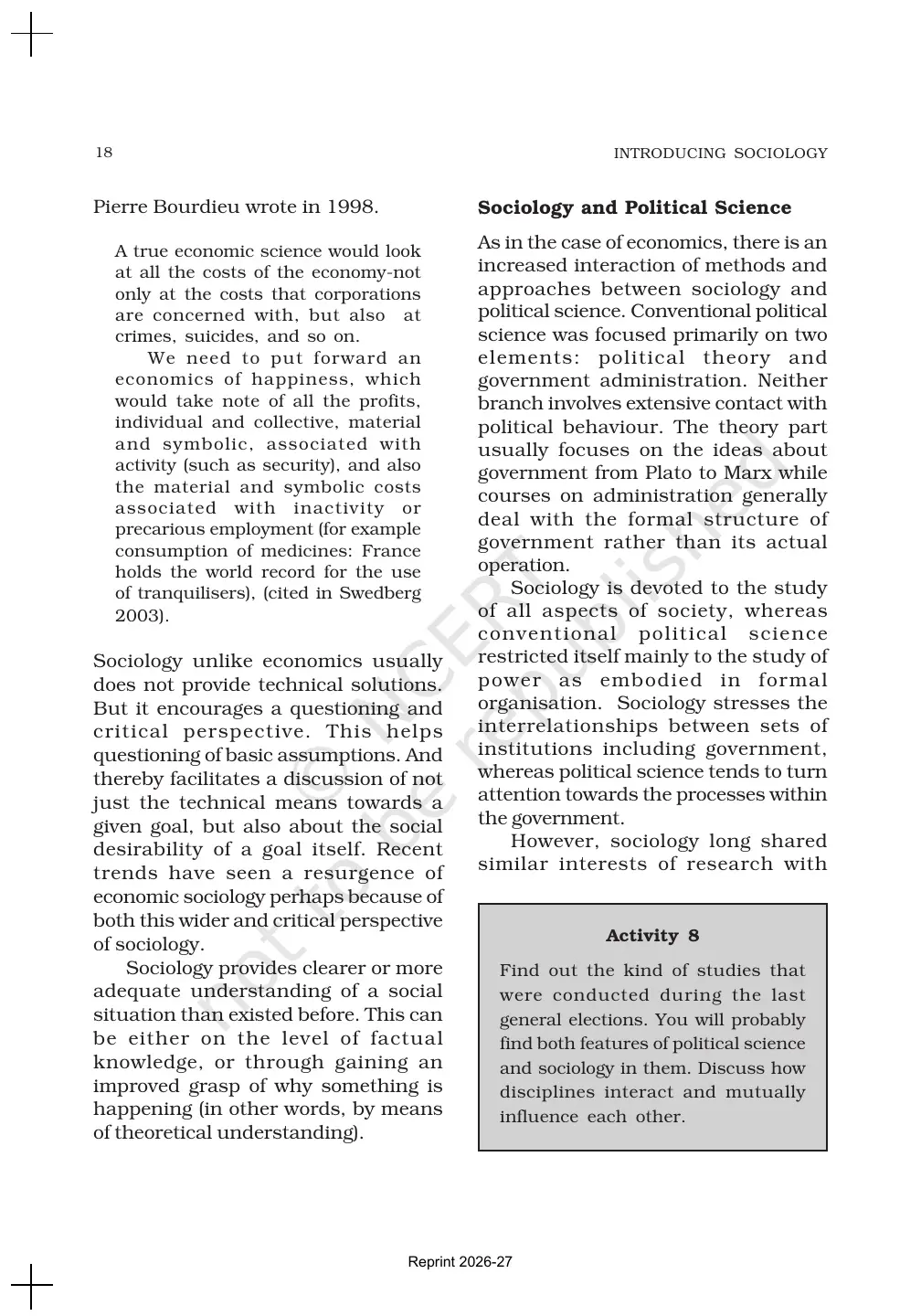
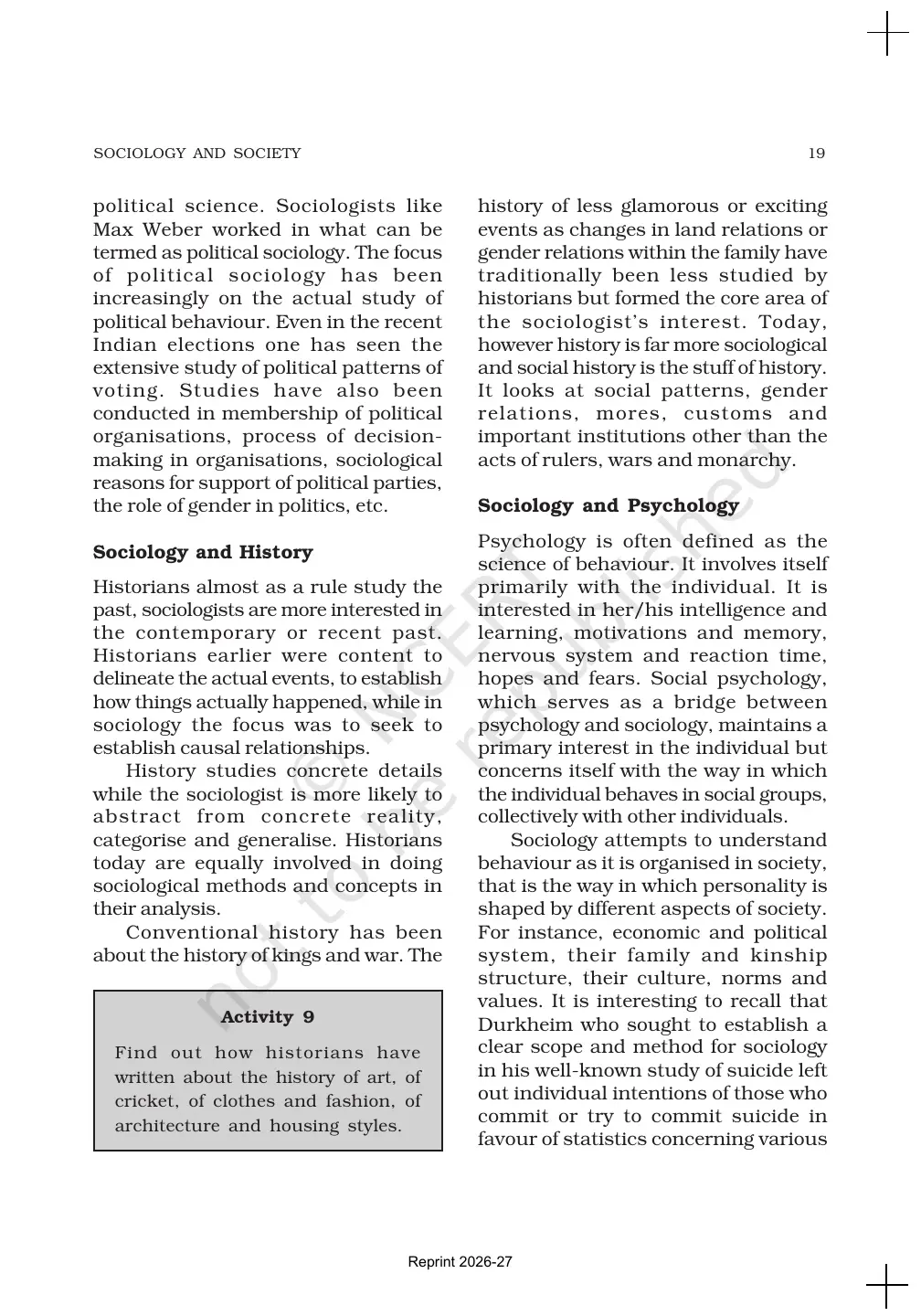
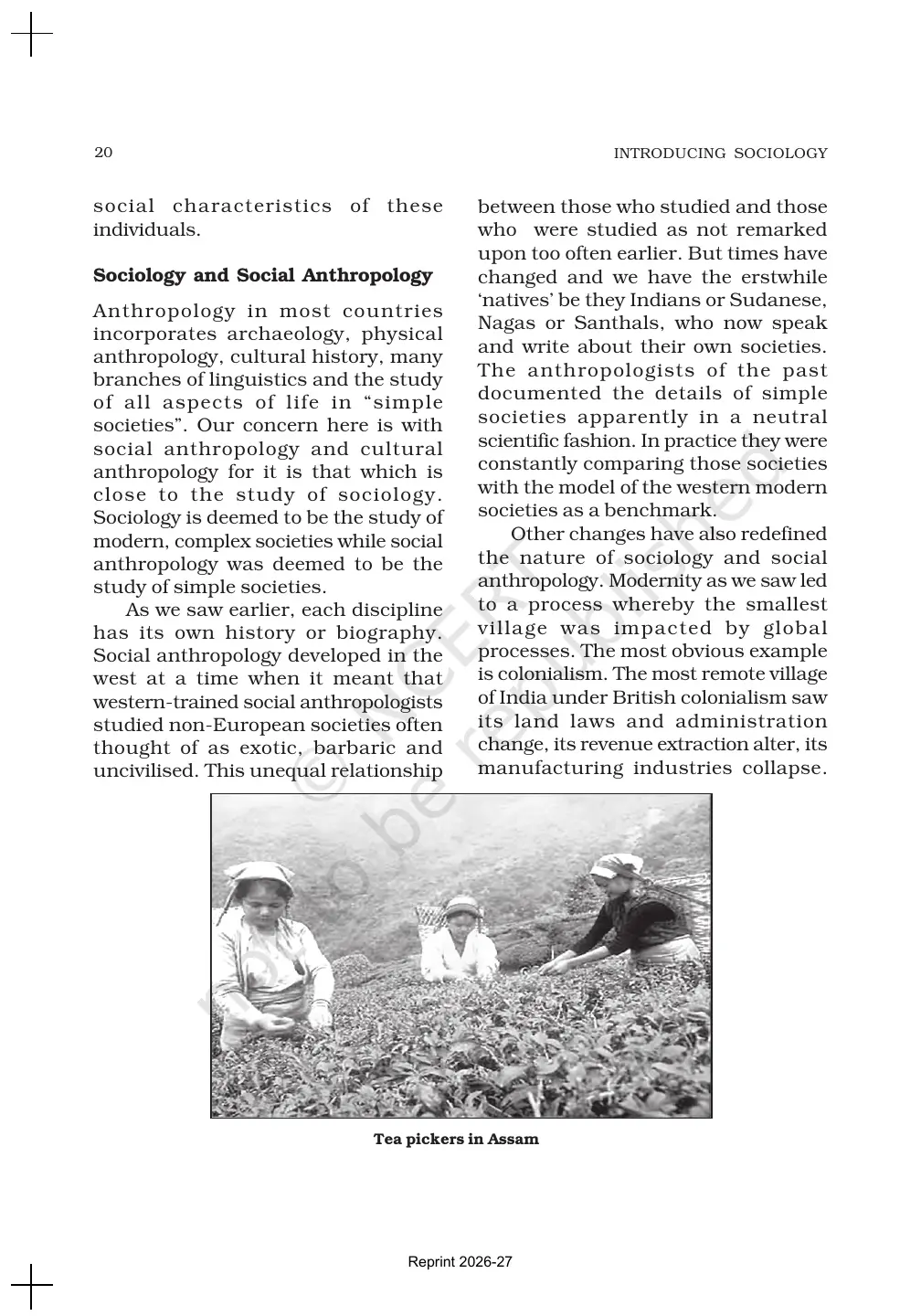
What the Sociology and Society NCERT PDF Covers
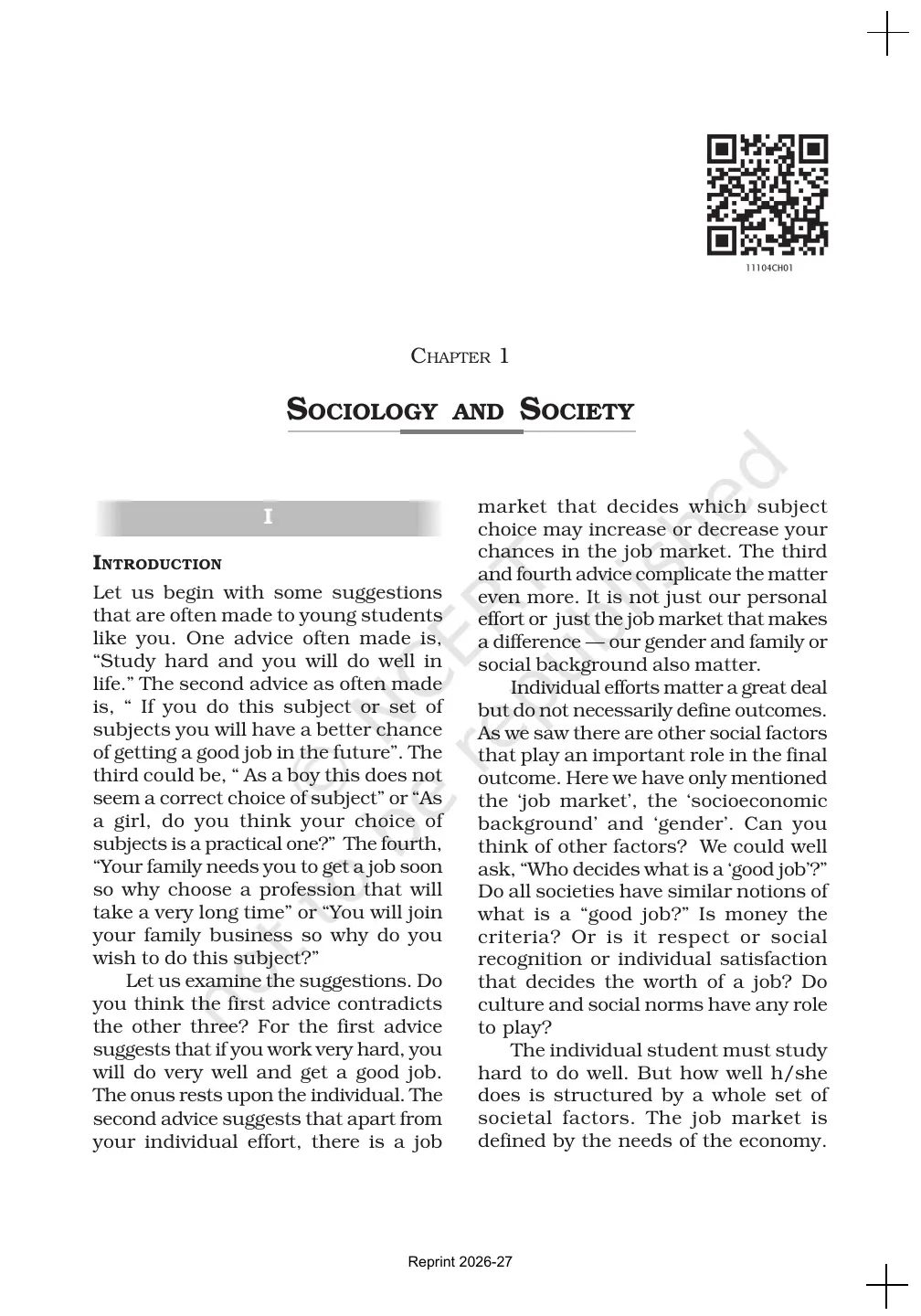
Chapter 1 opens with a simple question: why do students choose some subjects, jobs and life paths over others? NCERT uses this everyday example to show that personal effort matters, but outcomes are also shaped by the job market, family background, gender and social expectations.
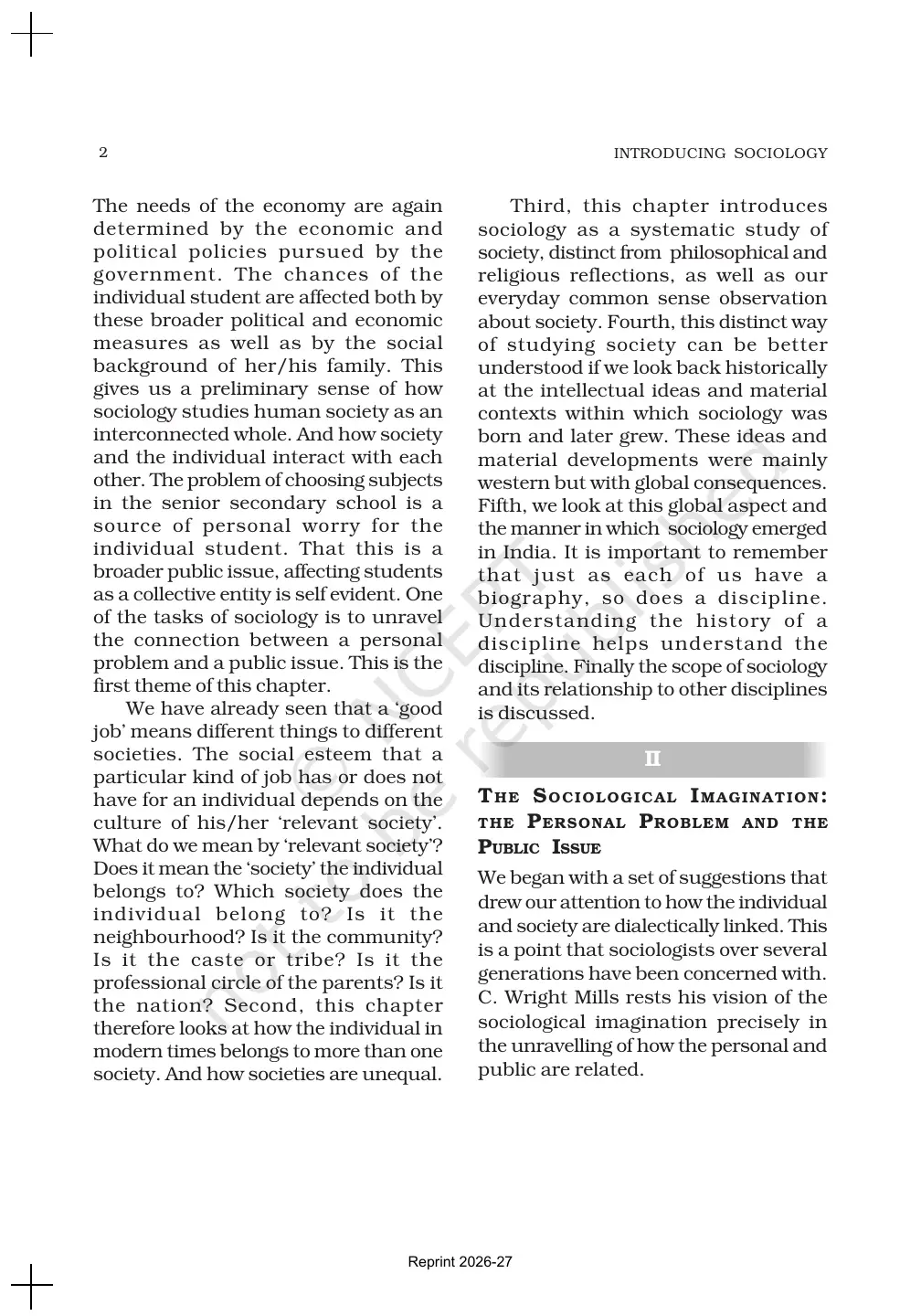
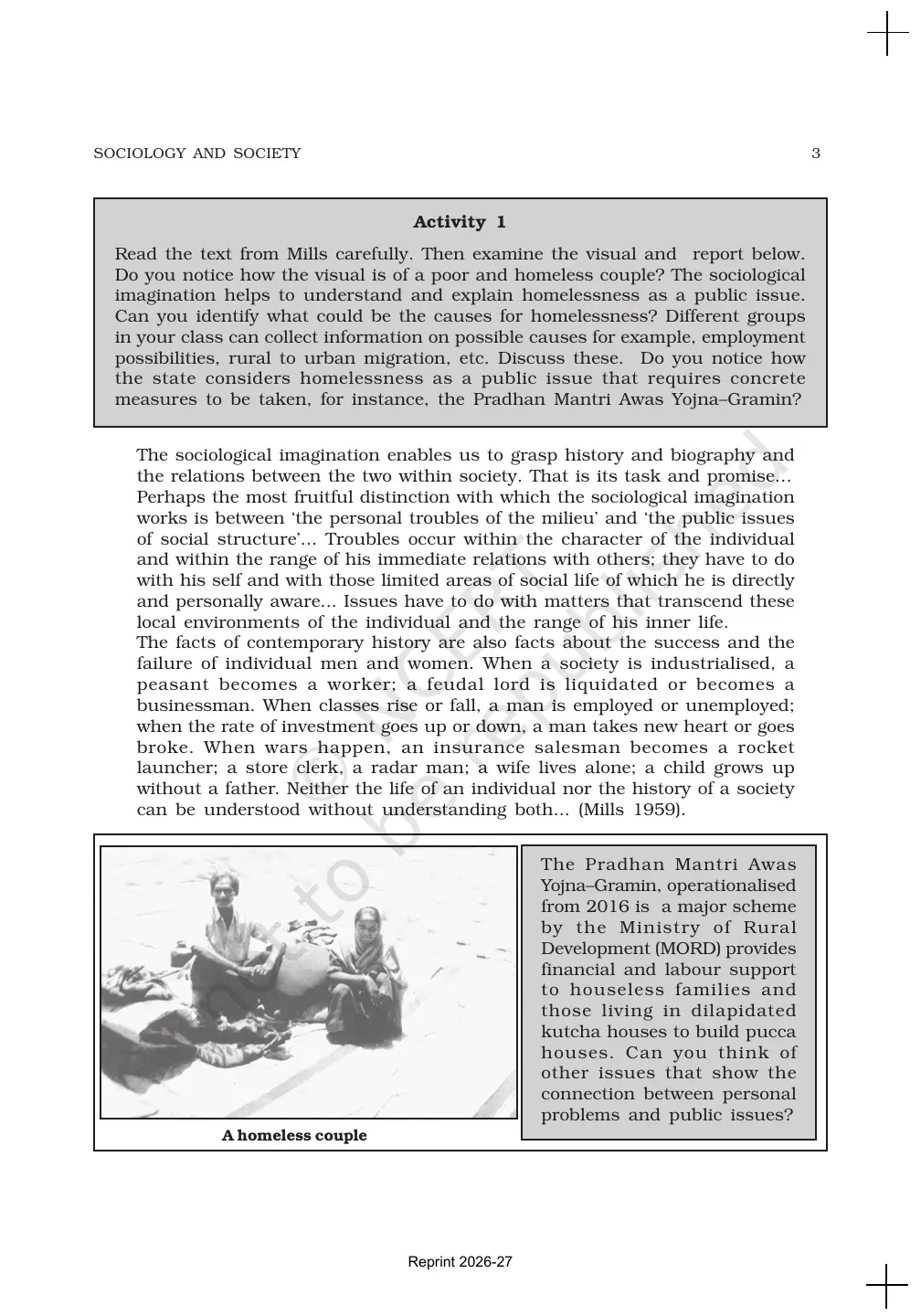
The chapter then introduces the main promise of sociology. It asks students to connect a personal problem with the larger public issue around it. C. Wright Mills calls this the sociological imagination. The textbook uses homelessness, employment, migration and government housing support to show how a single life story can be linked with social structure.
Do not read the chapter as a list of definitions only. Its central idea is that society and the individual shape each other. That idea returns in later Sociology chapters on institutions, culture, stratification and social change.
Sociological Imagination in Chapter 1
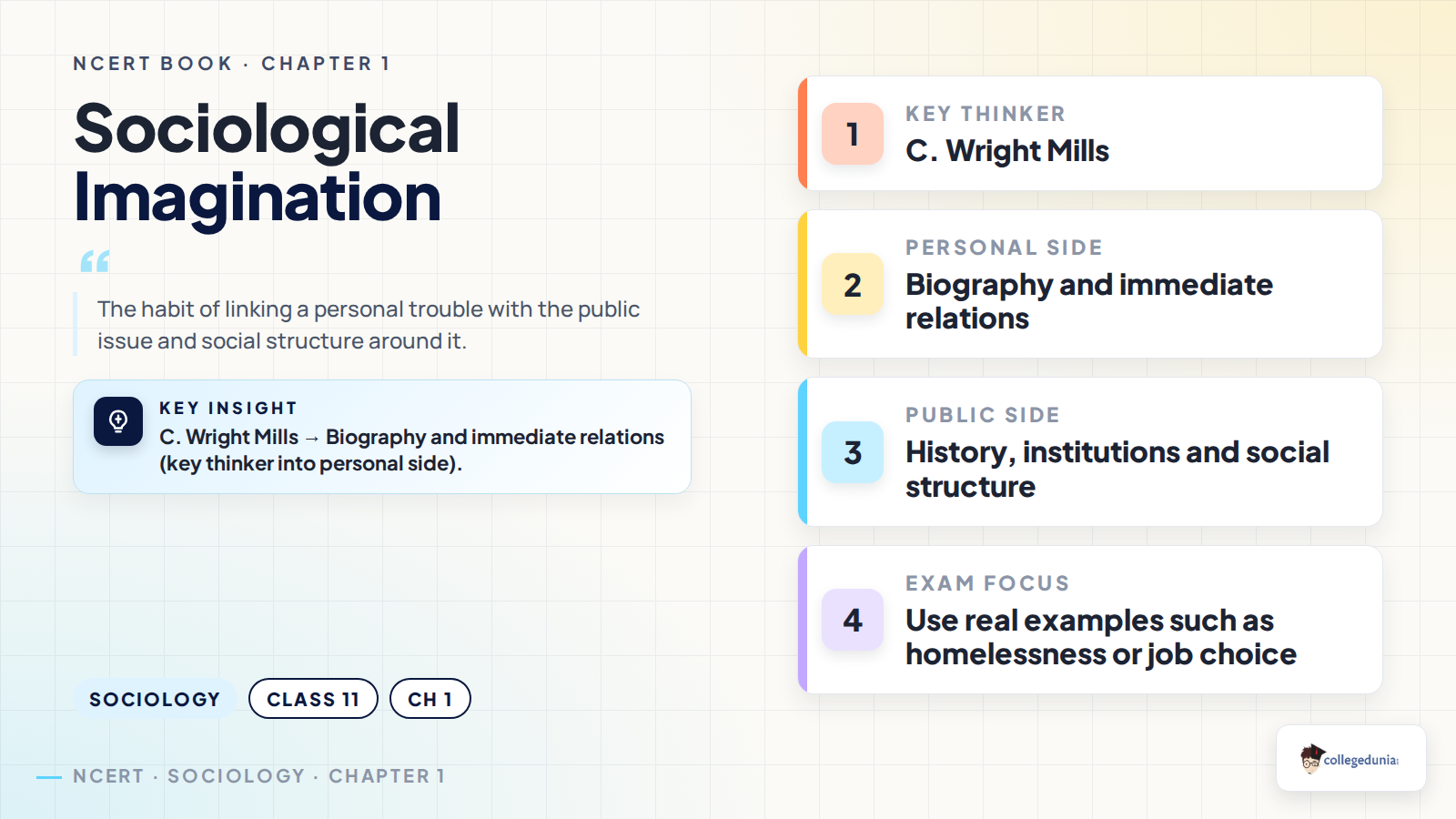
Sociological imagination helps students move beyond a narrow personal explanation. For example, unemployment is not only about one student working hard or not working hard. It is also linked with economic policy, available jobs, education, family support and social background.
| NCERT idea | Meaning | Example from the chapter |
|---|---|---|
| Personal trouble | A problem felt inside a person's immediate life | Worry about subject choice or future work |
| Public issue | A wider social condition affecting many people | Job market, gender expectations and class background |
| Biography | An individual's life story and choices | A student's study plan and family situation |
| History | The larger setting in which lives unfold | Industrialisation, policy change and social inequality |
Sociology and Society Chapter Overview
Source: Magnet Brains on YouTube
Sociology and Common Sense Compared
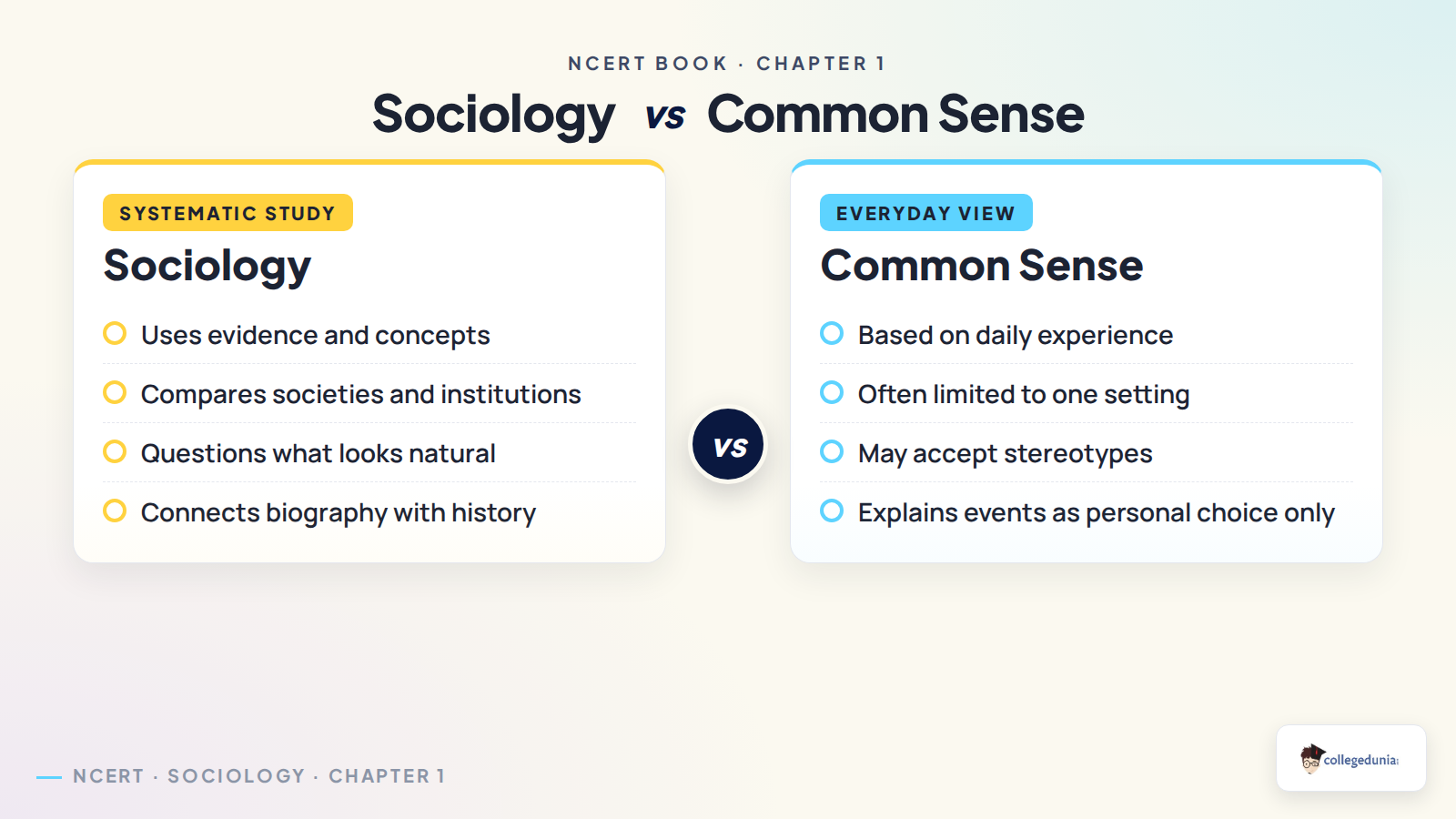
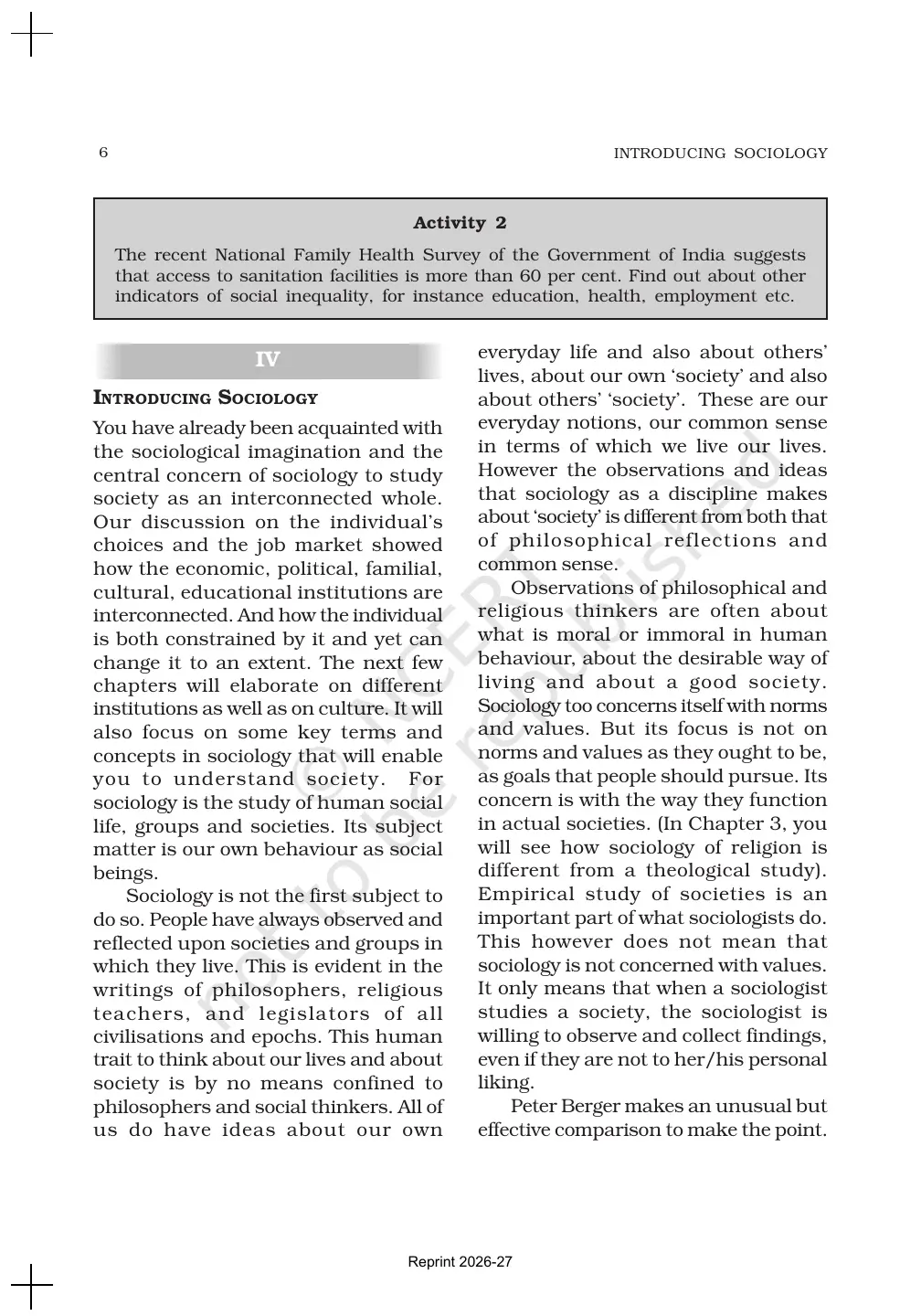
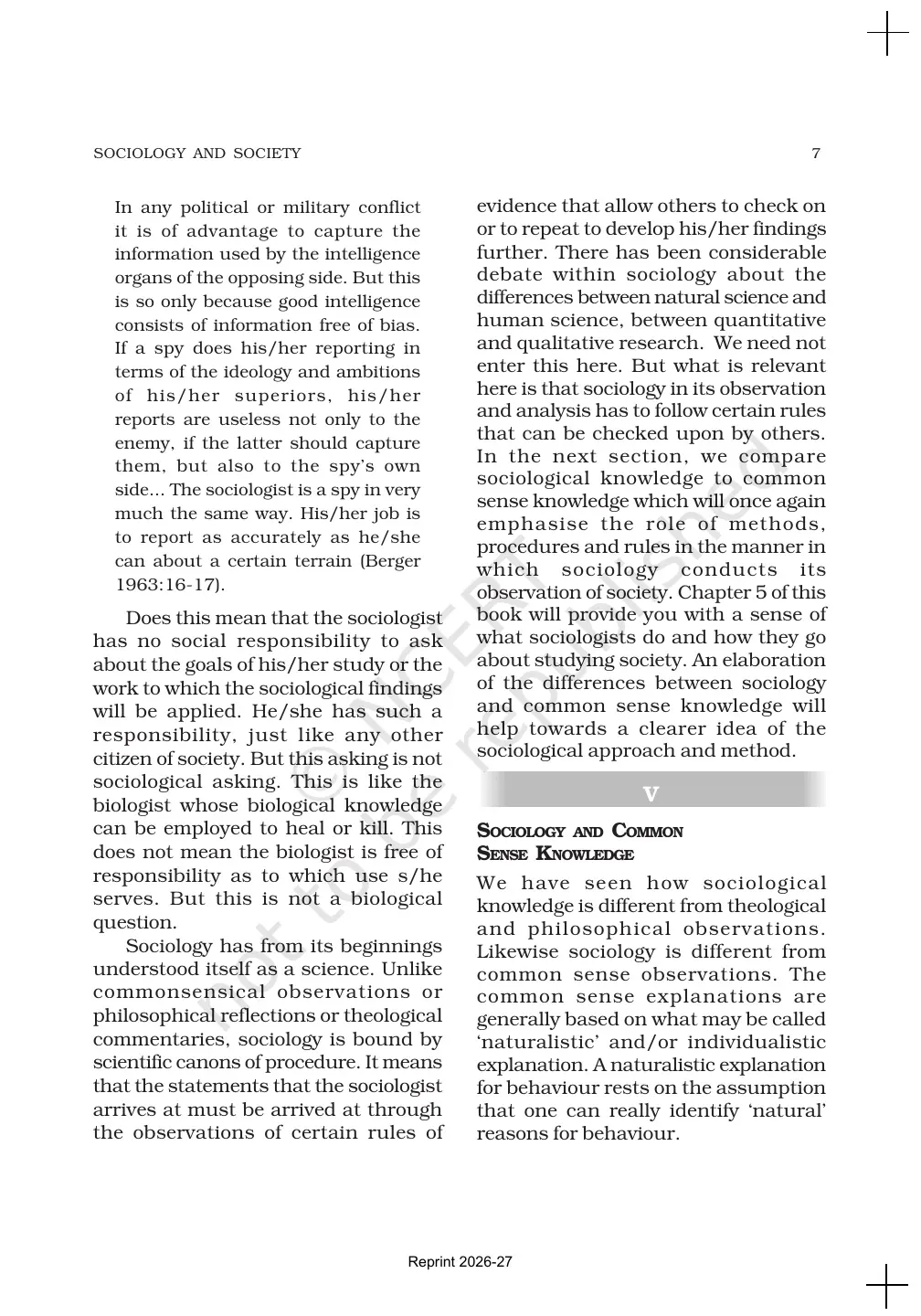
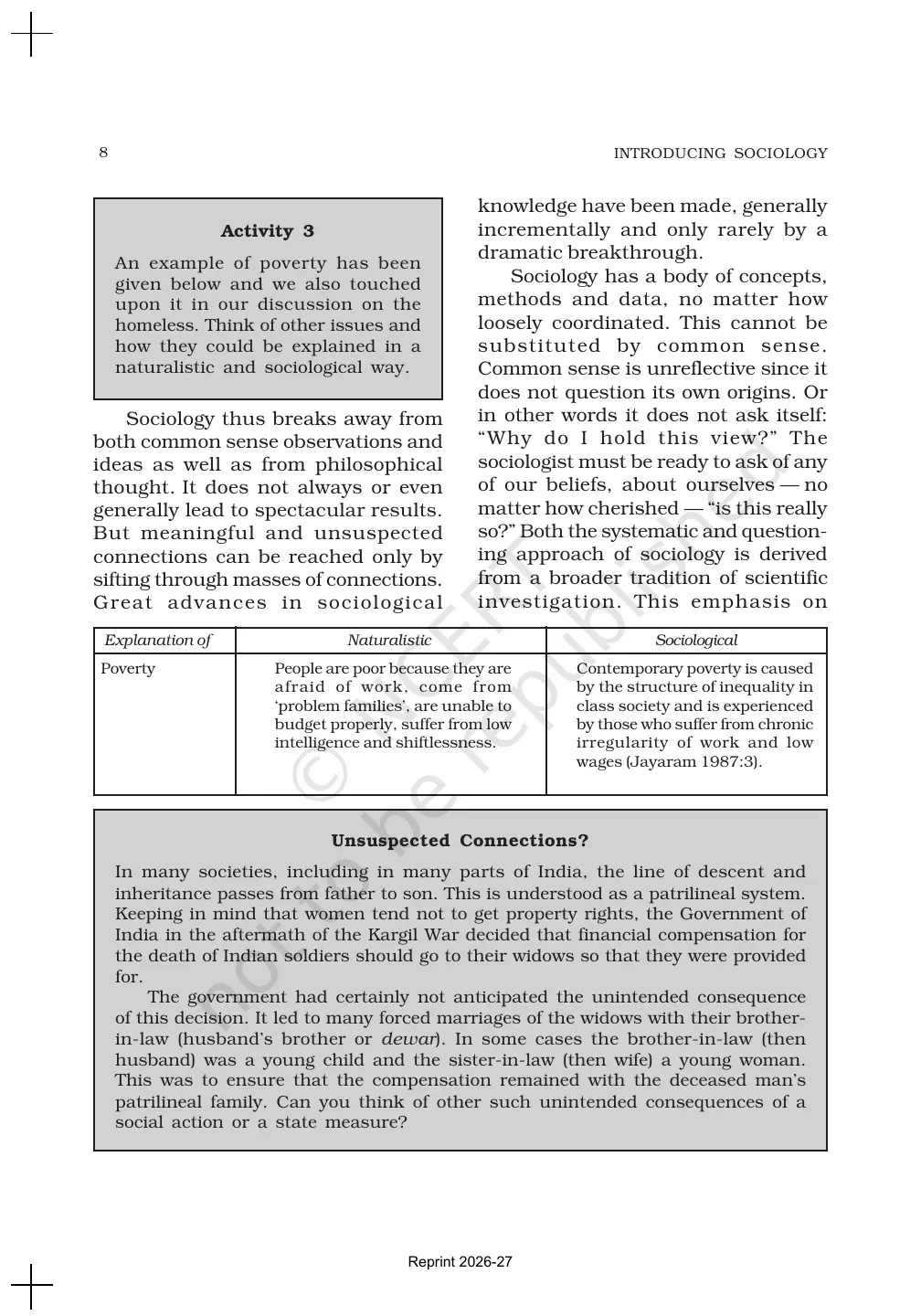
The chapter explains that sociology is different from everyday common sense. Common sense is often based on local experience. It may accept stereotypes as natural. Sociology asks for evidence, comparison and careful concepts before reaching a conclusion.
- Sociology studies society in a systematic way and checks claims against evidence.
- Common sense may explain social life through habit, family opinion or a single example.
- Sociological questions ask why a practice exists, who benefits and how it changes over time.
A strong exam answer should name the difference and give one example. For instance, instead of saying poor housing is only a personal failure, sociology asks how wages, migration, land, state policy and social inequality are involved.
Pluralities and Inequalities Among Societies
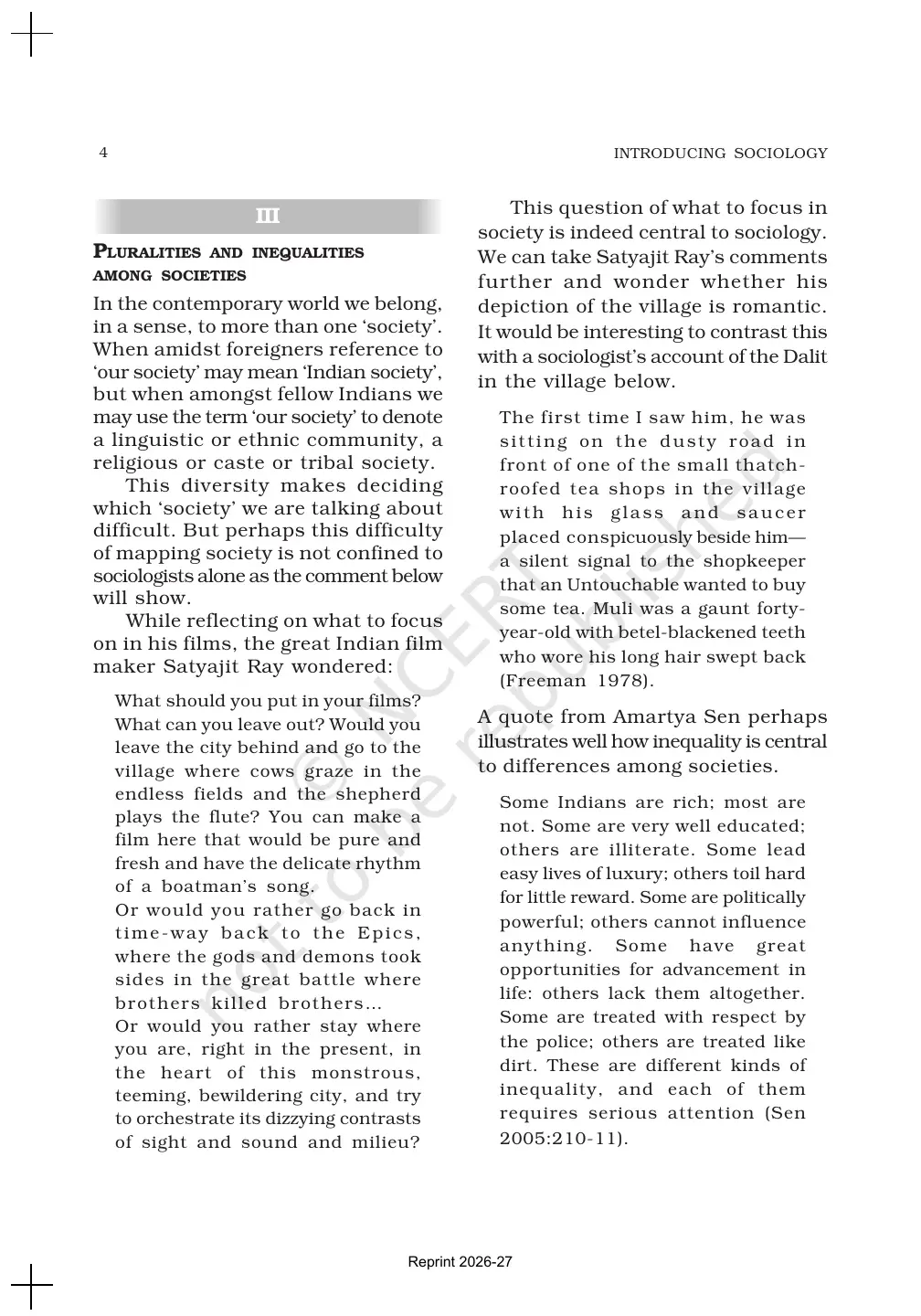
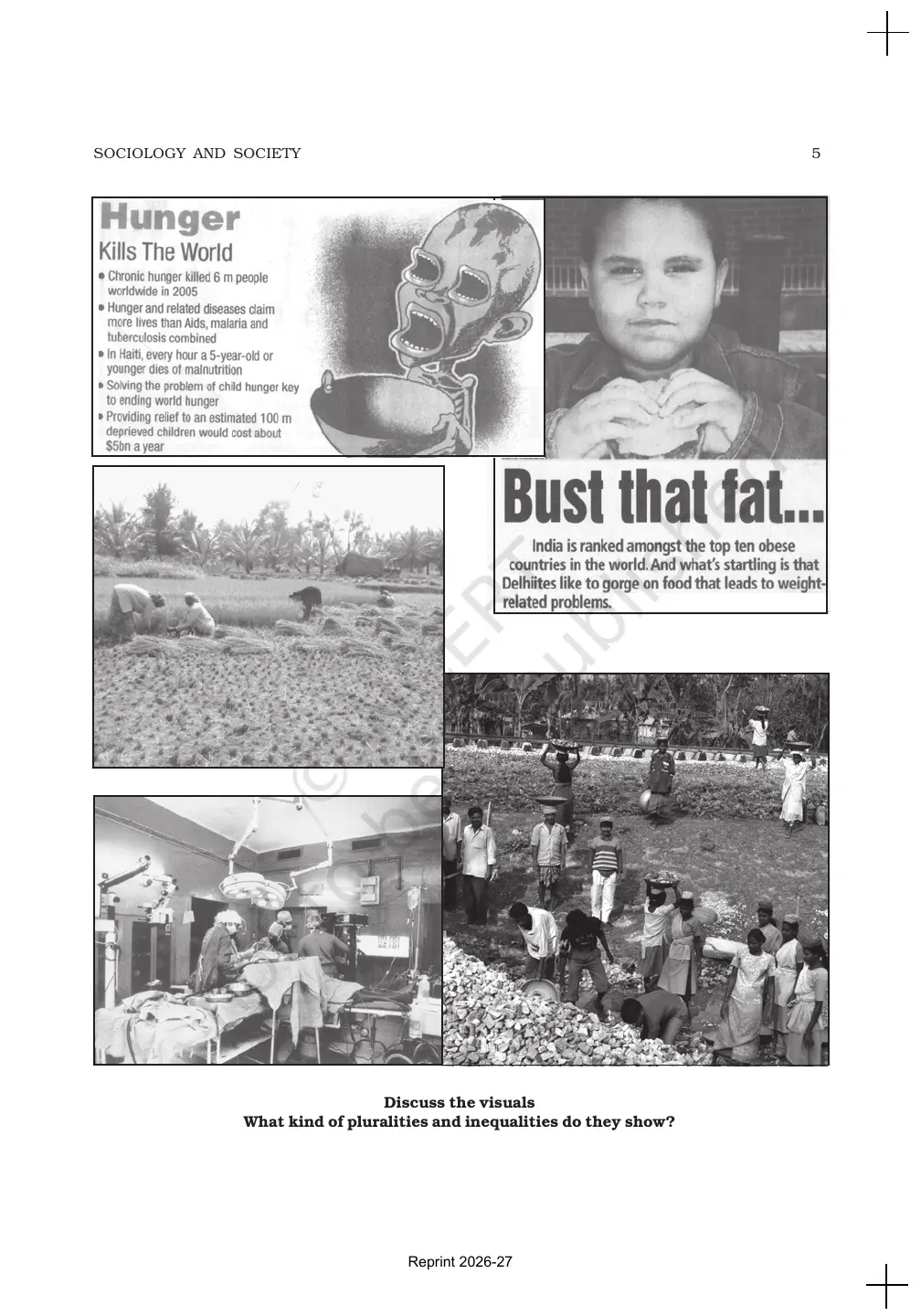
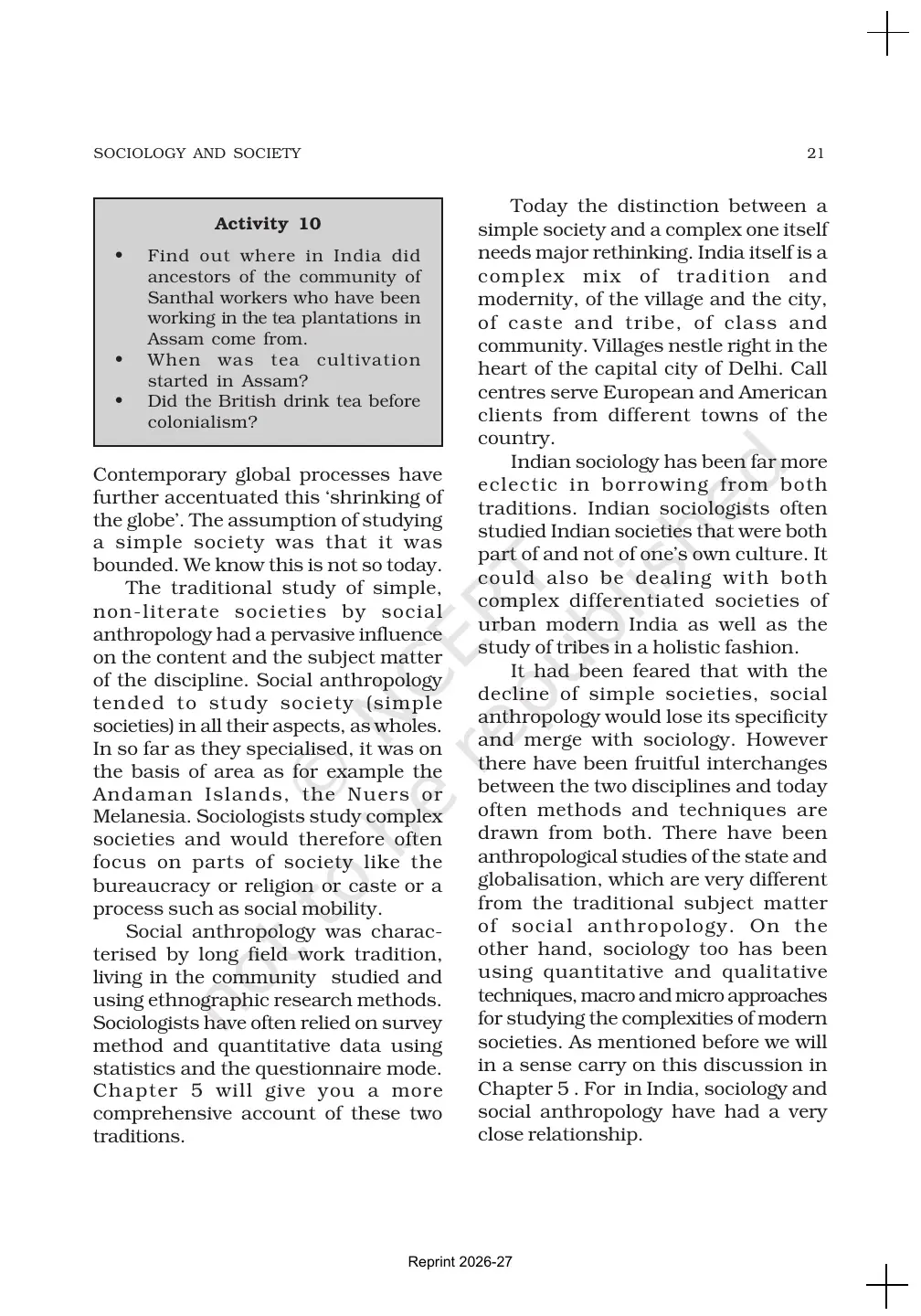
NCERT also asks what we mean when we say "our society". The phrase can mean the nation, a region, a language group, a religion, a caste, a tribe, a neighbourhood or a professional circle. One person can belong to more than one society at the same time.
This is why Sociology Chapter 1 treats society as plural and unequal. Different groups have different resources, recognition and power. The chapter prepares students for later topics by showing that society is not one flat group where everyone stands in the same place.
Plurality means many social locations exist together. Inequality means those locations do not carry the same power, income, respect or life chances.
How to Use the Chapter 1 Book PDF for Revision
Use the official PDF in three passes. First, read the chapter as a story about society and the individual. Second, underline the terms sociological imagination, personal trouble, public issue, common sense, plurality and inequality. Third, turn each NCERT activity into a possible short-answer question.
- Start with examples: subject choice, employment, homelessness and family background.
- Learn the terms: write each key term in one line using NCERT language.
- Connect ideas: link individual biography with wider social history.
- Practise answers: explain why sociology is systematic and evidence based.
For 2026-27 revision, keep the PDF open while making notes. The wording around Mills, homelessness and common sense is useful for exact textbook-based answers.
Sociology and Society Class 11 Related Resources
| Resource | Best use |
|---|---|
| Sociology and Society Handwritten Notes | Use for quick recall after reading the official chapter PDF. |
| Sociology and Society Notes | Use for shorter revision once the notes page is live. |
| Sociology and Society NCERT Solutions | Use for textbook question answers once the solutions page is live. |
All Class 11 Sociology NCERT Book Chapters
Sociology and Society Class 11 NCERT Book FAQs
Ques. What is included in the Class 11 Sociology Chapter 1 NCERT PDF?
Ans. It includes the official Sociology and Society chapter, covering sociological imagination, personal troubles, public issues, society, inequality, common sense and the emergence of sociology.
Ques. What is sociological imagination in Chapter 1?
Ans. Sociological imagination is the ability to connect a personal problem with a wider public issue. NCERT explains it through C. Wright Mills and examples such as homelessness and subject choice.
Ques. How is sociology different from common sense?
Ans. Sociology uses systematic study, evidence and comparison. Common sense is often based on everyday experience and may accept social stereotypes without questioning them.
Ques. Why should students read the official NCERT PDF?
Ans. The PDF gives the exact textbook wording, examples and activity prompts for the 2026-27 syllabus. It is useful for writing short and long answers in school exams.



Comments