




The NCERT Solutions for Class 6 Social Science Chapter 9 Family and Community answer all three textbook tasks for 2026-27. Collegedunia's answers explain family roles, community support and the meaning of shared responsibility. They also use examples from Shalini, Tenzing, the Bhil halma tradition and Kamal Parmar's classes.
- Get direct answers to all three end-of-chapter questions.
- Revise joint families, nuclear families, dharma and community duties.
- Use textbook examples to support every long answer.
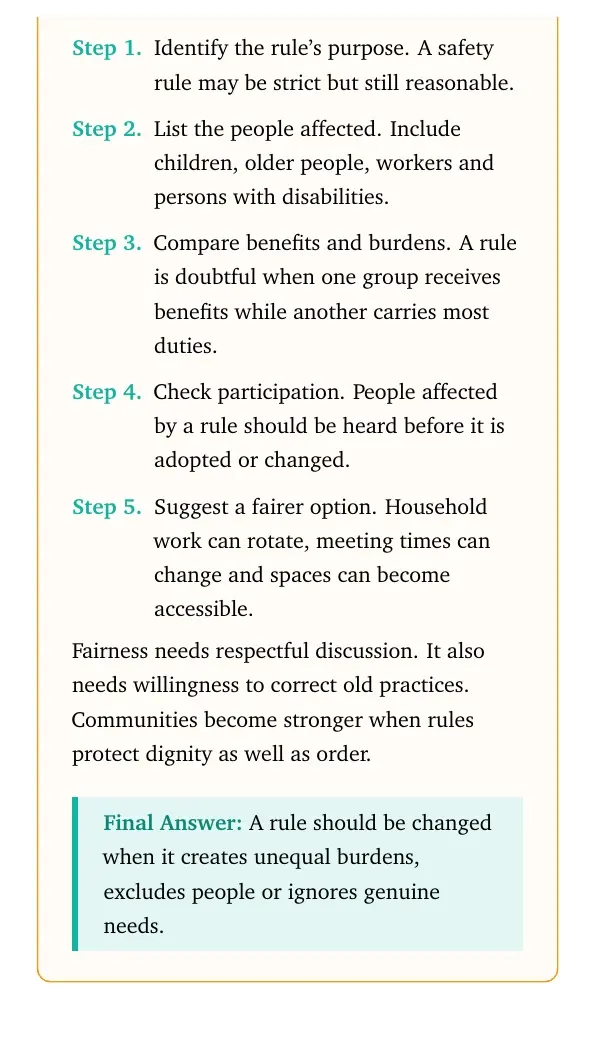
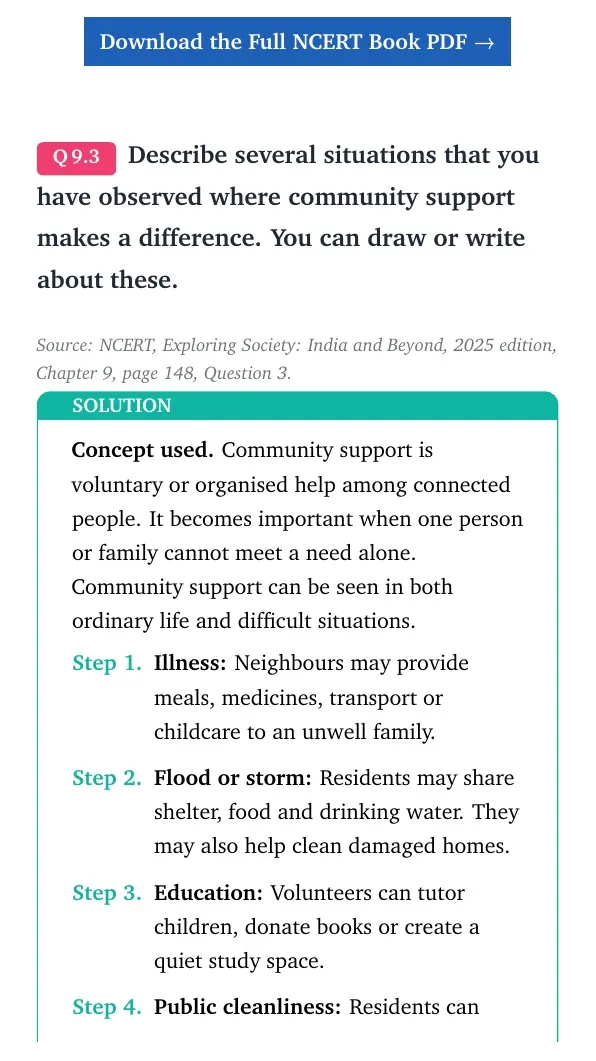
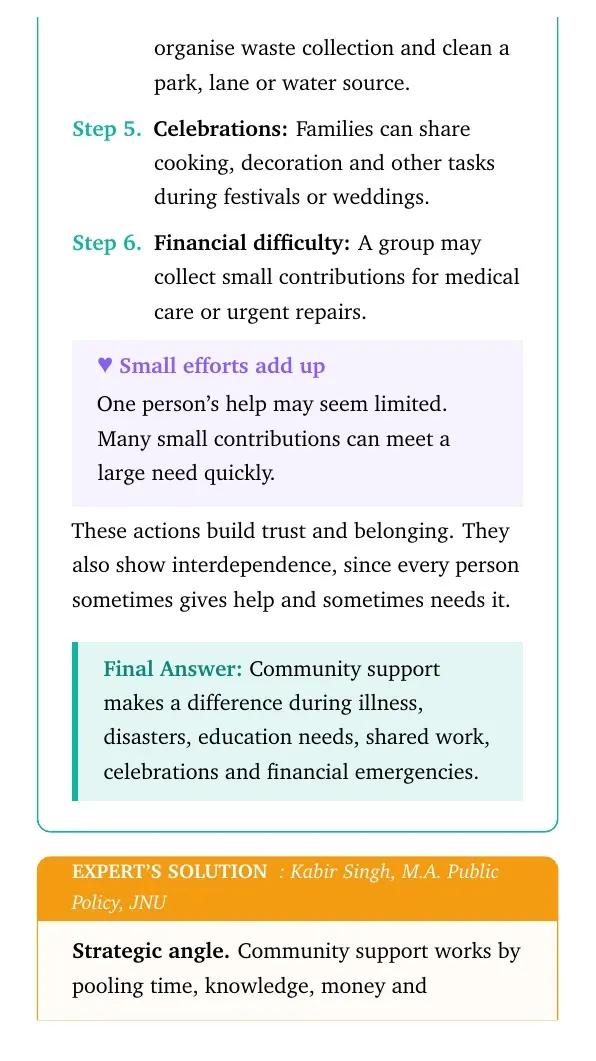
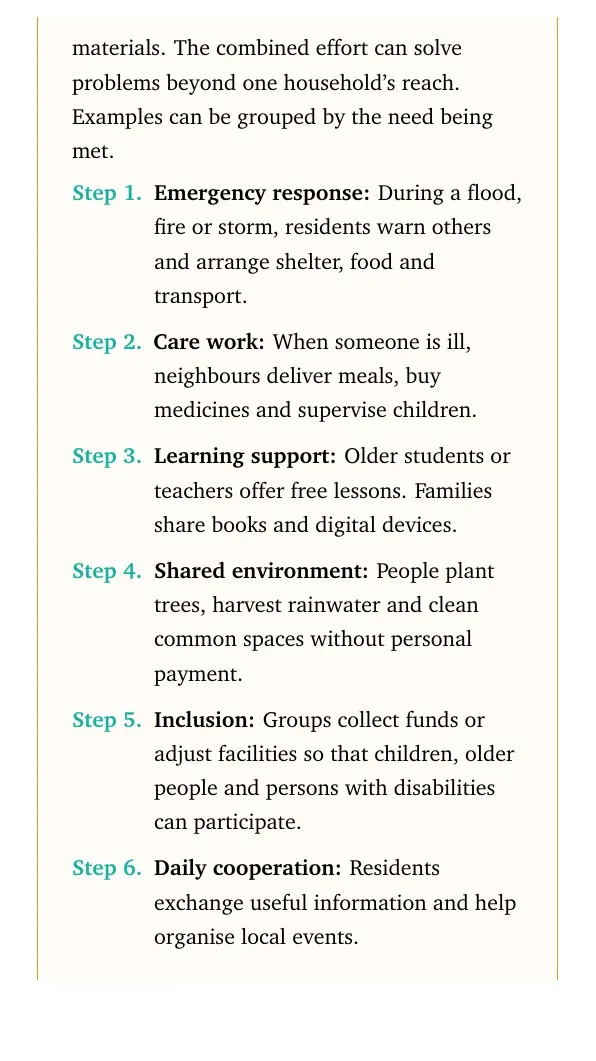
Each answer follows the 2026-27 NCERT textbook and uses clear language for Class 6 students.
Student Feedback
In a Collegedunia study poll of 12,610 students, most students said a family tree helped them remember relationship terms.
|
Table of Contents |
Family and Community Ideas Used in the NCERT Solutions
Family and community are the first groups that teach people to live together. Members care for one another and share work. A strong answer connects each duty with love, cooperation and responsibility.
| Idea | Meaning | Textbook example |
|---|---|---|
| Family | A basic social unit joined by relationships | Shalini's and Tenzing's families |
| Responsibility | Work done for the well-being of others | Sharing chores and caring for elders |
| Community | People linked by place, interest or work | A village, school or Residents' Welfare Association |
| Interdependence | People depending on one another | Families using shared services and resources |
Family duties are not fixed. Members often change roles when age, health or circumstances change.
Family and Community Explained for Class 6
Source: Magnet Brains on YouTube
Joint and Nuclear Families Explained with Chapter Examples
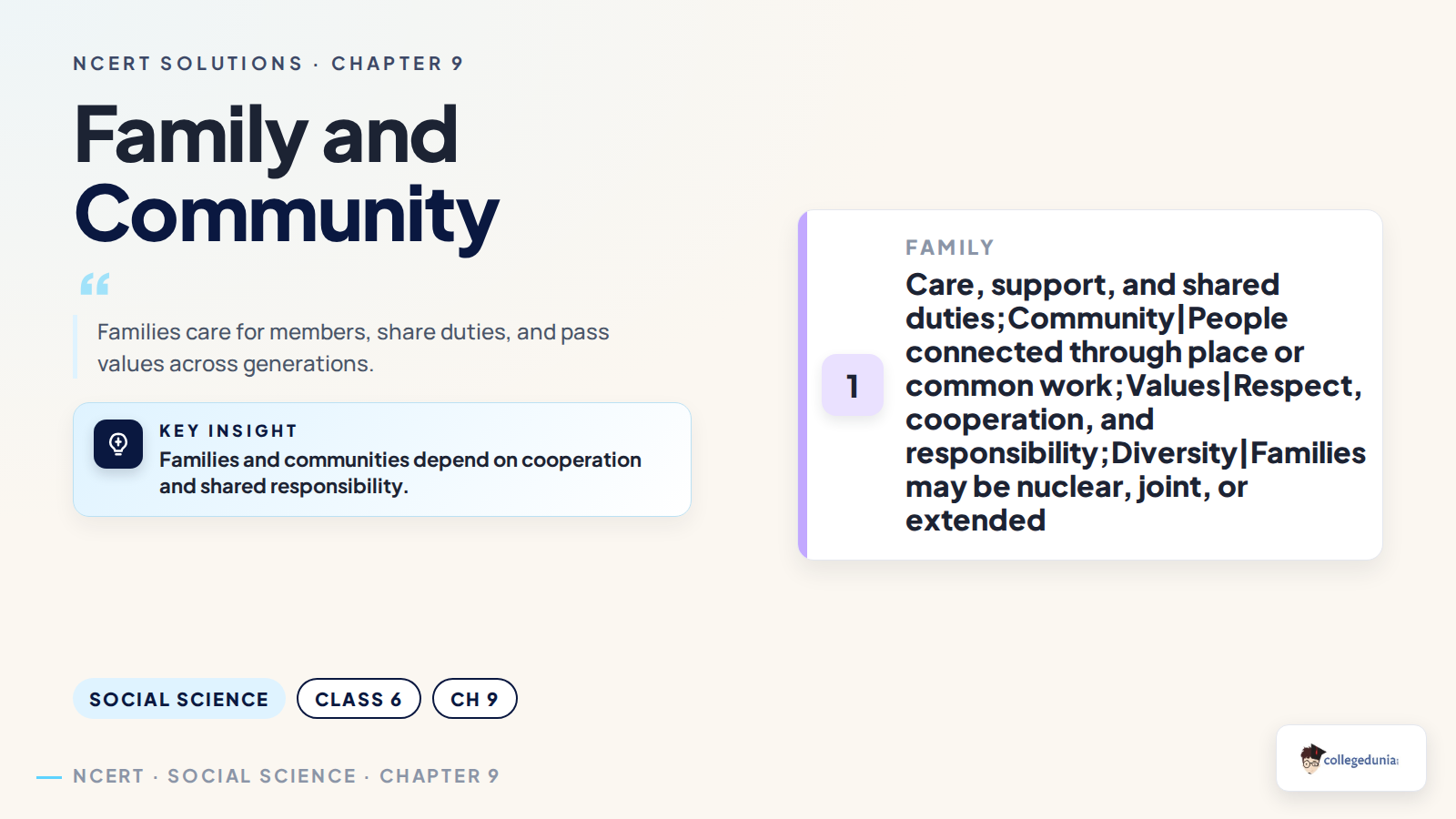
NCERT describes two common family forms. A joint family has several generations living together. A nuclear family usually includes a couple and their children.
- Joint families may include grandparents, parents, uncles, aunts and cousins.
- Nuclear families have fewer members living in one home.
- Both forms can provide care, security and emotional support.
- Indian languages often use exact words for different family relationships.
The form may differ, but care and cooperation remain central to family life.
Roles and Responsibilities in Shalini's and Tenzing's Families
Shalini's story shows a large family preparing for Onam. Tenzing's family in Meghalaya shows members sharing daily chores. These stories explain how families work through cooperation.
- Adults earn, plan, cook and care for family members.
- Children can study, help with chores and support younger members.
- Grandparents may share knowledge, stories and practical help.
- Everyone deserves respect, including members who need extra care.
The chapter links such duties with dharma. Here, dharma means doing the right duty towards others. Responsibility grows from care, not only from rules.
Community Cooperation through Halma and Shared Service
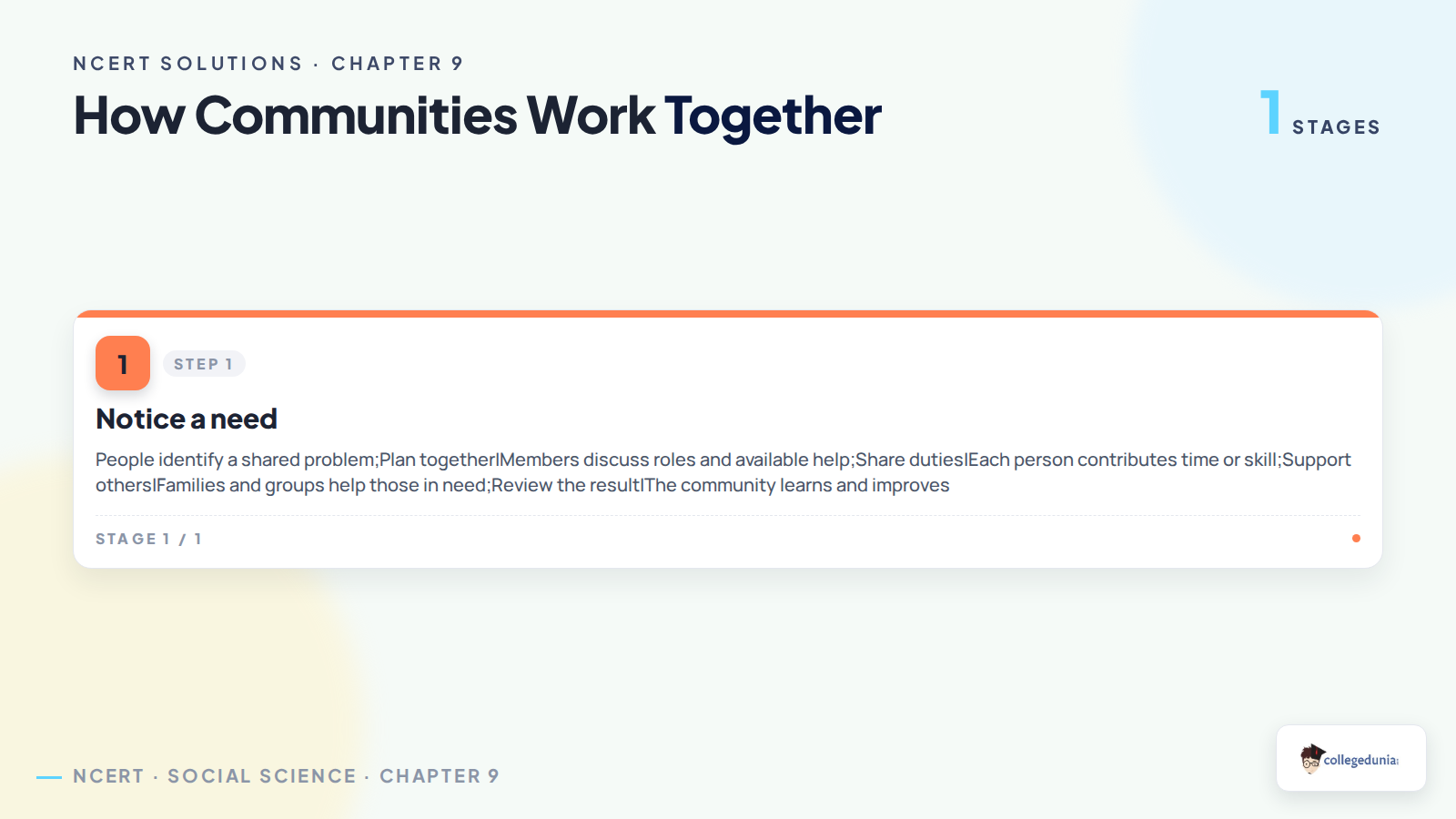
A community includes people who share spaces, resources or goals. Its members may not belong to one family. They still work together when a common need arises.
| Example | Community action | Lesson |
|---|---|---|
| Halma tradition | Bhil community members volunteer for a shared task | Collective work can solve local problems |
| Chennai floods | People helped strangers during an emergency | Communities act beyond family ties |
| Kamal Parmar's classes | Volunteers taught children in Ahmedabad | Time and knowledge can serve others |
| Residents' Welfare Association | Residents manage common neighbourhood concerns | Shared places need shared duties |
These examples show that service makes a community stronger. People protect common resources when they feel responsible for them.
How to Write Better Family and Community Answers
Start with the main idea asked in the question. Add one exact example from the chapter. End by explaining what that example teaches.
- Define family or community before giving examples.
- Use Shalini or Tenzing for questions about family duties.
- Use halma or Kamal Parmar for questions about community service.
- Compare joint and nuclear families without calling one better.
- Explain how cooperation supports the common good.
Family and Community Class 6 Related Resources
| Resource | Best use |
|---|---|
| Family and Community Class 6 NCERT Book PDF | Read all stories and activities |
| Family and Community Class 6 Notes | Revise terms and examples |
| Family and Community Class 6 Handwritten Notes | Complete a quick recap |
All Class 6 Social Science NCERT Solutions
| Chapter | NCERT Solutions |
|---|---|
| 6 | The Beginnings of Indian Civilisation |
| 7 | India's Cultural Roots |
| 8 | Unity in Diversity, or 'Many in the One' |
| 9 | Family and Community |
| 10 | Grassroots Democracy - Part 1: Governance |
Open all Family and Community questions with step-by-step solutions
Family and Community Class 6 NCERT Solutions FAQs
Ques. What is a joint family?
Ans. A joint family has several generations living together, often including grandparents, parents, children, uncles, aunts and cousins.
Ques. What is a nuclear family?
Ans. A nuclear family usually consists of a couple and their children living together.
Ques. What does halma teach us?
Ans. Halma teaches that voluntary collective work can solve shared problems and protect community resources.
Ques. Why are roles important in a family?
Ans. Shared roles make sure that care, household work and support do not fall on one person alone.
Ques. How is a community different from a family?
Ans. A family is based mainly on close relationships. A community joins people through a place, interest, work or common purpose.



Comments