



Master of Science [MS] (Chemical and Petroleum Engineering)
Field of Study:
$6,003 /Yr

University of Calgary: Master of Science in Chemical and Petroleum Engineering
The University of Calgary’s Master of Science (M.S.) in Chemical and Petroleum Engineering is a prestigious 2-year, course-based graduate program designed for engineers seeking advanced expertise in chemical processes, petroleum systems, and sustainable energy technologies. Ranked 211th globally by QS and 200th by THE, the University of Calgary attracts students from over 138 countries, including a significant cohort from India. The programme offers hands-on learning, industry partnerships with major energy companies like Suncor Energy and Shell Canada, and clear pathways to Canadian permanent residency.
For Indian students, this programme represents a strategic investment in a North American engineering credential that opens doors to high-paying roles in Canada’s oil and gas sector, chemical manufacturing, and global energy industries. Graduates command median starting salaries of C$100,000 (approximately ?70.12 Lakhs), with 5-year salaries reaching C$120,000 to C$150,000 (?84.14 Lakhs to ?1.05 Crore). Co-op placements during the programme provide real-world experience and earn C$25,000 to C$40,000 per term (?17.53 Lakhs to ?28.05 Lakhs).
Calgary’s proximity to Canada’s energy hub, combined with the university’s strong ties to industry, makes this programme uniquely valuable for international engineers. Application opens in October 2026 for Fall 2027 intake, with a supplementary deadline of February 2027. Indian students with a relevant engineering bachelor’s degree and IELTS 6.5+ are encouraged to apply early.
| Attribute | Details |
| Programme Name | Master of Science (M.S.) in Chemical and Petroleum Engineering |
| School | Schulich School of Engineering |
| Duration | 2 years full-time |
| Intake Terms | Fall, Winter |
| Annual Tuition (International) | C$19,410 (approximately ?13.61 Lakhs) |
| Programme Structure | Course-based with research project / capstone; thesis-based variant available |
| Placement Rate | 90%+ within 6 months of graduation |
| Average Entry Salary | C$100,000 (?70.12 Lakhs) |
About the Programme — Curriculum and Focus
The Master of Science in Chemical and Petroleum Engineering at University of Calgary combines advanced chemical engineering theory with applied petroleum systems knowledge. The 2-year course-based programme requires completion of 12 credit hours of graduate-level engineering courses, including advanced thermodynamics, reaction kinetics, fluid mechanics, and petroleum production systems. Electives allow specialization in areas such as refining, natural gas processing, enhanced oil recovery, or carbon capture and utilization, reflecting the energy sector’s evolving priorities around sustainability.
Indian students benefit from the programme’s emphasis on quantitative problem-solving and industrial relevance. The curriculum is designed around real-world engineering challenges faced by companies like Suncor Energy, TC Energy, and Shell Canada, which operate major facilities in Alberta. Faculty members include researchers with patents in catalysis, process optimization, and energy efficiency. The programme includes a mandatory capstone project or research thesis, where students work on industry-sponsored problems or fundamental research in chemical engineering.
The course-based structure (as opposed to thesis-only) allows students to maintain co-op placements during their studies, providing both income and industry experience. Many students undertake 4 to 12-month co-op terms, working as process engineers or petroleum engineers at major energy companies. The flexibility to balance coursework with internships is highly valued by international students managing tuition costs.
Indian applicants should hold a Bachelor of Science or Bachelor of Engineering degree in Chemical Engineering, Petroleum Engineering, or related disciplines such as Mechanical, Environmental, or Civil Engineering. A minimum undergraduate GPA of 3.0 out of 4.0 (equivalent to 75% or B+) over the final 24 months of study is required. World Education Services (WES) credential evaluation is mandatory for Indian degrees and typically takes 4 to 6 weeks, so applicants should request this assessment early.
Cost of the Programme — Tuition and Living Expenses
The Master of Science in Chemical and Petroleum Engineering is significantly more affordable than similar programmes at peer Canadian universities. Annual tuition for international students is C$19,410, or approximately ?13.61 Lakhs per year at the current exchange rate of C$1 = ?70.12. For the complete 2-year programme, tuition totals approximately C$38,820 (?27.22 Lakhs).
Mandatory ancillary fees, including health insurance, student union fees, and recovery fees, add approximately C$2,270 per year (?1.59 Lakhs), bringing the annual direct cost to C$21,680 (?15.20 Lakhs). Over 2 years, tuition and fees total C$43,360 (?30.41 Lakhs).
Living expenses in Calgary are moderate by Canadian standards. Rent for a one-bedroom apartment ranges from C$1,800 to C$2,500 per month (?1.26 Lakhs to ?1.75 Lakhs). Monthly living costs excluding rent (food, transportation, utilities, phone) average C$1,592 (?1.12 Lakhs). For the 2-year programme, total living expenses average C$60,000 to C$80,000 (?42.07 Lakhs to ?56.10 Lakhs), depending on lifestyle and housing choice.
| Cost Category | Annual (CAD) | Annual (INR) | 2-Year Total (CAD) | 2-Year Total (INR) |
| Tuition | C$19,410 | ?13.61 L | C$38,820 | ?27.22 L |
| Health & Ancillary Fees | C$2,270 | ?1.59 L | C$4,540 | ?3.18 L |
| Tuition + Fees Subtotal | C$21,680 | ?15.20 L | C$43,360 | ?30.41 L |
| Monthly Rent (average) | C$2,150 | ?1.51 L | C$51,600 | ?36.21 L |
| Monthly Living (excl. rent) | C$1,592 | ?1.12 L | C$38,208 | ?26.81 L |
| Living Expenses Subtotal | C$43,504 | ?30.54 L | C$87,008 | ?61.03 L |
| Total (Tuition + Living) | C$65,184 | ?45.74 L | C$130,368 | ?91.44 L |
Co-op earnings offset a significant portion of living costs. Students earning C$25,000 to C$40,000 per 4-month co-op term can reduce their net out-of-pocket expense to approximately C$70,000 to C$100,000 (?49.08 Lakhs to ?70.12 Lakhs) over the 2-year programme.
Application Deadlines and Intake Schedule
The University of Calgary operates on a rolling admission basis, meaning applications are reviewed as they are submitted. However, specific deadlines exist for each intake term. For Indian students, timely submission is critical, as decision letters are typically issued 4 to 8 weeks after the application package is complete.
| Intake Term | Application Opens | Supplementary Deadline | Expected Decision | Intake Status (As of June 2026) |
| Fall 2026 | October 2025 | April 1, 2026 | May 31, 2026 | CLOSED |
| Fall 2027 | October 1, 2026 | February 1, 2027 | May 31, 2027 | Not Yet Open |
| Winter 2027 | July 2026 | September 1, 2026 | January 31, 2027 | Expected to Open |
| Winter 2028 | July 1, 2027 | November 1, 2027 | January 31, 2028 | Expected to Open |
The application process involves submitting online through the University of Calgary’s graduate admissions portal. Required documents include a completed application form, official transcripts from your Indian institution (with WES evaluation), proof of English language proficiency (IELTS, TOEFL, Duolingo, or PTE), a statement of purpose (500 words), two academic letters of reference, and a non-refundable application fee of C$145 (approximately ?10.16K). Processing typically takes 3 to 6 weeks after receipt of all documents. Indian students are advised to apply 2 to 3 months before the supplementary deadline to allow time for credential evaluation and transcript collection.
Admission Requirements and English Language Proficiency
The University of Calgary sets clear, transparent admission standards for international graduate students. A bachelor’s degree in Chemical Engineering, Petroleum Engineering, Mechanical Engineering, Civil Engineering, or Environmental Engineering is required. The minimum GPA is 3.0 out of 4.0 (equivalent to 75% or B+) calculated over the final 24 months of undergraduate study. For Indian students, this translates to a CGPA of approximately 7.5 out of 10 or 75% aggregate in your final two years.
English language proficiency is mandatory and verified through one of the following standardized tests: IELTS (overall band 6.5, minimum 6.0 in all components), TOEFL iBT (83+), TOEFL PBT (580+), Duolingo English Test (125+), or PTE Academic (59+). Most Indian applicants opt for IELTS, which costs approximately ?15,000 and requires 4 to 6 weeks of preparation. IELTS test dates are held monthly across Indian cities, and scores are valid for 2 years.
WES (World Education Services) credential evaluation is mandatory for all Indian degrees. WES evaluates your transcripts against North American standards and typically costs USD 150 to USD 200. The process takes 4 to 6 weeks. Applicants should request WES evaluation immediately after beginning the application process to avoid delays. No official GRE or GMAT score is required for Master’s admission to the programme, though some competitive applicants provide GRE scores (Quantitative section 160+, Analytical Writing 4.5+) to strengthen their candidacy.
Indian students with work experience in petroleum or chemical engineering (minimum 2 to 3 years post-graduation) are viewed favourably and may be prioritized for co-op placements. The programme values applicants who can articulate clear career goals in energy engineering, process optimization, or sustainability.
Scholarships and Financial Support
The University of Calgary offers several scholarships and funding opportunities for international Master’s students, though competitive awards are limited. The International Graduate Tuition Award provides a one-time contribution of C$3,060 (?2.15 Lakhs) toward tuition in your first year of study. The Alberta Graduate Excellence Scholarship (AGES) awards C$11,000 to C$15,000 (?7.71 Lakhs to ?10.52 Lakhs) to high-achieving international graduate students, though these are competitive and typically granted to students with exceptional academic credentials (GPA 3.7+).
Faculty of Graduate Studies Awards range from C$700 to C$36,000 (?49K to ?25.24 Lakhs) and are distributed through departmental competitions. Indian applicants are encouraged to inquire about departmental funding within the Schulich School of Engineering, particularly if they express interest in research-intensive projects or have publication records.
The Izaak Walton Killam Doctoral Scholarship (C$18,000 to C$36,000 annually) is available to those pursuing a PhD, but not Master’s students. However, many Master’s students transition to PhD programmes and become eligible for this scholarship.
Beyond university scholarships, Indian students should explore external funding: the Indian government’s Ministry of Education offers study abroad scholarships for select disciplines; private foundations such as the Indo-Canada Friendship Foundation offer small grants (typically ?1 to ?5 Lakhs); and some employers in India provide tuition reimbursement or educational loans for employees pursuing international master’s degrees. Co-op earnings can also offset a substantial portion of costs, with students earning C$25,000 to C$40,000 per 4-month co-op term.
Campus Location and Student Life
The University of Calgary’s main campus occupies 200 hectares in northwest Calgary, Alberta. Calgary is Canada’s fastest-growing major city, with a vibrant downtown core, diverse cultural communities (including a significant Indian diaspora), and a thriving energy sector. The city is home to the headquarters or regional offices of companies like Suncor Energy, Shell Canada, TC Energy, and Enbridge, providing abundant internship and networking opportunities for engineering students.
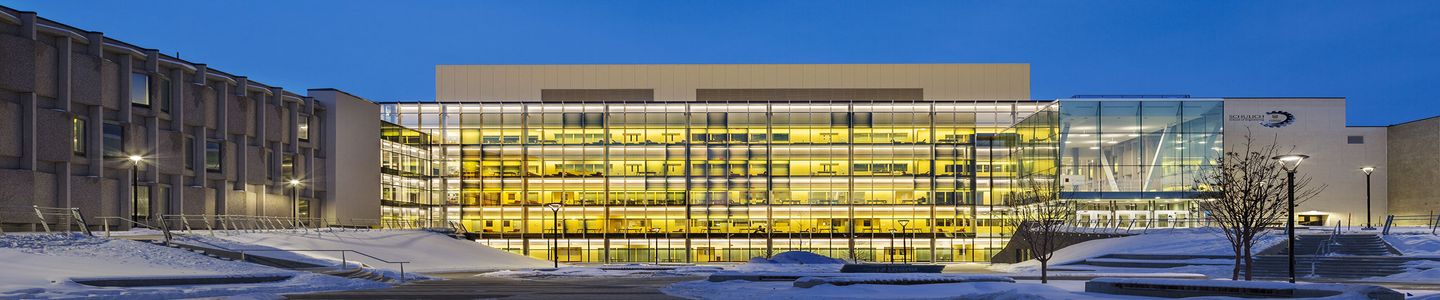
The Schulich School of Engineering building features state-of-the-art laboratories, process simulation facilities, and a dedicated co-op centre. The campus includes modern student residences (on-campus housing costs approximately C$850 to C$1,200 per month; ?59.6K to ?84.14K), a library system with extensive engineering databases, a recreation centre, and numerous student clubs including the Engineers Without Borders and a chemical engineering student club.
Calgary offers a low cost of living compared to Toronto or Vancouver. Grocery costs and dining out are affordable, with monthly food expenses averaging C$300 to C$400 (?21K to ?28K). The city has excellent public transit (CTrain and bus system), and many students use bicycles or car-share programs. Winter temperatures drop to −10 to −20°C (roughly −10 to −5°F) from November to March, so students should budget for winter clothing and heating costs included in rent. The city enjoys approximately 330 days of sunshine annually, offsetting the long winters.
The Indian student community at University of Calgary is well-established, with dedicated student associations, cultural events during Diwali and other festivals, Indian grocery stores, temples, and restaurants throughout the city. The university’s International Student Services office provides support including visa guidance, accommodation assistance, and cultural integration programs.
Career Outcomes and Placement
Graduates of the Master of Science in Chemical and Petroleum Engineering command strong career outcomes. The programme reports a 90%+ placement rate within 6 months of graduation. Average entry-level salaries are C$100,000 (?70.12 Lakhs), with 5-year salary ranges of C$120,000 to C$150,000 (?84.14 Lakhs to ?1.05 Crore). Salaries vary by specialization and employer: process engineers at major oil and gas companies earn C$100,000 to C$130,000 (?70.12 Lakhs to ?91.16 Lakhs); petroleum engineers earn C$110,000 to C$150,000 (?77.13 Lakhs to ?1.05 Crore); and chemical engineers in downstream refining earn C$100,000 to C$140,000 (?70.12 Lakhs to ?98.17 Lakhs).
Primary employers include Suncor Energy, Shell Canada, TC Energy, Enbridge, Cenovus Energy, MEG Energy, and international companies like ExxonMobil and Chevron. Many graduates remain in Calgary to work, while others relocate to other Canadian provinces (British Columbia, Ontario) or internationally. Co-op experience during the programme often leads directly to full-time offers from the same employer, with retention rates above 70%.
For Indian graduates, the Canadian Master’s degree significantly increases earning potential upon return to India. Indian chemical and petroleum engineers with Canadian credentials typically earn 20 to 30% higher starting salaries in India (?90 Lakhs to ?1+ Crore) compared to domestic graduates. Many pursue roles at Indian subsidiaries of multinational companies (Shell, ExxonMobil, Chevron) or domestic players like NTPC, IOC, or IOCL.
Alternatively, graduates pursue the Post-Graduation Work Permit (PGWP) to gain Canadian work experience and transition to permanent residency via Express Entry. With 12 months of skilled Canadian work experience at NOC 2131 (Engineers) or NOC 2211 (Life Scientists — if in bioprocess roles), graduates qualify for Express Entry with a competitive Comprehensive Ranking System (CRS) score, fast-tracking Canadian PR within 12 to 18 months of graduation.
Peer University Comparison
To contextualize University of Calgary’s offering, here is a comparison with peer chemical engineering master’s programmes in Canada:
| University | Programme Name | Annual Tuition (International) | Duration | QS Engineering Rank (2026) | Avg. Entry Salary (CAD) |
| University of Calgary | M.S. Chemical & Petroleum Engineering | C$19,410 | 2 years | N/A (Uni: 211) | C$100,000 |
| McMaster University | M.A.Sc. Chemical Engineering | C$17,325 | 2 years | N/A (Uni: 100) | C$95,000 |
| University of Toronto | M.A.Sc. Chemical Engr & Applied Chemistry | C$73,760 | 2 years | 14th (Chemical) | C$105,000 |
| University of British Columbia | M.A.Sc. Chemical & Biological Engineering | C$42,000 | 2 years | N/A (Uni: 47) | C$102,000 |
University of Calgary offers excellent value relative to peers. While McMaster is marginally cheaper, Calgary’s programme is stronger in petroleum engineering (McMaster has minimal petroleum focus). While U of T ranks higher globally and offers more prestigious prestige, its tuition is nearly 4 times higher (C$73,760 vs C$19,410), and starting salaries differ by only C$5,000. For international students prioritizing affordability without sacrificing quality or placement outcomes, Calgary is highly competitive. The university’s location in Canada’s energy hub also provides superior internship and networking access compared to most peers.
Student Visa, Work Permits, and Pathway to Permanent Residency
Indian students require a Canadian study permit to pursue a full-time master’s degree at University of Calgary. The study permit process, administered by Immigration, Refugees and Citizenship Canada (IRCC), typically takes 2 to 4 weeks for Indian applicants. Requirements include a valid passport, acceptance letter from the university, proof of financial support (approximately C$20,000 GIC — Guaranteed Investment Certificate — or bank statement demonstrating C$130,000+ to cover tuition and living), and proof of ties to India (employment letter, family property deed, or parent’s income document). Processing fees are approximately C$150 CAD. Indian students are advised to apply for the study permit as soon as the acceptance letter is received.
Upon graduation, the university will provide a signed official transcript confirming full-time enrolment and graduation date. Armed with this transcript and the graduation confirmation, students can apply for a Post-Graduation Work Permit (PGWP) valid for up to 3 years (matching the Master’s duration plus a grace period). The PGWP is an open work permit, meaning graduates can work for any Canadian employer without requiring employer-specific sponsorship. This flexibility is invaluable for job hunting and role transitions.
After securing 12 months of full-time Canadian work experience in a role classified as NOC 2131 (Engineers) or NOC 2211 (Life Scientists and Medical Scientists — for bioprocess roles), graduates are eligible to apply for permanent residency through Express Entry. The Express Entry system, managed by IRCC, uses a Comprehensive Ranking System (CRS) to score applicants. Recent graduates (age 25 to 35) with Master’s degrees, 12 months work experience in Canada, and strong English scores typically score in the CRS range of 480 to 550 out of 1,200, falling within the threshold for invitation to apply (ITAs are typically issued to candidates scoring 450+). Processing time for Express Entry is approximately 6 months, meaning a typical timeline from graduation to PR is 18 to 24 months.
Some provinces, including Alberta, operate Provincial Nominee Programs (PNPs) that fast-track PR for skilled workers in high-demand occupations. Chemical and petroleum engineers are frequently in demand in Alberta, and graduates working in Calgary may receive direct provincial sponsorship, accelerating PR timelines to 12 to 15 months post-graduation. Once PR is granted, graduates and their families gain access to Canadian public healthcare, provincial education benefits, and can work anywhere in Canada without restrictions. After 3 years as a PR, graduates are eligible to apply for Canadian citizenship.
Frequently Asked Questions
Q1: What is the acceptance rate for the Master of Science in Chemical and Petroleum Engineering?
The University of Calgary does not publicly disclose specific acceptance rates for the M.S. in Chemical and Petroleum Engineering. However, as a course-based Master’s programme at a leading engineering school, acceptance rates are typically in the range of 30 to 50%, favouring applicants with GPA 3.0+ and relevant undergraduate background. The Schulich School of Engineering prioritizes academic strength, relevant work experience, and demonstrated interest in petroleum or chemical engineering specialization. International applicants with strong credentials (GPA 3.3+, IELTS 7.0+) are competitive for admission.
Q2: Can I work while studying in the Master’s programme?
Yes. International students holding a valid Canadian study permit are permitted to work up to 20 hours per week during scheduled academic sessions (September to April) and full-time during official breaks (May to August). However, the programme strongly encourages participation in formalized co-op placements, which are integrated into the curriculum. Co-op placements are typically 4 to 12 months long and are paid (C$25,000 to C$40,000 per term), providing substantial income and industry experience. Off-campus part-time work (20 hours/week at minimum wage C$16.55/hour = approximately C$13,200 annually) is allowed but less advantageous than structured co-op roles. Most students opt for co-op over casual part-time work.
Q3: How much can I earn through co-op placements during the programme?
Co-op earnings depend on the employer, role, and term length. Chemical and petroleum engineering co-op positions at major companies typically pay C$24 to C$30 per hour, translating to C$25,000 to C$40,000 per 4-month term. Over the 2-year programme, students completing two co-op terms can earn between C$50,000 and C$80,000 (approximately ?35.06 Lakhs to ?56.10 Lakhs). This income significantly reduces net out-of-pocket costs. Many students use co-op earnings to cover tuition, living expenses, and even save for future investment or family support in India.
Q4: What is the process for applying from India, and what documents do I need?
The application process has several steps: (1) Request WES credential evaluation of your bachelor’s degree transcripts (4 to 6 weeks); (2) Register for and complete an English proficiency test (IELTS, TOEFL, Duolingo, or PTE) if you did not study in English at university; (3) Obtain official transcripts from your Indian university; (4) Secure two letters of academic reference from professors or supervisors; (5) Write a statement of purpose (500 words) explaining your career goals and interest in the programme; (6) Create an account on the University of Calgary’s graduate admissions portal and submit the online application form along with all documents and the non-refundable application fee (C$145 = ?10,160); (7) Wait for a decision letter (typically 4 to 8 weeks after submission). Total timeline from starting the process to receiving an admission letter is typically 3 to 4 months. Apply 2 to 3 months before the supplementary deadline to ensure timely processing.
Q5: How long is the Post-Graduation Work Permit (PGWP), and what are the steps to apply for Canadian permanent residency?
The PGWP duration is tied to the length of your study programme. The Master of Science is a 2-year programme, so graduates are eligible for a 2-year PGWP (some graduates with study periods extending beyond the nominal 2 years may receive up to a 3-year PGWP). The PGWP is processed through IRCC and typically takes 4 to 6 weeks to receive; it does not require employer sponsorship. To apply for permanent residency via Express Entry (Federal Skilled Worker category), you must: (1) Accumulate 12 months of full-time work experience in Canada in a skilled occupation (NOC 2131 or 2211); (2) Maintain a minimum English language proficiency score (CLB 7 or higher, equivalent to IELTS 6.0+ per band); (3) Create an Express Entry profile and enter the pool; (4) Wait for an Invitation to Apply (ITAs are issued regularly based on CRS scores; recent graduates with Master’s, 12 months experience, and CLB 7+ typically score 480 to 550 out of 1,200 and are competitive). Once invited, submit a complete PR application within 60 days, with processing time approximately 6 months. Total timeline from graduation to PR: typically 18 to 24 months.
Important Alert
- Application Deadline for May 2027 Intake - Nov 15, 2026
Tuition Fees
| Year | 1st Year Fees |
|---|---|
| Tuition Fees | $6003 (CAD 8575) |
Other Expenses
| Head | Avg Cost Per Year |
|---|---|
| Housing and food | $10500 (CAD 15000) |
| Health Insurance | $501 (CAD 716) |
Previous Year Tuition Fees
| Year | 1st Year Fees |
|---|---|
| 2024 | $13587 (CAD 19410) |
| 2023 | $7598 (CAD 10854) |
| 2021 | $5769 (CAD 8242) |
Important Dates
| Event | Application Date |
|---|---|
| Application Deadline for January 2027 Intake | |
| Application Deadline for May 2027 Intake | Nov 15, 2026 |
| Application Deadline for September 2027 Intake | Mar 15, 2027 |
Reviews
34 Reviews Found
The Petroleum Engineering program at the University of Calgary is one of the best in Canada.
Scores Required
Required Document List
Complete Application
Application Fee
Official Transcripts
English Language Requirements
A copy of the Passport
Resume
Two Letters of Recommendation
Statement of Interest


Do you think the Rankings are wrong ? Report Here
Key Resources for Your Study Abroad Journey


Course Guides
Best Post-Graduate Courses in Canada in 2025
Masters in Canada: Fees 2024, Top Colleges, Placements & Salaries
Masters in Engineering in Canada: Fees 2024, Top Colleges, Placements & Salaries
One year Courses in Canada for International Students: Fees 2024, Top Colleges, & Salaries
Scholarship Grants & Financial Aids
| Name | Scholarship Per Student | Level of Study | Type | |
|---|---|---|---|---|
| Forktip Women’s- Innovation Scholarship | Scholarship per studentVariable Amount | Level Of StudyBachelor | TypeCollege-Specific | |
| VueVille Future Technology Scholarship | Scholarship per student$ 700/Yr$1,000 | Level Of StudyBachelor | TypeMerit-Based | |
| FINCAD Women in Finance Scholarship | Scholarship per student$ 14,000/Yr$20,000 | Level Of StudyMaster | TypeMerit-Based | |
| Go Clean Scholarship | Scholarship per student$ 2,450/Yr$3,500 | Level Of StudyBachelor | TypeMerit-Based | |
| Ontario Graduate Fellowship | Scholarship per student$ 6,213/Yr$8,875 | Level Of StudyDoctorate | TypeMerit-Based | |
| Jared J. Davis Grant | Scholarship per student$ 700/Yr$1,000 | Level Of StudyBachelor | TypeMerit-Based |
Similar Programs
| Program | Important Date | Total Fees | Median Exams Score | Action |
|---|---|---|---|---|
Application Deadline For Summer 2026 Intake (1st Nov 2026) | USD 14,384 /Yr CAD 20,549 /Yr |
| ||
Application Deadline for September 2027 Intake (15th Apr 2027) Application Deadline for January 2027 Intake (1st Aug 2027) | USD 29,041 /Yr CAD 41,487 /Yr |
|


Do you think the Dates are wrong ? Report Here

interested in this College ?
Follow & Share this college to get information about admission.



Comments
Found 9 Comments
To be eligible for admission to the MSc in Data Science program at the University of Calgary, you must have a four-year bachelor's degree in a relevant field such as computer science, mathematics, statistics, or engineering, with a minimum GPA of 3.0 out of 4.0, or an equivalent degree from a recognized institution. And if English is not your first lamguage, a valid ELP test score is necessary.
You can apply for the M.Eng Chemical and Petroleum Engineering proghram of the University of Calgary if you have completed a four-year bachelor’s degree in chemical or petroleum engineering with a minimum GPA of 3.0 on a scale of 4.0. You must submit your official transcripts as well as a copy of your cetificate. International students must also submit a valid ELP test score unless eligible for exemption.
The University of Calgary offers Masters programs in various academic disciplines. However, the university does not offer masters program in International Relations.