



Content Curator
Atmospheric pollution is any undesirable and unwanted change in the earth’s atmosphere. This is one of the major contributors to pollution. Toxic gases, fumes, smoke, fumes, and other pollutants released by automobiles and industries cause air pollution. The ongoing depletion of the ozone layer exposes the Earth and all living things to the harmful effects of ultraviolet rays. The atmosphere of Earth is degrading at a very high-speed day by day.
Key takeaways: Pollution, Pollutant, Deforestation, air pollution, atmosphere, troposphere, stratosphere.
Atmospheric Pollution
Atmospheric pollution directly harms living organisms, air is more important than food when it comes to the survival of life on earth. Atmospheric pollution is, therefore, a major concern for life on this planet. Smog (smoke + fog) is the most common type of air pollution that affects much of the world.

Atmospheric Pollution
Pollution is the result of unwanted changes in the environment with harmful effects on plants, animals, and humans. The element that causes pollution is known as pollutants. Pollutants may be solids, liquids, or gases present in large quantities in nature and produced due to human activities or due to natural circumstances. For example, materials such as dichlorodiphenyltrichloroethane (DDT), plastic materials, heavy metals, chemicals, nuclear waste, etc., once released into the environment it is difficult to remove.
Read More:
Causes of Atmospheric Pollution
There are so many factors that contribute to the pollution of the environment. Some of the major causes of atmospheric pollution are listed below -
Industrial waste: Atmospheric pollution is caused by a variety of industrial processes. For example,
- Sulfuric acid industries emit a significant amount of SO2 into the atmosphere.
- Steel and metal industries emit SO2, CO, CO2, iron oxides, and other pollutants.
- Fertilizer industry releases nitrogen oxides and dust.
- Cement industry produces dust compounds including sodium oxides, potassium, aluminium, calcium, and other metals
- Petrochemical industry emits CO, NH3, formaldehyde, gasoline, nitrogen oxides, particles, and other pollutants.

Industrial Pollutants
Usage of pesticides: Increasing use of pesticides, herbicides, and other chemicals in agriculture and other activities causes pollution. When sprayed on plants, chlorinated hydrocarbons, organic phosphates, lead, mercury, and other pollutants are released into the atmosphere which pollutes the environment.

Pesticide Pollution
Read More:
Deforestation: Deforestation is a source of atmospheric pollution. Green plants use CO2 for photosynthesis and release O2 into the atmosphere, purifying the air. As a result, plants help control air pollution. So excessive deforestation causes atmospheric pollution.

Deforestation Effects
Combustion of fuels: Air pollution is mainly caused by the burning of fossil fuels such as coal, wood, petrol, and diesel in various industries and vehicles. Coal is used as fuel for thermal power plants and various industries. Burning coal emits SO2, CO, nitrogen oxides, hydrocarbons, and other pollutants into the environment, polluting the air. In airplanes and automobiles, gasoline production produces high levels of carbon monoxide.
Also Read: How to get rid of waste
Nuclear Explosions: Nuclear explosions pollute the atmosphere by producing uranium and beryllium dust, radioisotopes, and harmful radiation in the environment.

Nuclear Explosion
Use of Toxic Solvents: Toxic solvents are commonly used in processes such as painting furniture, cars as well as in dyeing, printing, and dry cleaning, releasing various pollutants into the environment, such as hydrocarbons and organic vapors.

Health Effects of Air Pollution
Read More:
Sources of Atmospheric Pollution
The major sources of atmospheric pollution are as follows-
- Nitrogen oxides: Nitric oxide (NO) and nitrogen dioxide (NO2) are the most important pollutants among the nitrogen oxides present in the atmosphere. The main source of these nitrogen oxides is the burning of fossil fuels in automobiles and thermal power industries.
- Carbon monoxide: Incomplete combustion of fuel into cars, furnaces and various industries emits carbon monoxide into the atmosphere.

Common Air Pollutants
- Carbon dioxide: Carbon dioxide is a natural gas that is needed by plants. It is released into the atmosphere due to the burning of oil in homes and industries.
- Sulfur trioxide: The oxidation of SO2 in the presence of sunlight in the atmosphere produces sulfur trioxide.
- Sulfur dioxide: It is also a common pollutant produced when coal containing sulfur and petroleum is burned.
Also Read: Waste Disposal Overview
Effects of Atmospheric Pollution
- Atmospheric pollution has a great effect on plant evolution by preventing photosynthesis in many cases, with serious consequences for the purification of the air that we breathe.
- Atmospheric pollution is a major cause of global warming and climate change. In fact, carbon dioxide emissions are one of the main causes of the greenhouse effect.
- Atmospheric pollution has a huge risk factor on human health conditions, resulting in allergies, respiratory and cardiovascular diseases, and lung damage.
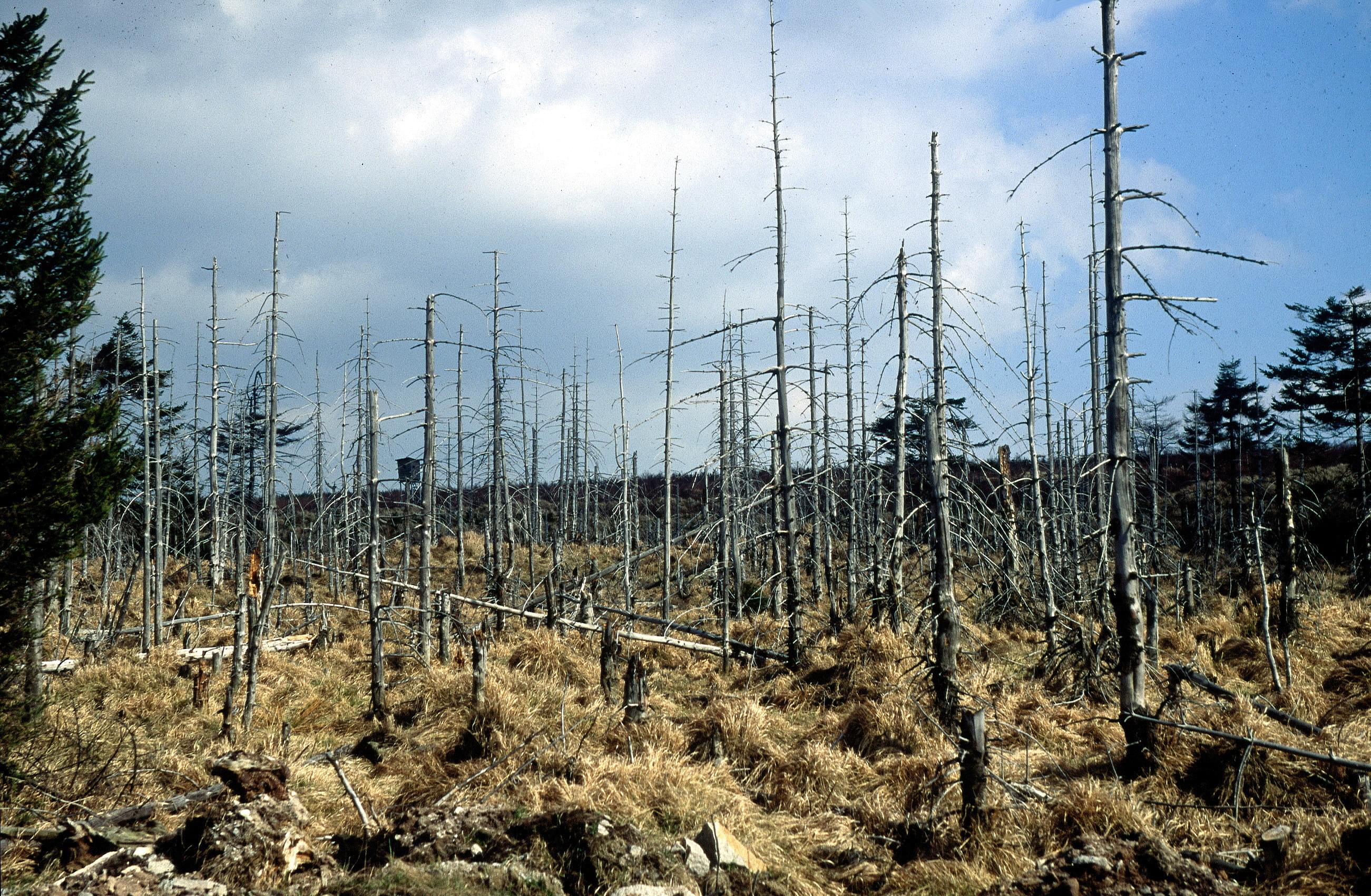
Acid Rain Effects
- Atmospheric pollution also contributes to the formation of acid rain, atmospheric precipitation, snow, ice, or fog, which is released during the combustion of fossil fuels and is converted by contact with water vapor in the atmosphere.
Also Read:
Remedies to Control Pollution
- The most basic solution to atmospheric pollution is to move away from fossil fuels and replace them with renewable and clean energy sources such as solar, wind, and geothermal energy.

Renewable Energy
- Switching to electric vehicles and hydrogen vehicles, as well as promoting shared mobility (i.e. carpooling, and public transportation) can reduce atmospheric pollution.
- It is important to reduce our energy consumption by adopting honest practices and using more efficient devices.
- To develop a green building that aims to build environmentally friendly and efficient facilities to reduce their carbon footprint.
Read More:
Things to Remember
- Humans, animals, plants, and pollutants all dwell in the tropospheric level.
- Smog reduces visibility and causes respiratory problems. Smoke falls under pollutants, as it is composed of very small particulate matter.
- Continuous depletion of the ozone layer exposes the earth and all living things to the harmful effects of ultraviolet rays.
- Atmospheric pollution is the result of undesirable changes in the environment that have harmful effects on plants, animals, and humans.
Sample Questions
Ques: Explain tropospheric pollution. [2 marks]
Ans. Tropospheric pollution occurs due to the presence of unwanted solids or gases particles in the air. The following are the major gaseous pollutants and particles present in the troposphere:
- Gases: There are oxides of sulfur, nitrogen and carbon, hydrogen sulfide, hydrocarbons, ozone, and other oxidants.
- Contaminants: These are dust, fog, smoke, smoke, smoke, etc. present in the troposphere.
Ques: What can we do to reduce the rate of global warming? [3 marks]
Ans. When the burning of minerals and fuels reduces the number of forests and trees that add to the greenhouse gases in the atmosphere, we have to find ways to use these just as effectively and wisely.
- One of the easiest ways to reduce global warming is to reduce the use of vehicles. Depending on the situation, one can use a bicycle, public transportation system, or conduct carpooling.
- We should plant more trees to expand green cover and avoid burning of dry leaves, wood, etc. Moreover, it is illegal to smoke in public places and places of work because it does not harm the smoker but to others, therefore, it should be avoided. Most people do not understand the harmful effects of greenhouse gases and global warming.
Ques: What are health issues caused due to atmospheric pollution? [2 marks]
Ans. People have been diagnosed with various respiratory and cardiovascular diseases as a result of air pollution. Lung cancer has become very common in the last few decades. Pneumonia and asthma are common in children living near dirty areas. Every year, large numbers of people die as a result of the direct or indirect effects of atmospheric pollution.
Ques: Explain the effect of hydrocarbons in the atmosphere. [2 marks]
Ans. Hydrocarbons too are made up of hydrogen and carbon only that is formed by incomplete combustion of fuel used in cars. Hydrocarbons are too carcinogenic, that is, they can cause cancer. We can observe the damage to plants by causing aging, deterioration of tissue, and shedding of leaves, flowers, and branches. All these damages in nature harm the atmosphere.
Ques: What is global warming? [3 marks]
Ans. There is an imbalance in the formation of gas in the atmosphere due to the release of greenhouse gases. Global temperatures have risen as a result. Global warming refers to the melting of glaciers and rising sea levels have been a result of this. Many parts of the island are completely submerged in water. It is caused due to human activities, primarily the burning of fossil fuel, which increases the levels of greenhouse gases in Earth's atmosphere.
Ques: What are the reasons for ozone layer depletion? [3 marks]
Ans. The main cause of depletion of the ozone layer is the production of chemicals, especially halocarbon refrigerators, solvents, explosives, and foam agents (chlorofluorocarbons (CFCs), HCFCs, halons). Since the early 1970s, scientists have observed the depletion of stratospheric ozone and has been found to be very prominent in the North Polar region. Ozone depletion does not protect people from harmful UV rays, which cause skin diseases and eye problems in human beings.
Ques: Write some ways to reduce atmospheric pollution. [4 marks]
Ans. Some of the basic measures taken to reduce atmospheric pollution are -
- Riding a bicycle or walking, instead of driving a car or bike.
- Plant more trees and save the forest cover.
- Less use of fossil fuels.
- Turn off lights and appliances when not in use.
- Use of renewable energy in day-to-day lives.
Ques. What are pollutants? [2 marks]
Ans. Any constituent that causes downgrades the quality of the surroundings in which they are present is called pollutant. Pollutants are the primary cause of pollution.
Read More:



Comments