


Aeroponics and Hydroponics both are a method of horticulture, i.e, growing plants. The latter differs from the first on the basis of the environment in which the plant growing process is carried out. As their names suggest, aeroponics involves the technique of plant development by exposing the roots to air, whereas hydroponics is a method of growing plants in aqueous solution.
| Table of Content |
Key Takeaways: Aeroponics, Hydroponics, Plants, Soil, Nutrients, Cultivation, Crops, Root System
What is Aeroponics?
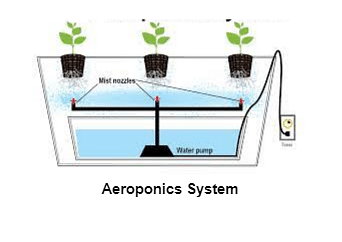
Aeroponics is a novel method used for growing and cultivating plants without soil. Aeroponics technology is one of the fastest emerging methods of farming as it uses 95% less water than traditional farming and reduces the vulnerability of plant diseases.
- Plants are grown by the process of spraying a nutrient - rich mist to the roots of the plants.
- A rich solution constituting accurate amounts of supplements of water, nutrients, oxygen etc is used to feed the plants.
- It increases crop yield by 30% on average.
- Aeroponics is mainly known for producing higher yields in a quick span of time and is mostly suitable for the cultivation of herbs, vine plants and leafy greens apart from the others.
Read more: Crop Production
What is Hydroponics?
Hydroponics is also known as soilless culture or the water culture which involves a large-scale usage of water for cultivating plants. Plants grown through this technique spend more time growing upwards since the roots emerge in nutrient rich water which reduces plants’ time and energy in search of food.
- In hydroponics, the water solution which is enriched with all kinds of required nutrients is used to feed the plants.
- The plants are mainly kept in a tray or net pots made up of clay, sand, gravel, etc. This tray acts as the holding instrument for the plants and supports their growth.
- Fresh water, oxygen, root support, nutrients and lights are the core elements required for growing plants through hydroponics technique.
- Non usage of soil makes the hydroponics system more sustainable and easy to use. Different types of tomatoes, spinach, cherry, etc can be grown through this system.

Hydroponics System
Read More: Tropism in Plants
Difference between Aeroponics and Hydroponics
The major differences between aeroponics and hydroponics are tabulated below:
| Aeroponics | Hydroponics |
|---|---|
| Plants are grown without soil by exposing their roots to air. | Plants are grown in the water solution which are enriched in nutrients. |
| Roots of the plants are exposed to the sprayed nutrients in the form of mists. | Roots of the plants are placed in the water solution. |
| Do not involve any such specific medium. | Involves a medium for holding a plant, mainly, made up of sand, clay, etc. |
| Requires very less water and soil. | Requires larger quantities of water. |
| Mostly suitable for growing leafy greens, vine plants, etc. | A comparatively larger variety of plants can be grown. |
| Requires more maintenance. | Requires very less maintenance. |
| Plants are very much subjected to outages. | Plants are hardly subjected to outages. |
Also read: Adventitious Root System
Things to Remember
- Both hydroponics and aeroponics are the types of soilless culture and are nutrient – intensive patterns for growth of the plants.
- In aeroponics, the nutrients are transmitted to the roots of the plants under extremely higher - pressures.
- On the other hand, low - pressure aeroponics results in higher yielding.
- Hydroponics involves the submergence of the roots of the plants in the water which in turn, produces great demand for the maintenance of the level of relative humidity for better surroundings.
- Both the techniques involve the least or no use of pest control, also, at the same time, provides for greater protection from pests as compared to the traditional methods.
Also read:
Sample Questions
Ques. What is aeroponics? Mention its types. (3 marks)
Ans. Aeroponics is a method used for growing and cultivating plants that does not require the usage of soil and yet the plants produced are nutrient – rich. In aeroponics, nutrient – rich mists which contain accurate amounts of supplements of water, nutrients, oxygen, etc are sprayed to the roots of the plants. Aeroponics is also used in NASA for the cultivation. The two major types of aeroponics are high pressure aeroponics and low pressure aeroponics. Both the types differ from each other based on the size of mist droplets used in each case.
Ques. What are the advantages of hydroponics? Mention any four. (3 marks)
Ans. The advantages of hydroponics are as follows.
- Constructing the hydroponics system is one of the cheapest modes of cultivation, as it only requires the nutrients and a plenty of water and does not call for the investment in other major infrastructures.
- This technique requires very little effort and maintenance and at the same time, yields best results.
- Plants like hydroponics tomatoes, lettuce hydroponics among many others can be easily cultivated through this method, involving very little extent of restriction in terms of variety of cultivable plants.
- However, at the same time, hydroponics systems also contribute a lot in water recycling procedures.
Ques. Illustrate the advantages of aeroponics. (3 marks)
Ans. The advantages of aeroponics are as follows.
- The yields through this system are faster and cheaper, leading to the sustainable growth, perhaps, mostly suited for domestic consumption.
- The plants grown through aeroponics are also disease – resistant, thus, reaping larger benefits, that too, for a longer period of time.
- Aeroponics considers simple plantation and transplantation methods. Plants can be easily shifted all along their locations and so on.
- This technique also ensures better plant health due to their growth in an enclosed area, thus, preventing different kinds of pollution or pathogens.
- Extremely less water and soil consumption are also one of its major advantages, contributing to sustainability.
Ques. Illustrate the cons of Hydroponics. (3 marks)
Ans. Some of the cons of Hydroponics are as follows.
- Disease can spread easily through this technique due to the sharing of the same source of water.
- It requires a larger area for installing its setup.
- Larger usage of water causes its wastage to some extent.
- It can become costly for the long term as it involves vast usage of electricity.
Ques. What can be drawbacks of using aeroponics as a technique of cultivation? (4 marks)
Ans. Some of the drawbacks of aeroponics are as follows:
- It requires some specialised instruments like that of motors, humidity controls, etc. Therefore, the initial cost of aeroponics may exceed the normal budget.
- The procedure involves minute detailing, thus, taking care of every second and becoming time sensitive is its major demand.
- Its maintenance and management become difficult, especially for a professional.
- Aeroponics demands proper settings, place, time and is ought to be expensive.
Ques. What is the difference between hydroponics and aeroponics in terms of their roots - exposures? (2 marks)
Ans. In aeroponics, plants are grown through their exposure to the air. Roots of the plants are exposed to the sprayed nutrients in the form of mists. In aeroponics, the nutrients are transmitted to the roots of the plants under extremely higher – pressures.
Whereas, in hydroponics, plants are grown in the water solution which are enriched in nutrients. Roots of the plants are placed in the water solution. In other words, Hydroponics involves the submergence of the roots of the plants in the water which in turn, produces great demand for the maintenance of the level of relative humidity for better surroundings.



Comments