



Content Curator
The amino acid lysine is the component of proteins that can be found in different foods. These include beans, cheese, meat, milk, brewer's yeast, yoghurt, wheat germ, and other animal proteins. It contains an α-amino group, an α-carboxylic acid group and a side-chain lysyl classifying it as a charged aliphatic amino acid.
Read More: Chemical Bonding and Molecular Structures
| Table of Content |
Key terms: Lysine, amino acid, structure of lysine,uses of lysine, deficiency of lysine
What is Lysine?
[Click Here for Sample Questions]
The symbol for it is Lys or K. They are the building blocks of protein, therefore are important for human growth.
It has an α amine group and an α carboxylic acid group since it is an α amino acid. As it cannot be synthesised by the human body itself, there are various sources from which it is obtained. Without Lysine, the human body can not create carnitine, which is responsible for converting fatty acids into energy and helps lower the cholestrol. Lysine appears to aid calcium absorption and is essential for the synthesis of collagen, a protein found in bones and connective tissues such as skin, tendons, and cartilage.
Aspartic acid, another amino acid, may be used by some plants and microorganisms to make lysine. It is primarily generated in organisms via two metabolic pathways:
- the diaminopimelate pathway
- the alpha–aminoadipate pathway
Read More: Bonding in Metal Carbonyls
Structure of Lysine
[Click Here for Sample Questions]
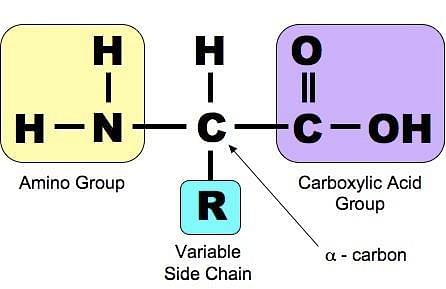
Structure of Lysine
All amino acids, in general, have the same structure: an amino group connected to a hydrogen, a carboxyl group, and a side chain group signified by the letter 'R' via a central carbon. The amino and carboxyl groups, as well as the central carbon, make up the amino acid backbone, which is identical to all amino acids. Each amino acid is distinguished by its side chain.
The molecular formula C6H14N2O2 indicates the particular structure of lysine. The middle carbon of the amino acid backbone is attached to this structure. The amino acid lysine is a linear molecule. Lysine, like arginine and histidine, is basic. In nature, lysine is positively charged. This amino acid is soluble in water. Lysine is a hydrogen bonding amino acid.
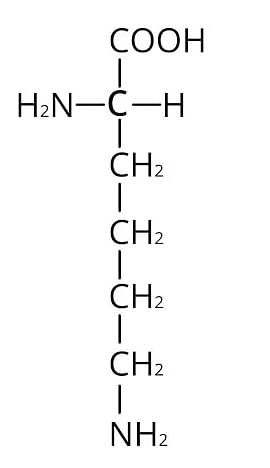
Lysine: Molecular Structure
Also Read: Minerals
Uses of Lysine
[Click Here for Sample Questions]
Lysine play an essential role in many biological processes. Some of them are discussed below -
- The most common and important role of Lysine is parthenogenesis.
- It also helps in protein stability because its amino group forms hydrogen and covalent bonds and also salt bridges with other molecules.
- Lysine plays an important role in epigenetic regulation
- Lysine is involved in many histone modifications. These modifications are responsible for gene regulation.
- Lysine is also used for calcium homeostasis and fatty acid metabolism.
- Cross-linking of helical polypeptides in collagen also involves Lysine.
- Lysine is essential for producing carnitine, which converts fatty acids into energy and helps in lowering cholesterol.
- Including Lysine in your diet, helps in preventing cold sores and genital herpes. The herpes simplex virus causes herpes. Arginine increases the development of the herpes simplex virus, whereas lysine inhibits its action.
- It helps in the absorption of calcium in the body. Therefore, it helps in osteoporosis.
- Lysine supplements are used as protein supplements as it helps in muscle recovery after stress. Athletes use lysine supplements for this very reason.
- Animal feed contains lysine, which aids in their proper development. As a result, lysine is an important food element used in poultry farms, pig farms, and other animal farms to feed chickens, pigs, and other animals for maximum development and high-quality meat.
- A lysine derivative that acts as an anti-inflammatory agent is used to treat pain. It can aid in the prevention of heart disease and blood pressure swings.
Also Read: Fats
Lysine Rich Food
[Click Here for Sample Questions]
Foods rich in protein are good sources of lysine.
- Meat, specifically red meat, pork, and poultry
- Cheese, particularly parmesan
- Certain fish, such as cod and sardines
- Eggs
- Soybeans, particularly tofu, isolated soy protein, and defatted soybean flour
- Spirulina
- Fenugreek seed
- Amaranth, grain, uncooked
- Azuki bean (adzuki beans) mature seeds, raw
- Catfish, channel, farmed, raw
- Chickpea, (garbanzo beans, Bengal gram), mature seeds, raw
- Lentil
- Sprouts
- Milk, non-fat
- Quinoa
Deficiency of Lysine
[Click Here for Sample Questions]
The majority of lysine-related illnesses are caused by downstream lysine processing. Connective tissue disease is caused by a lack of lysine. Lack of lysine can lead to low carnitine levels in the body, which can lead to a variety of health problems since carnitine transports fatty acids to mitochondria, which are the cells' powerhouses. Anaemia, protein energy malnutrition, neurological impairments, epilepsy, ataxia, and psychomotor impairment can all be caused by a lysine deficiency.
Also Check:
Things to Remember
- Lysine is an essential amino acid.
- The symbol for it is Lys or K.
- They are the building blocks of protein.
- All amino acids, in general, have the same structure: an amino group connected to a hydrogen, a carboxyl group, and a side chain group signified by the letter 'R' via a central carbon.
- The molecular formula C6H14N2O2 indicates the particular structure of lysine.
- The middle carbon of the amino acid backbone is attached to this structure.
- The amino acid lysine is a linear molecule.
- Lysine plays an essential role in many biological processes like proteinogenesis, epigenetic regulation, osteoporosis, histone modifications, etc.
- Foods rich in protein like egg, fish, quinoa, milk, sports, lentils etc., are rich in lysine.
- Connective tissue disease, low carnitine level, anaemia, neurological impairments etc., are caused due to lack of lysine in the human body.
Sample Questions
Ques. What is Lysine ? (2 marks)
Ans. Lysine is an essential amino acid. The symbol for it is Lys or K. Since they build proteins, they are essential for human growth. It has an α amine group and an α carboxylic acid group since it is an α amino acid.
Ques. Explain the structure of Lysine with the help of a diagram? (2 marks)
Ans. The molecular formula of lysine is C6H14N2O2. The middle carbon of the amino acid backbone is attached to this structure. The amino acid lysine is a linear molecule. Lysine, like arginine and histidine, is a basic. In nature, lysine is positively charged. This amino acid is soluble in water. Lysine is a hydrogen bonding amino acid.

Lysine: Molecular Structure
Ques. Discuss the functions of Lysine in detail? (2 marks)
Ans. The human body, as well as various microbes, plants, and animals, require lysine to operate properly. The liver is responsible for lysine catabolism. Through metabolism, lysine amino acids give glucose to the human body. It is converted to acetyl CoA, which is then converted to adenosine triphosphate. Our body's energy currency is adenosine triphosphate. In mammals, lysine is essential for the citric cycle. Allysine is a lysine derivative that is used to make collagen and elastin. These are necessary for skin, joints, and other body parts.
Ques. List some of the uses of lysine? (2 marks)
Ans. Some uses of the Lysine are-
- Parthenogenesis is the most prevalent and crucial function of Lysine.
- It also contributes to protein stability by forming hydrogen and covalent bonds as well as salt bridges with other molecules.
- Lysine is a key component of epigenetic control.
- Many histone modifications involve lysine. Gene regulation is controlled by these alterations.
- Calcium homeostasis and fatty acid metabolism are two further functions of lysine.
Ques. What effect does deficiency of lysine have on the human body? (2 marks)
Ans. Because lysine is necessary by human bodies for several biological activities, its absence causes a range of diseases. Downstream lysine processing is responsible for the bulk of lysine-related diseases. A deficiency of lysine causes connective tissue disorder. Because carnitine delivers fatty acids to mitochondria, the cells' powerhouses, a lack of lysine can lead to low carnitine levels in the body, which can cause a number of health concerns. A lysine shortage can result in anaemia, protein energy malnutrition, neurological abnormalities, epilepsy, ataxia, and psychomotor impairment.
Ques. What causes herpes and how can it be prevented? (2 marks)
Ans. Including Lysine in your diet, helps in preventing cold sores and genital herpes.The herpes simplex virus causes herpes. Arginine increases the development of the herpes simplex virus, whereas lysine inhibits its action.
Ques. Mention some of the foods which are rich in lysine ? (2 marks)
Ans. Foods rich in protein are good sources of lysine.
- Meat, specifically red meat, pork, and poultry
- Cheese, particularly parmesan
- Certain fish, such as cod and sardines
- Eggs
- Soybeans, particularly tofu, isolated soy protein, and defatted soybean flour
- Spirulina
- Fenugreek seed
- Amaranth, grain, uncooked
Ques. Why is lysine positively charged ? (2 marks)
Ans. Arginine (Arg), lysine (Lys), and histidine (His) are the three amino acids (His). Their side chains are nitrogen-containing and mimic ammonia, a basic. Their pKa values are high enough that they bind protons and obtain a positive charge as a result.
Ques. Name three aromatic amino acids? (2 marks)
Ans. Three aromatic amino acids are:
- Tyrosine
- Phenylalanine
- Tryptophan
Ques. What are alpha-amino acids? (1 mark)
Ans. The amino acids contain an amino group and an acidic group as substituents on the same carbon that is alpha-carbon. Hence, it is known as alpha-amino acid.
Ques. What are peptide bonds? (2 marks)
Ans. The covalent bond in which each amino acid is attached to another amino acid which is formed with a dehydration reaction is called peptide bonds. The carboxyl group of one amino acid & the amino group of other amino acids combine together and release a molecule of water. Thus it results in the formation of peptide-bond.
Read About:
Also Check:



Comments