



Content Writer
Key Highlights
|
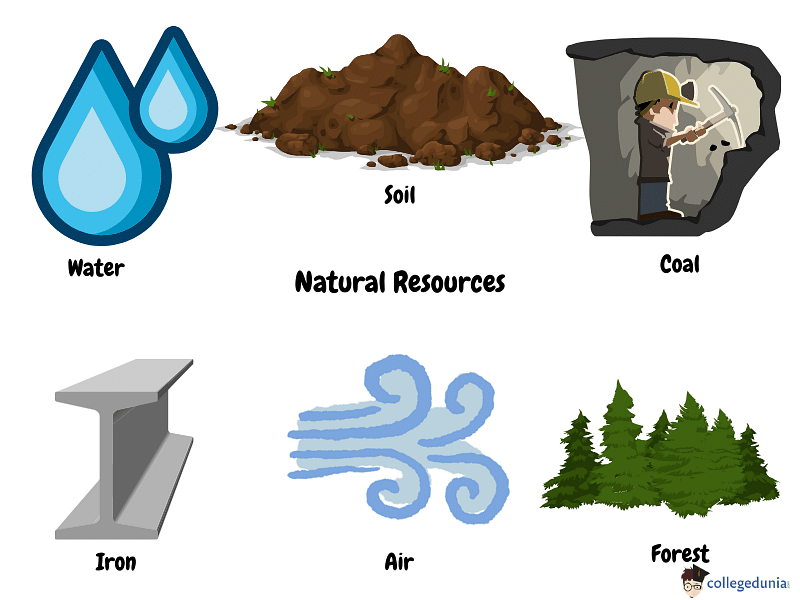
A natural resource is any naturally occurring material that is valuable and usable for humans. Natural resources include metals, coal, oil, sand, stone, and natural gas. Soil, water, sunlight, and air are other natural resources.
- Natural Resources do not depend on the actions of humans.
- A resource is a type of benefit that adds value to an individual's life.
- Water, sunshine, atmosphere, land, and all minerals belong to this category of resources.
- Crops, plants, and animal life that naturally exist are recognized as identifiable ingredients that make up Earth.
- The allocation of resources takes place within and between countries.
- The help of extractivist industries can easily transform these resources.
Key Terms: Natural Resources, Renewable Resources, Non Renewable Resources, Environment, Minerals, Resources, Recycling, Depletion, Soil Erosion, Acid rain
What are Natural Resources?
[Click Here for Sample Questions]
Natural resources are found in the environment and developed without human involvement. It includes air, sunlight, water, soil, stone, plants, animals, and fossil fuels.
- Natural resources are naturally occurring items or supplies extracted from the earth.
- They are beneficial to man or could be helpful under possible technological, economic, or social circumstances.
- It includes food, building and clothing materials, fertilizers, metals, water, and geothermal power.
- Natural resources advantages is based on the natural sciences.
- The management of natural resources needs to balance the demands of exploitation with respect to capacity.
Types of Natural Resources
[Click Here for Sample Questions]
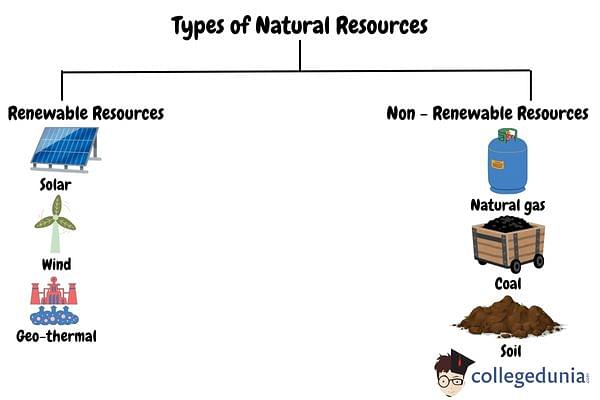
Natural resources are categorized into two types which are as follows:
Types of Natural Resources
Renewable Natural Resources
Natural resources that can be replenished after usage are known as renewable natural resources. Sunlight, water, and wood are just a few examples of renewable natural resources. These resources are sustainable and entirely environmentally friendly.
Non-renewable Natural Resources
Natural resources that are non-renewable run out after a lengthy period of use. It can take a long time for them to regenerate. Natural gas is a good illustration of non-renewable resources. Coal is another example of this category of resource. Numerous natural resources cannot be recycled again, just like coal. Because the majority of these non-renewable natural resources cannot be recycled, it is critical to conserve them.
Differences between Renewable and Non-Renewable Resources
| Renewable Resources | Non-Renewable Resources |
|---|---|
| Since it is infinitely available, it can be replenished. | Due to limited supply, it cannot be refilled once fully used. |
| Inexpensive and environmentally friendly | High price and unfriendly to the environment |
| Can be restored at the same pace as they are consumed. | Nonrenewable resources are permanently gone after they are mined and used up. |
| Sustainable in nature | Exhaustible in nature |
5 Most Important Natural Resources
[Click Here for Sample Questions]
The five most important natural resources are as follows:
Air
Gases like nitrogen, oxygen, carbon dioxide, and water vapours make up air. Nitrogen is used to make a variety of natural atoms, including proteins. It is found in plants and transferred to animals through natural processes.
- Combustion of nonrenewable energy sources also necessitates the use of oxygen.
- Plants use carbon dioxide as a source of energy during photosynthesis.
- Carbonates broken down in ocean water are used to build the shells of many marine organisms.
- Chemicals, smoke, dust particles, and disease-causing agents contaminate air, resulting in air pollution.
- When fossil fuels are burned, they release nitrogen and sulphur oxides, which form acid rain.
- The amount of hydrocarbons produced by fossil fuel combustion is also increasing.
- Visibility is reduced when there are high quantities of contaminants present.
- Contaminants in the air increase the risk of allergies, cancer, and heart disease.
Water
Water can be found on Earth's surface, underground, and in the atmosphere as water vapour. The amount of water access is limited to salty marine water. Since cellular operations take place in a water medium, water is essential for plant and animal existence.
- The amount of water available affects the number of members of each species.
- It also defines the diversity of life in that area.
- Undesirable substances (fertilizers, pesticides, sewage, chemicals, detergents) in bodies of water cause water pollution.
- When the temperature of the water rises due to pollution, the amount of dissolved oxygen decreases.
- Dissolved oxygen is the source of oxygen for aquatic animals.
- When the amount of dissolved oxygen in the water is lowered, many aquatic organisms perish.
Soil
Soil is another important natural resource that keeps life going. It consists of soil particles, humus, and biological organisms. Sun, water, wind, and living things make up the soil. Rock contraction and expansion cause them to crack and break down into smaller soil particles.
- Soil pollution is the addition of pollutants to the soil that harm its fertility.
- Fertilizer use led to the extinction of many beneficial microorganisms as well as a decrease in soil fertility.
- The topmost productive layer of the soil has been eroded as a result of deforestation.
- Animal overgrazing also contributed to soil erosion. Fine soil particles can also be carried away by wind and water.
Forests
Forests are defined as an area that is made up of trees. It is the largest ecosystem on Earth that is found across the globe. Forests provide a clean form of air for individuals. However, with the increase in population, forests are being cut to meet the demand of the growing population.
Iron
Iron is another important natural resource that is used for the construction of buildings and other modes of transportation. It is also used for the construction of weapons used during the wars.
The Challenges of Using Natural Resources
[Click Here for Sample Questions]
- Extracting, processing, and using natural resources can cause:
- Air, land, and water pollution
- Disruption or destruction of ecosystems
- Decrease in biodiversity
- Burning fossil fuels (coal, oil, and natural gas) produces carbon dioxide, a critical greenhouse gas.
- Greenhouse gases, which include methane, ammonia, sulfur dioxide, and certain chlorinated hydrocarbons, absorb and retain heat from the sun.
- The buildup of greenhouse gases in the atmosphere is believed to cause global climate change.
Importance of Forest
[Click Here for Sample Questions]
Dependence on Forests
- Over 1.6 billion people rely on forests for food or fuel.
- About 70 million people, including many Indigenous communities, live in forests.
- Forests provide oxygen, shelter, jobs, water, nourishment, and fuel.
Environmental Benefits
- Forests prevent erosion and conserve soil, protecting against landslides and floods.
- They produce rich topsoil essential for growing plants and crops.
- Forests play a crucial role in the global water cycle by releasing water vapor and capturing rainfall.
- Forests house over 80% of terrestrial biodiversity.
Biogeochemical Cycle
[Click Here for Sample Questions]
The continuous flow of matter and energy between the biotic and abiotic components of the biosphere keeps the ecosystem active while remaining stable. These transfers take place in a series of cycles, which are detailed below.
Water Cycle
The water cycle refers to the entire process of water evaporating, falling as rain on land, and then flowing back into the ocean via rivers. Water may dissolve a wide range of compounds. When water flows through or over rocks that contain soluble minerals, some of them dissolve in the water. Rivers transport many vitamins from land to the sea, where marine species use them.
Nitrogen Cycle
The nitrogen cycle is a process by which nitrogen is converted into various chemical forms. This transition can be accomplished in both organic and physical ways. Fixation, ammonification, nitrification, and denitrification are all-important nitrogen cycle procedures. Nitrogen accounts for 78% of the earth's ecology.
- The nitrogen cycle keeps the amount of nitrogen in the environment at a constant level.
- The fixation is achieved by nitrogen-solving microbes in conjunction with free-living microorganisms in the soil.
- Those nitrates and nitrites are converted into amino acids by plants.
- Ammonification is the process by which soil microorganisms break down waste natural resources and release ammonia into the soil.
- Nitrification is the process of converting ammonia into nitrites and nitrates.
- Denitrification is the process of converting nitrates into nitrogen in the atmosphere.
- Below is a diagrammatic illustration of the situation.
Carbon Cycle
Carbon is found in the elemental forms of diamonds and graphite. Plants are originators of the carbon cycle. Photosynthesis is the process by which plants utilize carbon dioxide from the biosphere to synthesize glucose in the presence of light.
- The glucose molecules are destroyed by living things to provide energy.
- It releases carbon dioxide through respiration.
- It requires fuels for a variety of purposes, such as heating, cooking, transportation, and business strategies.
- The combustion releases carbon dioxide into the environment.
- Below is a diagrammatic illustration of the situation.
Oxygen Cycle
Oxygen Cycle is a biological activity that aids in the preservation of oxygen levels. Photosynthesis is a biological process in which plants use sunshine and energy to manufacture their food.
Sample Questions
Ques. What are the uses of natural resources? (2 Marks)
Ans. Minerals, forest products, water, and soil are just a few examples of natural resources that humans use to generate energy and manufacture things. Certain natural resources can be duplicated in a matter of years or decades. Renewable resources are those that can be replenished over time. For example, we use soil and water to grow food, wood to provide heat or build shelters, and Earth-derived commodities like iron and copper to make cooking pans.
Ques. What are key natural resources? (2 Marks)
Ans. The world's most important natural resources are distributed. Minerals such as copper, gold, and diamonds, as well as energy resources such as gas, oil, and uranium, as well as agricultural and logging land are examples of other resources. Coal (4th largest reserves in the world), Iron ore, Manganese ore (7th largest reserve in the world as of 2013), Mica, Bauxite (5th largest reserve in the world as of 2013), Chromite, Natural gas, Diamonds, Limestone, and Thorium are among India's key mineral resources.
Ques. What are the characteristics of natural resources? (2 Marks)
Ans. Utility, restricted supply, and the potential for depletion or consumption are the three primary characteristics of resources. Sunlight, air, water, land (including all minerals), and all the plants, crops, and animal life that live naturally on or within the traits and substances previously listed are all required on Earth.
Ques. Does recycling save natural resources? (3 Marks)
Ans. Recycling saves energy and natural resources while also being environmentally friendly. We can conserve natural resources by repurposing items. In the case of paper, recycling saves forests and water. Growing up to 17 trees saves up to one tonne of recycled paper and consumes half as much energy. Recycling also conserves natural resources and mitigates the environmental harm caused by mining, logging, and raw material processing. Recycling saves energy because it takes less energy to process recyclable items than to collect, transport, and process raw materials.
Ques. What do you mean by Conservation of Resources? (4 Marks)
Ans. Natural resources are those that are found naturally on the planet. These resources can be obtained without the intervention of humans. All living species on the planet rely on these resources.
- Natural resources include sunlight, air, and water, which are directly used by living creatures.
- Many of these natural resources can be replenished over time.
- These materials are recyclable and reusable.
- However, many natural resources are rapidly depleting due to various factors.
- It is for this reason that natural resource conservation is vital so that living beings can maintain and use them as needed.
Ques. Why are Natural Resources Important? Why is it Important to Conserve Them? (4 Marks)
Ans. In our daily lives, we rely on natural resources. Almost all of the things we use daily are derived from natural resources. Air, water, sunlight, coal, minerals, forests, and land are some examples of natural resources that we use. Here are some reasons why natural resources are valuable and why conserving them is critical.
- Nature contributes to the overall environmental balance and fully satisfies all human requirements.
- We use a variety of industrial and biological materials in the manufacture and manufacturing of a wide range of products, including medicine, either directly or indirectly.
- Resources are required for a country's progress.
Ques. What is the greenhouse effect? (2 Marks)
Ans. The greenhouse effect is the natural warming of the globe caused by gases in the atmosphere trapping heat from the sun that would otherwise escape into space. The greenhouse effect happens when gases in the Earth's atmosphere capture the heat of the Sun. Earth is substantially warmer as a result of this process than it would be if it didn't have an atmosphere. The greenhouse effect is one of the factors that contribute to Earth's pleasant living conditions.
Ques. How does the atmosphere act as a blanket? (2 Marks)
Ans. The theory that air is a poor conductor of heat and that the atmosphere is full of air is used to explain this answer. Gases, dust particles, and other contaminants can be found in this air. This restricts the movement of heat in the air, resulting in a balanced temperature. During the day, the atmosphere prevents temperature spikes, while at night, it retains heat by limiting its exit to maintain a constant temperature. The ozone layer also aids this process.
Ques. Why is natural resources management significant? (2 marks)
Ans. Natural resource management is the strategy for dealing with renewable and nonrenewable resources. Global warming, overpopulation, industrial expansion, and other factors affect natural resources such as land, soil, water, plants, and animals. This is the reason why the management of natural resources has become very significant.
Ques. How can natural resources be conserved? (3 marks)
Ans. We can conserve natural resources in the following ways:
- Wastage of water is one of the major concerns that has to be addressed.
- The treatment of water gathered from domestic and industrial waste is important to fulfil the huge daily demand of the vast population.
- Avoid careless dumping of substances such as plastics and glassware as these have a harmful effect both on soil and water.
- Instead of disposing of them in nature, we can recycle and reuse them.
- Soil management practices should be practised to reduce soil loss due to soil erosion and improper land use.
Ques. What is the difference between Renewable and Non Renewable Reources? (4 marks)
Ans. The difference between Renewable and Non Renewable resources are as follows:
| Renewable Resources | Non Renewable Resources |
|---|---|
| Renewable Reosurces are resources that can be used again. | Non Renewable Resources are resources that cannot be used again. |
| These types of resources are completely environment friendly. | These types of resources cause pollution. |
| They are also known as non conventional resources. | They are also known as conventional resources. |
| The rate of renewal is greater than rate of exhaustion. | The rate of renwal is lower than rate of exhaustion. |
Ques. Explain the role of atmosphere in climate? (2 marks)
Ans. The atmosphere is like a blanket that blankets the Earth. It avoids the abrupt rise in temperature caused by the sun throughout the day and the constant loss of heat from Earth to space. The temperature on the moon varies from -190°C to 110°C due to the lack of an atmosphere.
Ques. Explain (A) Ammonification (B) Nitrification (C) Denitrification (3 marks)
Ans. (A) Ammonification: Ammonification is defined as the process where microorganisms dissolved in the soil to take the required amount of nitrogen needed for their surivual.
(B) Nitrofication: Nitrification is a process by which nitrogen compounds like ammonia is reduced or oxidized to nitrate or nitrite.
(C) Denetrification: Denetrification is the process of converting soil nitrate to nitrogen gases like N2O and N2 by sequence of bacteria.
Ques. Name the five most important resources? (1 mark)
Ans. The five most important resources are as follows:
- Soil
- Air
- Iron
- Water
- Forest
Ques. How does a change in the temperature of water affect the lives of aquatic animals? (2 marks)
Ans. When the temperature of the water rises due to pollution, the amount of dissolved oxygen decreases. Dissolved oxygen is the source of oxygen for aquatic animals. When the amount of dissolved oxygen in the water is lowered, many aquatic organisms perish.



Comments