



Education Journalist | Study Abroad Lead
Pigments are natural colours that are found in the body of living beings. The world we see with our eyes has the most vivid nature and colourful flowers. There are more than millions of different coloured flowers. Pigments are the reason behind all the colours we see in nature. These are called biochromes which means substances that are produced by a living organism that has colour. Pigments can be classified into two main types of pigment- one is flower pigment and the other is plant pigment. The most commonly seen pigment is the green pigment in plants.
| Table of Content |
Key Terms: Pigments, Organic Pigments, Inorganic Pigments, Photosynthesis, Flavonoids, Anthocyanins, Carotenoids
What are Pigments?
[Click Here for Sample Questions]
Pigments are elements that give colour to every living being on Earth. In plants, they have green pigments, and the petals of flowers have their own pigment. Pigments are also found in animals and not only in plants and flowers.
Pigment biology is the science due to which living beings produce colours. The type of colour given by a plant is dependent upon the wavelength of light absorbed by it. The most common pigment found in plants is a green pigment. It is called chlorophyll and is the most abundantly found pigment in the world.
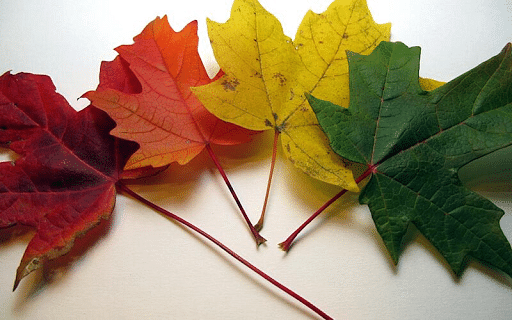
Pigments
Read More: Morphology of Flowering Plants
Organic Pigments
[Click Here for Sample Questions]
Organic pigments refer to coloured materials which are made up of organic material. Some common organic pigments are quinacridone pigment, azo pigment, and phthalocyanine pigments. All these are artificially created organic compounds. Organic pigments have very high colouring strength. These are compounds that consist of carbon chains and rings in their structure and some metallic element for stabilization.
Inorganic Pigments
[Click Here for Sample Questions]
These pigments are pigments that do not contain any carbon content or any rings. They contain some dry ground minerals, generally, they are metals or metallic salts. Because of this kind of composition, inorganic pigments are normally opaque and more insoluble compared to organic pigments. In general, inorganic pigments are more common for industrial uses because of their low price and lightfastness.
Types of Pigments in Plants
[Click Here for Sample Questions]
A huge variety of pigments are found in plants. The variation in colours of pigments is due to the different wavelengths of light it can absorb. The most common pigment found in plants is a green pigment. It is called chlorophyll and is the most abundantly found pigment in the world.
Some other examples of other pigments are - carotenoids, flavonoids, and betalains. Pigments are there in vegetables and fruits too. For example, yellow pigments in vegetables are due to the compound named Lutein whereas red pigment is lycopene. Flower petals contain water-soluble pigments like anthocyanins.
The green pigment present in the plants also has a variation depending upon the living organism they are found in. the four types of chlorophyll are - chlorophyll-a, chlorophyll -b, chlorophyll -c, chlorophyll-d, chlorophyll-e.
Read More: Difference Between Chlorophyll A and Chlorophyll B
Chlorophyll and Its Types
[Click Here for Sample Questions]
Chlorophyll is one of the primary pigments of plants. The green colour of plant leaves and the tender part of stems is due to chlorophyll. There are different types of chlorophyll that differ in the types of plants they are found in, their functions, etc. The different types of chlorophyll pigments are
- Chlorophyll a: Found in algae, in cyanobacteria, and in some higher plants
- Chlorophyll b: Found in green algae and in some higher plants.
- Chlorophyll c: Found in some photosynthetic chromista and in some marine algae.
- Chlorophyll d: Found in red algae
- Chlorophyll e: Found in some algae

Chlorophyll
Read More: Photosynthesis in Higher Plants
Carotenoids
[Click Here for Sample Questions]
Carotenoids pigments have generally in the form of orange, red, and yellow colours. These are not soluble in water and are attached to cell membranes.

Cartenoids
Anthocyanins
[Click Here for Sample Questions]
These are flavonoid pigments found naturally in all the tissues of many higher plants. This pigment function is to provide colour to the different parts of plants such as the stem, leaves, root, leaves, and flowers. Depending on their pH, we can see red, blue, purple, and dark colours.

Anthocyanins
Flavonoids
[Click Here for Sample Questions]
These are yellow-coloured pigments, mostly found in lemons, grapefruits, and some yellow colour fruits. It is mainly found in the plastids and cytoplasm of the plant cell. These pigments have antioxidant properties and are helpful in lowering cholesterol. Some applications of flavinoids are-
- They are extracted and utilized as dyes.
- These are used as dietary supplements in many food products.

Flavonoids
Read More: Chemical Use in Food Preservatives
Things to Remember
- Pigments are natural colours that are found in the body of living beings
- Biochromes means substances that are produced by a living organism that has colour.
- Organic pigments refer to coloured materials which are made up of organic material. Organic pigments have very high colouring strength
- Yellow pigments in vegetables are due to the compound named Lutein whereas red pigment is lycopene
- Carotenoids pigments have generally in the form of orange, red, and yellow colours
- Anthocyanins are flavonoid pigments found naturally in all the tissues of many higher plants
- Flavonoids are yellow-coloured pigments, mostly found in lemons, grapefruits, etc.
Sample Questions
Ques. What do you mean by the pigment in science? (3 Marks)
Ans. A pigment is a substance that has a particular colour which is decided by the wavelength of light absorbed. These pigments are used in different industries. It is different from fluorescence, luminescence, and phosphorescence.
The definition of pigments in biology is different. Plants have more than one pigment which helps them in continuing photosynthesis more efficiently. The most important pigment of all of them is chlorophyll which provides green colour to plants.
Ques. What is the principal pigment in plants? (3 Marks)
Ans. The principal pigment is an important pigment found in most plants. The colour we see is the reflected light which is complementary to the absorbed light. The green pigment found in most plants is the principal pigment, it is named chlorophyll. Chlorophyll helps the plant to perform photosynthesis. It absorbs yellow light and reflects green light. The chlorophyll is the key element that is used to complete the process of photosynthesis. This is why chlorophyll is the most important pigment in plants.
Ques. What is the advantage of having more than one pigment molecule in the photo centre? (3 Marks)
Ans. The amount of solar energy captured by the pigment determines the light reaction. The energy captured by a single molecule might not be sufficient to initiate the initial reaction that may occur in the light. Therefore it is better if there is more than one pigment molecule so that more light is absorbed. Therefore a variety of pigment molecules protect the chlorophyll molecule from light oxidation.
Ques. Name the pigment that causes the red colour in tomatoes and chillies. Is the pigment photosynthetic pigment? (3 Marks)
Ans. The pigment that causes the red colour in tomatoes and chillies is pigment lycopene. Pigment lycopene provides red colour to them. It is a chromoplast, a type of plastid that forms different colour pigments that are not photosynthetic. Photosynthetic pigments are the pigments that can absorb sunlight and convert it to energy.
Ques. Comment on the colour quality of organic pigments. (3 Marks)
Ans. Organic or carbon-based pigments are derived from animals, vegetables, or synthesized in the lab. Still, the majority of organic pigments are created through synthetic organic chemistry Most of the organic pigments are found to be transparent, and their tonality is unparalleled. Organic pigments are characterized by rich and bright colours. These have very high-quality colours and provide very powerful tint strength despite their transparency.
Ques. Write a short note on Phycobilins. (3 Marks)
Ans. Phycobilins are water-soluble pigments and they are found either in the cytoplasm or in the stroma of the chloroplast. These are mostly found in red algae and green algae. They are of two types:
- Phycoerythrin- These are red colour pigments found in red algae.
- Phycocyanin- These are blue and green colour pigments and are present in cyanobacteria or green algae.
Ques. Explain the three basic types of pigments in brief. (3 Marks)
Ans. There are three basic types of pigments -
- Chlorophyll- these are green in colour and have a porphyrin ring. This is a stable ring-shaped molecule and hence has free-electron due to which they capture the energy of sunlight.
- Carotenoids- These are usually red, yellow, or orange in colour and have a common compound carotene due to which carrots are orange in colour.
- Phycobilins- These are water-soluble pigments and therefore are found in the cytoplasm or in the stroma of the chloroplast.
Ques. How many types of chlorophyll are there? Mention them. (3 Marks)
Ans. Chlorophyll is one of the primary pigments of plants. The green colour of plant leaves and the tender part of stems is due to chlorophyll. There are different types of chlorophyll that differ in the types of plants they are found in, their functions, etc. The different types of chlorophyll pigments are:
- Chlorophyll a: It is found in algae, in cyanobacteria, and in some higher plants
- Chlorophyll b: It is found in green algae and in some higher plants
- Chlorophyll c: It is found in some photosynthetic chromista and in some marine algae.
- Chlorophyll d: It is found in red algae
- Chlorophyll e: It is found in some algae
Also Check:



Comments