



Education Journalist | Study Abroad Lead
Pollination is the transfer of pollen grains in flowering plants from the male reproductive organ (anthers) to the same species' female reproductive organ (stigma). Animal pollination occurs when pollen grains are transferred between flowers by animals such as insects, birds, bats, etc. It is also known as zoophily.
- Animals carry pollen grains during foraging (search for food), facilitating fertilization and seed production.
- Animal-pollinated plants evolve colourful and fragrant flowers to attract pollinators.
- They secrete nectar as a reward for pollinators.
- Animal pollination ensures sexual reproduction and genetic diversity in flowering plants.
- Pollination by animals supports the health of the ecosystem through the production of food and fibres.

Pollination by Animals
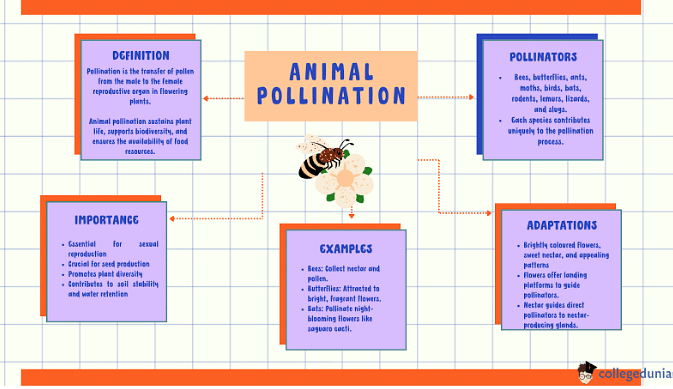
Importance of Animal Pollination
Pollination in animals is necessary in the natural ecosystem as -
- It is essential for the sexual reproduction of flowering plants.
- Animal pollinators are essential for the production of most fruits, vegetables, and nuts, ensuring our food security.
- Animal pollination supports healthy ecosystems by providing food and habitat for organisms.
- Animal pollination boosts genetic diversity in plant populations, promoting adaptability to environmental changes.
- It supports soil stability, water retention, carbon storage, and air quality.
- Its economic significance extends to horticulture, forestry, and seed industries, contributing to revenue generation and employment opportunities worldwide.
- Animal-pollinated flowers enhance landscapes and gardens, recreational activities, and emotional well-being.
- Over 75% of crops that feed humanity and about 80% of all flowering plants rely on animal pollinators.
Importance of Animal Pollination
Pollination By Mammals
|
Types of Animal Pollinators
Plants attract pollinators through adaptations like brightly colored flowers, sweet nectars, and appealing patterns and shapes. Some of the most common types of animal pollinators are -
| Animal Pollinator | Description |
|---|---|
| Bees | Most important pollinators worldwide- Collect nectar and pollen while foraging |
| Butterflies | Colorful pollinators attracted to bright flowers with sweet fragrances |
| Moths | Active during the evening and night- Attracted to flowers with strong fragrances |
| Flies | Visit a wide range of flowers, including those with unpleasant odors |
| Beetles | Among the oldest pollinators- Attracted to flowers with large, colorful petals and strong fragrances |
| Birds | Some species, like hummingbirds, feed on nectar and inadvertently transfer pollen while feeding |
| Bats | Important pollinators in tropical and desert regions- Attracted to night-blooming flowers with pale colors |
| Other Animals | Rodents, marsupials, and primates may inadvertently contribute to pollination |
Pollination by Animal Mechanisms
Animal pollination involves various mechanisms through which plants attract and utilise animals to transfer pollen between flowers. Some key mechanisms are:
- Nectar Rewards: Flowers produce nectar to attract bees, butterflies, and hummingbirds, which inadvertently transfer pollen while feeding.
- Color and Shape: Flowers display diverse colors and shapes to attract specific pollinators. Bright colors appeal to bees and butterflies, while tubular shapes suit hummingbirds.
- Fragrance: Some flowers emit scents to attract pollinators, with night-blooming flowers often attracting nocturnal species like moths and bats.
- Landing Platforms and Guides: Flowers offer landing platforms and visual cues to guide pollinators towards reproductive structures, enhancing pollen transfer.
- Nectar Guides: Patterns on flowers direct pollinators to nectar-producing glands, visible under ultraviolet light for insects with UV-sensitive vision.
- Symbiotic Relationships: Plants form symbiotic bonds with pollinators, offering rewards such as food and shelter in exchange for pollination services, leading to mutual evolutionary benefits.
Things to Remember
- Animal pollination facilitates the transfer of pollen, leading to fertilization and seed production in flowering plants.
- Bees, butterflies, birds, bats, and other animals contribute to the pollination process.
- Plants offer rewards such as nectar and pollen to attract pollinators, forming symbiotic bonds that benefit both parties.
- Many crops crucial for human consumption depend on animal pollination for fruit and seed production.
- Pollination supports biodiversity by promoting plant diversity and providing food and habitat for various organisms.
- Pollination by animals enhances genetic variability within plant populations.
- Fragile ecosystems, such as those in tropical regions, heavily rely on animal pollination for the reproduction of native plant species.
Sample Questions
Ques. How does animal pollination differ from other forms of pollination? (3 marks)
Ans. Animal pollination relies on animals to transfer pollen between flowers, often attracted by visual cues (colors) and scents. It's targeted, as animals often visit similar flower species.
- Wind pollination, rely on wind to disperse pollen, which is less targeted and relies on large amounts of pollen production.
- Water pollination utilizes water to transport pollen, primarily occurring in aquatic plants.
Ques. What role do nectar and pollen play in animal pollination? (5 marks)
Ans. Nectar and pollen play intertwined roles in animal pollination, acting as incentives and cargo for the animal pollinators:
- Nectar: This sugary liquid produced by flowers serves as a reward for animal pollinators. It attracts them to the flowers and encourages them to visit more flowers of the same species.
- Pollen: While the animal is focused on collecting nectar, pollen grains stick to their bodies (fur, feathers, etc.). As the animal visits other flowers seeking more nectar, the pollen is transferred, unintentionally helping the plant reproduce.
Nectar attracts, while pollen gets the "free ride" to another flower for successful pollination.
Ques. What are some threats to animal pollinators and the process of pollination? (3 marks)
Ans. Several threats endanger both animal pollinators and the pollination process:
- Destruction of natural areas reduces their food and shelter.
- Harmful chemicals can directly kill pollinators and disrupt their food sources.
- Changing weather patterns affect flowering times and migration patterns, impacting food availability.
Ques. How do humans benefit from animal pollination? (3 marks)
Ans. Humans benefit immensely from animal pollination in several ways:
- Most fruits, vegetables, and nuts we consume rely on animal pollination for their production. Without it, our food supply would be significantly impacted.
- Animal pollination promotes plant diversity, which creates healthy ecosystems and provides vital habitat and food sources for countless organisms, maintaining a balanced natural world.
- The agricultural industry heavily relies on animal pollination, contributing significantly to the global economy.
Ques. What are some examples of mutualistic relationships between plants and animal pollinators? (5 marks)
Ans. Some examples of mutualistic relationships between plants and animal pollinators are:
Bees and flowering plants
Plants attract bees with bright colors, sweet scents, and nectar. As bees collect nectar, pollen sticks to their bodies and get transferred to the next flower they visit, facilitating pollination for the plant. Both benefit: the plant reproduces, and the bee gets its food source.
Hummingbirds and trumpet-shaped flowers
Hummingbirds are attracted to the vibrant colors and nectar of trumpet-shaped flowers, perfectly suited for their long beaks. As they sip nectar, pollen gets dusted onto their head feathers and transferred to other flowers they visit, aiding pollination. The flower gets pollinated, and the hummingbird gets its energy source.
Figs and fig wasps
This relationship is highly specialized. Fig wasps find a specific type of fig to lay their eggs in. While inside, the wasps pollinate the fig flowers unintentionally as they move around. In return, the developing fig wasps feed on some of the fig's seeds, and the remaining seeds develop into mature figs, eaten by other animals, dispersing the fig seeds. Both the fig and the fig wasp benefit from this intricate interaction.
Yucca moths and yucca plantsYucca plants have flowers with a sticky stigma that only the yucca moth can reach. As the moth lays its eggs inside the flower, it pollinates the plant by placing pollen from another yucca plant on the stigma. The moth larvae feed on some developing seeds, but enough seeds remain for the plant to reproduce. Both the yucca plant and the yucca moth rely on each other for their survival and reproduction.
Ques. What are some examples of unusual or unexpected animal pollinators? (5 marks)
Ans. Some unusual animal pollinators are:
- Bats: These nocturnal creatures pollinate night-blooming flowers with strong scents, like cacti and durian.
- Flies: Hoverflies, carrion flies, and even fruit flies unintentionally contribute to pollination while seeking nectar or other food sources.
- Beetles: Scarab beetles, with their bulky bodies, can effectively pollinate large, sturdy flowers like magnolia and bananas.
- Lizards: In some regions, certain lizards, like the gecko, are attracted to the nectar of specific flowers and inadvertently transfer pollen as they crawl between them.
- Small mammals: Even tiny mammals like hummingbirds' distant relatives, shrews, can play a role in pollinating small flowers they visit for nectar.
Ques. Are there any differences in animal pollination between day and night-blooming plants? (3 marks)
Ans. Yes, there are distinct differences in animal pollination based on the blooming time of the plant:
Day-blooming plants:
- Primarily attract bees, butterflies, hummingbirds, and other insects active during the day.
- Use bright colors, sweet scents, and nectar production to attract daytime pollinators.
Night-blooming plants:
- Mainly attract moths, bats, and some nocturnal insects.
- Often rely on strong, fragrant scents and pale colors that are more visible in low light to attract their nighttime pollinators.
Ques. How do invasive species impact animal pollination dynamics? (5 marks)
Ans. Invasive species can disrupt animal pollination dynamics in several negative ways:
- Invasive plants compete with native ones for resources, reducing native plant abundance and diversity.
- Invasive plants may attract pollinators, diverting them from native plants and causing pollinator dilution.
- They can introduce diseases harmful to pollinators, affecting native plant pollination.
- They alter habitats, impacting pollinator nesting, food sources, and migration patterns.
For Latest Updates on Upcoming Board Exams, Click Here: https://t.me/class_10_12_board_updates
Check-Out:
| Biology Study Guides | ||
|---|---|---|
| Biology MCQs | Comparison Topics in Biology | Biology Study Notes |



Comments