



Content Curator
Sustainability is the term used to protect and conserve the environment or nature. In our environment, natural resources play a crucial role in human life. Natural resources exist on the earth independently. But, due to human activities, these resources are going to be damaged or become extinct in the near future. The main objective of Biology sustainability is to make a balance between nature and natural resources.
Keyterms: Environment, Nature, Natural resources, Earth, Air, Water, Sunlight, Minerals
Natural Resources and its Types
Natural resources are those resources which occur on the earth independently. It means there is no human intervention in existing natural resources. Natural resources are playing an essential role in the human life cycle. There are some natural resources like air, water, sunlight, minerals, etc., which are necessary for the survival of humans as well as for animals.
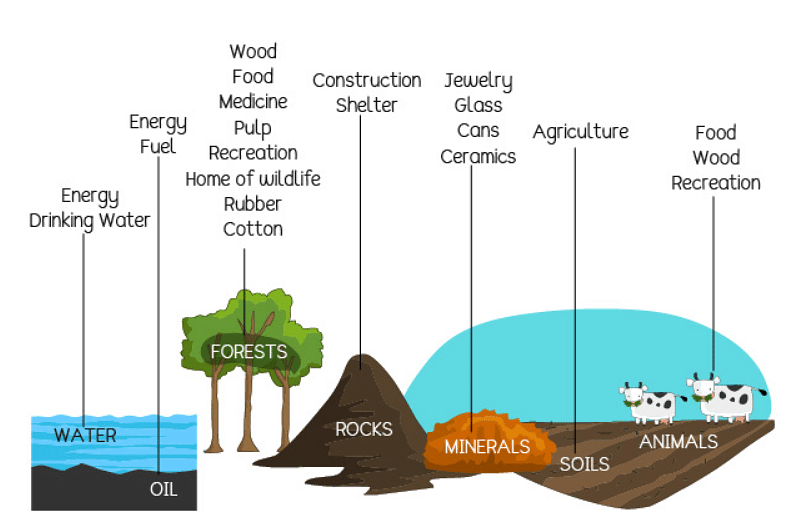
Natural Resources
Read More:
Most natural resources are of two types:
Renewable Resources: The resources which can be obtained after usage are known as renewable resources. Renewable resources replenish by nature. These resources are available in bulk and there are less chances of extinction. Also, the recovery rate is more for renewable resources. For example, Sunlight, soil, water, air etc.
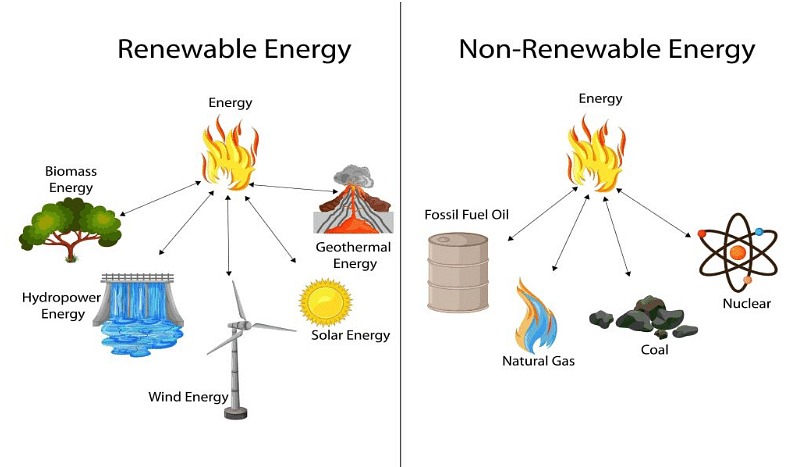
Renewable and Non-renewable resources
Non-Renewable Resources: The resources which cannot be obtained after usage at the maximum limit are known as non-renewable resources. Non-Renewable resources do not replenish by nature. These resources are available in a very limited amount and there are more chances of extinction. Also, the recovery rate is very slow for non-renewable resources. For example, Fossil-Fuels, Gold, Minerals, Coal and Petroleum etc.
Read More:
What is a Sustainable Management System?
Sustainable Management System is the system which helps in making harmony between nature and humans. The Sustainable Management system provides strategies, plans, and a roadmap to protect our natural resources.
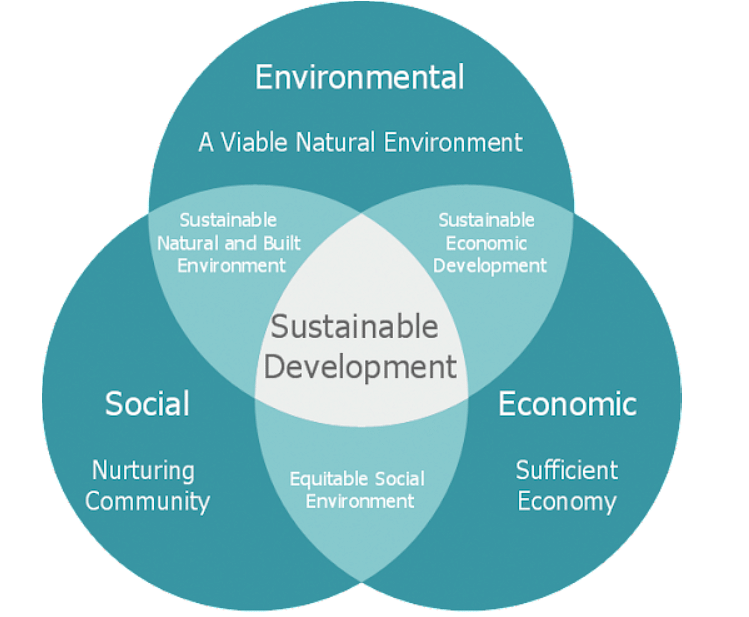
Sustainable Management System for Natural Resources
Need to Manage Natural Resources
- Humans depend on nature for their life. There are many things that we obtain from the environment for our survival like air, water, food, clothes, sunlight etc.
- If natural resources like air, water, sunlight, food etc. are not present on earth then it could be impossible for living beings to survive on the earth. Thus it becomes an indispensable need to manage natural resources.
- Moreover, the population of the world is increasing day by day. When the population increases, the consumption of natural resources will also increase. So, if we do not use the natural resources carefully then it will get depleted soon.
- Our future generations would have no resources available if we don’t conserve natural resources.
- To make harmony between nature and natural resources, conservation of natural resources is essential.
- Natural resources like coal and petroleum, minerals etc. serve as the main source of energy and power. If we continue to exploit these resources, there might be a huge power shortage in the near future.
Also Read: How to get rid of waste
Ways to Save Natural Resources
To protect our natural resources, 5R’s( Reuse, Reduce, Recycle, Refuse, Repurpose) method is best and it is accepted at a global level. These are the ways in which humans can protect the environment.
Reuse: Reusing is better than recycling as it requires no energy. For example, it is better to use steel cutleries instead of single-use plastics as it can be reused multiple times.
Reduce: Always use natural resources as per the requirement and do not waste resources. For example, Switch off the lights, fans and other electrical devices after use, do not waste water and avoid food wastage.

5R Principle
Recycle: Recycle those products so that it could get a new lease of life. This would reduce the amount of pressure on landfills and waste released into the sea. For example, always give single-use plastic bottles and empty cans for recycling.
Refuse: Say No to the things that are not good for our environment. For example, Avoid using Plastic carry bags.
Repurpose: Repurpose old things for other purposes when the product can no longer be used for the original purpose. For example, using plastic bottles to grow plants in the kitchen garden.
Read More:
Water Conservation
Water is a crucial natural resource which is required for all living beings. With the establishment of factories, water pollution is increasing day by day. Also, the potable water is present in very less quantities. There are some regions where water is not available. So, for equal distribution of water resources, various methods are followed. Some of them are as follows:
Large Canals: Large canals are built to supply water to the village areas. With the help of large canals, the irrigation system is also improved. For example, Kulhs in Himachal Pradesh.
Dams: Dams are used to store huge amounts of water. This water can be used for irrigation purposes and to generate electricity. This is helpful in meeting the demand of agriculture as well as household energy consumption.
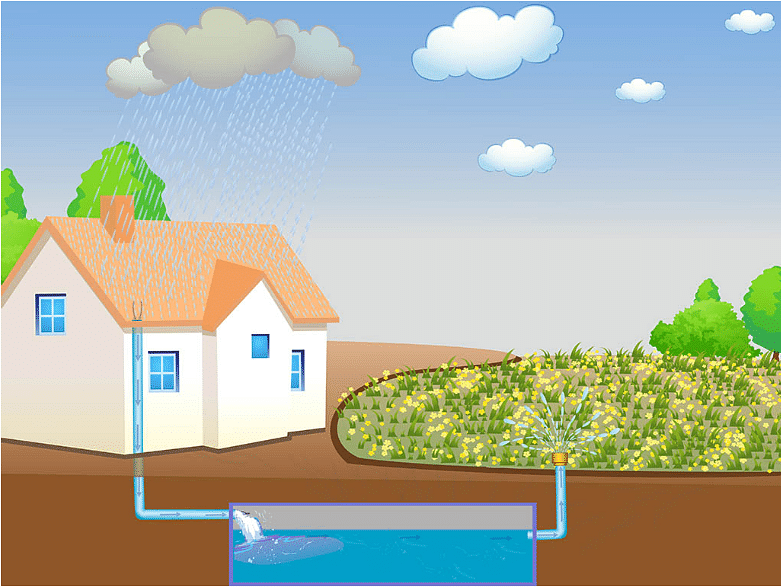
Rainwater harvesting system
Water Harvesting: Water harvesting is mainly used to hold the surface water as well as to collect water in the ground wells. Due to this, the ground level water will not go down too much and also provides moisture to the farming fields.
Also Read: Waste Disposal Overview
Mineral Conservation
Coal and Petroleum both are important sources of energy. Due to the industrial revolution, the demand for energy is rising. This demand for energy is met by the reserves of coal and petroleum. Coal and Petroleum is present in a limited amount. If consumption of these increases then it will get depleted in the upcoming years.

Coal and Petroleum
Alternative renewable and eco-friendly sources of energy should be harnessed at its fullest inorder to meet the increasing energy demands so that the pressure on these non-renewable resources is decreased and thus lasts for a long time. Renewable energy like solar energy, wind energy, hydroelectric power, tidal energy, etc., should replace fossil fuels.
Also Read:
Environment Conservation
Forest provides many resources like wood, timber, food, medicines etc. They also serve as a natural habitat and a home to various wildlife animals. Due to the continuous deforestation and poaching, it is seen that forests and many species are exploited and becoming endangered. So, it is necessary to conserve forests and wildlife.

Deforestation
The government and other stakeholders are allocating certain areas as national parks, wildlife sanctuaries, ecologically sensitive areas and Ramsar sites so as to preserve the wildlife habitat.
Things to Remember
- Natural resources are resources occurring on the earth without human intervention.
- Renewable resources are quickly replenished by nature
- Non- renewable resources are slowly replenished by the nature
- The combustion of coal and petroleum is increasing temperature which causes global warming
- Biodiversity contains the ecosystem of a variety of animals, plants and living organisms.
Read More:
Sample Questions
Ques. What are the natural resources and its types? [3 marks]
Ans. Natural resources are those resources which occur on the earth independently. It means there is no human intervention involved. Natural resources are playing an essential role in the human life cycle. There are some natural resources like air, water, sunlight etc. which are necessary for the survival of humans as well as for animals. Most natural resources are of two types:
- Renewable Resources: The resources which can be obtained after usage are known as renewable resources. Renewable resources get replenished by nature. These resources are available in bulk and there are less chances of extinction. Also, the recovery rate is more for renewable resources. For example, Sunlight, soil, water, air etc.
- Non-Renewable Resources: The resources which cannot be obtained after usage at the maximum limit are known as non renewable resources. Non-Renewable resources do not replenish by nature. These resources are available in a very limited amount and there are more chances of extinction. Also, the recovery rate is very slow for non-renewable resources. For example, Fossil Fuels, Gold, Minerals, Coal and Petroleum etc.
Ques. How to reduce the pollution due to the usage of Fossil fuels. [2 marks]
Ans. There are many alternative ways to reduce the usage of coal and petroleum to avoid pollution. Some of them are listed below:
- Use more public vehicles rather than private vehicles.
- Need to use LED bulbs or fluorescent tubes in homes, offices.
- Use stairs instead of lift.
Read More:
Ques. What are the major stakeholders in the case of forest and wildlife? Which among these stakeholders should have the authority to control the management of forest produce? Why do you think so? [3 marks]
Ans. There are many ways in which we use forests to fulfill our needs. Here are the major stakeholders:
- Government(Forest Department) which buys the land and uses the resources from forests.
- Industrialists use ‘tendu’ leaves to make bidis in the paper mills from forests.
- Individuals who are living in and near the forests use forest produce.
- The wildlife and nature enthusiasts who wish to conserve nature.
Among all of these, the Forest Department of Government should have the authority to manage the forest produce. This is because the government has the resources in terms of money and experts. So, it is very easy for the government to handle all these responsibilities. But, only the government alone cannot control it; local people's involvement is also required. The success of Sal forest in the Arabari project in 1983 is the most suitable example of this.
Ques. What are the Biotic and Abiotic resources? [3 marks]
Ans. Biotic and Abiotic resources are the types of natural resources.
Biotic Resources: Biotic resources are those resources which are obtained from living organisms like Living and organic material, the biosphere. For example, Forests, animals, fossil fuels etc.
Abiotic Resources: Abiotic resources are those resources which are obtained from non-living and non-organic material. For example, land,air,water,gold,iron etc.
Ques. What is the difference between renewable and nonrenewable resources? [3 marks]
Ans. The main difference between renewable and non-renewable resources are shown in below table:
| Renewable Resources | Non-renewable Resources |
|---|---|
| It can be replenished after usage | It cannot be replenished after usage |
| It is present in an unlimited amount | It is present in a limited amount |
| It is cheaper and environmental friendly | It is expensive and non-eco friendly |
| It is sustainable in nature | It is exhaustible in nature |
| For example air, water, sunlight, sand etc. | For example iron, coal, petroleum, gold etc. |
Read More:
Ques. What do you mean by Biodiversity and how it can be protected? [3 marks]
Ans. Biodiversity is the combination of two words ‘Bio’ means life and ‘Diversity’ means variety. It is defined as the enormous variety of life on the earth. Biodiversity contains a variety of animals, plants and other organisms which are essential for our ecosystem. Forests are the major source of Biodiversity. It is also called Biodiversity Hotspots. Bacteria, fungi, ferns, flowering plants, nematodes, insects, birds, reptiles and many more essential ecosystems. If biodiversity losses then the whole ecological system will be lost. So, it is essential to conserve biodiversity. There are some ways to conserve biodiversity which are as follows::
- National parks
- Sanctuaries
- Zoo
- Wildlife Safaris
- Biosphere reserves etc.
Ques. What do you understand from the term 5R’s? Explain with an example. [5 marks]
Ans. To protect our natural resources, 5R’s( Reuse, Reduce, Recycle, Refuse, Repurpose) method is best and it is accepted at a global level. These are the ways in which humans can protect the environment.
Reuse: Reusing is better than recycling as it requires no energy. For example, it is better to use steel cutleries instead of single-use plastics as it can be reused multiple times.
Reduce: Always use natural resources as per the requirement and do not waste resources. For example, Switch off the lights, fans and other electrical devices after use, do not waste water and avoid food wastage.
Recycle: Recycle those products so that it could get a new lease of life. This would reduce the amount of pressure on landfills and waste released into the sea. For example, always give single-use plastic bottles and empty cans for recycling.
Refuse: Say No to the things that are not good for our environment. For example, Avoid using Plastic carry bags.
Repurpose: Repurpose old things for other purposes when the product can no longer be used for the original purpose. For example, using plastic bottles to grow plants in the kitchen garden.
Read More:
Ques. What are the problems that arise in the establishments of Dams? [2 marks]
Ans. Dams mainly face three types of problems such as social, economic and environmental.
- Social problems: Social problems arise because they displace the individuals (like peasants and tribals) from the forest area but do not provide the proper compensation and rehabilitation.
- Economic problems: Economic problems arise because they swallow up a large amount of public money without providing the benefits
- Environmental problems: Environmental problems arise because of continuous deforestation as well as the loss of biological diversity.
Read More: Respiration and Combustion



Comments