



Content Curator
Timbre which is also known as the tone colour helps in differentiating two sounds of similar pitch and loudness. It also helps in distinguishing the quality of sound based on the sonority through which an ear identifies the sound or the tonal quality which is specific to a particular instrument or voice. Timbre helps in understanding the various notes, sound or tone in music along with pitch and loudness. Timbre gives cues about the emotions in voice, shape and material of the instrument.
| Table of Content |
Key Takeaways: Timbre; sound; quality of sound; pitch, loudness.
What is Timbre?
[Click Here for Sample Questions]
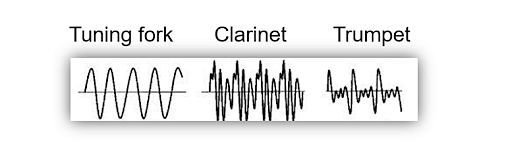
Timbre, also known as quality of sound, is a characteristic that differentiates two sounds of same frequency and wavelength, but from different sources.
Two instruments, like piano and guitar, can sound equally tuned with each other as they play the same note at the same frequency and wavelength but still sound distinctively different.
What makes the timbre sound different?
Timbre of sound of same frequency and wavelength is different because
- Shape of the wave (waveforms)
- Mixture of frequency
Also Read:
Characteristic of Sound Produced by Timbre
The various kinds of characteristics of timbre are:
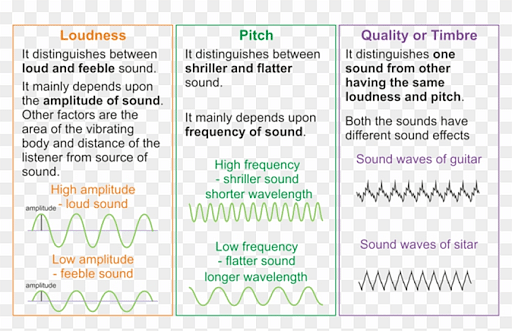
- Pitch: It differentiates two sounds of different frequencies. It distinguishes shrill (high frequency) and grave sound (low frequency).
- Loudness: The loudness depends on sound energy. More the energy, more the loudness. Sounds with different loudness have different amplitudes.
- Tone: Timbre compares sounds of the same pitch and loudness of different instruments; tone is used to compare sounds of the same instrument.
- Texture: Texture is used to mean “the timbre of multiple instruments played together”. Example- a music recording
Factors affecting Timbre of Sound
Timbre of a sound of voice/instrument depends on
- Forced air
- Breath control
- Posture
- Differences in the frequencies
- The shape of an instrument
- The envelope of an instrument’s sound
Types of Timbre
Types of timbre are as follows:
- Harmonic - Harmonic timbre refers to the sound produced when all the various instruments are playing in a rhythm and in harmony.
- Polyphonic - In polyphonic timbre the individual sounds overlap while being played.
- Monophonic - When a particular musical line is played it is called the monophonic timbre.
- Accompanimental - When an instrument accompanies or supports a melody being played it is called the accompanimental timbre.
Also Read:
Types of Vocal Timbre
The various types of voice timbre are:
- Soprano - In the case of soprano the singers sing in high octaves.
- Mezzo - When the singers play in a middle range it is called mezzo.
- Alto - It refers to the lowest note of the female voice.
- Bass - Bass refers to the uneven voice consisting of highs and lows.
- Tenor - Tenor is specific to male voices.
- Contralto - Contralto is the lowest considered voice in both females and males and falls between mezzo and tenor.
- Treble - Treble describes the timbre of a child’s voice.
Also read:
Things to Remember
[Click Here for Sample Questions]
- Timbre is one of the characteristics of sound.
- Timbre is different even if pitch and loudness are the same.
- Tone and texture are sometimes used synonymously with timbre, but there is a slight difference.
- Wavelength, amplitude, frequency, can be same in a waveform, still timbre can be different.
- Timbre of the voice or instrument is not fixed and can be altered.
Sample Question
Ques. Two friends were playing on identical violins whose strings were adjusted to give notes of the same pitch. Will the timbre of the two notes be the same? Give a reason for your answer. (2 marks)
Ques. How can one distinguish timbre in music? (2 marks)
Ans. Experienced musicians can distinguish between different instruments of the same type based on their timbres, even if notes of the same pitch and loudness are played.
It is determined by the shape of the instrument, overtones the instrument produces, and the envelope of the instrument’s sound.
Ques. States instances of timbre in daily life? (4 marks)
Ans. Timbre in daily life:
- Child distinguishes mother’s voice from others
- We differentiate sound of a plane from sound of a truck
- Gives us an idea about excitement, nervousness in voice.
- Idea of the material of sound-producing source.
Ques. Define Timbre or Quality. (2 marks)
Ans: Timbre is characteristic of sound by which we can distinguish between sounds of the same pitch and loudness produced by two different instruments or voices.
Example: When two musicians perform the same note on two various musical instruments, such as guitar and piano, the notes easily differentiate their sound quality from each other.
Ques. Difference between pitch and timbre? (2 marks)
Ans: Pitch and timbre play a key role in both voice and music. Pitch helps us to hear the tone in a melody, language and notes. Timbre helps to differentiate between distinctive sound qualities of various musical instruments.
Ques. How has the timbre changed? (2 marks)
Ans: Timbre can be changed by using different singing or playing techniques. For example, by different posture, playing style, bowing styles or by playing on different parts of the string. For electric instruments, musicians can change the timbre using processor and graphic equalizers.
Ques. What are types of timbre? (4 marks)
- Harmonic - Harmonic timbre refers to the sound produced when all the various instruments are playing in a rhythm and in harmony.
- Polyphonic - In polyphonic timbre the individual sounds overlap while being played.
- Monophonic - When a particular musical line is played it is called the monophonic timbre.
- Accompanimental - When an instrument accompanies or supports a melody being played it is called the accompanimental timbre.
Previous Year Question
Ques. State the three characteristics of a timbre. [SAII-2014]
- Pitch: It differentiates two sounds of different frequencies. It distinguishes shrill (high frequency) and grave sound (low frequency).
- Loudness: The loudness depends on sound energy. More the energy, more the loudness. Sounds with different loudness have different amplitudes.
- Tone: Timbre compares sounds of the same pitch and loudness of different instruments; tone is used to compare sounds of the same instrument.
- Texture: Texture is used to mean “the timbre of multiple instruments played together”.
Ques. Two musical notes of the same pitch and loudness are played on violin and piano. Why are the wave patterns different? [SAII-2010]

Ans: Waveform and mixture of frequency are different in the pattern thereby making the timbre different. Since timbre is different in the two instruments, the wave pattern is different.



Comments