





University of Edinburgh admissions for September 2027 entry route through UCAS at undergraduate level and the university’s EUCLID portal at postgraduate level, with an Indian-applicant floor of 80% at Class XII for UG and 60% in a Bachelor’s for PG.
- Next live deadline (September 2027 intake): 15 October 2026 for Medicine and Veterinary Medicine, 13 January 2027 UCAS equal-consideration for all other UG courses.
- Base tuition GBP 26,500 (around INR 34.26 Lakhs) to GBP 40,900 (around INR 52.88 Lakhs); UCAS application fee GBP 22.50 (around INR 2,909) for UG, GBP 60 (around INR 7,757) for Business School MSc.
- UG: Class XII at 80% (CBSE or ISC) plus IELTS 6.5; PG: Bachelor’s at 60% (55% from a listed Indian university) plus IELTS 7.0.
- Estimated overall acceptance rate around 40%, with Medicine, MBA, and MSc Data Science the tightest programmes.
Indian applicants most often target MSc Data Science, the Edinburgh MBA, MSc Artificial Intelligence, and MSc Finance. Alumni reviews of the University of Edinburgh highlight strong research supervision at this Russell Group institution, weighed against limited campus accommodation beyond first year.
Table of Contents
- University of Edinburgh Application Deadlines
- UoE Eligibility for Indian Students
- Edinburgh PG Programs and English Scores
- University of Edinburgh UG Courses and Cut-offs
- UoE MBA Admissions and Rounds
- Edinburgh PhD Admissions and Funding
- University of Edinburgh Application Process
- UoE Documents Required for Indian Applicants
- Edinburgh Acceptance Rate
- UK Student Visa for September 2027 Offer Holders
- Tips and Checklist for Edinburgh Admissions
- University of Edinburgh Admissions FAQs
University of Edinburgh Application Deadlines for September 2027
Edinburgh runs one primary intake in September, and every UG, PG-taught, and PhD programme opens applications for this cycle. UCAS is the single central platform for all UG applications; PG-taught programmes go directly through the university’s EUCLID system per the official international applicants page. UCAS deadlines are fixed dates, while most PG programmes review on a rolling basis until each programme fills.
Edinburgh’s primary intake for Indian students is September 2027 — every programme opens here.
| Intake | Level | App Opens | Deadline | App Fee | Portal |
|---|---|---|---|---|---|
| September 2027 (Primary intake) | UG – Medicine, Veterinary Medicine | 2 September 2026 | 15 October 2026 | GBP 22.50 (INR 2,909) | UCAS |
| September 2027 (Primary intake) | UG – all other courses (equal consideration) | 2 September 2026 | 13 January 2027 | GBP 22.50 (INR 2,909) | UCAS |
| September 2027 (Primary intake) | UG – late applications (subject to availability) | 2 September 2026 | 30 June 2027 | GBP 22.50 (INR 2,909) | UCAS |
| September 2027 (Primary intake) | PG-taught – Business School MSc | 1 October 2026 | Rolling; last round typically 30 April 2027 | GBP 60 (INR 7,757) | EUCLID |
| September 2027 (Primary intake) | PG-taught – other MSc (Data Science, AI, etc.) | 1 October 2026 | Rolling; most close by 31 March 2027 | No application fee | EUCLID |
| September 2027 (Primary intake) | PhD research programmes | Year-round | Aligned to funding rounds; EDCS closes early November 2026 | No application fee | EUCLID |
Insider note: The 15 October 2026 UCAS deadline is non-negotiable for Medicine and Veterinary Medicine applicants — Edinburgh rejects late submissions for these two, and there is no January window for them.
For PG programmes, applying in the first review window (October to December 2026) meaningfully increases offer chances, since popular MScs such as Data Science and Artificial Intelligence often close early once cohorts fill. The UCAS platform stays open until 30 June 2027 for UG, but Indian applicants targeting a visa deposit slot should aim to hold an offer by March 2027 at the latest.
University of Edinburgh Eligibility for Indian Students
Edinburgh uses Indian-specific entry rules published on its India country page. Class XII marks are read directly (CBSE or CISCE only — state boards are not accepted at UG), and Bachelor’s degrees are compared against a UK 2:1 or 2:2 honours class.
University of Edinburgh UG Entry Requirements
- Arts, Humanities and Social Sciences: Class XII overall 80%, with three specific subjects at 75%.
- Science and Engineering: Five subjects at Class XII averaging 80%+; 85%+ where a subject maps to a Scottish Higher grade A prerequisite.
- Biomedical Sciences: Five subjects averaging 80%+, with 85% in Biology and Chemistry.
- Medicine (MBChB): Five subjects averaging 85%+, with 85% in English, Chemistry, plus two of Biology, Mathematics, or Physics.
- Veterinary Medicine: Five subjects averaging 85%+ including Chemistry, Biology, and one other.
Edinburgh PG Entry Requirements
- A Bachelor’s degree at 60% or higher for UK 2:1 equivalence.
- 55% is accepted if the degree is from a university on Edinburgh’s Indian University List.
- Business School MScs typically require a UK 2:1, with quantitative programmes expecting mathematics coursework in the Bachelor’s.
- MSc Data Science and MSc Artificial Intelligence expect a UK first-class profile, mapping to 70%+ for Indian applicants from most universities.
Edinburgh English Language Test Minimums
| Test | UG Minimum | PG Minimum (standard) |
|---|---|---|
| IELTS Academic | 6.5 overall, 5.5 per band | 7.0 overall, 6.0 per band |
| TOEFL iBT (new scoring from 21 January 2026) | Per programme | Per programme |
| Cambridge C1 Advanced / C2 Proficiency | 176 overall, 162 per band | 185 overall, 169 per band |
| Oxford ELLT Global / Digital | 7 overall, 6 per band | 8 overall, 6 per band |
| Trinity ISE (2026 entry only) | ISE II with passes in all four | ISE III with passes in all four |
Edinburgh IELTS Waiver for Indian Students
Edinburgh accepts several routes that replace a standardised test. Applicants qualify for an English waiver through any of the following:
- Class XII English at 75% from CBSE or CISCE (accepted as an English qualification).
- 85%+ overall at Class XII CBSE or CISCE, which removes the need for IELTS or TOEFL for Medicine.
- A/AS Level English at Grade C or above, or IB English Standard Level 5 or Higher Level 4.
- A prior Bachelor’s degree taught and assessed entirely in English at an approved institution (PG applicants — case-by-case review at EUCLID submission).
Planning note: The Class XII 75% English route is the most reliable waiver for Indian UG applicants. Book an IELTS date only if you fall short of this mark or if your target course sits in the MSc Data Science / MSc AI band, where the university still prefers a test.
Note: Program-specific entry requirements, fees, and intake availability may differ from the institution-wide minimums shown above. Always confirm on the official University of Edinburgh page for your chosen program before applying.
Edinburgh PG Programs, Fees, and English Scores
Edinburgh’s postgraduate portfolio spans the Colleges of Arts, Humanities and Social Sciences, Science and Engineering, and Medicine and Veterinary Medicine. Base tuition for international students on the popular MSc routes runs from around GBP 26,500 (INR 34.26 Lakhs) to GBP 40,900 (INR 52.88 Lakhs) per year; for the full spread by school, see the detailed fee breakdown.
| Programme | Duration | Minimum Eligibility | English Req. Min. |
|---|---|---|---|
| MSc Data Science | 1 year | UK 2:1 in a quantitative discipline (Indian 65%+, first-class preferred) | IELTS 7.0 (6.5 each) |
| MSc Artificial Intelligence | 1 year | UK 2:1 in CS, Maths, or Engineering (Indian 65%+) | IELTS 7.0 (6.5 each) |
| MSc Statistics with Data Science | 1 year | UK 2:1 with strong Mathematics (Indian 60%+) | IELTS 7.0 (6.5 each) |
| MSc Finance and Investment | 1 year | UK 2:1 in Finance, Economics, or quantitative field | IELTS 7.0 (6.0 each) |
| MSc Accounting and Financial Management | 1 year | UK 2:1 in Accounting or a related discipline | IELTS 7.0 (6.0 each) |
| MSc Management | 1 year | UK 2:1 in any discipline | IELTS 7.0 (6.0 each) |
| MSc Marketing | 1 year | UK 2:1 in any discipline | IELTS 7.0 (6.0 each) |
| MSc Entrepreneurship and Innovation | 1 year | UK 2:1 in any discipline | IELTS 7.0 (6.0 each) |
| MSc Finance, Technology and Policy | 1 year | UK 2:1 with numerate coursework | IELTS 7.0 (6.0 each) |
| MSc International Business and Emerging Markets | 1 year | UK 2:1 in any discipline | IELTS 7.0 (6.0 each) |
Insider note: Edinburgh’s rolling PG review closes each programme once it fills, not on the published final date. For MSc Data Science and MSc Artificial Intelligence, Indian applicants who submit by December 2026 are reviewed before most first-round decisions go out.
Note: Program-specific entry requirements, fees, and intake availability may differ from the institution-wide minimums shown above. Always confirm on the official University of Edinburgh page for your chosen program before applying.
University of Edinburgh UG Courses and Class XII Cut-offs
Scottish undergraduate degrees run for four years (five for MBChB Medicine and BVMS Veterinary Medicine), with entry from Class XII CBSE or CISCE. Indian applicants who hold 85%+ overall may also apply for advanced entry to Year 2 on selected Science and Engineering courses.
| Programme | Duration | Minimum Eligibility | English Req. Min. |
|---|---|---|---|
| BSc (Hons) Computer Science | 4 years | Class XII at 80%, including Mathematics at 85% | IELTS 6.5 (5.5 each) |
| BSc (Hons) Mathematics | 4 years | Class XII at 80% with Mathematics at 85% | IELTS 6.5 (5.5 each) |
| BEng Mechanical Engineering | 4 years | Class XII at 80% with Mathematics and Physics at 85% | IELTS 6.5 (5.5 each) |
| MA (Hons) Business | 4 years | Class XII at 80% with three subjects at 75% | IELTS 6.5 (5.5 each) |
| LLB Law | 4 years | Class XII at 80% including English at 75% | IELTS 6.5 (5.5 each) |
| MBChB Medicine | 6 years | Class XII at 85% including Chemistry and two of Bio/Maths/Physics | IELTS 7.0 (7.0 each) |
Applied Mathematics at Class XII is not accepted as a Mathematics prerequisite for Science and Engineering — only core Mathematics is credited. For Medicine, however, Applied Mathematics is acceptable. Applicants sitting a repeat of Class XII should note that Edinburgh only considers first-attempt marks for its competitive programmes.
University of Edinburgh MBA Admissions and Rounds
The Edinburgh MBA is a one-year full-time programme at the University of Edinburgh Business School, with intake in September and admission organised in six selection rounds. Base tuition for September 2027 entry is GBP 47,680 (around INR 61.63 Lakhs) with a GBP 60 application fee (around INR 7,757). Scholarship options are covered on the funding for Indian students page.
Edinburgh MBA Application Rounds for September 2027
| Round | Application Deadline | Decisions By |
|---|---|---|
| Round 1 | 14 October 2026 | 26 November 2026 |
| Round 2 | 25 November 2026 | 21 January 2027 |
| Round 3 | 27 January 2027 | 11 March 2027 |
| Round 4 | 3 March 2027 | 22 April 2027 |
| Round 5 | 21 April 2027 | 10 June 2027 |
| Round 6 (visa cut-off) | 9 June 2027 | 29 July 2027 |
What the Edinburgh MBA Selection Panel Looks For
- A UK 2:1 honours degree (Indian 60%+) in any discipline, or professional qualifications with a strong employment record.
- Minimum three years of managerial-track work experience (direct reports not required).
- GMAT is optional; a minimum of 555 on the new scale (600 on the old) applies only when the panel requests a test.
- IELTS 7.0 with 6.0 in each component, or TOEFL iBT 100 with 20 per section.
- A shortlisting interview with the admissions team, typically held online.
Planning note: Indian applicants relying on visa sponsorship should target Round 4 (3 March 2027) or earlier. Round 5 and 6 offers cut it too close to the CAS and financial-proof timeline for most Indian bank processes.
Note: Program-specific entry requirements, fees, and intake availability may differ from the institution-wide minimums shown above. Always confirm on the official Edinburgh MBA page for your chosen program before applying.
University of Edinburgh PhD Admissions and Funding
Edinburgh admits PhD candidates year-round, but scholarship rounds structure the practical calendar. Most Indian applicants target the Edinburgh Doctoral College Scholarships (EDCS), which cover full tuition plus a UKRI-rate stipend (GBP 20,780 per year, around INR 26.86 Lakhs at 2025-26 rates) for three to four years.
Edinburgh PhD Application Steps
- Identify a supervisor via the school-specific research pages and share a two-page proposal.
- Submit a full PhD application through EUCLID including transcripts, references, and the proposal.
- Once the admission application is under review, apply for EDCS or Edinburgh Global Research Scholarship on the funding form.
- Interview stage is set by the school — most panels shortlist in January-February for a September start.
Edinburgh PhD Funding Streams
- EDCS scholarships: Full tuition plus UKRI stipend; PhD application deadline typically early November 2026 for the 2027-28 cohort.
- Edinburgh Global Research Scholarships: 30 awards per year that close the international-to-UK fee gap for overseas PhD candidates.
- School-specific studentships: Fully funded UKRI Centres for Doctoral Training in fields such as Data Science and Robotics.
Insider note: Indian PhD applicants who miss the EDCS November deadline can still apply for admission and defer the funding decision — Edinburgh allows a scholarship application in the following cycle without a fresh admission review.
Note: Program-specific entry requirements, fees, and intake availability may differ from the institution-wide minimums shown above. Always confirm on the official Edinburgh PhD funding page for your chosen programme before applying.
University of Edinburgh Application Process Step by Step
Undergraduate applications go through UCAS, the UK’s central undergraduate platform; the 2027 UCAS cycle opened on 2 September 2026. Postgraduate-taught and PhD applications go directly through the Edinburgh EUCLID online system.
Edinburgh UG Application Steps (UCAS)
- Register on UCAS; the cycle for September 2027 entry opened 2 September 2026.
- Choose up to five UCAS course choices, one of which can be Edinburgh.
- Draft the personal statement, secure one academic reference, and enter your Class XII marks.
- Pay the UCAS application fee of GBP 22.50 (around INR 2,909) at submission.
- Submit by 15 October 2026 for Medicine or Veterinary Medicine, or by 13 January 2027 for equal consideration on all other UG courses.
Edinburgh PG Application Steps (EUCLID)
- Create an EUCLID account on the study.ed.ac.uk degree finder page for your target MSc.
- Upload transcripts, degree certificate, CV, personal statement, and two references.
- Attach IELTS or TOEFL score if the waiver conditions do not apply.
- Pay the application fee of GBP 60 (around INR 7,757) on EUCLID for Business School MSc applications; non-Business School MScs have no application fee.
- Submit and monitor decisions through EUCLID — most PG offers land within six to eight weeks.
Edinburgh Admission Decisions and Offer Handling
UG decisions from Edinburgh route through UCAS Hub between February and April 2027 for the January cohort. Most decisions are conditional offers tied to Class XII results and English test scores. PG offers arrive via EUCLID and typically ask for a GBP 2,000 tuition deposit within four weeks. Deferrals to September 2028 are allowed on most programmes but not on MBA, Medicine, or MSc Data Science.
University of Edinburgh Documents Required for Indian Applicants
Edinburgh does not require the full document set at initial application, but incomplete uploads slow down the review. Prepare the paperwork below before starting the UCAS or EUCLID form.
- Valid Indian passport (bio-page scan; passport should be valid for the full course duration).
- Certified Class X and Class XII marksheets and pass certificates (for UG applicants).
- Certified Bachelor’s transcripts and degree certificate (for PG applicants); interim transcripts accepted if still studying.
- Personal statement (UG through UCAS) or statement of purpose (PG through EUCLID) tailored to the programme.
- One academic reference for UG; two references (academic or professional) for PG and PhD applicants.
- Up-to-date CV or résumé (mandatory for PG and MBA).
- English test score report (IELTS Academic, TOEFL iBT, or an accepted alternative), unless the waiver applies.
- Work experience letters on company letterhead confirming role and dates (MBA and executive PG only).
- Financial proof for the visa stage — bank statements covering tuition plus maintenance for nine months.
Before you apply: Order two extra certified copies of your Bachelor’s transcripts from your Indian university early. Edinburgh needs originals sighted at enrolment, and Indian universities can take six to eight weeks to release attested copies.
University of Edinburgh Acceptance Rate
Edinburgh does not publish an official institutional acceptance rate. Independent estimates place overall admission at around 40%, based on competitive-intake program patterns; the figure varies sharply by programme and applicant profile.
Where Edinburgh Is Toughest
- MBChB Medicine: Sub-10% for international applicants; interview shortlist itself is around 15%.
- MSc Data Science and MSc Artificial Intelligence: Estimated 15 to 20% intake rate for Indian applicants, driven by demand from CS-graduate cohorts.
- Edinburgh MBA: Around 25 to 30% acceptance across rounds, with Round 1 the most favourable.
Where Edinburgh Is More Accessible
- Non-flagship MSc programmes in Arts, Humanities, and Social Sciences see acceptance closer to 50 to 60% for Indian applicants meeting the 60% Bachelor’s floor.
- Advanced-entry Science and Engineering routes, when Class XII overall exceeds 85%, meet a lighter competitive filter than Year 1 entry.
- Edinburgh’s overall selectivity keeps it in the same QS top-40 ranking band as UK peers like King’s College London and Manchester.
Reality check: Edinburgh’s PG admissions weigh Bachelor’s university tier heavily. Applicants from IITs, NITs, BITS, IISc, and Delhi University see faster review turnaround than those from state universities carrying the same 60%+ score.
UK Student Visa for September 2027 Edinburgh Offer Holders
Indian offer holders apply for the UK Student visa (Route Student, formerly Tier 4) through the UK Home Office visa portal. The visa is issued for the course duration plus a short buffer; Edinburgh becomes your visa sponsor once you accept the offer and receive a CAS (Confirmation of Acceptance for Studies).
Applications open six months before the course start date — for a September 2027 intake, from March 2027. Applicants must pay the visa fee plus the Immigration Health Surcharge (IHS), which covers NHS access for the visa duration, and prove funds to cover one year of tuition and nine months of maintenance. Maintenance funds for Edinburgh (outside London) are set at GBP 1,023 (around INR 1.32 Lakhs) per month for up to nine months, held in a bank account for a full 28-day period.
After landing, students should register with a local GP practice, collect the Biometric Residence Permit within ten days, and enrol at Edinburgh’s InfoHub — the university handles Home Office reporting through the sponsor duties system.
2026 update: The UK Graduate Route remains open for the 2027 cohort. Master’s graduates get a two-year post-study work visa and PhD graduates get three years — this is separate from the Skilled Worker route and does not need employer sponsorship.
Tips and Application Checklist for University of Edinburgh
The following steps and tips are drawn from Indian-applicant patterns at the University of Edinburgh across the last three admission cycles. Merge them into your own preparation timeline for the September 2027 intake.
- Book IELTS by December 2026 if you cannot use the Class XII English waiver — Edinburgh needs a valid score at least four weeks before offer conditions expire.
- Prioritise Round 1 for MBA and rolling MSc programmes: Edinburgh’s early-round Indian intake is systematically higher than later rounds.
- Reference sequencing: request academic references at least six weeks before submitting; Indian faculty regularly need two follow-ups.
- Bank statement 28-day rule: park your visa funds a full 28 days before applying for the visa — freshly deposited funds are rejected.
- Deposit deadline: Edinburgh’s PG offers ask for a GBP 2,000 deposit within four weeks; delayed payment forfeits the seat.
- Personal statement discipline: UCAS caps the UG personal statement at 4,000 characters — Edinburgh reviewers focus on subject motivation, not extracurricular breadth.
- MBA candidates: attend at least one Edinburgh Business School online open day between October 2026 and January 2027; the admissions team tracks engagement.
- PhD proposal specificity: tailor the two-page proposal to a named supervisor’s current project, not the broad research theme.
- Financial planning: stack tuition estimates, IHS, and maintenance funds into one INR budget before applying — the total lands between INR 50 Lakhs and INR 75 Lakhs for a taught master’s year.
Edinburgh’s September 2027 admissions cycle rewards early, complete applications — especially for MSc Data Science, the MBA, and Medicine, where rolling and single-deadline reviews close doors sequentially between October 2026 and April 2027. Indian applicants who lock a Class XII English waiver or an early IELTS date, submit through UCAS or EUCLID before the first-round window, and prepare CAS-ready finances by March 2027 have the strongest path to a confirmed offer.
University of Edinburgh Admissions: Frequently Asked Questions
Ques. When does the University of Edinburgh open applications for September 2027 entry?
Ans. UCAS opened the 2027 undergraduate cycle on 2 September 2026. EUCLID postgraduate applications for most Edinburgh MSc programmes opened from 1 October 2026, and PhD applications remain open year-round.
Ques. What is the minimum Class XII percentage for admission at Edinburgh?
Ans. The institution-wide floor is 80% at Class XII from CBSE or CISCE, with 85% for Medicine and Veterinary Medicine. Individual subject minimums apply on Science and Engineering courses.
Ques. Can Indian applicants get an IELTS waiver at Edinburgh?
Ans. Yes. Edinburgh accepts Class XII English at 75% from CBSE or CISCE as an English qualification, and 85% overall at Class XII removes the IELTS requirement for Medicine. A prior Bachelor’s degree taught in English is reviewed case-by-case for PG applicants.
Ques. What IELTS score does the Edinburgh MBA require?
Ans. The Edinburgh MBA needs IELTS Academic 7.0 overall with a minimum 6.0 in each of the four components. TOEFL iBT 100 with 20 per section is also accepted.
Ques. Is GMAT mandatory for the Edinburgh MBA?
Ans. GMAT is optional at the Edinburgh MBA. The admissions team may request it if the academic record is borderline; when requested, the minimum score is 555 on the new scale or 600 on the old.
Ques. What is the postgraduate application fee at Edinburgh?
Ans. Business School MSc programmes charge GBP 60 (around INR 7,757) at submission. Most non-Business School MSc programmes at Edinburgh do not charge an application fee. Undergraduates pay the UCAS fee of GBP 22.50 (around INR 2,909).
Ques. Does the University of Edinburgh interview MBA candidates?
Ans. Yes. Shortlisted MBA applicants attend an admissions interview, usually held online, that focuses on work experience, career goals, and fit with the one-year full-time cohort model.
Ques. What financial proof does an Edinburgh offer holder need for the UK student visa?
Ans. First-year tuition after any deposit paid, plus GBP 1,023 (around INR 1.32 Lakhs) per month of maintenance for up to nine months, held for 28 consecutive days in an approved account before the visa application.
Ques. Can I apply to more than one Edinburgh master’s programme in the same cycle?
Ans. Yes. EUCLID allows Indian applicants to submit to two Edinburgh master’s programmes in the same intake, but Business School applicants pay the GBP 60 fee per programme.
Ques. How competitive is Edinburgh for MSc Data Science admission?
Ans. MSc Data Science is one of Edinburgh’s most competitive PG intakes, with estimated acceptance around 15 to 20% for Indian applicants. Indian first-class Bachelor’s holders from IITs, NITs, BITS, IISc, and top central universities dominate the offer list.
Ques. When should I take my IELTS test for a September 2027 start at Edinburgh?
Ans. Aim for an IELTS date between October 2026 and January 2027 so the score reaches the university before offer conditions are set. IELTS Academic is valid for two years from the test date, calculated from the first day of your programme month.
Ques. Does Edinburgh accept Class XII English marks in place of IELTS at PG level?
Ans. Not directly at PG level. PG applicants can request an English-test waiver only if their Bachelor’s degree was fully taught and assessed in English at an approved institution — the admissions team reviews each case at EUCLID submission.
College Student Profiles

University of Edinburgh Program Fees & Deadlines
| Program | Important Dates | Fees | Application Fees | Eligibility | Financial Aid |
|---|---|---|---|---|---|
Fall 2027 Round 1 MBA application deadline (15th Oct 2026) Fall 2027 Round 2 MBA application deadline (26th Nov 2026) Fall 2027 Round 3 MBA application deadline (28th Jan 2027) Fall 2027 Round 4 MBA application deadline (4th Mar 2027) Fall 2027 Round 5 MBA application deadline (22nd Apr 2027) Fall 2027 Round 6 MBA application deadline (10th Jun 2027) | USD 59,941 /Yr GBP 45,410 /Yr | - | IELTS: 7, TOEFL: 5, GMAT: Optional (min 555 Focus/600 10th Edition if required), First-Class or 2:1 Honours Degree in Any Subject | ||
MPH Public Health 1 year | Fall 2027 Round 1 MPH application deadline (12th Dec 2026) Fall 2027 Round 2 MPH application deadline (20th Feb 2027) Fall 2027 Round 3 MPH application deadline (17th Apr 2027) Fall 2027 Round 4 MPH application deadline (19th Jun 2027) | USD 42,240 /Yr GBP 32,000 /Yr | - | IELTS: 7, TOEFL: 5, 2:1 Honours Degree in Relevant Subject (Medicine, Nursing, Social Science or Biomedicine) | |
Fall 2027 international application deadline (31st Mar 2027) | USD 59,941 /Yr GBP 45,410 /Yr | - | IELTS: 7.0, TOEFL: 5.0, Bachelor's Degree (2:1 Honours) in Informatics/AI/Computer Science or related quantitative field | ||
MSc Computer Science 1 year | Fall 2027 international application deadline (31st Mar 2027) | USD 59,941 /Yr GBP 45,410 /Yr | - | IELTS: 7.0, TOEFL: 5.0, Bachelor's Degree (2:1 Honours) in Informatics/Computer Science or related quantitative field | |
LLM Laws 1 year | Fall 2027 Round 1 LLM Law application deadline (15th Dec 2026) Fall 2027 Round 2 LLM Law application deadline (31st May 2027) | USD 42,240 /Yr GBP 32,000 /Yr | - | IELTS: 7, TOEFL: 5, 2:1 Honours Degree in Law or Social Science | |
MSc Data Science 1 year | Fall 2027 international application deadline (31st Mar 2027) | USD 59,941 /Yr GBP 45,410 /Yr | - | IELTS: 7.0, TOEFL: 5.0, 2:1 Honours Bachelor's Degree in a Quantitative Discipline (e.g. Computer Science, Mathematics, Informatics) | |
Fall 2027 Deadline 1 application deadline (15th Oct 2026) Fall 2027 Deadline 2 application deadline (10th Dec 2026) Fall 2027 Deadline 3 application deadline (11th Feb 2027) Fall 2027 Deadline 4 application deadline (22nd Apr 2027) Fall 2027 Deadline 5 application deadline (10th Jun 2027) | USD 47,929 /Yr GBP 36,310 /Yr | 60 | IELTS: 7.0, TOEFL: 5.0, Bachelor's Degree (2:1 Honours) in a related subject | ||
M.A Accounting and Finance 4 years | Course Start Date (14th Sep 2026) | USD 59,941 /Yr GBP 45,410 /Yr | - | - | |
MSc Business Analytics 1 year | Fall 2027 Deadline 1 application deadline (15th Oct 2026) Fall 2027 Deadline 2 application deadline (10th Dec 2026) Fall 2027 Deadline 3 application deadline (11th Feb 2027) Fall 2027 Deadline 4 application deadline (22nd Apr 2027) Fall 2027 Deadline 5 application deadline (10th Jun 2027) | USD 45,936 /Yr GBP 34,800 /Yr | 60 | IELTS: 7.0, TOEFL: 5.0, Bachelor's Degree (2:1 Honours) in a related subject | |
MSc Advanced Nursing 1 year | Fall 2027 Advanced Nursing application deadline (30th Jul 2027) | USD 42,240 /Yr GBP 32,000 /Yr | - | IELTS: 6.5, TOEFL: 4.5, 2:1 Honours Degree plus Nursing Qualification |
Do you think the Dates are wrong ? Report Here
Important Alerts
| Events | Dates |
|---|---|
| Master of Business Administration [MBA] Fall 2027 Round 1 MBA application deadline | Closing in 6 days |


Course Finder - Search from 50K+ courses
Popular Streams:
Reviews
Most Popular Tags
35 Reviews Found
Likes
- Things I like are amazing University experience , world class facilities , access and resources available, extremely helpful proffesors and staff .
- Amazing lab experiences and connectivity .
- Support and wellbeing effectively available and promoted .
Dislikes
- Dislike in terms of no extra curricular activity promoted .
- No help in post study recruitemenent just presence of resources .
- No help when it comes career support specially in research fields .
Likes
- Faculty, accommodation facilities, student network, diverse crowd, city and university location in general is very green and beautiful
Dislikes
- Fee structure for international students and facilities given do not match; expensive food outlets within campus, lack of student- teacher interaction beyond acadmics ; post study career support is limited
Likes
- Professors are people who are at the top of their fields. Their knowledge is exceptional and we get to learn a lot.
- The infrastructure is amazing is very motivating for the students.
Dislikes
- Very minimal or non existent extra curricular activities for MSc (not uni's fault technically because the students will be so busy they never get time to focus on stuff other than academics)
Likes
- Faculty is highly acclaimed for research.
- Emphasis is a lot on self learning.
Likes
- Easily approachable Professors
- Professors won't judge you based on your knowledge
- Coursework driven learning - making the learning more interactive and hands-on
Dislikes
- A lot of companies do visit the Uni, however, it's more of a pool campus setup. Hence, there is no assurance that you will get placed via campus.
- Extracurricular exposure is only for Undergrads

Likes
- Being one of the oldest and most prestigious universities in the UK and a part of the Russell Group, the University of Edinburgh offers a range of services while withholding its traditions.
- The course is well crafted but very intensive, more than most courses. It helps develop your in-depth knowledge on every paper, thus, in the field of IHRM.
- We are also offered services like career development and personal development which help us in shaping our CV and job applications as well as in our well-being
Dislikes
- At times there can be a feeling of burnout because of the intensive course.
- I do not hate anything specific about the University. I am happy with my decision to pursue my MSc here, but there can be a feeling of loneliness at times.
- Unlike most universities in India, the marking system is very strict. A distinction is considered to be 70% here. So, achieving marks in the 80s and 90s is a distant dream for most.
Scholarship
- No, I had not applied for any scholarships. But for the course-specific scholarships one needs to write an essay concerning why they want to pursue the course. More details are available on the following link: https://www.business-school.ed.ac.uk/scholarships/deans-excellence
- Yes, one of my coursemates has received this scholarship. The scholarships are very limited and are very competitive.
- Apart from the public scholarships, the University of Edinburgh also offers some course-specific scholarships, one of them being, the Dean's Excellence Scholarship. You can get every detail on the university website.

%20-%20Anasuya%20Chatterjee.jpeg)



Likes
- Flexibility in course selections
- World class library, lecture halls and other buildings
- The surroundings of the university and the city of Edinburgh are very beautiful
Dislikes
- The fees is on the higher end
- The course is a bit intensive and the pressure could be really high during assignment periods
- During peak times, the library would become overcrowded and it's difficult to find a seat
Scholarship
- No, I did not receive a scholarship. However, I did receive aid of £1000 spread over two months (£500 + £500).
- There was one scholarship I had applied to—the Saltire Scholarship—but I did not get it. It was specific to Scottish universities and people from any course could apply for it.
- Only 2 people from the university got the Saltire scholarship.
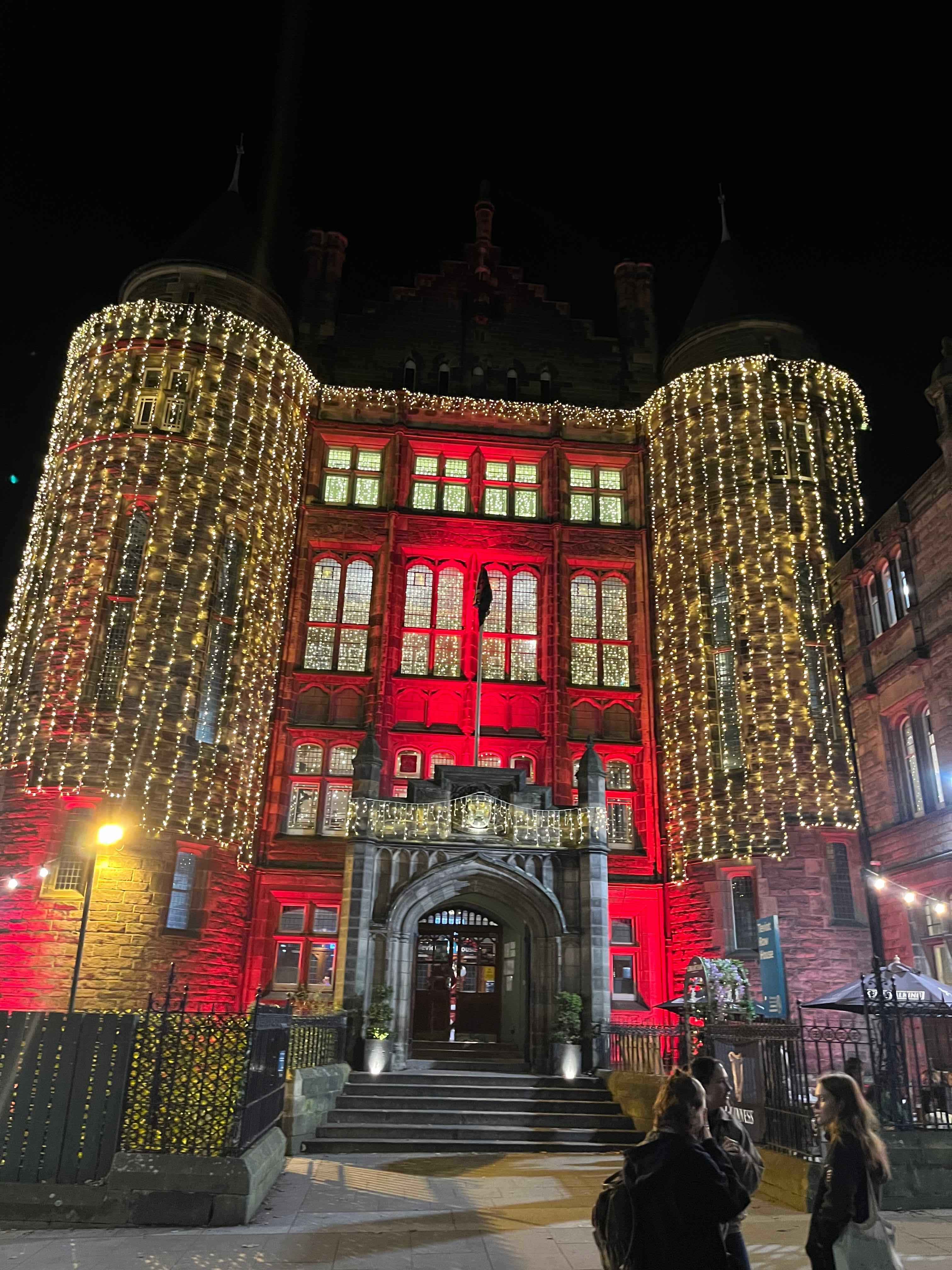




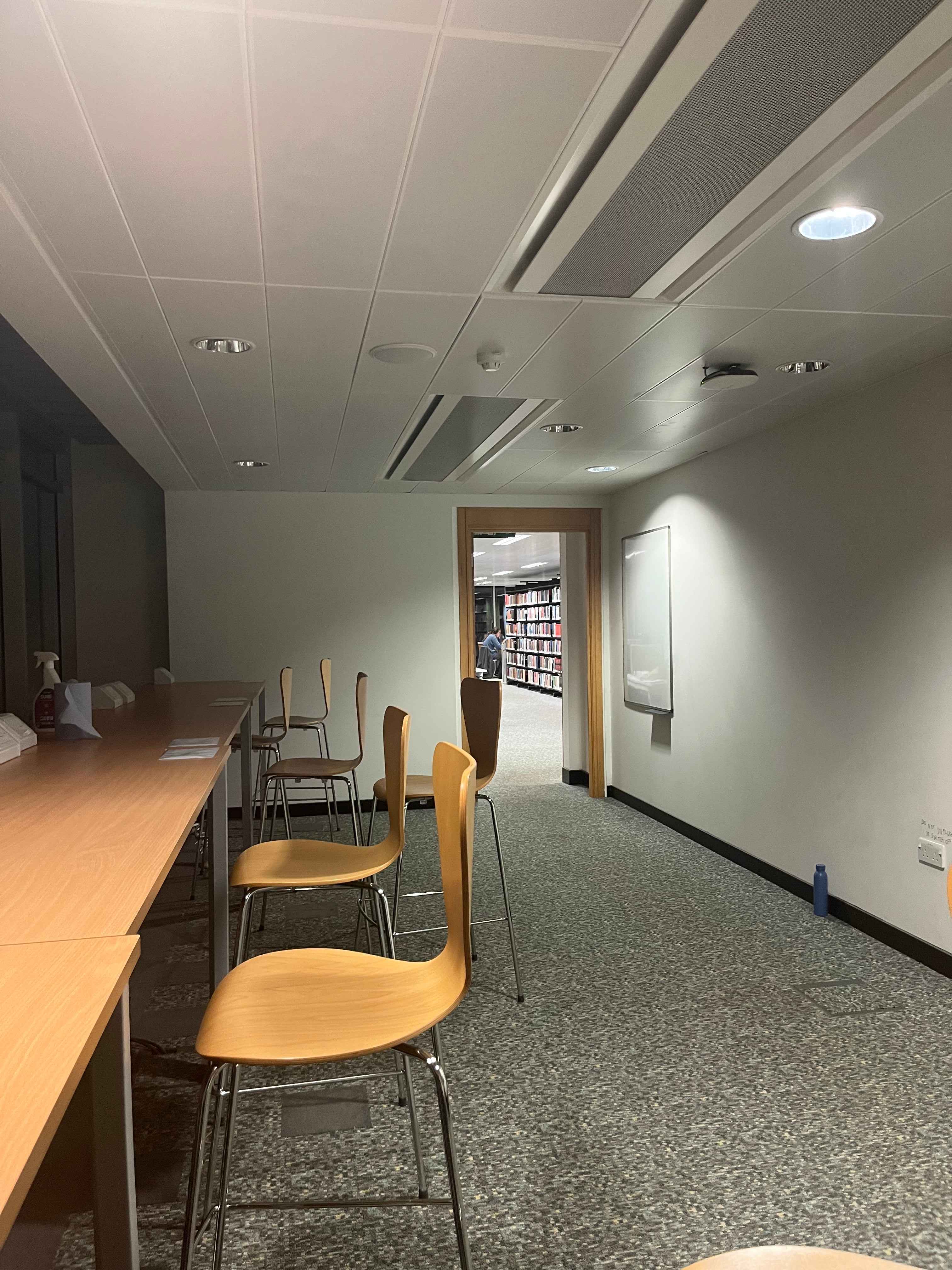
Likes
- Range of dissertation subjects to choose from and work on, giving hands on exposure to research techniques.
- Faculty experience and knowledge.
- The vast opportunity to engage with activities.
Dislikes
- Limited time during labwork to actually gain an insight into everything.
- Limited role of the university in helping bag a job.
- Slight scope for improvement in some coursework.
Likes
- I like how supportive the university is and the social life. Also, the faculty is great.
Dislikes
- The exam schedule could be improved a bit as it can get very hectic.
Overview
I chose Edinburgh because I have been here before and l love the city. Plus, the university has great resources and a fascinating history. The faculty is renowned and the research put is also great.


interested in this College ?
Follow & Share this college to get information about admission.



Comments