



Education Journalist | Study Abroad Lead | Updated On - Aug 25, 2026
The Russell Group is an association of 24 public research-intensive universities in the United Kingdom, established in 1994 and often called the UK's equivalent of the Ivy League. Russell Group members produce over two-thirds of the UK's world-leading research and include the University of Oxford, University of Cambridge, Imperial College London, UCL, and LSE.
According to the QS World University Rankings 2027 (released June 2026), 4 Russell Group universities rank in the global top 10: Imperial College London (#2), University of Oxford (#4), University of Cambridge (#6), and UCL (#8).
For Indian students, Russell Group fees range from ₹25 lakh to ₹65 lakh per year. The acceptance rates range from under 10% (Oxford, Cambridge, LSE) to over 60% (Queen's University Belfast, Cardiff), and the UK Graduate Route visa allows an 18-month post-study stay for applications filed from 1 January 2027 (3 years for PhD).
How Many Russell Group Universities Are There?
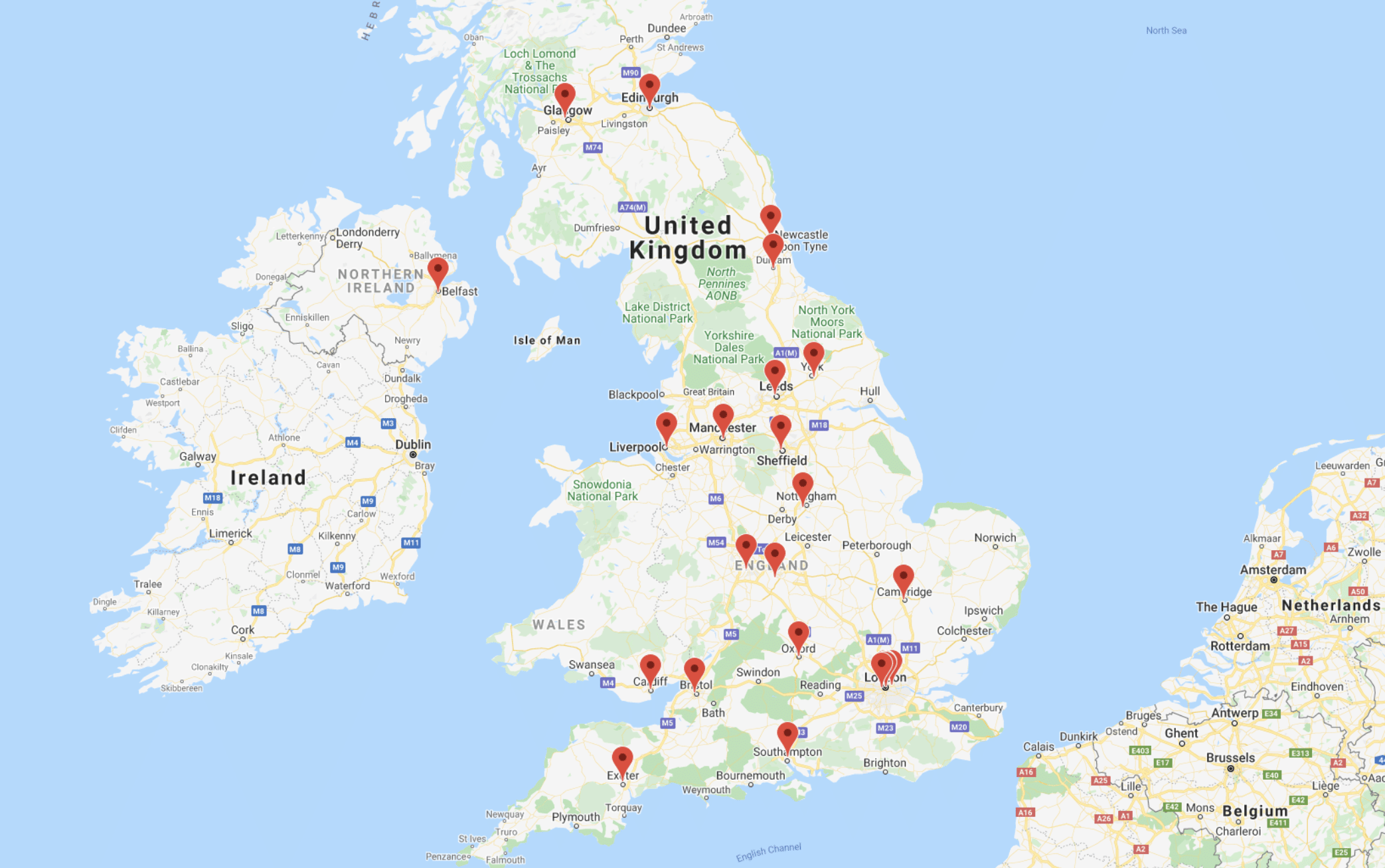
There are 24 Russell Group universities as of 2026: 20 in England, 2 in Scotland (Edinburgh, Glasgow), 1 in Wales (Cardiff), and 1 in Northern Ireland (Queen's University Belfast). Membership has not changed since 2012.
When can you apply to Russell Group universities for 2027 entry?
UCAS applications for 2027 entry can be submitted from 1 September 2026. Key deadlines:
| Deadline | Applies to |
|---|---|
| 15 October 2026, 6 PM UK | Oxford, Cambridge, medicine, dentistry, veterinary |
| 13 January 2027, 6 PM UK | All other undergraduate courses |
| September–October 2026 onwards | Master's applications for September 2027 intake |
Russell Group ≠ hard to get into
Oxford, Cambridge, LSE, Imperial, and Warwick have acceptance rates often under 10%, while Manchester, Cardiff, Queen's University Belfast, and Newcastle regularly admit Indian undergraduates with 70–85% in Class 12 and IELTS 6.5. Applicants with 70–85% boards should target the 13 January 2027 deadline; the 15 October date only applies to Oxbridge and medicine.
For a full breakdown of entry requirements, see: Russell Group Universities Acceptance Rates
- History of the Russell Group
- Russell Group of Universities in UK List
- Russell Group Universities Ranking 2027
- Russell Group Universities in London
- Russell Group Universities in Scotland, Wales, and Northern Ireland
- Russell Group Universities for International and Indian Students
- Are Russell Group Universities Hard to Get Into?
- FAQs
History of the Russell Group
The Russell Group was formed in 1994, when the heads of 17 leading UK research universities came together to represent their shared research and funding interests to the UK government. The group is named after the Hotel Russell in London, where these first meetings were held. It became a formal organisation in 2007 and reached its current strength of 24 members in 2012, when Durham, Exeter, Queen Mary, and York joined.
Russell Group vs the Ivy League: The Russell Group is often called the UK's Ivy League, but the two differ fundamentally. The Ivy League is a private athletic conference of 8 US universities, while the Russell Group is a research-focused association of 24 publicly funded universities, each with independent admission policies and government-regulated teaching standards (TEF).

Related Resources: UK University List; Check all top UK universities for Indian Students
Why Are Russell Group Universities So Prestigious?
Russell Group universities are prestigious because they receive around two-thirds of all UK university research grant funding, dominate global rankings, and are consistently preferred by top employers in the UK and abroad.
- Research dominance: 94% of Russell Group research rated world-leading or internationally excellent (REF 2021)
- Global rankings: 4 members in the QS World Top 10 (2027); 16 in the top 100
- Graduate outcomes: ~10% higher lifetime earnings than other UK graduates (IFS research)
- Selective admissions: under 10% acceptance at Oxford, Cambridge, LSE
- Alumni networks: UK Prime Ministers, Nobel laureates, FTSE 100 leadersMany of these universities consistently rank among the top institutions globally in rankings such as QS and Times Higher Education.
Complete List of Russell Group Universities in the UK (2027 Entry)
All 24 Russell Group universities are listed below, including Southampton, Nottingham, Cardiff, Durham, Exeter and York, which are all full members. St Andrews, Bath, Loughborough and Lancaster are not Russell Group members despite ranking above several universities that are.
| University | Location | Popular Courses | Tuition Fee Range (INR) |
|---|---|---|---|
| University of Birmingham | Birmingham, England | Tech, Physiotherapy | ₹23.5L – ₹39.4L |
| University of Bristol | Bristol, England | Engineering, Social Science | ₹22.7L – ₹53.1L |
| University of Cambridge | Cambridge, England | Maths, Science, Economics | ₹16.3L – ₹88.0L |
| Cardiff University | Cardiff, Wales | Journalism, Bioscience | ₹9.8L – ₹48.0L |
| Durham University | Durham, England | Law, Humanities, MBA | ₹24.7L – ₹38.5L |
| University of Edinburgh | Edinburgh, Scotland | Informatics, AI, History | ₹28.3L – ₹56.5L |
| University of Exeter | Exeter, England | Mining, Business, Geography | ₹16.5L – ₹50.2L |
| University of Glasgow | Glasgow, Scotland | Medicine, Vet Science | ₹23.8L – ₹62.1L |
| Imperial College London | London, England | Engineering, AI, Medicine | ₹38L – ₹74.3L |
| King's College London | London, England | Health Sciences, Politics | ₹24.6L – ₹64.3L |
| University of Leeds | Leeds, England | Media, Business, Textile | ₹14.8L – ₹59.9L |
| University of Liverpool | Liverpool, England | Veterinary, Architecture, Sports | ₹24.6L – ₹49.0L |
| London School of Economics (LSE) | London, England | Economics, Finance, IR | ₹30.2L – ₹49.4L |
| University of Manchester | Manchester, England | Engineering, Management | ₹24.5L – ₹62.7L |
| Newcastle University | Newcastle, England | Biomedical Science, Tech | ₹17.2L – ₹35.6L |
| University of Nottingham | Nottingham, England | Pharmacy, Agriculture | ₹23.6L – ₹48.4L |
| University of Oxford | Oxford, England | MBA, Law, Philosophy | ₹25.9L – ₹92.1L |
| Queen Mary University of London | London, England | Law, Dentistry, Finance | ₹12.2L – ₹62.8L |
| Queen's University Belfast | Belfast, Northern Ireland | Cybersecurity, Pharmacy | ₹21.0L – ₹31.5L |
| University of Sheffield | Sheffield, England | Architecture, Engineering | ₹24.9L – ₹35.5L |
| University of Southampton | Southampton, England | Aerospace, Marine Biology | ₹13.3L – ₹36.8L |
| University College London (UCL) | London, England | Computer Science, Architecture, Medicine | ₹25.2L – ₹68.0L |
| University of Warwick | Coventry, England | Business, Data Science | ₹20.6L – ₹59.1L |
| University of York | York, England | Psychology, Social Policy | ₹13.1L – ₹35.4L |
All 24 universities listed above are full members of the Russell Group. Membership is based on research intensity and institutional collaboration, not league table position.
Russell Group Universities by Region:
• London (5): Imperial, KCL, LSE, UCL, Queen Mary
• Scotland (2): Edinburgh, Glasgow
• Wales (1): Cardiff
• Northern Ireland (1): Queen's Belfast
• Rest of England (15)
Is Your University a Russell Group Member? Full 24-University Check
Every university in the table below is a full Russell Group member. Membership was set at 24 in 2012 and has not changed since, so any list showing more or fewer than 24 is out of date.
| University | Russell Group member | Joined | Known for |
|---|---|---|---|
| University of Southampton | Yes, founding member | 1994 | Aerospace, marine biology |
| University of Nottingham | Yes, founding member | 1994 | Pharmacy, agriculture |
| Cardiff University | Yes | 1998 | Journalism, bioscience |
| Durham University | Yes | 2012 | Law, humanities, MBA |
| University of Exeter | Yes | 2012 | Mining, business, geography |
| University of York | Yes | 2012 | Psychology, social policy |
| University of Birmingham | Yes, founding member | 1994 | Tech, physiotherapy |
| University of Bristol | Yes, founding member | 1994 | Engineering, social science |
| University of Cambridge | Yes, founding member | 1994 | Maths, science, economics |
| University of Edinburgh | Yes, founding member | 1994 | Informatics, AI |
| University of Glasgow | Yes, founding member | 1994 | Medicine, vet science |
| Imperial College London | Yes, founding member | 1994 | Engineering, AI, medicine |
| University of Leeds | Yes, founding member | 1994 | Media, business, textile |
| University of Liverpool | Yes, founding member | 1994 | Veterinary, architecture |
| London School of Economics | Yes, founding member | 1994 | Economics, finance, IR |
| University of Manchester | Yes, founding member | 1994 | Engineering, management |
| Newcastle University | Yes, founding member | 1994 | Biomedical science, tech |
| University of Oxford | Yes, founding member | 1994 | MBA, law, philosophy |
| University of Sheffield | Yes, founding member | 1994 | Architecture, engineering |
| University College London | Yes, founding member | 1994 | Computer science, medicine |
| University of Warwick | Yes, founding member | 1994 | Business, data science |
| King's College London | Yes | 1998 | Health sciences, politics |
| Queen's University Belfast | Yes | 2006 | Cybersecurity, pharmacy |
| Queen Mary University of London | Yes | 2012 | Law, dentistry, finance |
Is the University of Southampton a Russell Group university?
Yes. Southampton is one of the 17 founding members from 1994. It is strongest in aerospace engineering and marine biology, with tuition from ₹13.3L a year, among the lowest in the group.
Is the University of Nottingham a Russell Group university?
Yes. Nottingham is a founding member from 1994, known for pharmacy and agriculture. Indian undergraduates are typically admitted with 80 to 90 percent in Class 12.
Is Cardiff University a Russell Group university?
Yes. Cardiff joined in 1998 and is the only Russell Group university in Wales. It is one of the group's more accessible entry points, admitting Indian students with 70 to 85 percent boards and IELTS 6.5.
Is Durham University a Russell Group university?
Yes. Durham joined in 2012 alongside Exeter, Queen Mary and York, in the group's last expansion. It is strongest in law, humanities and business.
Is the University of Exeter a Russell Group university?
Yes. Exeter joined in 2012, moving across from the now dissolved 1994 Group. Popular subjects for Indian applicants are business, geography and mining engineering.
Is the University of York a Russell Group university?
Yes. York joined in 2012 and is one of the better value members, with tuition from ₹13.1L a year and living costs well below London.
Universities That Are Not in the Russell Group
Several highly ranked UK universities are not Russell Group members. Membership reflects research intensity and lobbying representation, not teaching quality or league table position, so a non-member can outrank a member.
| University | Russell Group member | Why students assume it is |
|---|---|---|
| University of St Andrews | No | Regularly ranked top 3 in UK league tables, above most members |
| University of Bath | No | Strong engineering and management reputation, high entry grades |
| Loughborough University | No | Top UK ranking for sport and strong engineering |
| Lancaster University | No | Consistently top 15 in UK rankings |
| University of Surrey | No | Strong placement record and hospitality reputation |
| University of Strathclyde | No | Well known Scottish engineering and business school |
| Heriot-Watt University | No | Dubai and Malaysia campuses, popular with Indian applicants |
| University of Aberdeen | No | Ancient Scottish university founded in 1495 |
| Swansea University | No | Often confused with Cardiff as a Welsh research university |
| Royal Holloway, University of London | No | University of London federation, like UCL and KCL which are members |
| City St George's, University of London | No | University of London federation, Bayes Business School |
| SOAS University of London | No | University of London federation |
| Brunel University of London | No | London location and strong engineering intake |
| University of Reading | No | Henley Business School reputation |
| University of Leicester | No | Research reputation and red brick status |
| University of East Anglia | No | Strong research output and creative writing reputation |
| Aston University | No | Birmingham location alongside a member university |
| University of Sussex | No | Research reputation and top 200 global position |
| University of Dundee | No | Well known medical and life sciences reputation |
| University of Kent | No | Marketed as a research-intensive institution |
Is St Andrews a Russell Group university?
No. St Andrews is not a Russell Group member and left the 1994 Group in 2012 without joining. It still ranks in the UK top 3 in most domestic league tables, which is why the question is asked so often.
A non-member is not a weaker choice. St Andrews, Bath and Loughborough all outrank several Russell Group members in UK league tables, and all three accept Indian students on the same UCAS timeline. Shortlist on course, fees and acceptance rate rather than on the group label.
Check Out: UK University List for Indian Students
Russell Group Universities Ranking 2027
Imperial College London is the highest-ranked Russell Group university in the QS World University Rankings 2027, at #2 globally. In total, 4 Russell Group members rank in the world's top 10 and 16 rank in the top 100.
Top 10 Russell Group Universities (QS 2027): Imperial (=2), Oxford (4), Cambridge (6), UCL (8), Edinburgh (35), KCL (37), Manchester (=40), Bristol (57), LSE (62), Warwick/Birmingham (=68).
Russell Group Universities in London
There are 5 Russell Group universities in London: Imperial College London, King's College London (KCL), London School of Economics (LSE), University College London (UCL), and Queen Mary University of London.
London-based Russell Group universities are particularly strong in:
- Finance and Economics – LSE, UCL
- Engineering and STEM – Imperial
- Law and Public Policy – King's, LSE
- Medicine and Health Sciences – UCL, King's, Imperial
The trade-off is cost. Cost of living in London is ₹13–16 lakh per year (£1,300–1,500/month) versus ₹9–11 lakh in cities like Manchester, Leeds, or Glasgow — a difference of roughly ₹4–5 lakh annually before tuition. The UK visa maintenance requirement is also higher for London (£1,483/month vs £1,136/month elsewhere, for up to 9 months).
Students prioritising employer access and networking may prefer London; those optimising total cost get the same Russell Group degree for ₹15–20 lakh less over three years outside it.
Check out the top student cities in UK
Russell Group Universities in Scotland, Wales, and Northern Ireland
Four Russell Group universities are located outside England: the University of Edinburgh and University of Glasgow in Scotland, Cardiff University in Wales, and Queen's University Belfast in Northern Ireland.
- Scotland (Edinburgh, Glasgow): Globally strong in medicine, informatics, and life sciences. Note: Scottish undergraduate degrees typically run 4 years instead of 3, adding roughly ₹30–45 lakh in extra tuition and living costs for international students.
- Wales (Cardiff): Known for journalism, biosciences, and engineering — and among the lowest fee ranges in the Russell Group (from ~₹21L/year for most UG courses).
- Northern Ireland (Queen's Belfast): Strong in cybersecurity and pharmacy, with the lowest living costs of any Russell Group city and one of the group's highest acceptance rates — often the most accessible entry point for Indian students.
Russell Group Universities for International and Indian Students – 2027 Entry
Indian students can apply to all 24 Russell Group universities through UCAS for undergraduate courses (submissions open 1 September 2026) or directly to the university for Master's programs (September 2027 intake applications open from September–October 2026).
Typical entry requirements for Indian students:
| Level | Academic requirement | English requirement |
|---|---|---|
| Undergraduate | 70%–90%+ in Class 12 (CBSE/ISC/State boards), depending on university tier | IELTS 6.5–7.5 (or TOEFL/PTE equivalent) |
| Postgraduate | 60%–75%+ or 6.5–8.0 CGPA in Bachelor's | IELTS 6.5–7.5 |
| Oxbridge / medicine / LSE | 90%+ plus admissions tests and interviews | IELTS 7.0–7.5 |
- Popular fields among Indian applicants: Engineering and Computer Science, Finance and Economics, Medicine and Health Sciences, Business and Management.
- Scholarships: Indian students at Russell Group universities can apply for the Chevening Scholarship (fully funded Master's), GREAT Scholarships (£10,000, multiple members participate), and university-specific India merit awards typically worth £3,000–£10,000 per year. Availability varies by institution — check each university's international scholarships page.
- Post-study work: Under the UK Graduate Route, students who apply on or after 1 January 2027 receive 18 months of post-study work permission (Bachelor's/Master's) or 3 years (PhD). Most students starting in September 2027 will fall under the 18-month rule.
Are Russell Group Universities Hard to Get Into?
Not equally. Acceptance rates across the Russell Group range from under 10% at Oxford, Cambridge, and LSE to over 60% at Queen's University Belfast and Cardiff.
| Tier | Universities | Approx. acceptance | Indian UG profile |
|---|---|---|---|
| Highly competitive | Oxford, Cambridge, LSE, Imperial | Under 10–15% | 90%+ boards, tests/interviews |
| Competitive | UCL, Warwick, Edinburgh, KCL, Manchester | 15–40% | 80–90% boards |
| Accessible | Cardiff, Queen's Belfast, Newcastle, Liverpool, York | 40–60%+ | 70–85% boards, IELTS 6.5 |
For Indian applicants, effective acceptance rates in Computer Science, Business, and Engineering run lower than the university-wide average due to high application volumes.
Full breakdown: Acceptance Rate of Russell Group Universities
How to Choose the Right Russell Group University
The right Russell Group university depends on your course, budget, and career goal — not the group label or overall rank.
- Finance and Economics: LSE, Warwick, Oxford
- Engineering and STEM: Imperial, Manchester, Sheffield
- Medicine and Health Sciences: UCL, King's, Edinburgh
- Best value (fees + living costs): Queen's Belfast, Cardiff, York
Also check:
FAQs
Ques. Is Durham a Russell Group university?
Ans. Yes. Durham University is a full member of the Russell Group and is known for its strengths in law, humanities, and business.
Ques. Is UCL a Russell Group university?
Ans: Yes. University College London (UCL) is a founding member of the Russell Group and consistently ranks among the top universities in the UK and globally.
Ques. Is LSE part of the Russell Group?
Ans: Yes. The London School of Economics and Political Science (LSE) is a Russell Group member and is particularly well known for economics, finance, and social sciences.
Ques. Is St Andrews a Russell Group university?
Ans. No. The University of St Andrews is not a member of the Russell Group, although it is highly ranked globally.
Ques. Is the University of Manchester a Russell Group university?
Ans. Yes. The University of Manchester is a Russell Group member and one of the largest research-intensive universities in the UK.
Ques. What is the Russell Group?
Ans. The Russell Group is an association of 24 research-intensive public universities in the United Kingdom, established in 1994 to represent research and higher education interests.
Ques. Are all Russell Group universities located in England?
Ans. No. While most are based in England, the group also includes:
- 2 in Scotland (Edinburgh and Glasgow)
- 1 in Wales (Cardiff)
- 1 in Northern Ireland (Queen’s University Belfast)


1720766750.png?tr=w-305,h-145,c-force?h=175&w=350&mode=stretch)



Comments