




CUET PG Geography Population and Settlement Handwritten Notes, free to download as a 20-page PDF. HUQP08 asks 75 questions at four marks each, and this opening section of Human Geography takes roughly two days to learn, so plan two sittings.
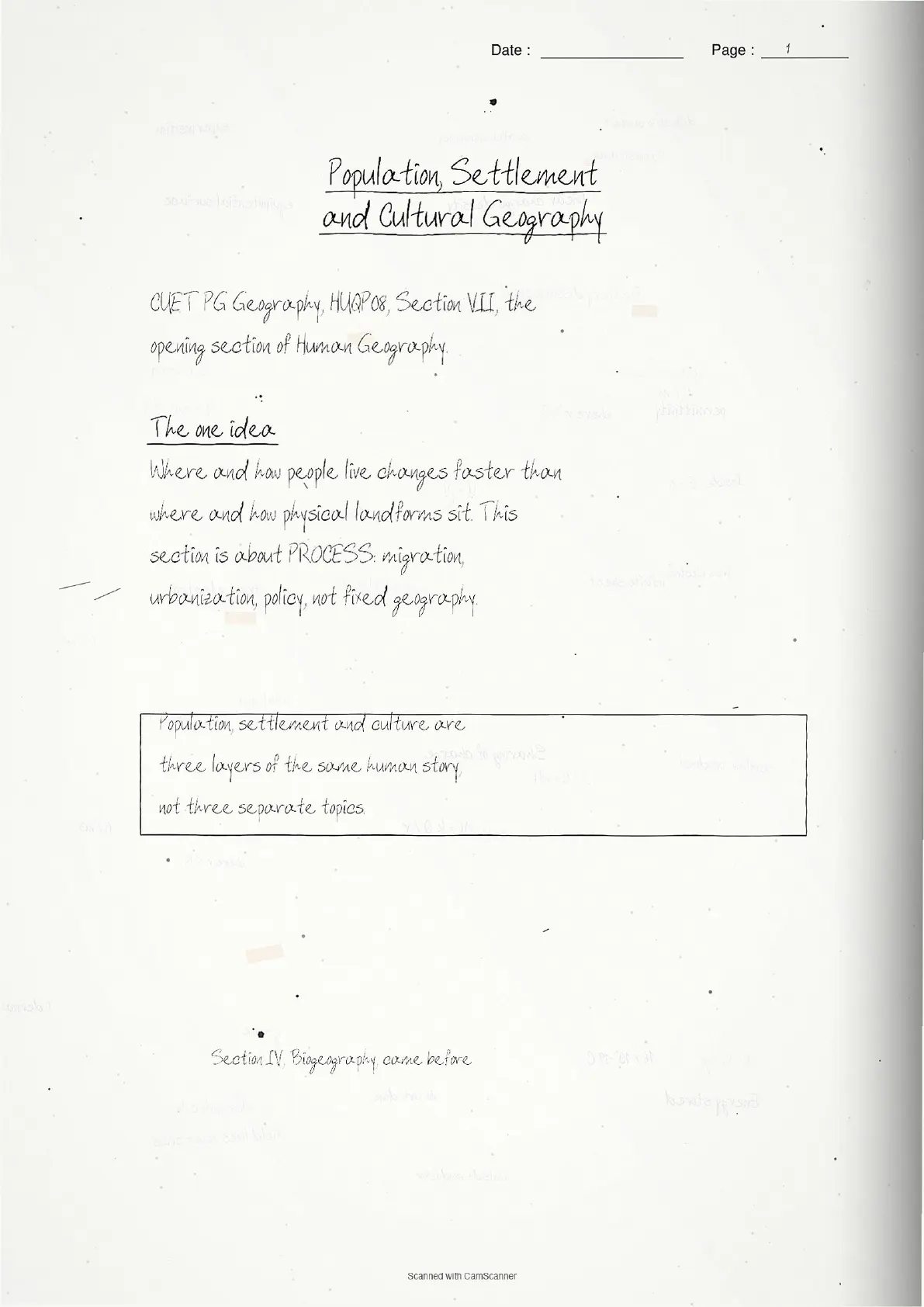
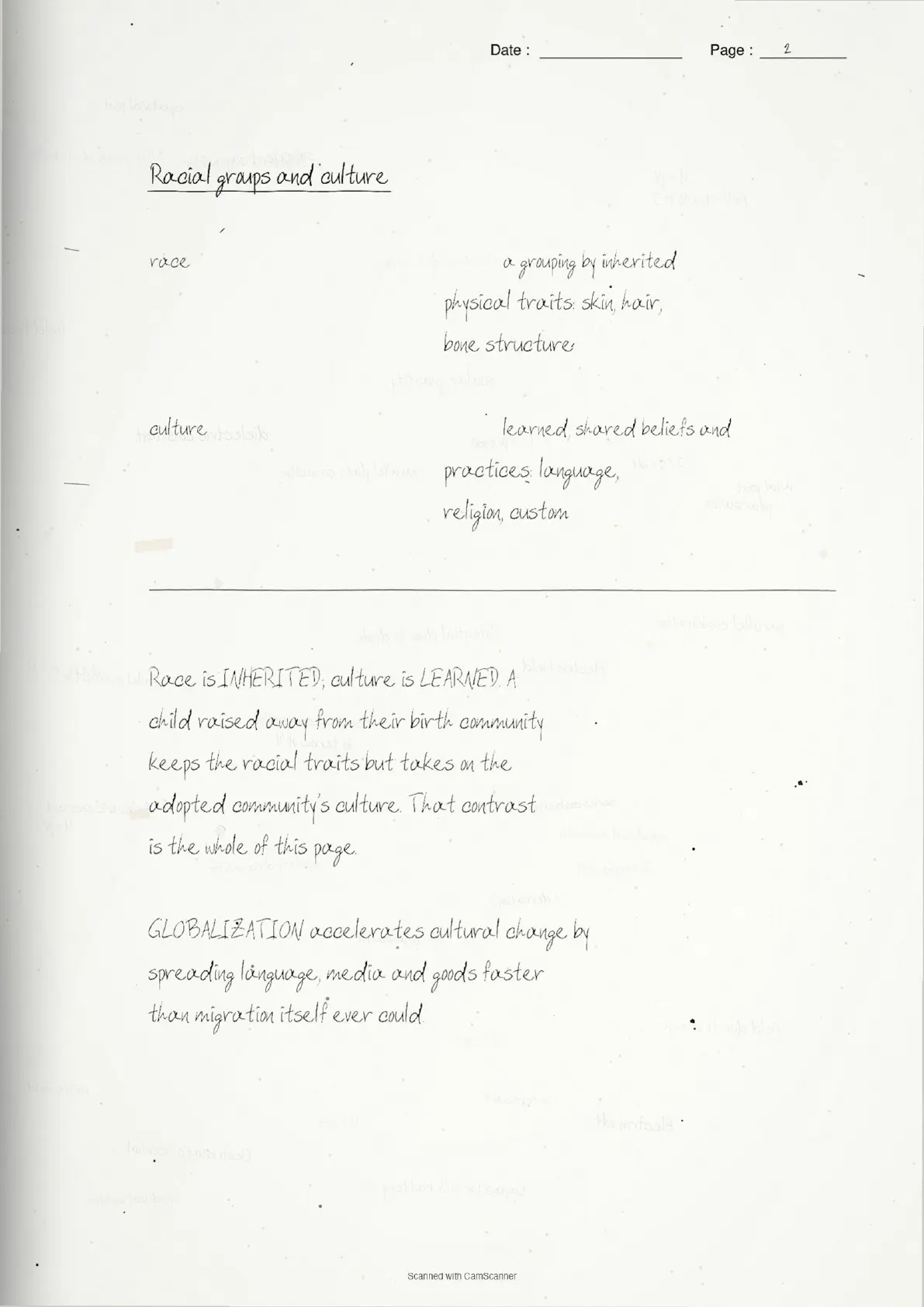
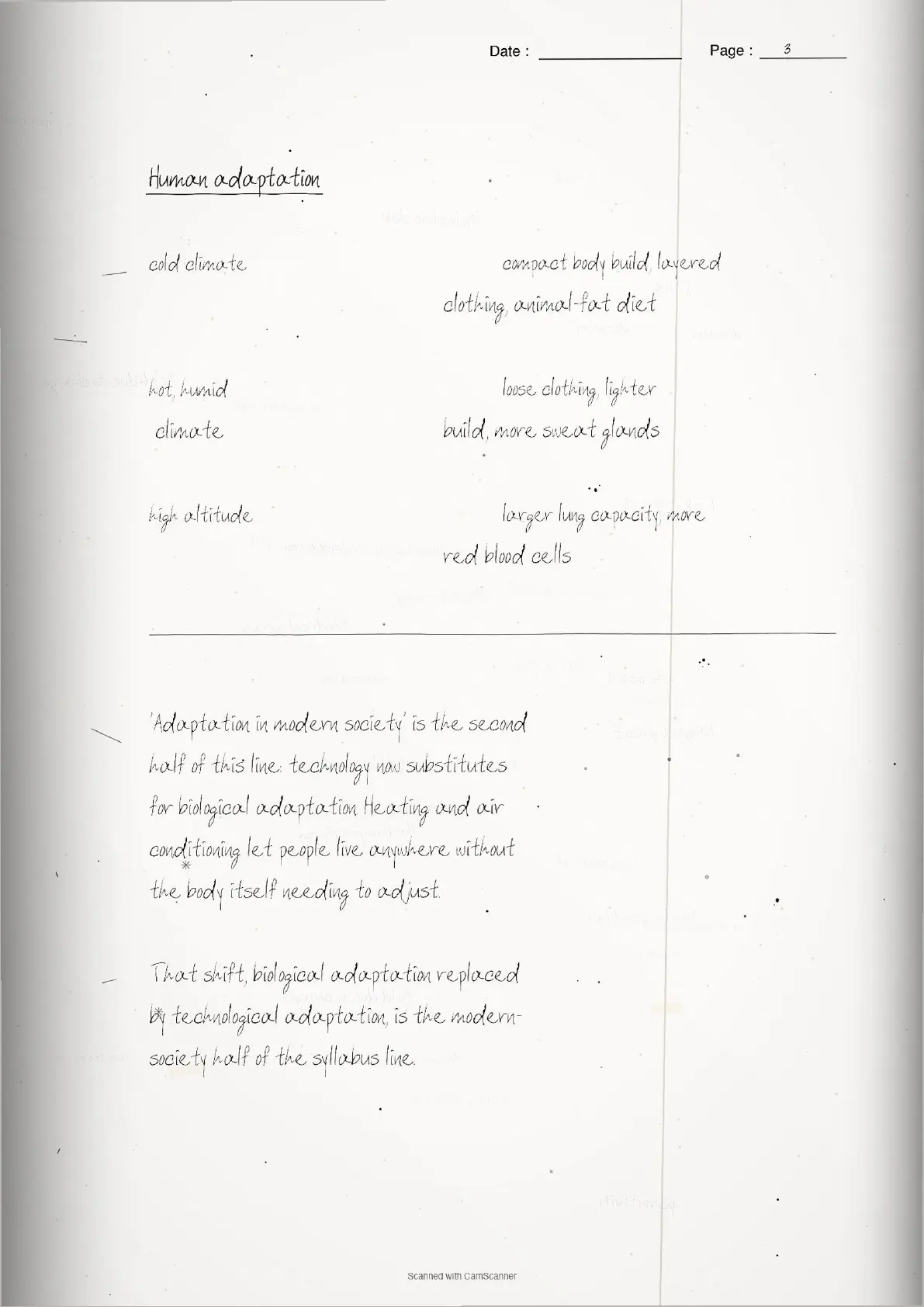
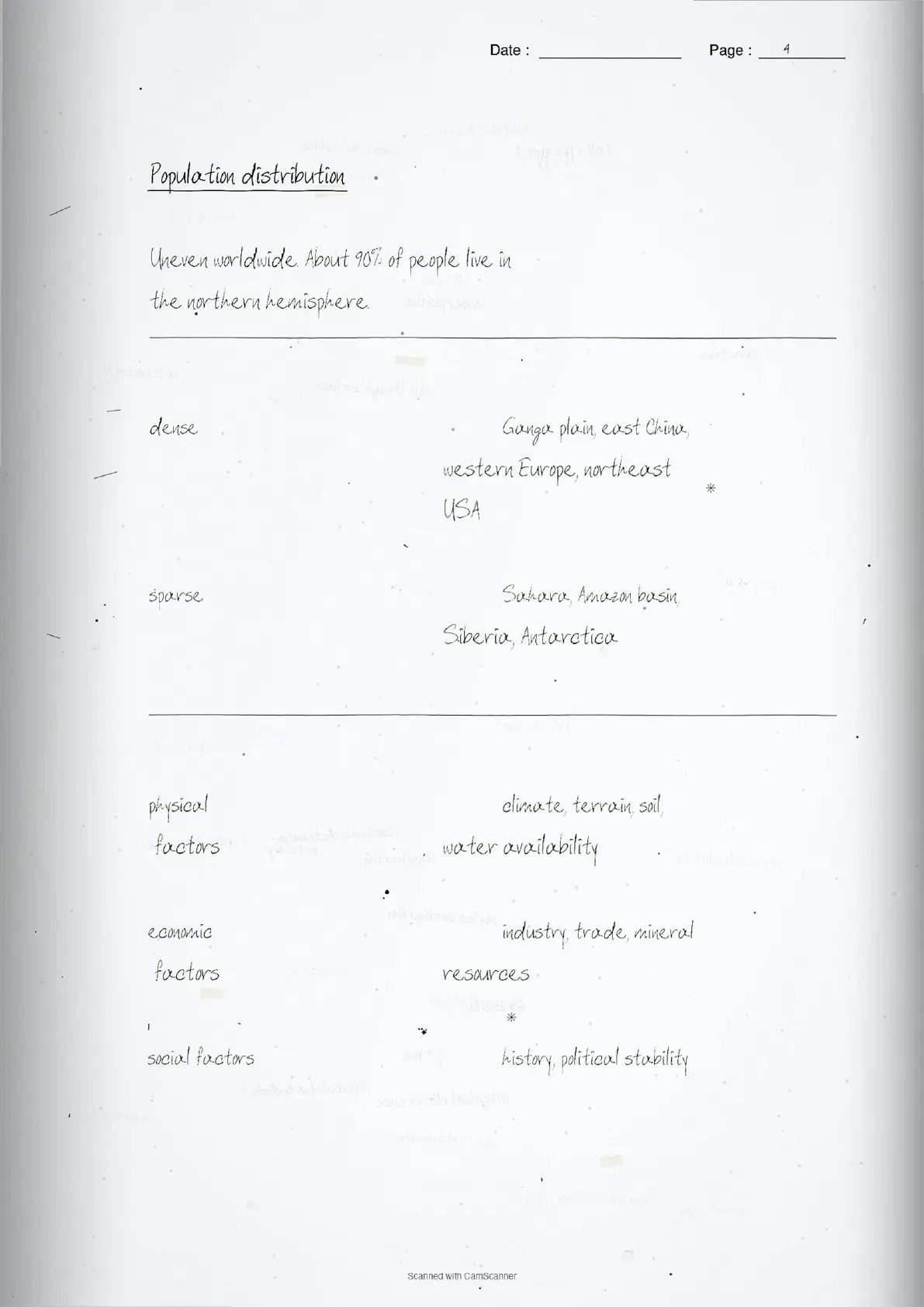
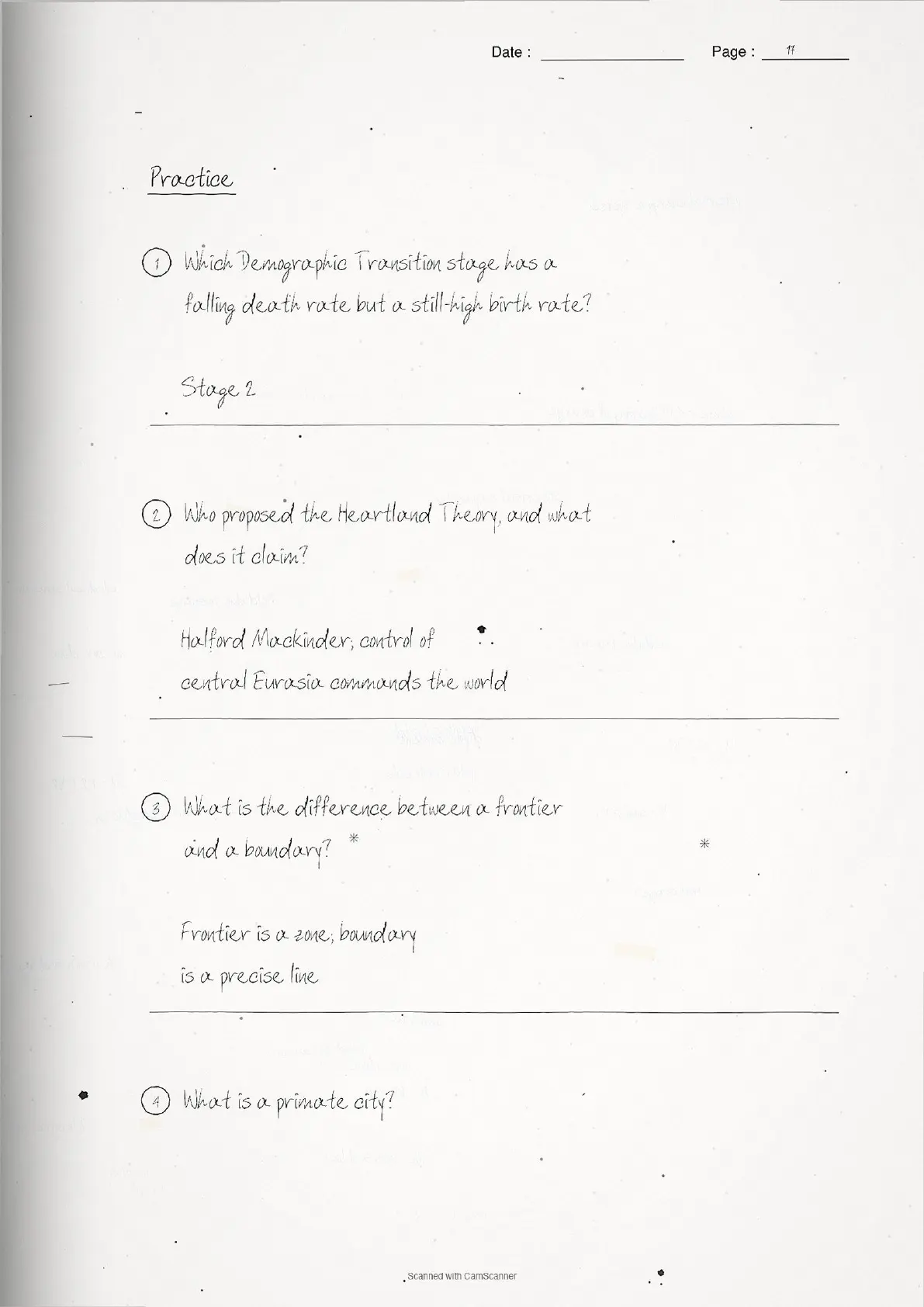
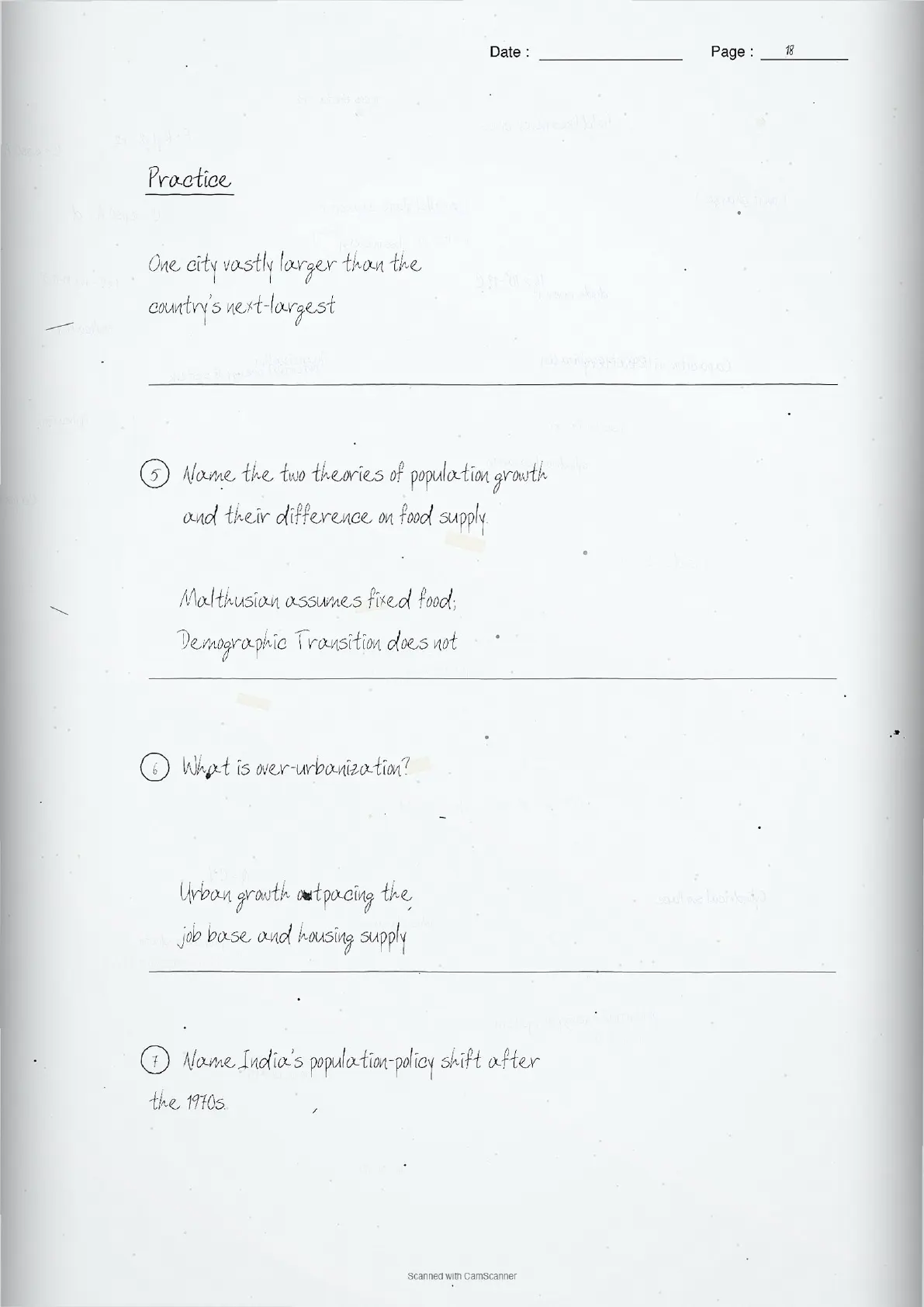
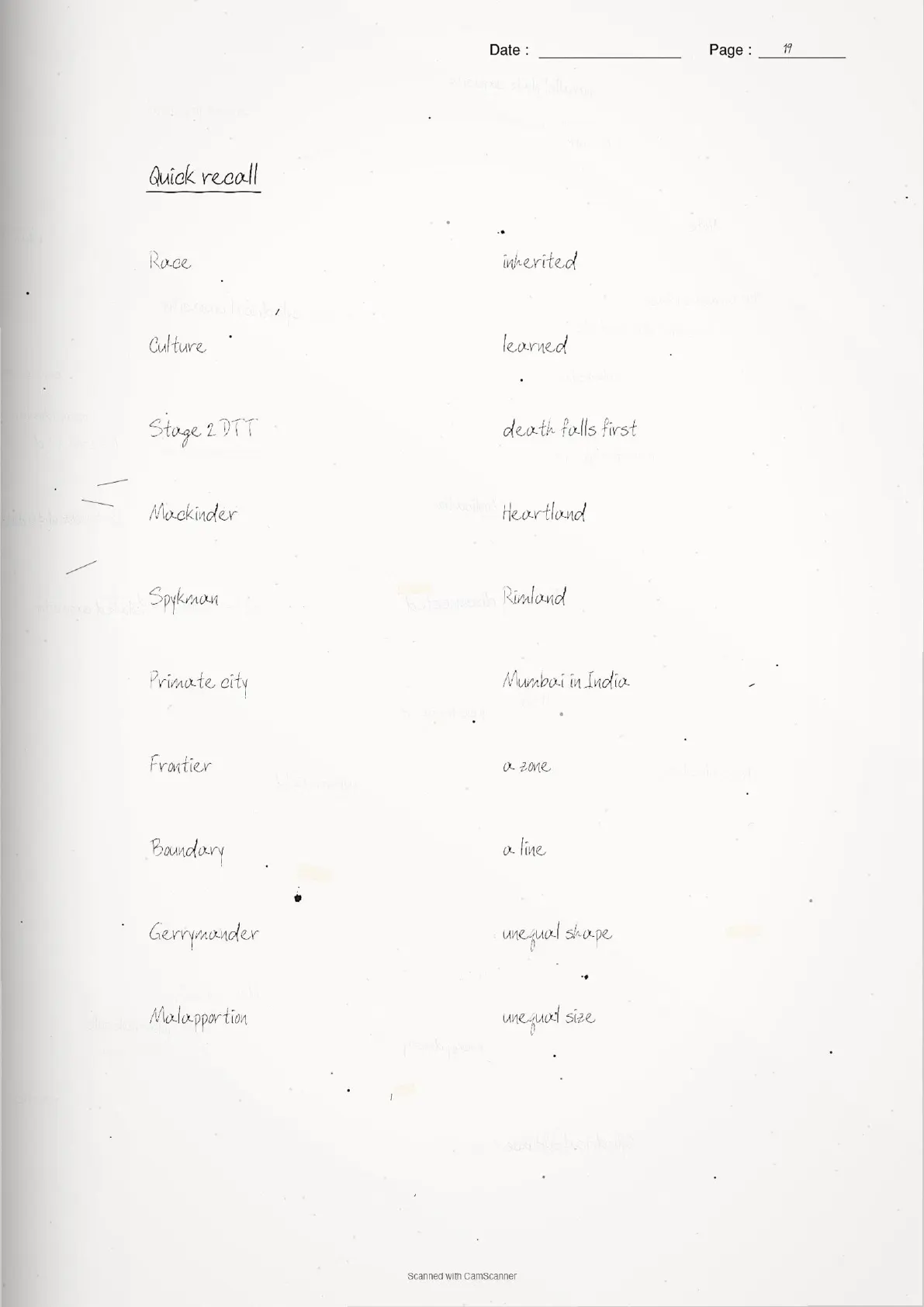
The notes are scans of a real notebook: short lines, boxed rules, and a margin note wherever something is easy to get wrong.
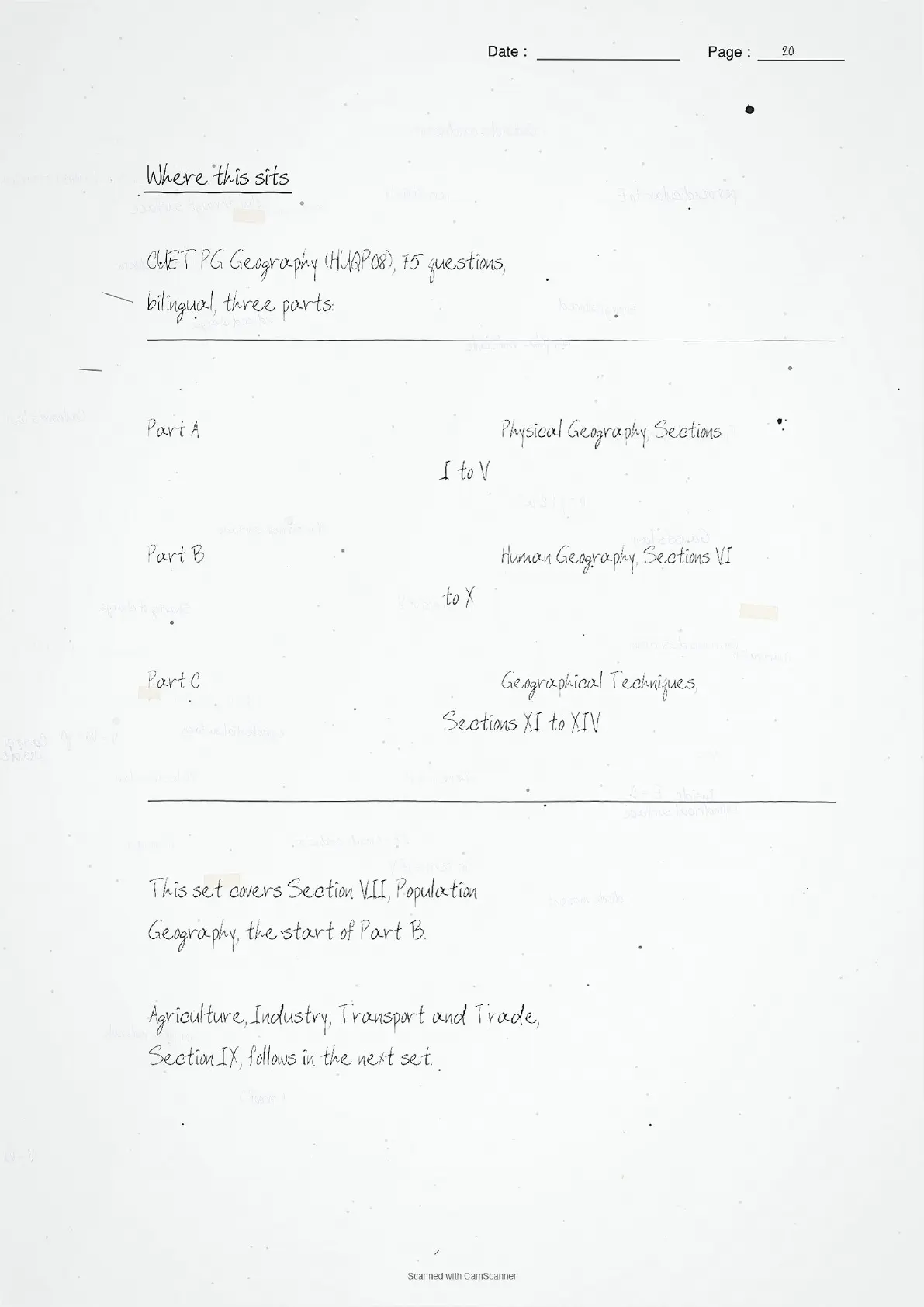
Where This Sits in HUQP08
Population Geography is Section VII, opening Part B, Human Geography. Section VI, Geographic Thought, precedes it in the official syllabus but has no scheduled topic of its own yet in this notes series.
| Part | Content | Sections |
|---|---|---|
| A | Physical Geography | I to V |
| B | Human Geography | VI to X |
| C | Geographical Techniques | XI to XIV |
What the Notes Cover
- Race and culture, human adaptation, and cultural change under globalization
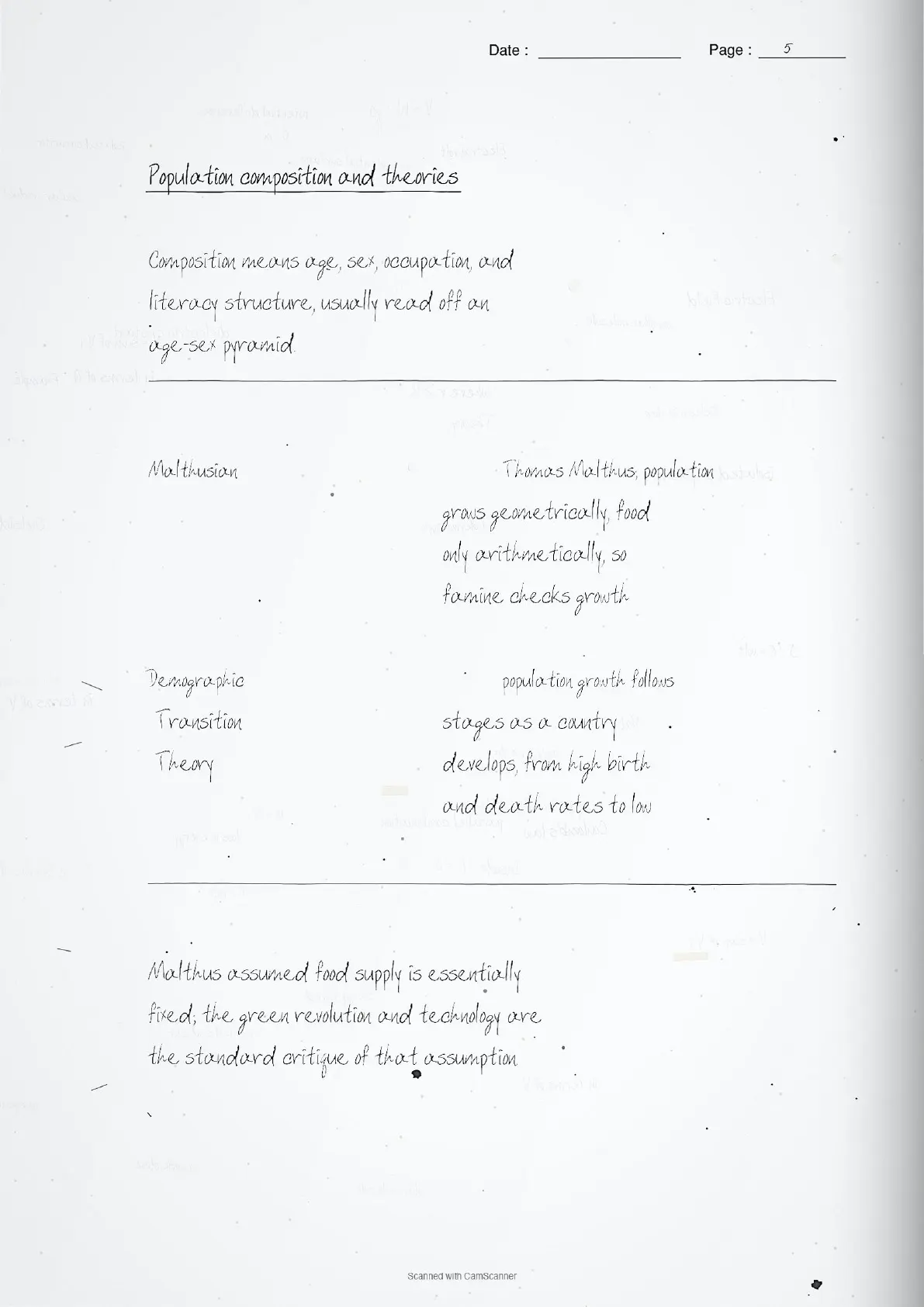
- Population distribution, density, composition and theories, including Malthus and the Demographic Transition
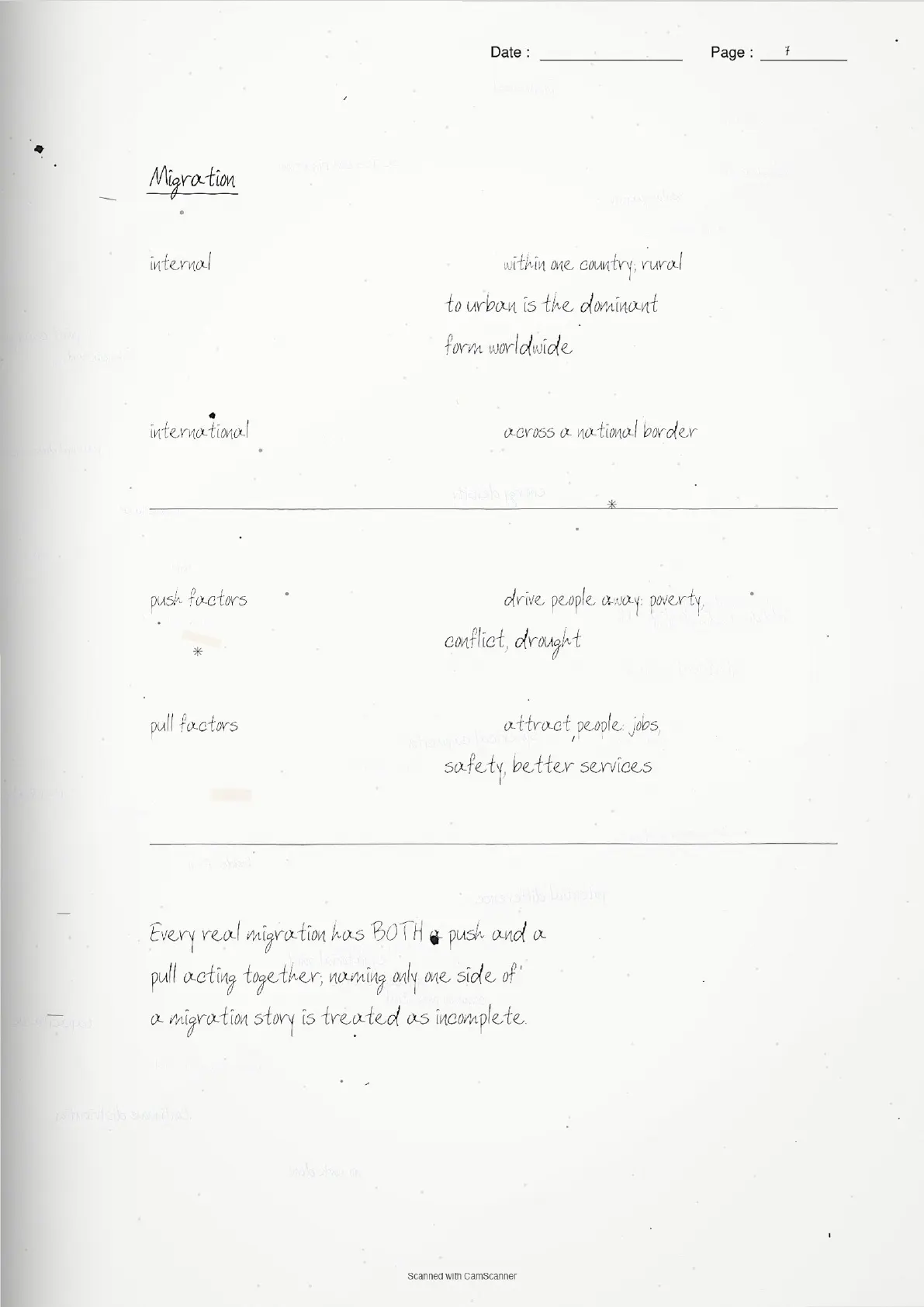
- Migration, its push and pull factors, internal and international
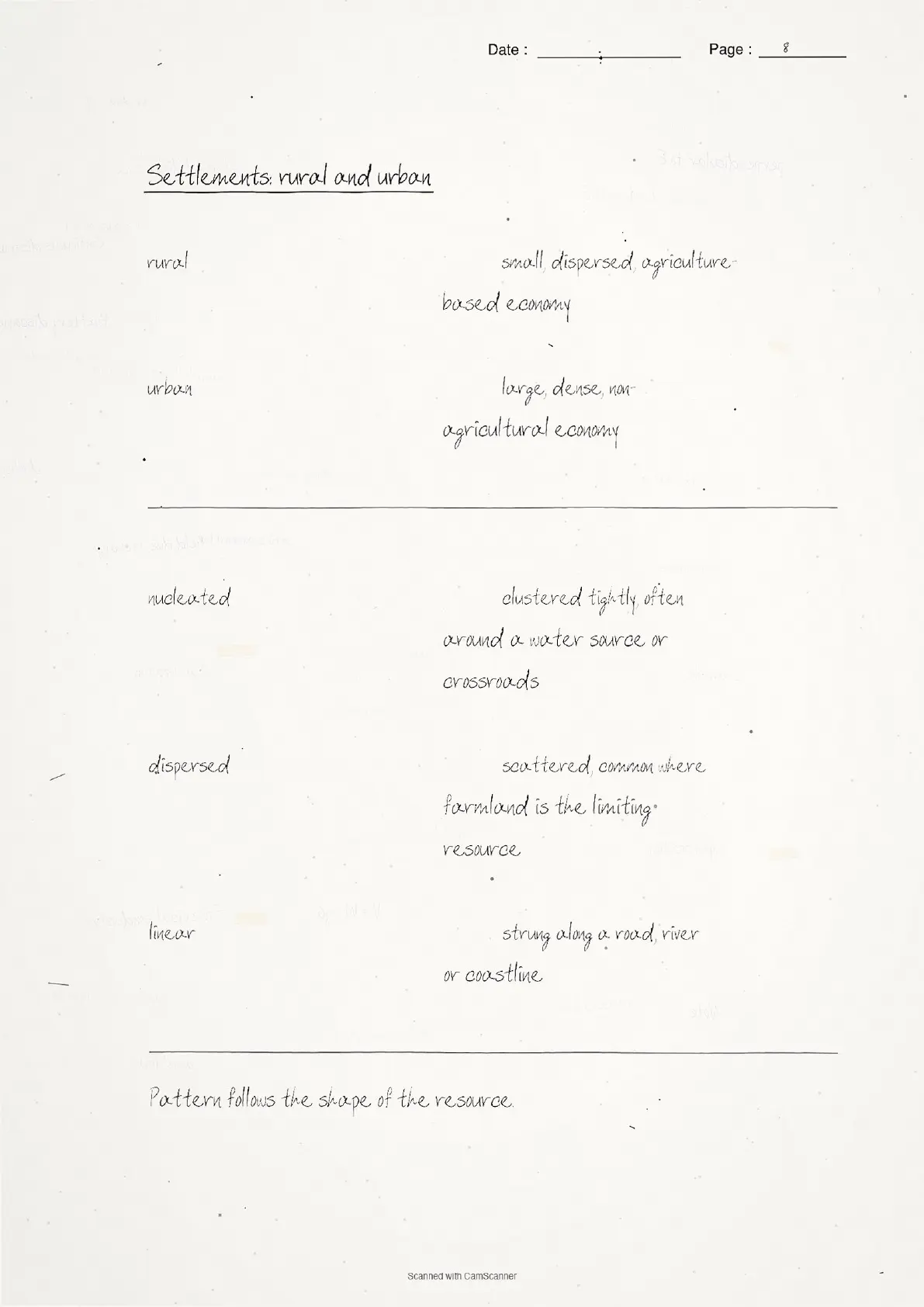
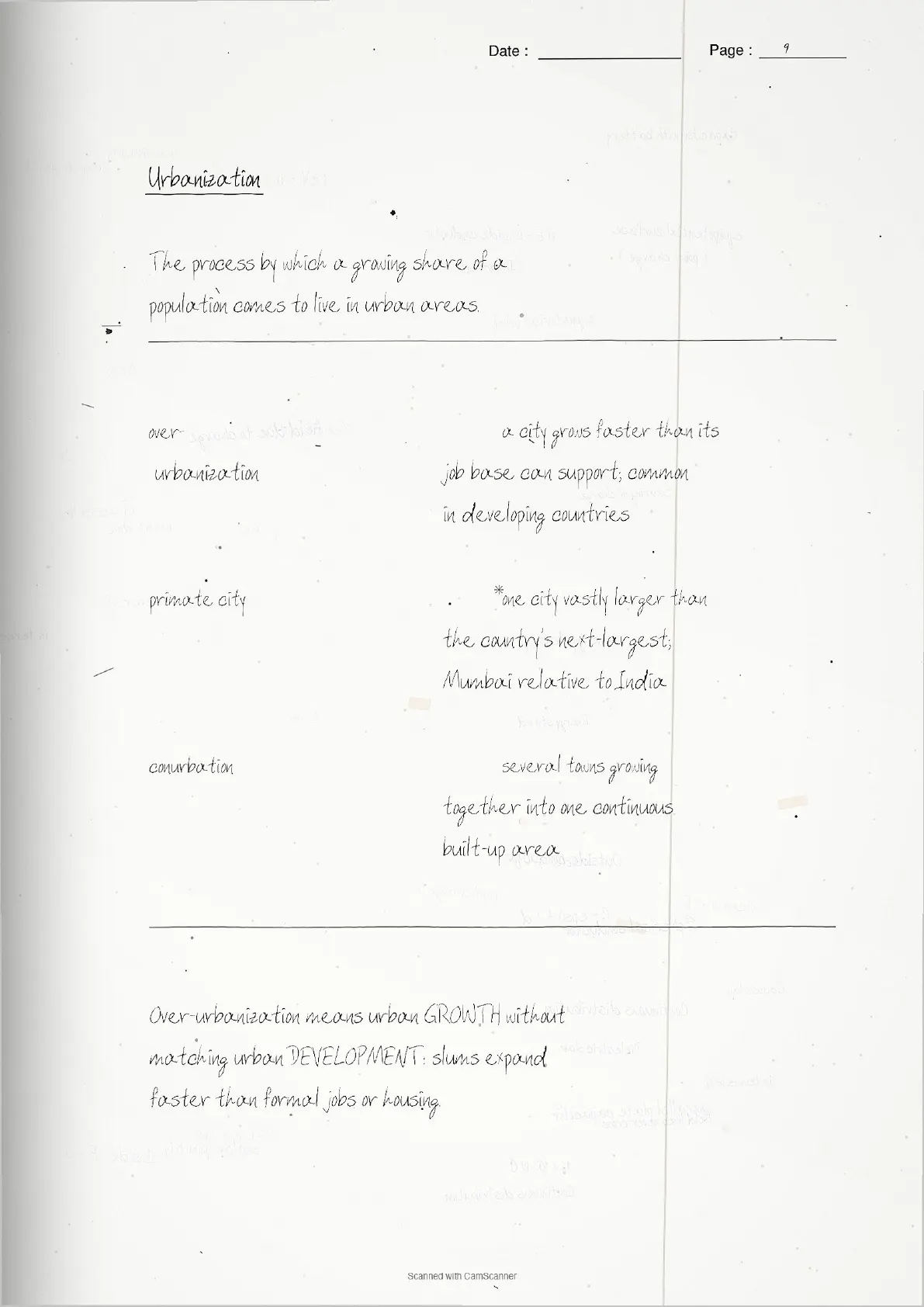
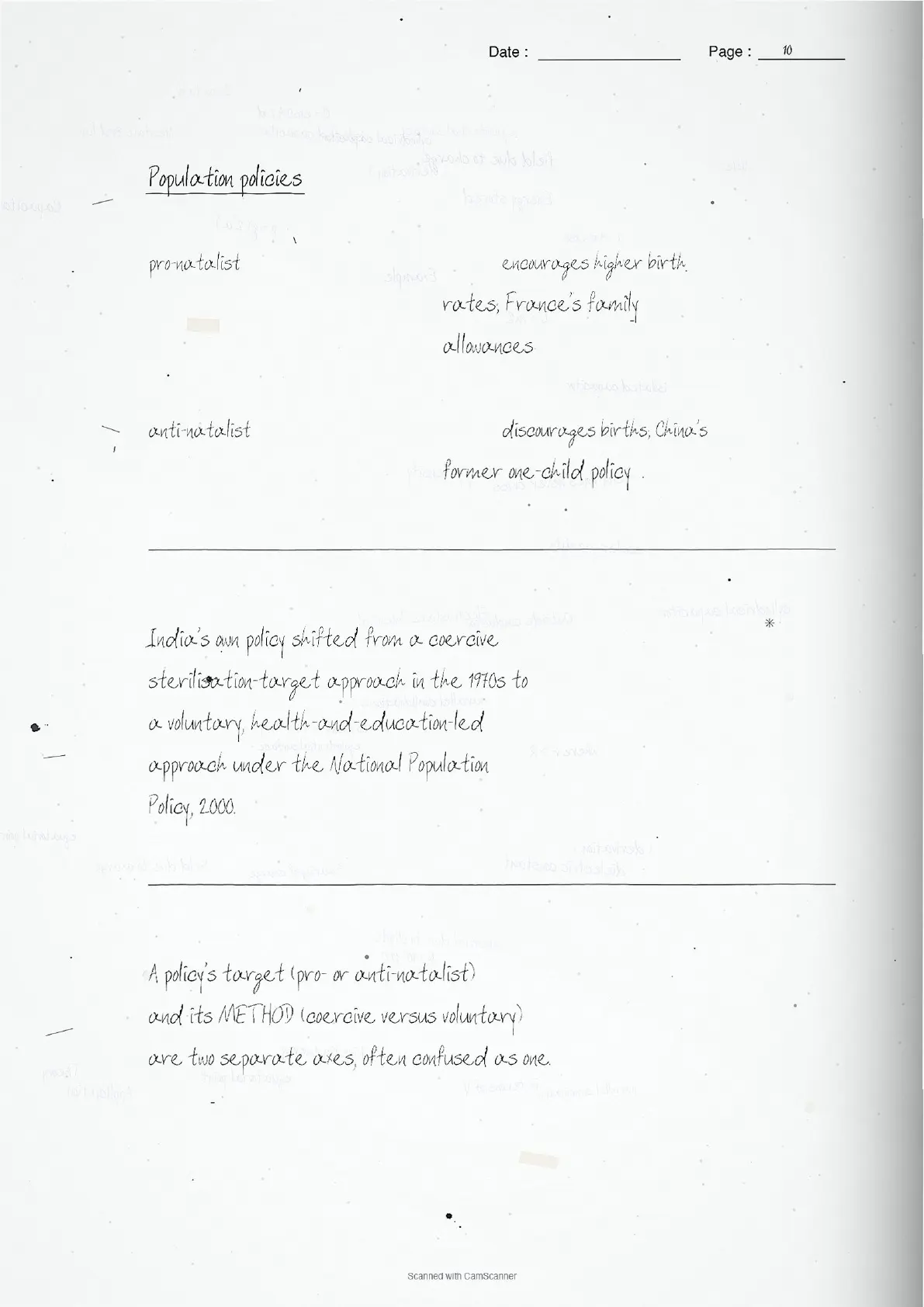
- Rural and urban settlements, urbanization, and population policy
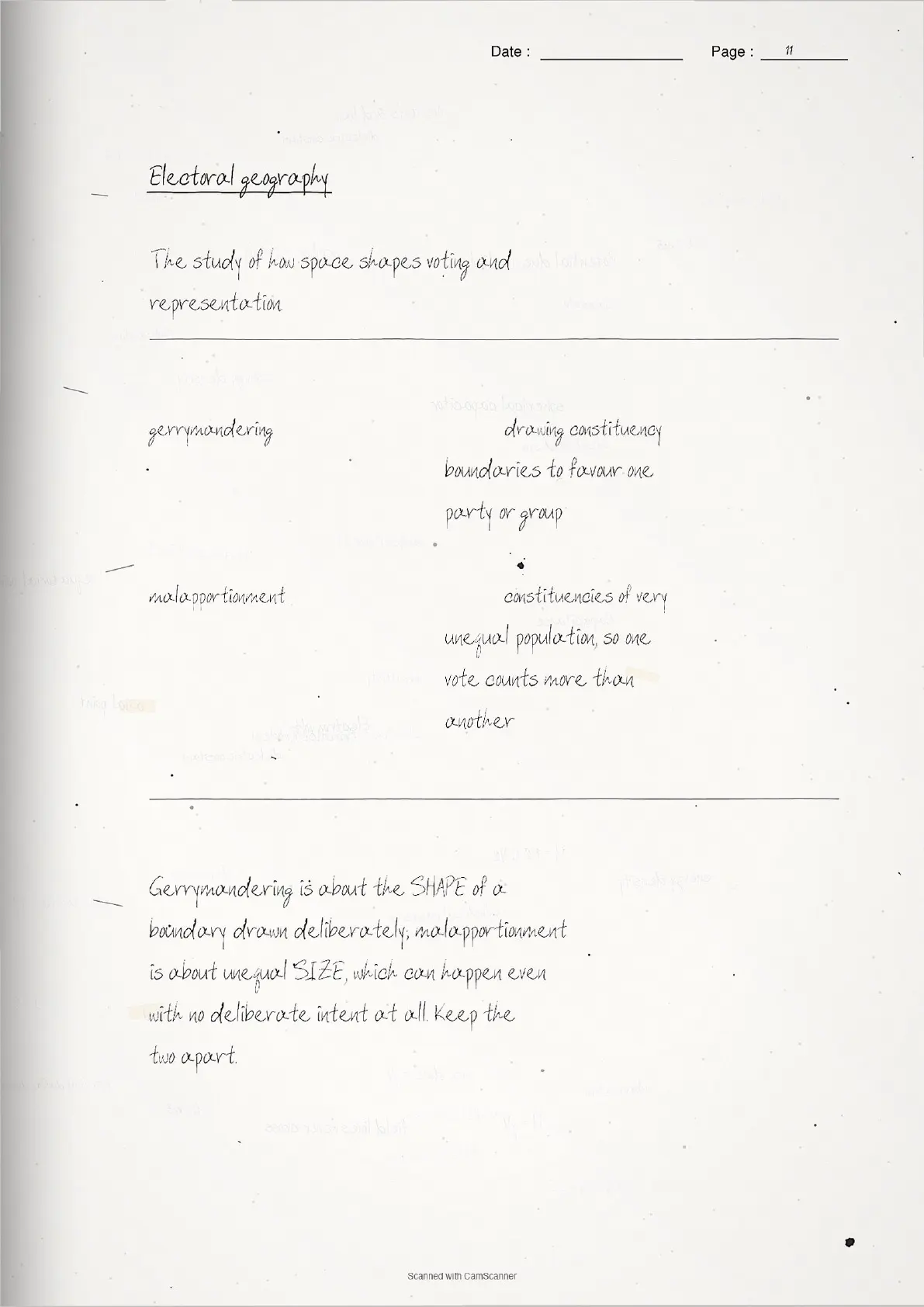
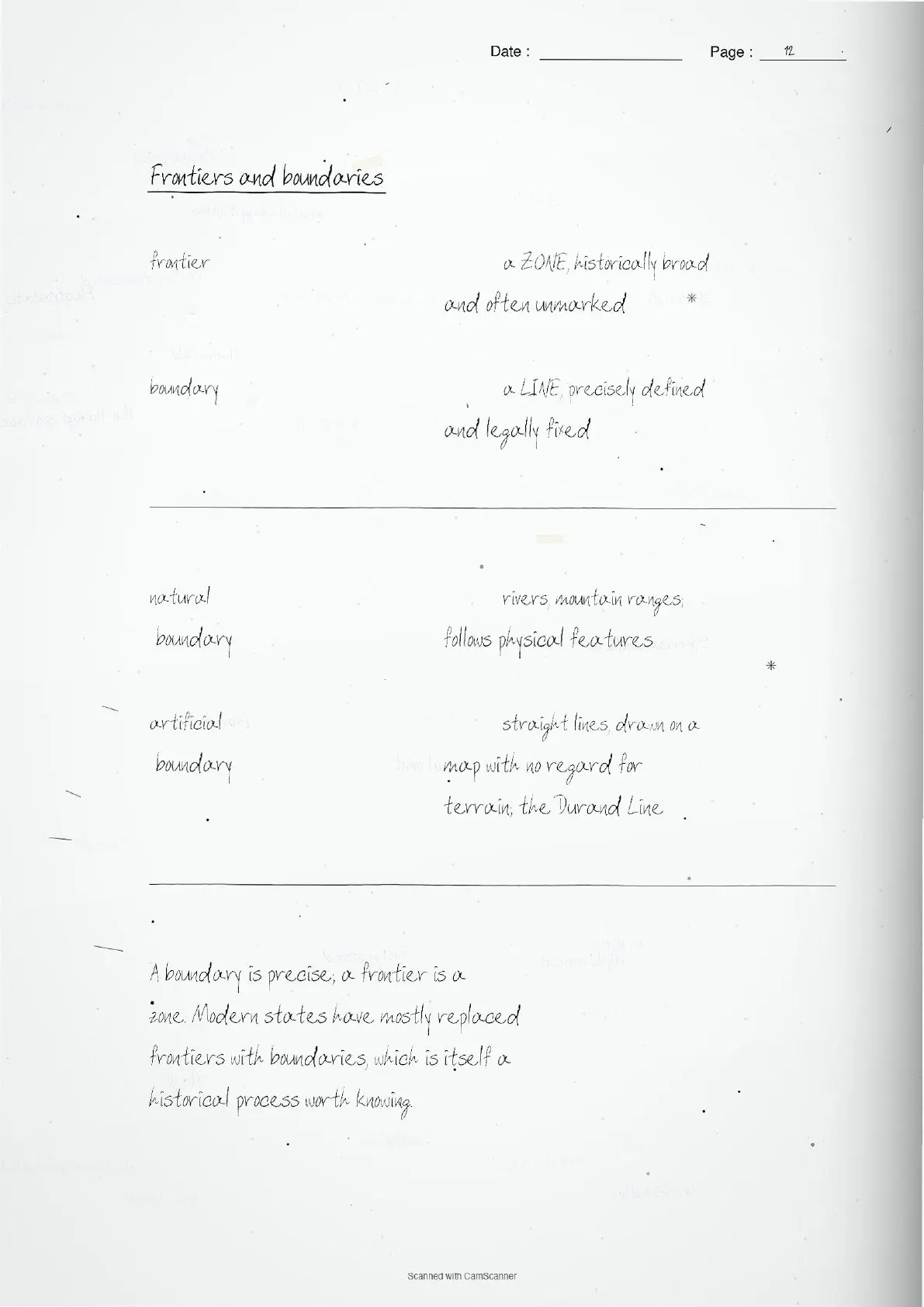
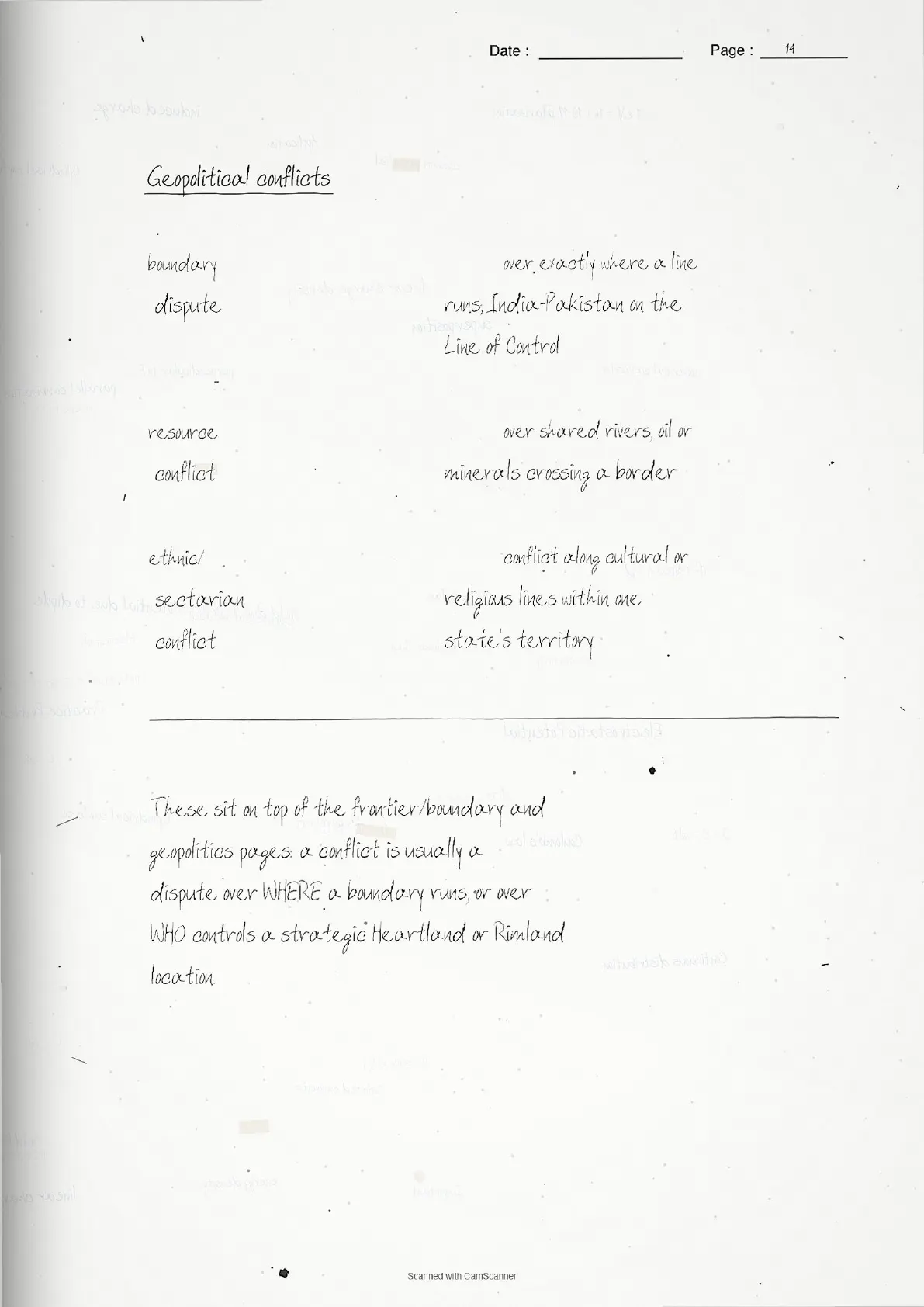
- Electoral geography, frontiers and boundaries
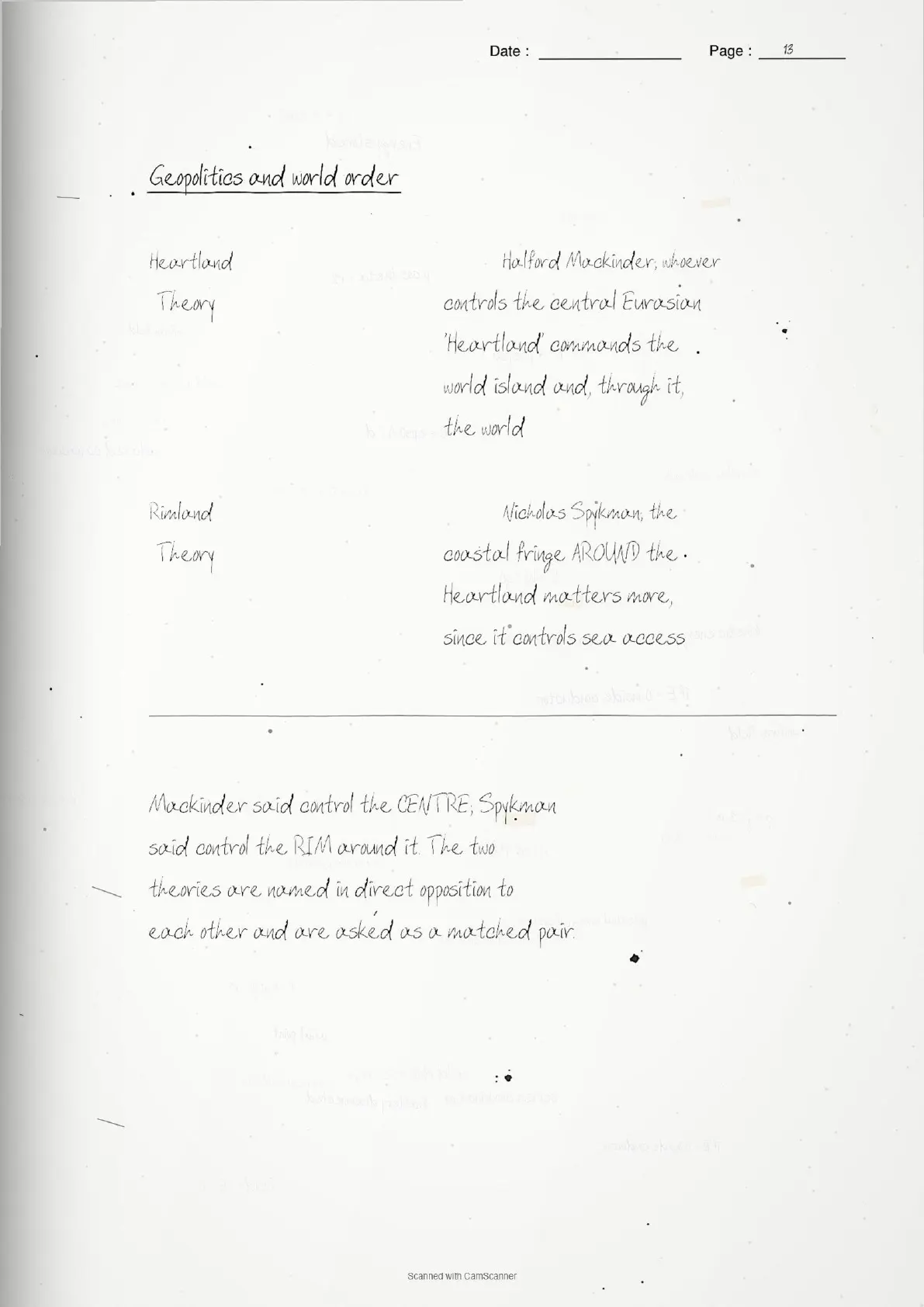
- Geopolitics: the Heartland and Rimland theories, and geopolitical conflicts
How to Approach the Topic
Population, settlement and culture are three layers of the same human story rather than three separate topics, and the paper moves between them freely within a single question set.
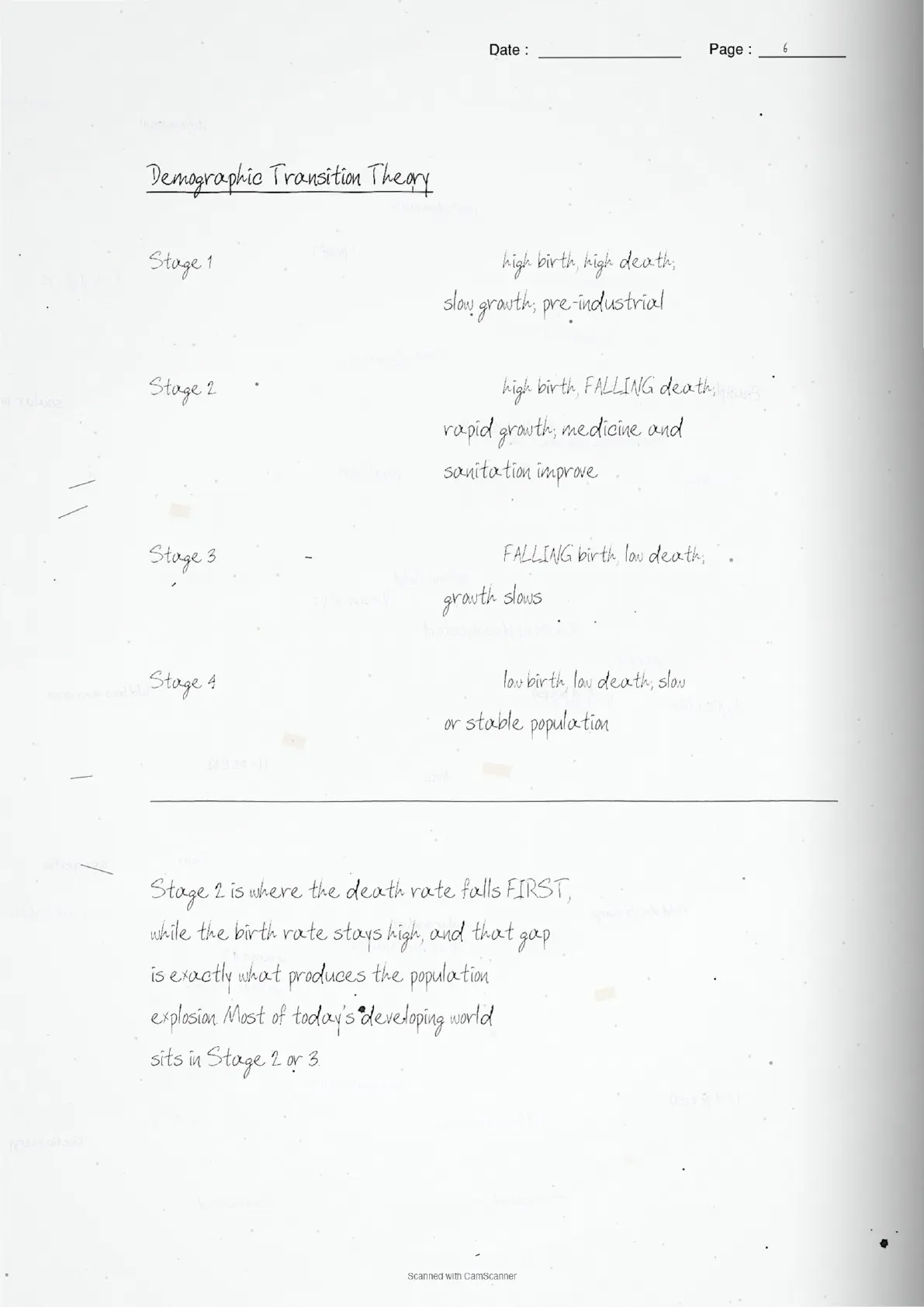
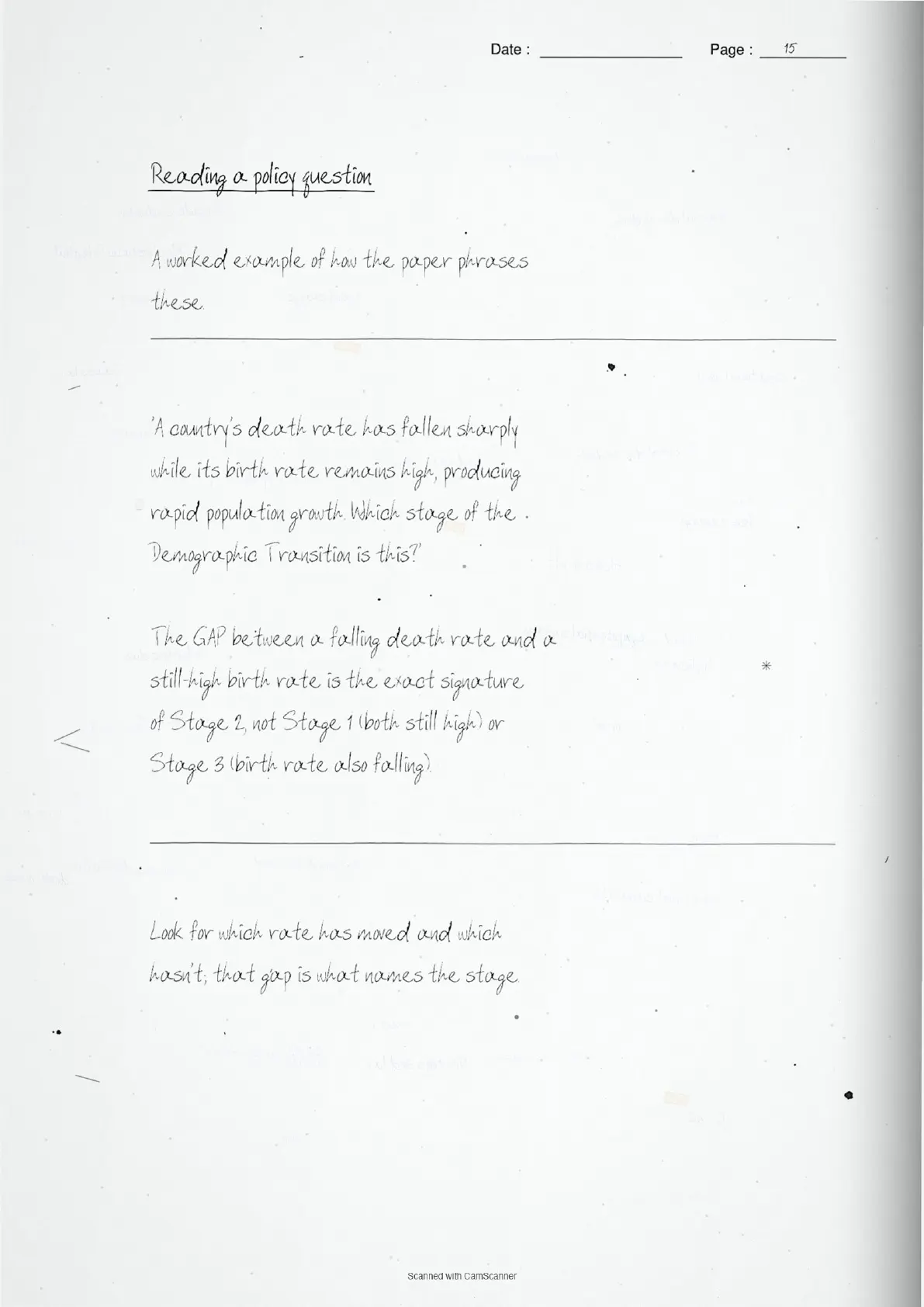
The Demographic Transition Theory is tested for its middle stages more than its ends: Stage 2, where the death rate falls first while the birth rate stays high, is the exact gap that produces a population explosion, and most of today's developing world sits in Stage 2 or 3.
The Heartland and Rimland theories are named in direct opposition to each other and are asked as a matched pair: Mackinder argued for controlling the Eurasian centre, and Spykman argued the coastal rim around it mattered more.
Common Mistakes
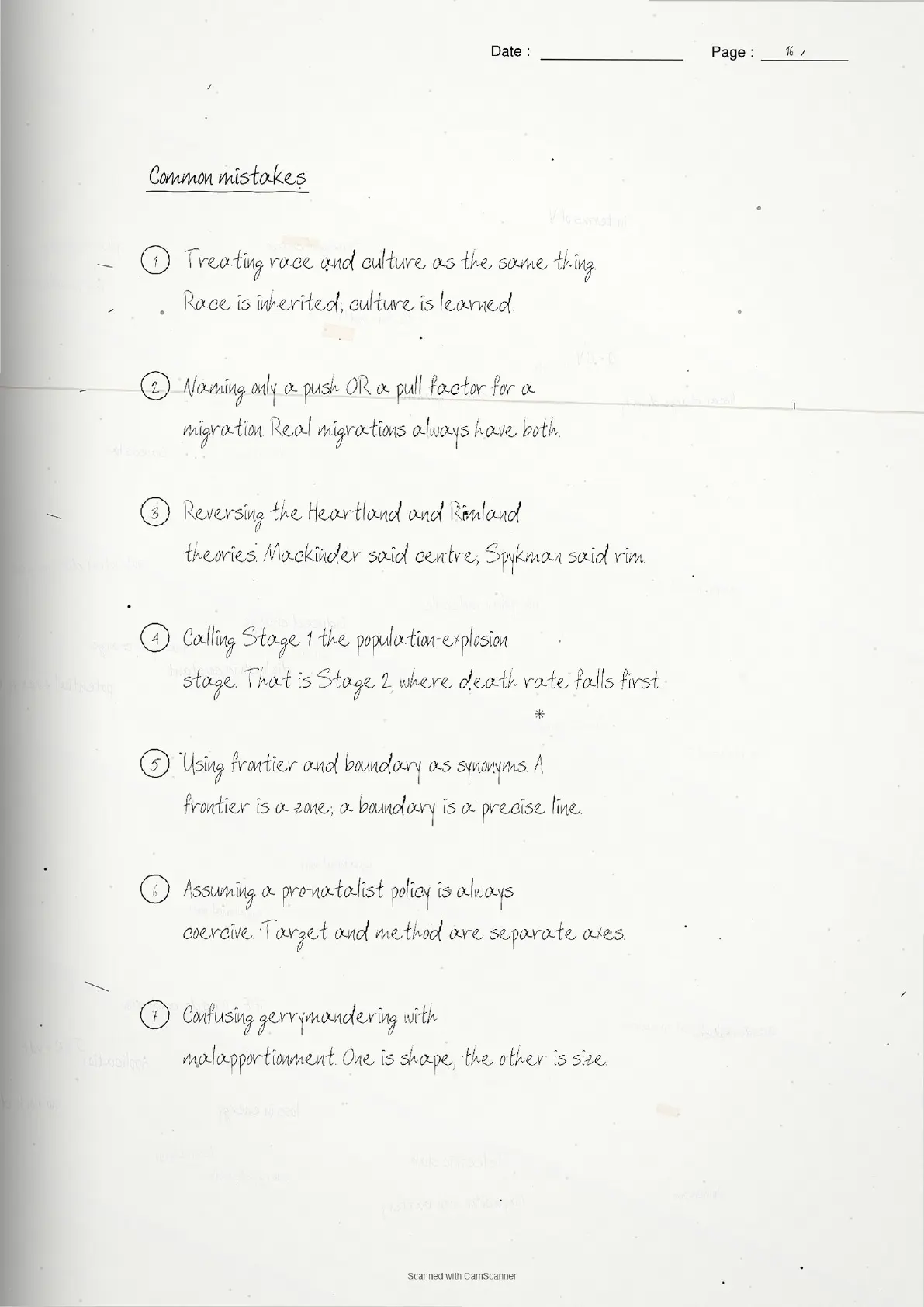
- Treating race and culture as the same thing, when race is inherited and culture is learned
- Naming only a push or a pull factor for a migration, when every real migration has both
- Reversing the Heartland and Rimland theories, since Mackinder argued for the centre and Spykman for the rim
- Calling Stage 1 the population-explosion stage of demographic transition, when that is Stage 2
- Using frontier and boundary as synonyms, when a frontier is a zone and a boundary is a precise line
- Confusing gerrymandering, about shape, with malapportionment, about size
Video Revision
Source: TheGeoecologist
How to Use These Notes
Page 6 is the full Demographic Transition Theory table, and page 19 is the recall grid.
Page 13 sets the Heartland and Rimland theories against each other, which is worth reading before any practice paper, since the two are almost always tested together.
The previous set covers Biogeography and Soil Geography, and the next one moves into Agriculture, Industry, Transport and Trade.
CUET PG Geography Population and Settlement Notes FAQs
Ques. Which stage of the Demographic Transition Theory sees a population explosion?
Ans. Stage 2, where the death rate falls first, usually from better medicine and sanitation, while the birth rate stays high. The gap between the two rates is what drives rapid growth.
Ques. What is the difference between the Heartland and Rimland theories?
Ans. Halford Mackinder's Heartland Theory argues that control of the central Eurasian landmass commands the world. Nicholas Spykman's Rimland Theory argues the coastal fringe around that Heartland matters more, since it controls sea access.
Ques. What is the difference between a frontier and a boundary?
Ans. A frontier is a broad, often historically unmarked zone. A boundary is a precise, legally fixed line. Modern states have largely replaced frontiers with boundaries.
Ques. What is a primate city?
Ans. A city vastly larger than a country's next-largest city, disproportionate to the rest of the urban hierarchy. Mumbai relative to the rest of urban India is the standard example.
Ques. Can the notes be downloaded free?
Ans. Yes. All 20 pages can be read on this page and downloaded at no cost.



Comments