




Ten questions, two marks bands, one board cycle, and a worked solution for every single question. That is the honest shape of the Class 10 History Chapter 3 The Making of a Global World previous year questions set, free to download as an 11-page PDF. It is a small, sharply concentrated file rather than a full question bank, and knowing exactly where it concentrates is the fastest way to get value out of it.
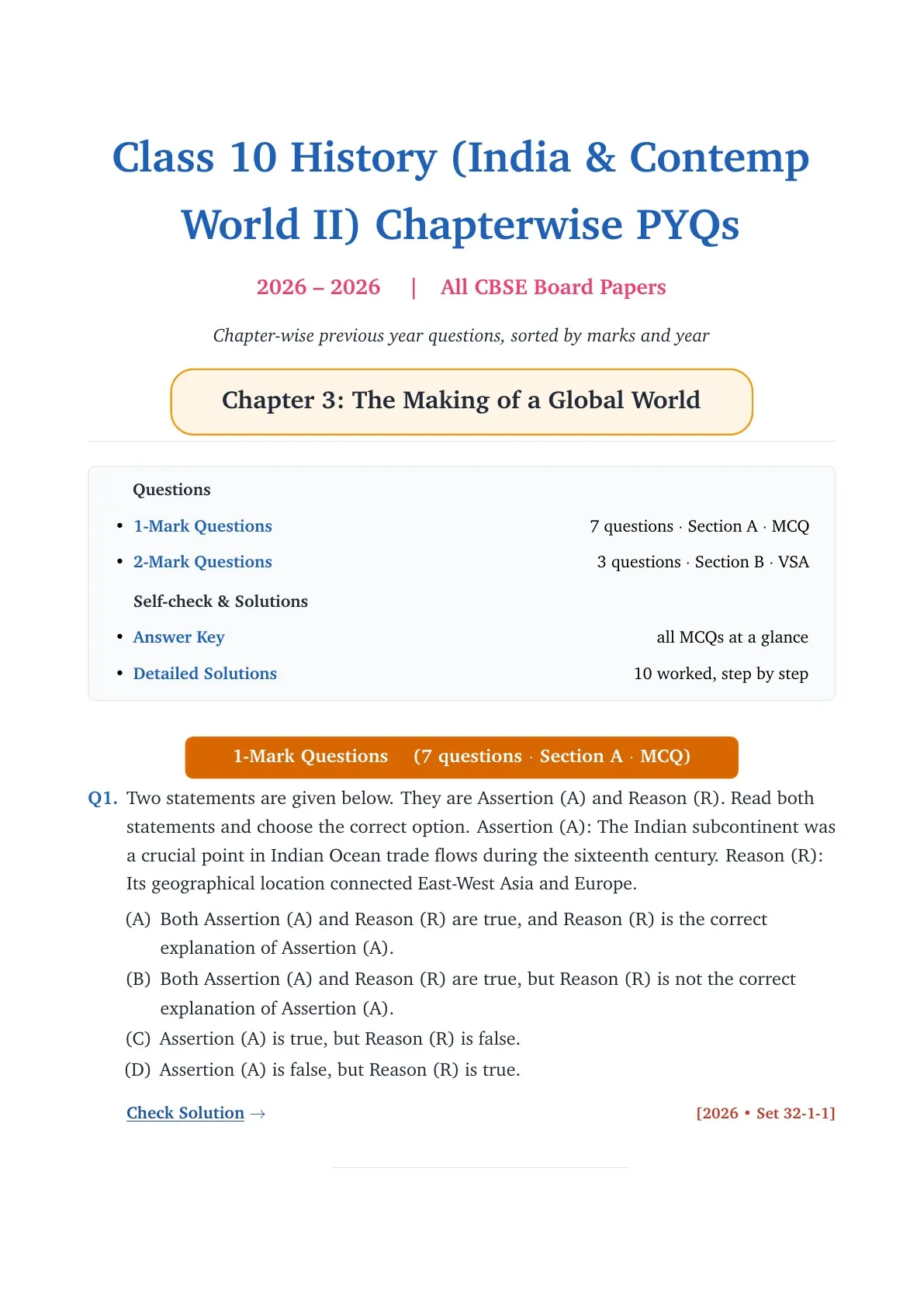
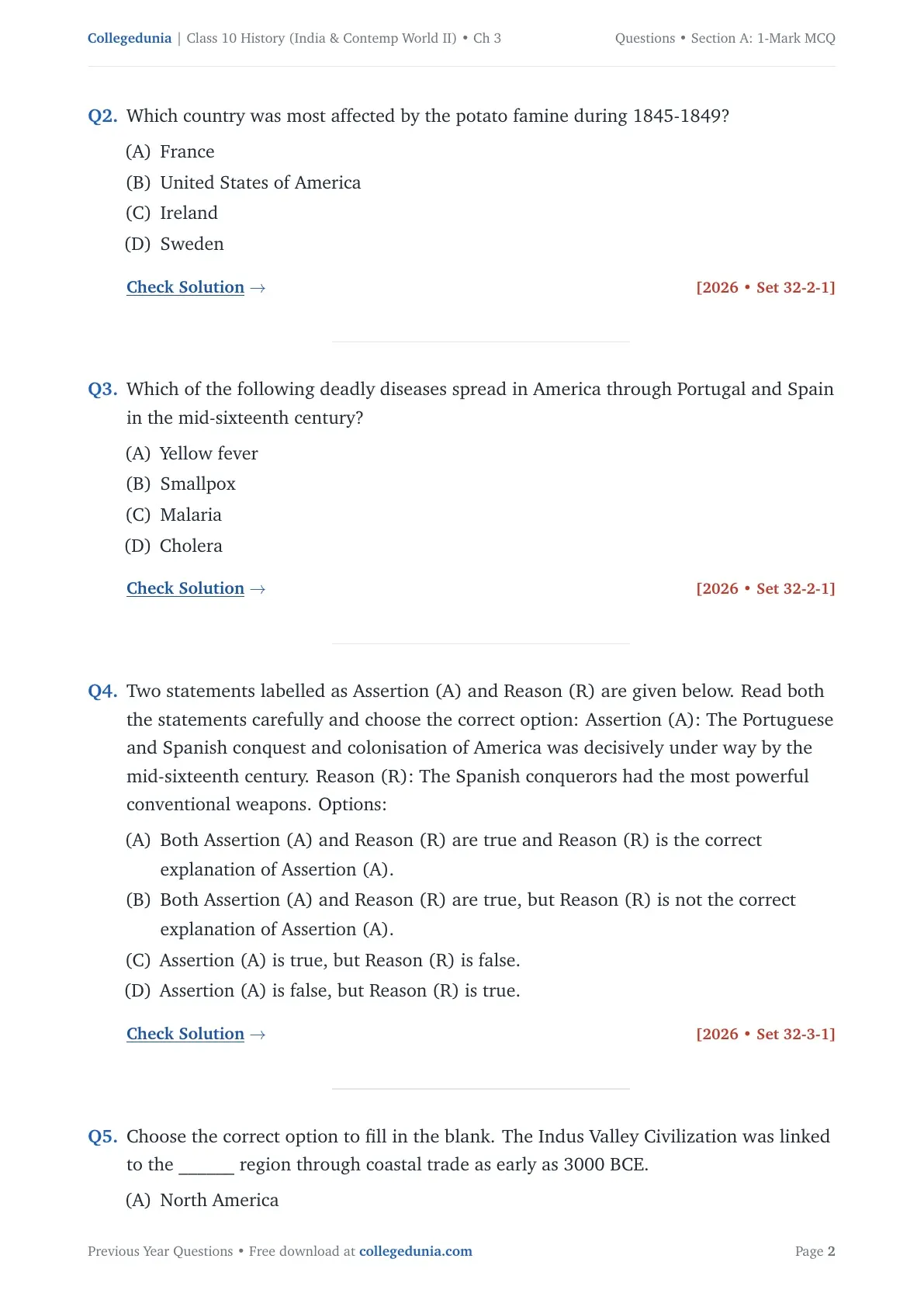
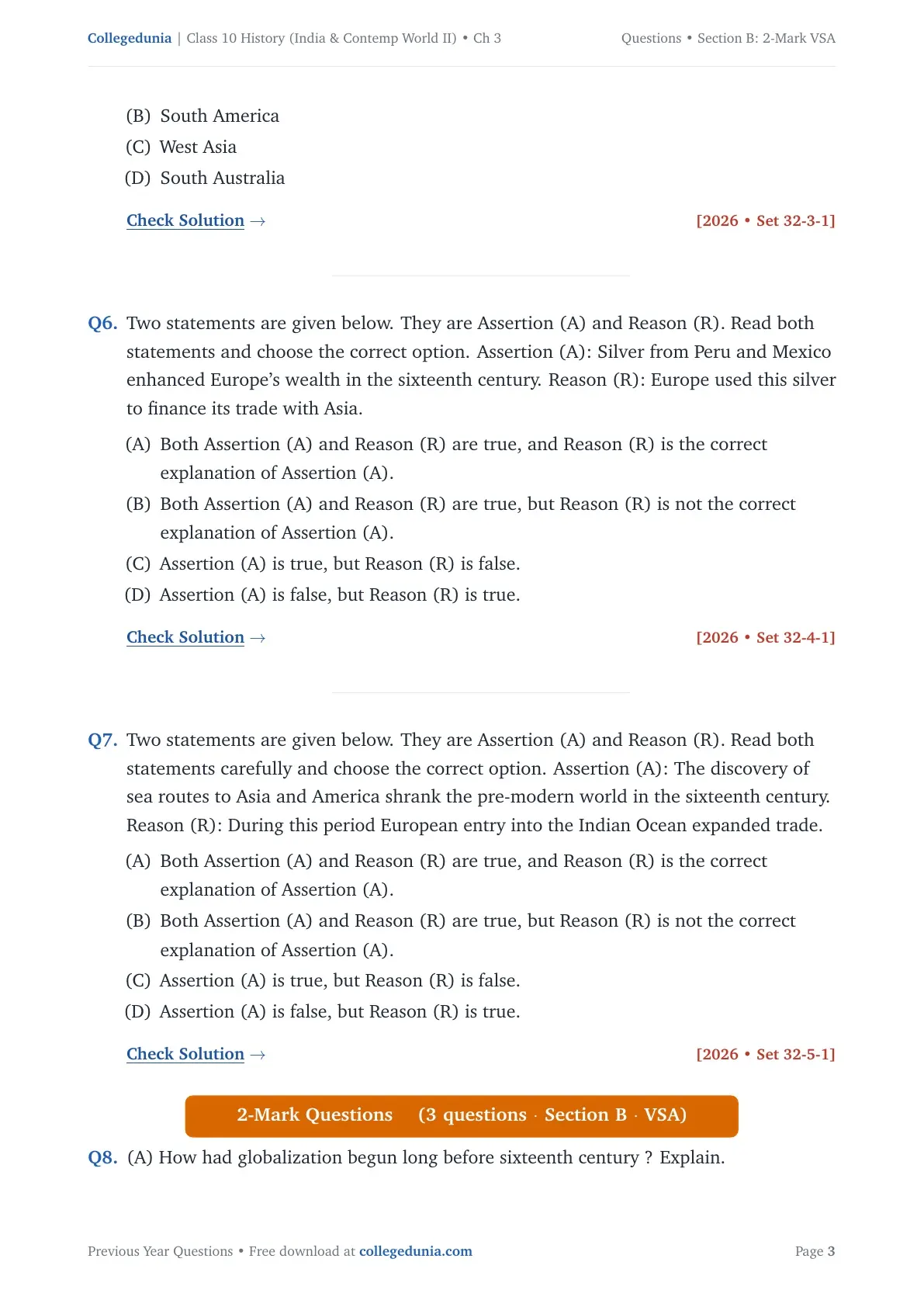
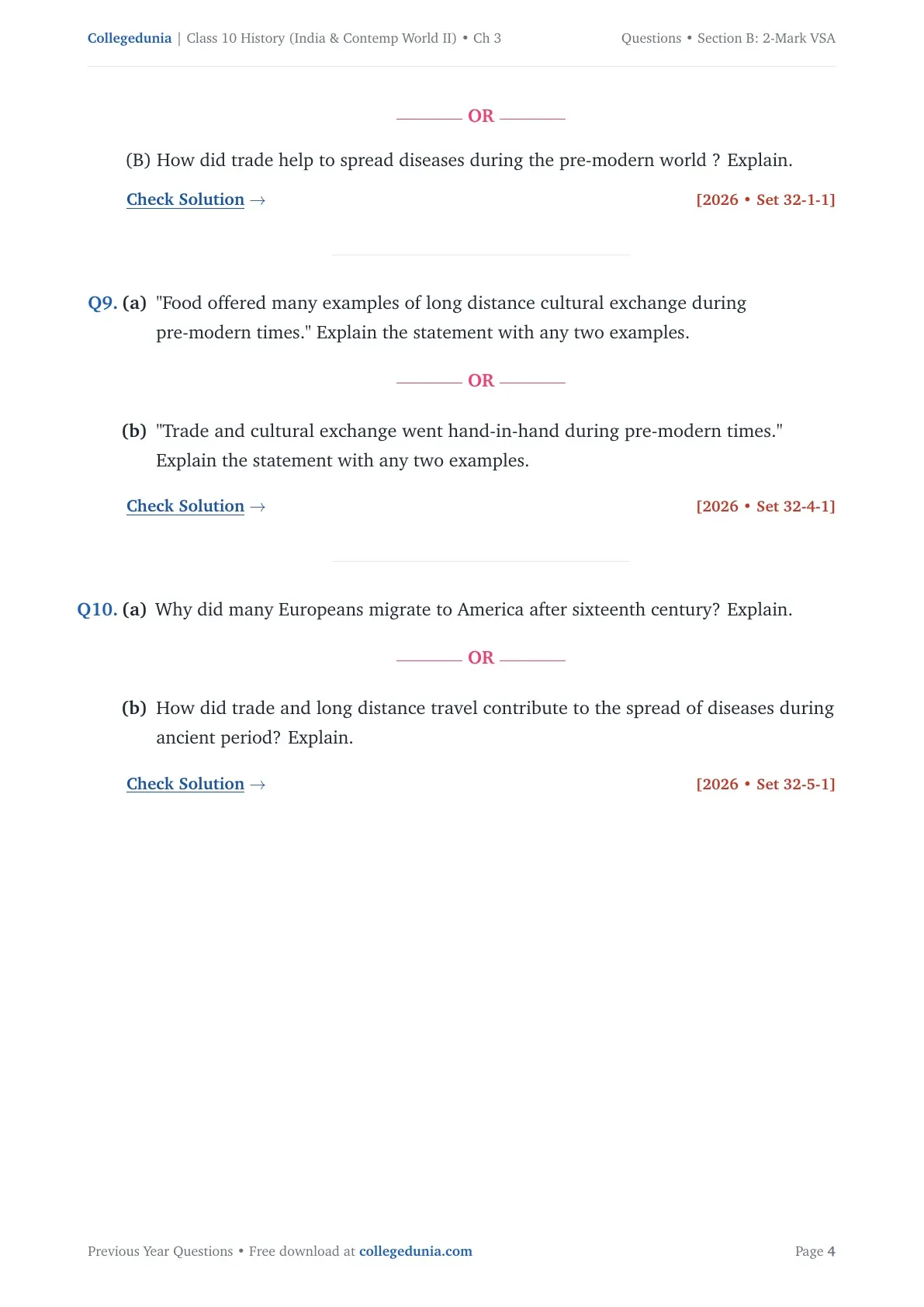
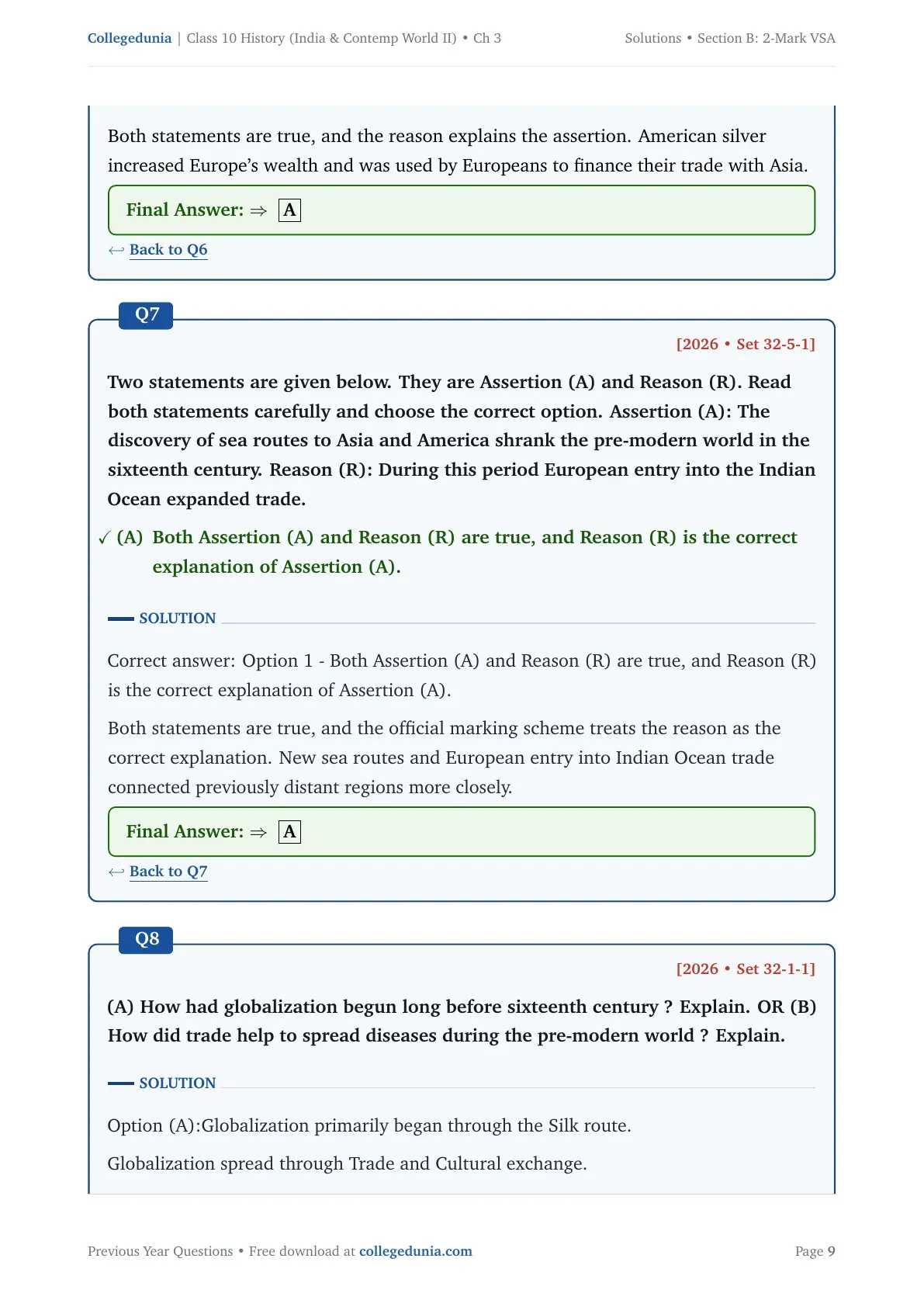
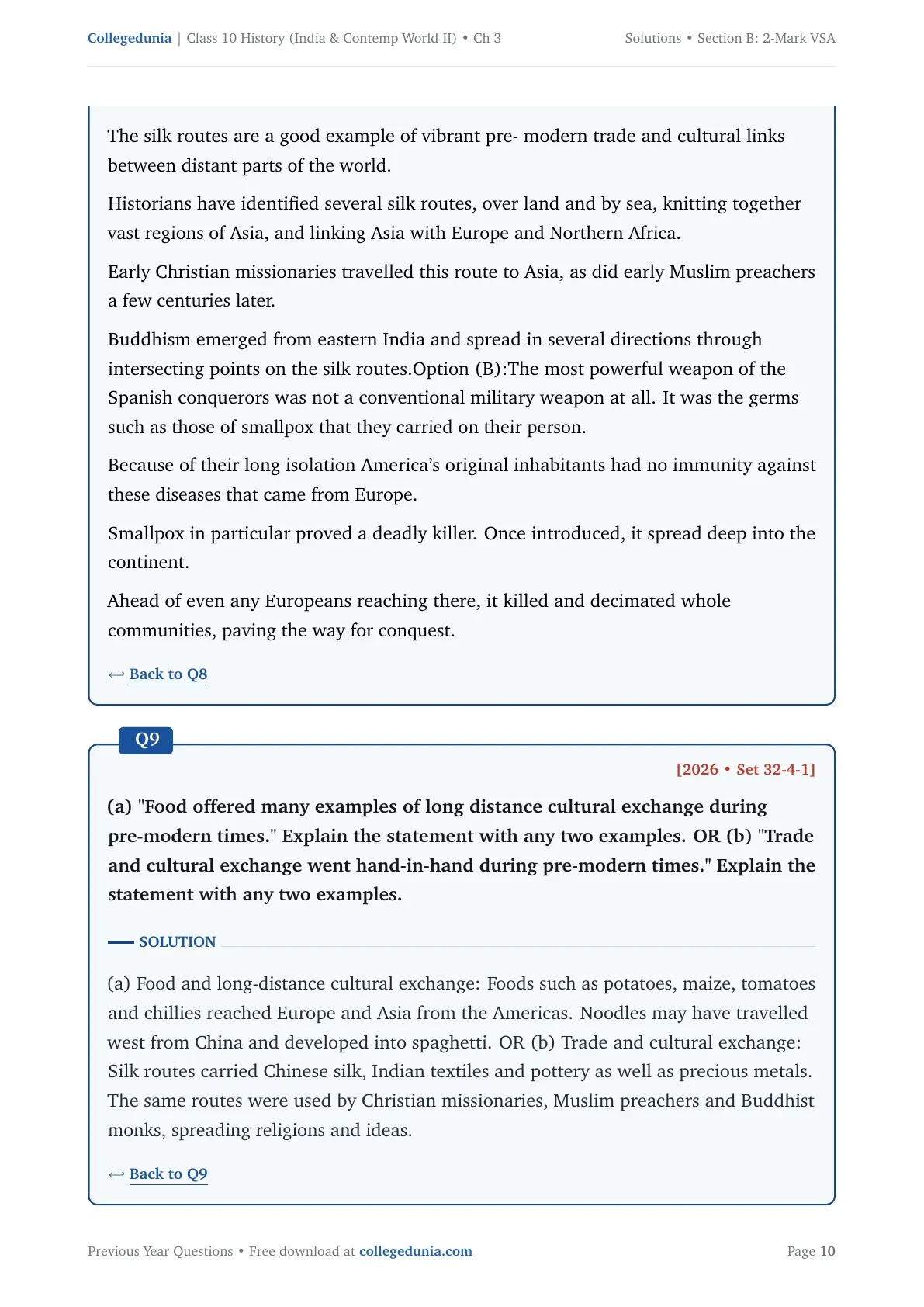
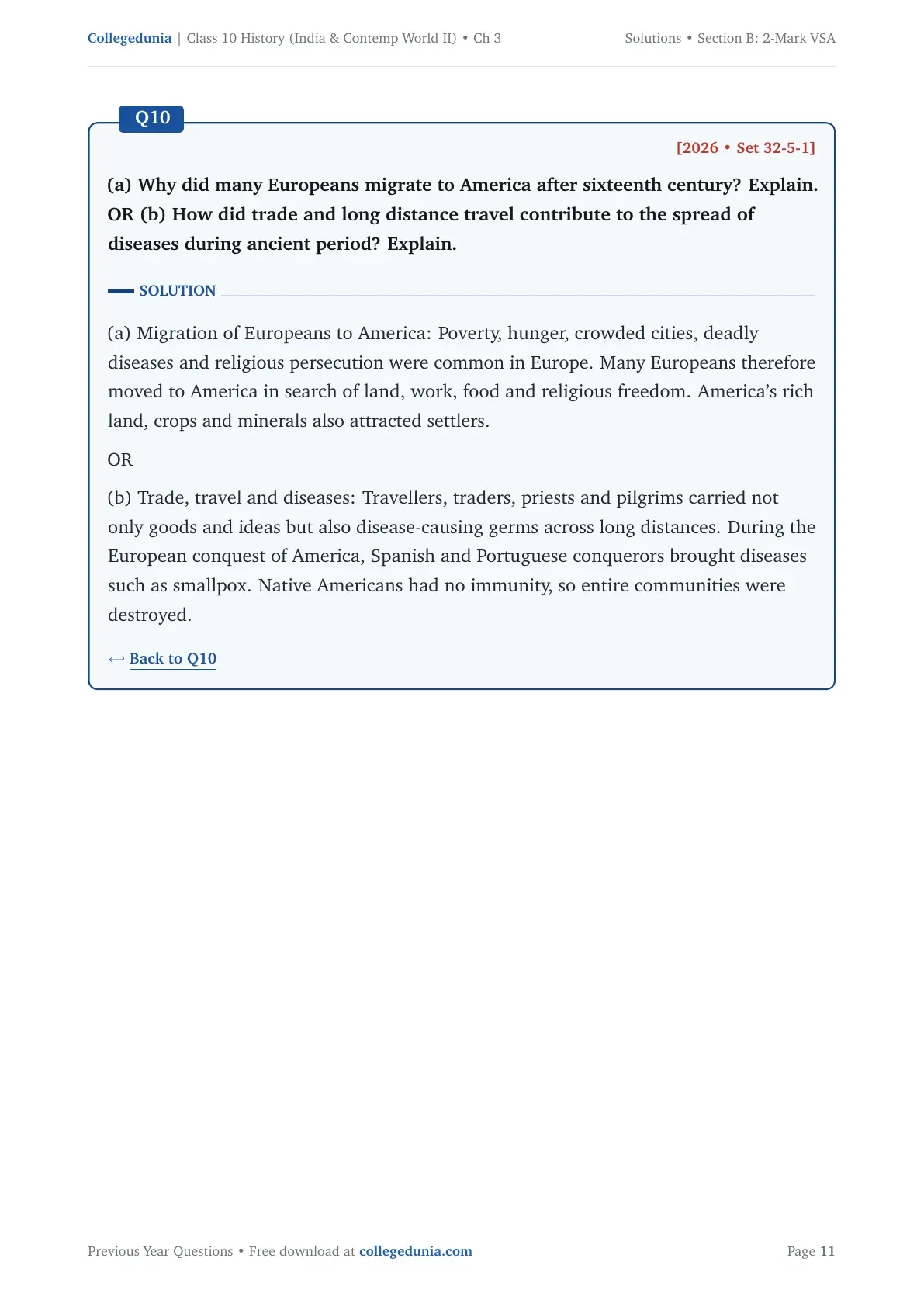
- 10 board questions, 13 marks, from five CBSE set codes of the 2026 cycle, printed word for word as the board set them.
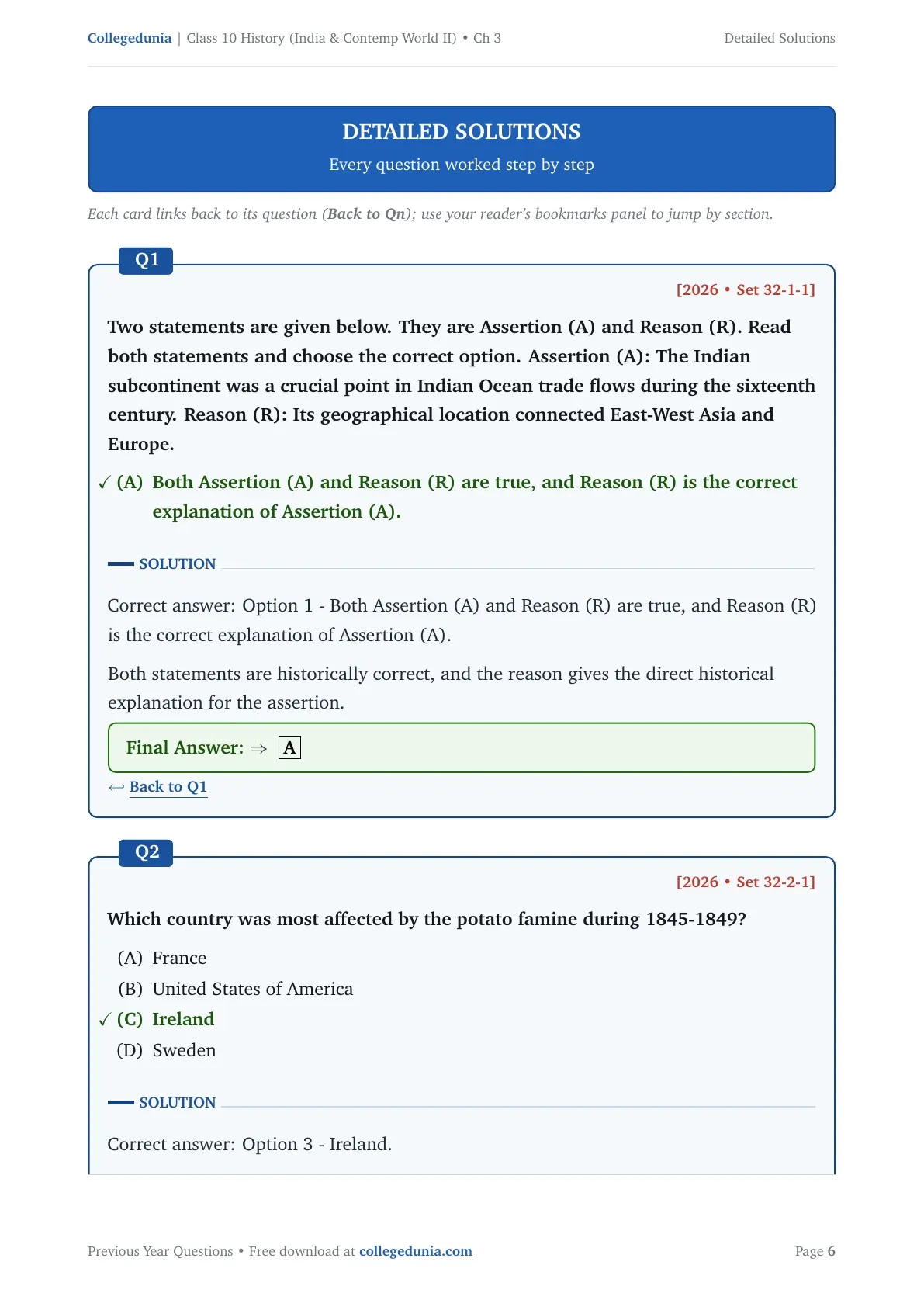
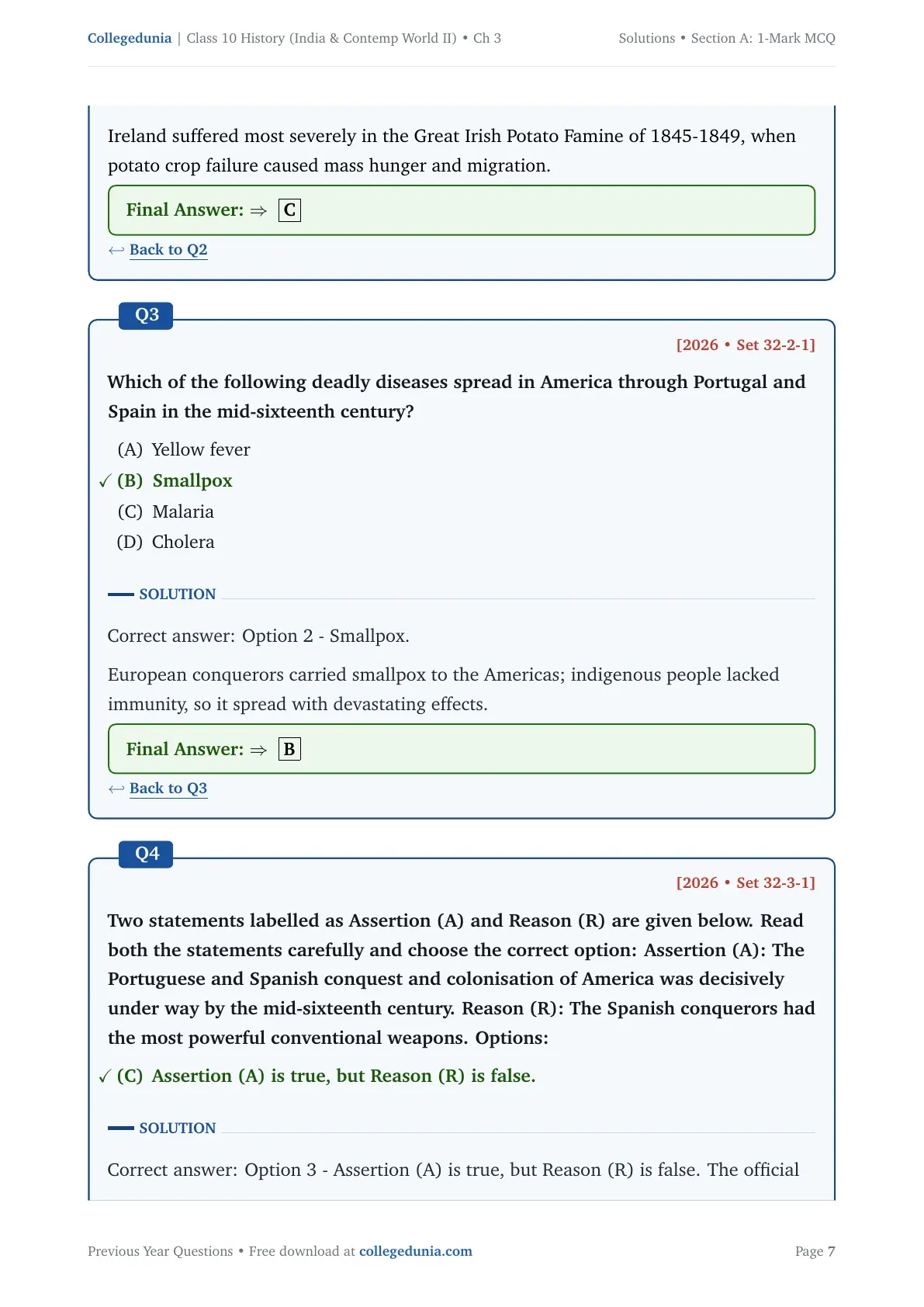
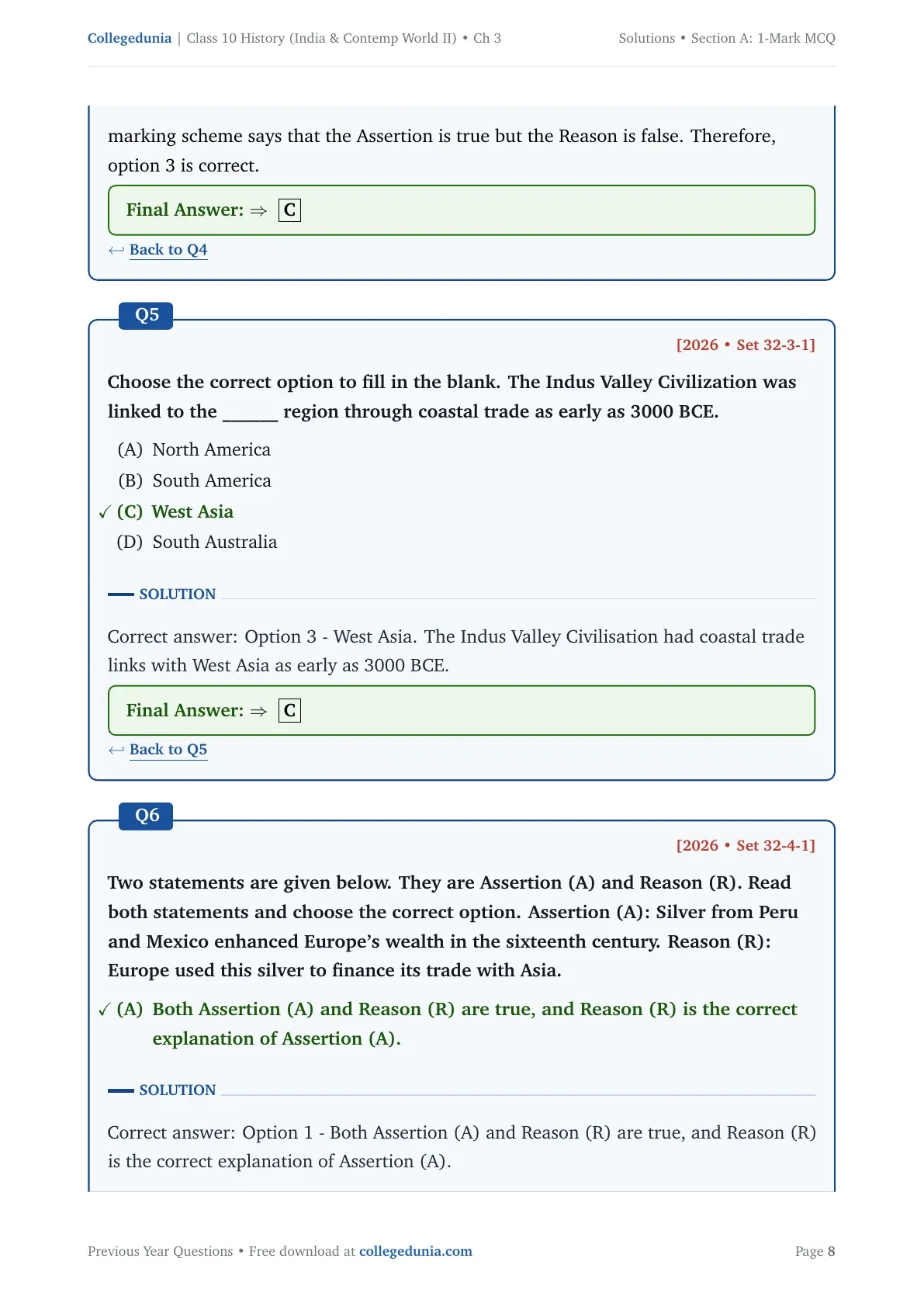
- All 10 questions worked out in full, in a Detailed Solutions section that restates each question above its answer and links back to it.
- Free 11-page PDF, no sign-up, aligned to the 2026-27 CBSE Class 10 Social Science syllabus.
The Two Marks Bands in This PYQ PDF
This is a question-practice sheet that carries its own answer half. It puts every Chapter 3 question the 2026 papers set into one place, in the order a board paper would present them, and then works each one out step by step. Attempt the questions first and mark yourself against the solutions, or read the two together when you are revising. It is not a chapter summary, so the linked notes page still has a job to do.
| Marks | Questions | Total Marks | CBSE Section | Question Type |
|---|---|---|---|---|
| 1 mark | 7 | 7 | Section A | Assertion and Reason, straight objective, fill in the blank |
| 2 marks | 3 | 6 | Section B | Very short answer, each one printed with an OR alternative |
| Total | 10 | 13 | Sections A and B | Objective and very short answer |
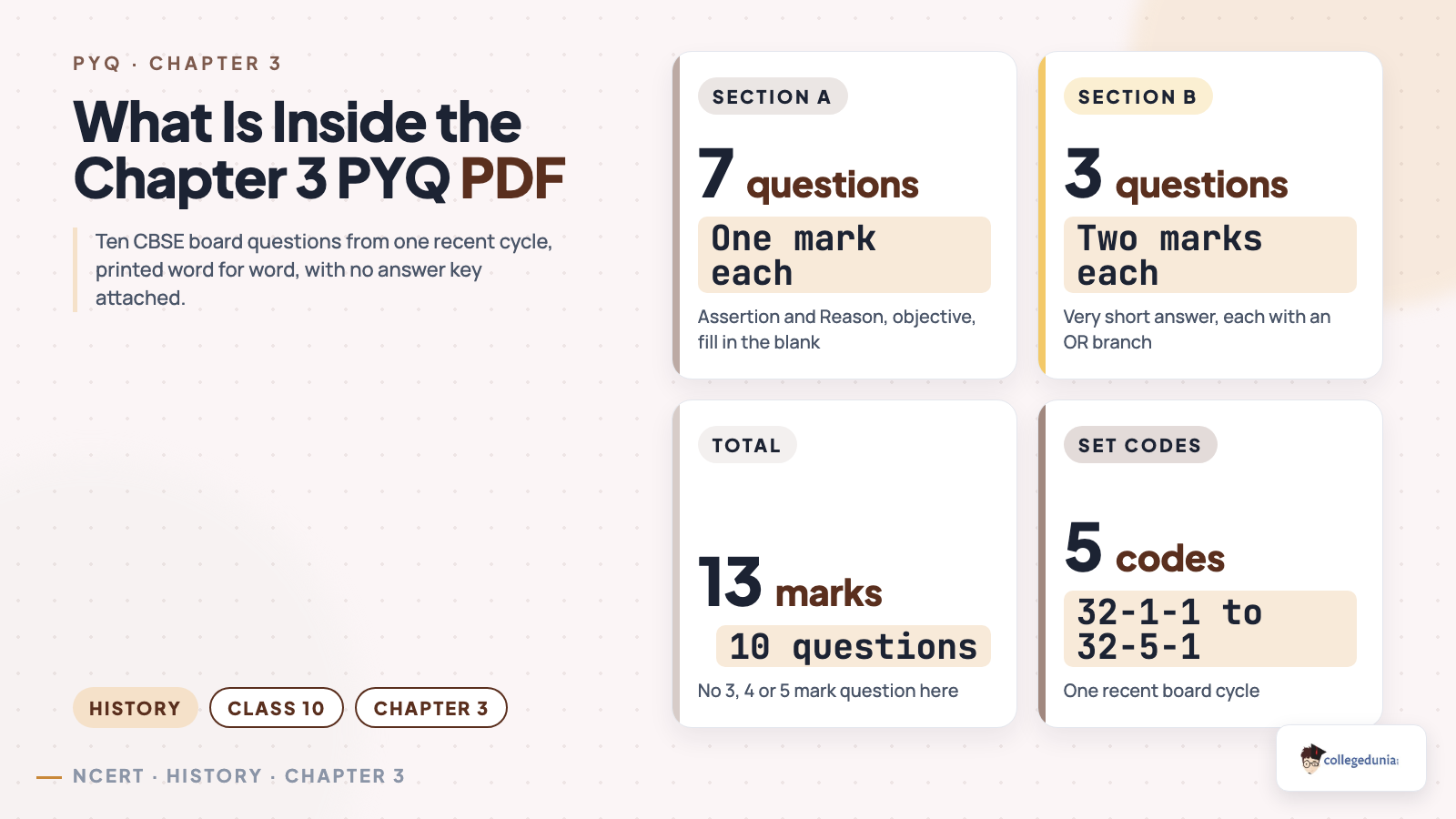
There is no 3-mark, 4-mark or 5-mark question in this compilation. In the 2026 papers represented here, Chapter 3 was tested through Section A and Section B, and the longer writing went to other chapters of the History unit. Plan your revision around that, but do not read it as a rule for every future paper.
Where the 10 Questions Come From
All 10 questions belong to the 2026 CBSE board cycle, spread across five set codes.
- Set codes represented: 32-1-1, 32-2-1, 32-3-1, 32-4-1 and 32-5-1.
- Set 32-2-1 and set 32-3-1 contribute two objective questions each, which is why those two codes appear twice in the 1-mark band.
- Each question carries the year and the set code printed under it, so a single code can be filtered out if you want to attempt one paper's worth of Chapter 3 questions at a time.
What the Board Actually Asked in Chapter 3
The Making of a Global World runs from pre-modern trade and the silk routes, through the nineteenth century economy and indentured labour, on to the Great Depression, the Bretton Woods institutions, and post-war recovery and decolonisation. The 10 questions in this file do not travel that whole distance. They cluster tightly at the front of the chapter.
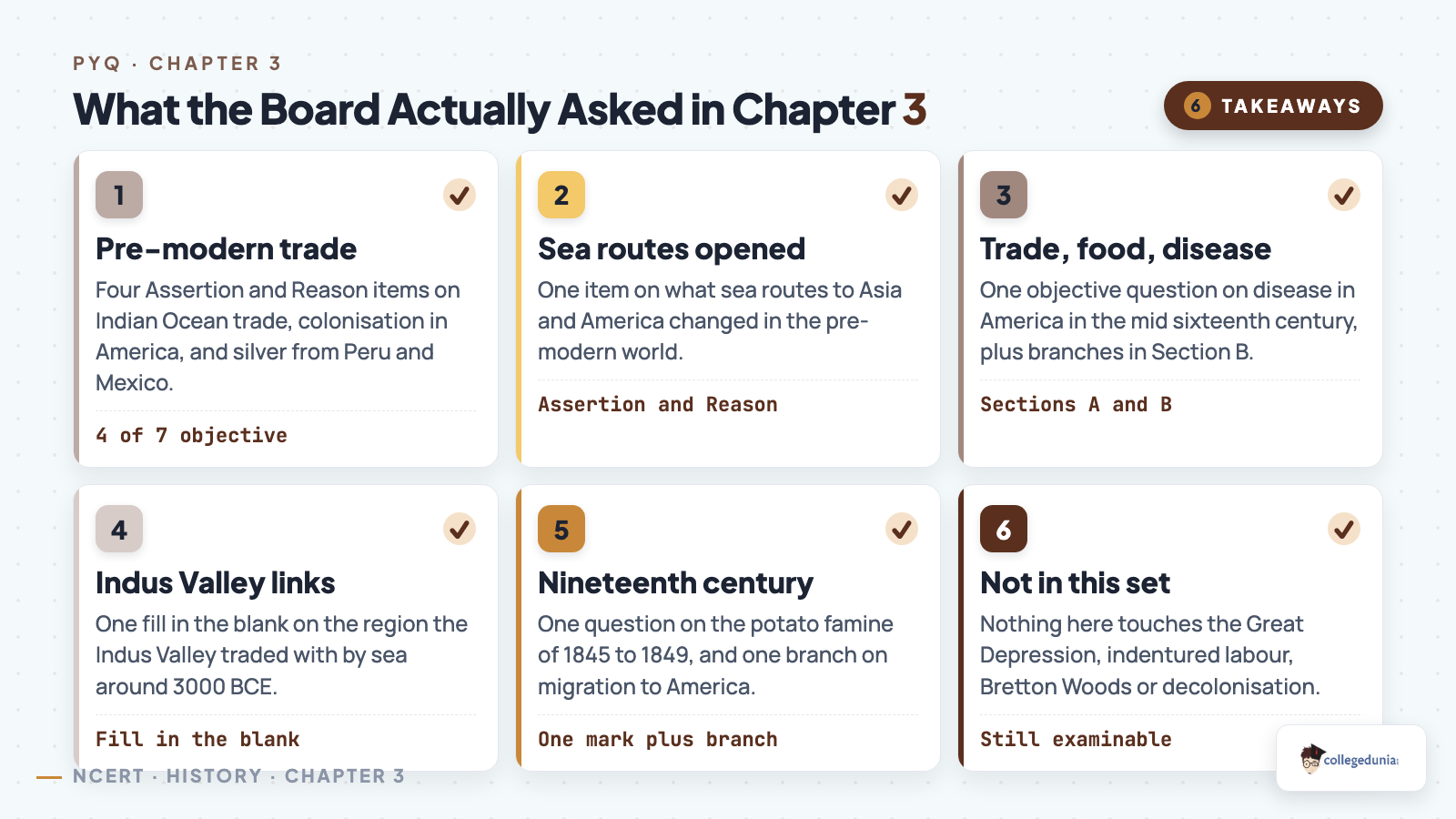
- Pre-modern trade and the sixteenth century. Four of the seven objective questions are Assertion and Reason items on this stretch: the place of the Indian subcontinent in Indian Ocean trade flows, the Portuguese and Spanish conquest and colonisation of America, silver from Peru and Mexico and what Europe did with it, and the effect of the discovery of sea routes to Asia and America on the pre-modern world.
- Trade, food and disease. One objective question asks which deadly disease spread in America through Portugal and Spain in the mid sixteenth century. Two of the three very short answer questions have a disease branch, one on the pre-modern world and one on the ancient period, and one has a food and cultural exchange branch.
- Early long-distance links. One fill in the blank question asks which region the Indus Valley Civilisation was linked to through coastal trade as early as 3000 BCE.
- Nineteenth century Europe. One objective question asks which country was worst affected by the potato famine during 1845 to 1849, and one very short answer branch asks why many Europeans migrated to America after the sixteenth century.
- The framing question. One very short answer branch asks how globalisation had begun long before the sixteenth century, which is the question the whole opening section of the chapter is written to answer.
Parts of the Chapter This Set Does Not Reach
Because the set is small, saying what is absent matters as much as saying what is present. Nothing in these 10 questions touches the Great Depression, indentured labour from India, the Bretton Woods institutions, or post-war recovery and decolonisation. Those sections are still in the syllabus and are still examinable. Use this PDF for the front half of the chapter and the linked notes and solutions pages for the rest, and do not treat a clean run through these 10 questions as a finished chapter.
How to Attempt an Assertion and Reason Question
Four of the seven objective questions here are Assertion and Reason, which is a higher share than most chapters produce, so it is worth drilling the method rather than the individual items.
- Judge the Assertion on its own. Cover the Reason and decide only whether the Assertion is true. Do not let a convincing Reason talk you into accepting a false Assertion.
- Judge the Reason on its own. Same treatment. A Reason can be perfectly true as a standalone statement and still have nothing to do with the Assertion.
- Only then ask whether the Reason explains the Assertion. This third step is where most marks are lost, because two true statements about the same century are not automatically cause and effect.
- Match your verdict to the four standard options. The four options are printed the same way every time, so once you have your three answers the option almost picks itself.
For the 2-mark questions, the shape is fixed: two clear points, roughly 40 words, no introduction. Each of the three is printed with an OR alternative, so read both branches before you commit, and answer one only.
Common Mistakes in Chapter 3 Answers
- Reading the Assertion and Reason pair as one statement instead of two. They are judged separately, then judged together.
- Answering a two-mark question with a paragraph. Two points inside about 40 words is the shape that gets both marks.
- Giving one example where the question says any two examples. The food and cultural exchange questions here name the number explicitly.
- Confusing the pre-modern world with the ancient period when the question specifies one of them. Two different branches in this set ask about disease in two different periods.
- Attempting both halves of an OR question. Only one is marked.
Student Feedback
This compilation is small because the 2026 papers gave Chapter 3 a small footprint, not because questions were left out on purpose. If you sat a paper that carried a Chapter 3 question missing from this file, or if a set code here does not match the paper in front of you, leave a note in the comments. Those corrections are what decide which chapter gets refreshed next.
Other Class 10 History Chapter 3 Resources
The PDF answers all 10 of its own questions, so these pages are for the parts of the chapter it does not reach.
| Resource | What It Gives You | Link |
|---|---|---|
| NCERT Solutions | Textbook exercise answers for the chapter | NCERT Solutions |
| Revision Notes | Concept notes to revise before attempting the questions | Revision Notes |
| NCERT Book PDF | The official chapter text the paper is set from | NCERT Book PDF |
| Handwritten Notes | Notebook-style summary for last-week revision | Handwritten Notes |
All Class 10 History Chapterwise PYQ PDFs
India and the Contemporary World II has five chapters, and the chapterwise PYQ files are built the same way, straight from the official CBSE papers.
| Chapter | Chapter Name | Previous Year Questions |
|---|---|---|
| Chapter 1 | The Rise of Nationalism in Europe | PYQ PDF |
| Chapter 2 | Nationalism in India | PYQ PDF (coming soon) |
| Chapter 3 | The Making of a Global World | You are here |
| Chapter 4 | The Age of Industrialisation | PYQ PDF (coming soon) |
| Chapter 5 | Print Culture and the Modern World | PYQ PDF (coming soon) |
Class 10 History Chapter 3 The Making of a Global World PYQ FAQs
What Students Usually Ask About This Question Set
Ques. How many previous year questions are in the Class 10 History Chapter 3 PYQ PDF?
Ans. There are 10 questions worth 13 marks across 11 pages, questions and worked solutions together: 7 one-mark objective questions in Section A and 3 two-mark very short answer questions in Section B.
Ques. Does the PDF come with answers?
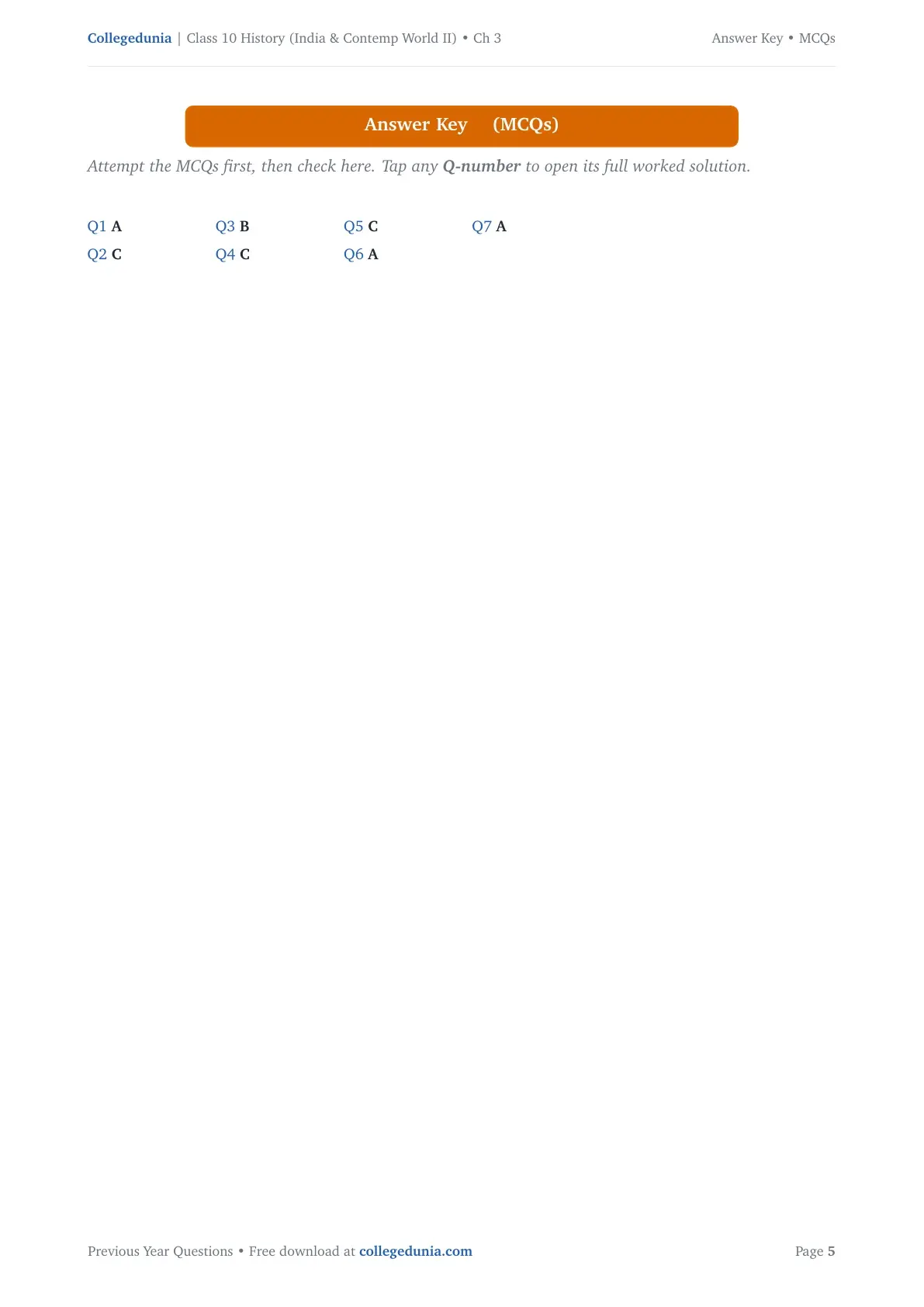
Ans. Yes. All 10 questions are worked out step by step in a Detailed Solutions section, and the objective questions are also collected in a short answer key. Every solution restates its question and links back to it, so you can attempt the set cold and check afterwards, or read question and solution side by side while revising.
Ques. Why are there no 5-mark questions for this chapter?
Ans. Because the 2026 sets used here did not set one. In those papers Chapter 3 was examined through Section A objective questions and Section B very short answers. That is a fact about these particular papers, not a promise about the next one, so the longer sections of the chapter still need revising.
Ques. Which parts of the chapter are not covered by these questions?
Ans. The 10 questions sit almost entirely in the pre-modern trade and sixteenth to nineteenth century material. Nothing here touches the Great Depression, indentured labour, the Bretton Woods institutions or post-war recovery and decolonisation, all of which remain examinable.
Ques. How many Assertion and Reason questions are in the set?
Ans. Four of the seven one-mark questions are Assertion and Reason items, all four on pre-modern trade and the sixteenth century world. The remaining three are a straight objective question, a disease question and a fill in the blank.
Ques. Which CBSE set codes were used?
Ans. Five codes from the 2026 cycle: 32-1-1, 32-2-1, 32-3-1, 32-4-1 and 32-5-1. It is a compact recent set rather than a complete archive of the chapter.
Ques. Is this chapter still in the 2026-27 syllabus?
Ans. Yes. The Making of a Global World remains the third chapter of the History unit in the 2026-27 CBSE Class 10 Social Science syllabus, and India and the Contemporary World II carries 20 marks of the 80-mark theory paper.



Comments