




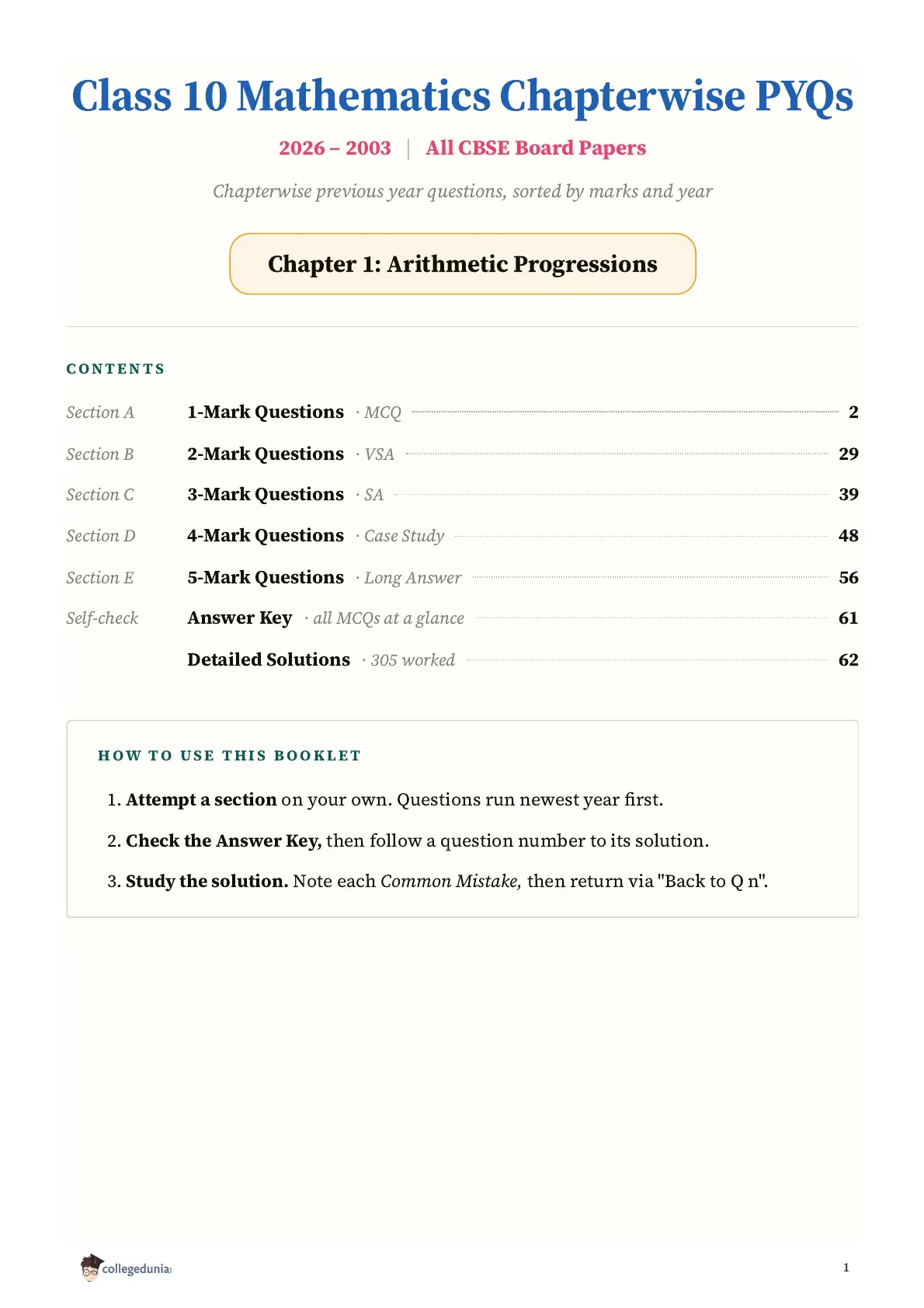
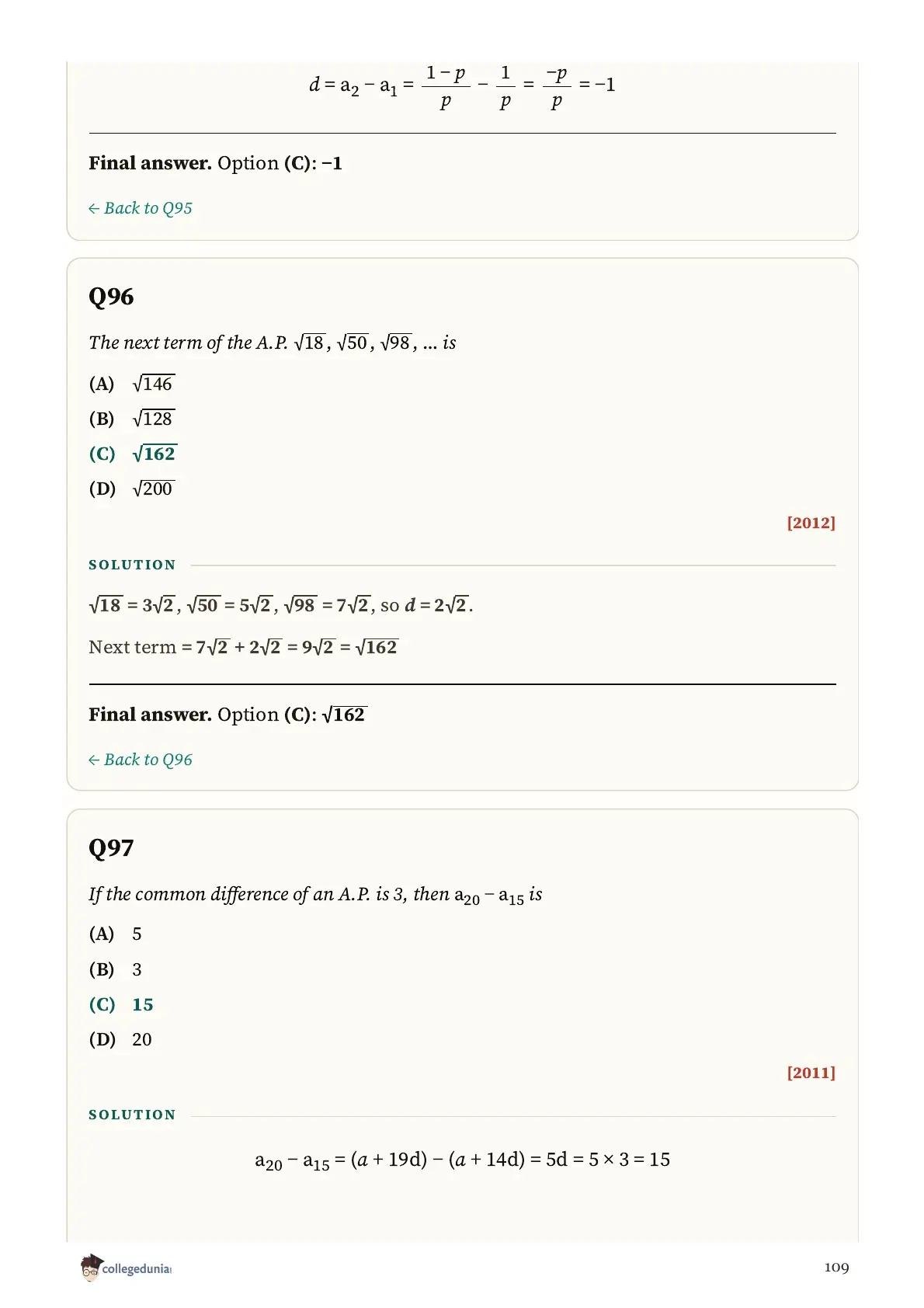
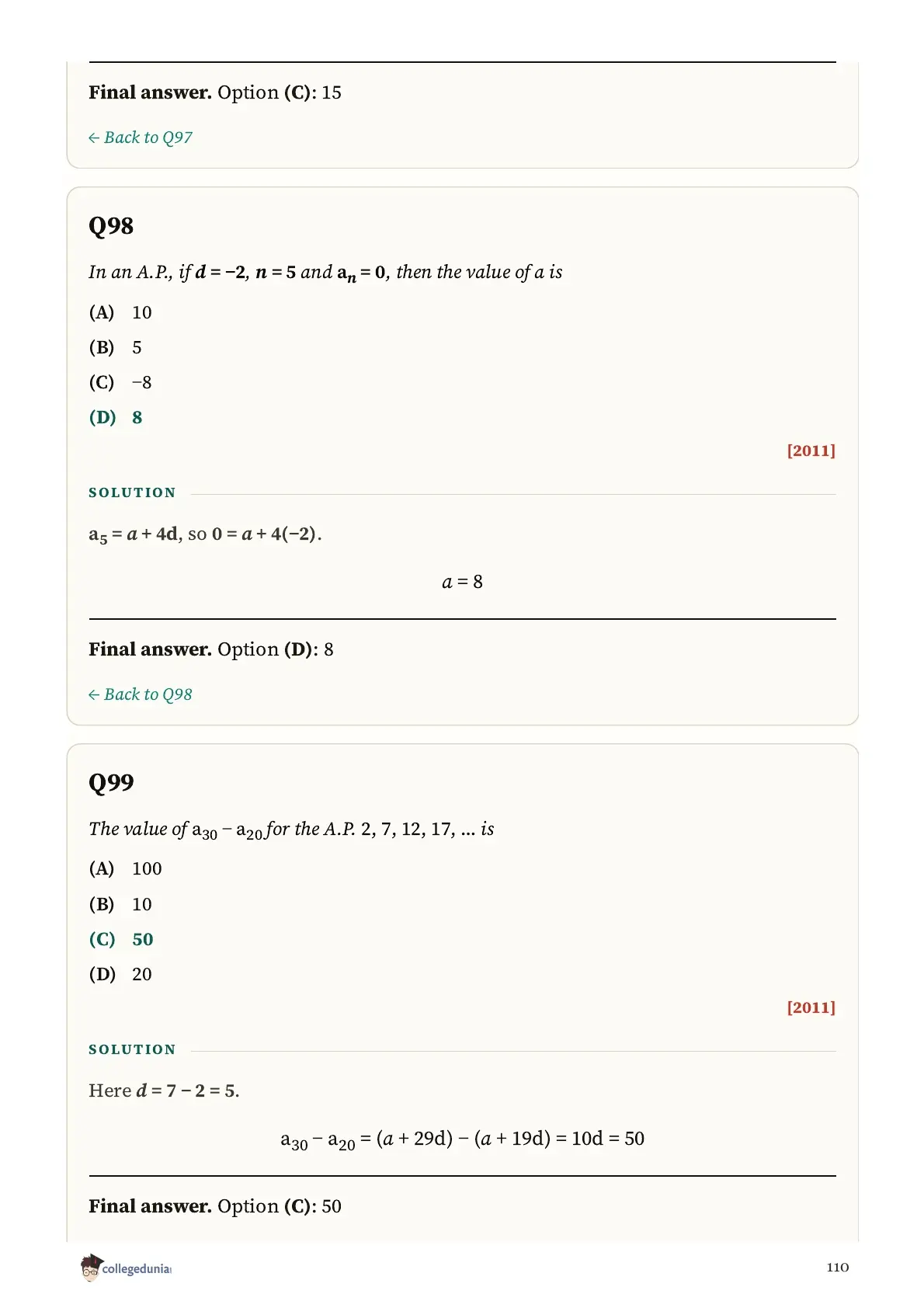
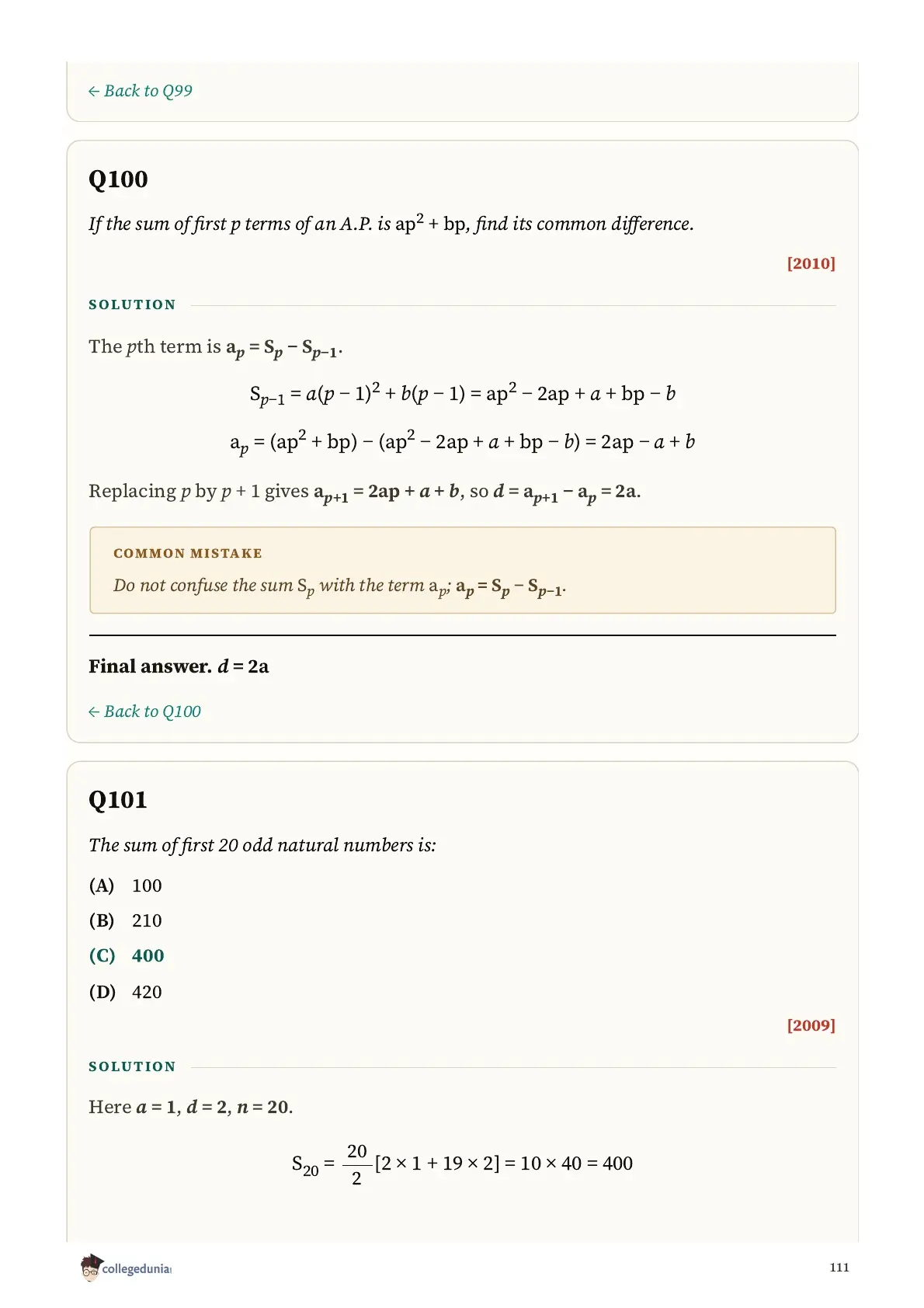
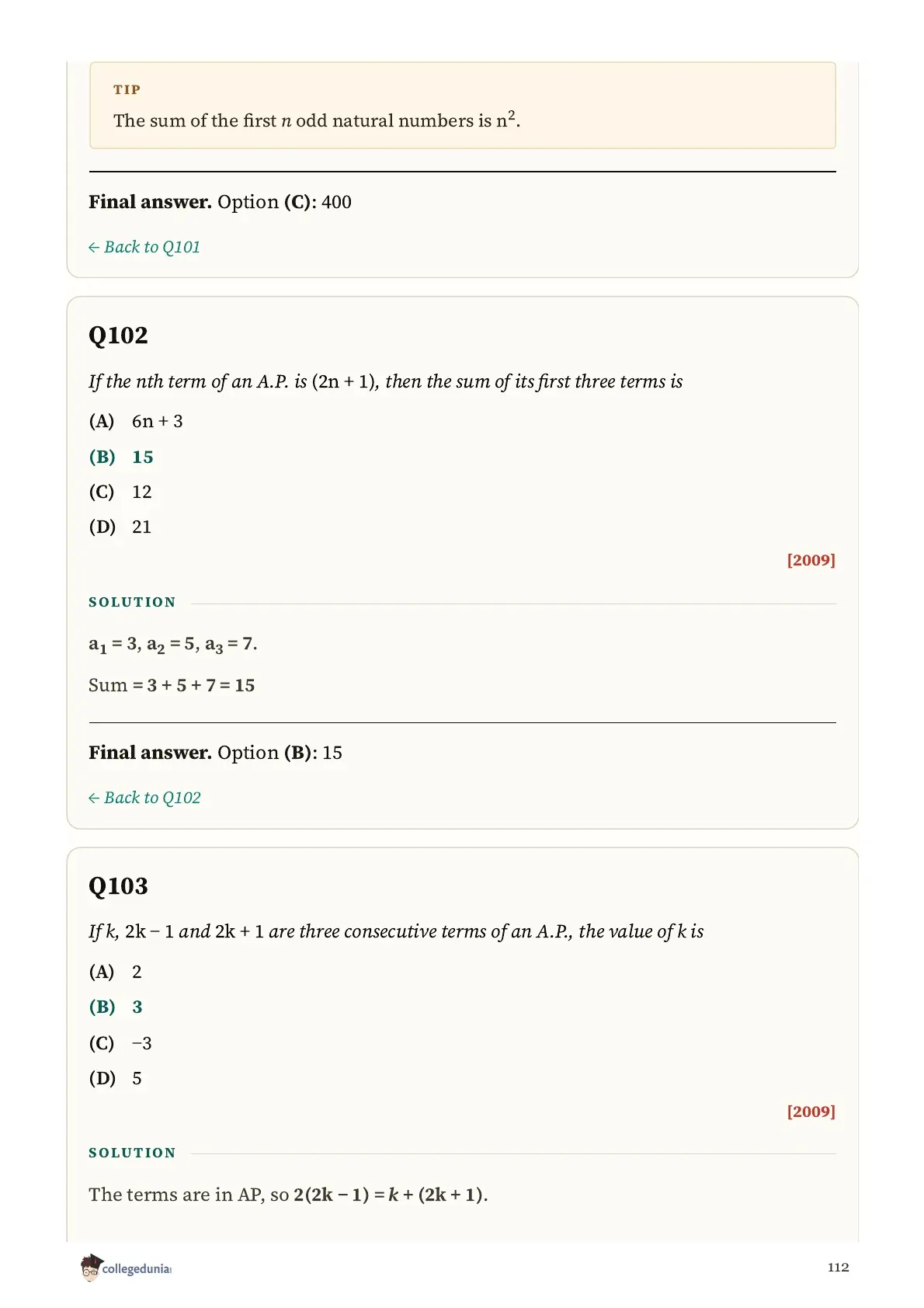
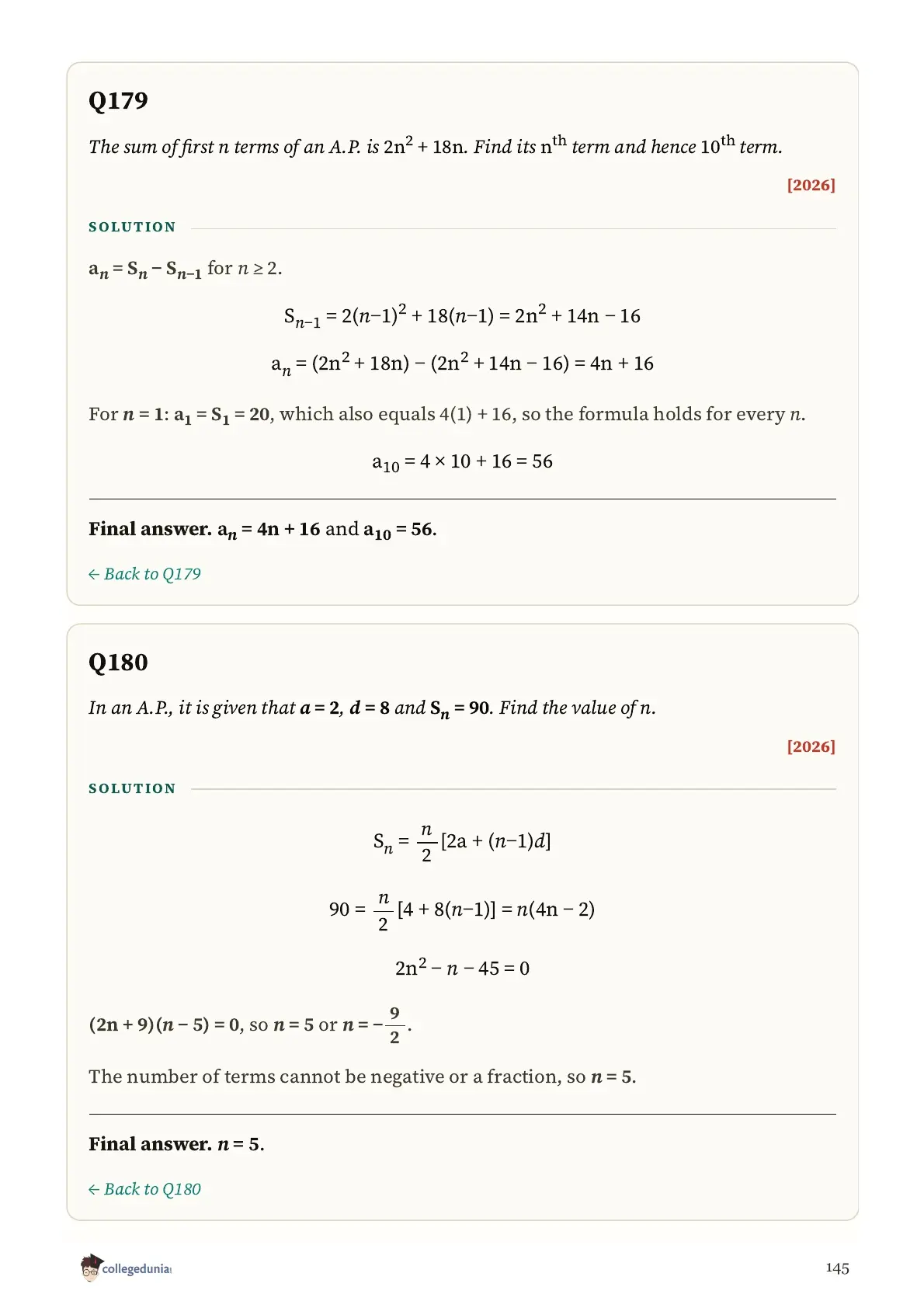
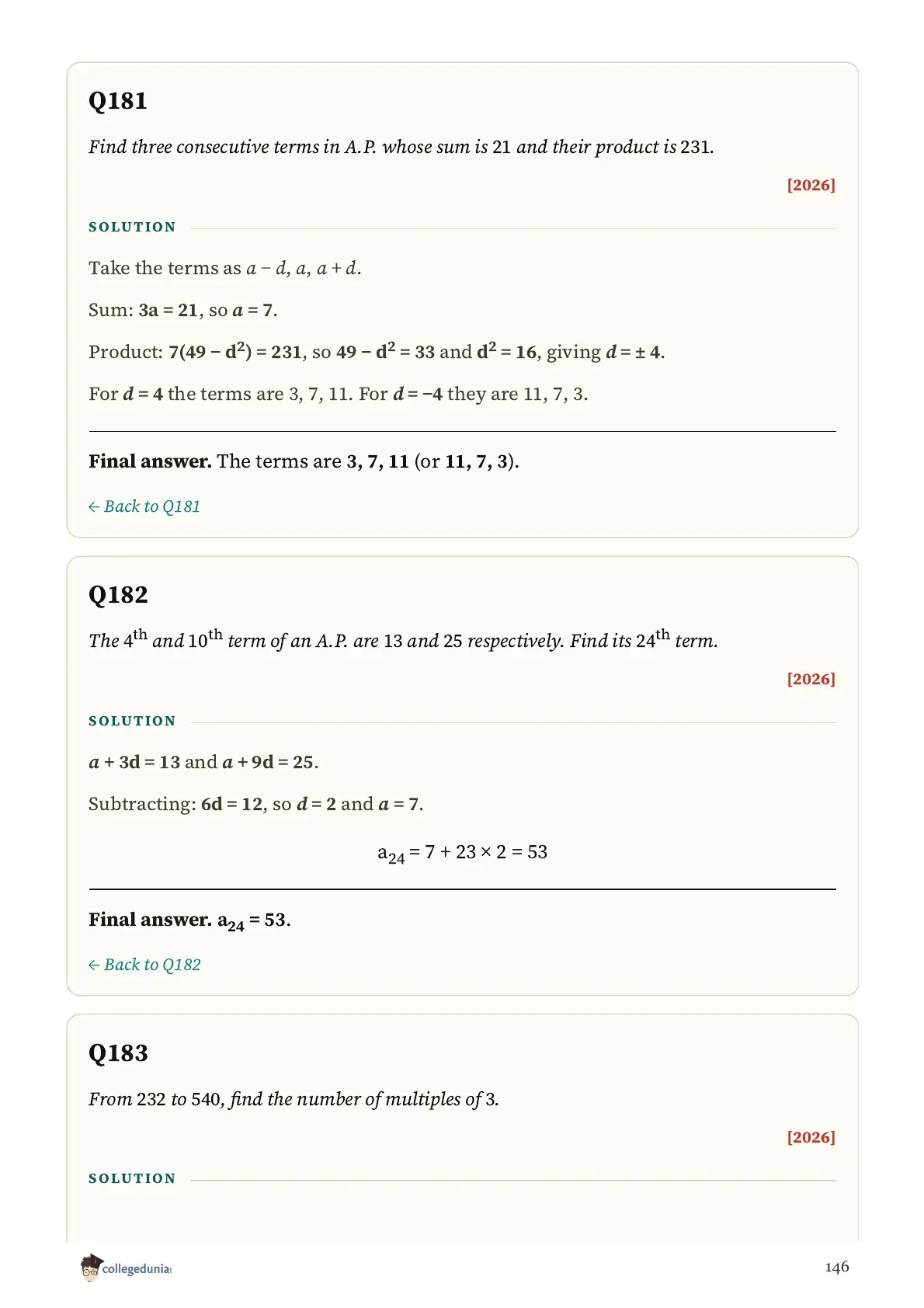
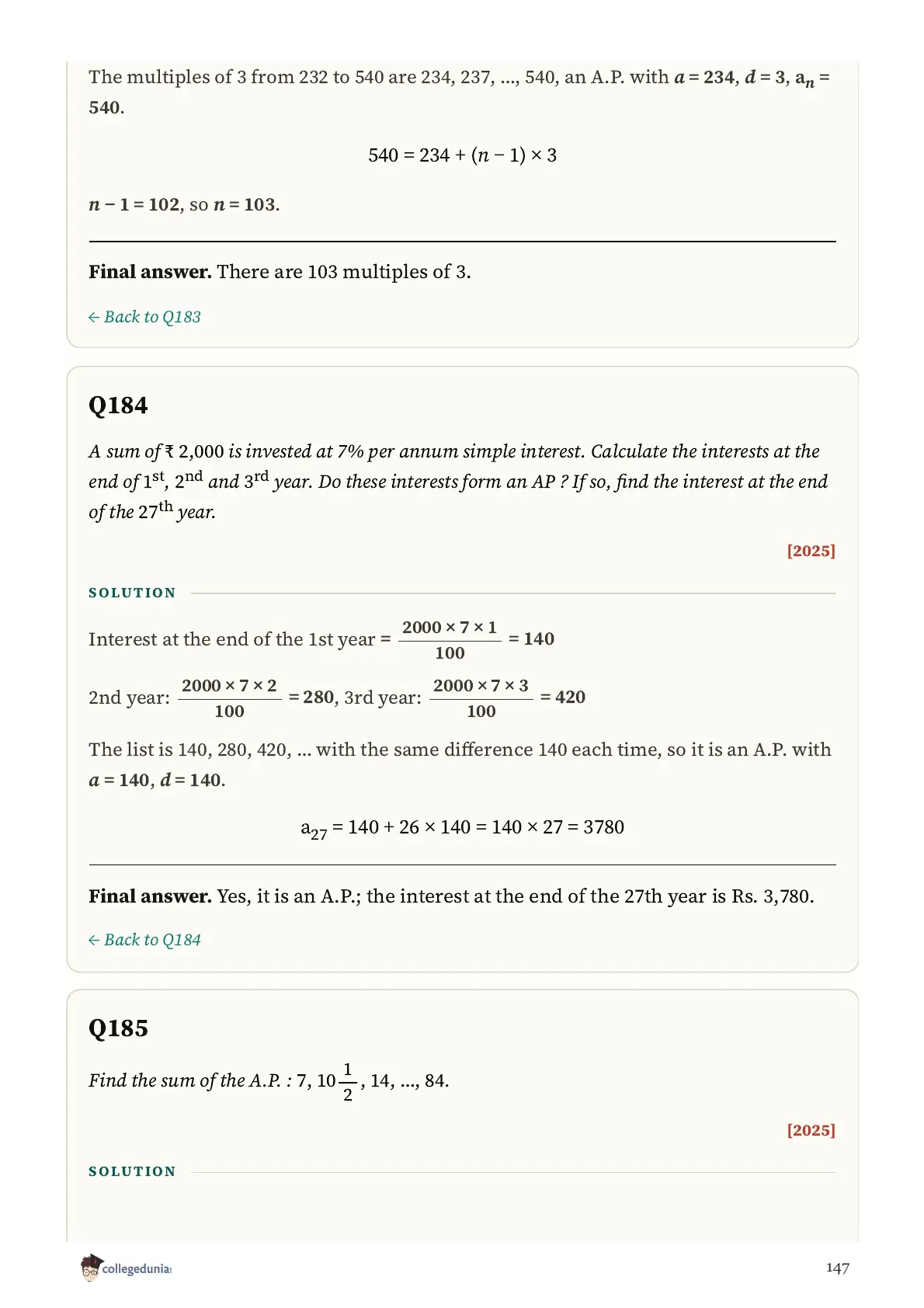
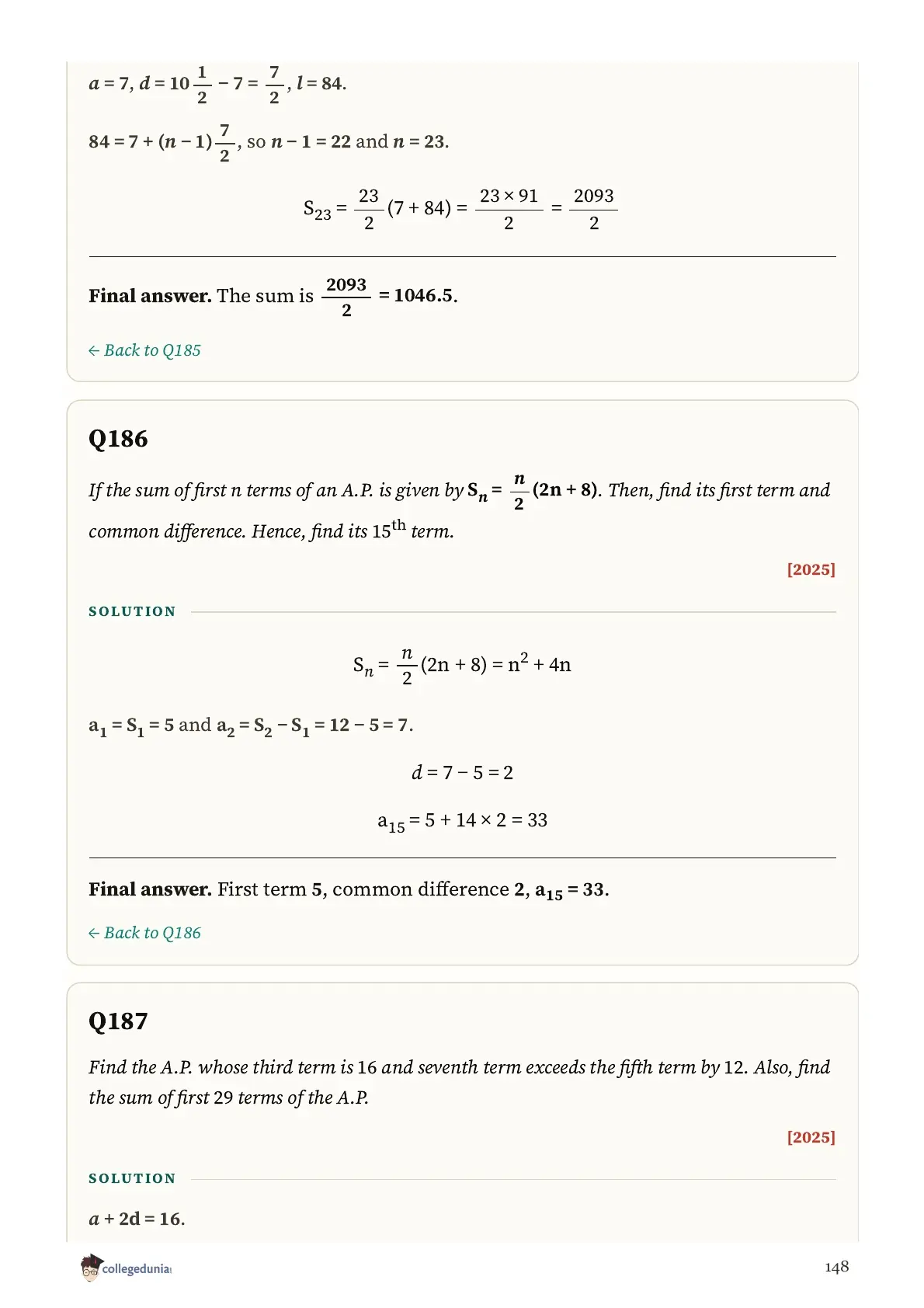
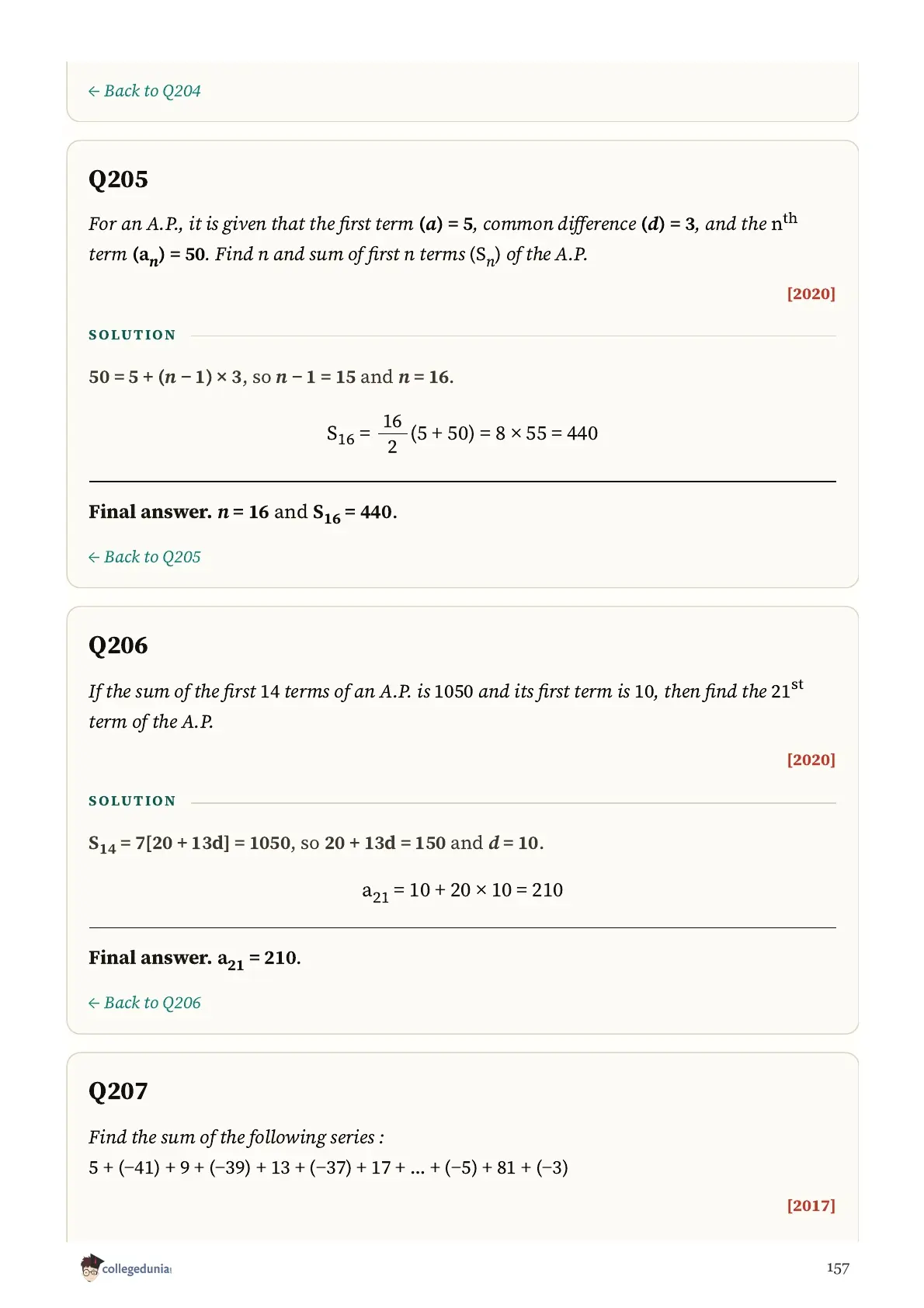
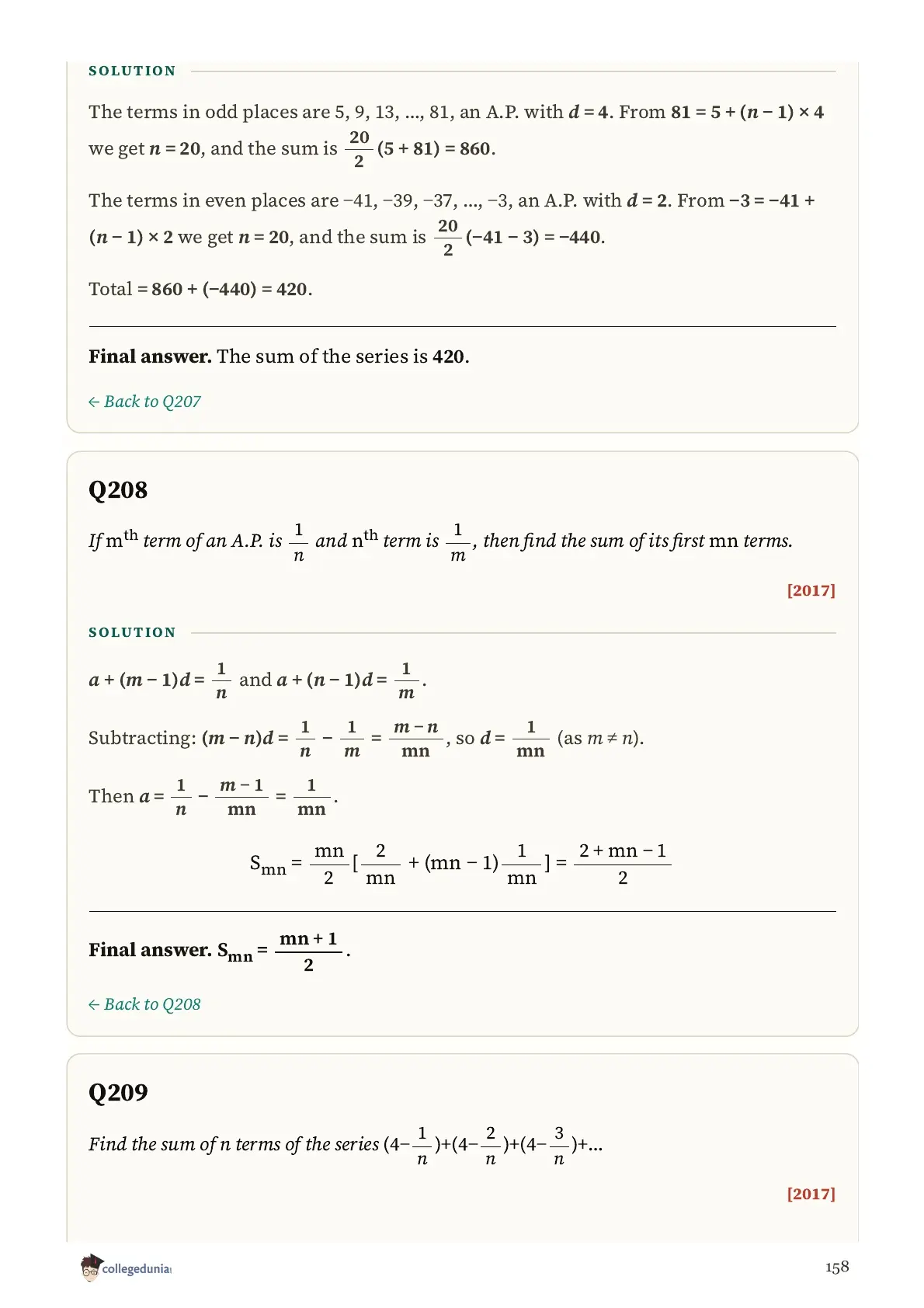
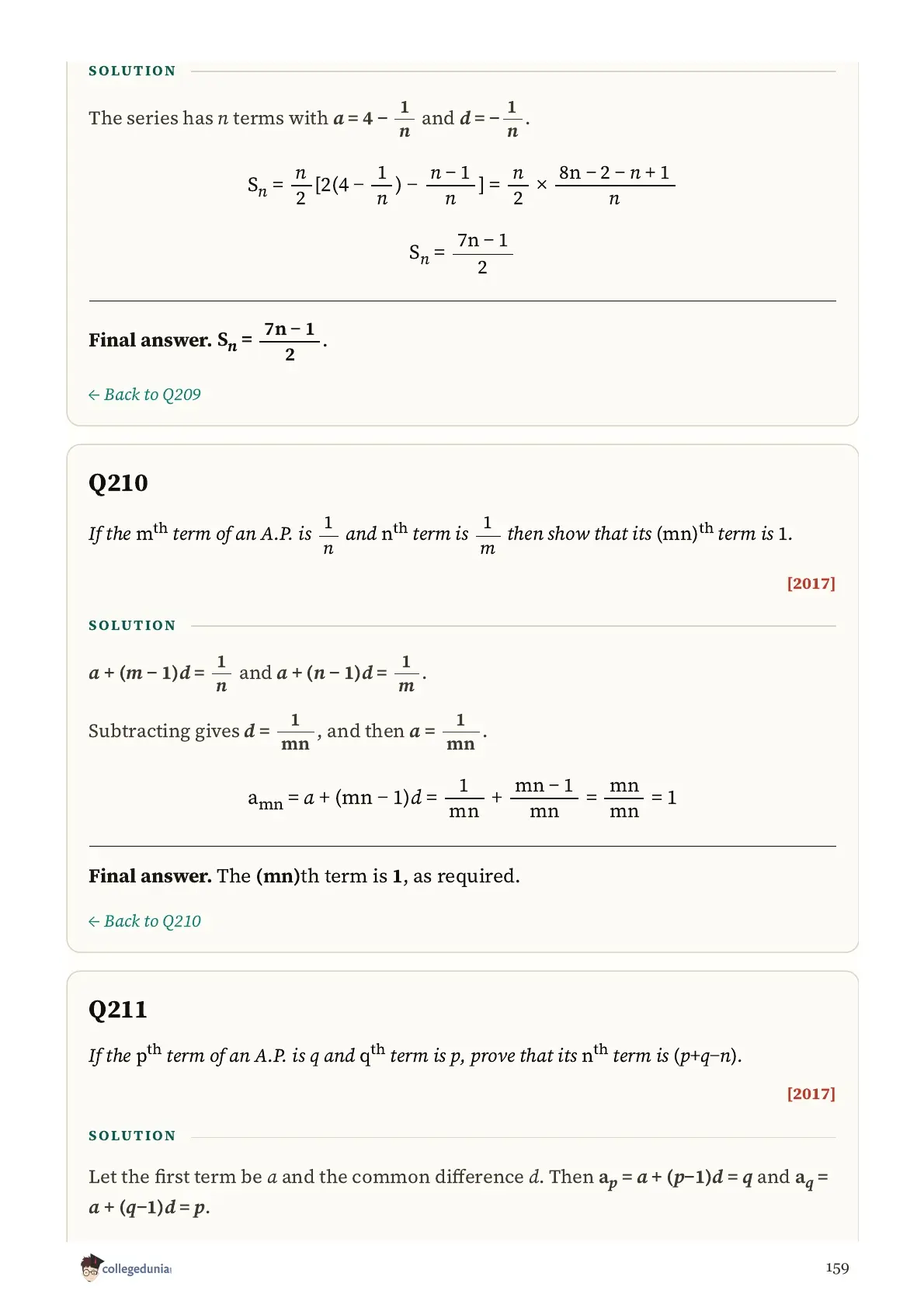
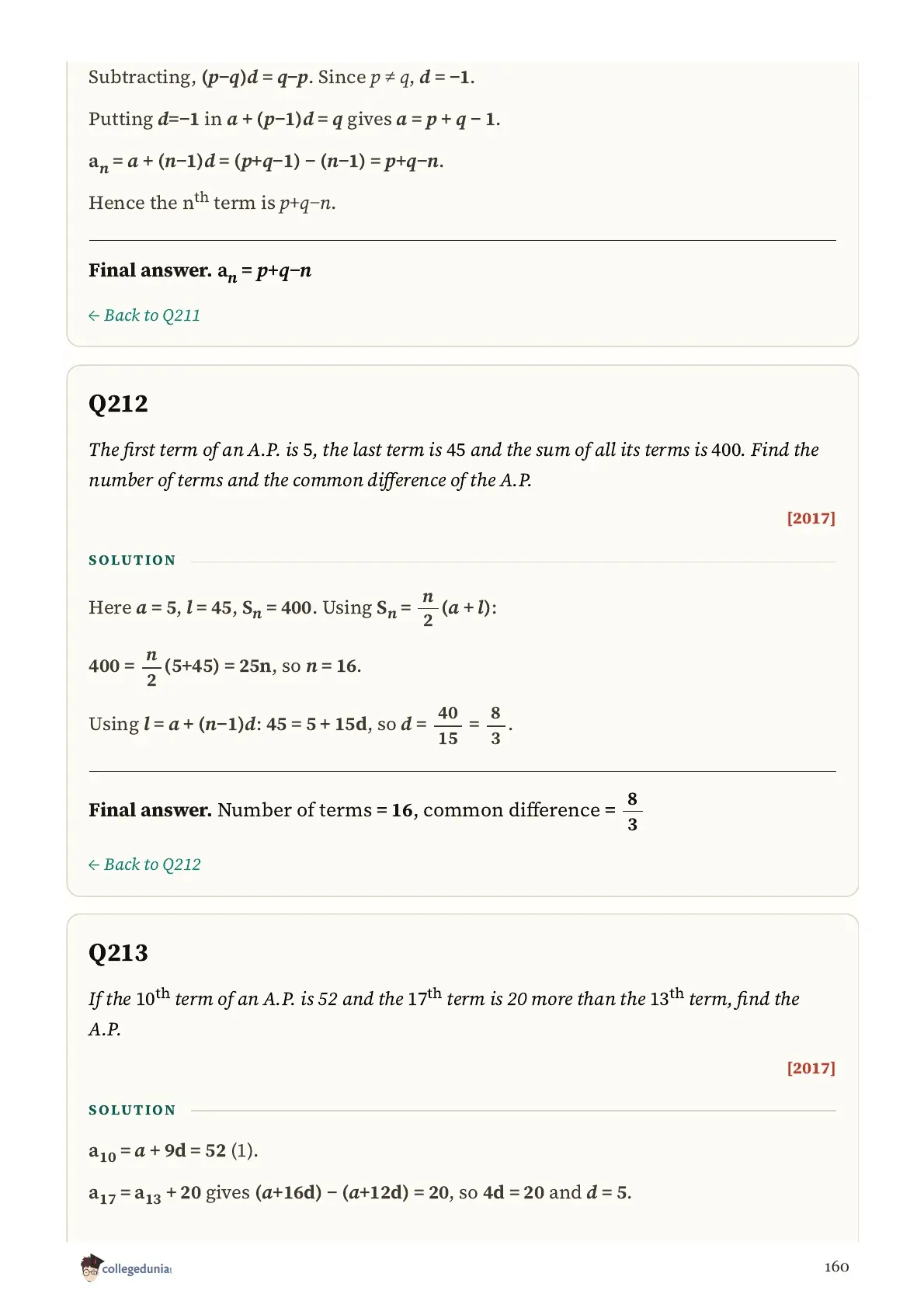
Class 10 Maths Arithmetic Progressions PYQ, free to download as a 207-page PDF with 305 solved board questions from the 2003 to 2026 papers. Arithmetic Progressions is Chapter 5 of the NCERT Class 10 Maths book and belongs to the CBSE unit Algebra, which carries 20 of the 80 theory marks.
The questions keep returning to the sum of terms (127 questions), the nth term (107), questions that work with an ordinal term such as the 10th or 25th (88), the common difference (58), natural numbers, odd numbers or multiples inside an AP (31), real-life case studies (22) and the last term (20).
On this page you get:
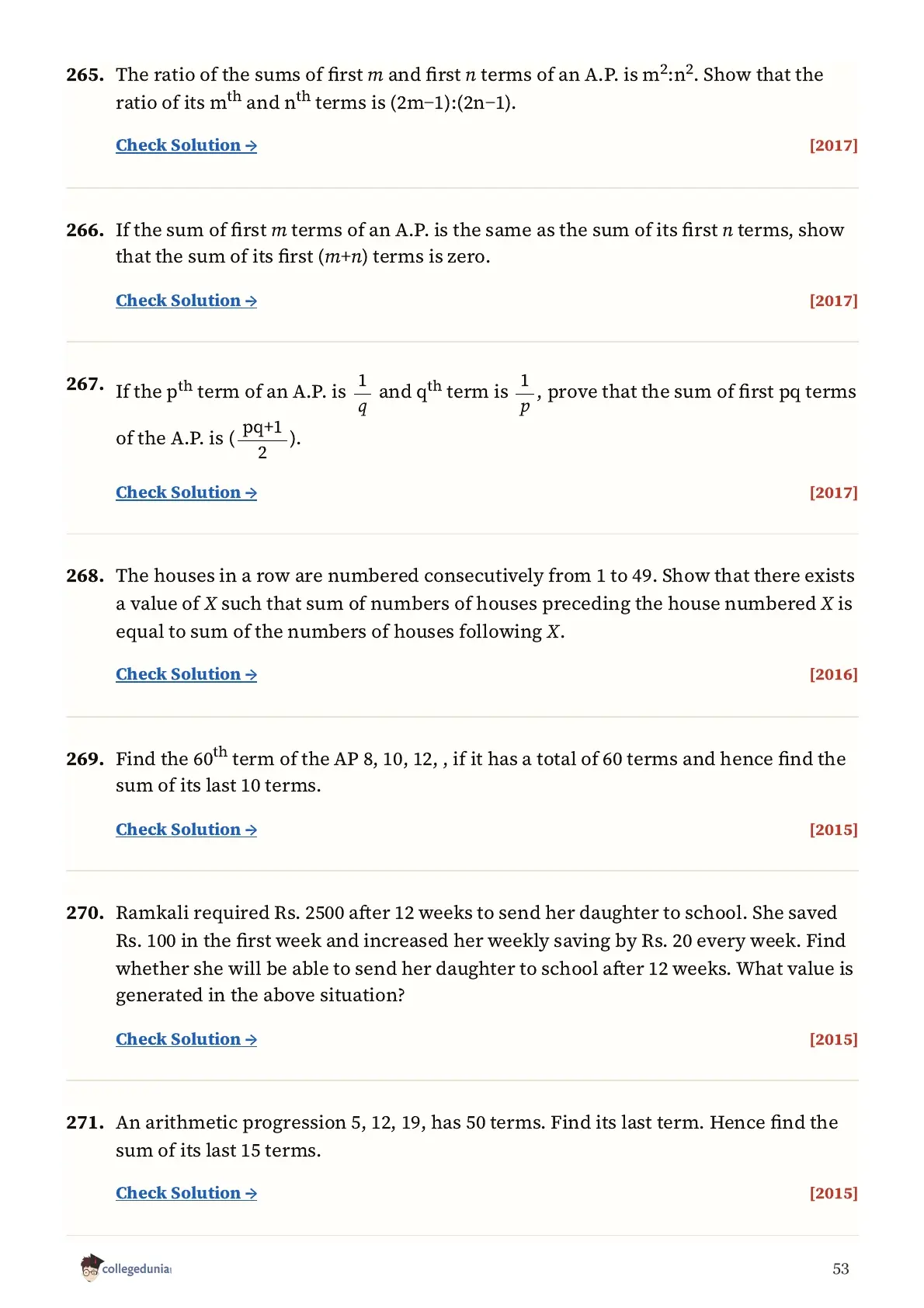
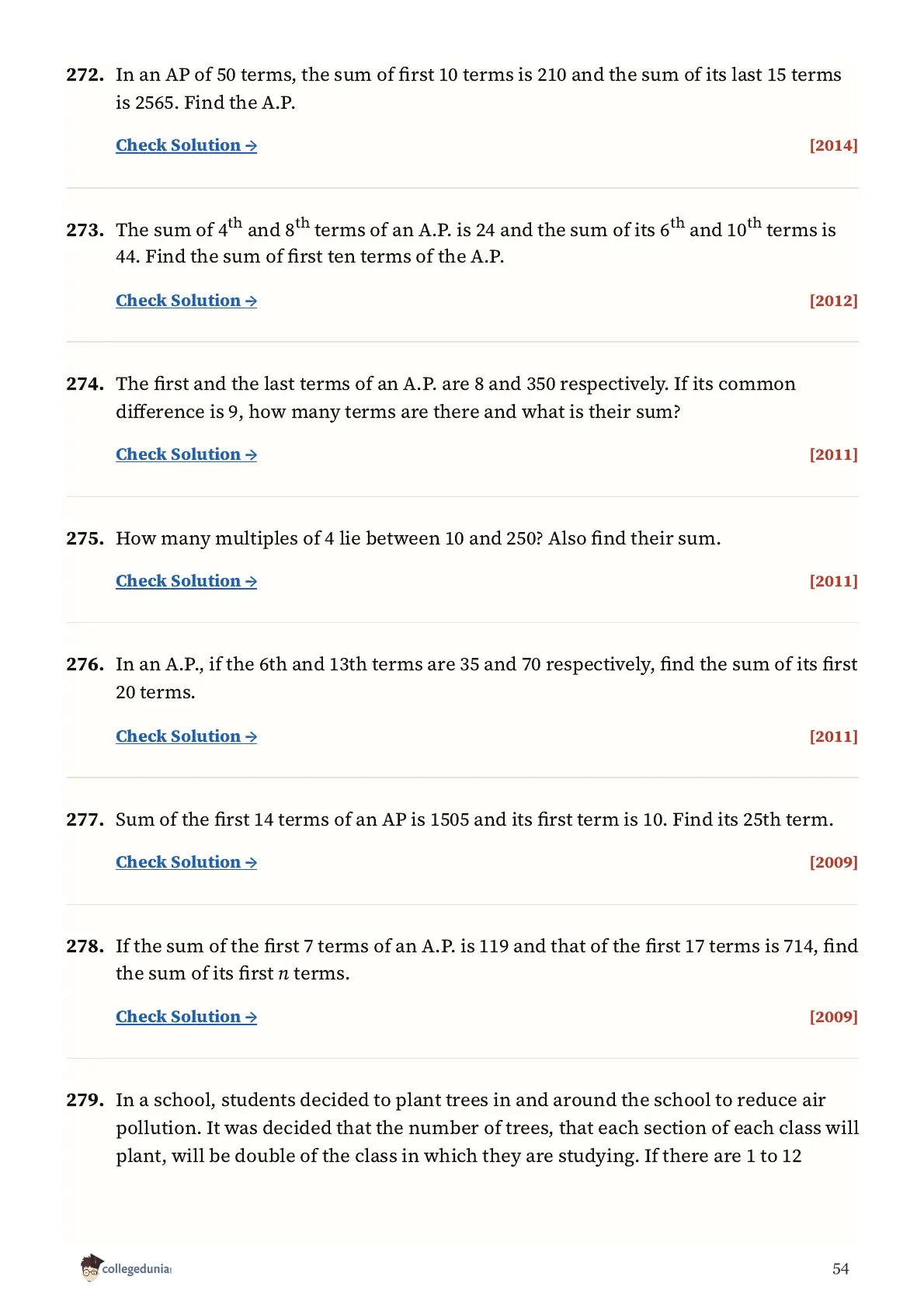
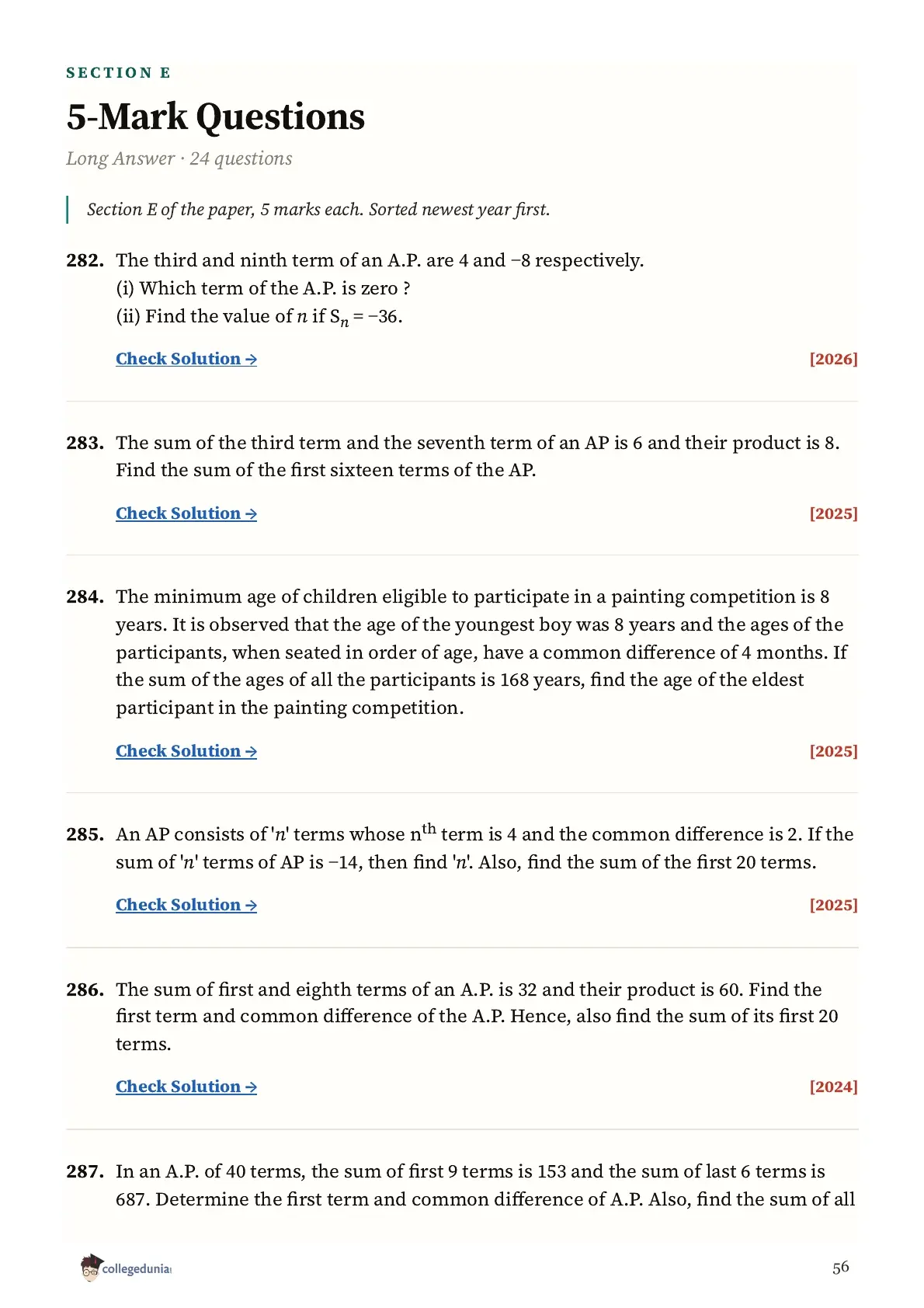
- 305 questions with a worked solution each: 69 MCQs and assertion-reason items, 174 short answers and 62 long answers or case studies
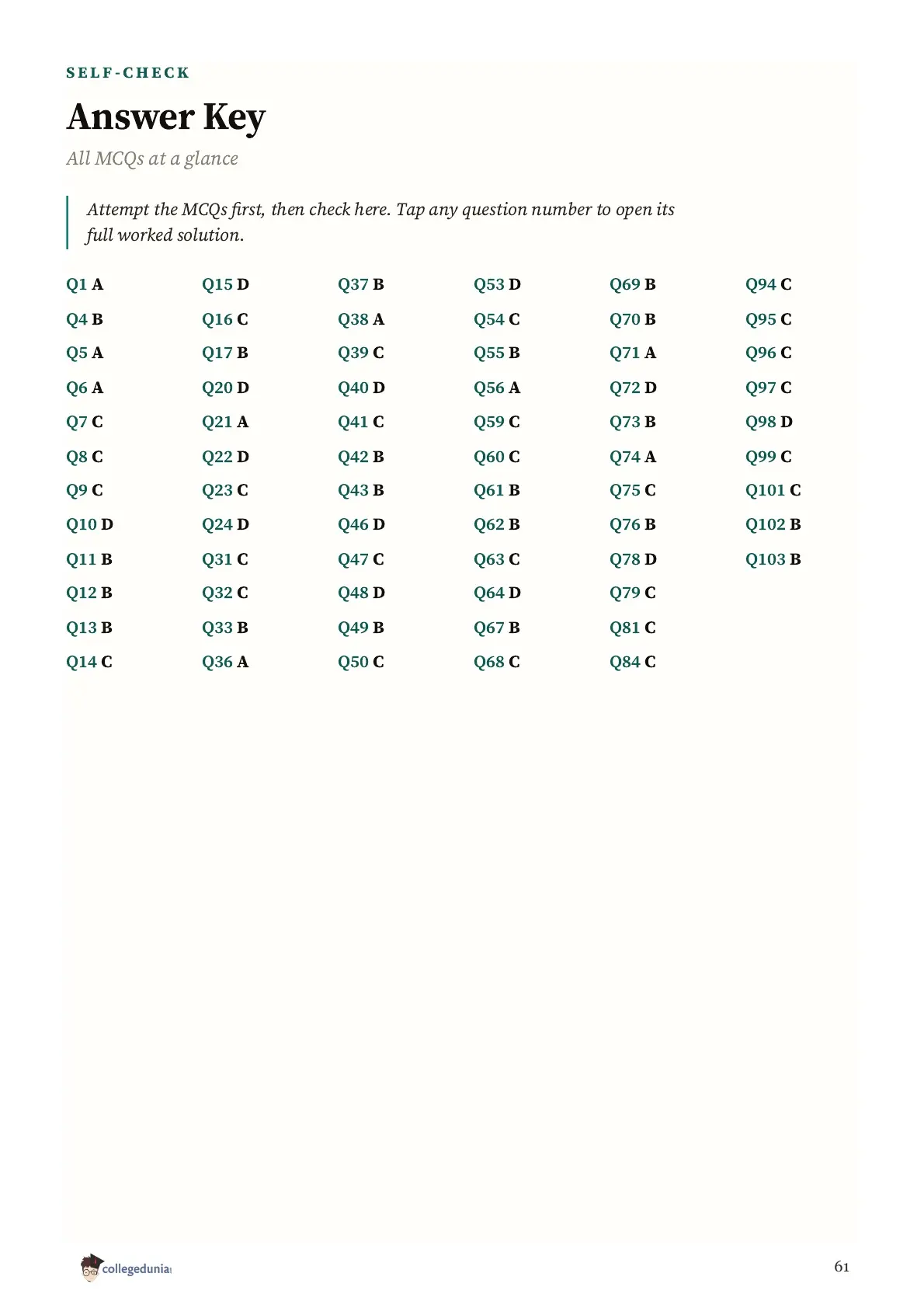
- An Answer Key that lists all 69 MCQs at a glance
- Question counts by topic, so you know whether to start with the nth term, the sum formula or case studies
- A marks-wise table of questions (1, 2, 3, 4 and 5 mark)
- The common mistakes students make, such as dropping the second root when a sum of 180 gives two values of n, and a short FAQ
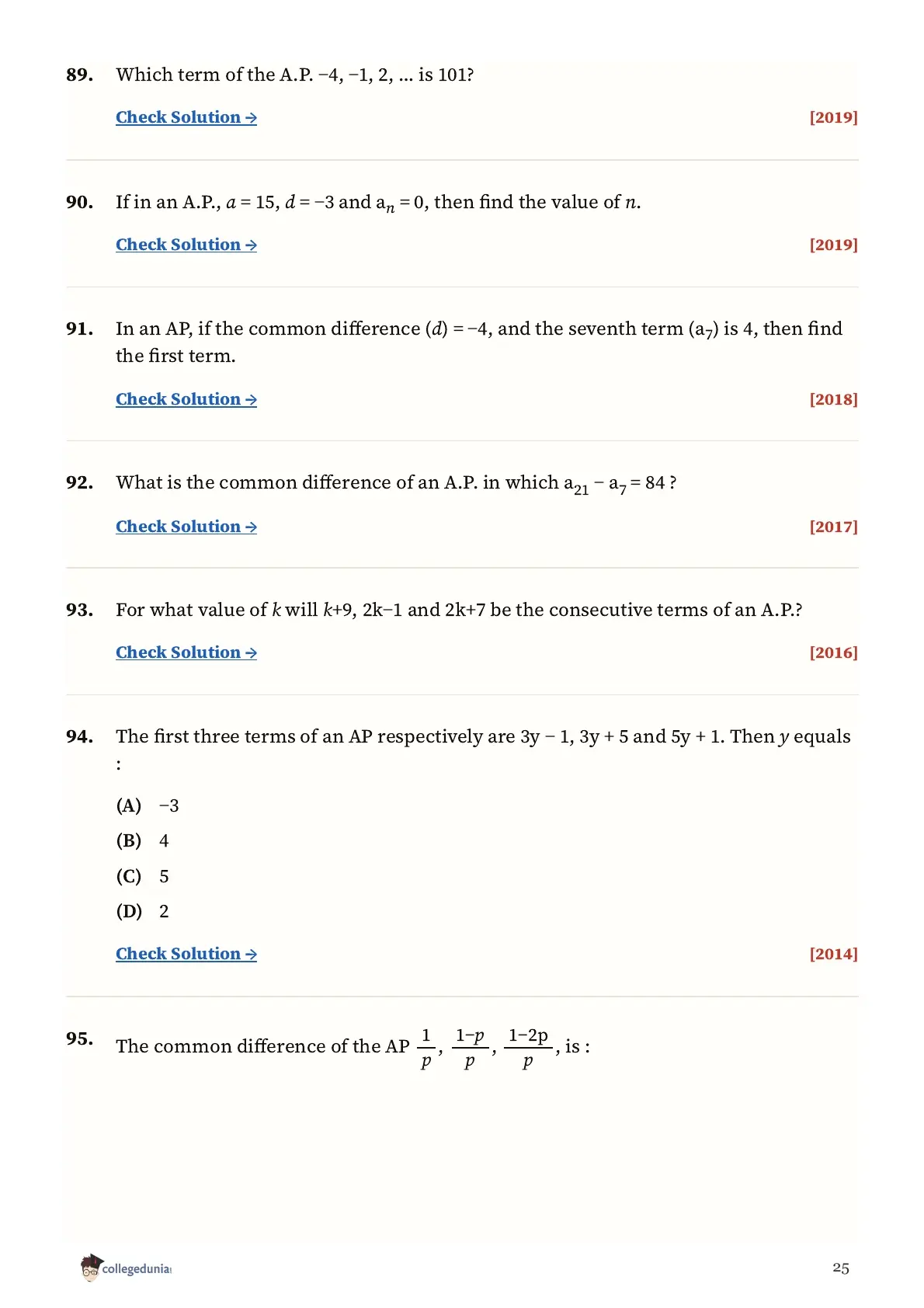
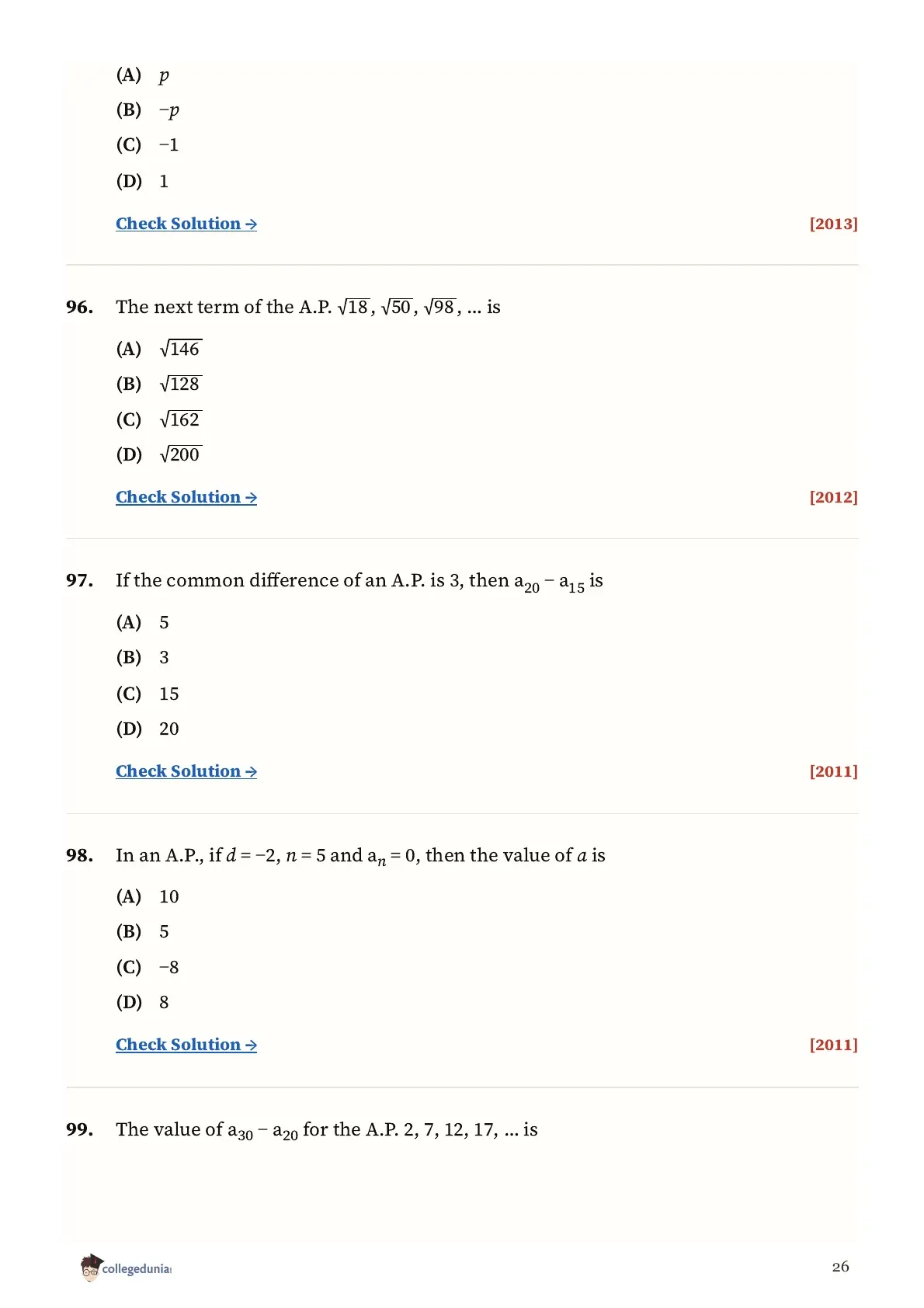
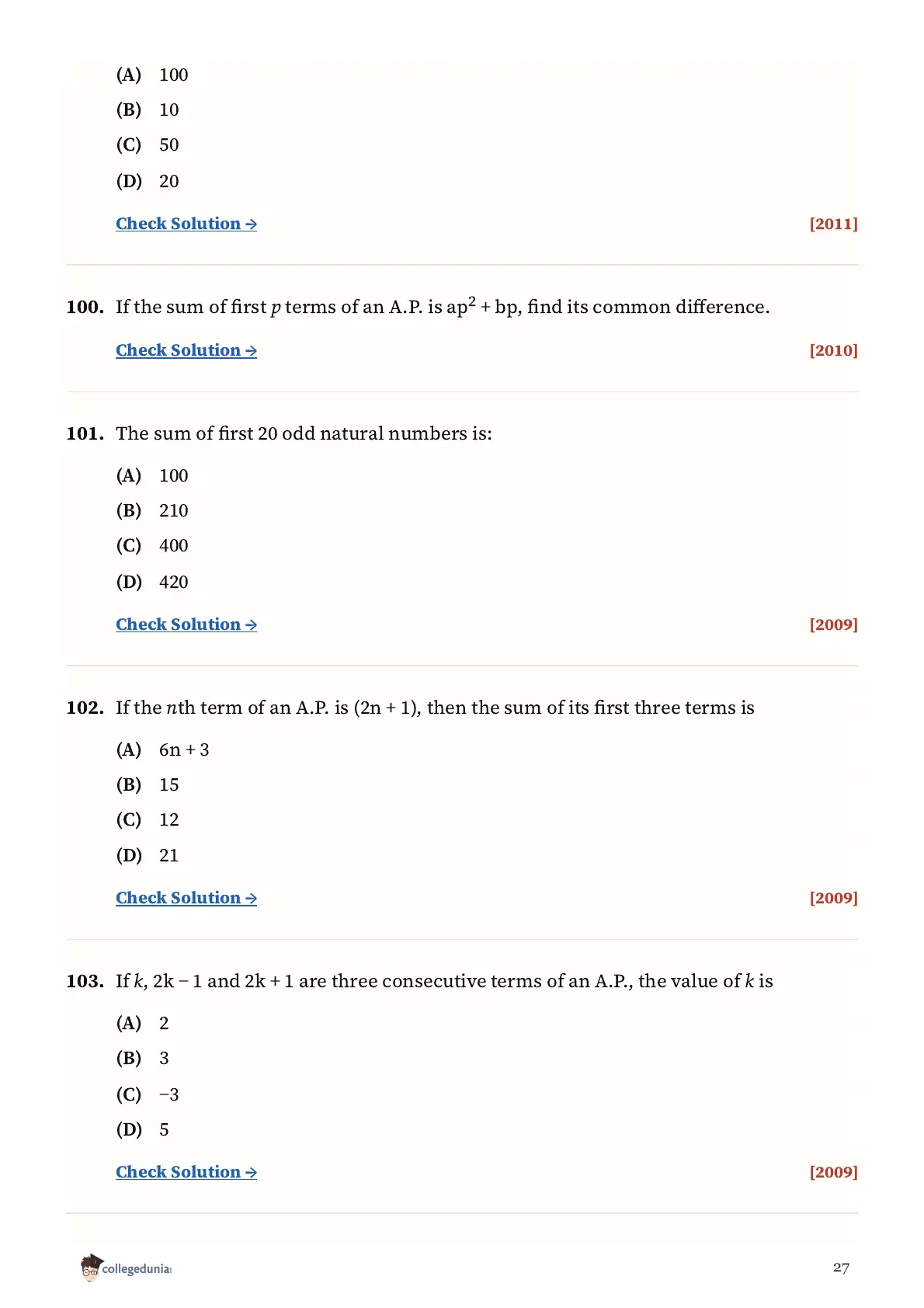
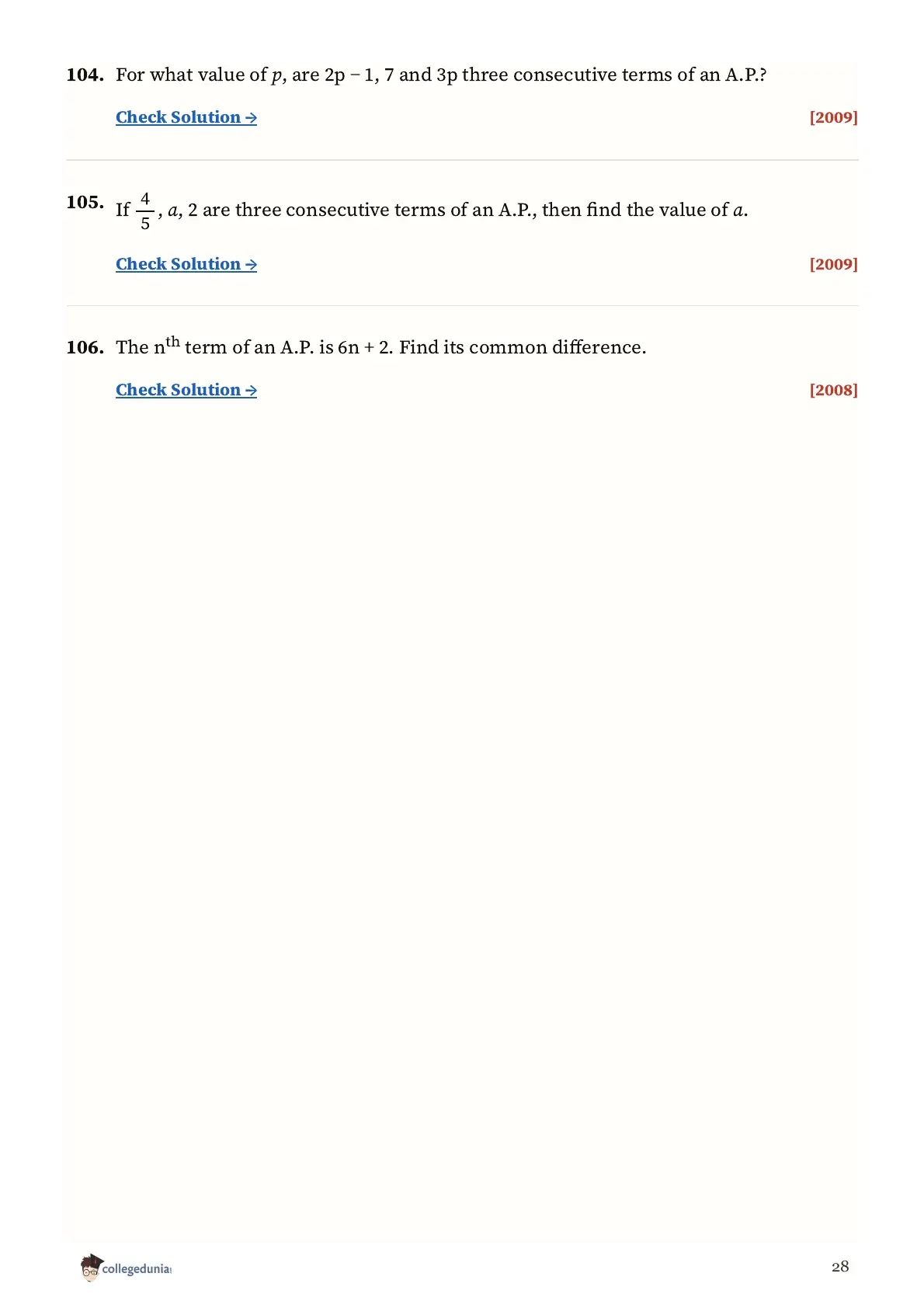
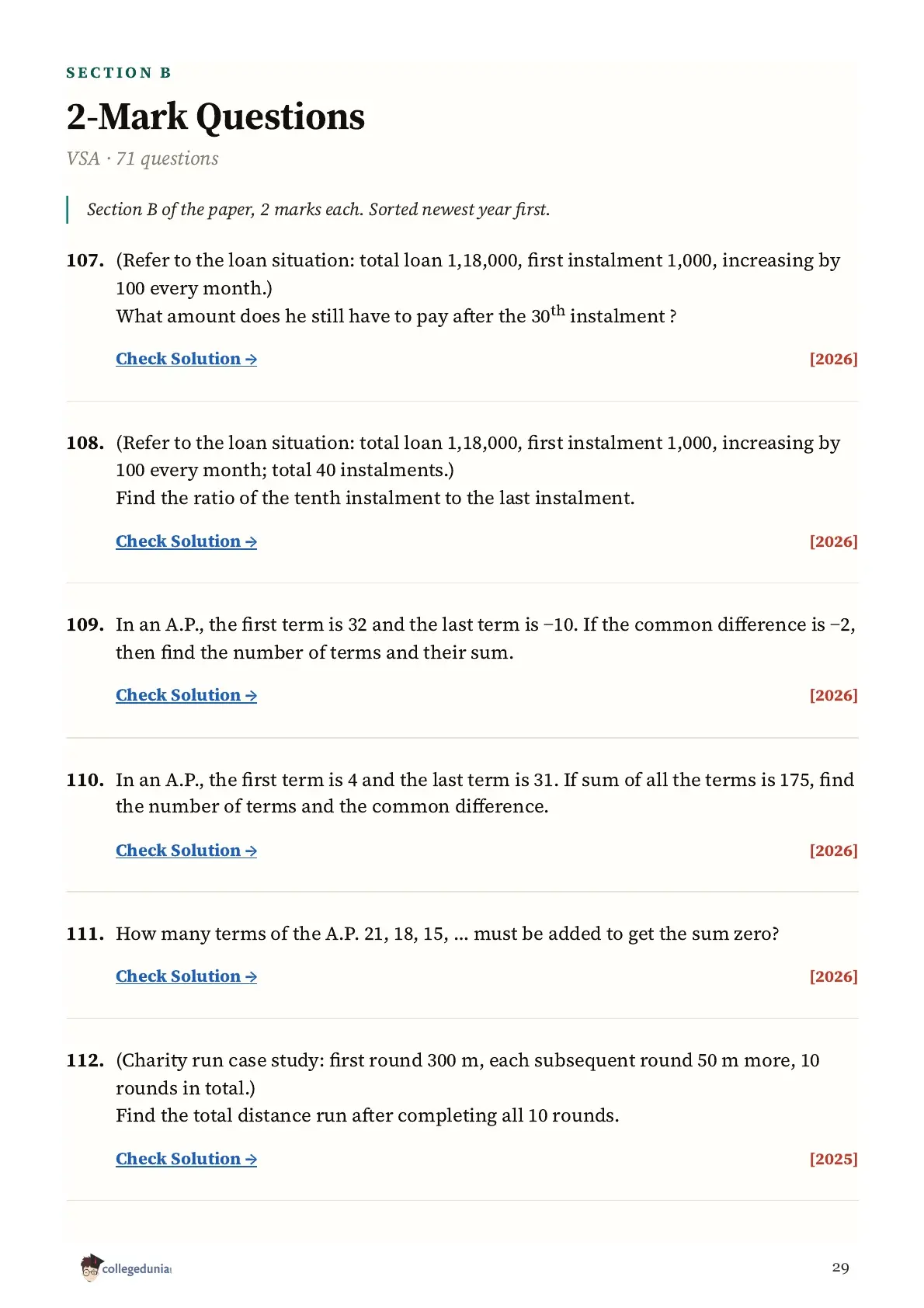
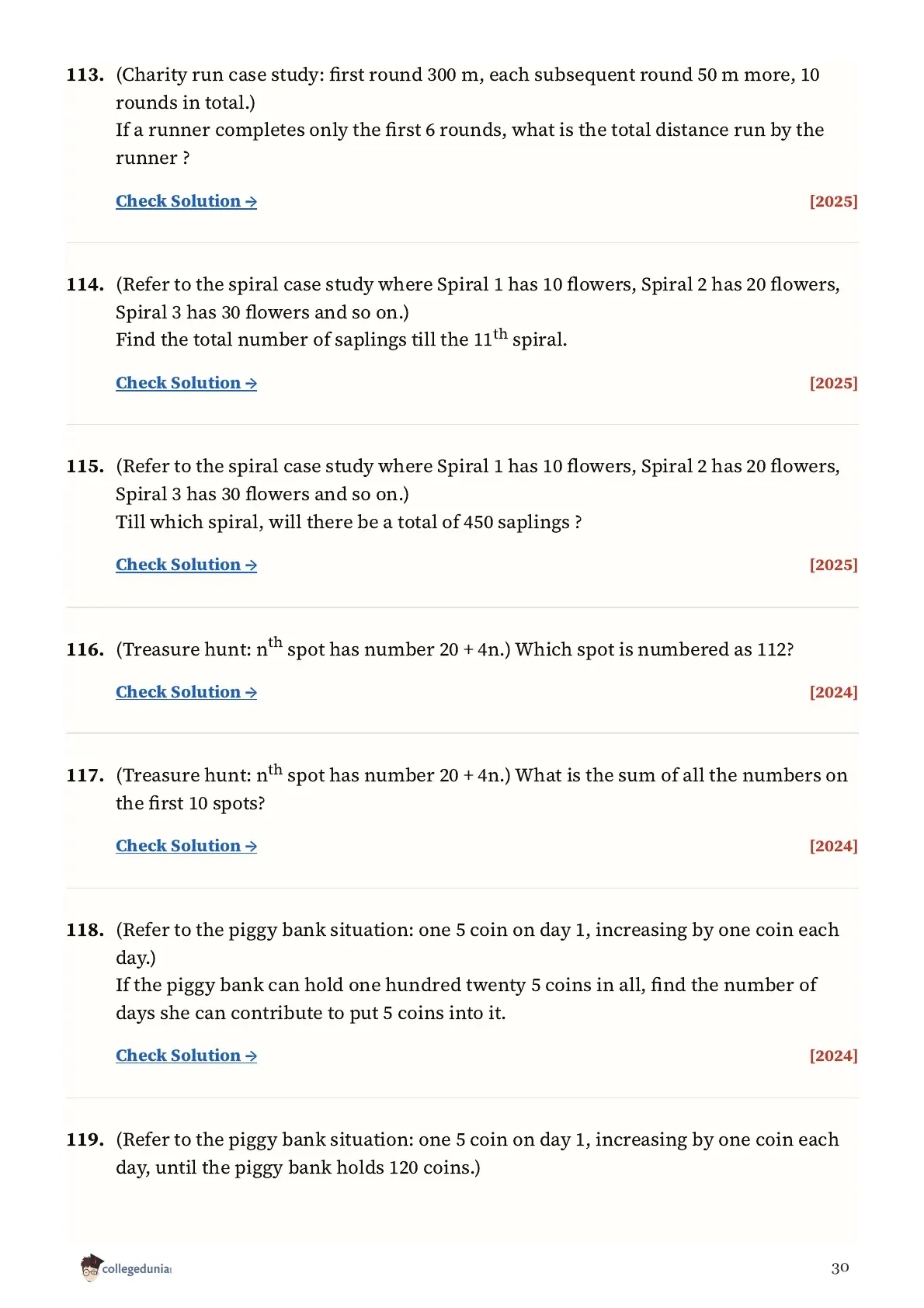
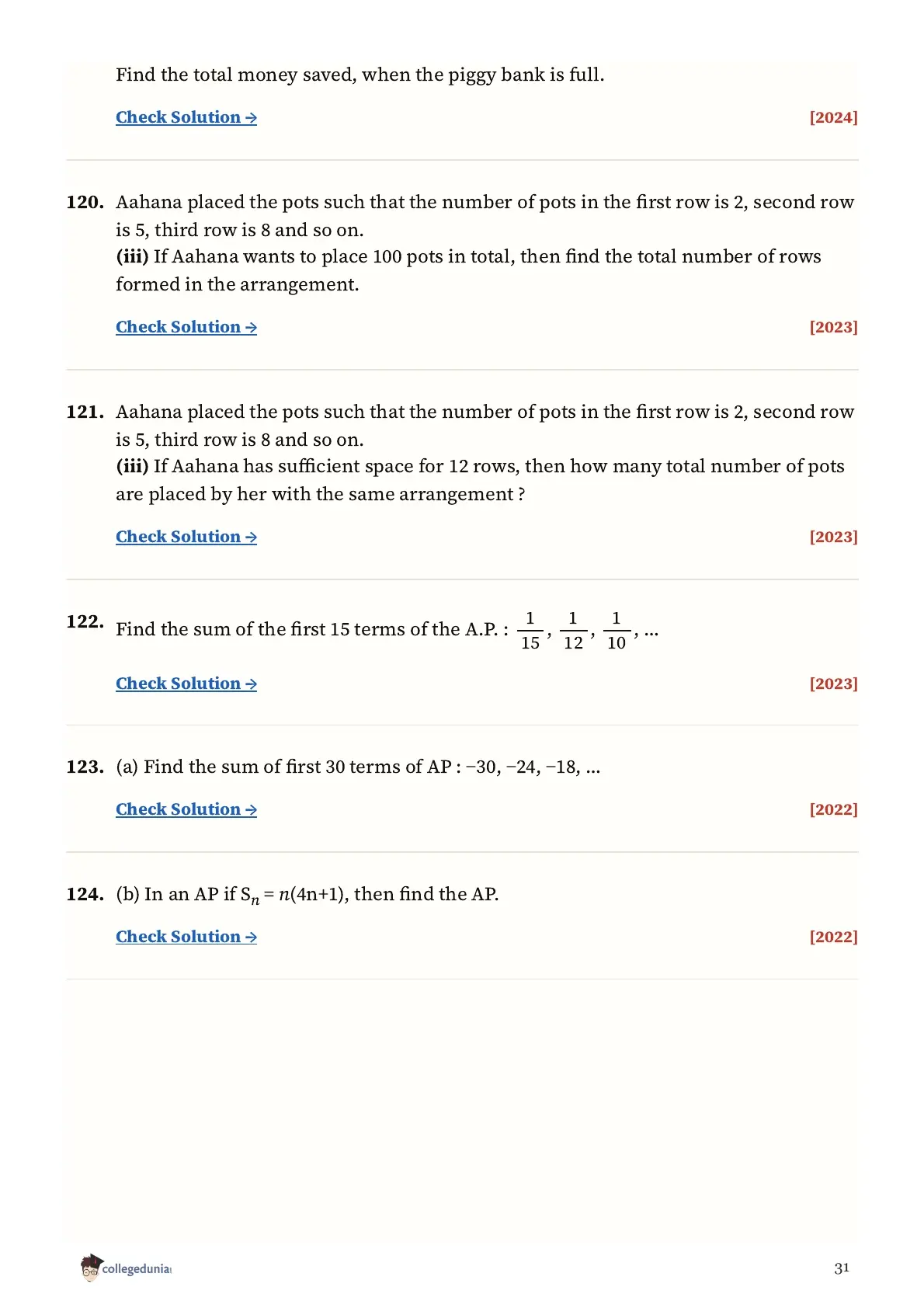
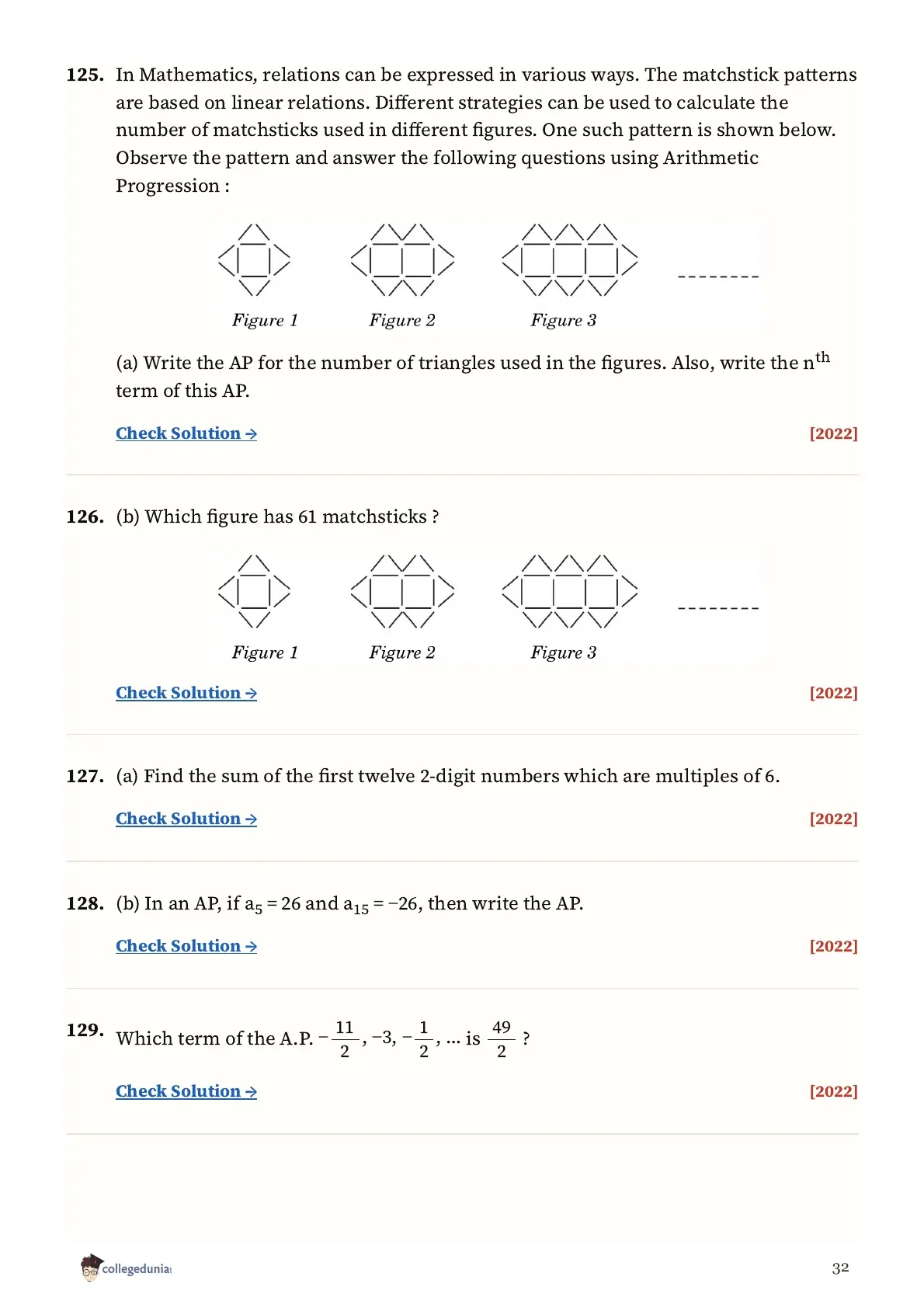
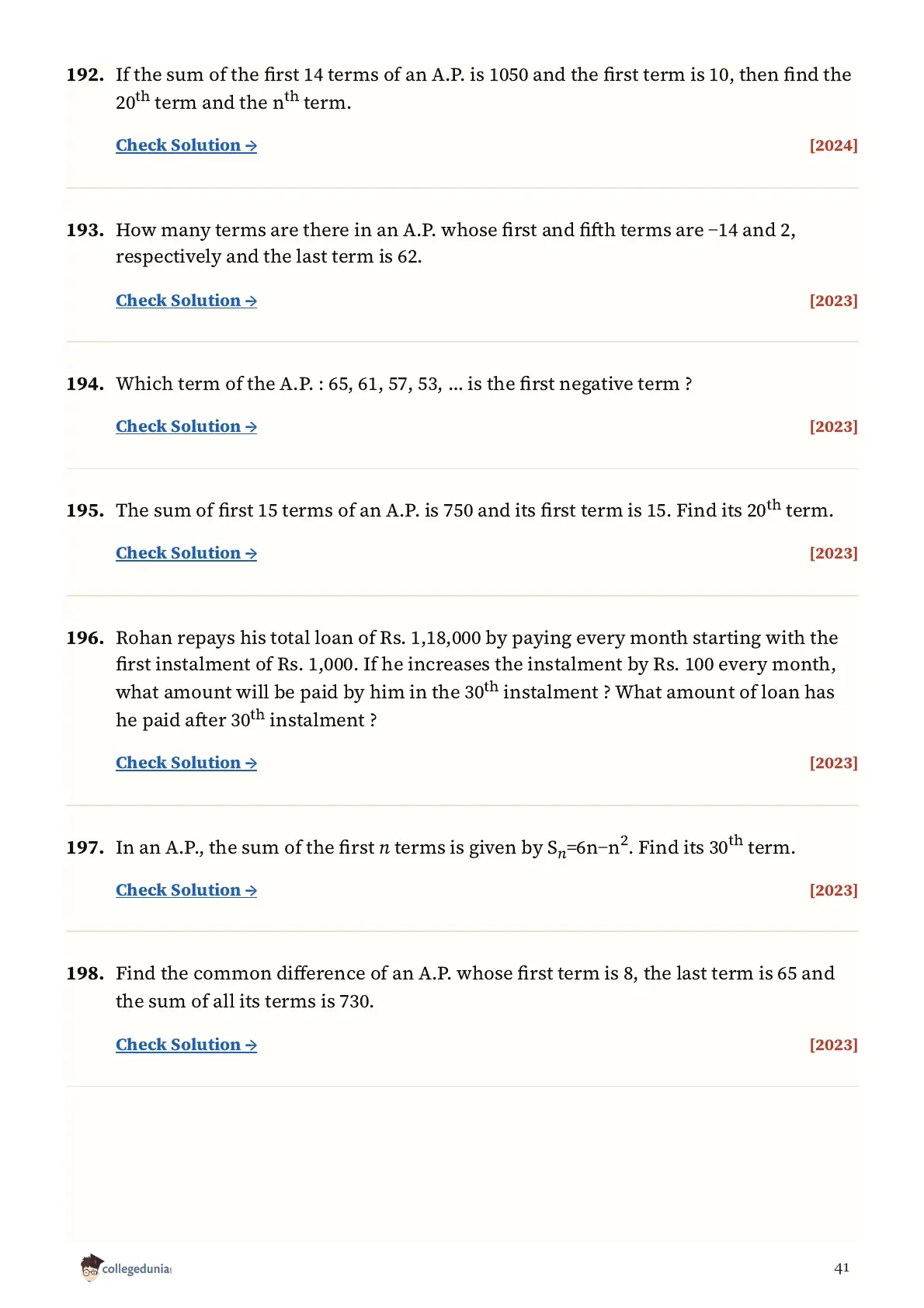
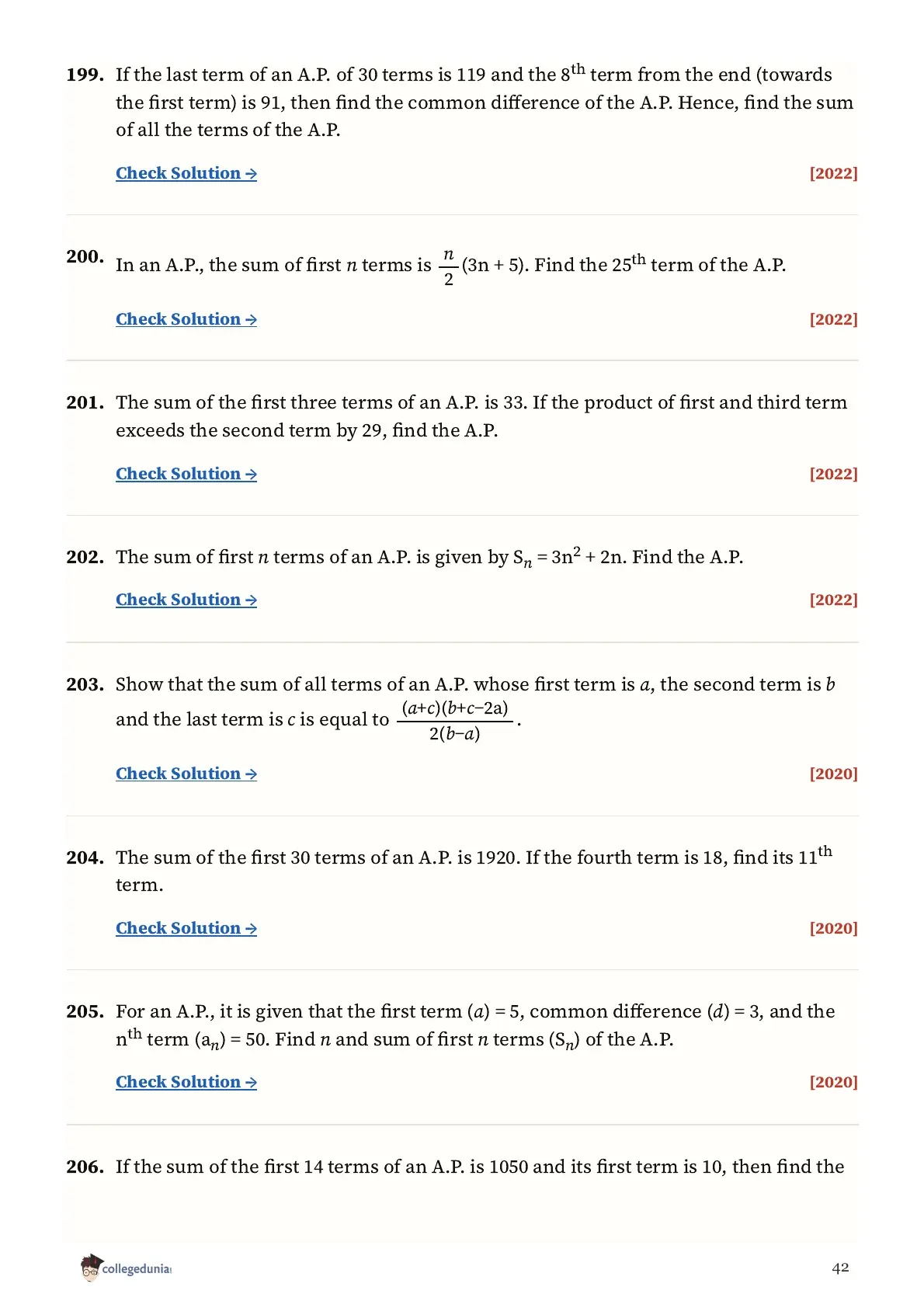
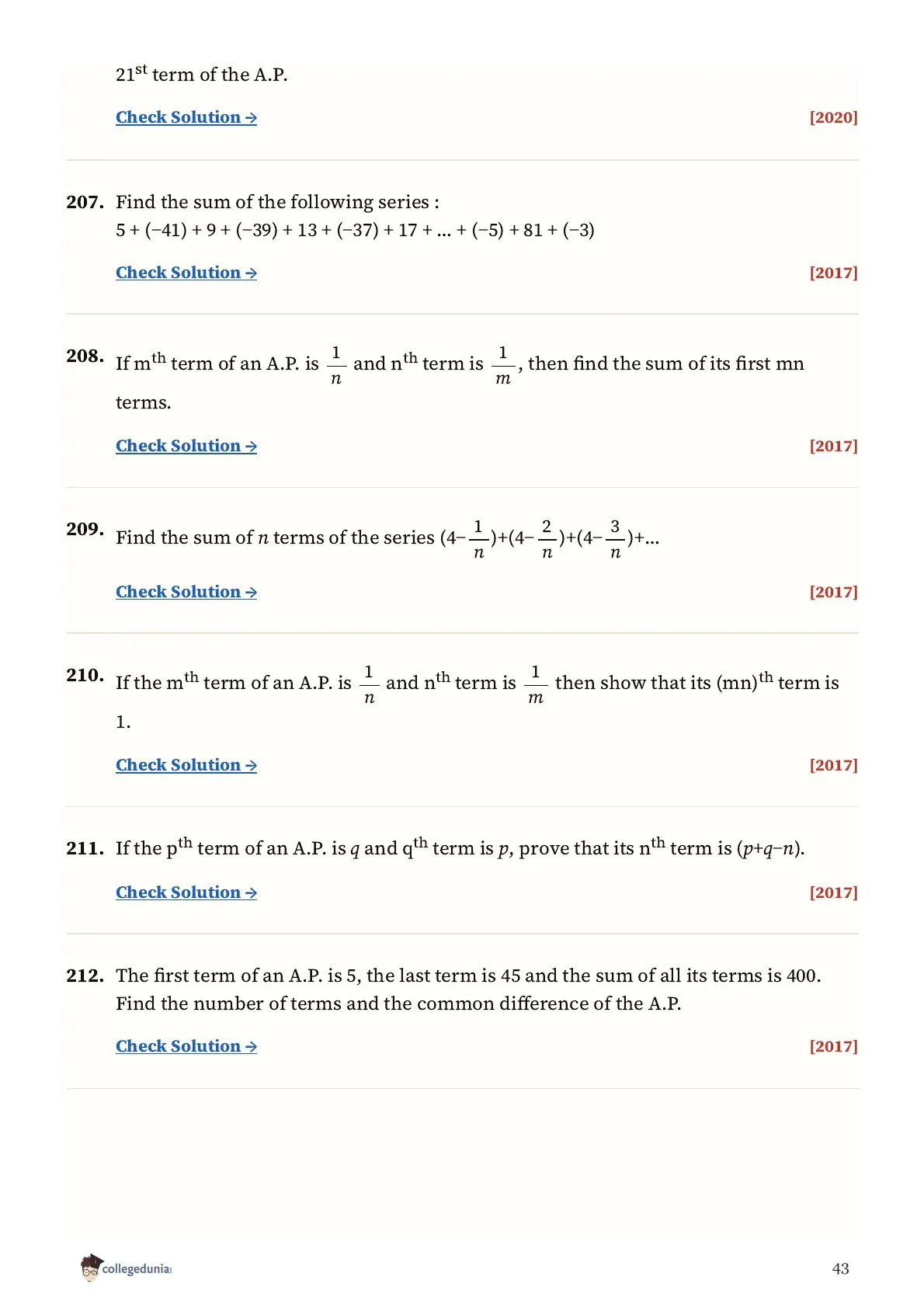
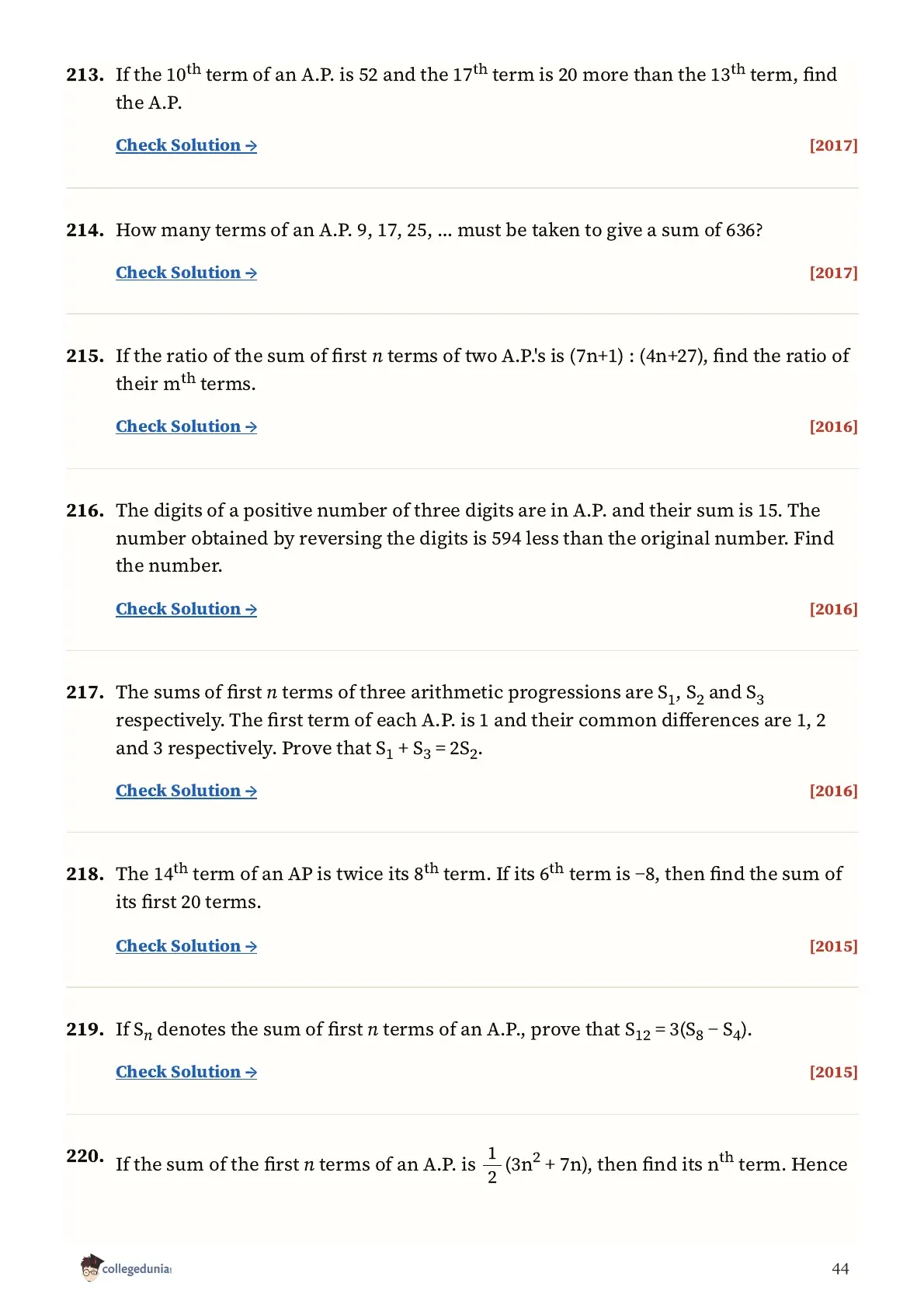
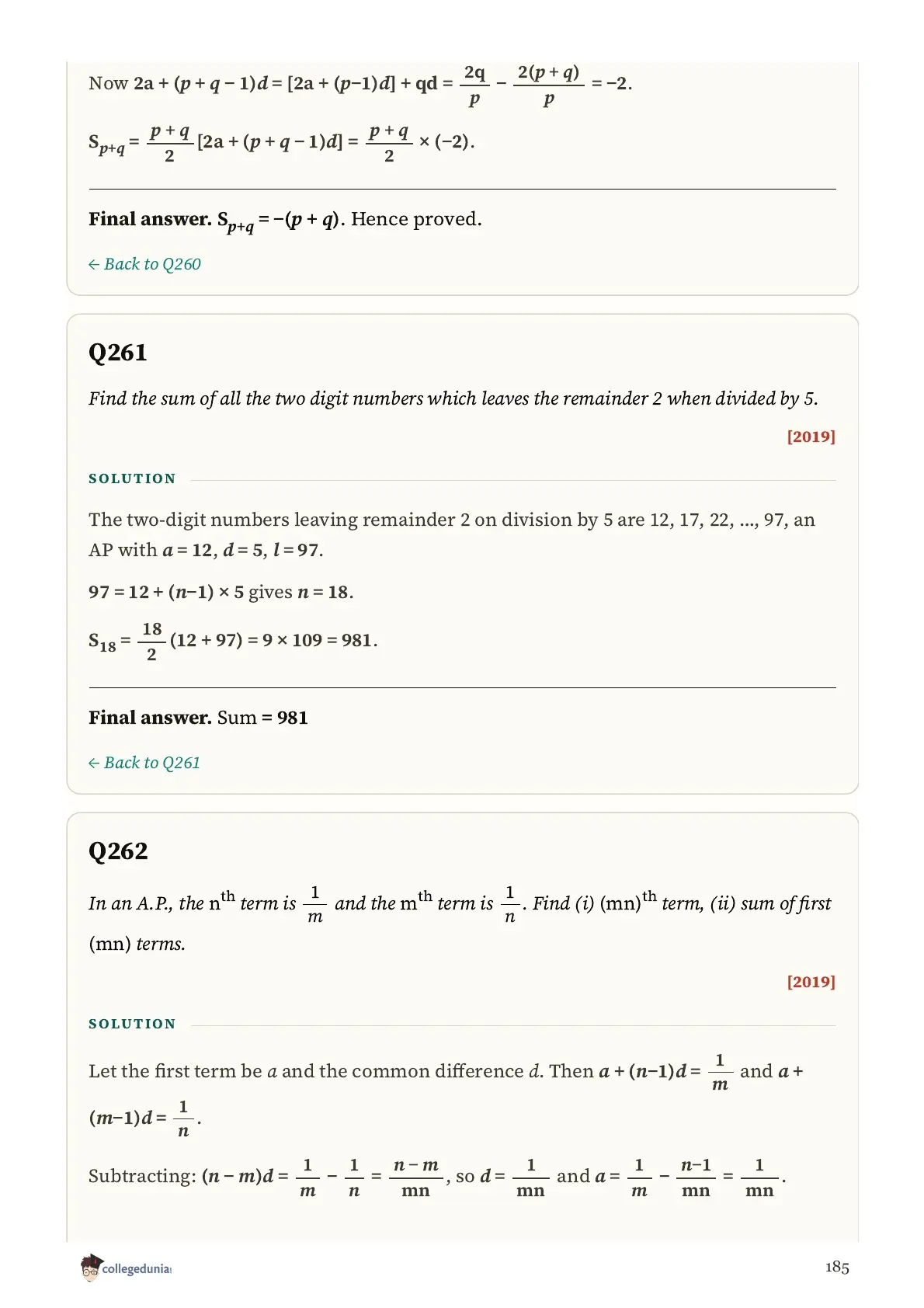
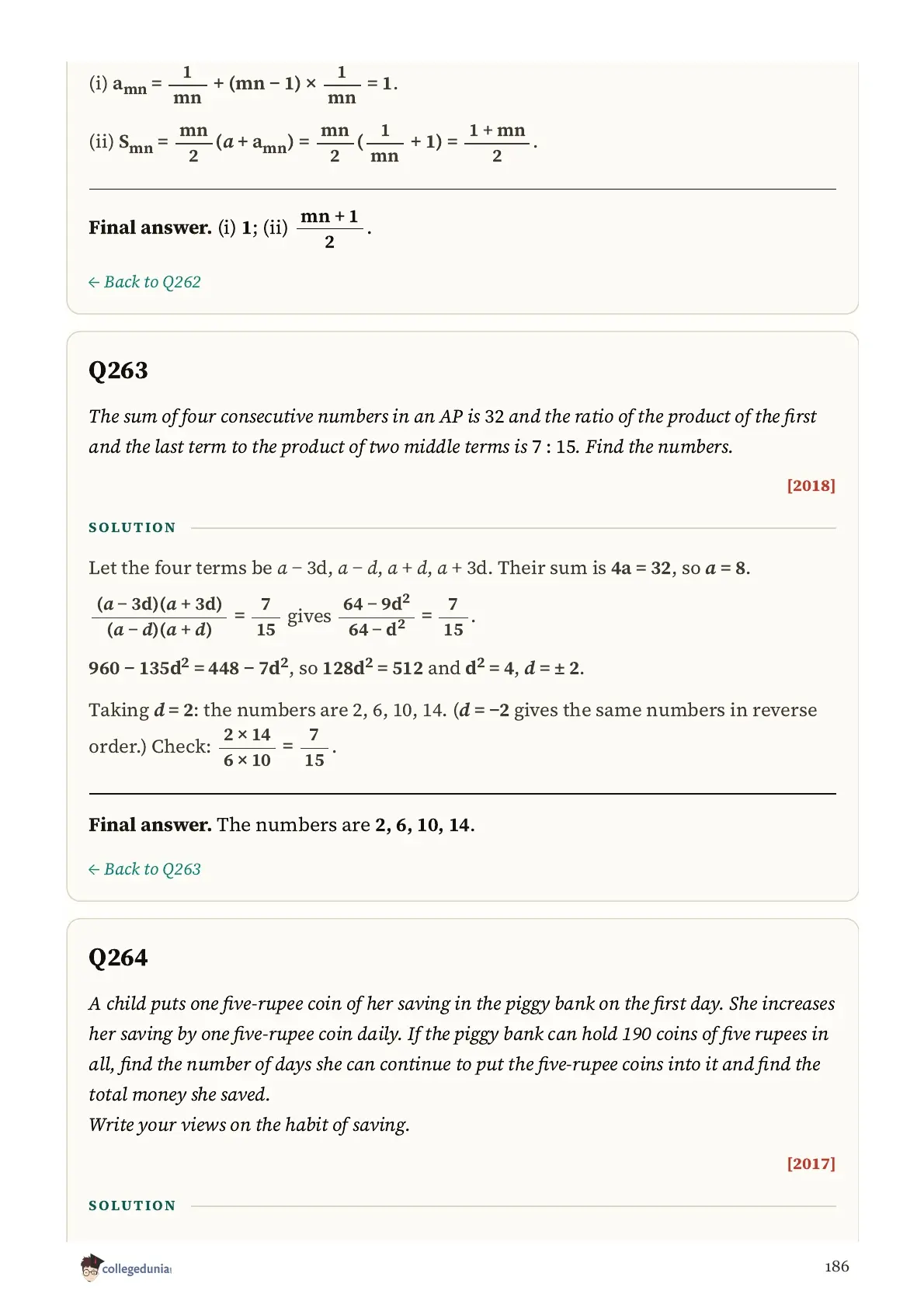
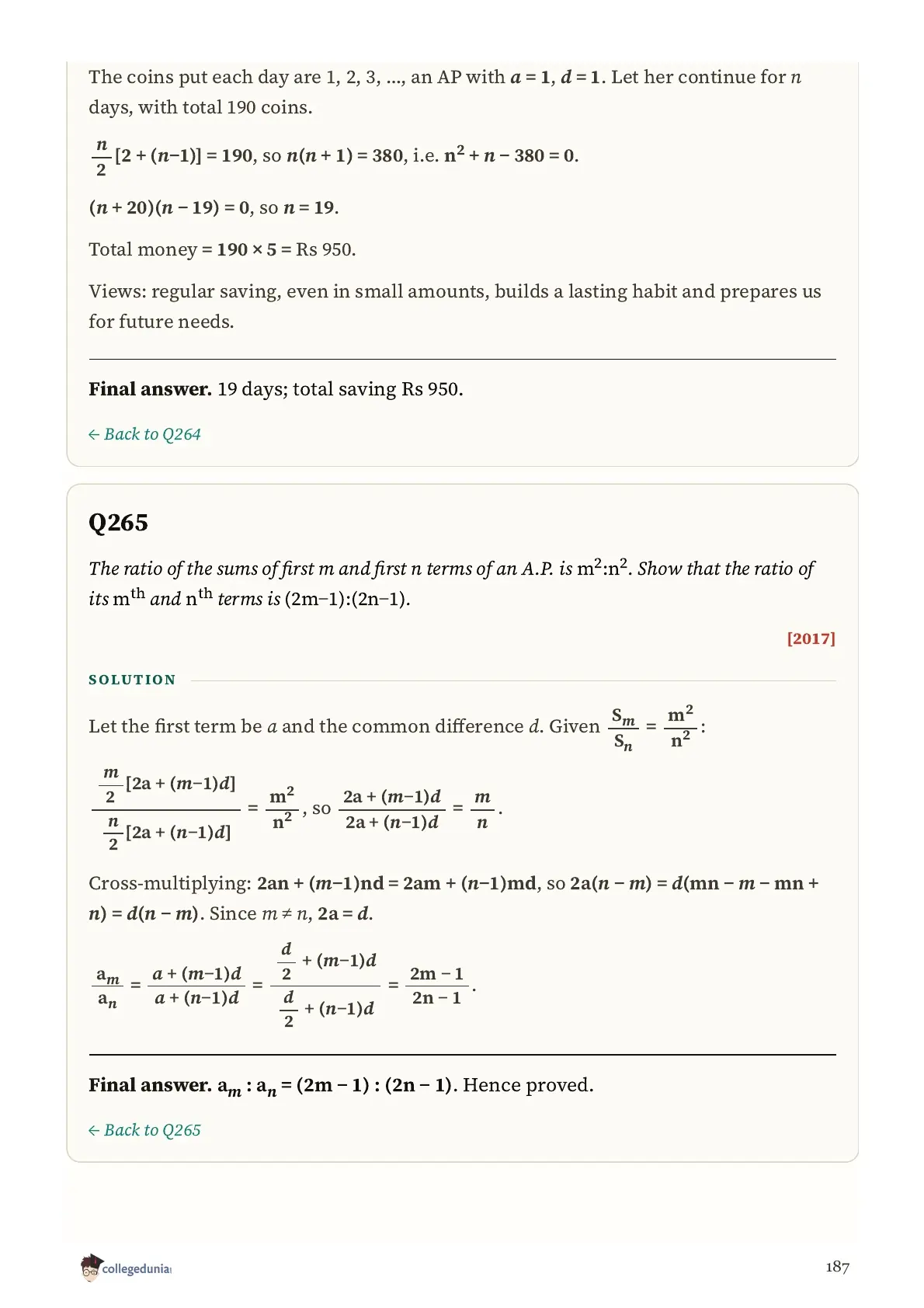
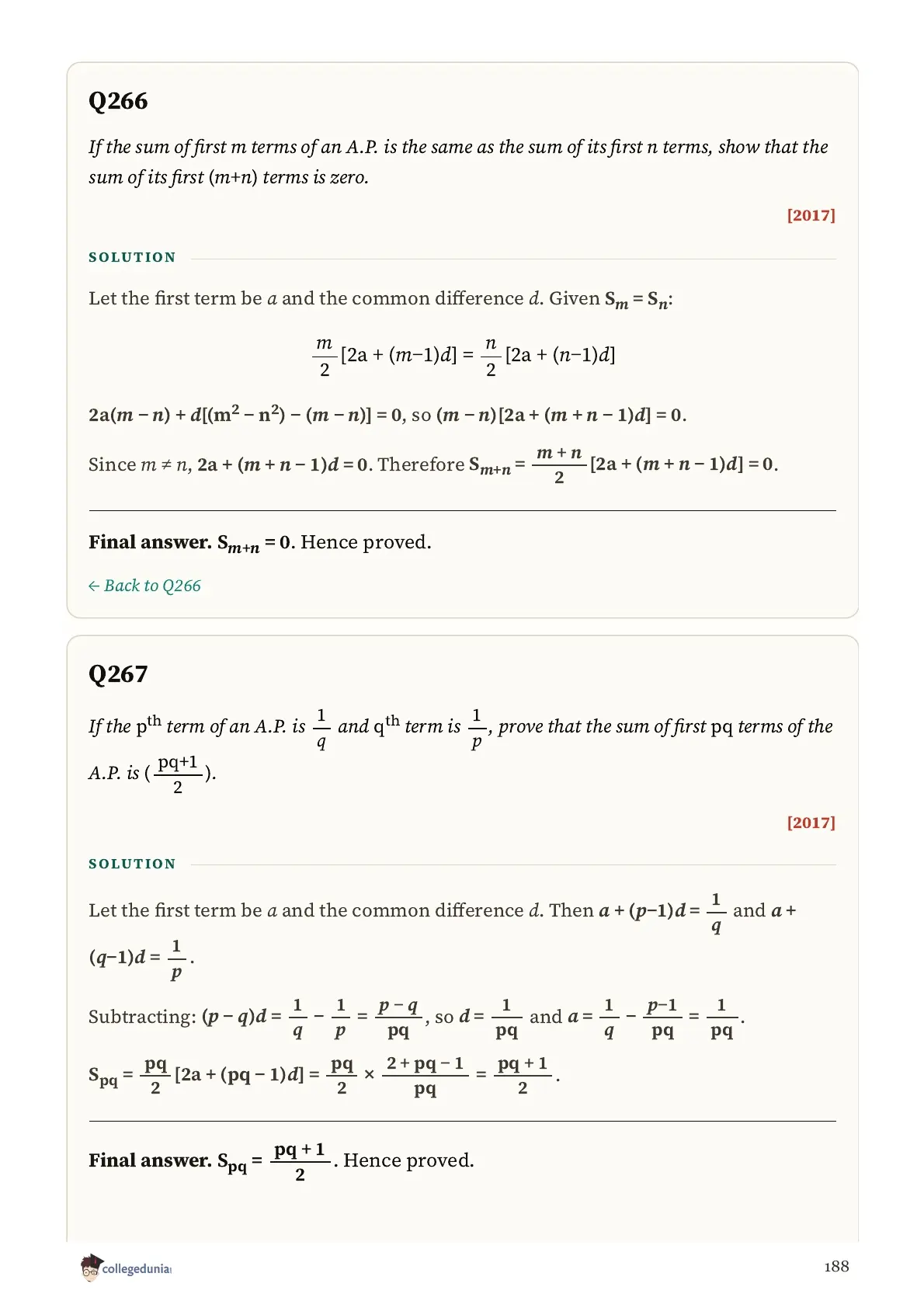
Arithmetic Progressions Weightage in the Class 10 Maths Paper
CBSE does not print a mark figure for Arithmetic Progressions alone. In the Class 10 Maths (041) theory paper of 80 marks, the unit Algebra carries 20 marks and holds four chapters: Polynomials, Pair of Linear Equations in Two Variables, Quadratic Equations and Arithmetic Progressions. The 20 is a unit-level figure from the current CBSE curriculum as reported by prep sites and not confirmed against the CBSE document, so check cbseacademic.nic.in for the final word. In this set the 1-mark question is the commonest form, with 106 of the 305.
The table shows how many questions the set holds at each mark value.
| Marks per Question | Questions in the Set |
|---|---|
| 1 mark | 106 |
| 2 marks | 71 |
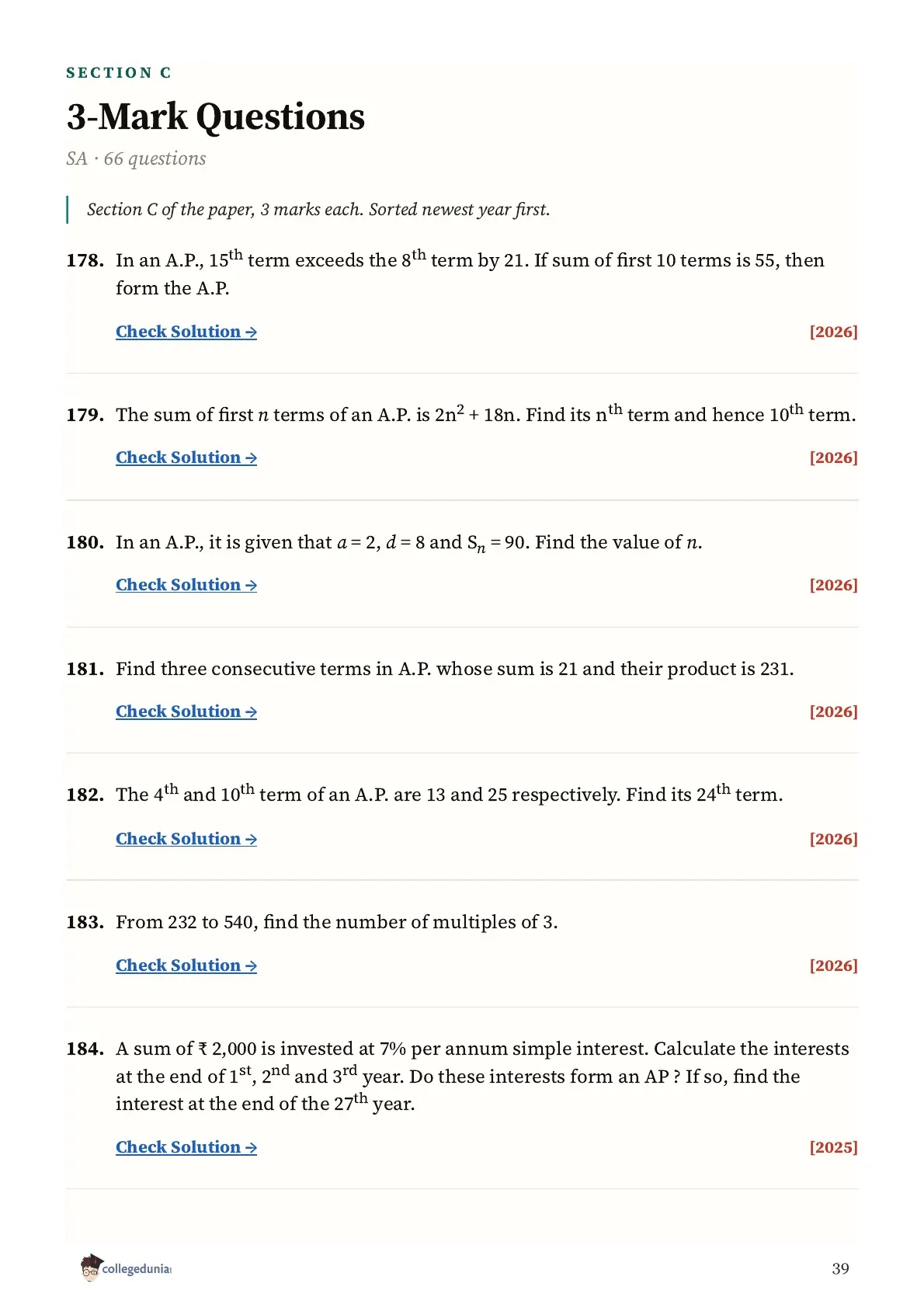
| 3 marks | 66 |
| 4 marks | 38 |
| 5 marks | 24 |
Arithmetic Progressions Questions by Topic
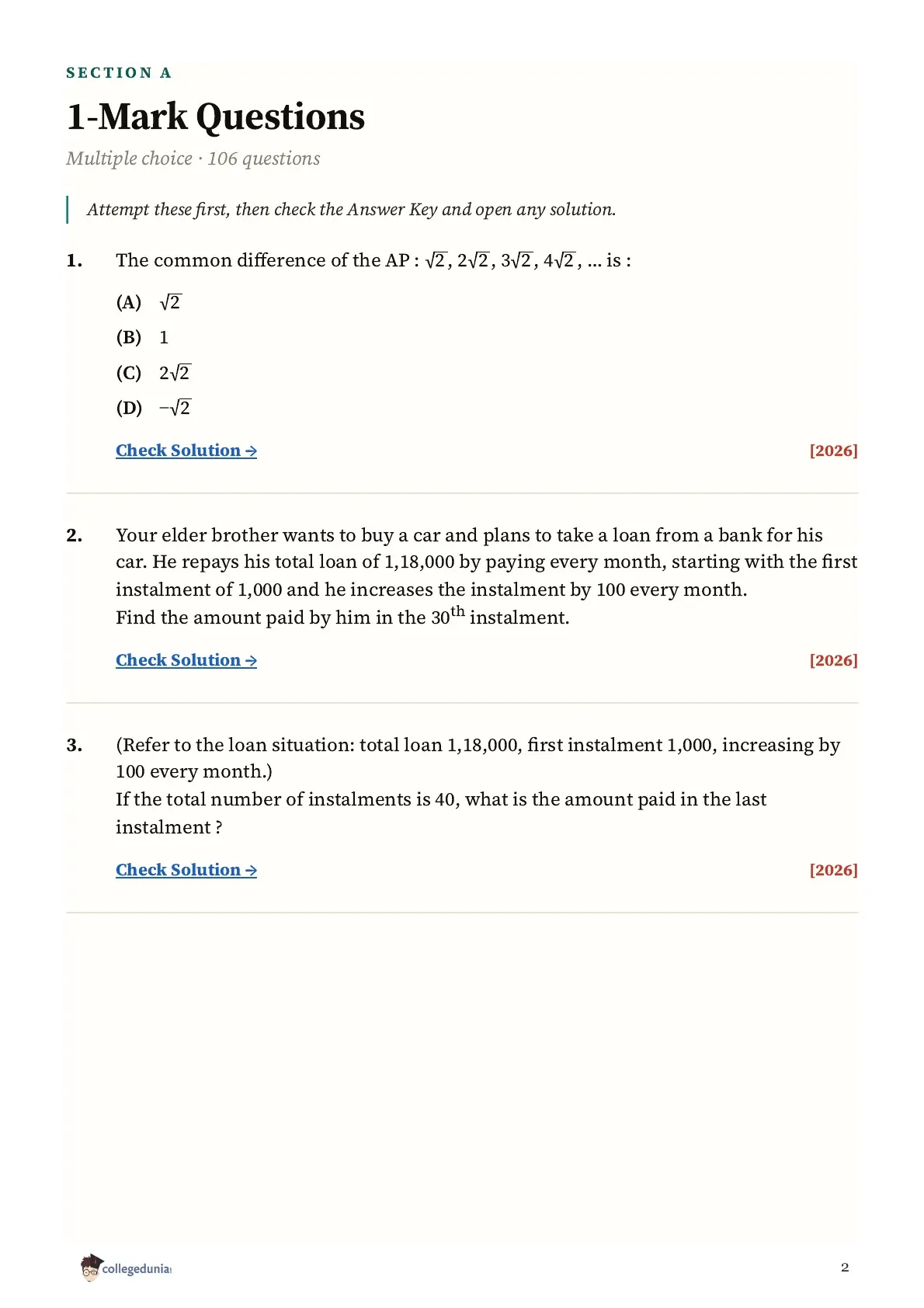
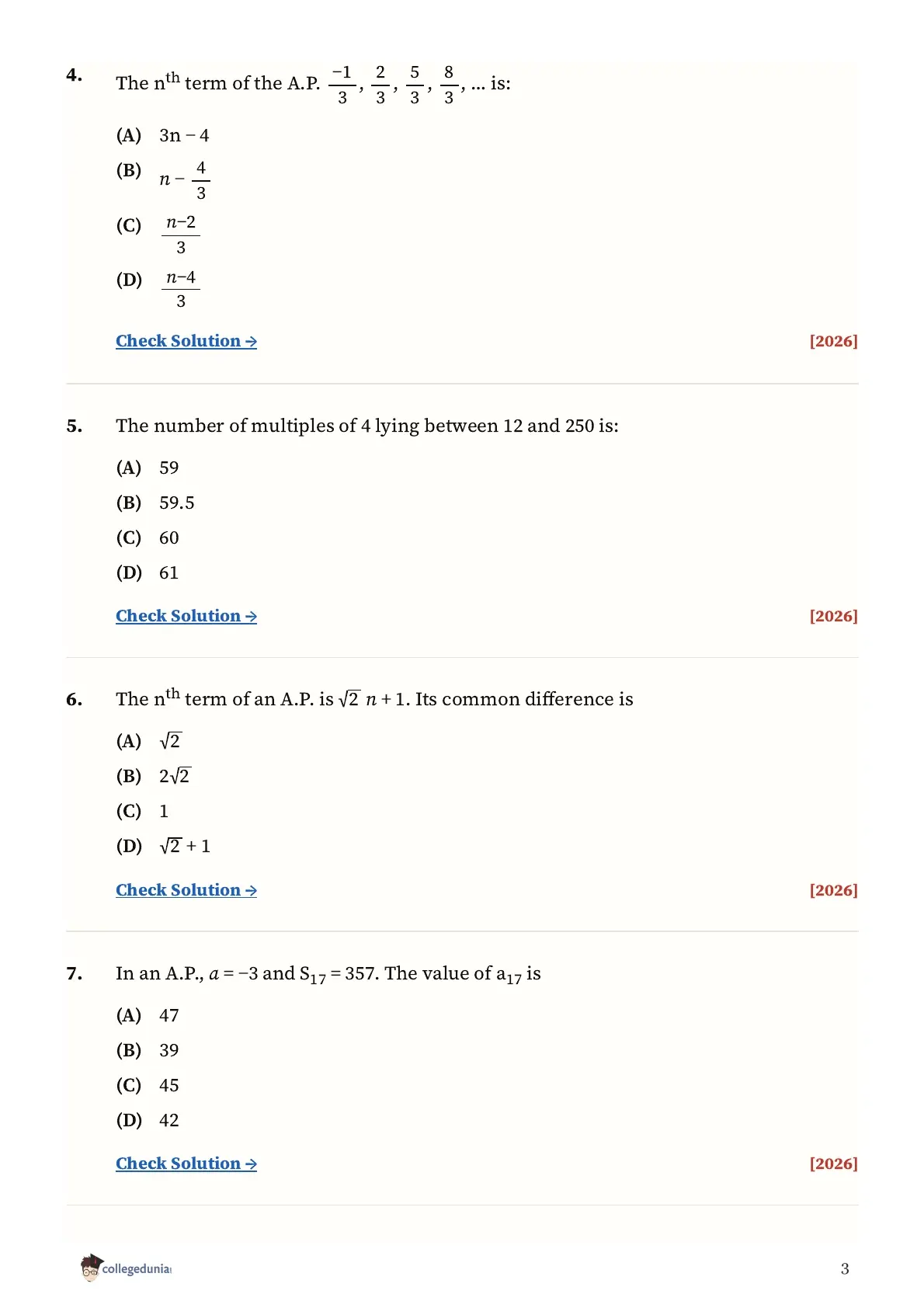
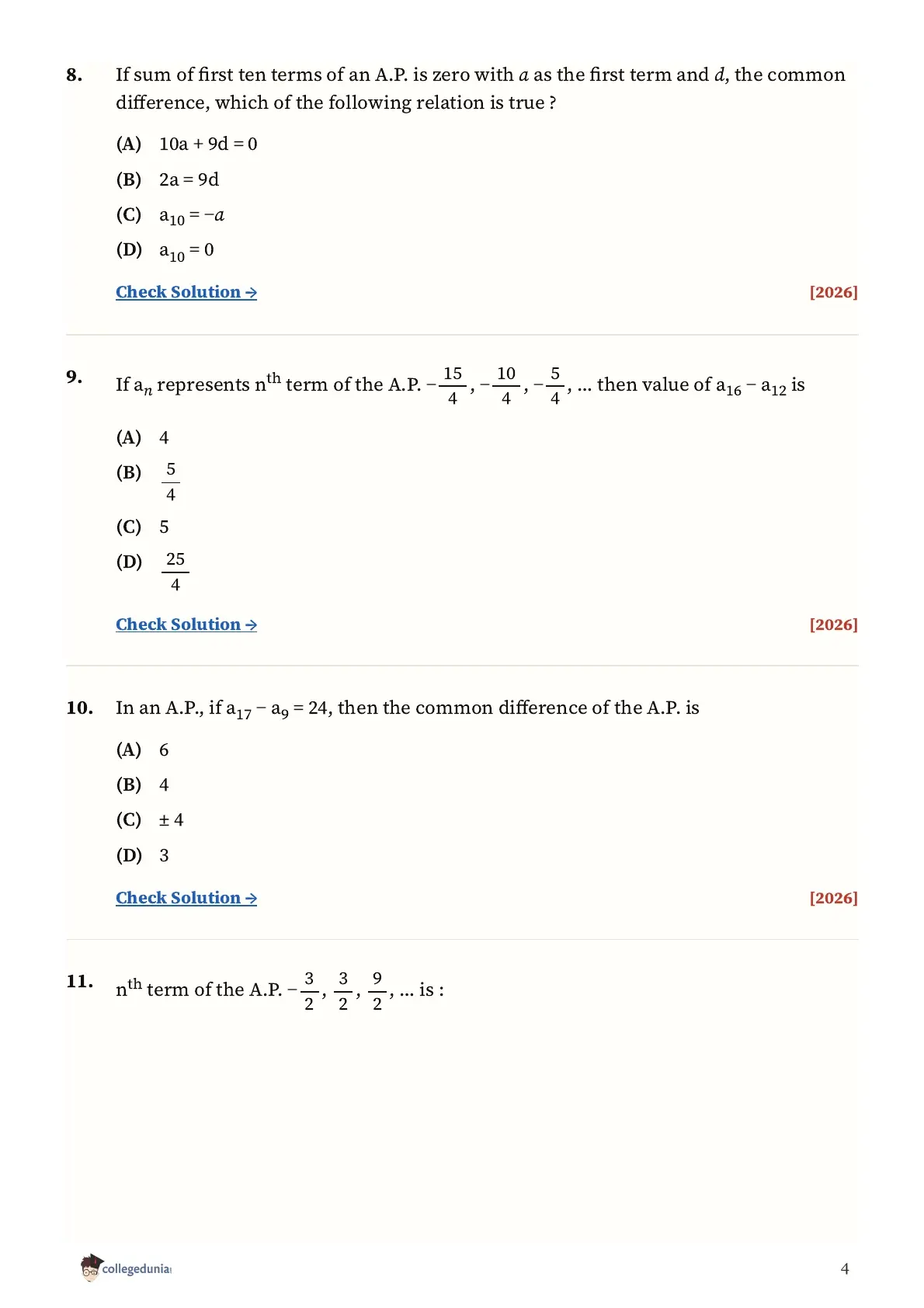
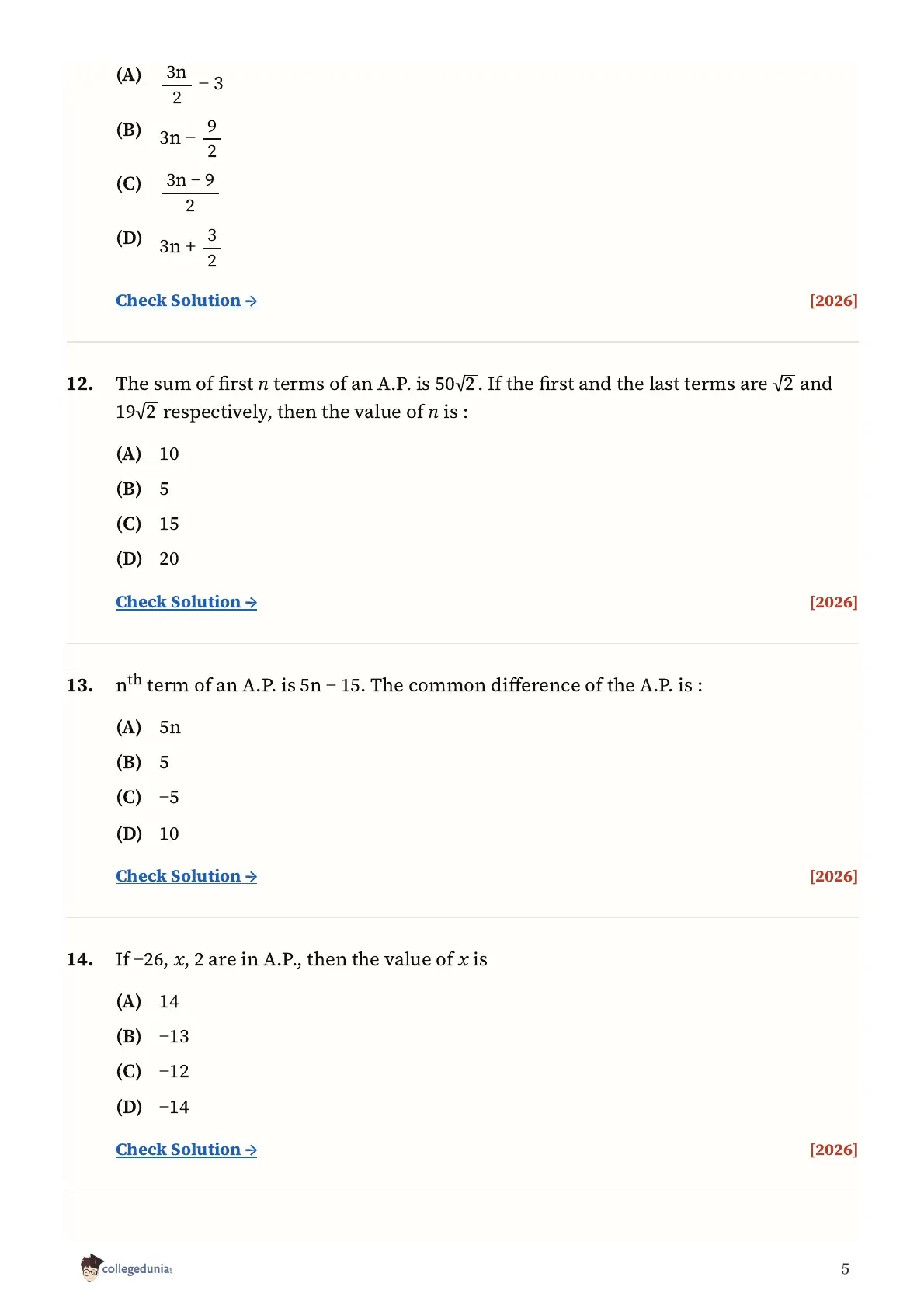
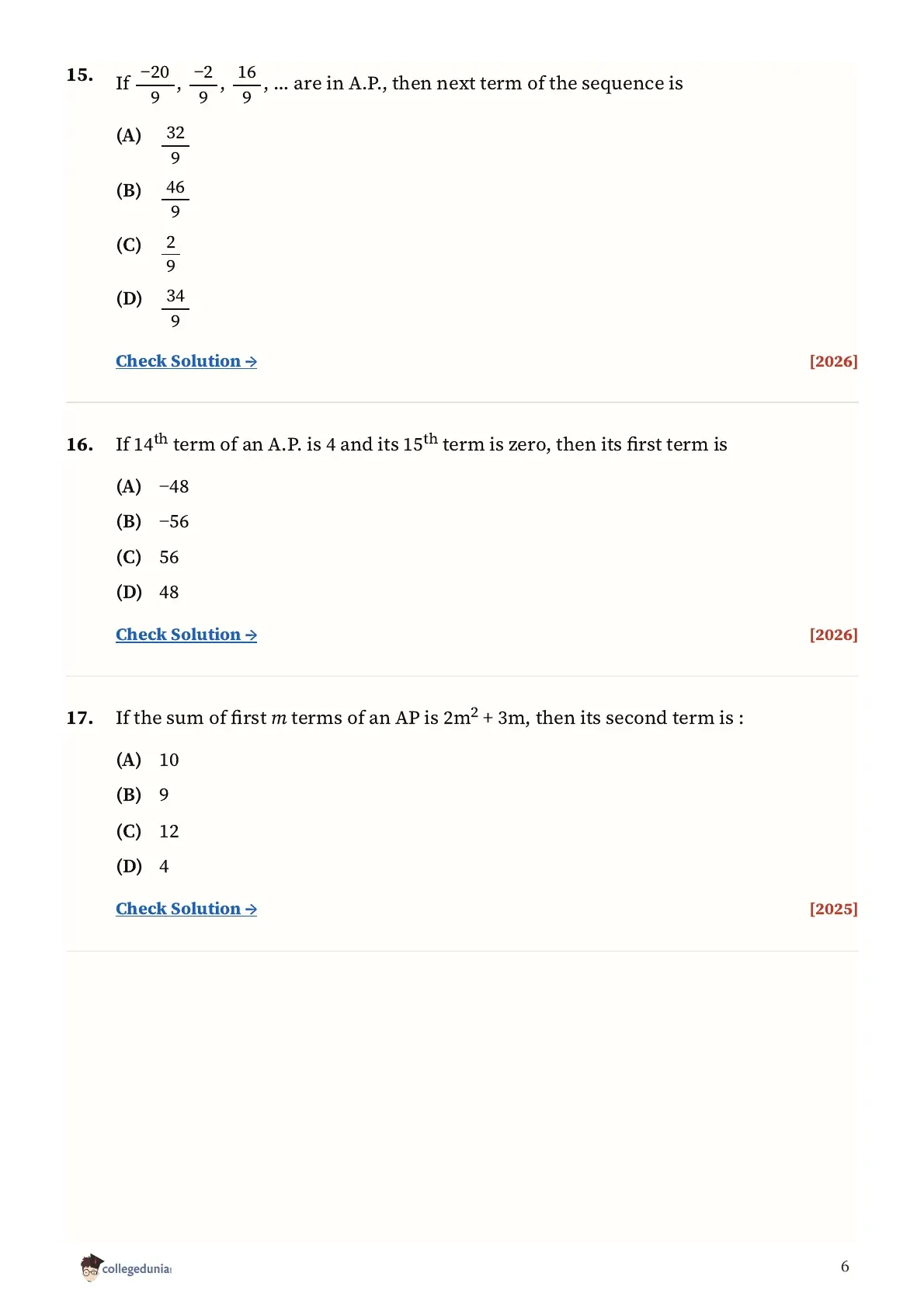
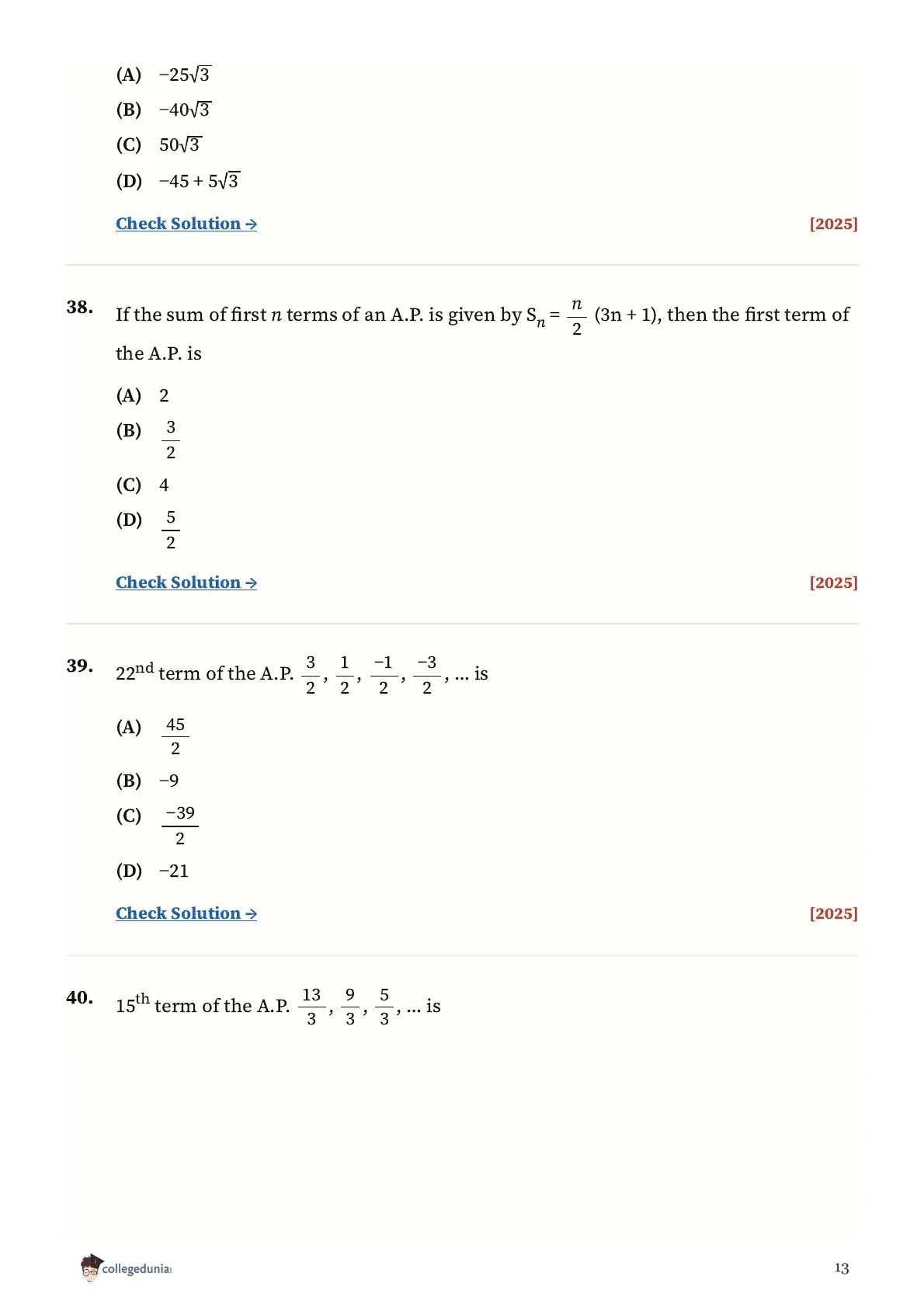
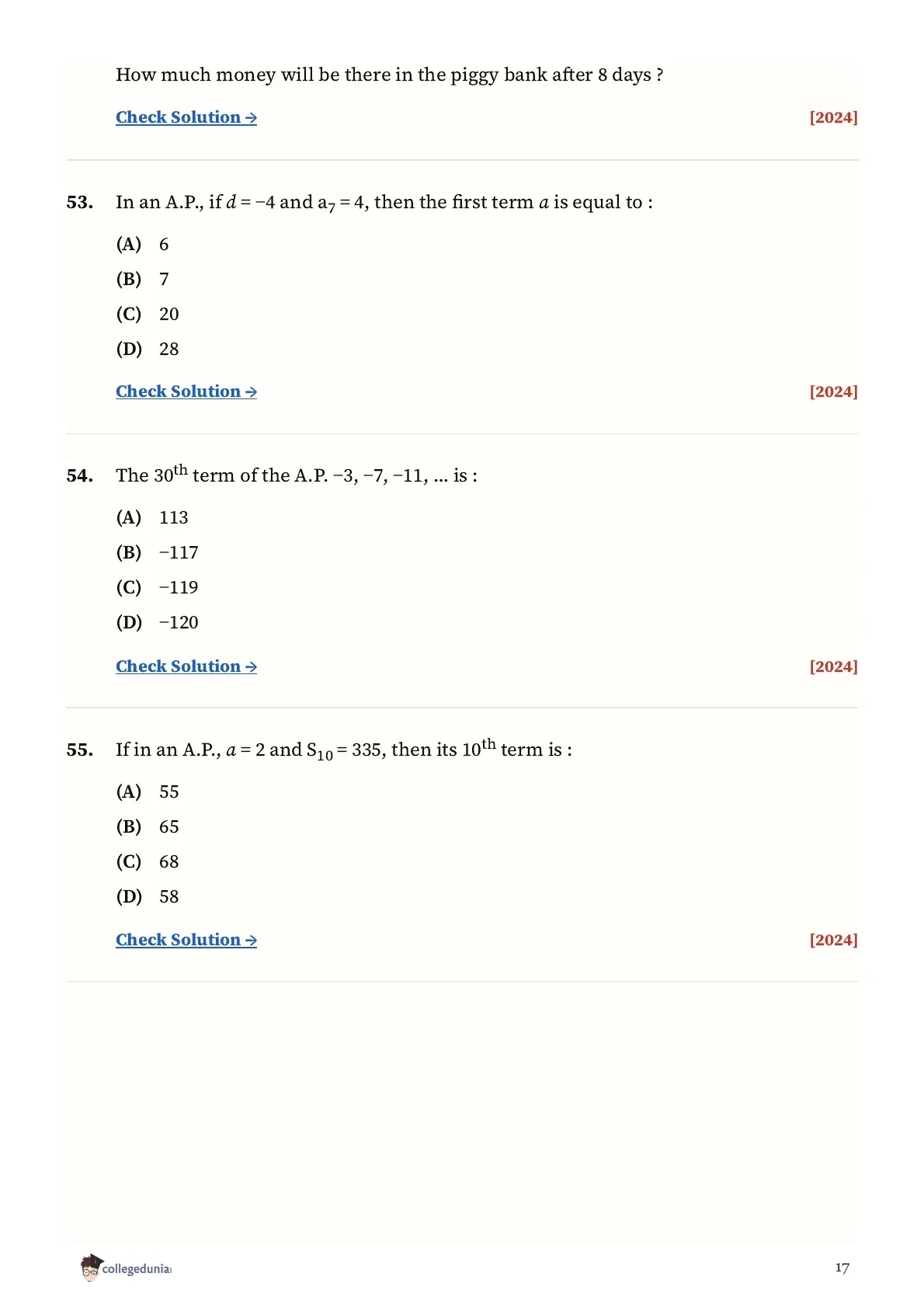
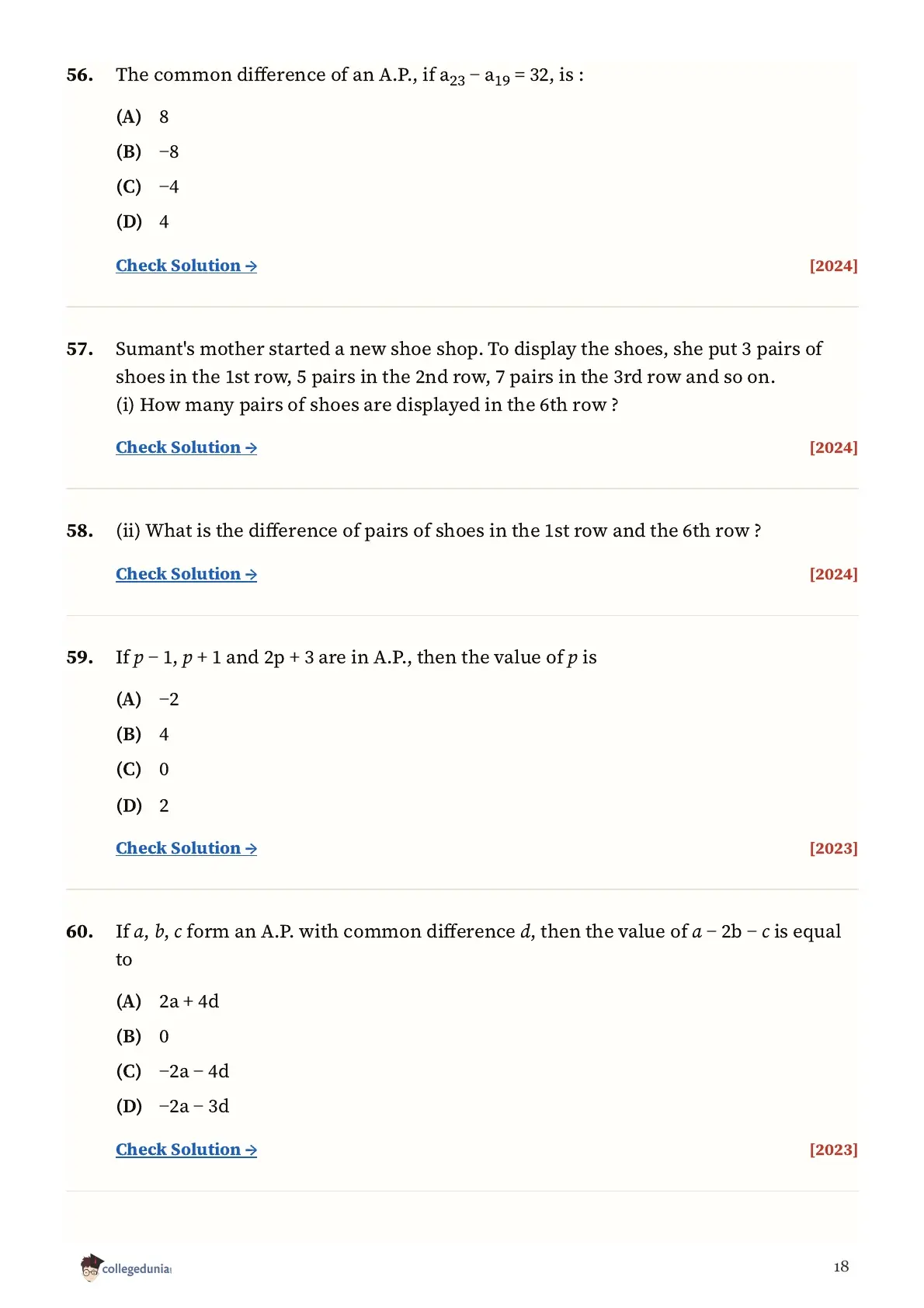
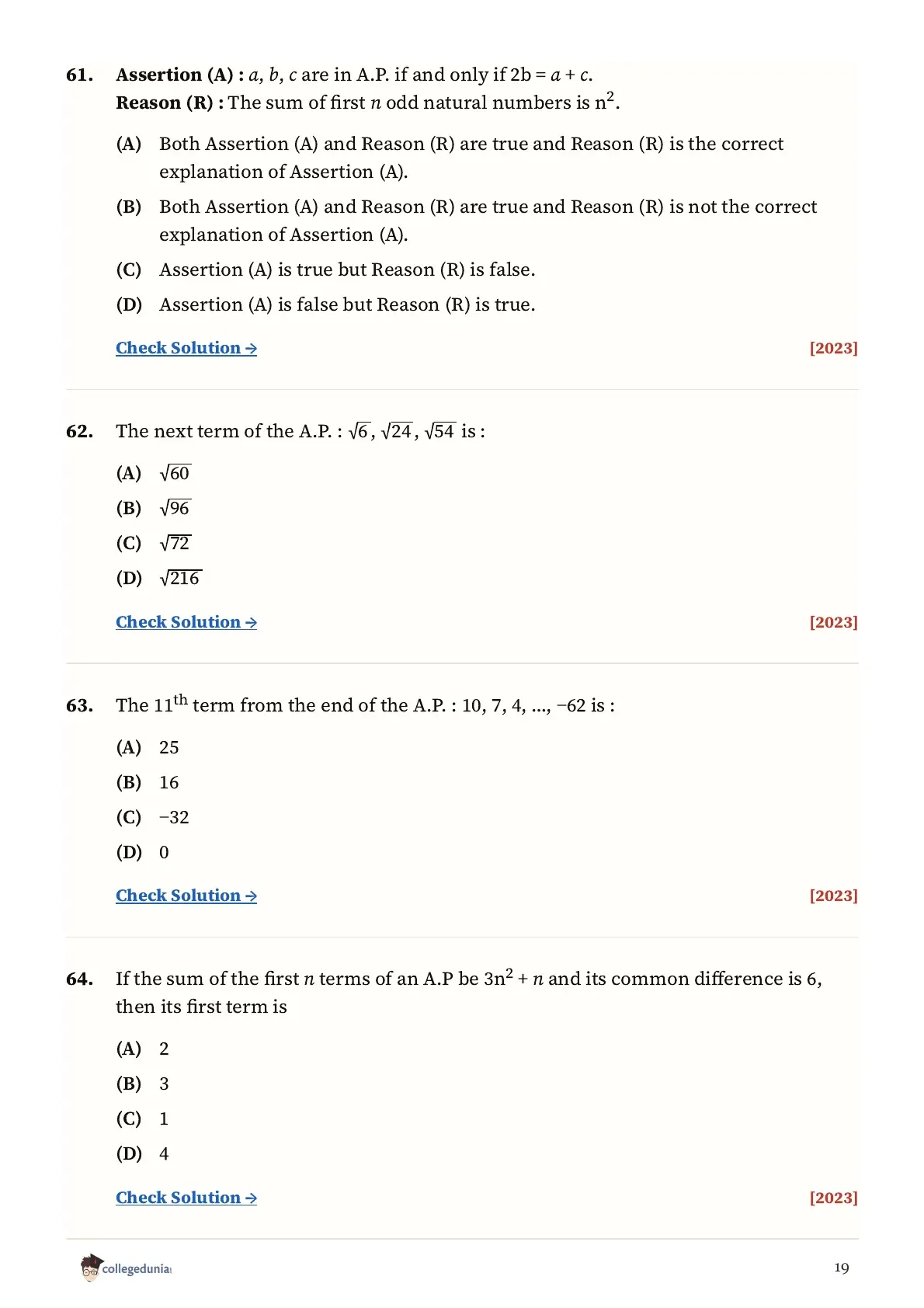
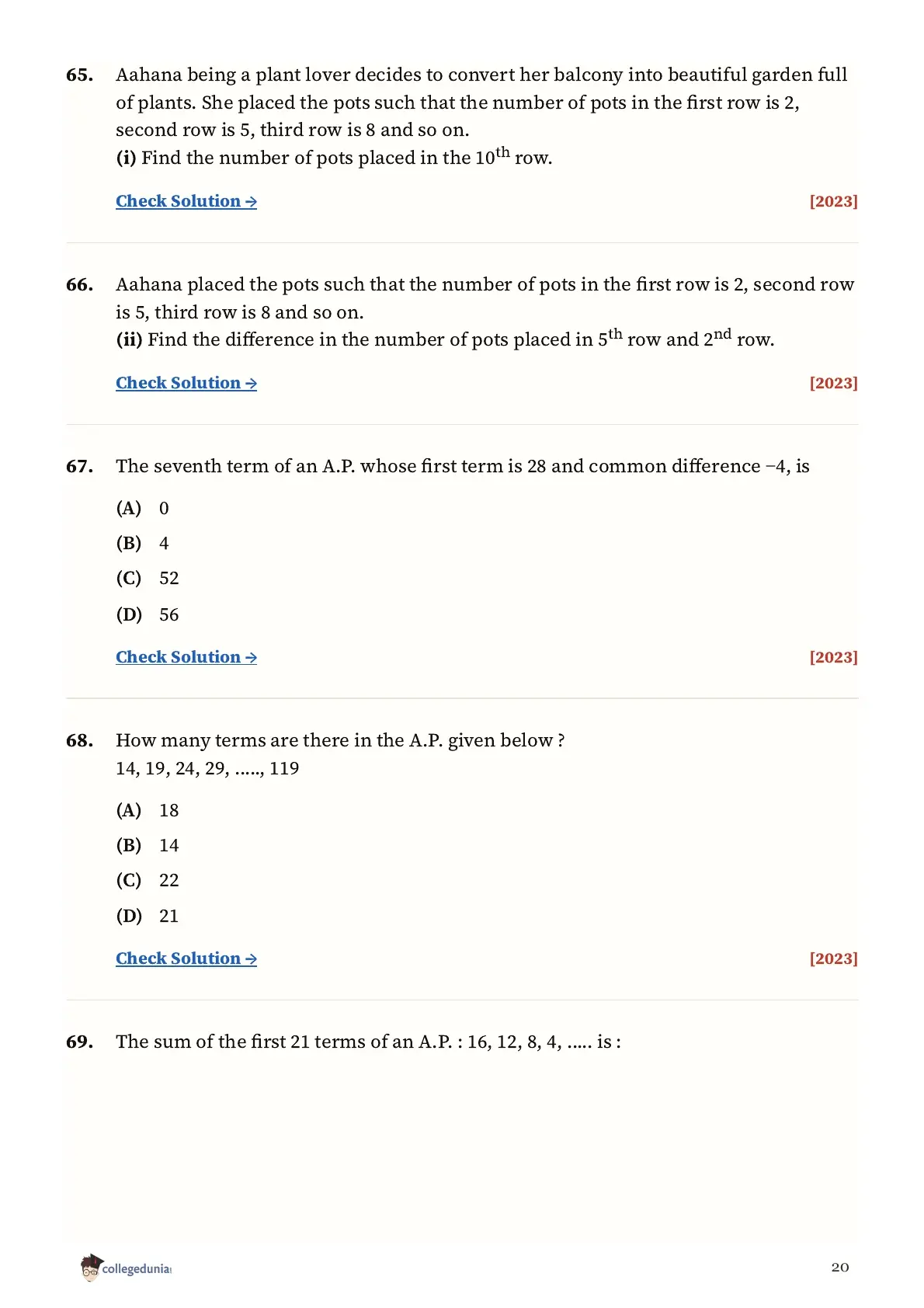
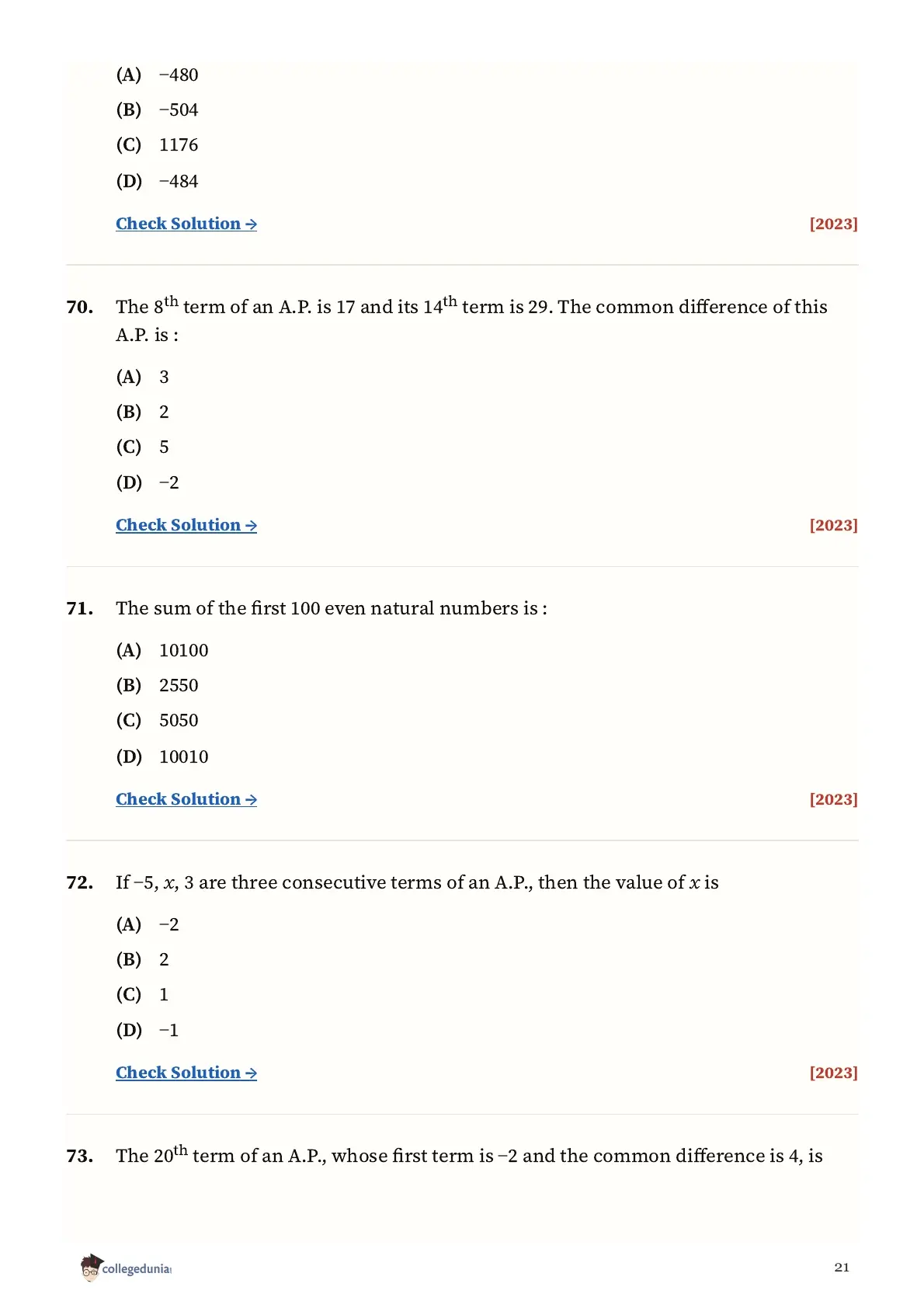
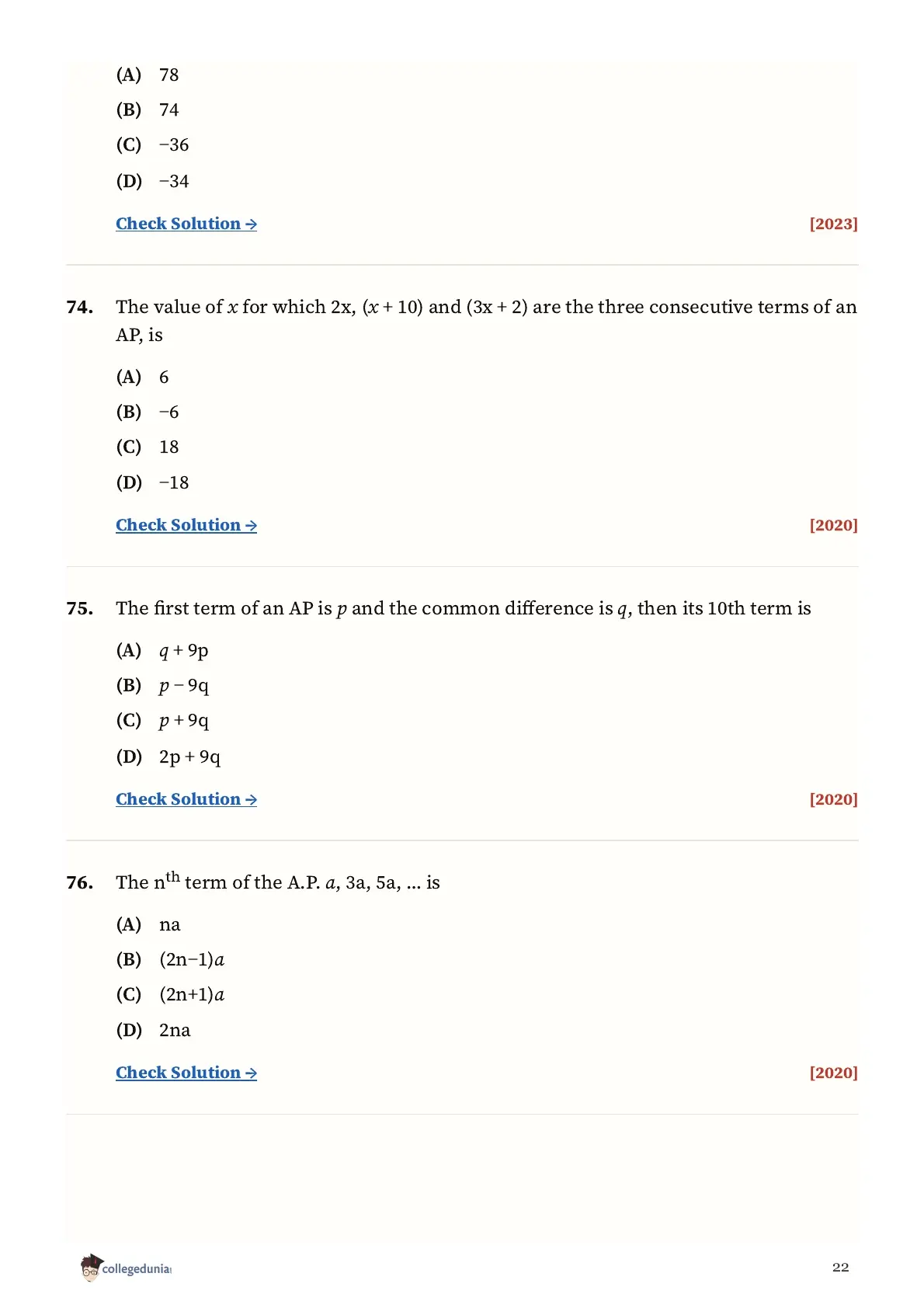
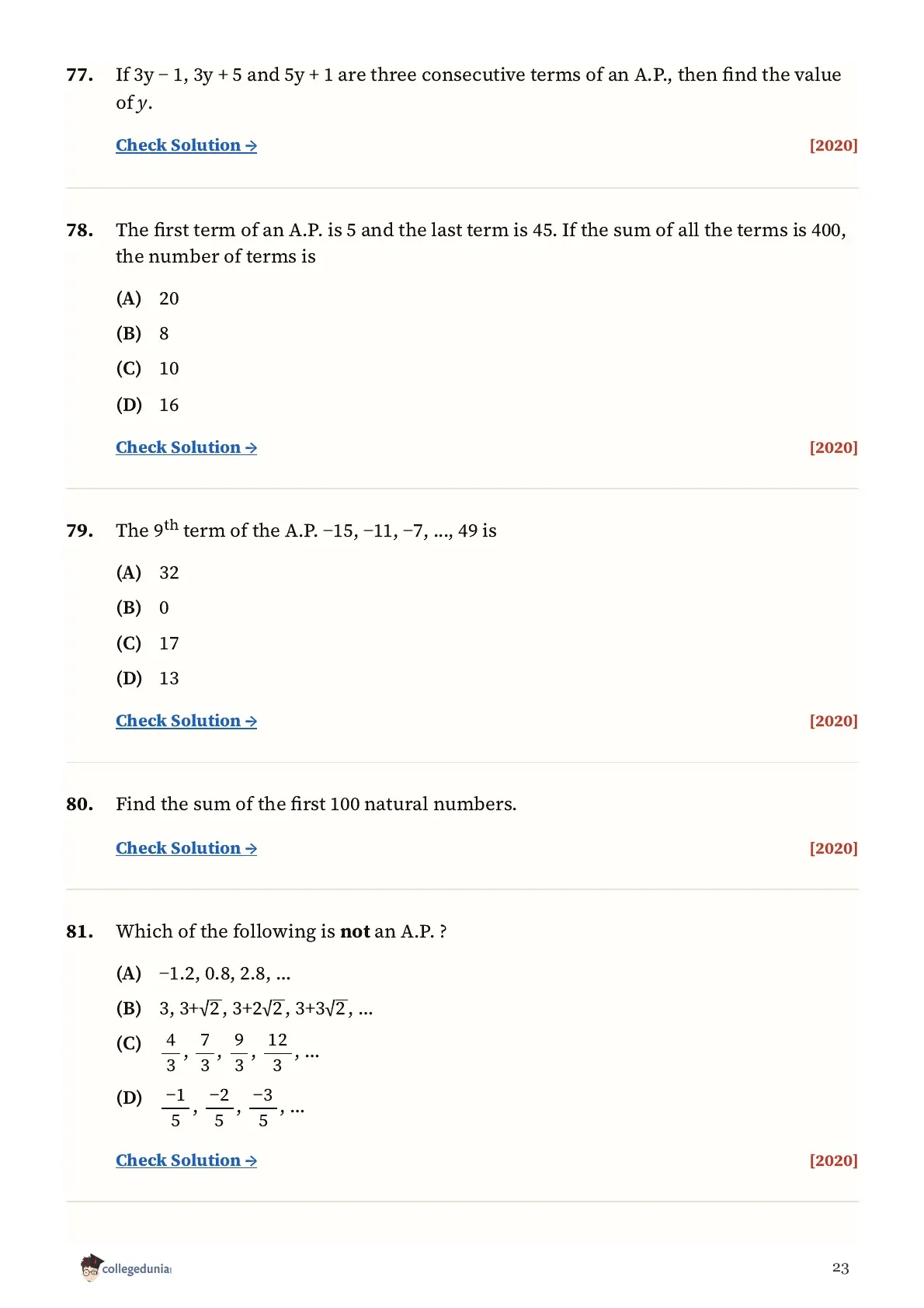
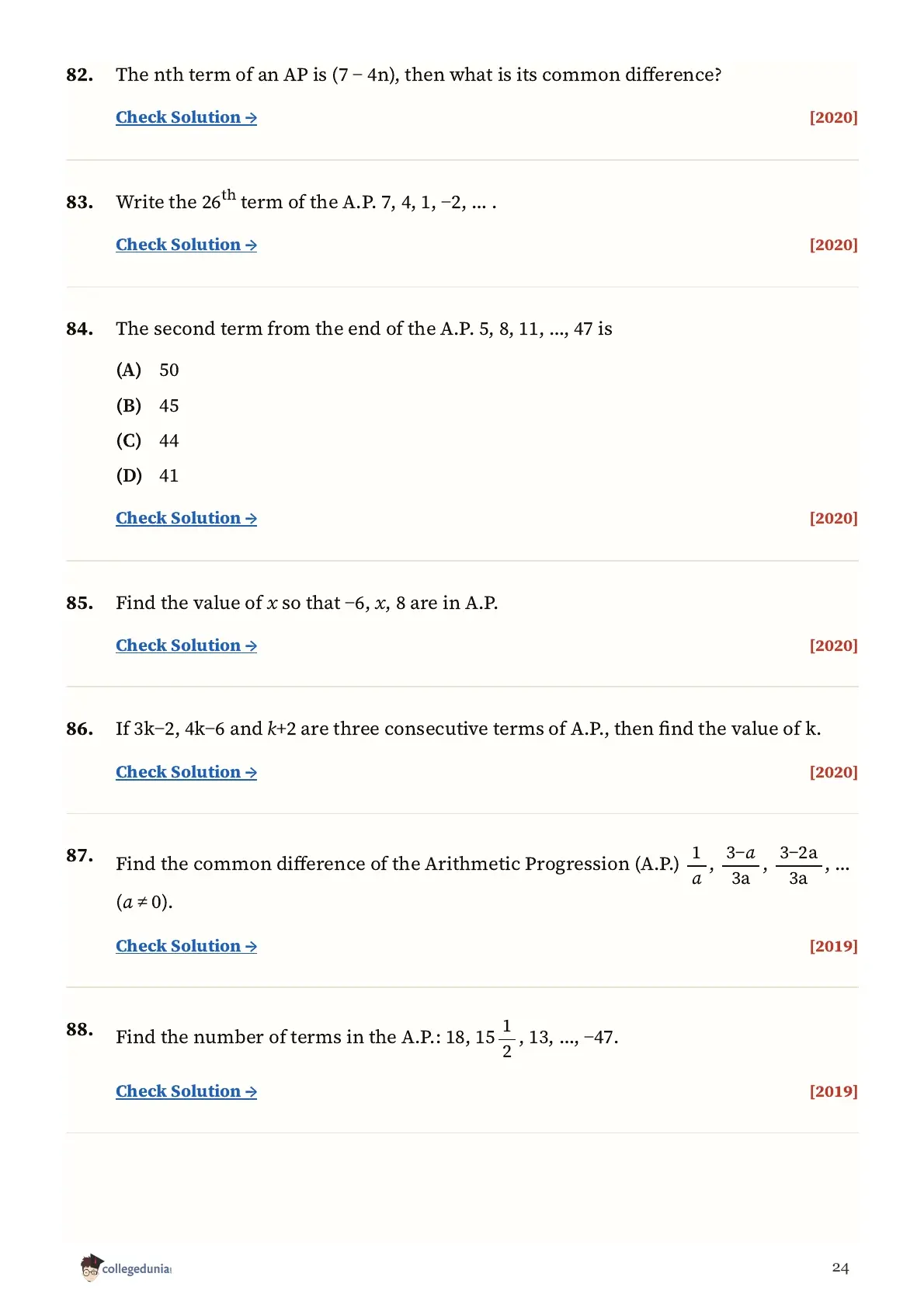
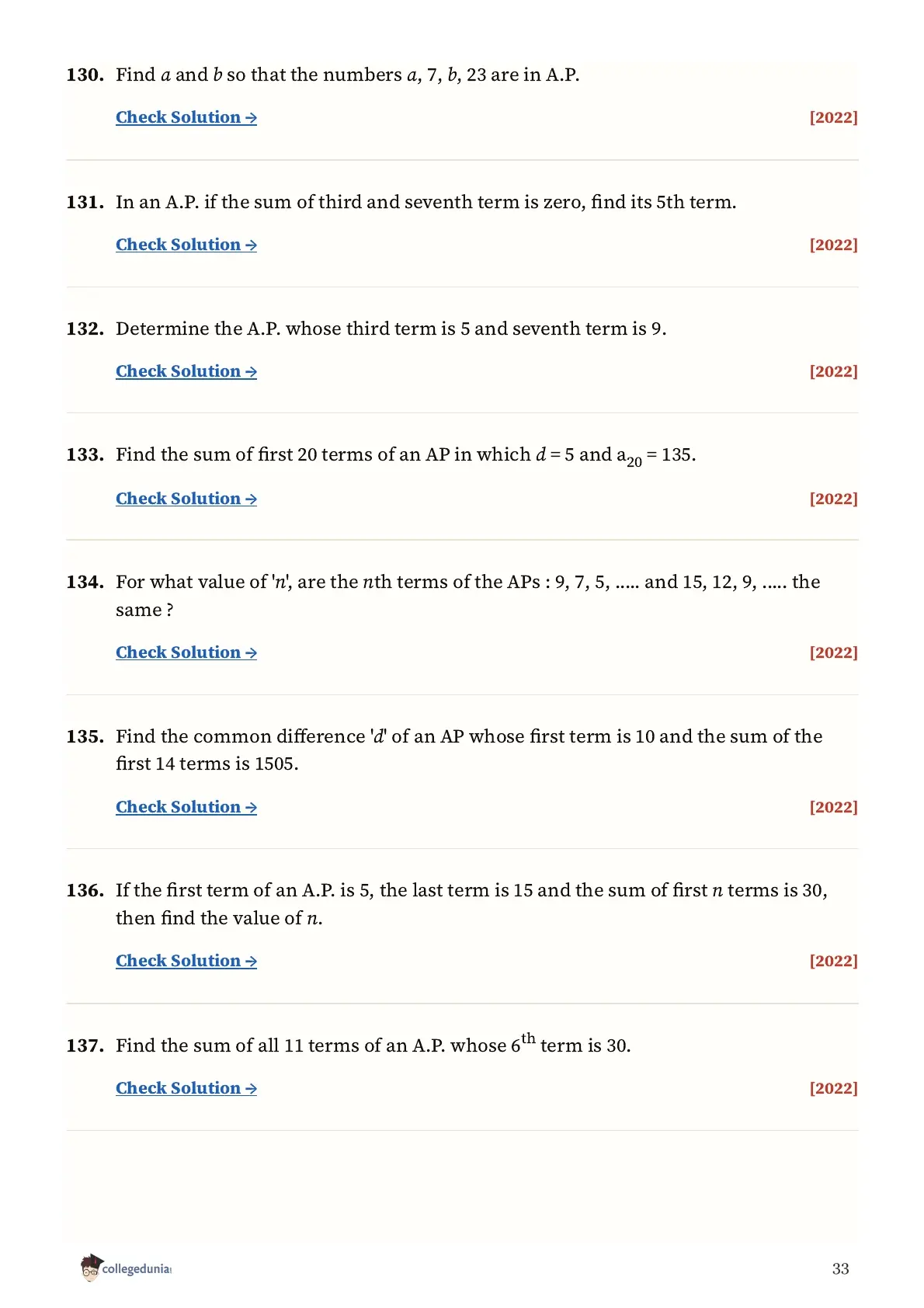
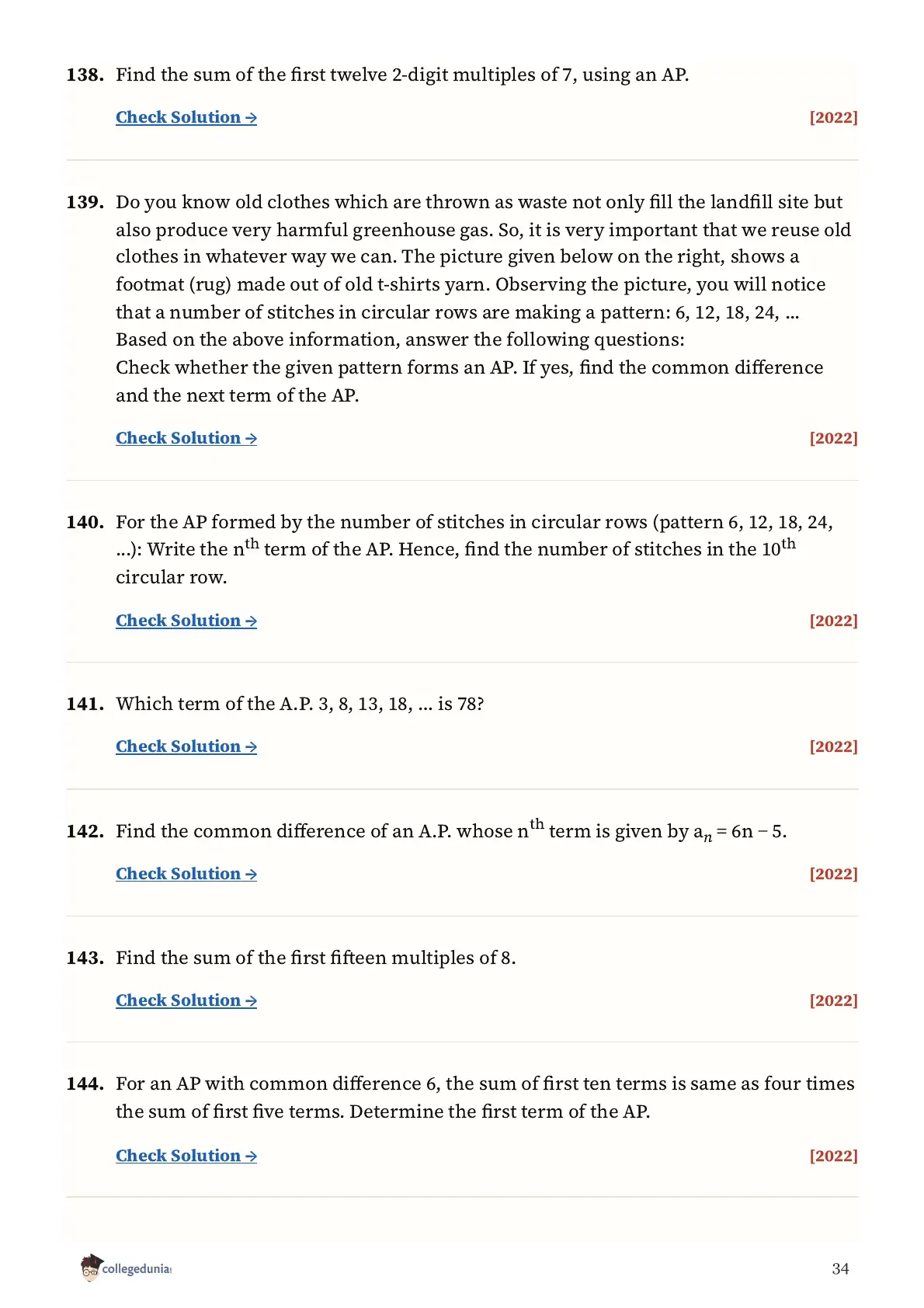
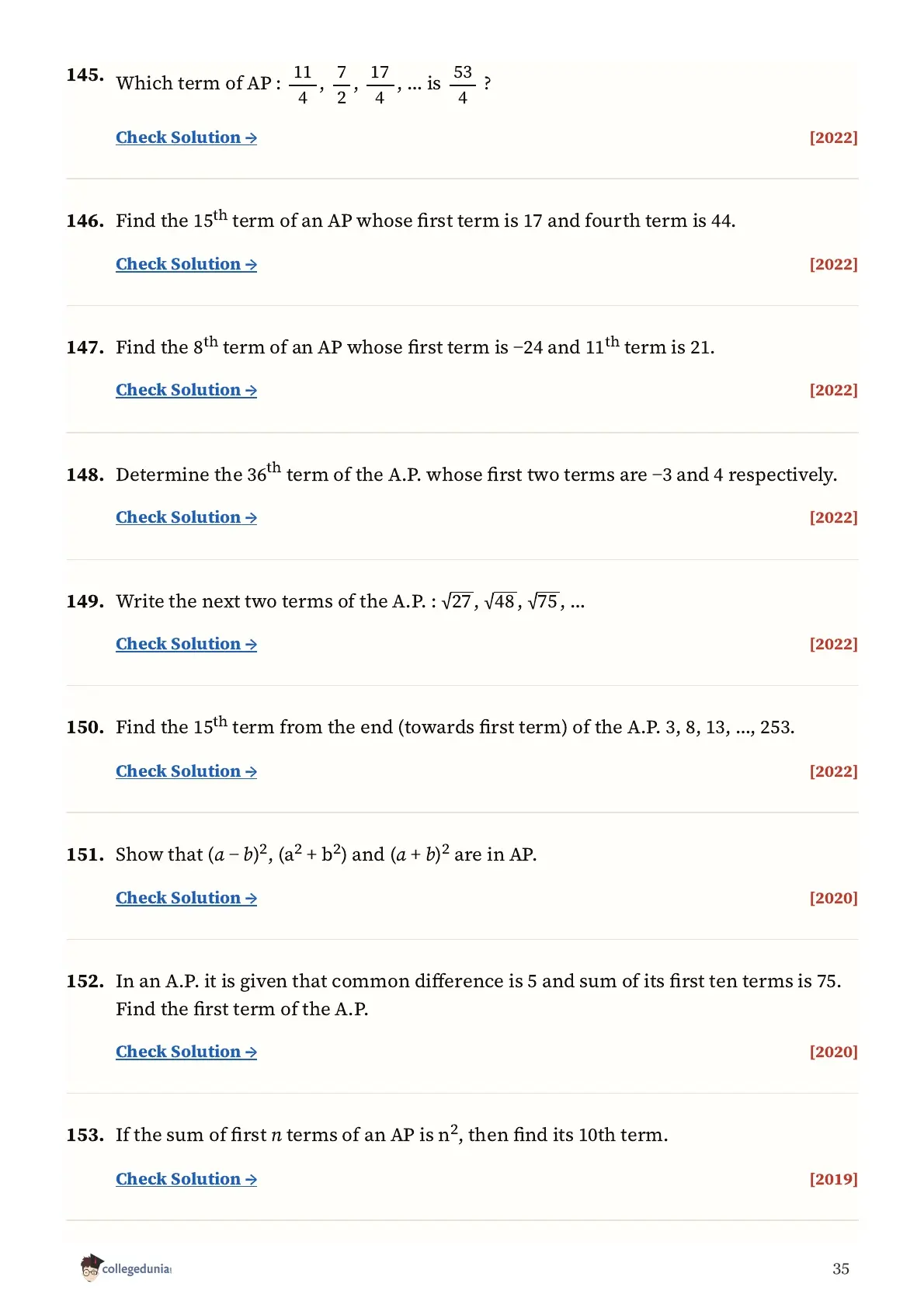
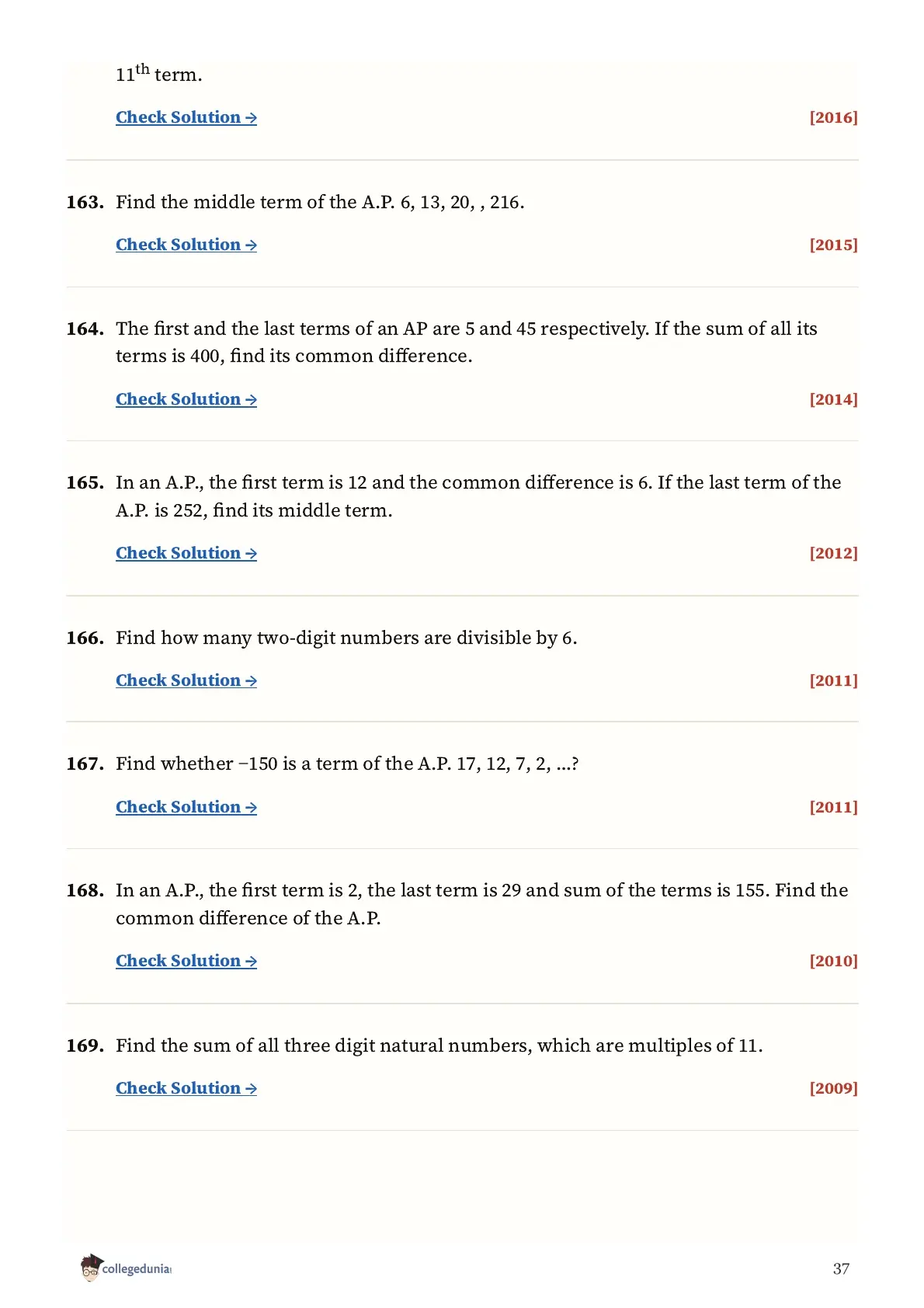
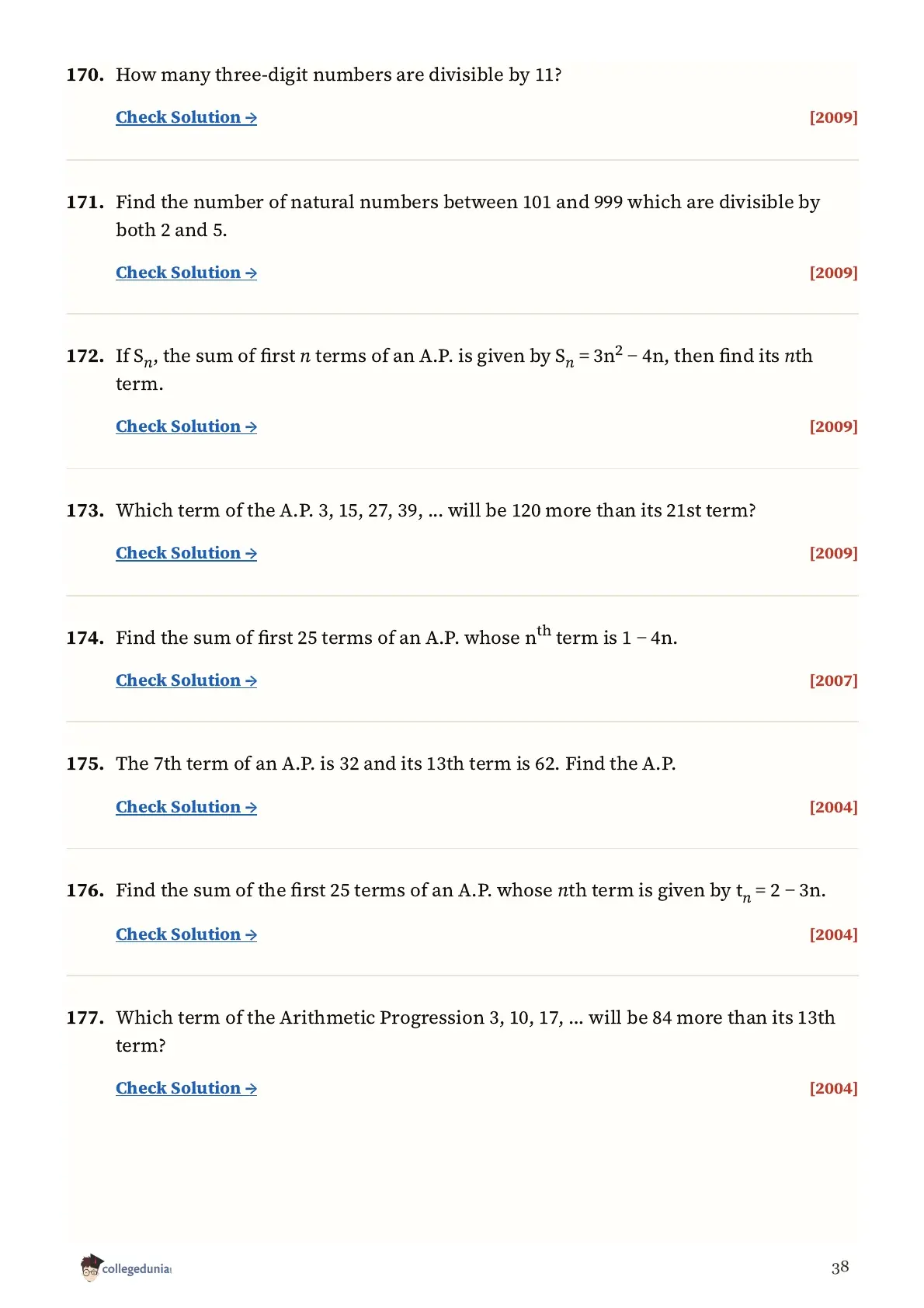
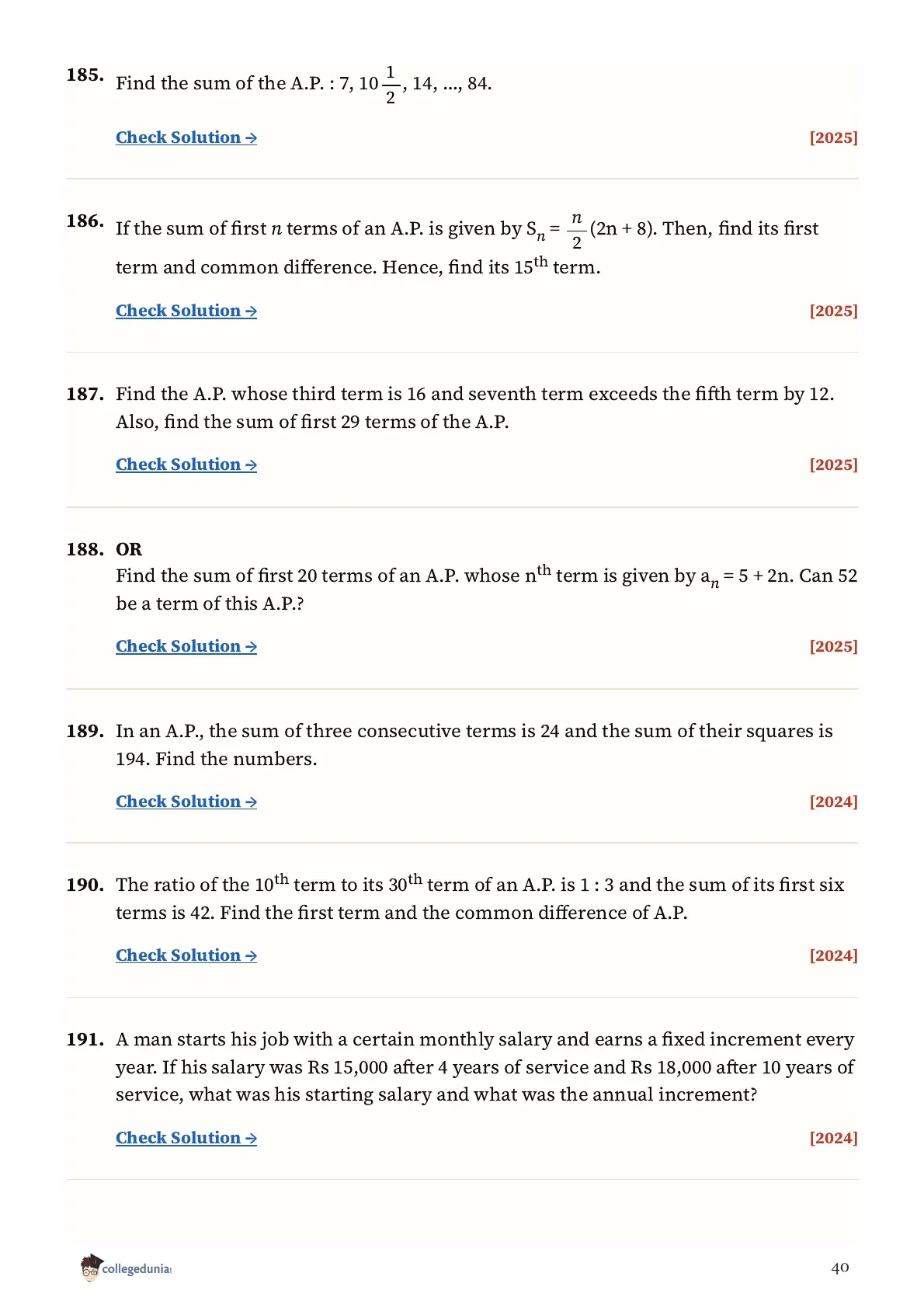
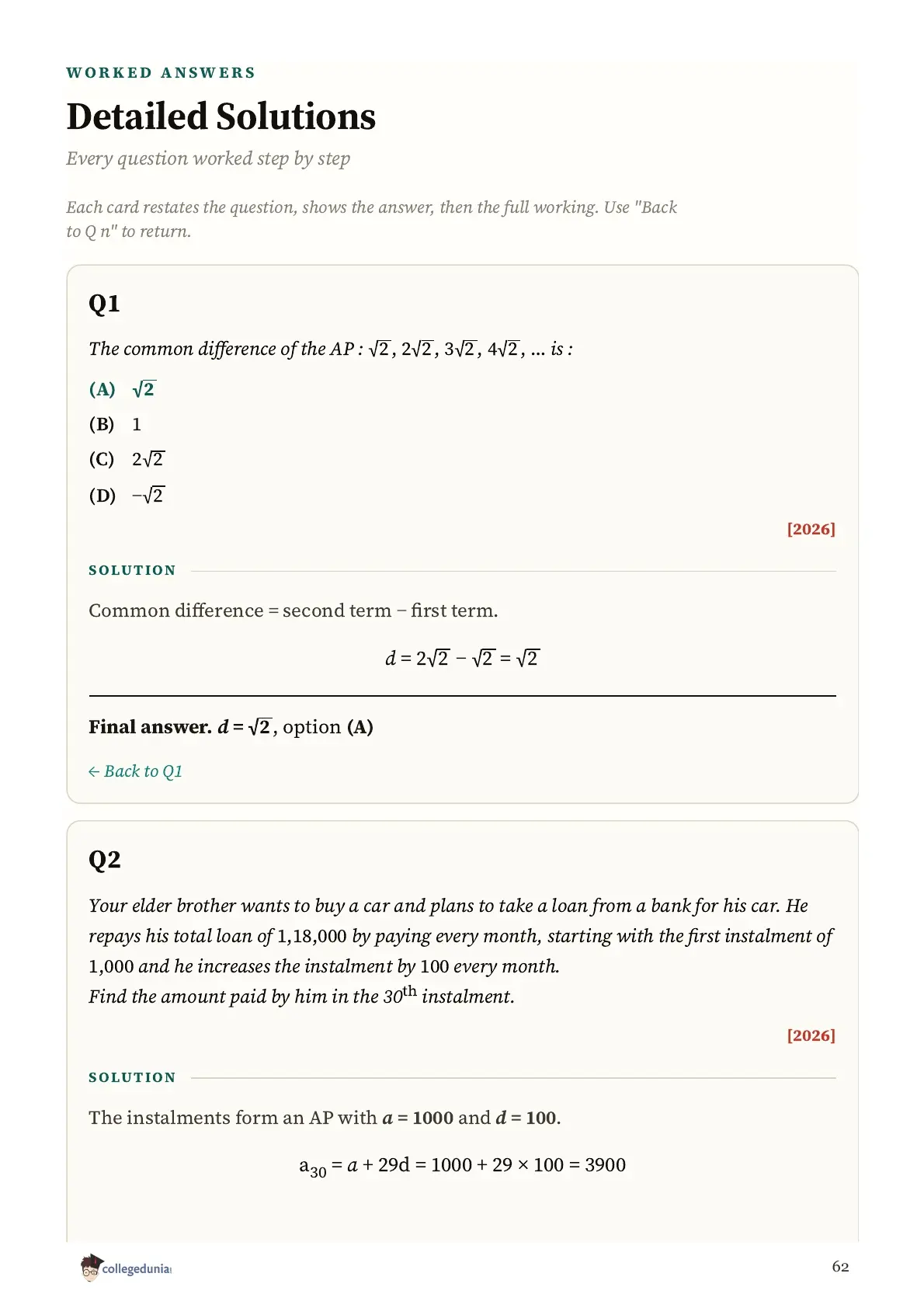
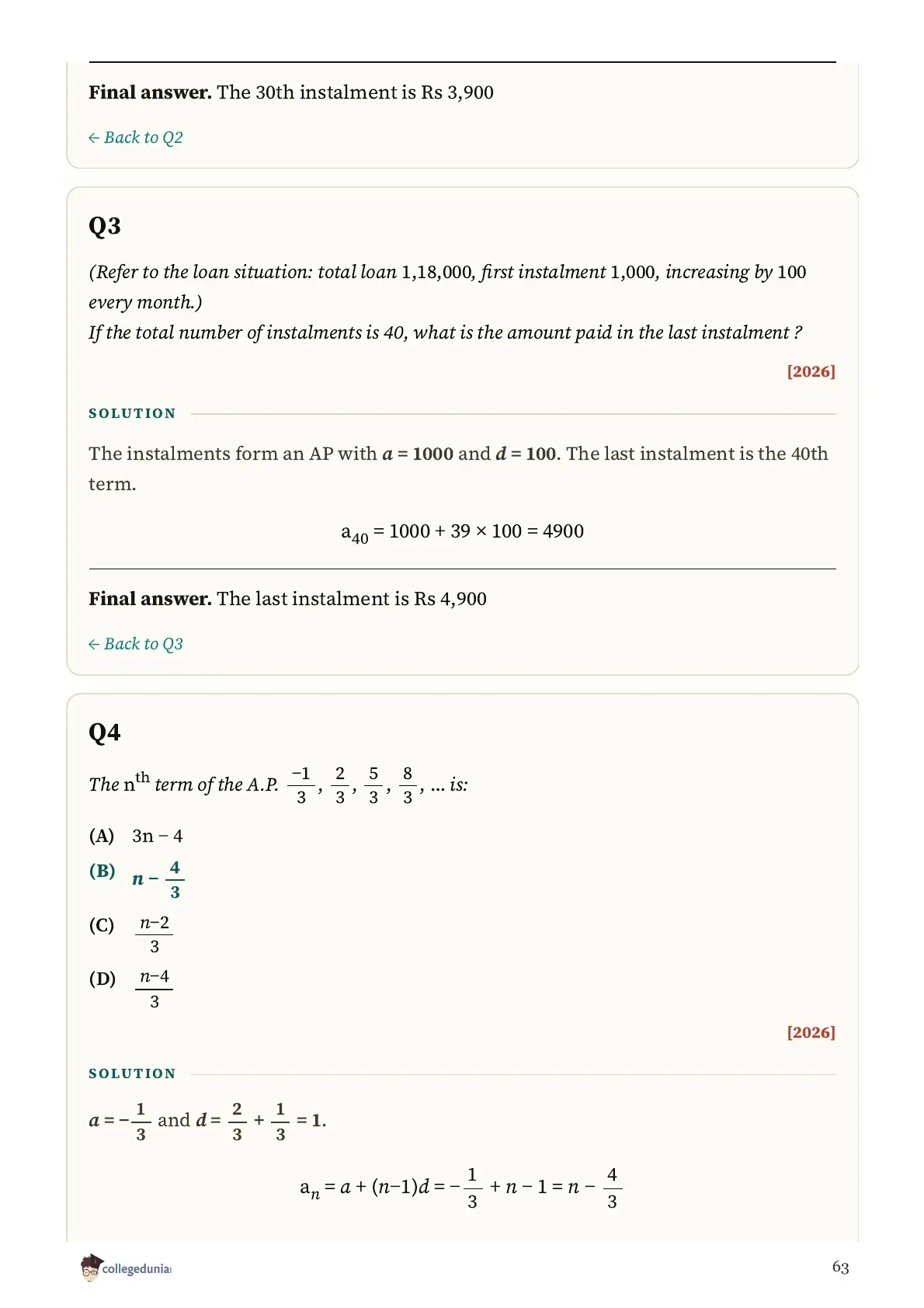
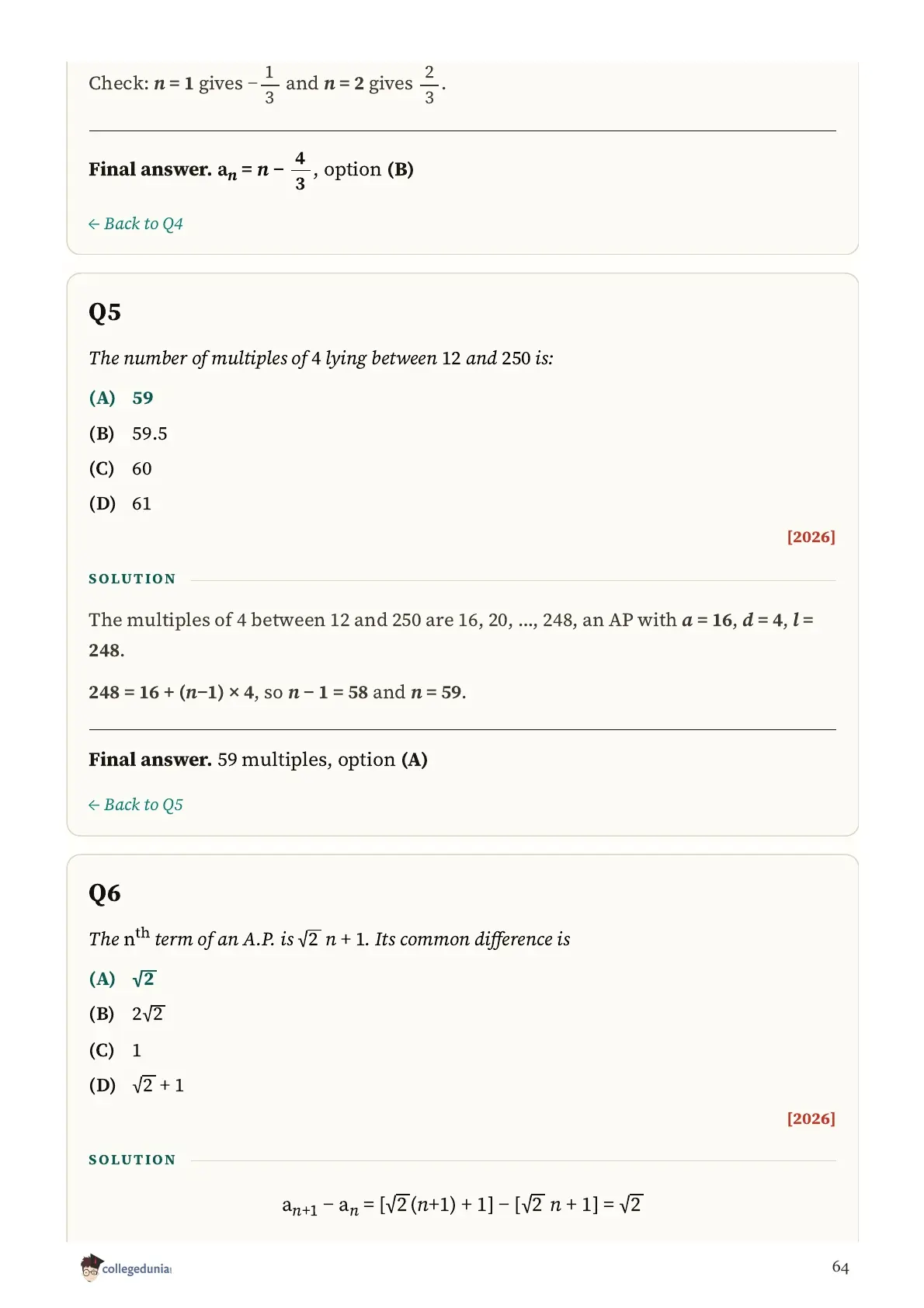
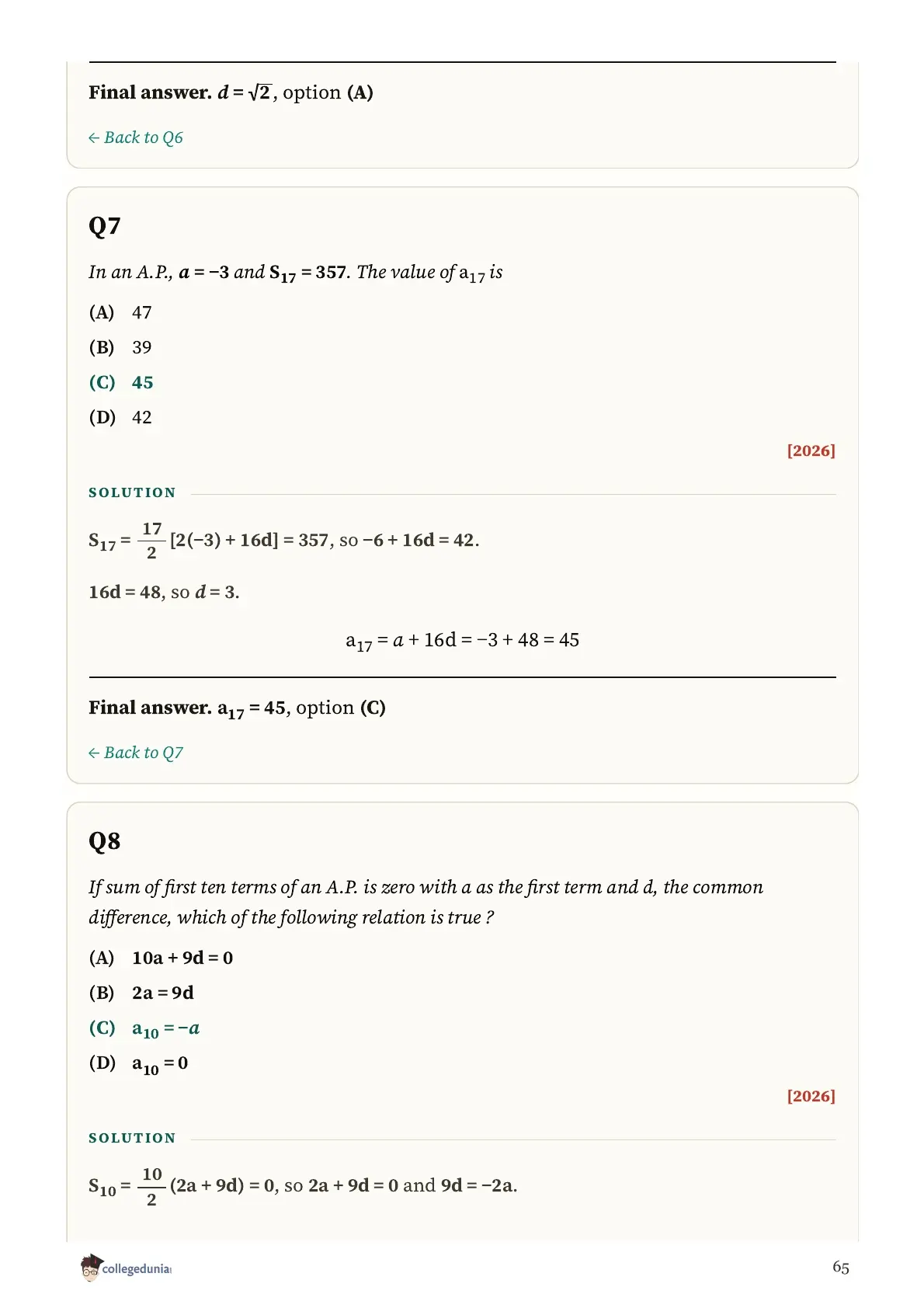
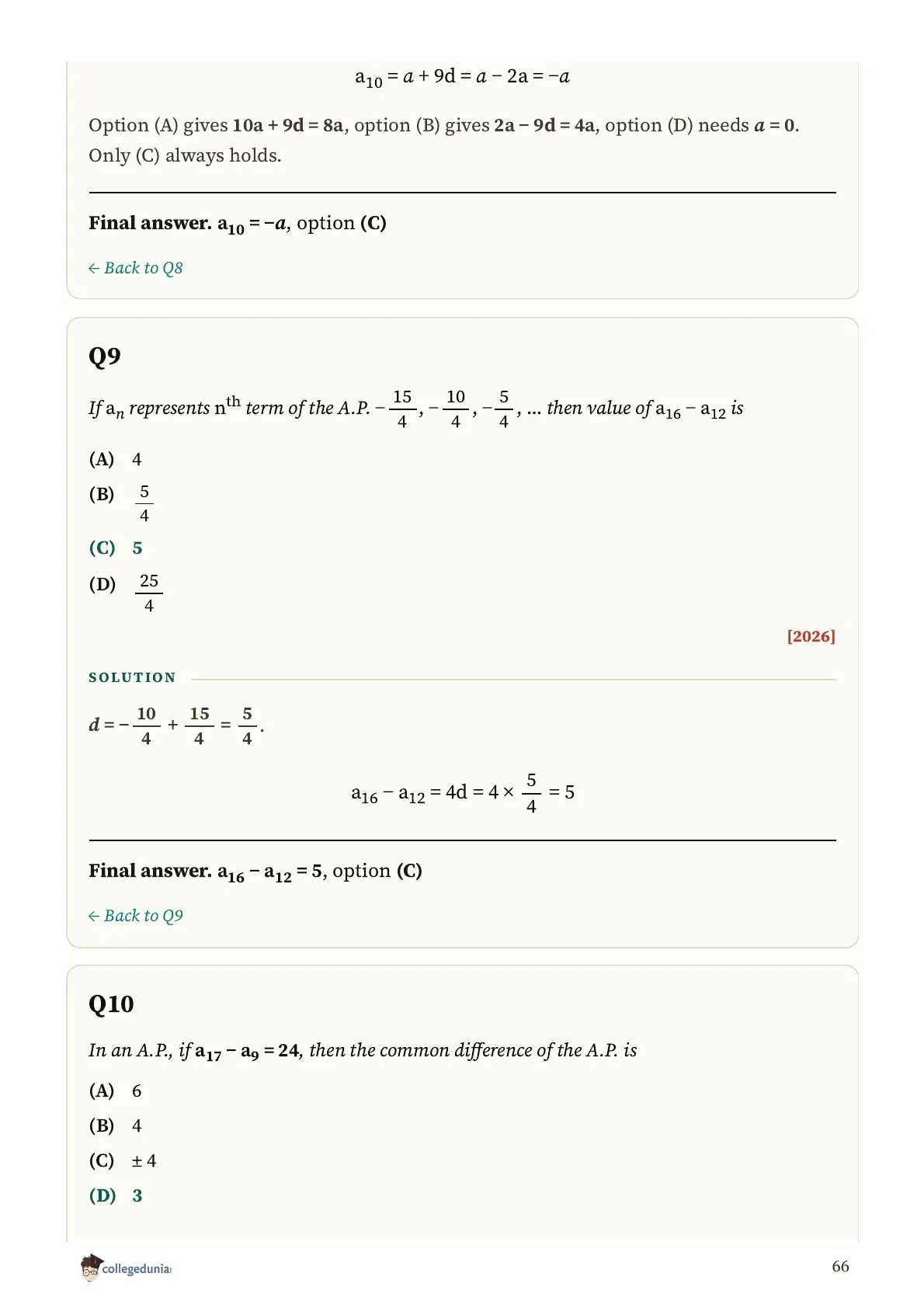
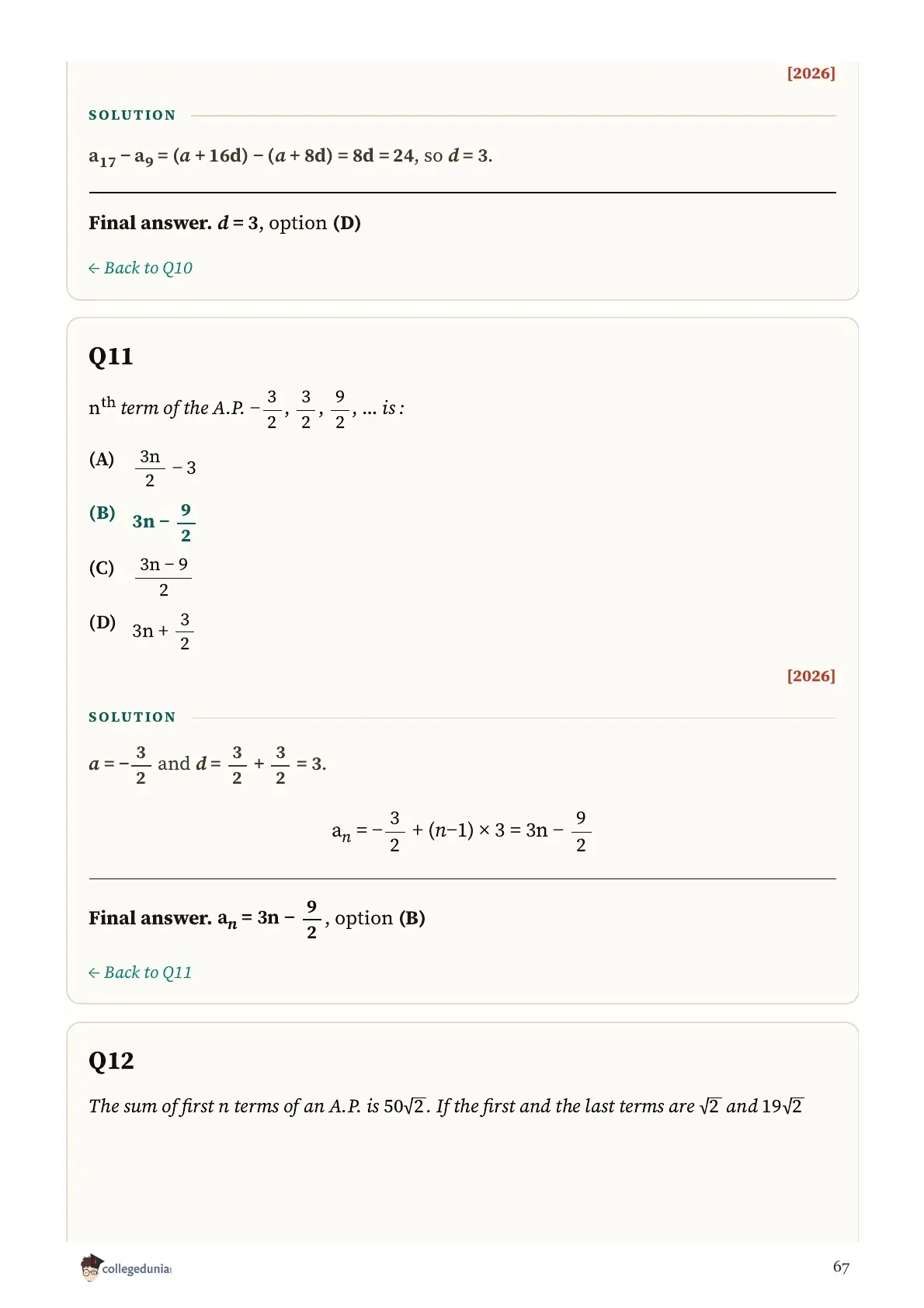
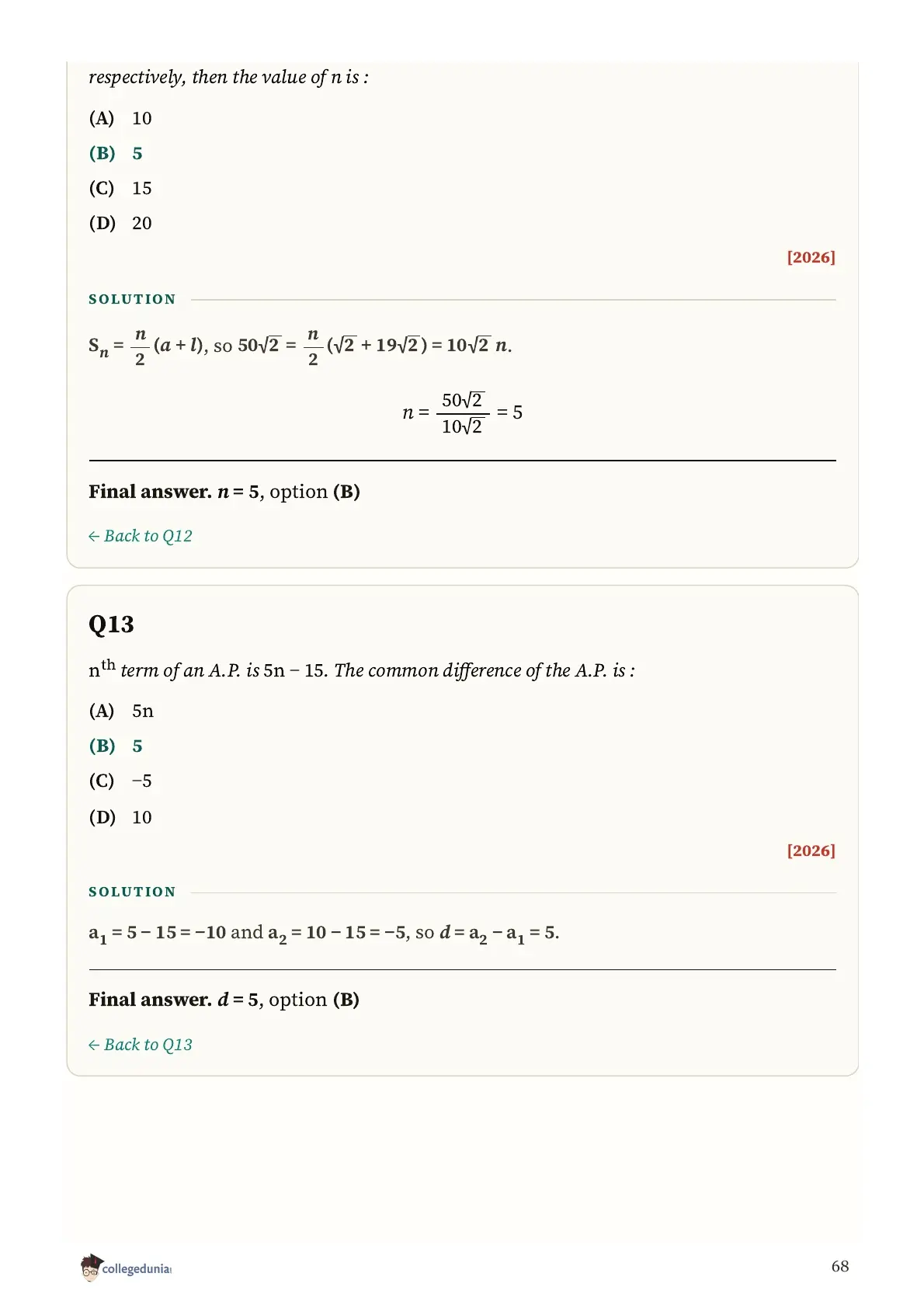
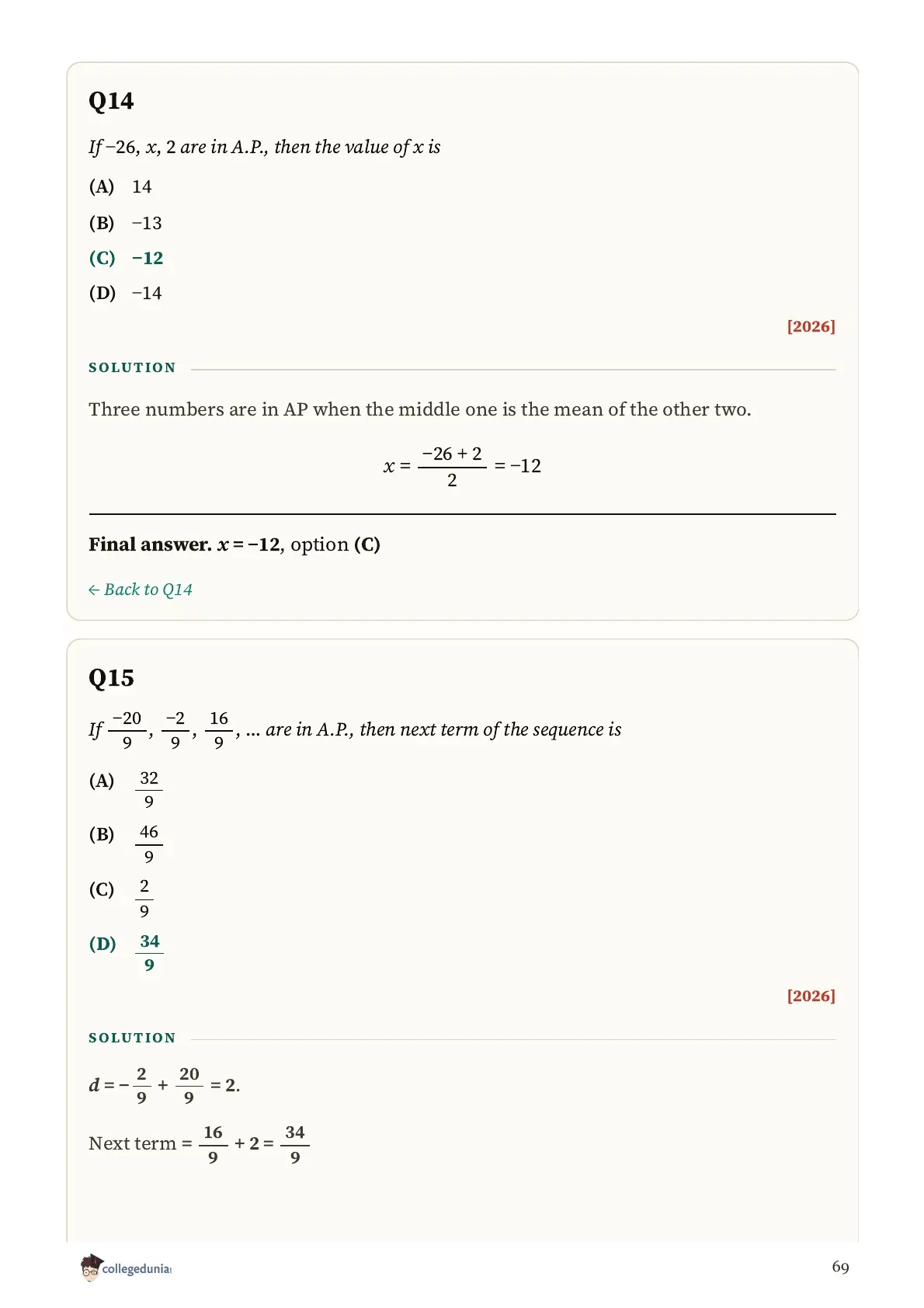
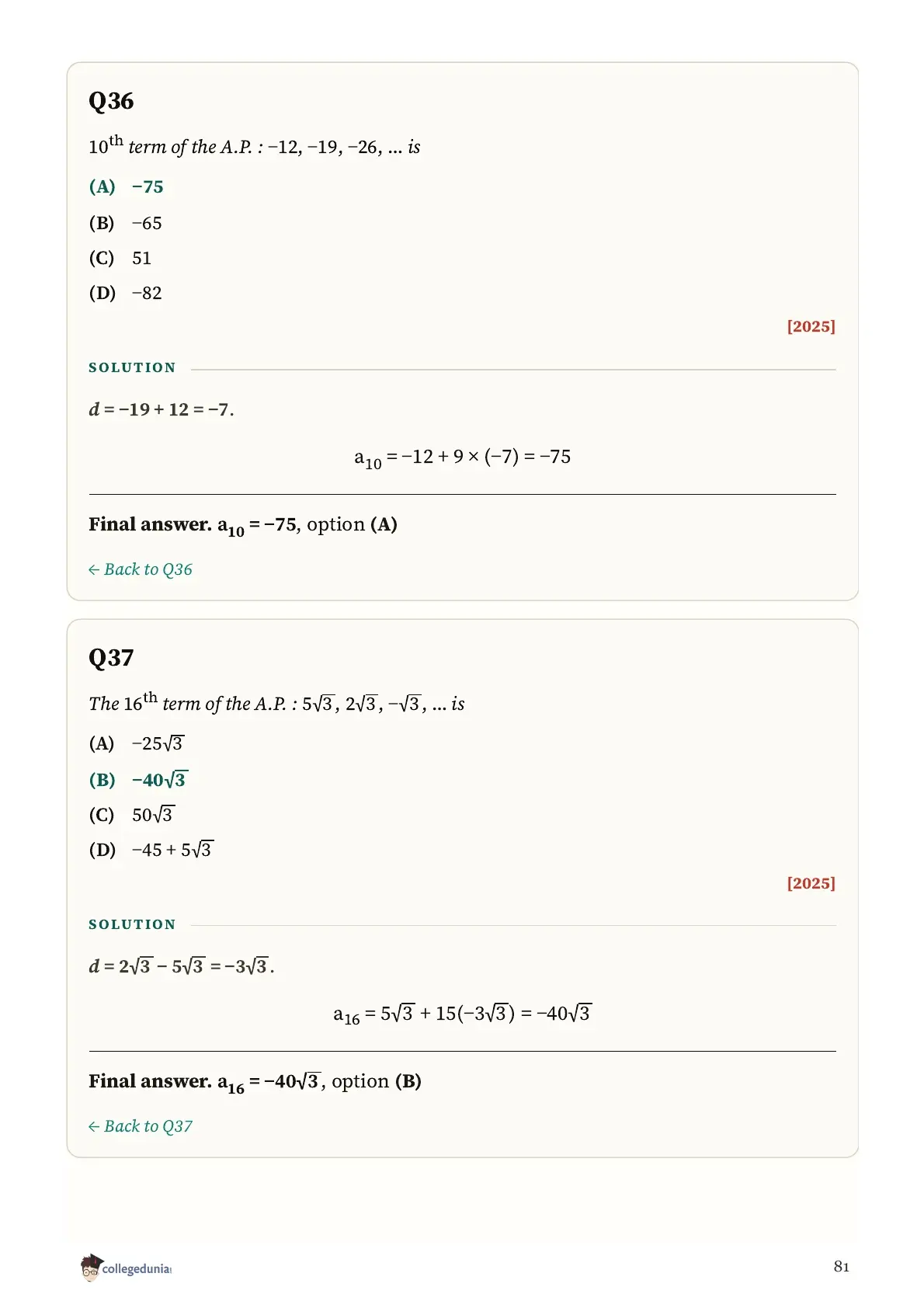
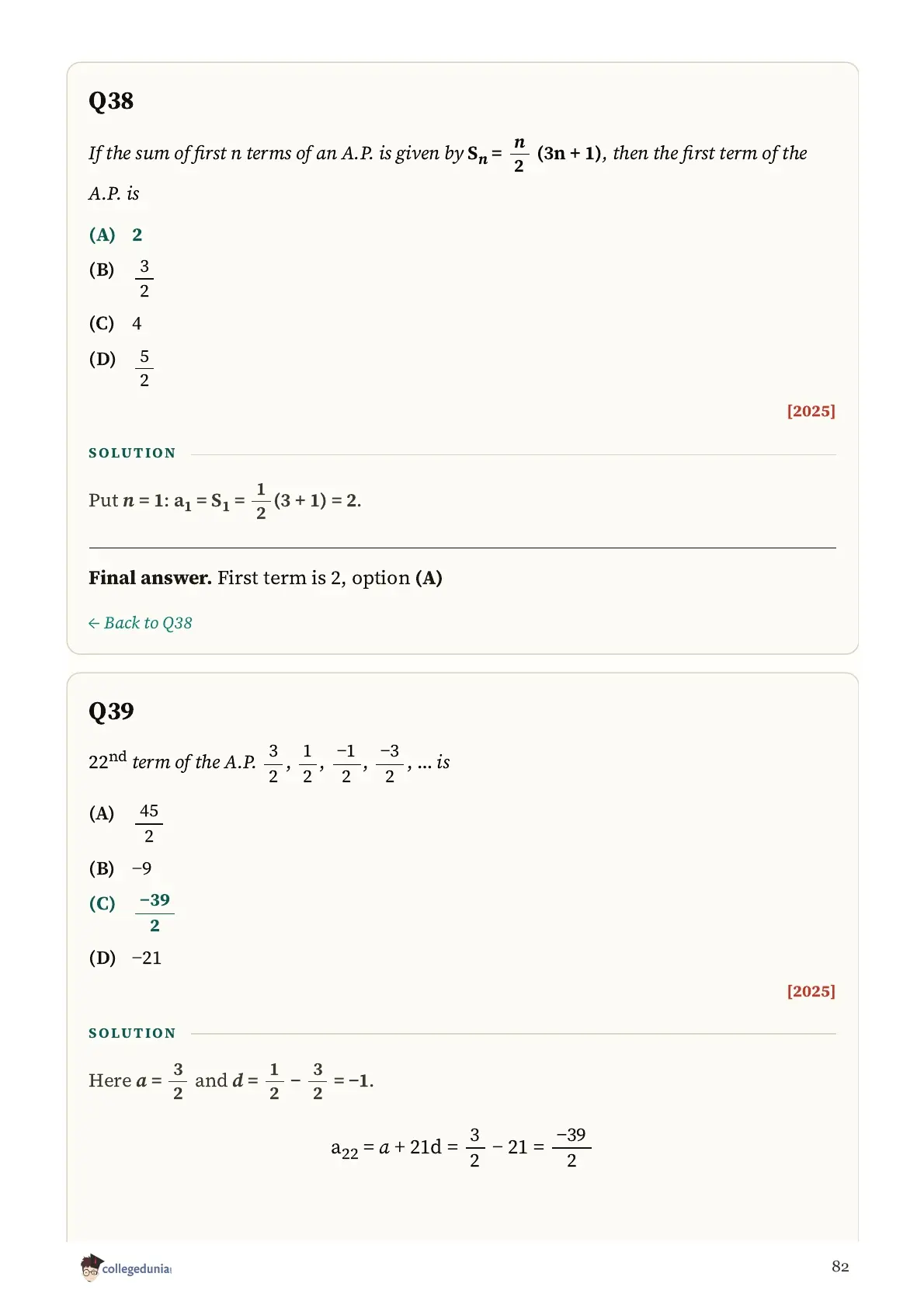
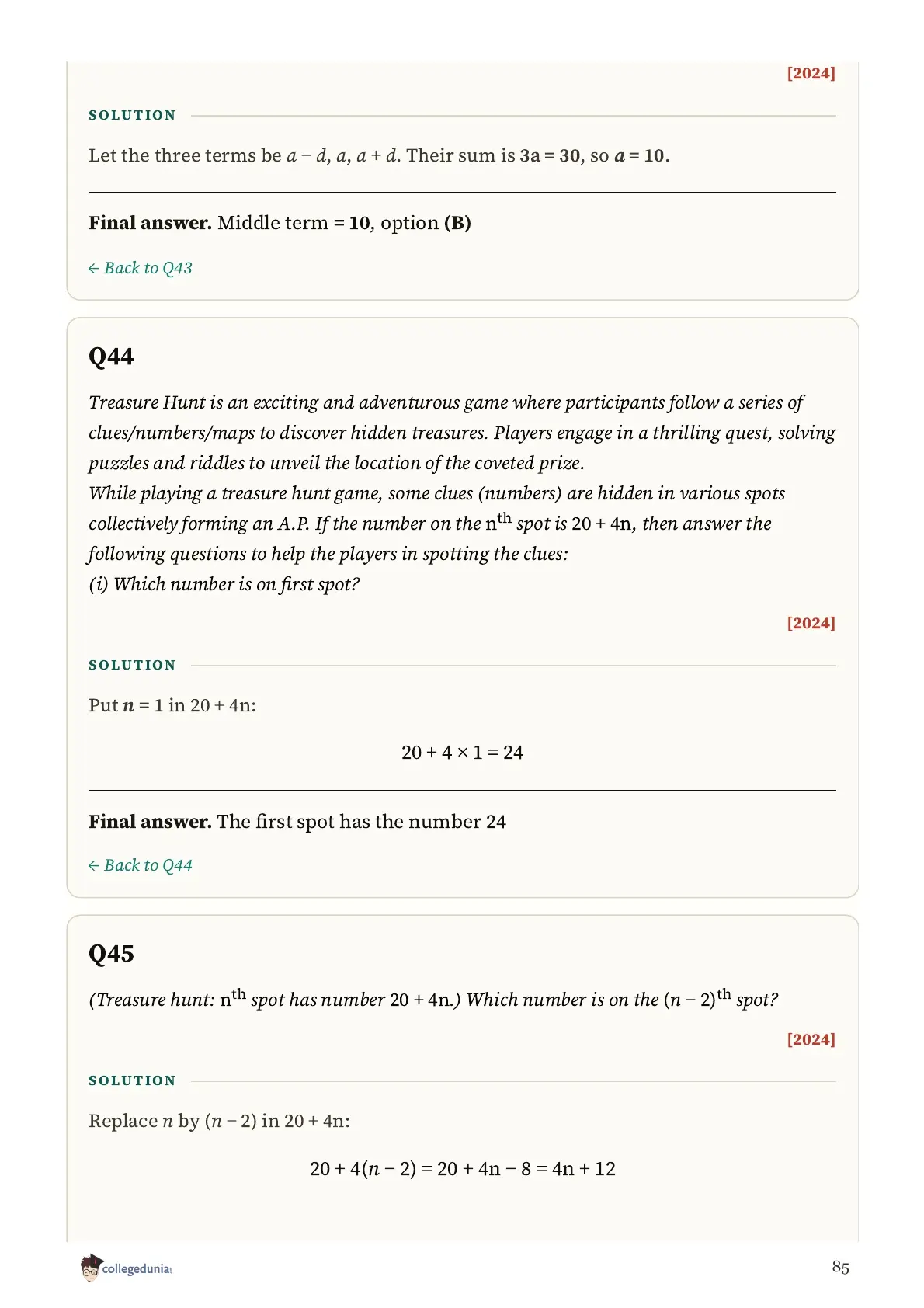
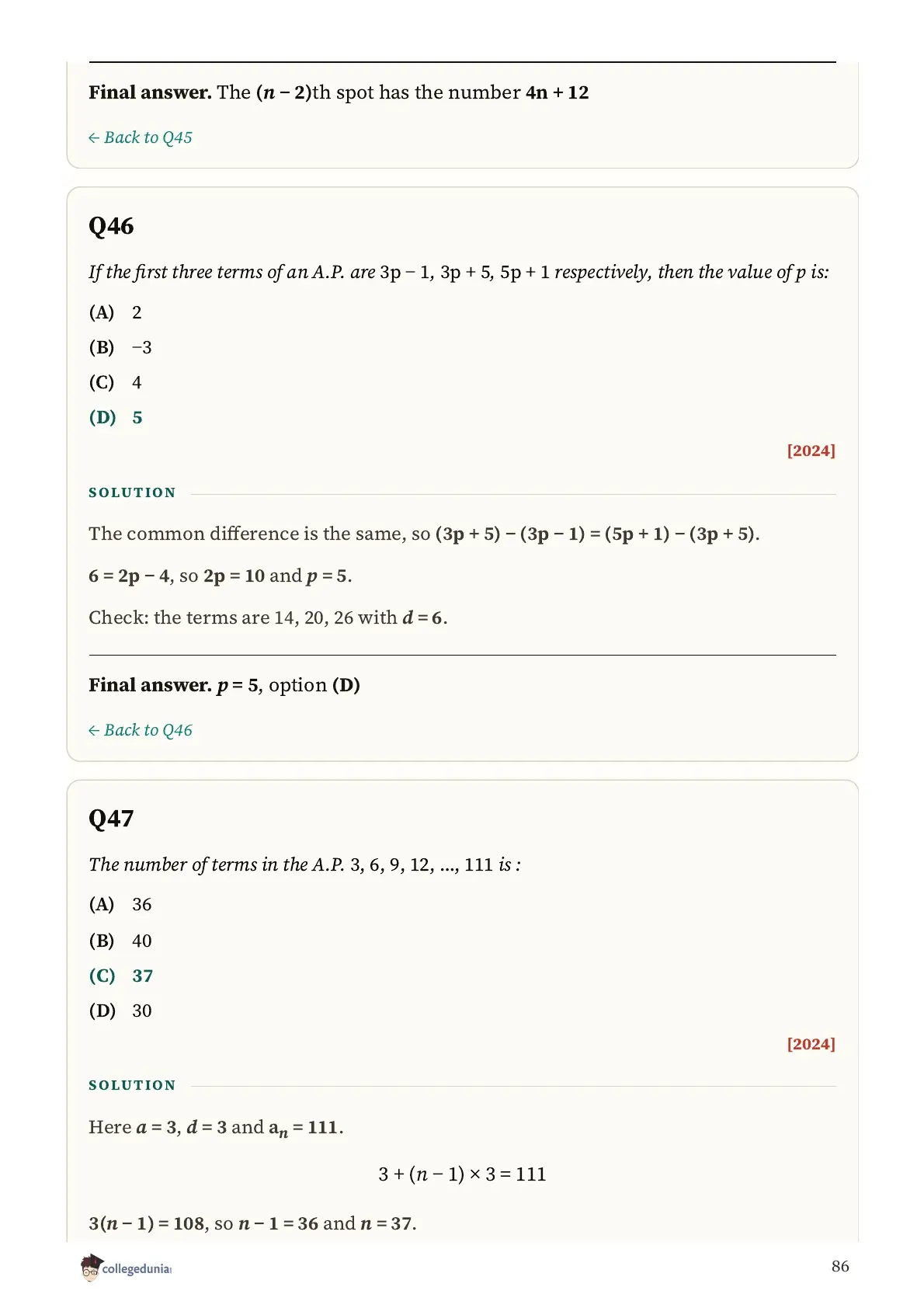
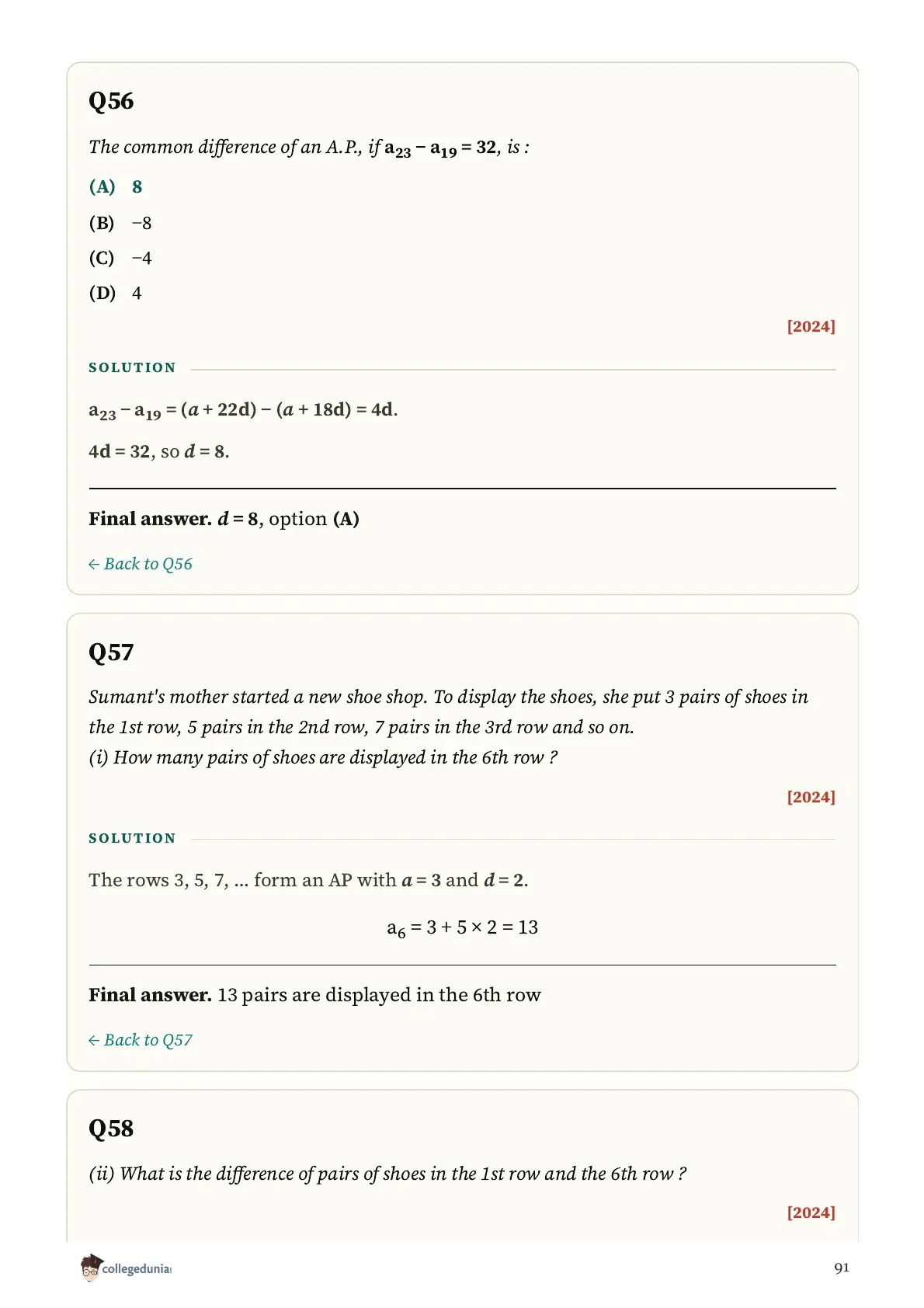
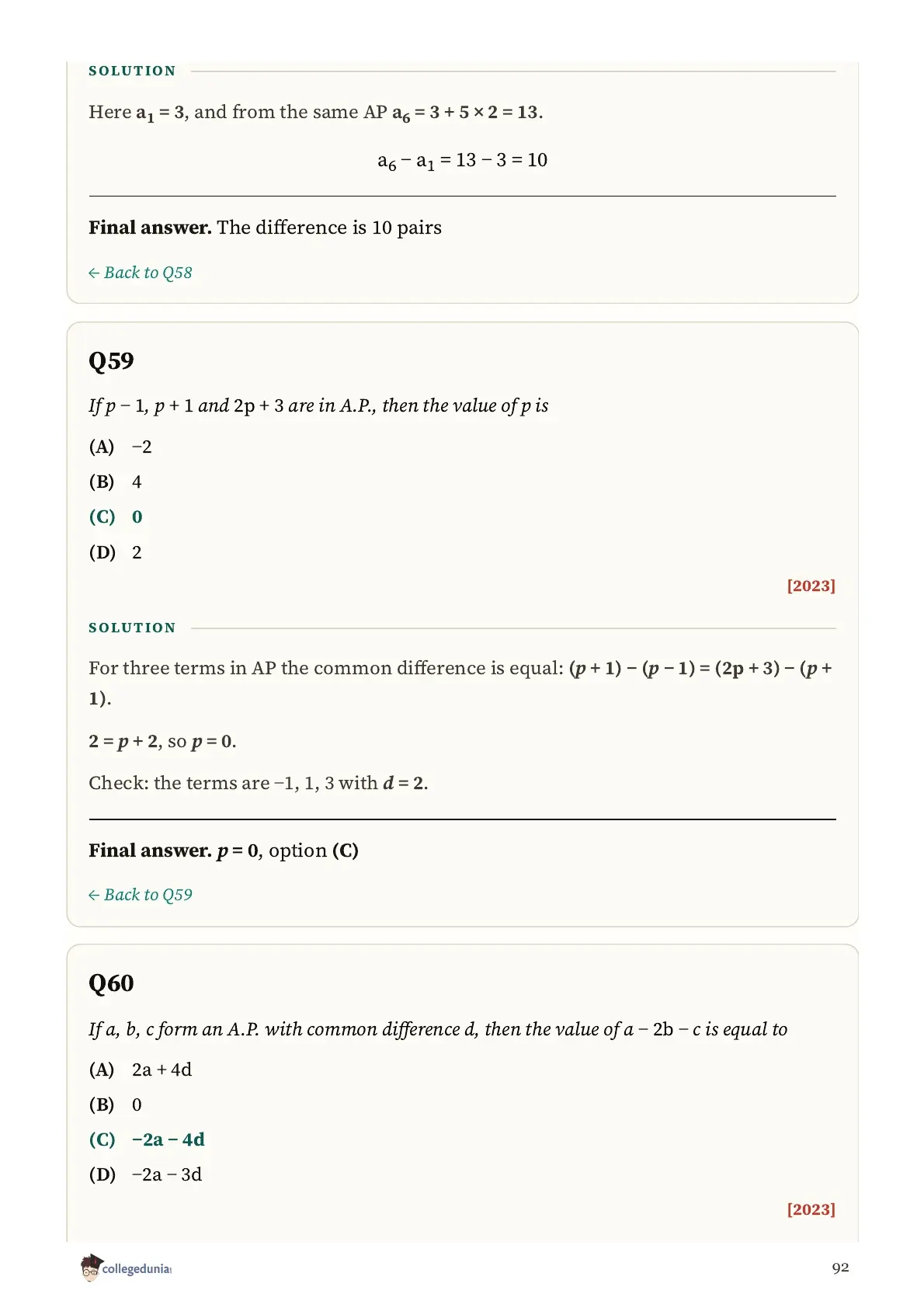
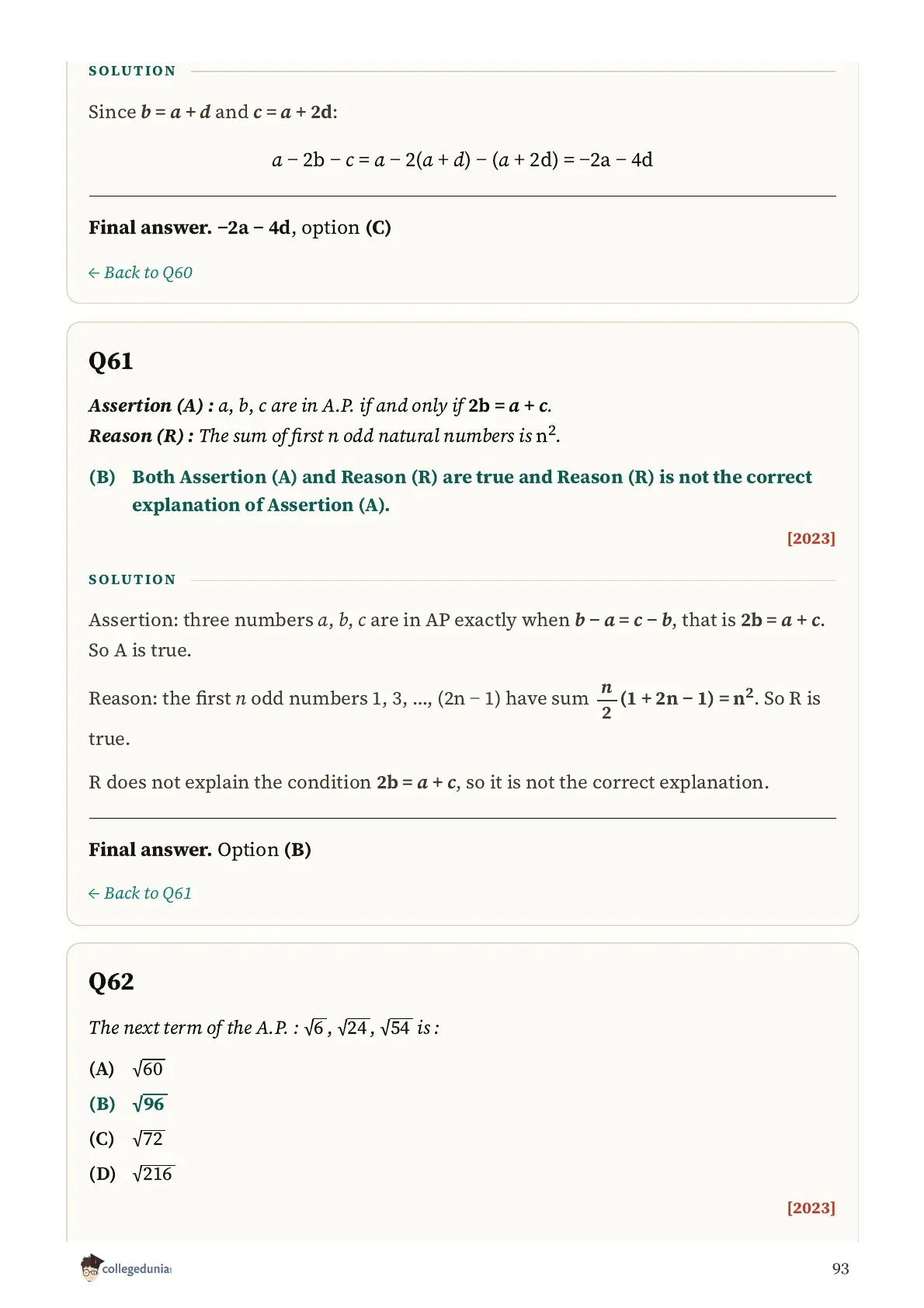
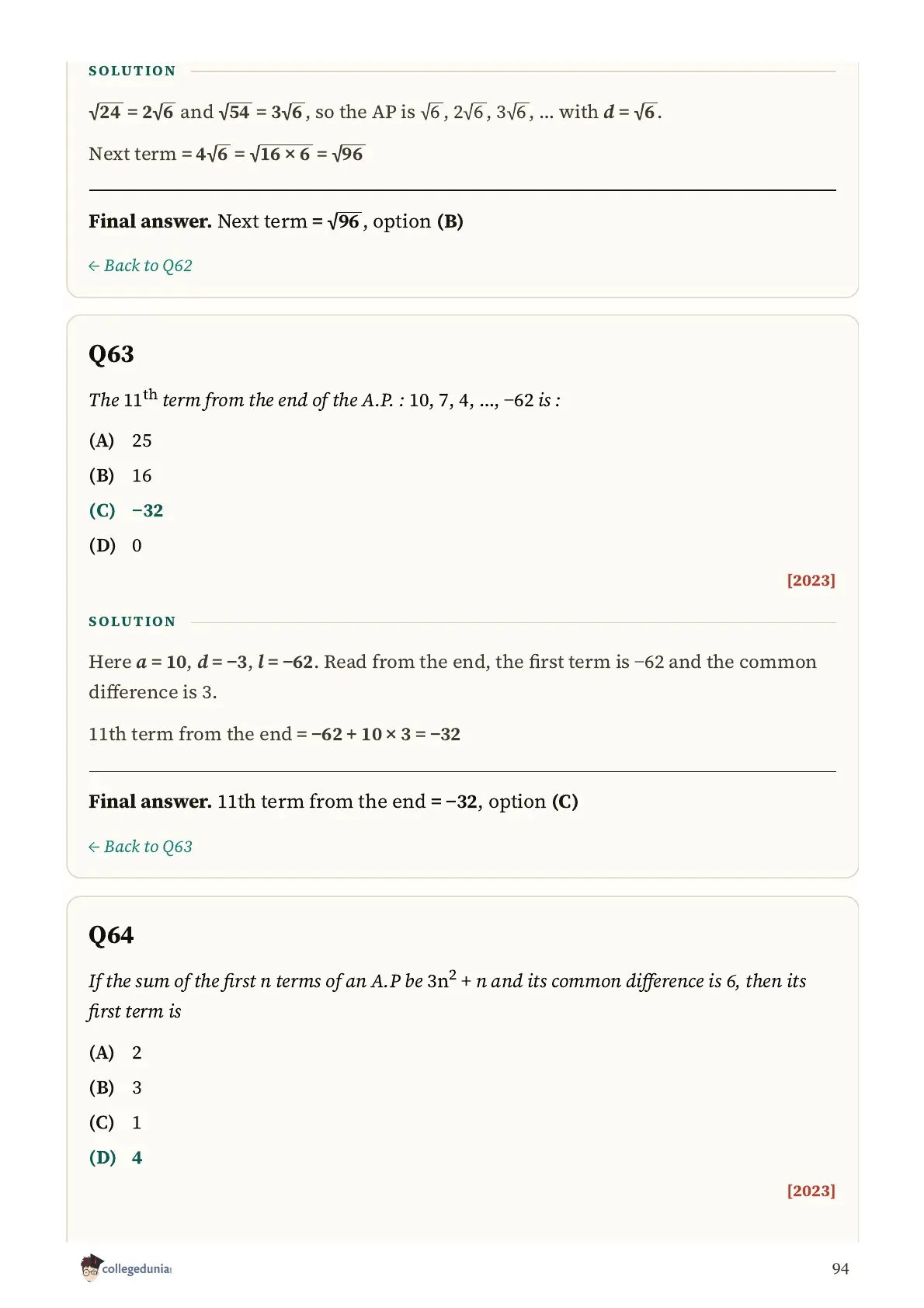
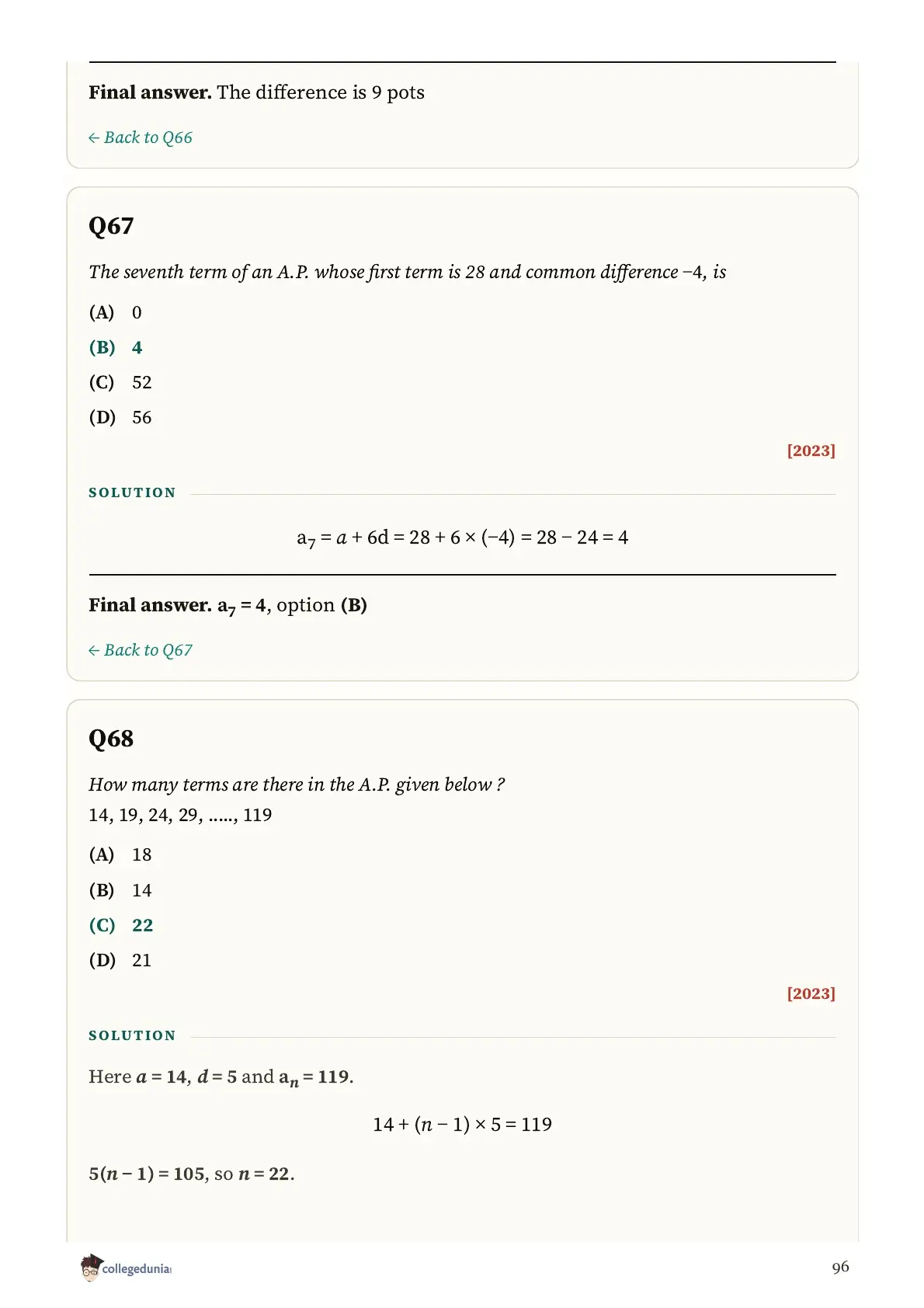
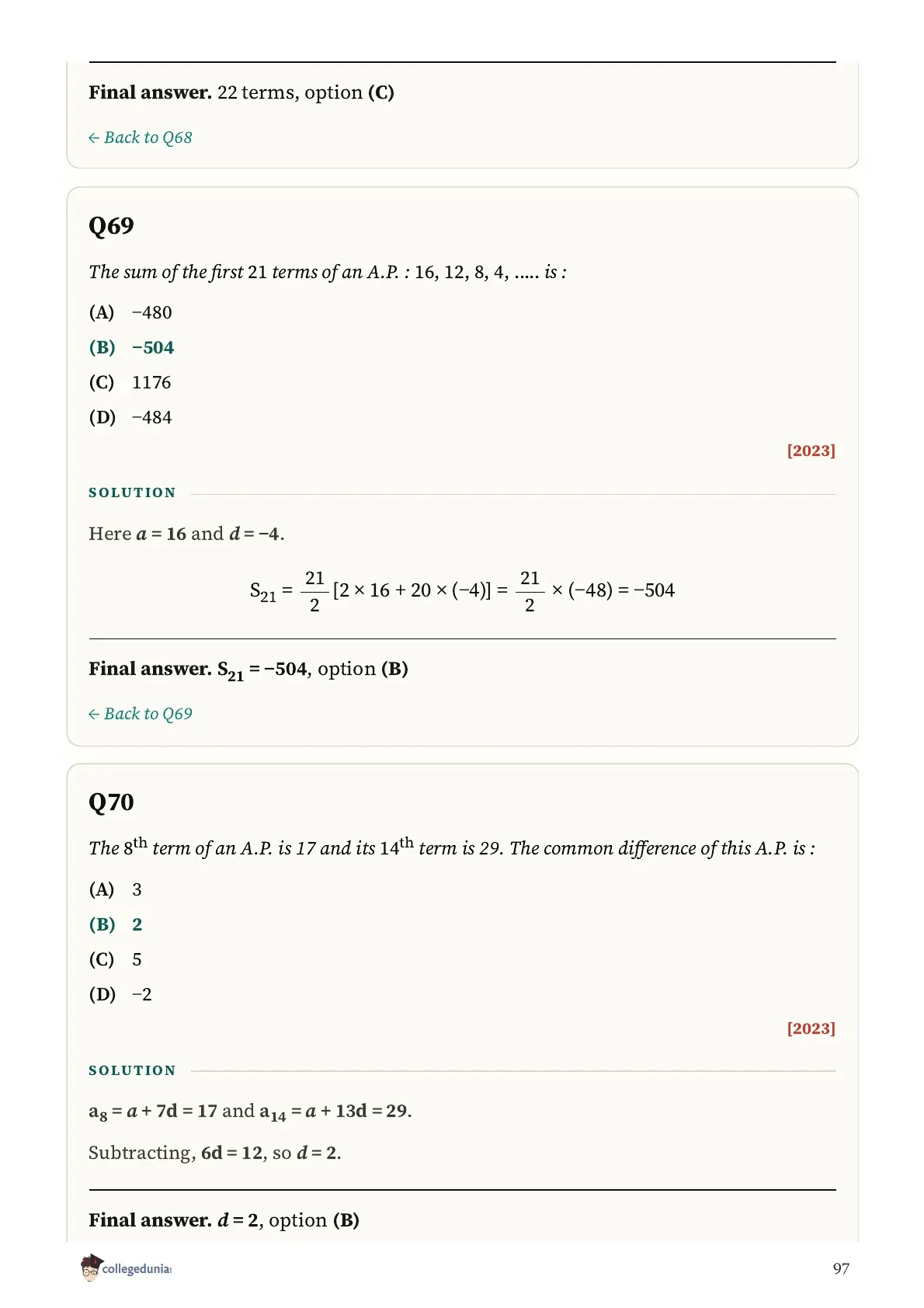
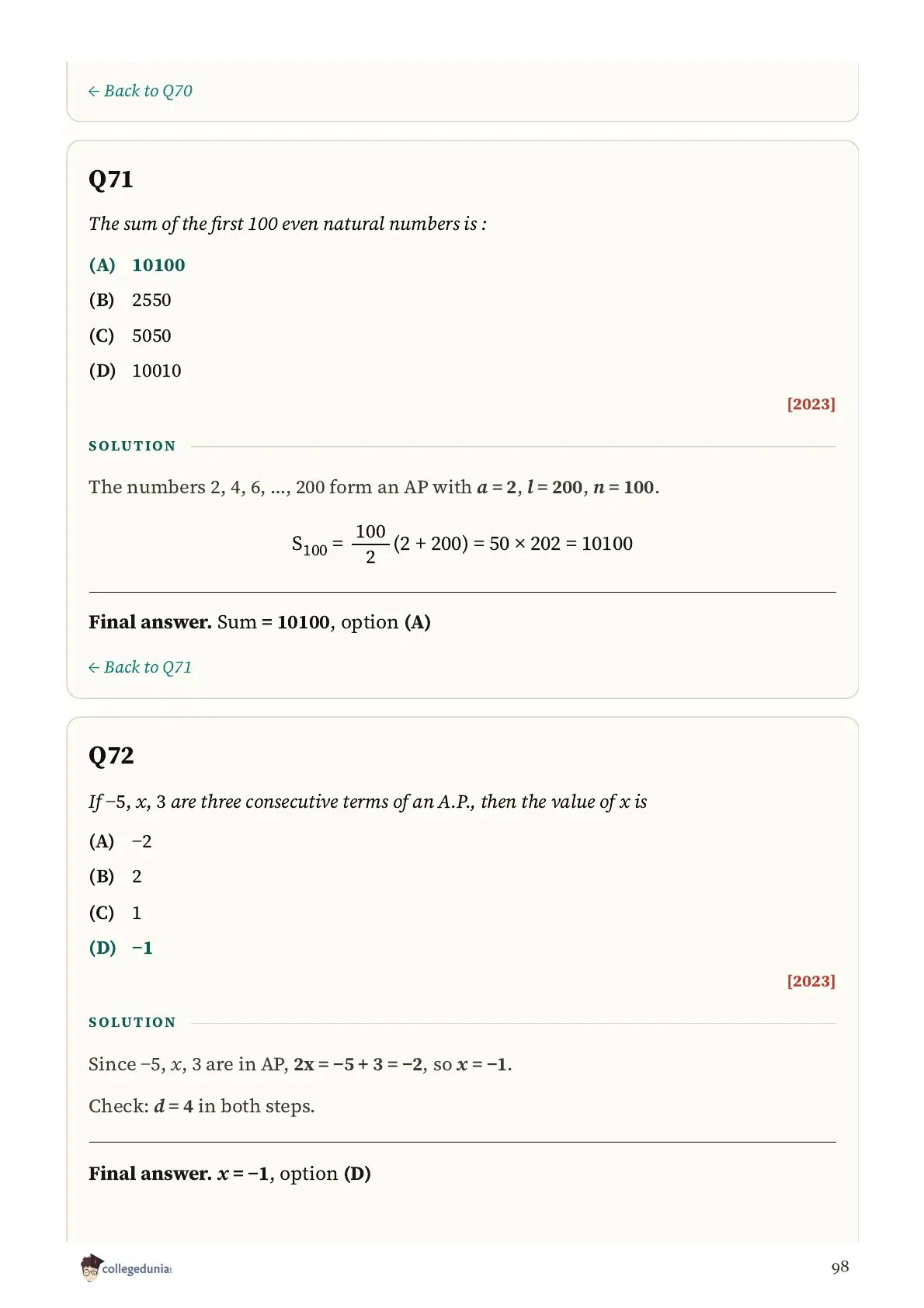
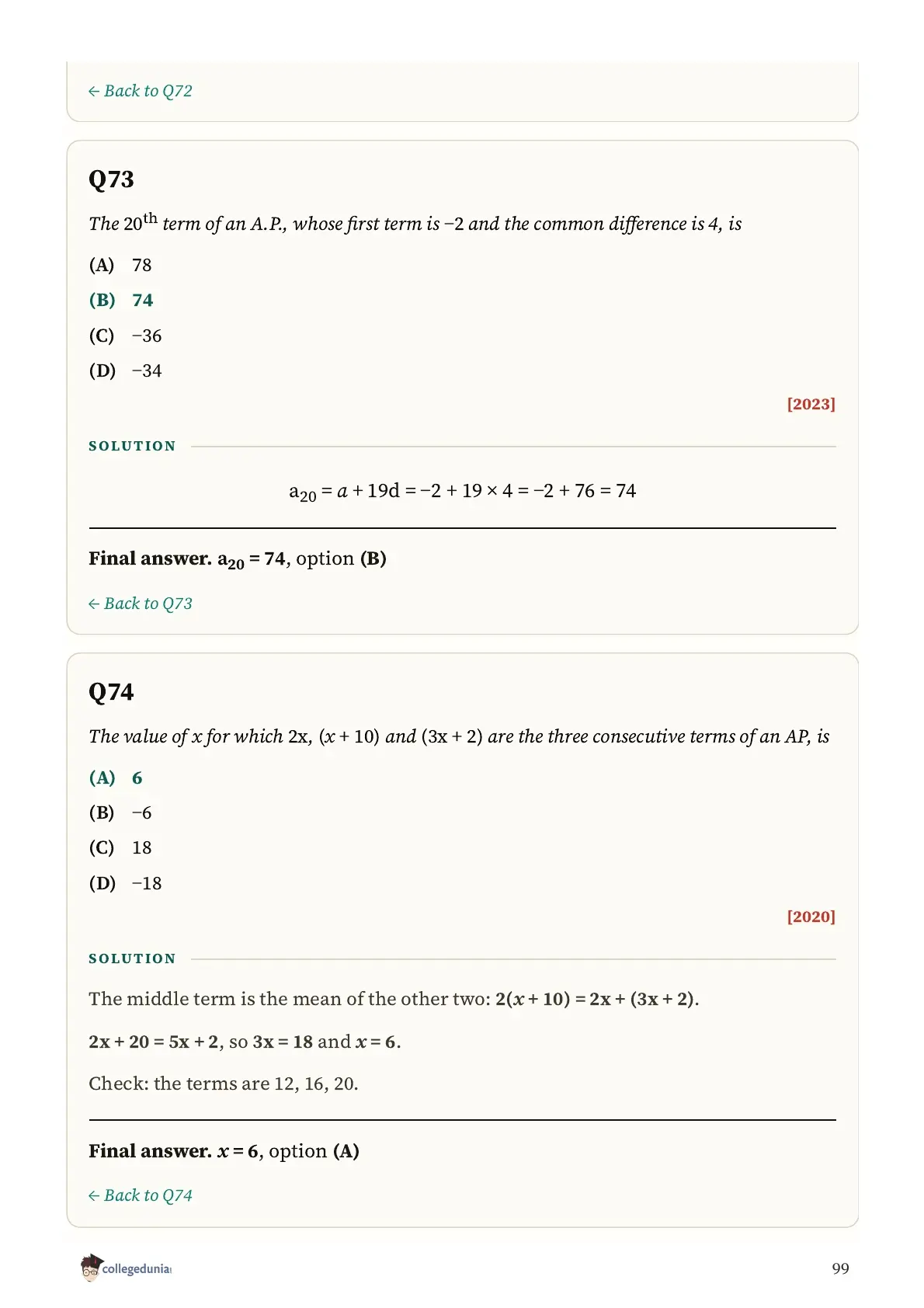
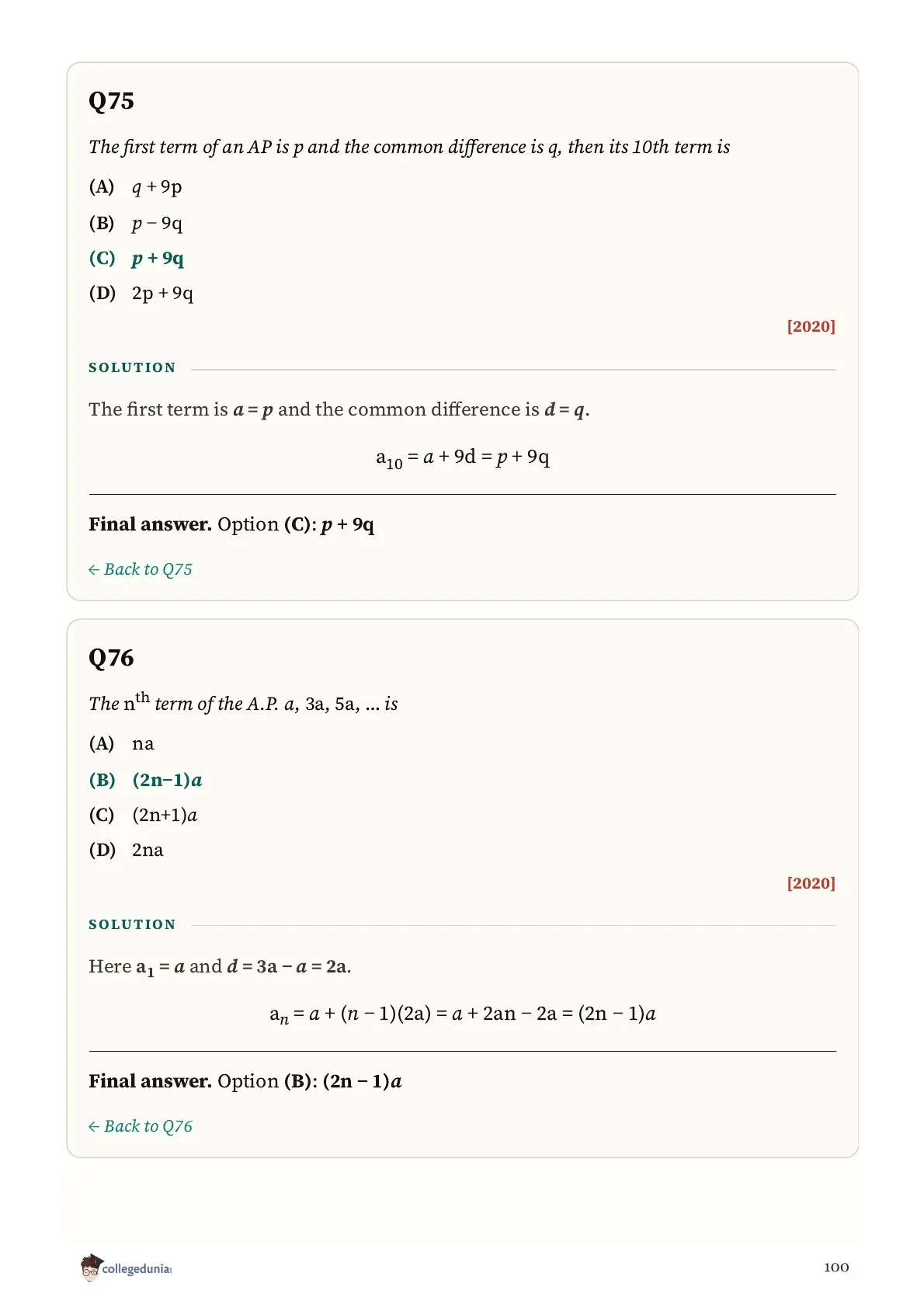
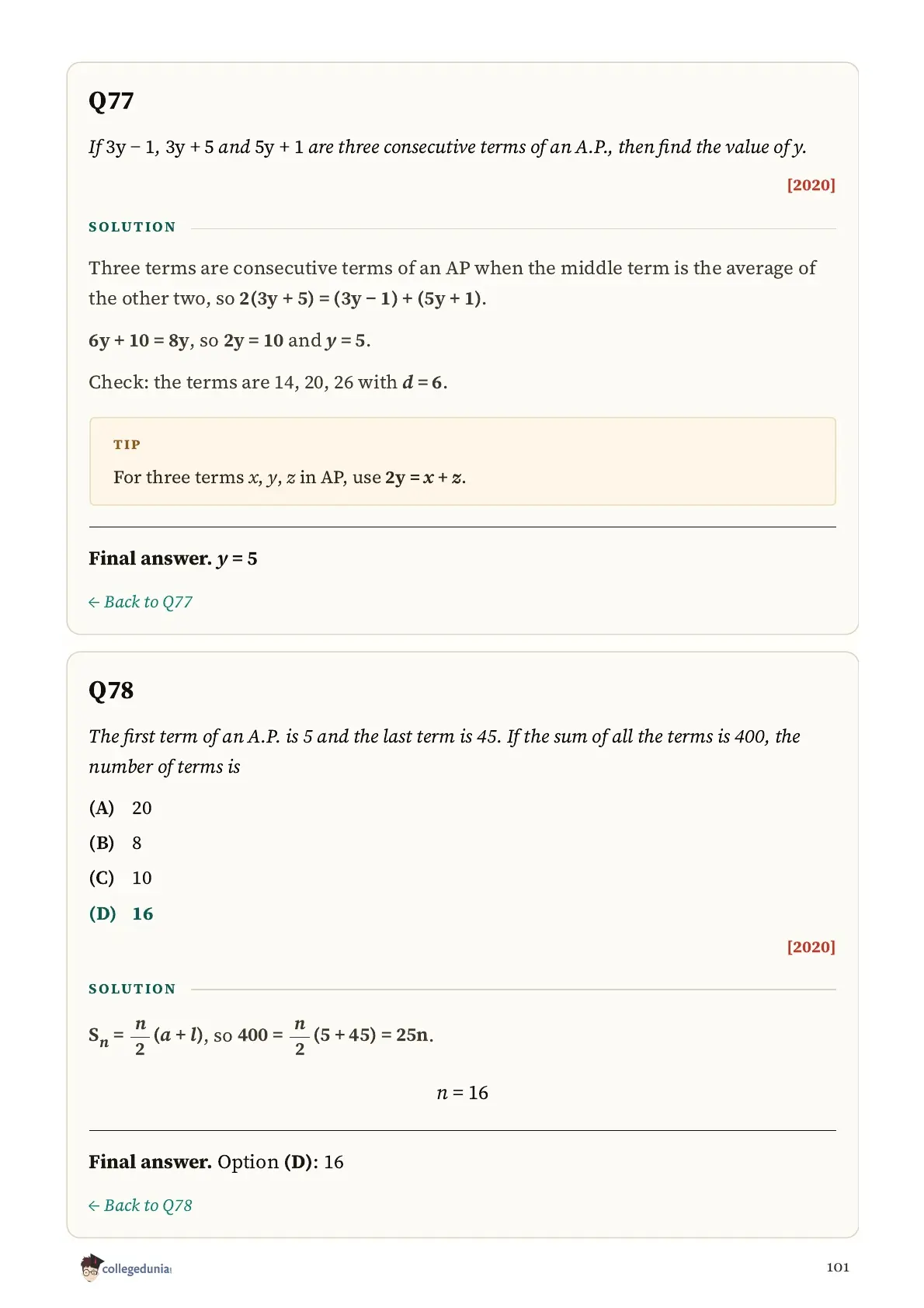
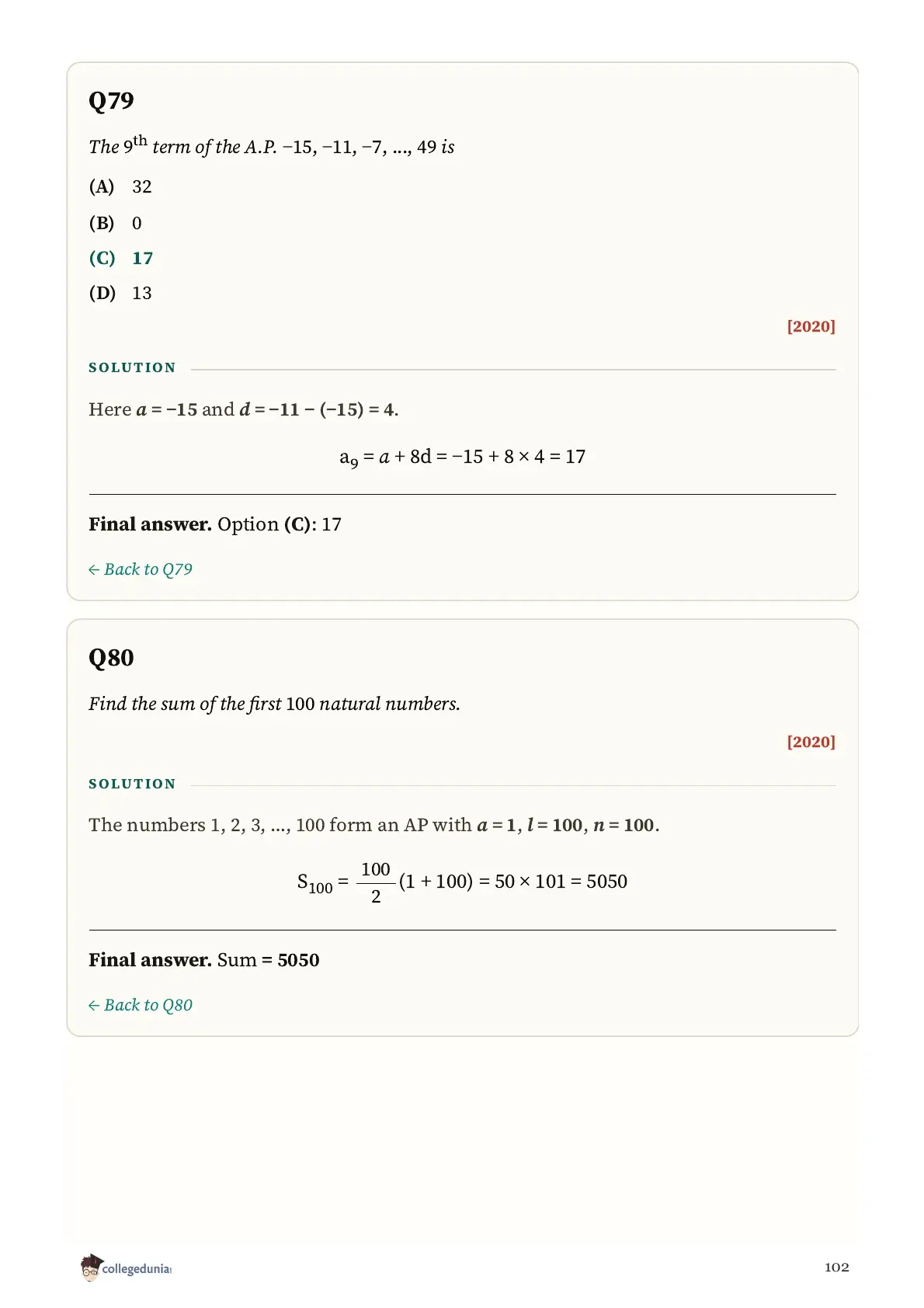
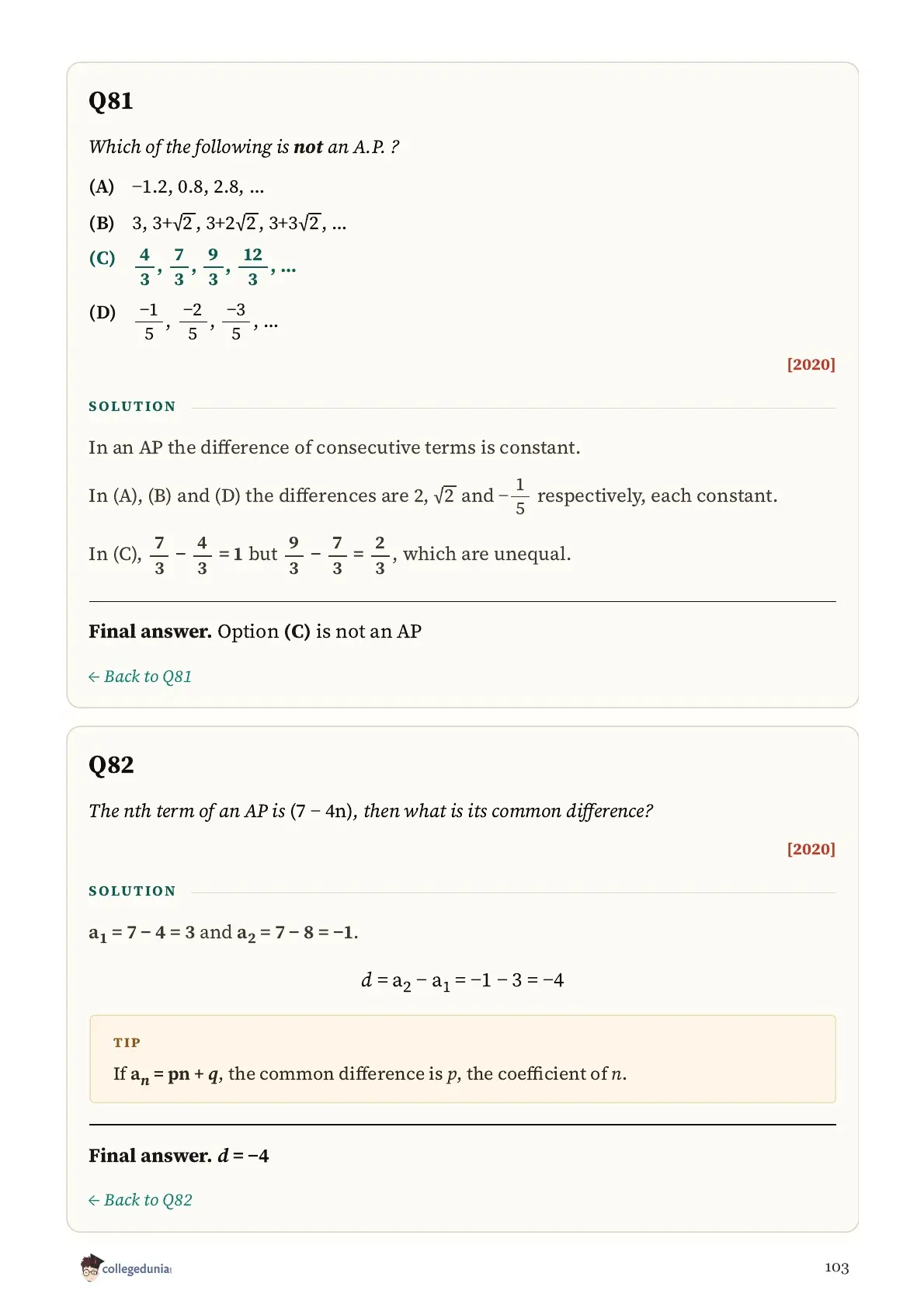
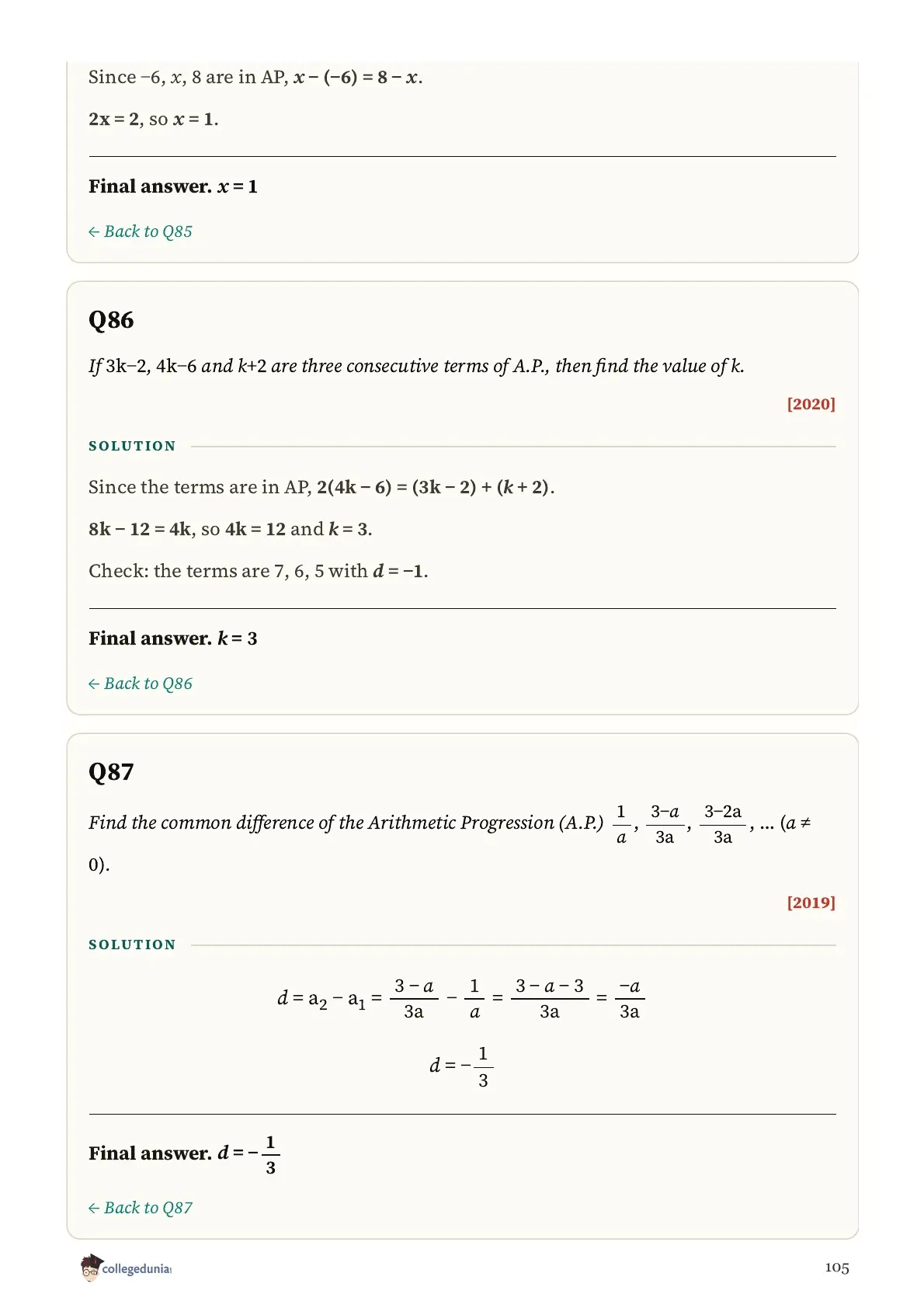
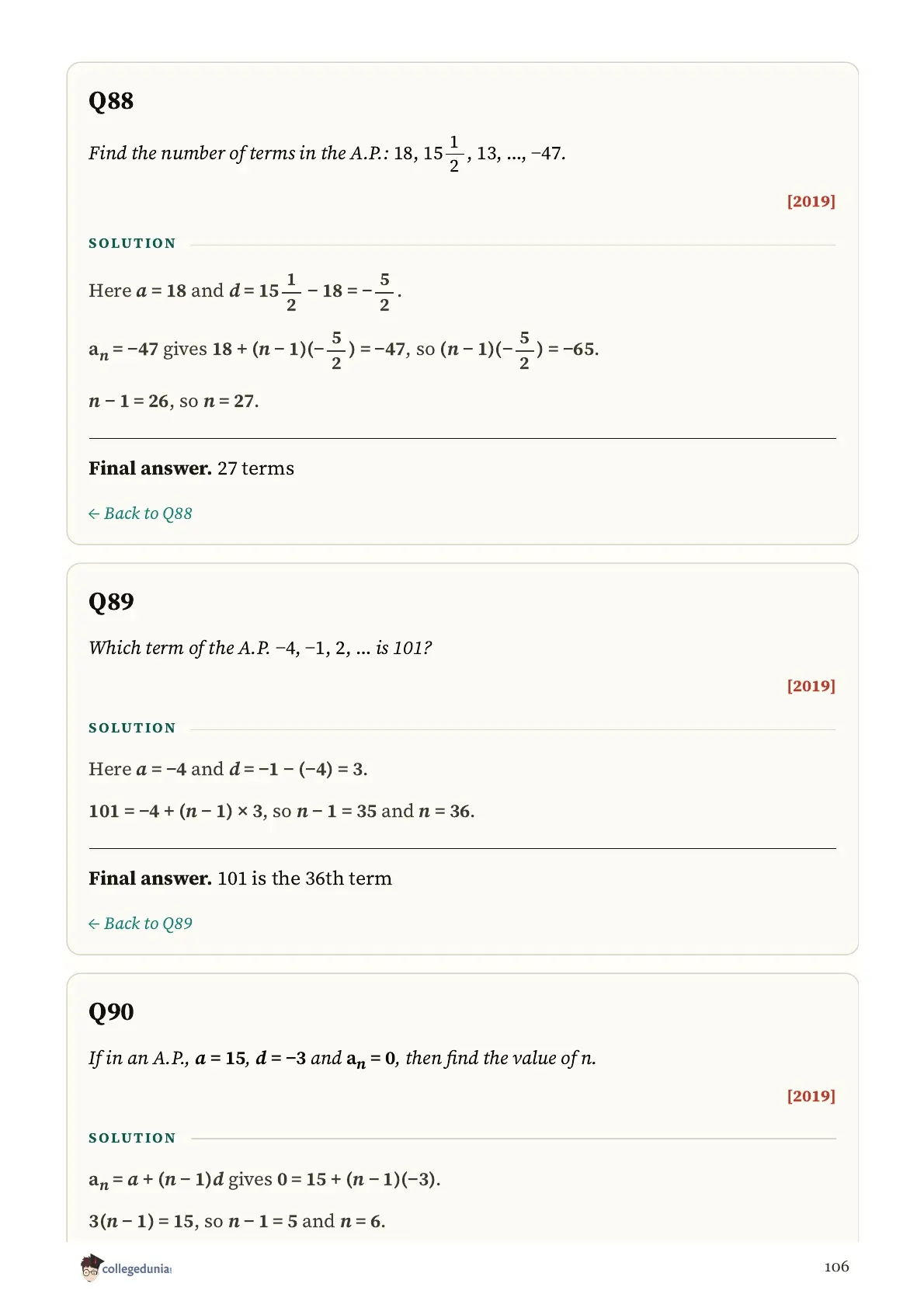
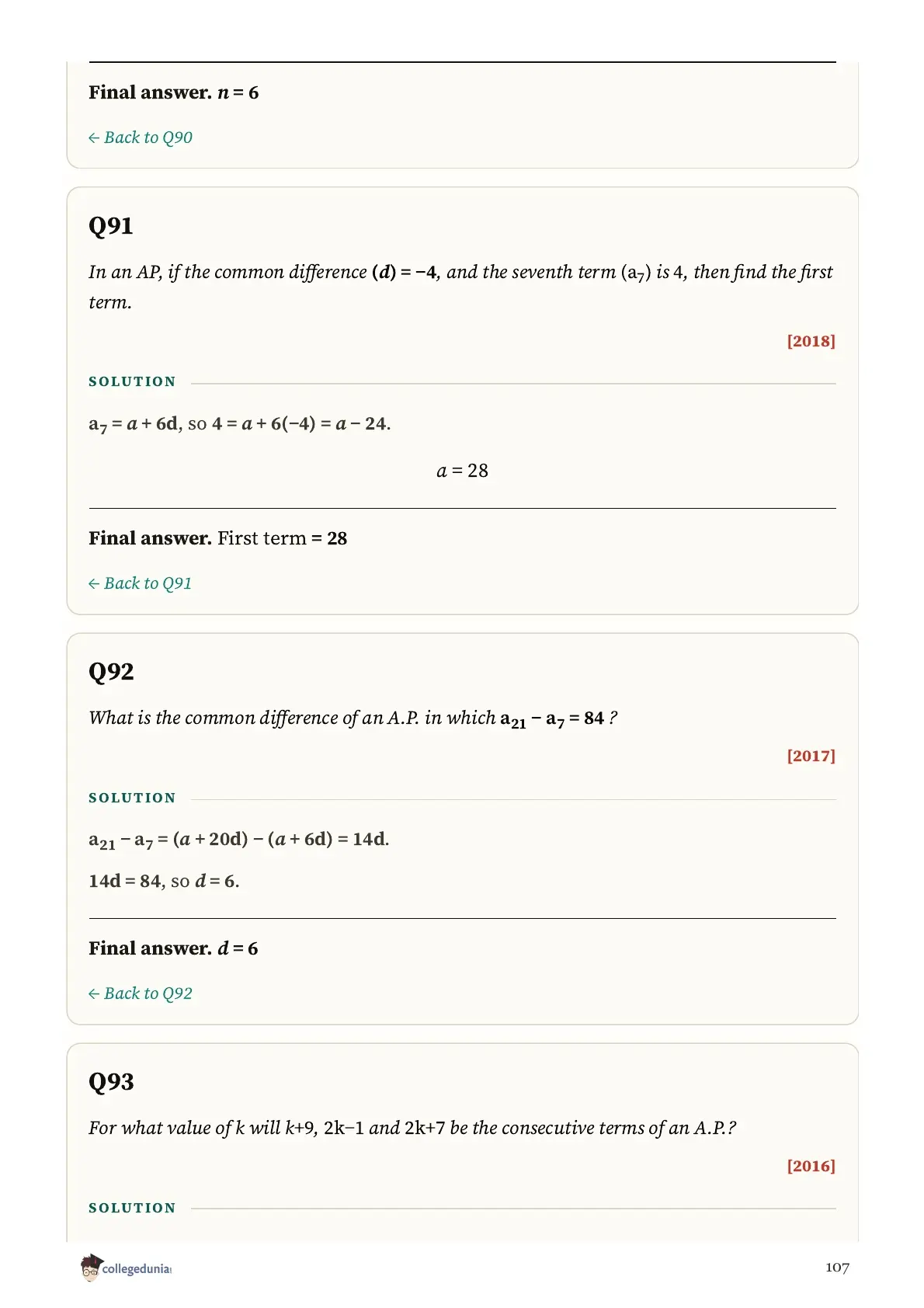
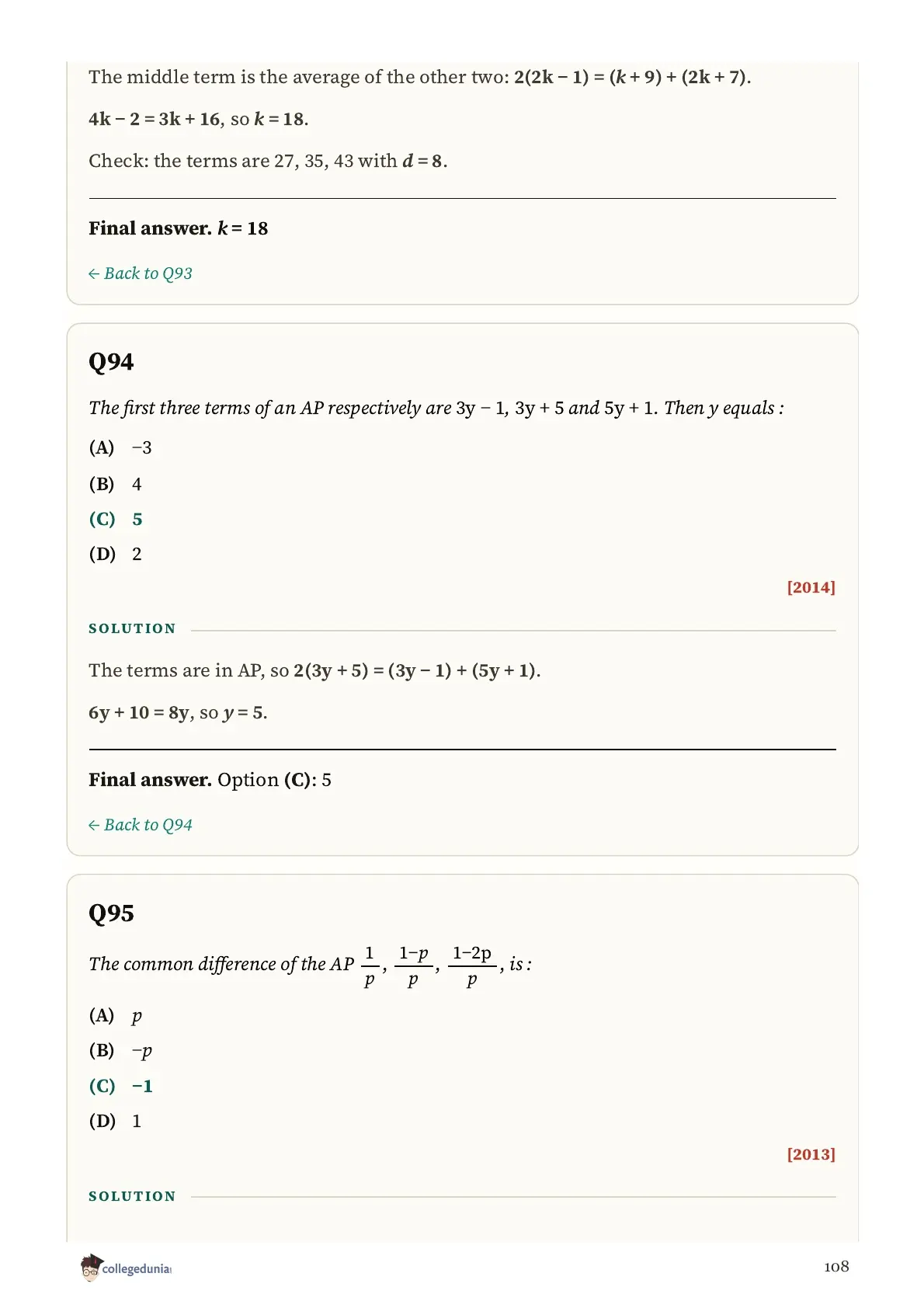
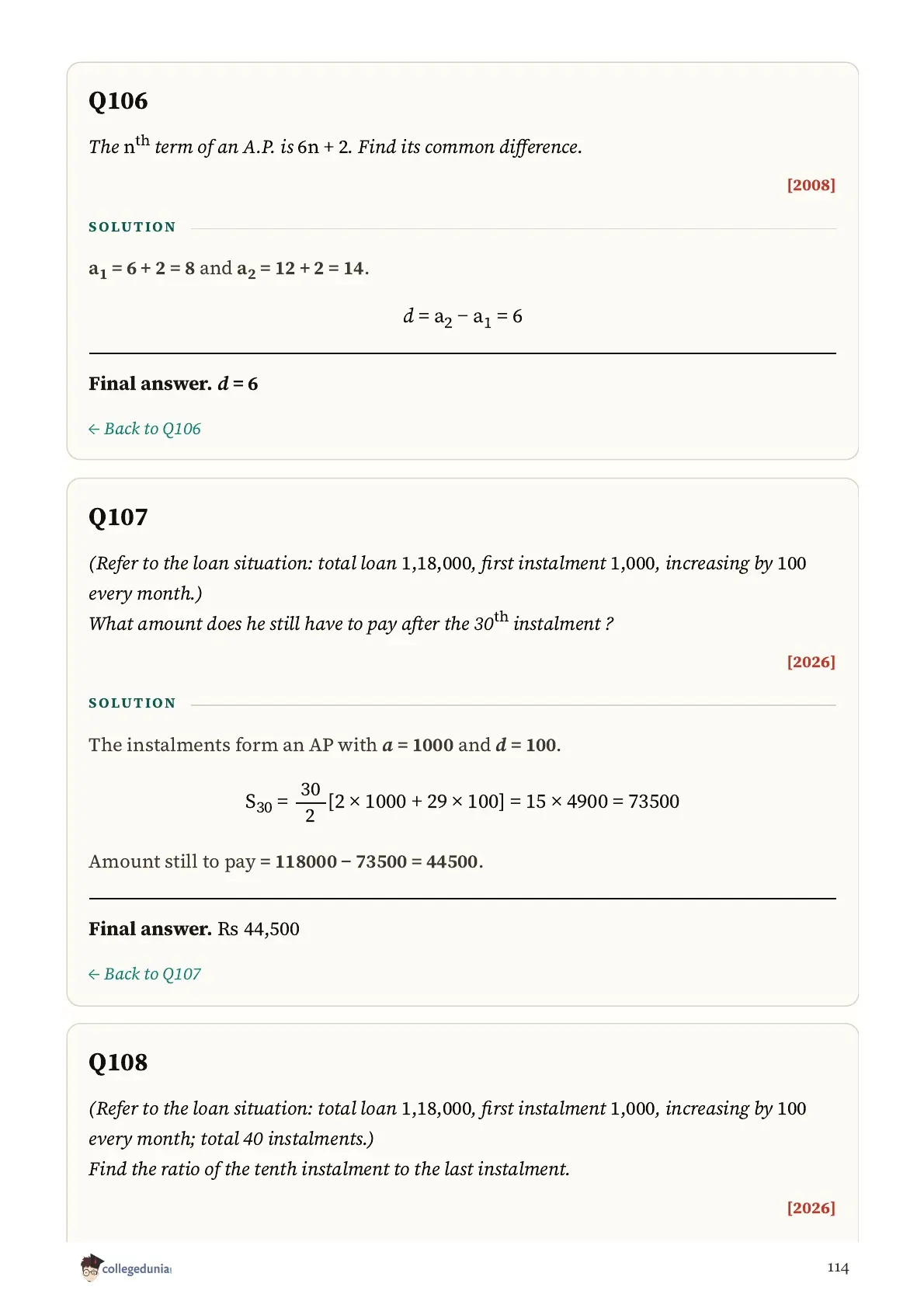
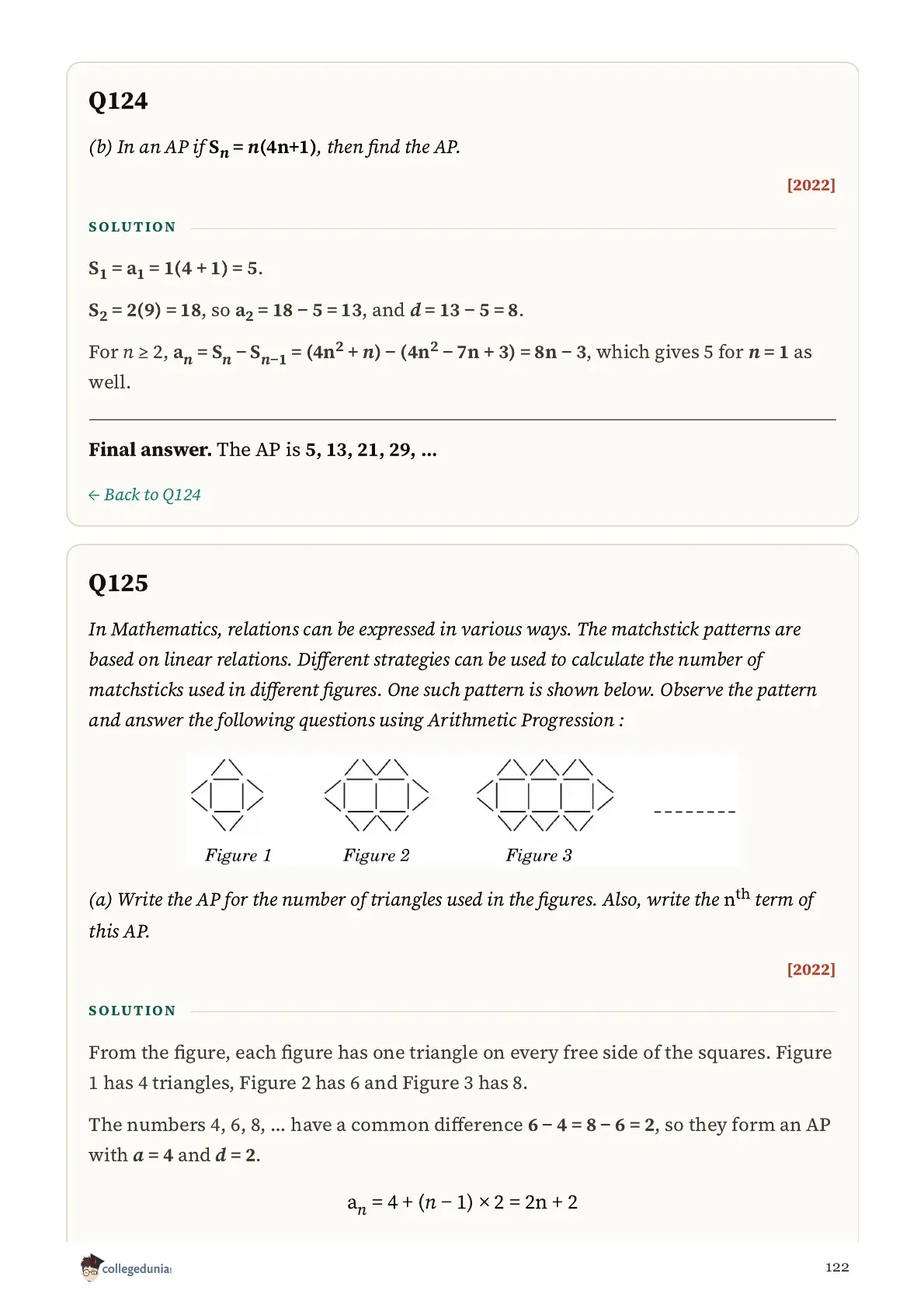
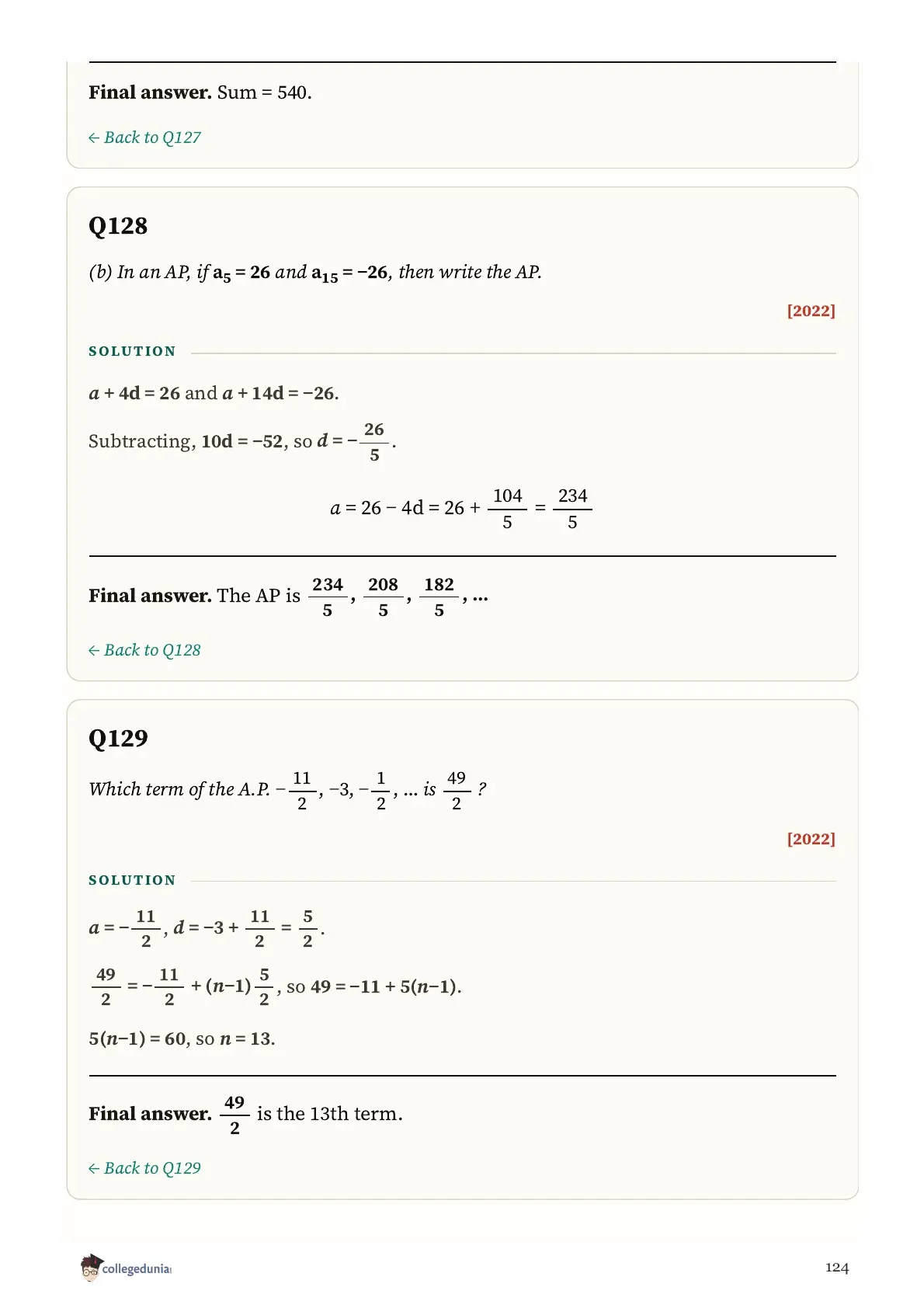
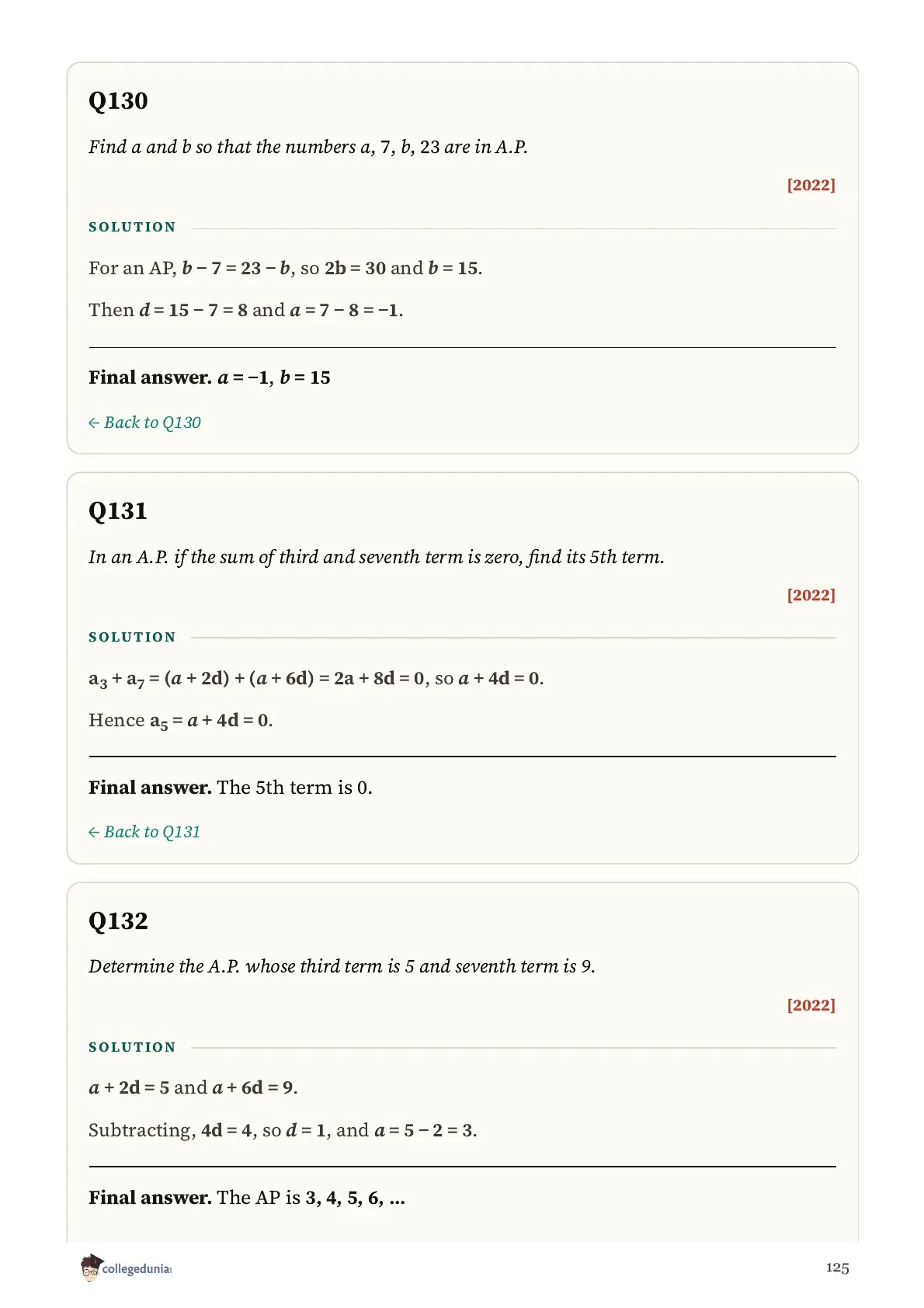
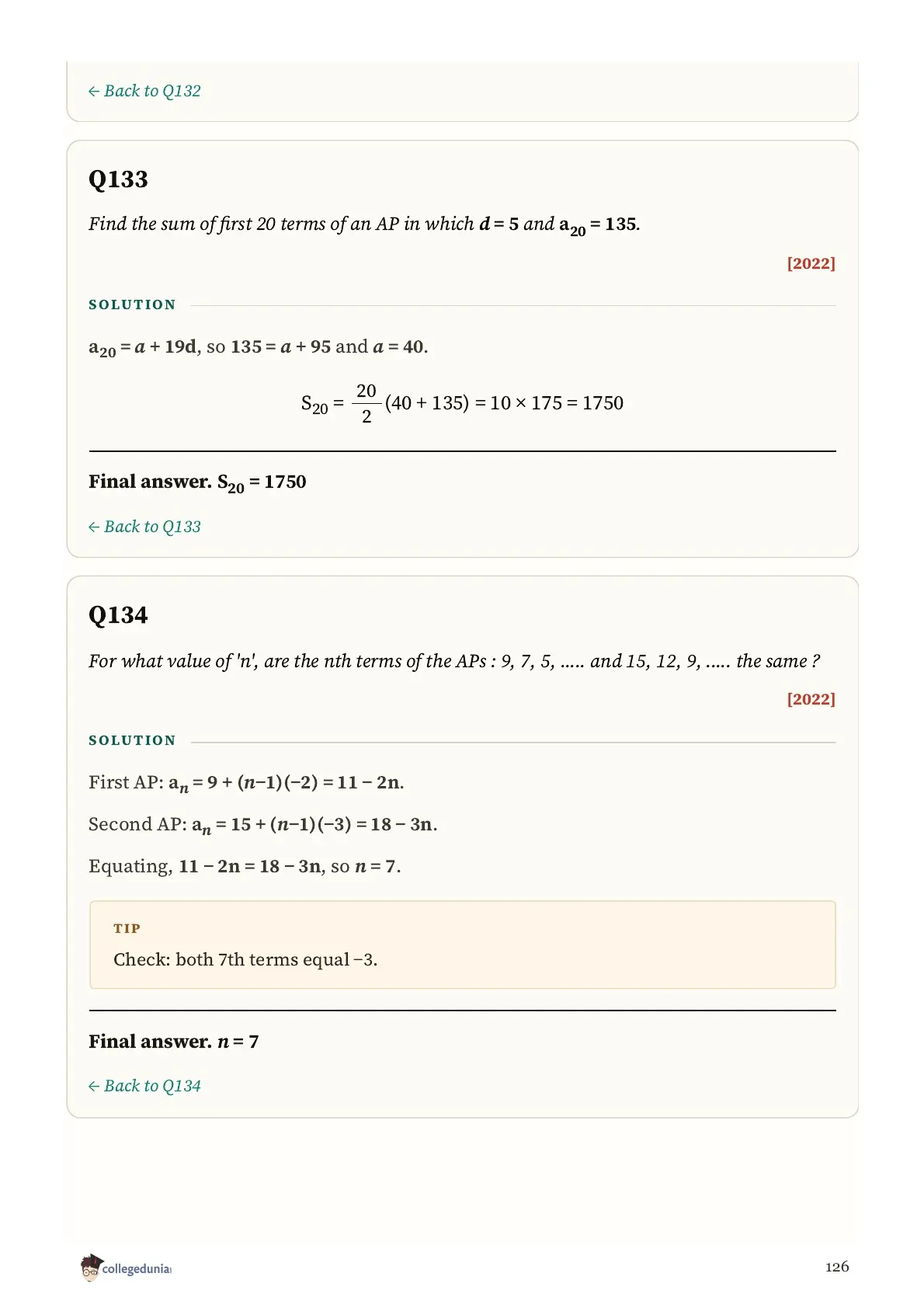
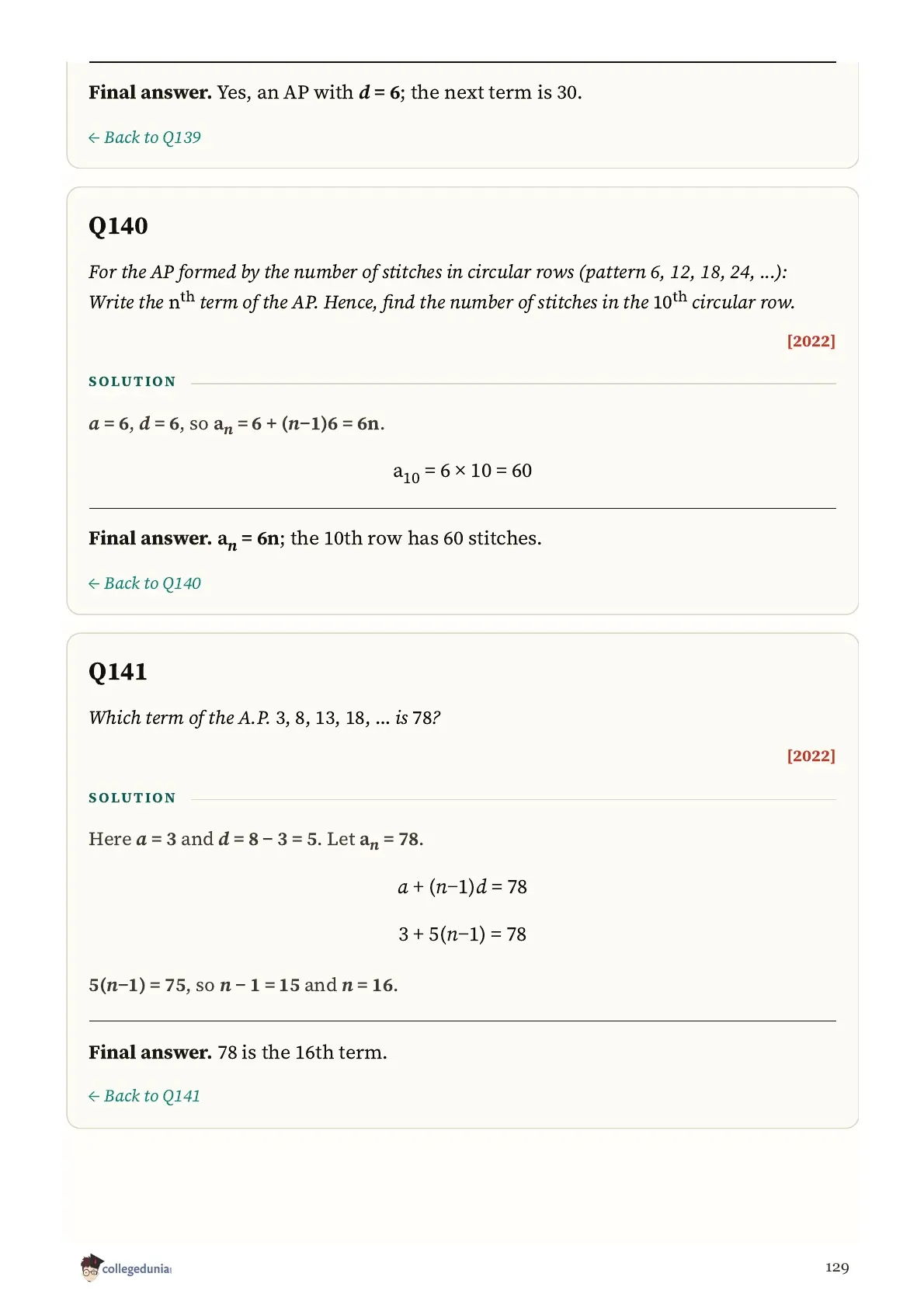
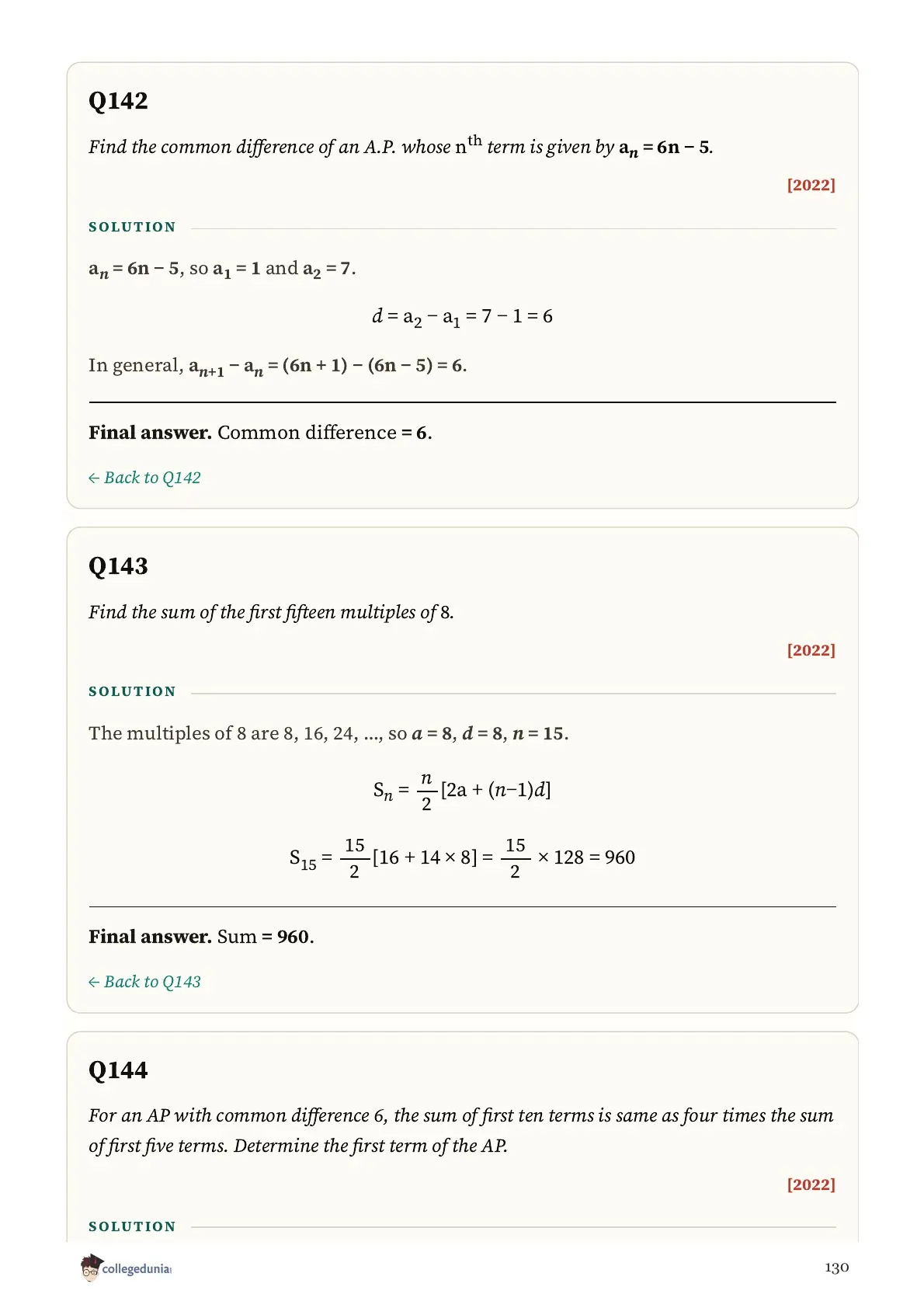
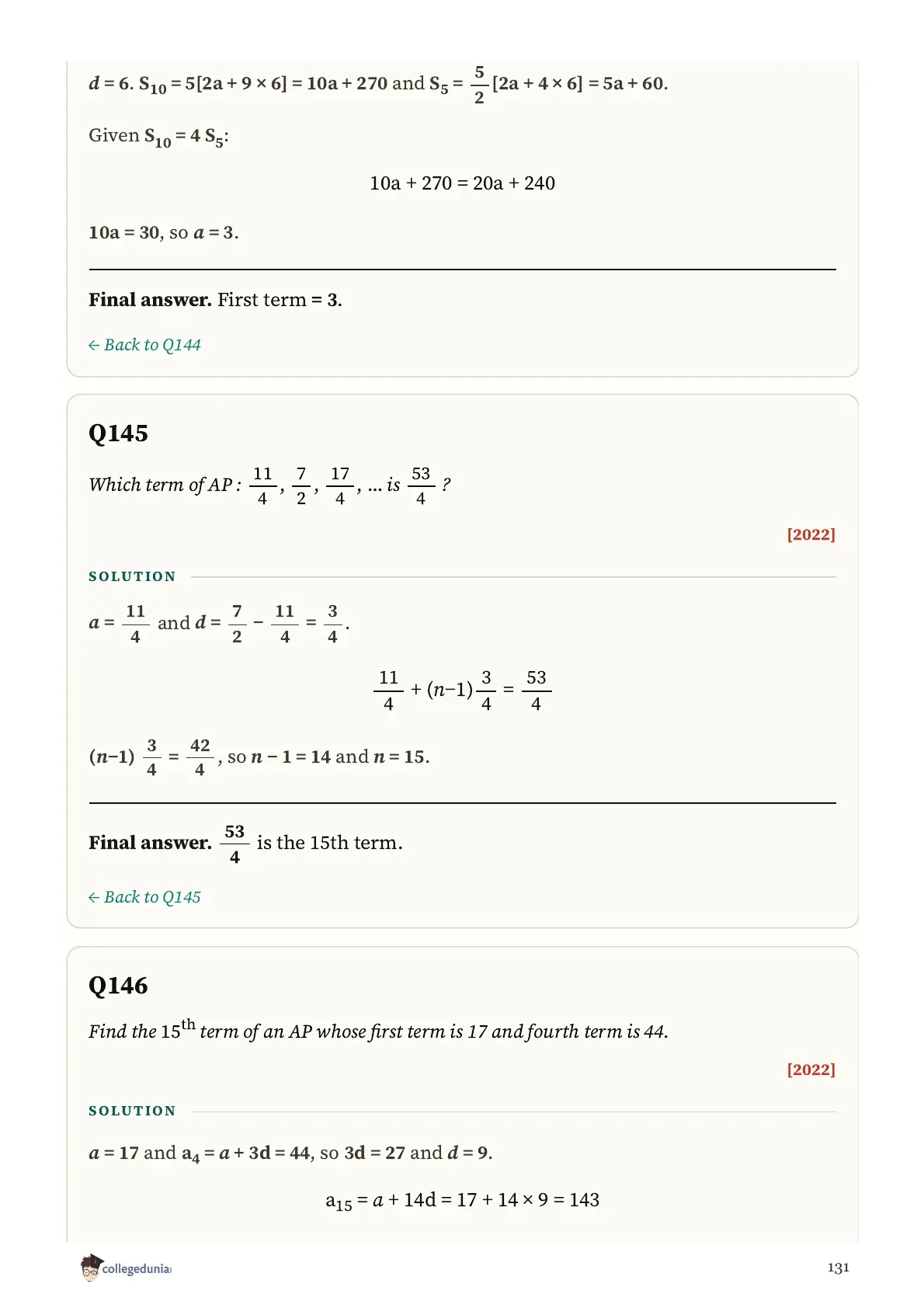
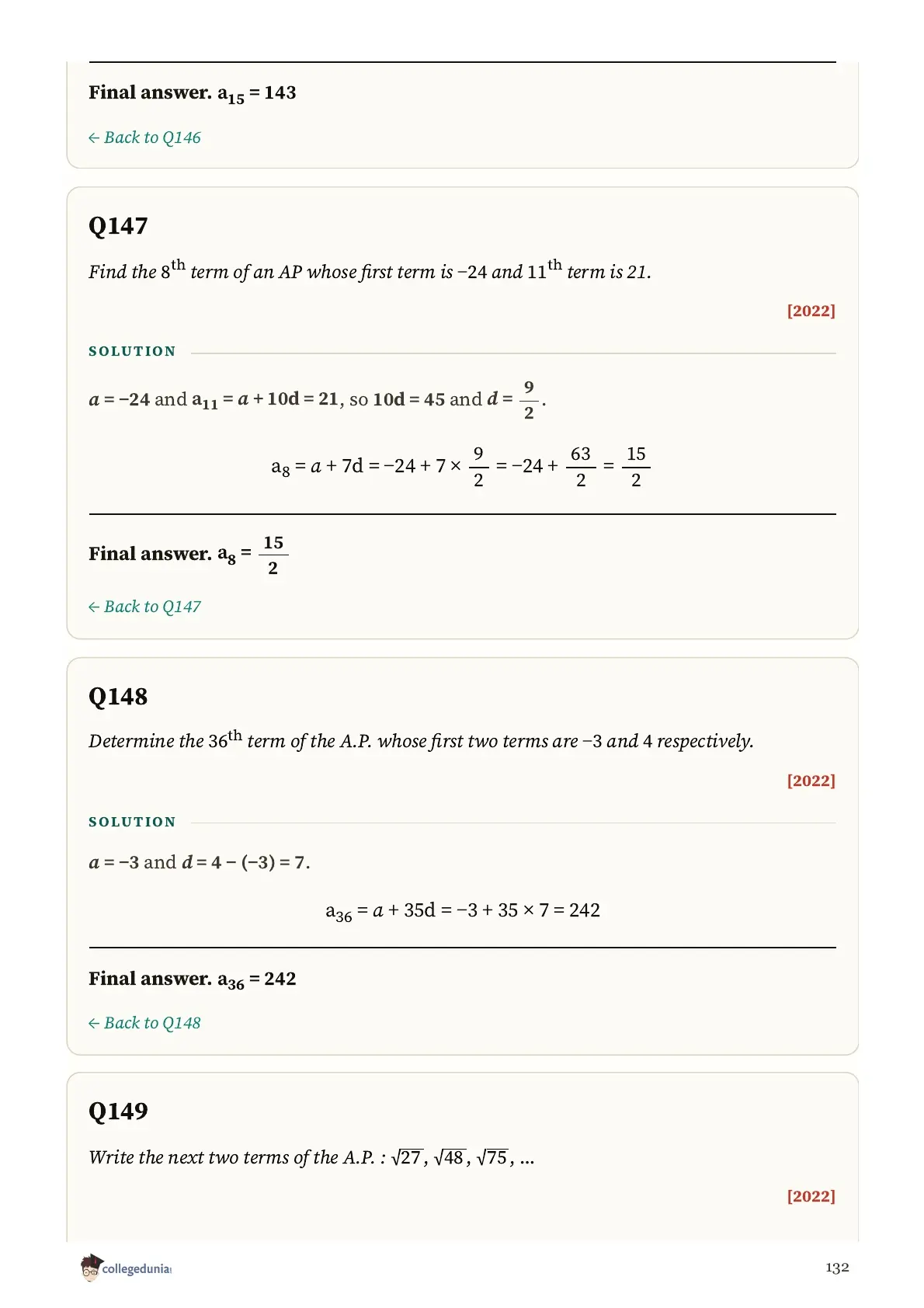
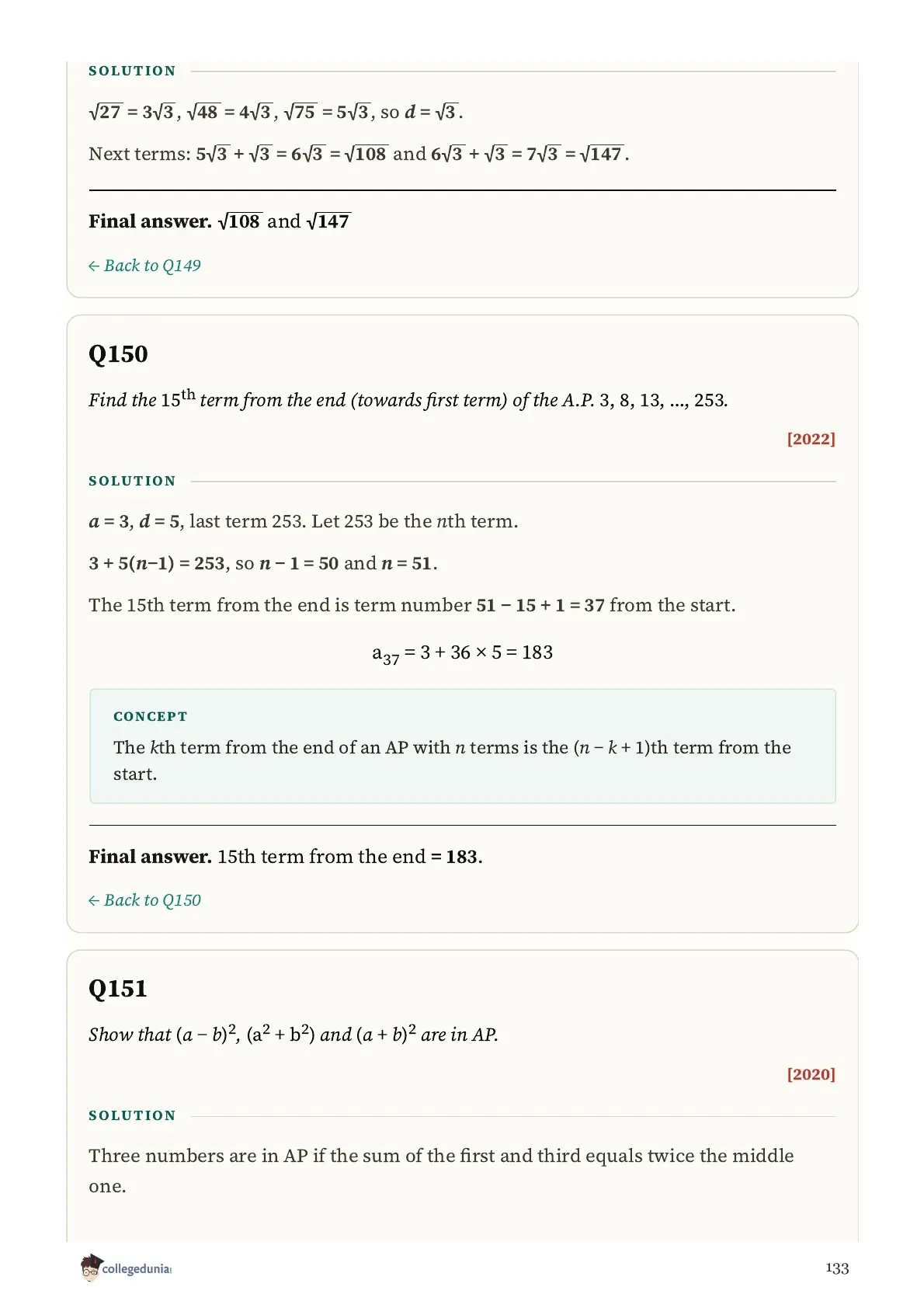
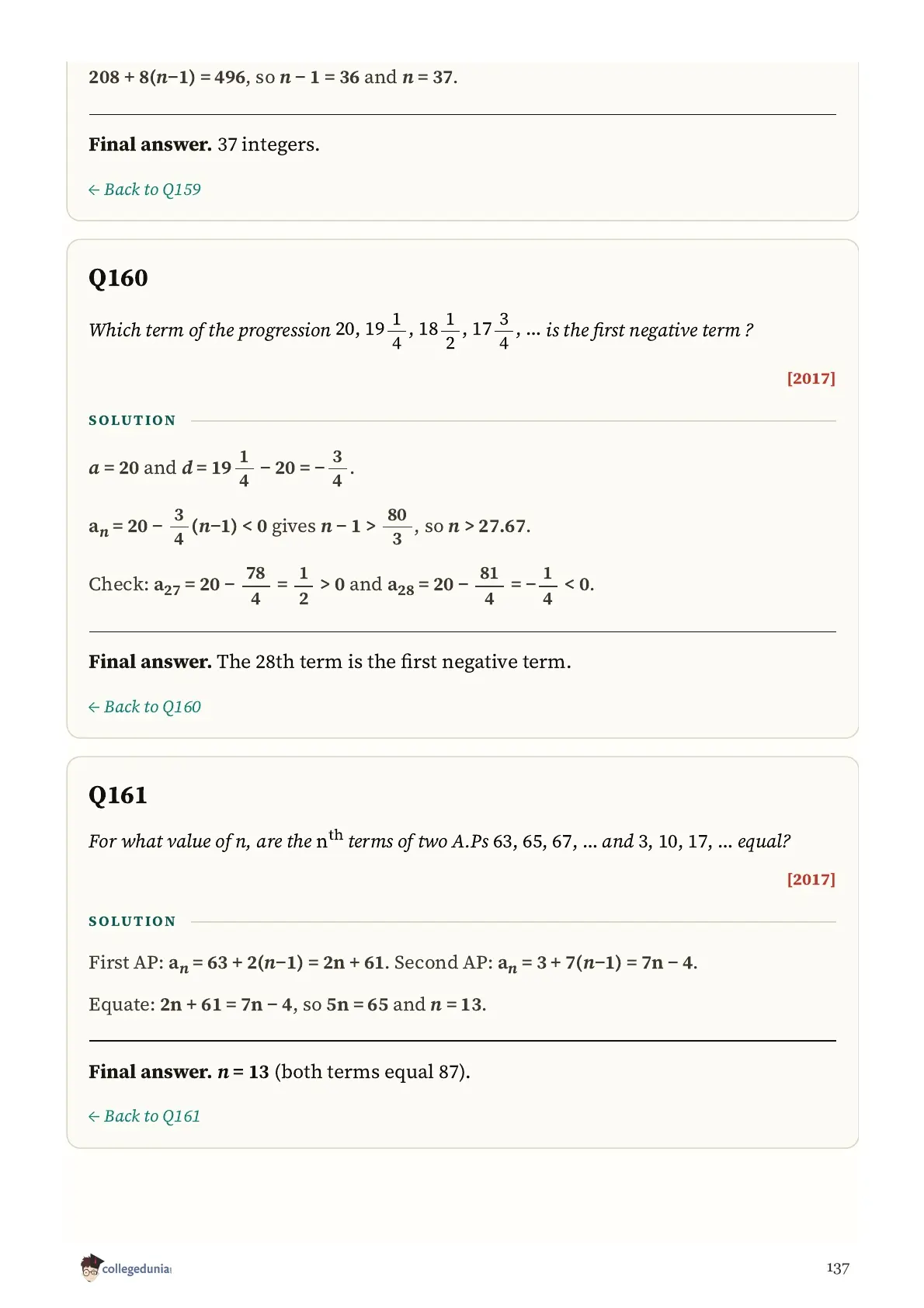
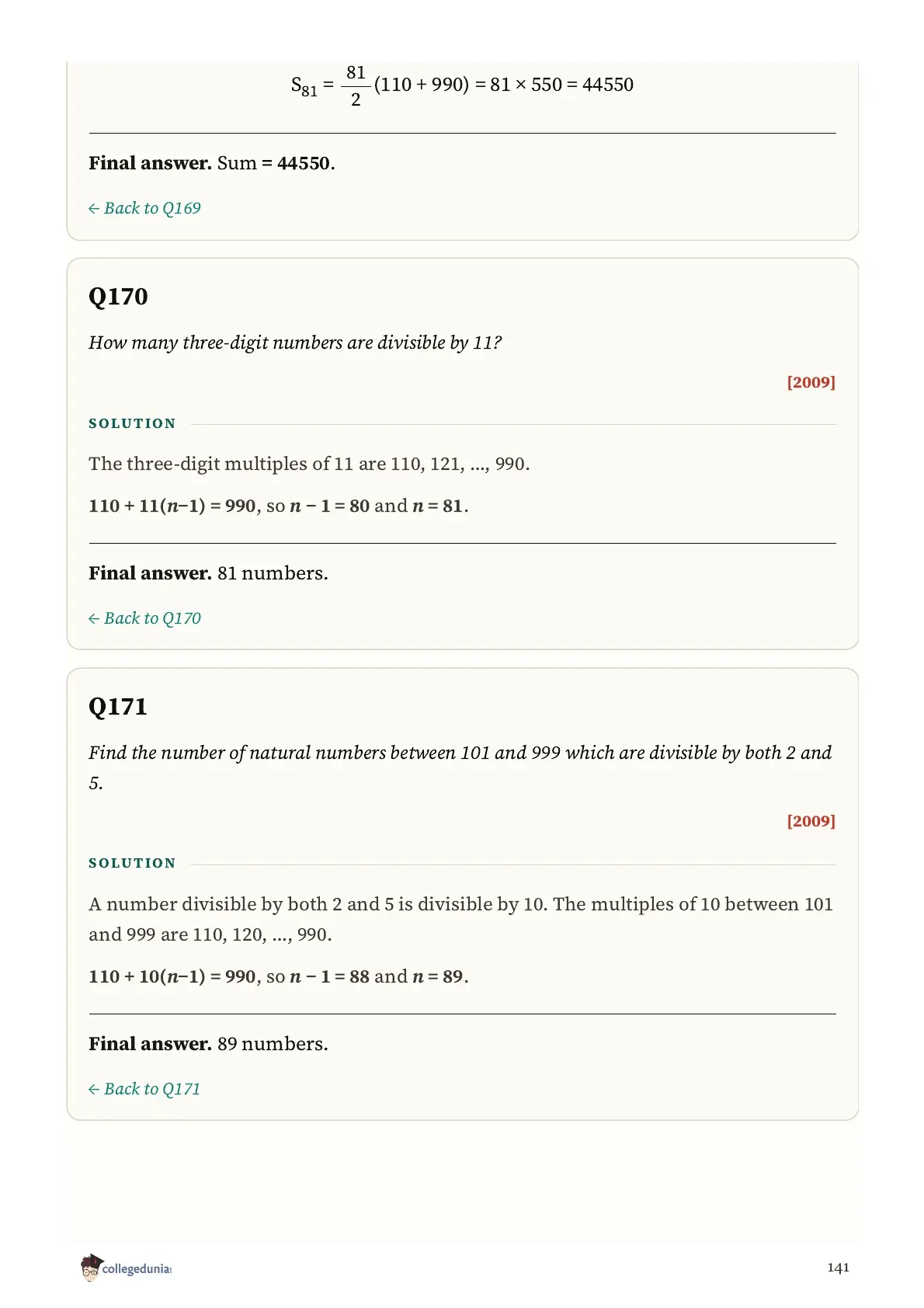
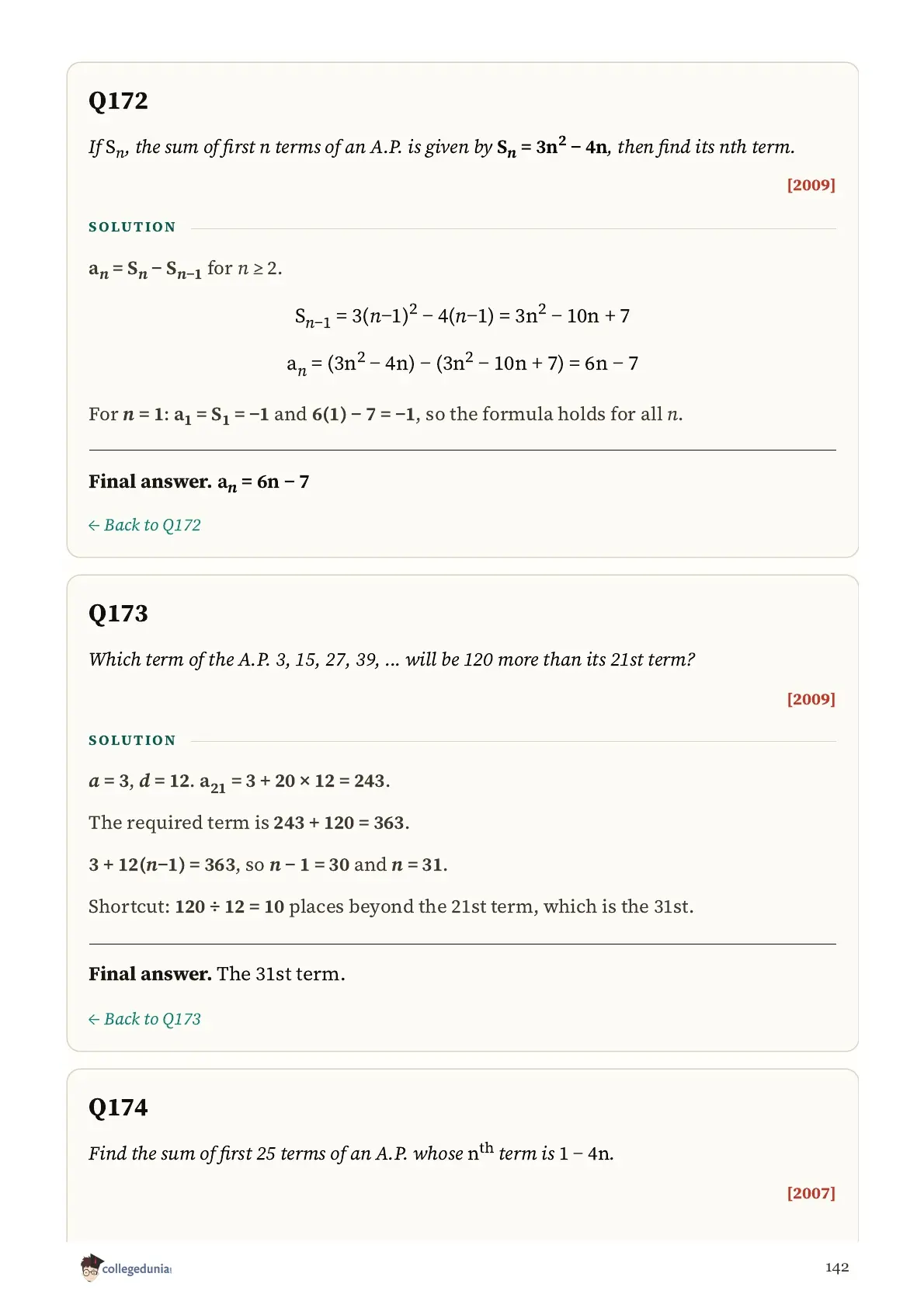
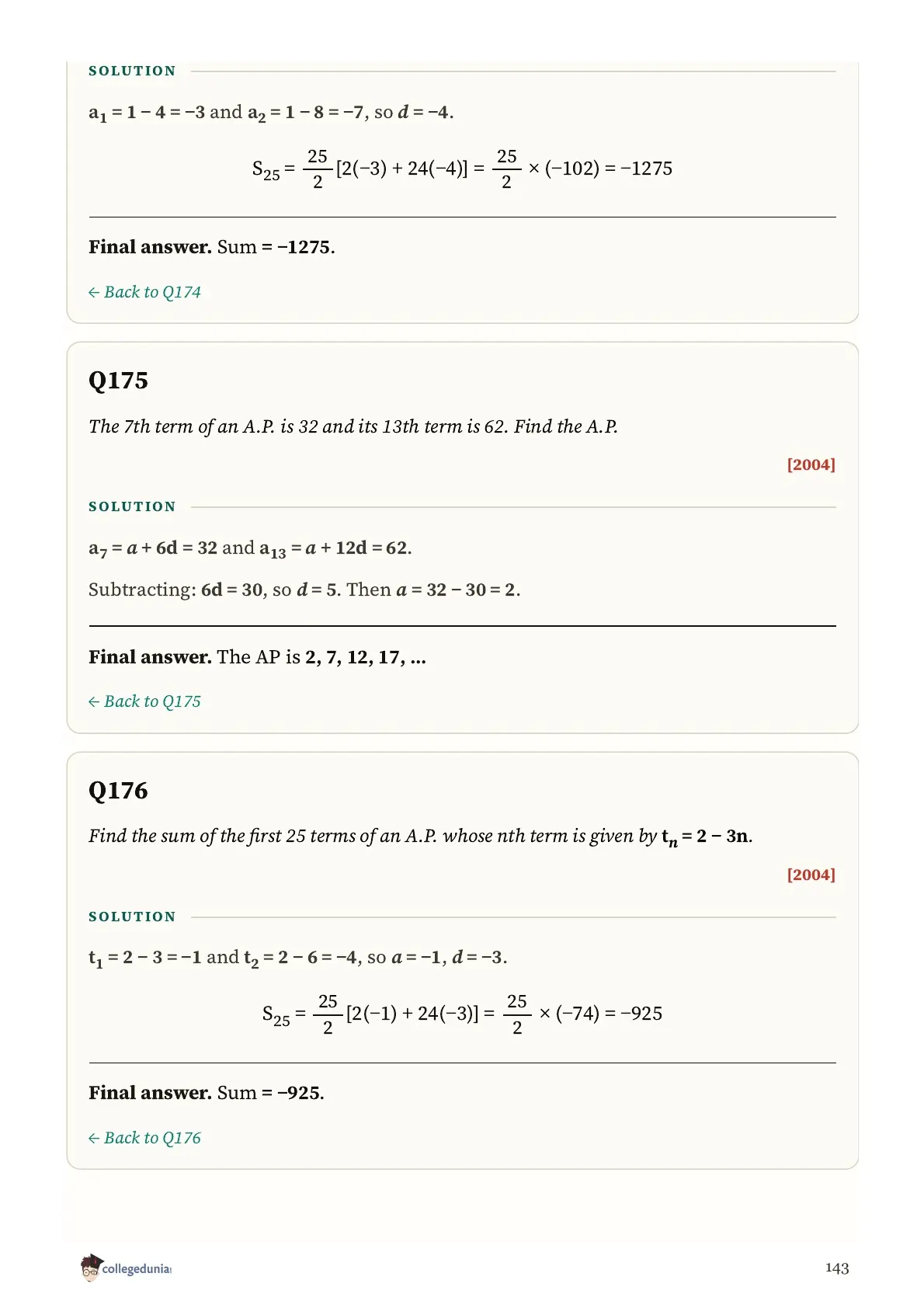
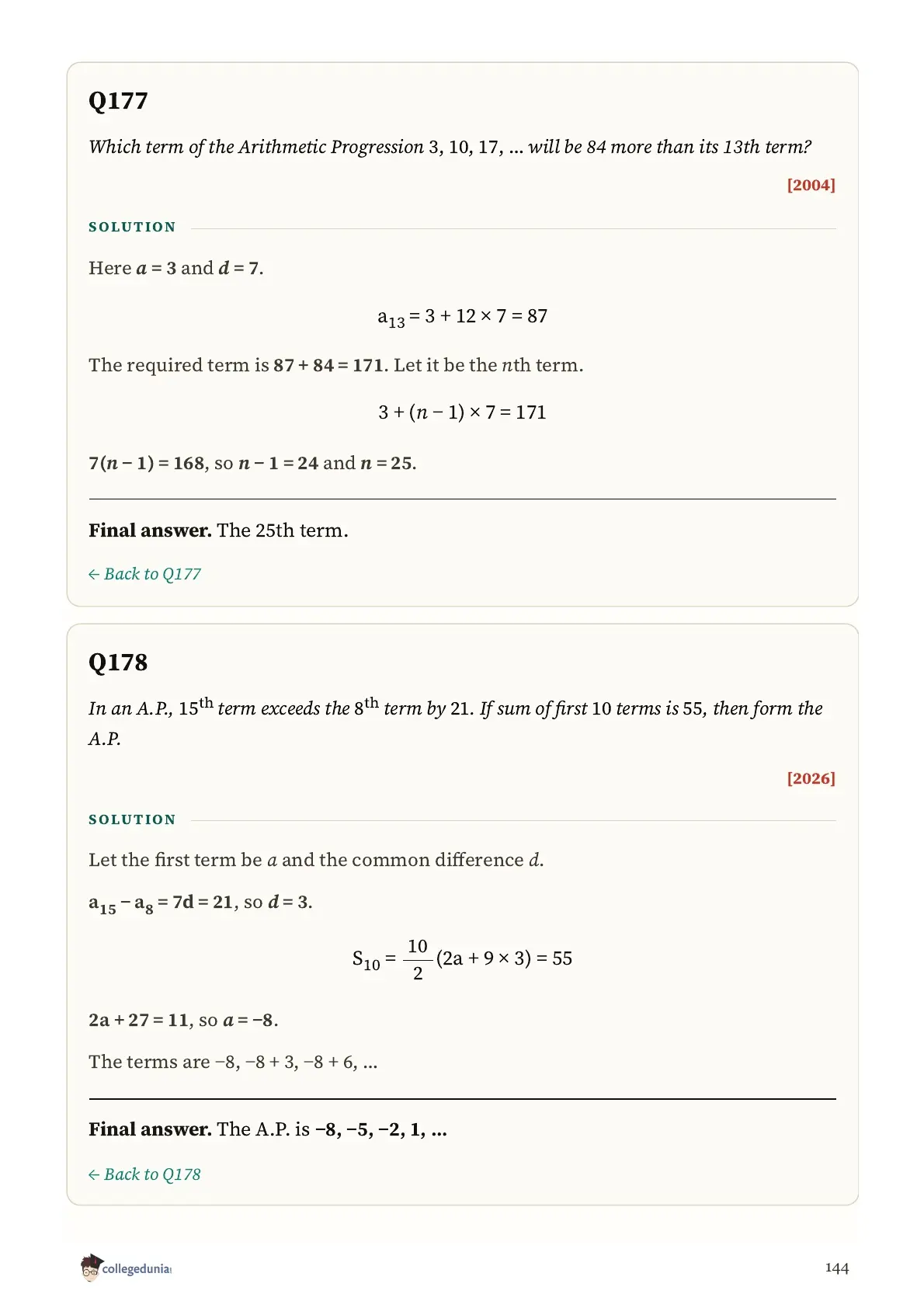
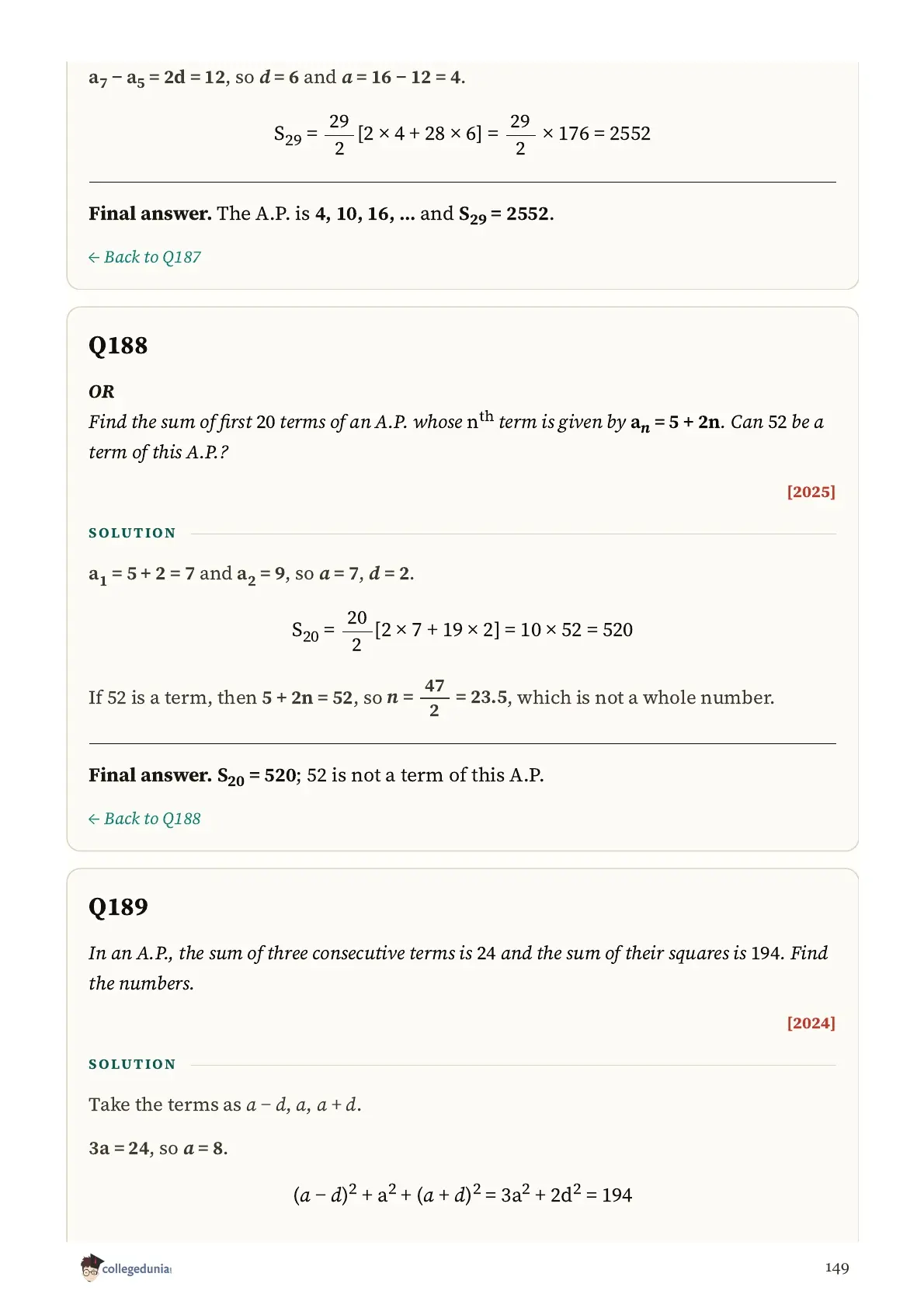
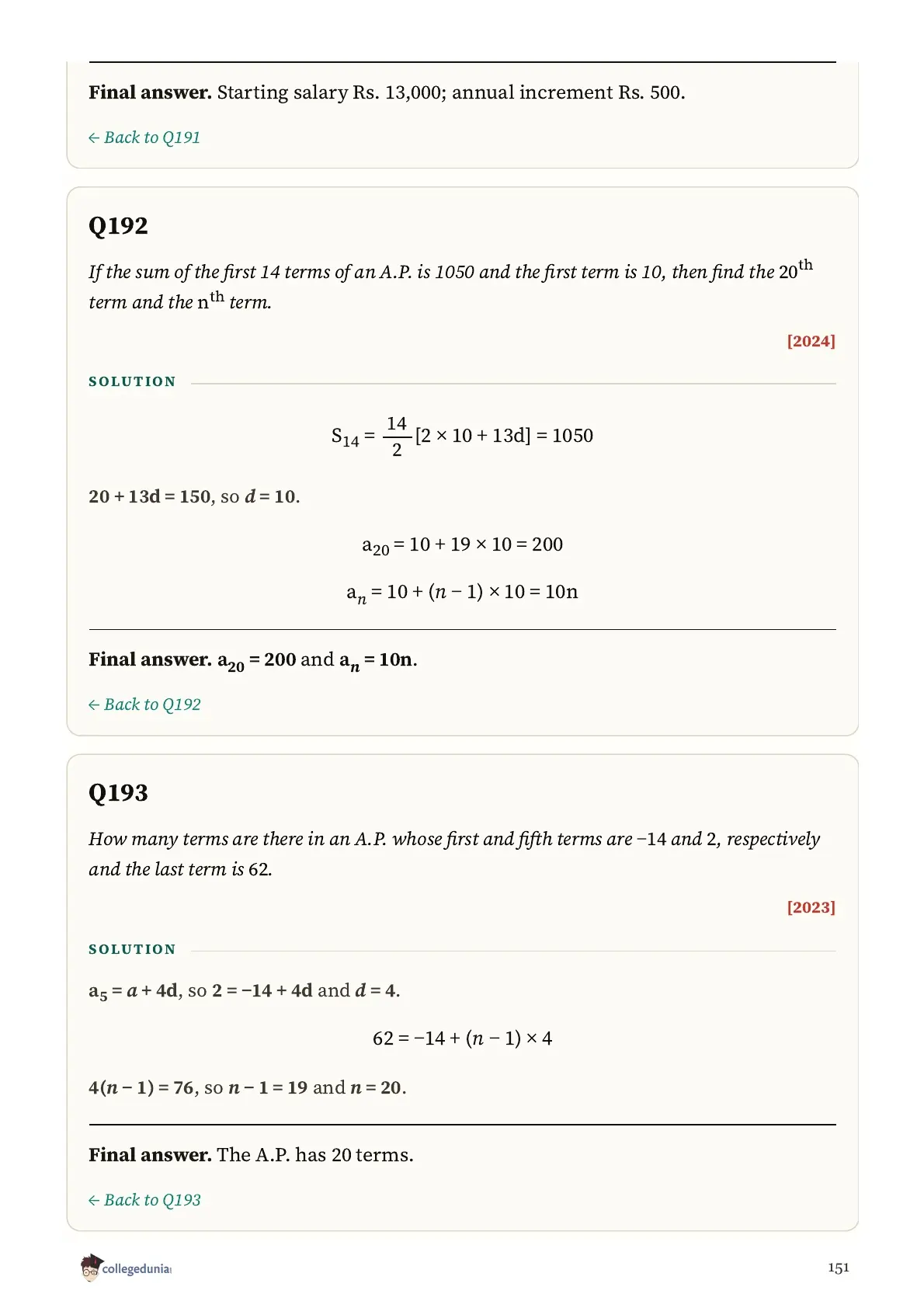
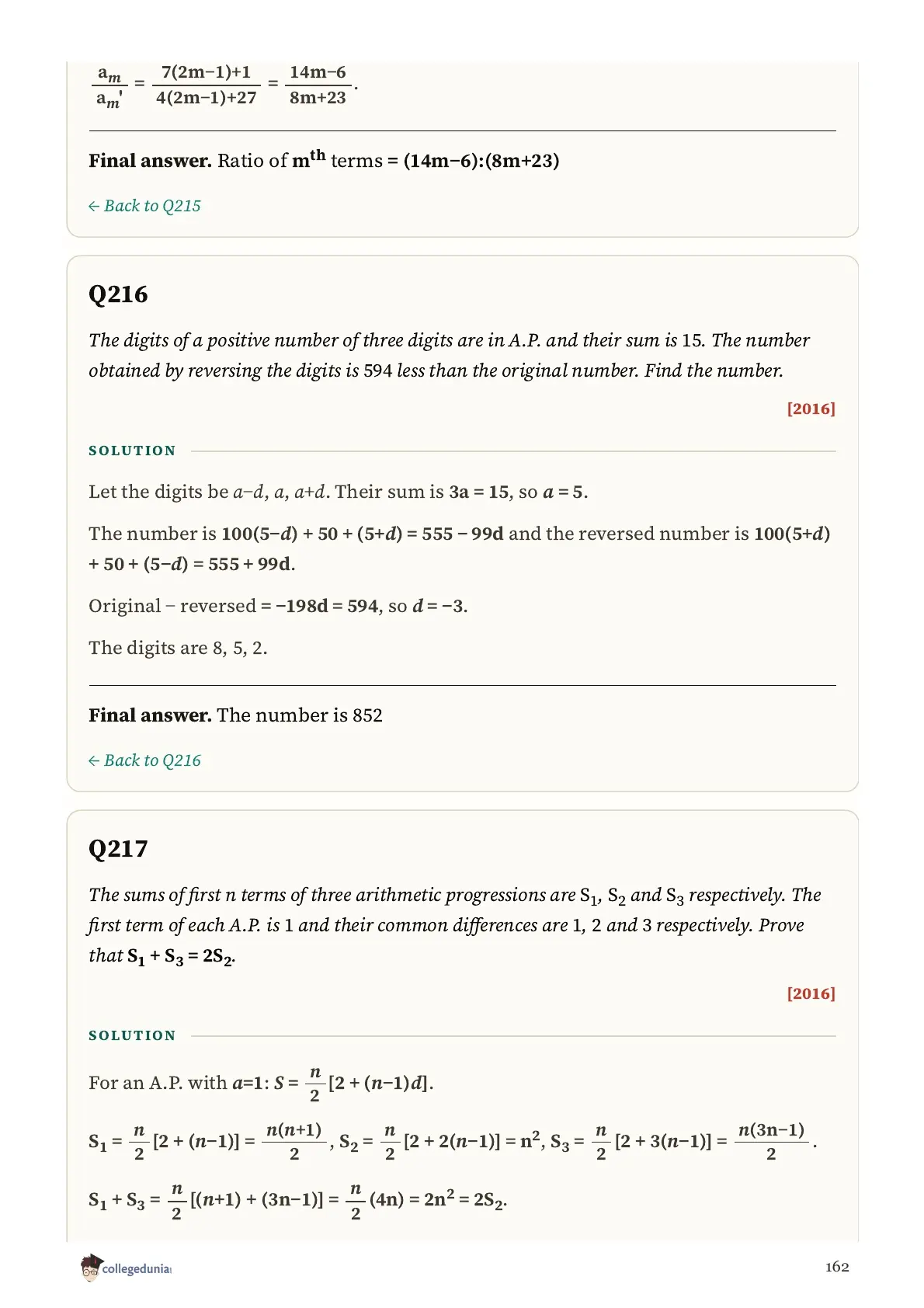
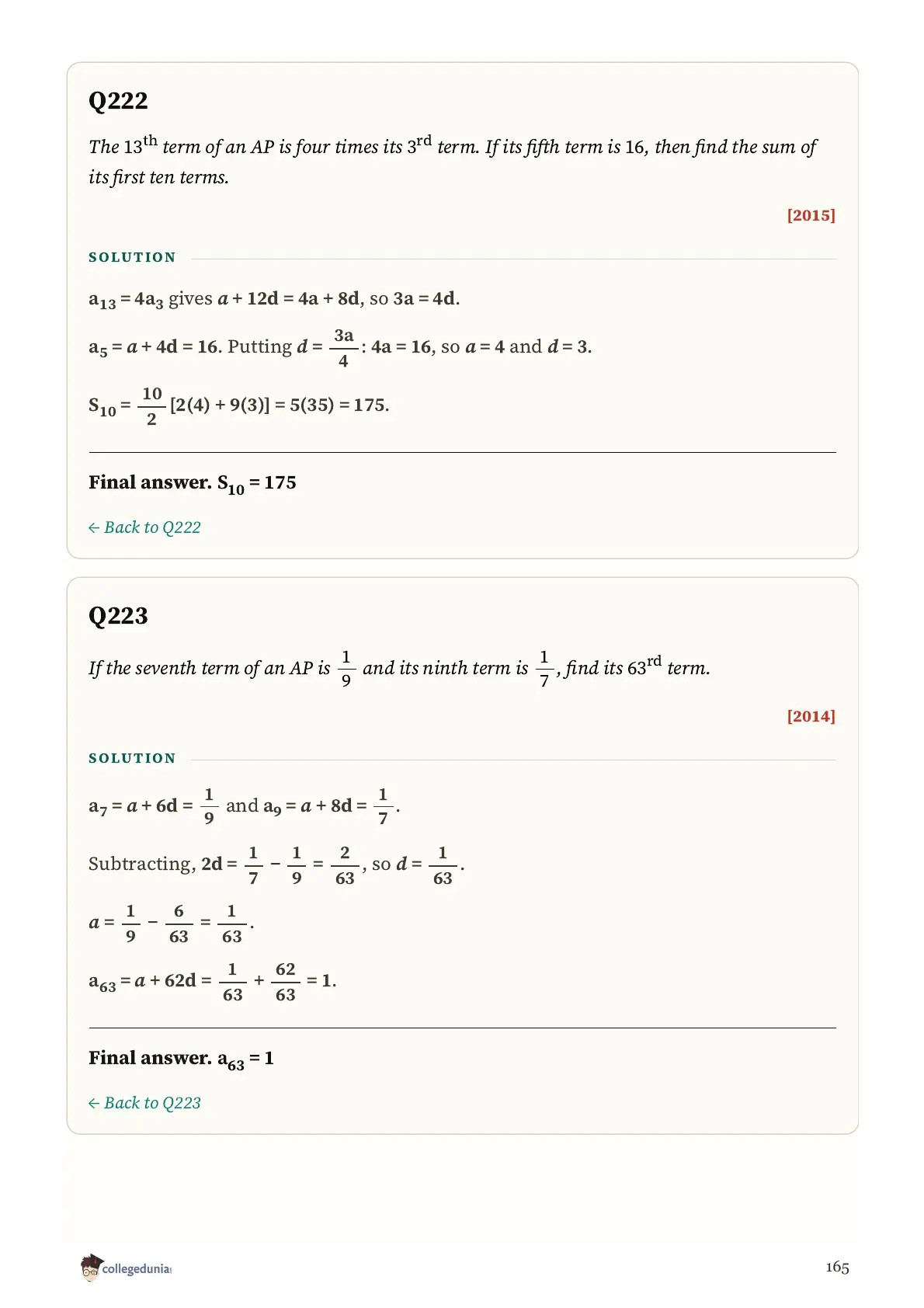
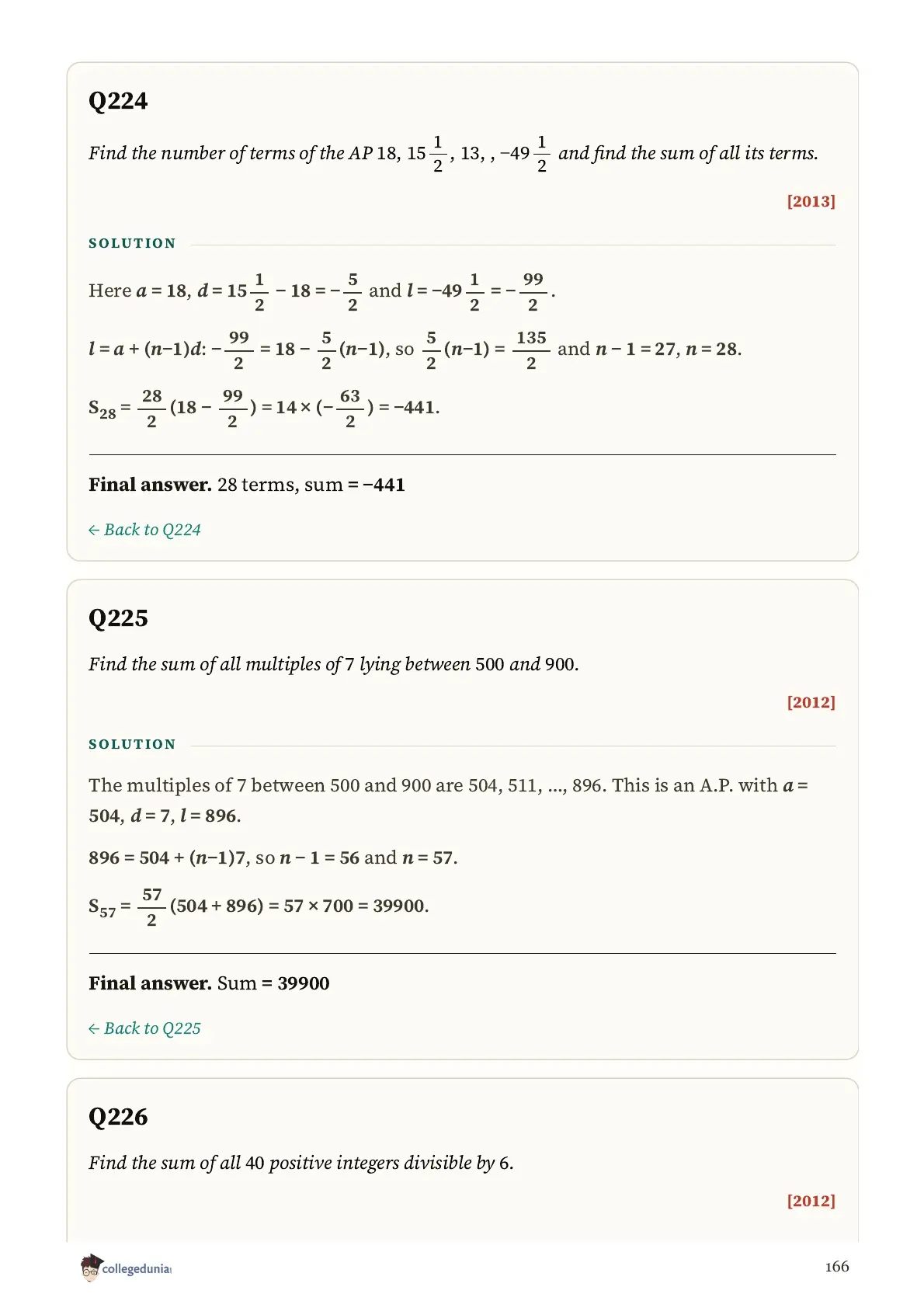
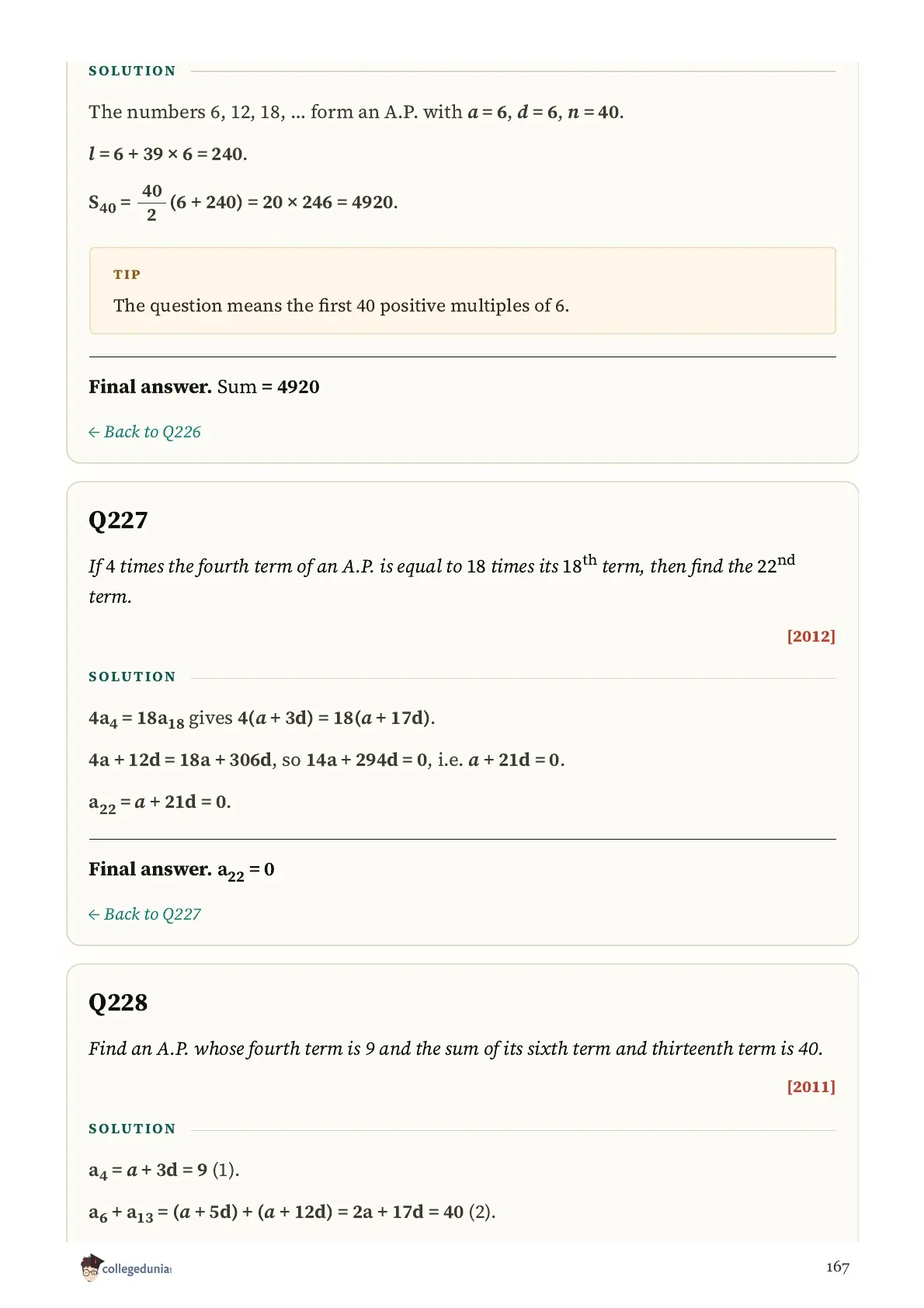
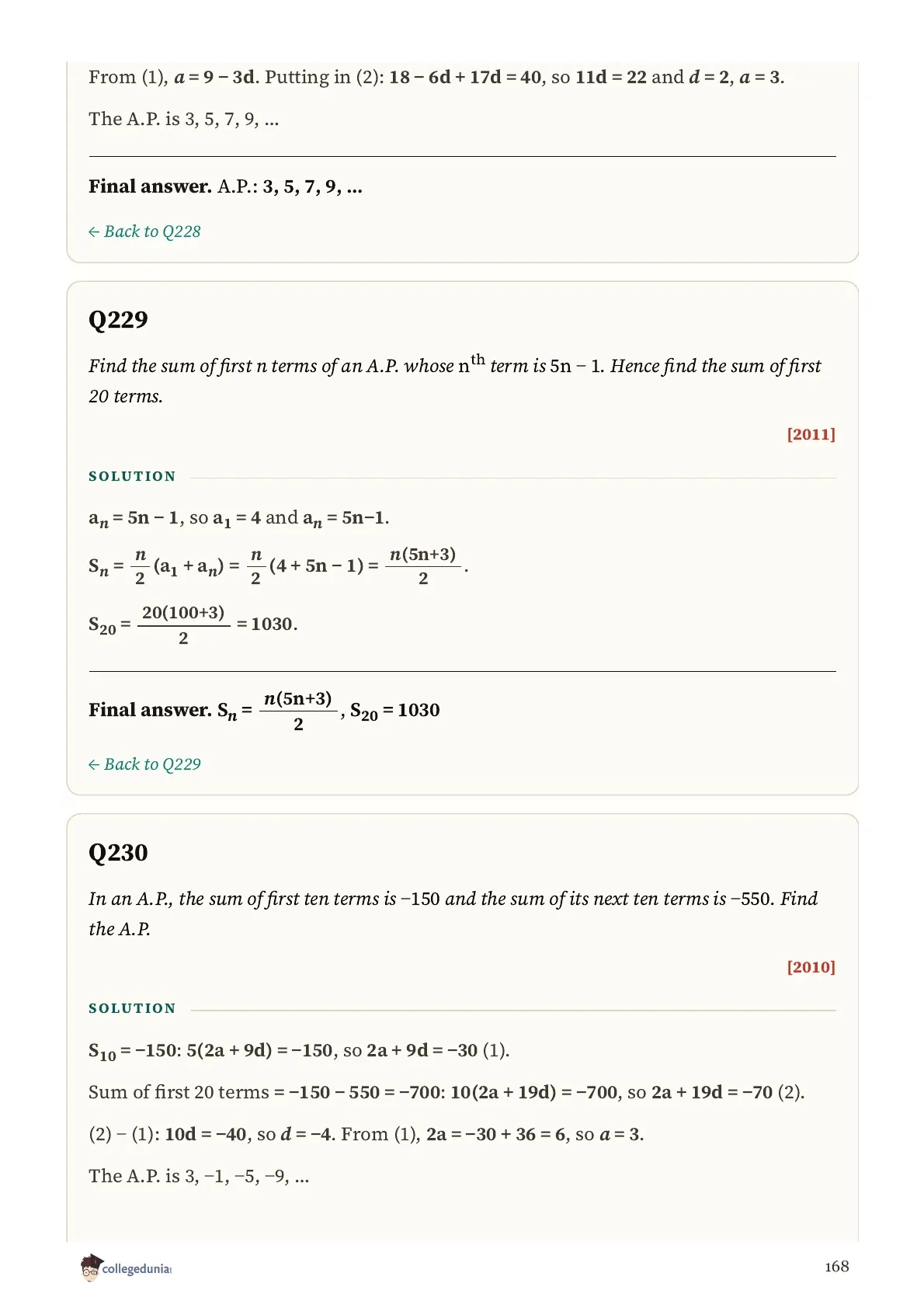
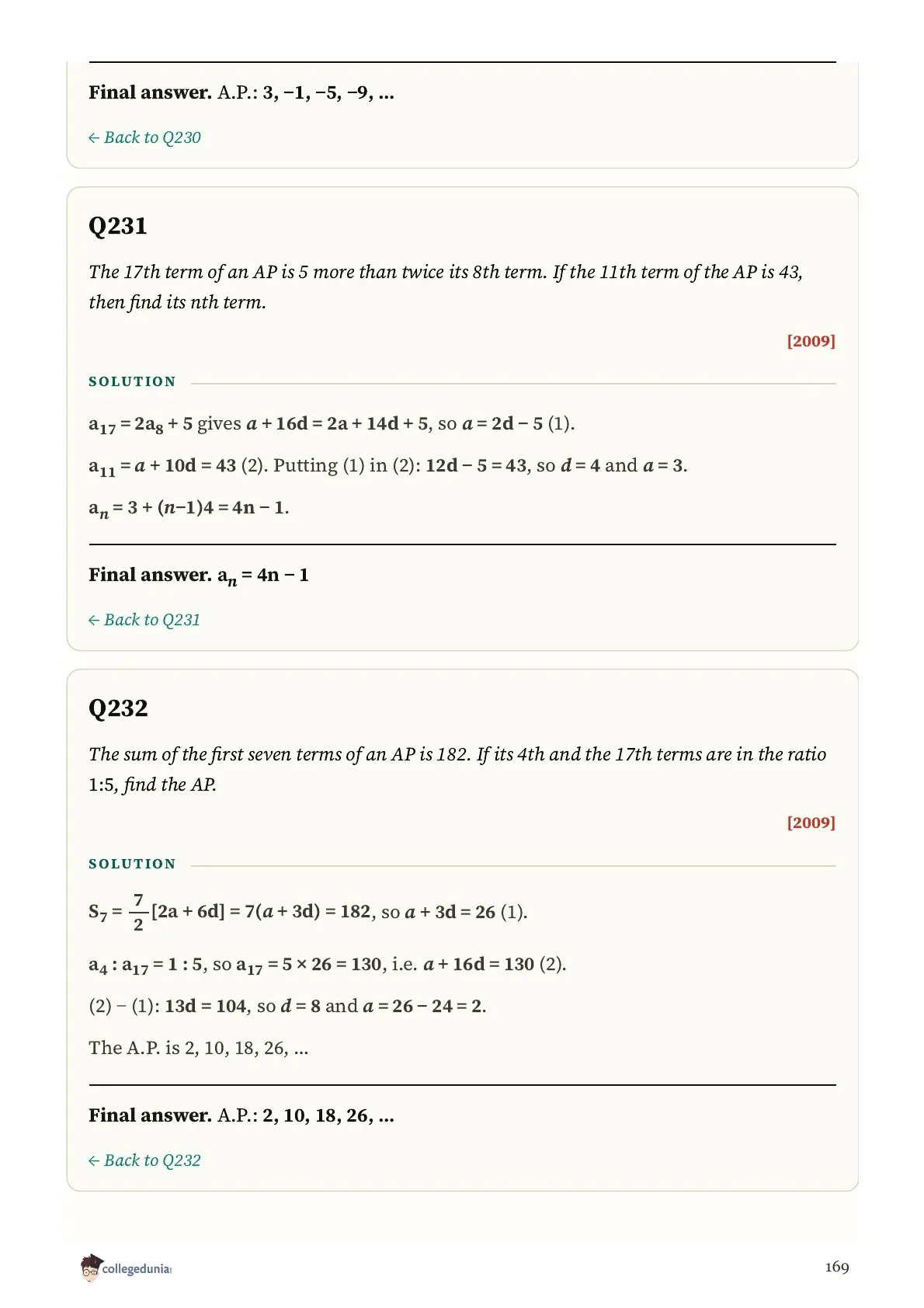
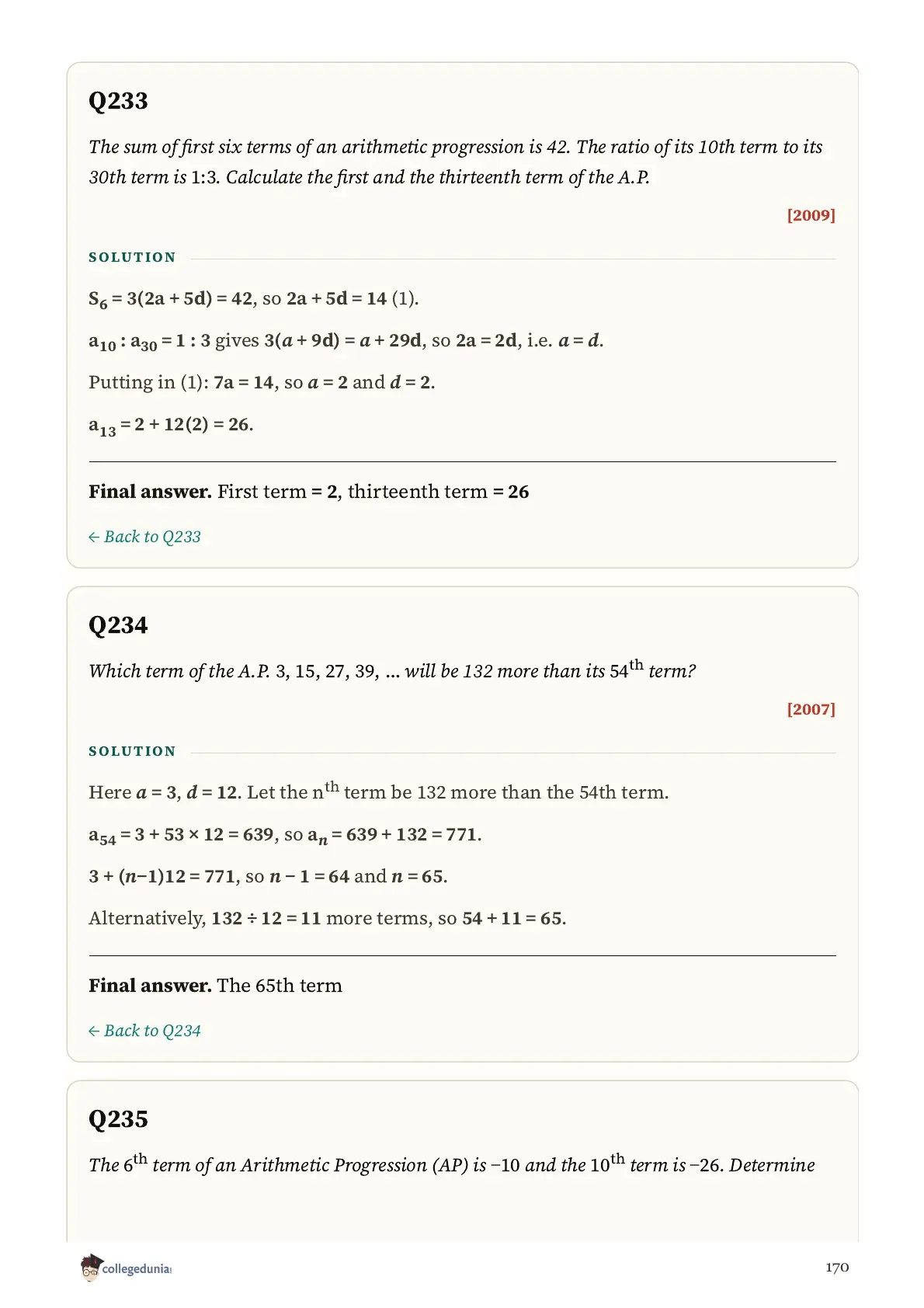
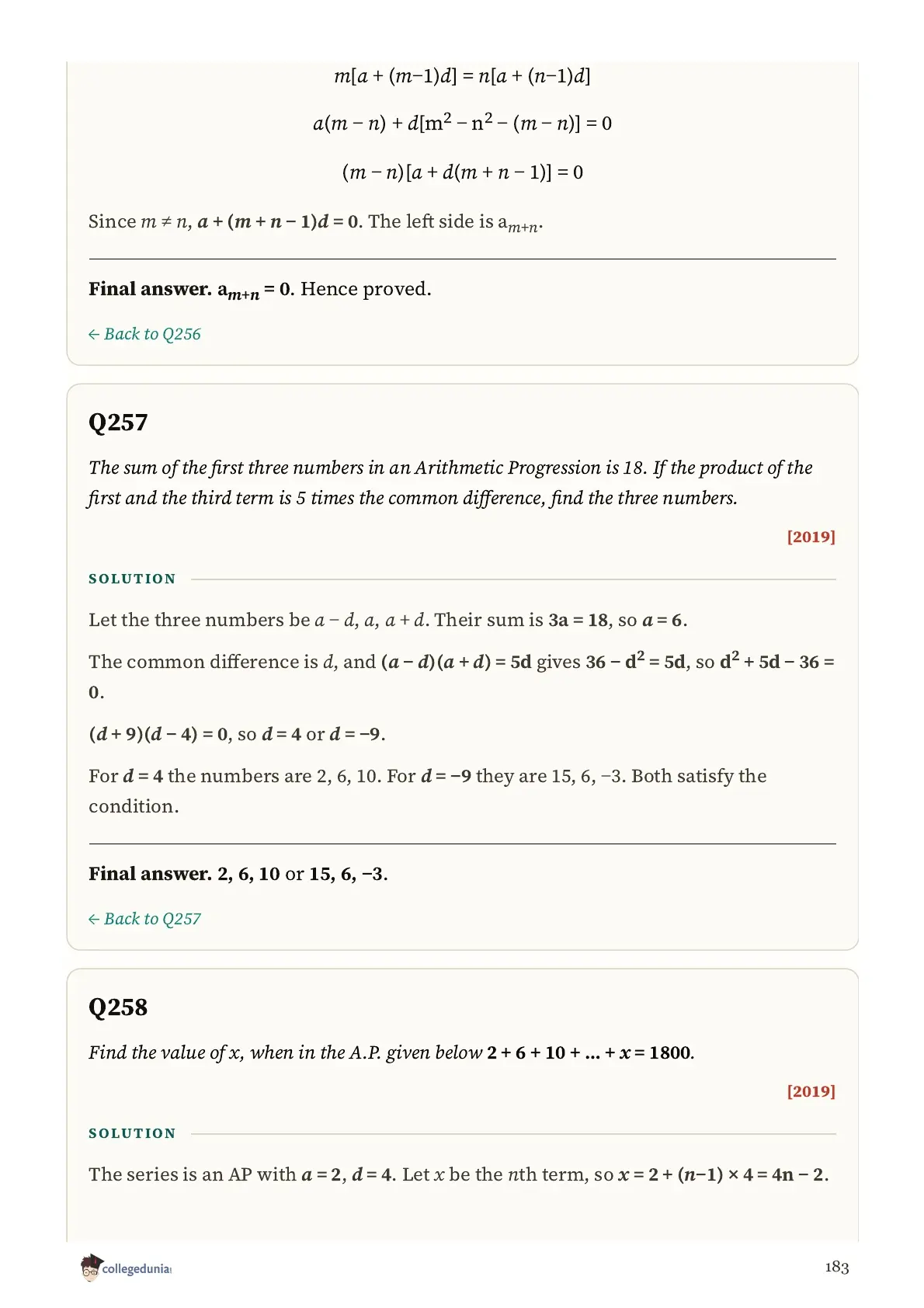
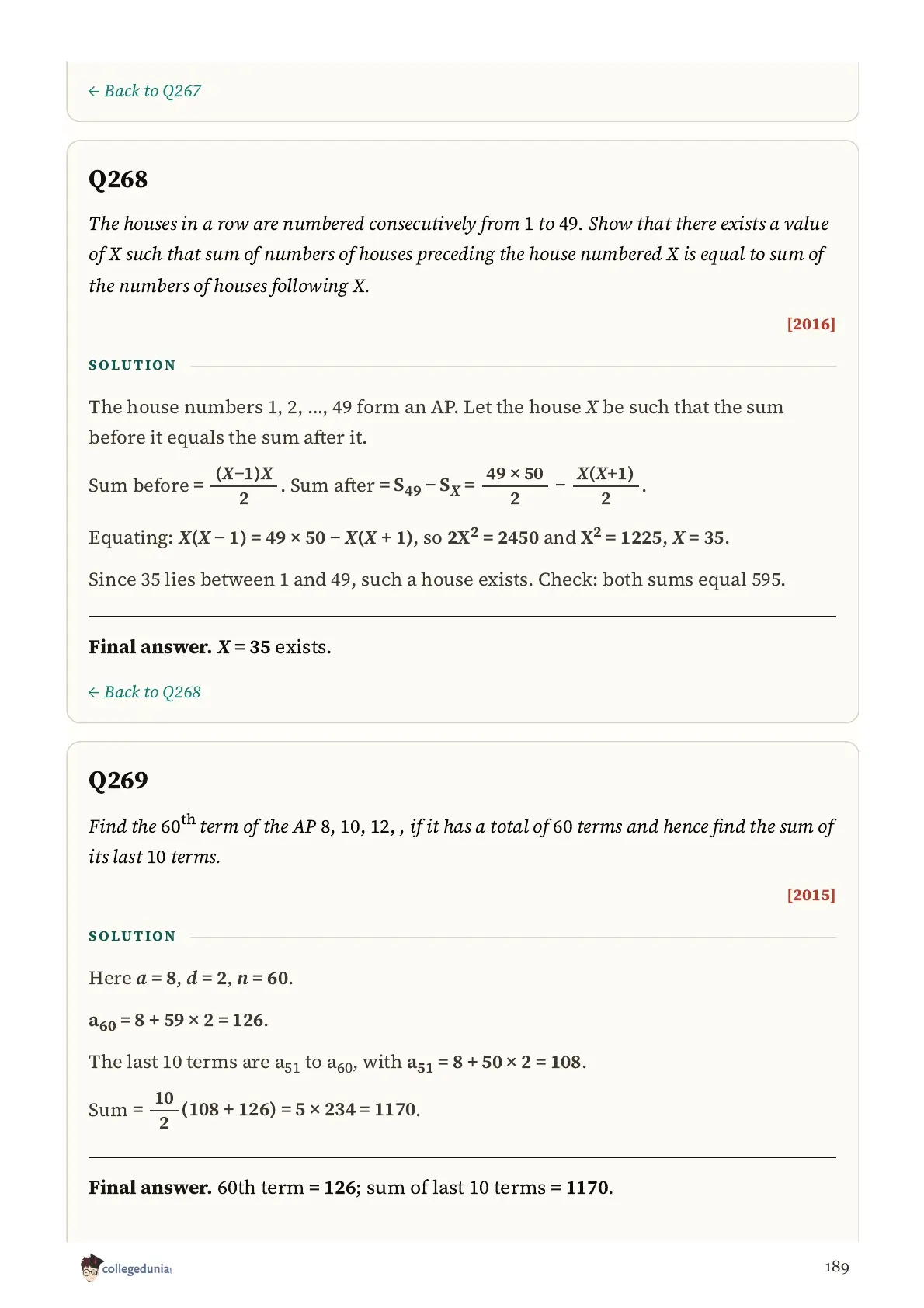
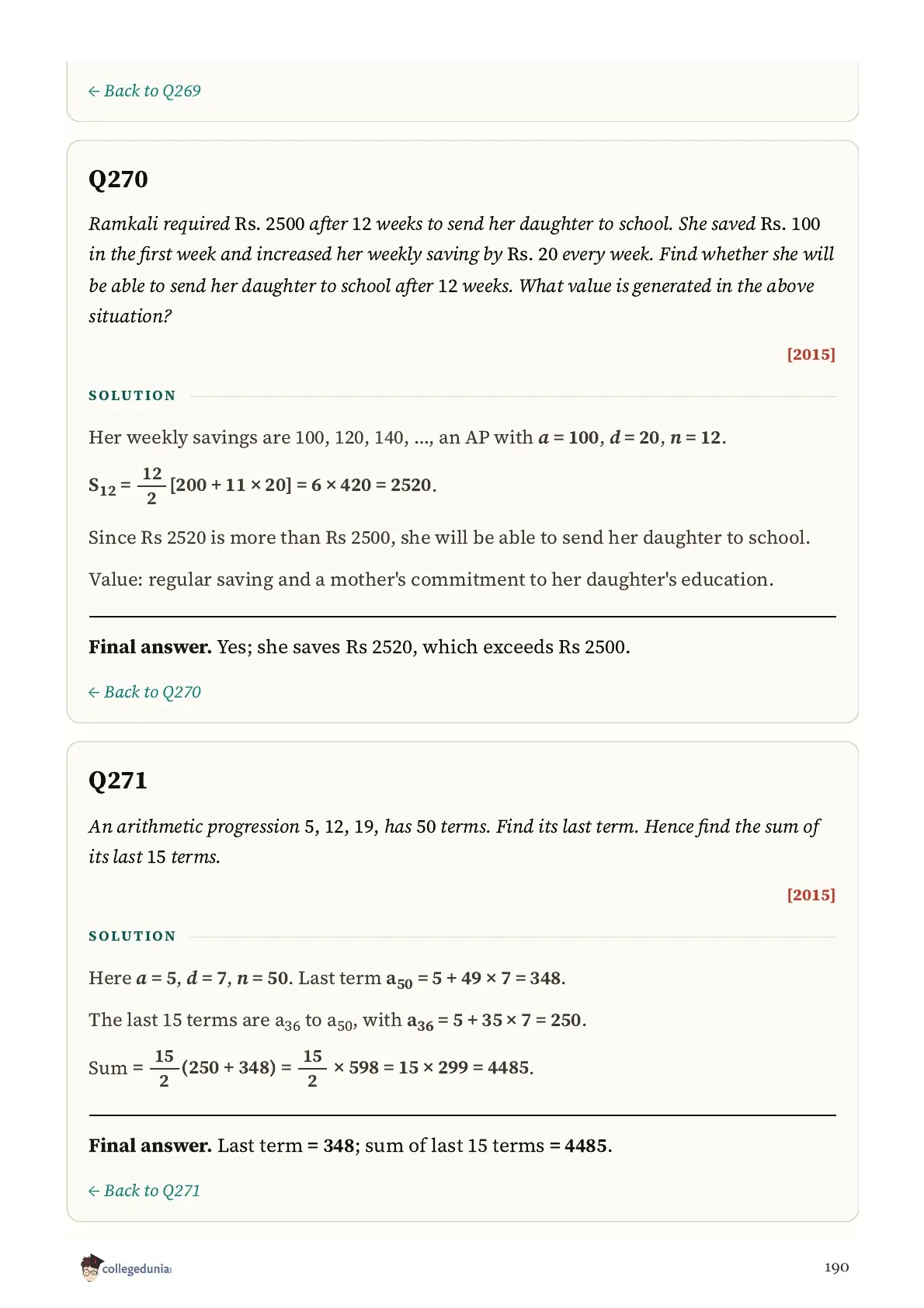
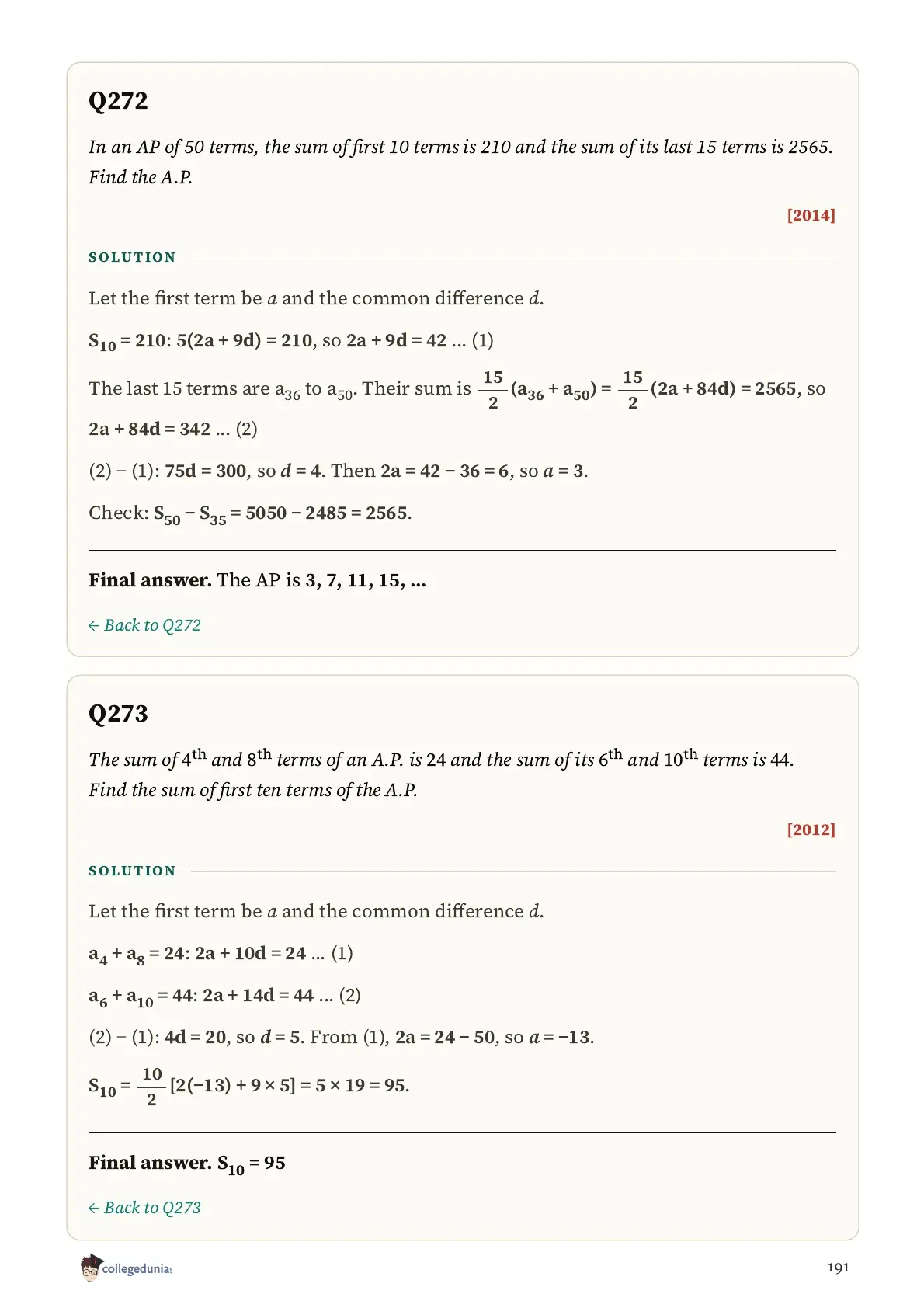
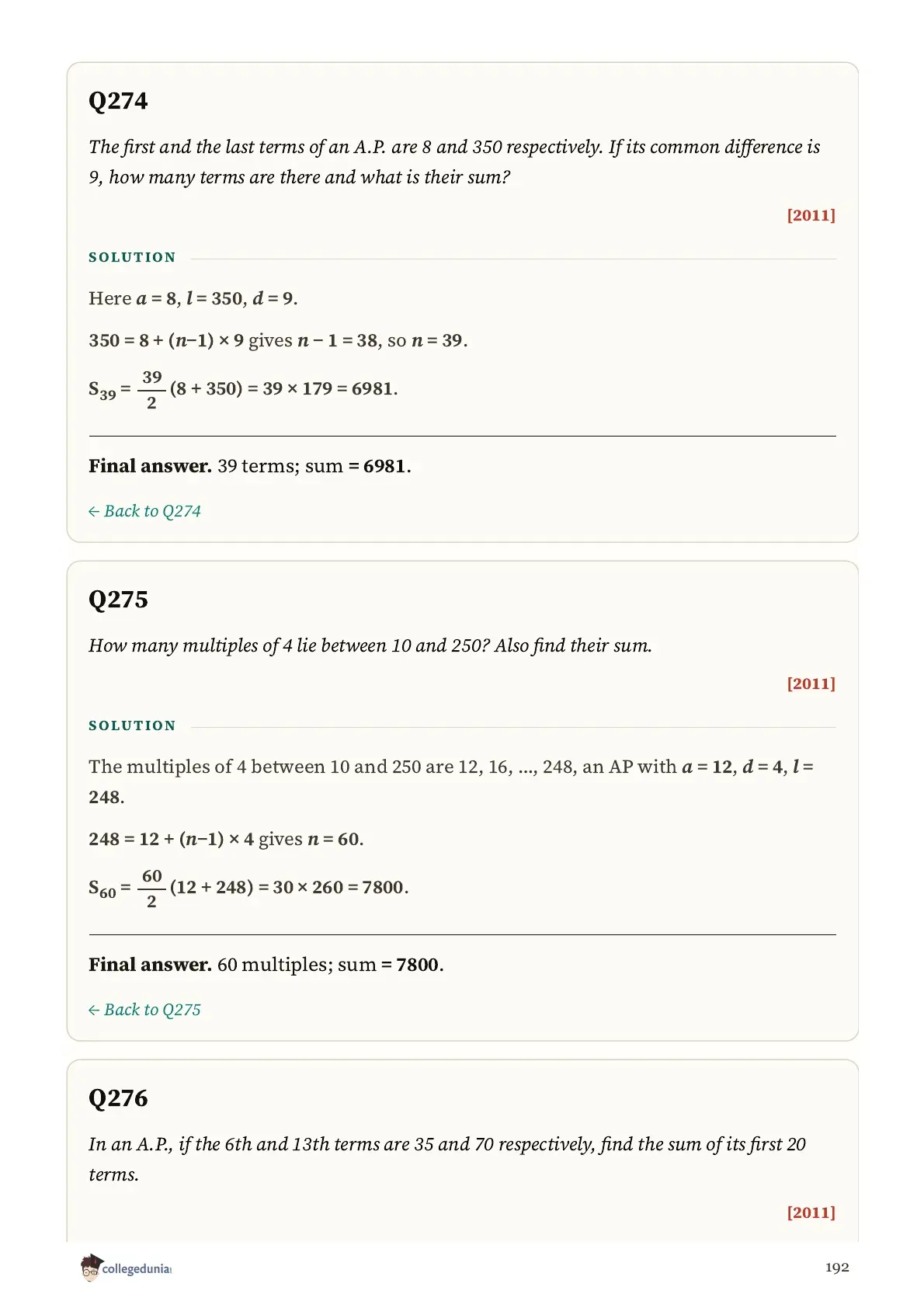
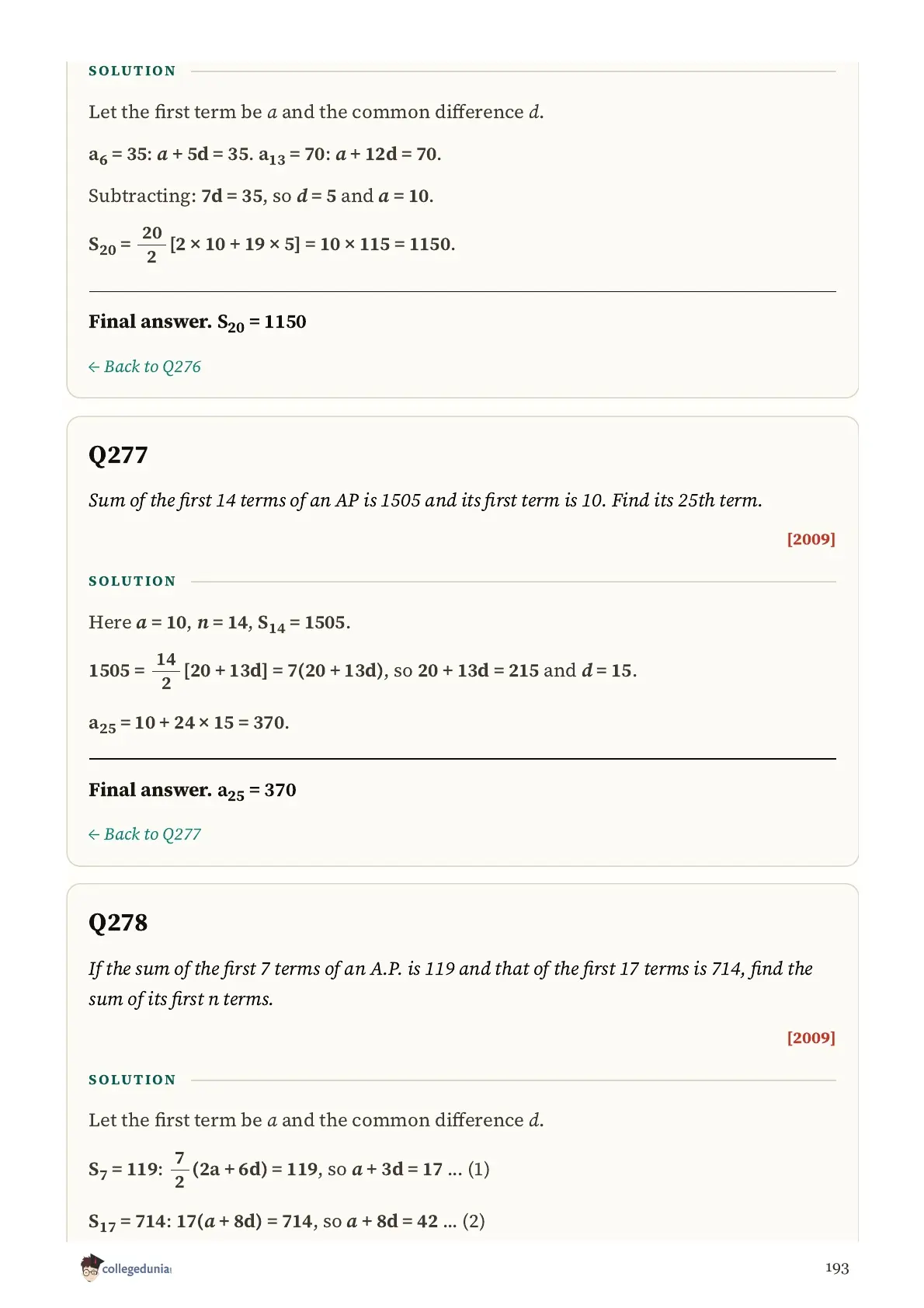
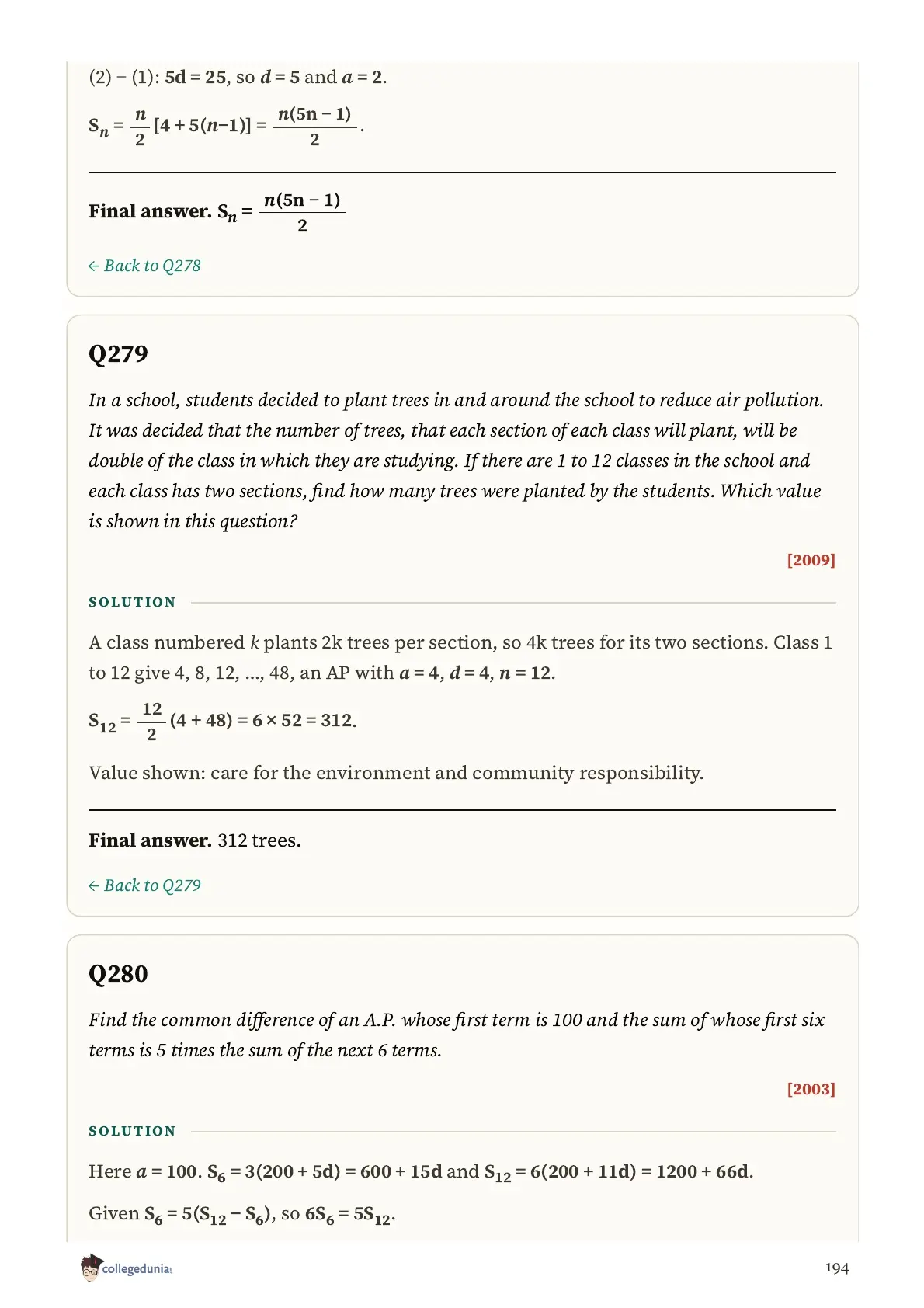
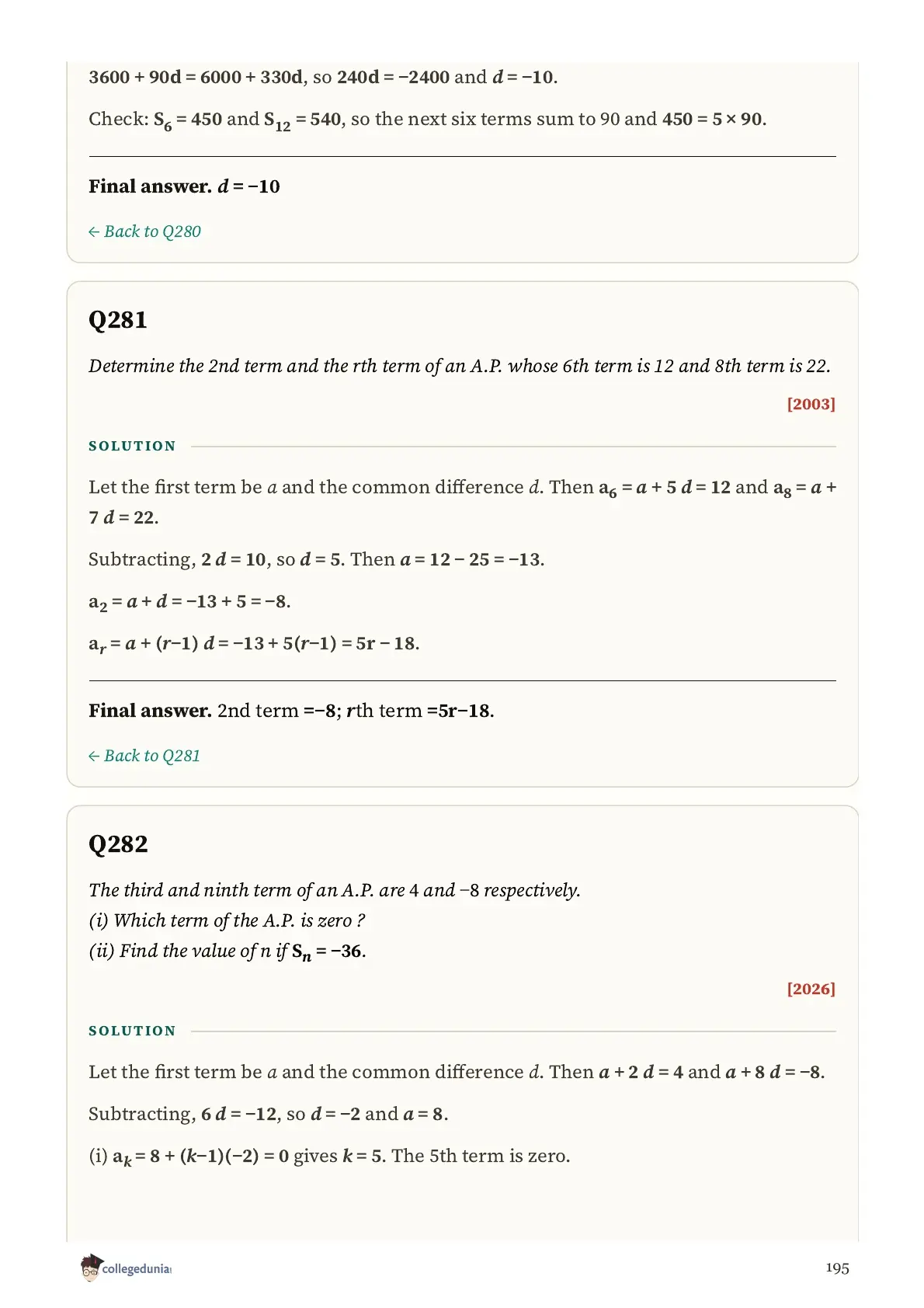
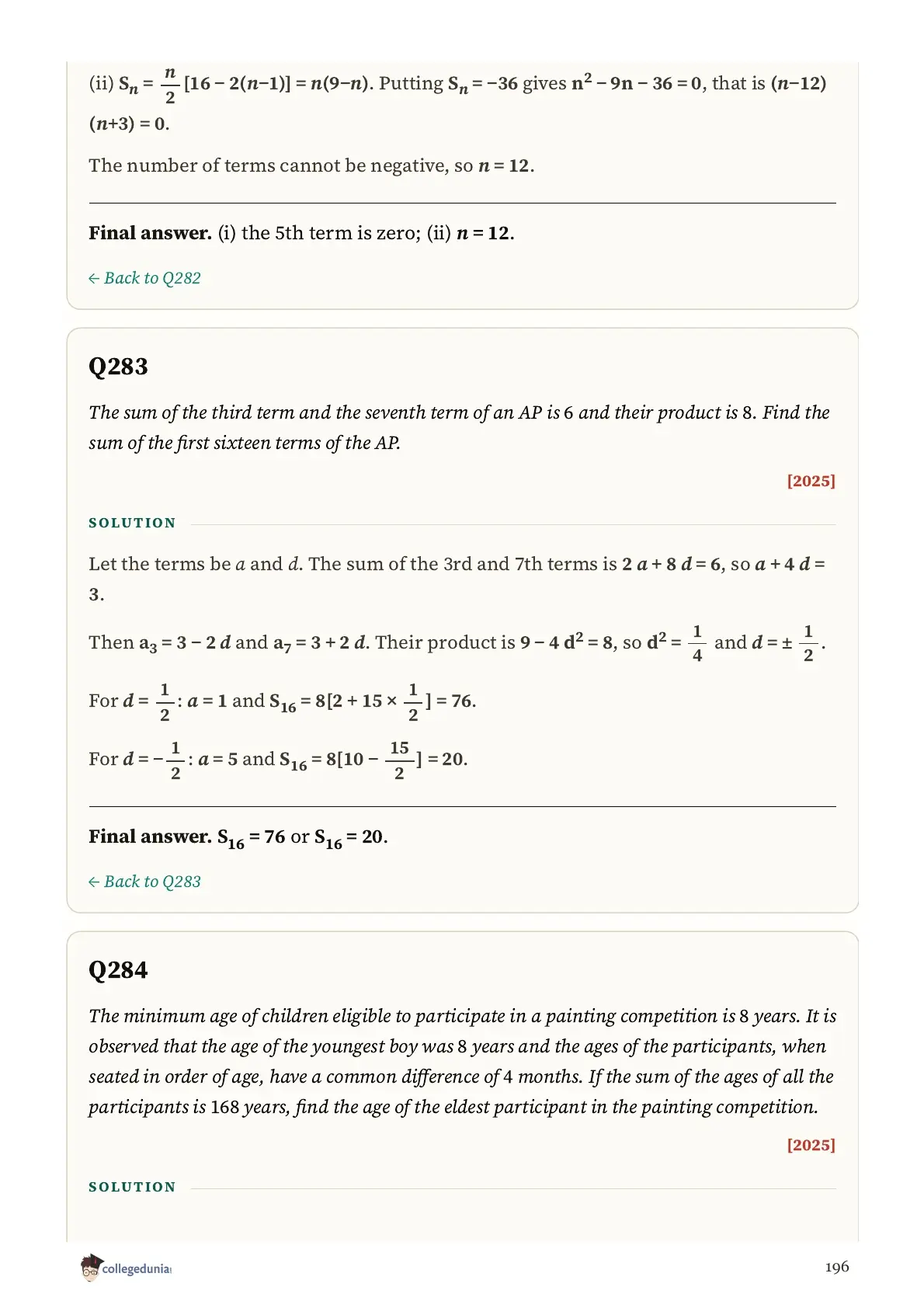
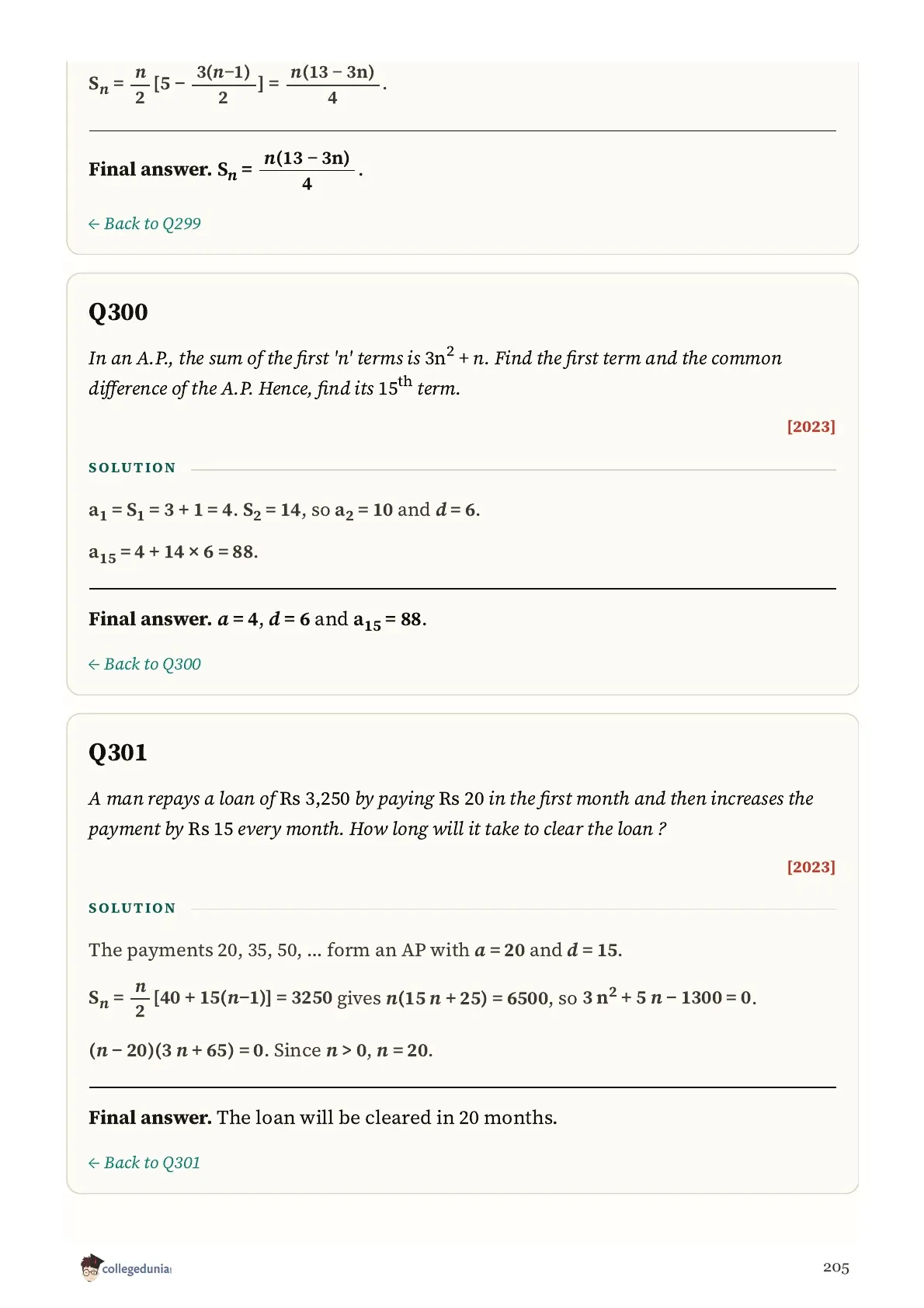
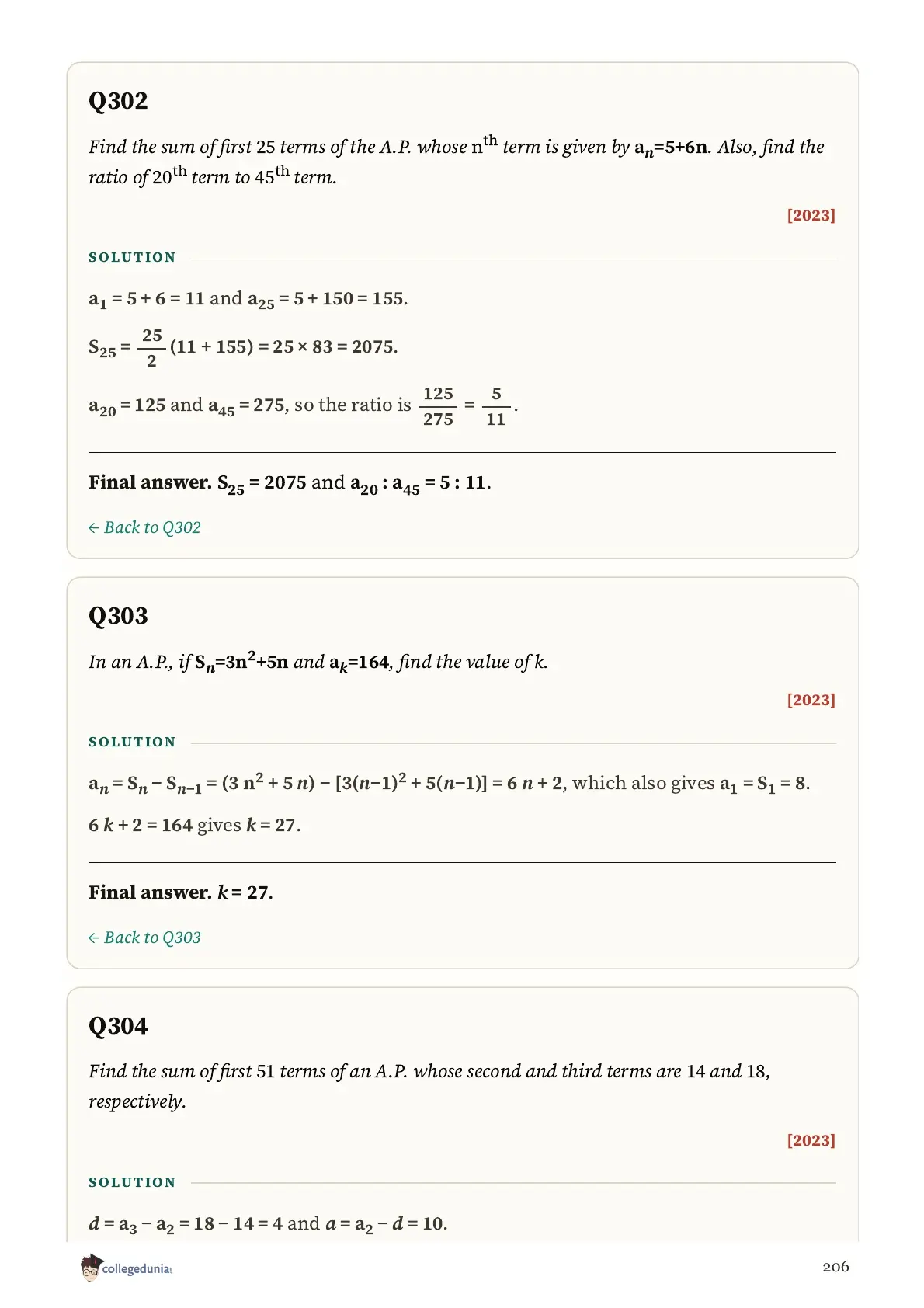
Two formulas carry the chapter. 107 questions ask for an nth term or a term at a given position, and 127 involve a sum. Typical cases are the common difference of the AP root 2, 2 root 2, 3 root 2 (2026), the nth term of the AP -1/3, 2/3, 5/3 (2026), and the number of terms in 14, 19, 24, 29, ..., 119 (2023).
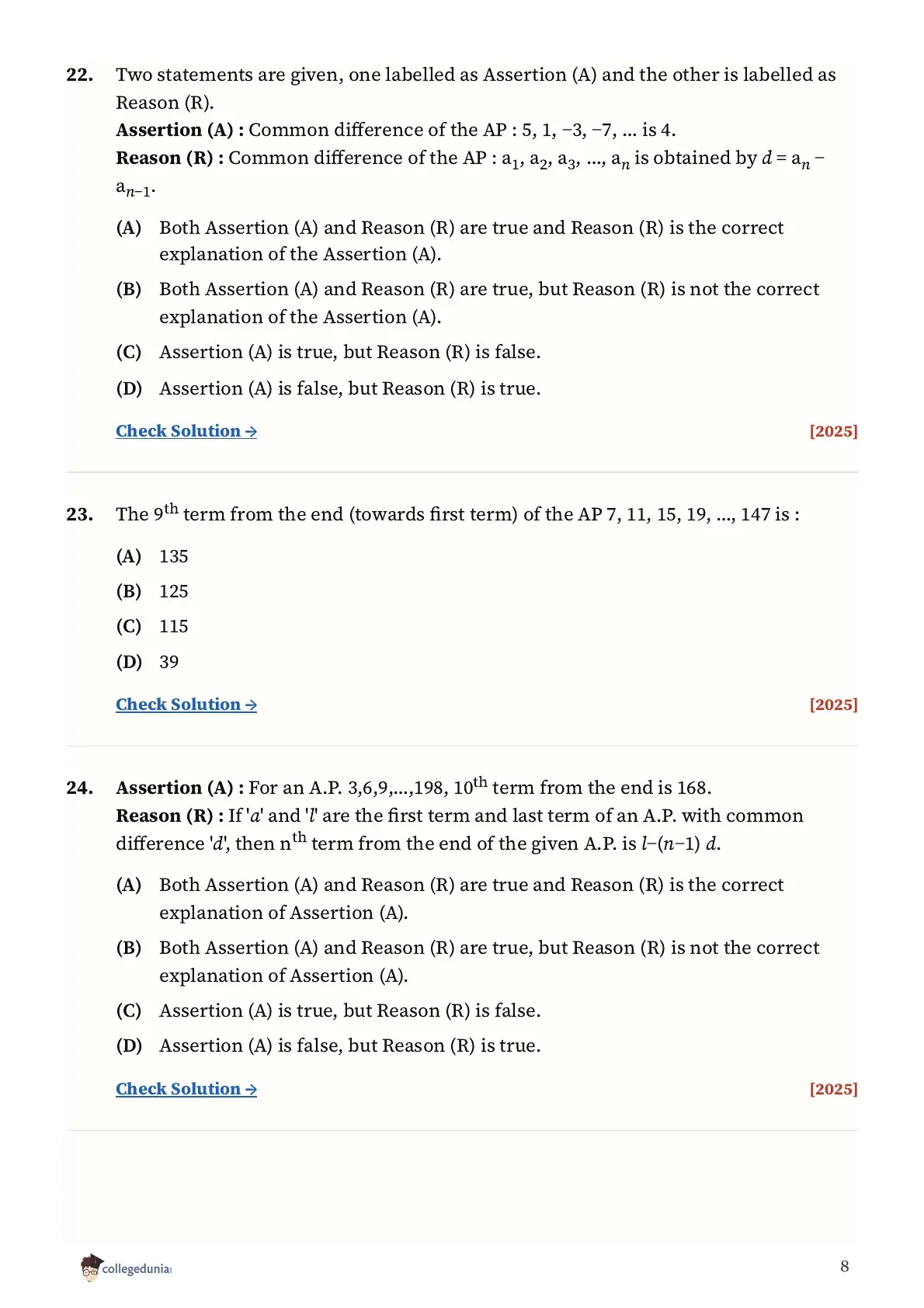
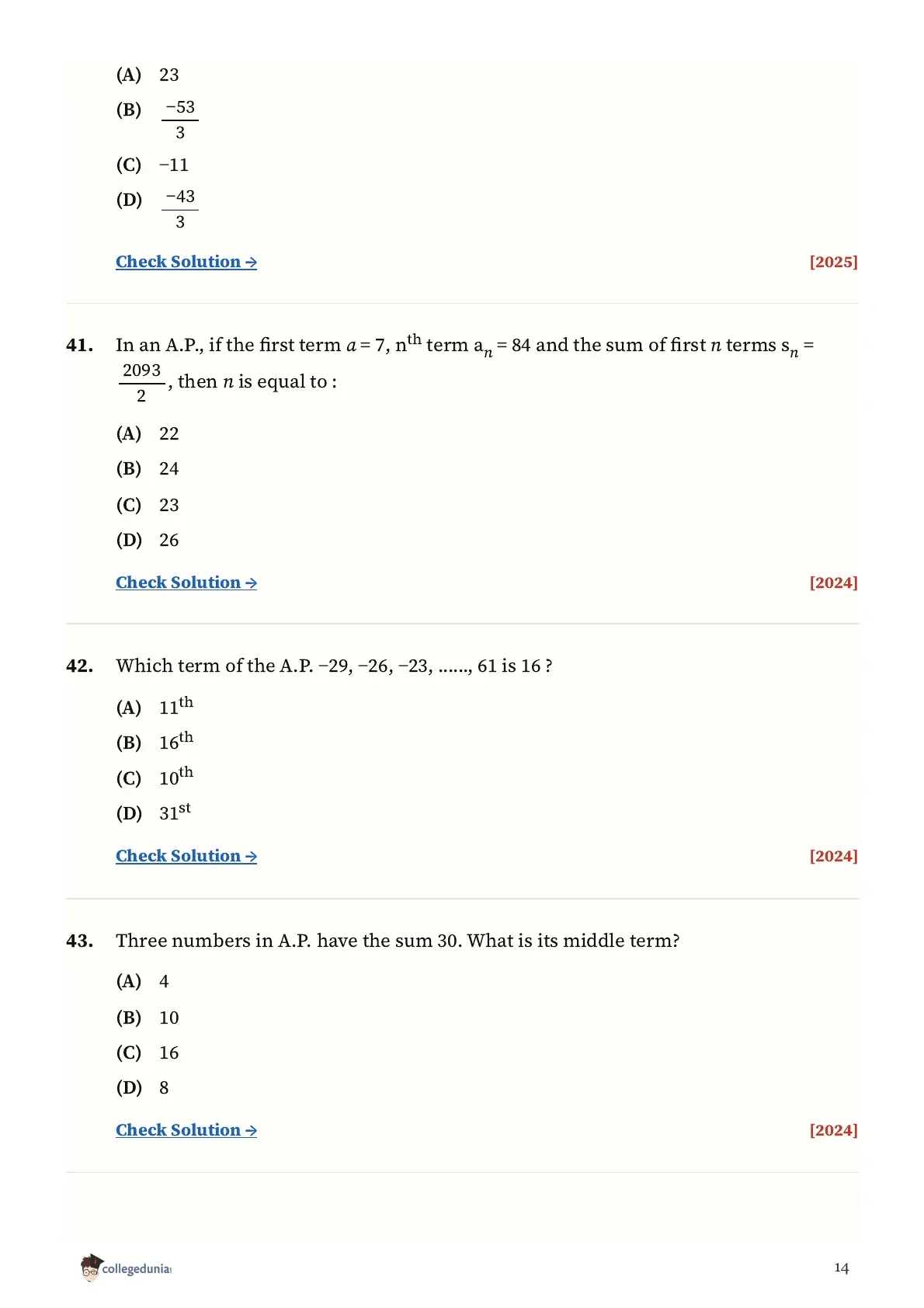
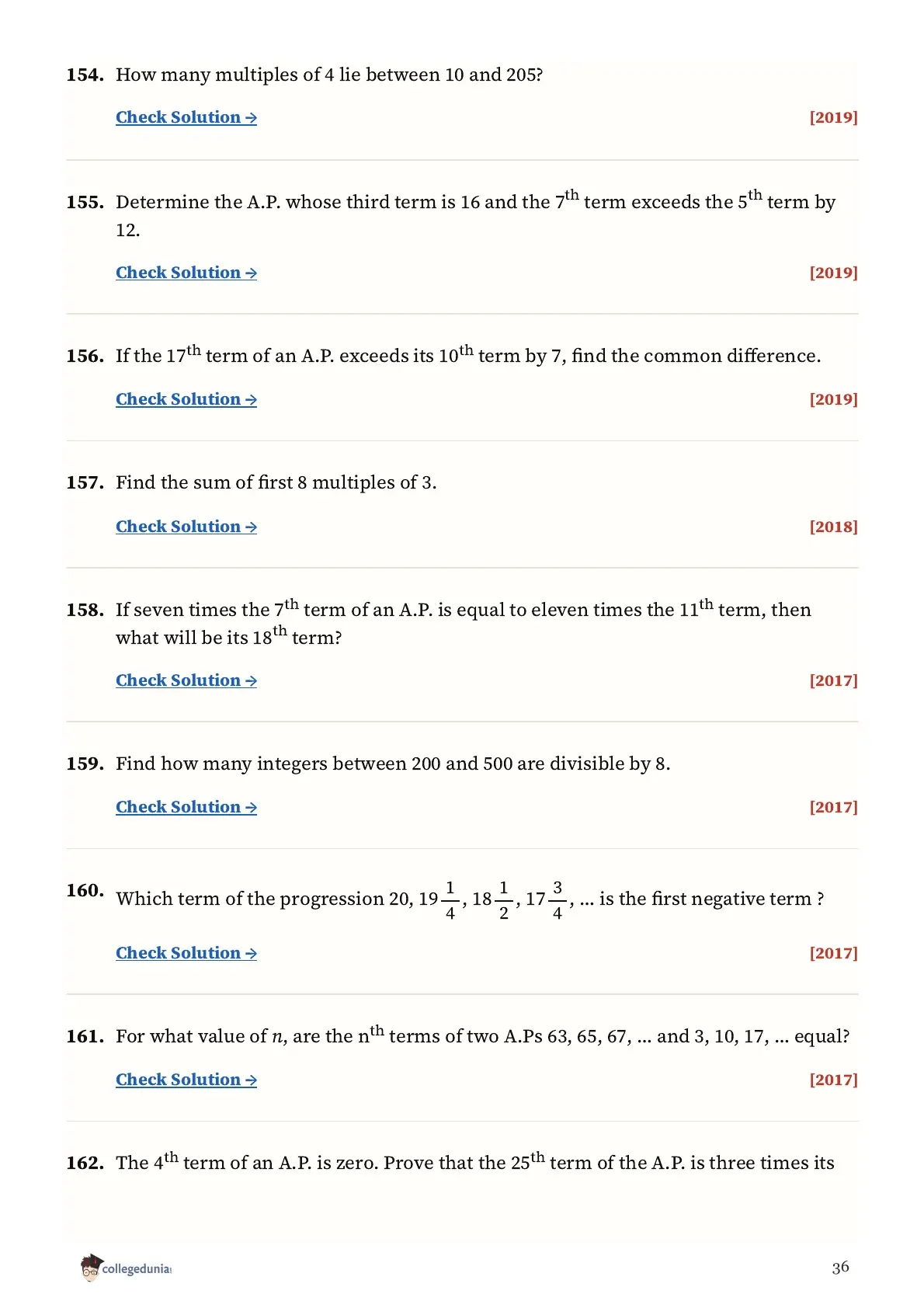
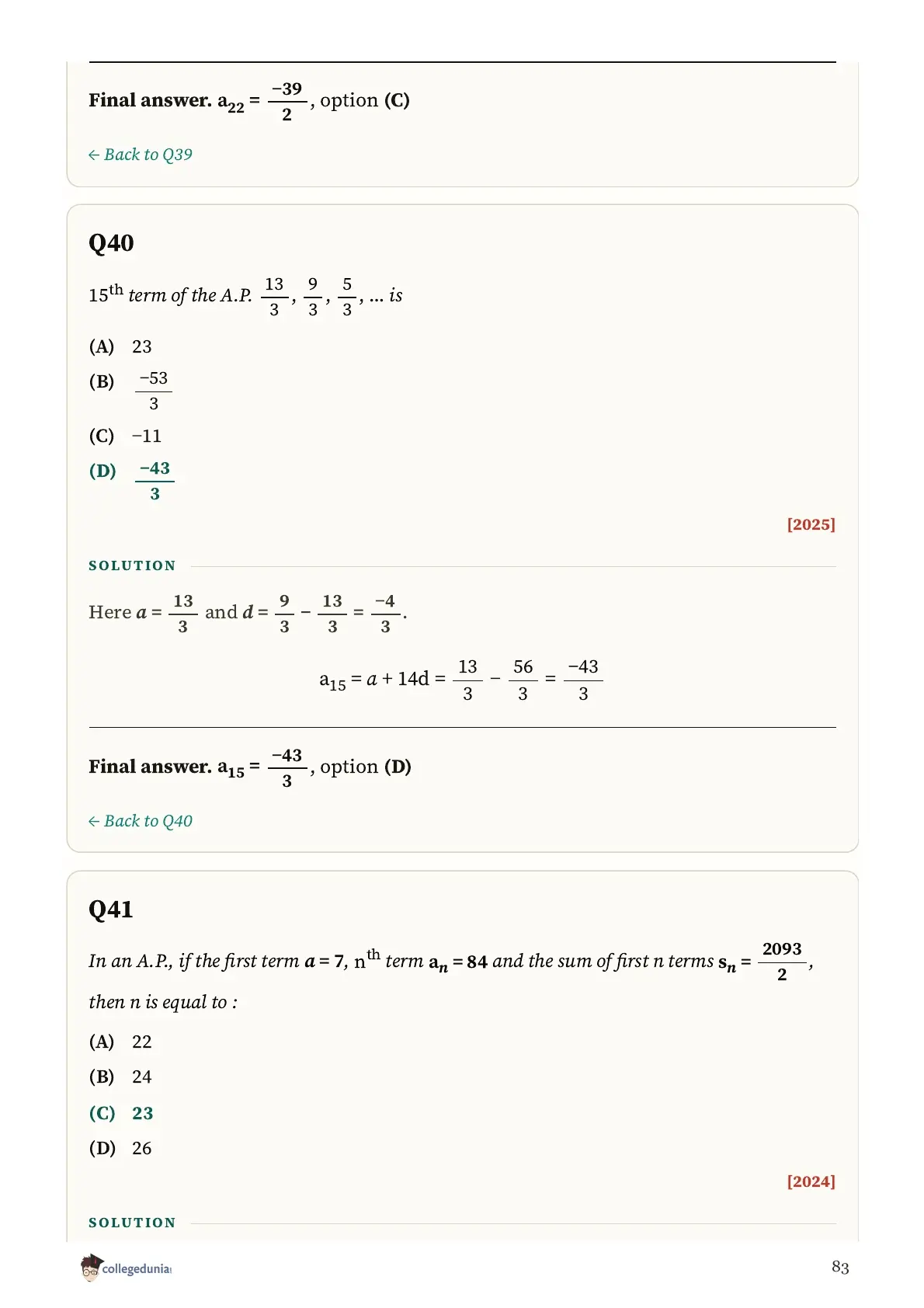
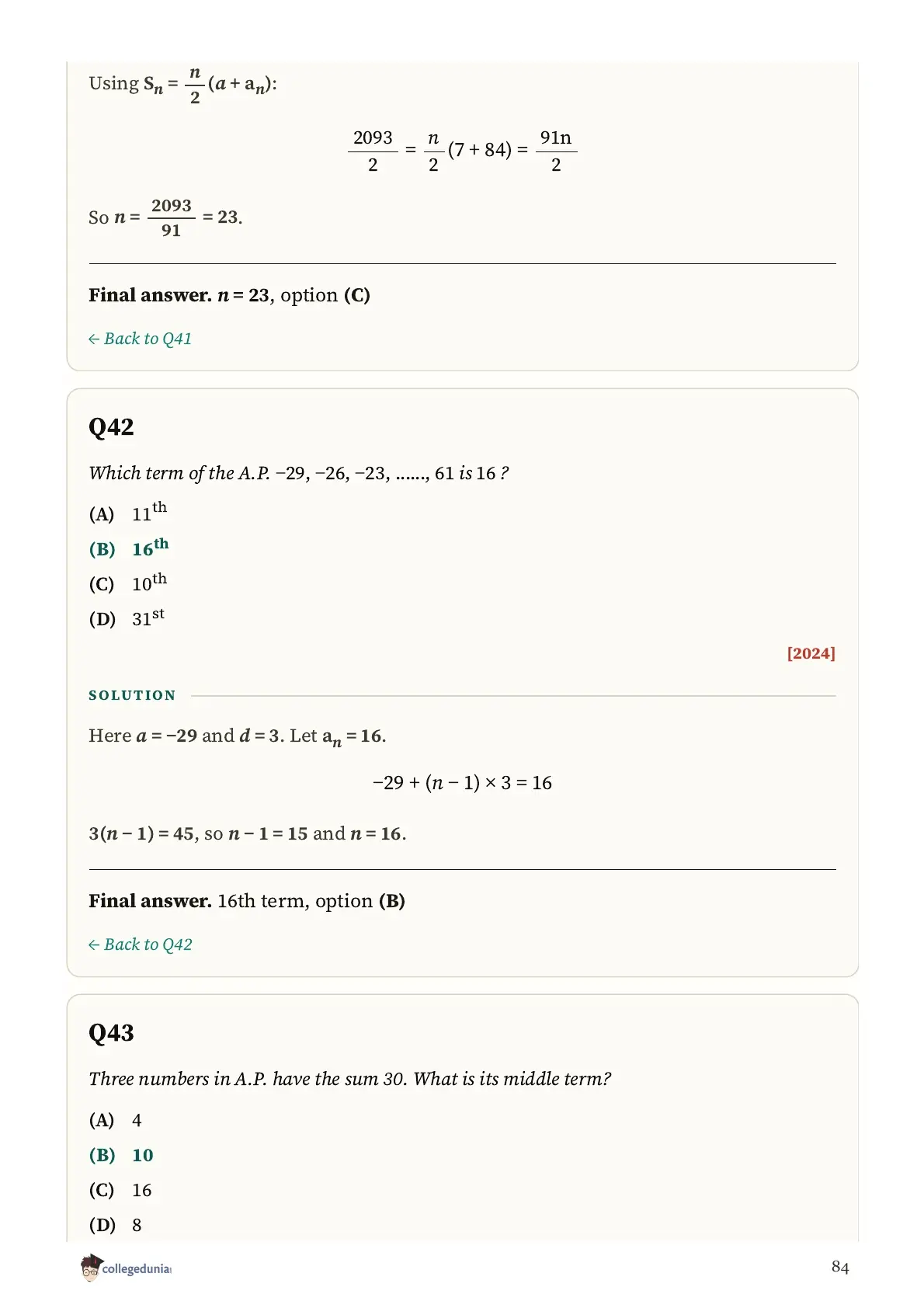
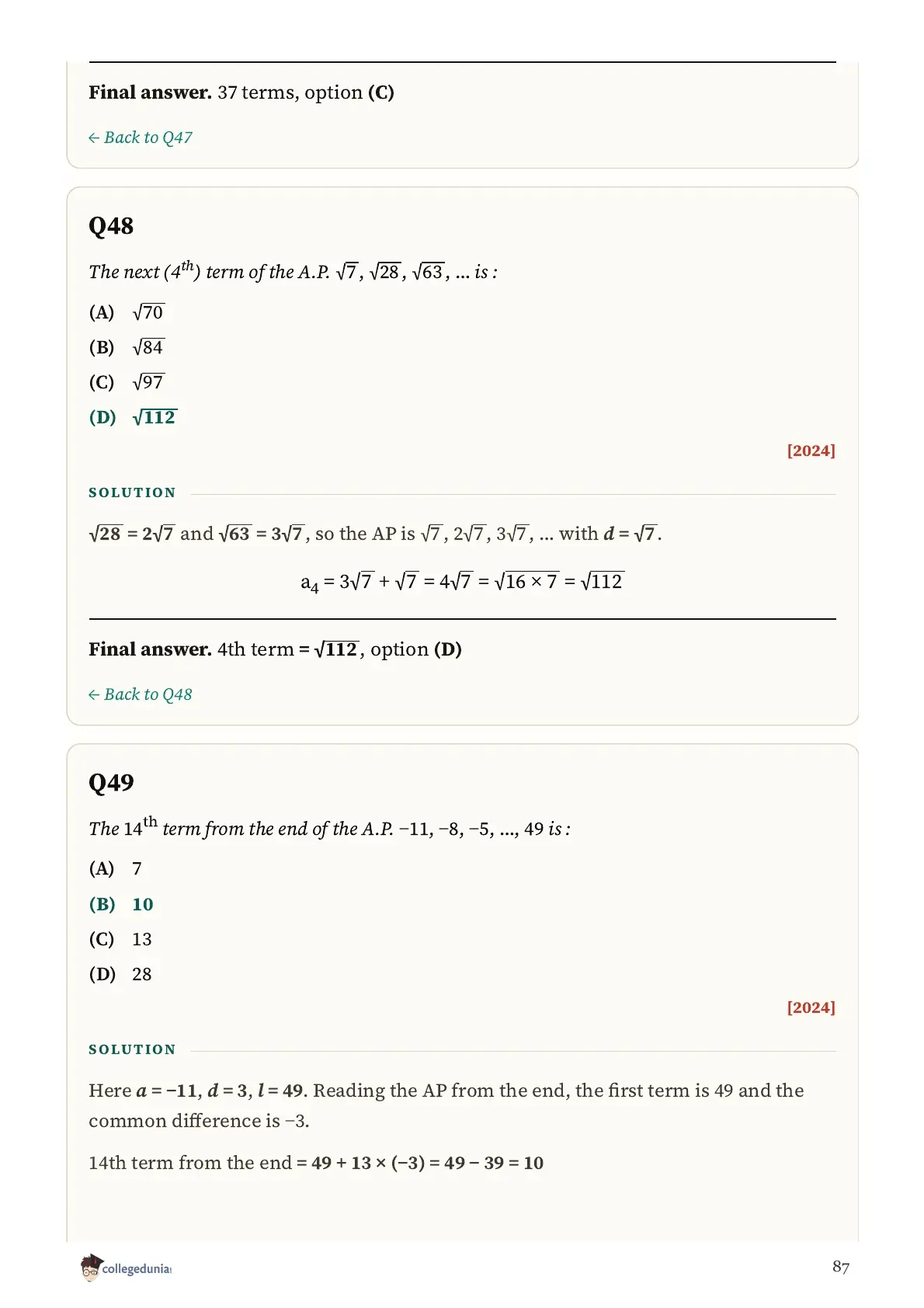
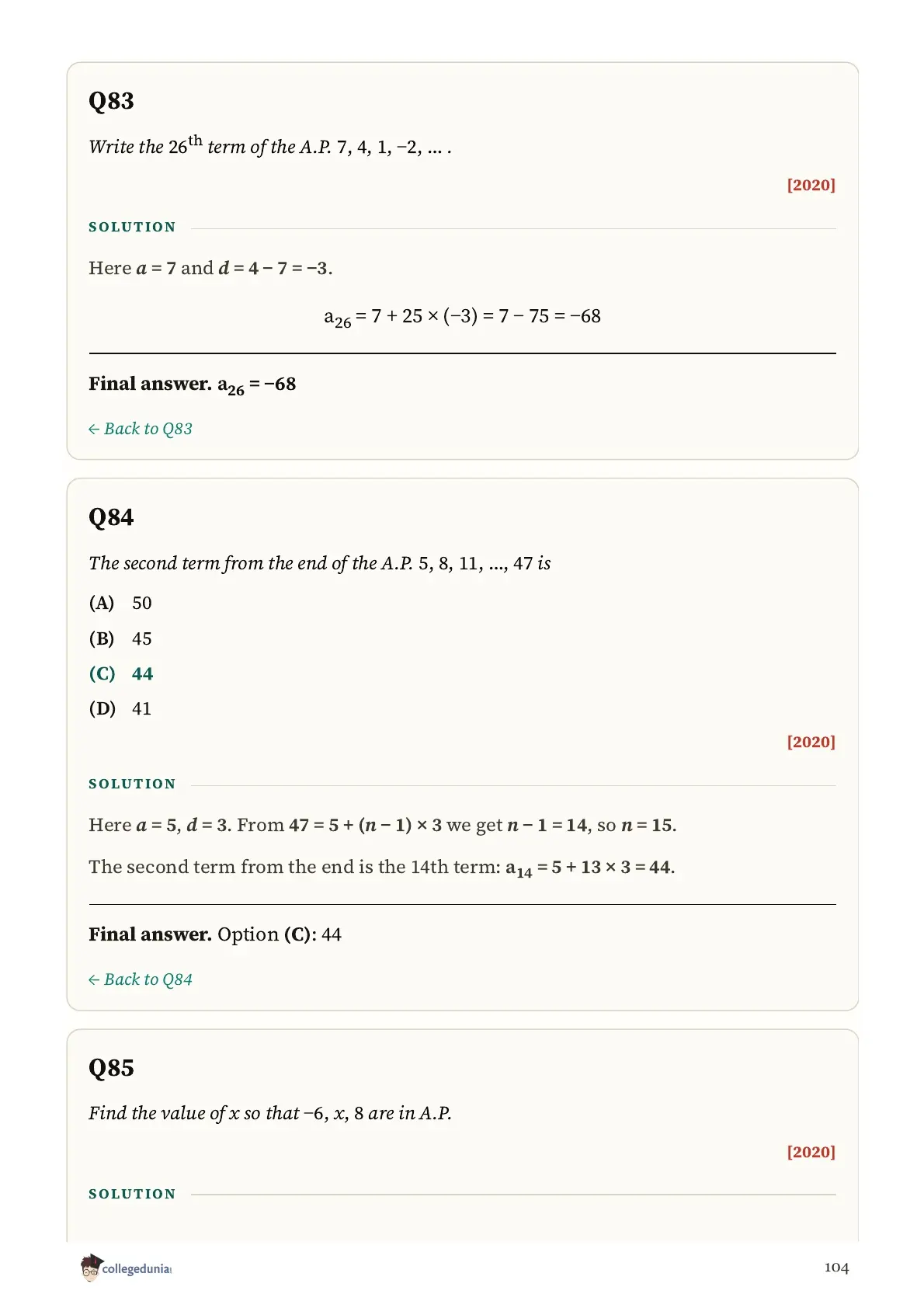
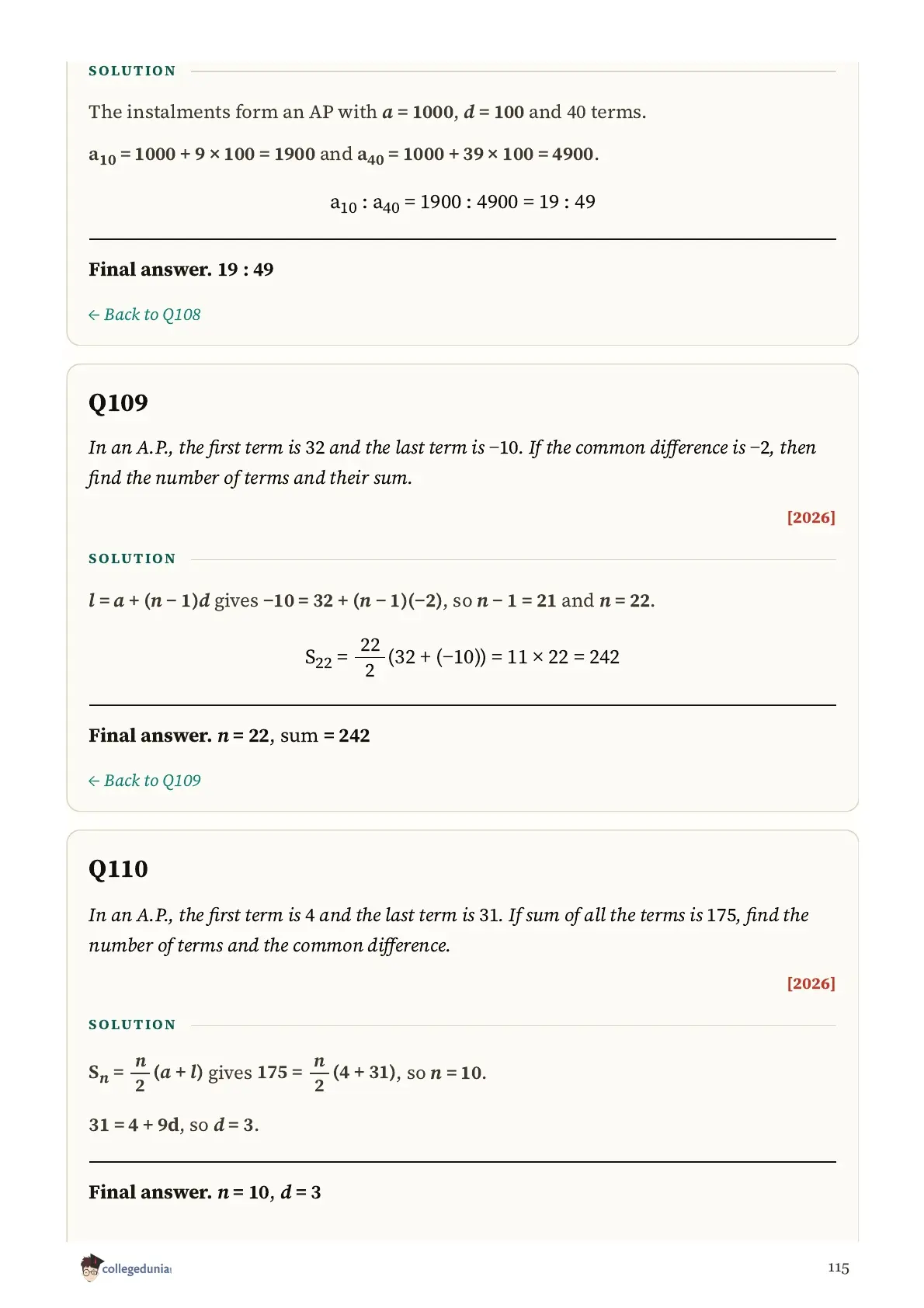
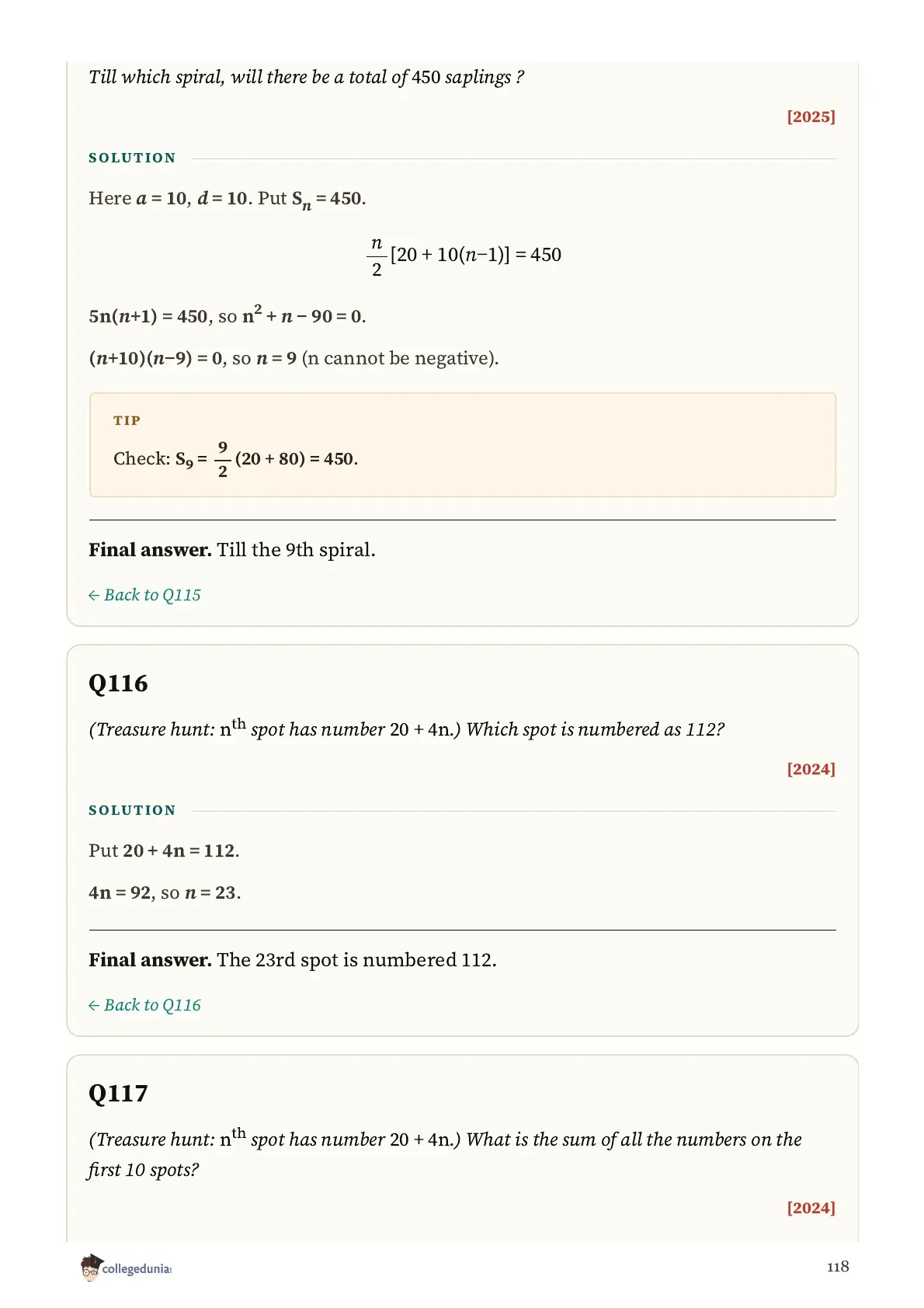
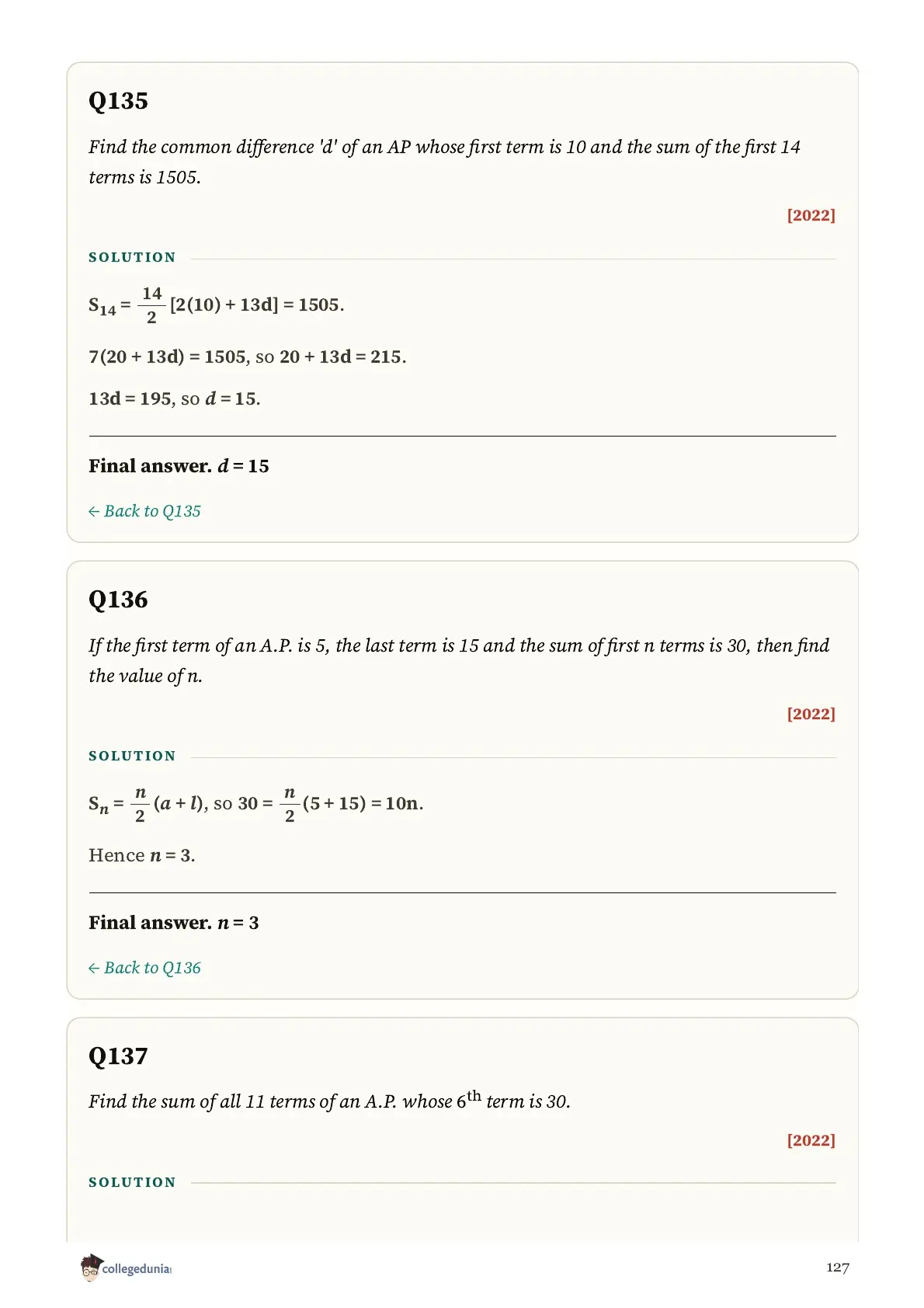
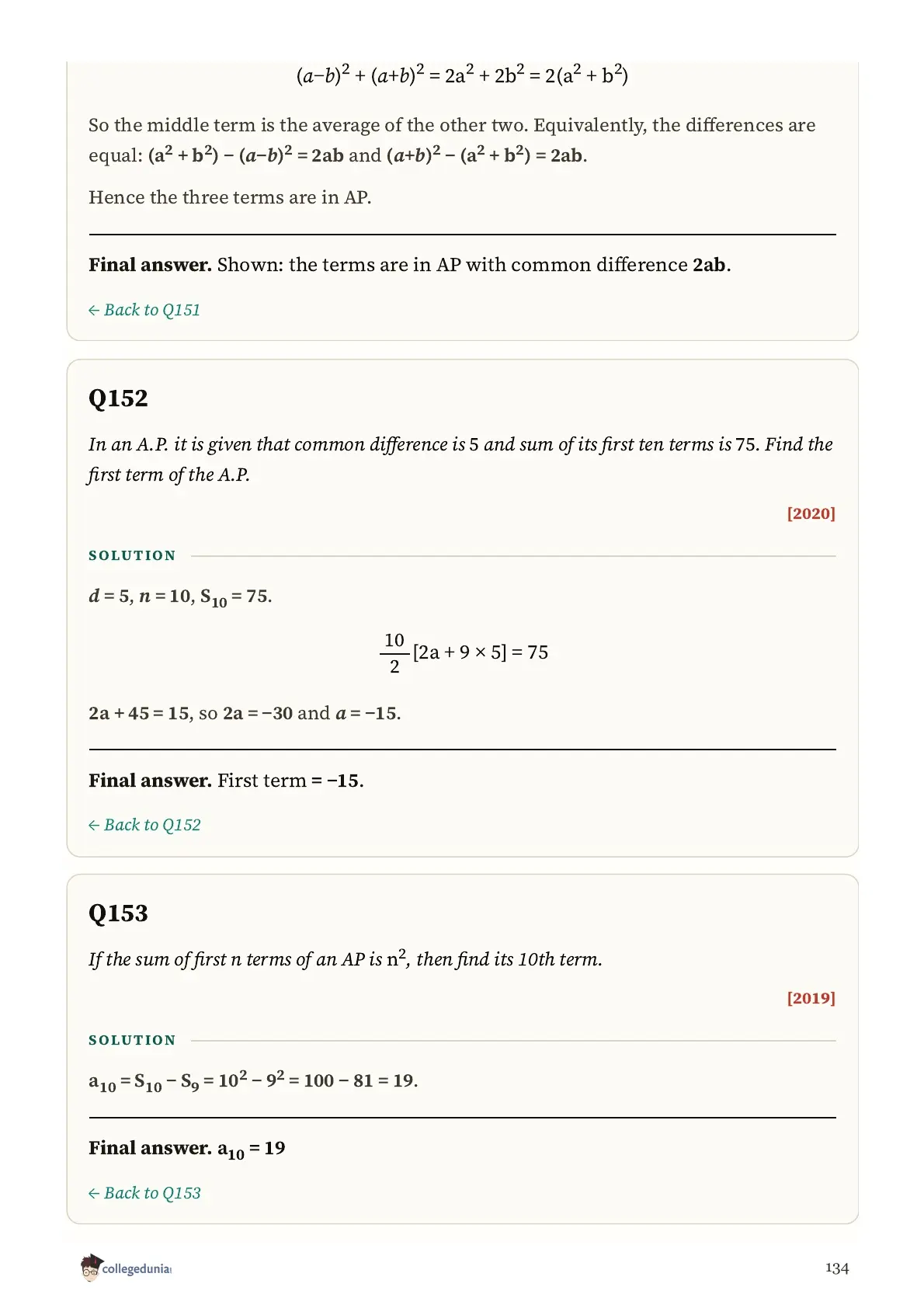
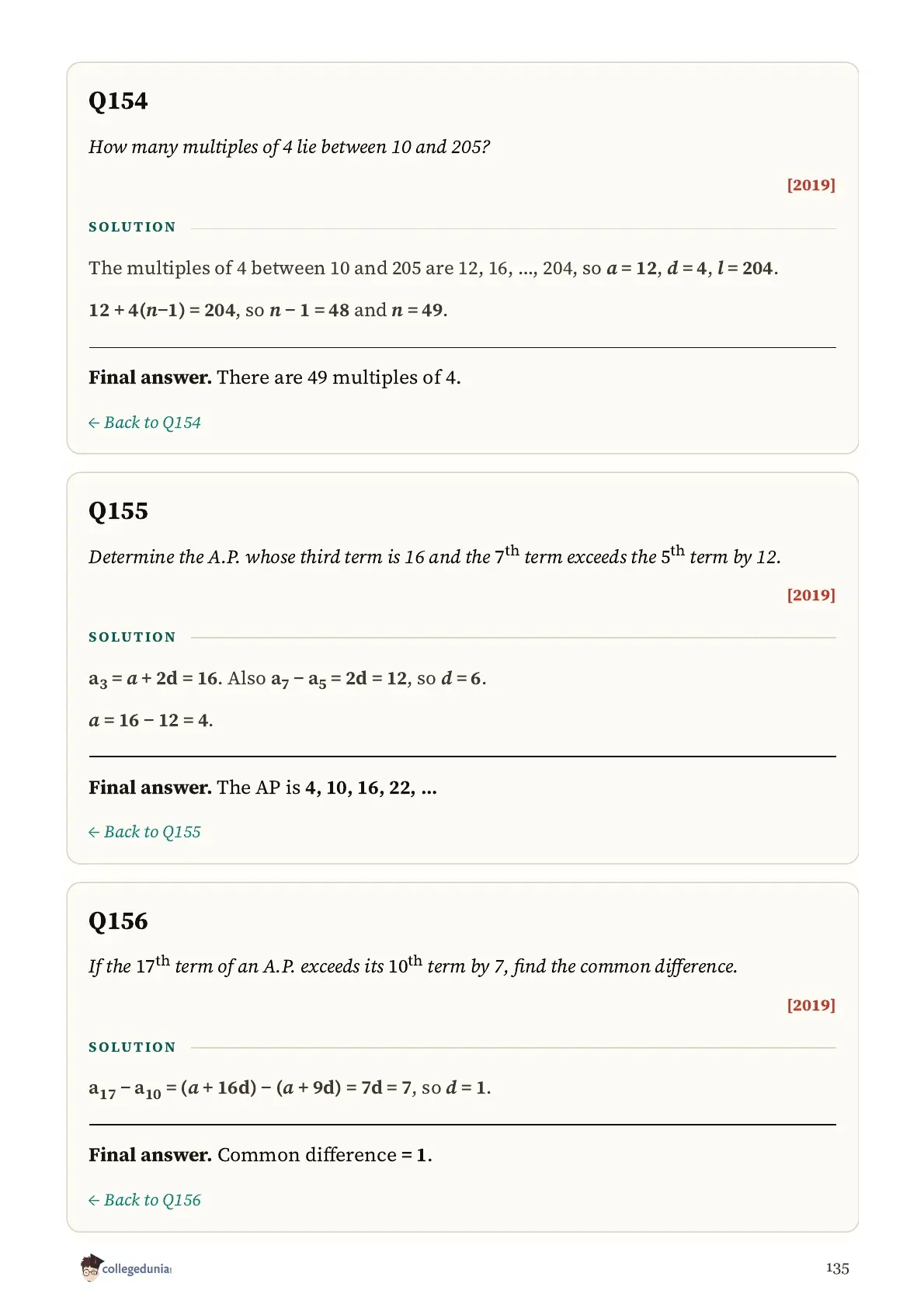
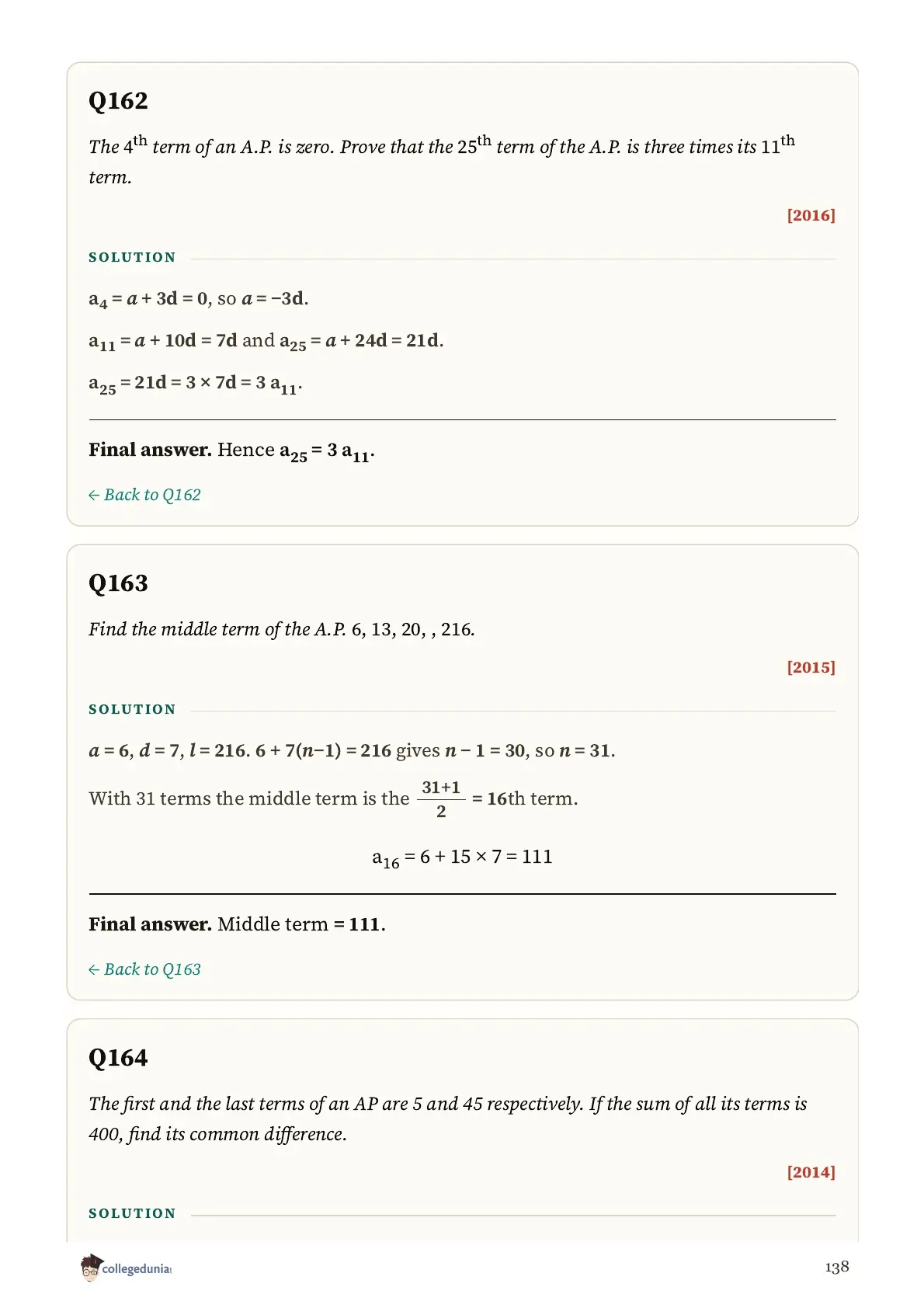
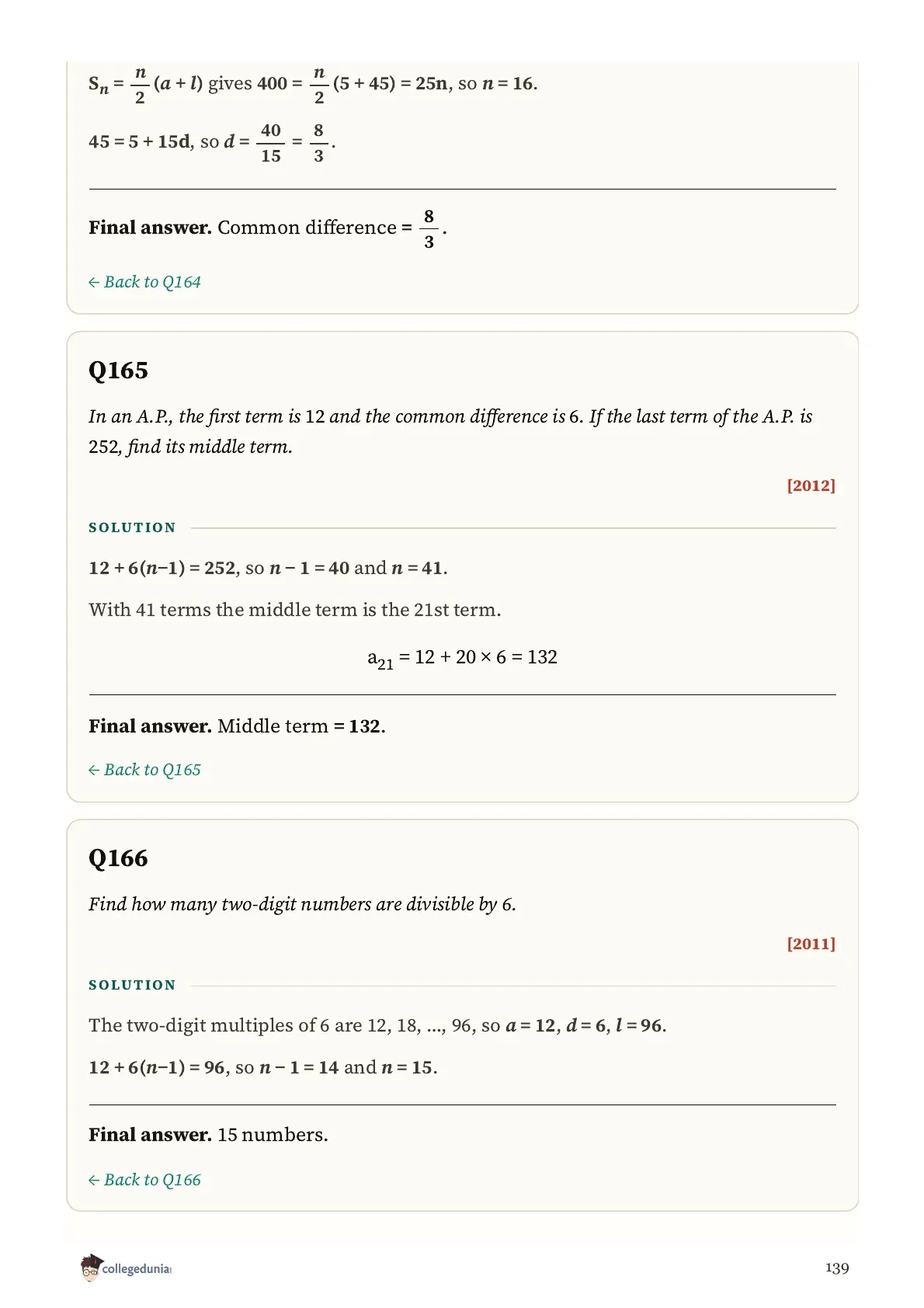
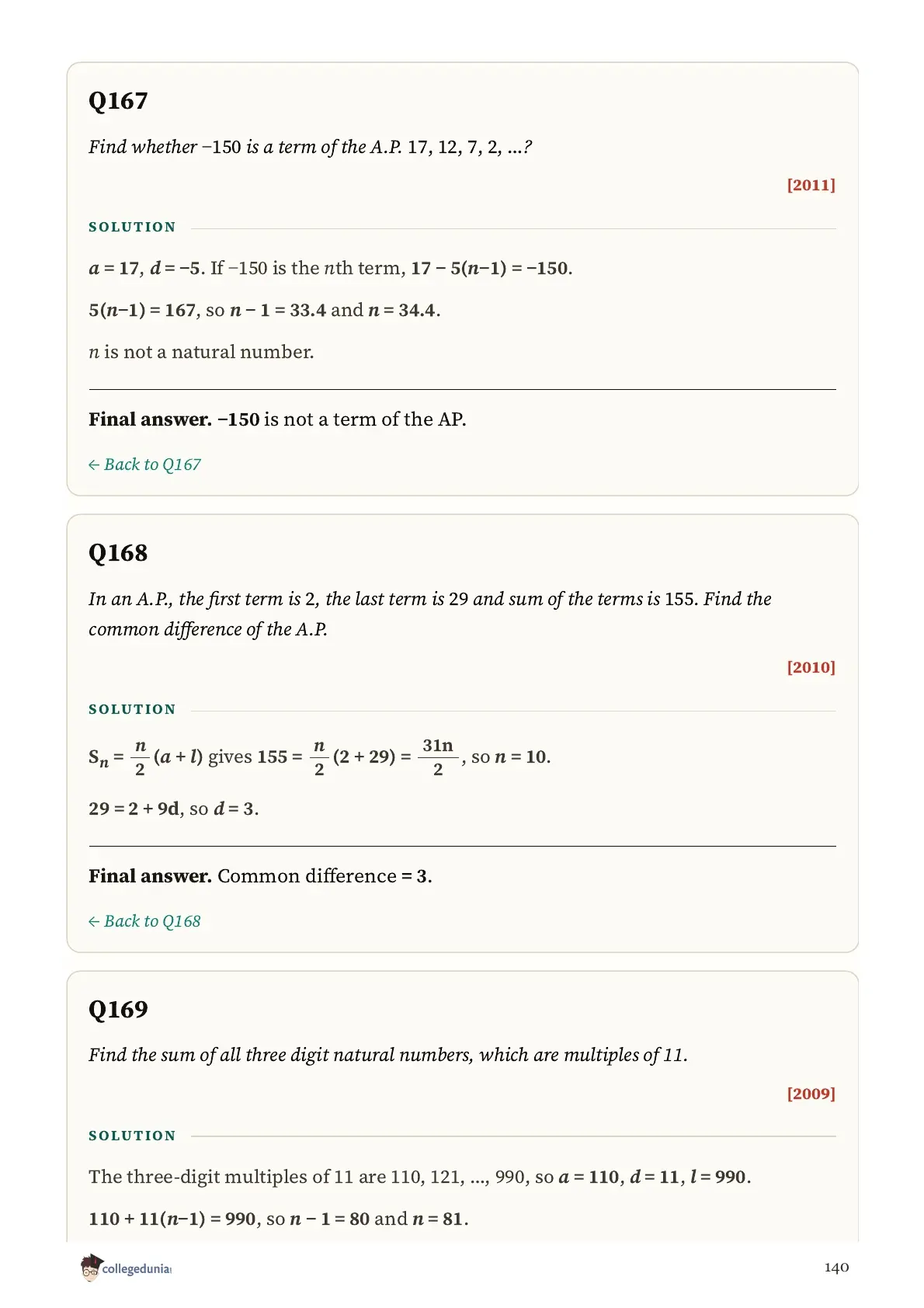
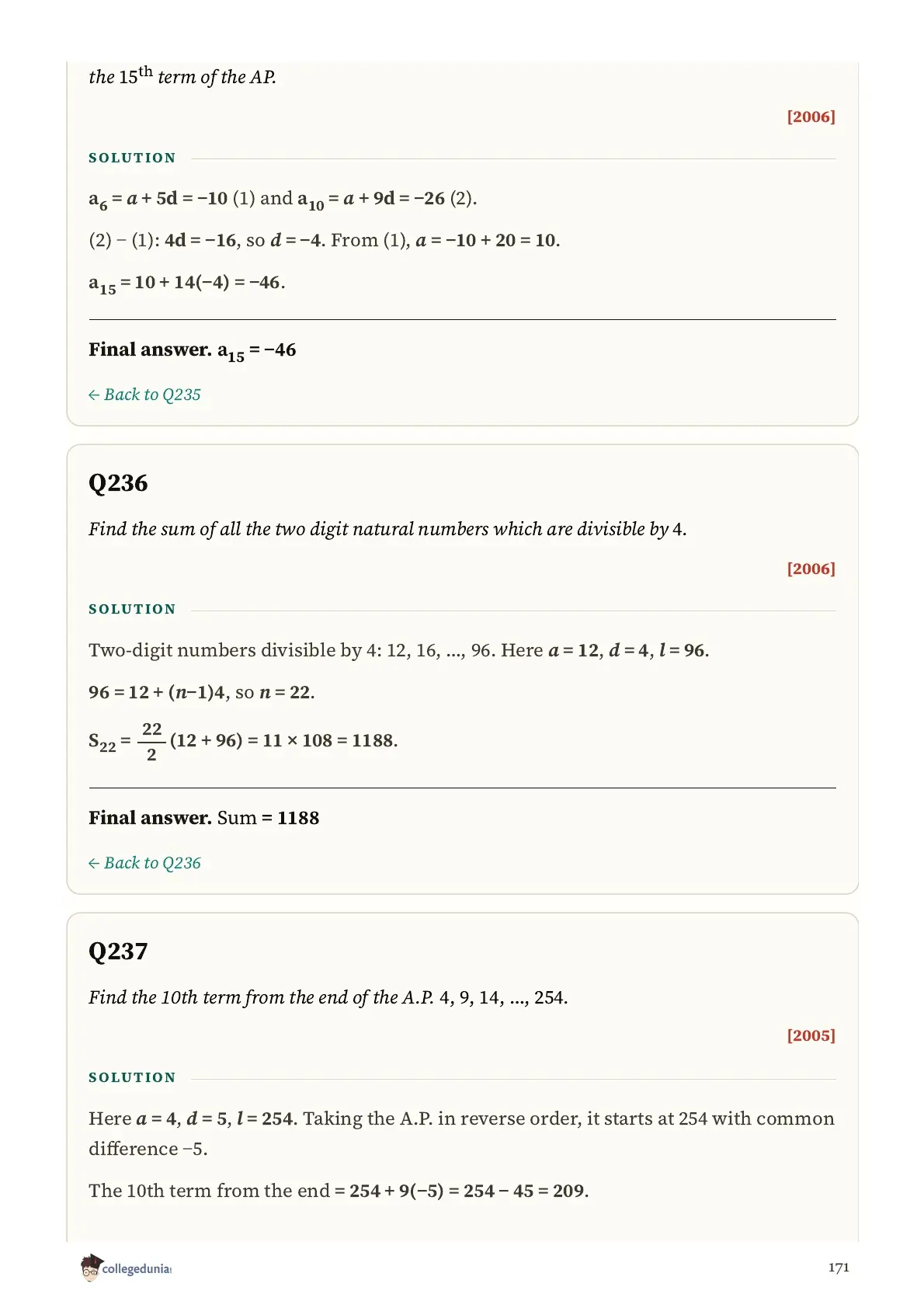
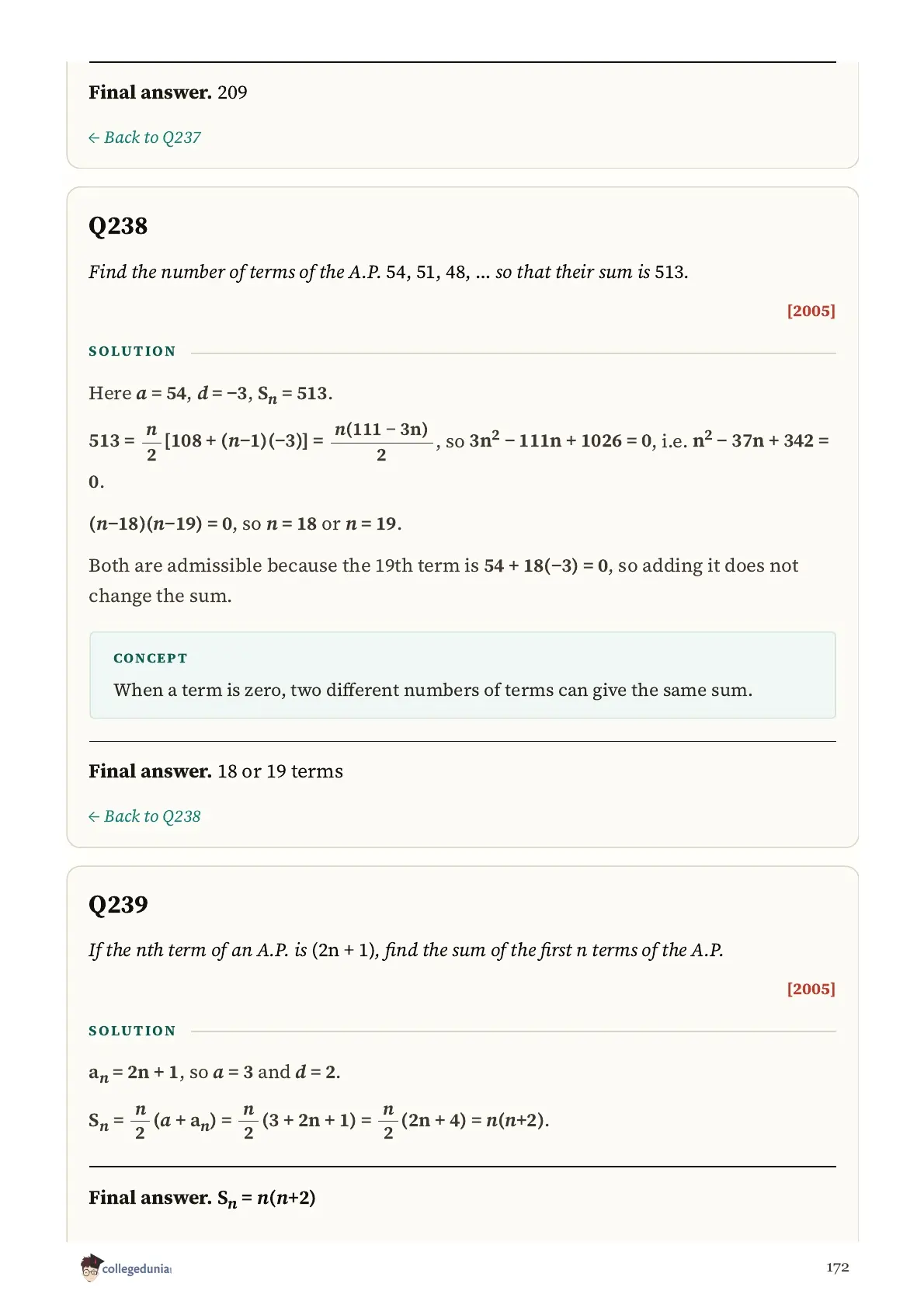
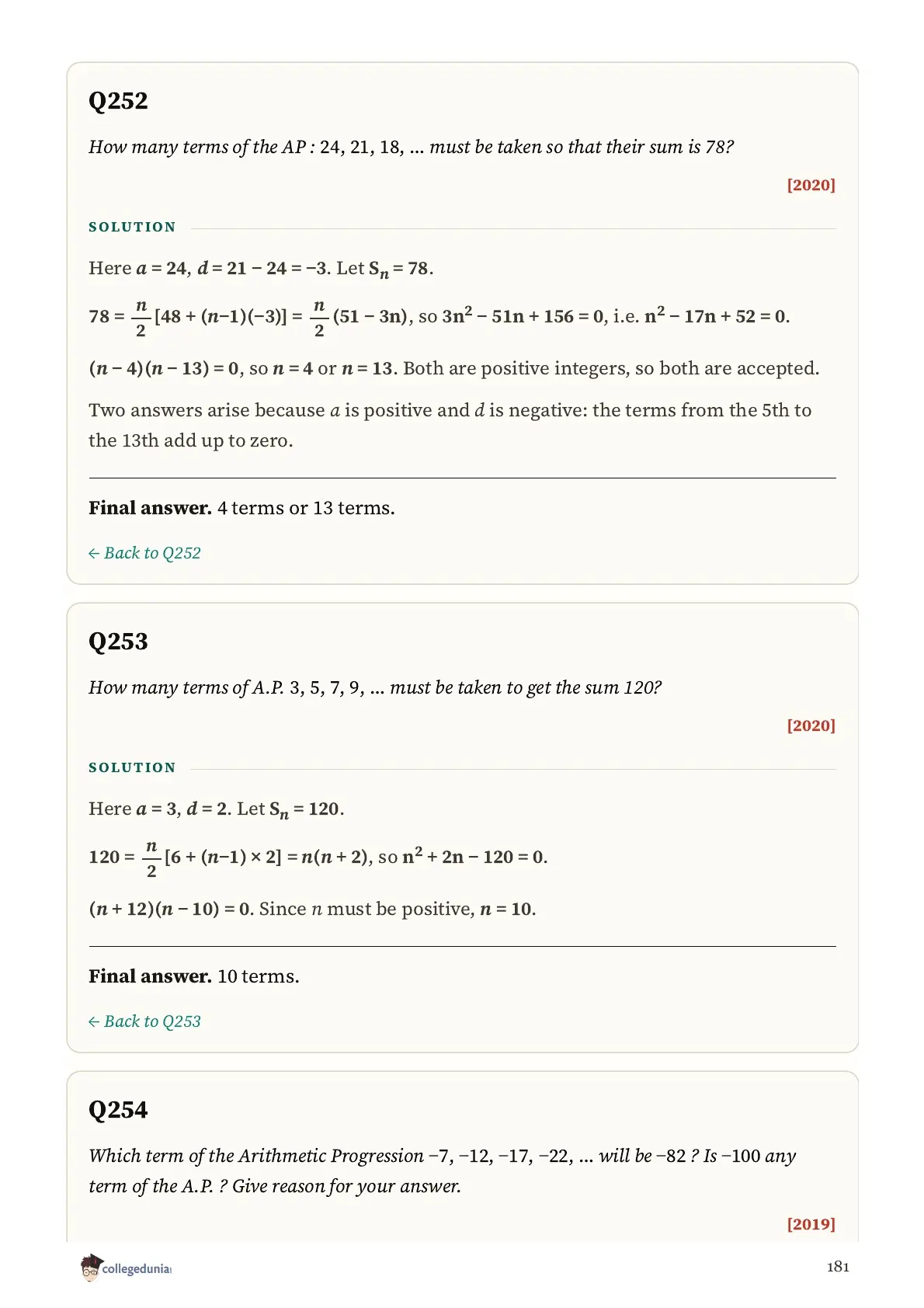
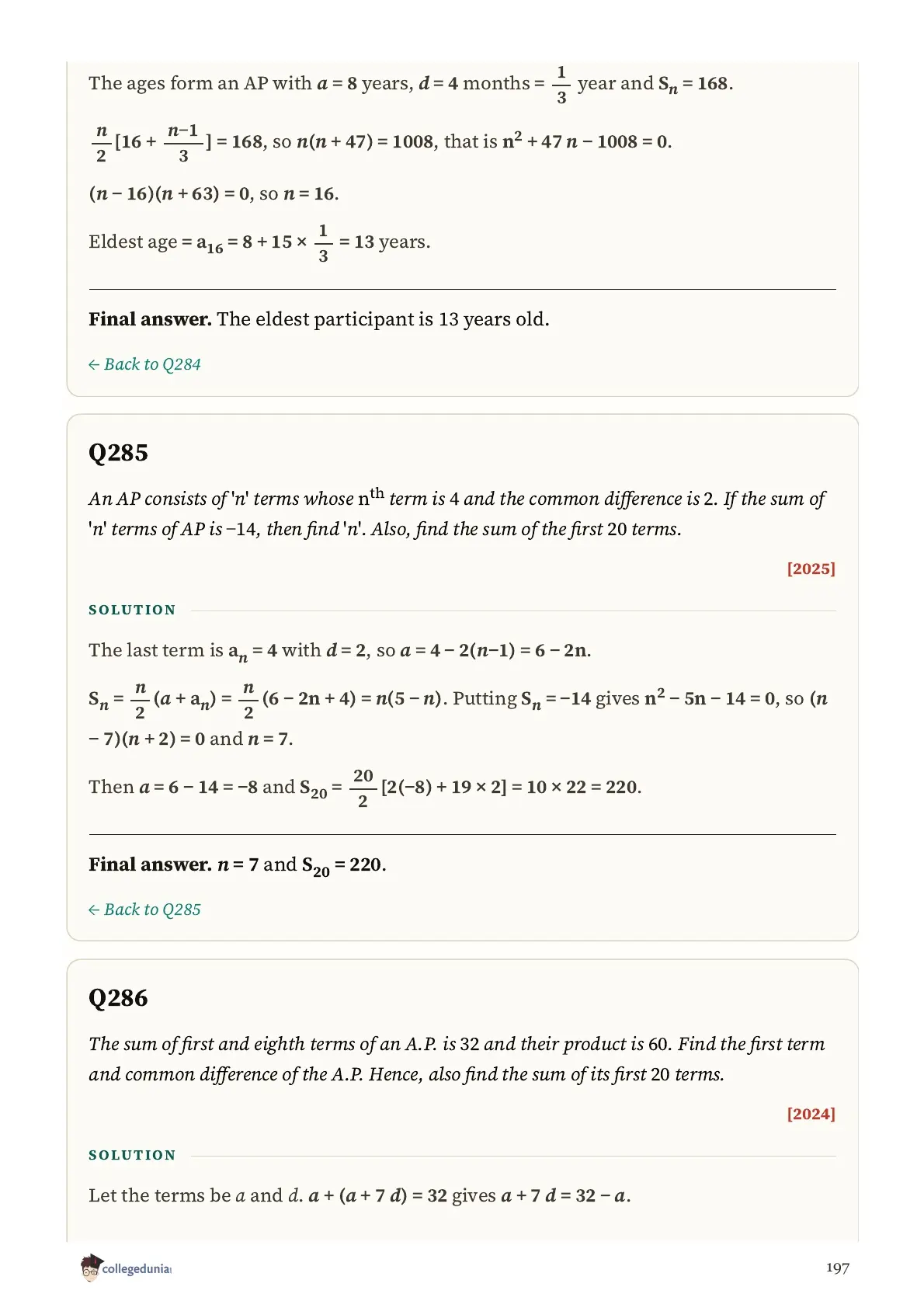
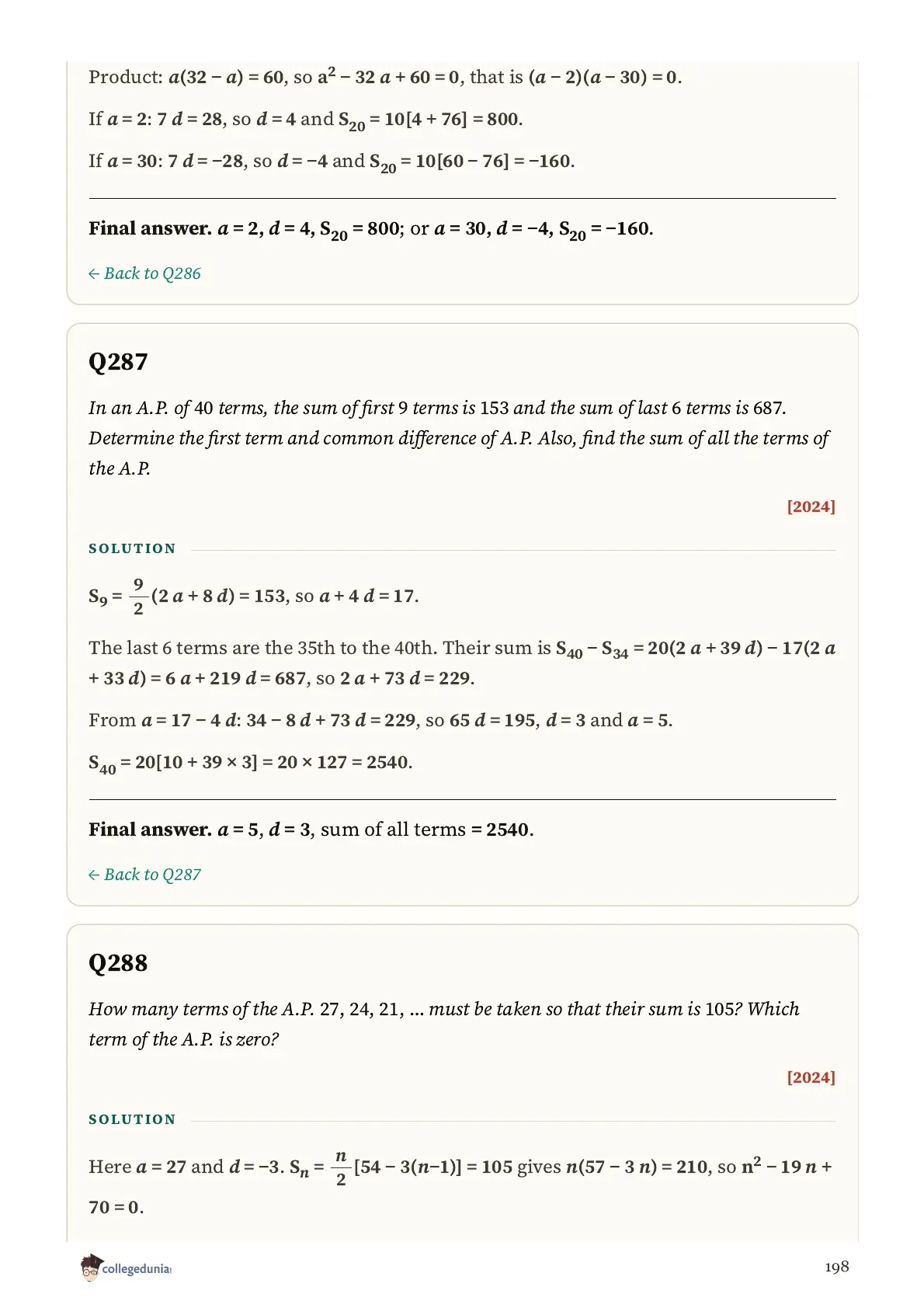
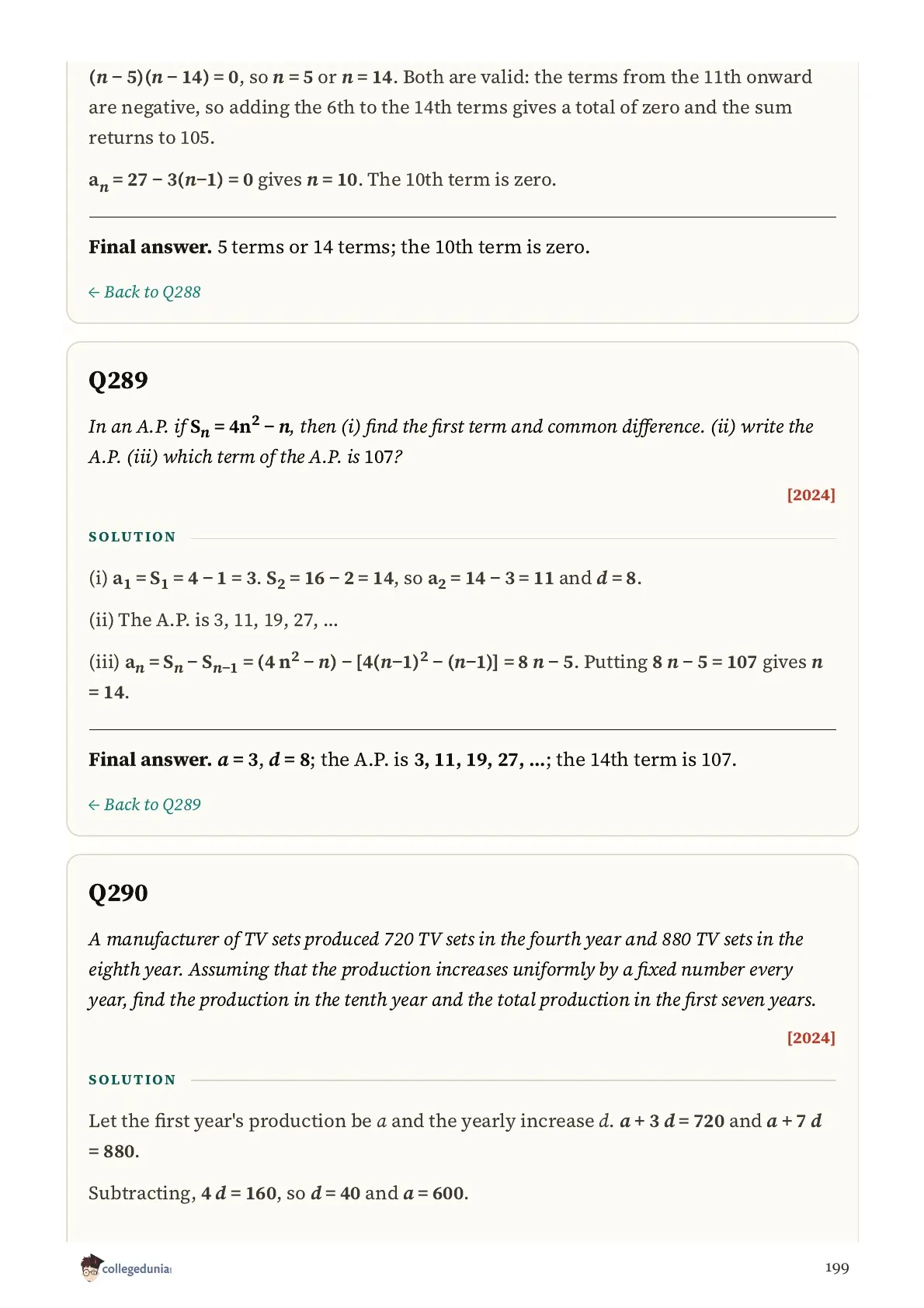
Finding how many terms are needed is a favourite at 2 and 3 marks. 21 questions ask for a number of terms, for example how many terms of 27, 24, 21, ... give a sum of 105 (2024), and 16 ask which term has a stated value or whether a number belongs to the progression. 8 questions count a term from the end, such as the 11th term from the end of 10, 7, 4, ..., -62 (2023), and 4 ask for the middle term. 16 are of the prove or show that kind, often showing that three expressions are in AP.
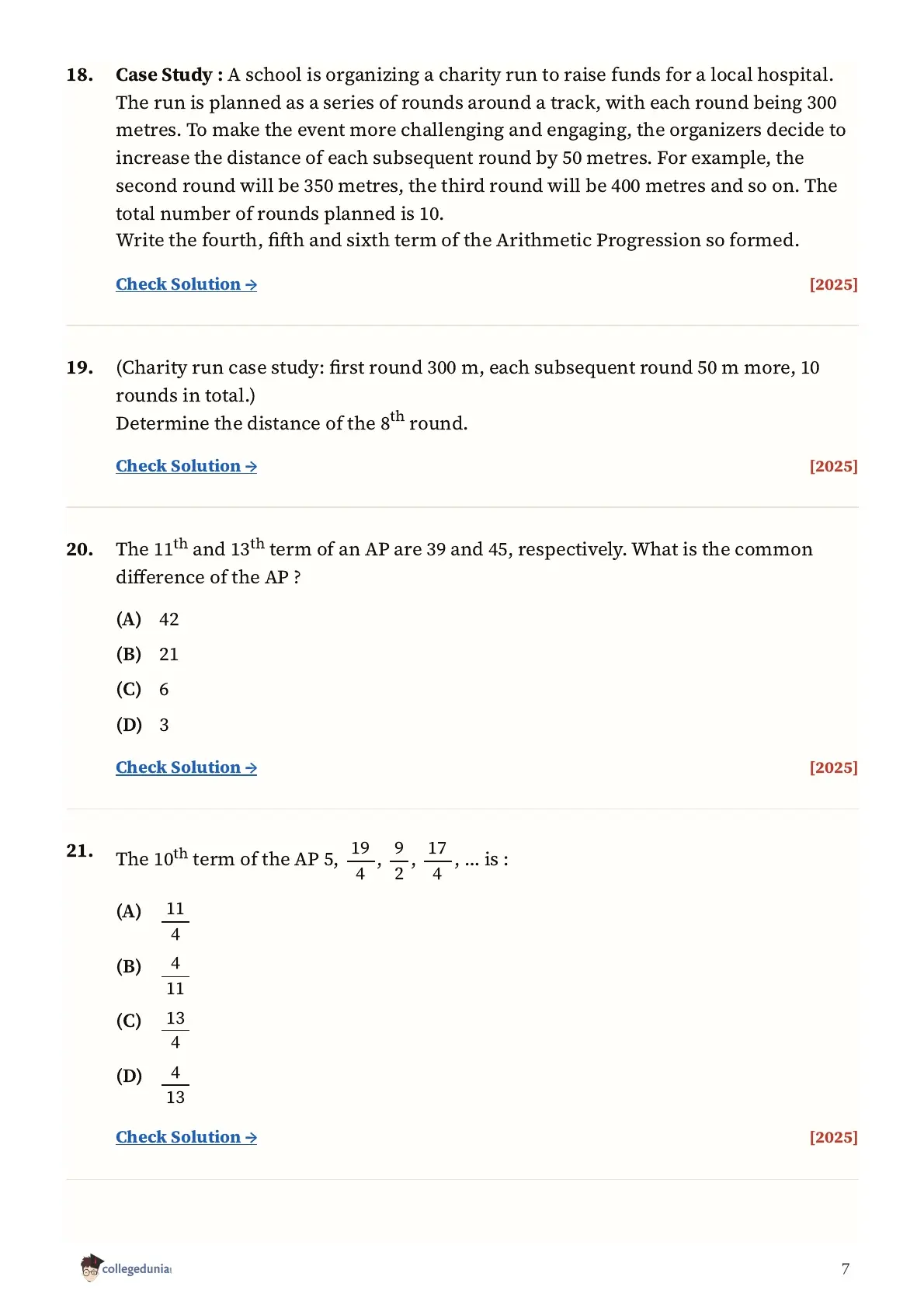
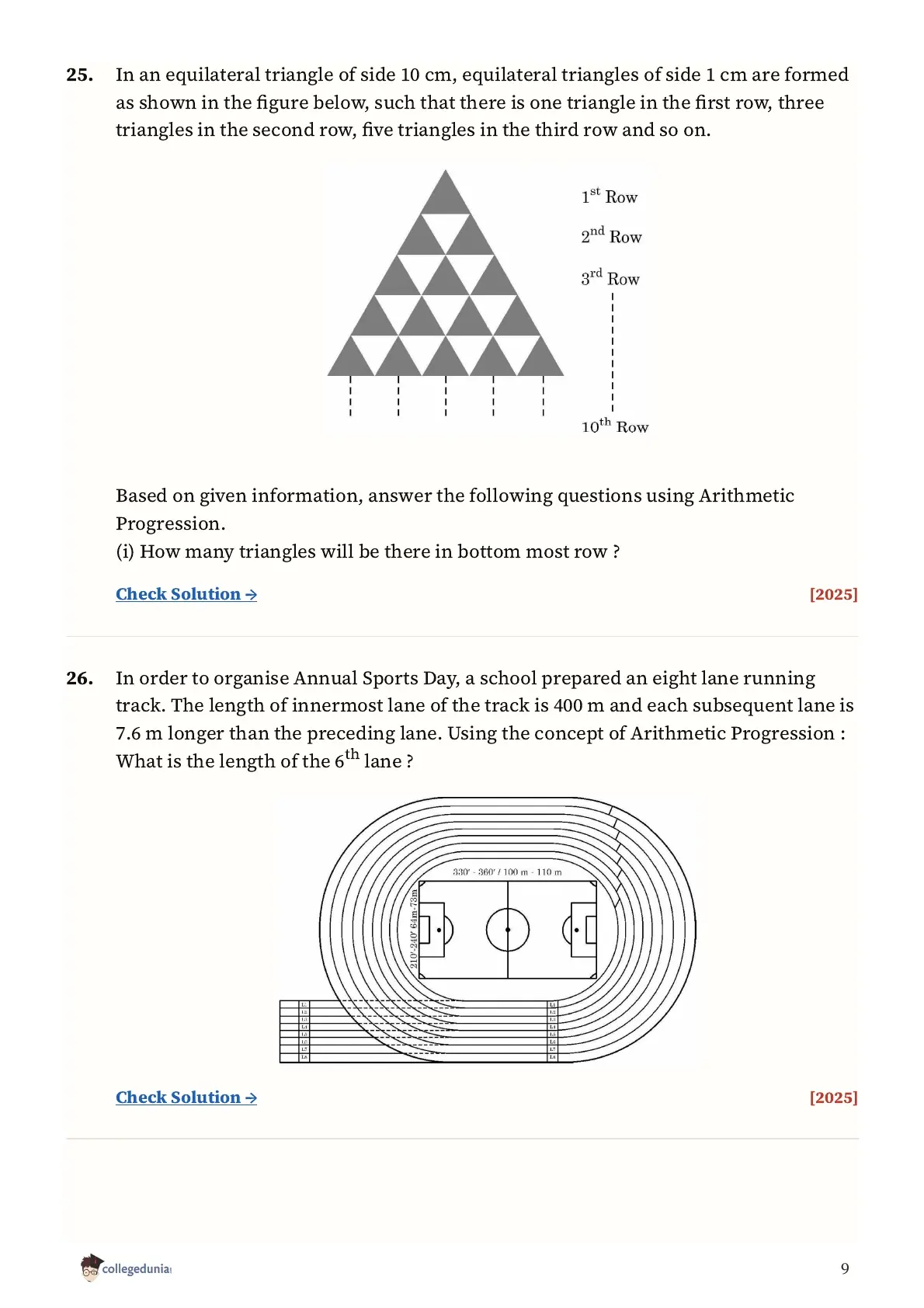
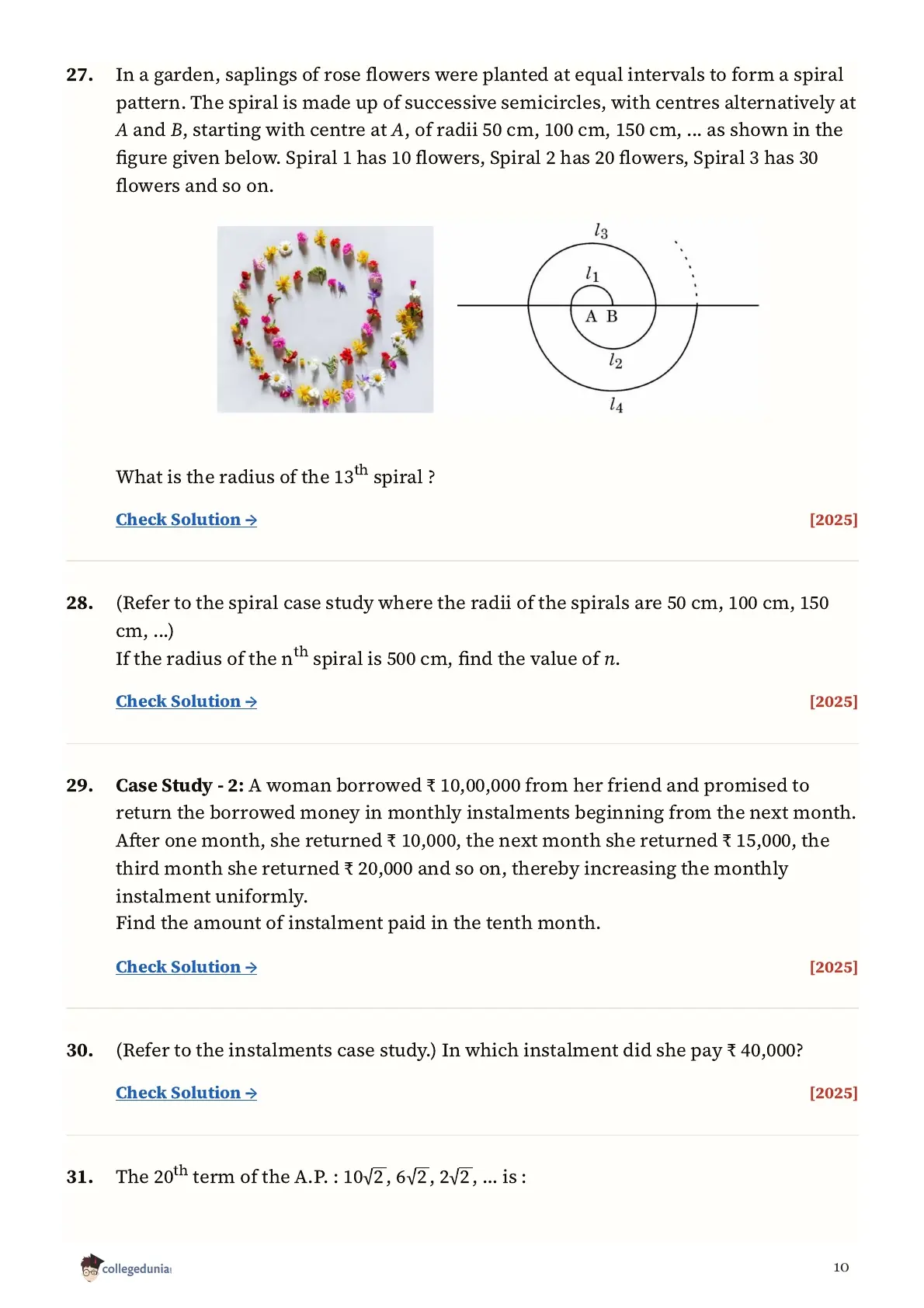
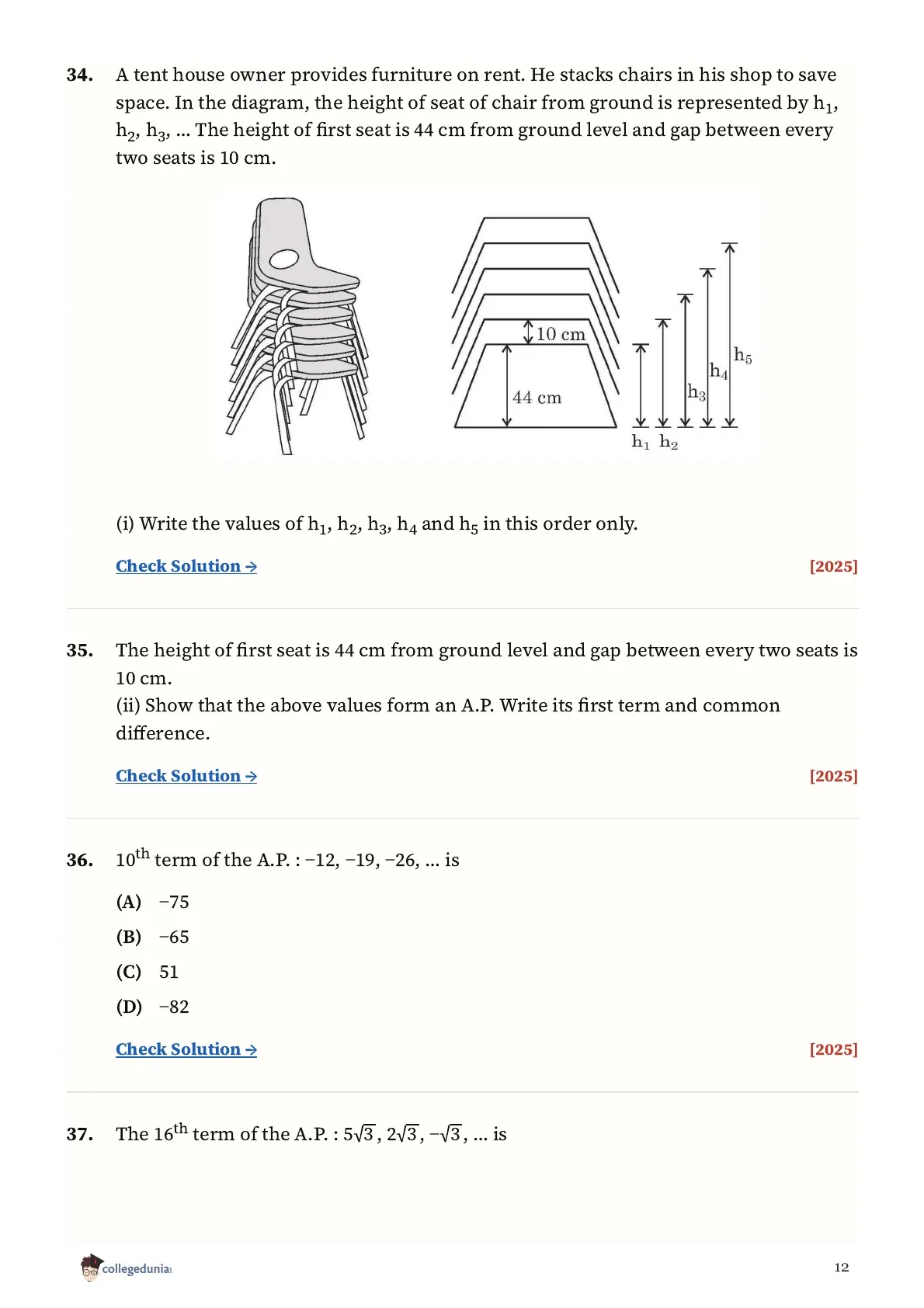
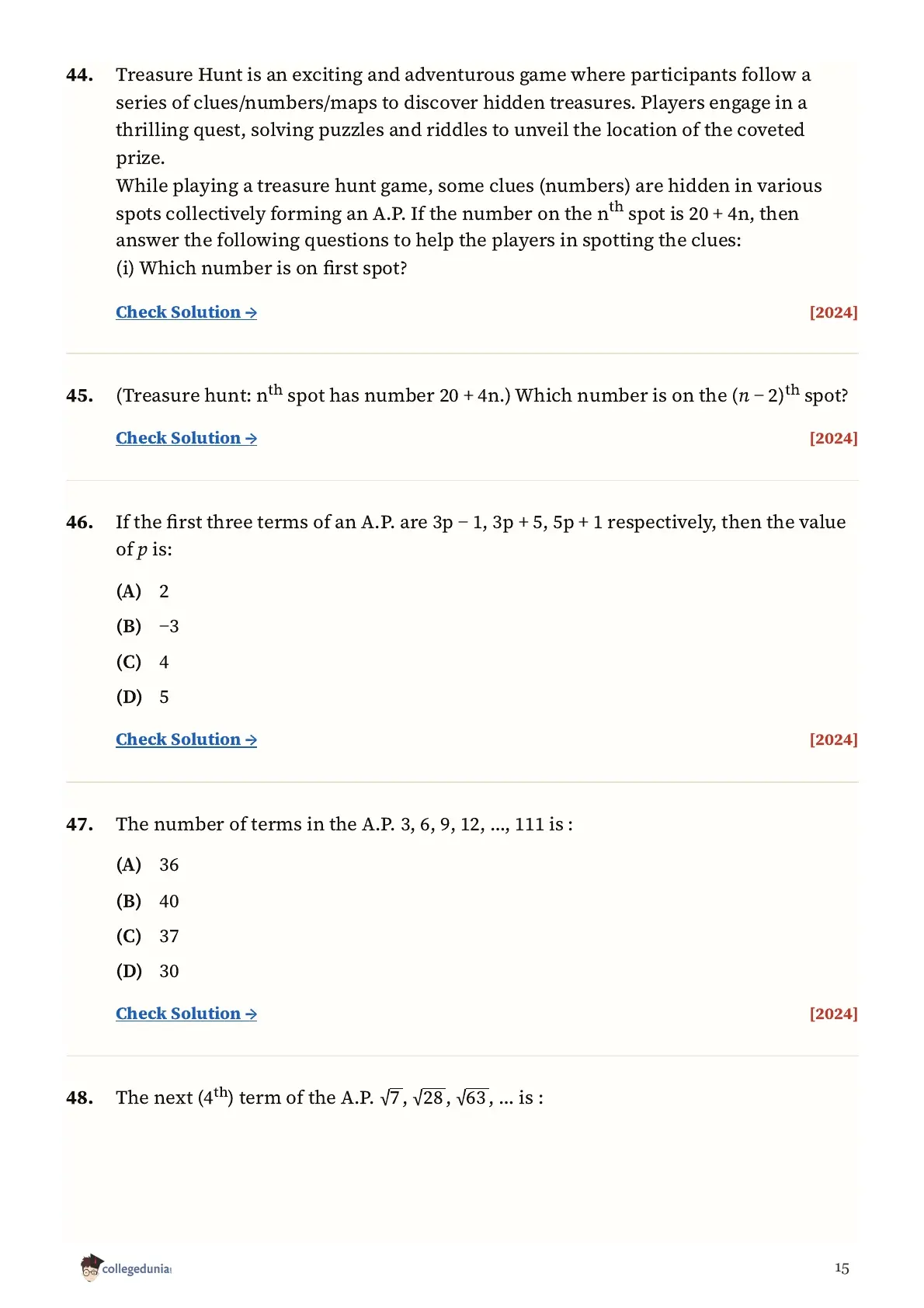
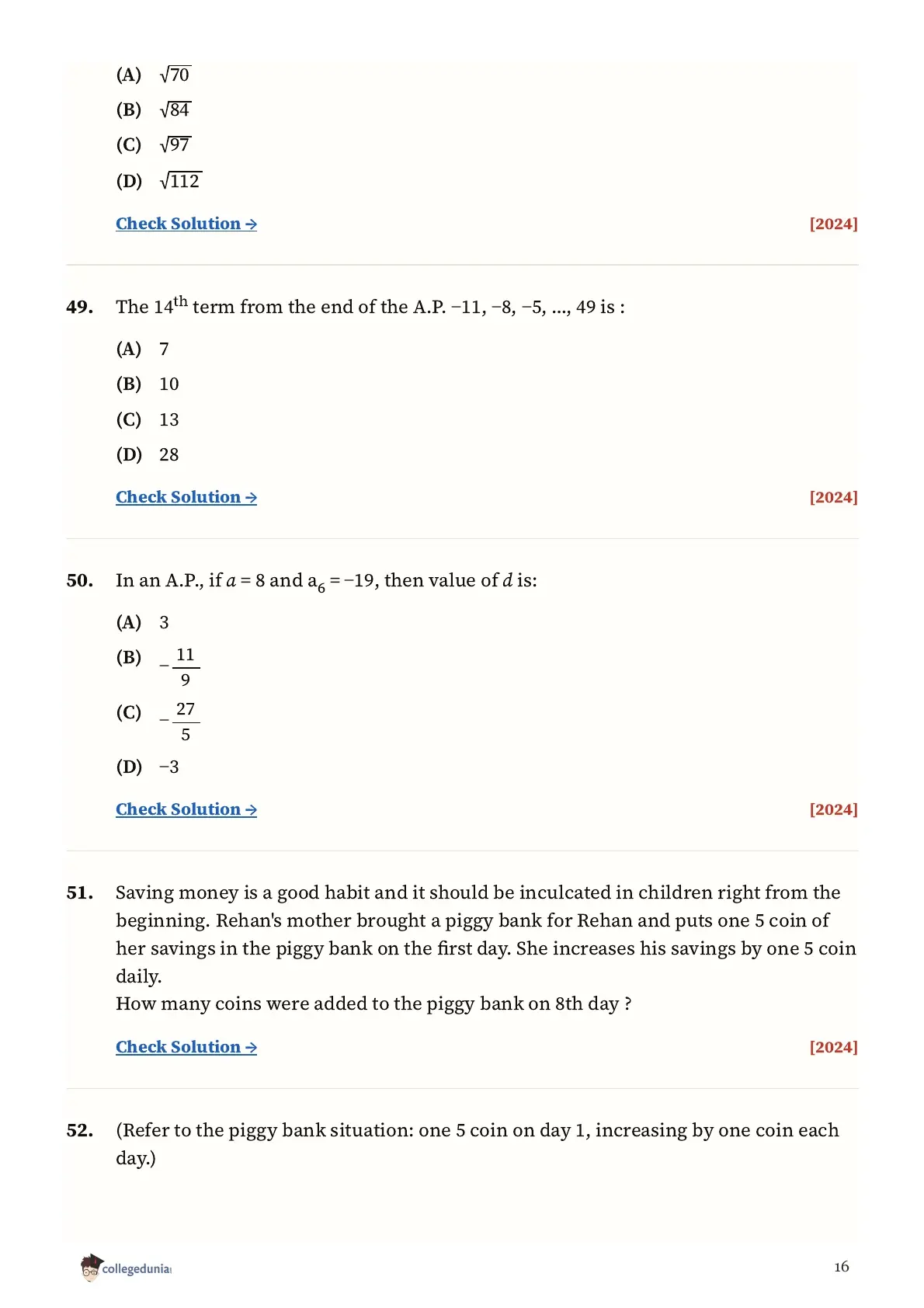
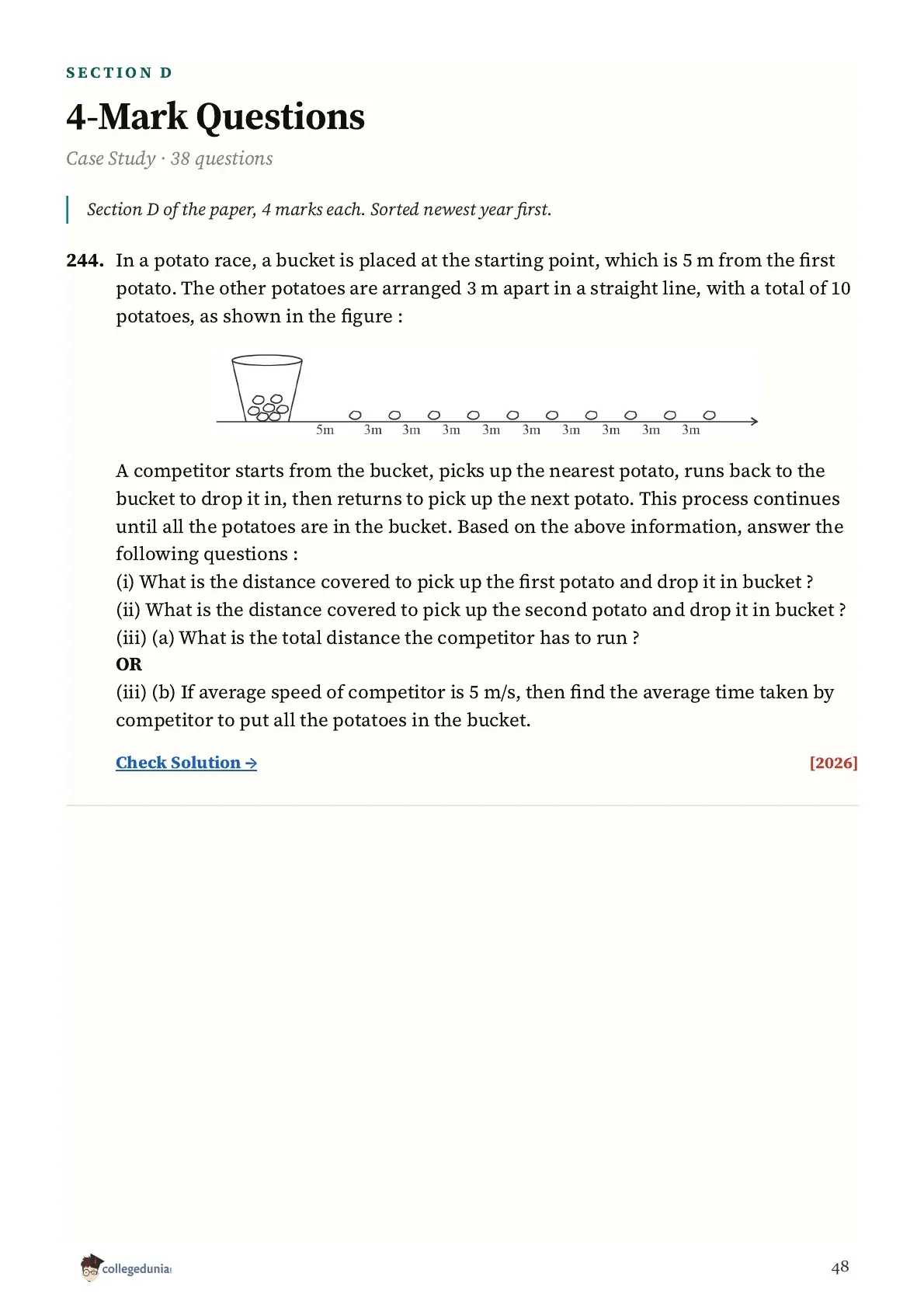
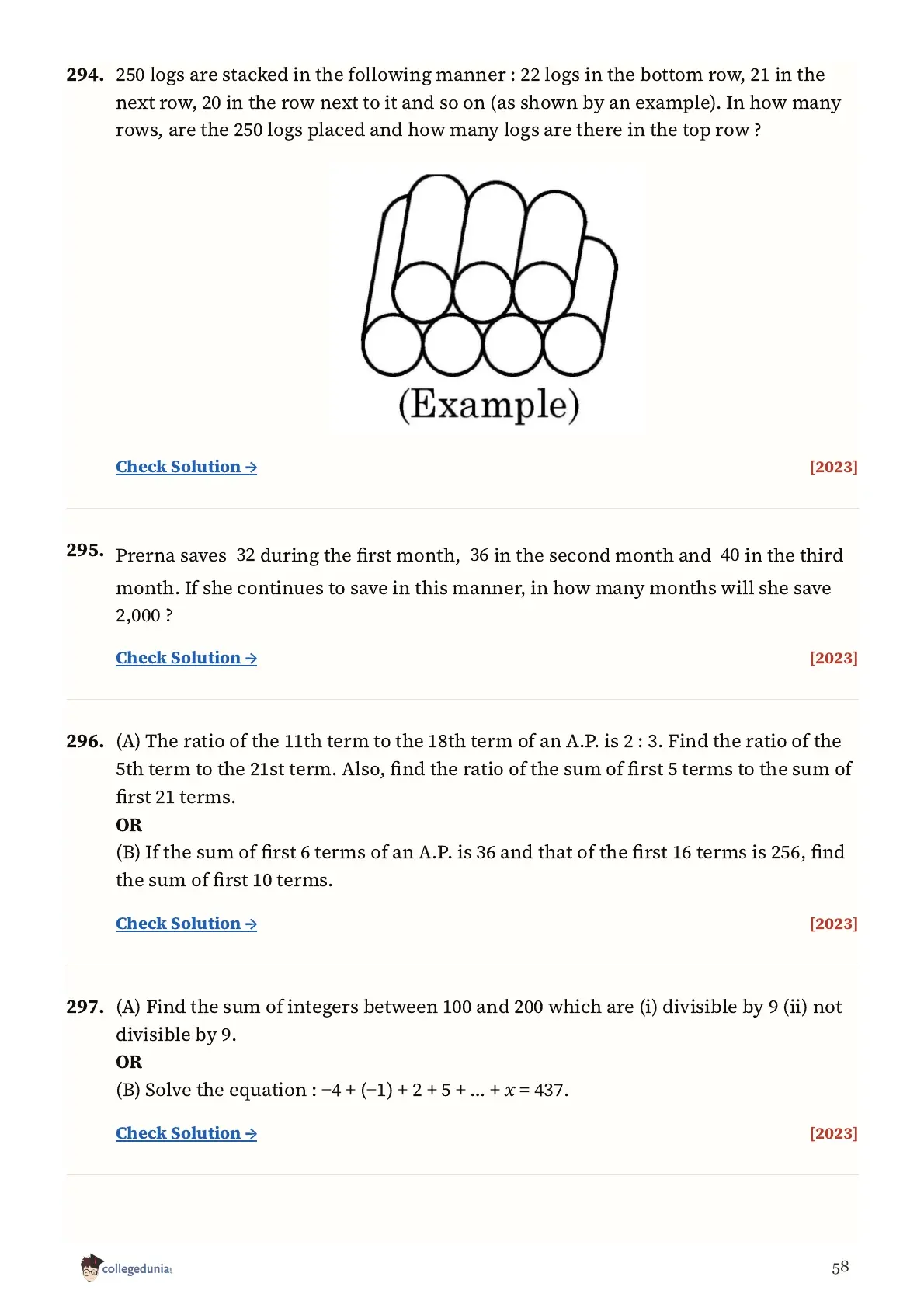
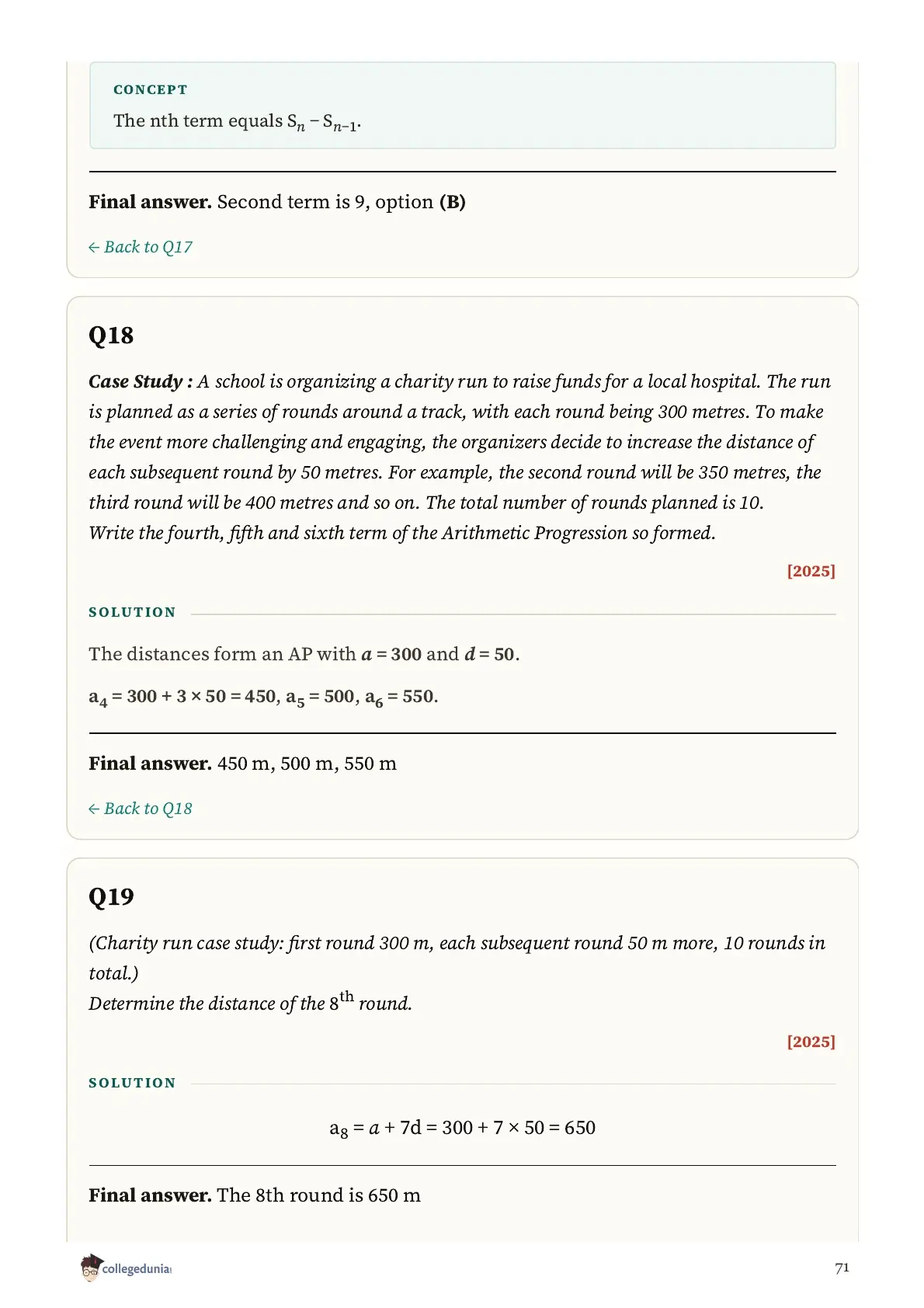
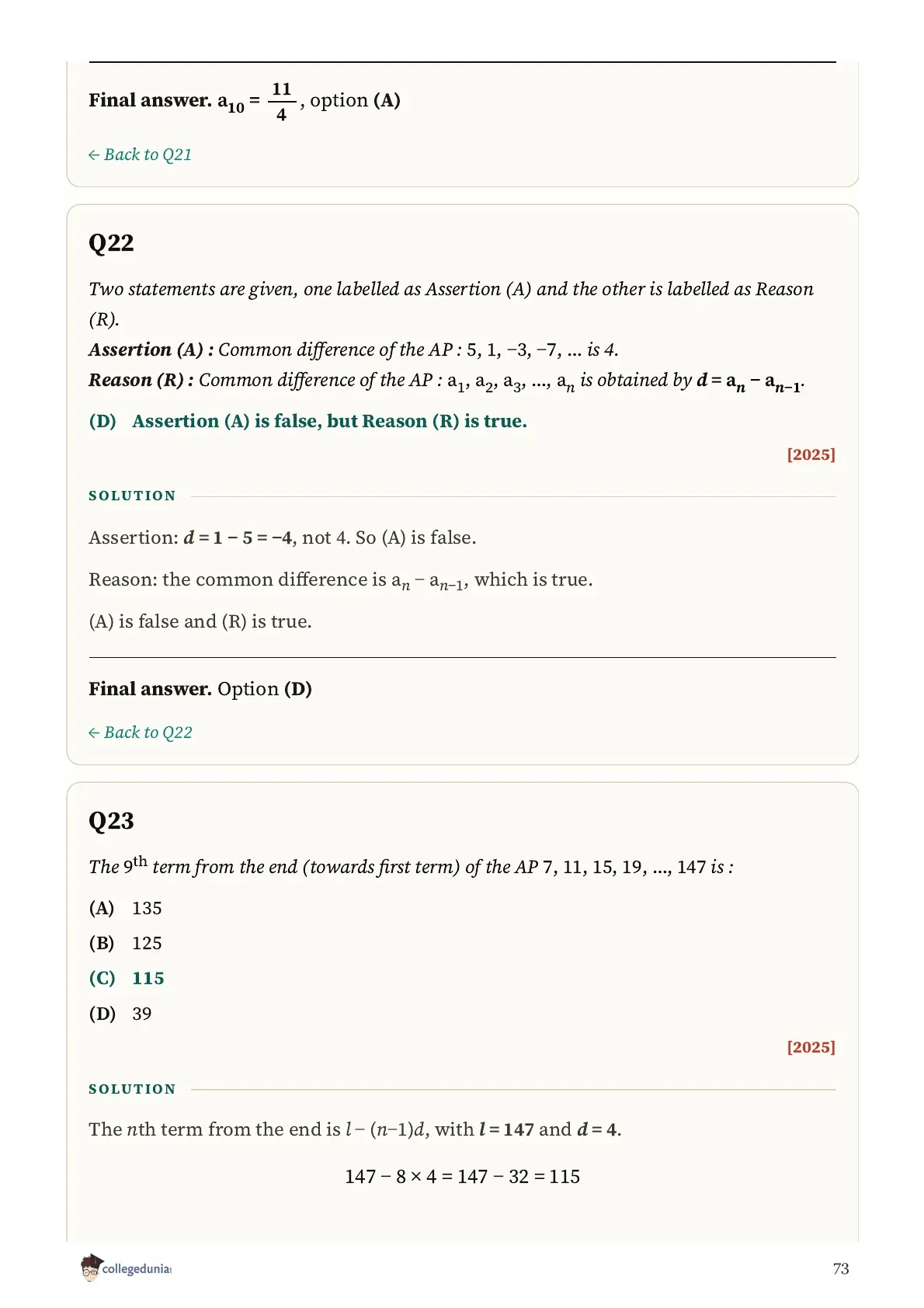
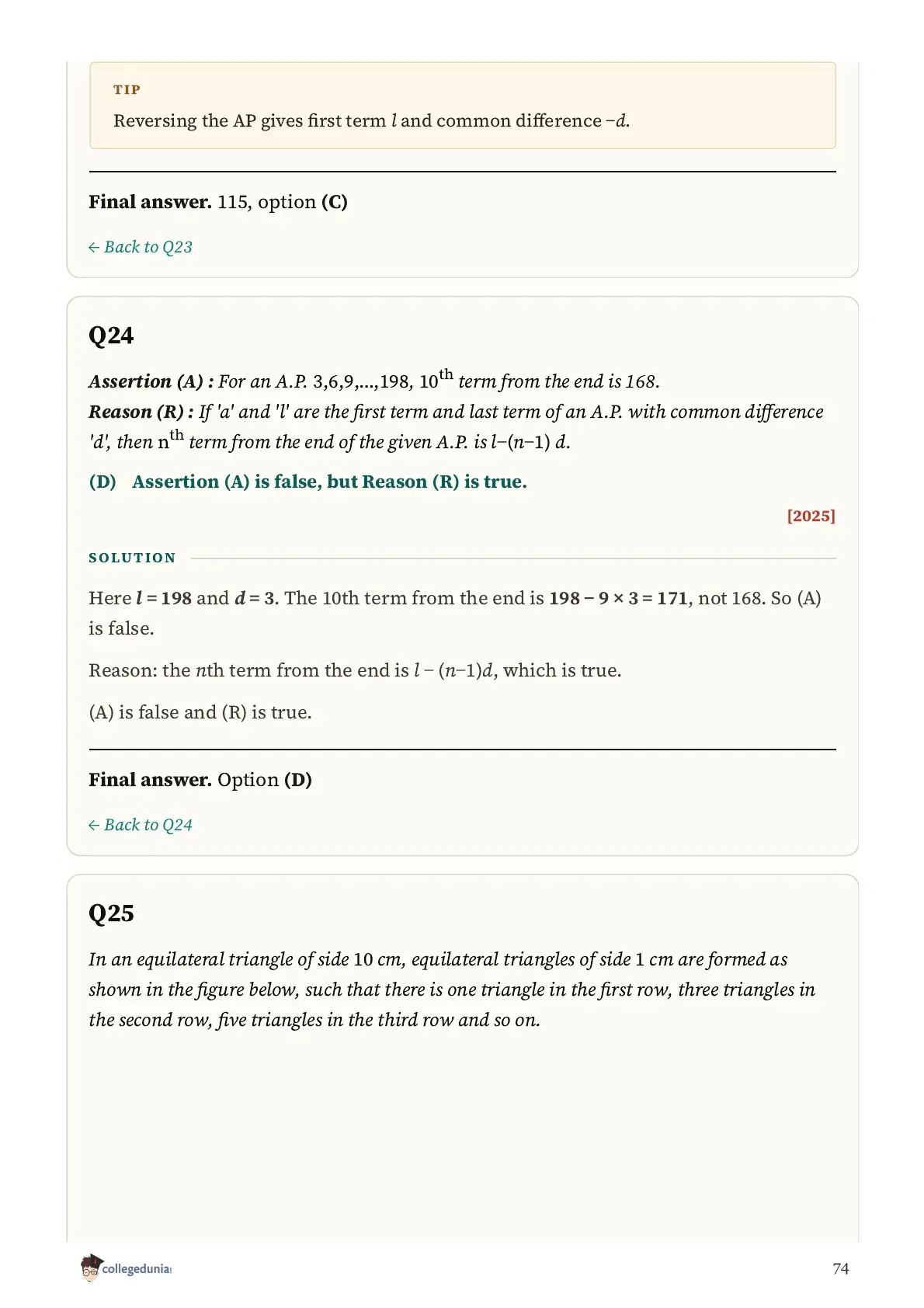
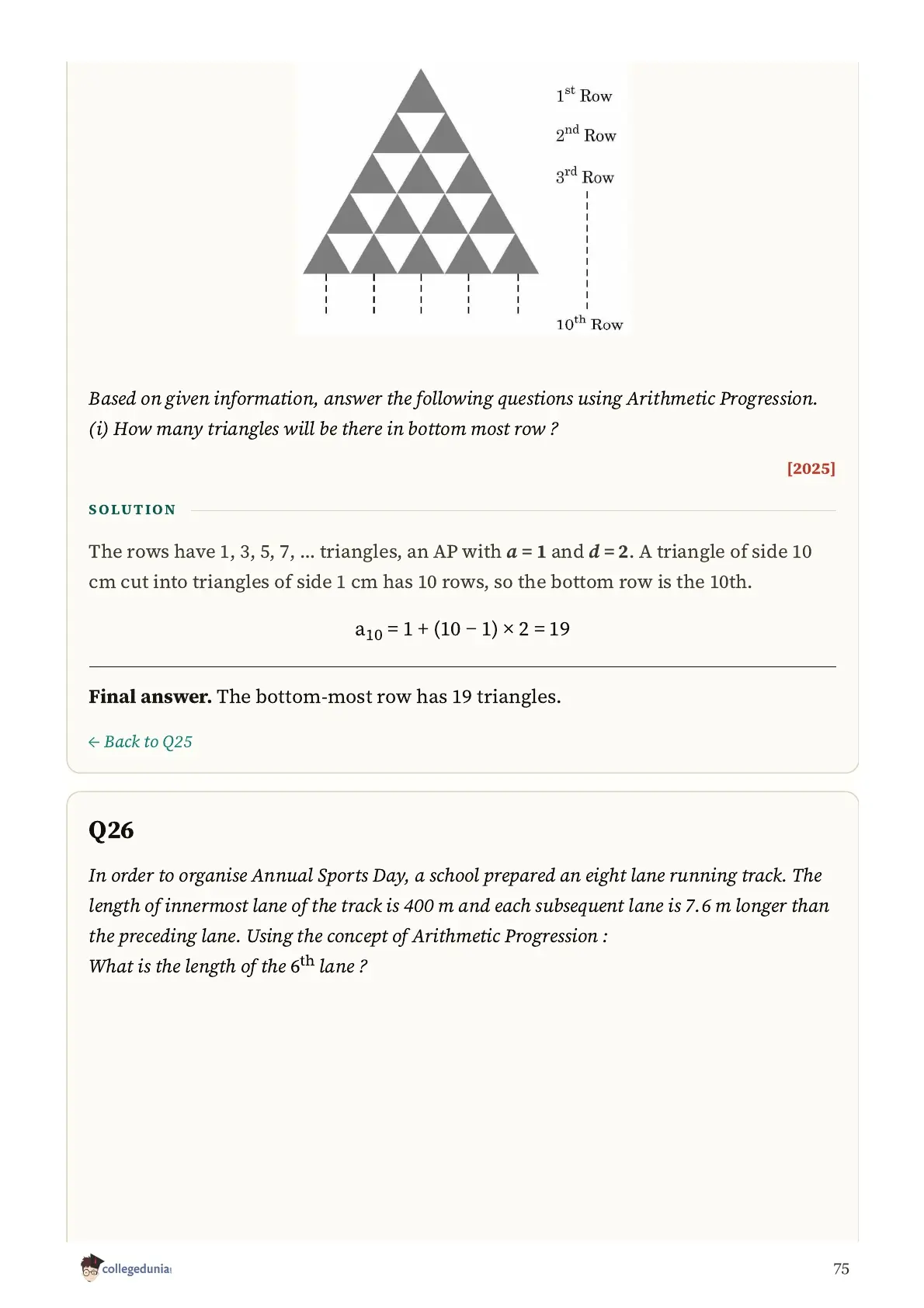
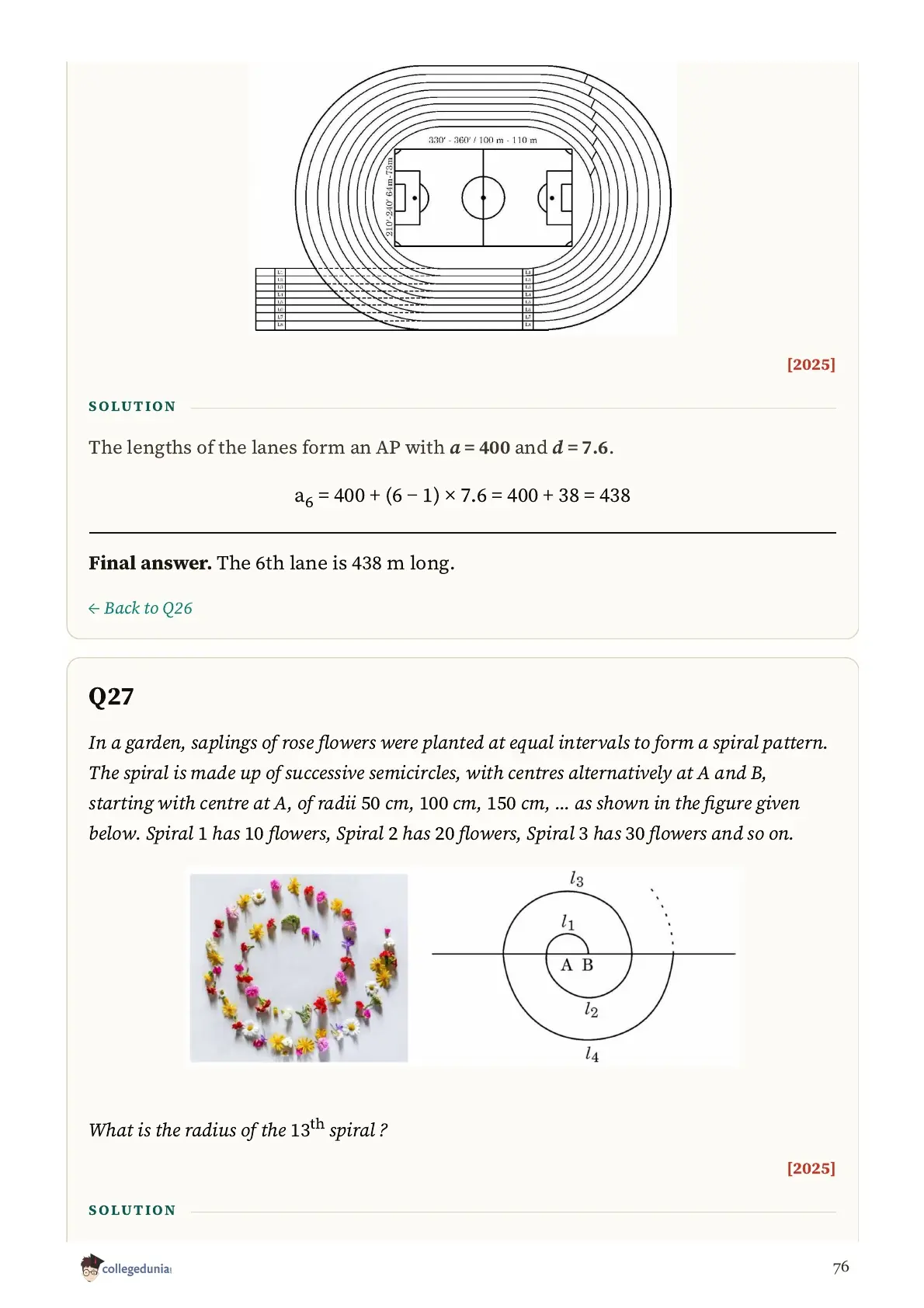
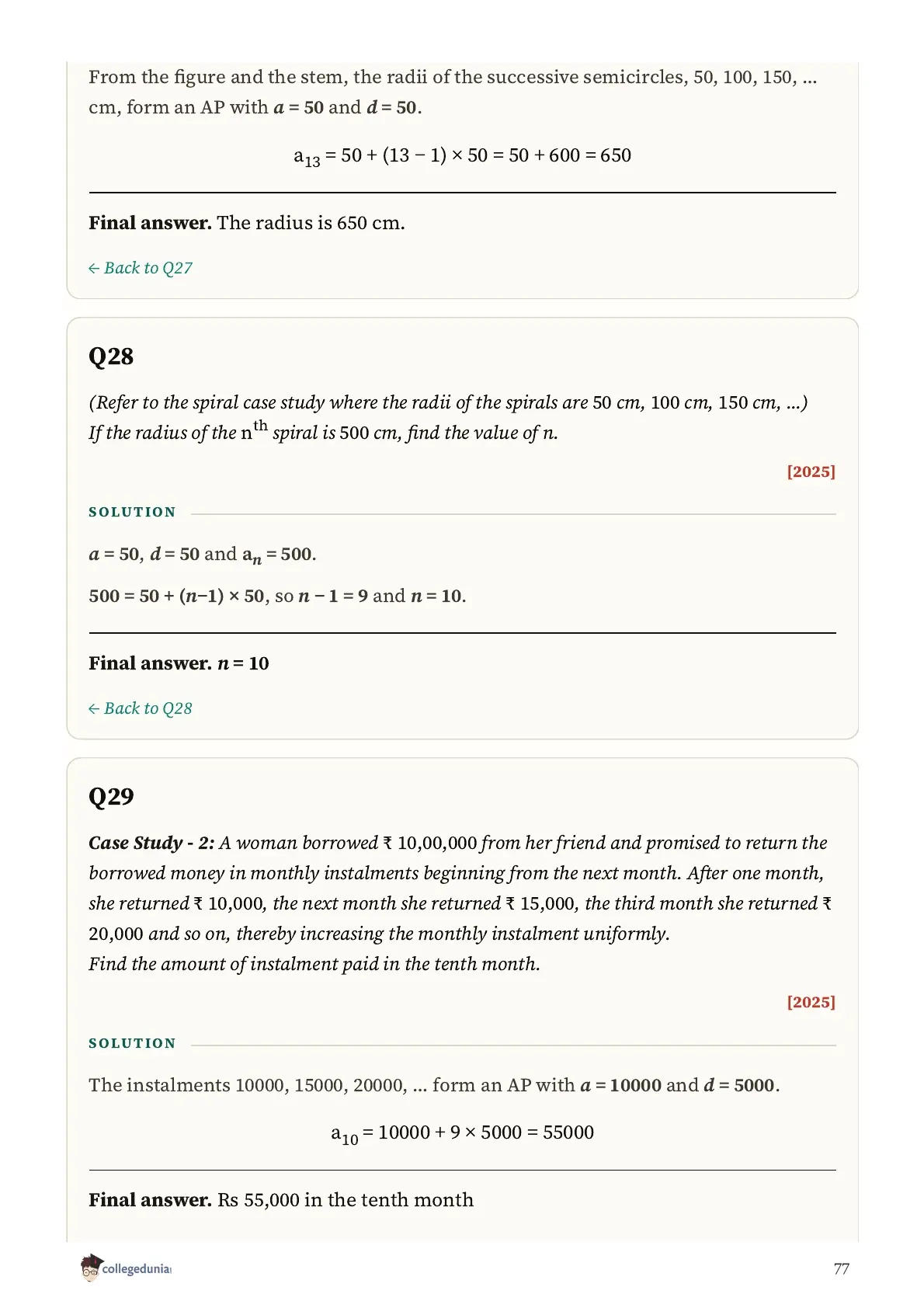
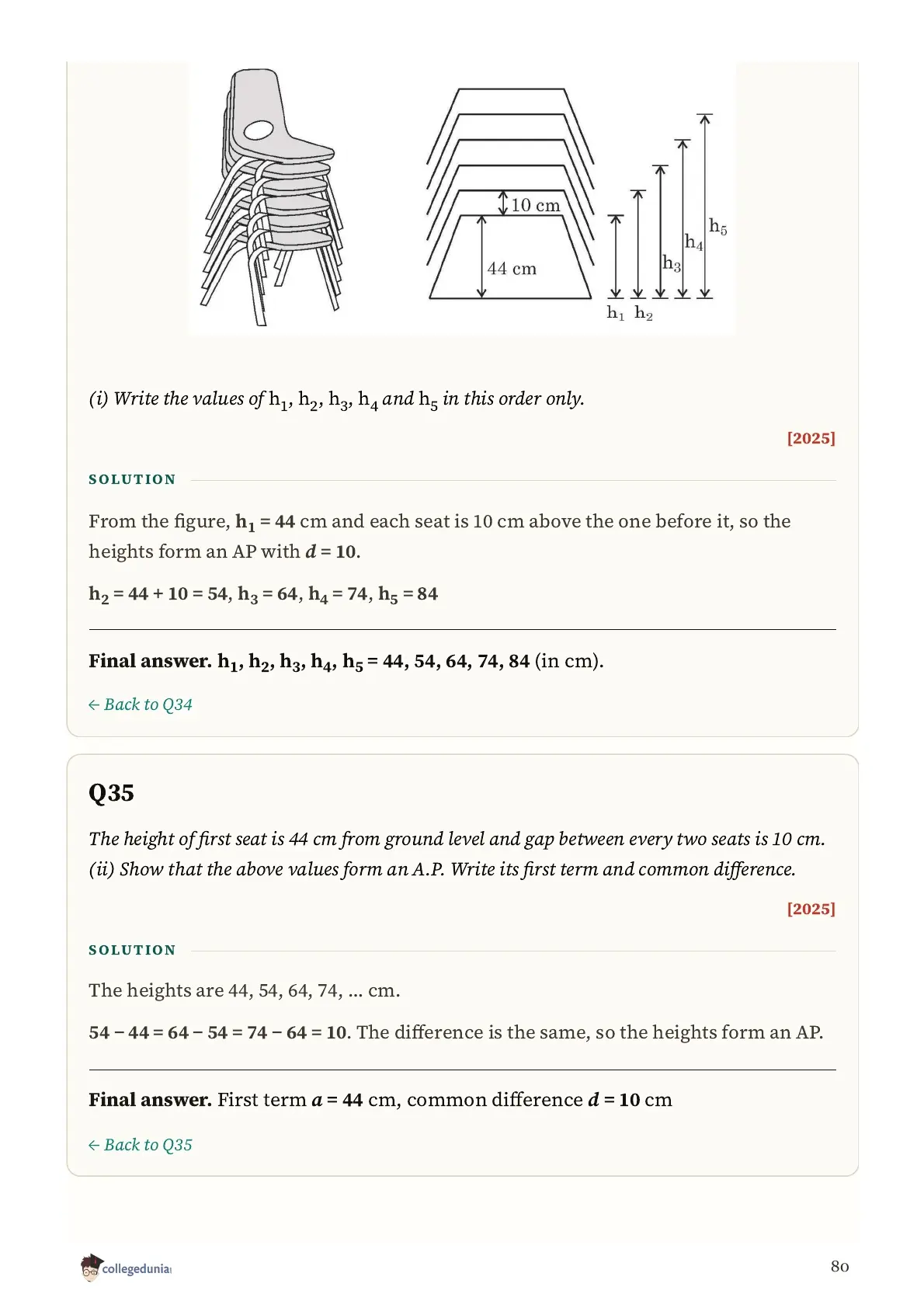
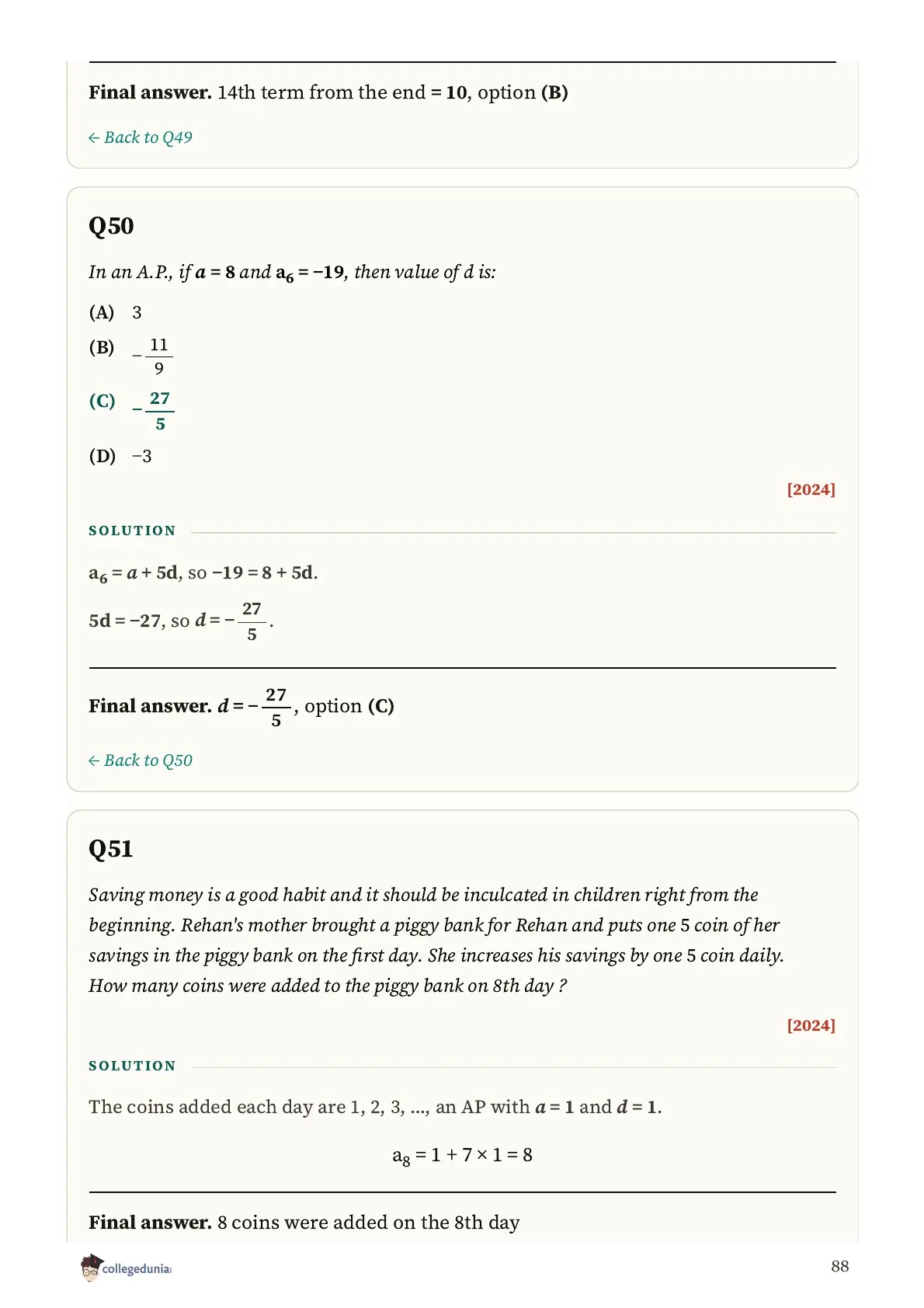
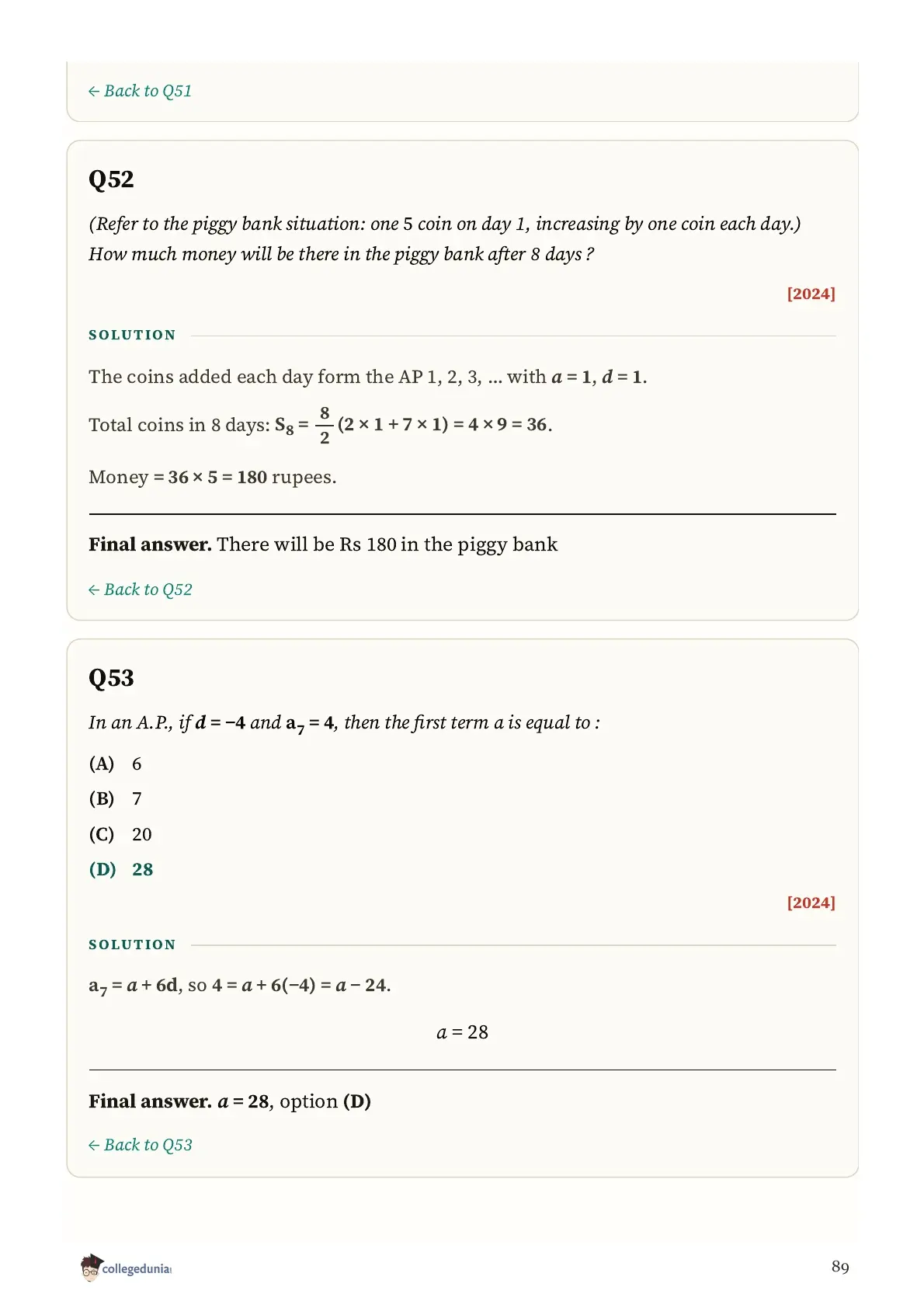
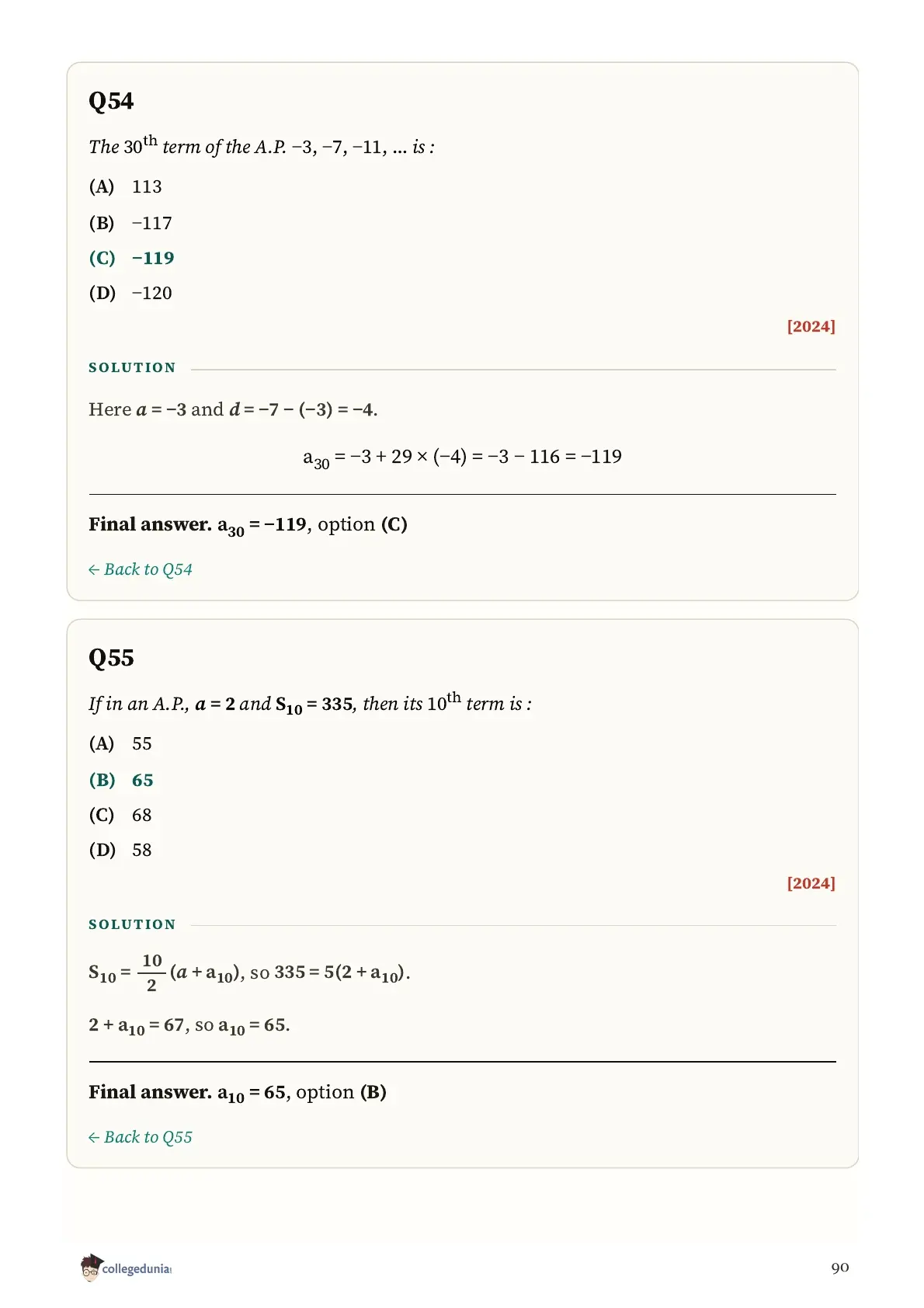
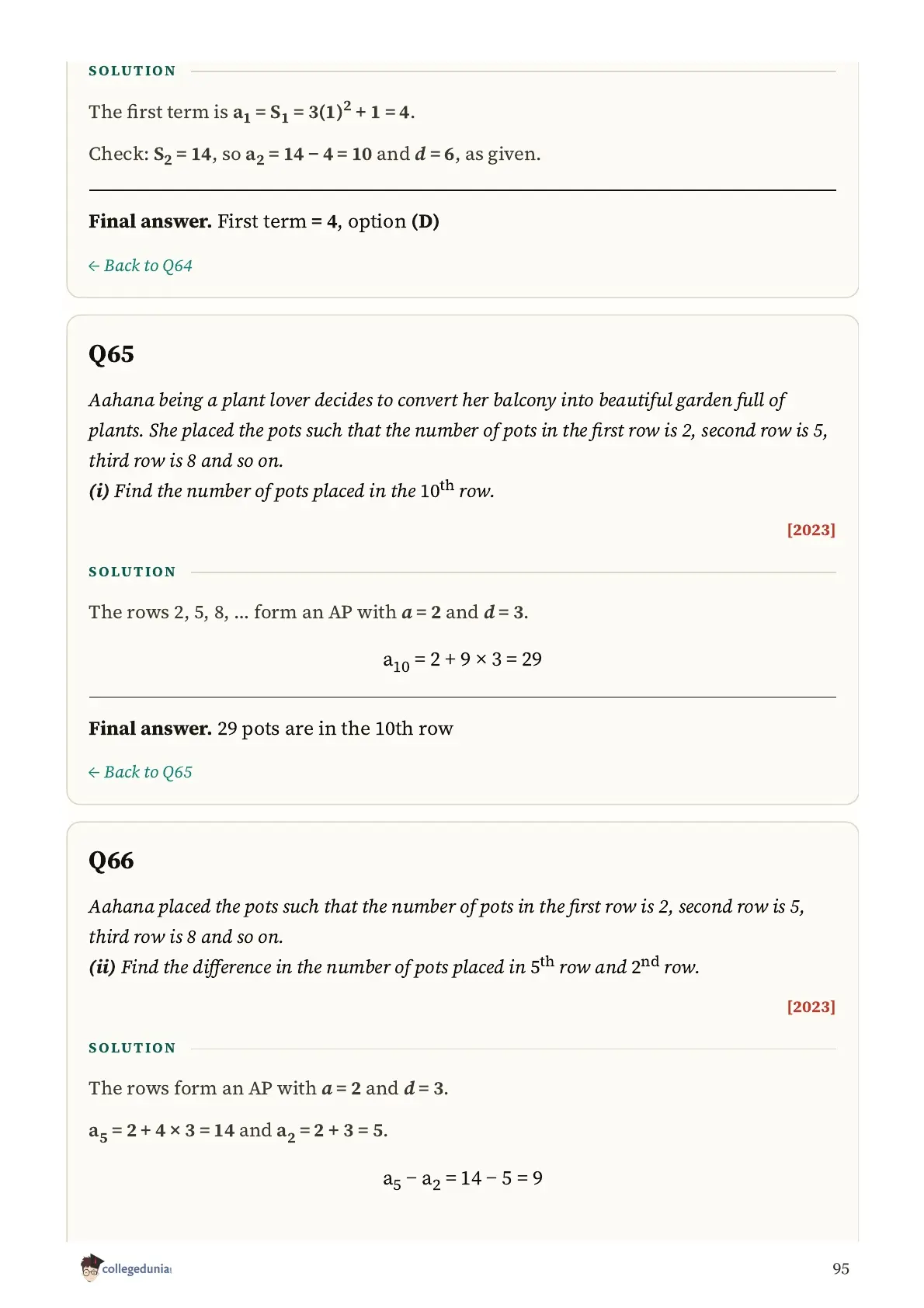
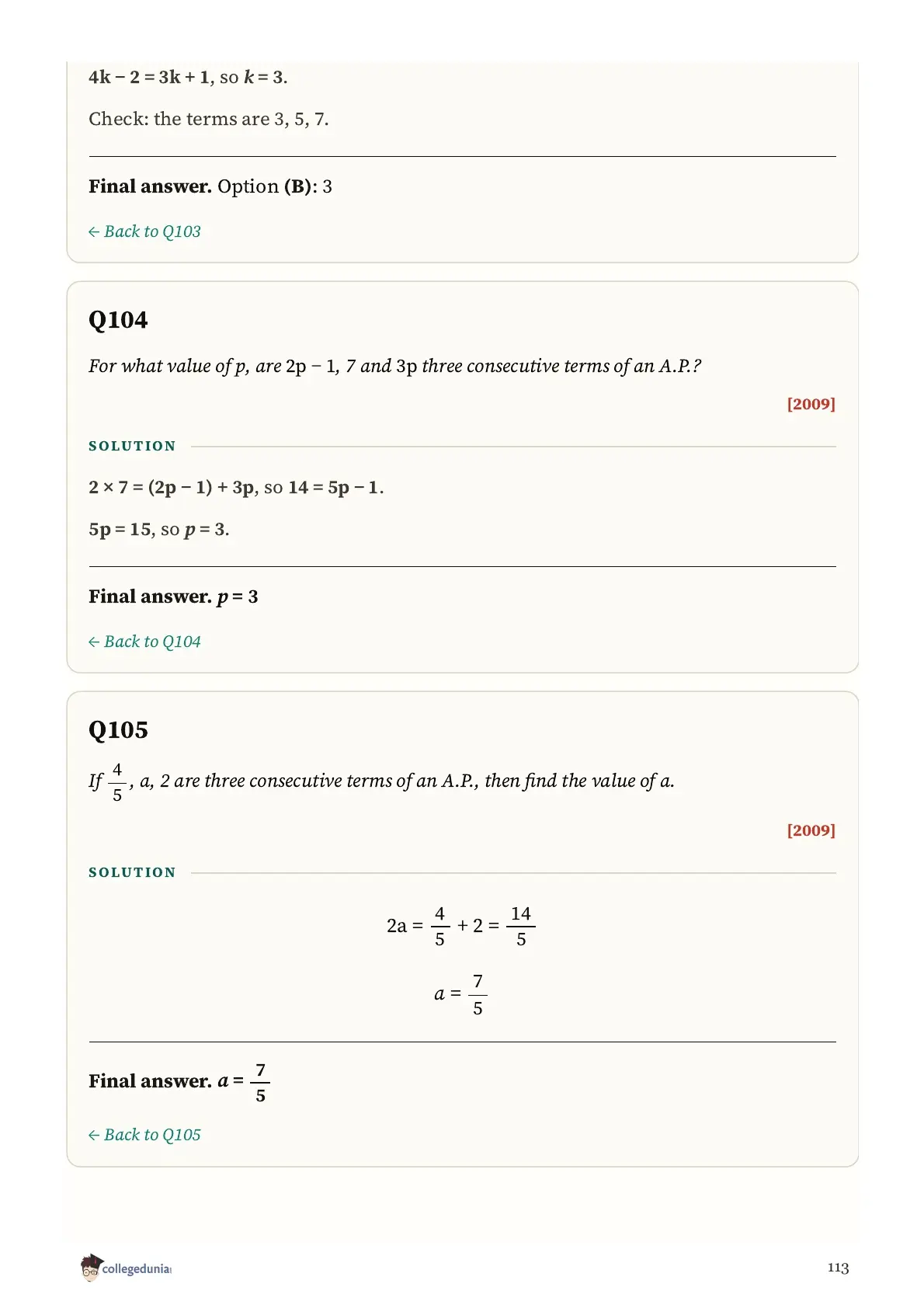
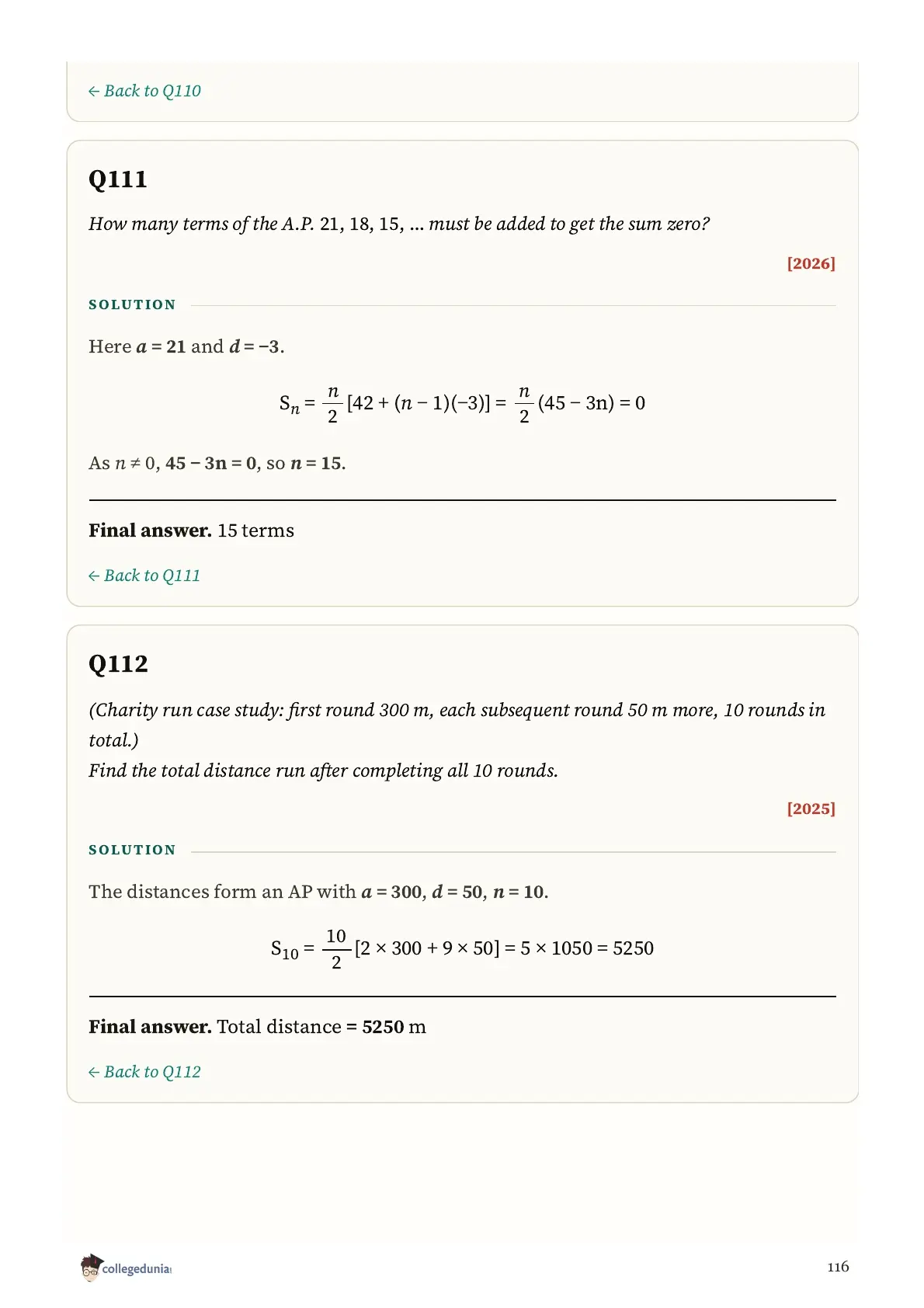
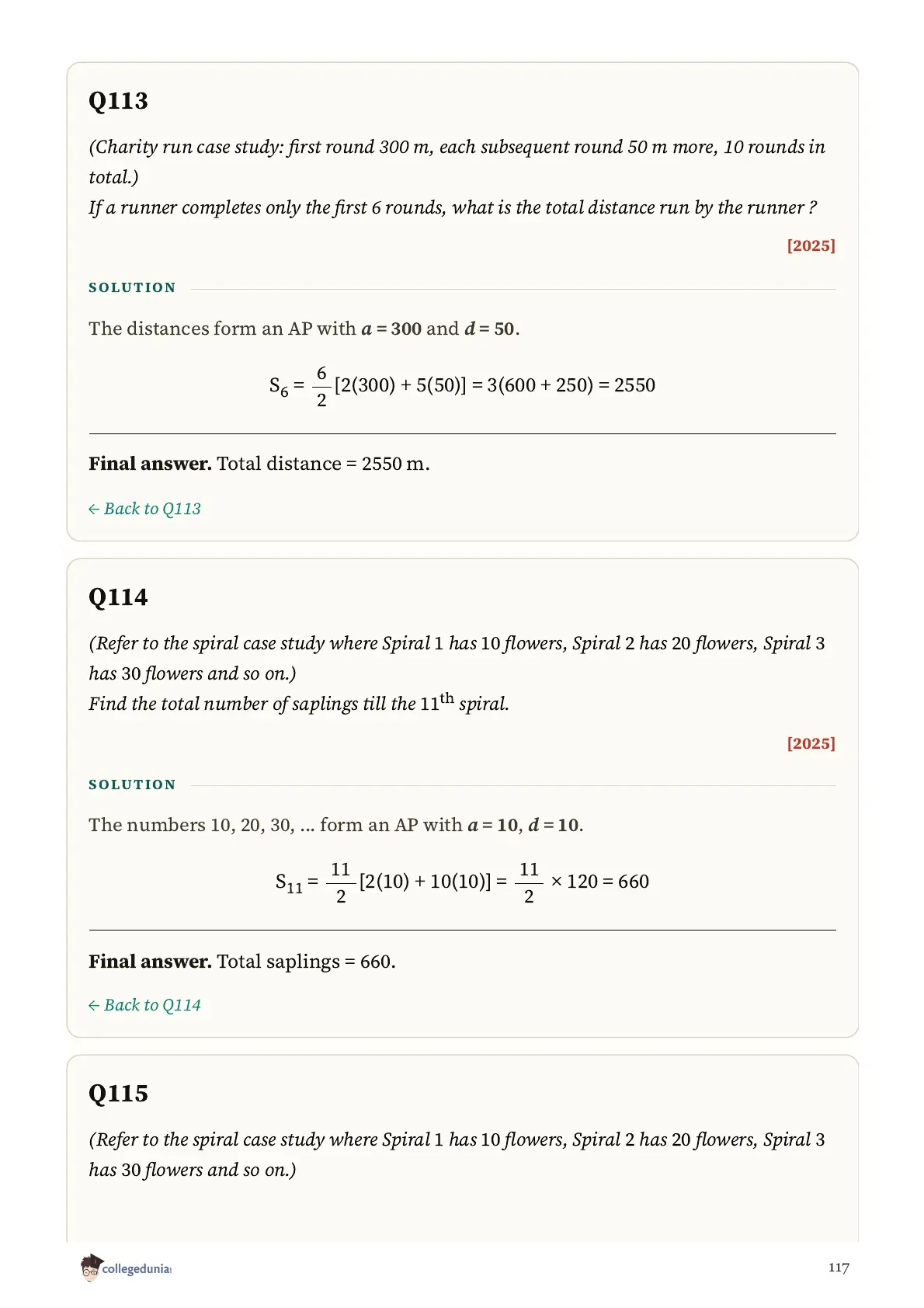
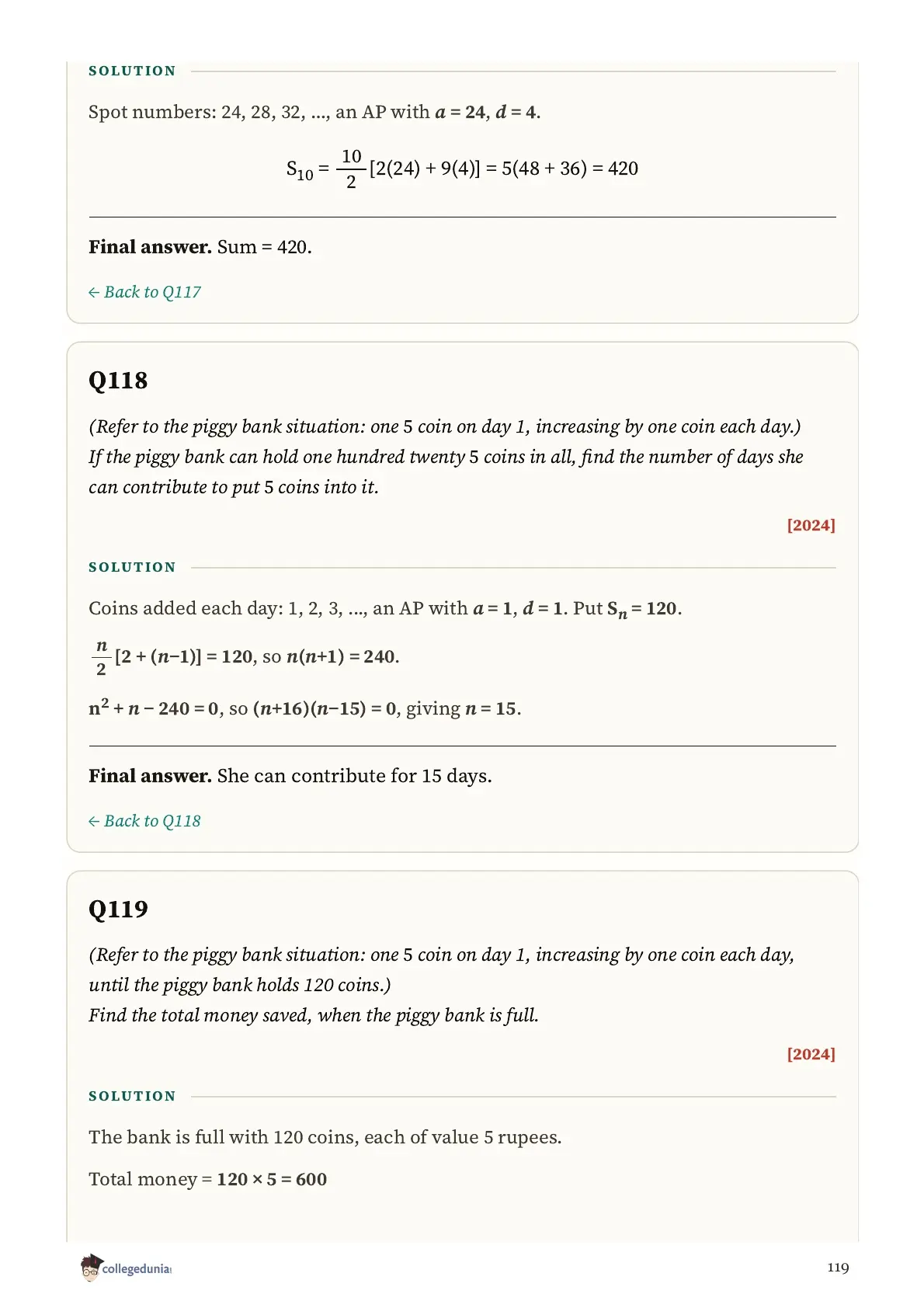
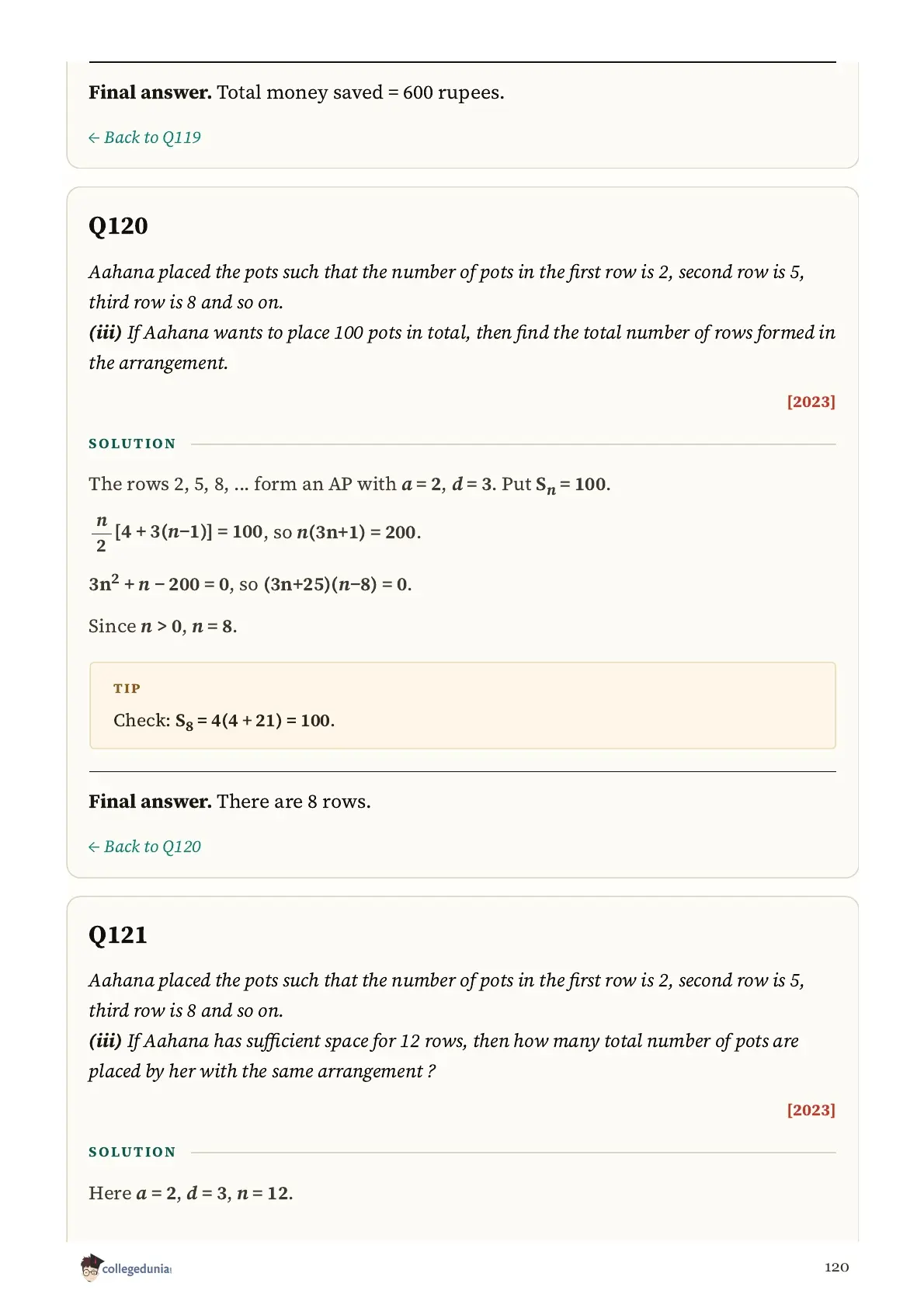
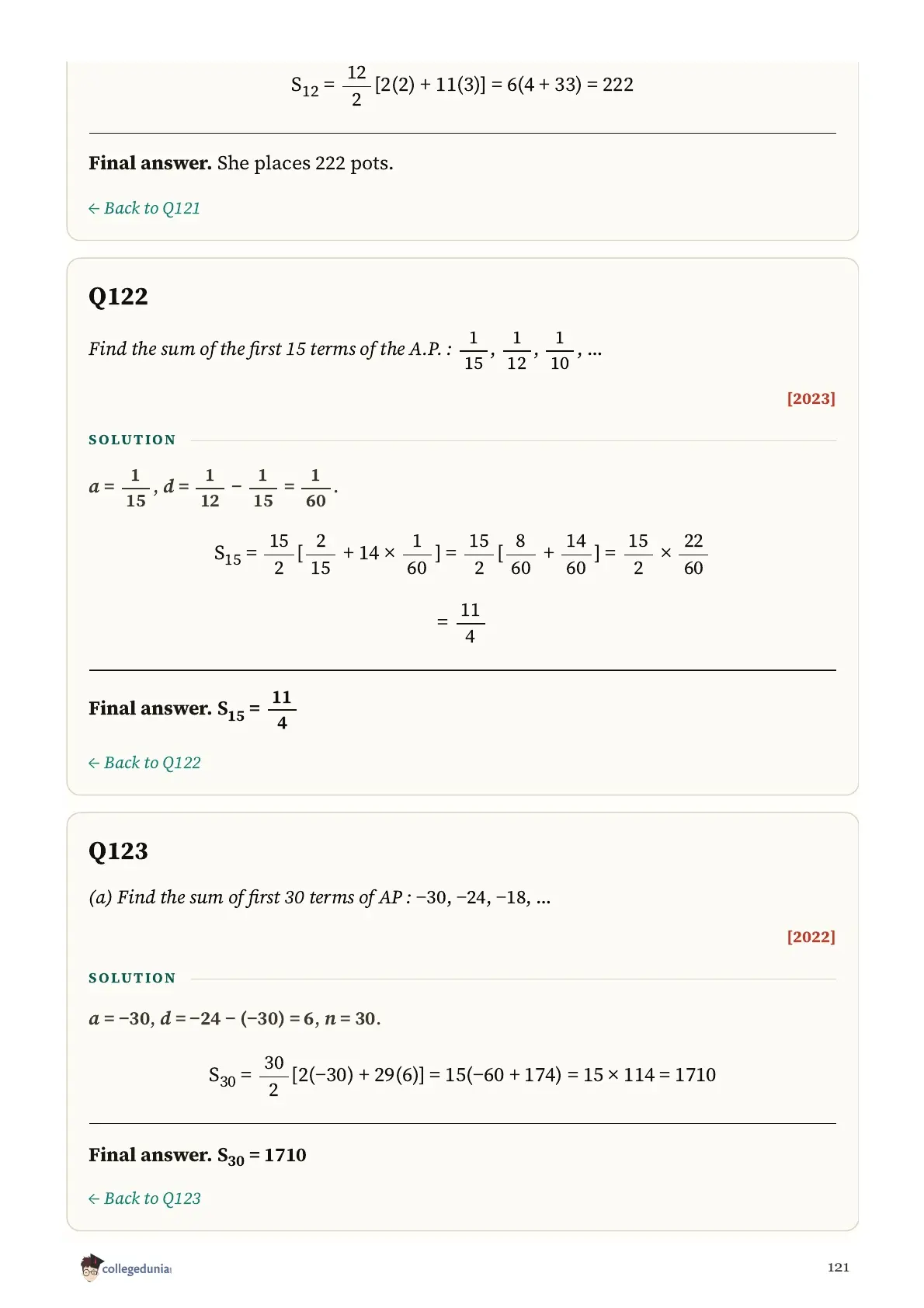
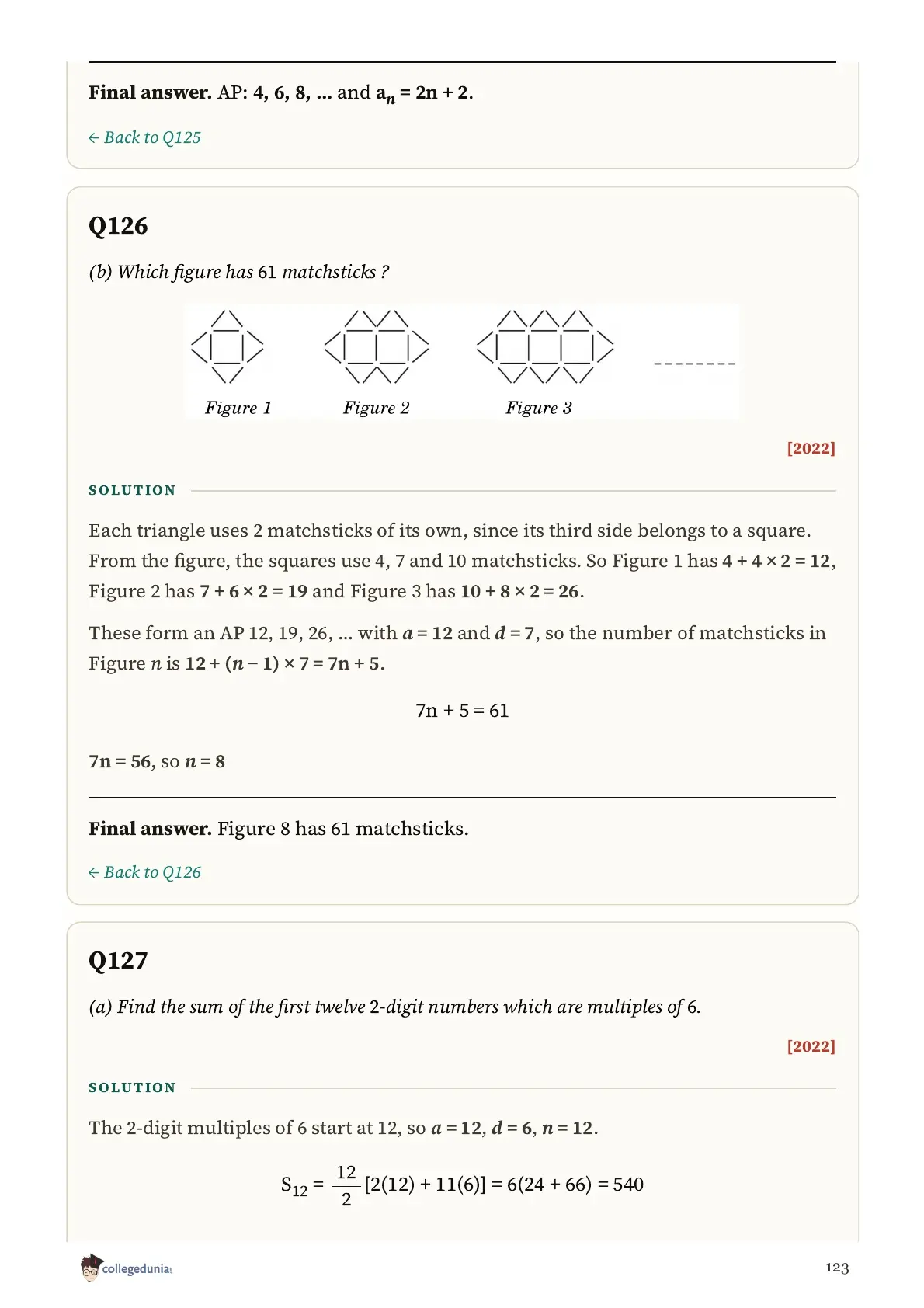
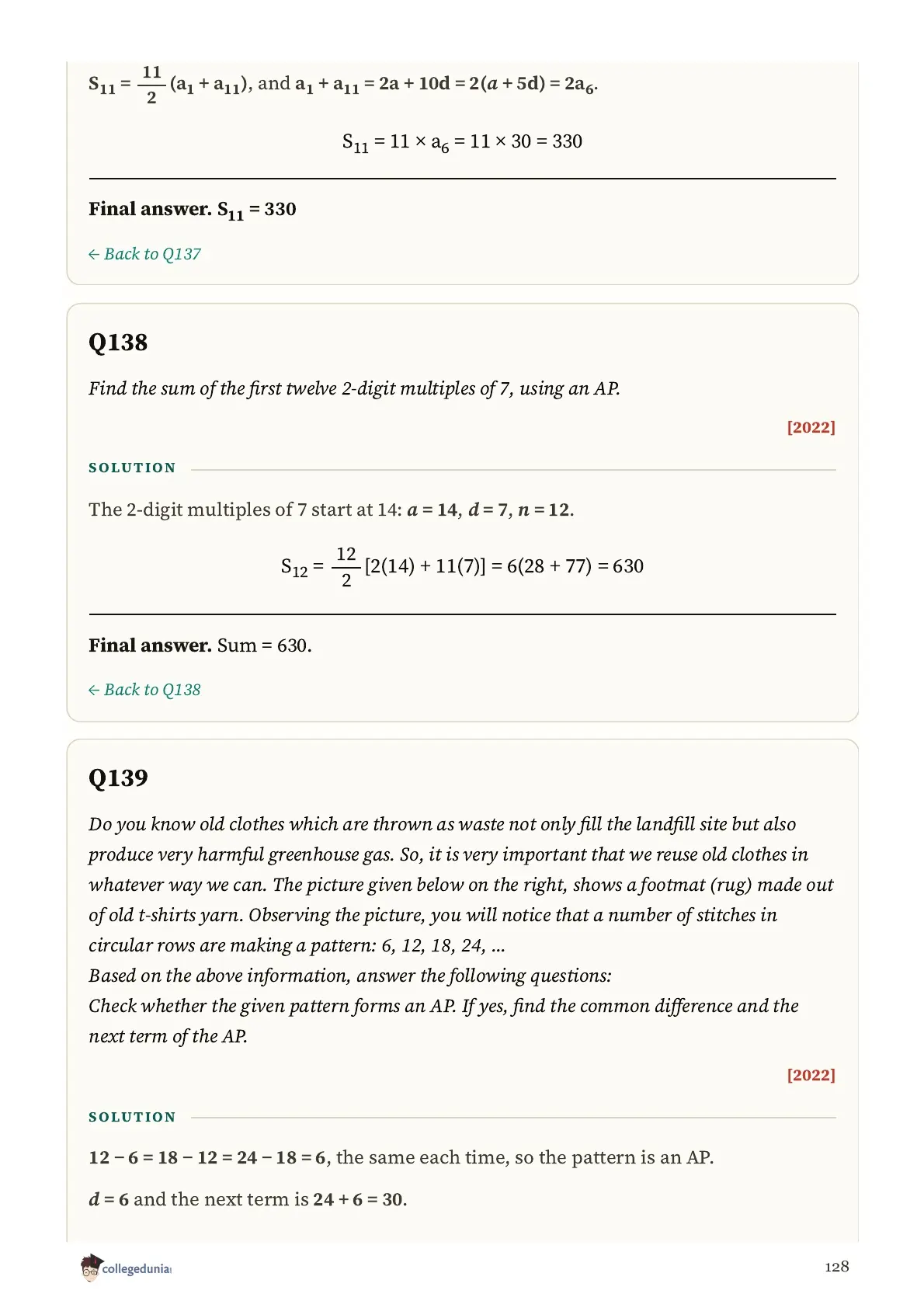
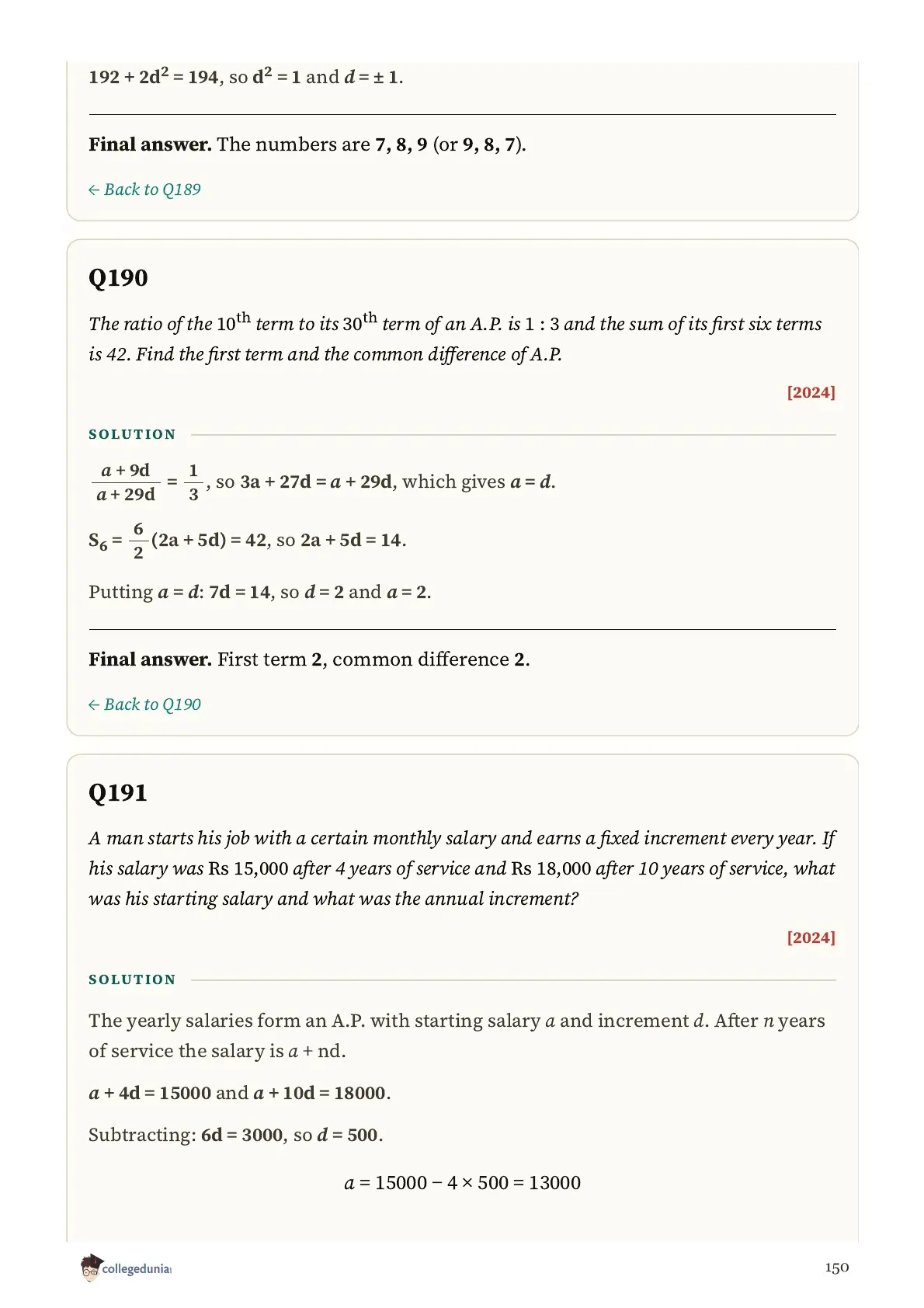
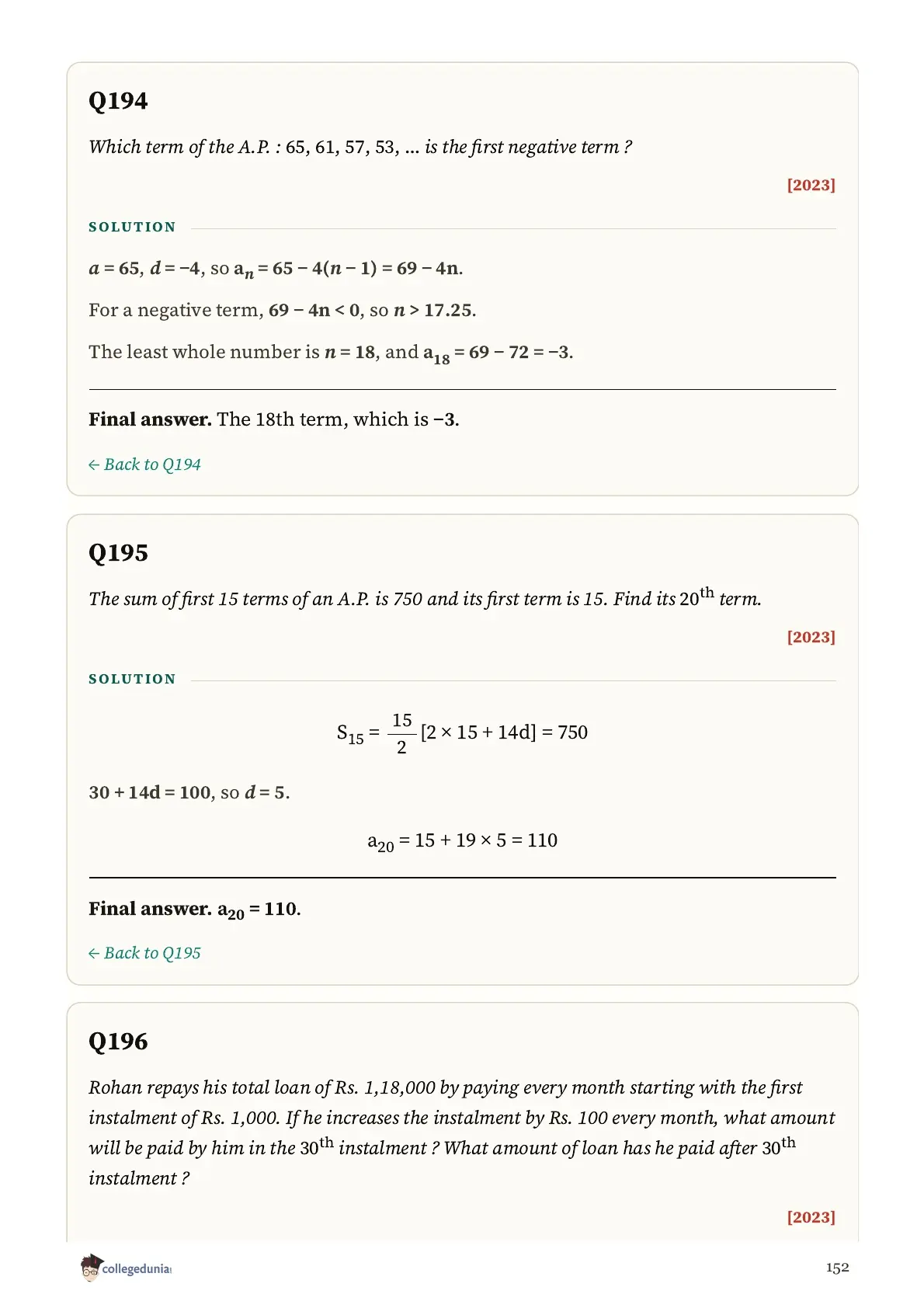
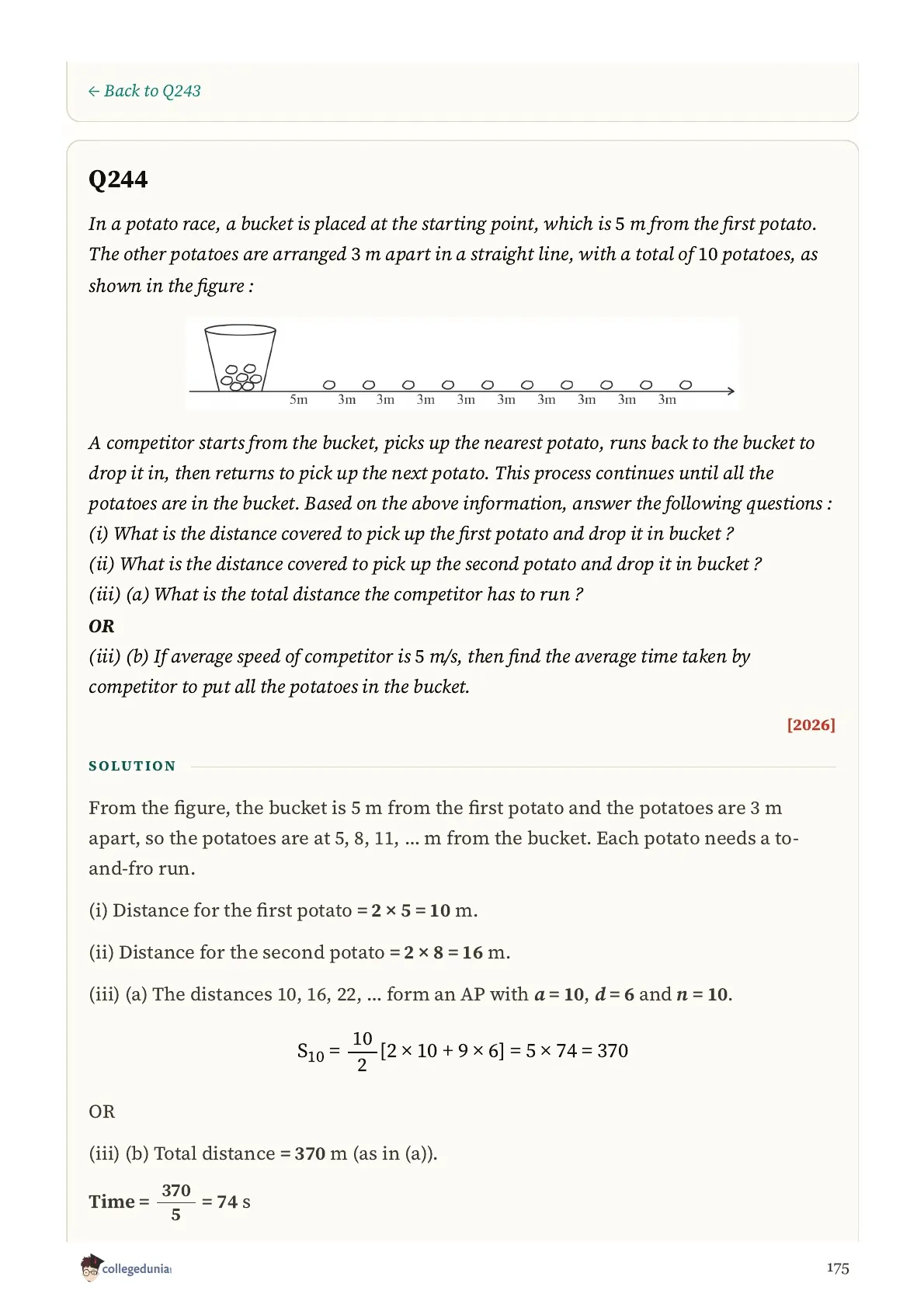
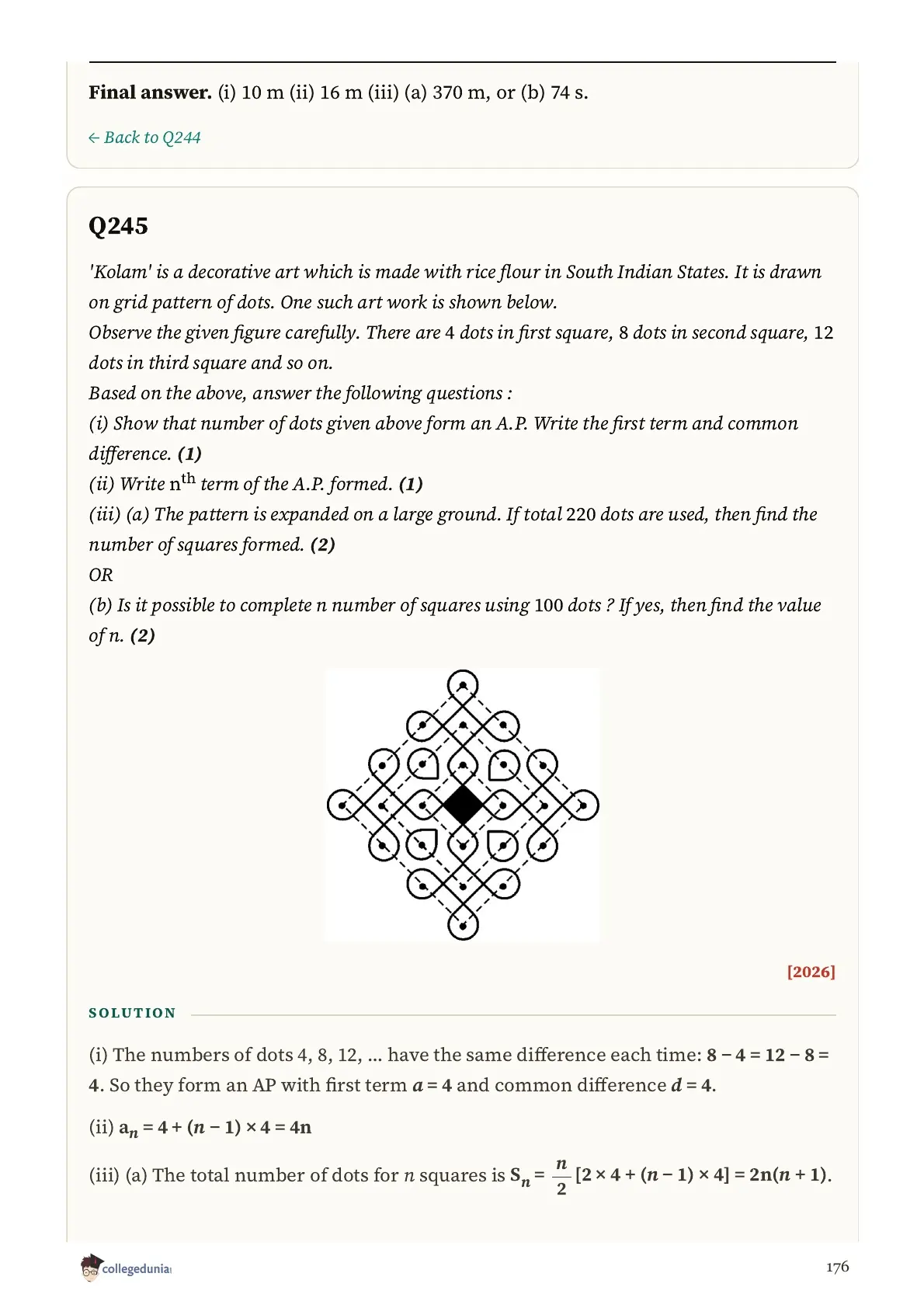
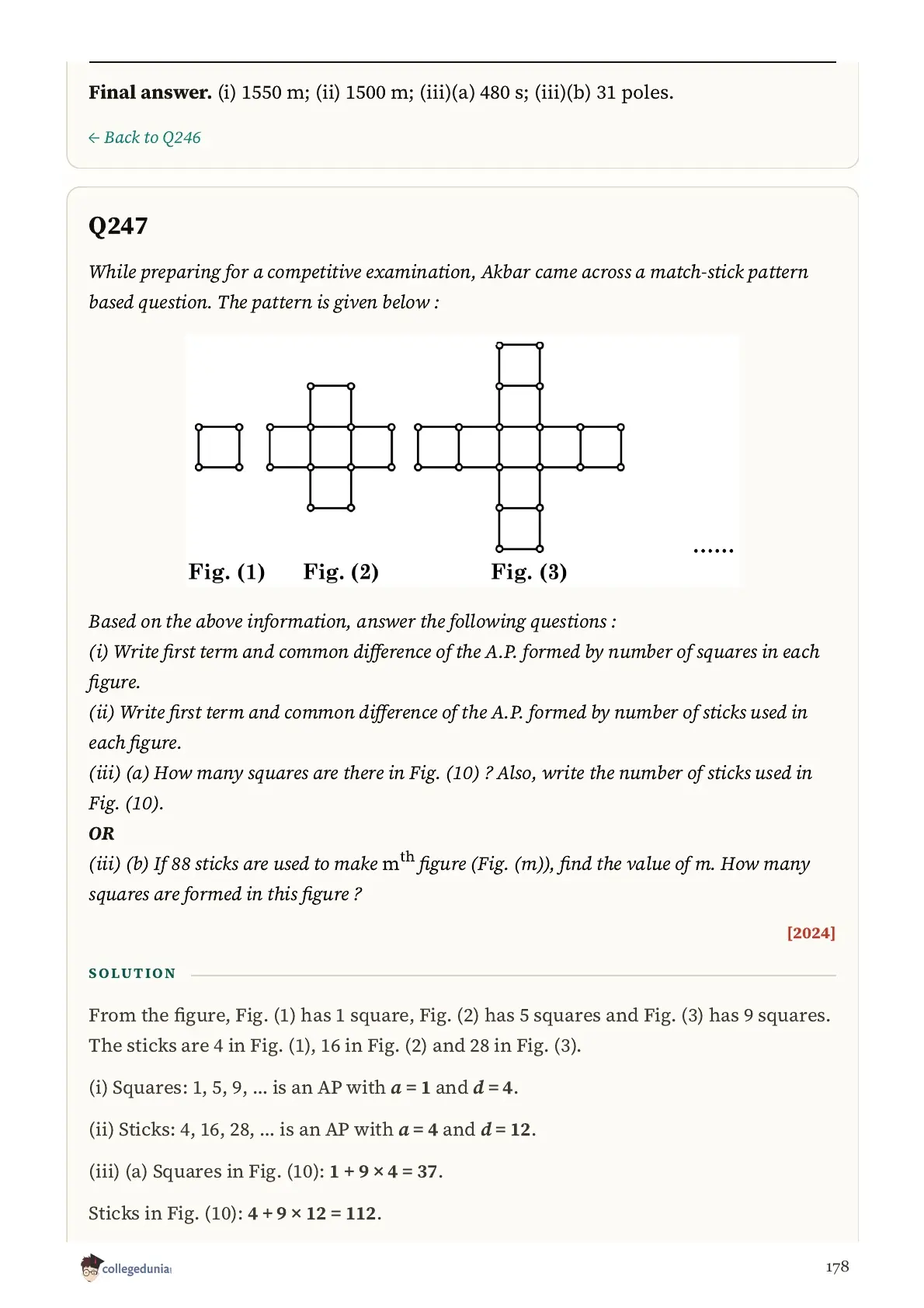
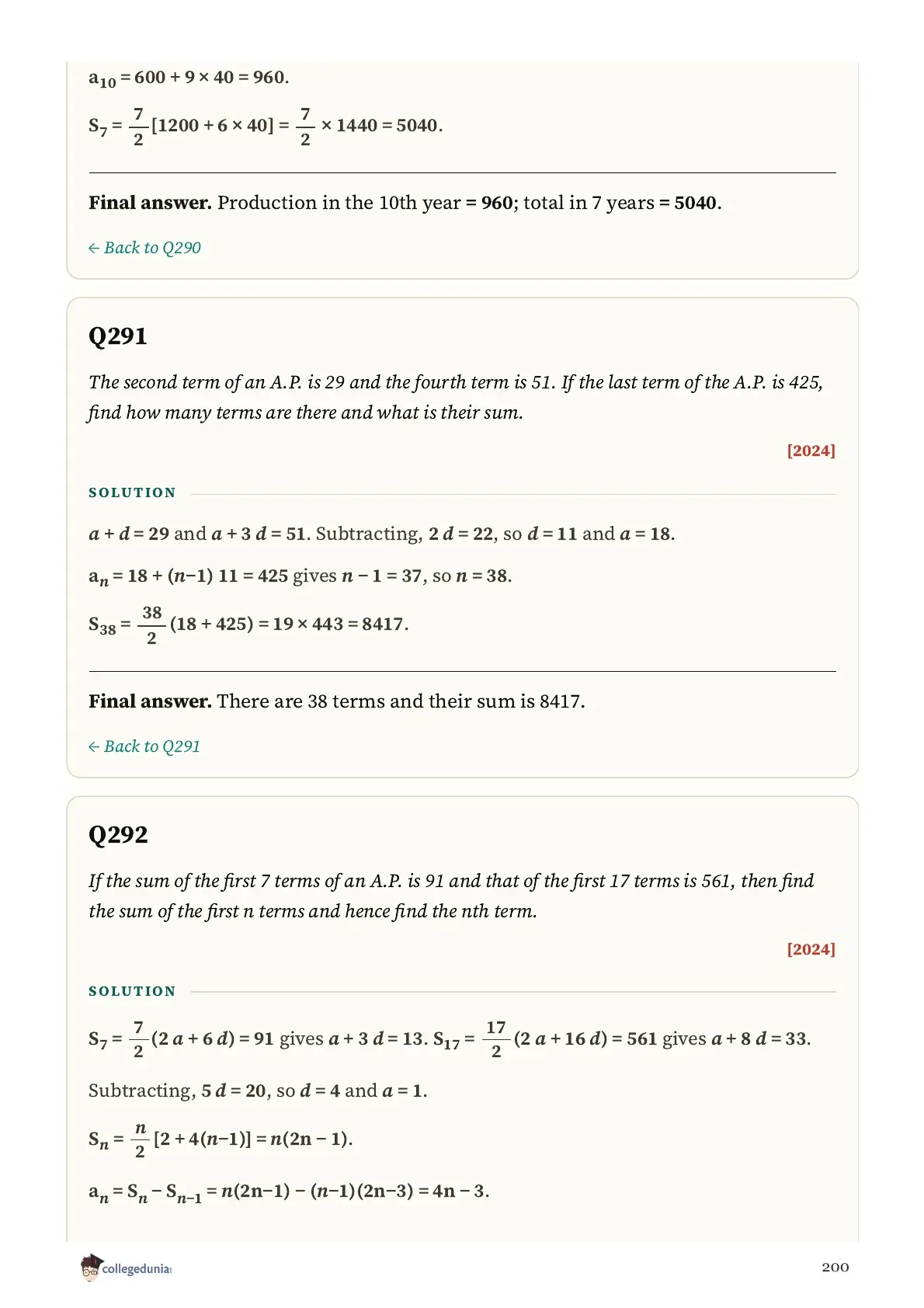
Case studies are the newest pattern. 38 questions sit in the 4-mark case-study section and 22 mention a real situation: loan instalments, a piggy bank that grows by one coin a day, pots in rows of 2, 5, 8, a charity run with rounds of 300 m plus 50 m each time. 3 MCQs are assertion-reason items, two of them on the term from the end. 10 questions carry their original diagram.
Counts come from keyword matches over the question text, so a question that names two things is counted under both.
Source: Physics Wallah Foundation
How to Approach the Set
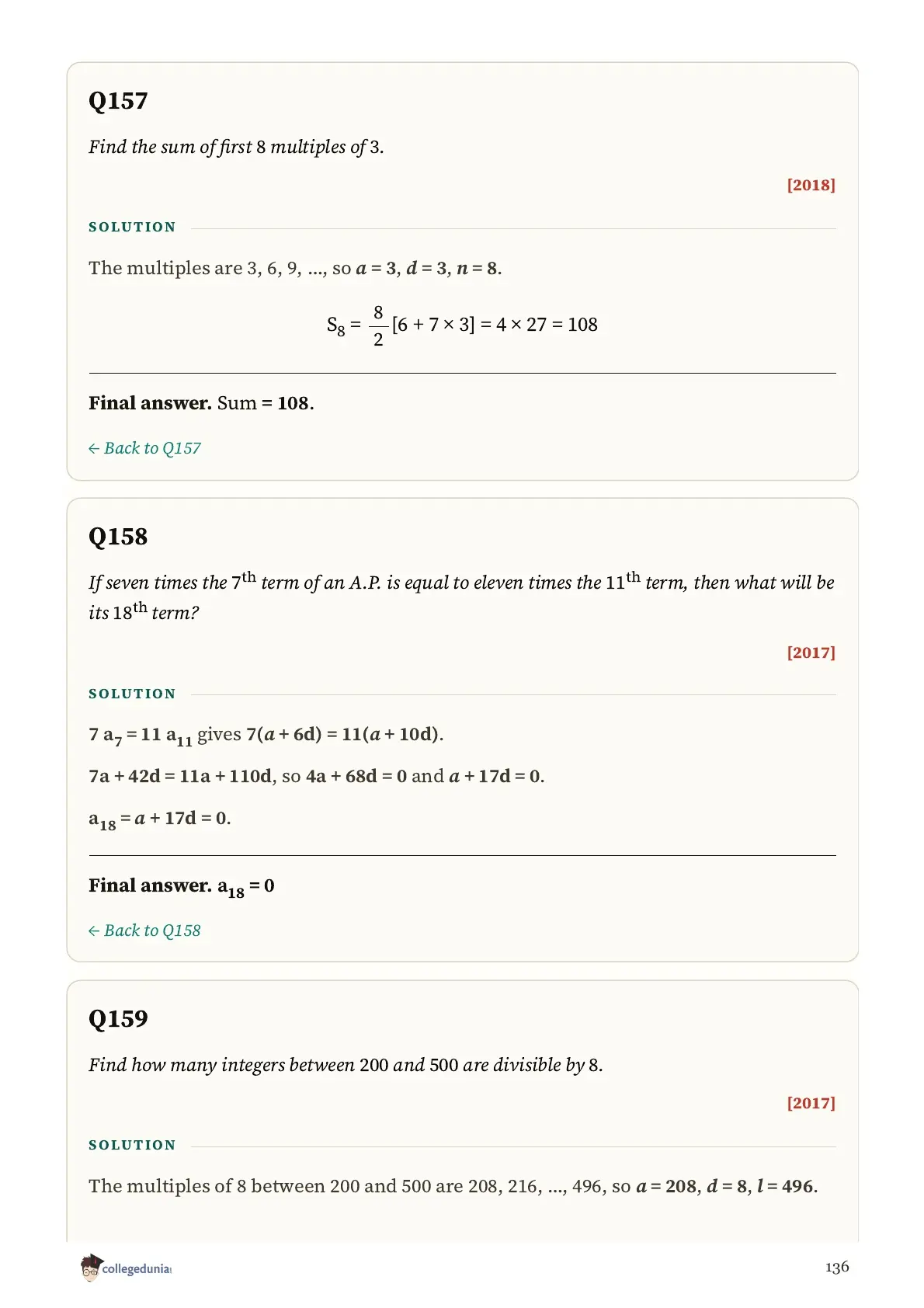
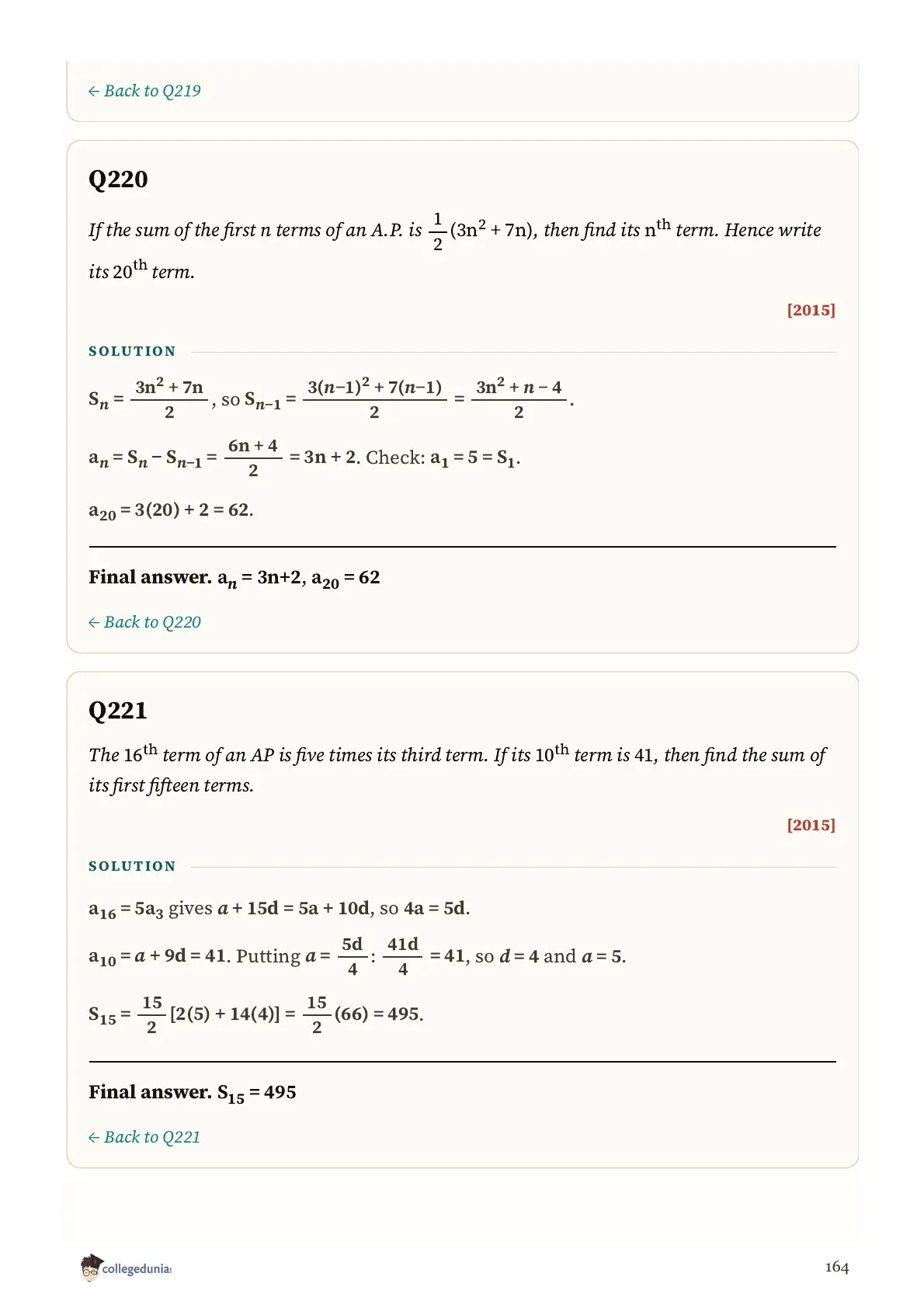
Start with the 69 MCQs and assertion-reason items, then the 1-mark and 2-mark short answers, which need a single formula. Next take the 66 three-mark questions and the 38 case-based items. Keep the 24 five-mark questions for last, since they usually ask for a sum and a count of terms together. Learn a_n = a + (n - 1)d, S_n = n/2 [2a + (n - 1)d] and S_n = n/2 (a + l) until you can pick the right one from the data given. Practise the 2022 to 2026 papers closely, as they hold 170 of the 305 questions.
Common Mistakes in Arithmetic Progressions Questions
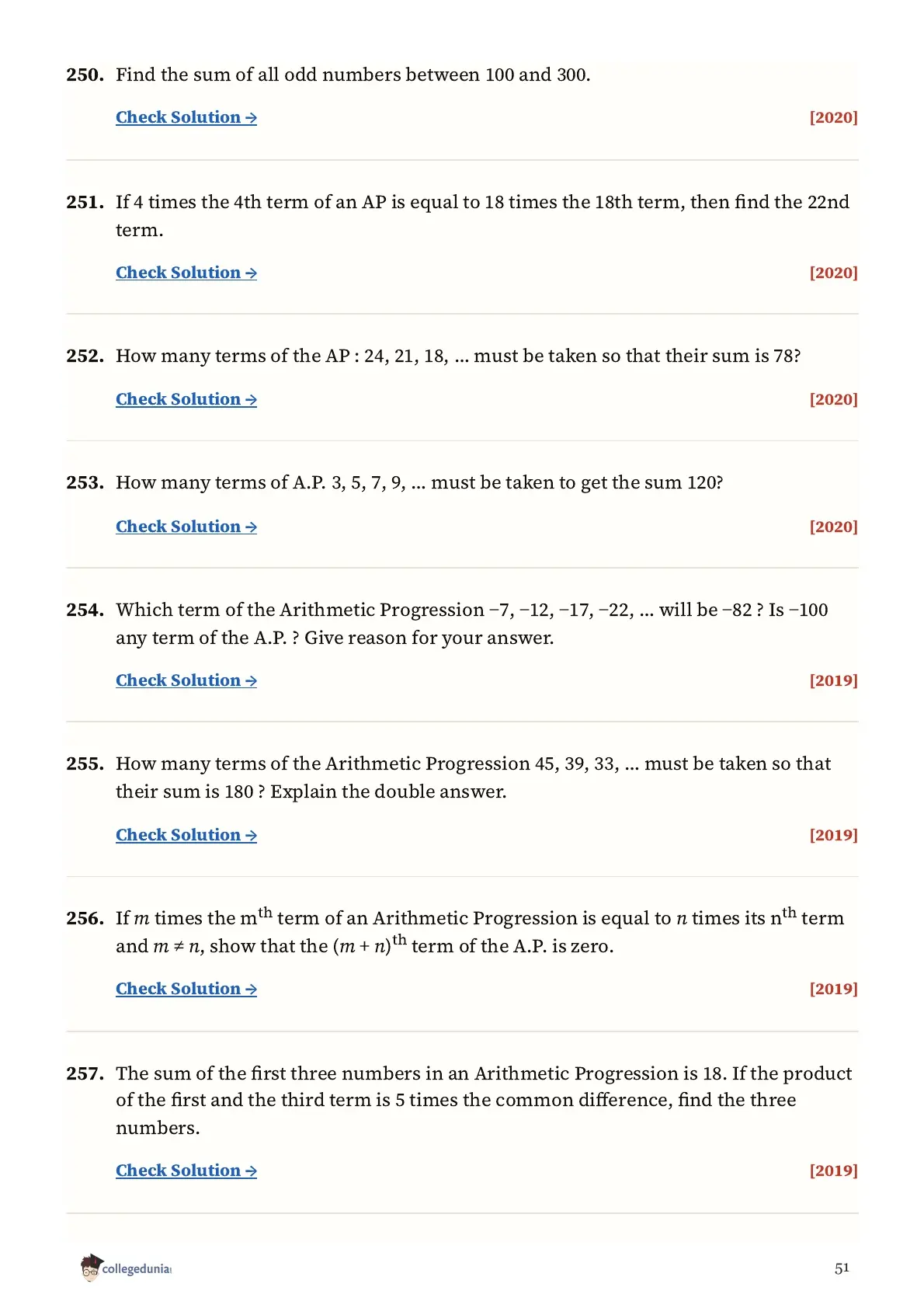
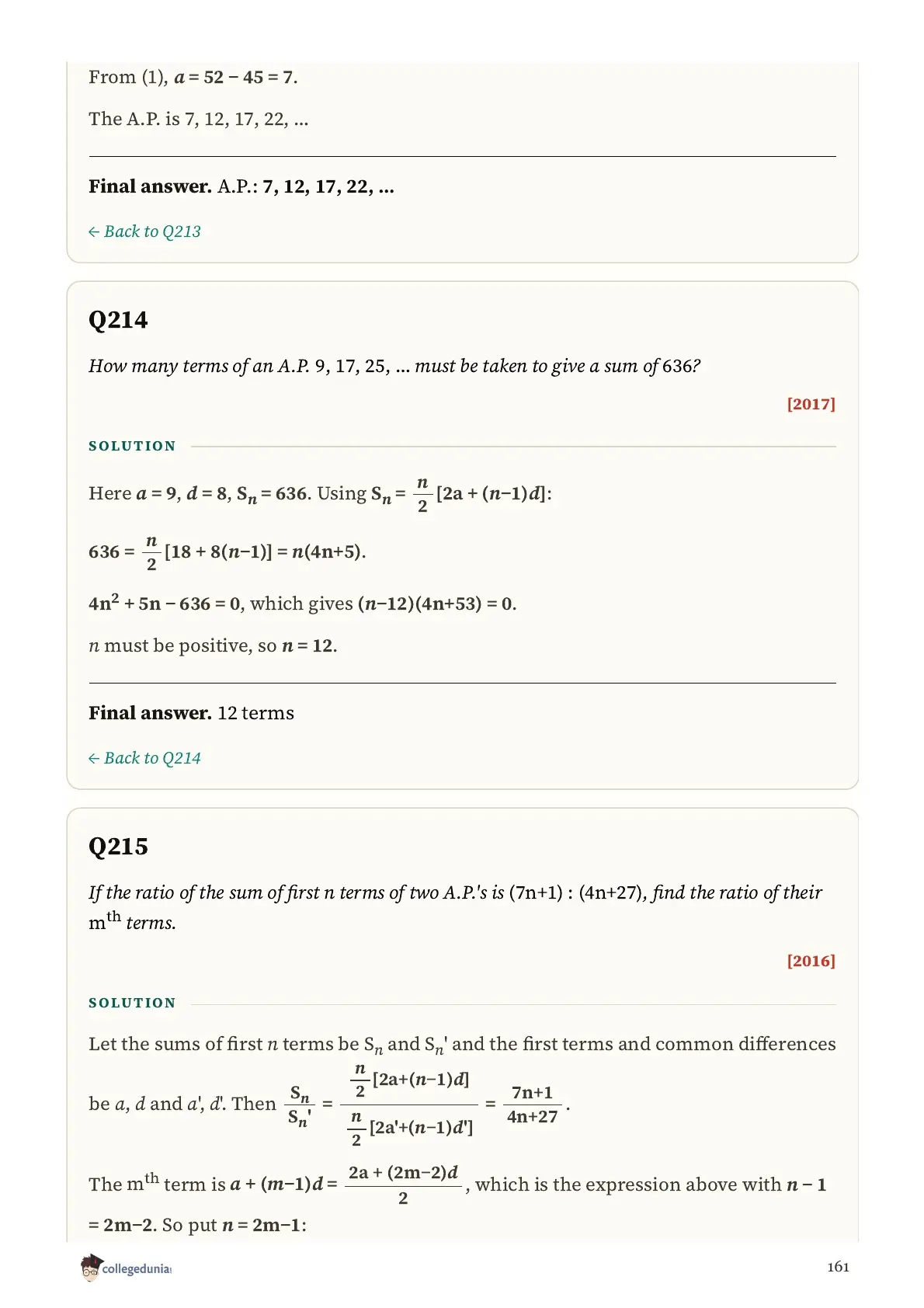
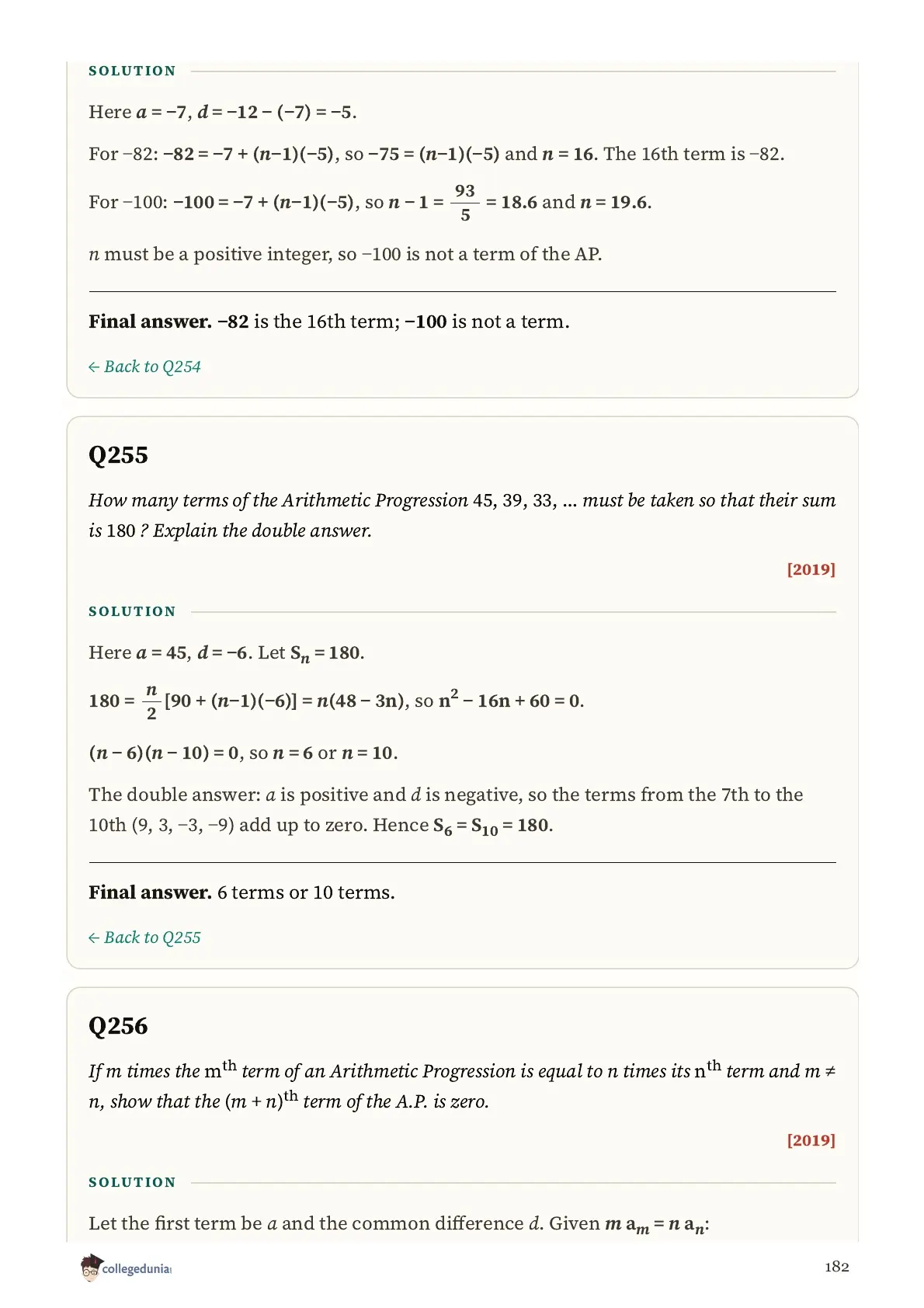
- Dropping one root. How many terms of 45, 39, 33, ... must be taken so that the sum is 180 (2019) gives n = 6 or n = 10, and both are valid because the later terms are negative and cancel. Explain both.
- Counting from the wrong end. The 9th term from the end of 7, 11, 15, ..., 147 is the 28th term from the start, so the answer is 115, not 7 + 8 x 4.
- Taking the number of terms as (l - a)/d. Add 1: the AP 14, 19, ..., 119 has 22 terms, not 21.
- Using d = a_1 - a_2. The common difference is the later term minus the earlier one, so for 21, 18, 15 it is -3.
- Forgetting that the sum can be zero. 21, 18, 15, ... gives a sum of zero at n = 15, not n = 7 or 8, where the terms turn negative.
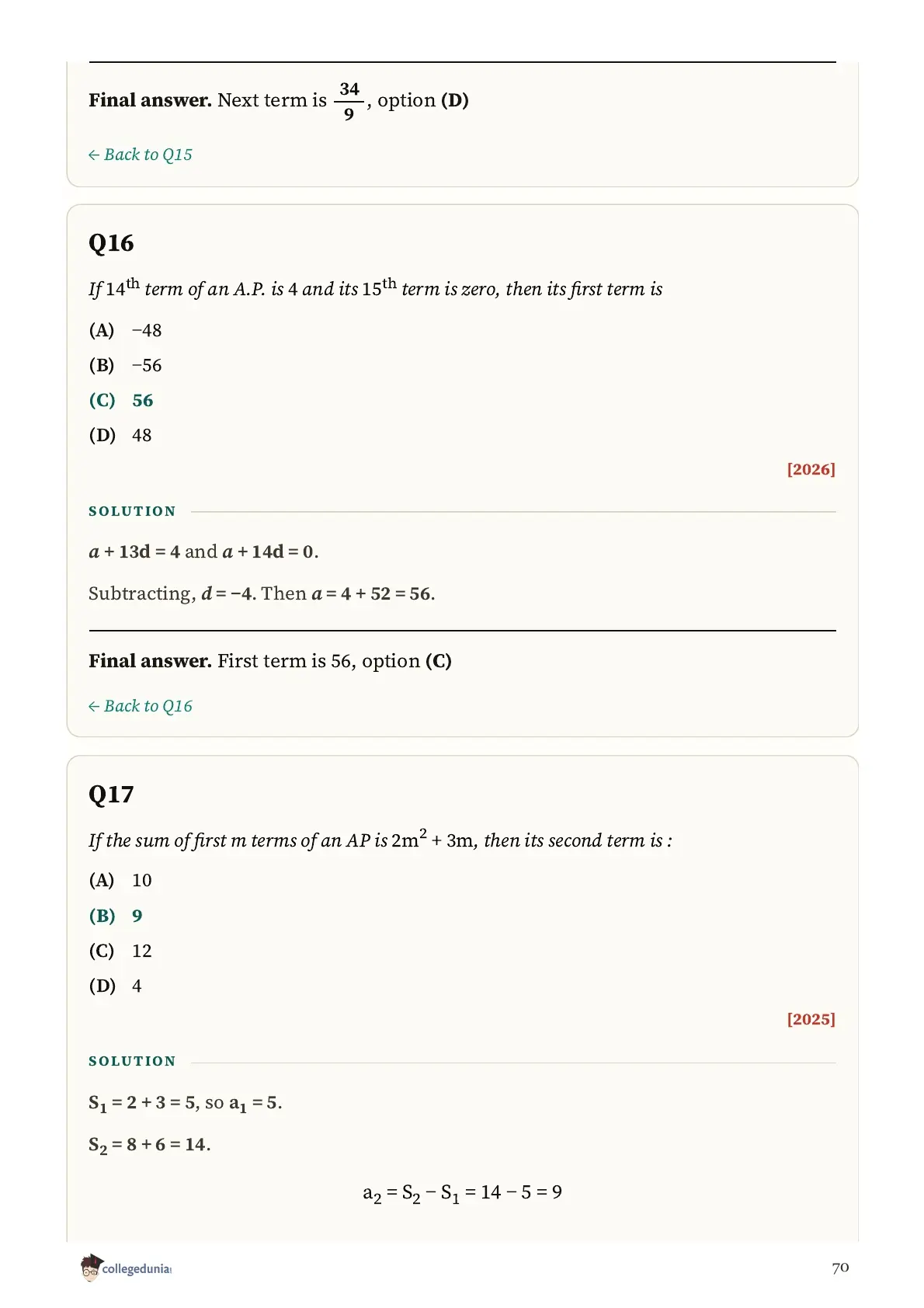
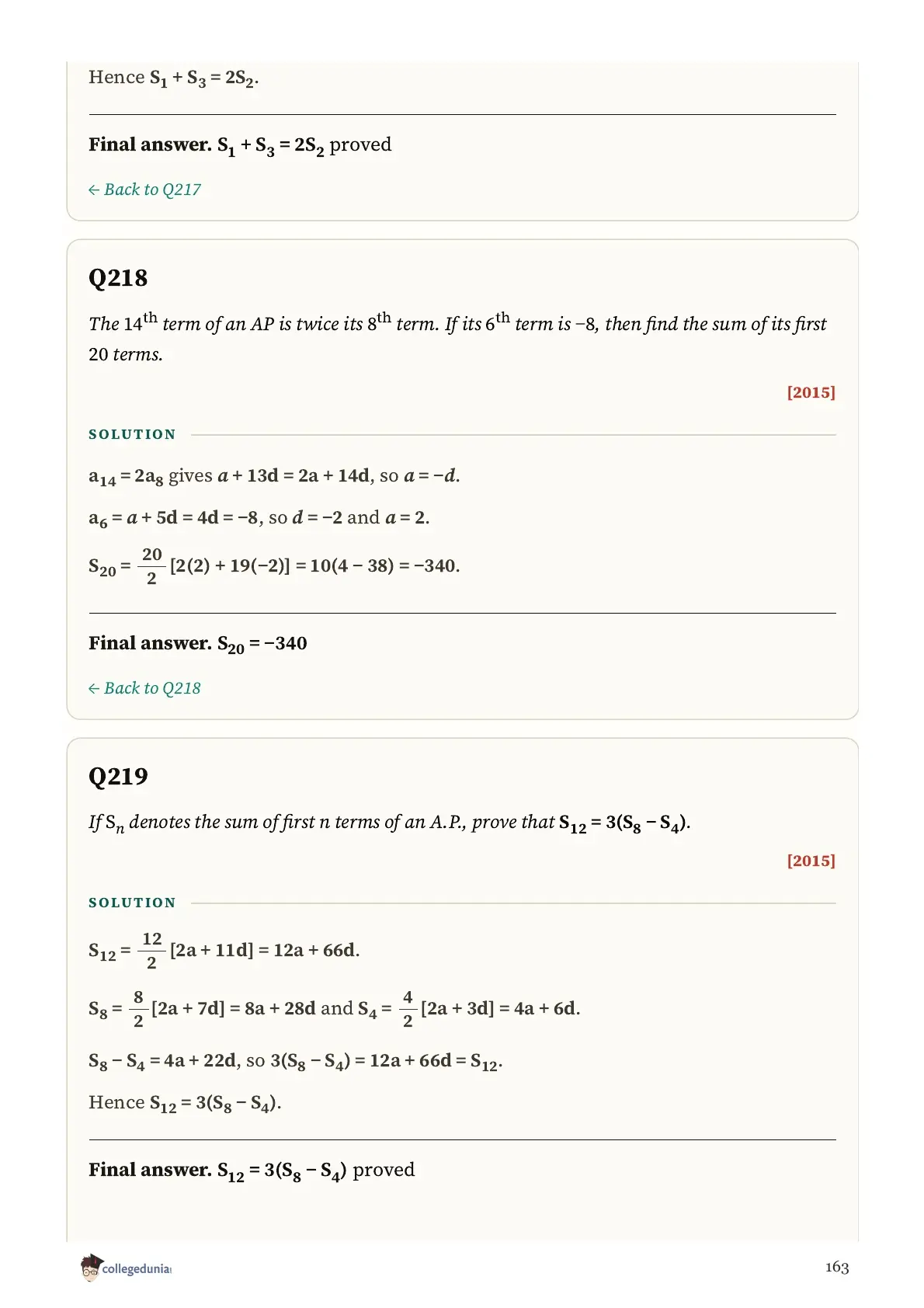
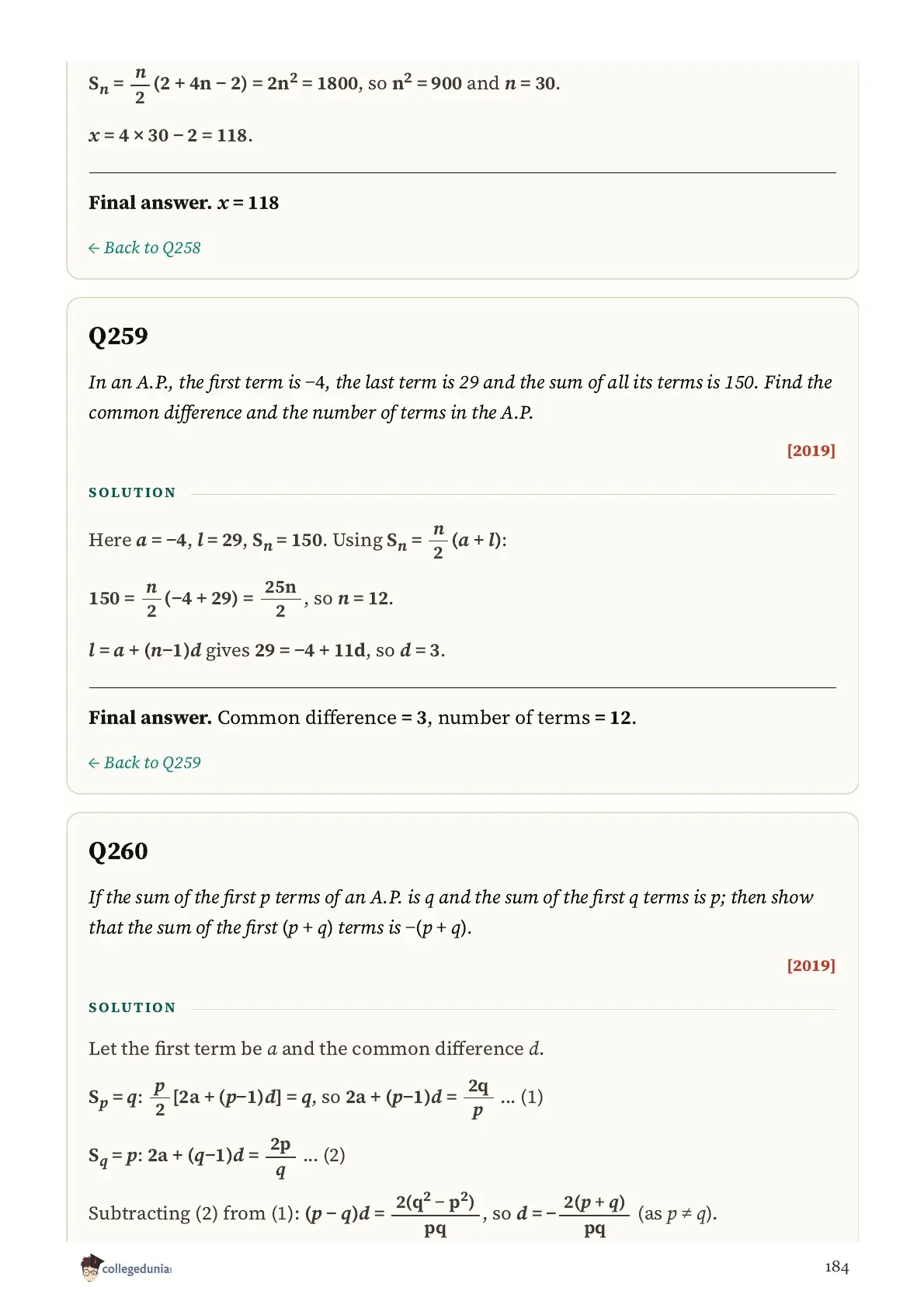
- Reading S_p = ap^2 + bp and stopping. The common difference is 2a, found from S_2 - 2S_1.
Using the Answer Key and Solutions
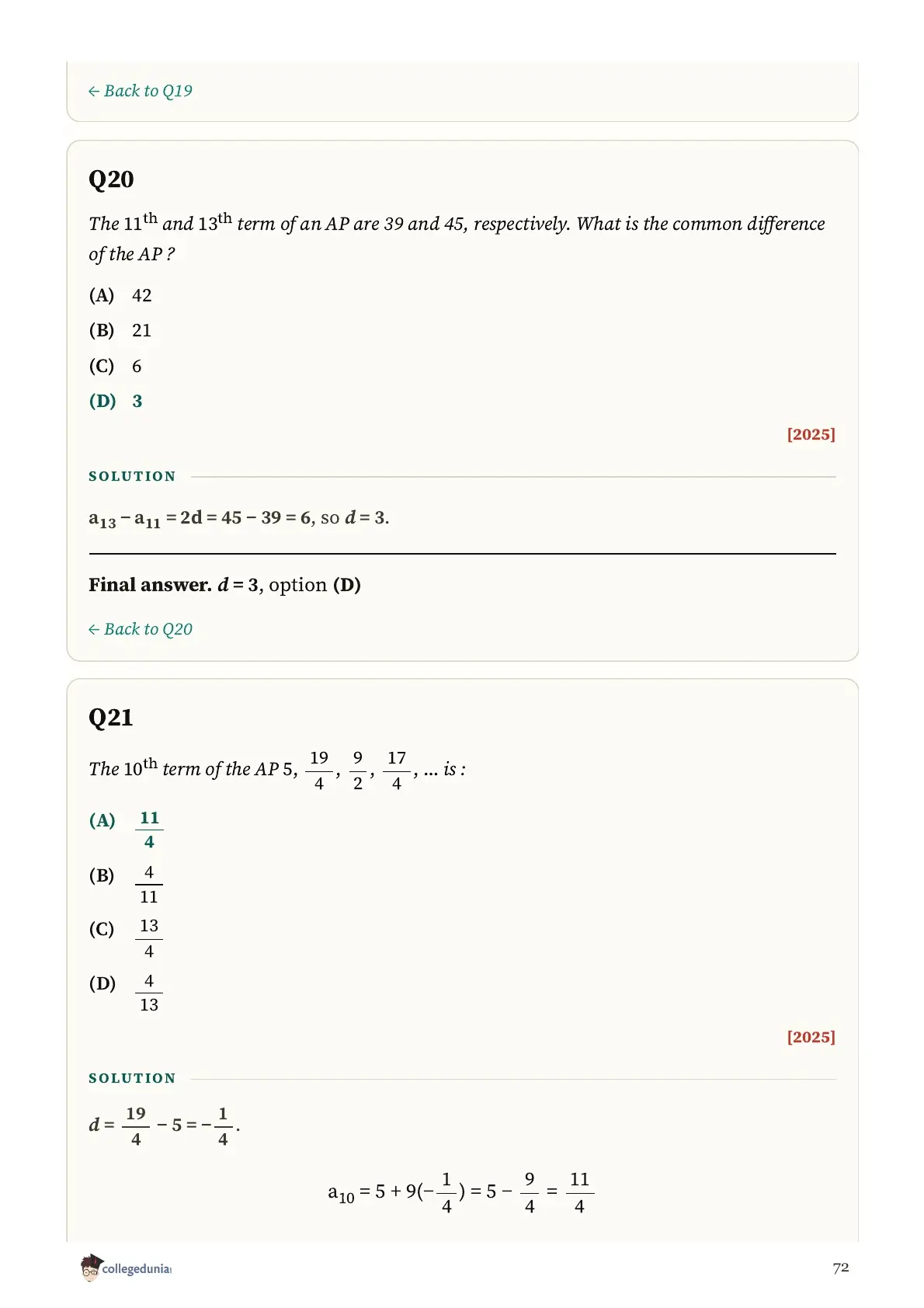
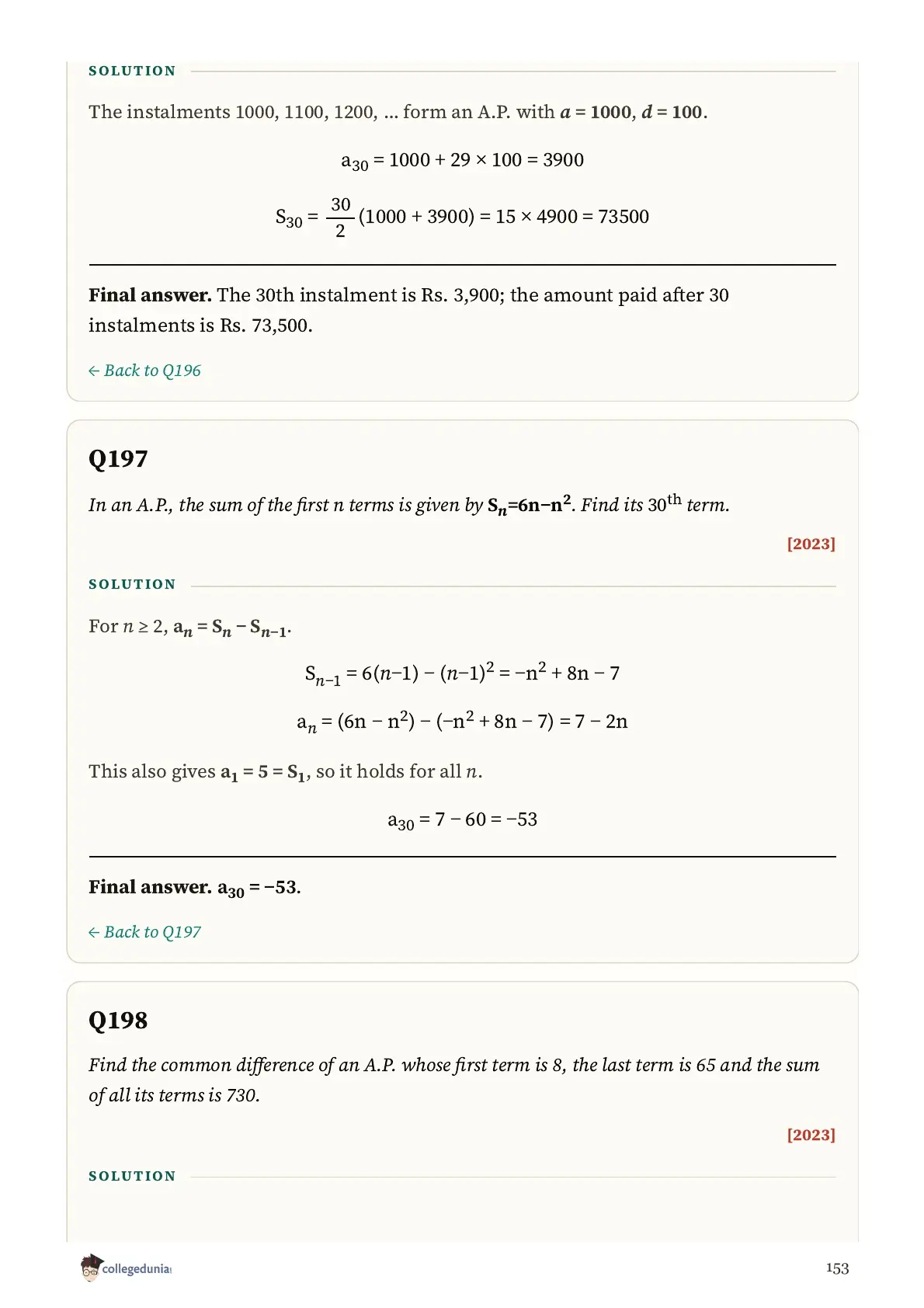
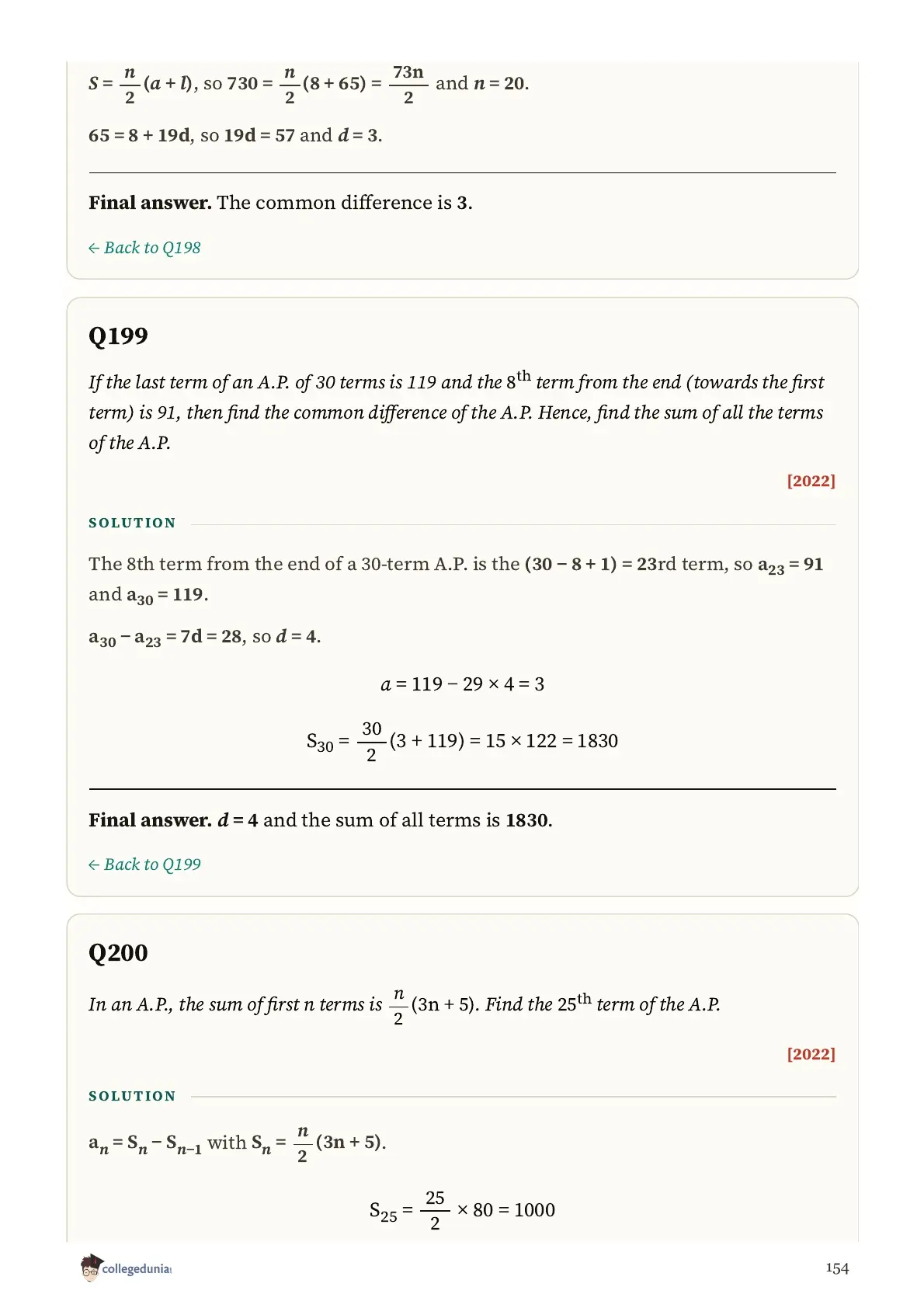
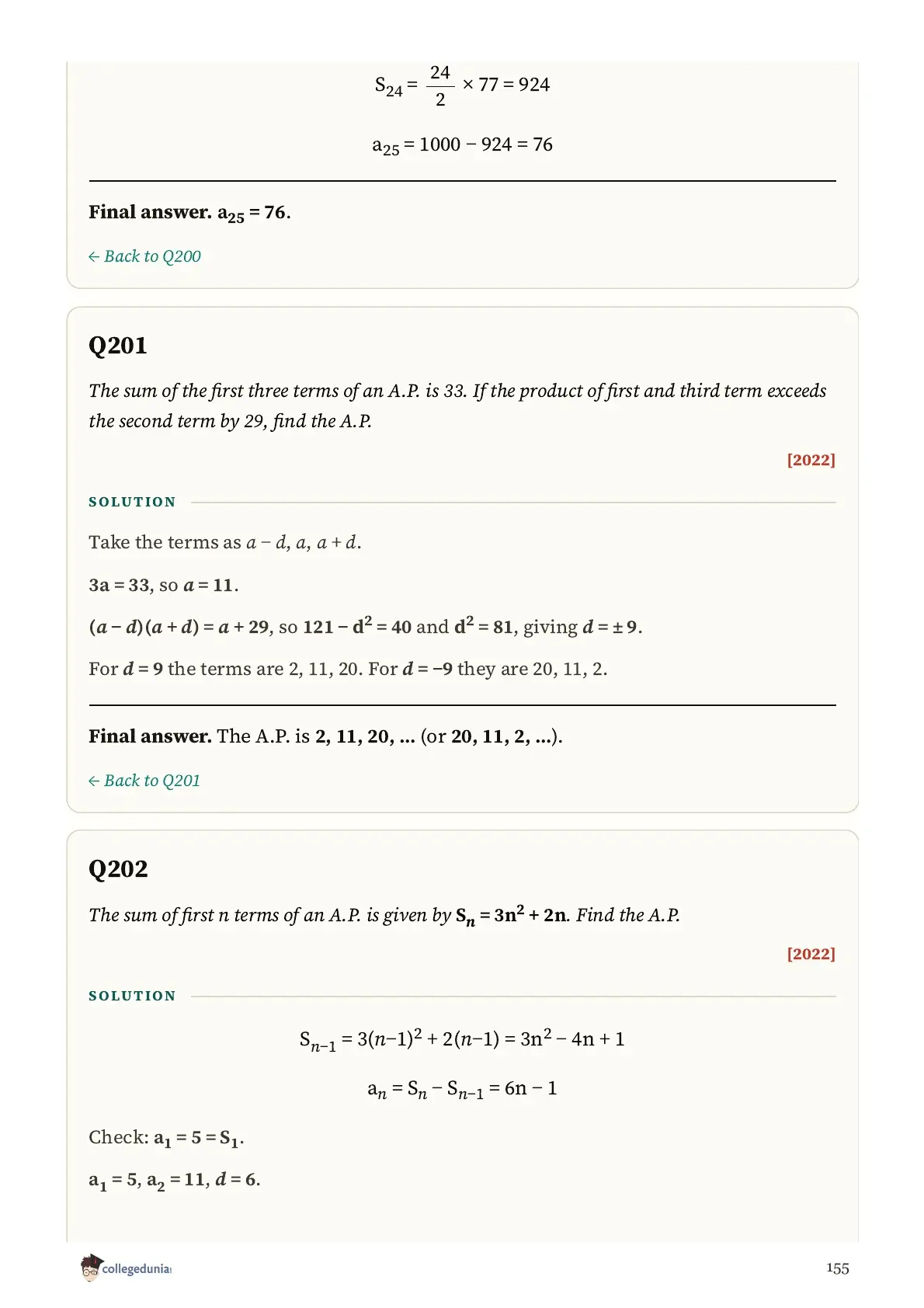
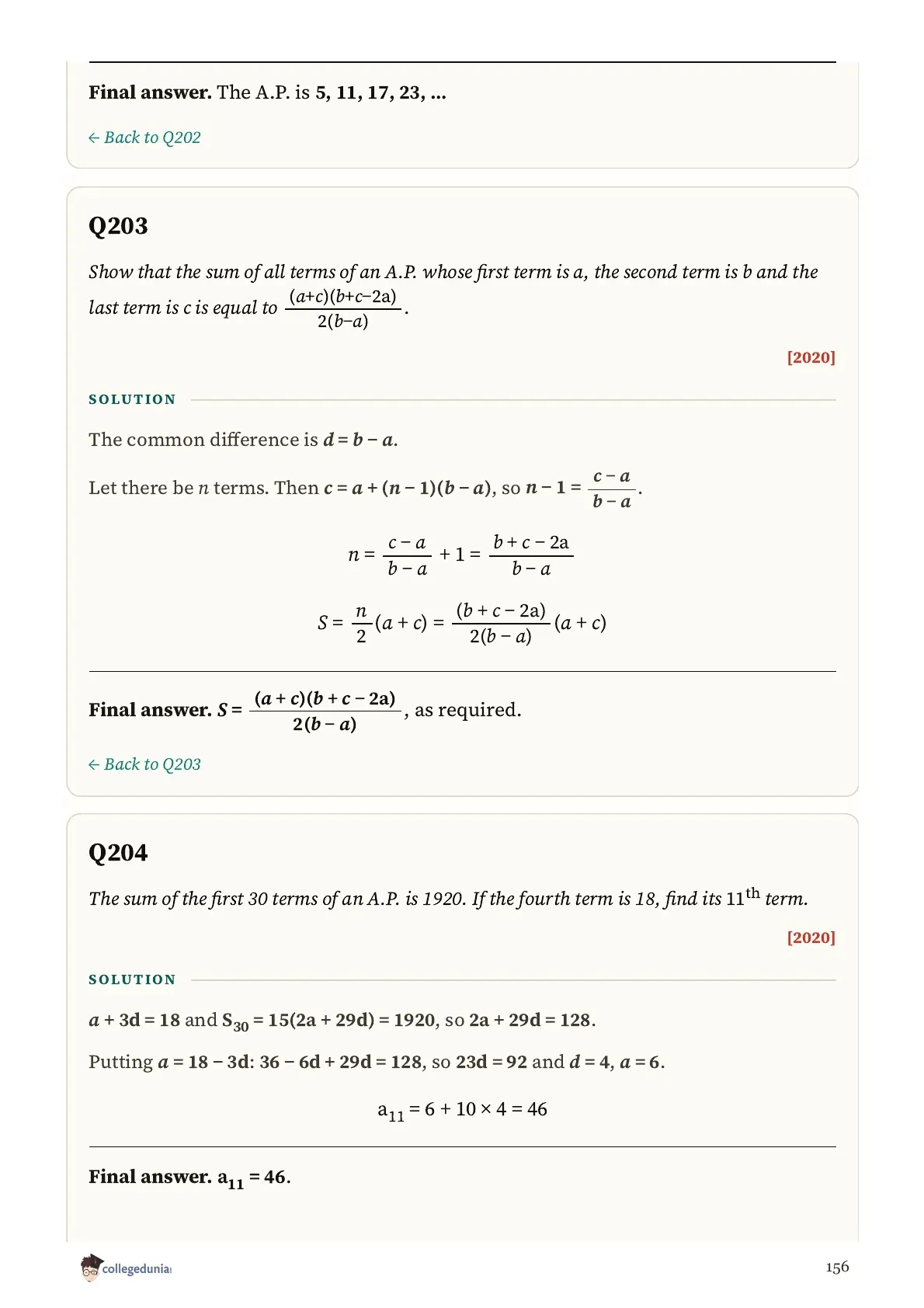
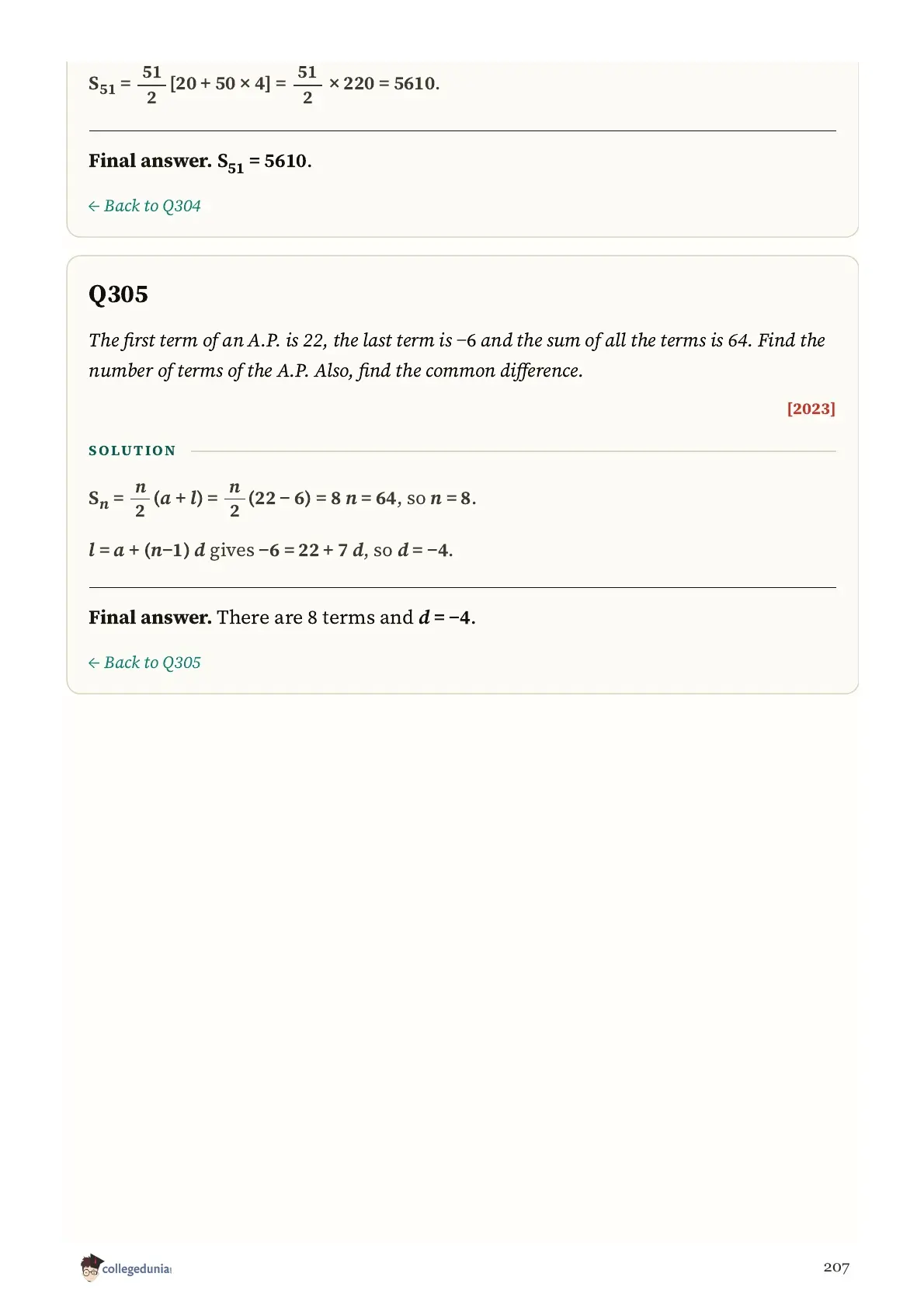
The PDF is 207 pages and free to download. Each section is sorted newest year first, the Answer Key lists the 69 MCQs at a glance, and each question links to its worked solution and back. Attempt a numerical yourself first, check the key, then read the solution. The solutions are written by Collegedunia's Maths experts and are not official CBSE marking schemes.
Class 10 Maths PYQs by Chapter
| Unit | PYQ Page |
|---|---|
| Number Systems | Real Numbers Class 10 Maths PYQ |
| Algebra | Polynomials Class 10 Maths PYQ |
| Algebra | Pair of Linear Equations in Two Variables Class 10 Maths PYQ |
| Algebra | Quadratic Equations Class 10 Maths PYQ |
| Algebra | Arithmetic Progressions Class 10 Maths PYQ |
| Geometry | Triangles Class 10 Maths PYQ |
| Coordinate Geometry | Coordinate Geometry Class 10 Maths PYQ |
| Trigonometry | Introduction to Trigonometry Class 10 Maths PYQ |
| Trigonometry | Some Applications of Trigonometry Class 10 Maths PYQ |
| Geometry | Circles Class 10 Maths PYQ |
| Mensuration | Areas Related to Circles Class 10 Maths PYQ |
| Mensuration | Surface Areas and Volumes Class 10 Maths PYQ |
| Statistics and Probability | Statistics Class 10 Maths PYQ |
| Statistics and Probability | Probability Class 10 Maths PYQ |
Arithmetic Progressions Class 10 Maths PYQ FAQs
Ques. How many questions are in the Arithmetic Progressions Class 10 Maths PYQ PDF?
Ans. The PDF has 305 questions from the 2003 to 2026 board papers: 106 at 1 mark, 71 at 2 marks, 66 at 3 marks, 38 case-based items at 4 marks and 24 long answers at 5 marks.
Ques. Does this PYQ PDF include solutions, or only the questions?
Ans. All 305 questions have a worked solution in the PDF. The 69 MCQs and assertion-reason items are also listed in the Answer Key before the solutions.
Ques. Are the solutions official?
Ans. No. They are written by Collegedunia's Maths experts, checked against the NCERT chapter with every calculation re-run. They are not an official CBSE marking scheme, so the board's wording of an answer may differ.
Ques. How many marks does Arithmetic Progressions carry in the Class 10 Maths paper?
Ans. CBSE publishes marks per unit, not per chapter. Arithmetic Progressions is Chapter 5 of the NCERT book and sits in the Algebra unit, which carries 20 of the 80 theory marks. Check cbseacademic.nic.in for the current syllabus.
Ques. What kind of questions are asked from Arithmetic Progressions?
Ans. Sum of terms is the biggest group: 127 of the 305 questions mention a sum. The nth term appears in 107, the common difference in 58, and 38 are case studies built around a real situation such as instalments, rows of pots or a charity run.
Ques. Which years does the set cover?
Ans. The questions come from 23 board years between 2003 and 2026, with no questions tagged 2021. 2023 and 2025 have the most questions (37 each), followed by 2024 (34) and 2022 (32).



Comments