




Class 10 Maths Triangles PYQ, free to download as a 222-page PDF with 193 solved board questions from the 2003 to 2026 papers. Triangles is Chapter 6 of the NCERT Class 10 Maths book and sits in the CBSE unit Geometry, which carries 15 of the 80 theory marks.
The questions keep returning to similar triangles (78 questions), lines drawn parallel to a side (68), proofs that begin with "prove" or "show that" (101), perpendiculars and altitudes (23), the basic proportionality theorem (18), squares of sides (17) and medians (13).
On this page you get:
- 193 questions with a worked solution each: 62 MCQs and assertion-reason items, 82 short answers and 49 long answers or case studies
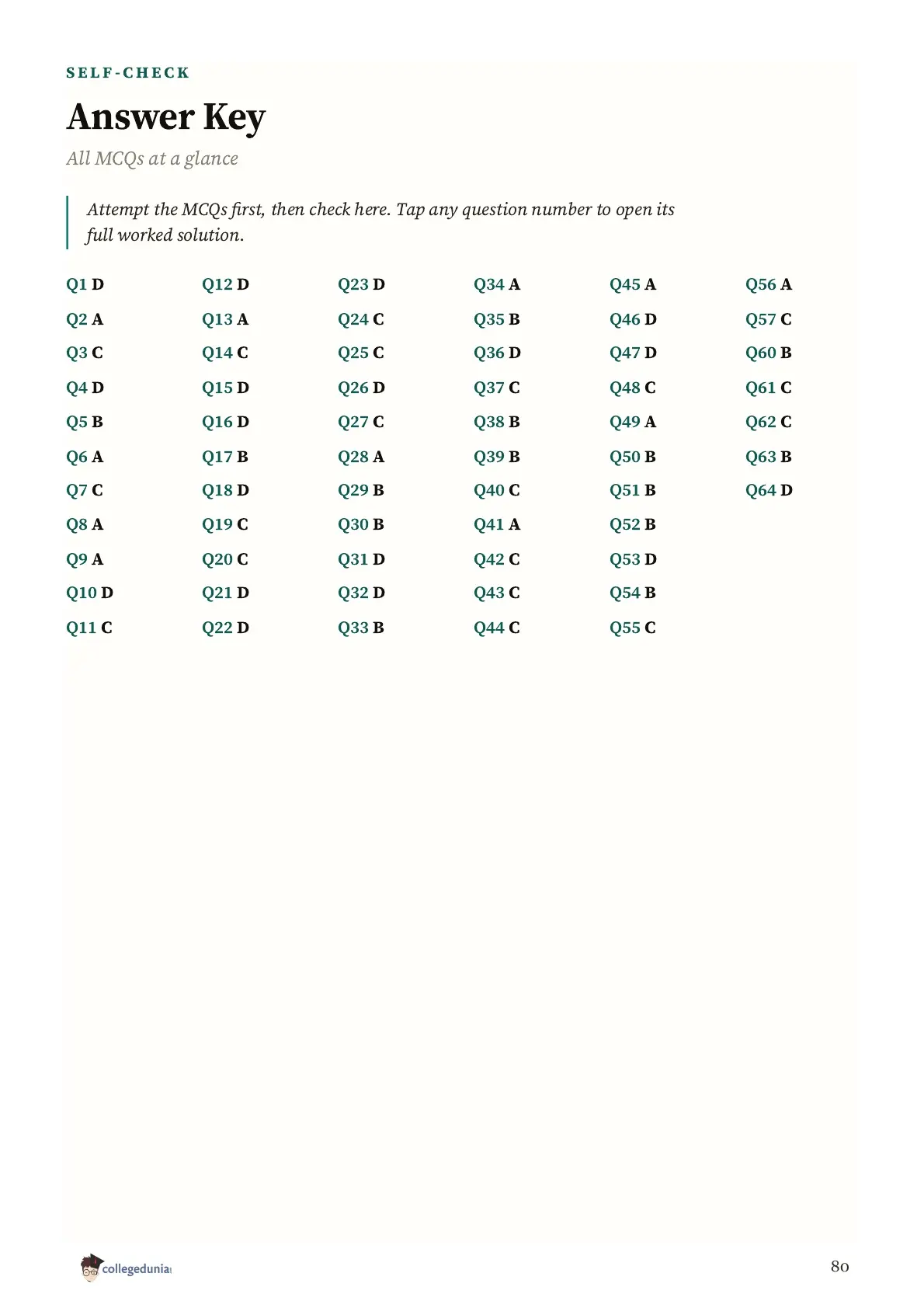
- An Answer Key that lists all 62 MCQs at a glance
- Question counts by topic, so you know whether to start with similarity criteria, the basic proportionality theorem or medians and altitudes
- A marks-wise table of questions (1, 2, 3, 4 and 5 mark)
- The common mistakes students make, such as taking the wrong distance in the lamp post and shadow problem, and a short FAQ
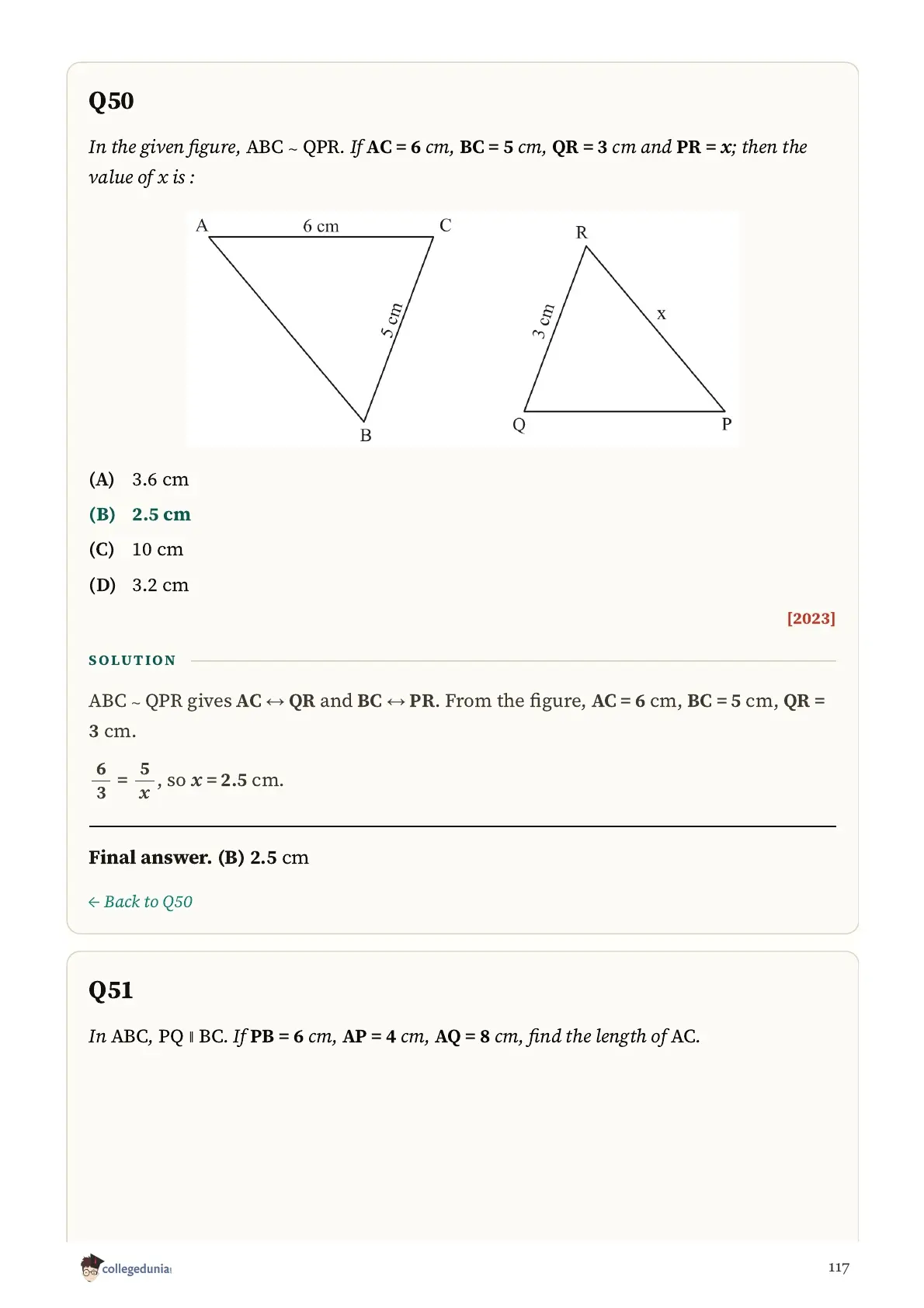
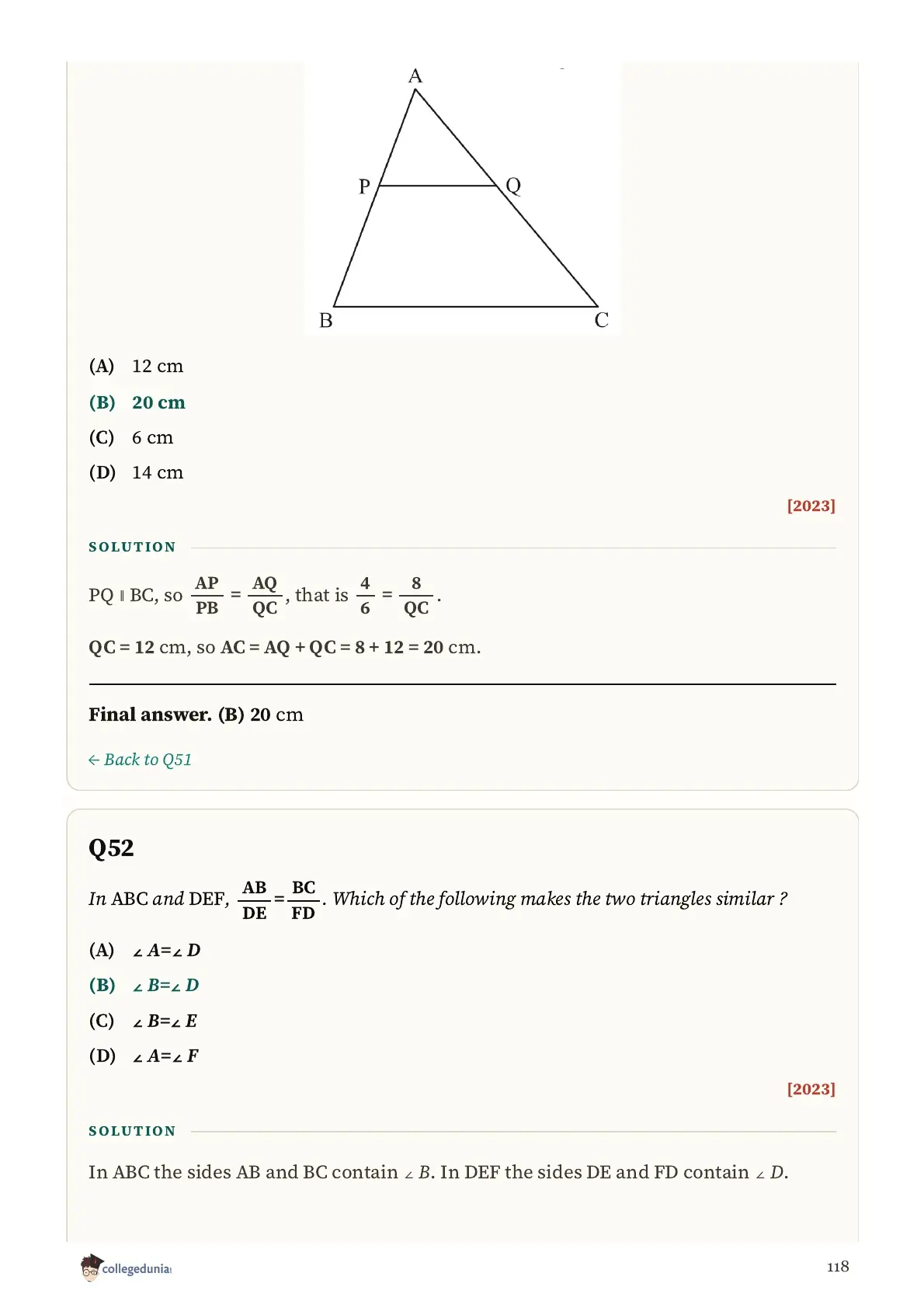
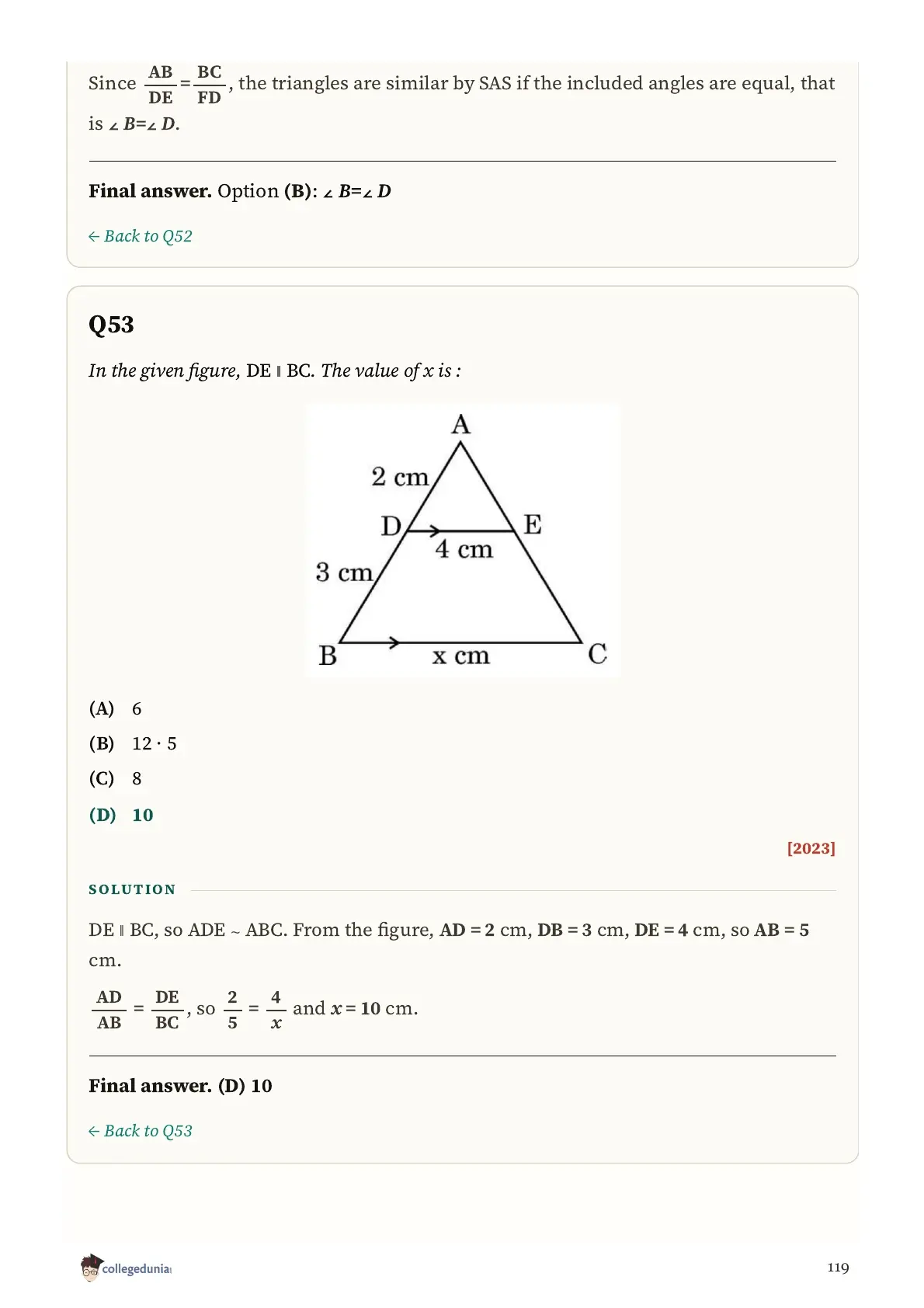
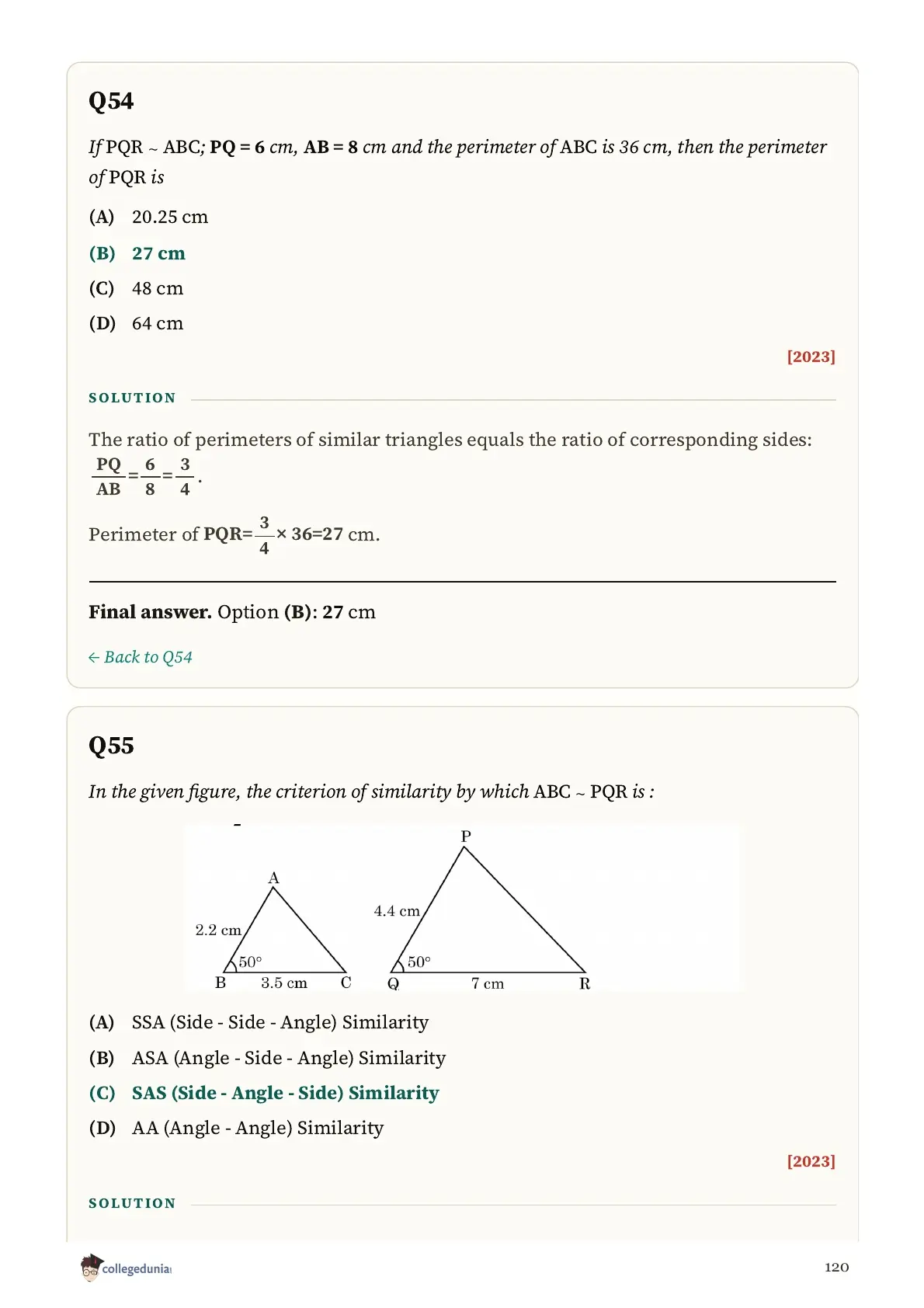
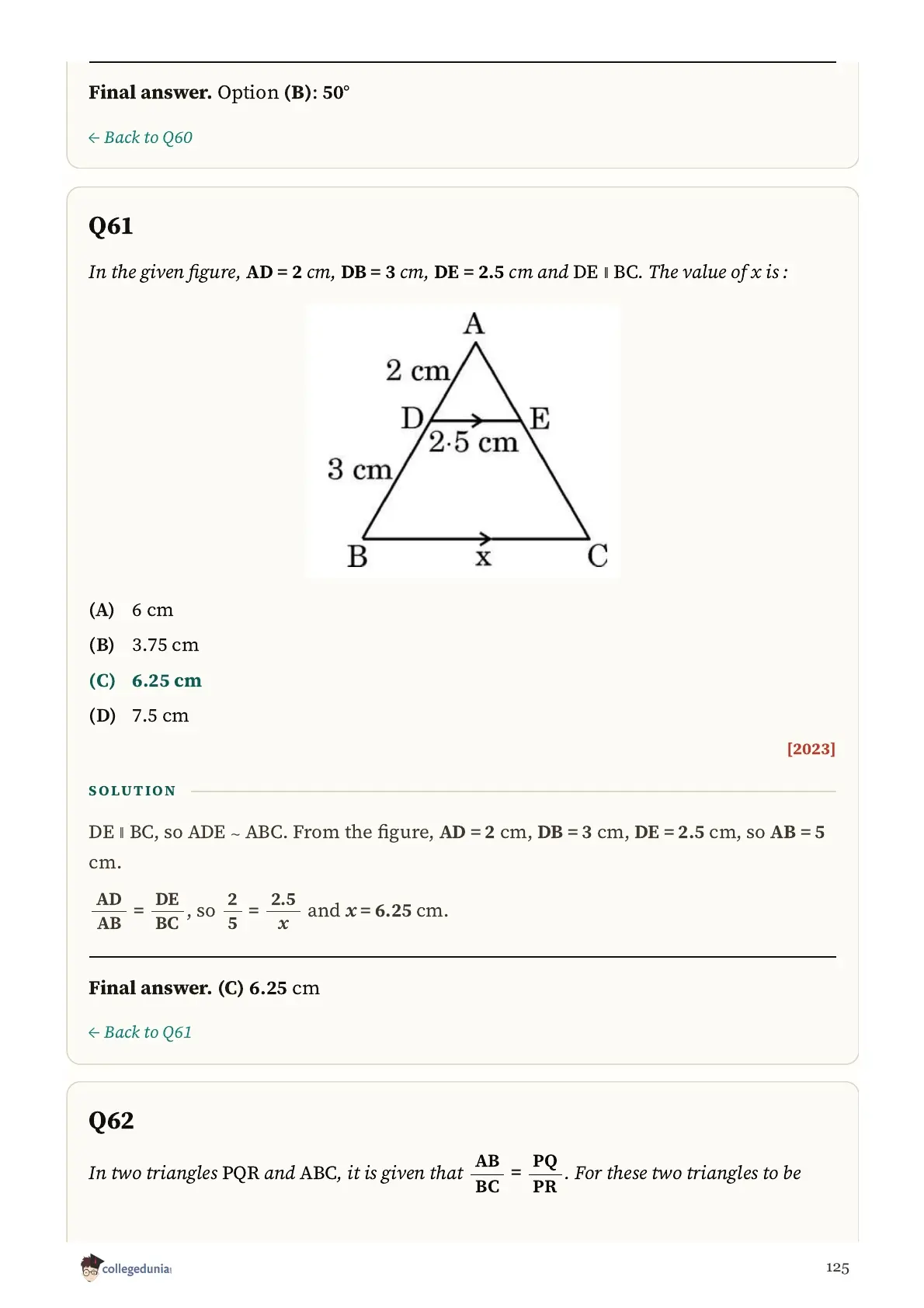
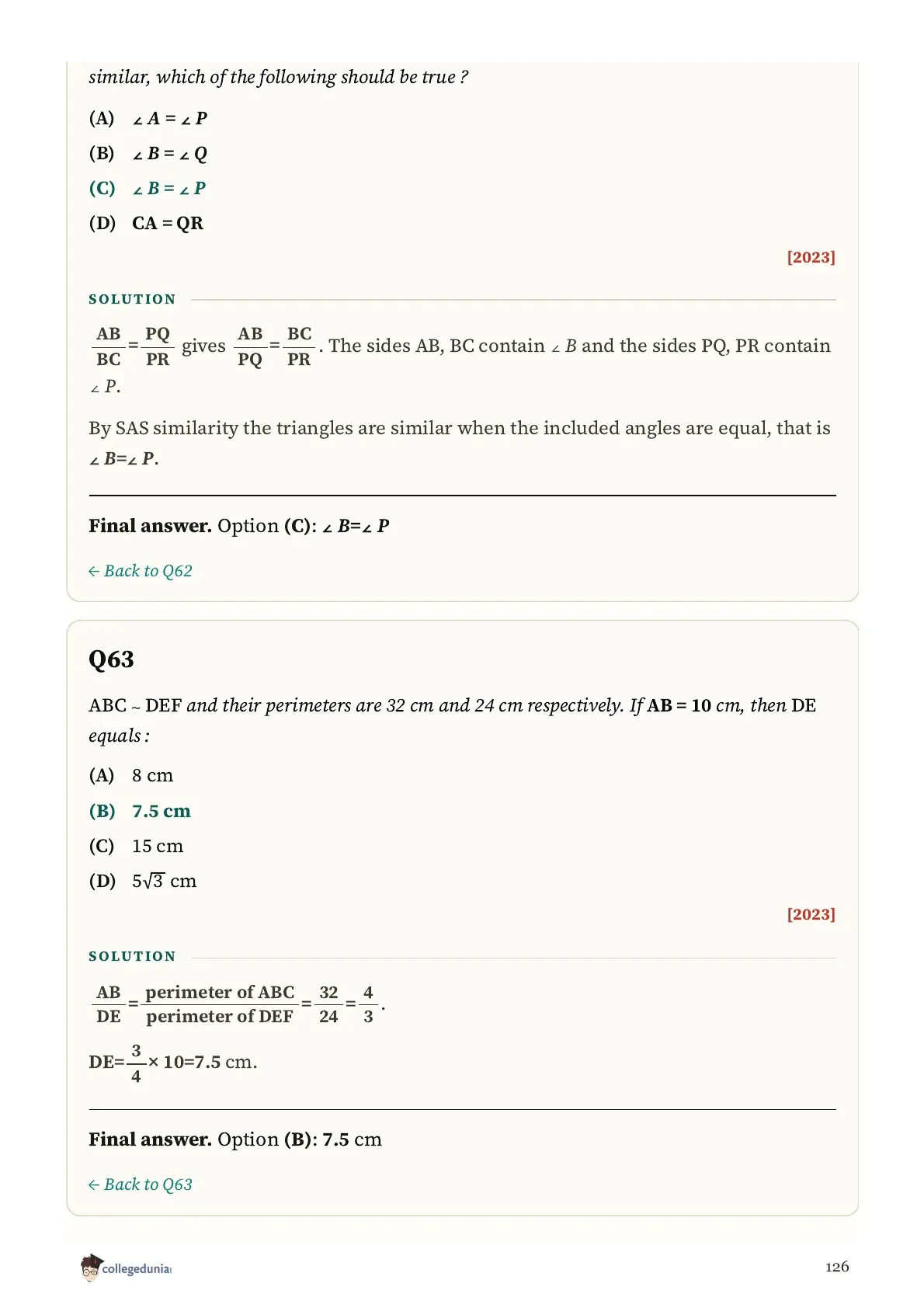
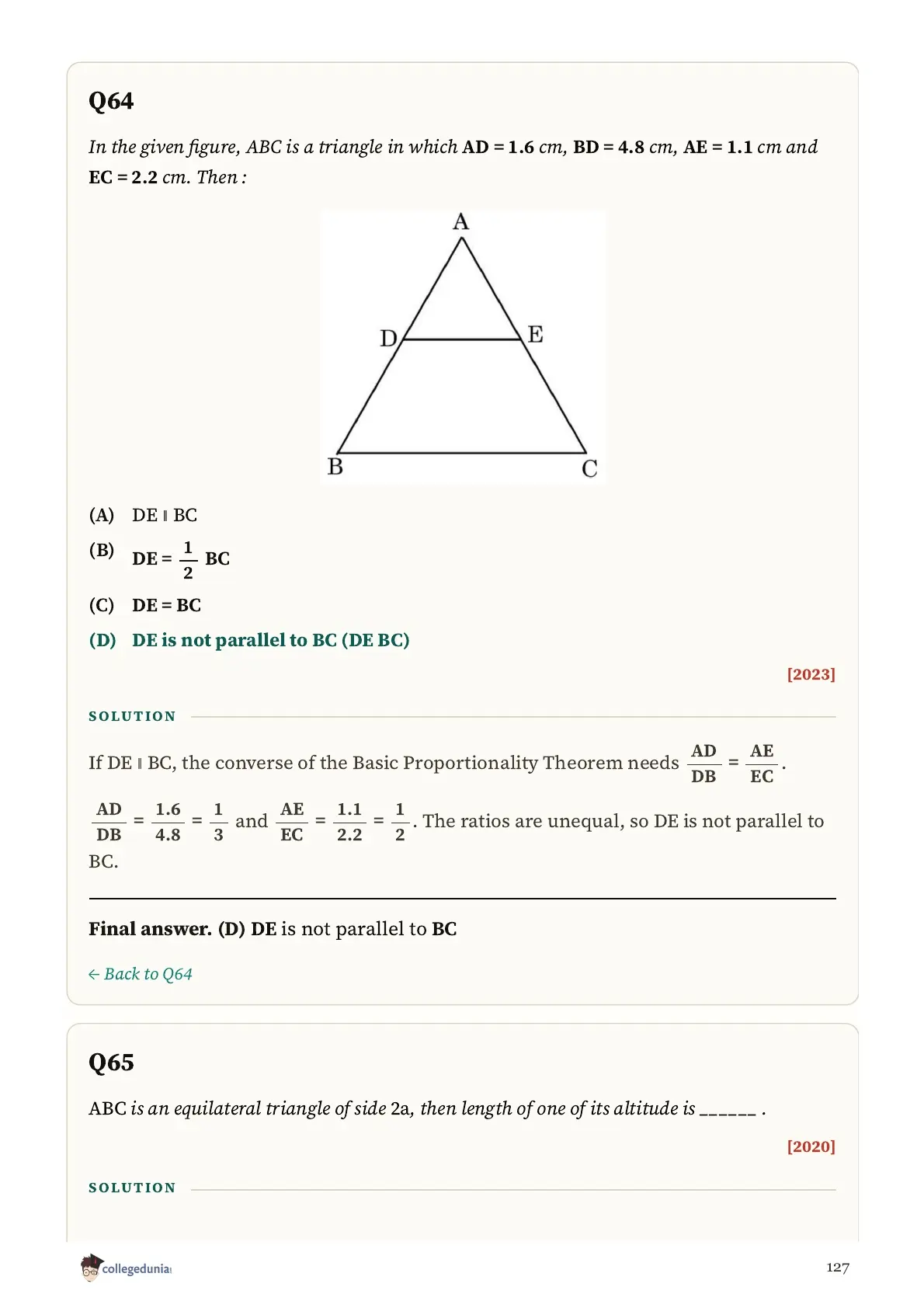
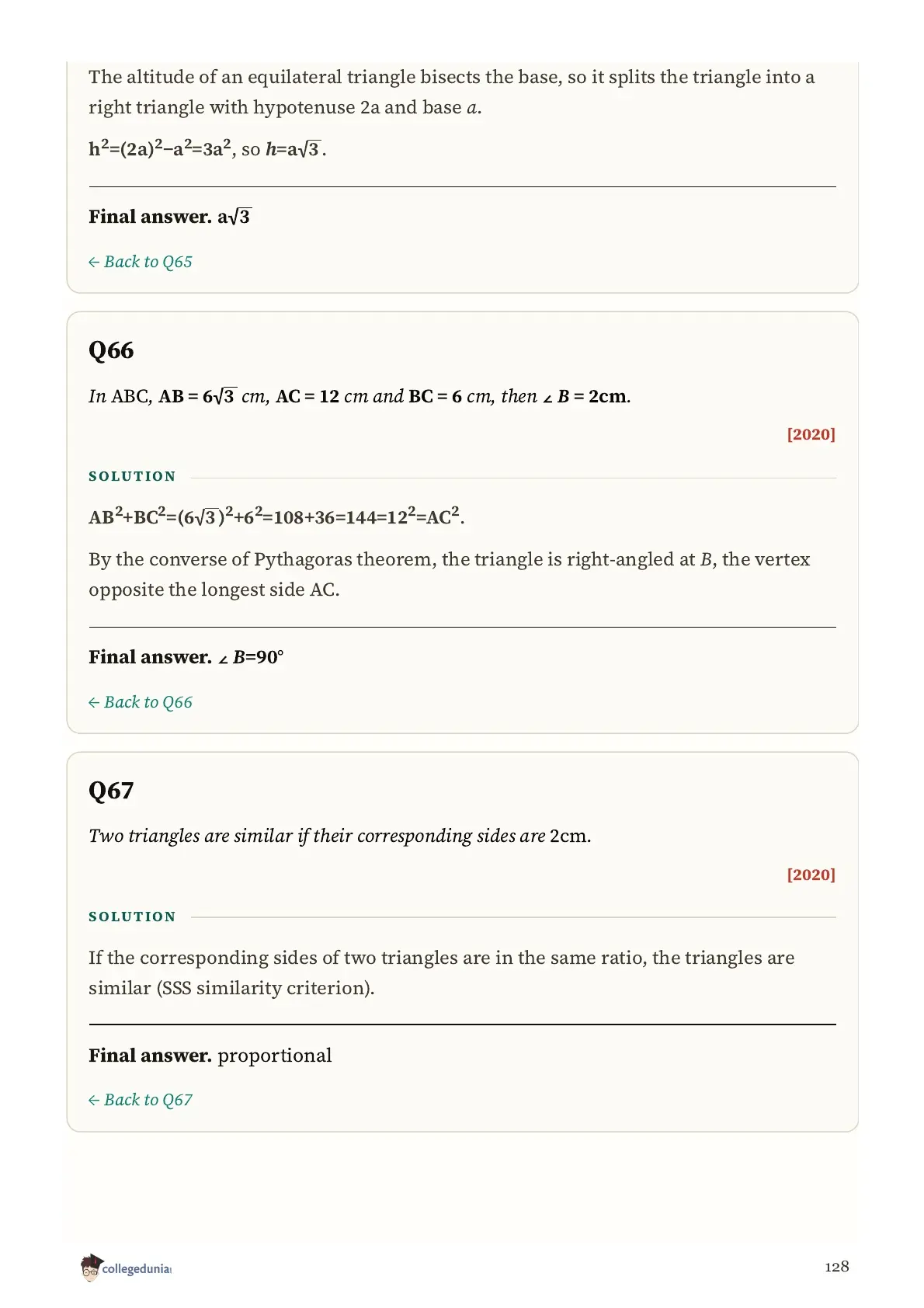
Triangles Weightage in the Class 10 Maths Paper
CBSE does not print a mark figure for Triangles alone. In the Class 10 Maths syllabus (Standard and Basic papers), the unit Geometry carries 15 of the 80 theory marks and holds two chapters, Triangles and Circles. The 15 is a unit-level figure as reported by prep sites for the 2026-27 syllabus, and it is unofficial here, so check the current curriculum on cbseacademic.nic.in. In this set the 1-mark MCQ and the 5-mark proof are the commonest forms.
The table shows how many questions the set holds at each mark value.
| Marks per Question | Questions in the Set |
|---|---|
| 1 mark | 73 |
| 2 marks | 49 |
| 3 marks | 22 |
| 4 marks | 8 |
| 5 marks | 41 |
Triangles Questions by Topic
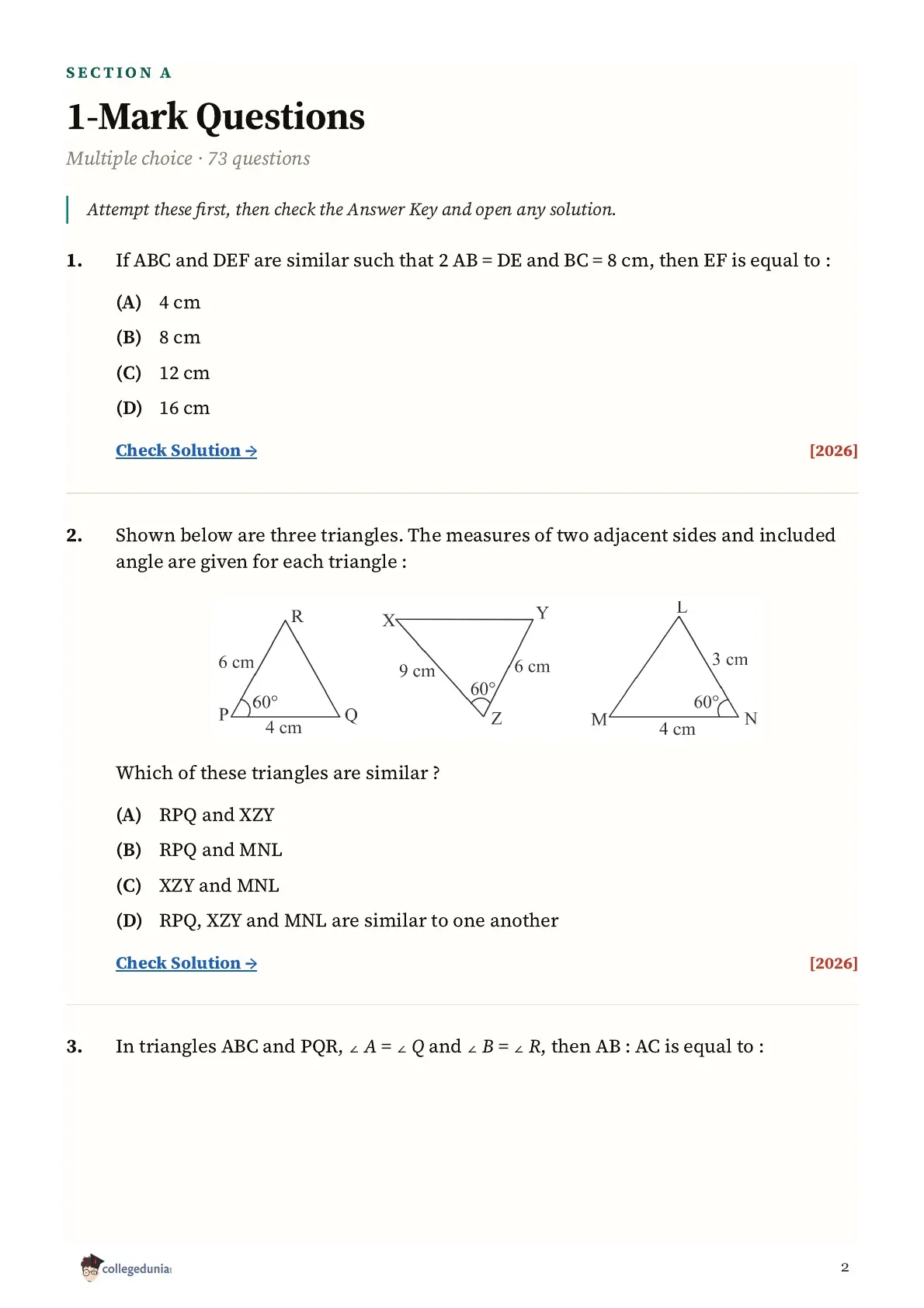
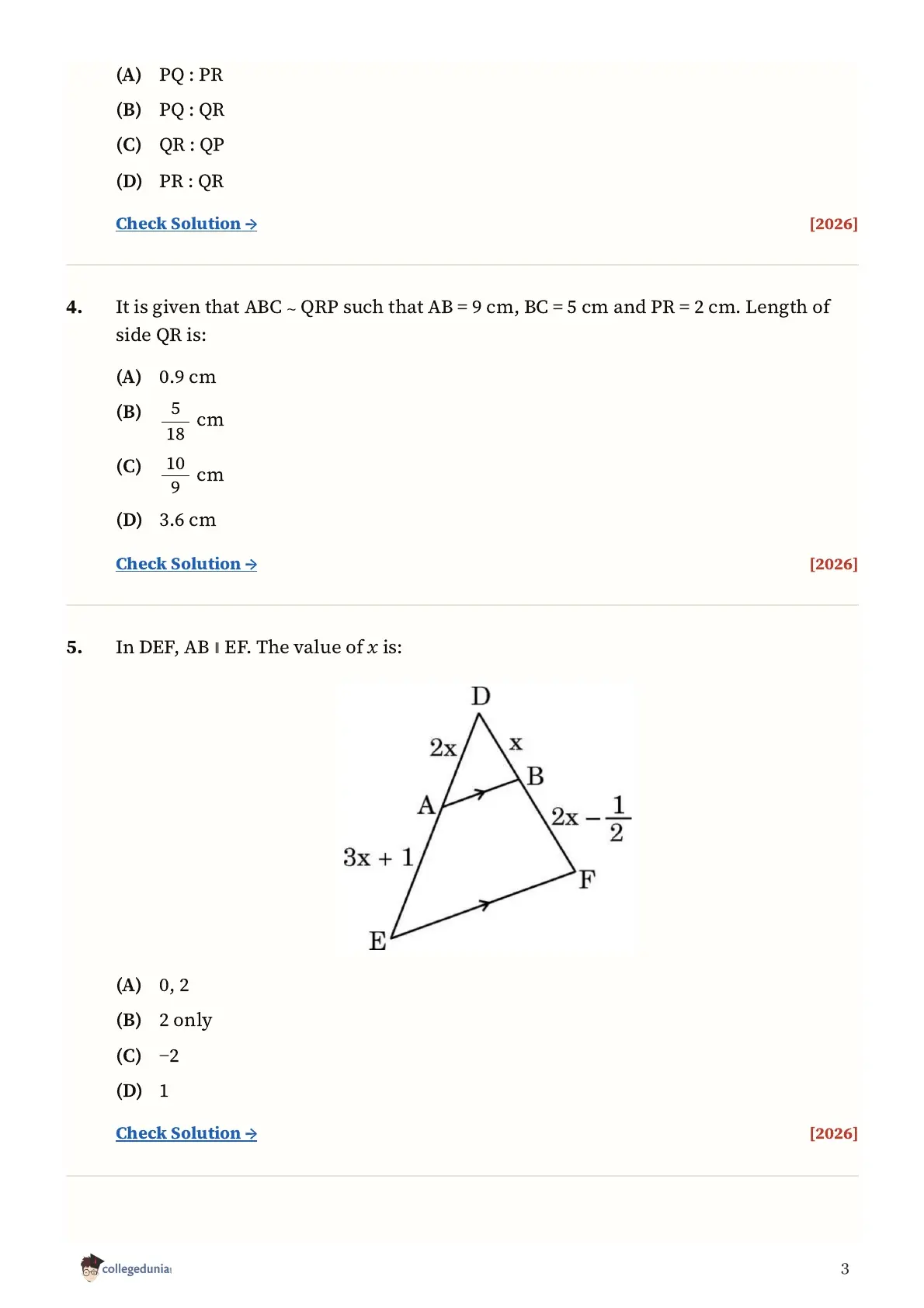
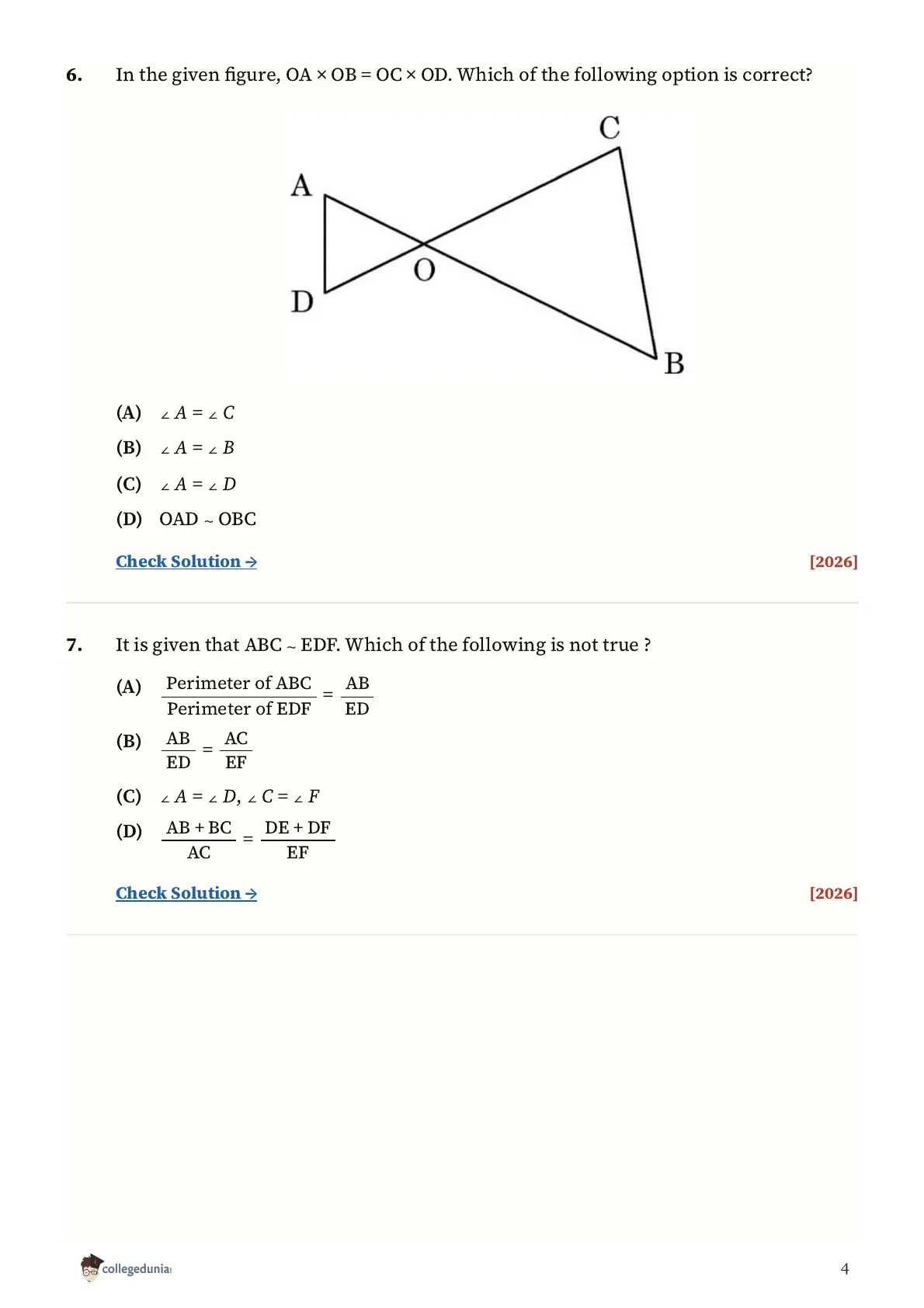
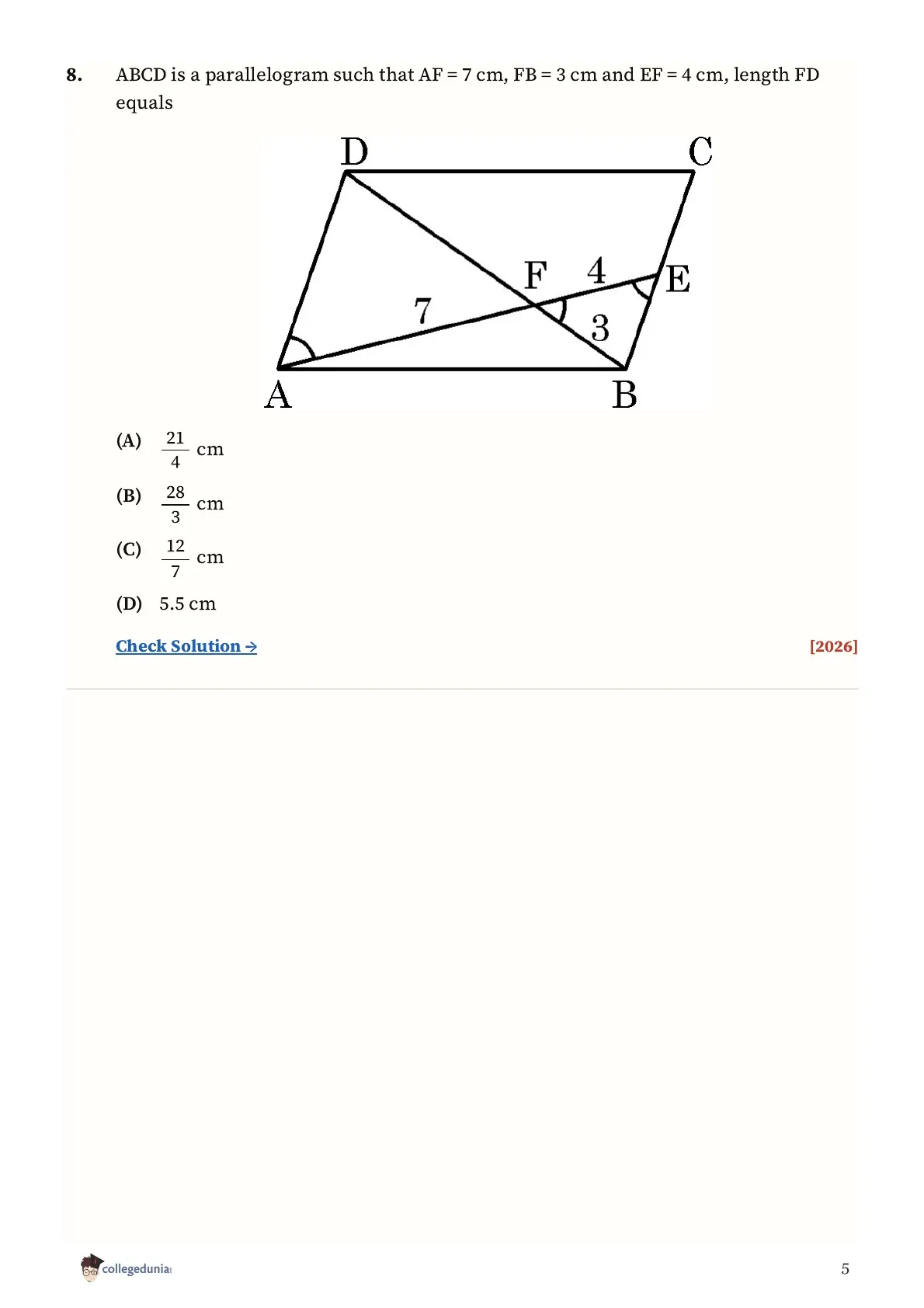
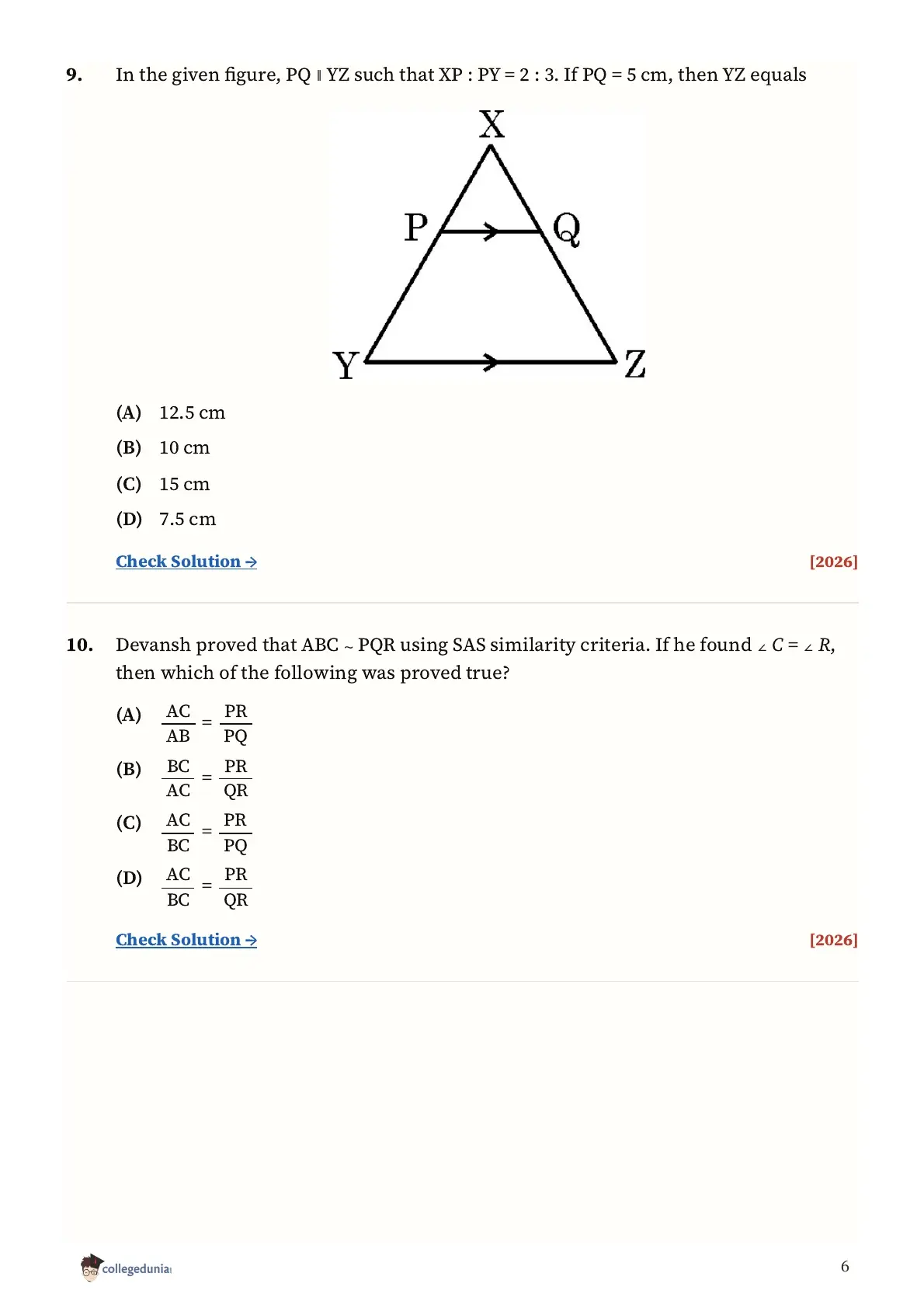
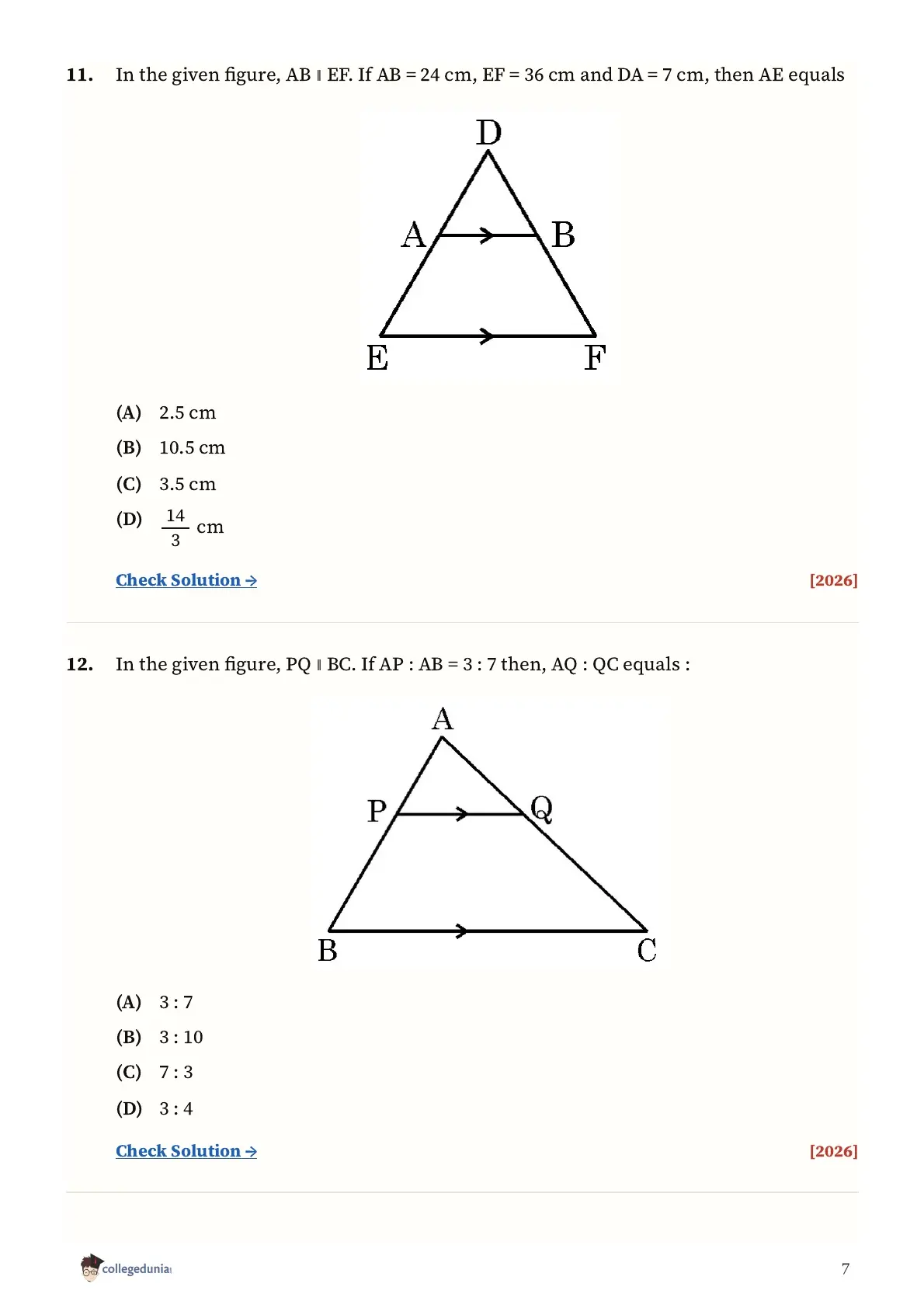
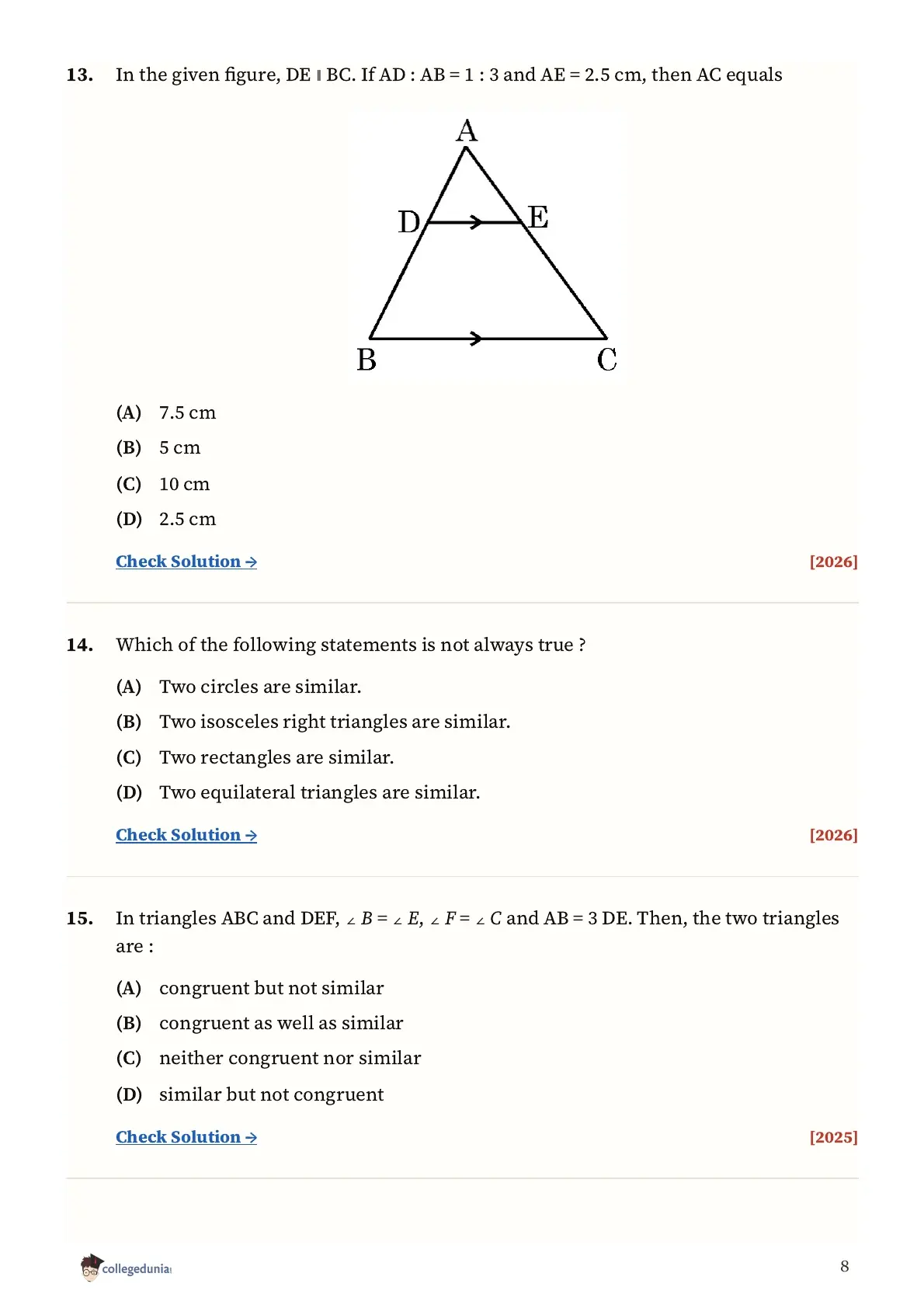
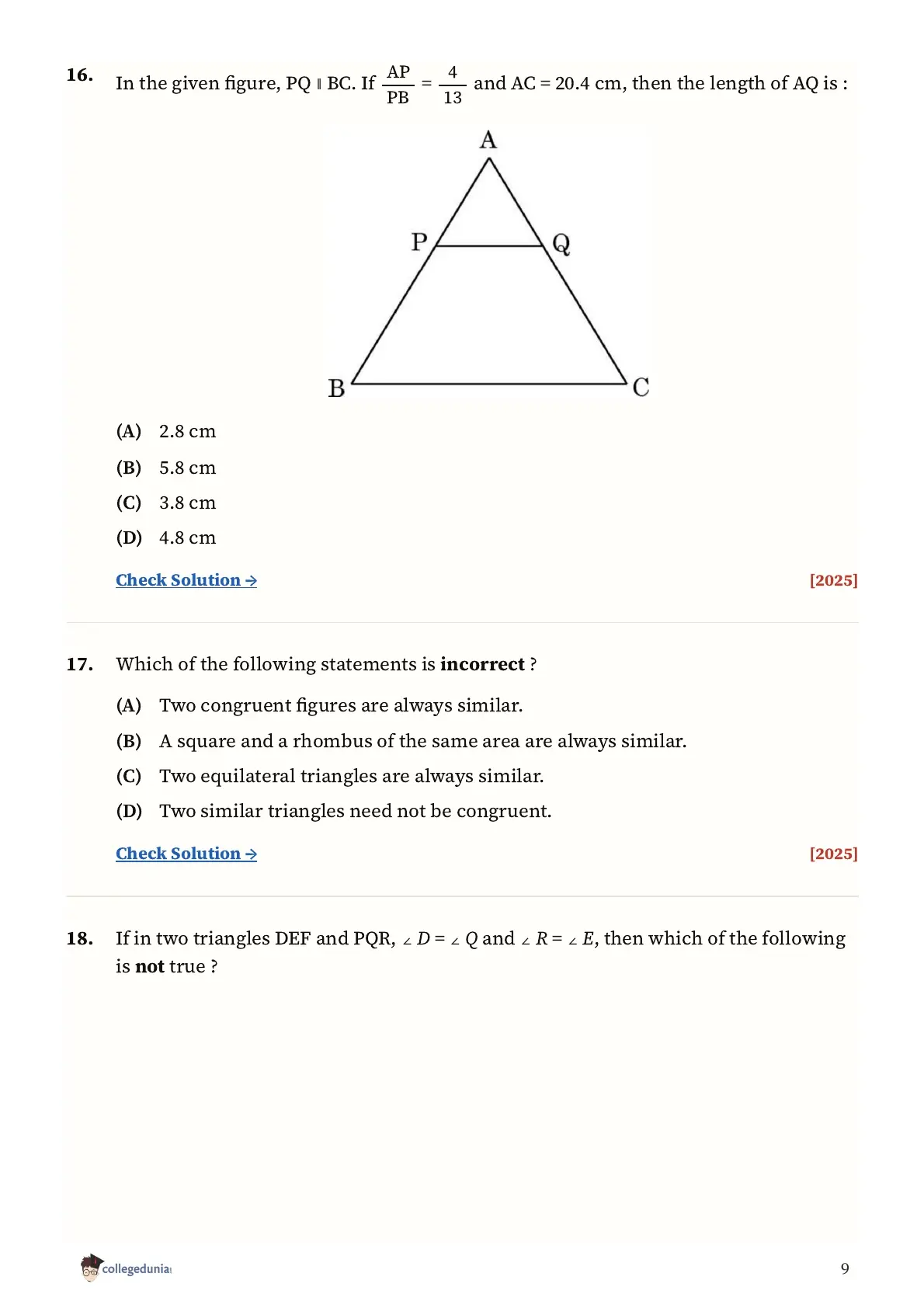
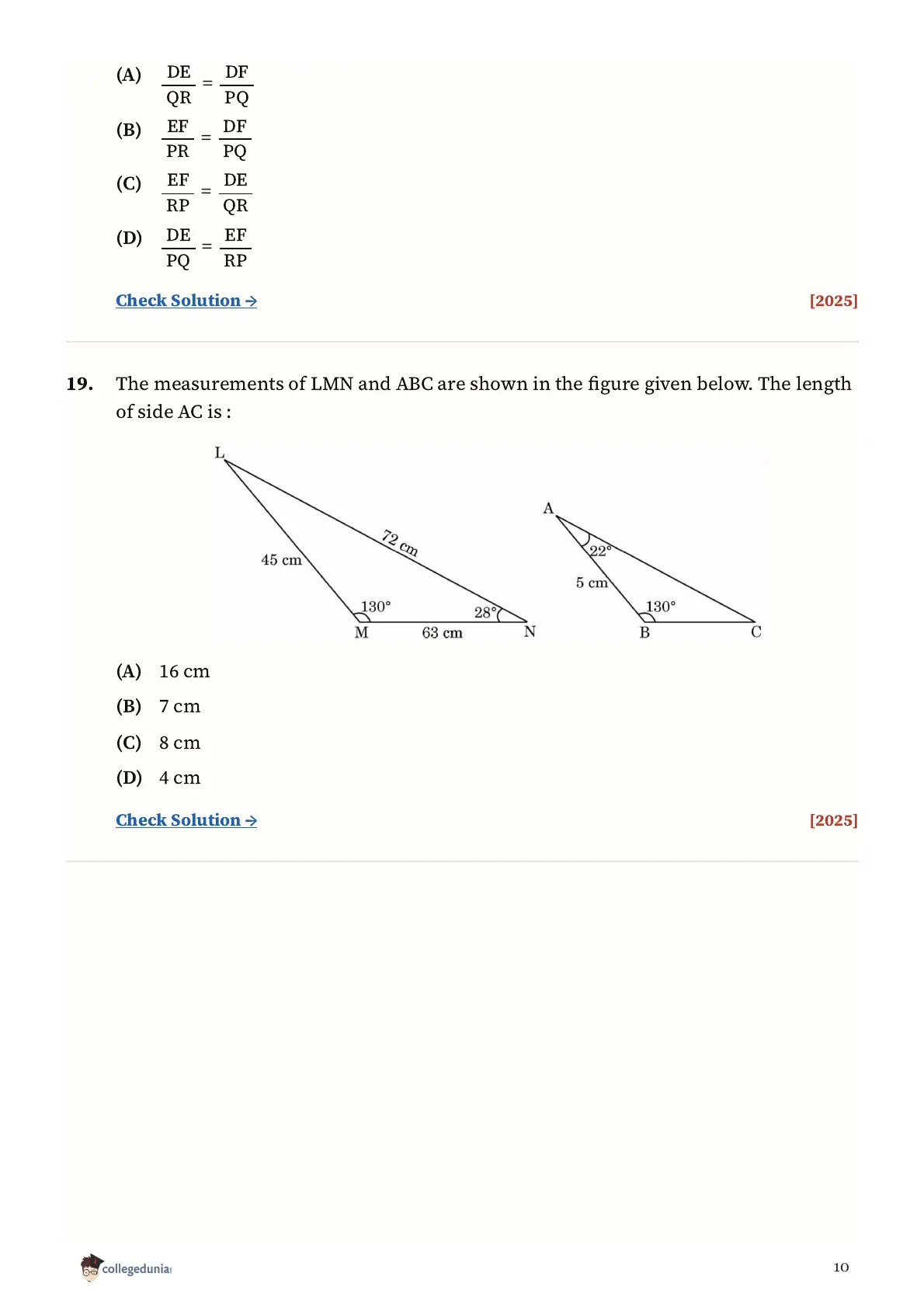
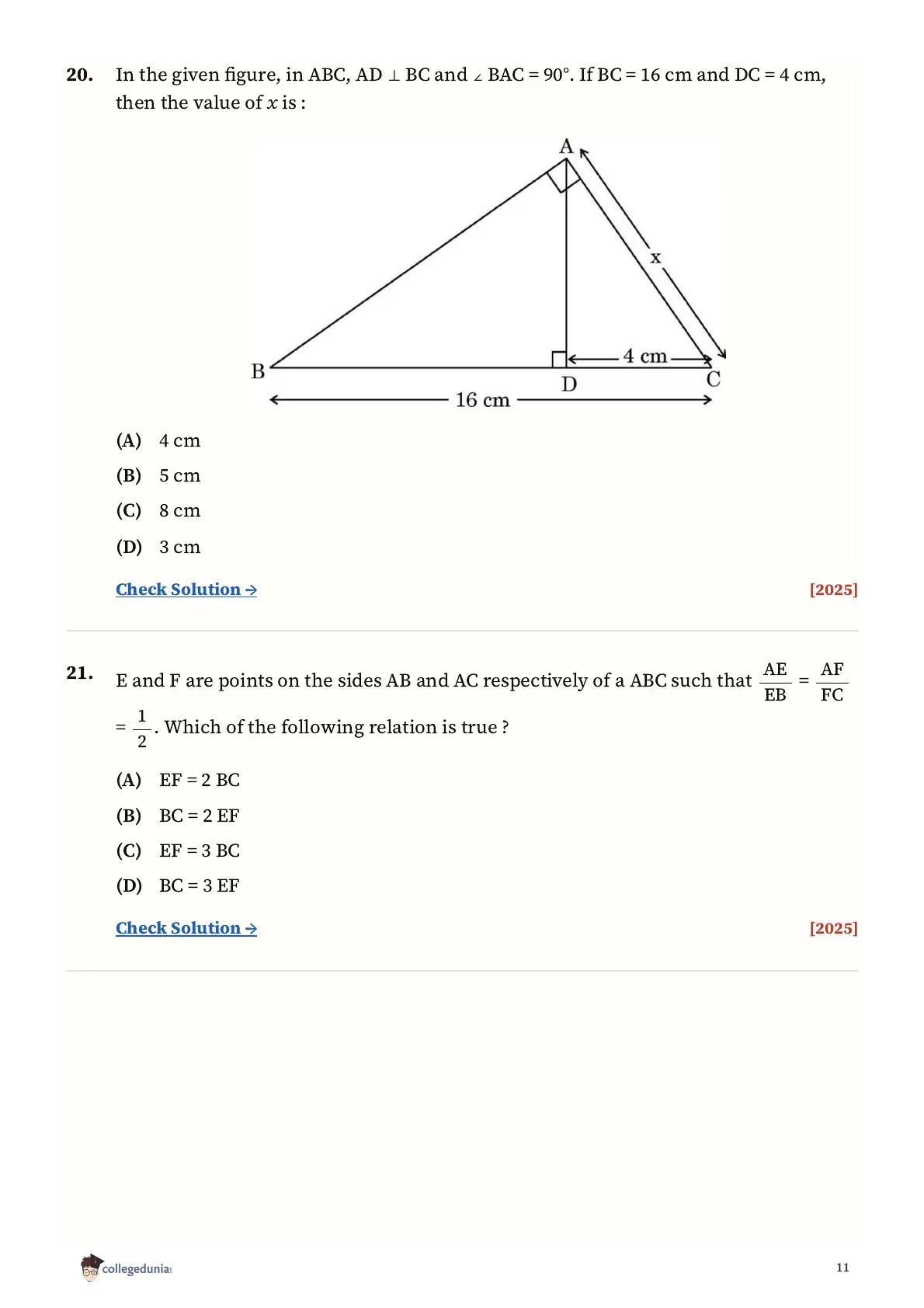
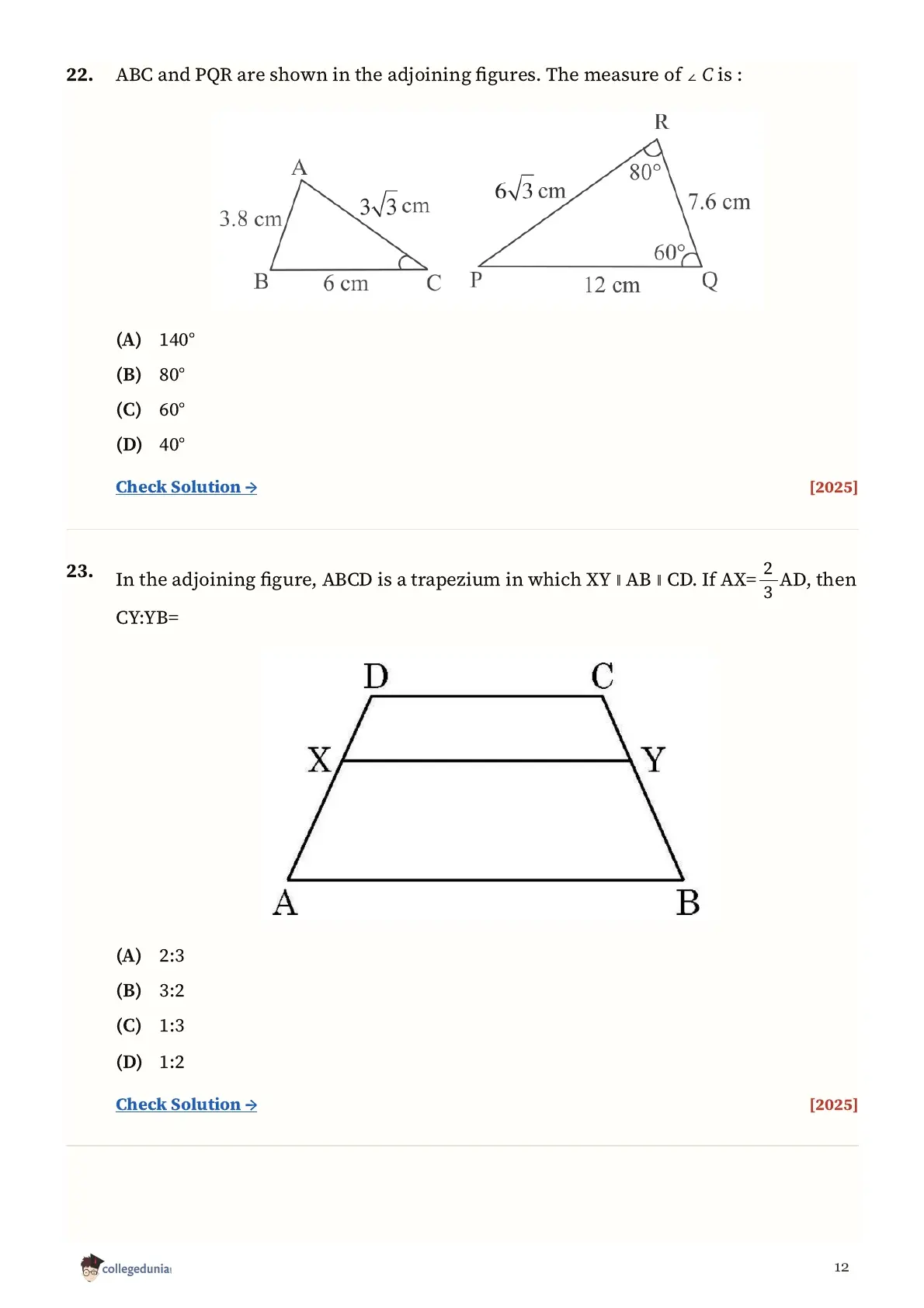
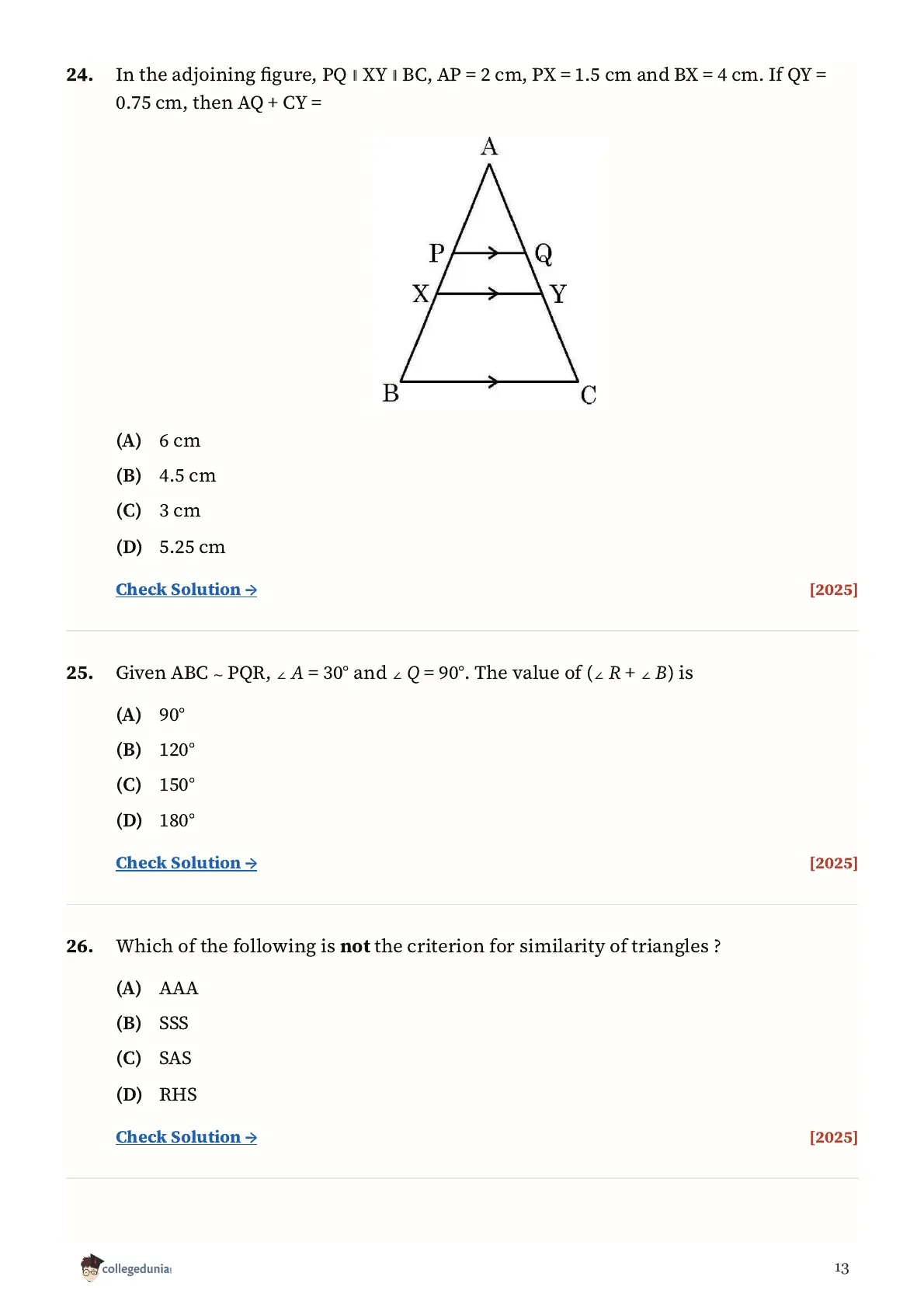
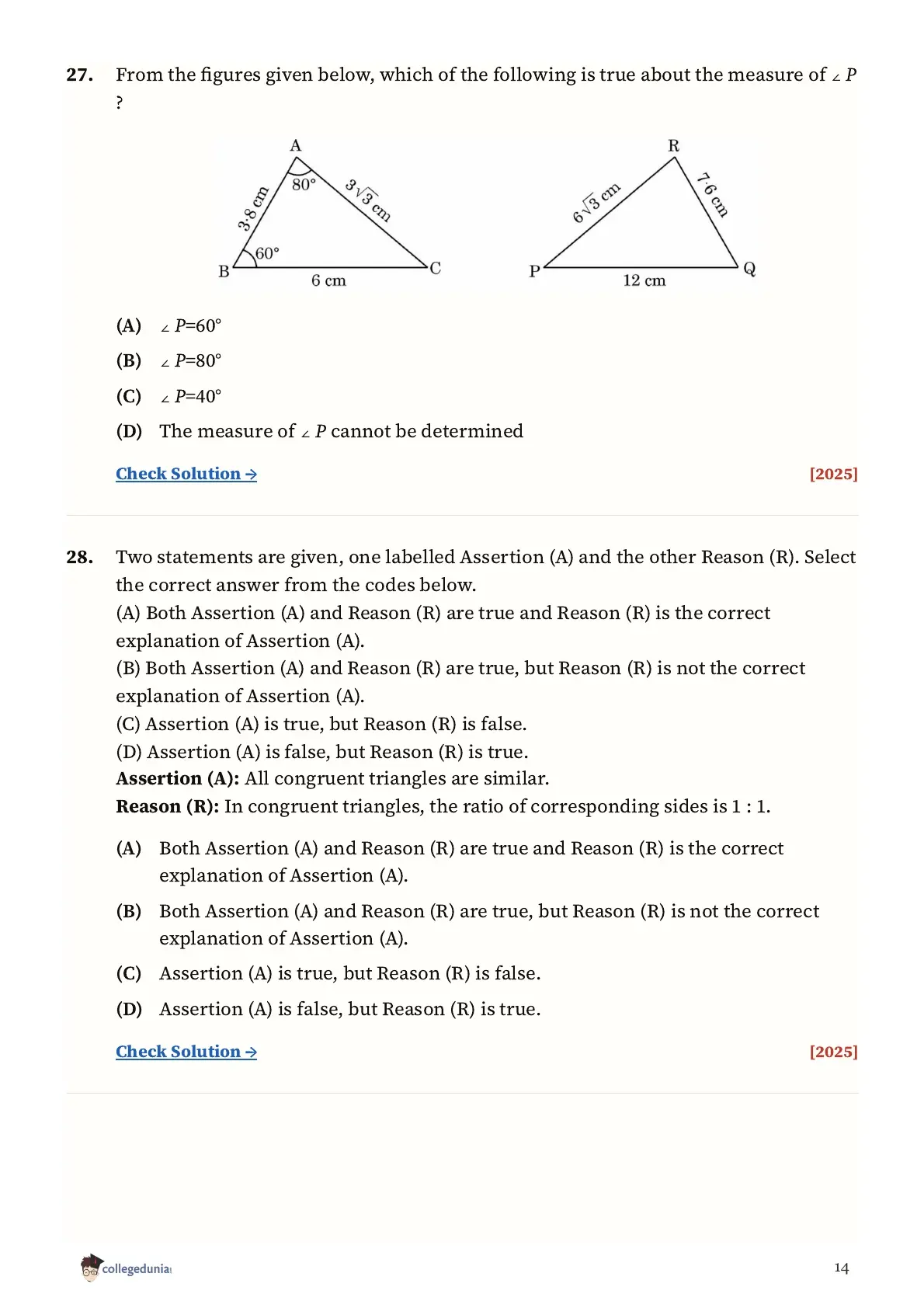
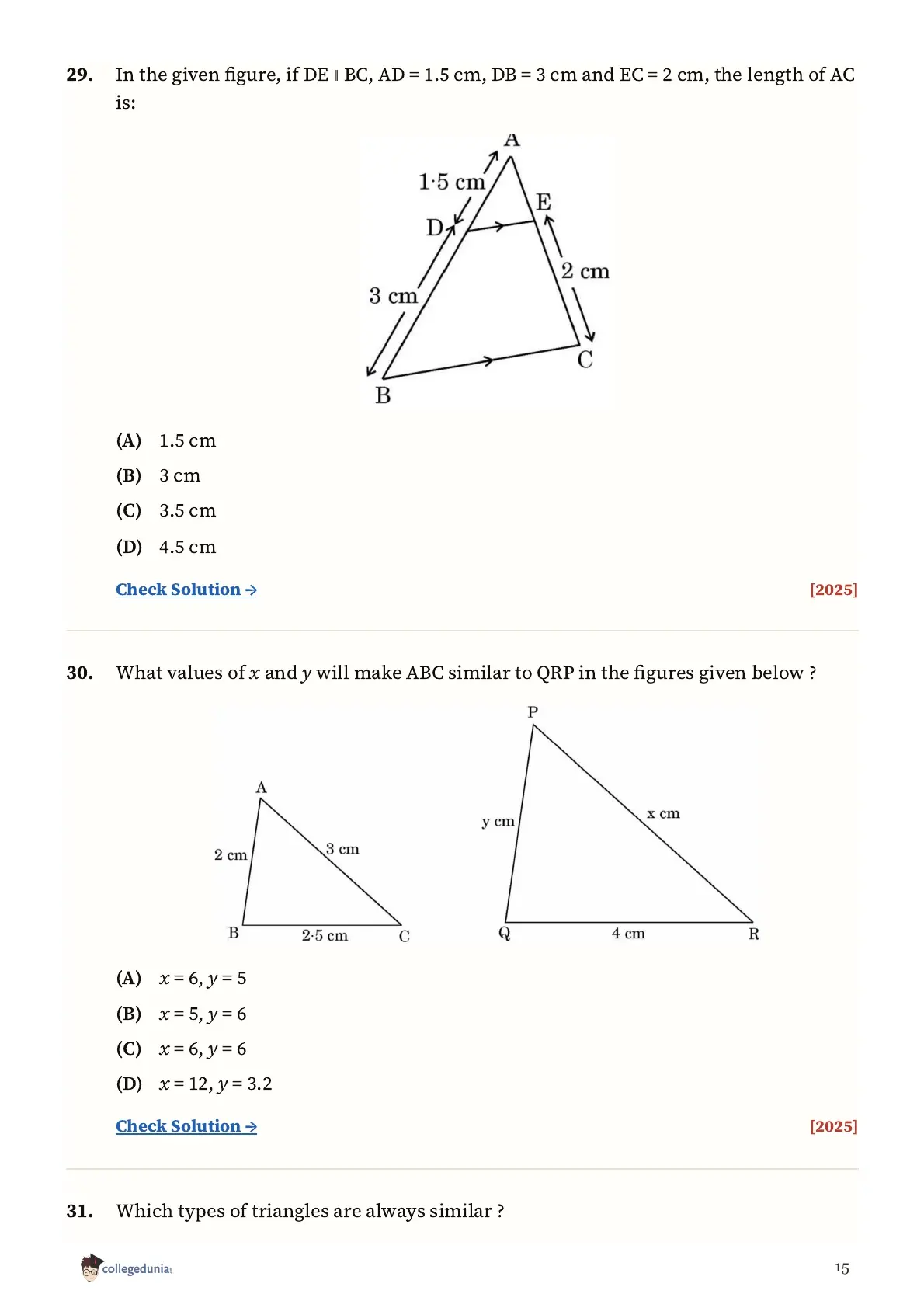
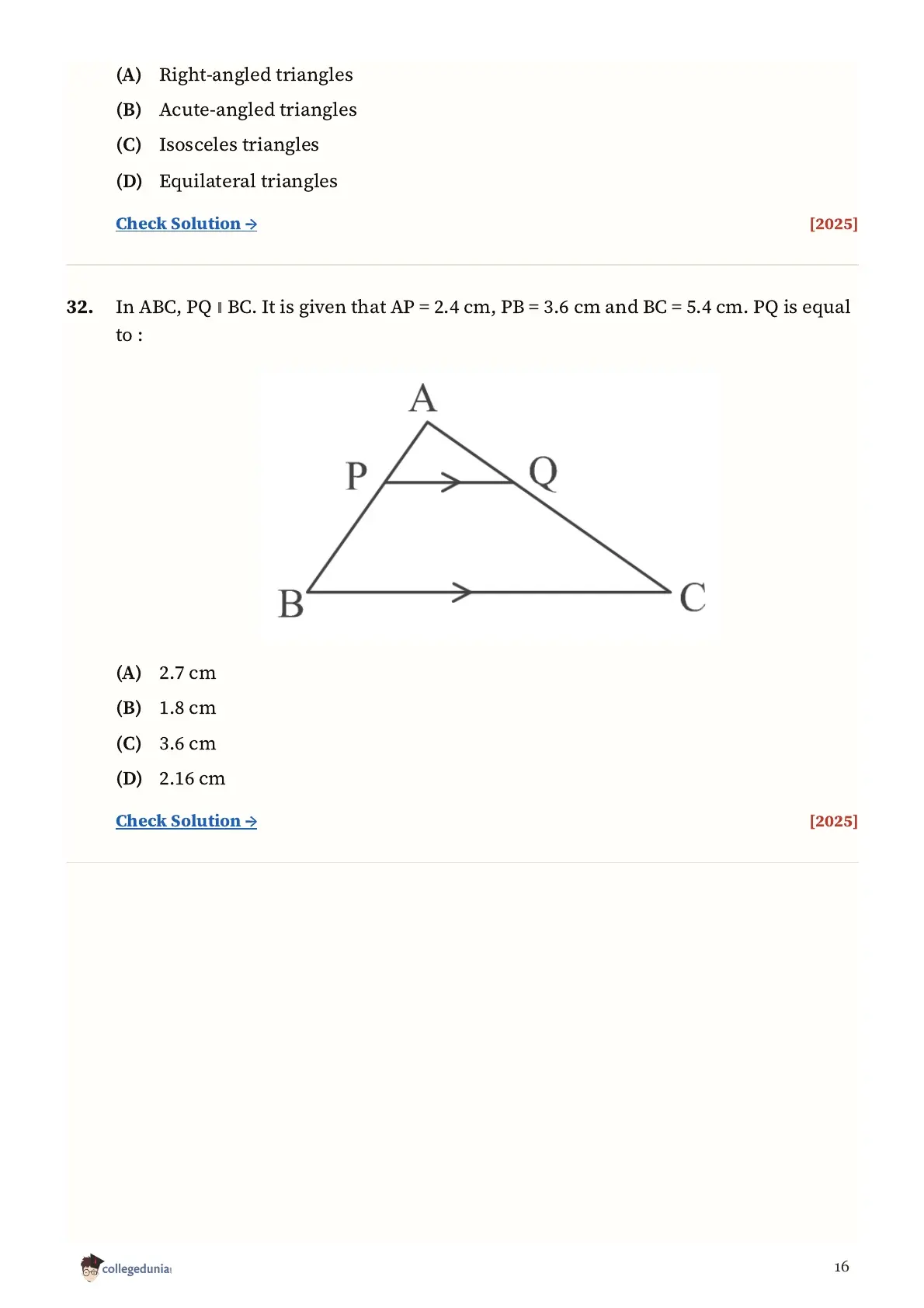
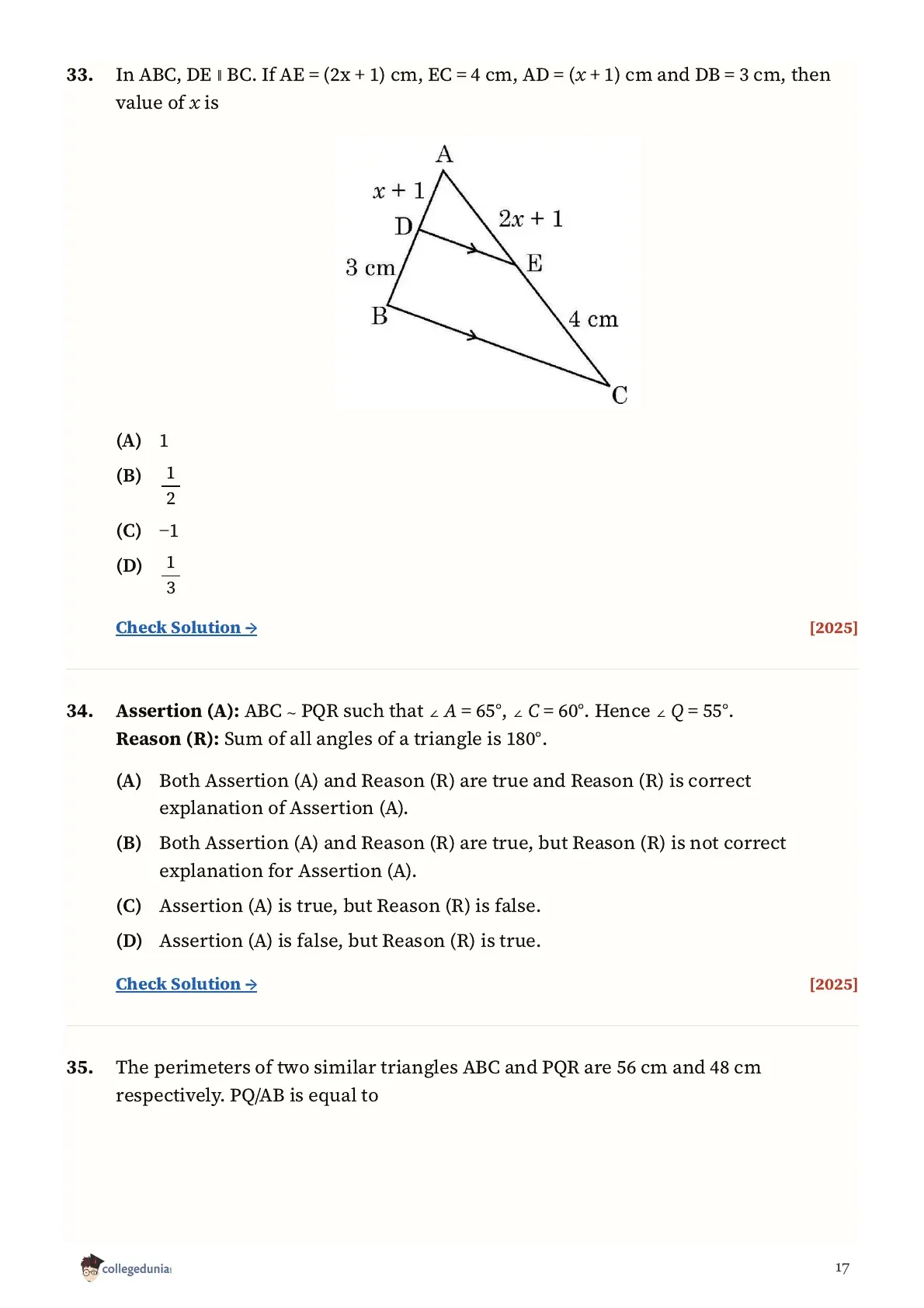
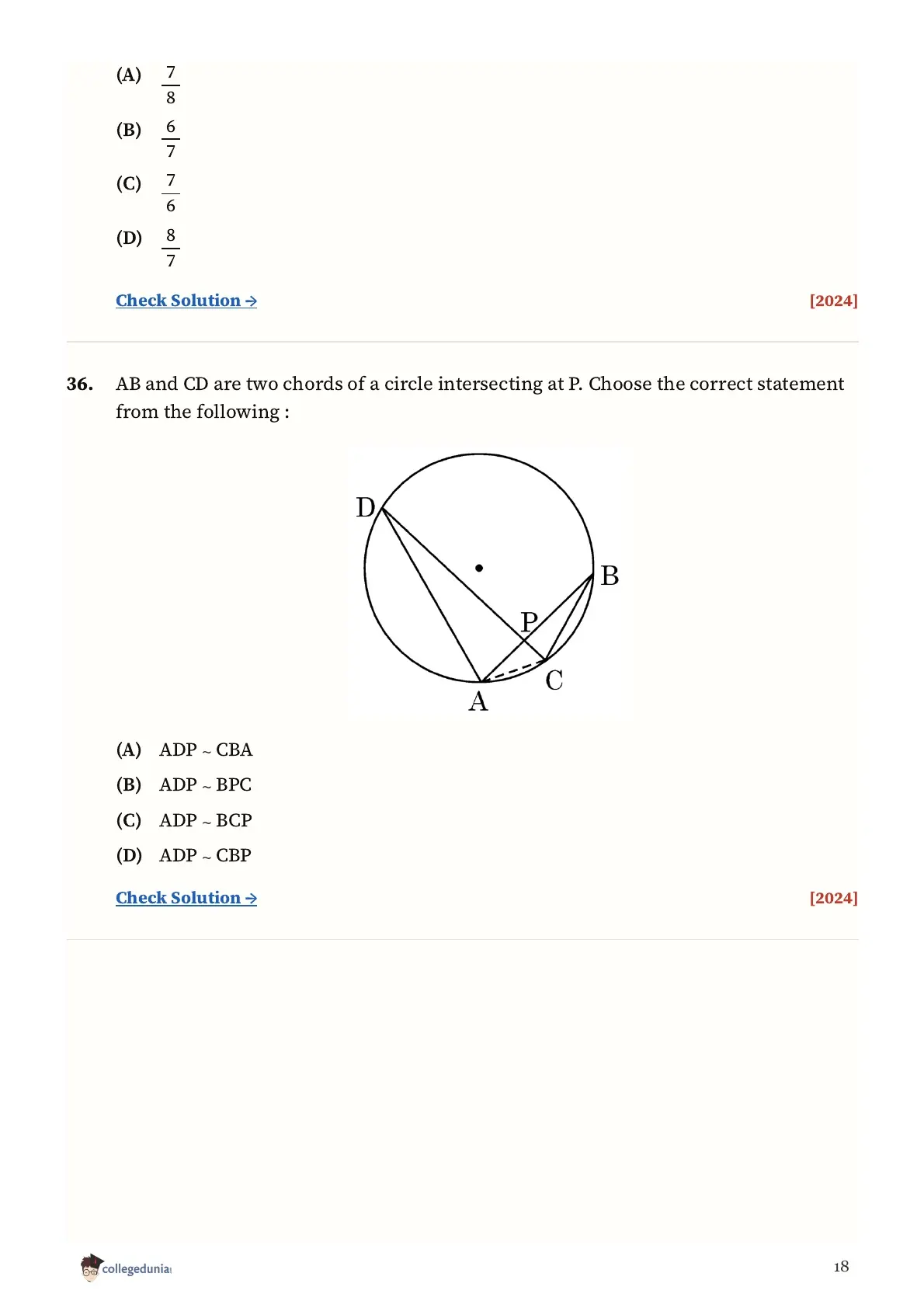
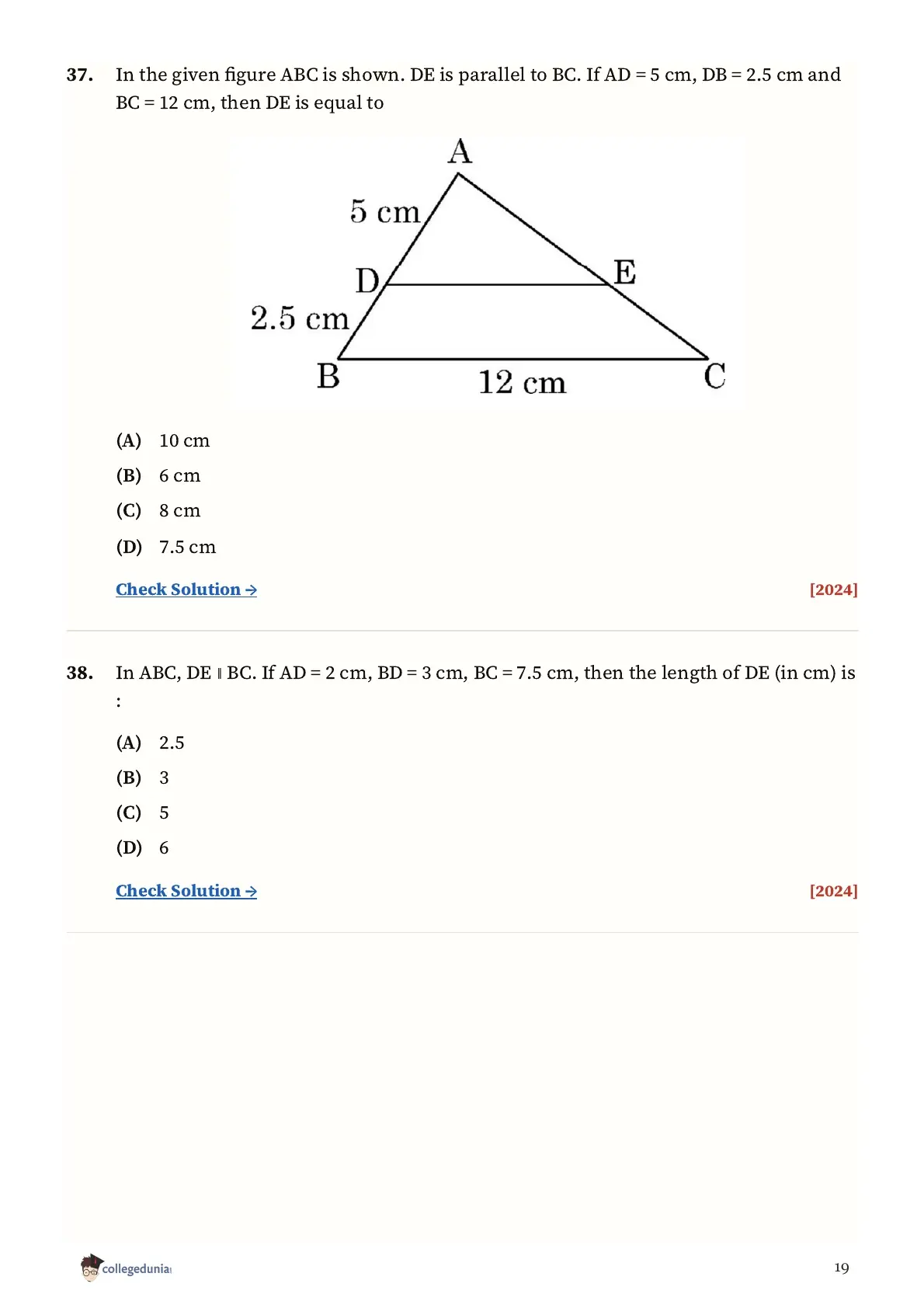
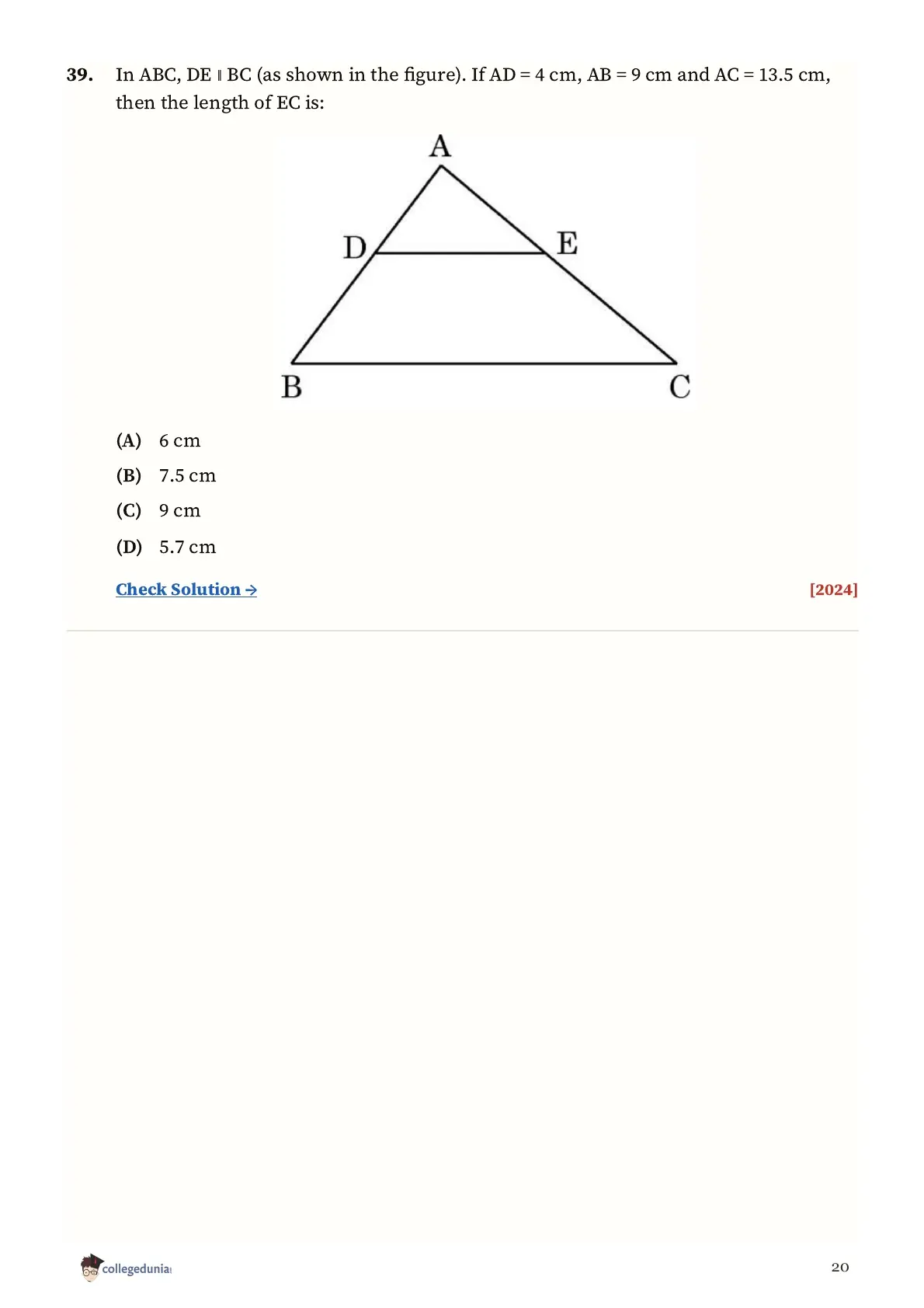
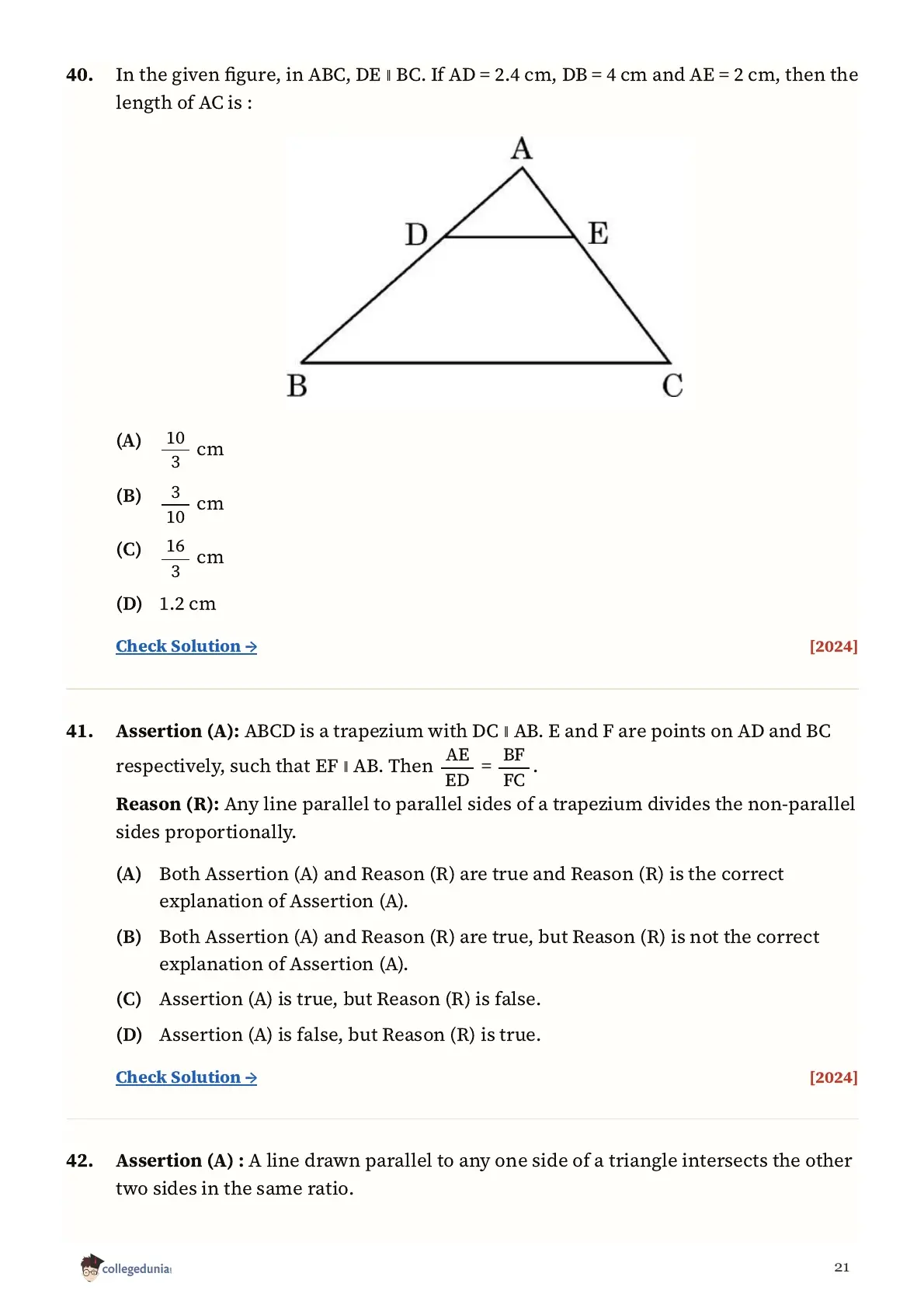
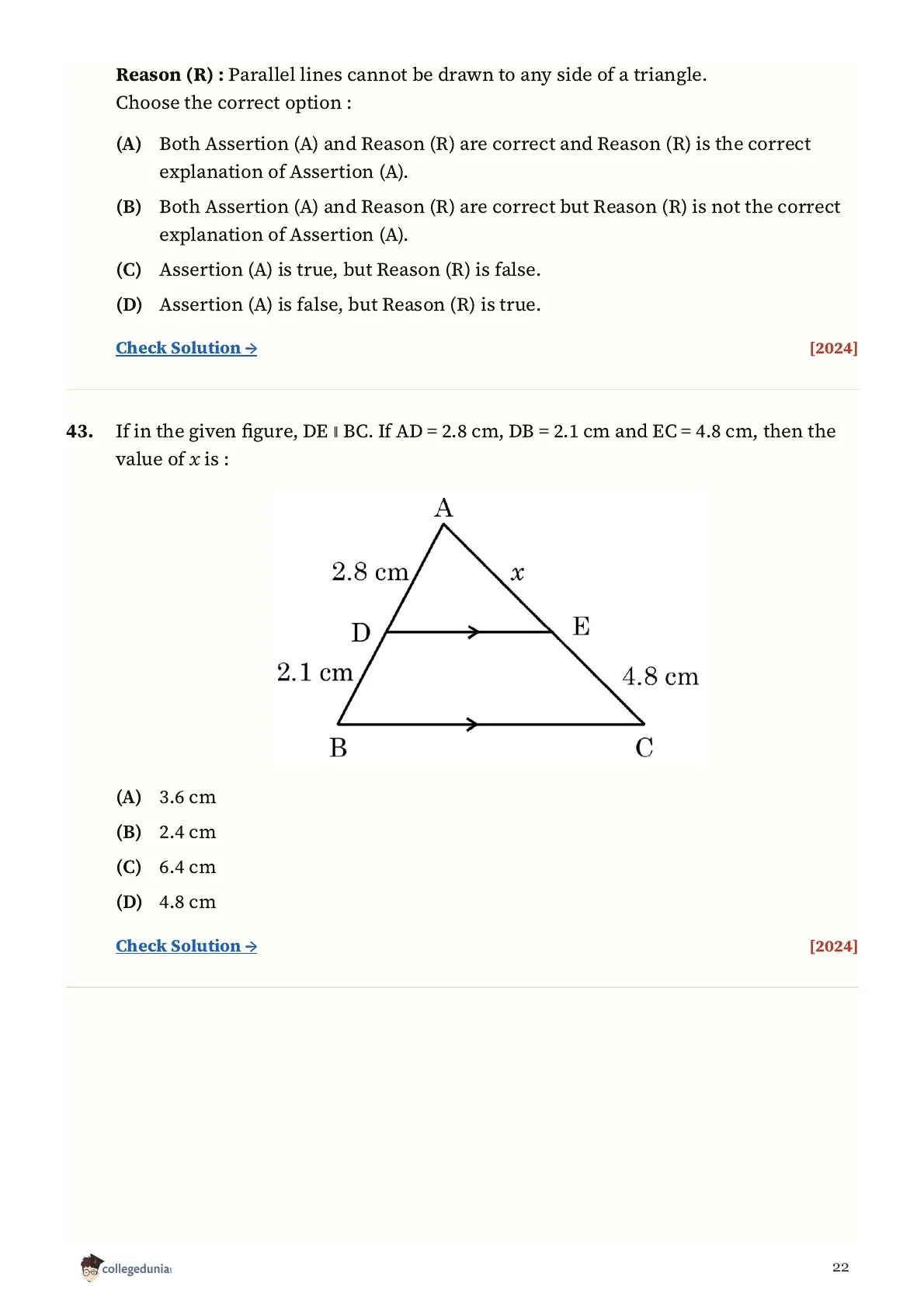
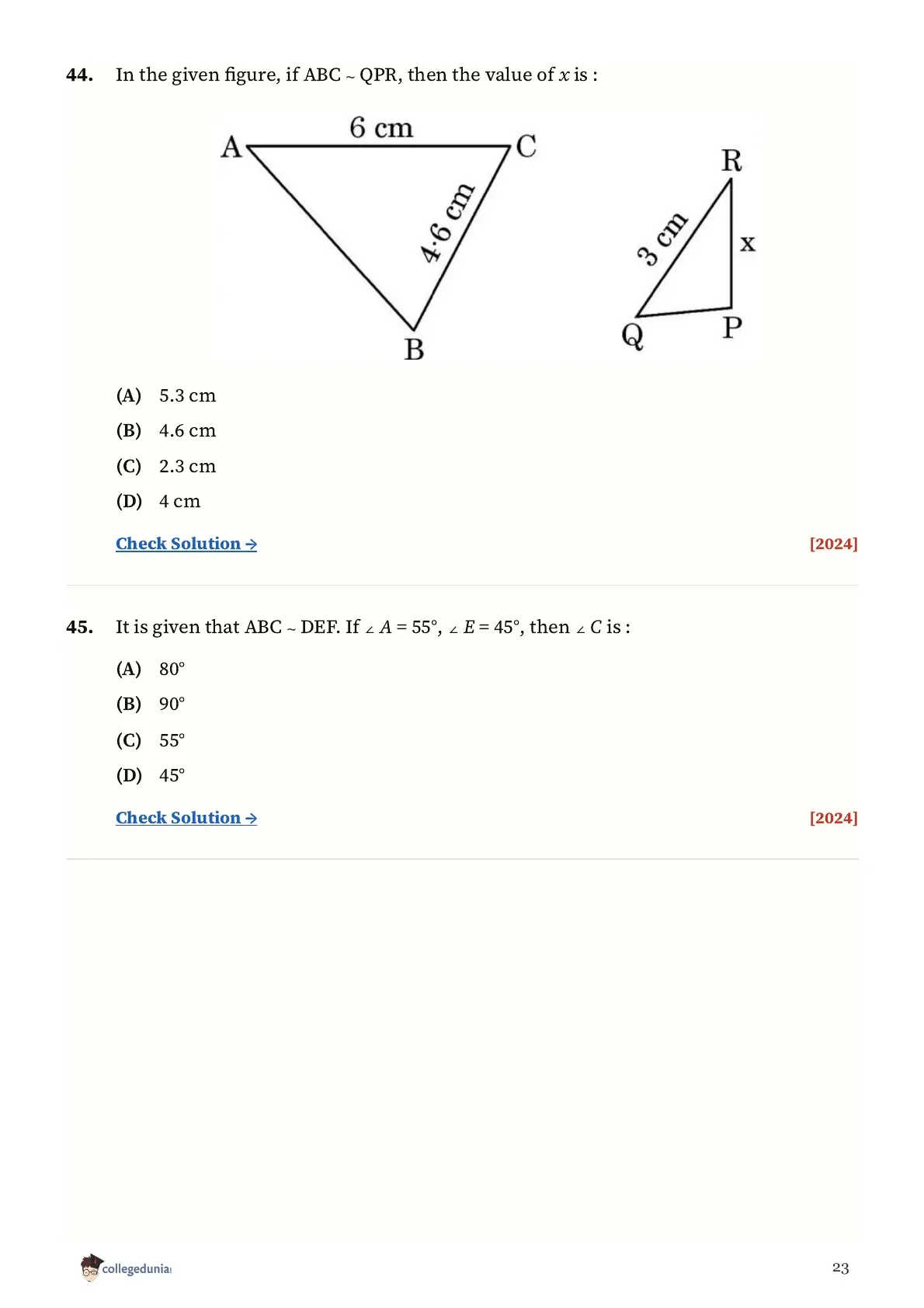
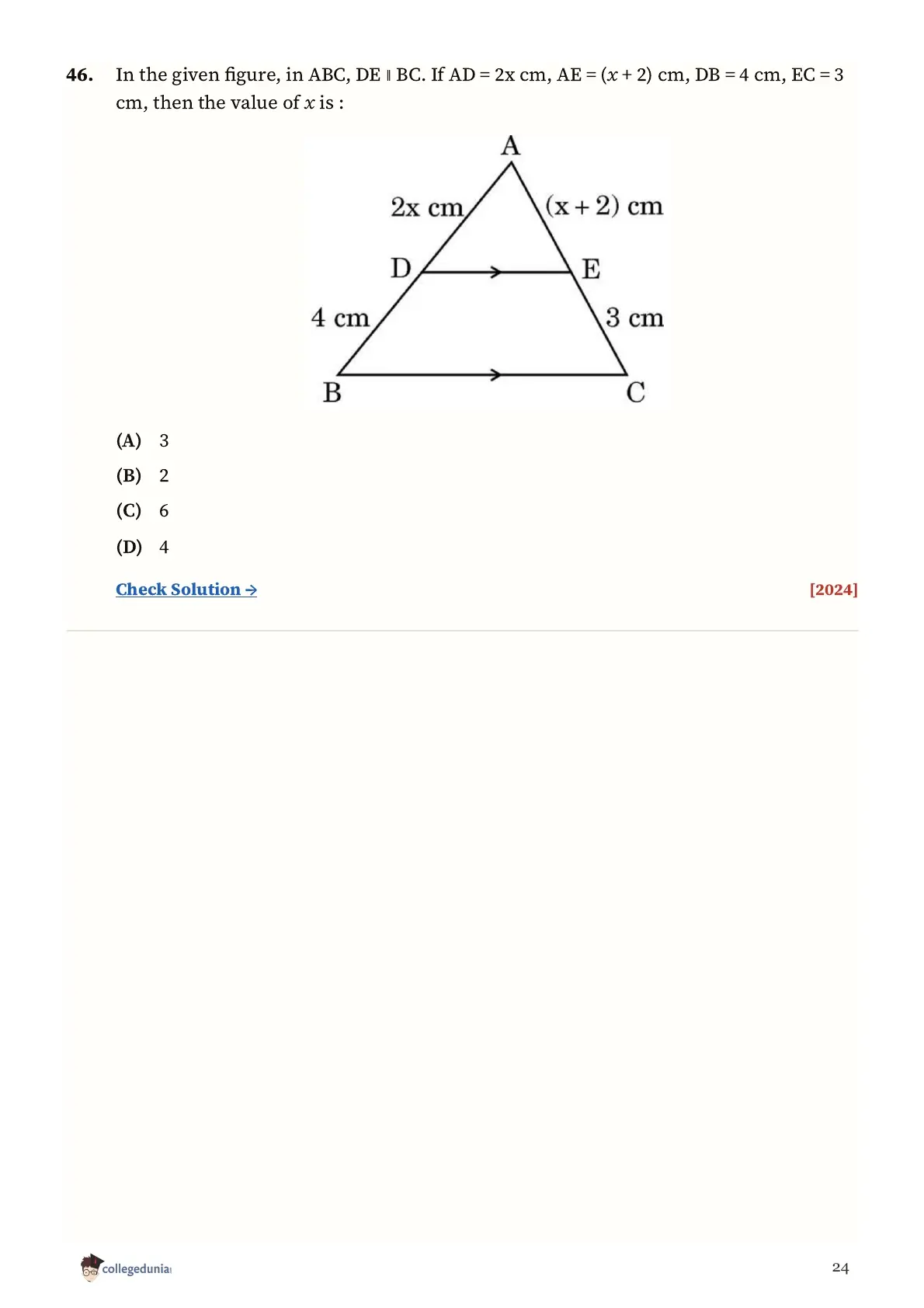
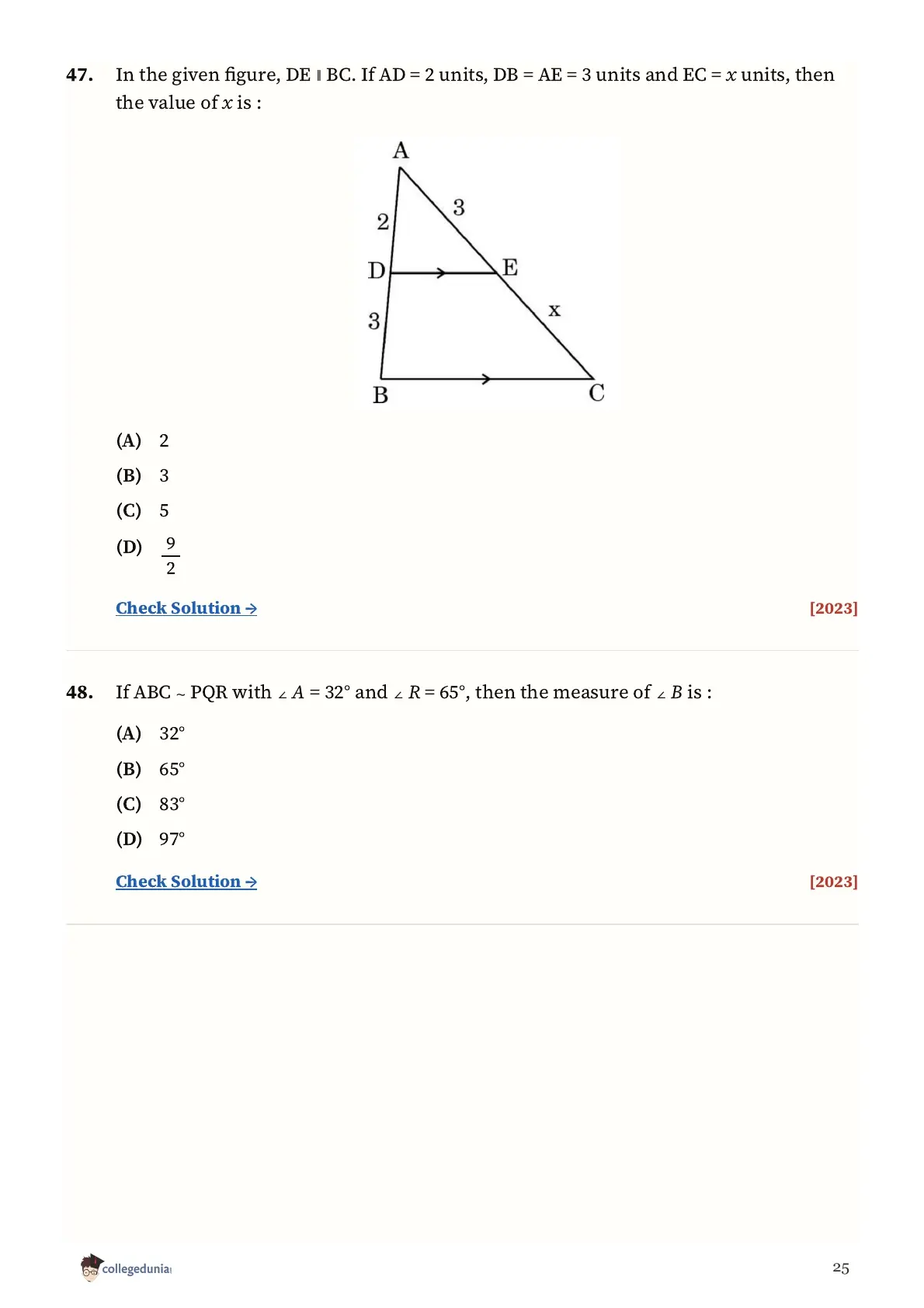
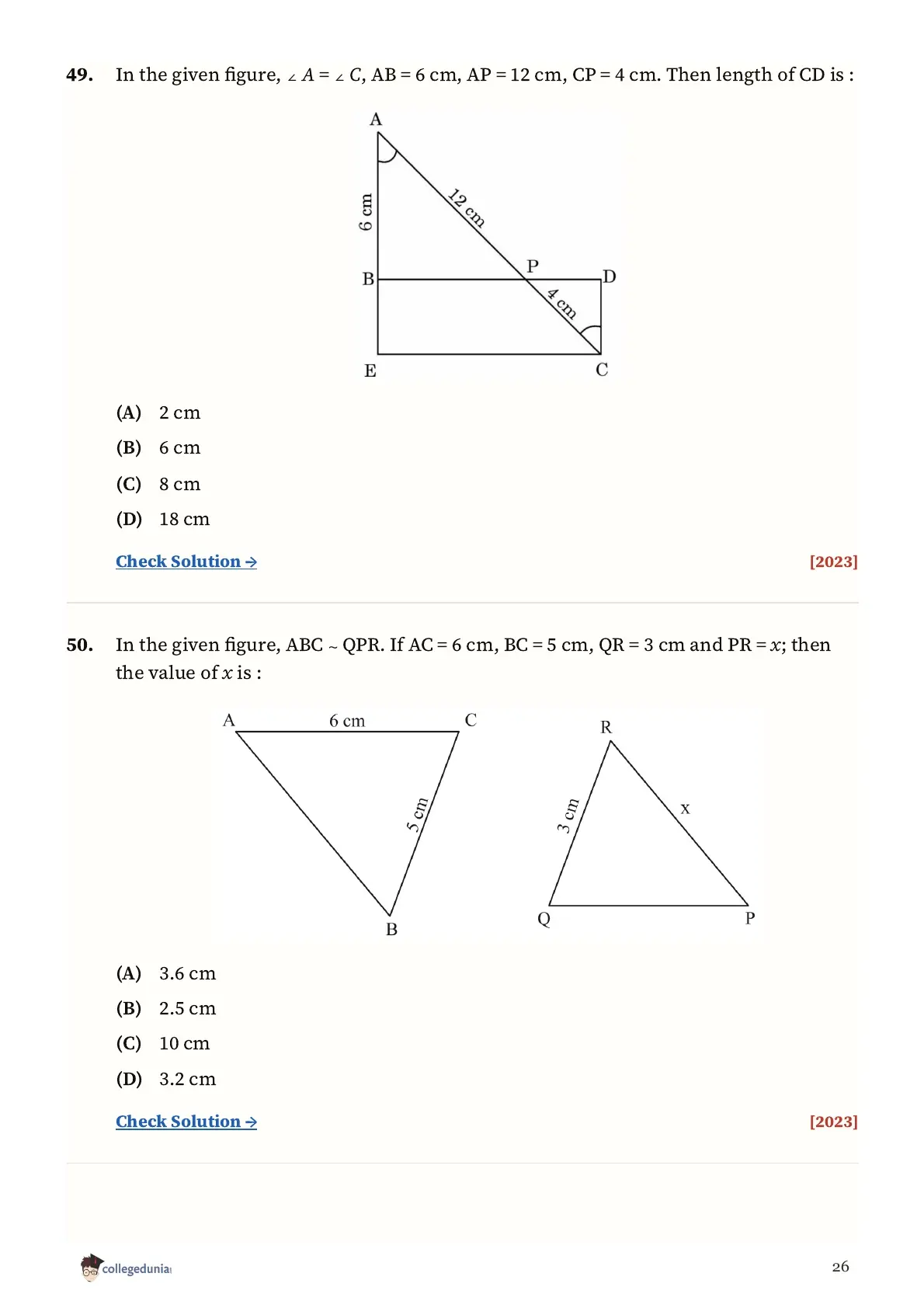
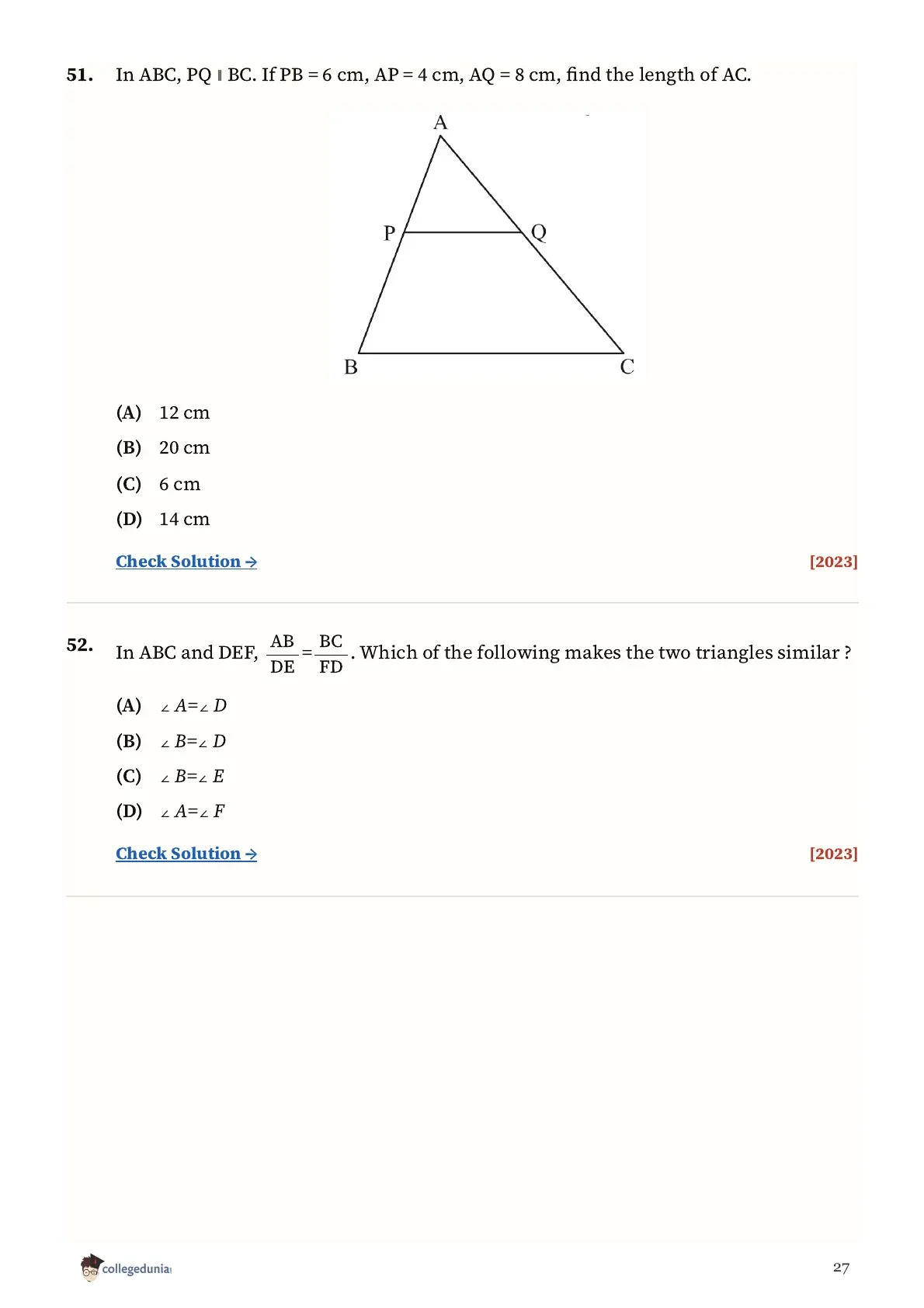
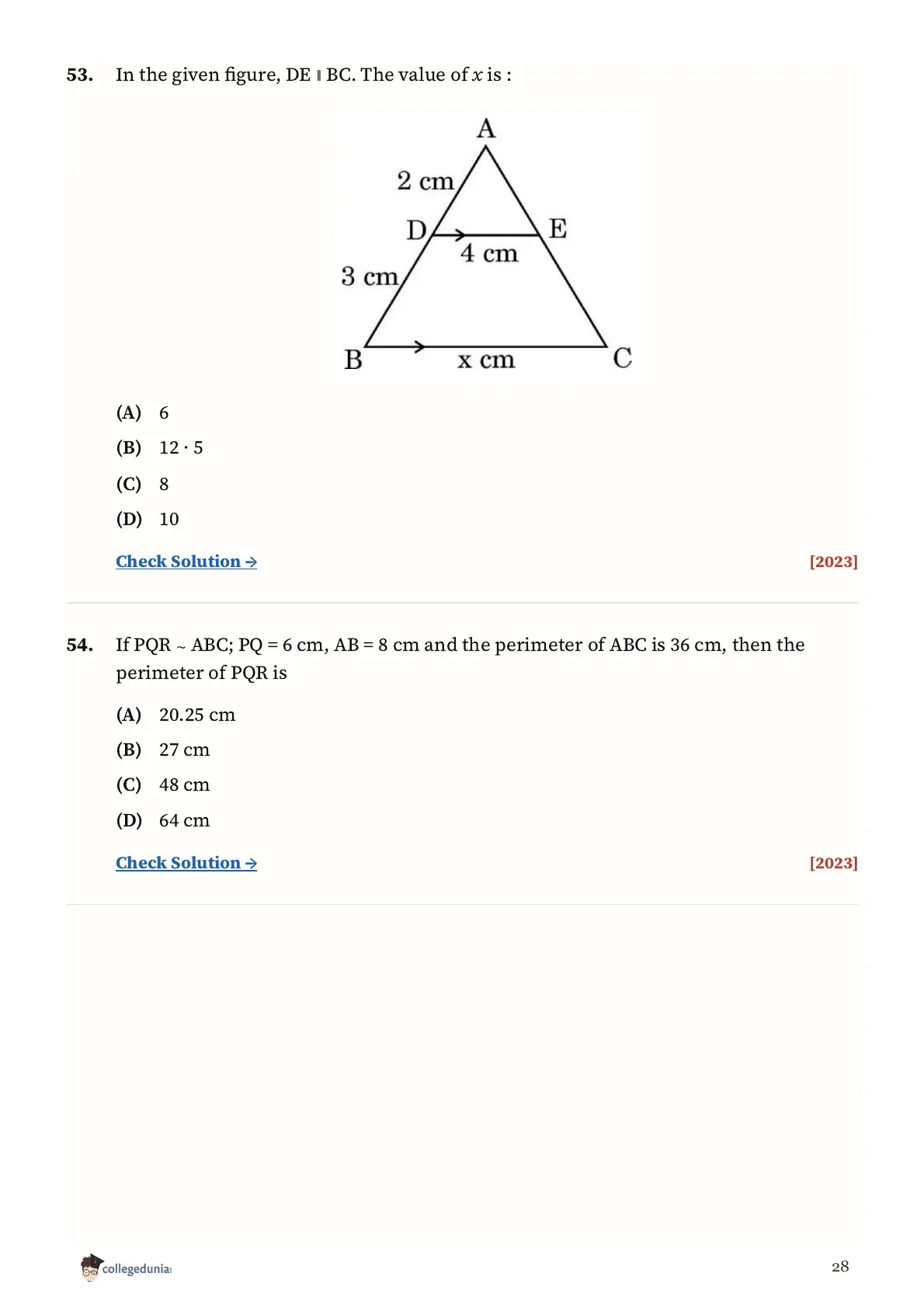
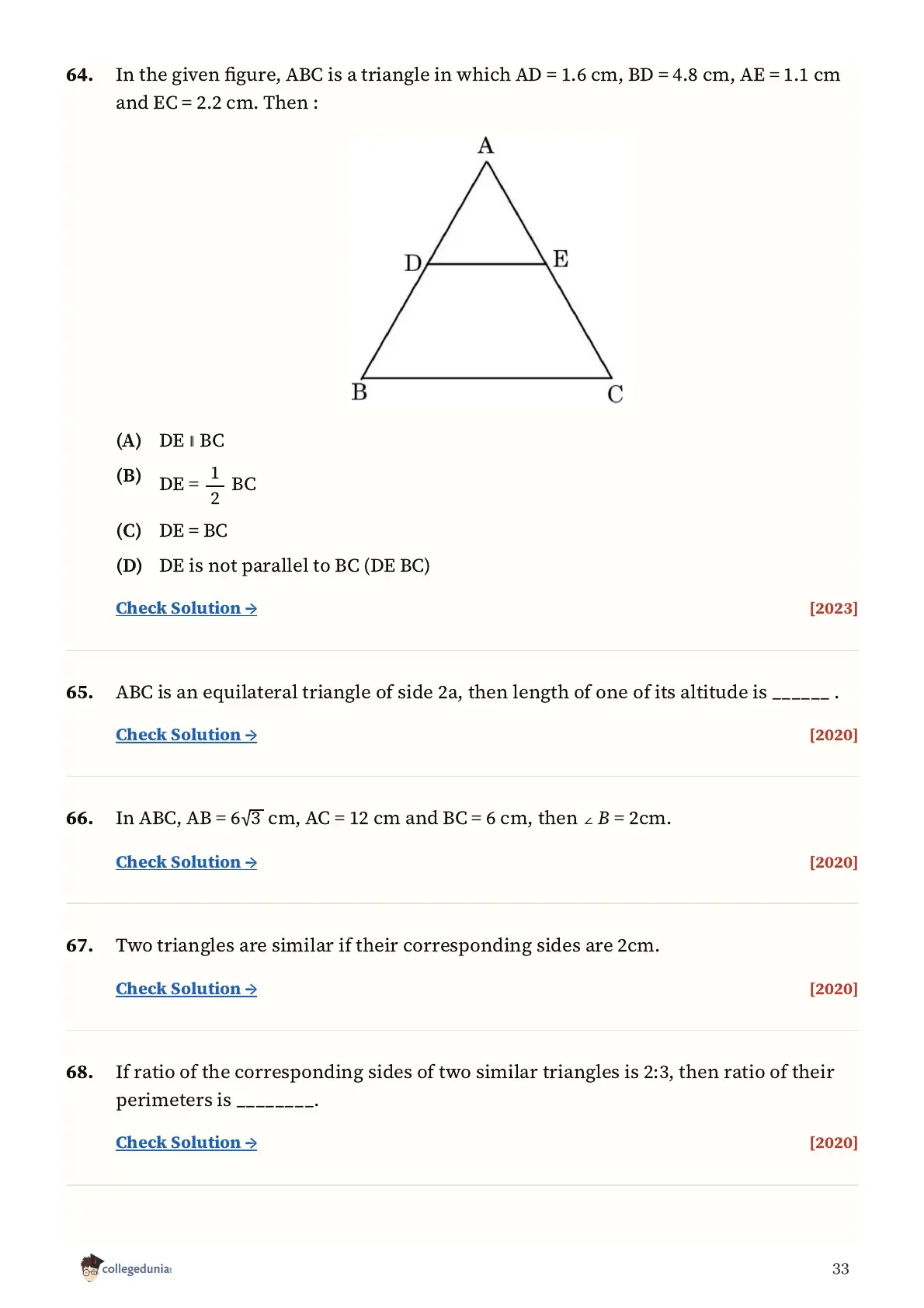
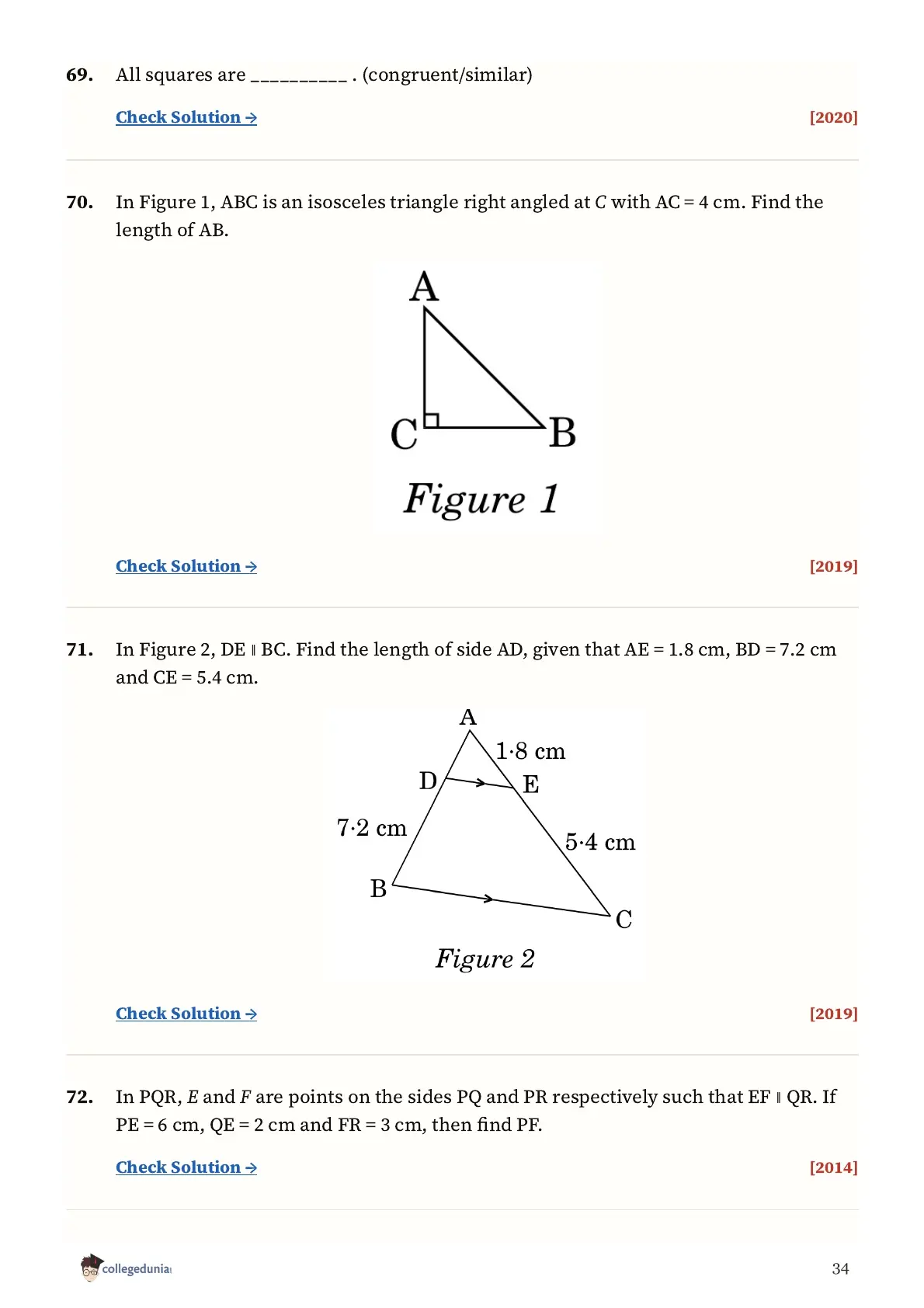
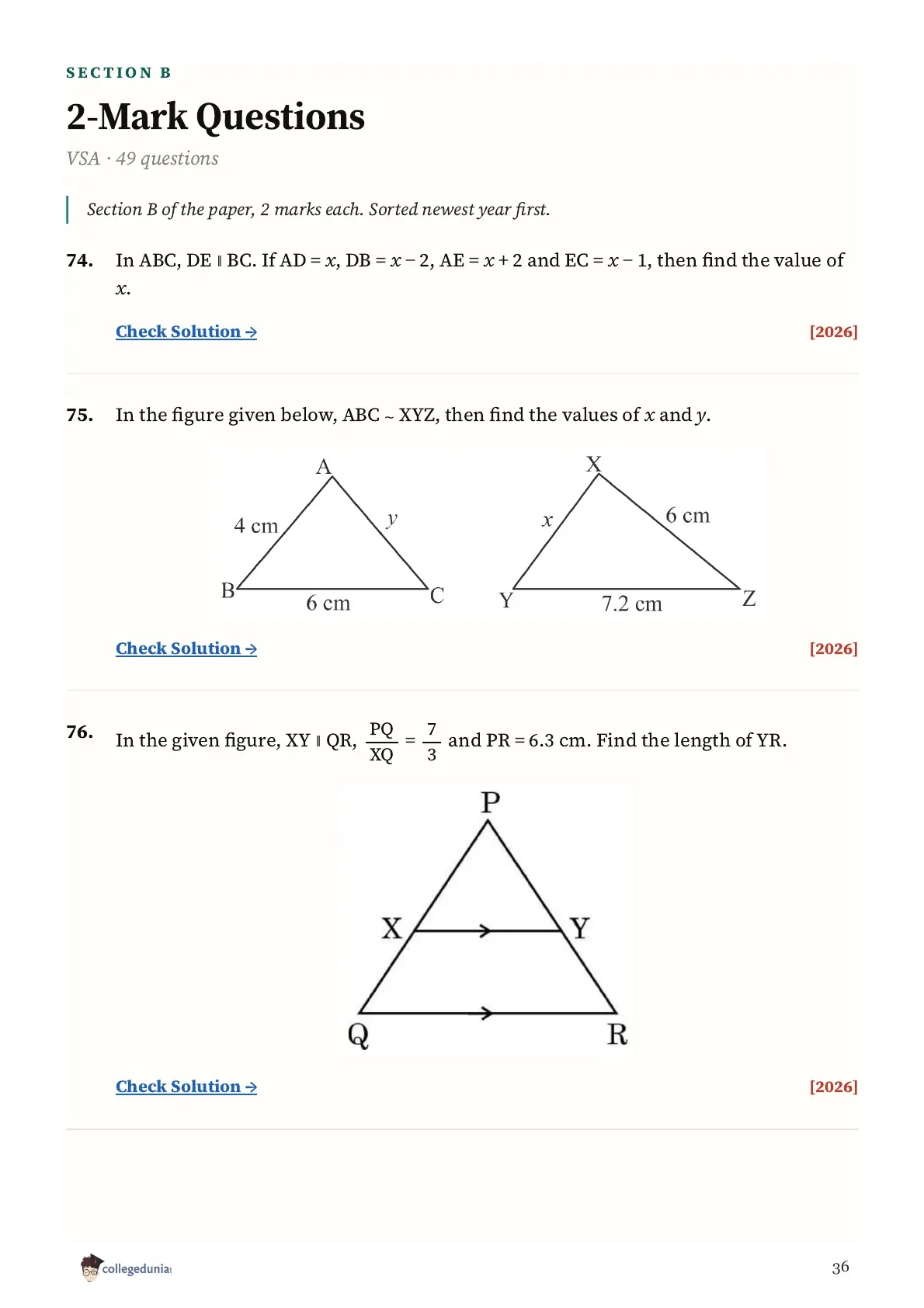
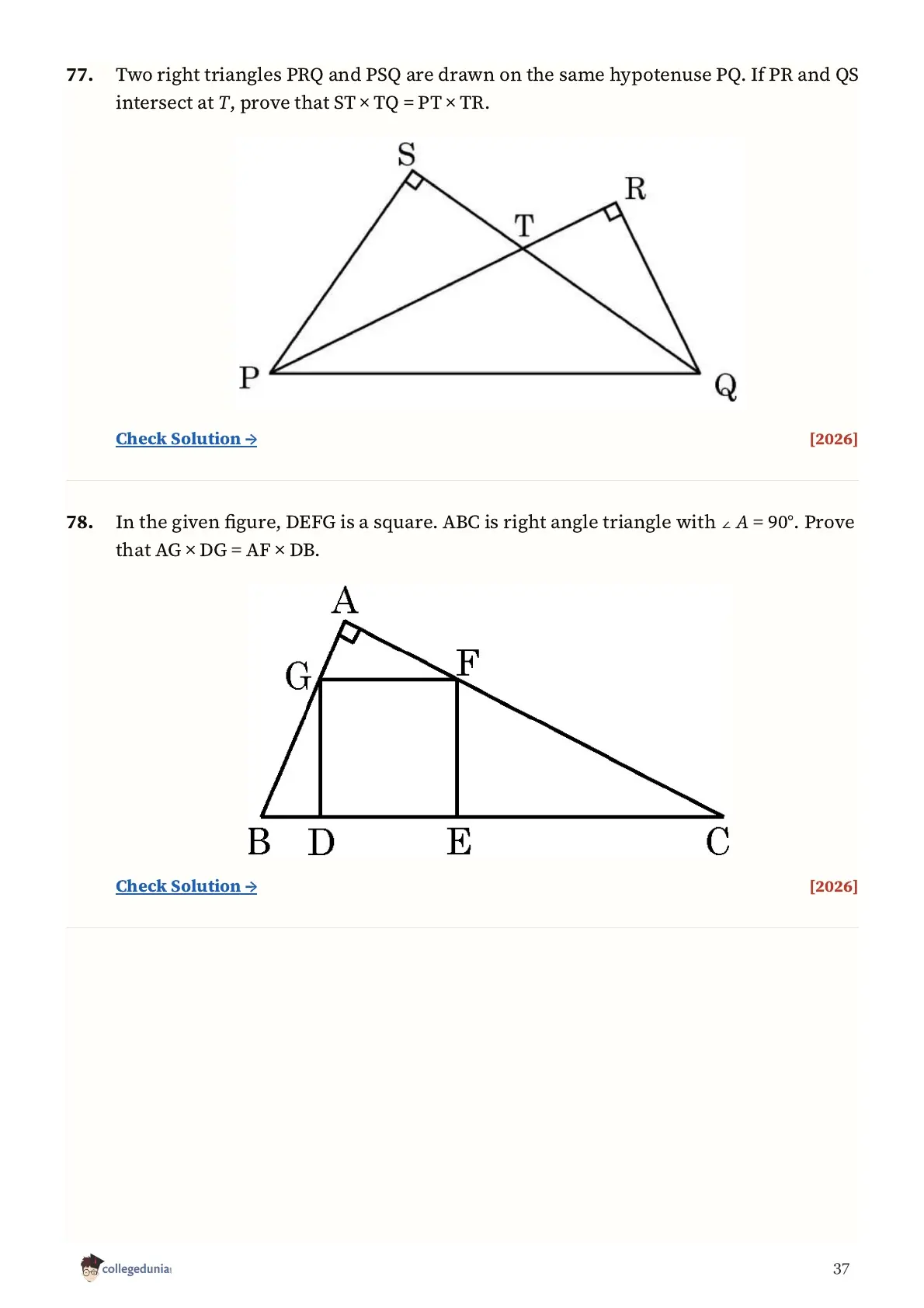
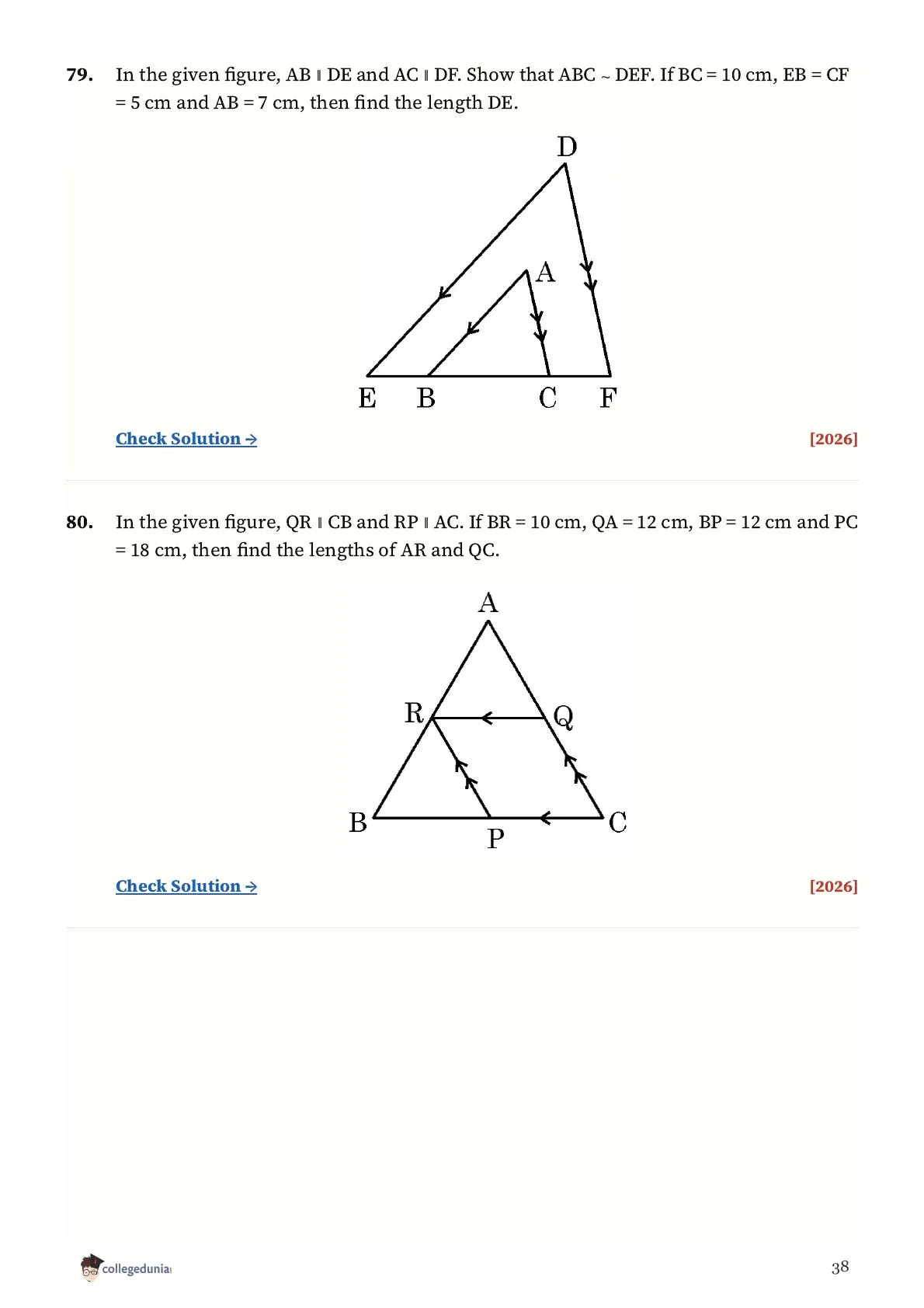
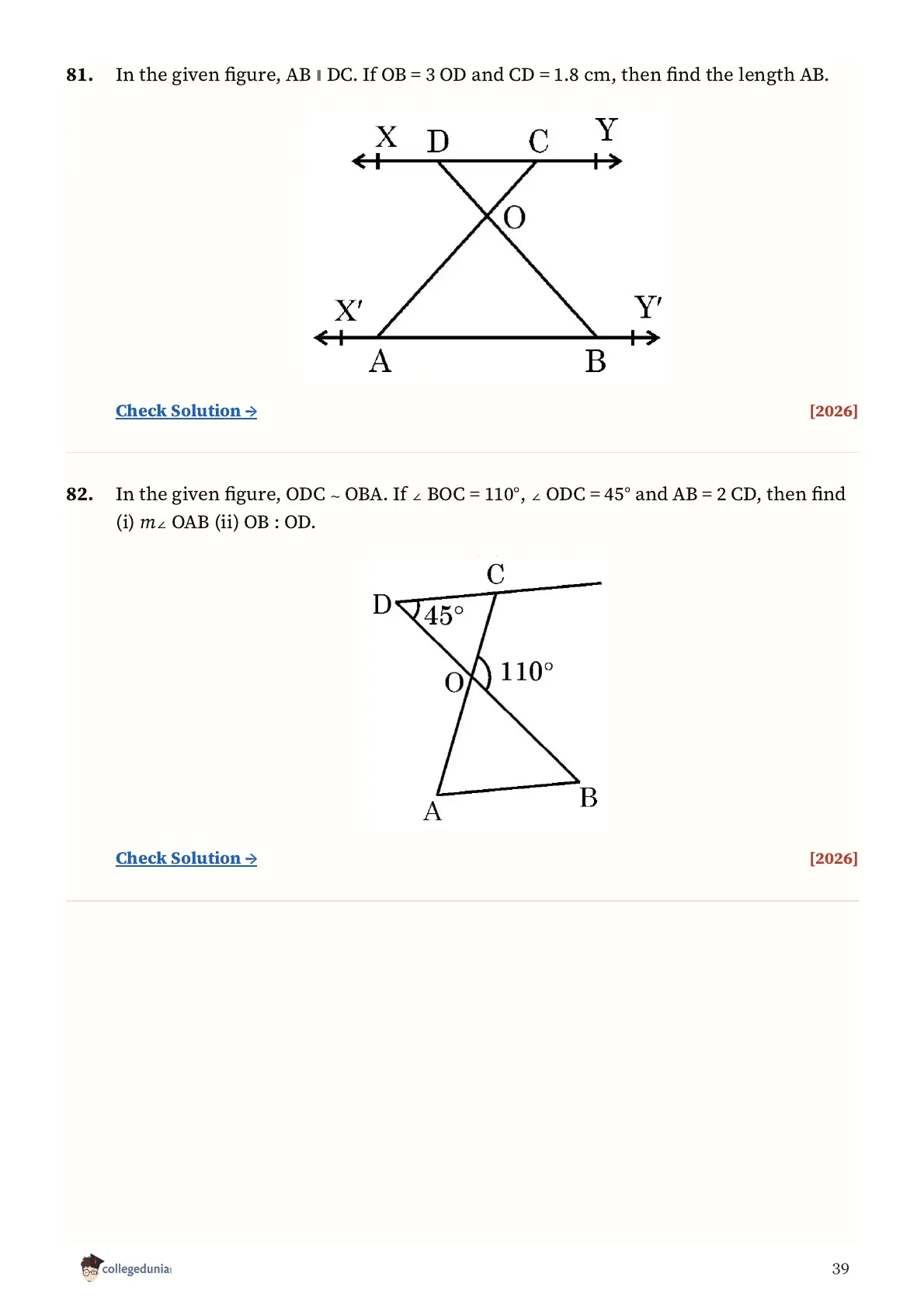
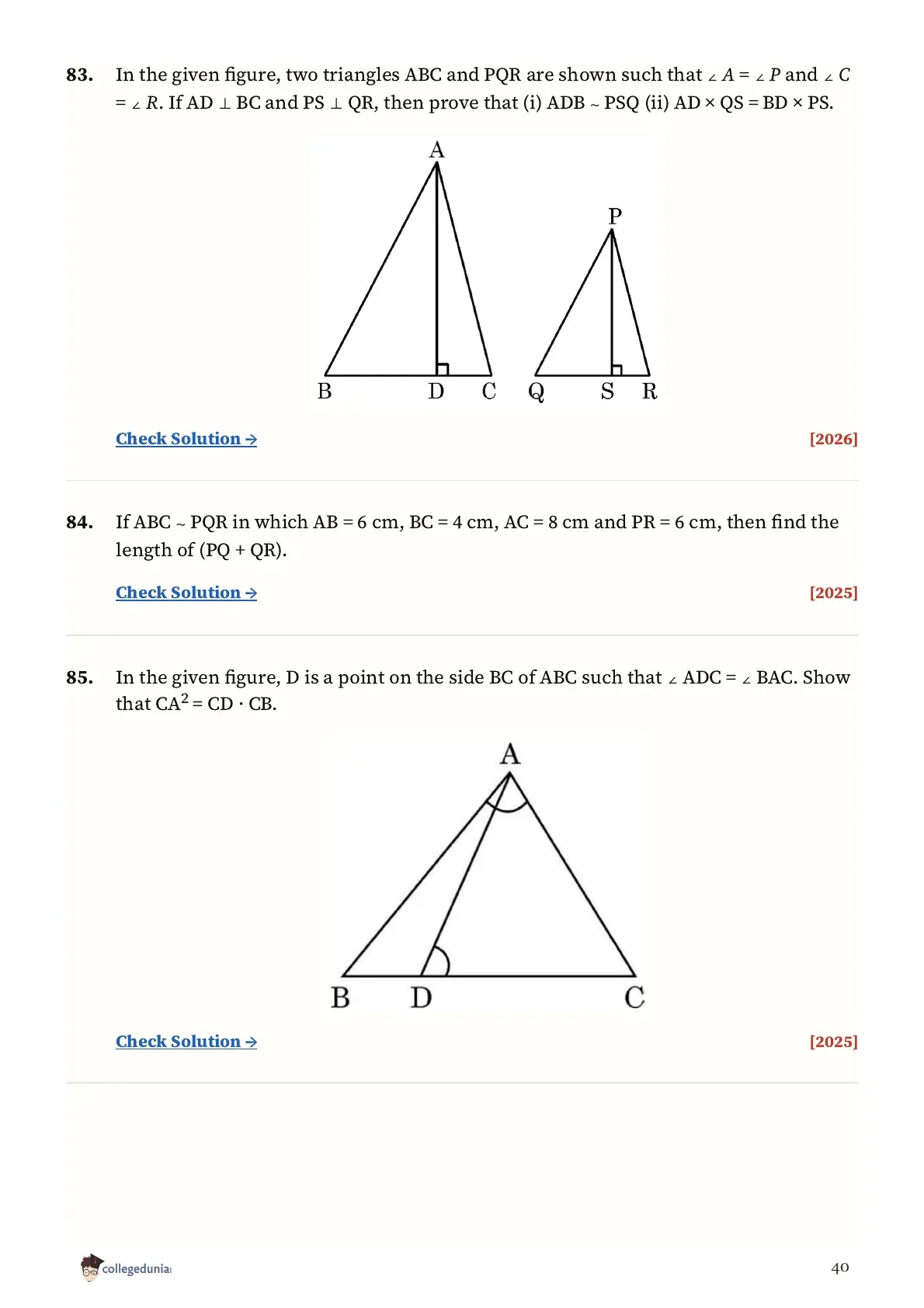
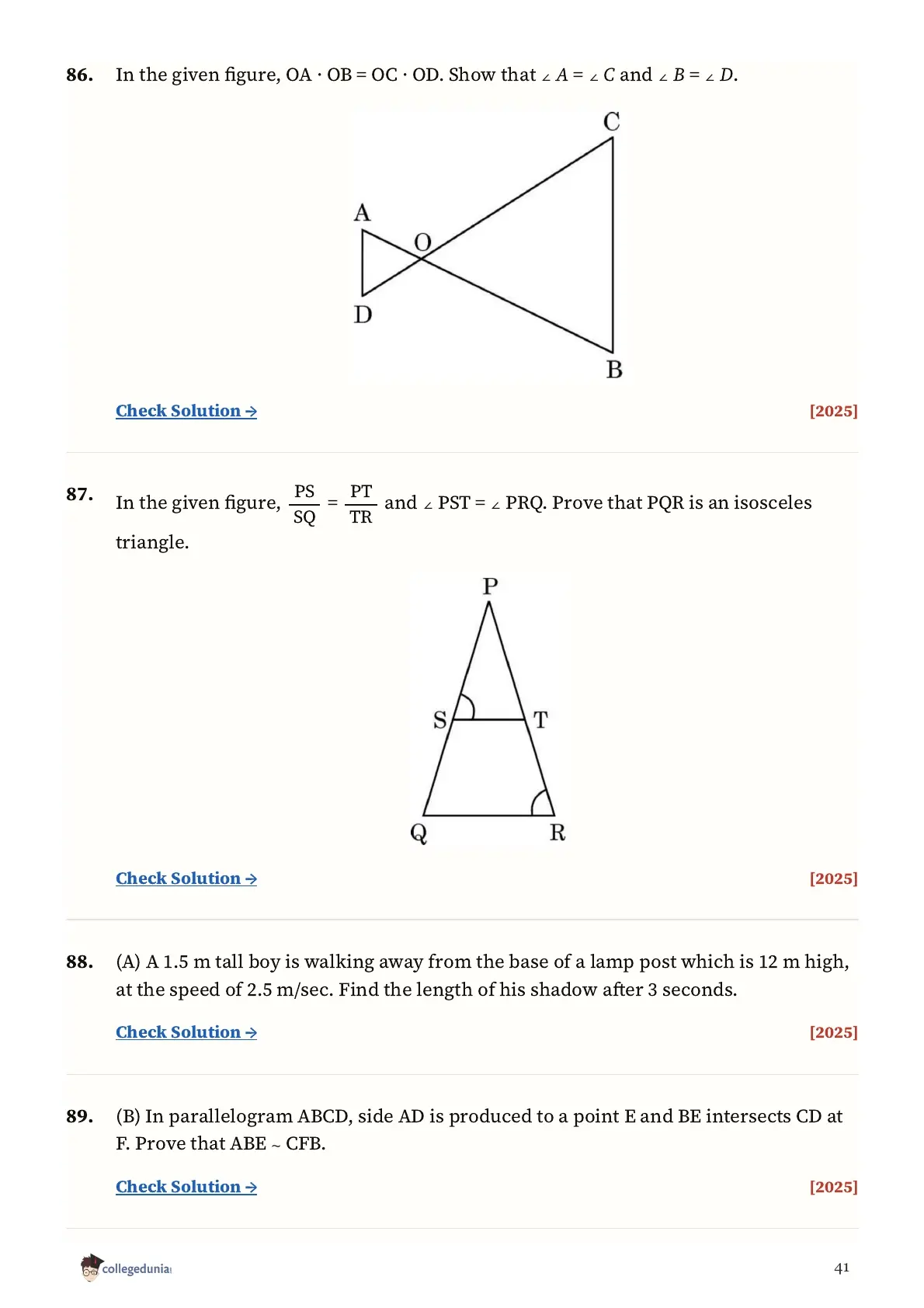
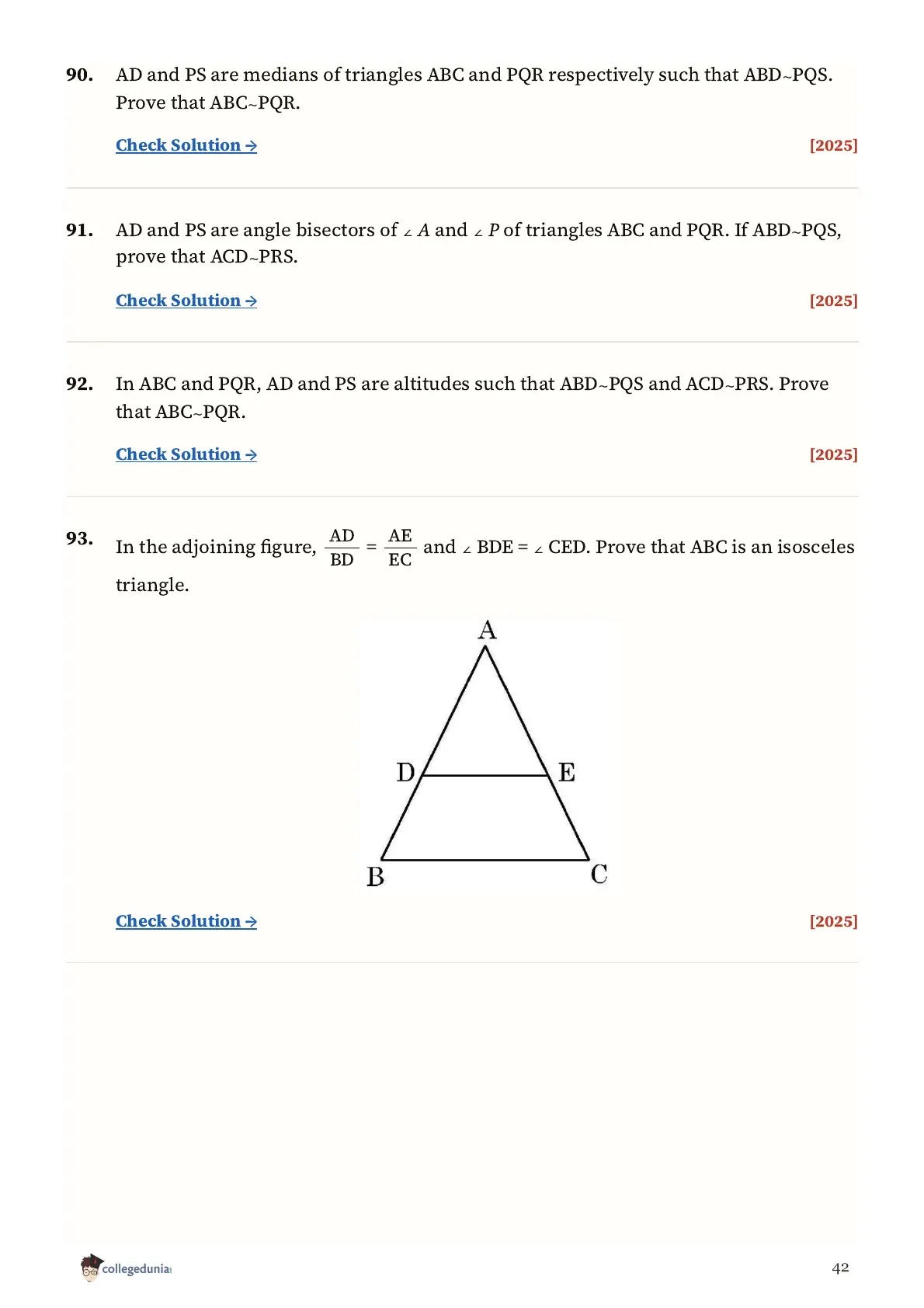
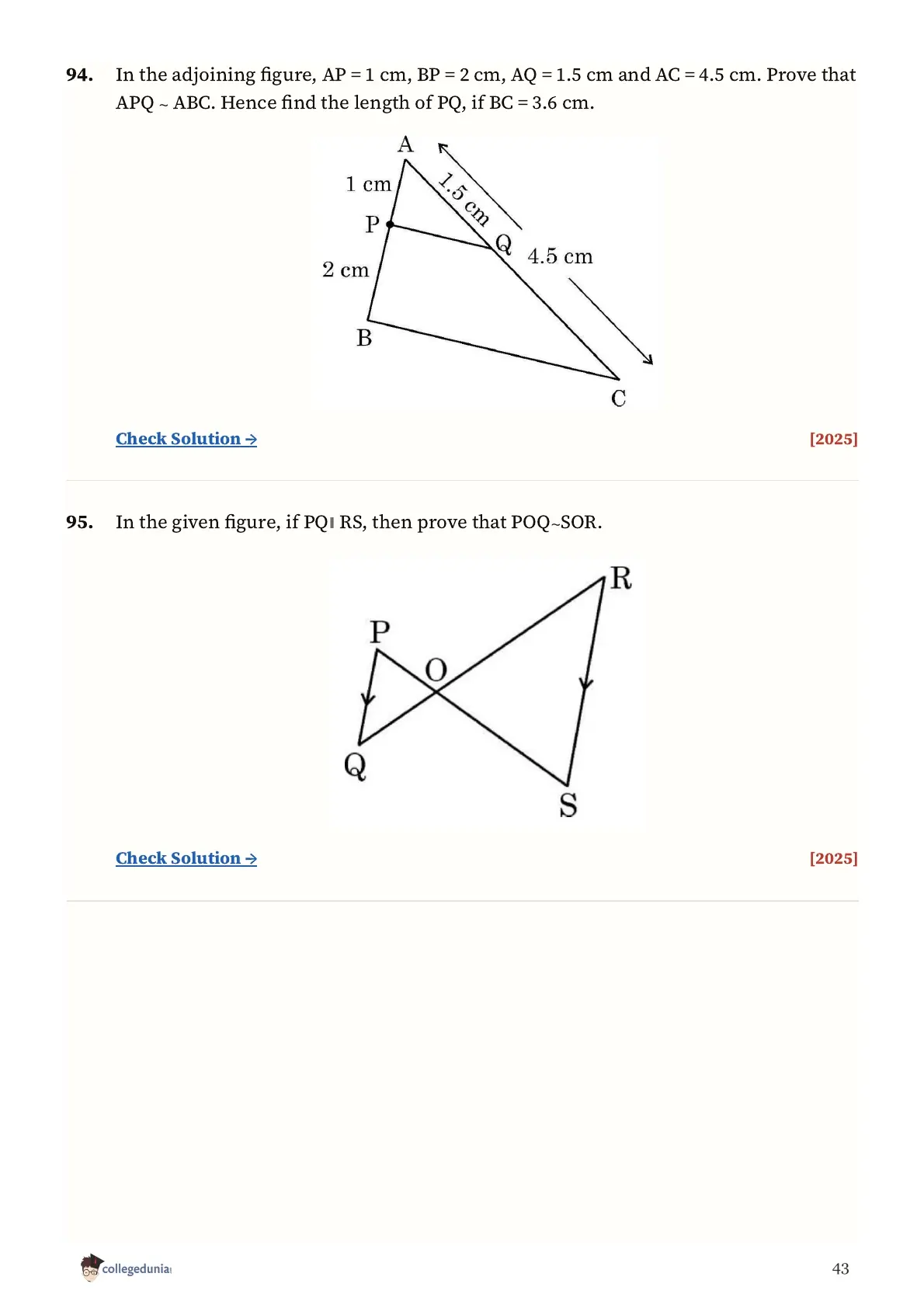
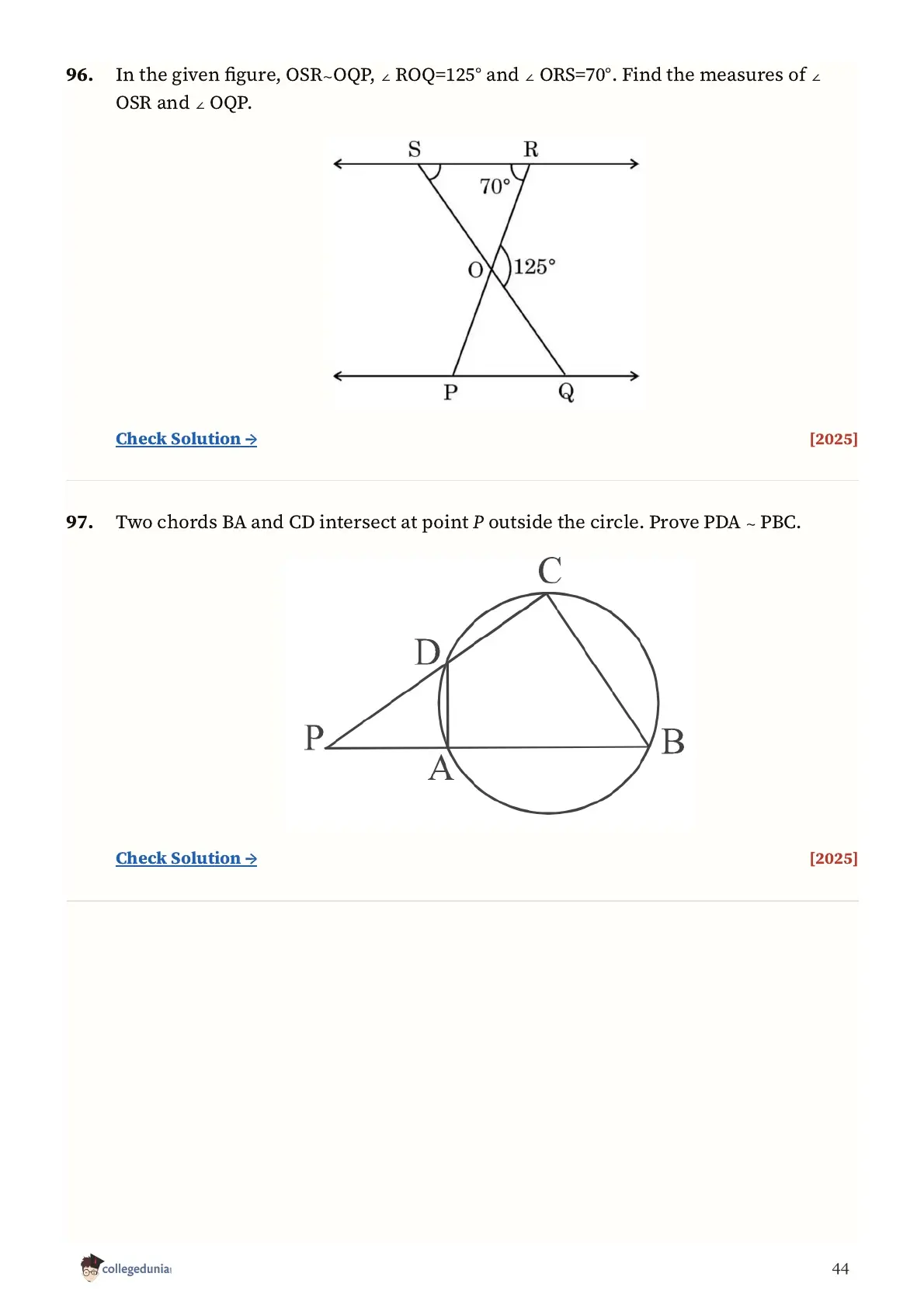
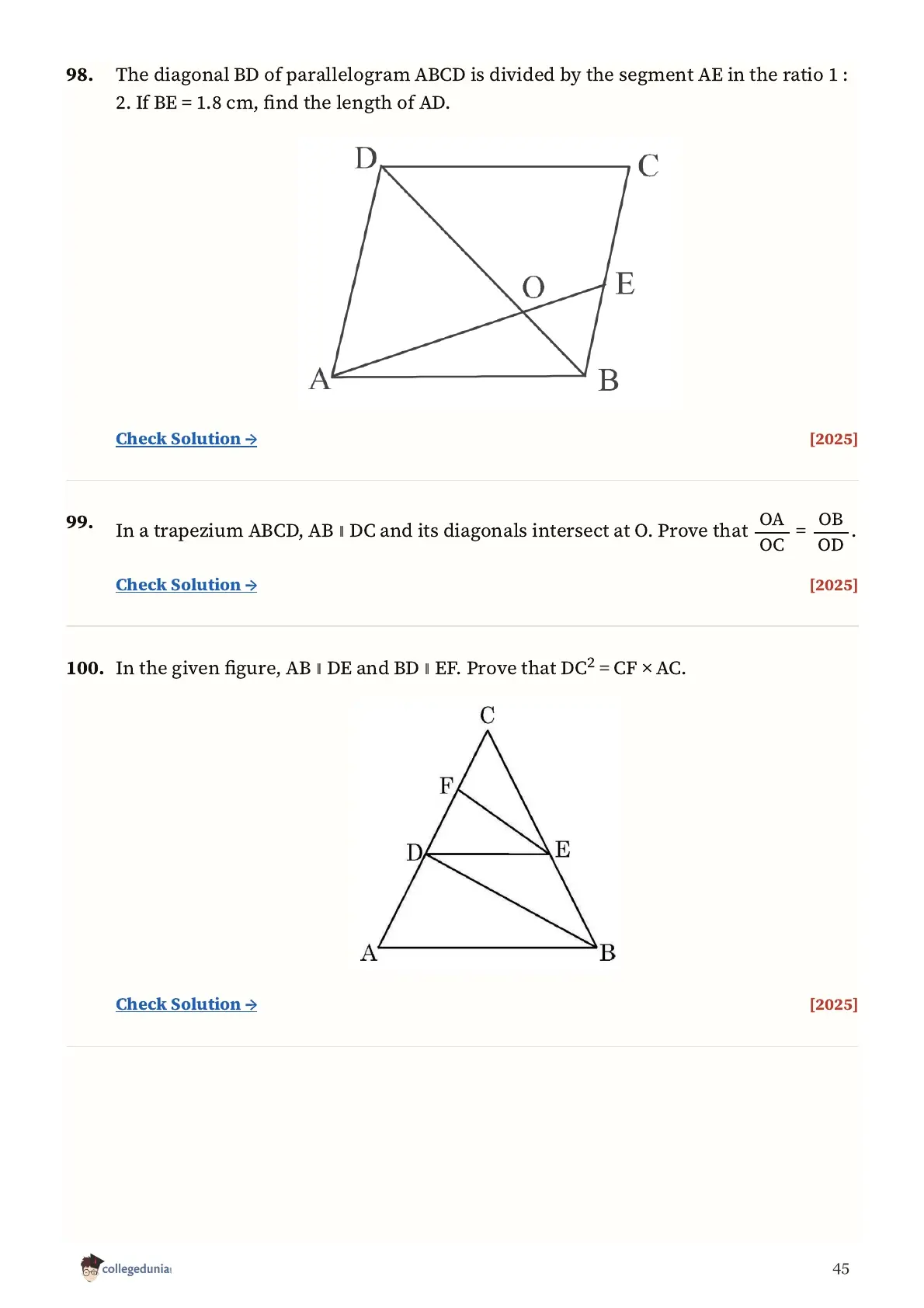
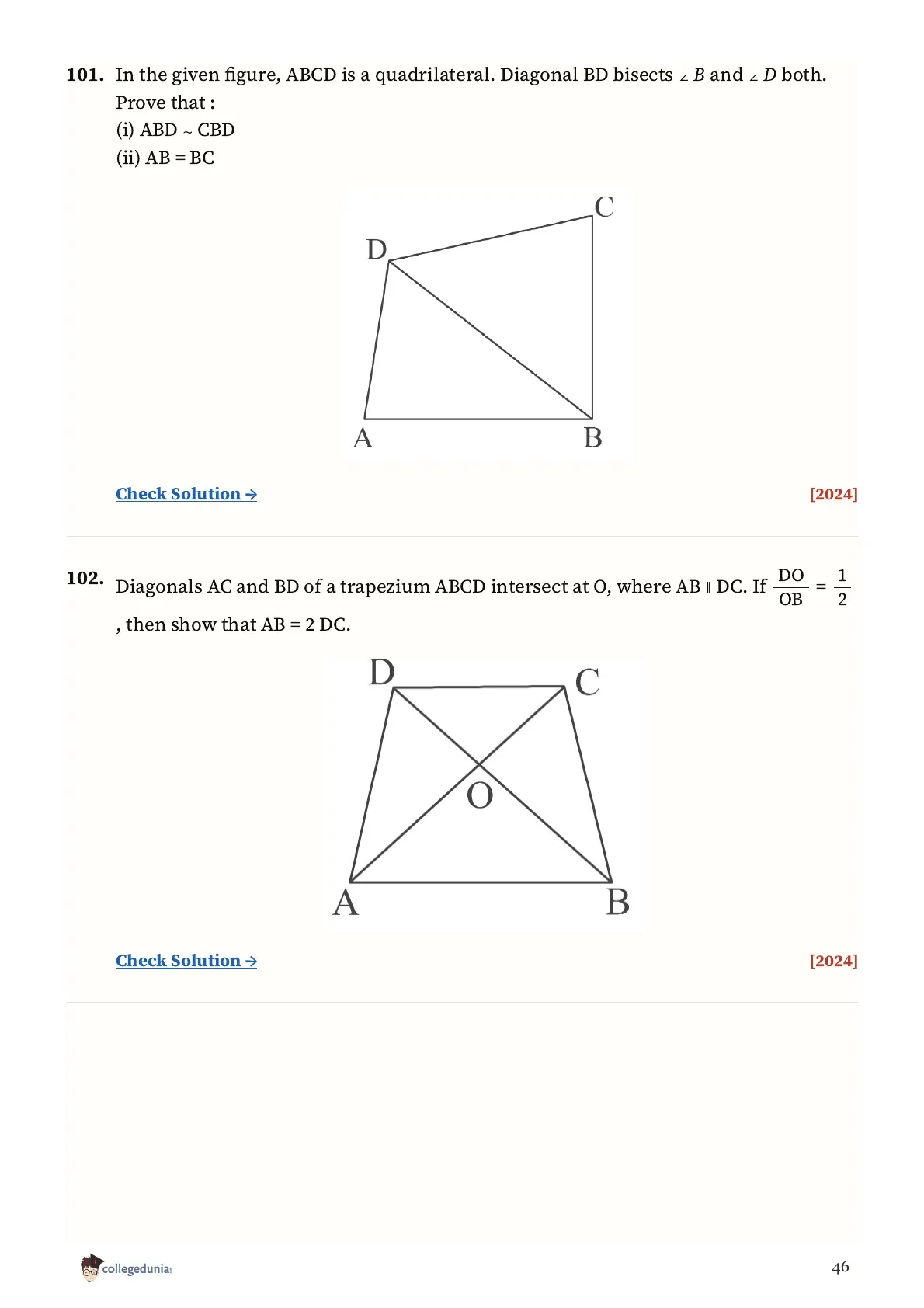
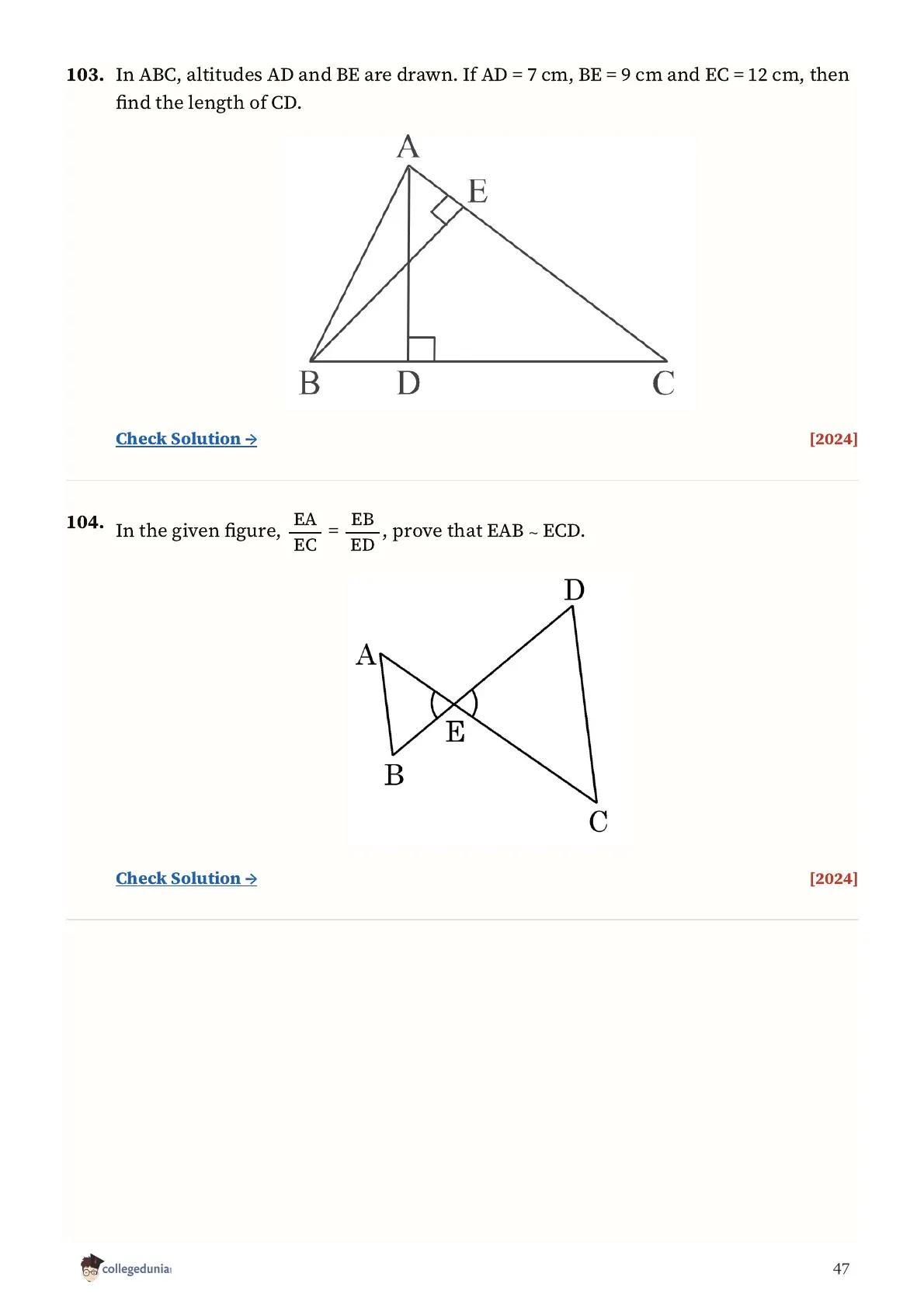
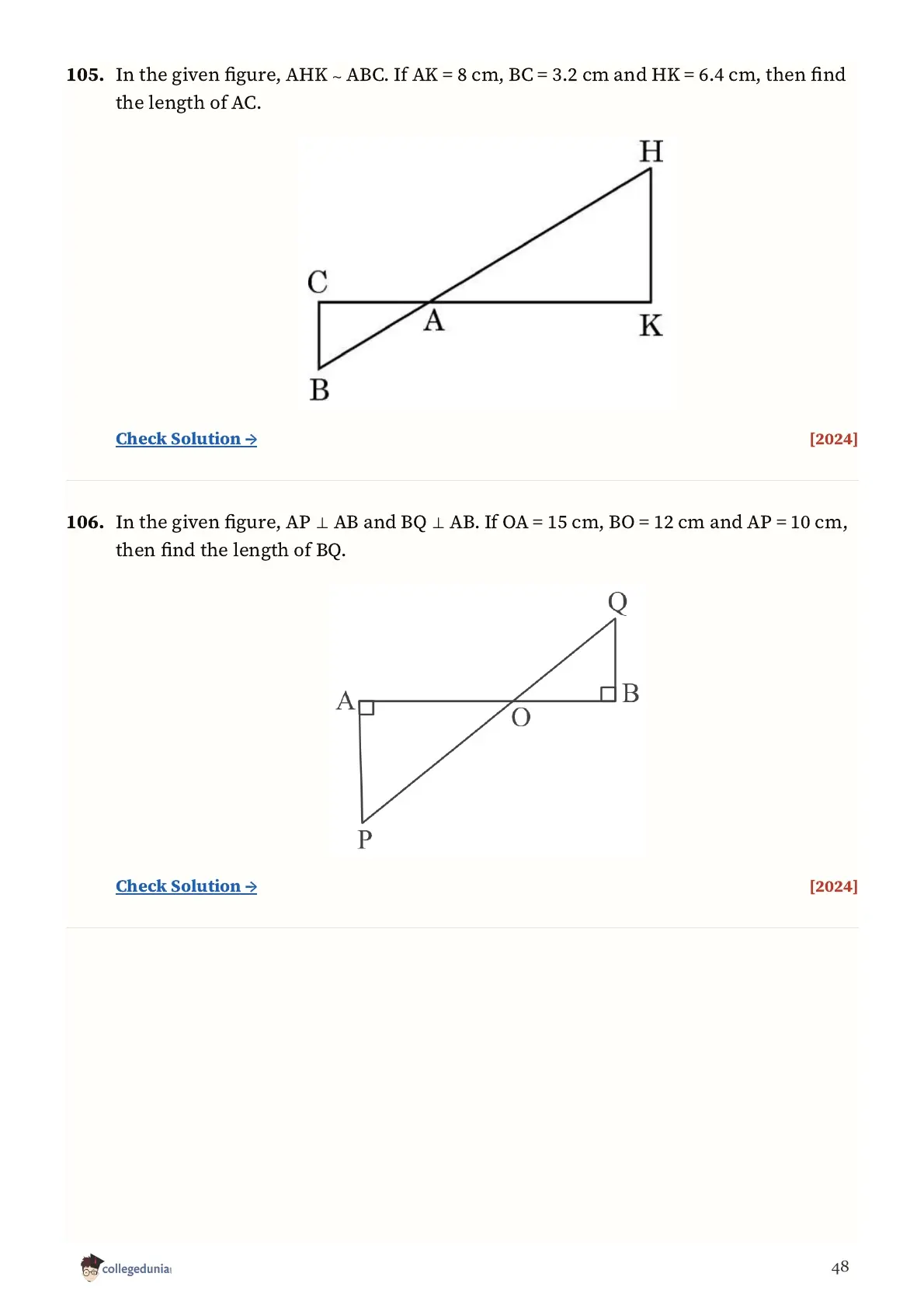
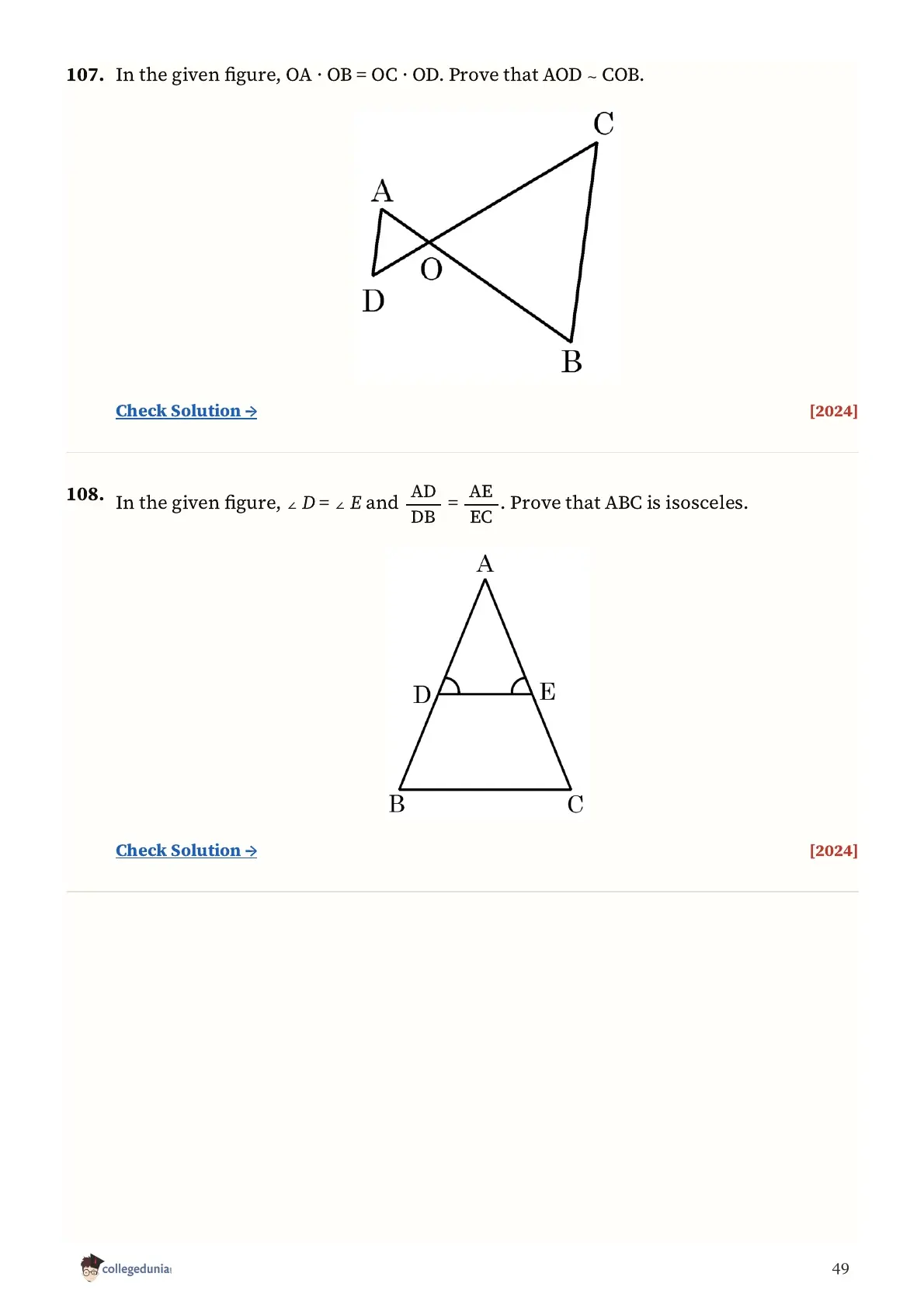
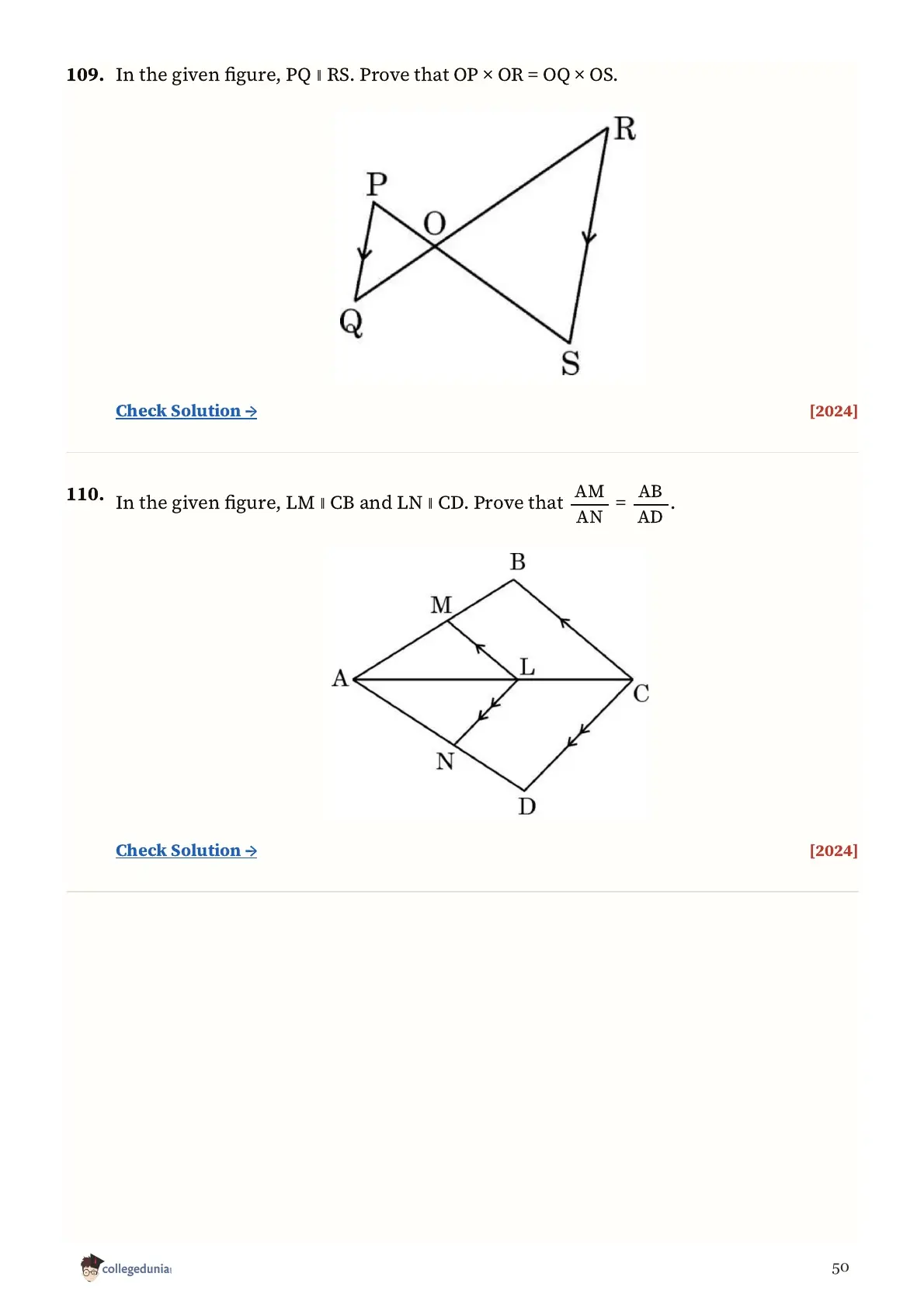
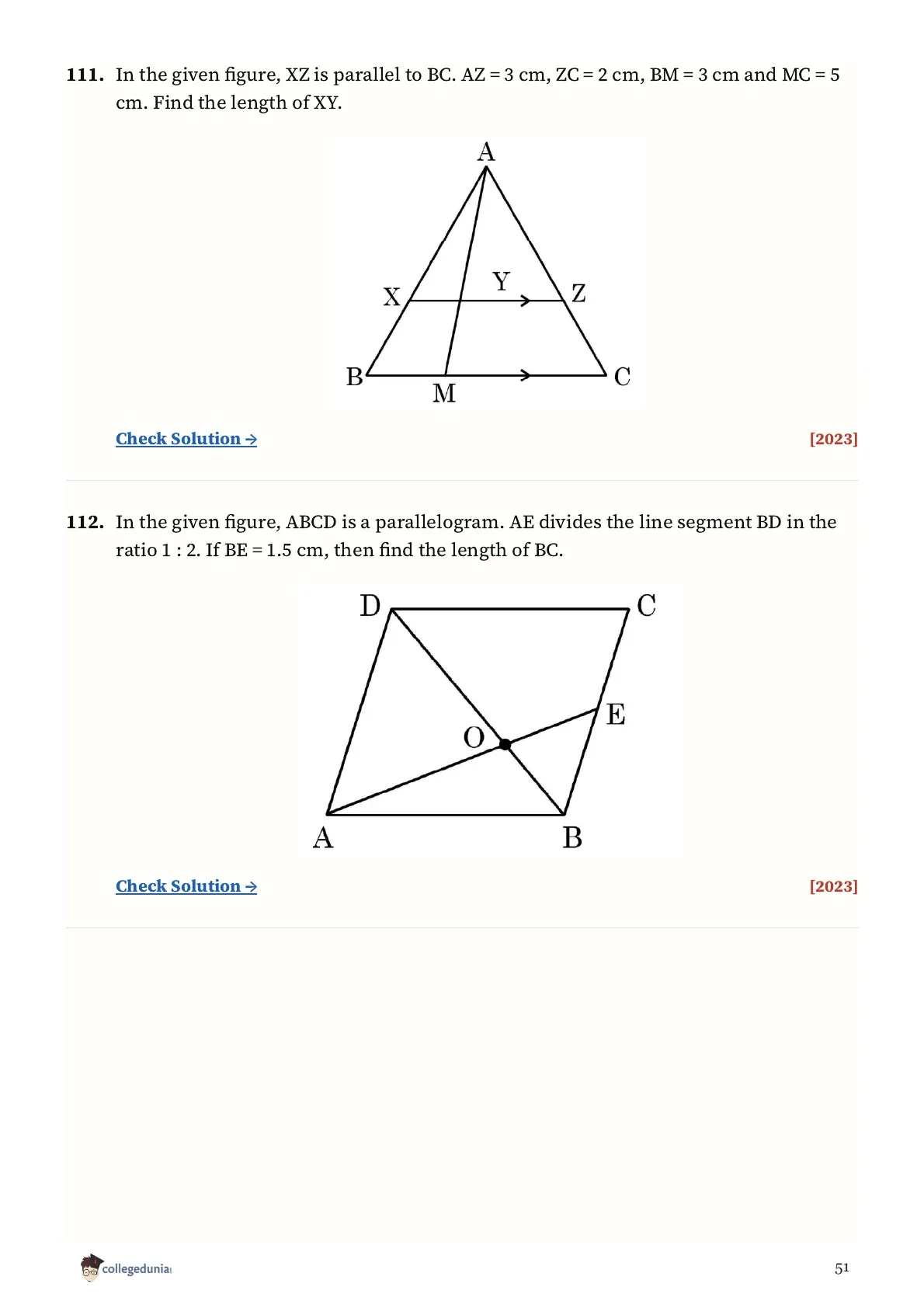
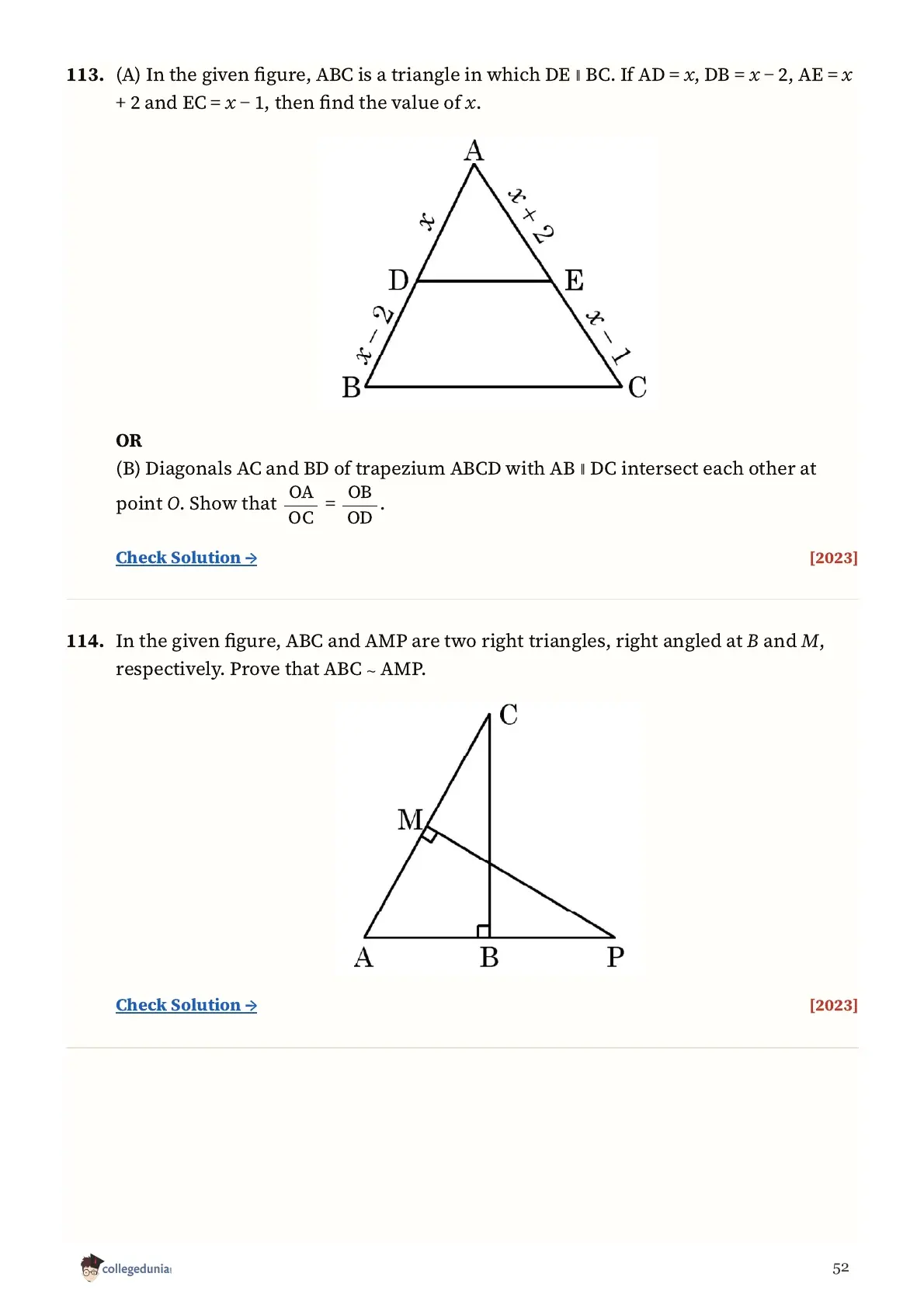
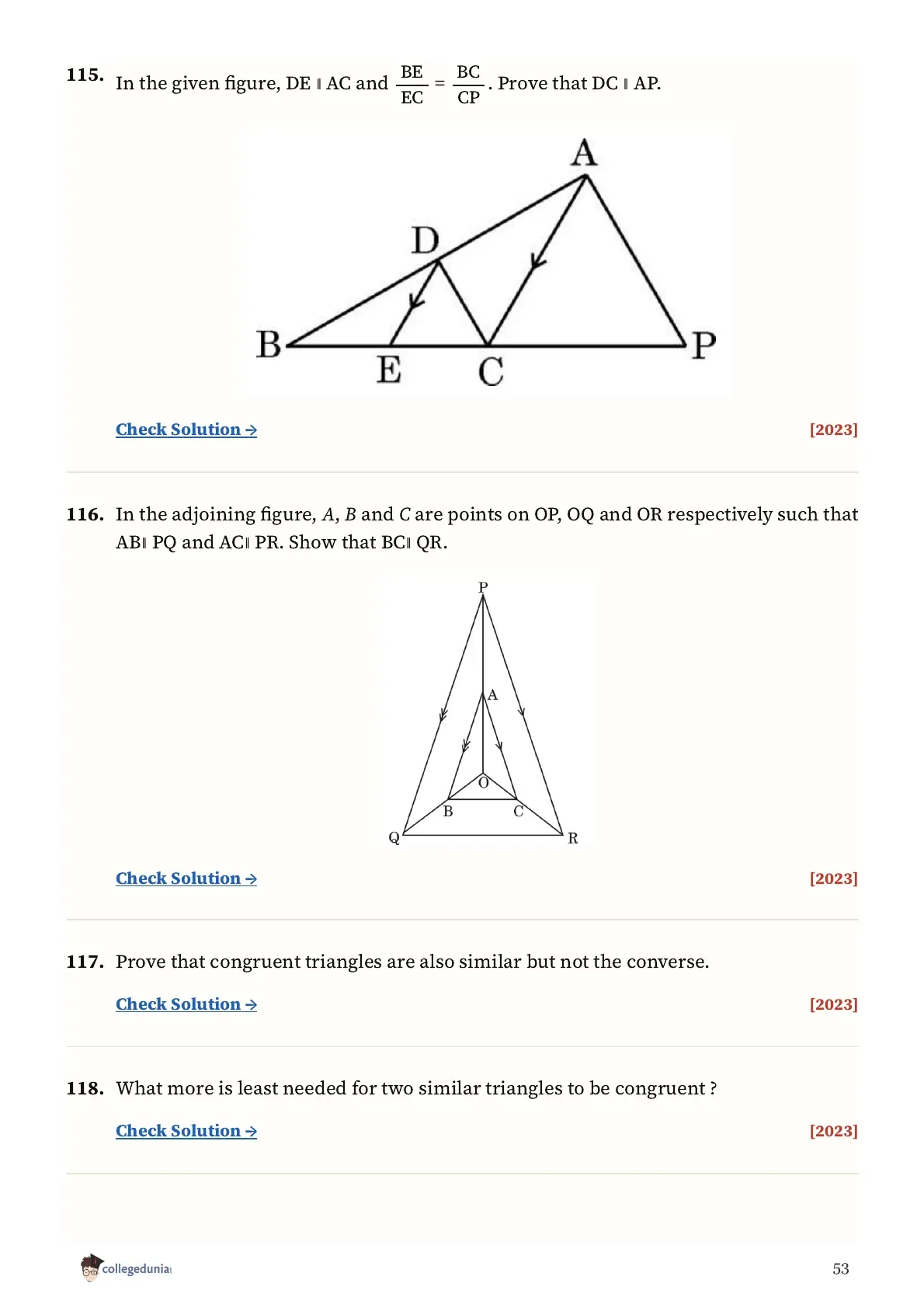
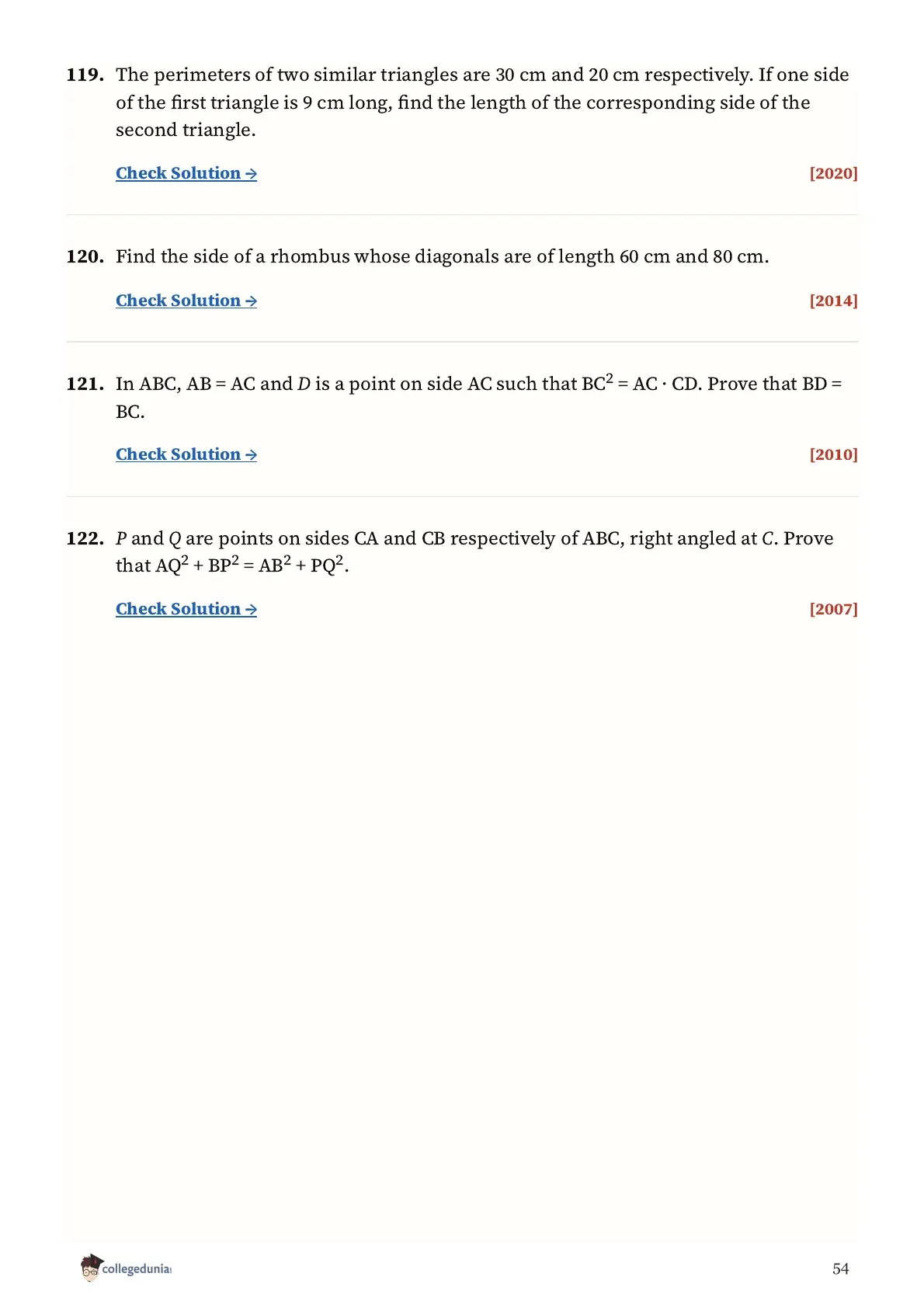
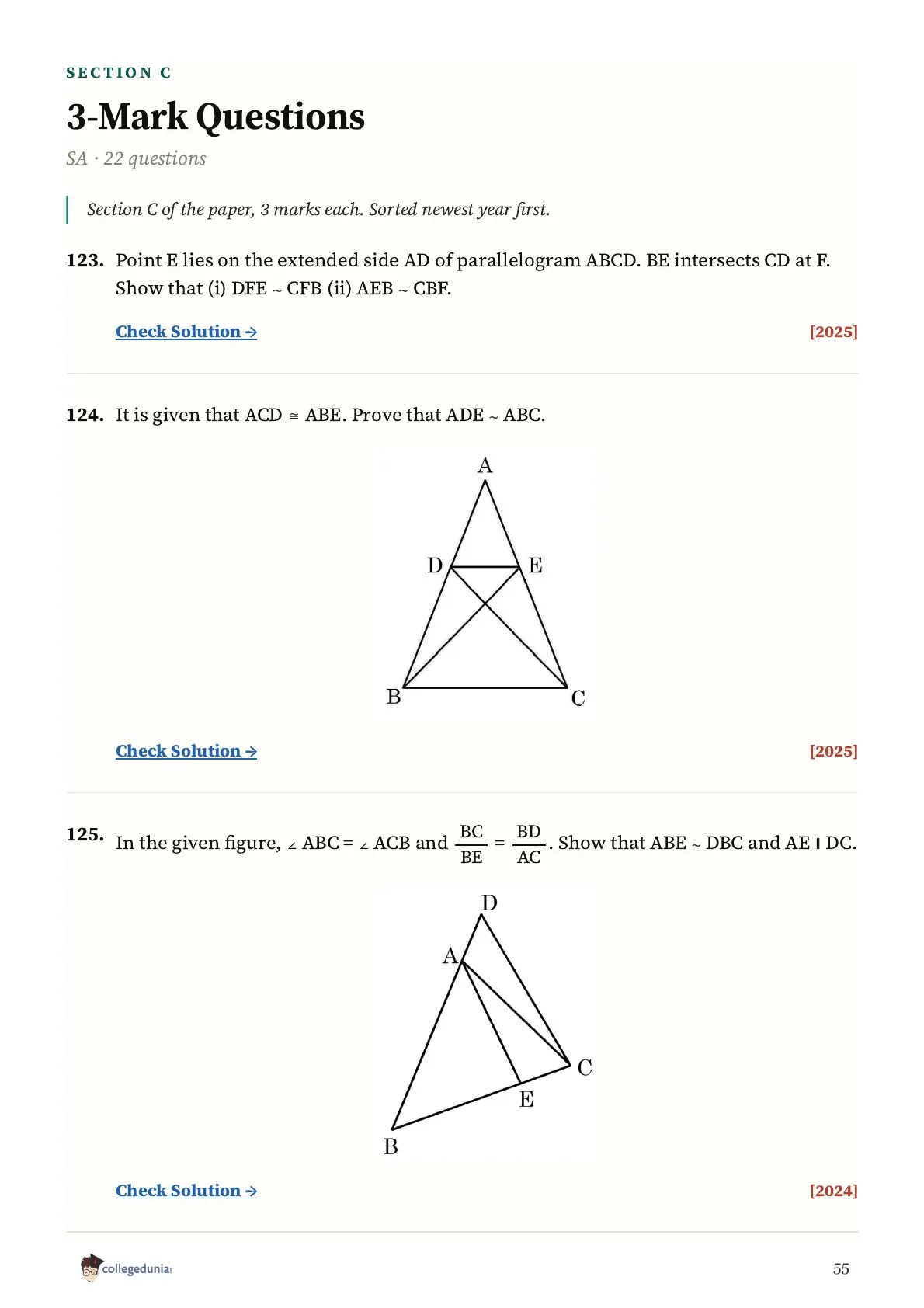
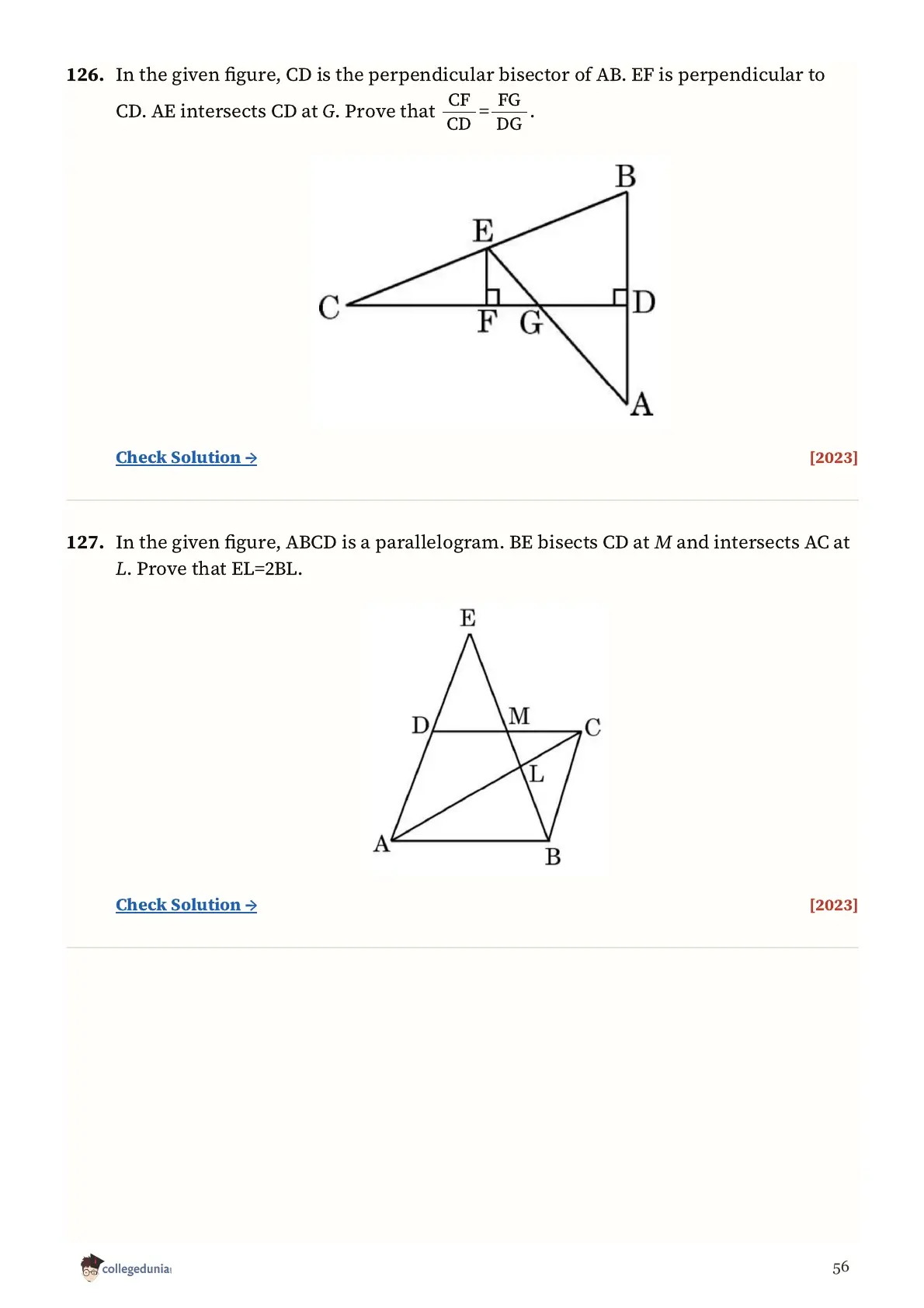
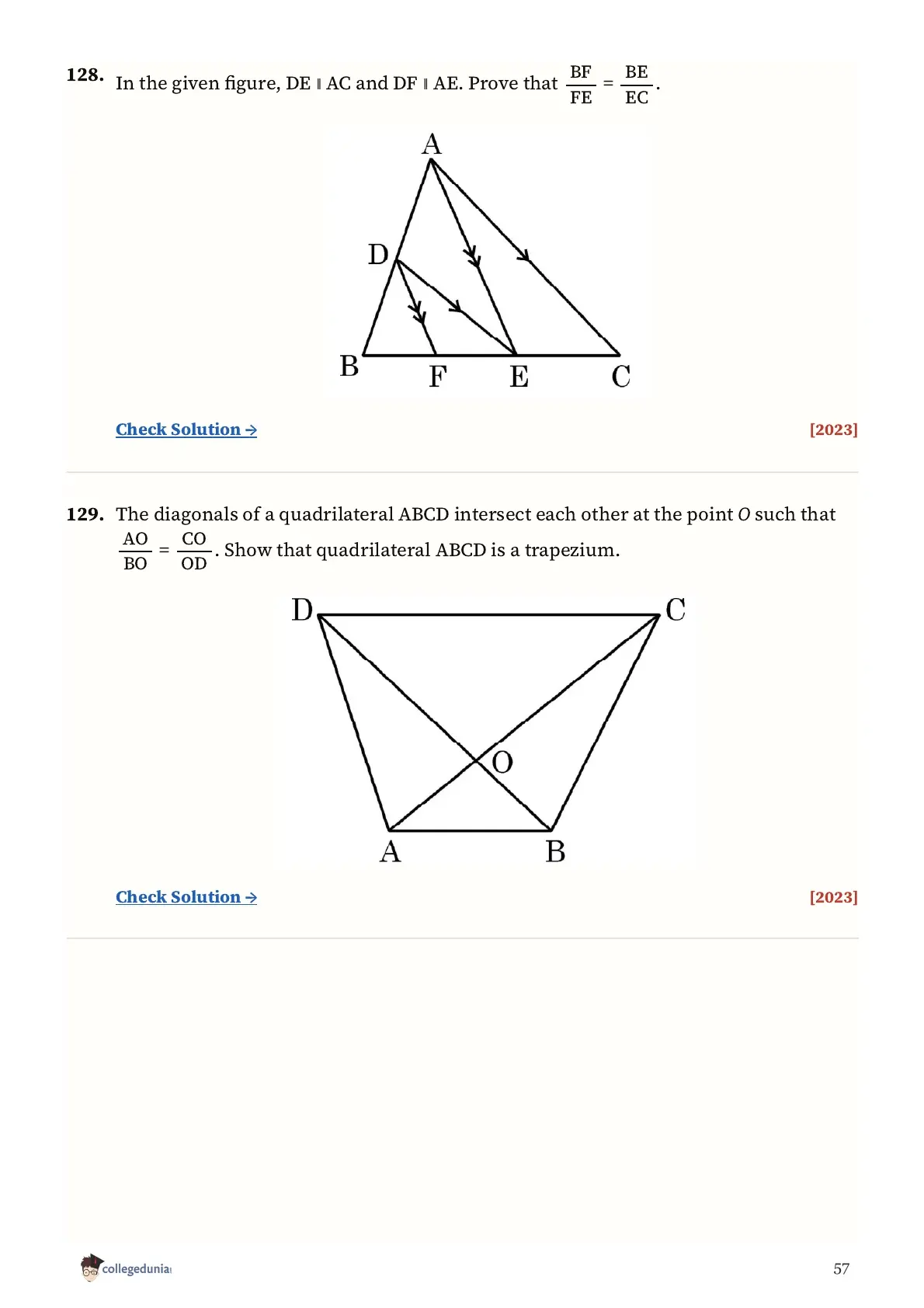
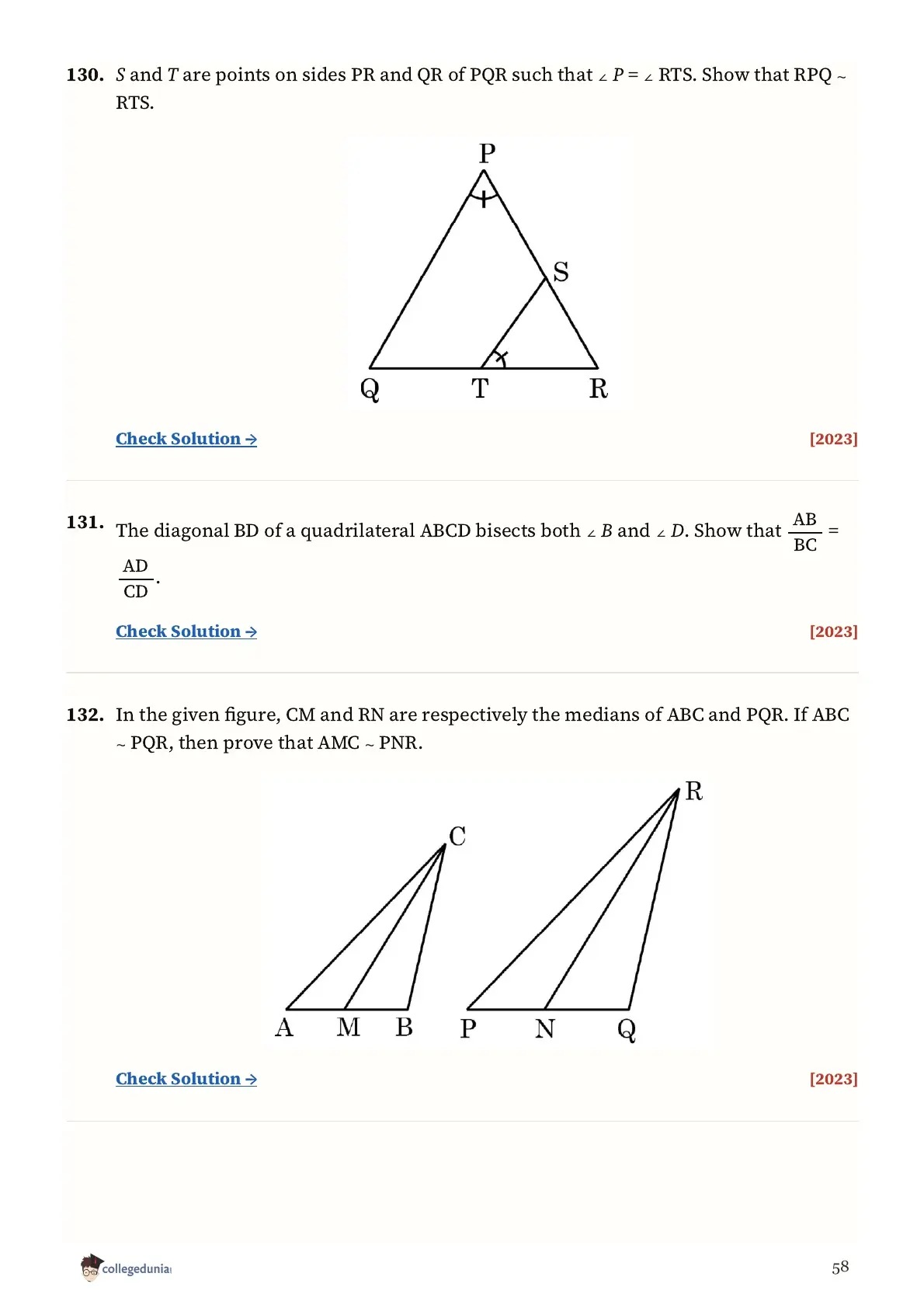
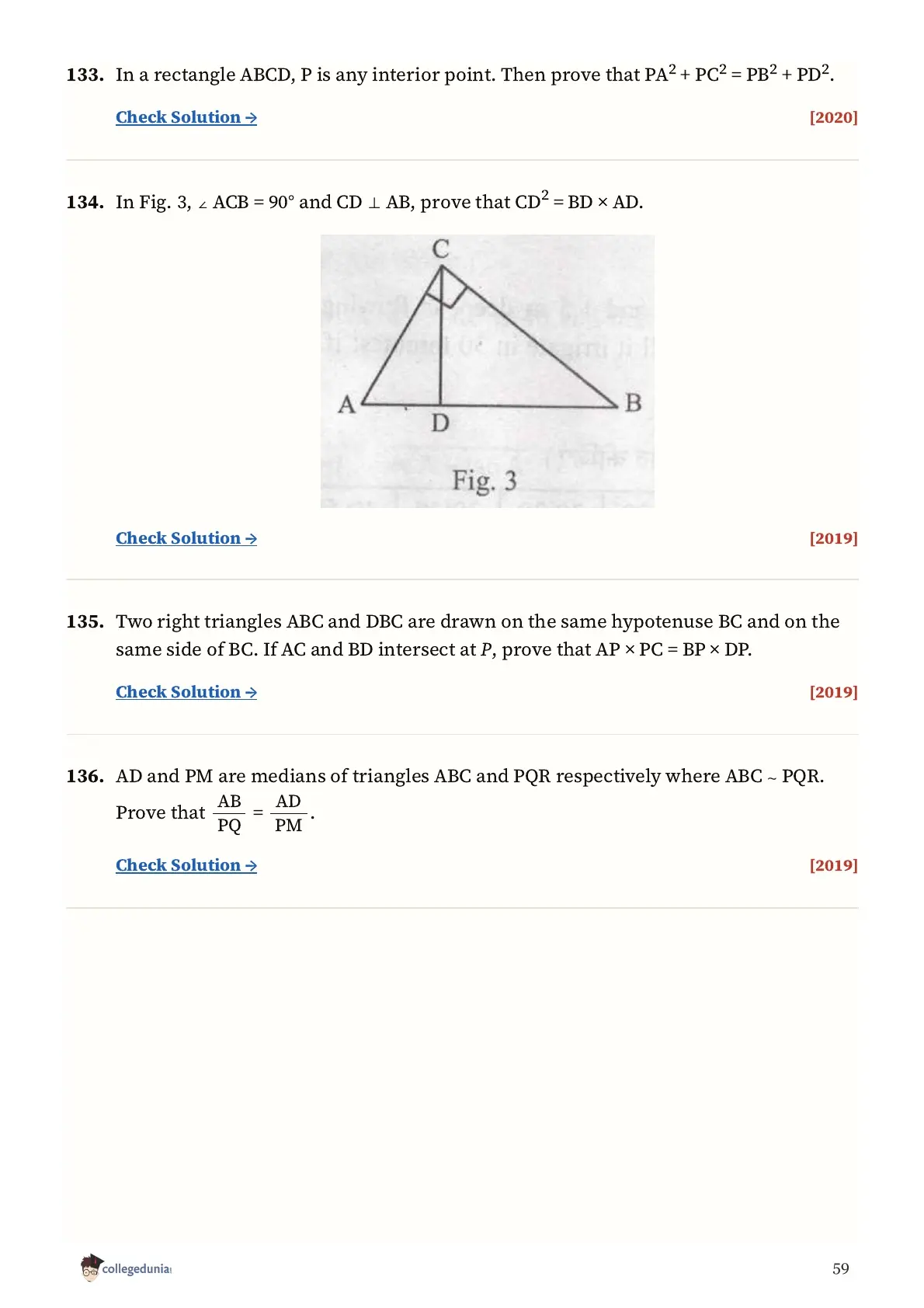
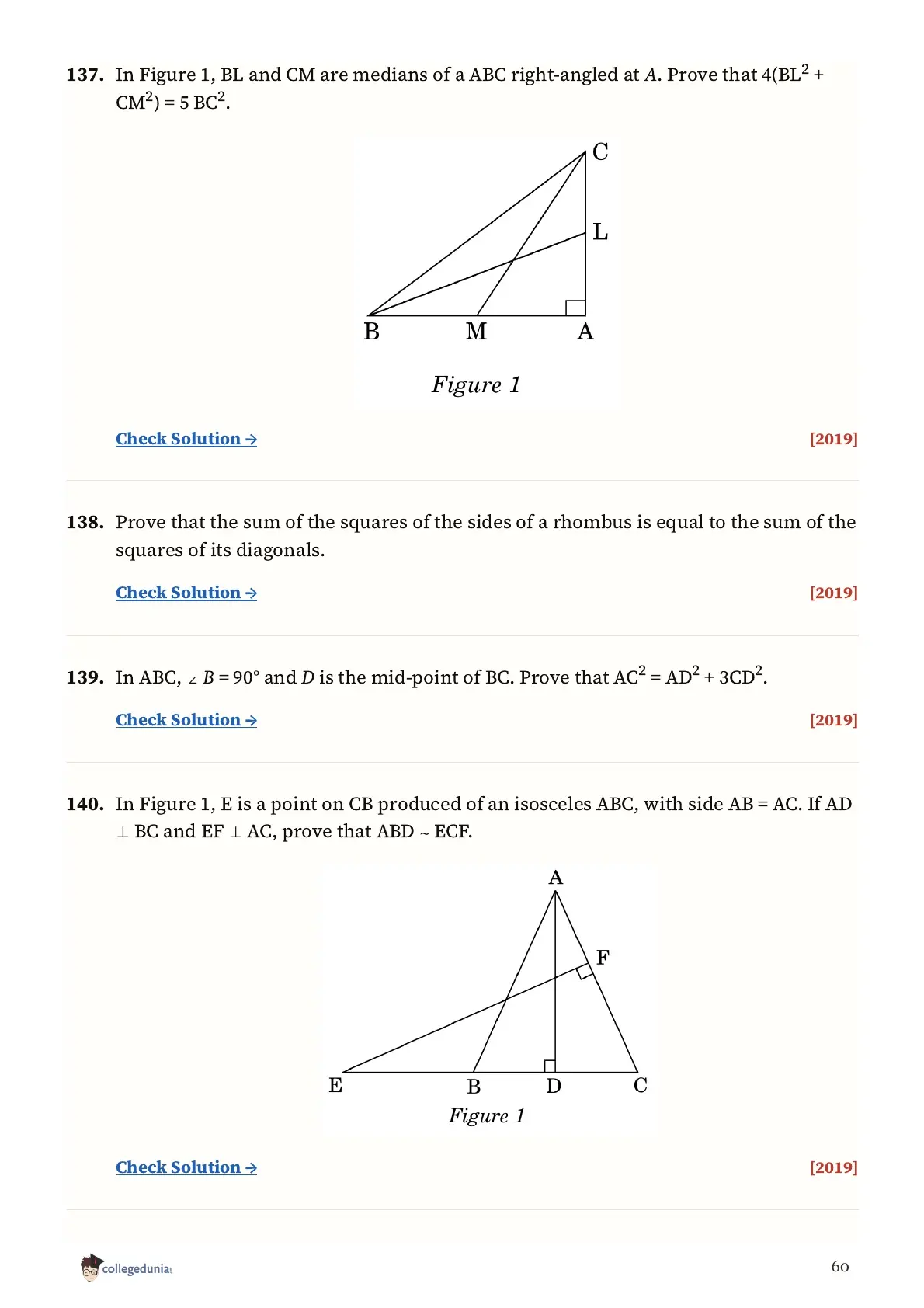
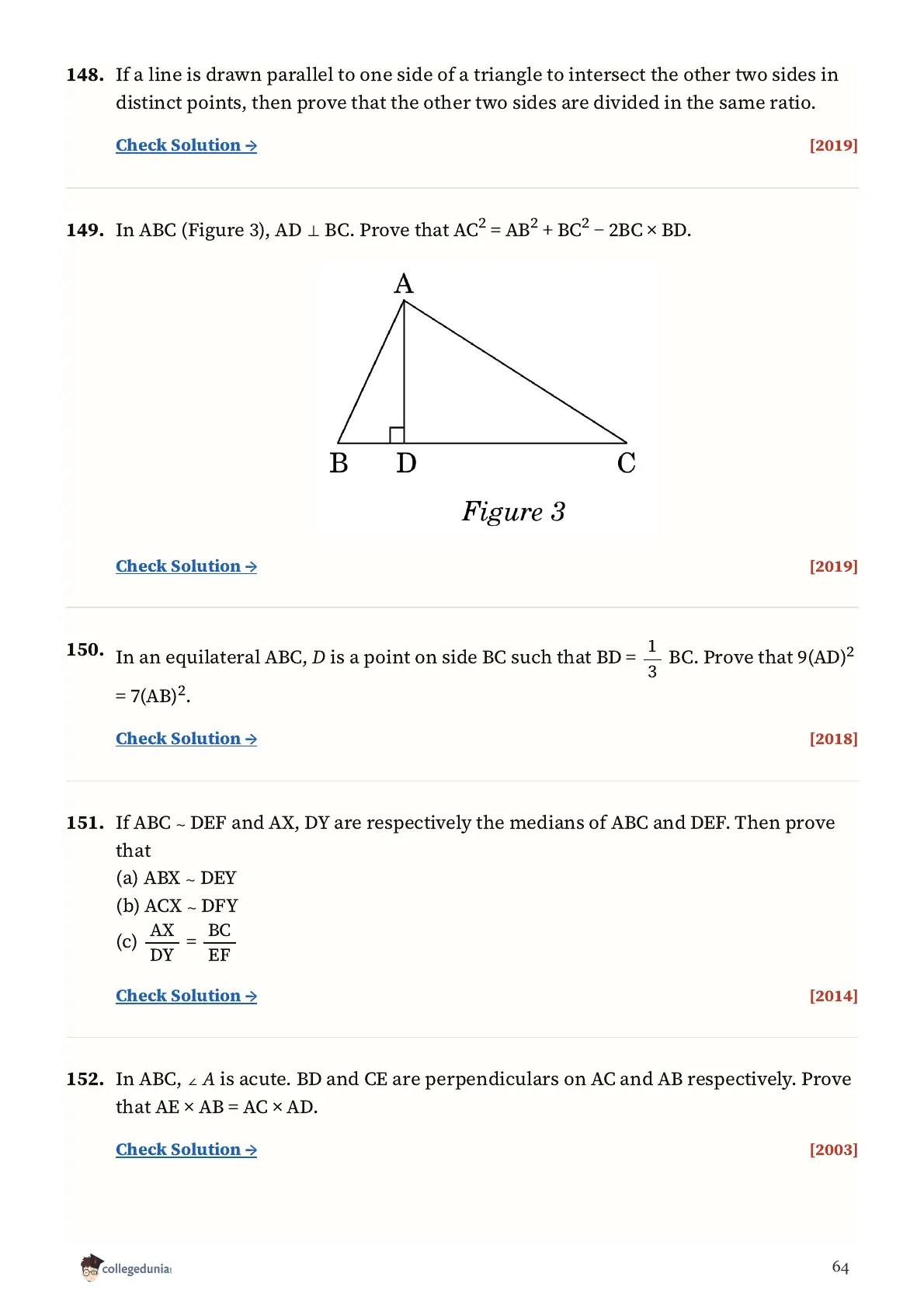
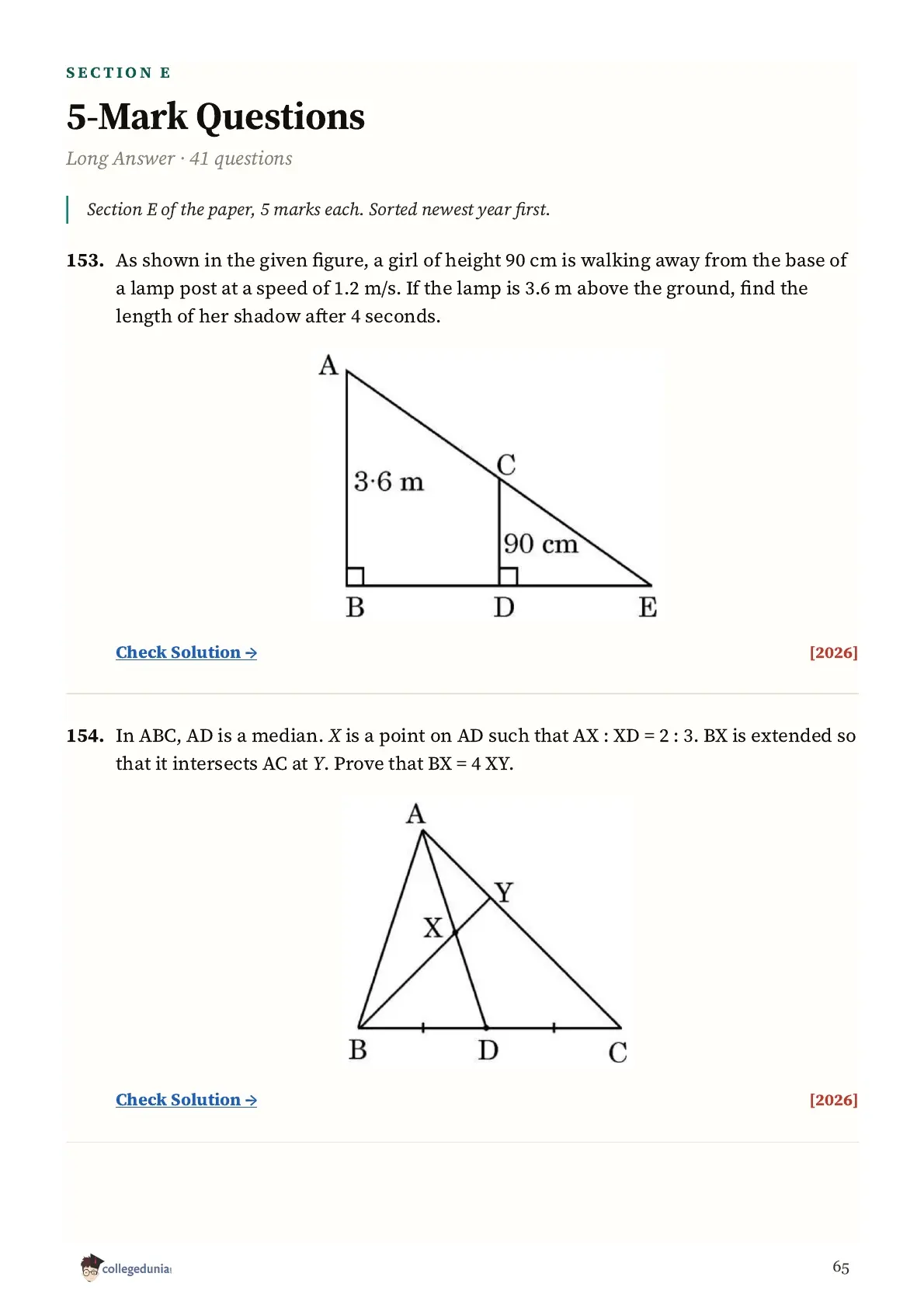
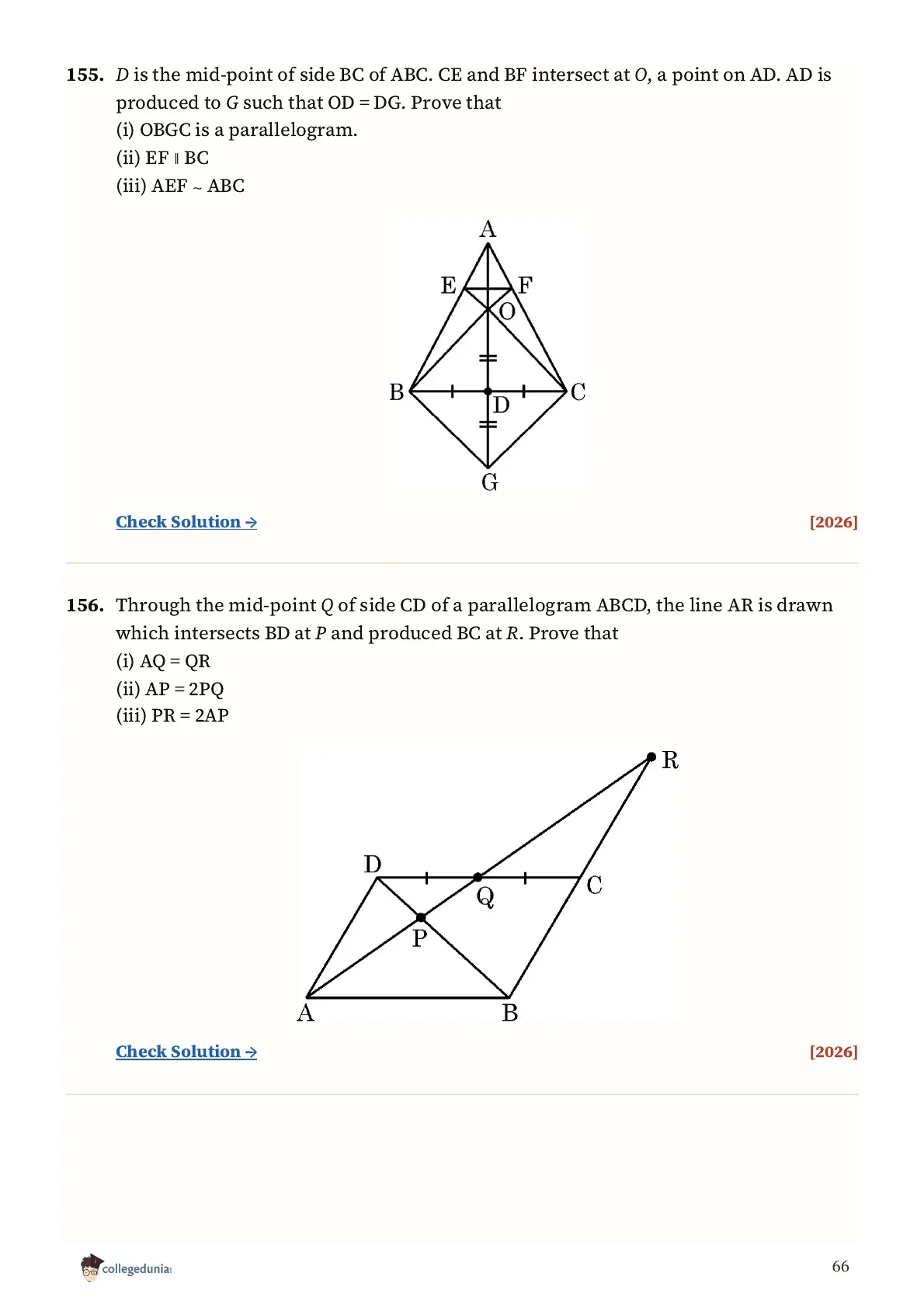
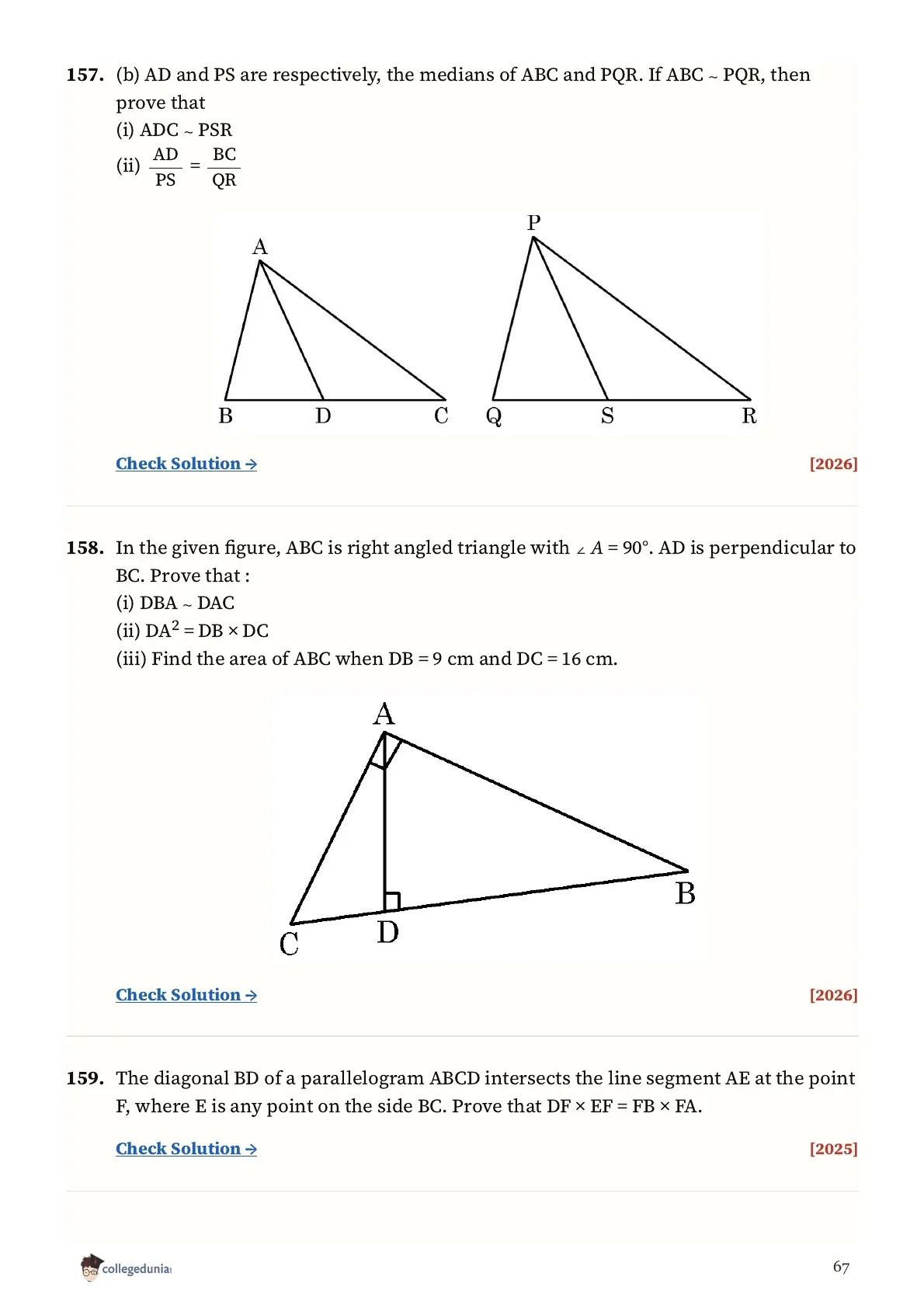
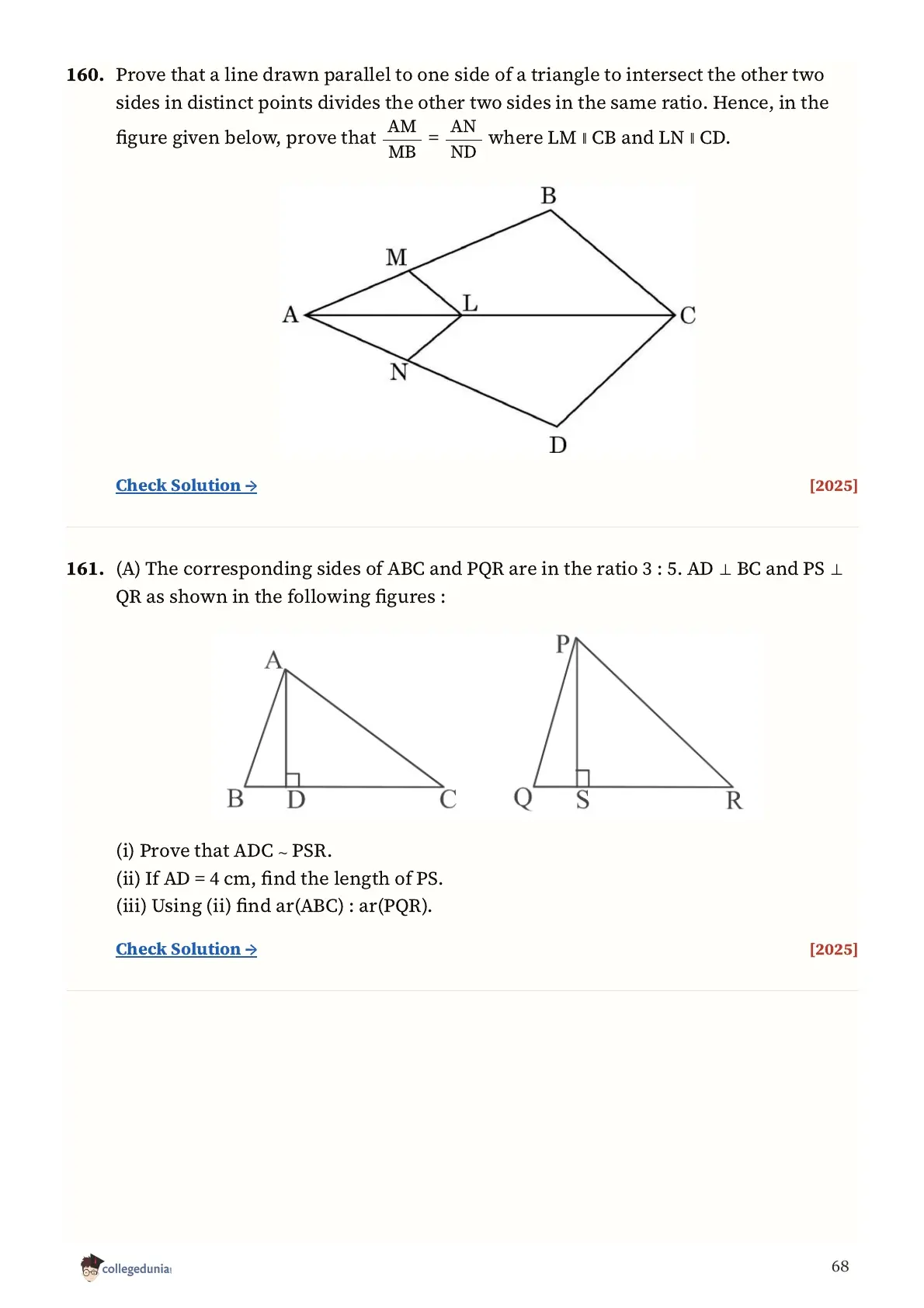
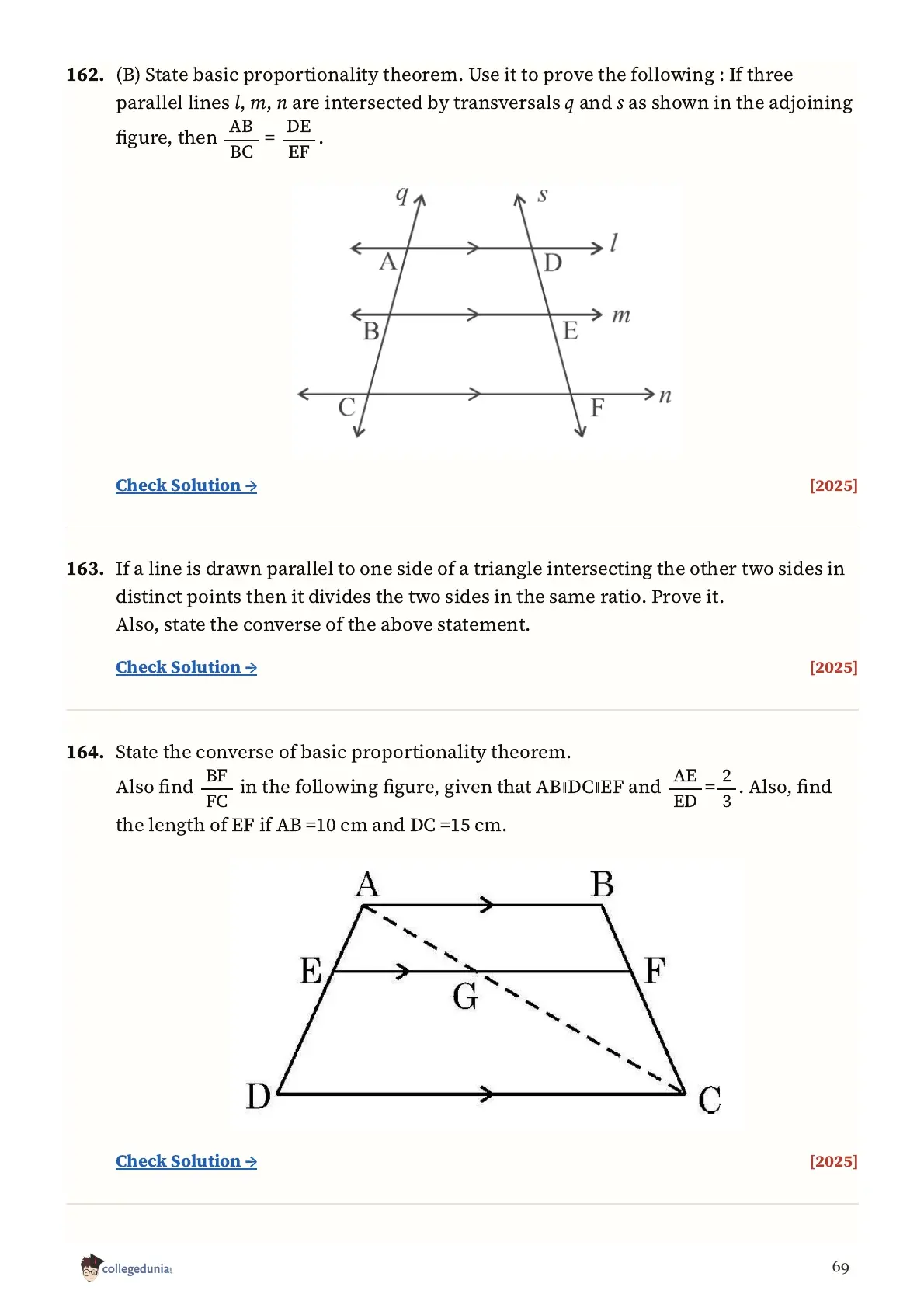
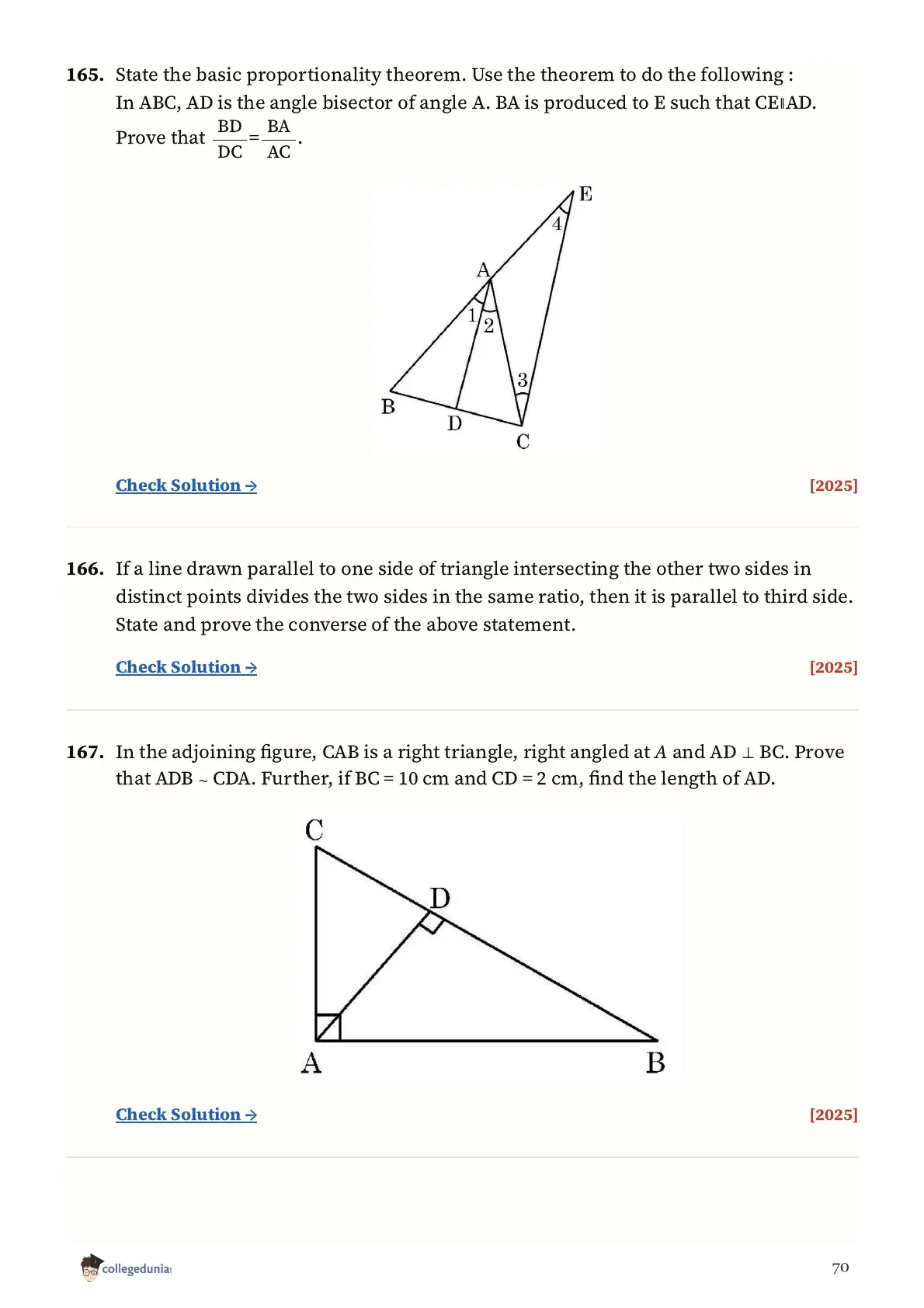
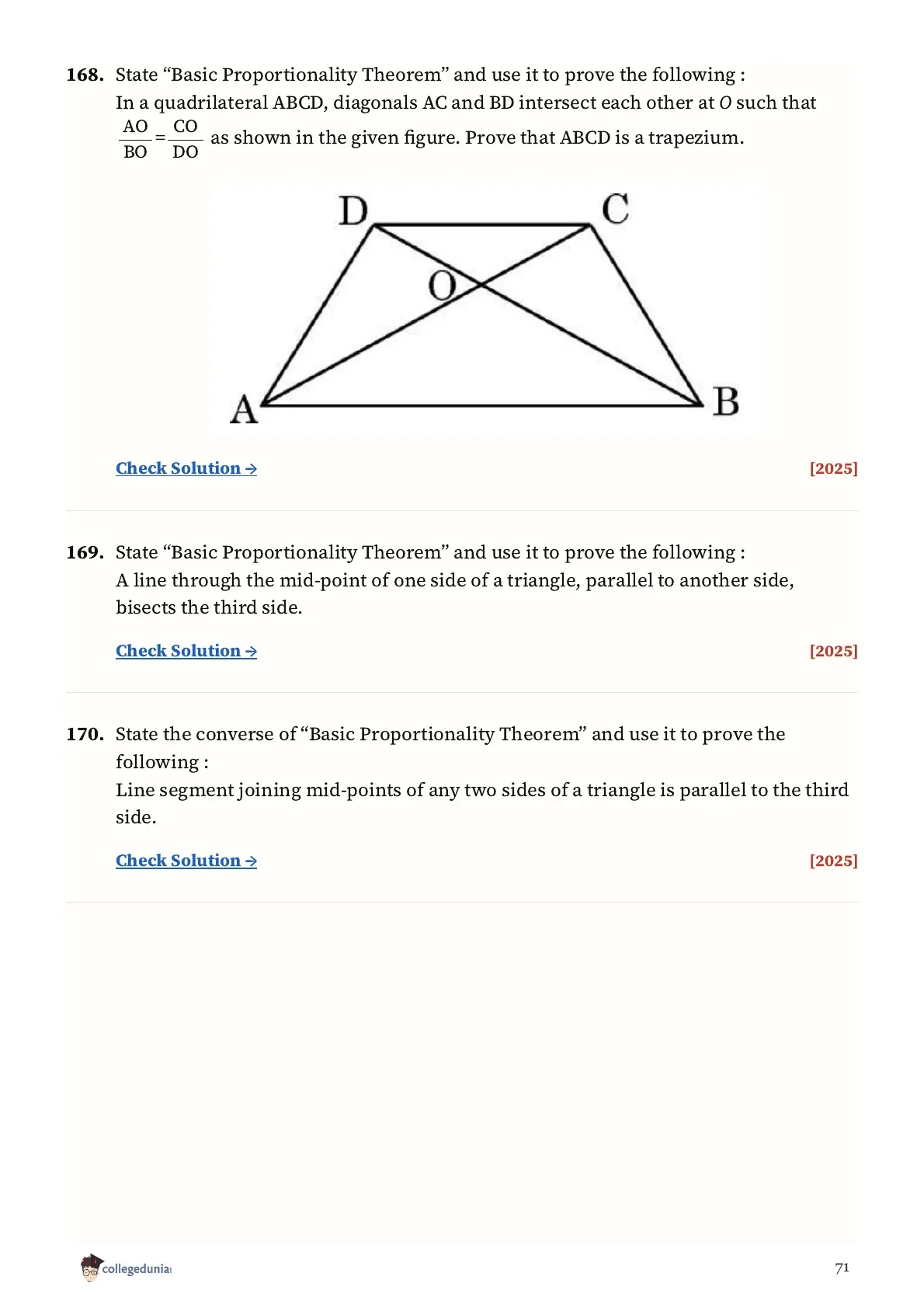
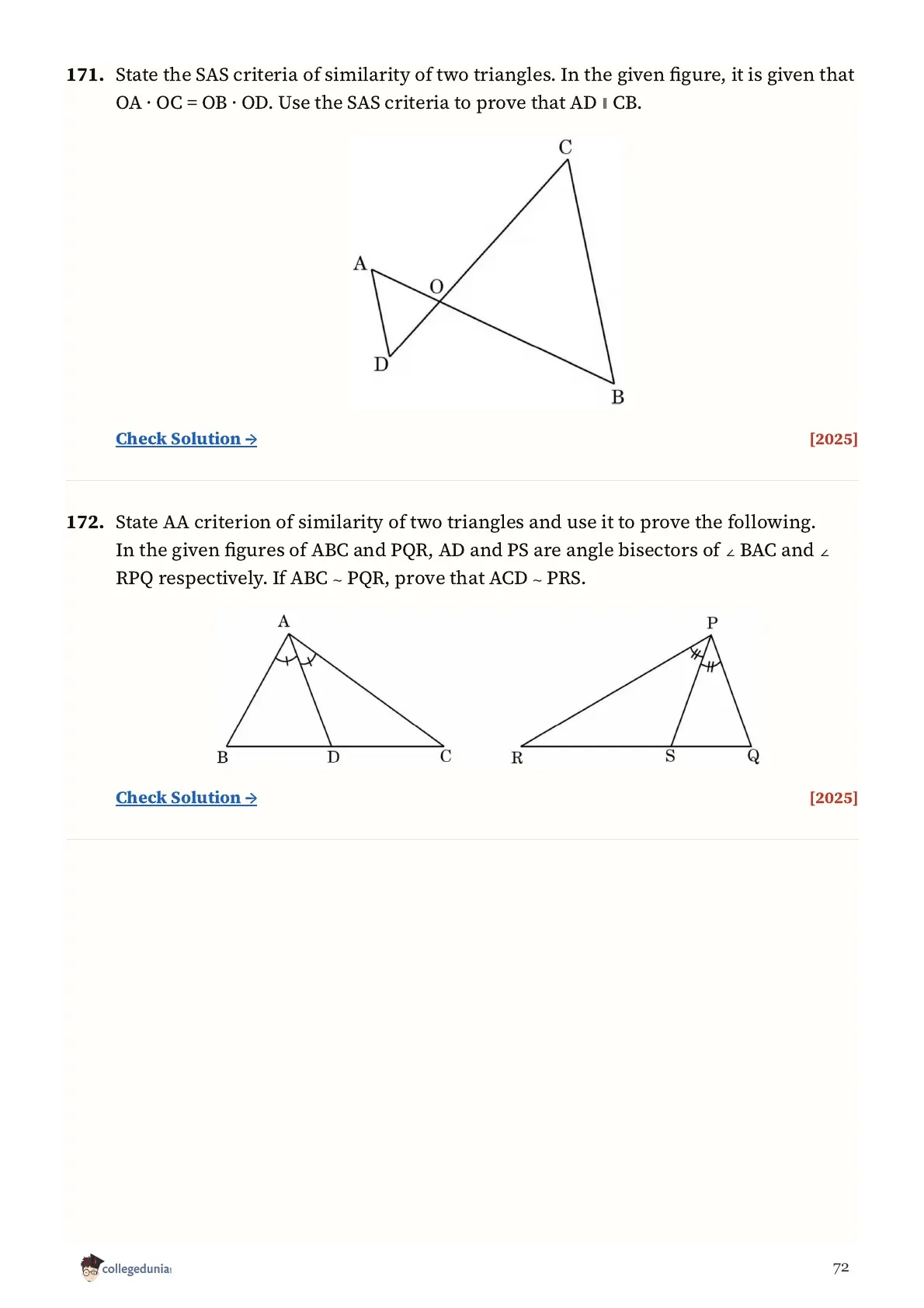
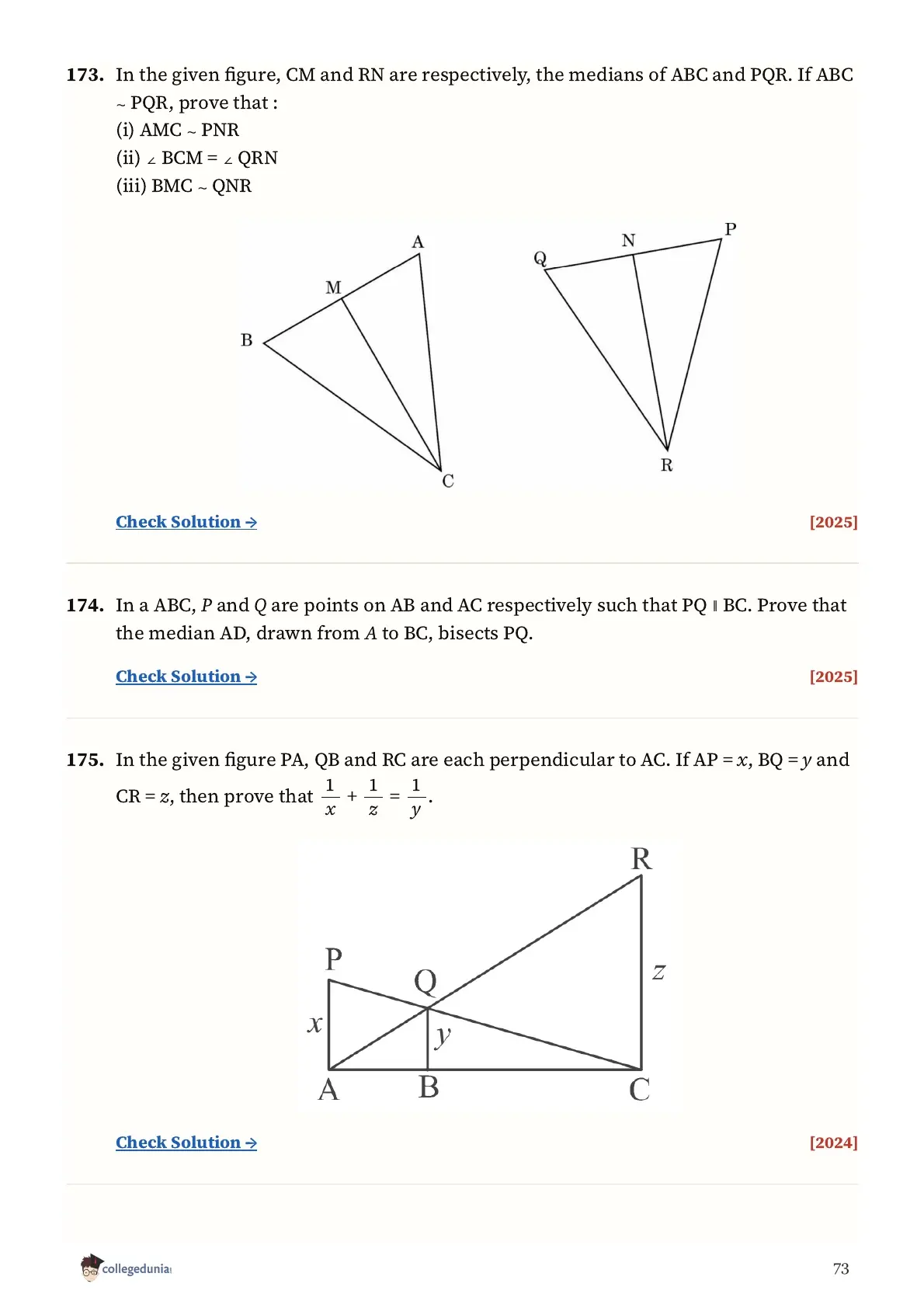
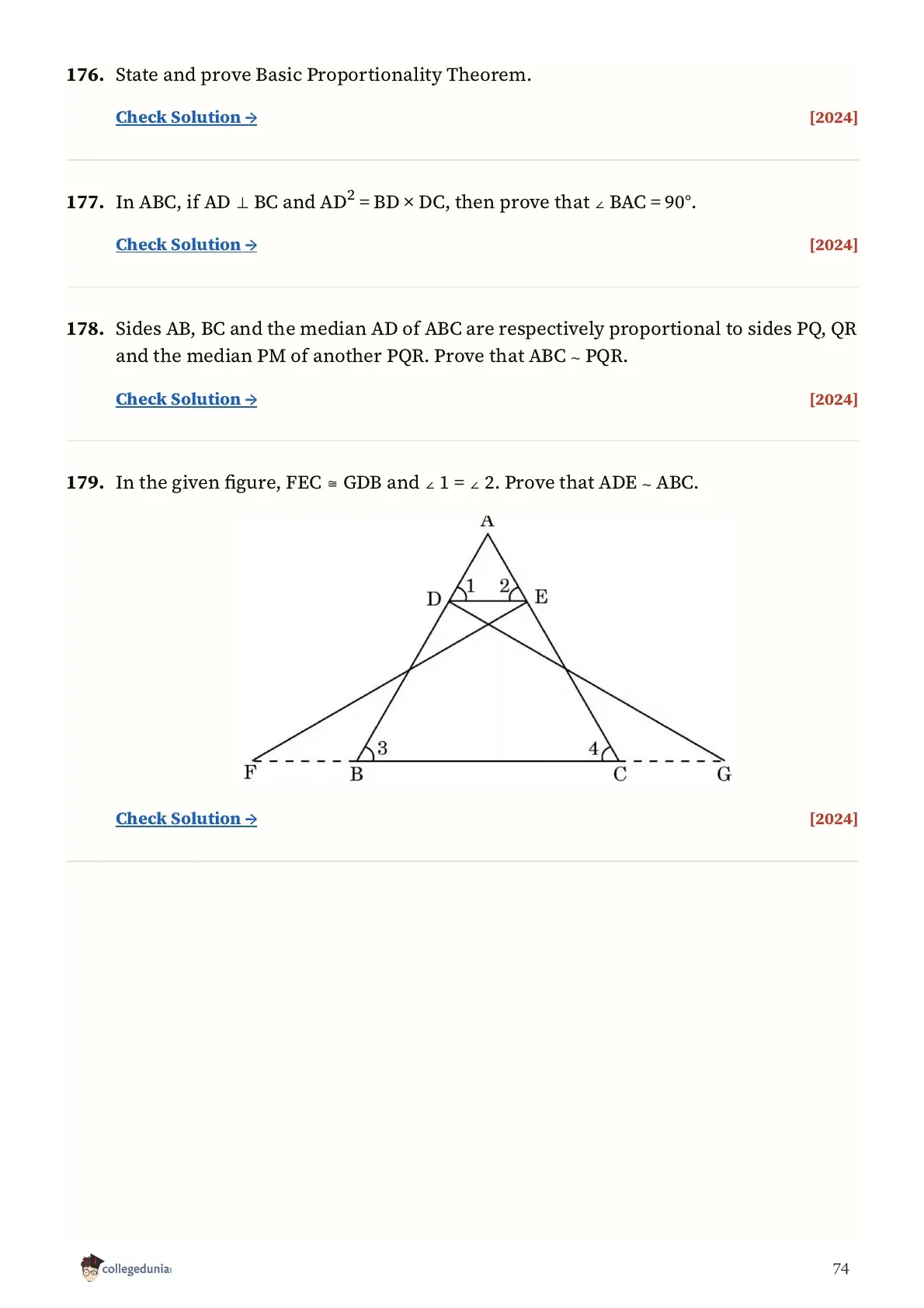
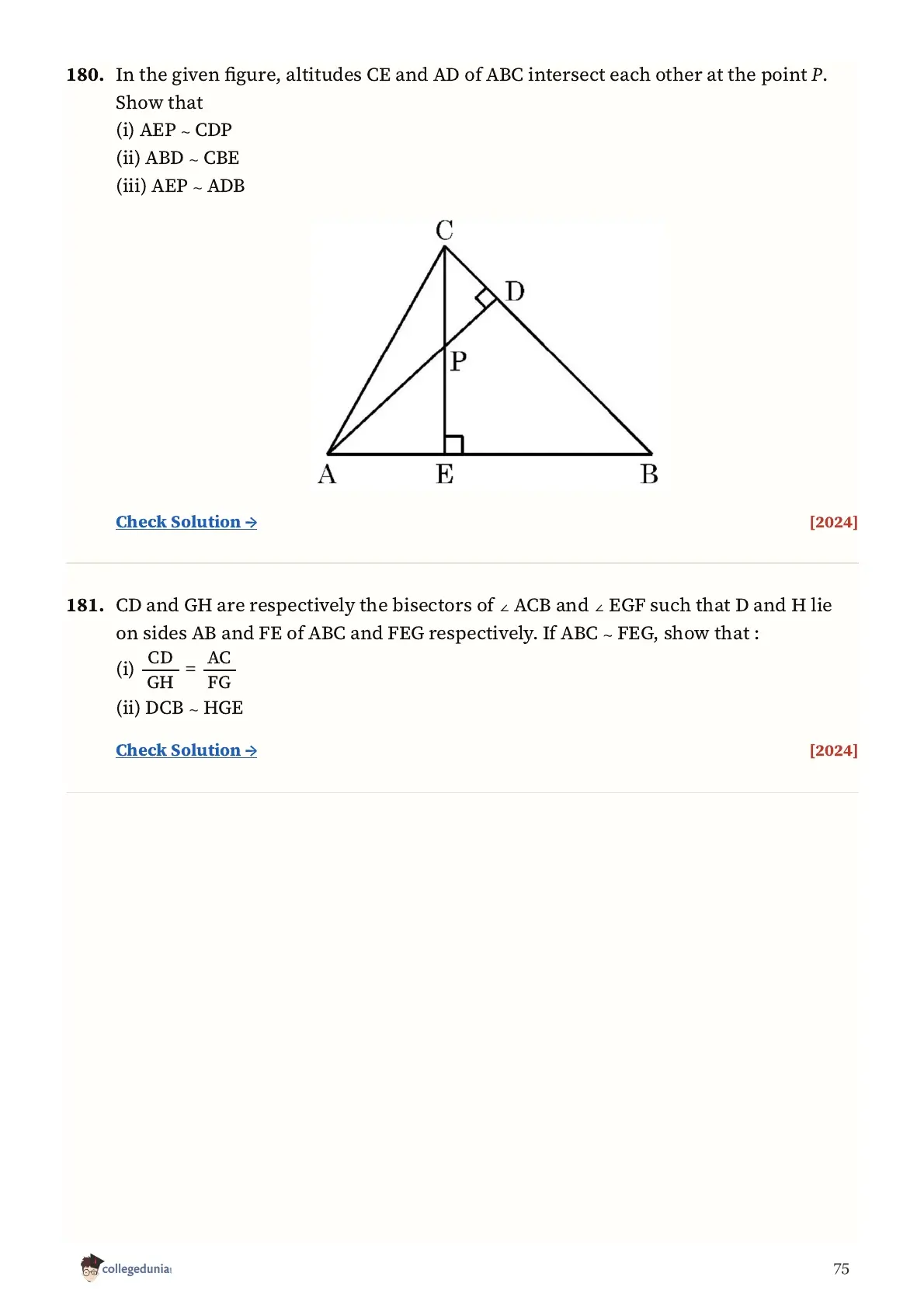
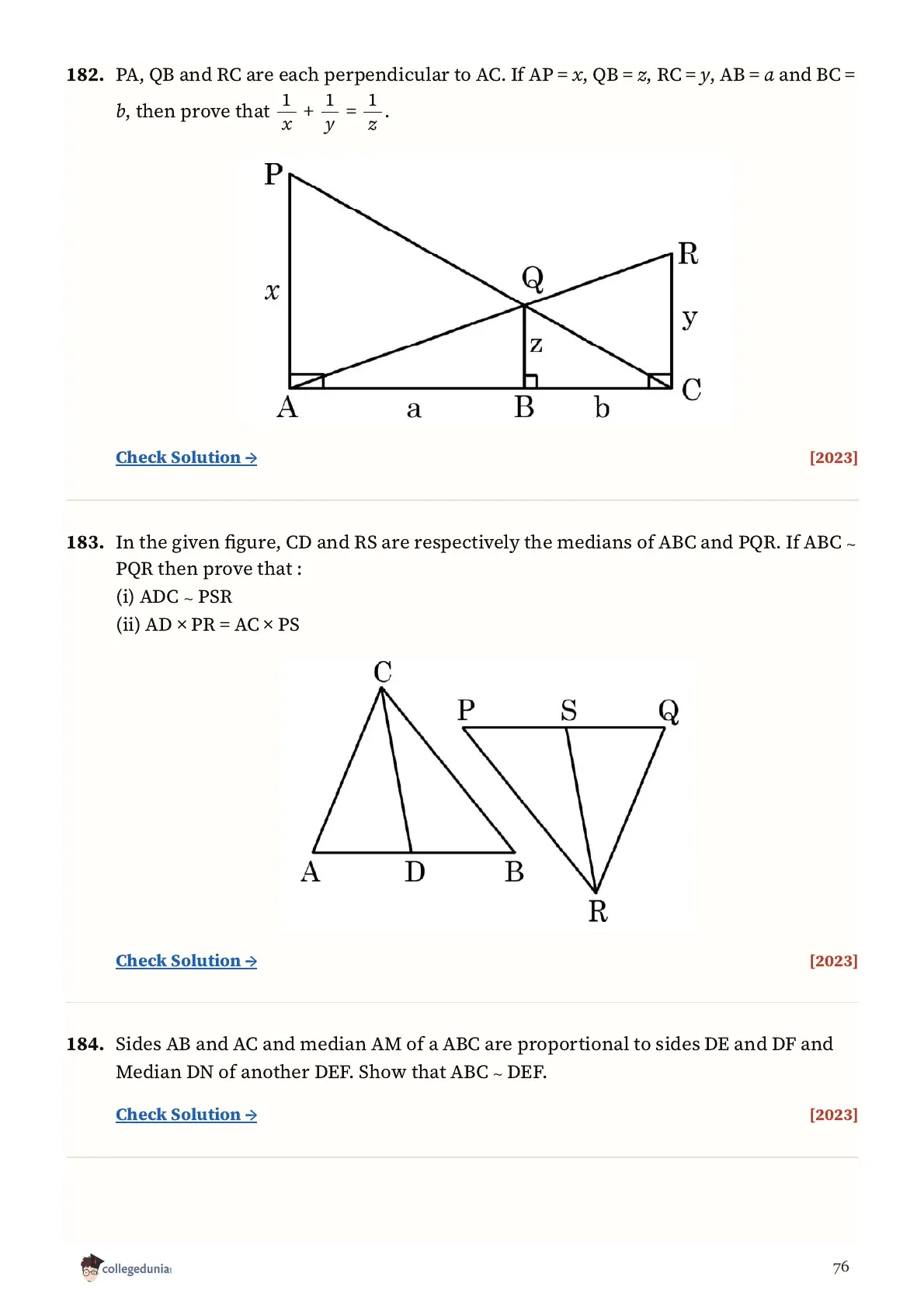
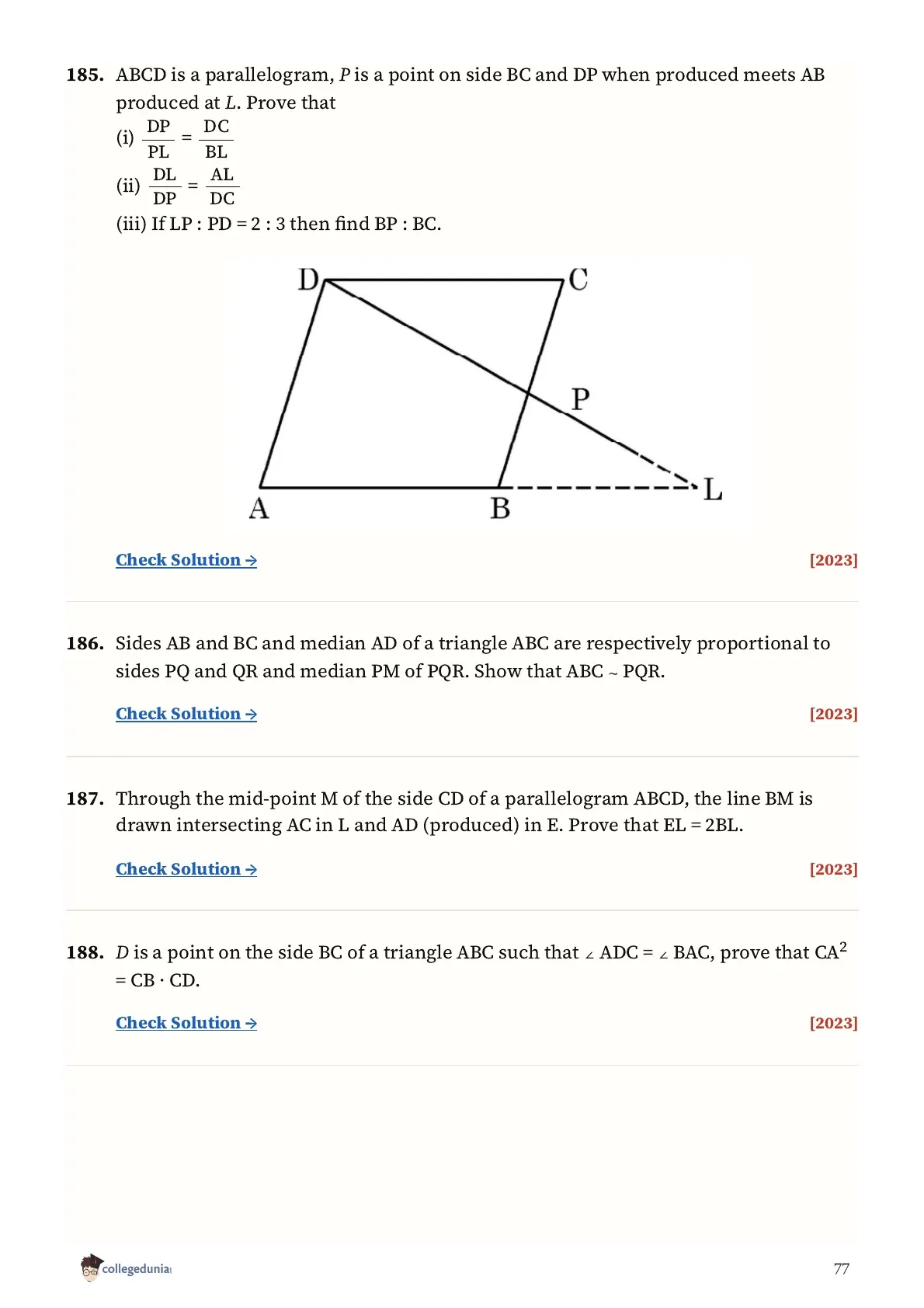
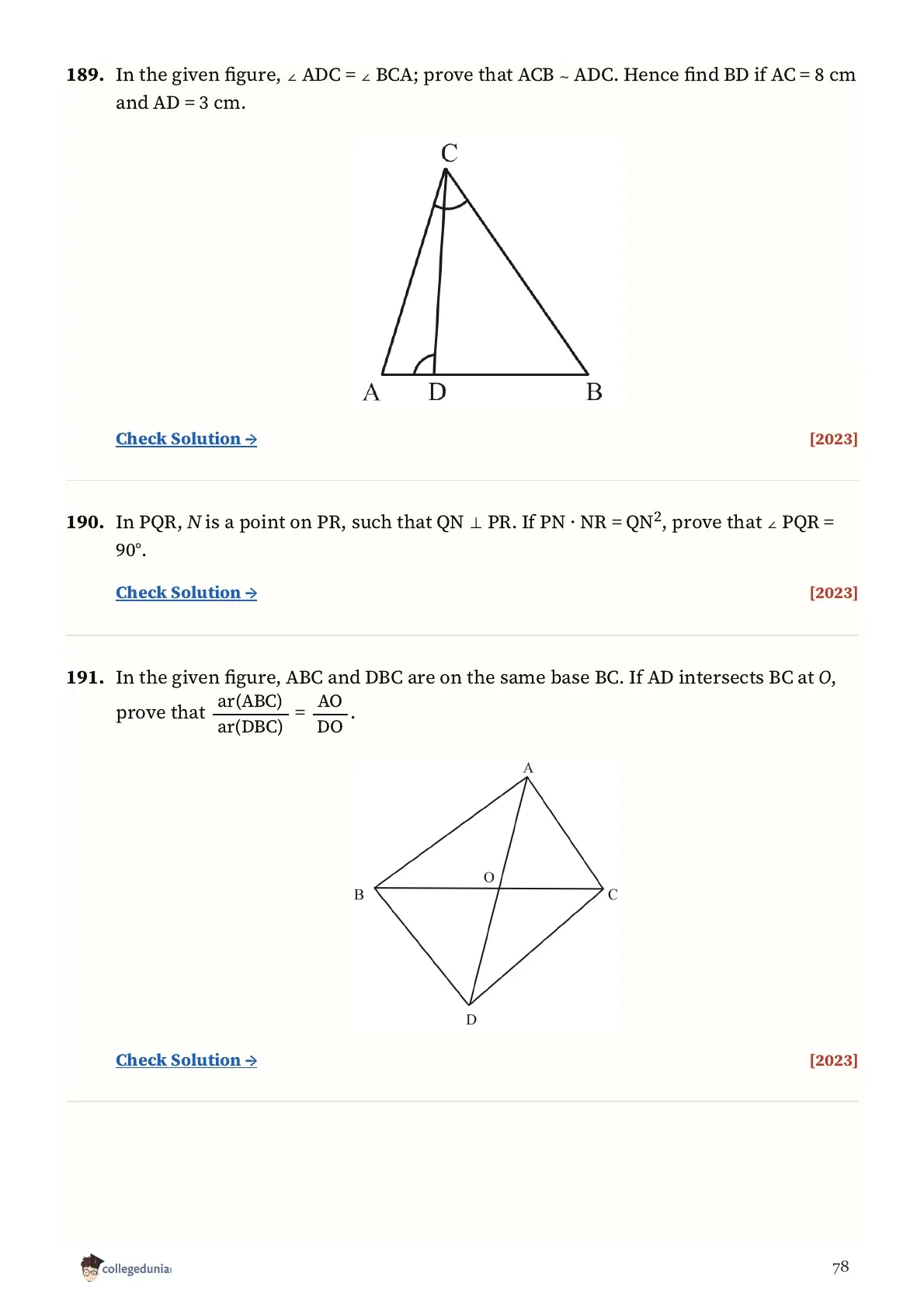
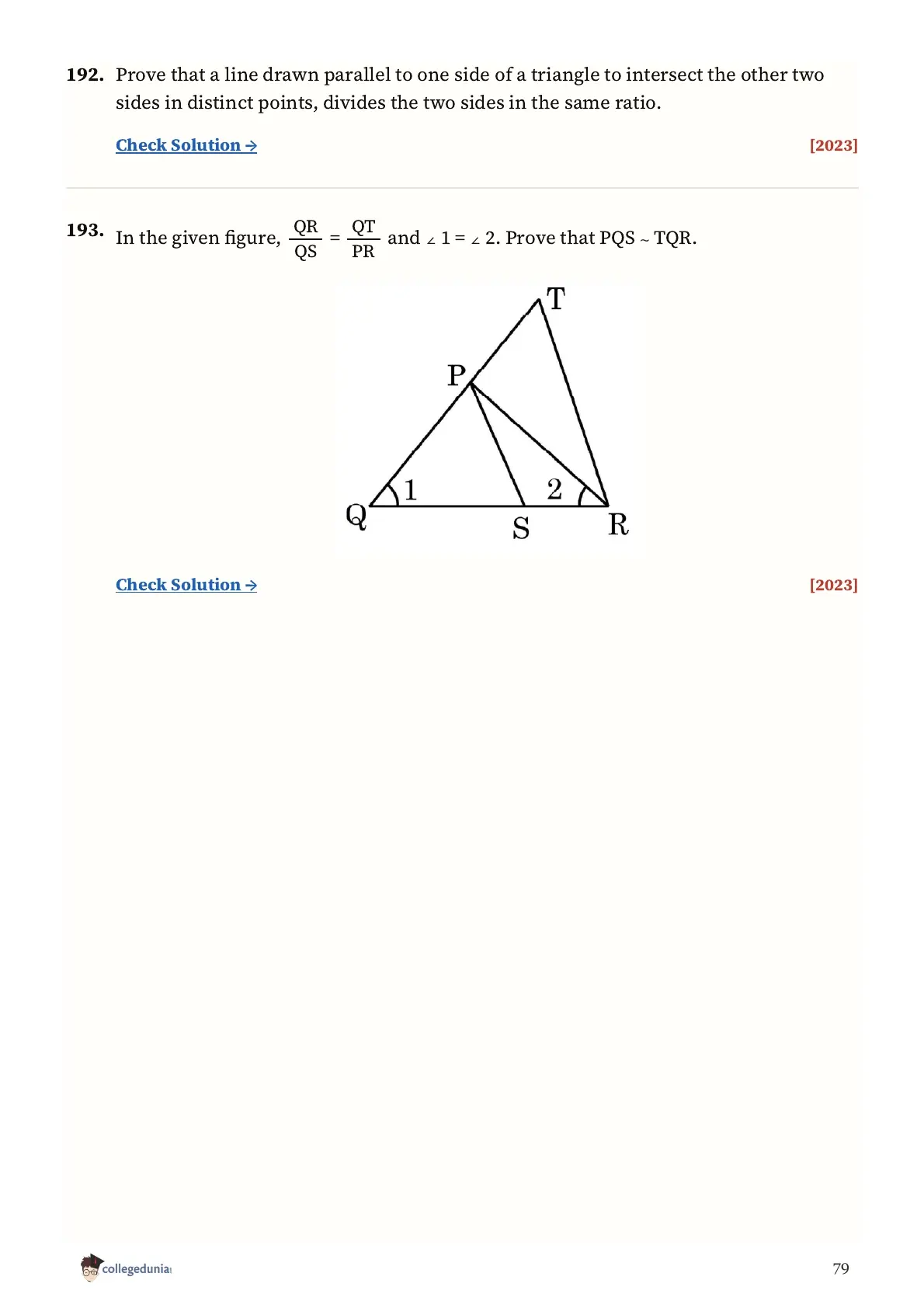
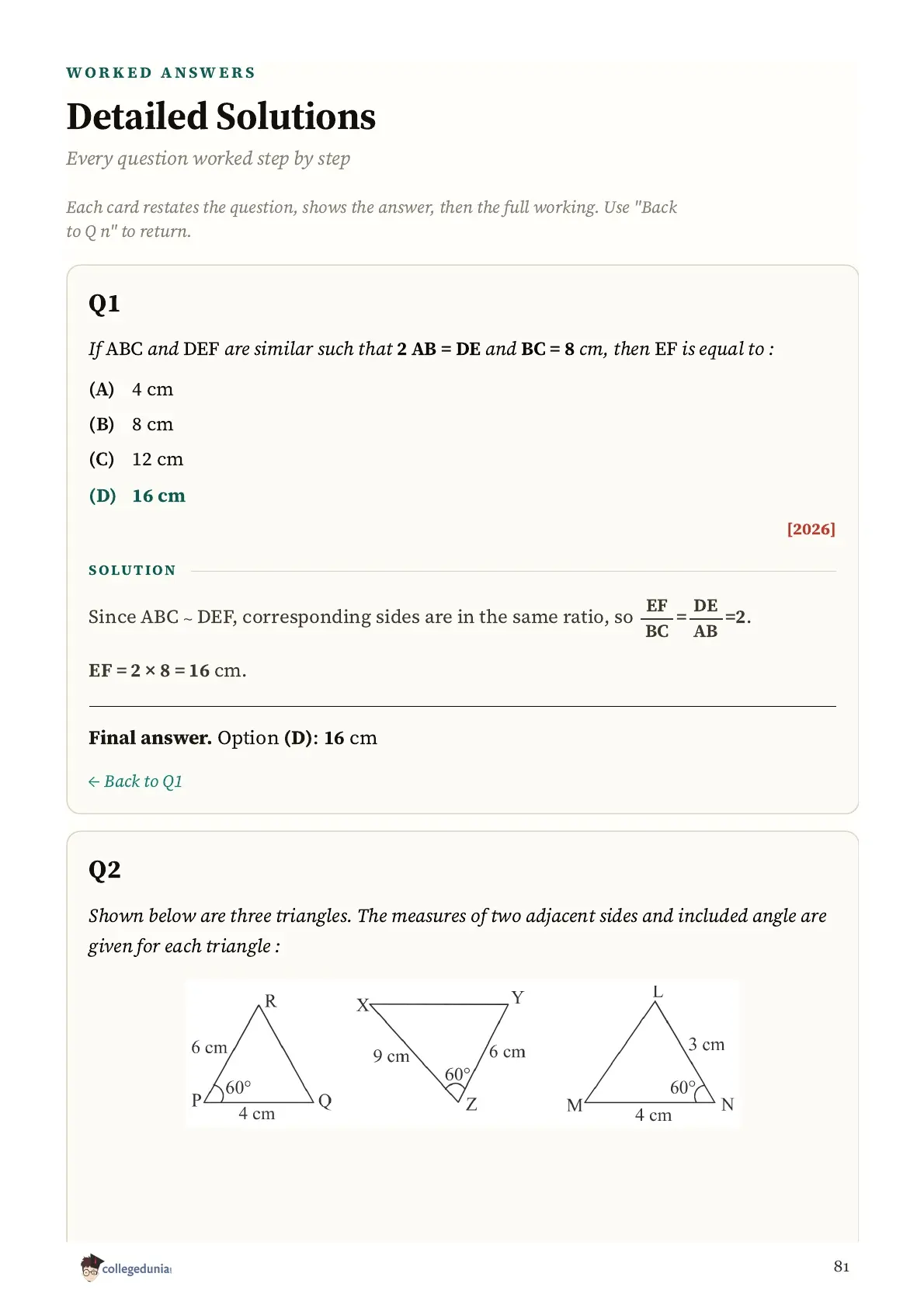
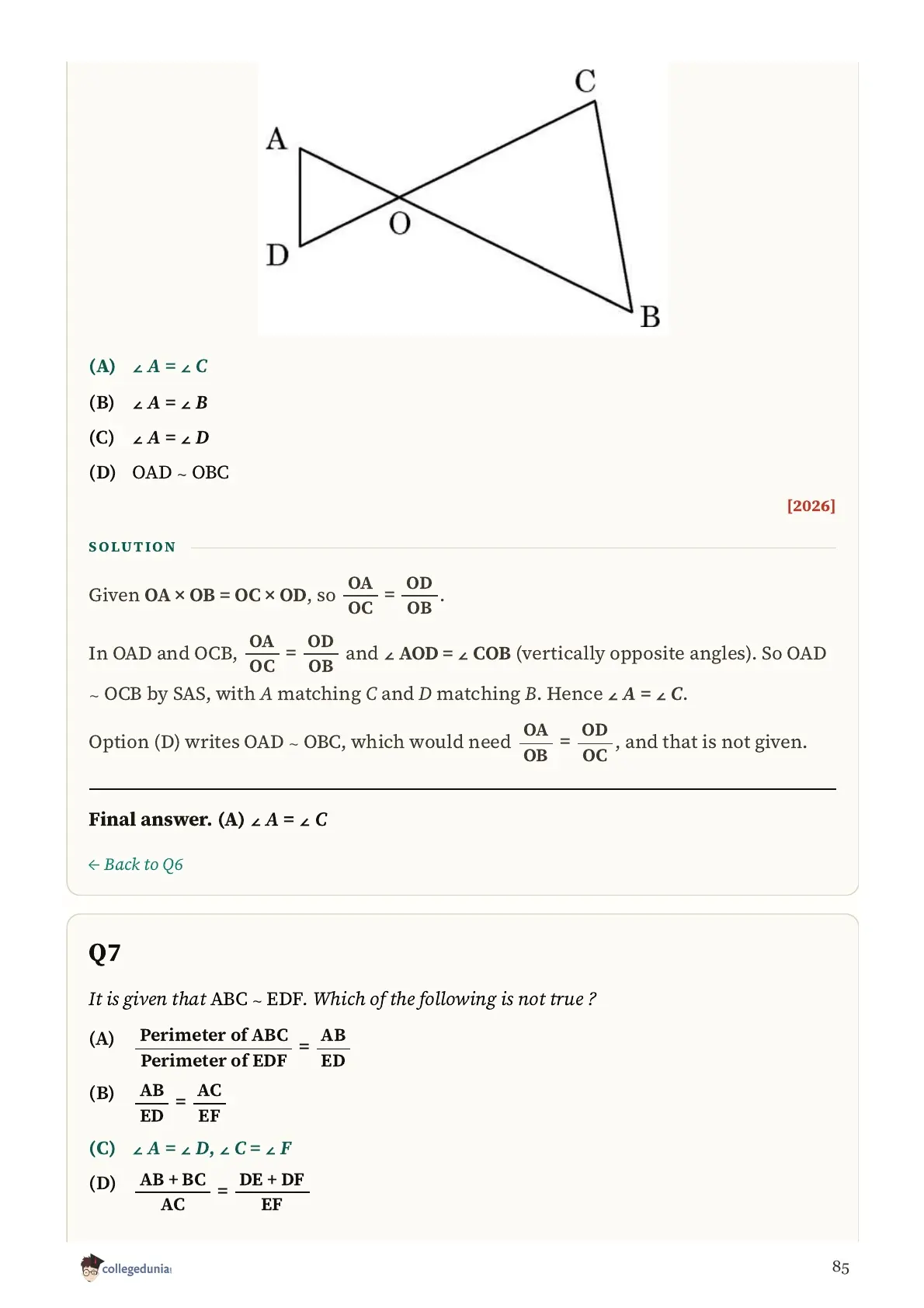
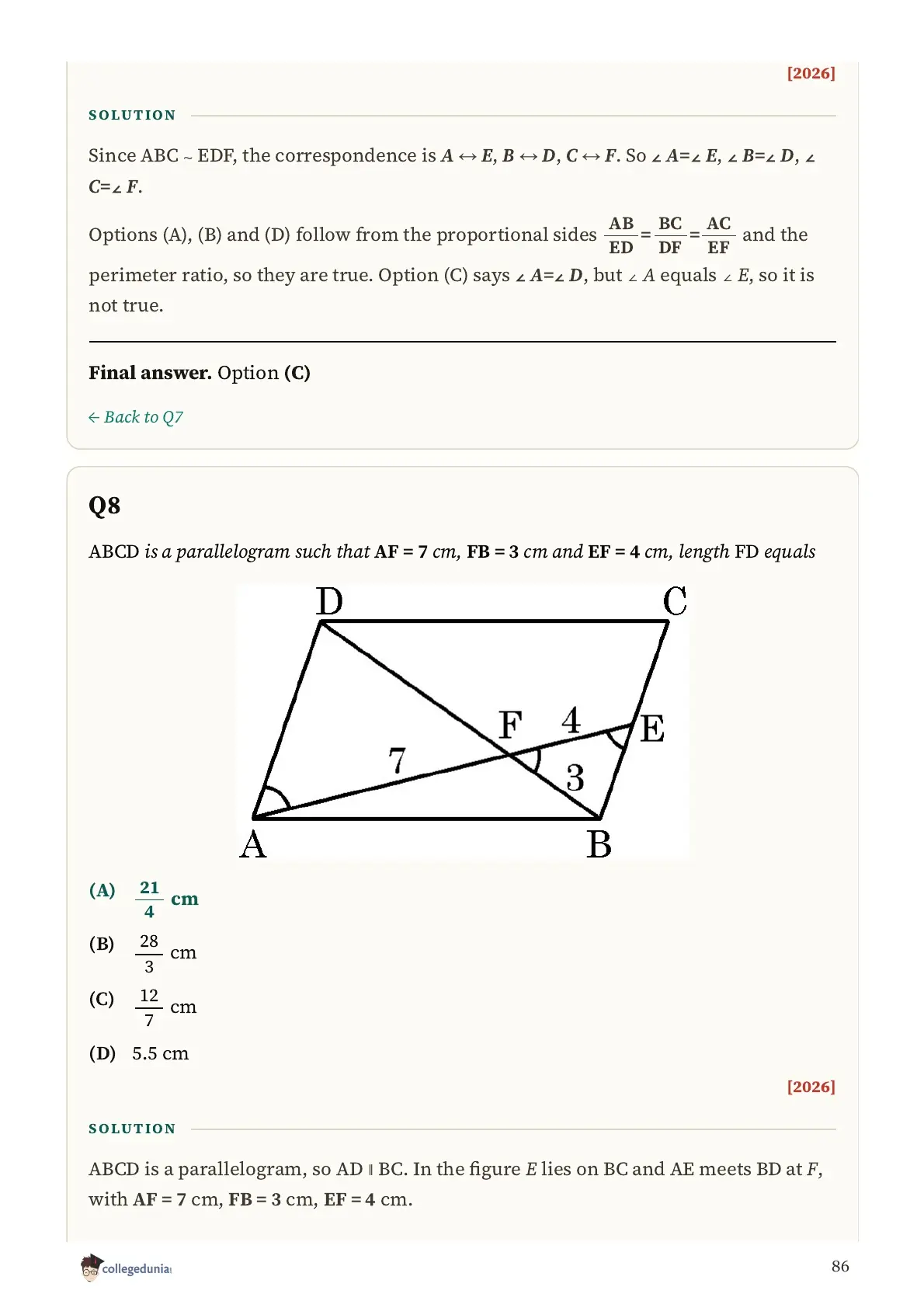
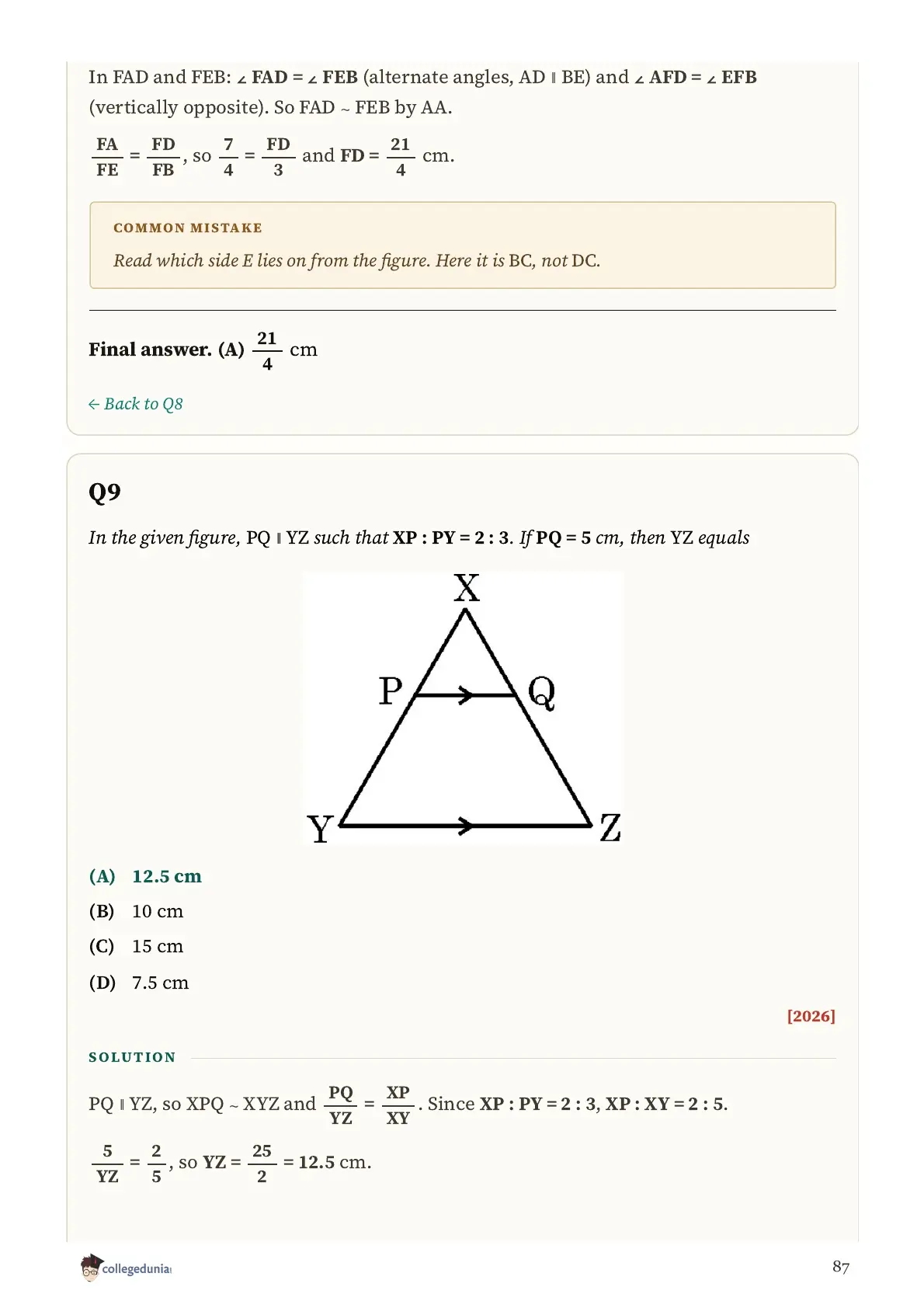
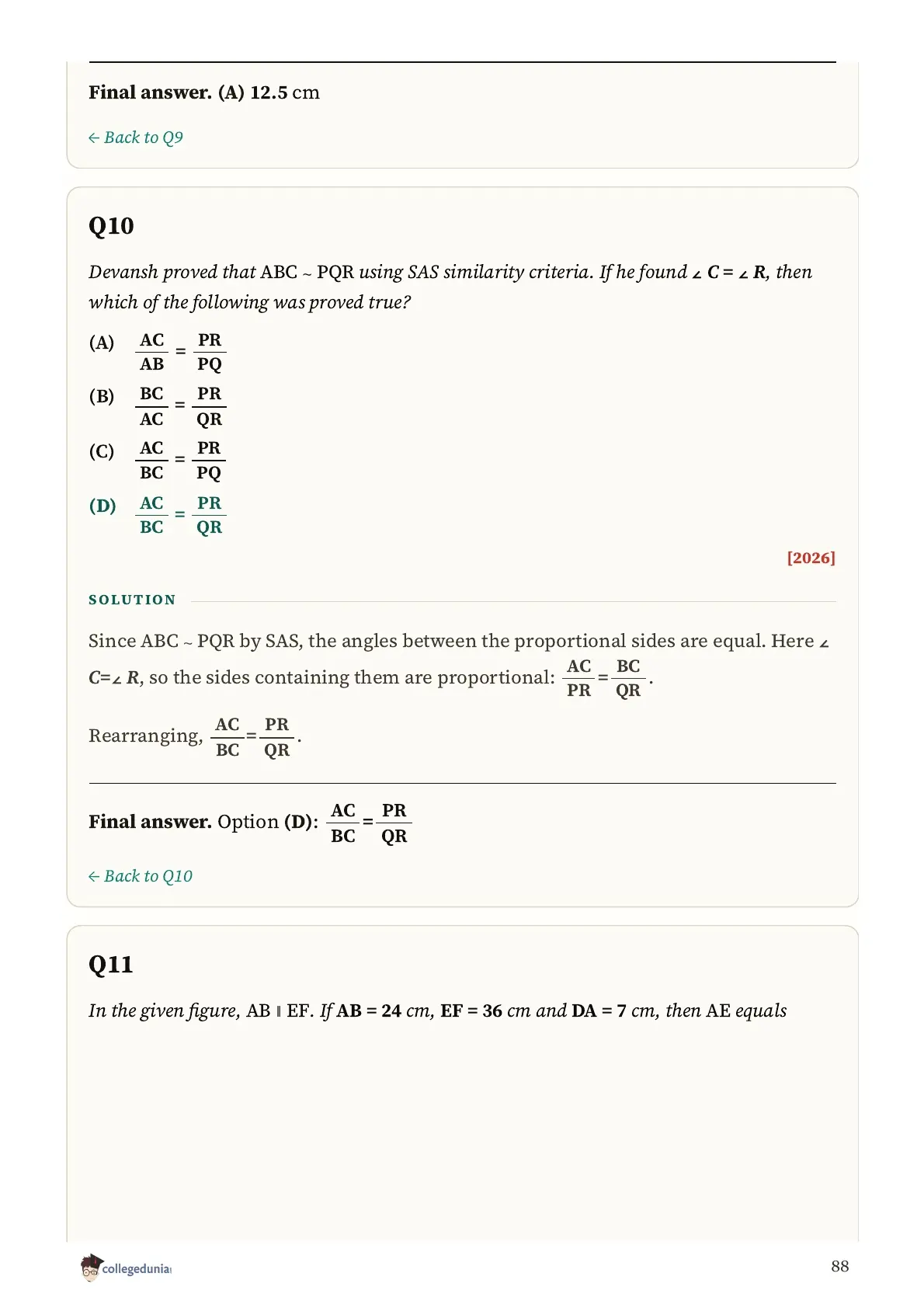
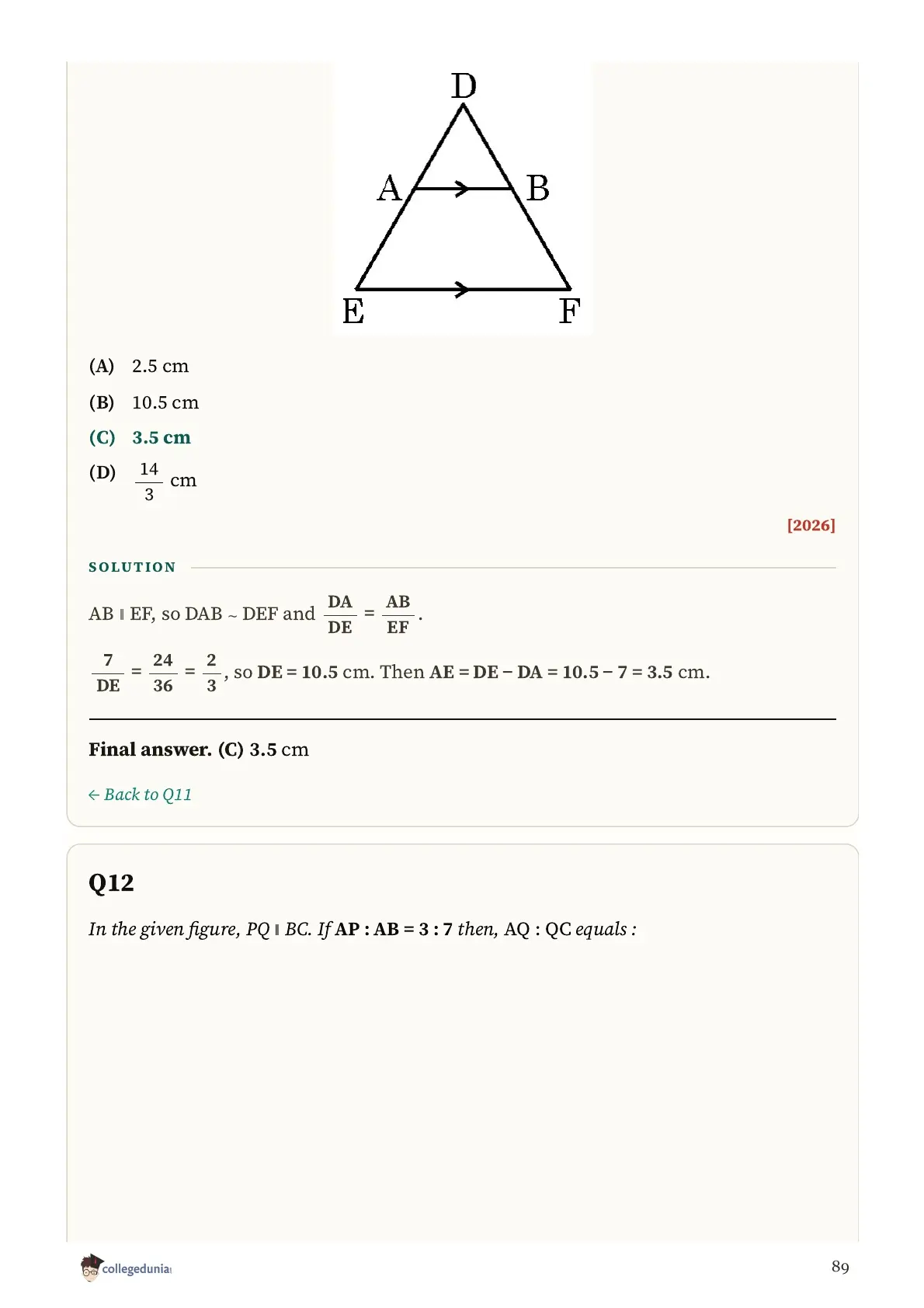
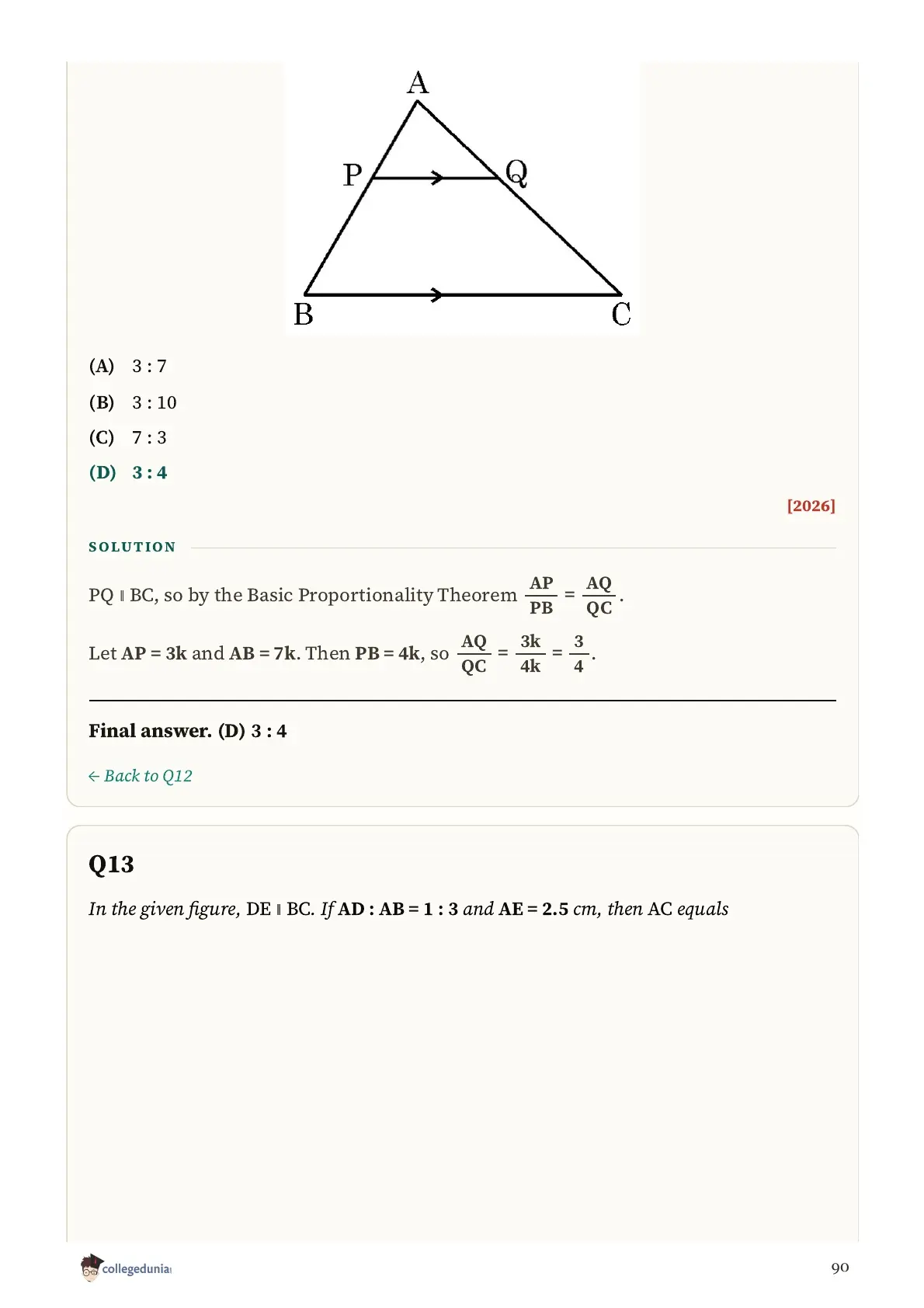
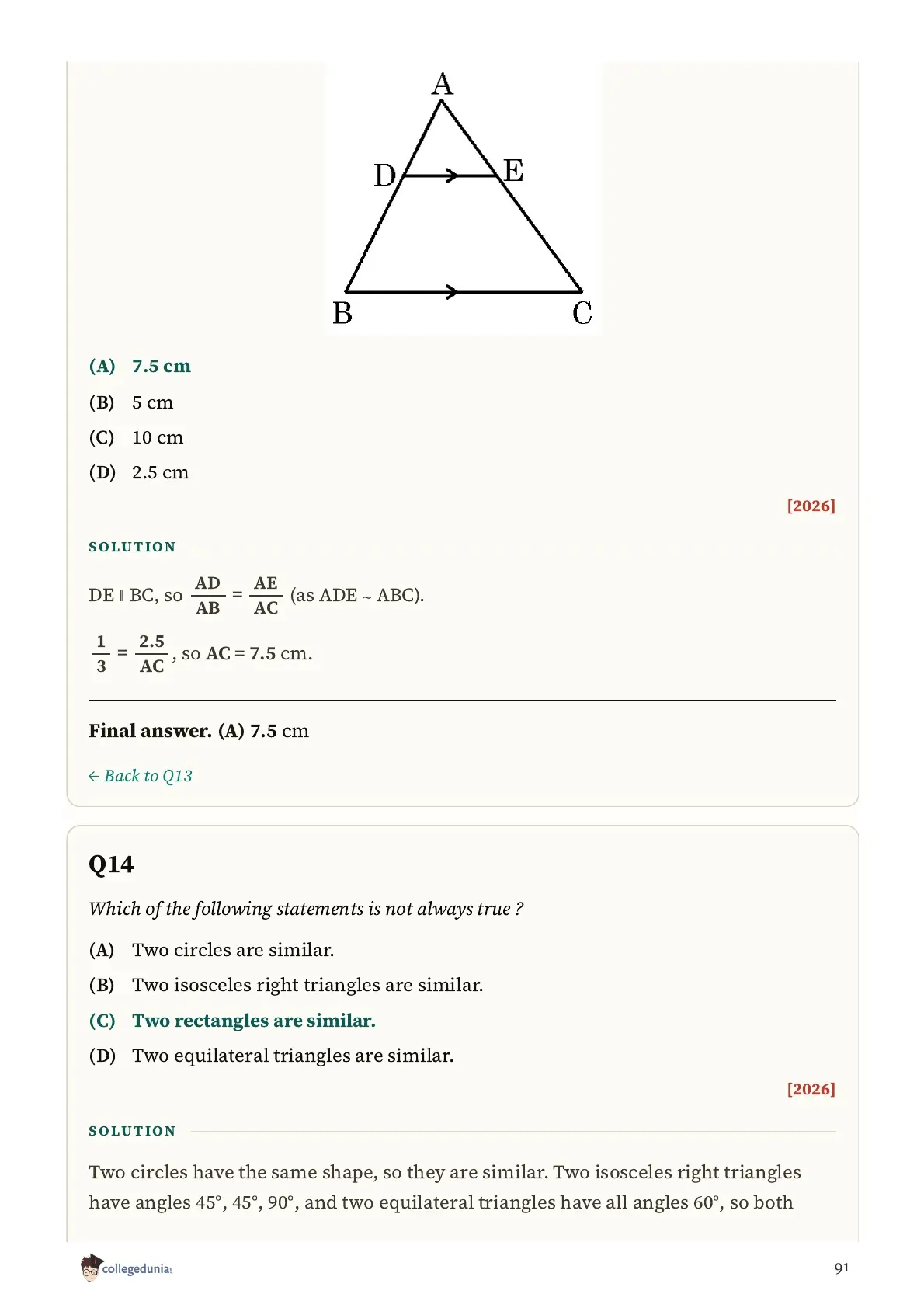
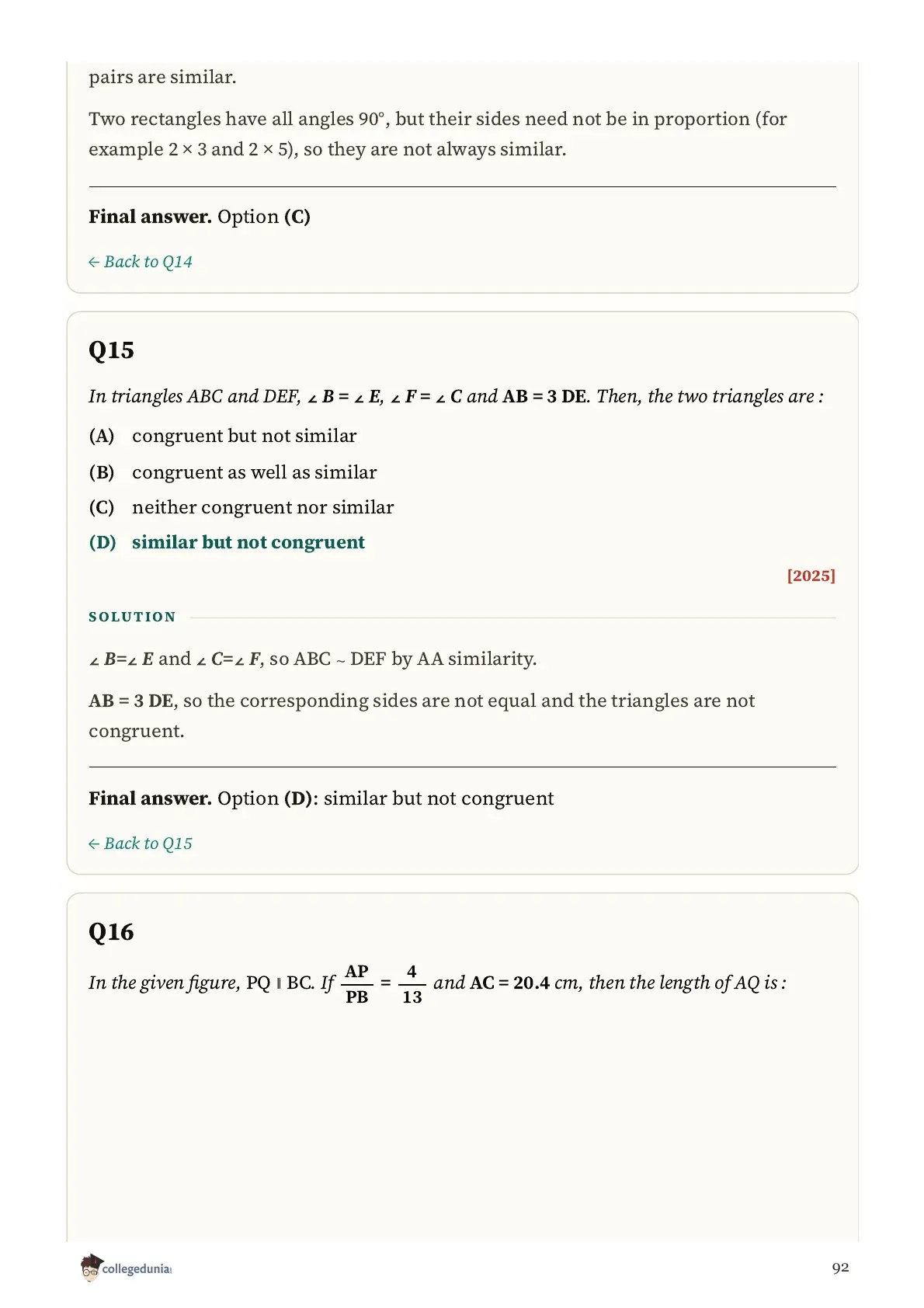
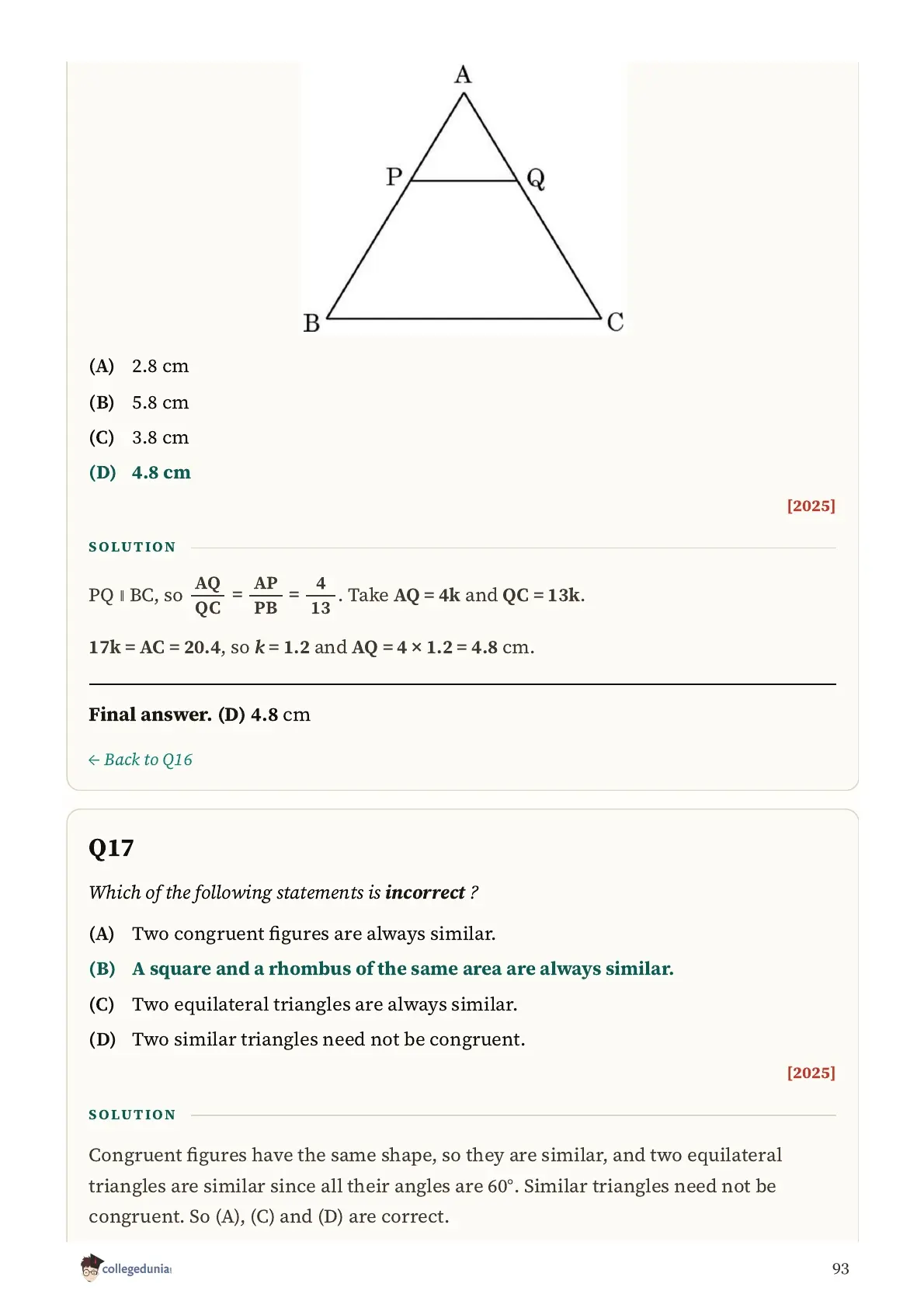
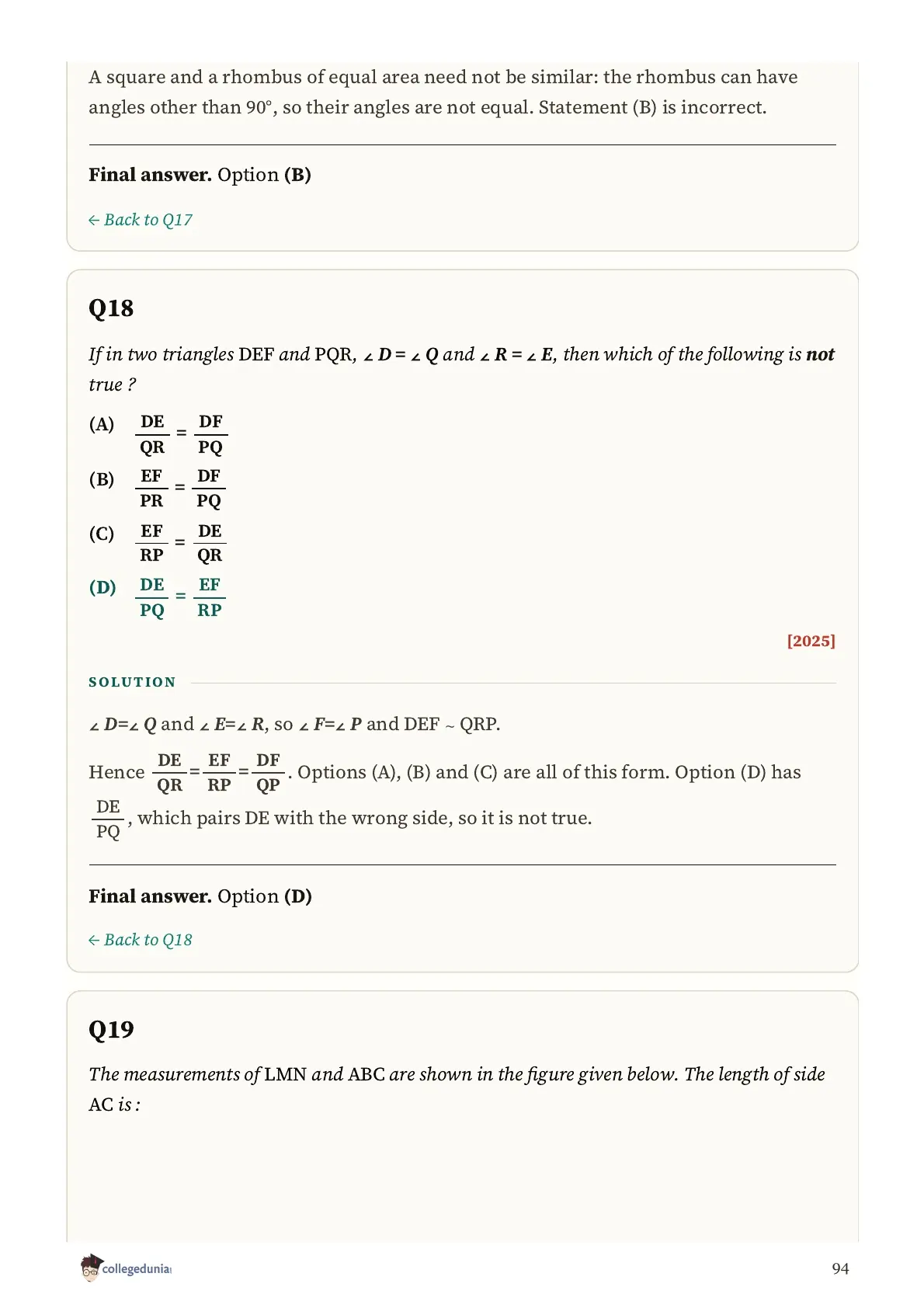
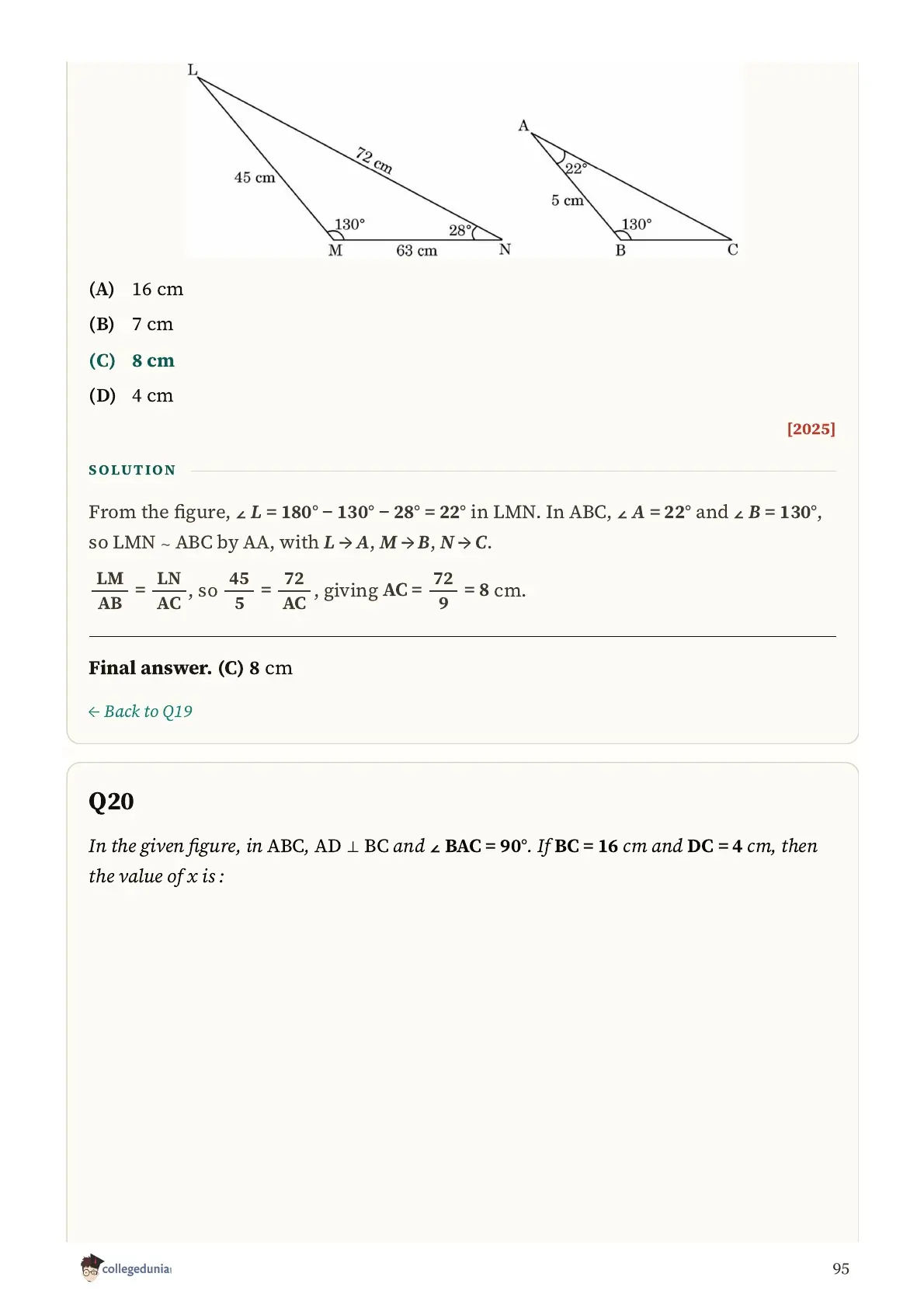
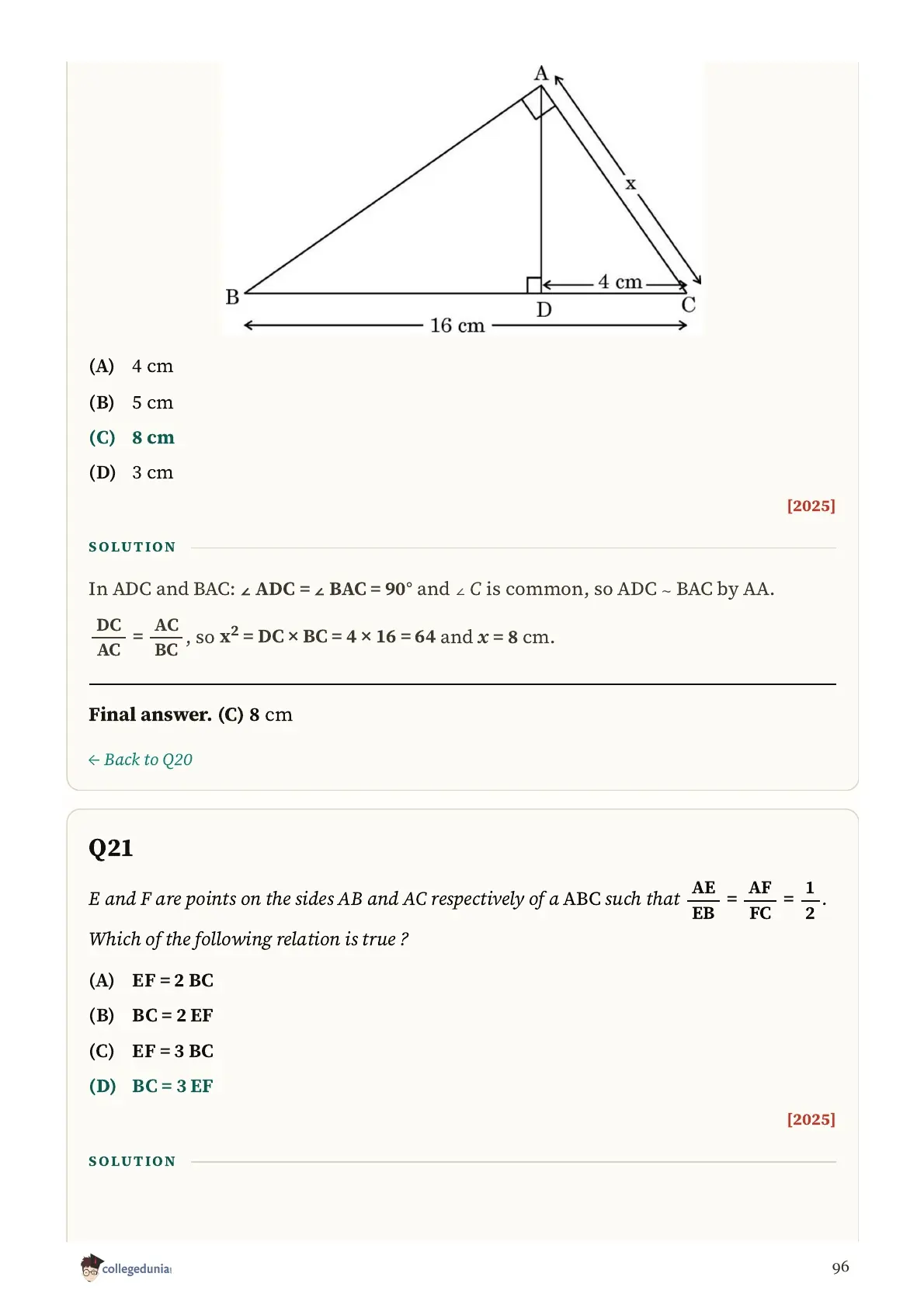
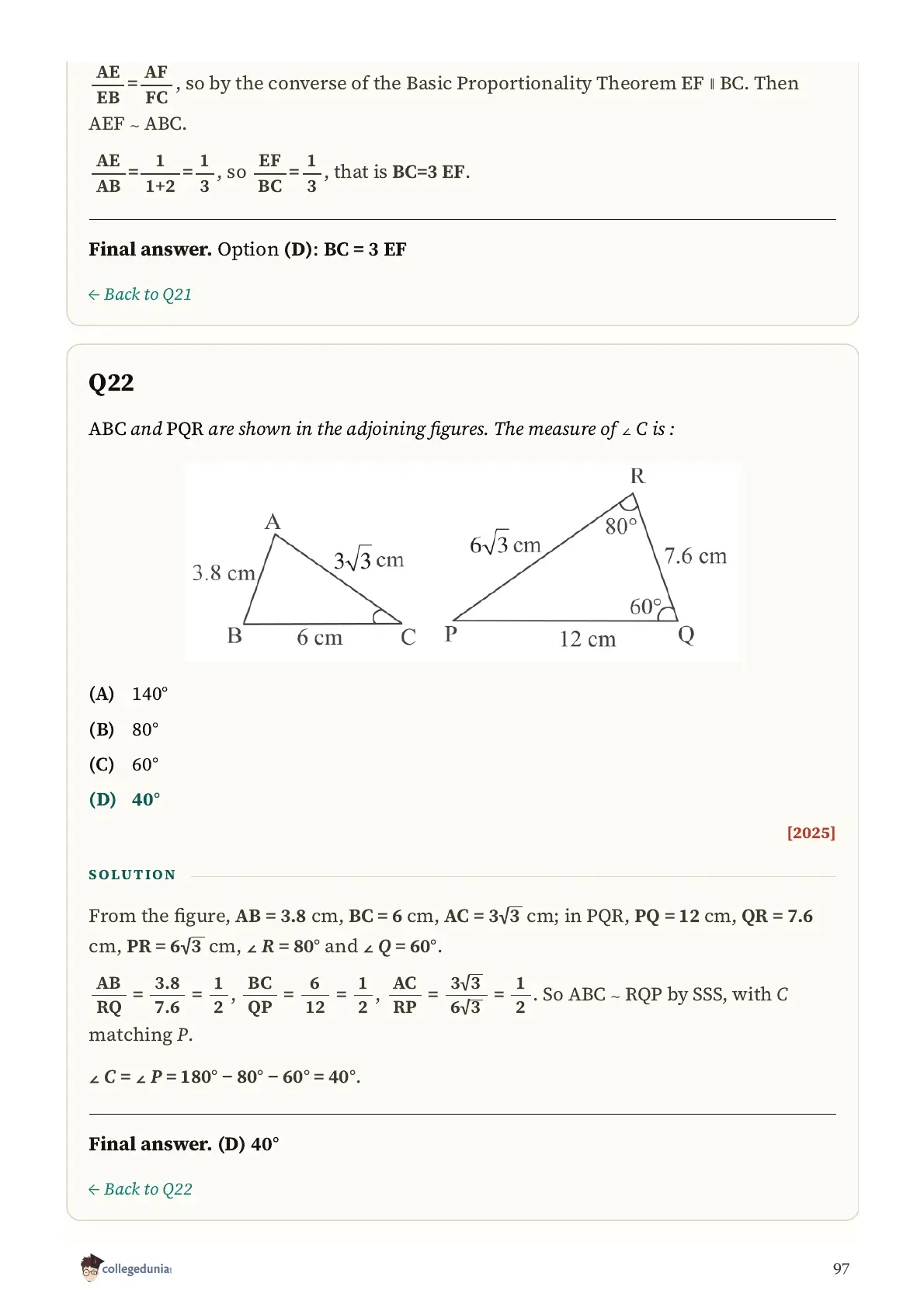
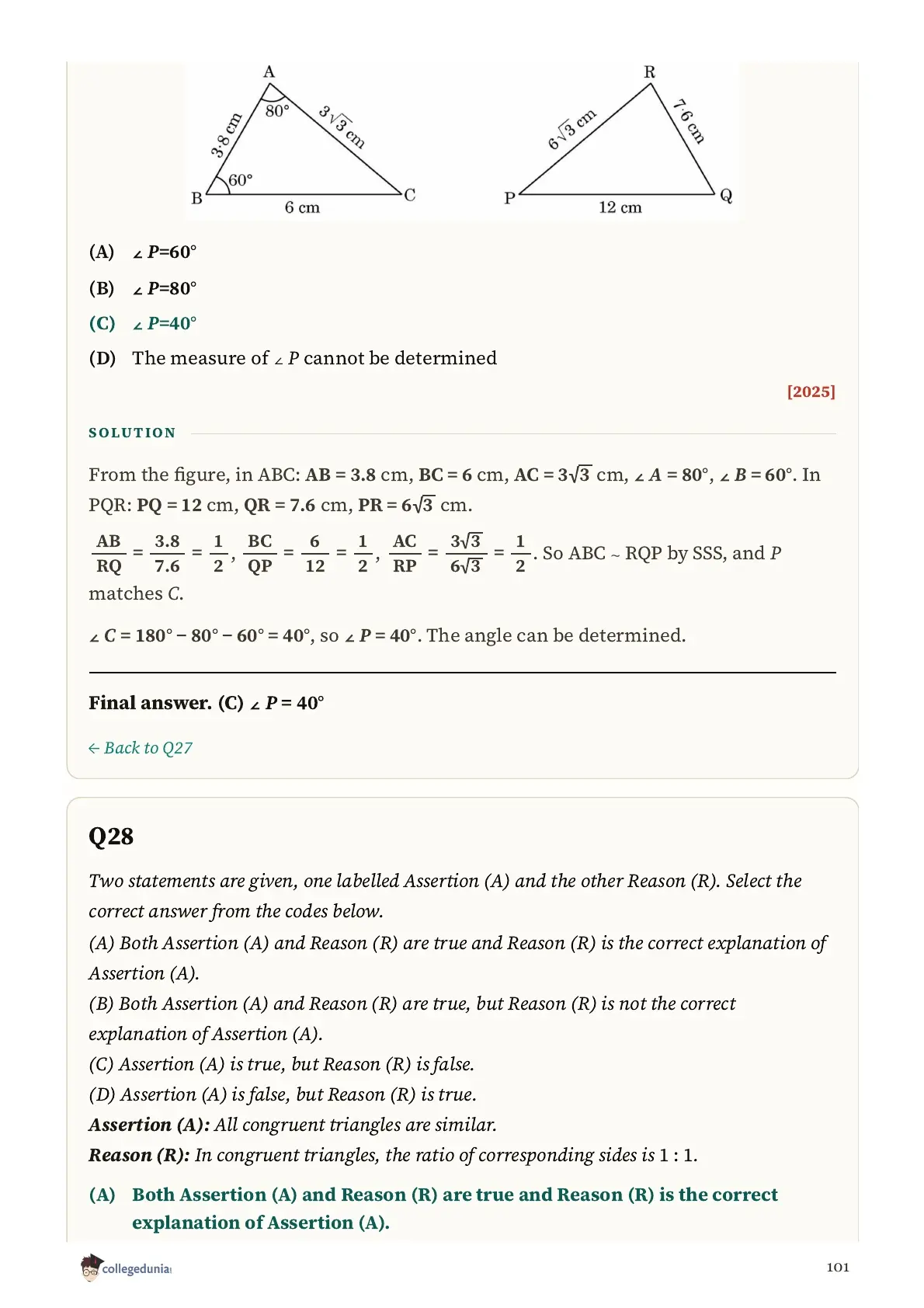
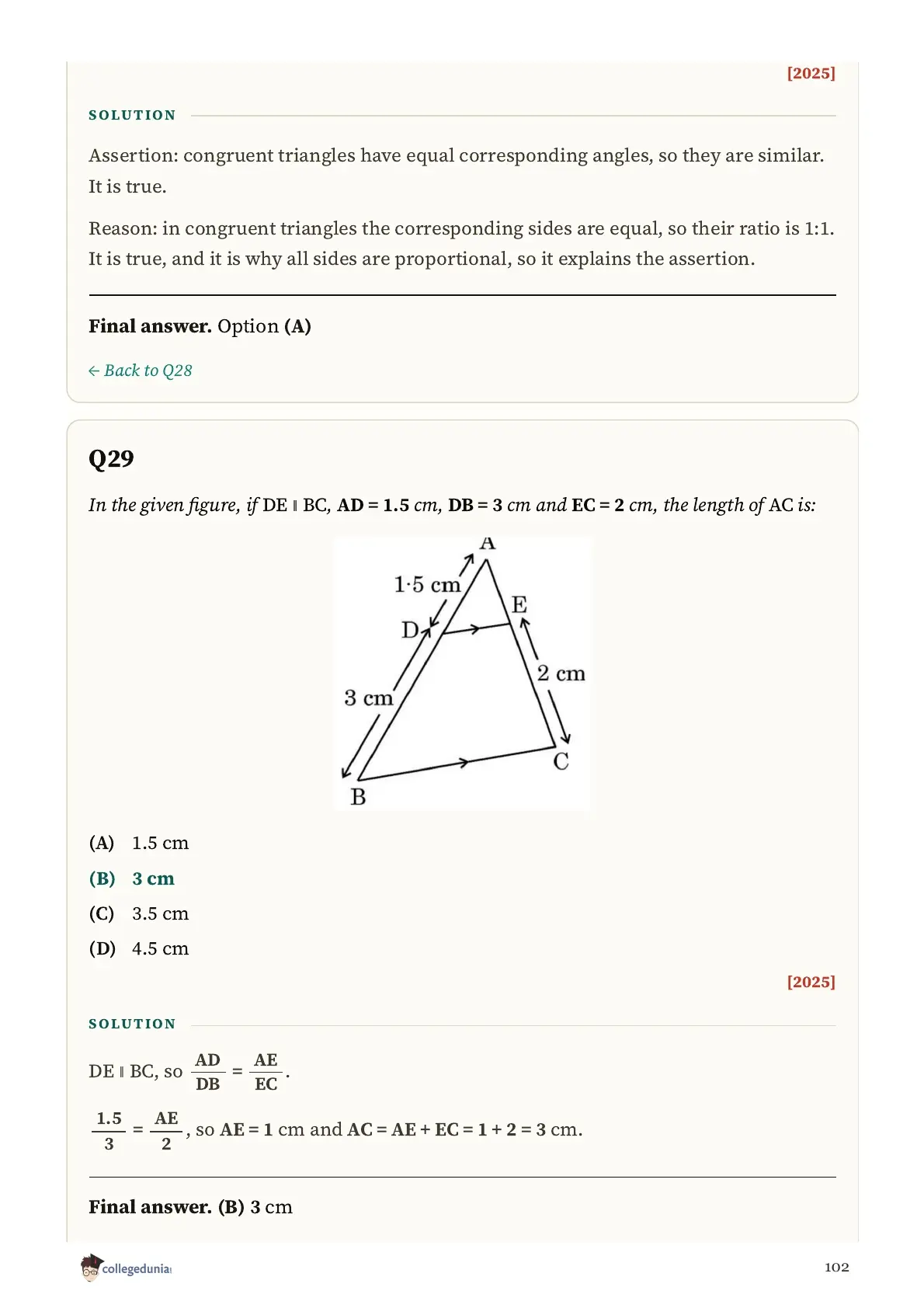
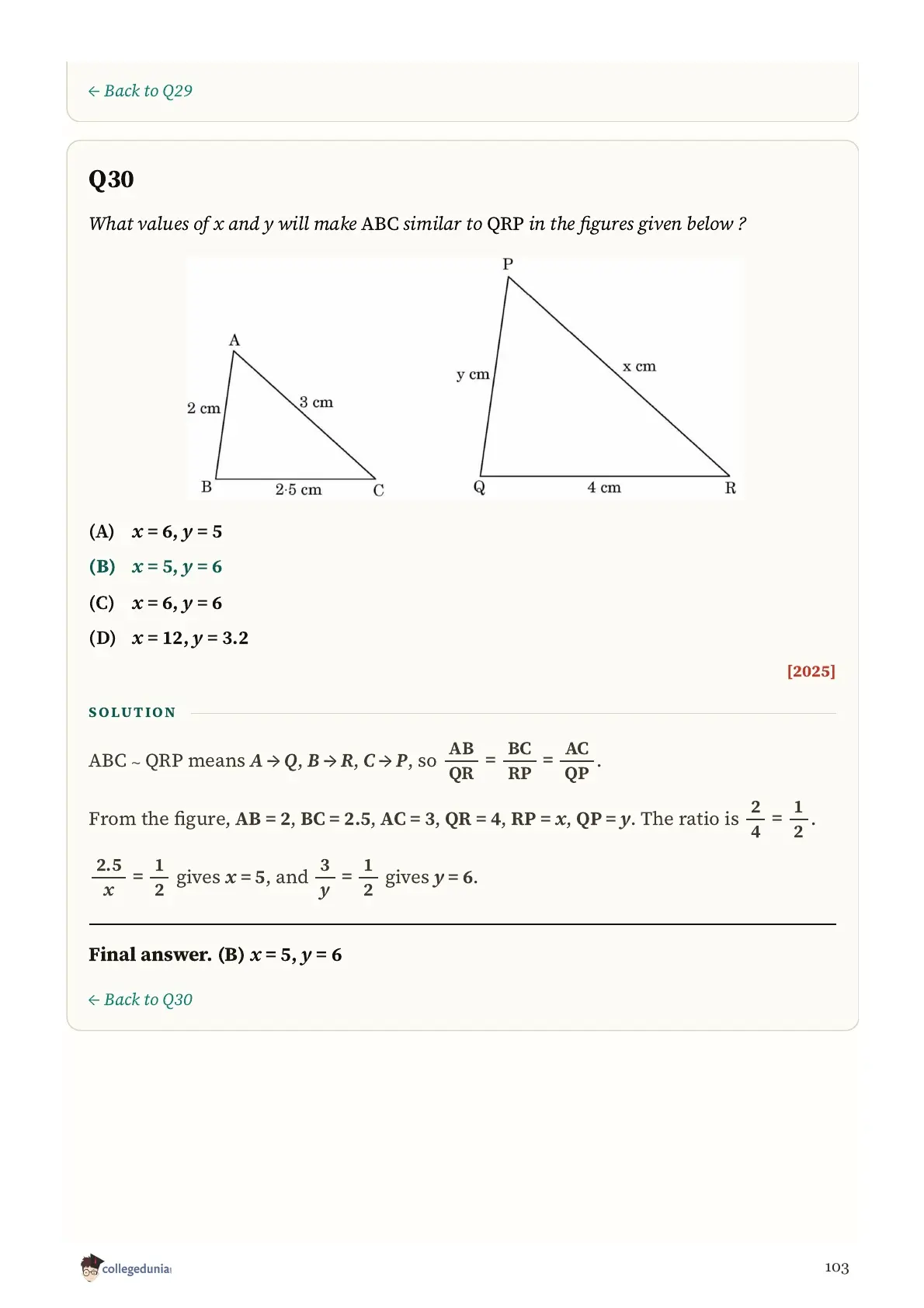
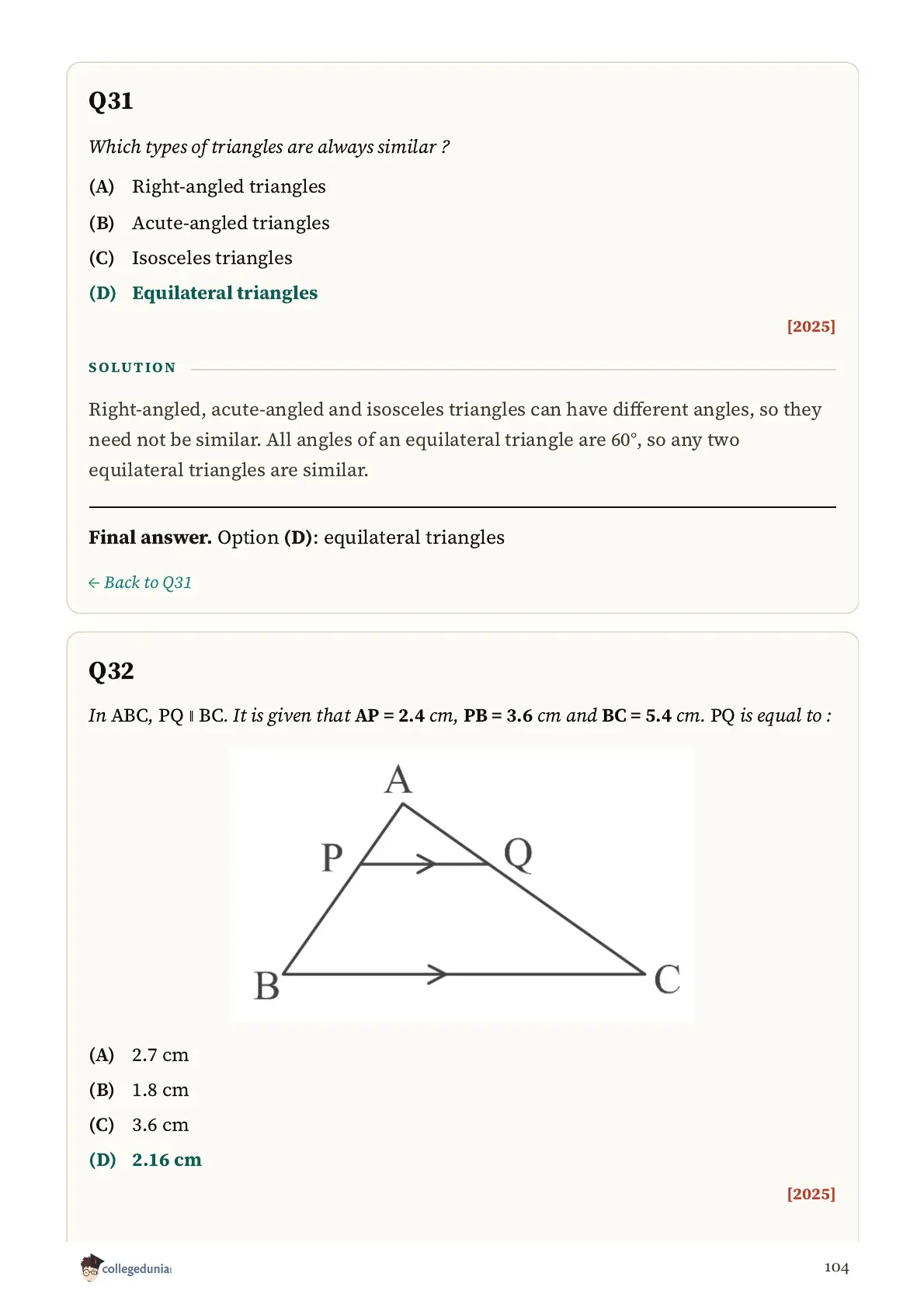
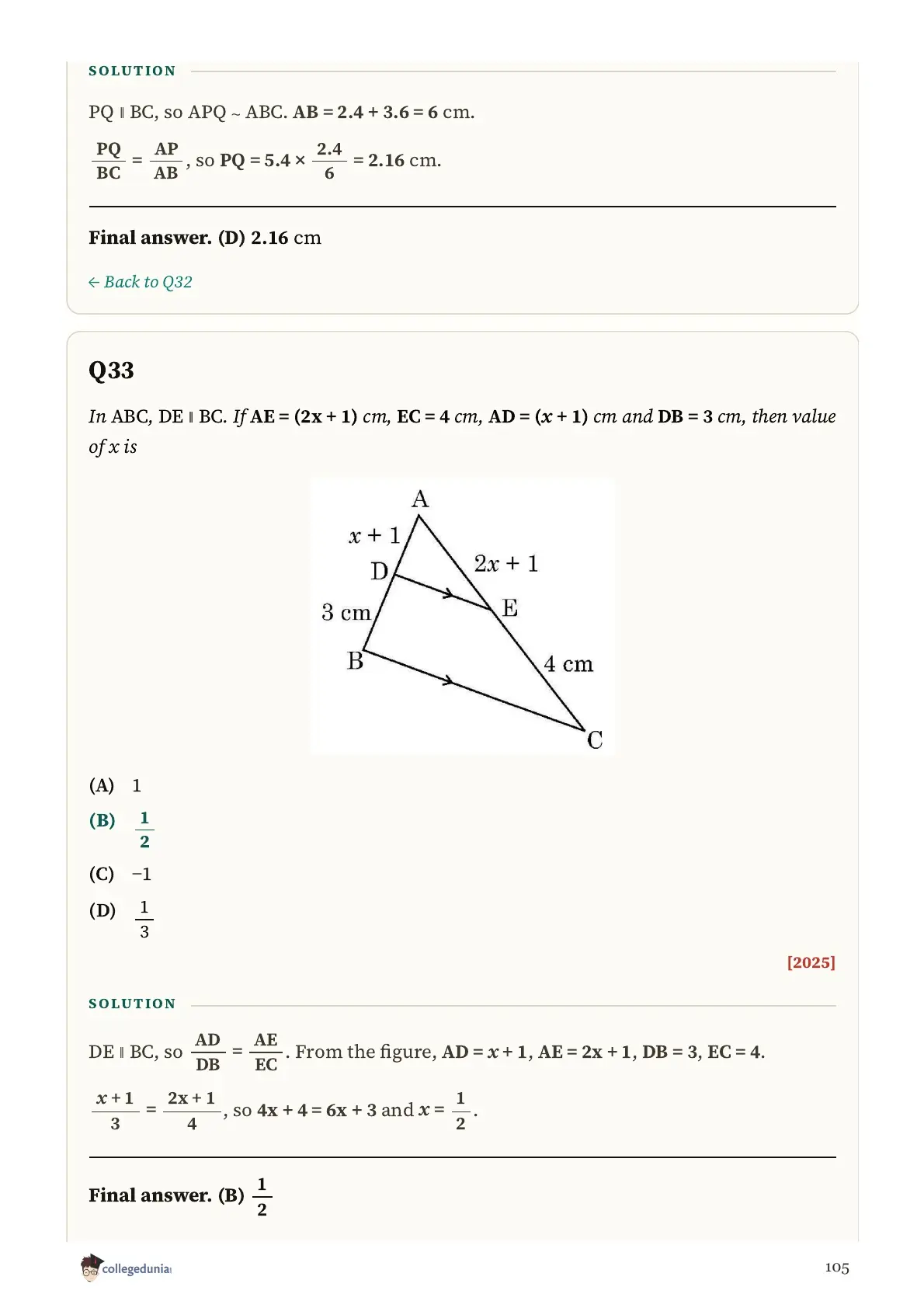
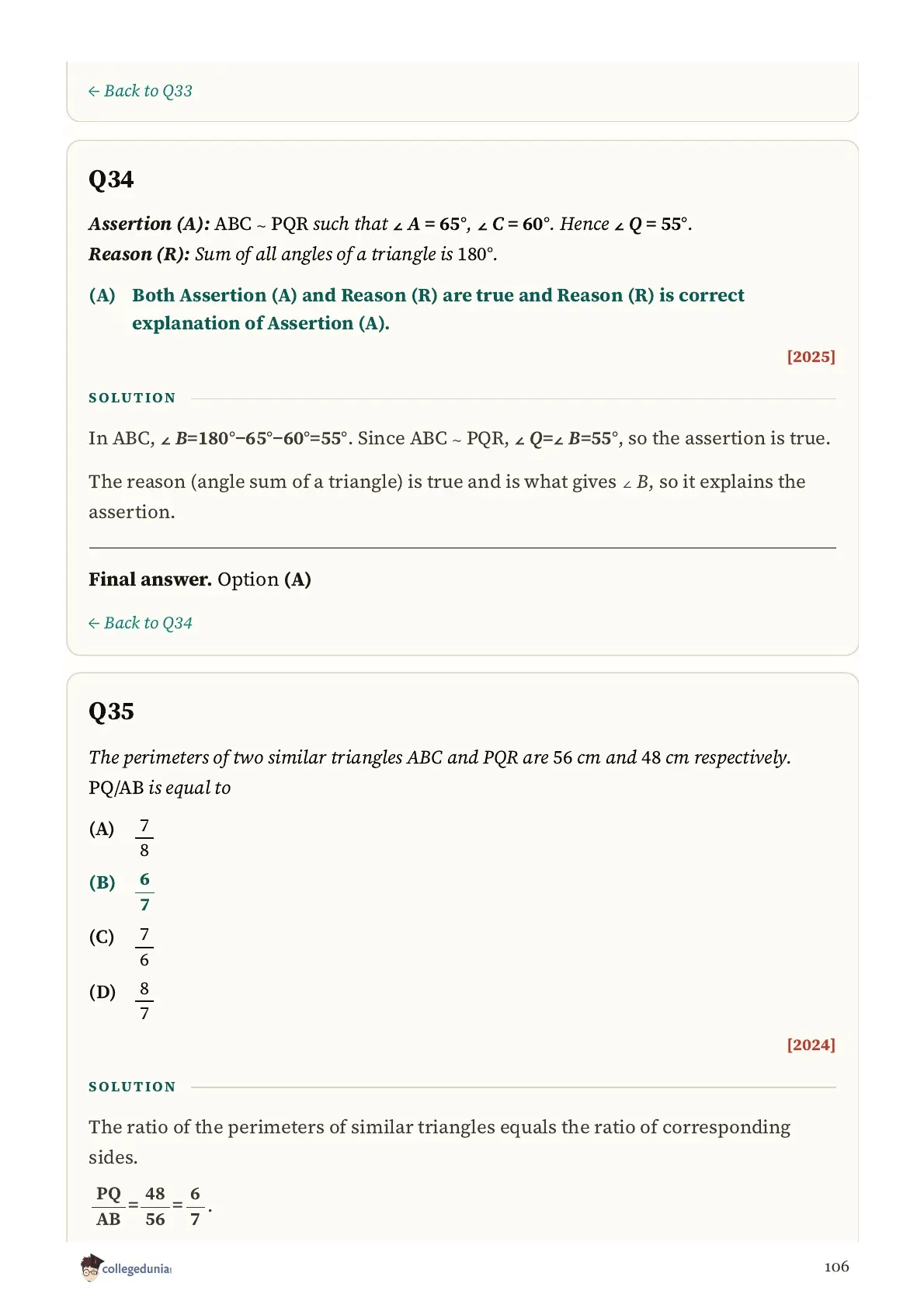
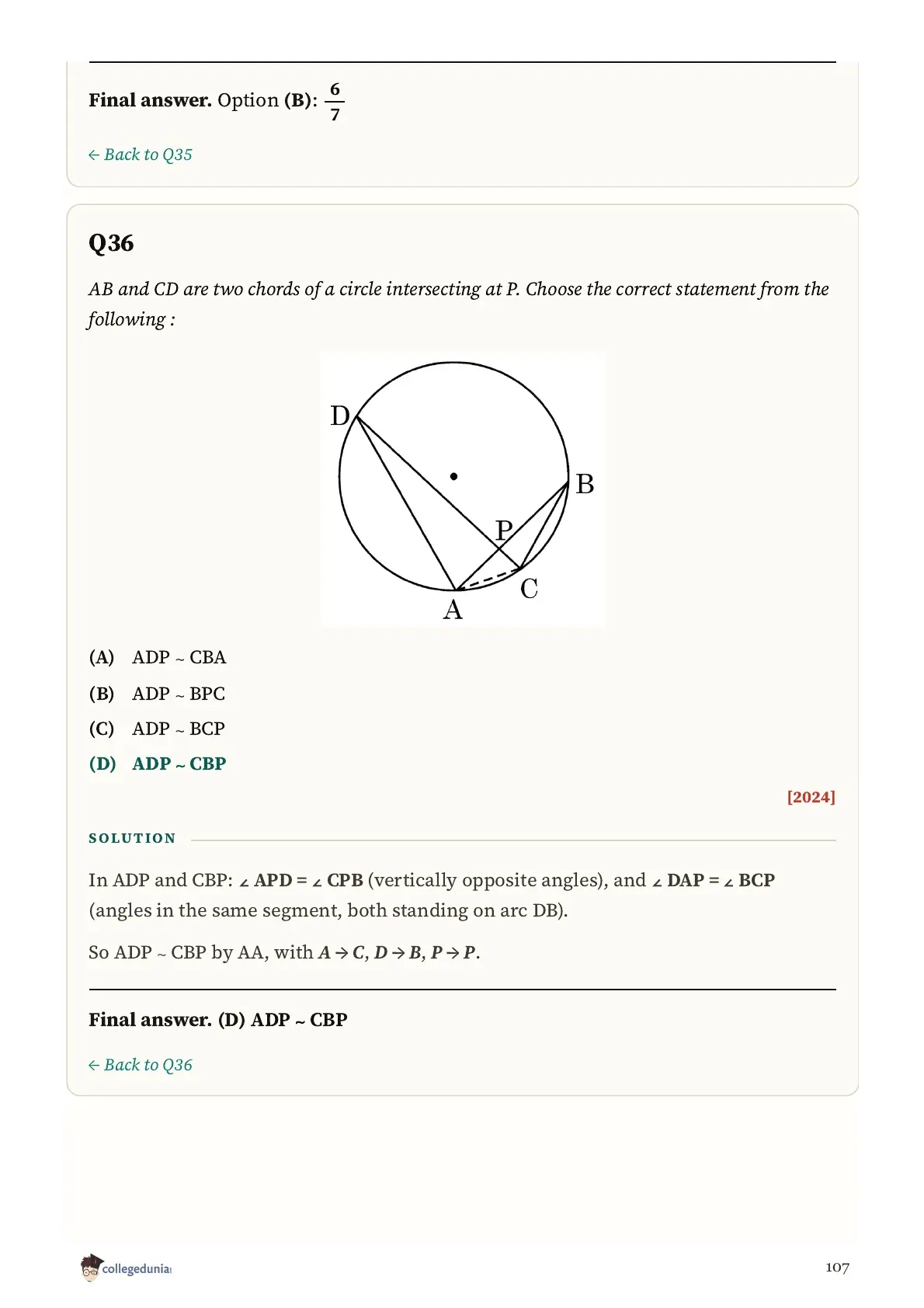
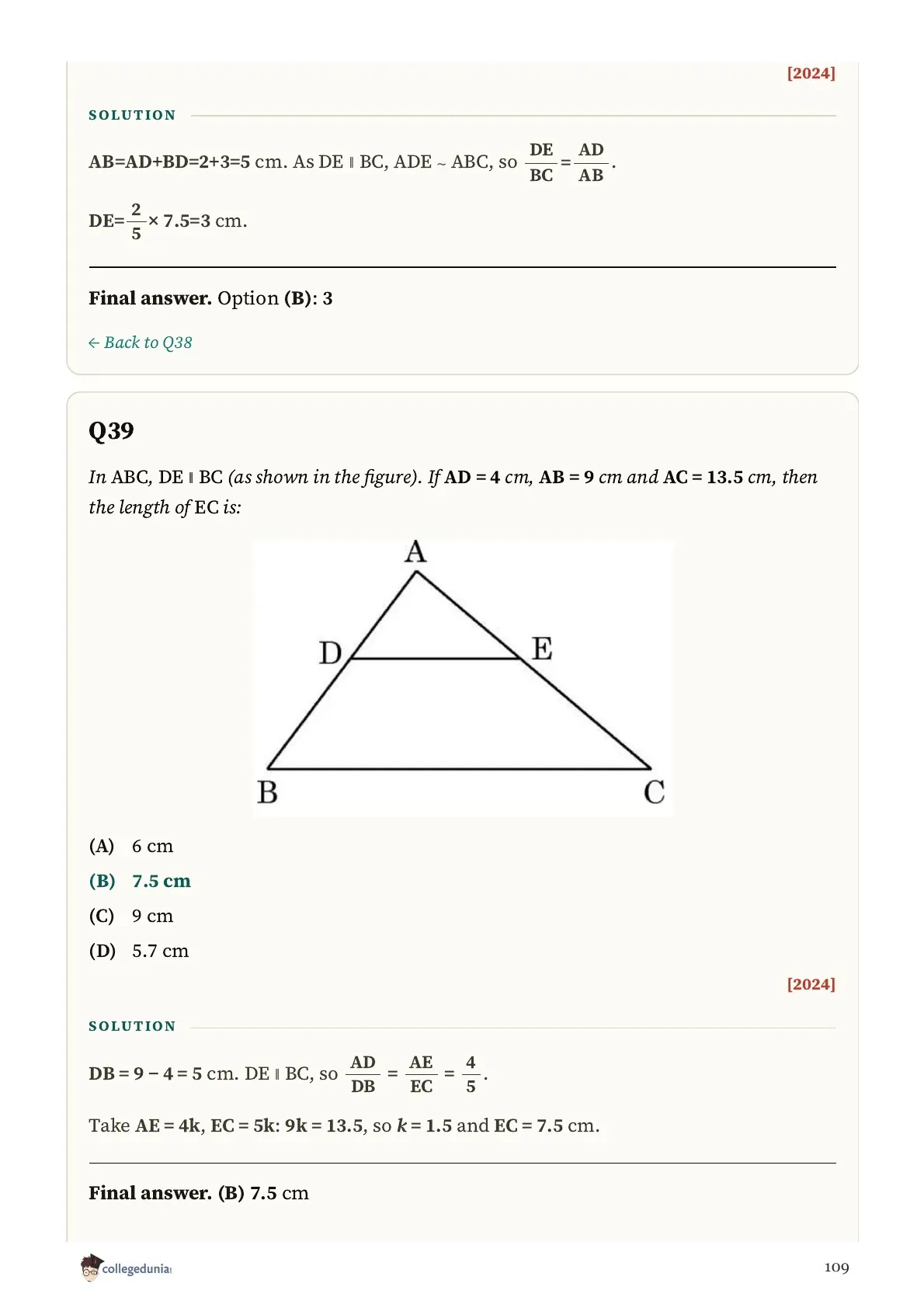
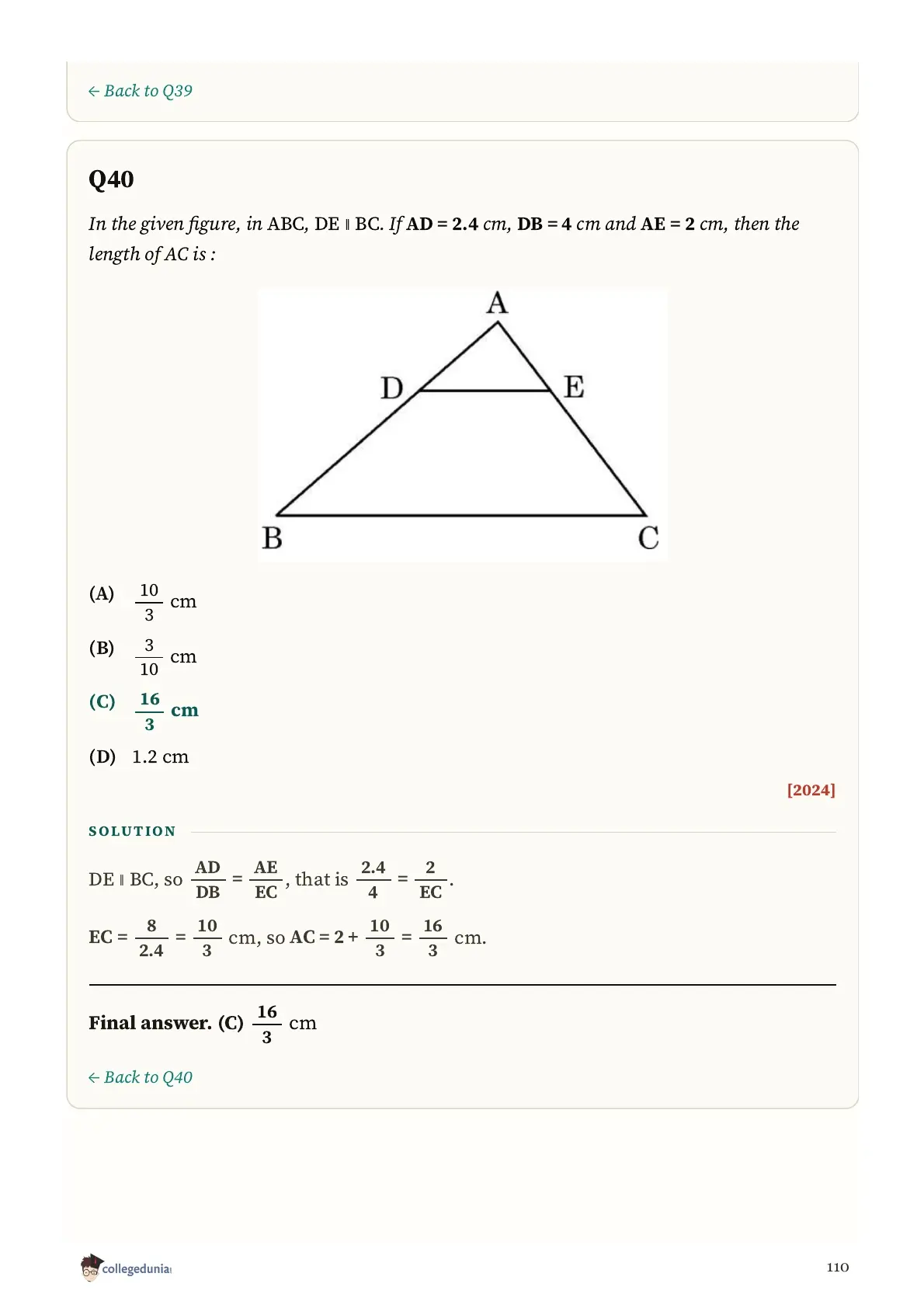
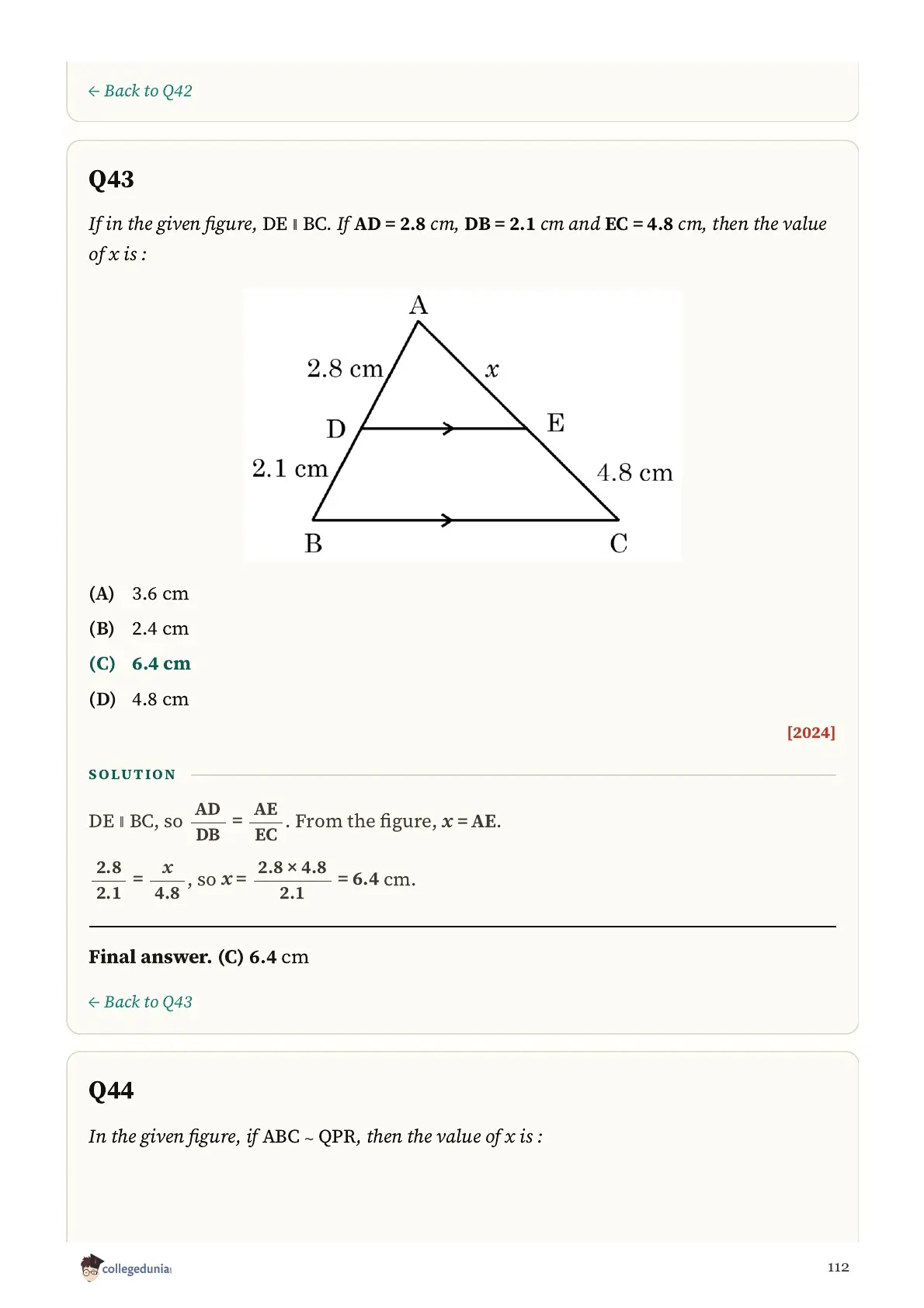
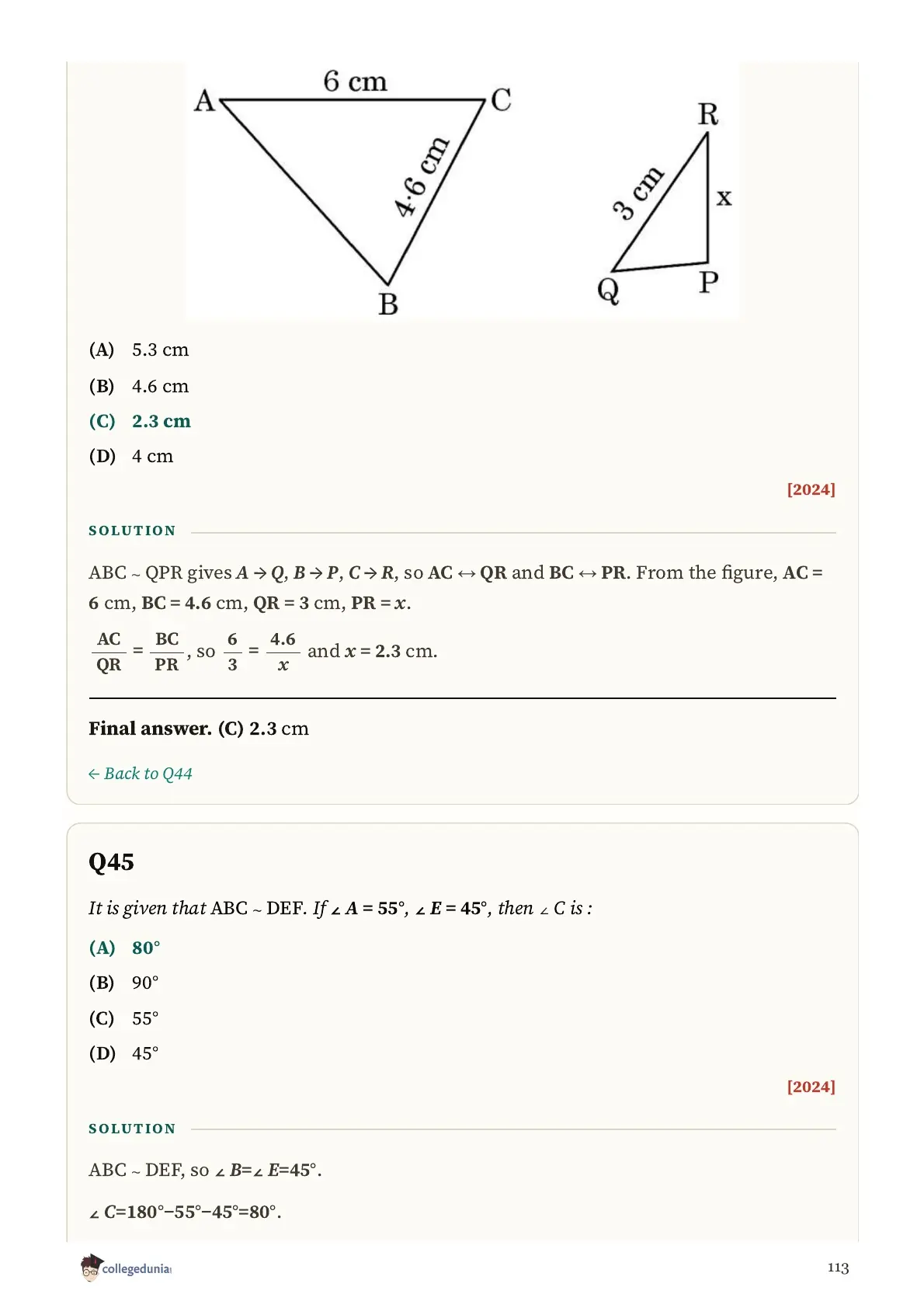
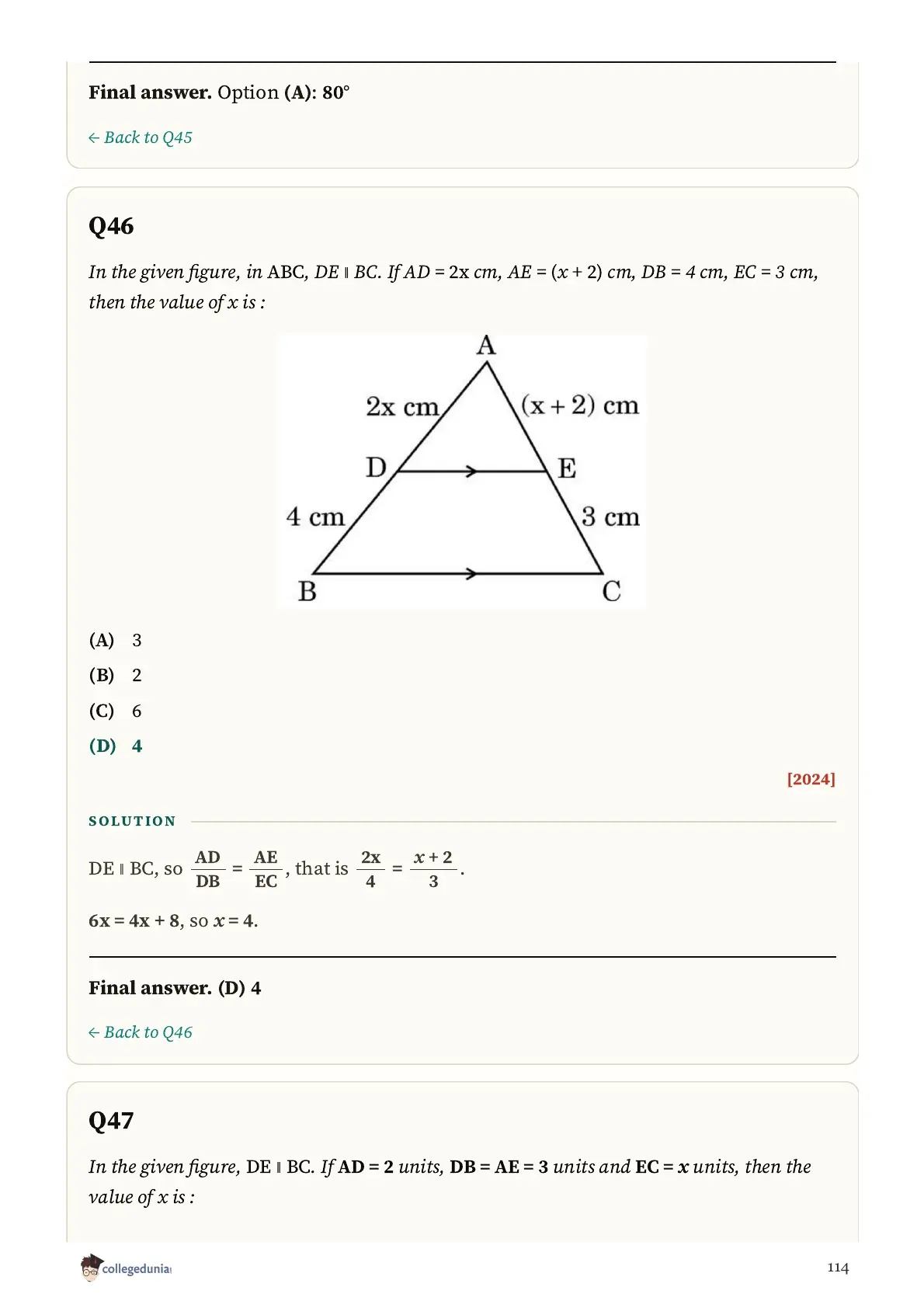
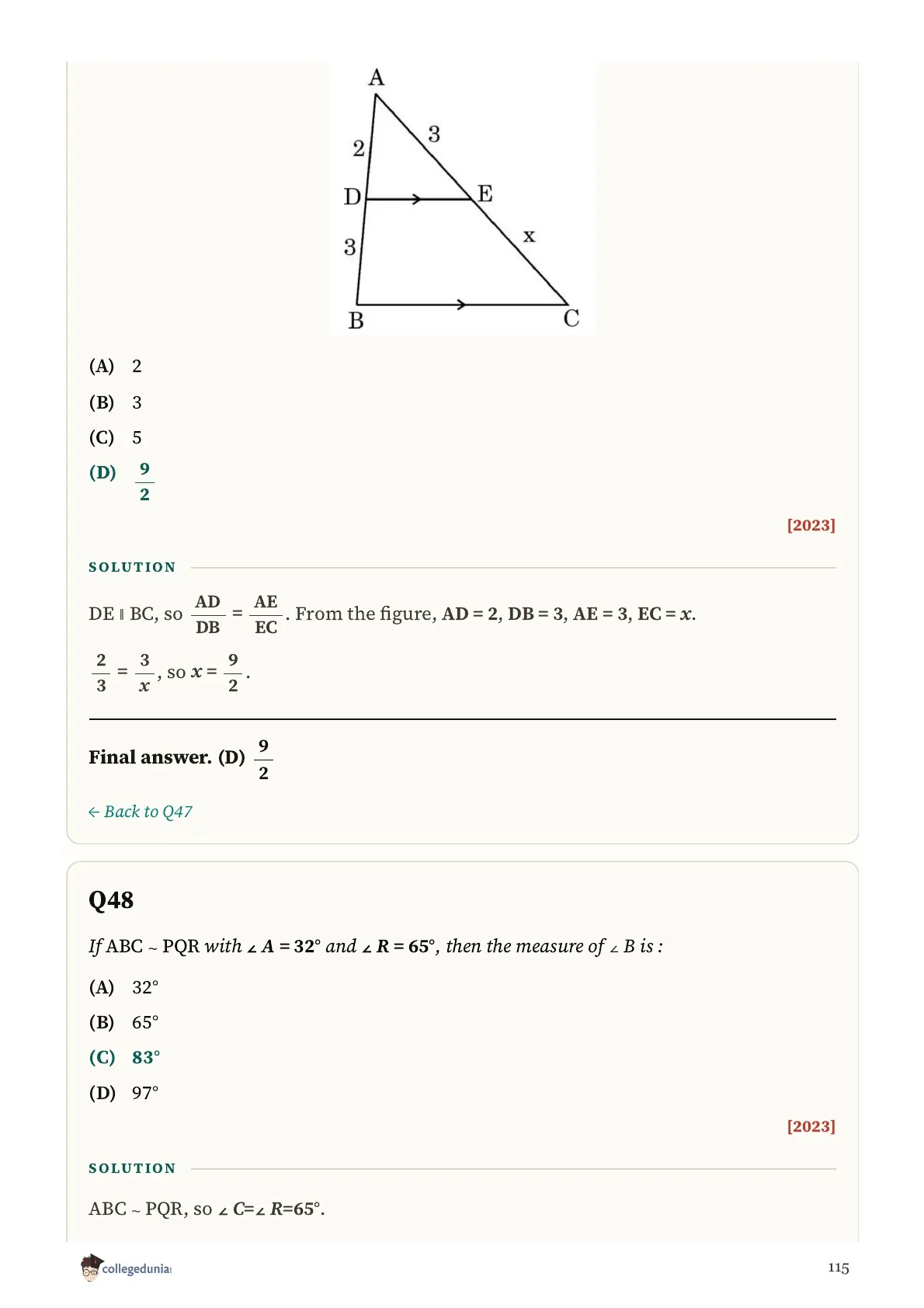
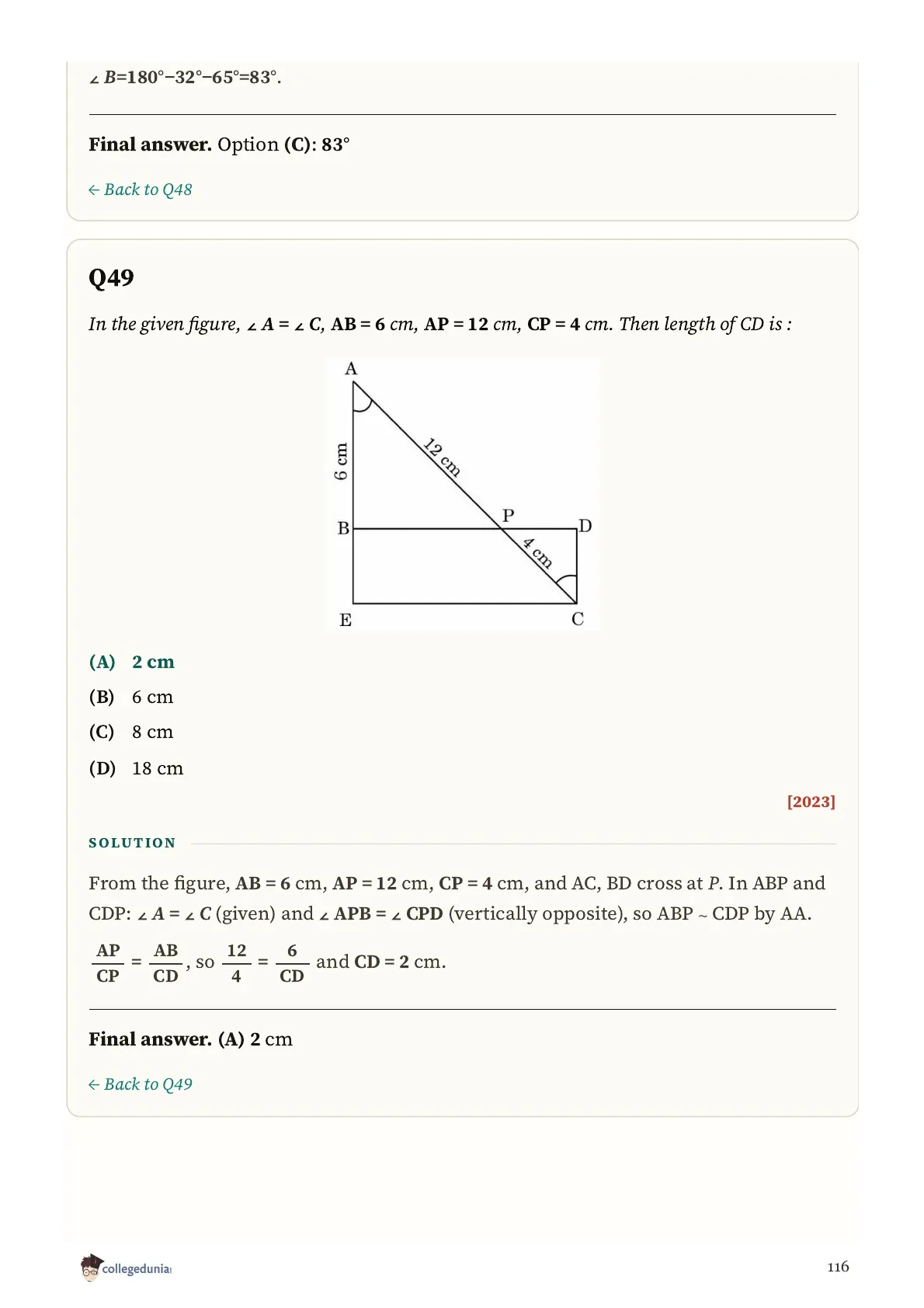
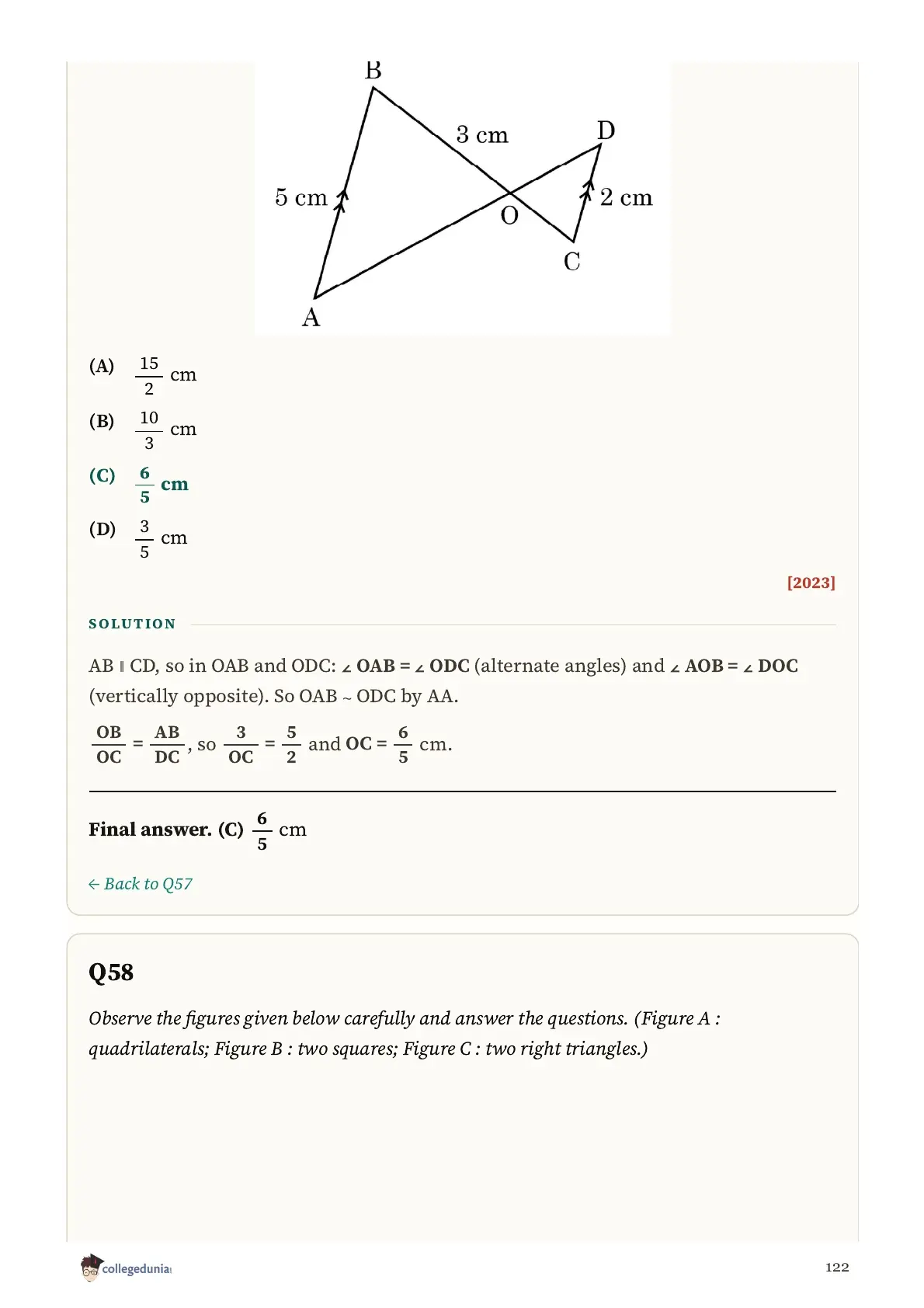
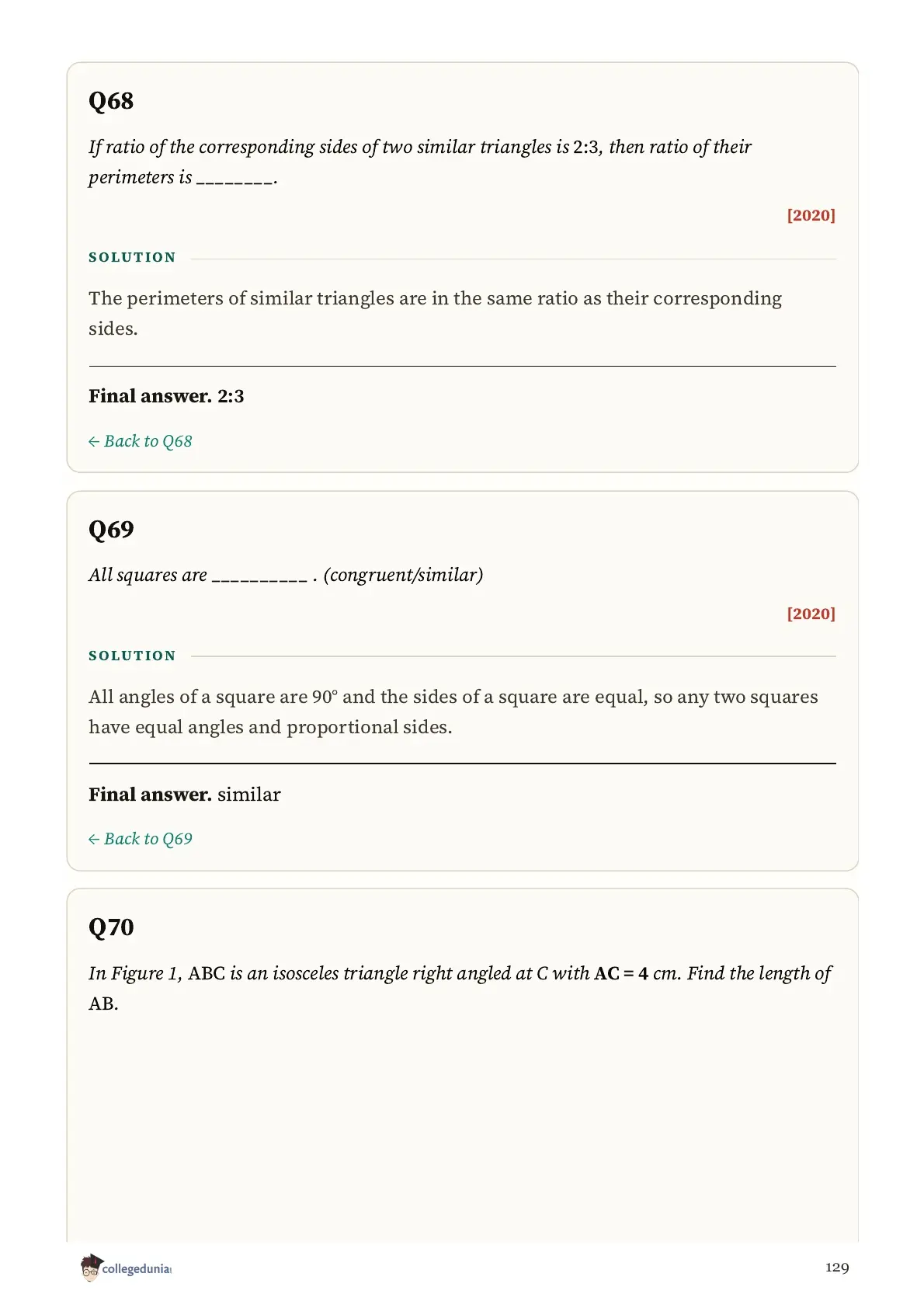
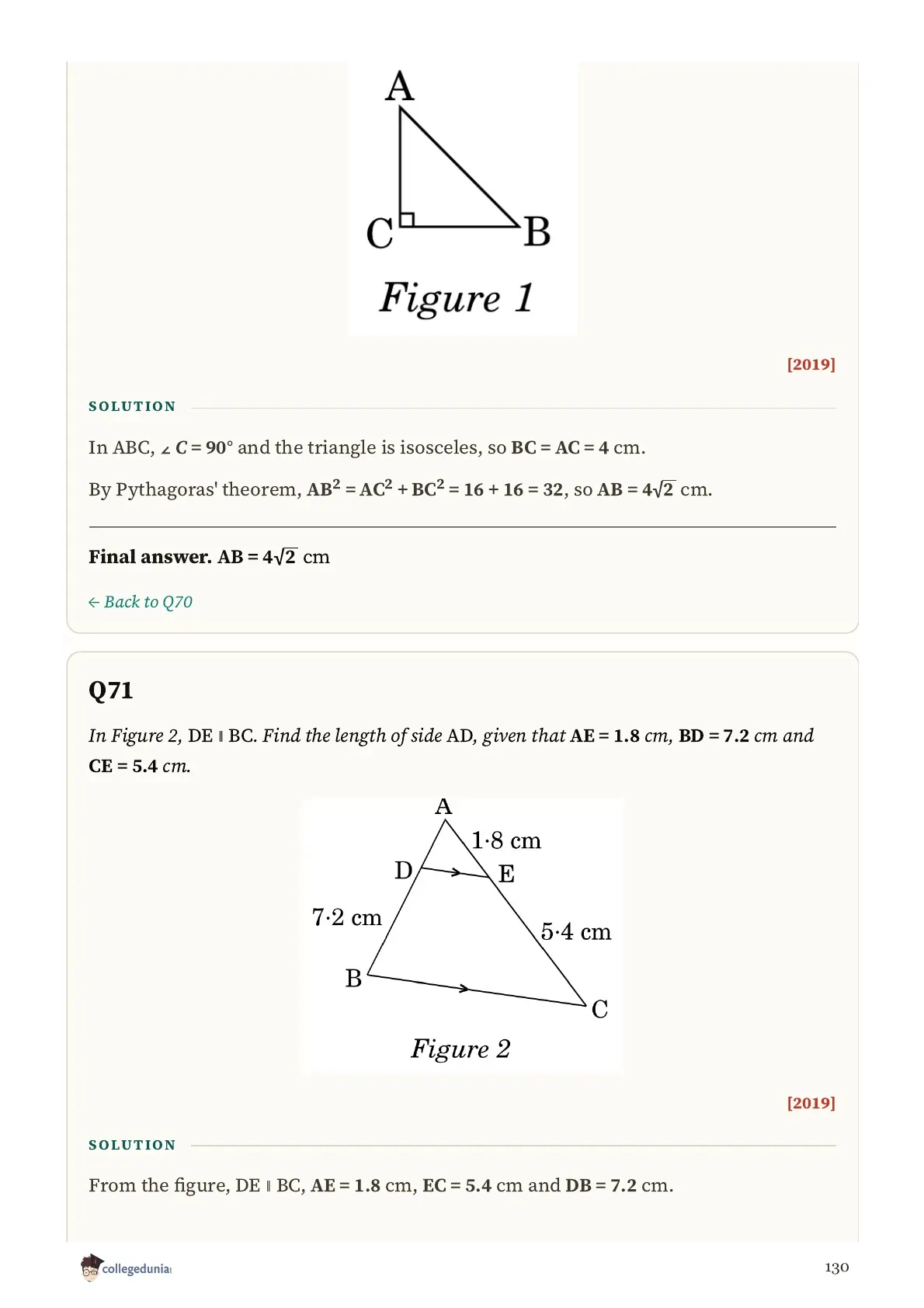
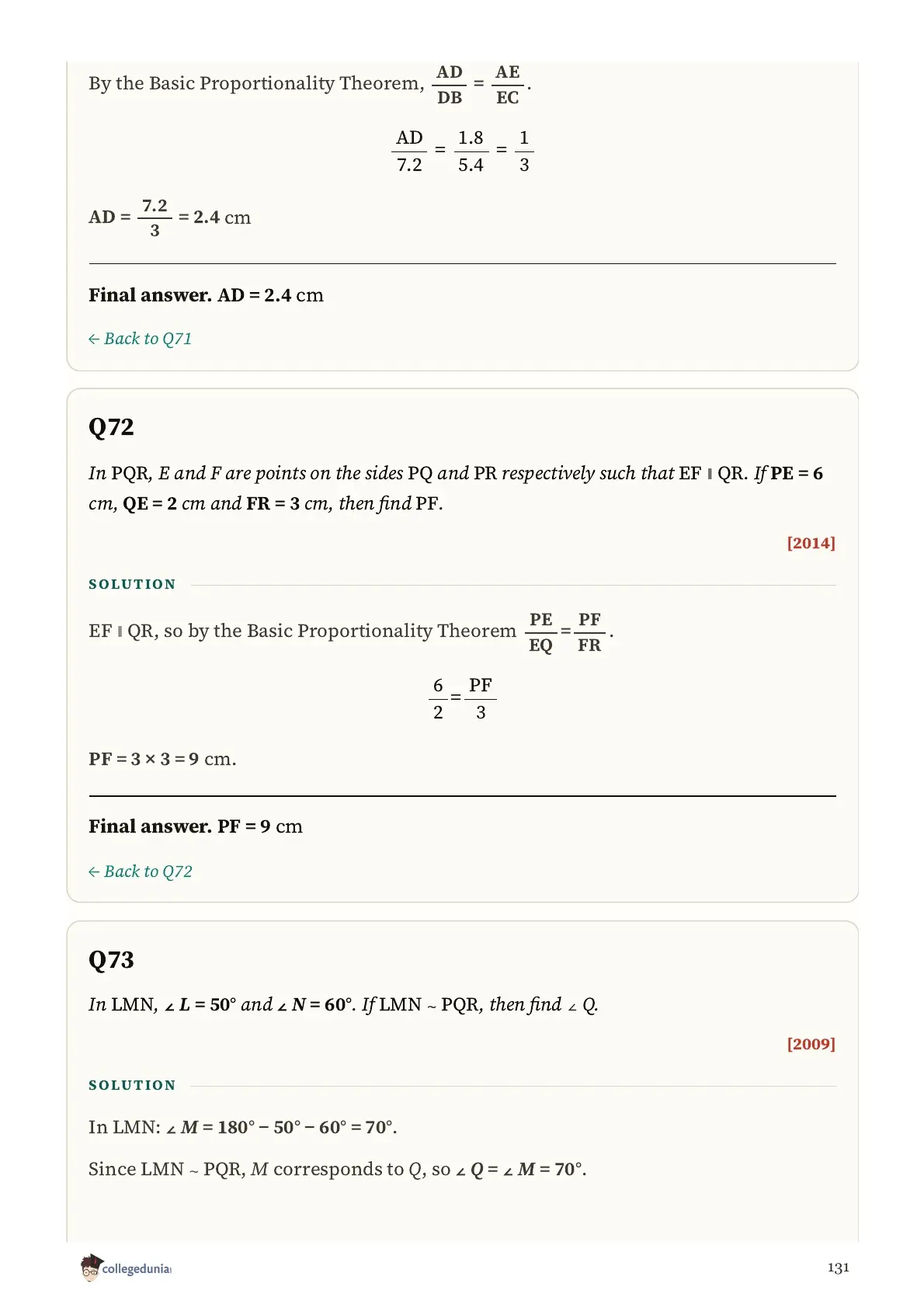
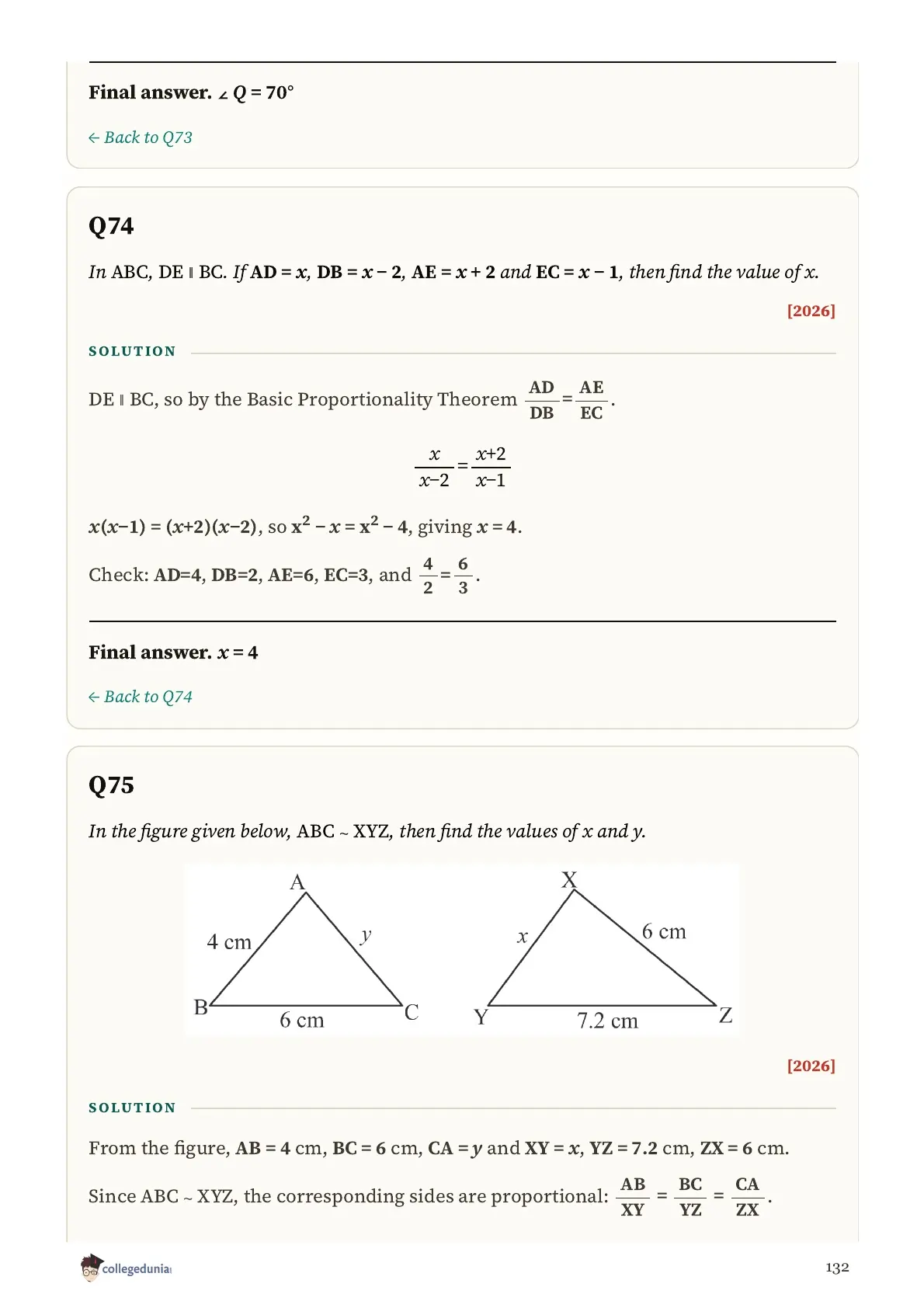
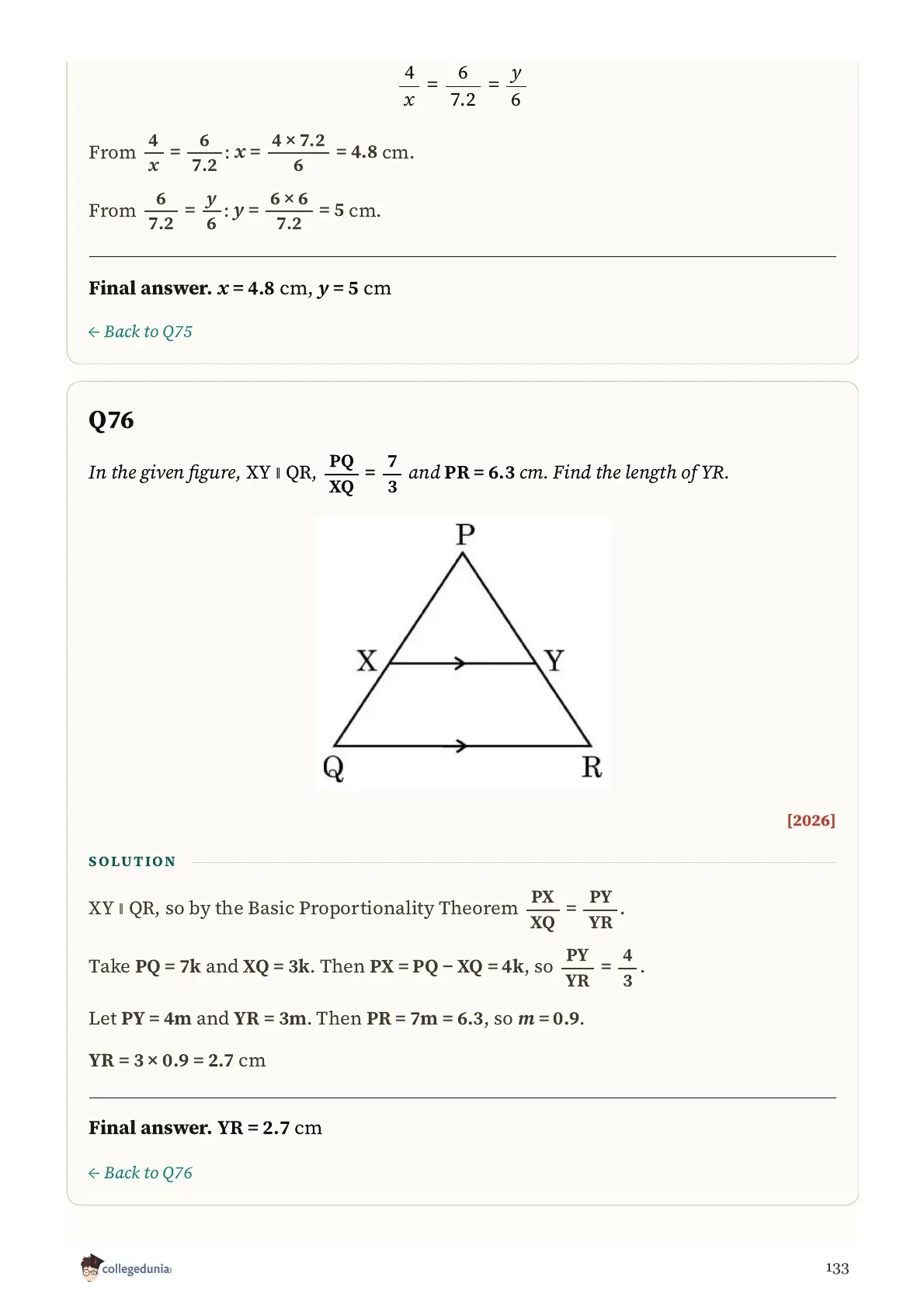
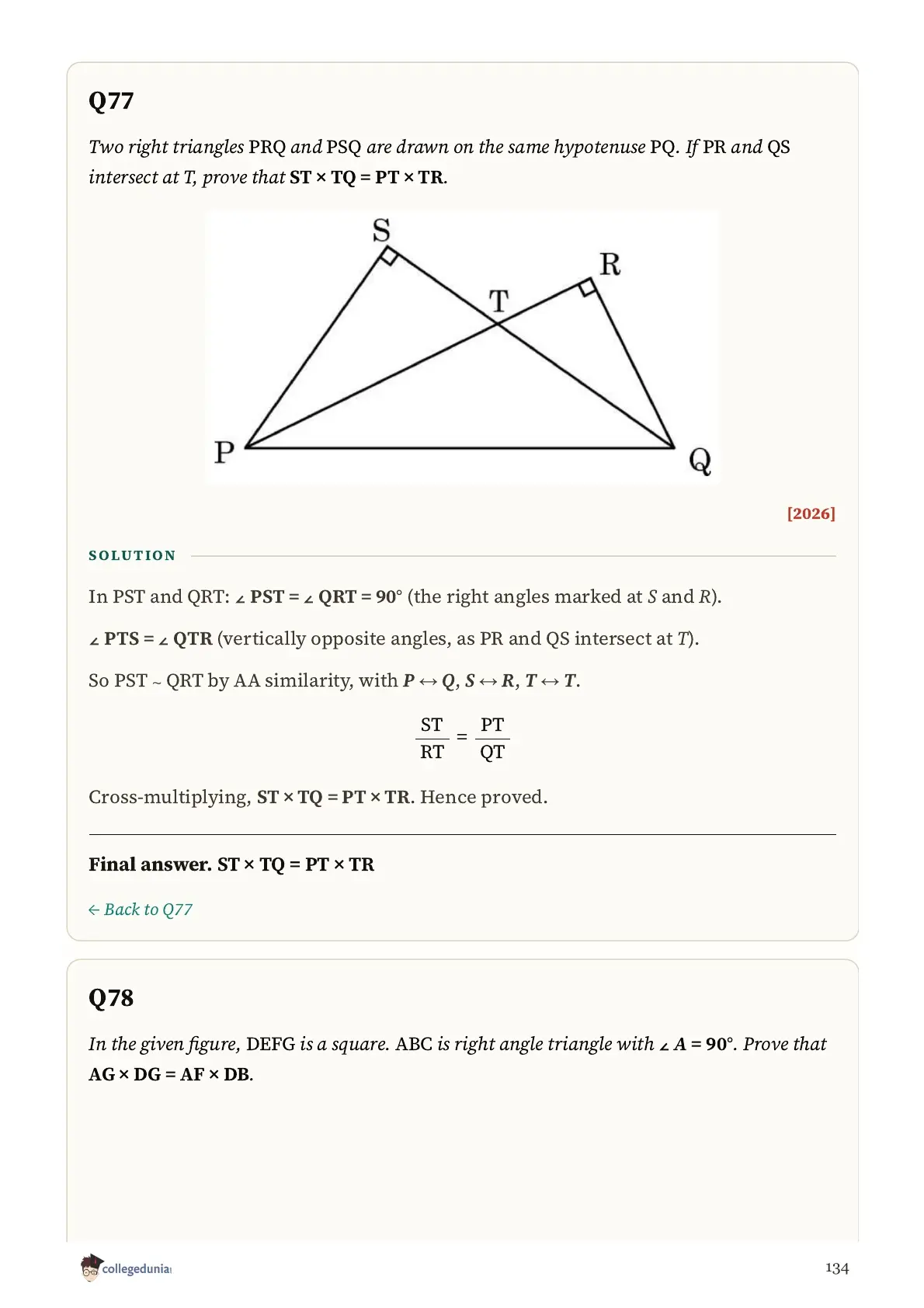
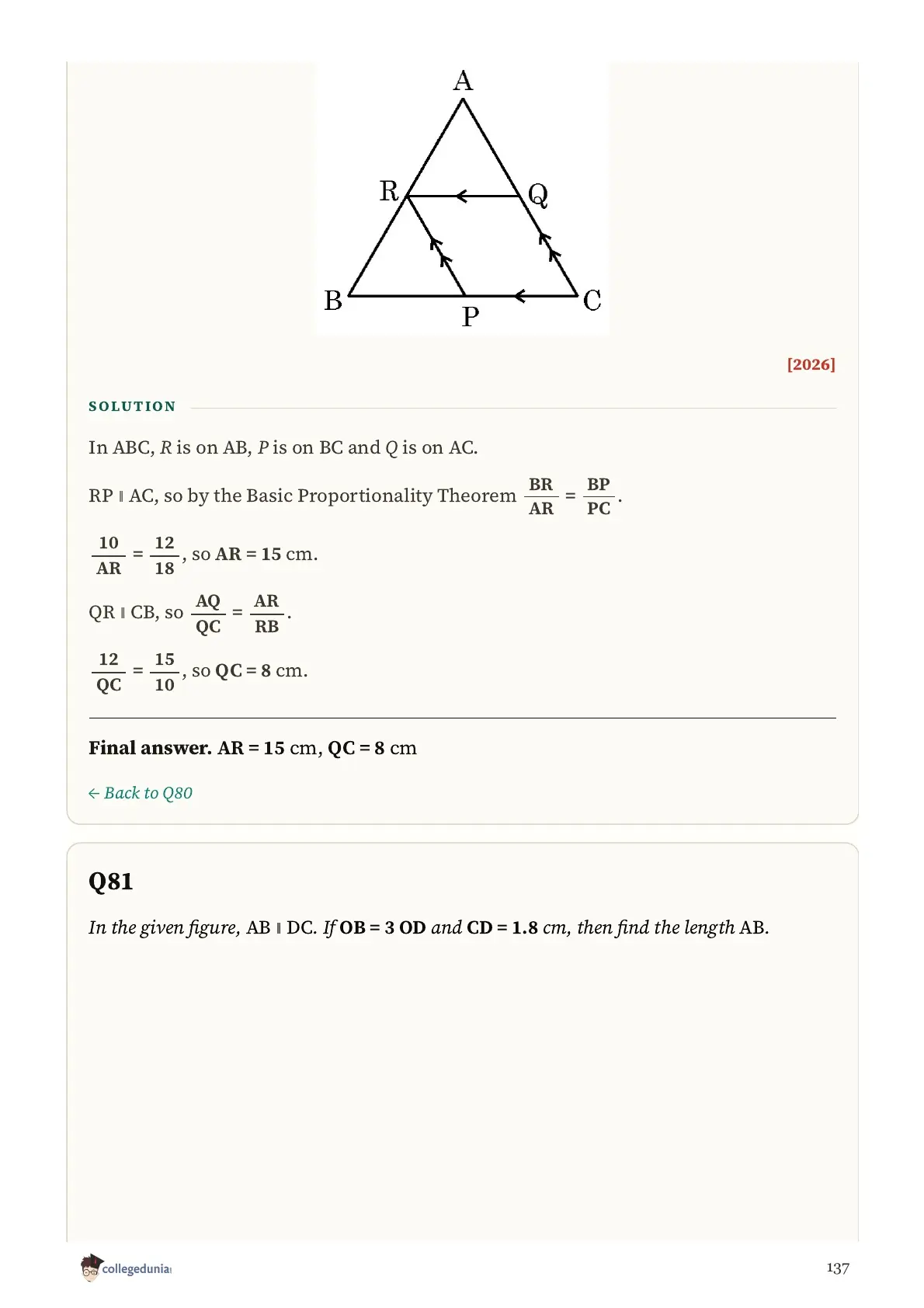
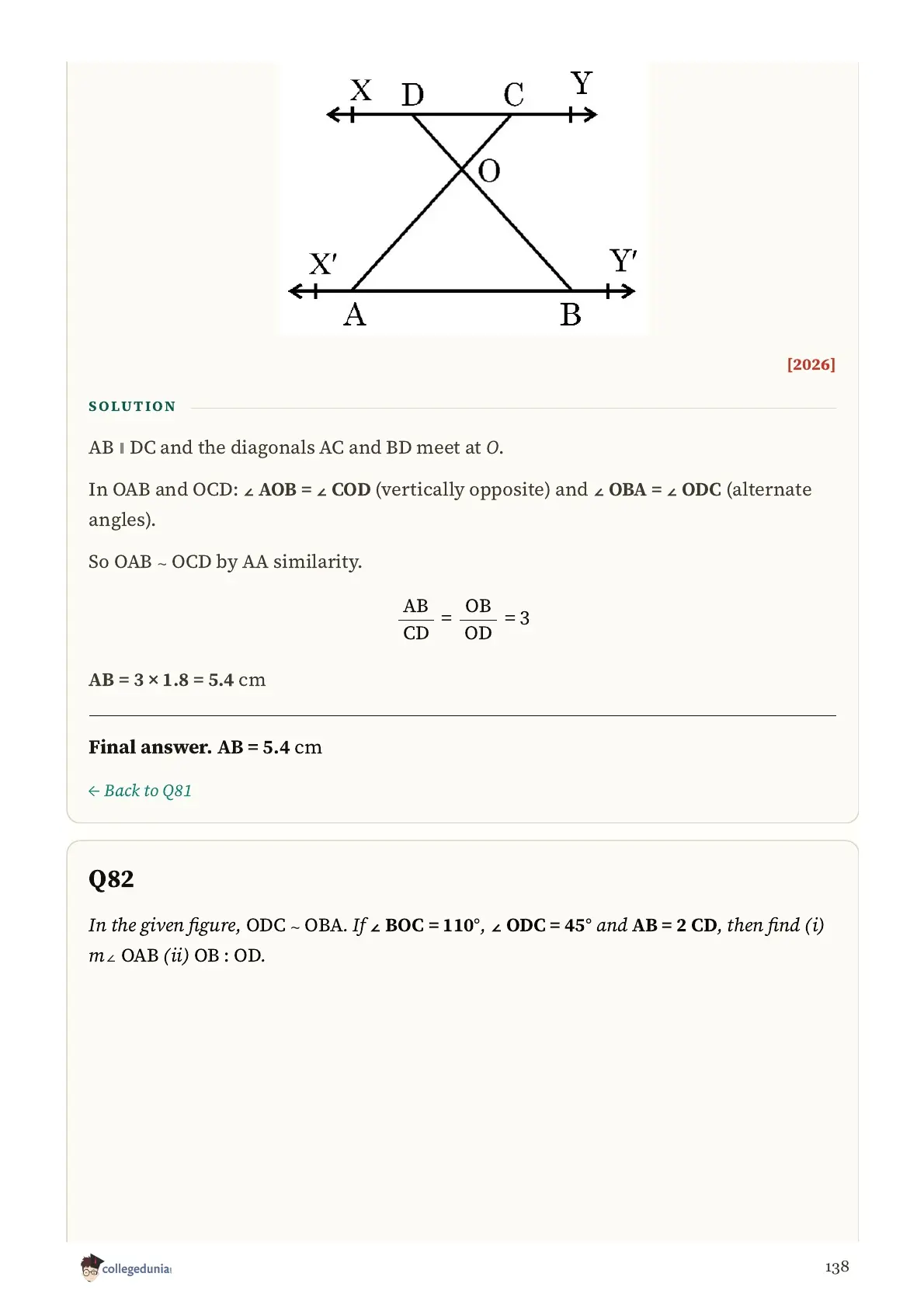
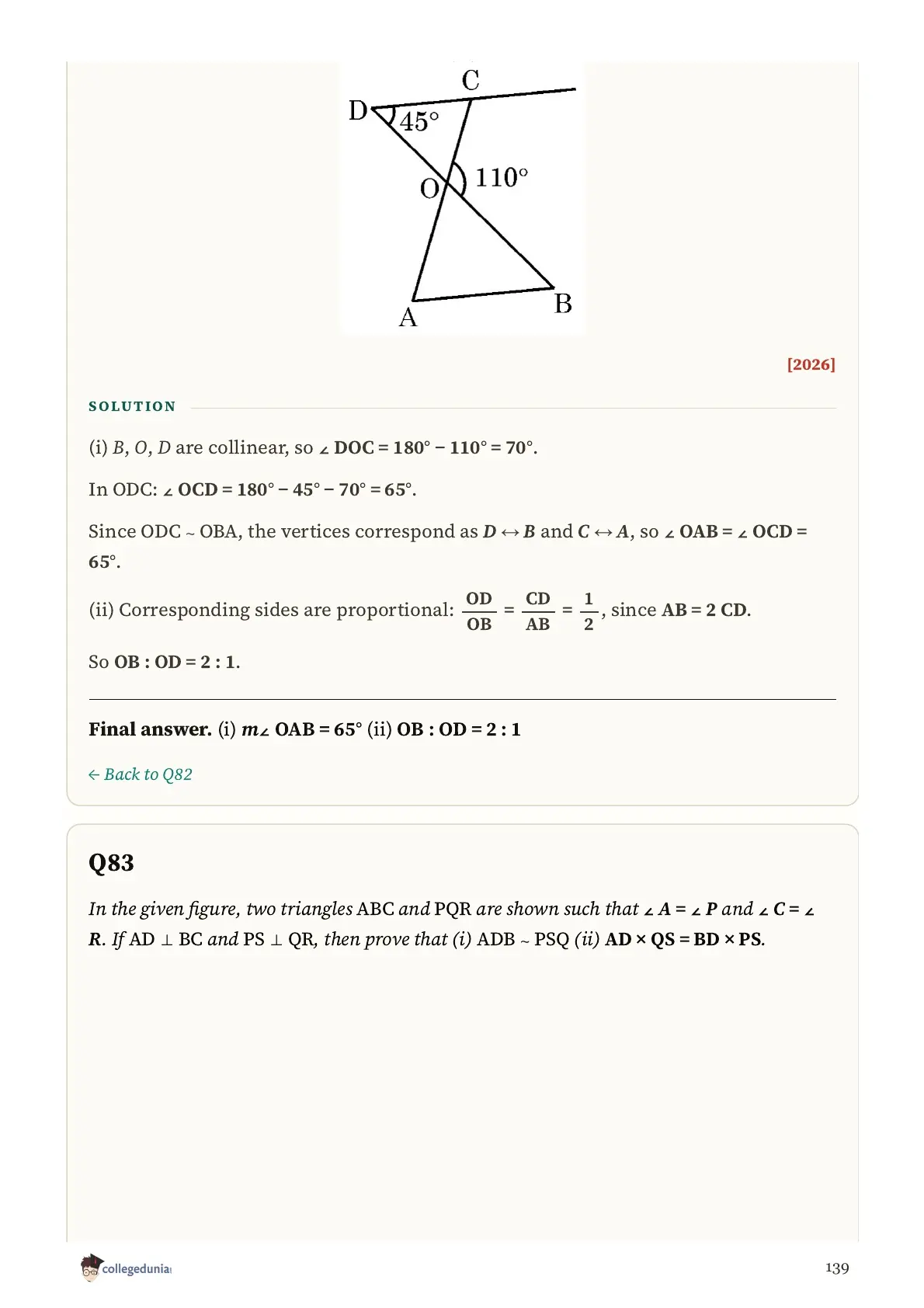
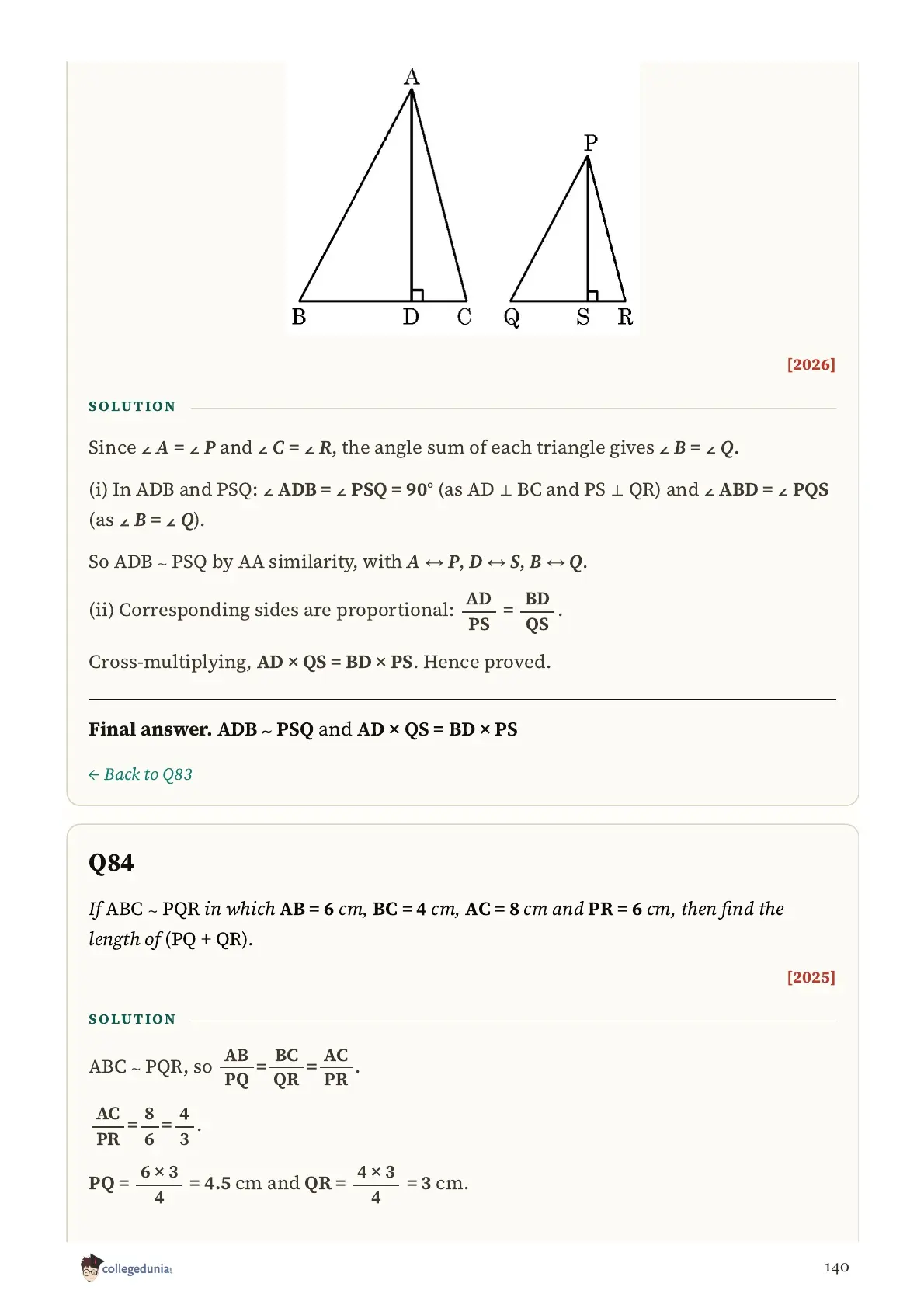
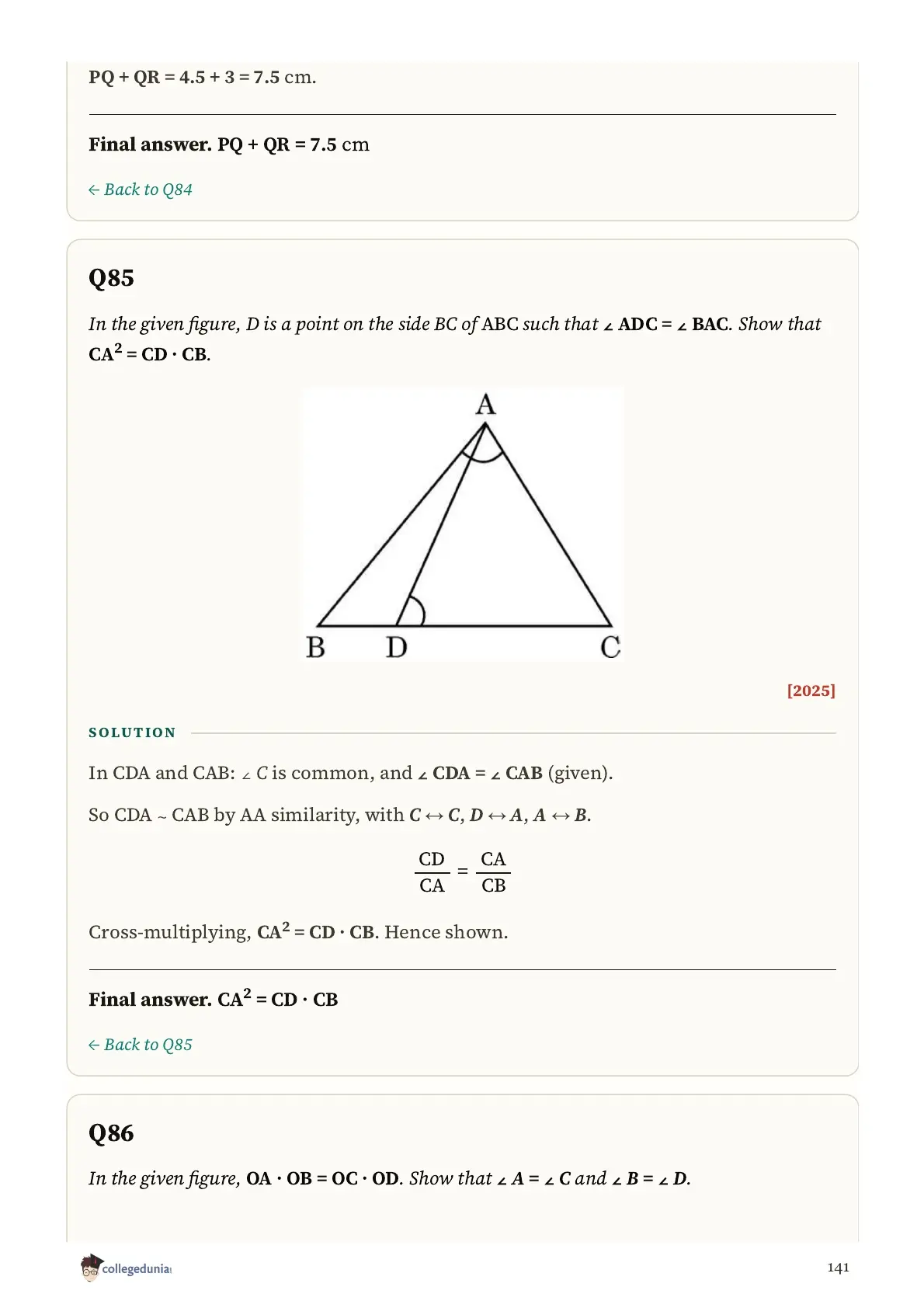
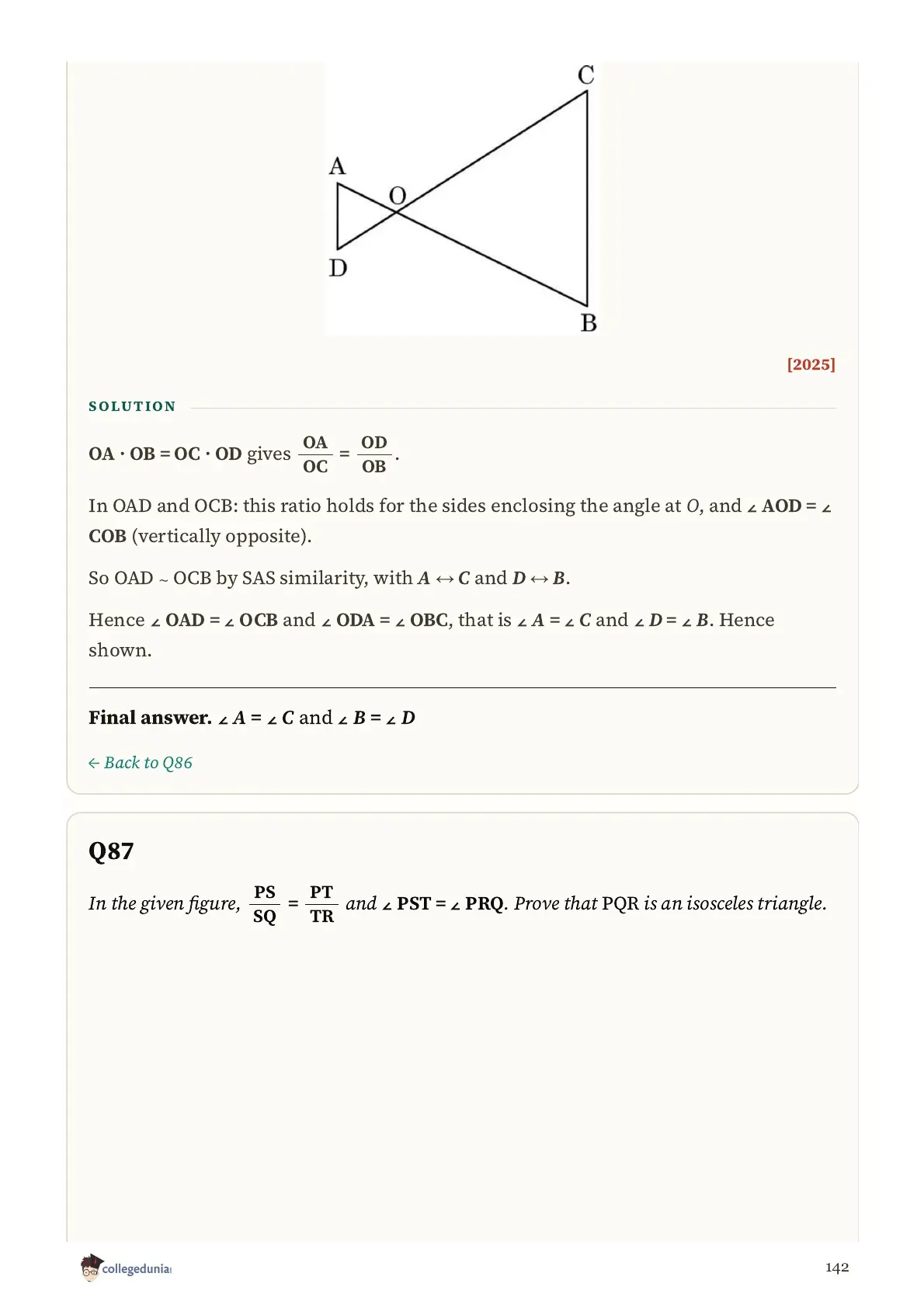
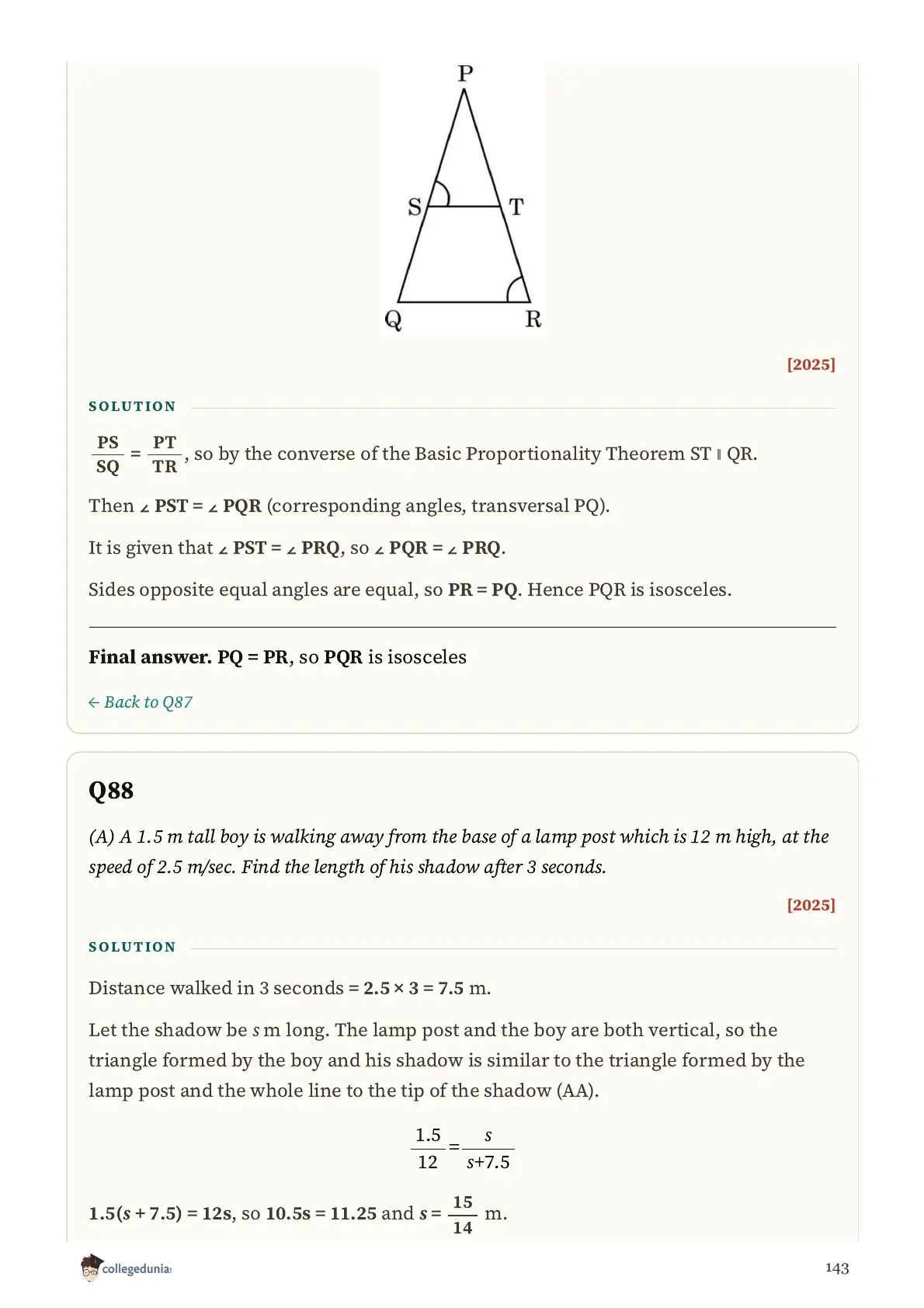
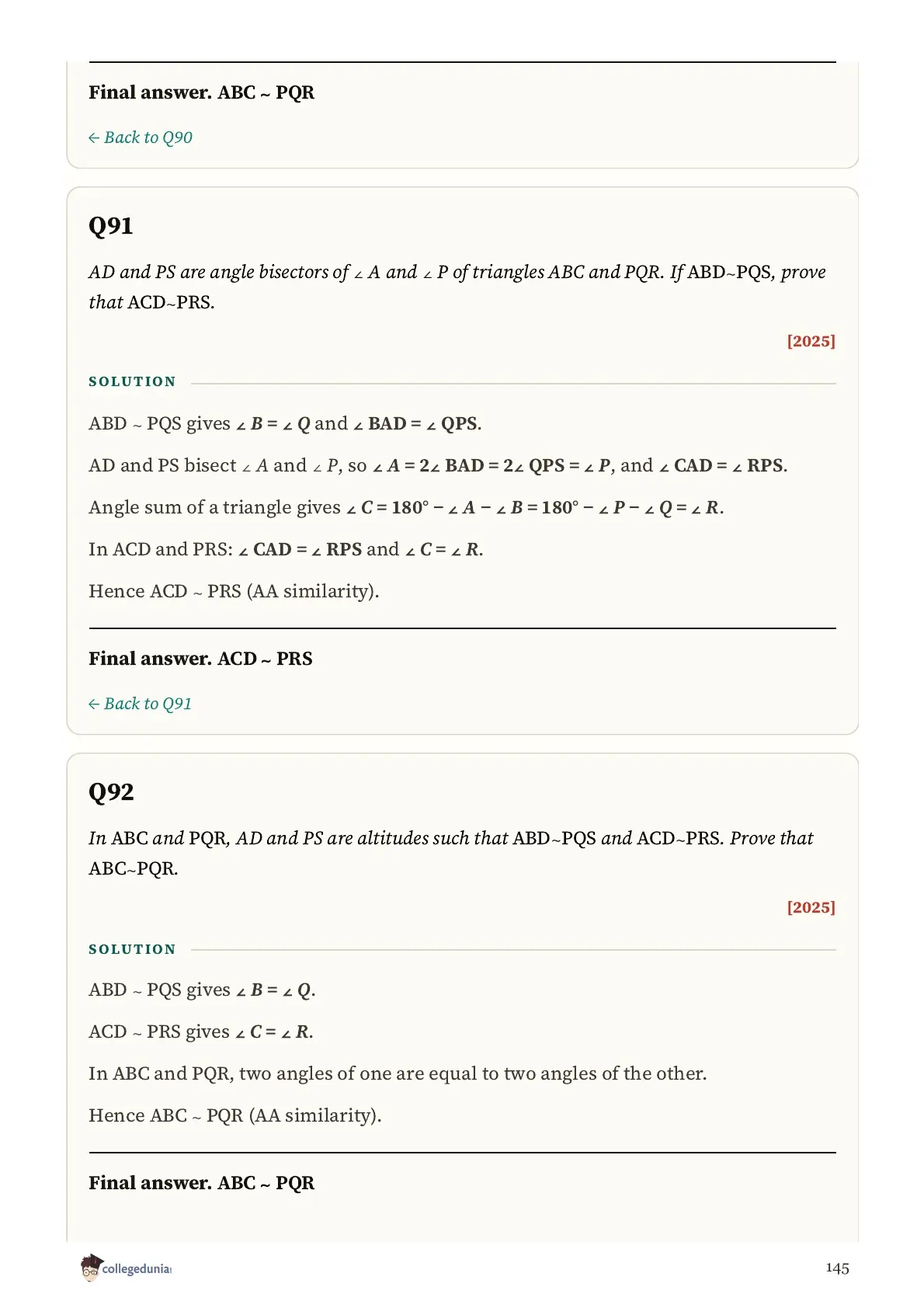
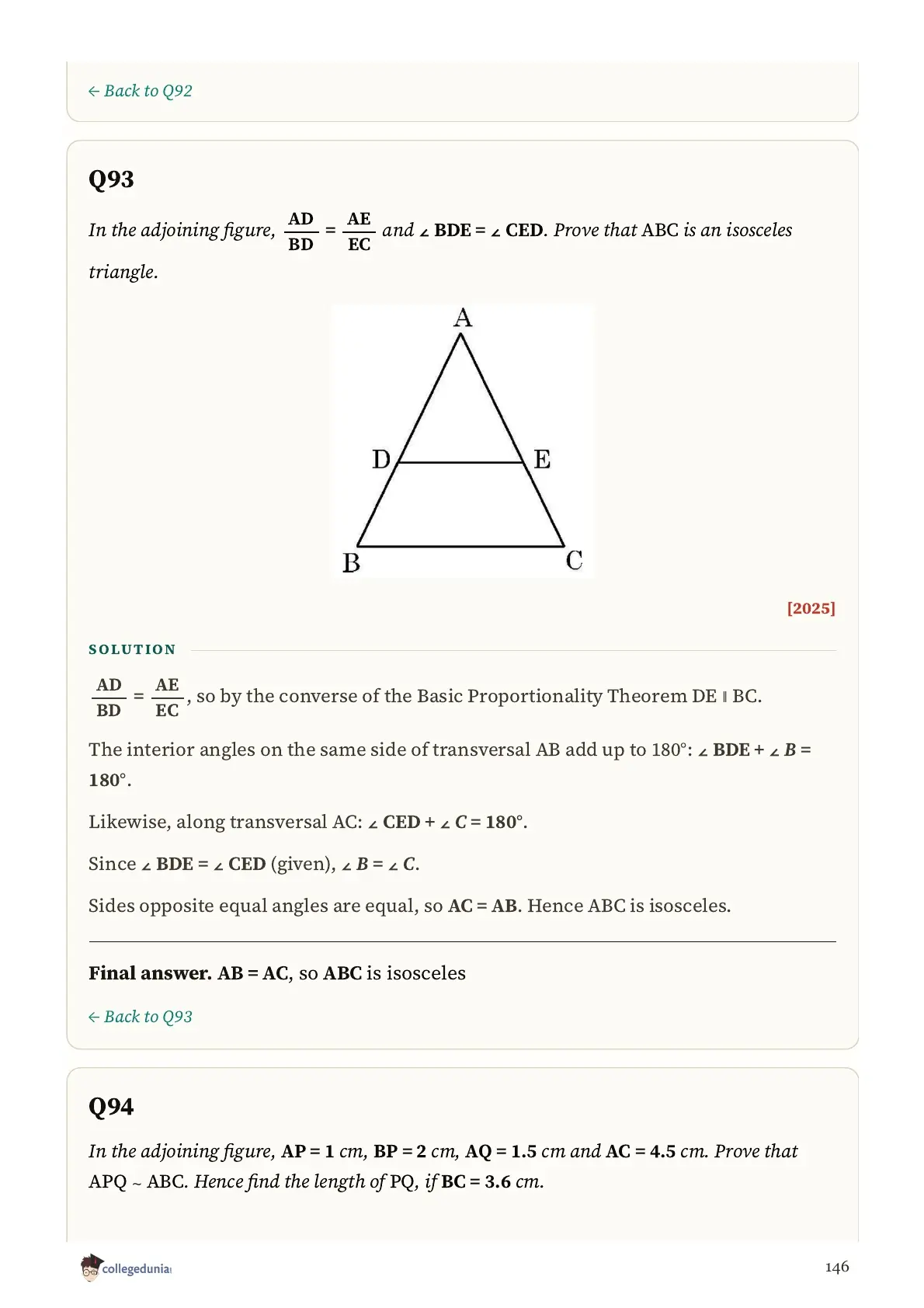
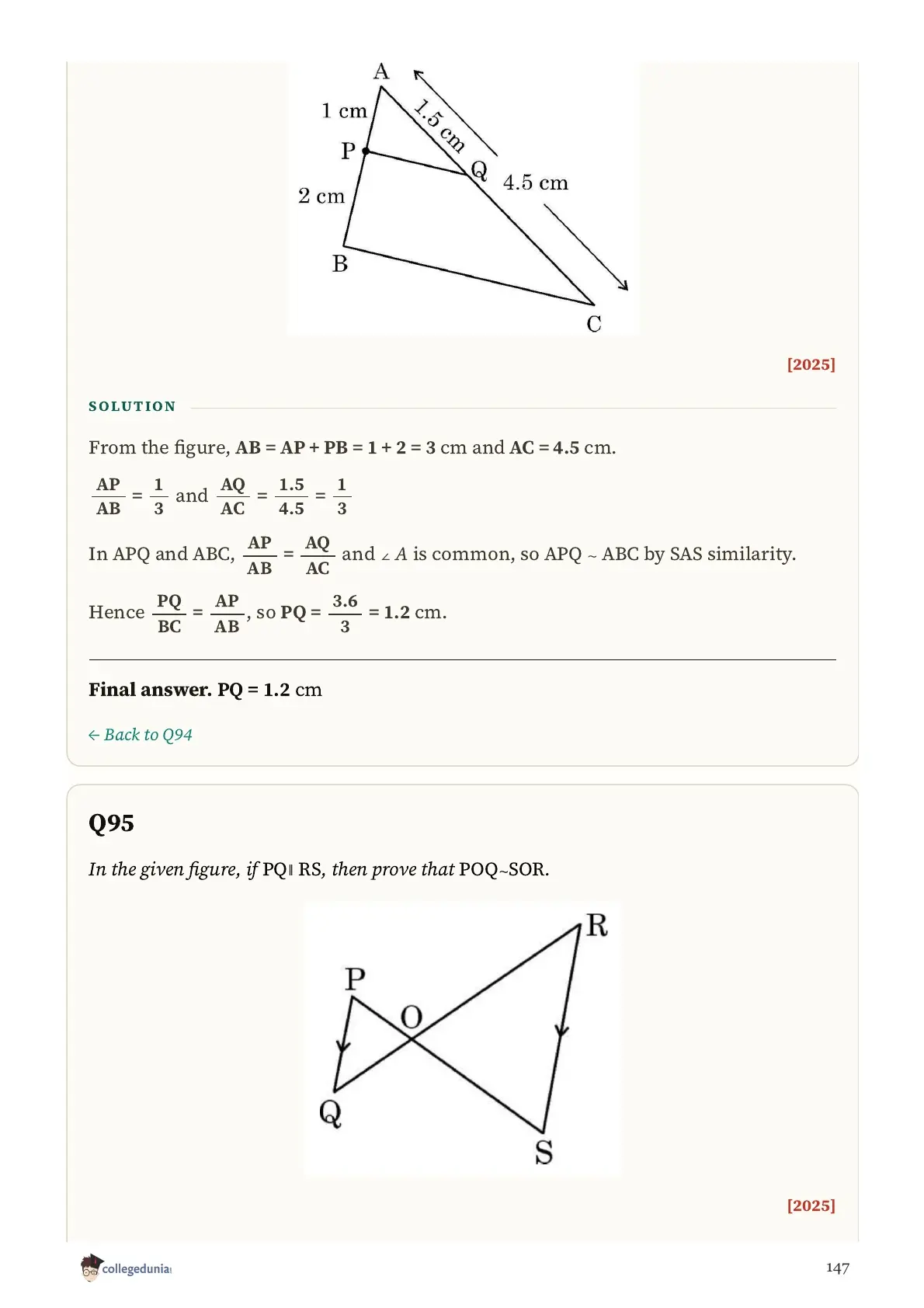
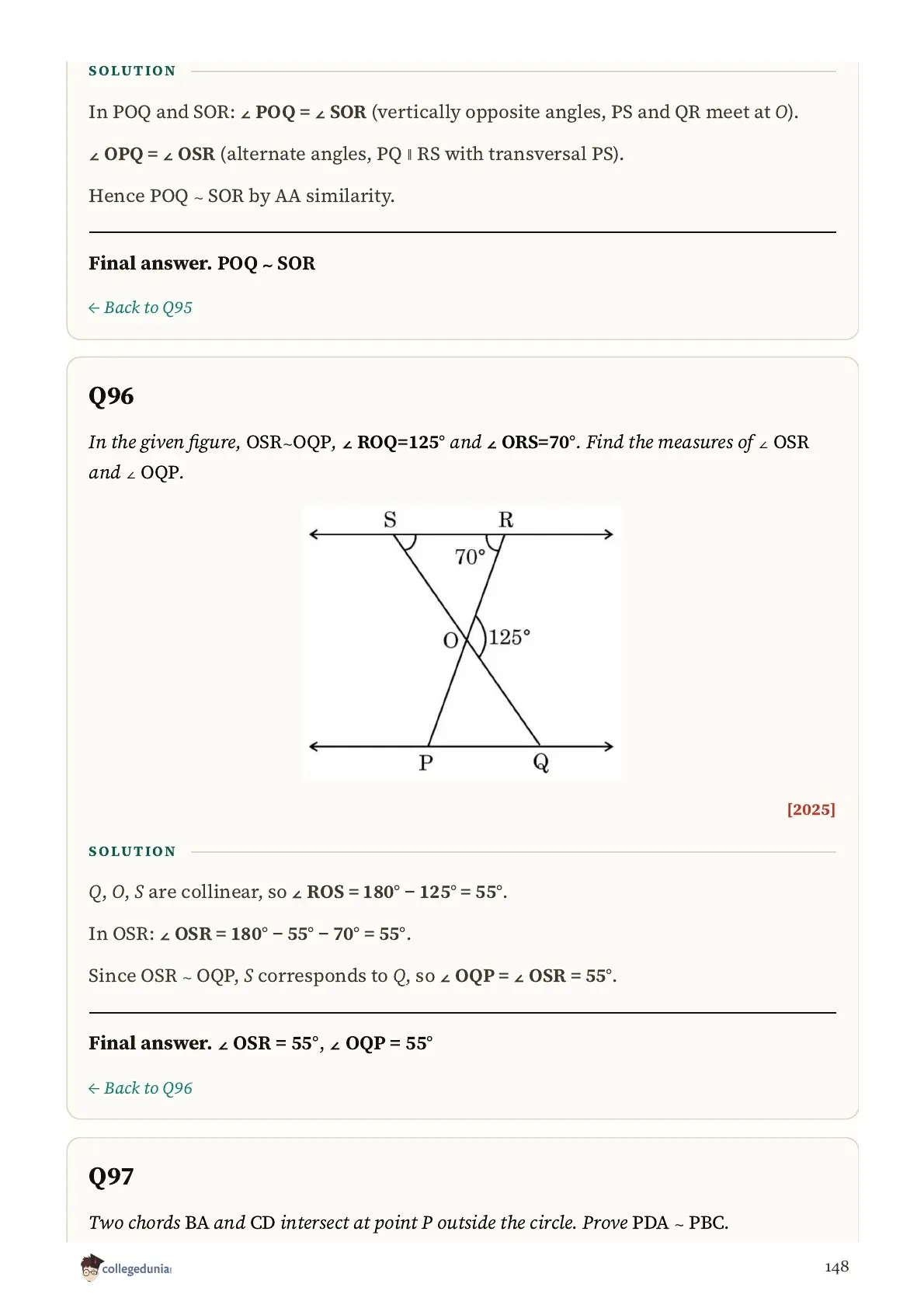
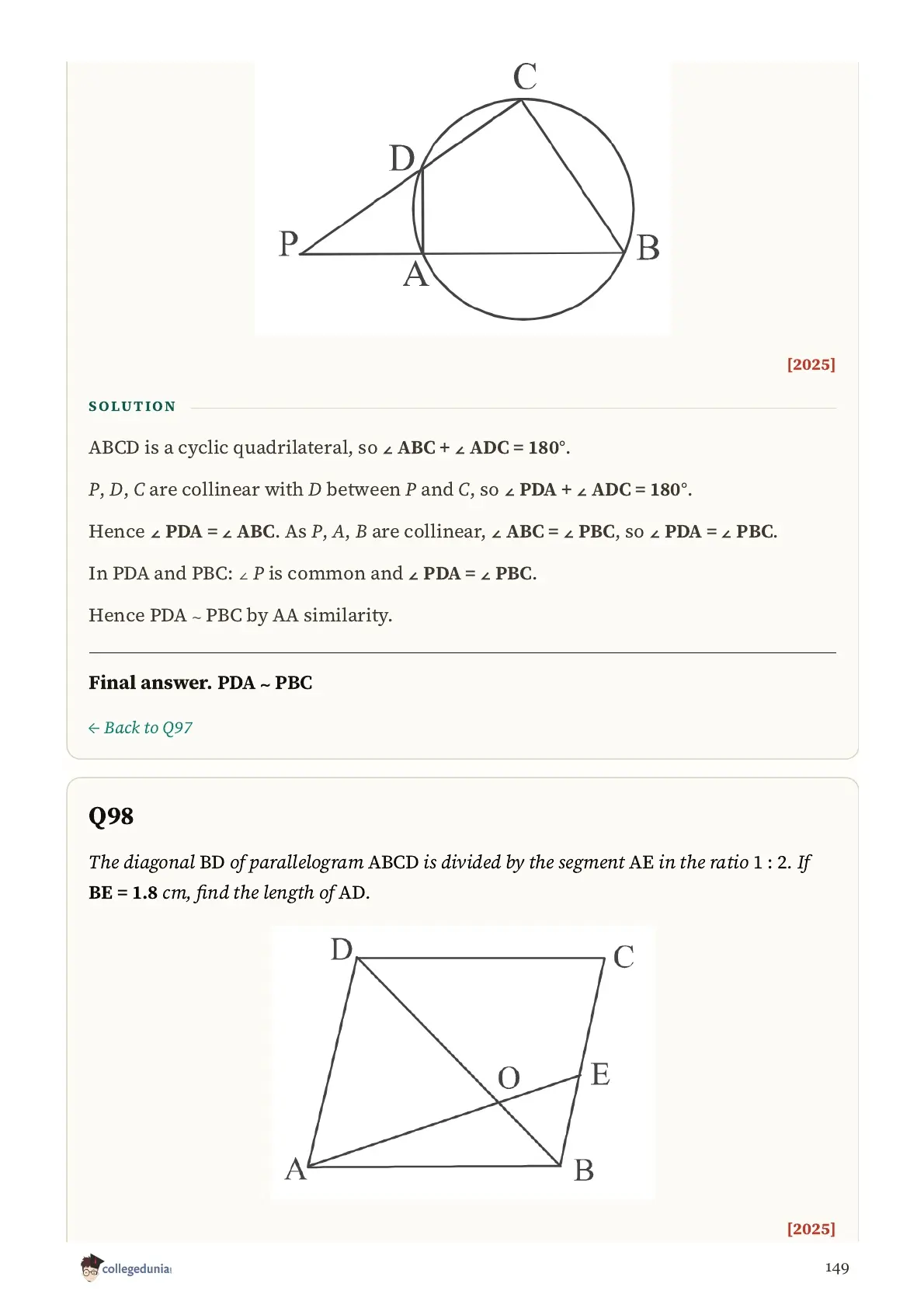
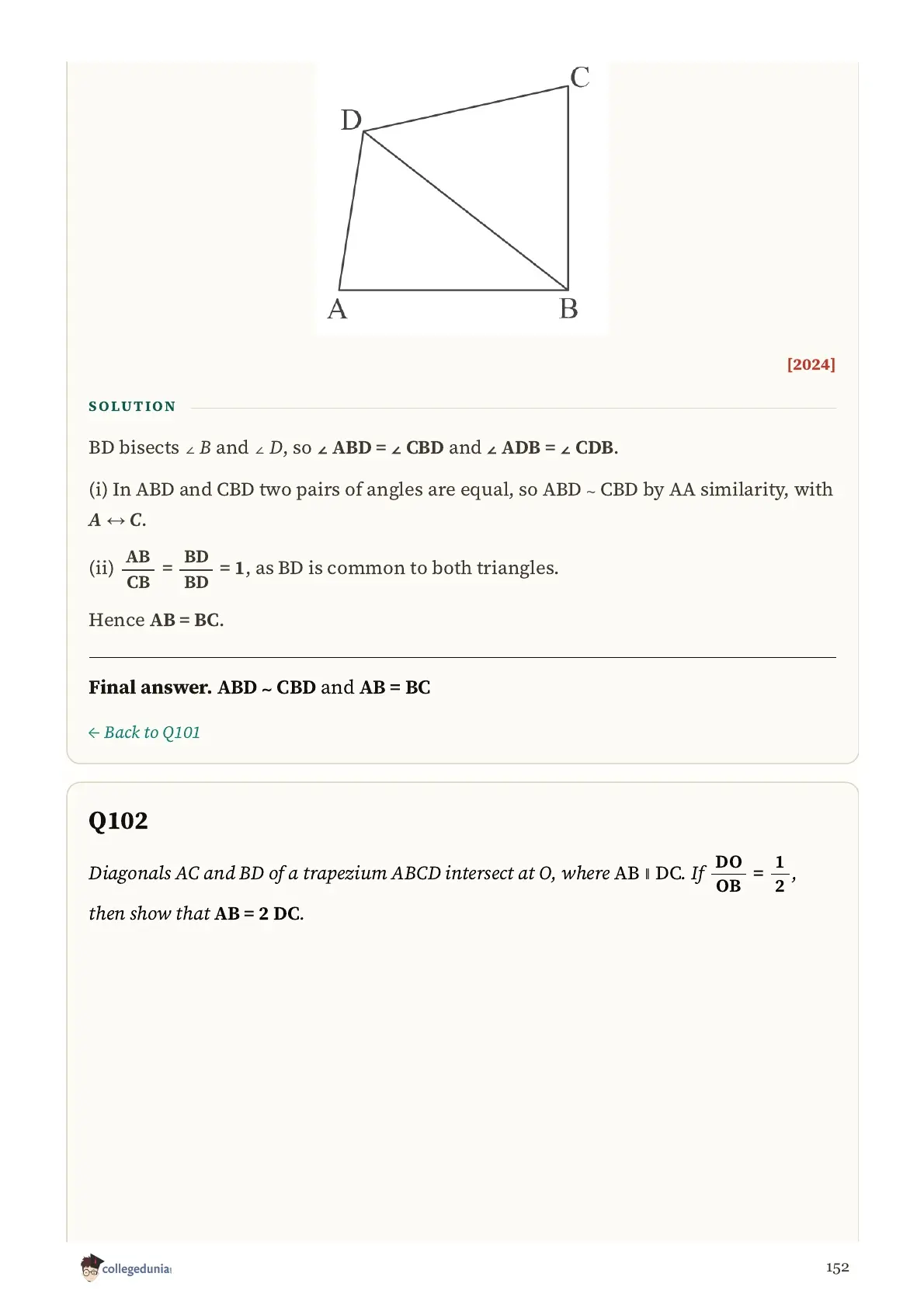
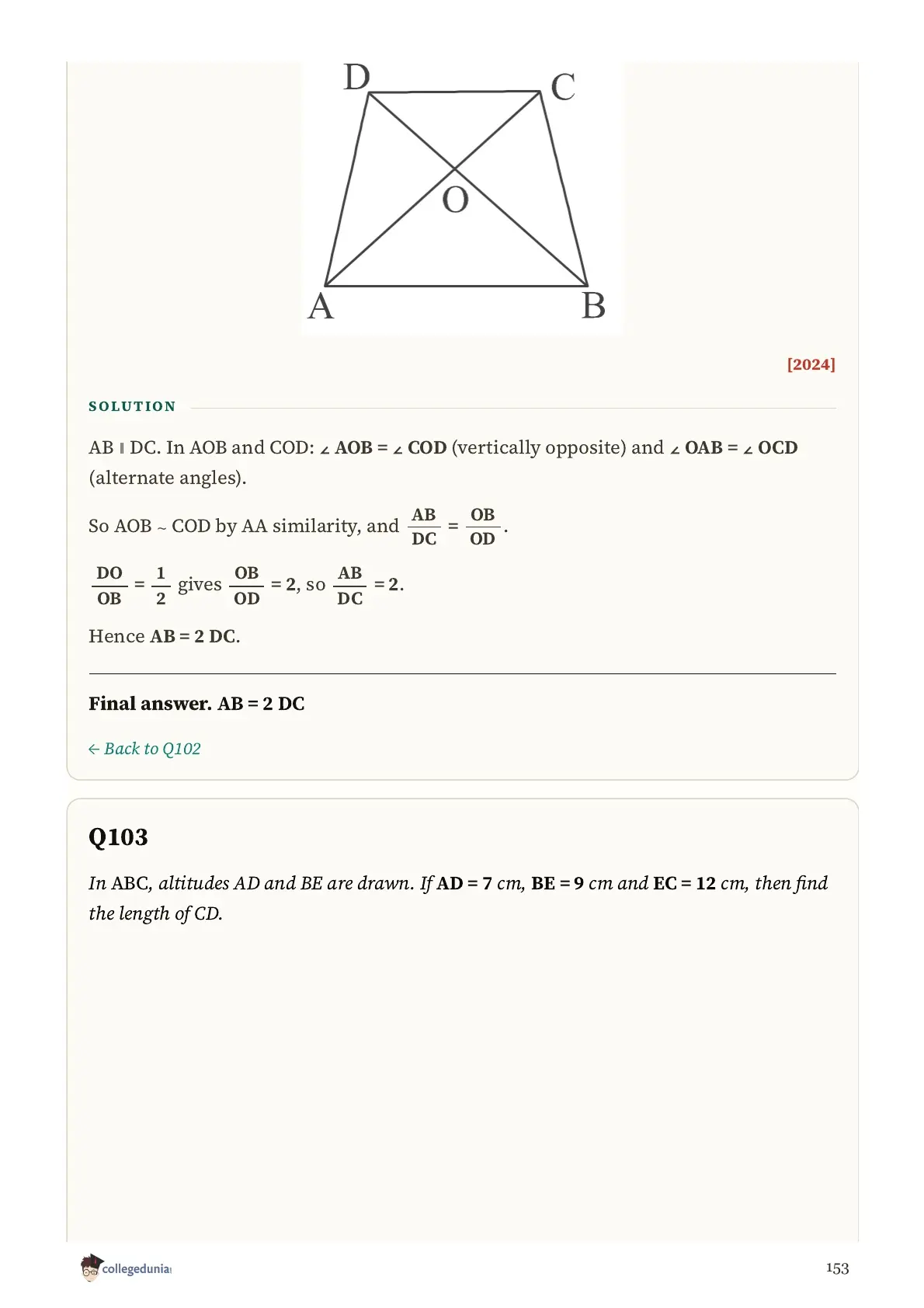
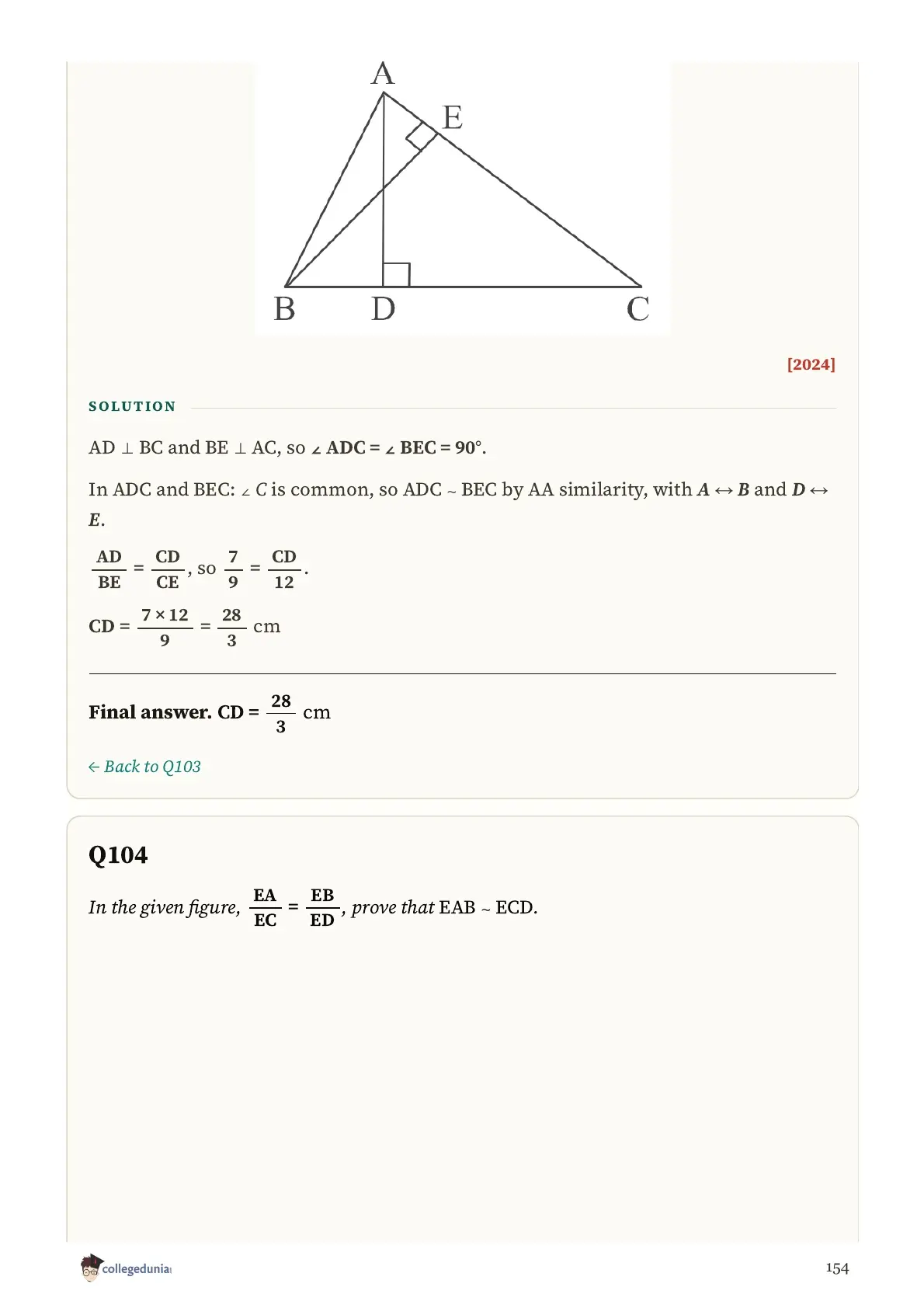
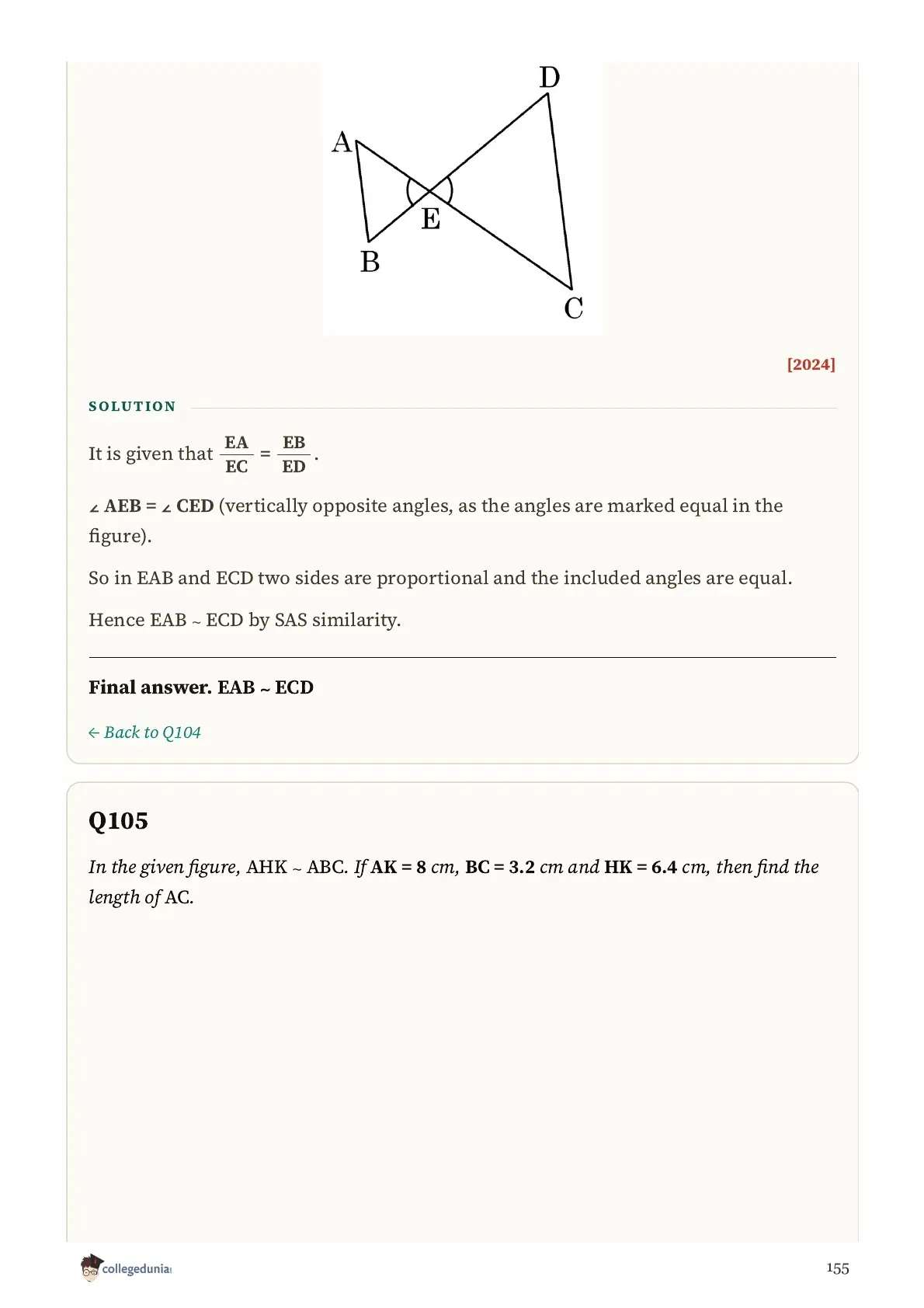
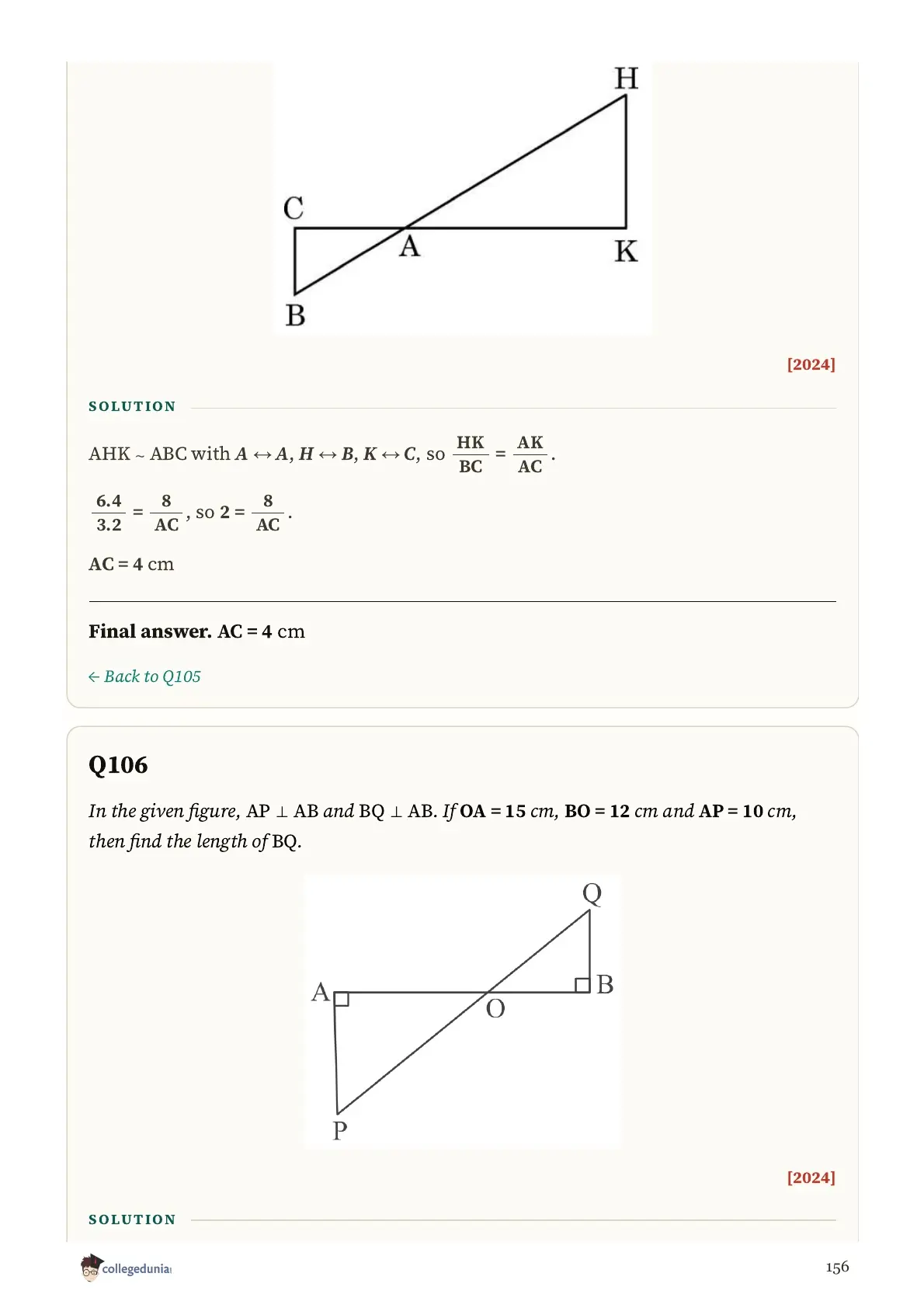
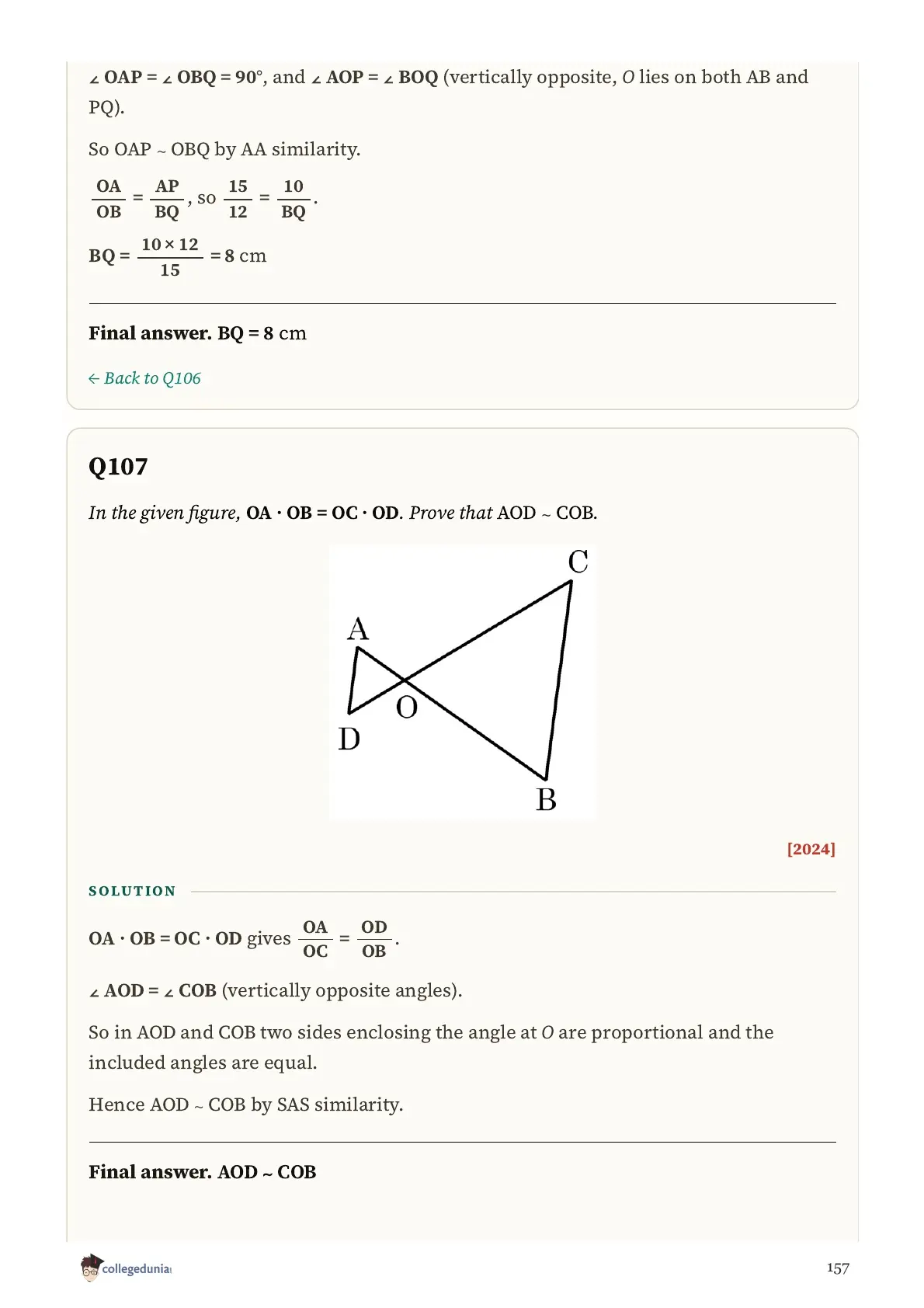
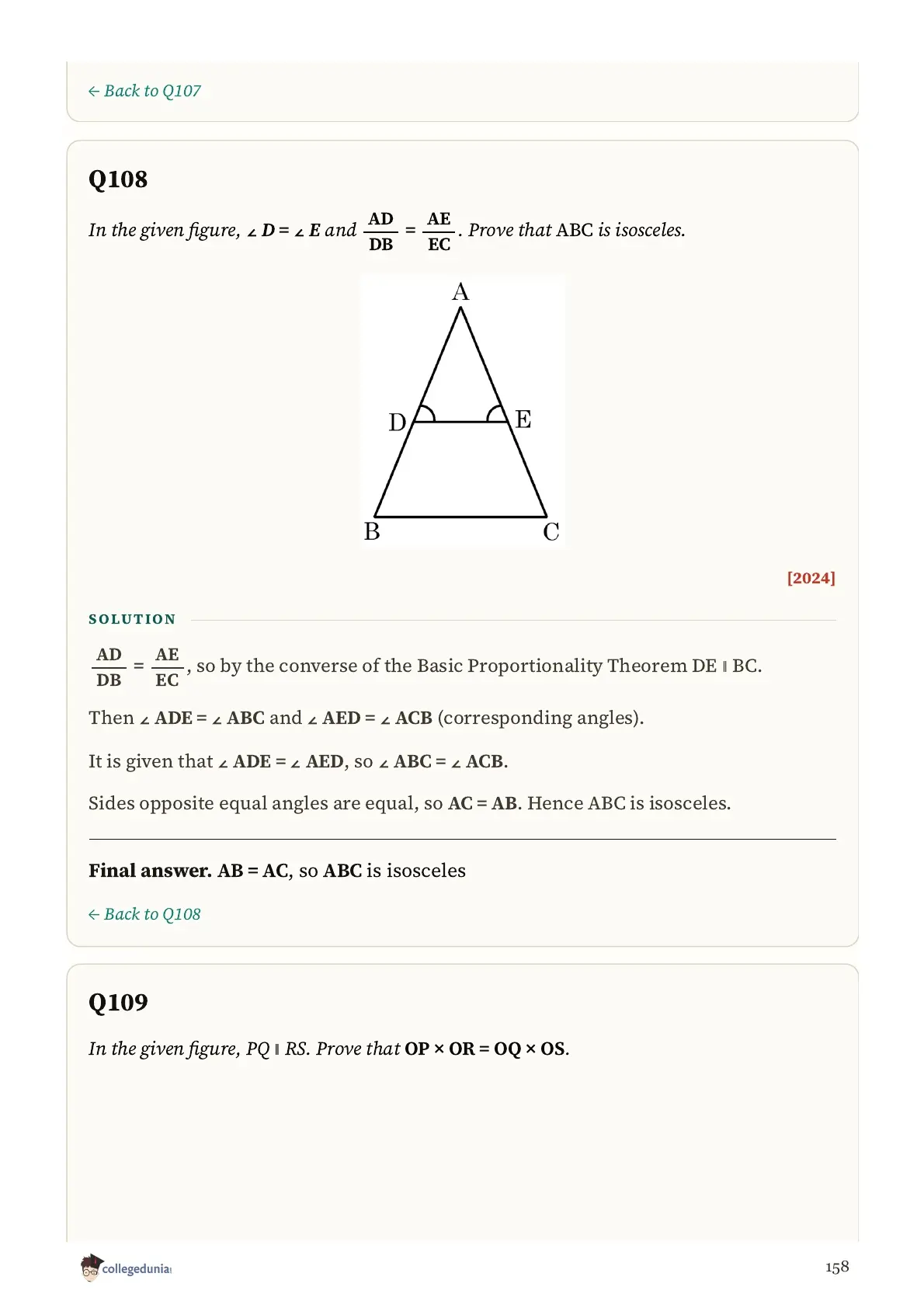
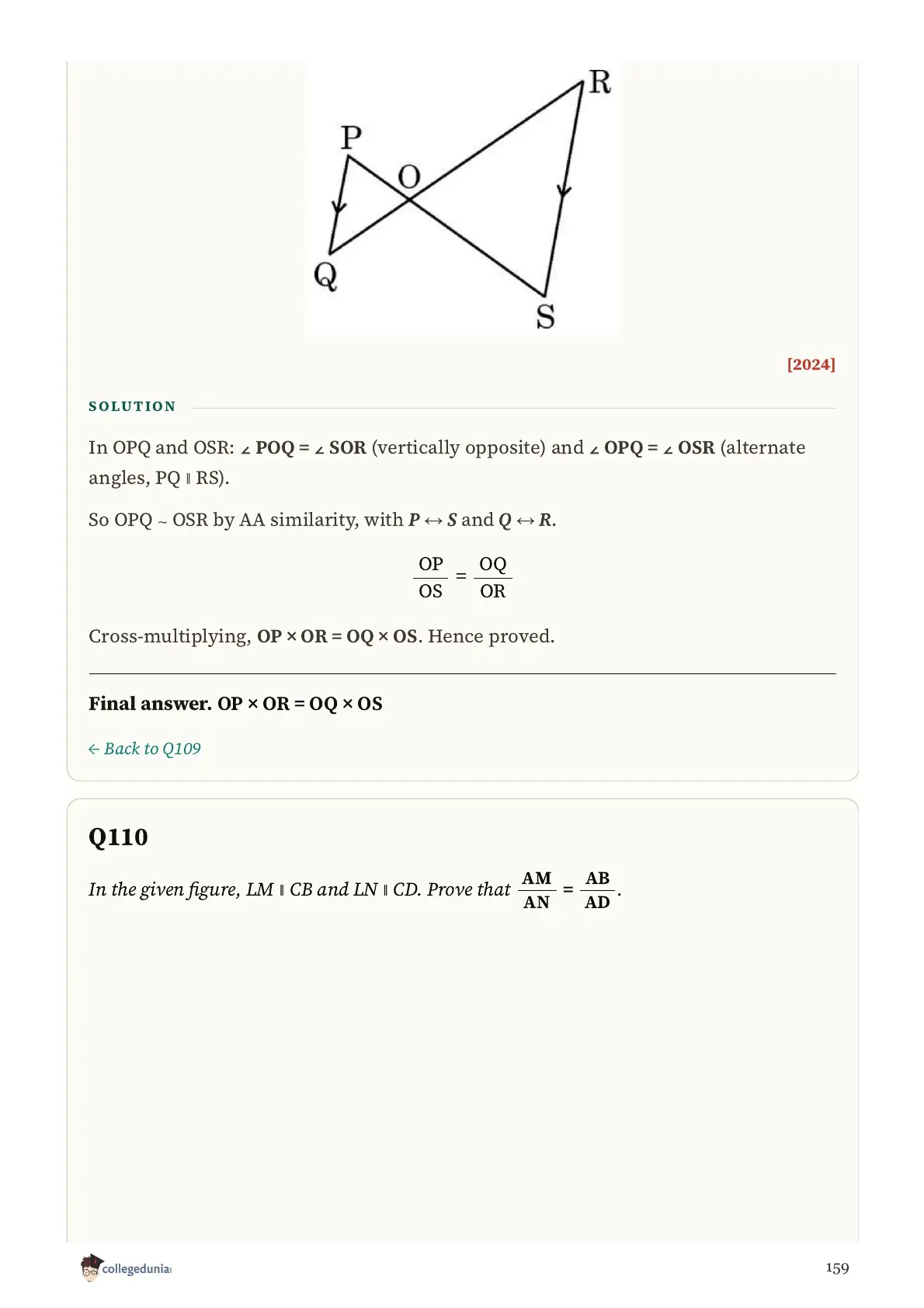
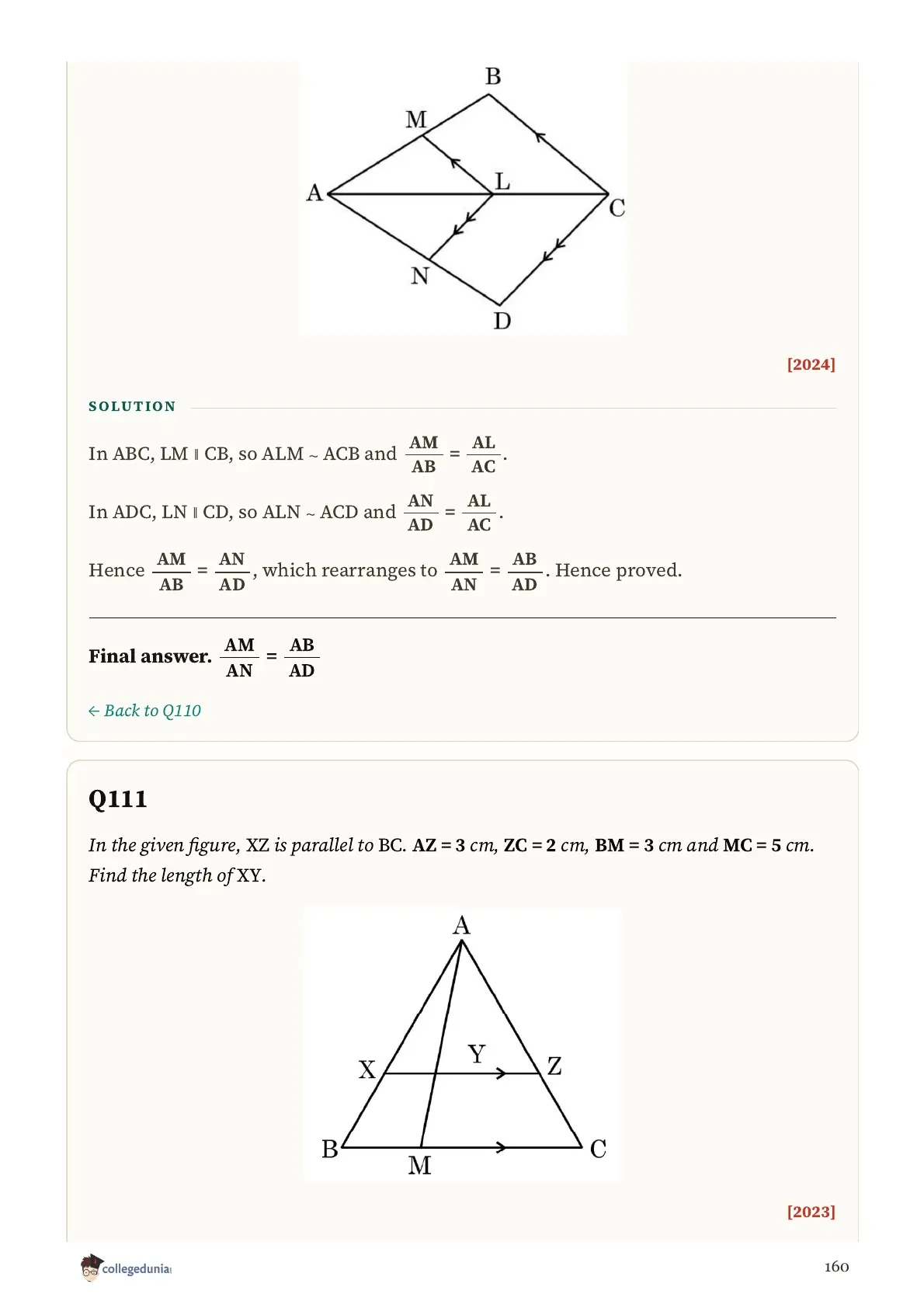
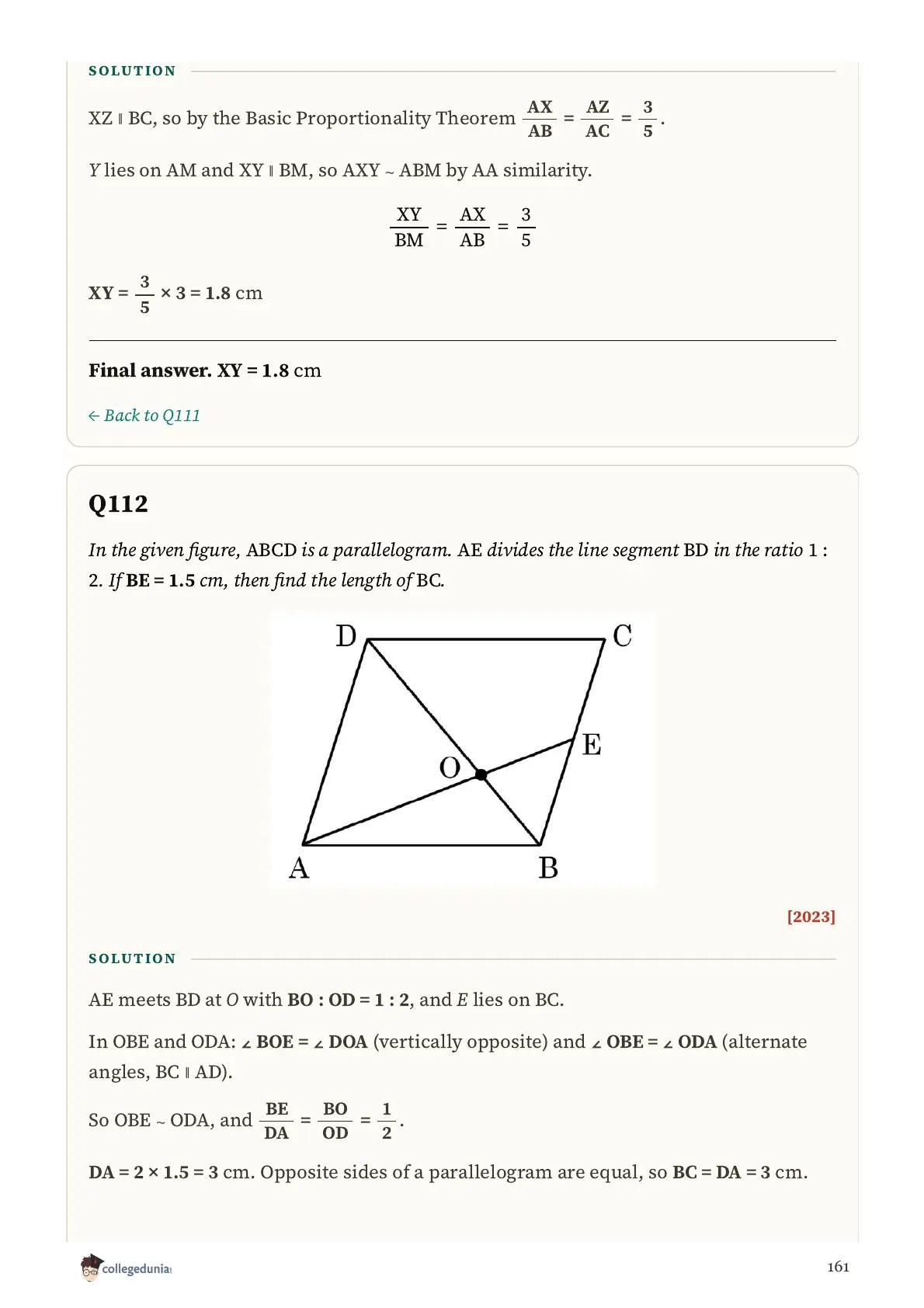
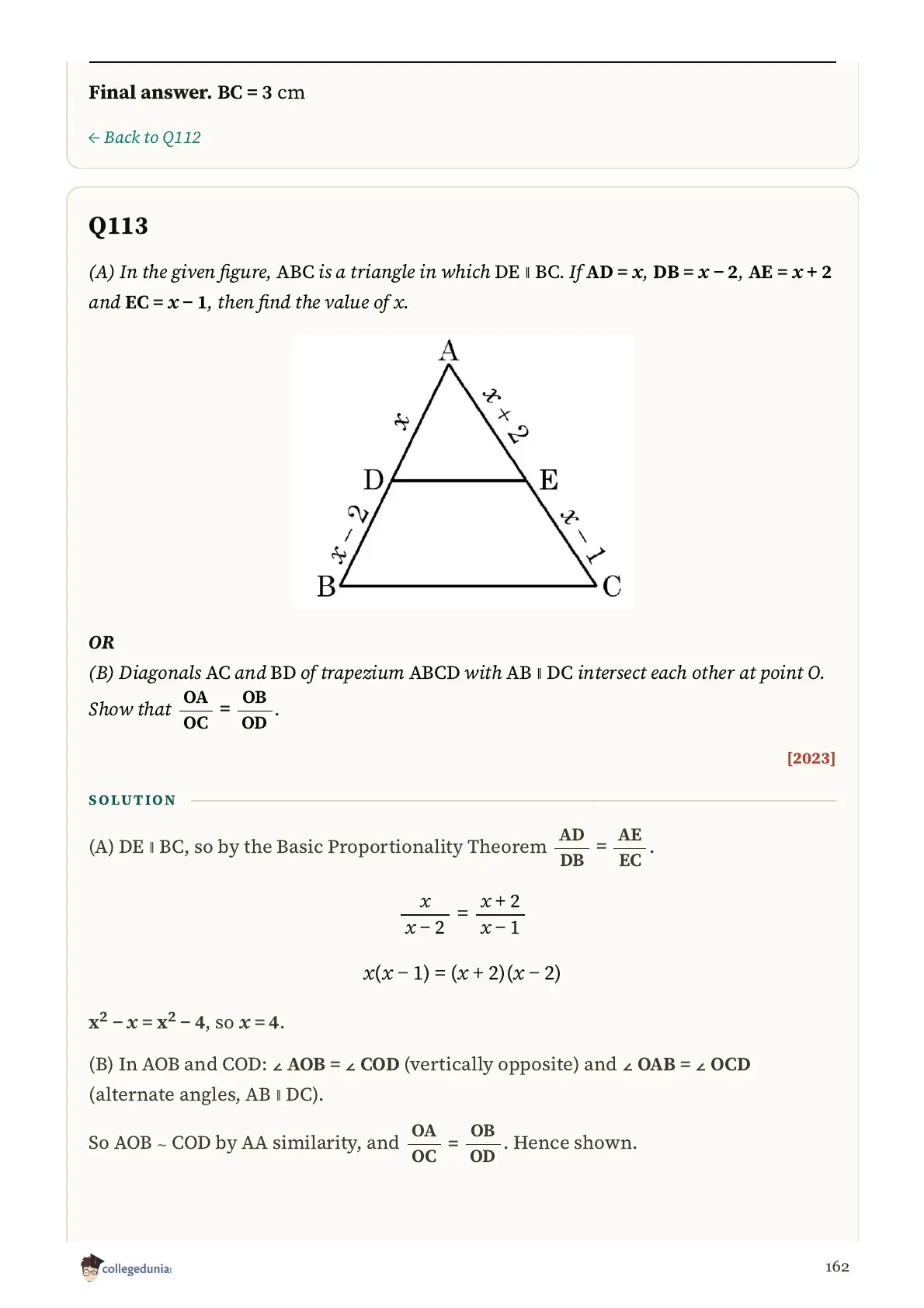
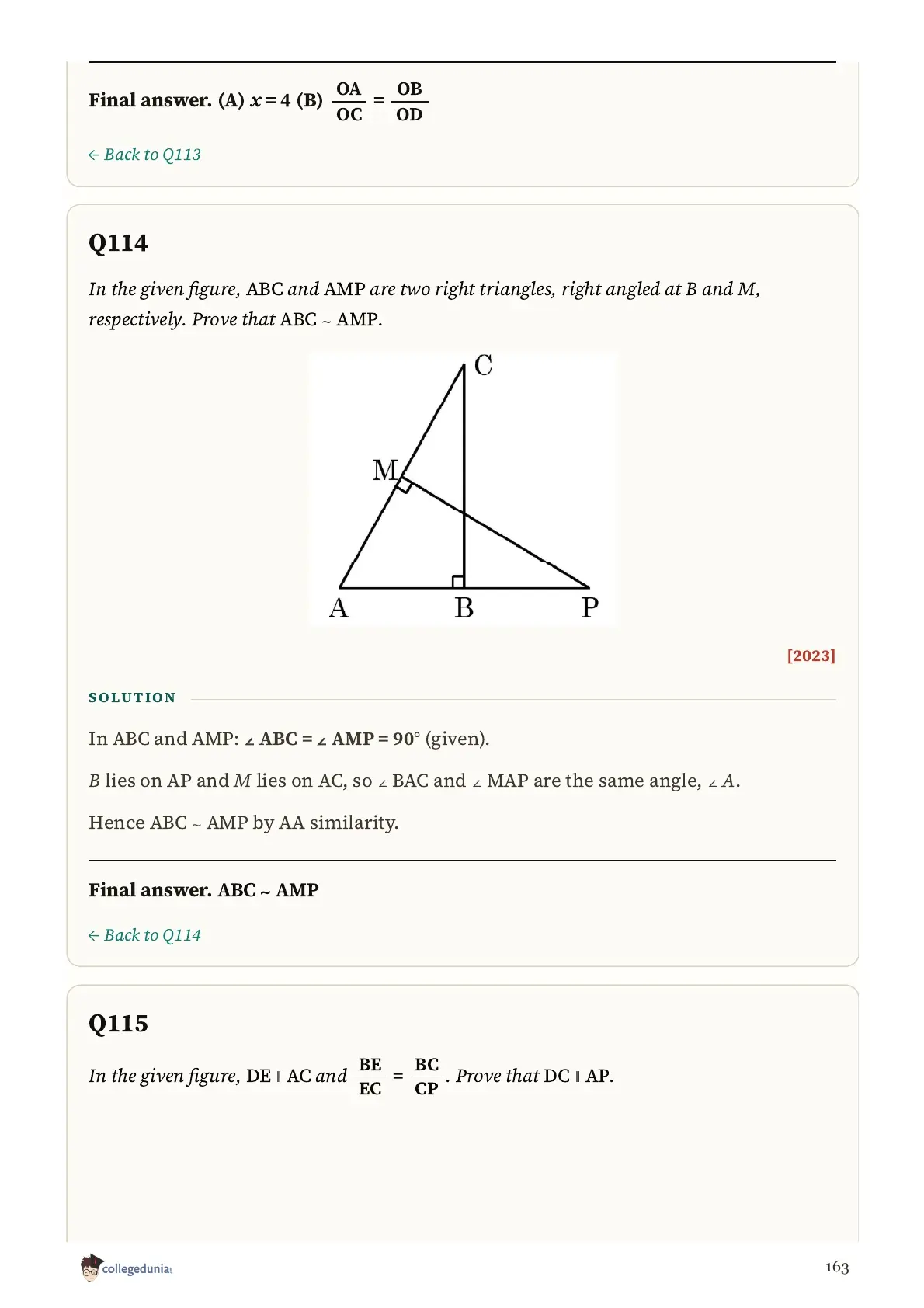
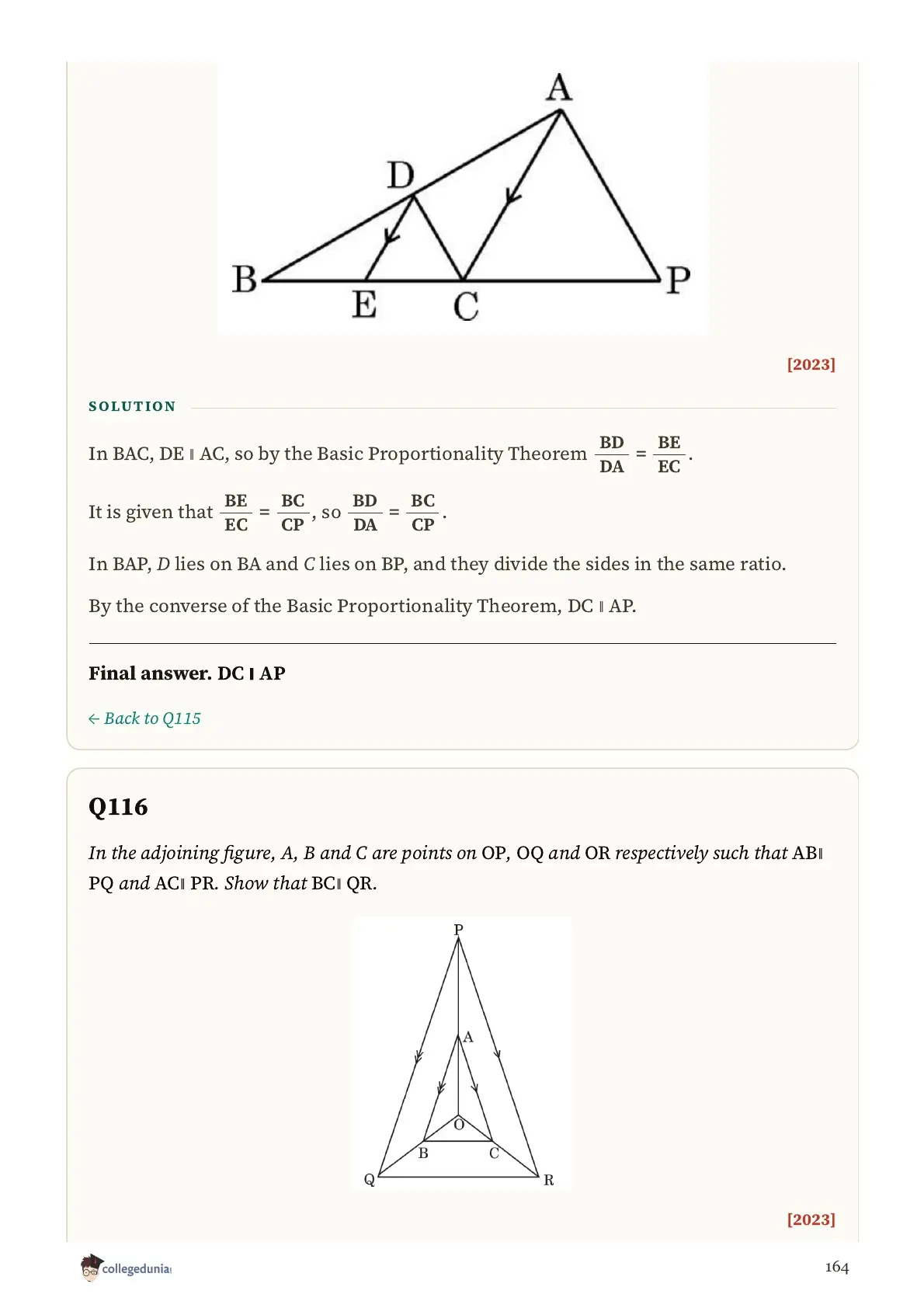
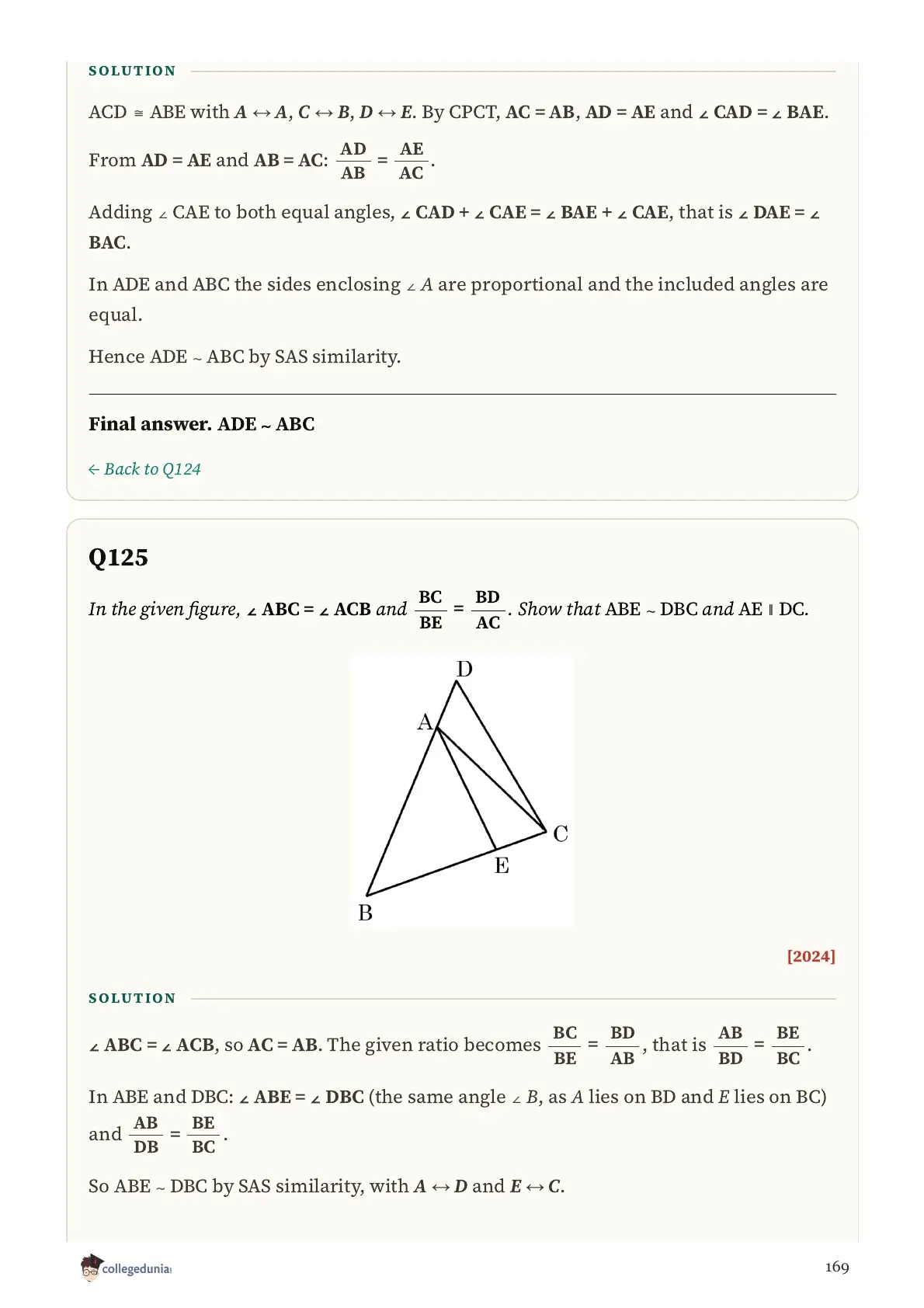
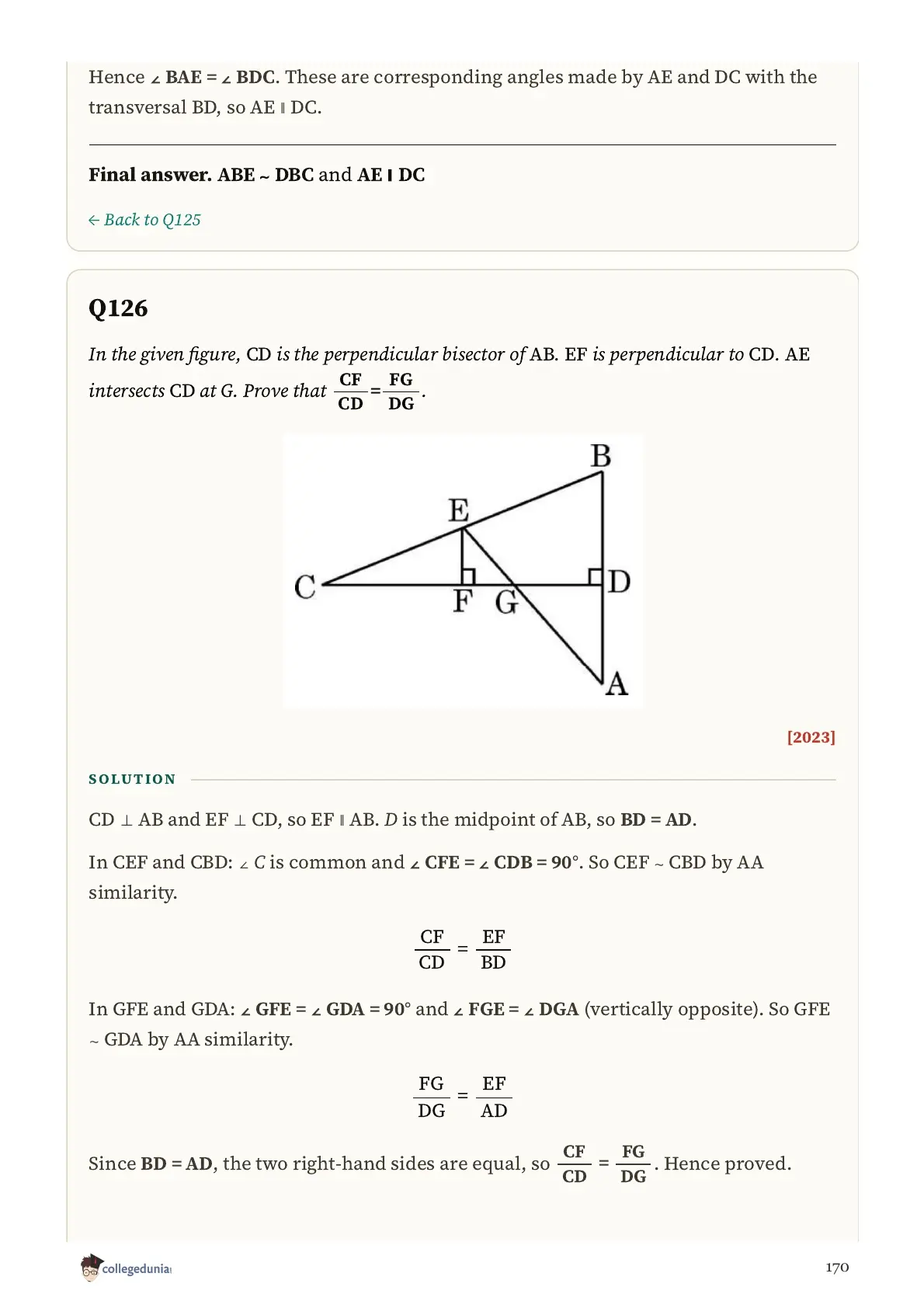
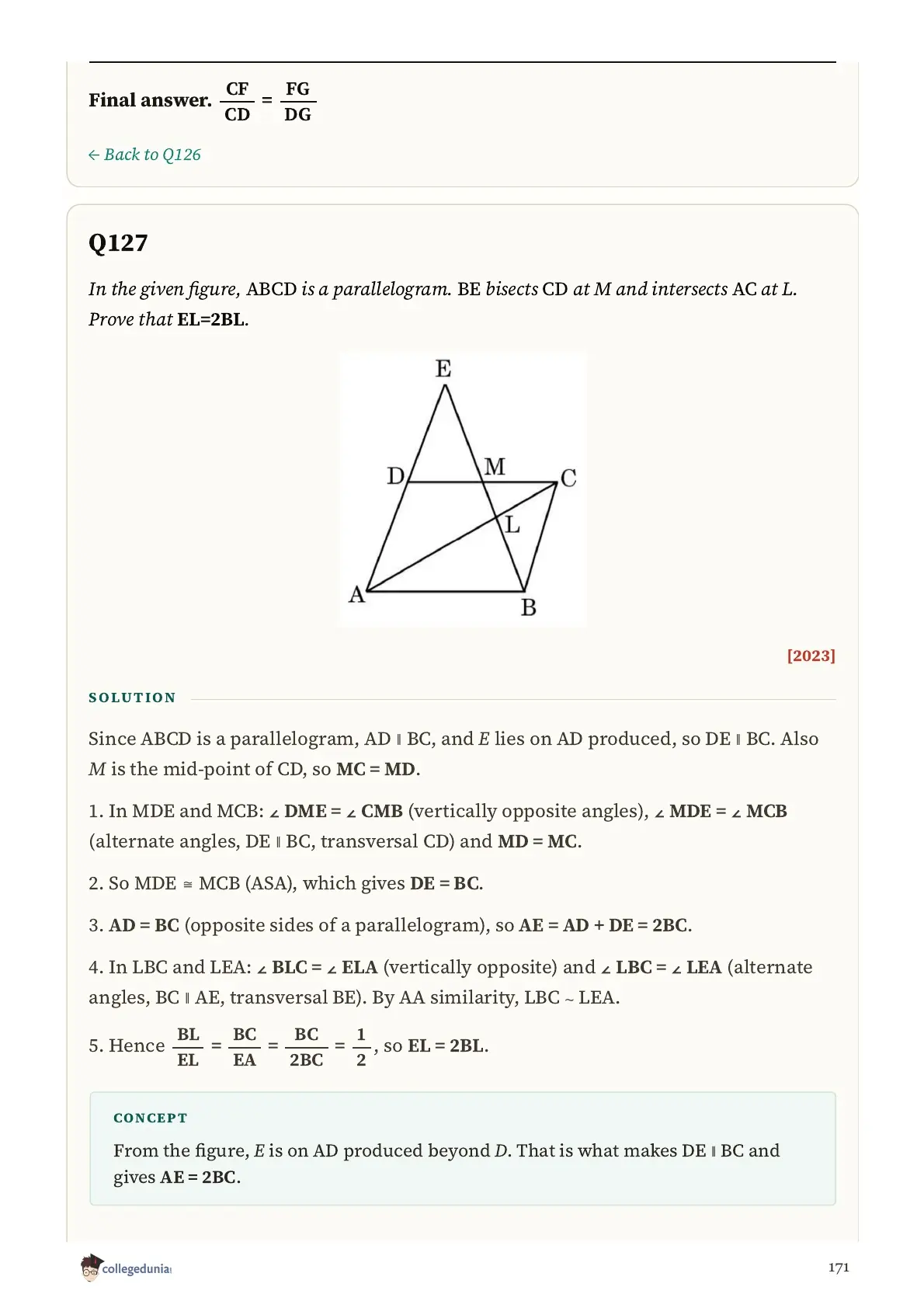
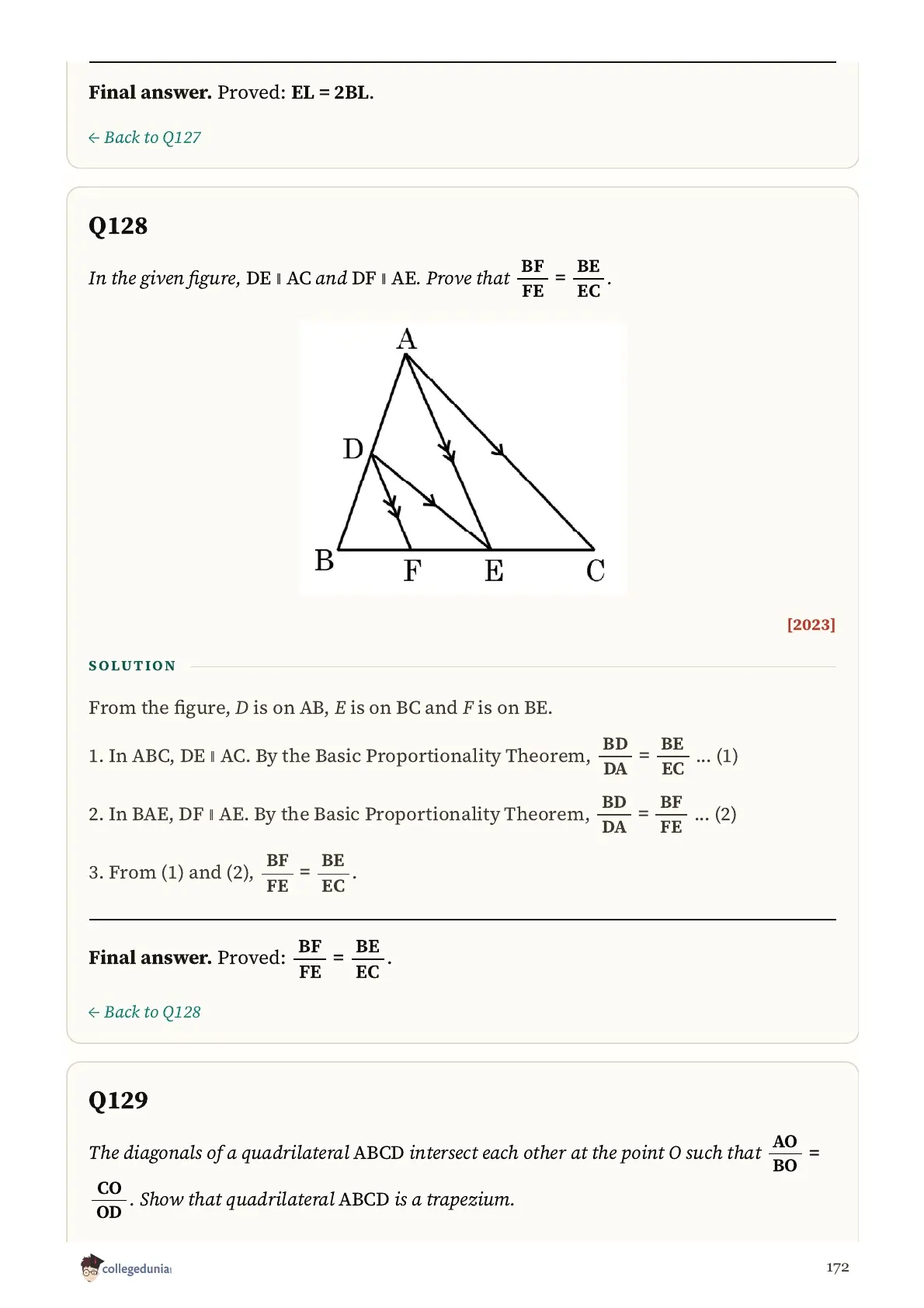
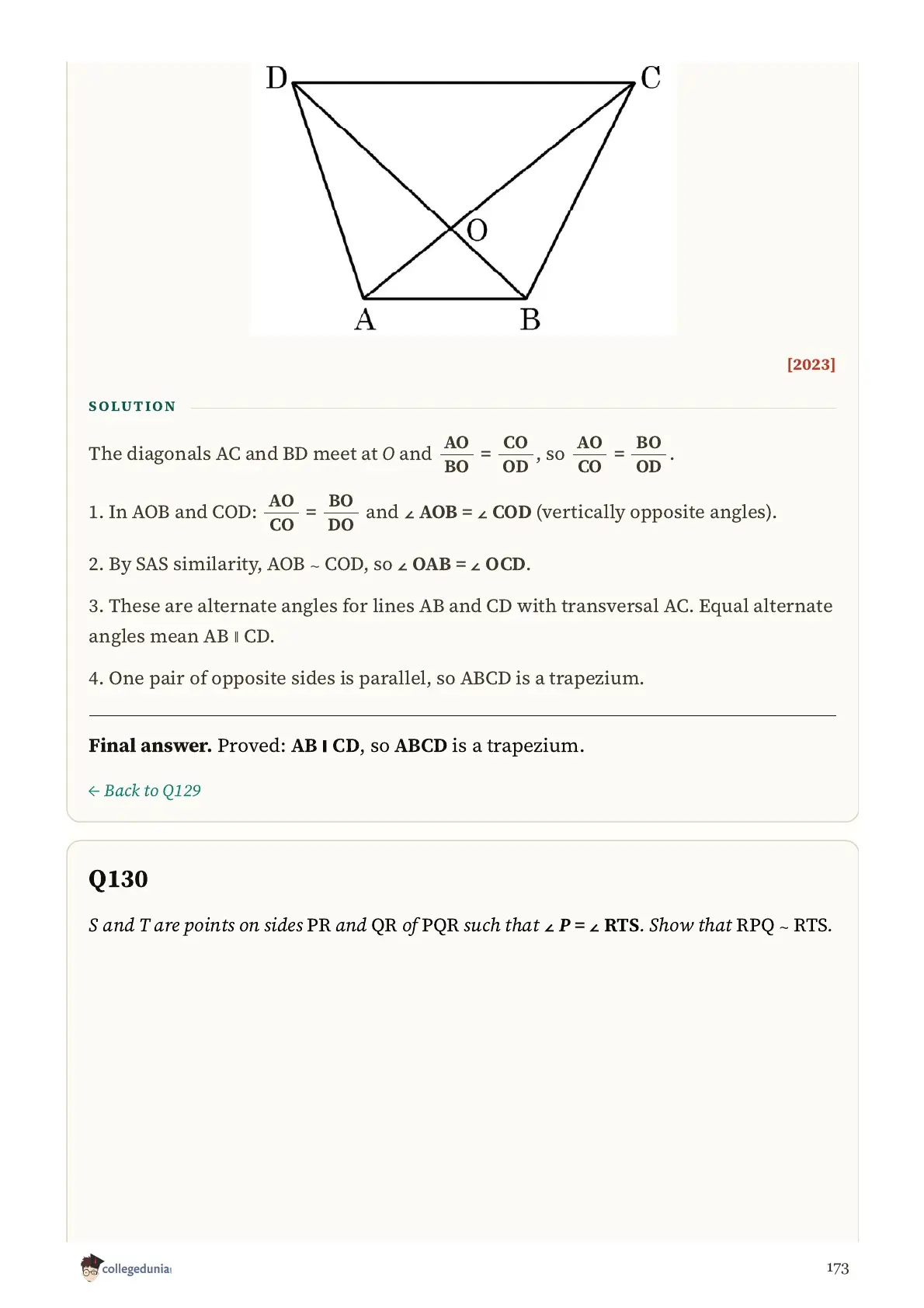
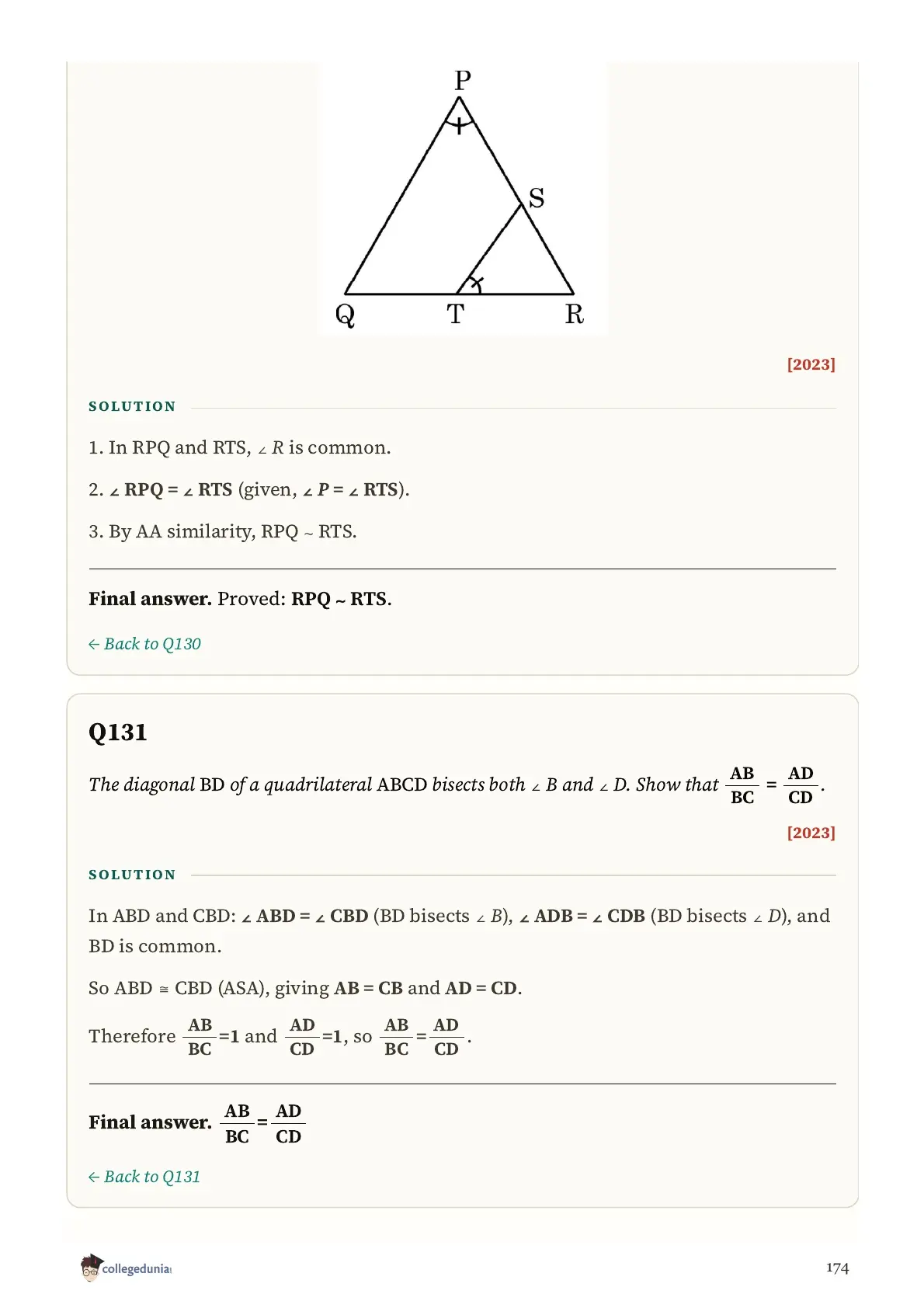
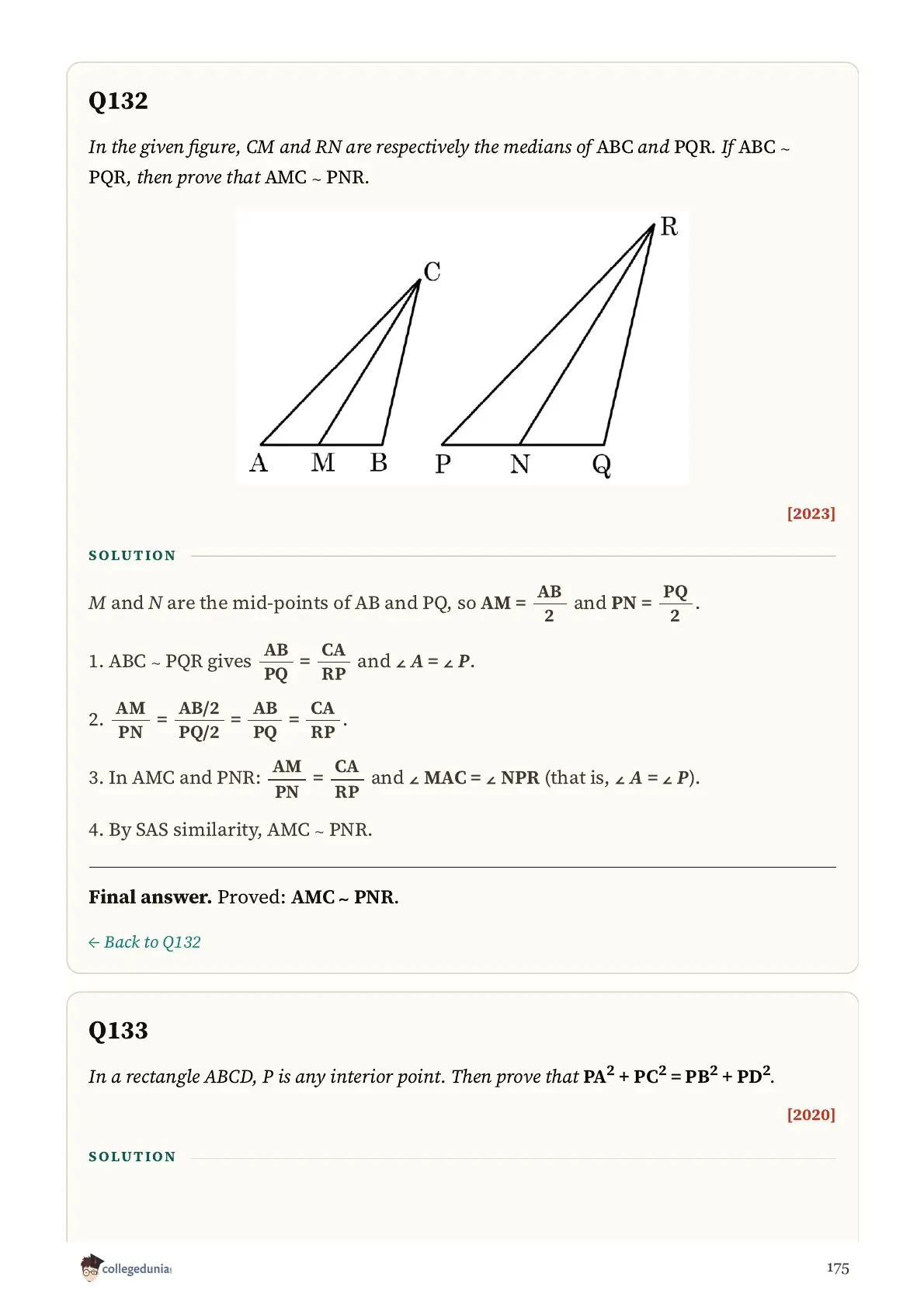
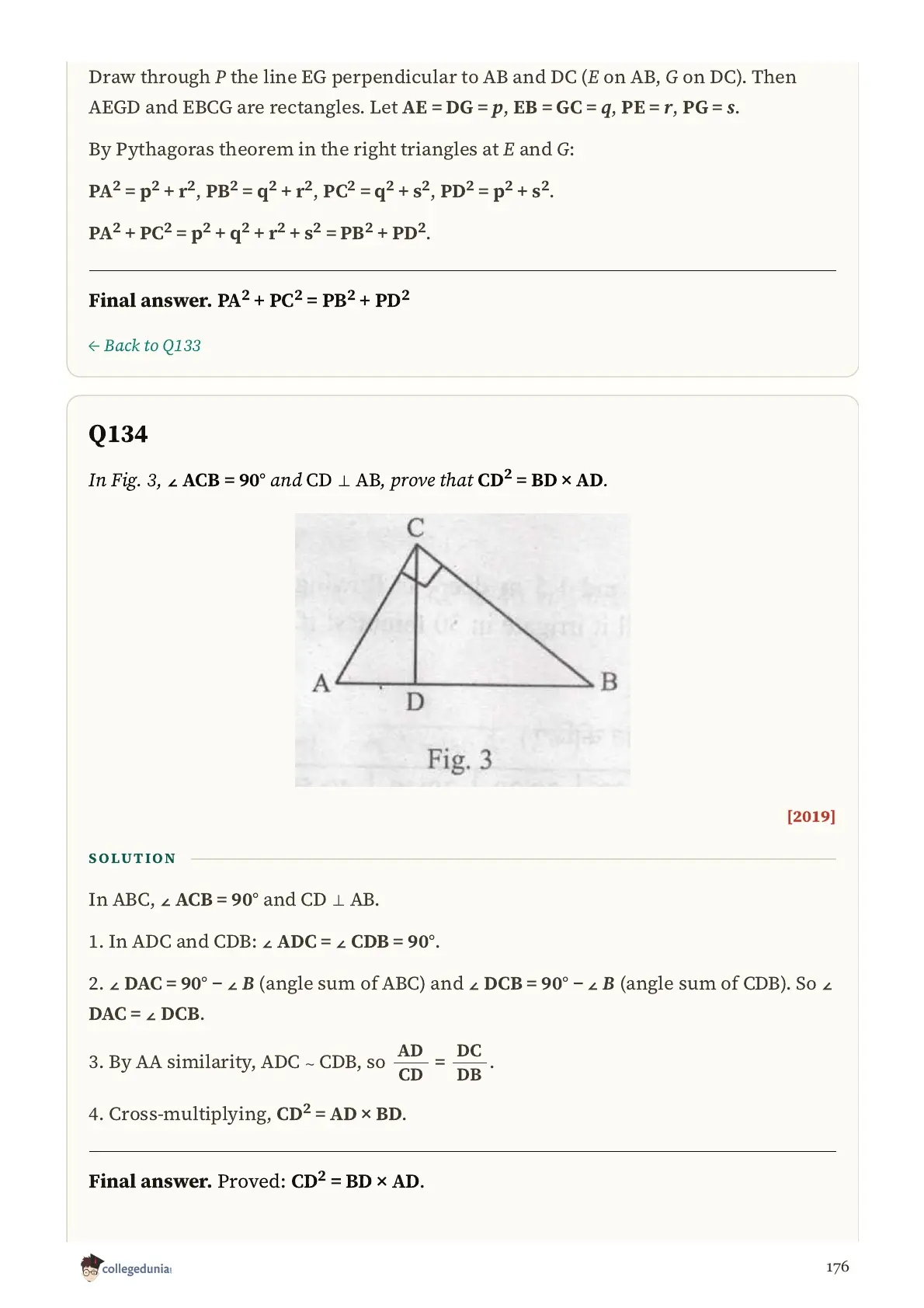
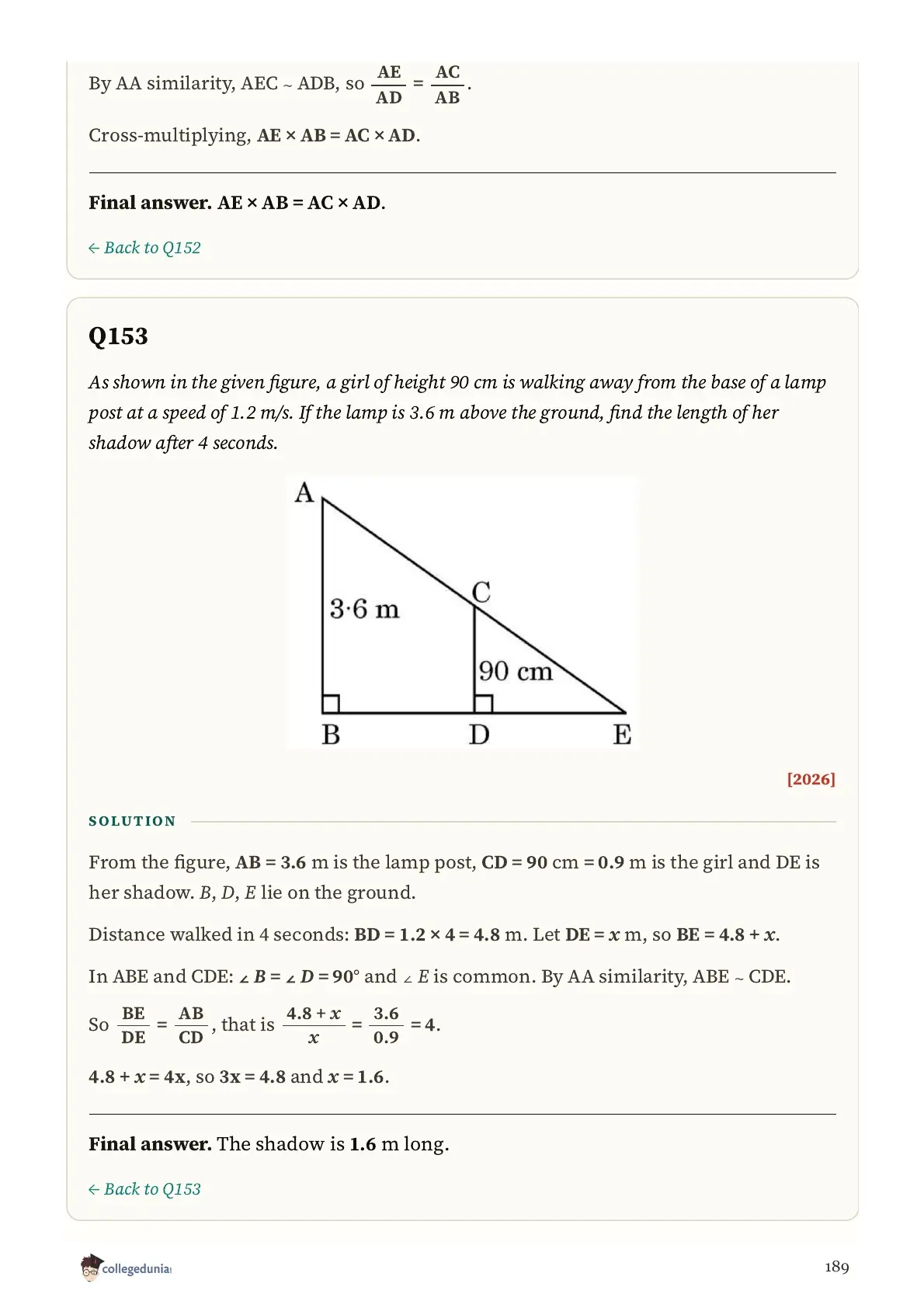
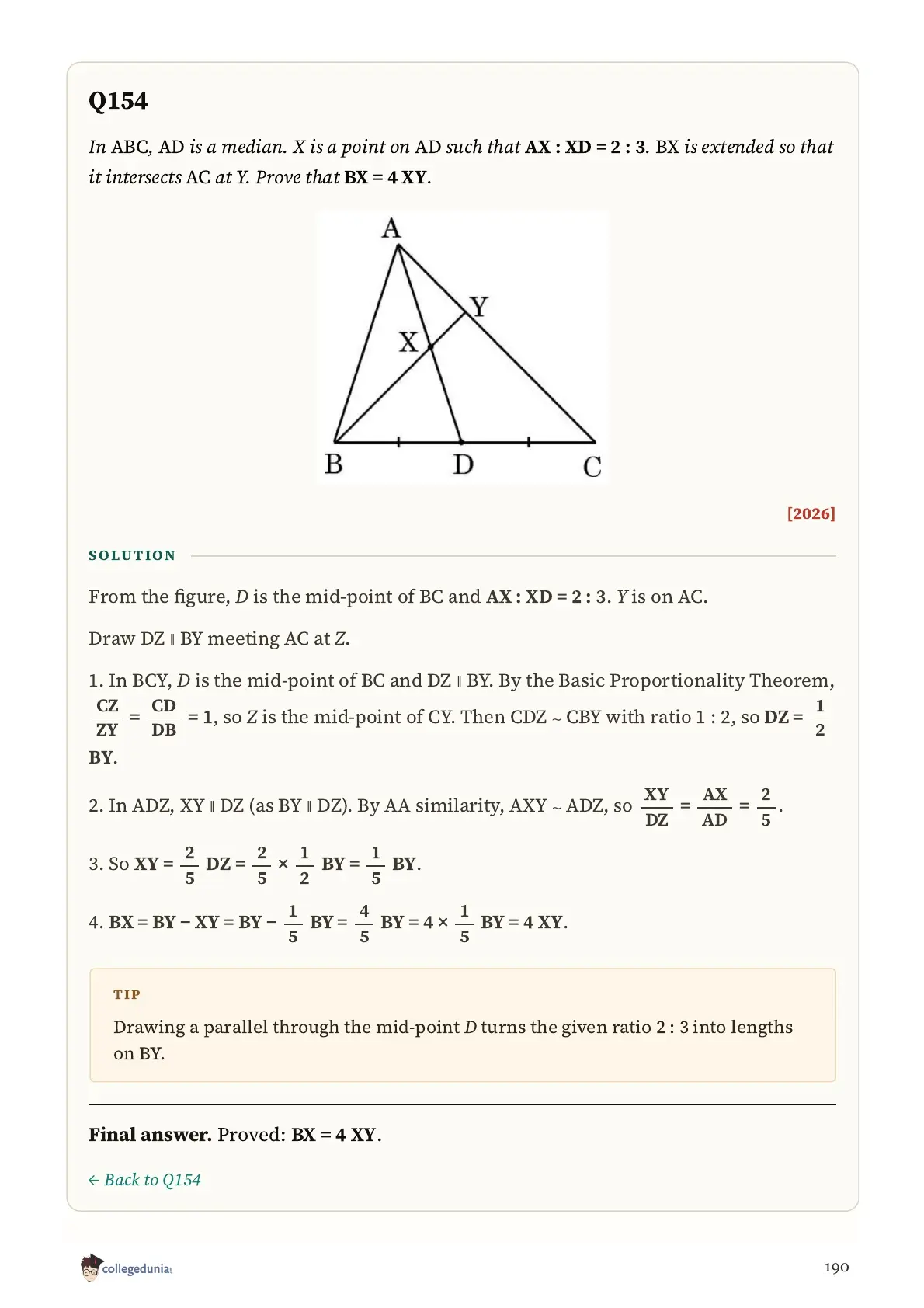
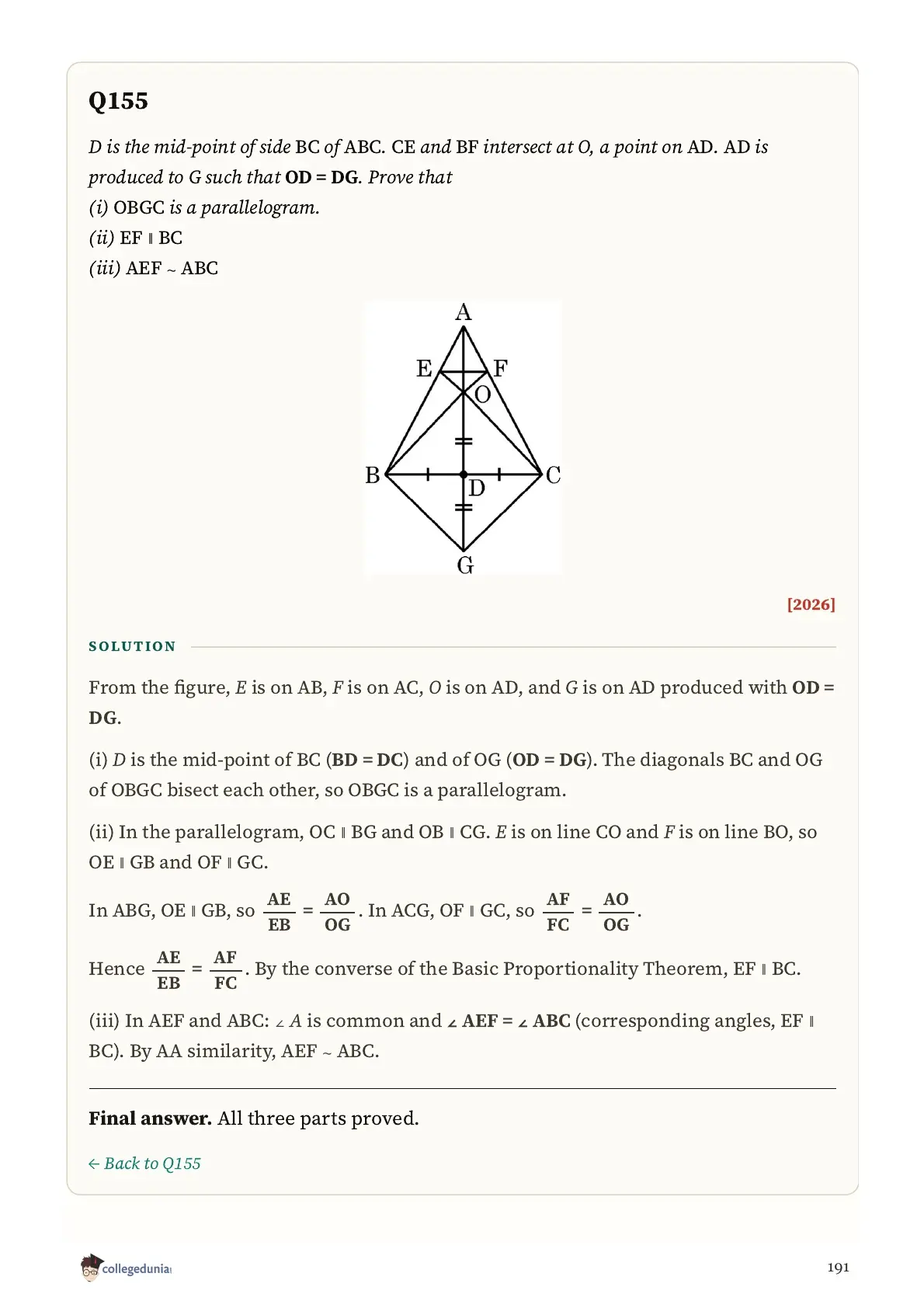
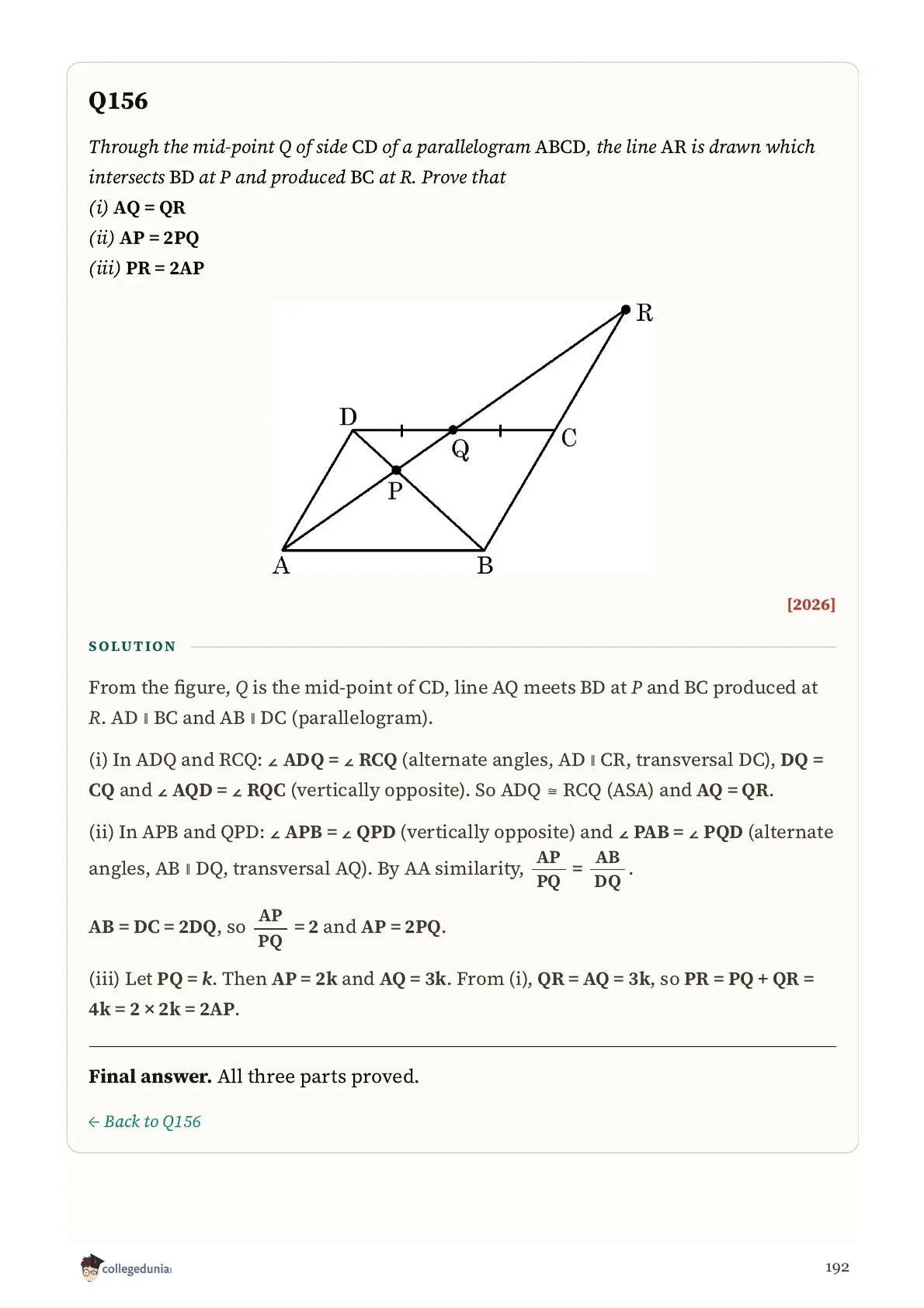
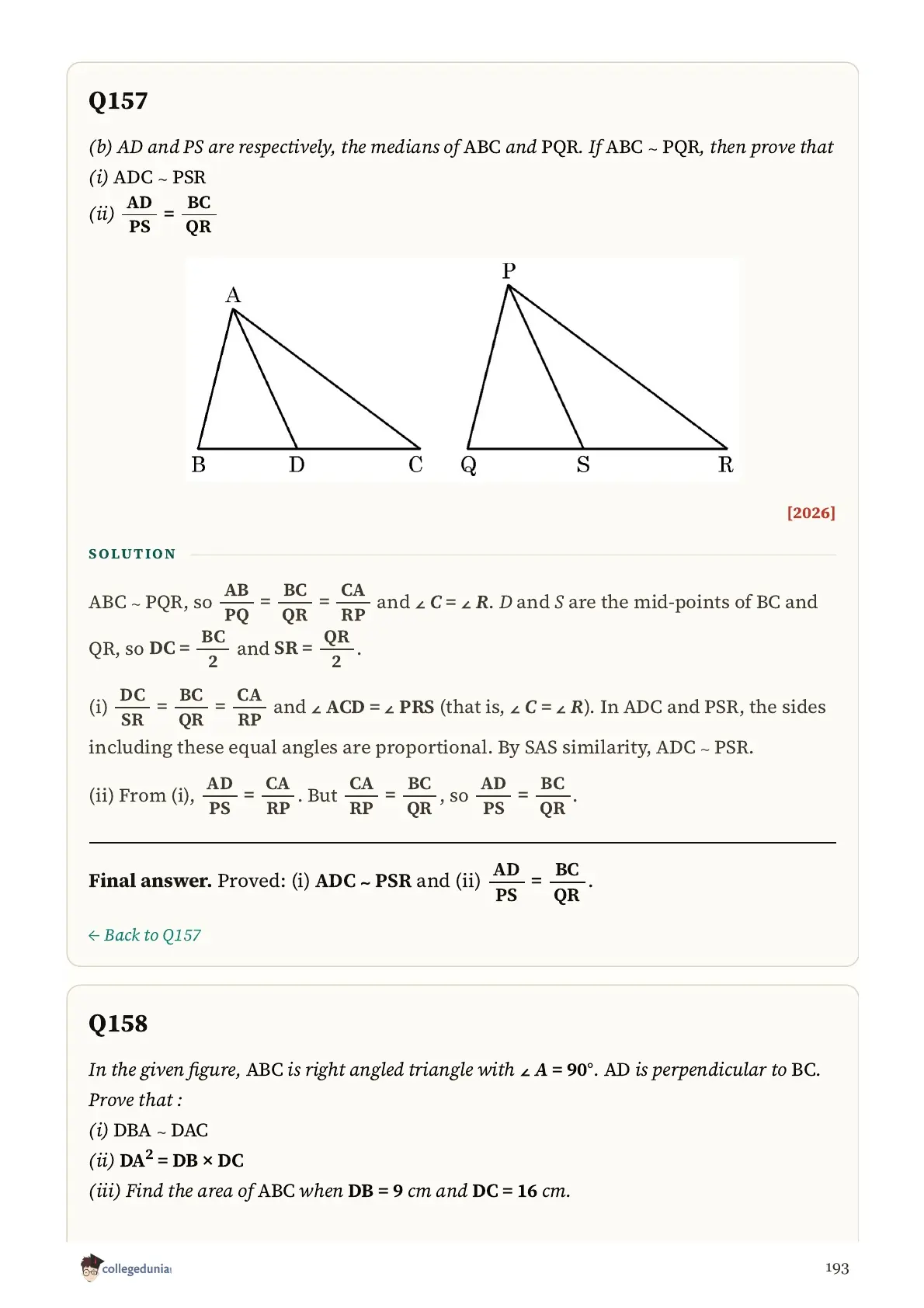
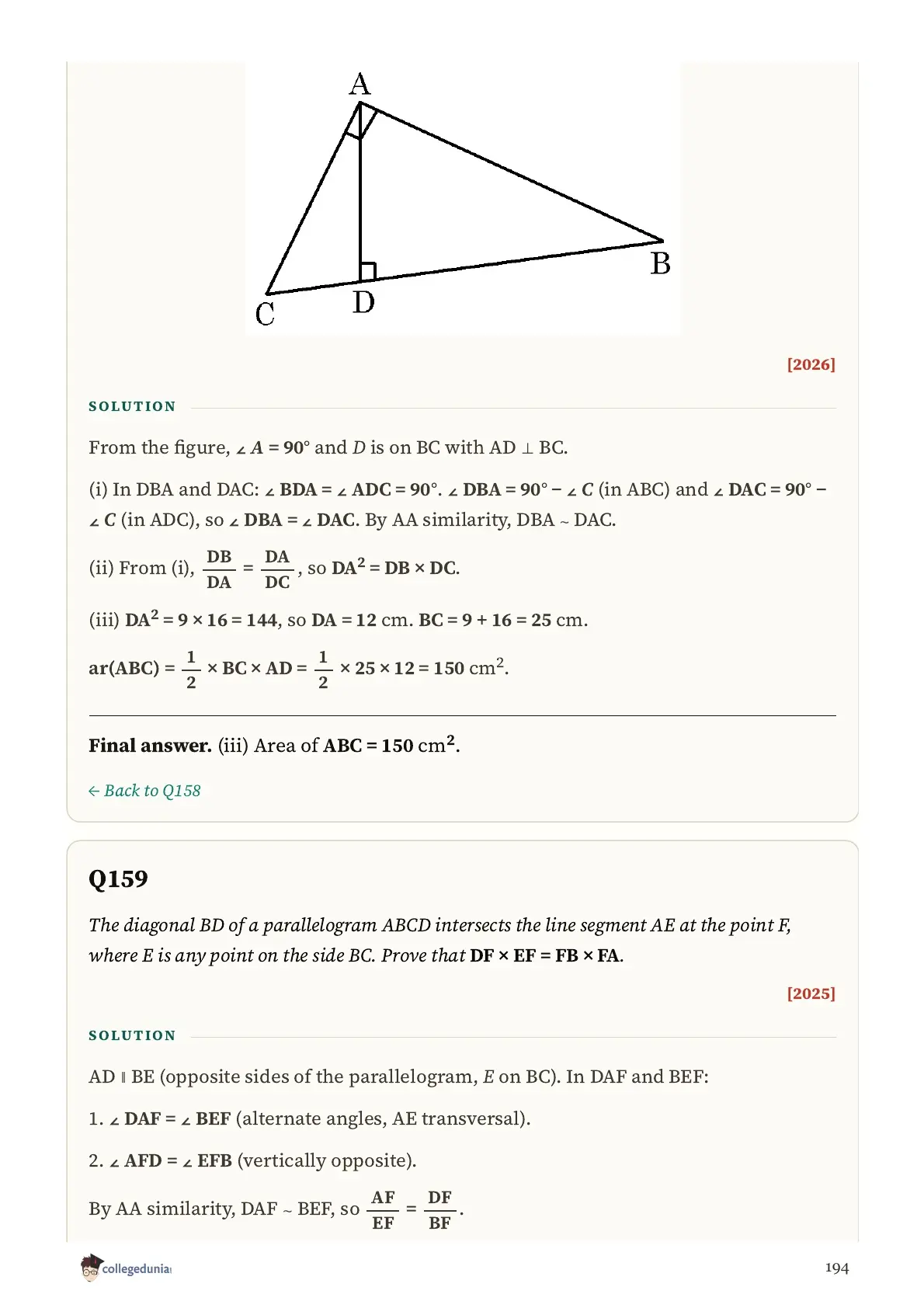
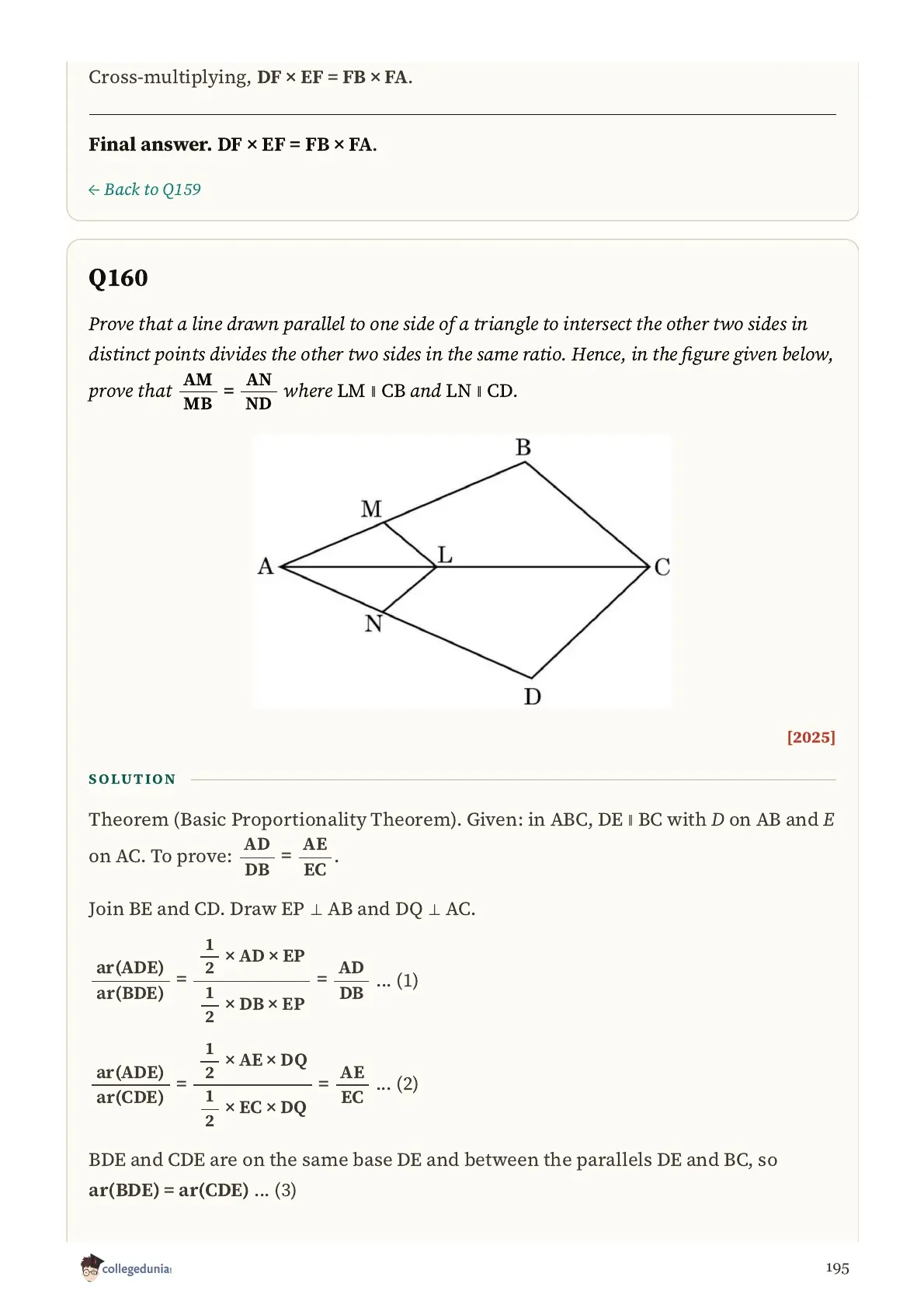
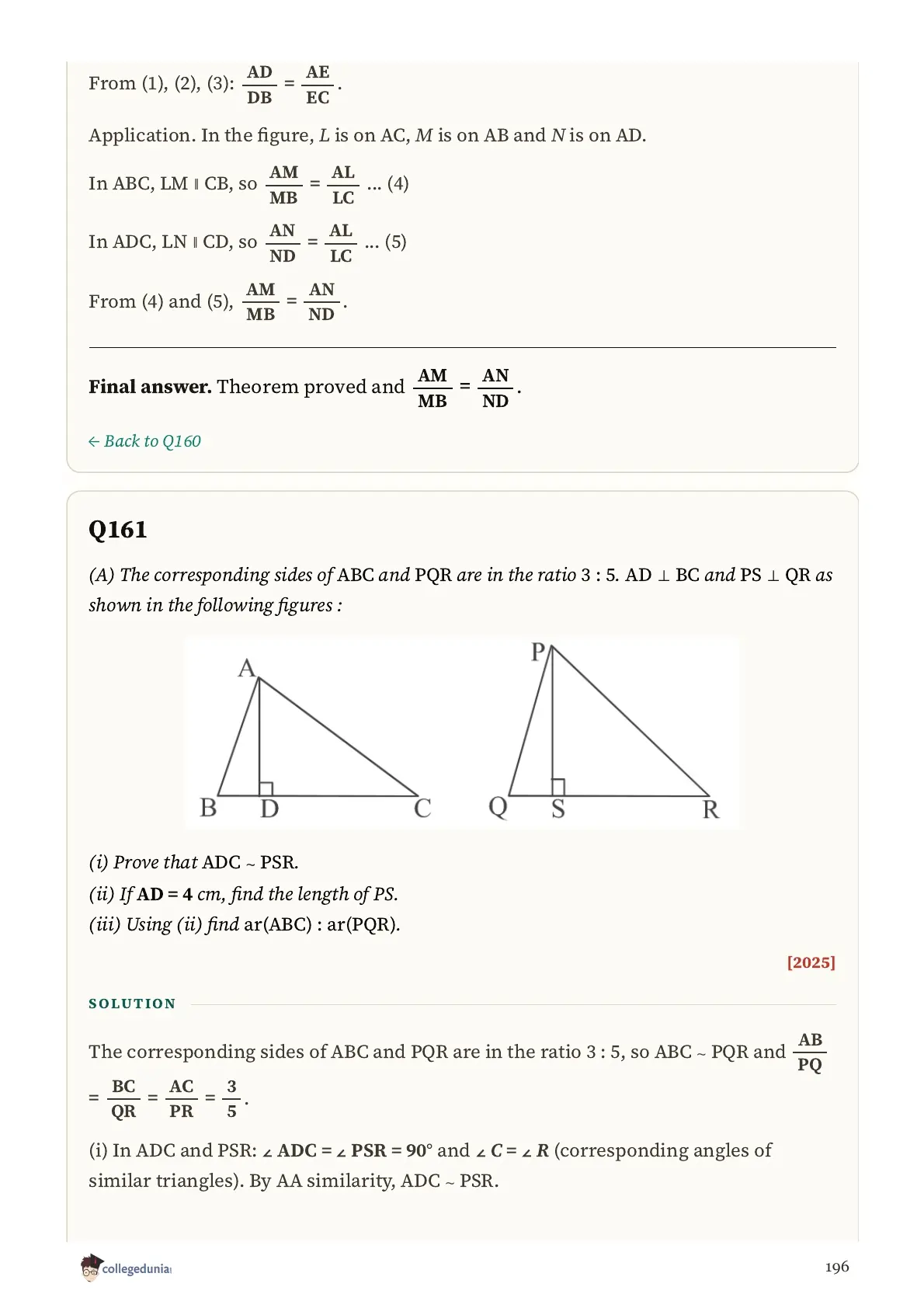
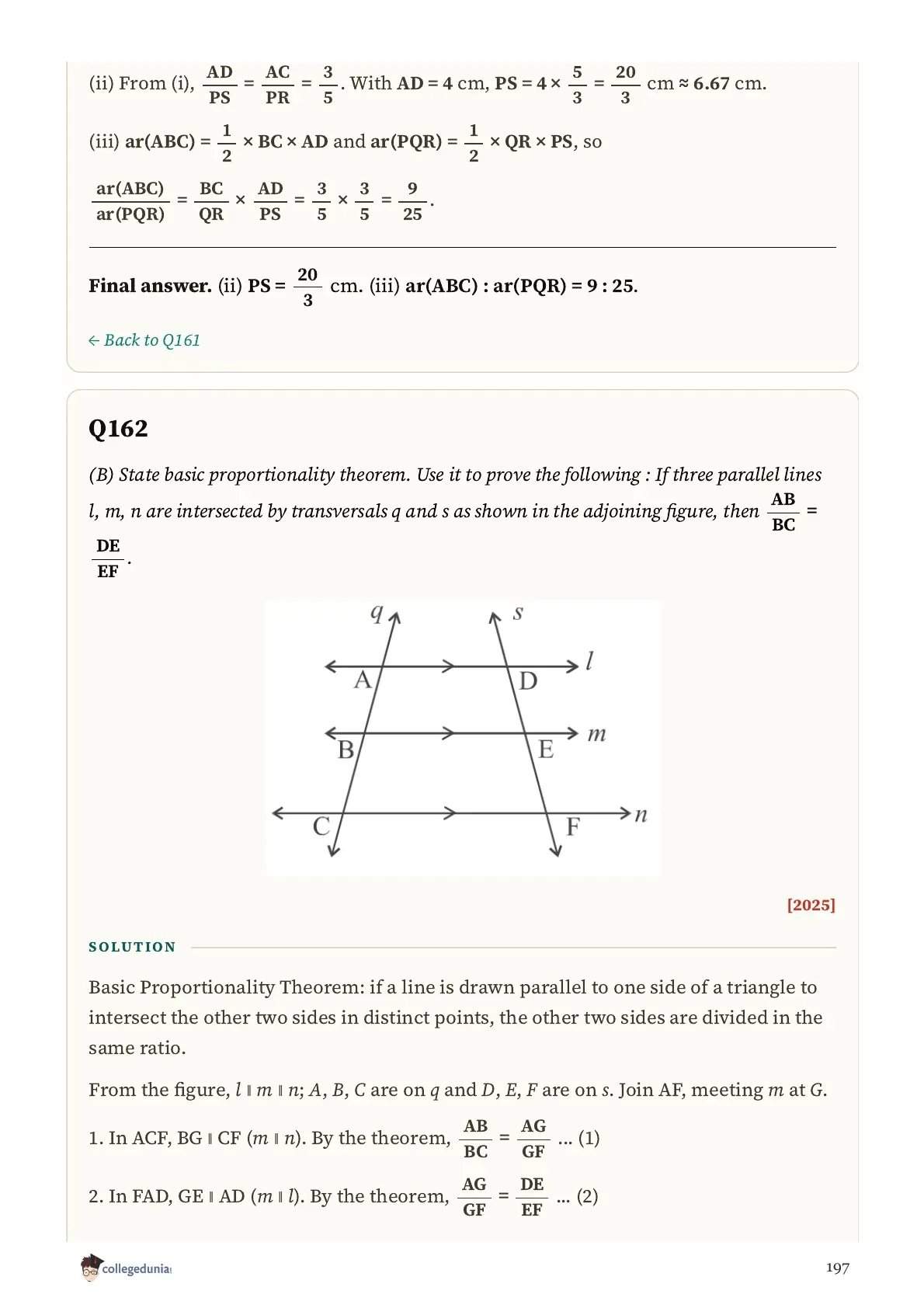
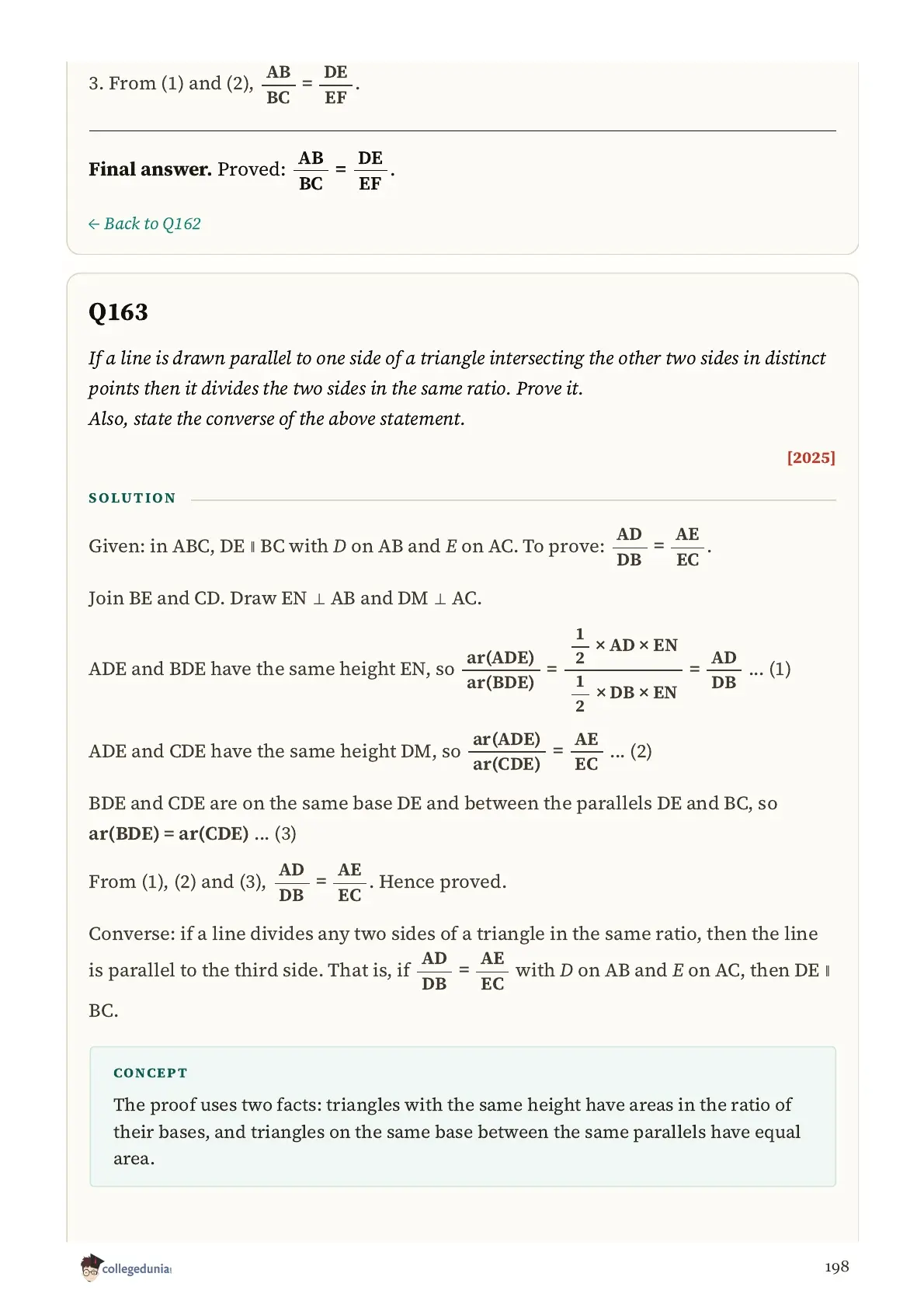
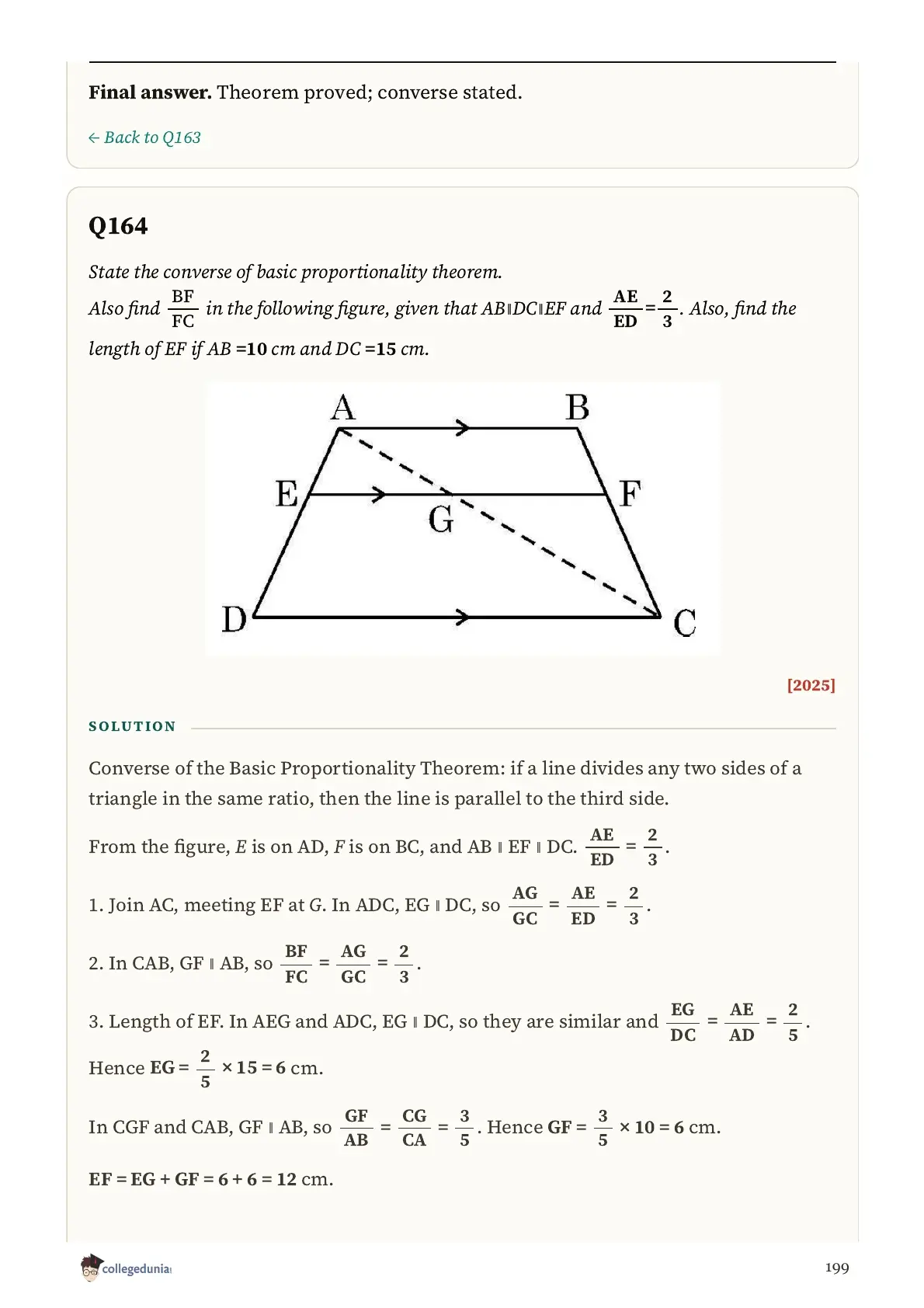
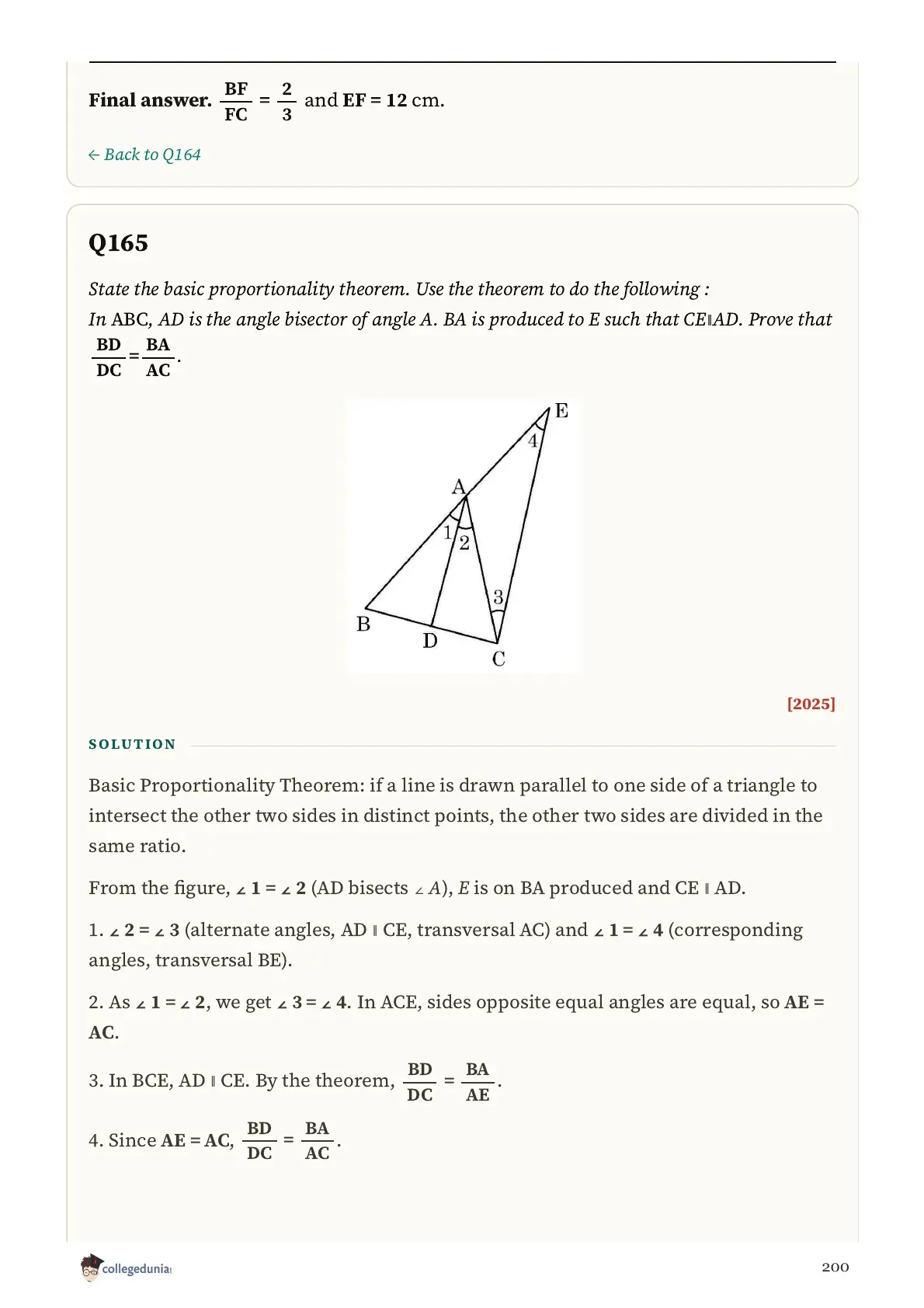
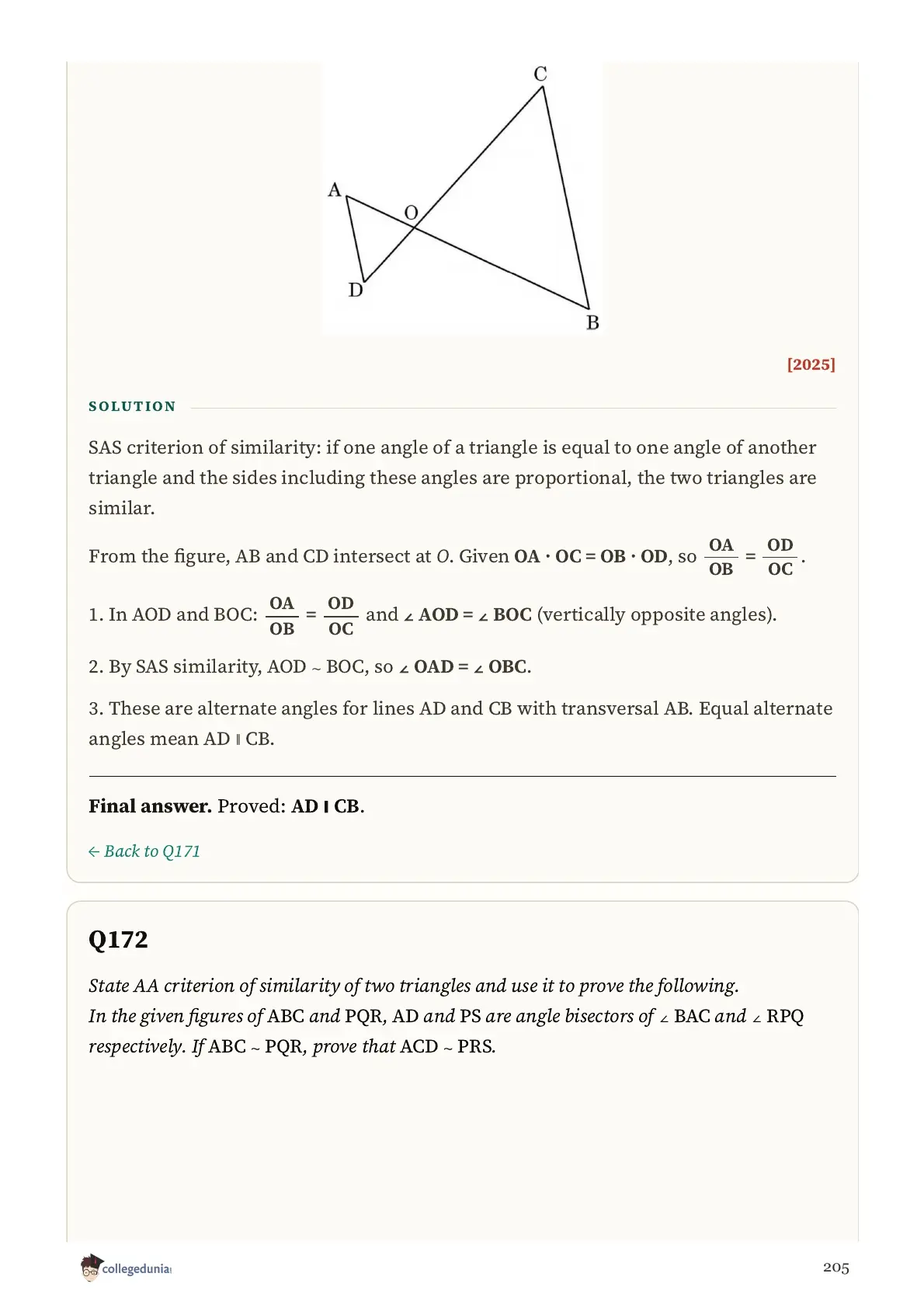
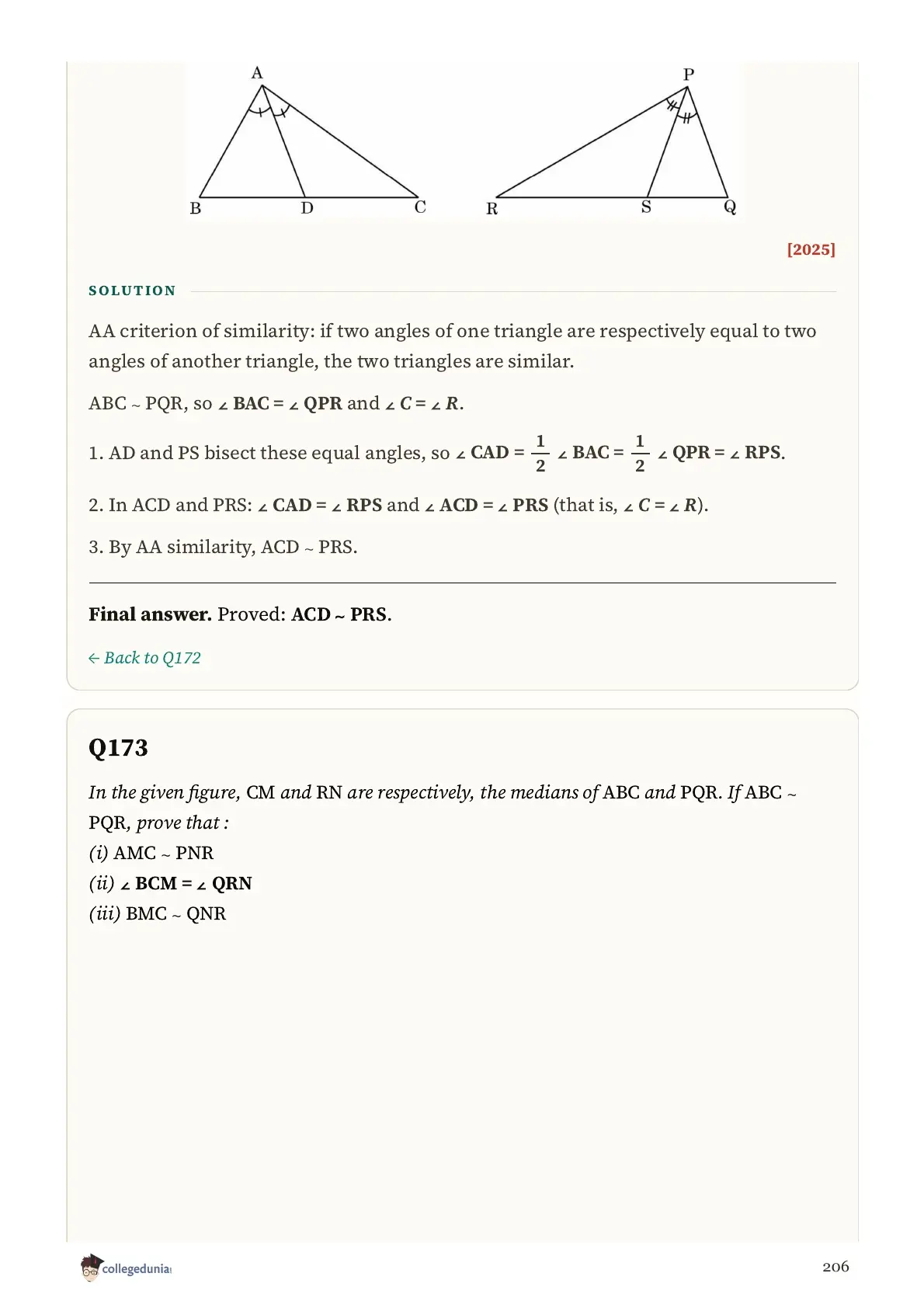
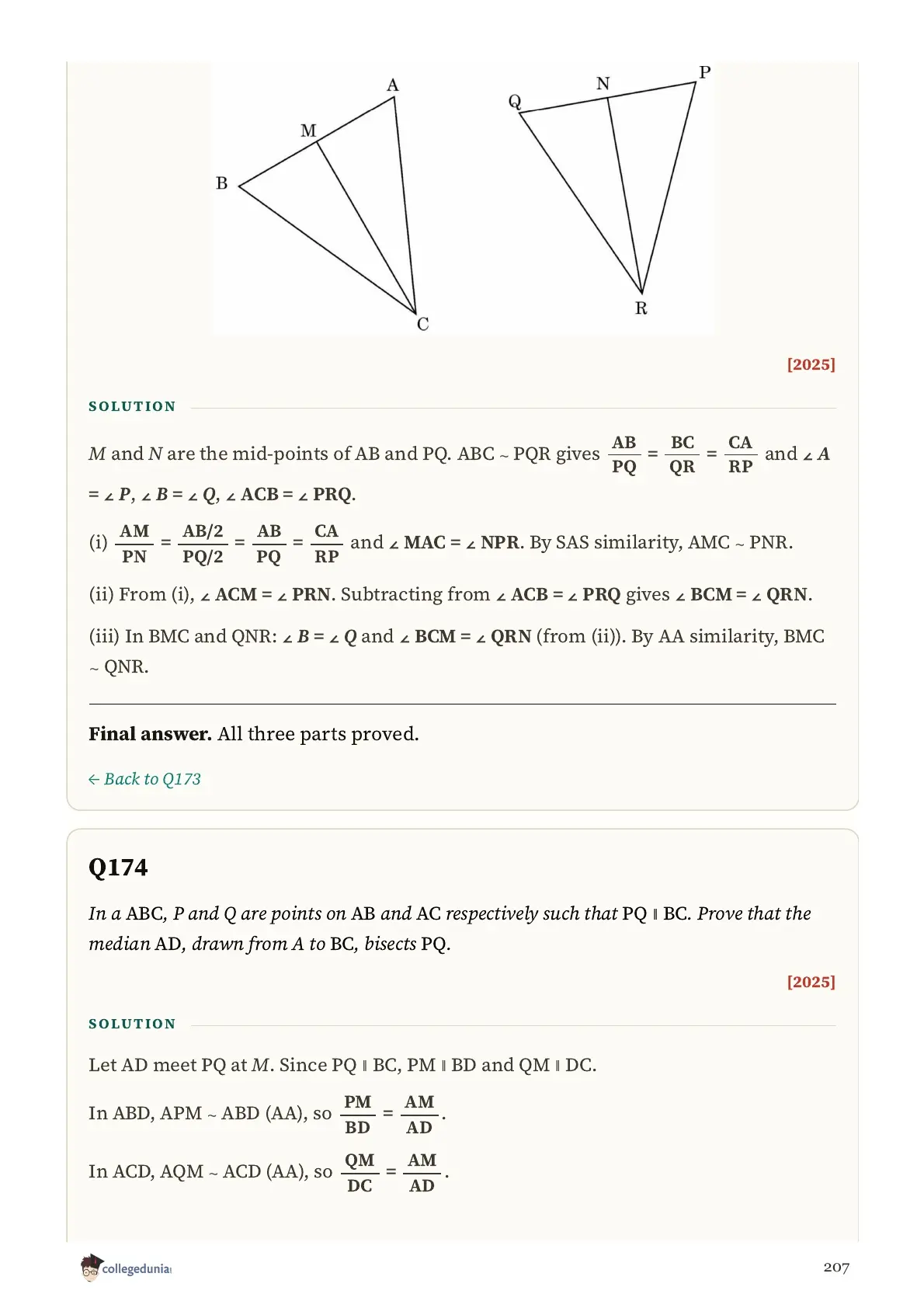
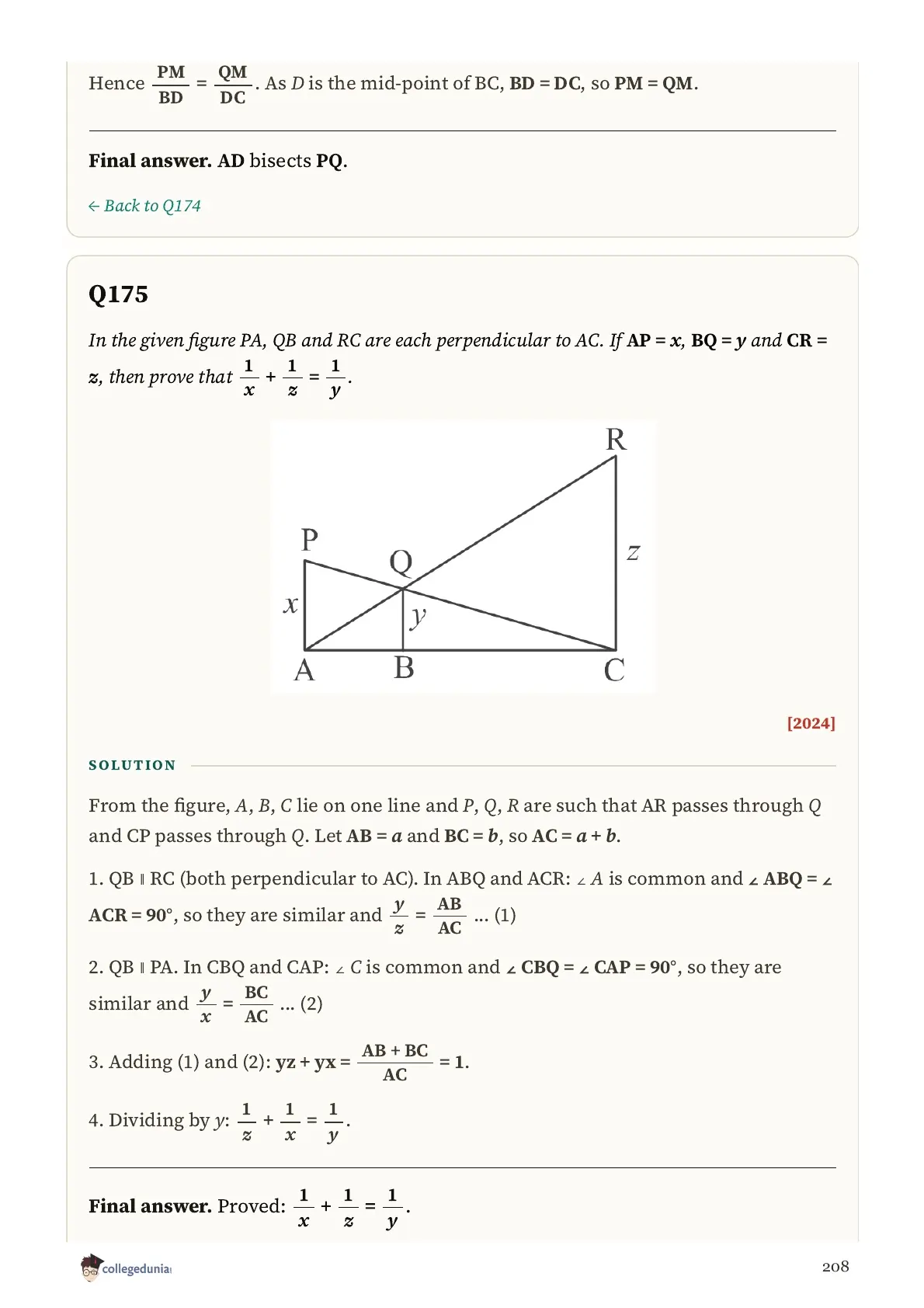
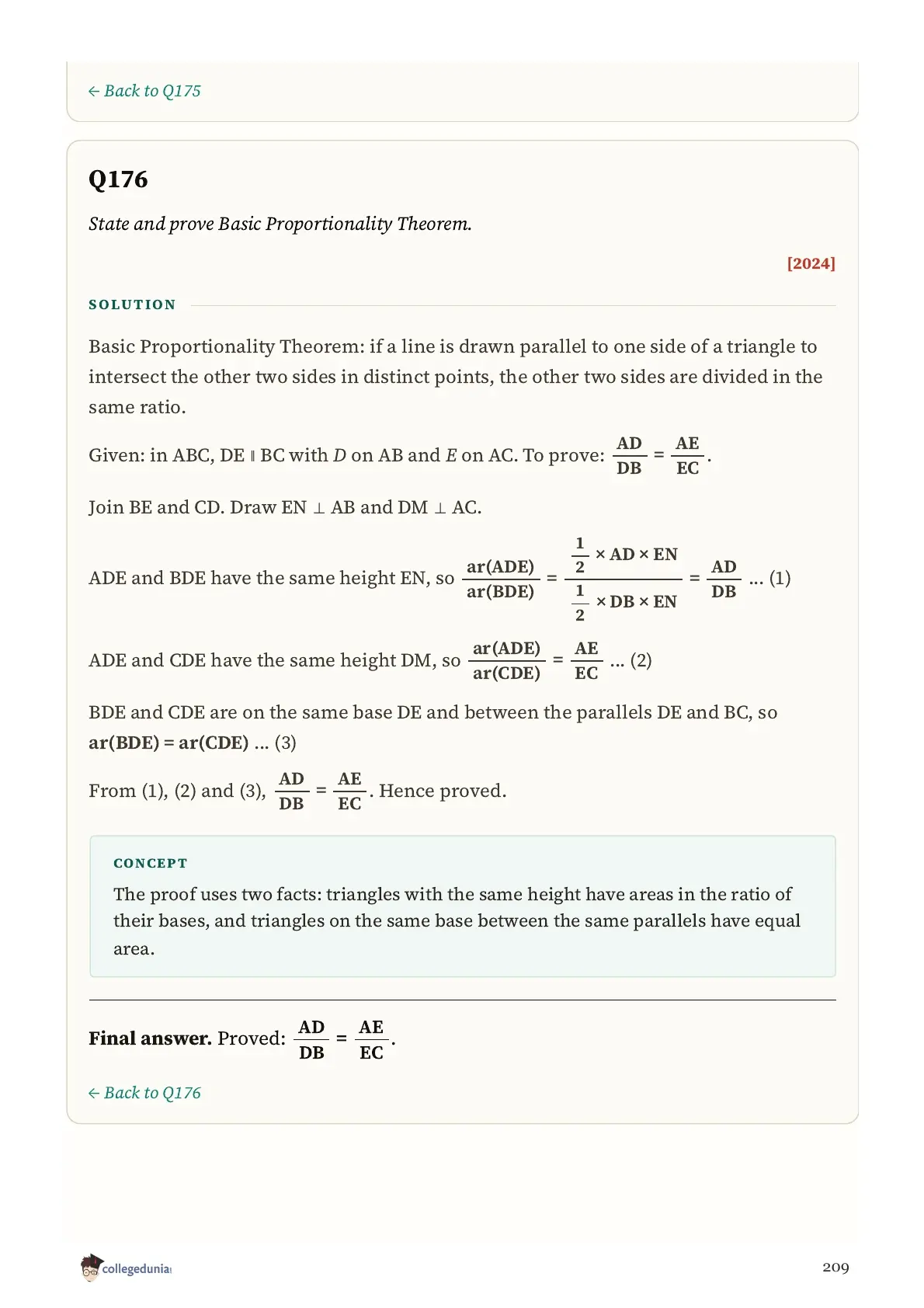
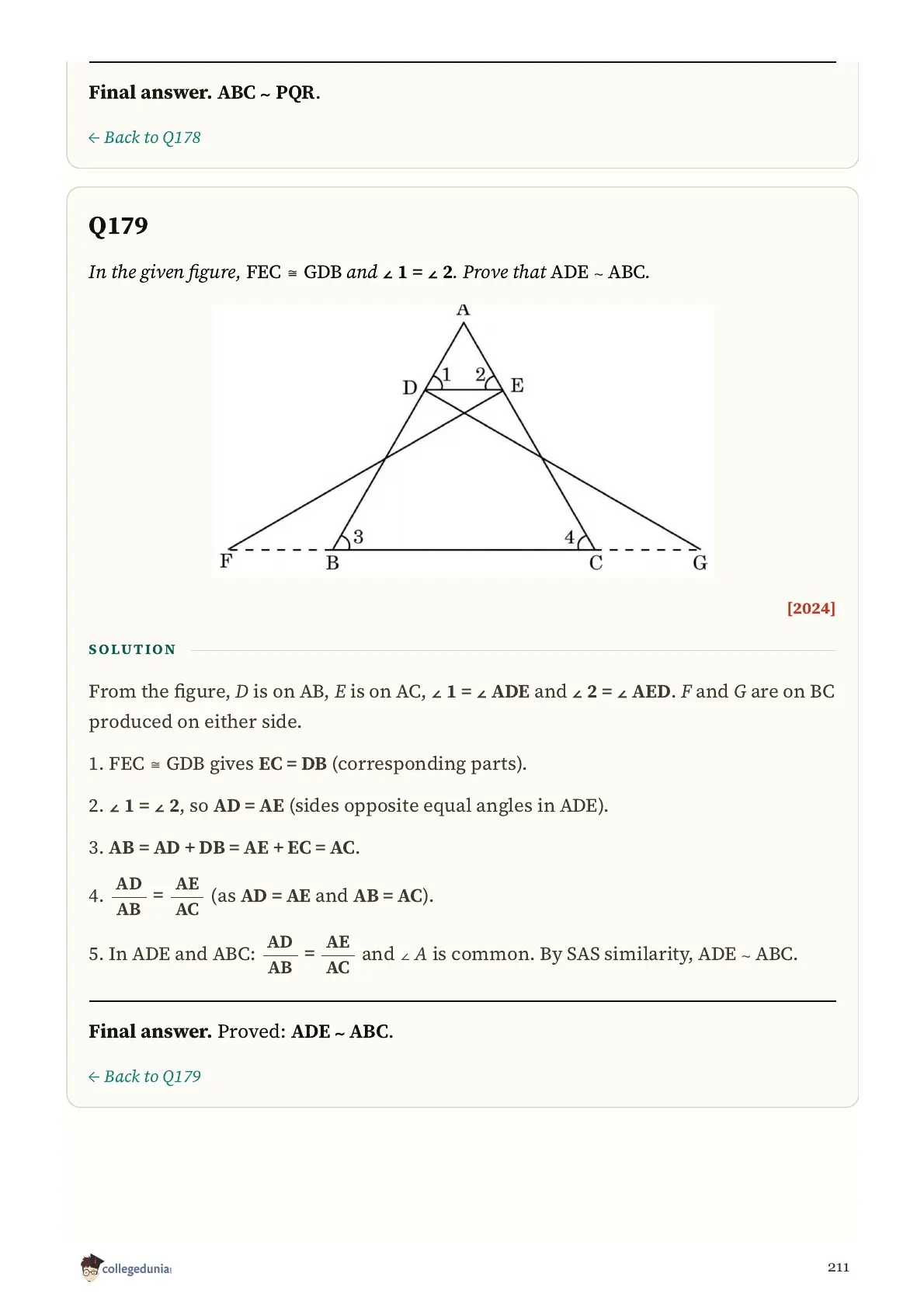
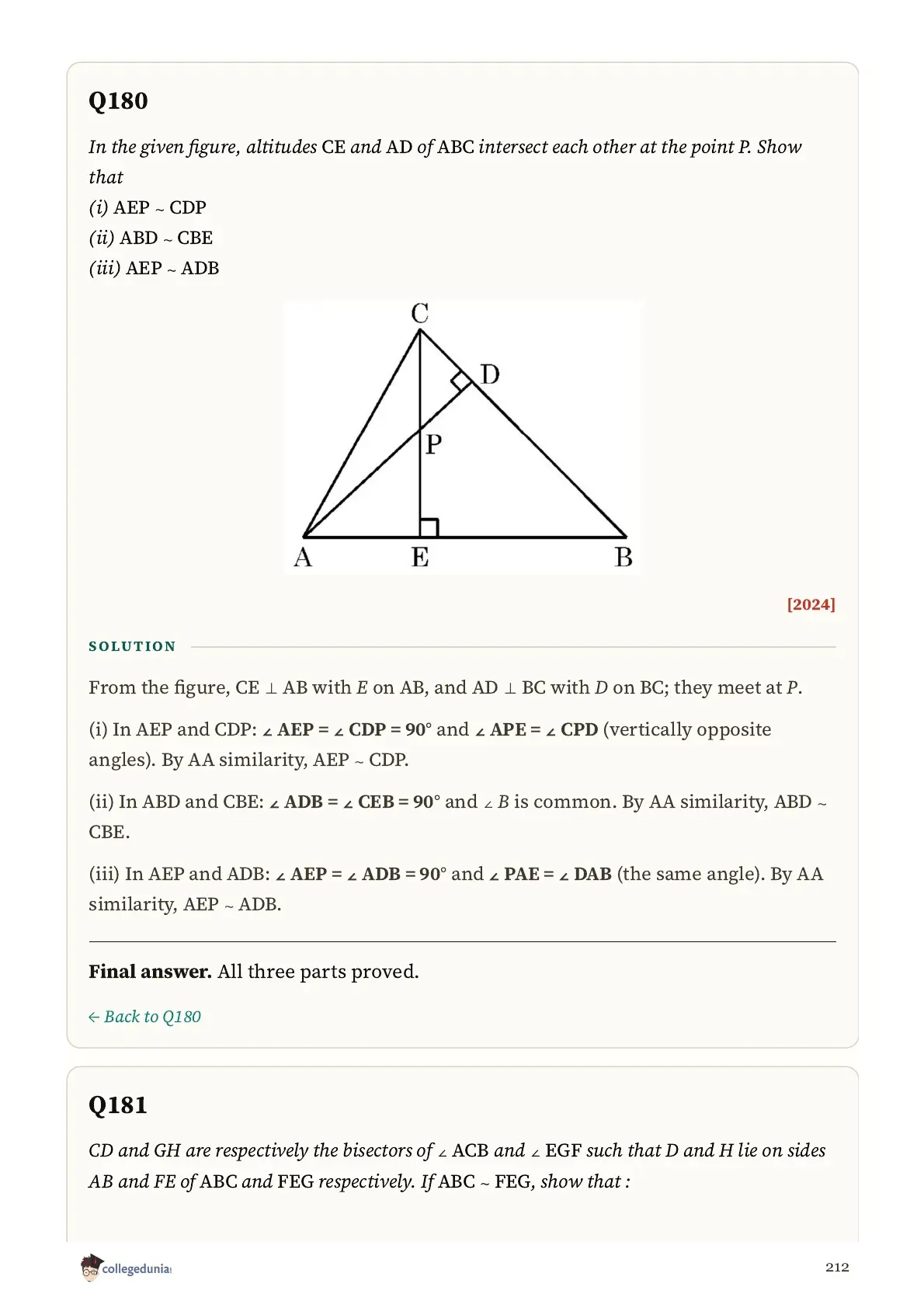
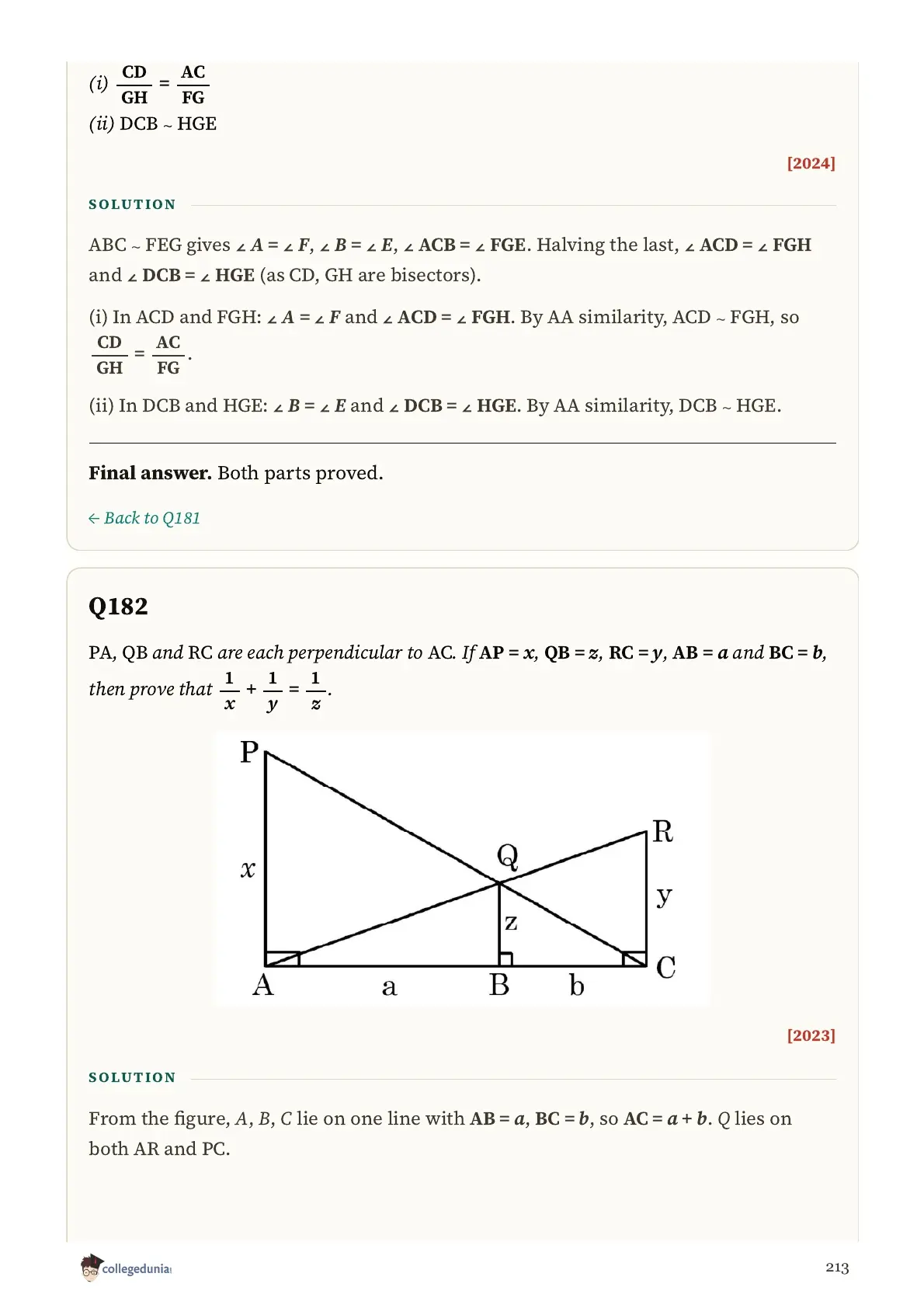
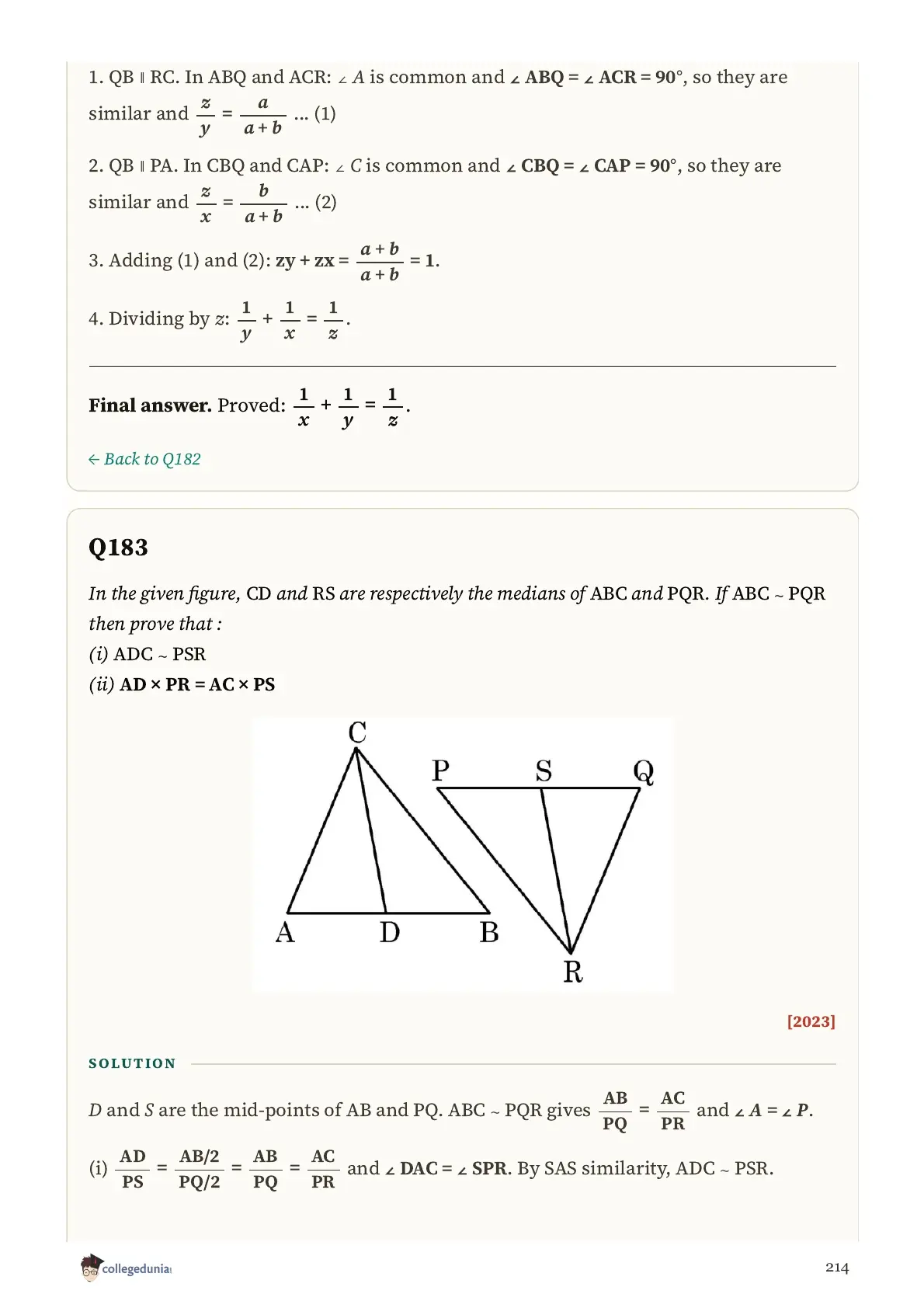
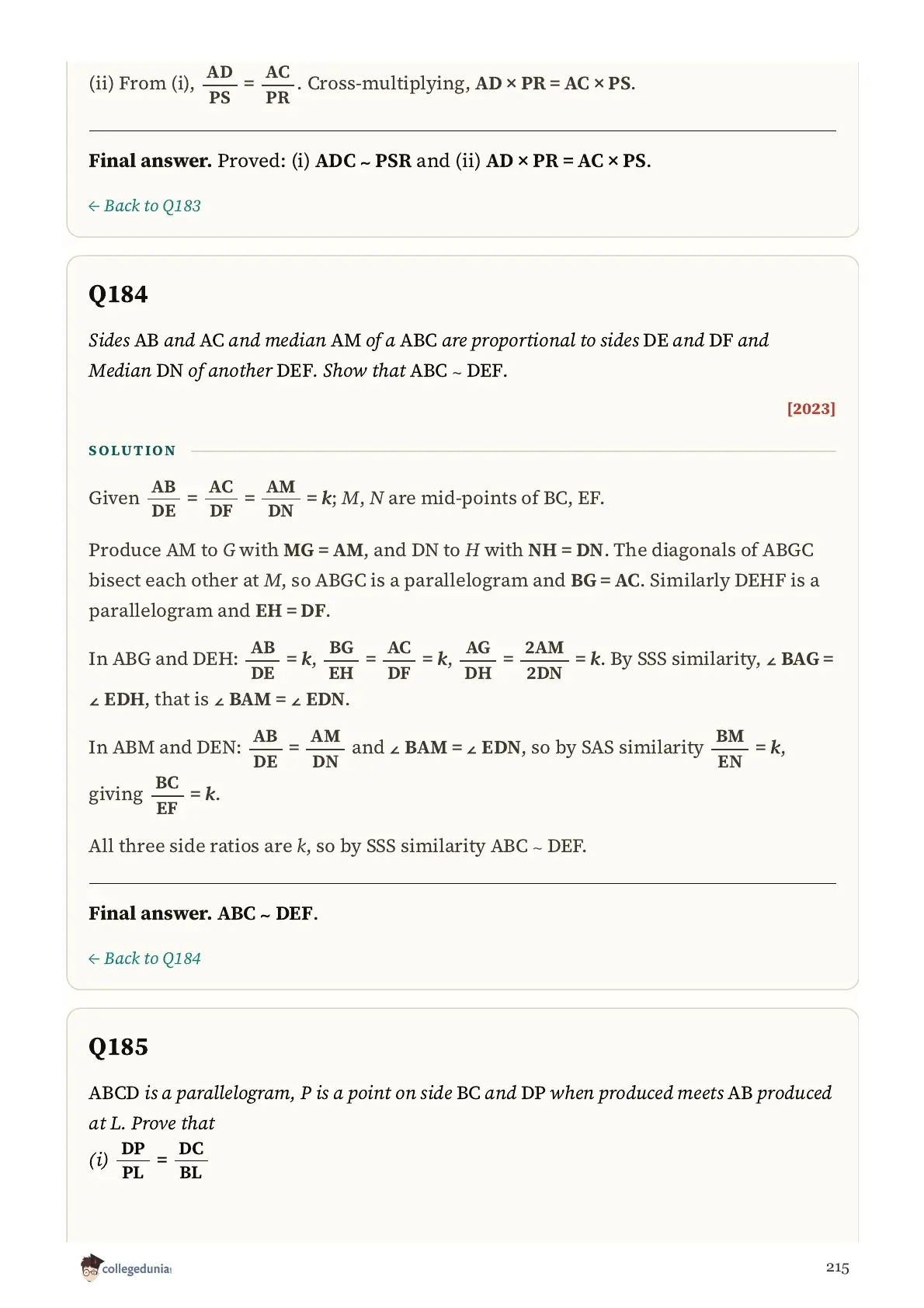
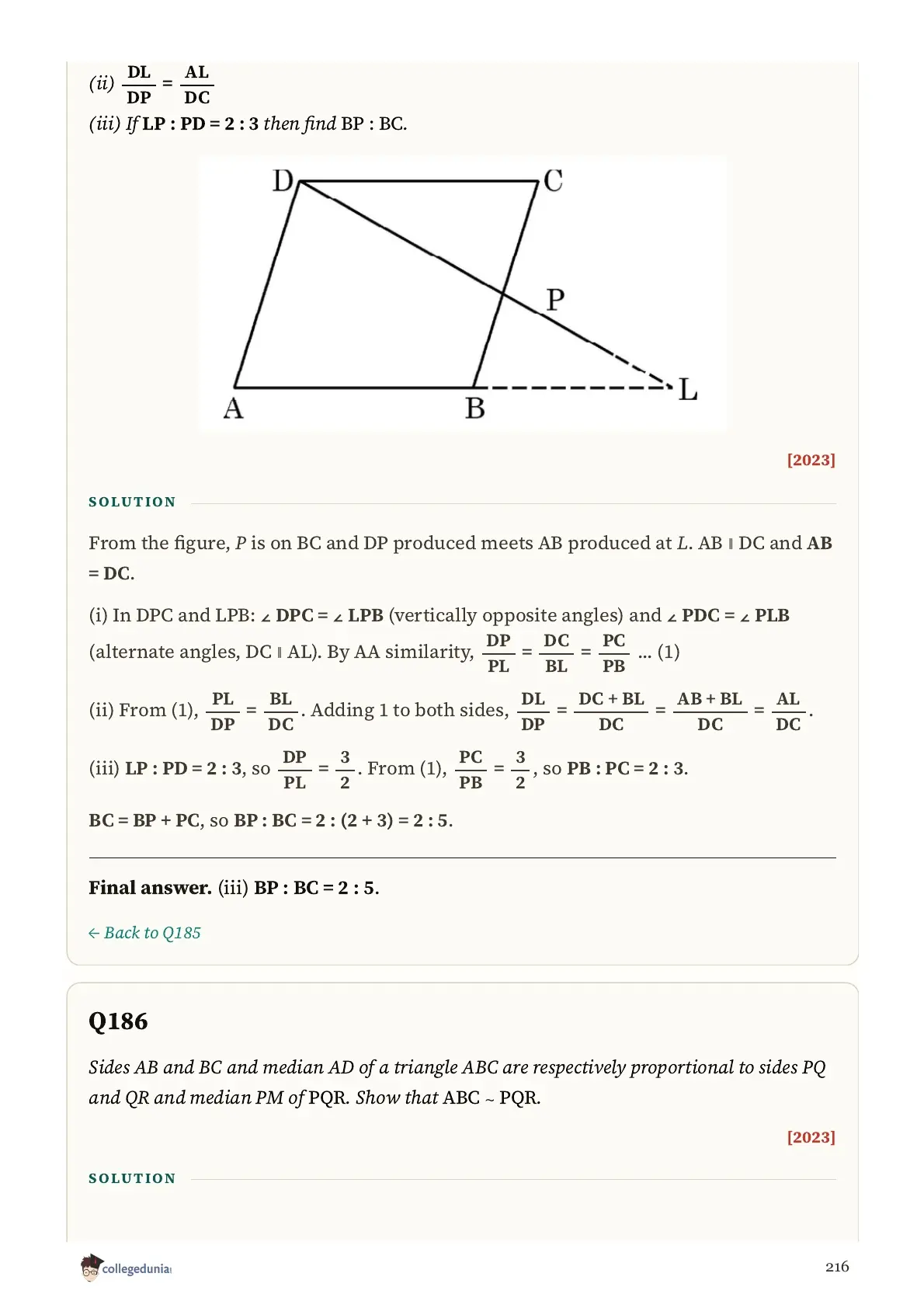
Triangles is a proof chapter. 101 of the 193 questions ask you to prove or show a result, and 114 come with a printed diagram that you need to read before you start. Typical cases are a girl of height 90 cm walking away from a 3.6 m lamp post at 1.2 m/s (2026), two right triangles on the same hypotenuse with PR and QS meeting at T (2026), and a quadrilateral whose diagonal BD bisects both angle B and angle D (2024).
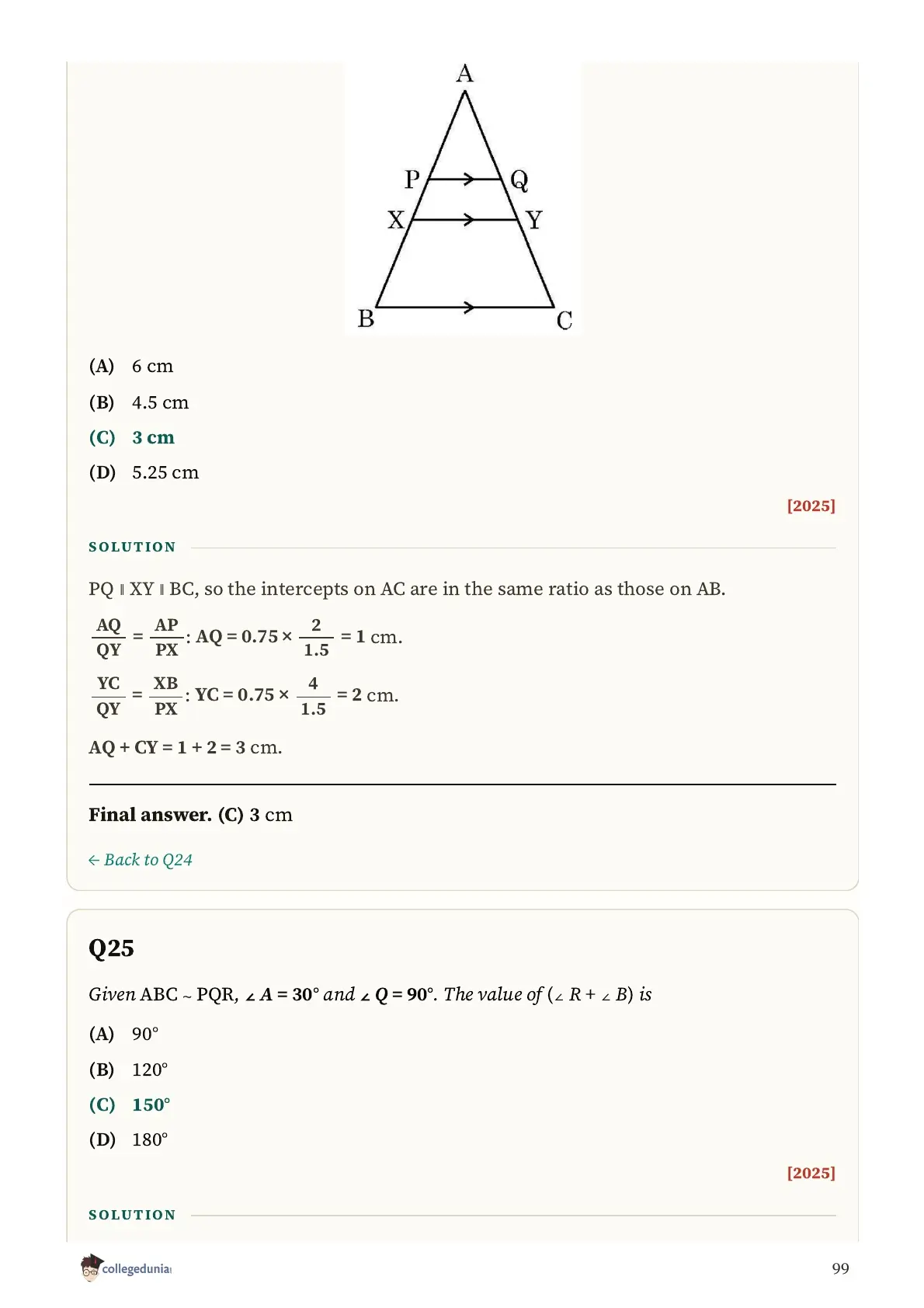
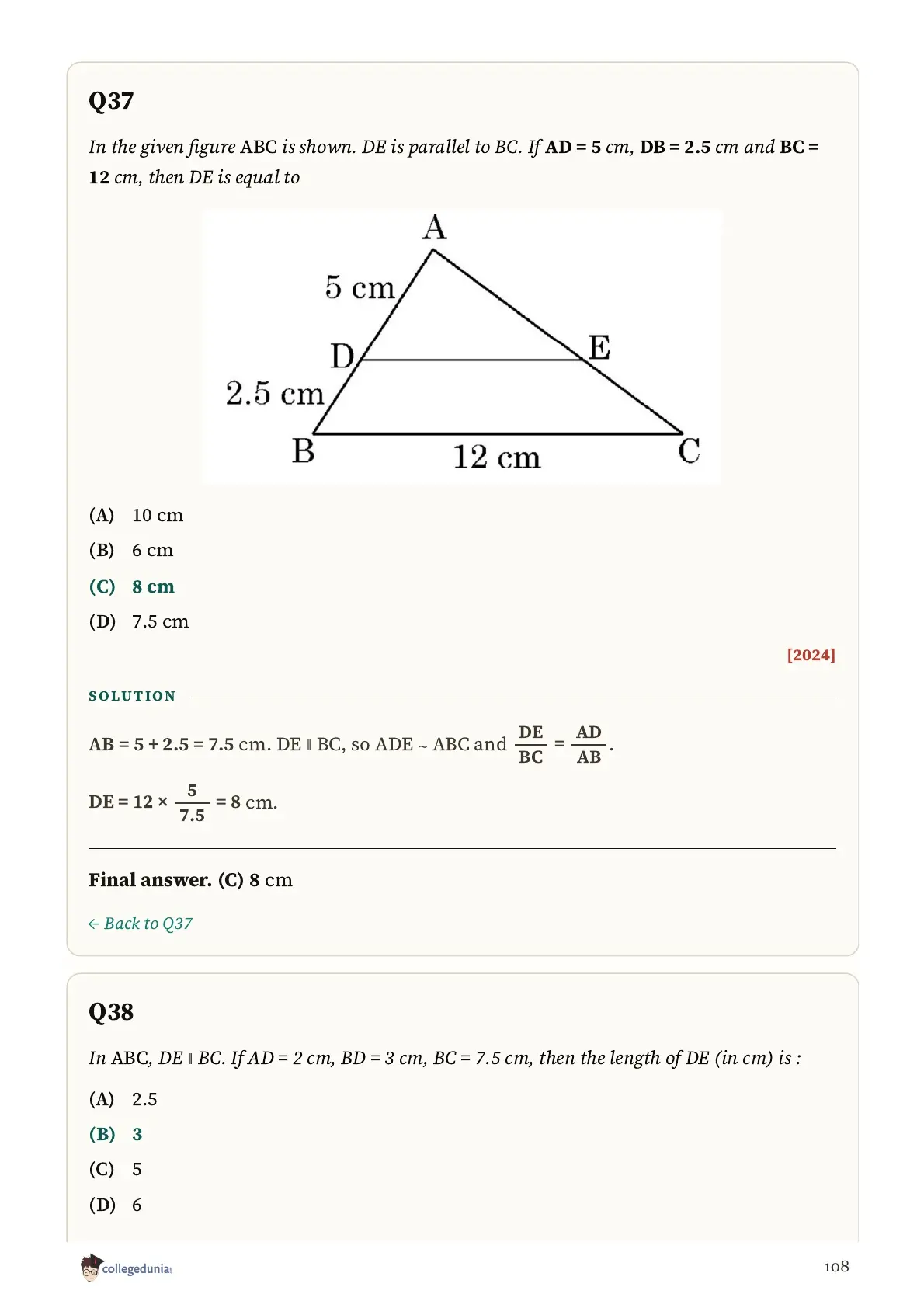
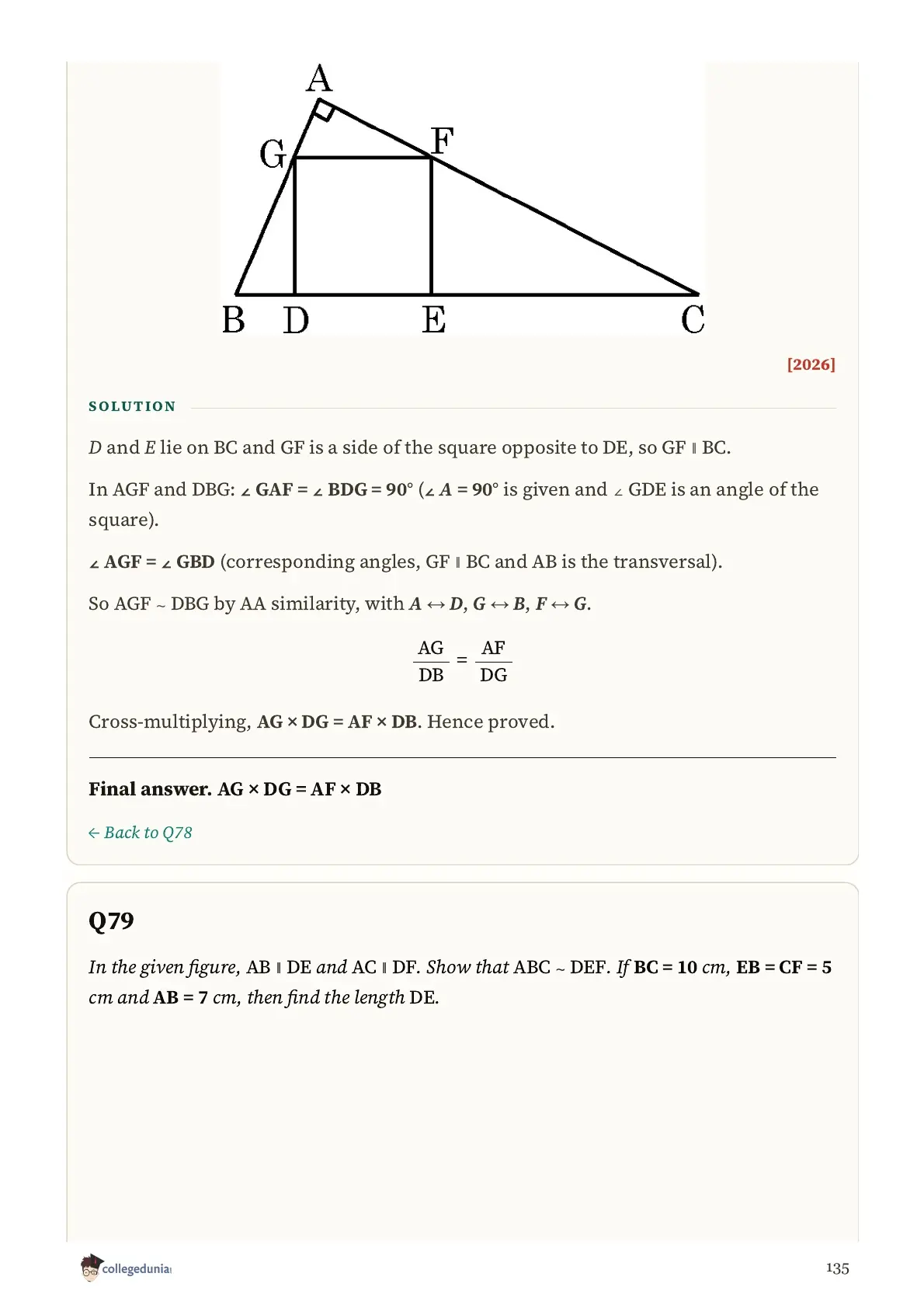
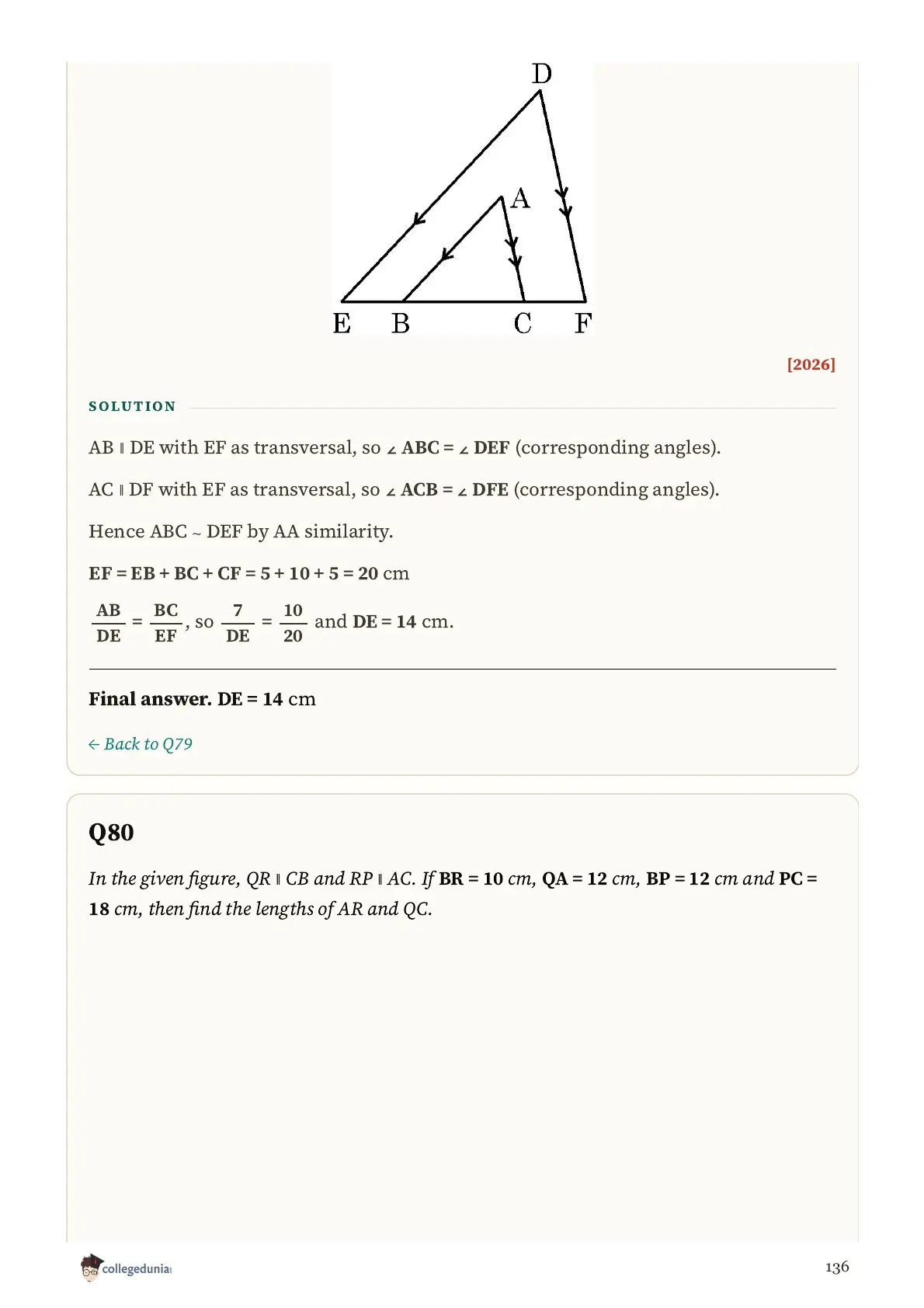
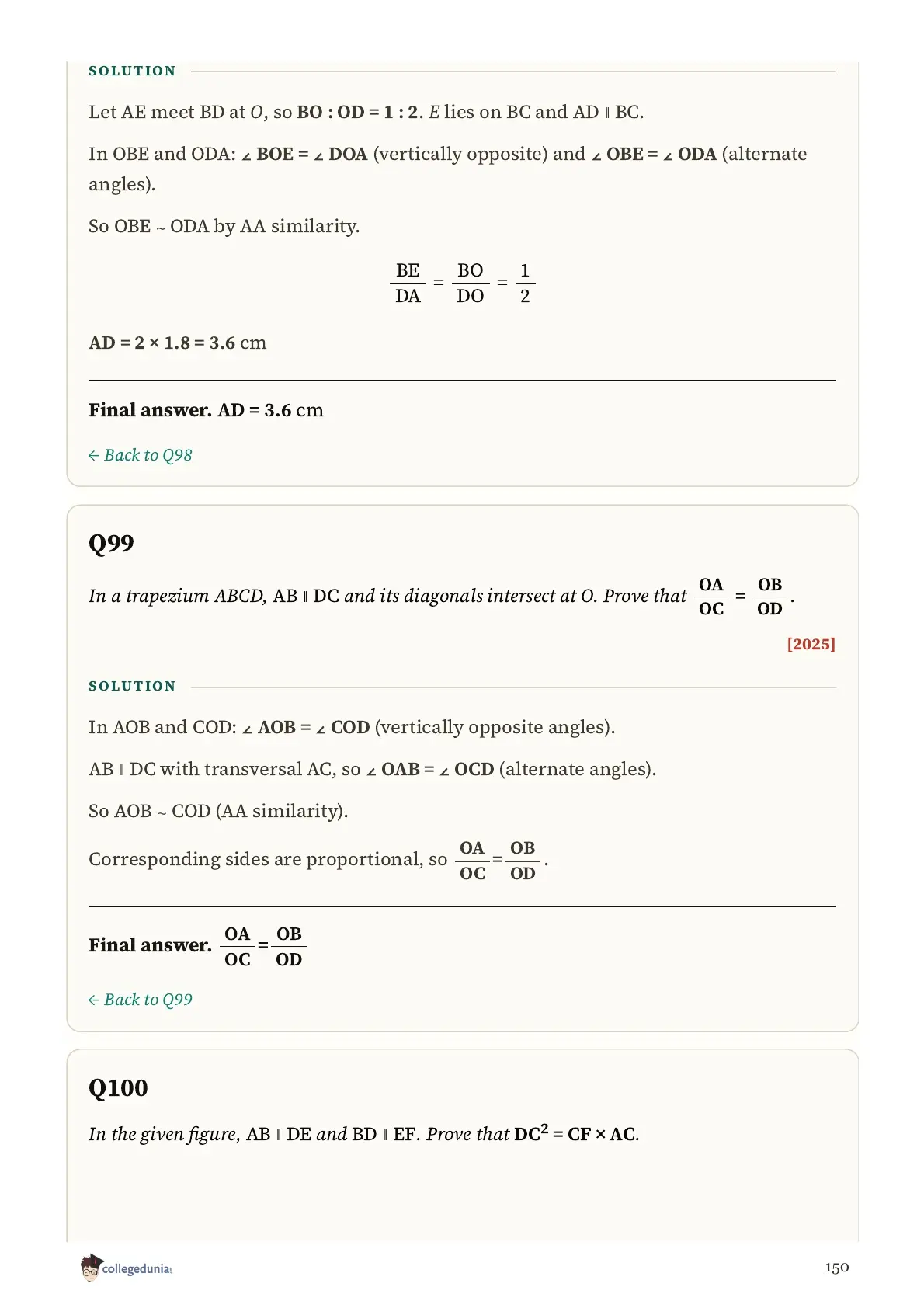
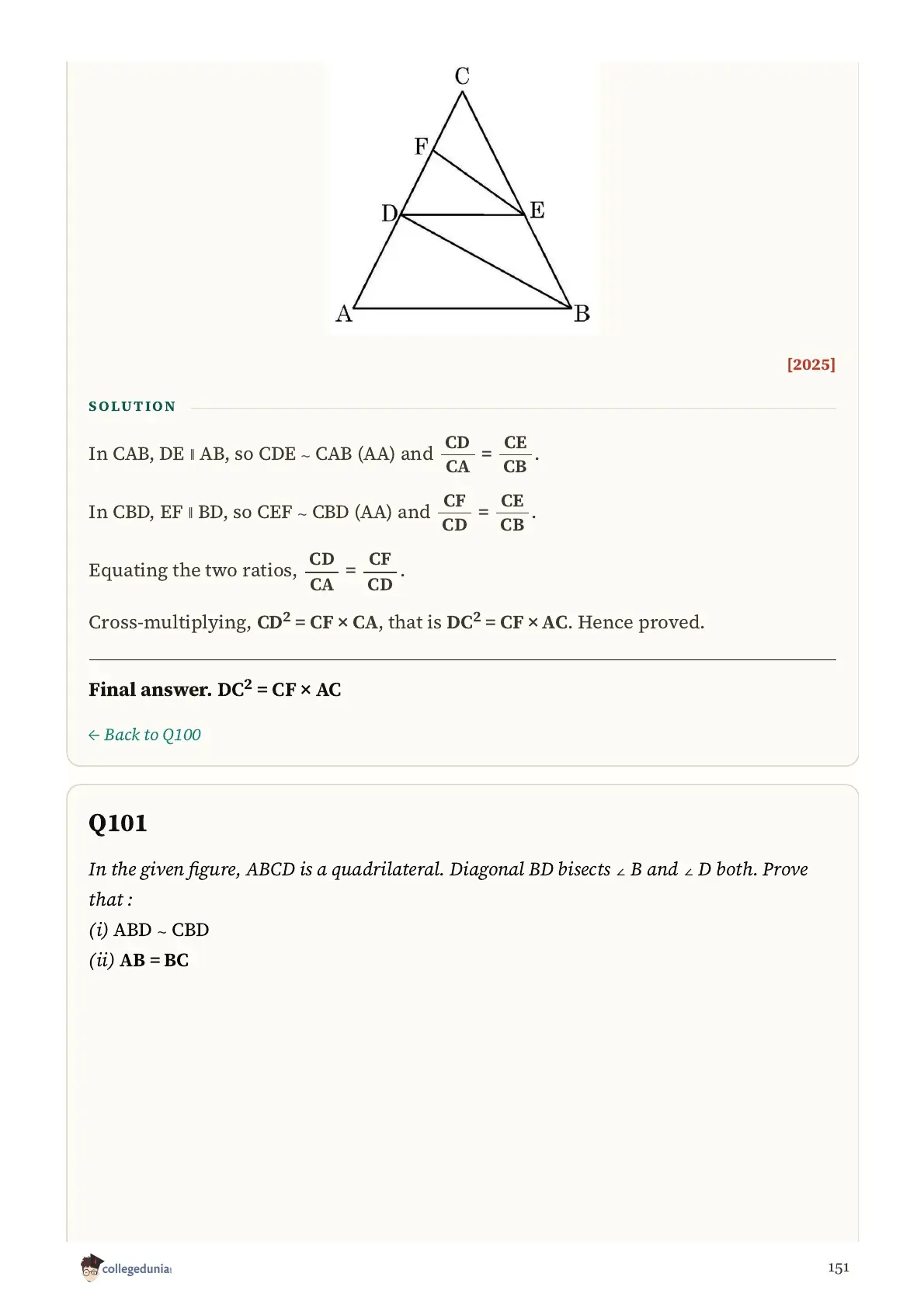
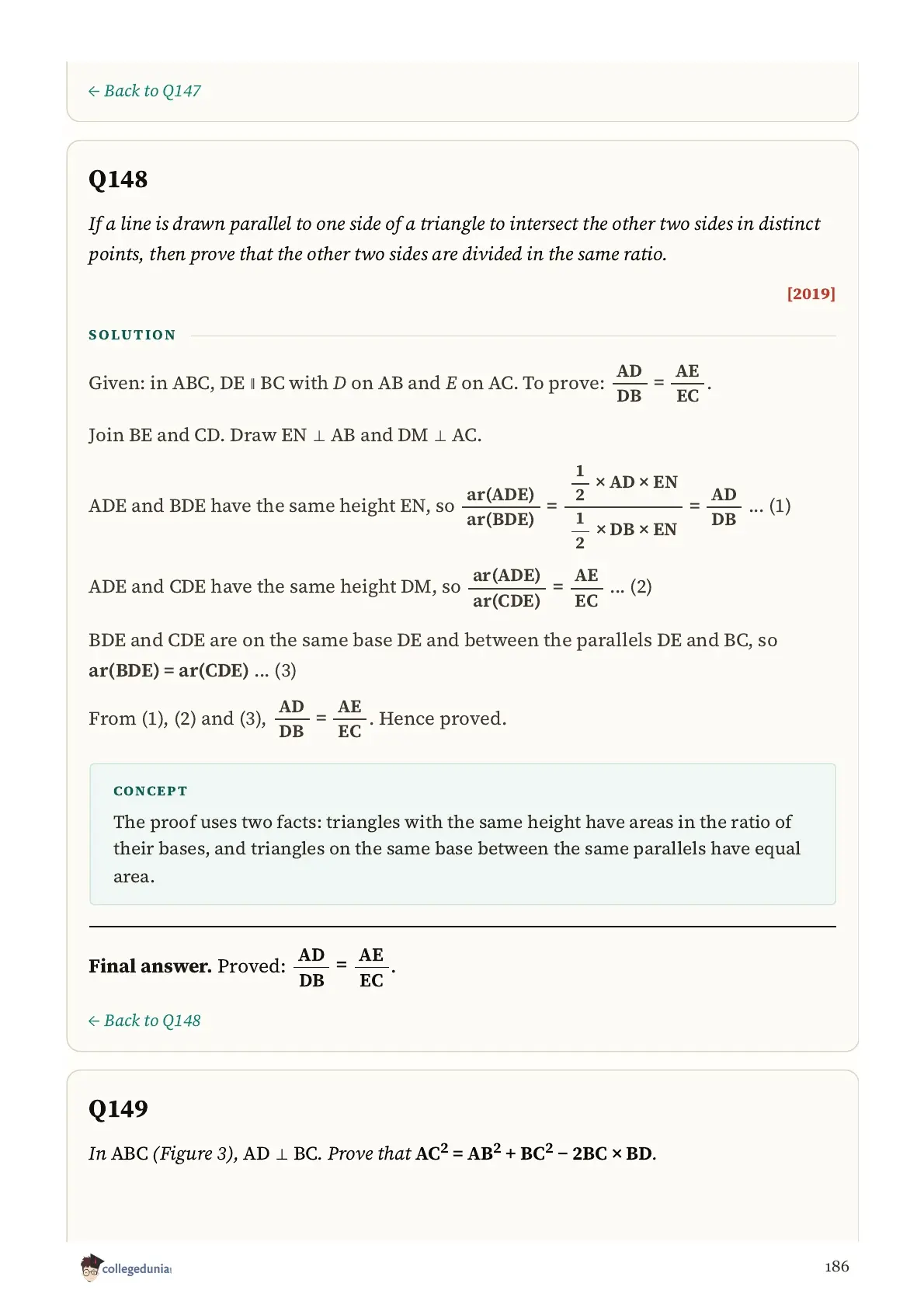
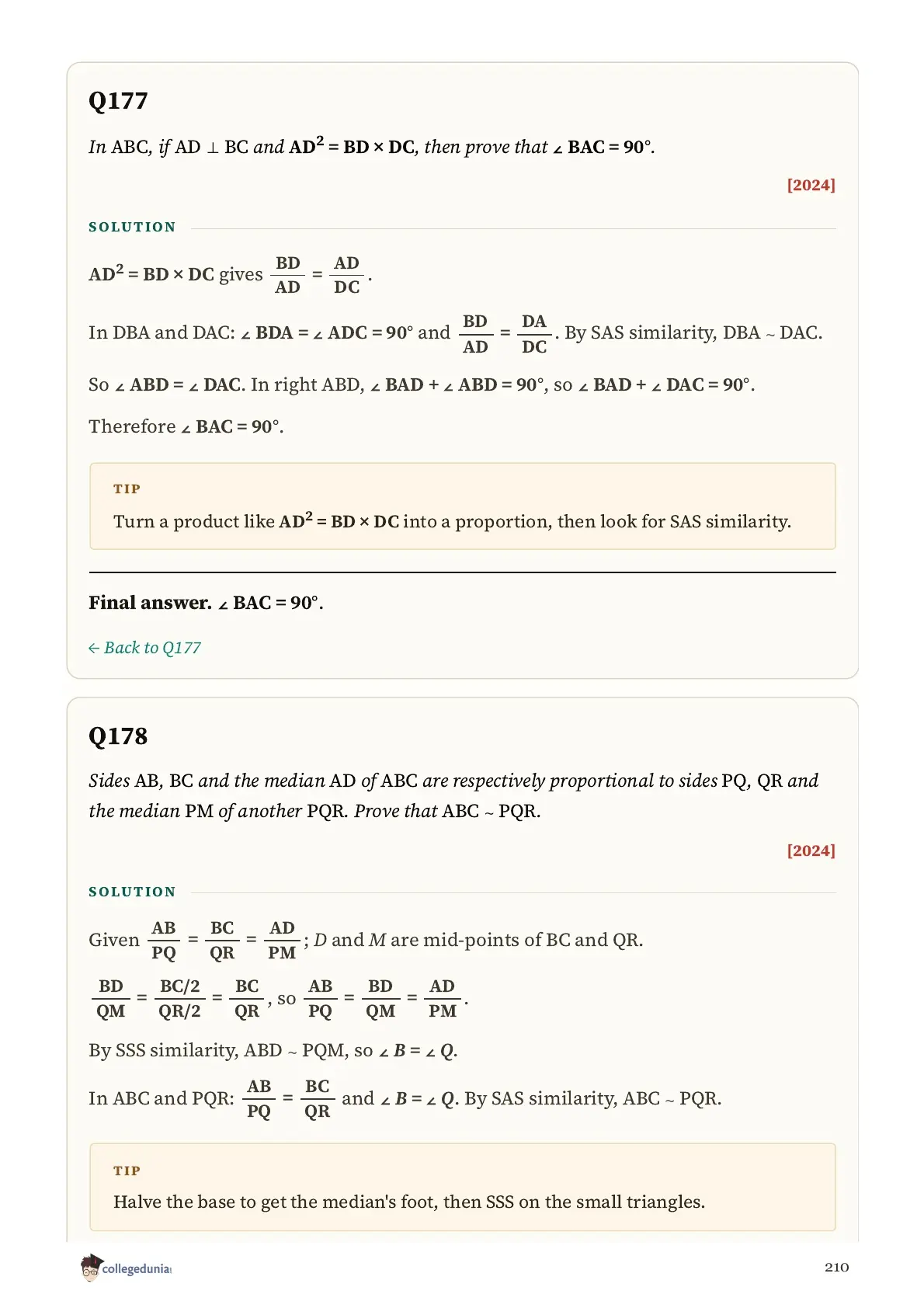
Similarity is the base of the set: 78 questions use similar triangles or the ∼ sign, and 5 ask about congruence. Parallel lines drive 68 questions, and 18 name the basic proportionality theorem or ask for a line to divide two sides in the same ratio. Shapes built on triangles show up as well: 11 questions use a parallelogram, 7 a trapezium and 5 an isosceles triangle.
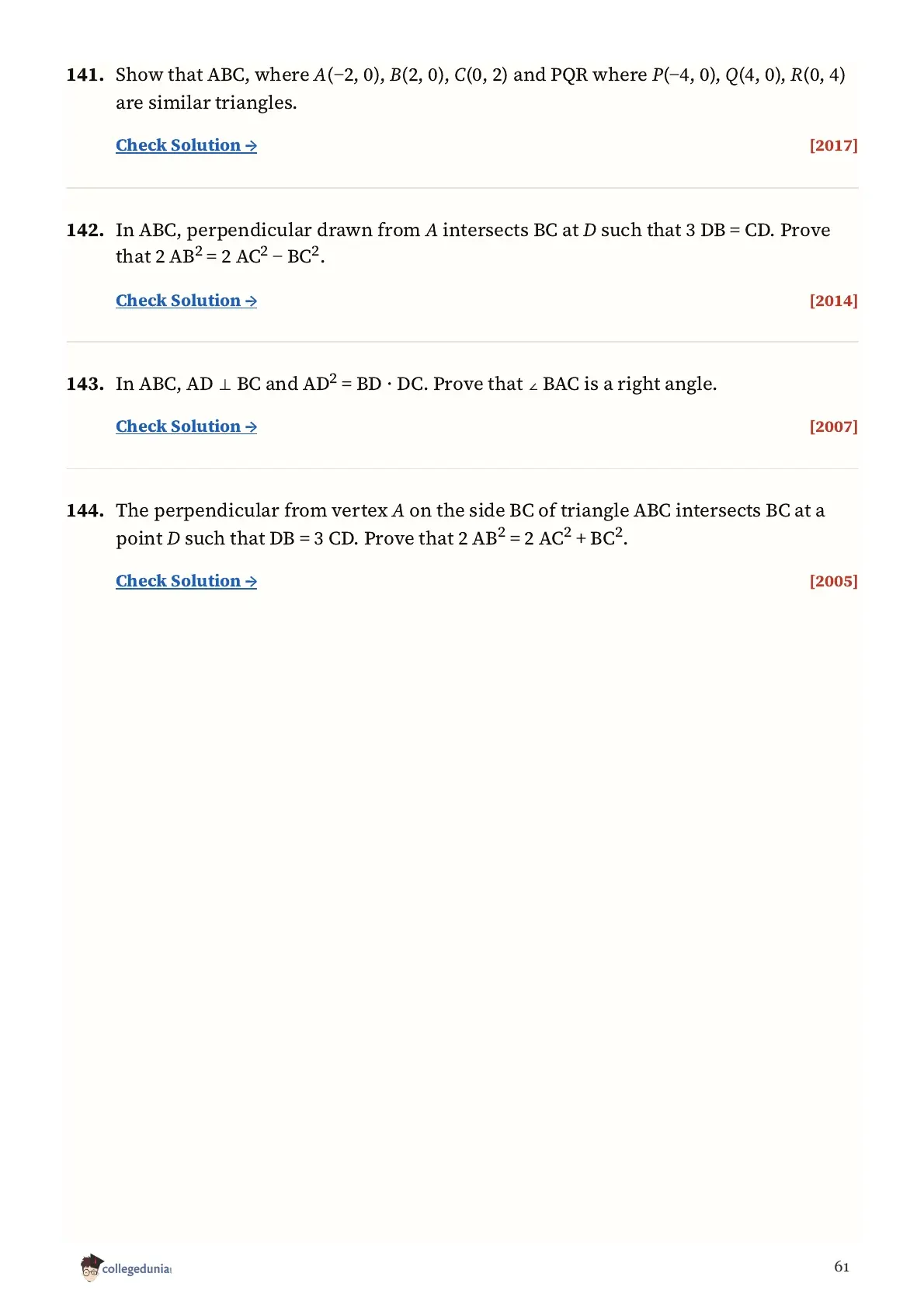
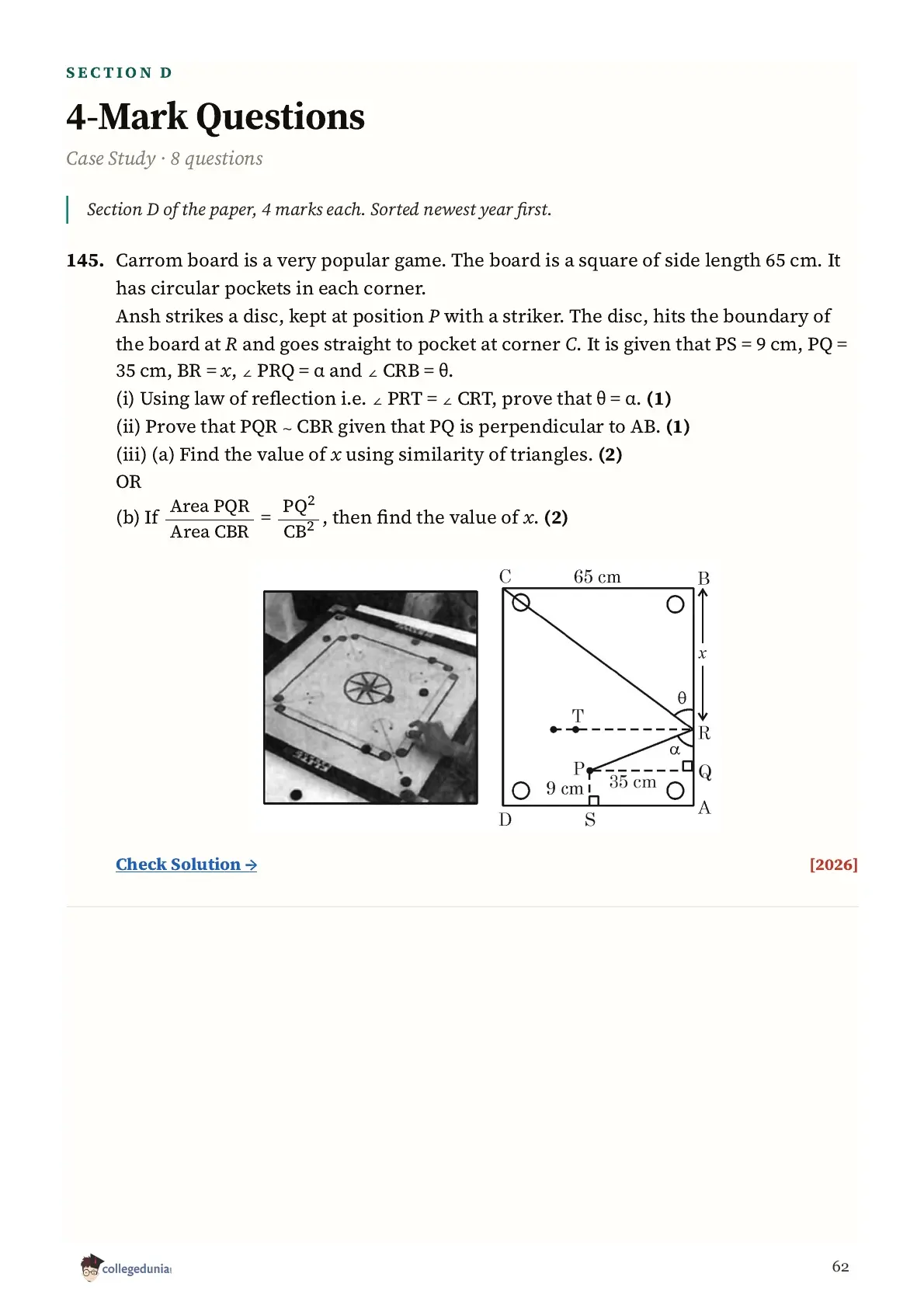
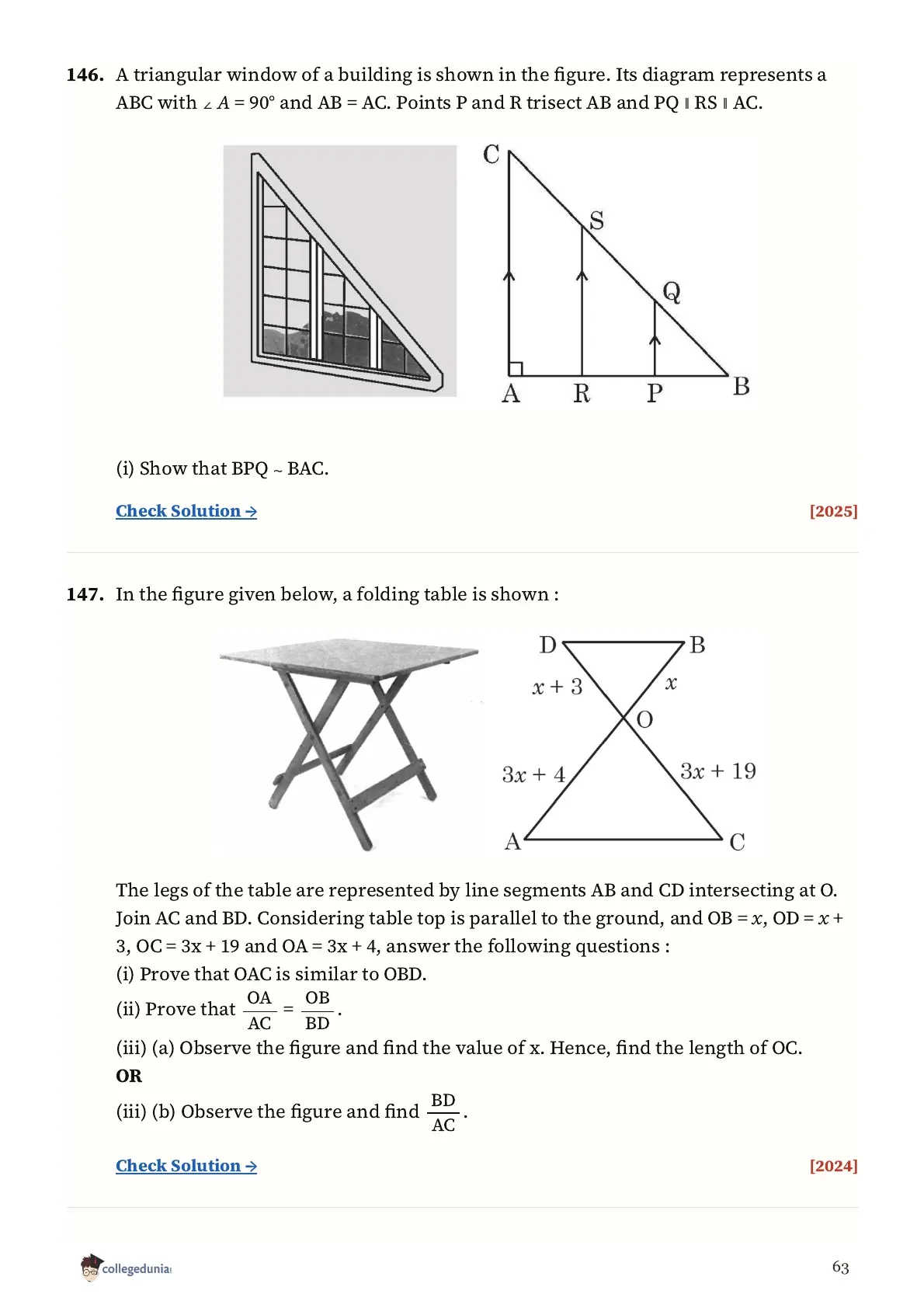
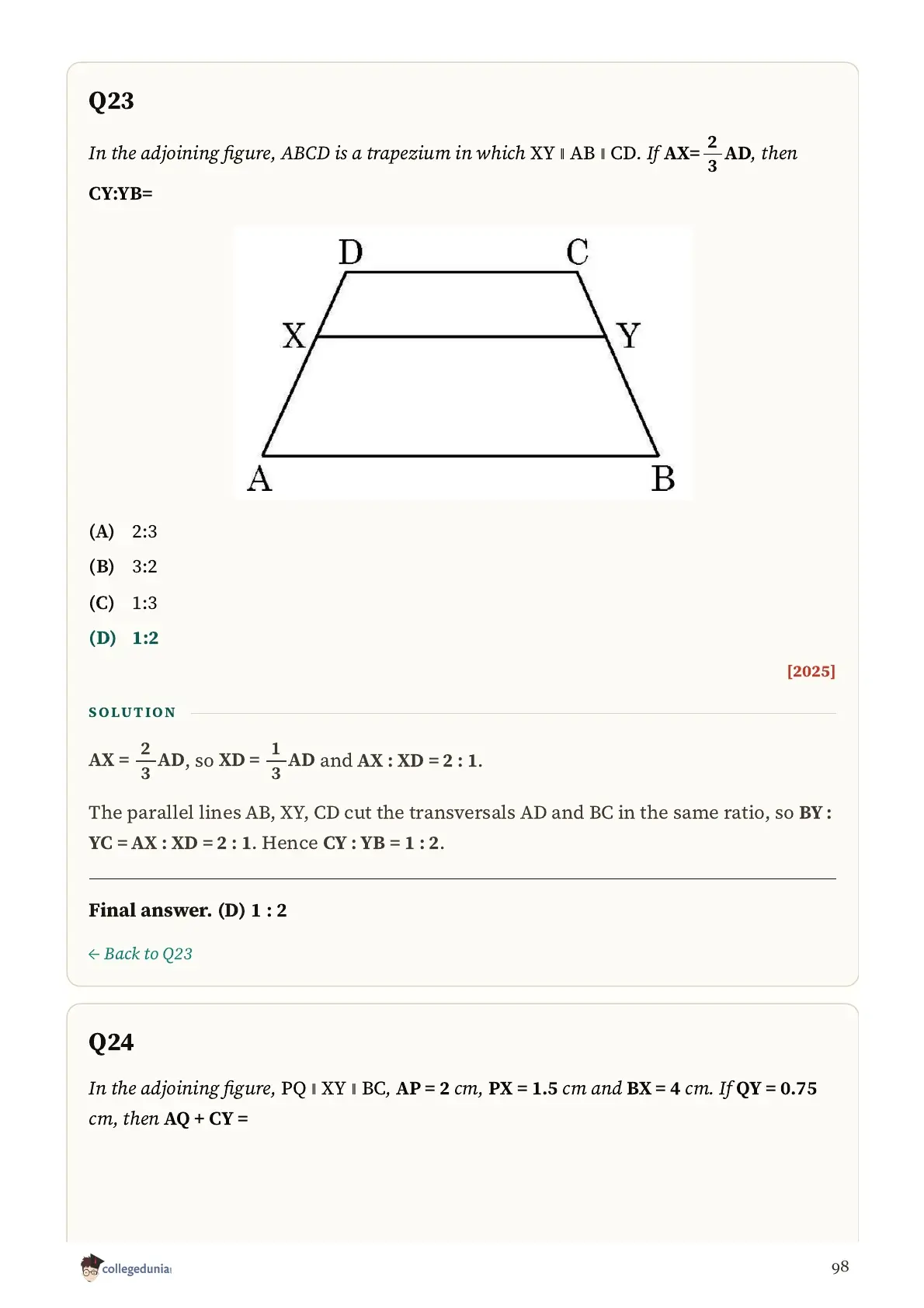
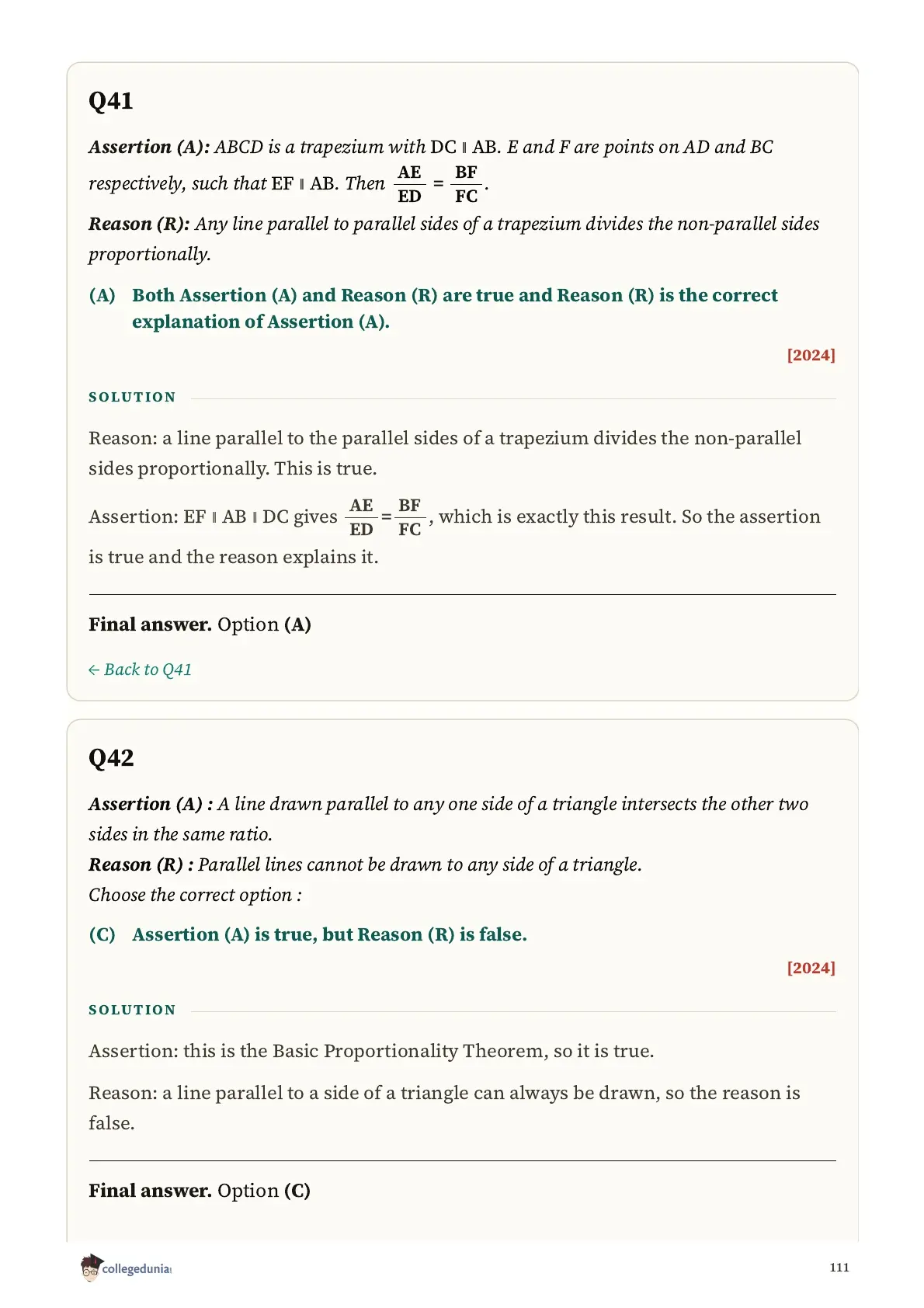
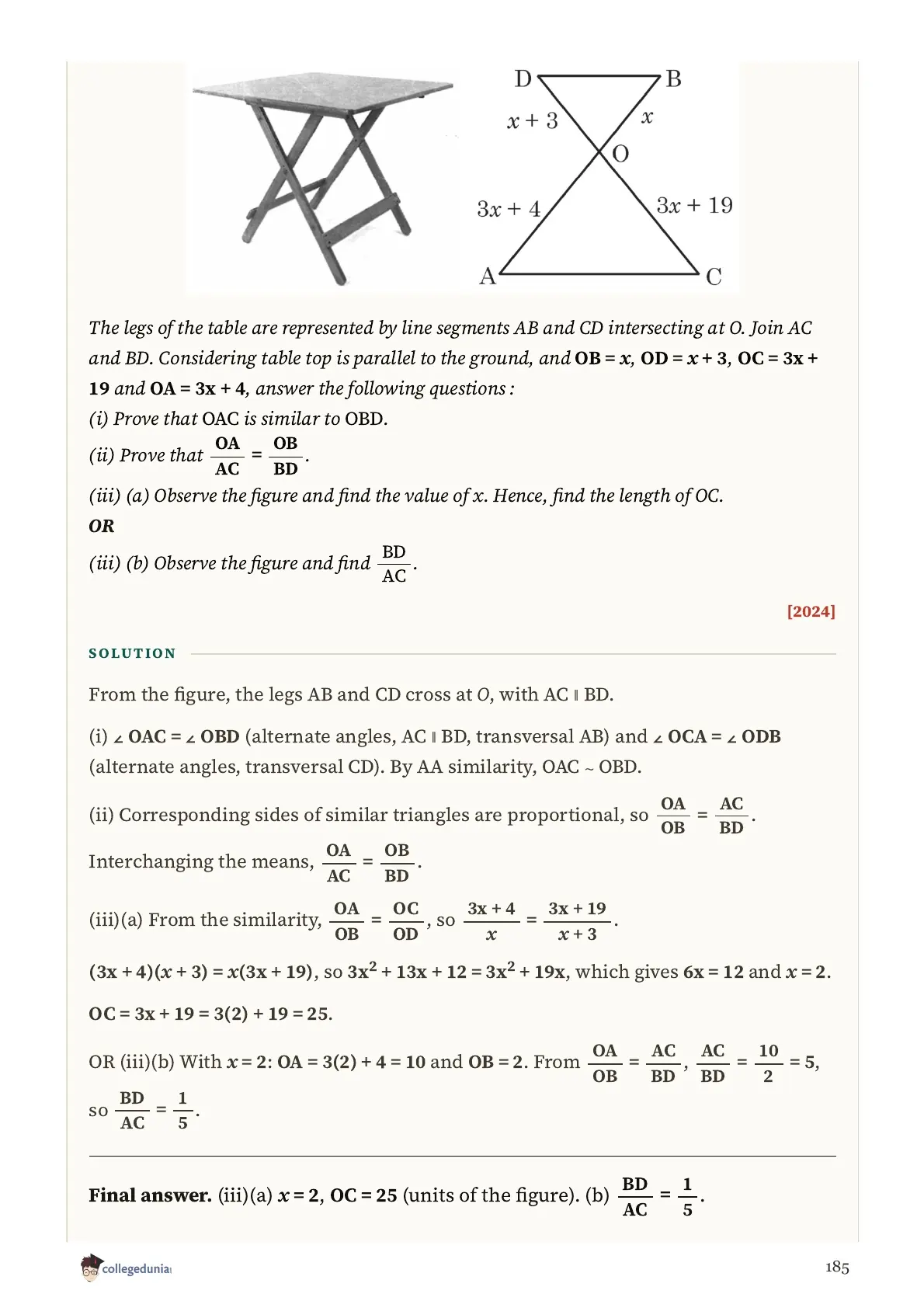
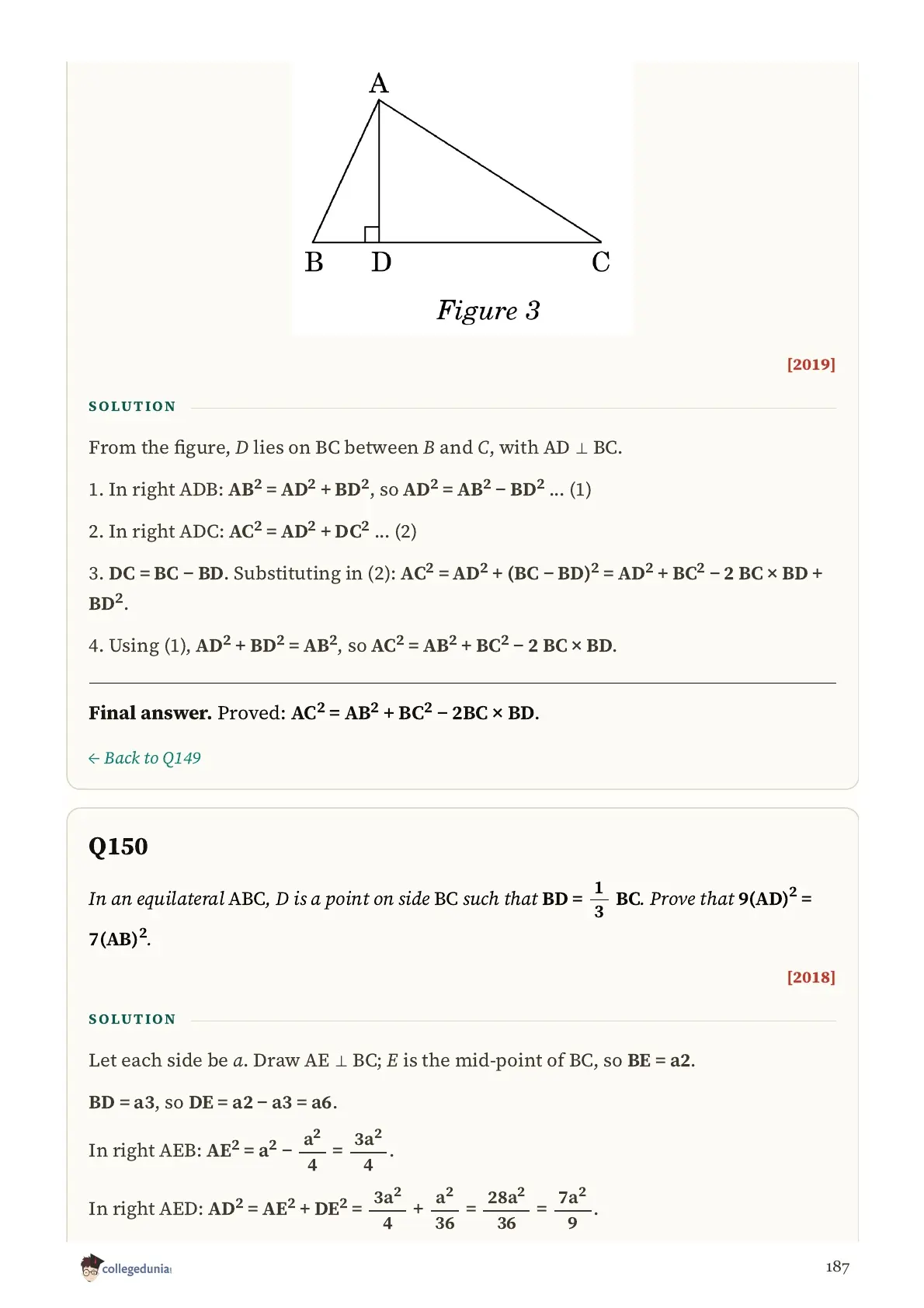
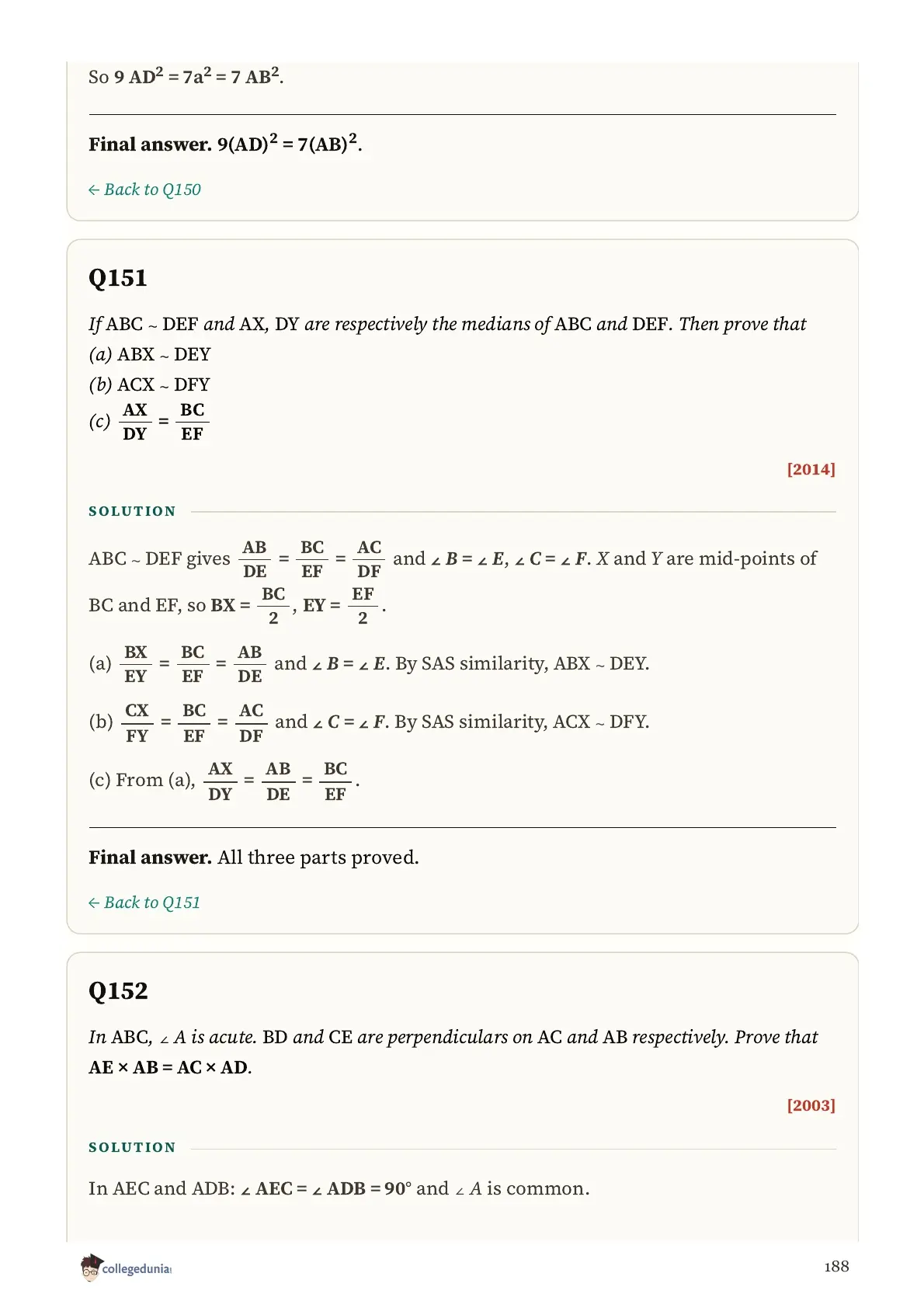
The Pythagoras side of the chapter is smaller. 17 questions work with squares of sides, 8 mention a right angle, and one asks you to show that a triangle on given coordinates is similar to another. Medians appear in 13 questions, altitudes or perpendiculars in 23 and angle bisectors in 10. 4 MCQs are assertion-reason items, for instance on a line parallel to the parallel sides of a trapezium. 3 questions are 4-mark case studies, on a carrom board, a triangular window and a folding table.
Counts come from keyword matches over the question text, so a question that names two things is counted under both.
Source: Shobhit Bhaiya (Oneshot)
How to Approach the Set
Start with the 62 MCQs, then the 11 one-mark fill-in and short items, which need a ratio or a single result. Next take the 49 two-mark and 22 three-mark questions, which are mostly one-step proofs and similarity calculations. Keep the 8 four-mark questions and the 41 five-mark proofs for last, since many chain two or three similar pairs of triangles. Learn the three similarity tests (AA, SAS, SSS), the basic proportionality theorem and its converse, and the rule that areas of similar triangles are in the ratio of the squares of their sides. Practise the 2025 and 2026 papers closely, as they hold 87 of the 193 questions.
Common Mistakes in Triangles Questions
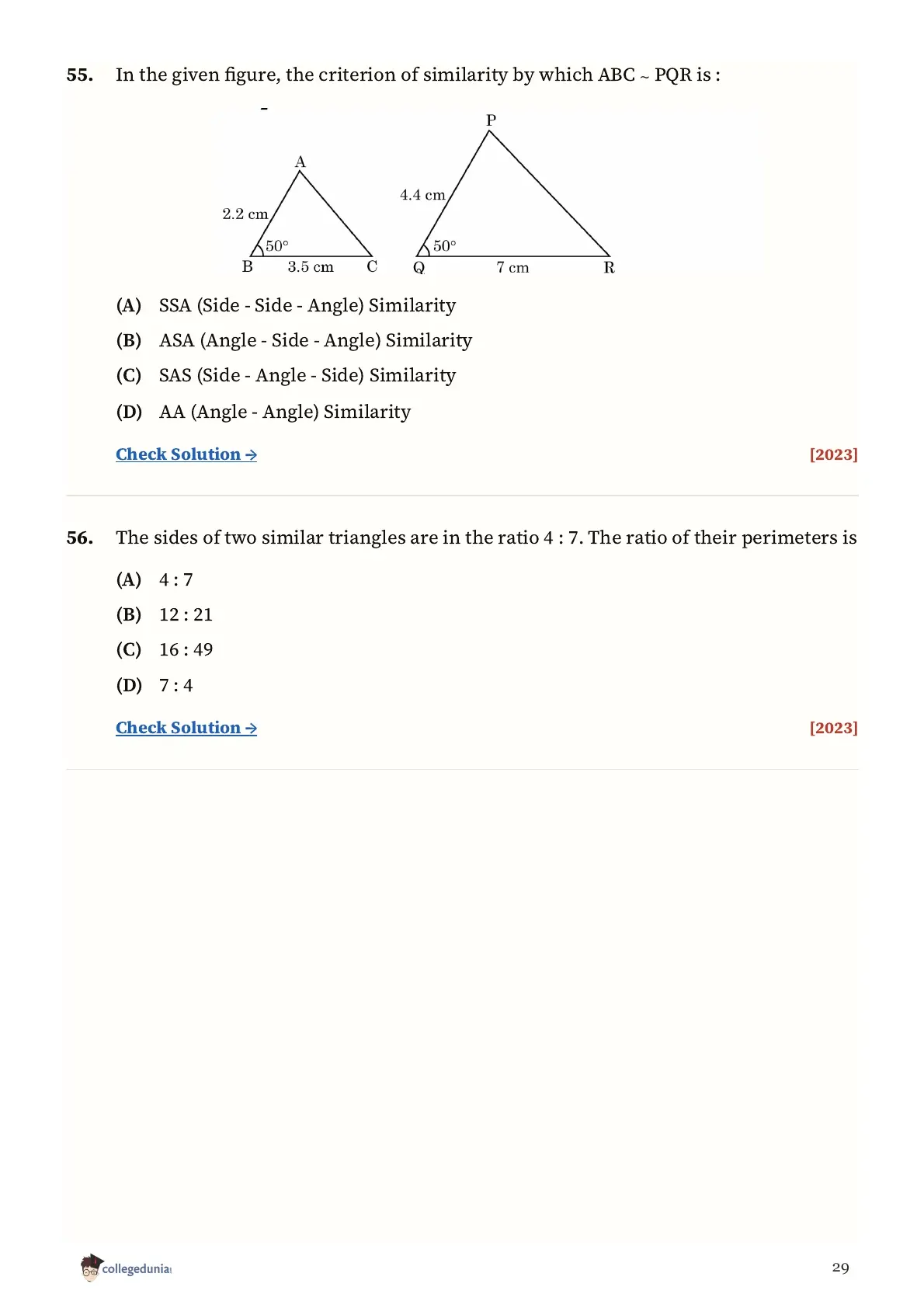
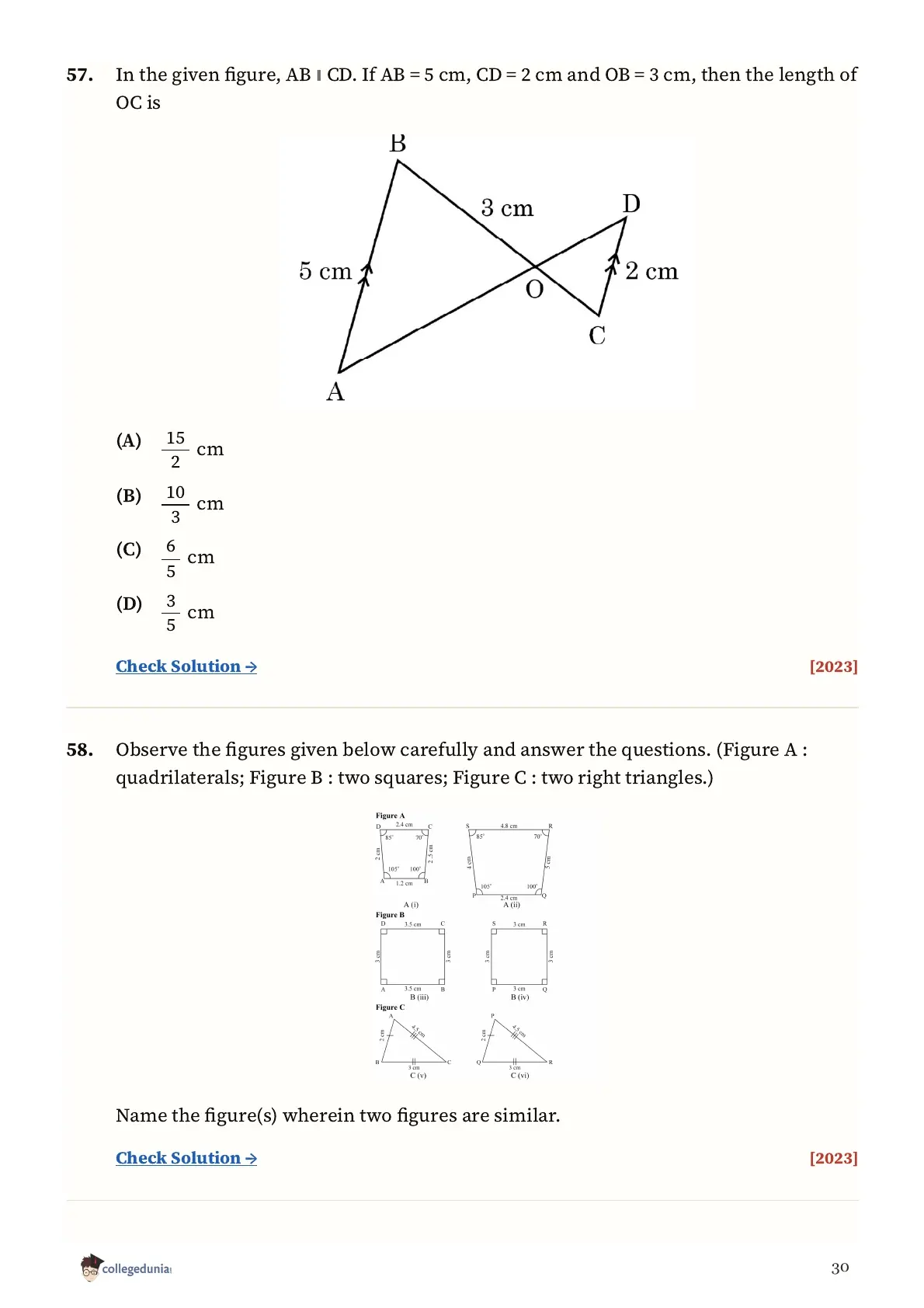
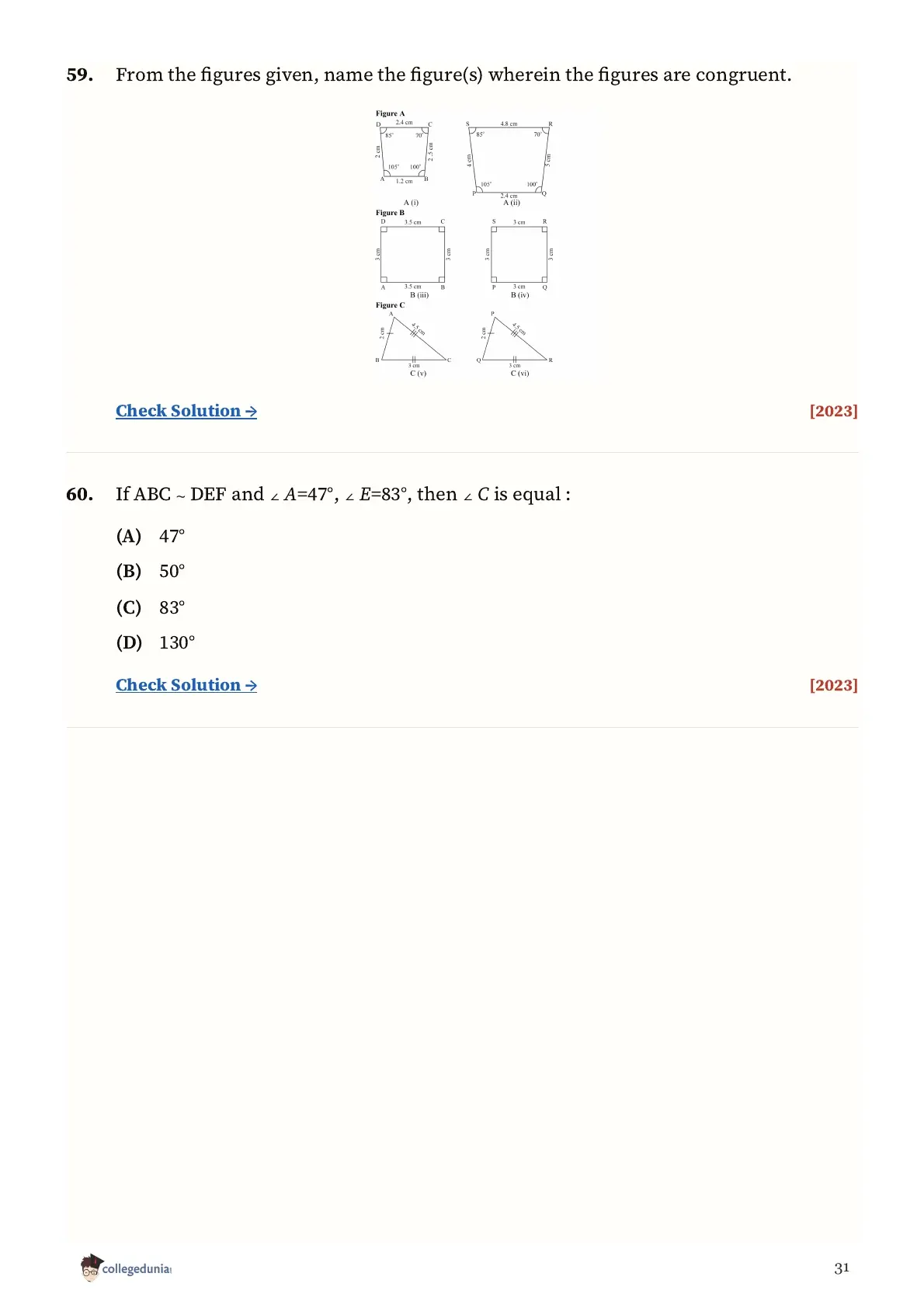
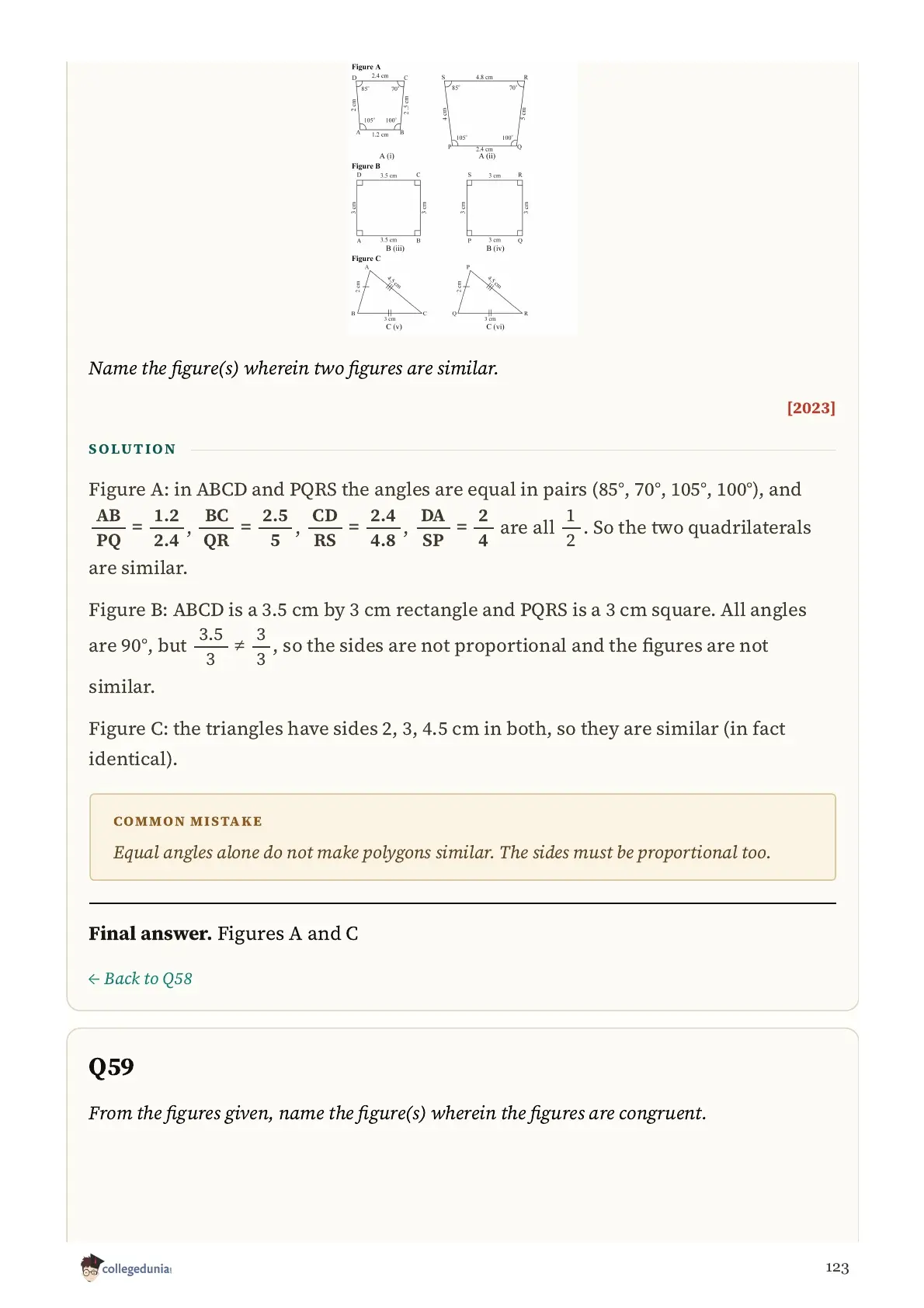
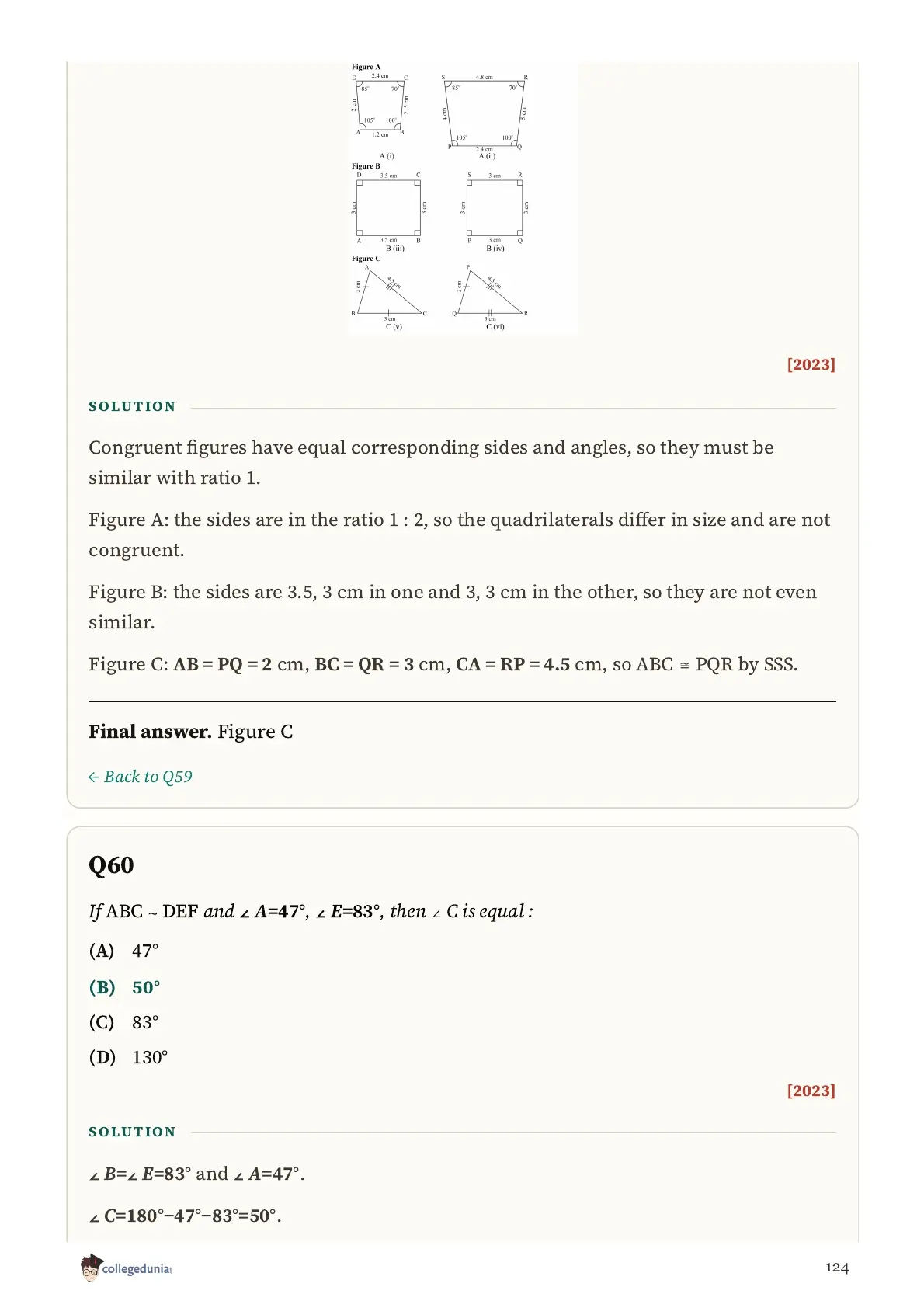
- Mixing up similar and congruent. The 2023 paper asks which figures are similar and which are congruent, and the 2020 fill-in "All squares are ____" needs similar, not congruent.
- Writing the vertices in the wrong order in ABC ∼ PQR, so the wrong sides are paired. Match the equal angles first.
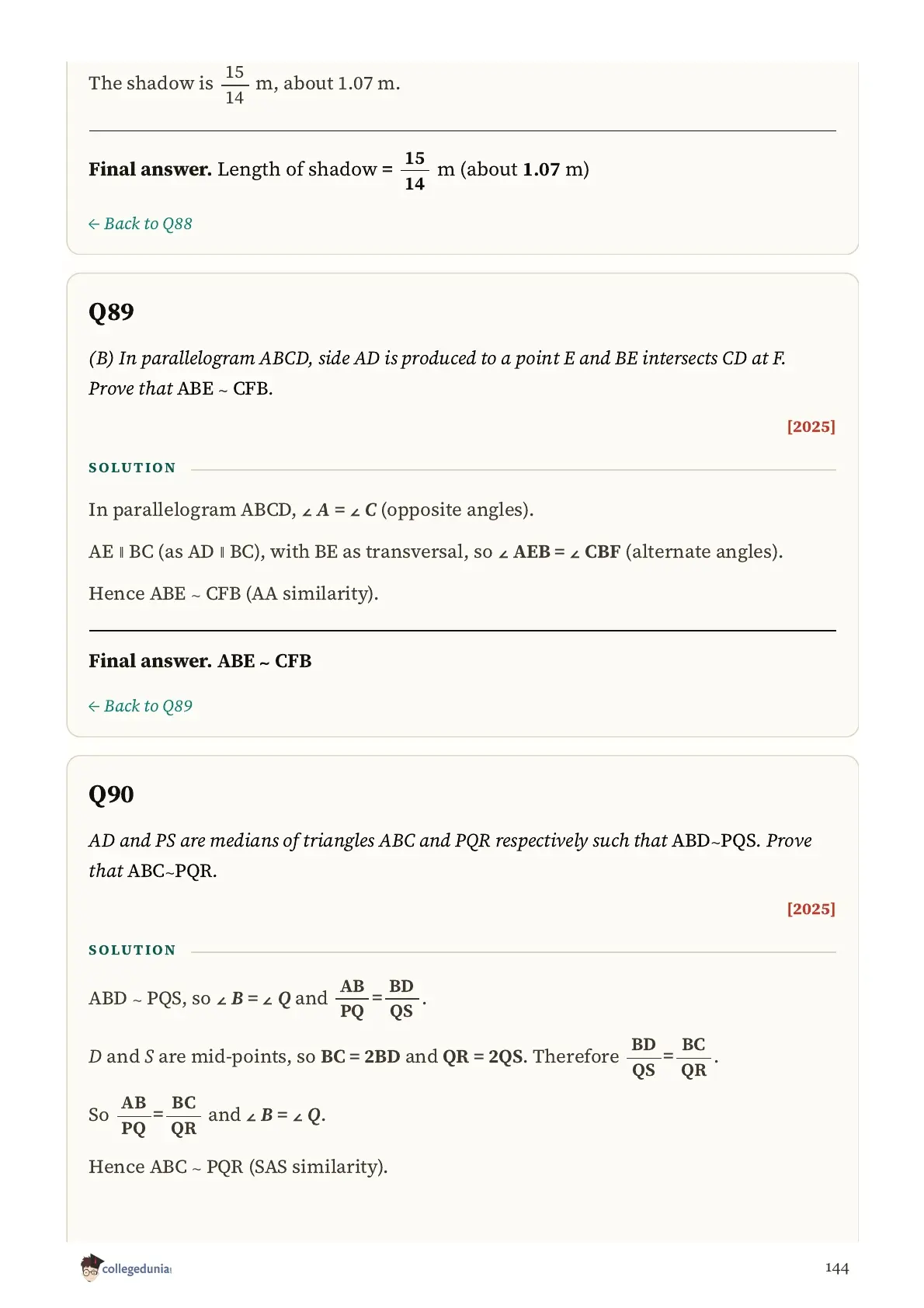
- Using the whole distance in the lamp post problem. In 4 seconds at 1.2 m/s the girl is 4.8 m from the post, and the shadow is 1.6 m, found from 0.9 / 3.6 = s / (s + 4.8). Convert 90 cm to metres first.
- Taking the altitude of an equilateral triangle of side 2a as 2a. Half the base is a, so the altitude is a√3.
- Giving the ratio of perimeters as the square of the ratio of sides. For similar triangles with sides in the ratio 2 : 3, the perimeters are also in the ratio 2 : 3, and only the areas are in the ratio 4 : 9.
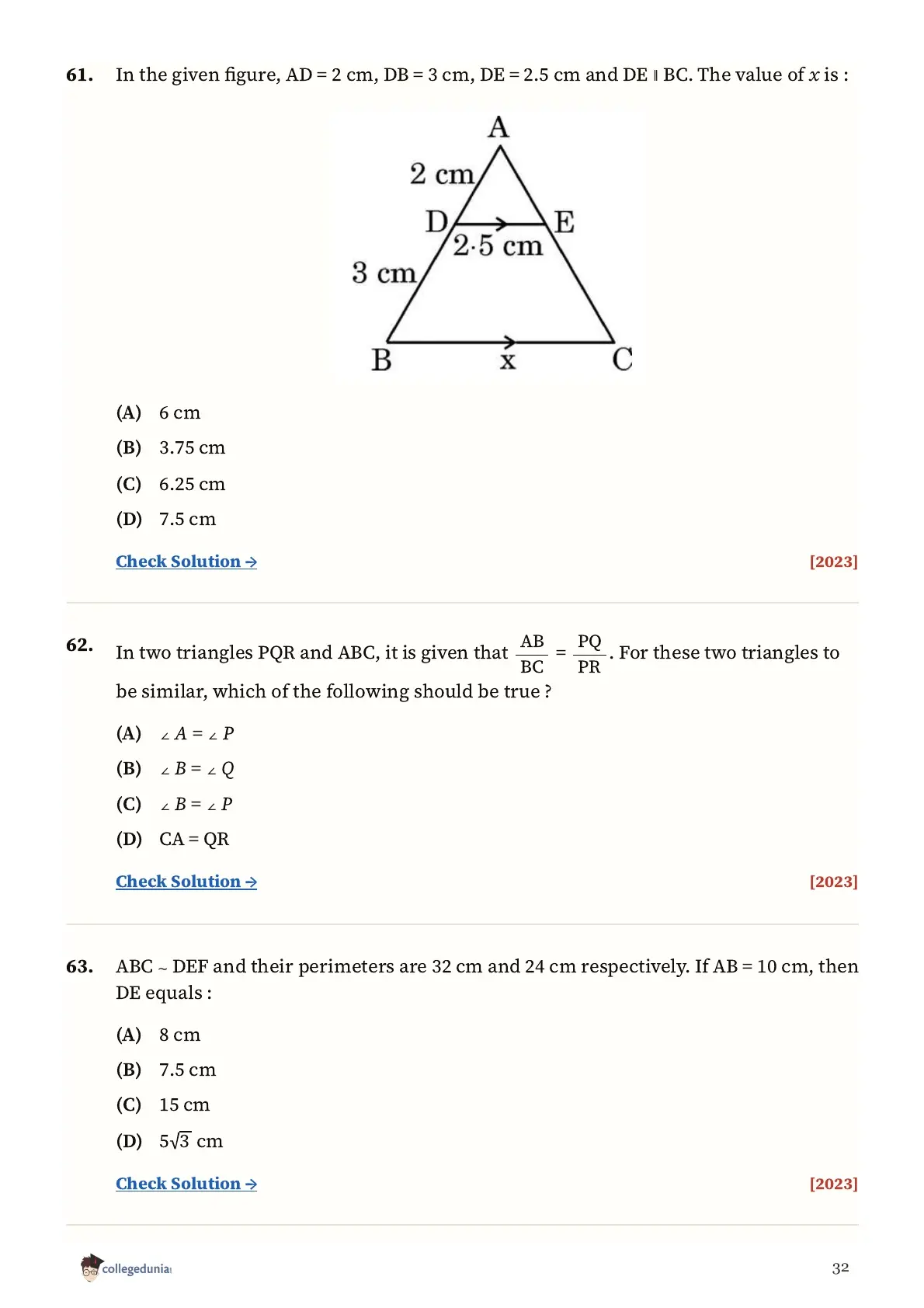
- Applying the basic proportionality theorem without showing that the line is parallel to a side. Write the parallel pair, then the ratio.
Using the Answer Key and Solutions
The PDF is 222 pages and free to download. Each section is sorted newest year first, the Answer Key lists the 62 MCQs at a glance, and each question links to its worked solution and back. Attempt a proof yourself first, check the key, then read the solution. The solutions are written by Collegedunia's Maths experts and are not official CBSE marking schemes.
Class 10 Maths PYQs by Chapter
| Unit | PYQ Page |
|---|---|
| Number Systems | Real Numbers Class 10 Maths PYQ |
| Algebra | Polynomials Class 10 Maths PYQ |
| Algebra | Pair of Linear Equations in Two Variables Class 10 Maths PYQ |
| Algebra | Quadratic Equations Class 10 Maths PYQ |
| Algebra | Arithmetic Progressions Class 10 Maths PYQ |
| Geometry | Triangles Class 10 Maths PYQ |
| Coordinate Geometry | Coordinate Geometry Class 10 Maths PYQ |
| Trigonometry | Introduction to Trigonometry Class 10 Maths PYQ |
| Trigonometry | Some Applications of Trigonometry Class 10 Maths PYQ |
| Geometry | Circles Class 10 Maths PYQ |
| Mensuration | Areas Related to Circles Class 10 Maths PYQ |
| Mensuration | Surface Areas and Volumes Class 10 Maths PYQ |
| Statistics and Probability | Statistics Class 10 Maths PYQ |
| Statistics and Probability | Probability Class 10 Maths PYQ |
Triangles Class 10 Maths PYQ FAQs
Ques. How many questions are in the Triangles Class 10 Maths PYQ PDF?
Ans. The PDF has 193 questions from the 2003 to 2026 board papers: 73 at 1 mark, 49 at 2 marks, 22 at 3 marks, 8 at 4 marks and 41 long answers at 5 marks.
Ques. Does this PYQ PDF include solutions, or only the questions?
Ans. All 193 questions have a worked solution in the PDF. The 62 MCQs and assertion-reason items are also listed in the Answer Key before the solutions.
Ques. Are the solutions official?
Ans. No. They are written by Collegedunia's Maths experts, checked against the NCERT chapter and re-worked for every calculation. They are not an official CBSE marking scheme, so the board's wording of an answer may differ.
Ques. How many marks does Triangles carry in the Class 10 Maths paper?
Ans. CBSE publishes marks per unit, not per chapter. Triangles and Circles form the unit Geometry, which prep sites report at 15 of the 80 theory marks in the 2026-27 syllabus. That figure is unofficial, so check cbseacademic.nic.in for the current curriculum.
Ques. What kind of questions are asked from Triangles?
Ans. Proofs form the largest group: 101 of the 193 questions ask you to prove or show a result. Others ask for a length using the basic proportionality theorem, a similarity check from a figure, a case study or a numerical on medians and altitudes.
Ques. Which years does the set cover?
Ans. The questions come from 14 board years between 2003 and 2026. 2025 has the most questions (56), followed by 2023 (45) and 2024 and 2026 (31 each).



Comments