




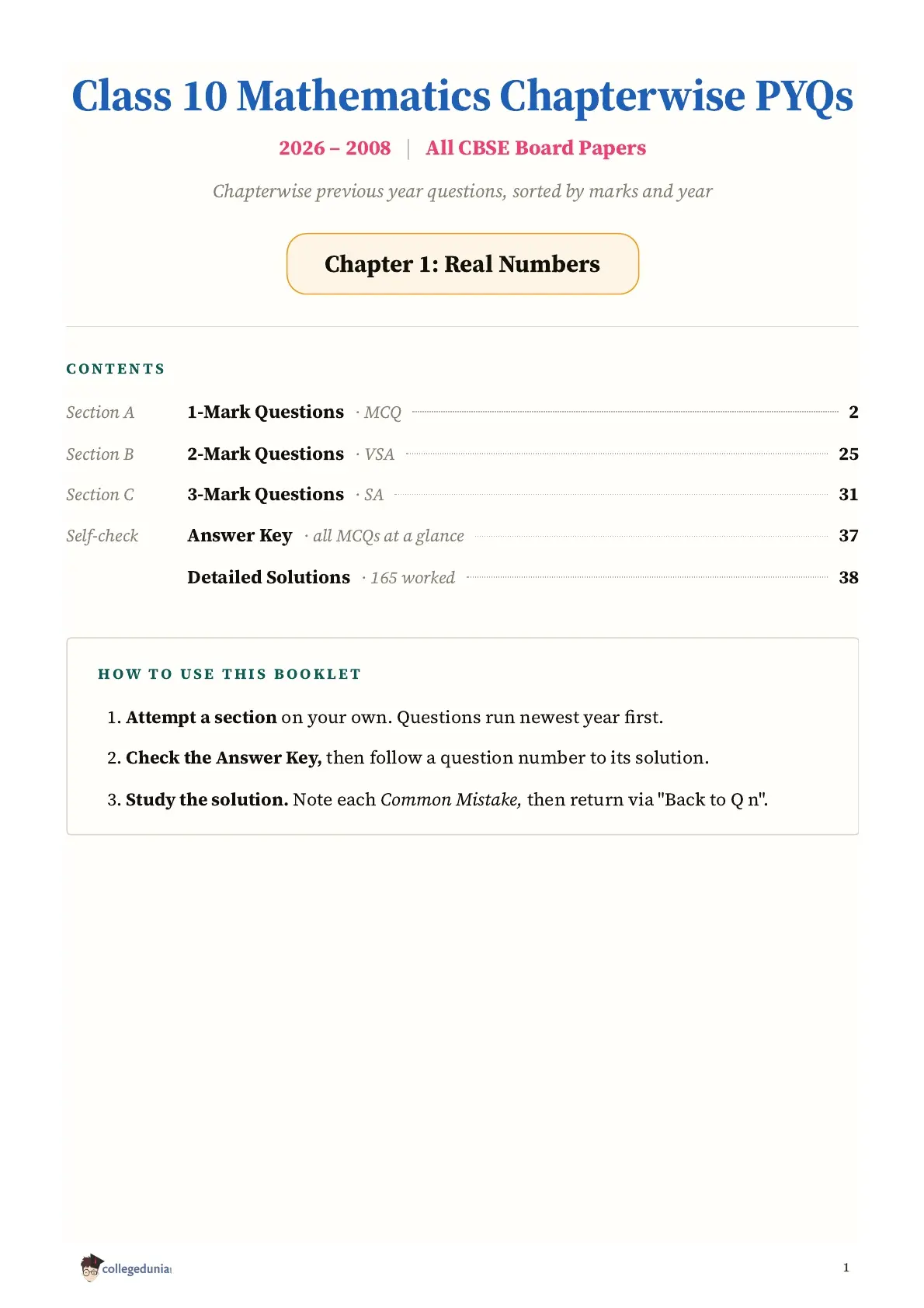
Class 10 Maths Real Numbers PYQ, free to download as a 115-page PDF with 165 solved board questions from the 2008 to 2026 papers. Real Numbers is Chapter 1 of the NCERT Class 10 Maths book and the only chapter of the CBSE unit Number Systems, which prep sites report at 6 of the 80 theory marks.
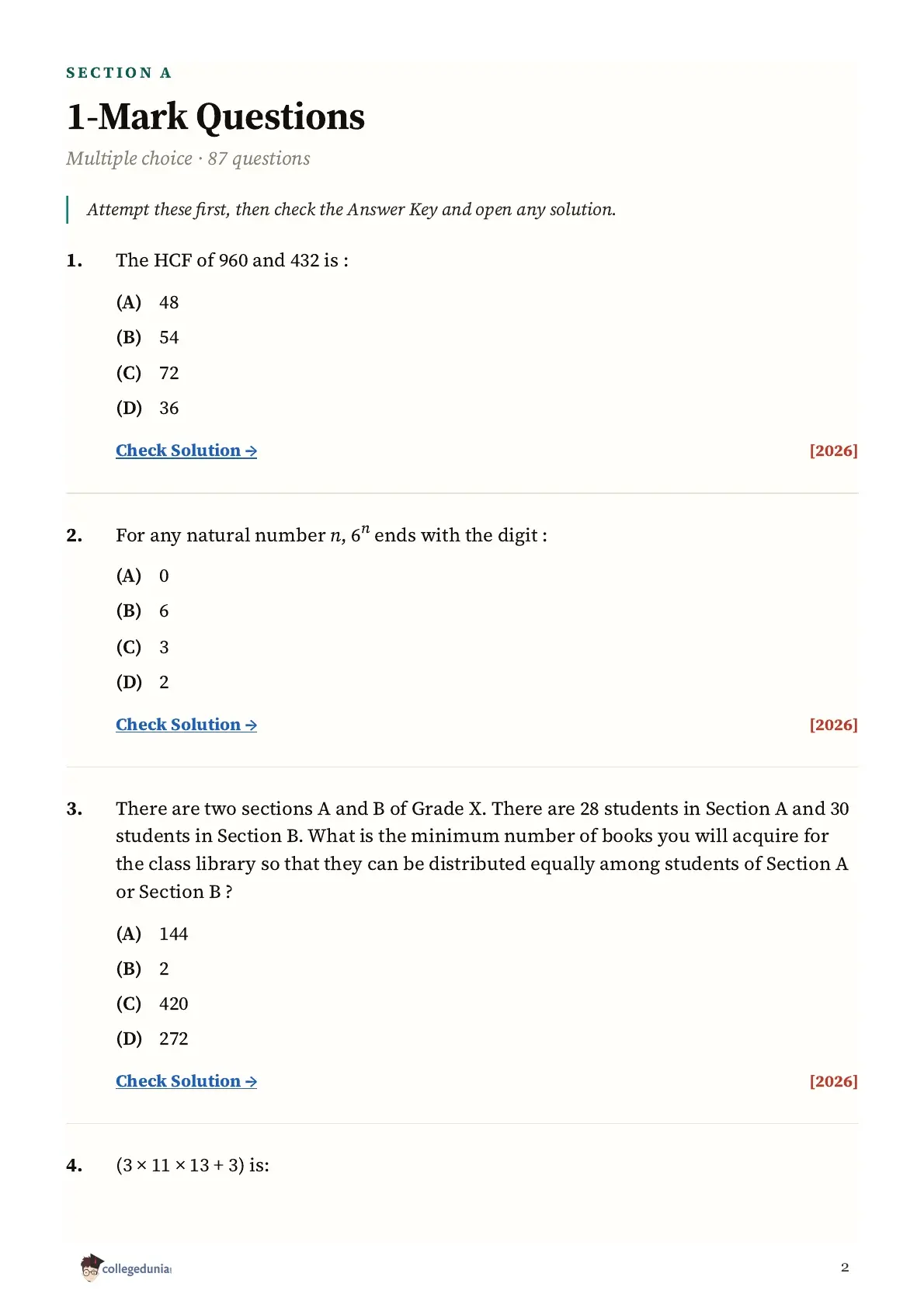
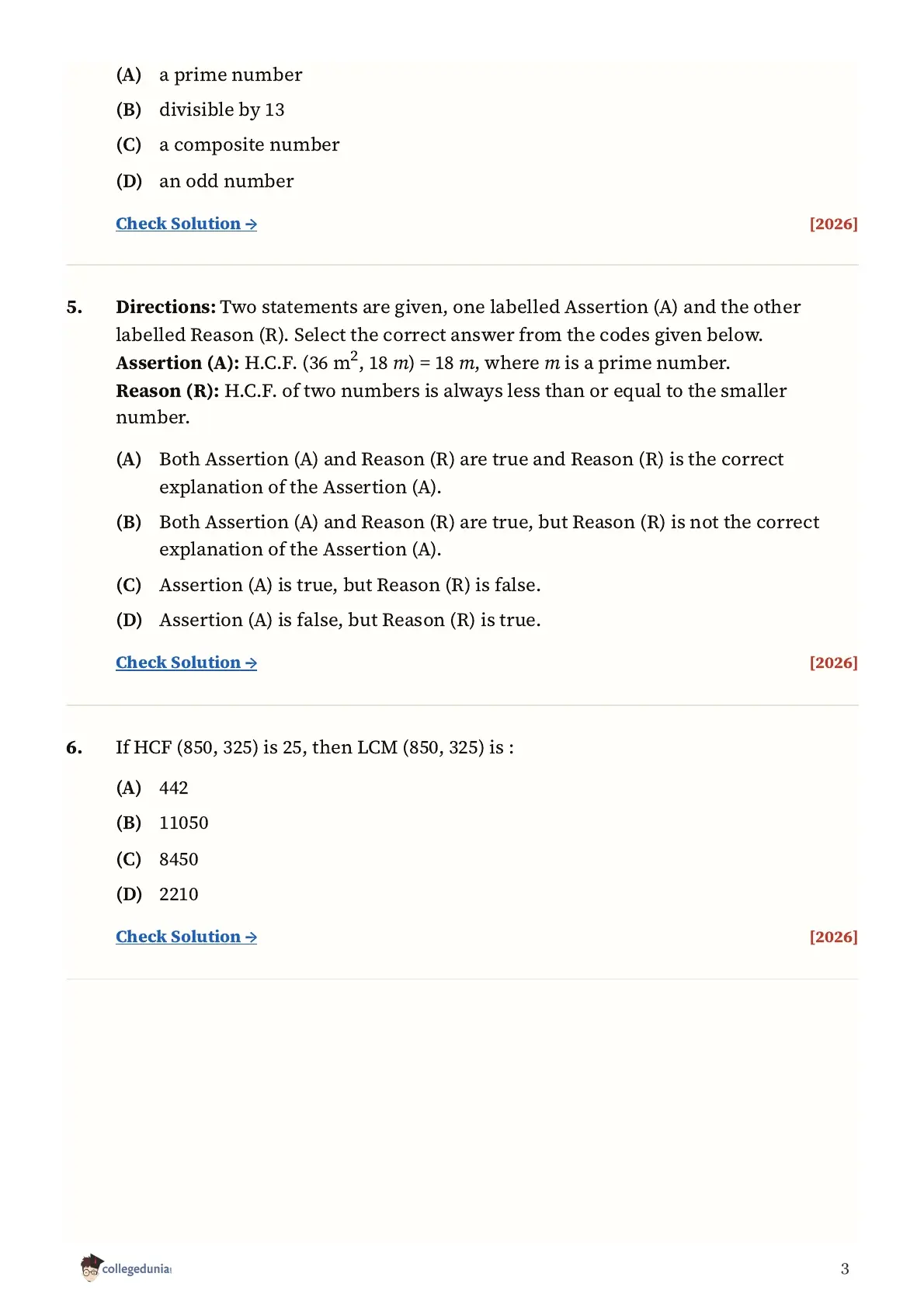
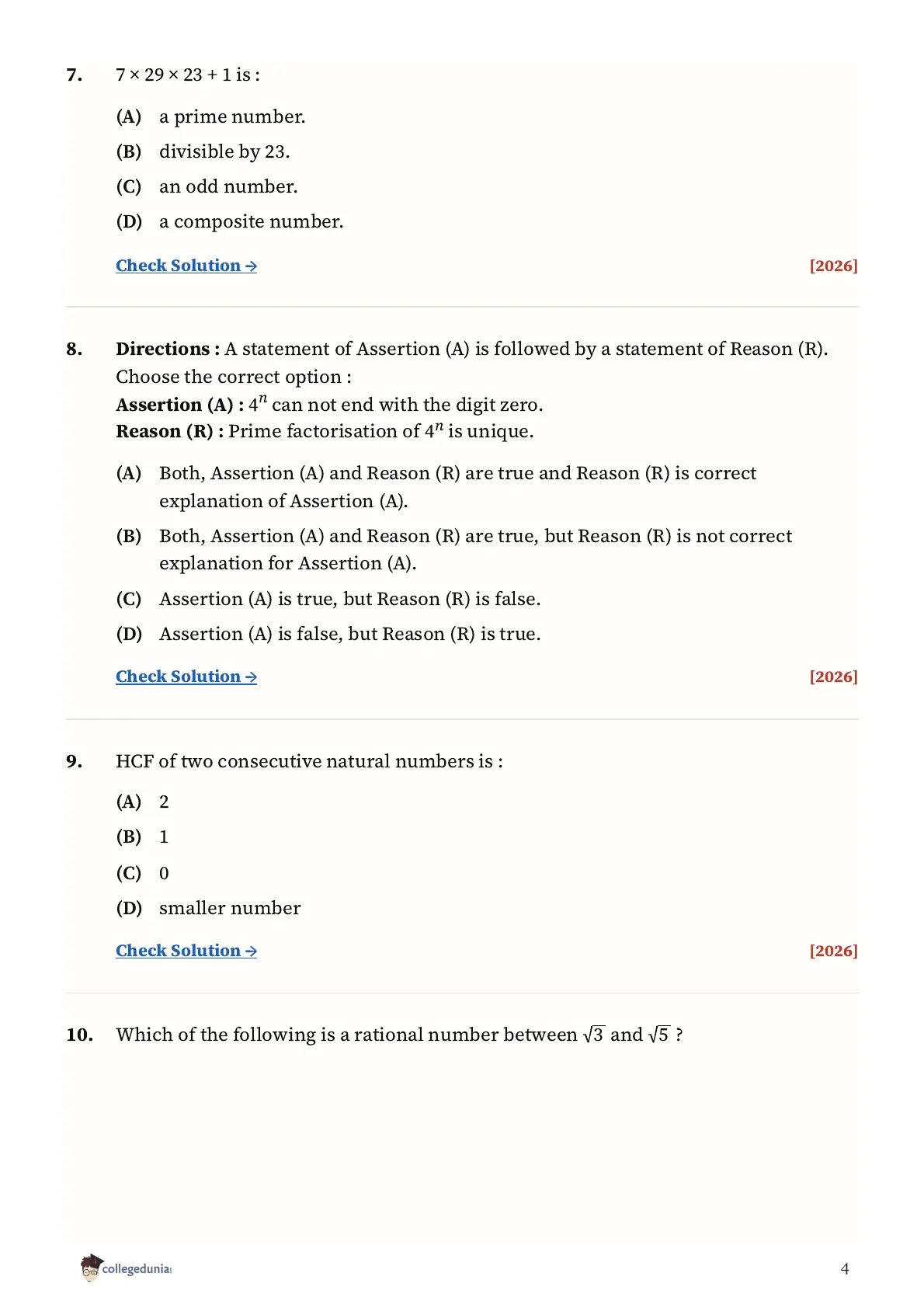
The questions keep returning to HCF numericals (48 questions), LCM numericals (48), prime factorisation (21), proofs that a number is irrational (16), last-digit questions on powers such as 6n (17) and bells, traffic lights or alarms that meet again (7).
On this page you get:
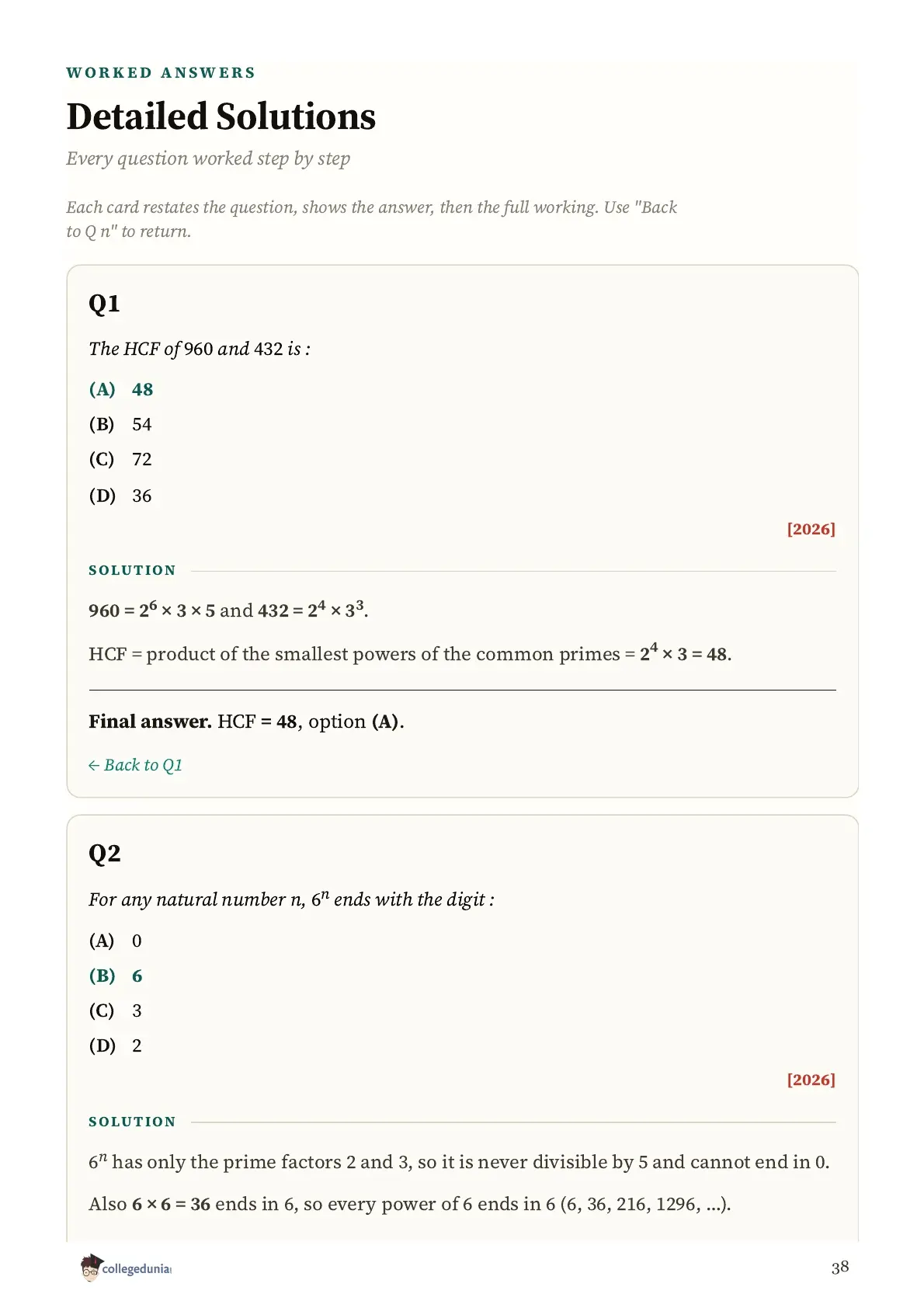
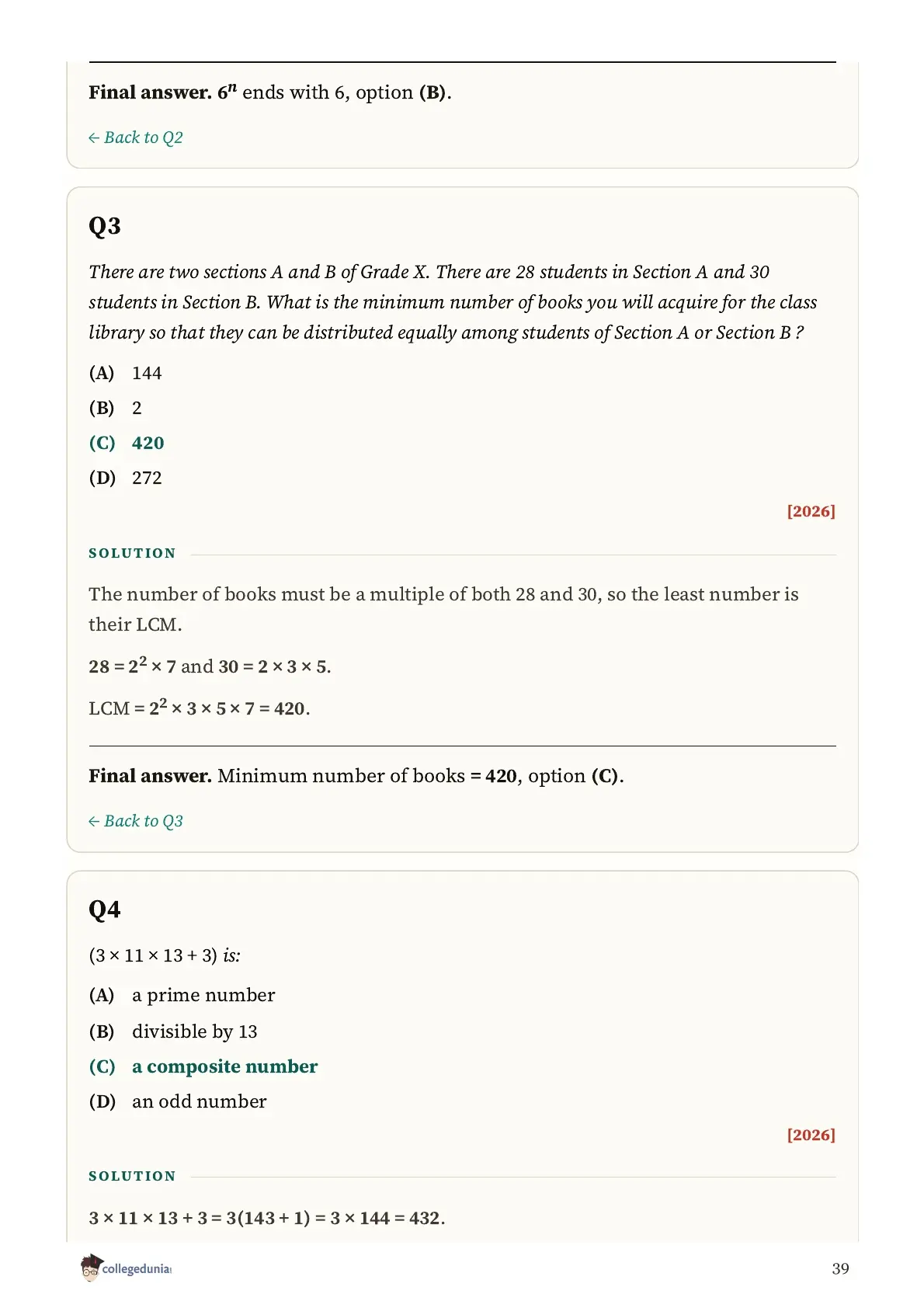
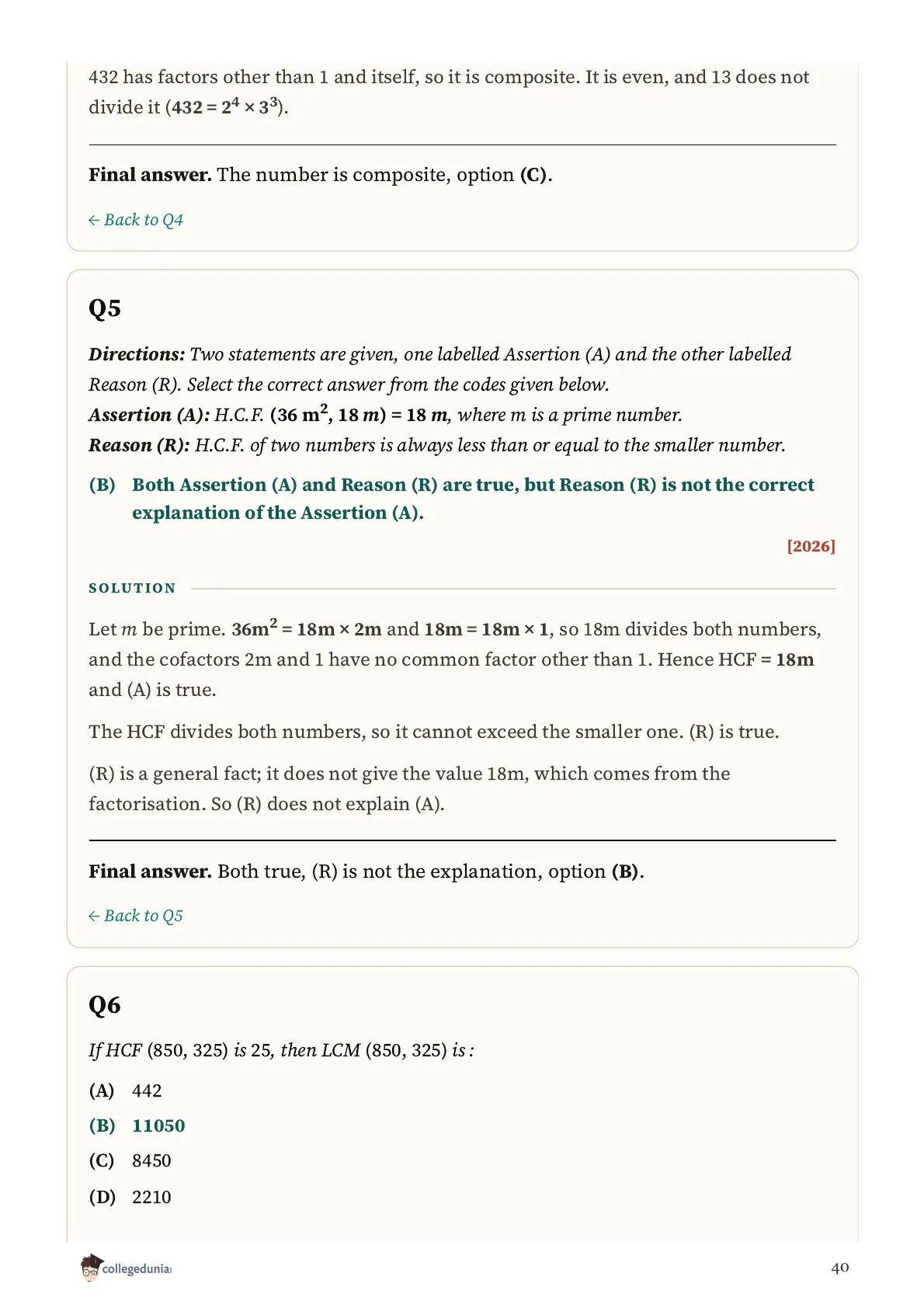
- 165 questions with a worked solution each: 72 MCQs and assertion-reason items, 58 very short and short answers and 35 three-mark answers, with 8 case-study items among them
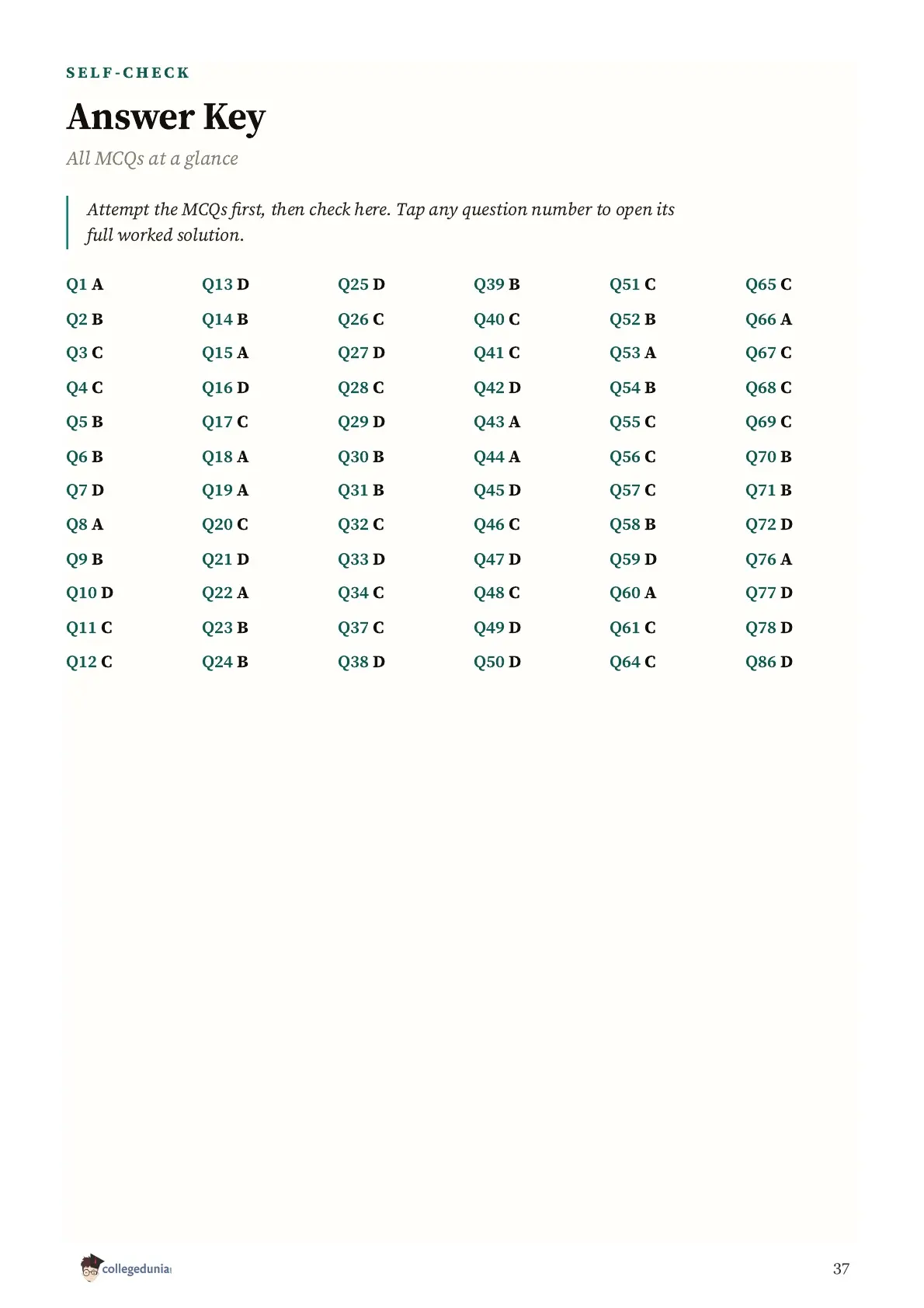
- An Answer Key that lists all 72 MCQs at a glance
- Question counts by topic, so you know whether to start with HCF and LCM, irrational numbers or last-digit questions
- A marks-wise table of questions (1, 2 and 3 mark)
- The common mistakes students make, such as using HCF where a bell problem needs LCM, and a short FAQ
Real Numbers Weightage in the Class 10 Maths Paper
CBSE does not print a mark figure for Real Numbers alone. In the Class 10 Maths (041) curriculum the chapter sits by itself in the unit Number Systems, and prep sites list that unit at 6 of the 80 theory marks. We could not confirm the figure on the CBSE document, so treat it as unofficial and check cbseacademic.nic.in. In this set the 1-mark question is by far the commonest form and the set holds no 4-mark or 5-mark question.
The table shows how many questions the set holds at each mark value.
| Marks per Question | Questions in the Set |
|---|---|
| 1 mark | 87 |
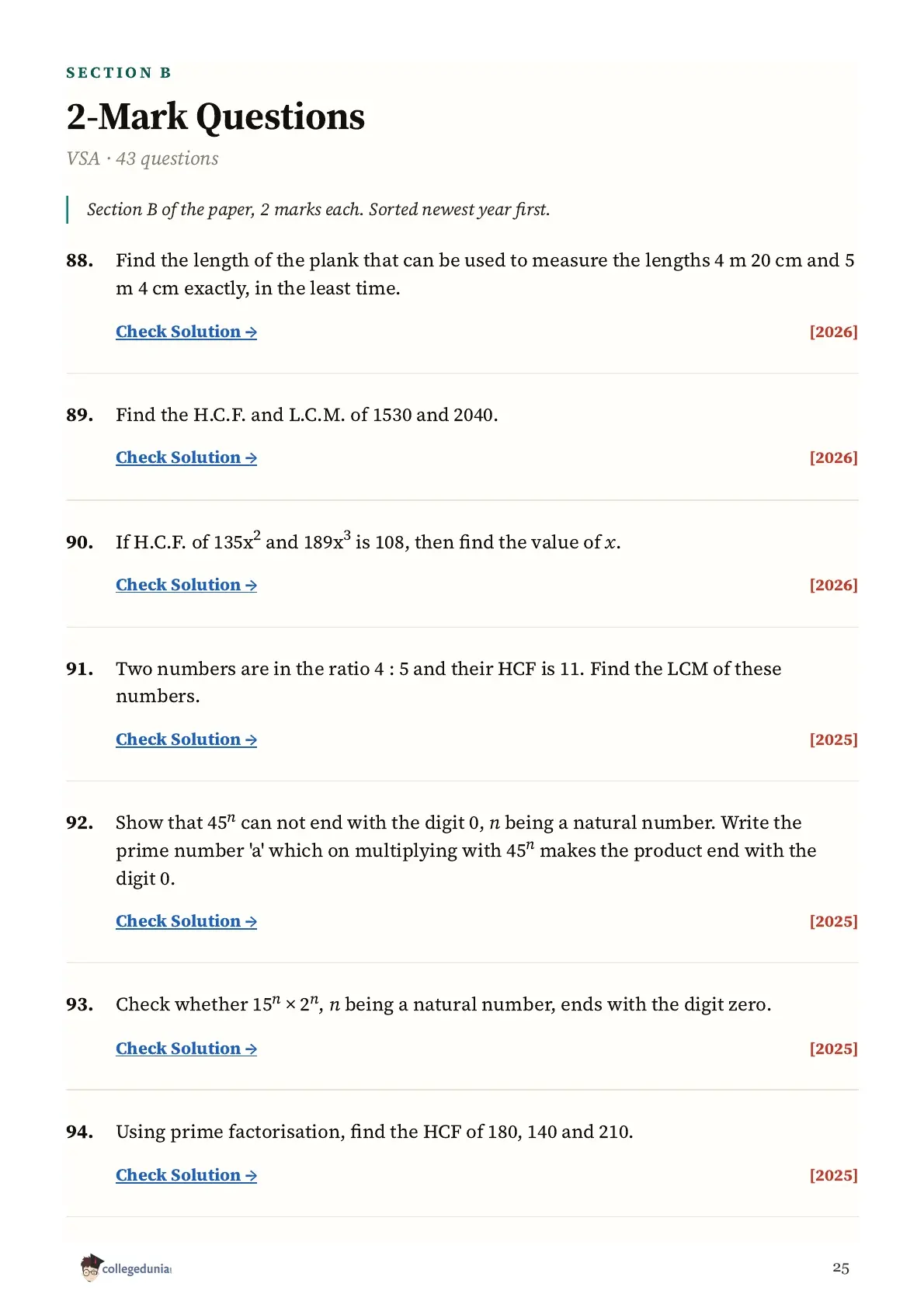
| 2 marks | 43 |
| 3 marks | 35 |
Real Numbers Questions by Topic
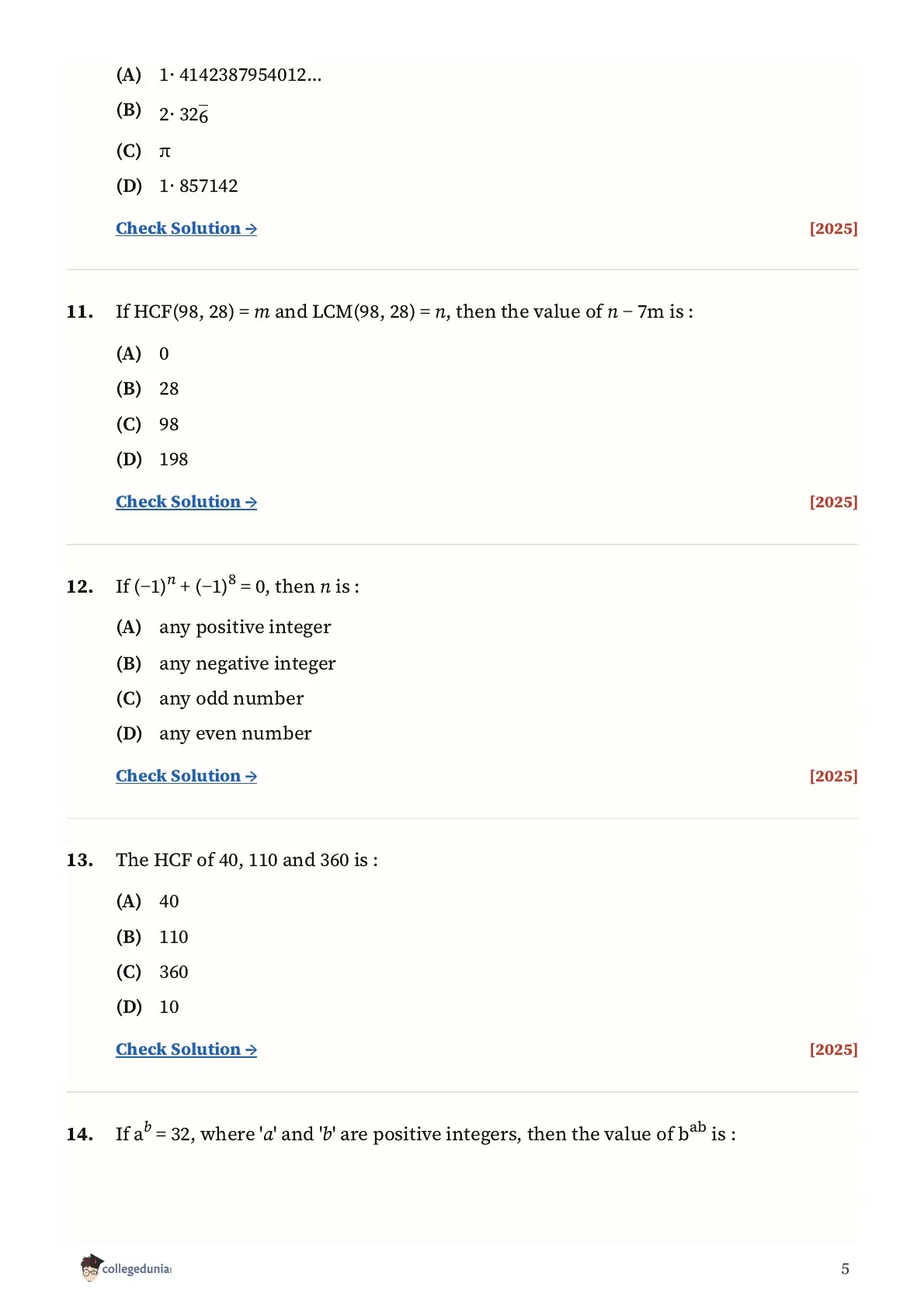
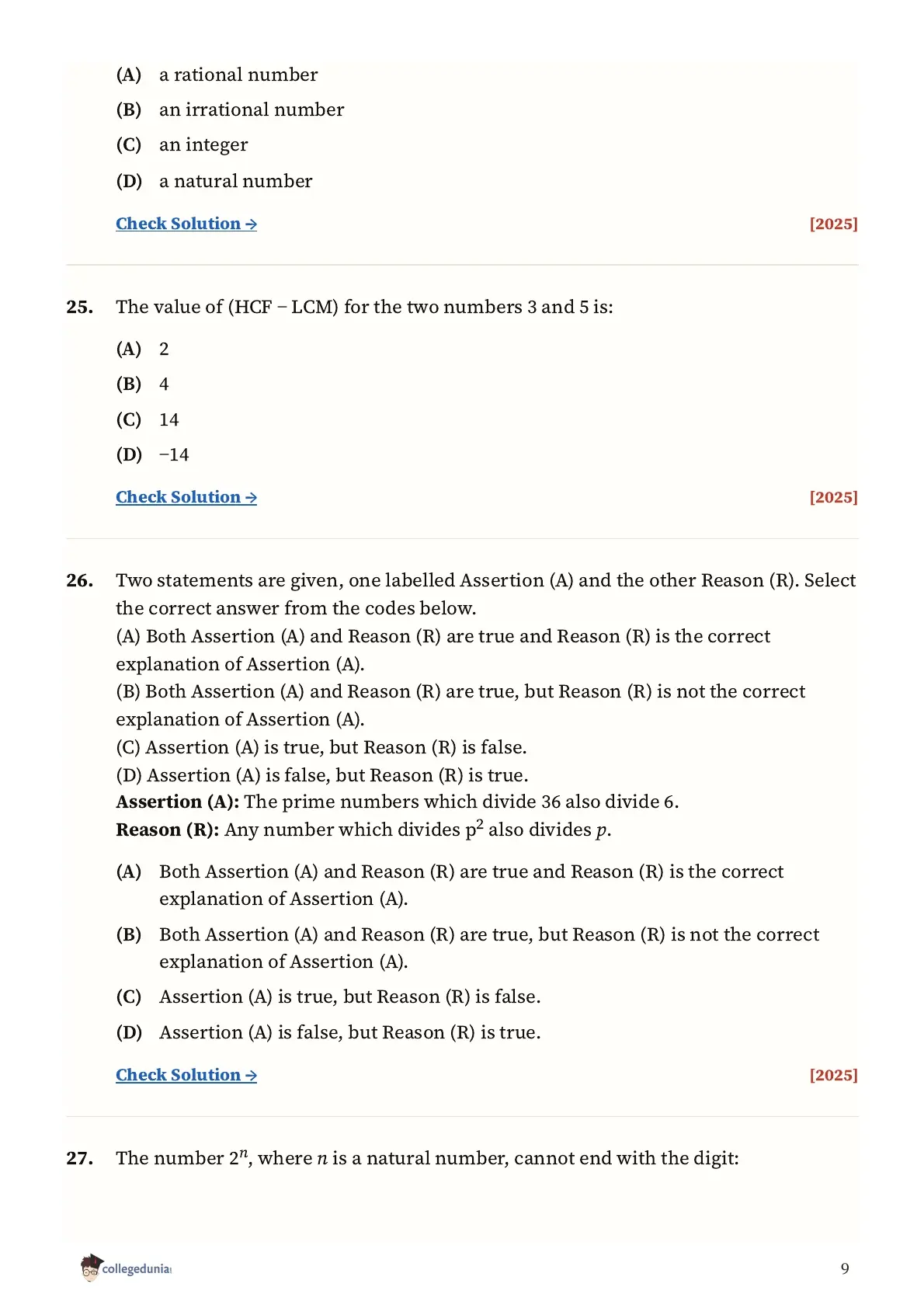
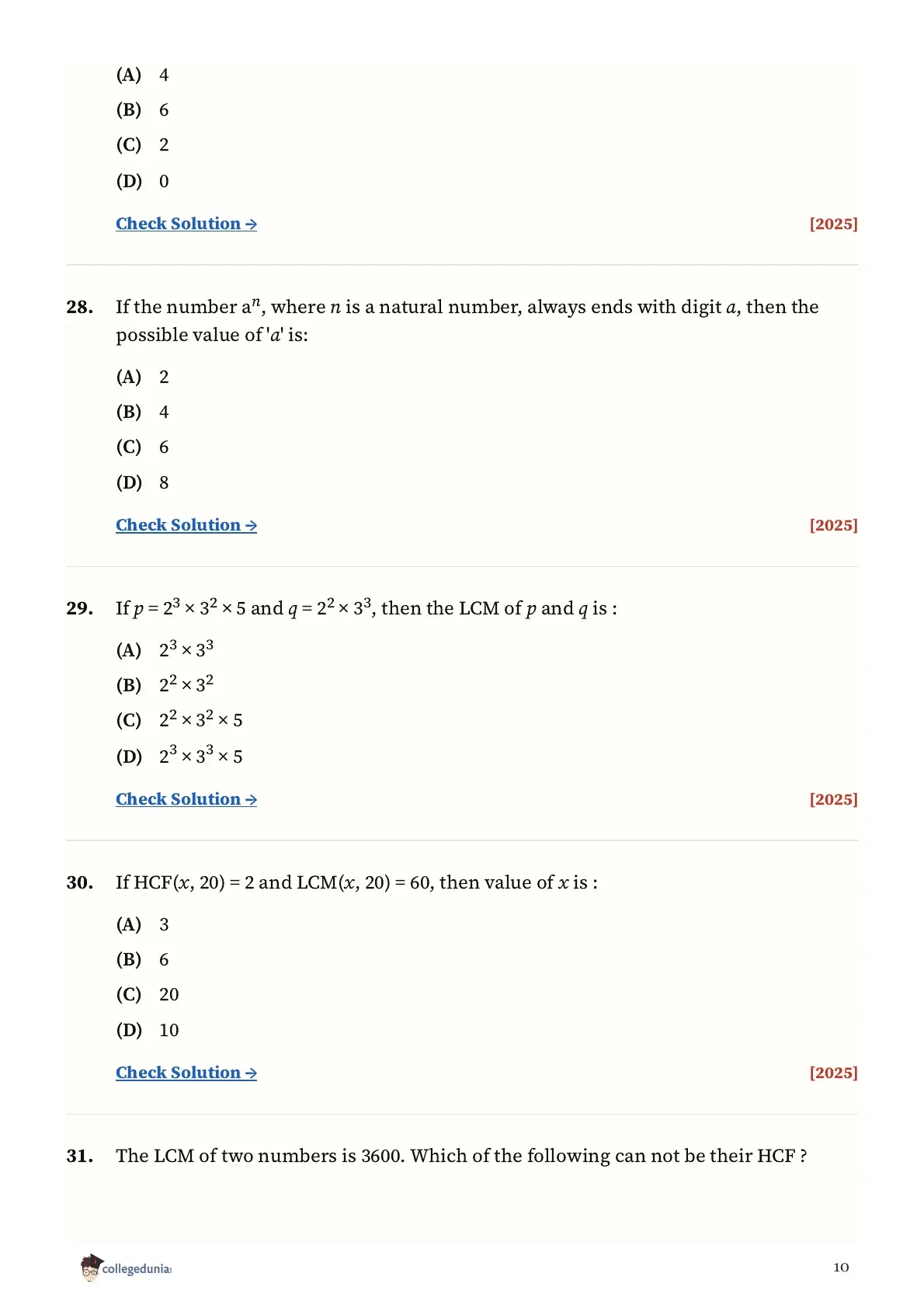
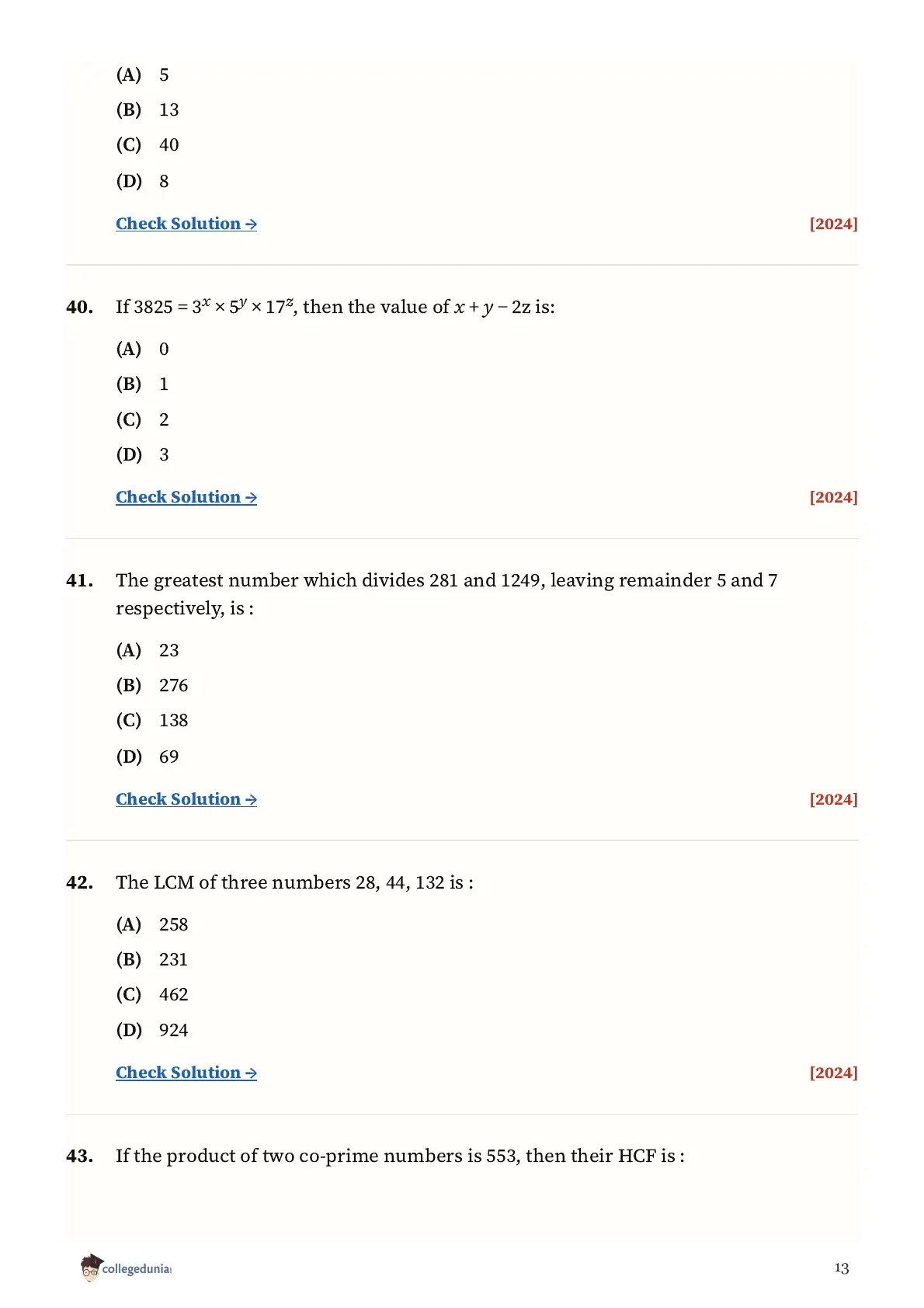
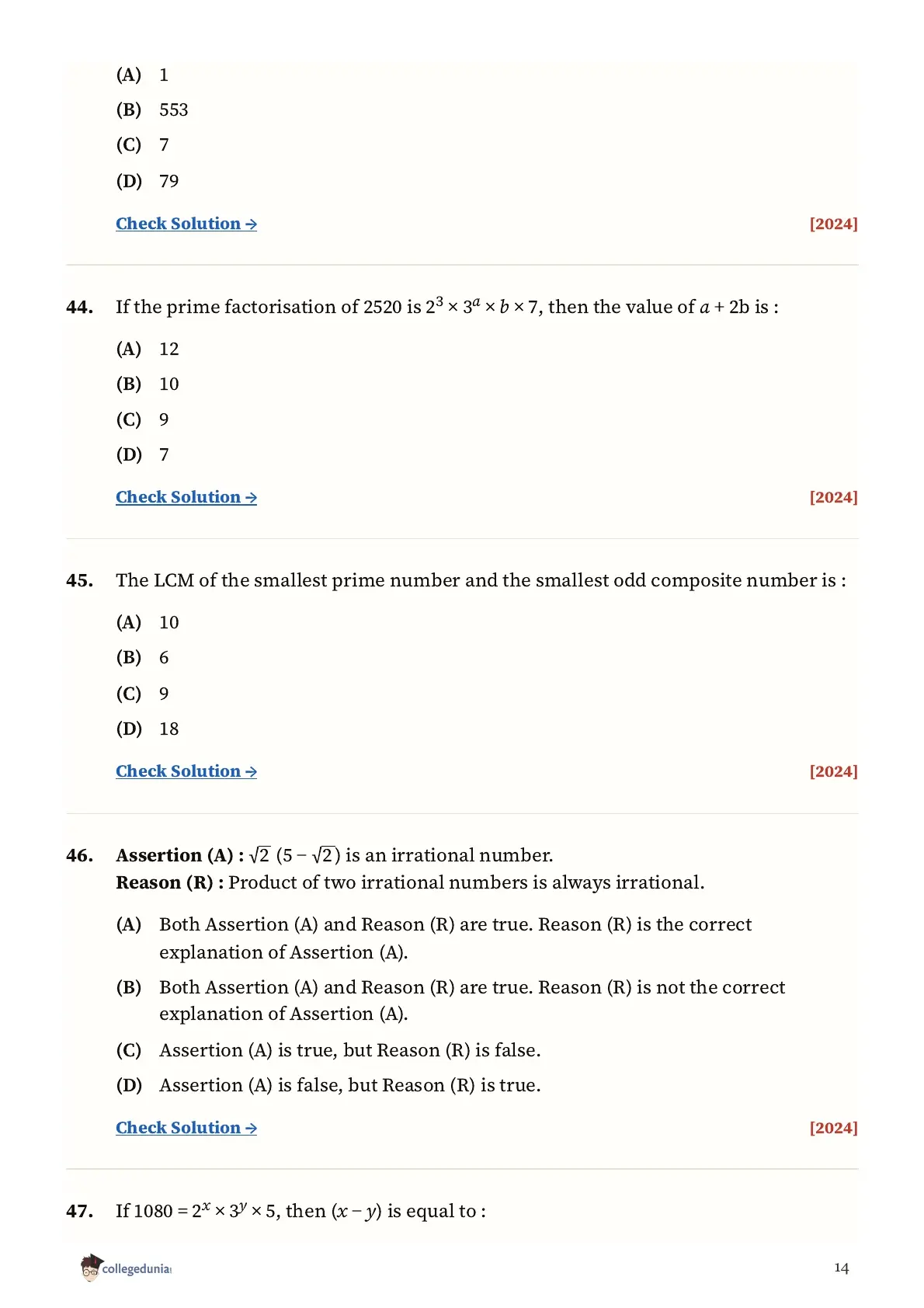
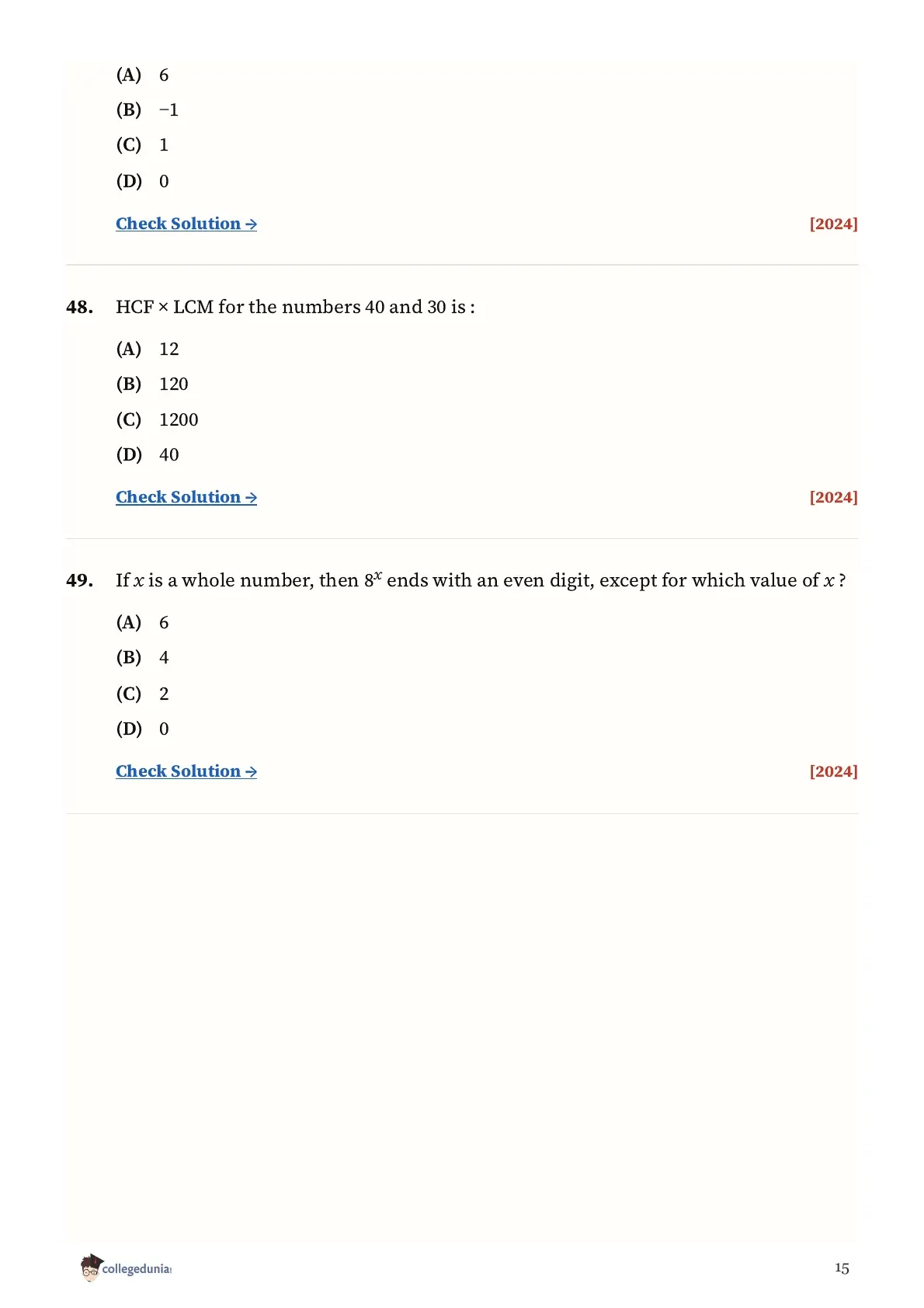
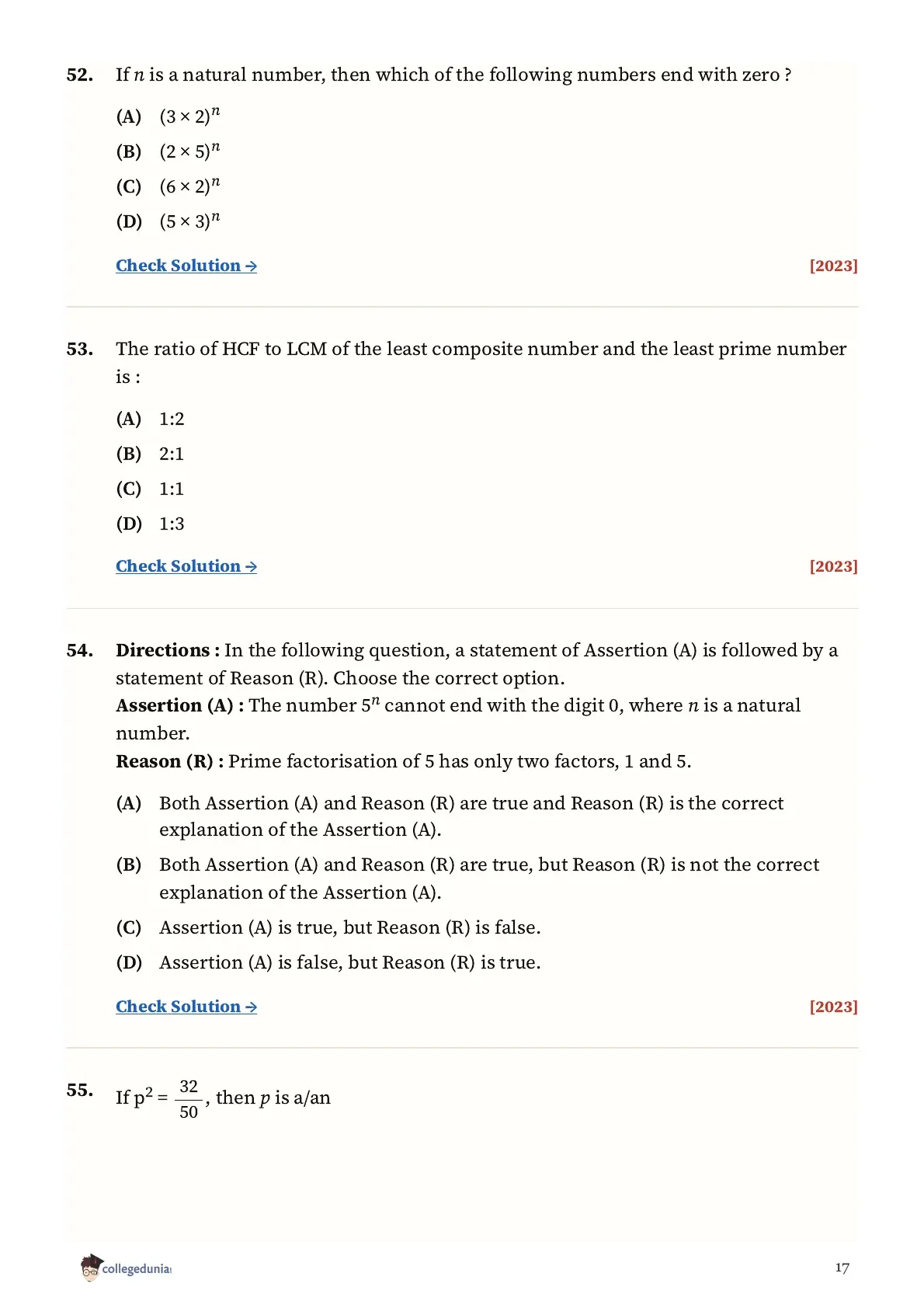
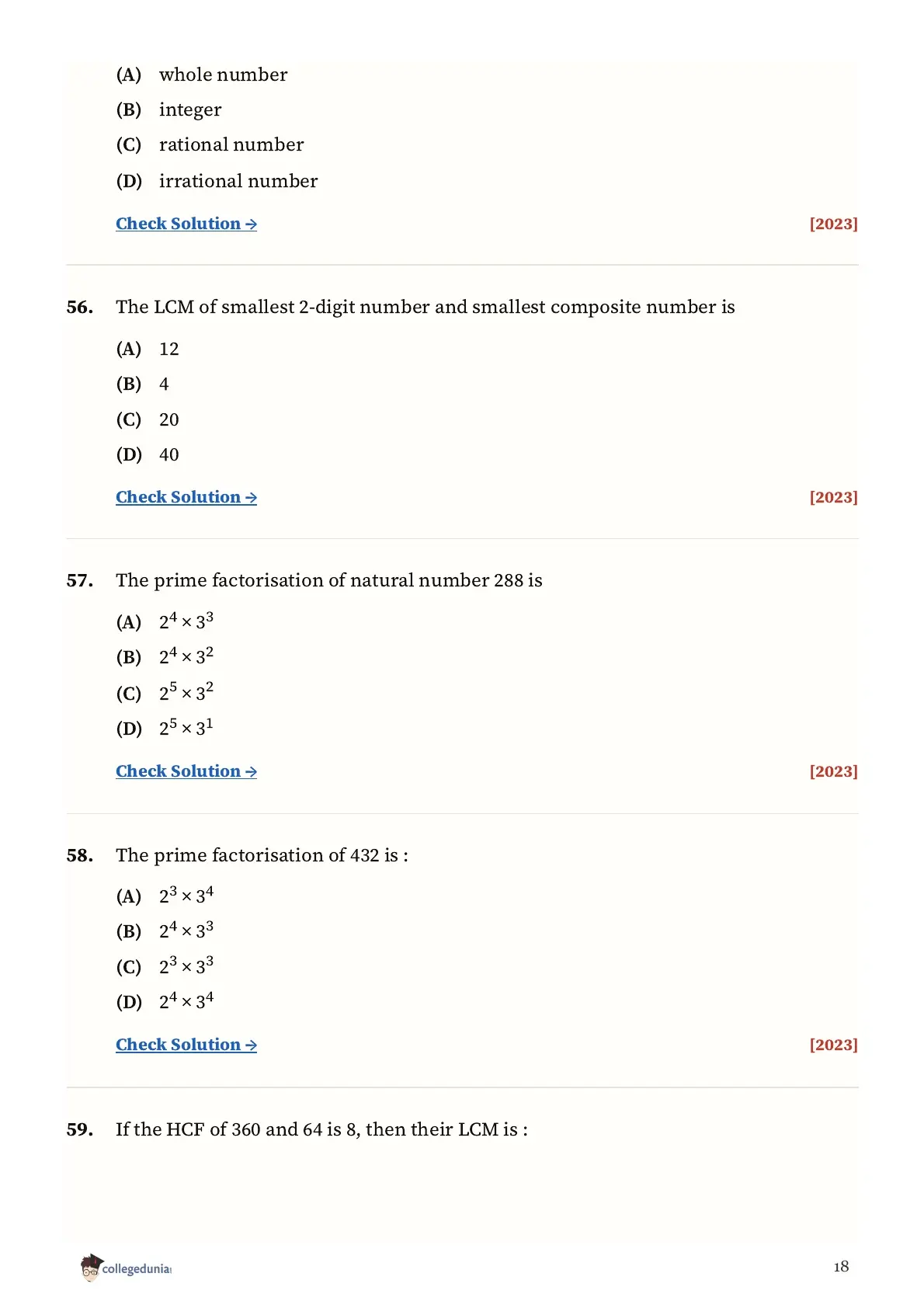
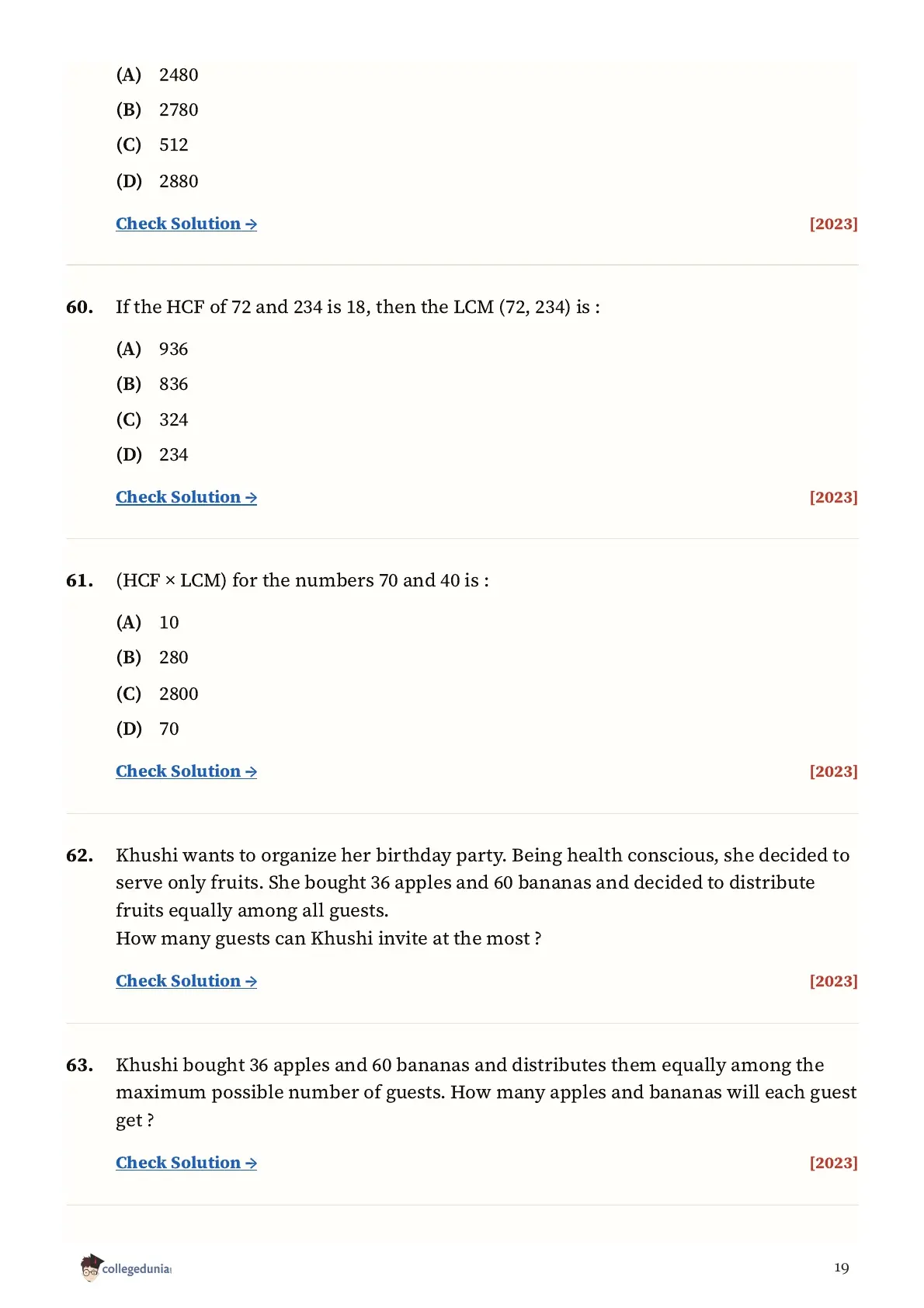
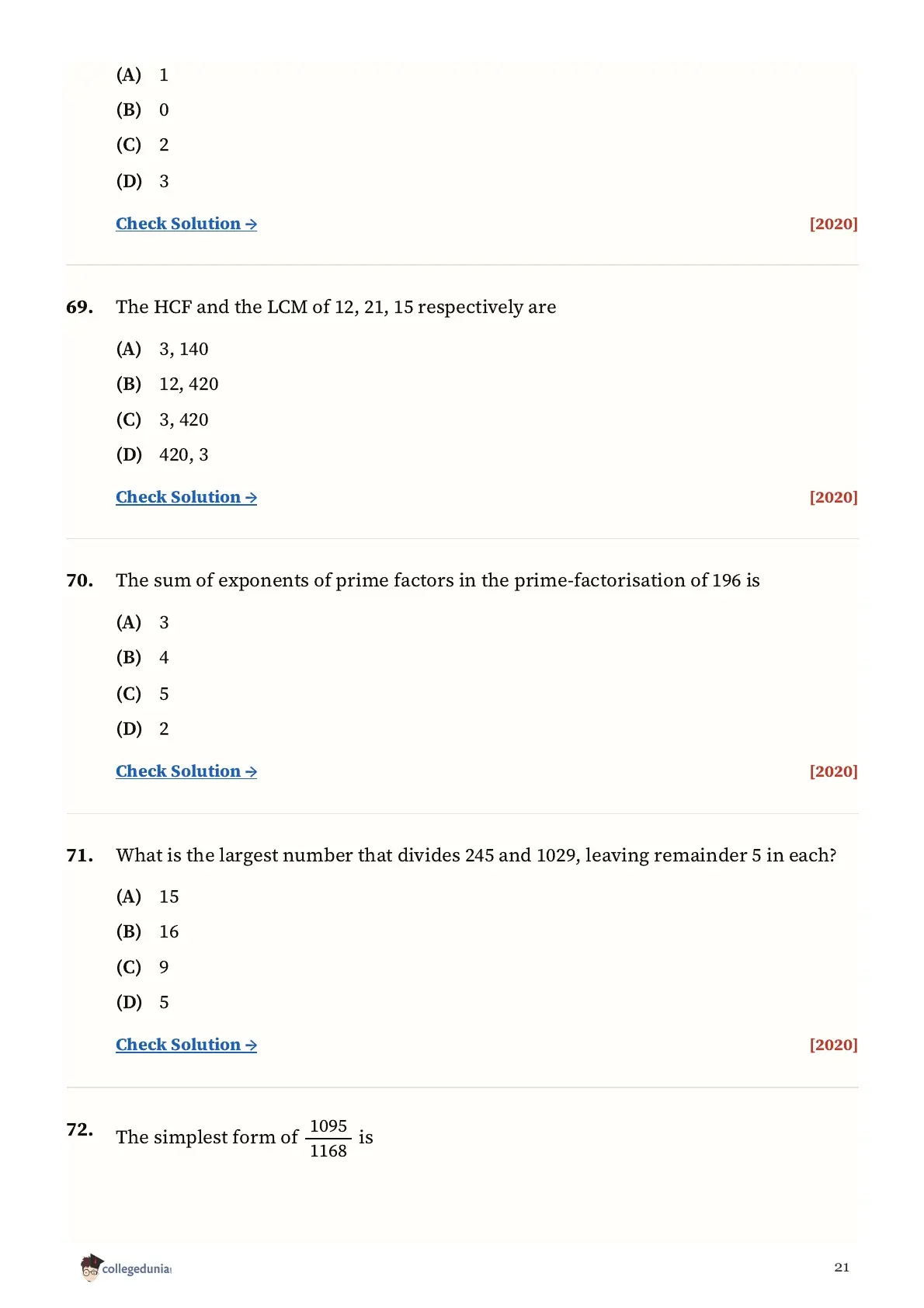
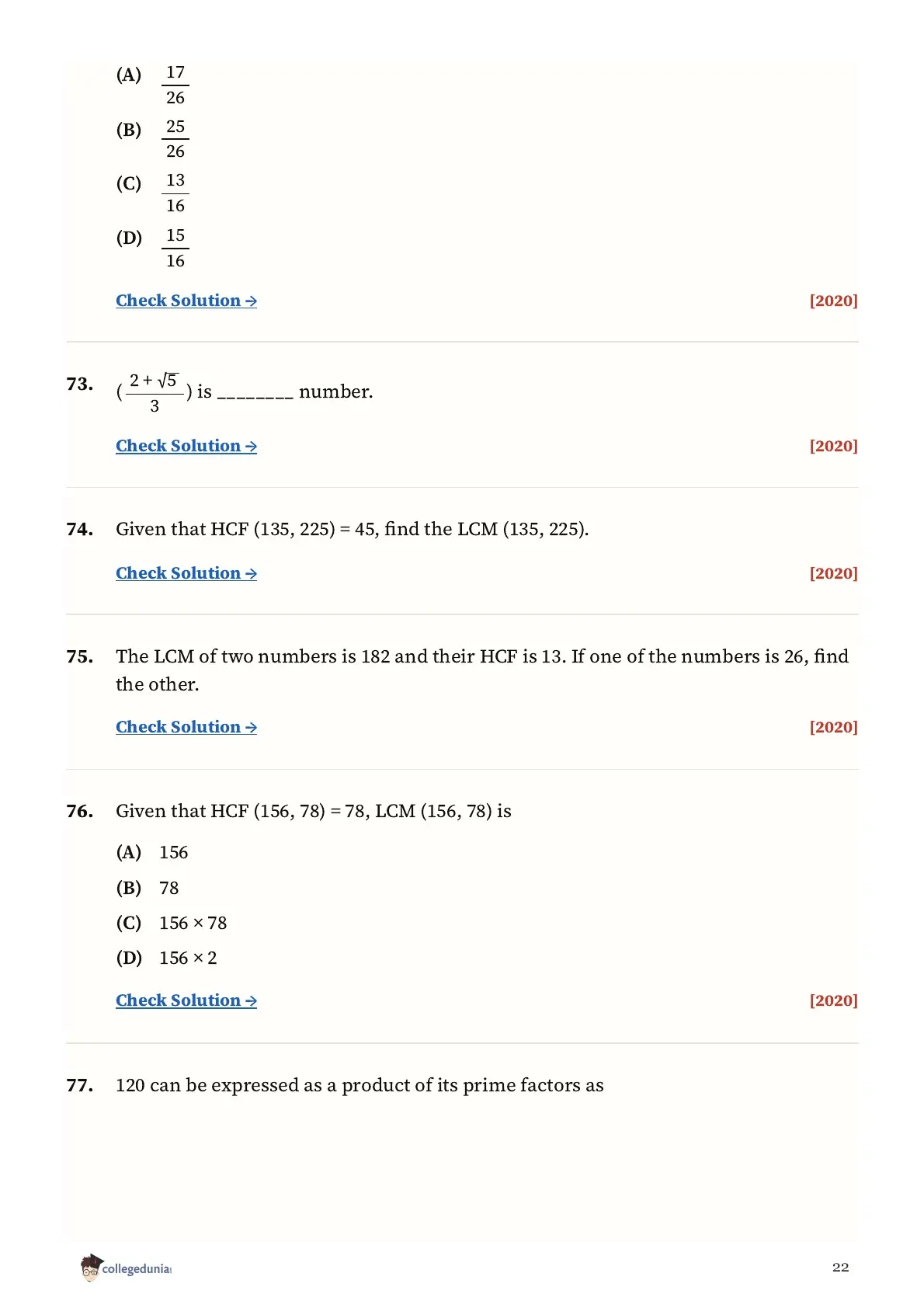
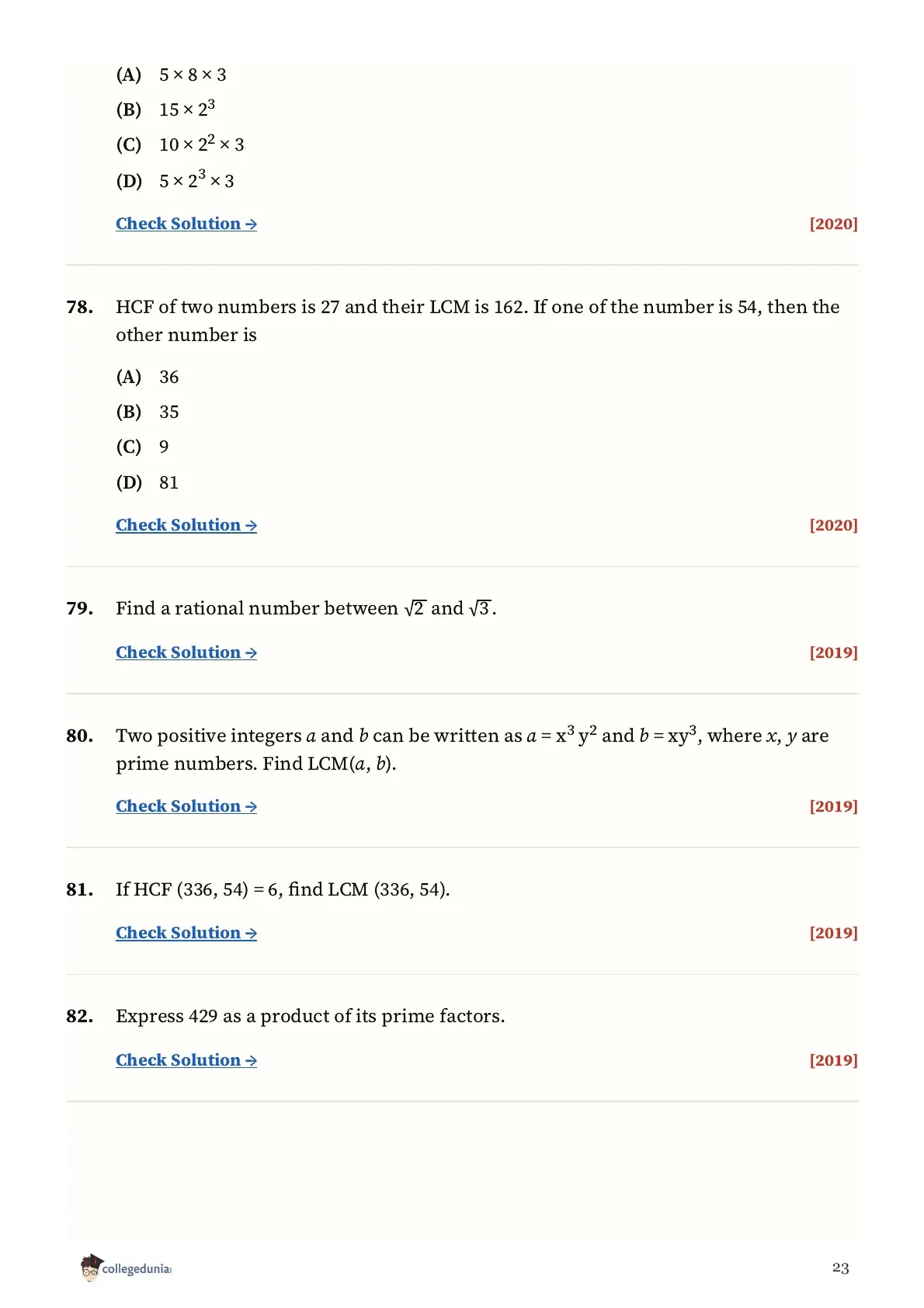
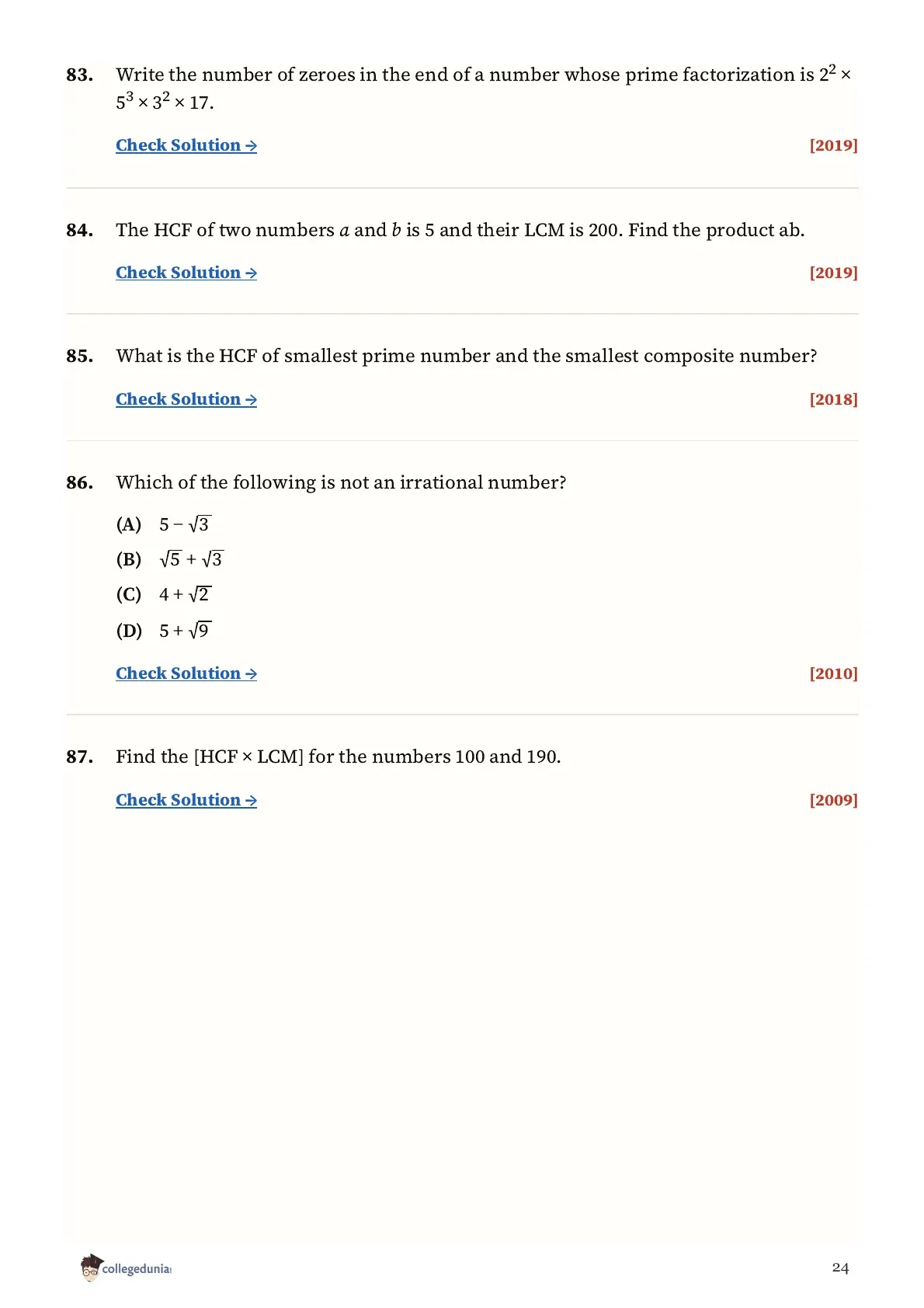
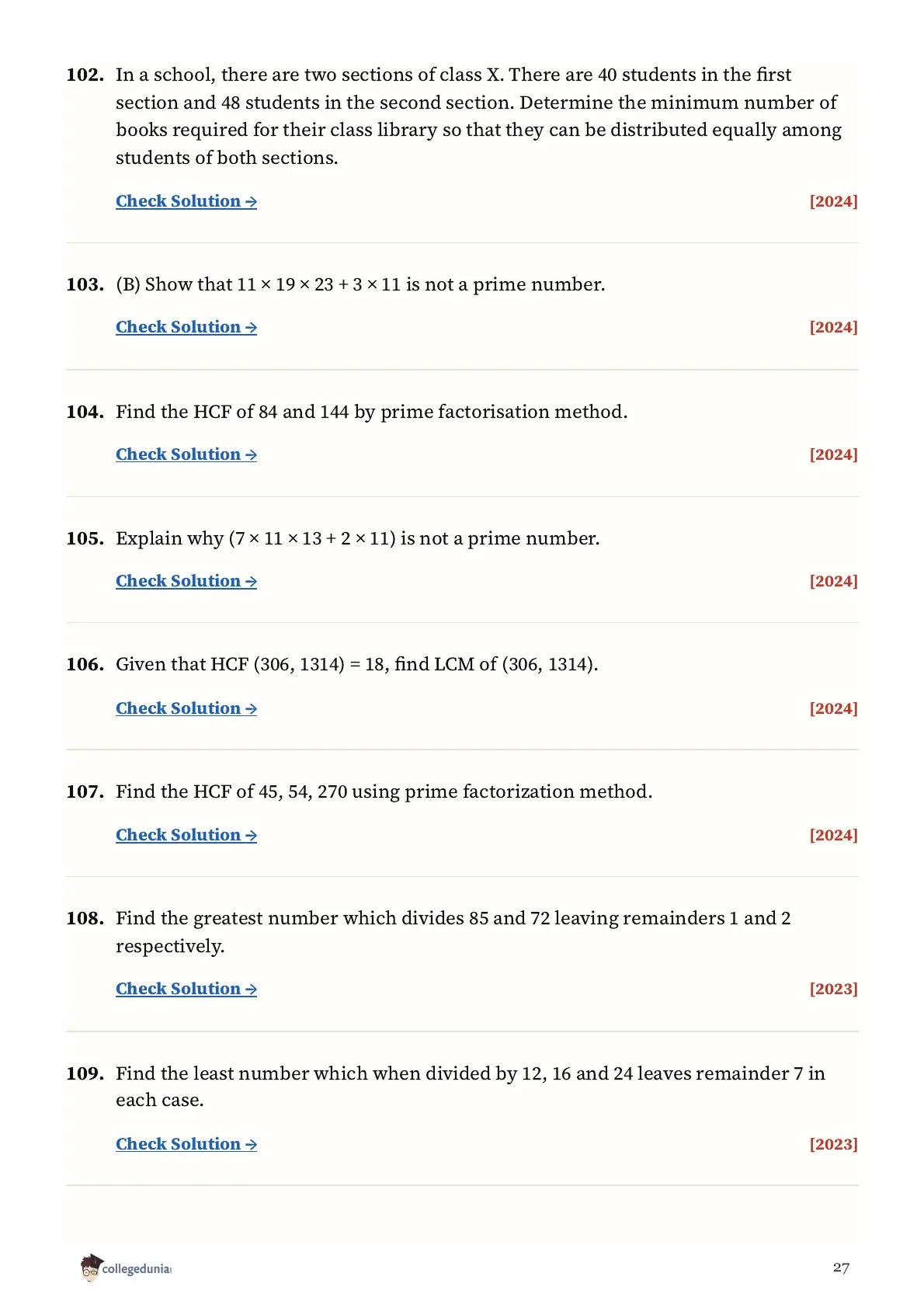
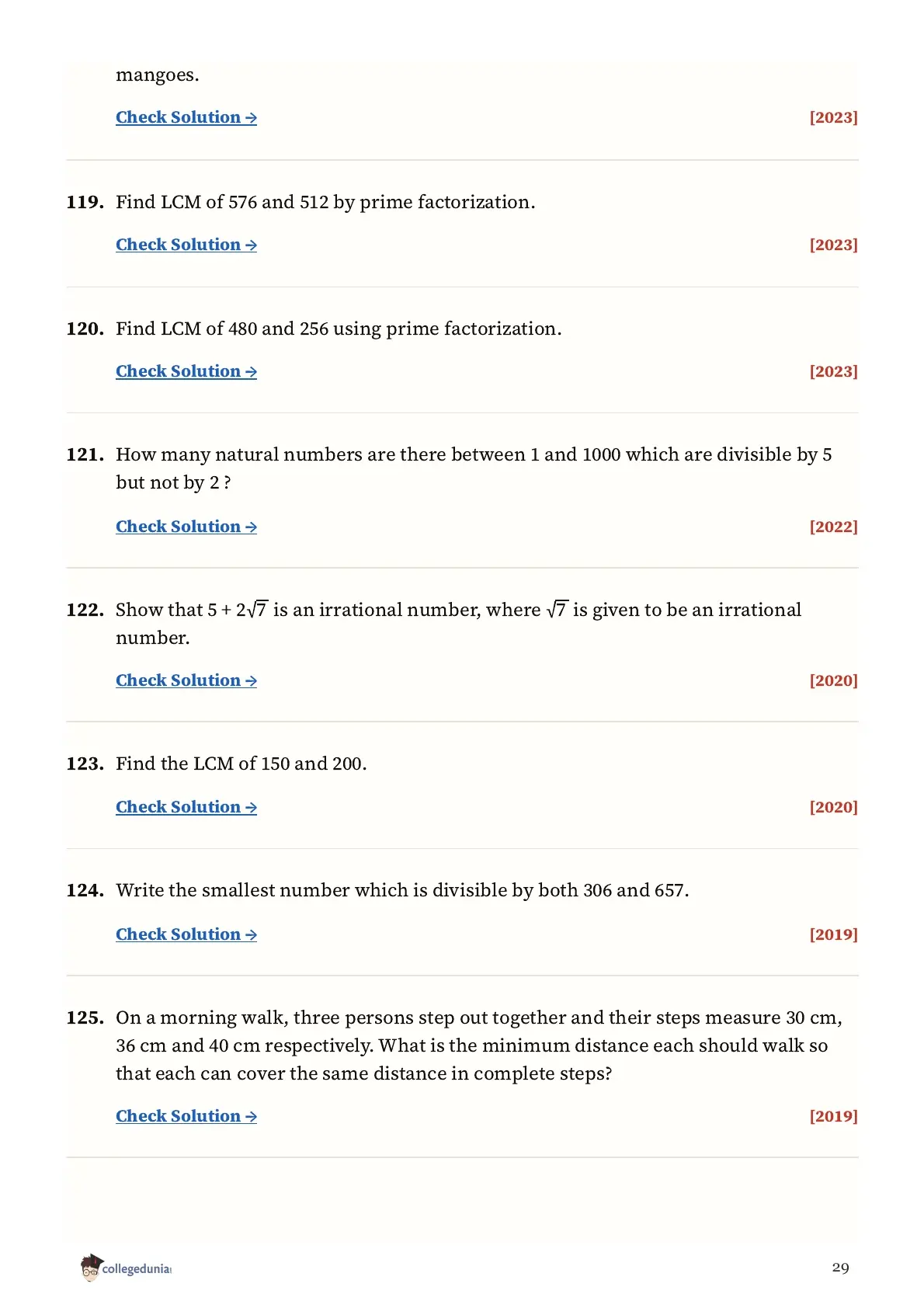
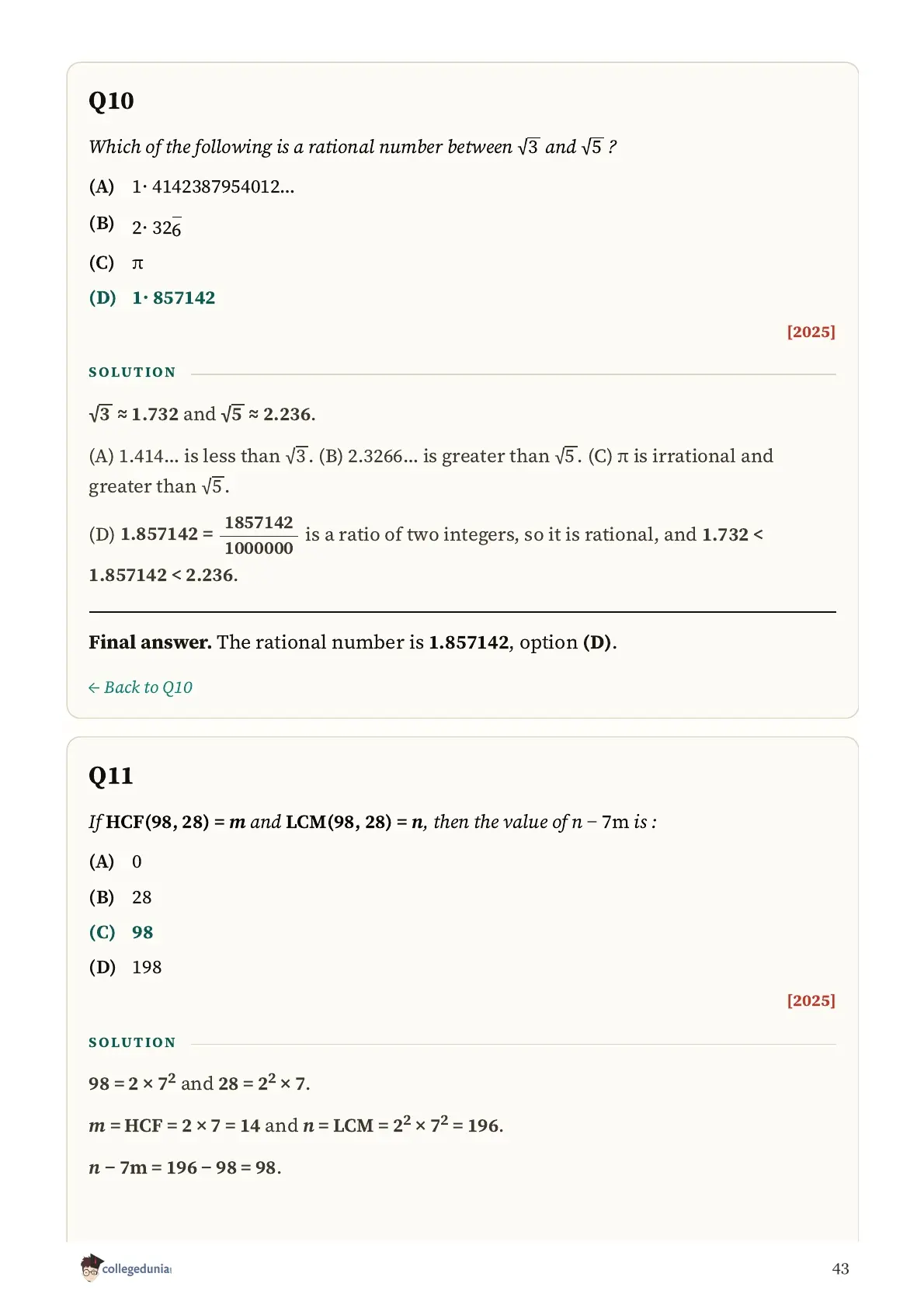
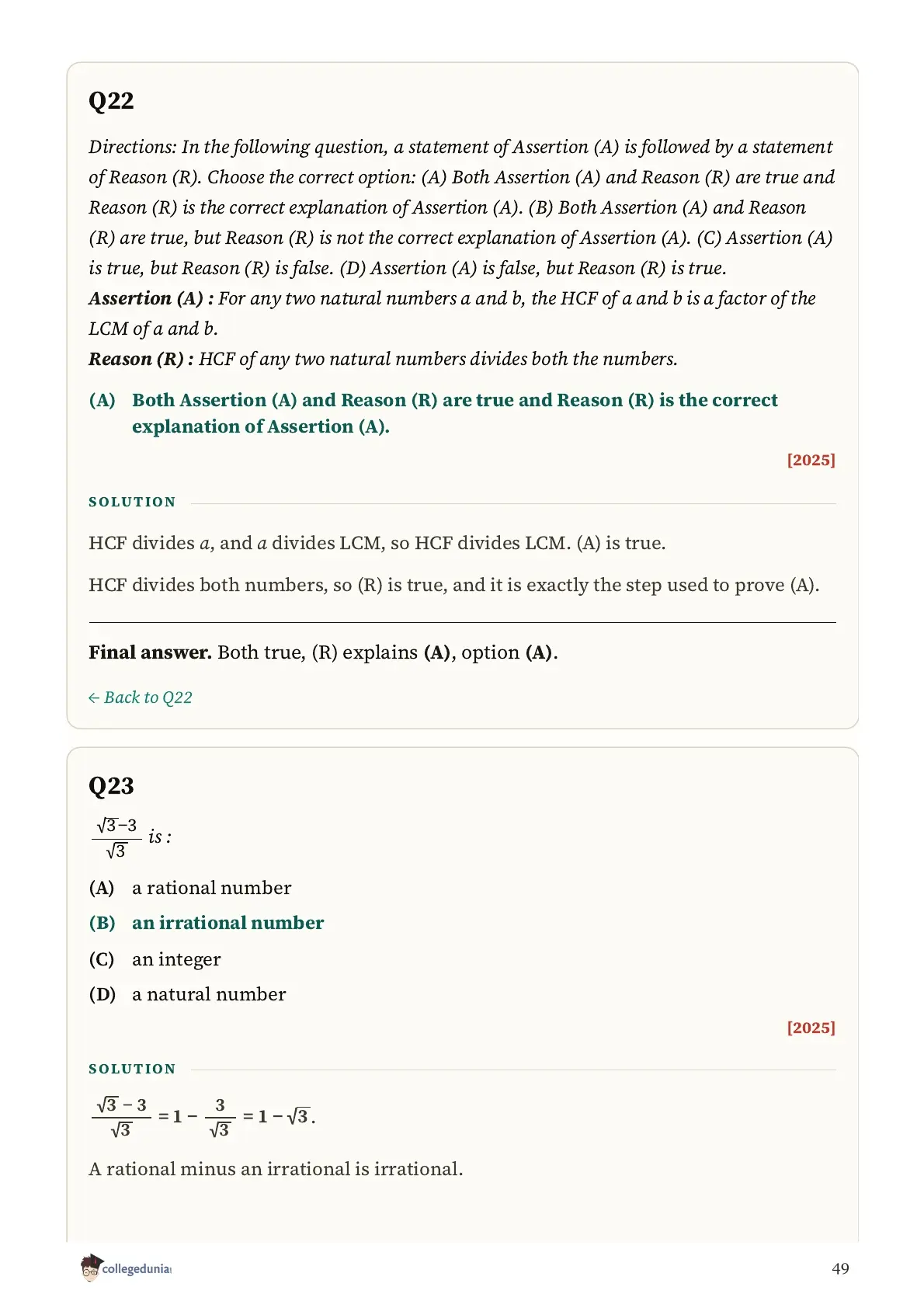
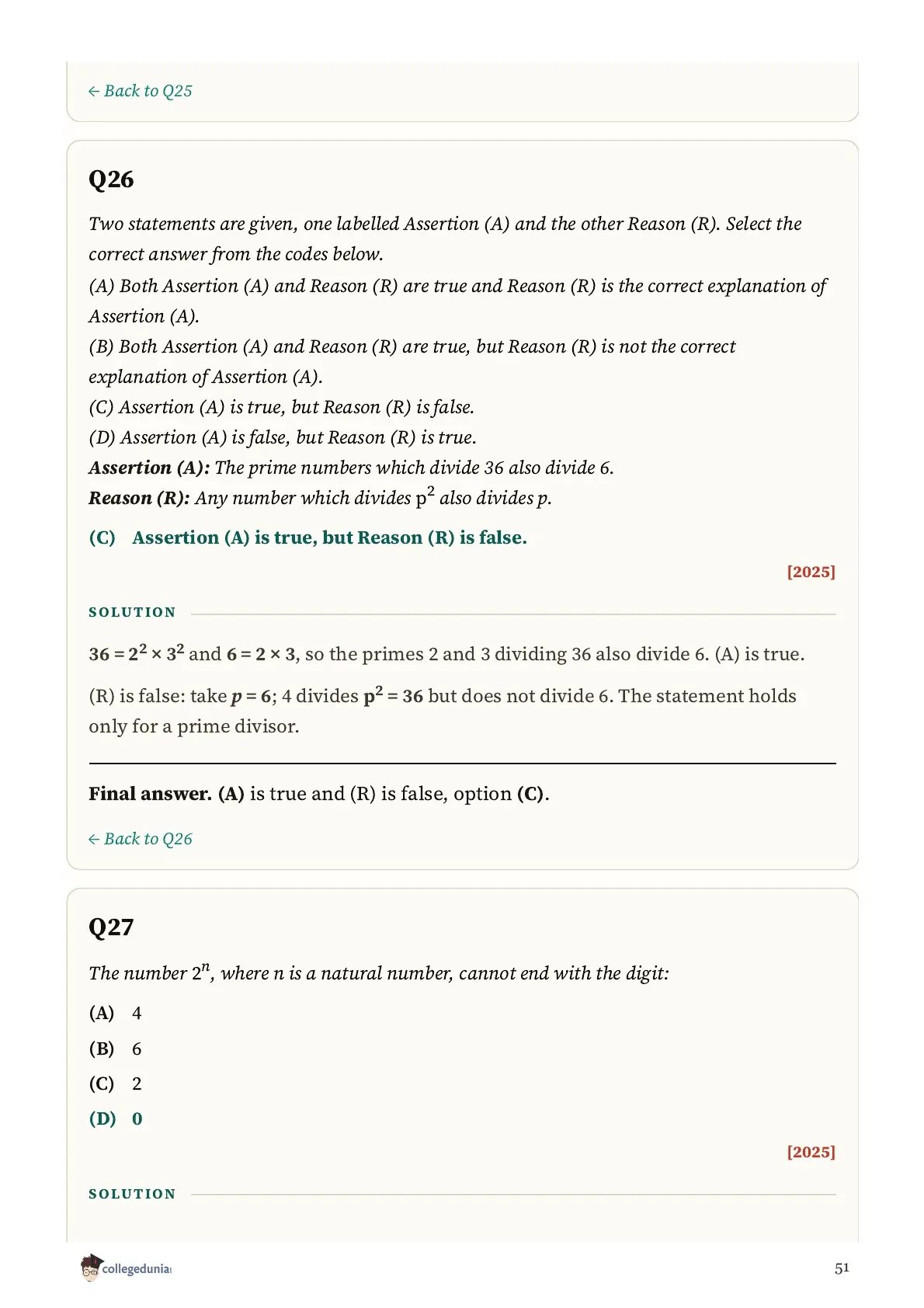
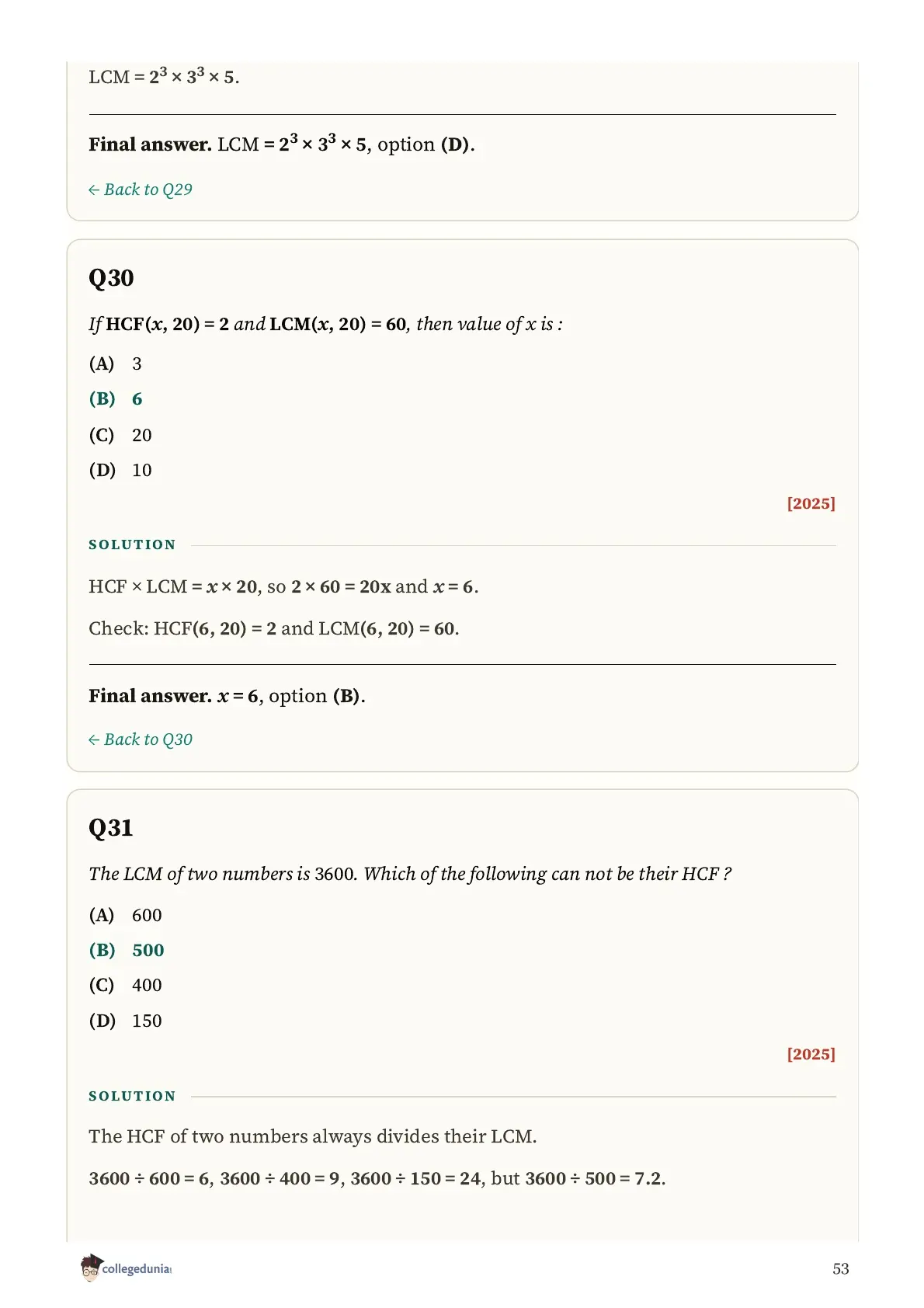
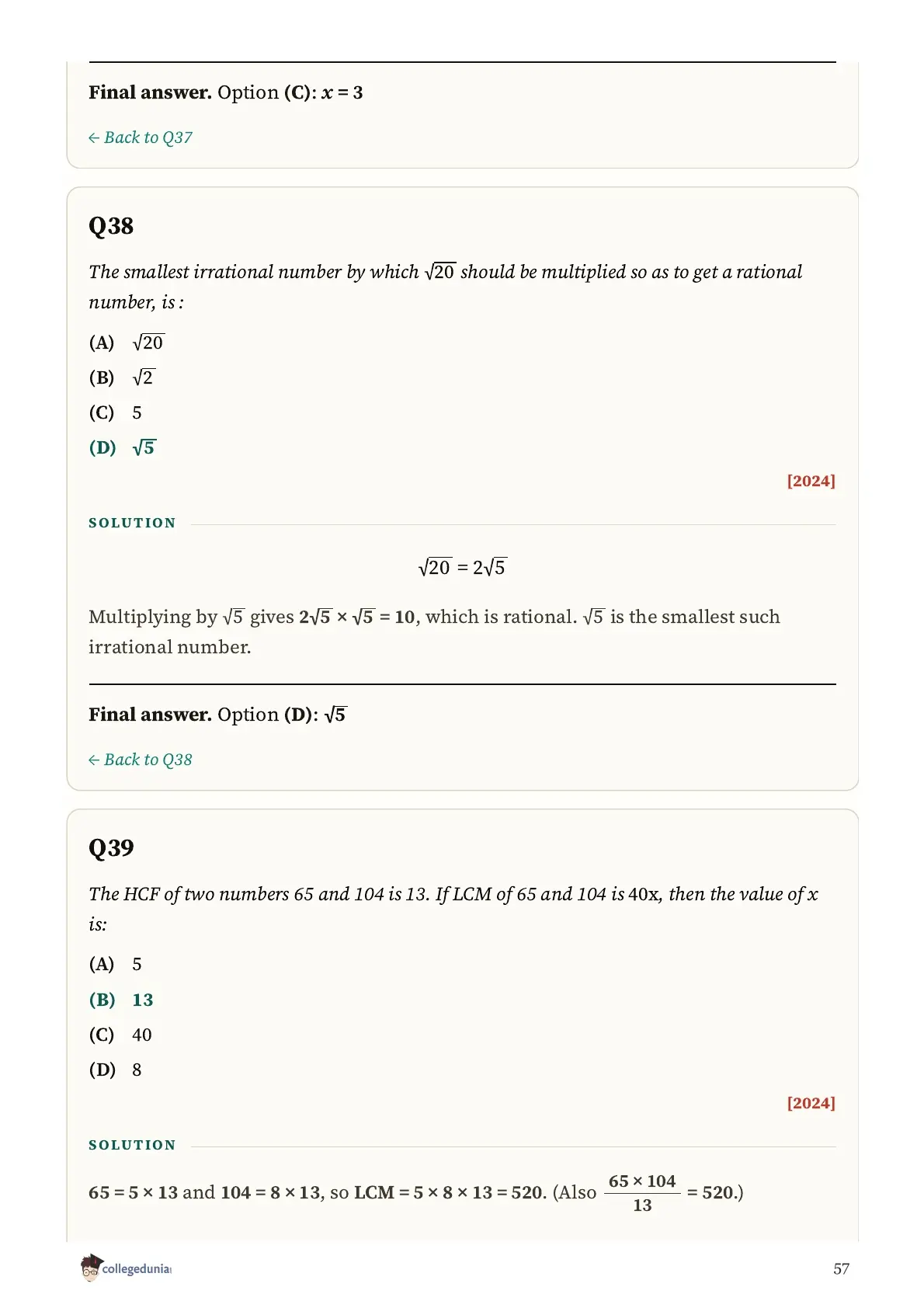
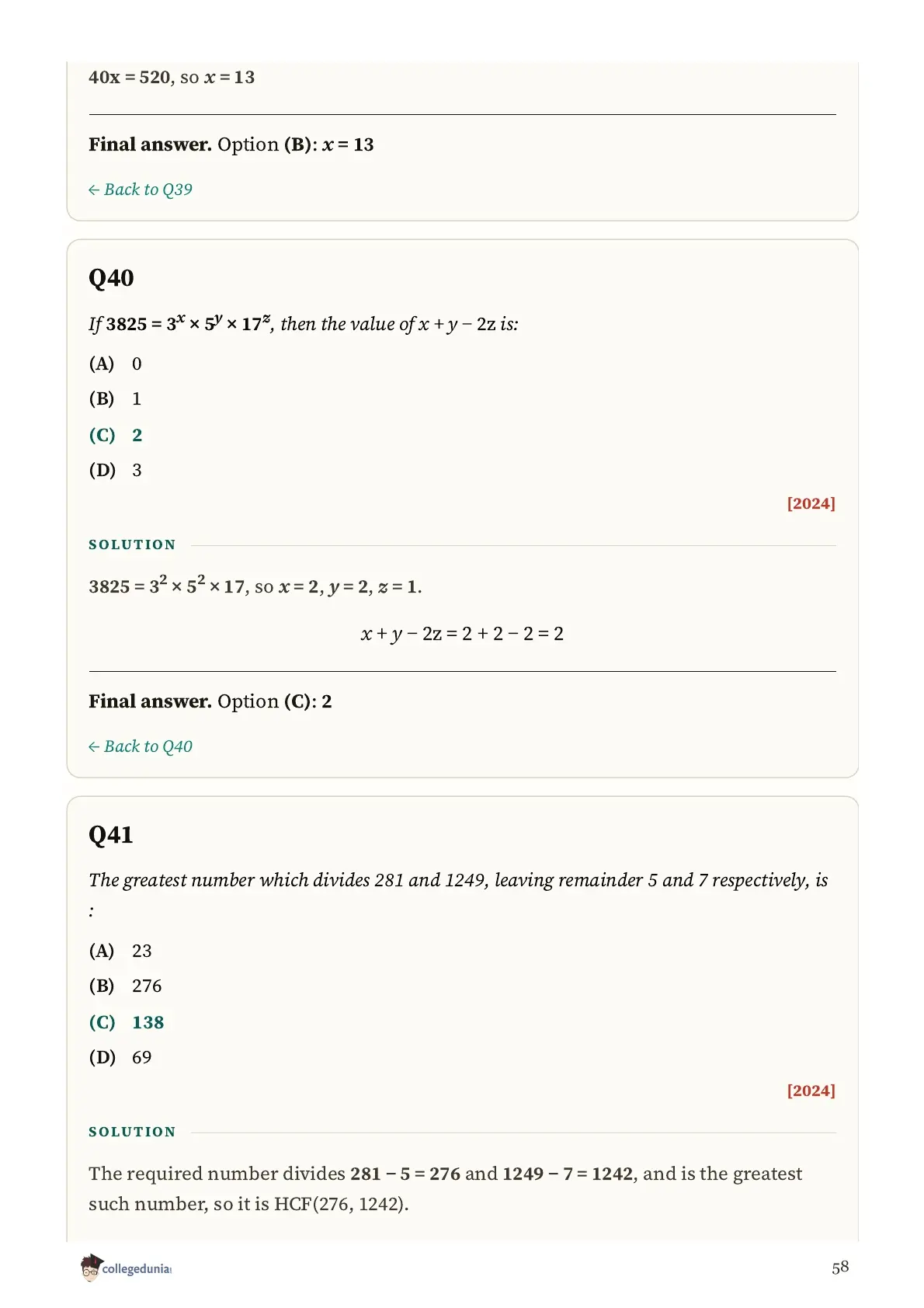
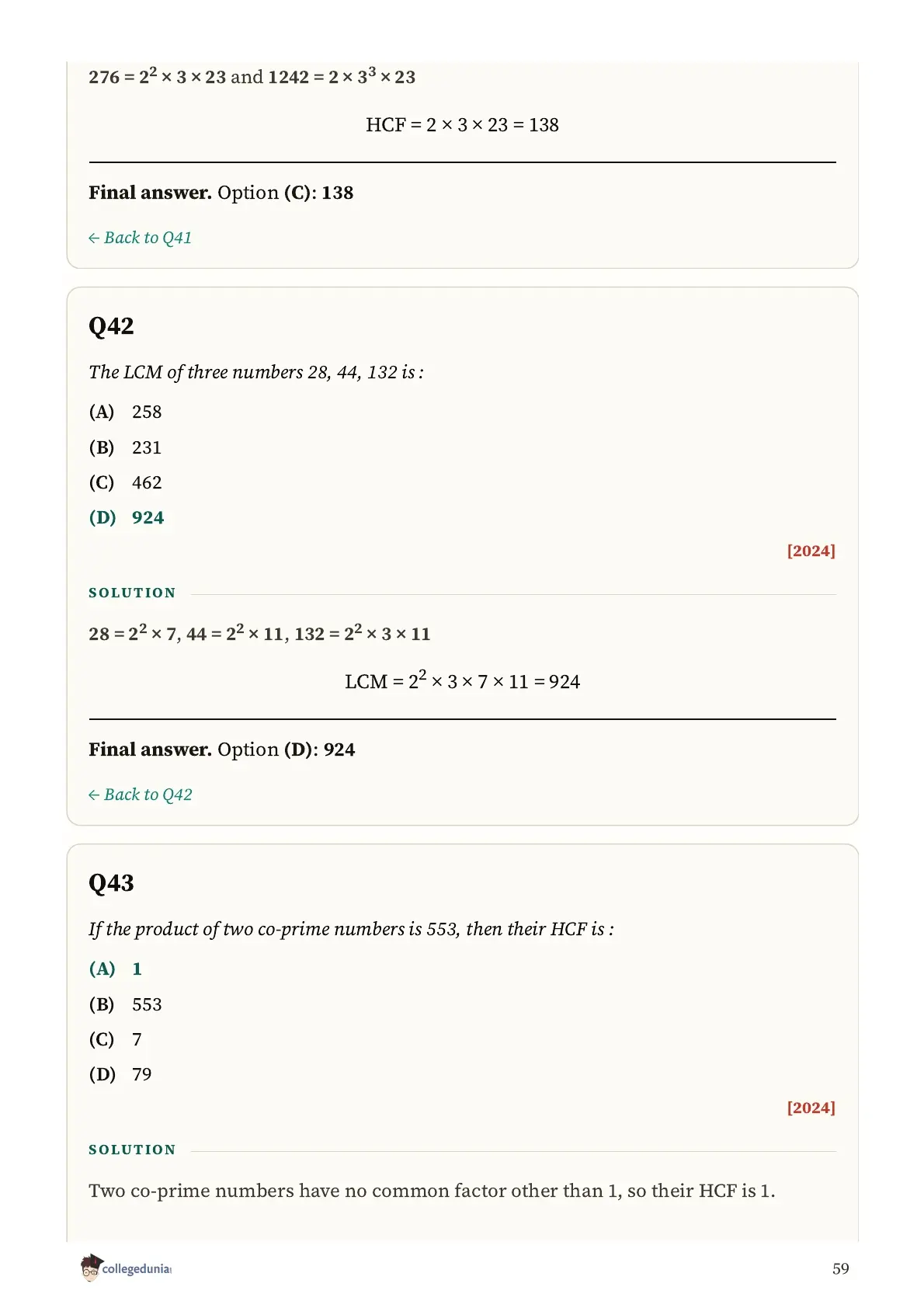
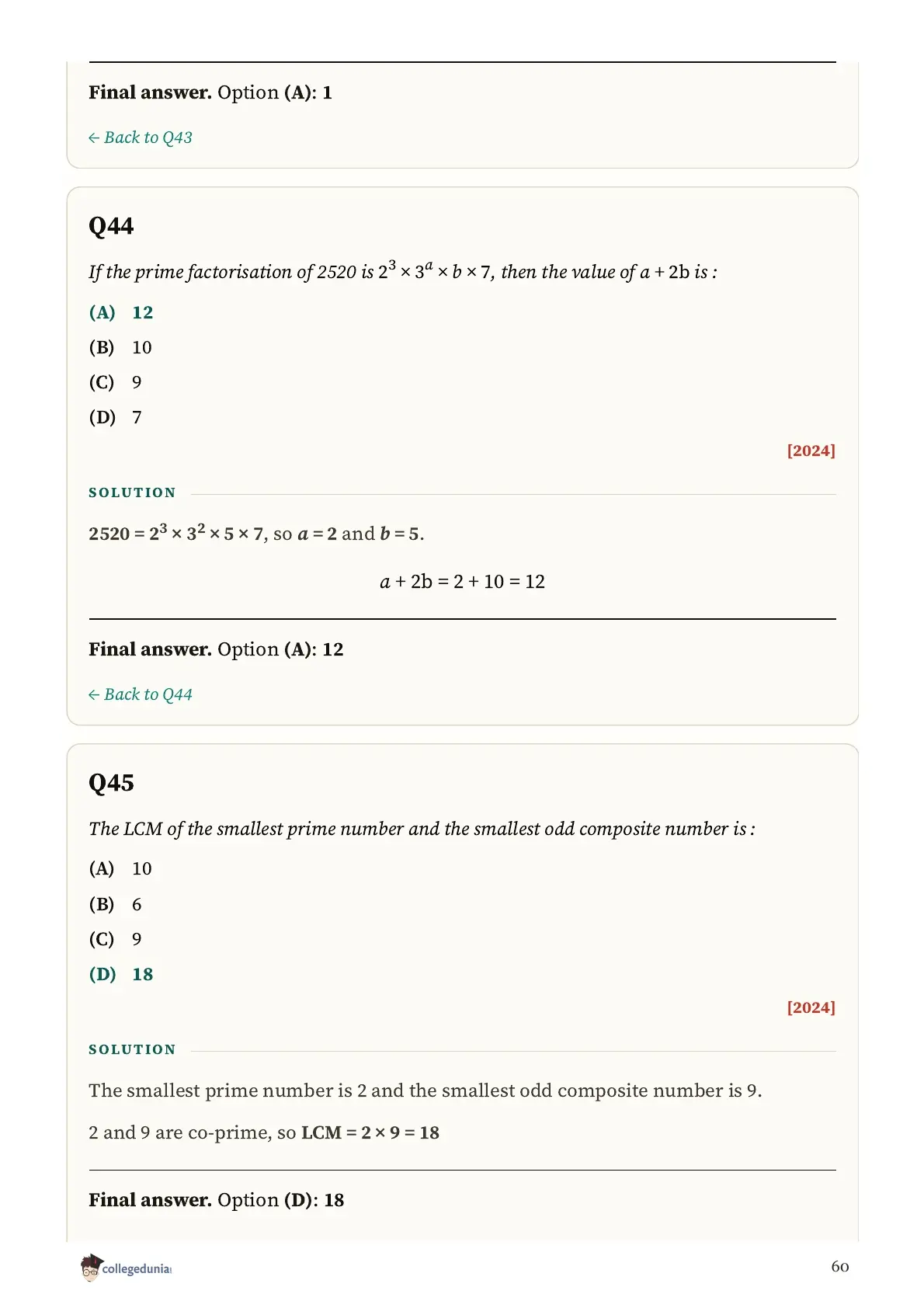
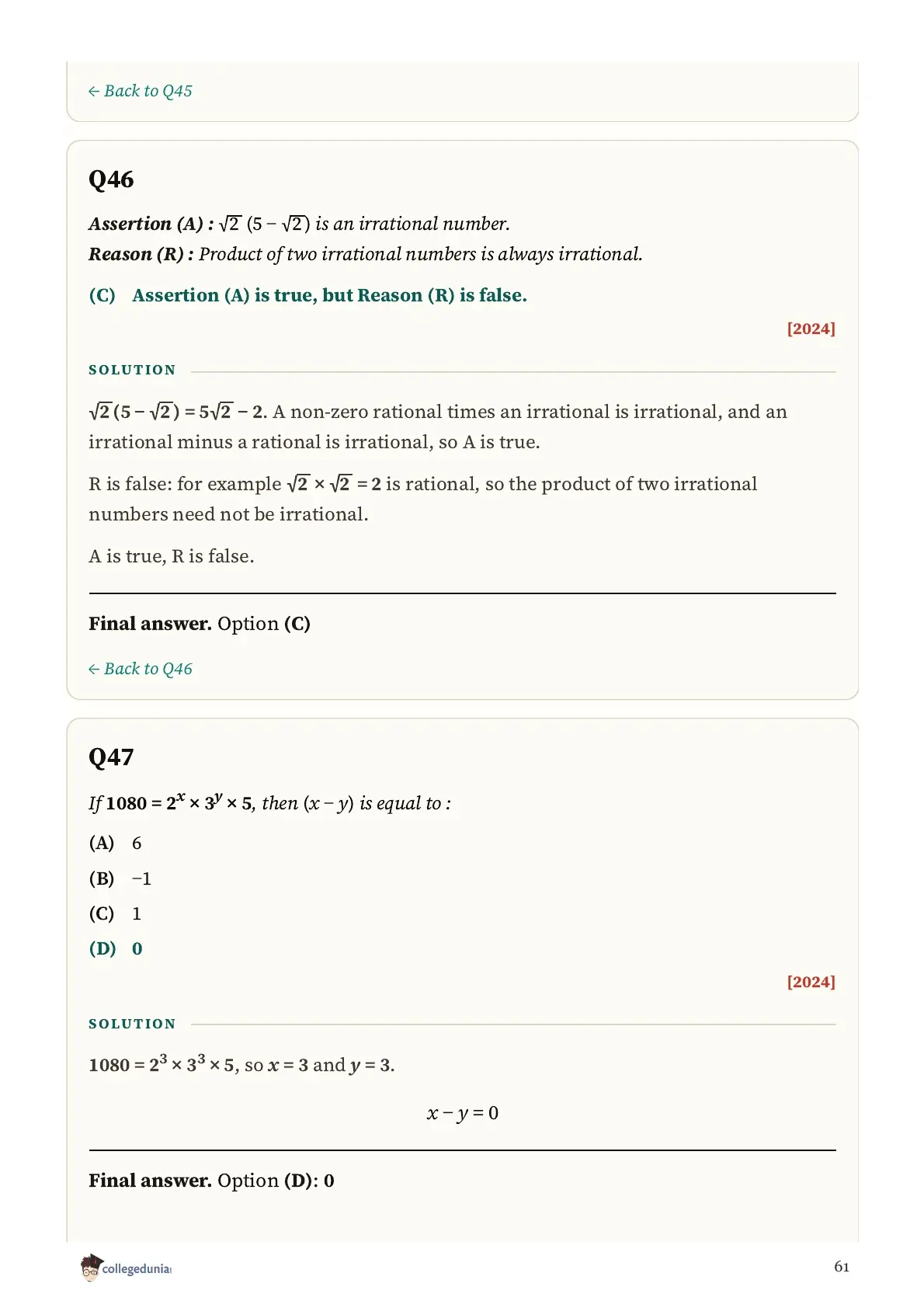
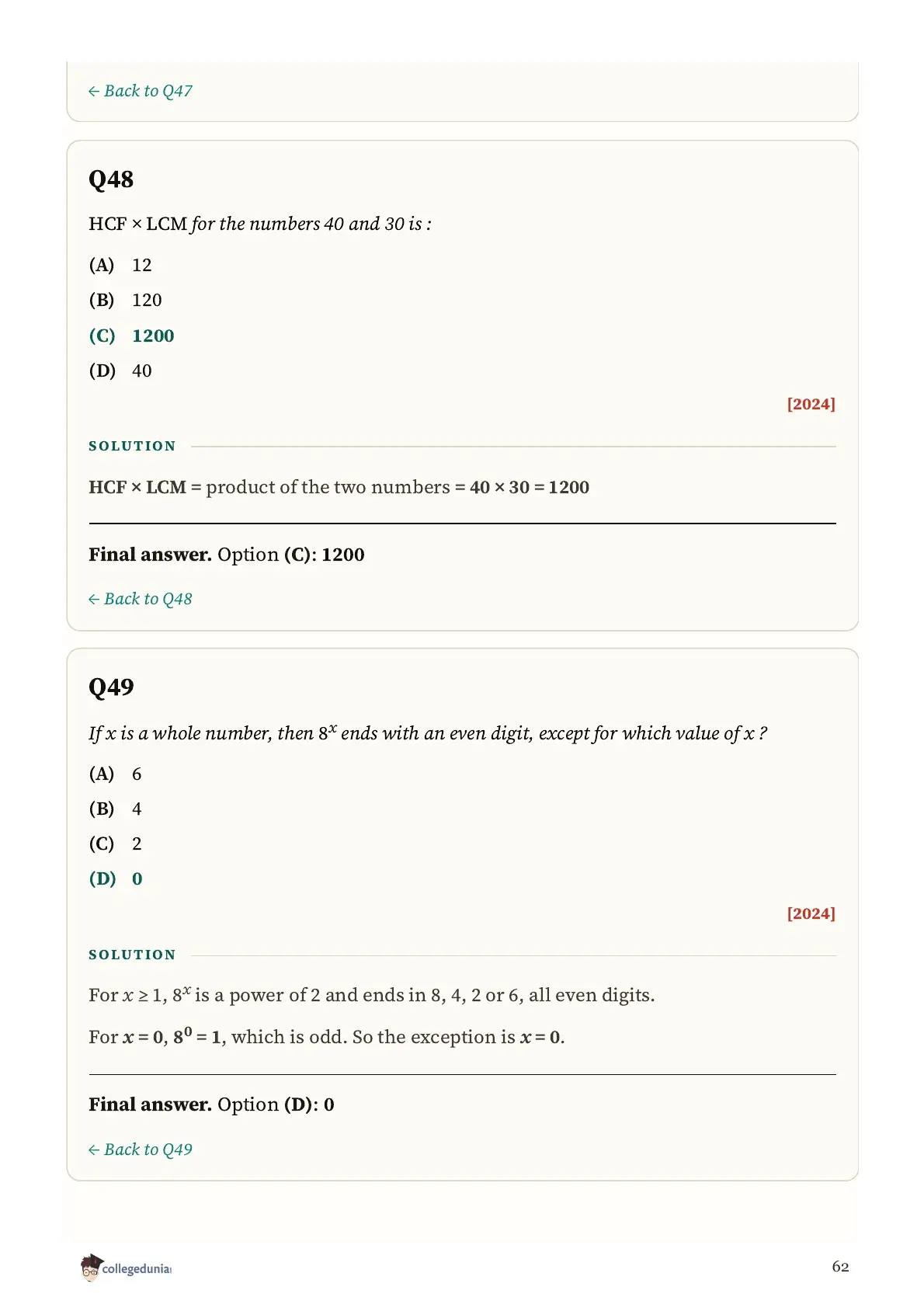
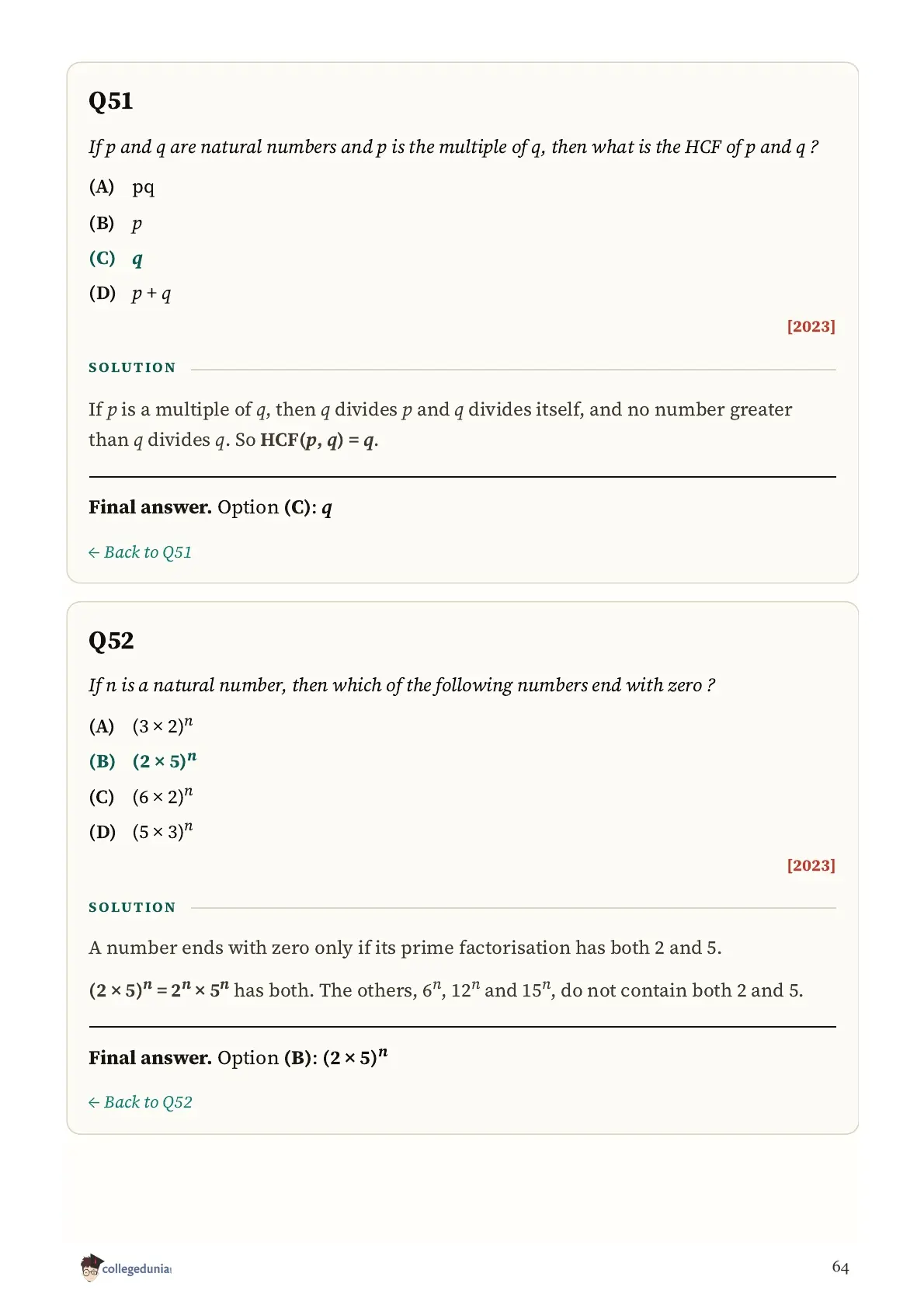
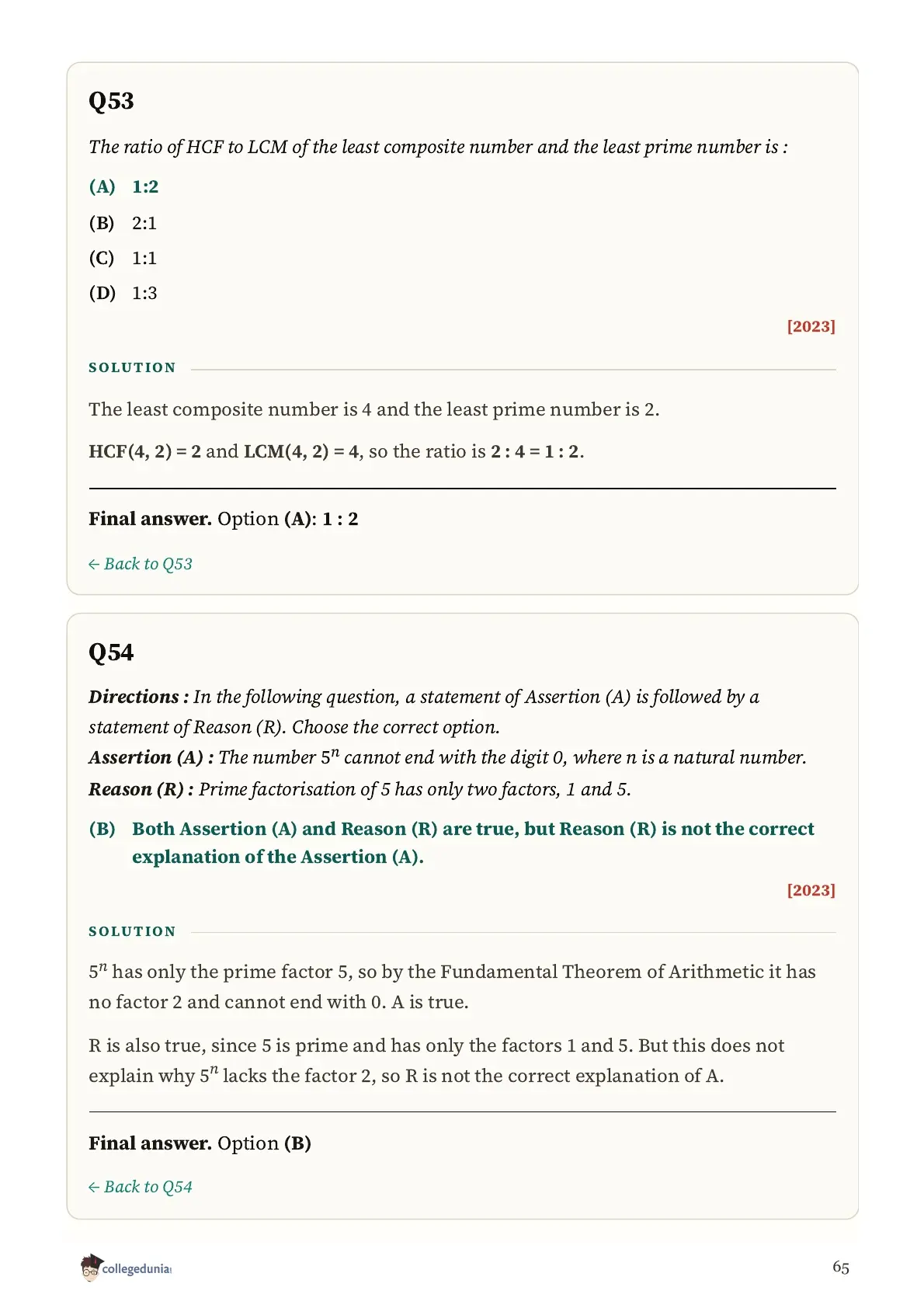
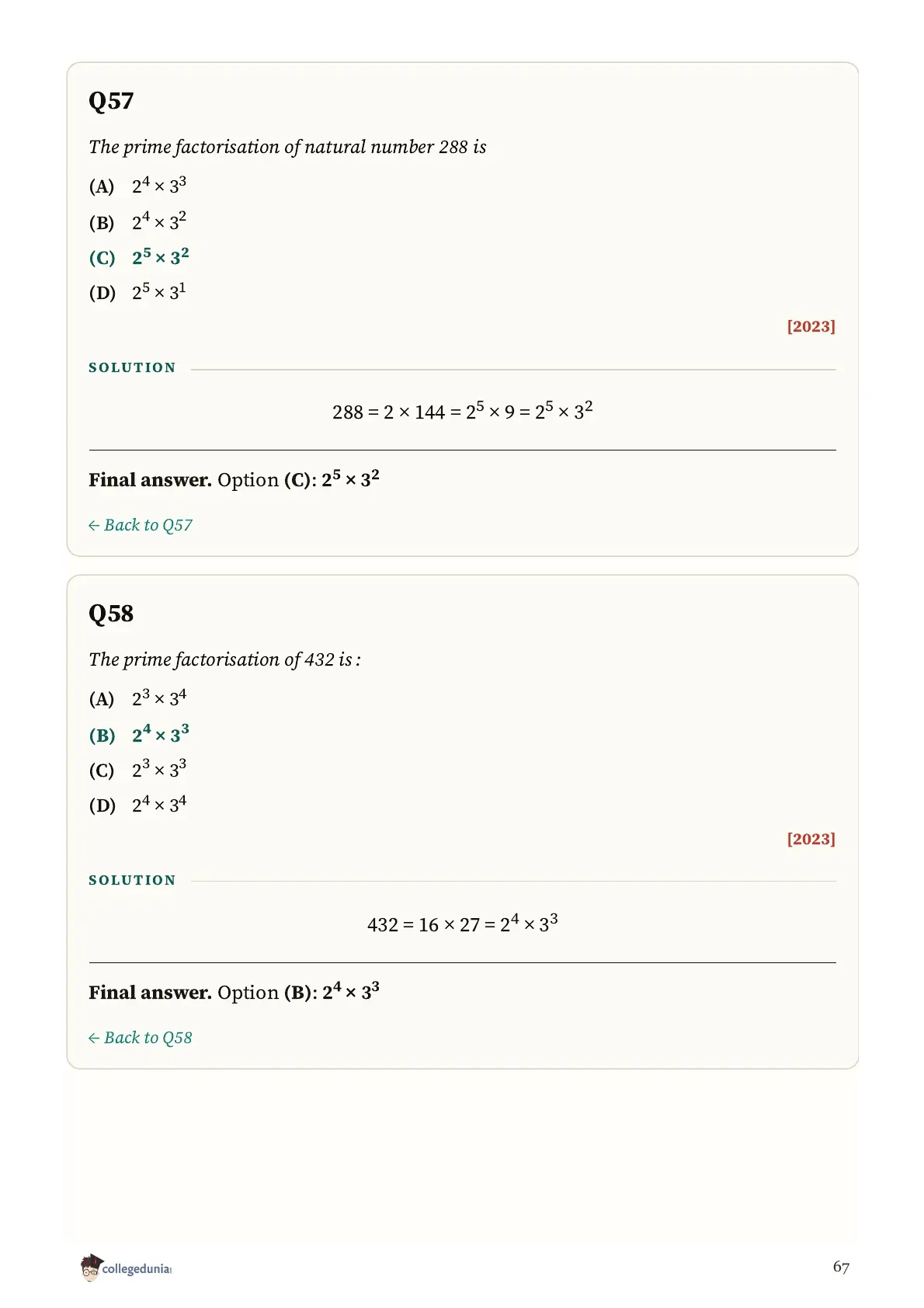
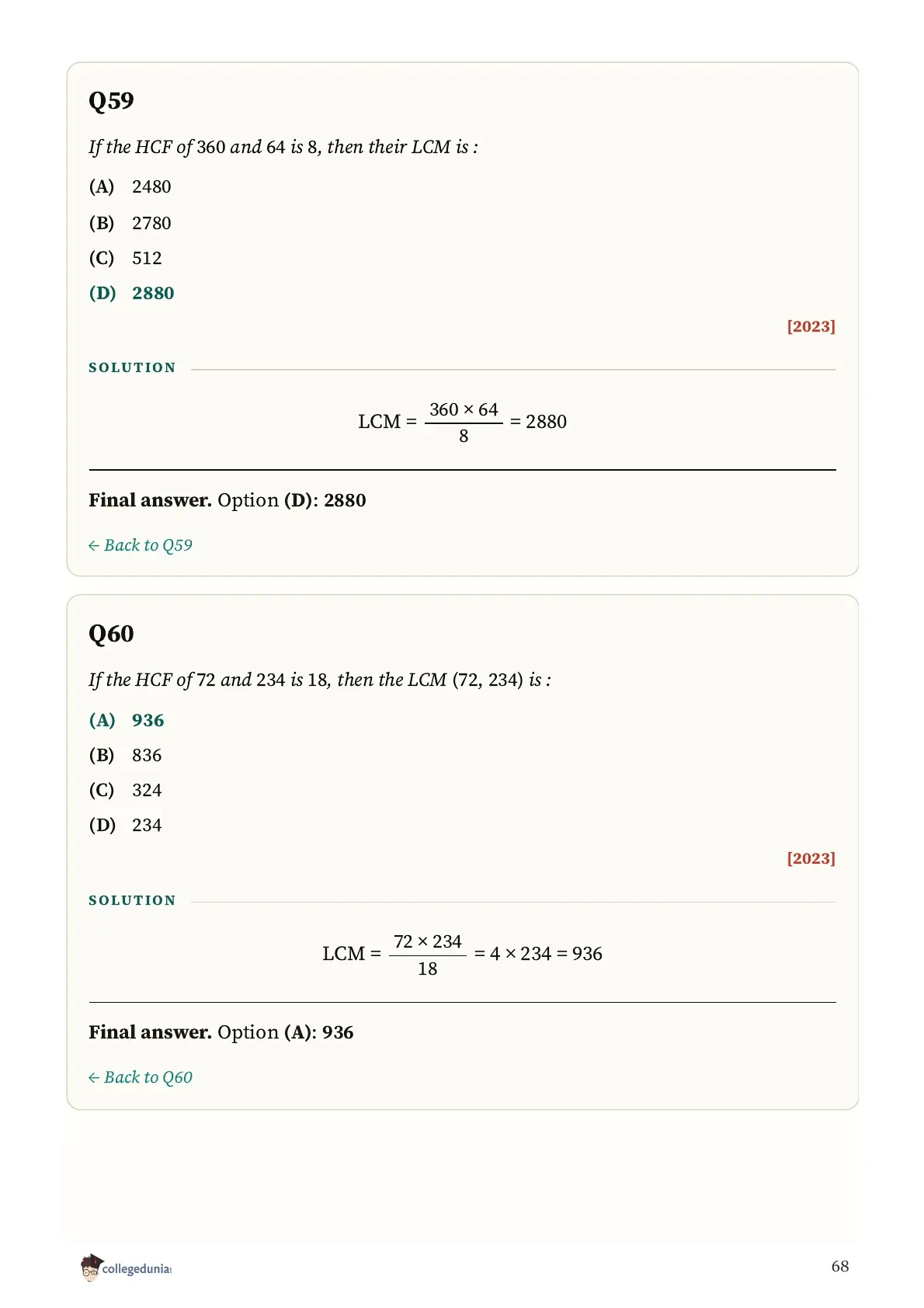
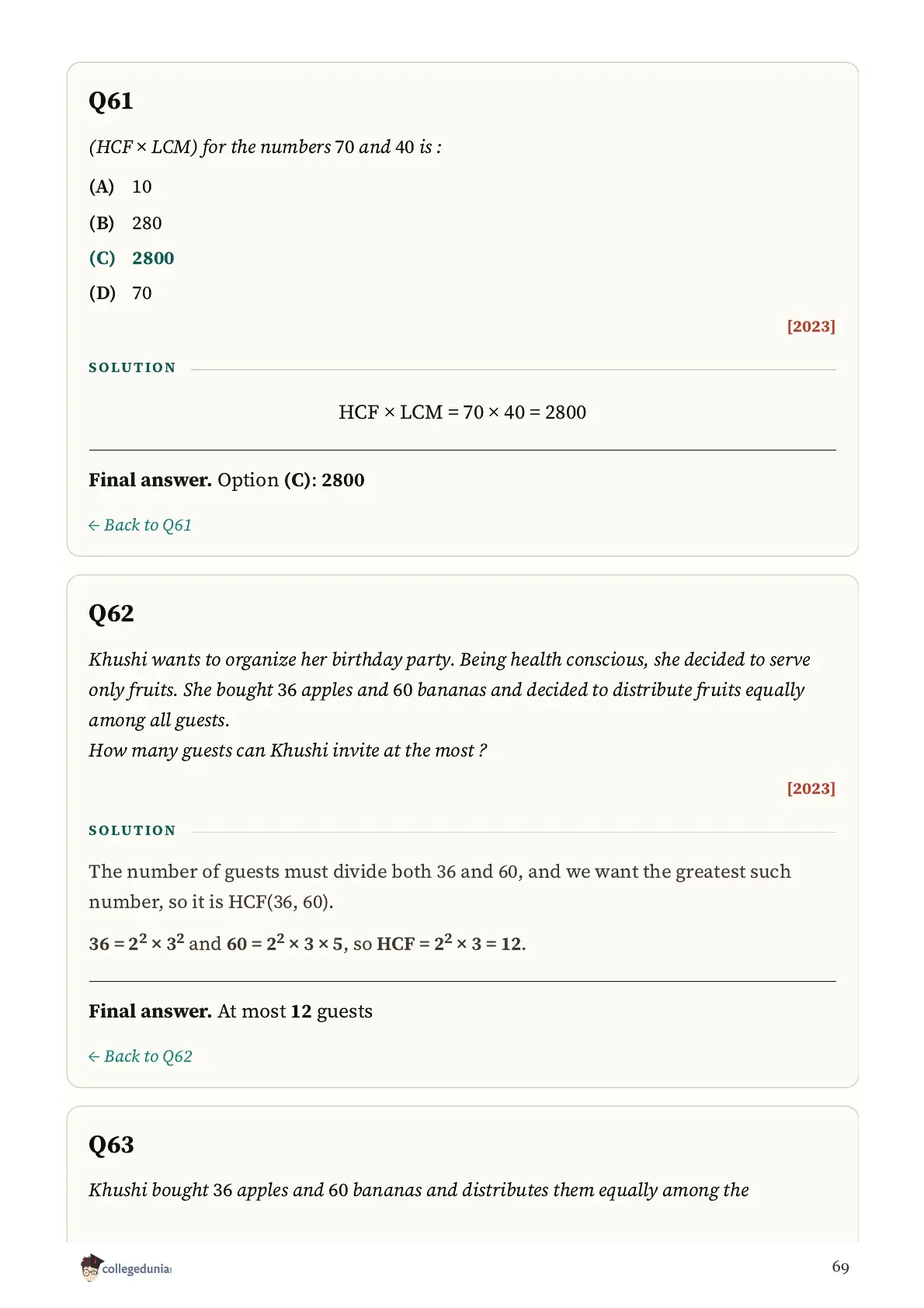
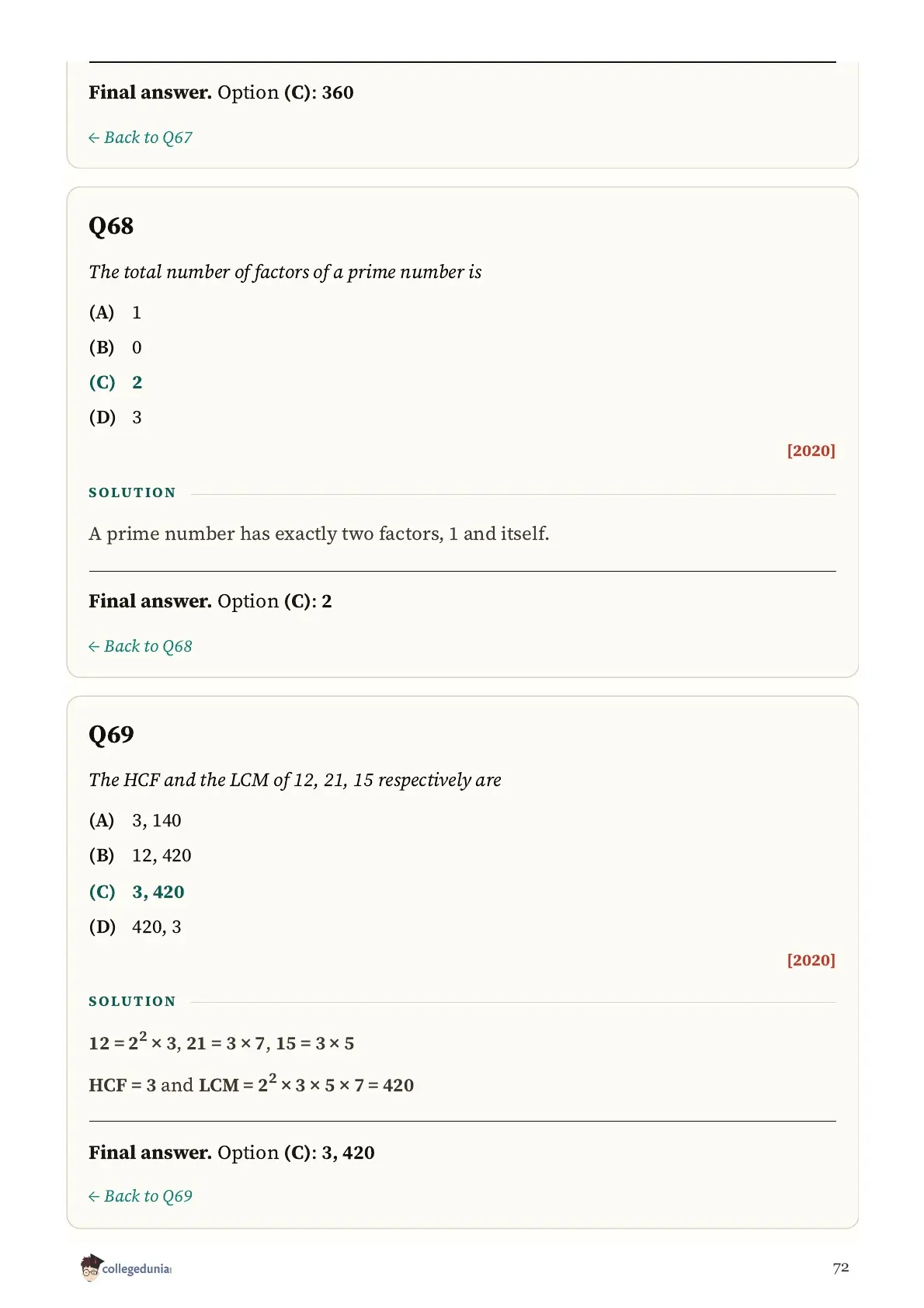
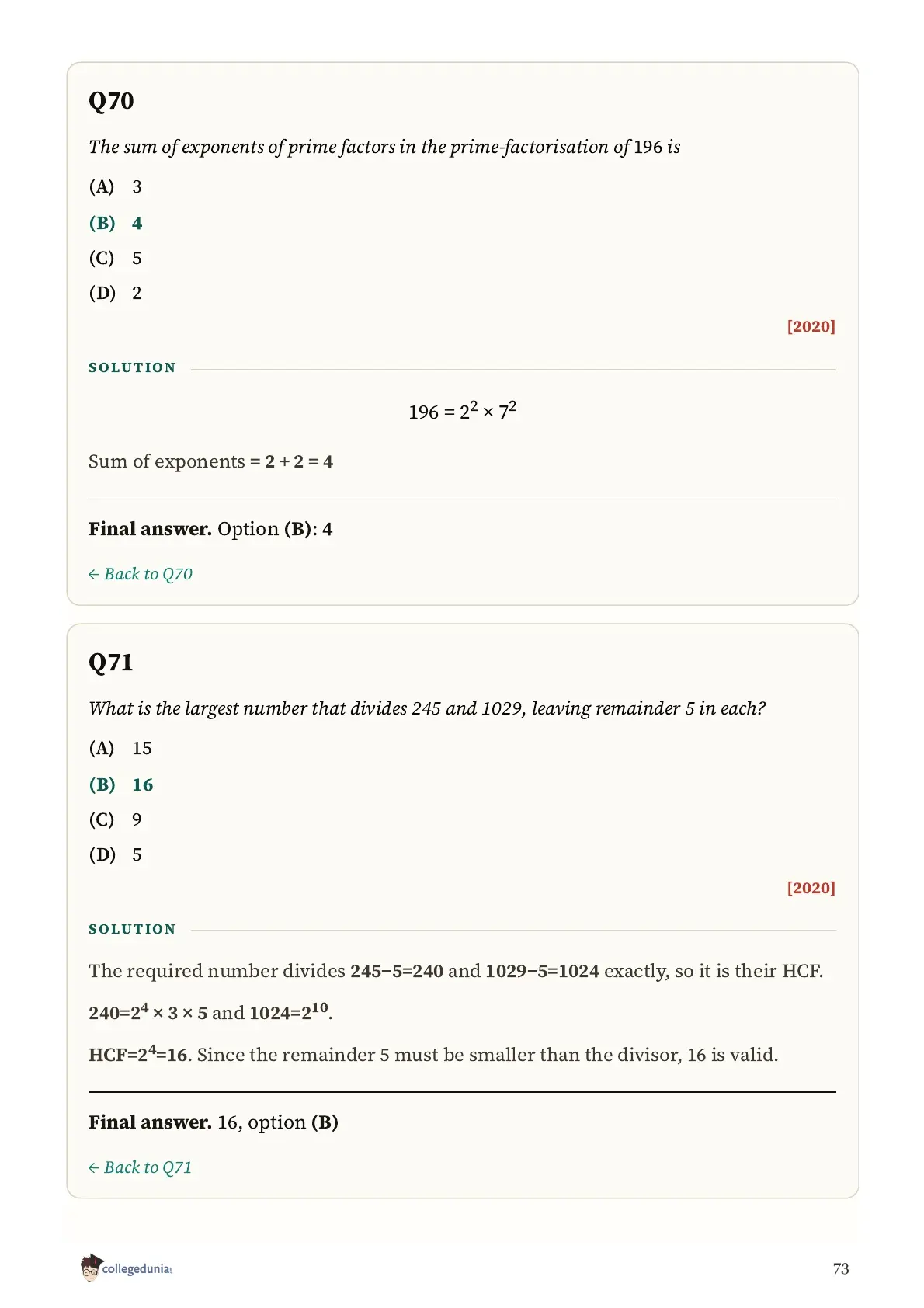
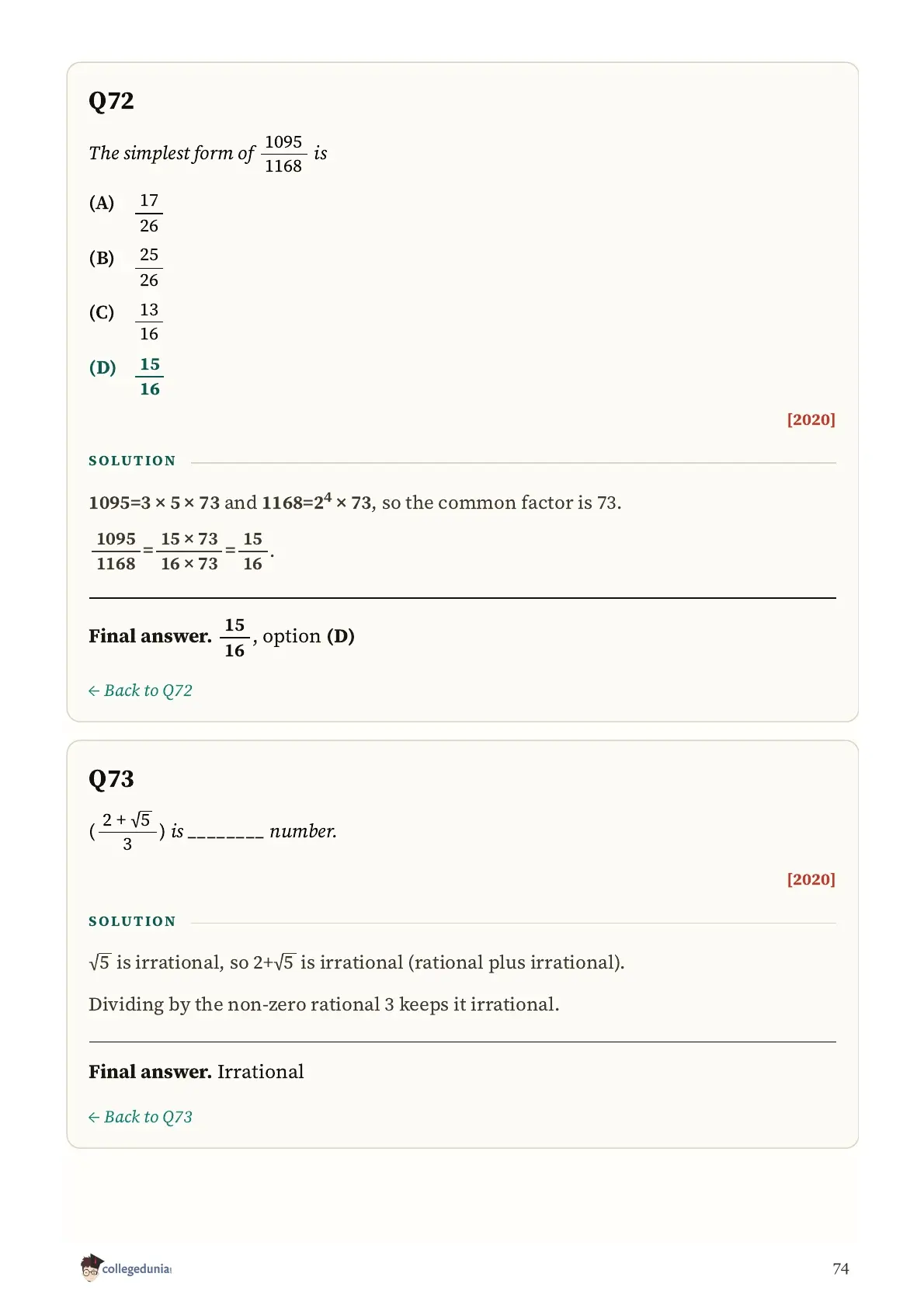
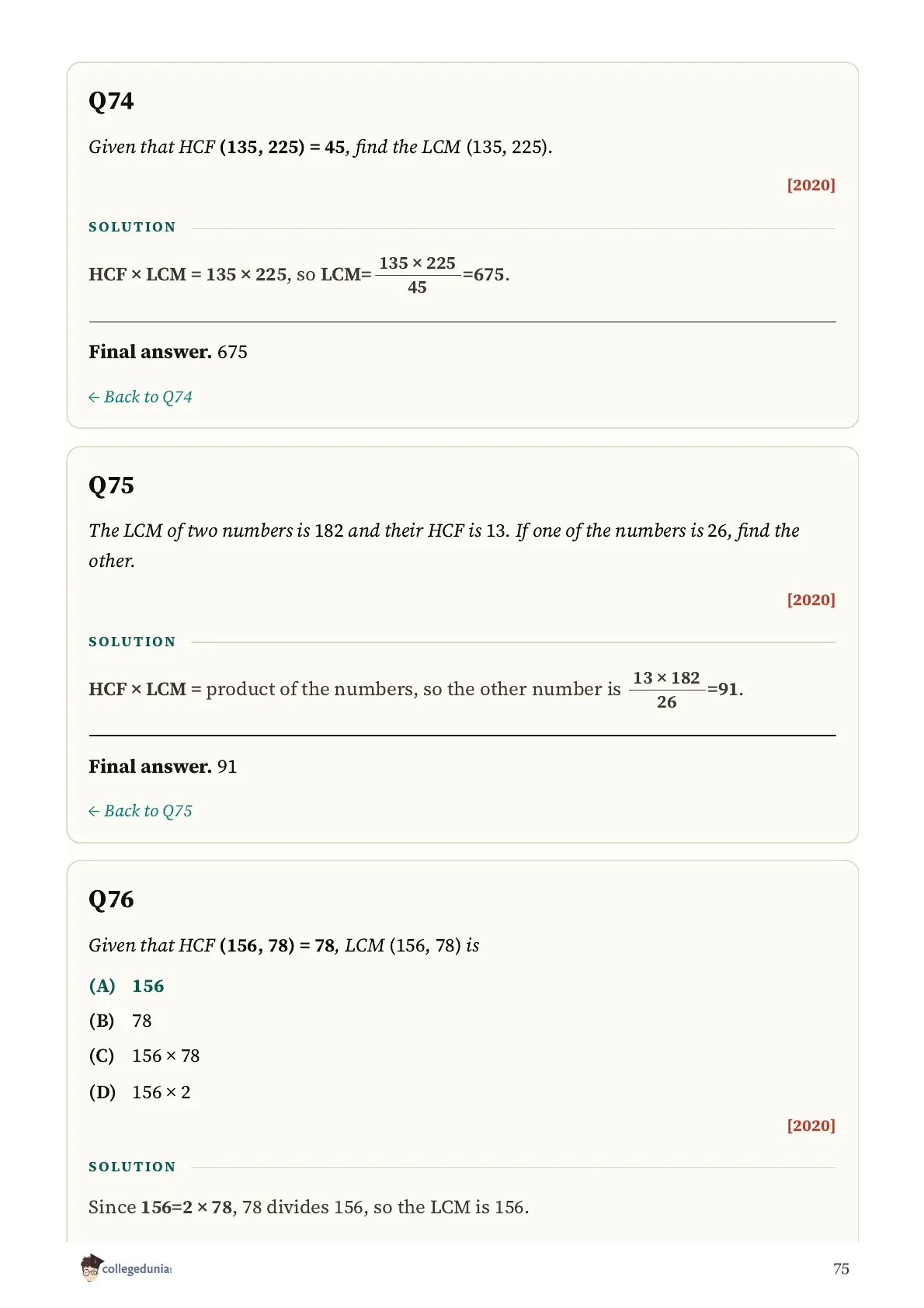
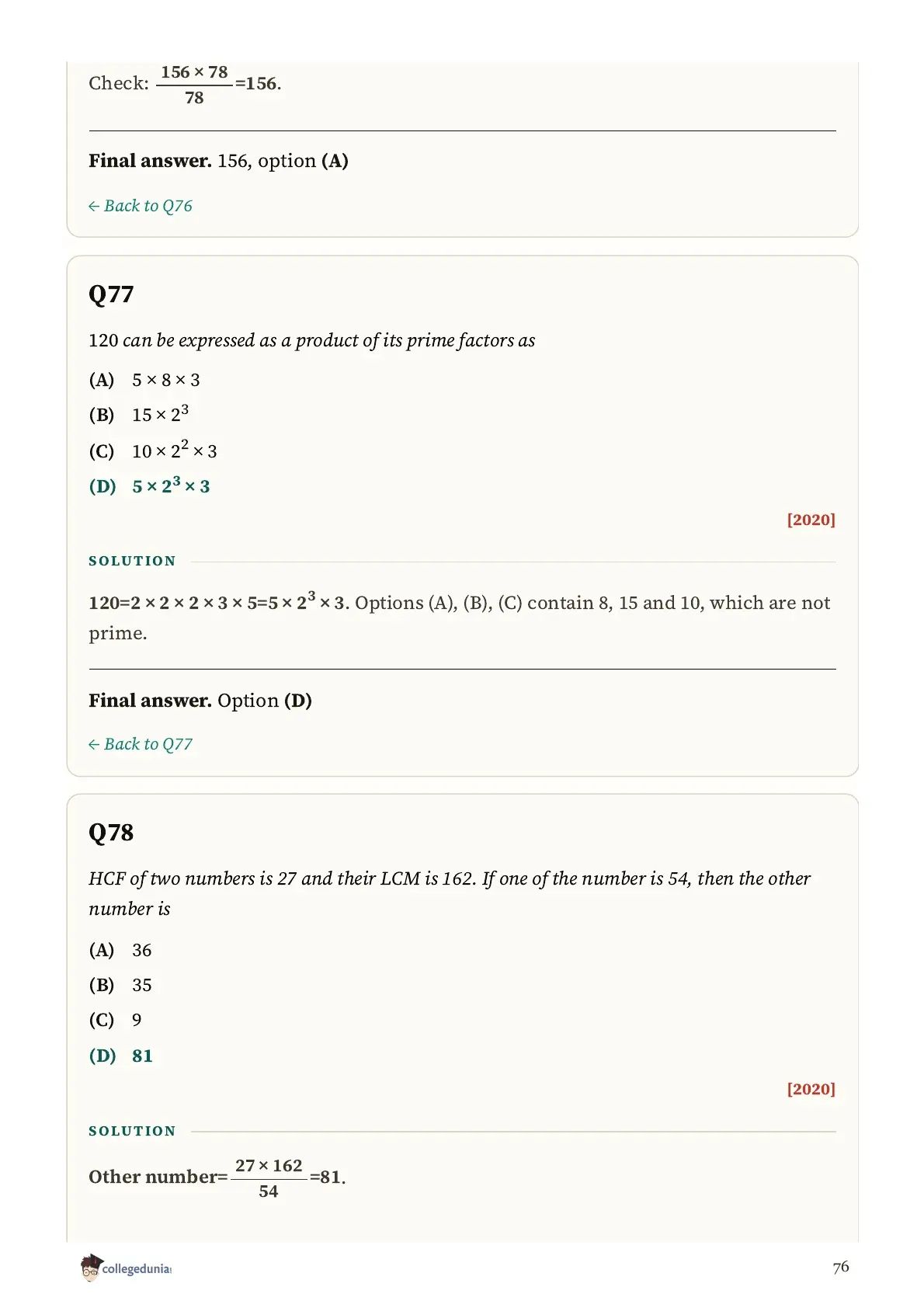
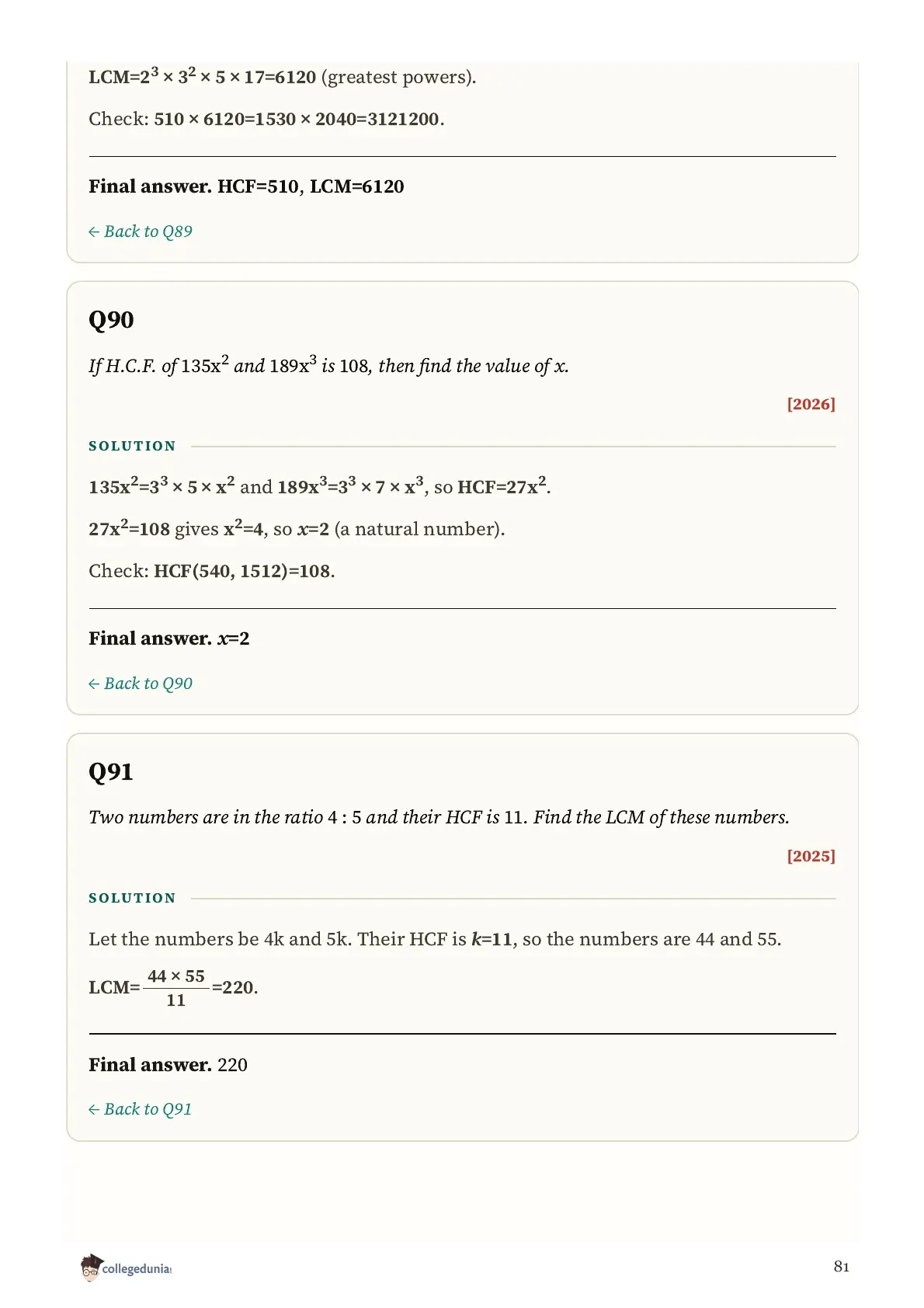
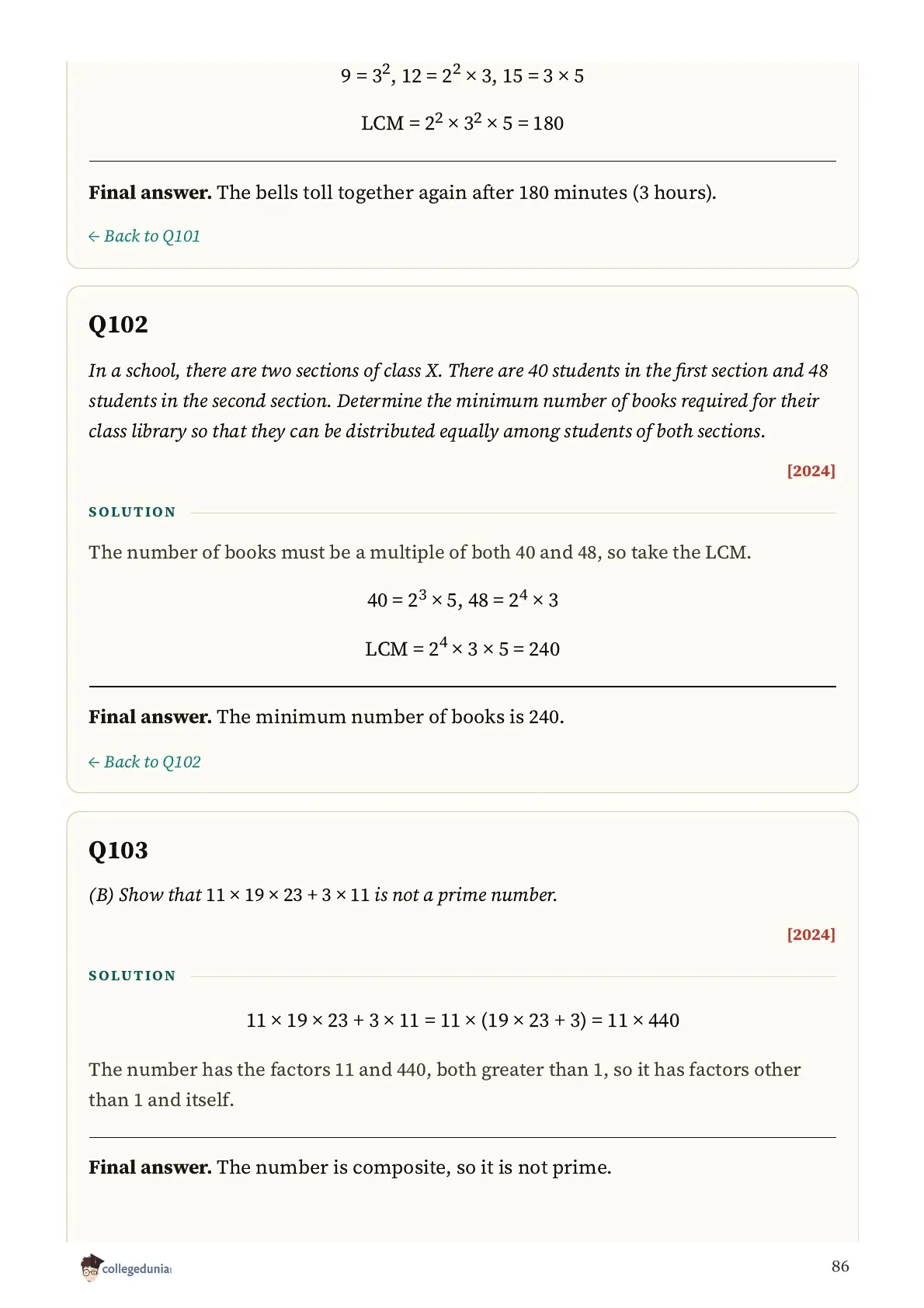
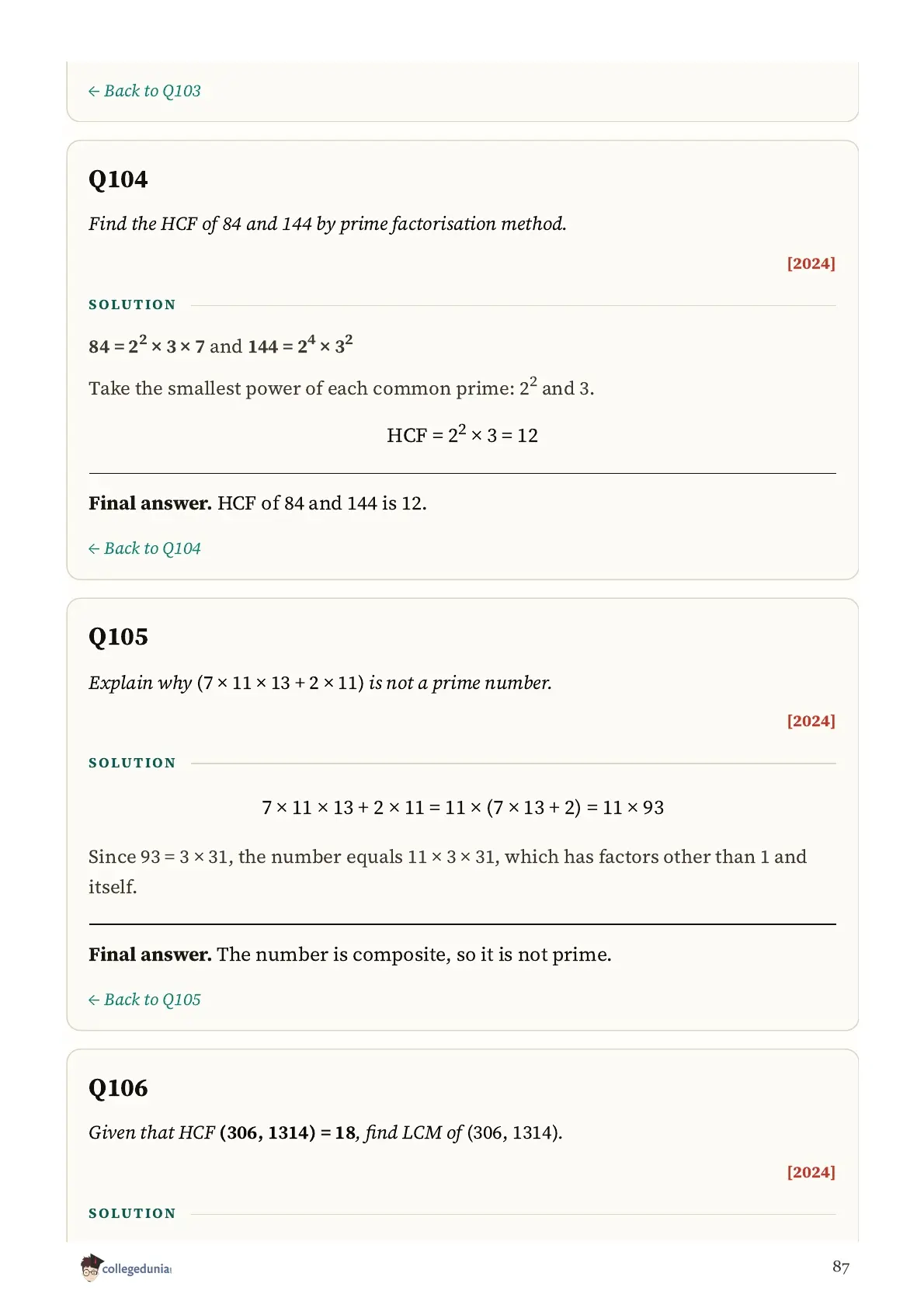
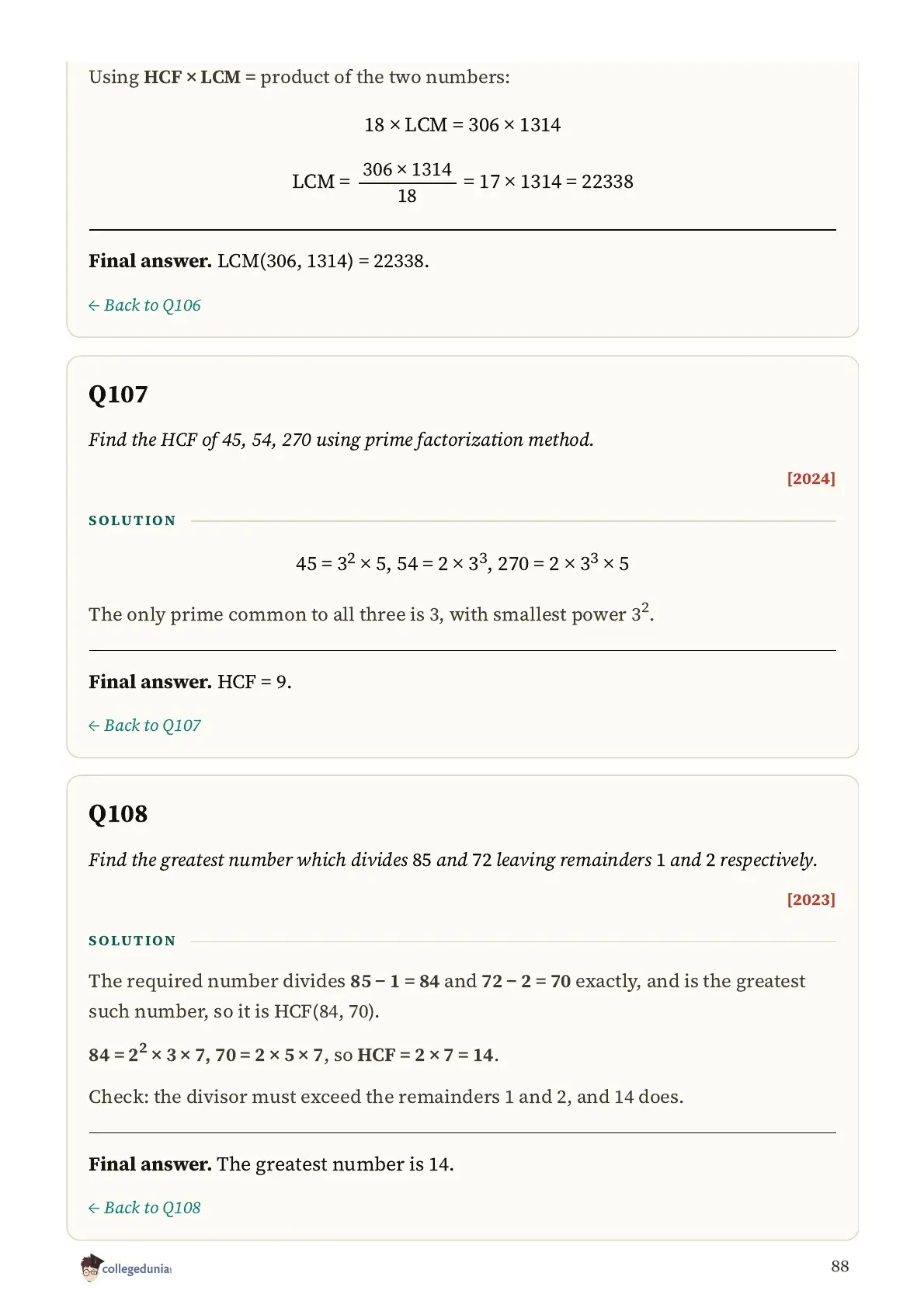
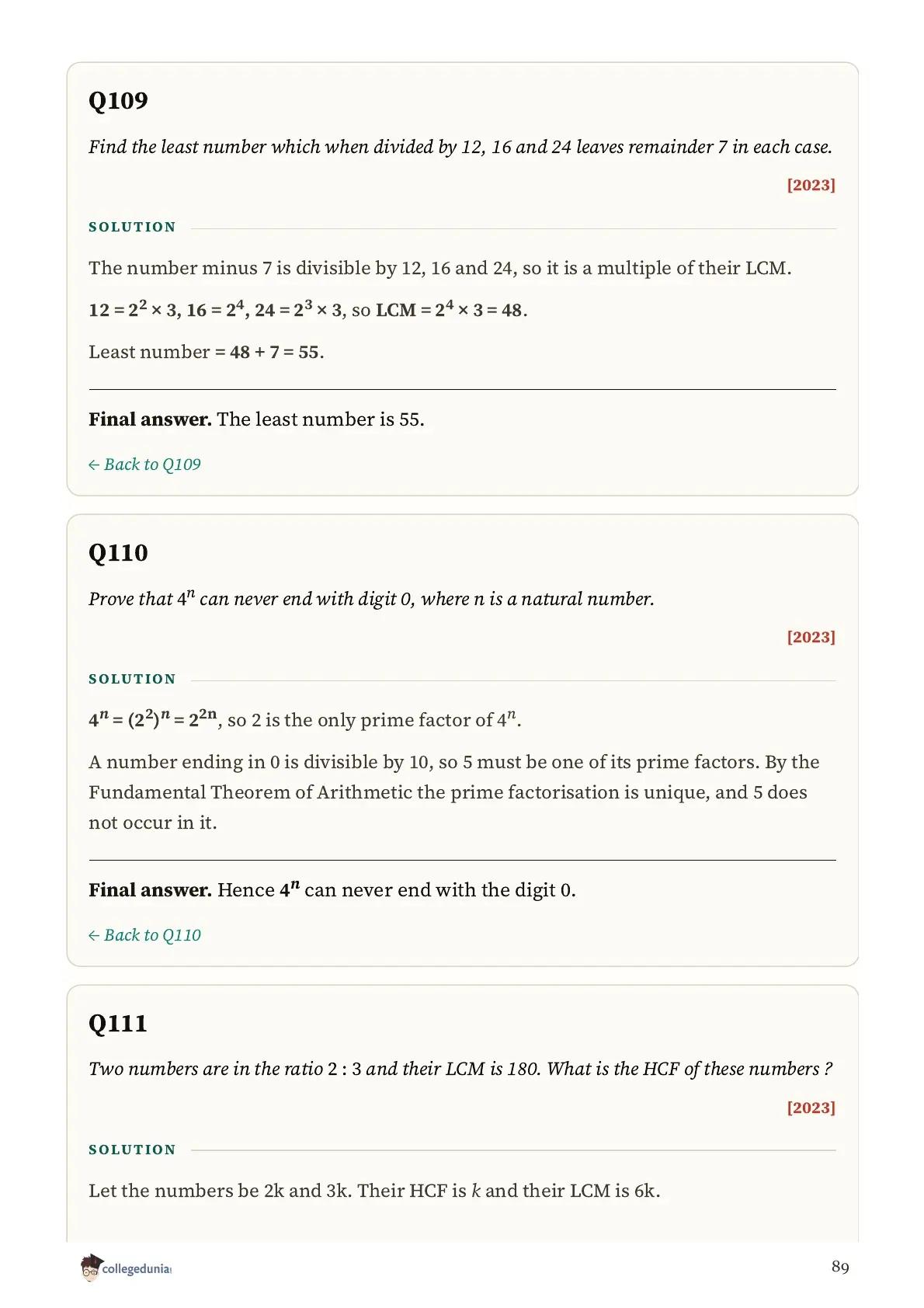
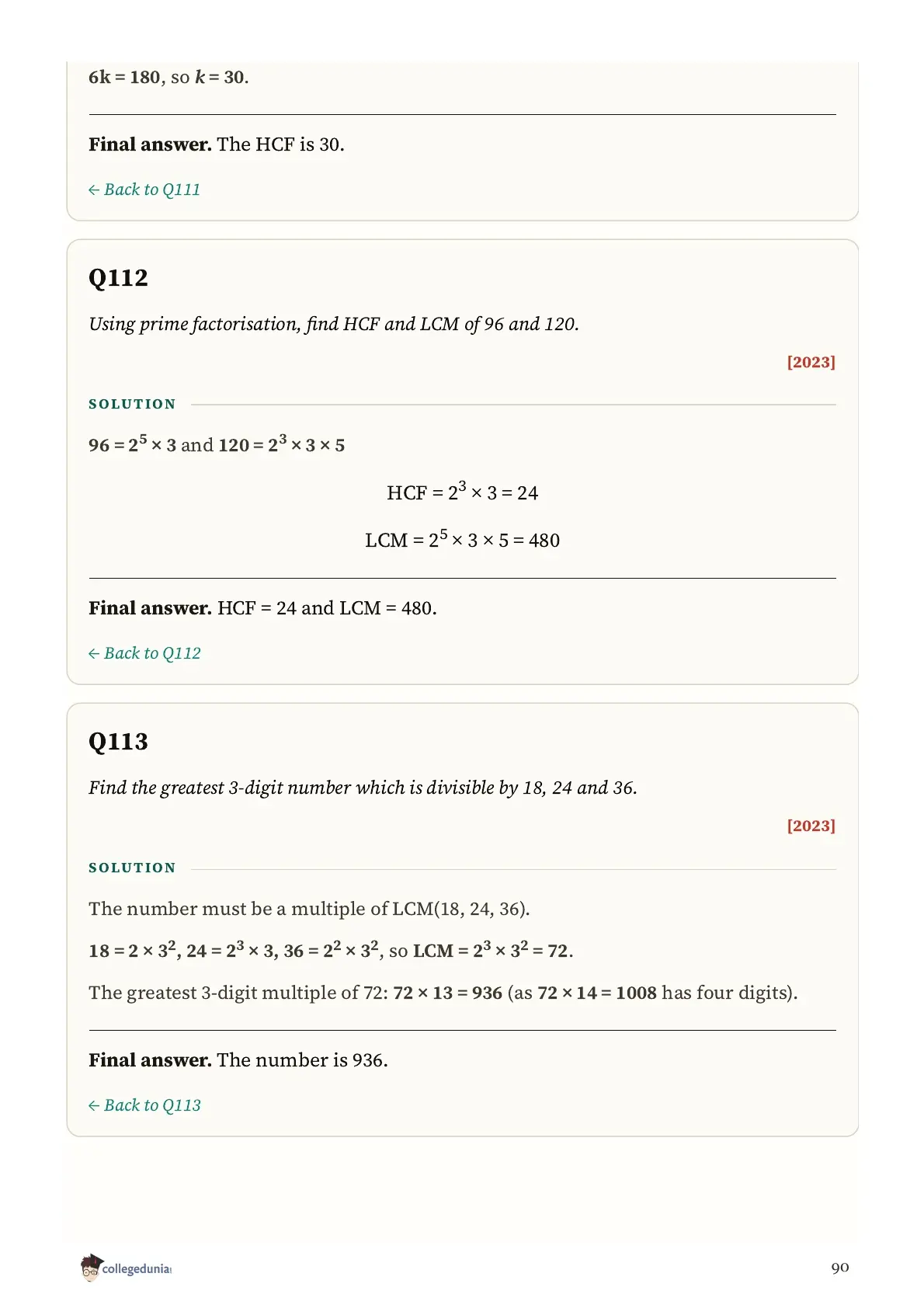
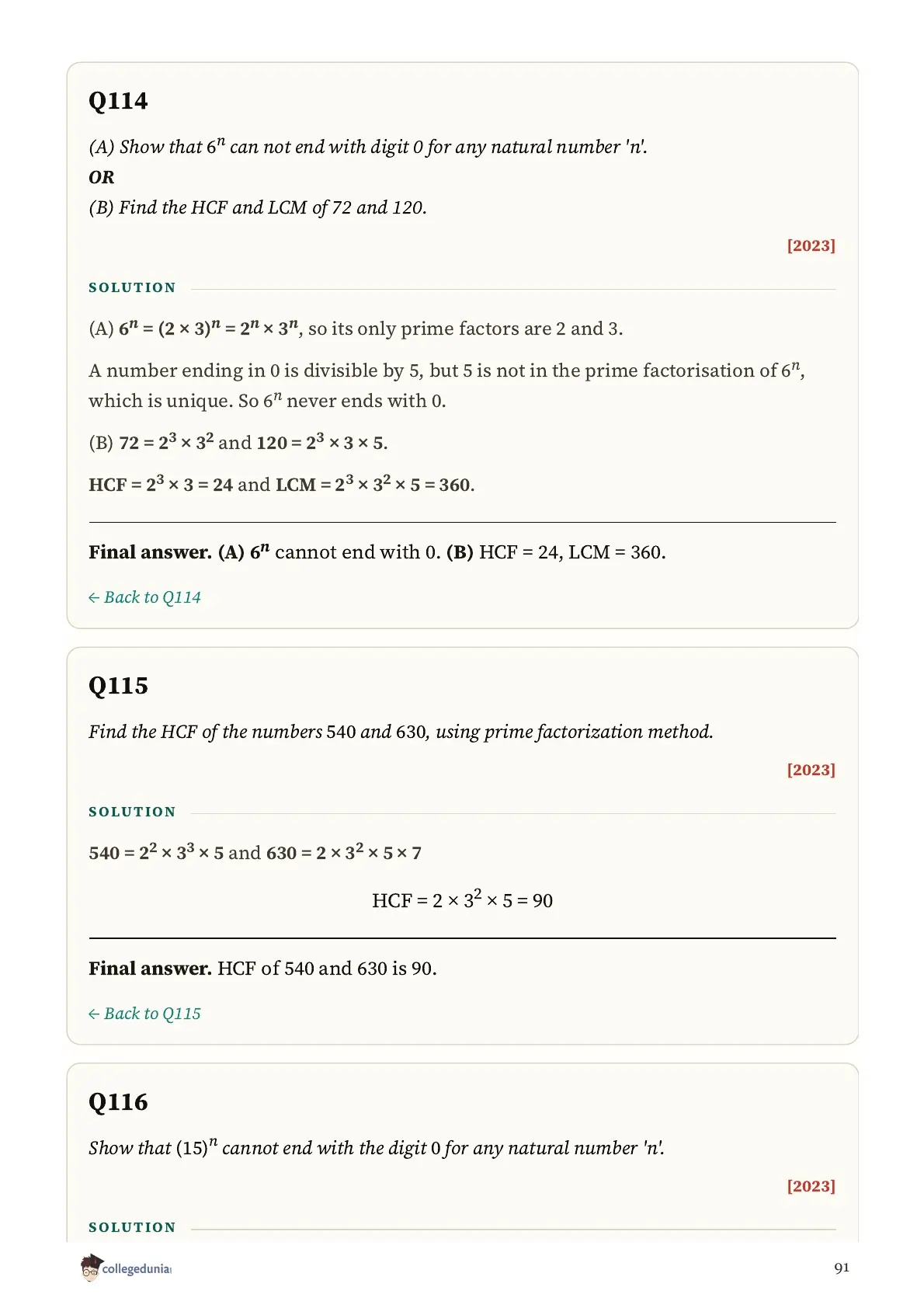
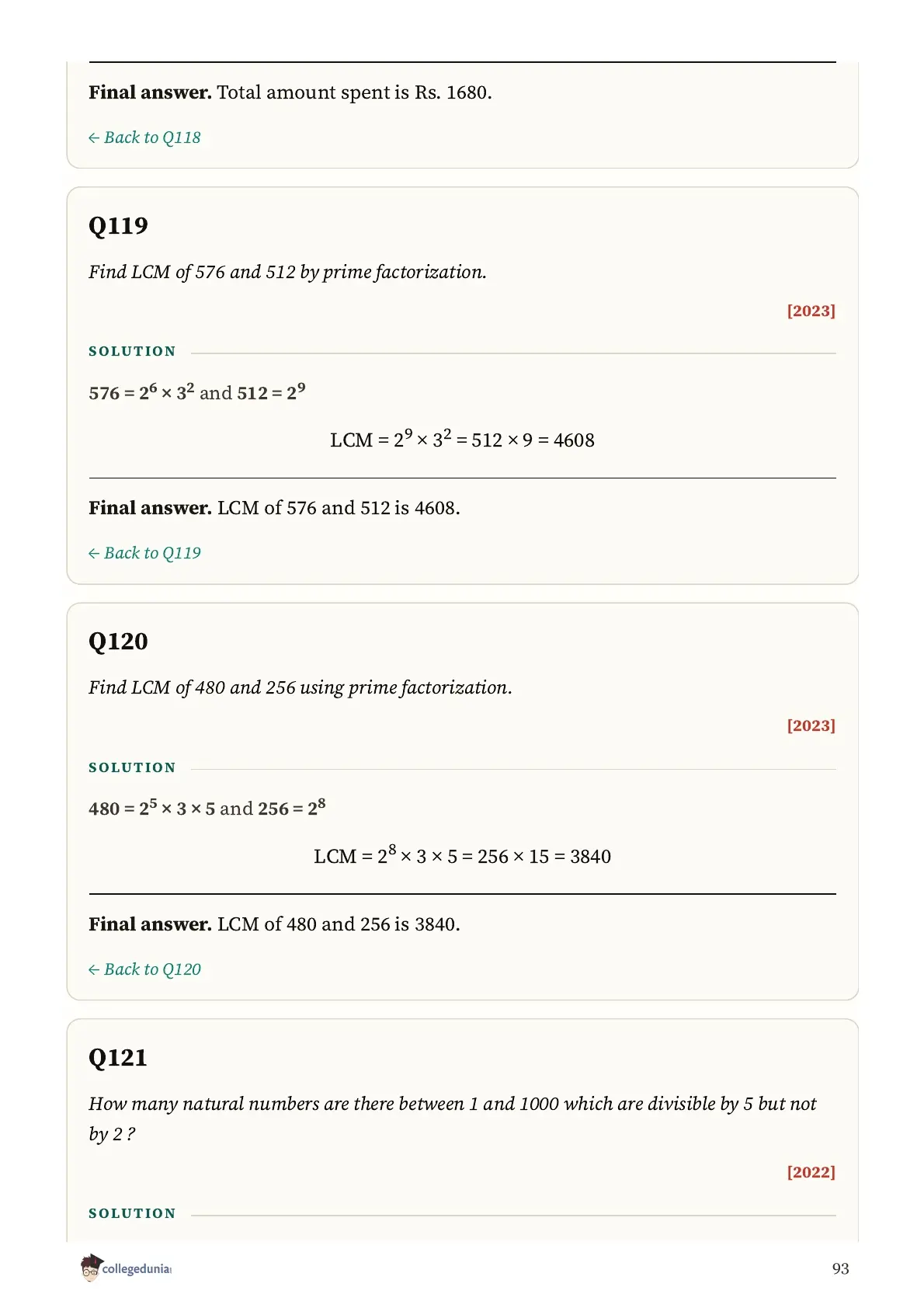
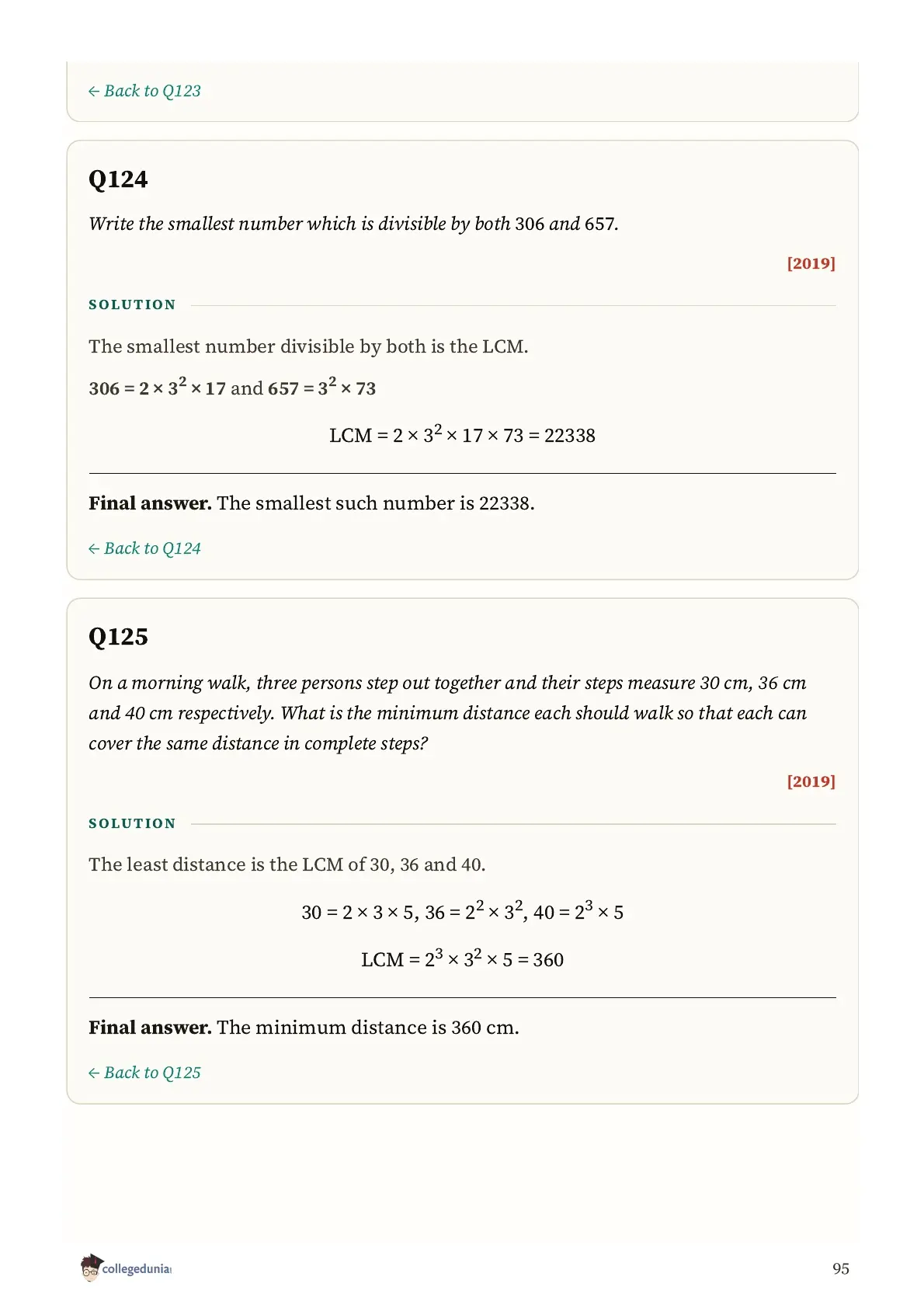
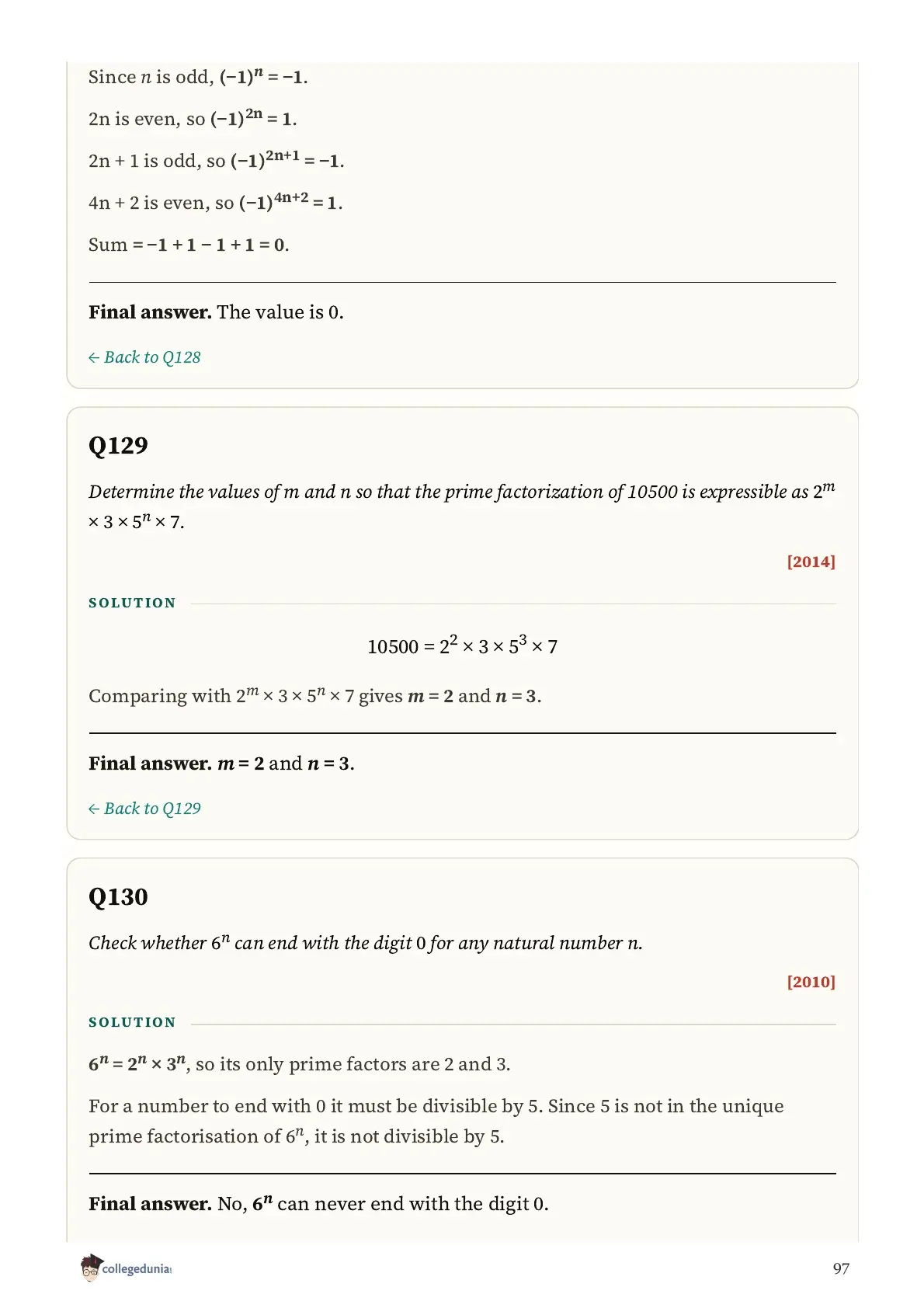
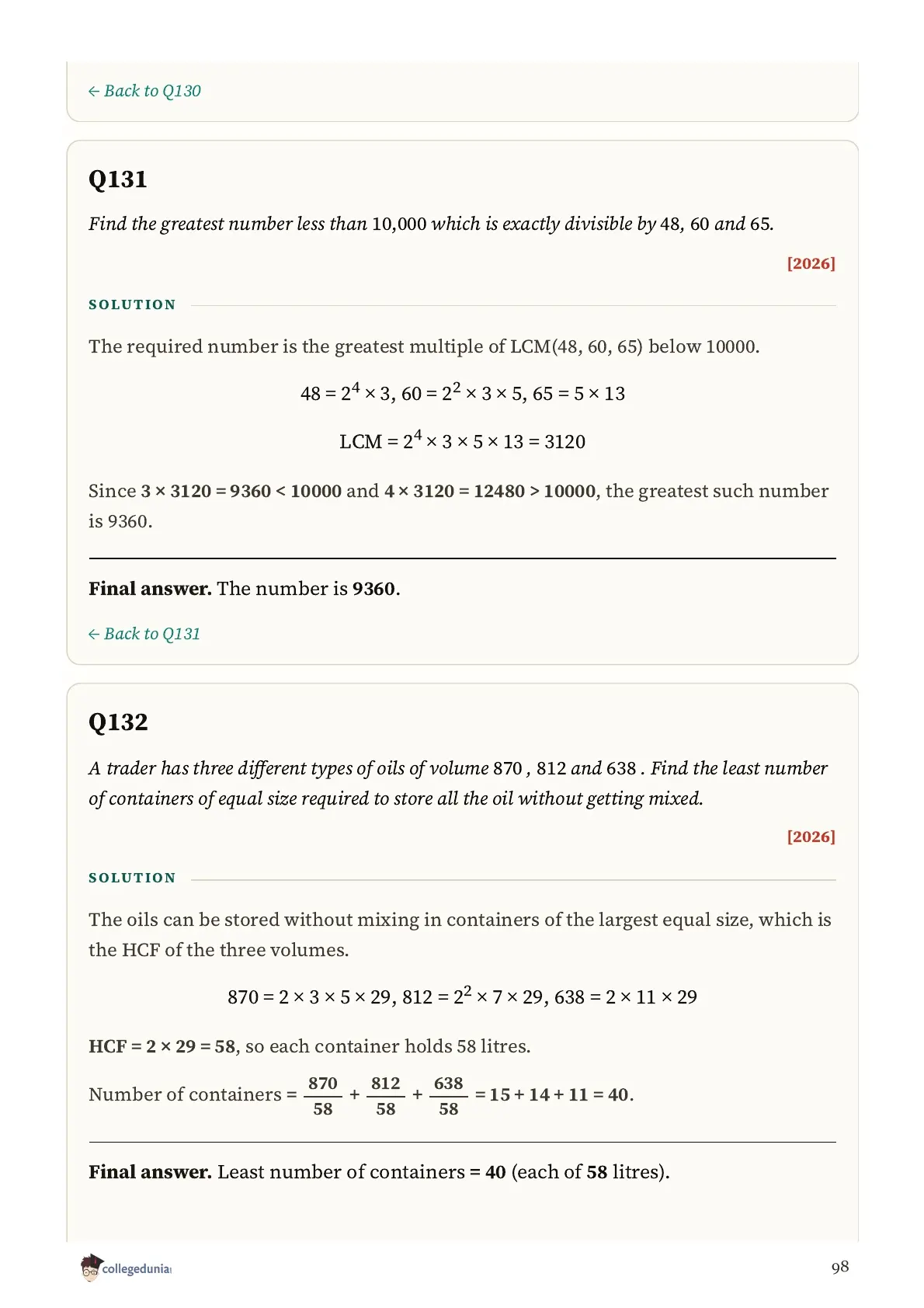
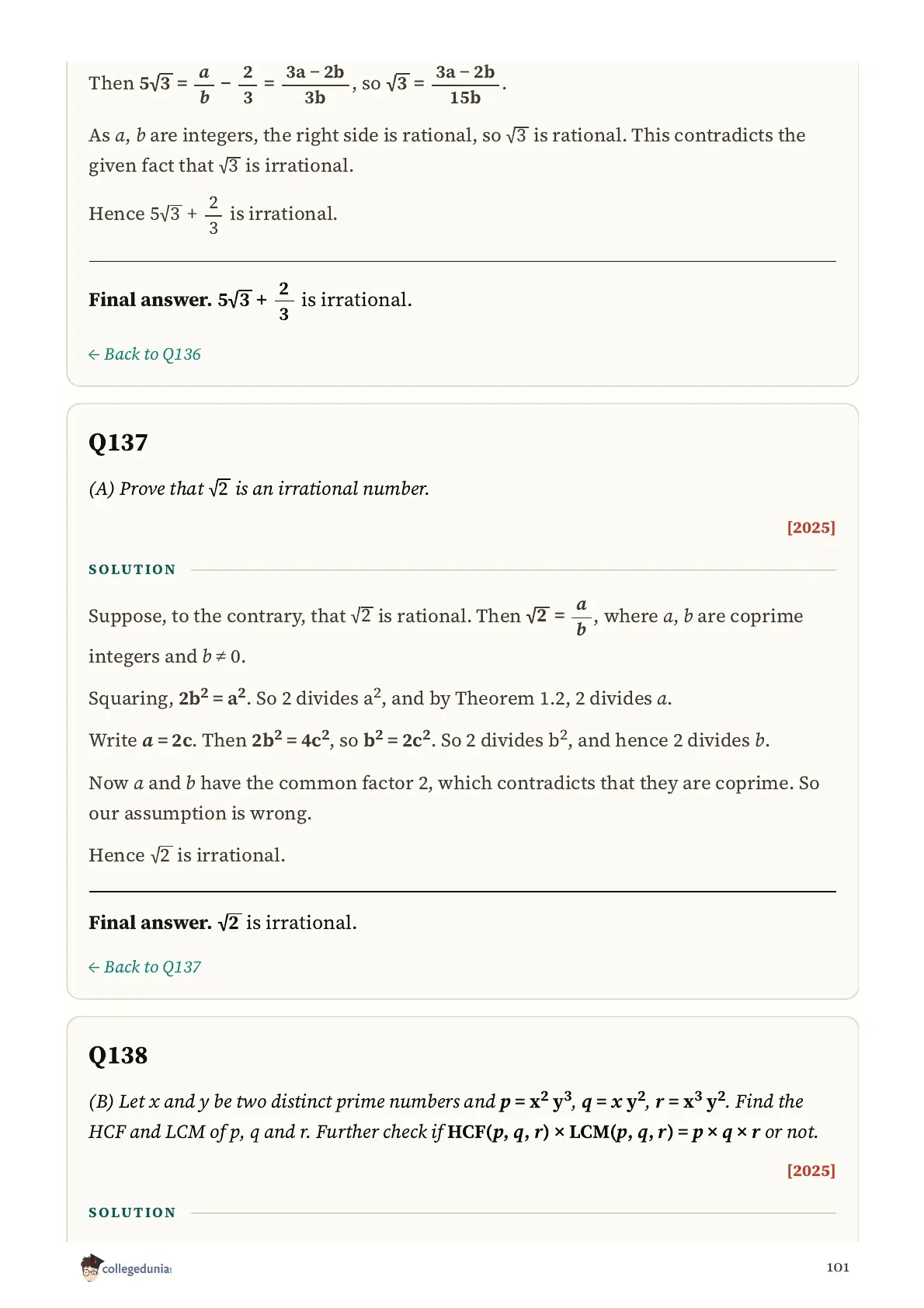
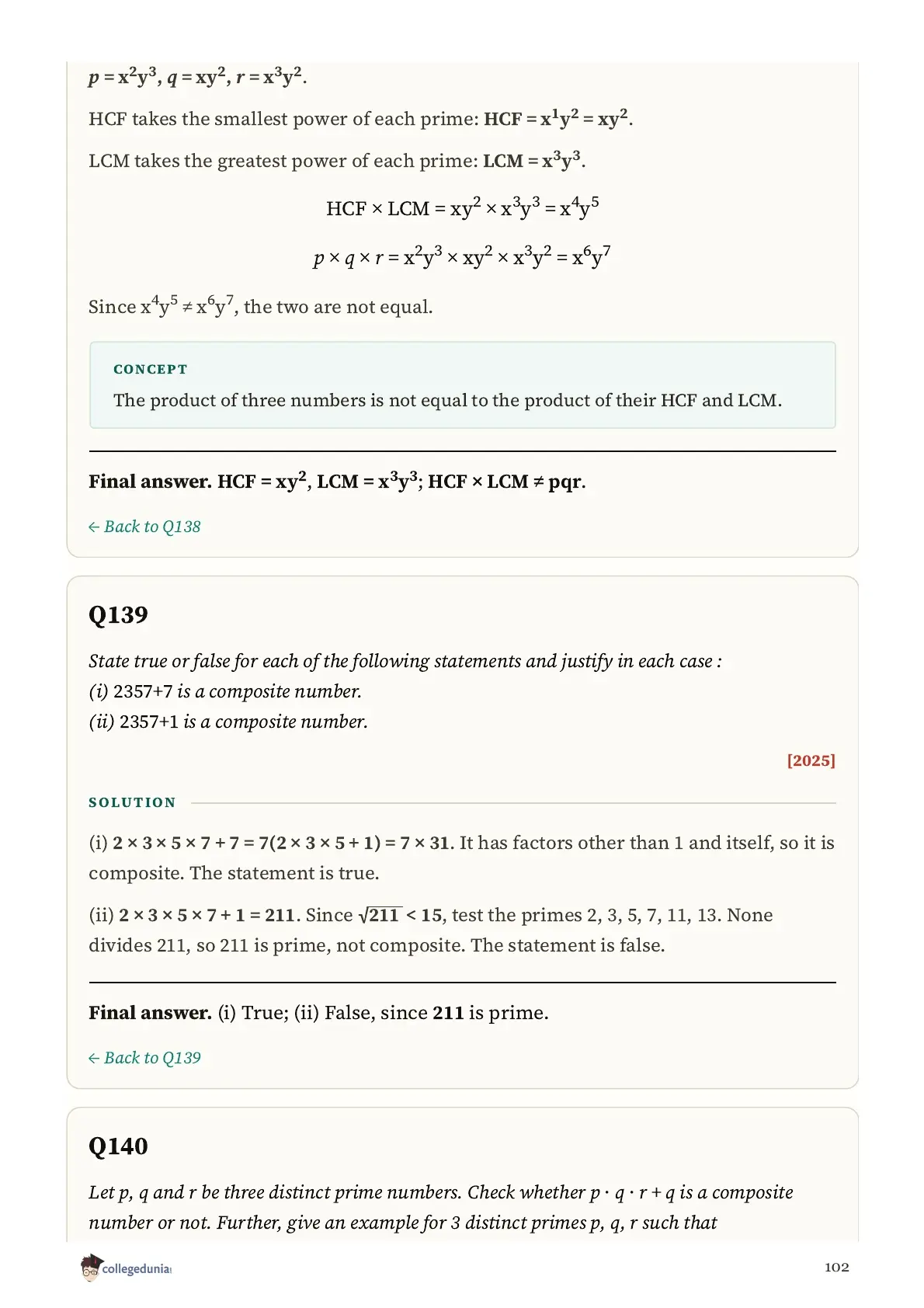
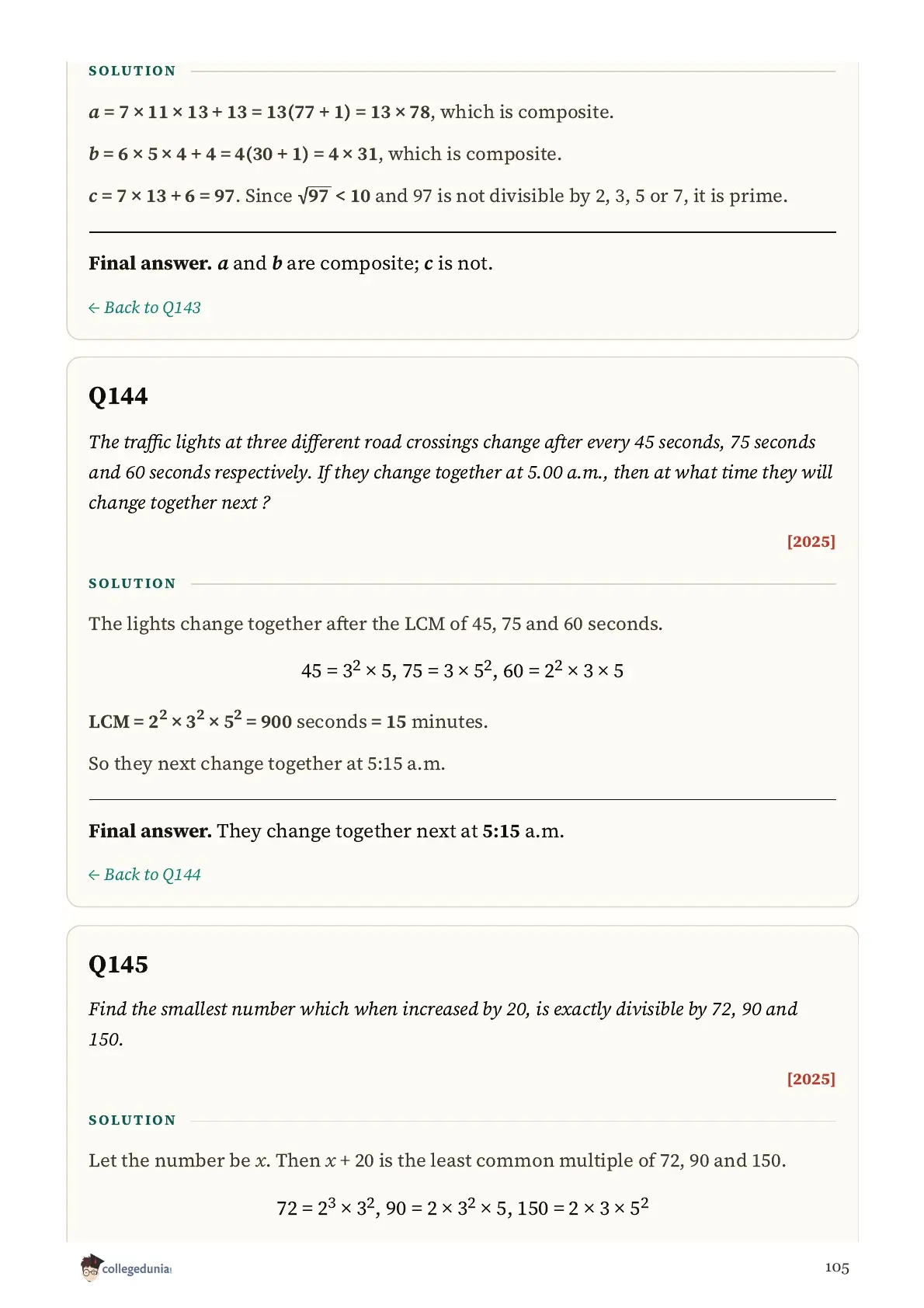
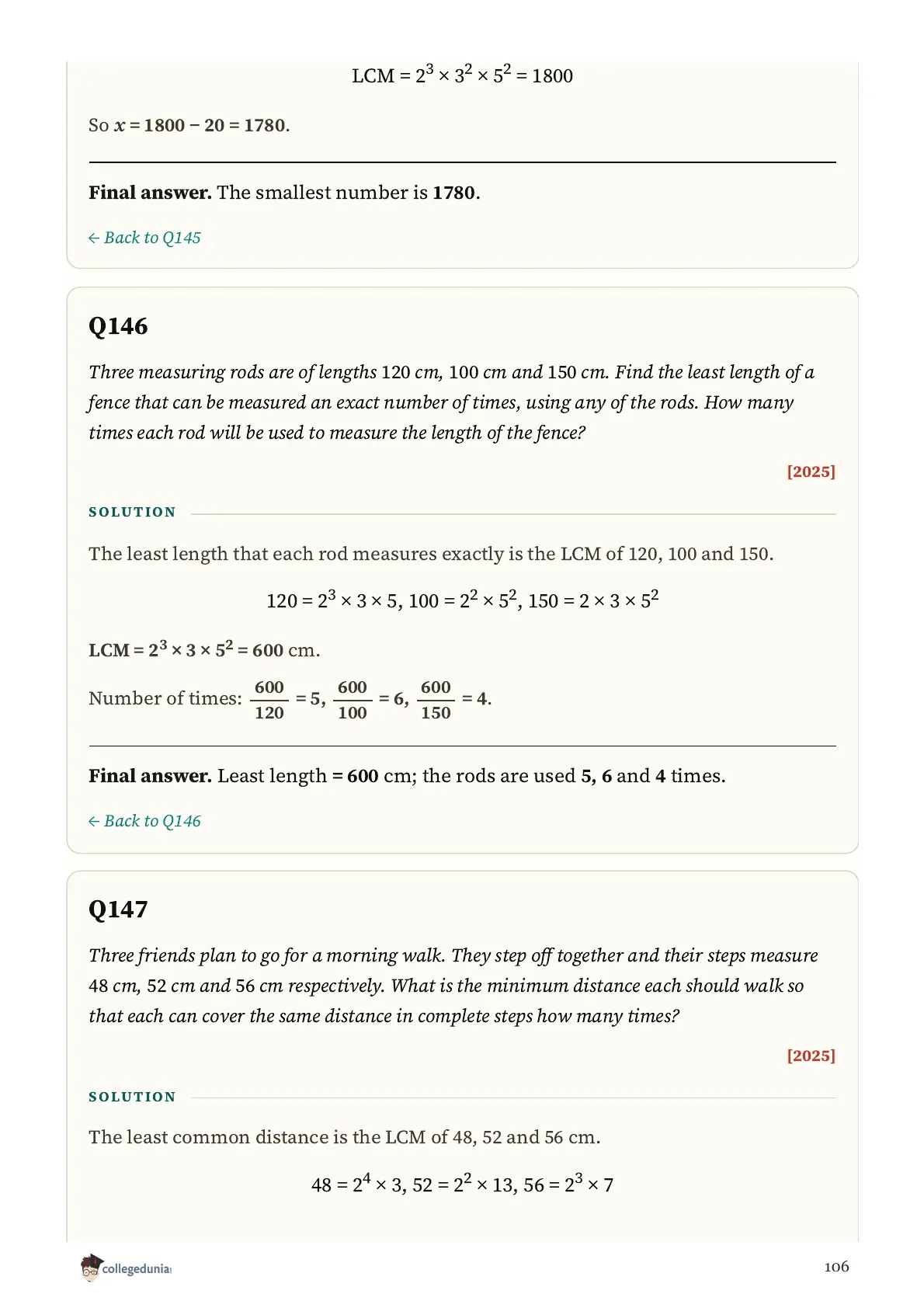
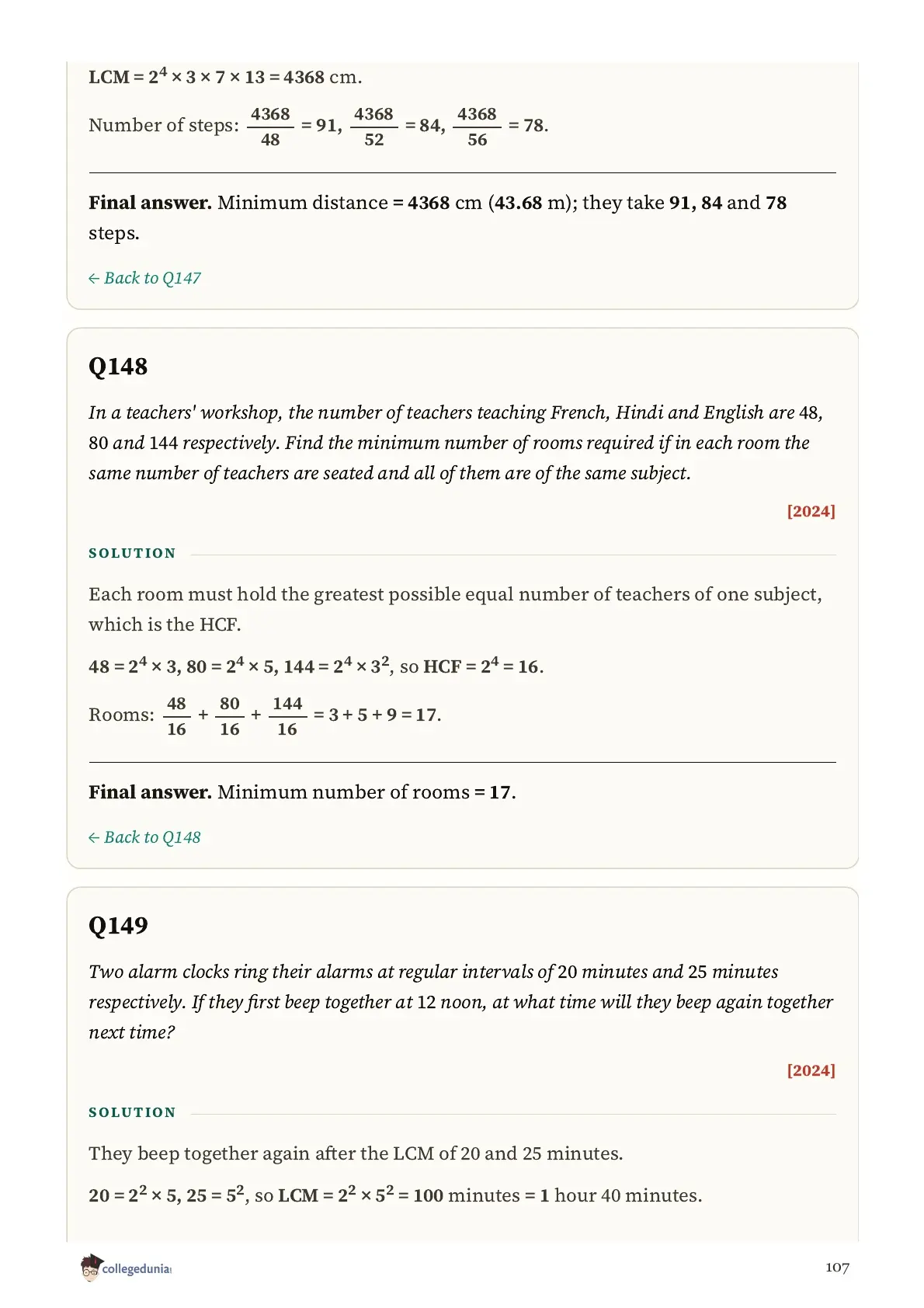
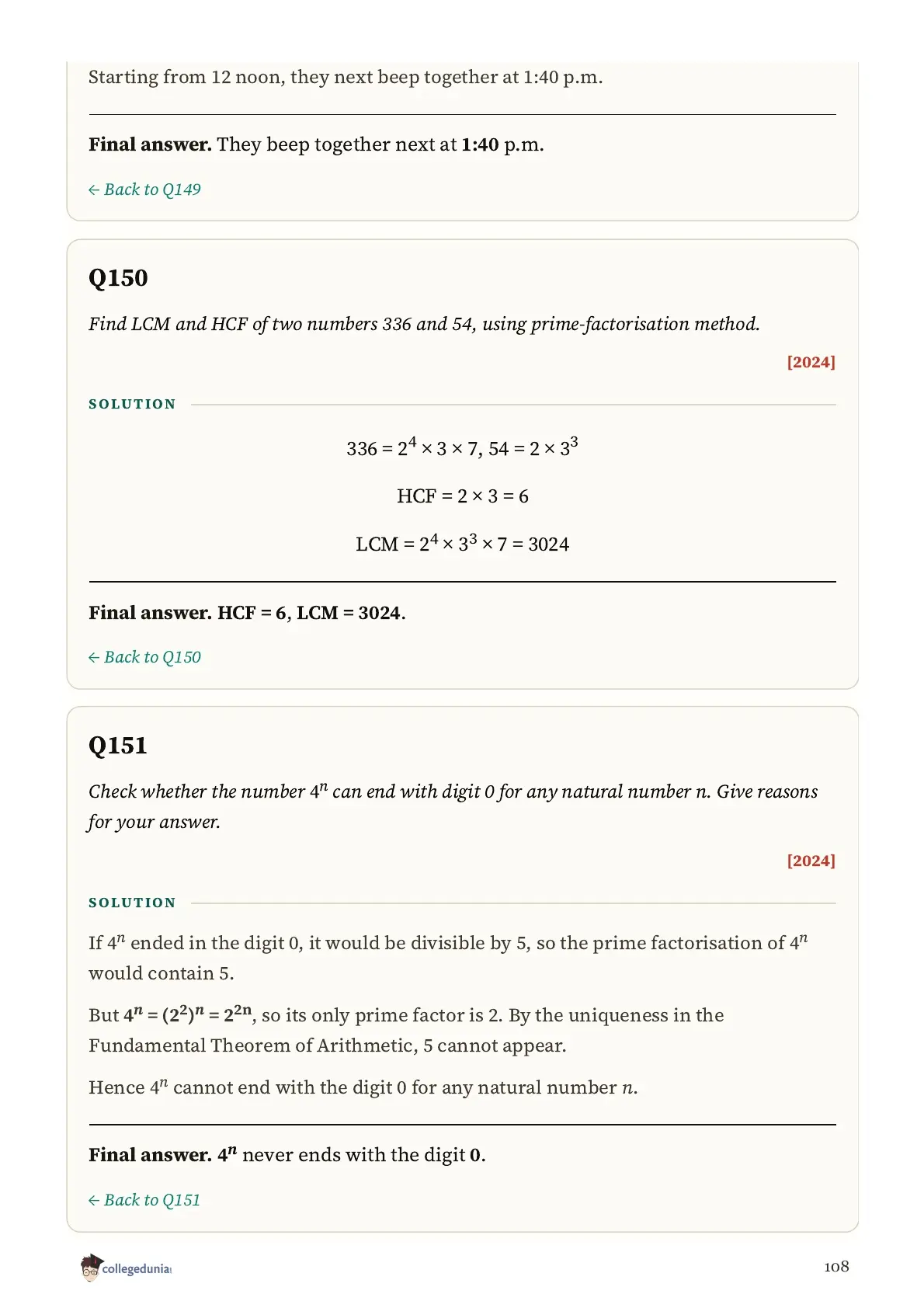
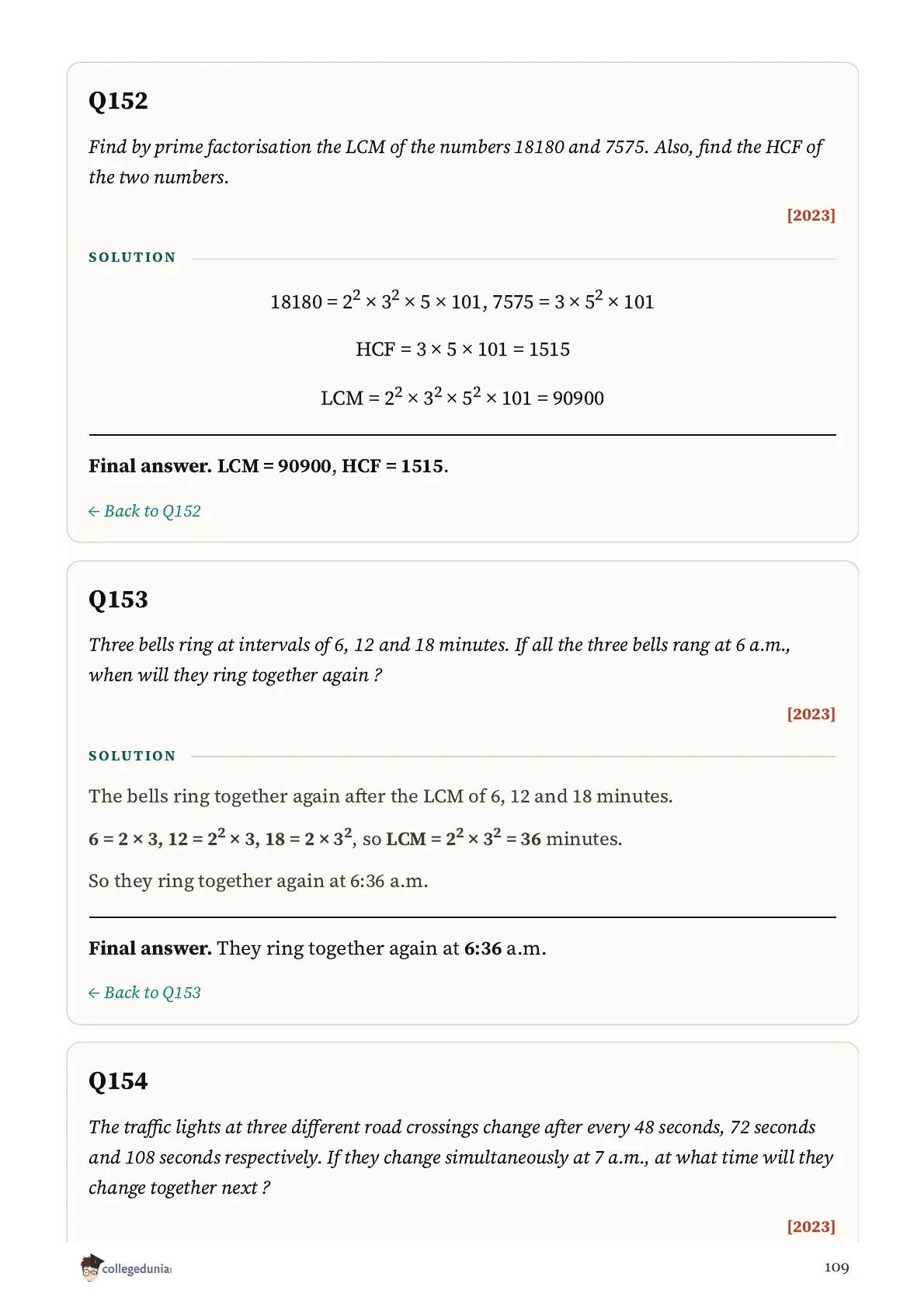
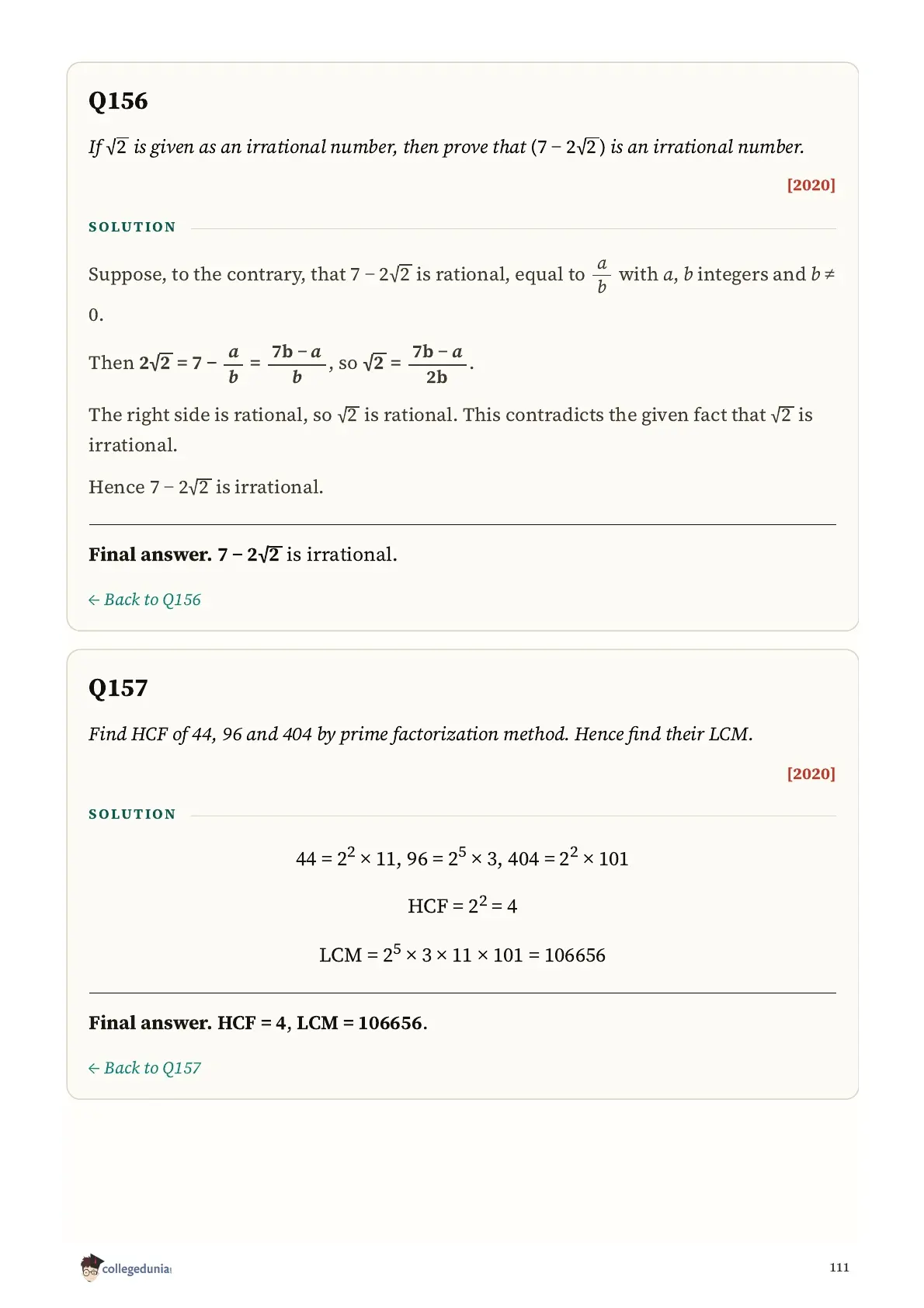
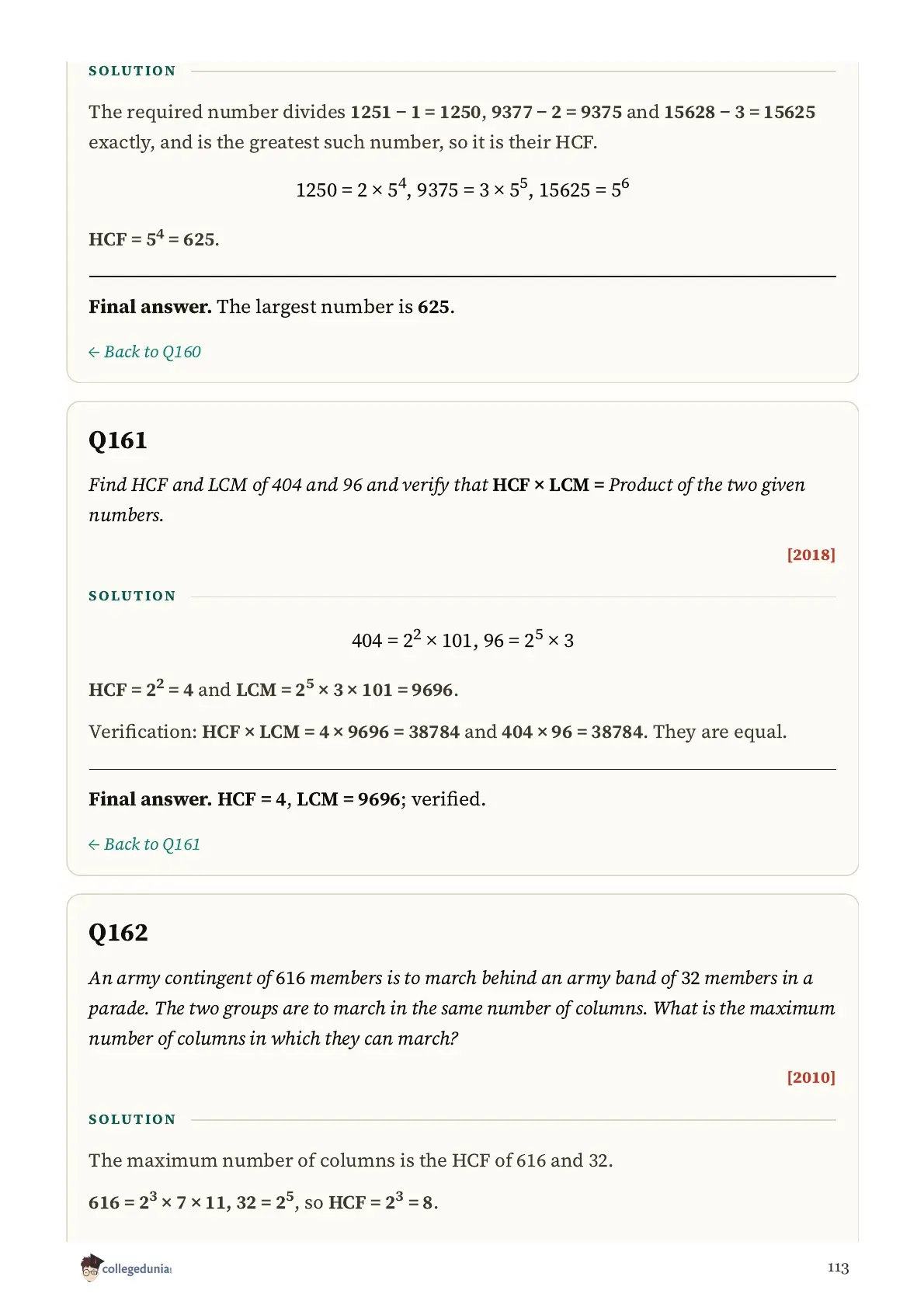
Most questions hand you two or three numbers and ask for their HCF or LCM. 48 questions name the HCF and 48 name the LCM, and 35 ask for both, often as a pair such as the HCF and LCM of 96 and 120 by prime factorisation (2023) or of 336 and 54 (2024). 21 questions name prime factorisation or a factor tree, and 8 use the relation HCF × LCM = product of the two numbers, for instance given HCF (306, 1314) = 18, find the LCM (2024).
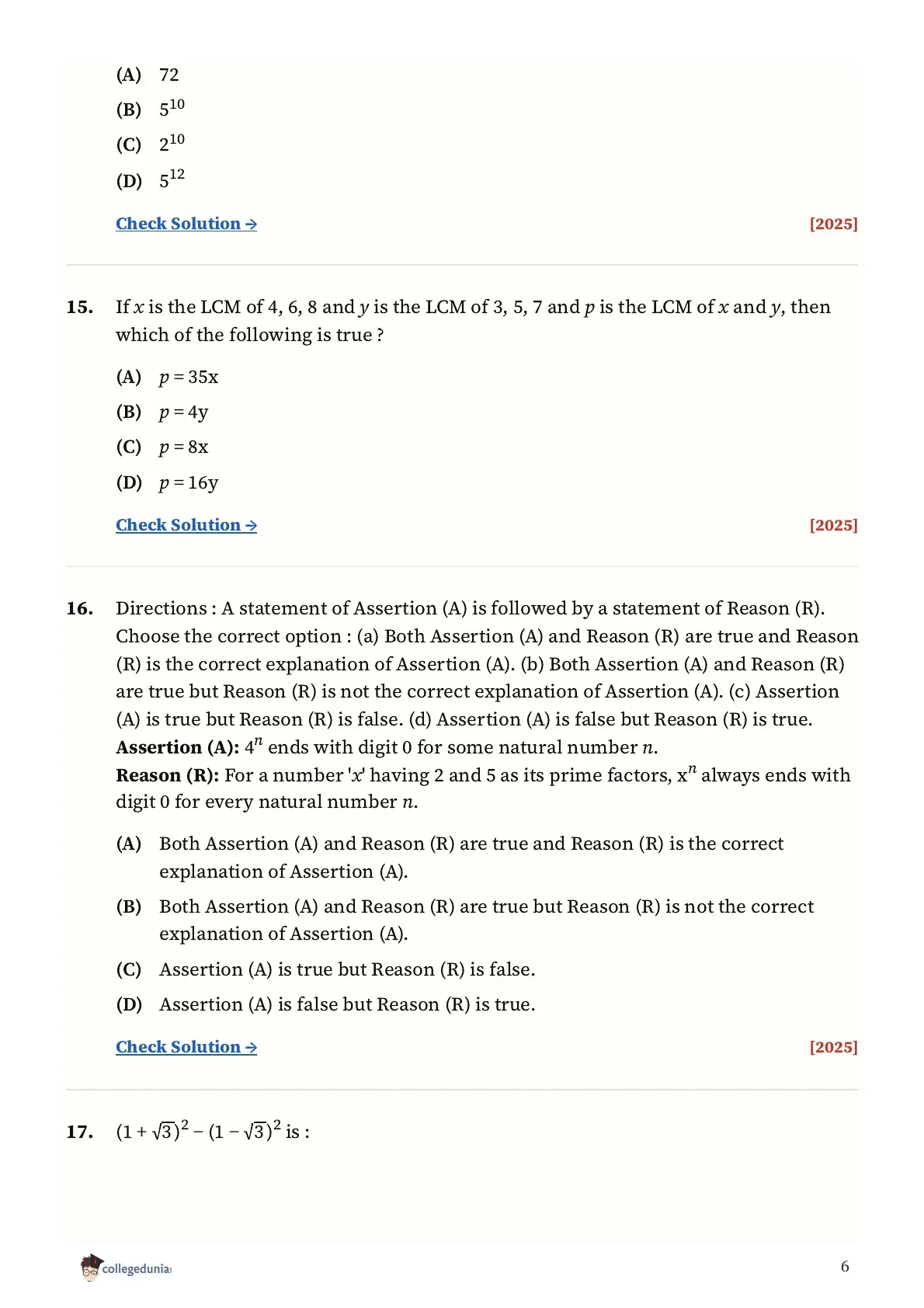
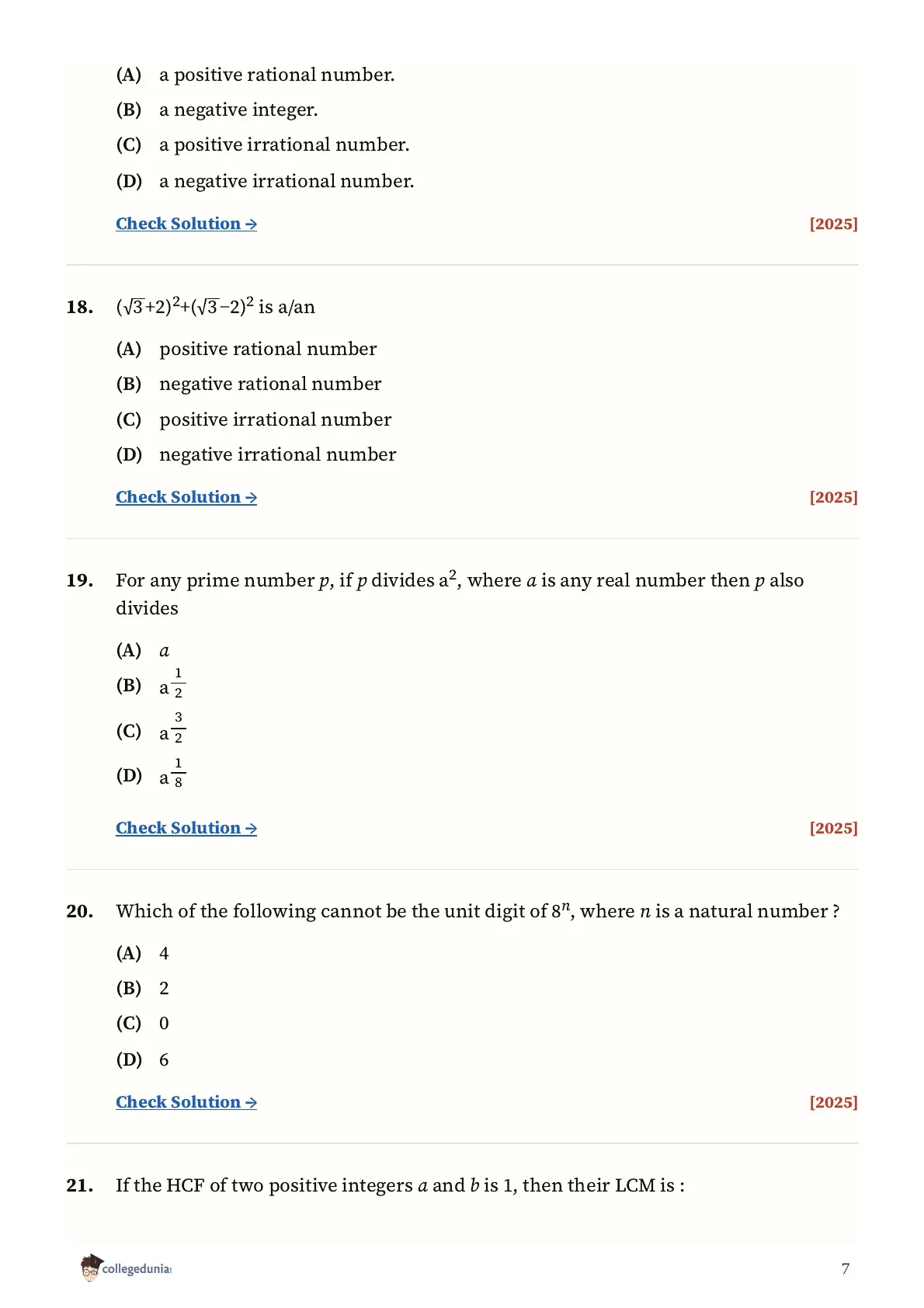
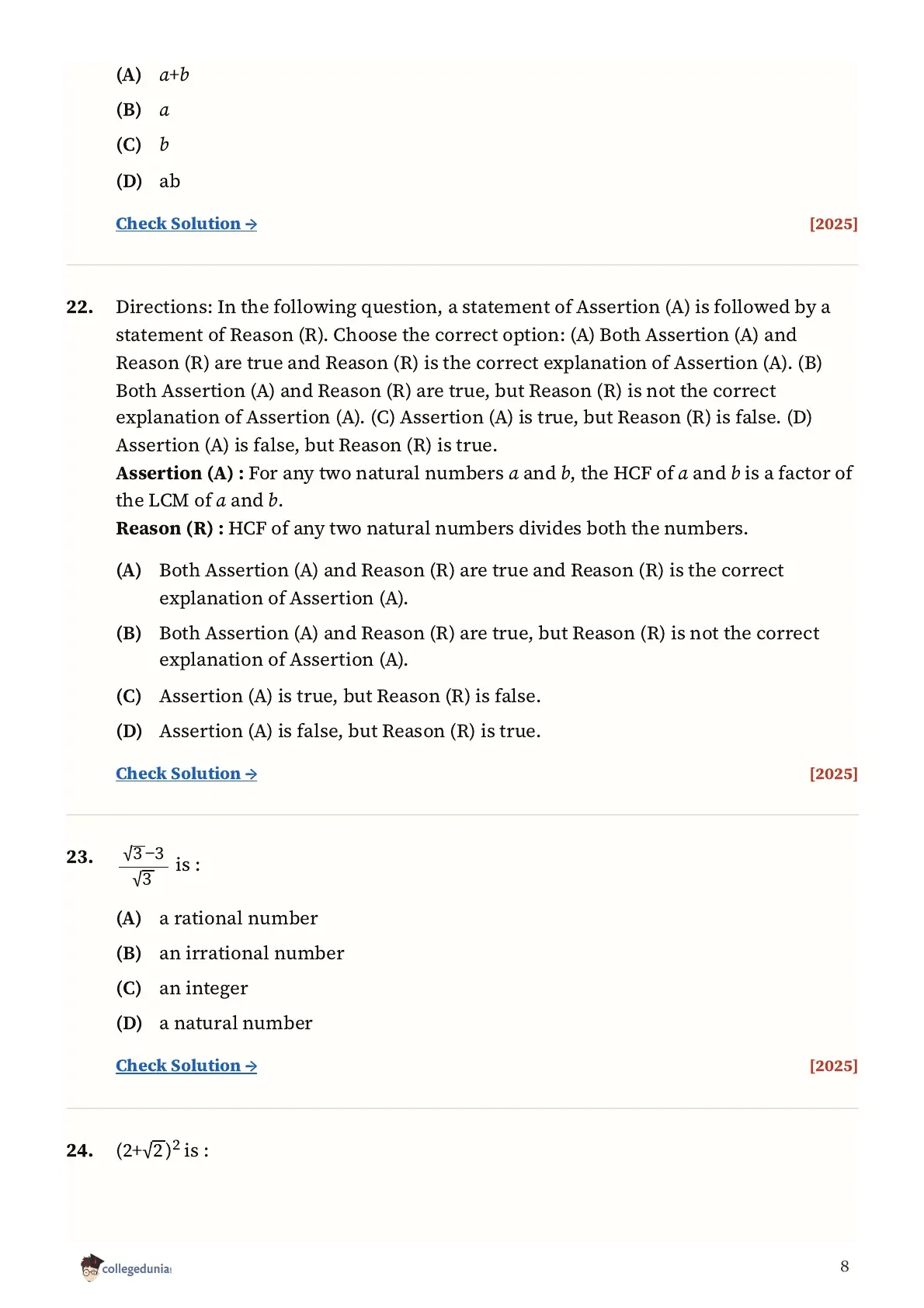
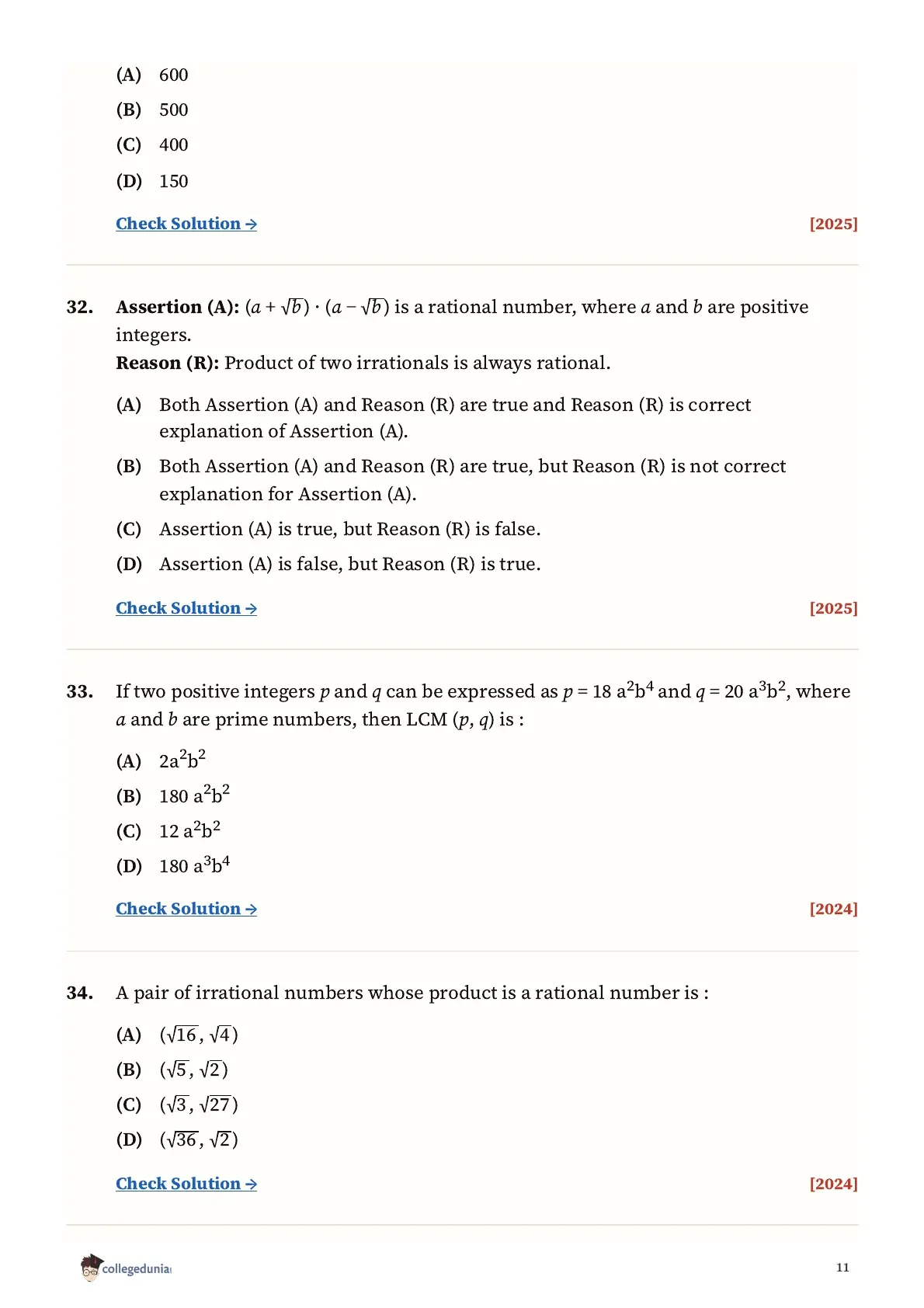
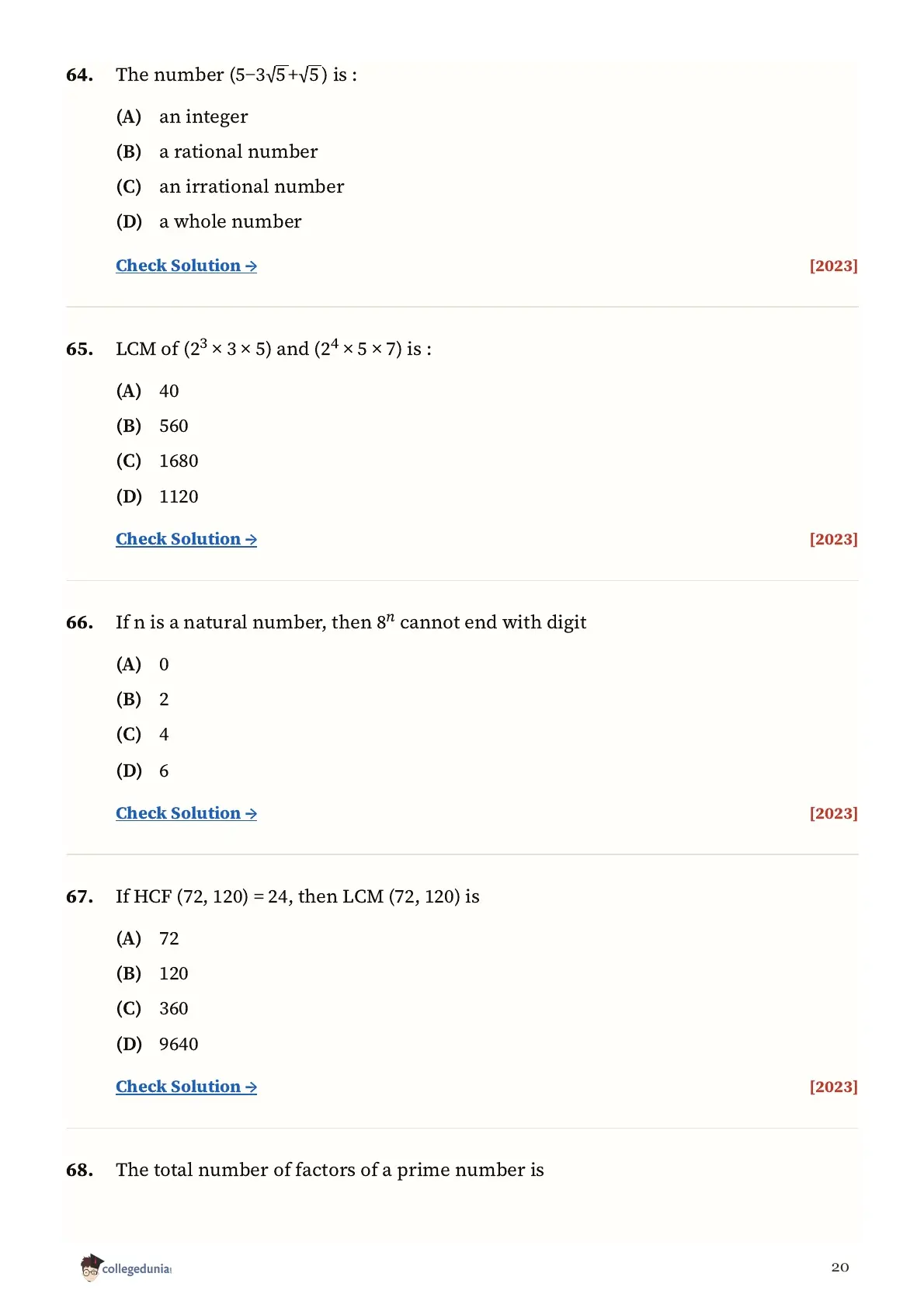
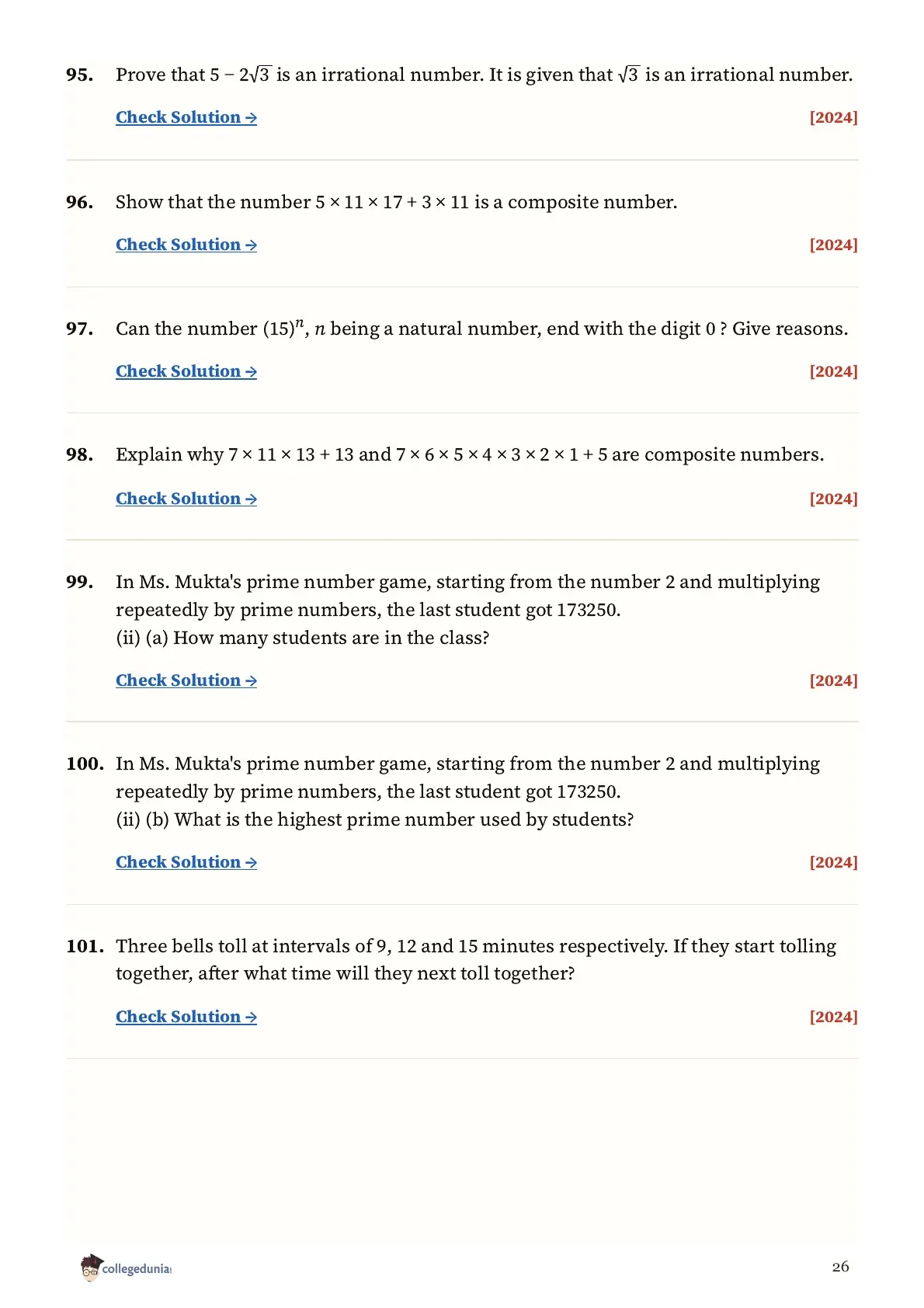
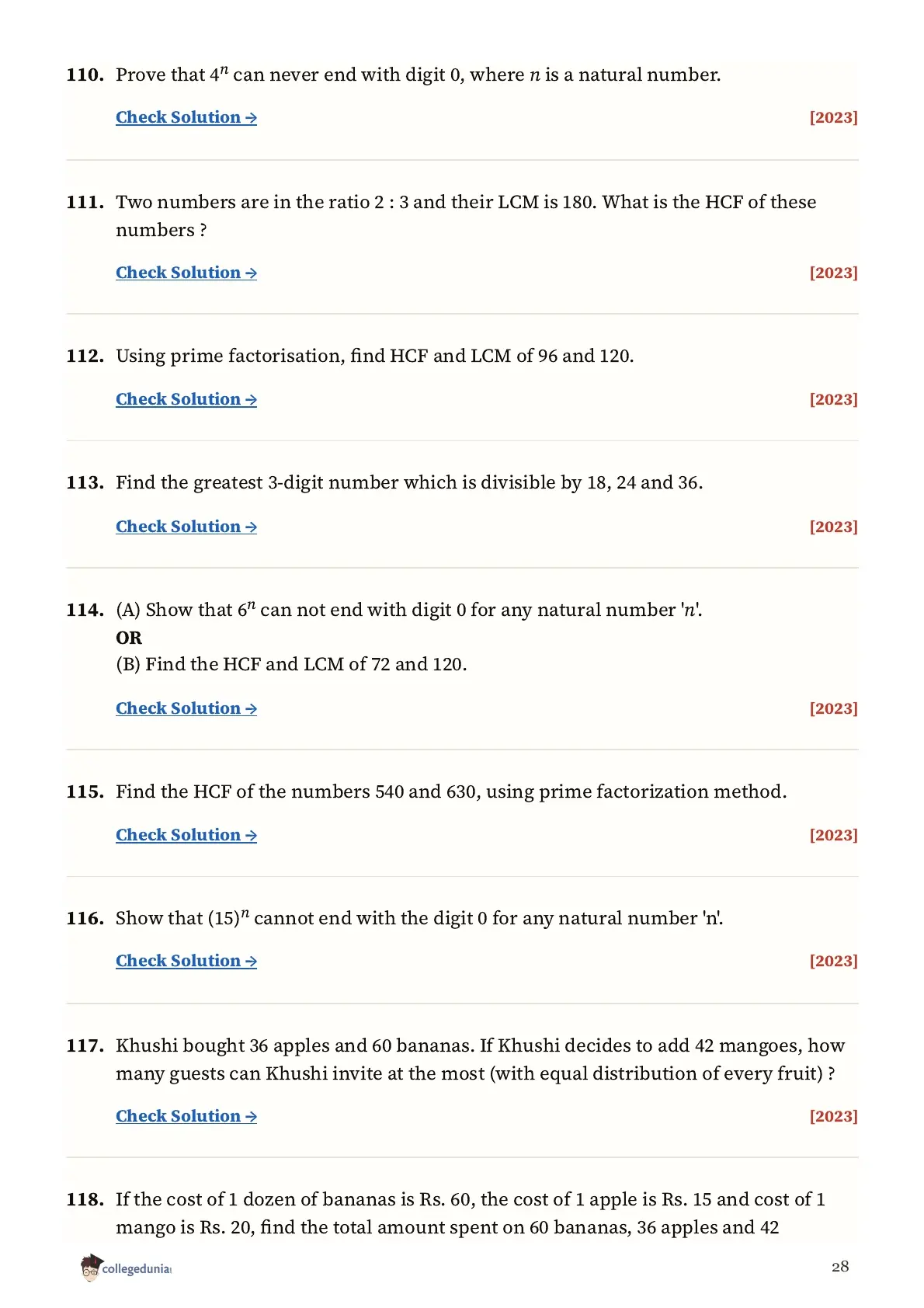
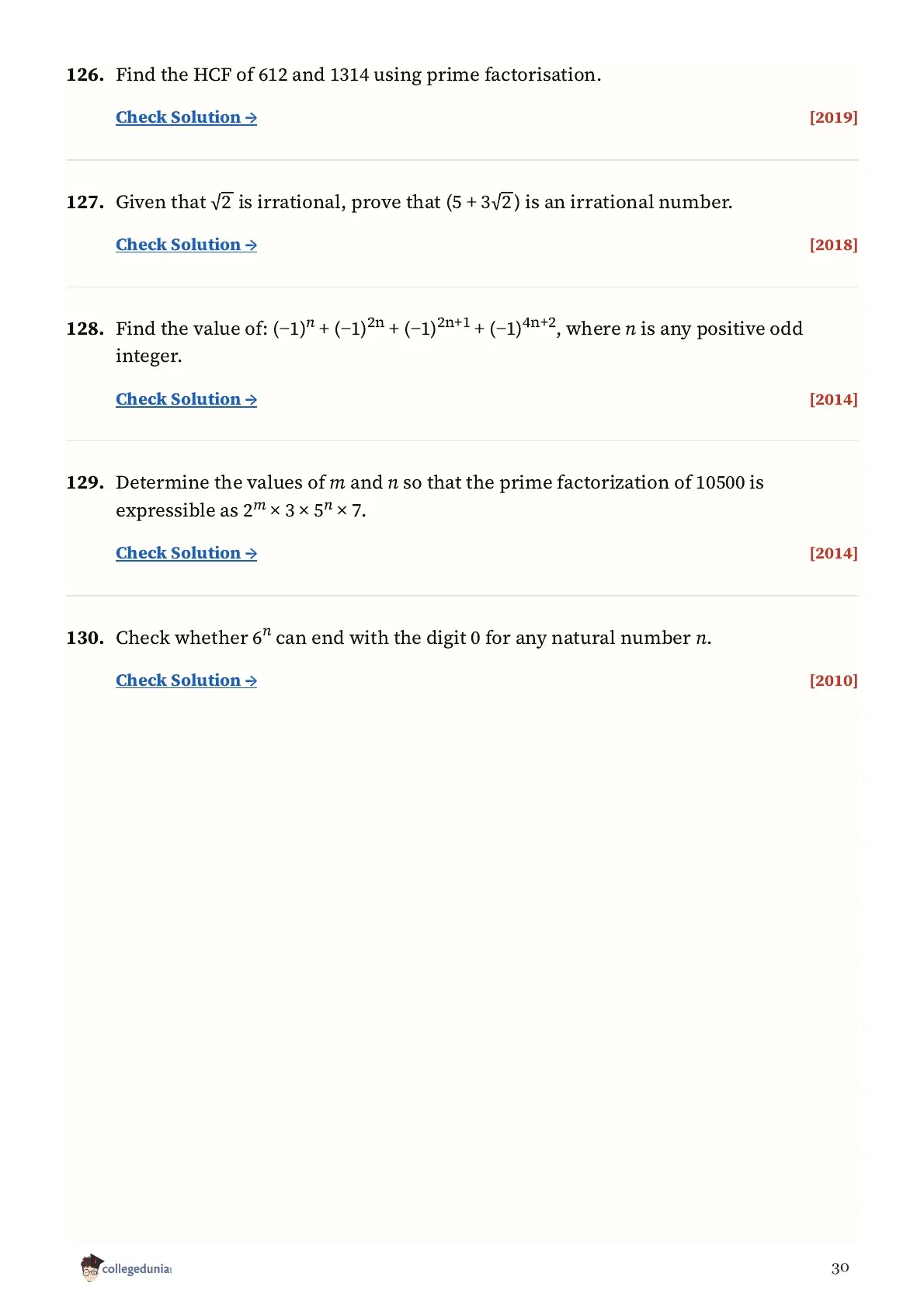
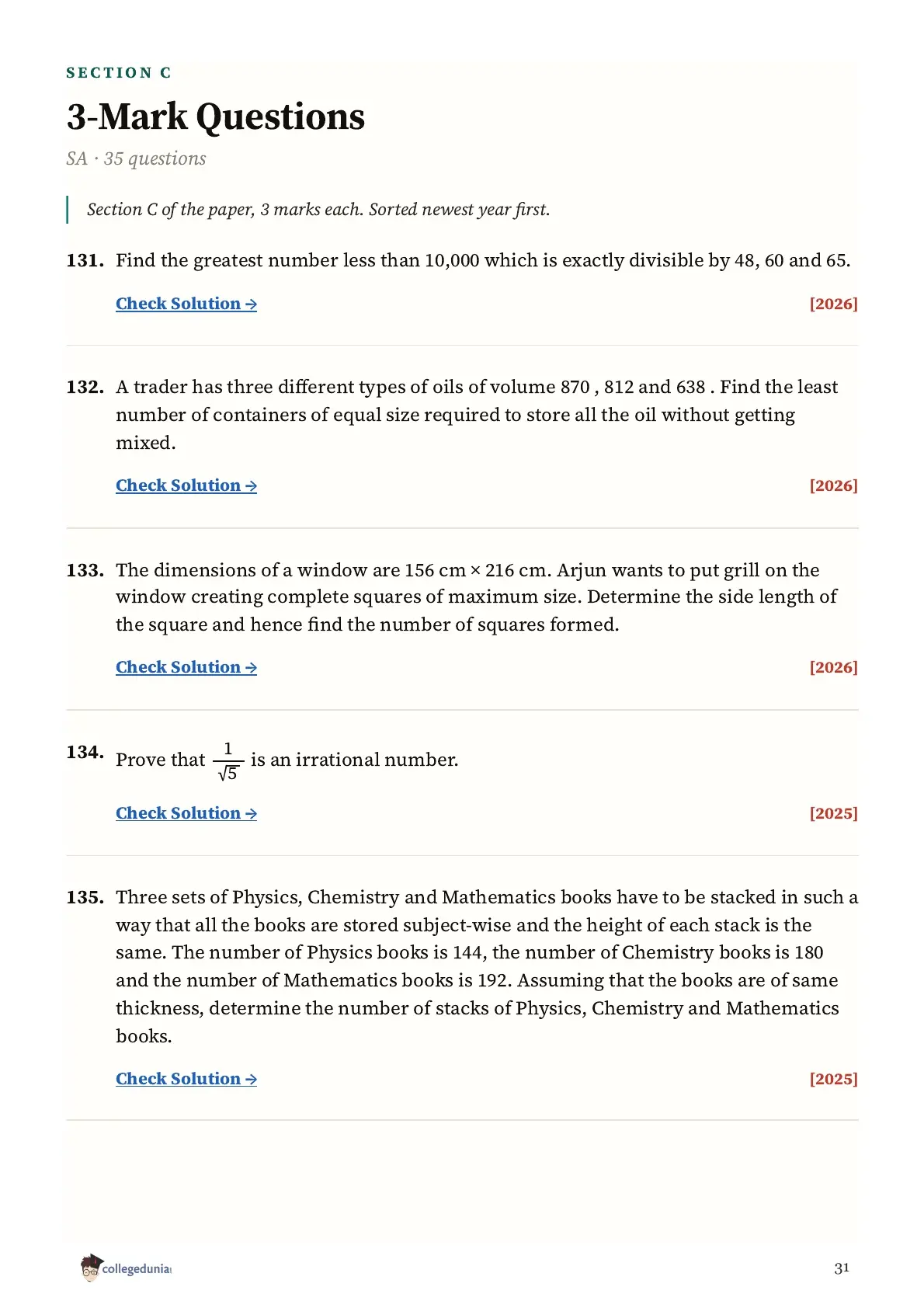
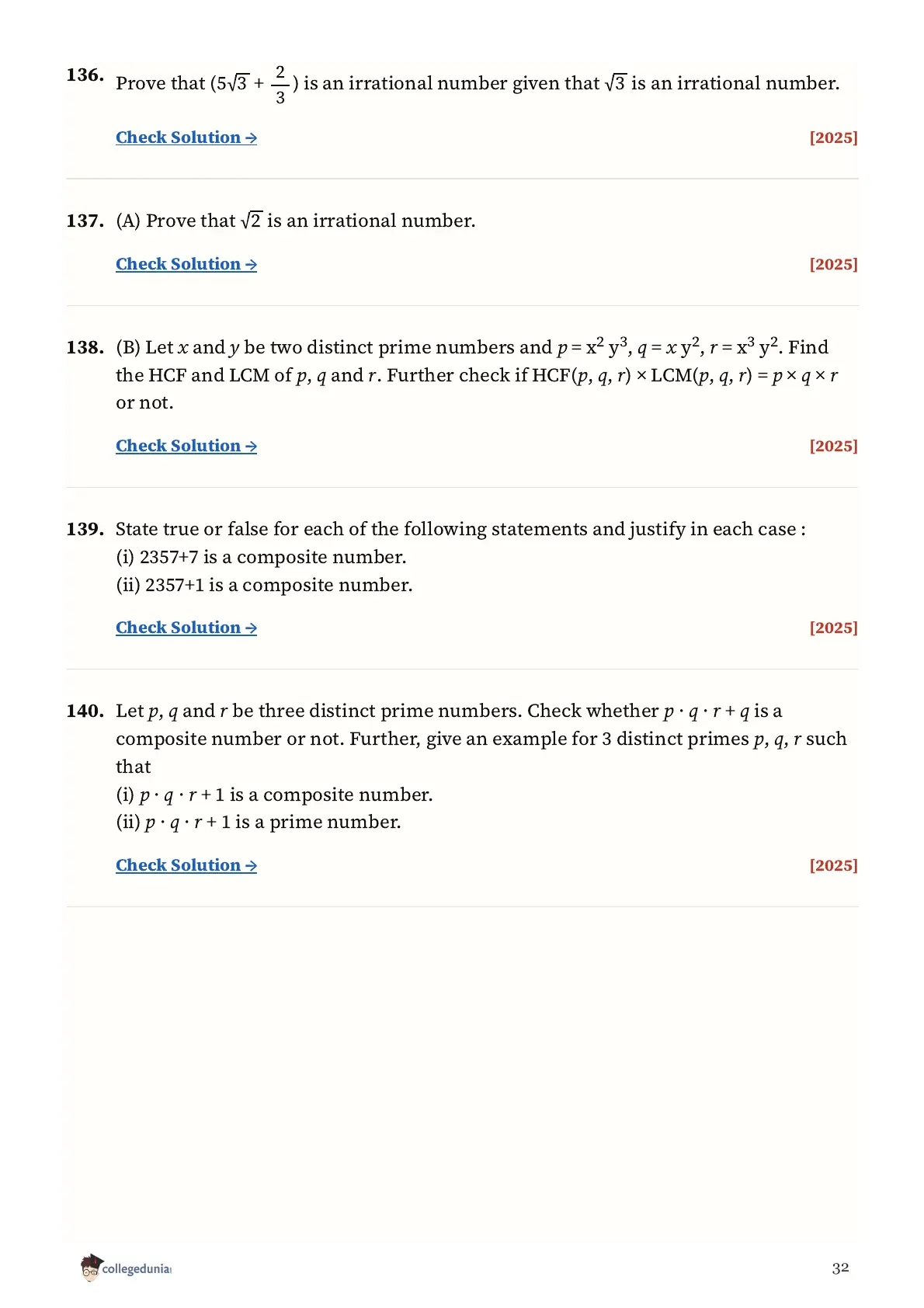
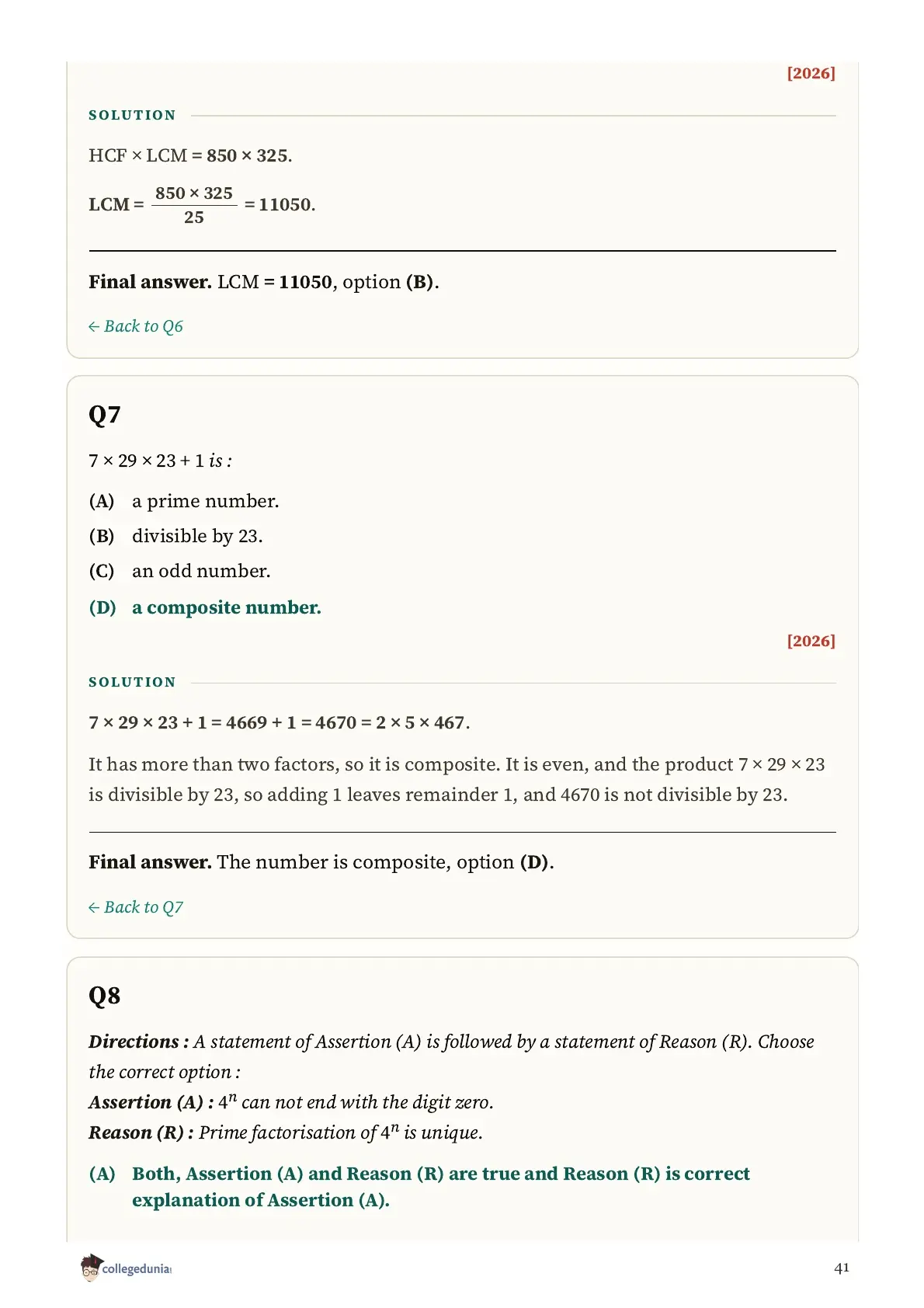
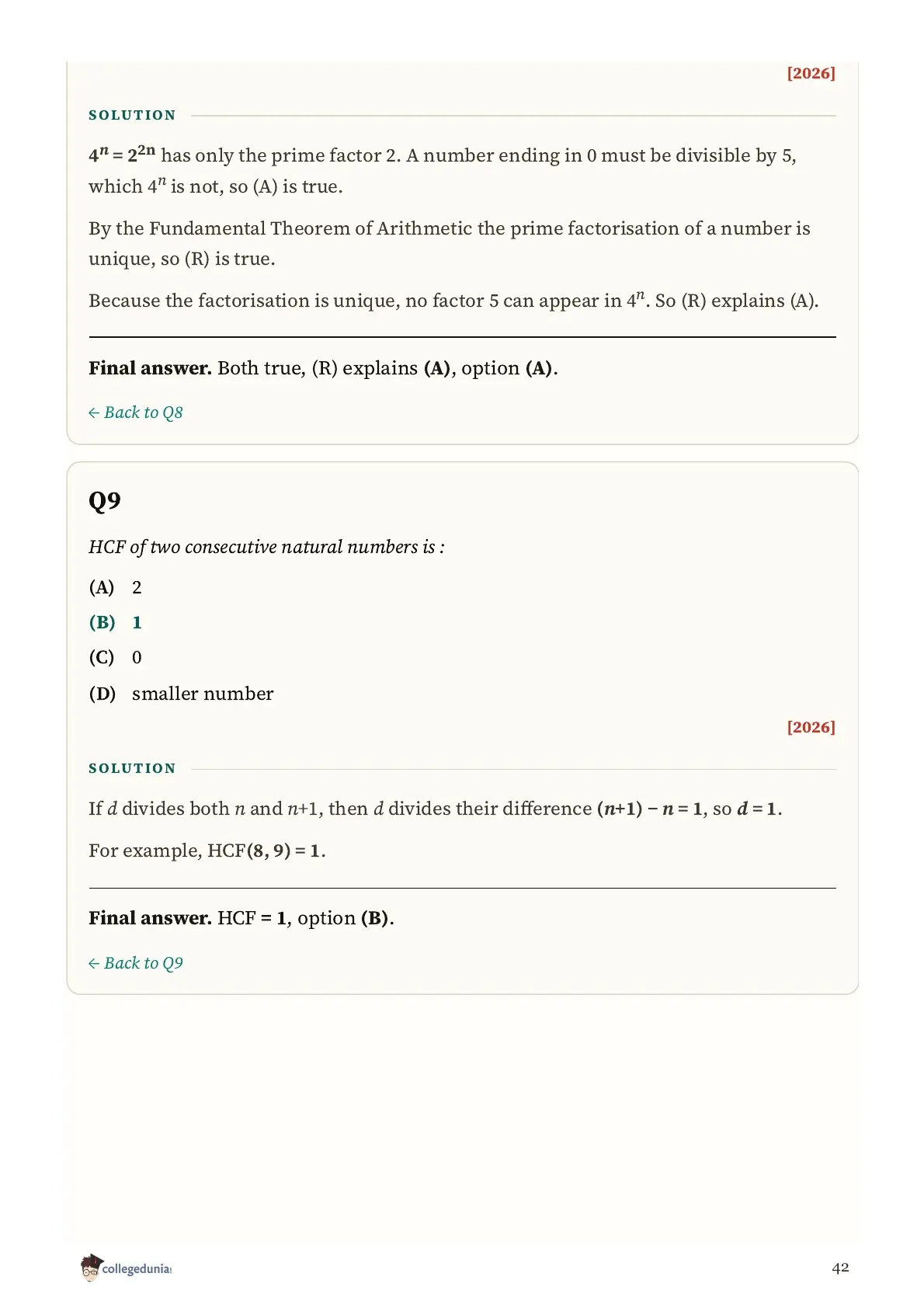
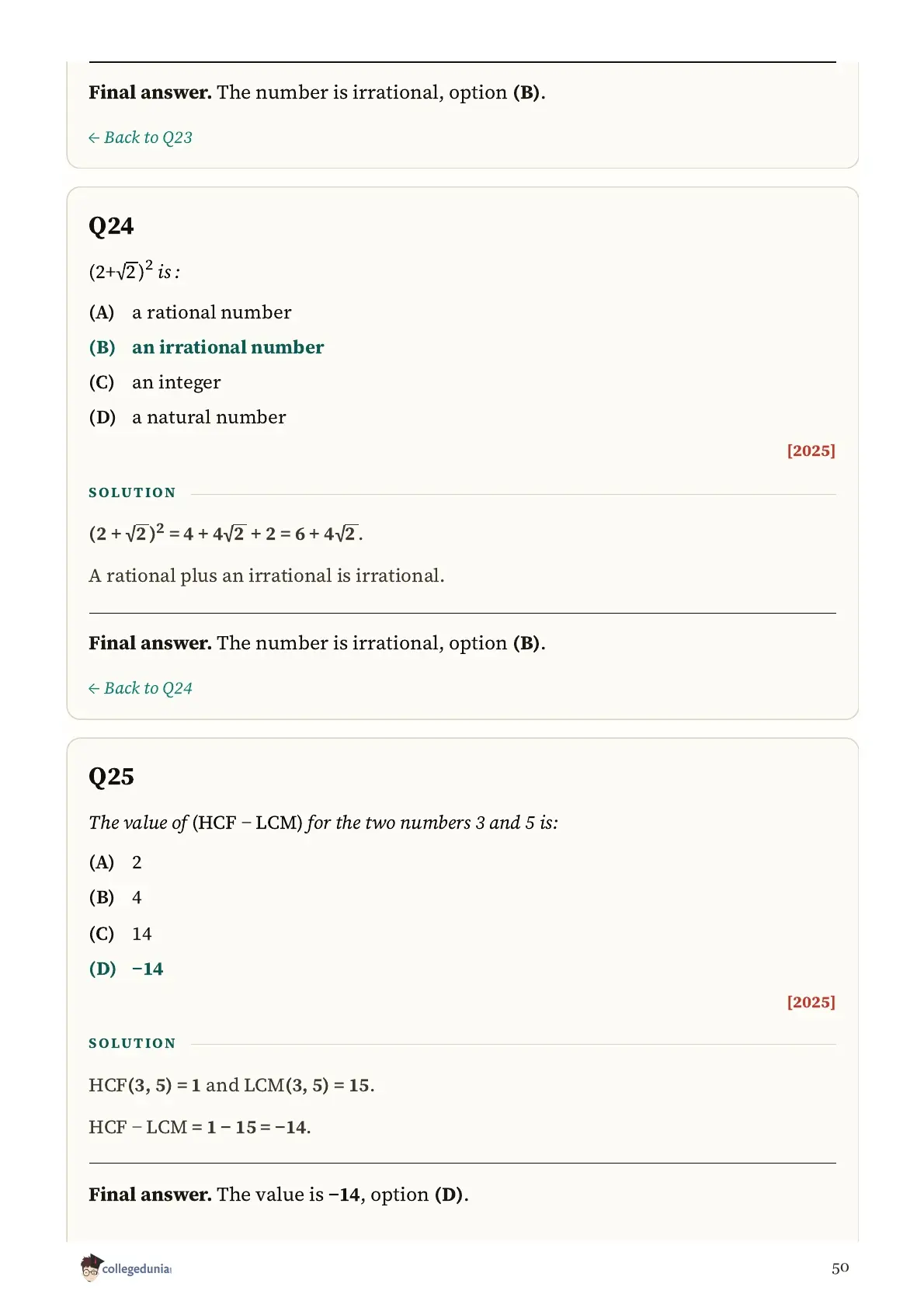
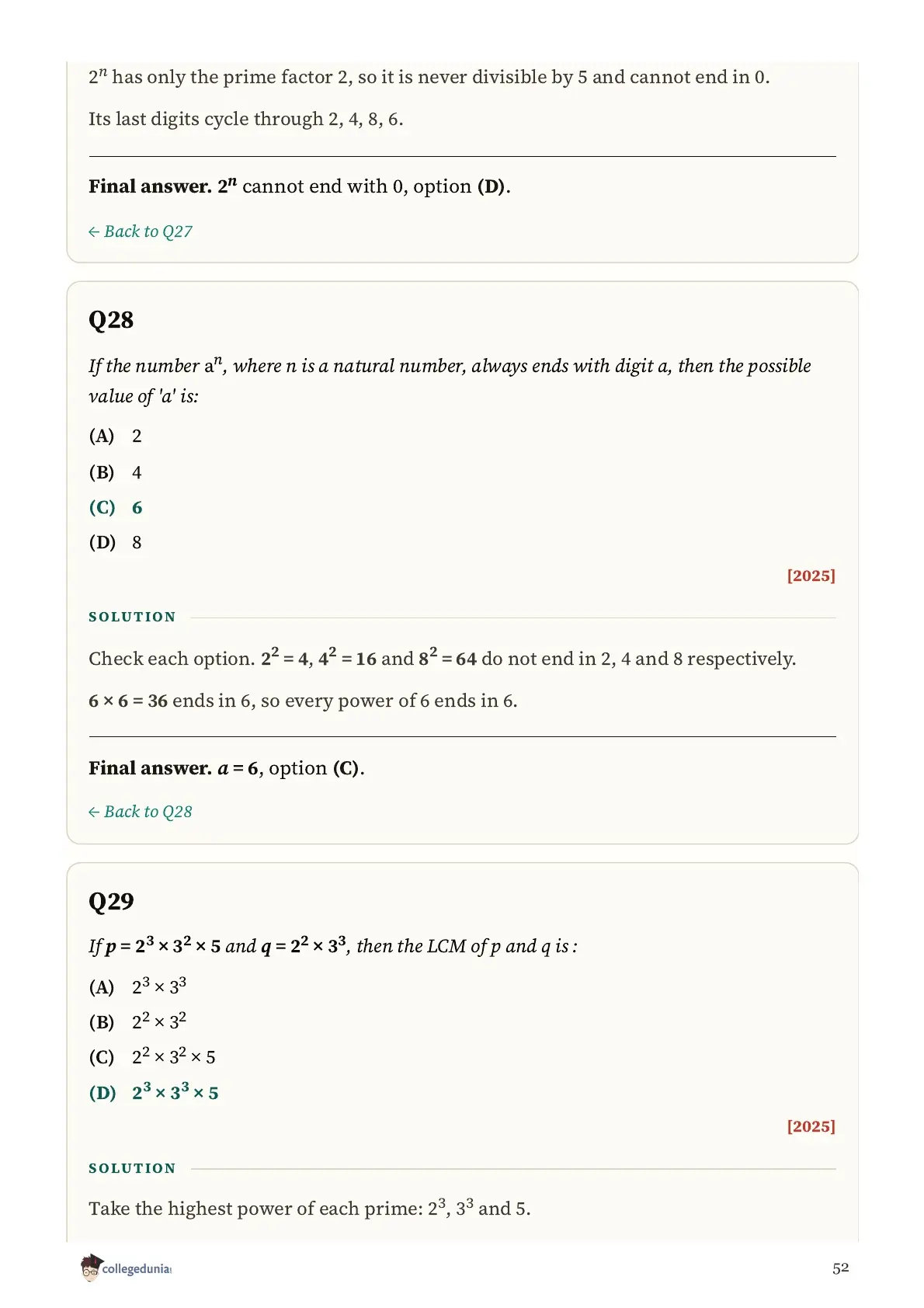
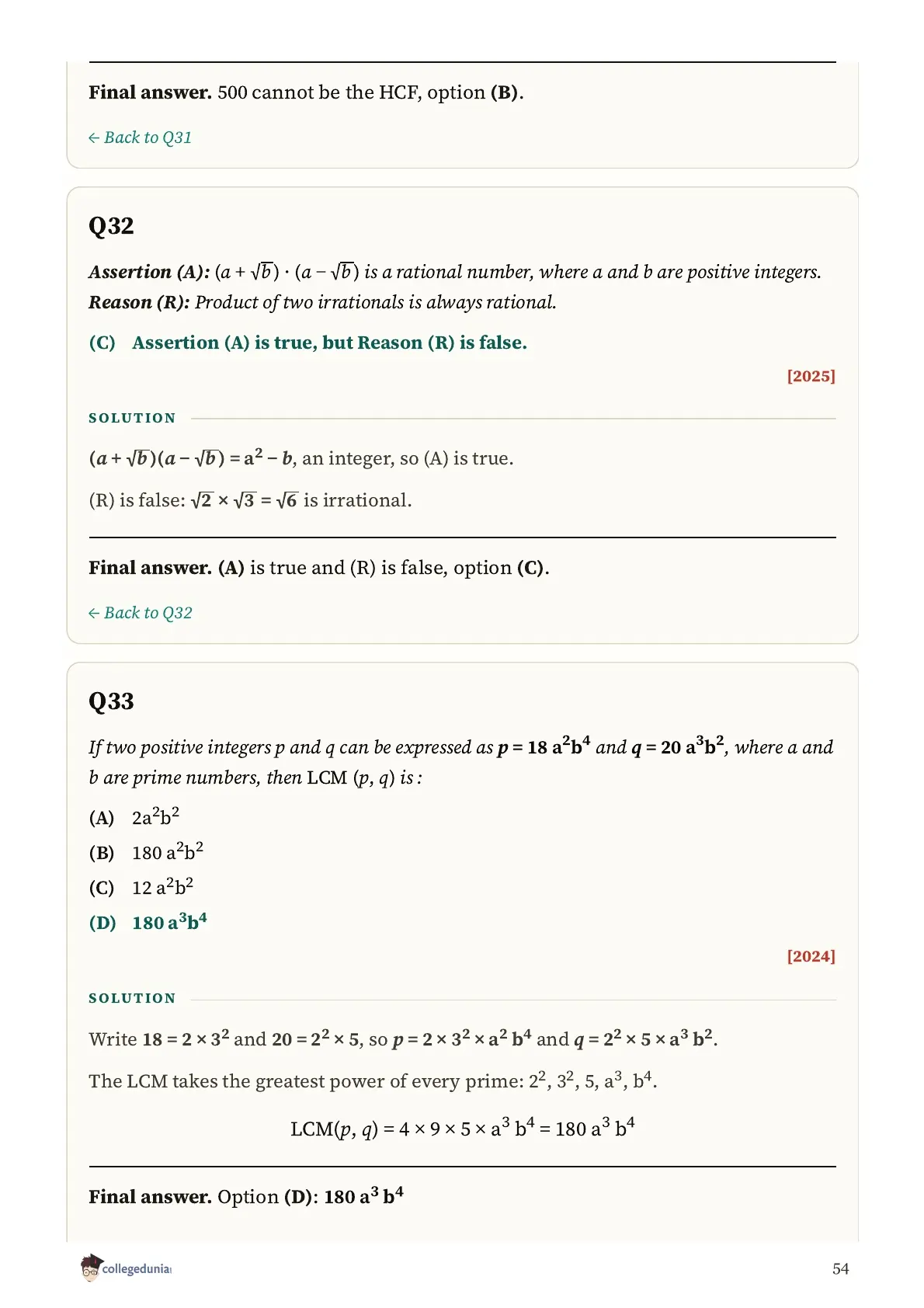
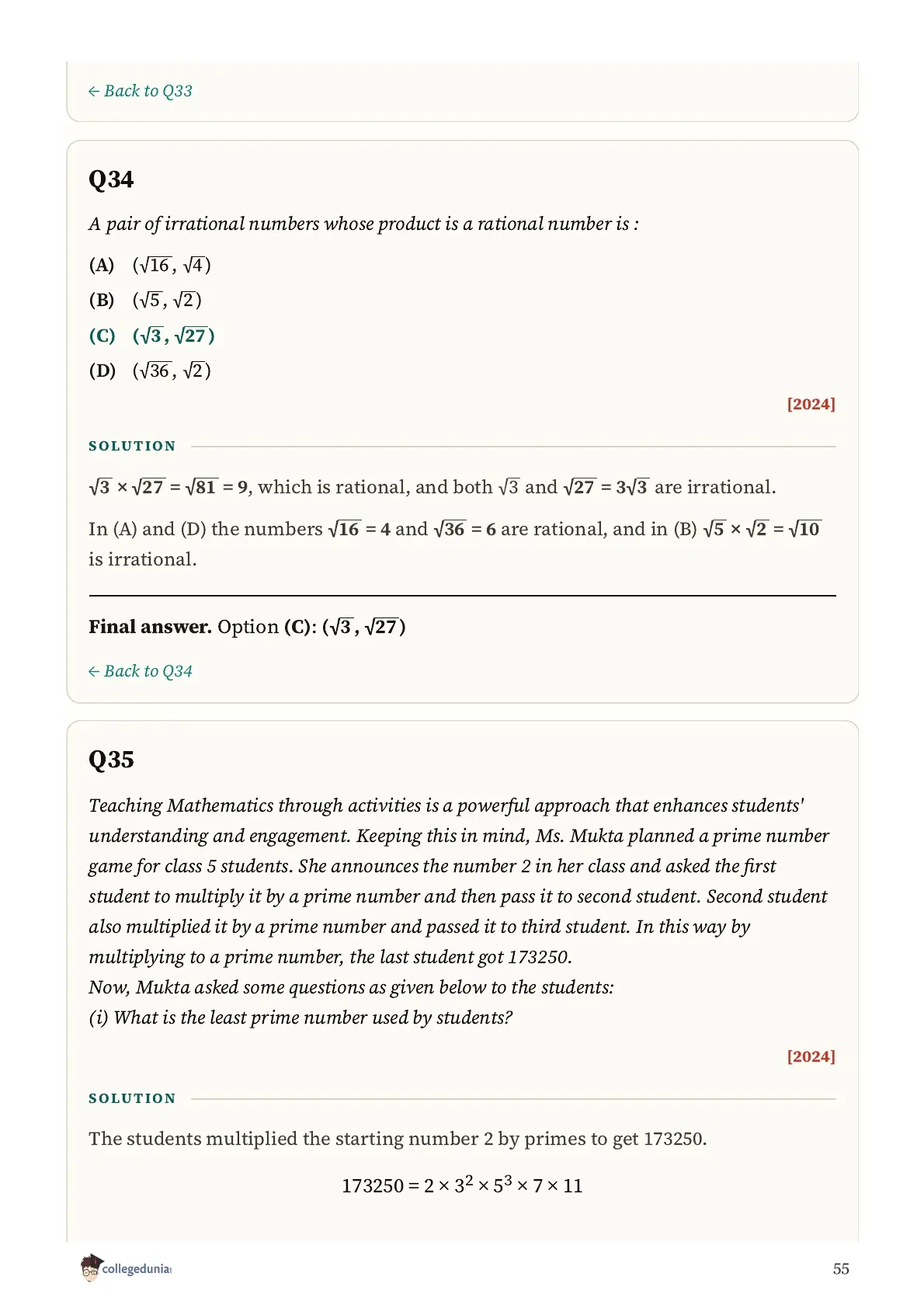
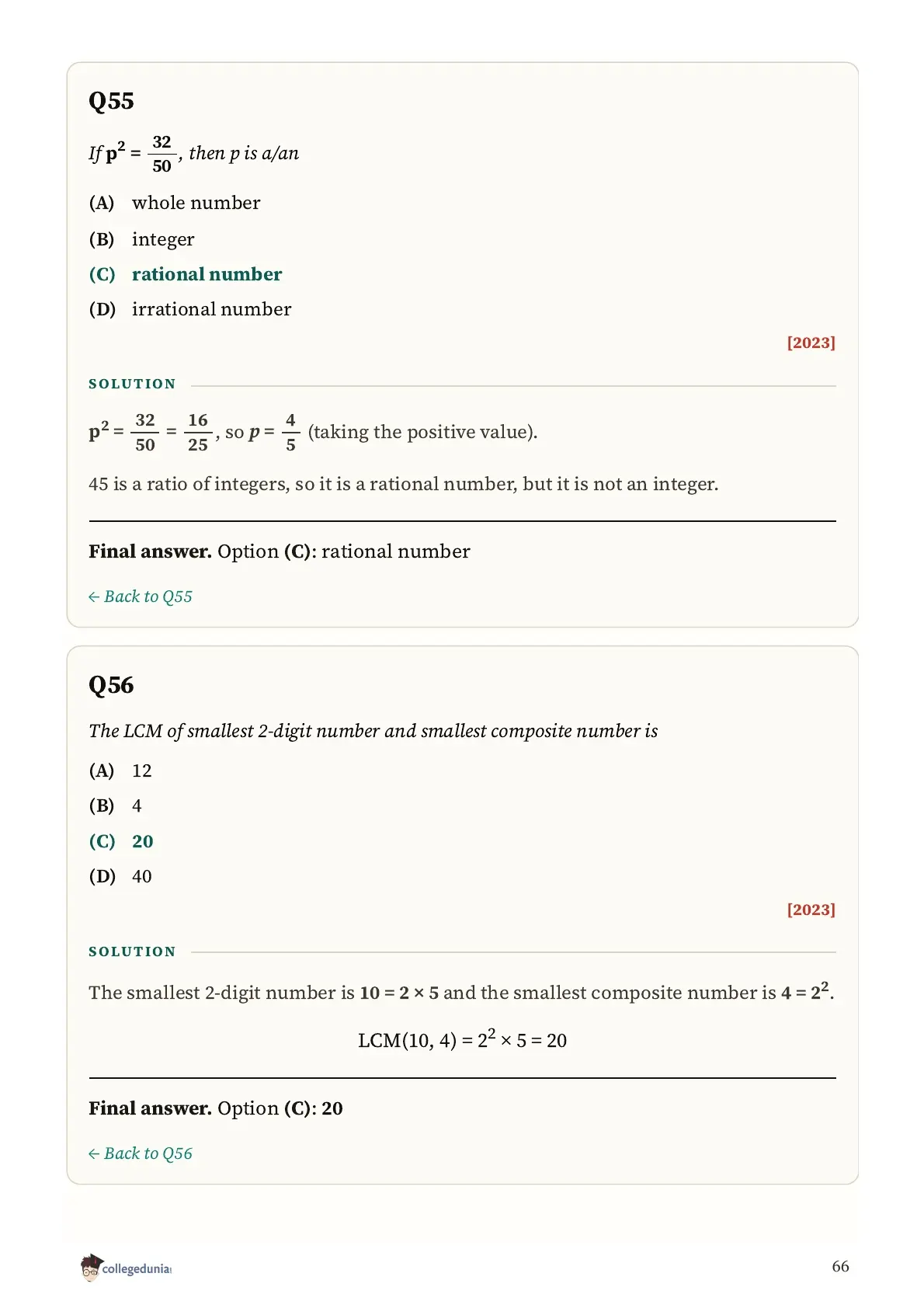
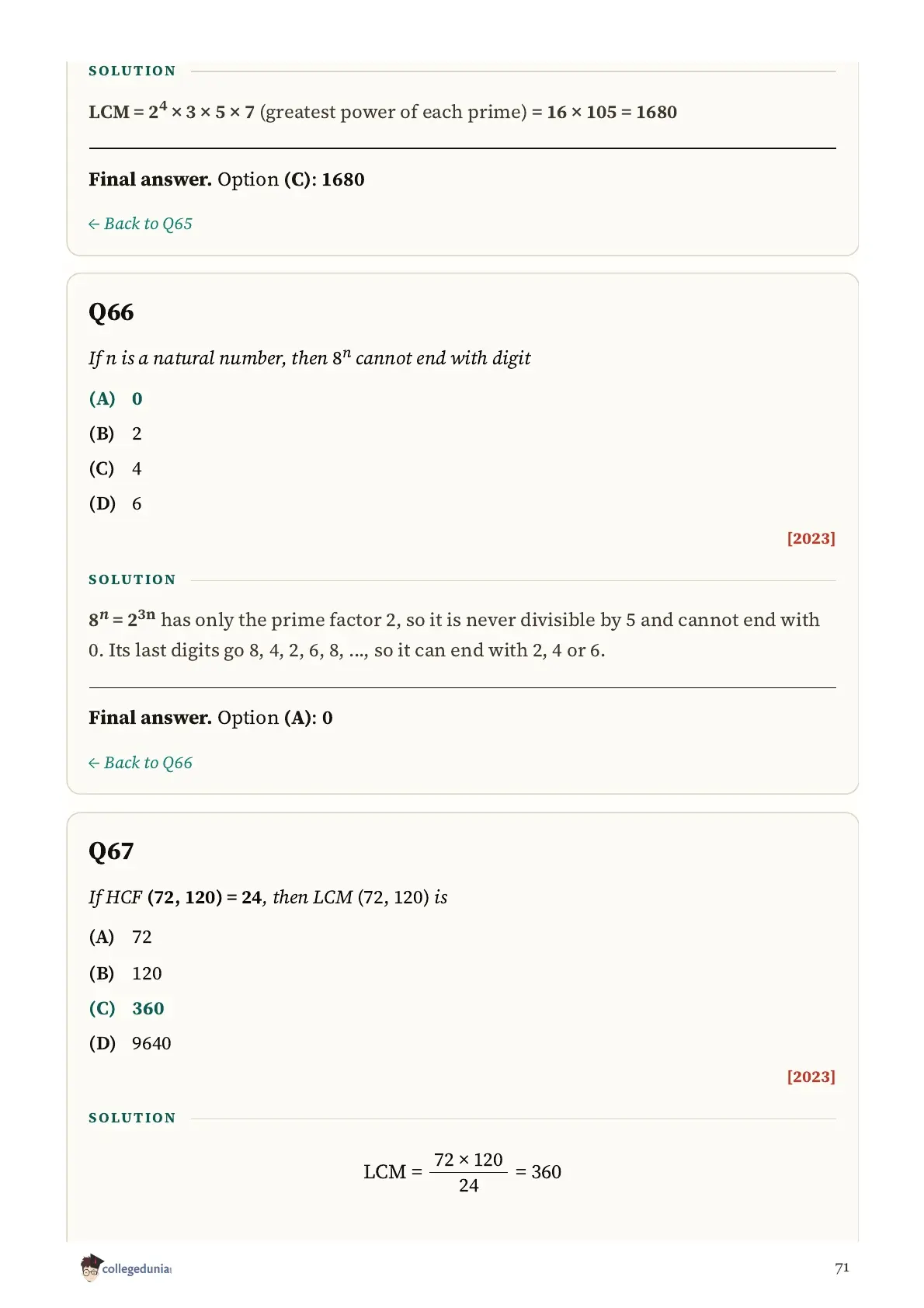
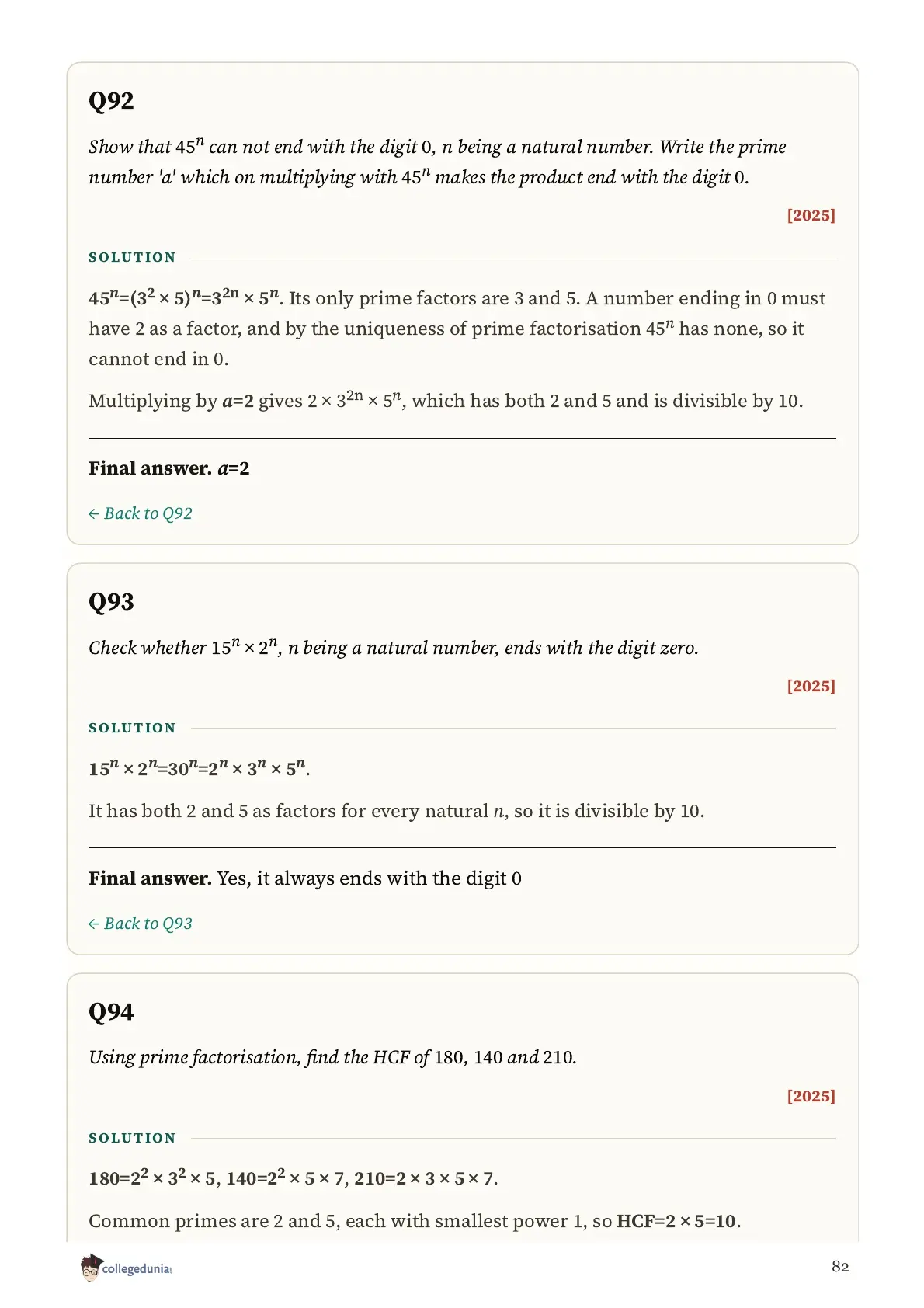
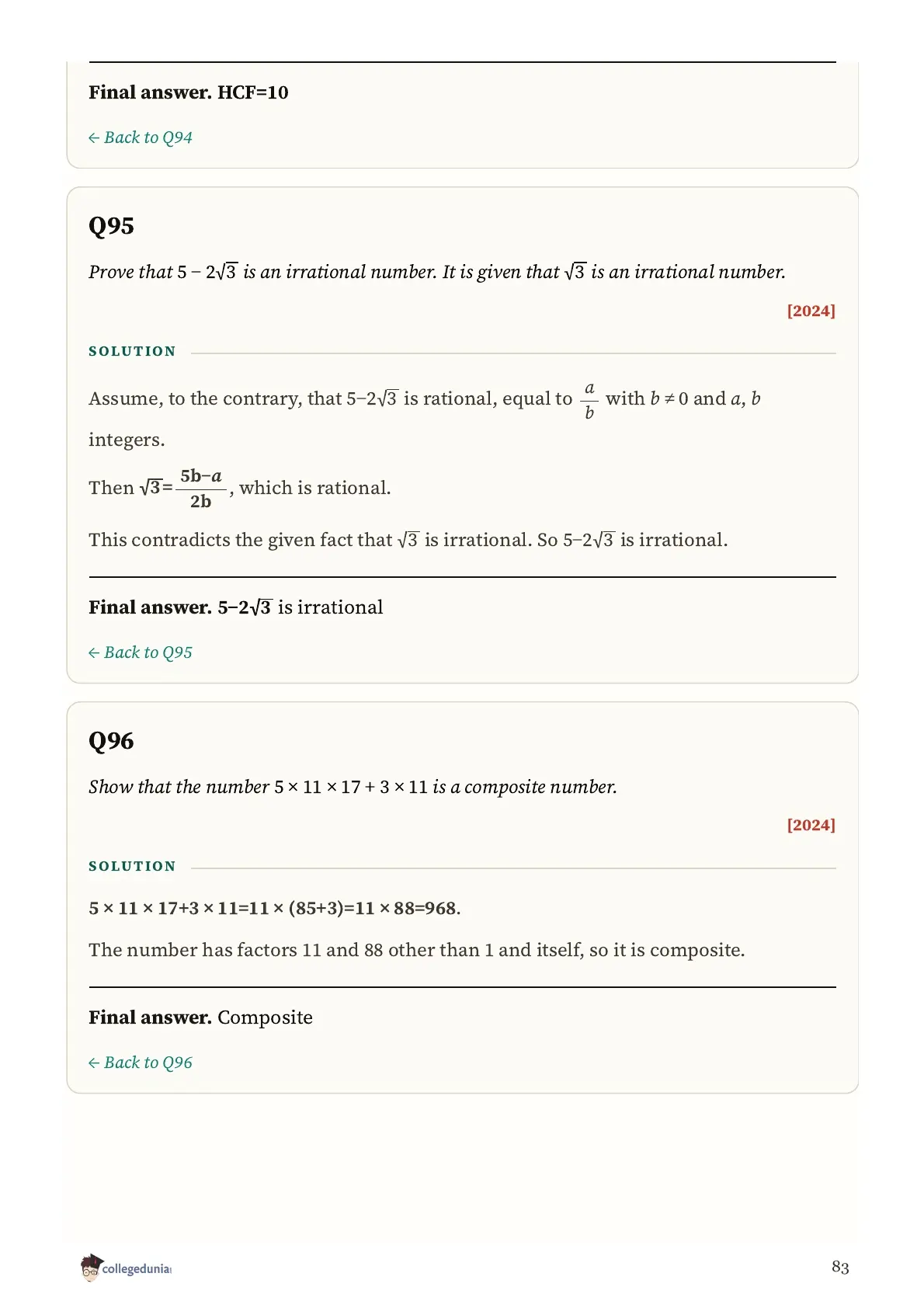
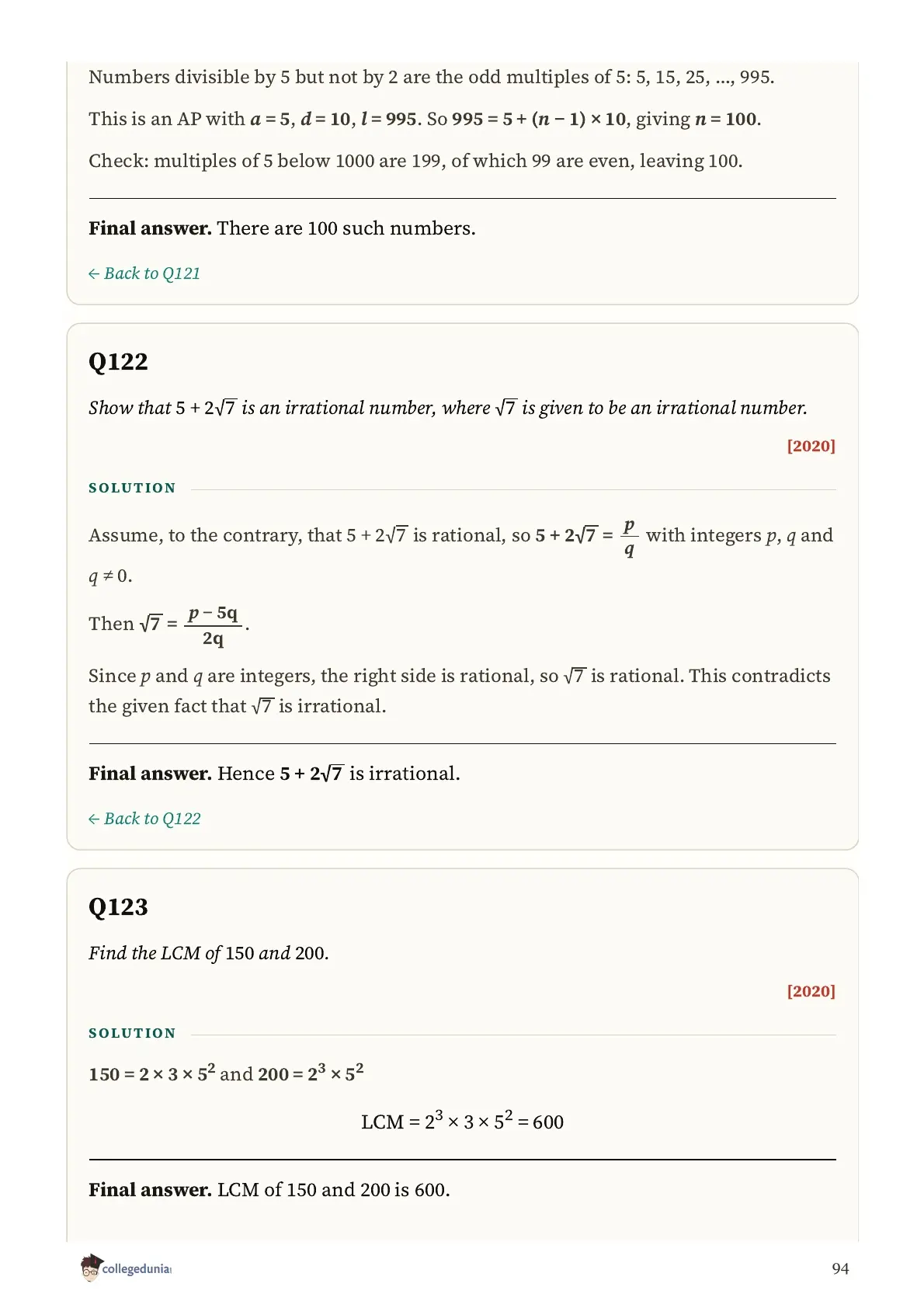
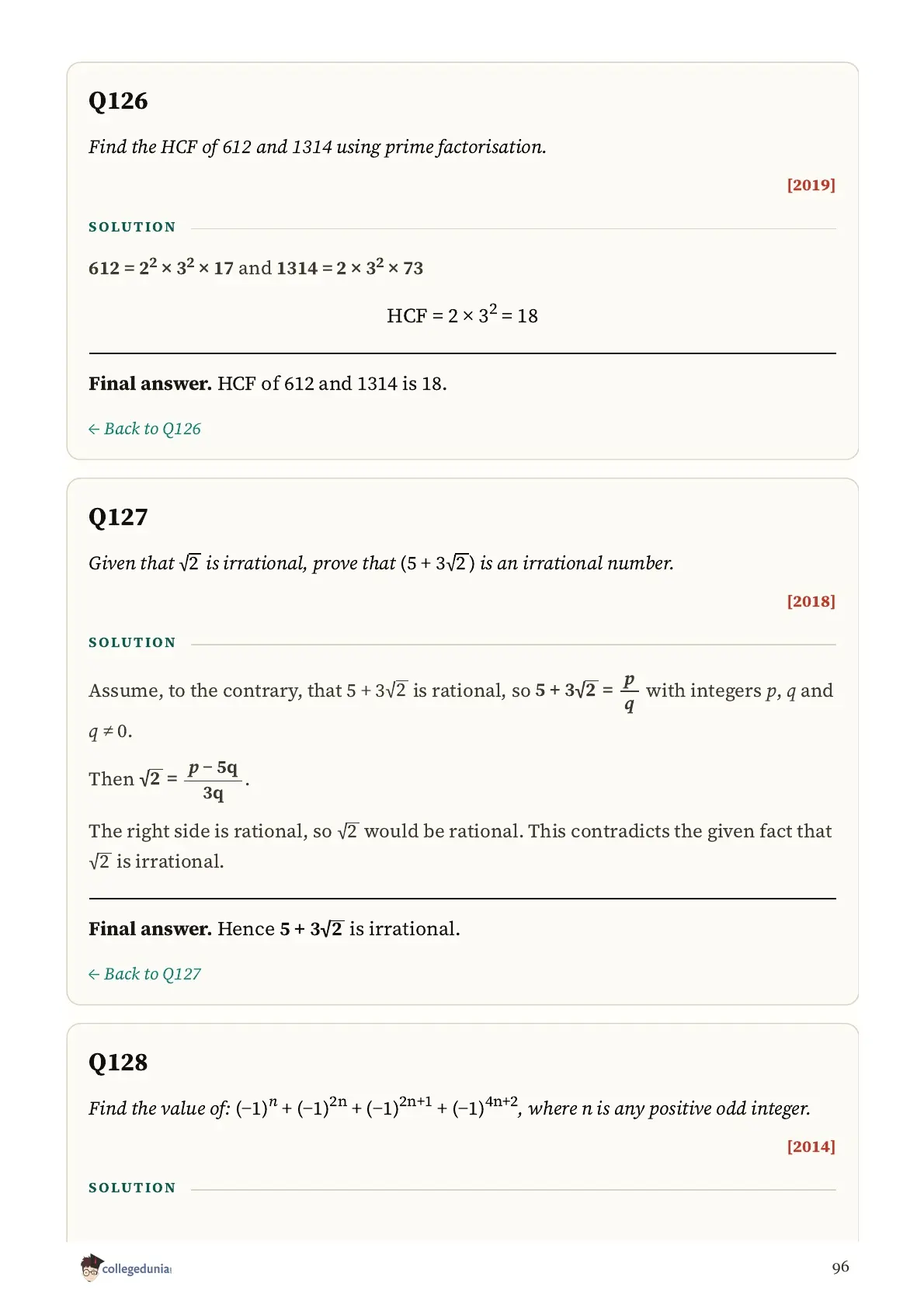
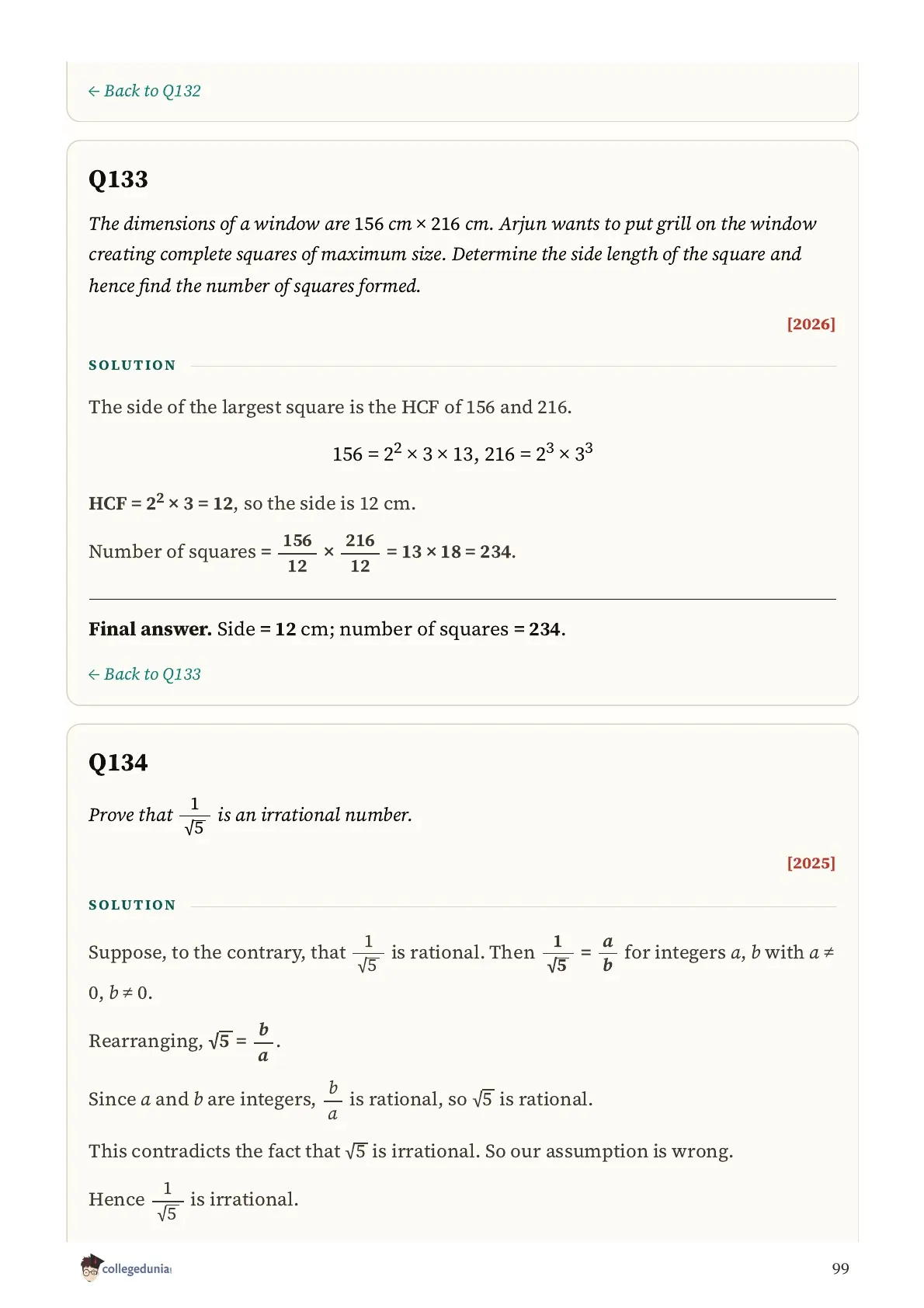
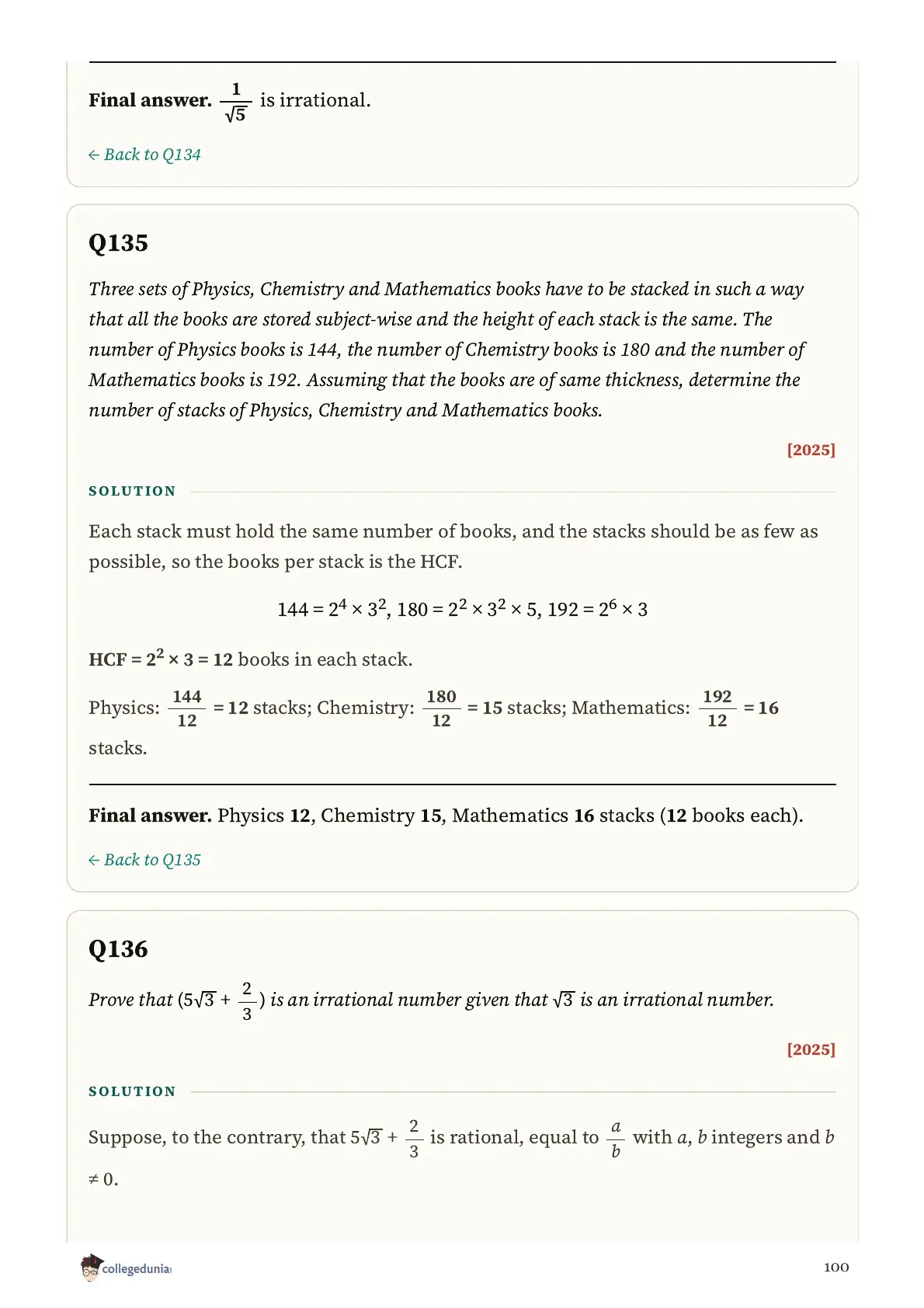
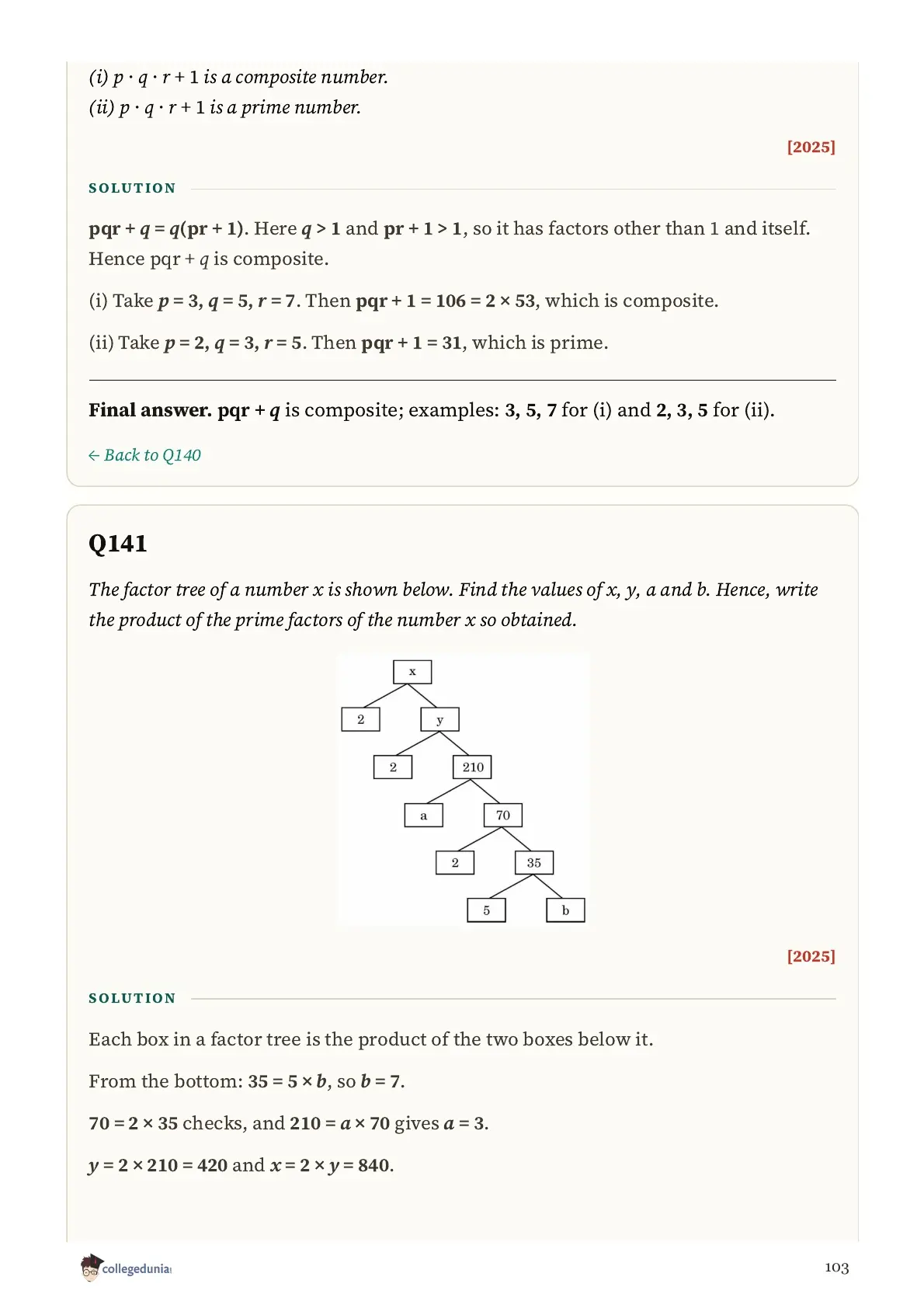
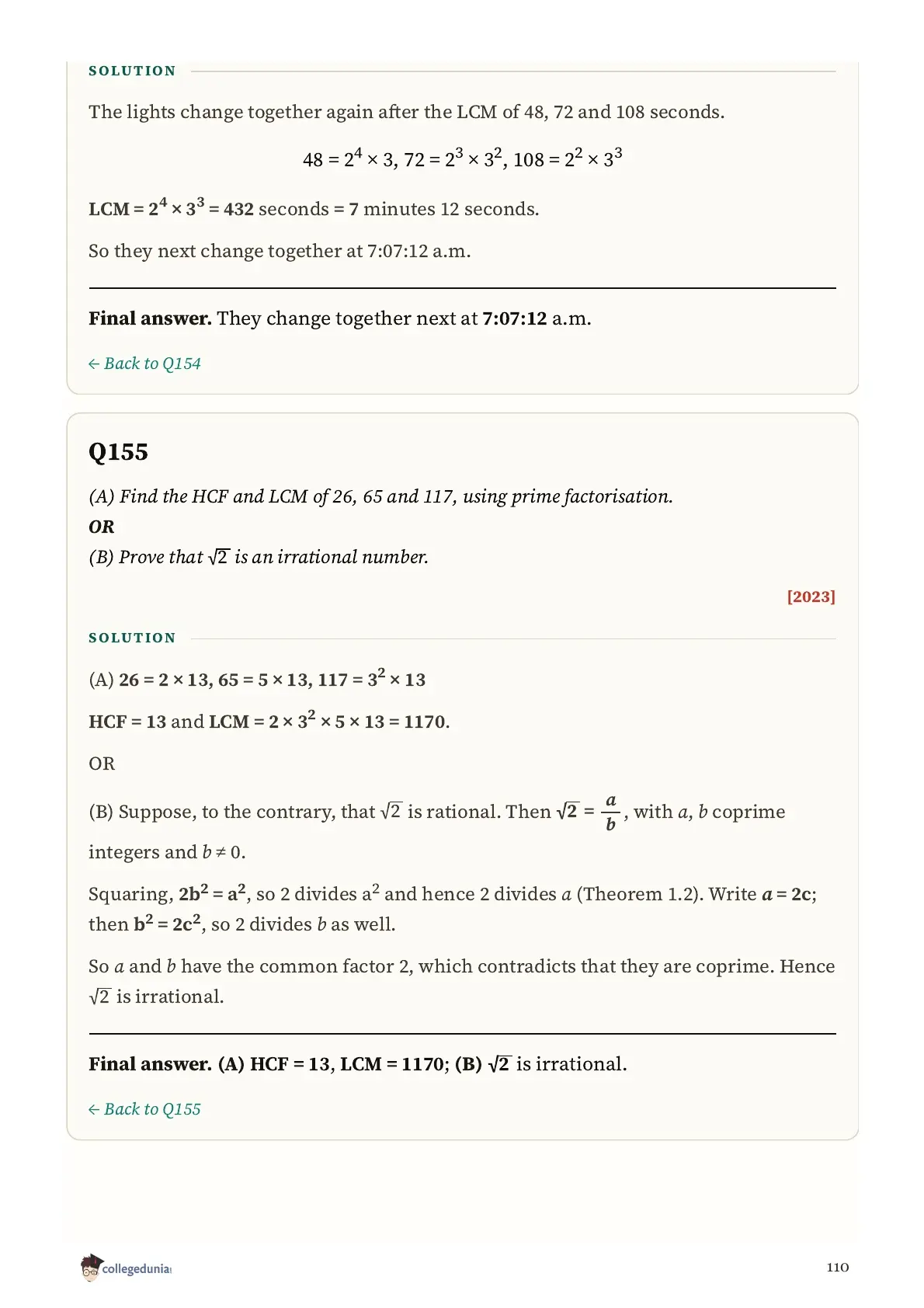
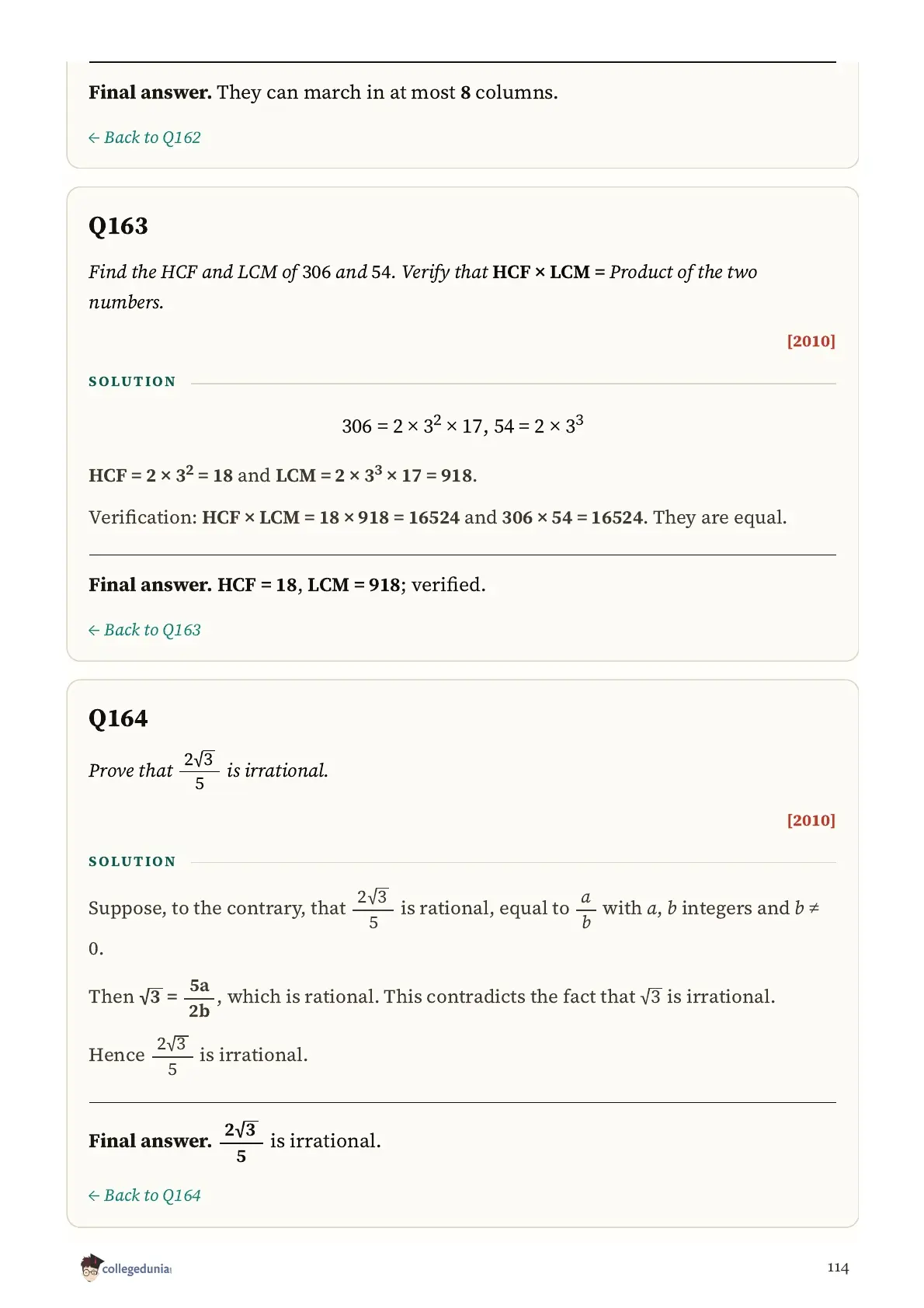
Irrationality is the second block. 16 questions ask you to prove that a number like 5 − 2√3, 7 − 2√2 or 1/√5 is irrational, usually with the irrationality of the root given, and the 3-mark paper adds the proof that √2 is irrational (2023, 2025). Another 17 involve the last digit of a power, such as whether 6n, 15n or 4n can end with 0, and 9 mention composite numbers, for example showing that 7 × 11 × 13 + 13 is composite.
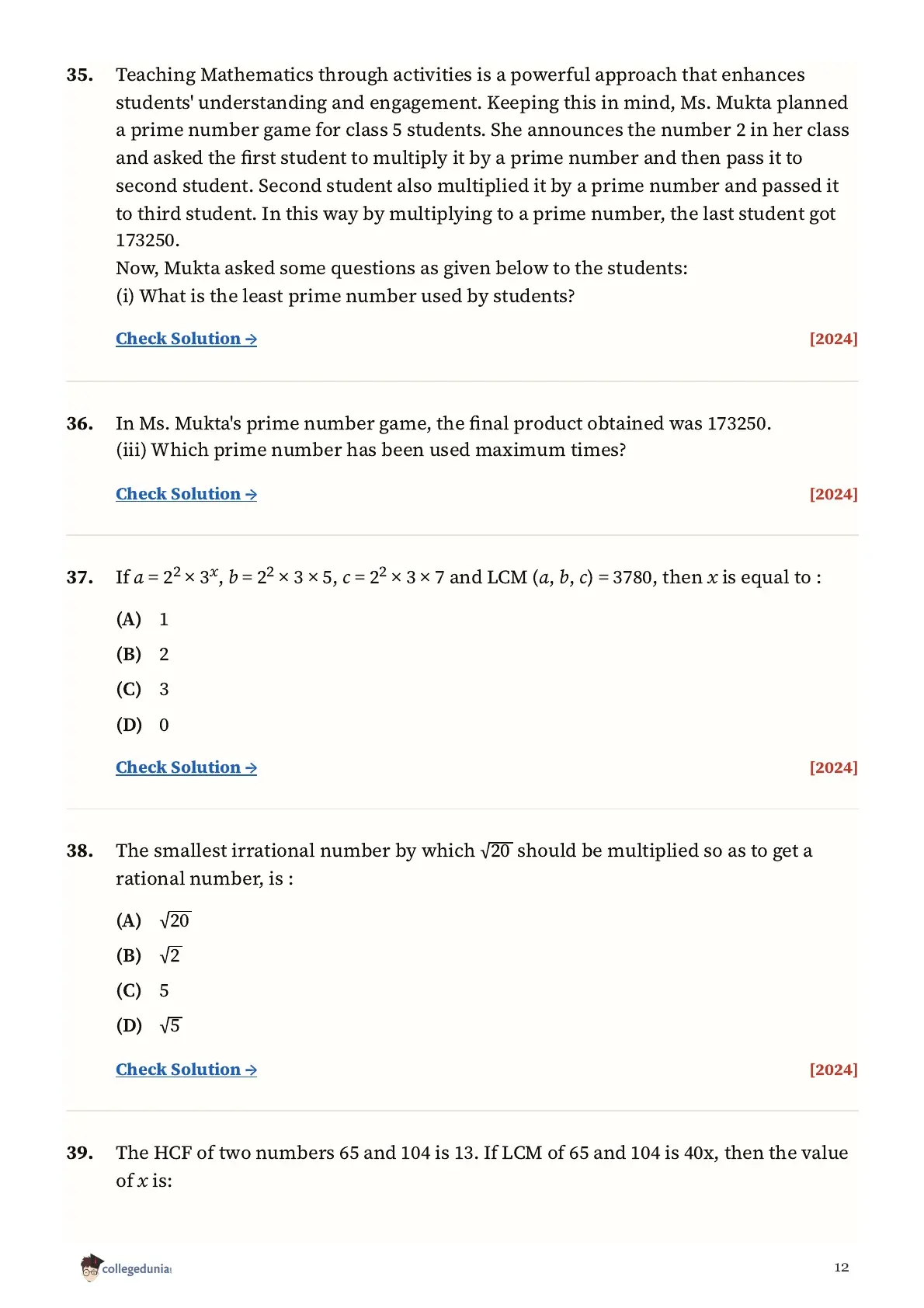
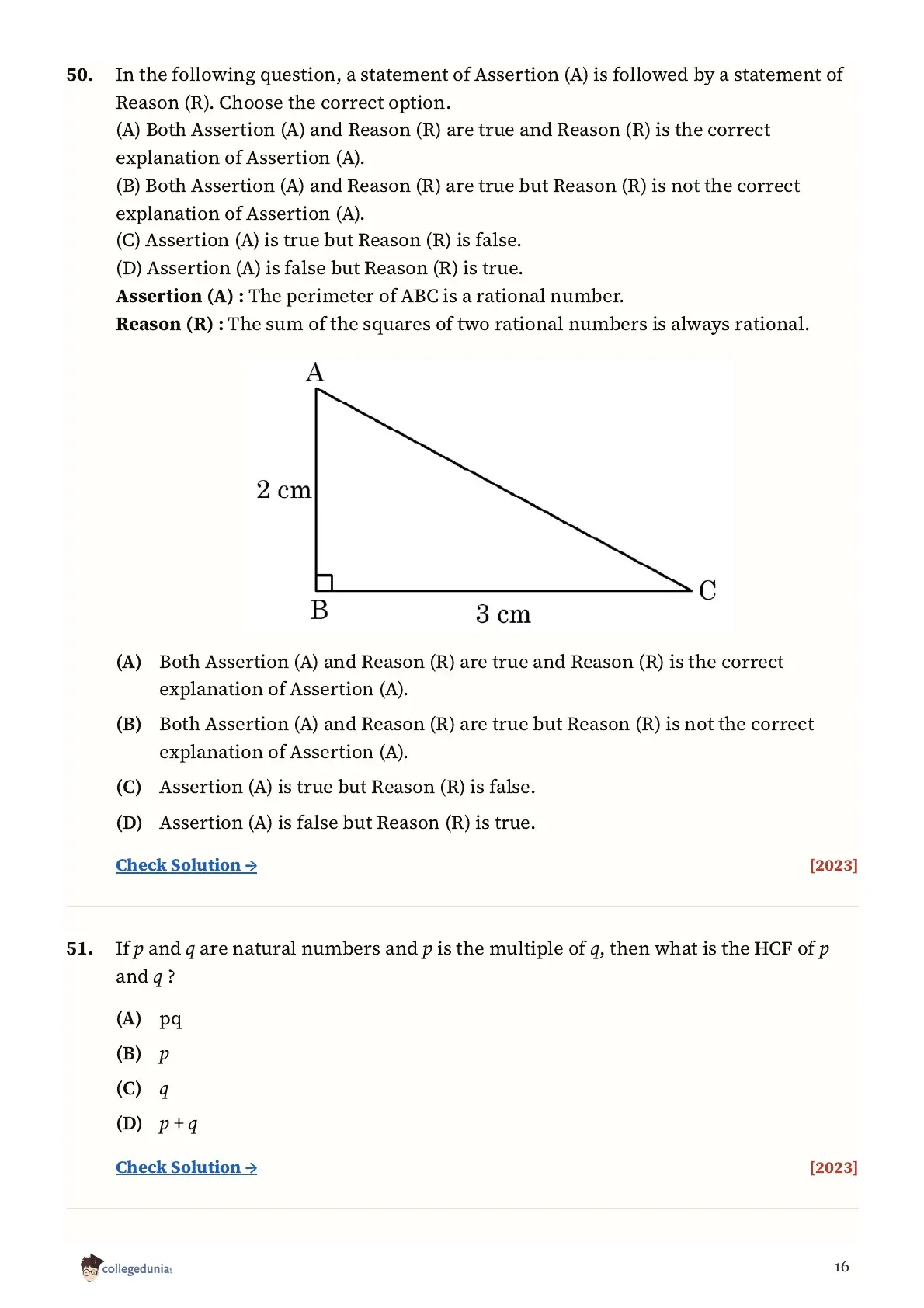
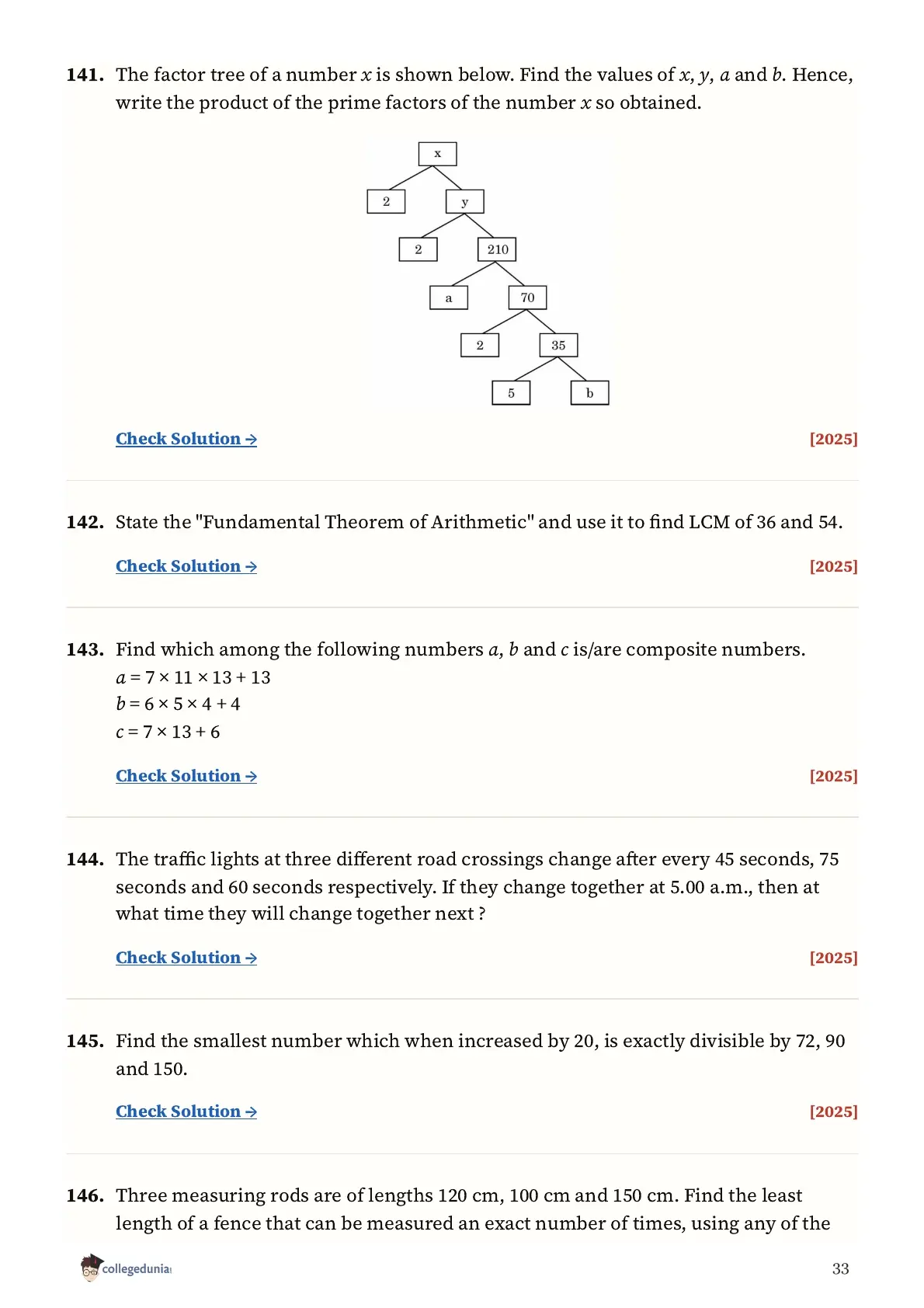
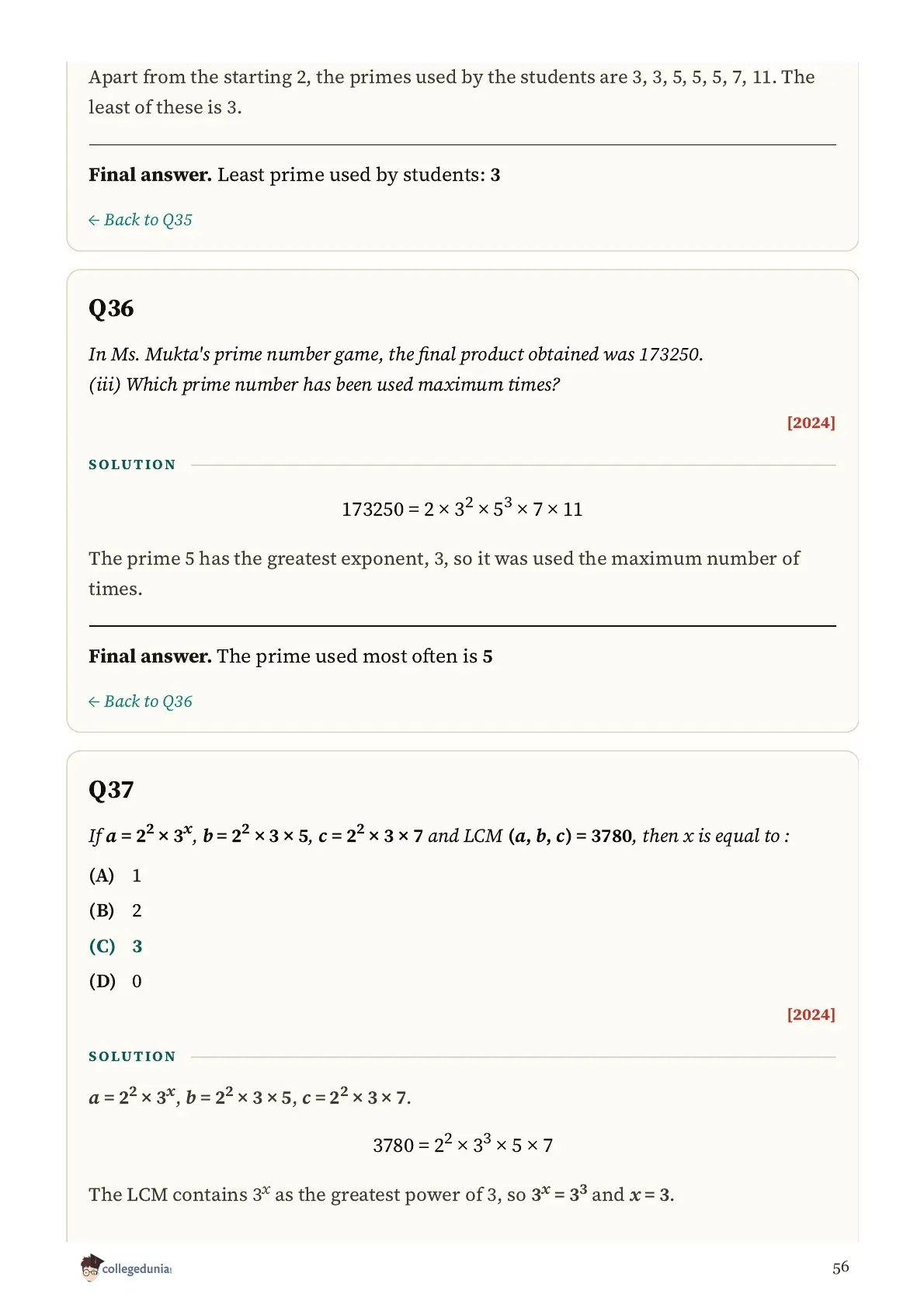
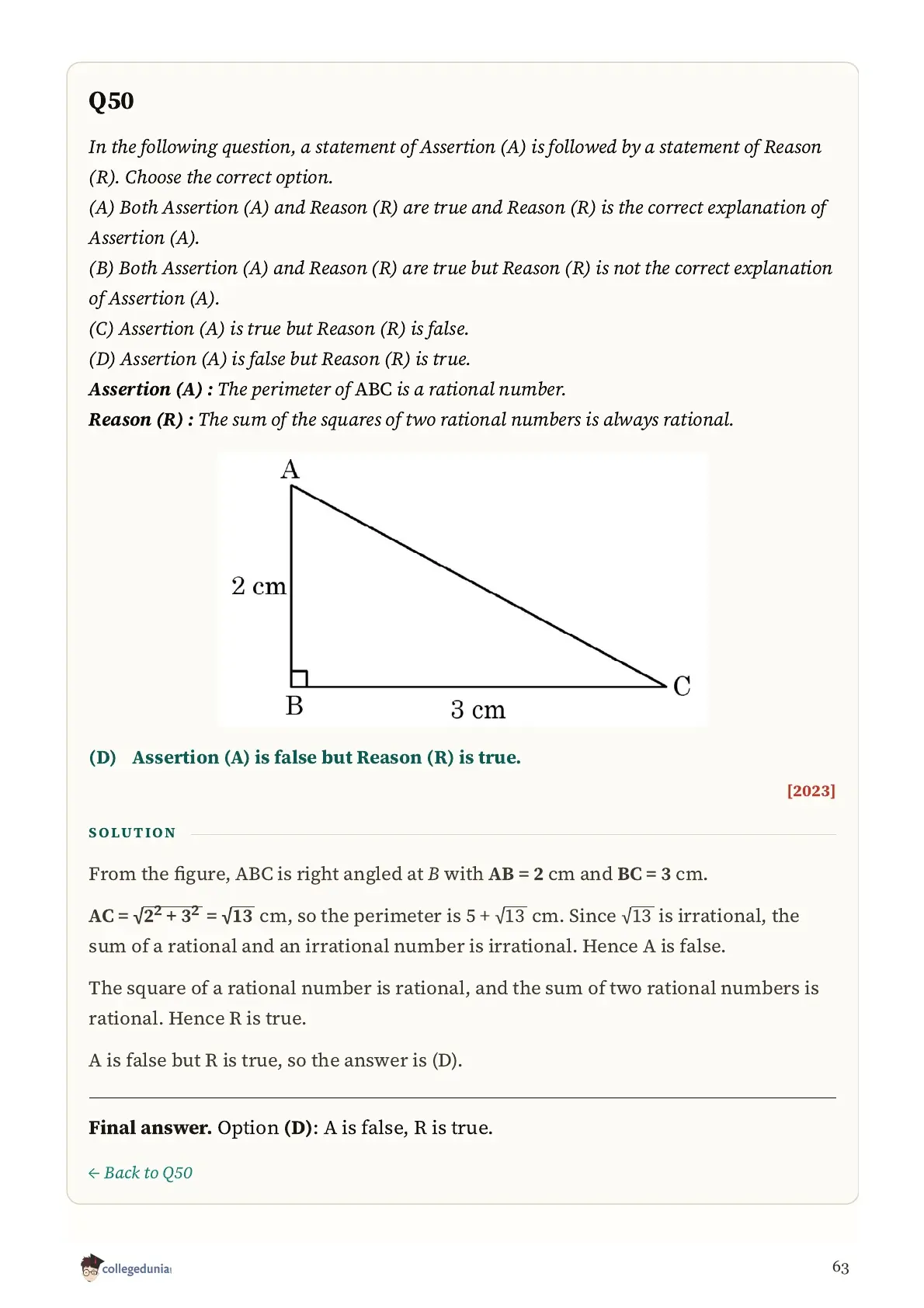
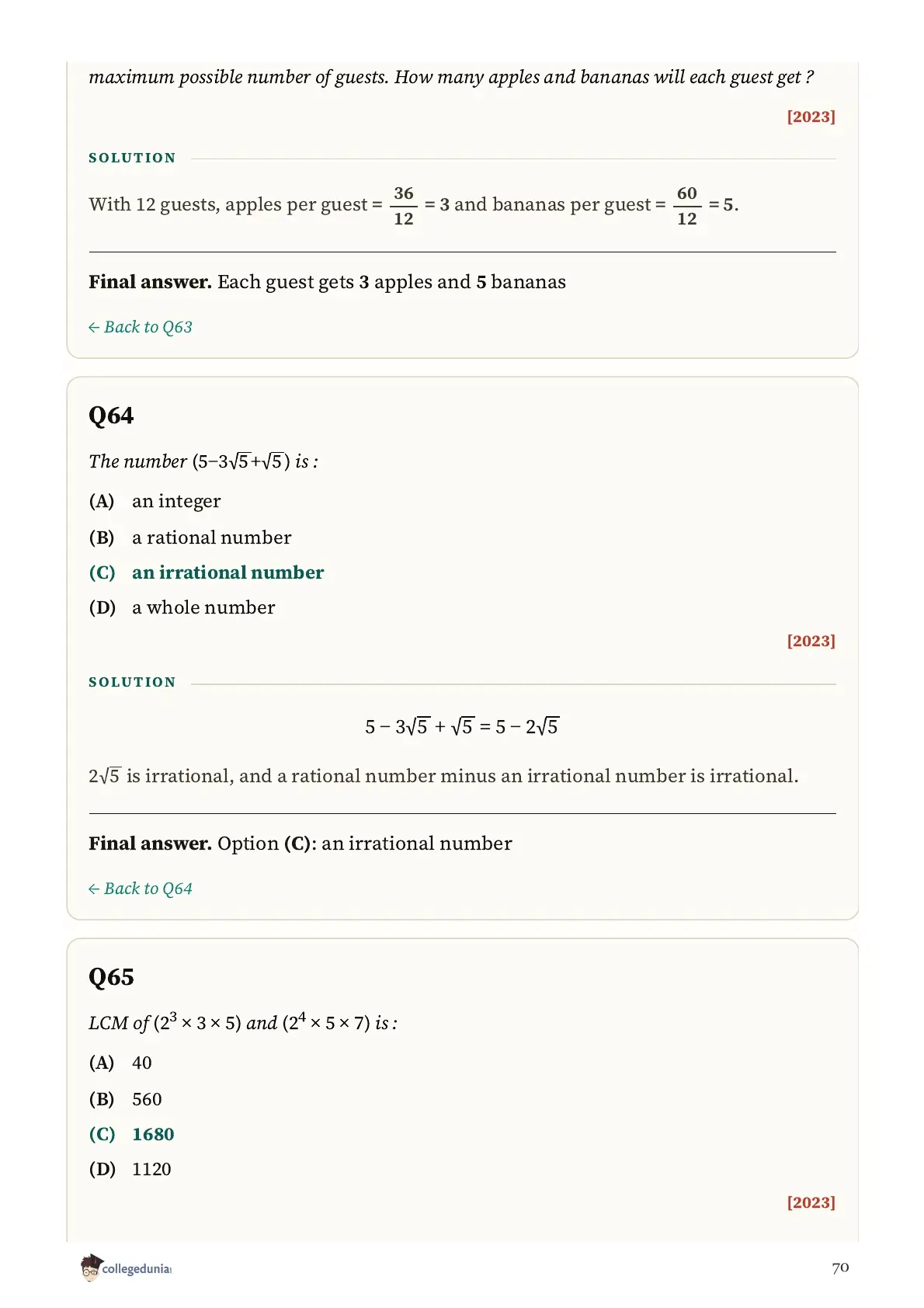
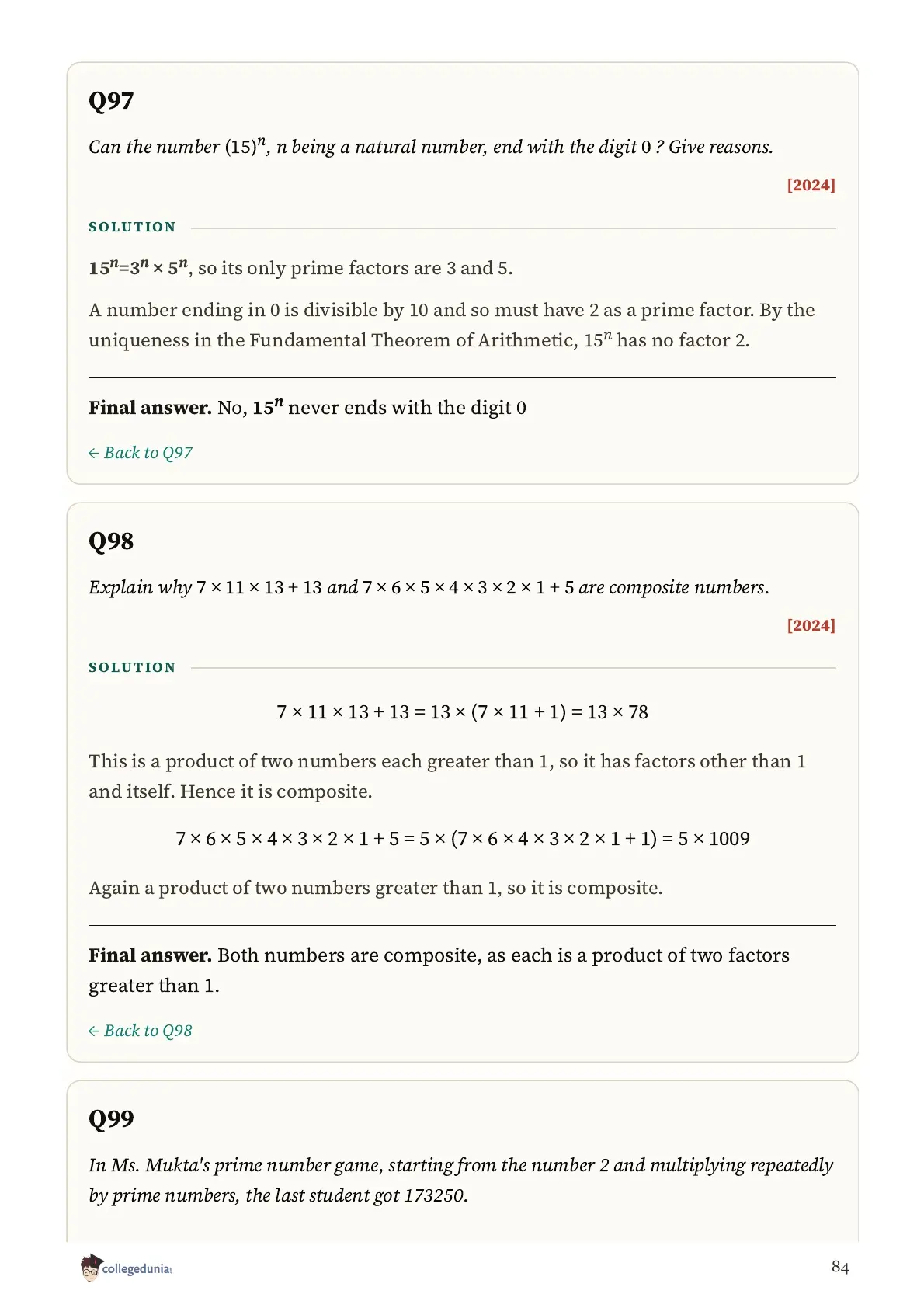
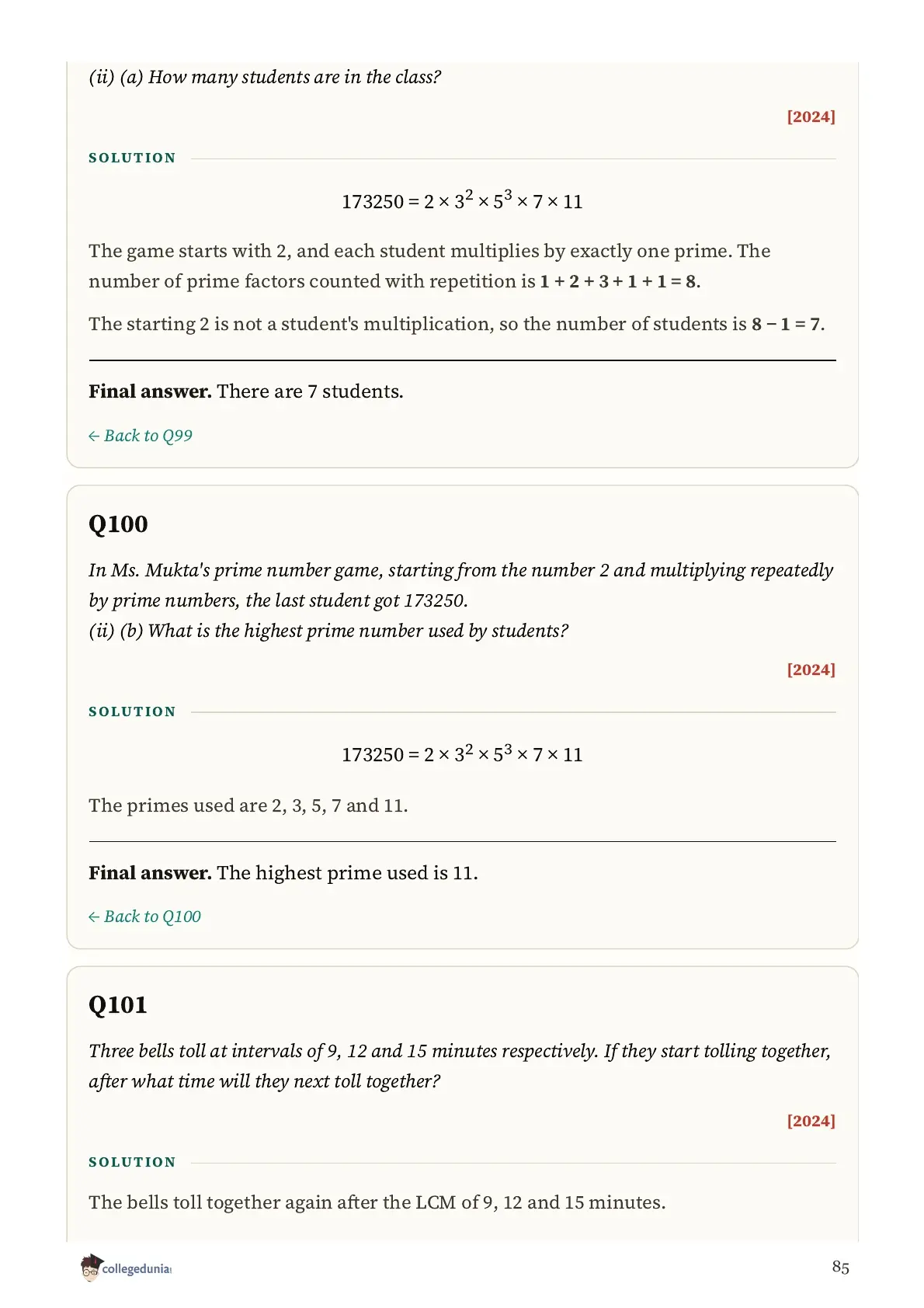
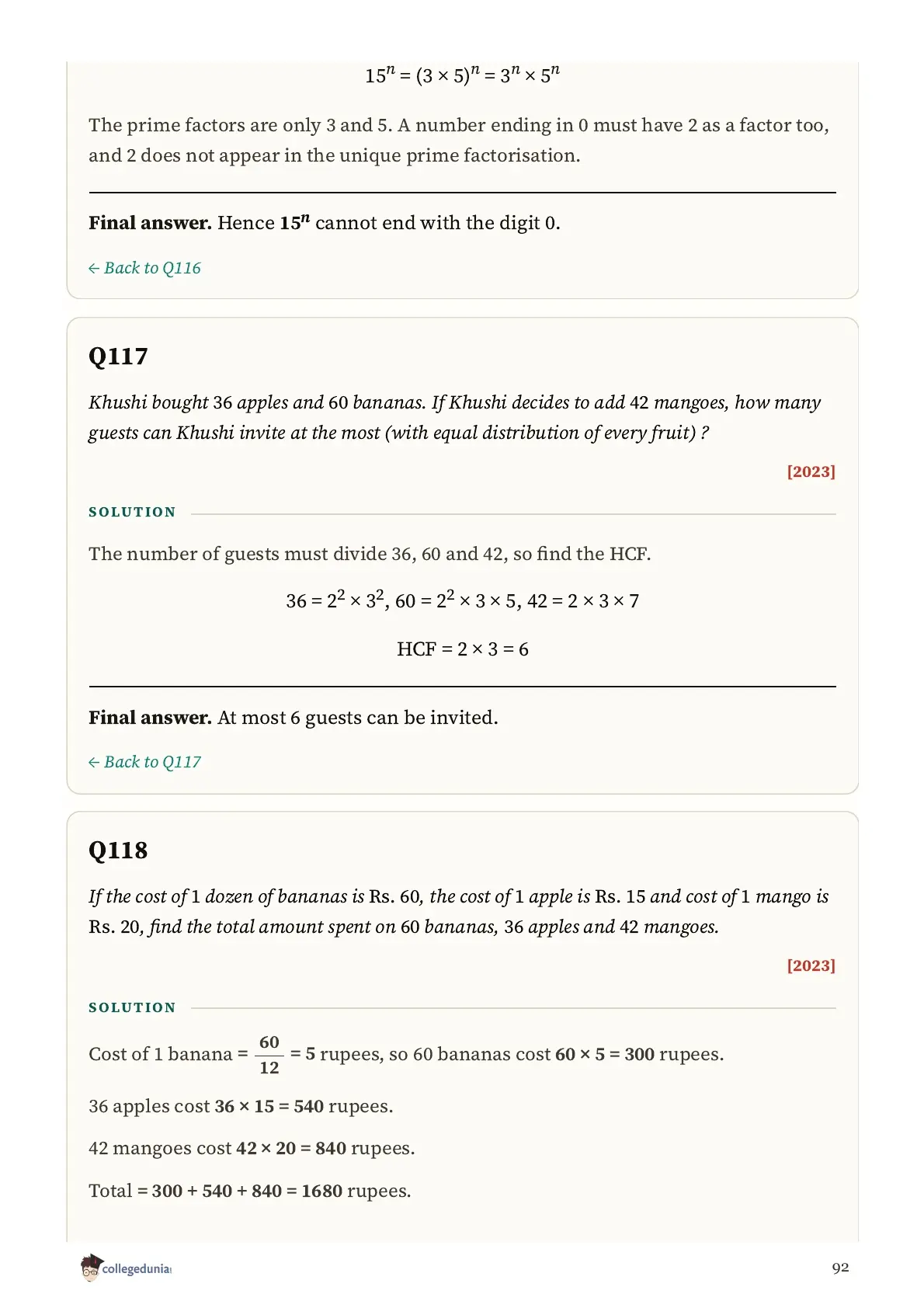
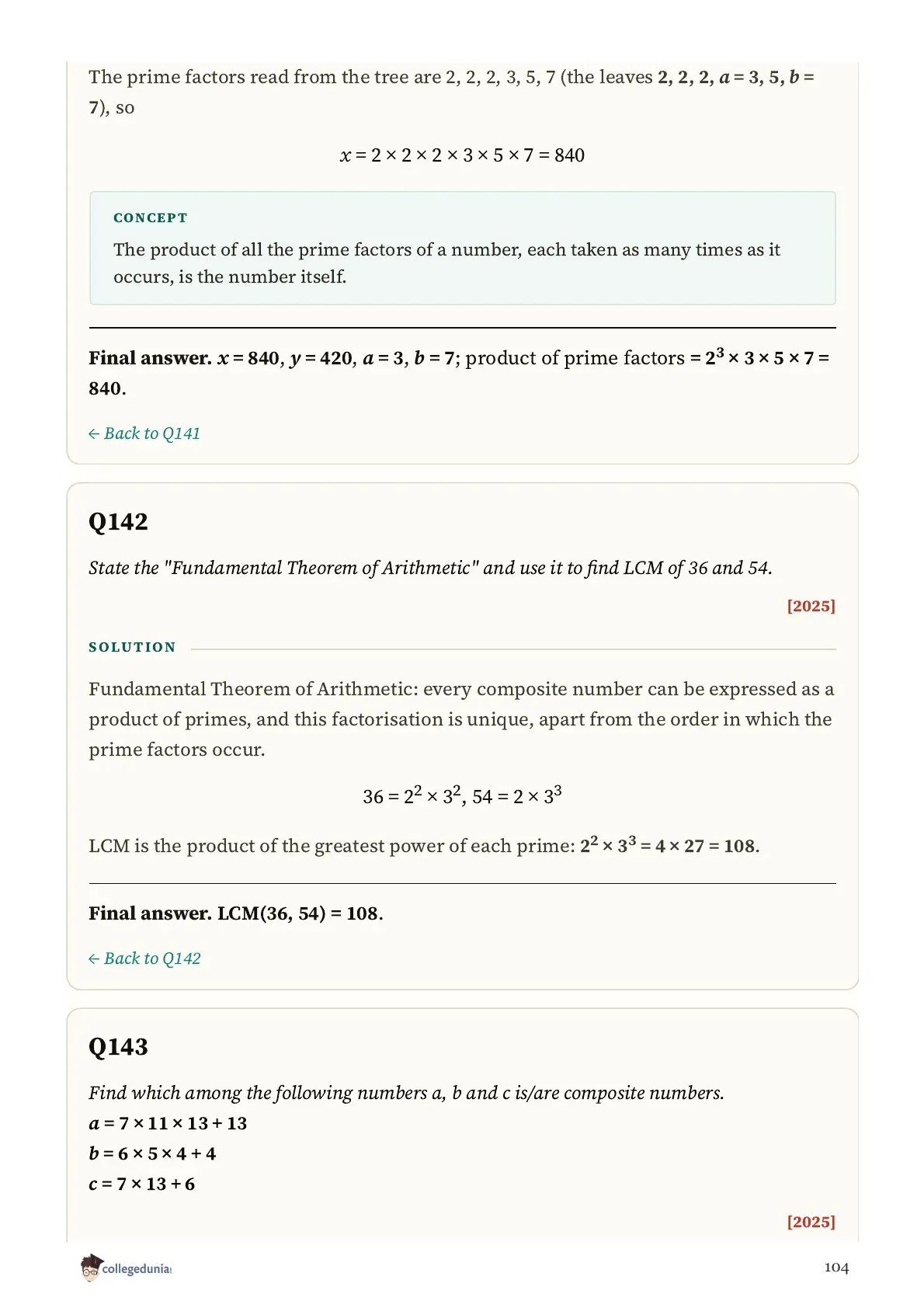
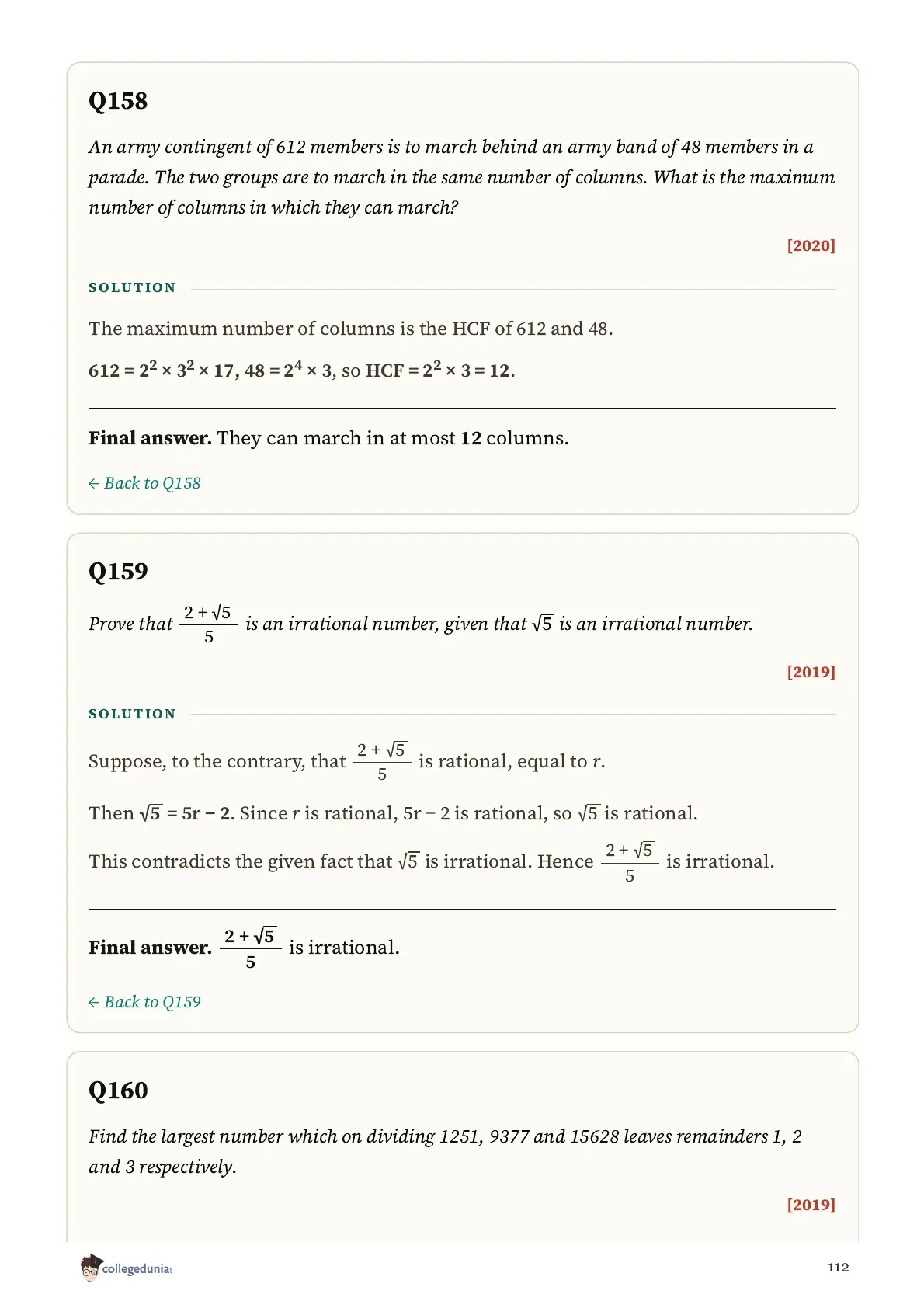
Word problems form the last group. 7 questions use bells, traffic lights or alarms that start together and ring together again, and 5 ask for the greatest number that divides given numbers and leaves stated remainders, such as 85 and 72 leaving 1 and 2 (2023). 9 questions are assertion-reason items, and 8 belong to two case studies, Ms. Mukta's prime number game on 173250 (2024) and Khushi's fruit party with 36 apples and 60 bananas (2023). Only 2 questions carry a printed figure, such as a factor tree (2025).
Counts come from keyword matches over the question text, so a question that names two things is counted under both.
Source: Physics Wallah Foundation
How to Approach the Set
Start with the 72 MCQs and assertion-reason items, which test one formula or one fact each. Then take the 15 very short 1-mark answers and the 43 two-mark questions, where a prime factorisation or one irrationality proof is enough. Keep the 35 three-mark questions for last, since many combine a method with a word problem. Learn four tools until they are automatic: the prime factorisation method for HCF and LCM, HCF × LCM = a × b for two numbers, the contradiction proof for irrational numbers, and the check that a number ending in 0 needs both 2 and 5 as factors. Practise the 2025, 2024 and 2023 papers closely, as they hold 110 of the 165 questions.
Common Mistakes in Real Numbers Questions
- Using the HCF when a bell problem asks when the bells ring together again. Bells tolling every 9, 12 and 15 minutes meet after the LCM, 180 minutes, not after 3.
- Stating that 6n or 15n ends in 0 because it looks round. 6n has no factor 5 and 15n has no factor 2, so neither can end in 0.
- Applying HCF × LCM = product to three numbers. The relation holds only for two numbers, so HCF × LCM for 70 and 40 is 2800 but 12, 21 and 15 need their own factorisation.
- Skipping the assumption in an irrationality proof. Say that the root is given to be irrational, suppose the number is rational, and show the contradiction.
- Calling 7 × 11 × 13 + 13 a prime because it is a sum. Take 13 out as a common factor to get 13 × 78, which is composite.
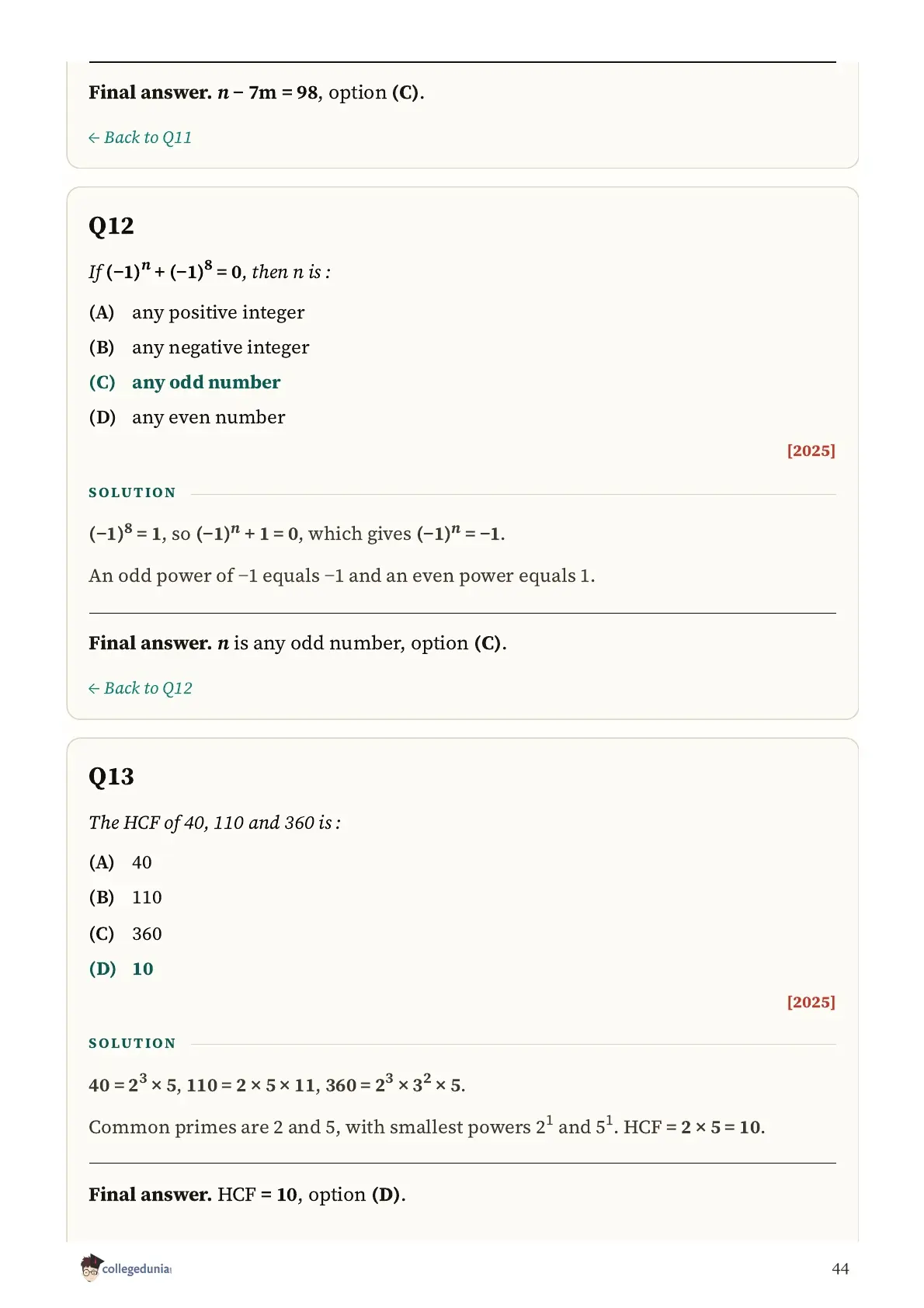
- Dividing the numbers themselves in a remainder problem. For 85 and 72 leaving 1 and 2, find the HCF of 84 and 70, which is 14.
Using the Answer Key and Solutions
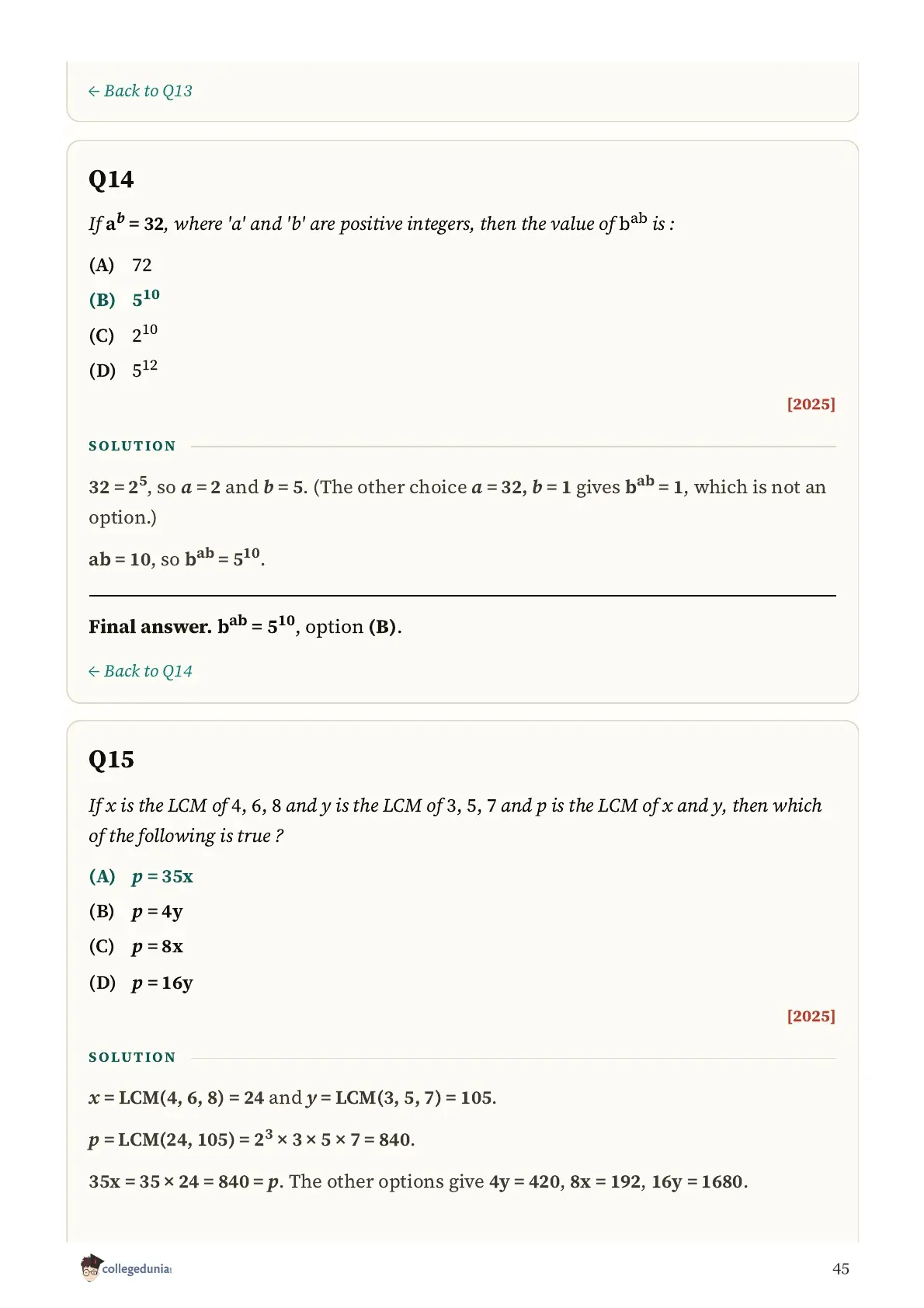
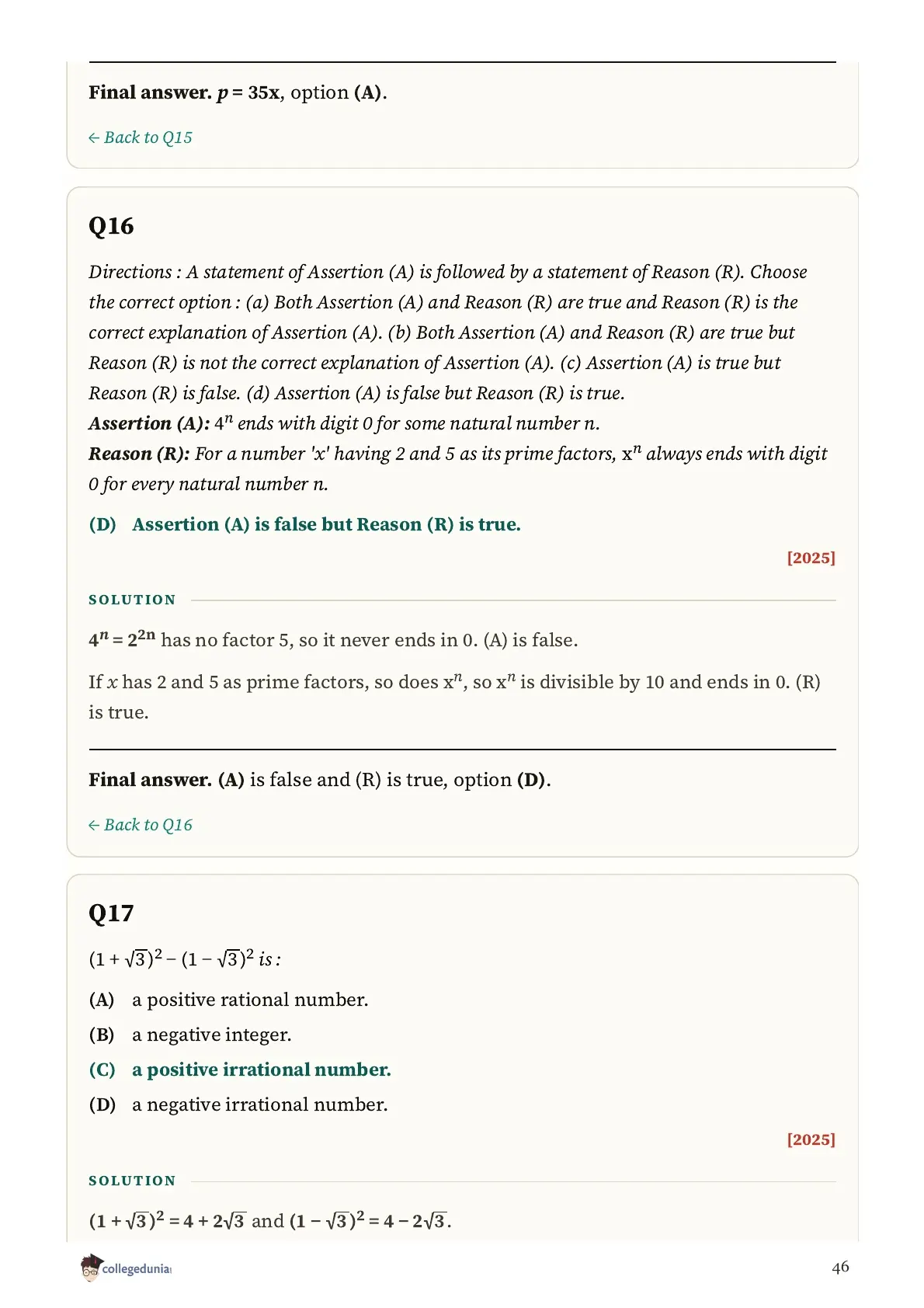
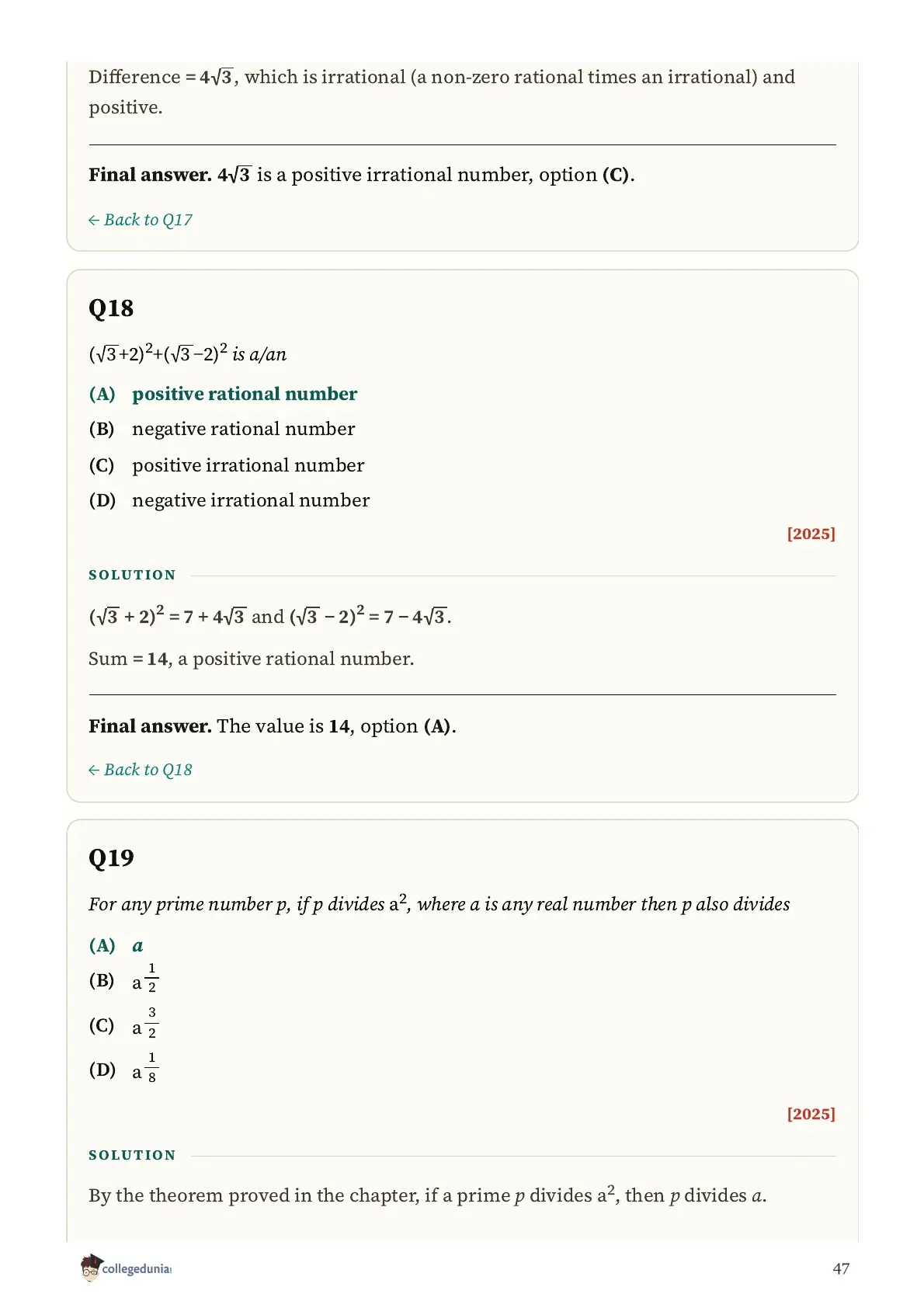
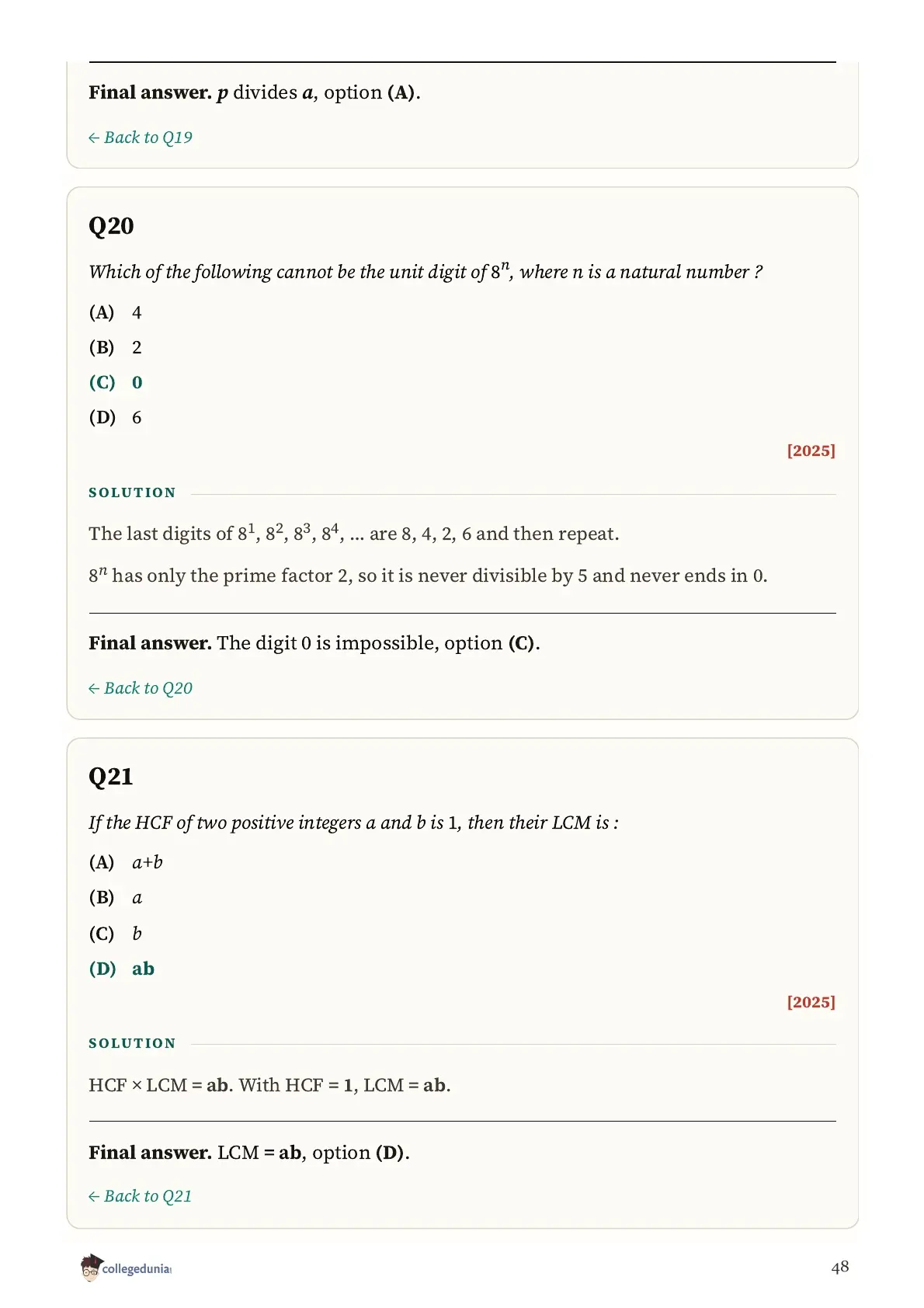
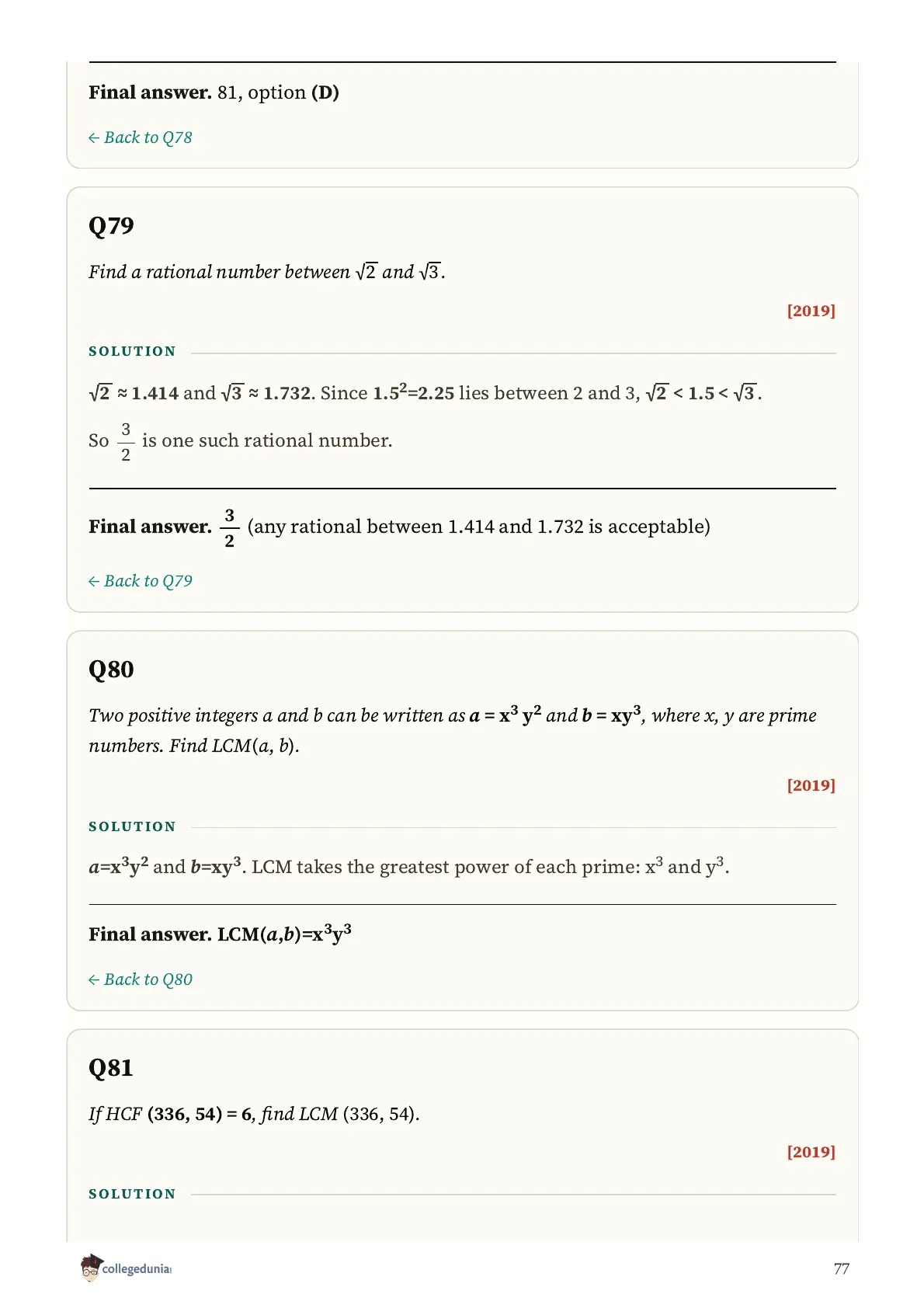
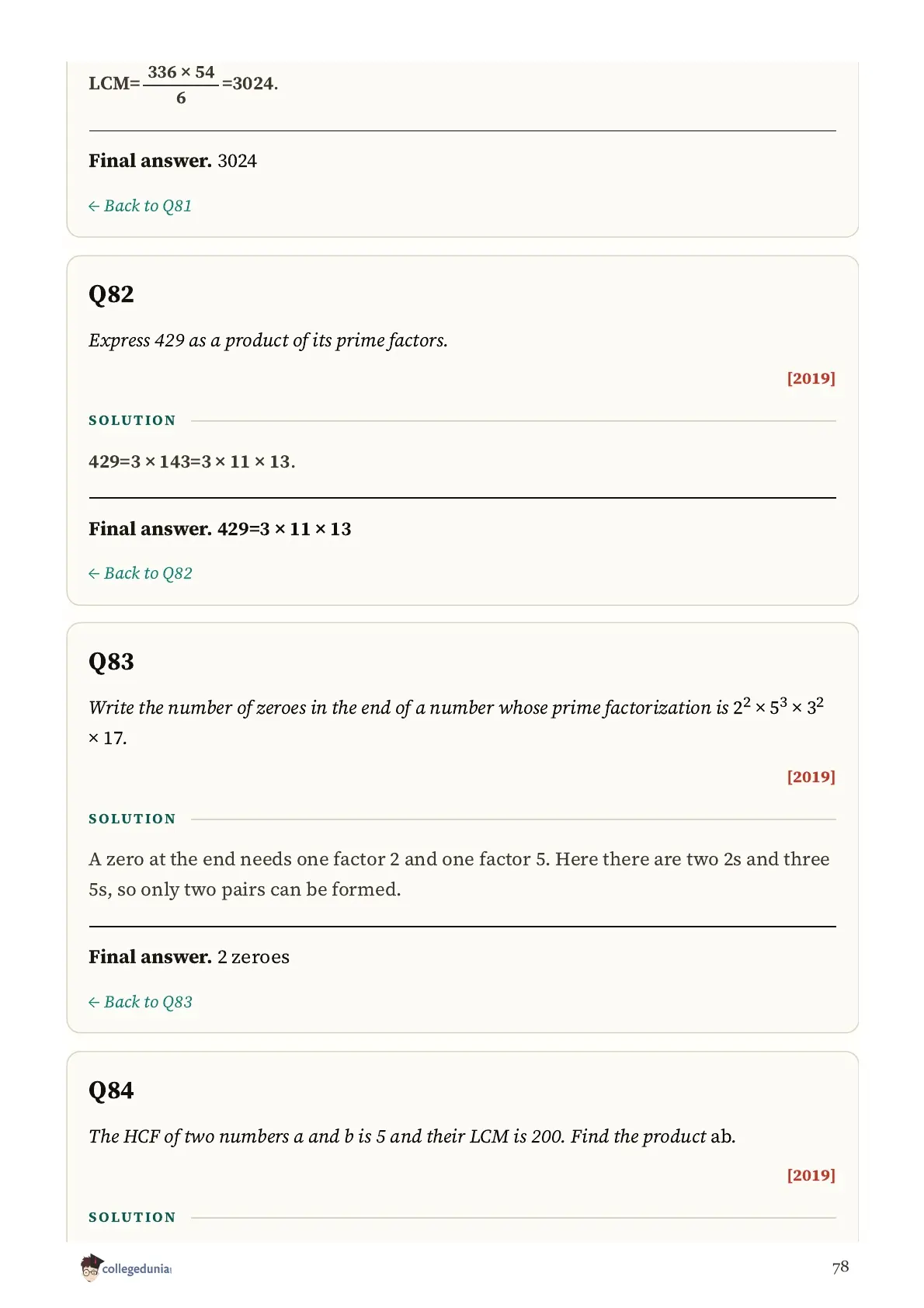
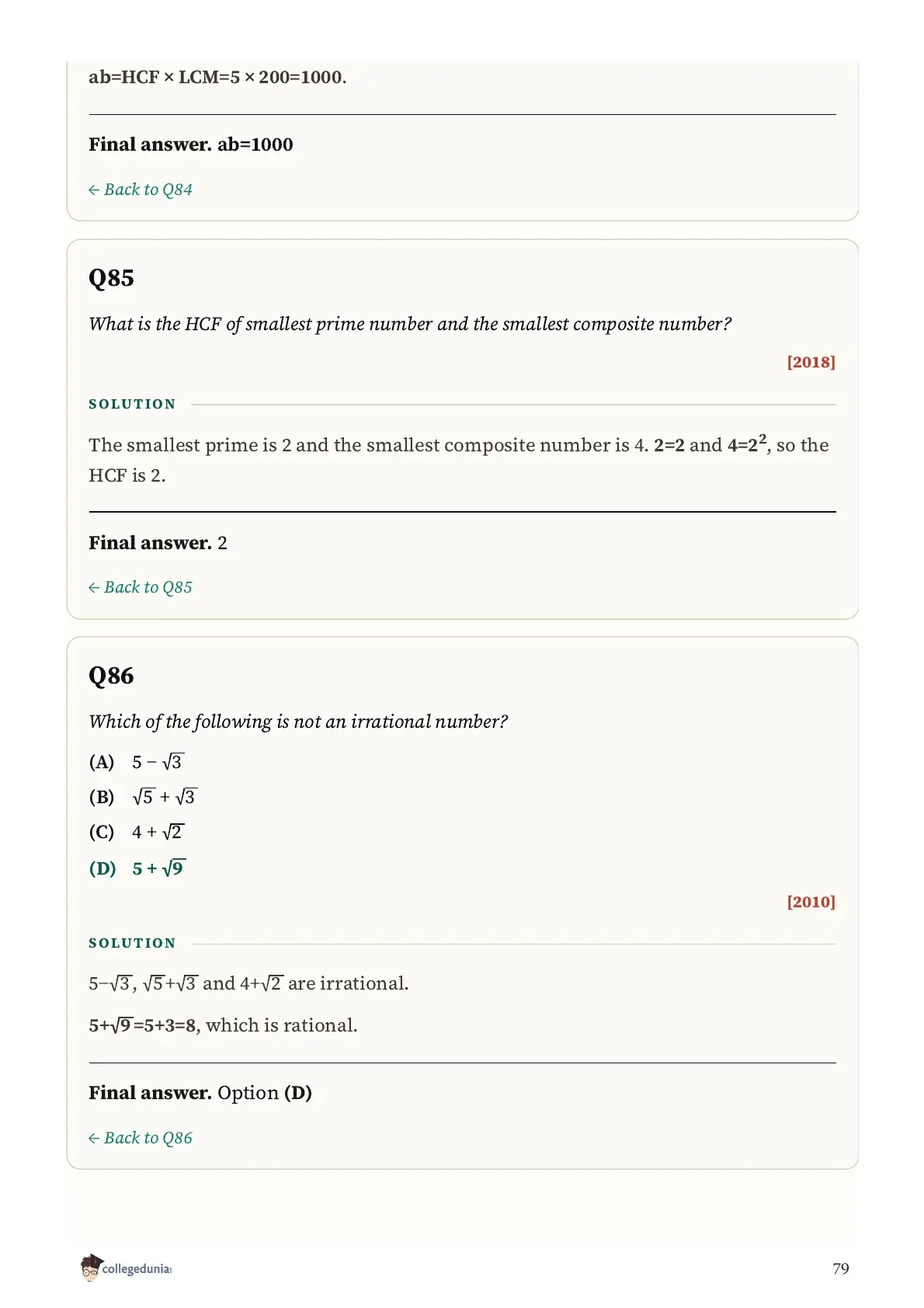
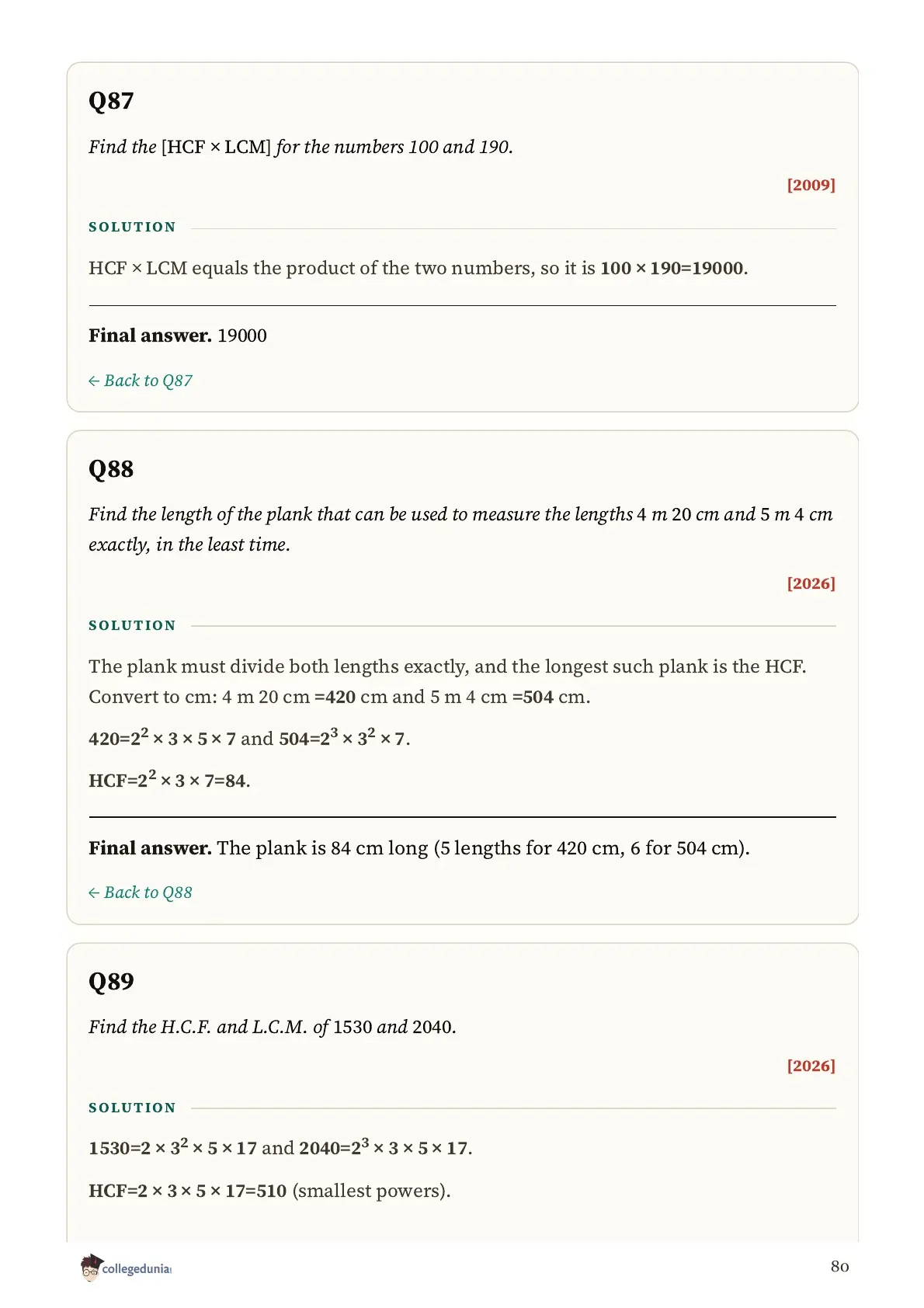
The PDF is 115 pages and free to download. Each section is sorted newest year first, the Answer Key lists the 72 MCQs at a glance, and each question links to its worked solution and back. Attempt a numerical yourself first, check the key, then read the solution. The solutions are written by Collegedunia's Maths experts and are not official CBSE marking schemes.
Class 10 Maths PYQs by Chapter
| Unit | PYQ Page |
|---|---|
| Number Systems | Real Numbers Class 10 Maths PYQ |
| Algebra | Polynomials Class 10 Maths PYQ |
| Algebra | Pair of Linear Equations in Two Variables Class 10 Maths PYQ |
| Algebra | Quadratic Equations Class 10 Maths PYQ |
| Algebra | Arithmetic Progressions Class 10 Maths PYQ |
| Geometry | Triangles Class 10 Maths PYQ |
| Coordinate Geometry | Coordinate Geometry Class 10 Maths PYQ |
| Trigonometry | Introduction to Trigonometry Class 10 Maths PYQ |
| Trigonometry | Some Applications of Trigonometry Class 10 Maths PYQ |
| Geometry | Circles Class 10 Maths PYQ |
| Mensuration | Areas Related to Circles Class 10 Maths PYQ |
| Mensuration | Surface Areas and Volumes Class 10 Maths PYQ |
| Statistics and Probability | Statistics Class 10 Maths PYQ |
| Statistics and Probability | Probability Class 10 Maths PYQ |
Real Numbers Class 10 Maths PYQ FAQs
Ques. How many questions are in the Real Numbers Class 10 Maths PYQ PDF?
Ans. The PDF has 165 questions from the 2008 to 2026 board papers: 87 at 1 mark, 43 at 2 marks and 35 at 3 marks.
Ques. Does this PYQ PDF include solutions, or only the questions?
Ans. All 165 questions have a worked solution in the PDF. The 72 MCQs and assertion-reason items are also listed in the Answer Key before the solutions.
Ques. Are the solutions official?
Ans. No. They are written by Collegedunia's Maths experts, checked against the NCERT chapter with every calculation re-run. They are not an official CBSE marking scheme, so the board's wording of an answer may differ.
Ques. How many marks does Real Numbers carry in the Class 10 Maths paper?
Ans. CBSE lists marks per unit, and Real Numbers is the only chapter in the unit Number Systems, which prep sites report at 6 of the 80 theory marks. That figure is unofficial, so check the current curriculum on cbseacademic.nic.in.
Ques. What kind of questions are asked from Real Numbers?
Ans. HCF and LCM numericals form the largest group, with 48 questions naming HCF and 48 naming LCM. The rest are irrationality proofs (16), last-digit questions on powers such as 6n (17) and word problems on bells, traffic lights and alarms (7).
Ques. Which years does the set cover?
Ans. The questions come from 12 board years between 2008 and 2026. 2025 has the most questions (41), followed by 2023 (35) and 2024 (34).



Comments