




Class 10 Maths Some Applications of Trigonometry PYQ, free to download as a 163-page PDF with 189 solved board questions from the 2003 to 2026 papers. Some Applications of Trigonometry is Chapter 9 of the NCERT Class 10 Maths book and, with Introduction to Trigonometry, forms the CBSE unit Trigonometry, which carries 12 of the 80 theory marks.
The questions keep returning to the angle of elevation (111 questions), finding a height or a distance (135), towers (72), the angle of depression (65), buildings (33), poles and pillars (24) and aircraft (21). The value of root 3 shows up in 71 of them, because most angles are 30, 45 or 60 degrees.
On this page you get:
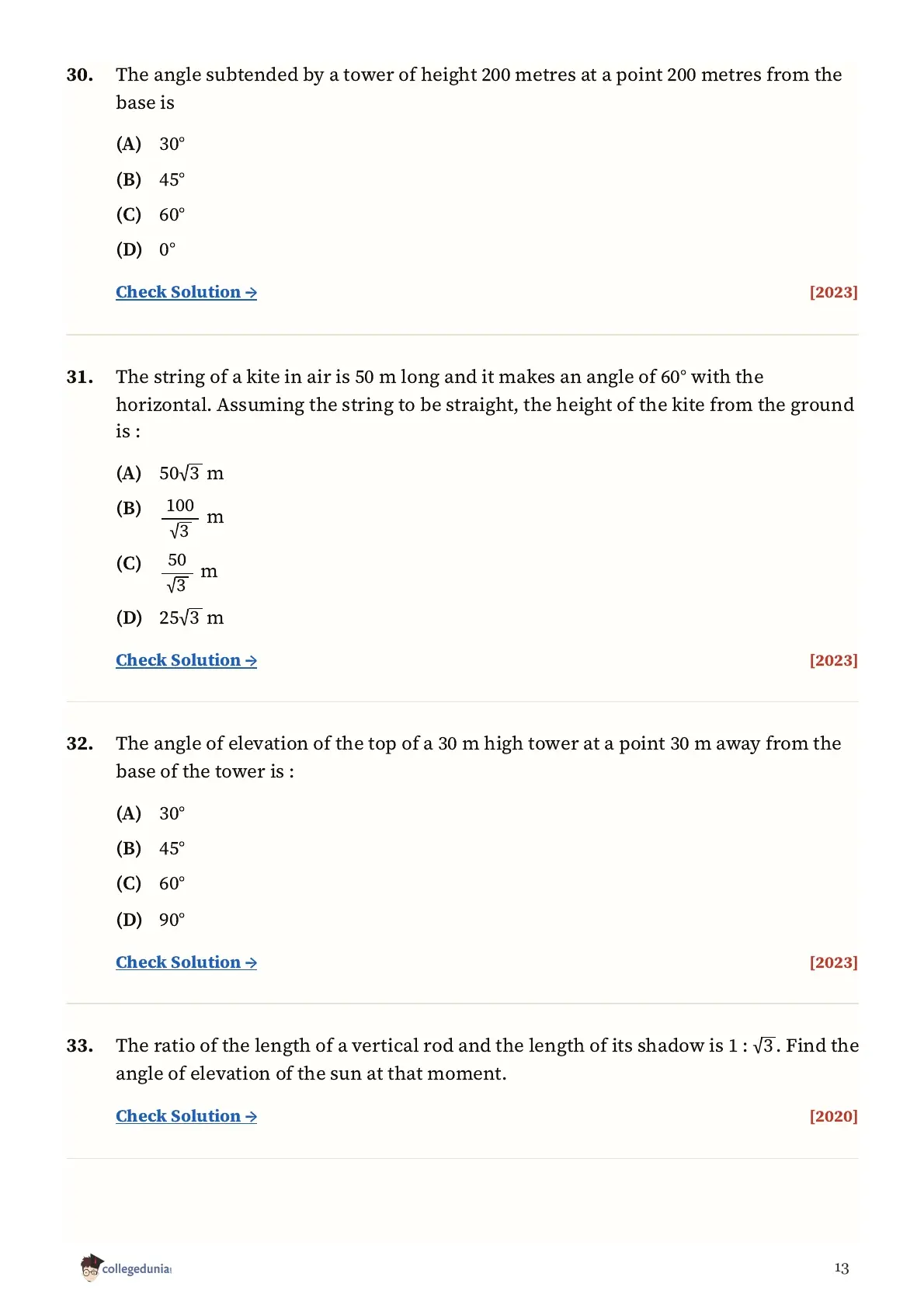
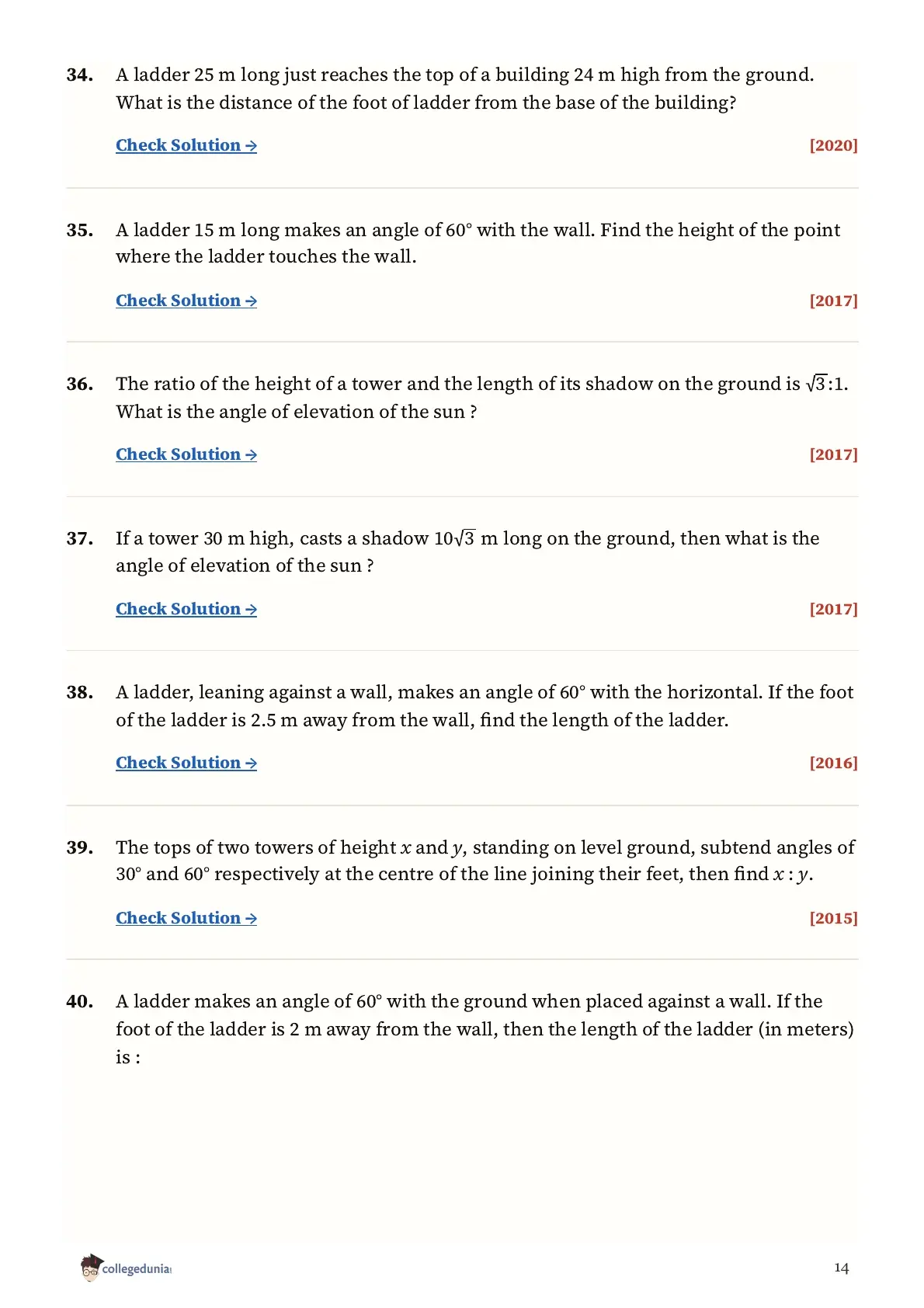
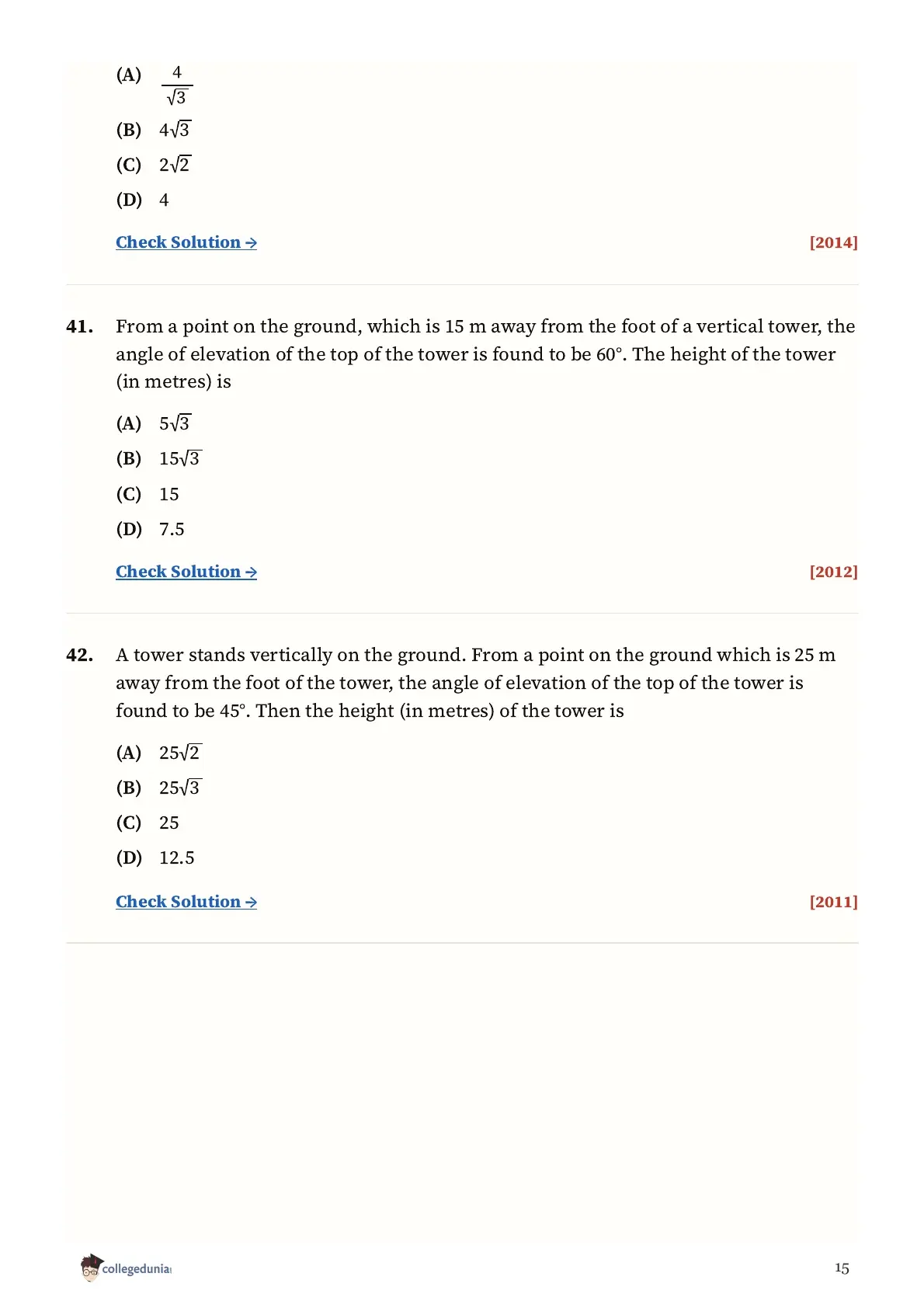
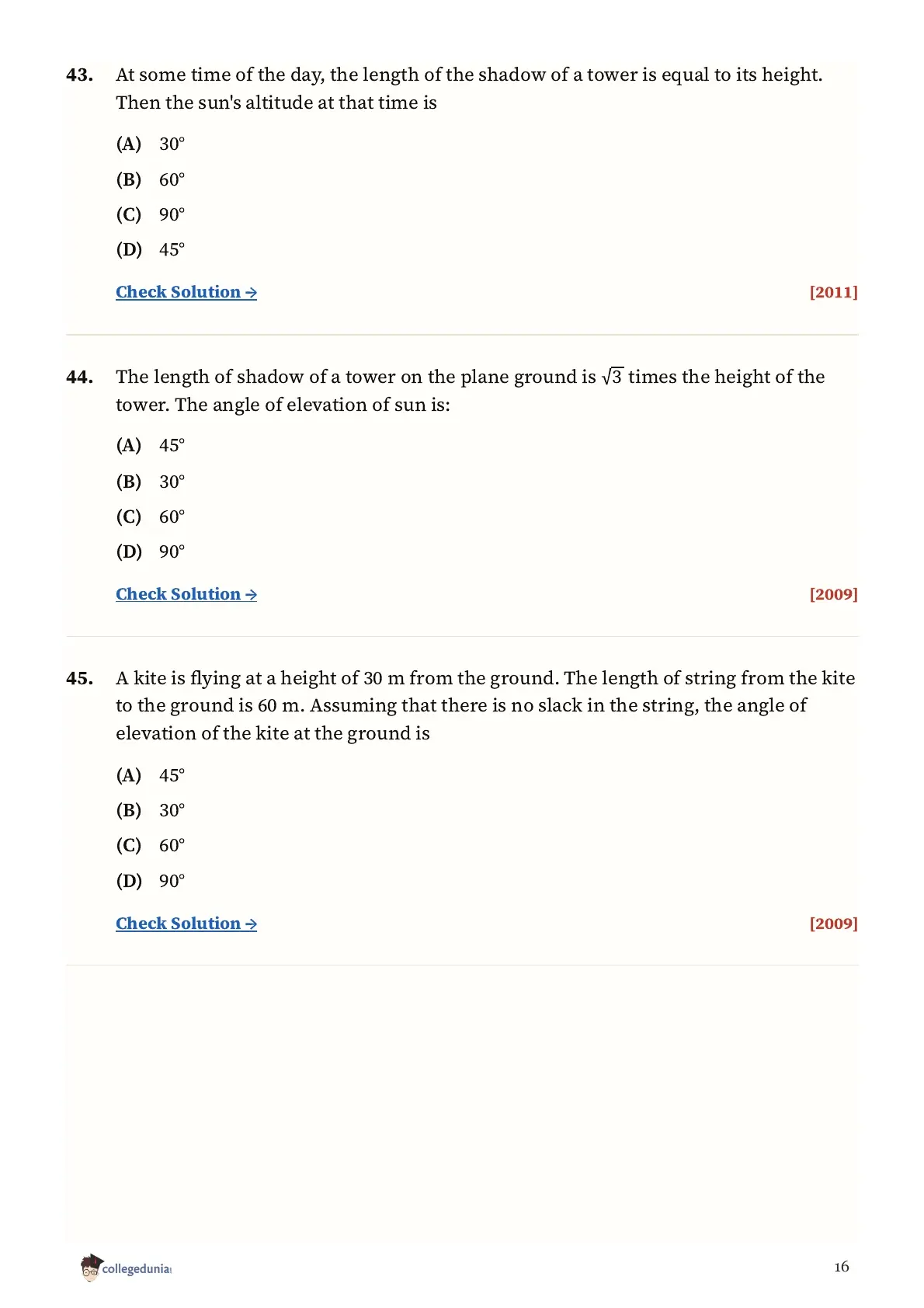
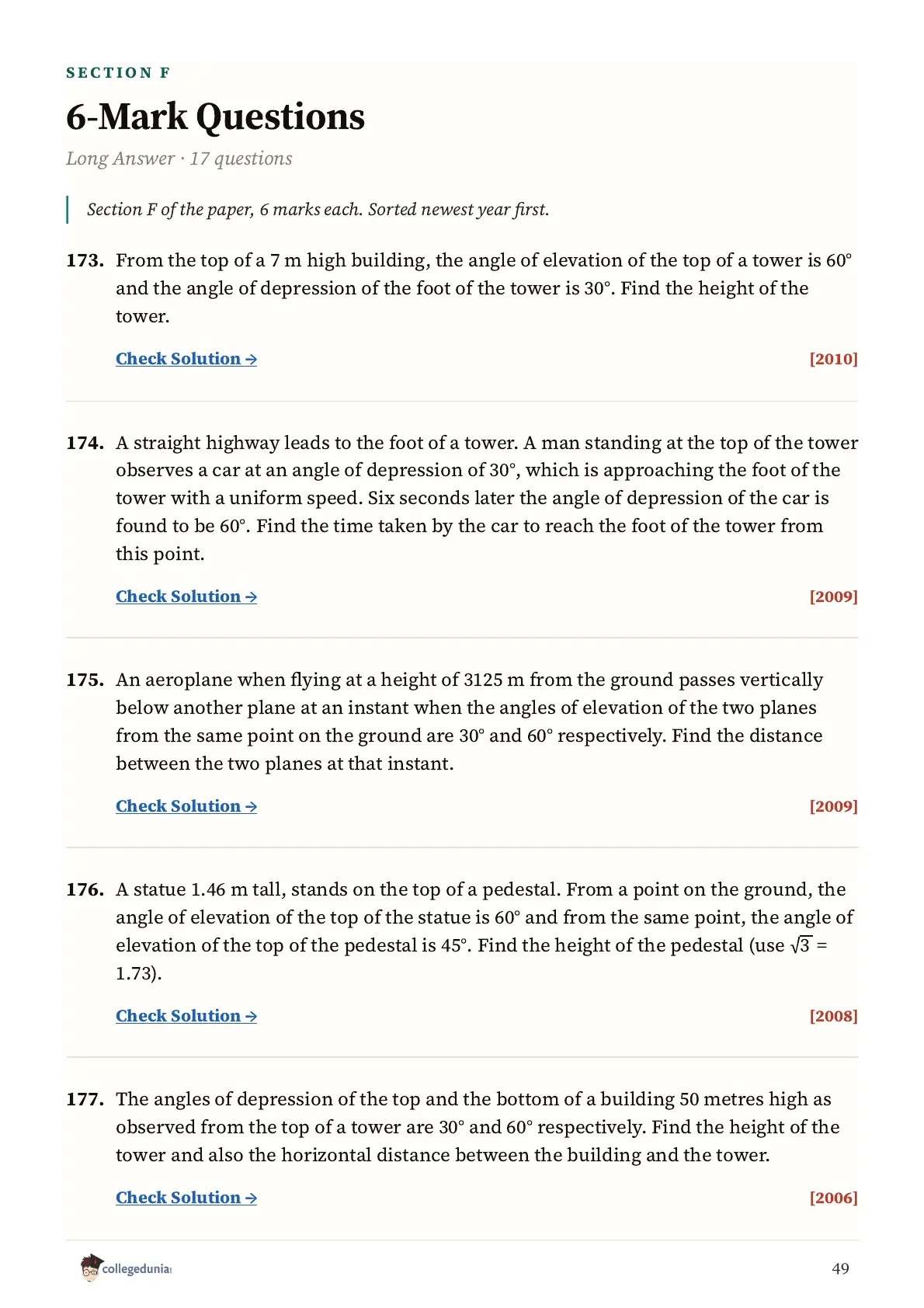
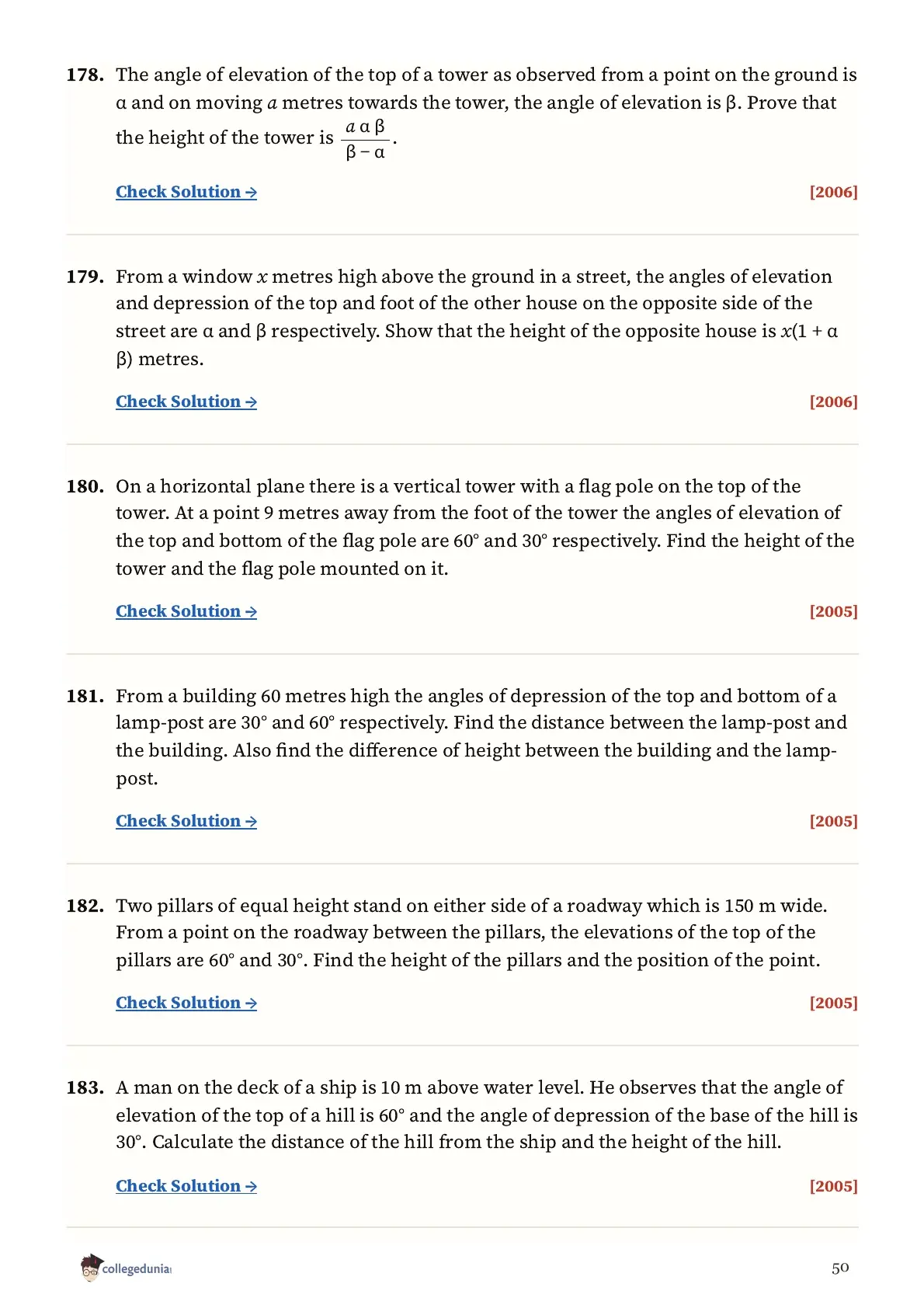
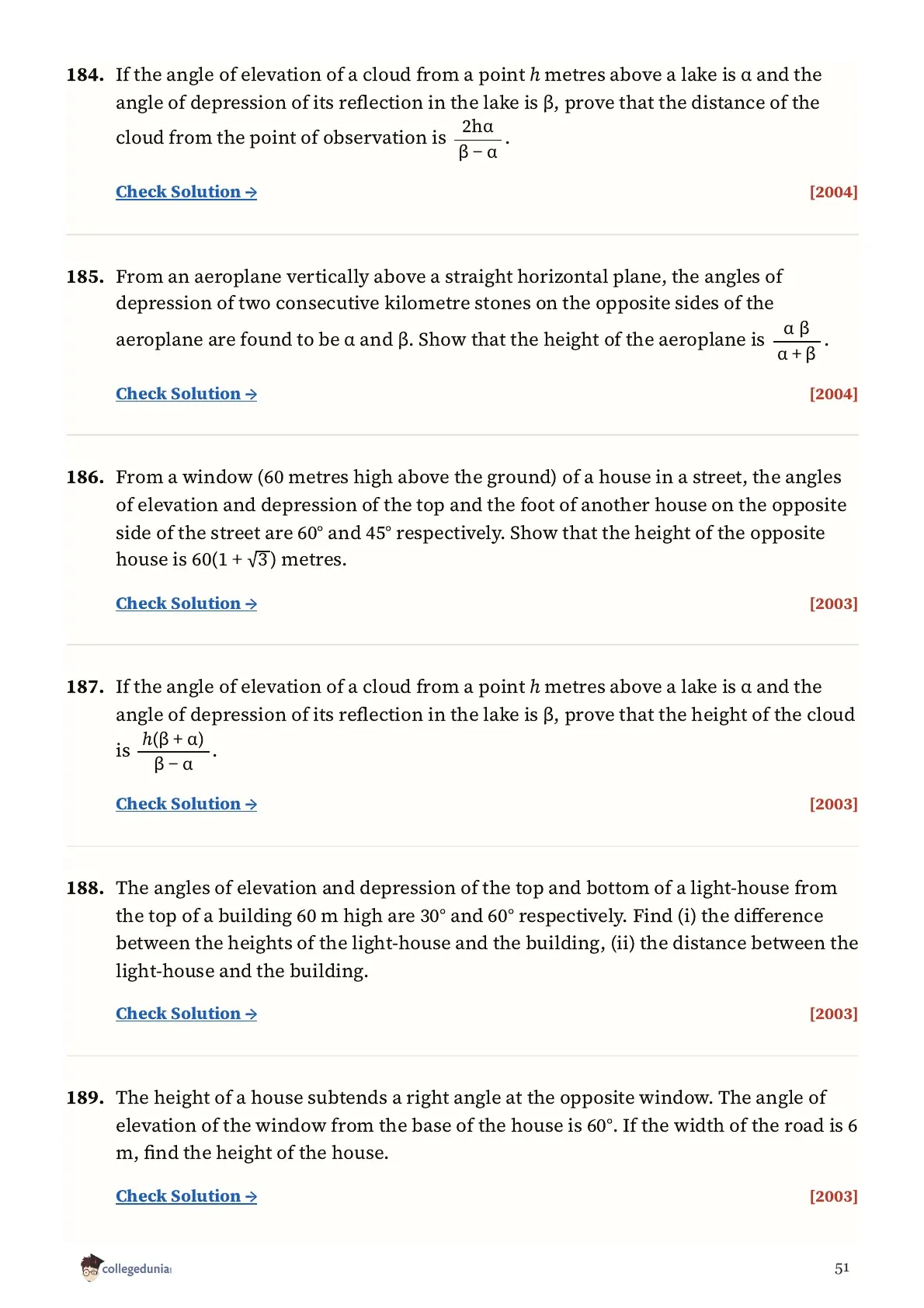
- 189 questions with a worked solution each: 29 MCQs, 62 short answers, 39 case-study items and 59 long answers
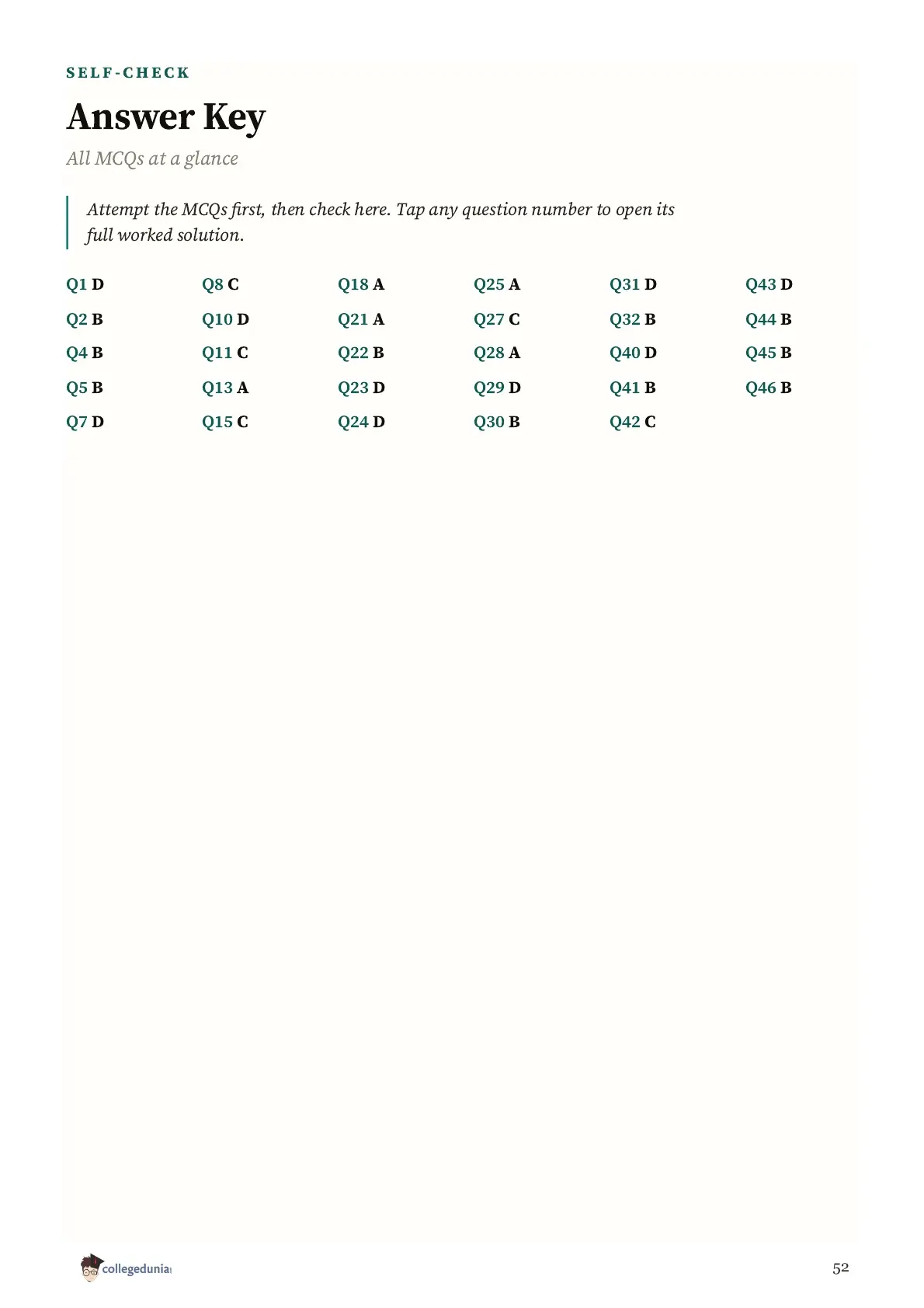
- An Answer Key that lists all 29 MCQs at a glance
- Question counts by topic, so you know whether to start with towers and buildings, angles of depression or two-observation problems
- A marks-wise table of questions (1, 2, 3, 4, 5 and 6 mark)
- The common mistakes students make, such as measuring a ladder's angle from the wall instead of the ground, and a short FAQ
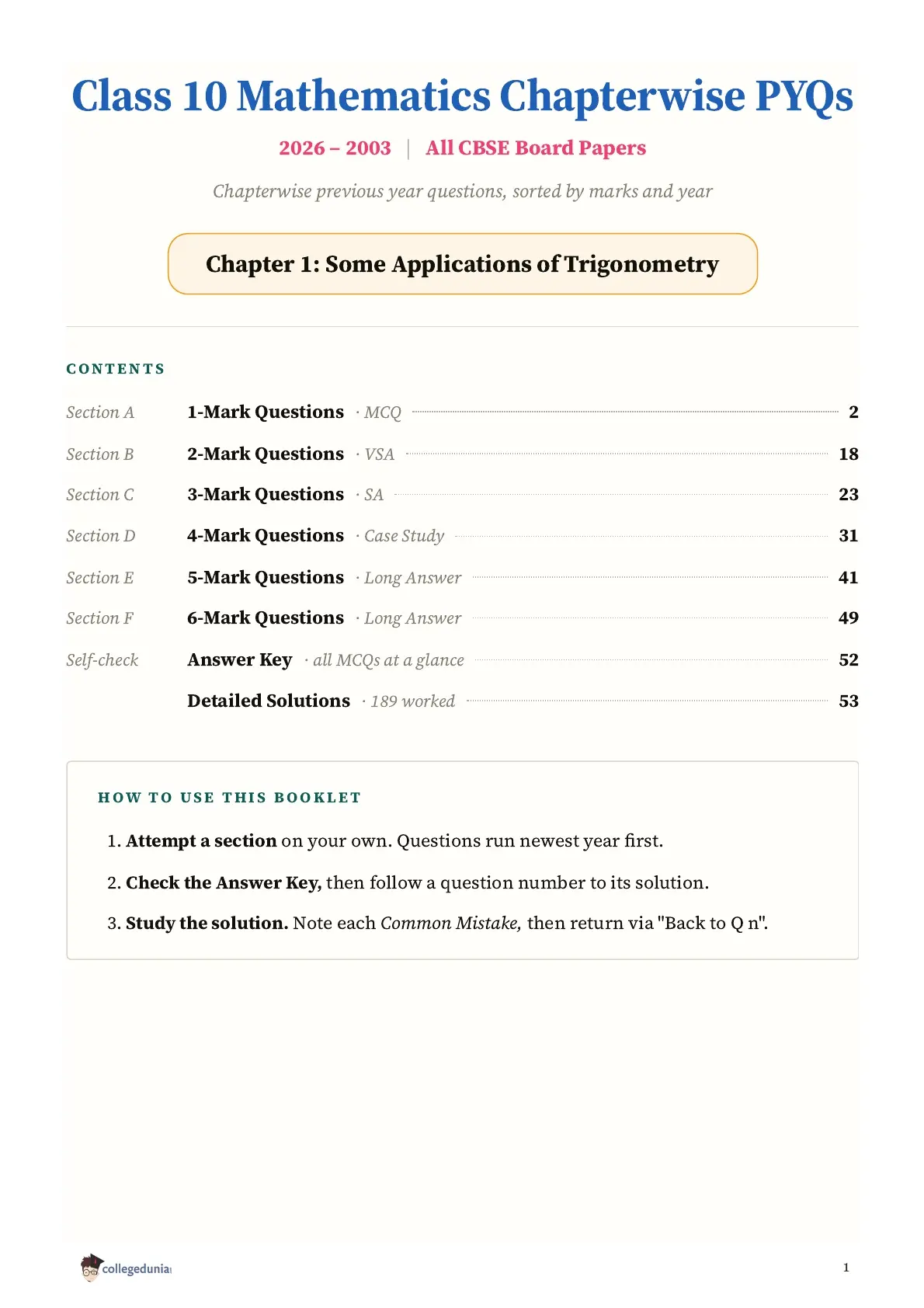
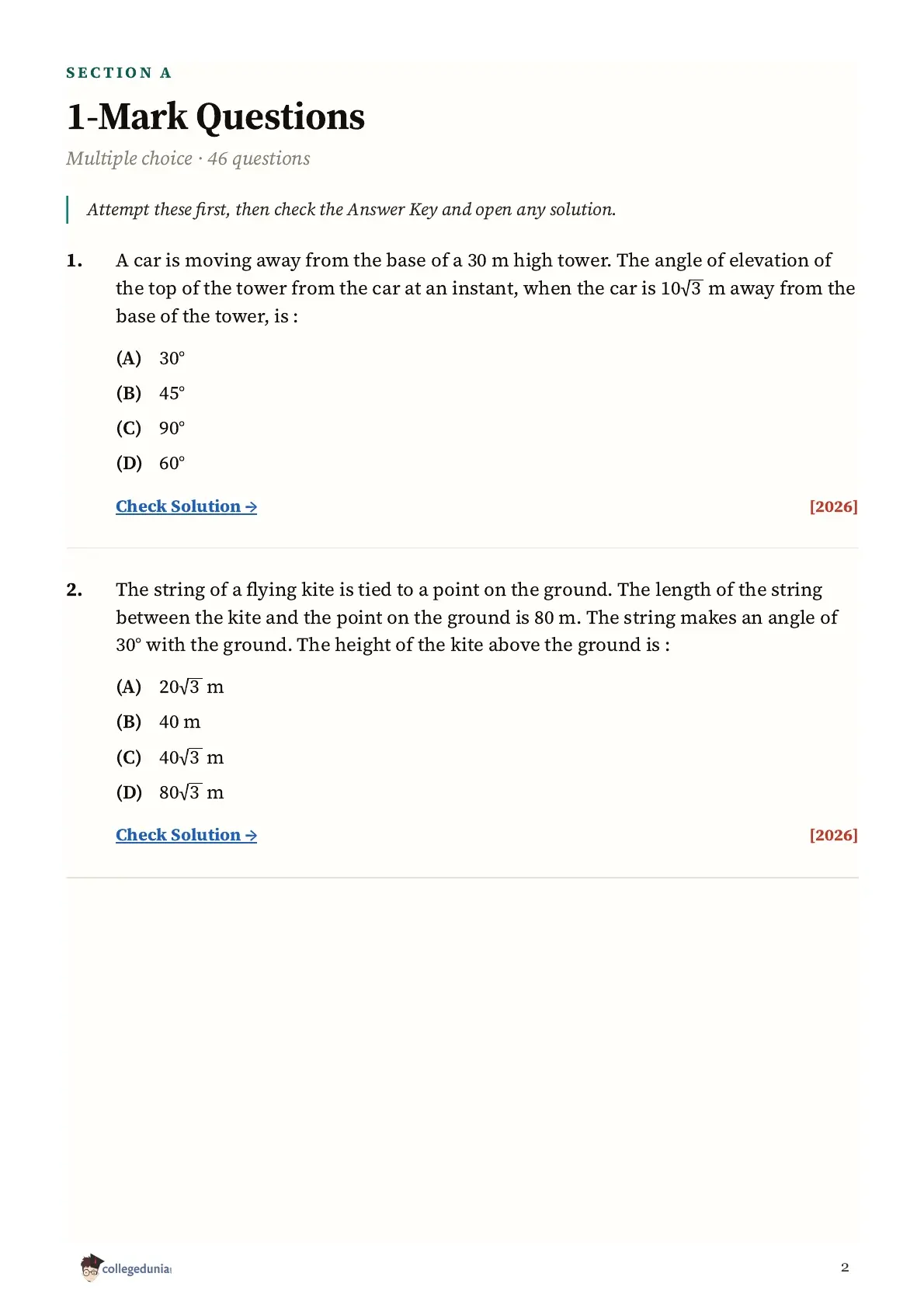
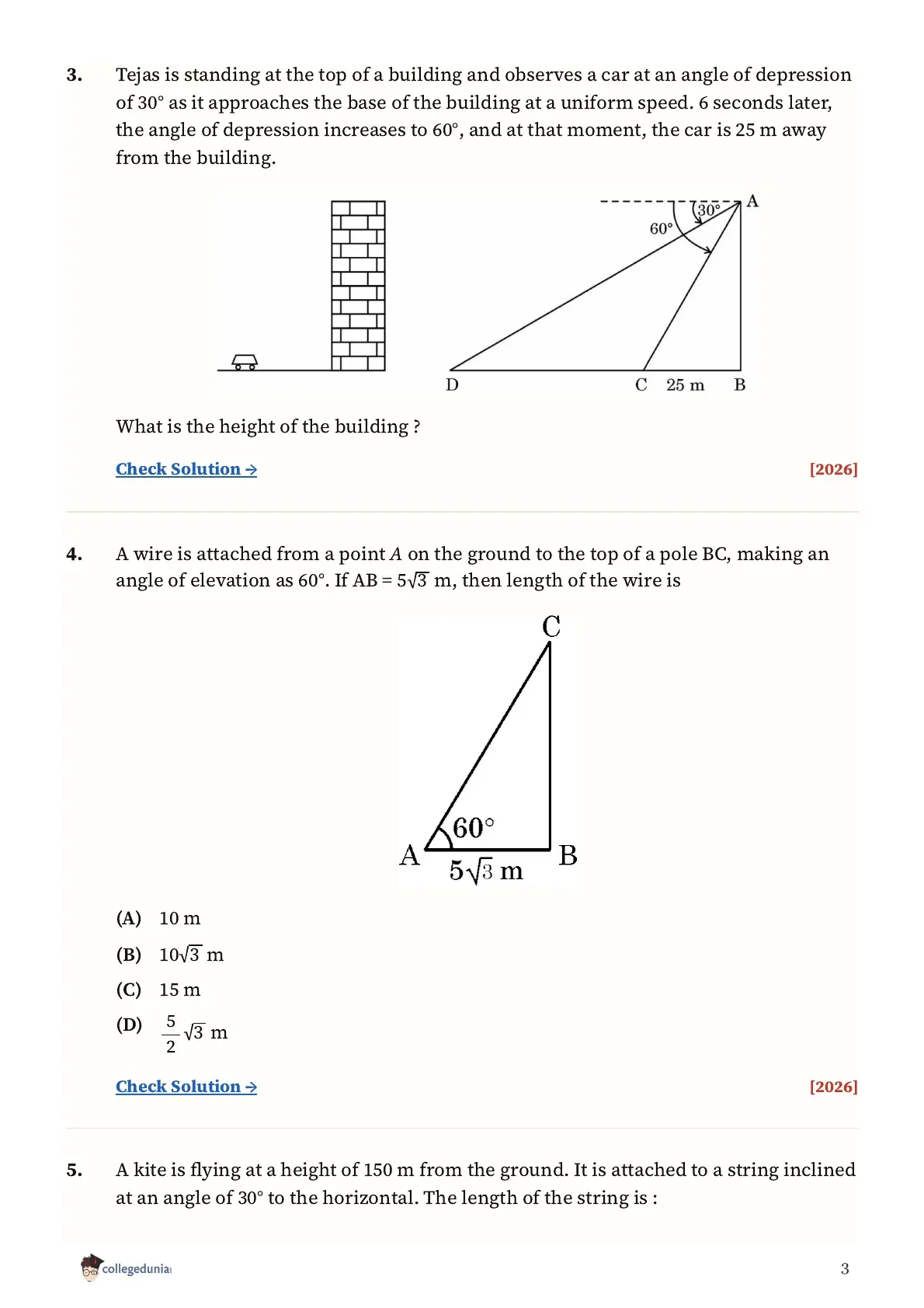
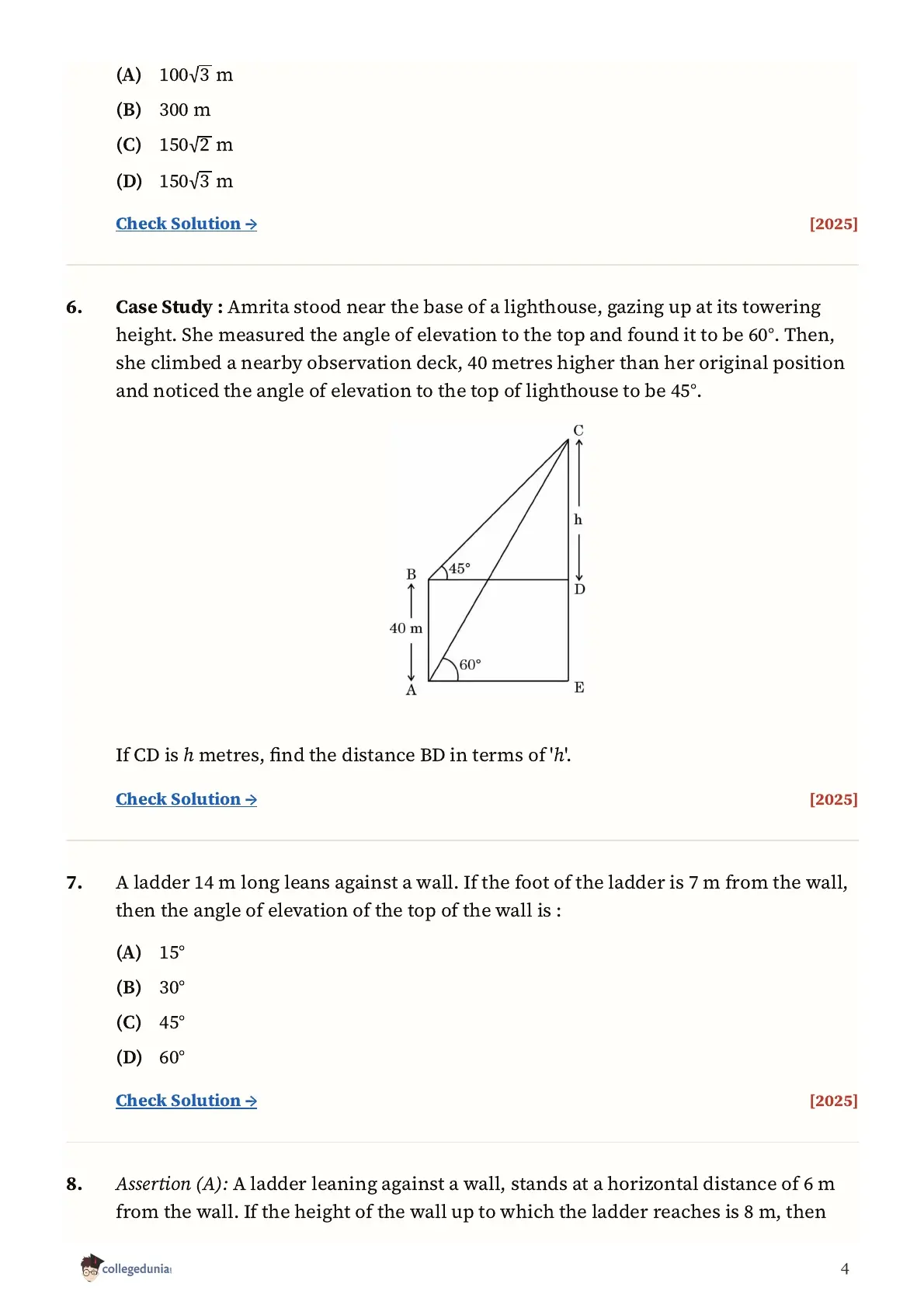
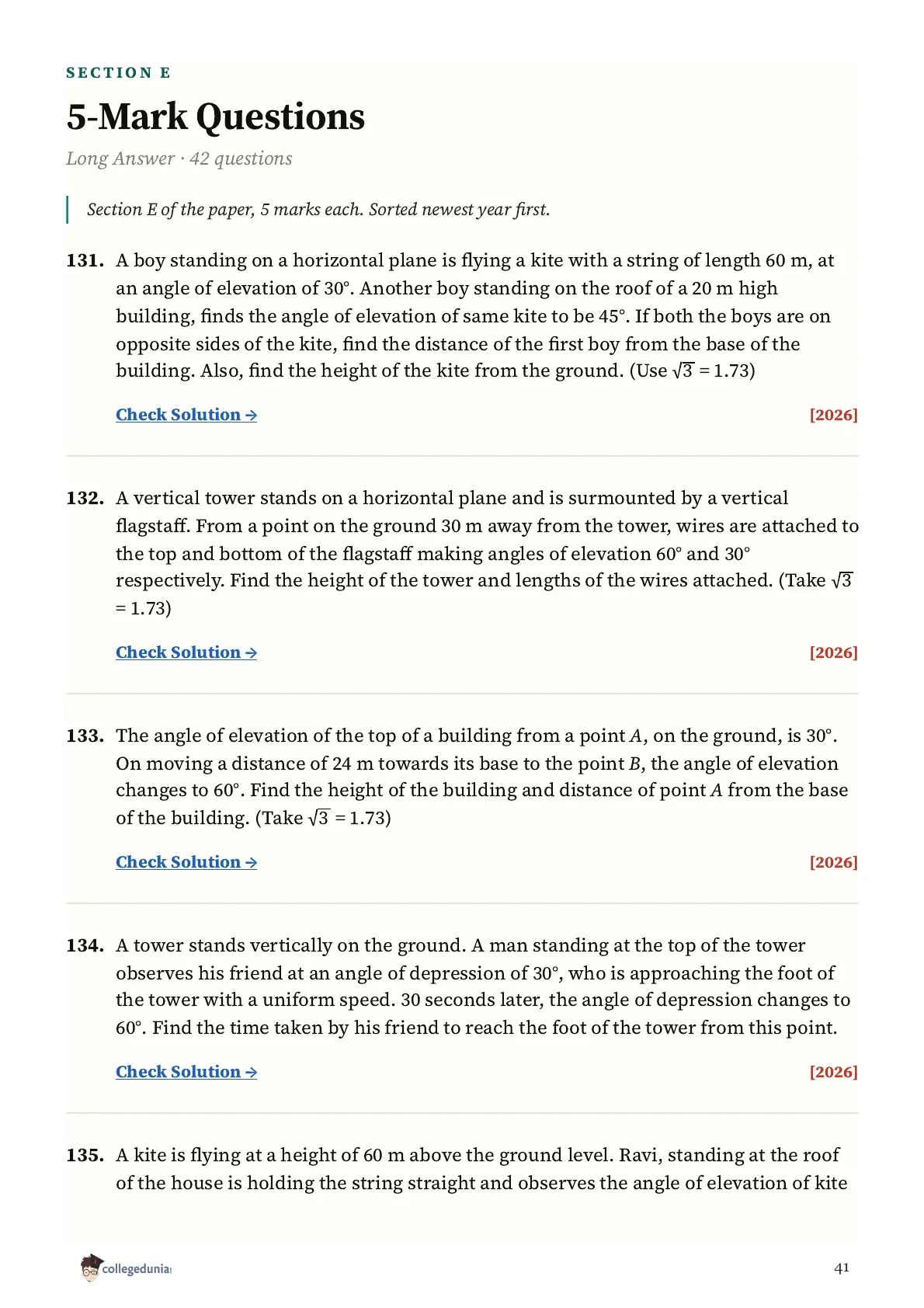
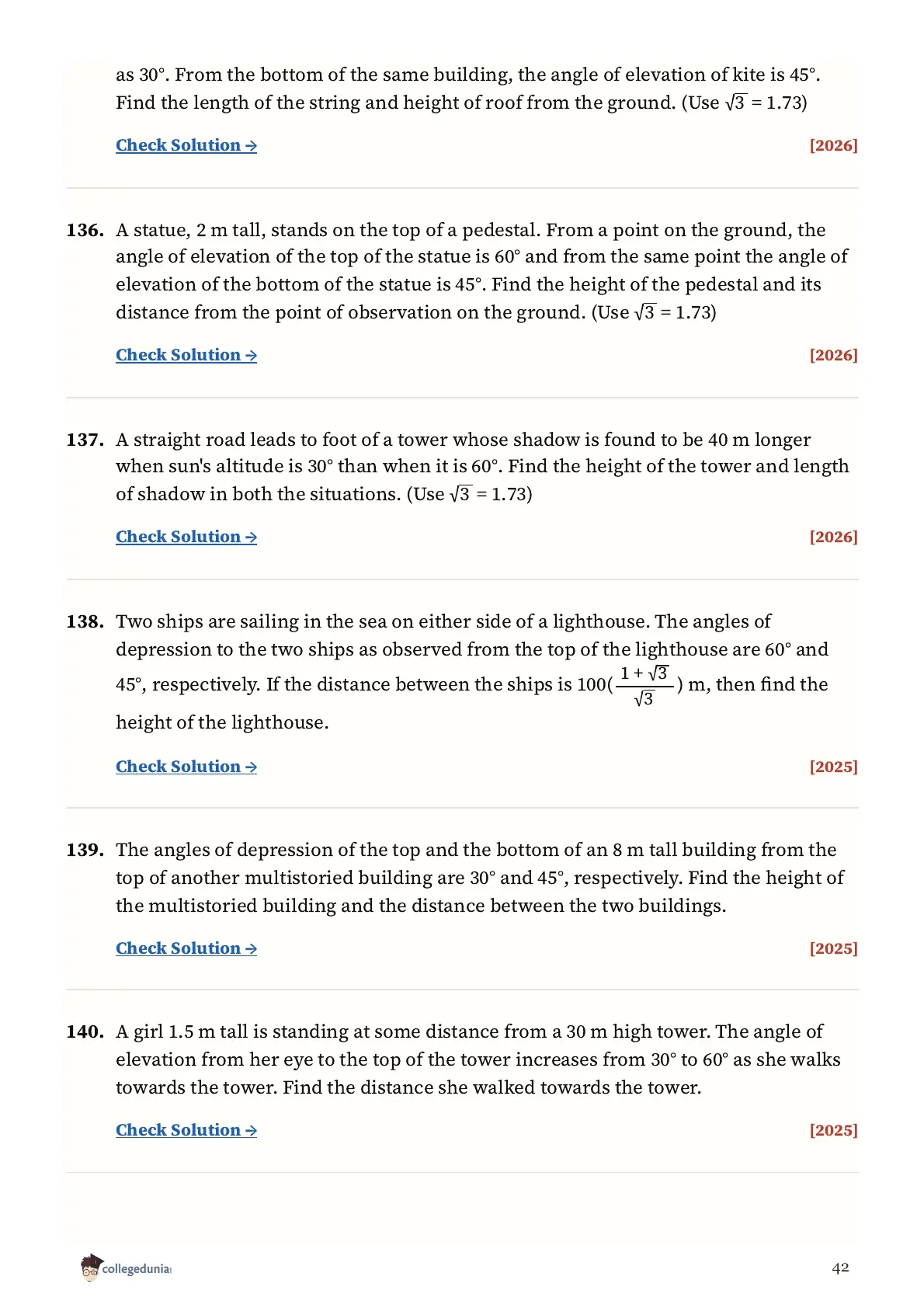
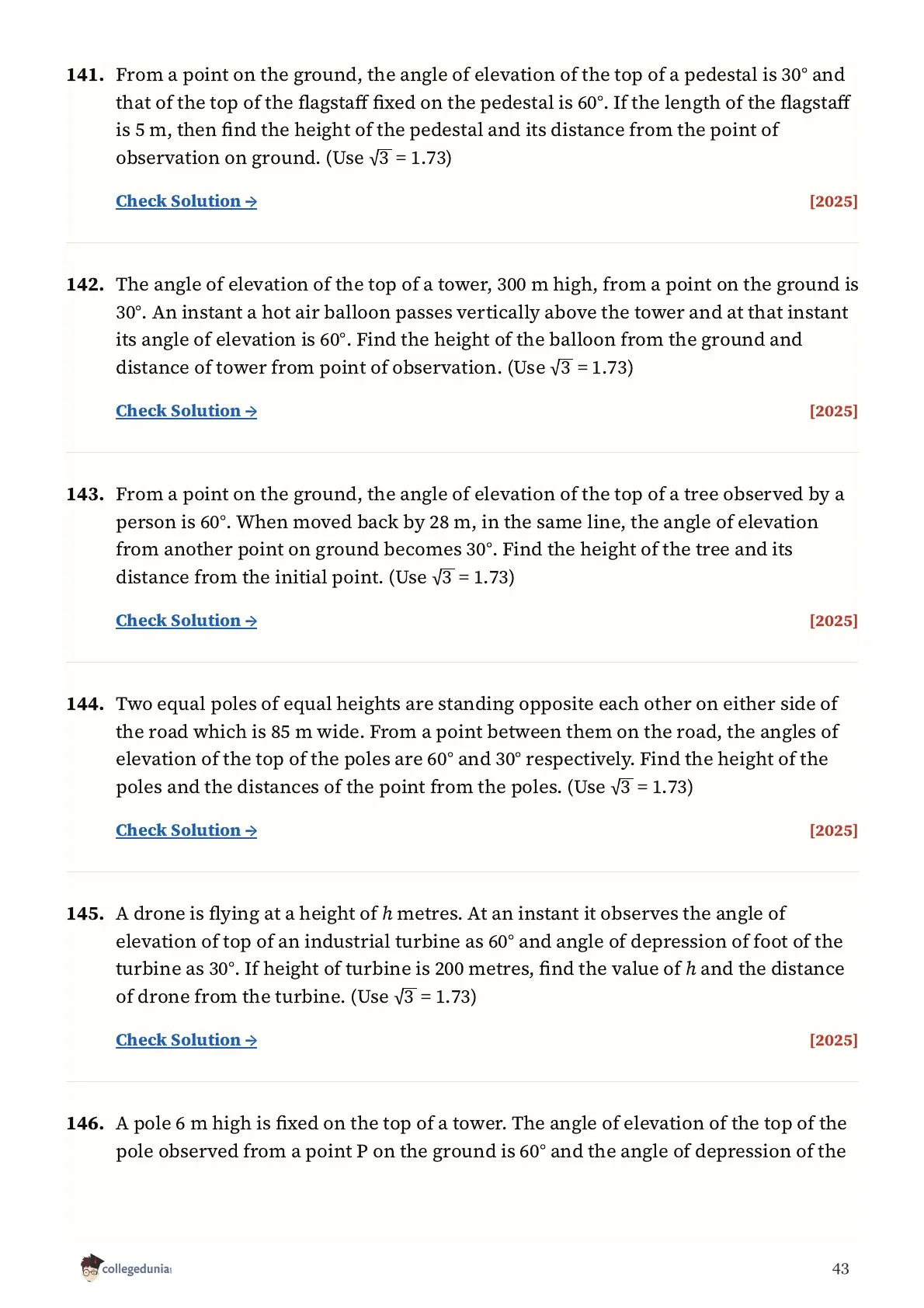
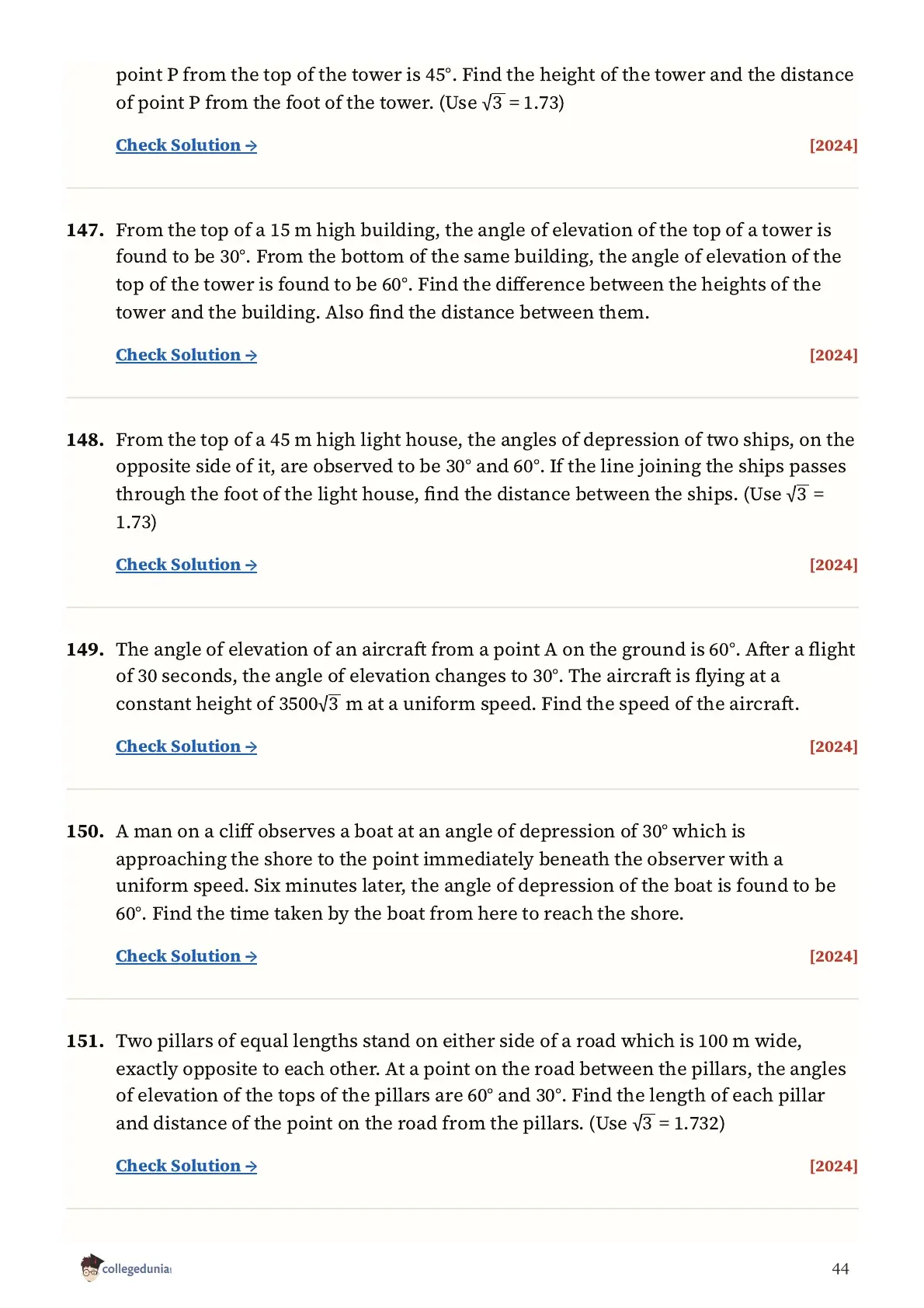
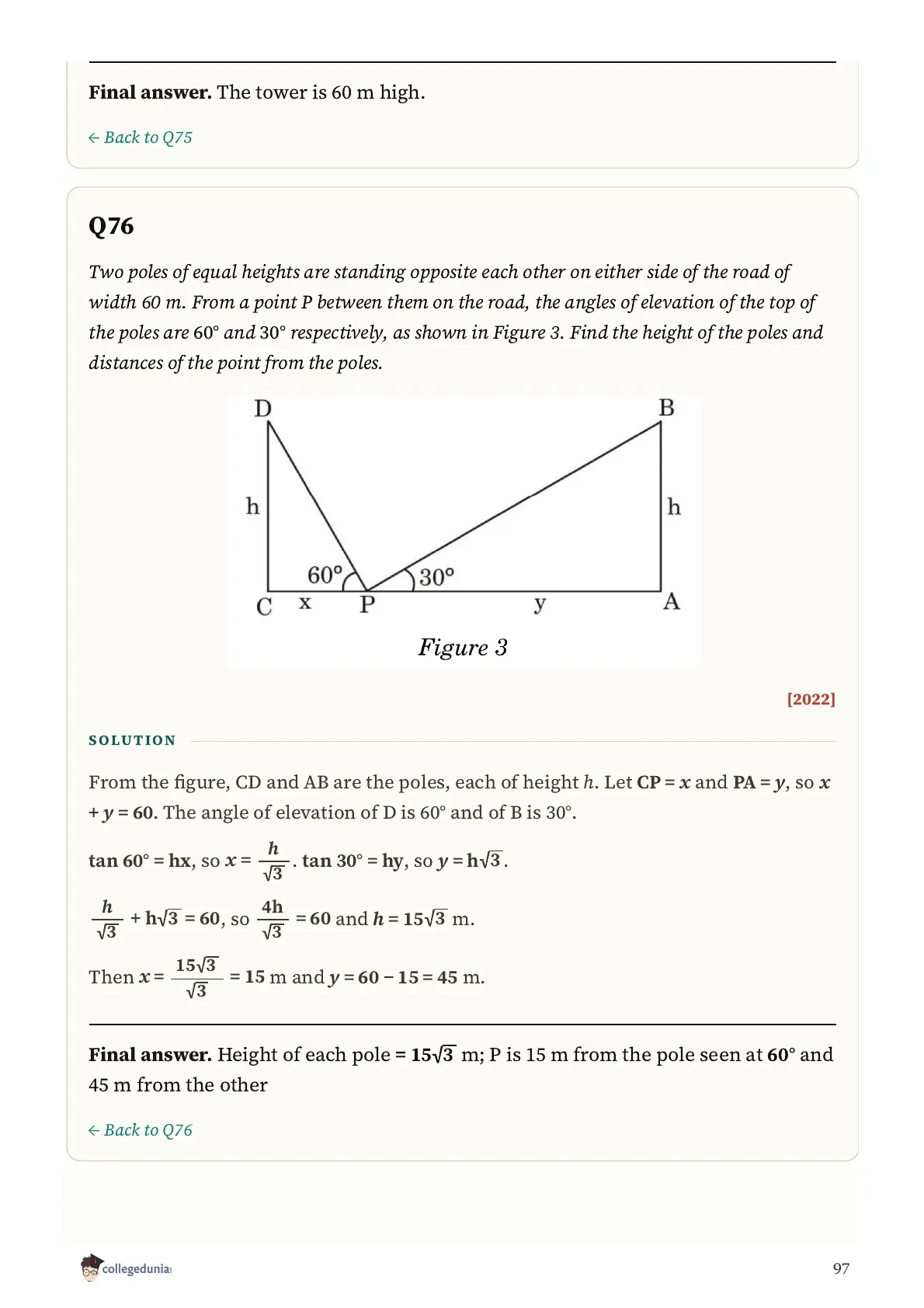
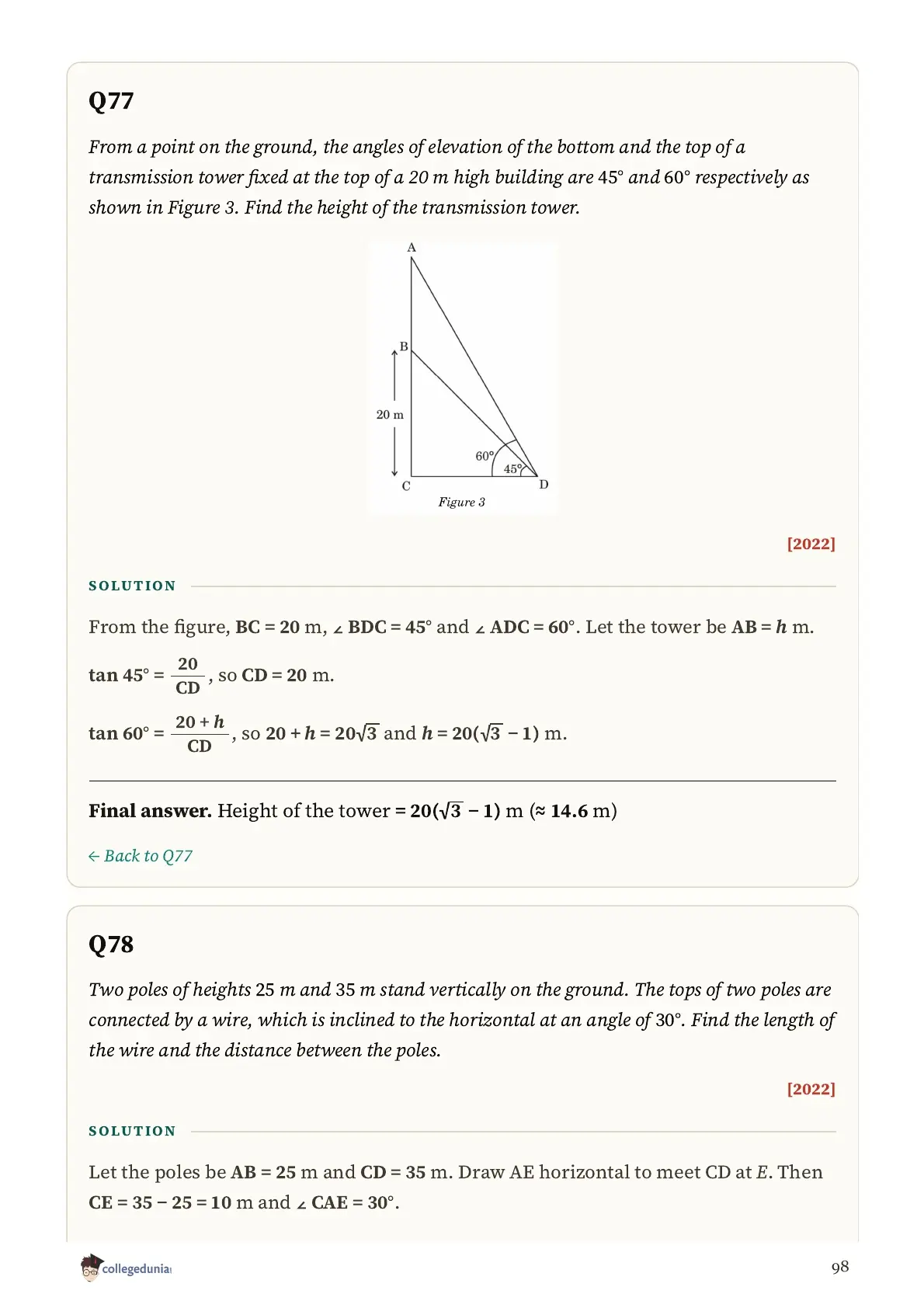
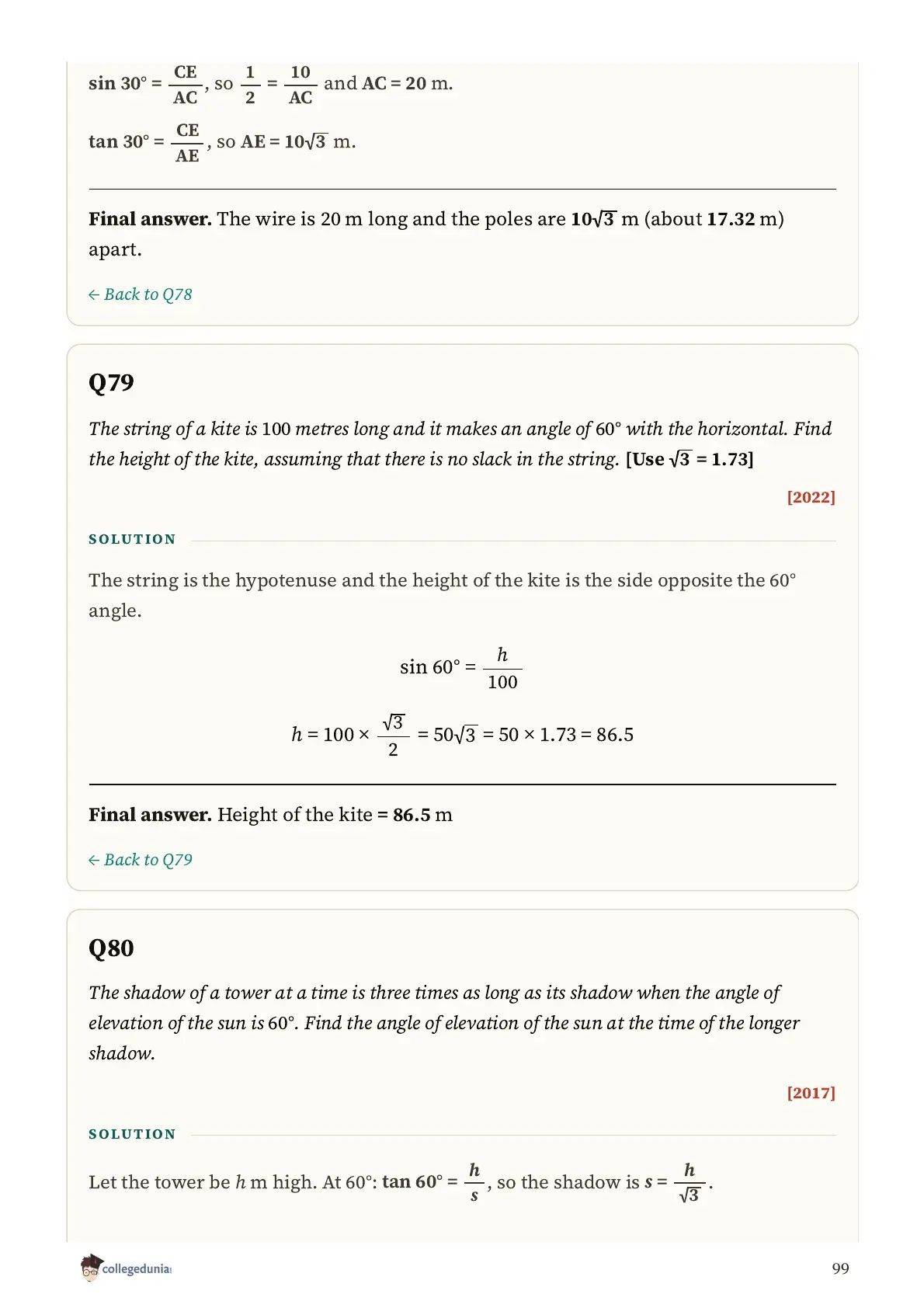
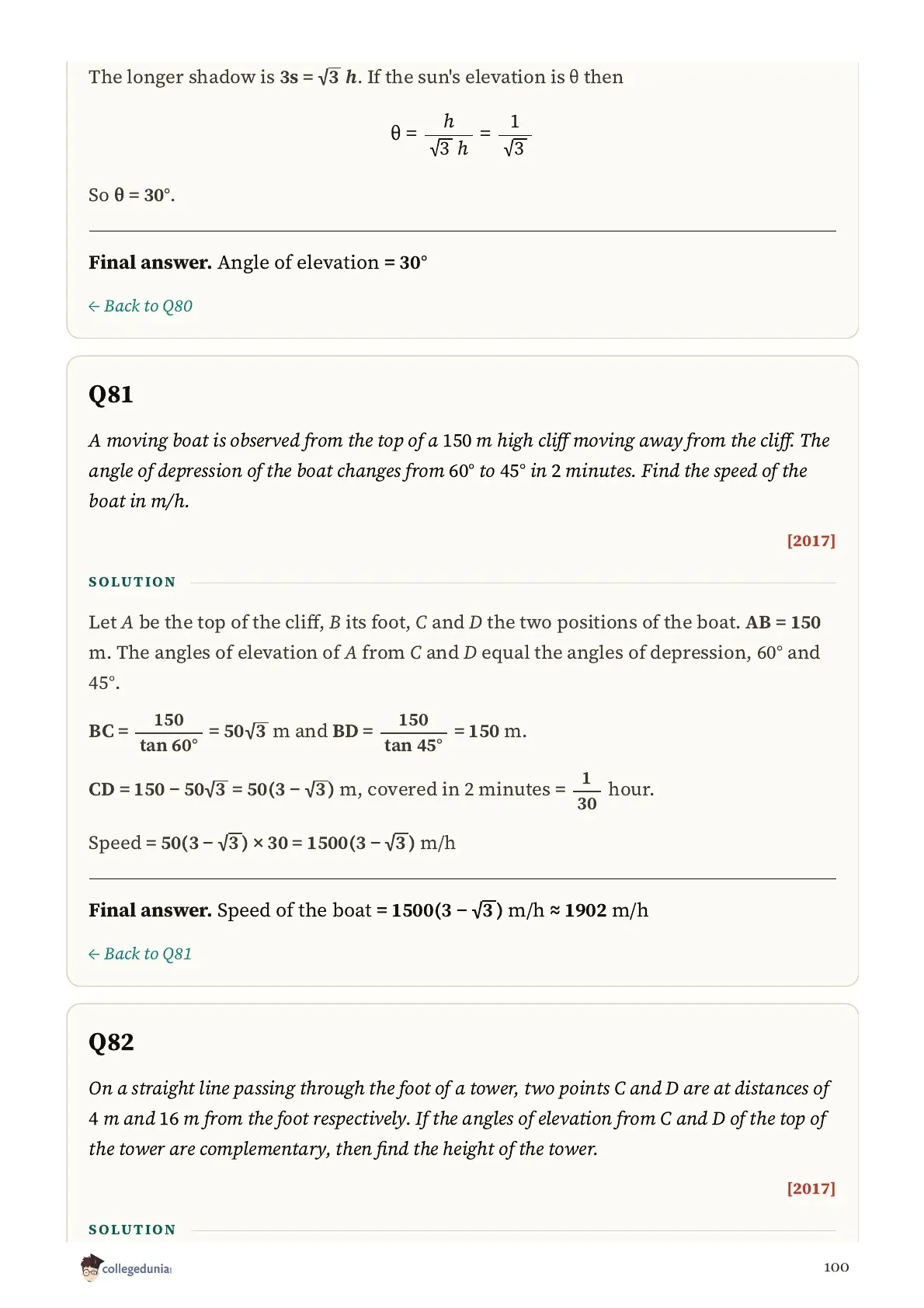
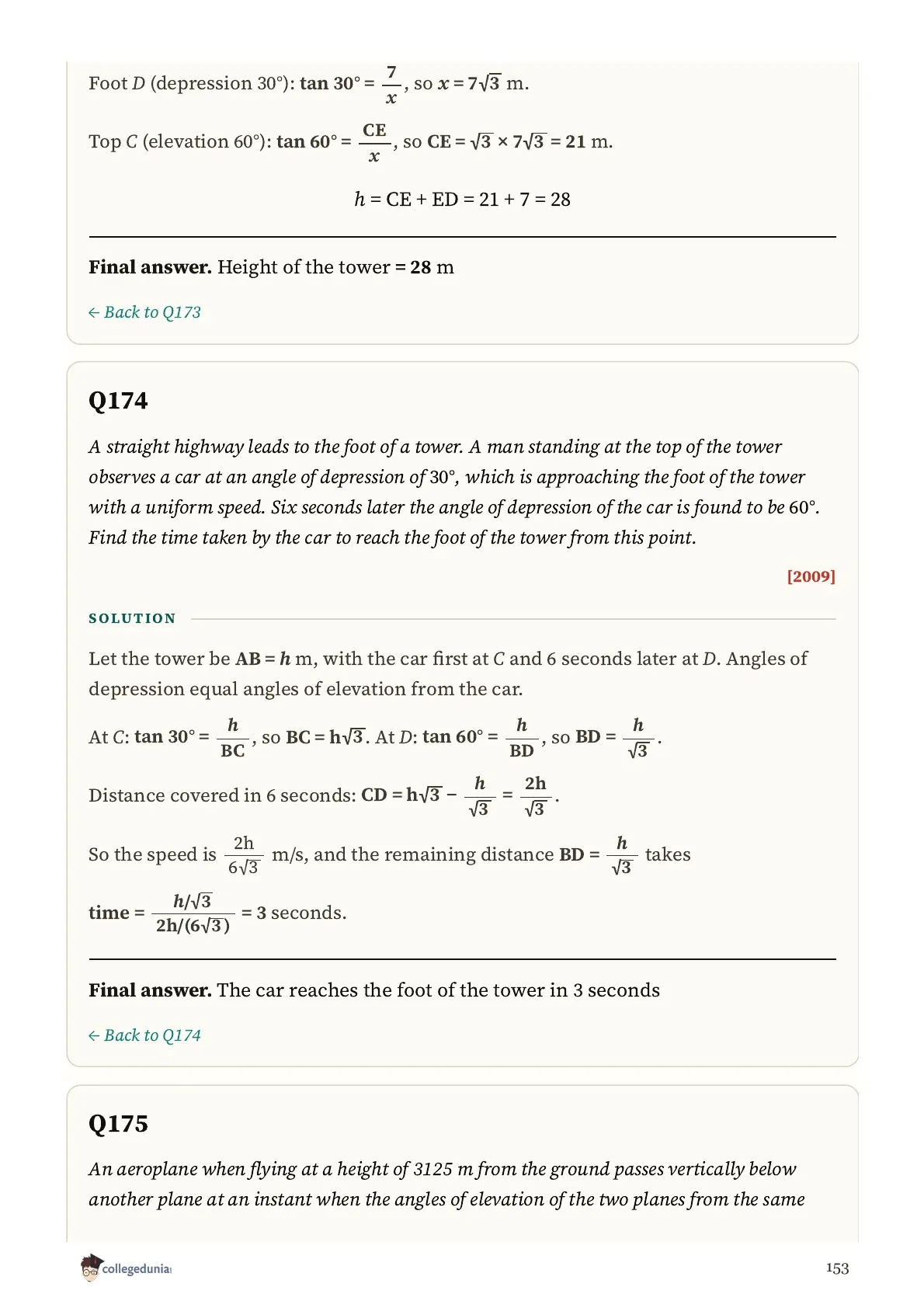
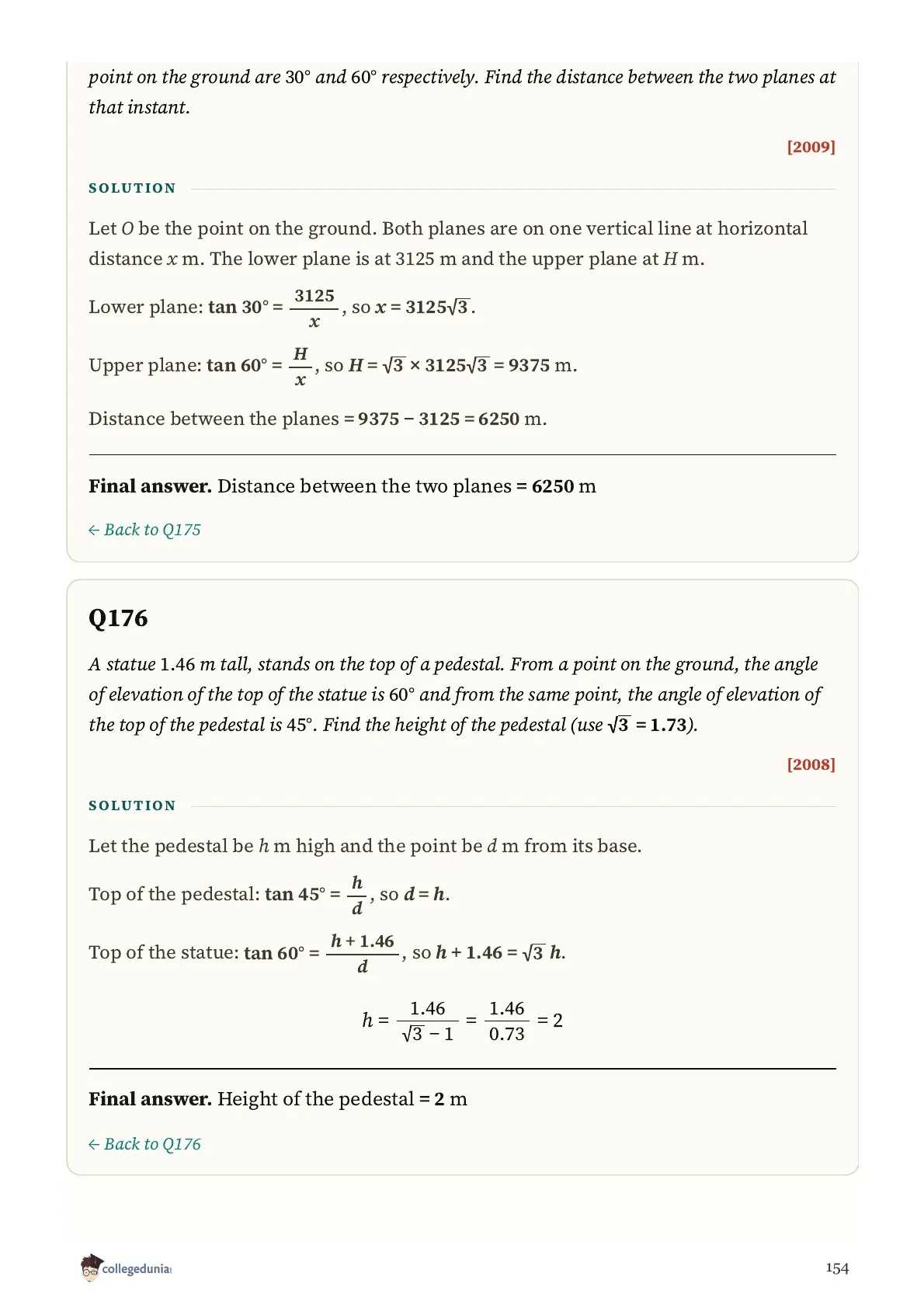
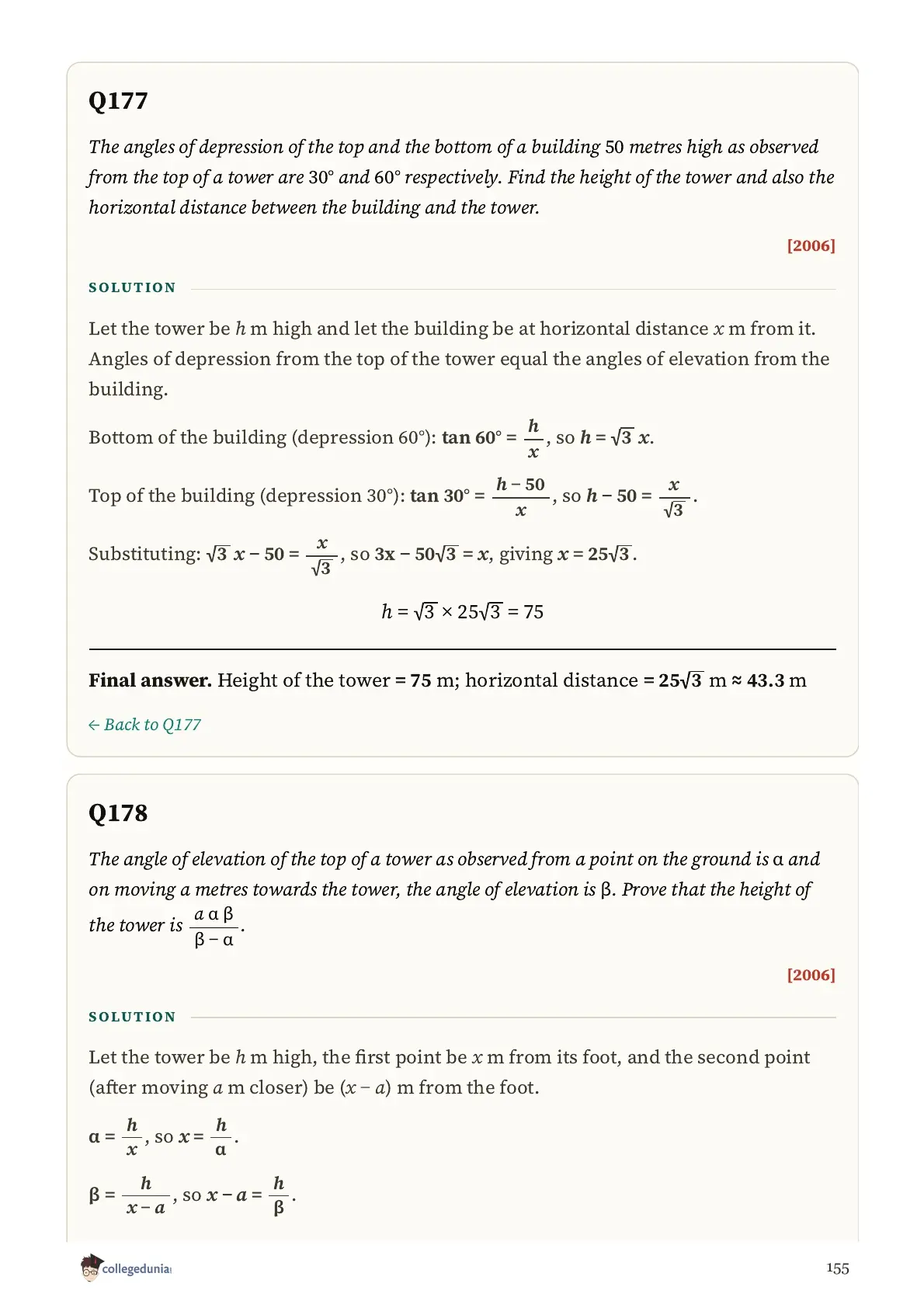
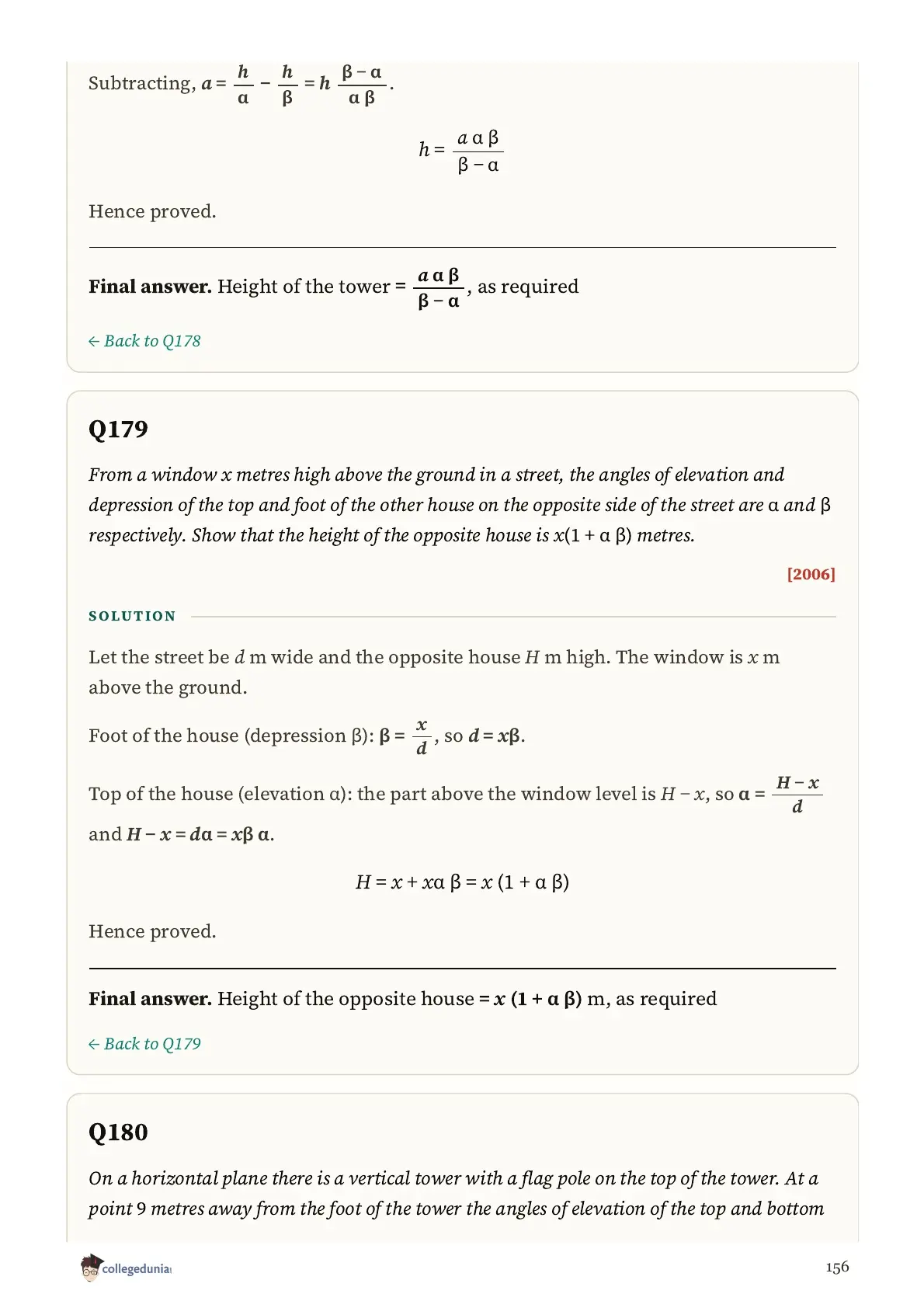
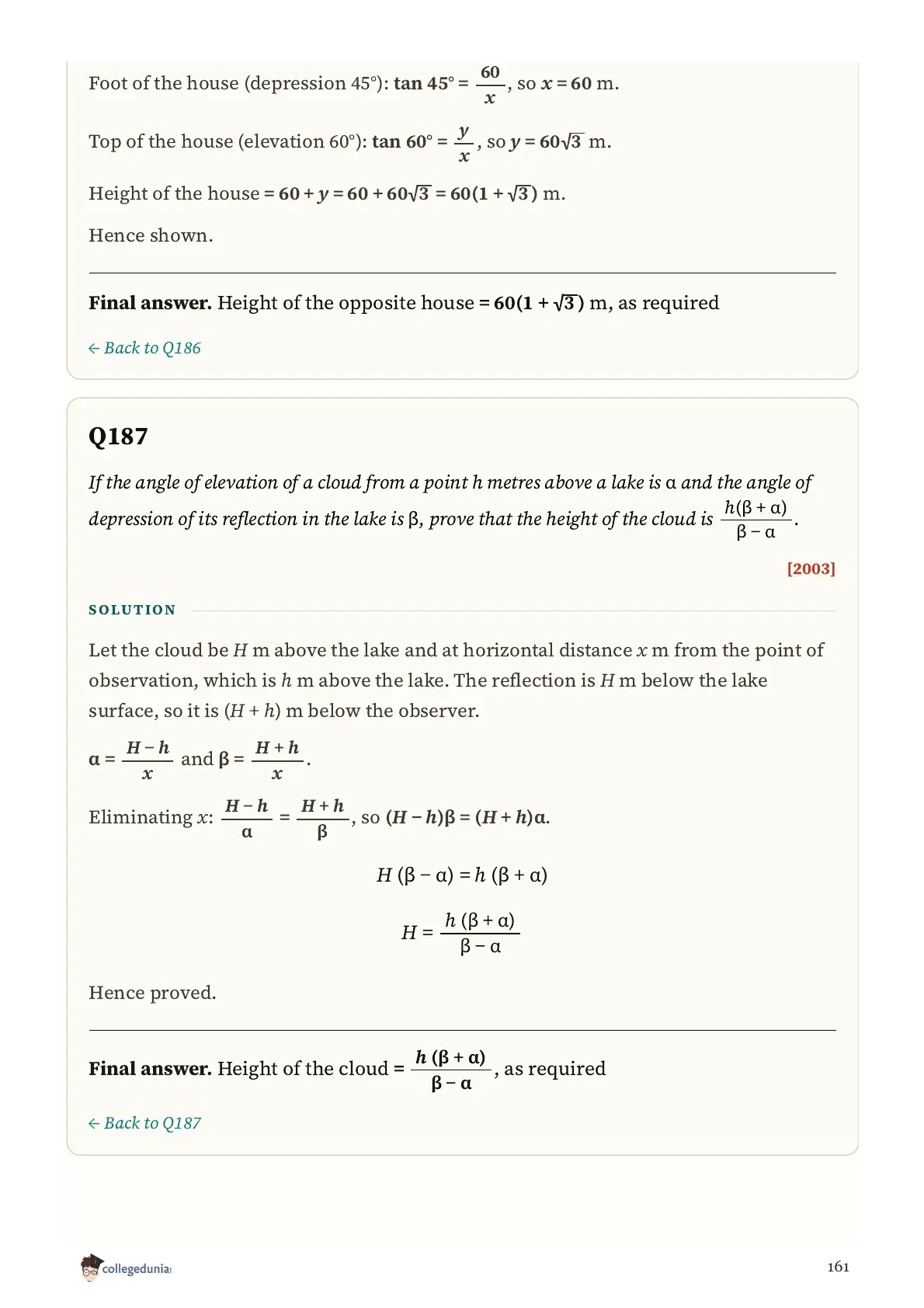
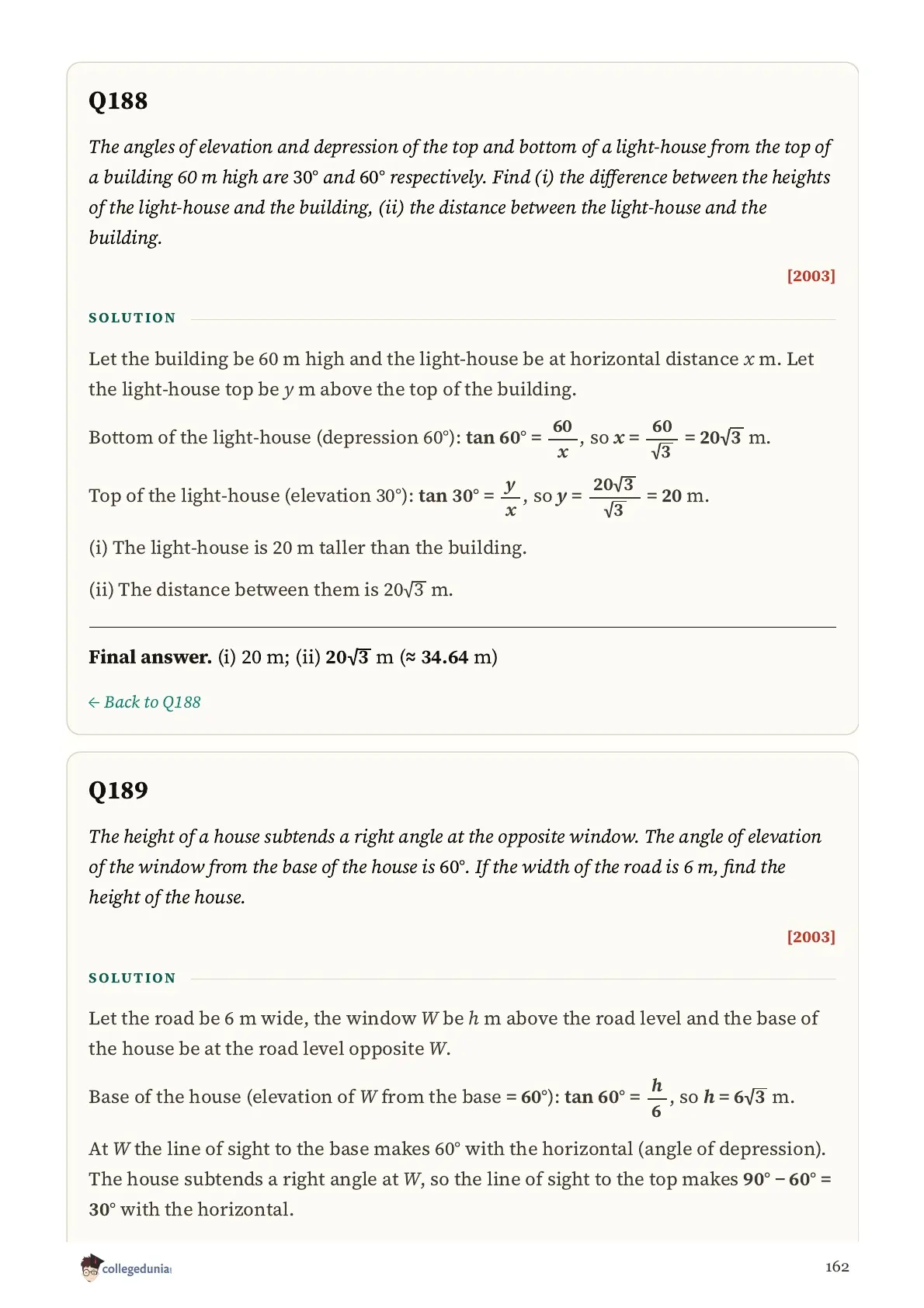
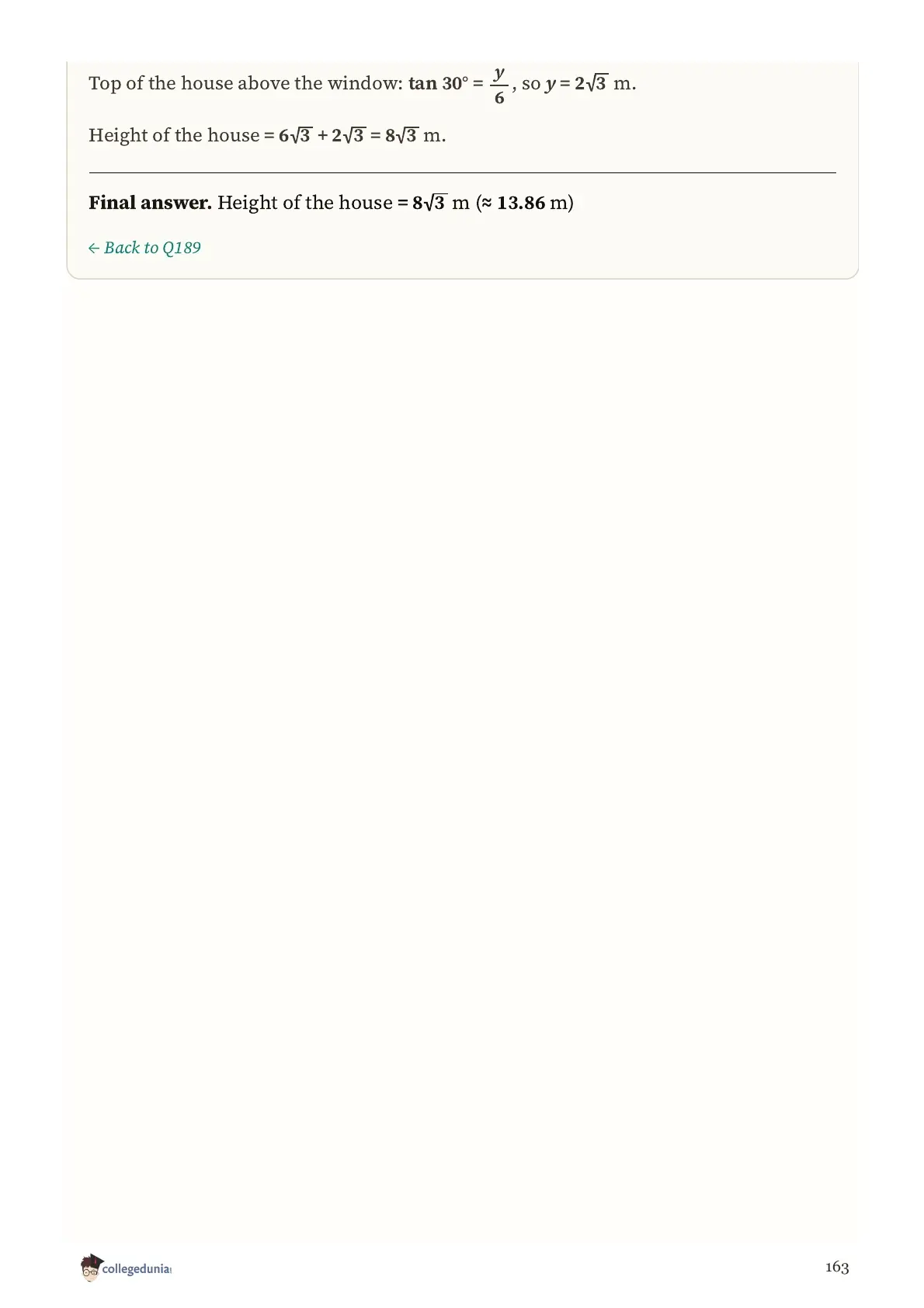
Some Applications of Trigonometry Weightage in the Class 10 Maths Paper
CBSE does not print a mark figure for this chapter alone. In the Class 10 Maths syllabus the unit Trigonometry carries 12 of the 80 theory marks and holds two chapters, Introduction to Trigonometry and Some Applications of Trigonometry. The 12 is a unit-level figure as reported by prep sites for the 2026-27 syllabus and is unofficial, so check cbseacademic.nic.in for the current syllabus. In this set the 1-mark question and the 5-mark long answer are the commonest forms, and 114 of the 189 questions come from the 2022 to 2026 papers.
The table shows how many questions the set holds at each mark value.
| Marks per Question | Questions in the Set |
|---|---|
| 1 mark | 46 |
| 2 marks | 17 |
| 3 marks | 28 |
| 4 marks (case study) | 39 |
| 5 marks | 42 |
| 6 marks | 17 |
Some Applications of Trigonometry Questions by Topic
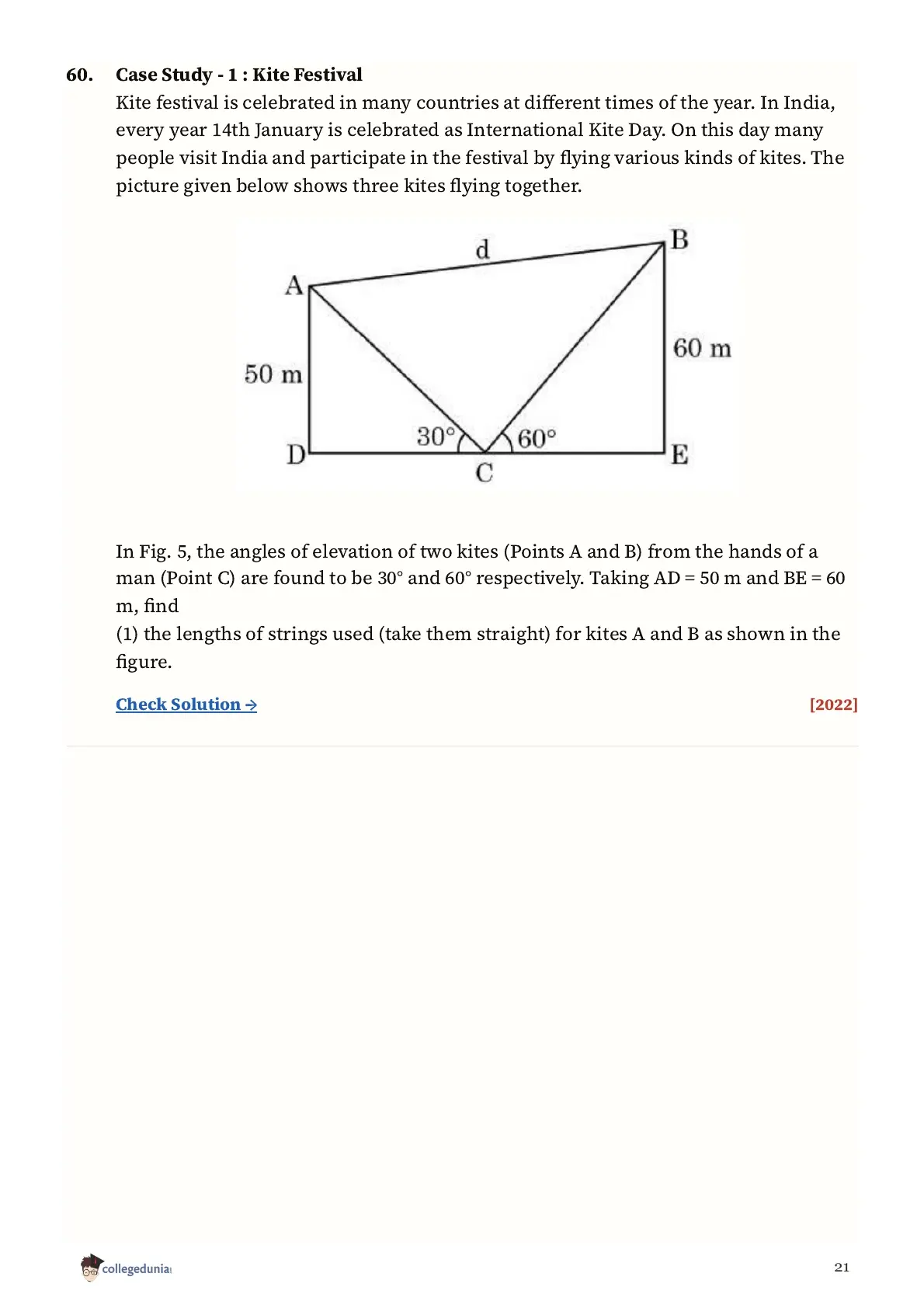
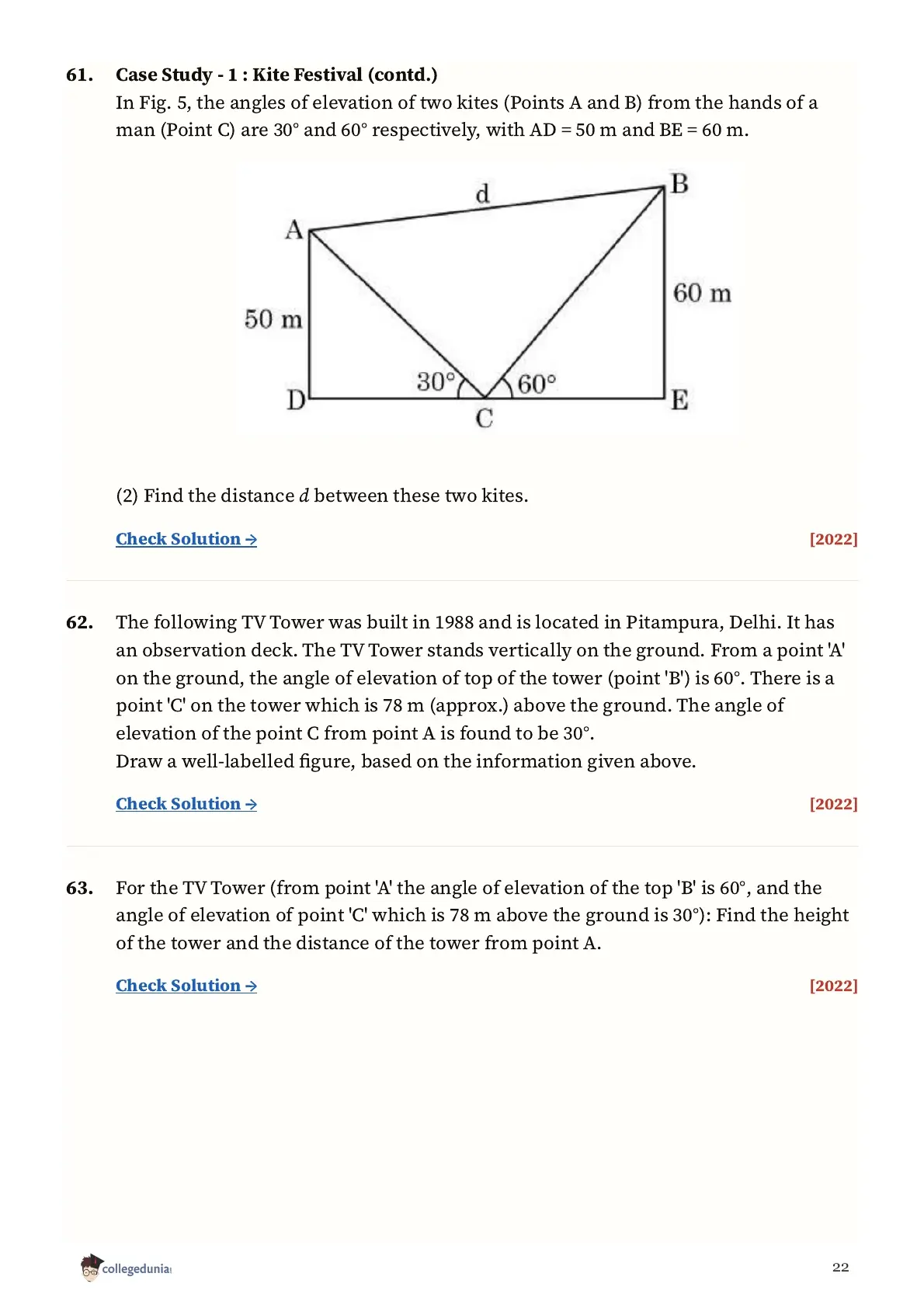
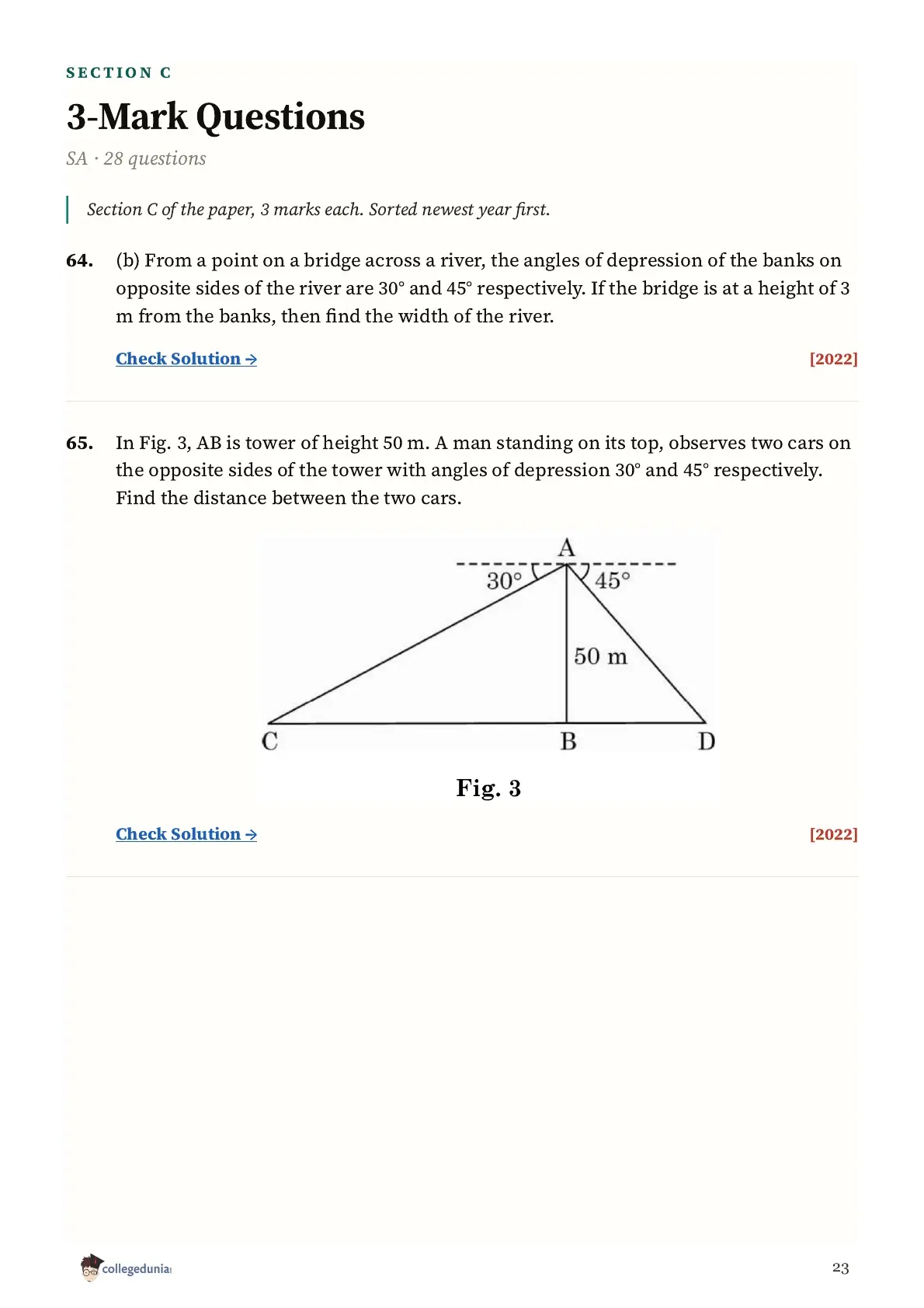
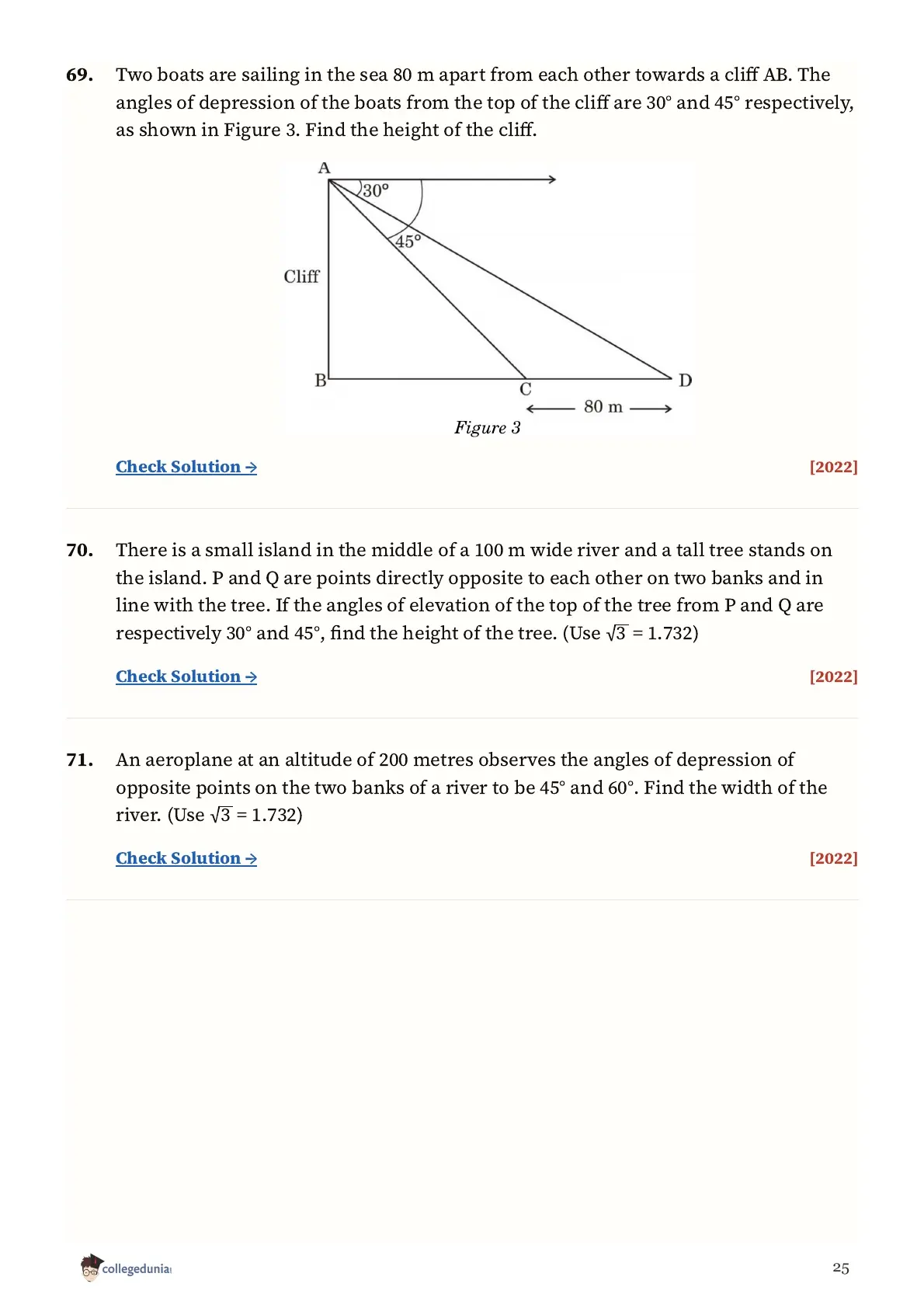
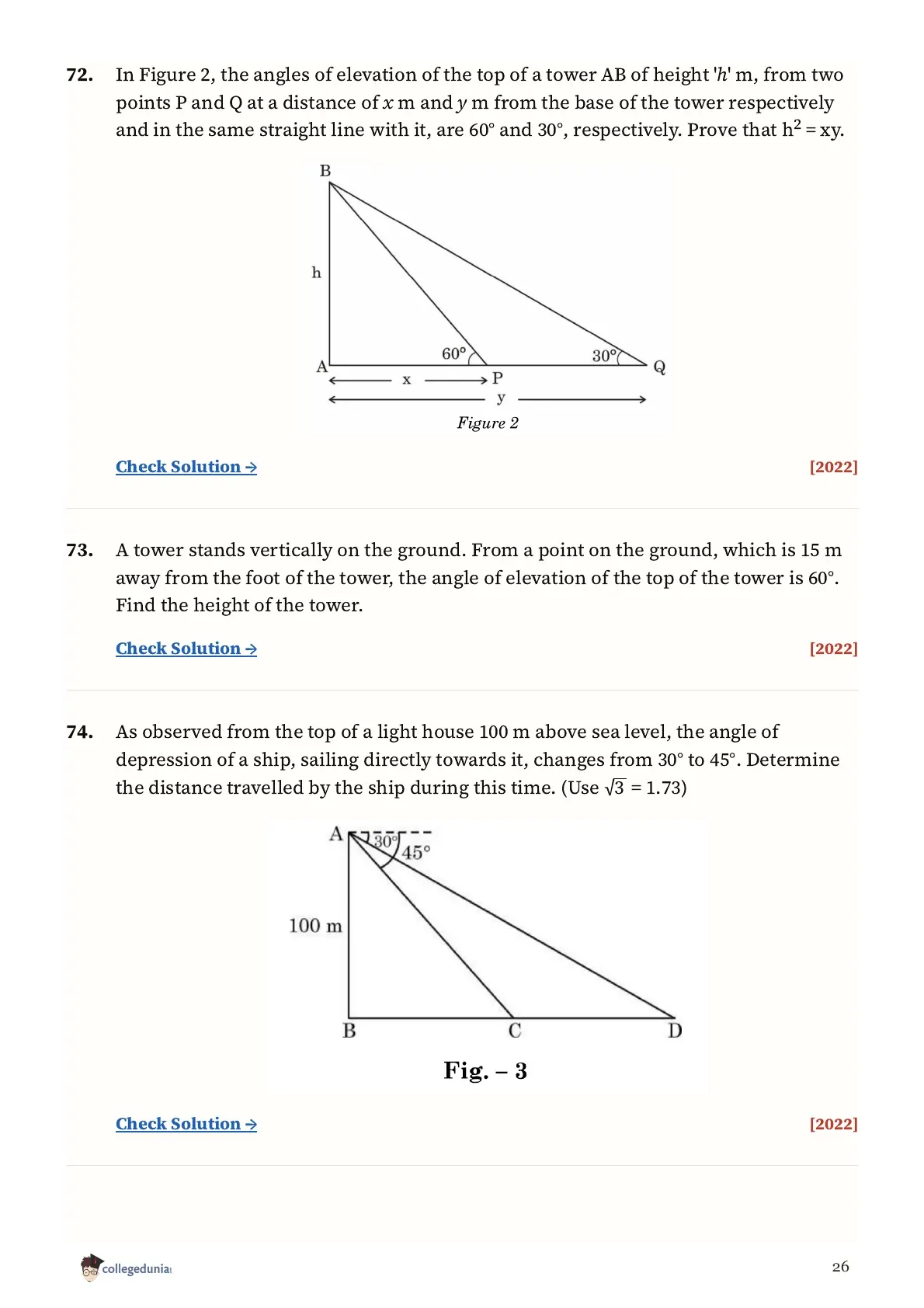
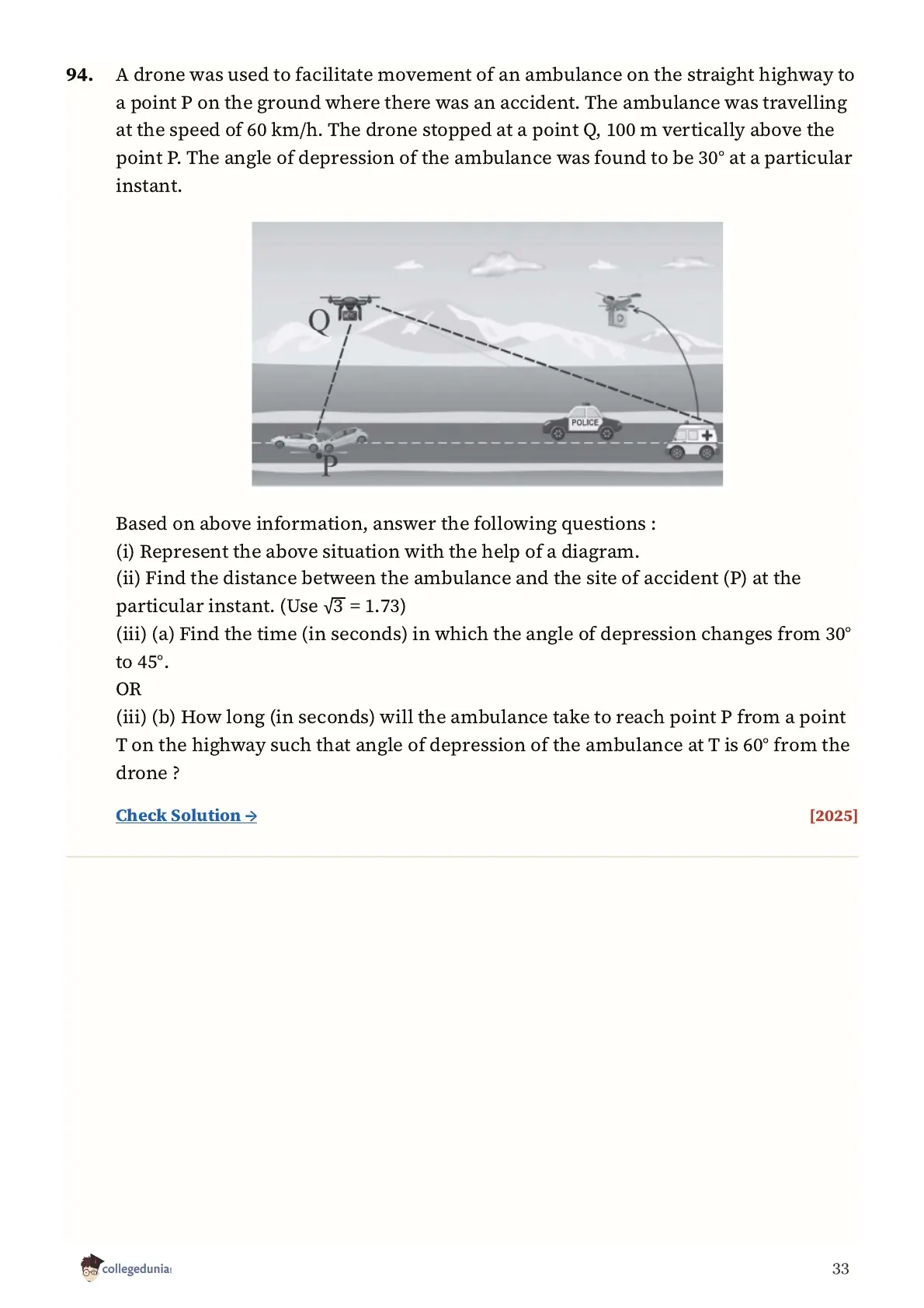
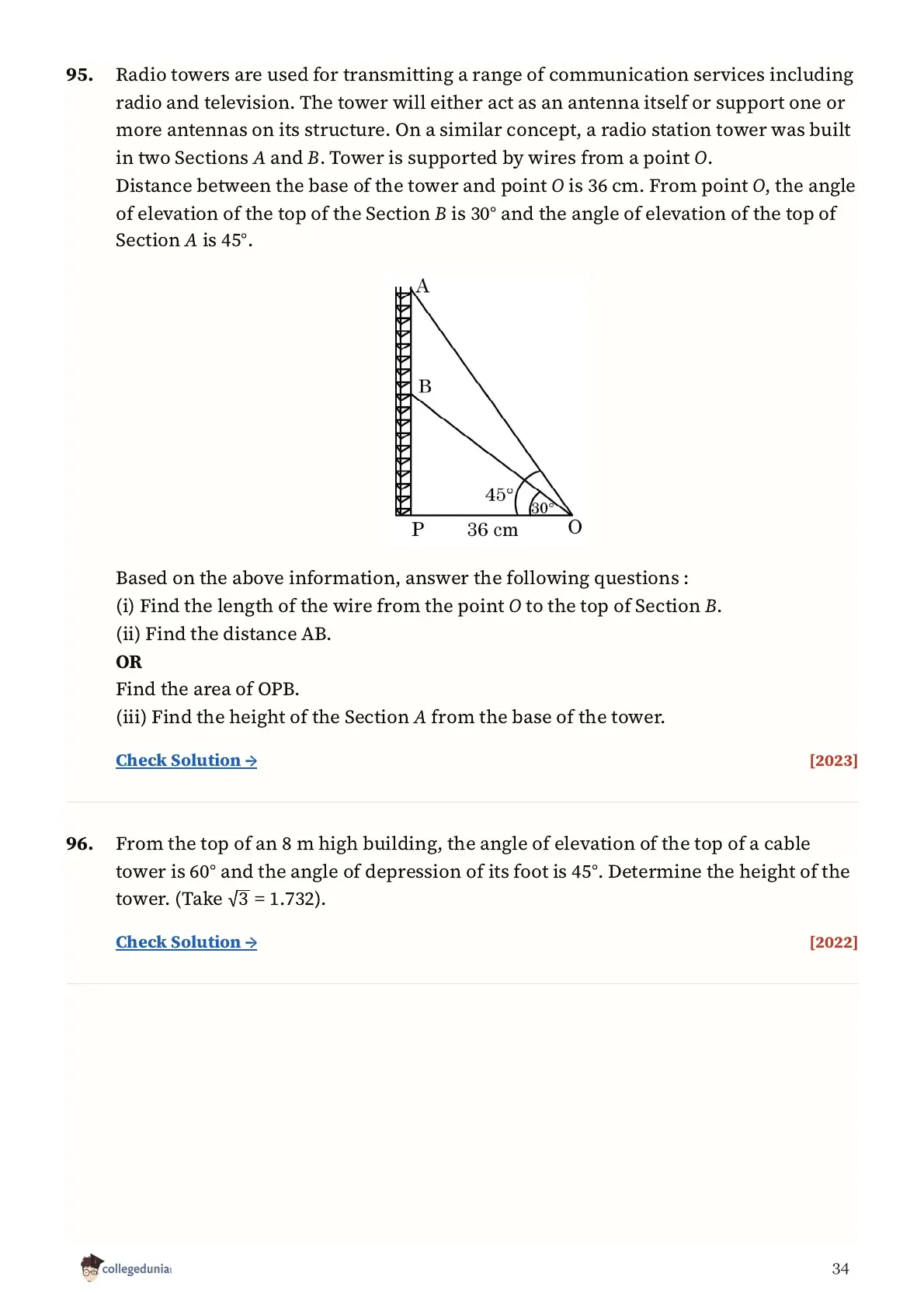
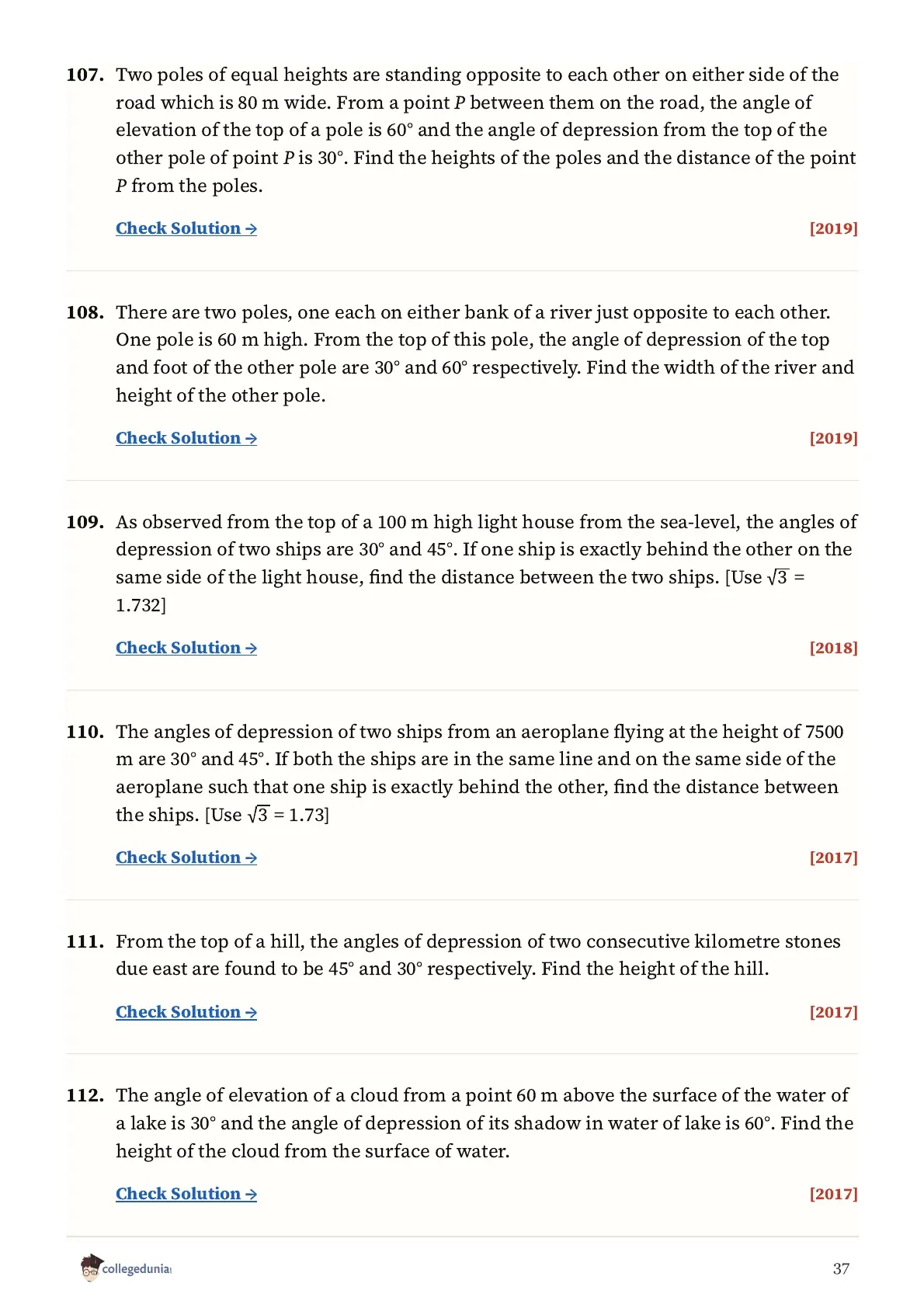
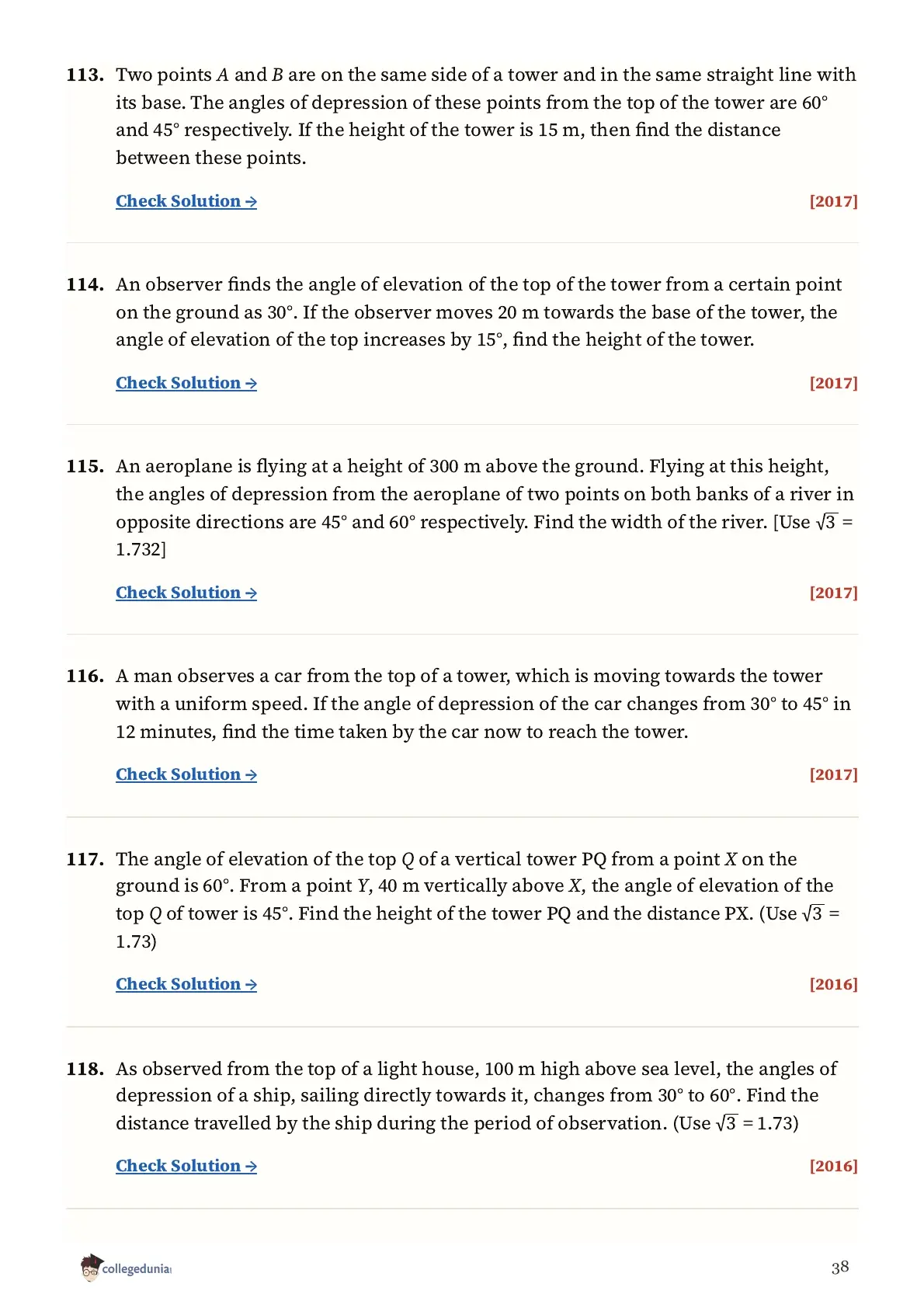
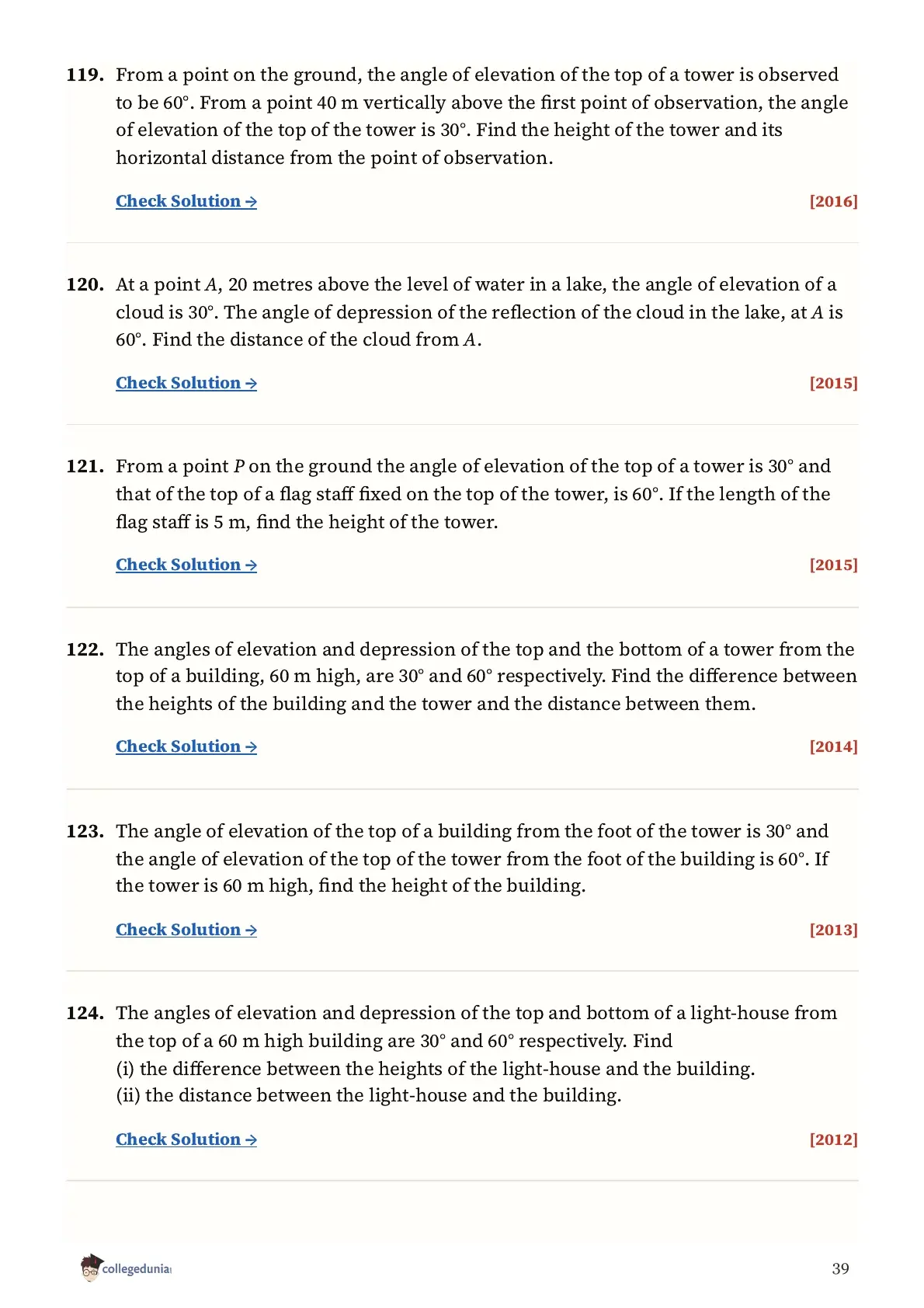
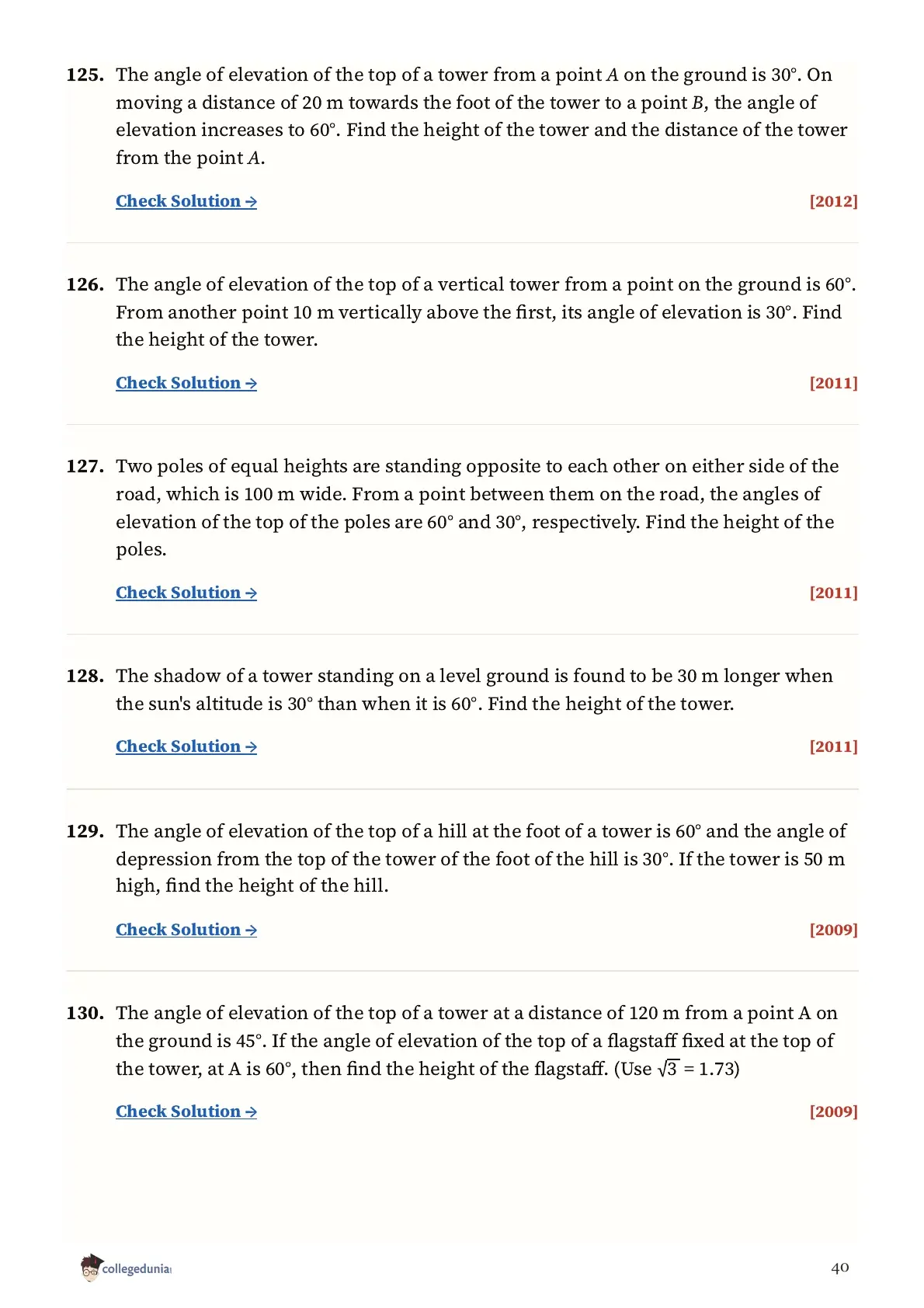
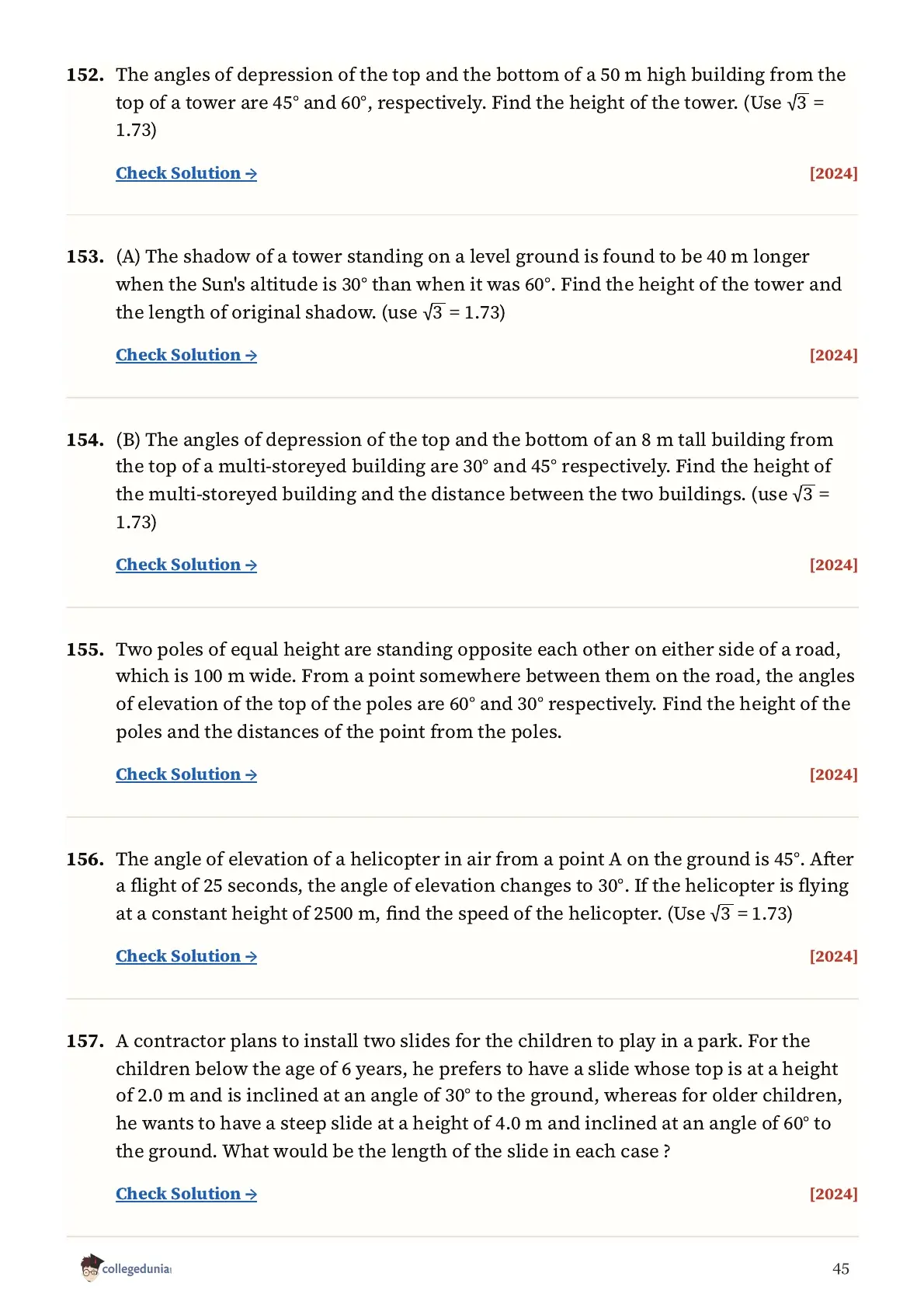
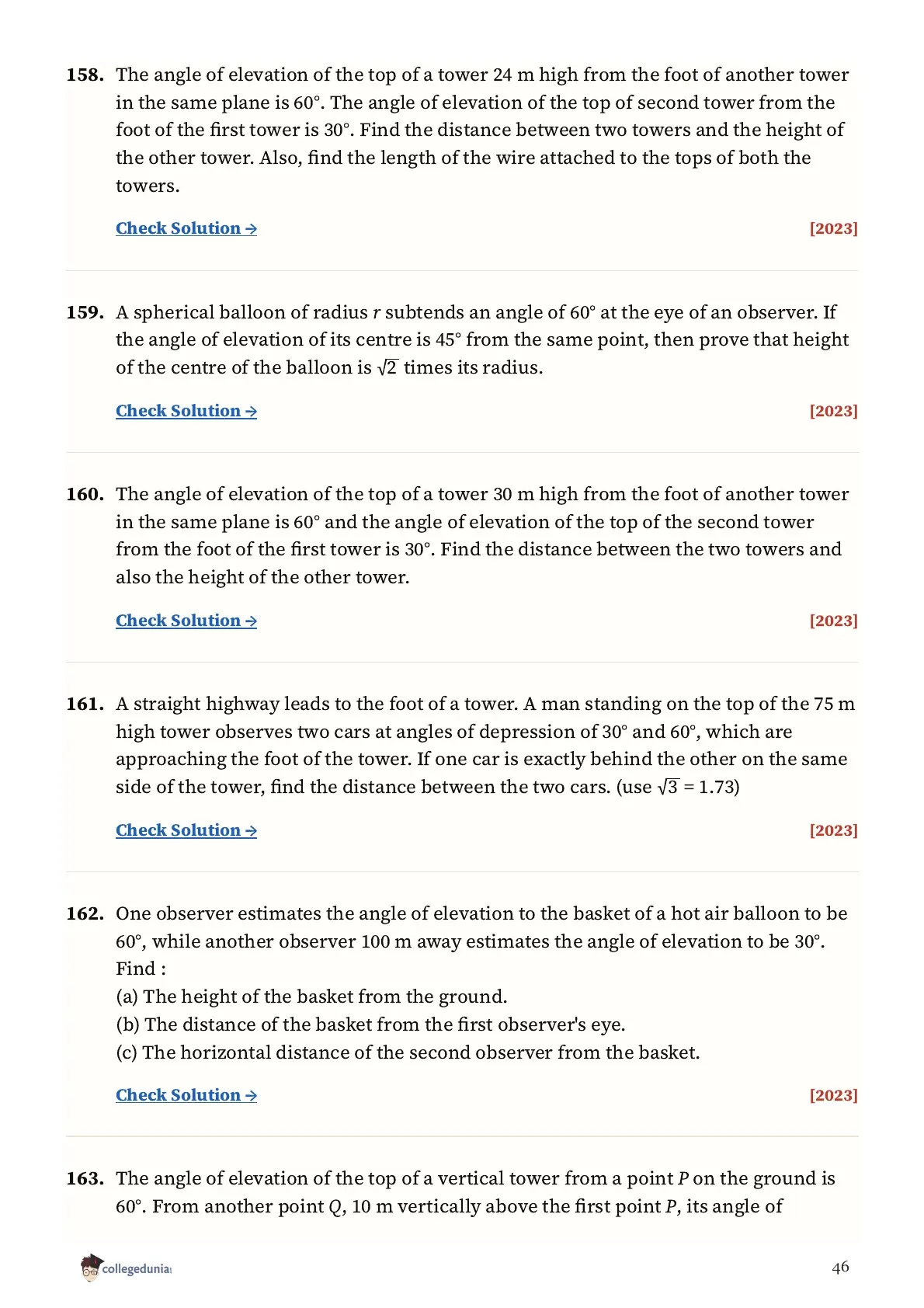
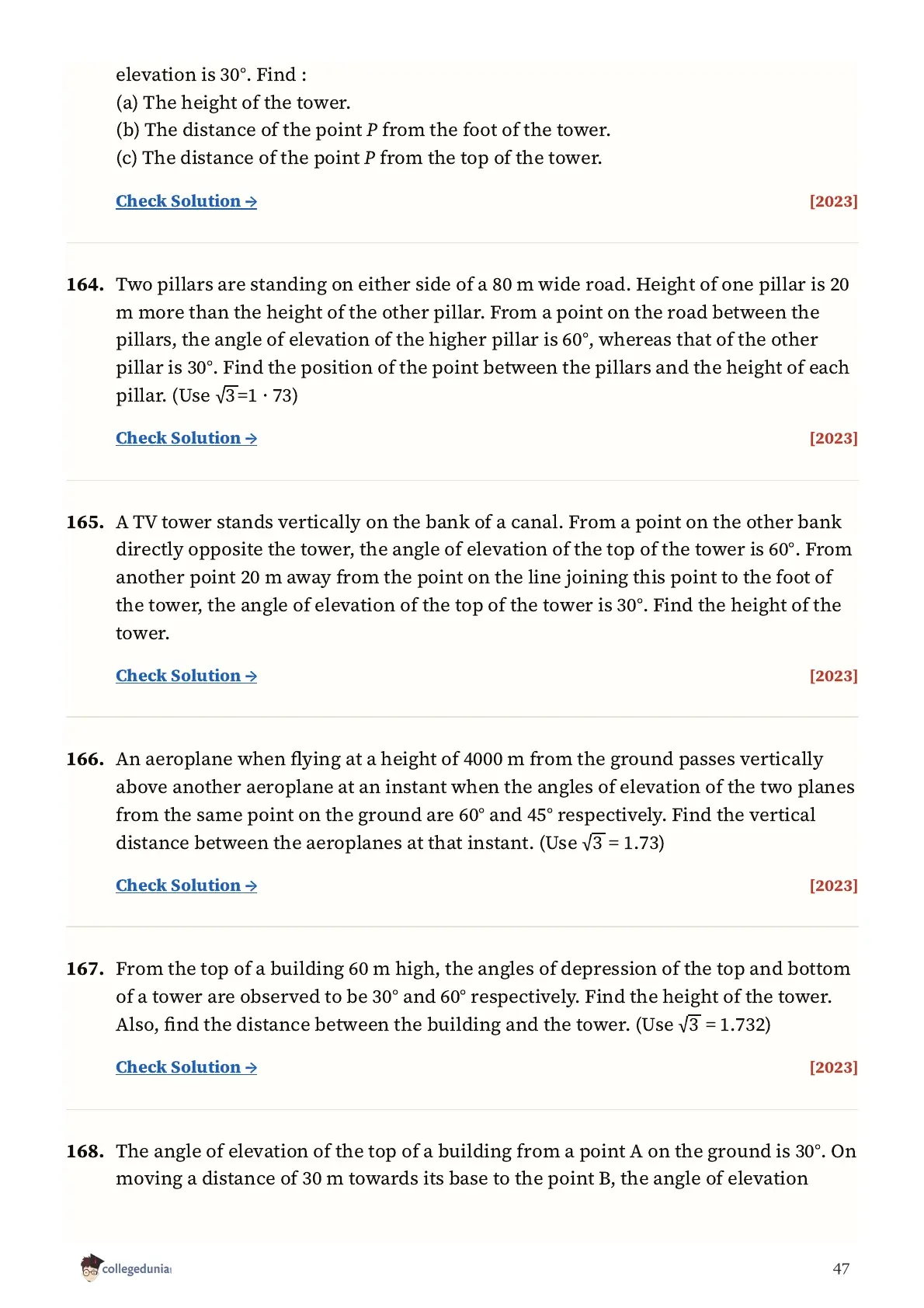
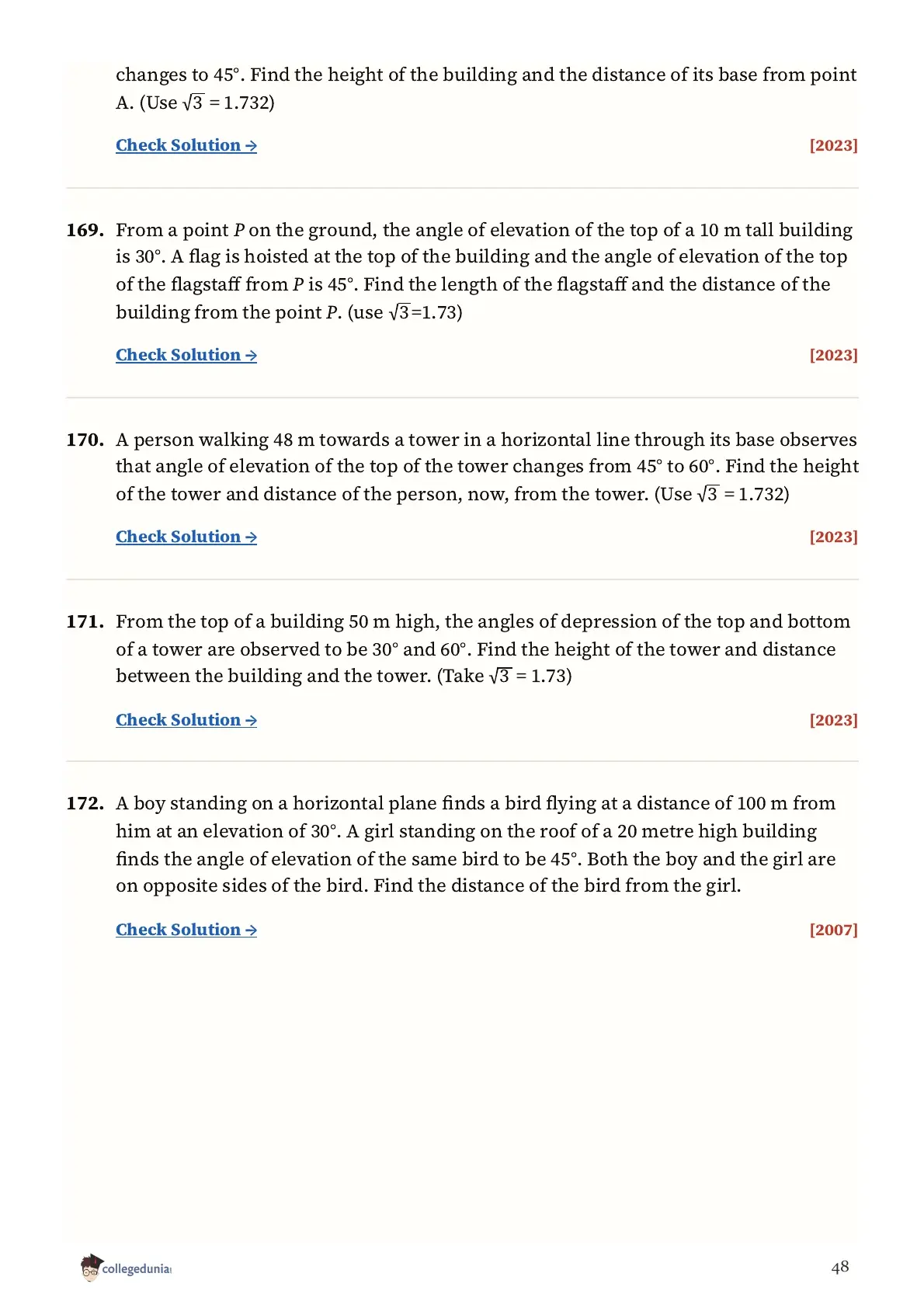
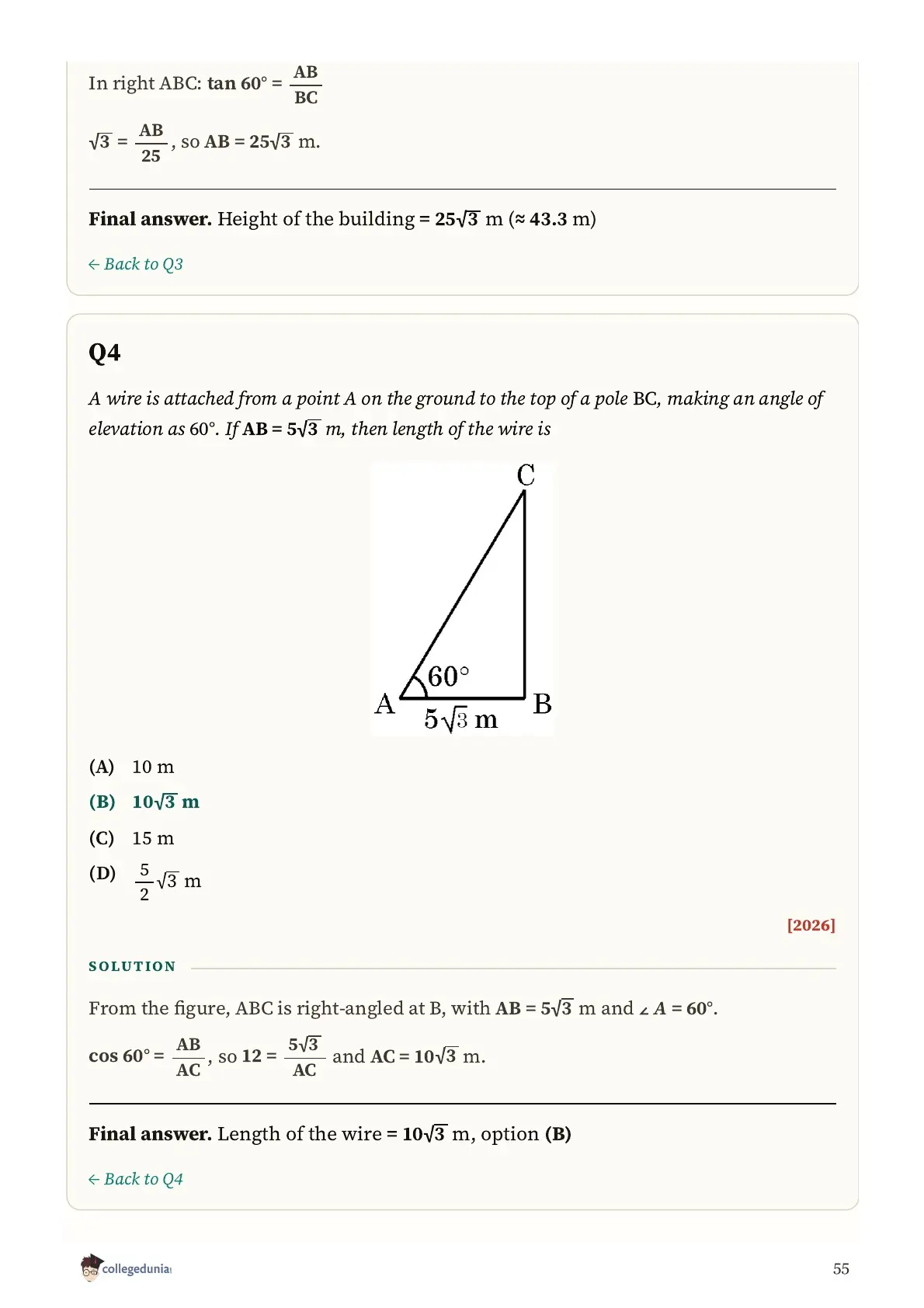
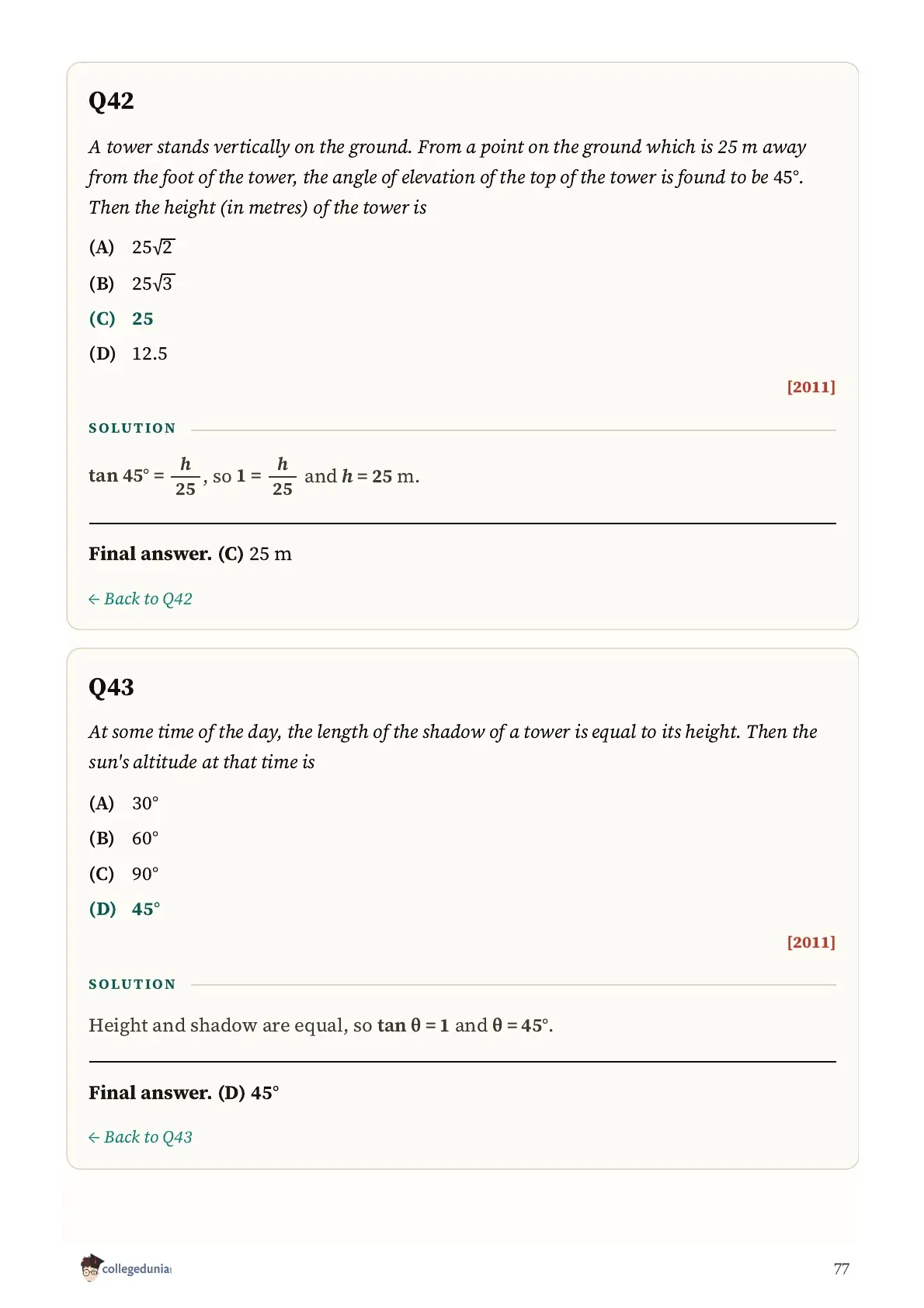
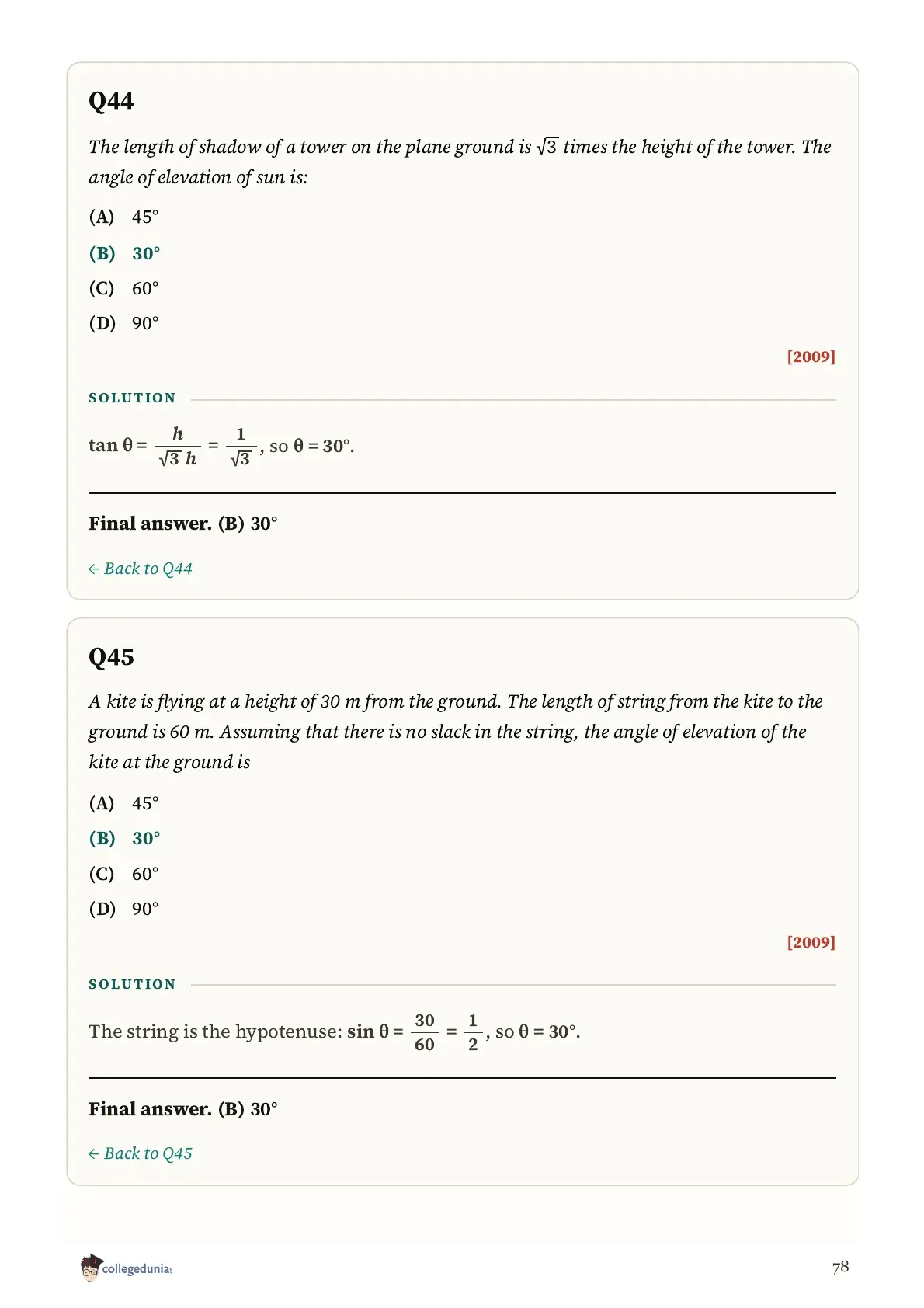
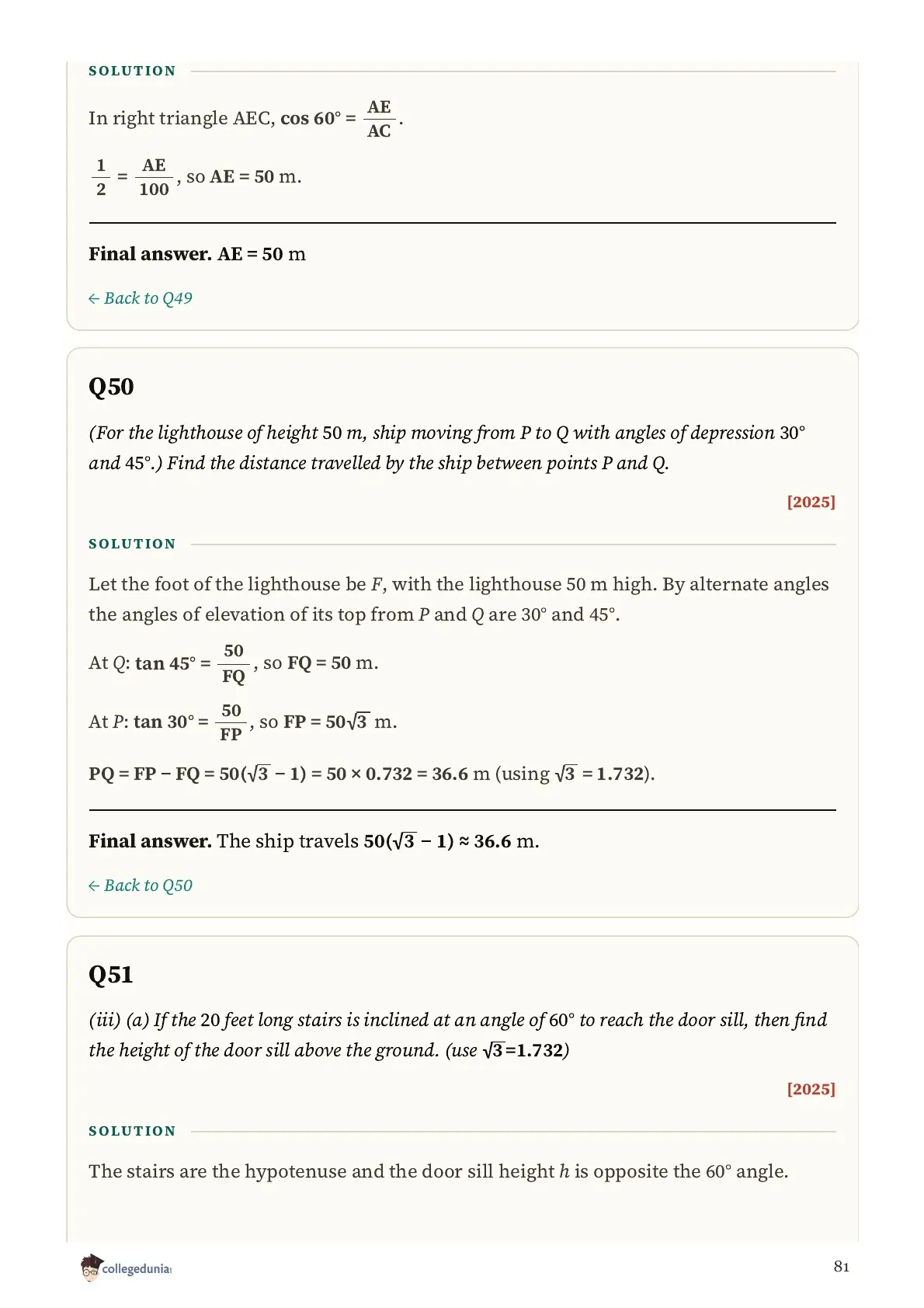
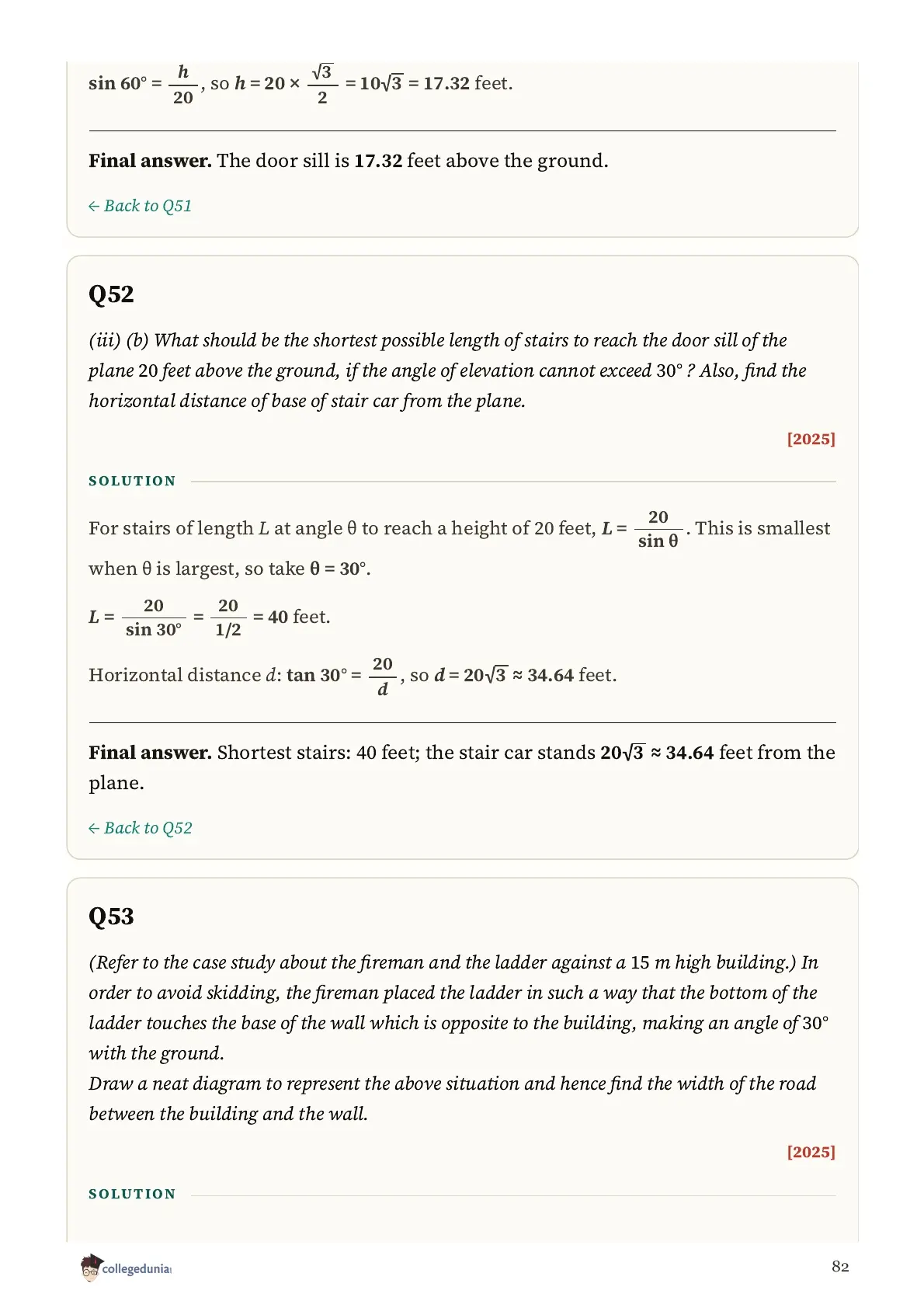
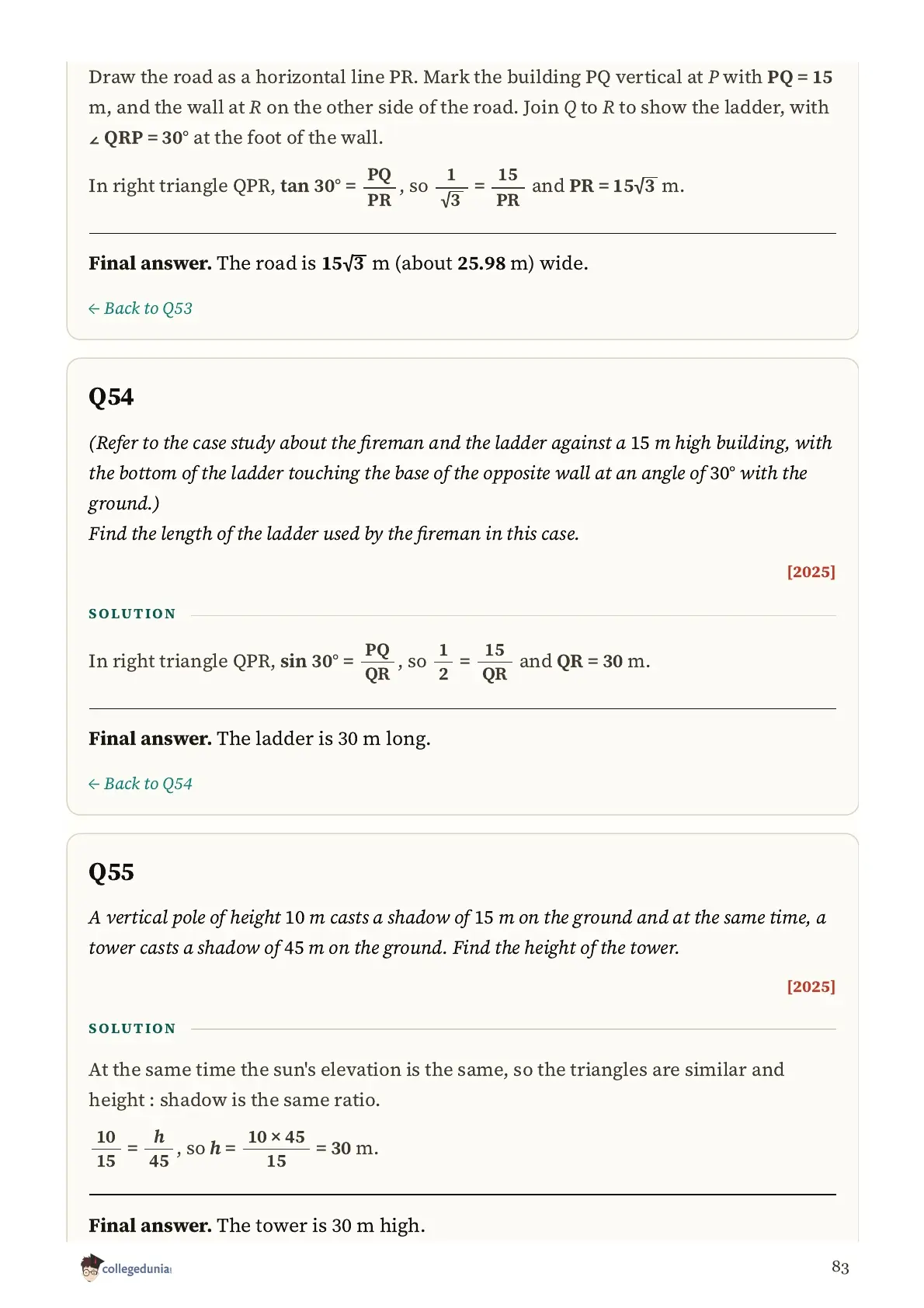
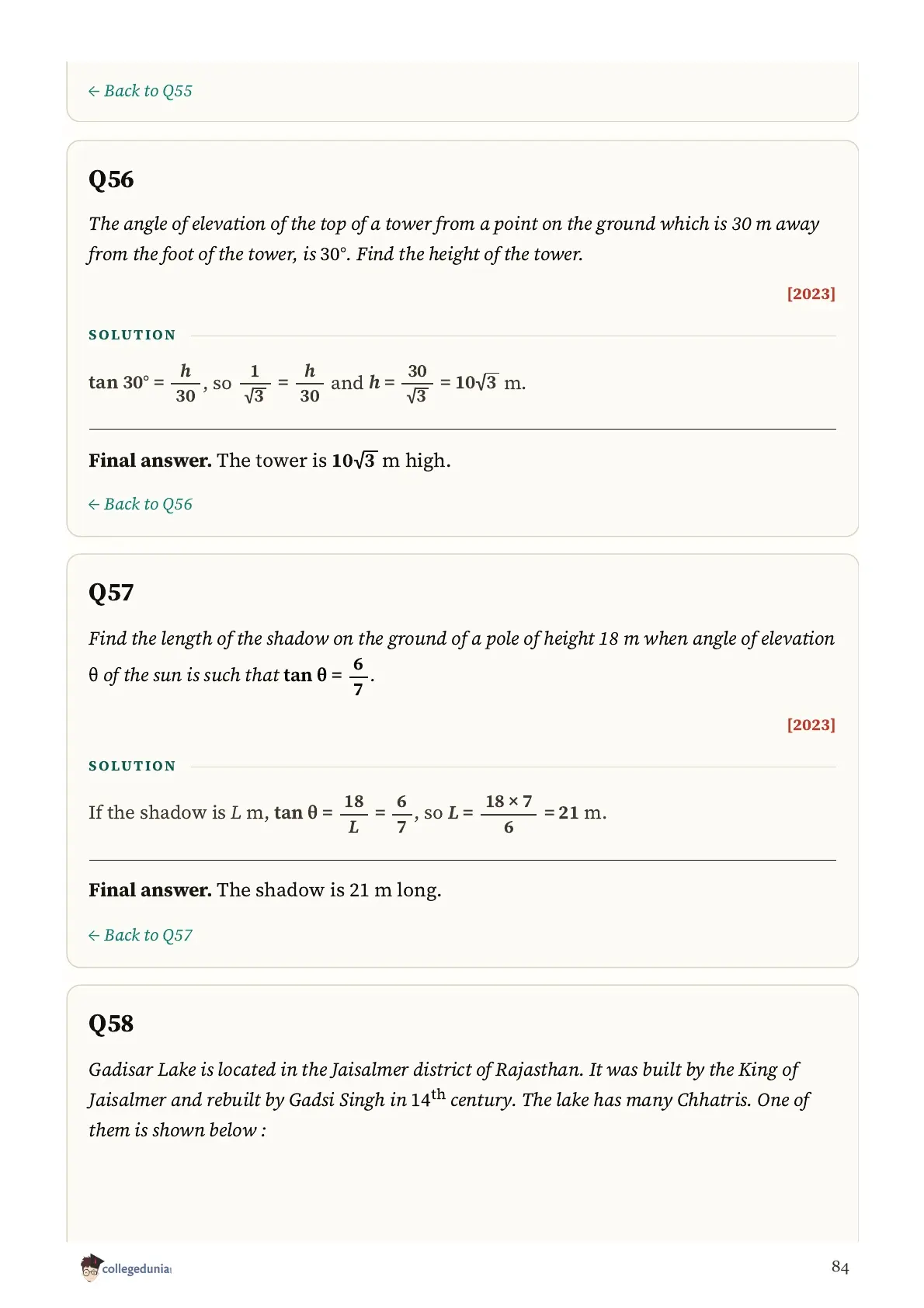
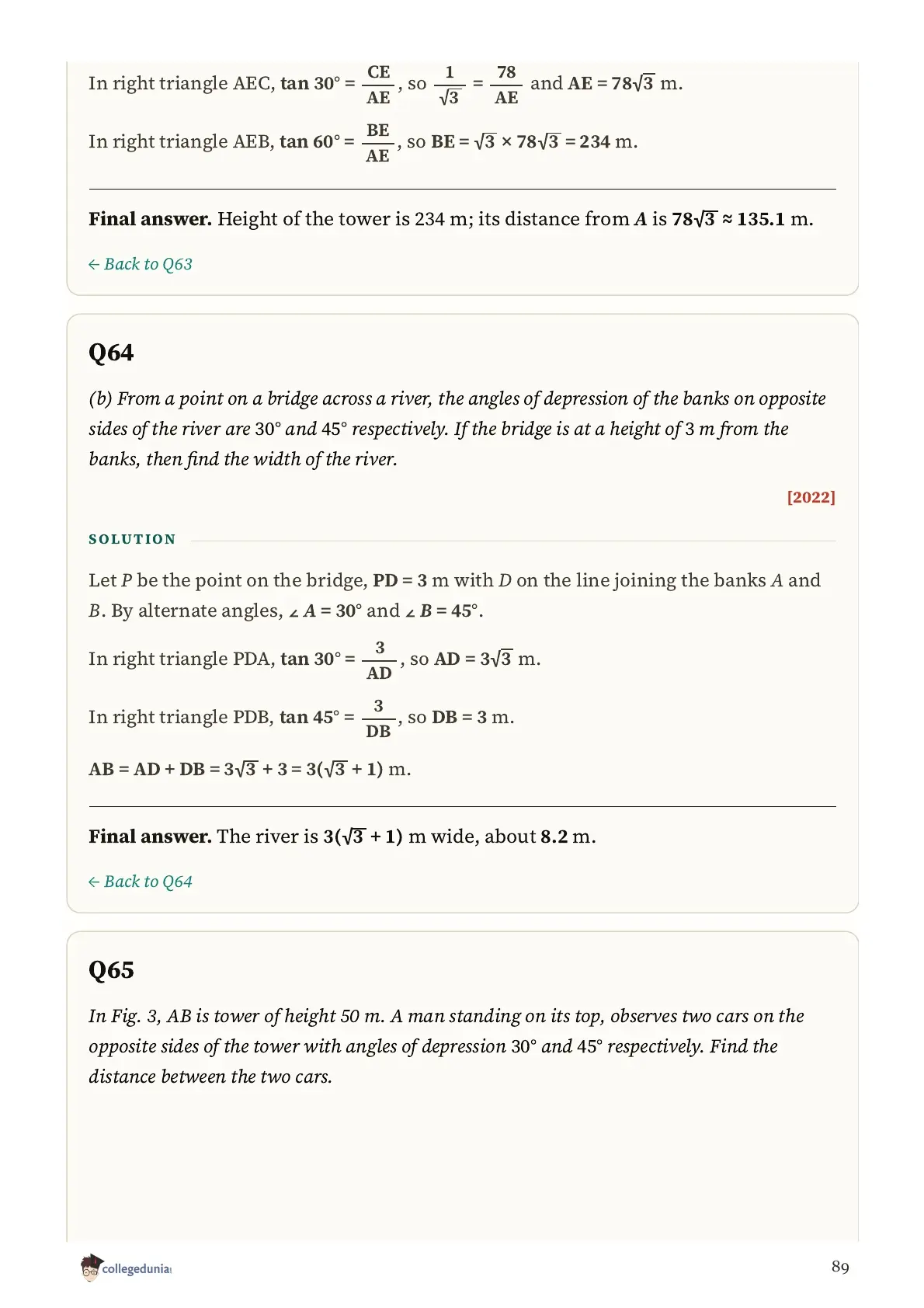
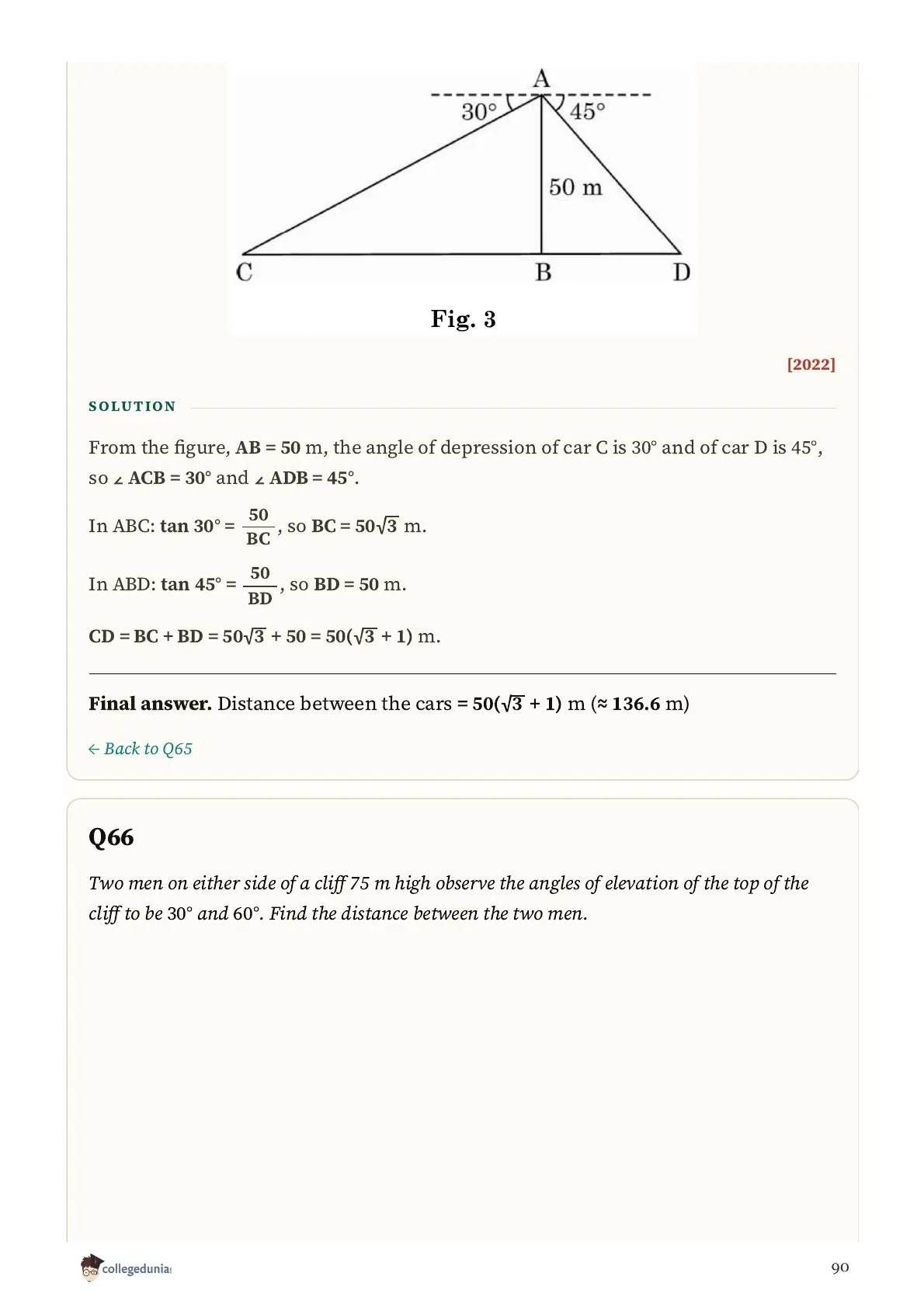
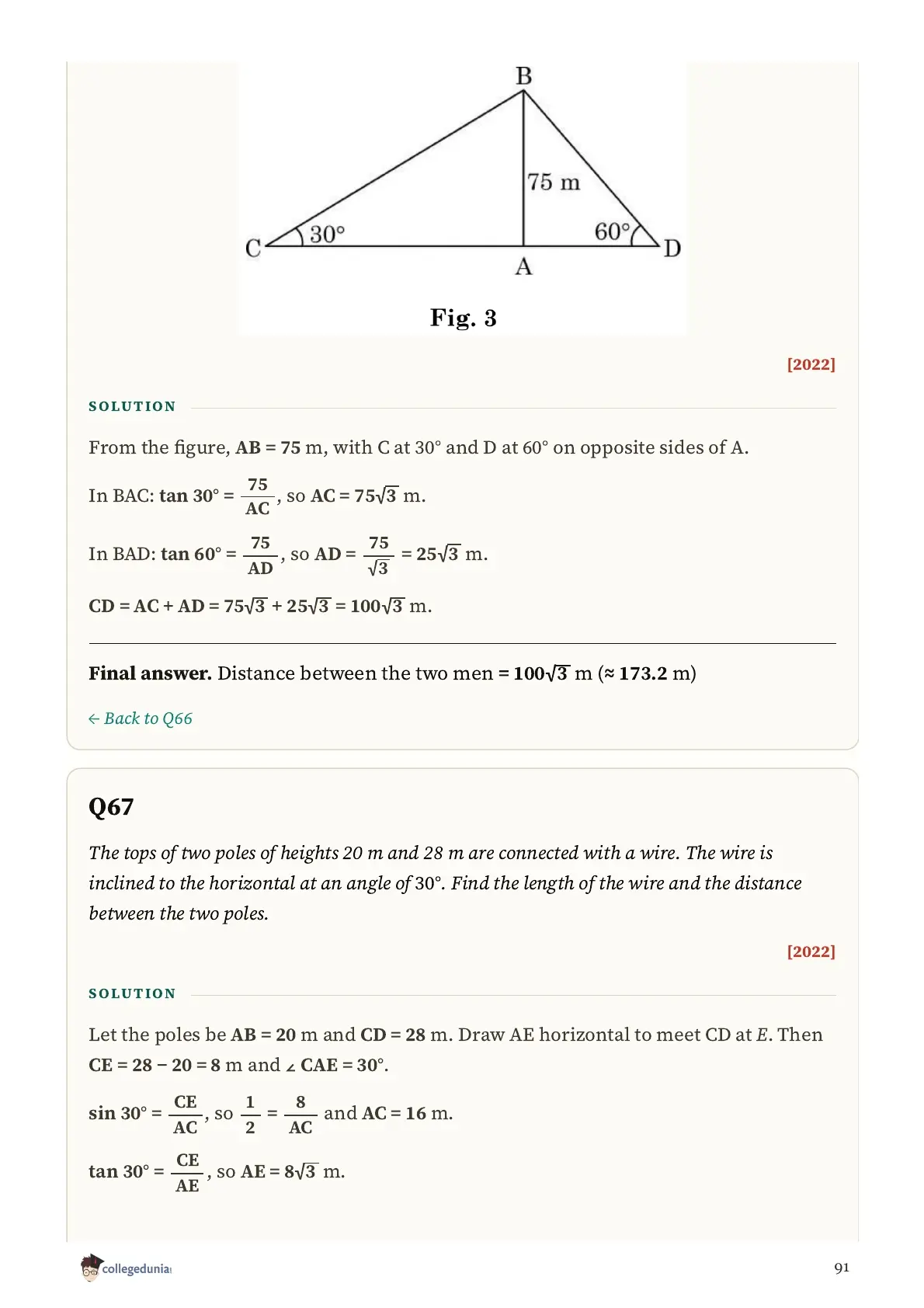
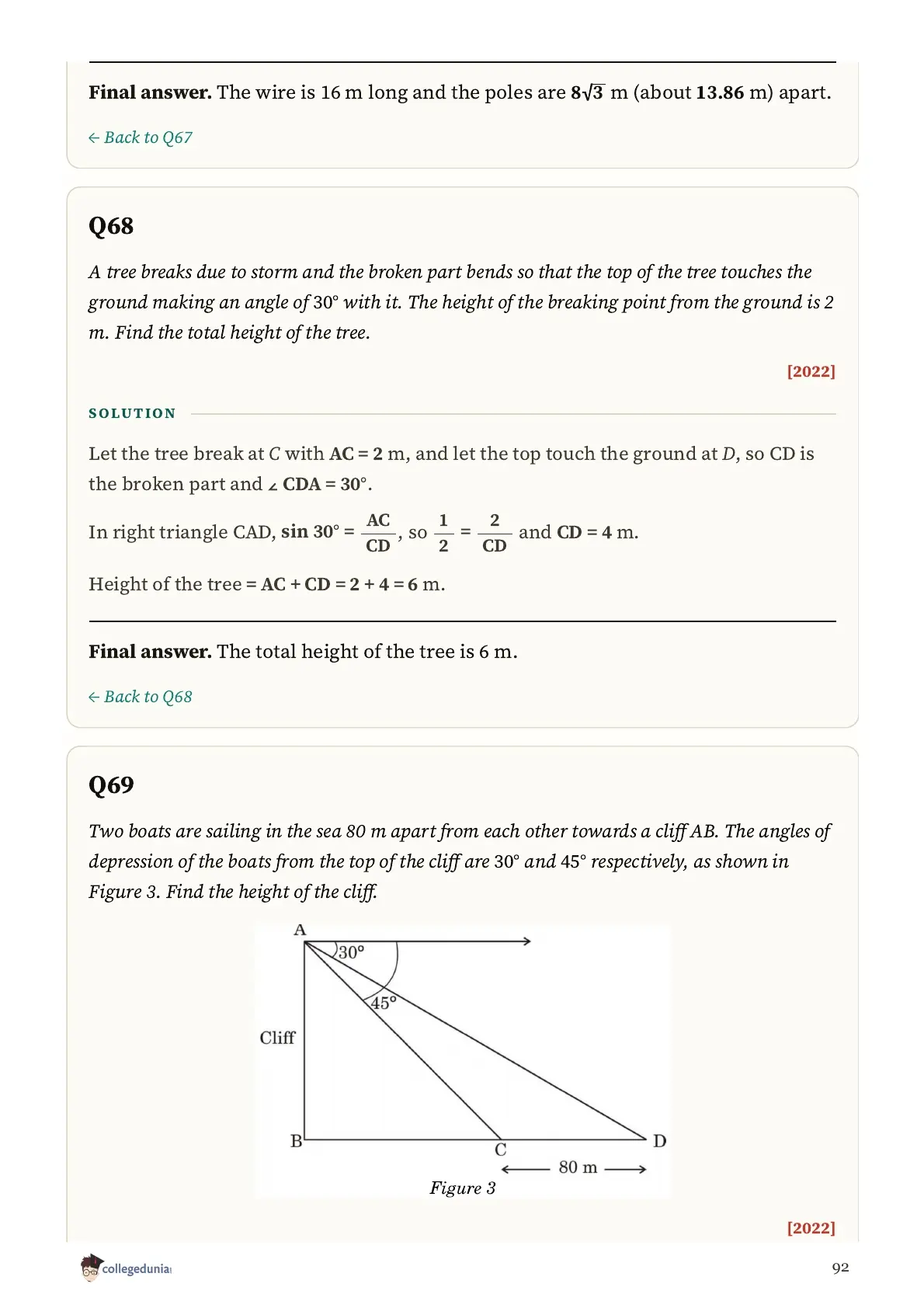
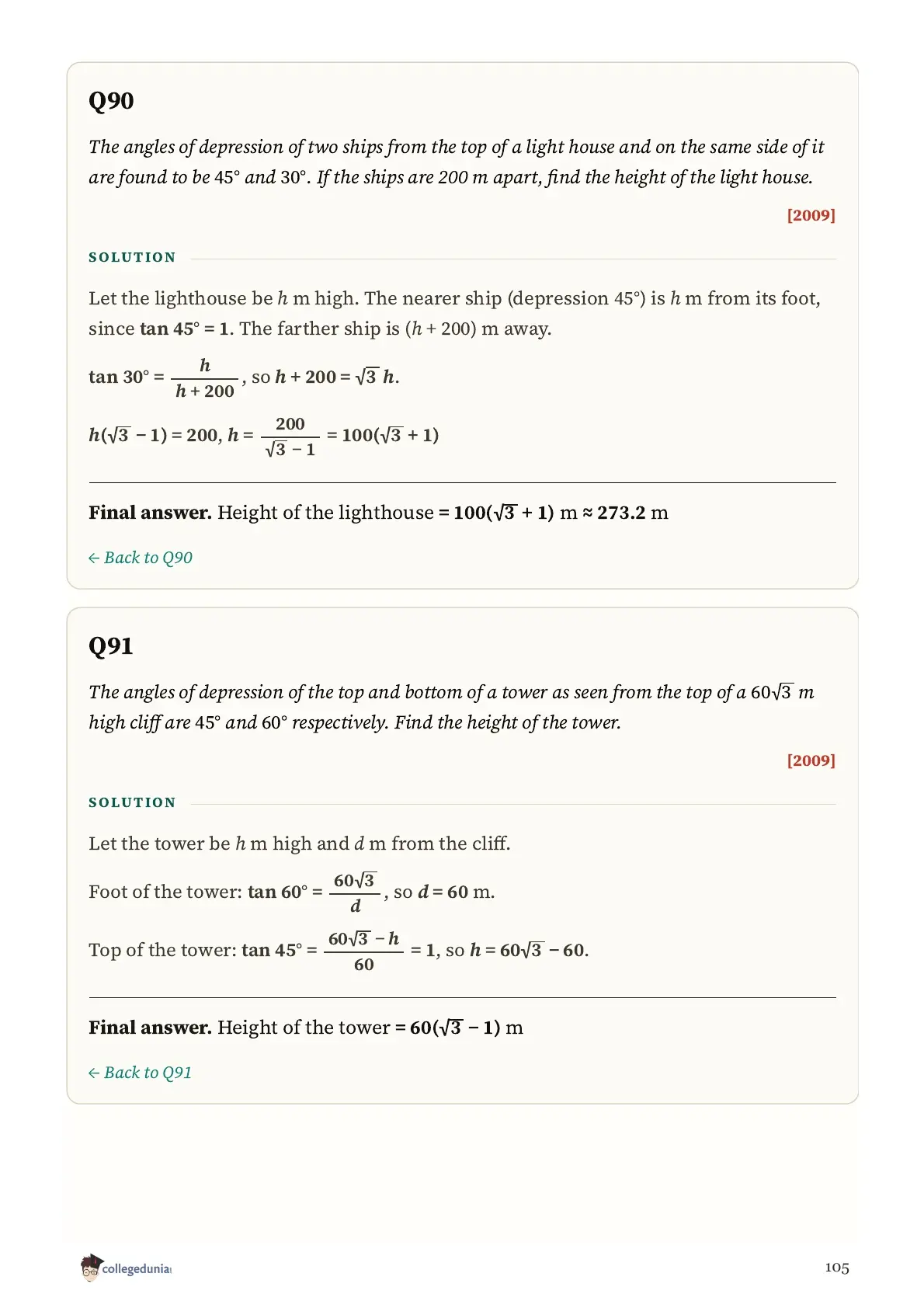
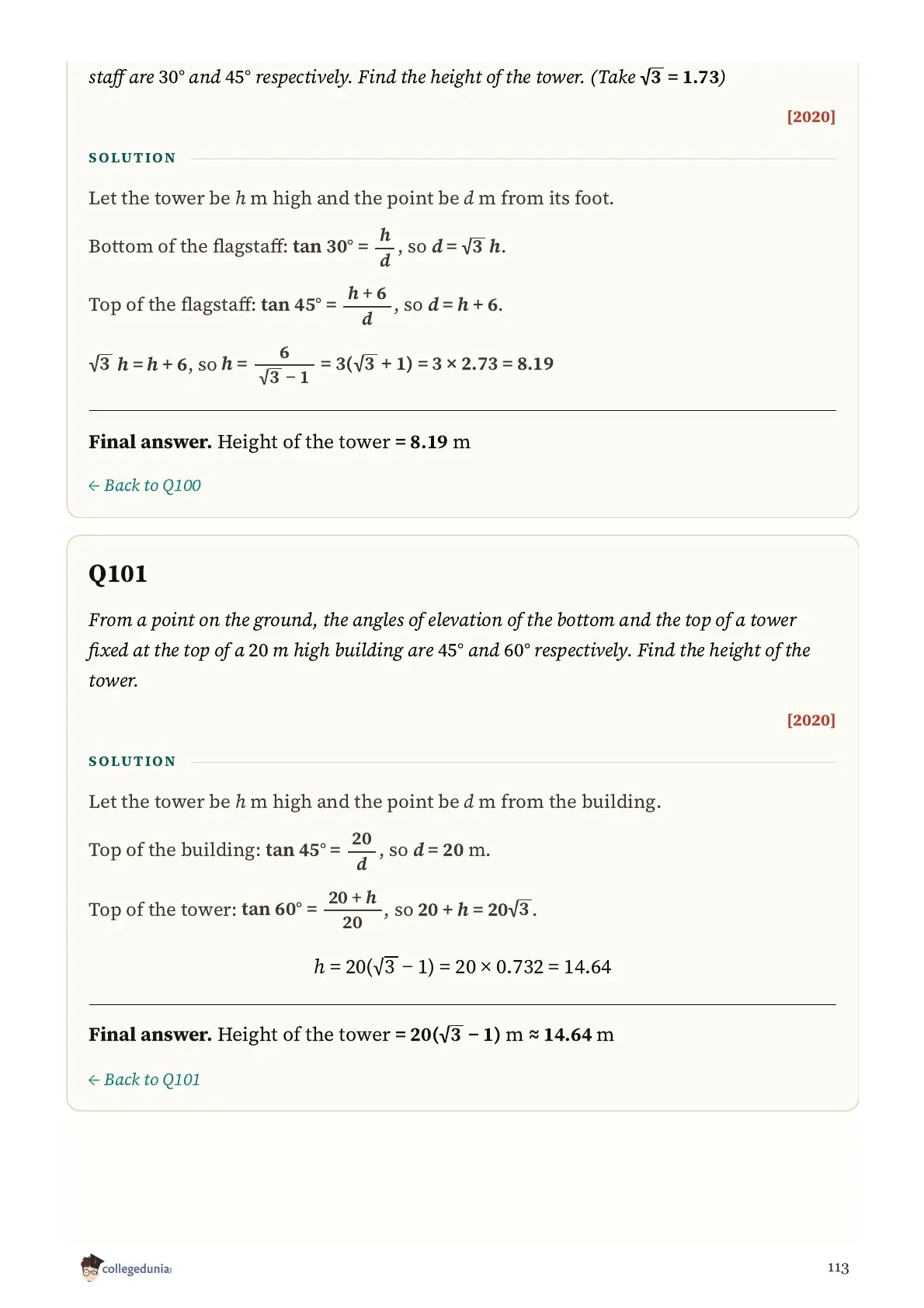
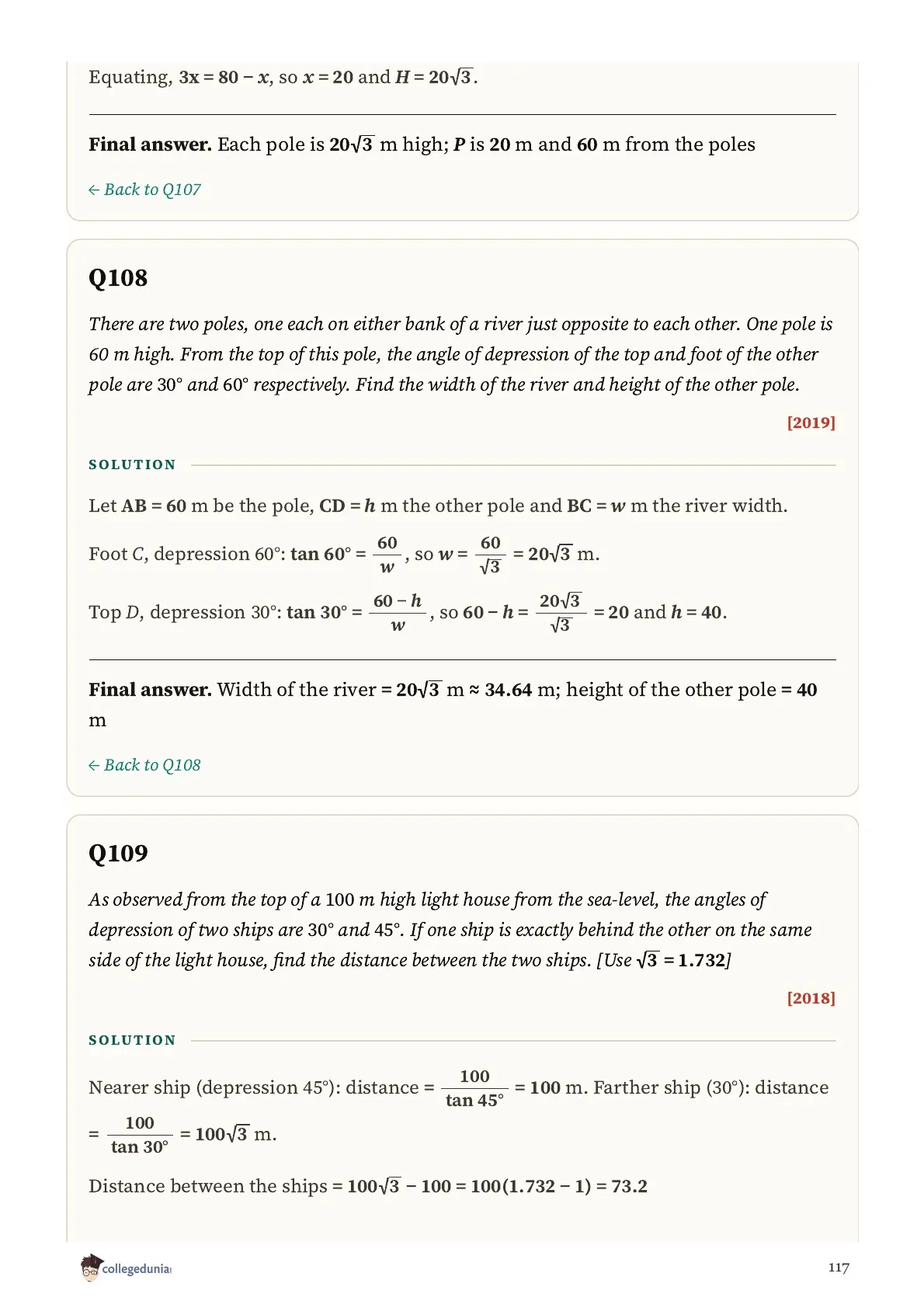
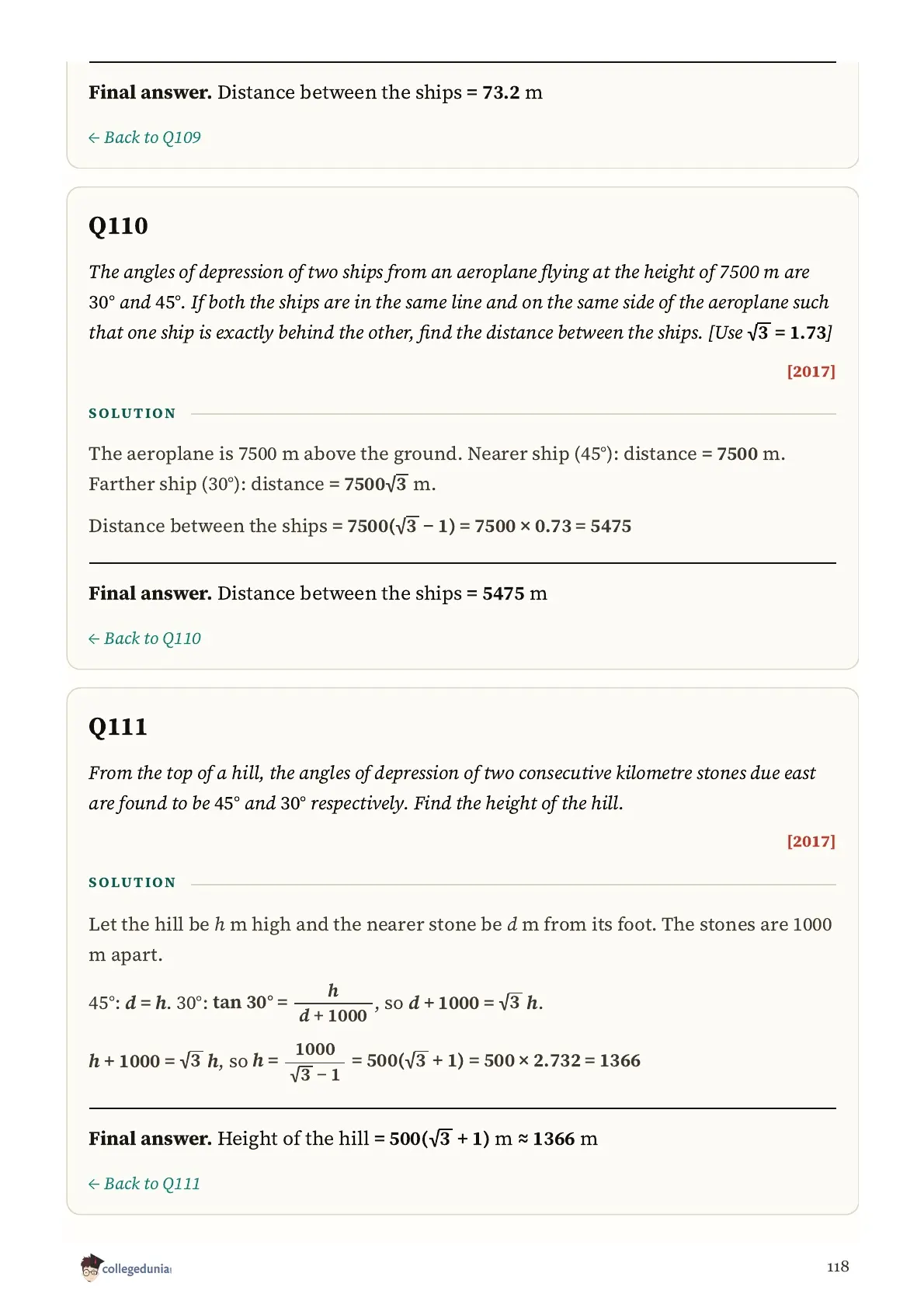
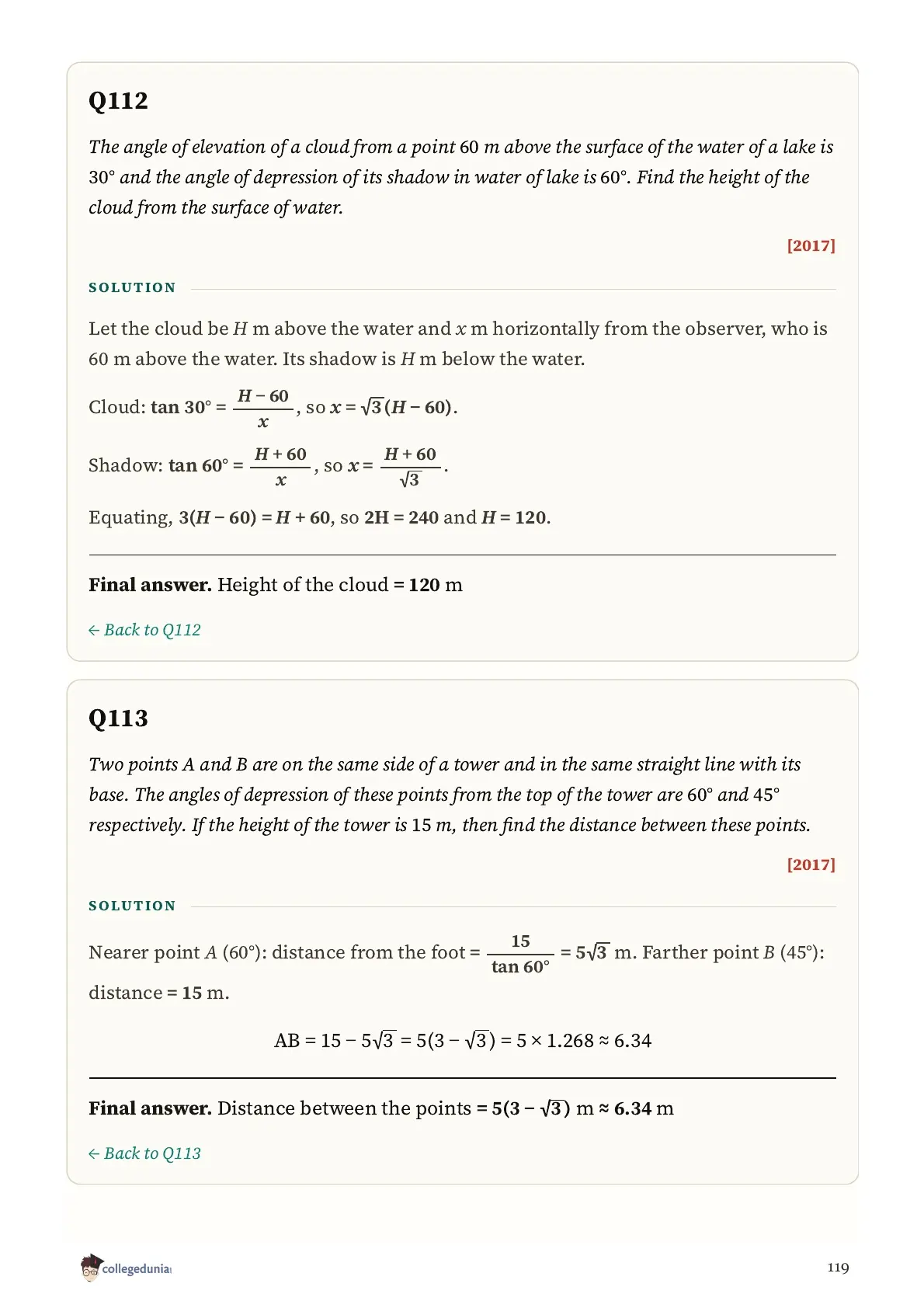
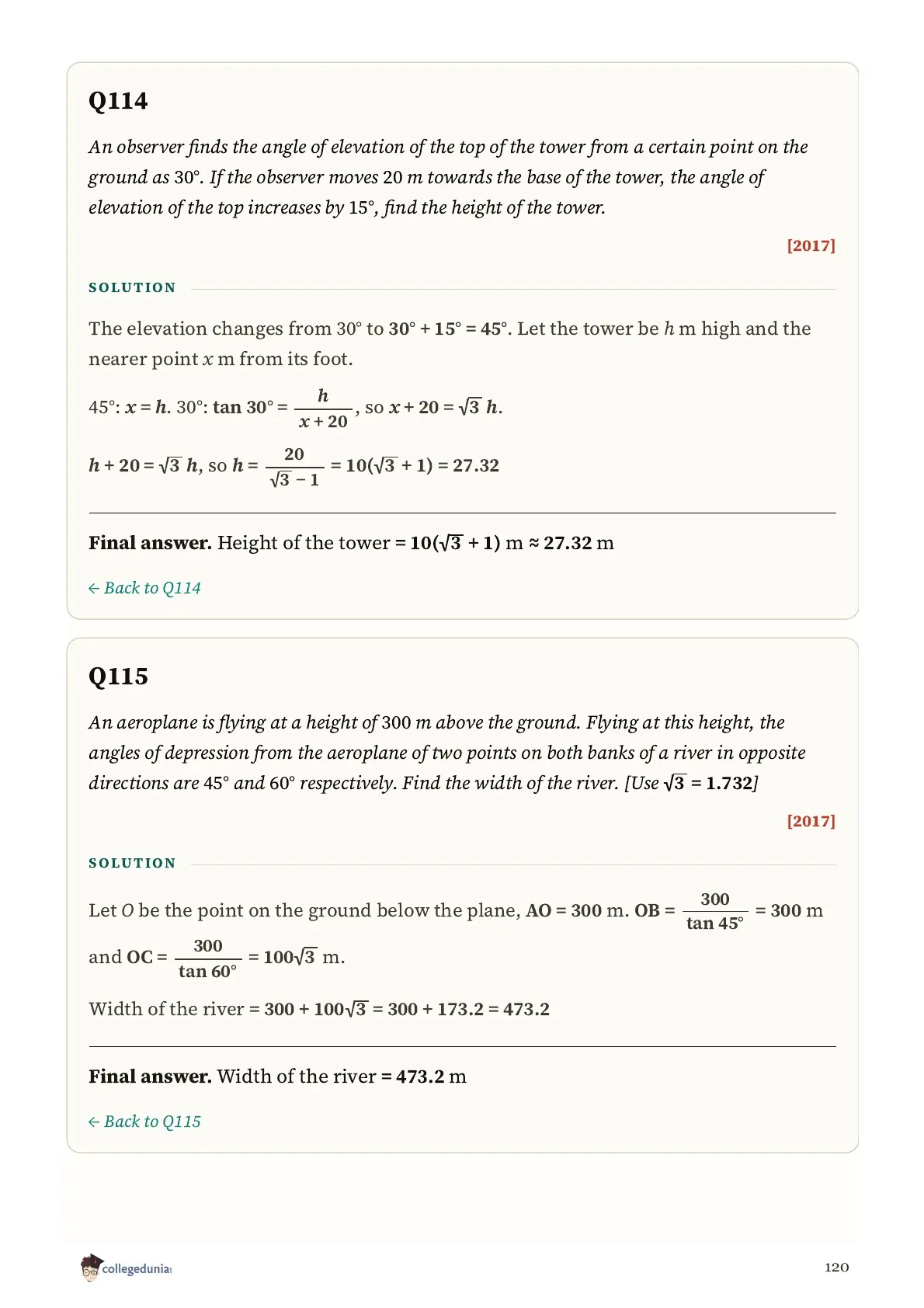
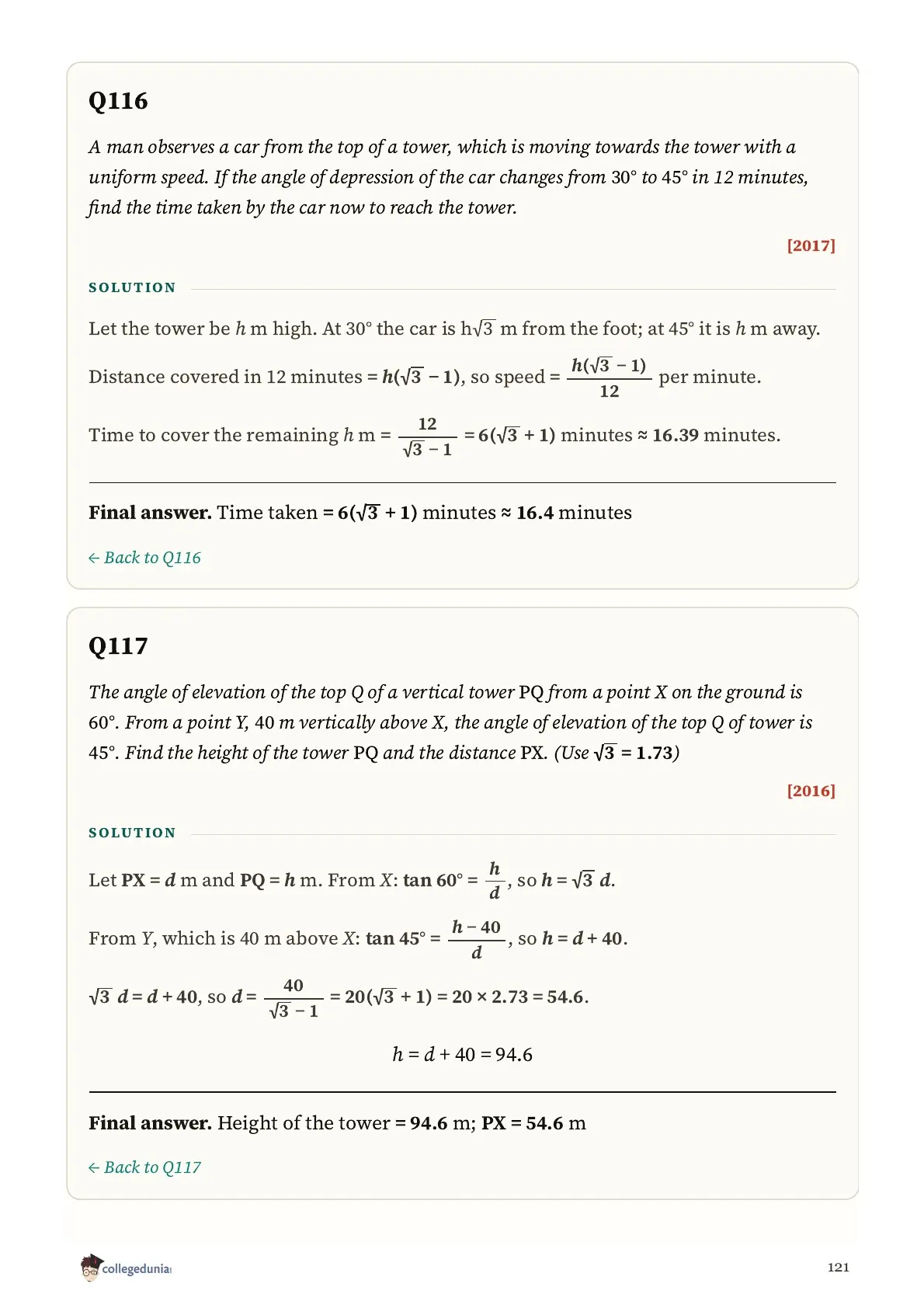
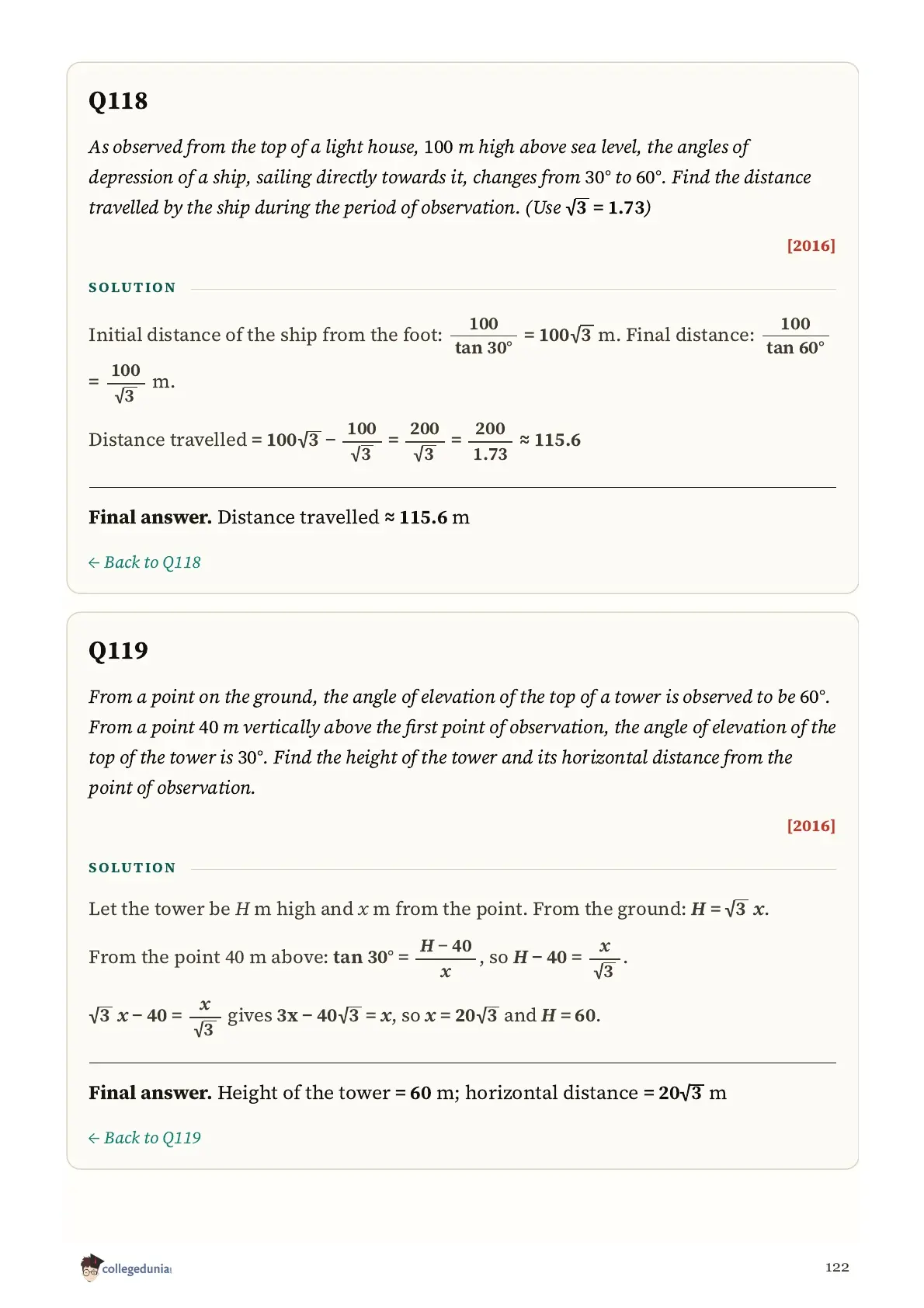
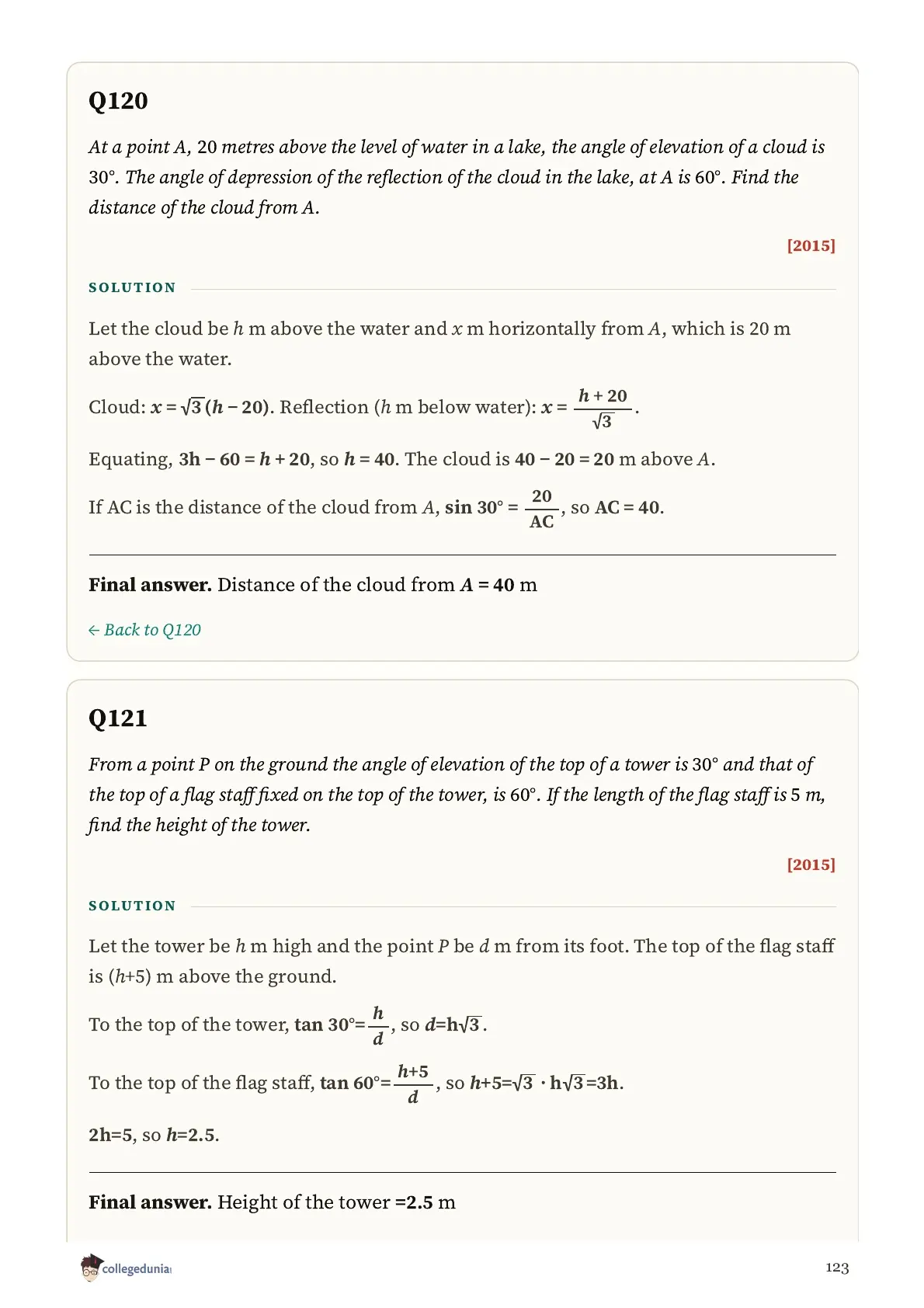
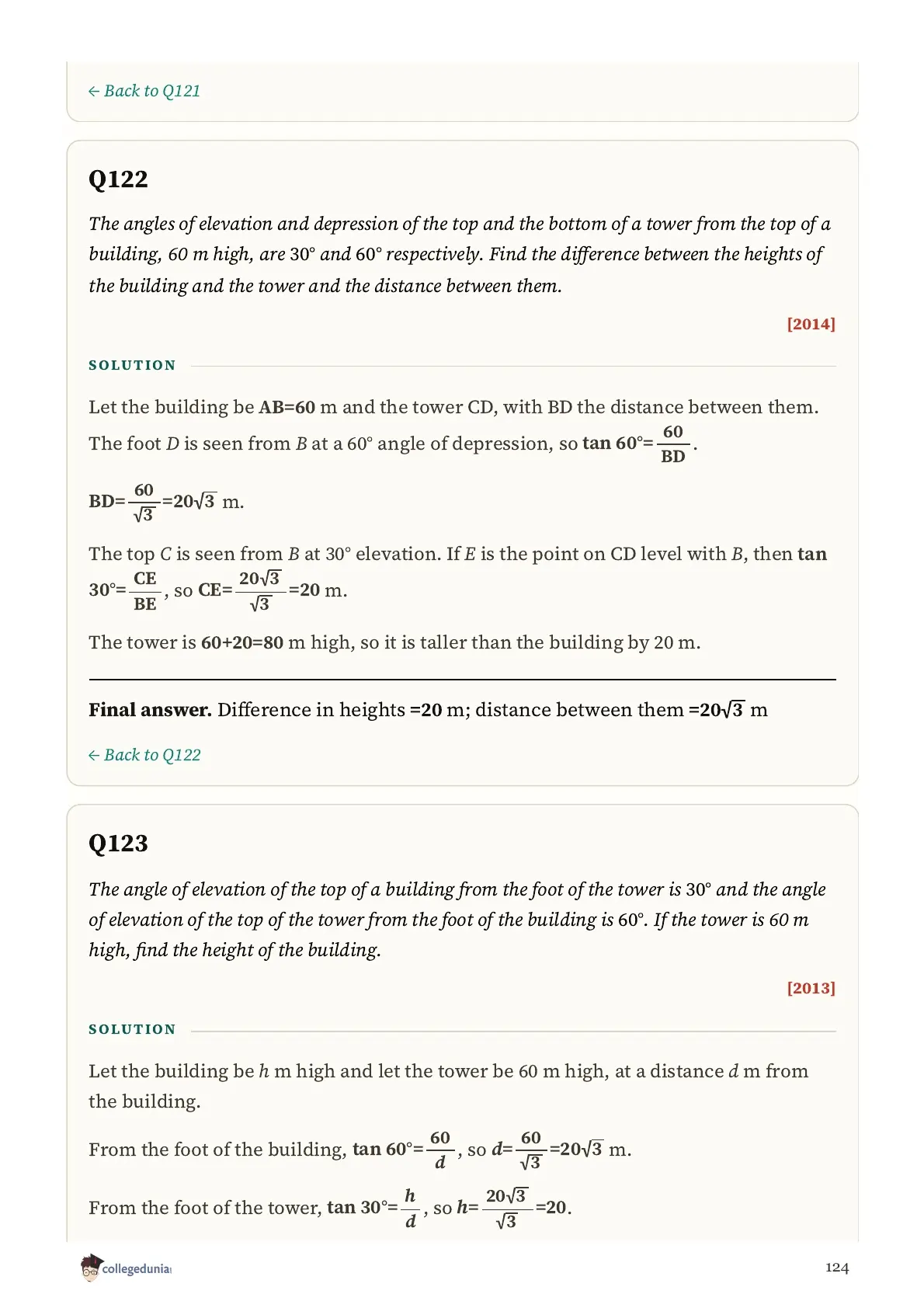
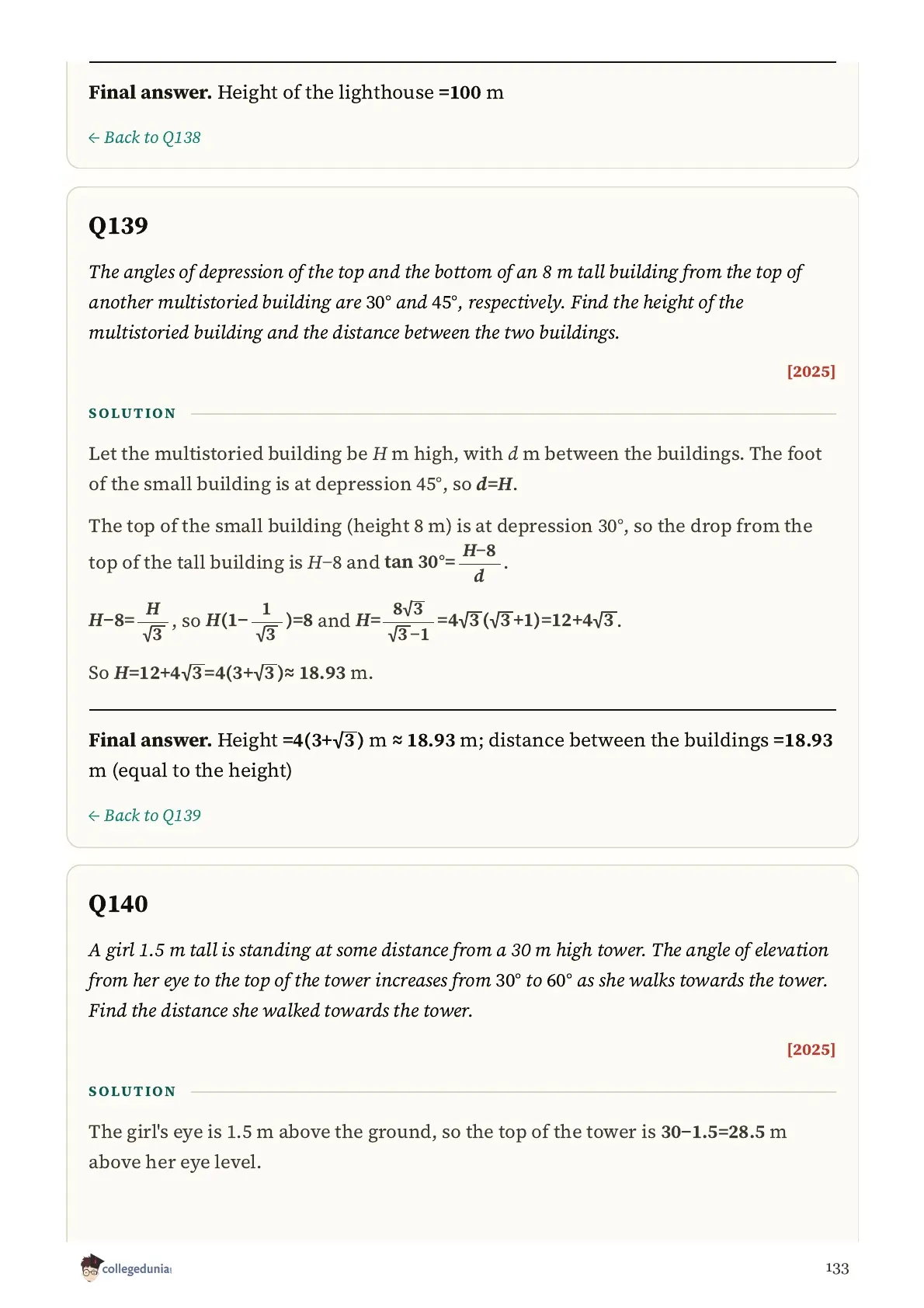
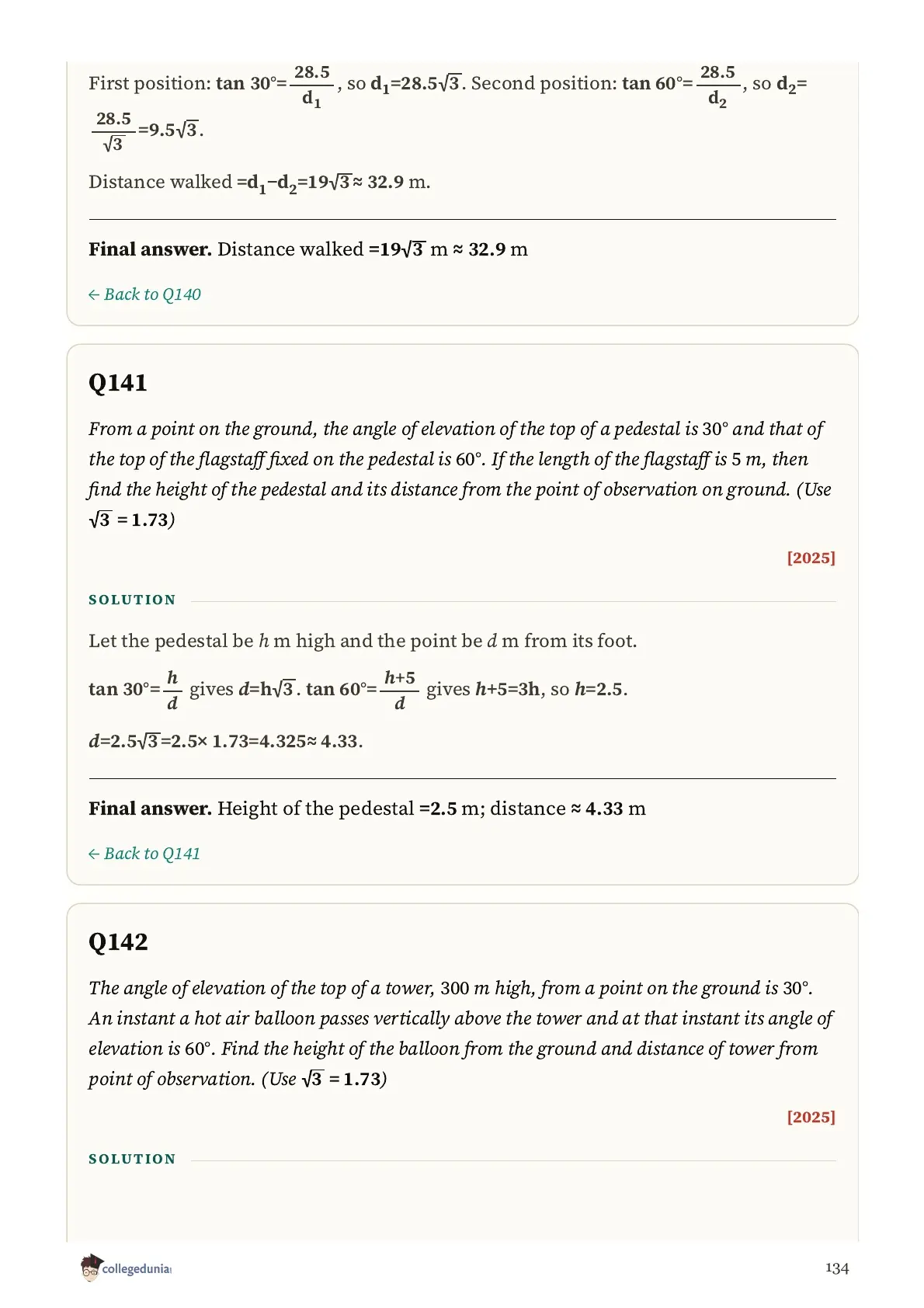
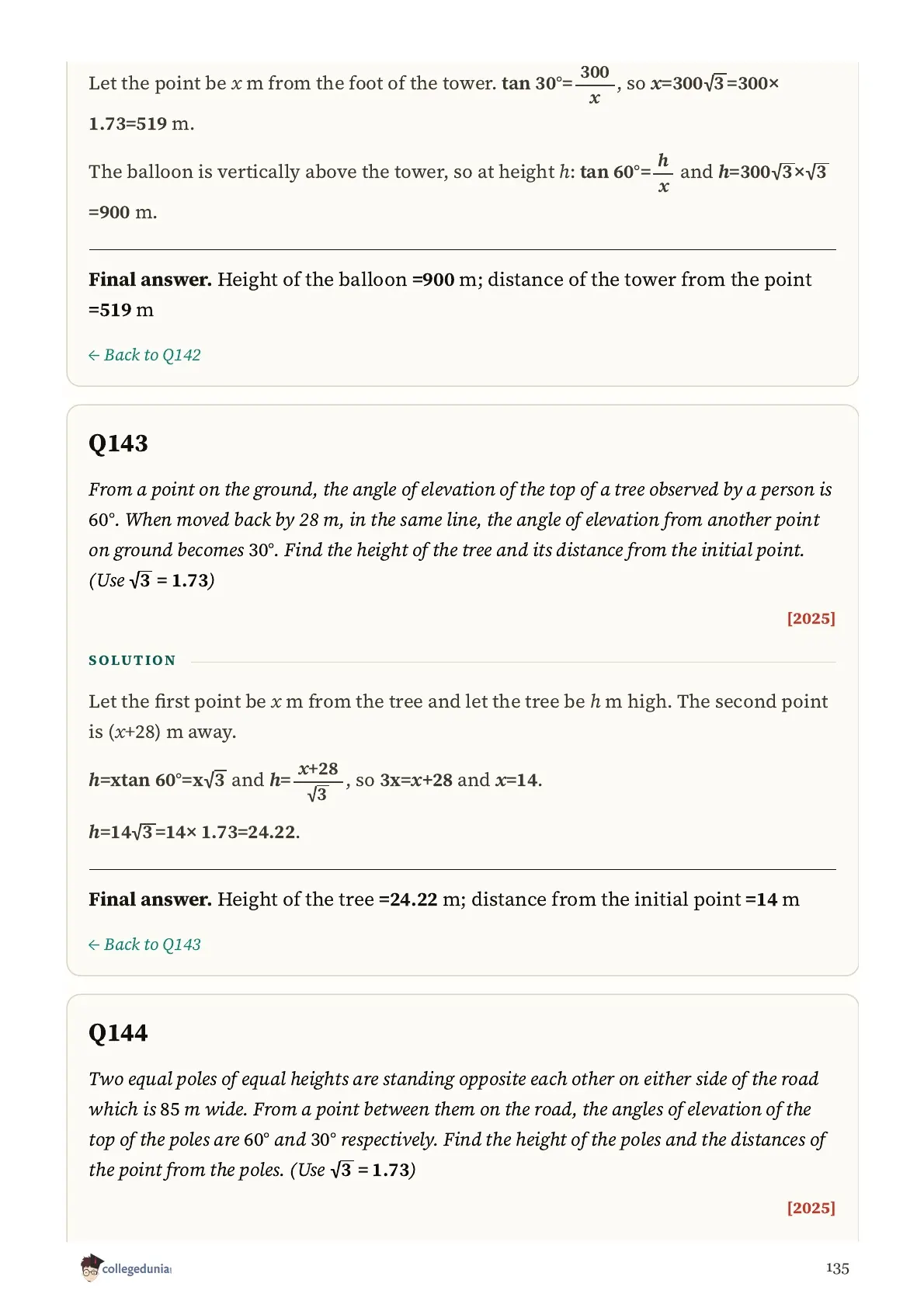
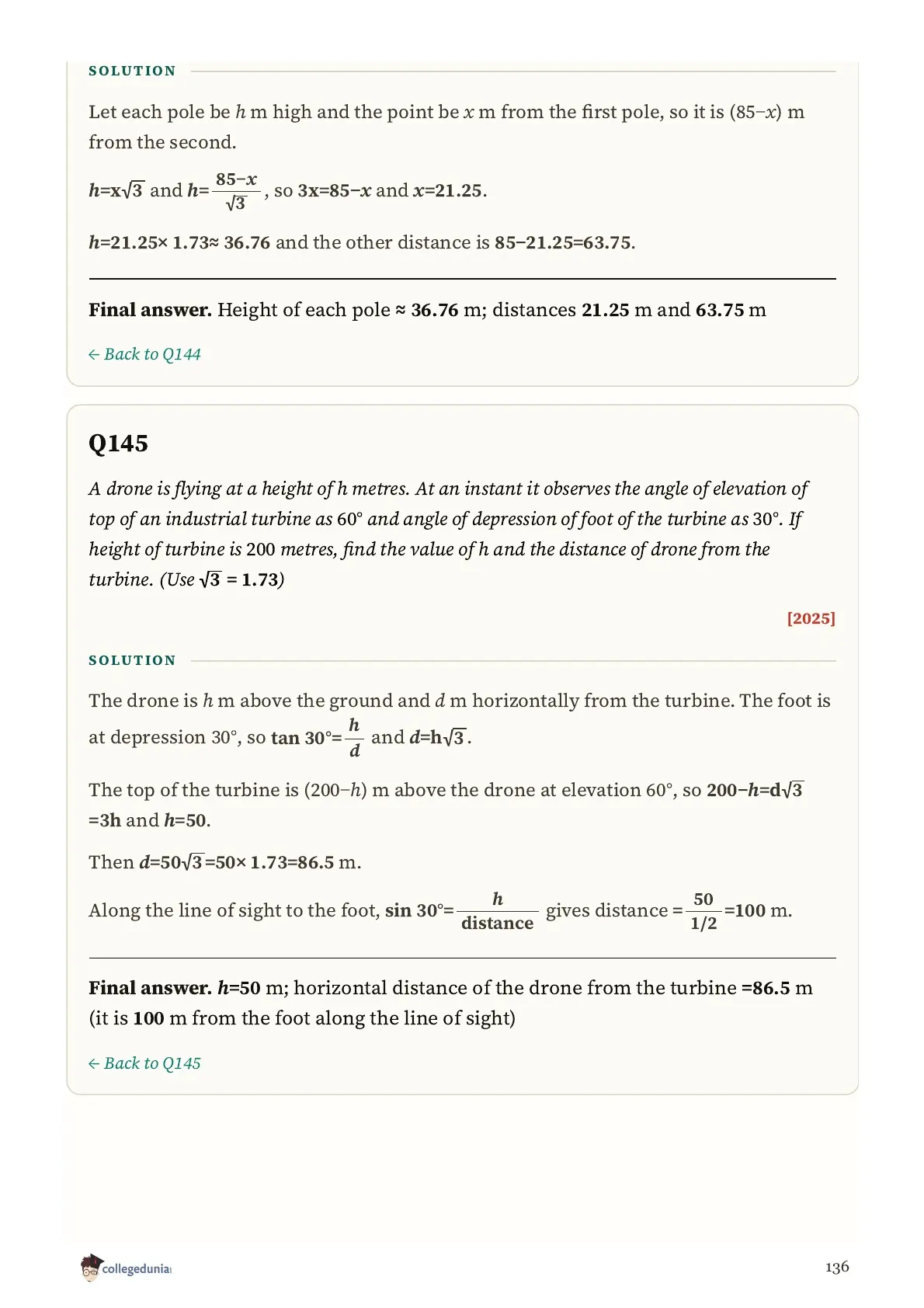
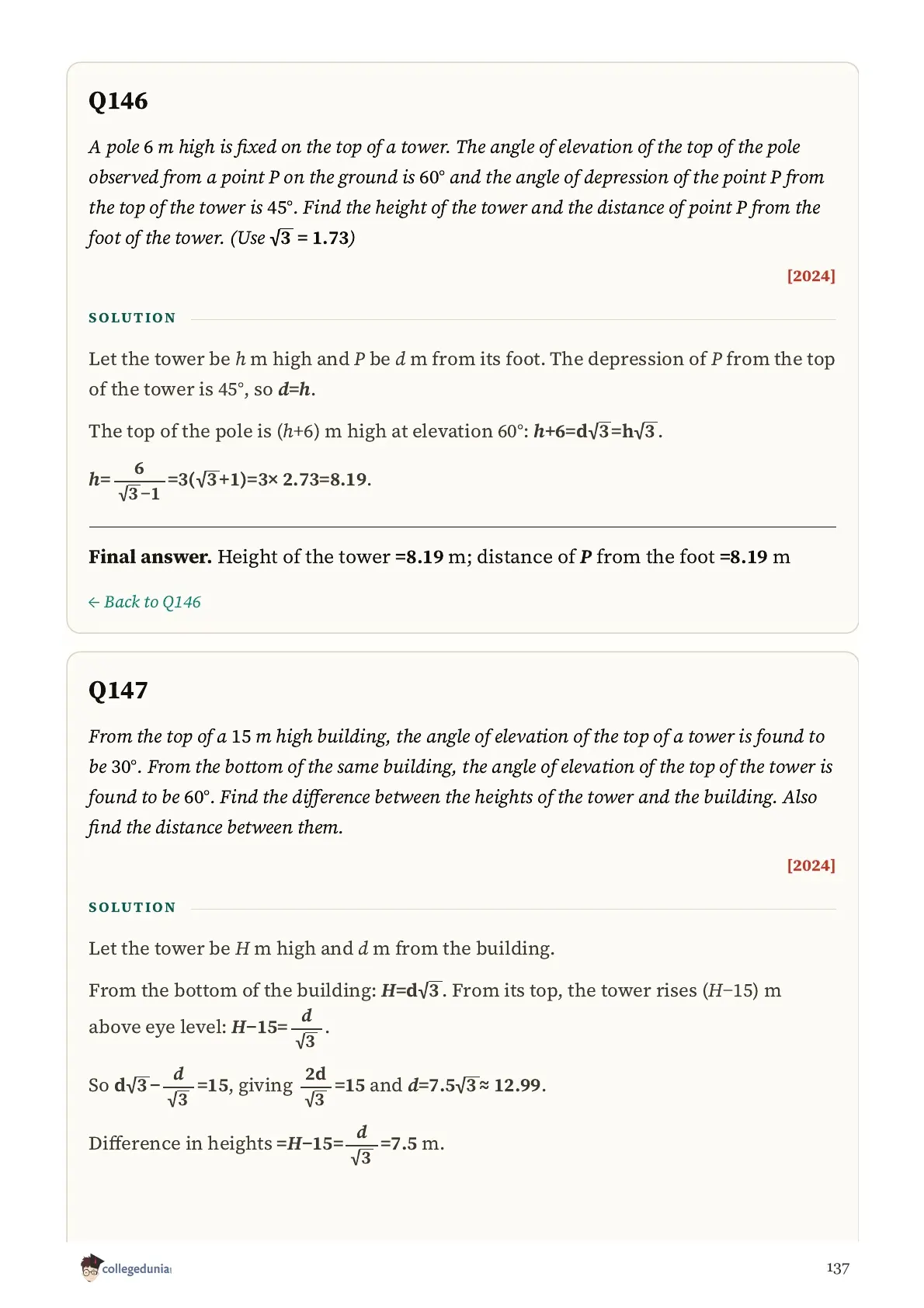
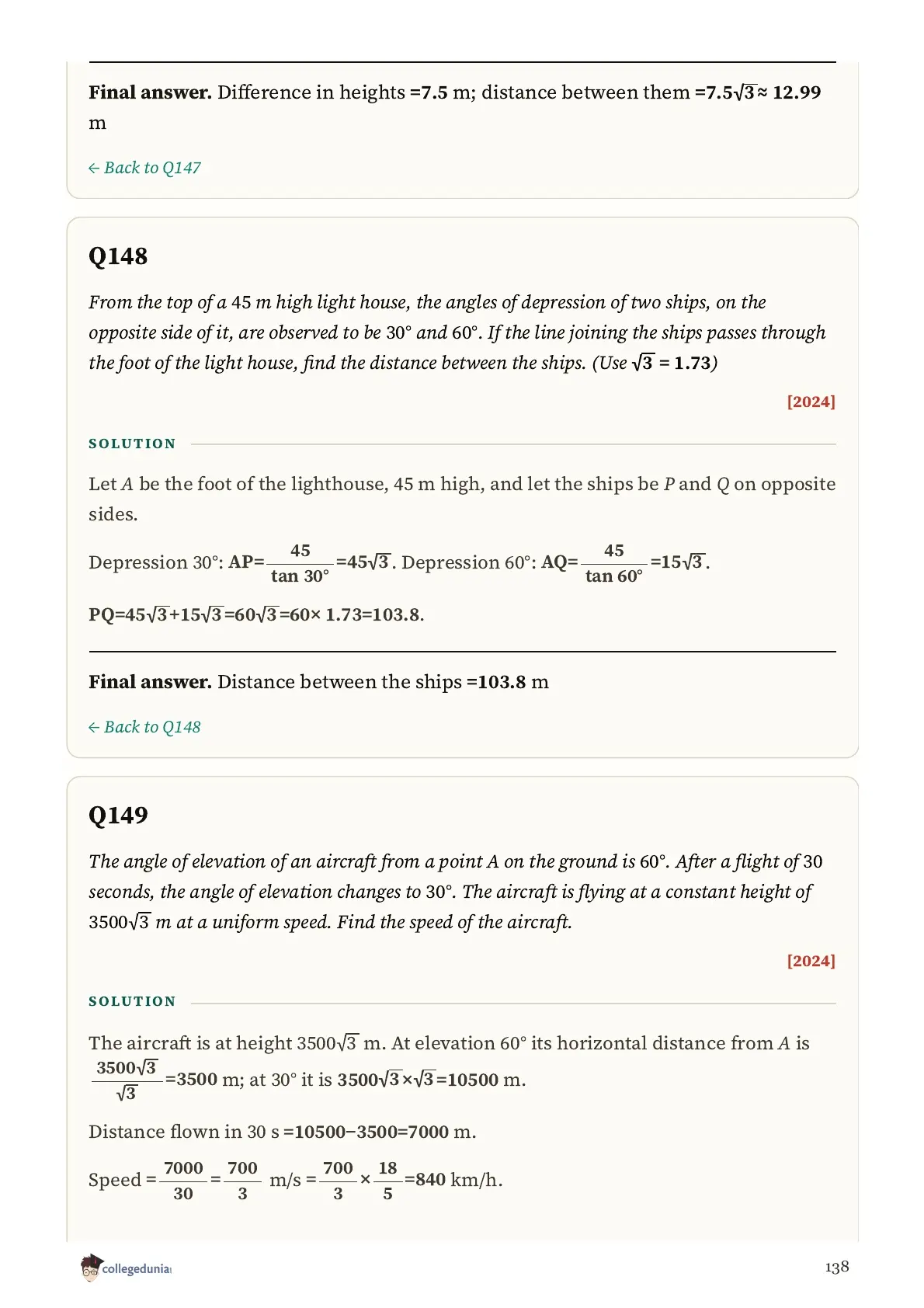
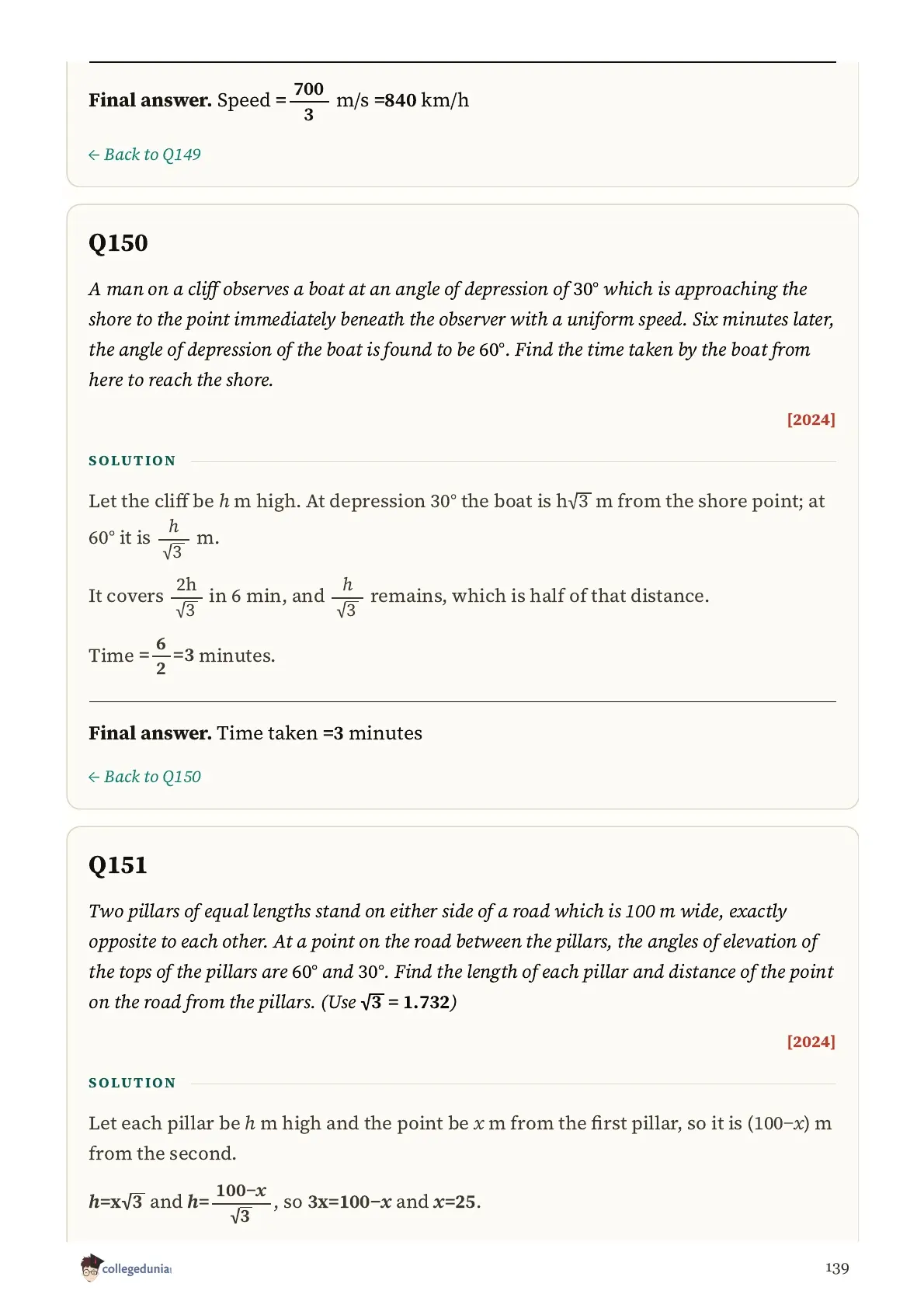
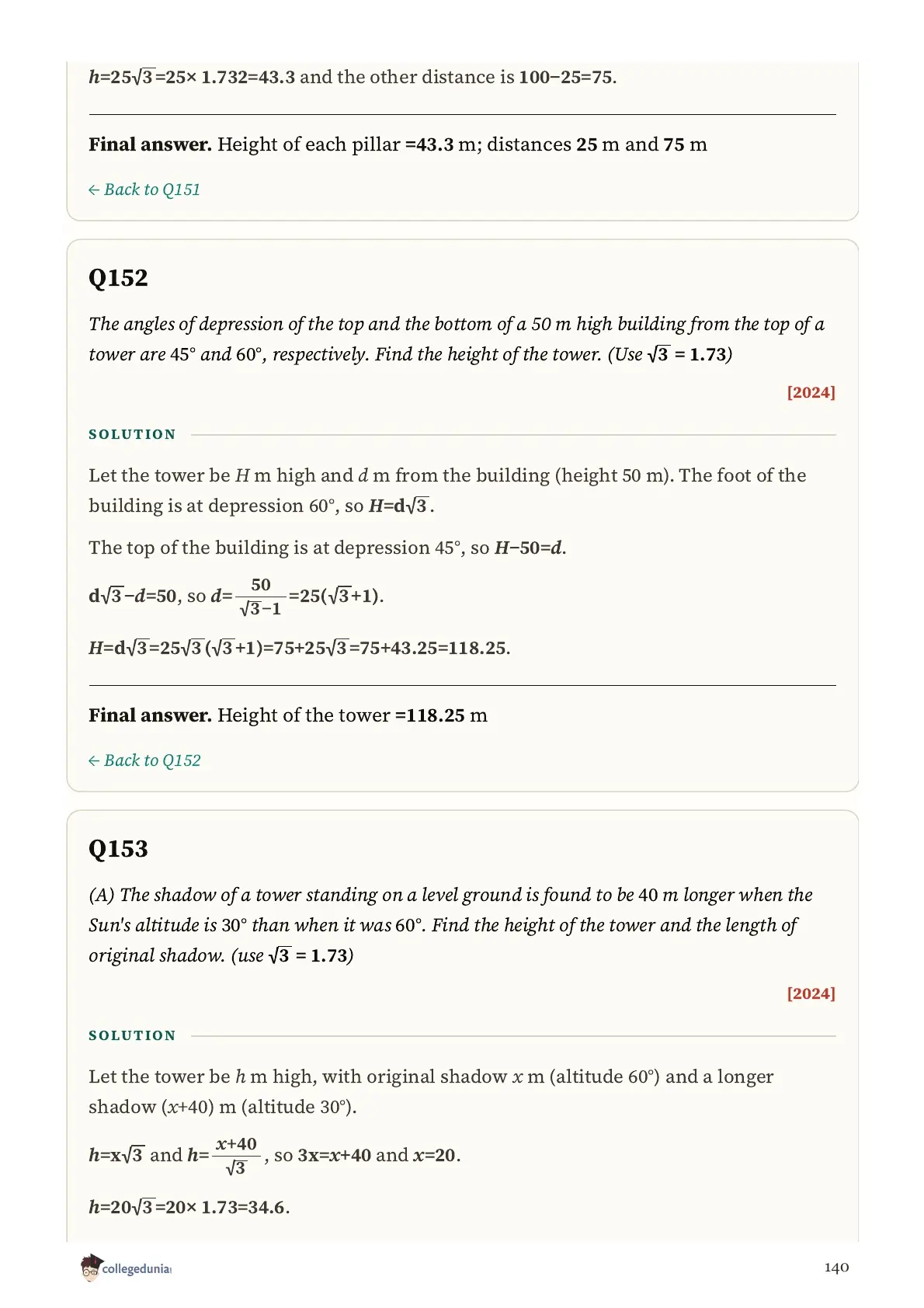
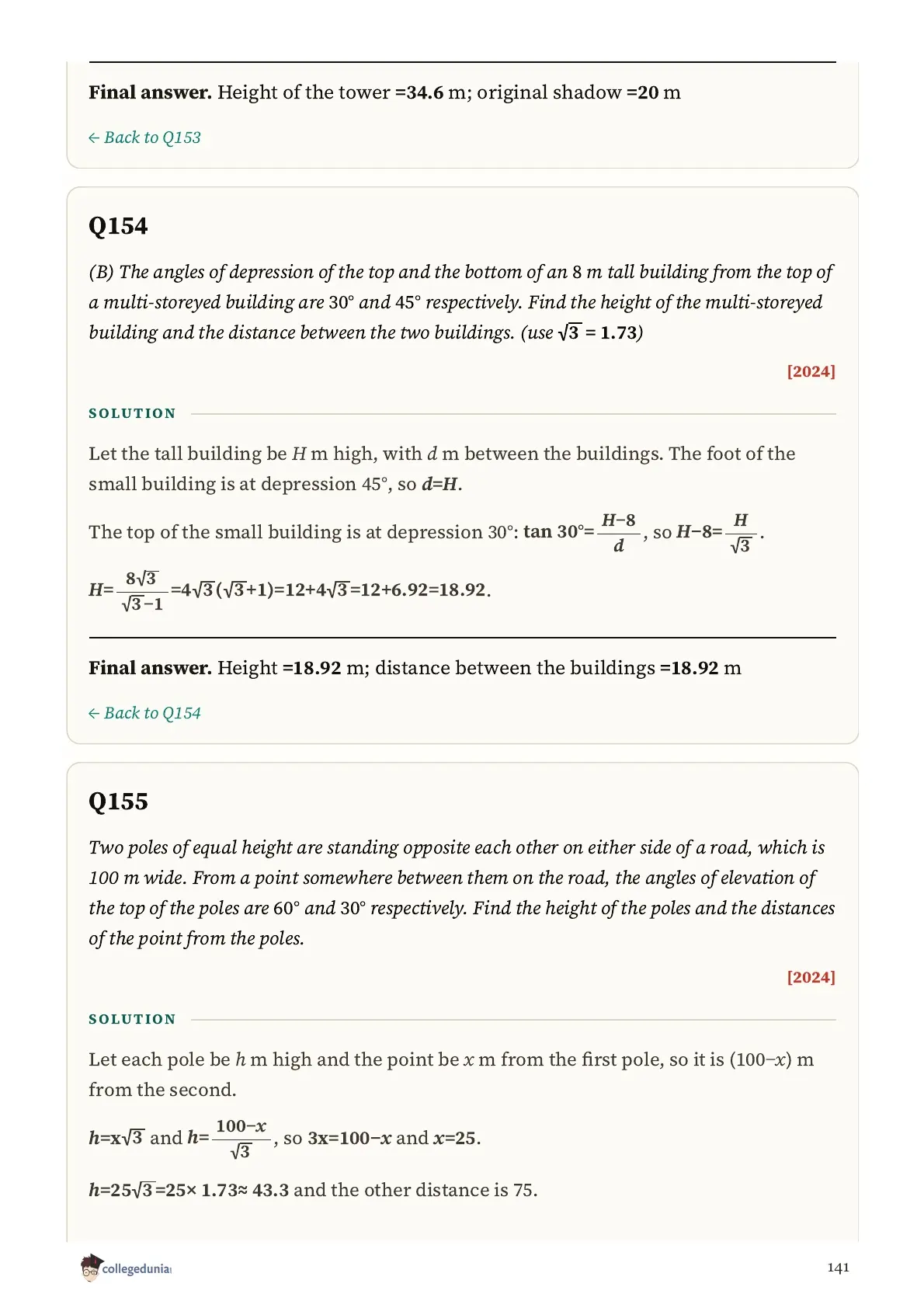
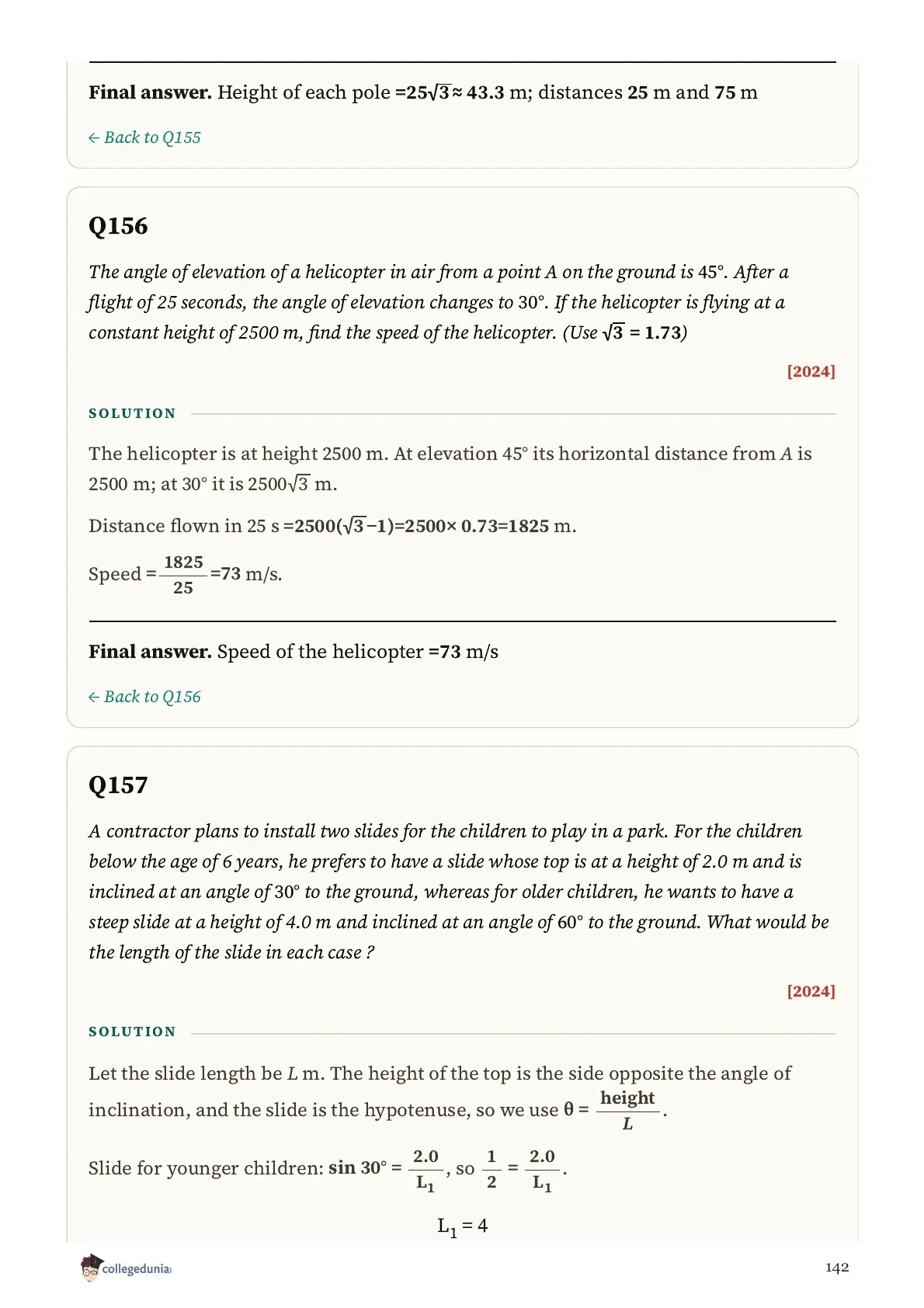
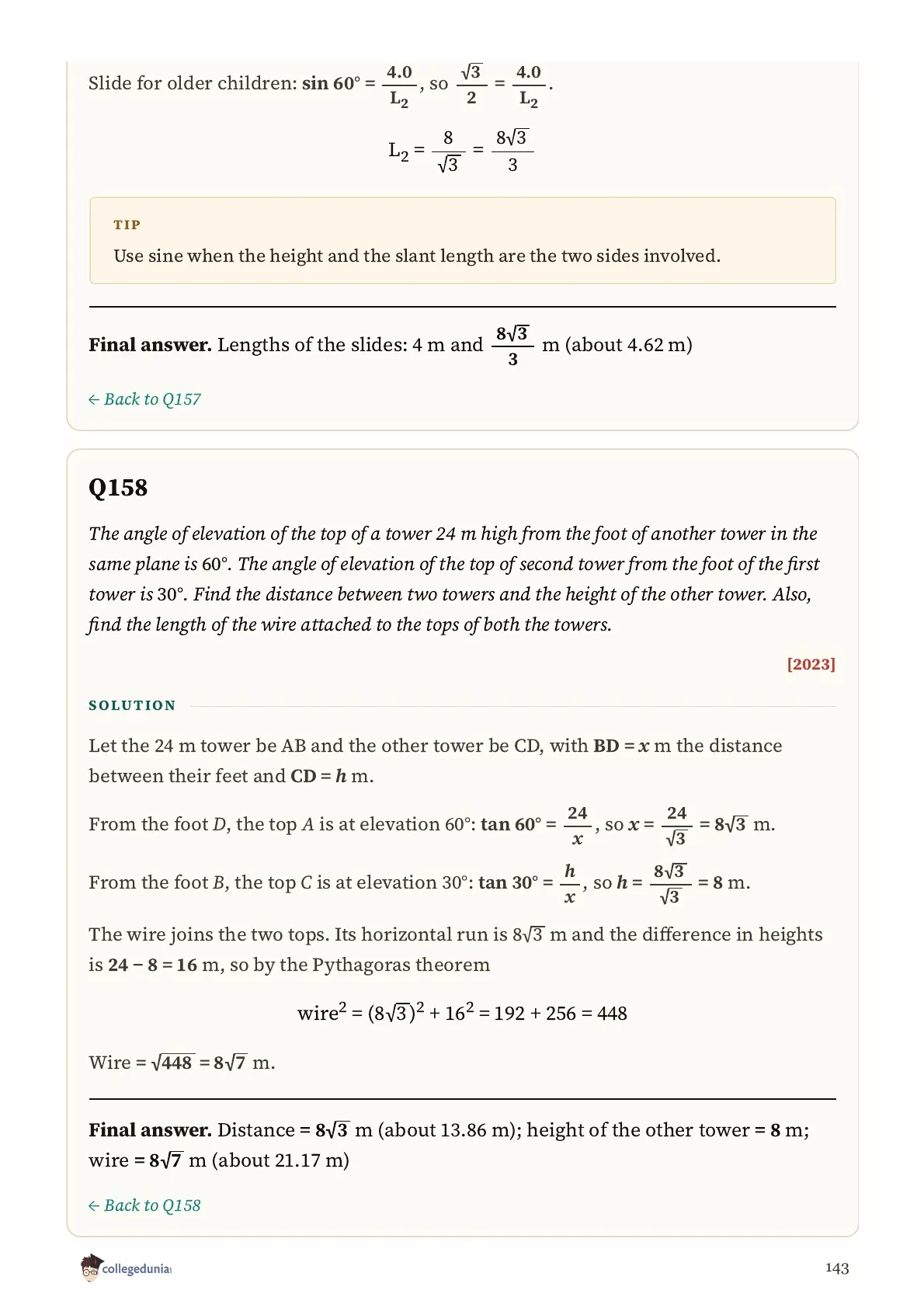
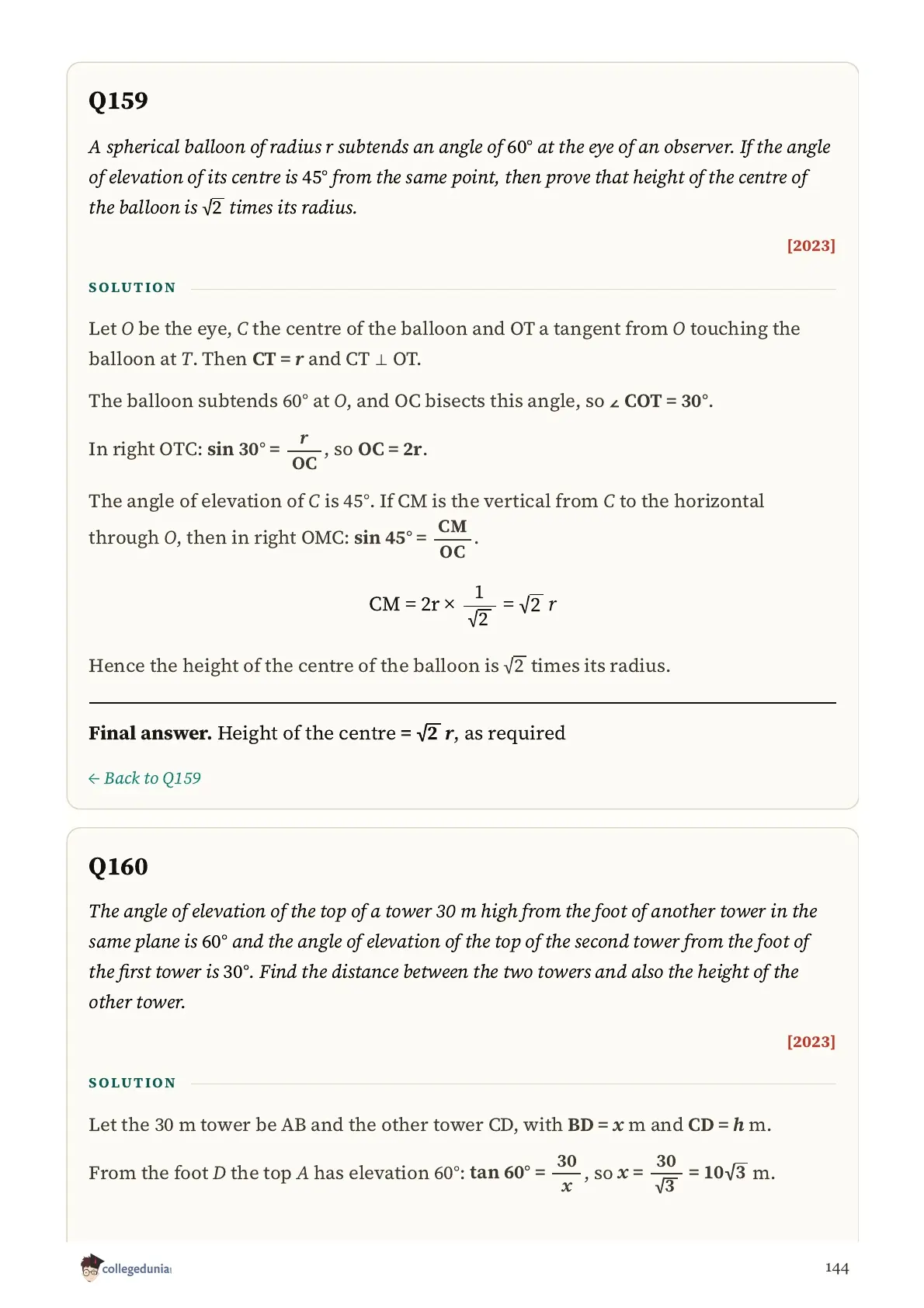
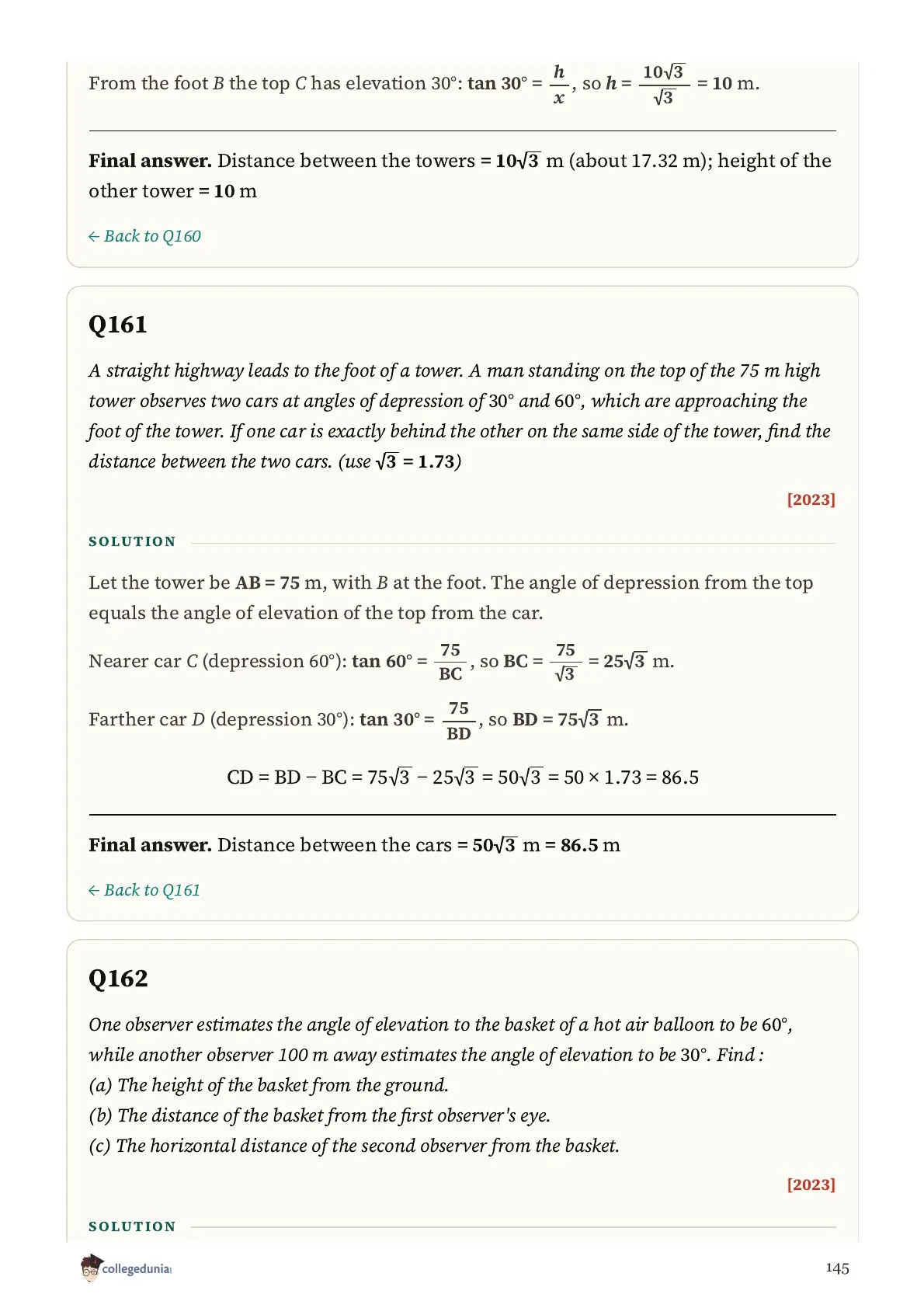
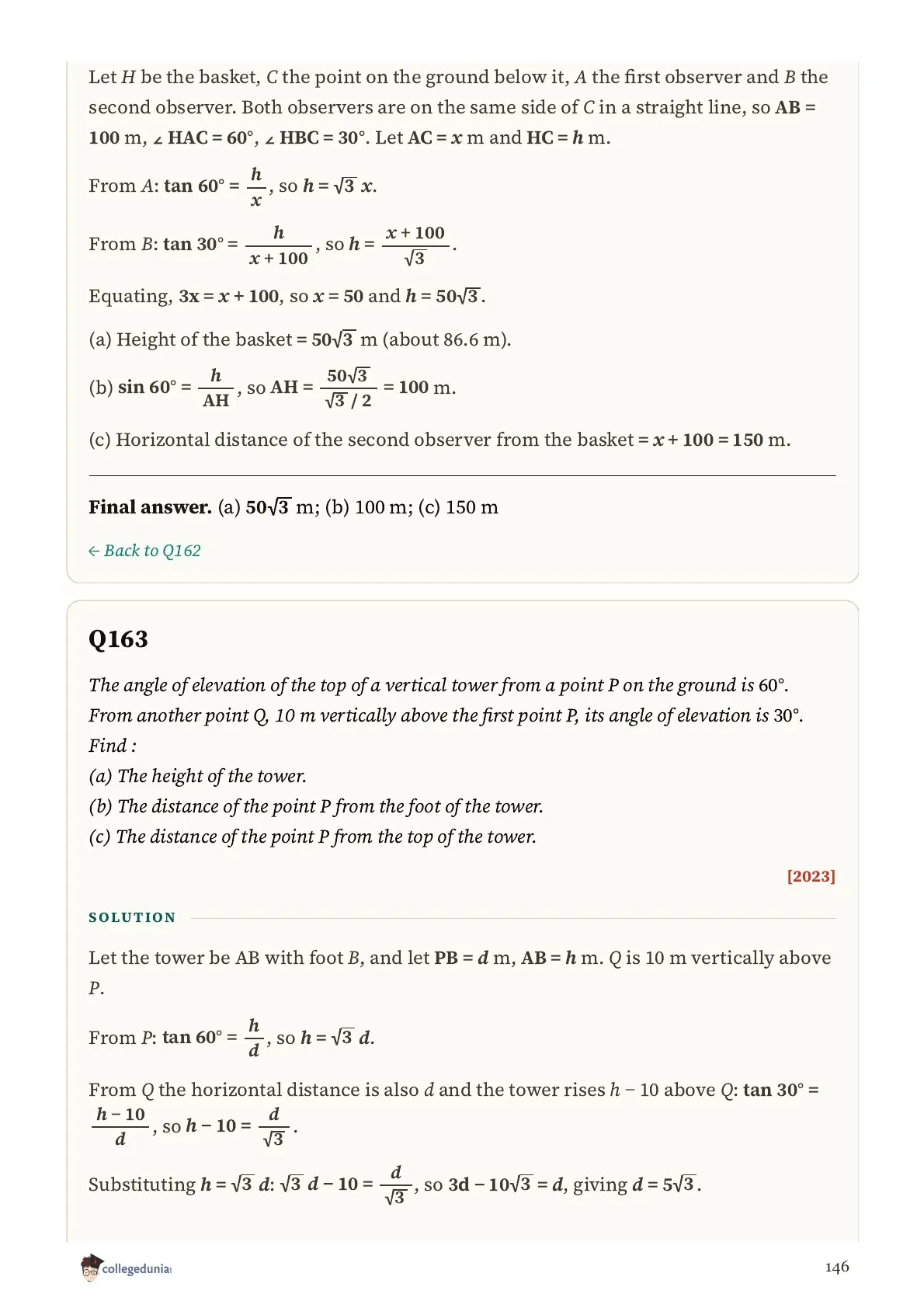
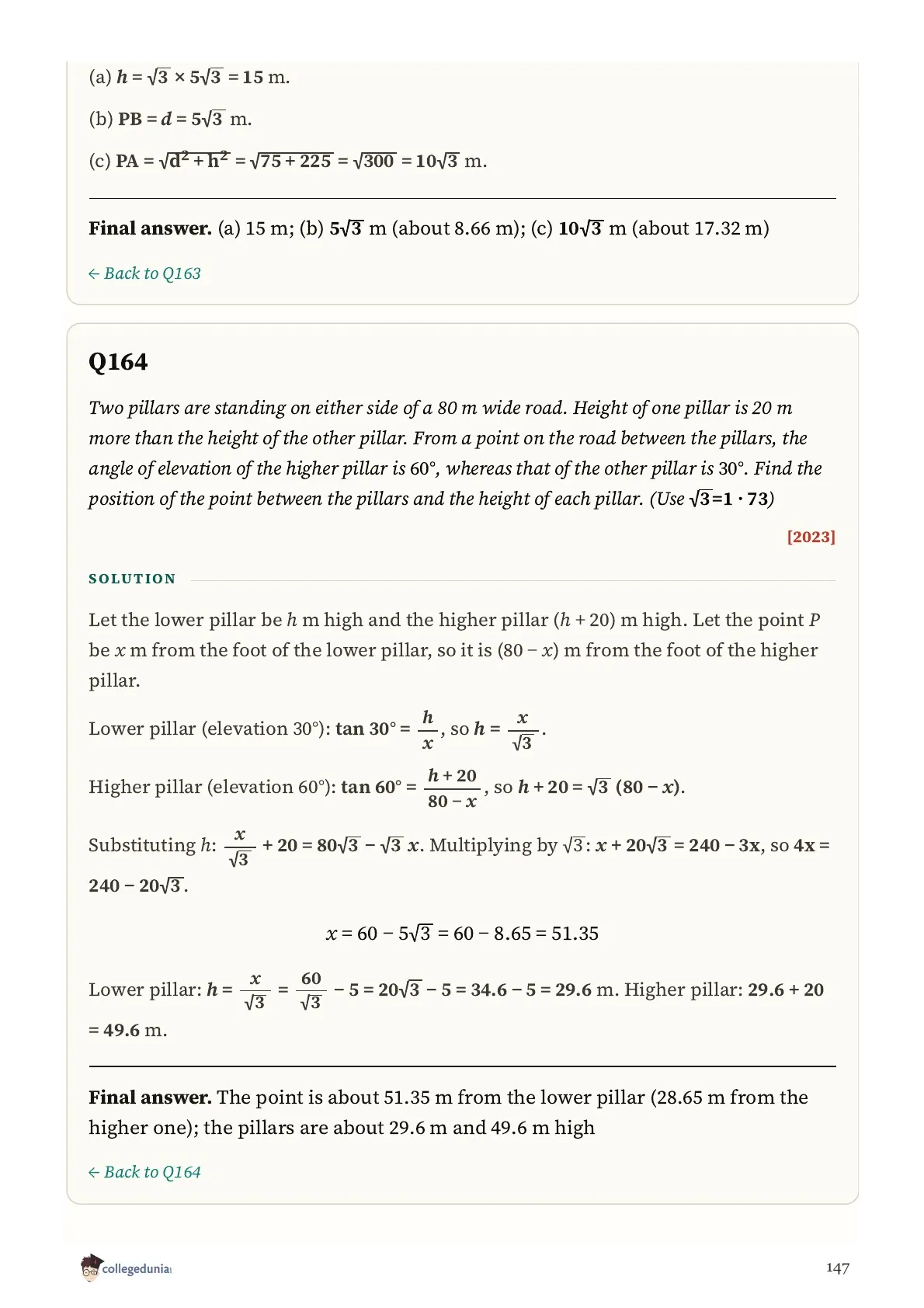
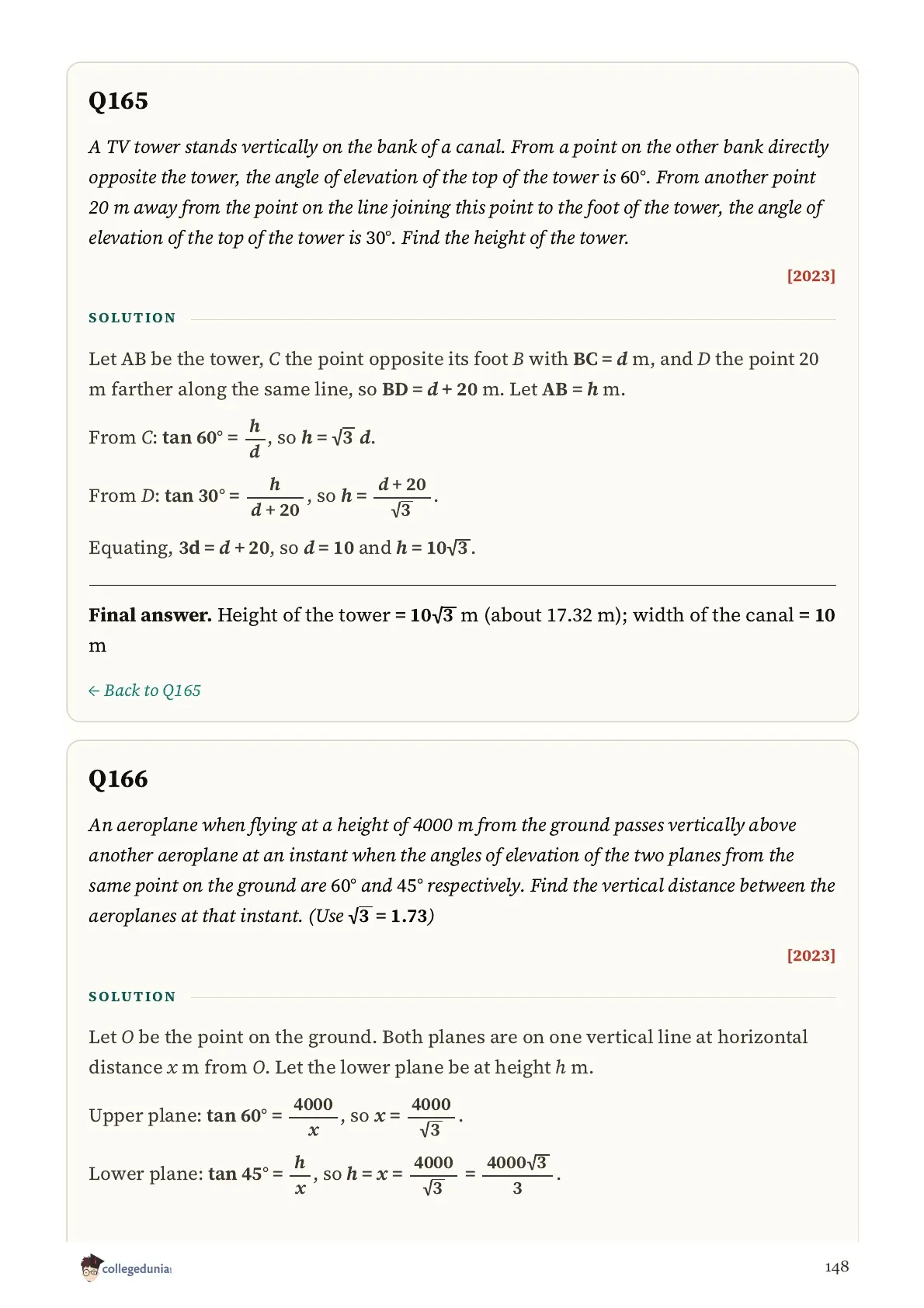
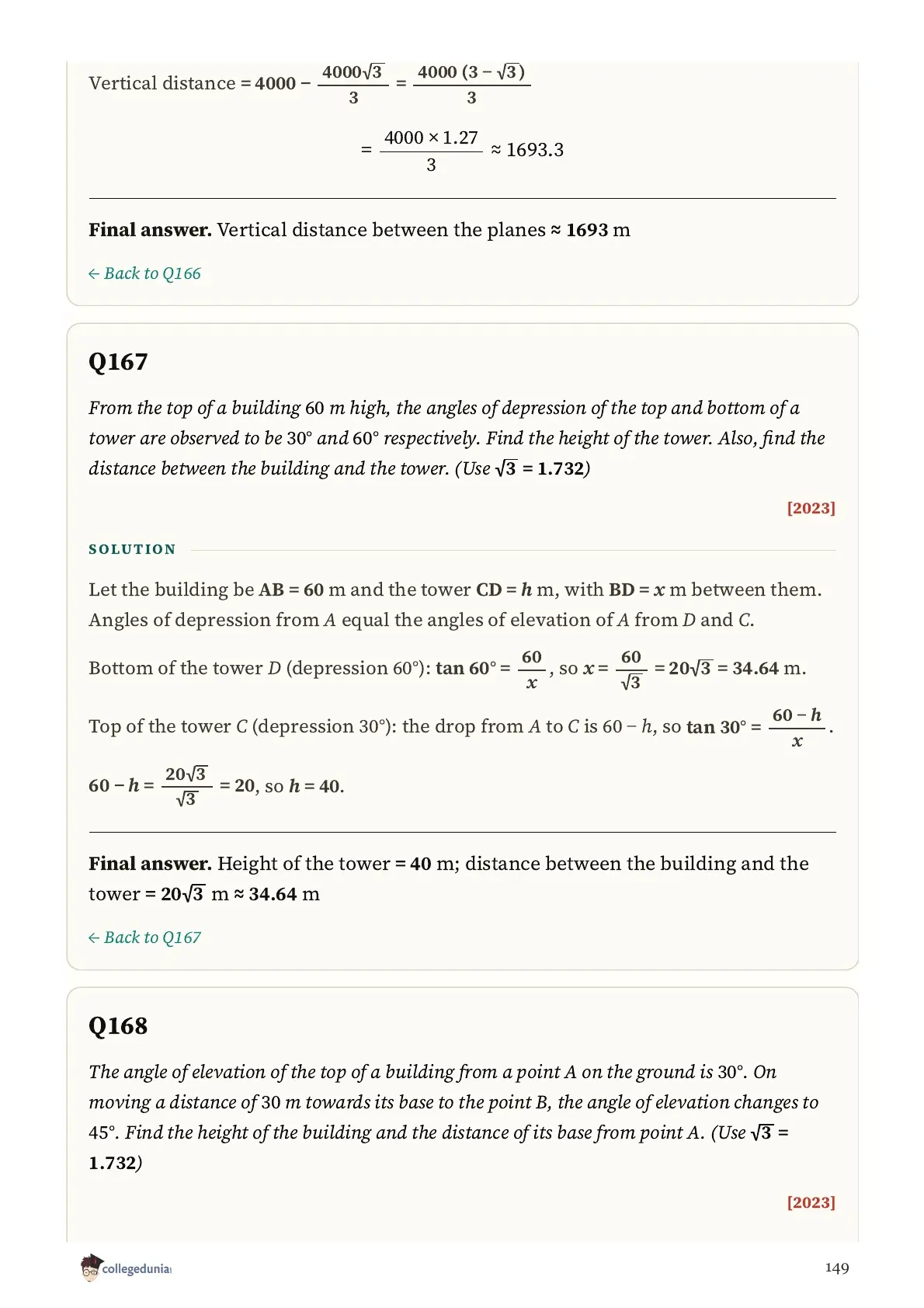
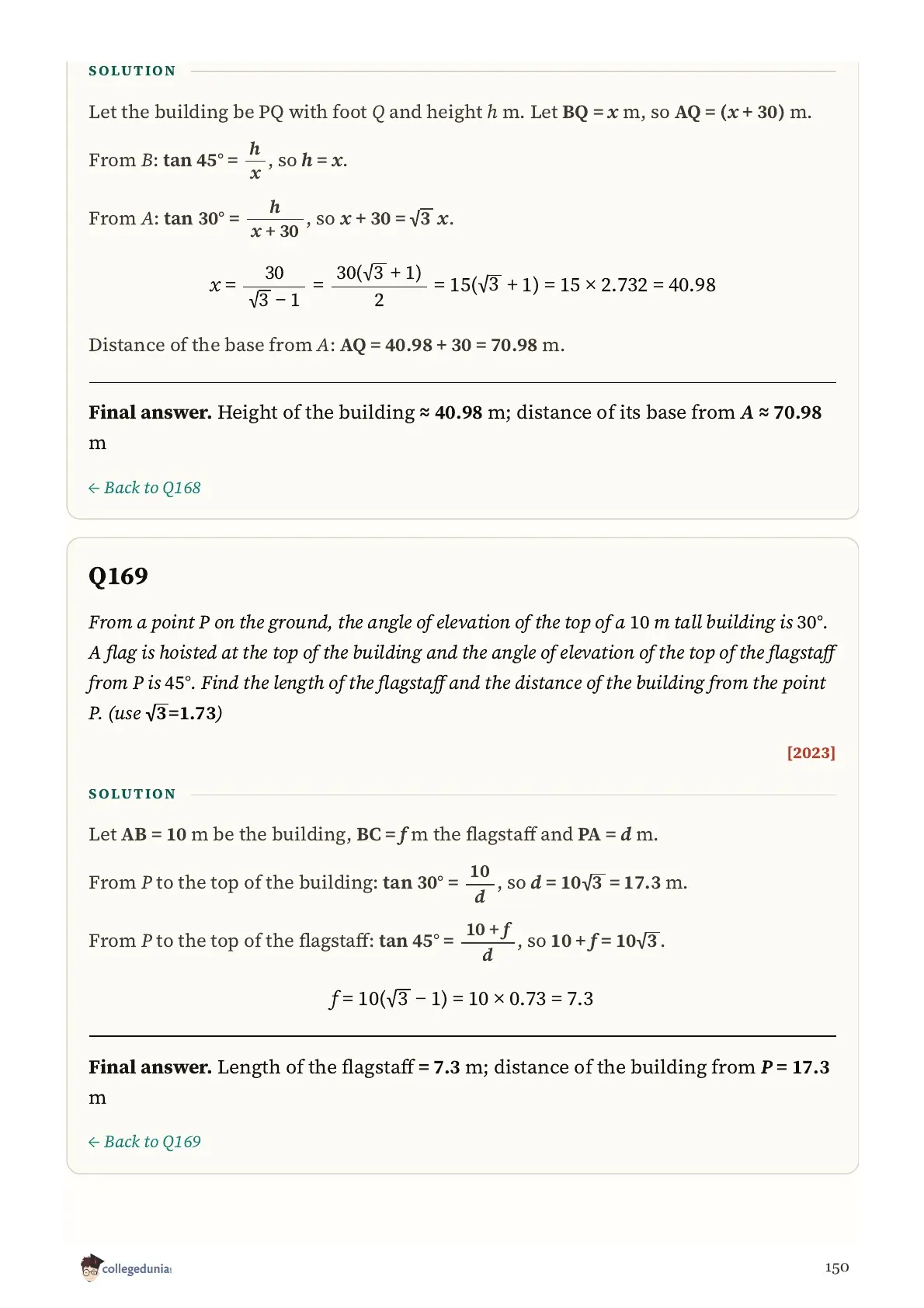
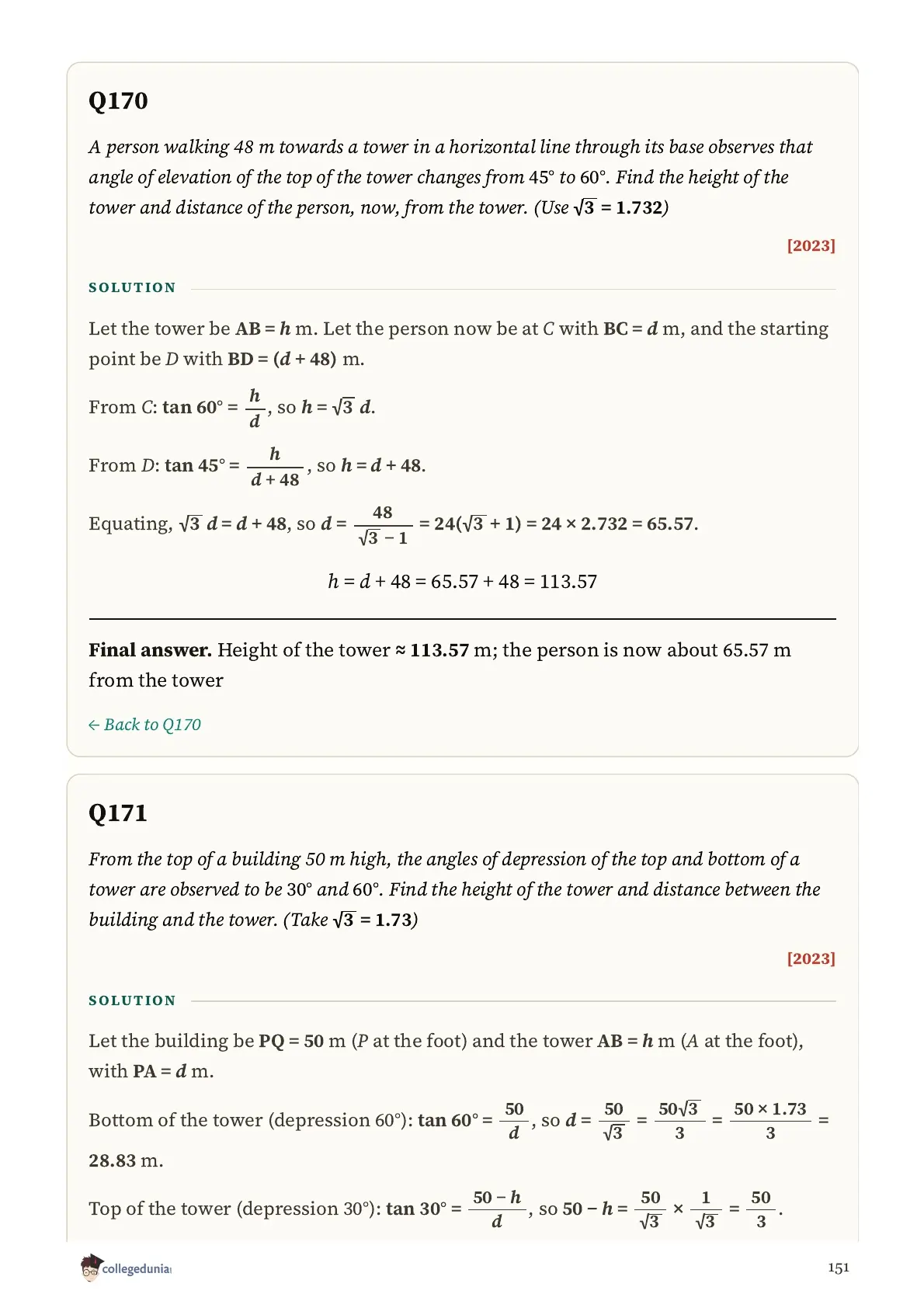
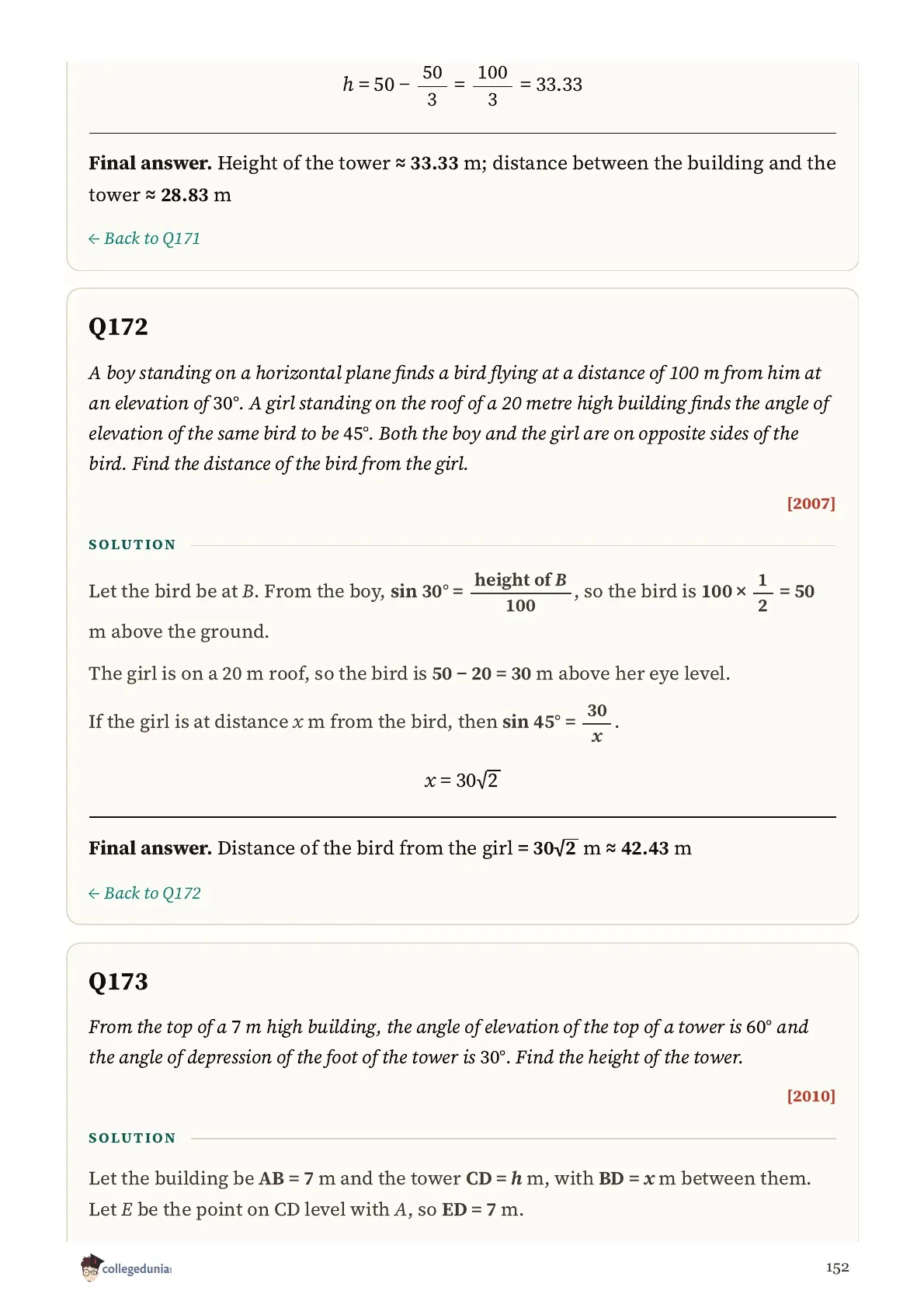
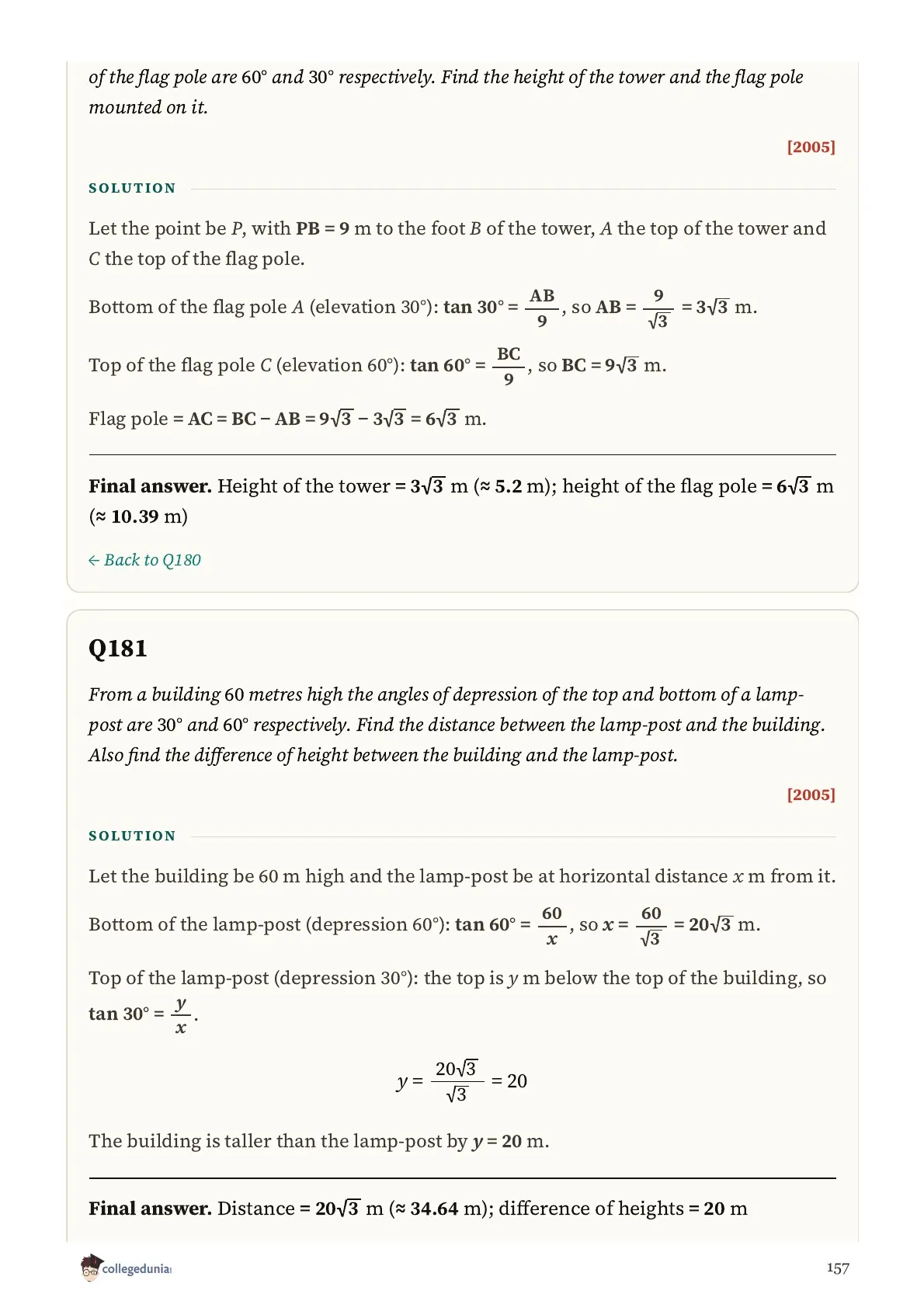
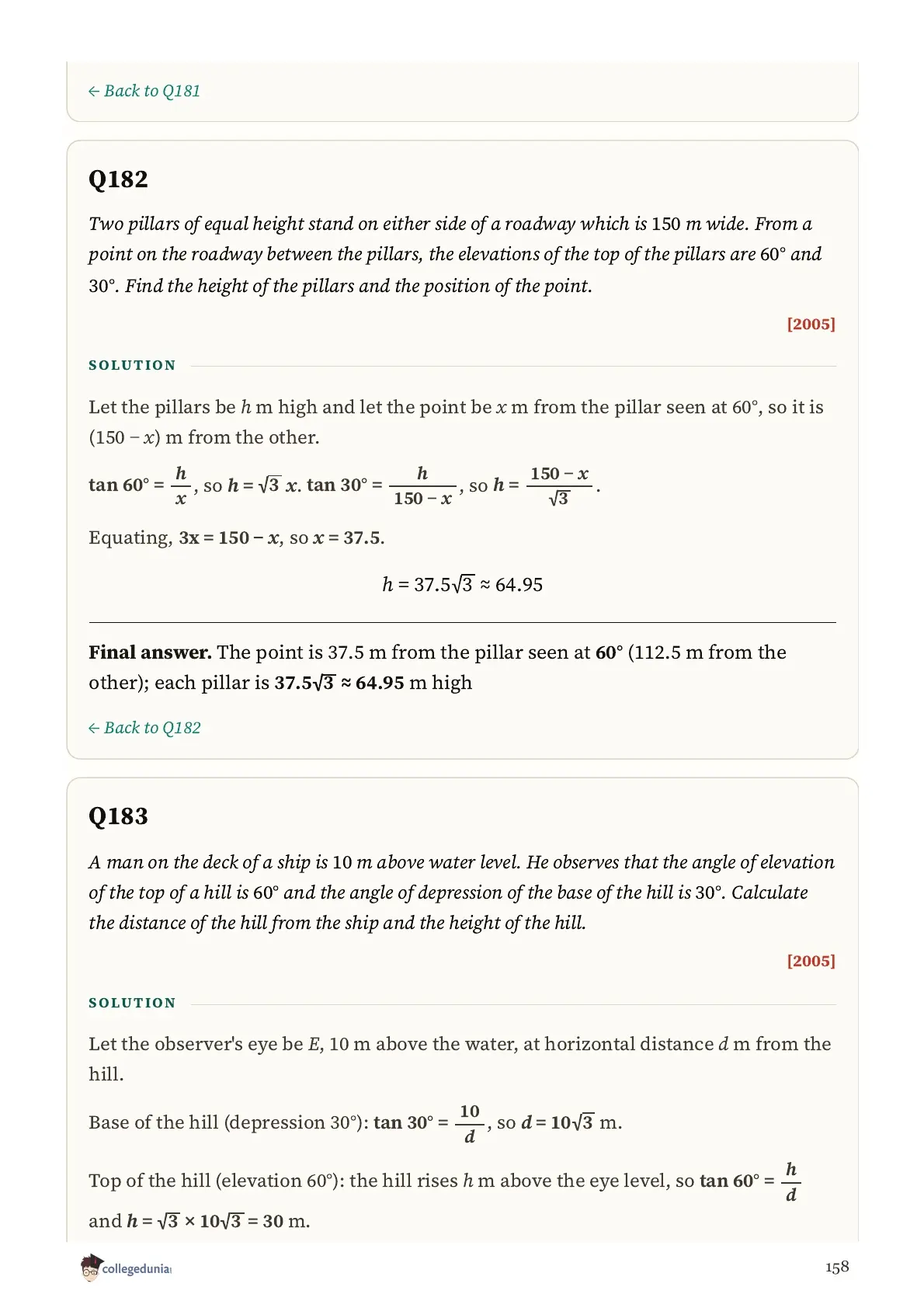
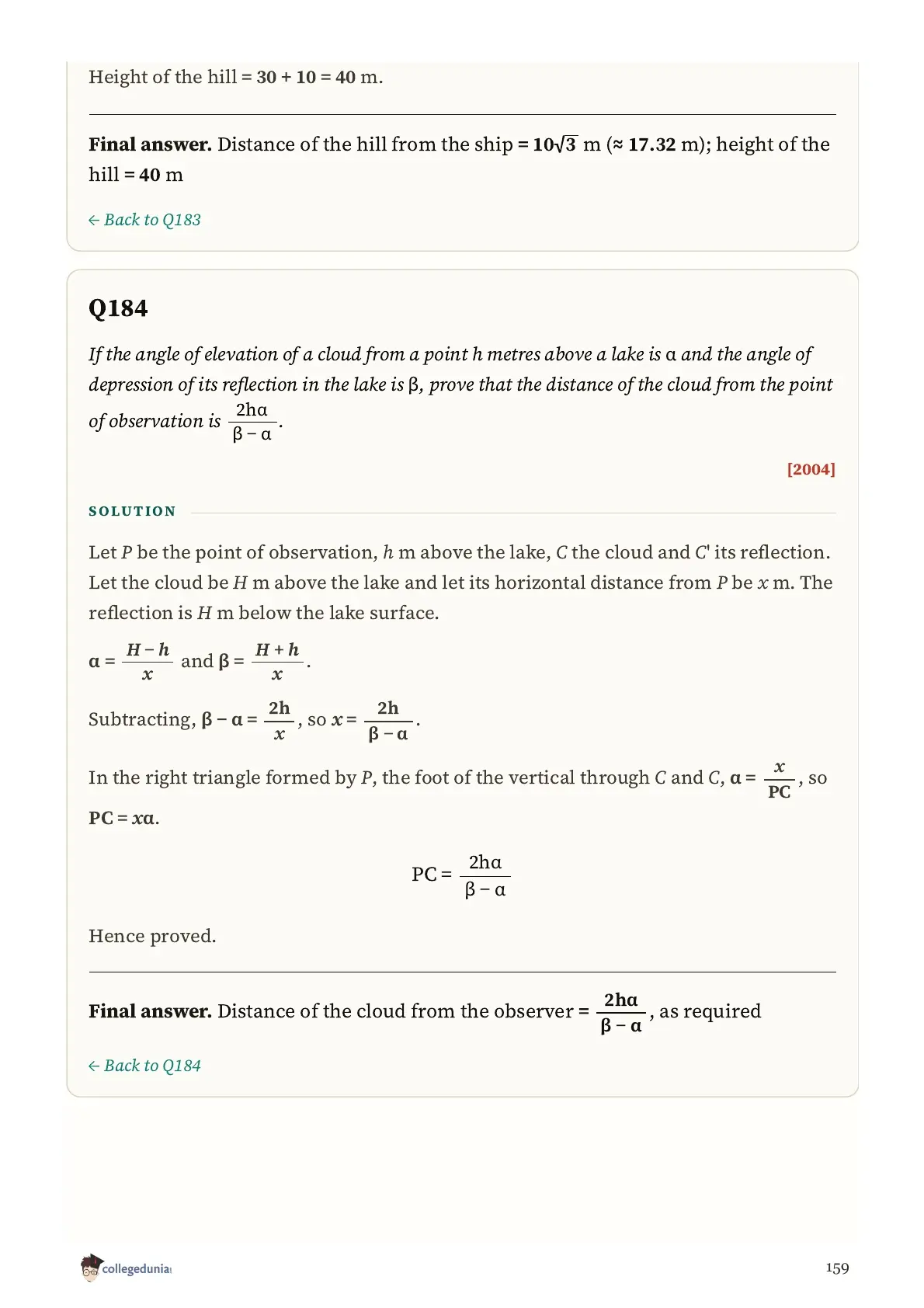
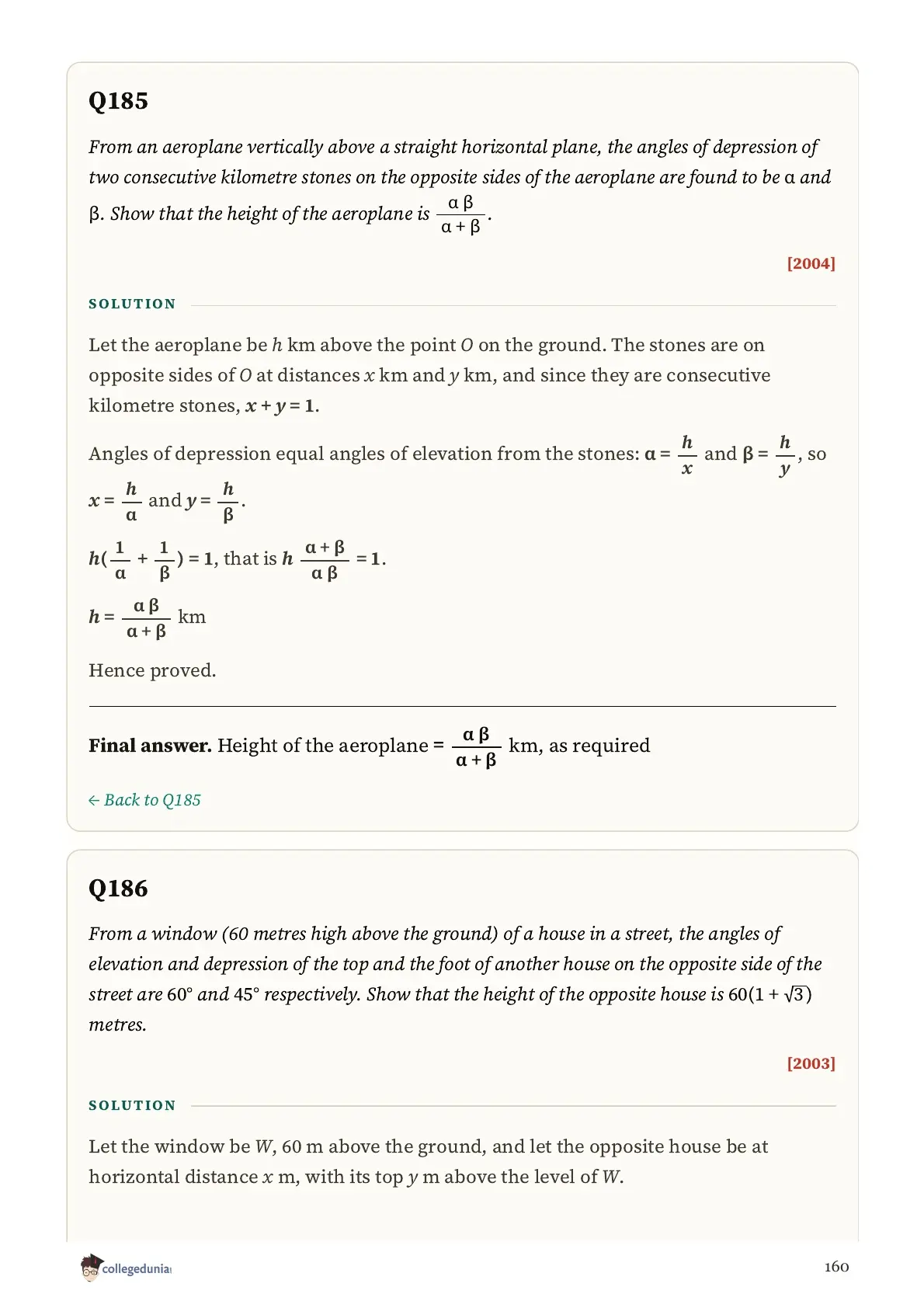
Almost every question draws a right-angled triangle and asks for a length. 135 of the 189 mention a height, 88 involve a distance or a width, and 71 contain root 3. Typical cases are a 15 m ladder making 60 degrees with the wall (2017), a bridge 3 m above a river whose banks are seen at 30 and 45 degrees (2022), and a tower on a 20 m building whose bottom and top are seen at 45 and 60 degrees (2020).
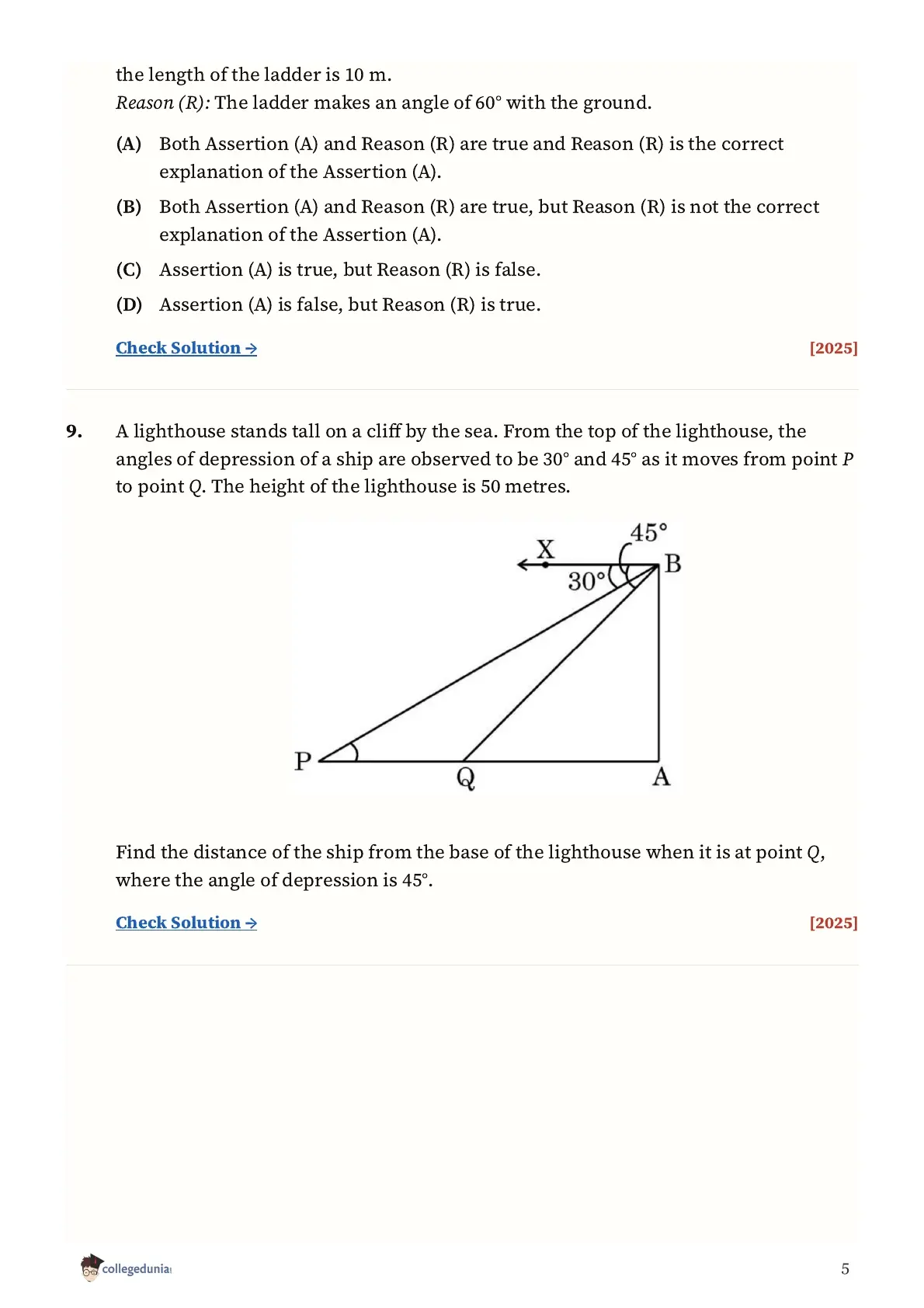
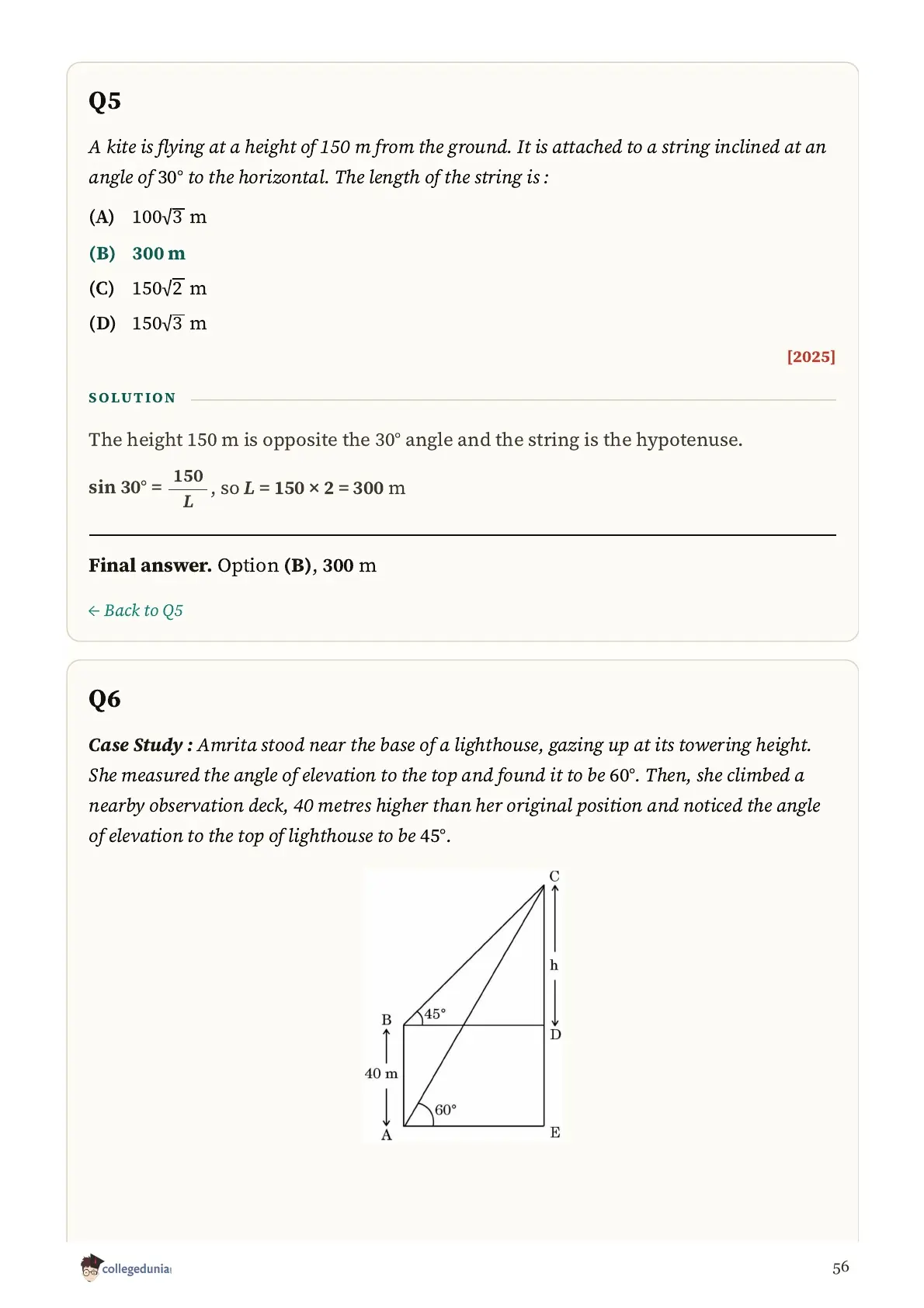
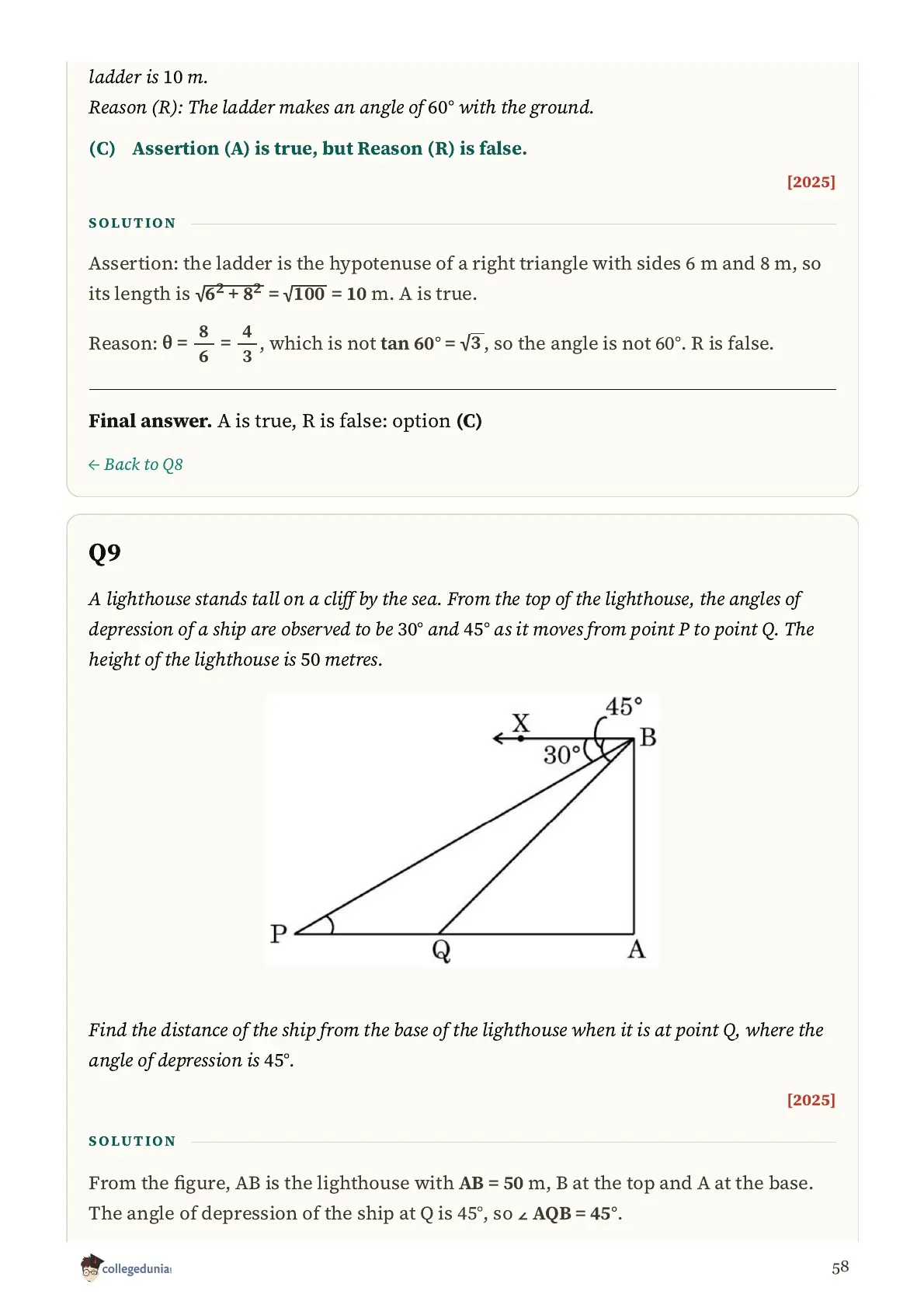
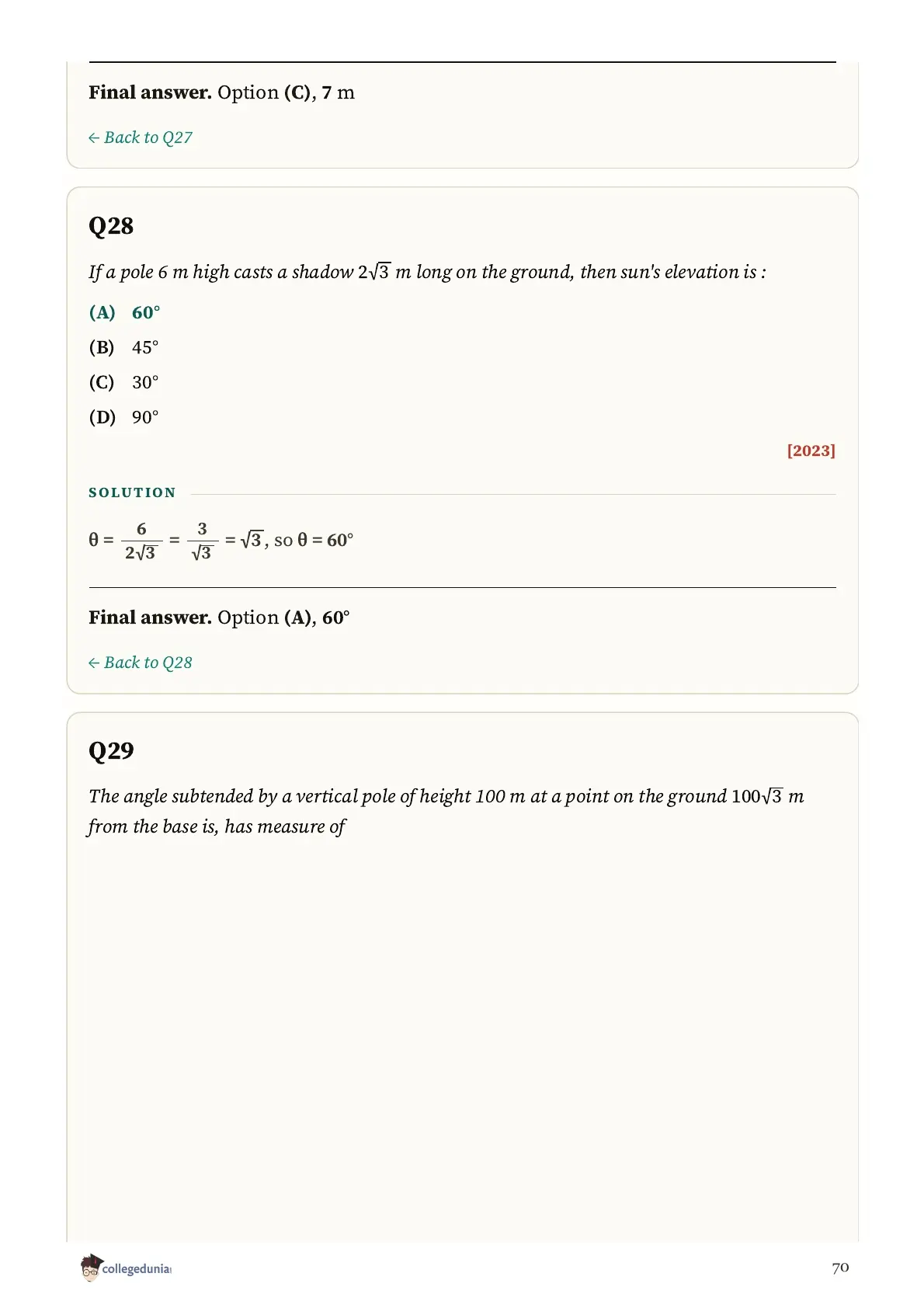
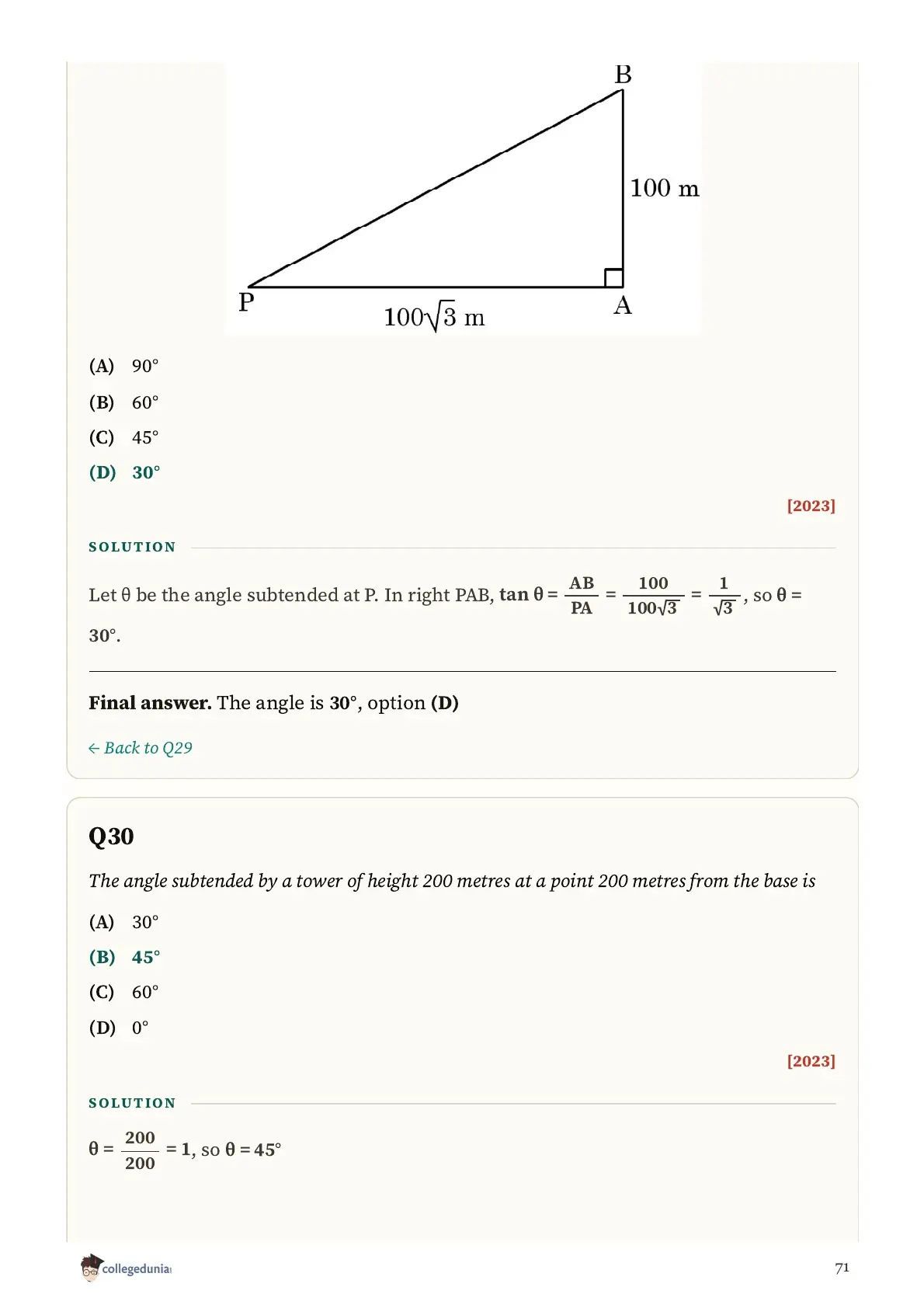
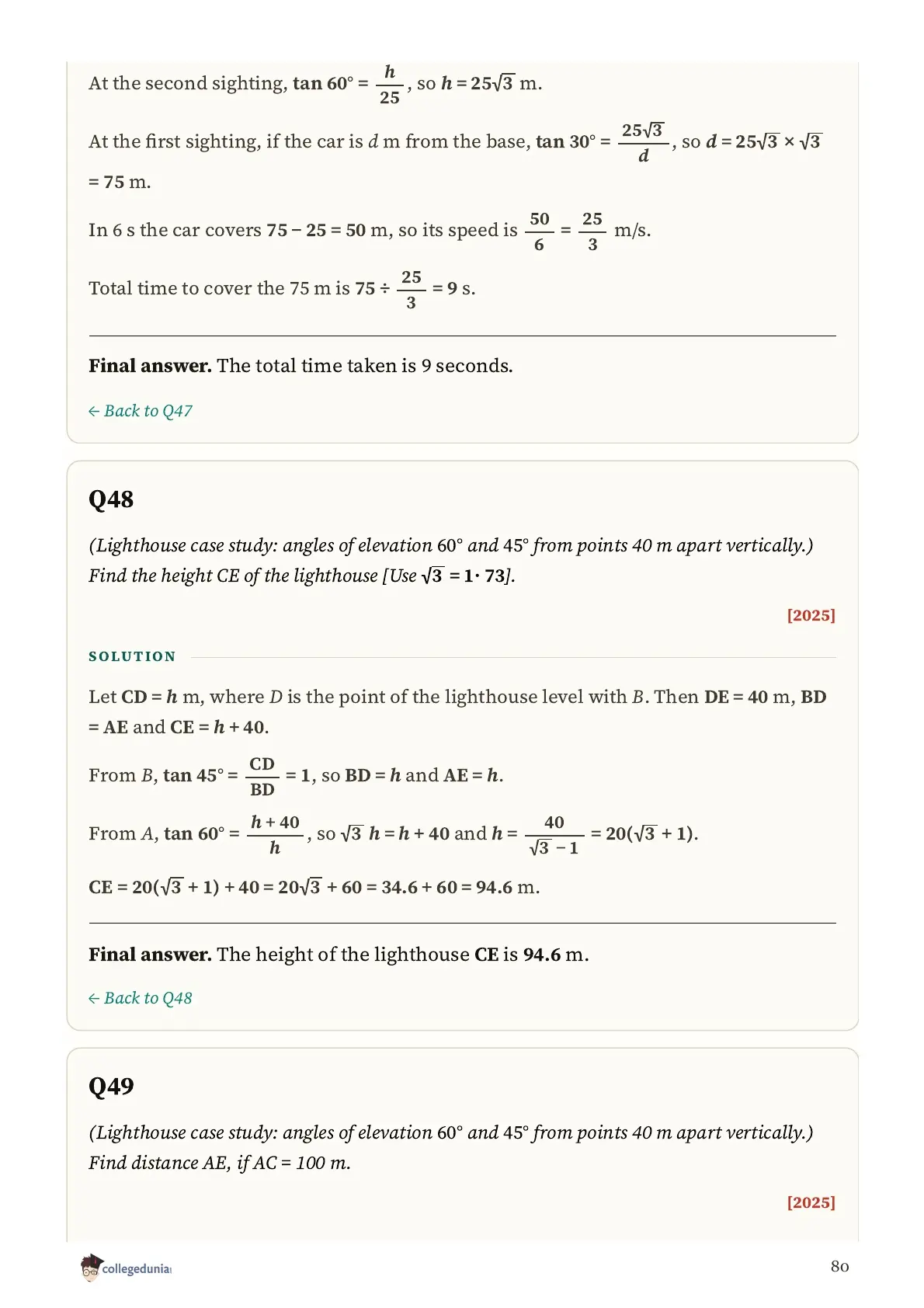
The angle of elevation is the base of the set, with 111 questions, against 65 on the angle of depression. In 72 questions the object is a tower and in 33 a building. Poles or pillars come up 24 times, aircraft 21, shadows or the sun's elevation 19, rivers, bridges or roads 19, ships or boats 16, kites 11 and cliffs or hills 9. Only 7 name a lighthouse.
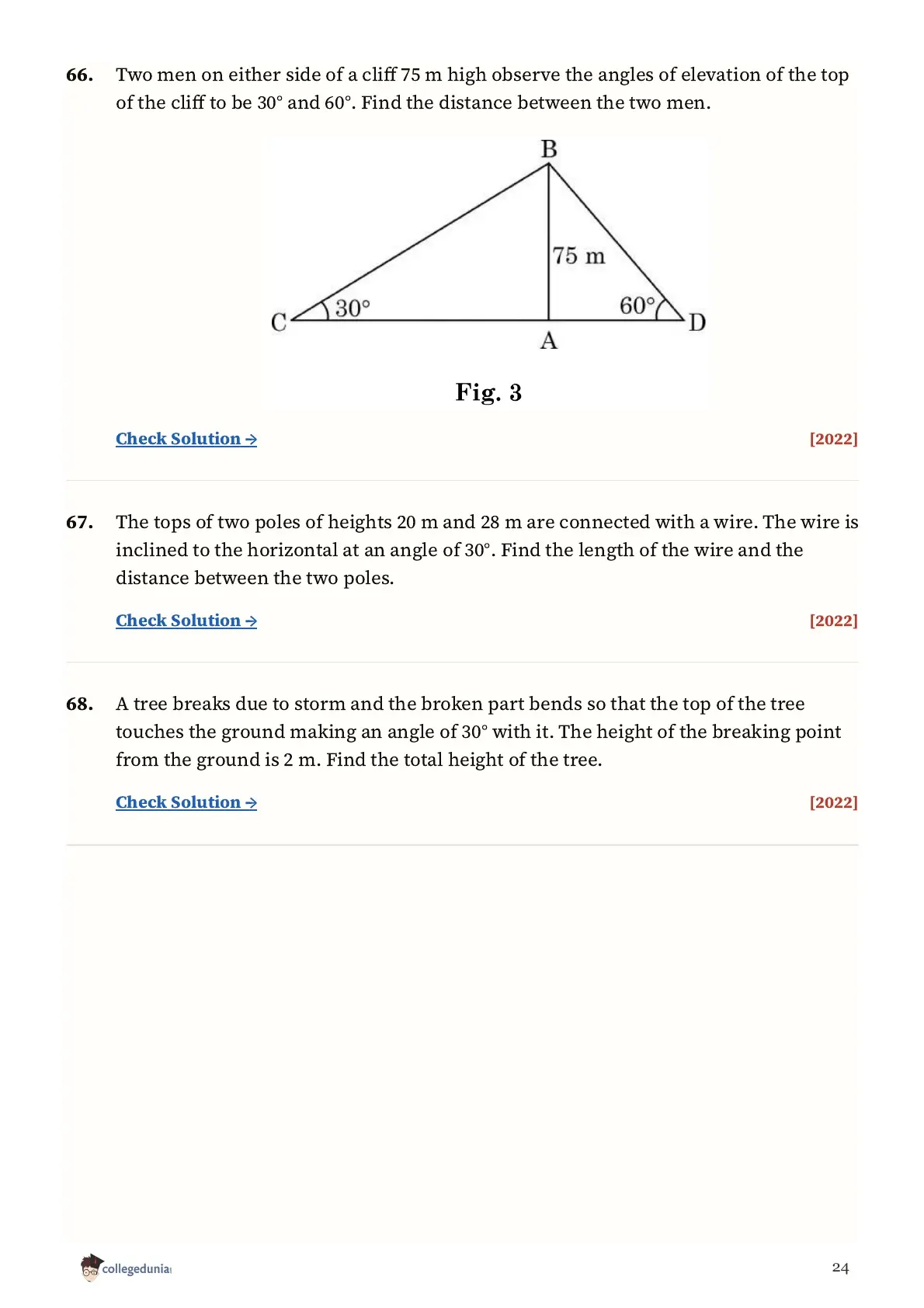
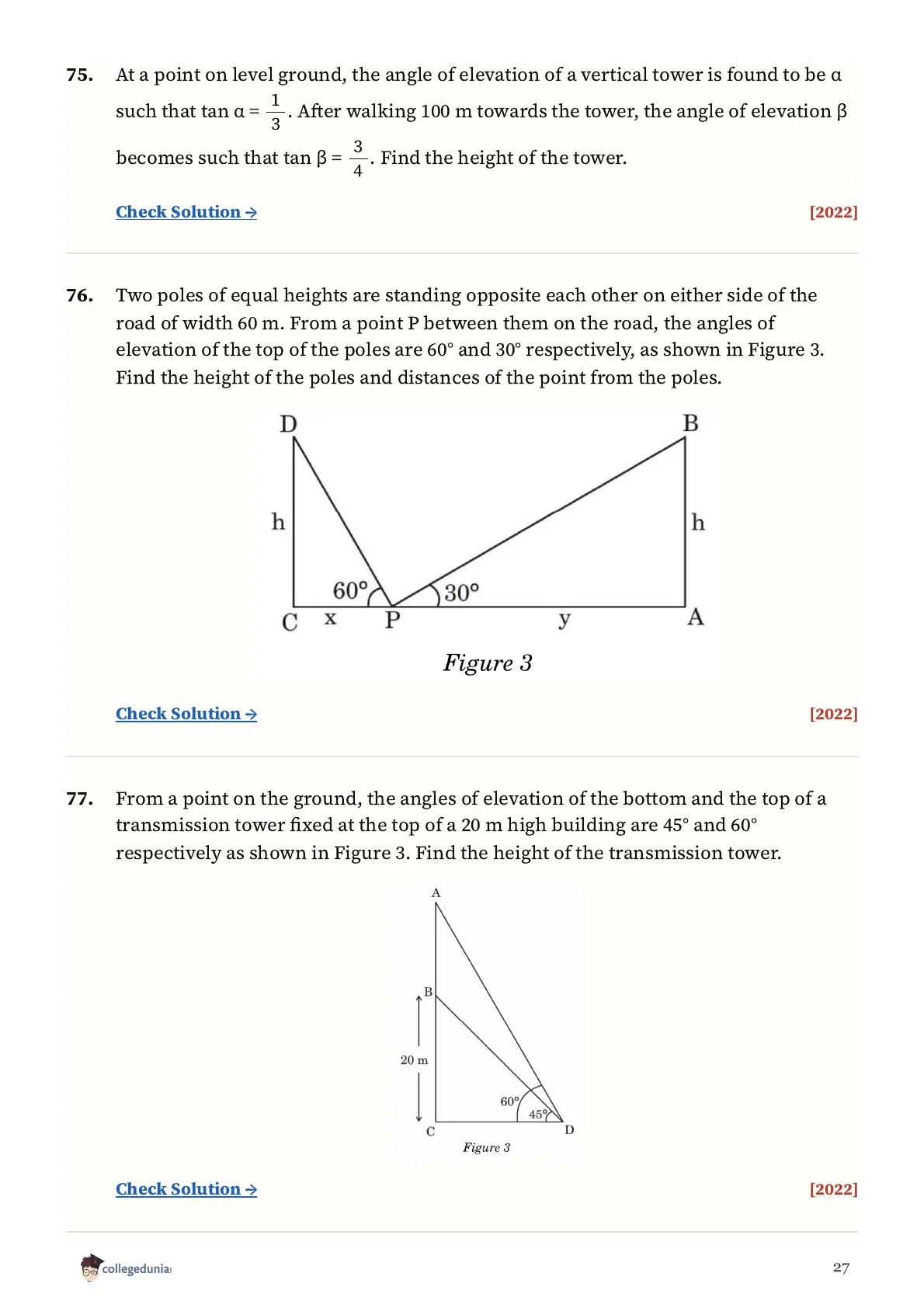
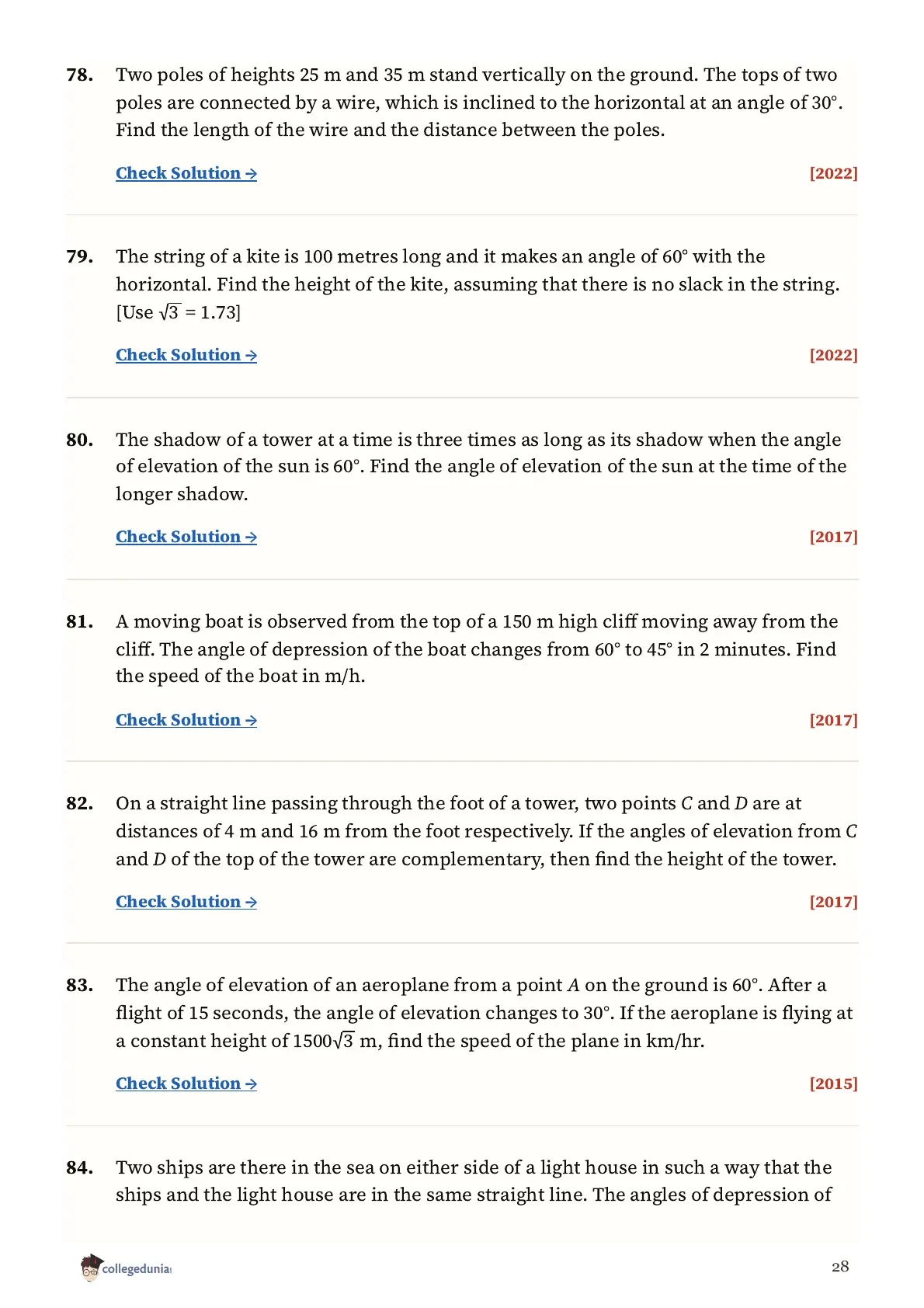
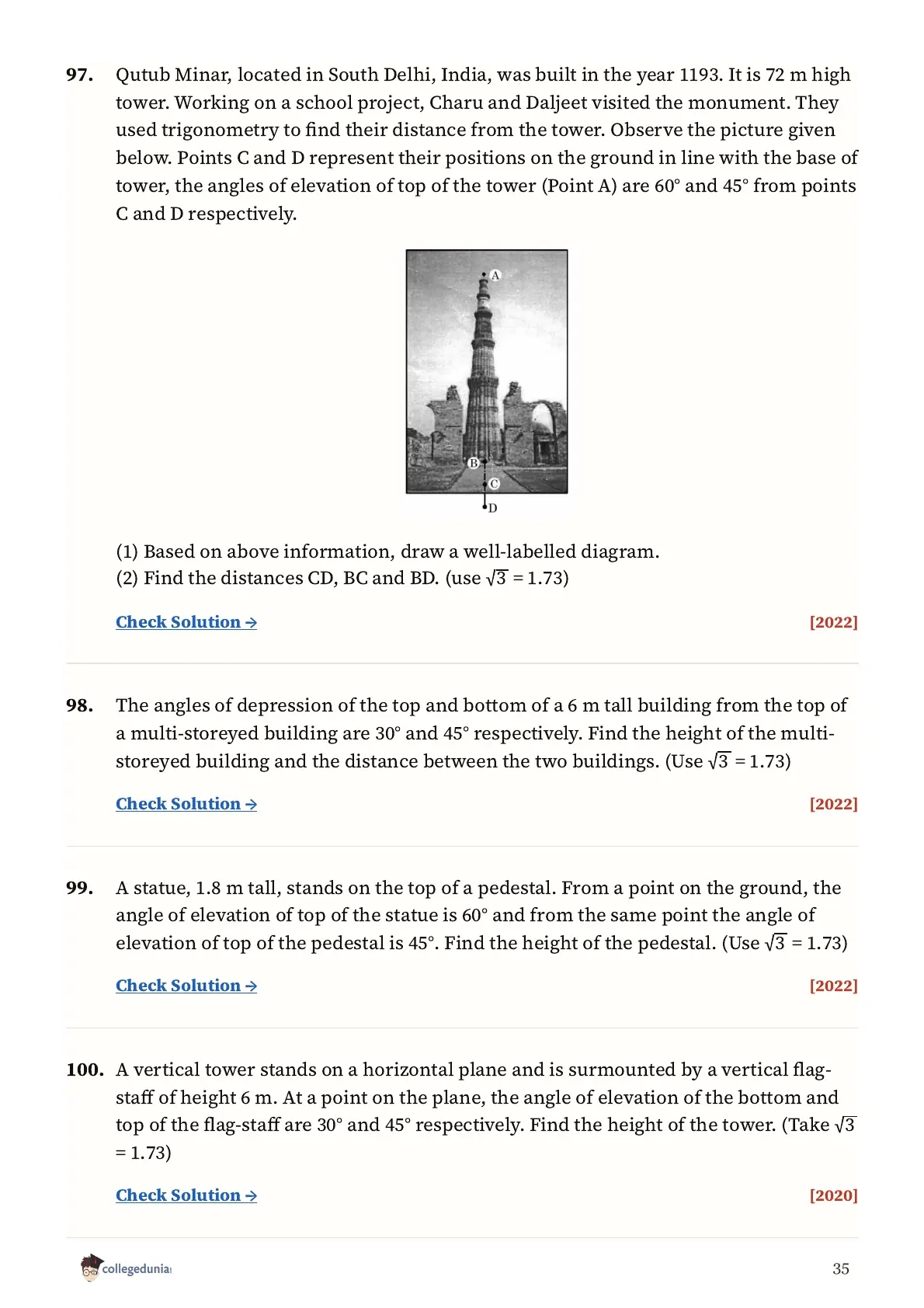
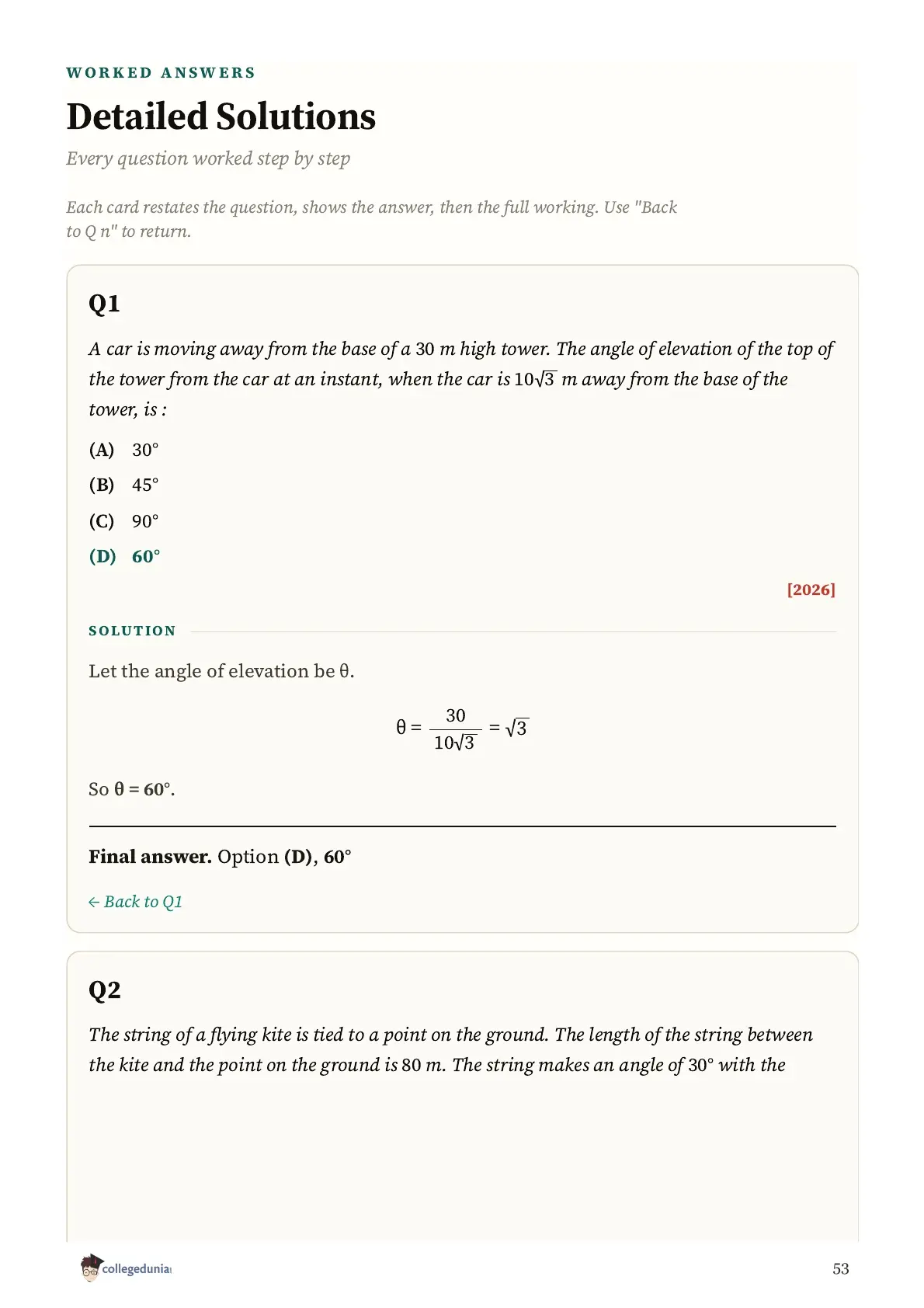
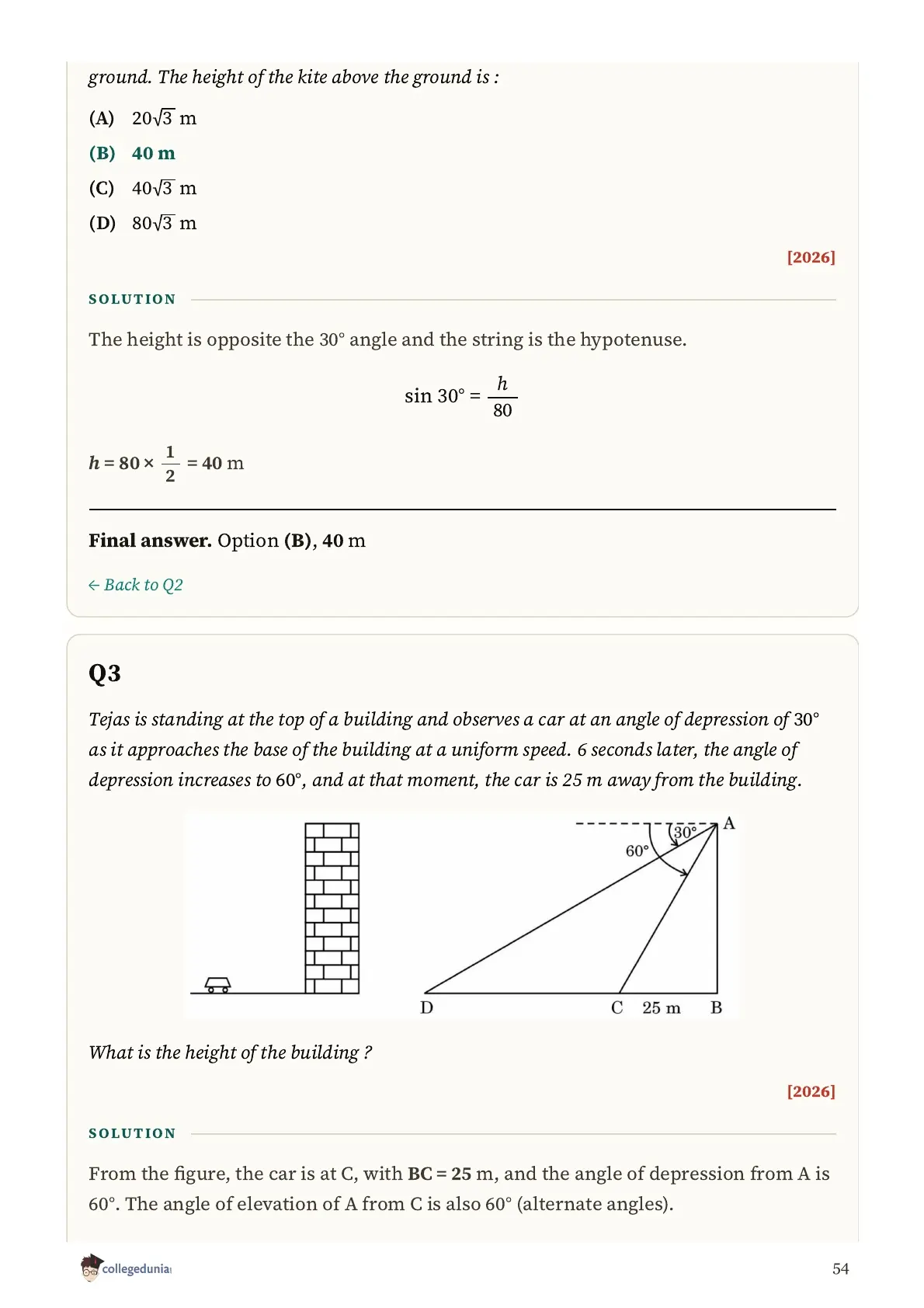
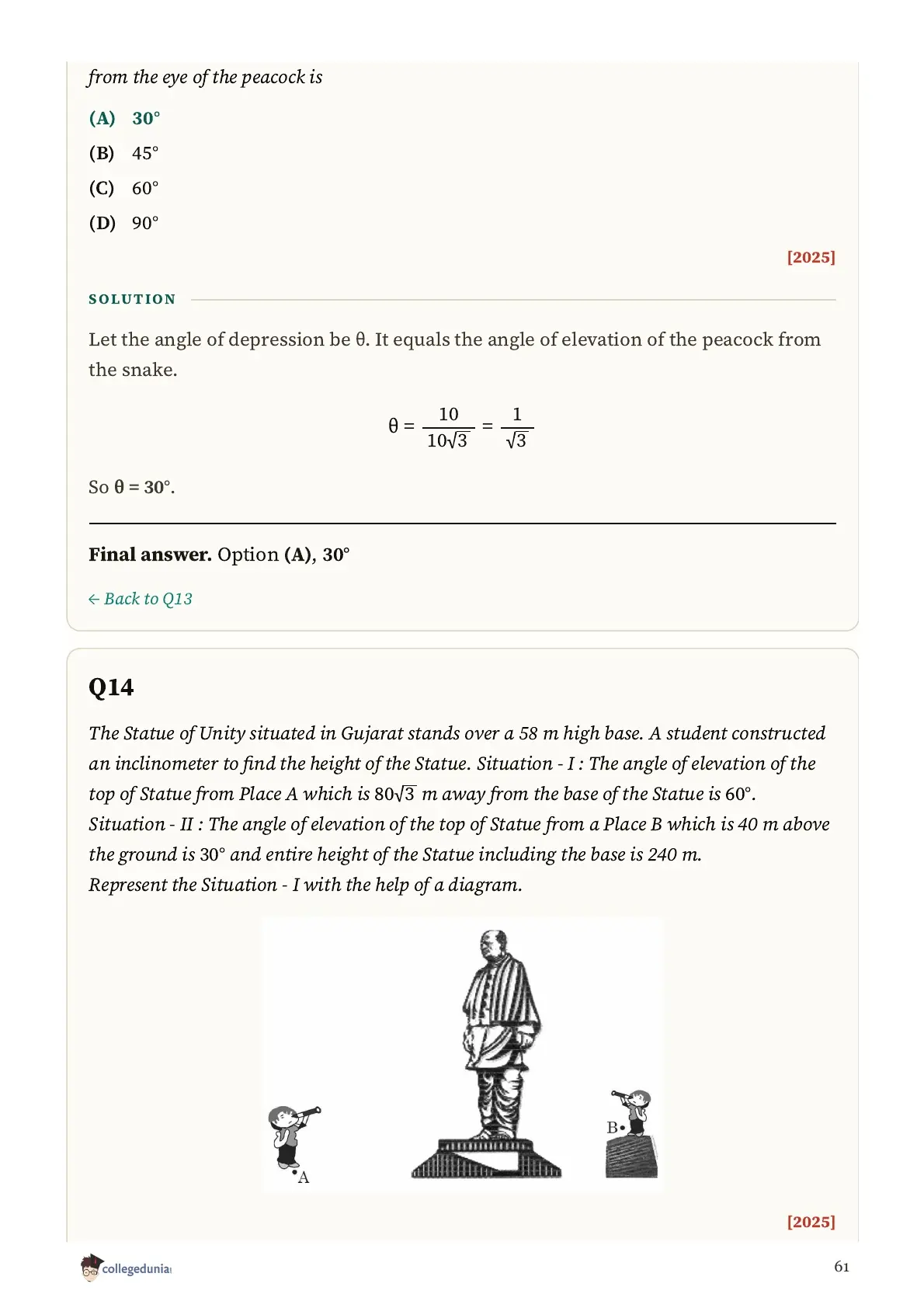
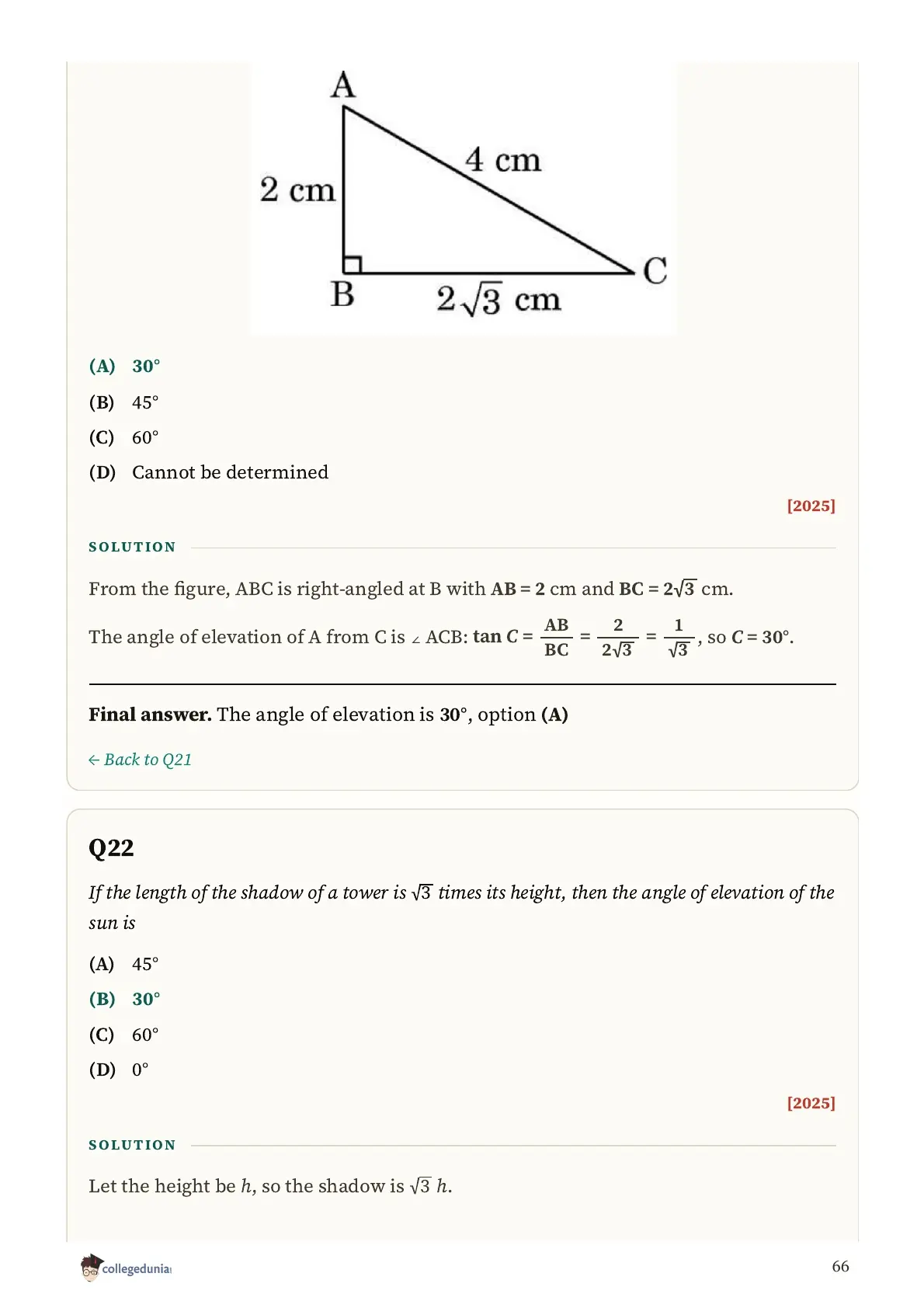
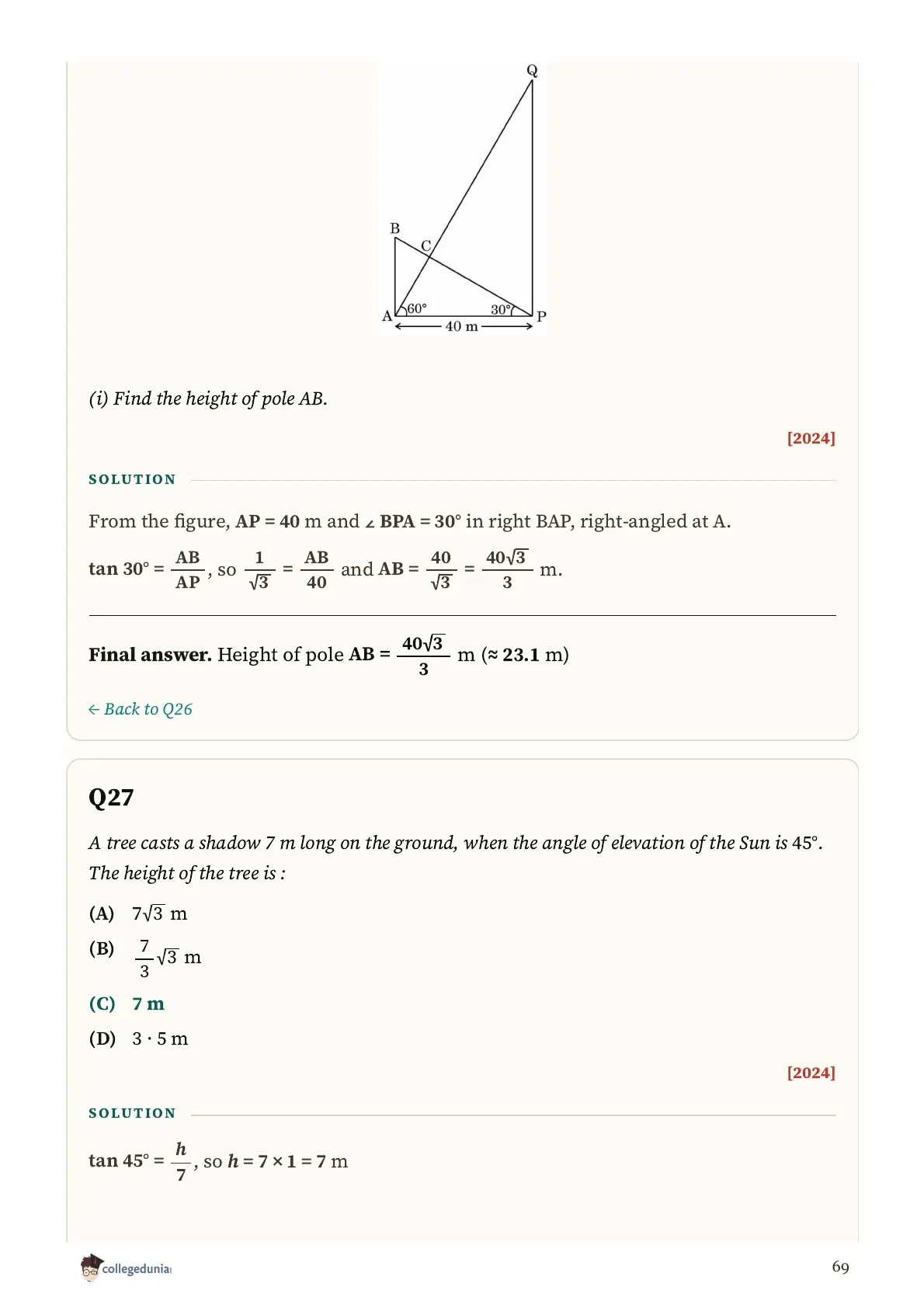
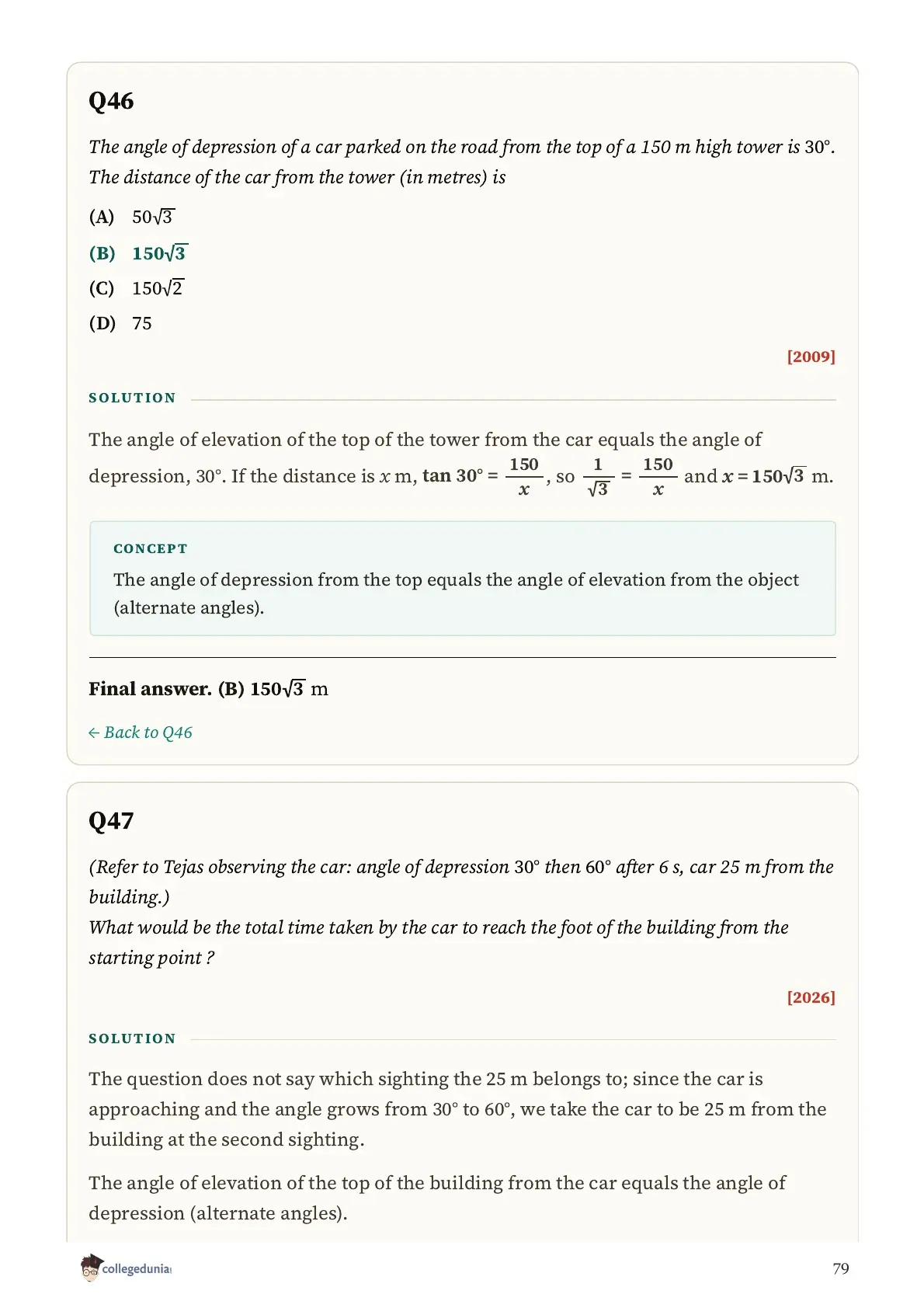
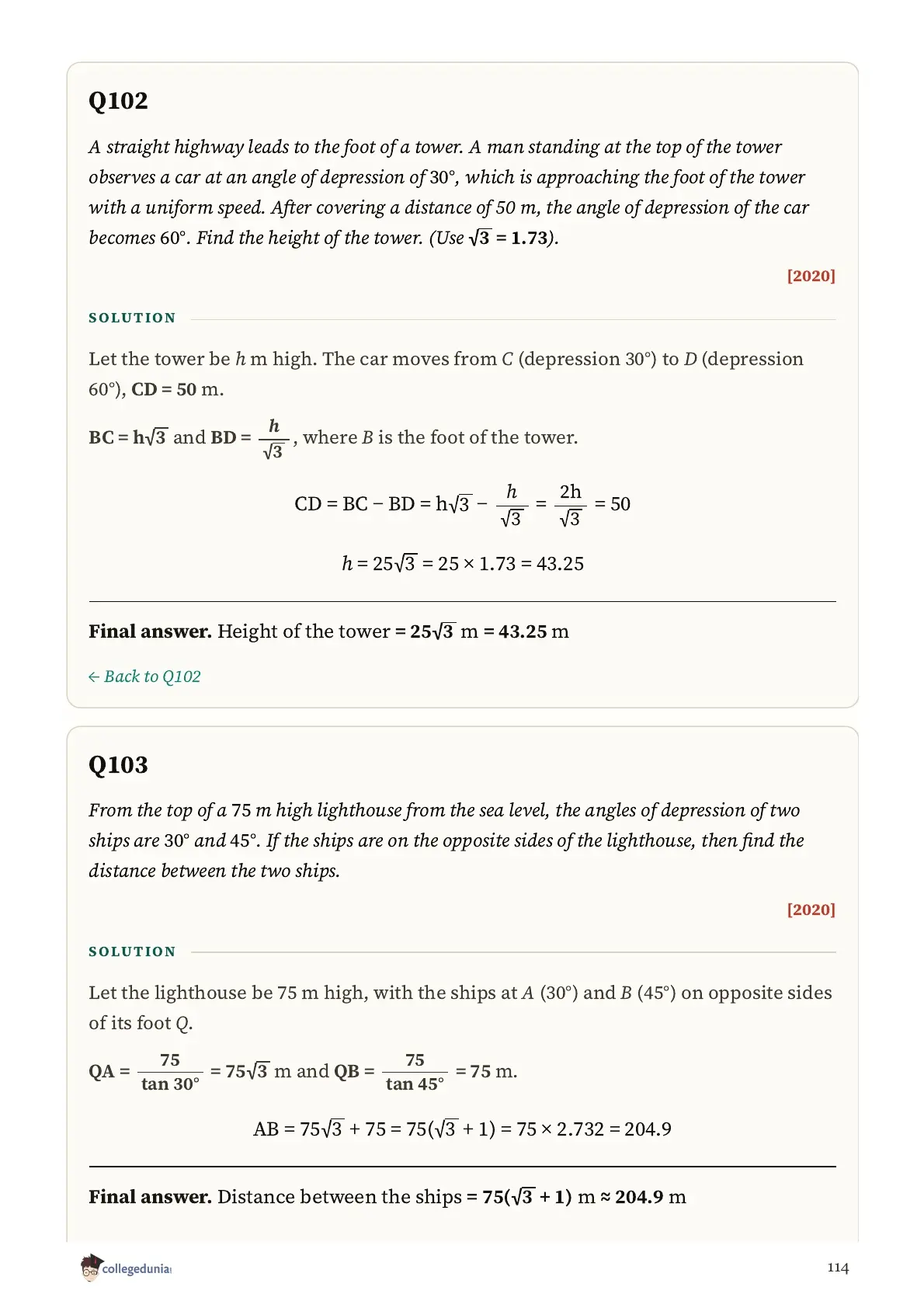
The angle pairs are predictable. 30 and 60 degrees appear together in 69 questions, 45 degrees in 61, 45 and 60 degrees in 31 and 30 and 45 degrees in 28. 12 questions involve a moving object, such as a car approaching a building at a uniform speed, which needs two observations and an equation in one unknown. 24 questions carry their original diagram.
Counts come from keyword matches over the question text, so a question that names two things is counted under both.
Source: ToppersWay
How to Approach the Set
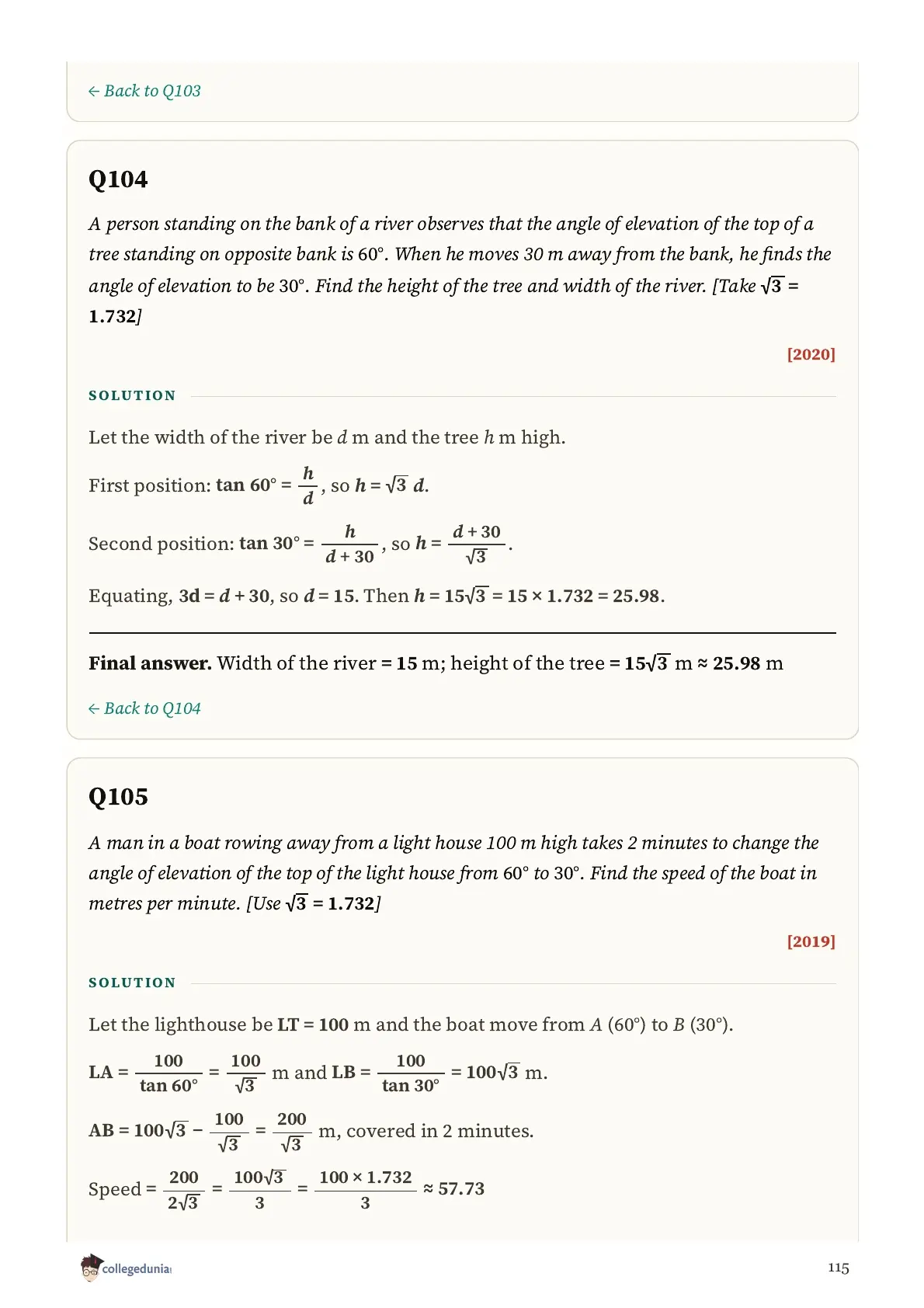
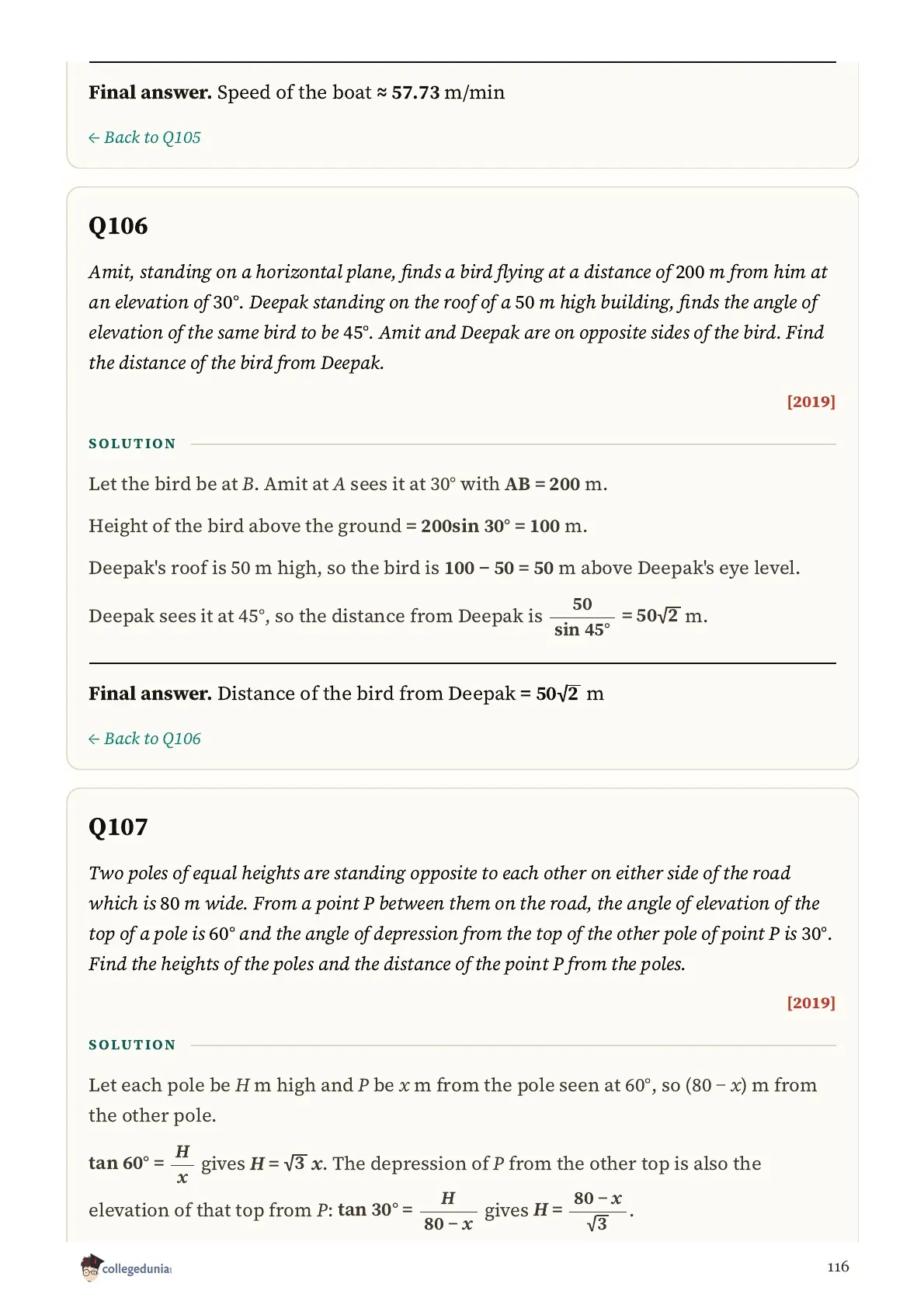
Start with the 29 MCQs and the 17 one-mark short items, which need a single tan or sin value. Move to the 2-mark and 3-mark questions (45 together), where one triangle gives the answer. Then take the 39 case-study items, which repeat one scenario across several sub-parts. Keep the 59 five and six-mark questions for last, since most use two triangles that share a side. Learn tan 30 = 1/root 3, tan 45 = 1 and tan 60 = root 3 until you stop checking them. Always draw the figure and mark the horizontal before writing any ratio. Practise the 2025 paper closely, as it alone holds 35 of the 189 questions.
Common Mistakes in Some Applications of Trigonometry Questions
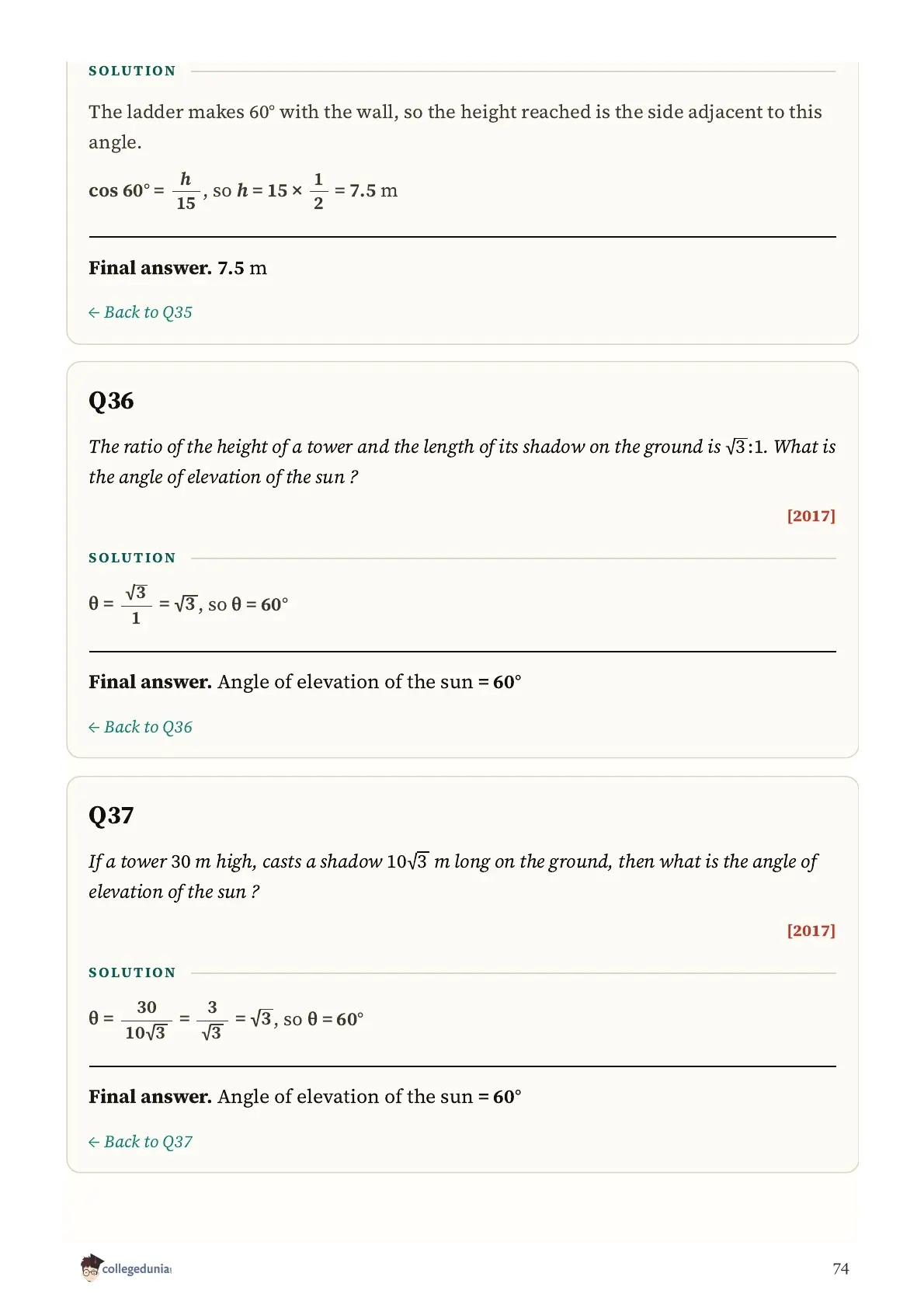
- Using the angle of a ladder with the wall as if it were measured from the ground. In the 2017 question the ladder is 15 m long and makes 60 degrees with the wall, so the height reached is 15 cos 60, which is 7.5 m, not 15 sin 60.
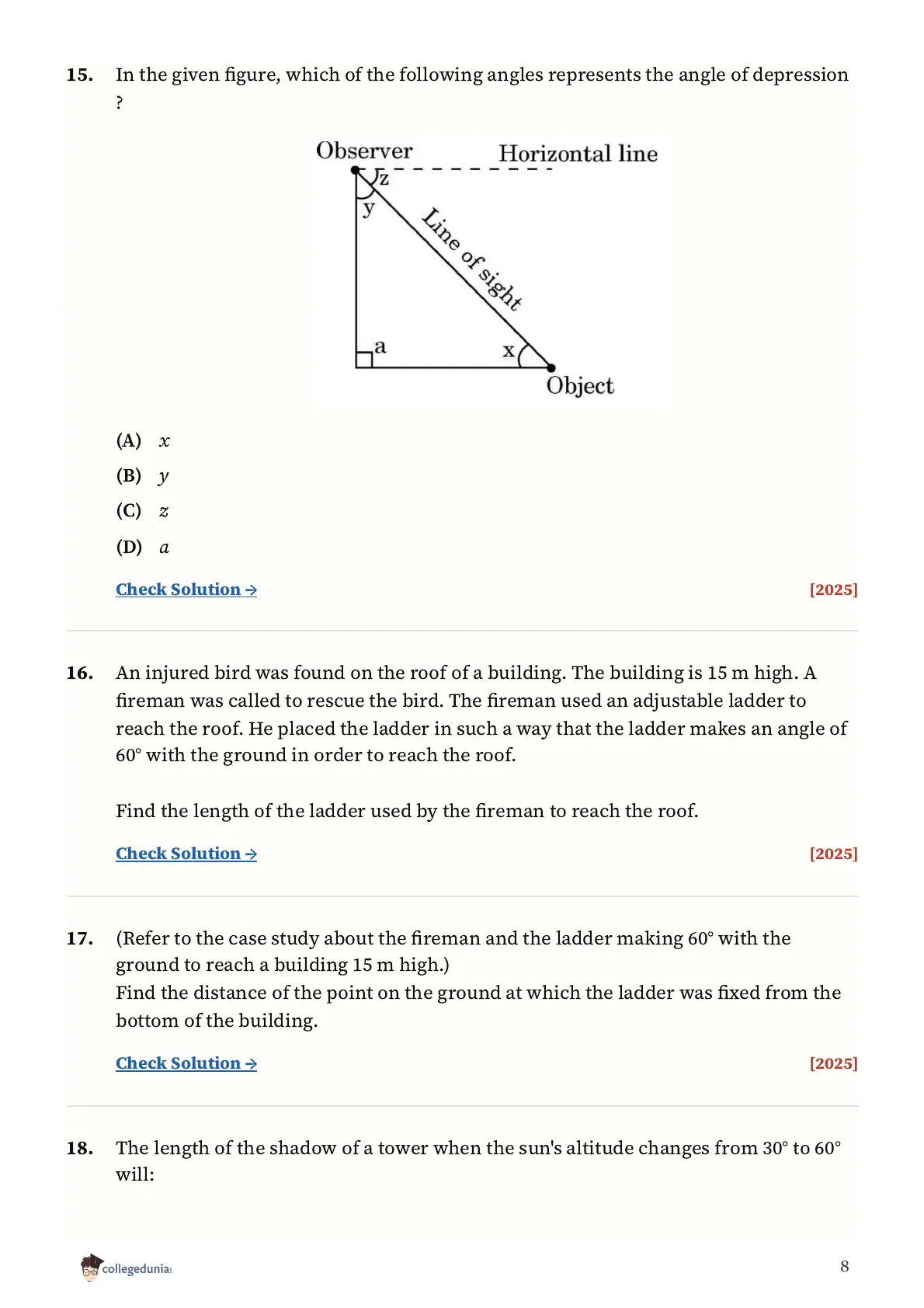
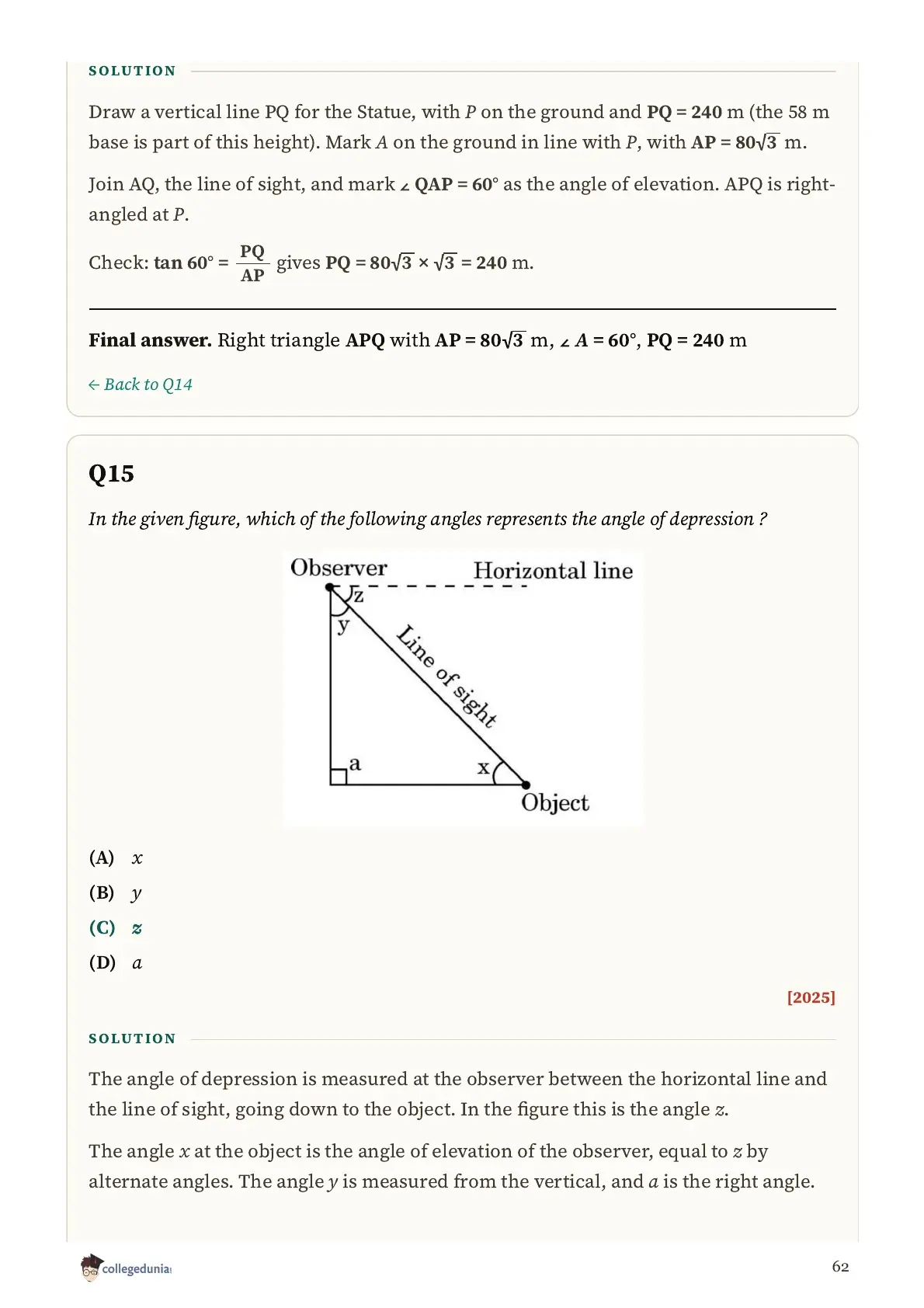
- Measuring the angle of depression from the vertical or at the object. It is measured at the observer's eye, from the horizontal line, and equals the angle of elevation from the object.
- Reading the bridge question (2022) as one triangle. The width of the river is 3 cot 30 + 3 cot 45, which is 3 root 3 + 3 m, two triangles added.
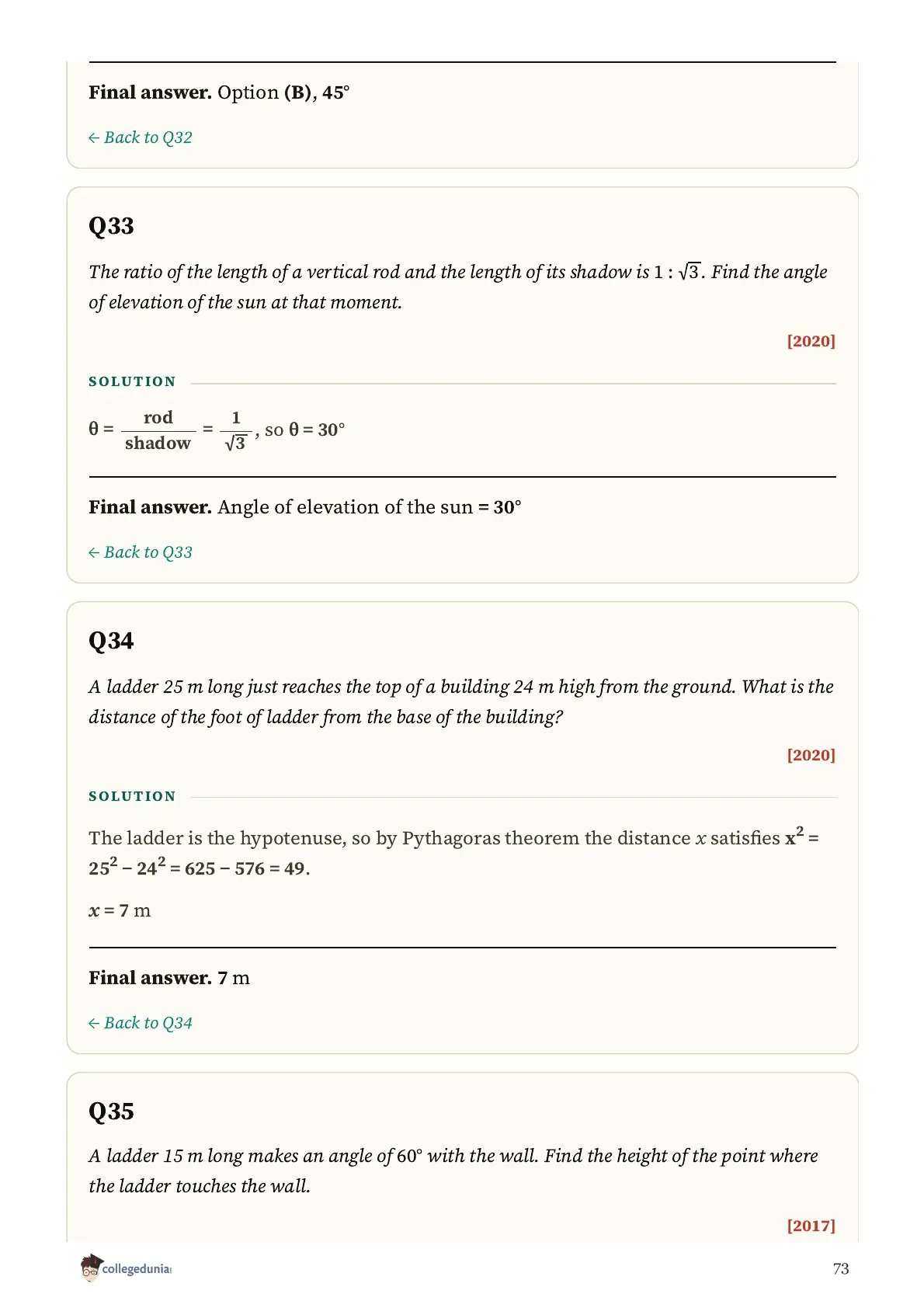
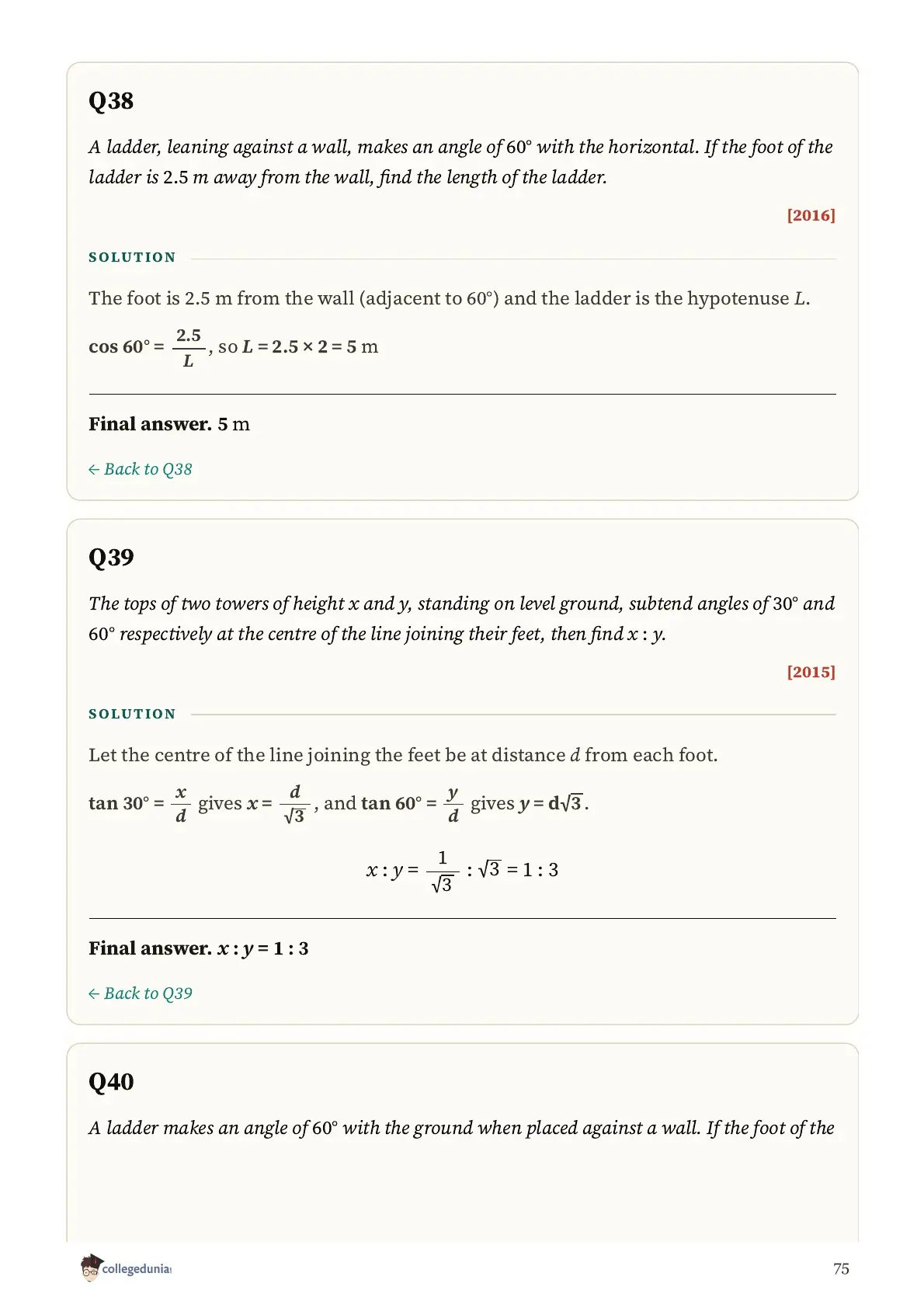
- Treating the two angles at the centre of the line joining two tower bases (2015) as unequal distances. The point is the midpoint, so x : y = tan 30 : tan 60 = 1 : 3.
- Giving the height of the tower on a building (2020) as the height of the top from the ground. The tower is 20 root 3 minus 20, that is 20(root 3 minus 1) m.
- Leaving root 3 in the denominator or using 1.73 when the answer is asked in surd form.
Using the Answer Key and Solutions
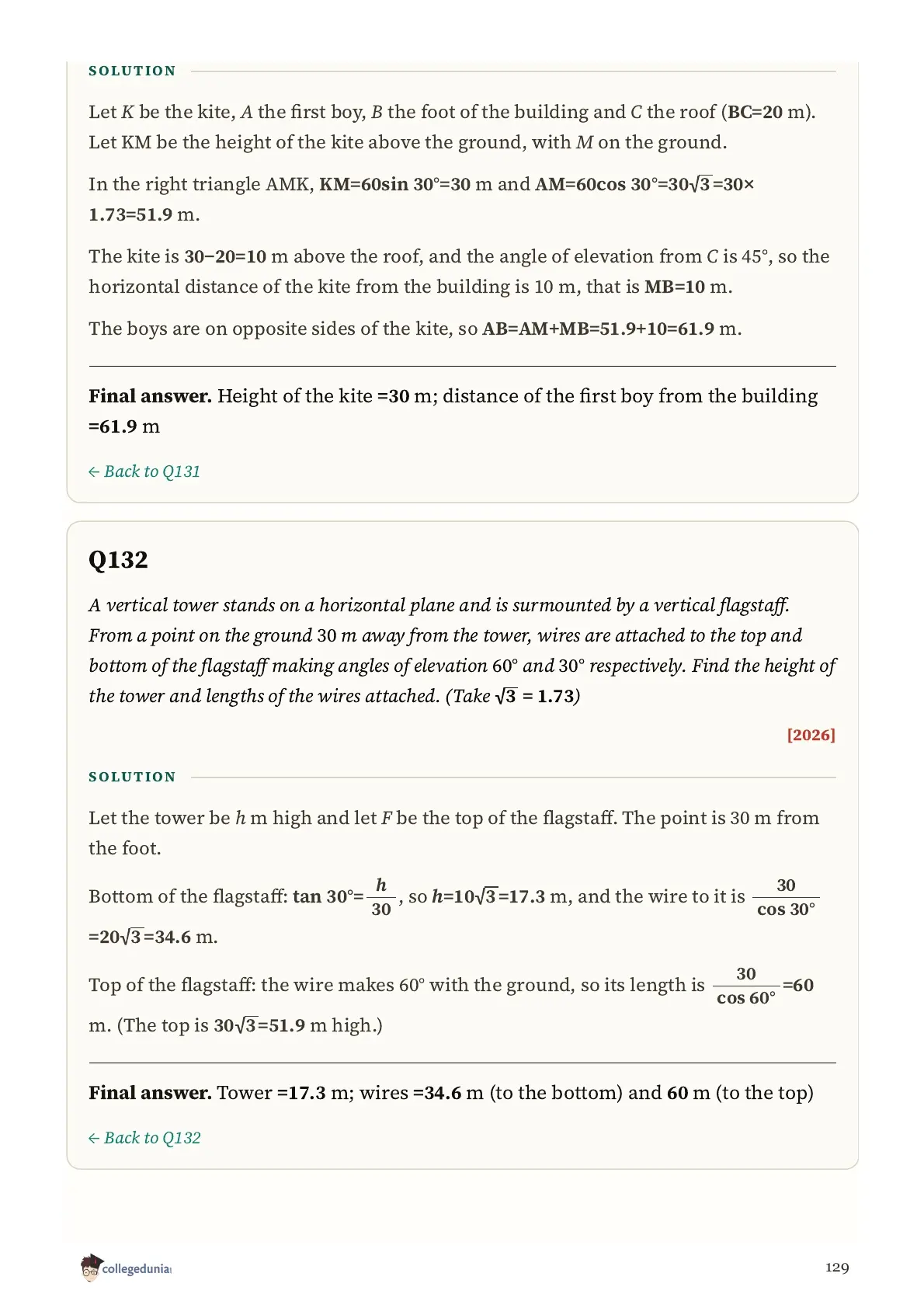
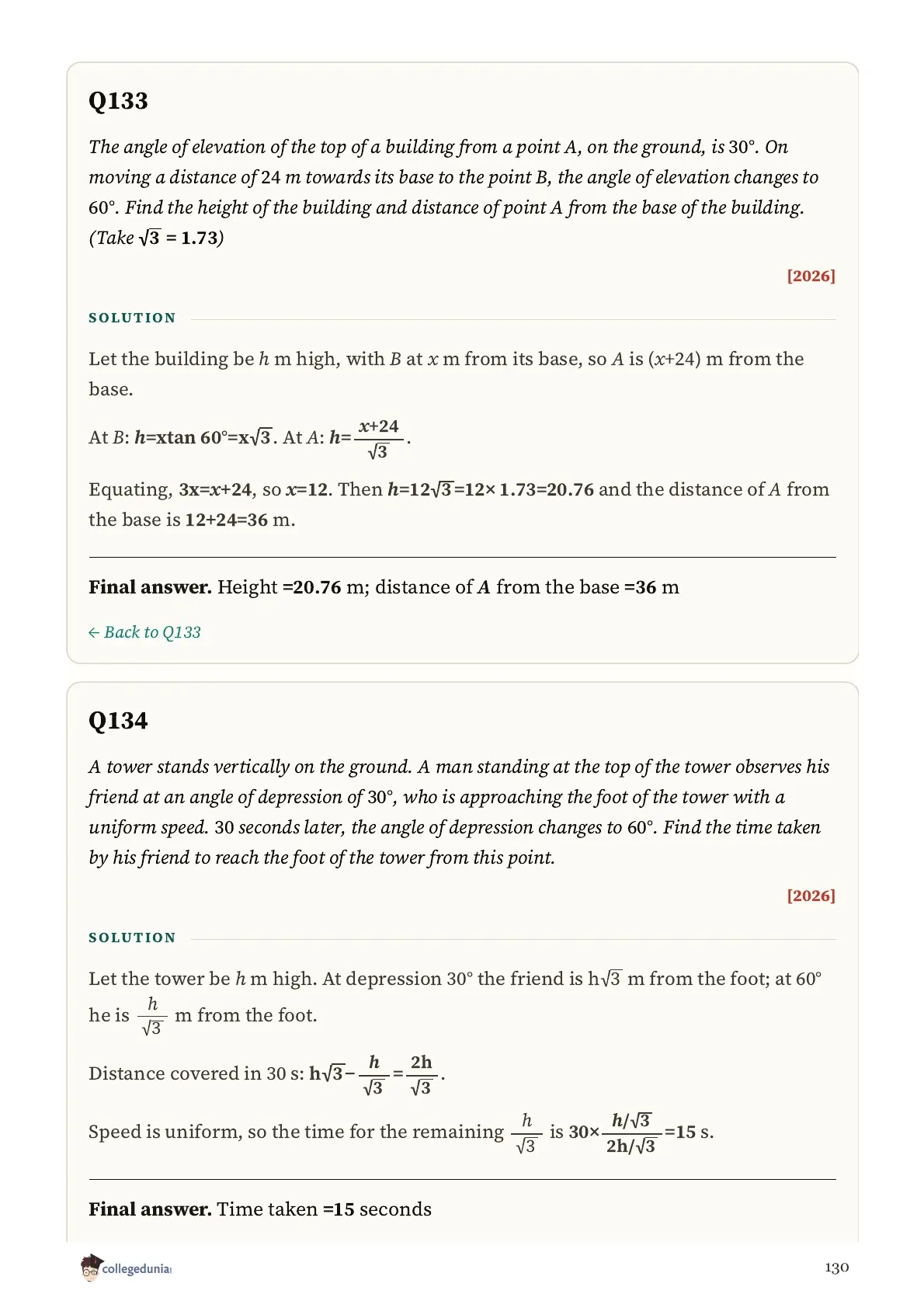
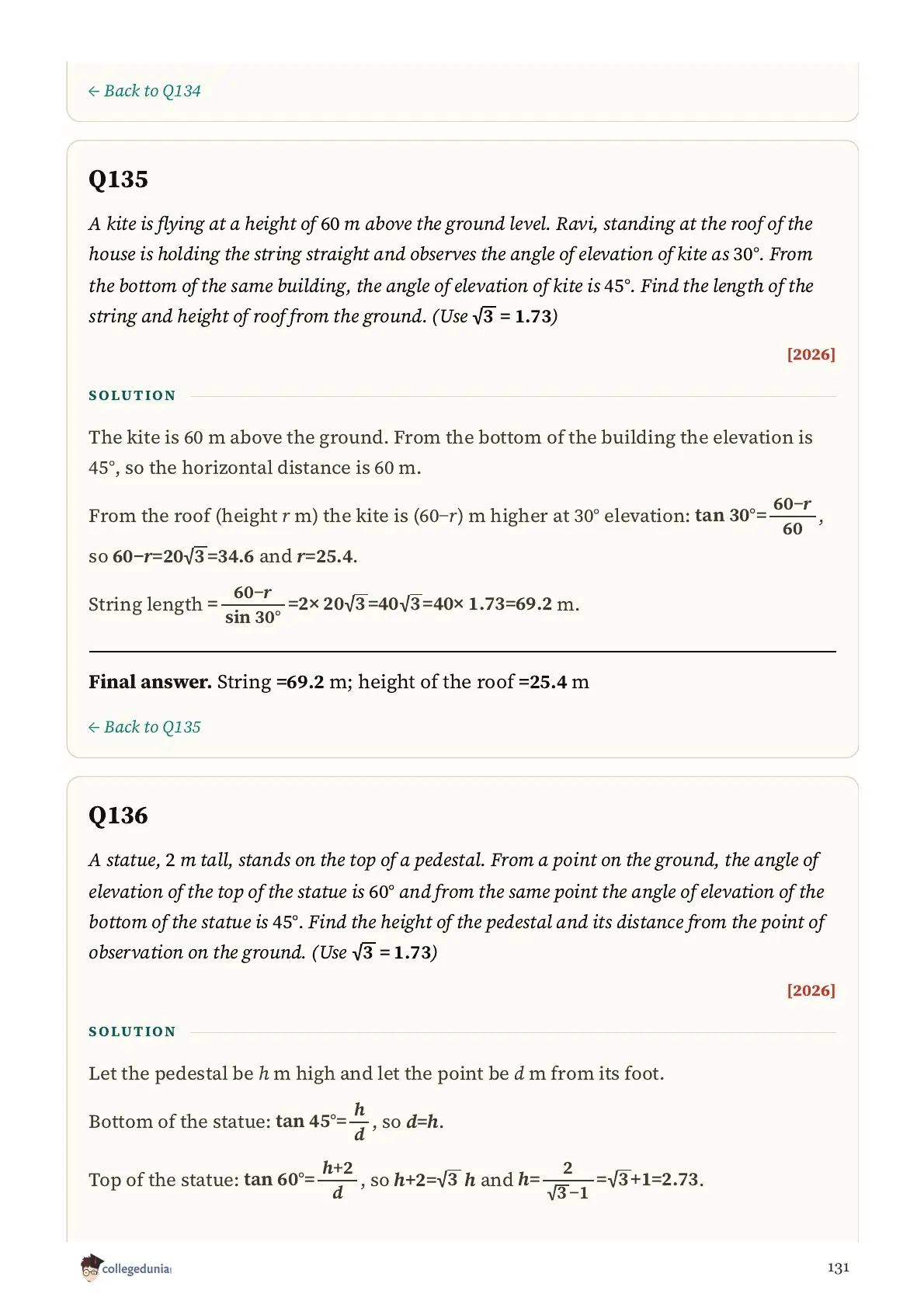
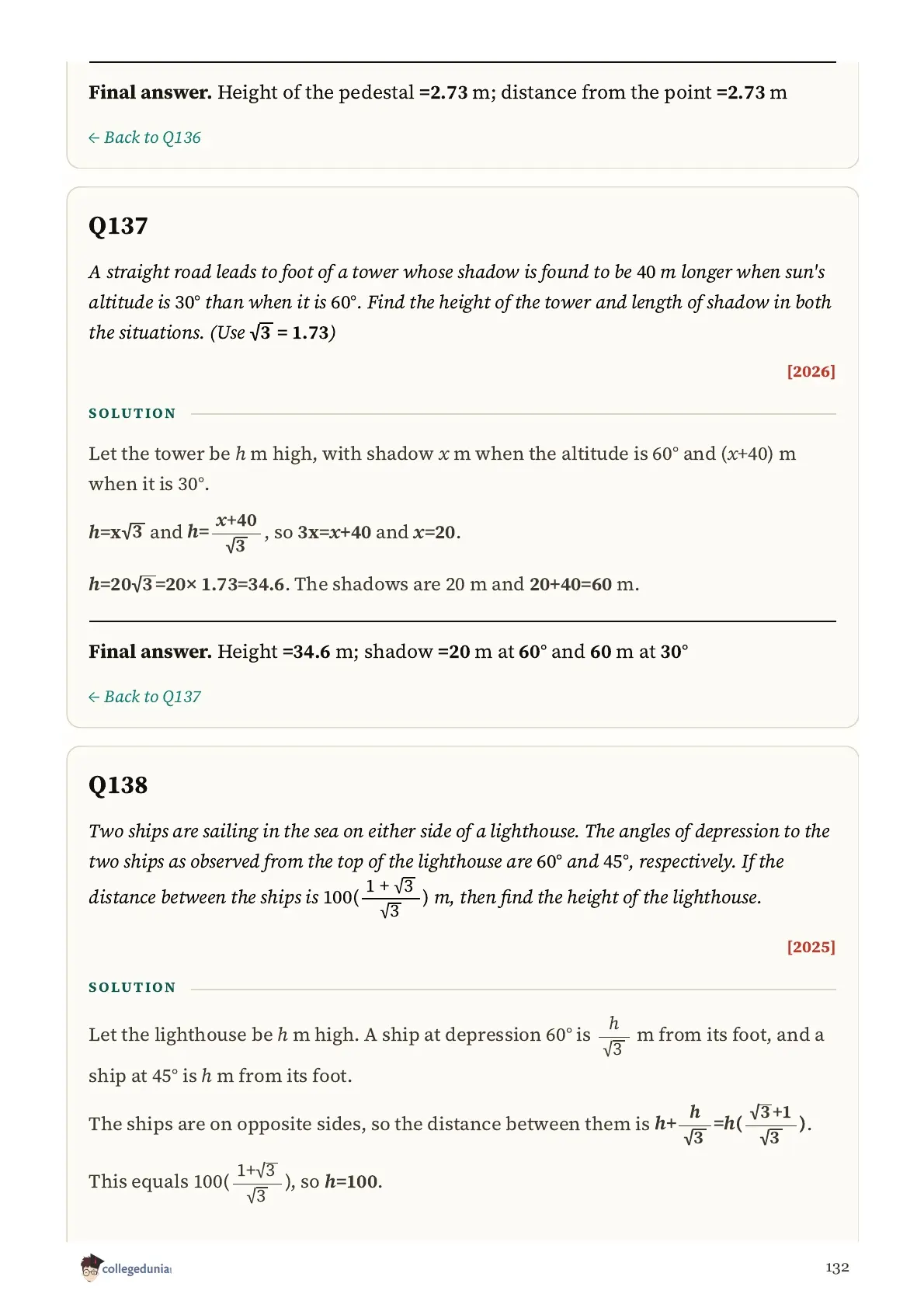
The PDF is 163 pages and free to download. Each section is sorted newest year first, the Answer Key lists the 29 MCQs at a glance, and each question links to its worked solution and back. Draw the figure yourself first, check the key, then read the solution. The solutions are written by Collegedunia's Maths experts and are not official CBSE marking schemes.
Class 10 Maths PYQs by Chapter
| Unit | PYQ Page |
|---|---|
| Number Systems | Real Numbers Class 10 Maths PYQ |
| Algebra | Polynomials Class 10 Maths PYQ |
| Algebra | Pair of Linear Equations in Two Variables Class 10 Maths PYQ |
| Algebra | Quadratic Equations Class 10 Maths PYQ |
| Algebra | Arithmetic Progressions Class 10 Maths PYQ |
| Geometry | Triangles Class 10 Maths PYQ |
| Coordinate Geometry | Coordinate Geometry Class 10 Maths PYQ |
| Trigonometry | Introduction to Trigonometry Class 10 Maths PYQ |
| Trigonometry | Some Applications of Trigonometry Class 10 Maths PYQ |
| Geometry | Circles Class 10 Maths PYQ |
| Mensuration | Areas Related to Circles Class 10 Maths PYQ |
| Mensuration | Surface Areas and Volumes Class 10 Maths PYQ |
| Statistics and Probability | Statistics Class 10 Maths PYQ |
| Statistics and Probability | Probability Class 10 Maths PYQ |
Some Applications of Trigonometry Class 10 Maths PYQ FAQs
Ques. How many questions are in the Some Applications of Trigonometry Class 10 Maths PYQ PDF?
Ans. The PDF has 189 questions from the 2003 to 2026 board papers: 46 at 1 mark, 17 at 2 marks, 28 at 3 marks, 39 case-study items at 4 marks, 42 at 5 marks and 17 at 6 marks.
Ques. Does this PYQ PDF include solutions, or only the questions?
Ans. All 189 questions have a worked solution in the PDF. The 29 MCQs are also listed in the Answer Key before the solutions.
Ques. Are the solutions official?
Ans. No. They are written by Collegedunia's Maths experts, checked against the NCERT chapter and re-worked for every calculation. They are not an official CBSE marking scheme, so the board's wording of an answer may differ.
Ques. How many marks does Some Applications of Trigonometry carry in the Class 10 Maths paper?
Ans. CBSE publishes marks per unit, not per chapter. Introduction to Trigonometry and Some Applications of Trigonometry together form the unit Trigonometry, reported at 12 of the 80 theory marks for 2026-27. Check cbseacademic.nic.in for the current syllabus.
Ques. What kind of questions are asked from Some Applications of Trigonometry?
Ans. Height-and-distance problems built on the angle of elevation or depression: about 111 questions use elevation and 65 use depression. Others are MCQs, case studies on a lighthouse, kite or ladder, and long answers with two observations.
Ques. Which years does the set cover?
Ans. The questions come from 23 board years between 2003 and 2026. 2025 has the most questions (35), followed by 2022 (26) and 2023 (22).



Comments