



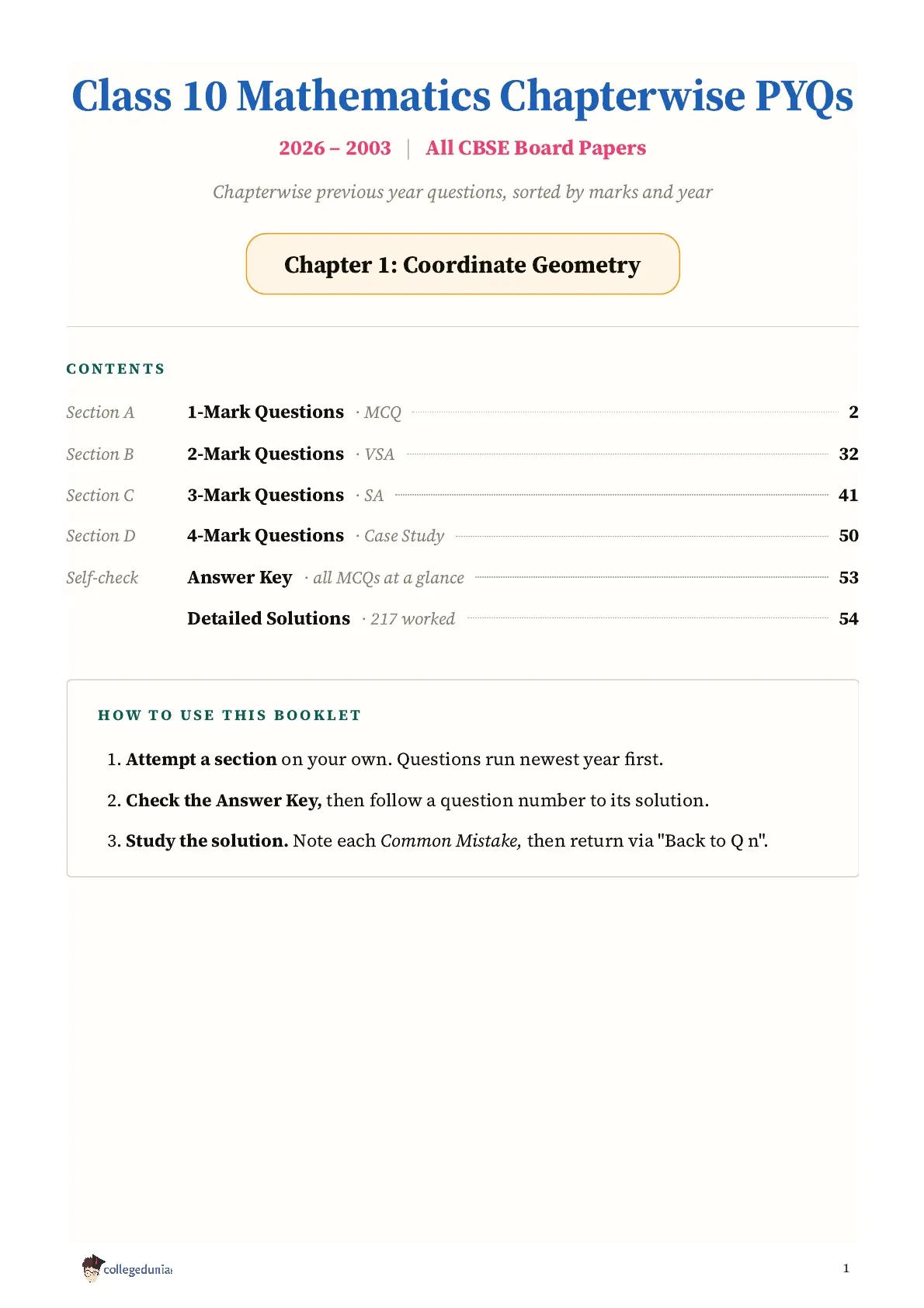
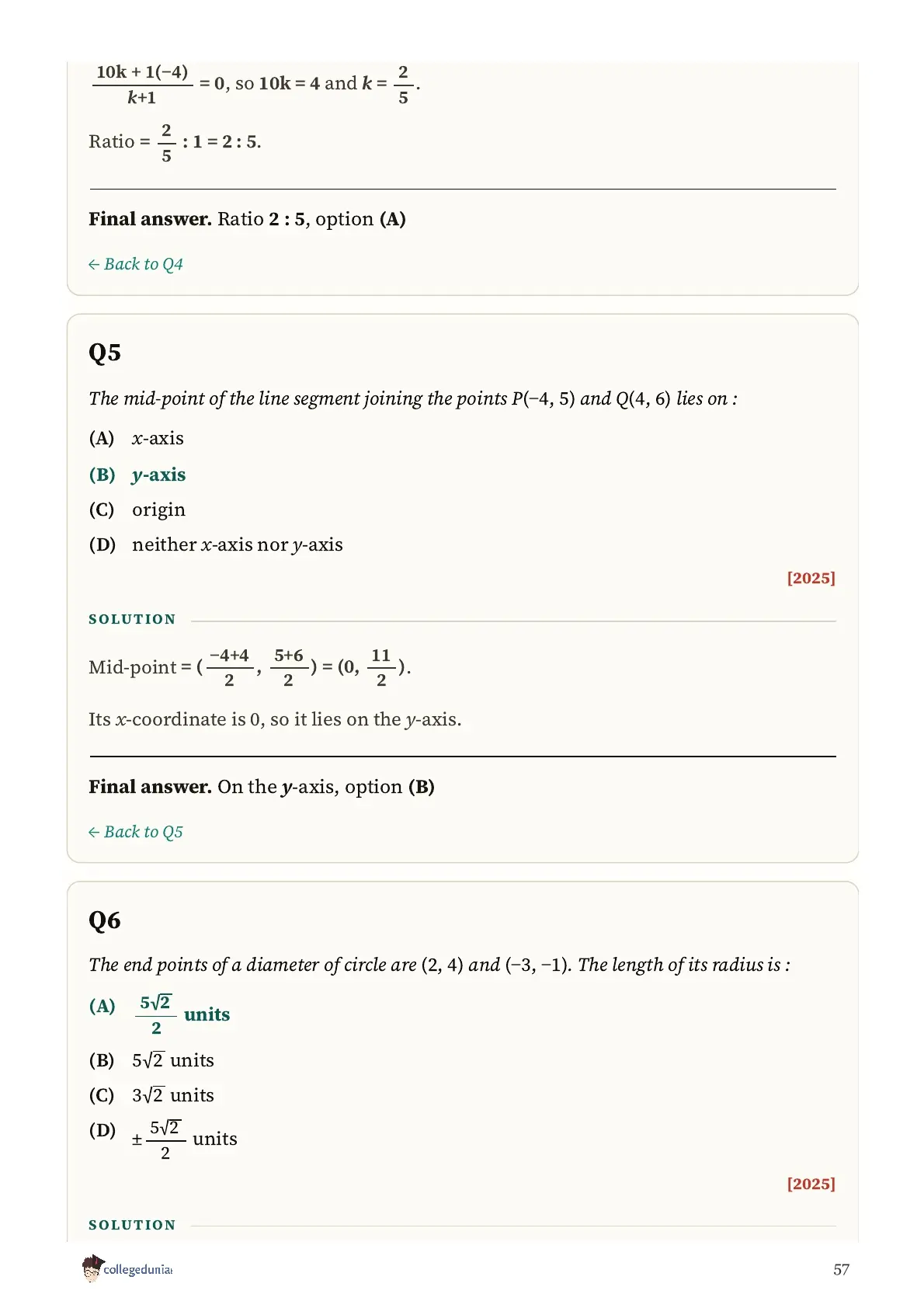
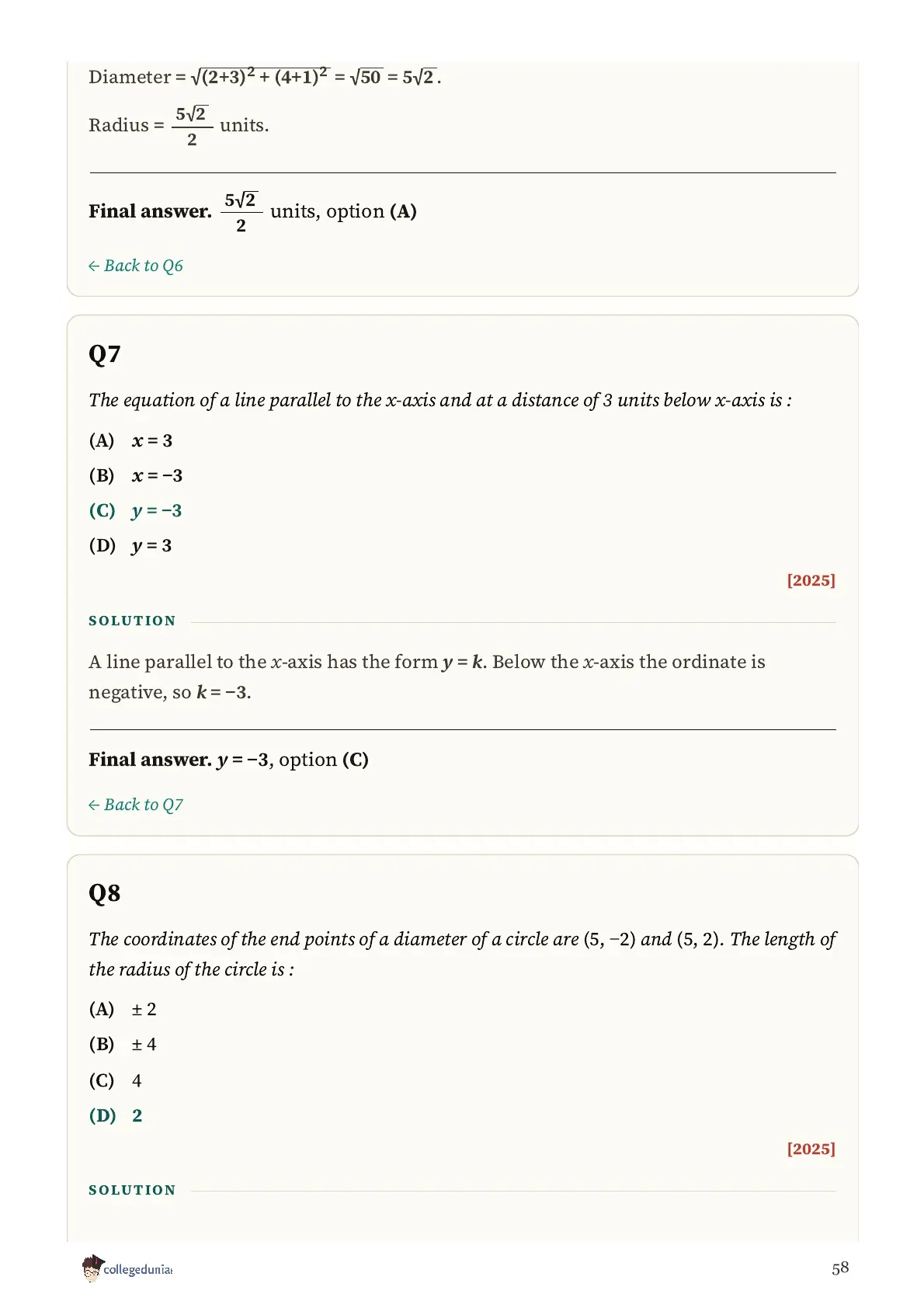
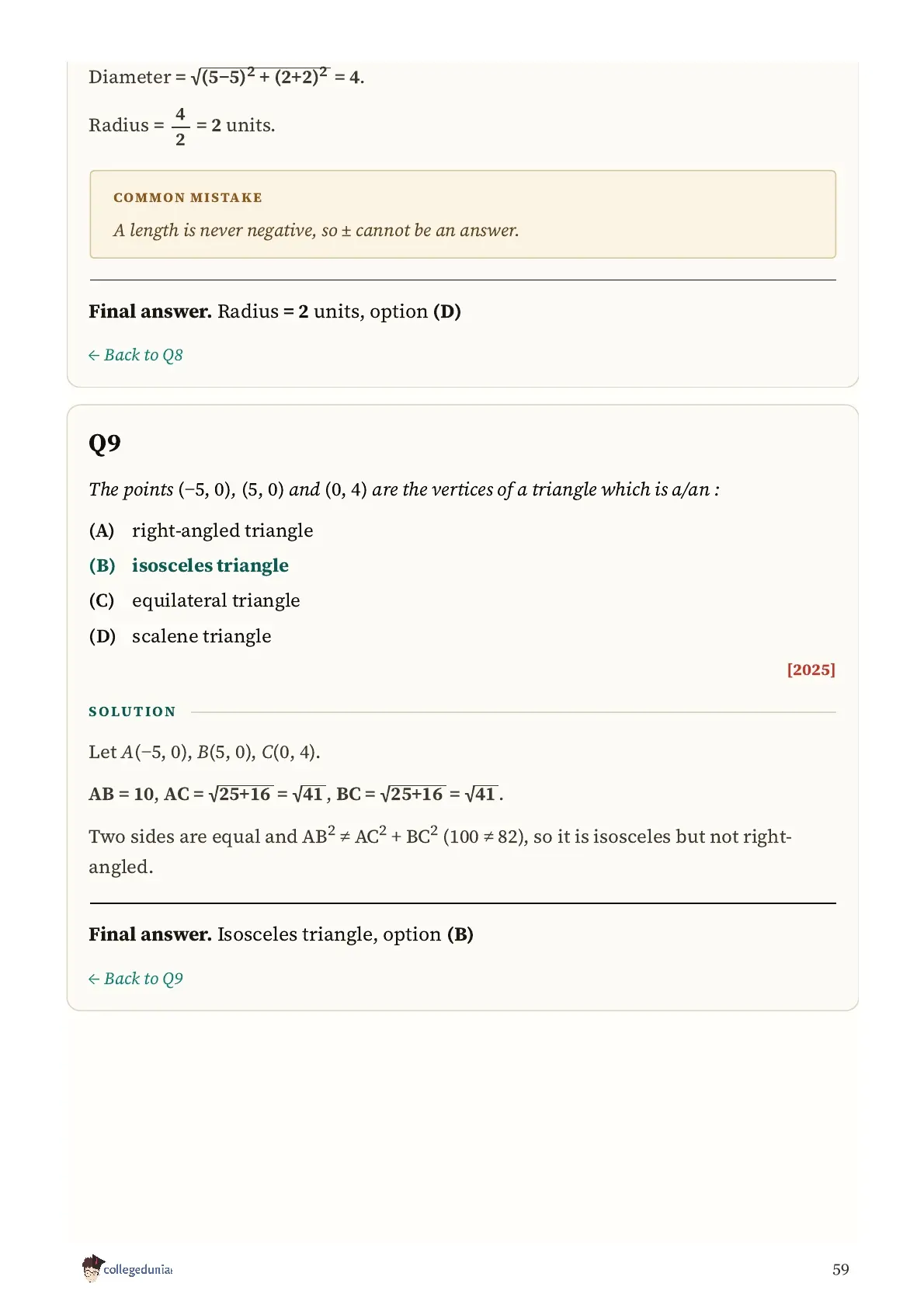
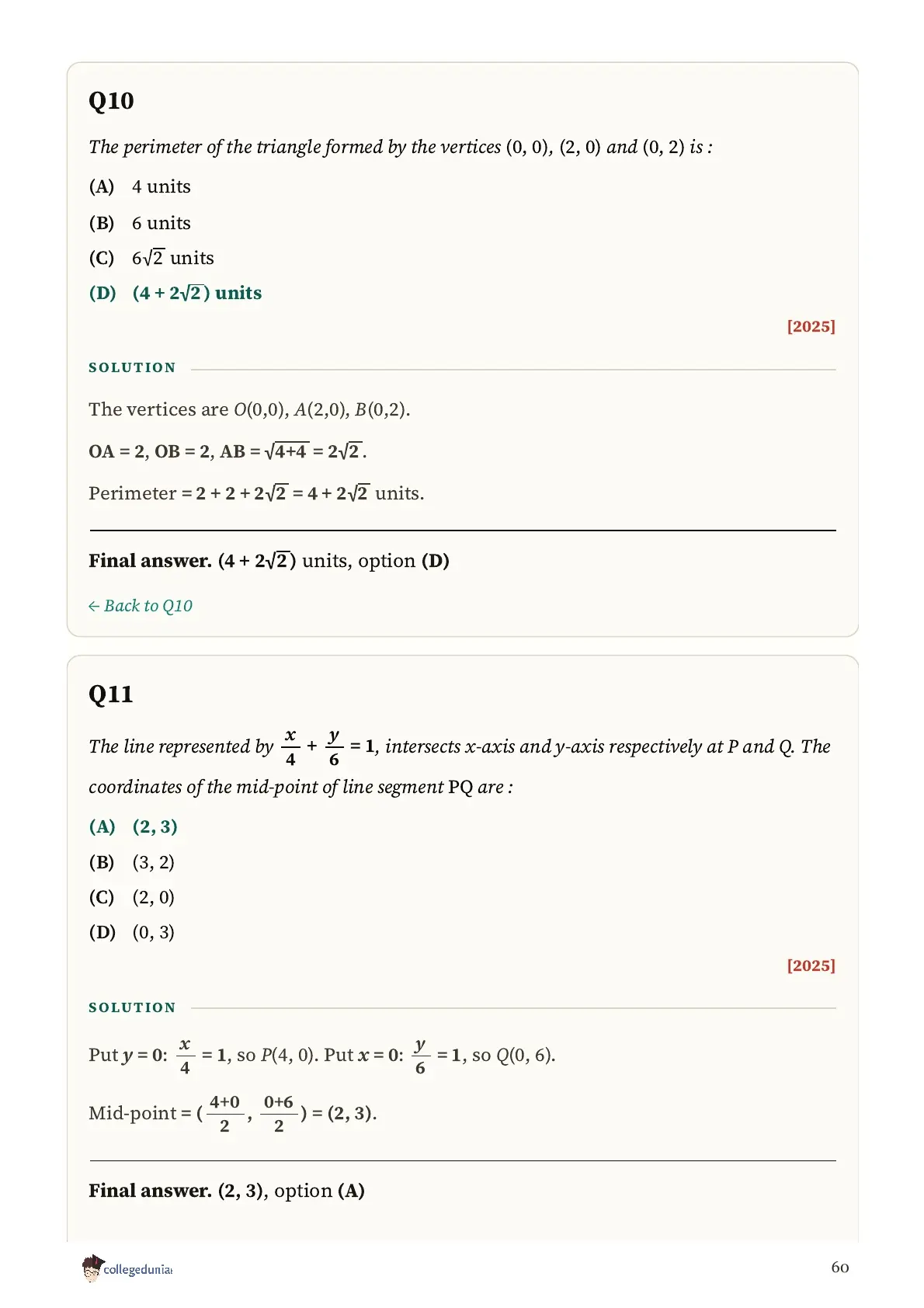
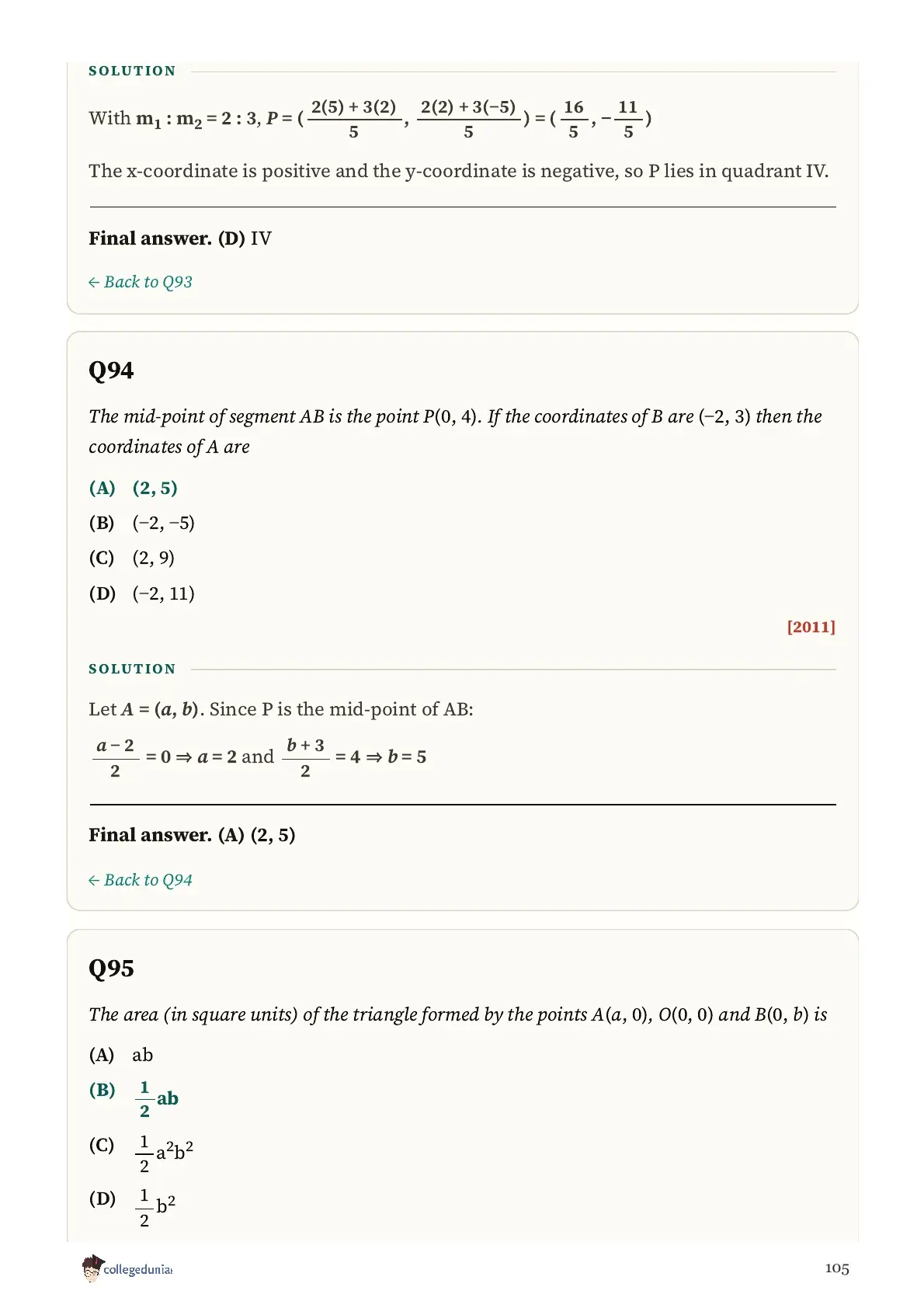
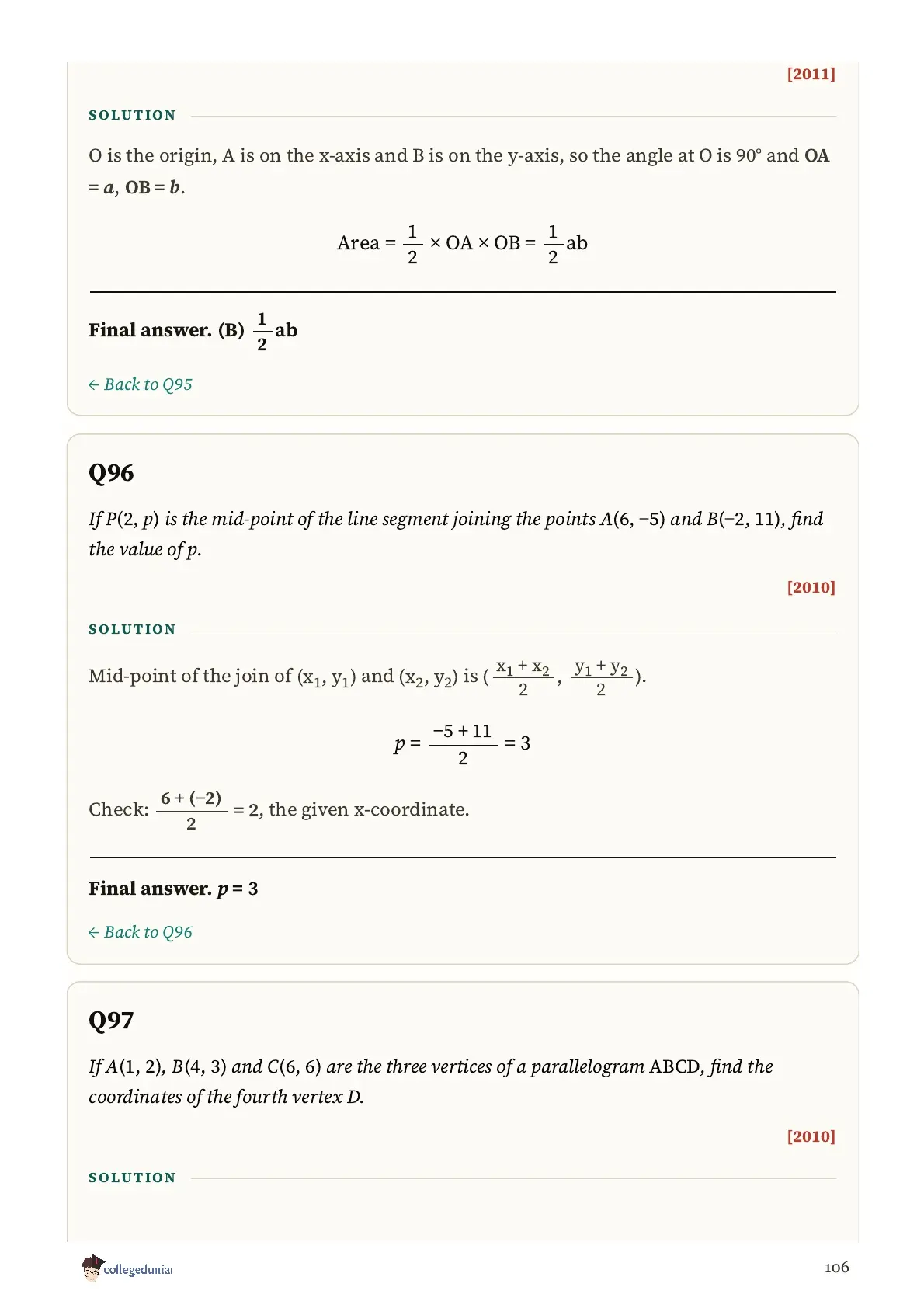
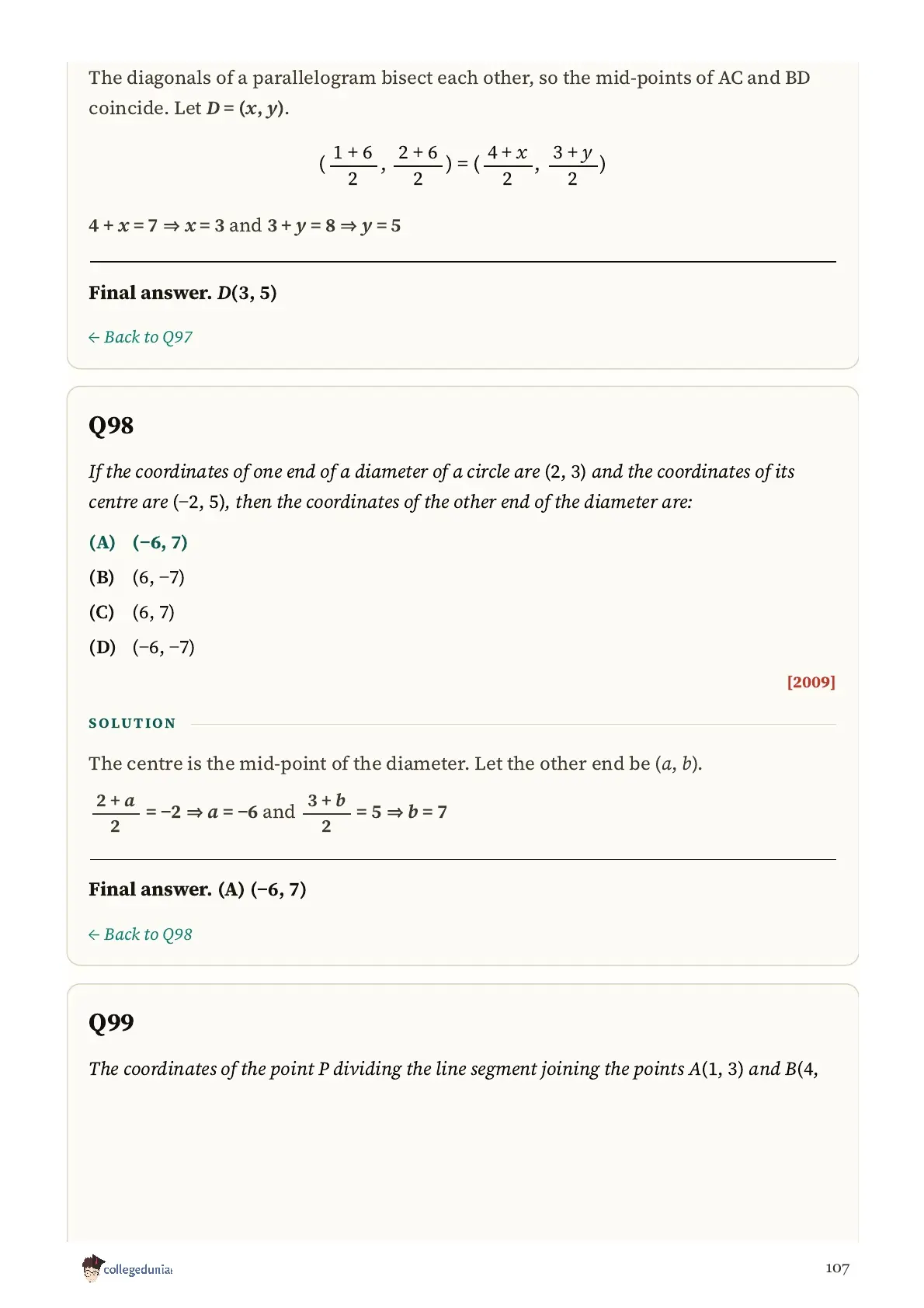
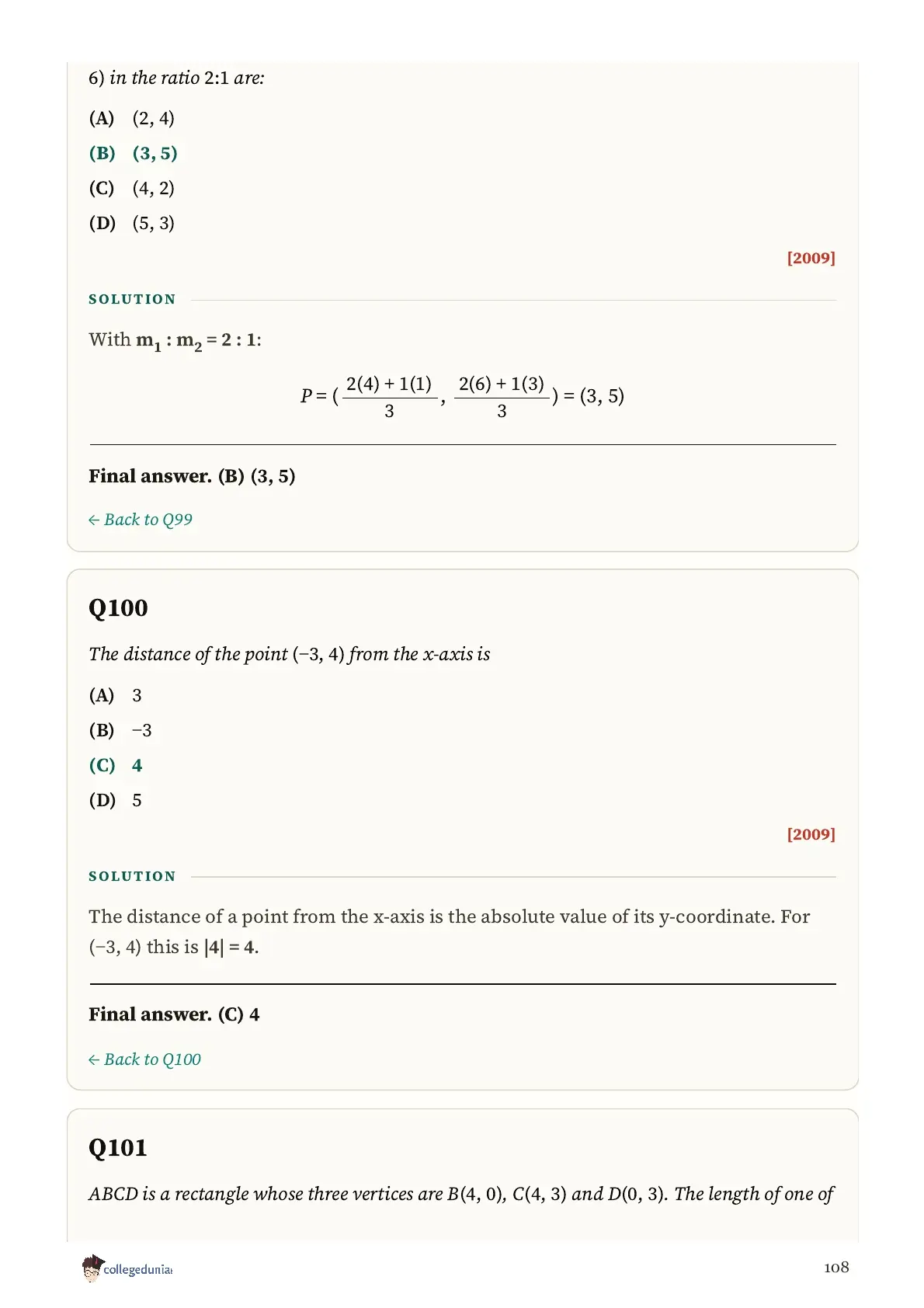
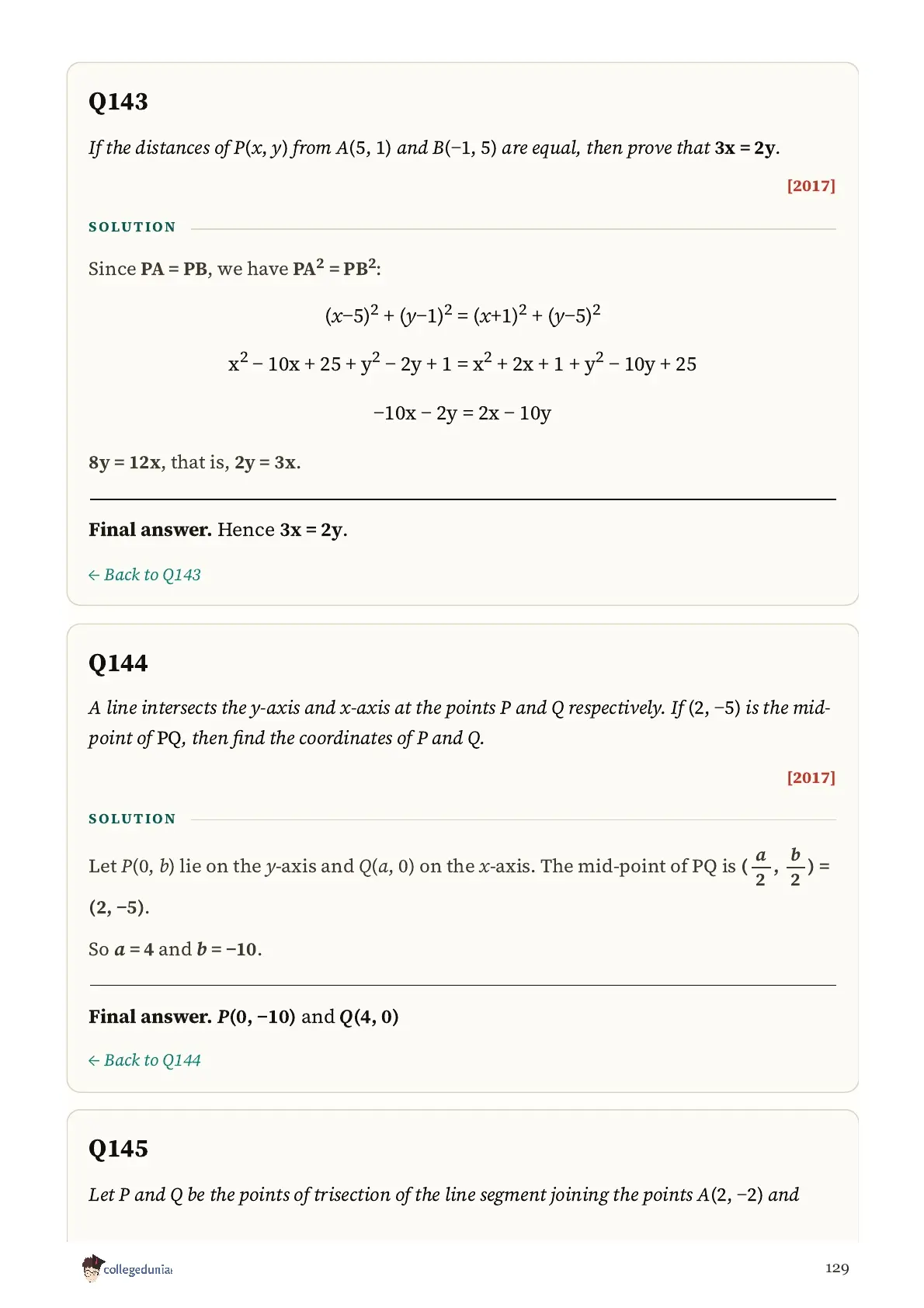
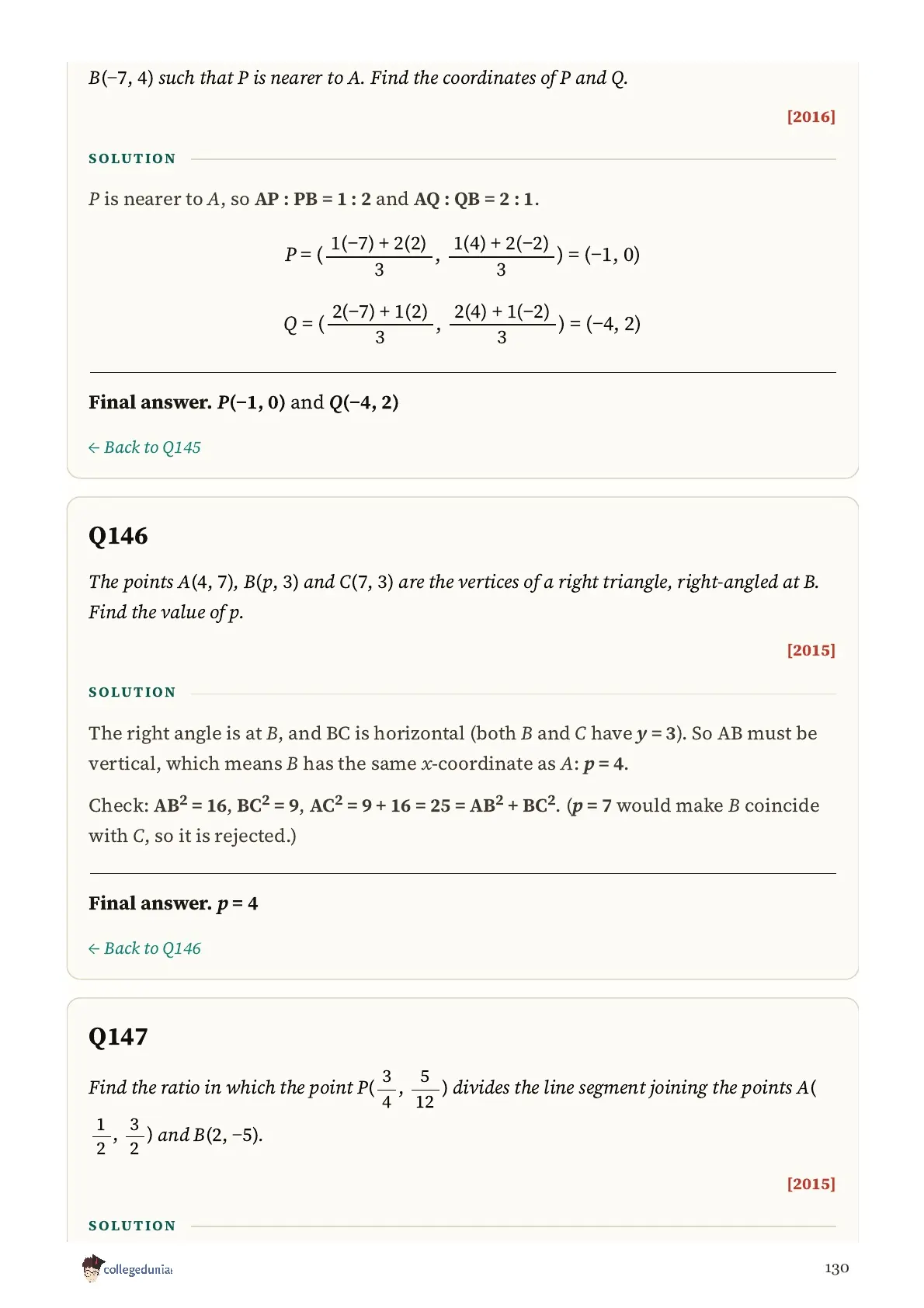
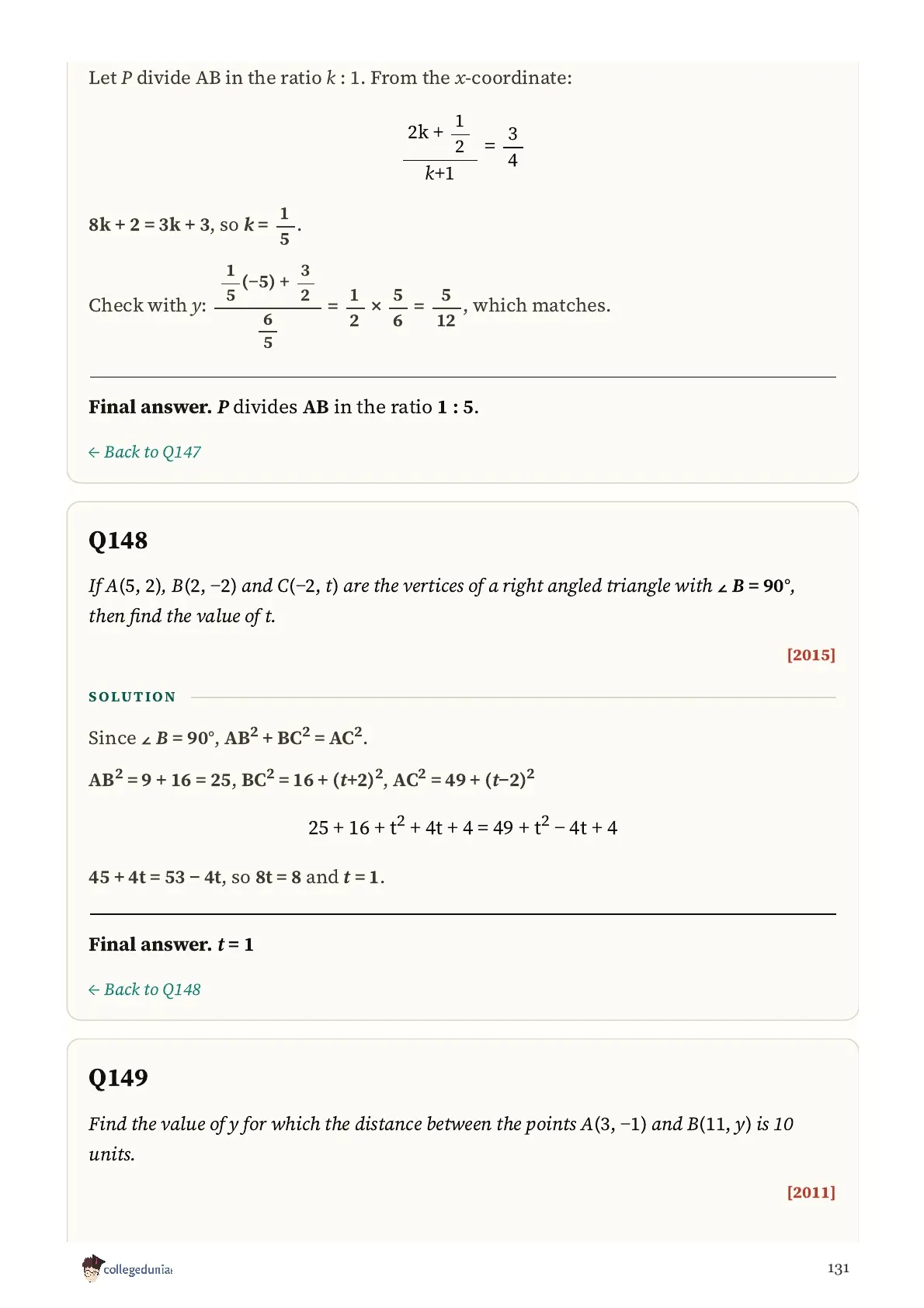
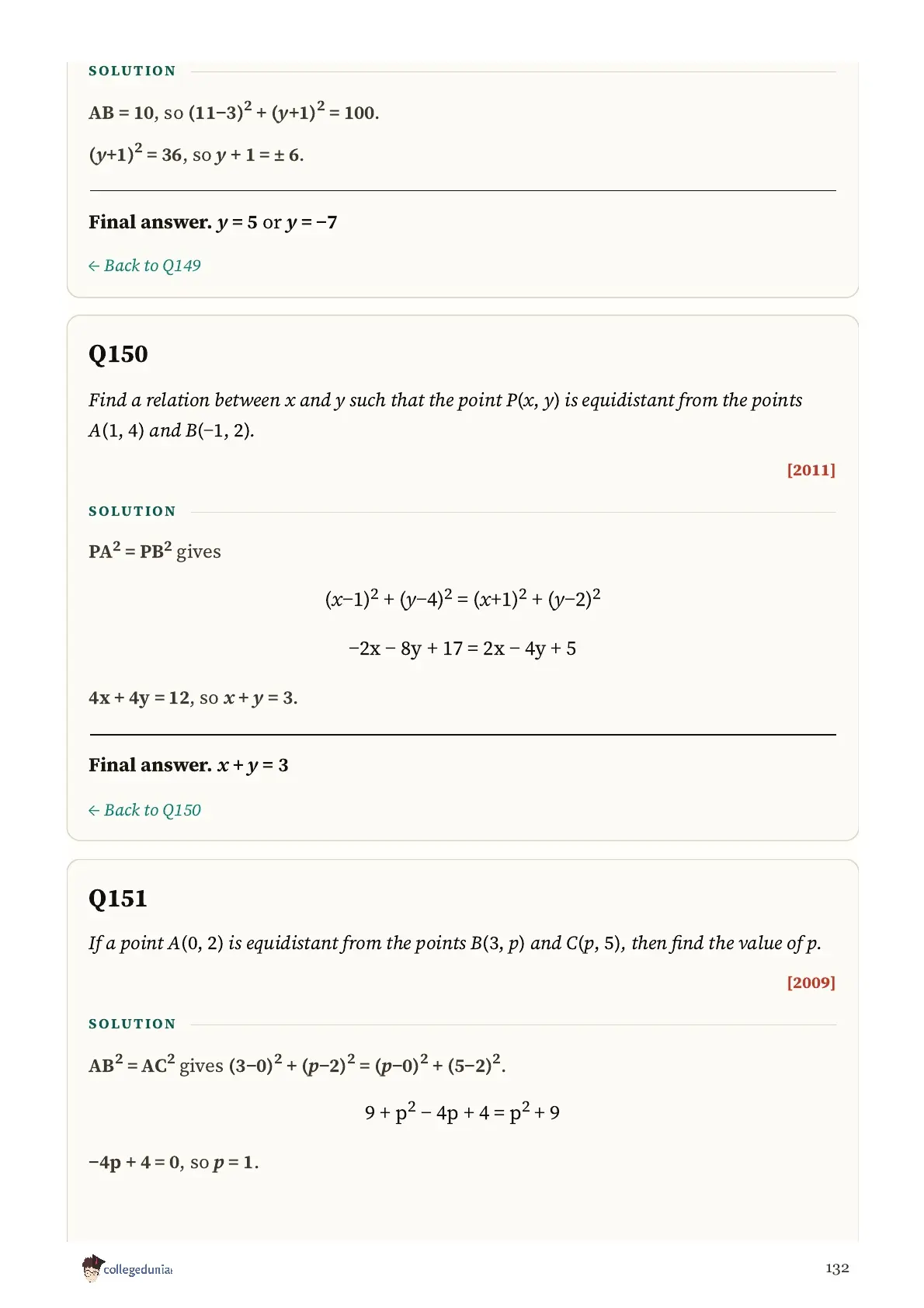
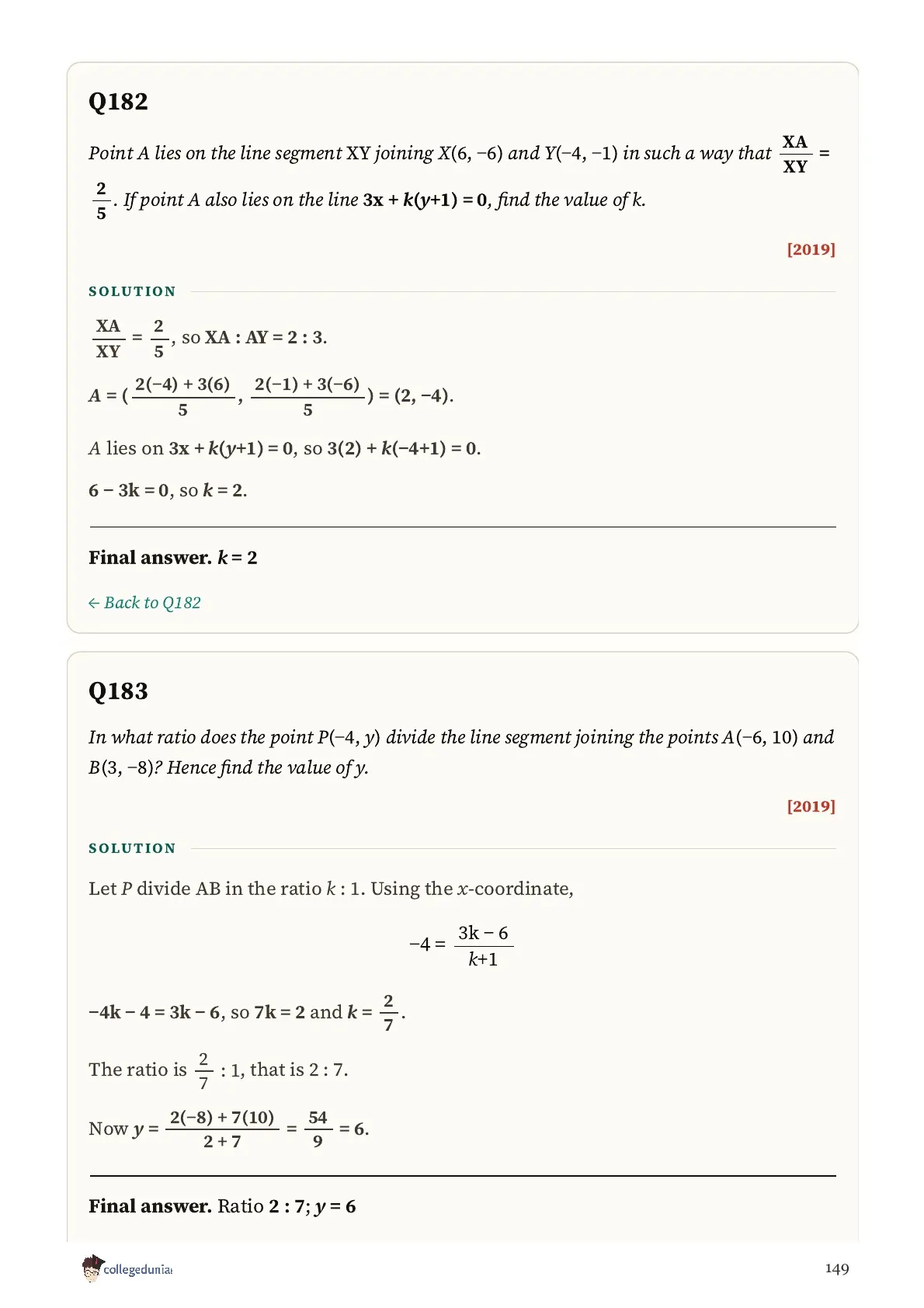
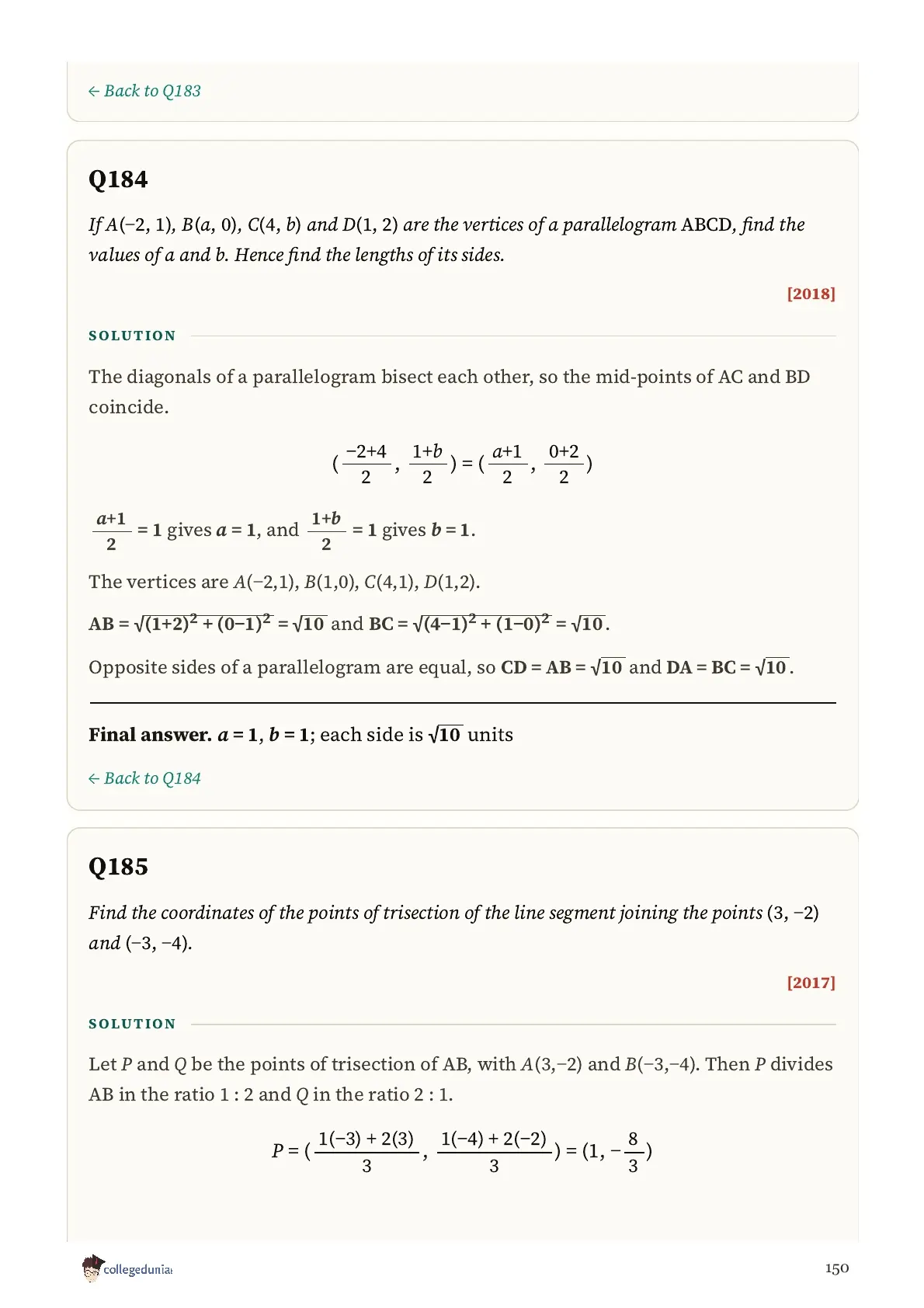
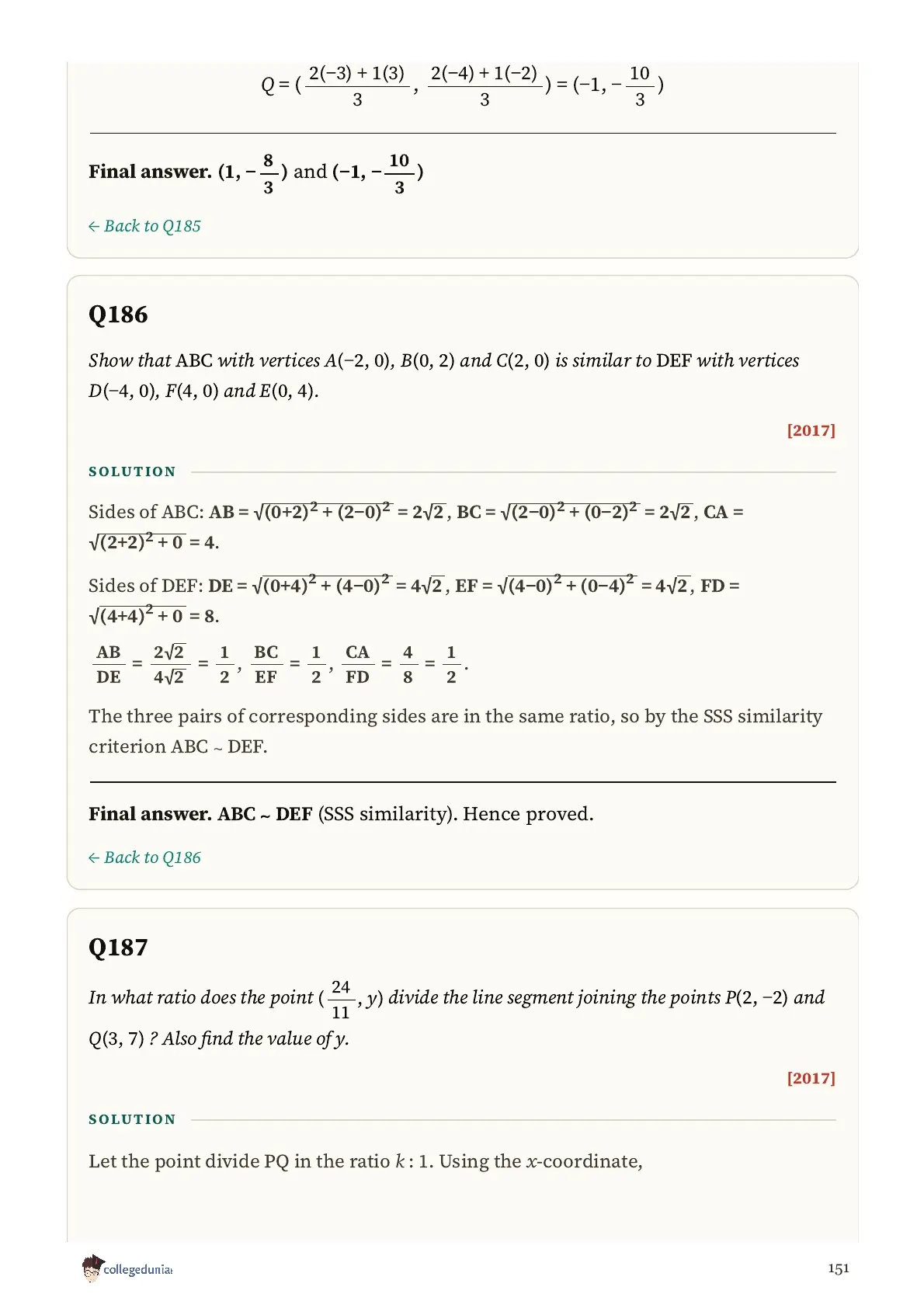
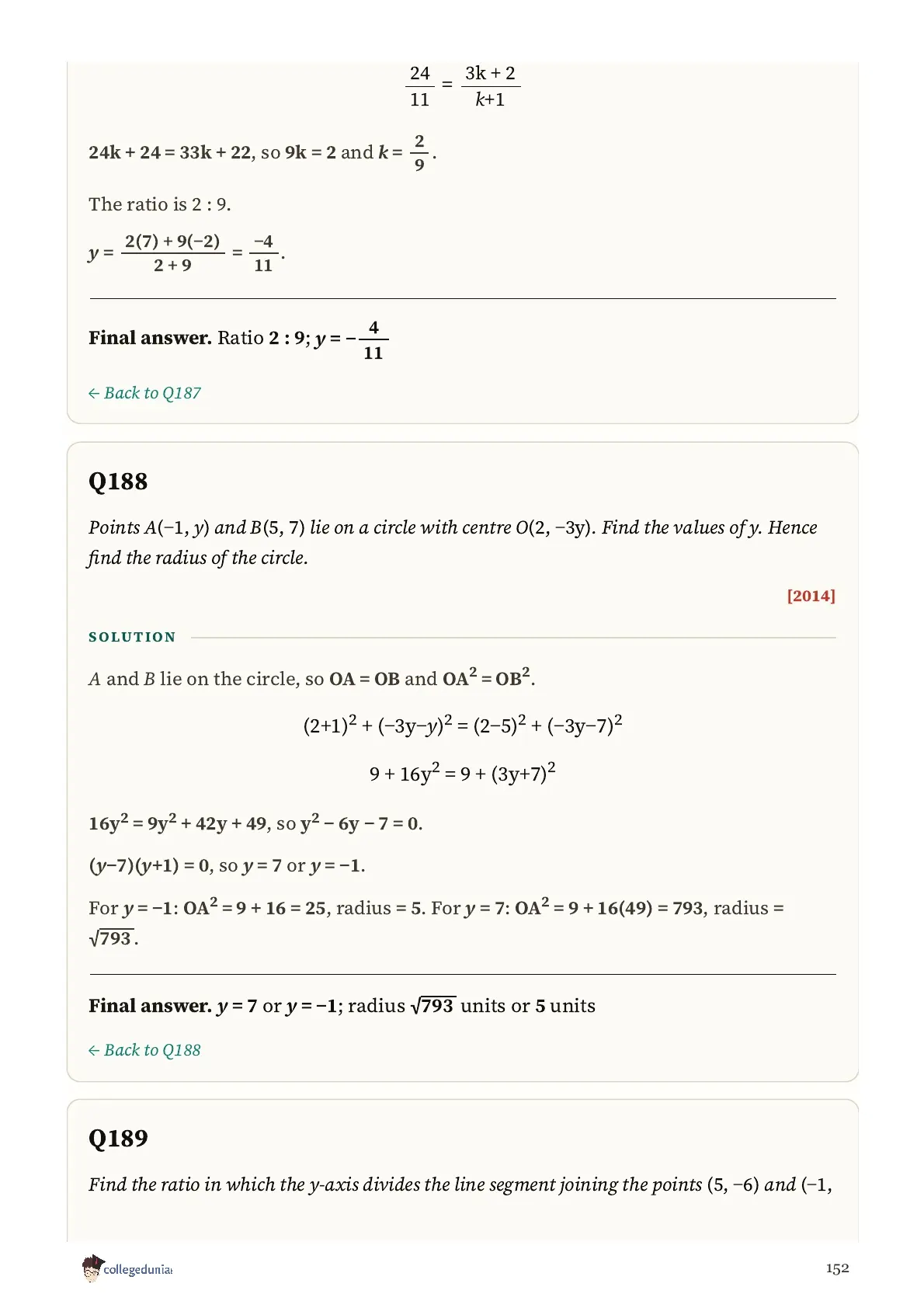
Class 10 Maths Coordinate Geometry PYQ, free to download as a 167-page PDF with 217 solved board questions from the 2003 to 2026 papers. Coordinate Geometry is Chapter 7 of the NCERT Class 10 Maths book and is also the CBSE unit of the same name, which is listed at 6 of the 80 theory marks.
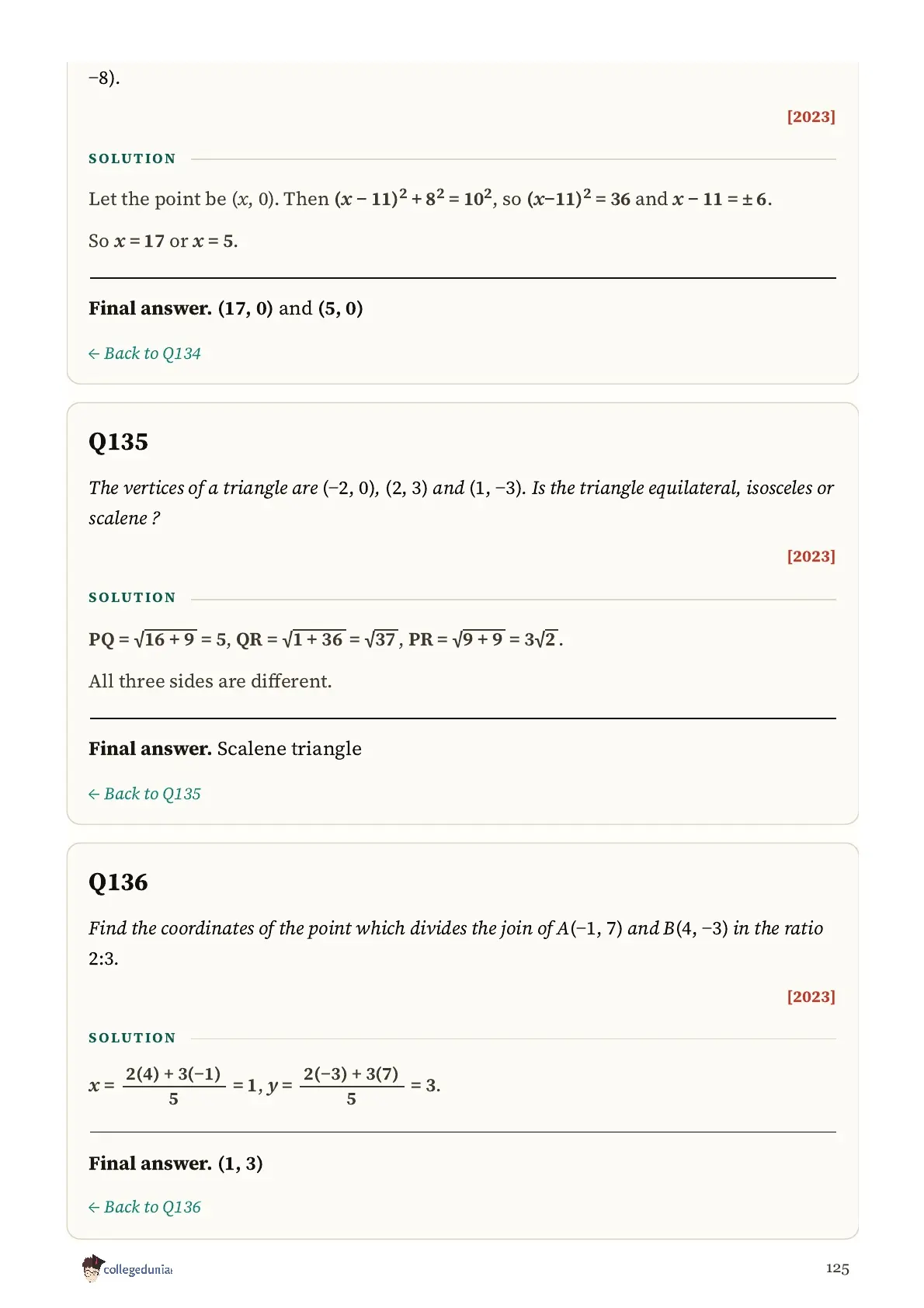
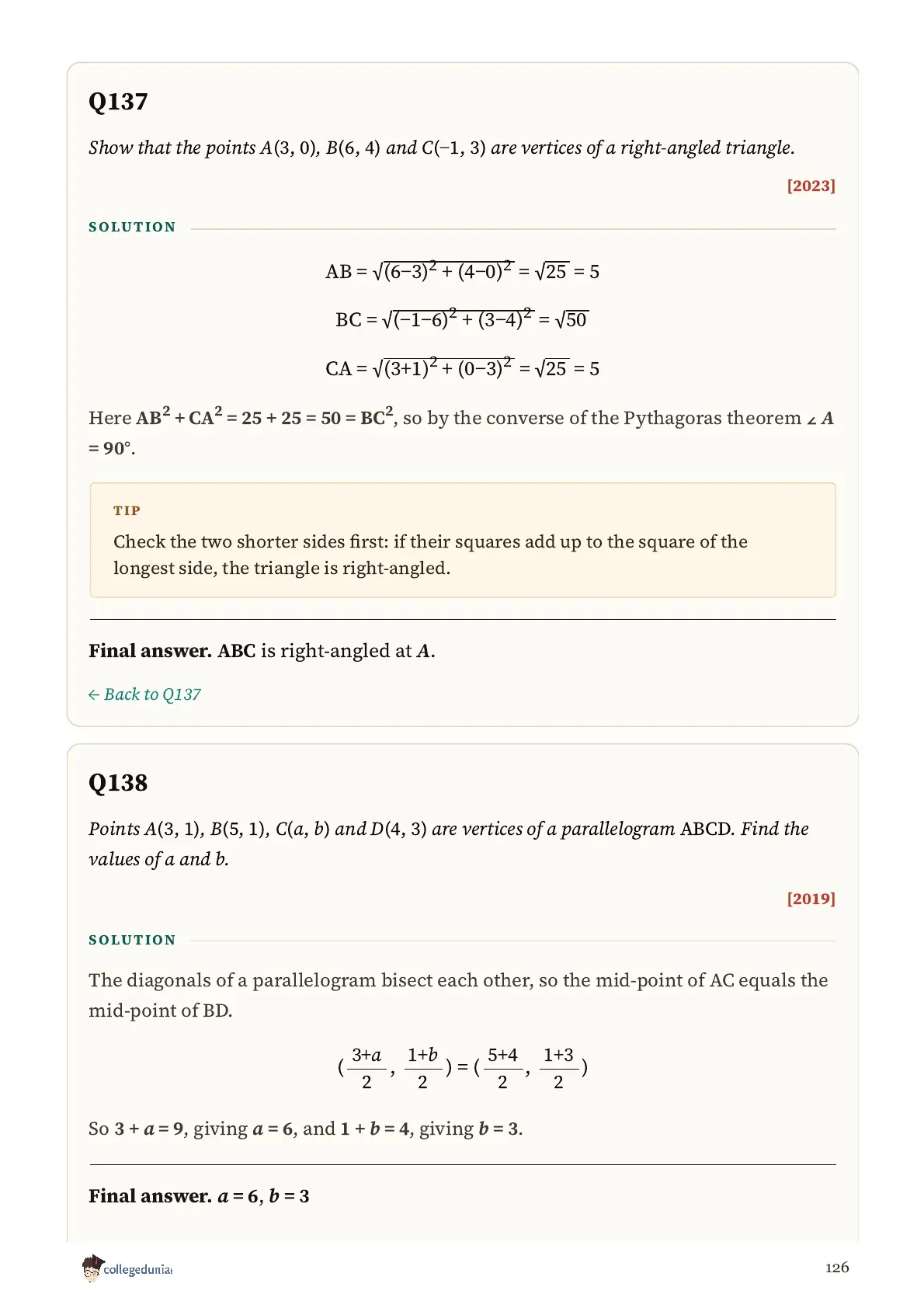
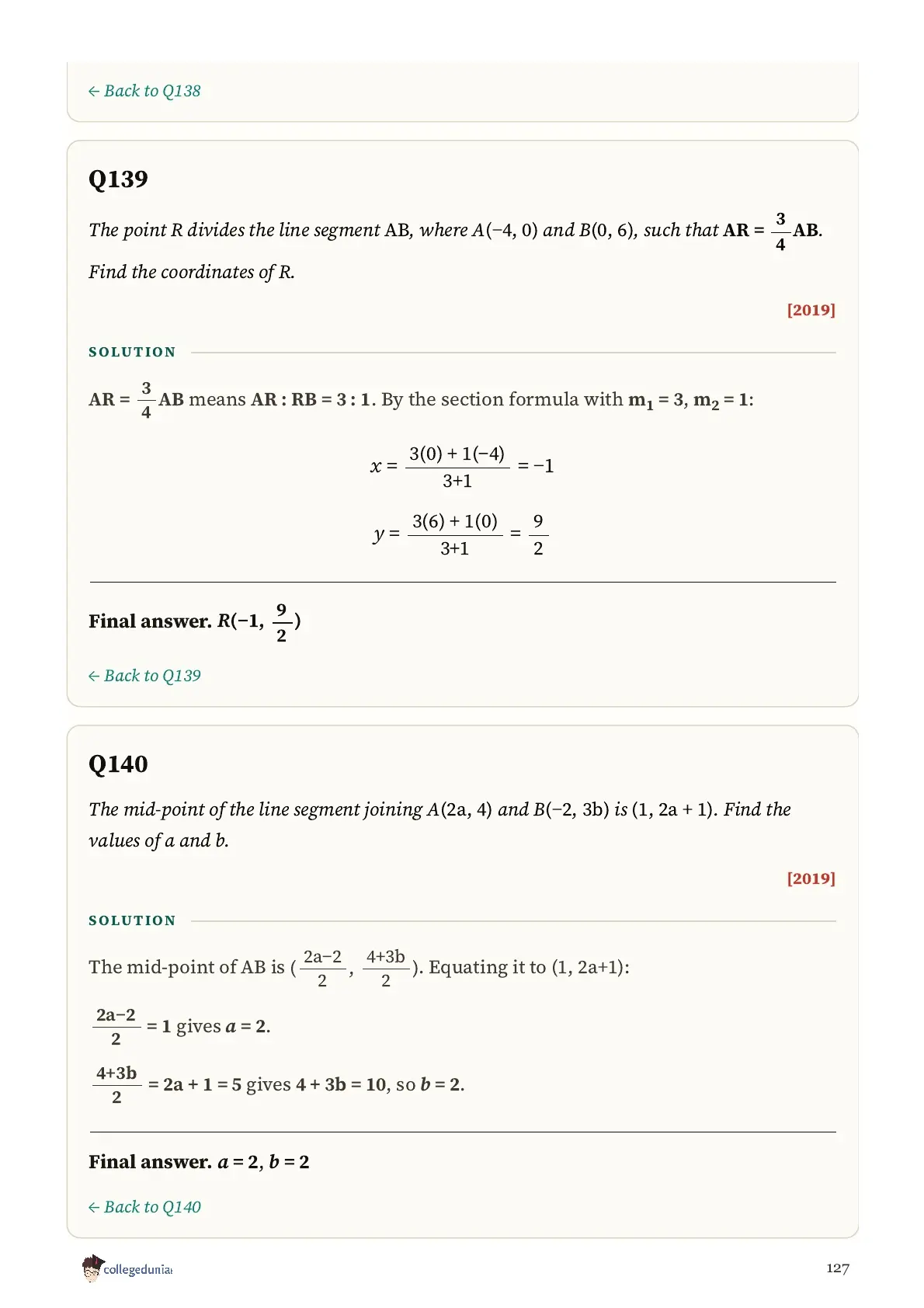
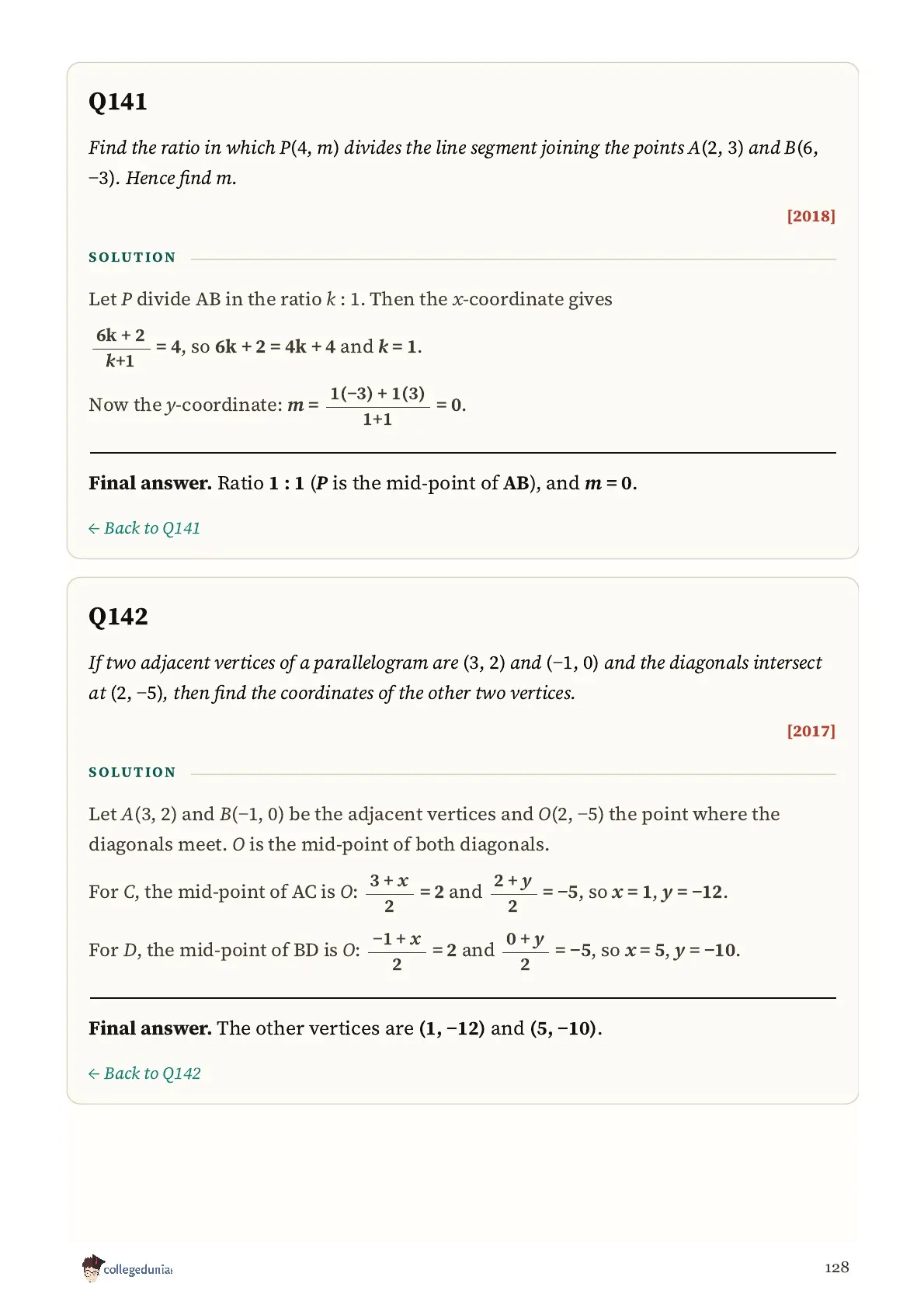
The questions keep returning to the coordinates of a point or the vertices of a figure (45 questions), the section formula and ratios (39), finding a value such as k or p (39), the distance formula (38), points on an axis (31) and mid-points (23).
On this page you get:
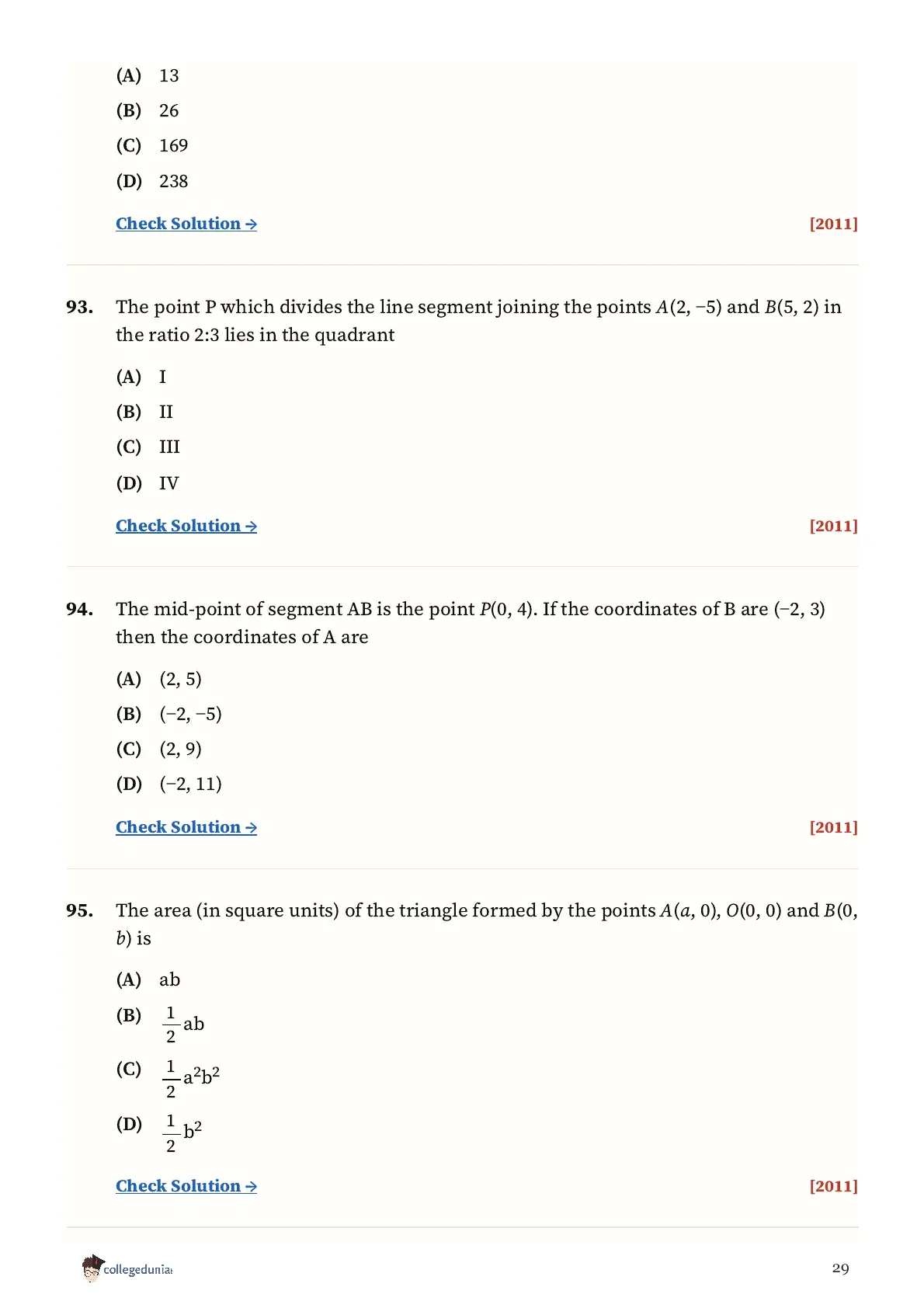
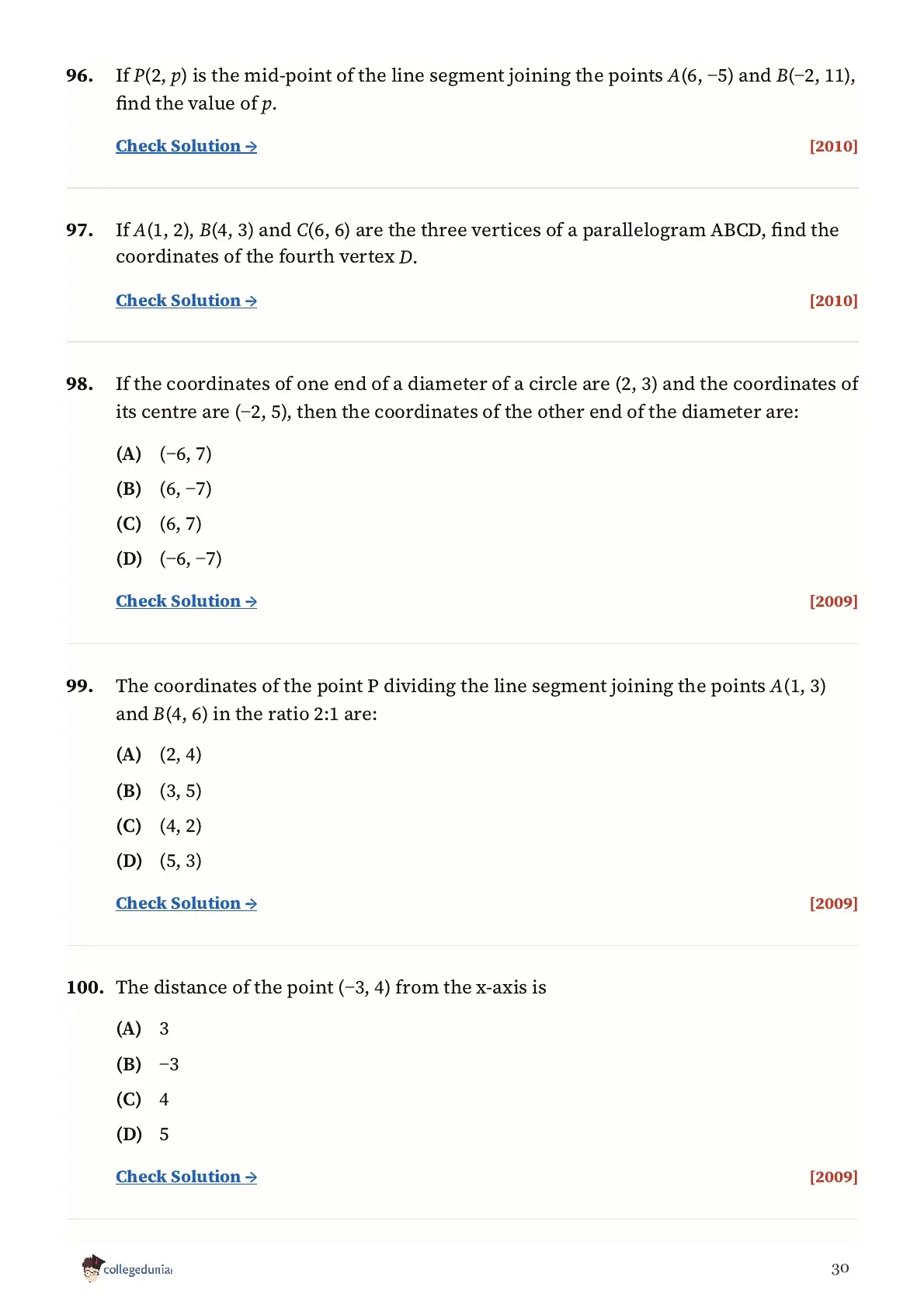
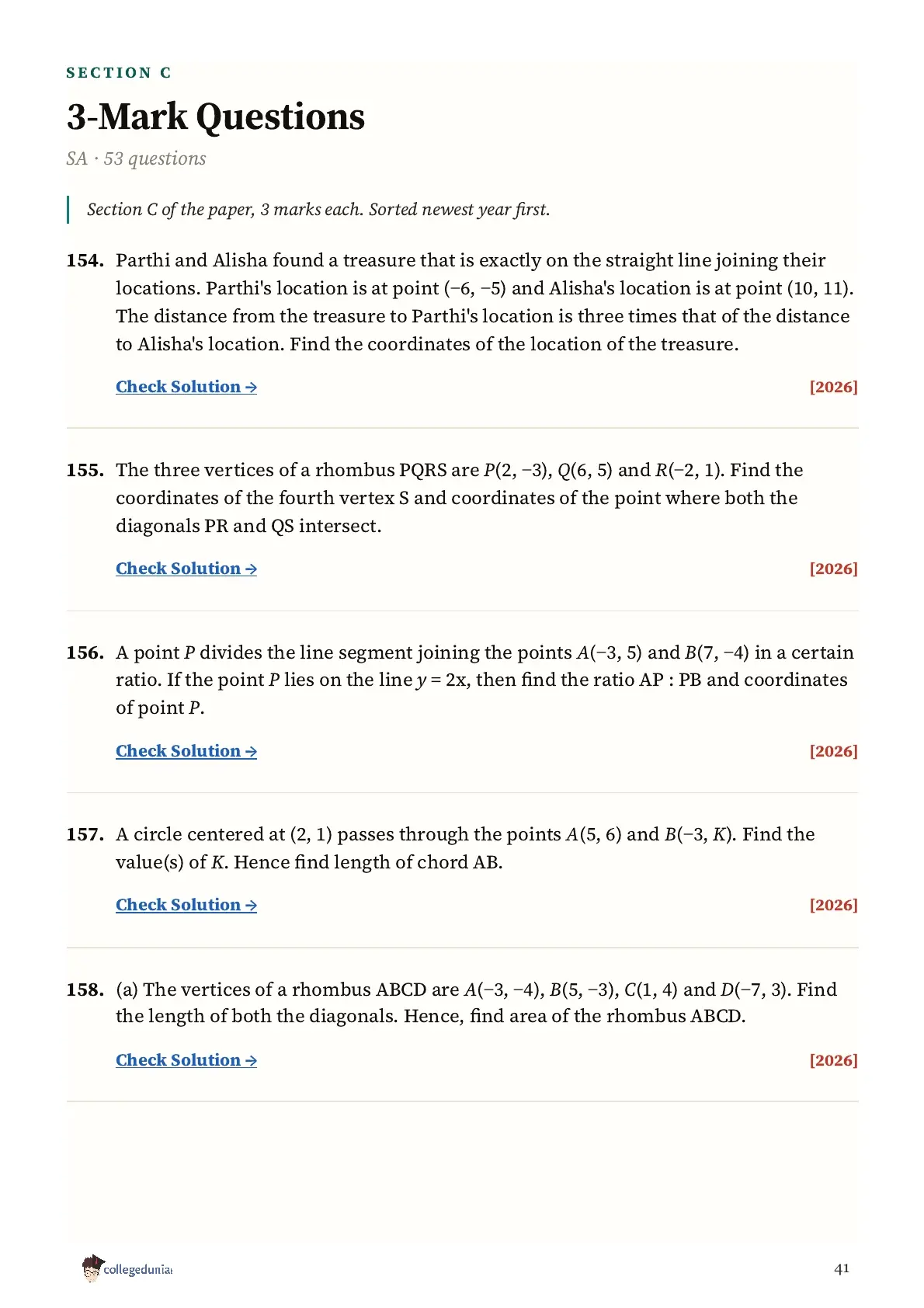
- 217 questions with a worked solution each: 76 MCQs and assertion-reason items, 26 one-mark case parts and very short answers, 104 two and three mark short answers and 11 four-mark case studies
- An Answer Key that lists all 76 MCQs at a glance
- Question counts by topic, so you know whether to start with distance, the section formula or mid-points
- A marks-wise table of questions (1, 2, 3 and 4 mark)
- The common mistakes students make, such as reading AP : AB = 3 : 7 as AP : PB = 3 : 7, and a short FAQ
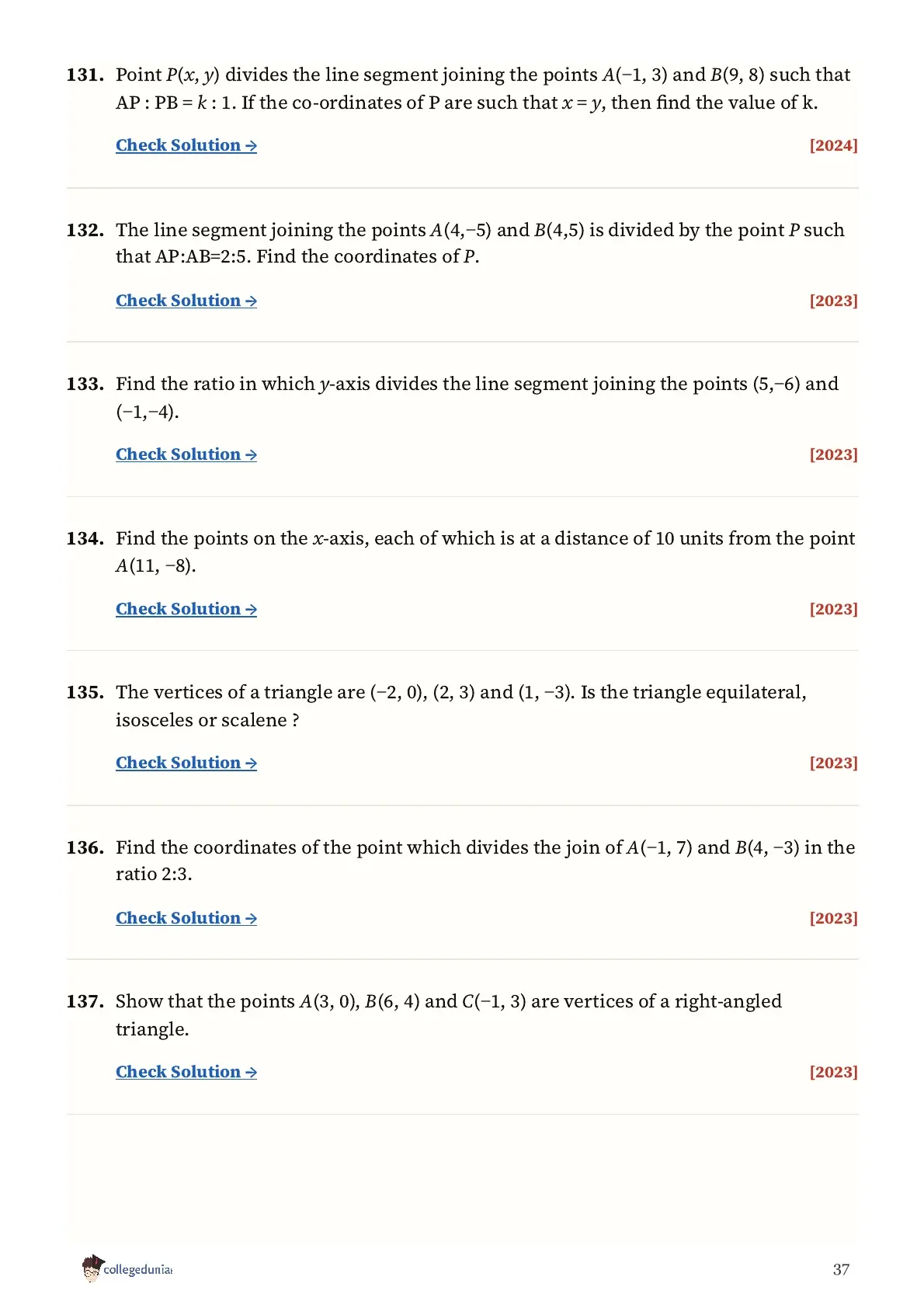
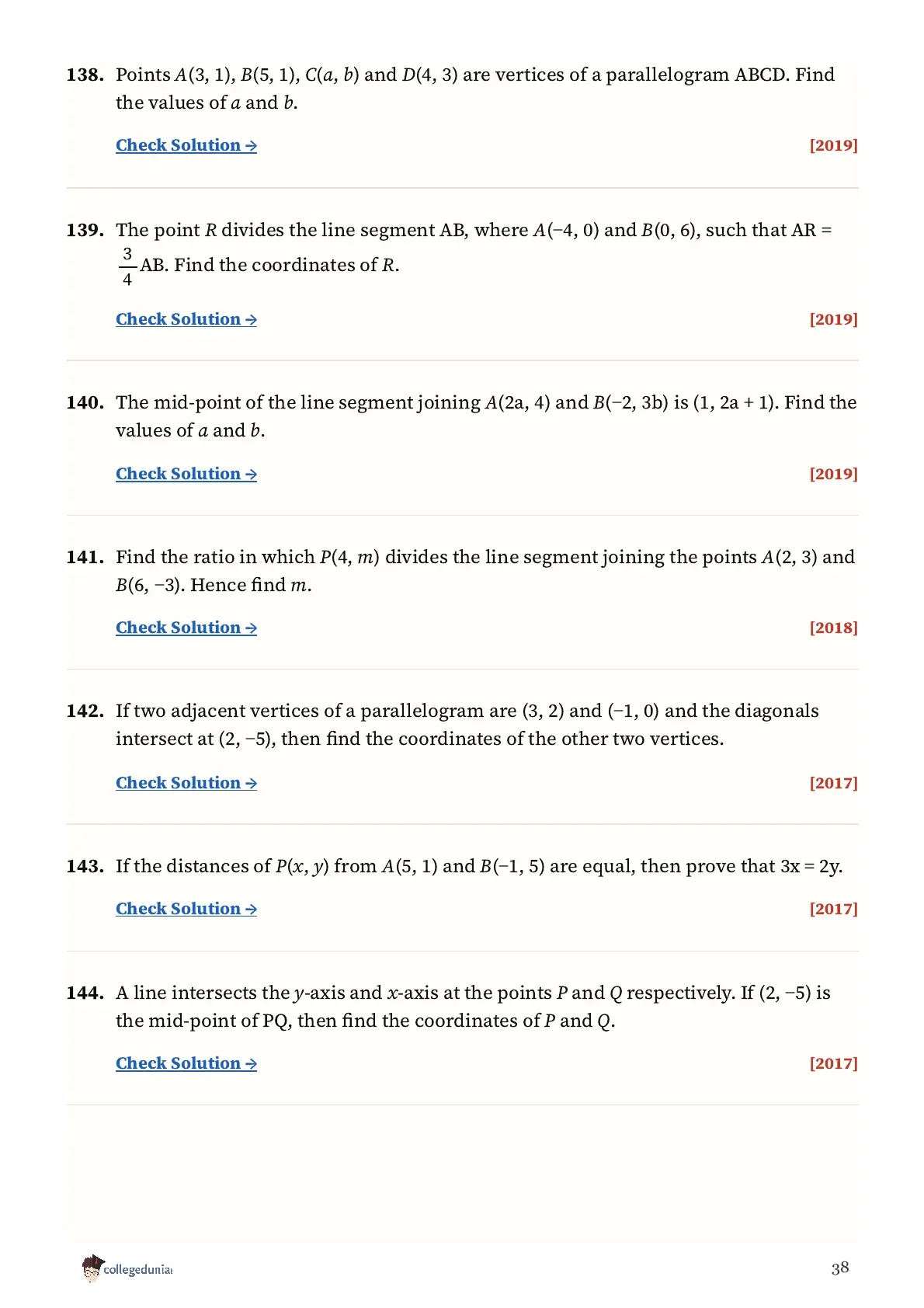
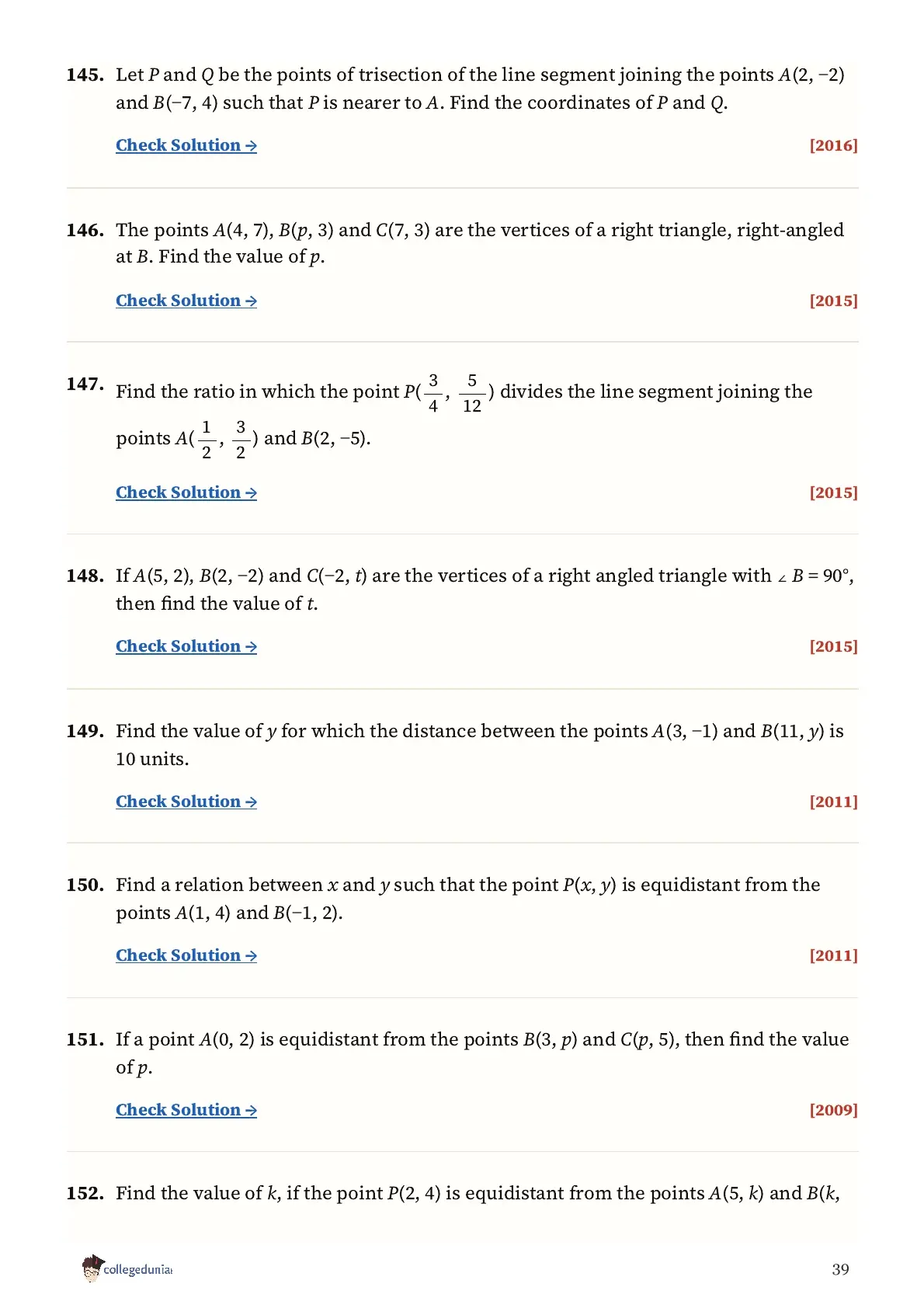
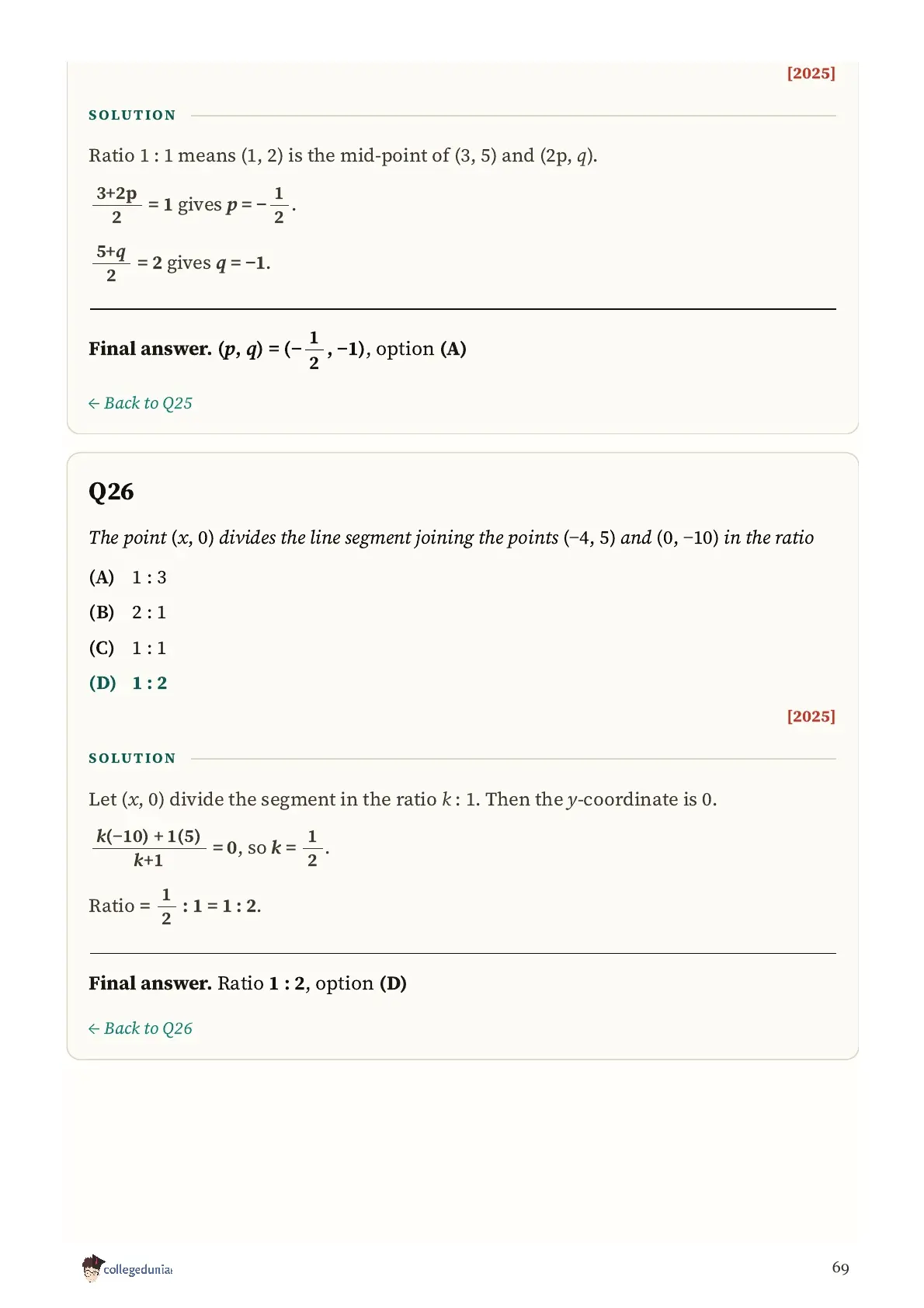
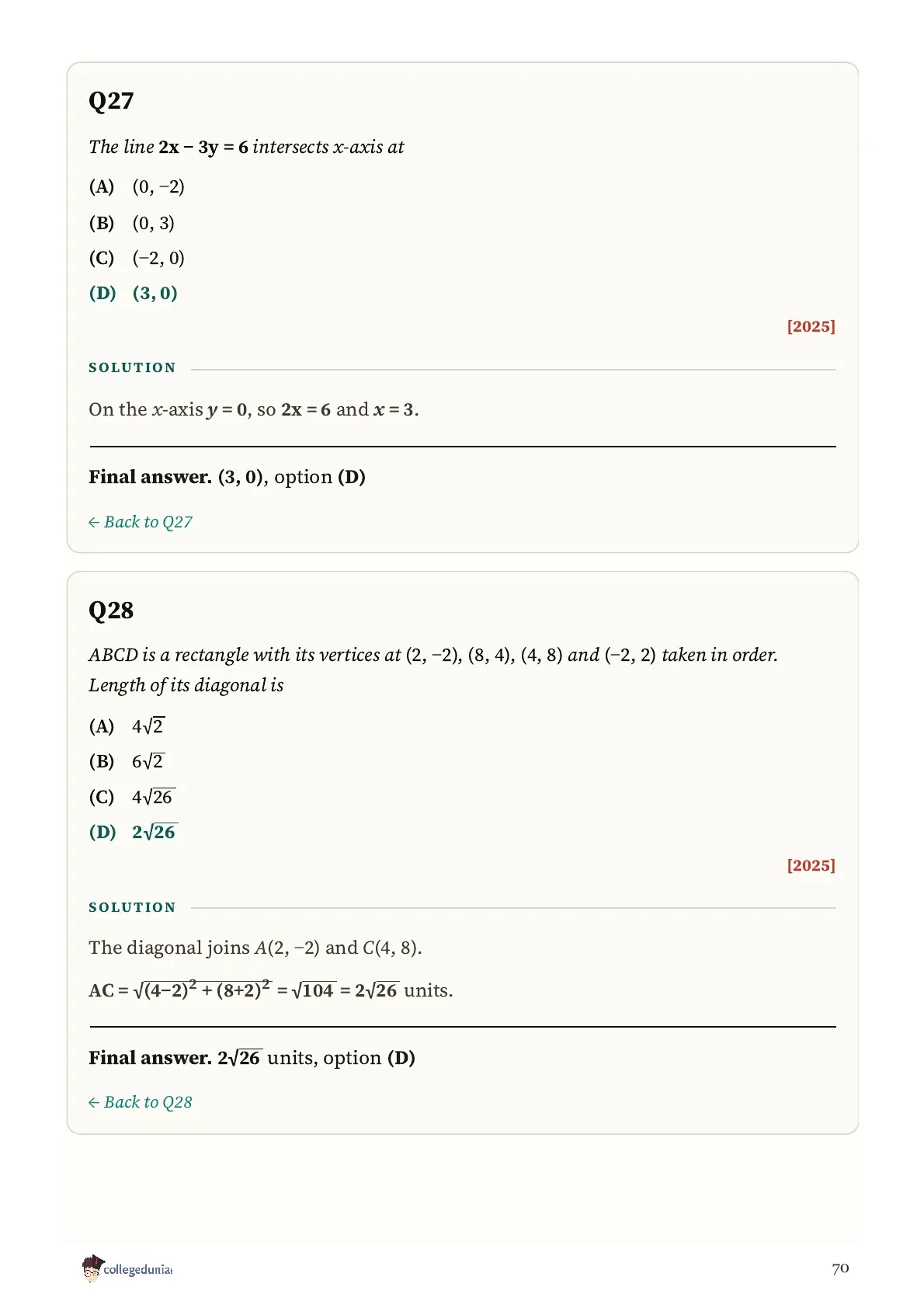
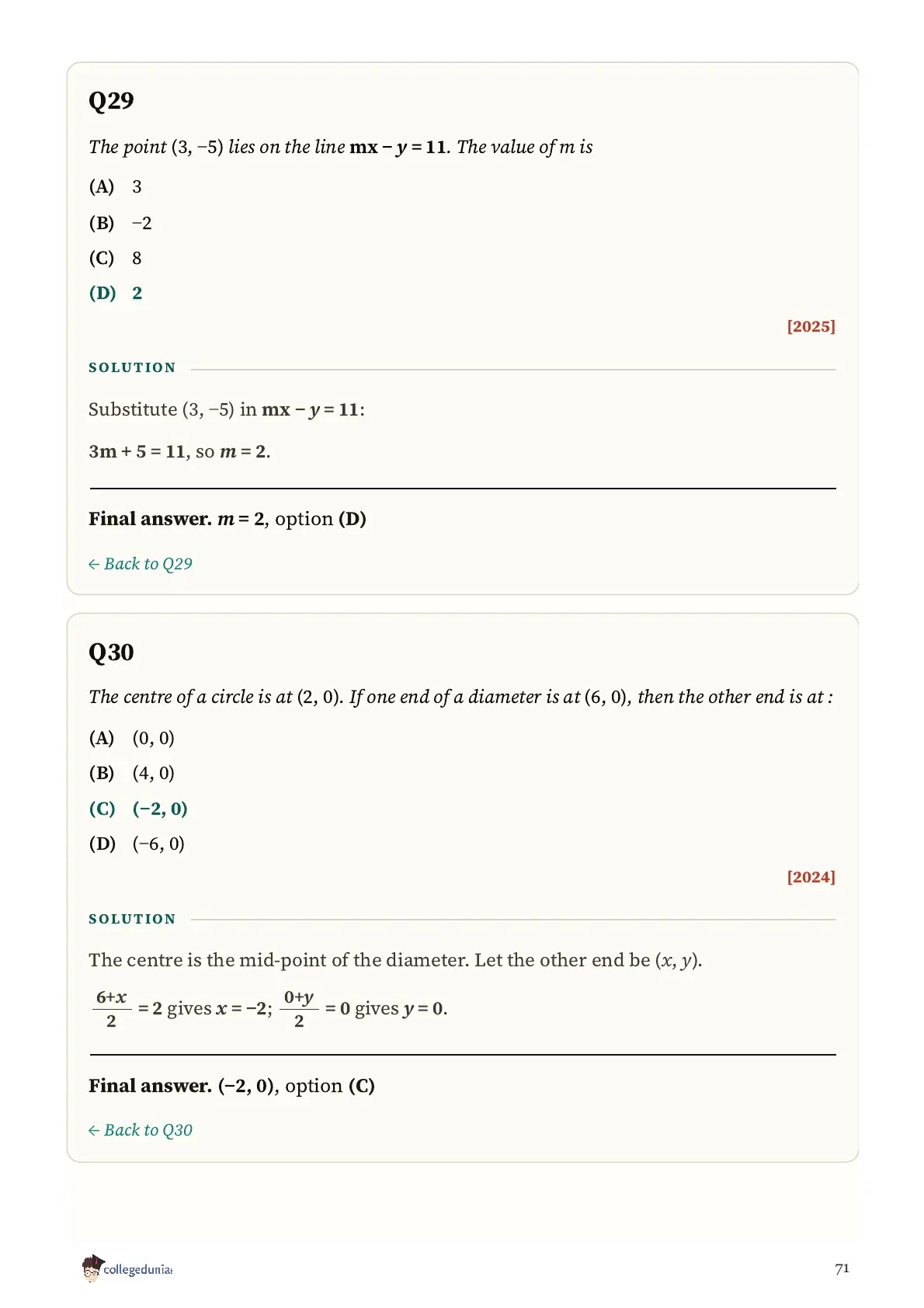
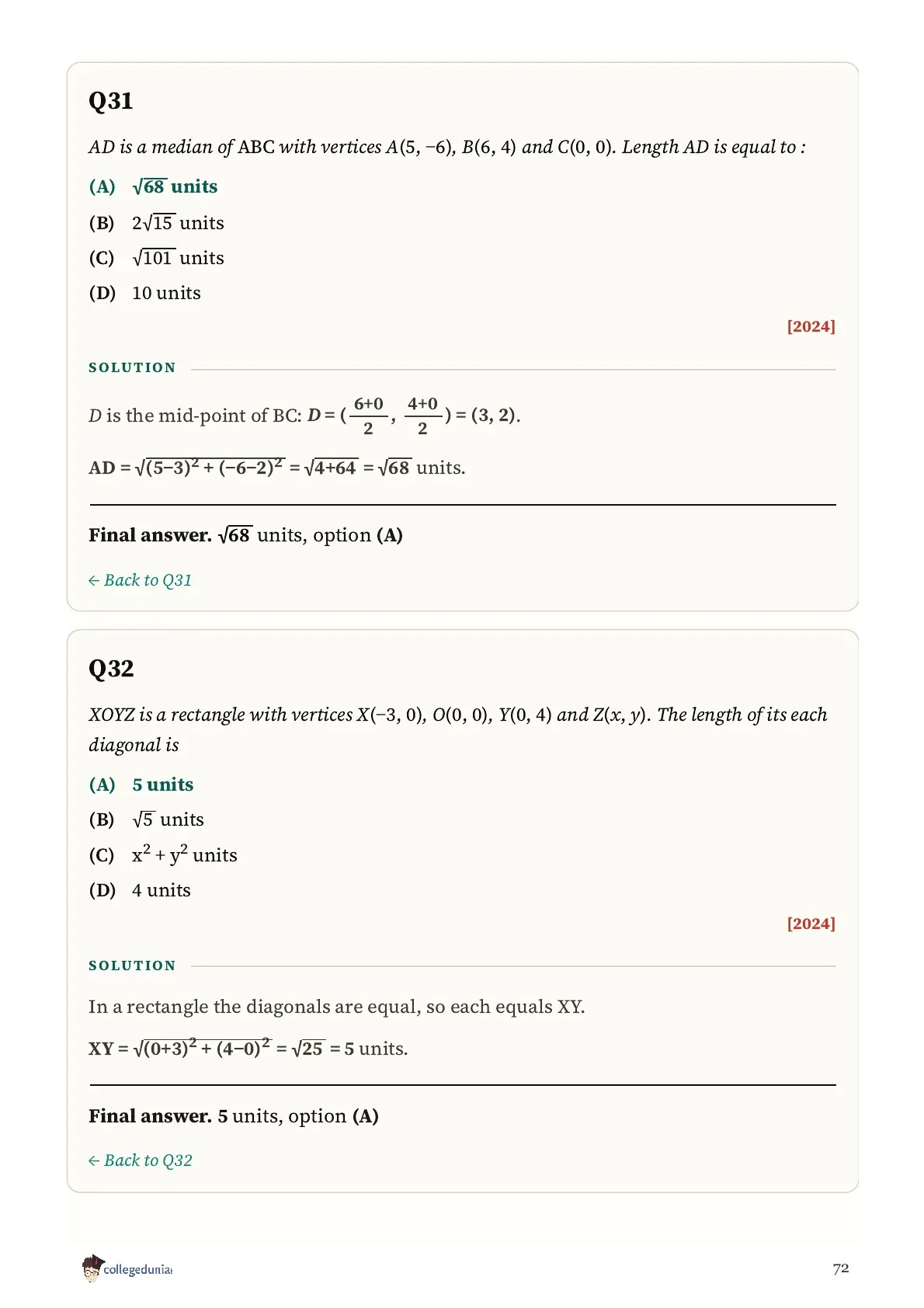
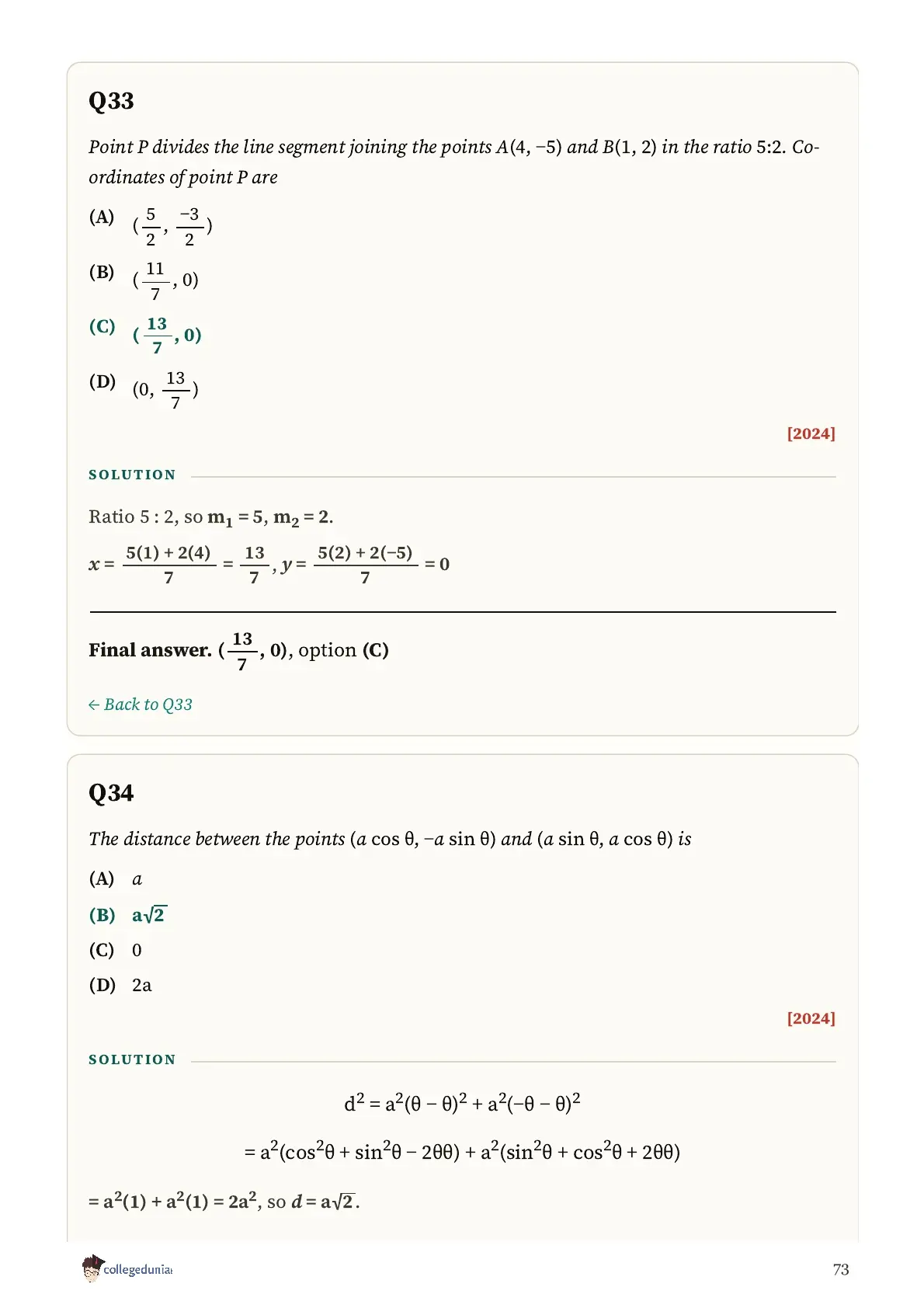
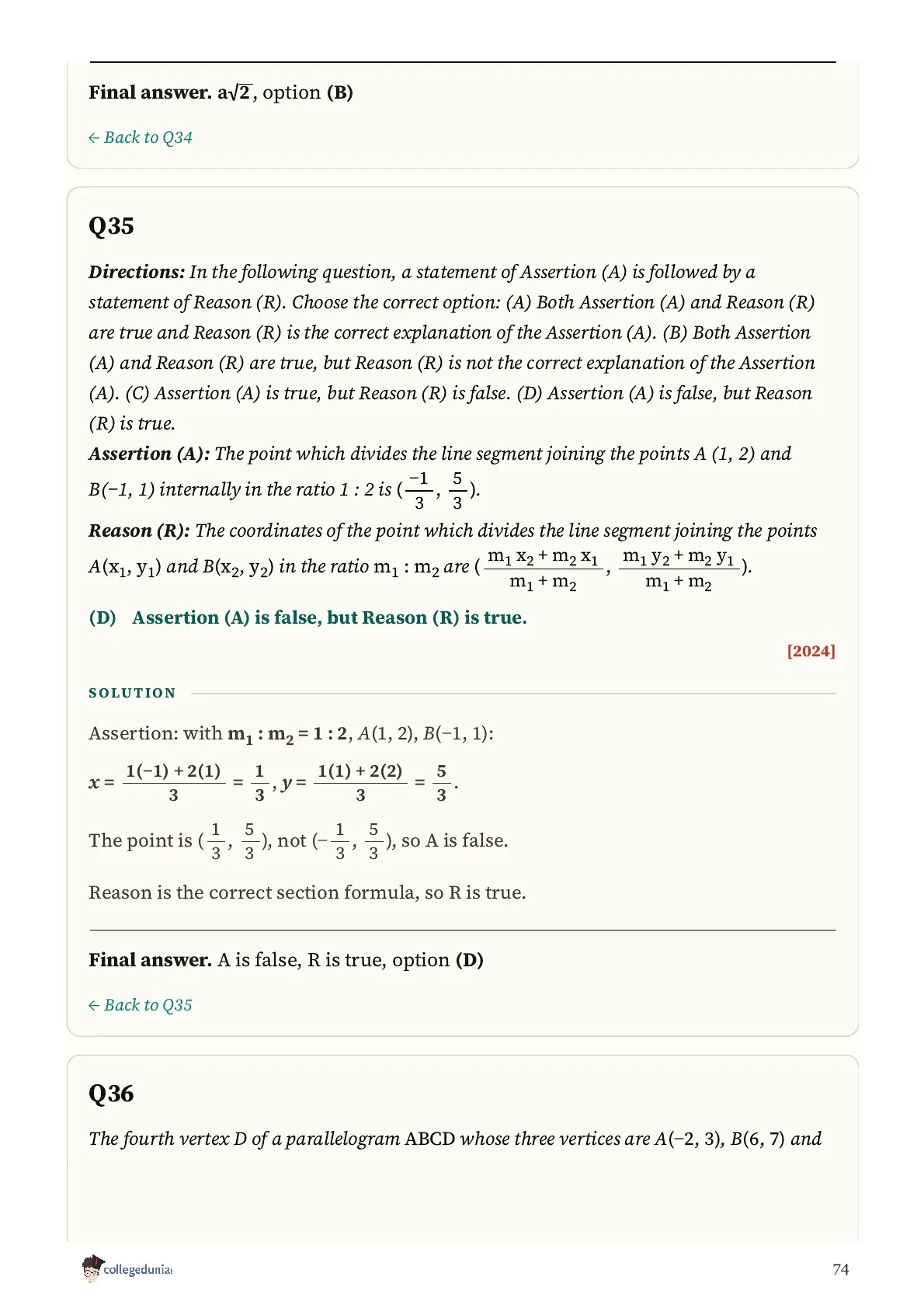
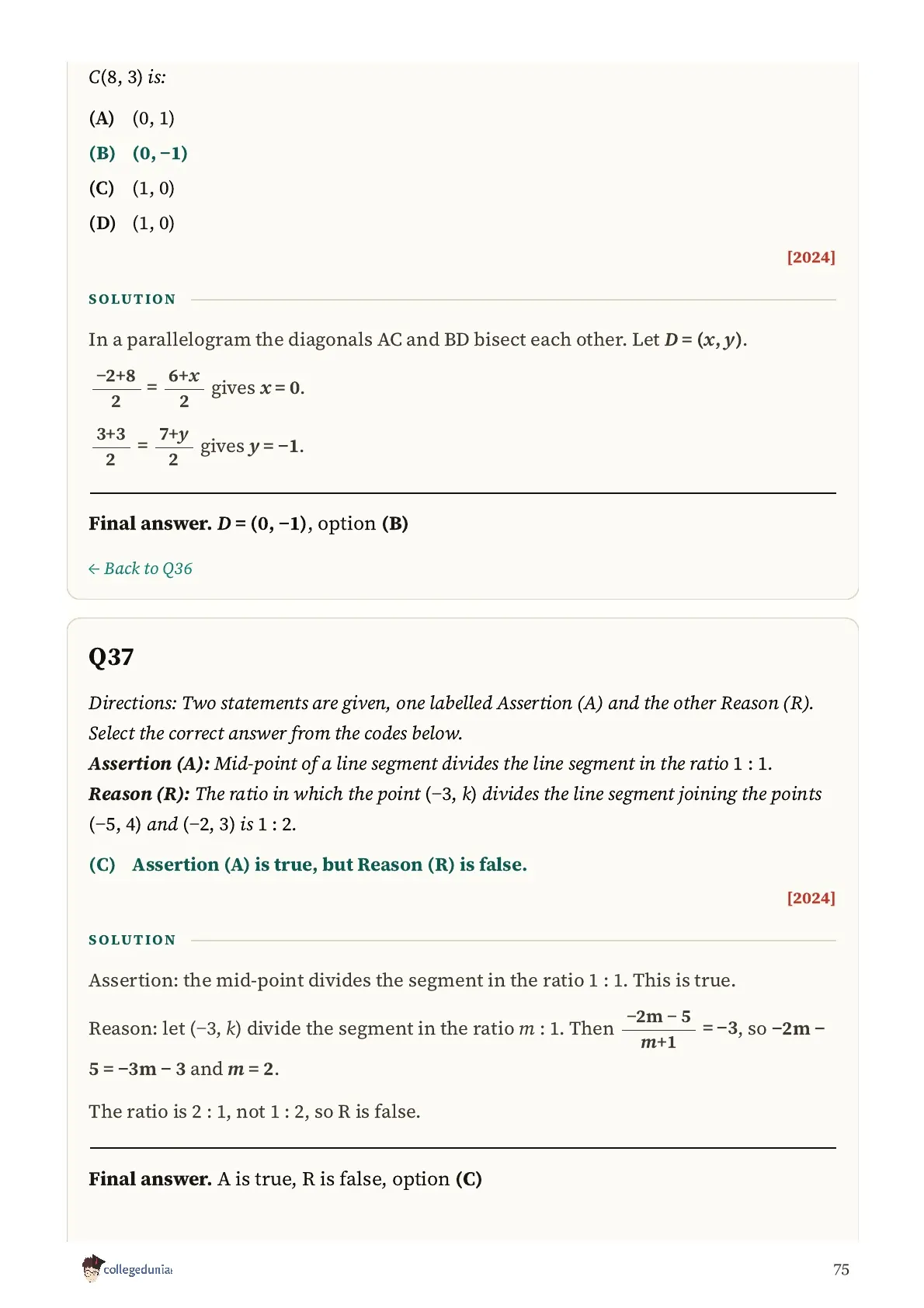
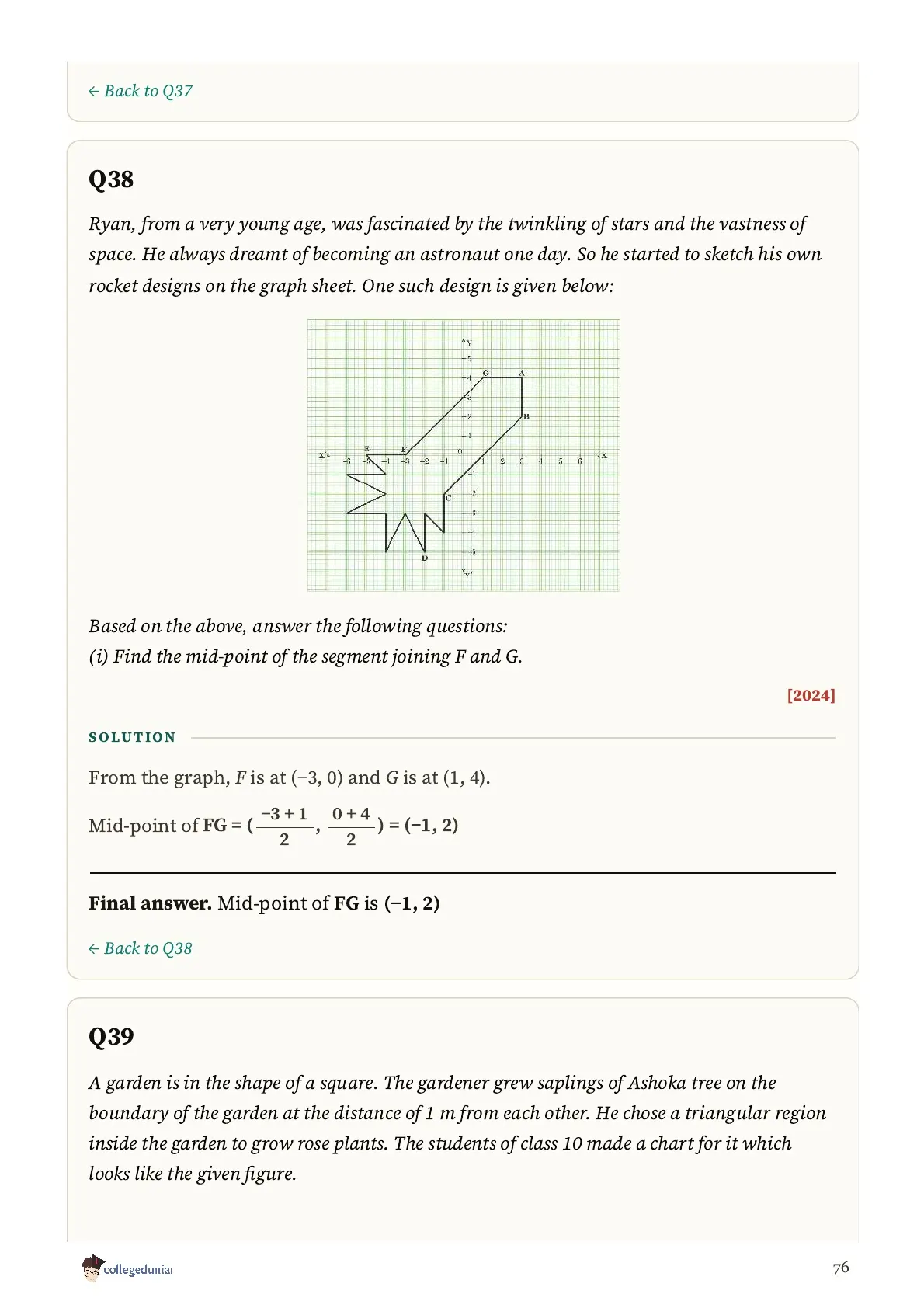
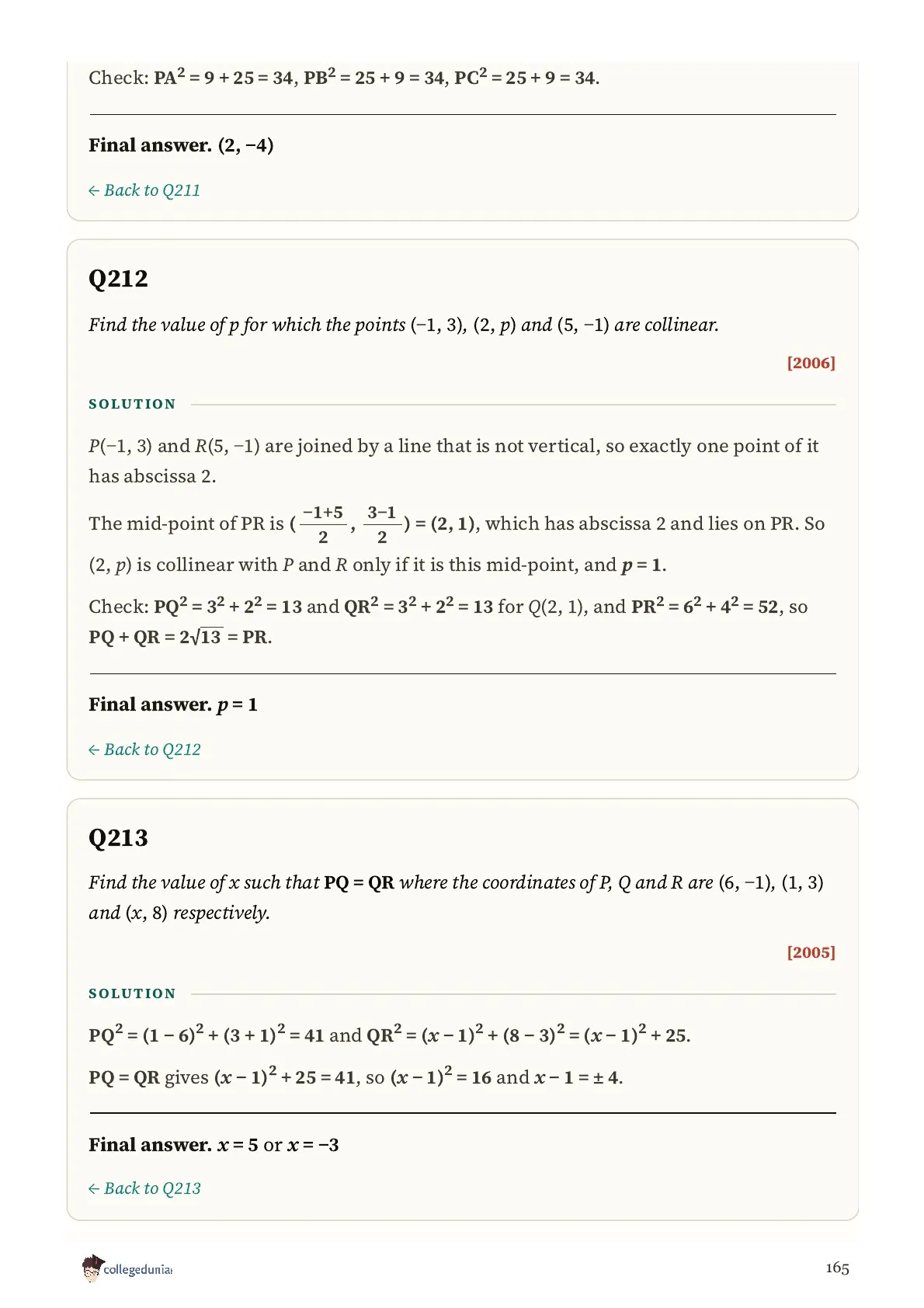
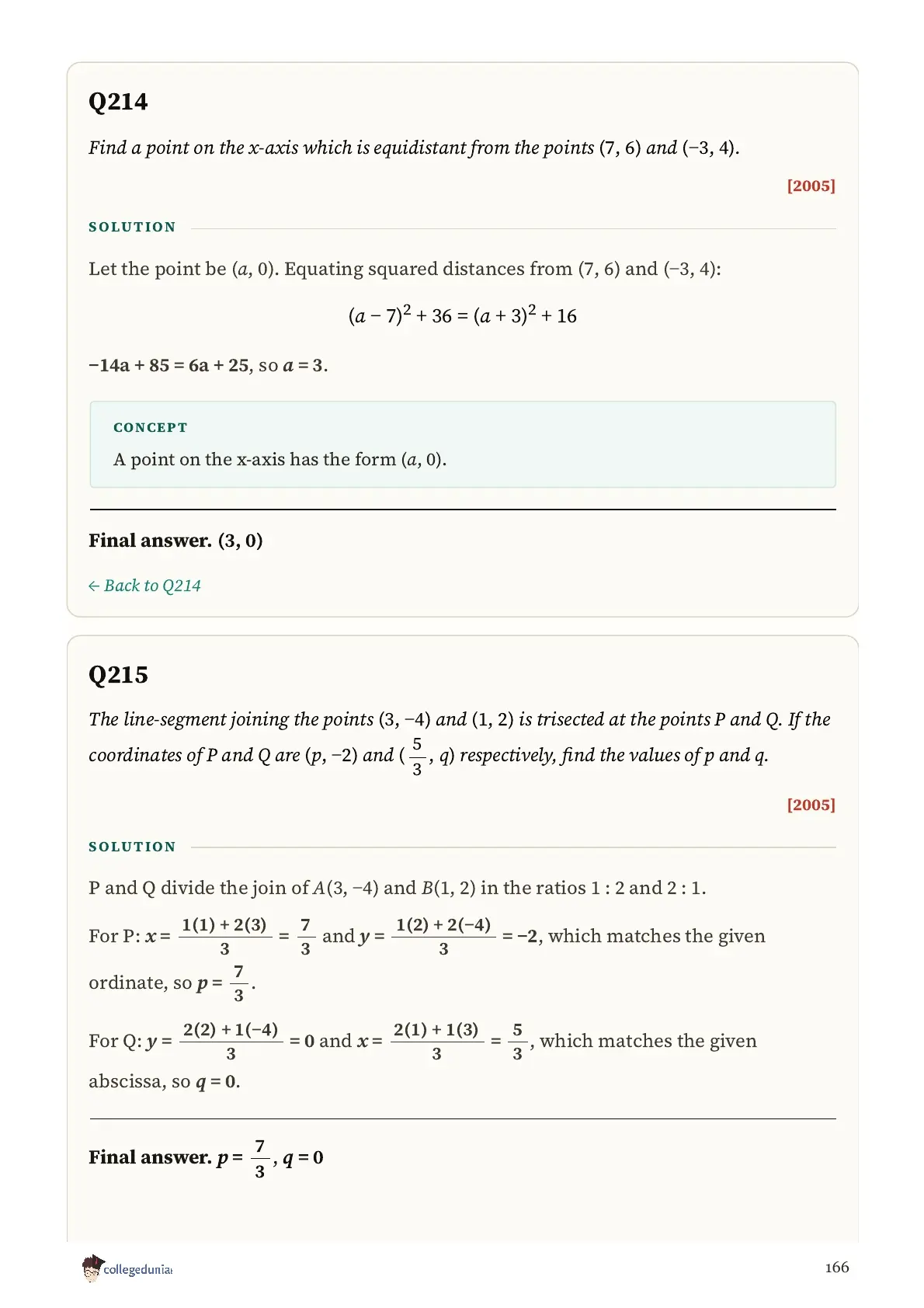
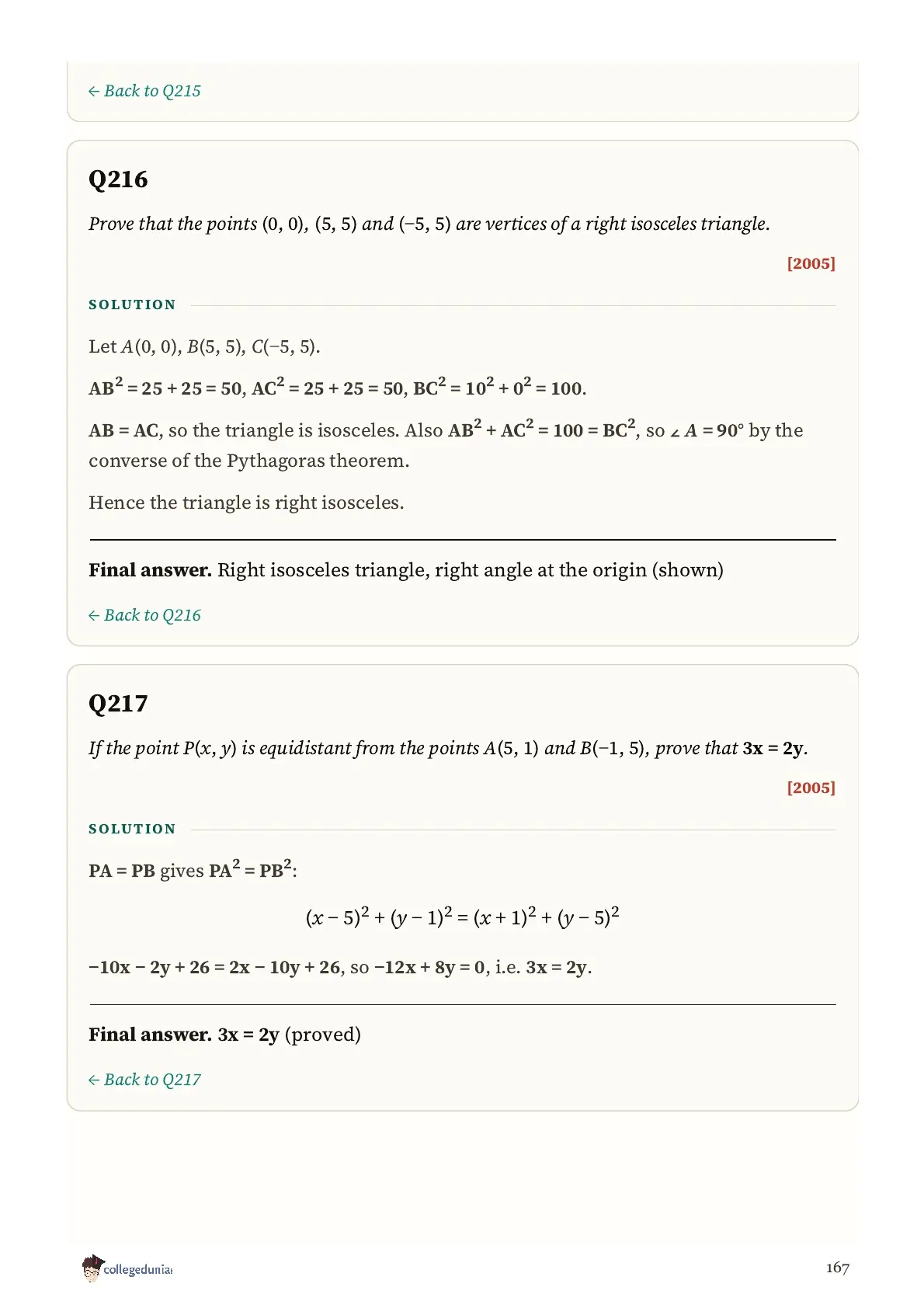
Coordinate Geometry Weightage in the Class 10 Maths Paper
CBSE does not print a mark figure for the chapter alone. In the Class 10 Maths (041) theory paper of 80 marks, the unit Coordinate Geometry is listed at 6 marks, and it holds only this one chapter. I could not open the CBSE curriculum document itself, so the 6 is as reported by prep sites and is unofficial. Check the current syllabus on cbseacademic.nic.in. In this set the 1-mark question is the commonest form, with 102 of the 217.
The table shows how many questions the set holds at each mark value.
| Marks per Question | Questions in the Set |
|---|---|
| 1 mark | 102 |
| 2 marks | 51 |
| 3 marks | 53 |
| 4 marks | 11 |
Coordinate Geometry Questions by Topic
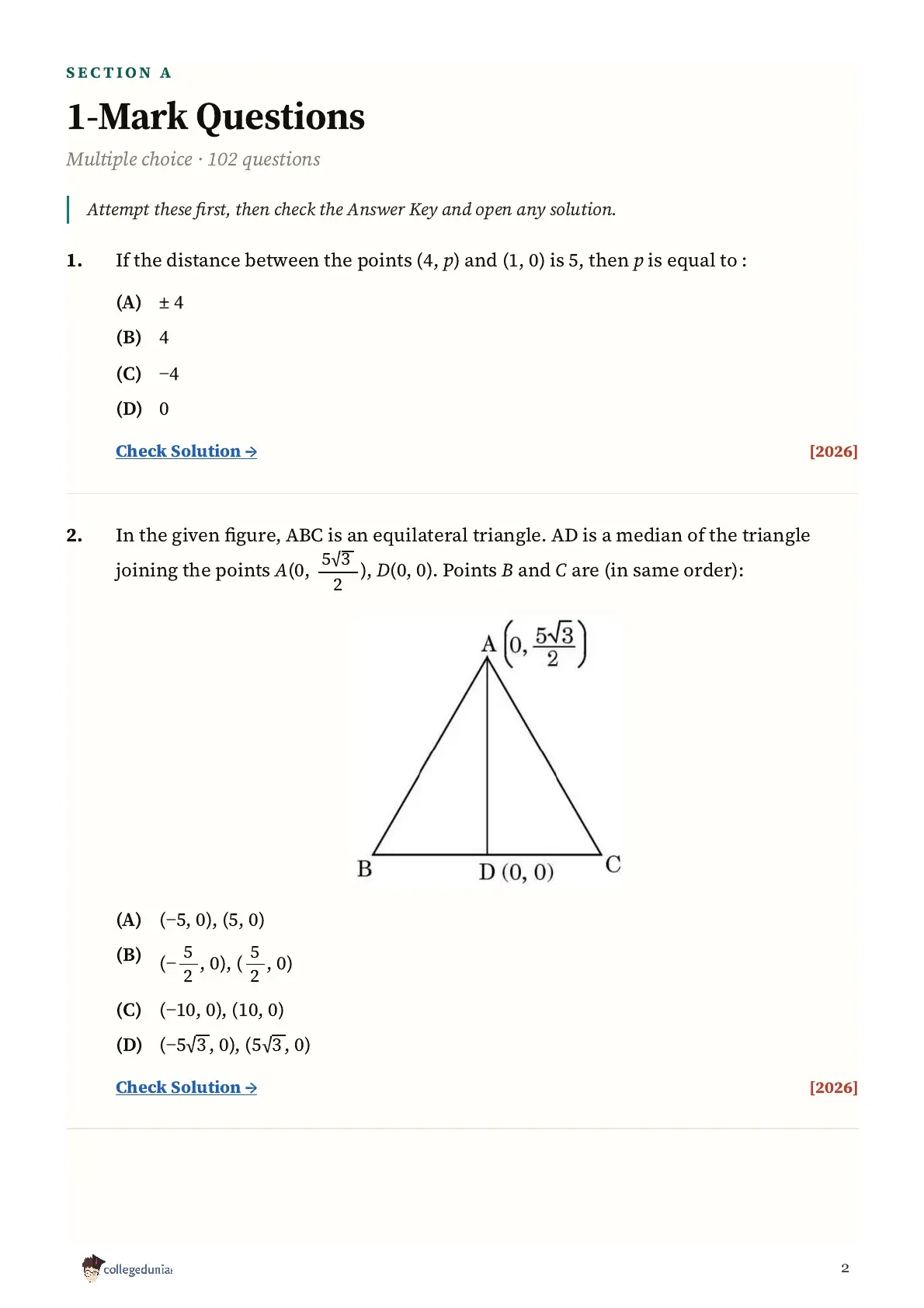
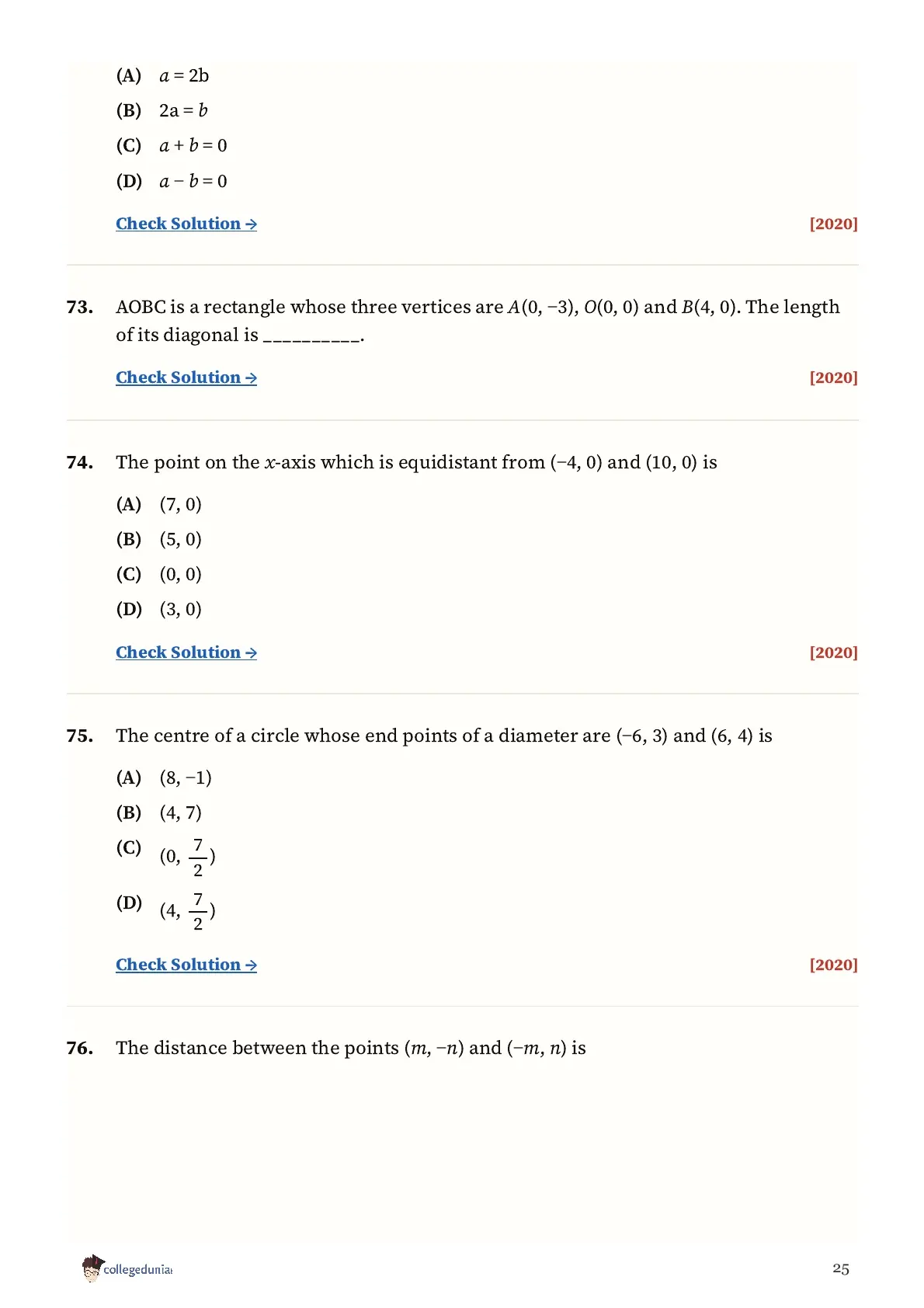
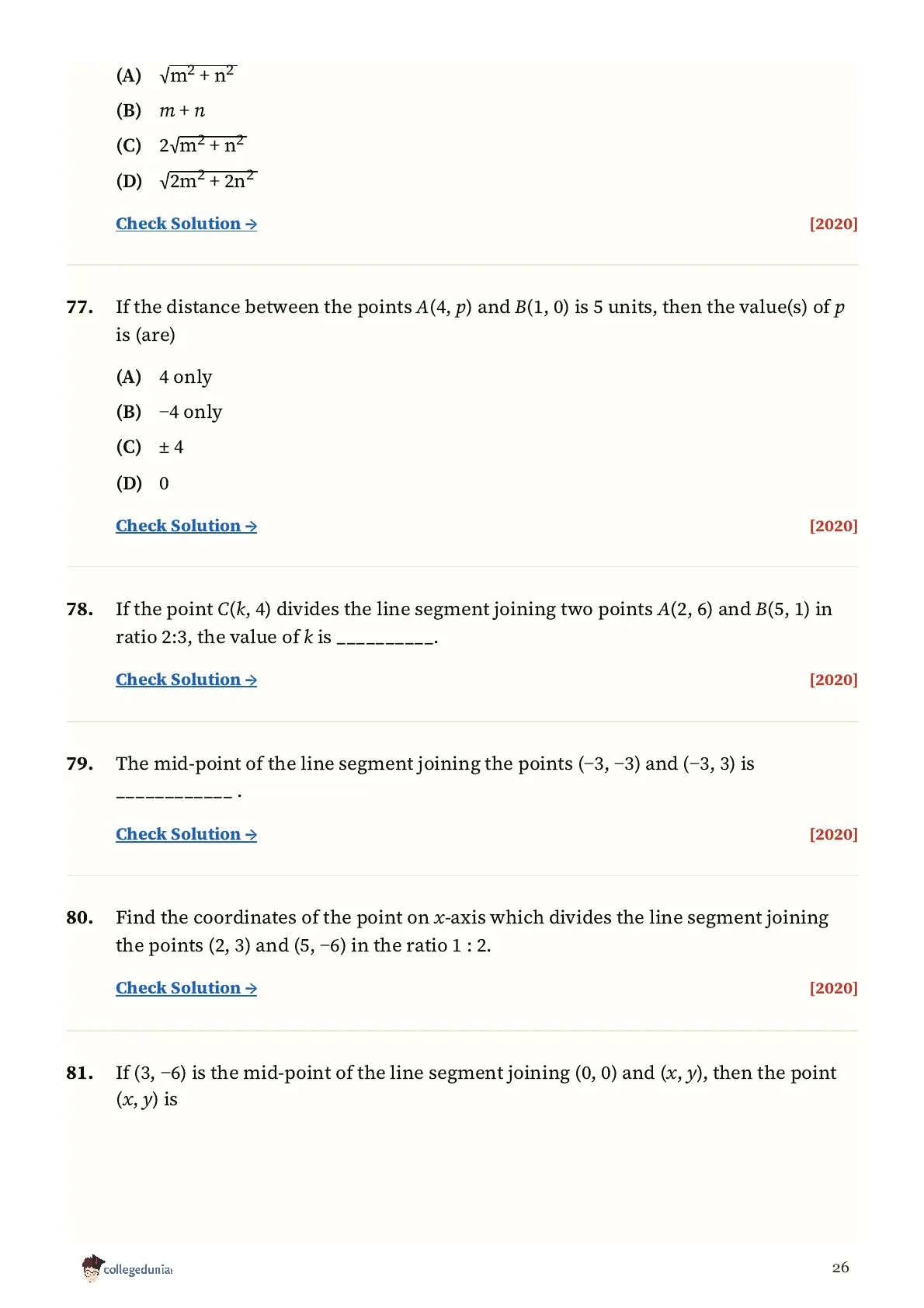
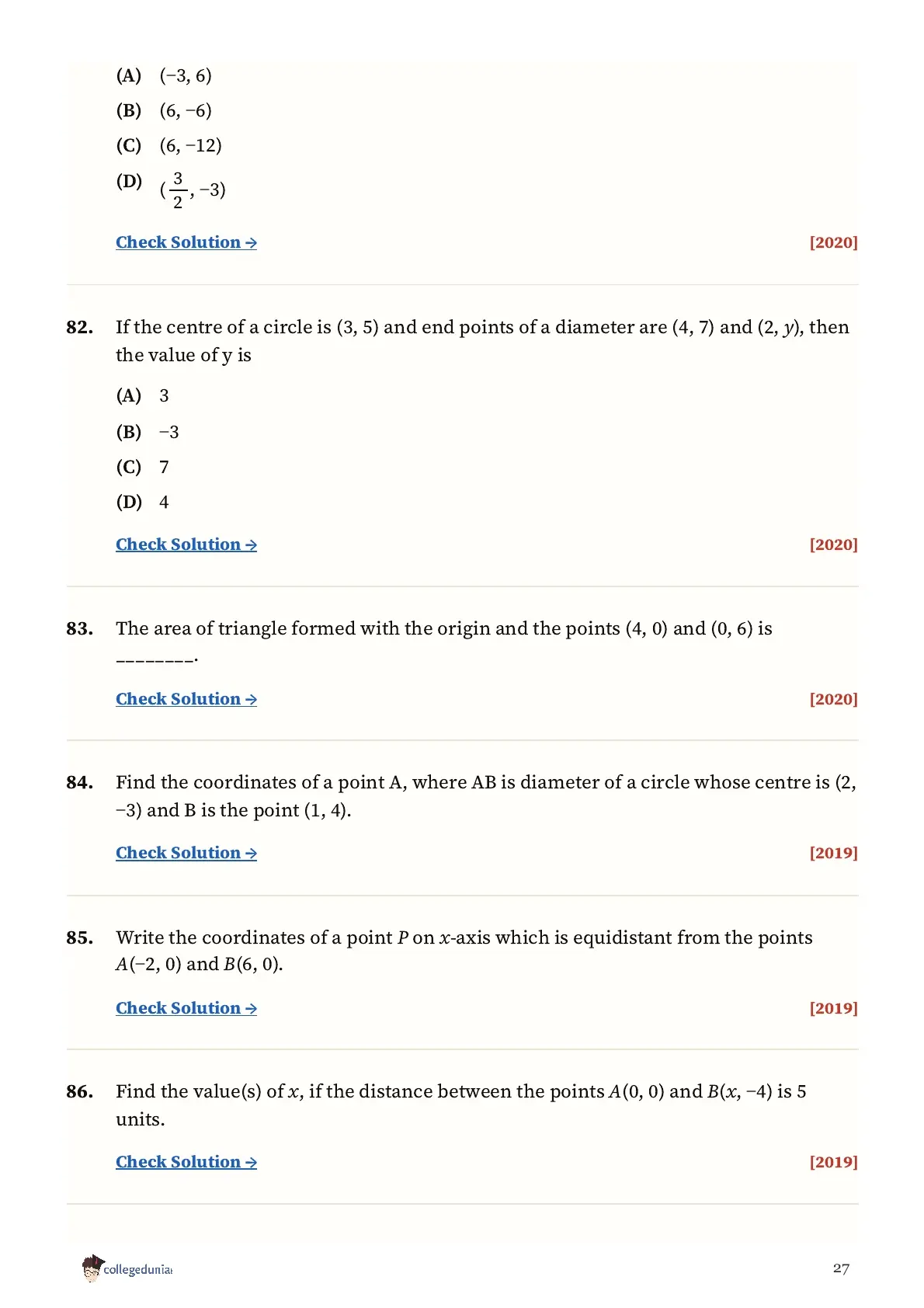
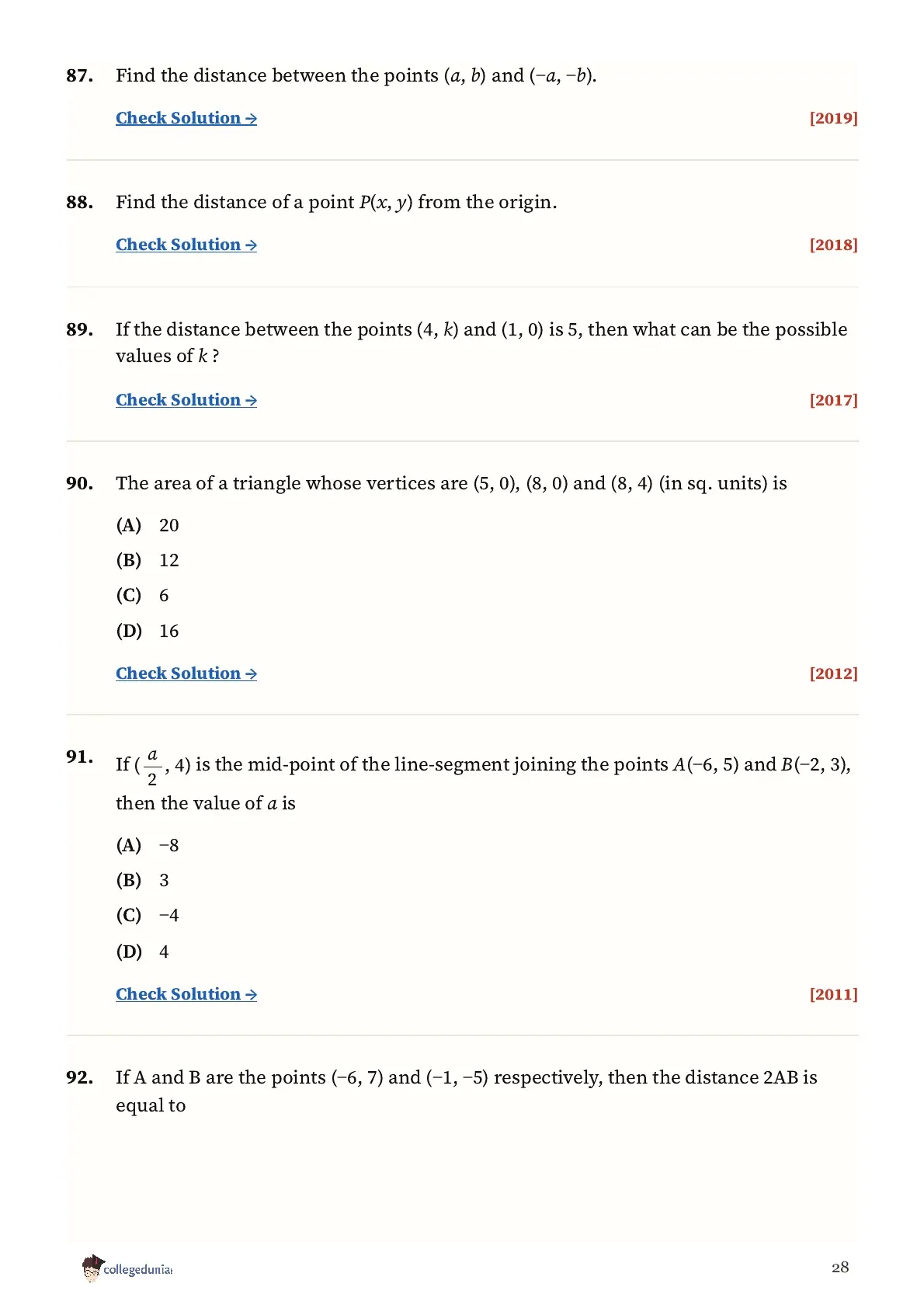
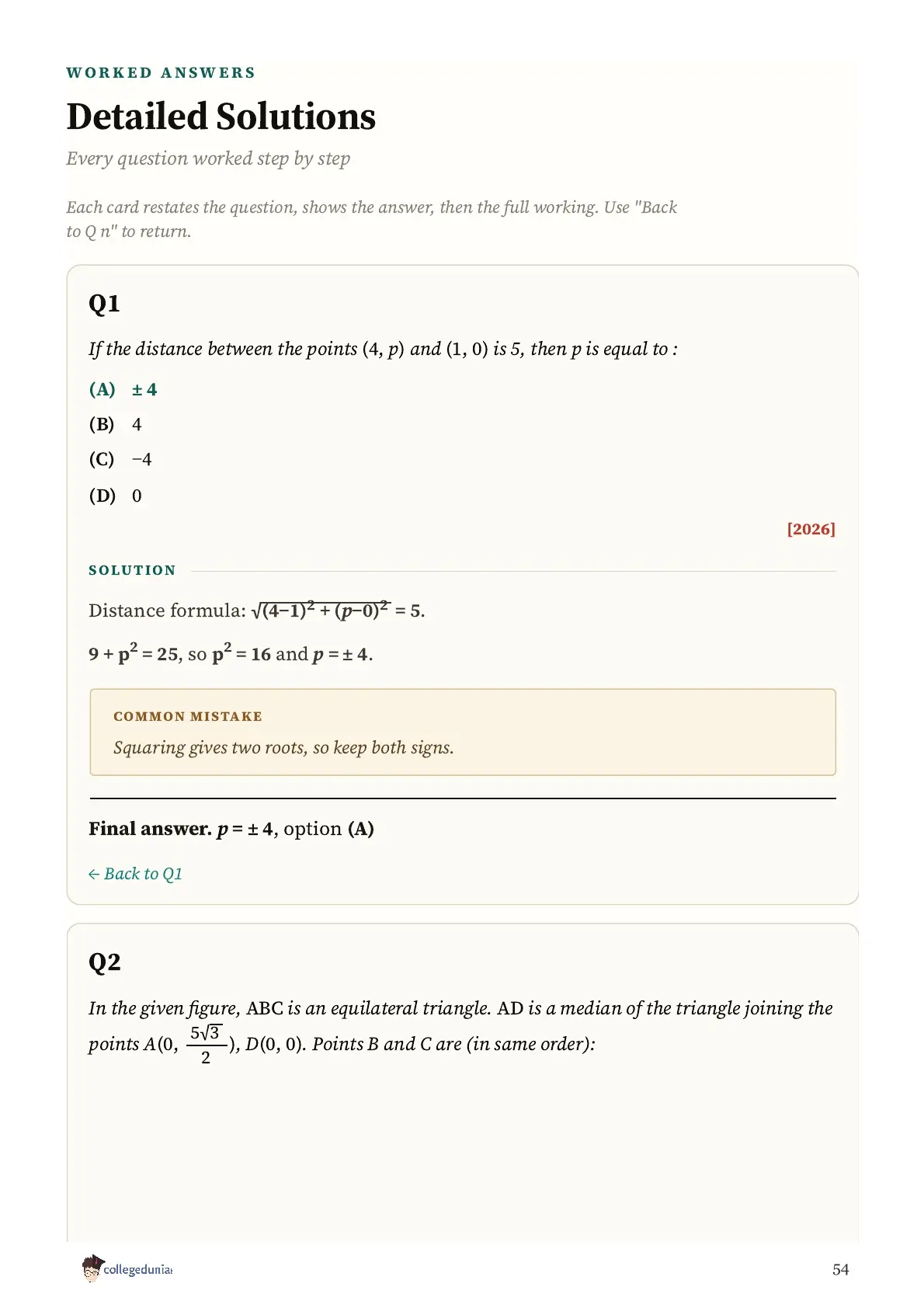
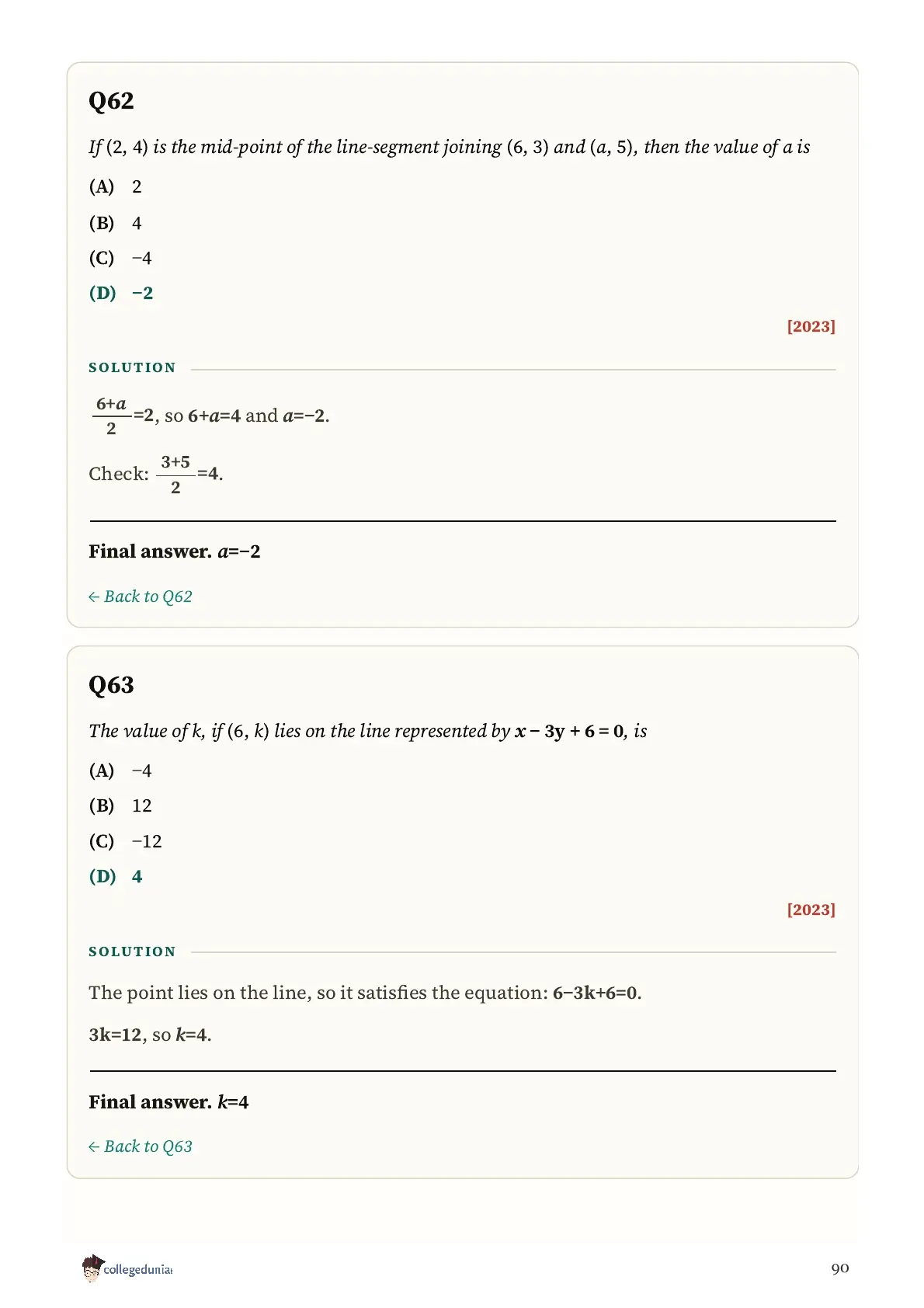
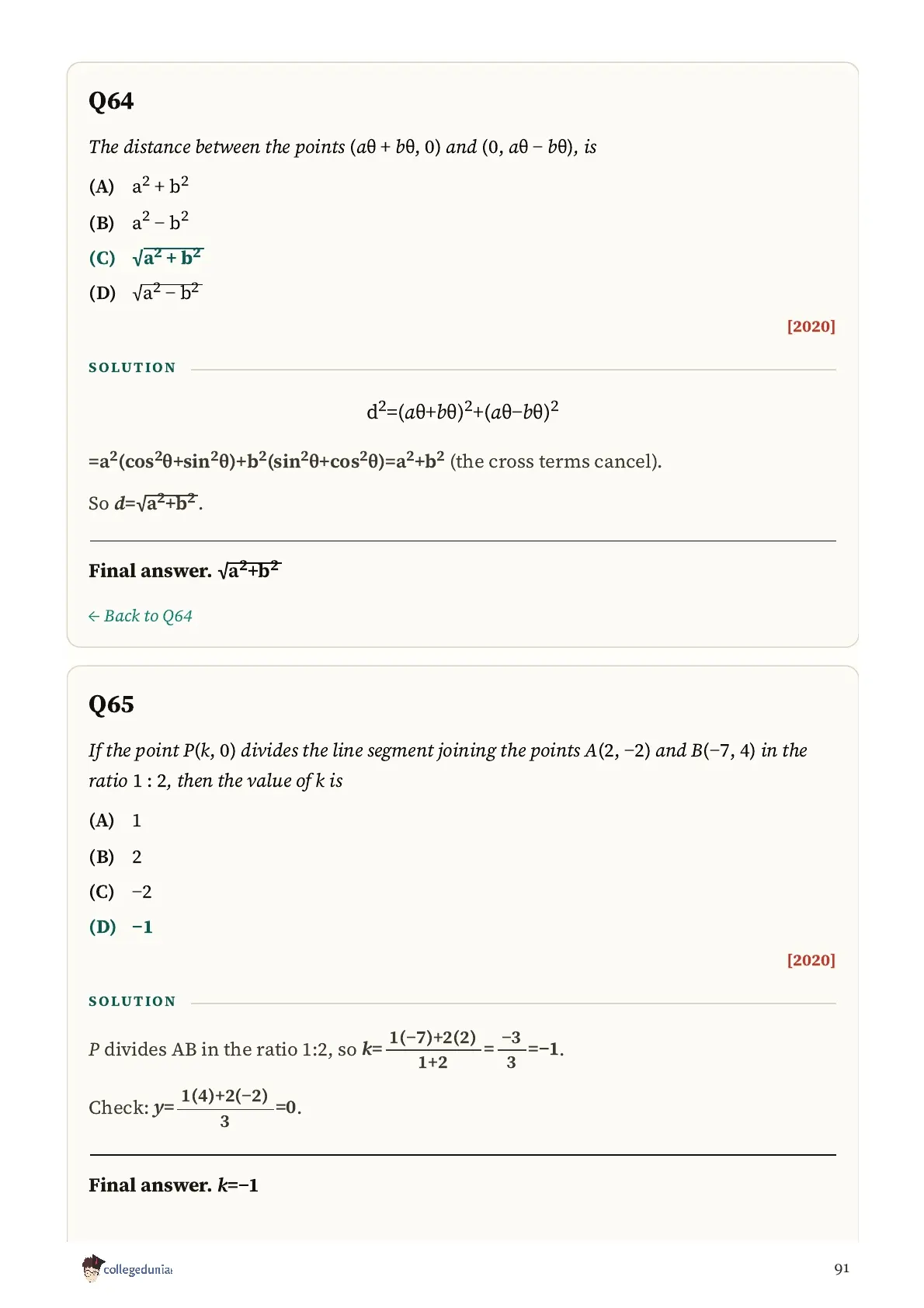
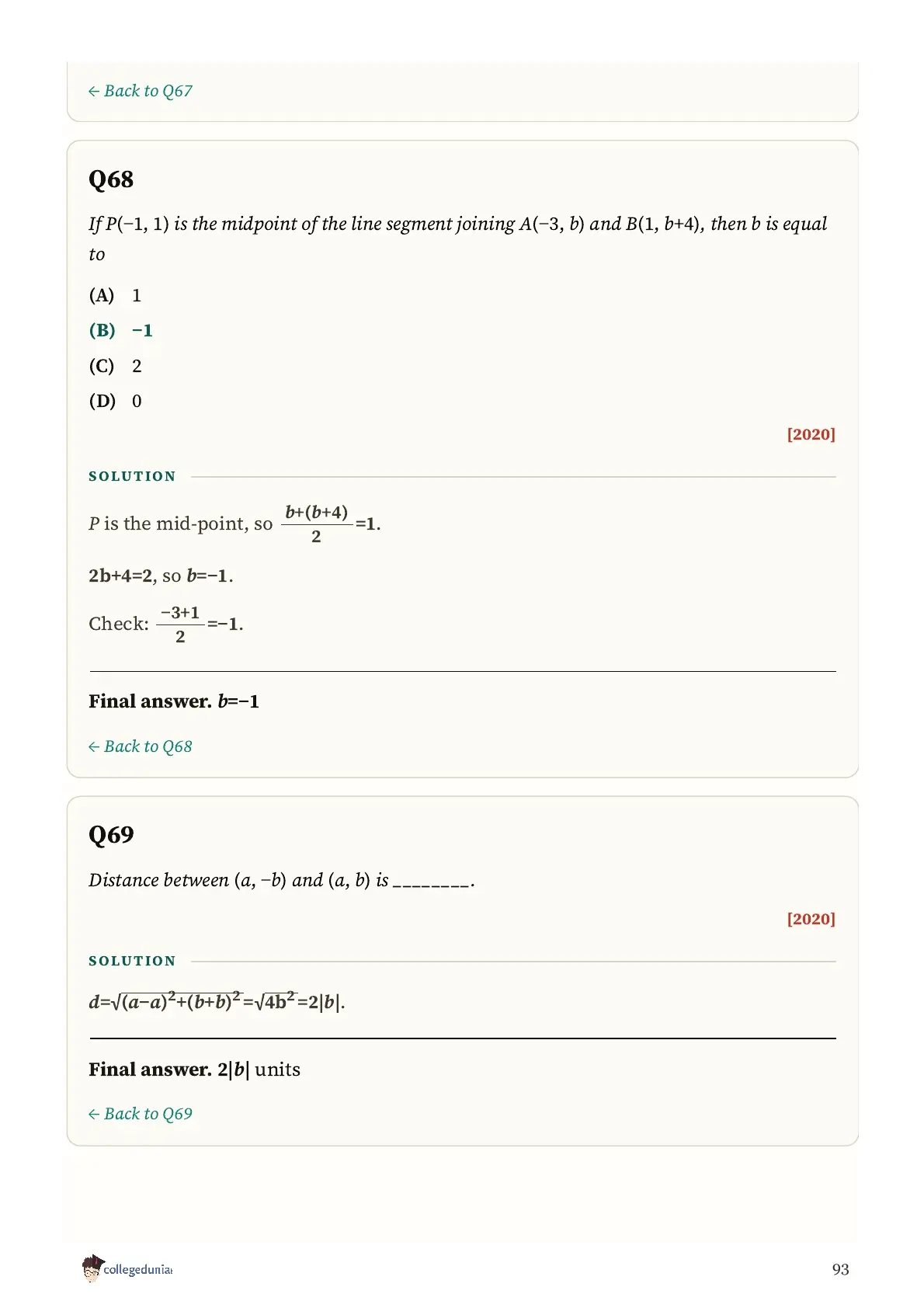
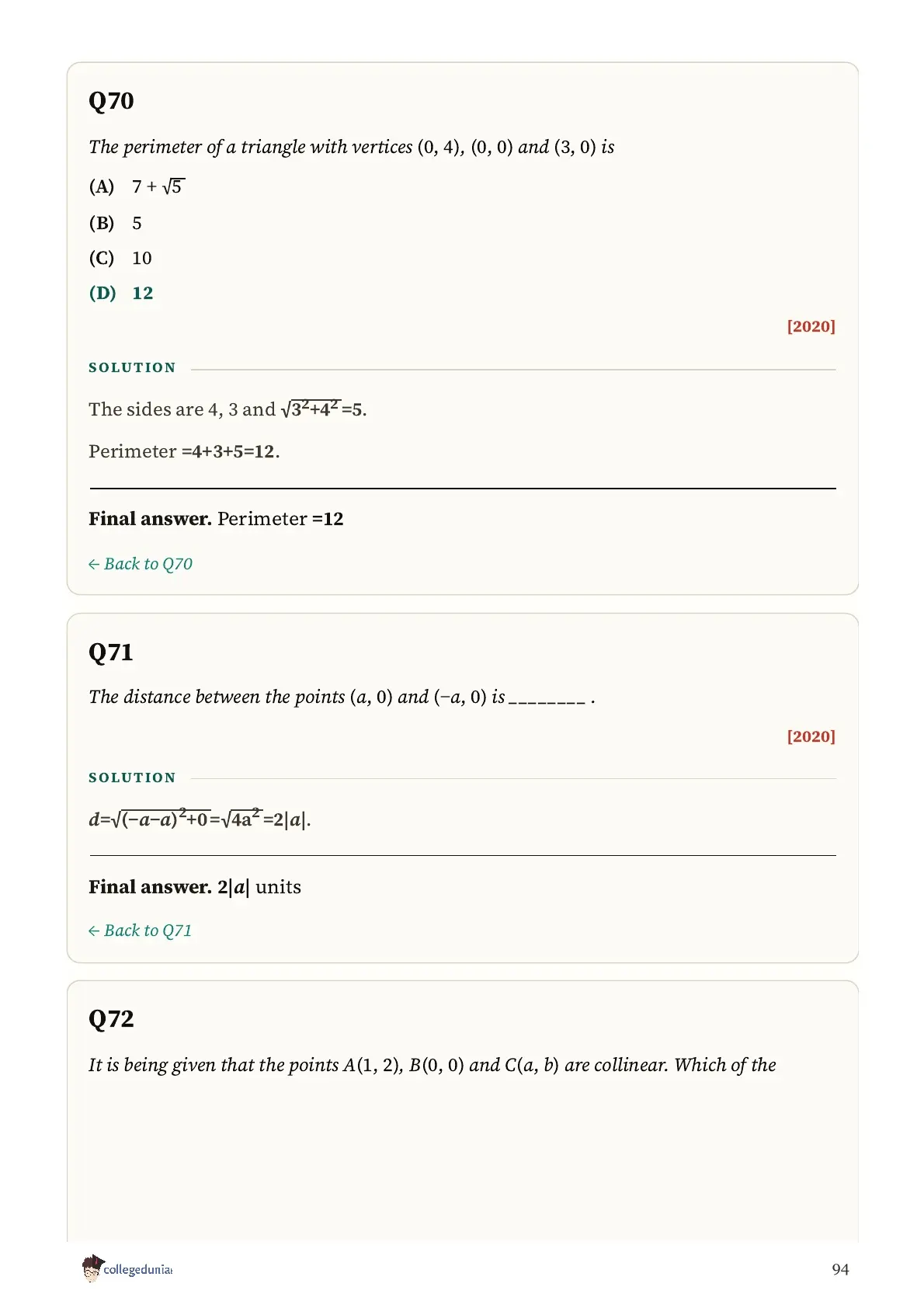
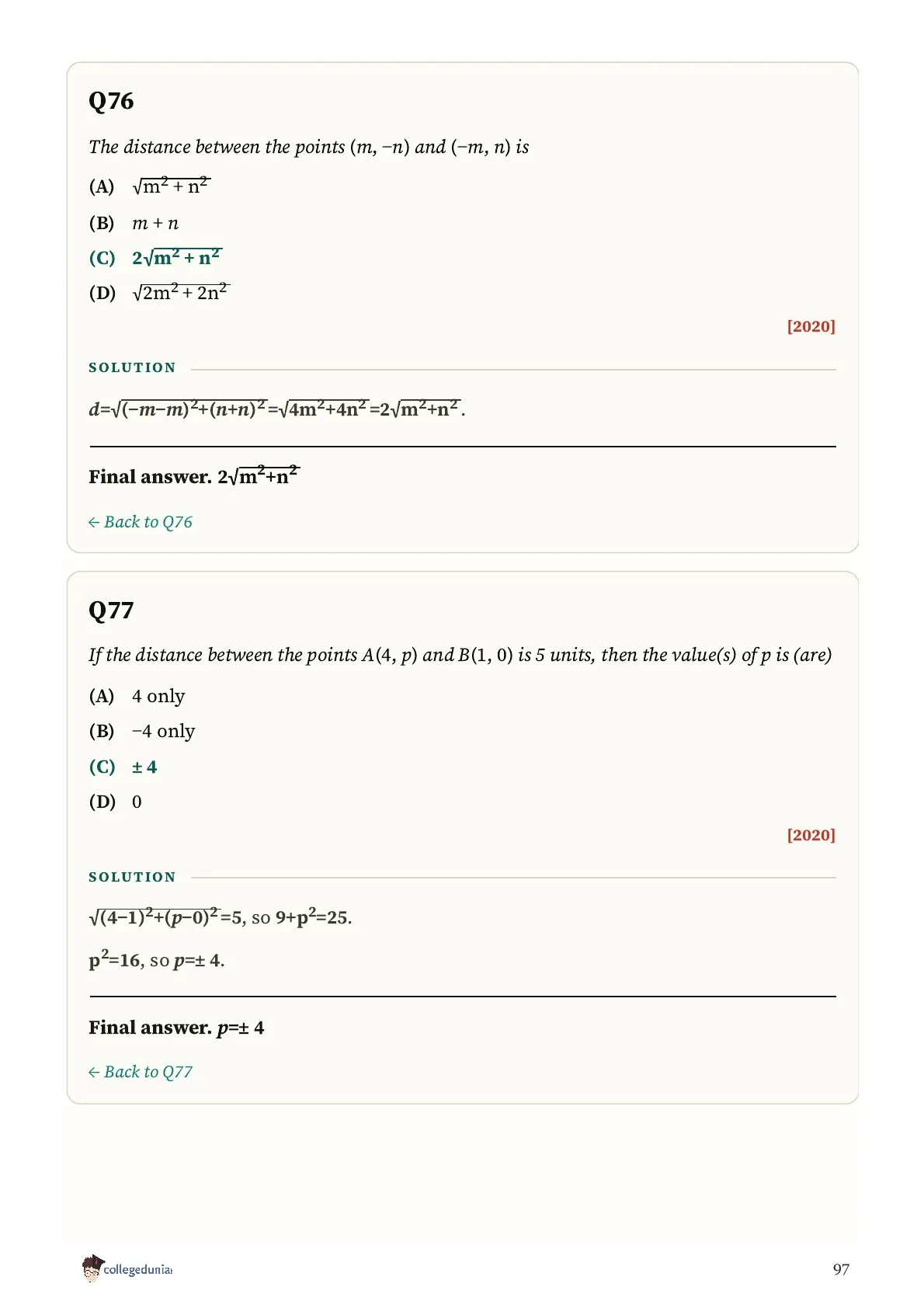
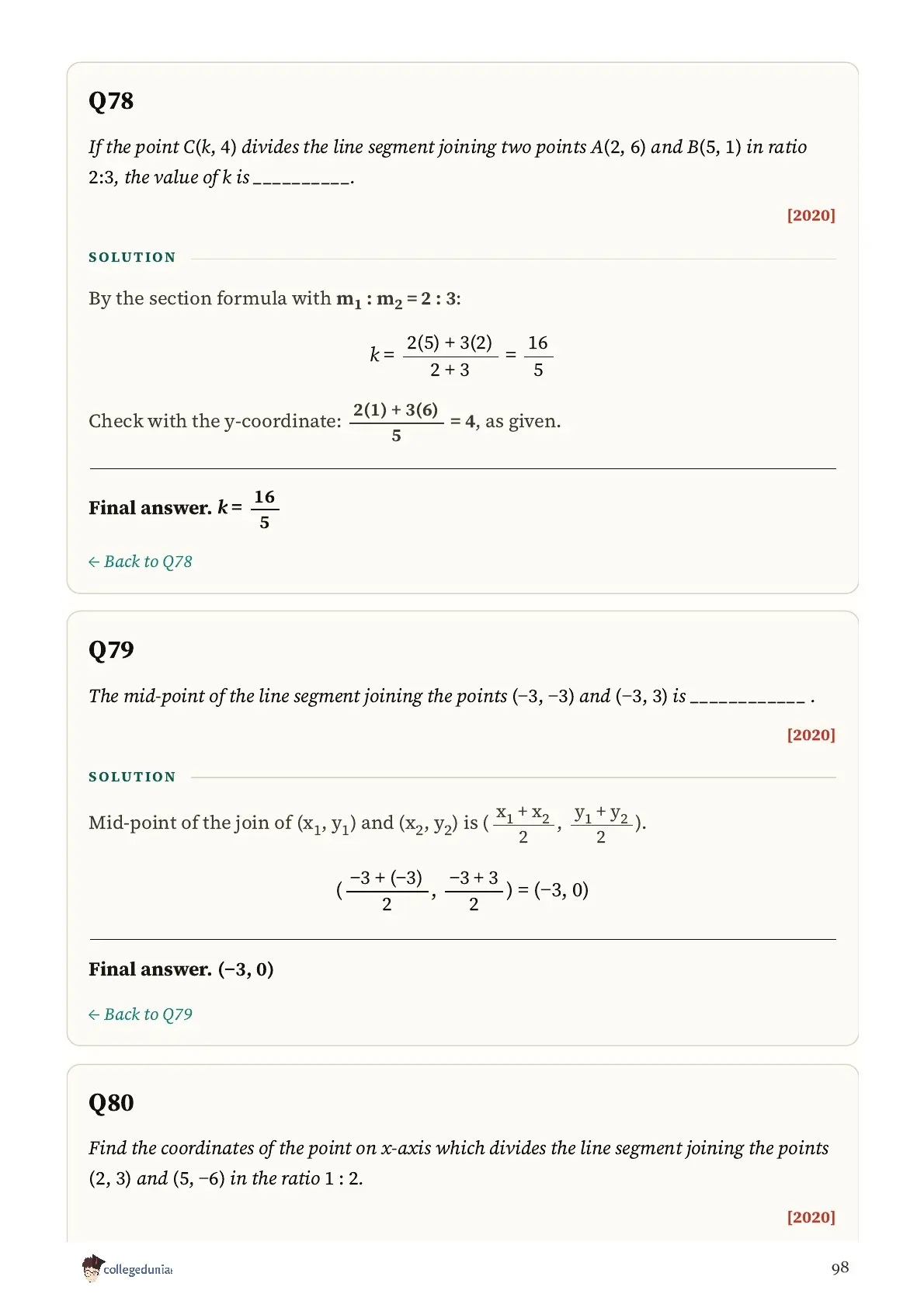
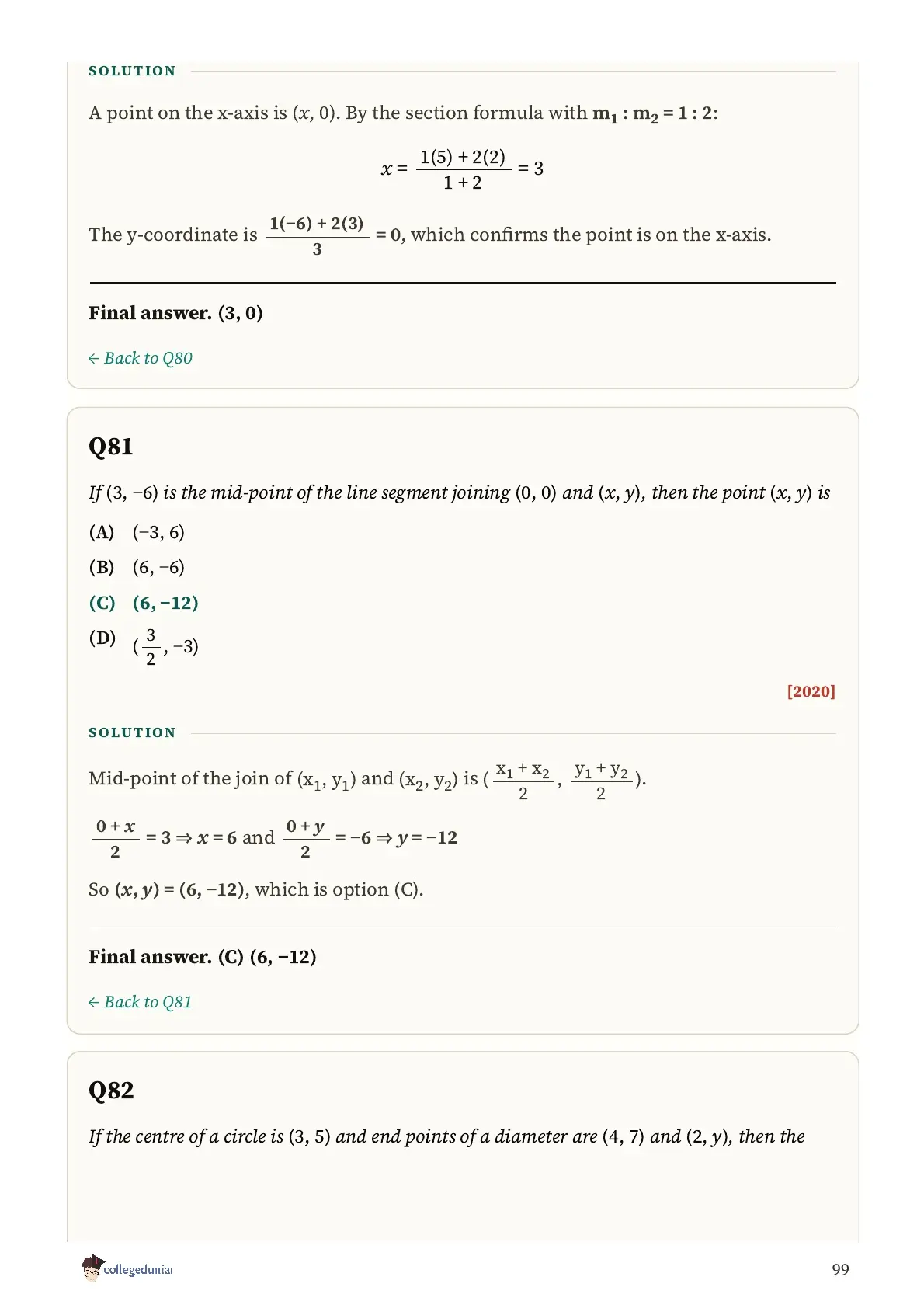
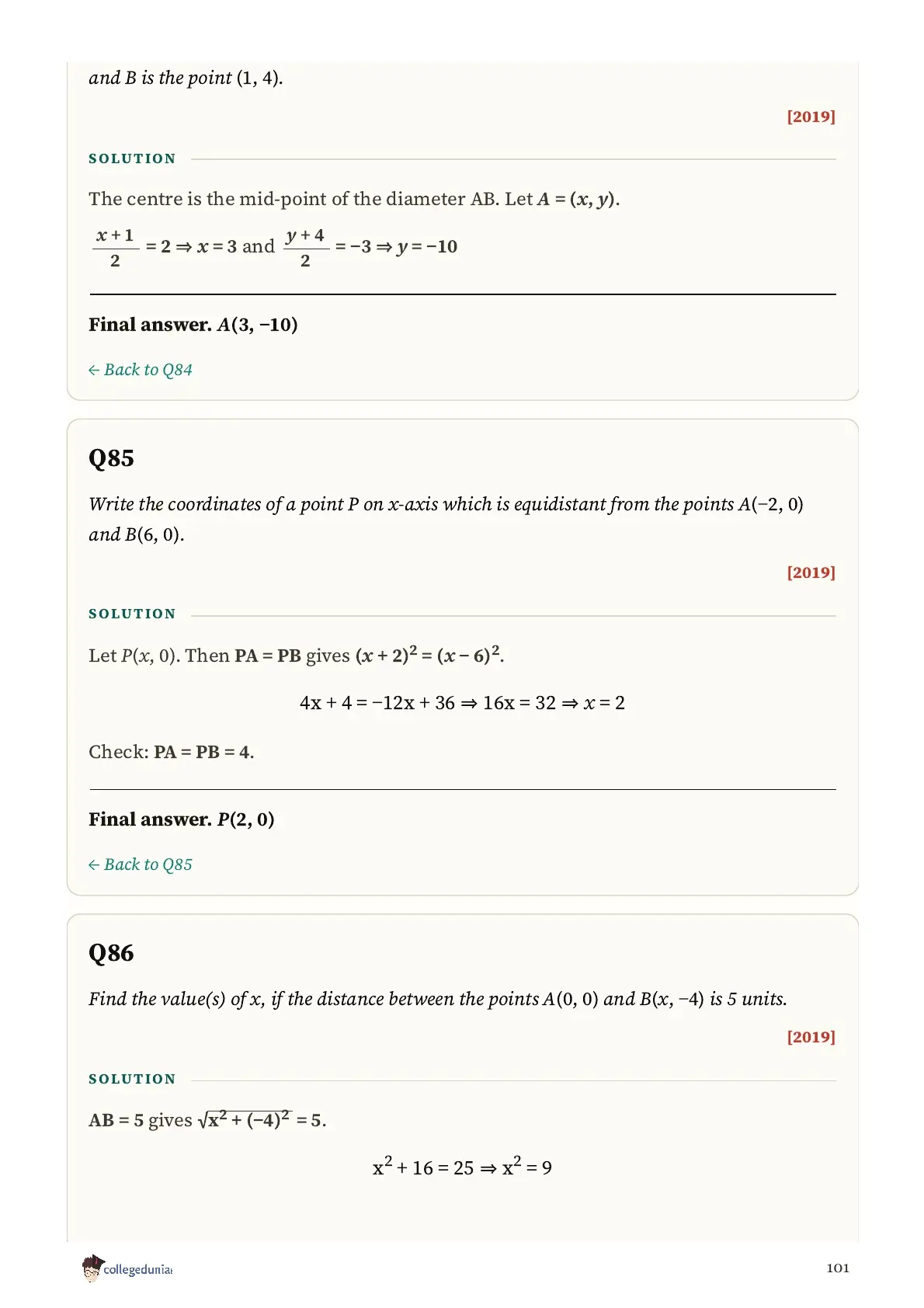
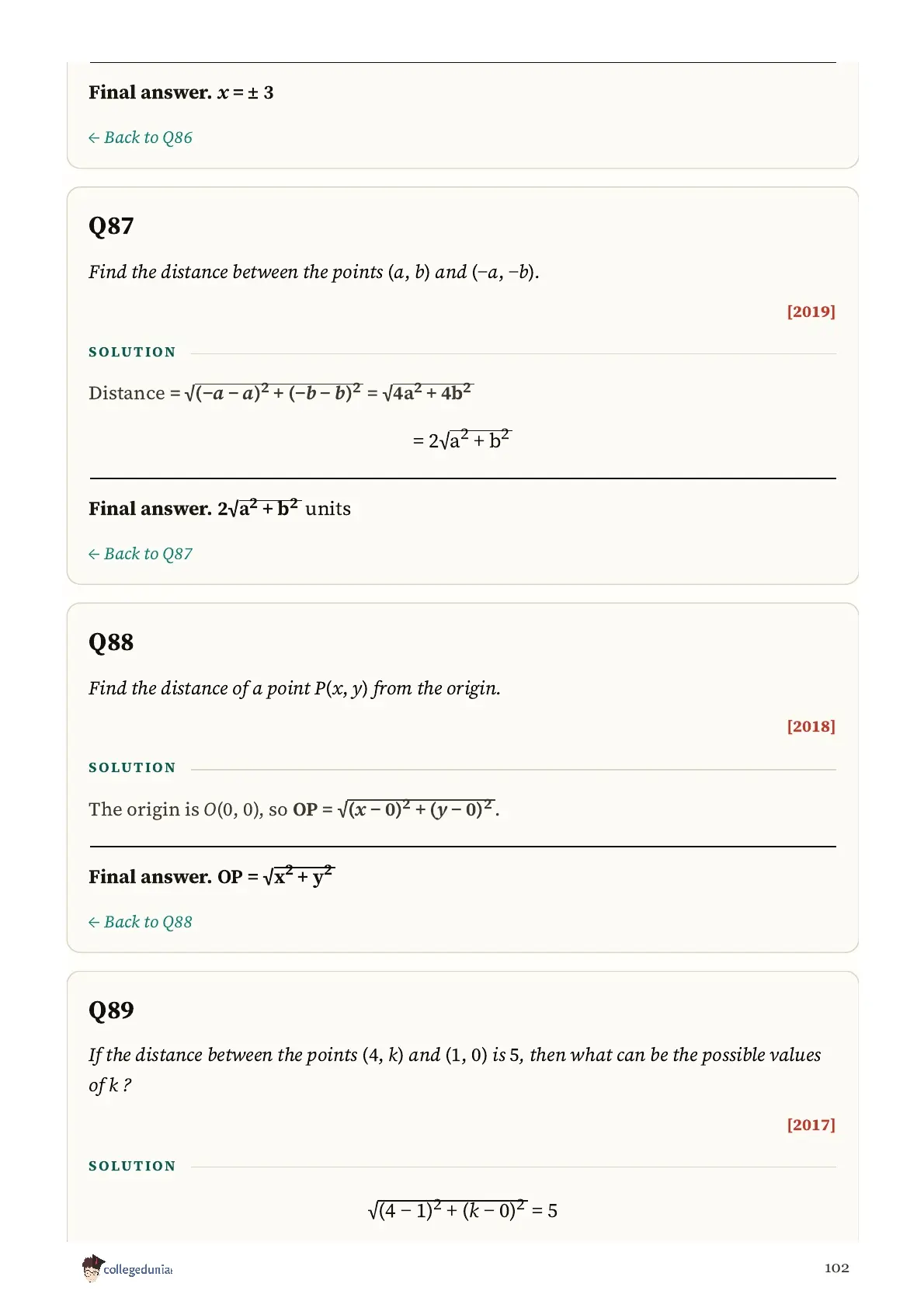
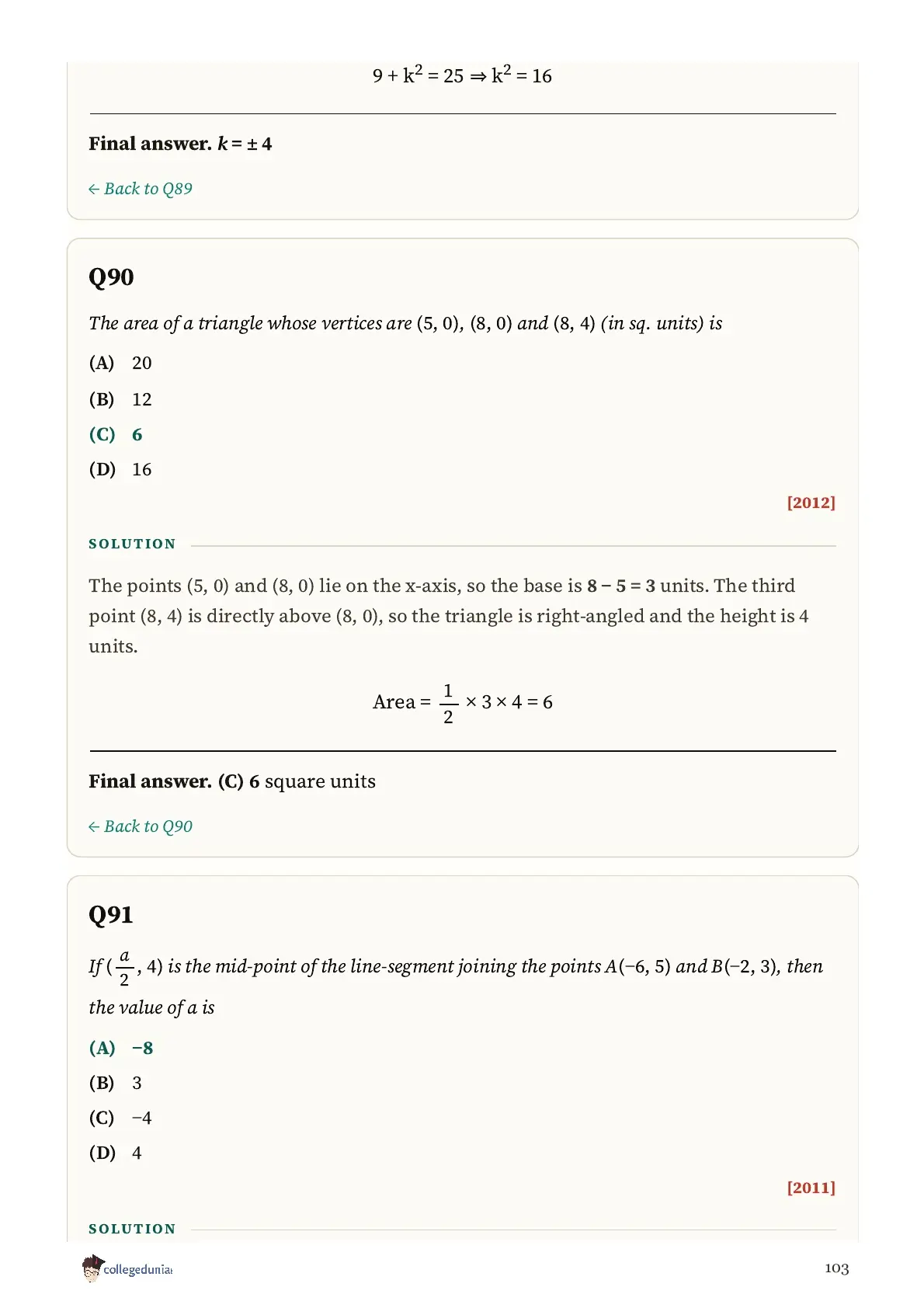
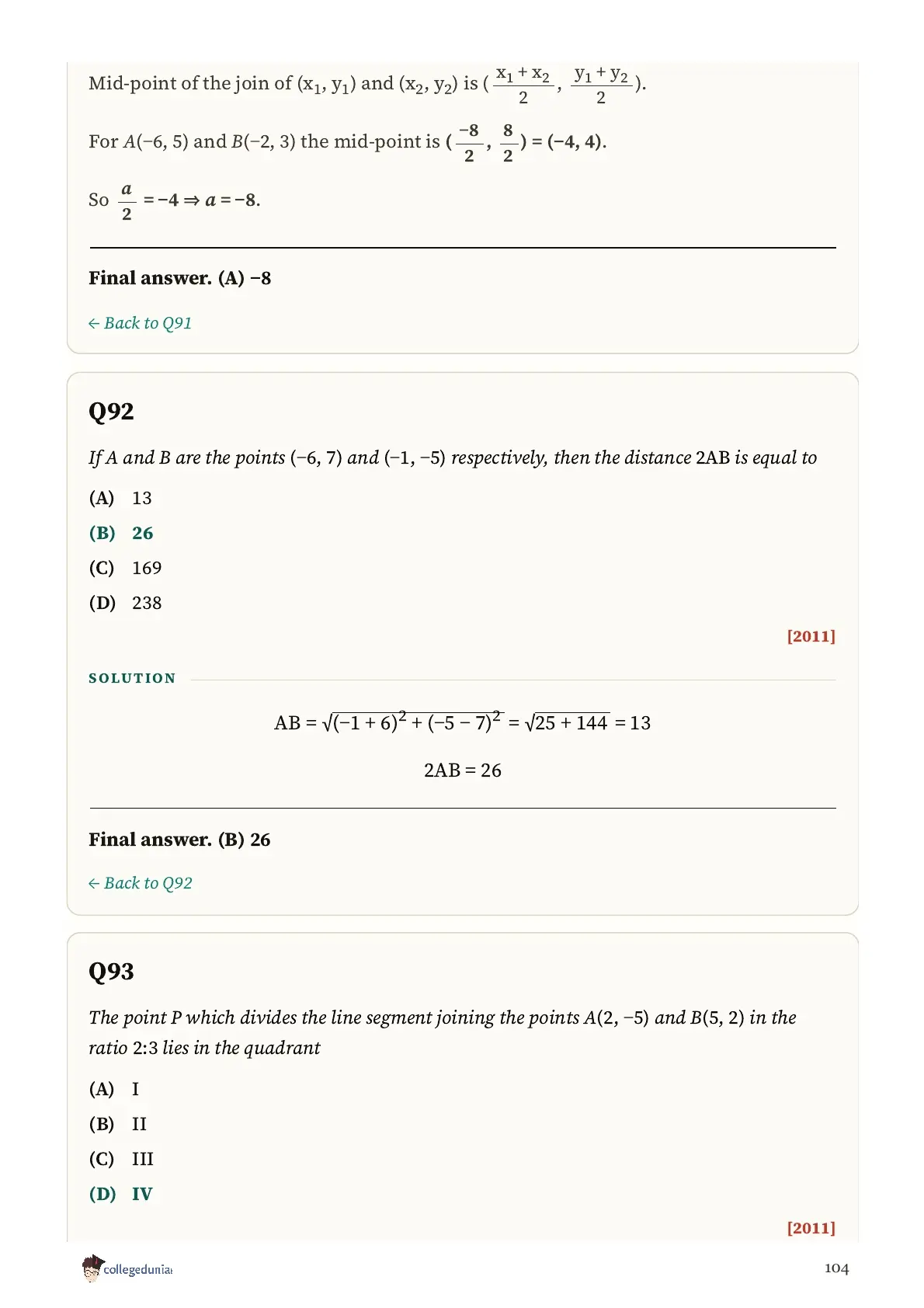
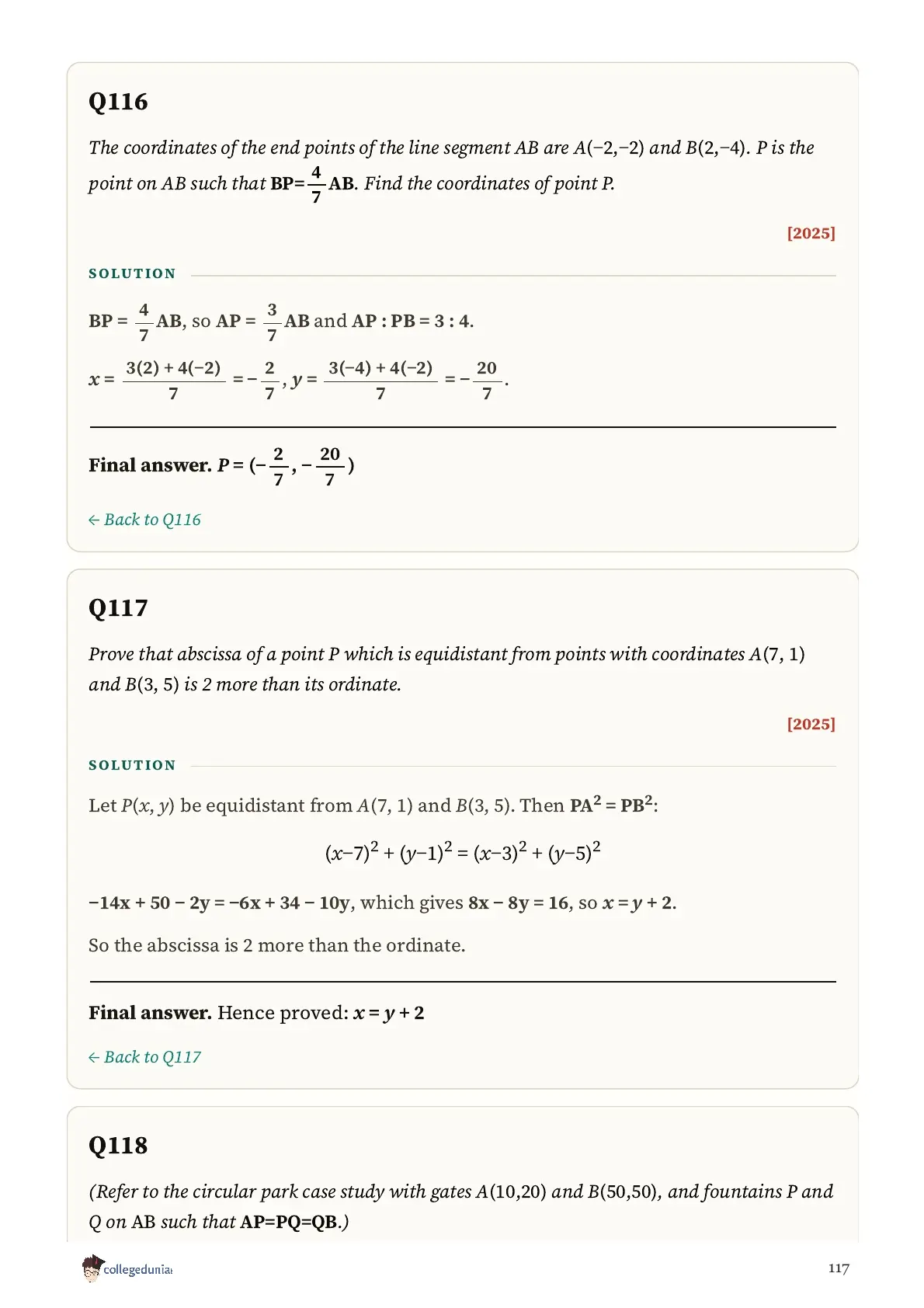
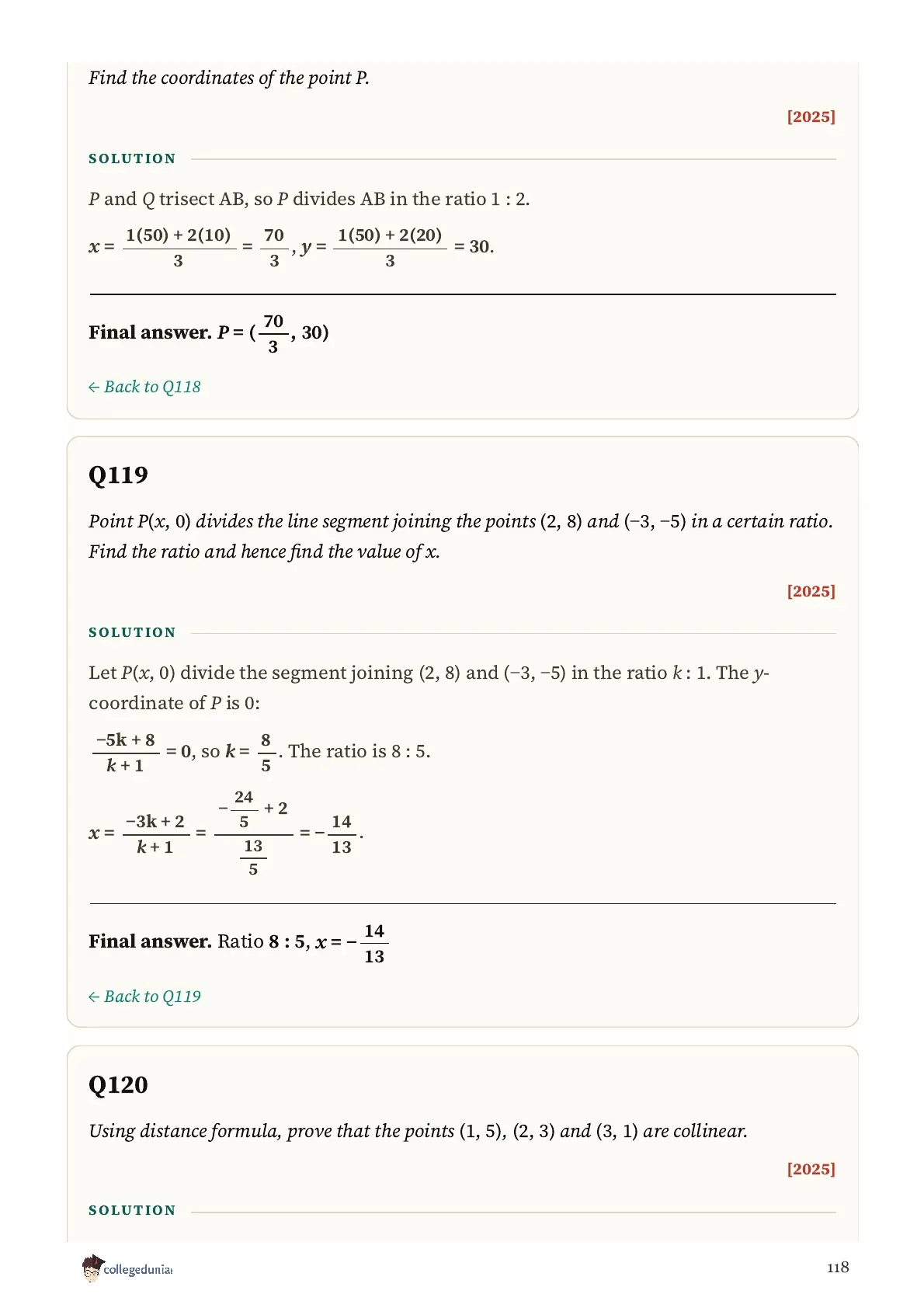
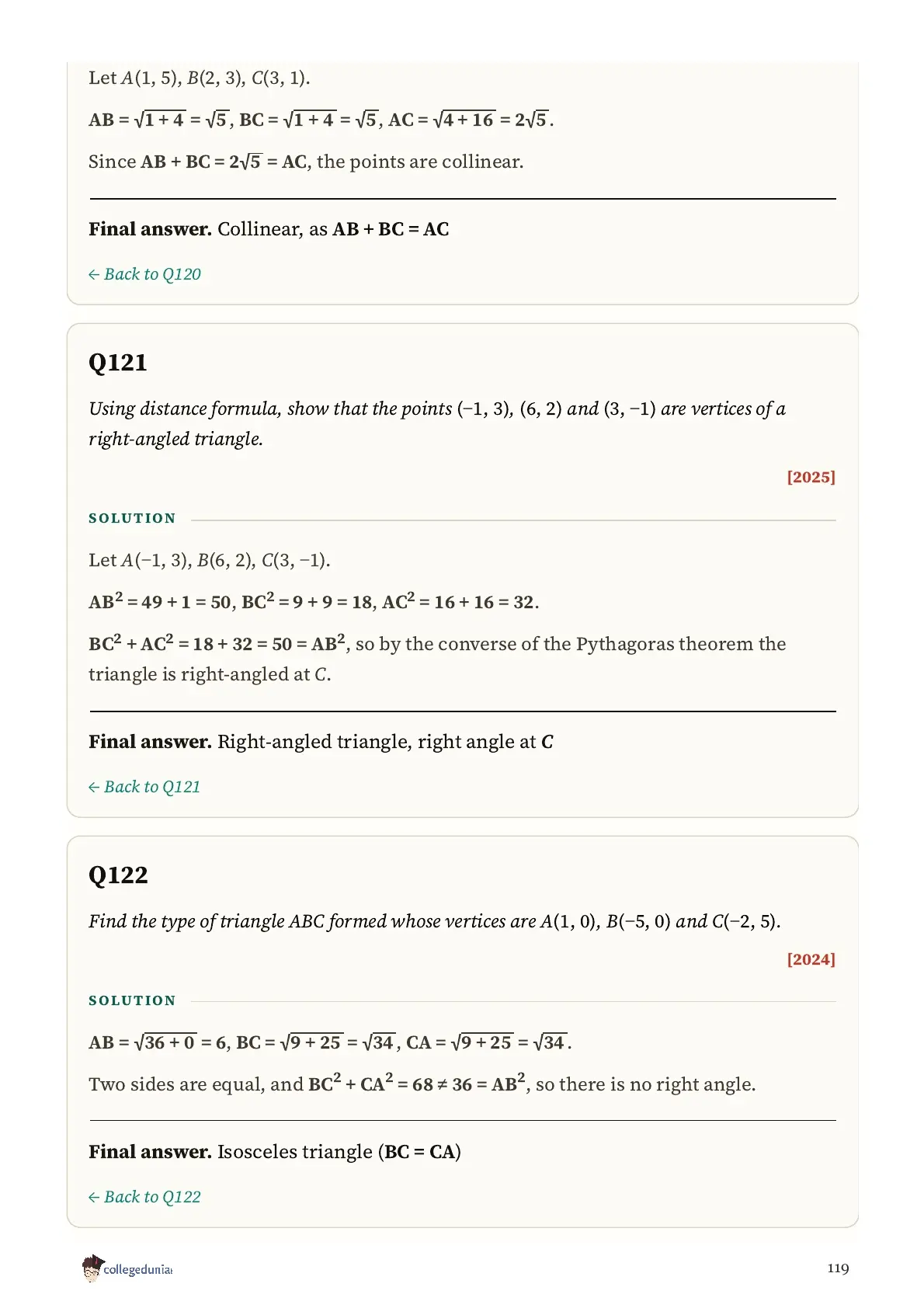
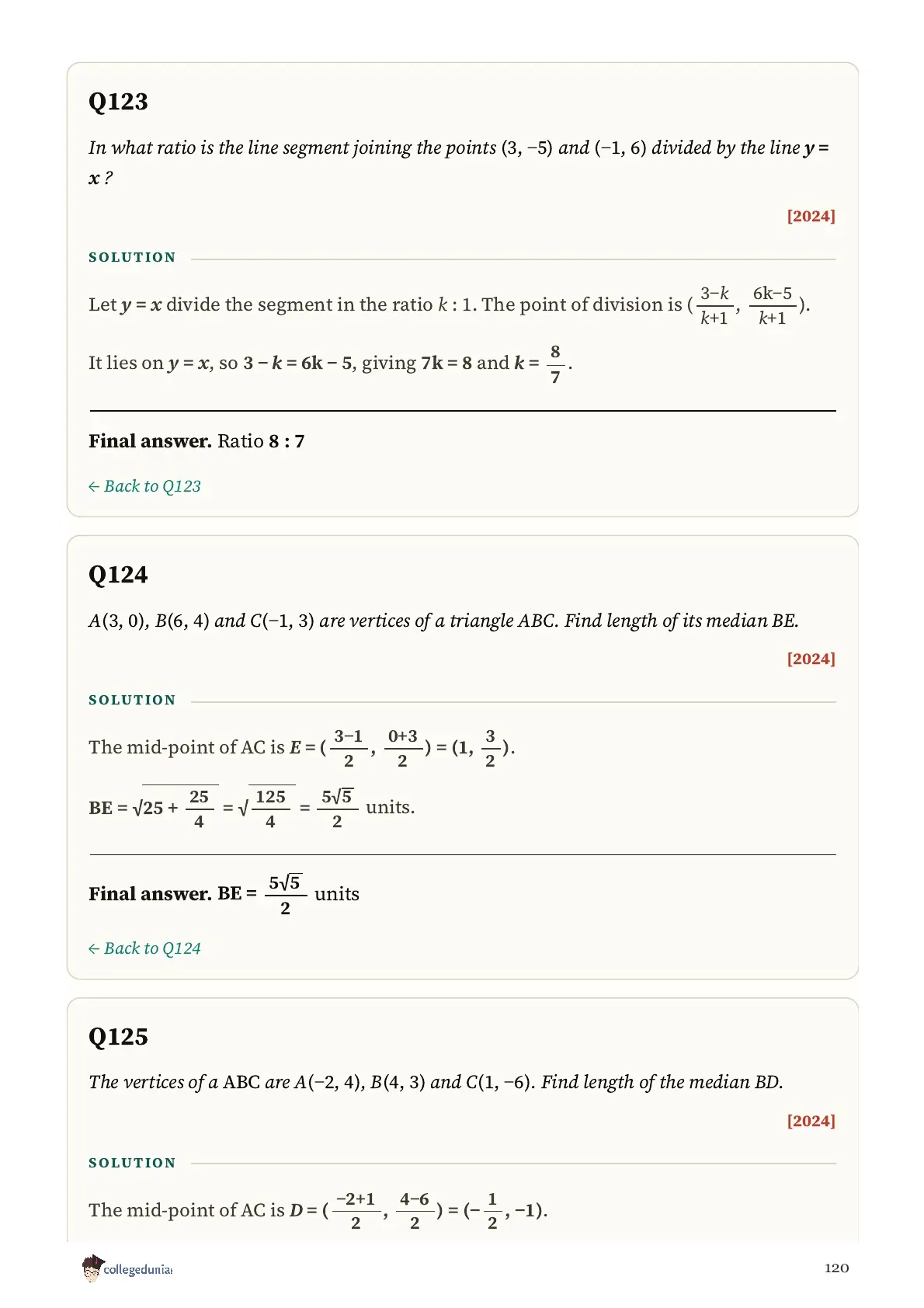
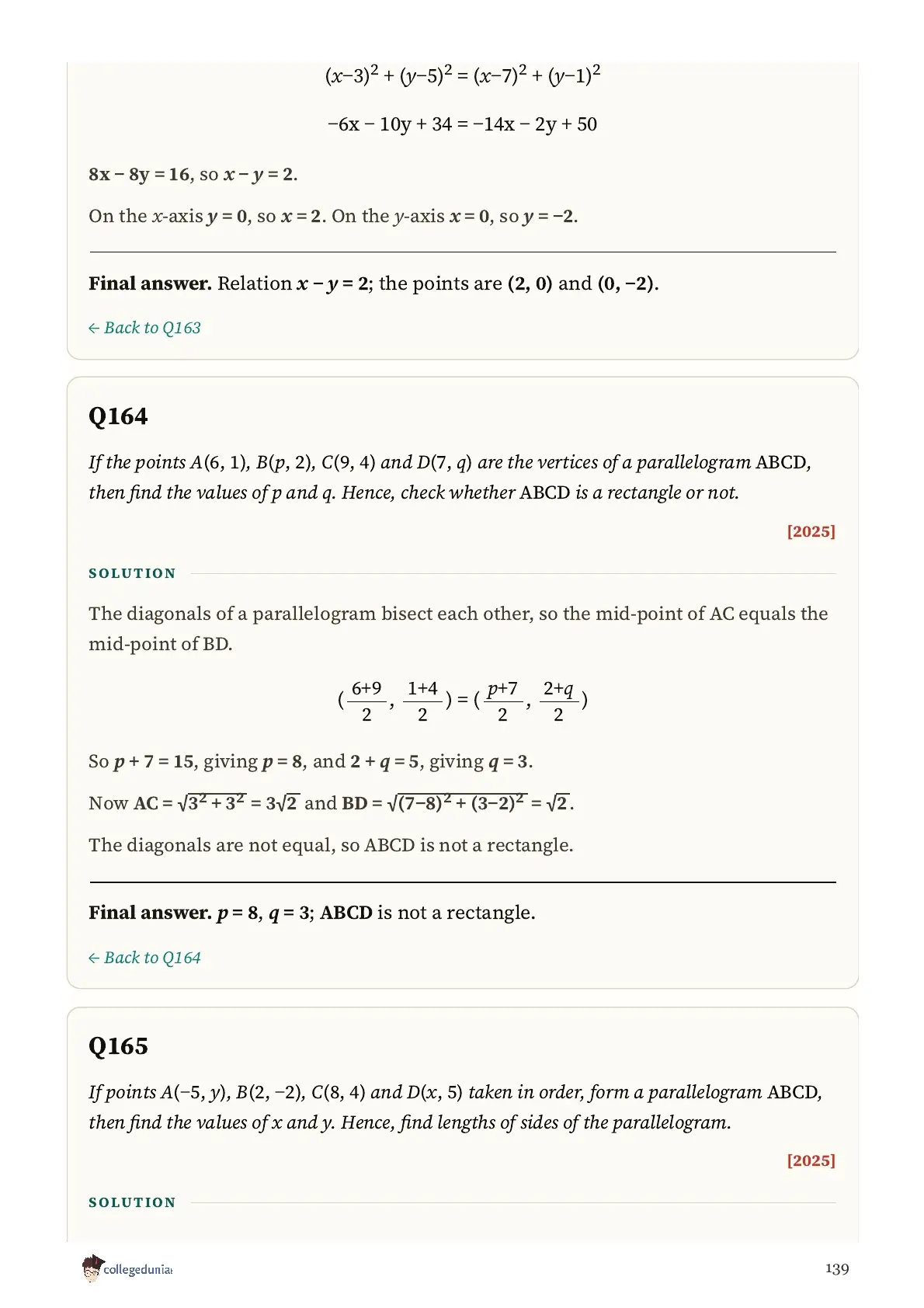
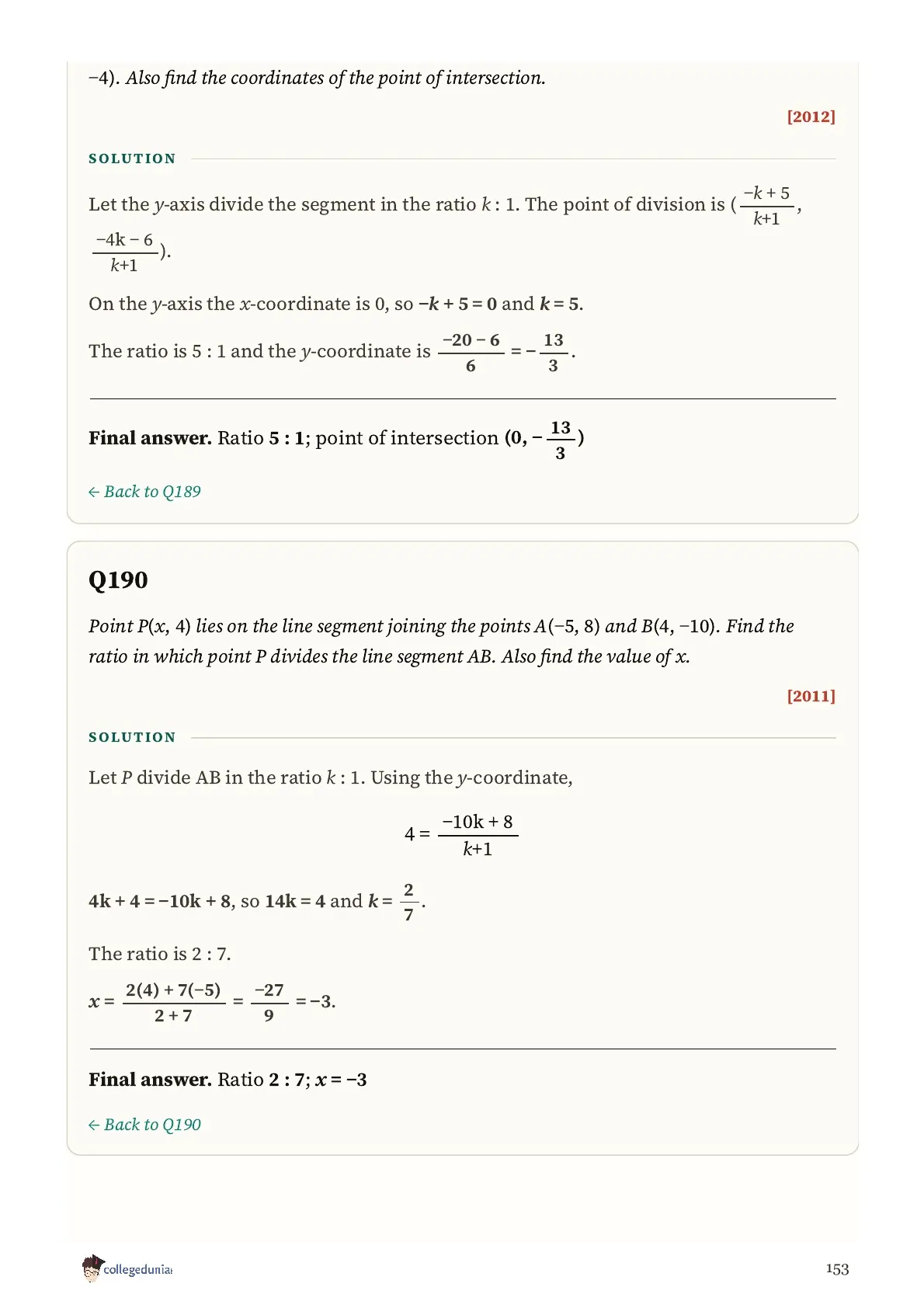
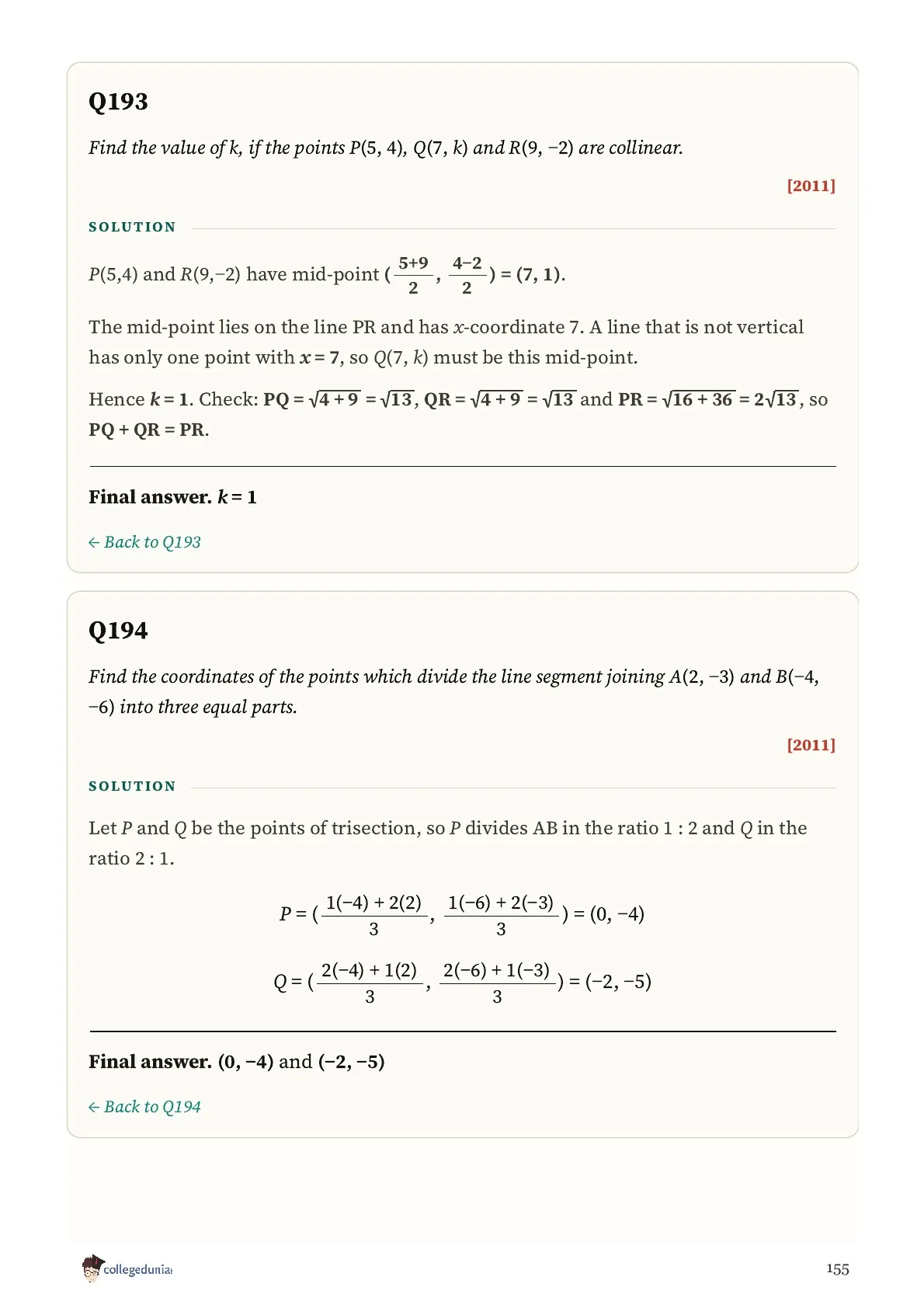
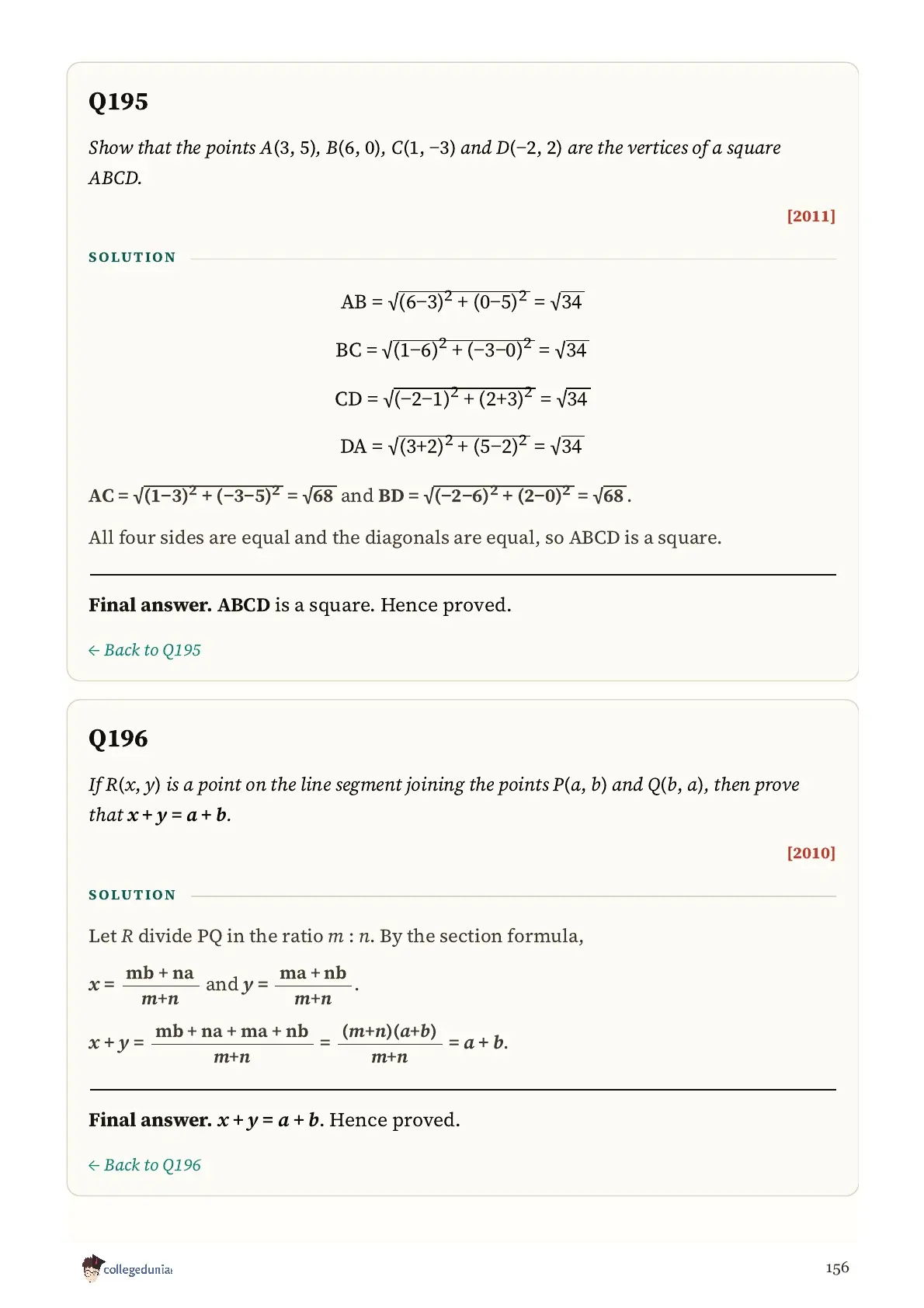
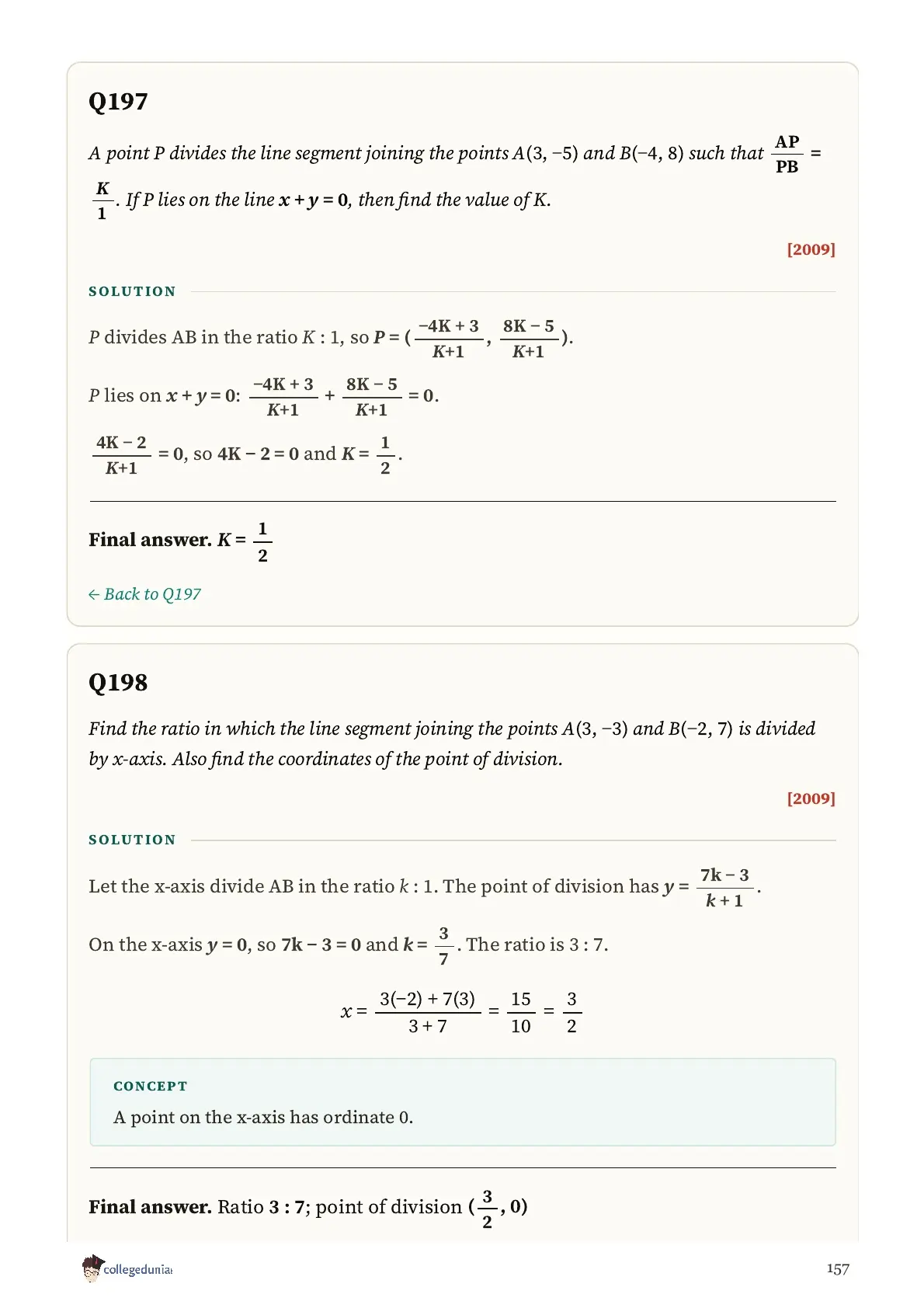
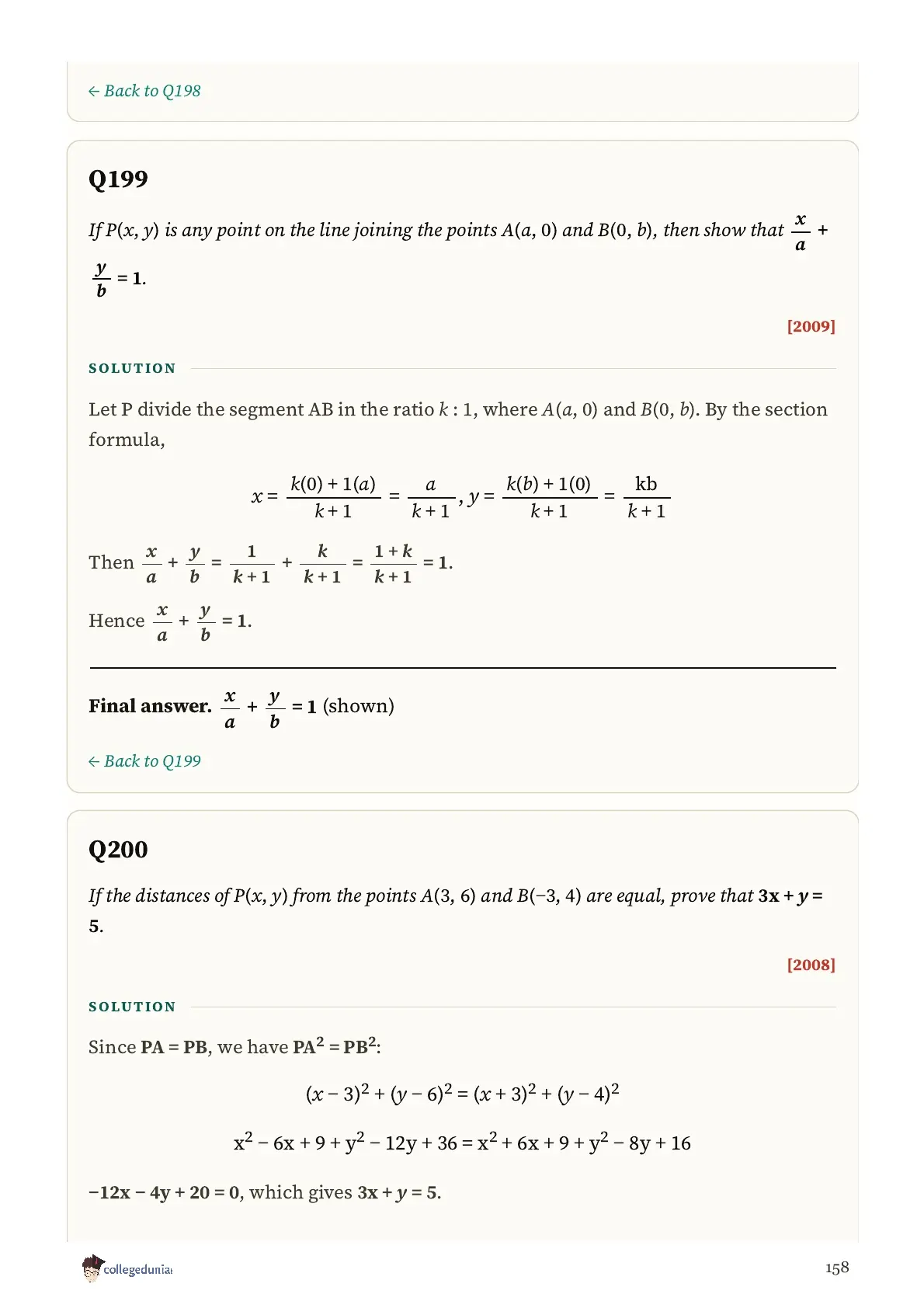
The chapter has two formulas, and the set is built on them. 38 questions use the distance formula, often to find an unknown such as p in a point (4, p) that lies 5 units from (1, 0), or to show that a point is equidistant from two others (16 questions). 39 questions involve a ratio and 23 involve a mid-point, so the section formula is the other half of the chapter.
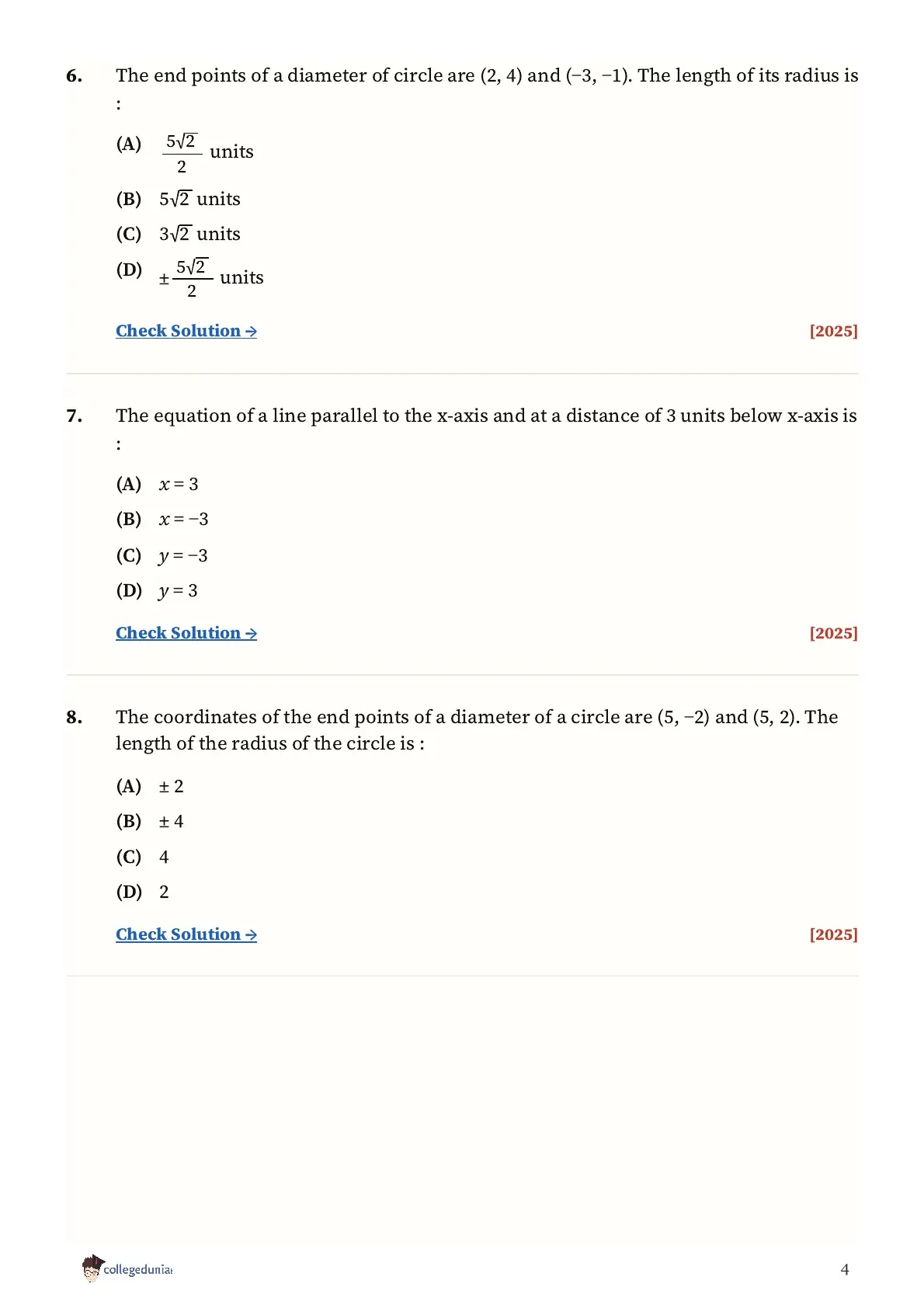
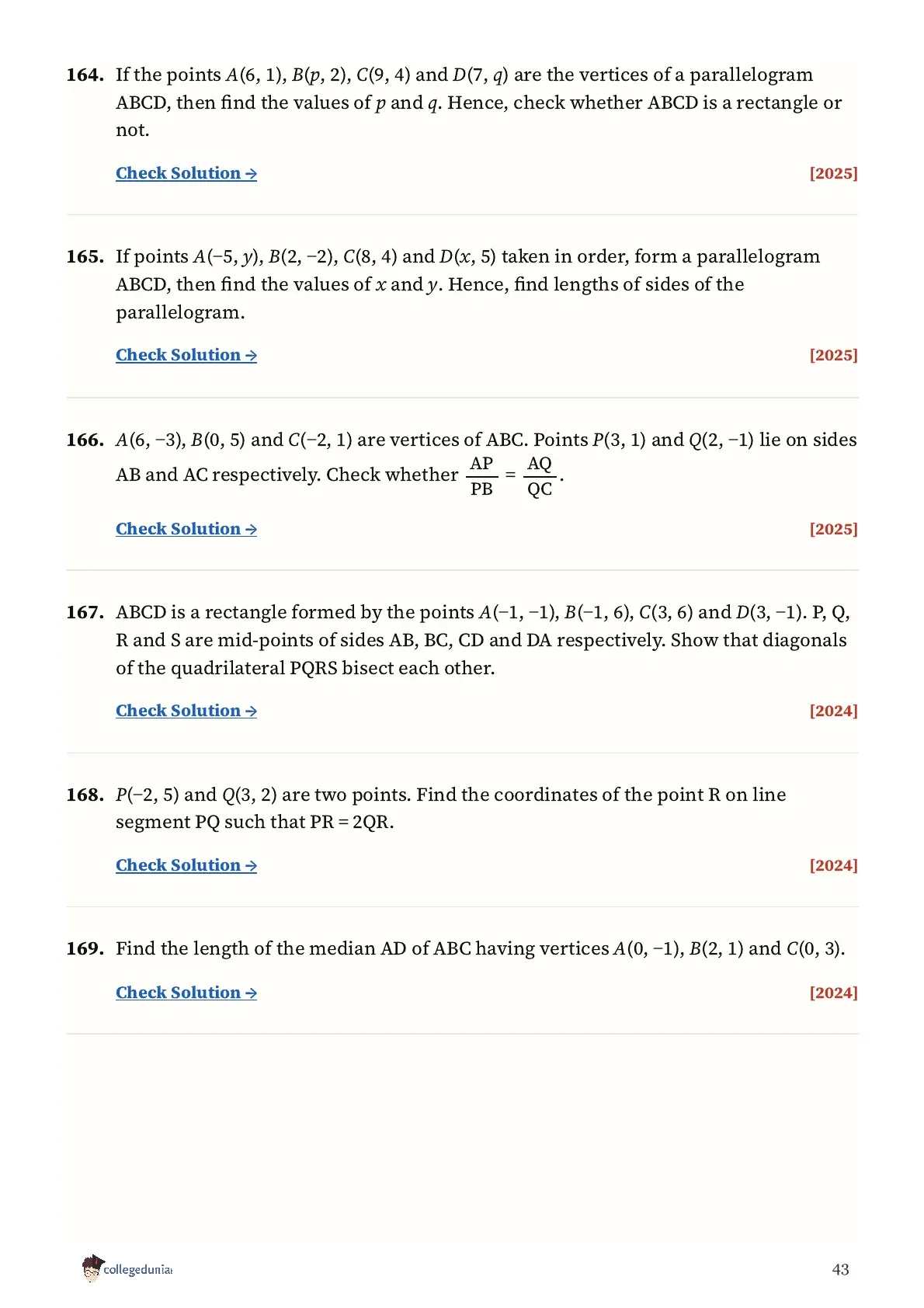
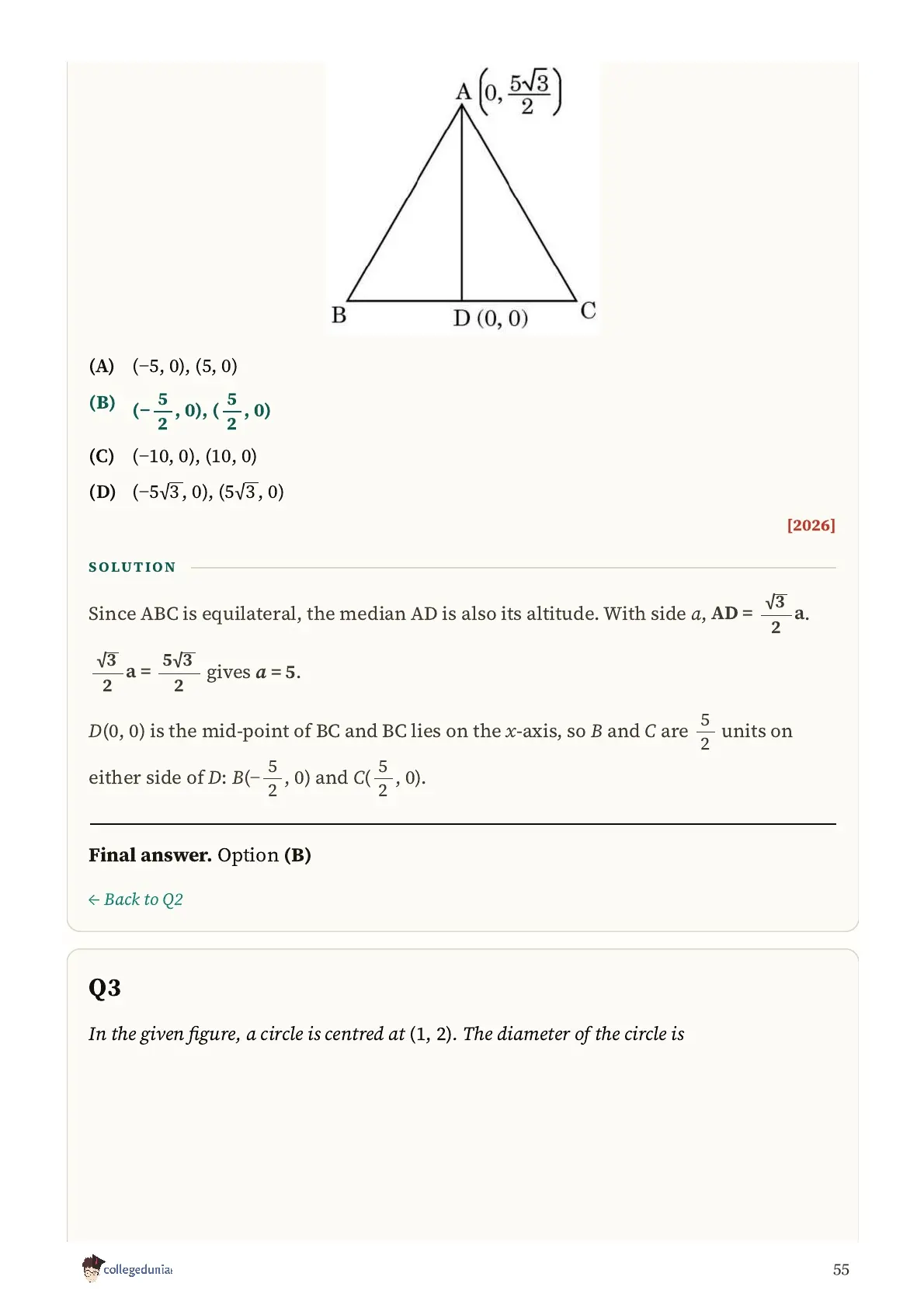
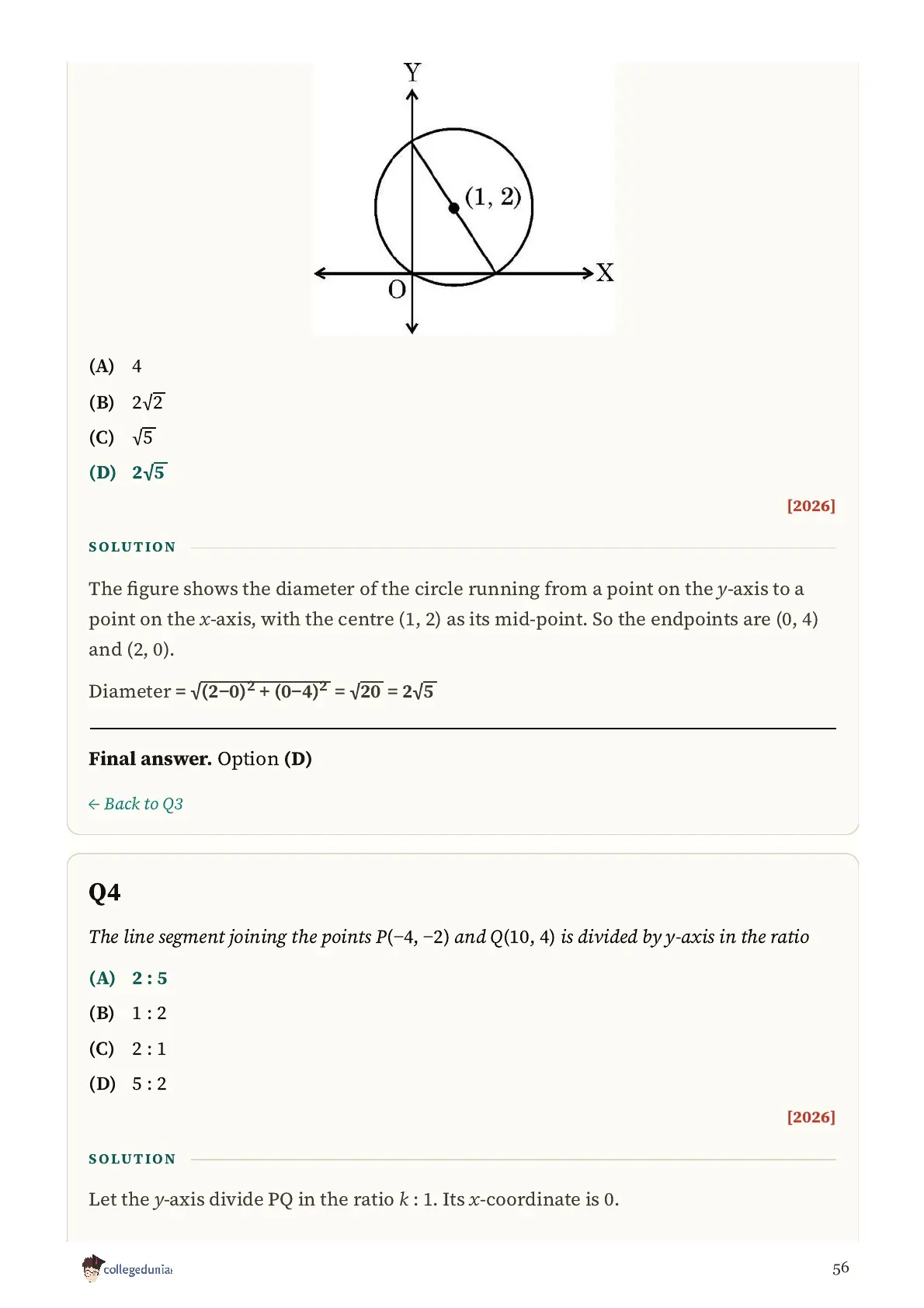
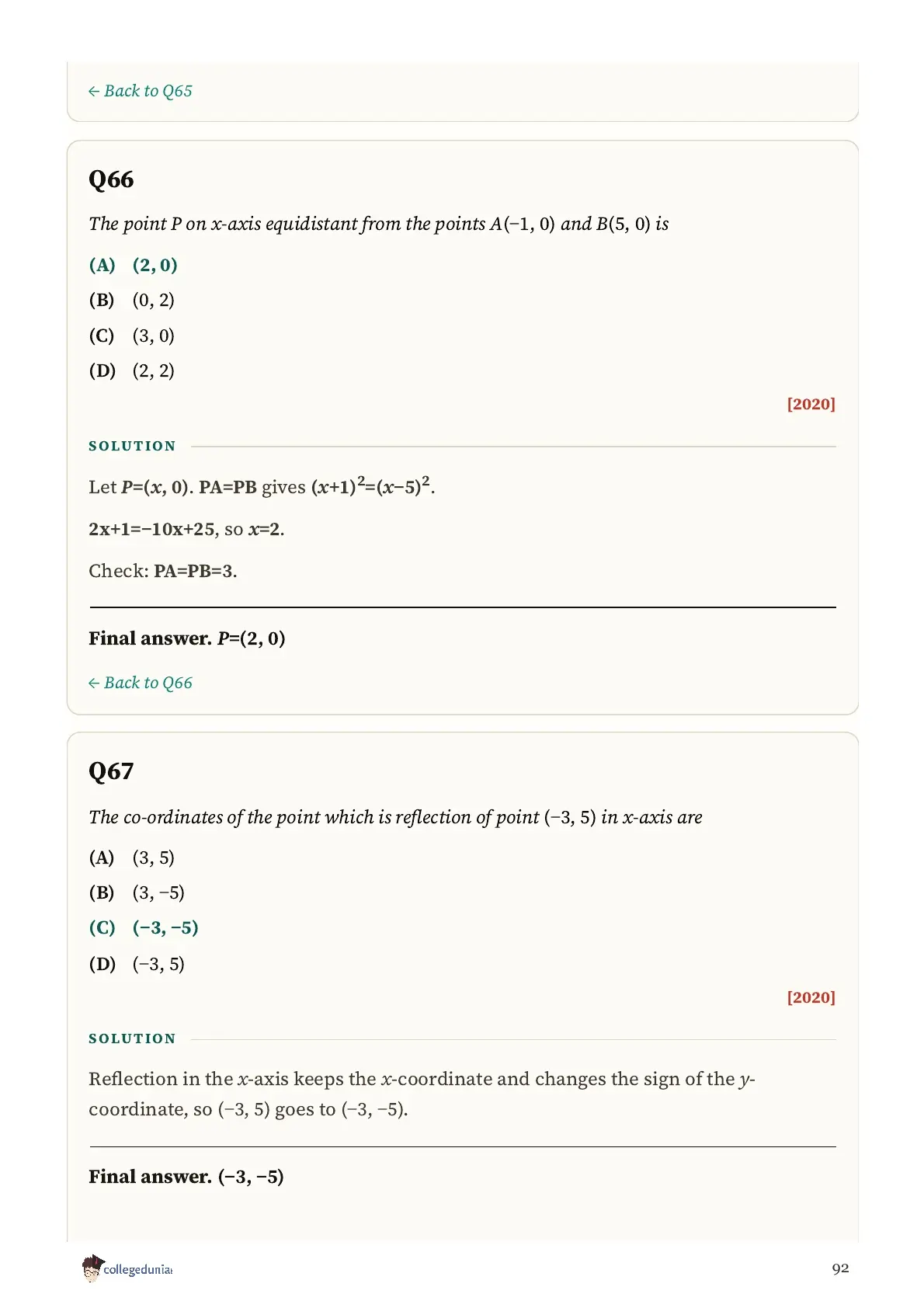
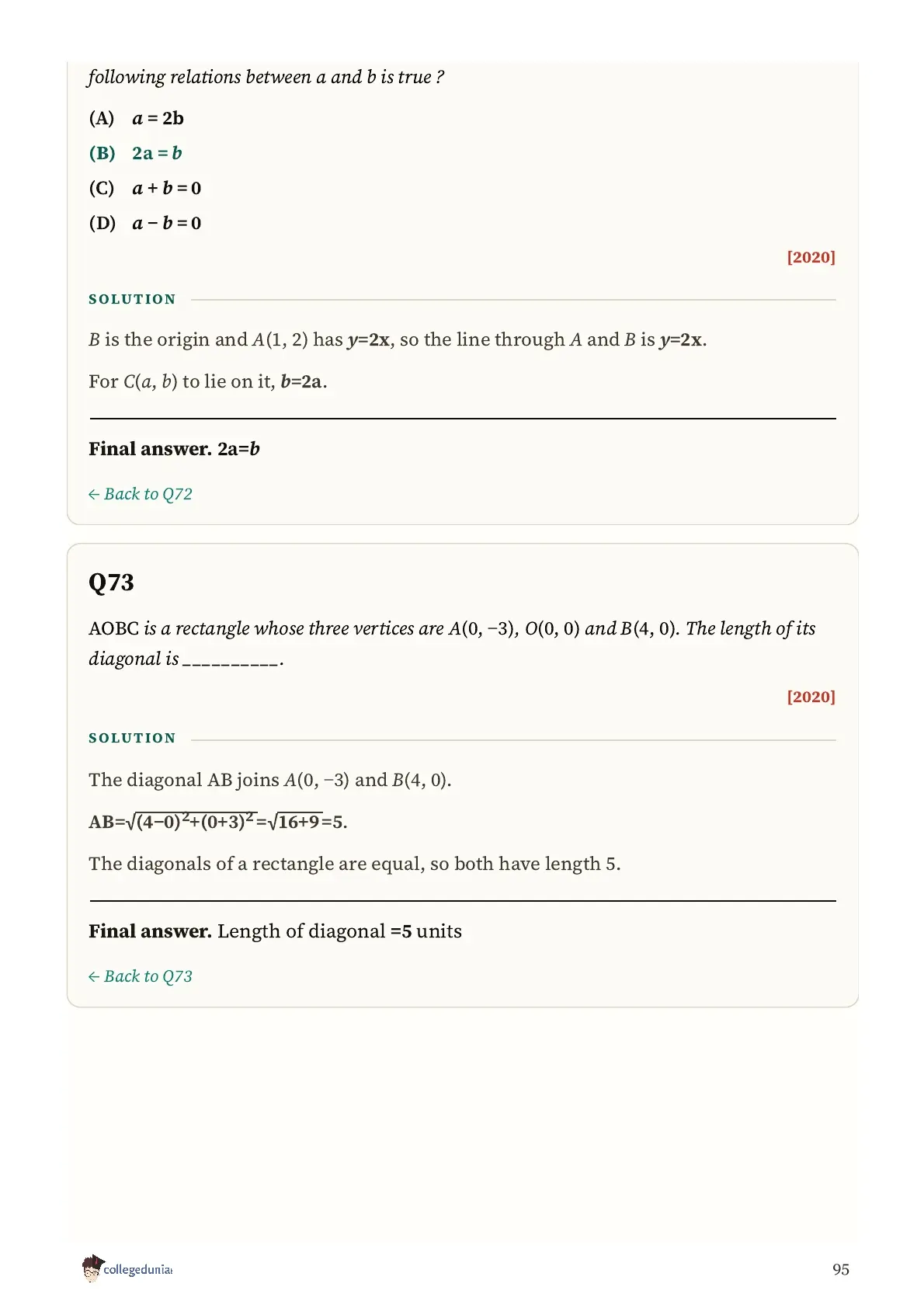
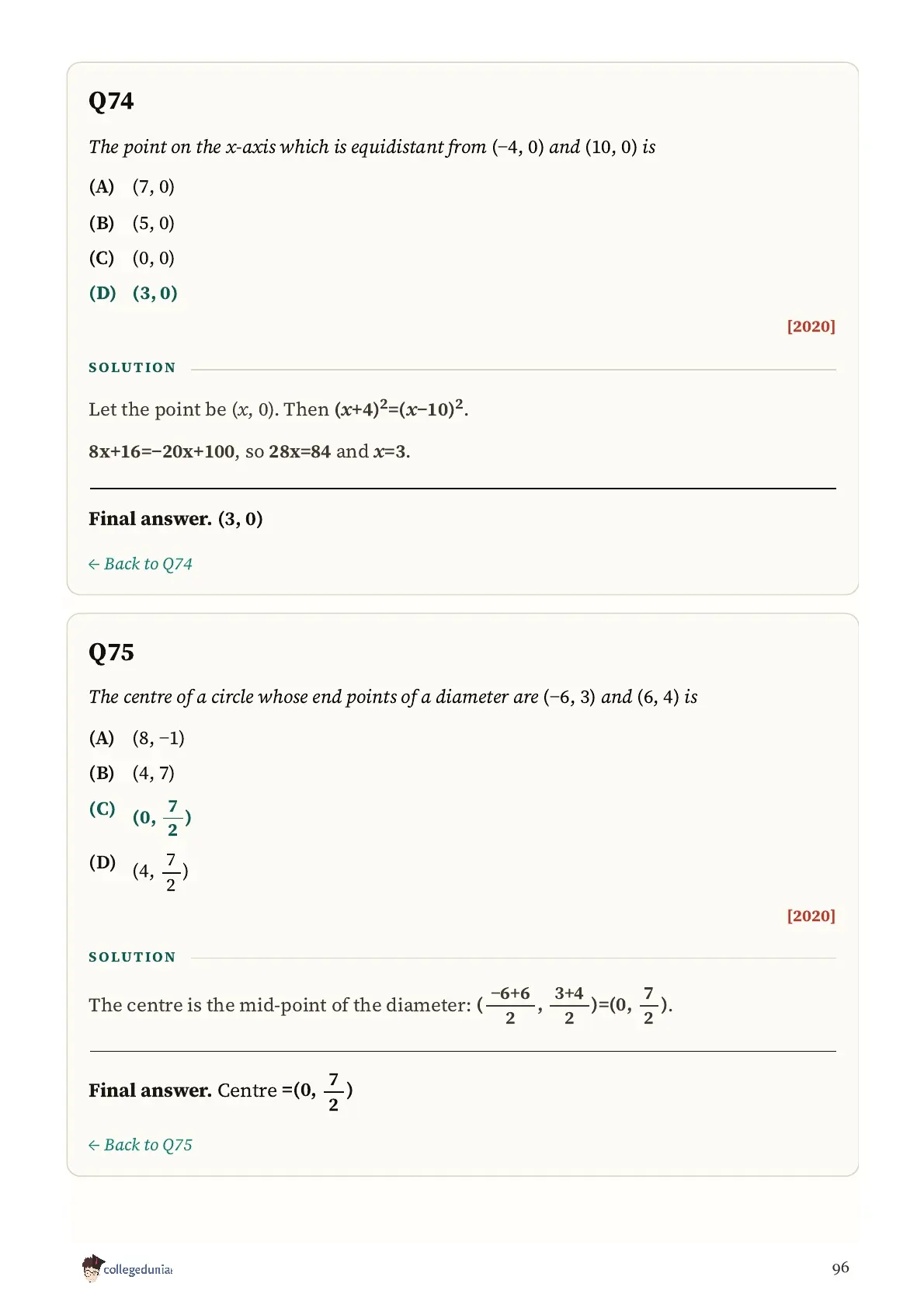
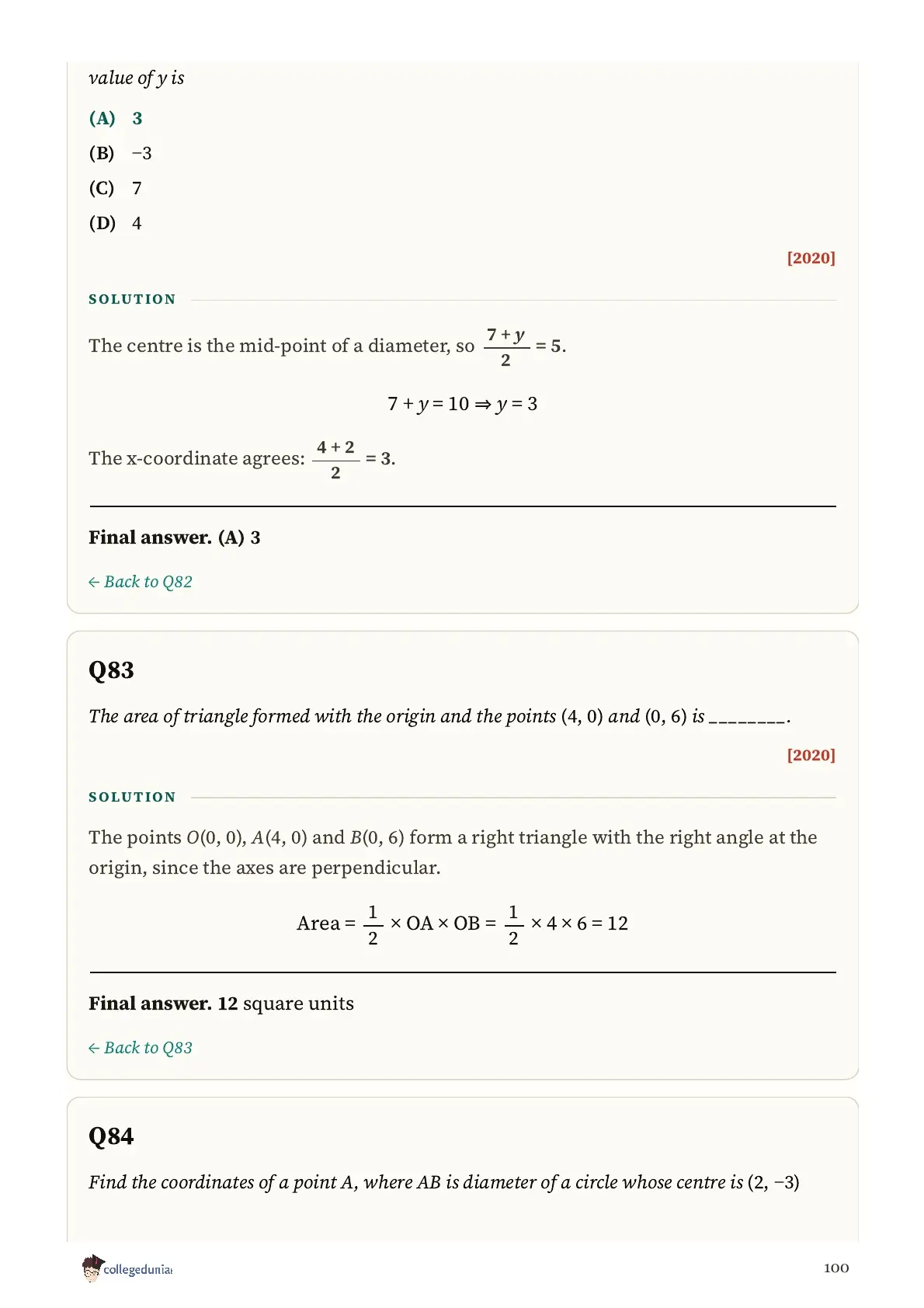
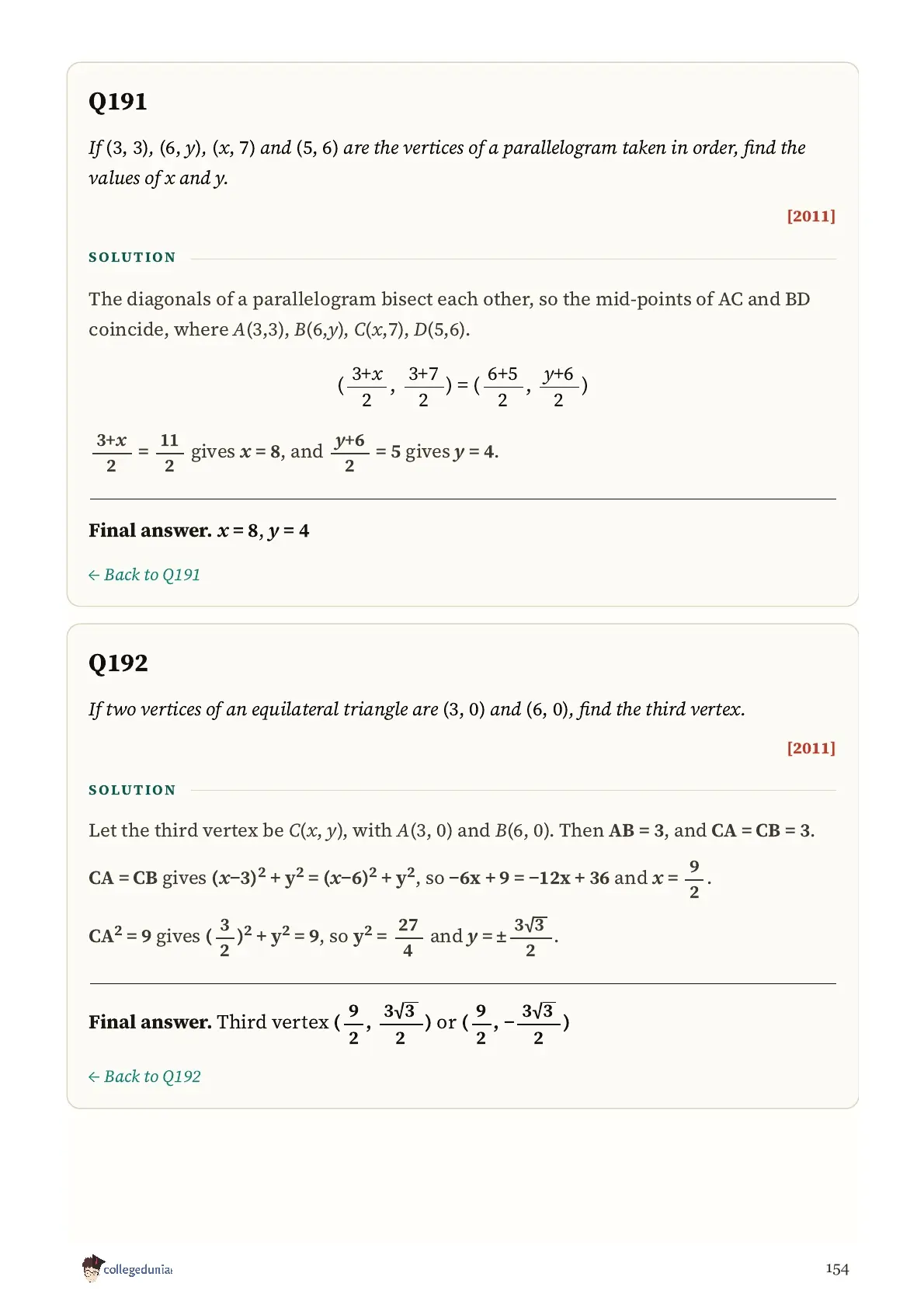
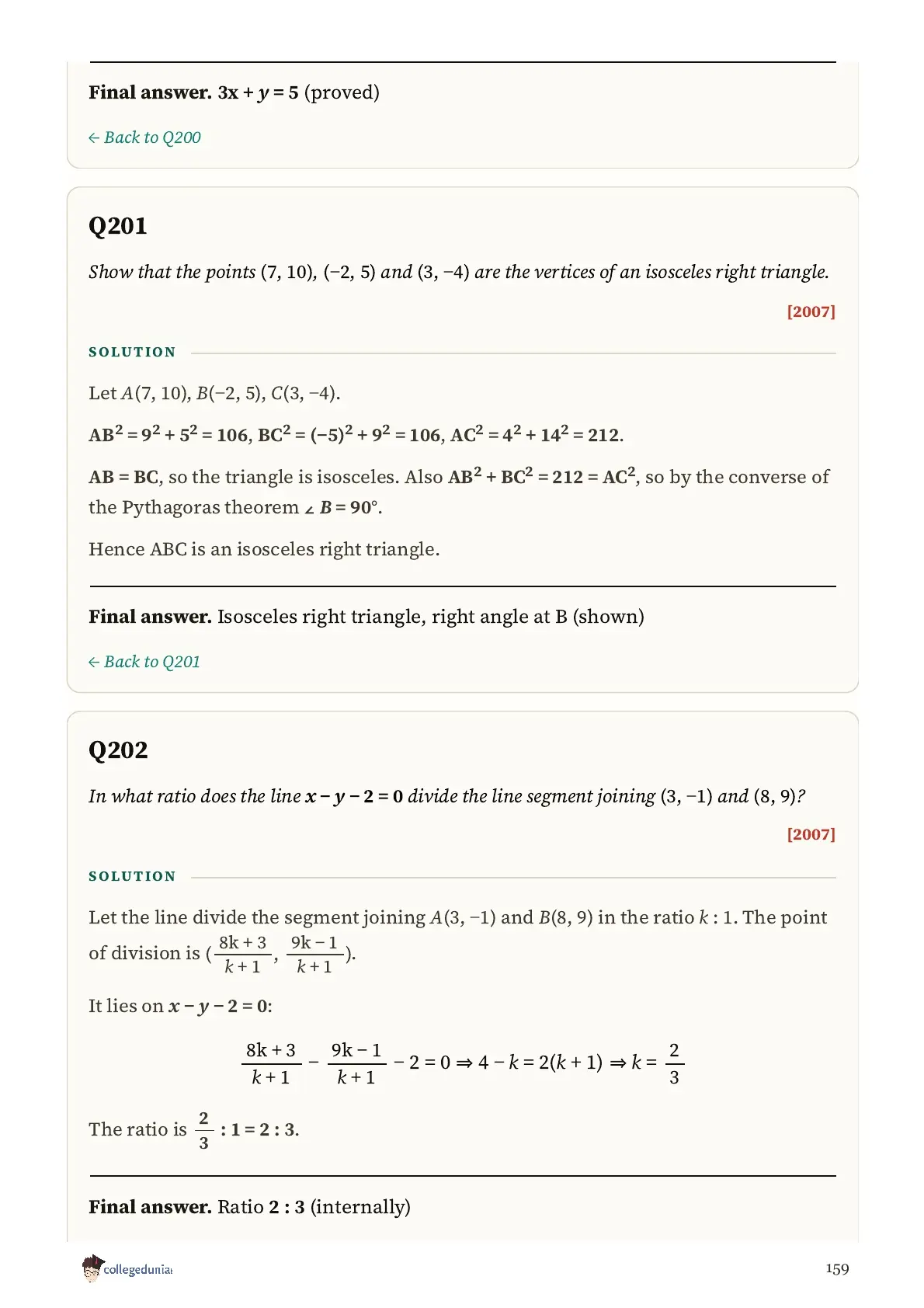
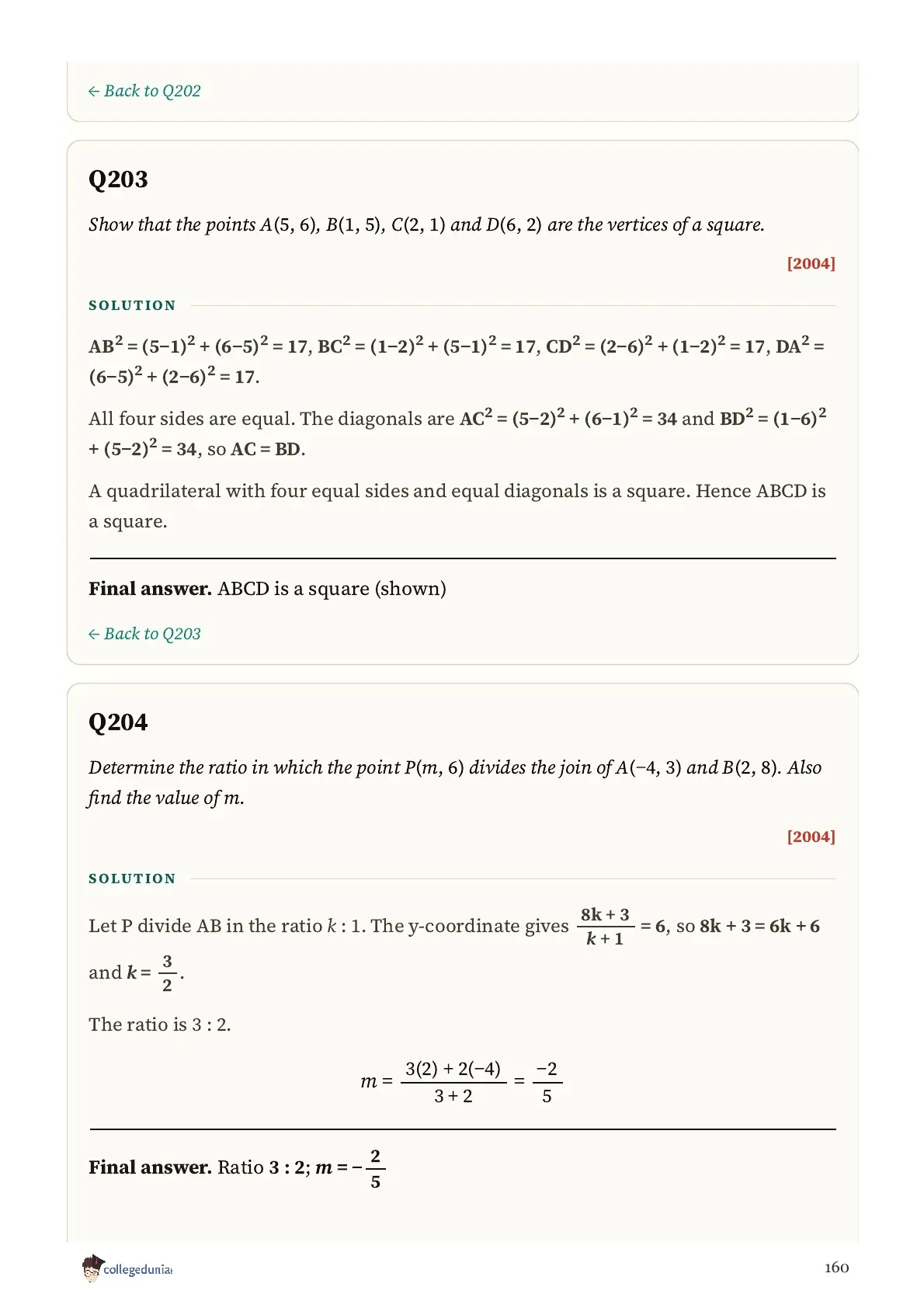
Many questions name a shape and give three vertices. 27 mention a parallelogram, rhombus, square or rectangle, 25 a triangle and 22 a circle or its centre, and you are asked for the fourth vertex or the centre. 31 questions place a point on the x-axis or y-axis, which fixes one coordinate at zero, and 11 use the origin. Collinear points appear in 6 questions and trisection points in 6.
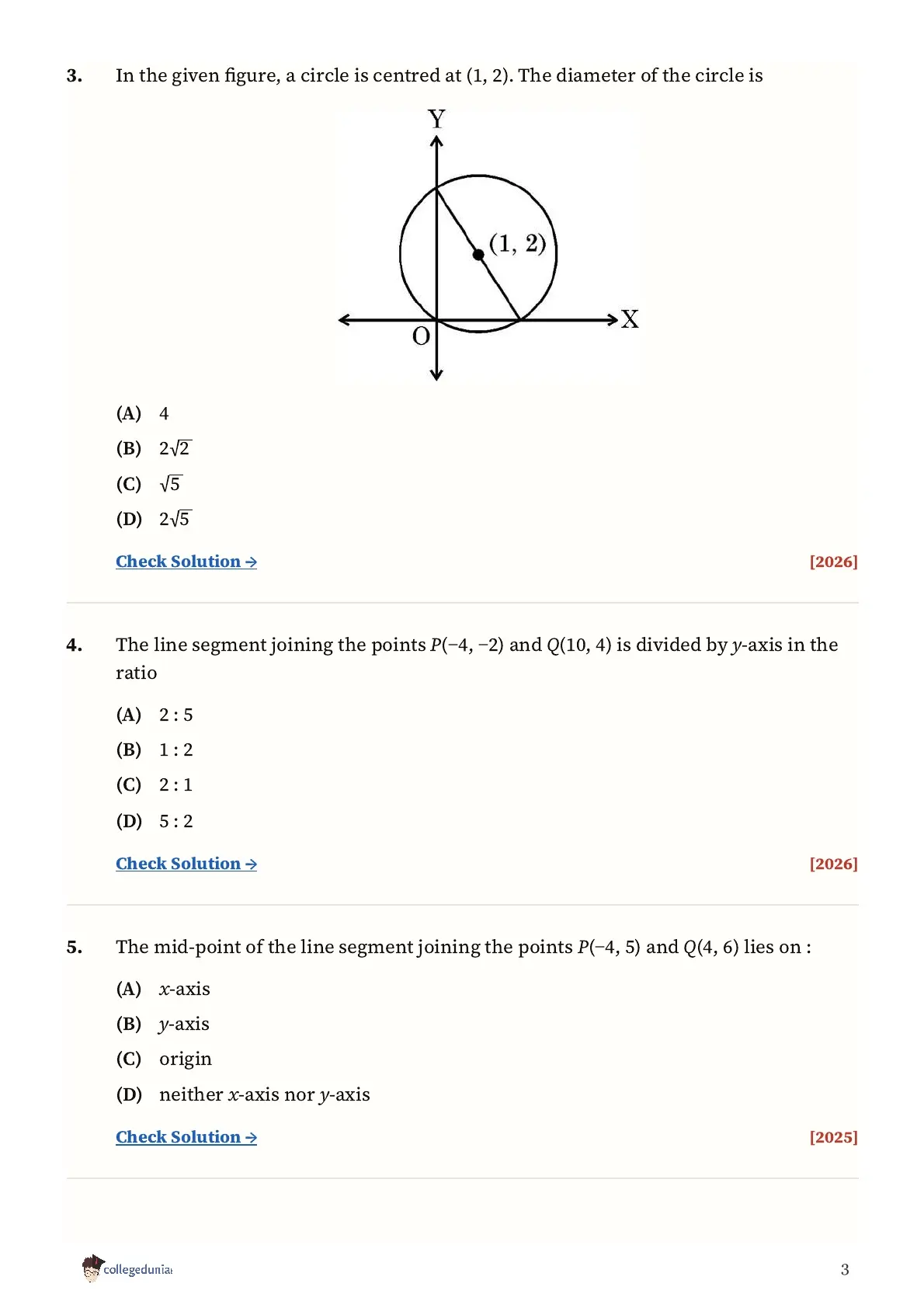
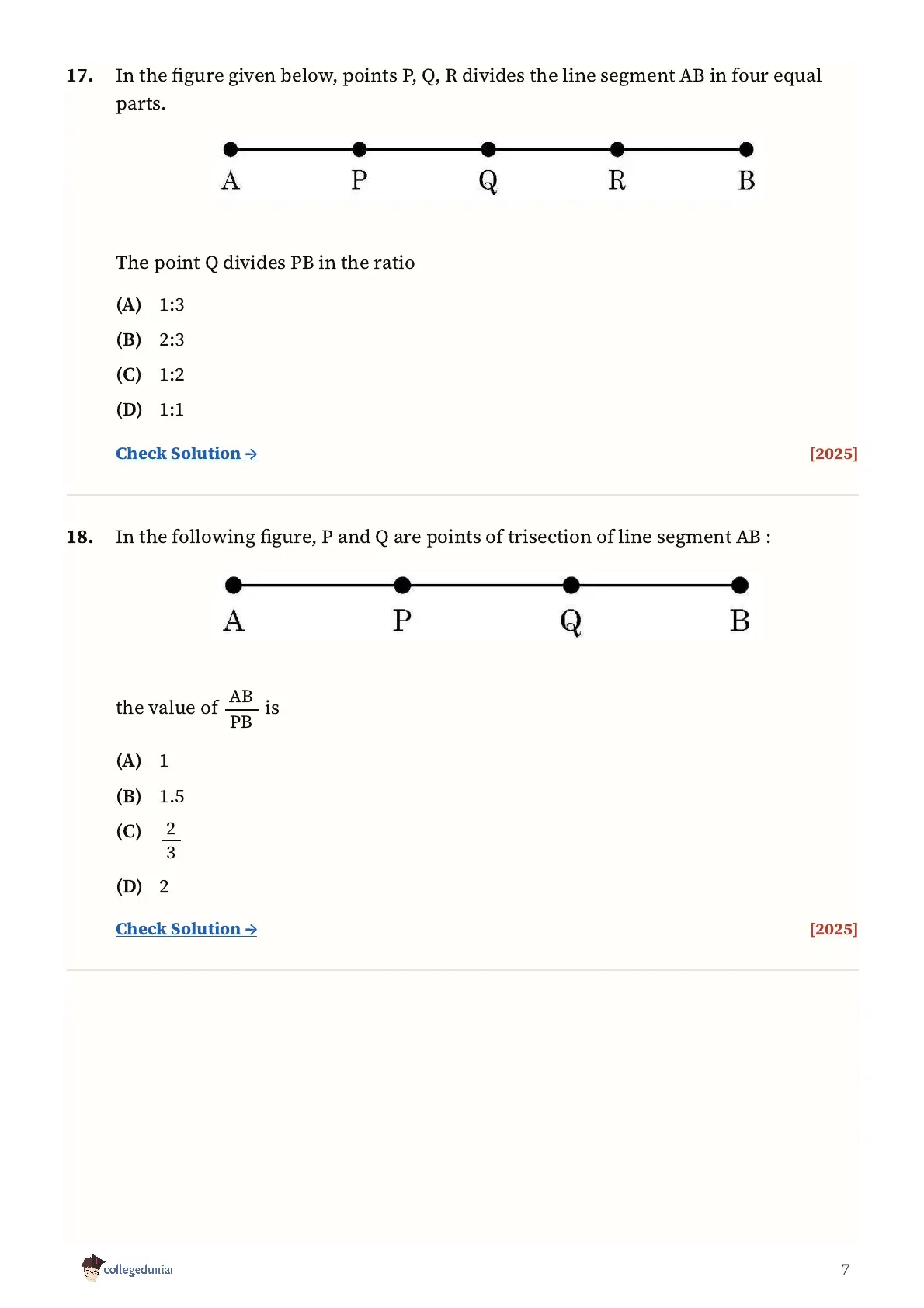
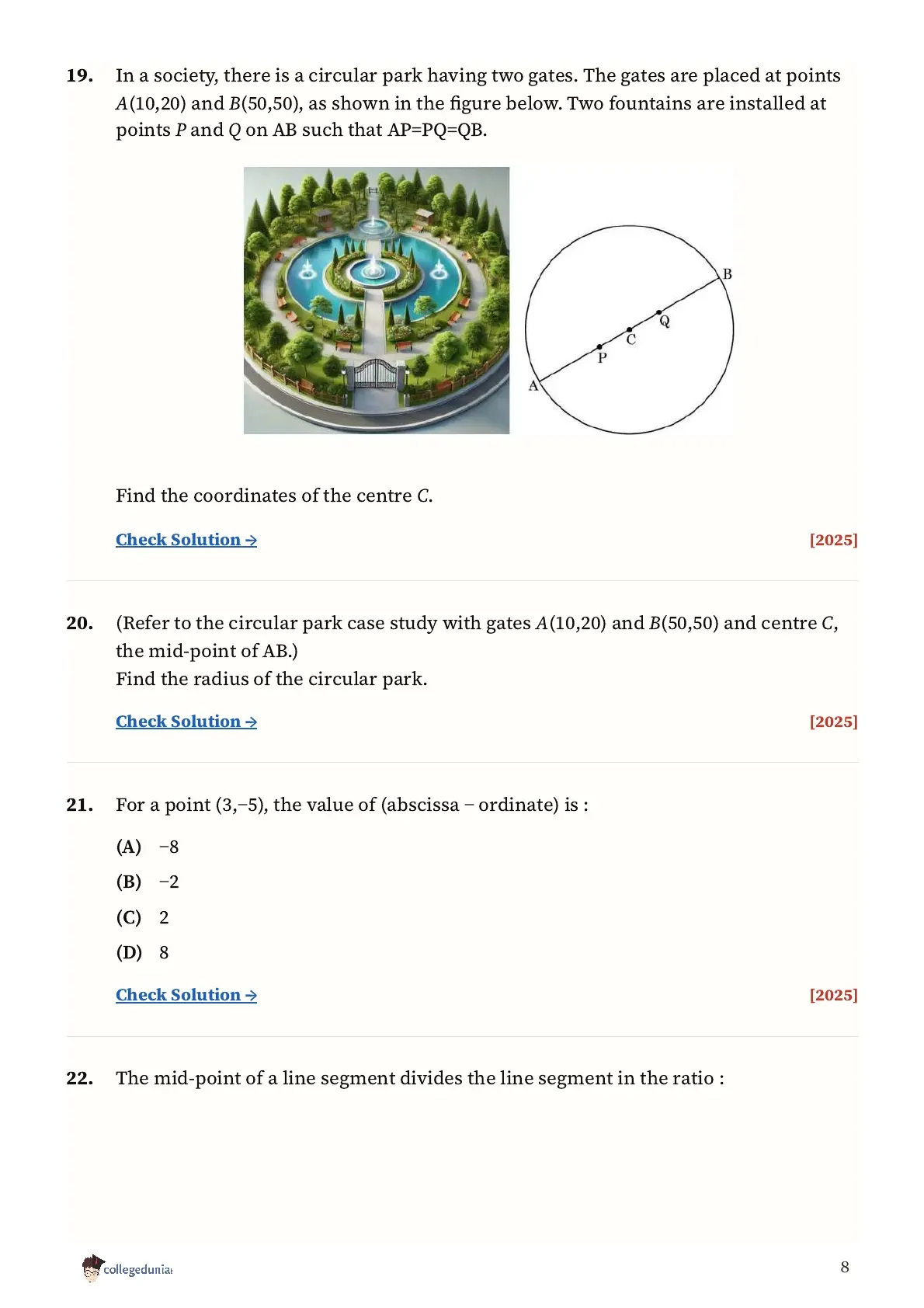
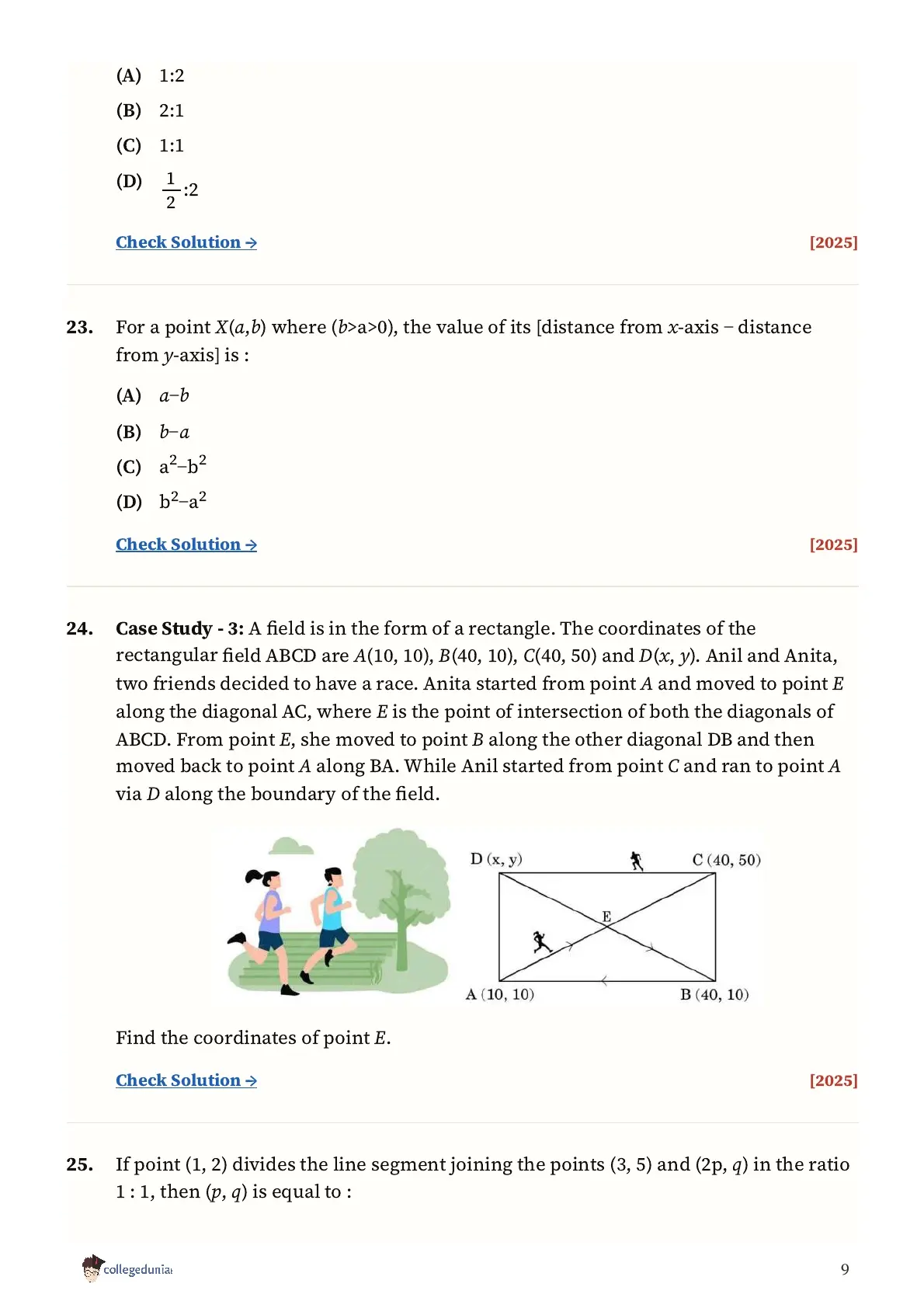
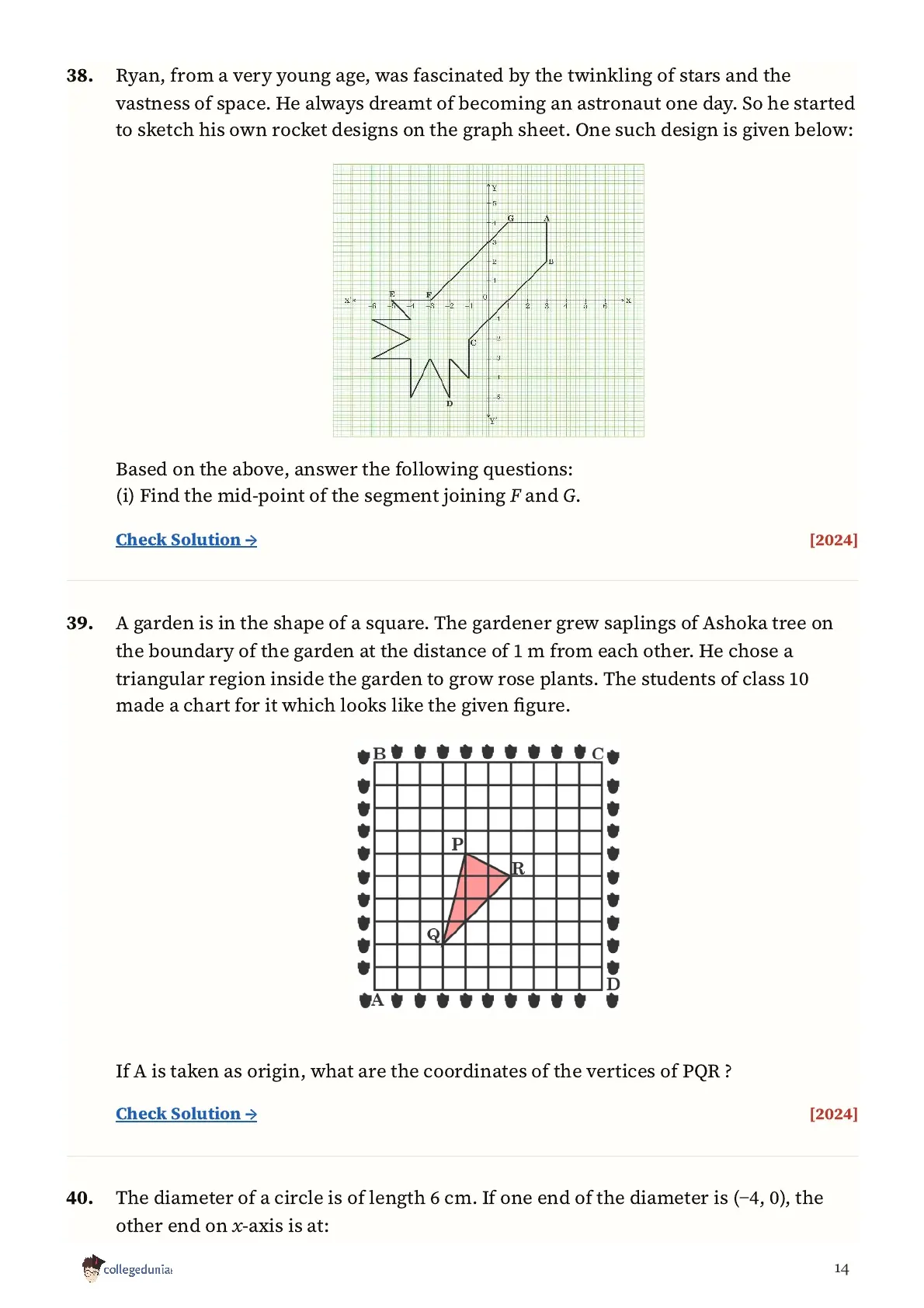
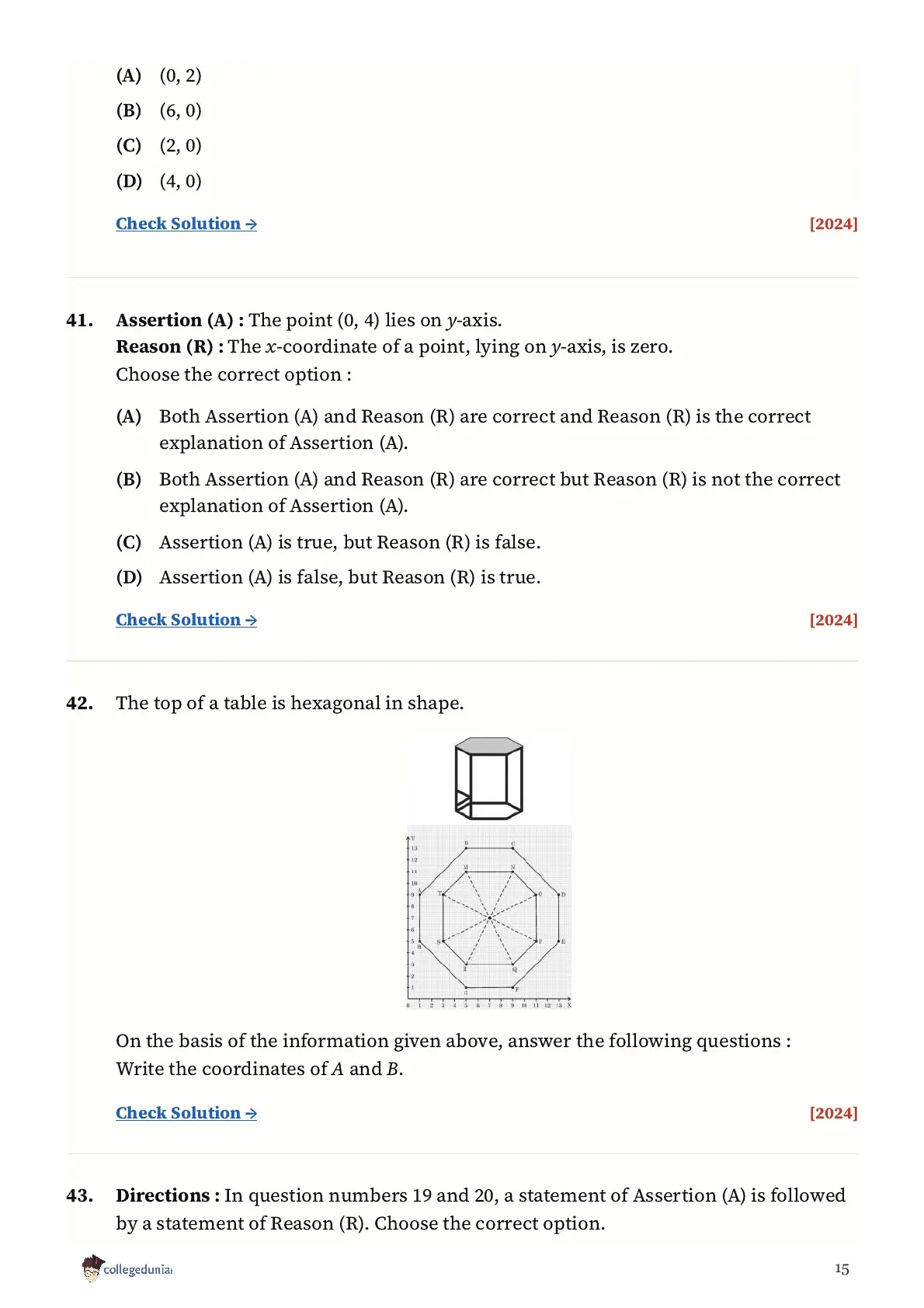
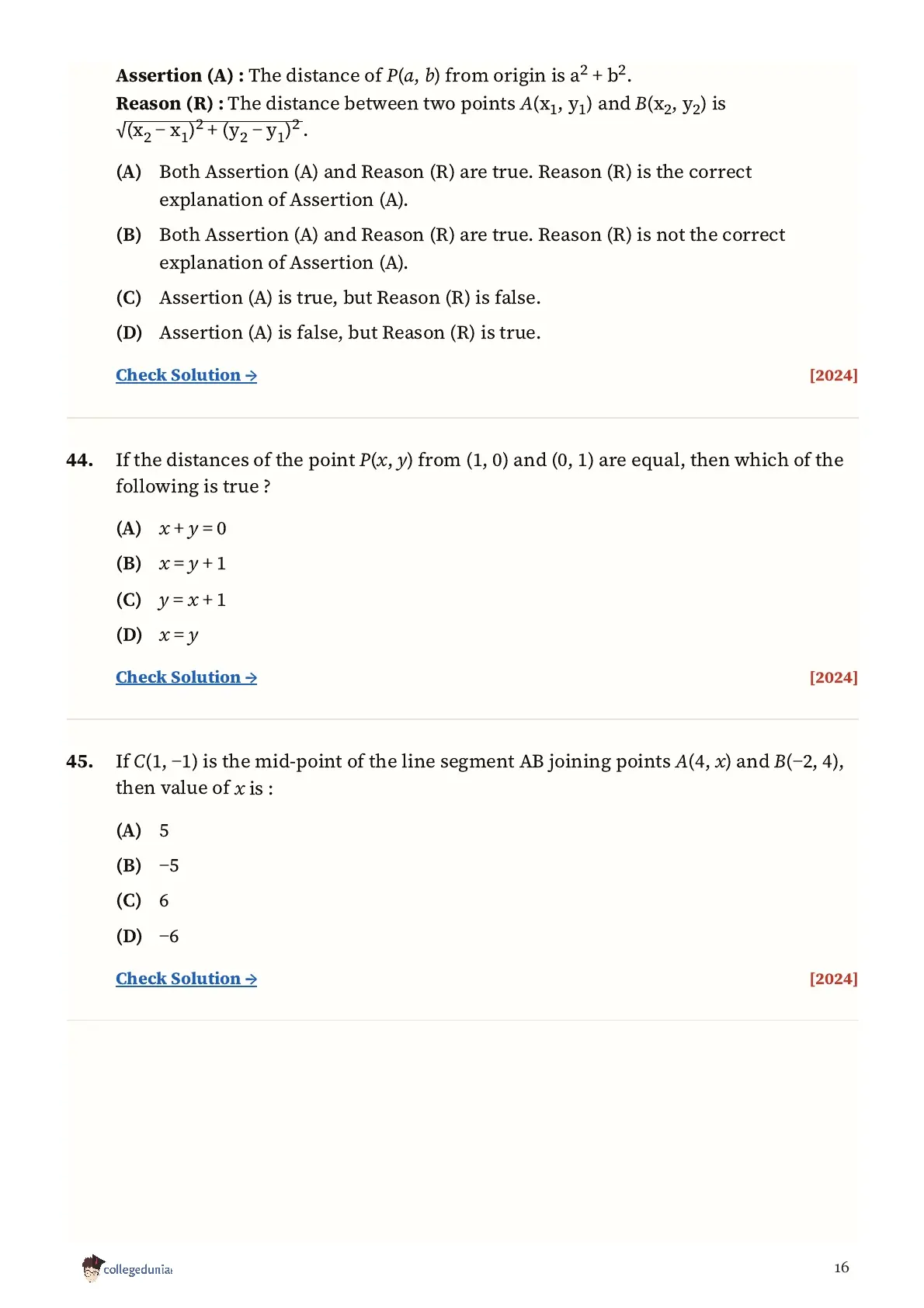
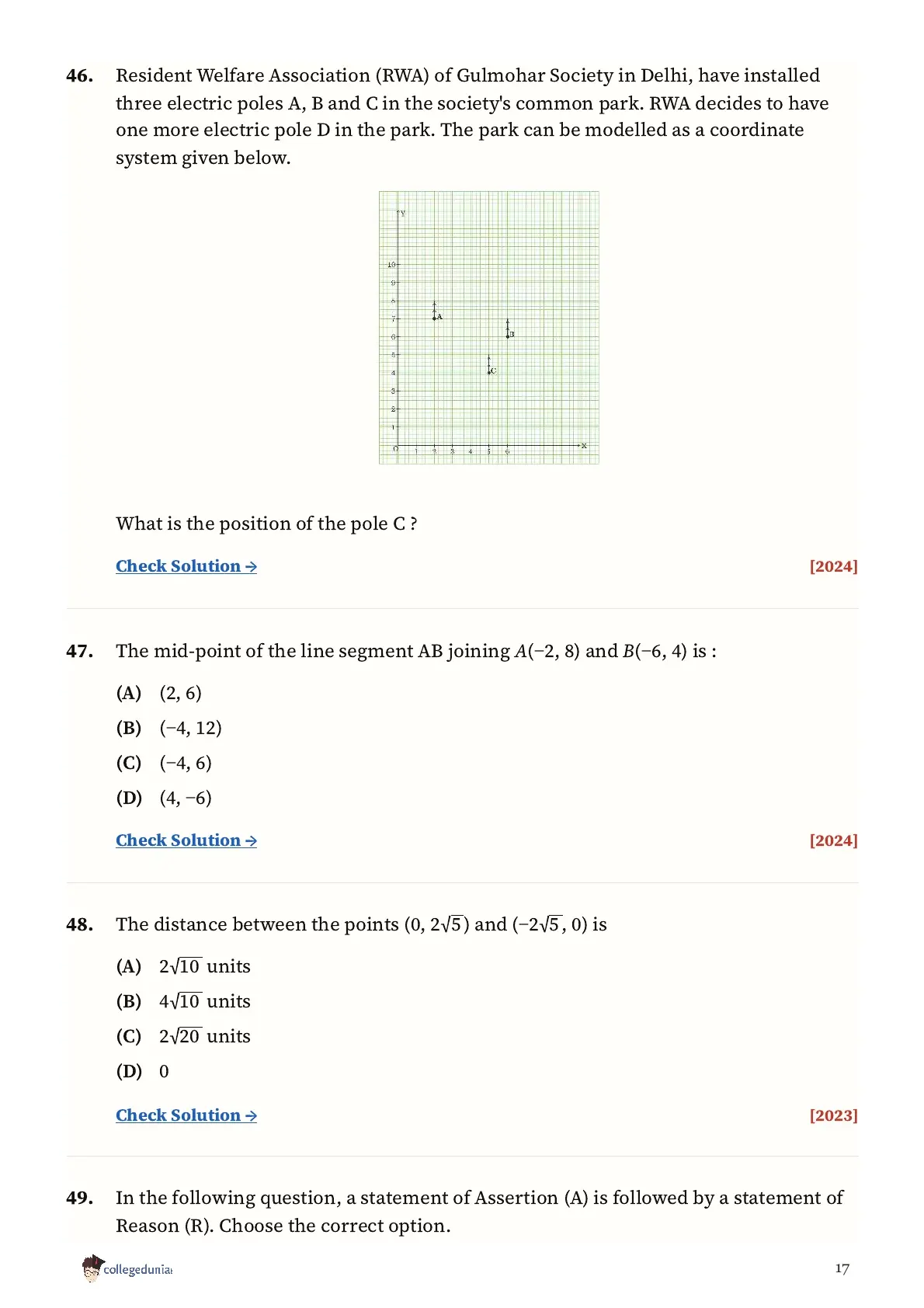
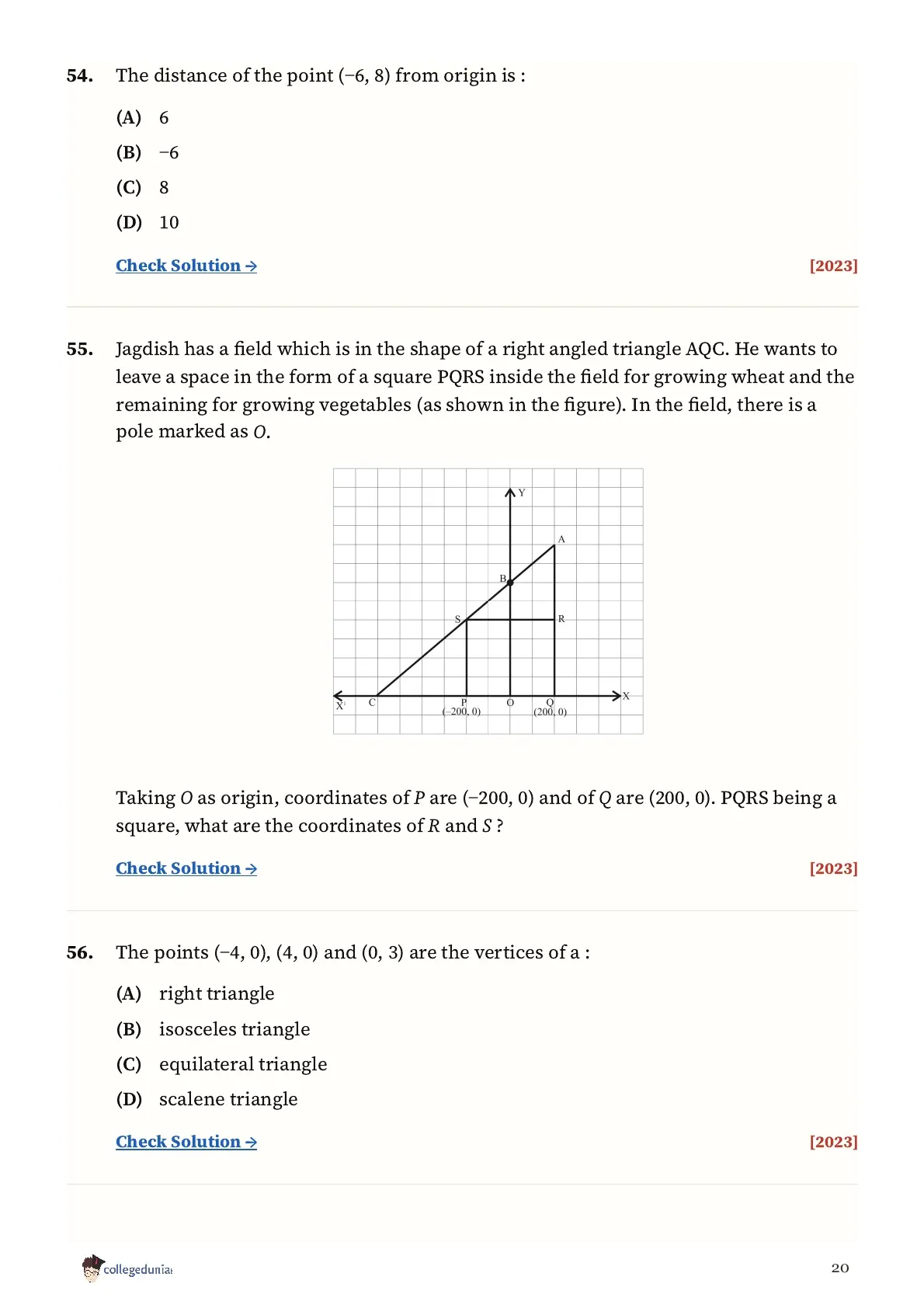
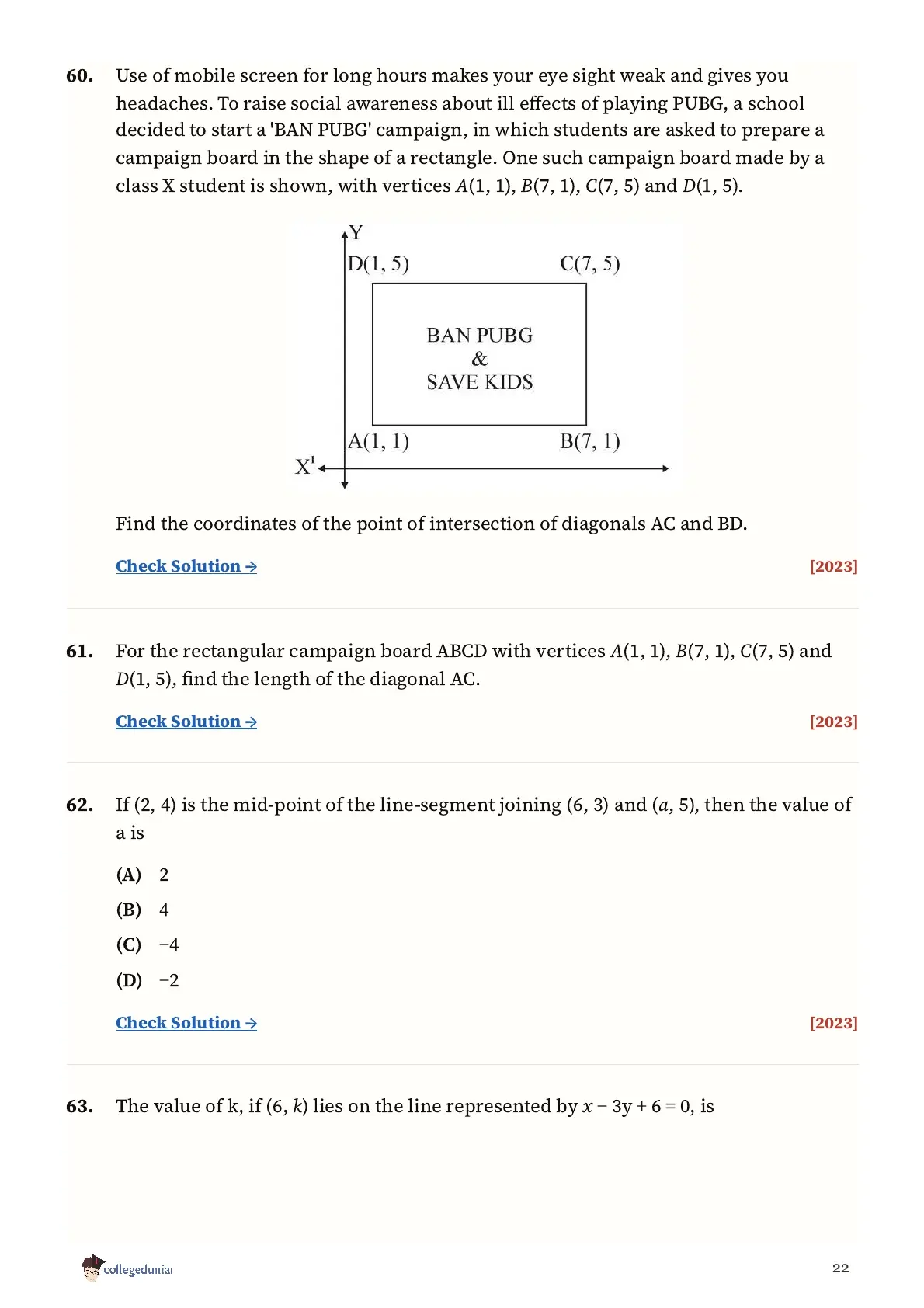
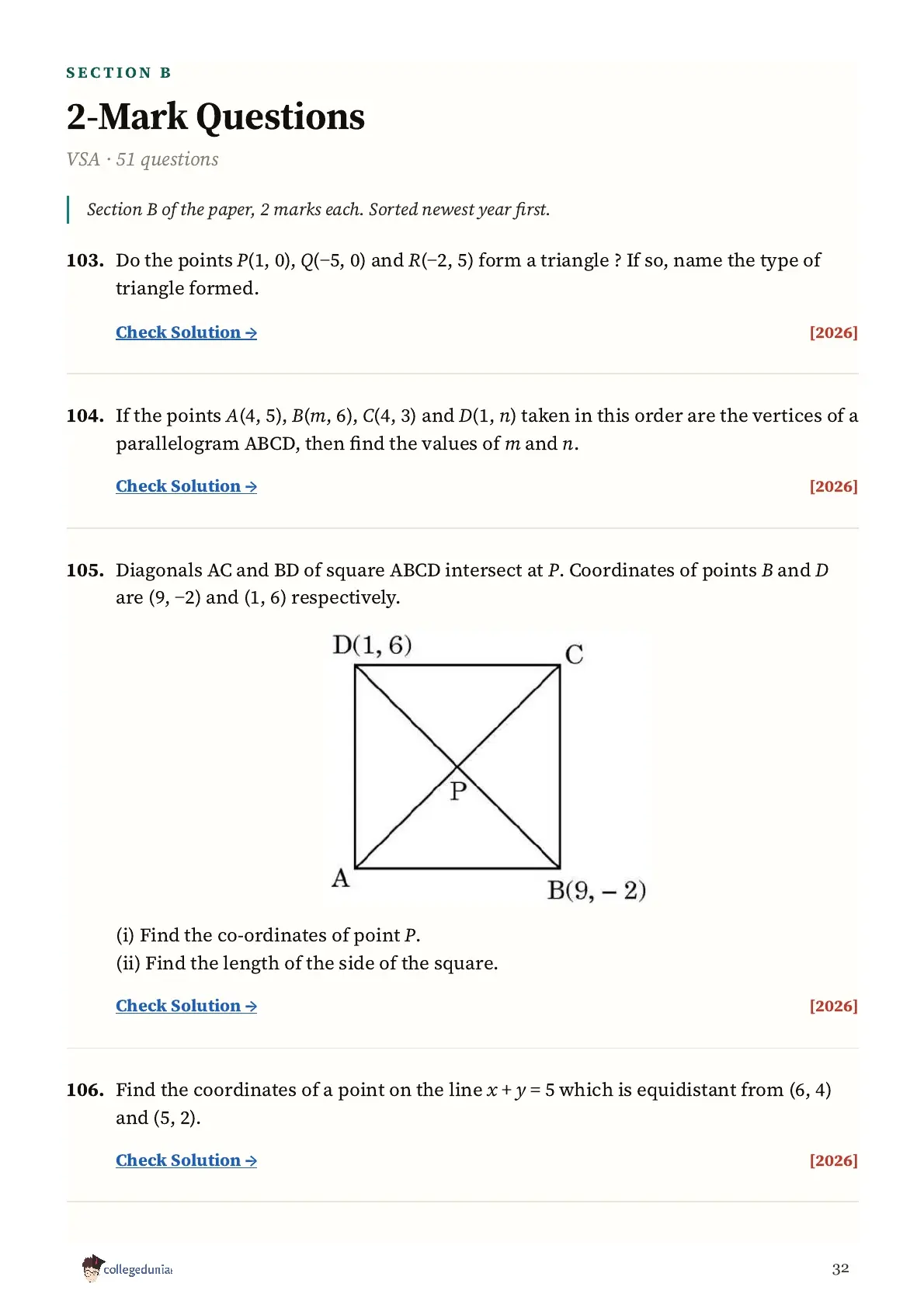
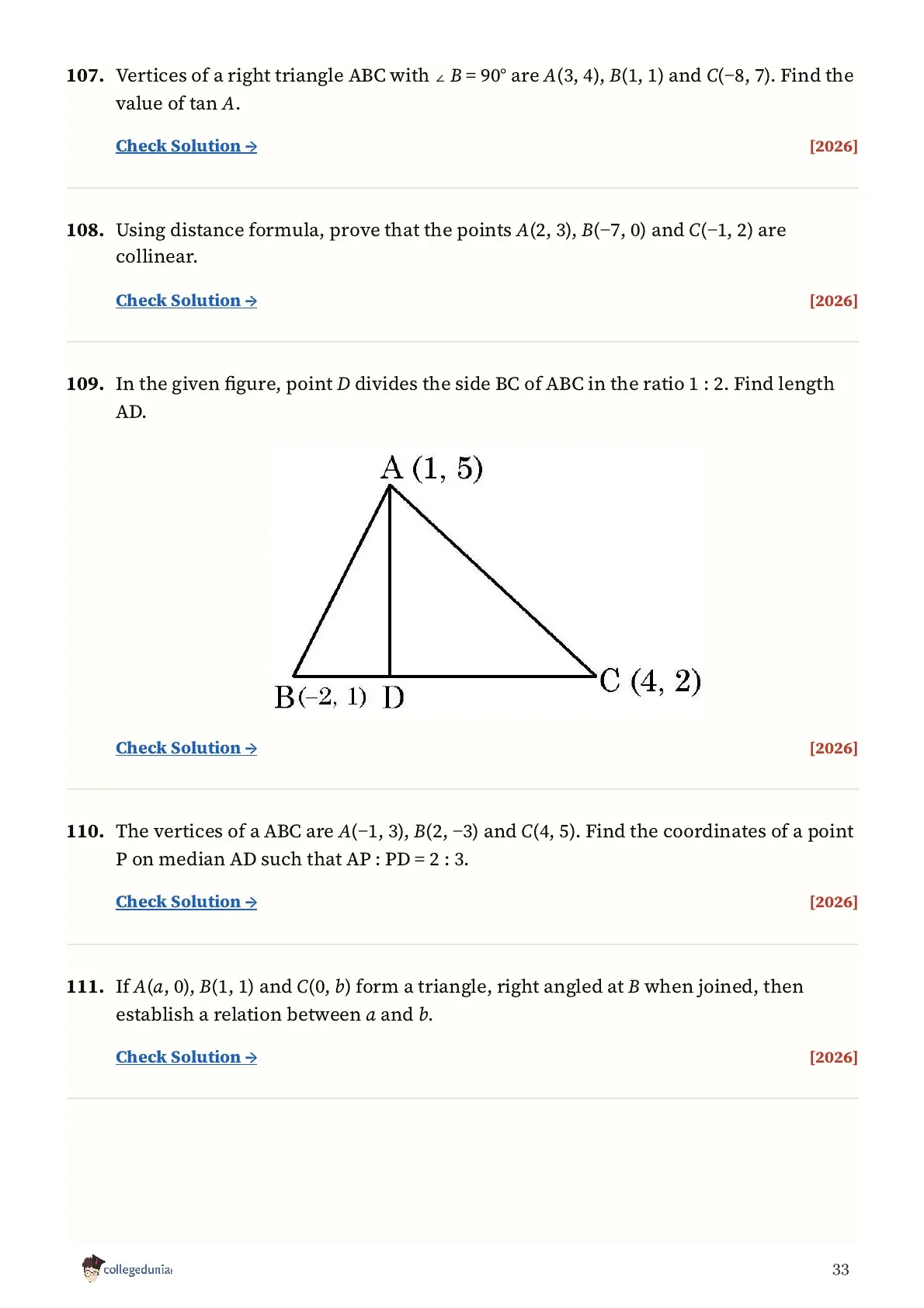
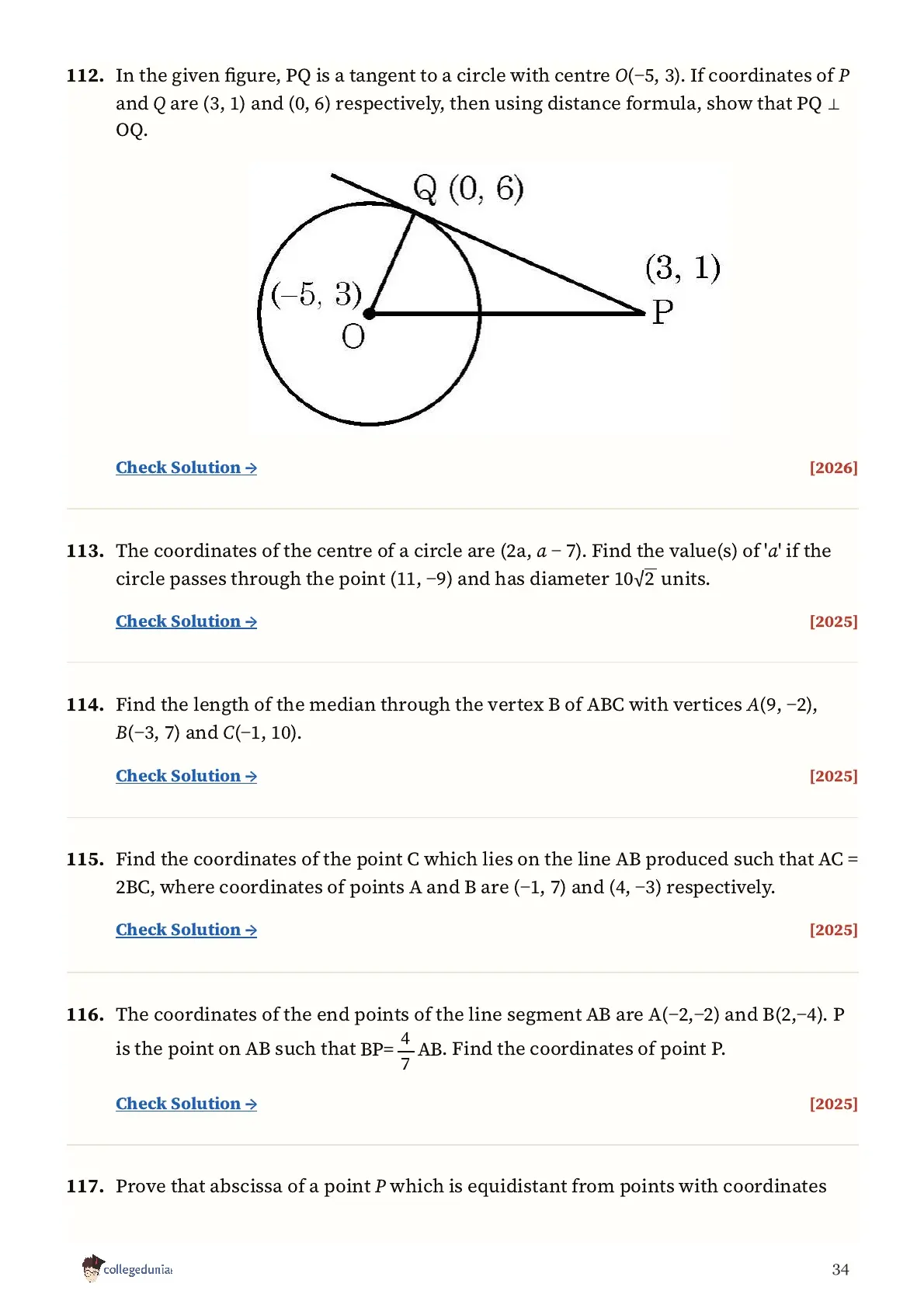
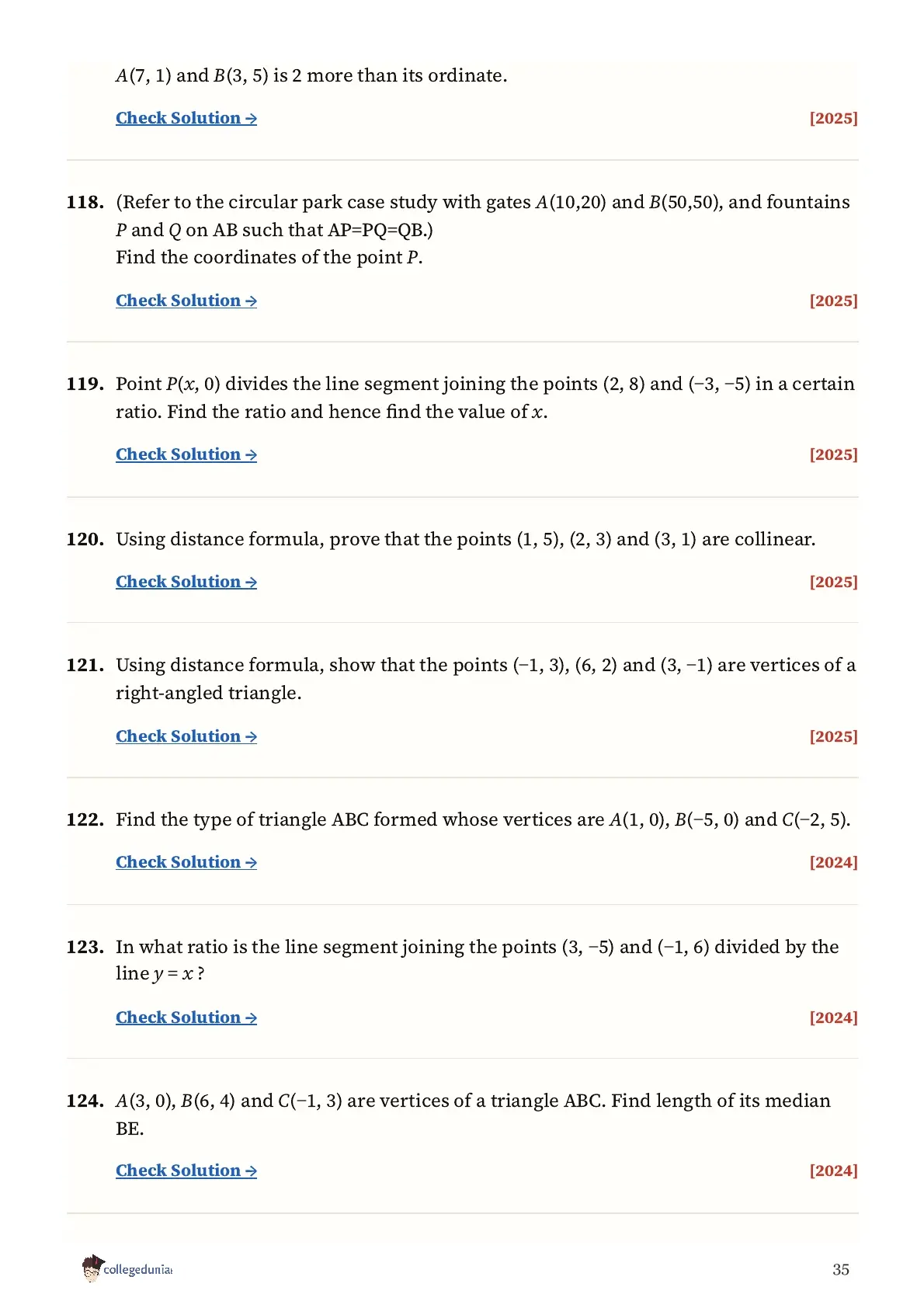
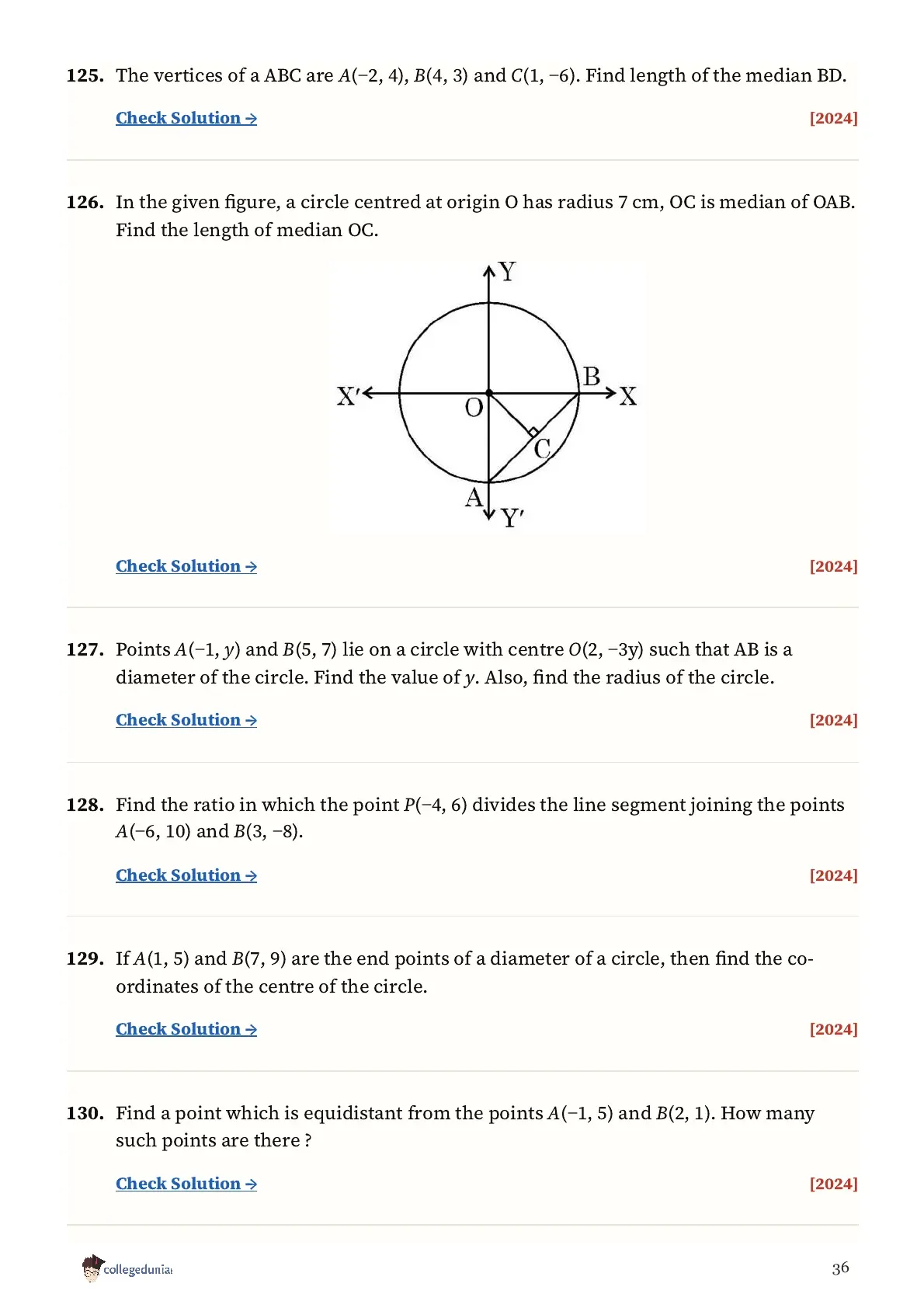
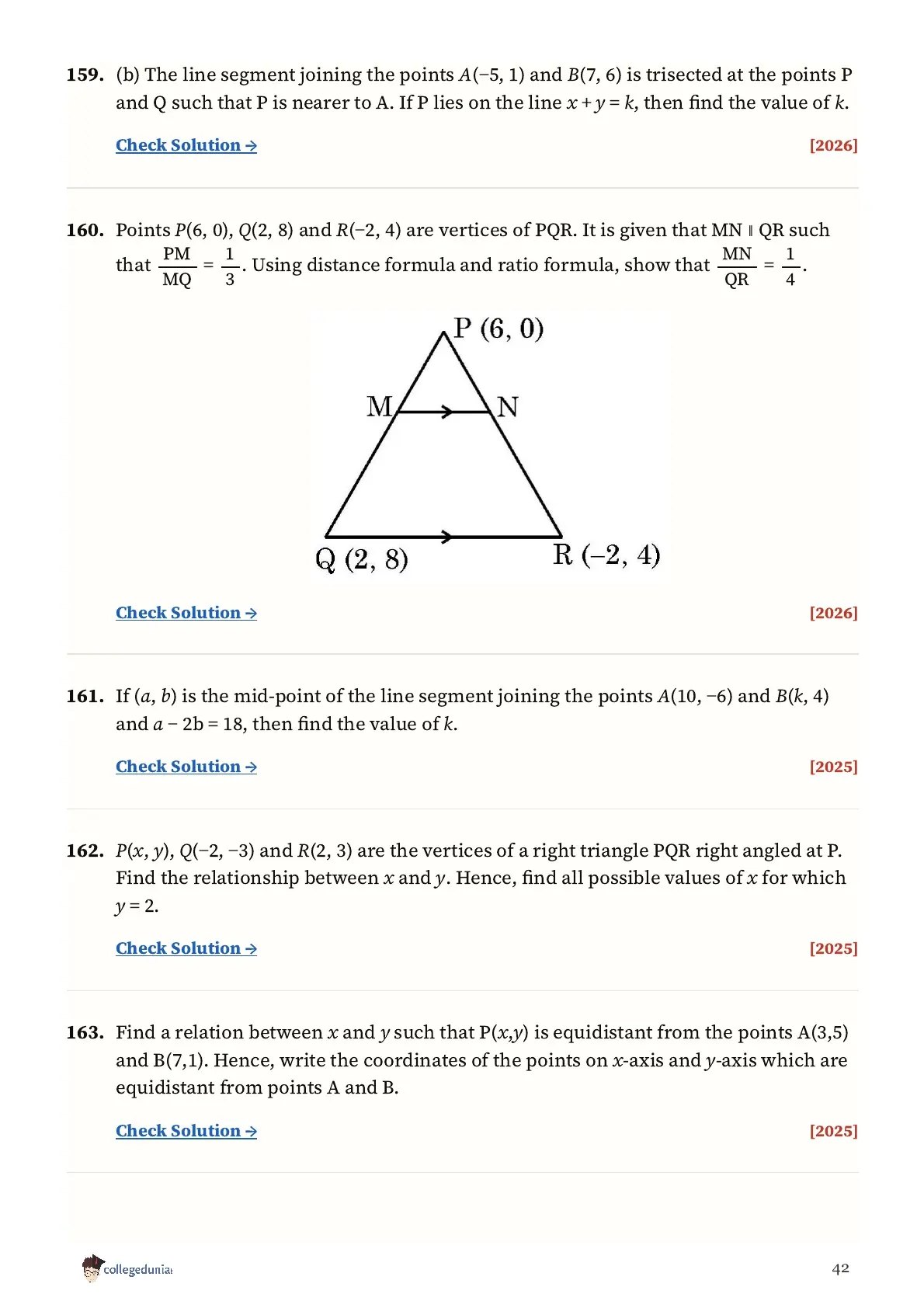
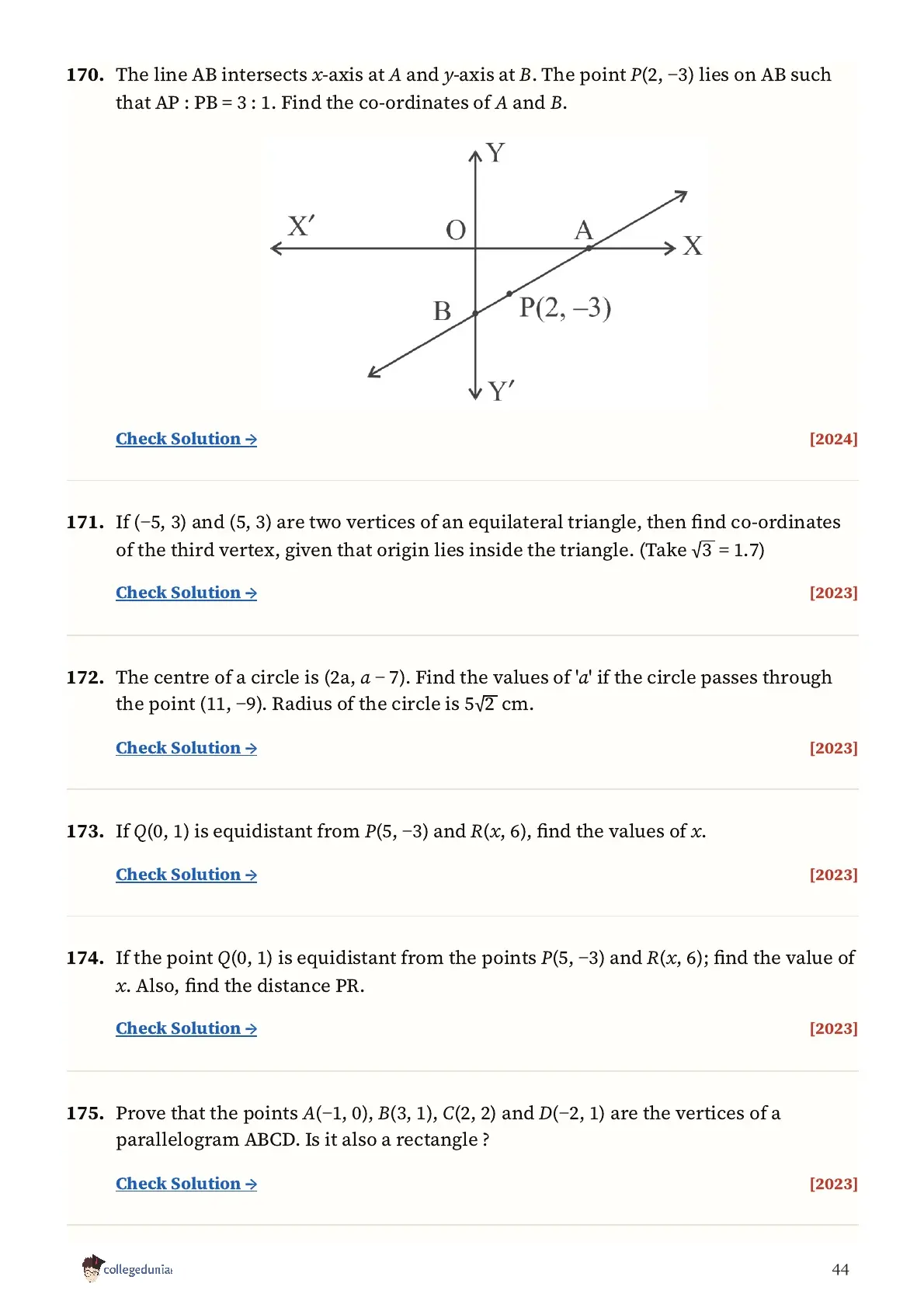
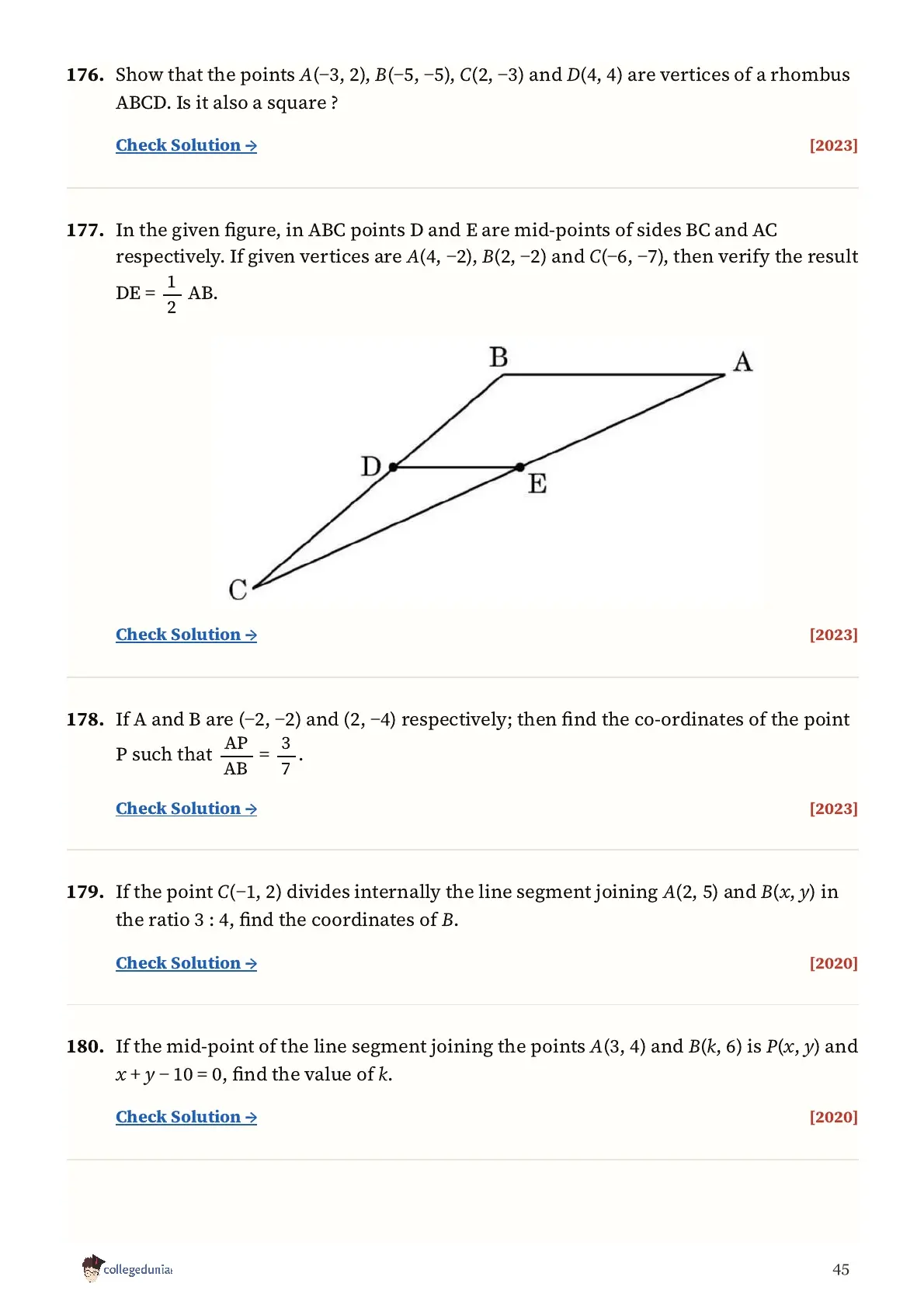
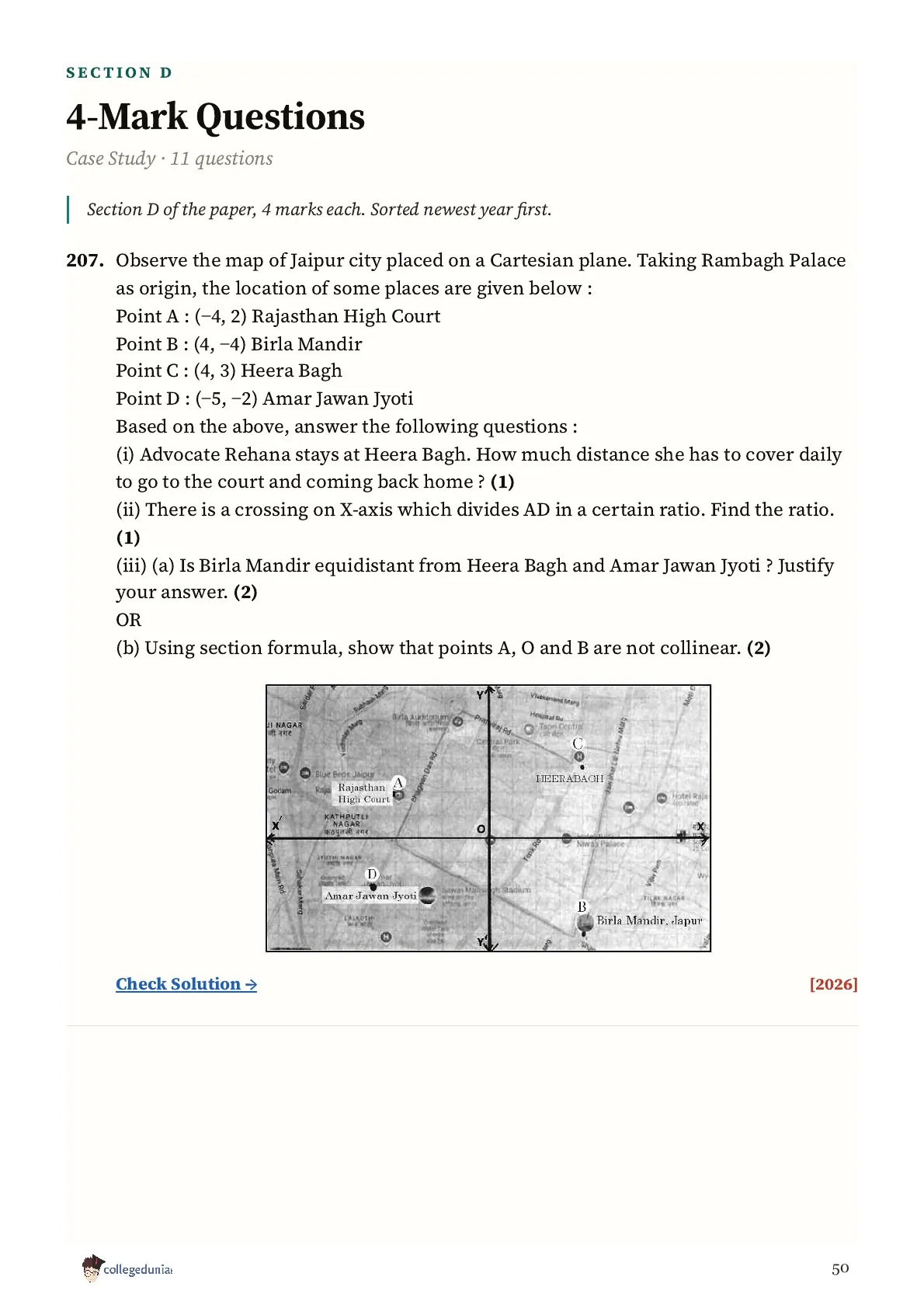
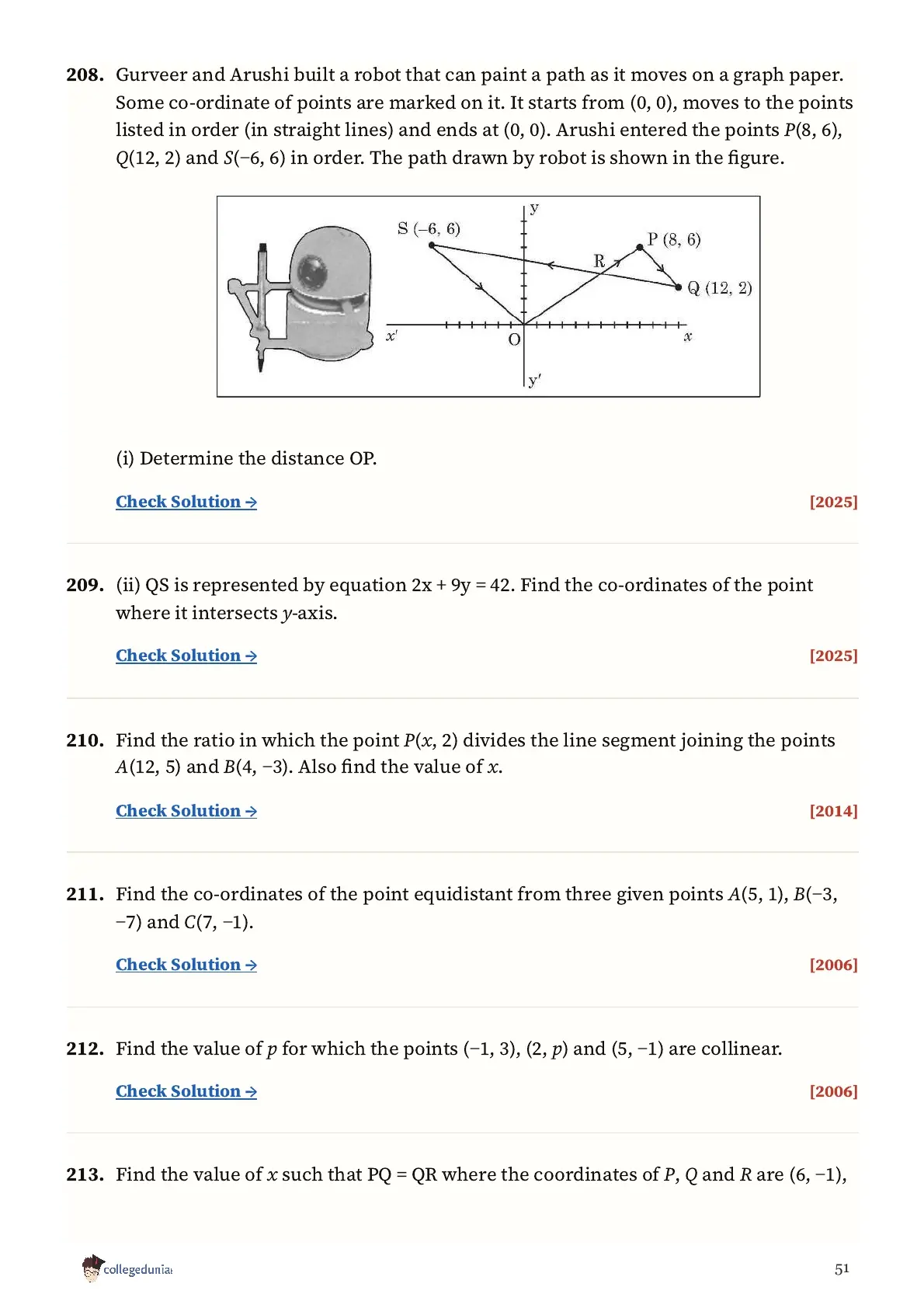
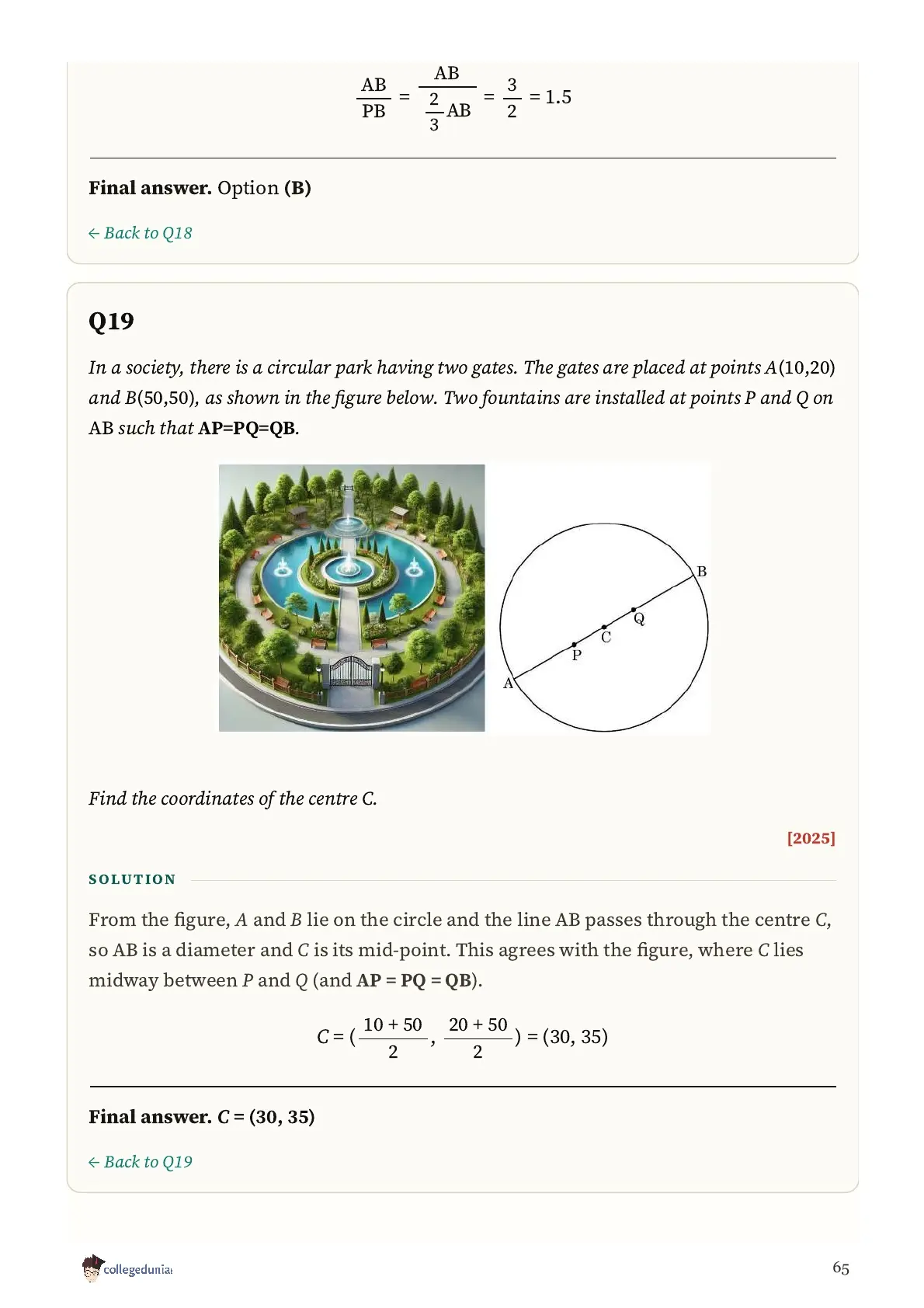
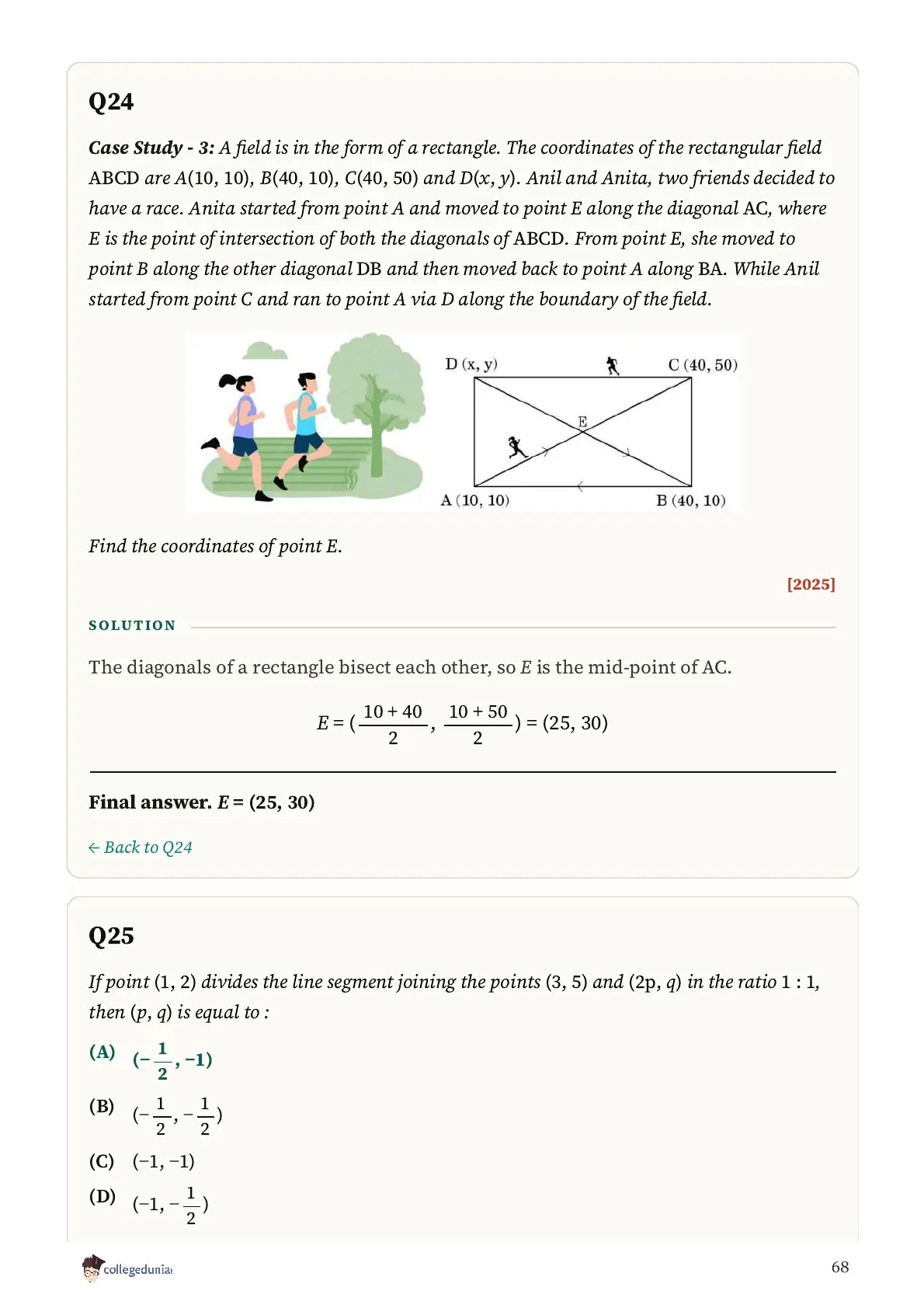
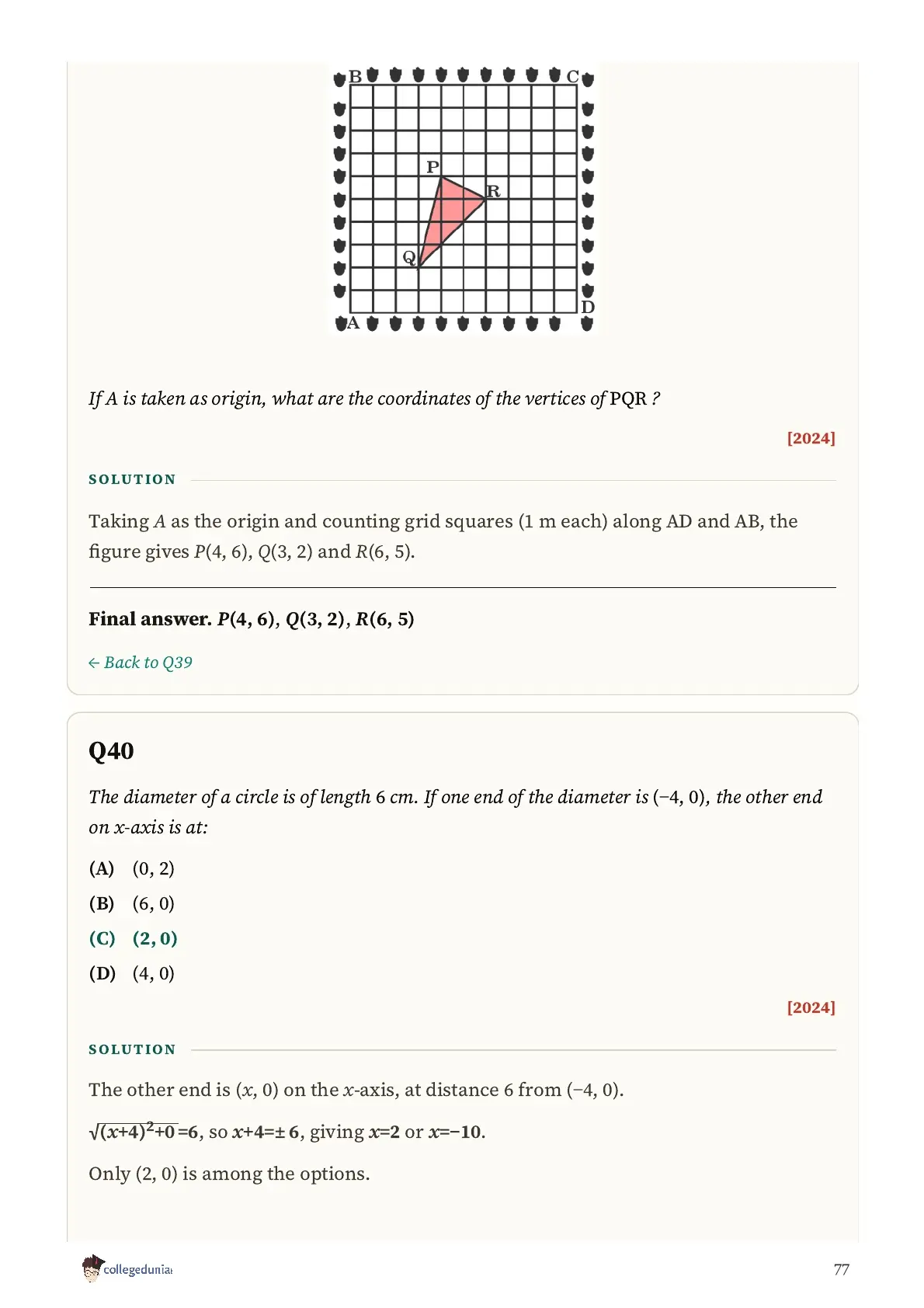
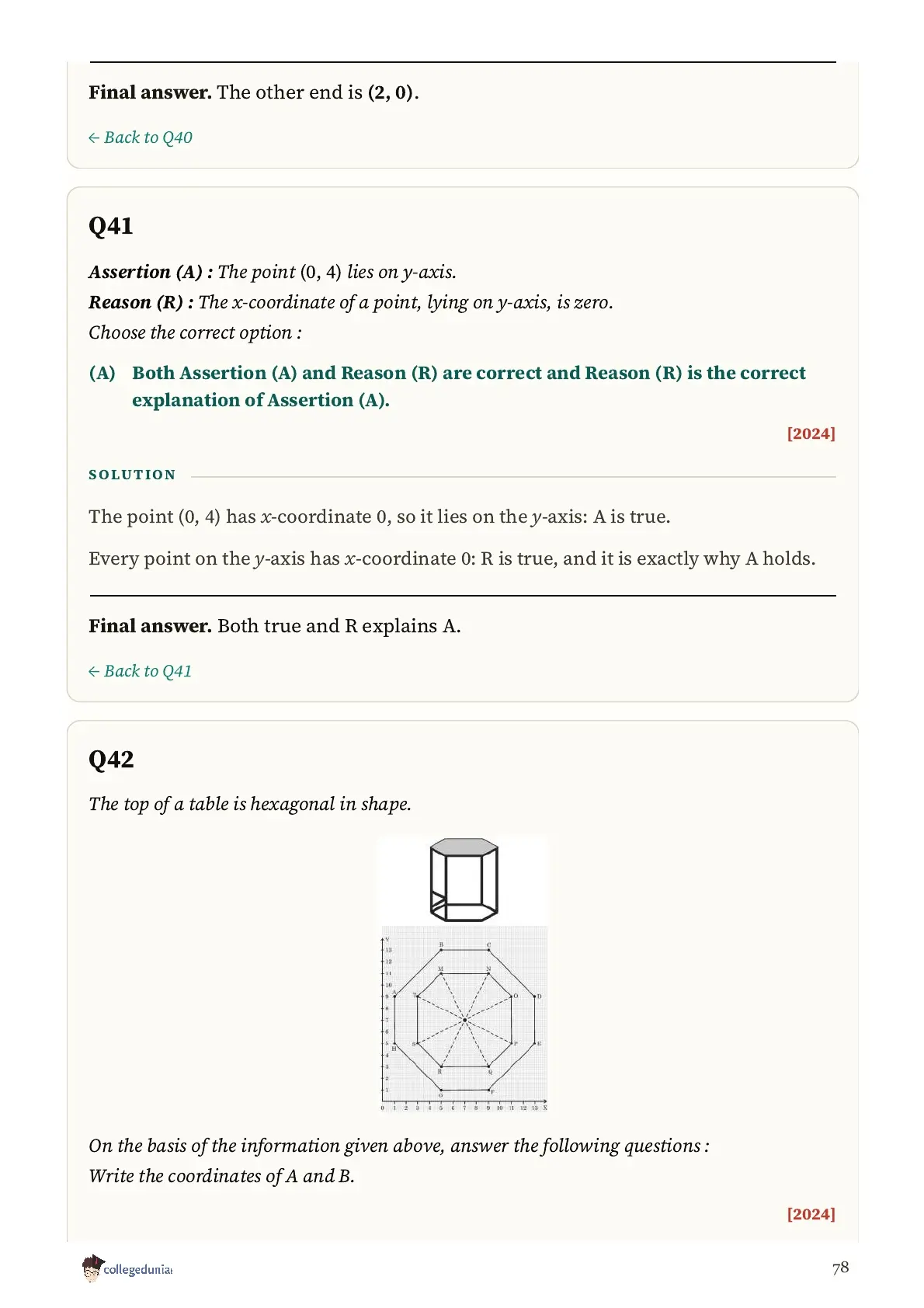
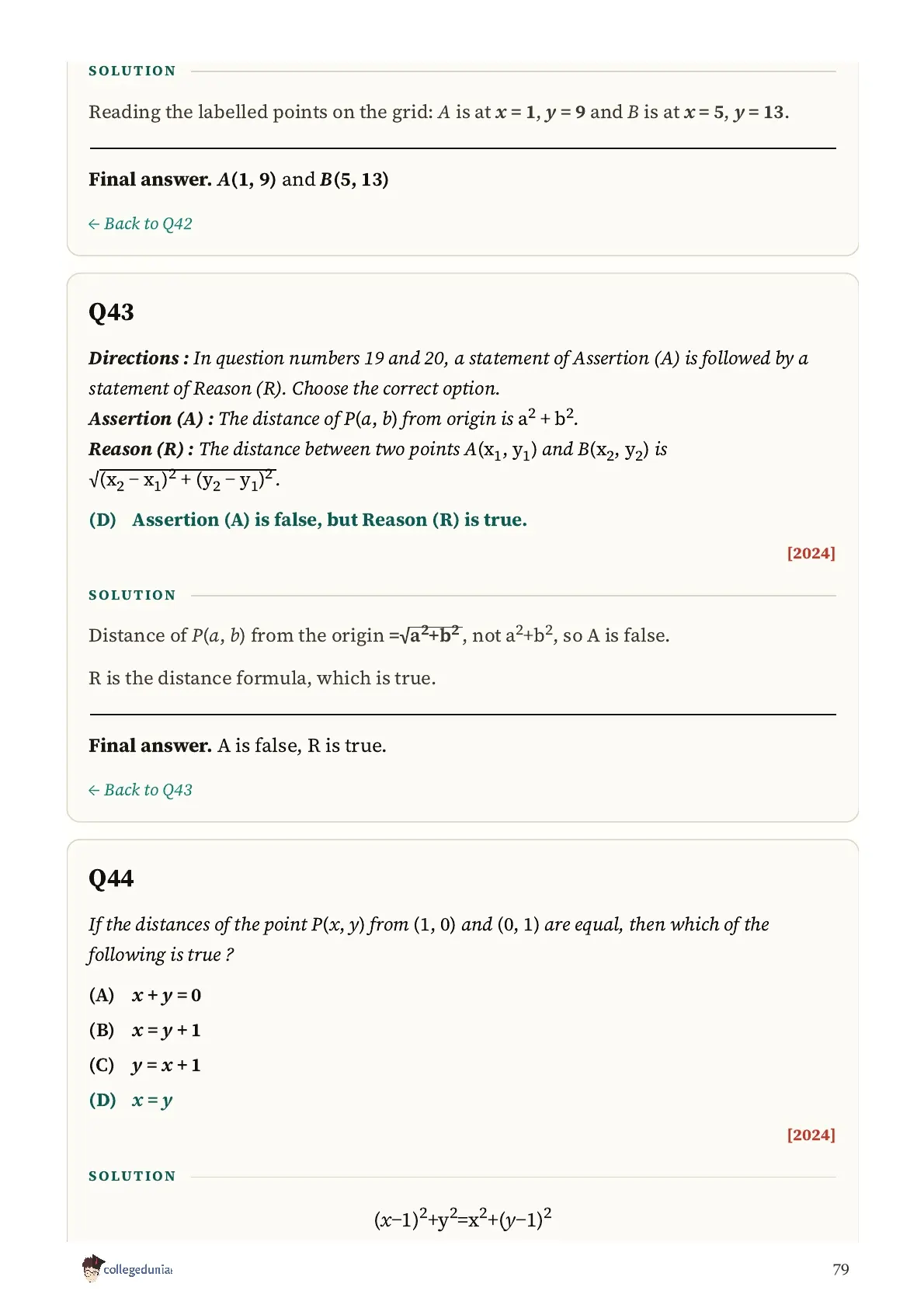
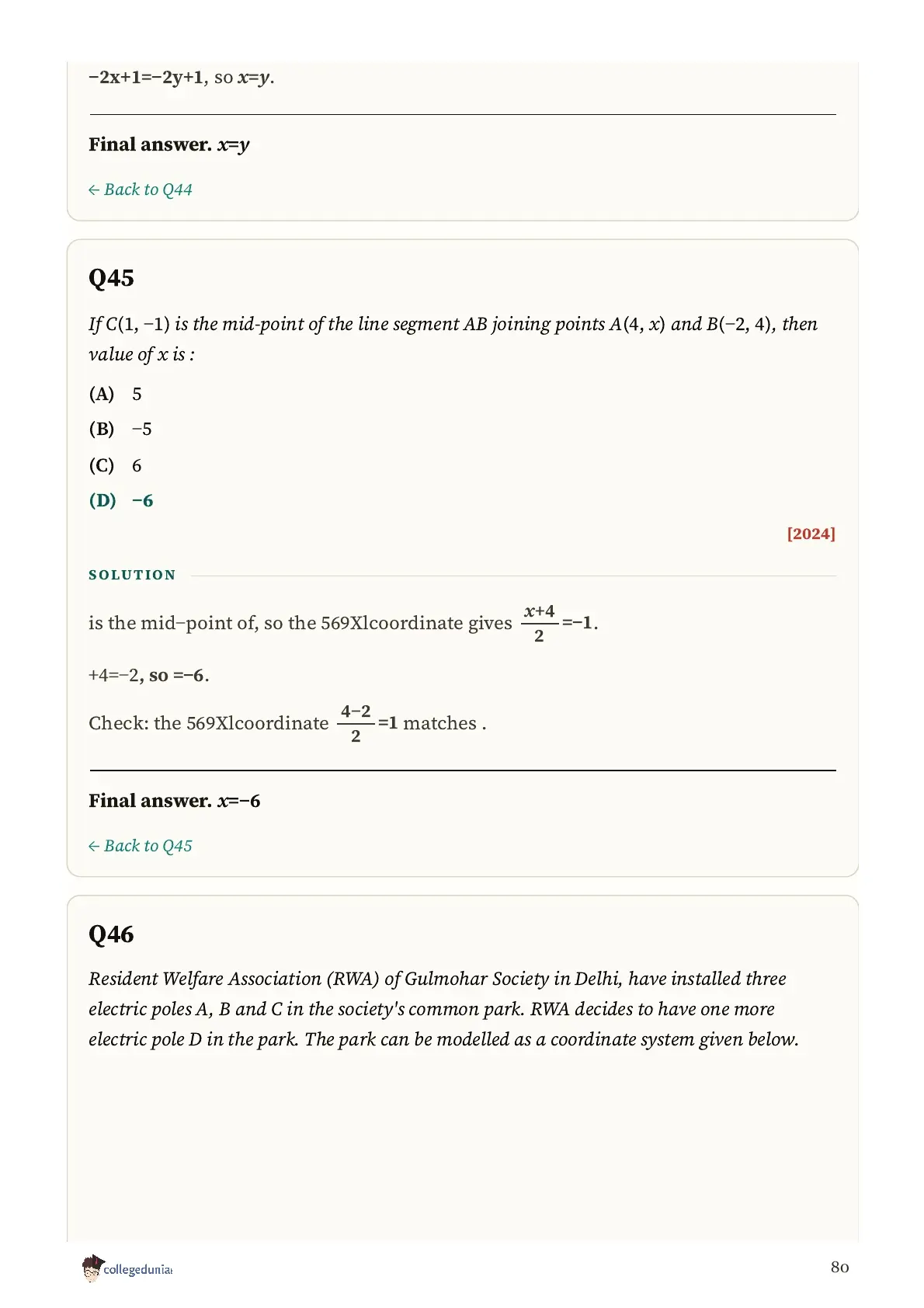
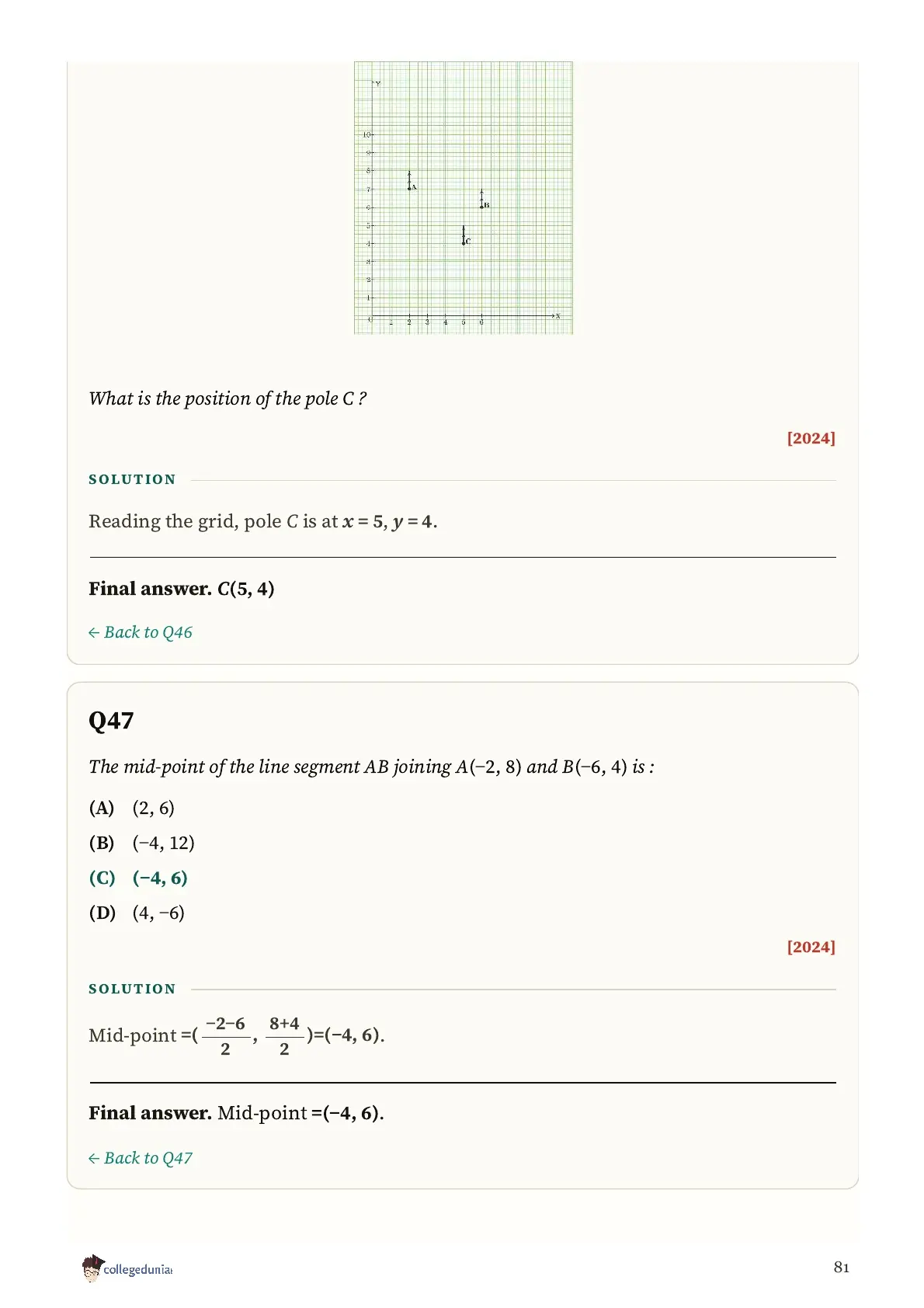
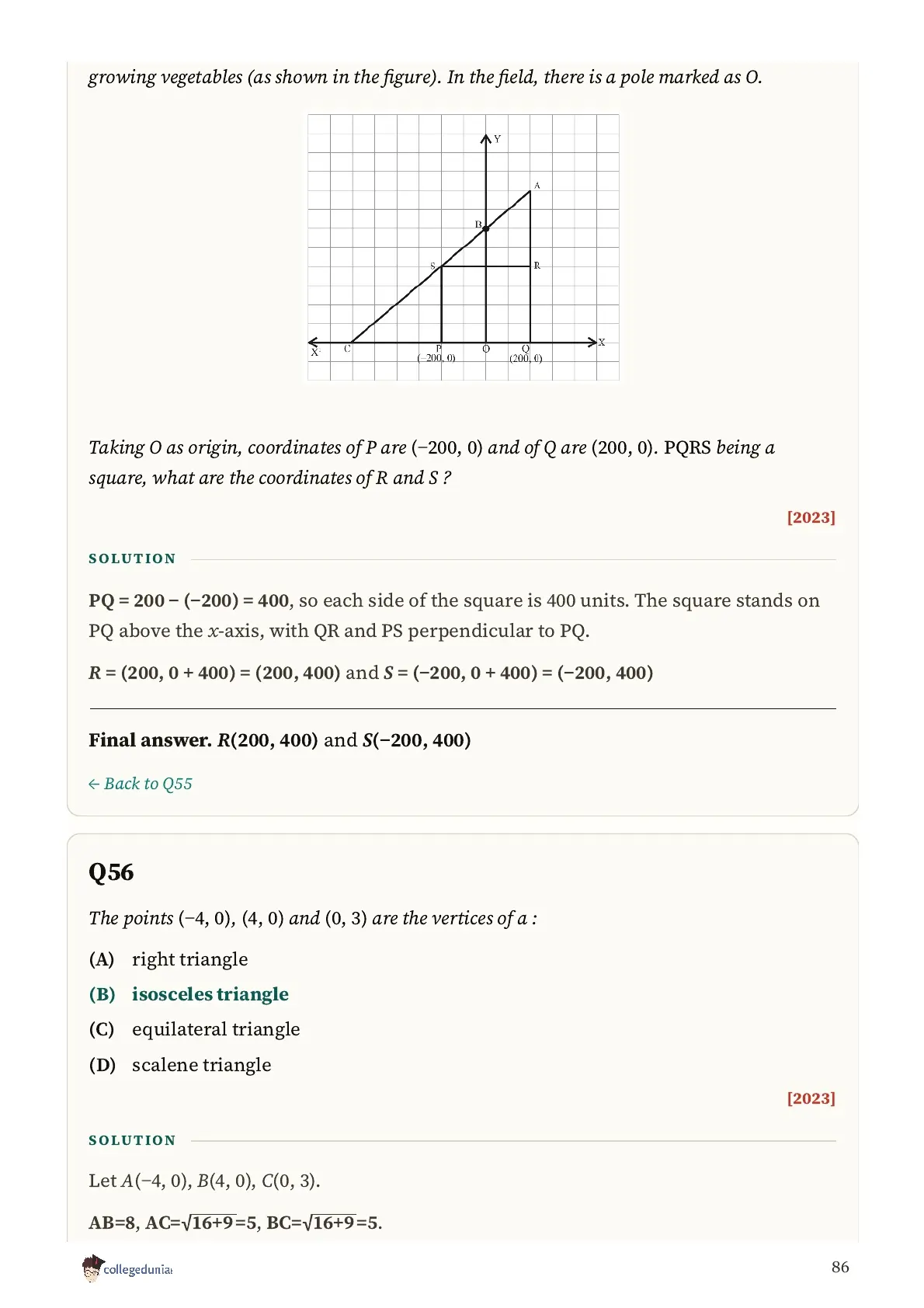
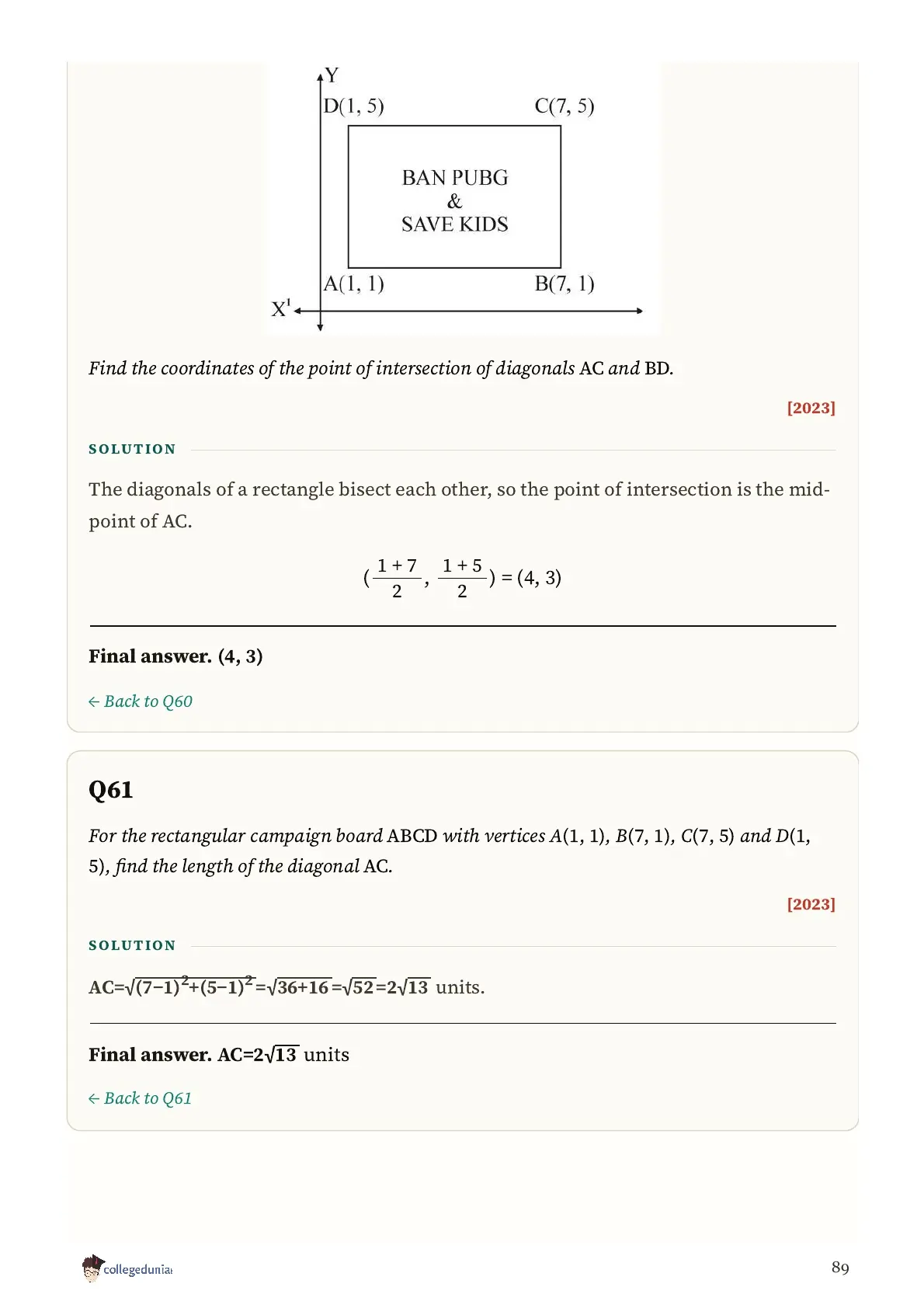
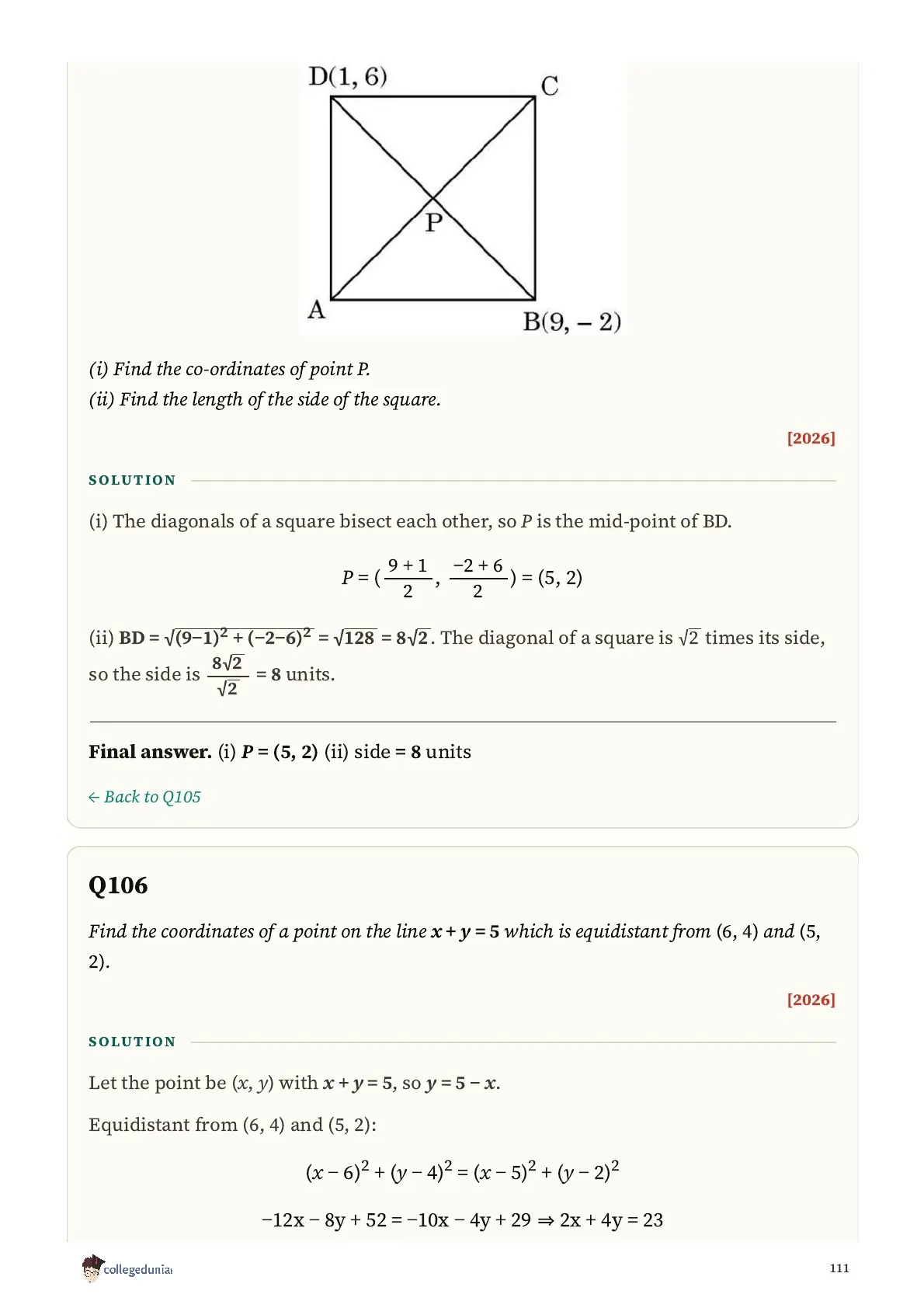
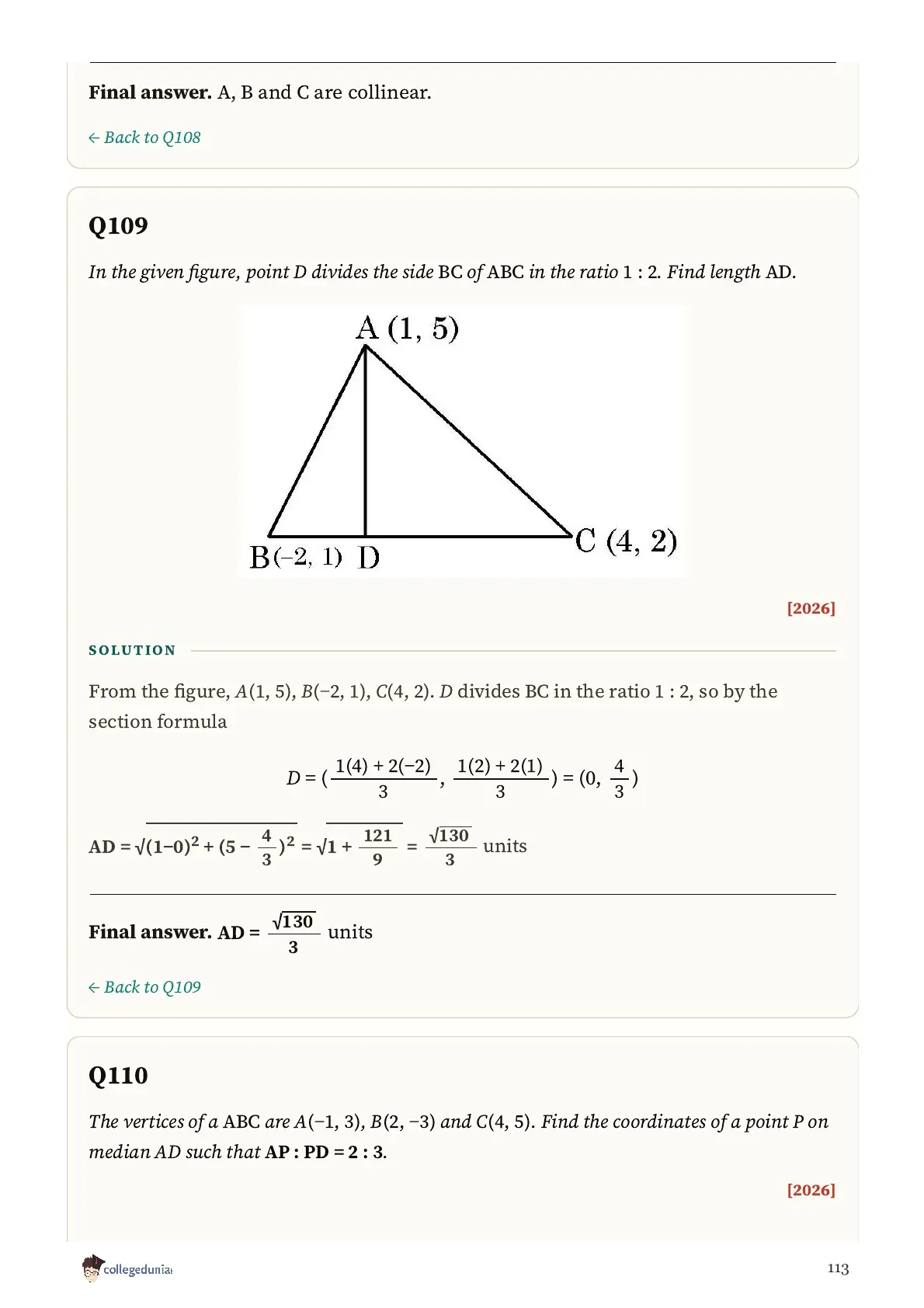
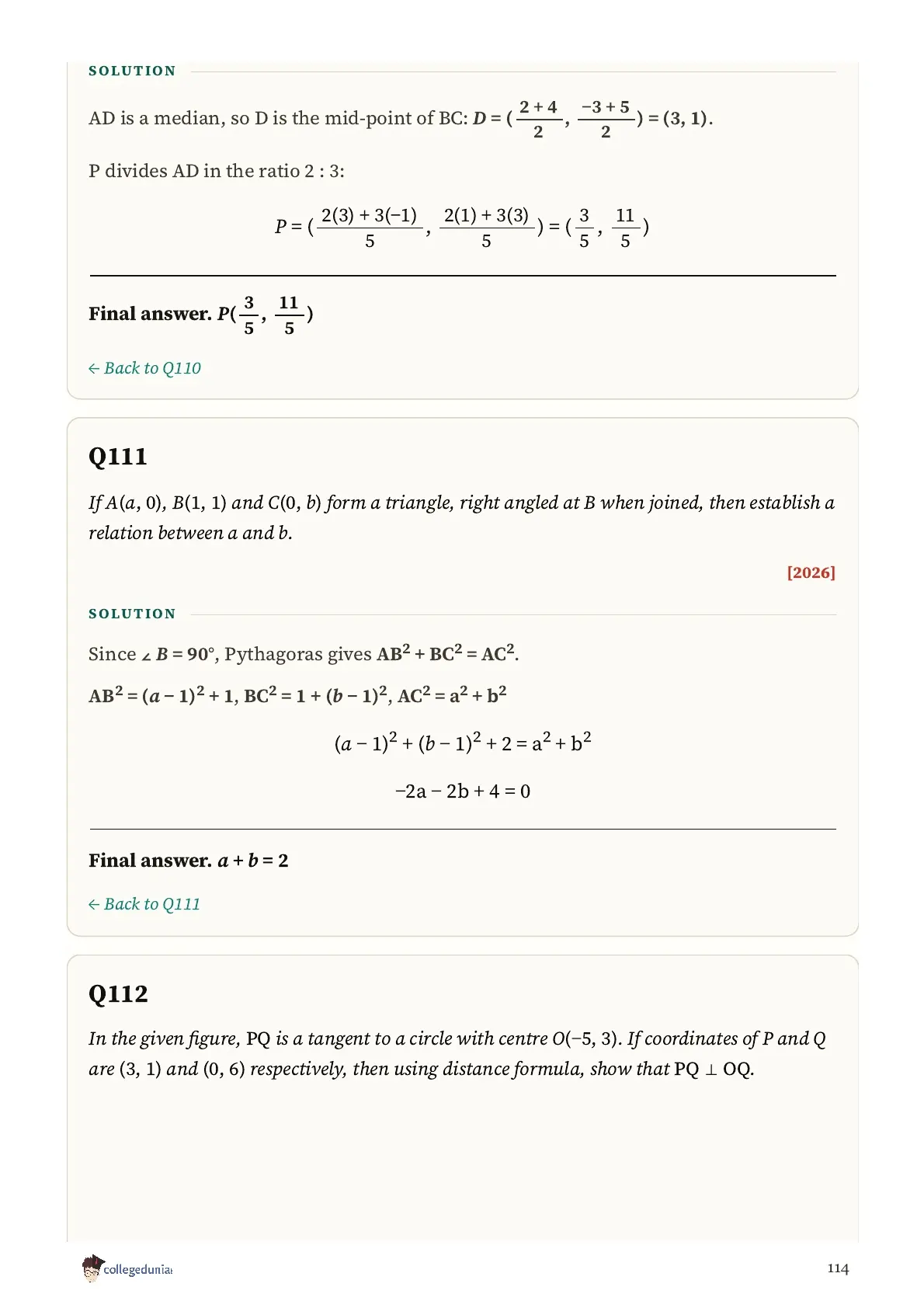
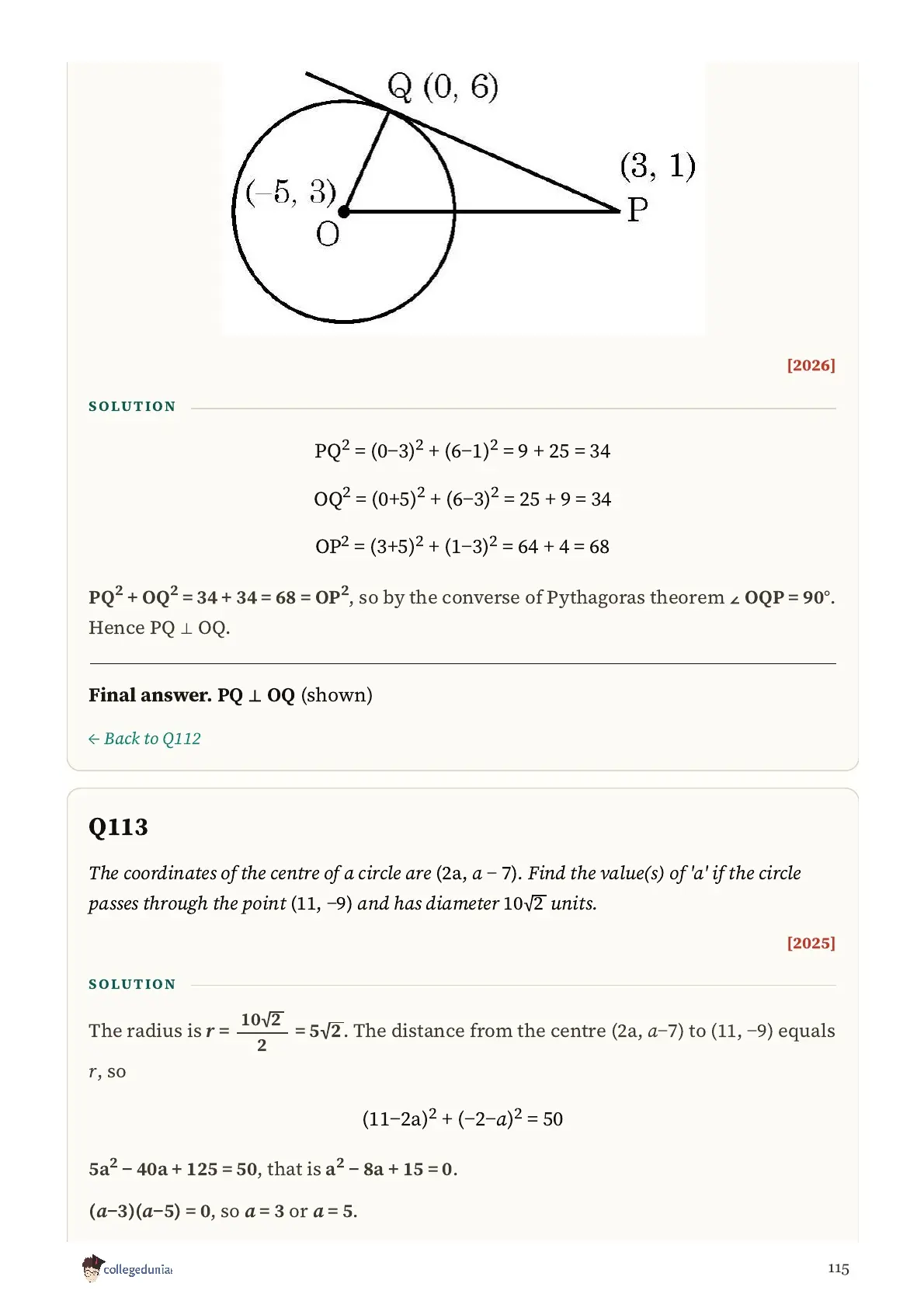
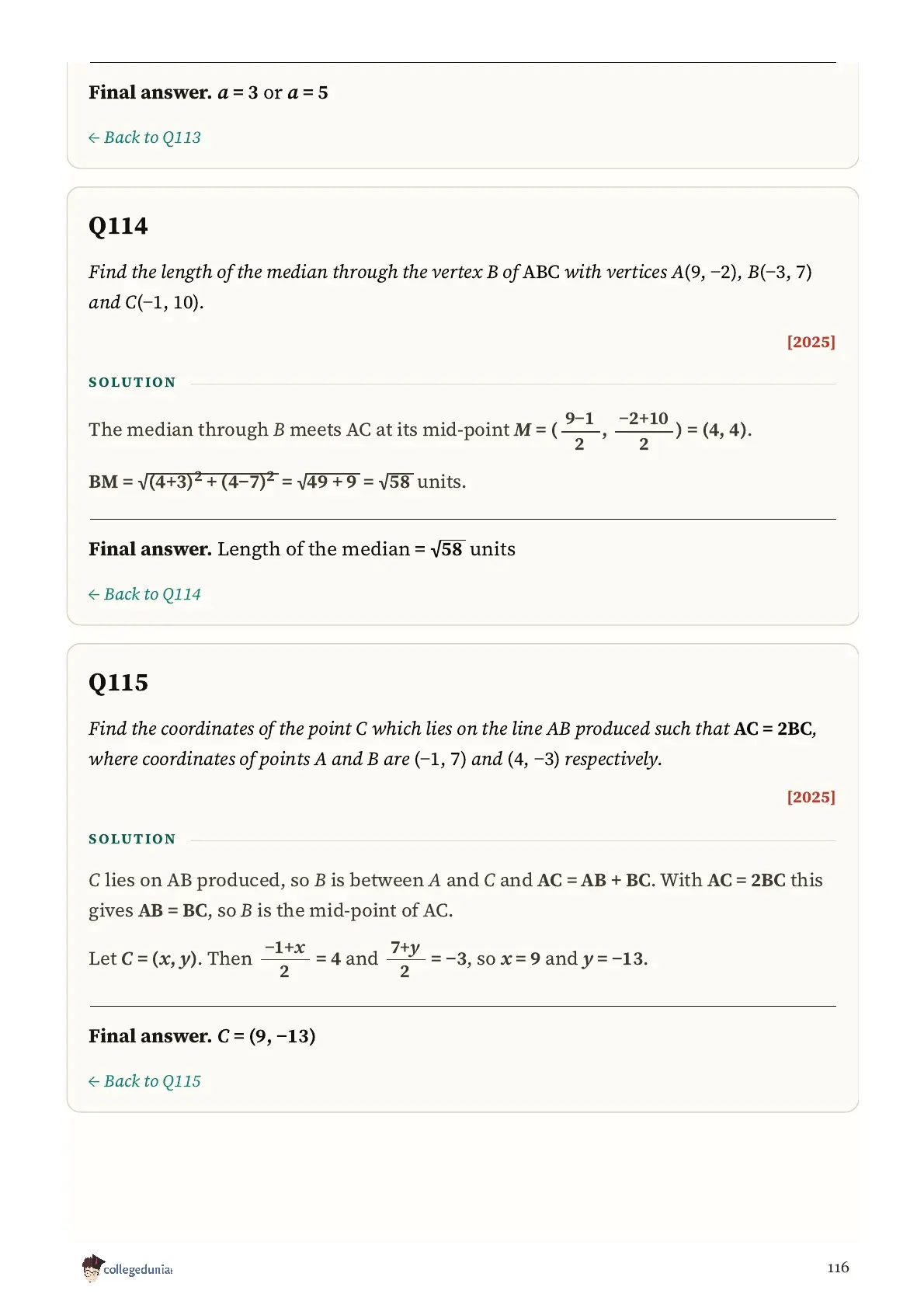
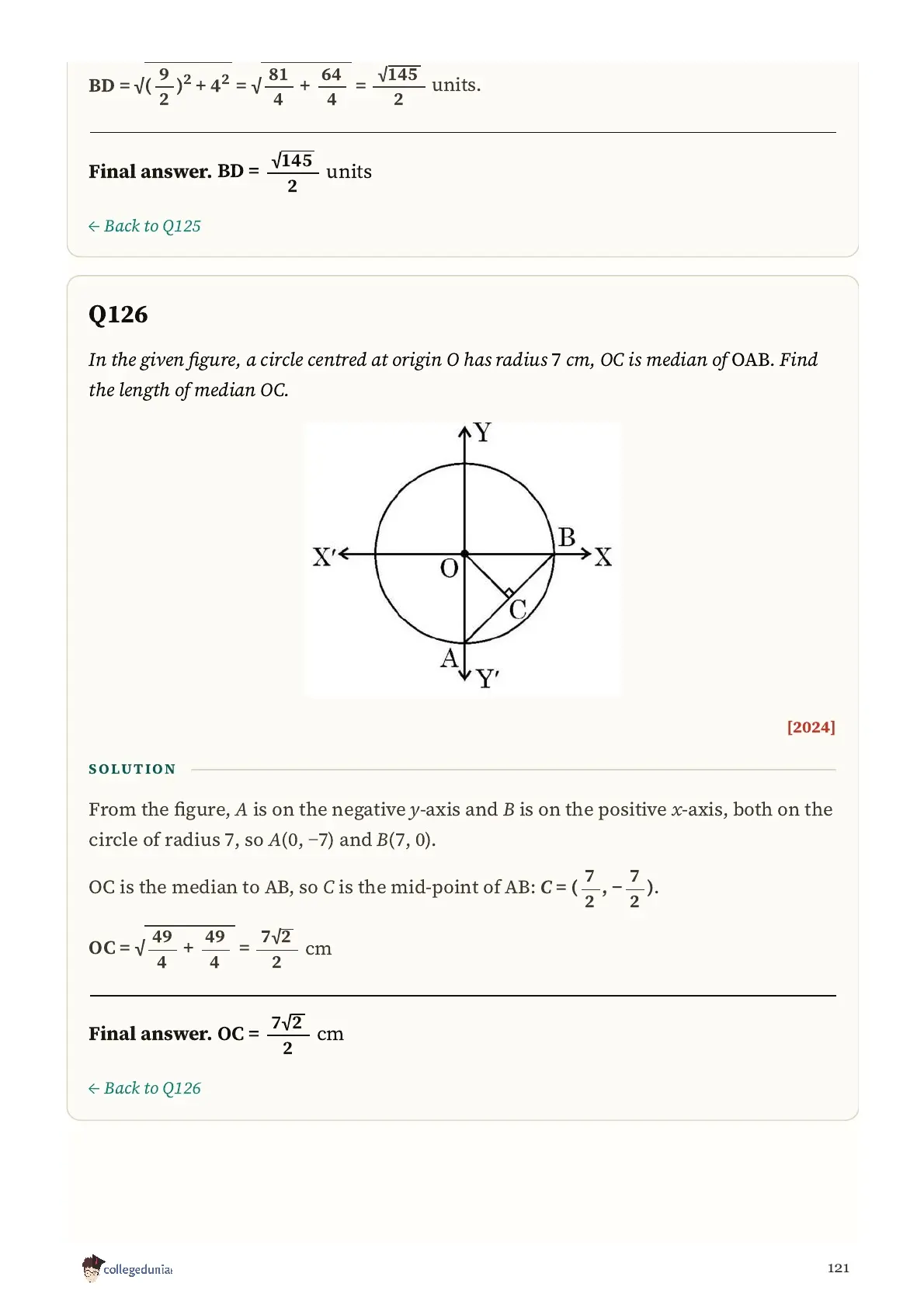
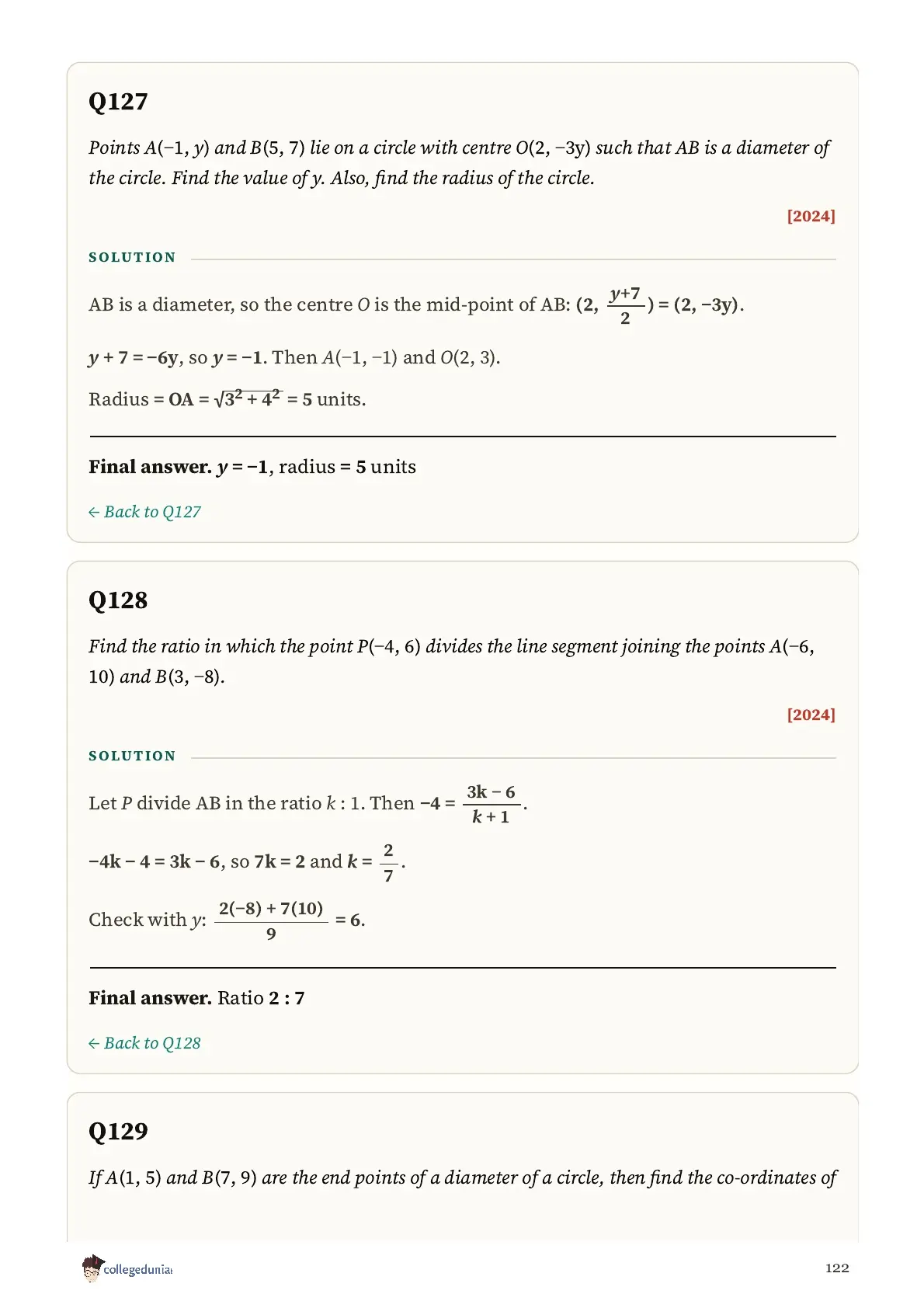
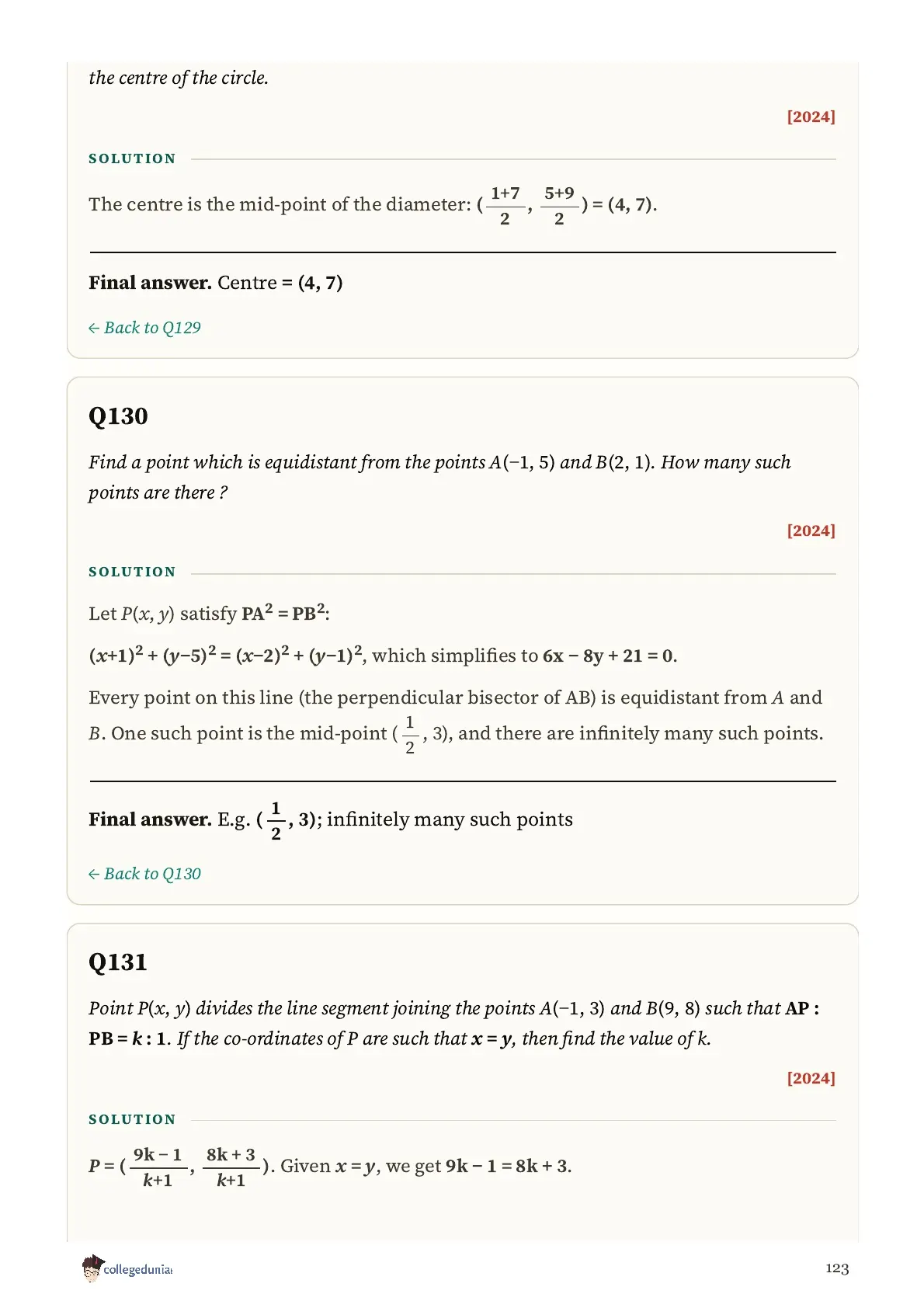
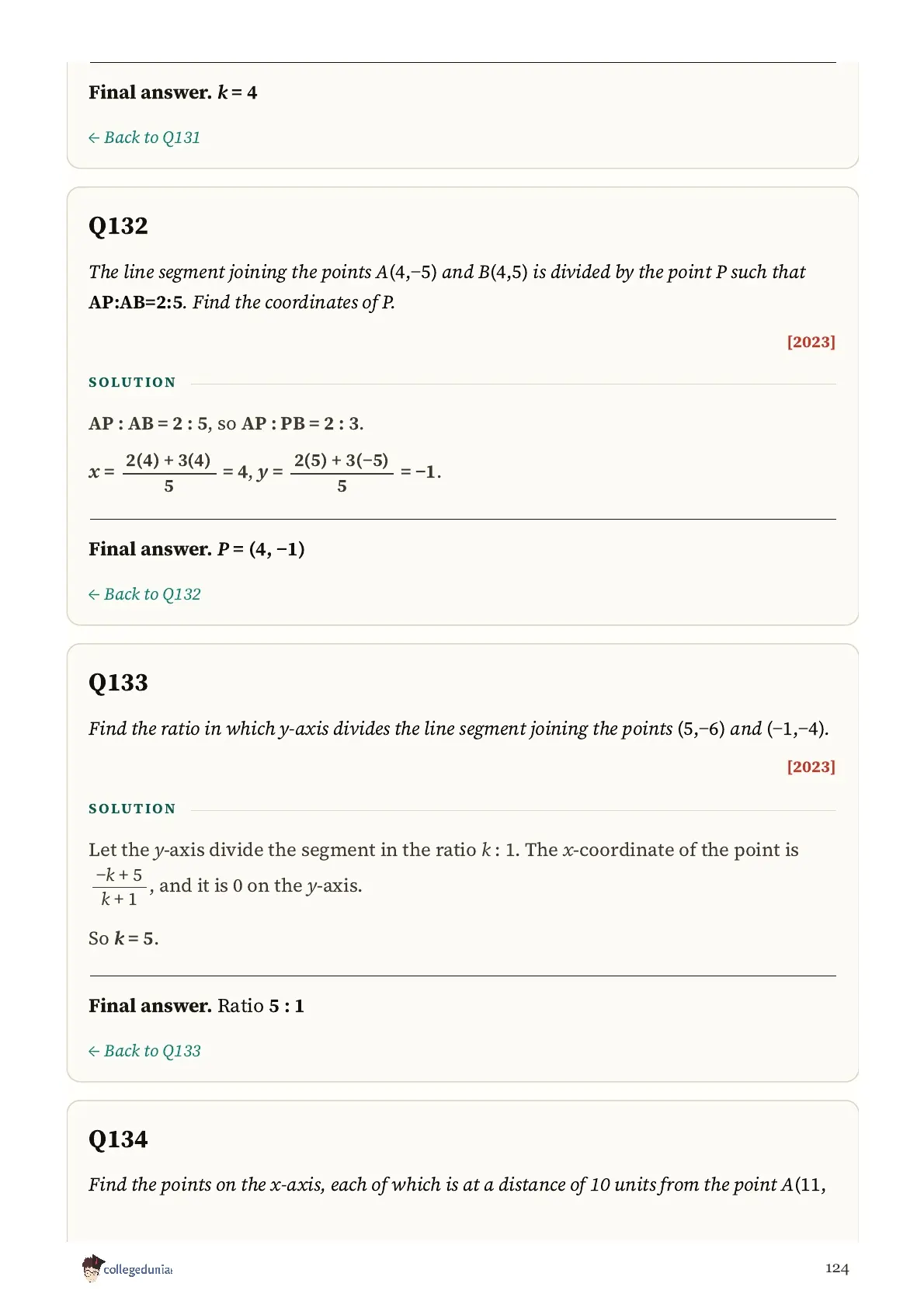
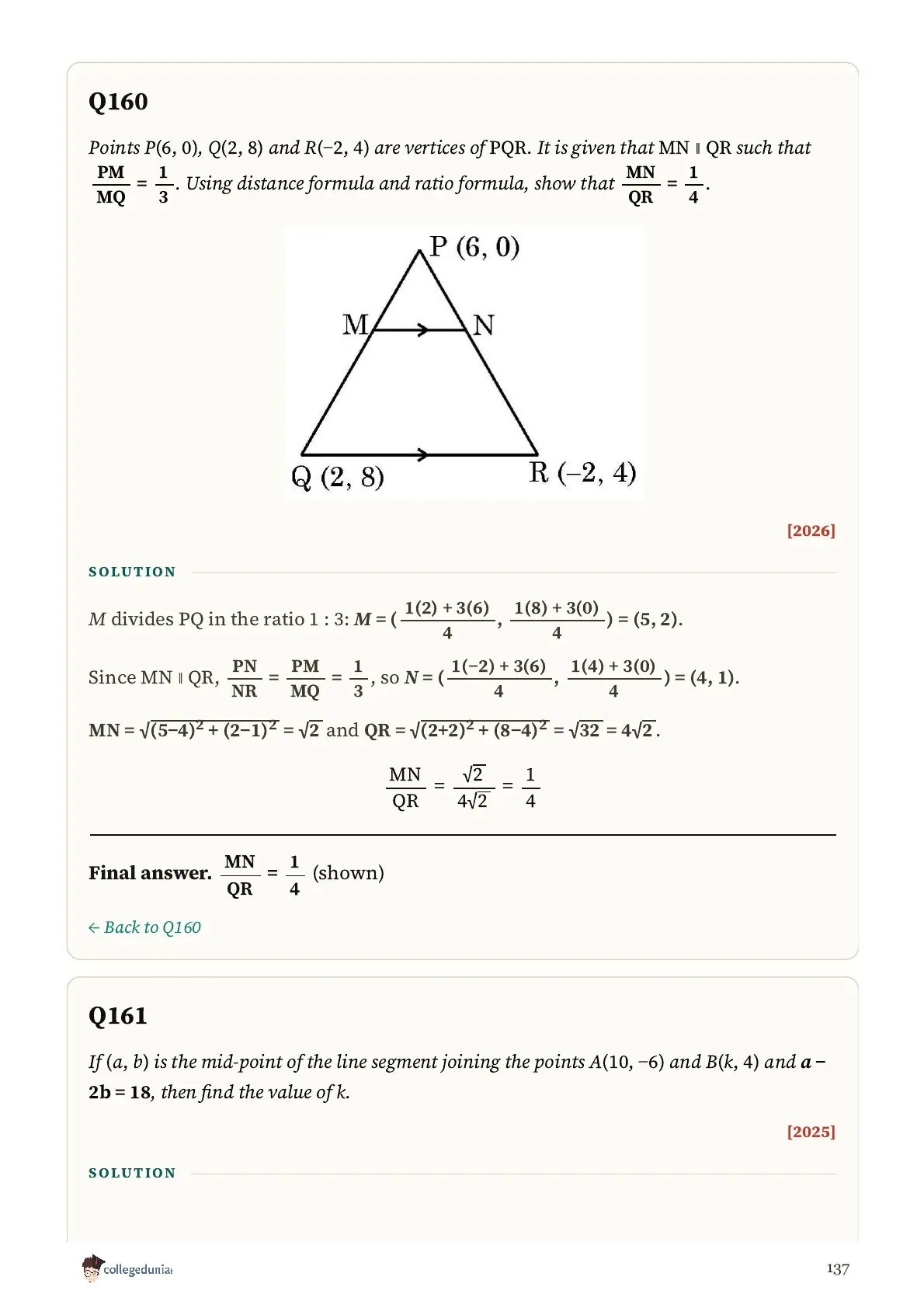
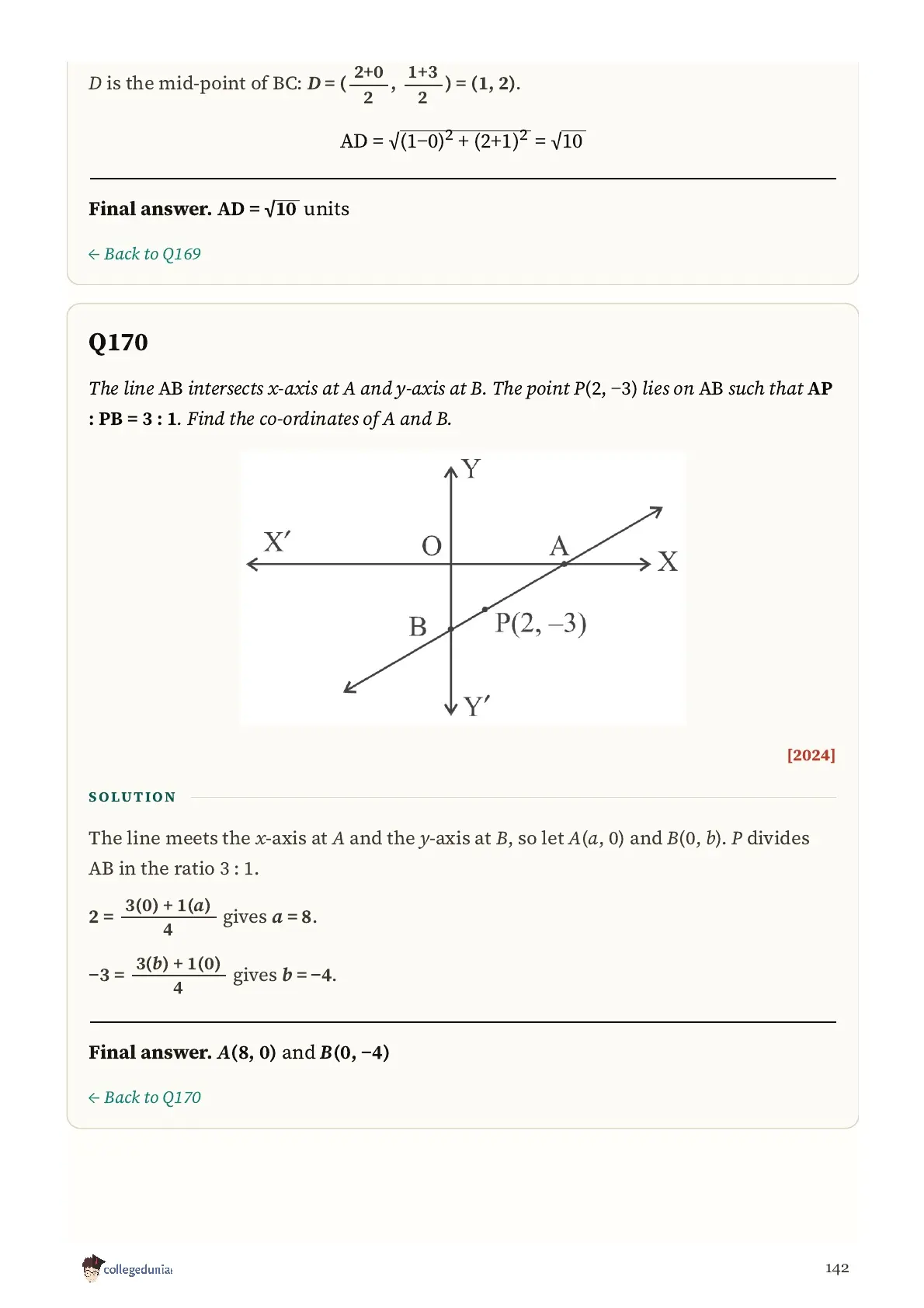
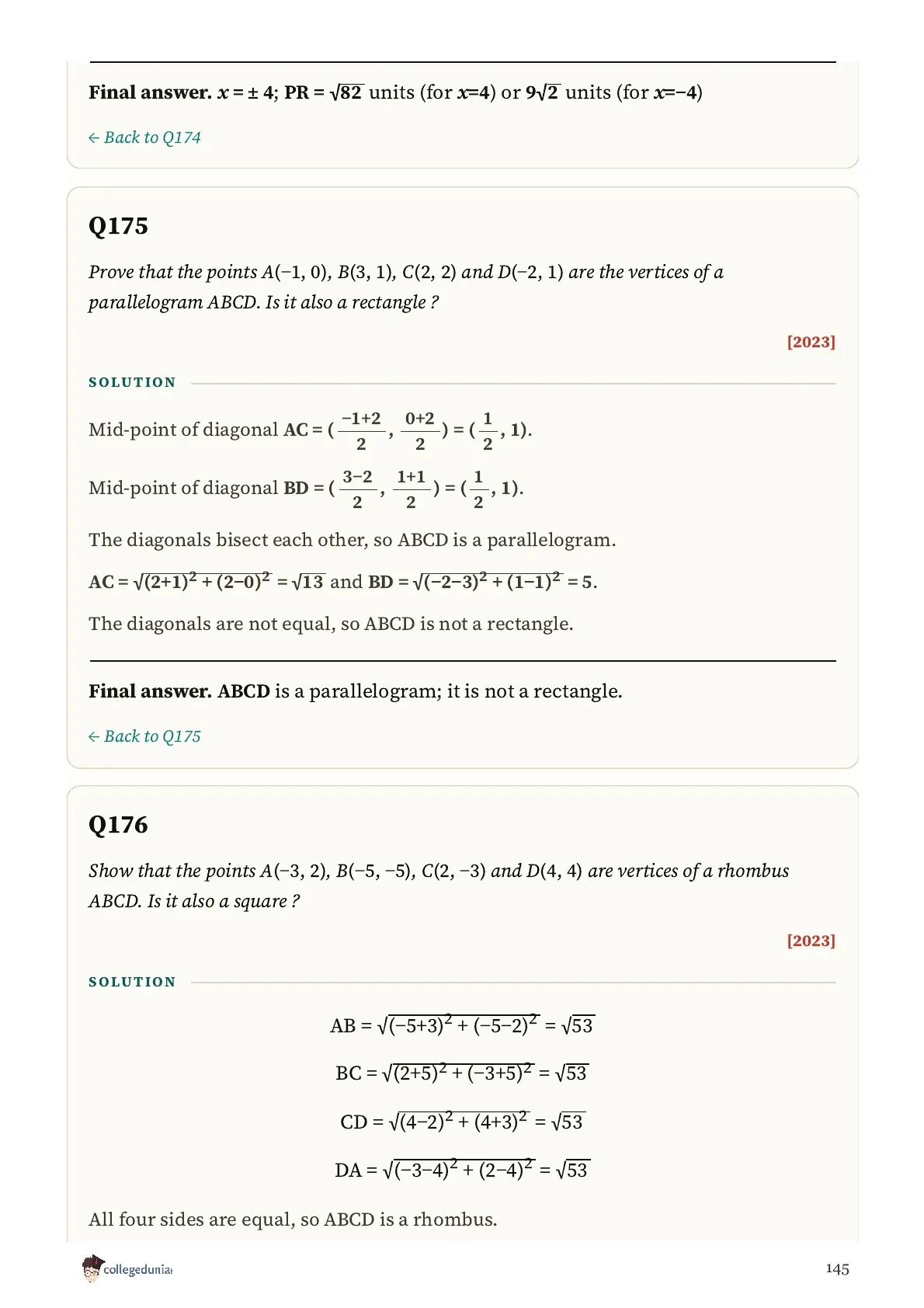
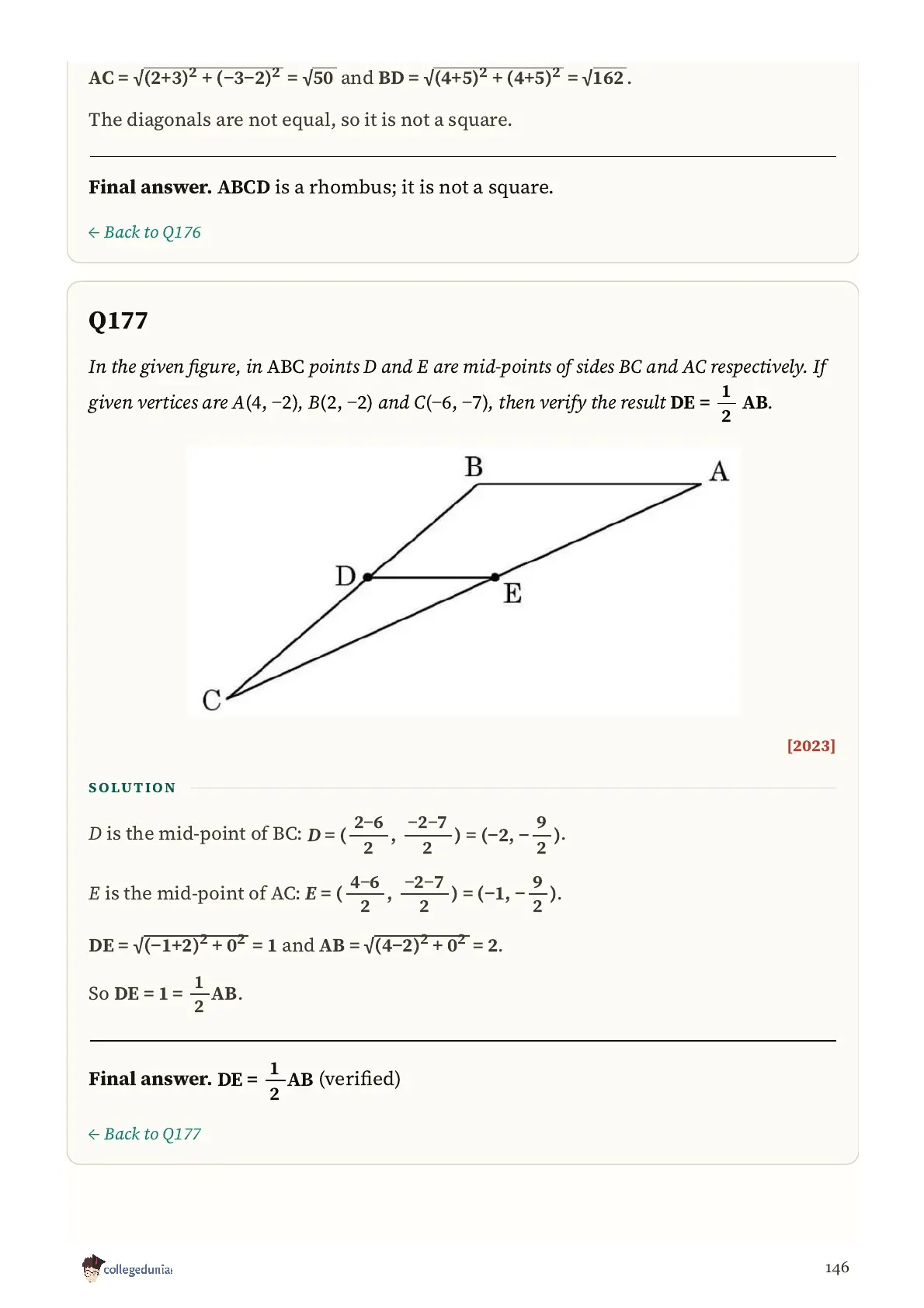
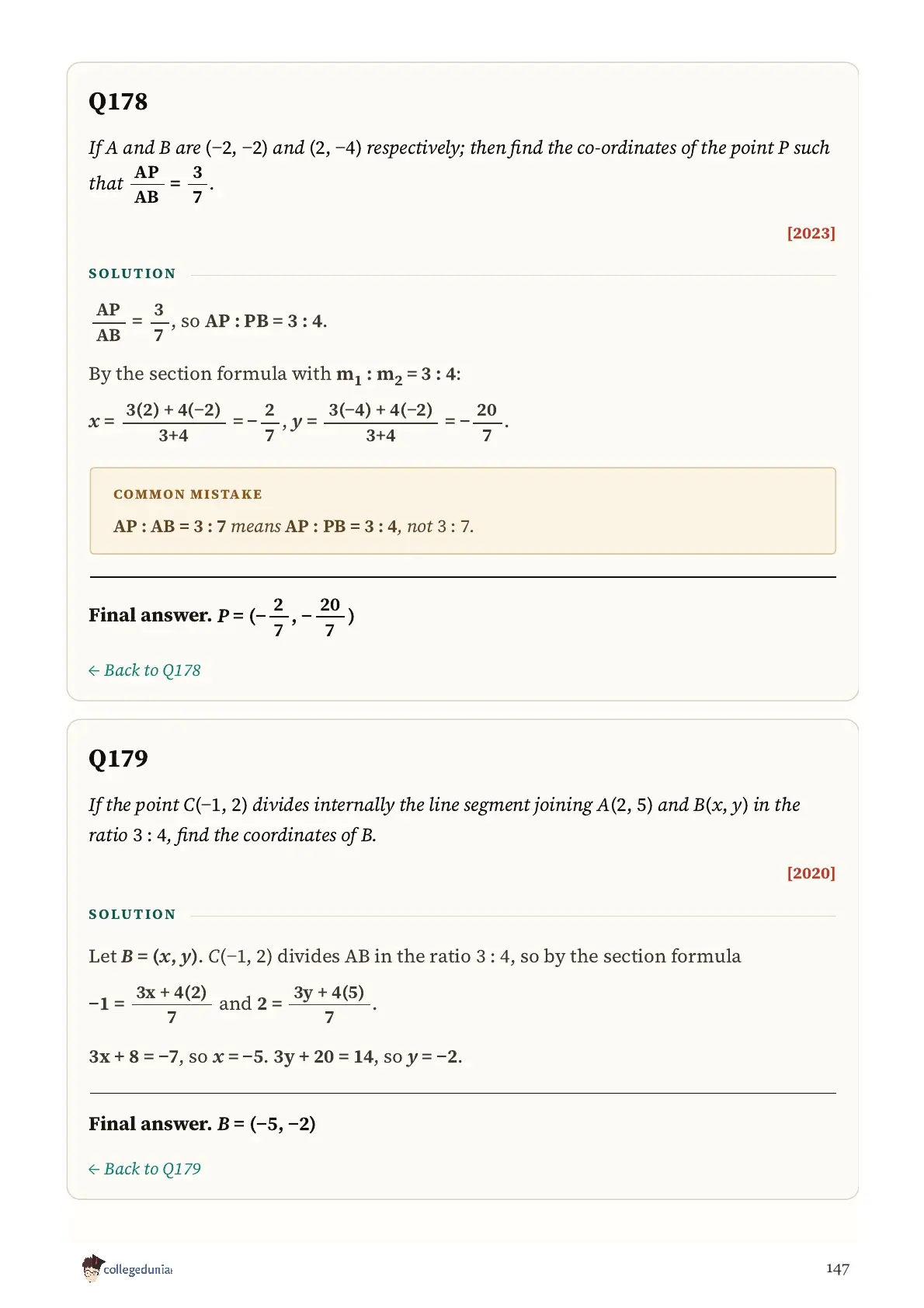
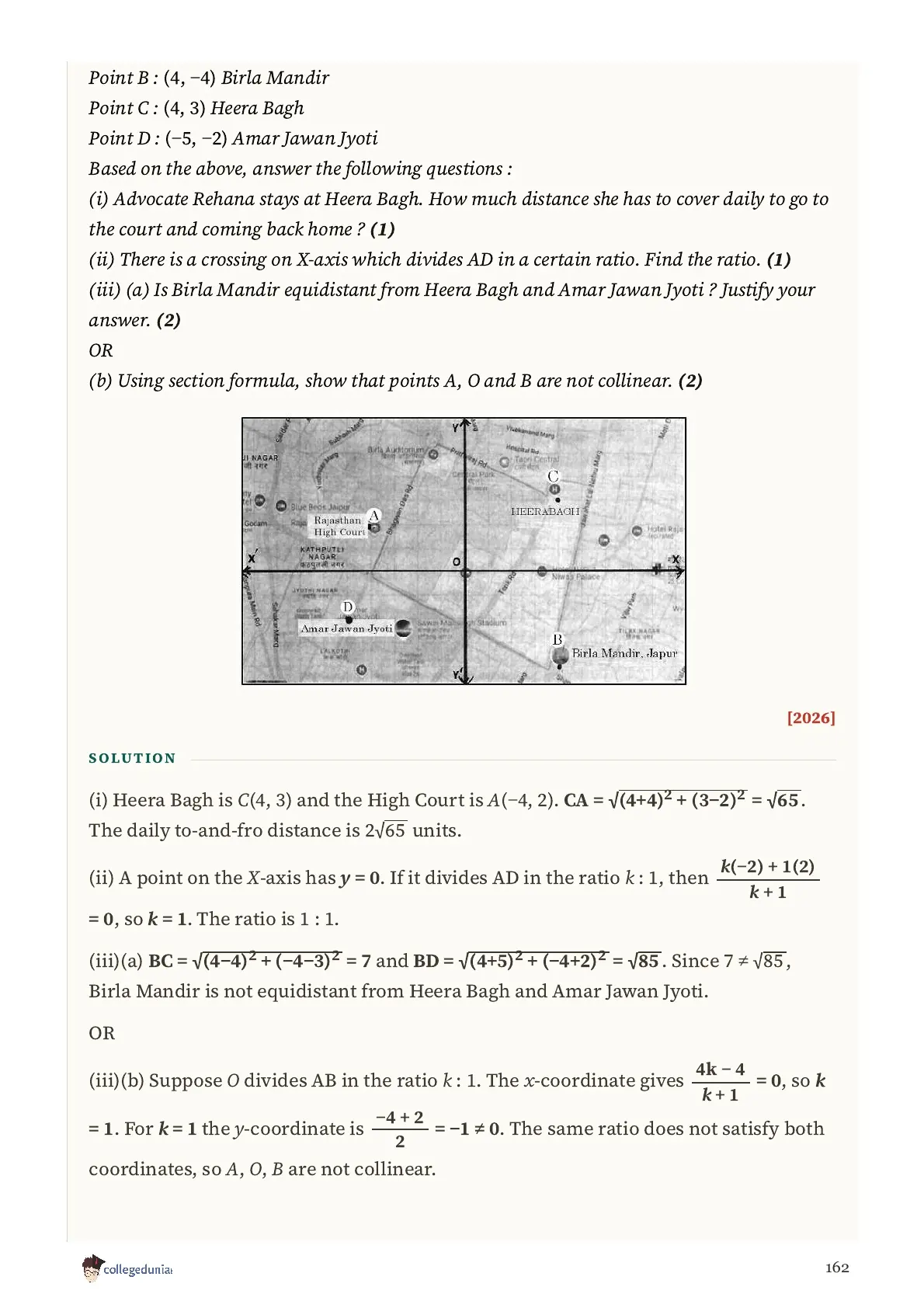
The 4-mark case studies, 11 in all, turn the same formulas into a park, a field or a city map. One 2026 case study uses the map of Jaipur city with Rambagh Palace as the origin. 21 questions carry their original diagram, all from the 2023 to 2026 papers, and 6 of the MCQs are assertion-reason items.
Counts come from keyword matches over the question text, so a question that names two things is counted under both.
Source: PW Foundation English
How to Approach the Set
Begin with the 76 MCQs and assertion-reason items, using the distance formula d = √[(x2 - x1)^2 + (y2 - y1)^2] and the section formula until both come without looking. Then take the 51 two-mark questions, which usually need one formula and one clean substitution. The 53 three-mark questions are next, as they join the section formula to a condition such as a point lying on a given line. Leave the 11 case studies for last and read the figure before the numbers. The 2023 to 2026 papers hold 126 of the 217 questions, so practise those closely.
Common Mistakes in Coordinate Geometry Questions
- Stopping at p = 4 in the 2026 question on the distance between (4, p) and (1, 0). Squaring gives p^2 = 16, so both p = 4 and p = -4 hold.
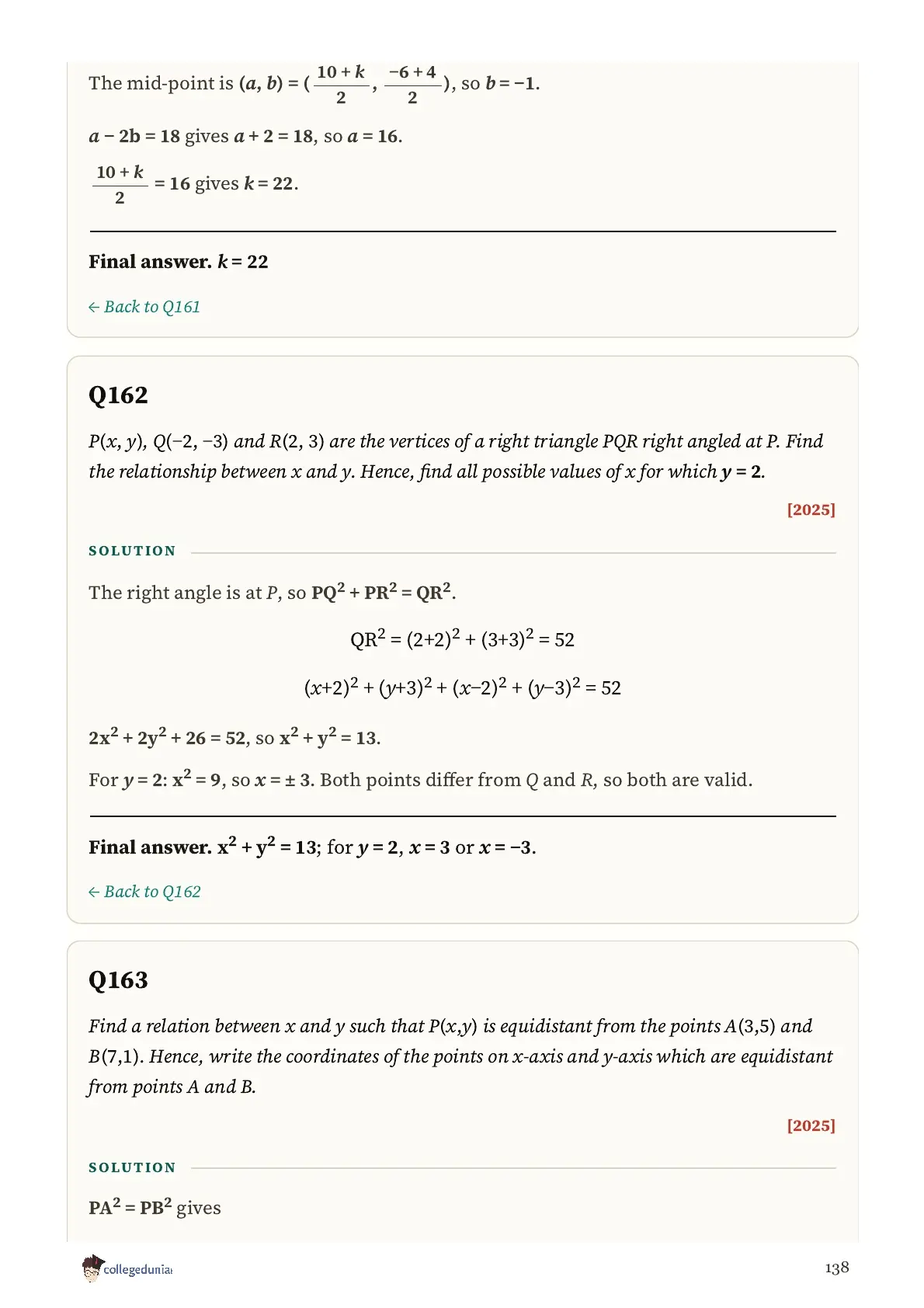
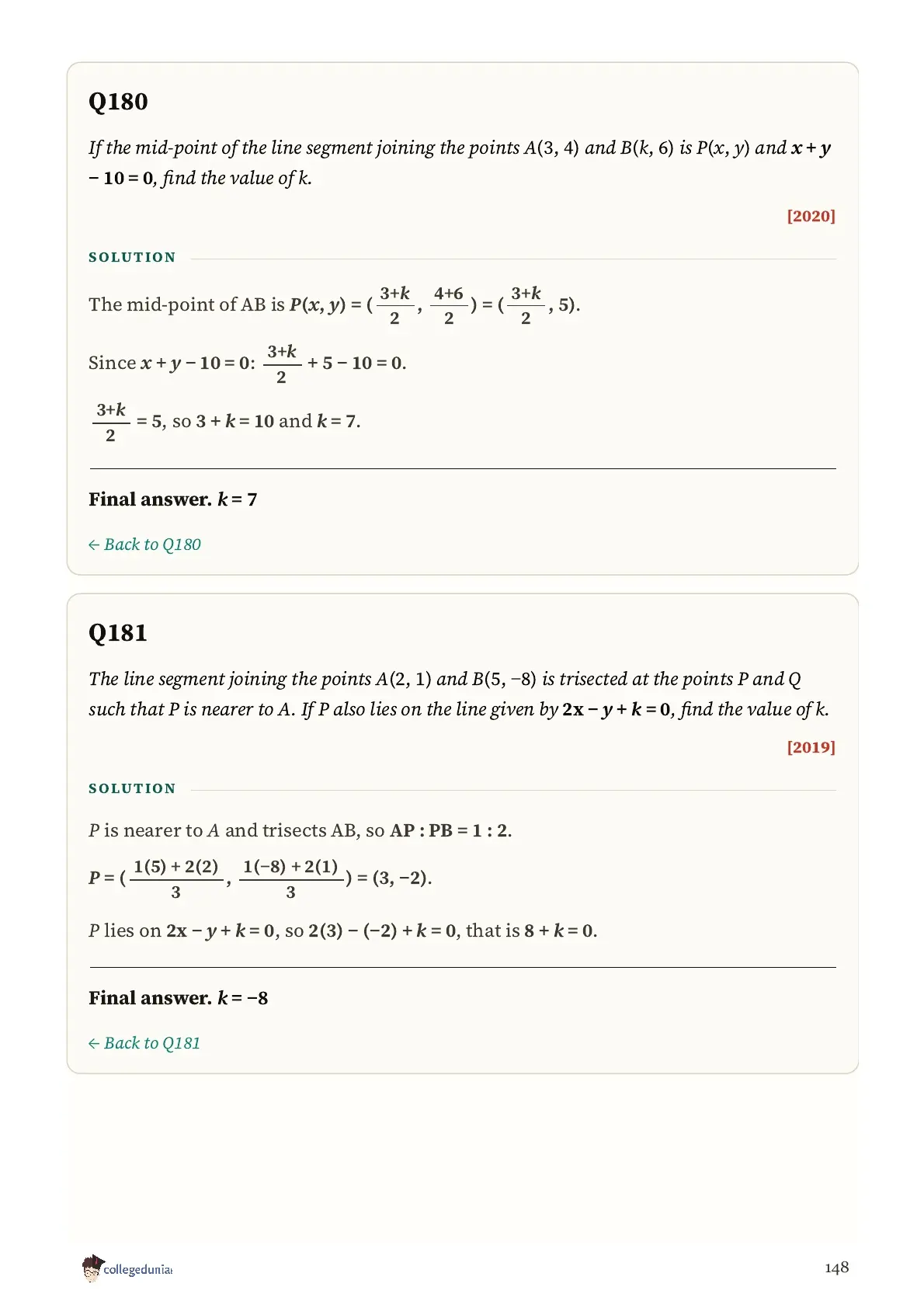
- Reading AP : AB = 3 : 7 as AP : PB = 3 : 7. The ratio is AP : PB = 3 : 4, and that is what goes into the section formula.
- Giving -1 as the distance of a point from the x-axis. A distance is never negative, so the answer is |y| = 1.
- Forgetting that a point on the x-axis has y = 0, and so solving with two unknowns where one is enough.
- Swapping the two ratio terms in the section formula, which moves the point to the wrong end of the segment.
Using the Answer Key and Solutions
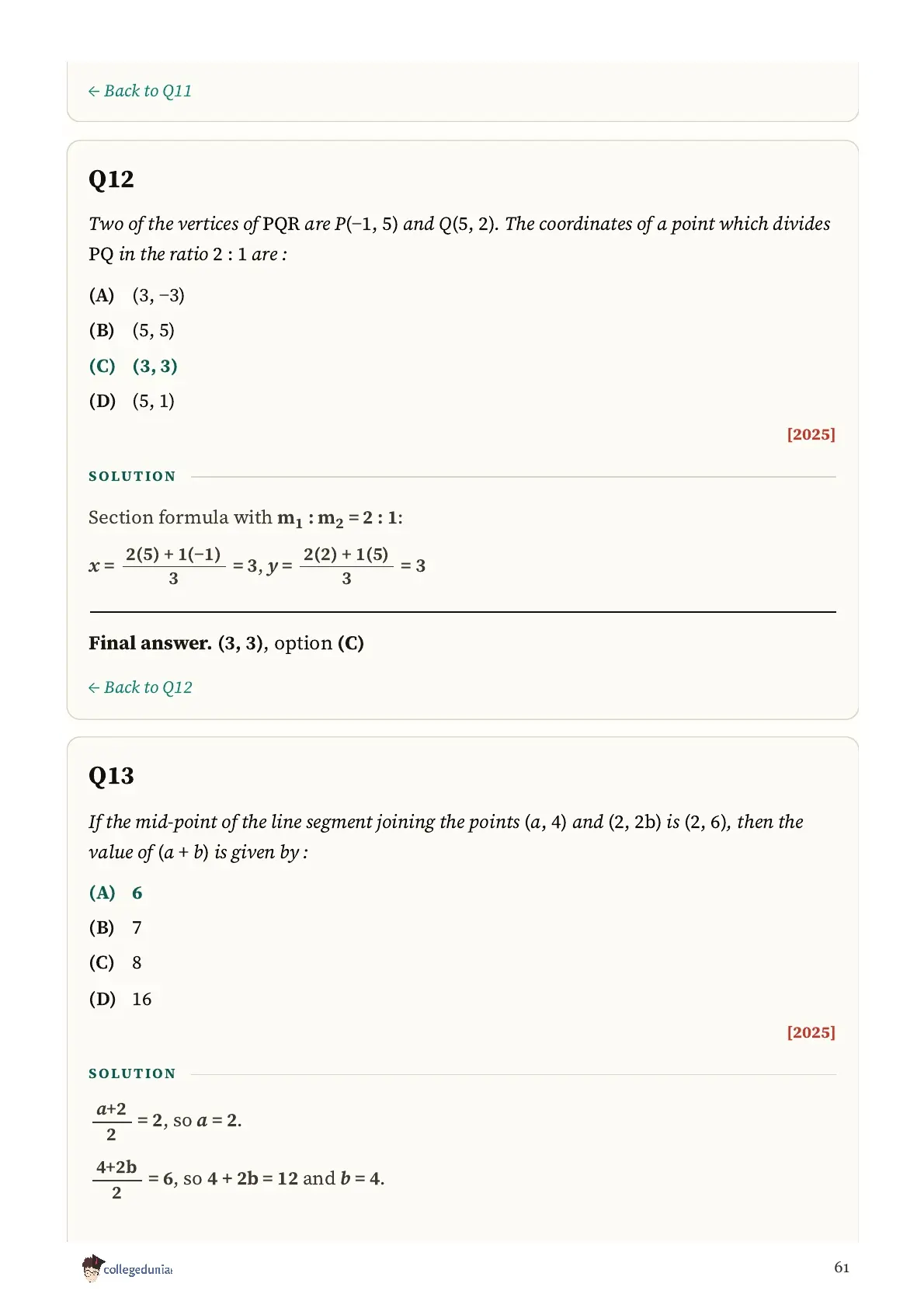
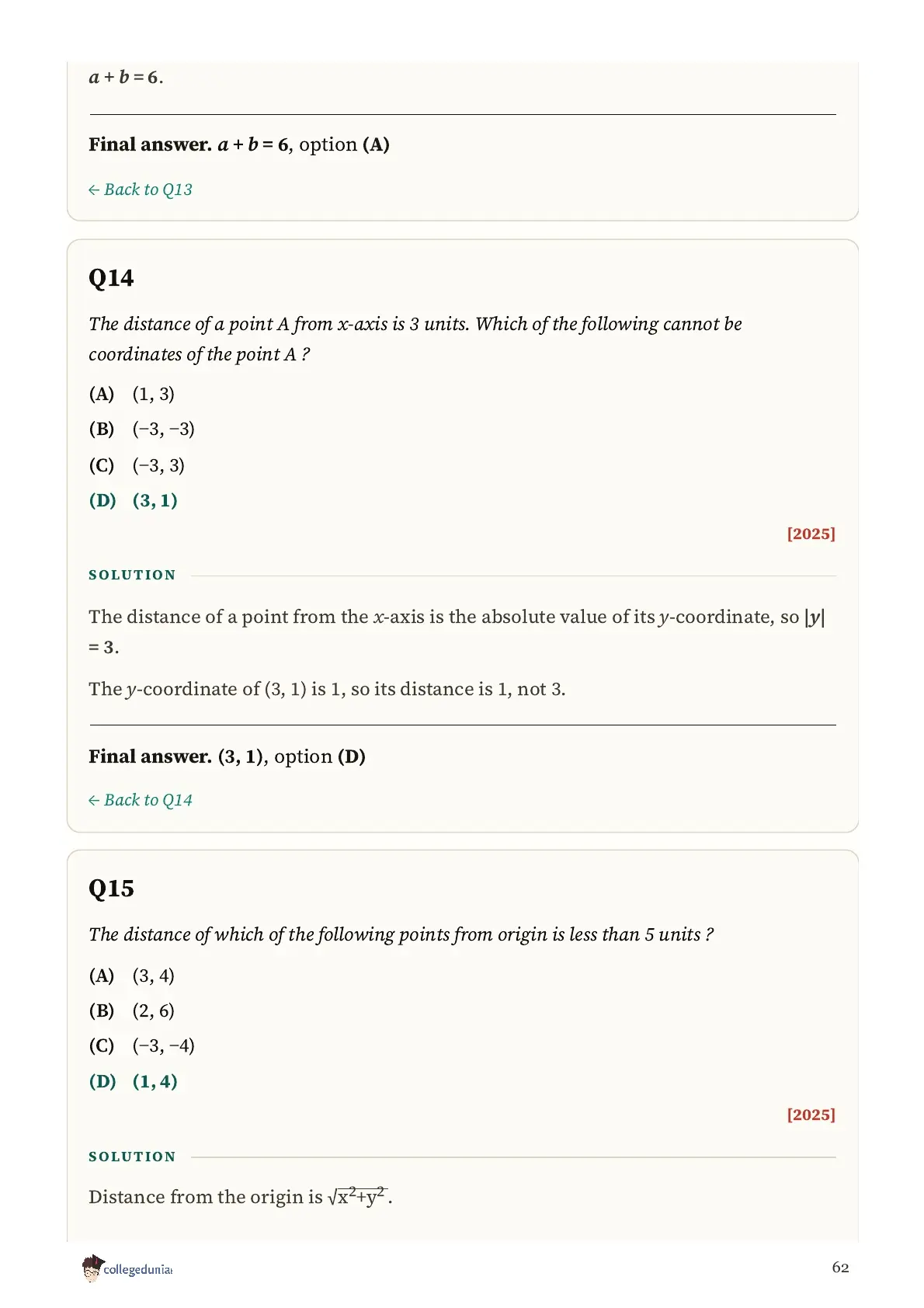
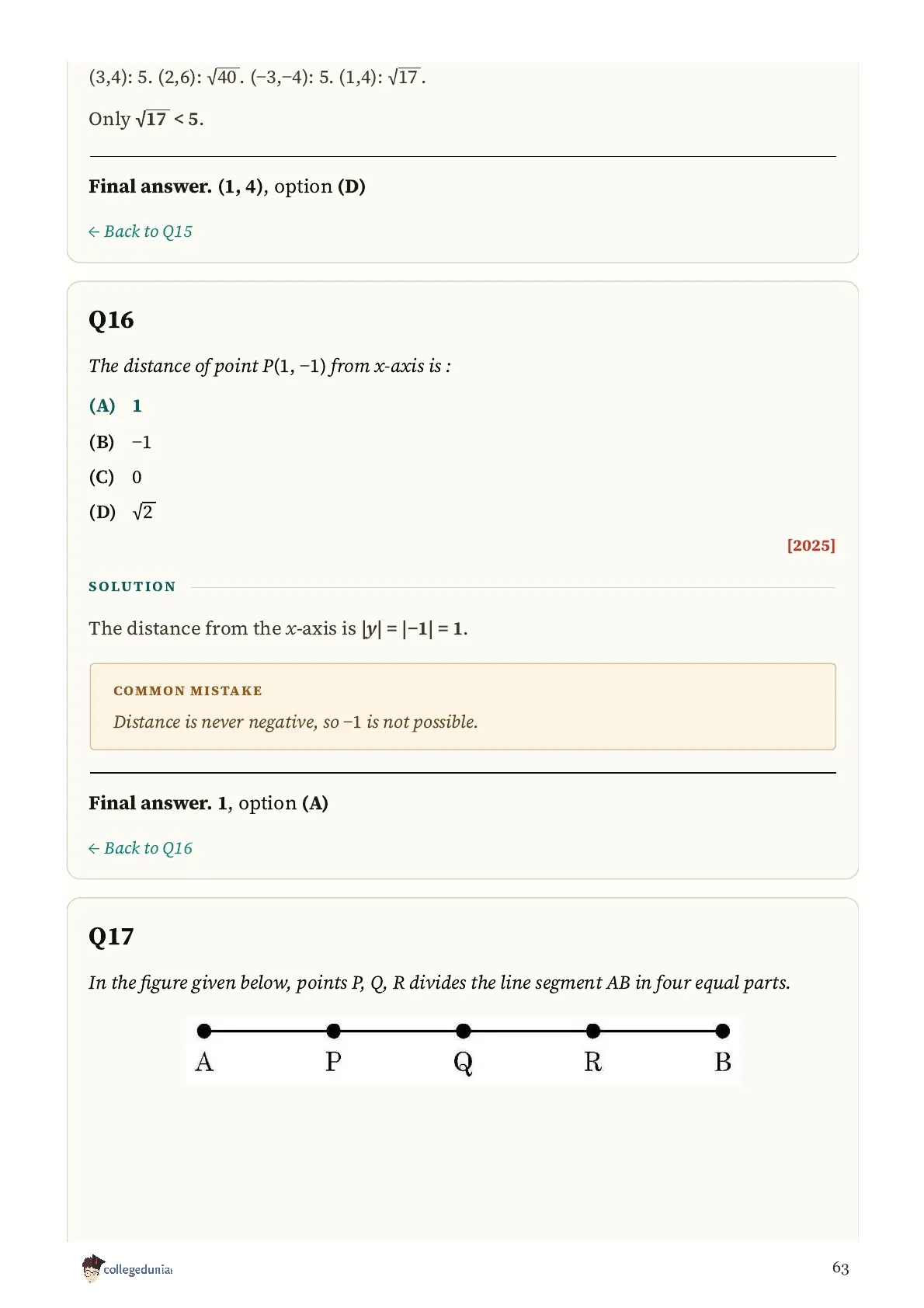
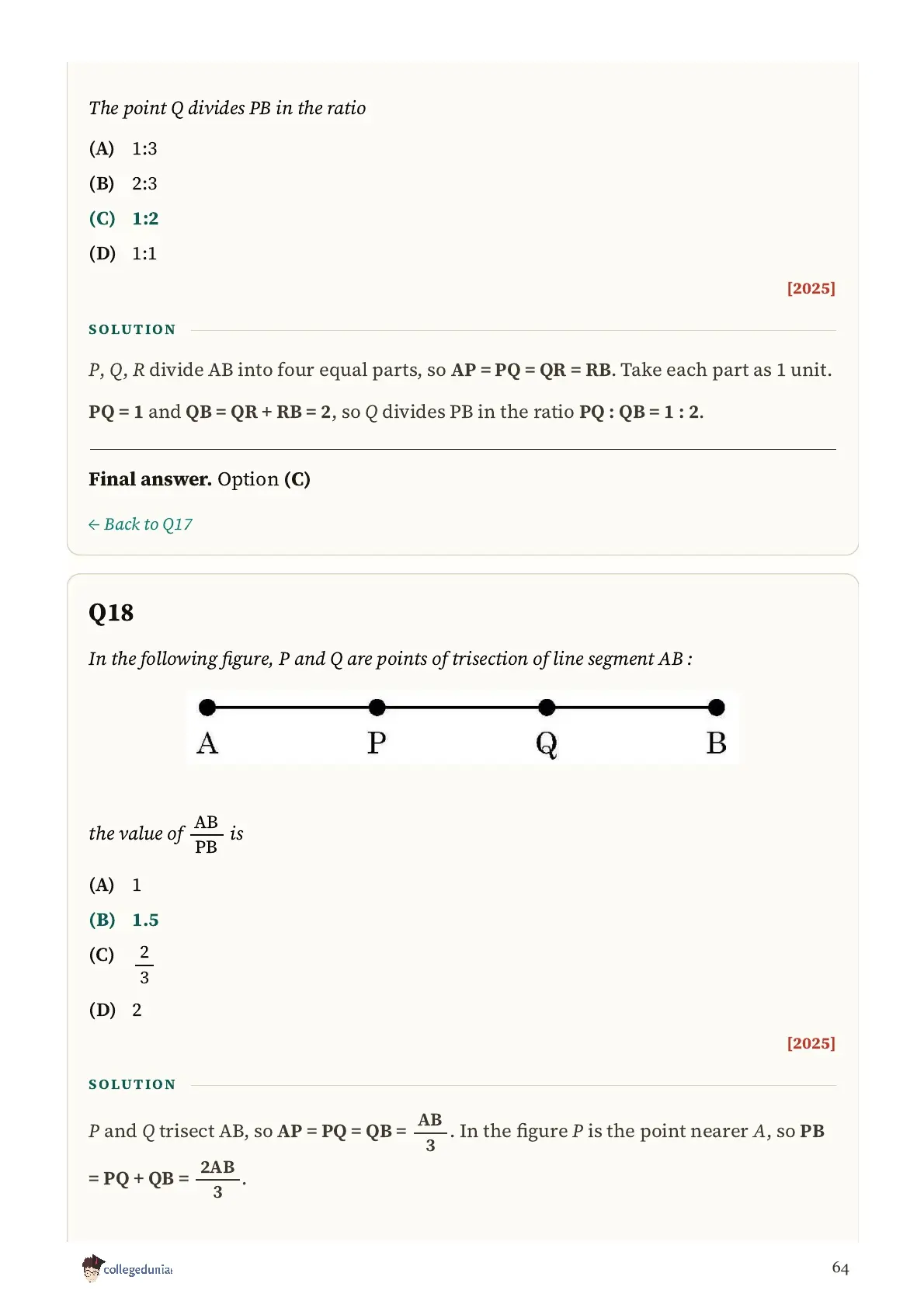
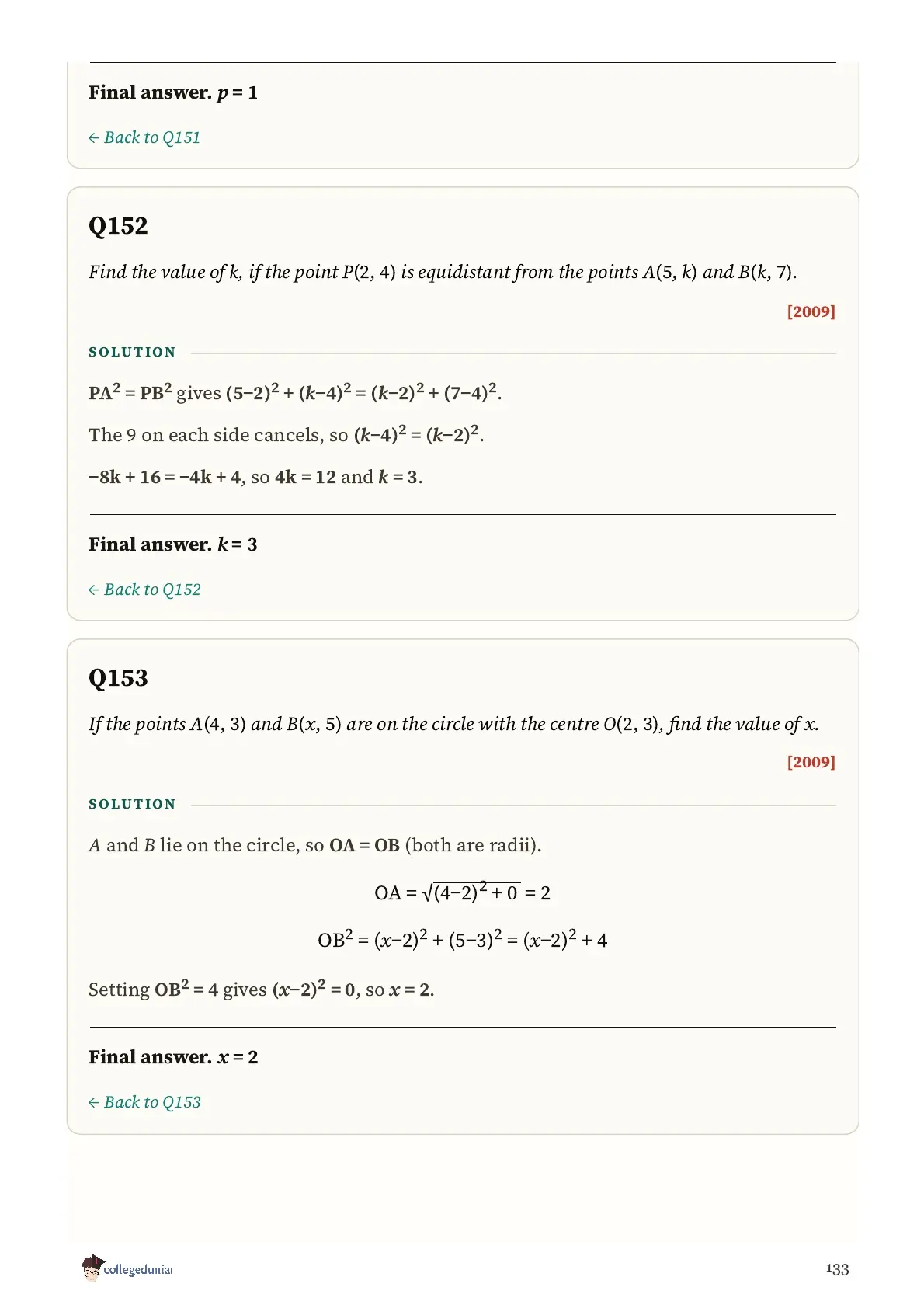
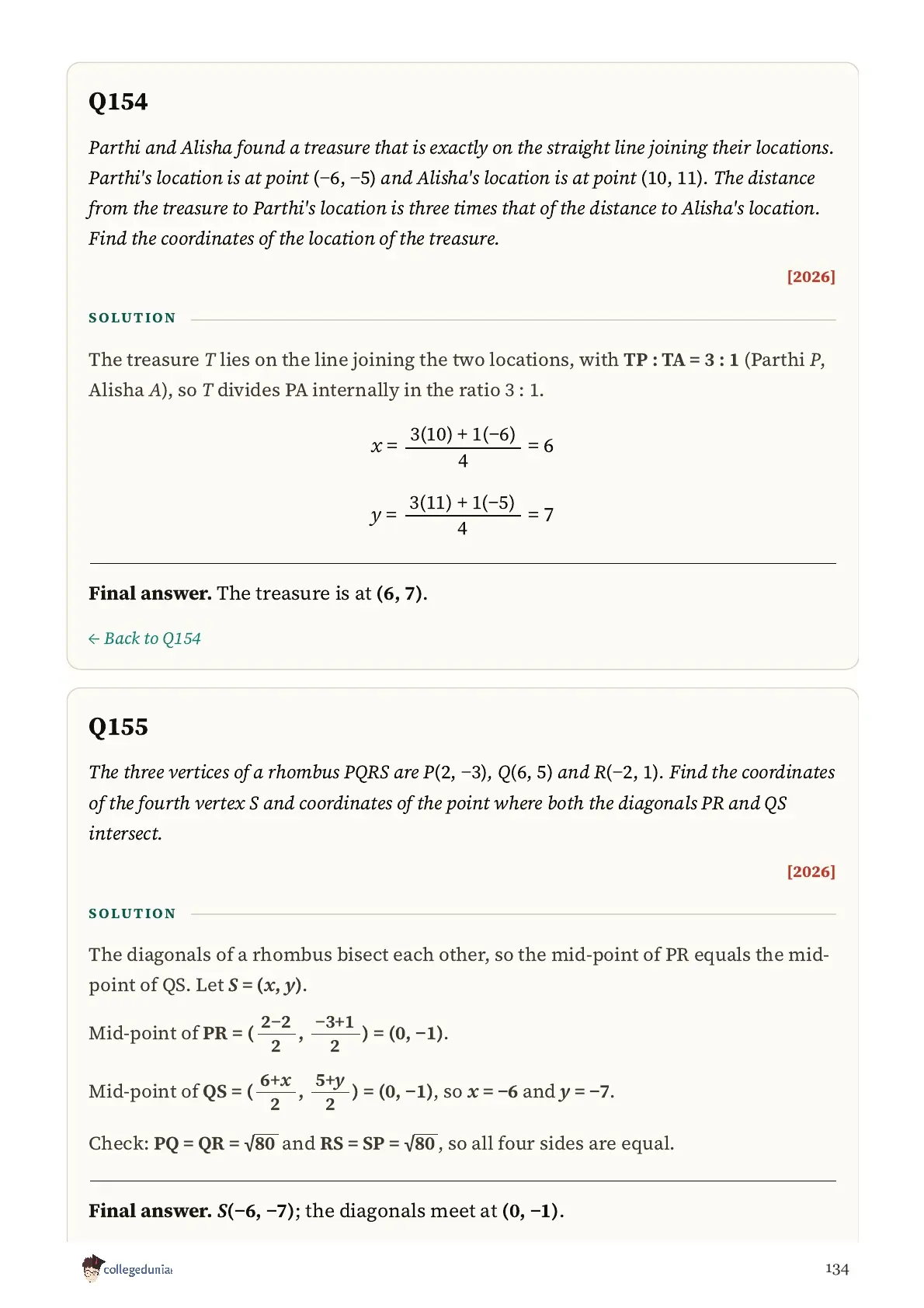
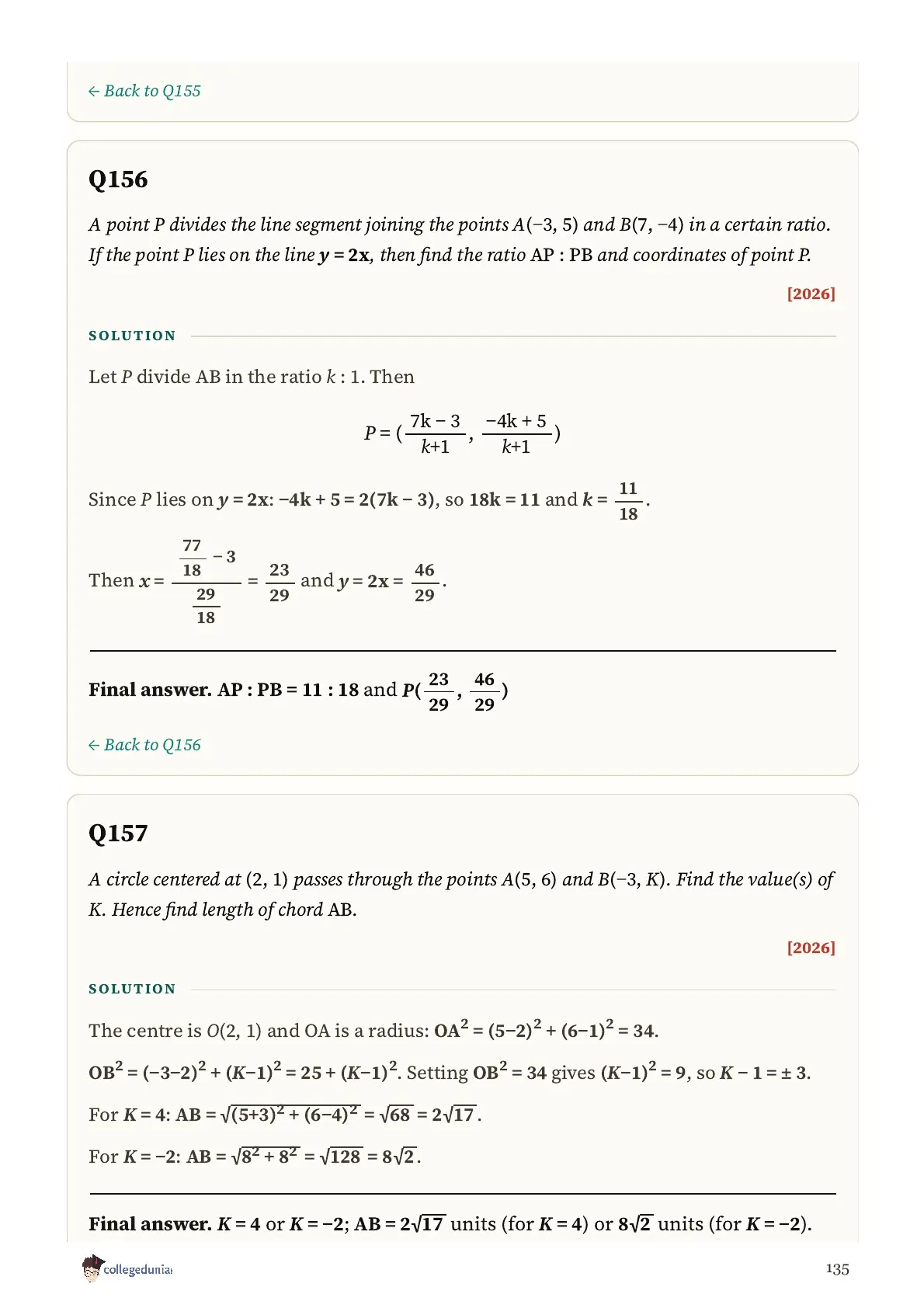
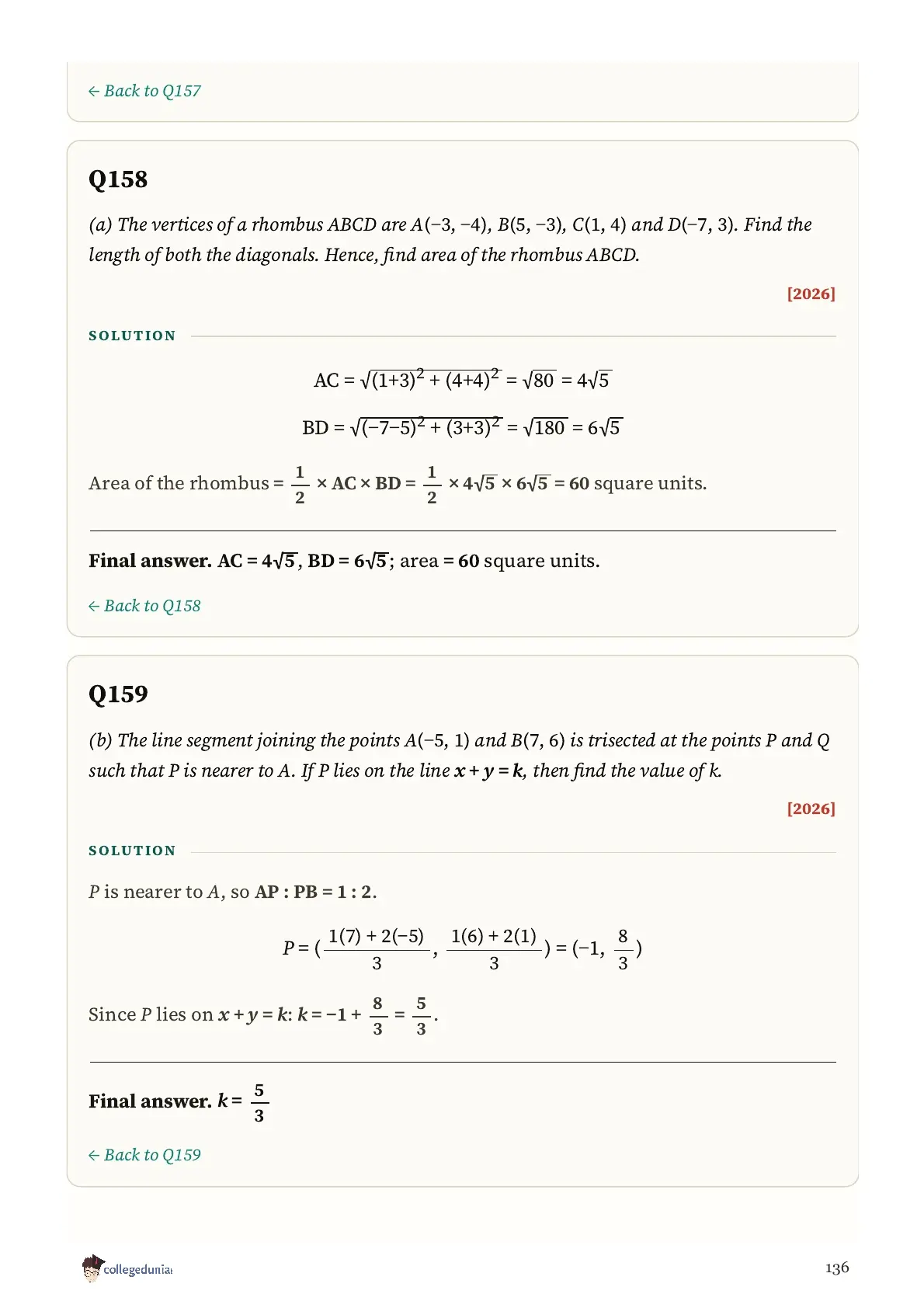
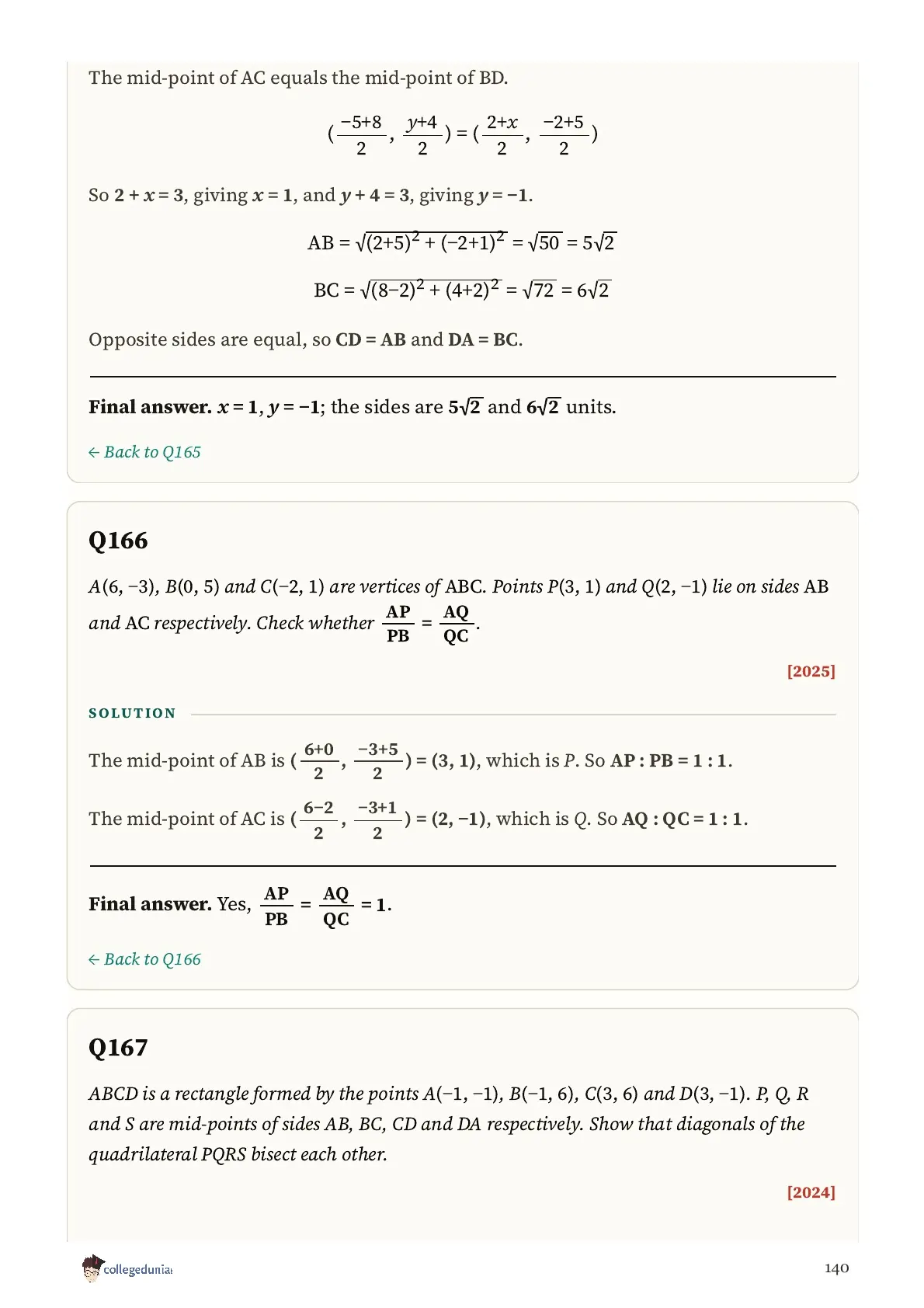
The PDF is 167 pages and free to download. Each section is sorted newest year first, the Answer Key lists the 76 MCQs at a glance, and each question links to its worked solution and back. Attempt a question yourself first, check the key, then read the solution. The solutions are written by Collegedunia's Maths experts and are not official CBSE marking schemes.
Class 10 Maths PYQs by Chapter
| Unit | PYQ Page |
|---|---|
| Number Systems | Real Numbers Class 10 Maths PYQ |
| Algebra | Polynomials Class 10 Maths PYQ |
| Algebra | Pair of Linear Equations in Two Variables Class 10 Maths PYQ |
| Algebra | Quadratic Equations Class 10 Maths PYQ |
| Algebra | Arithmetic Progressions Class 10 Maths PYQ |
| Geometry | Triangles Class 10 Maths PYQ |
| Coordinate Geometry | Coordinate Geometry Class 10 Maths PYQ |
| Trigonometry | Introduction to Trigonometry Class 10 Maths PYQ |
| Trigonometry | Some Applications of Trigonometry Class 10 Maths PYQ |
| Geometry | Circles Class 10 Maths PYQ |
| Mensuration | Areas Related to Circles Class 10 Maths PYQ |
| Mensuration | Surface Areas and Volumes Class 10 Maths PYQ |
| Statistics and Probability | Statistics Class 10 Maths PYQ |
| Statistics and Probability | Probability Class 10 Maths PYQ |
Coordinate Geometry Class 10 Maths PYQ FAQs
Ques. How many questions are in the Coordinate Geometry Class 10 Maths PYQ PDF?
Ans. The PDF has 217 questions from the 2003 to 2026 board papers: 102 at 1 mark, 51 at 2 marks, 53 at 3 marks and 11 case studies at 4 marks.
Ques. Does this PYQ PDF include solutions, or only the questions?
Ans. All 217 questions have a worked solution in the PDF. The 76 MCQs and assertion-reason items are also listed in the Answer Key before the solutions.
Ques. Are the solutions official?
Ans. No. They are written by Collegedunia's Maths experts, checked against the NCERT chapter with every calculation re-run. They are not an official CBSE marking scheme, so the board's wording of an answer may differ.
Ques. How many marks does Coordinate Geometry carry in the Class 10 Maths paper?
Ans. CBSE publishes marks per unit, not per chapter. The unit Coordinate Geometry is listed at 6 of the 80 theory marks. That figure comes from prep sites summarising the 2026-27 curriculum, so confirm it on cbseacademic.nic.in.
Ques. Which formulas matter most for Coordinate Geometry questions?
Ans. The distance formula and the section formula carry most of the set. Distance appears in 38 questions, ratio or section-type questions in 39 and mid-points in 23. The 3-mark questions often combine the two.
Ques. Are there figure-based questions in this set?
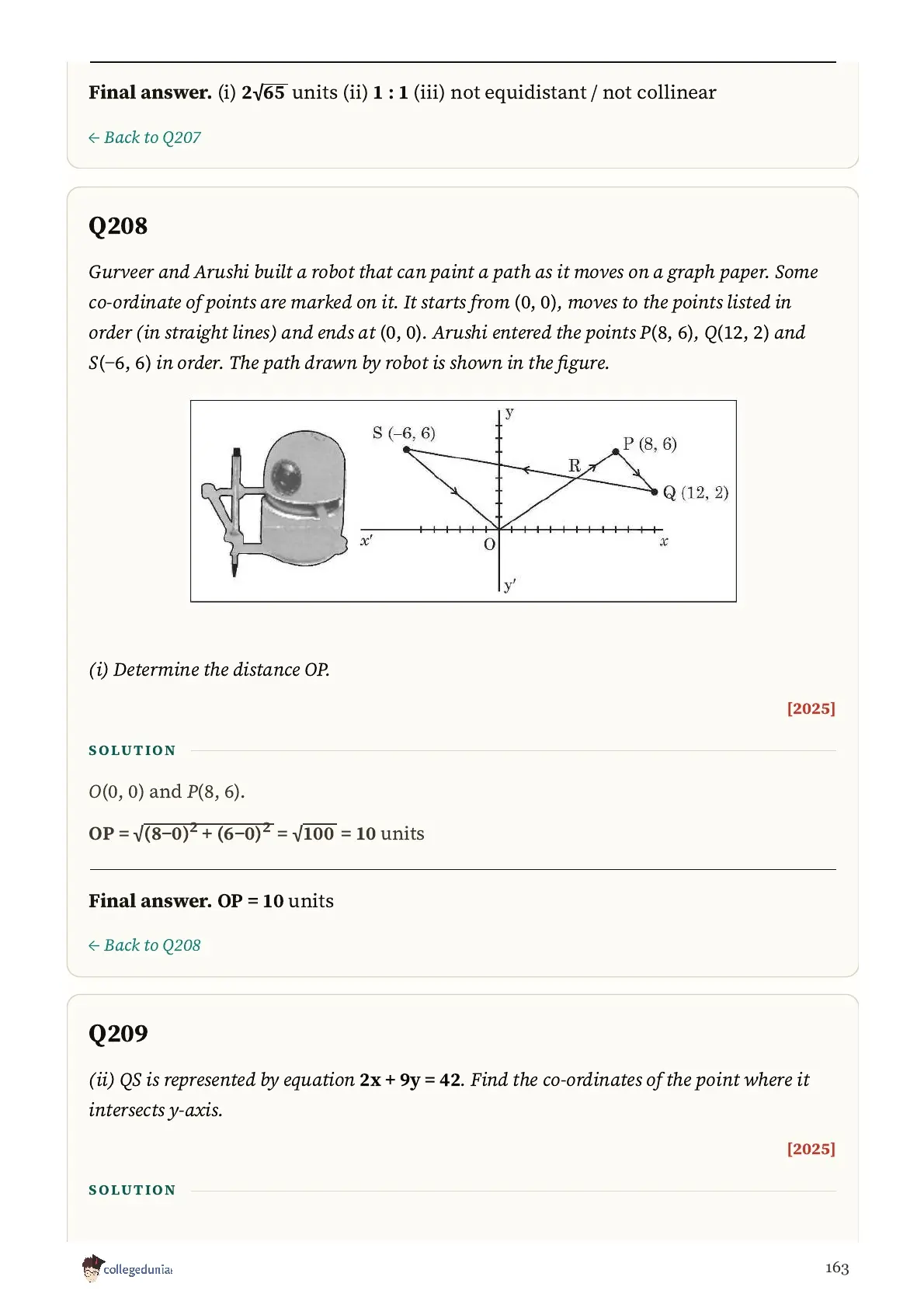
Ans. Yes. 21 questions keep their original diagram, all of them from the 2023 to 2026 papers, and these include coordinate grids, maps and plans used in case studies.
Ques. Which years does the set cover?
Ans. The questions come from 21 board years between 2003 and 2026. 2025 has the most questions (42), followed by 2024 (32) and 2023 (30).



Comments