



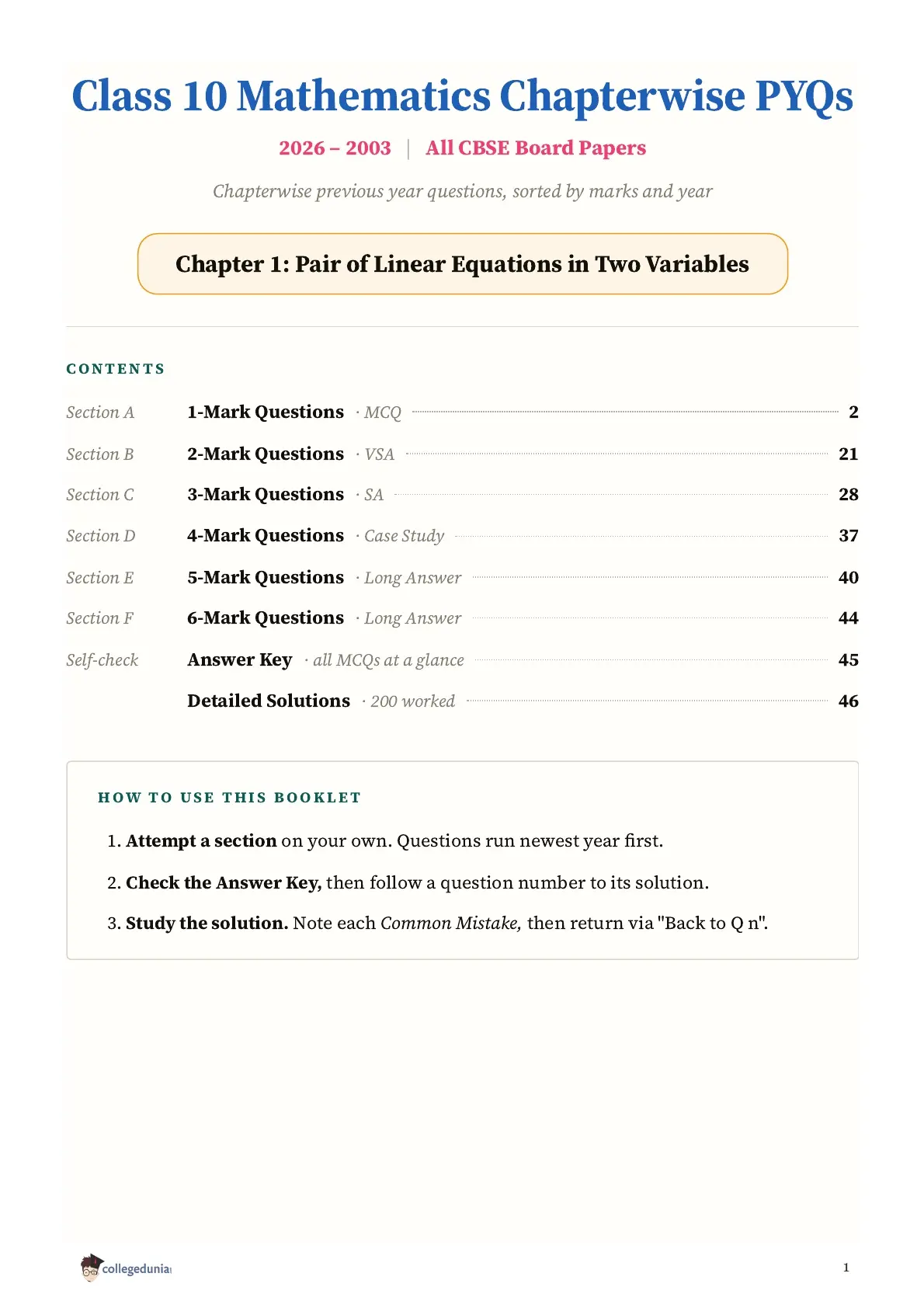
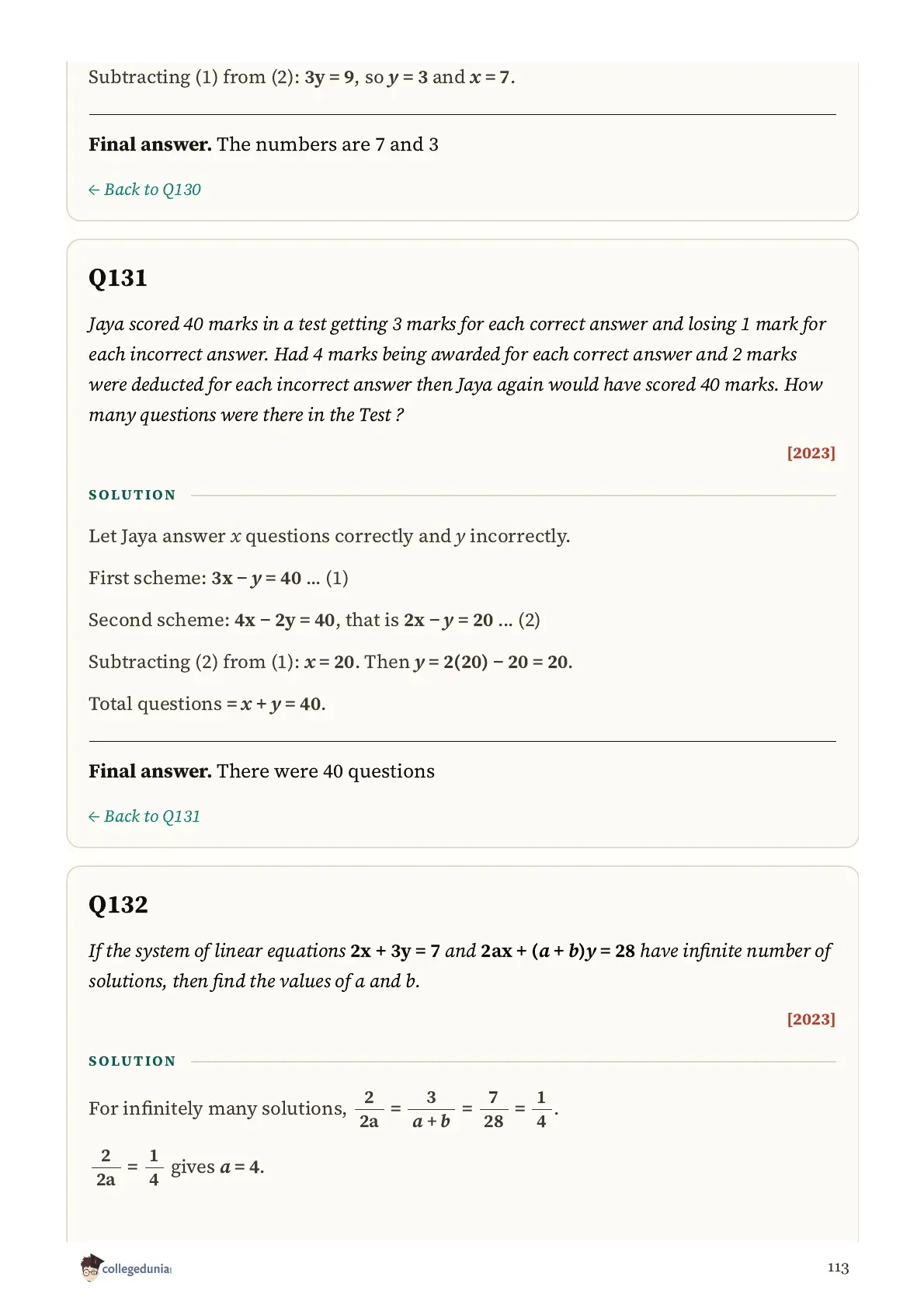
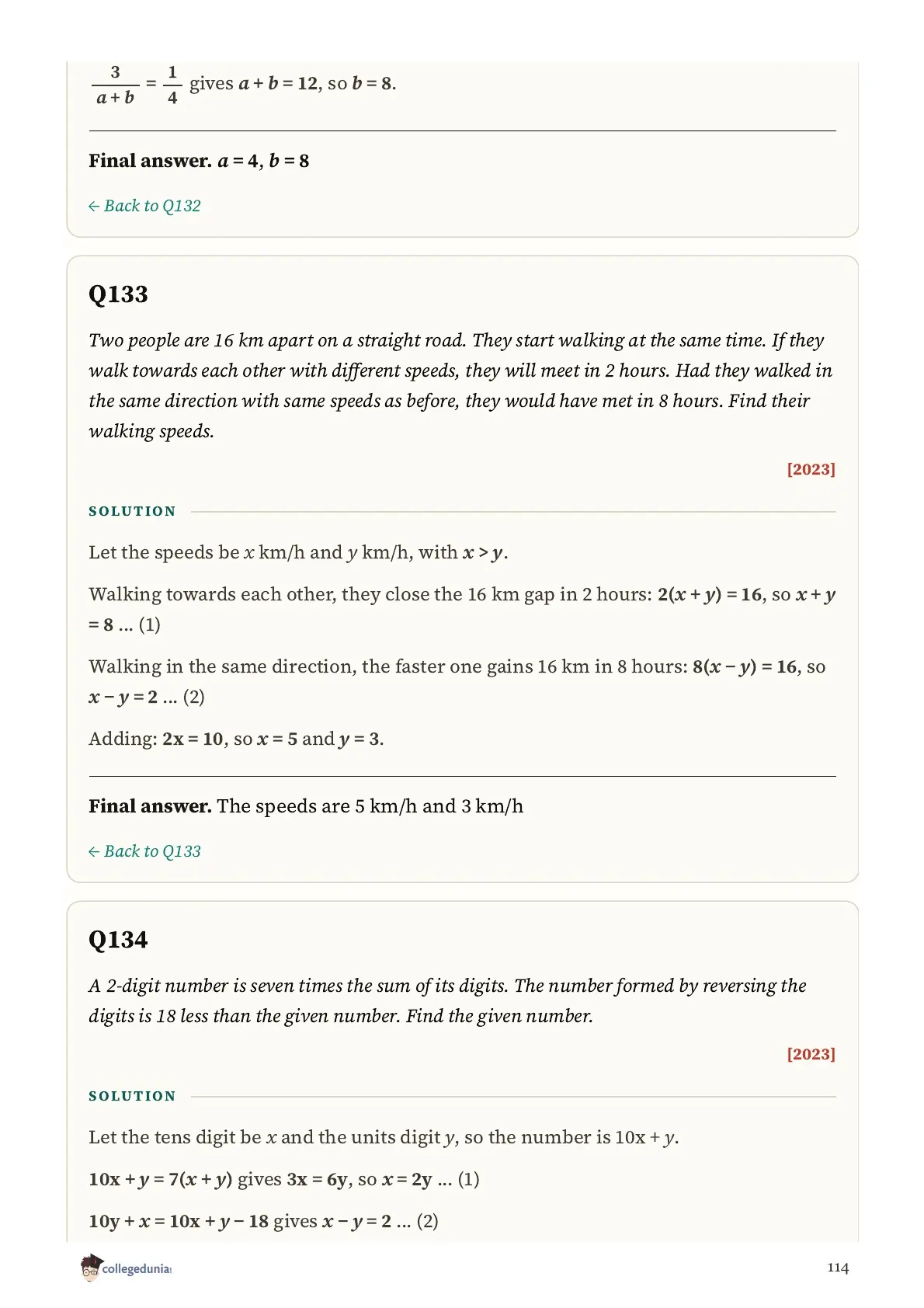
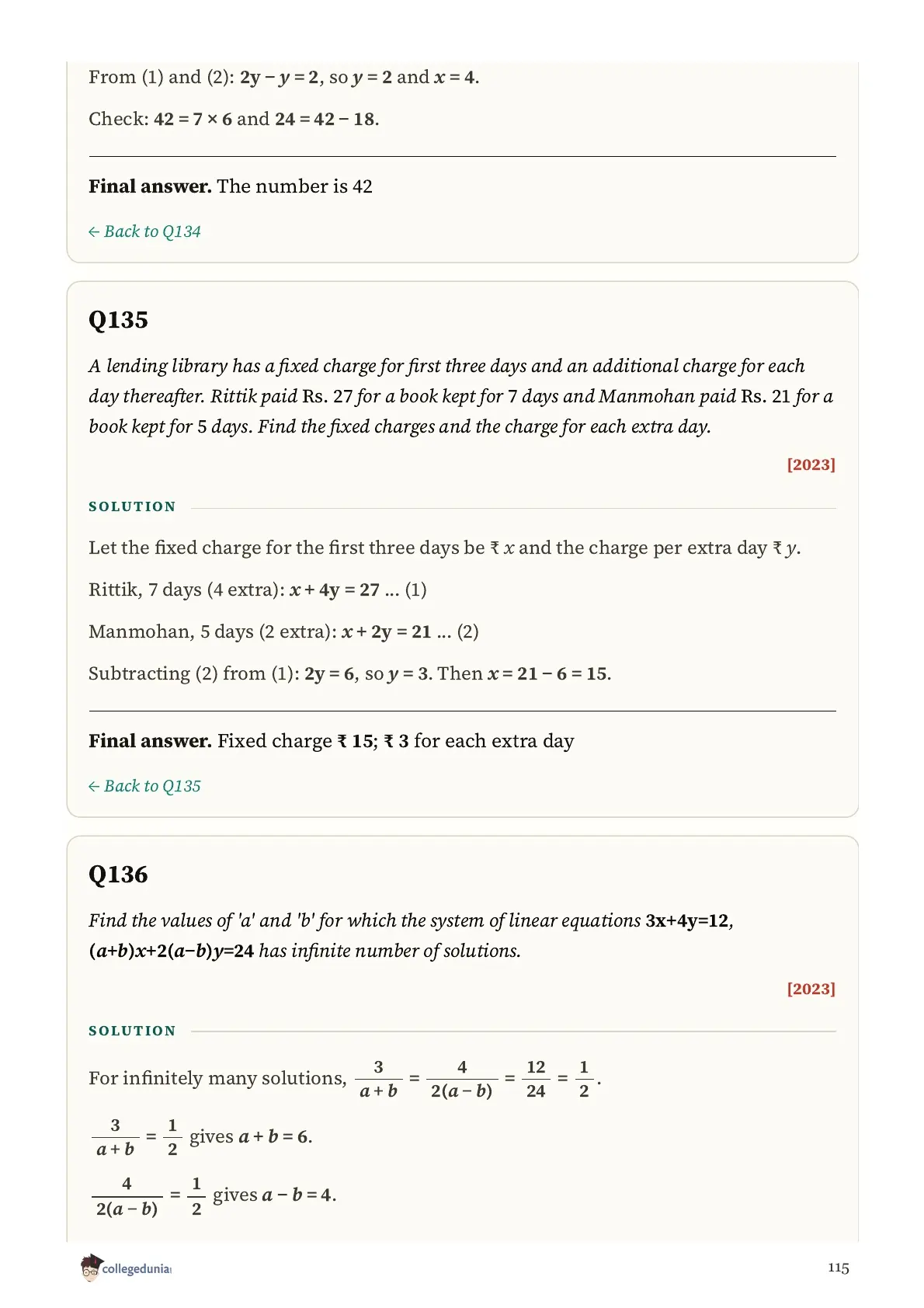
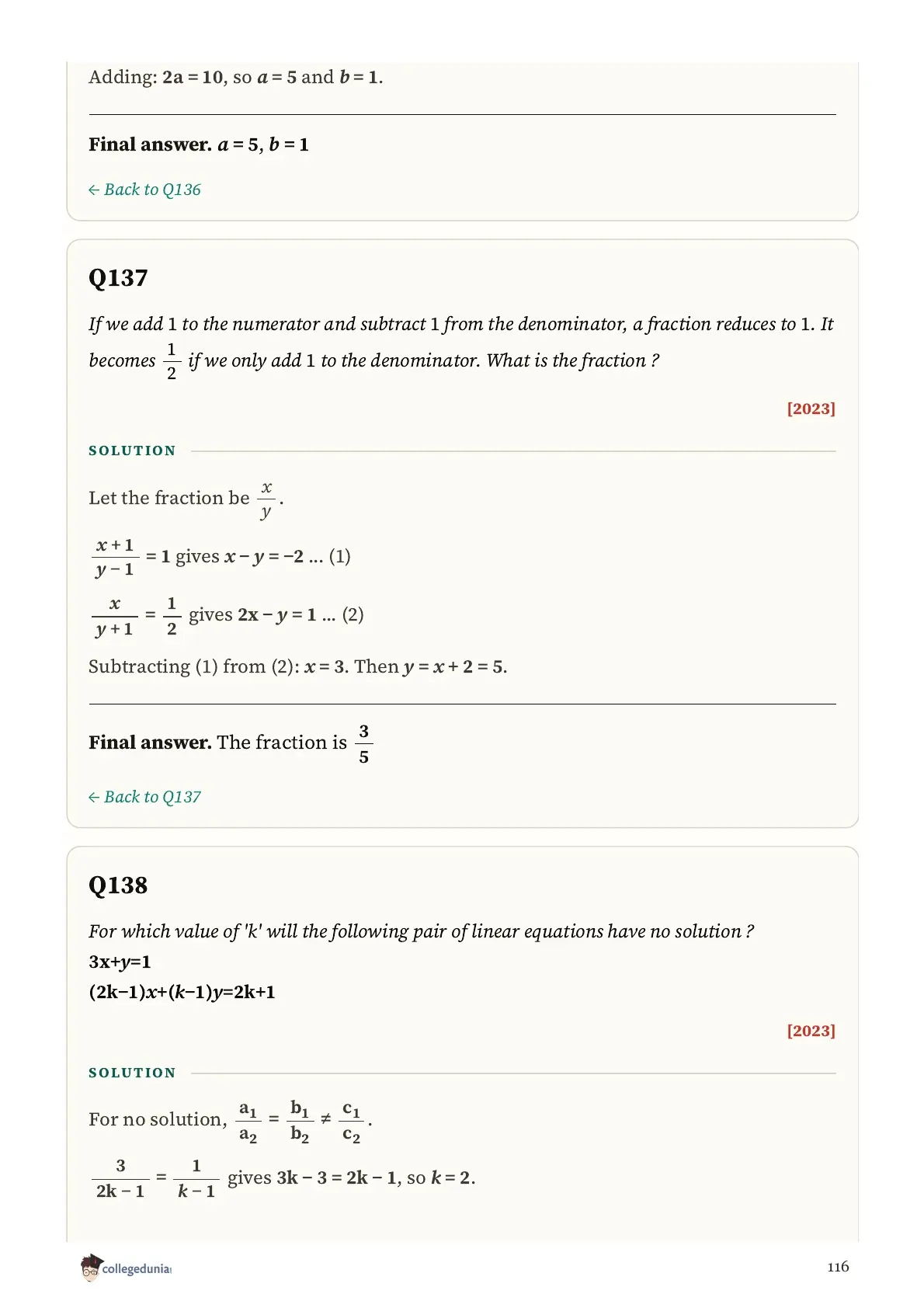
Class 10 Maths Pair of Linear Equations in Two Variables PYQ, free to download as a 150-page PDF with 200 solved board questions from the 2003 to 2026 papers. Pair of Linear Equations in Two Variables is Chapter 3 of the NCERT Class 10 Maths book and belongs to the CBSE unit Algebra, which prep sites report at 20 of the 80 theory marks.
The questions keep returning to the nature of the solutions: unique, none or infinitely many (73 questions), solving graphically (37), finding the value of k, a or p for a stated condition (31), word problems on money and prices (31), reading off axis intercepts and ordinates (15) and angle problems (5).
On this page you get:
- 200 questions with a worked solution each: 54 MCQs and assertion-reason items, 111 short answers and 35 long answers or case studies
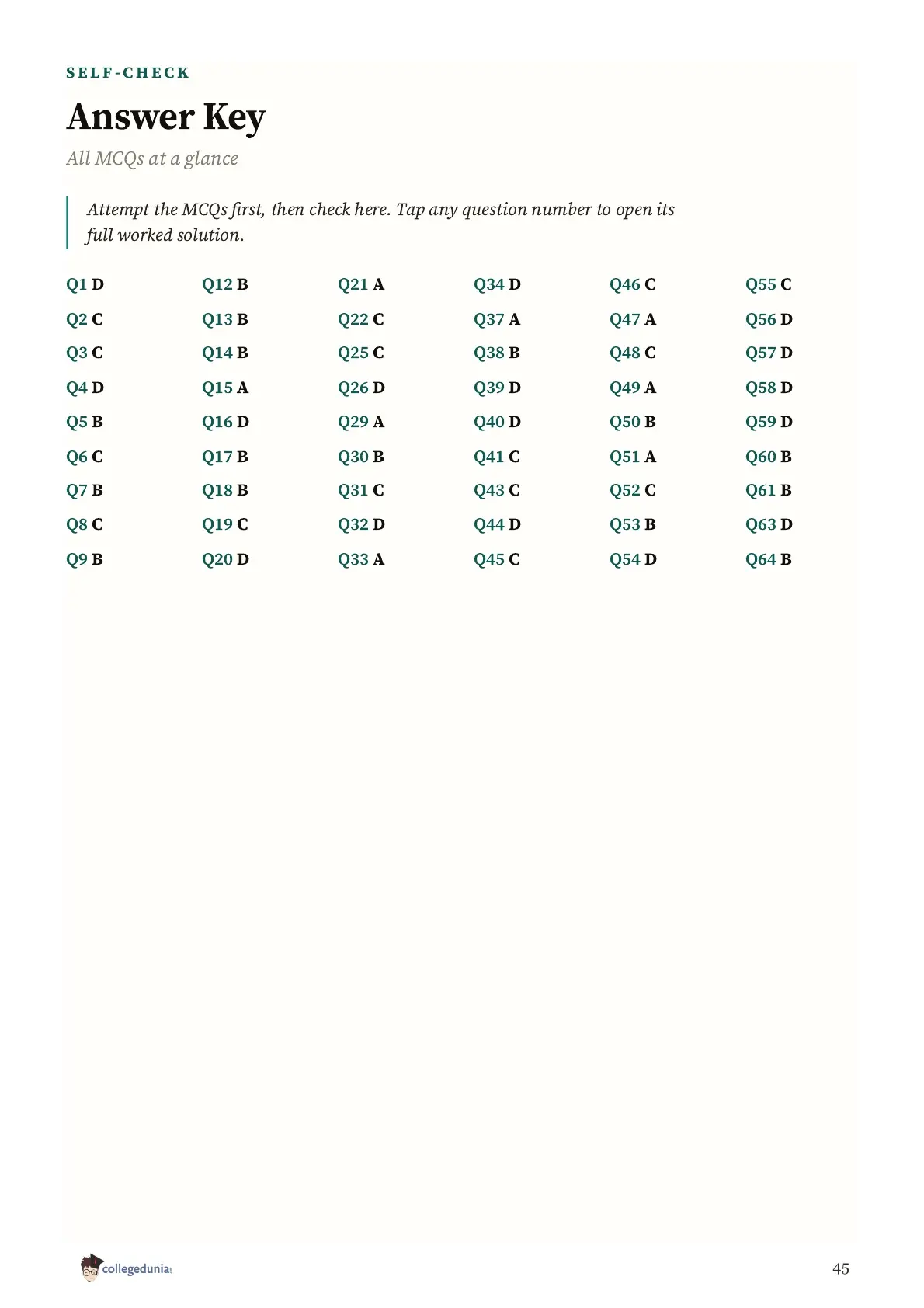
- An Answer Key that lists all 54 MCQs at a glance
- Question counts by topic, so you know whether to start with graphs, the k-conditions or word problems
- A marks-wise table of questions (1, 2, 3, 4, 5 and 6 mark)
- The common mistakes students make, such as accepting c = -6 without testing the third ratio, and a short FAQ
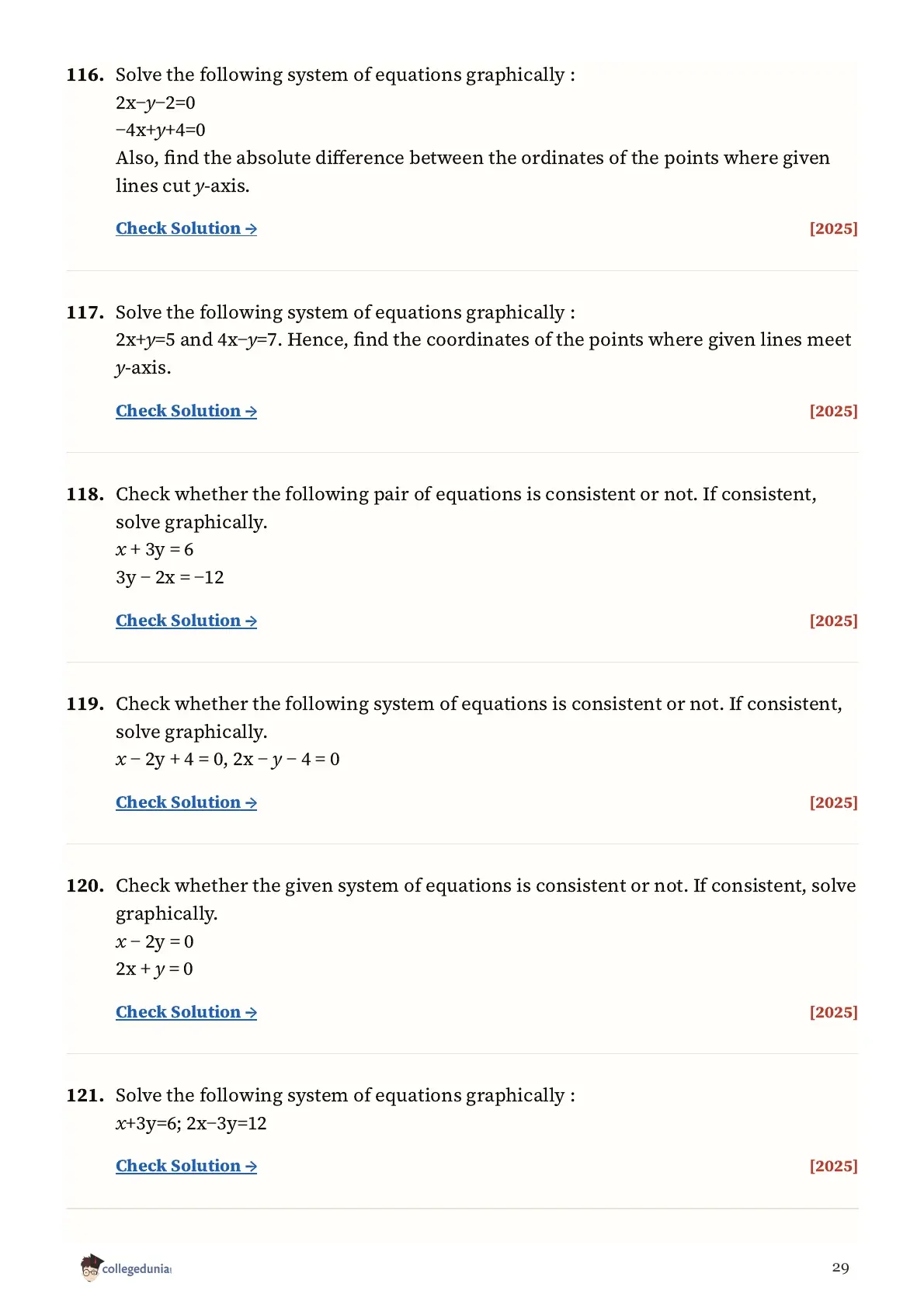
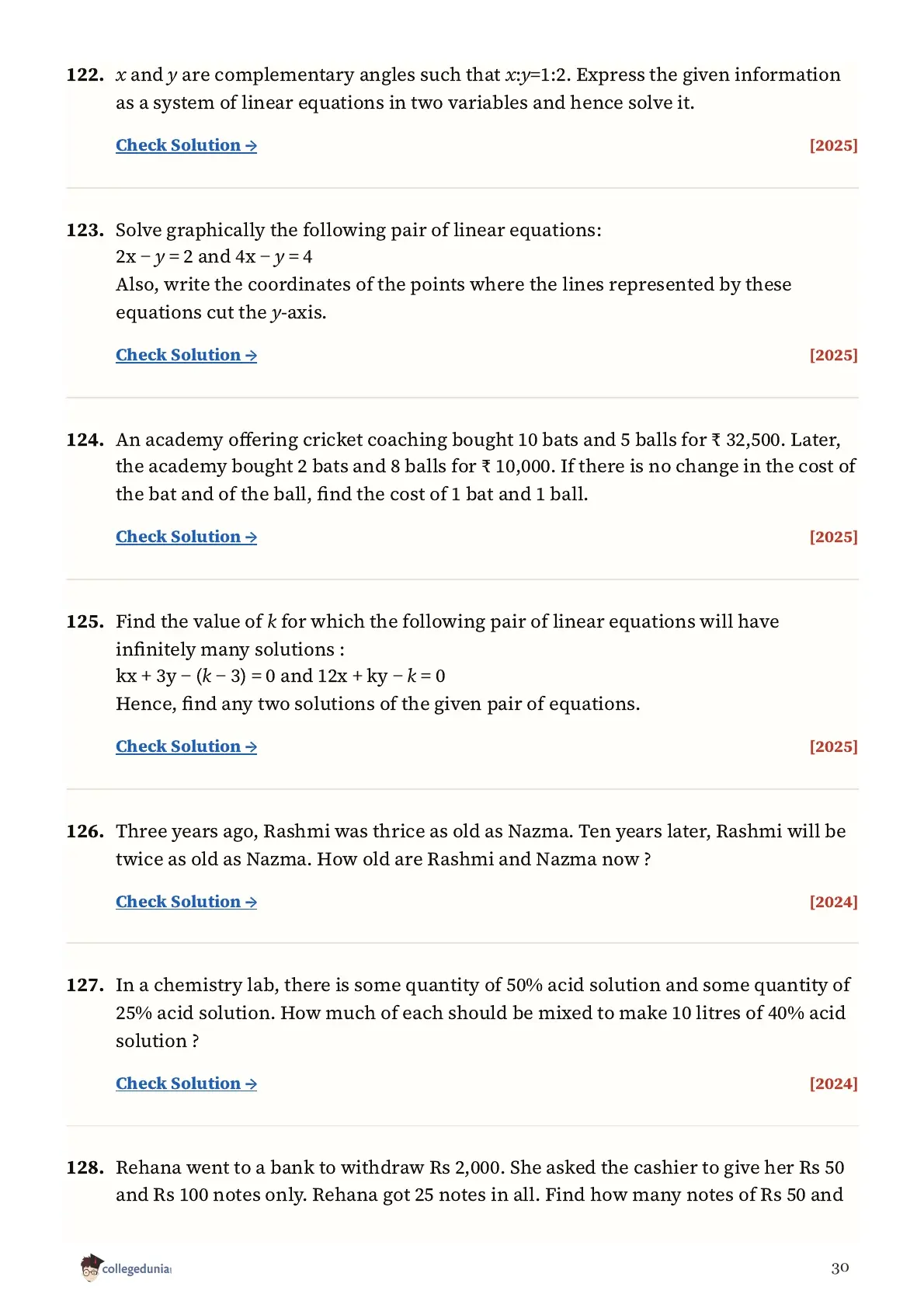
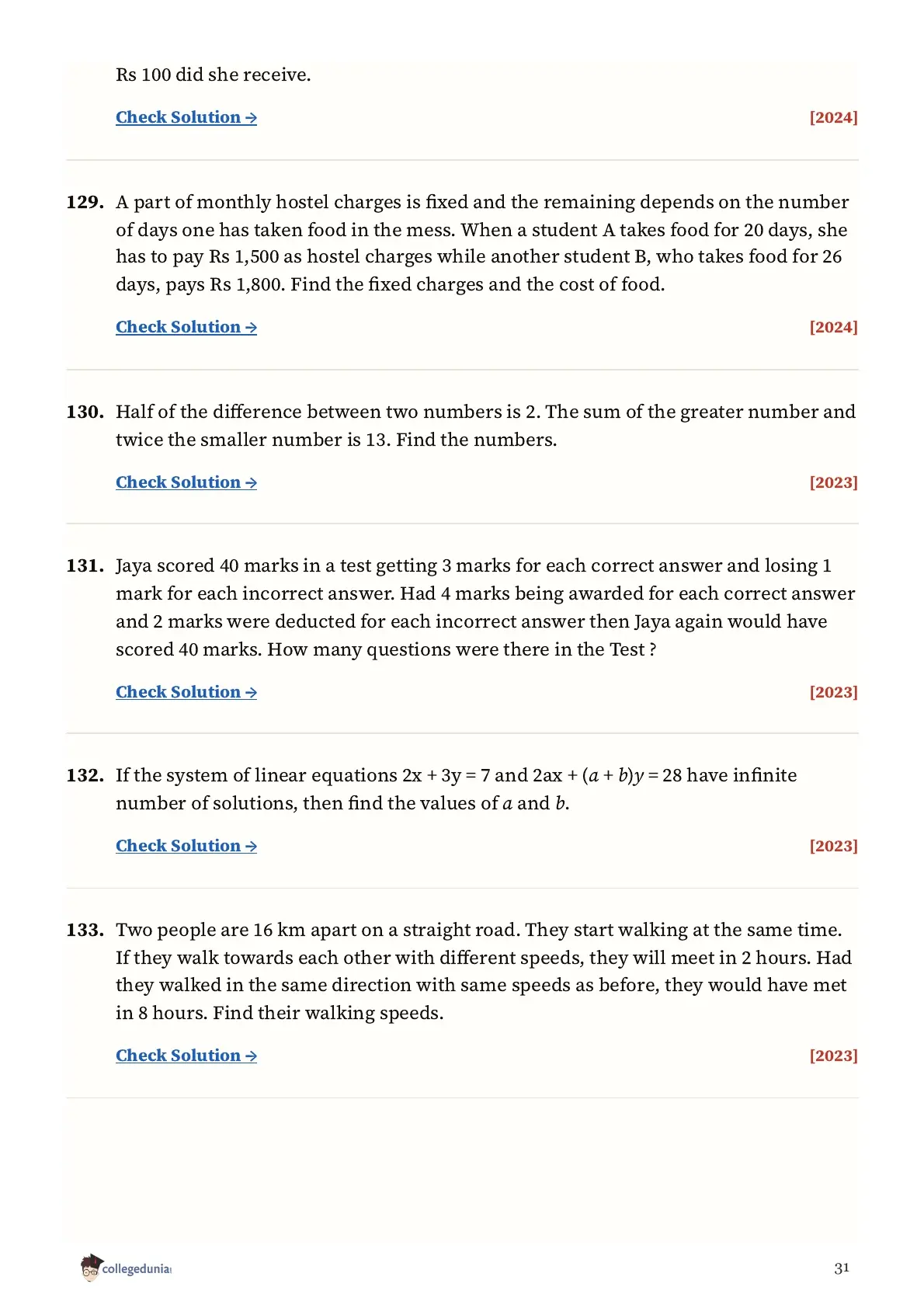
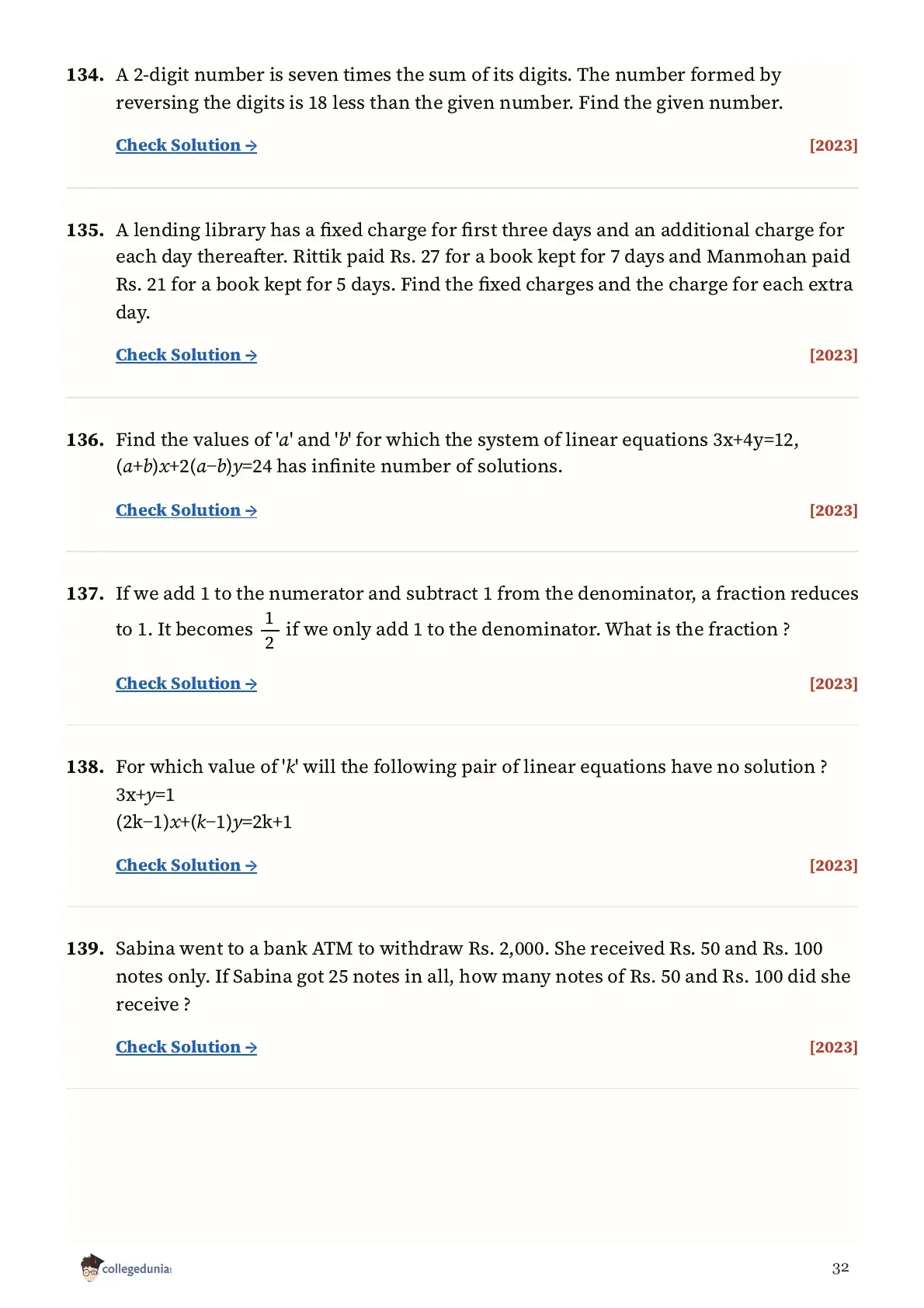
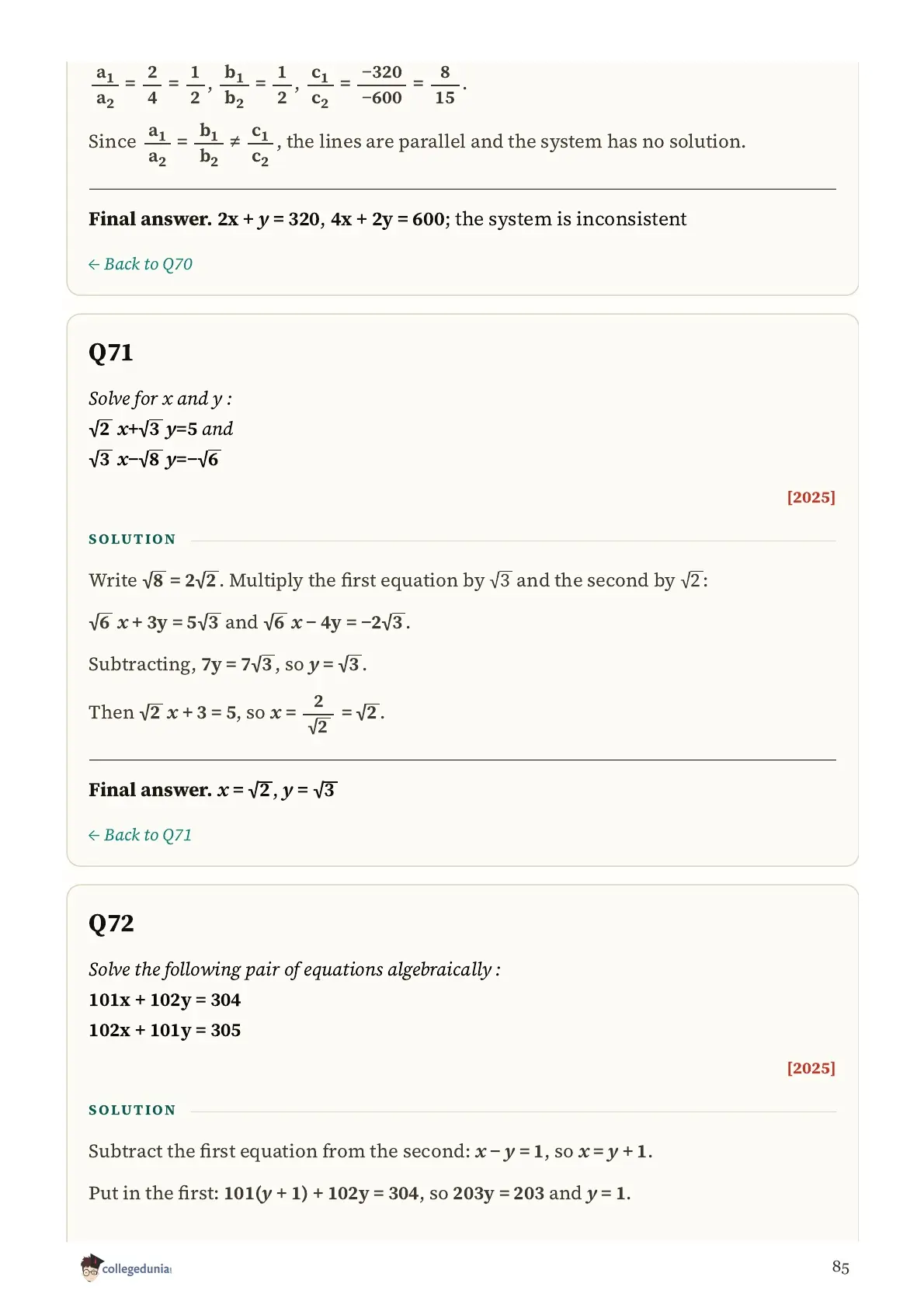
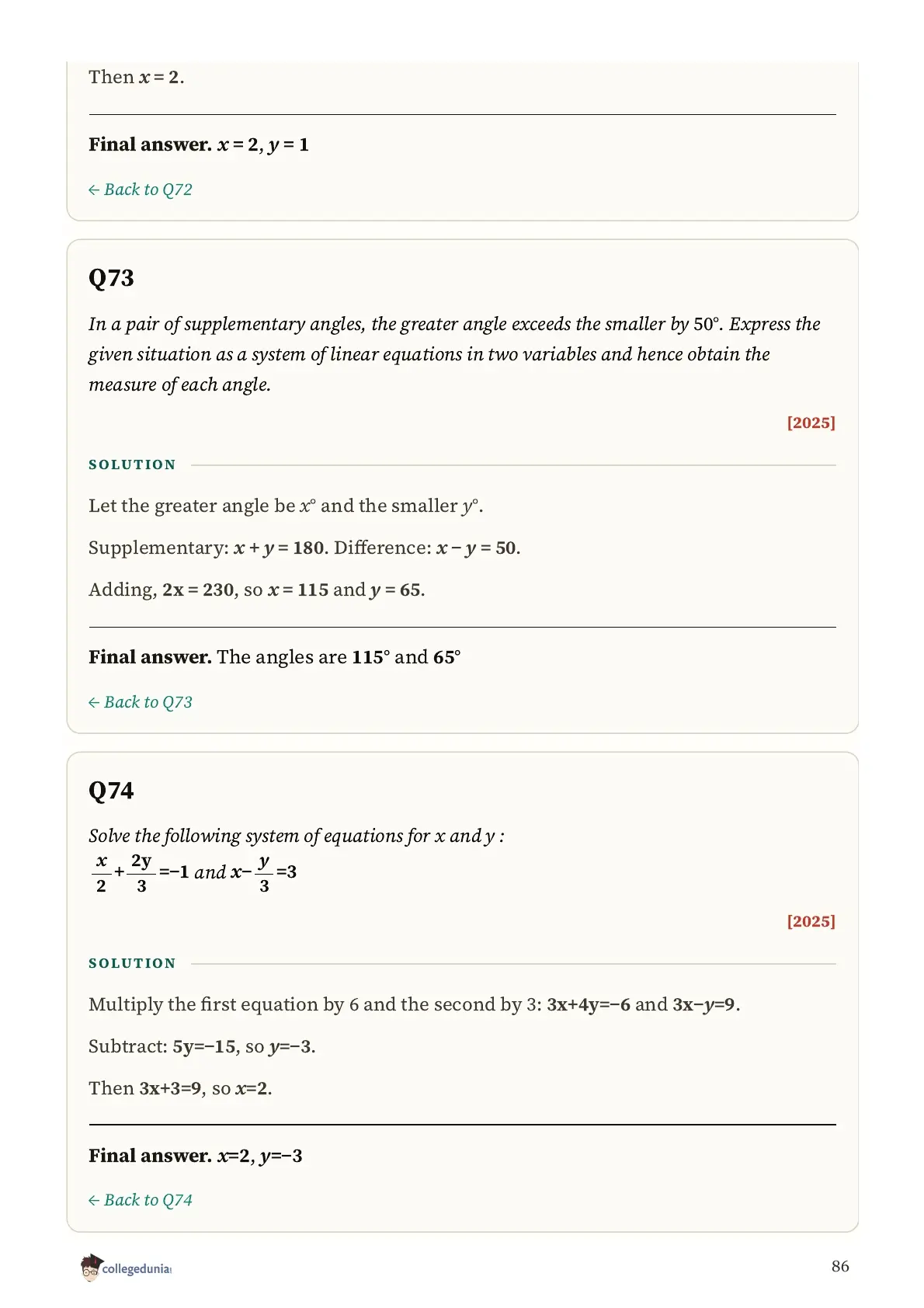
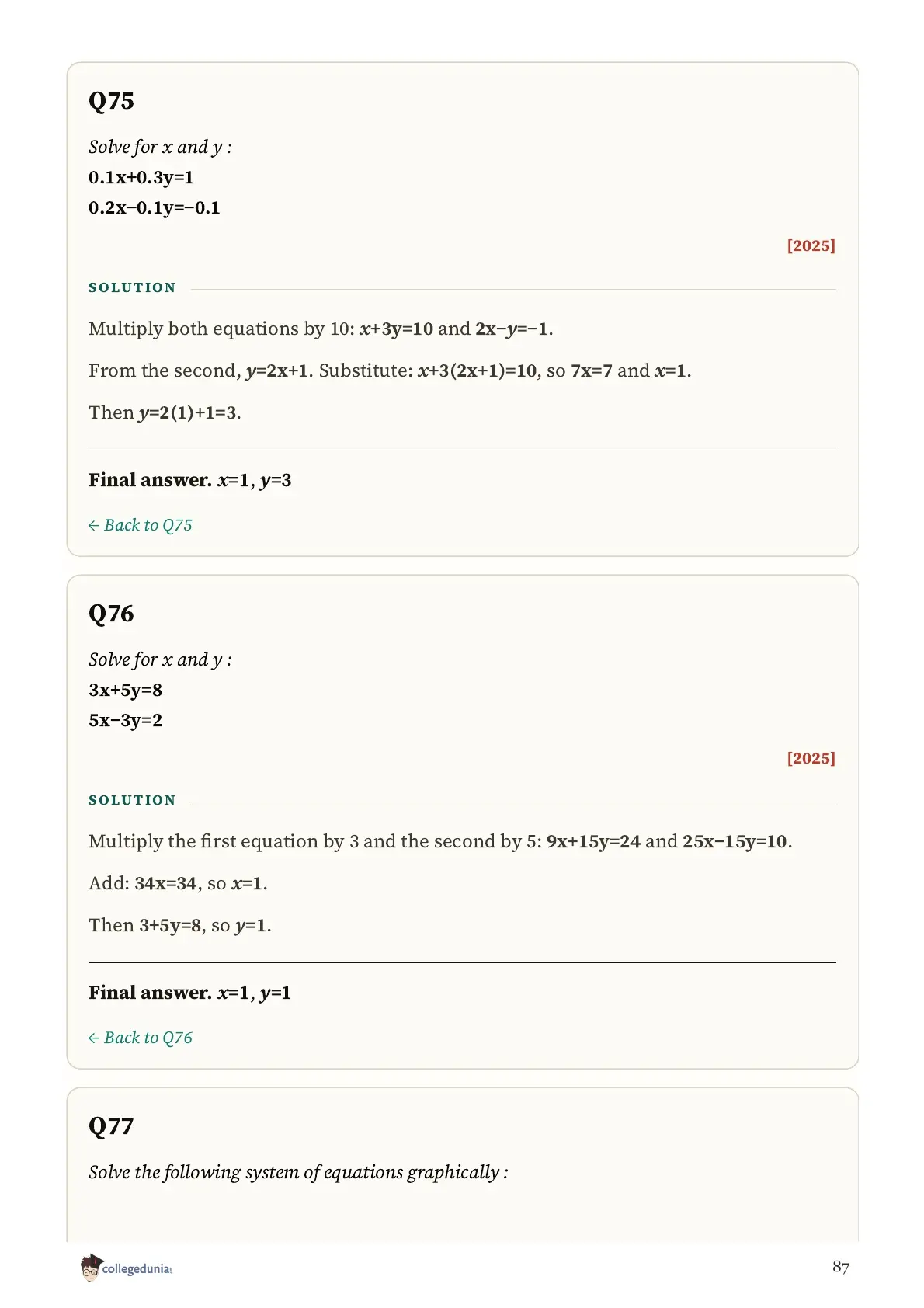
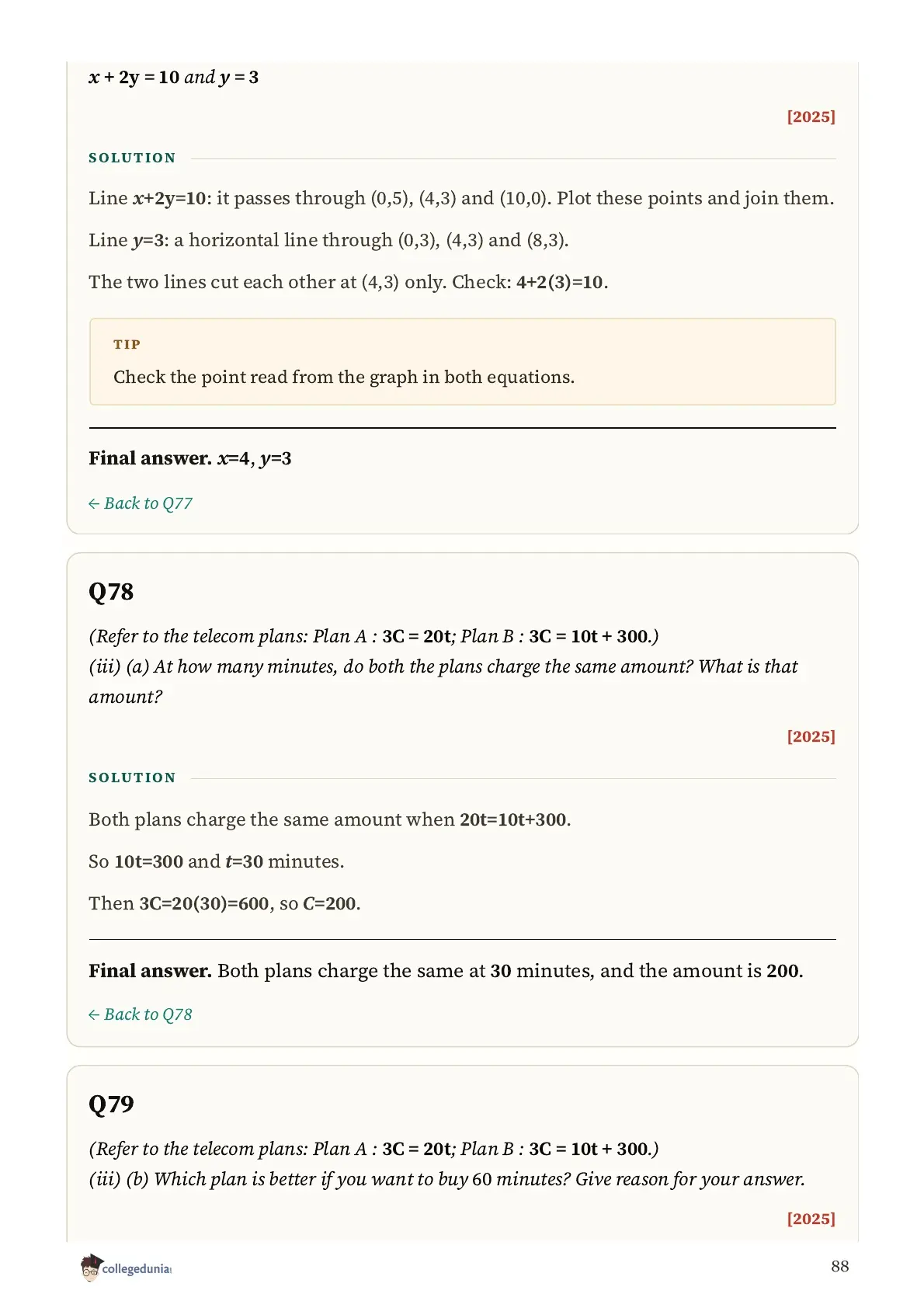
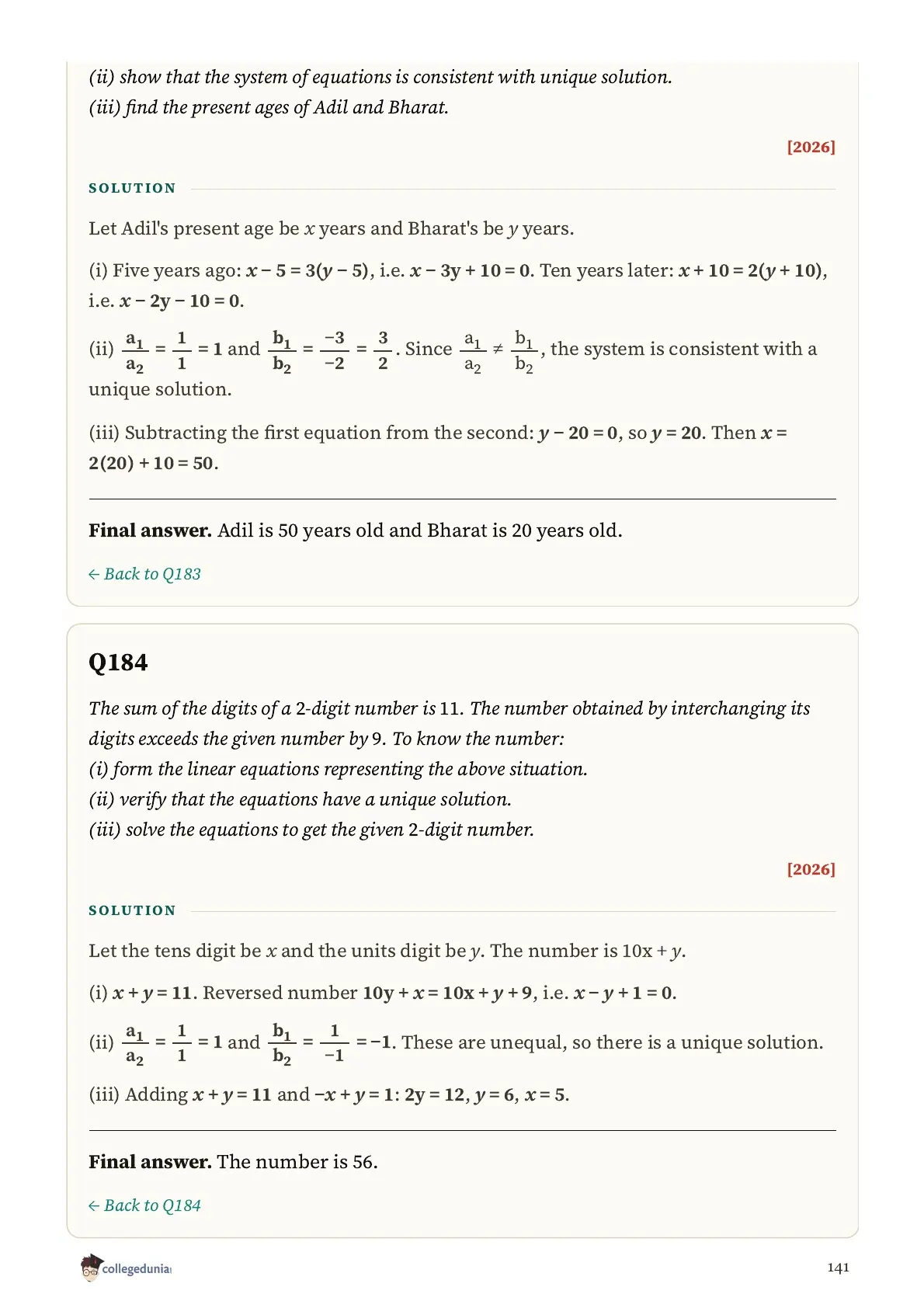
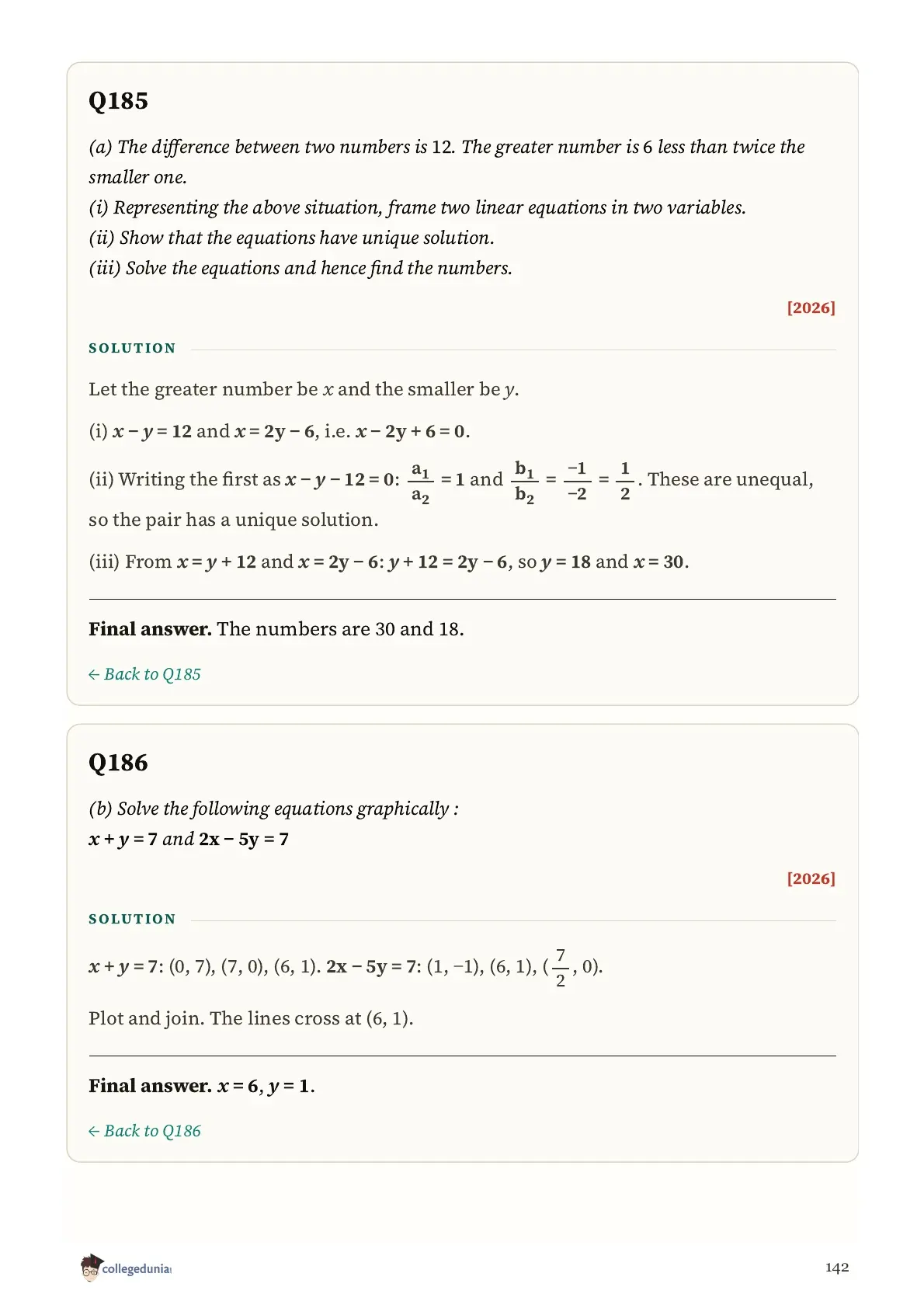
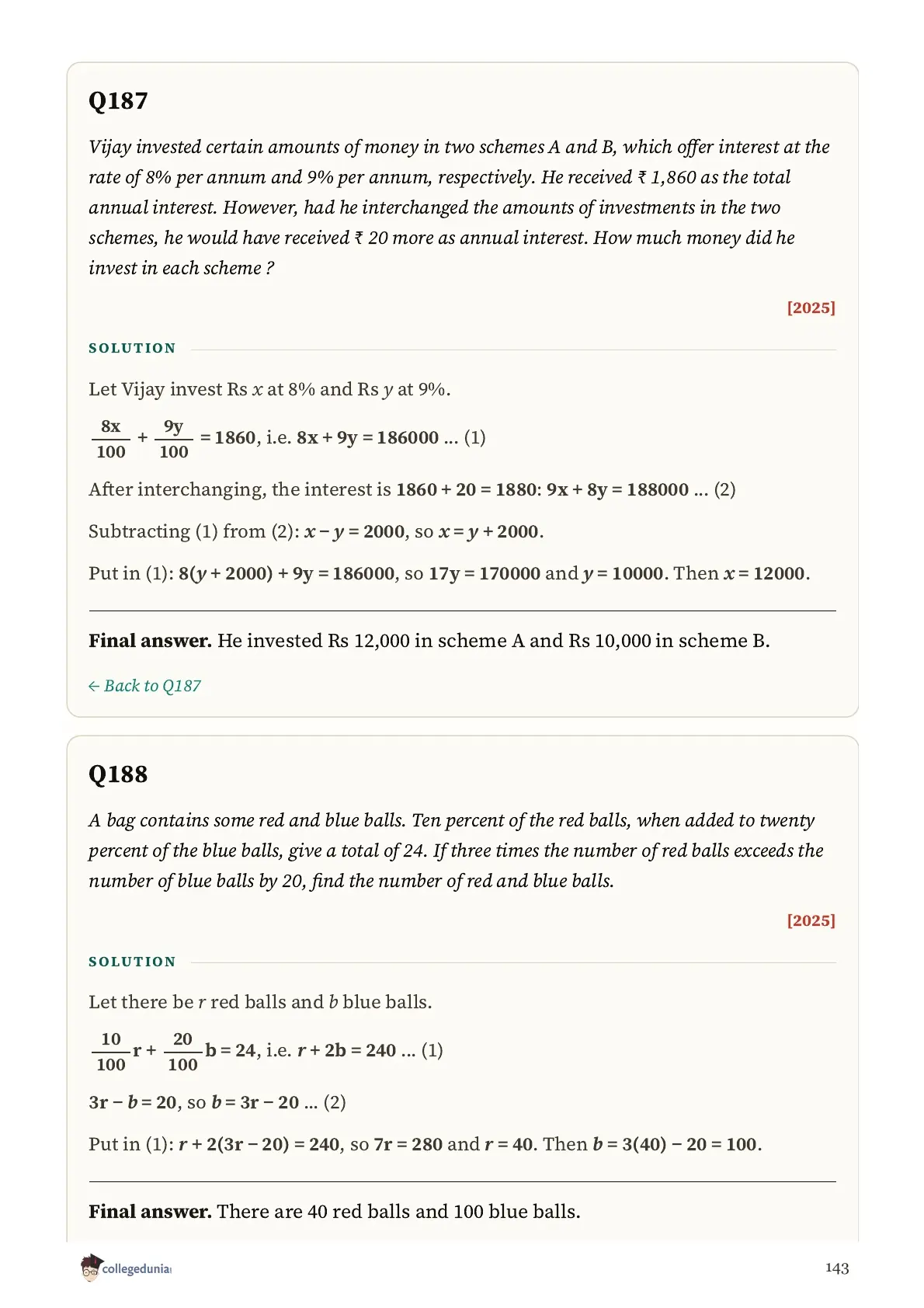
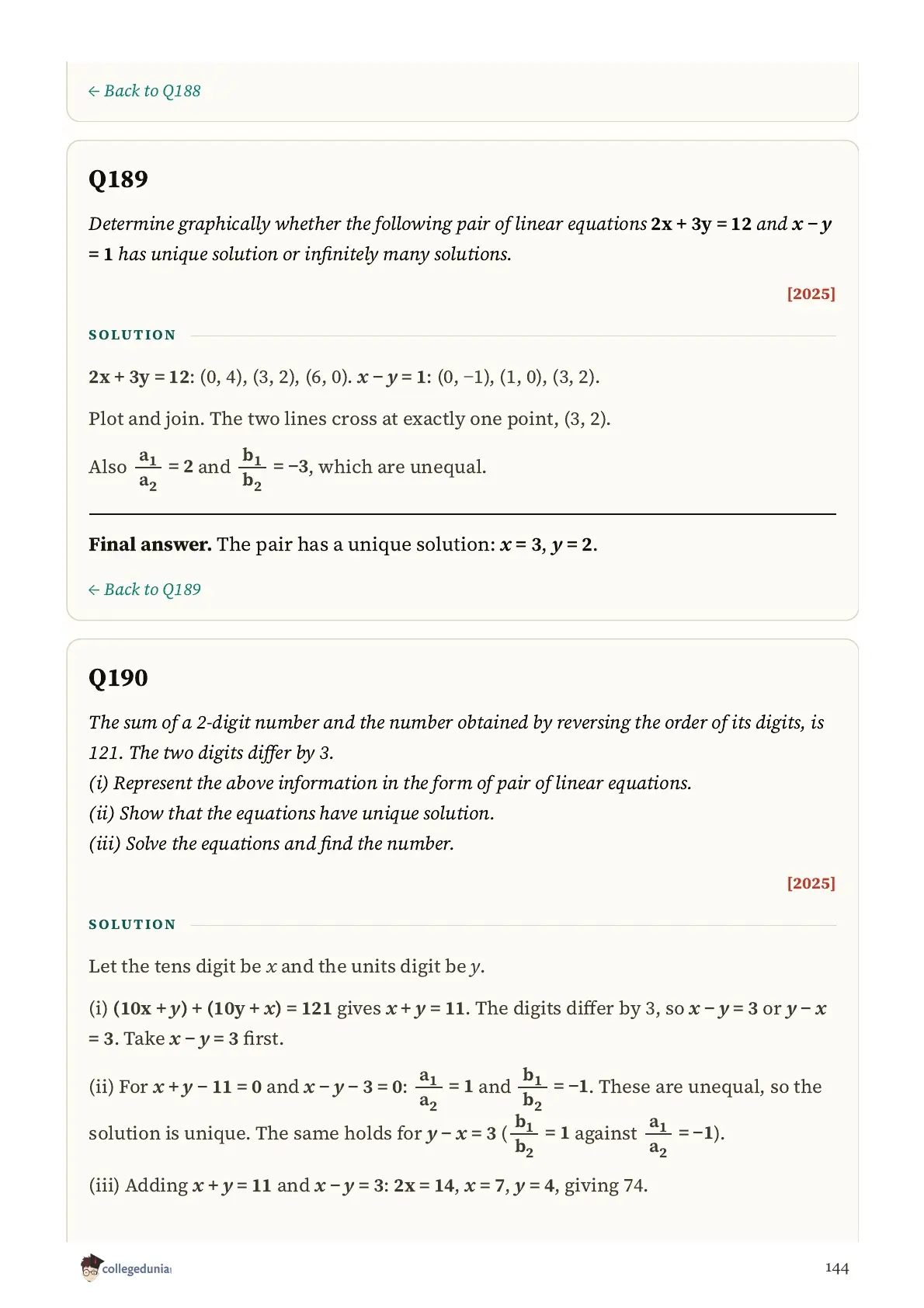
Pair of Linear Equations in Two Variables Weightage in the Class 10 Maths Paper
CBSE does not print a mark figure for Pair of Linear Equations in Two Variables alone. In the Class 10 Maths syllabus, Algebra is the largest unit and is reported at 20 of the 80 theory marks. It covers Polynomials, this chapter, Quadratic Equations and Arithmetic Progressions. The 20 is a unit-level figure from prep sites, not from a CBSE page I could open, so check the current curriculum on cbseacademic.nic.in. In this set the 1-mark and 3-mark questions are the commonest forms.
The table shows how many questions the set holds at each mark value.
| Marks per Question | Questions in the Set |
|---|---|
| 1 mark | 66 |
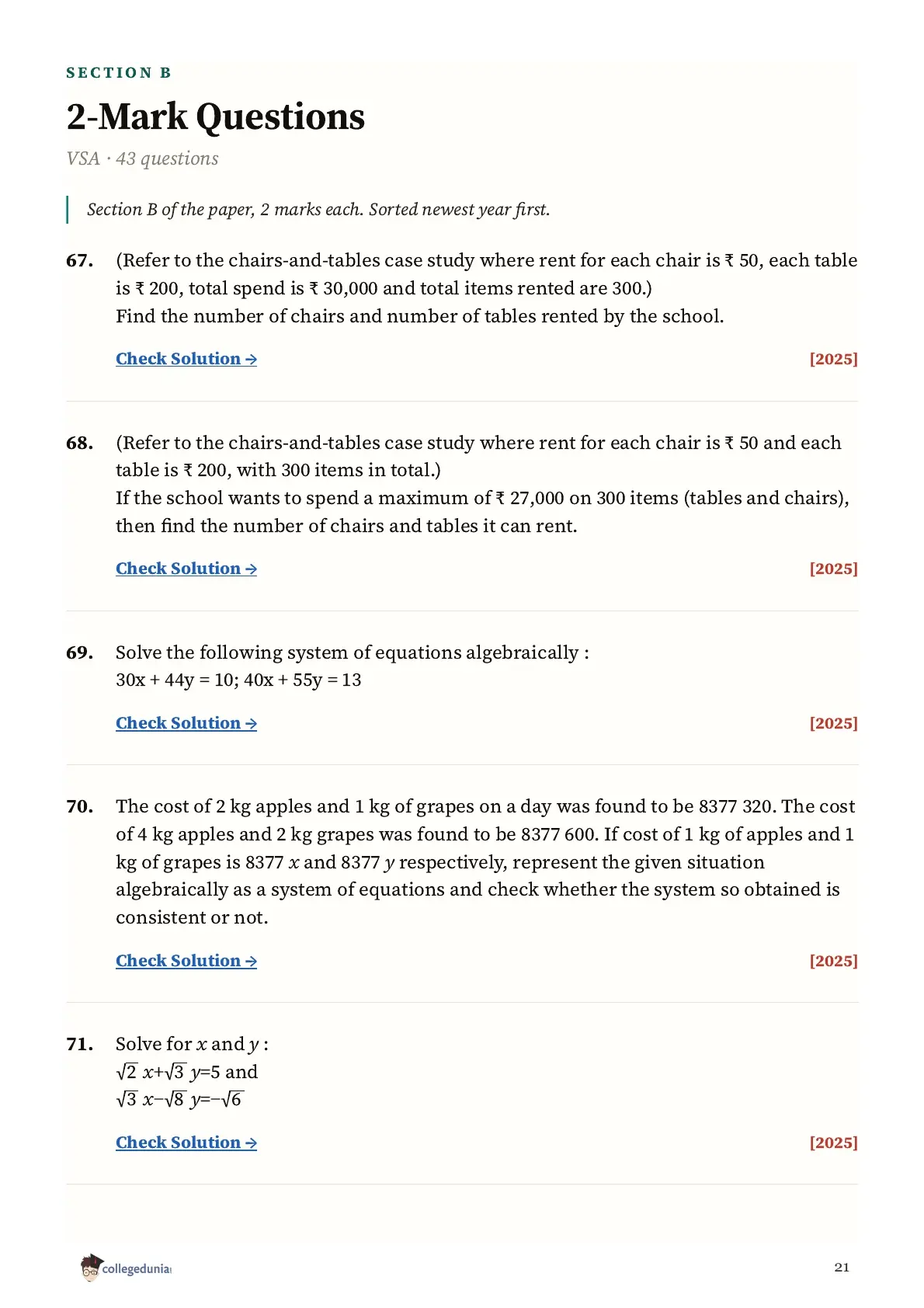
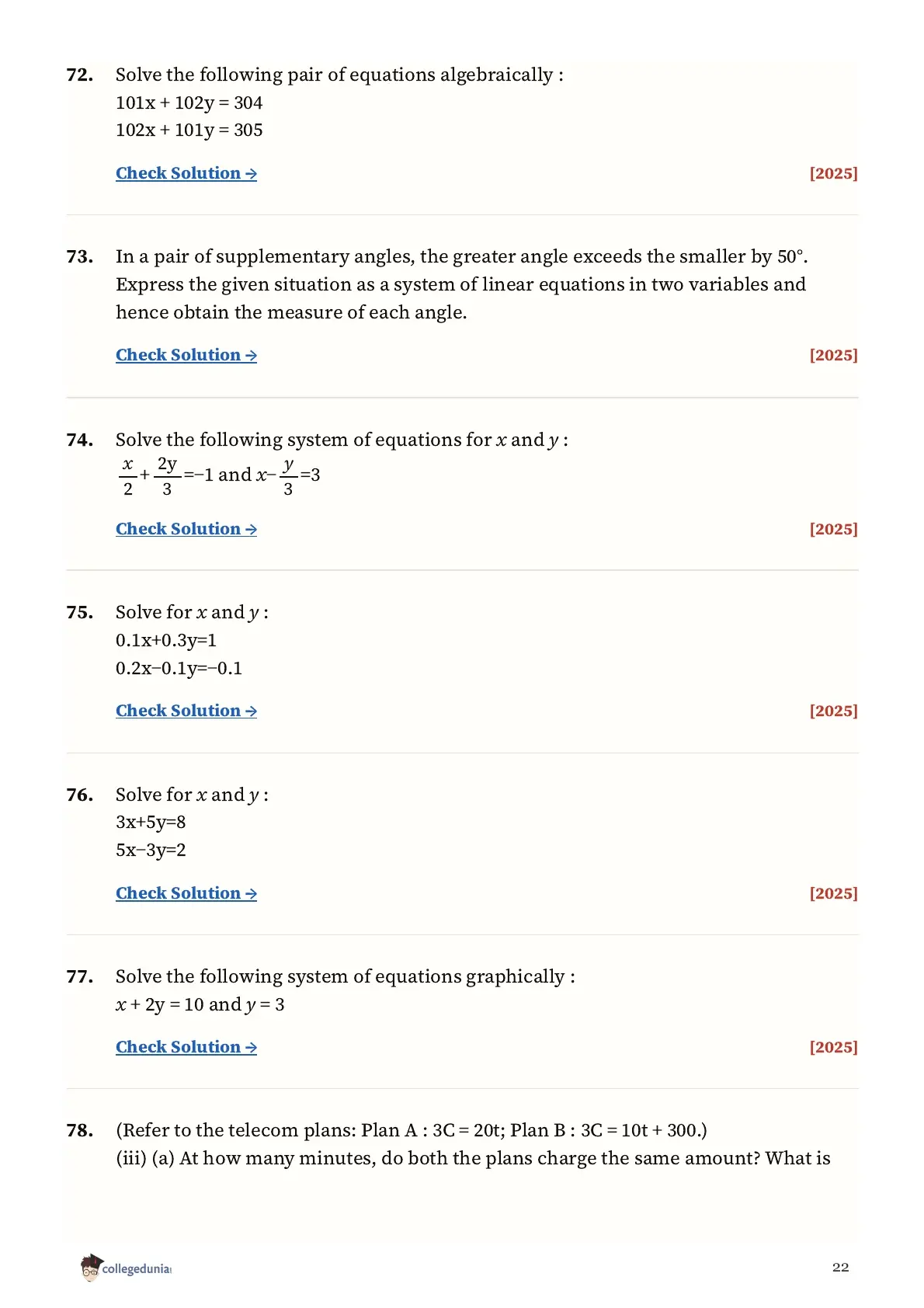
| 2 marks | 43 |
| 3 marks | 56 |
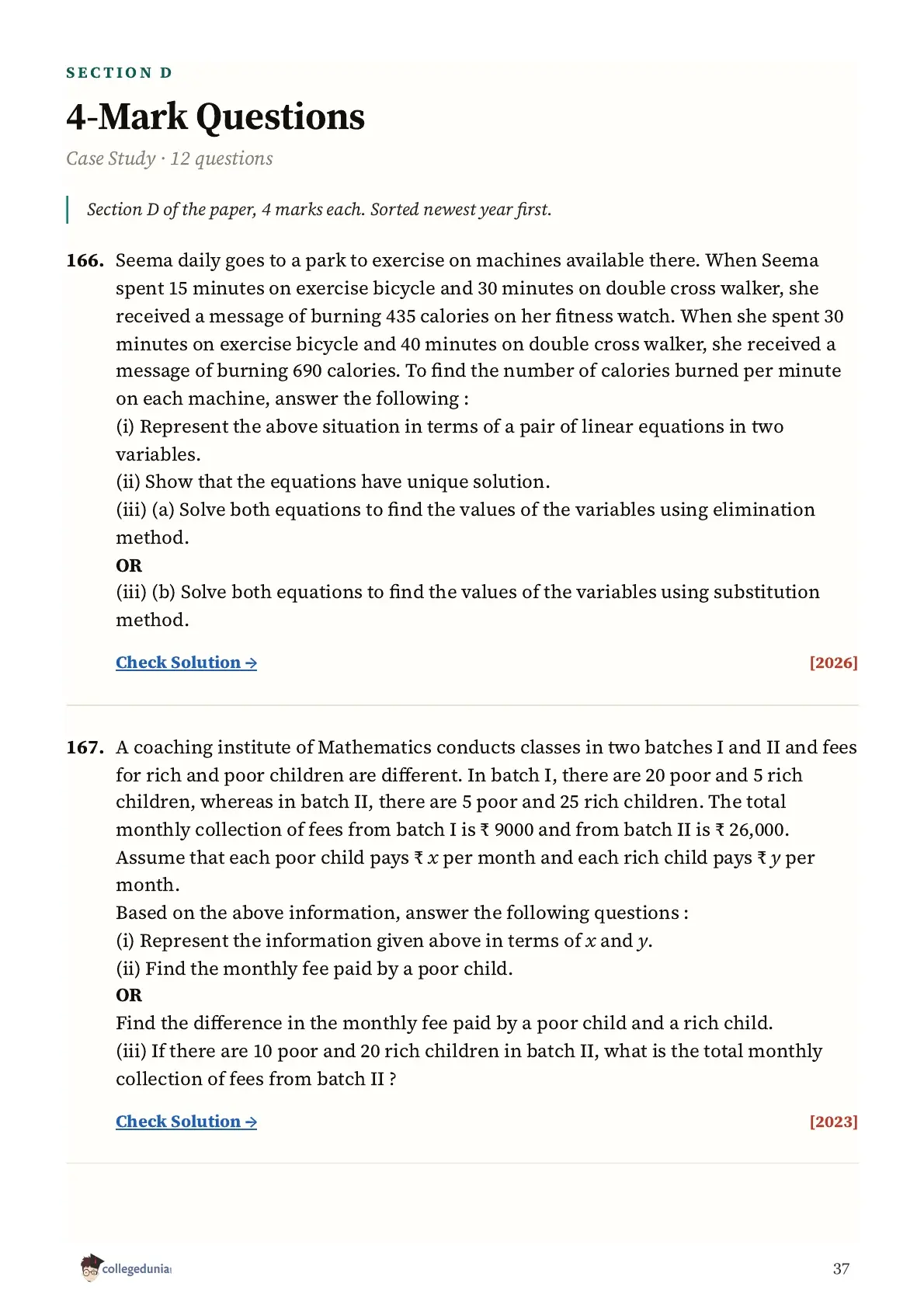
| 4 marks | 12 |
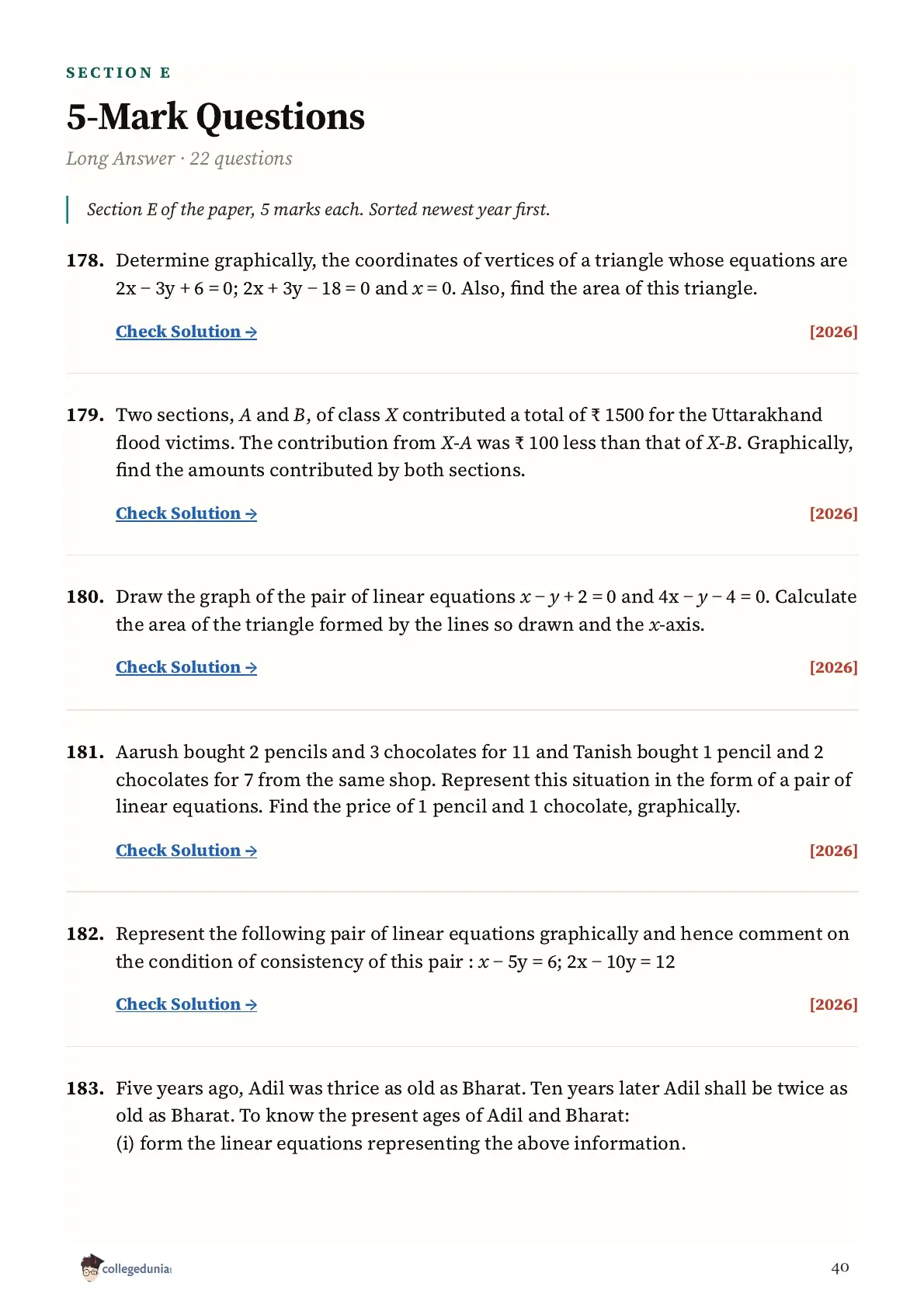
| 5 marks | 22 |
| 6 marks | 1 |
Pair of Linear Equations in Two Variables Questions by Topic
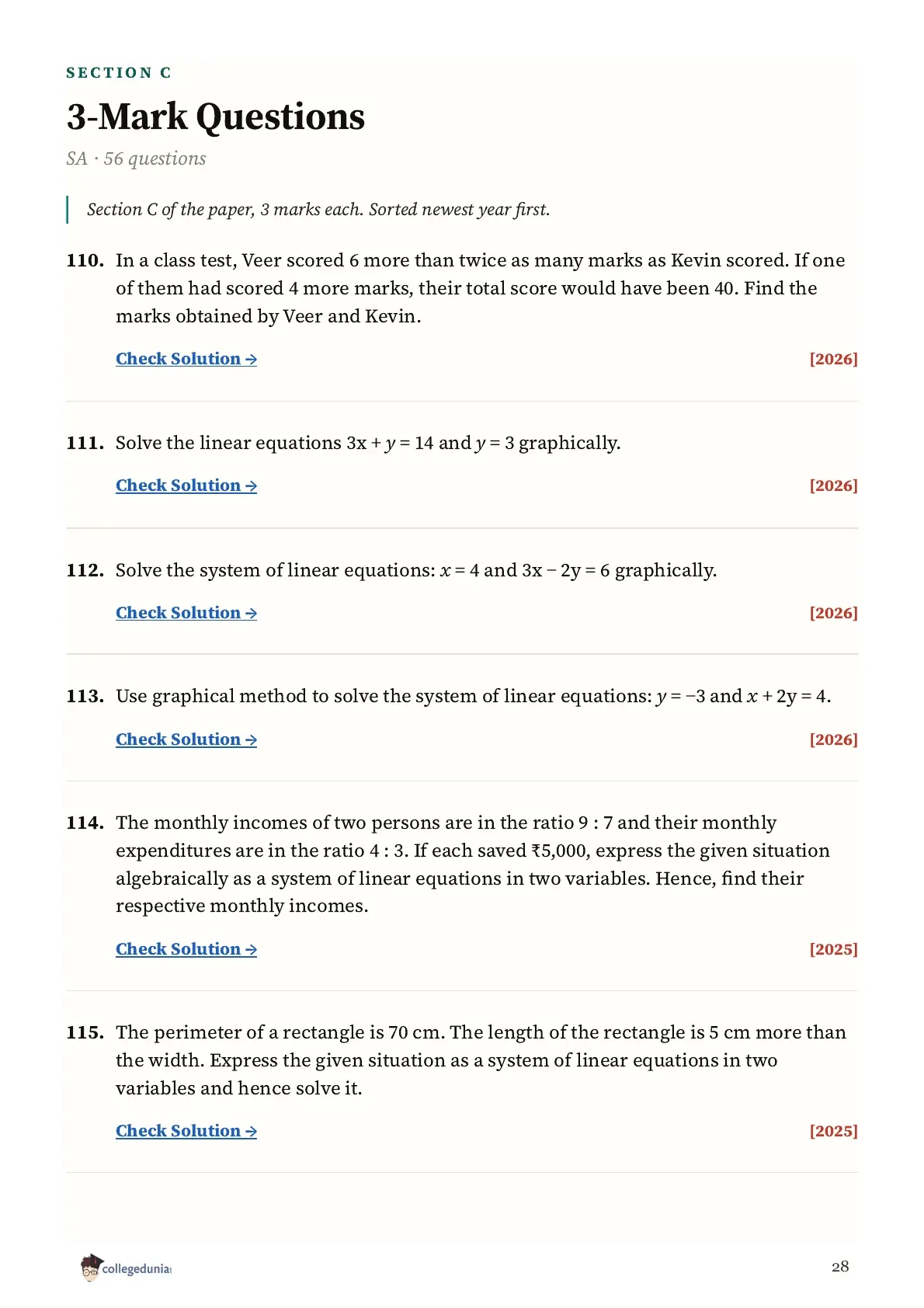
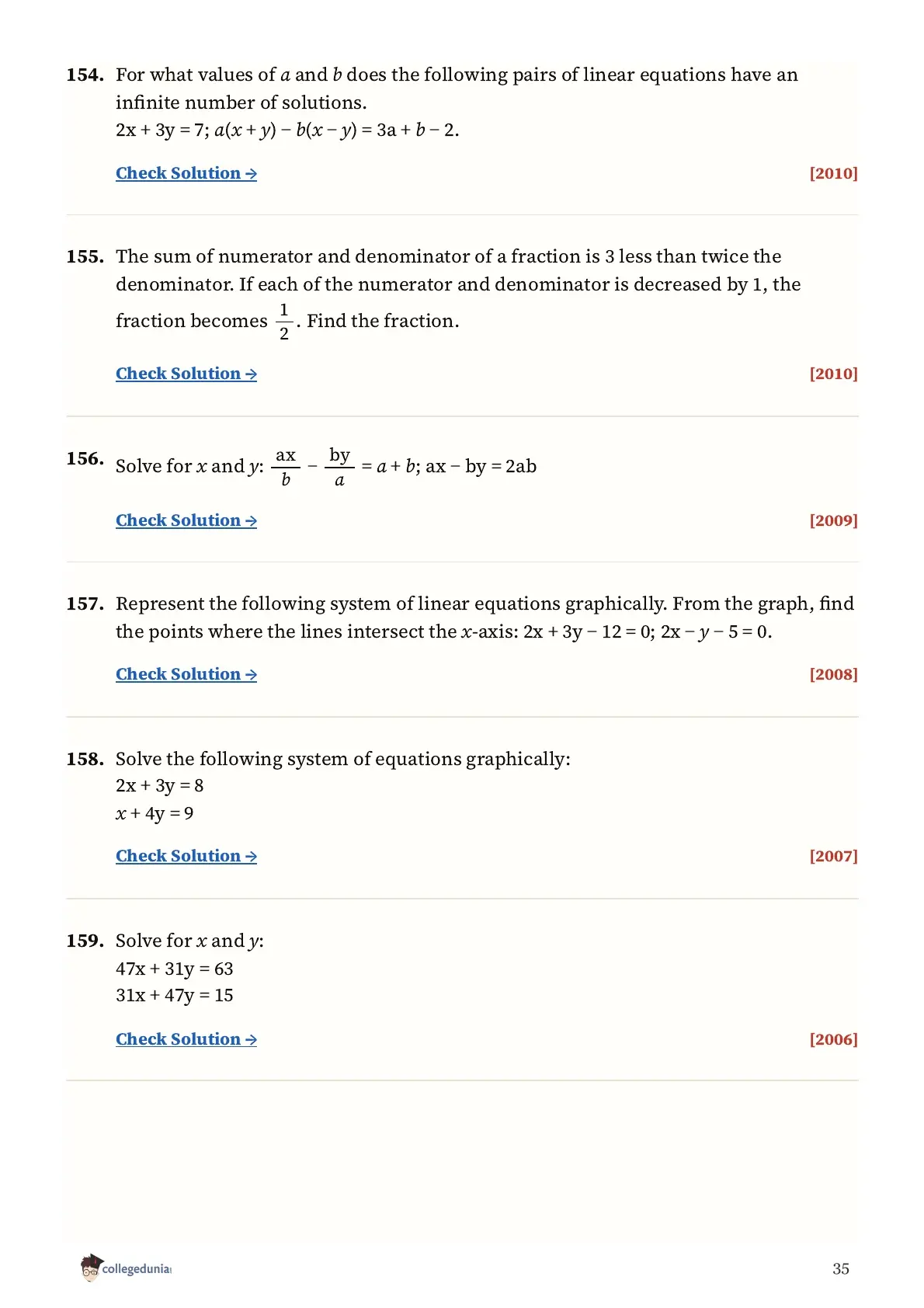
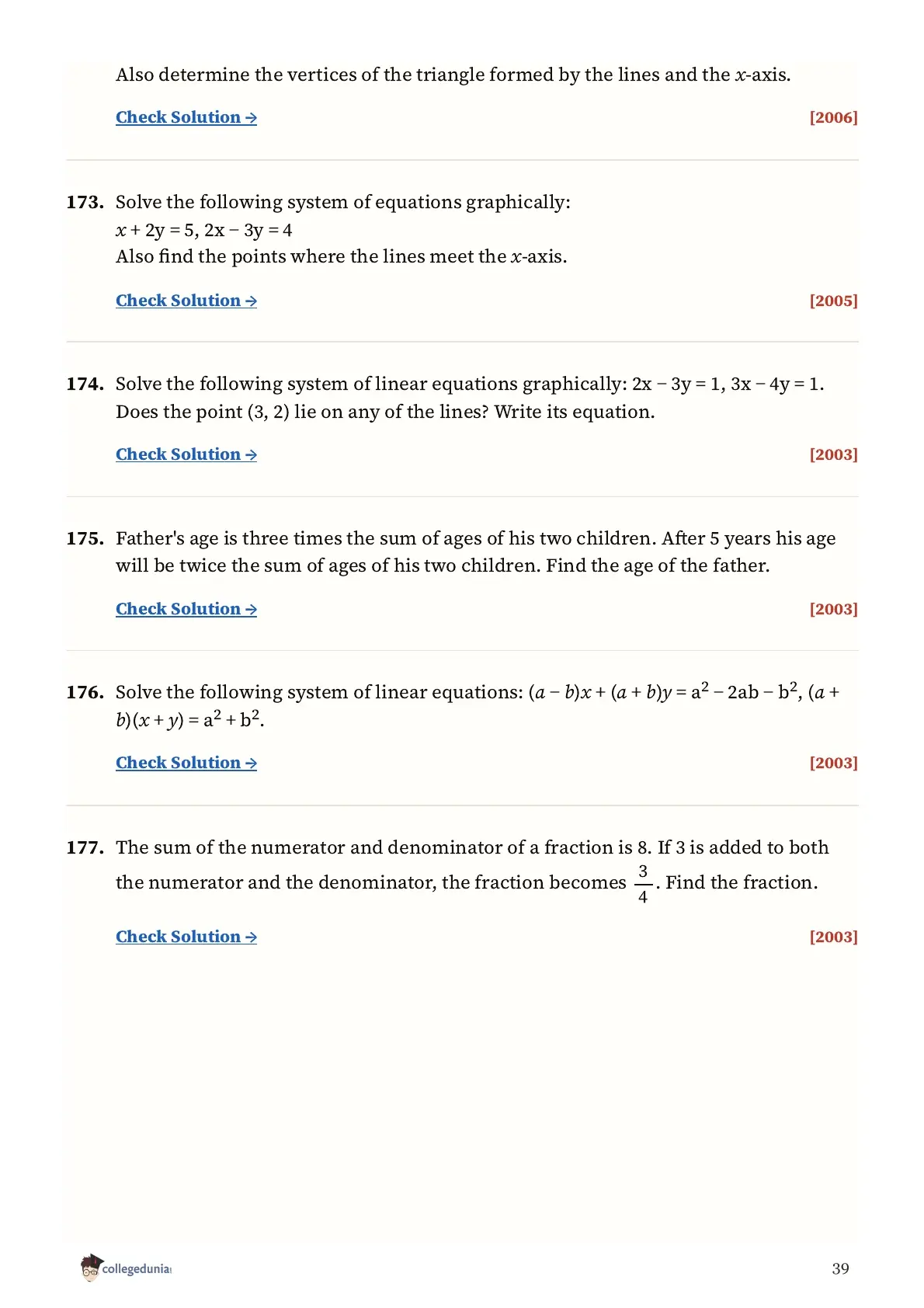
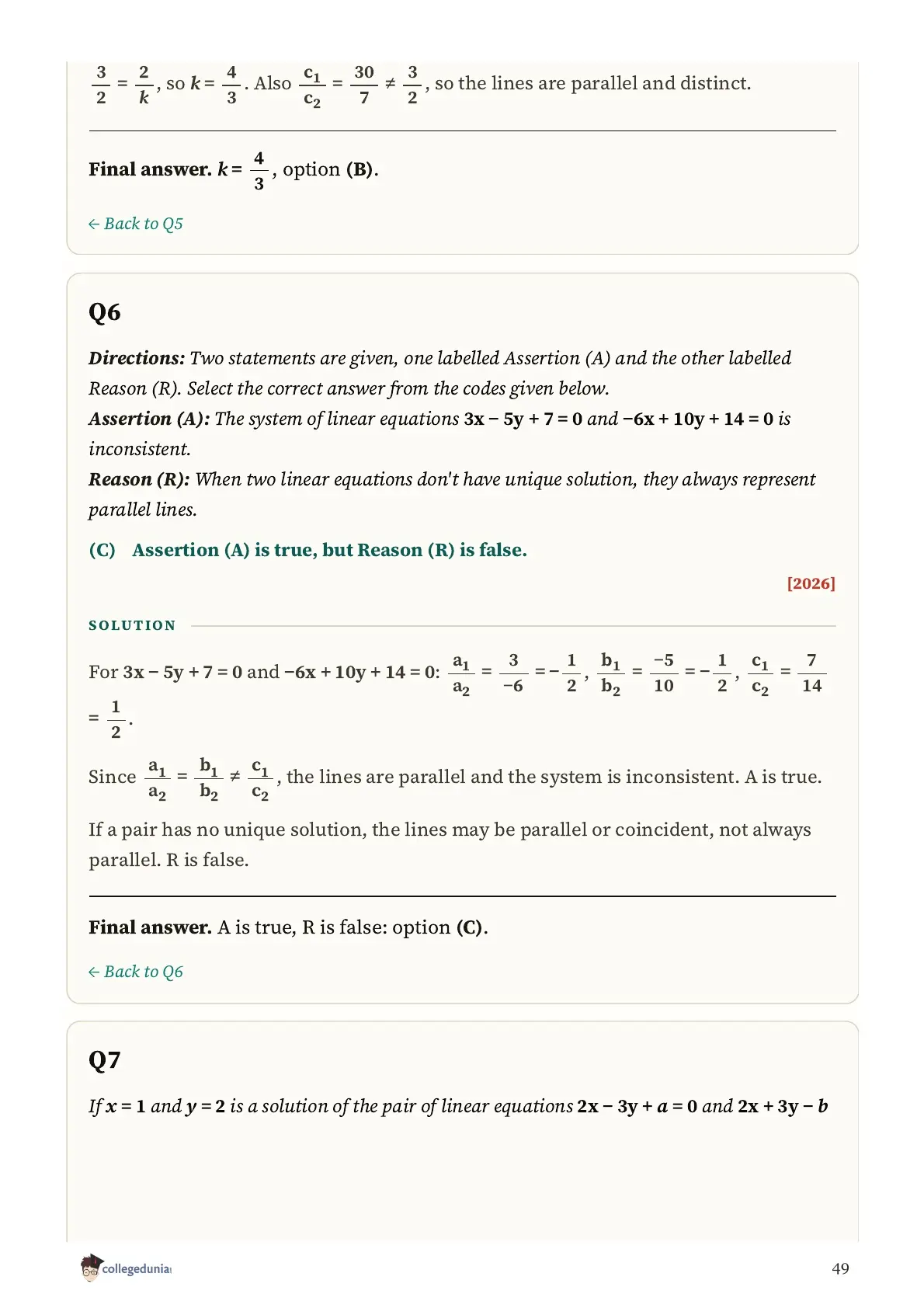
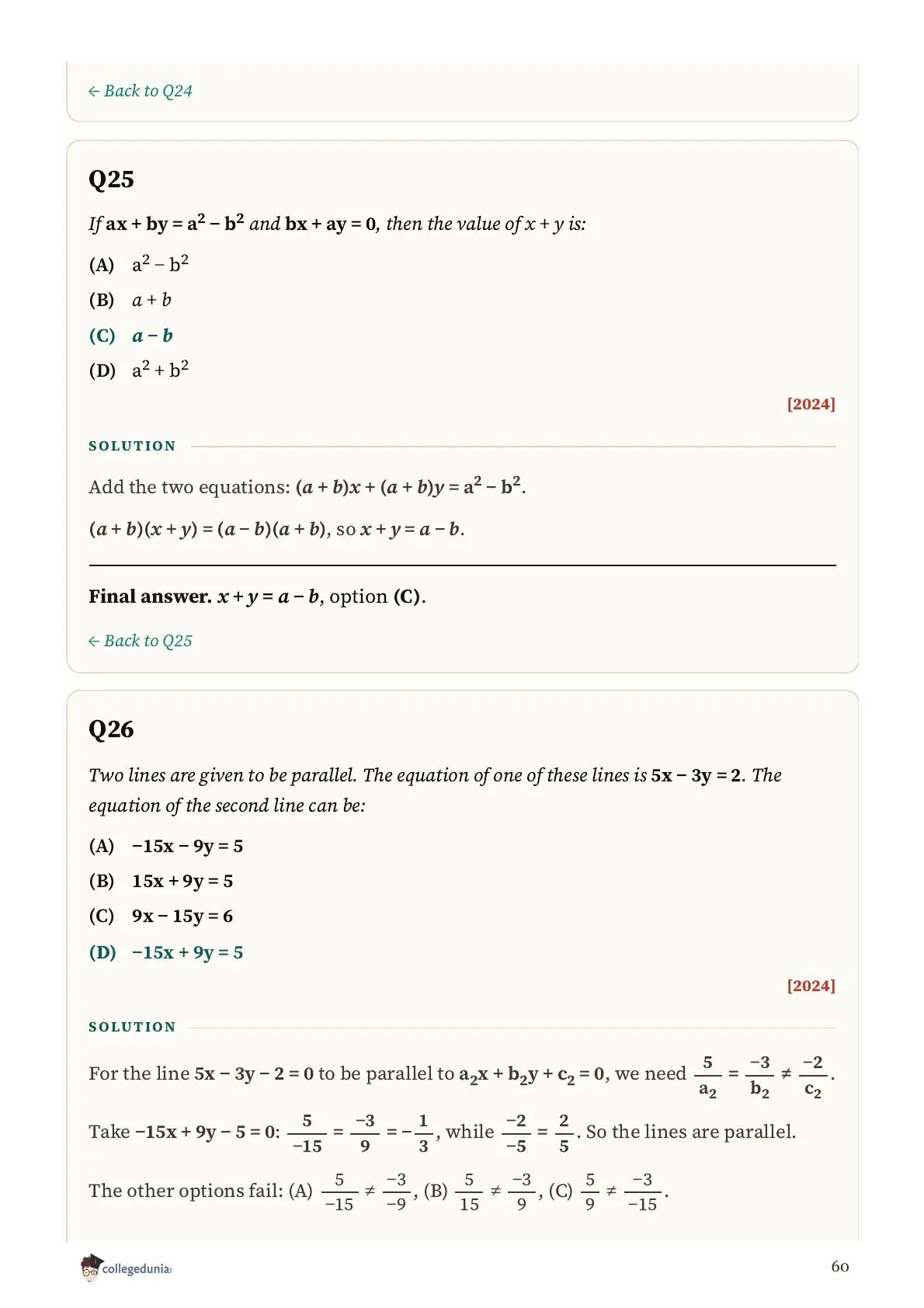
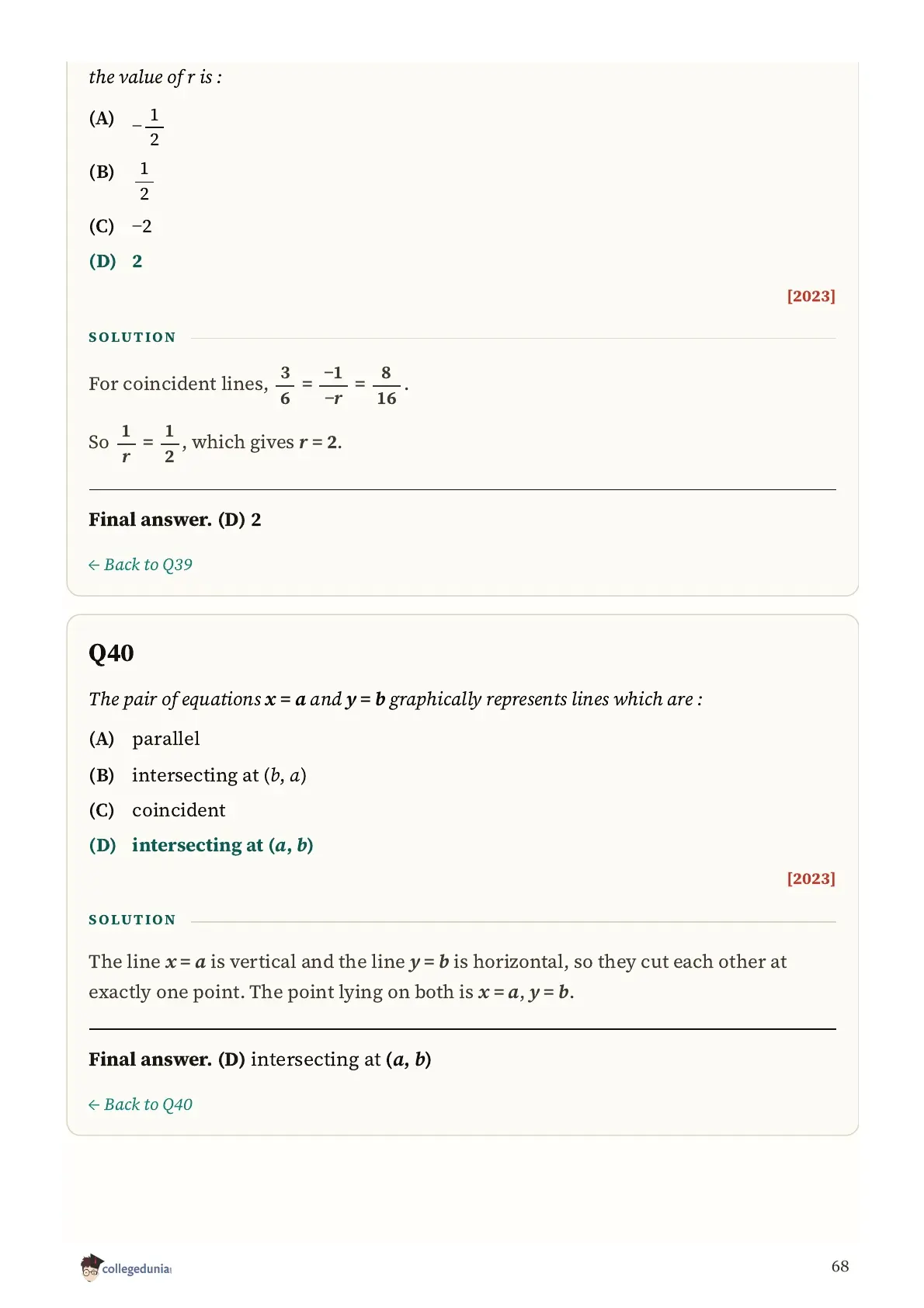
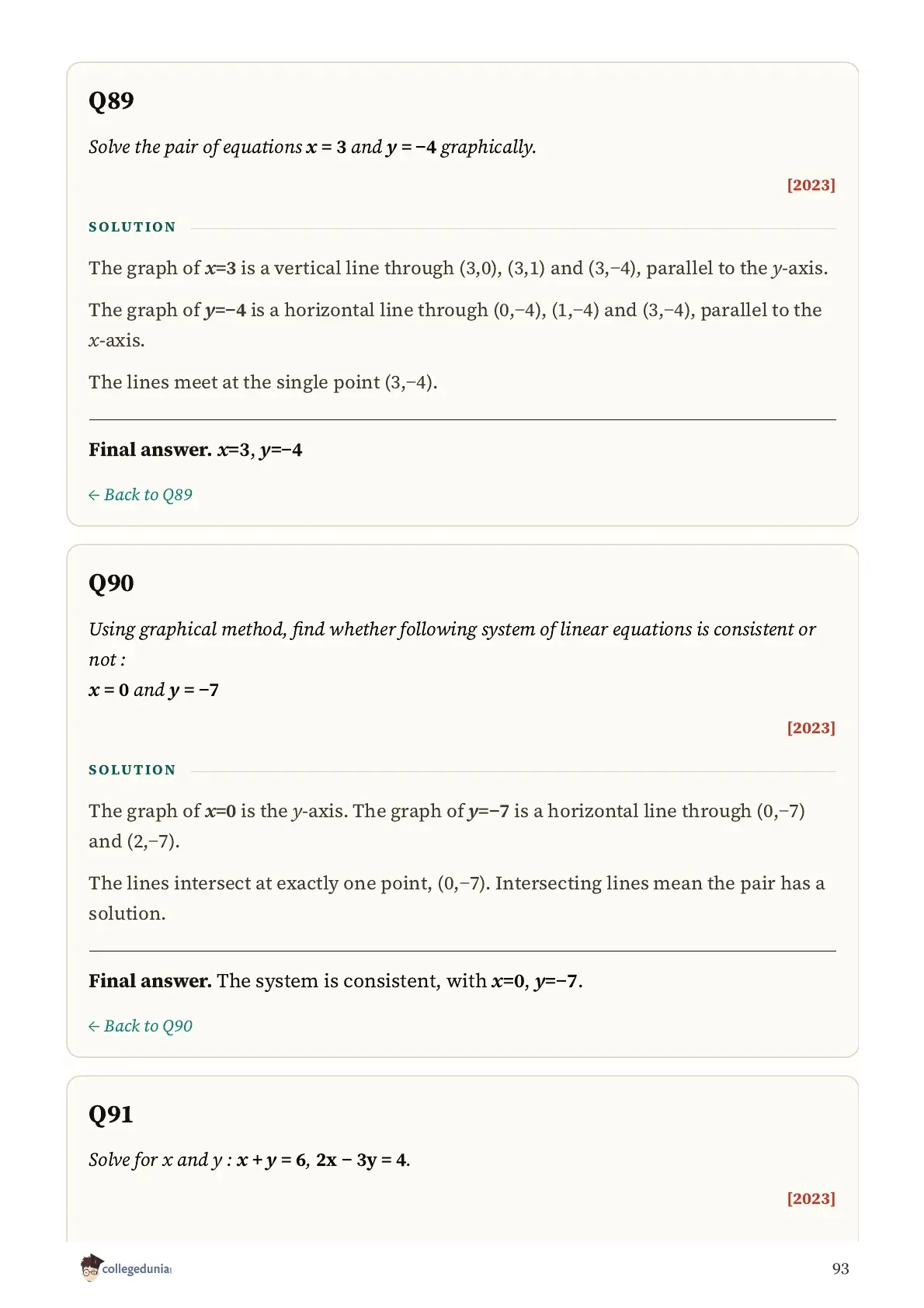
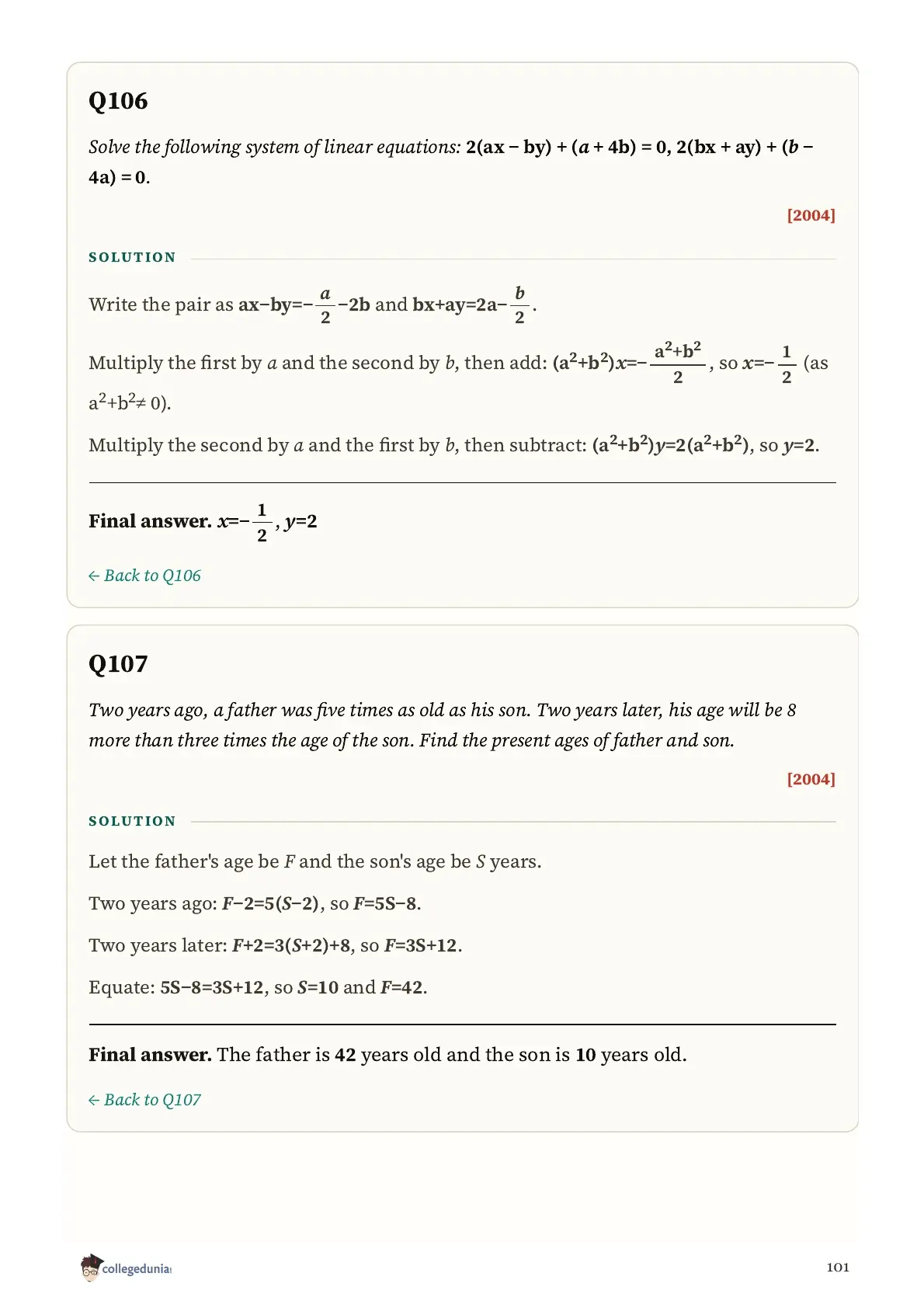
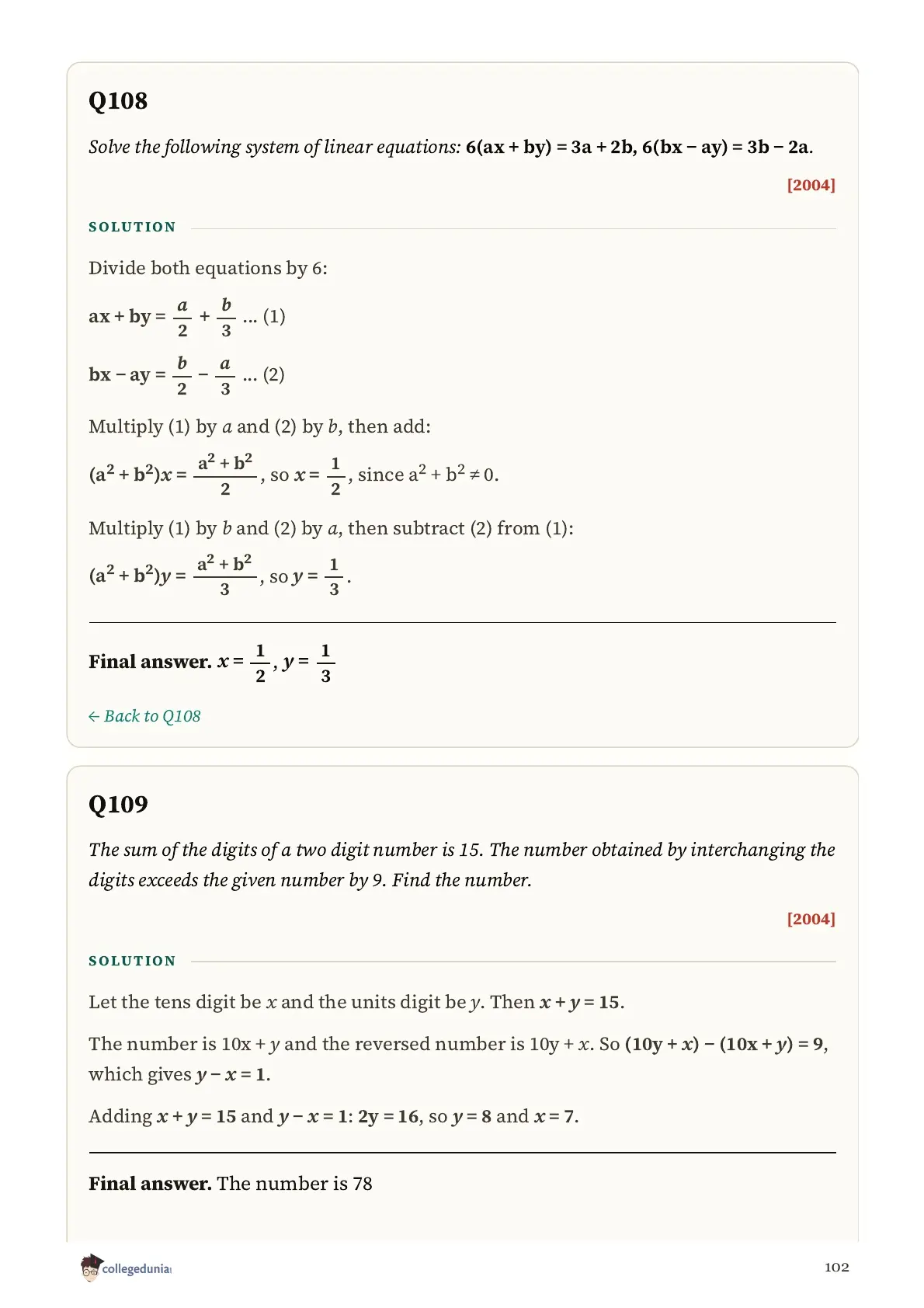
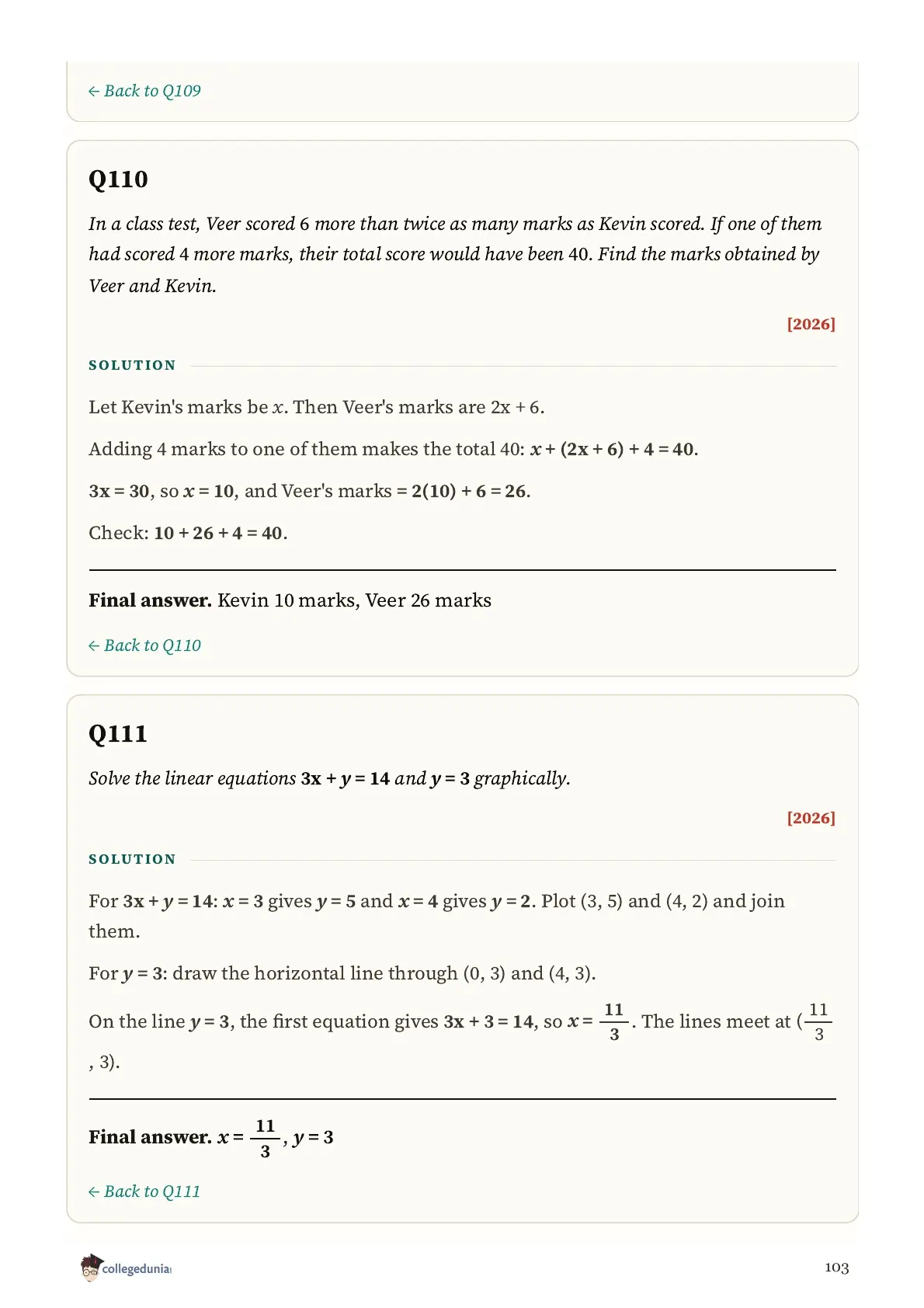
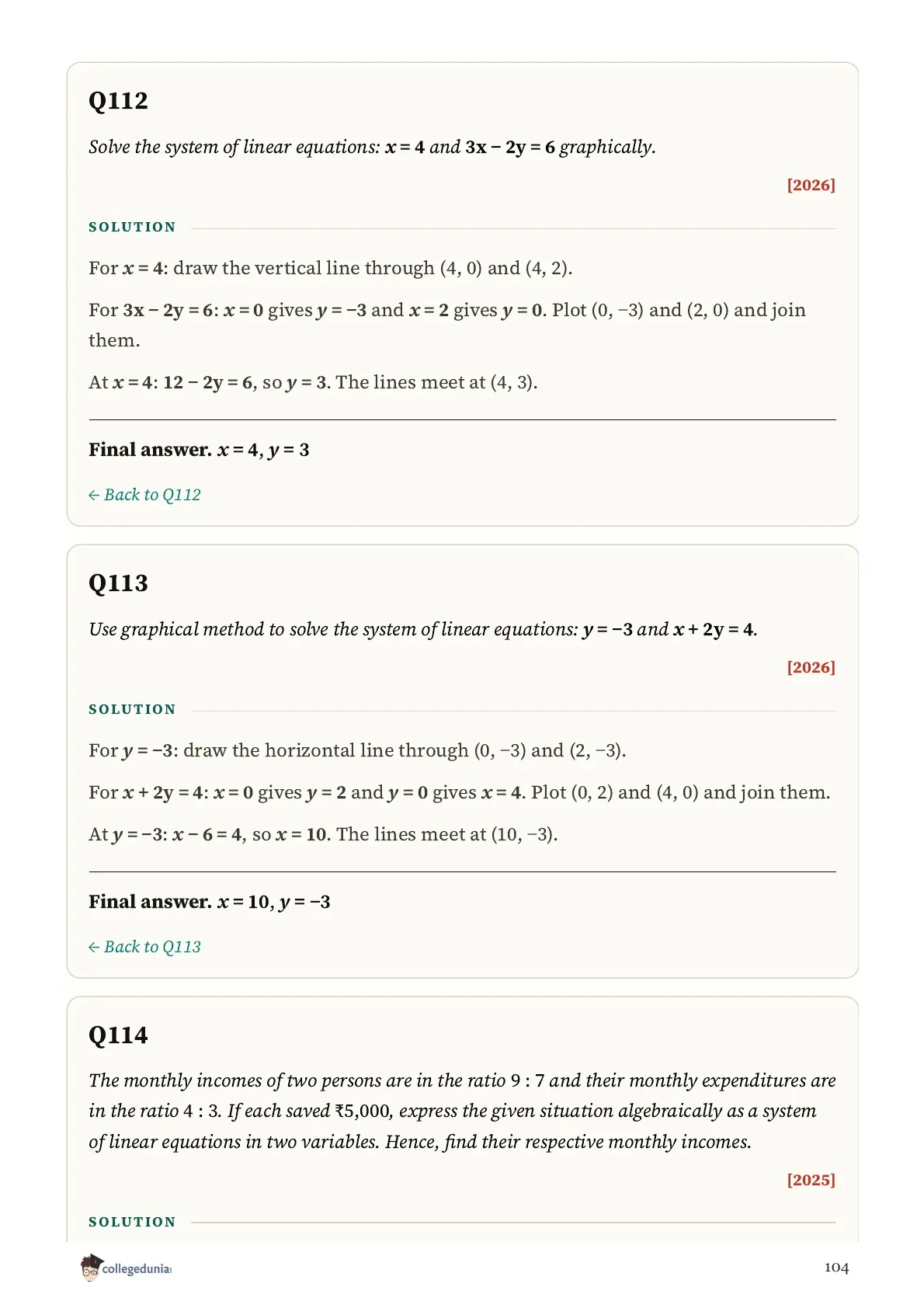
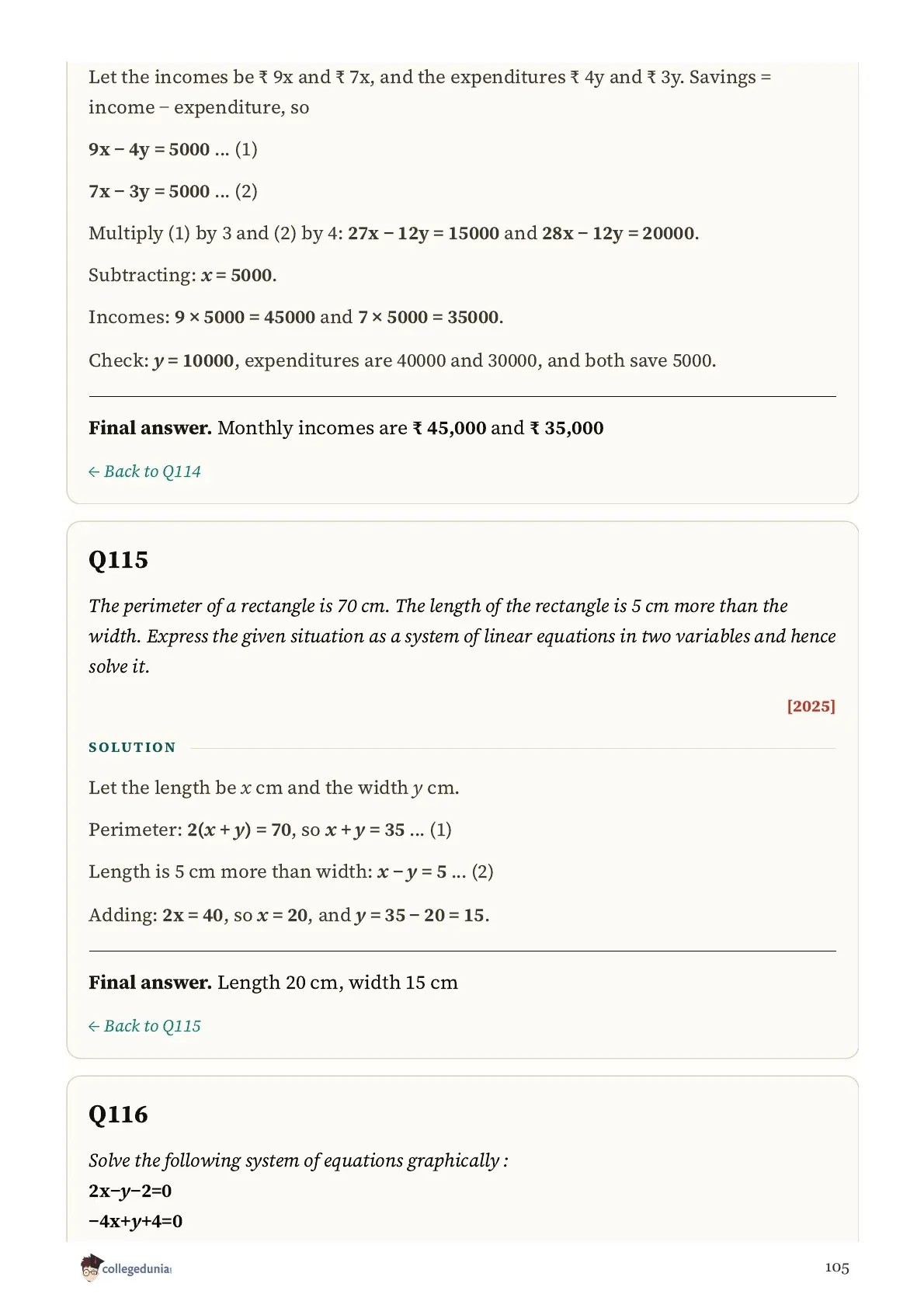
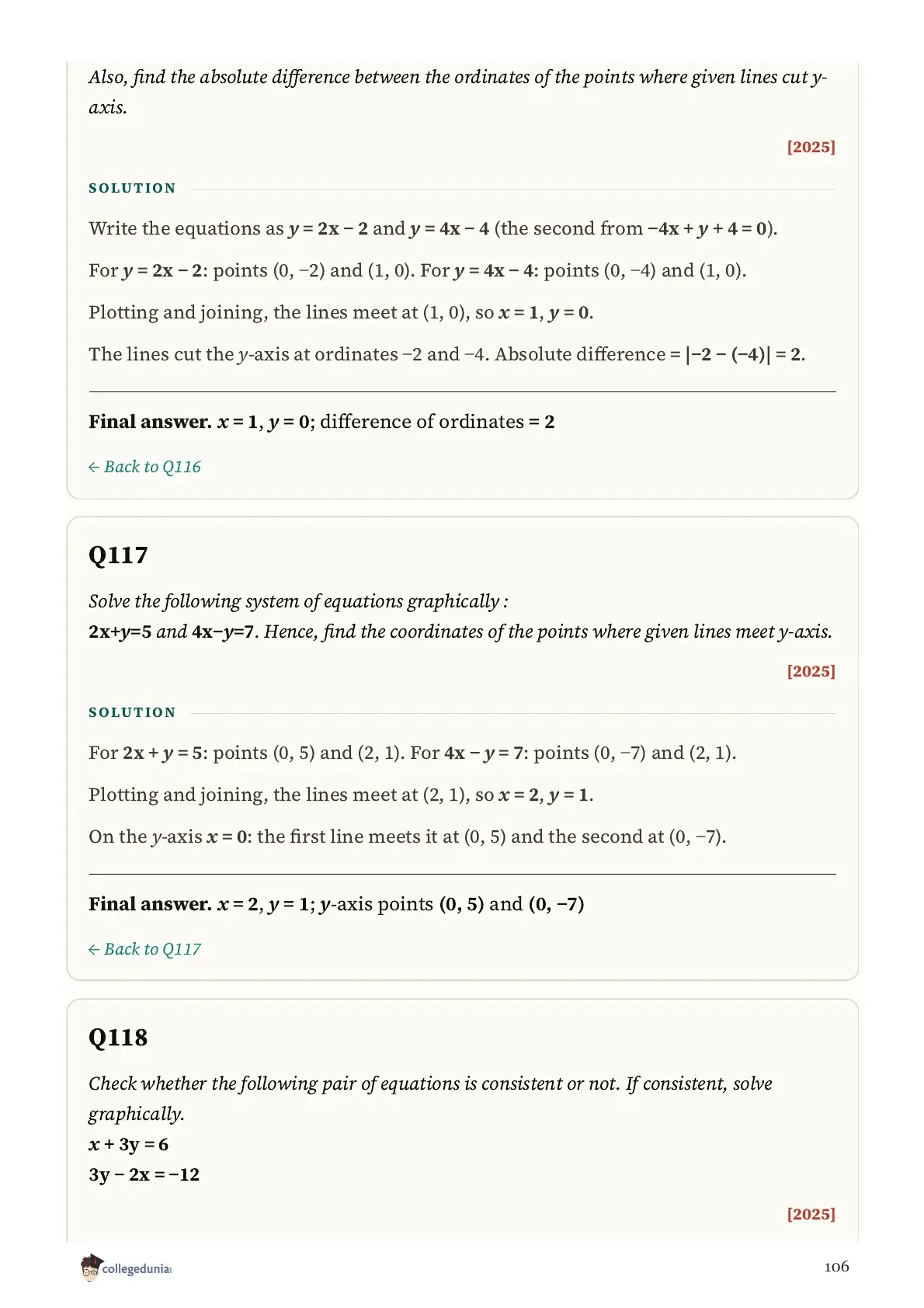
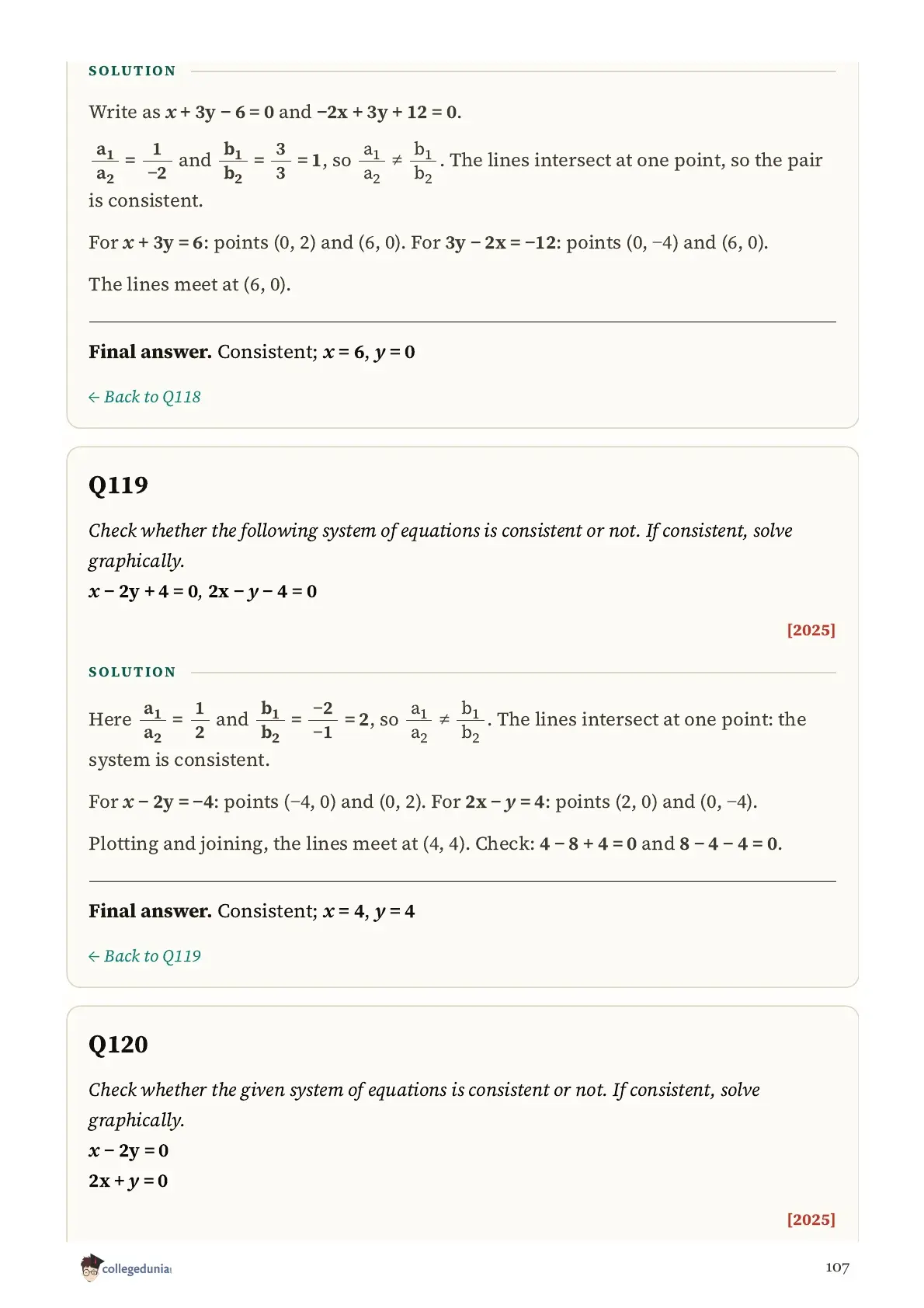
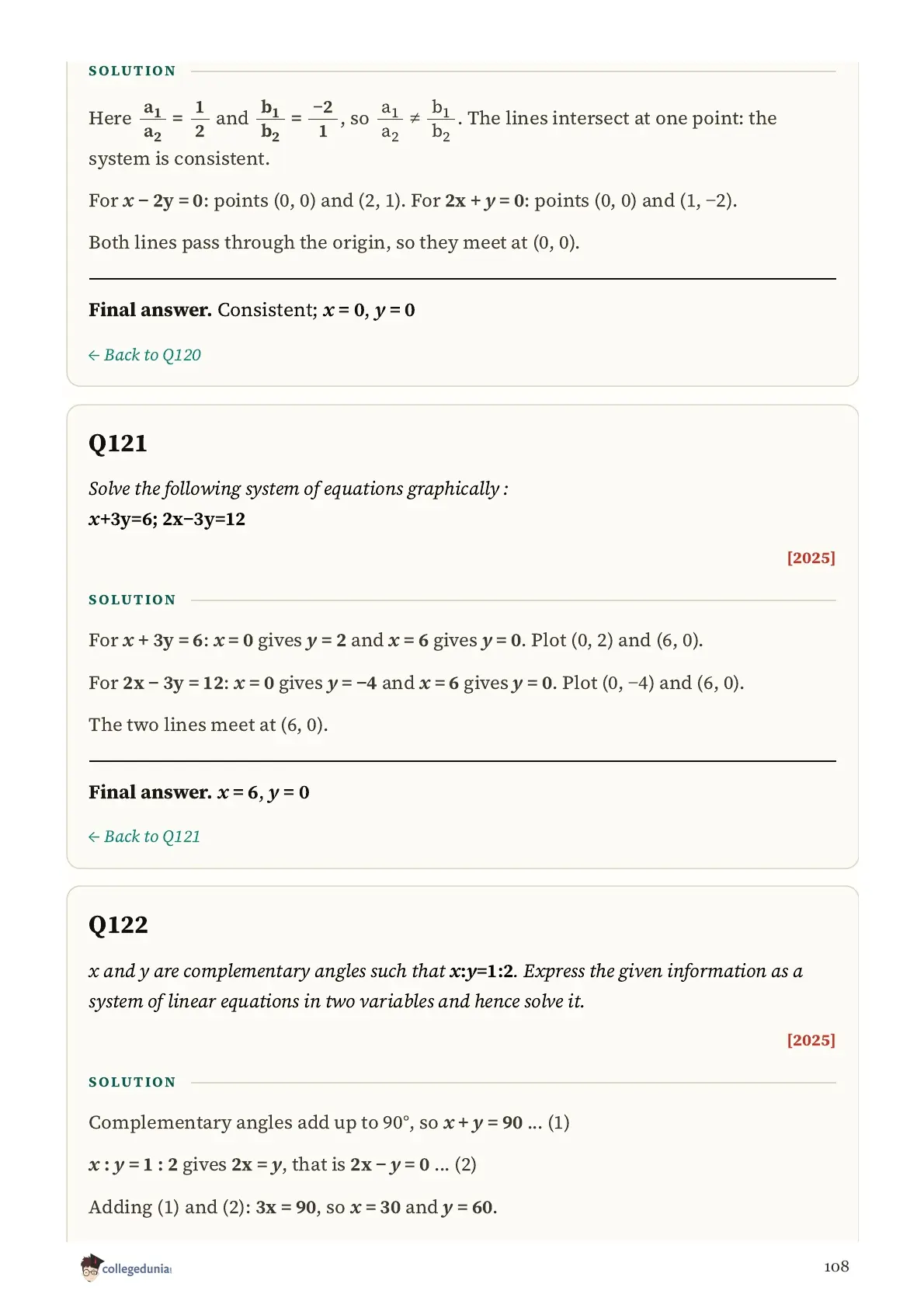
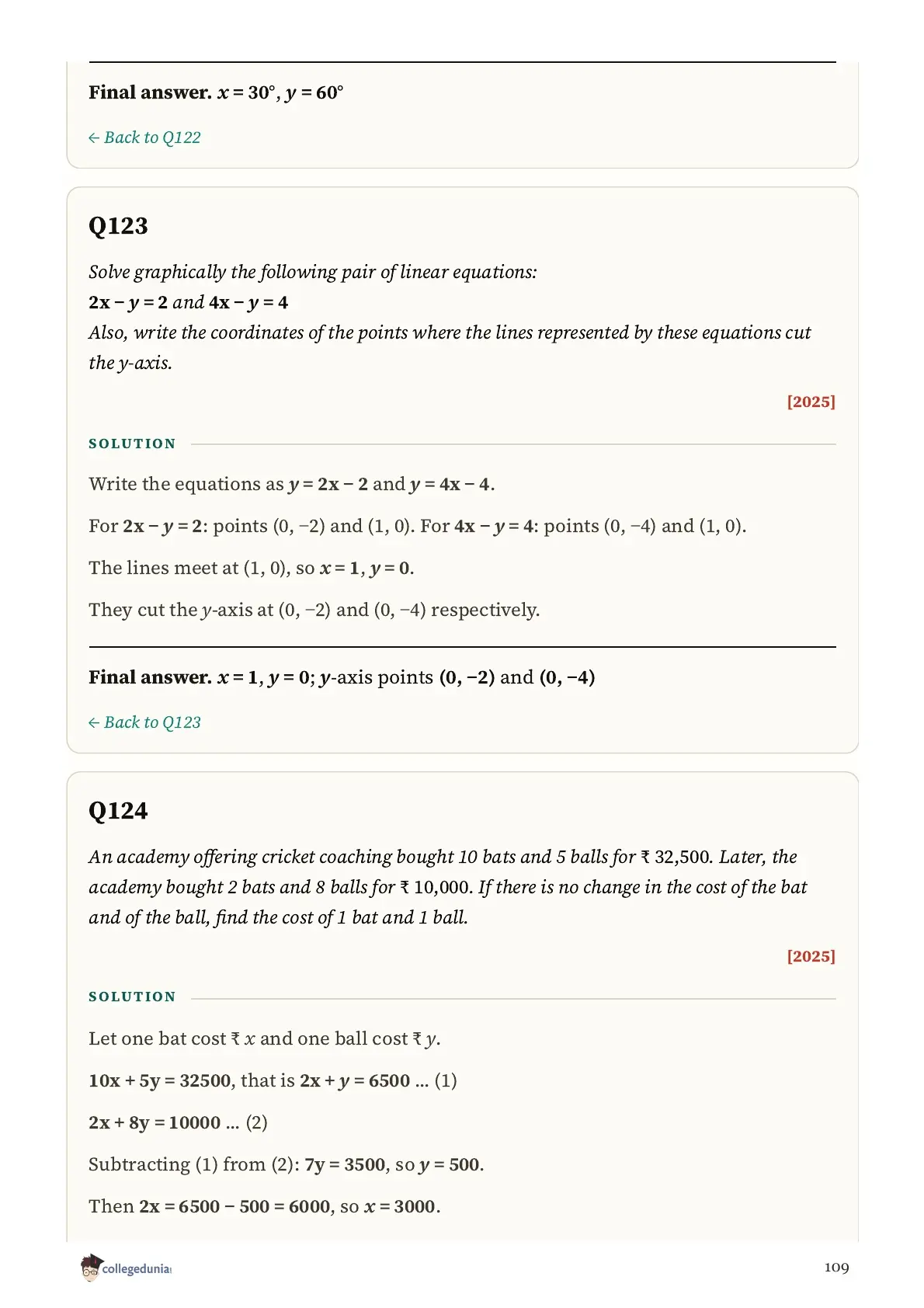
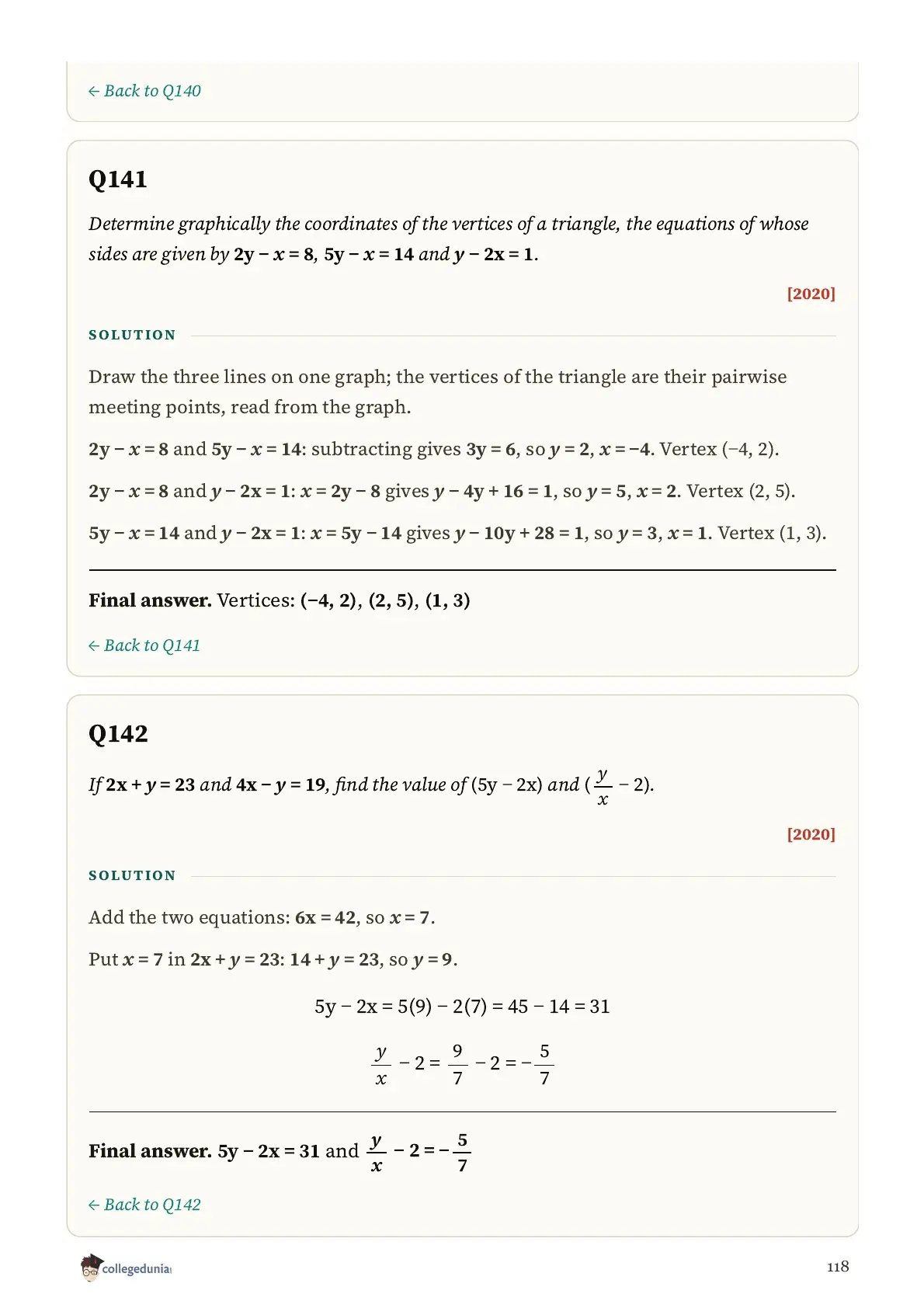
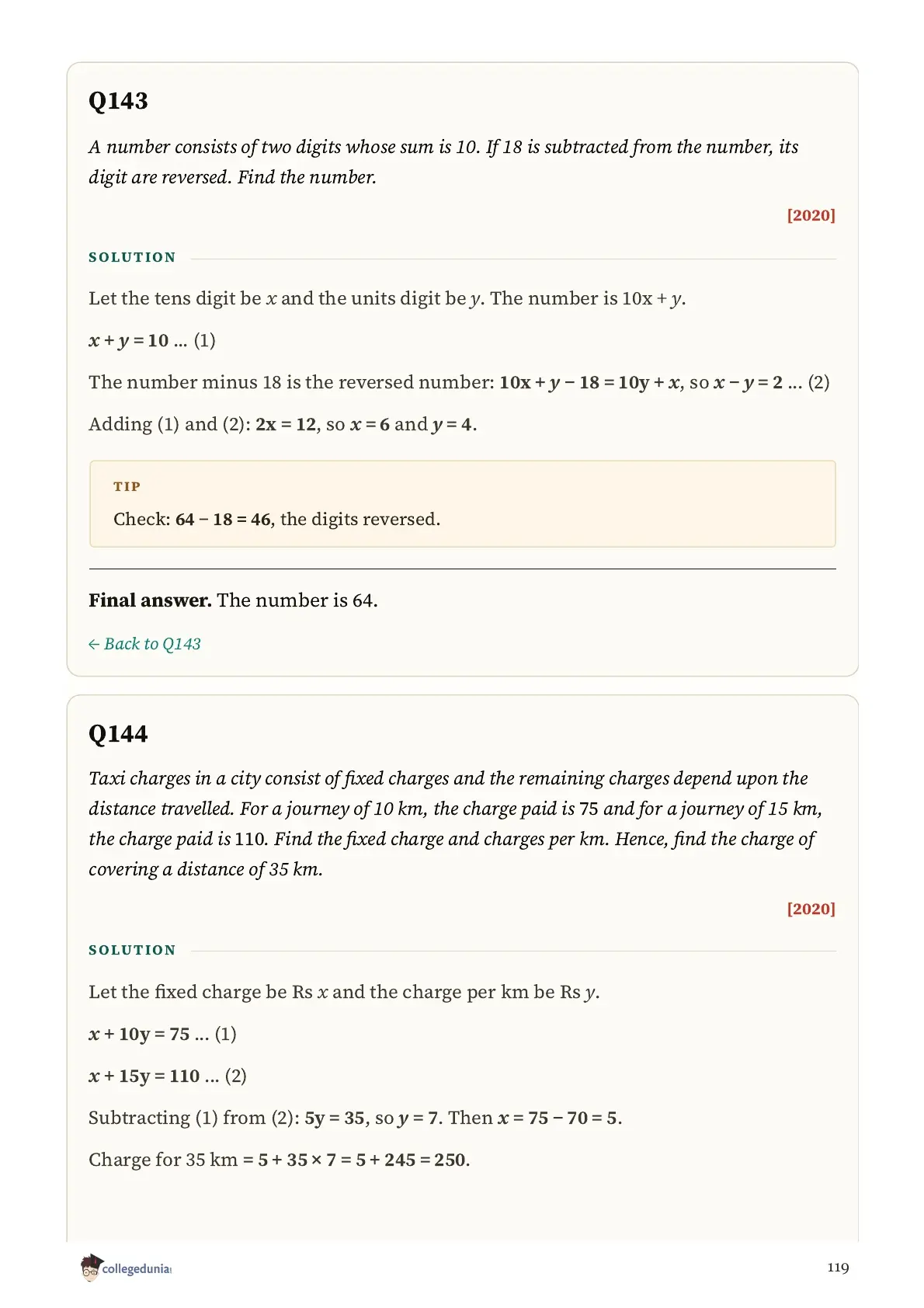
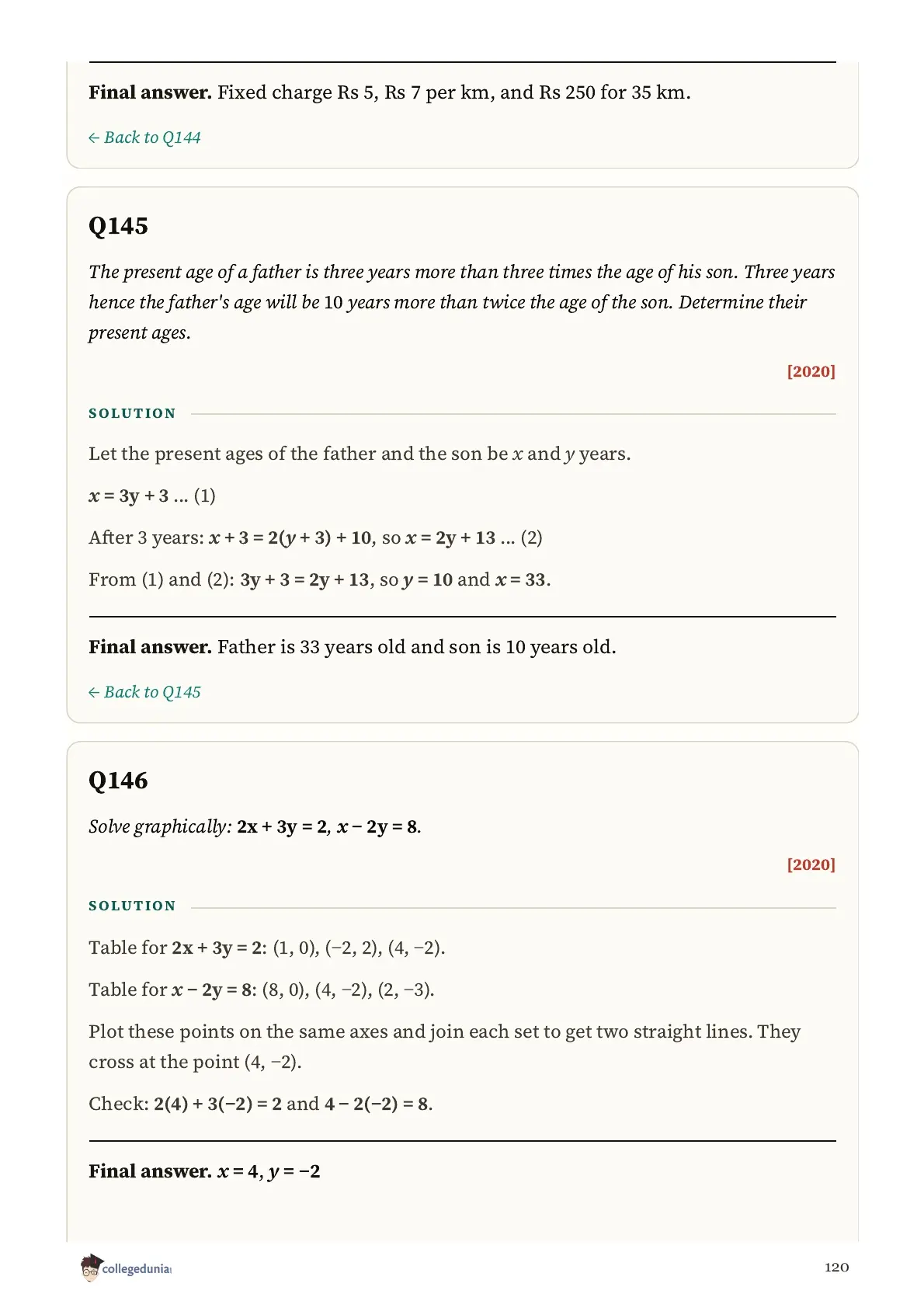
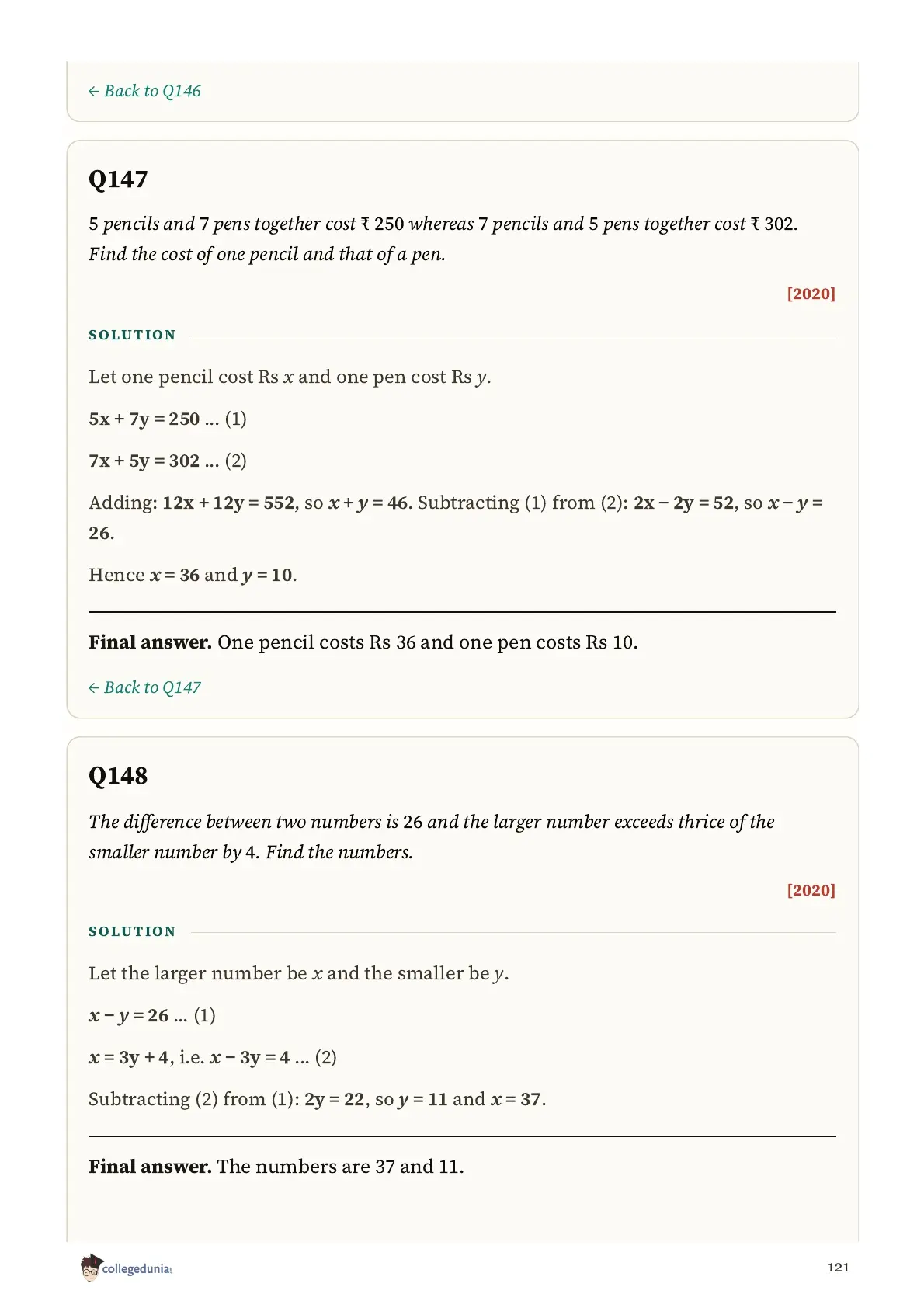
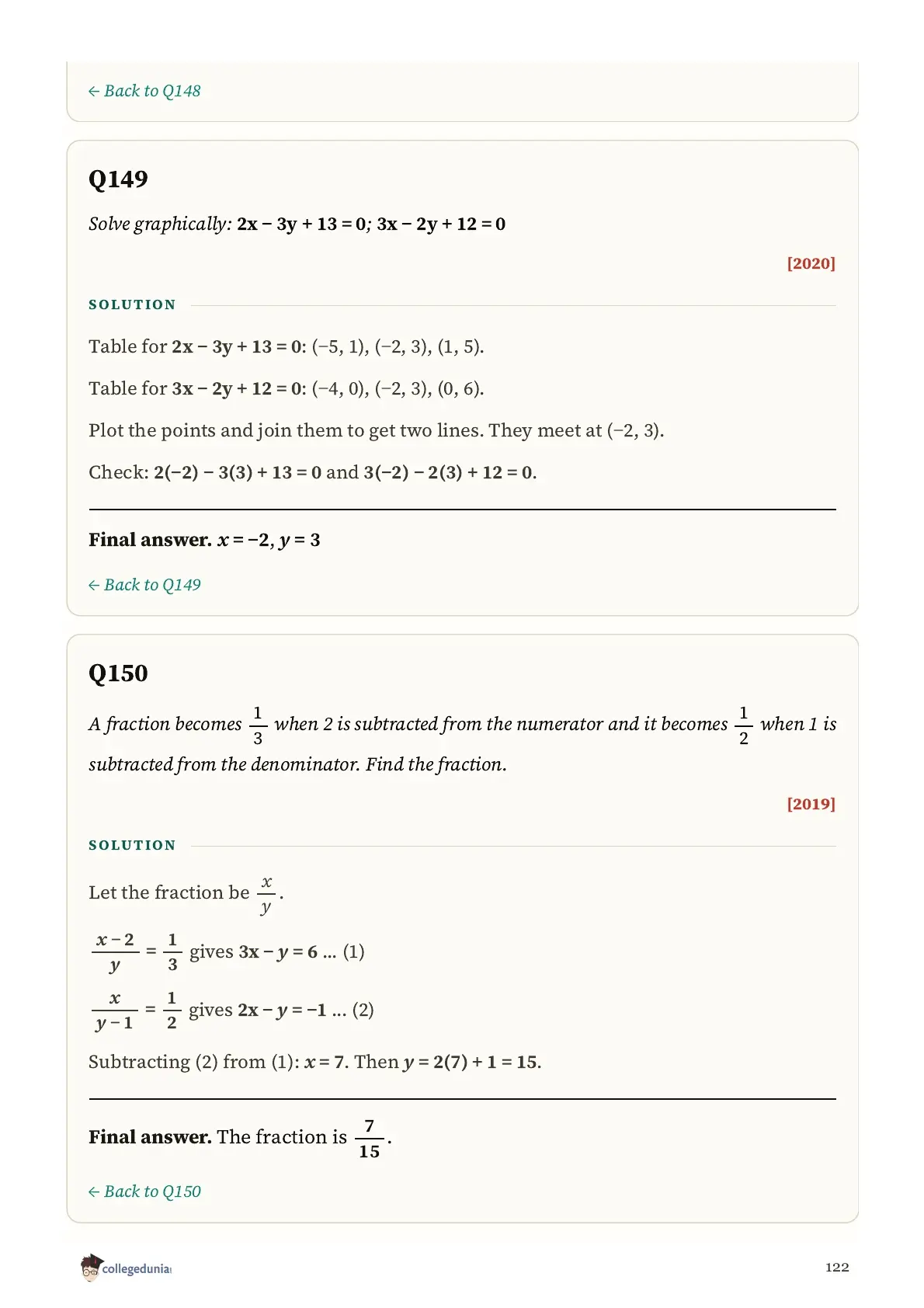
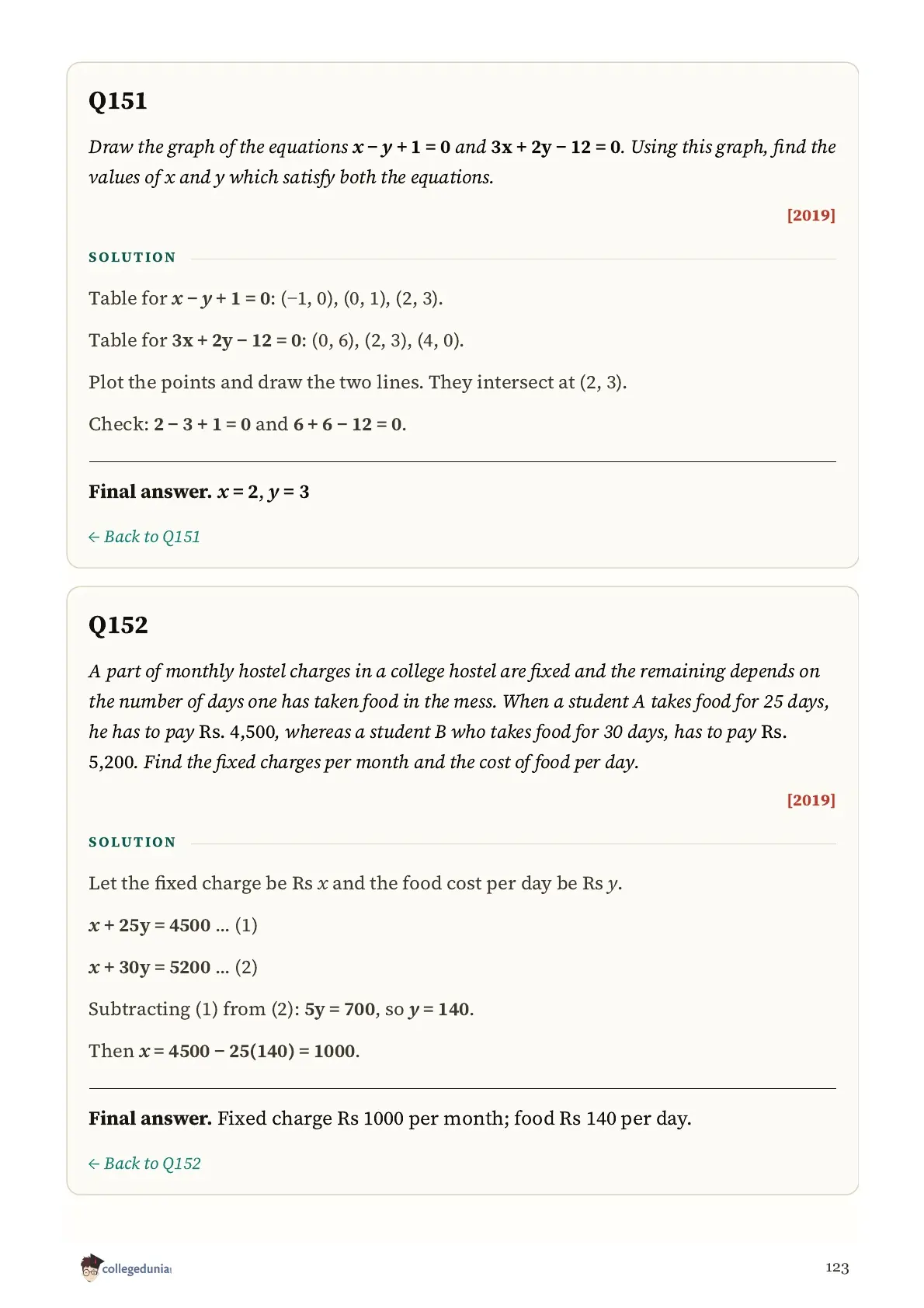
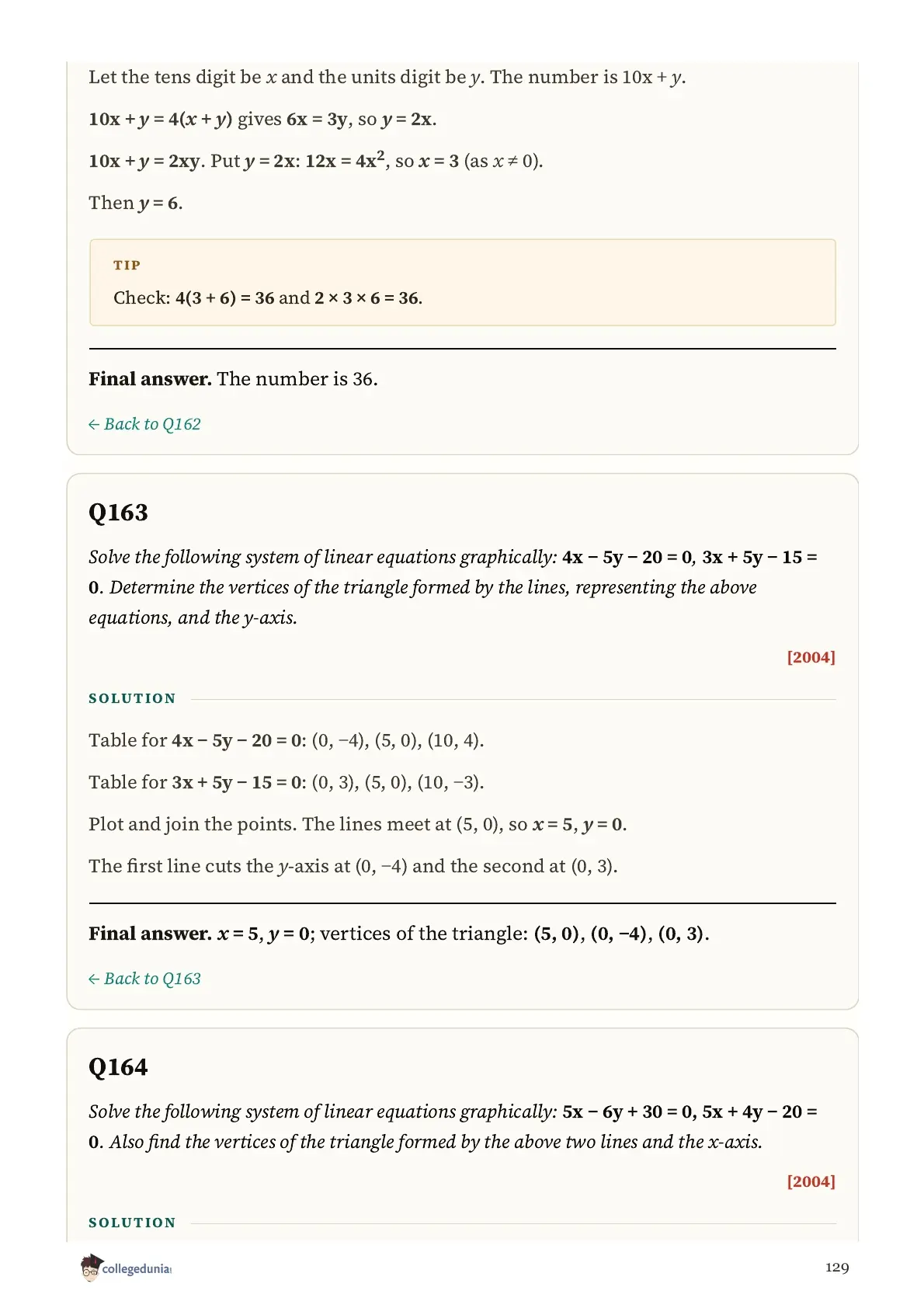
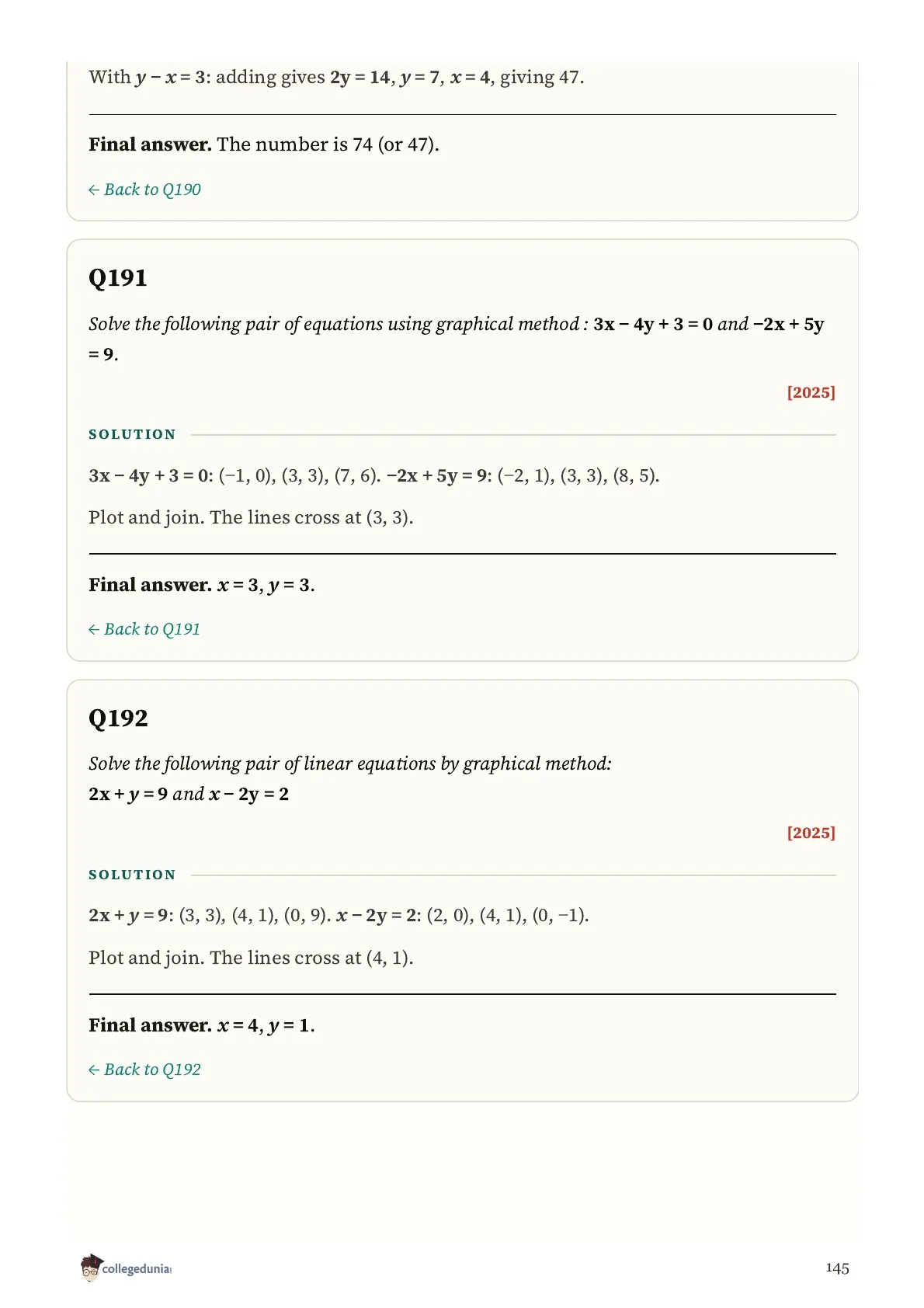
Most questions give you two equations, or a situation that becomes two equations, and ask for the point where they meet. 50 of the 200 say solve, and 44 ask you to express or form the equations first. The graphical method is the single biggest block: 37 questions use it, from the 2026 paper's y = 3 with 3x + y = 14 to the 2004 questions that ask for the vertices of the triangle the lines make with an axis. 15 questions ask for an axis intercept or ordinate, and 6 ask for the area of a triangle.
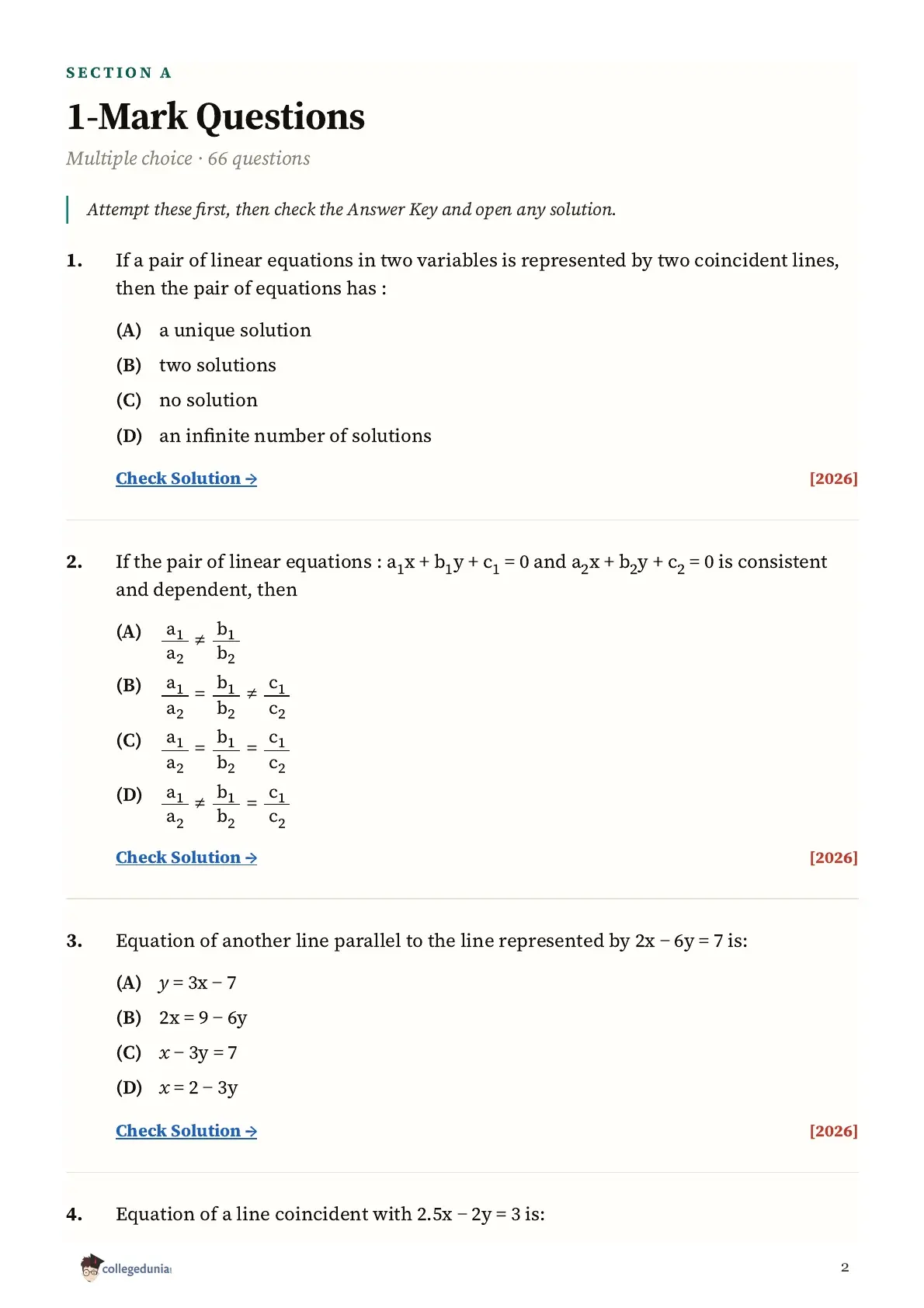
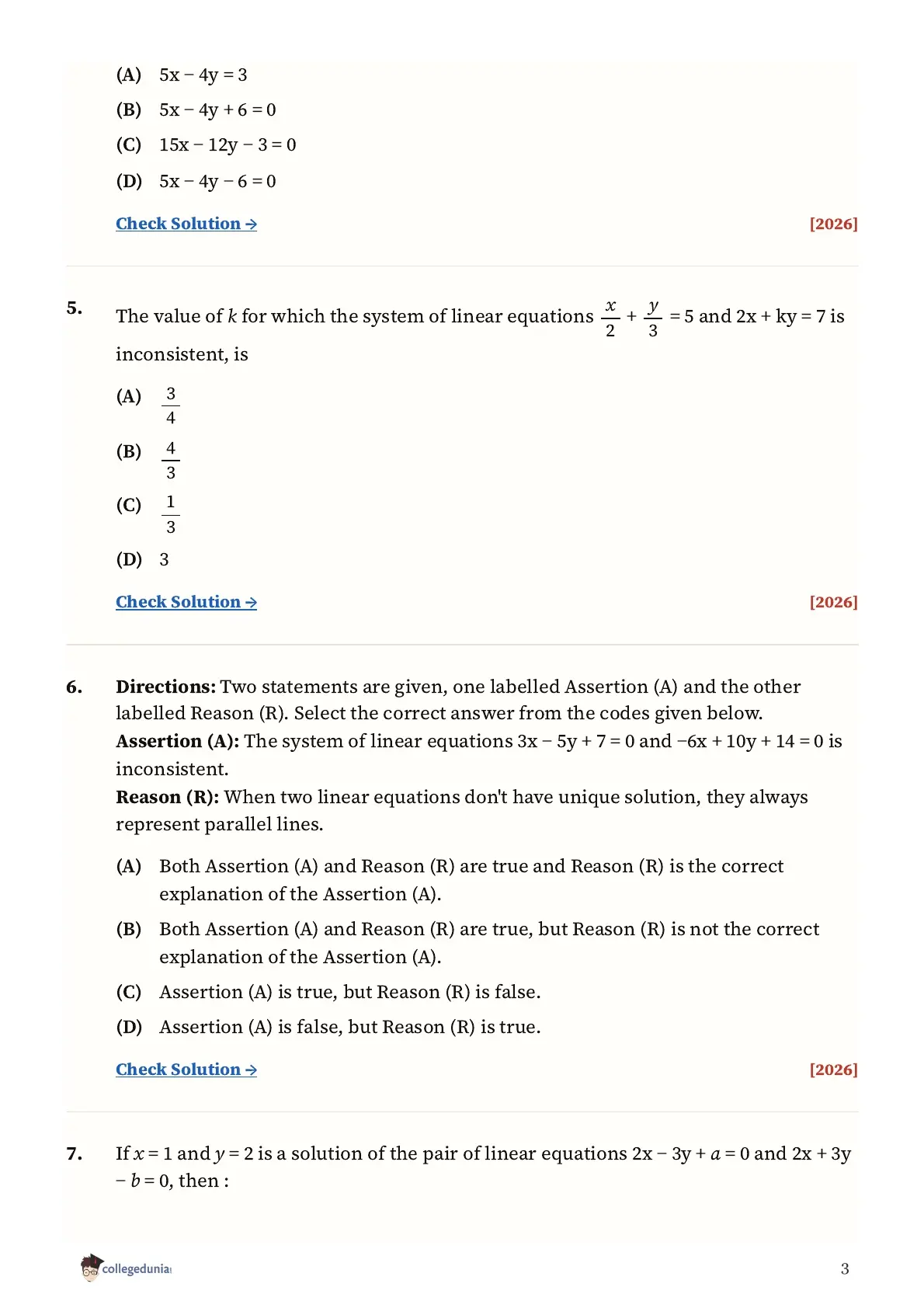
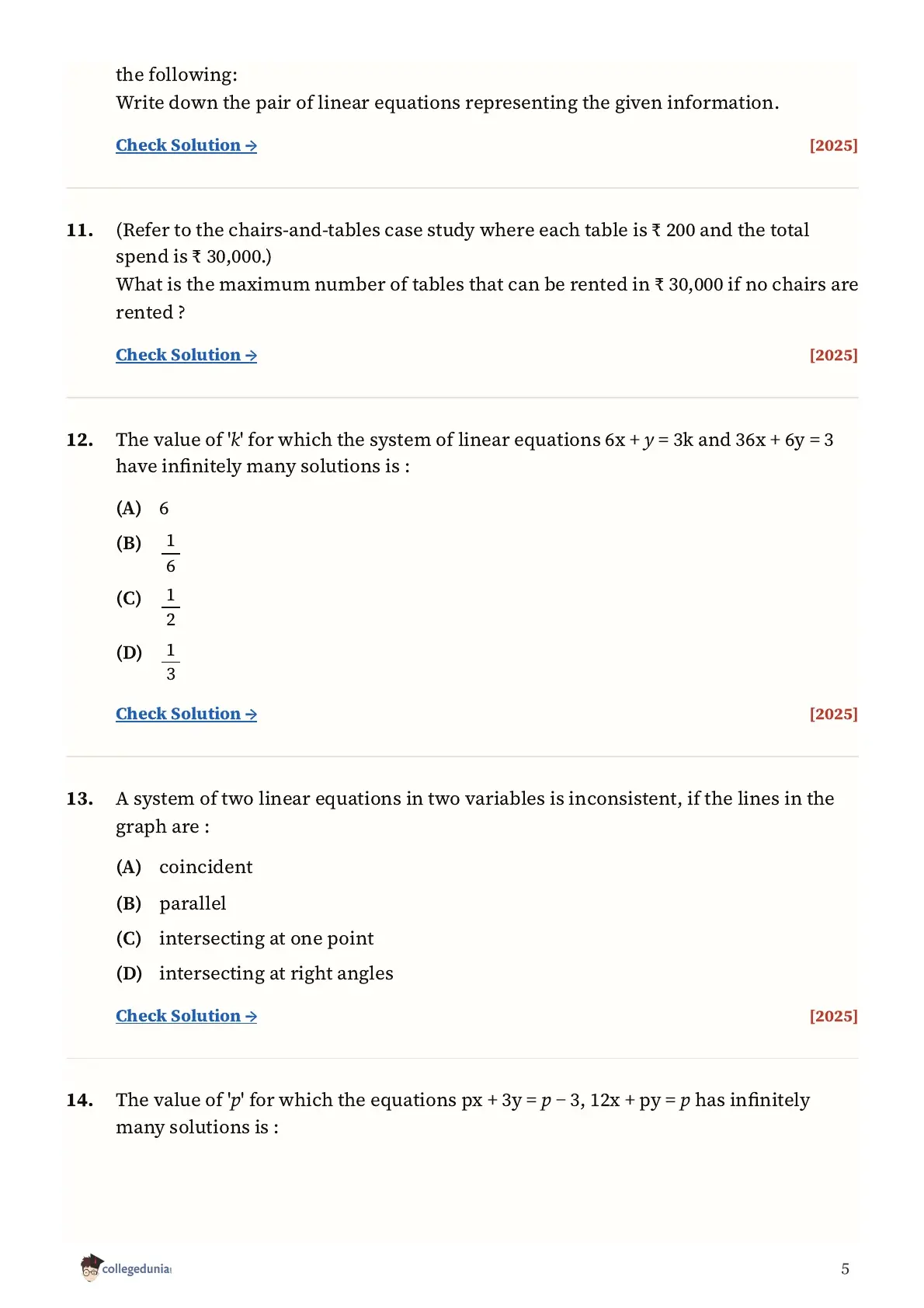
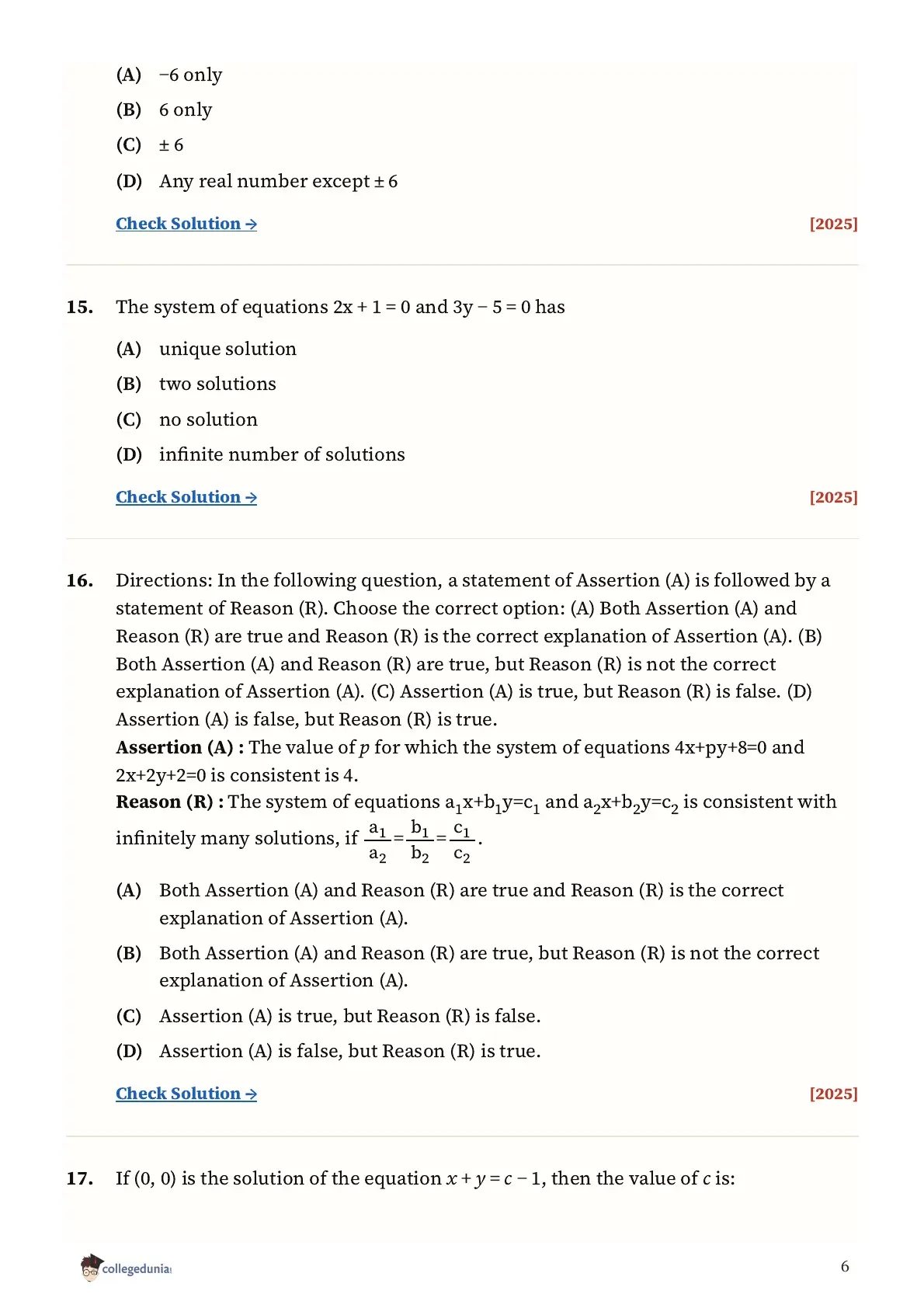
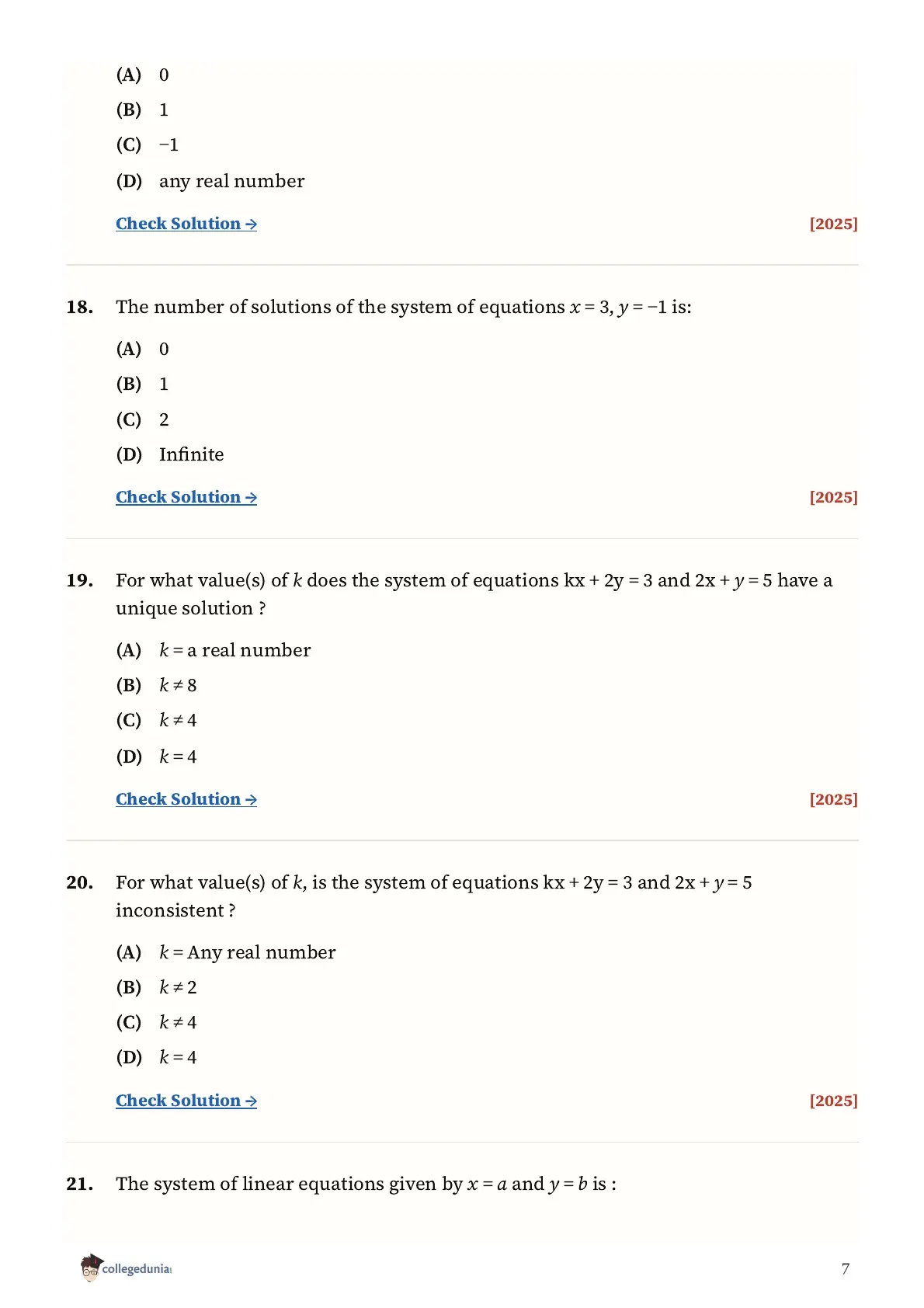
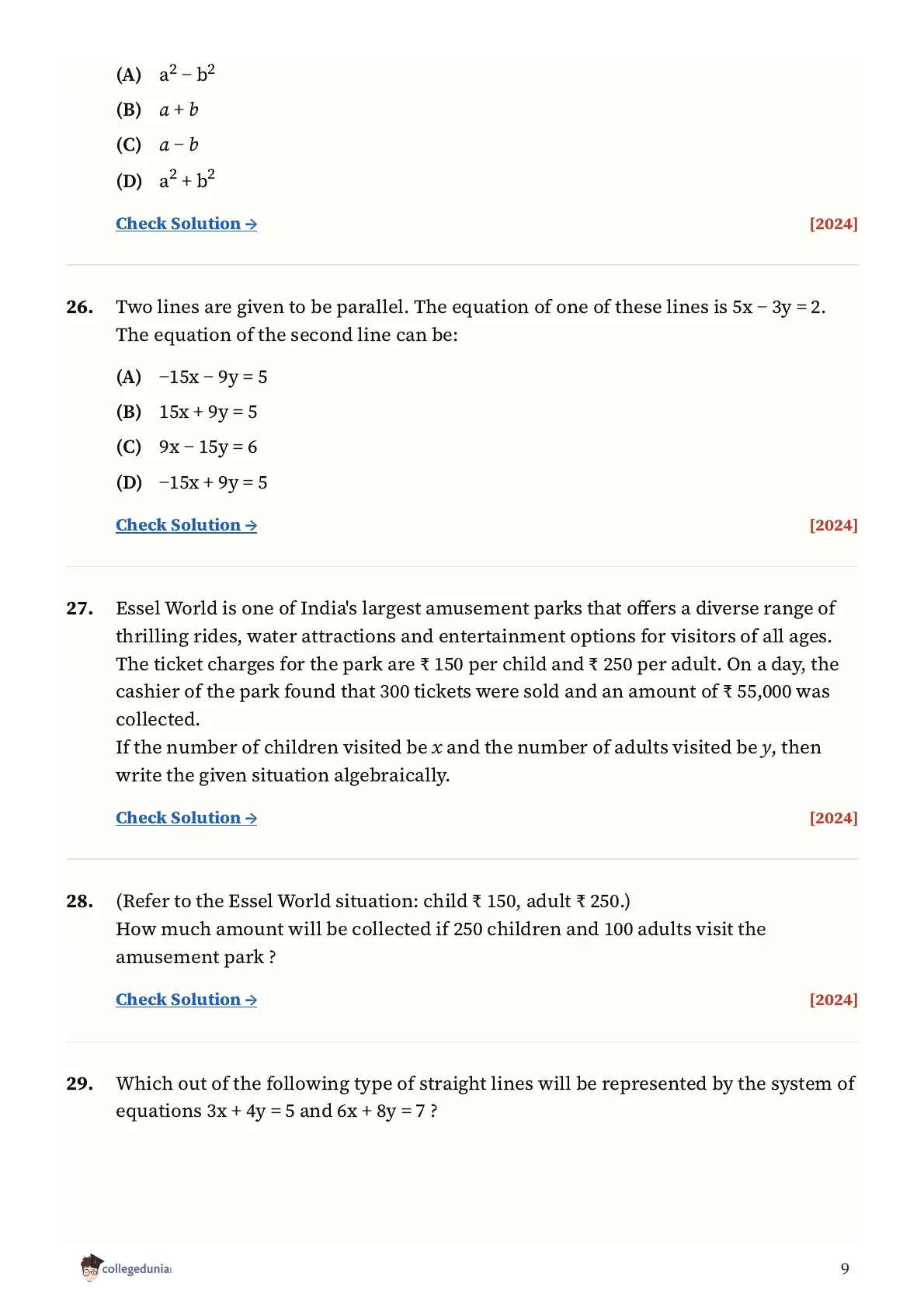
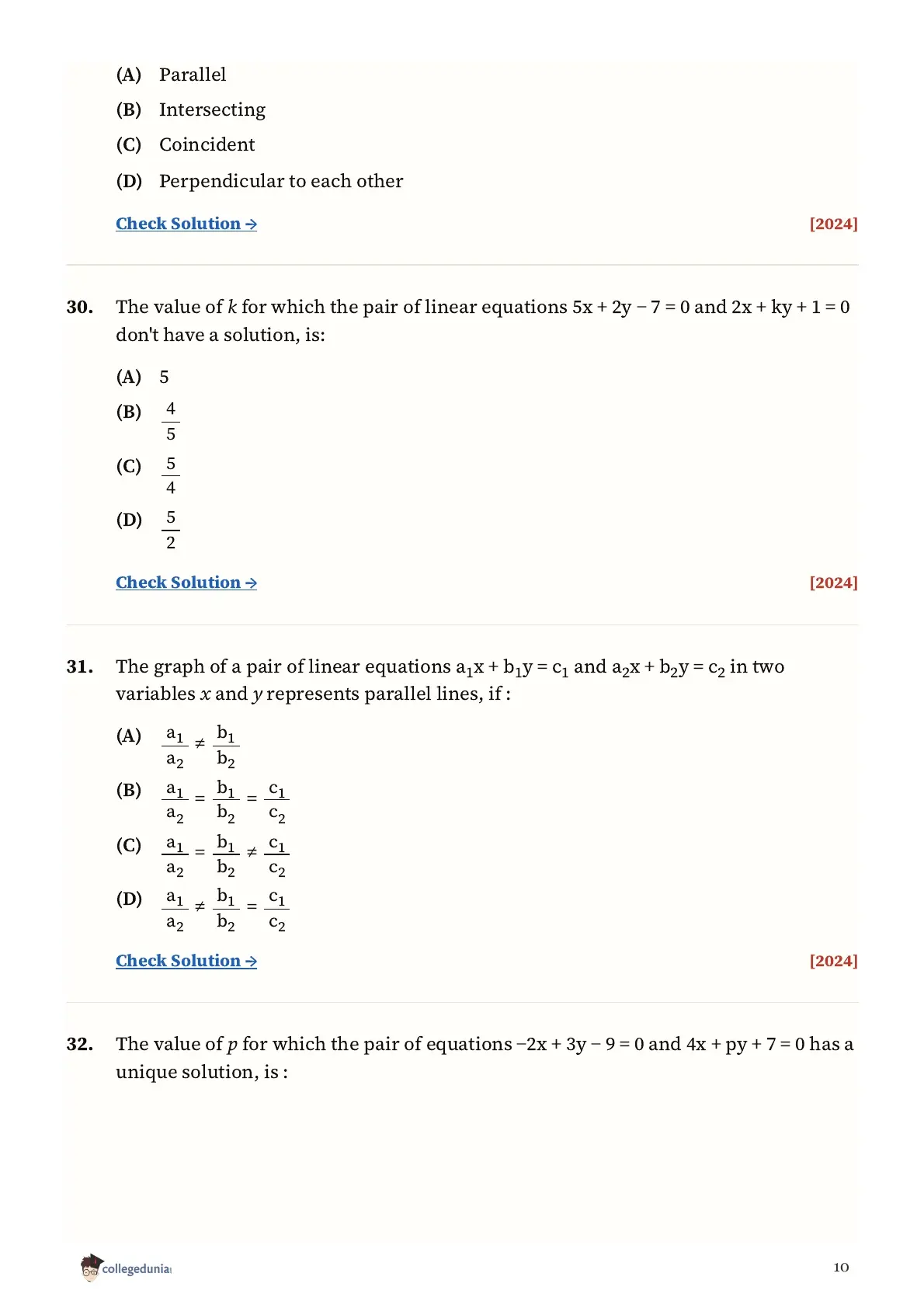
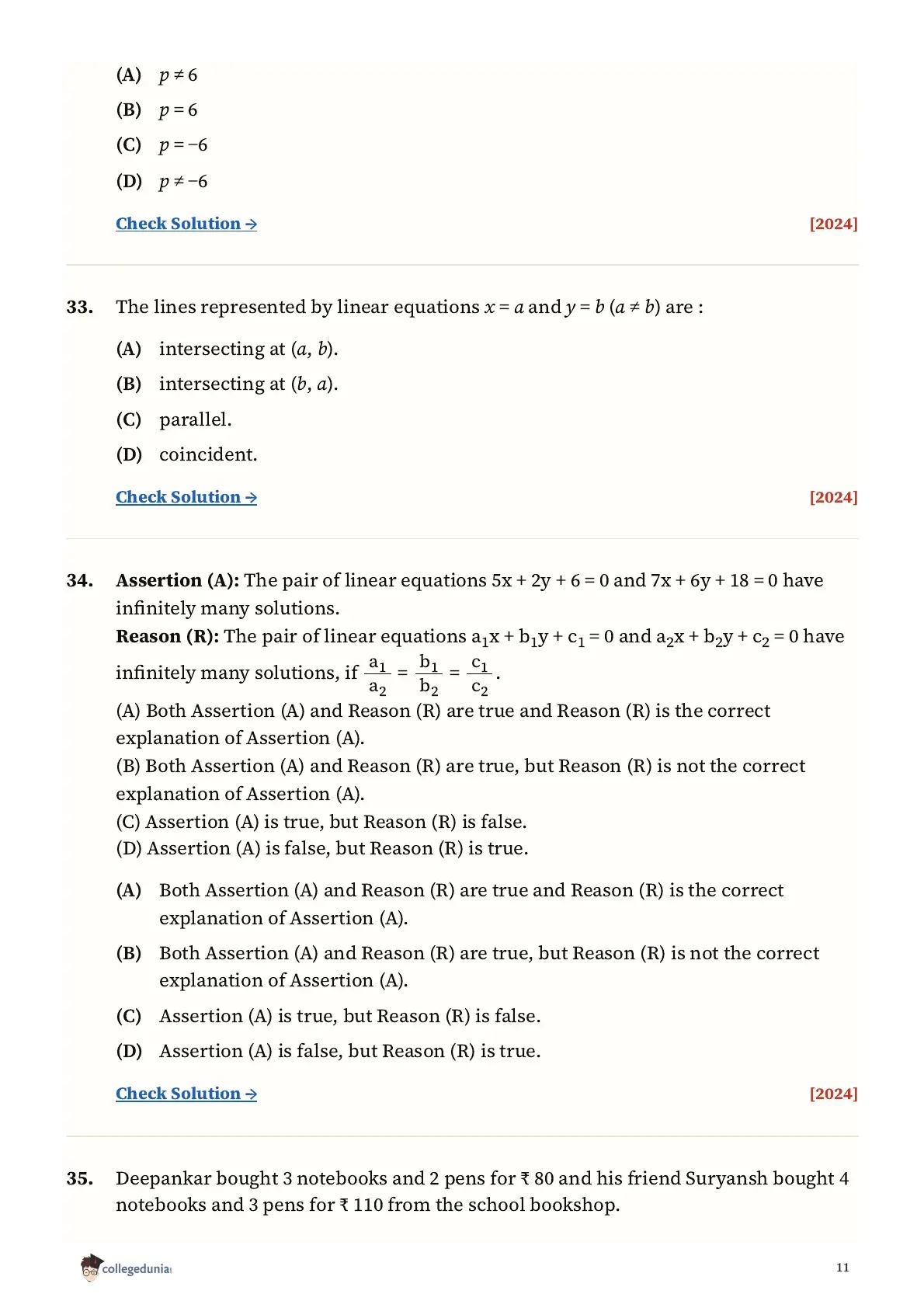
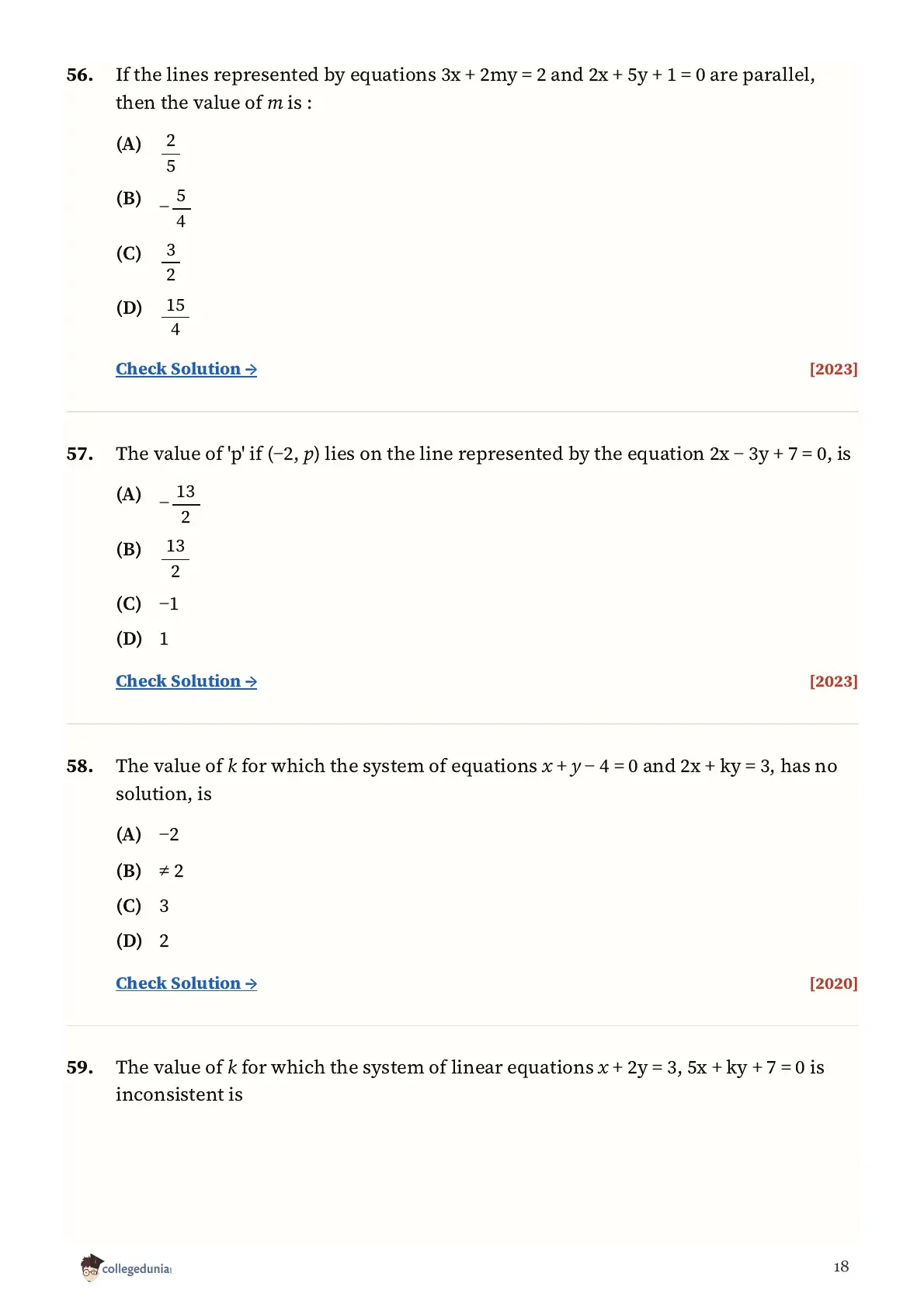
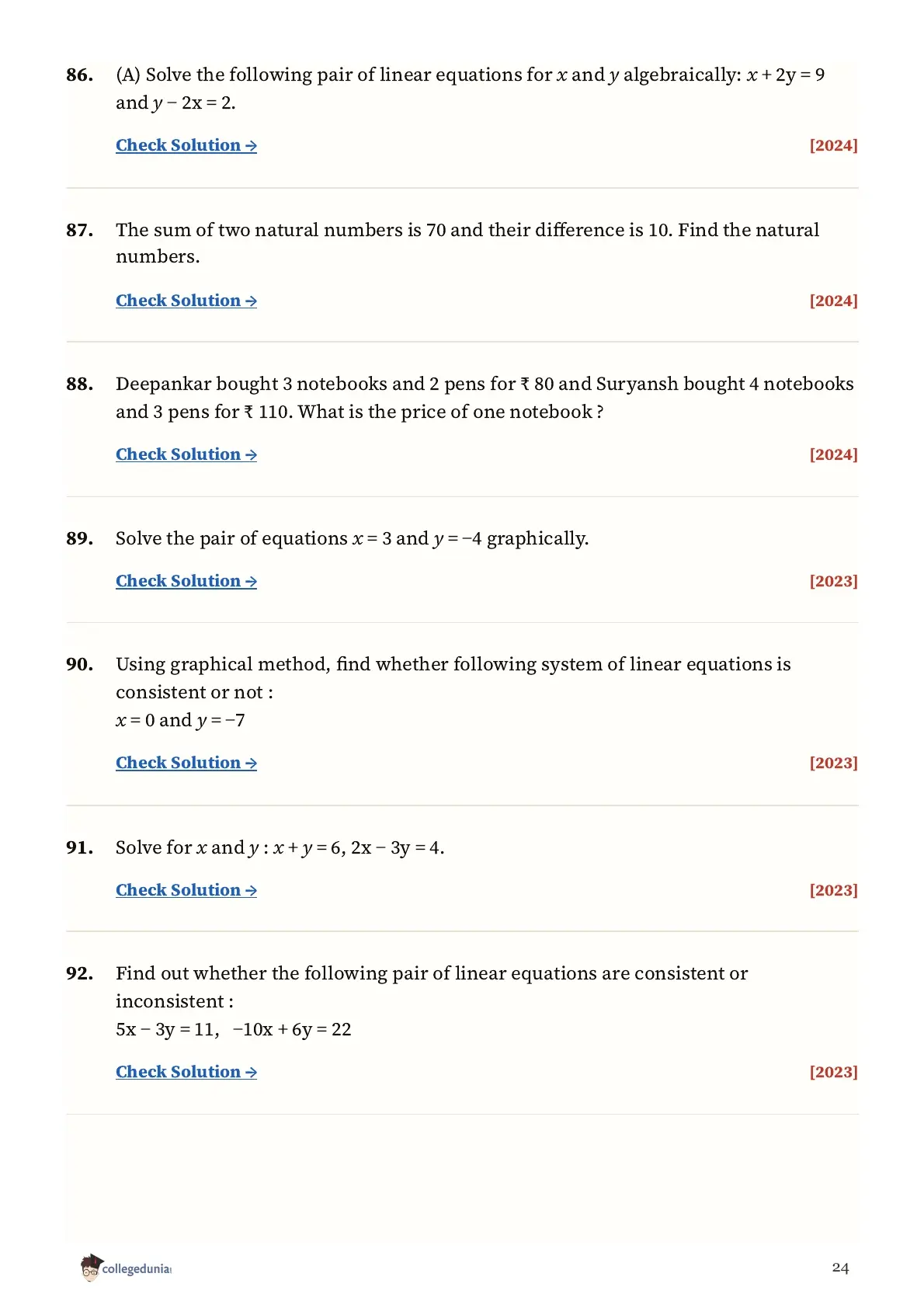
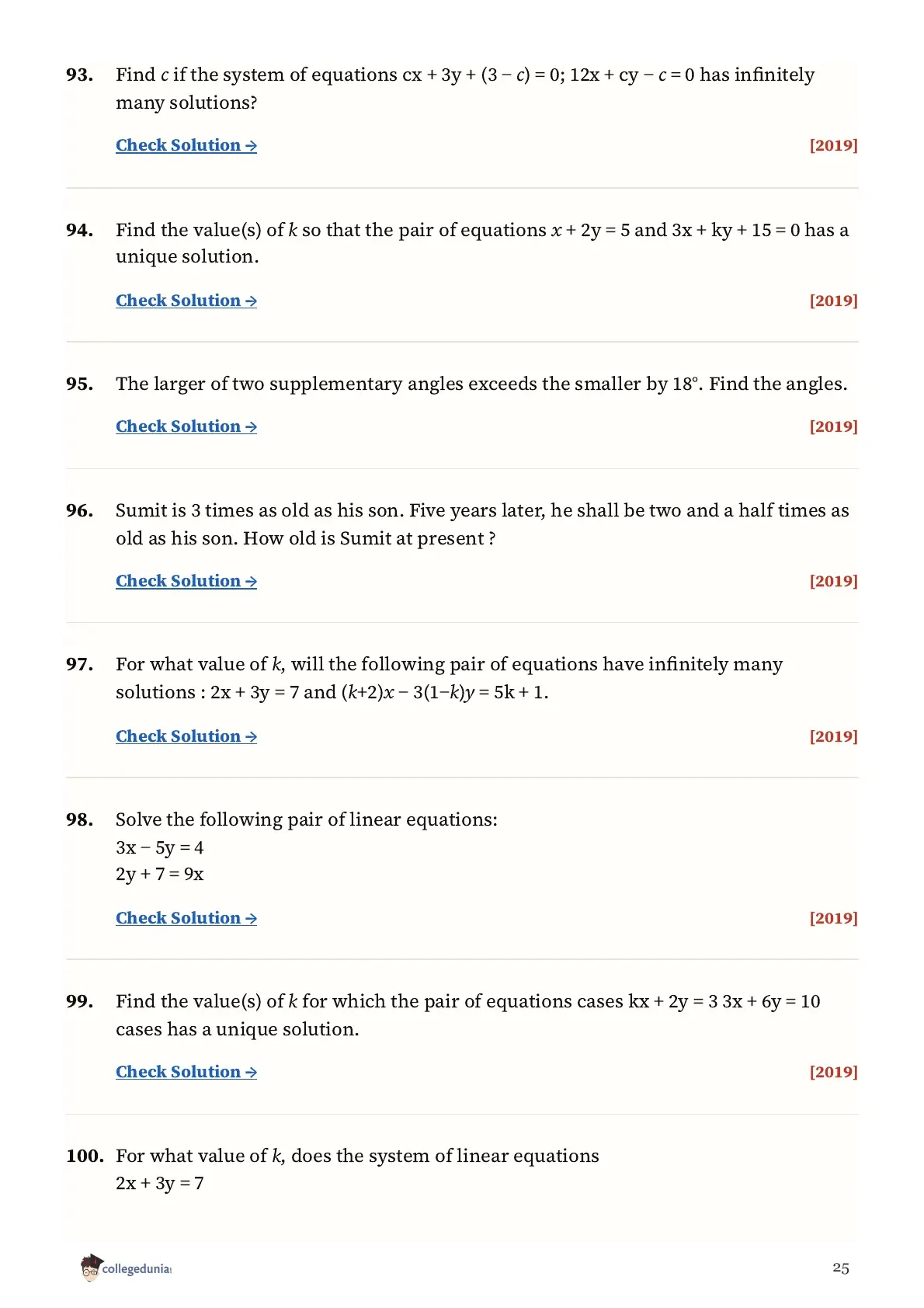
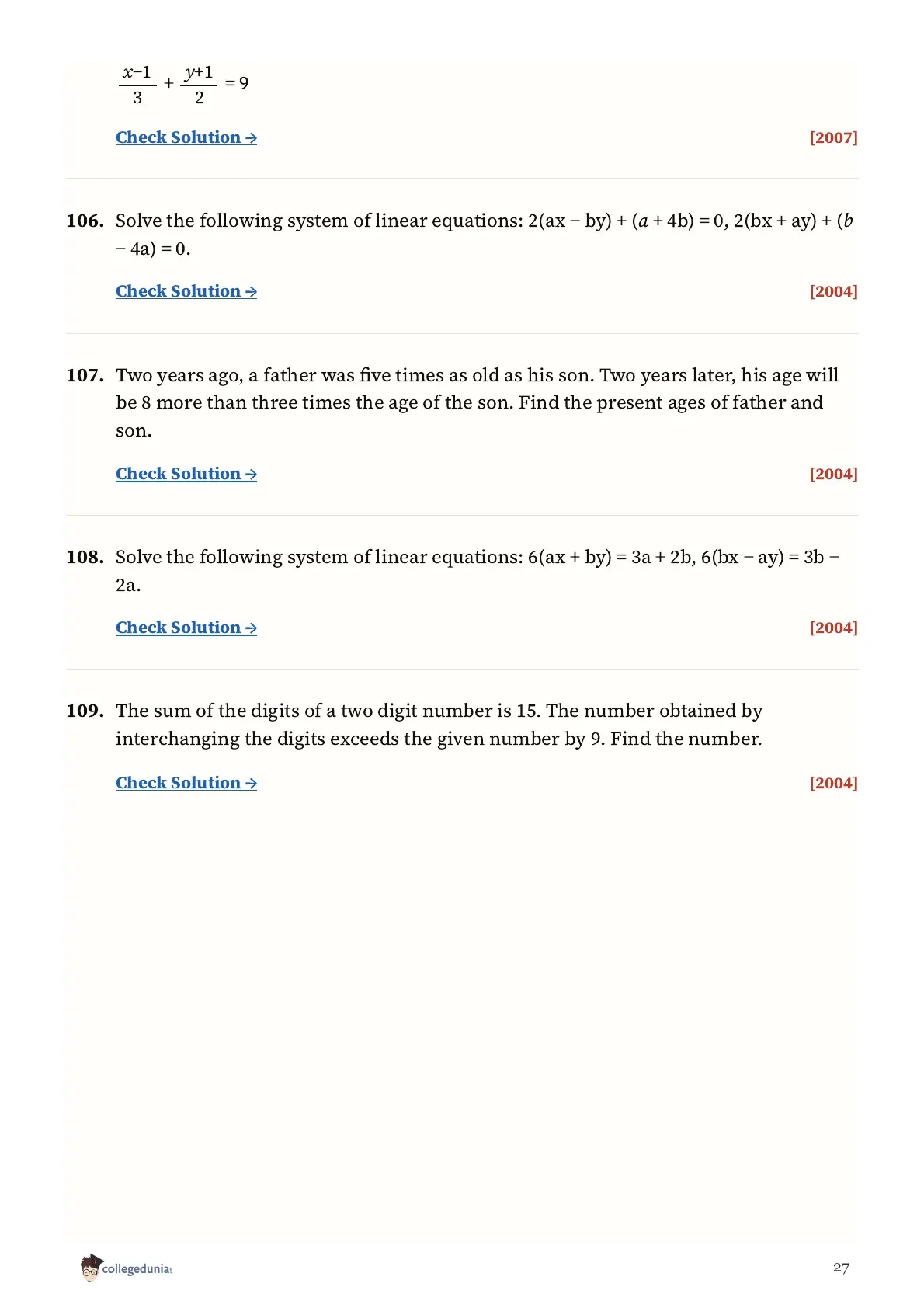
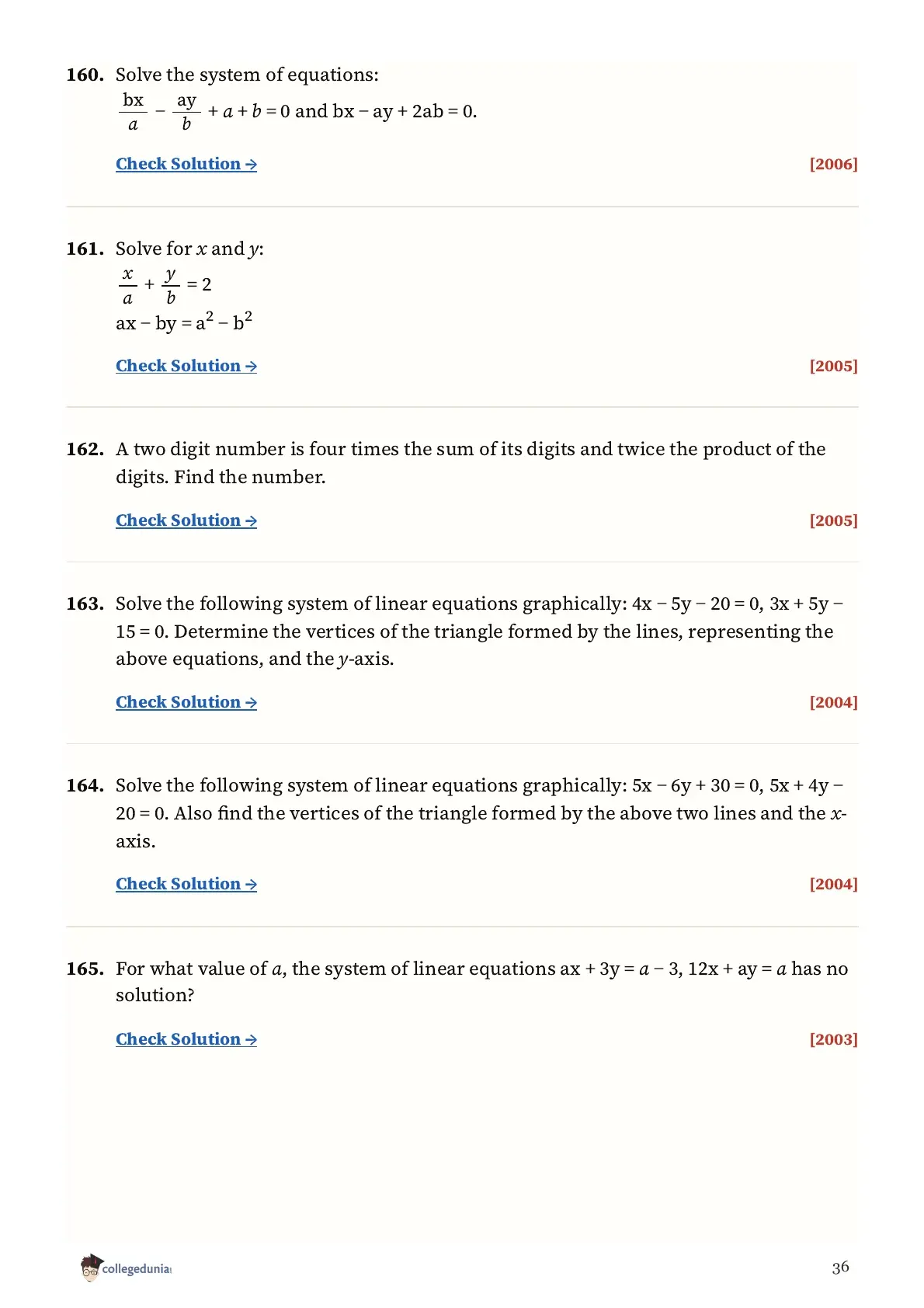
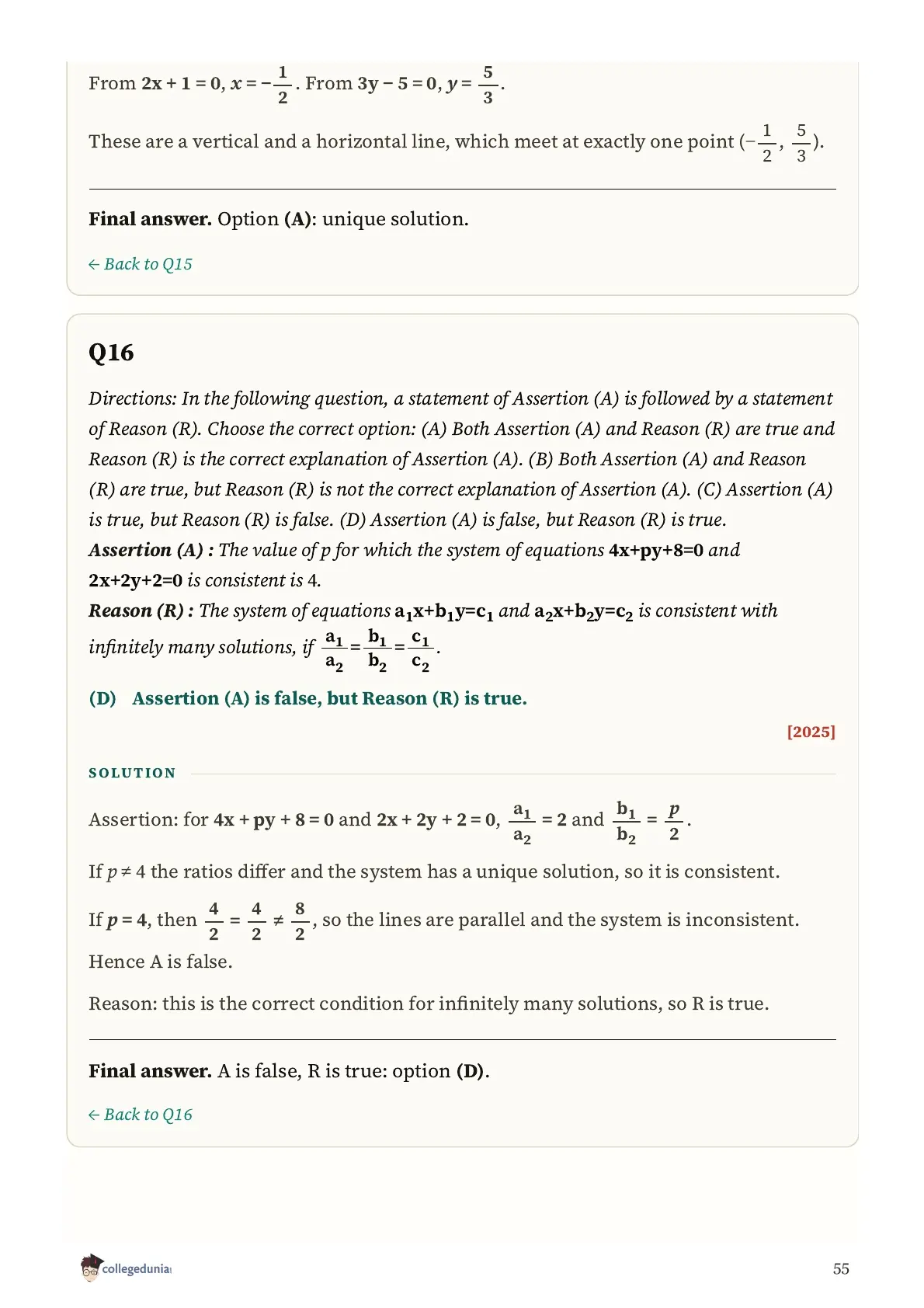
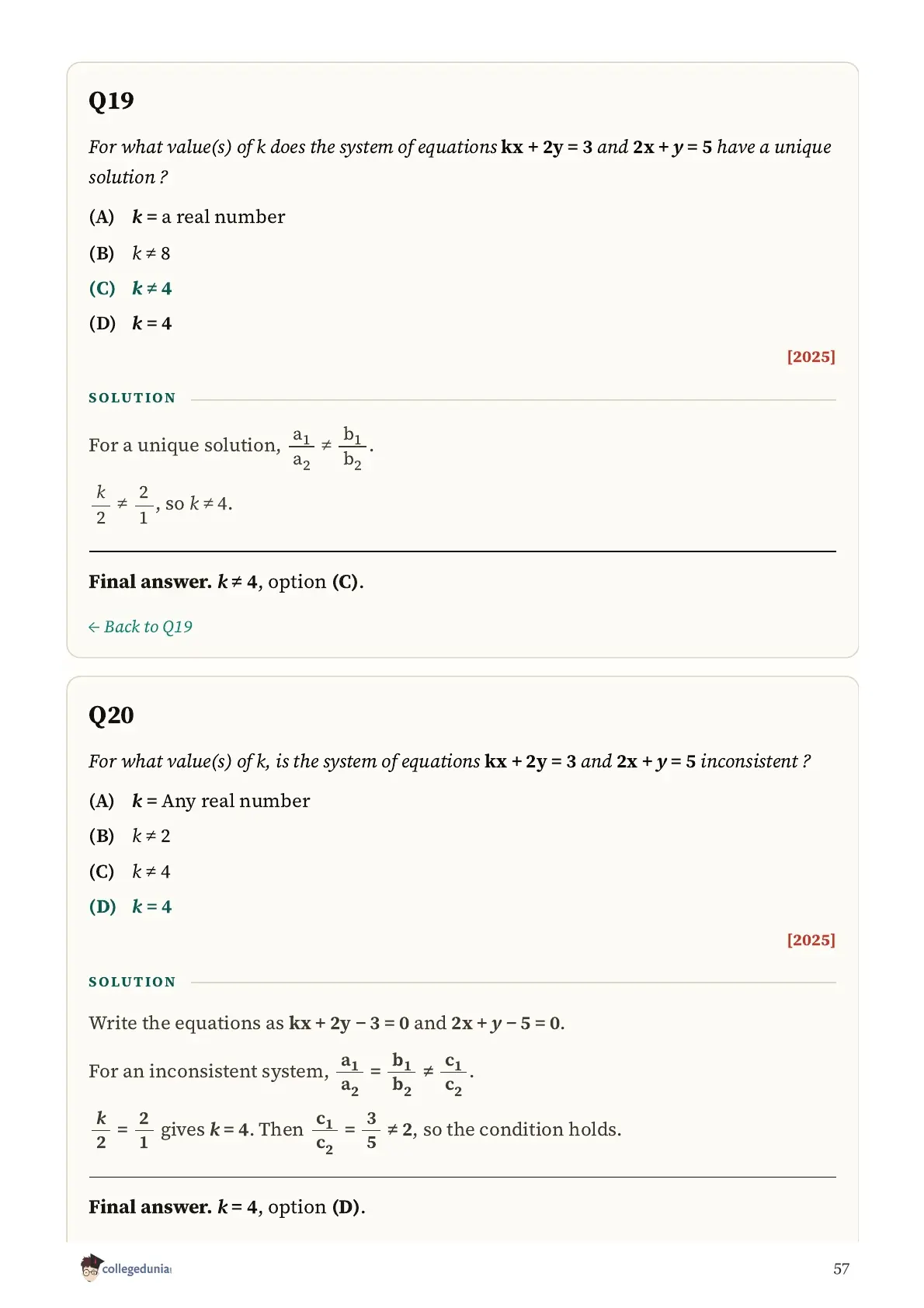
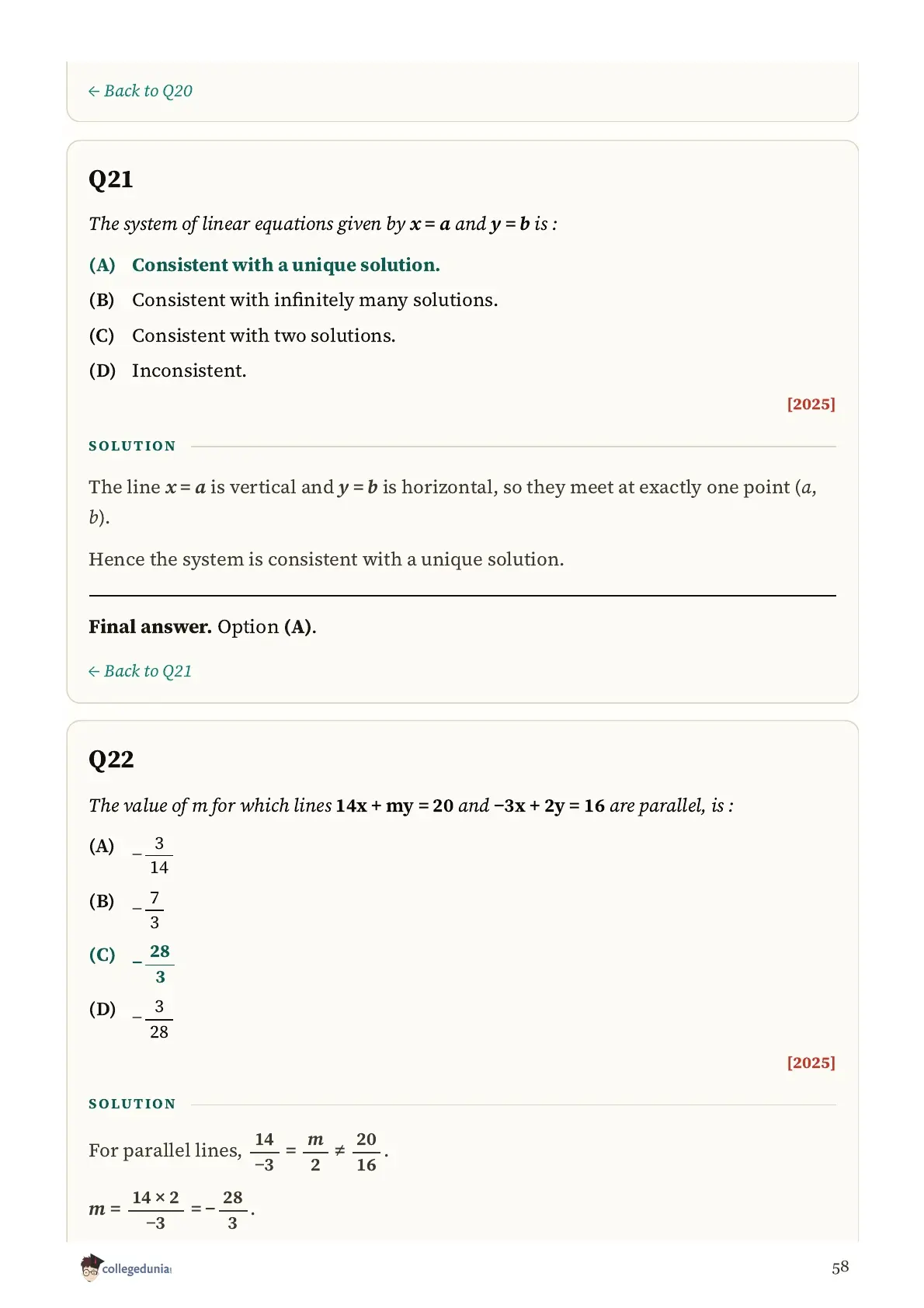
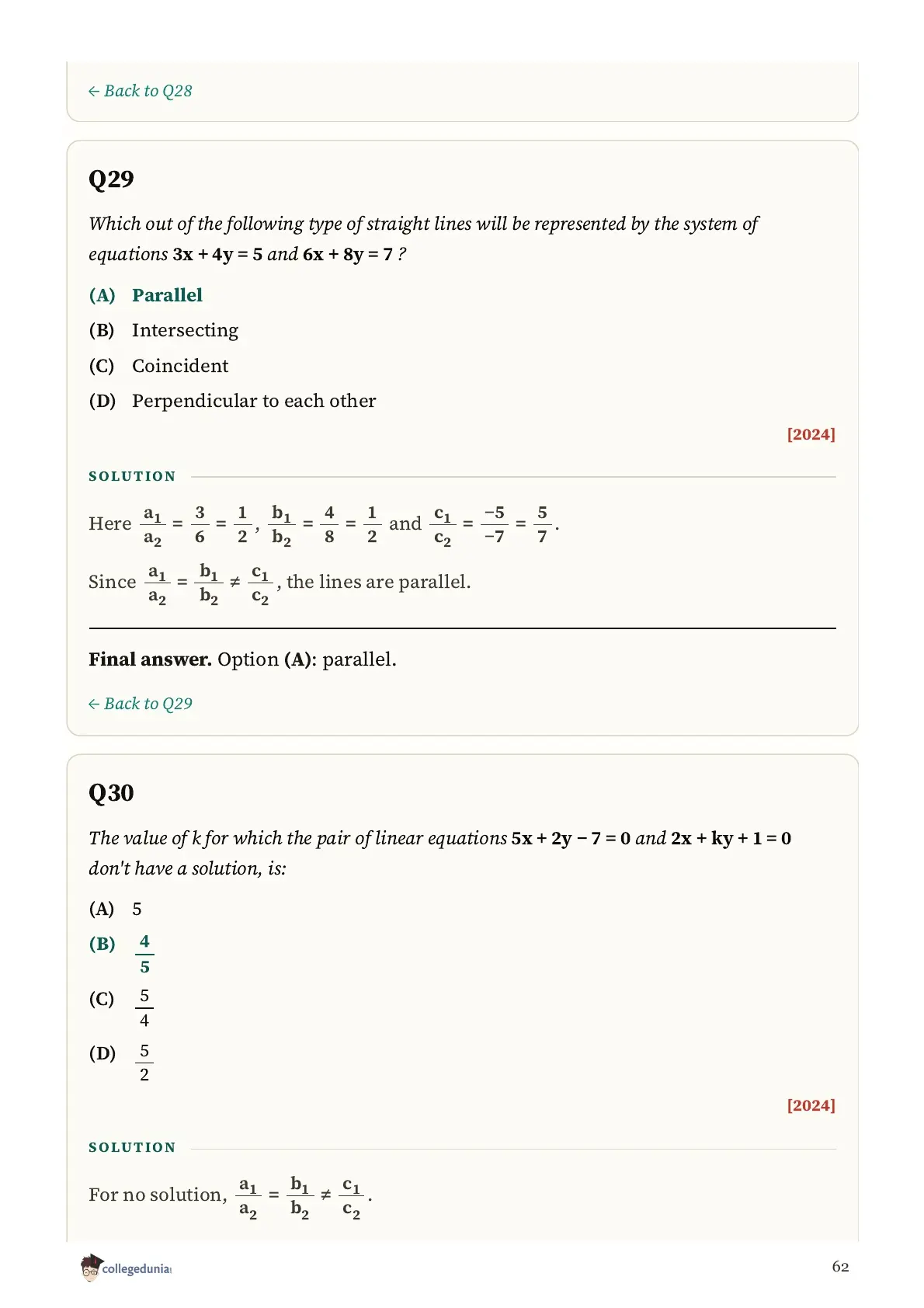
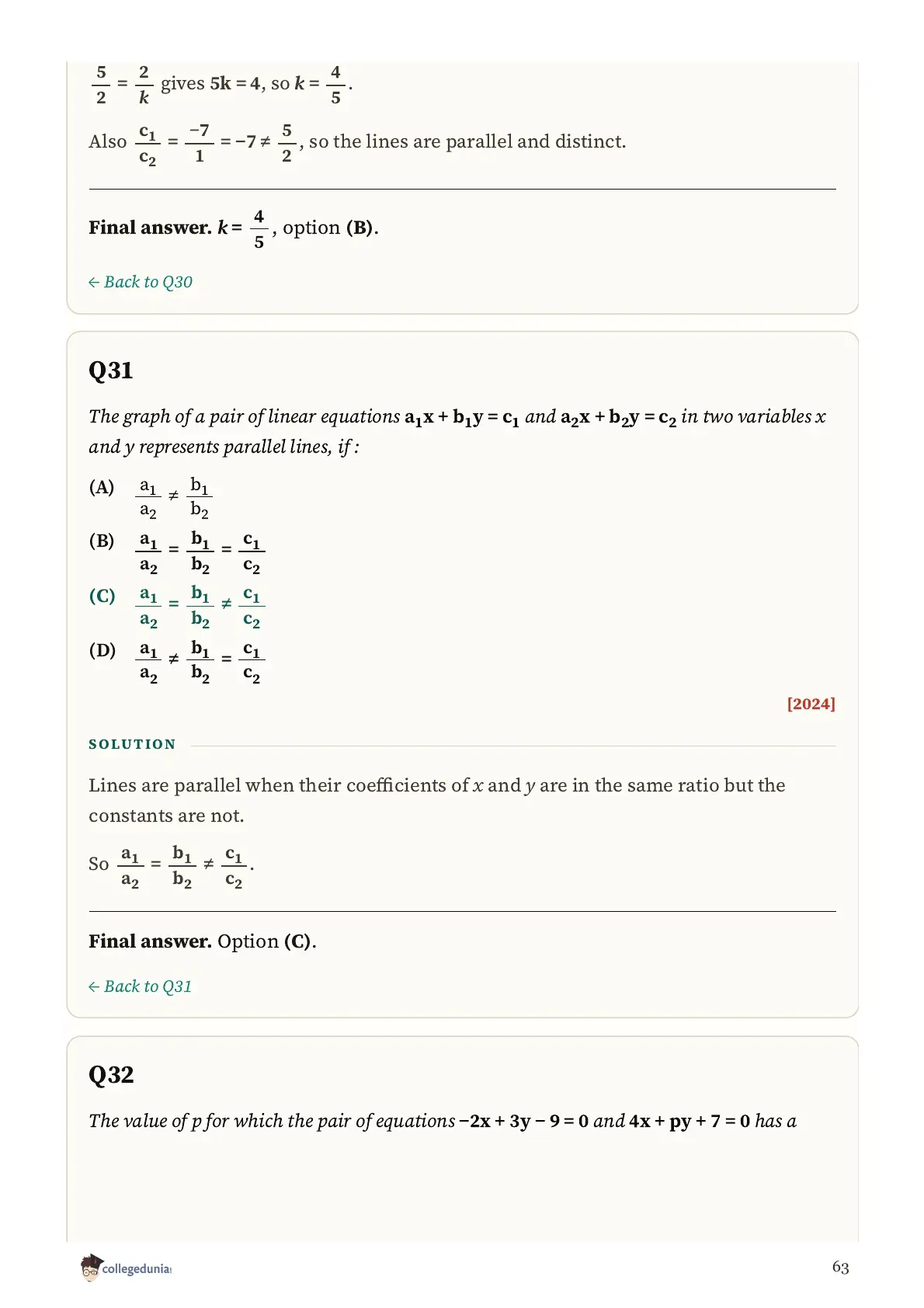
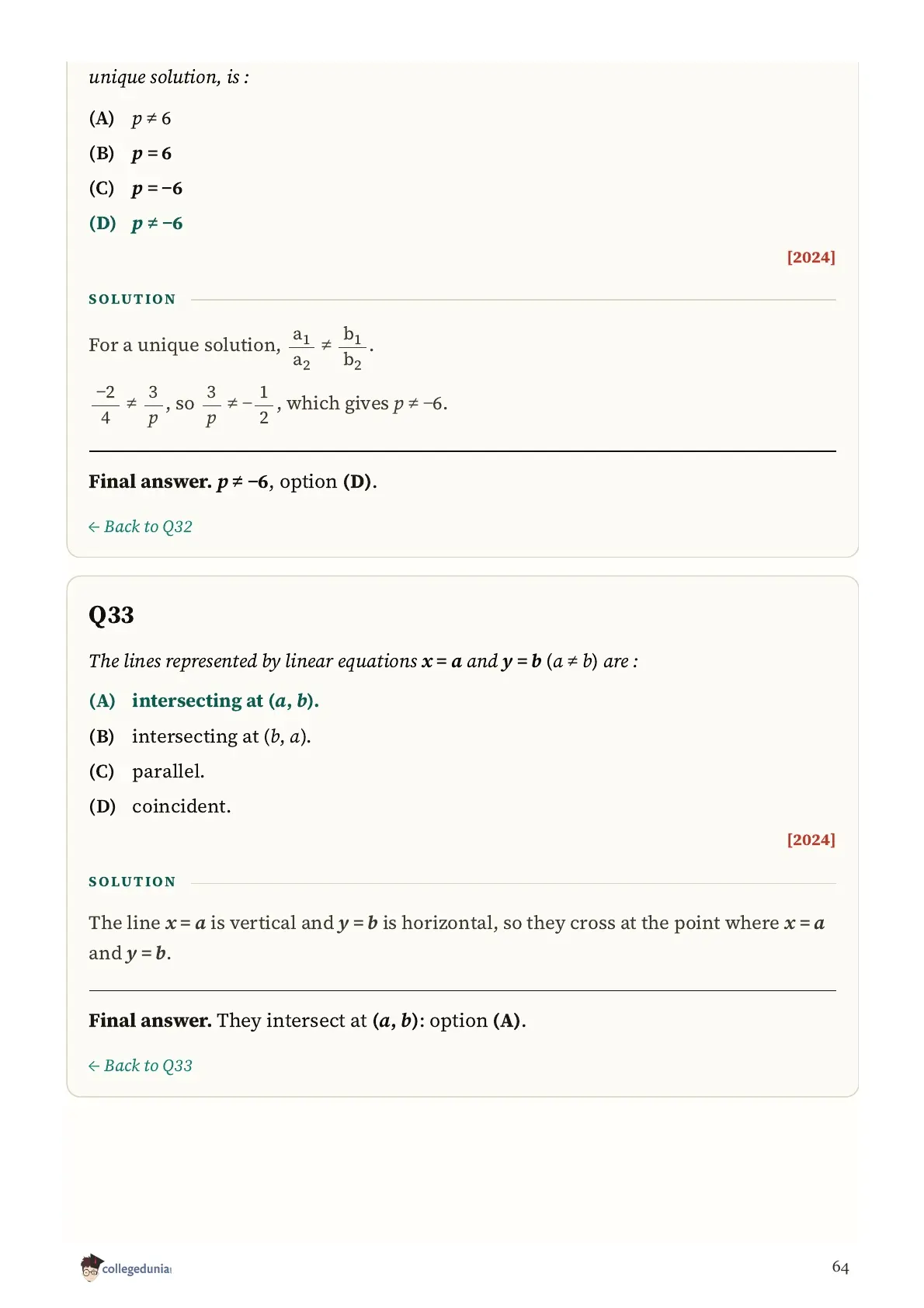
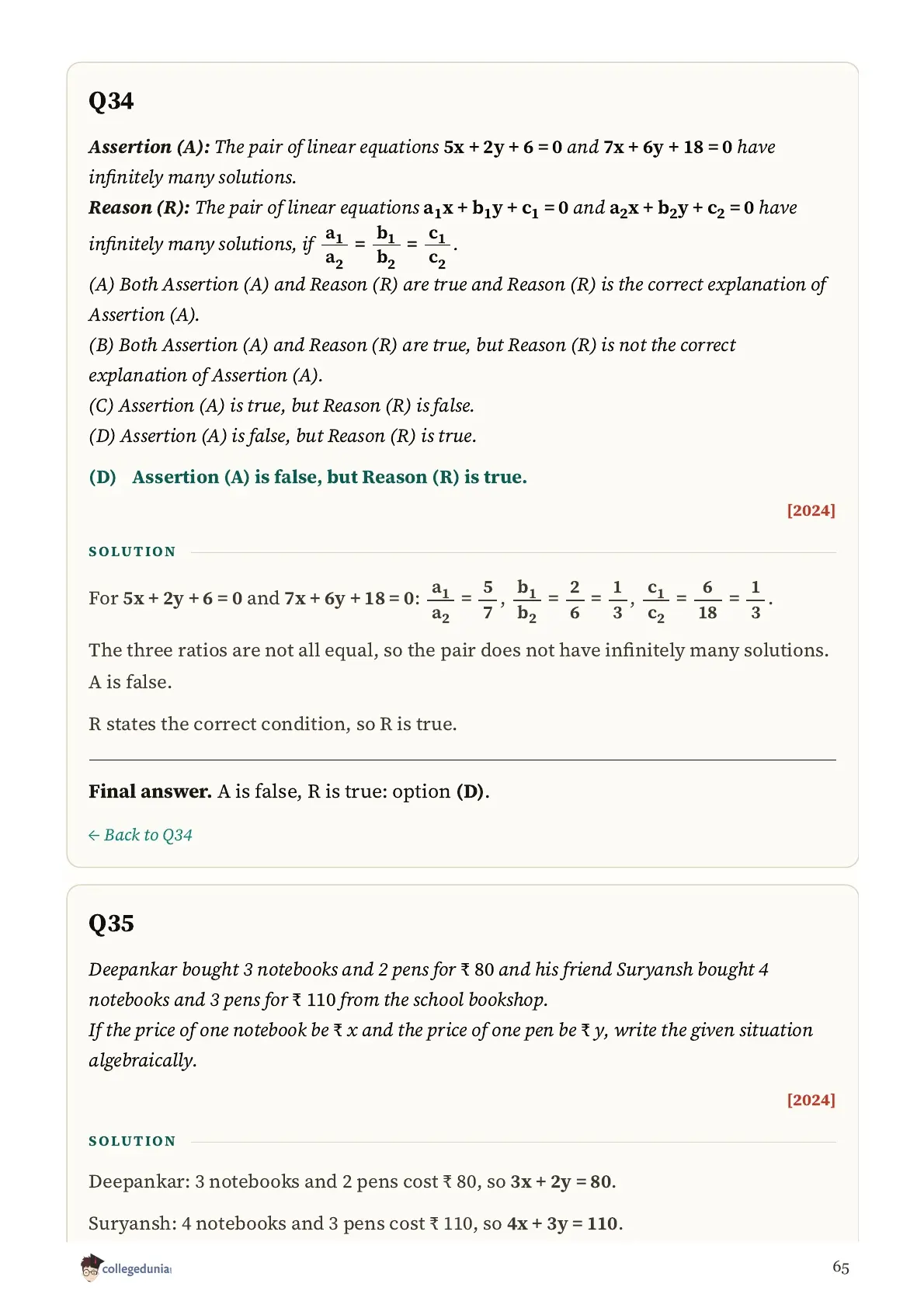
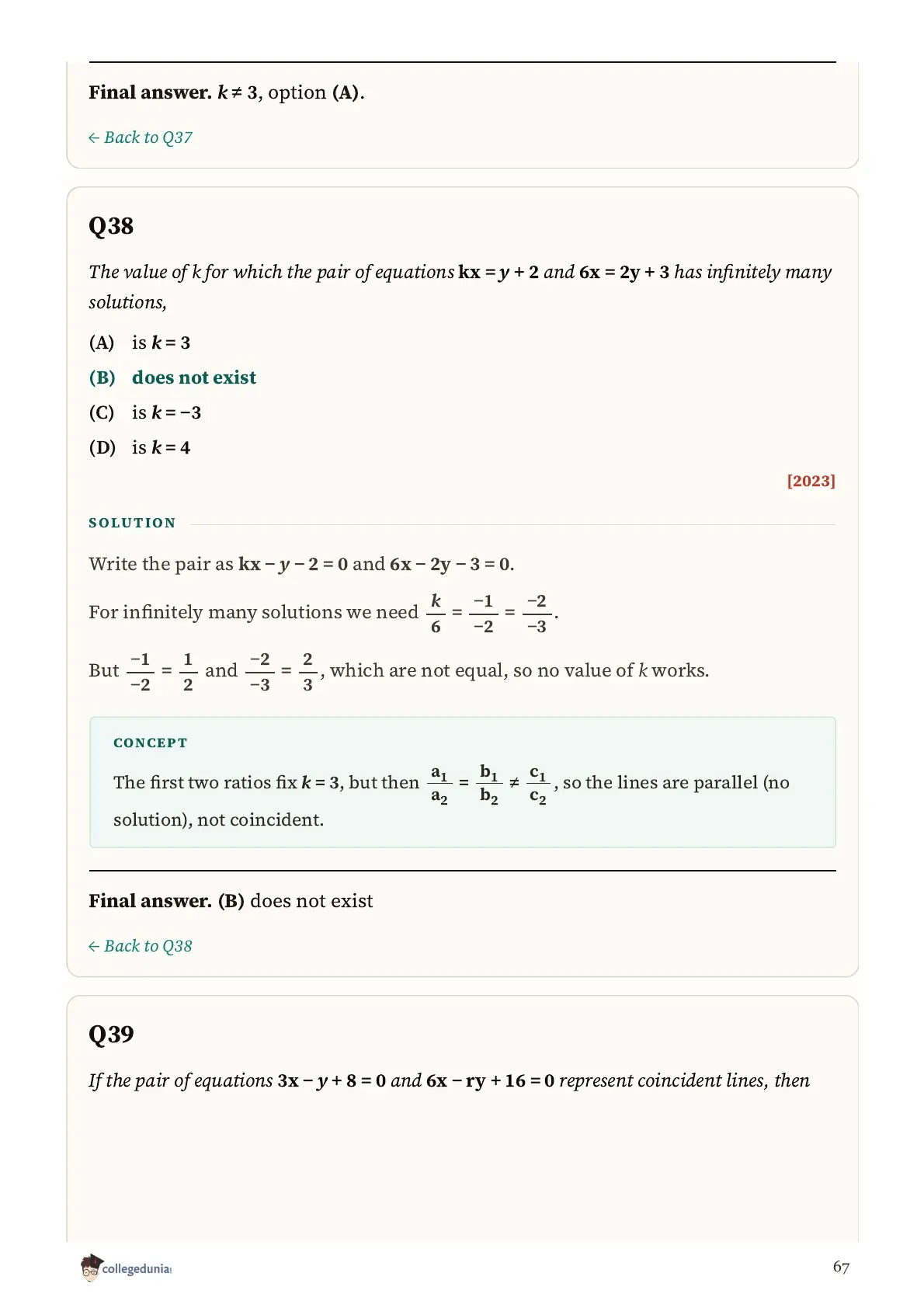
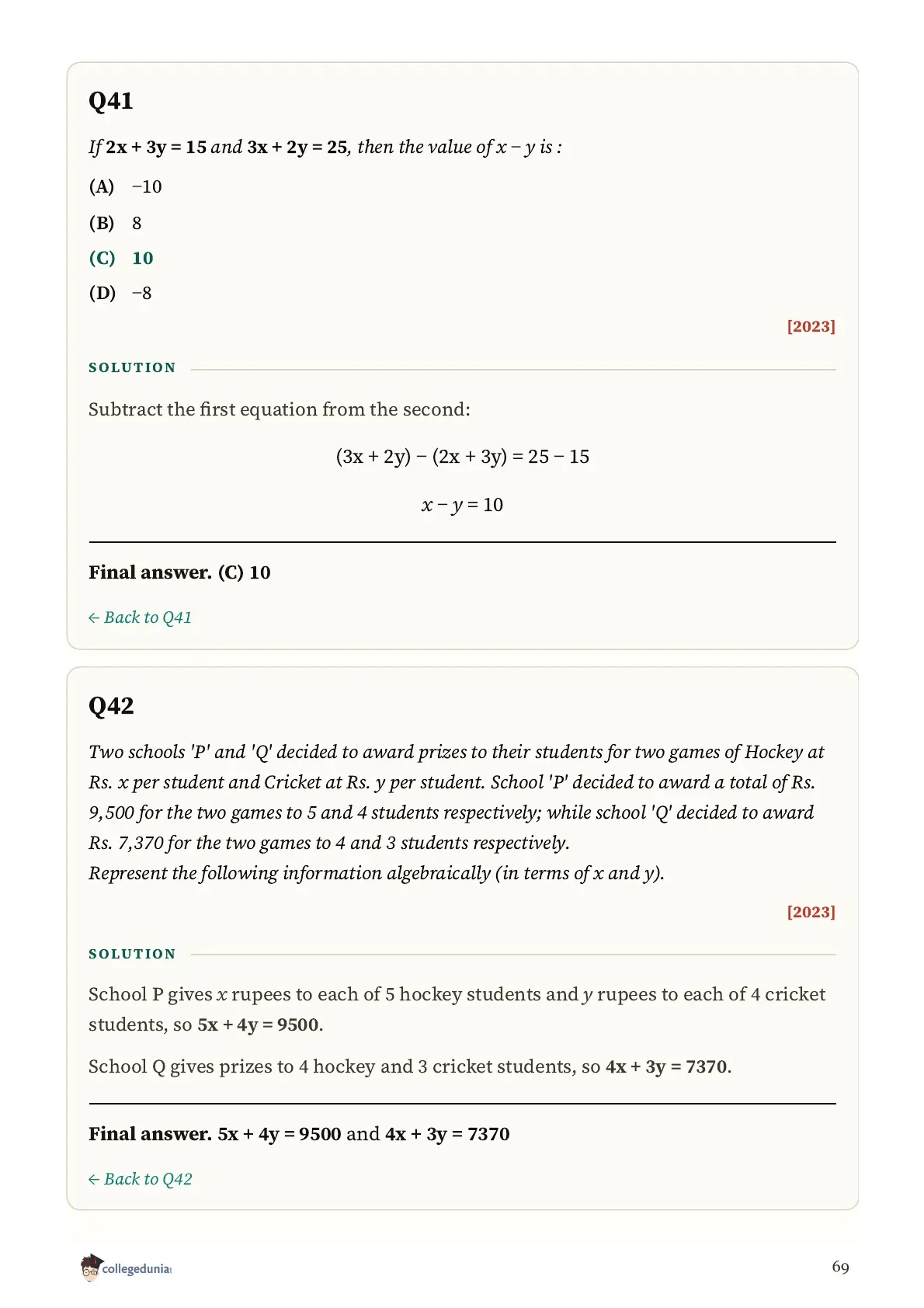
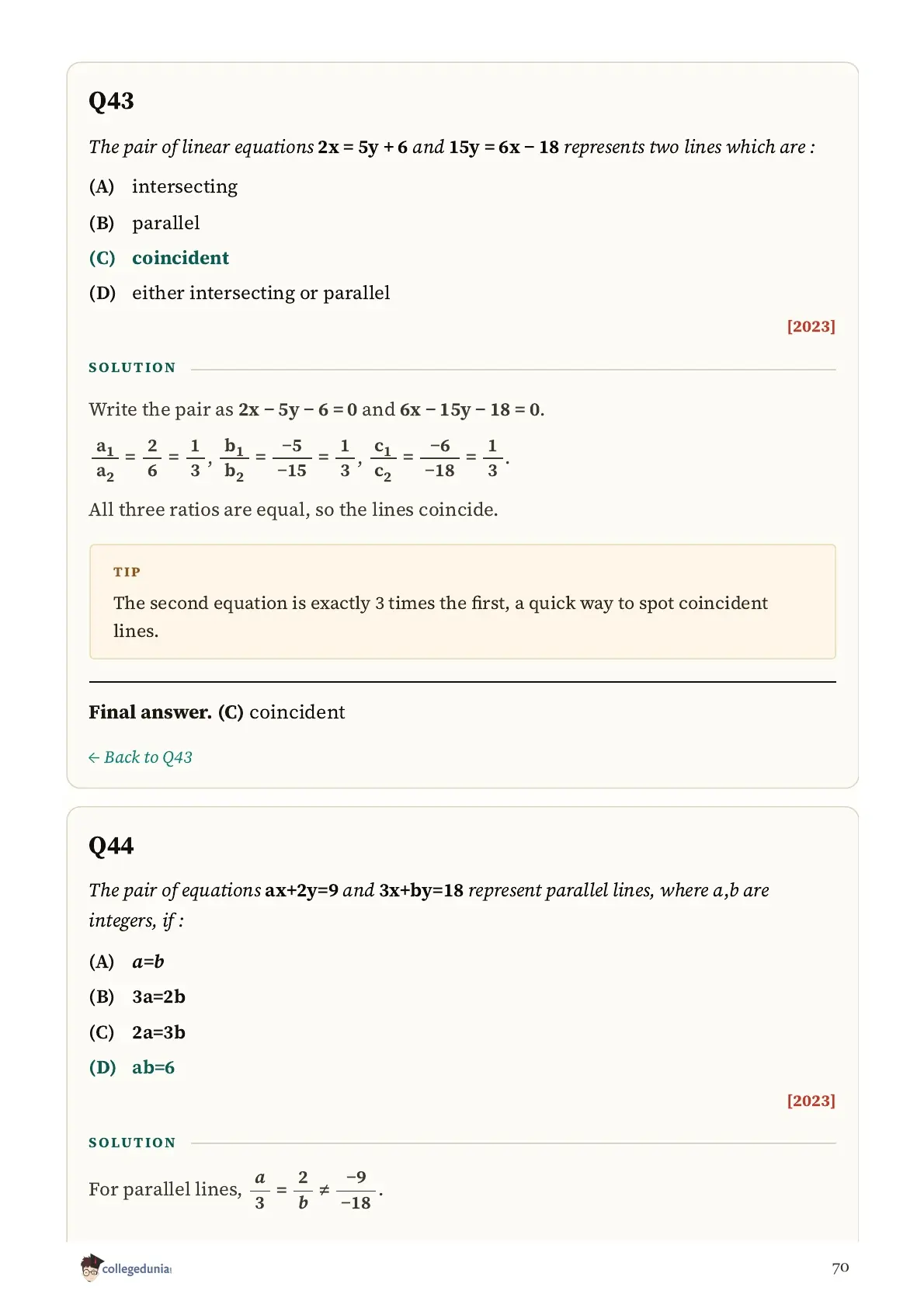
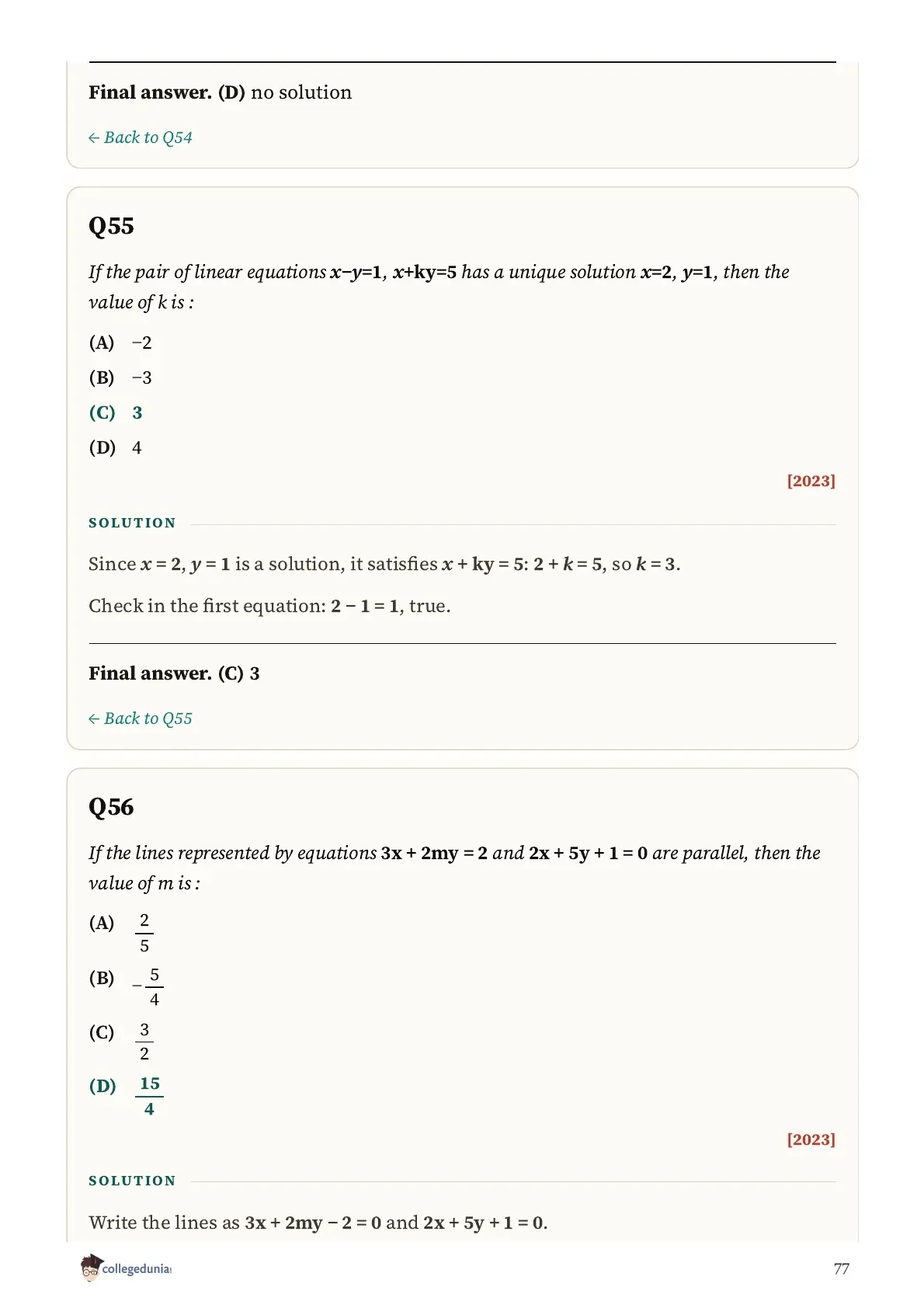
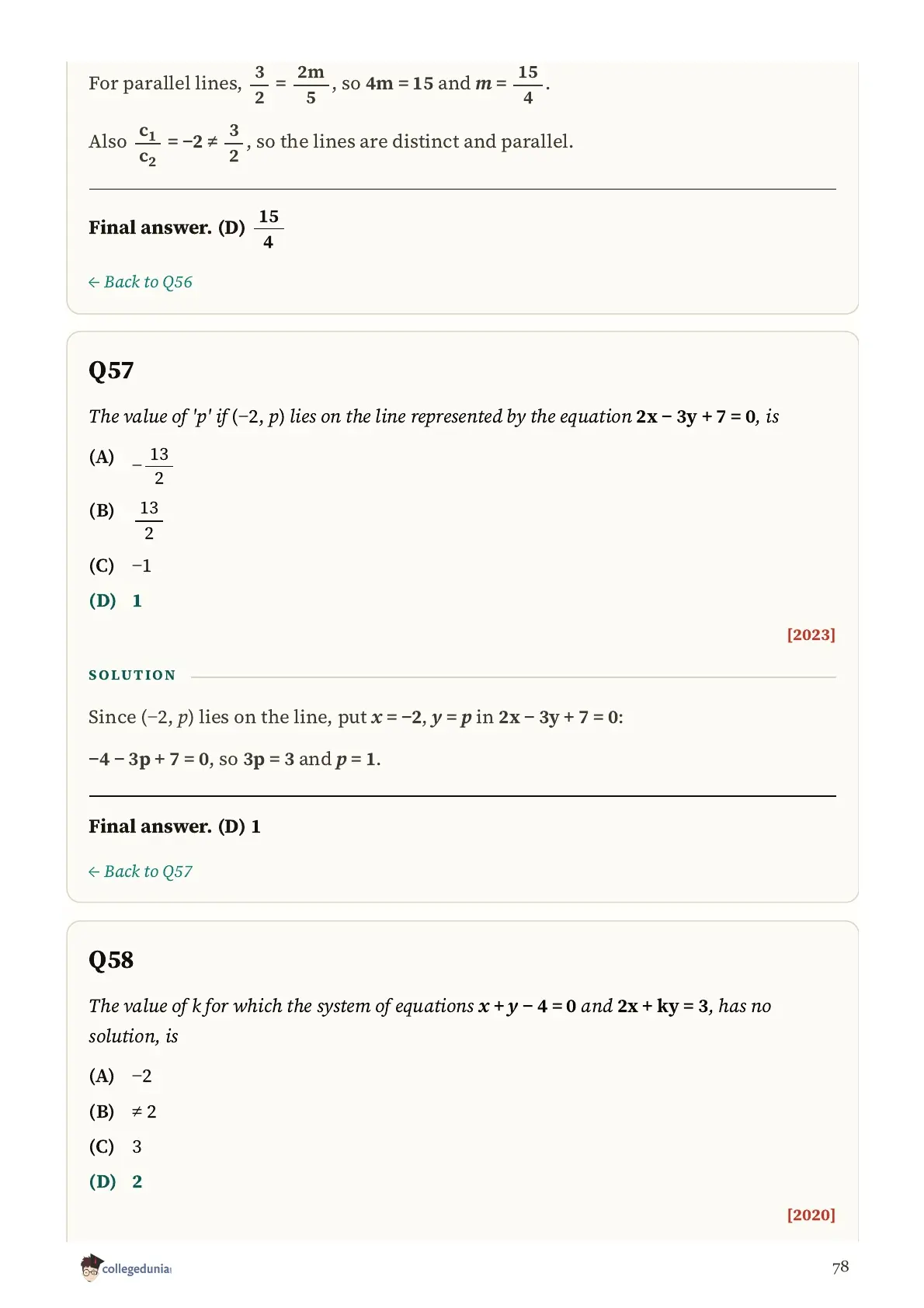
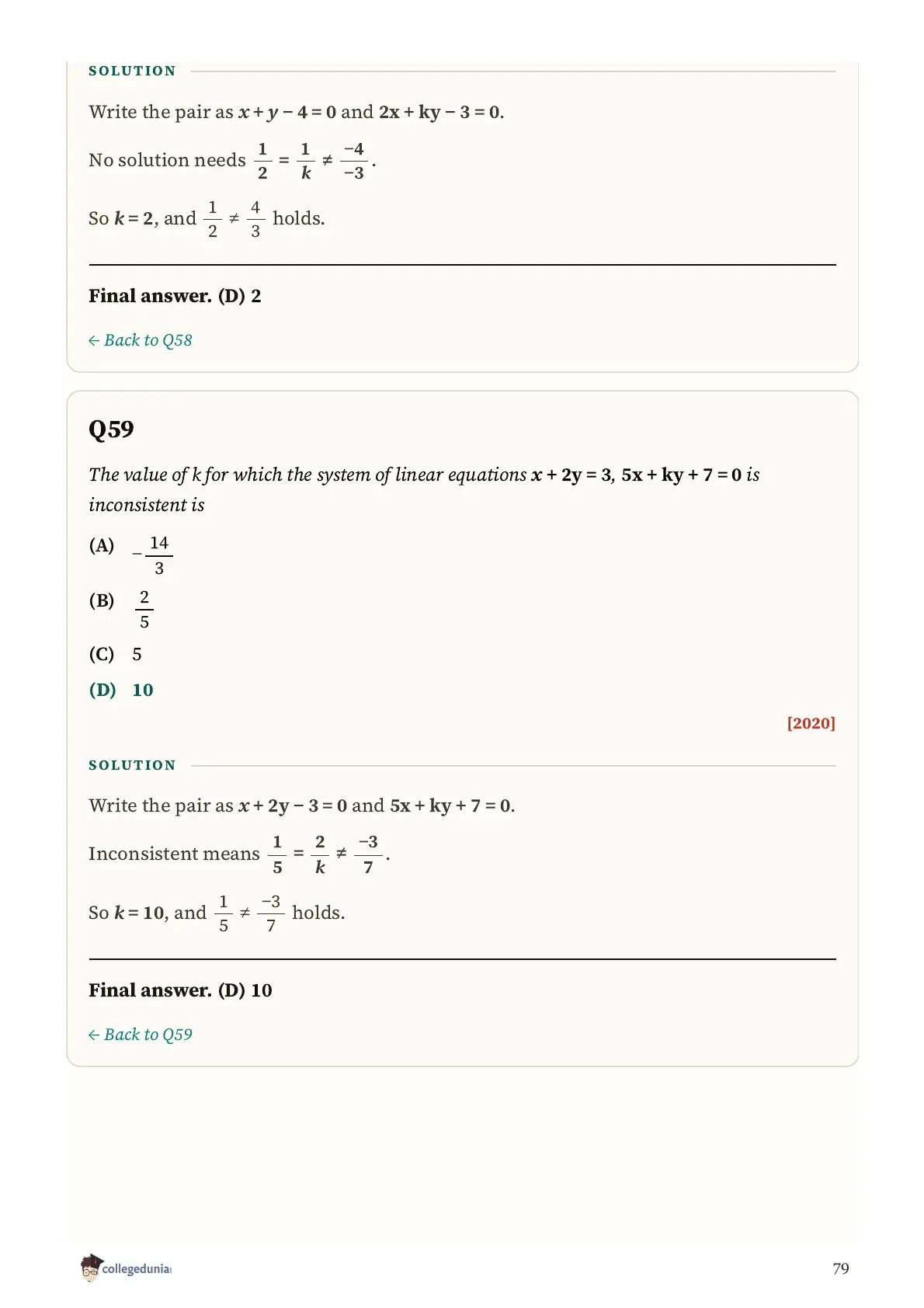
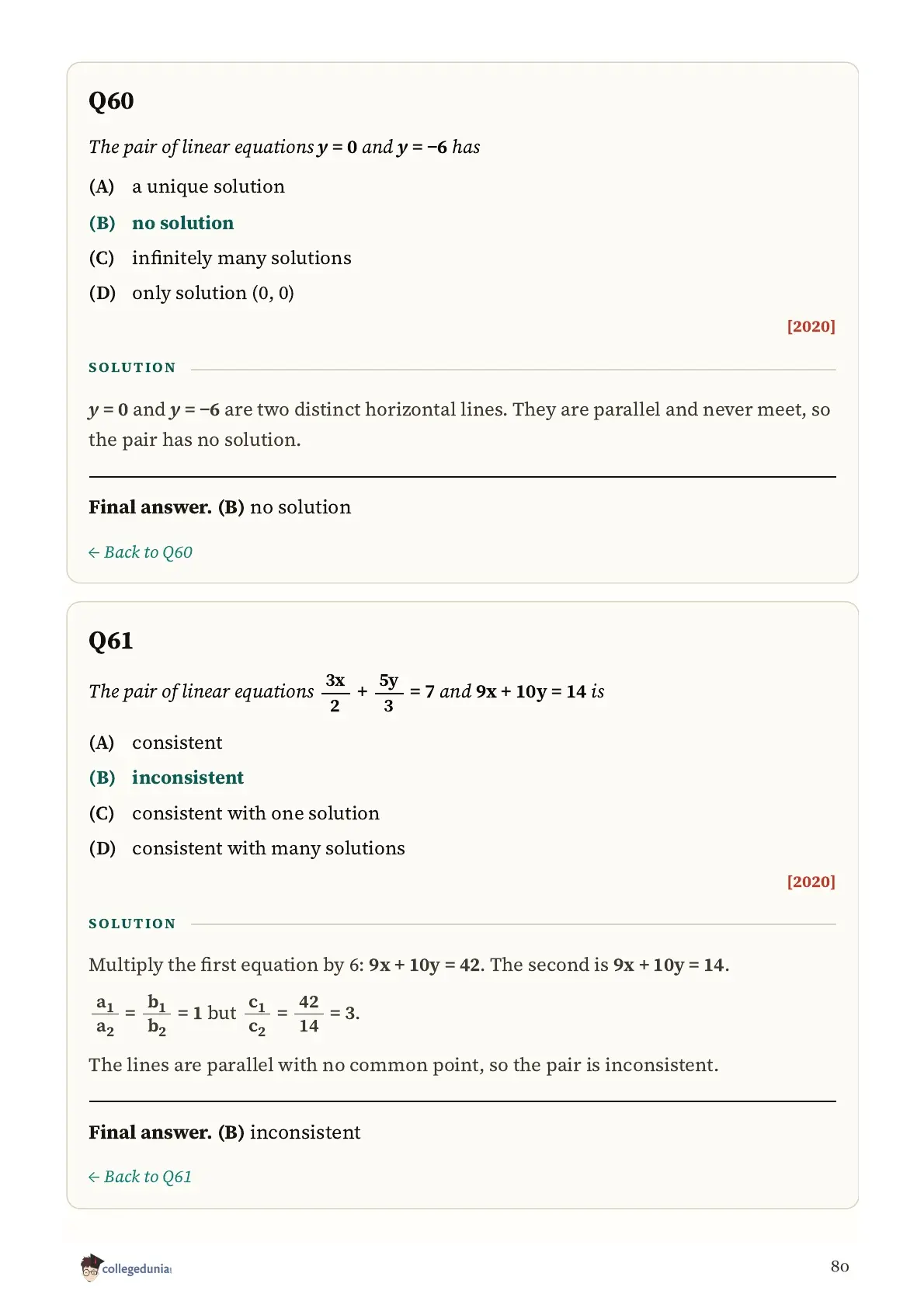
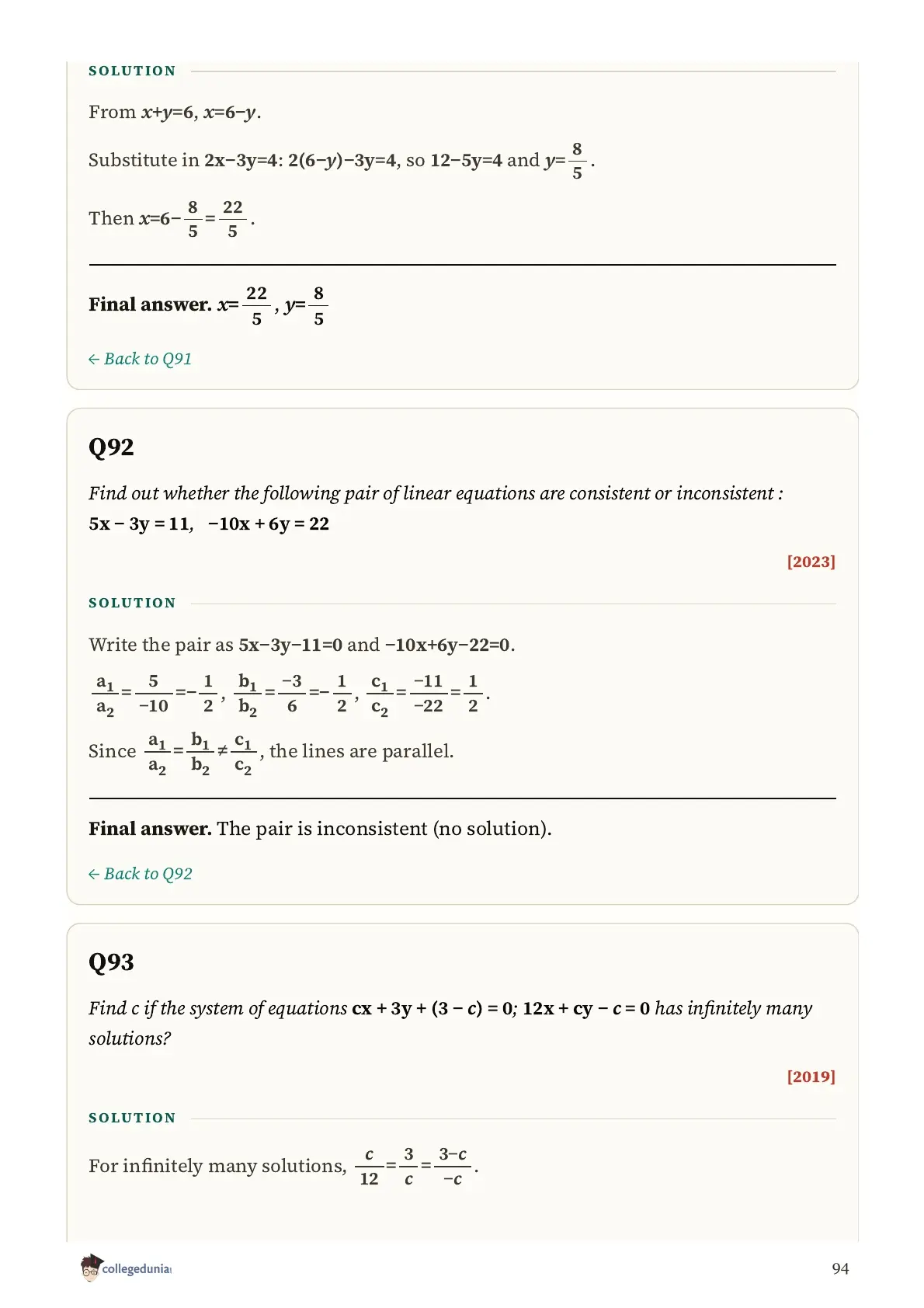
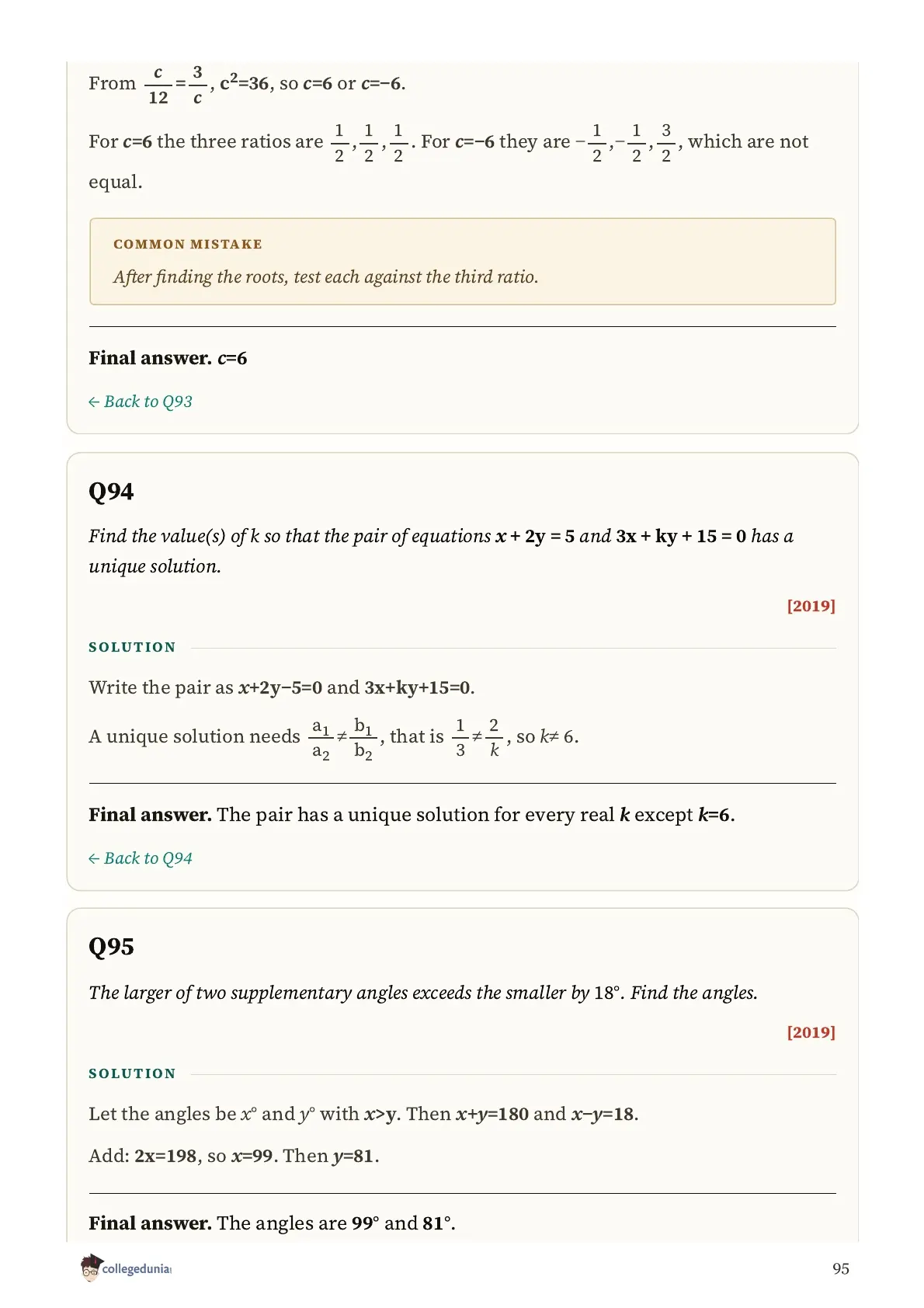
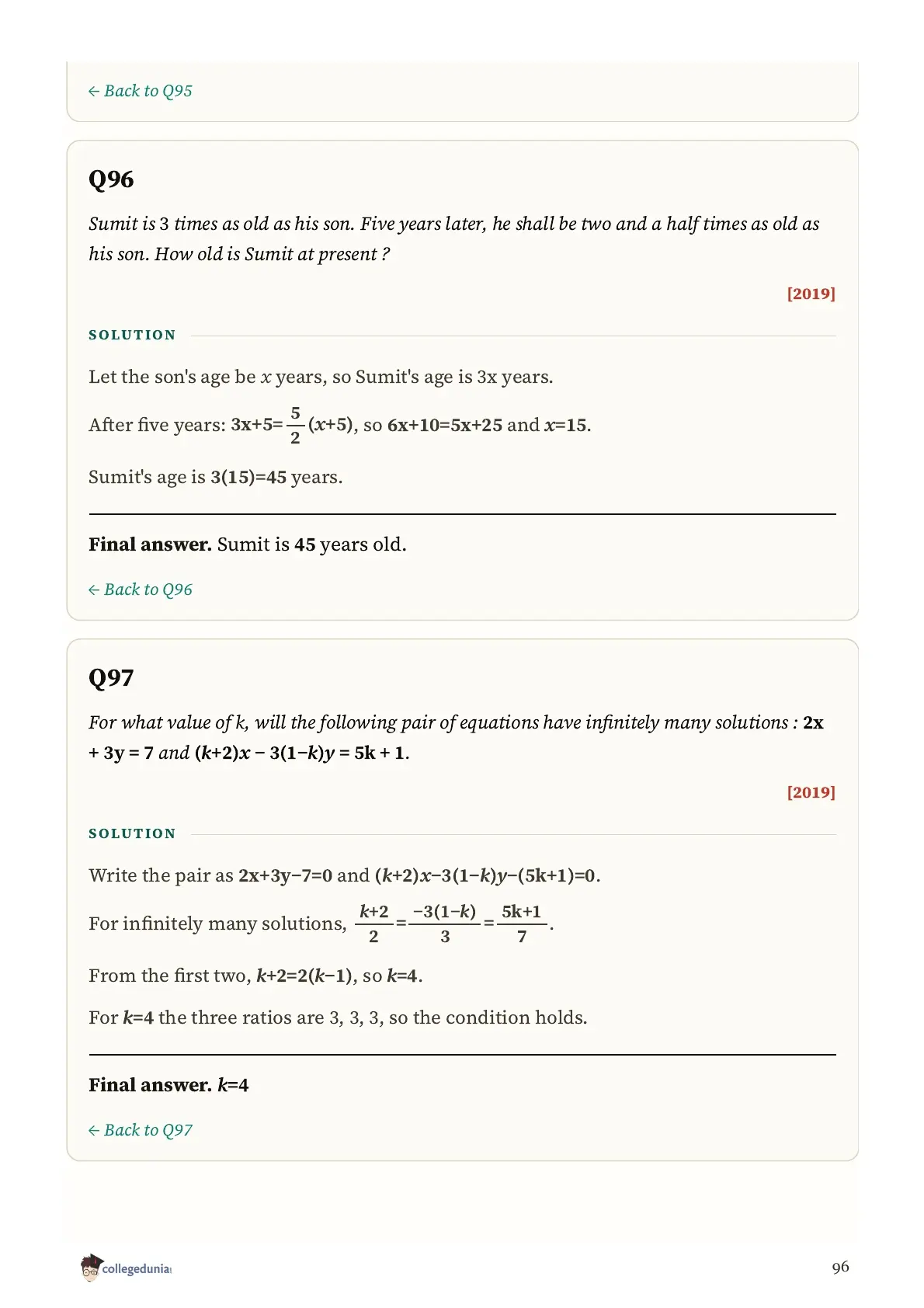
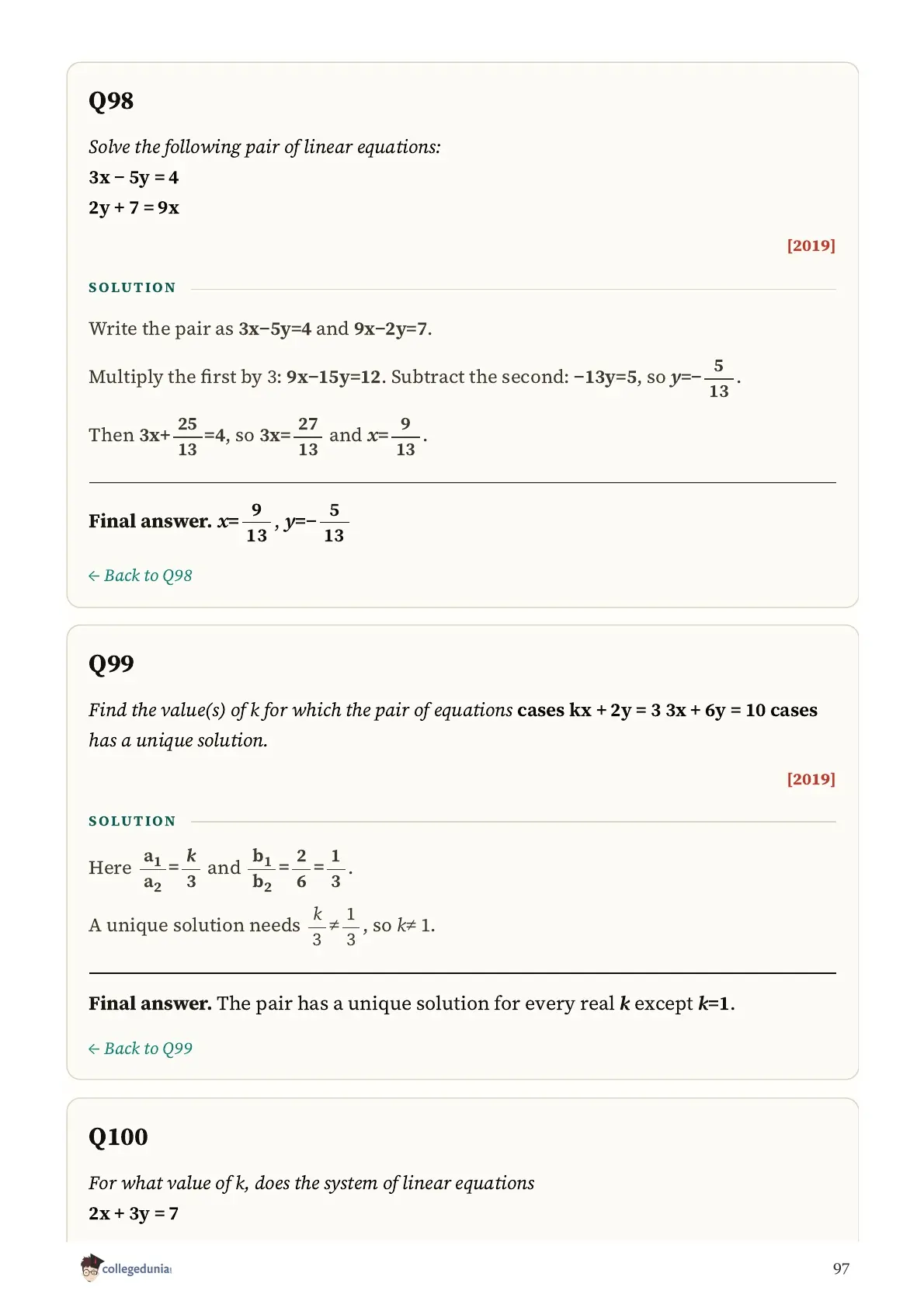
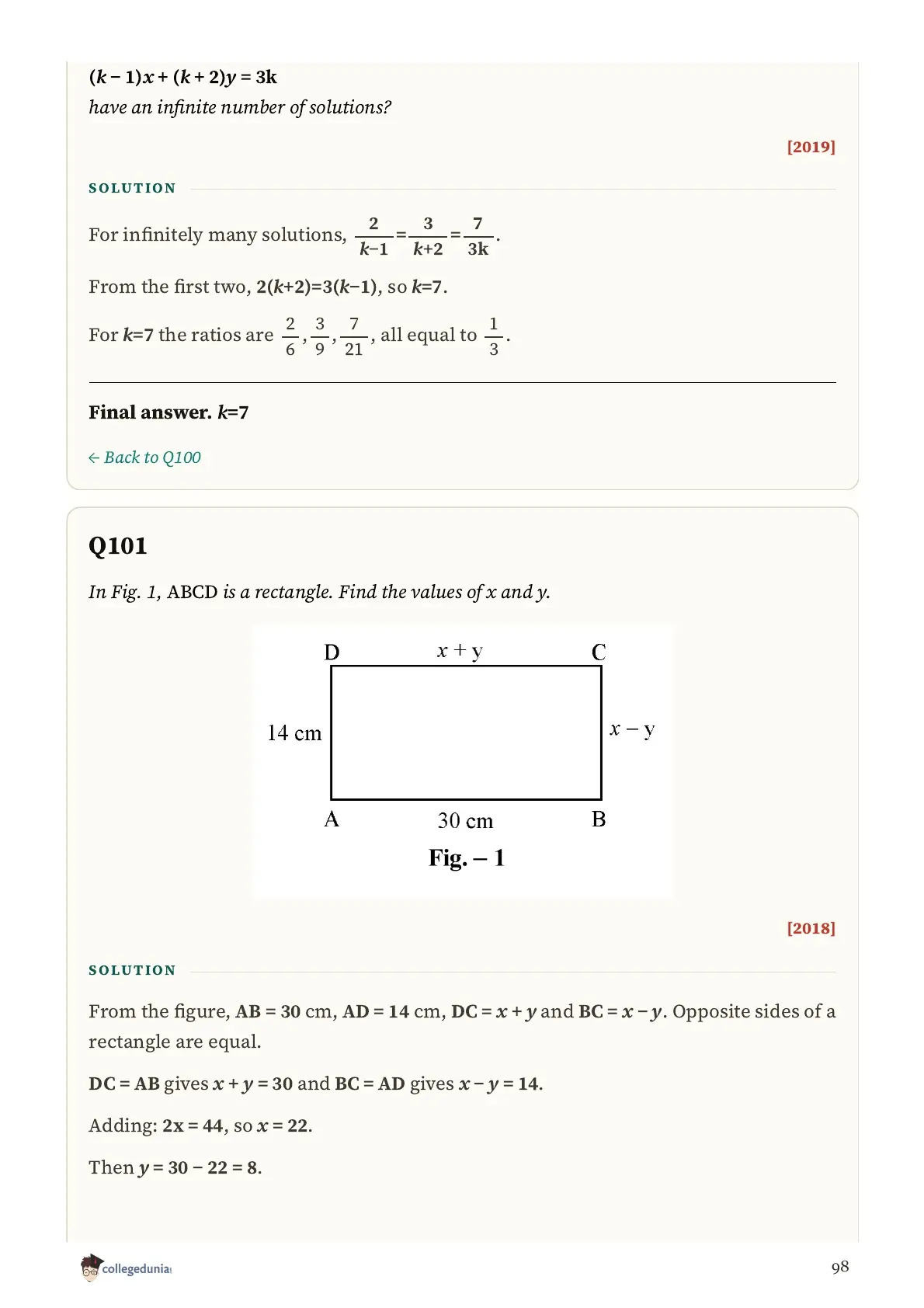
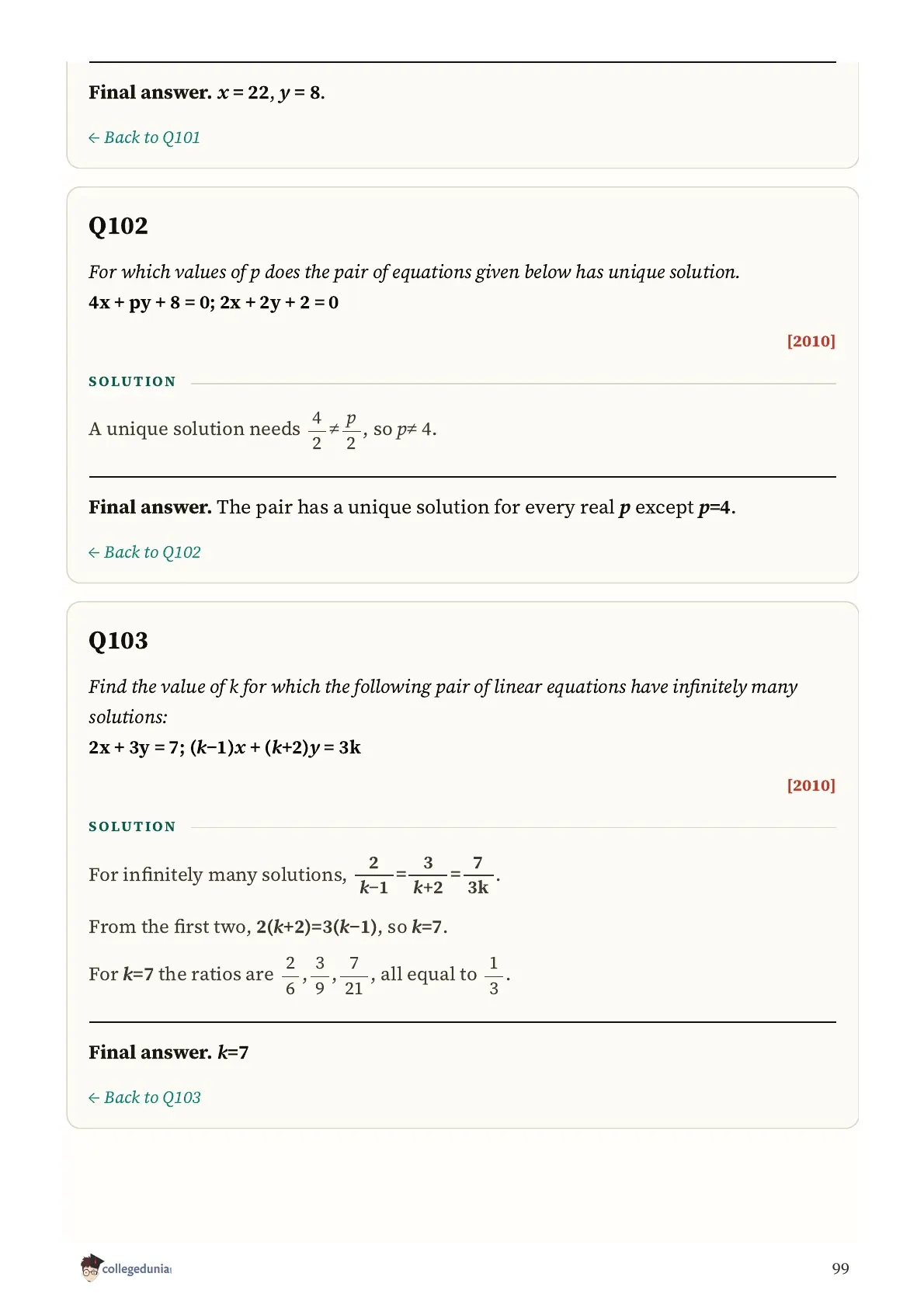
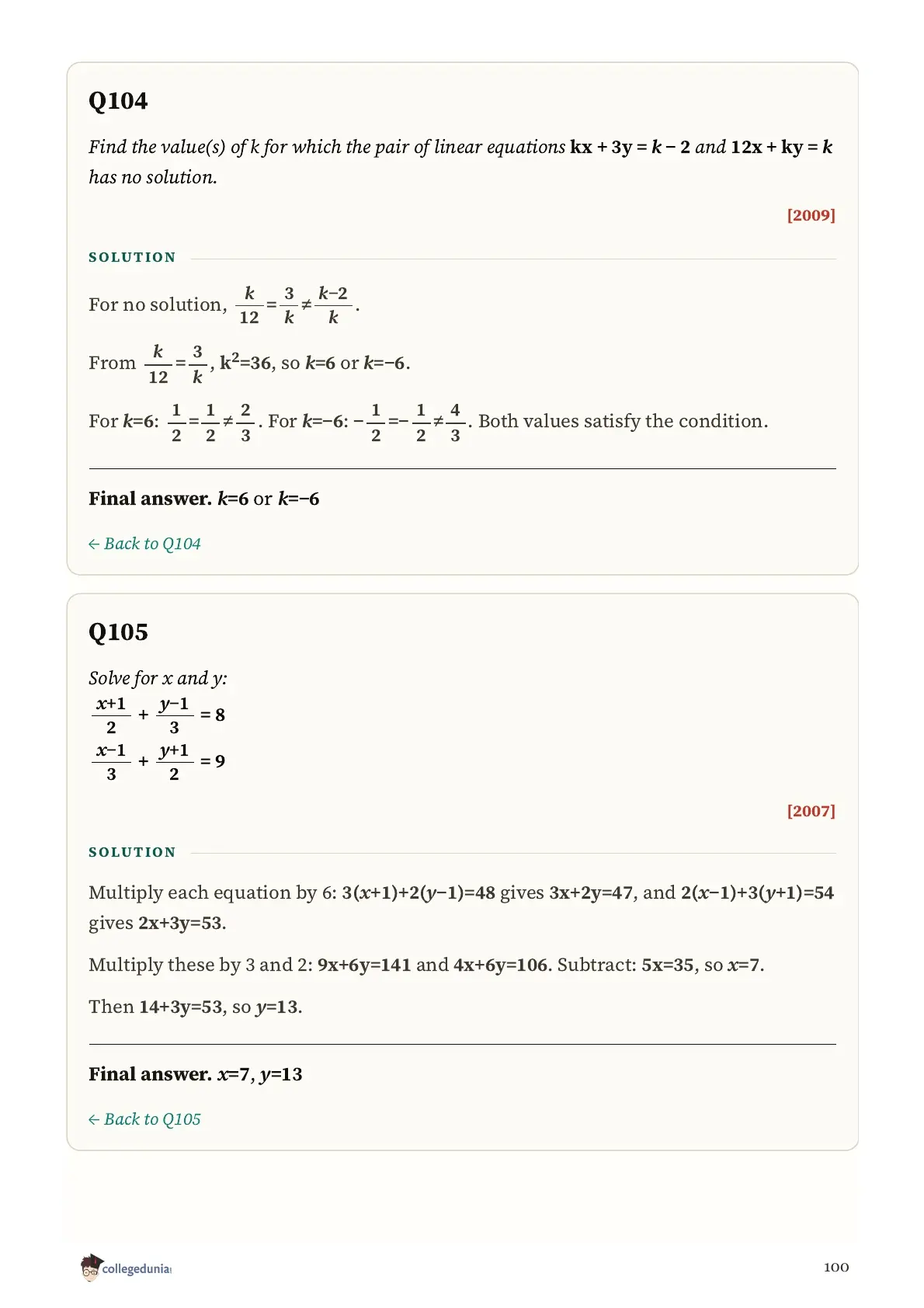
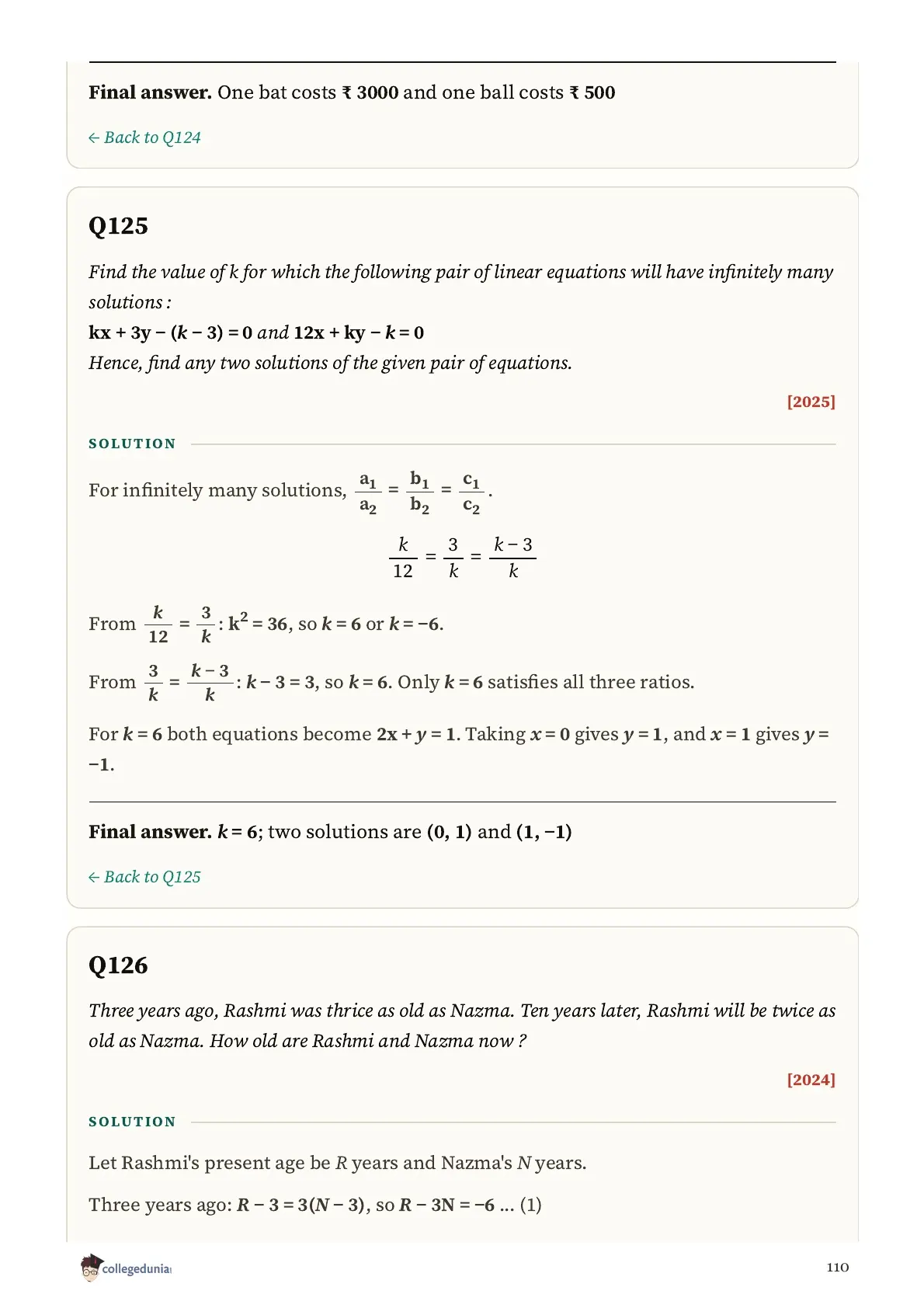
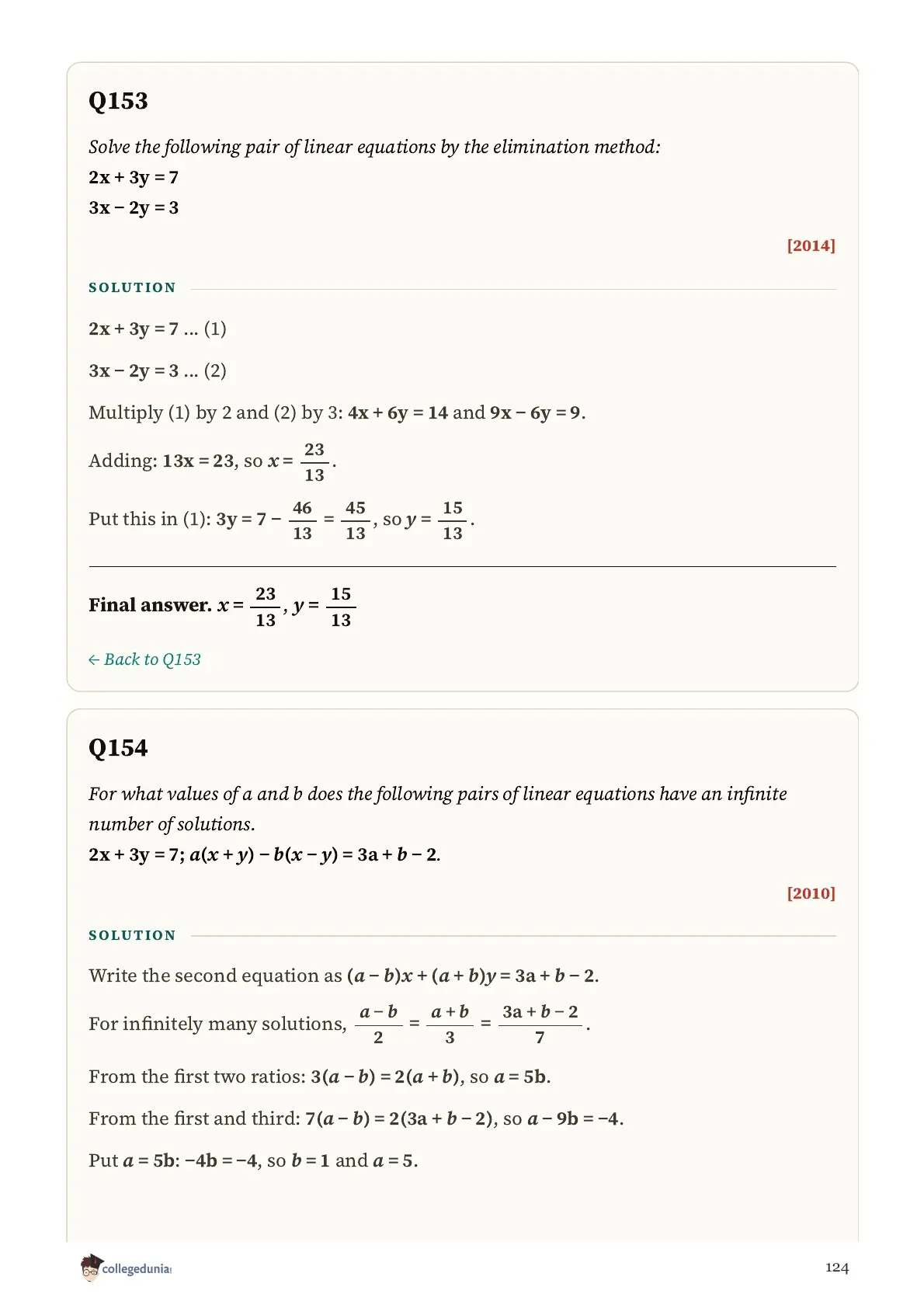
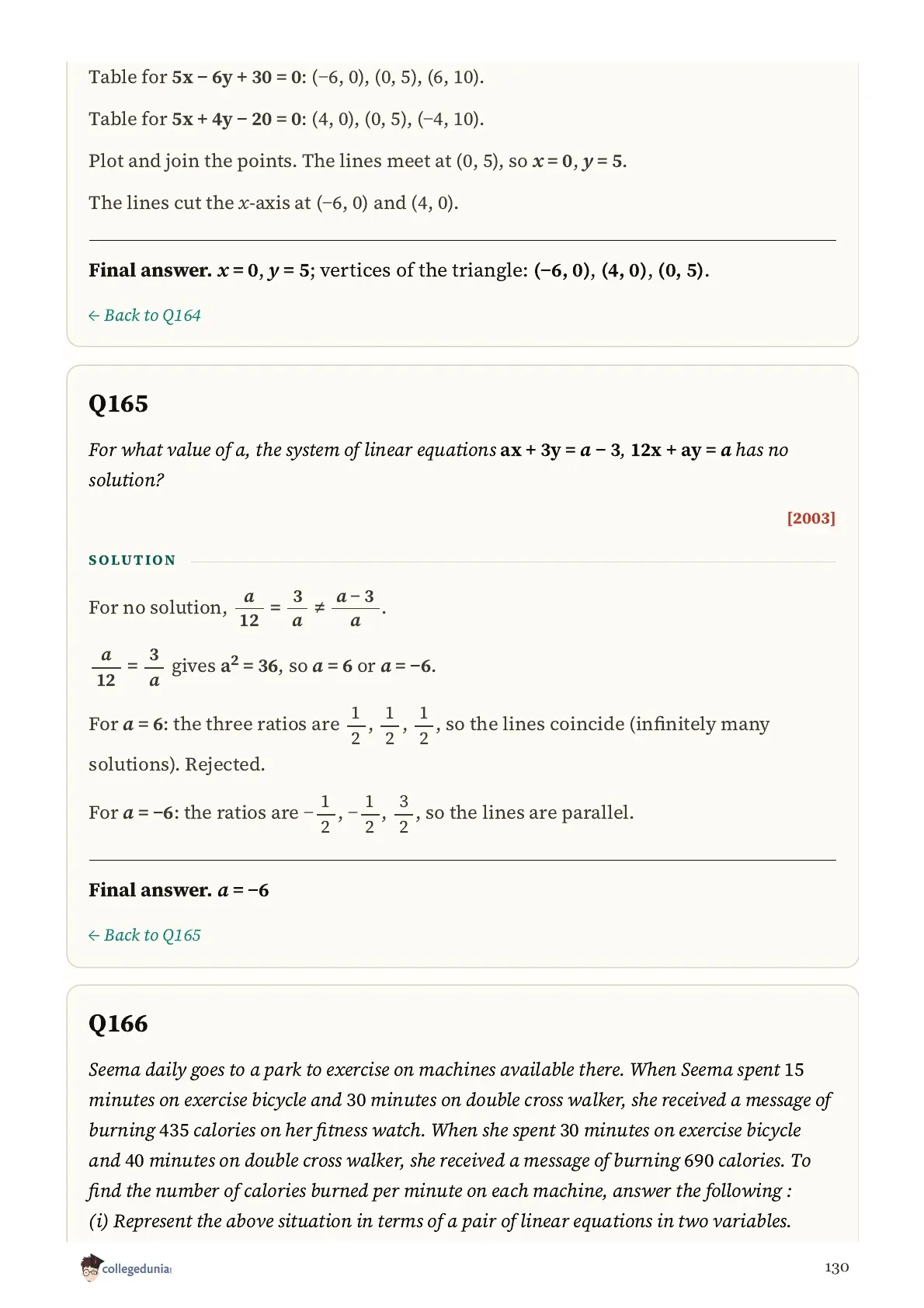
The nature of the solution is the next block. 73 questions mention unique, infinite or no solution, consistent or coincident lines, and 44 of the 54 MCQs test it. 31 ask for a value such as k, c, p, a and b, for example kx + 3y = k - 2 with 12x + ky = k (2009) or 2x + 3y = 7 with (k - 1)x + (k + 2)y = 3k (set in both 2010 and 2019). 19 use the words consistent or inconsistent.
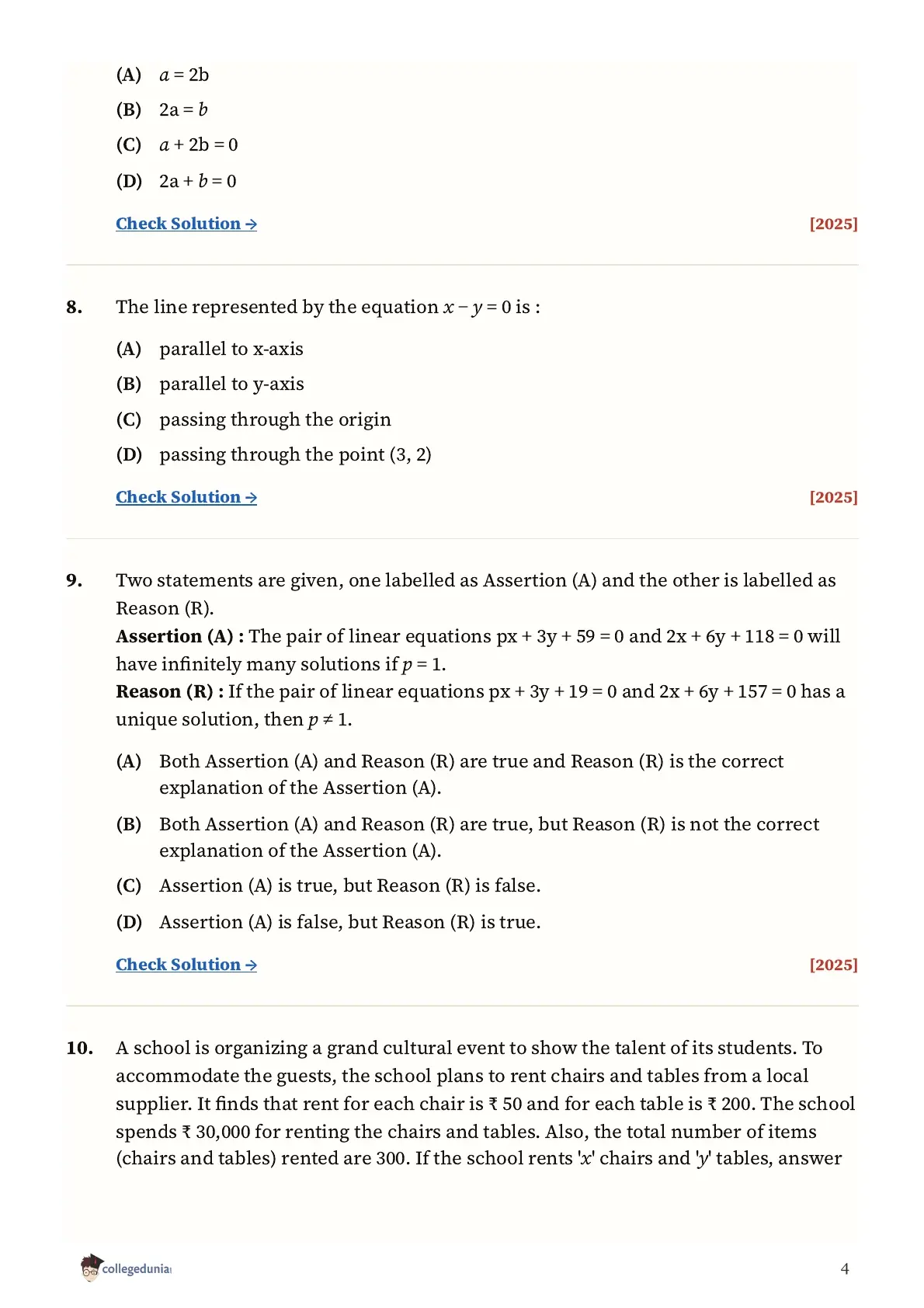
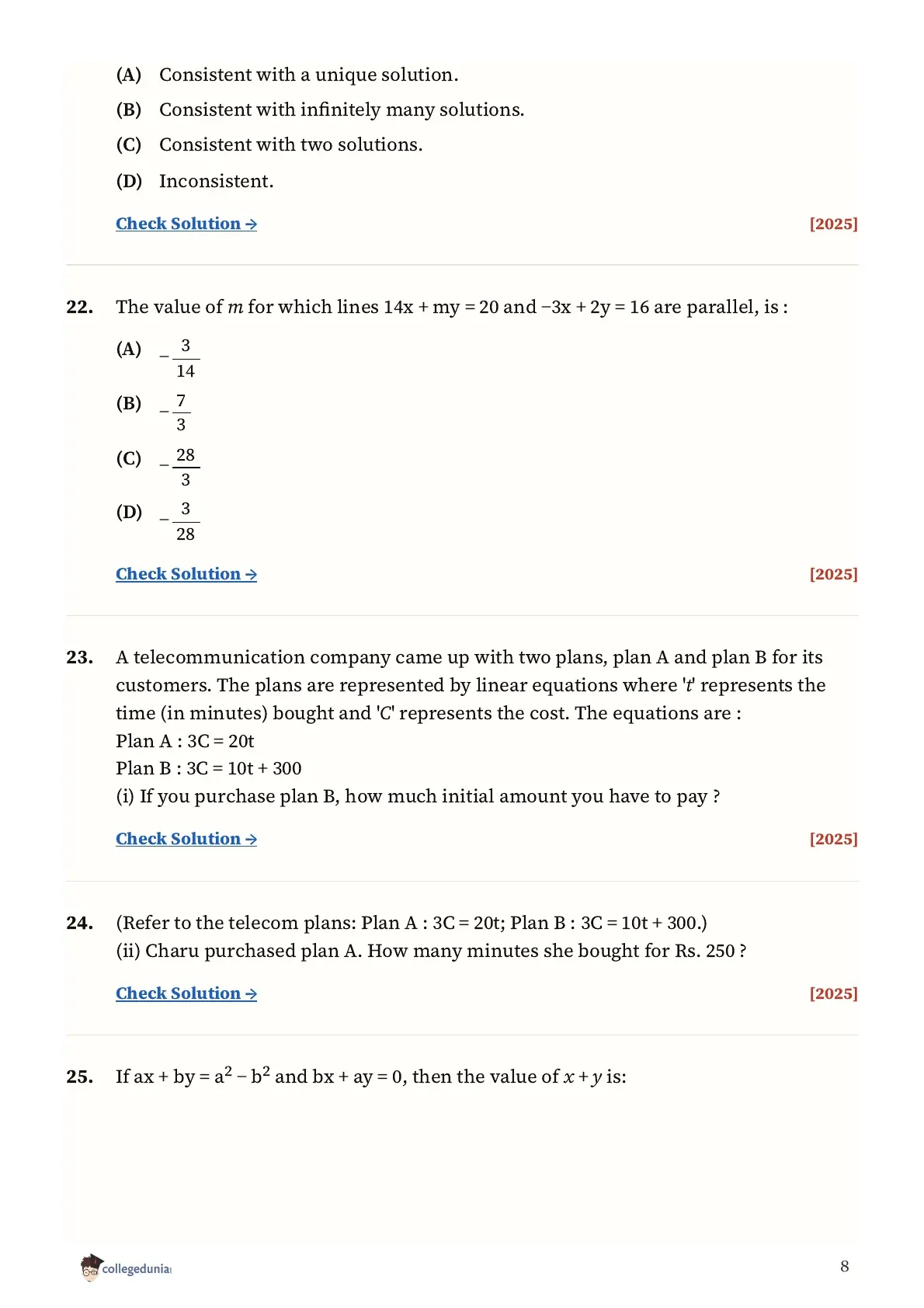
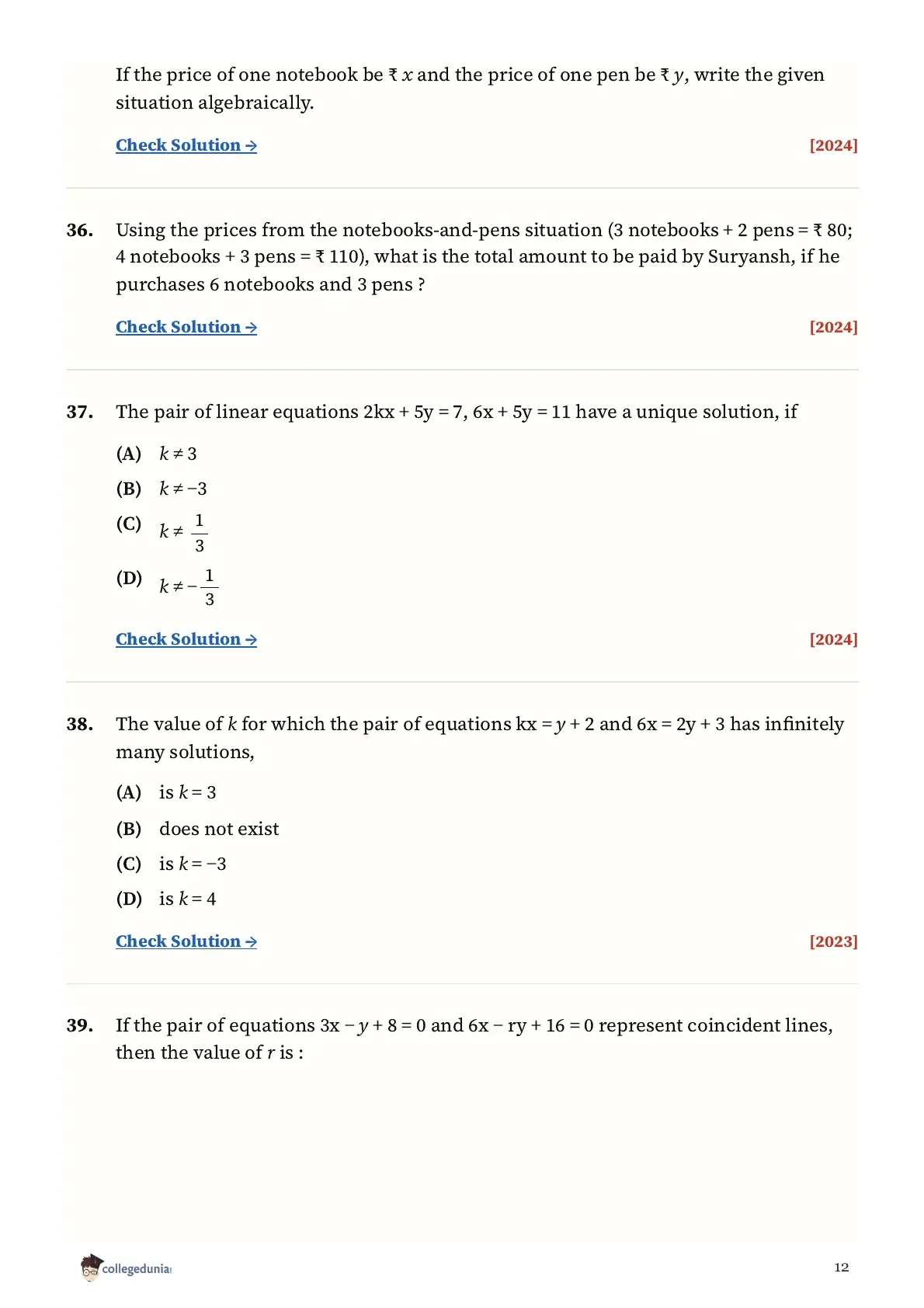
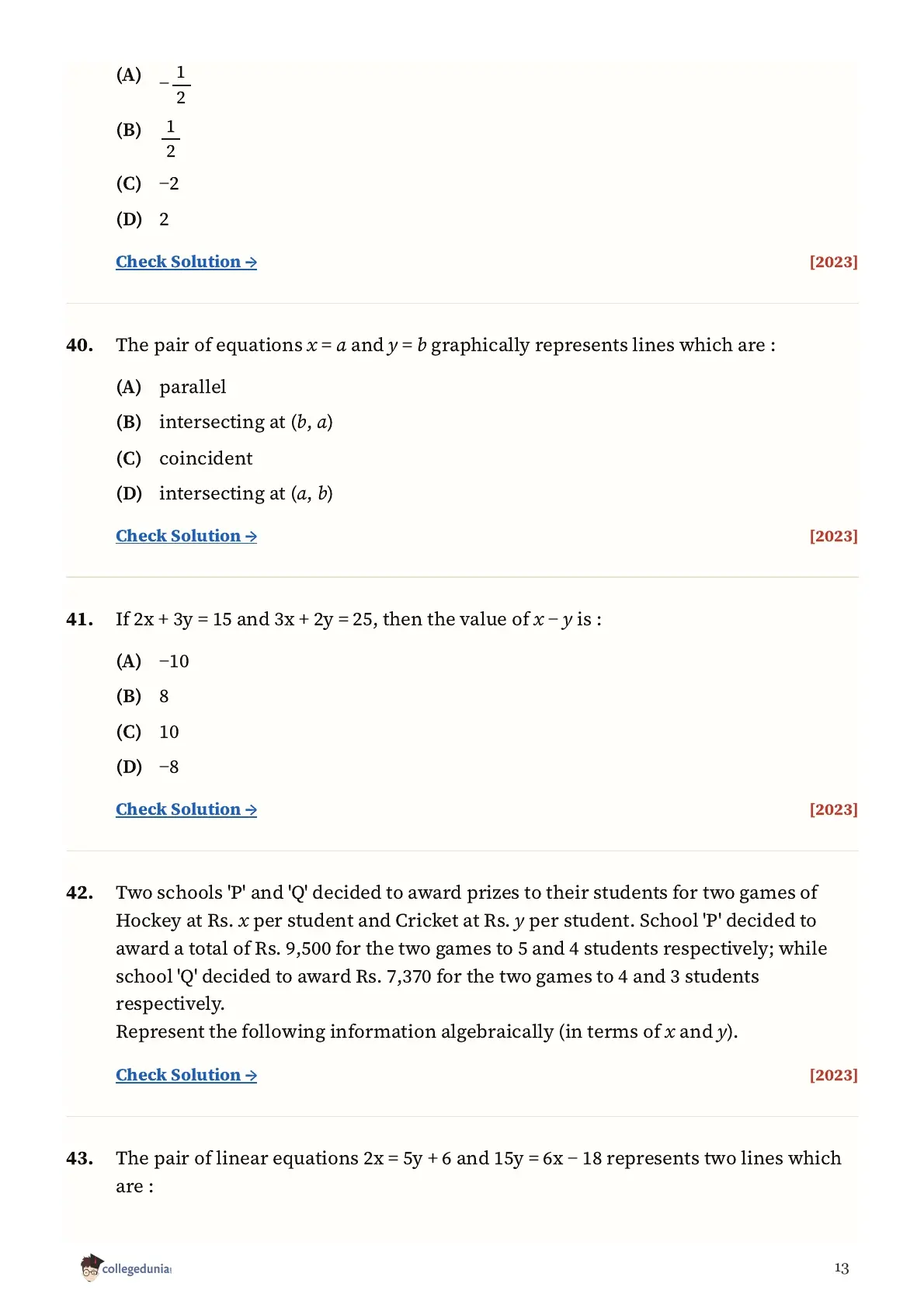
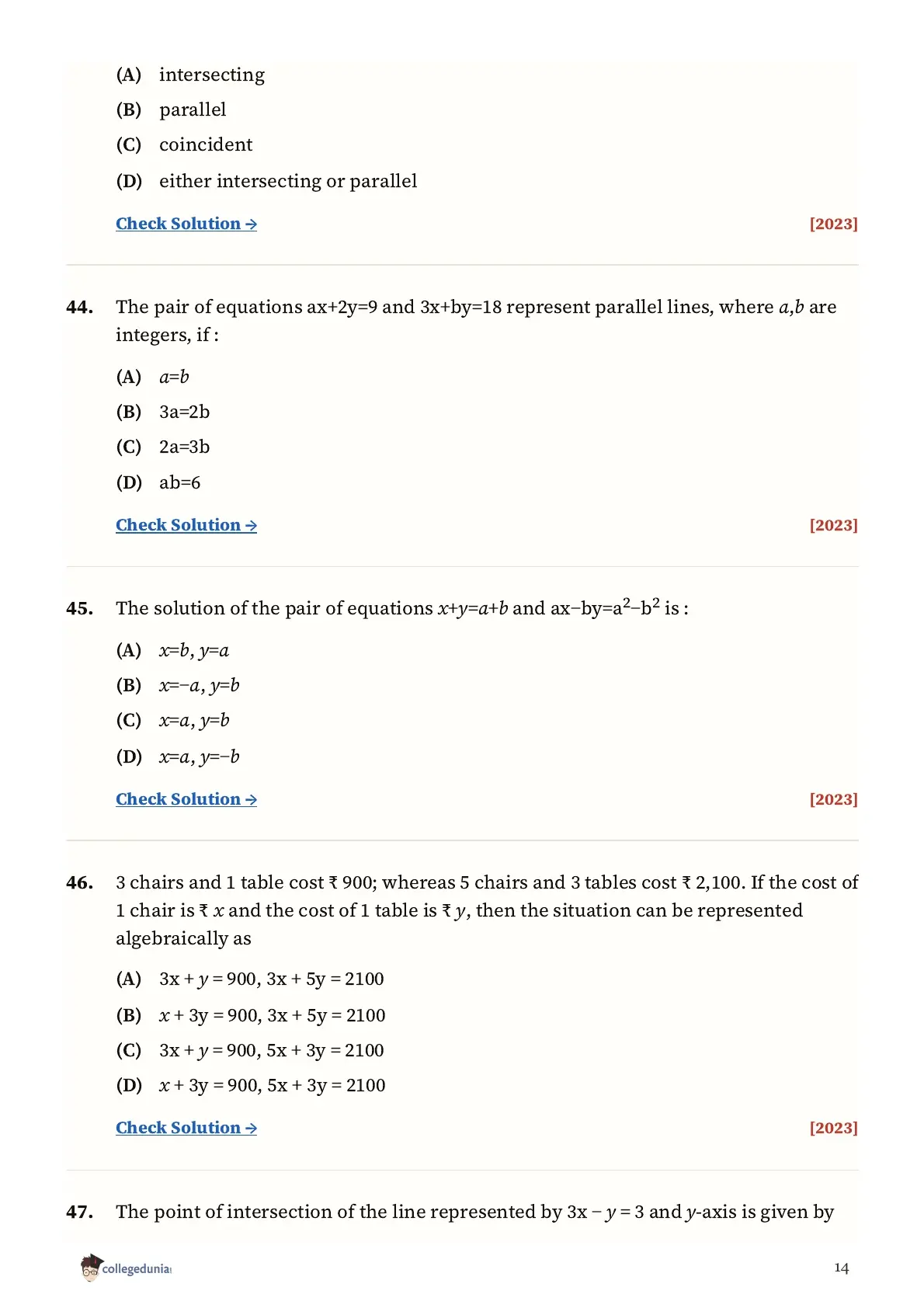
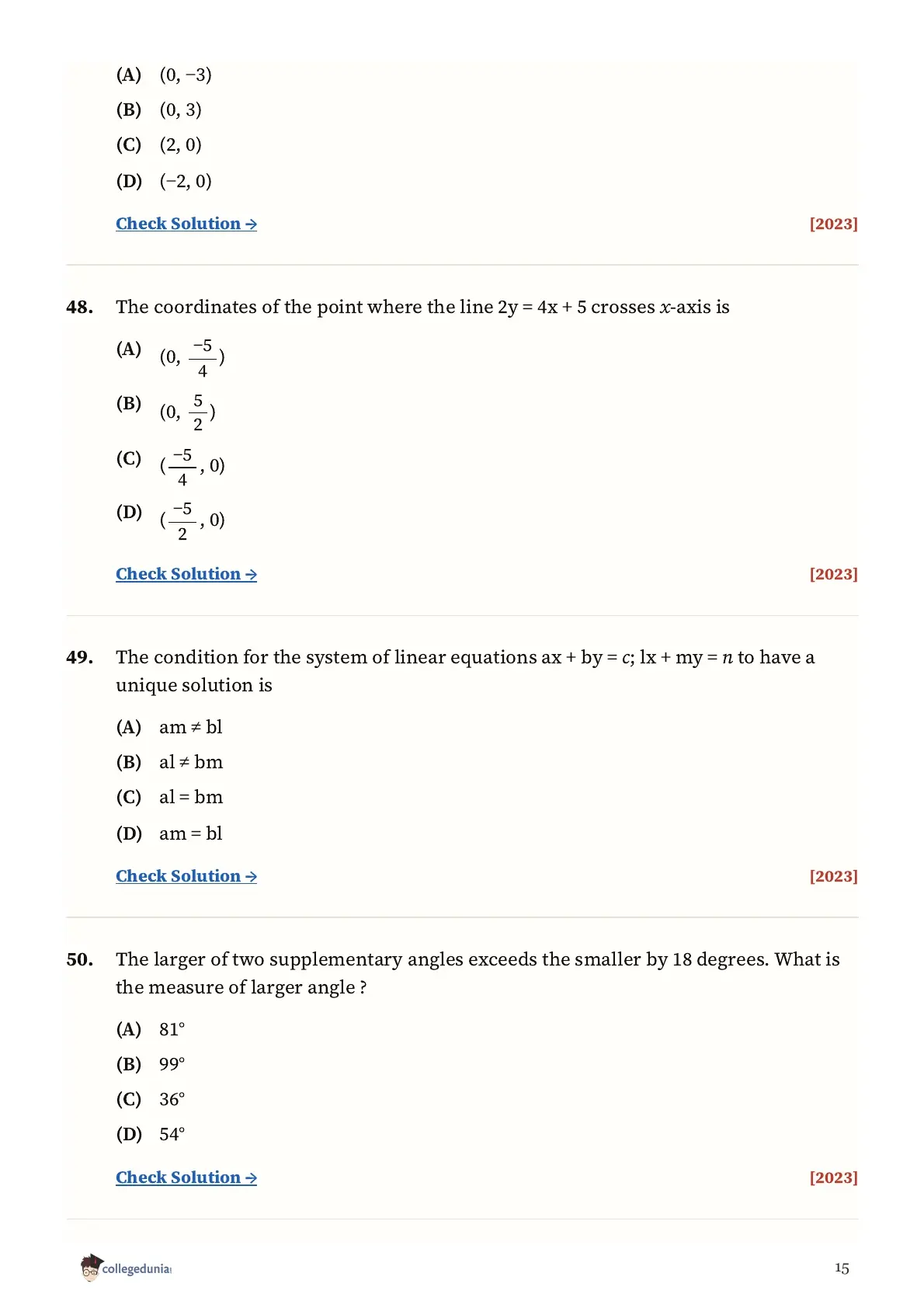
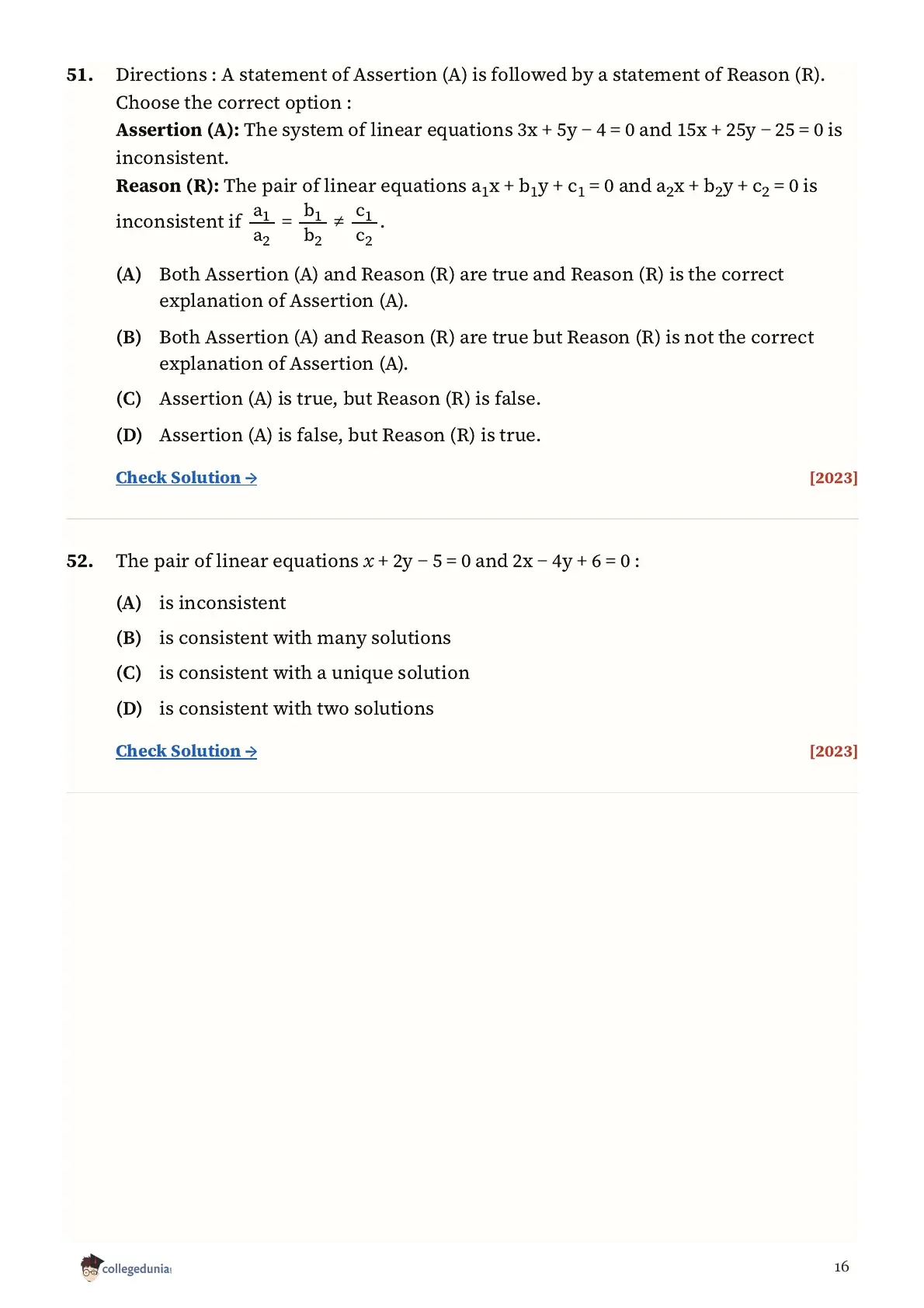
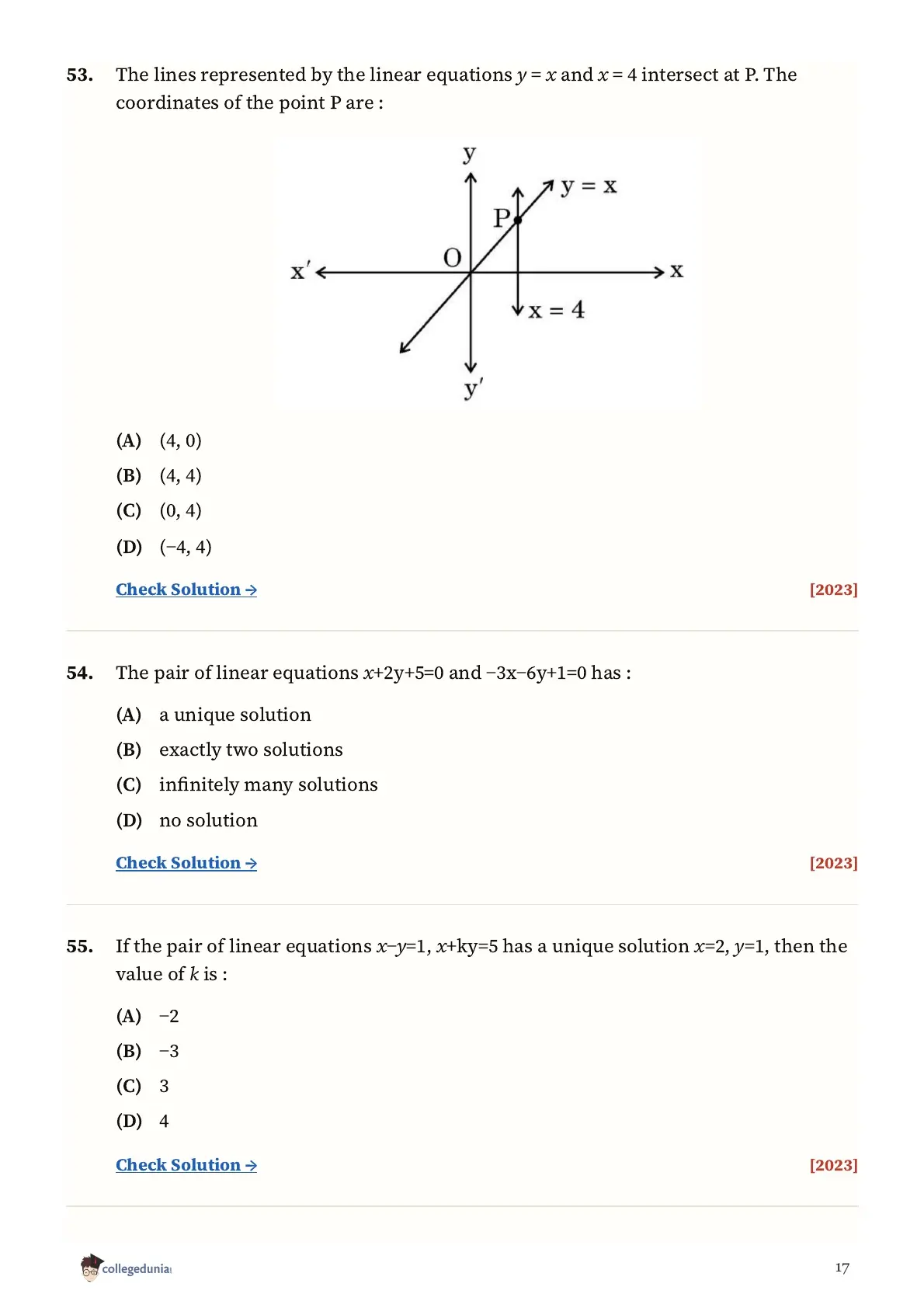
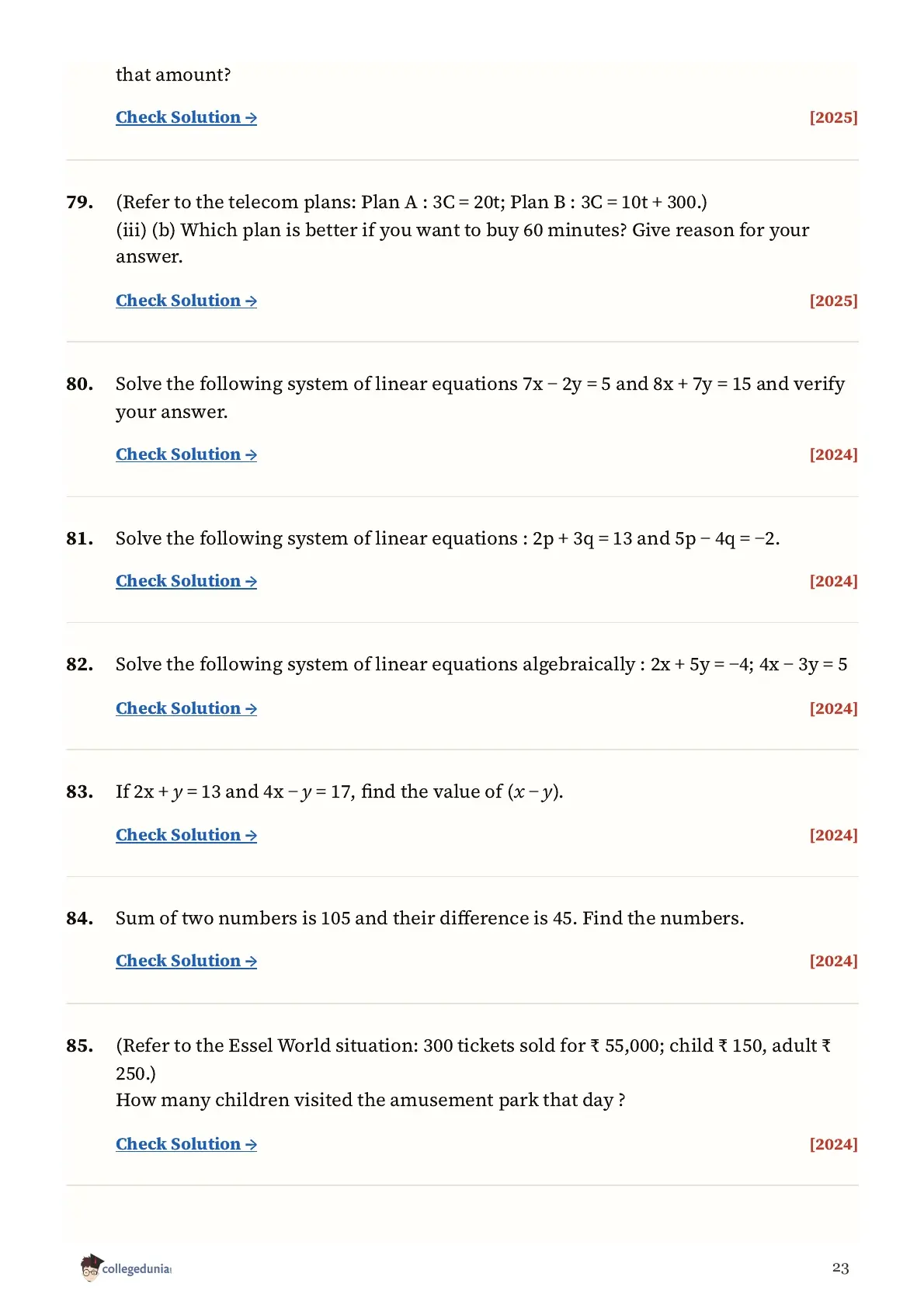
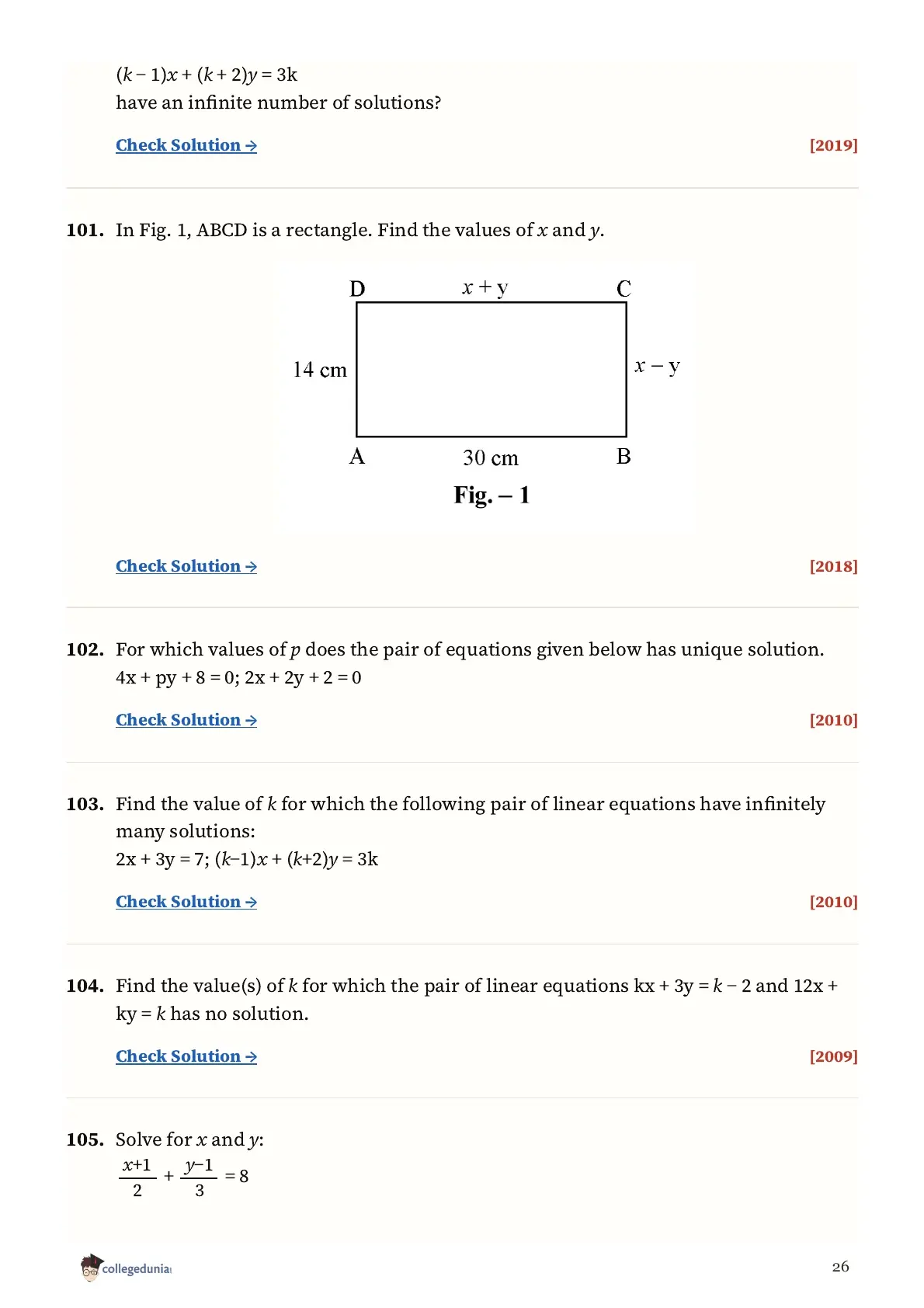
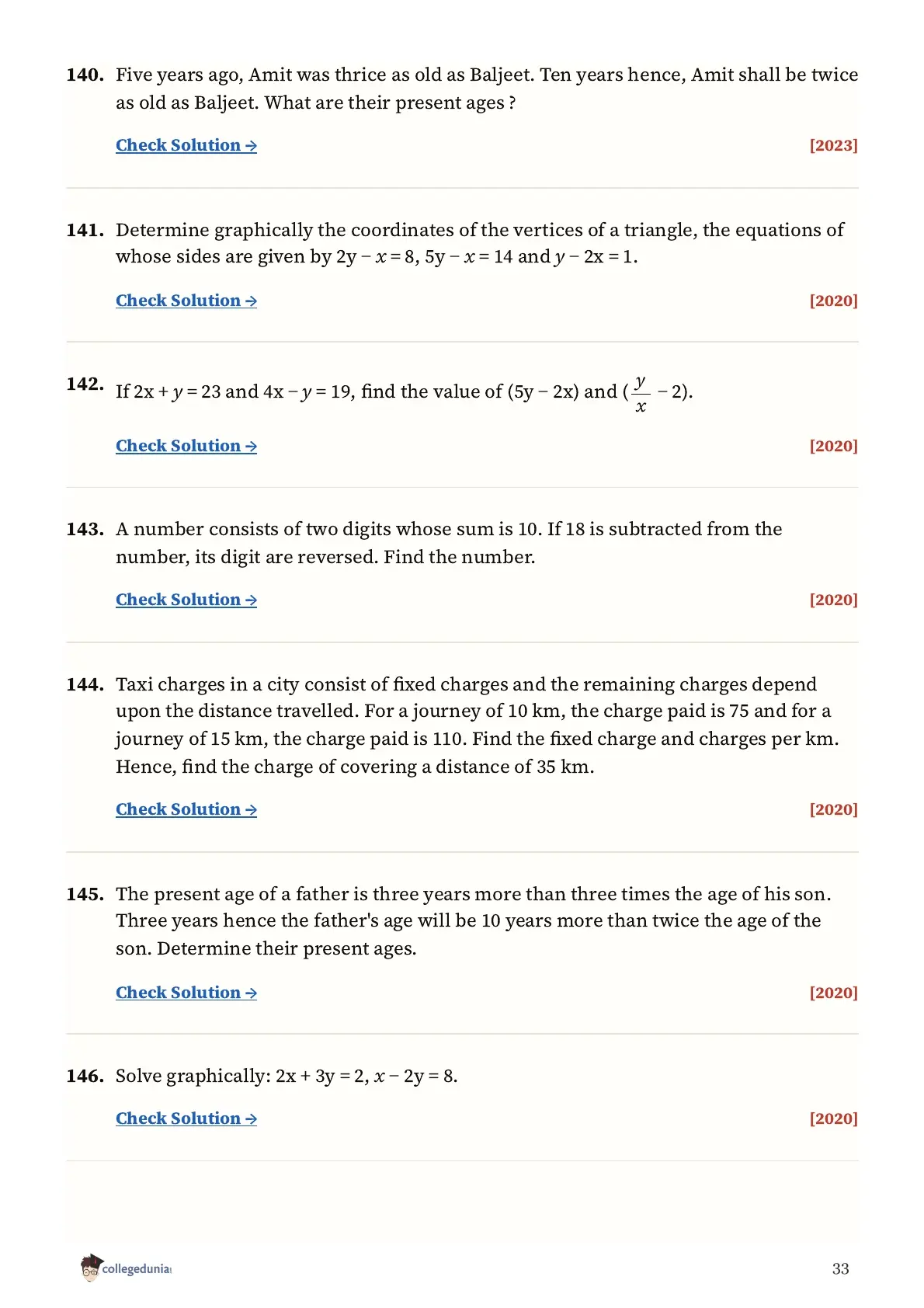
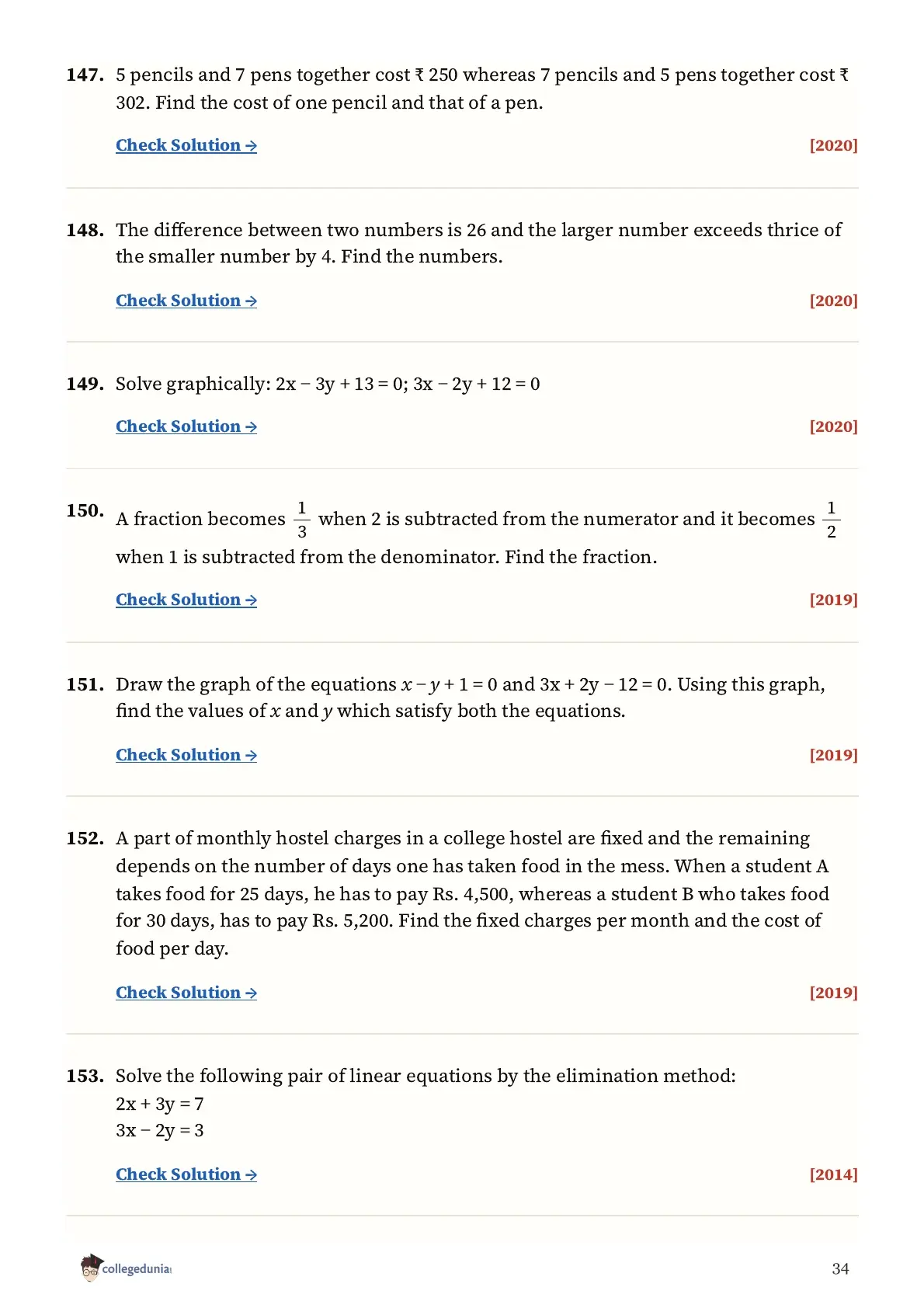
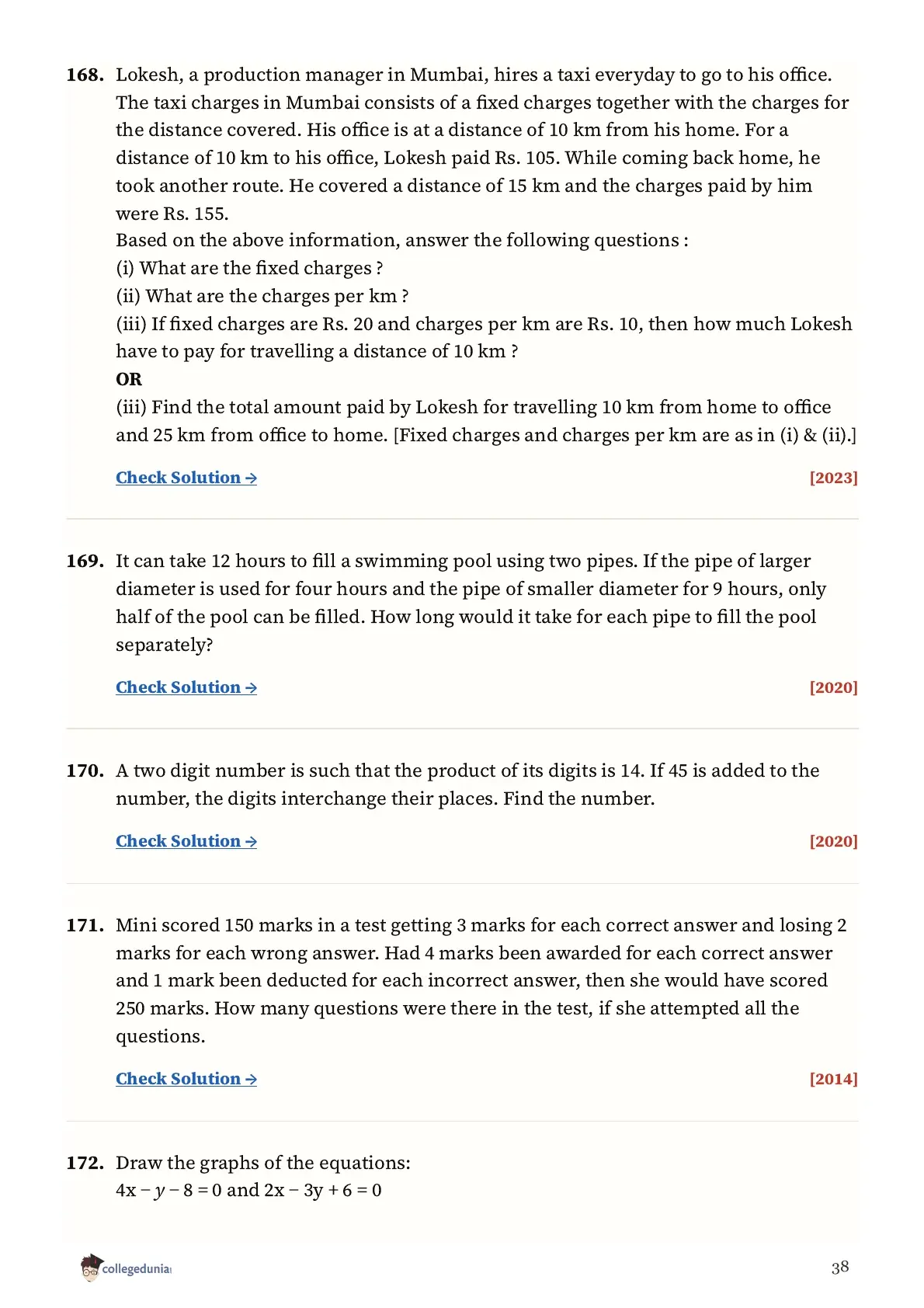
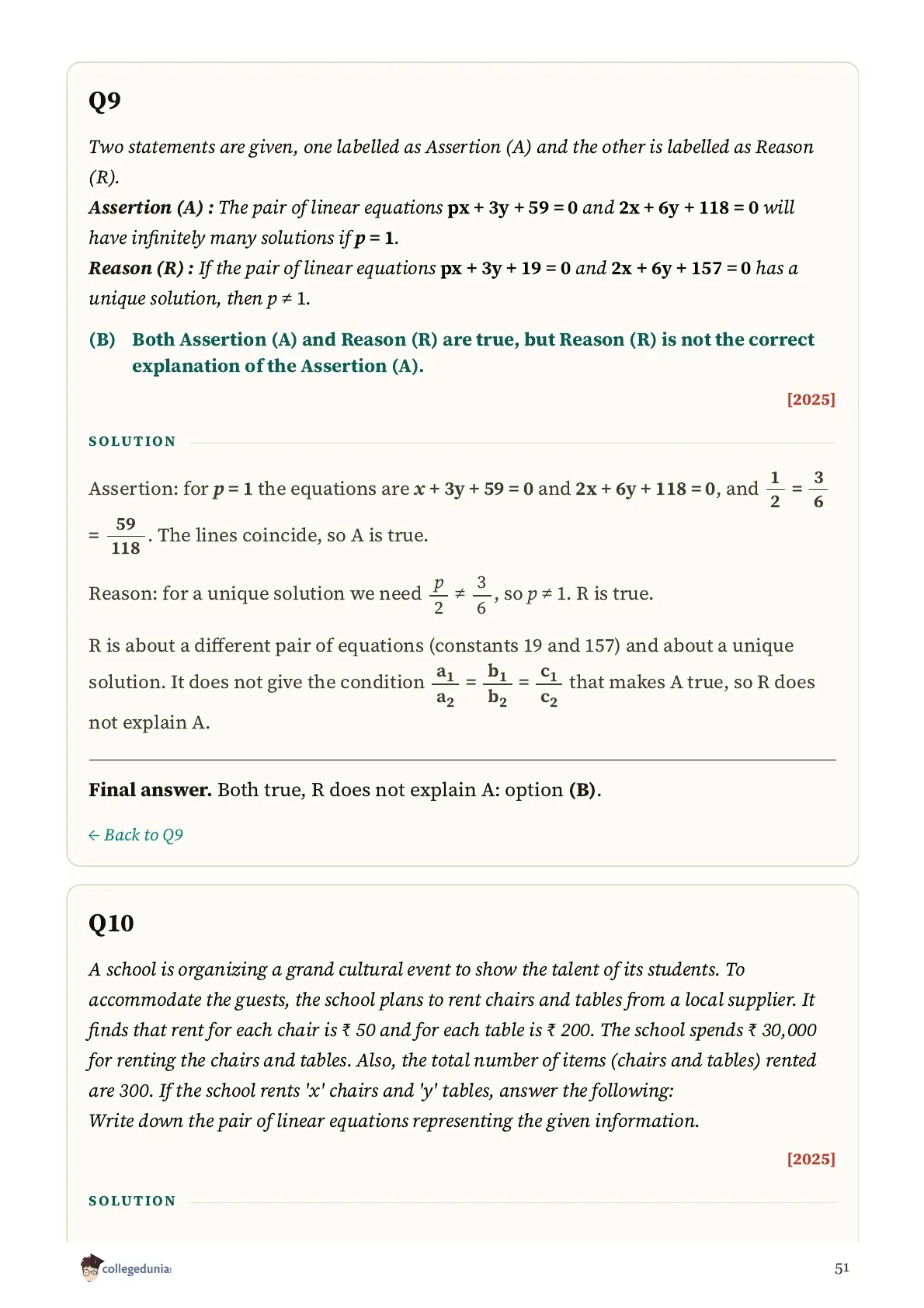
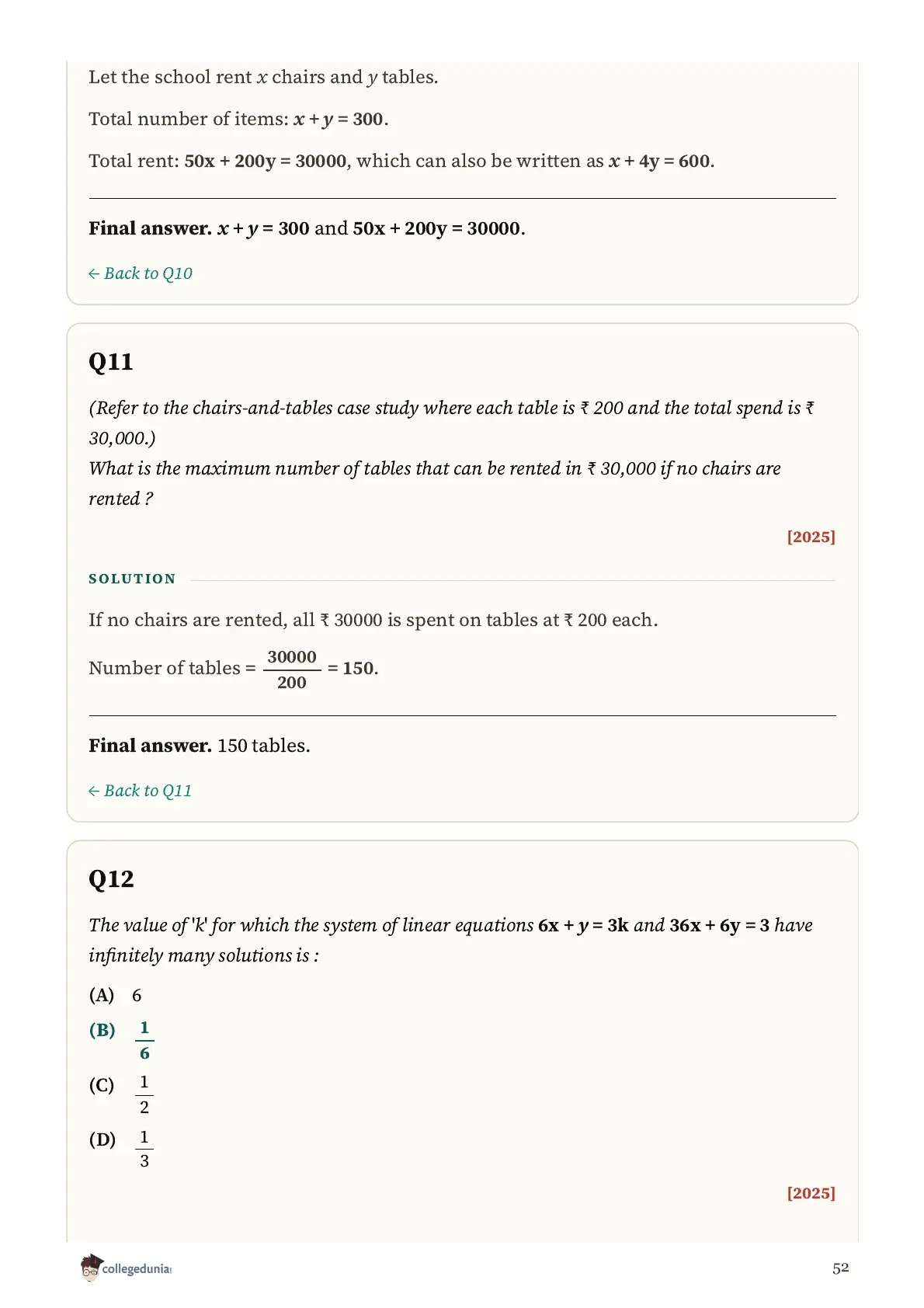
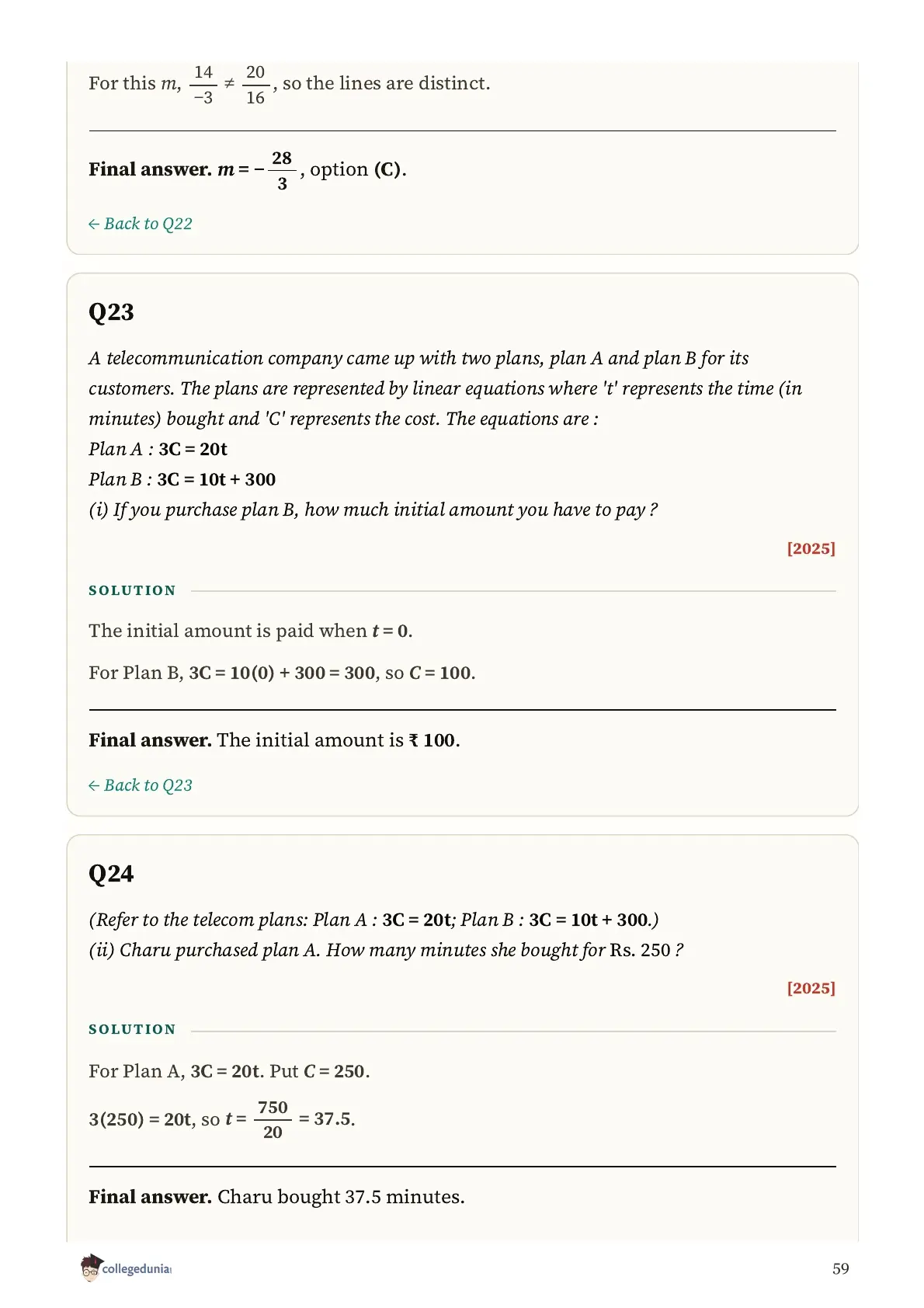
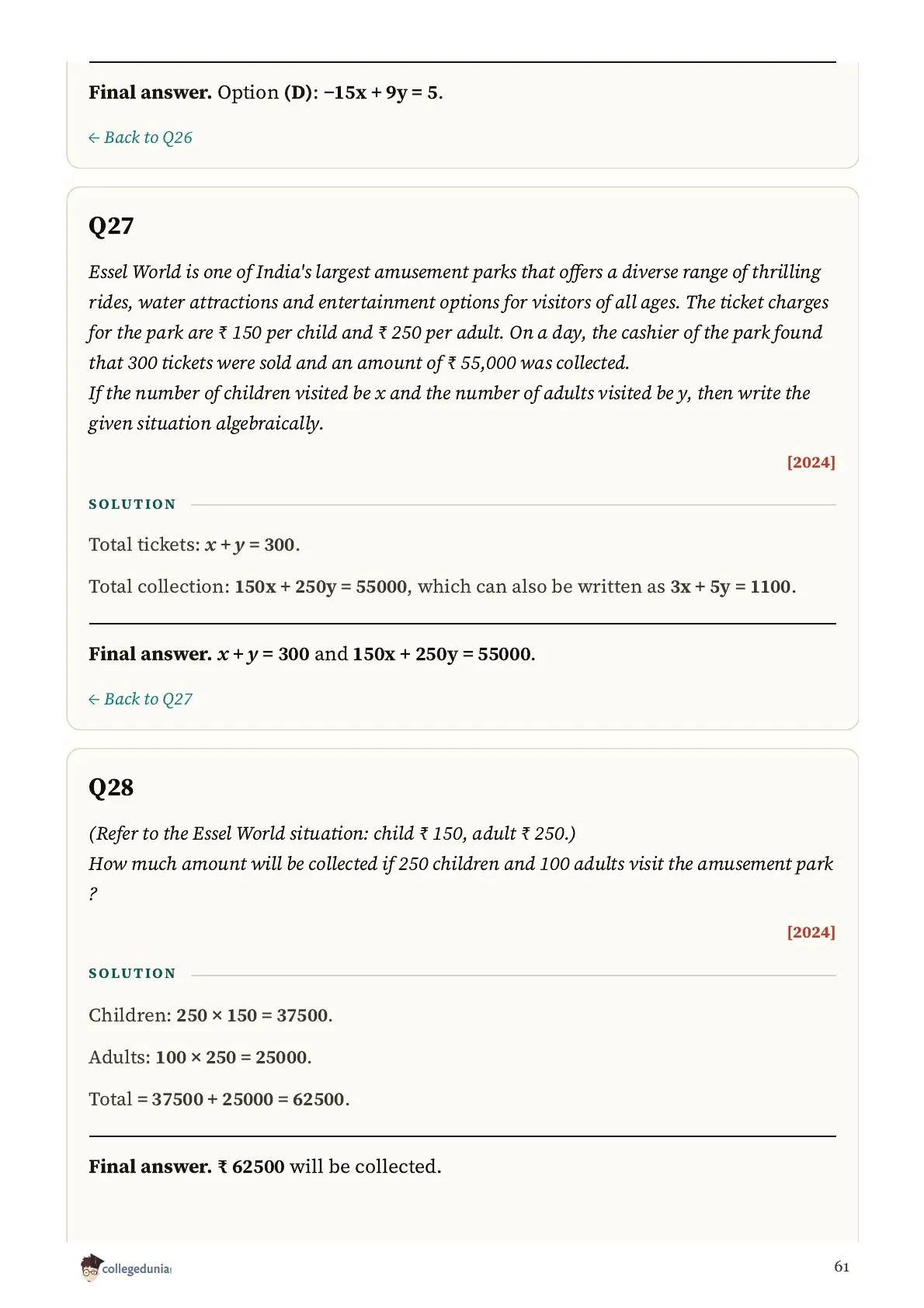
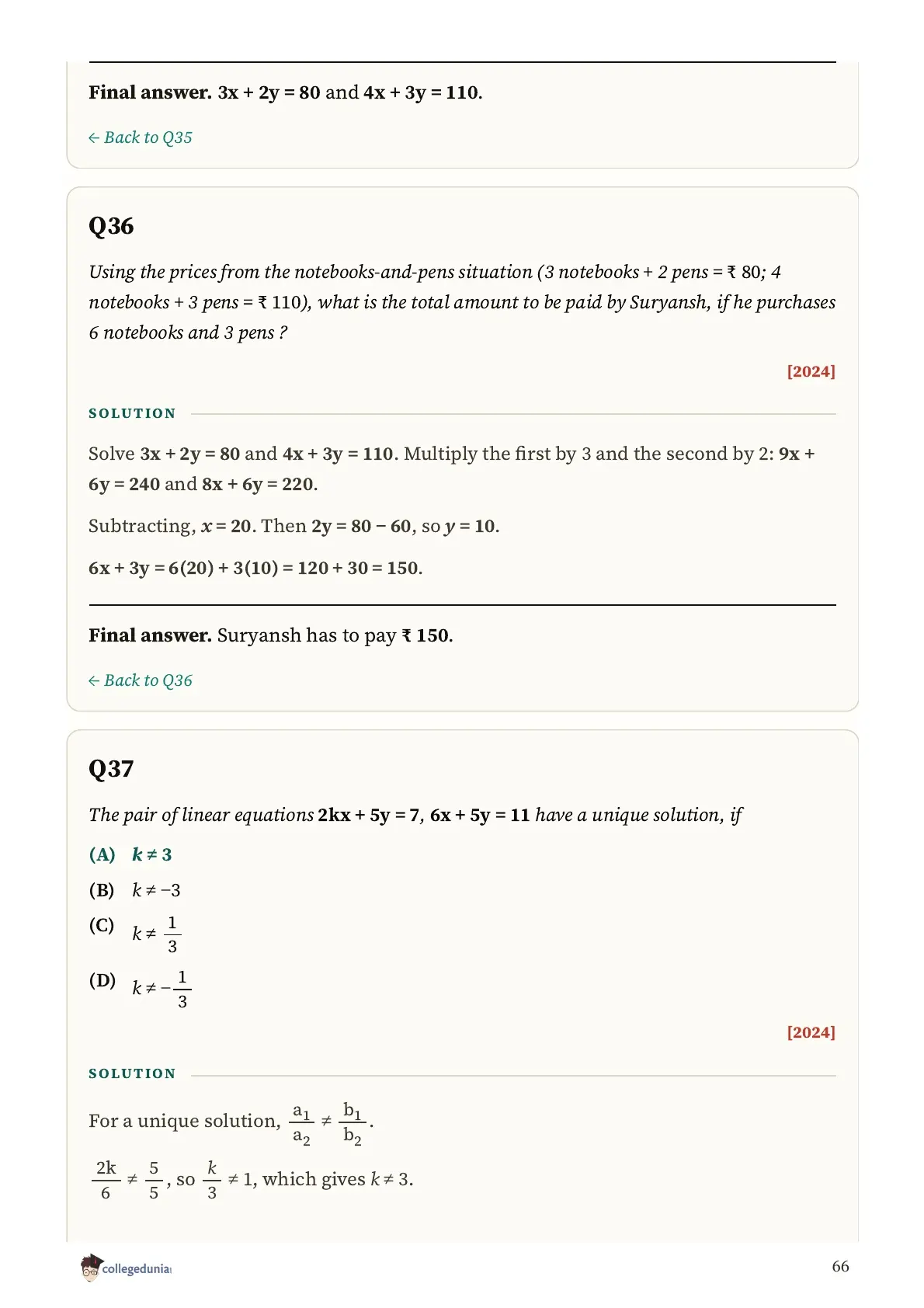
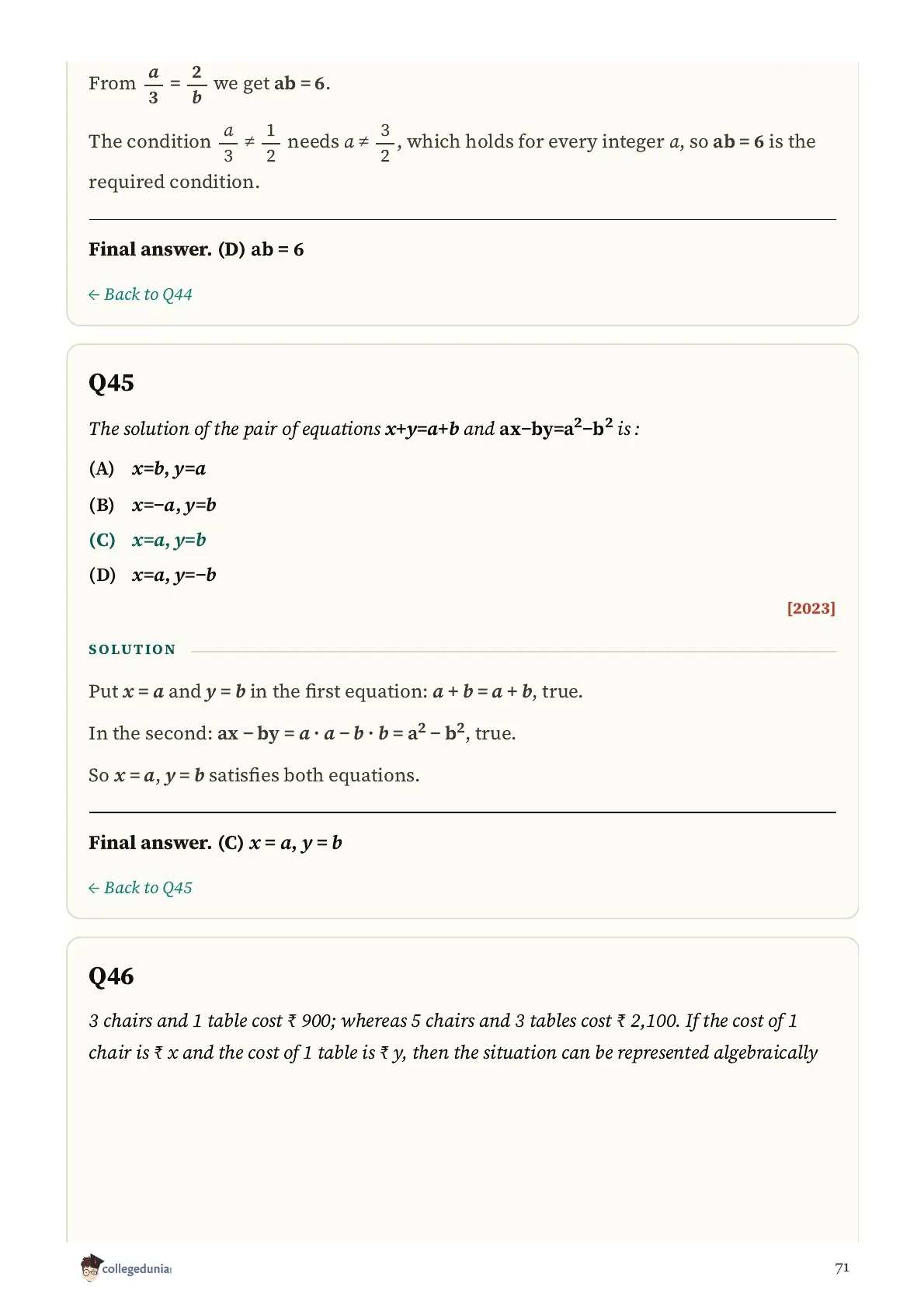
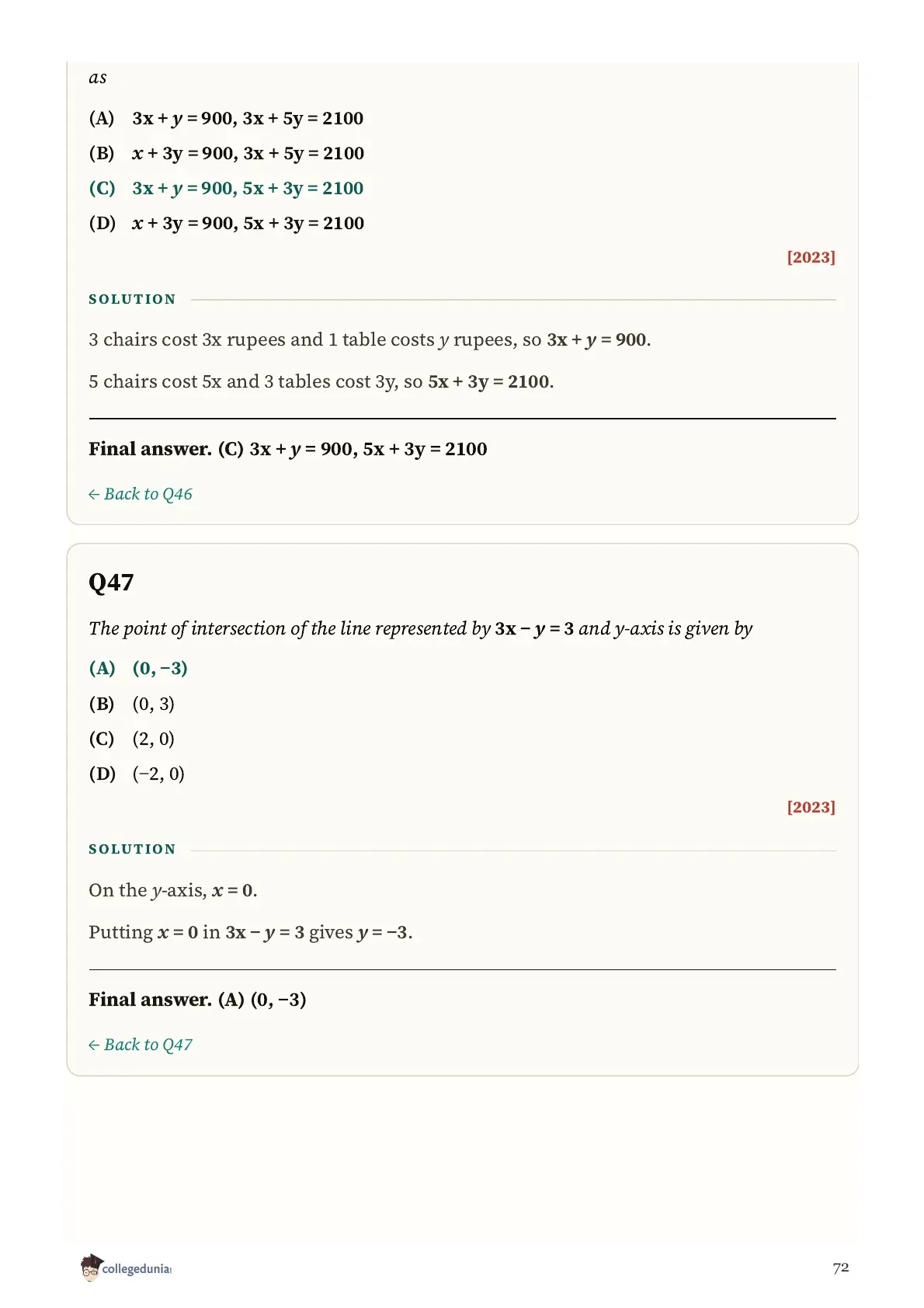
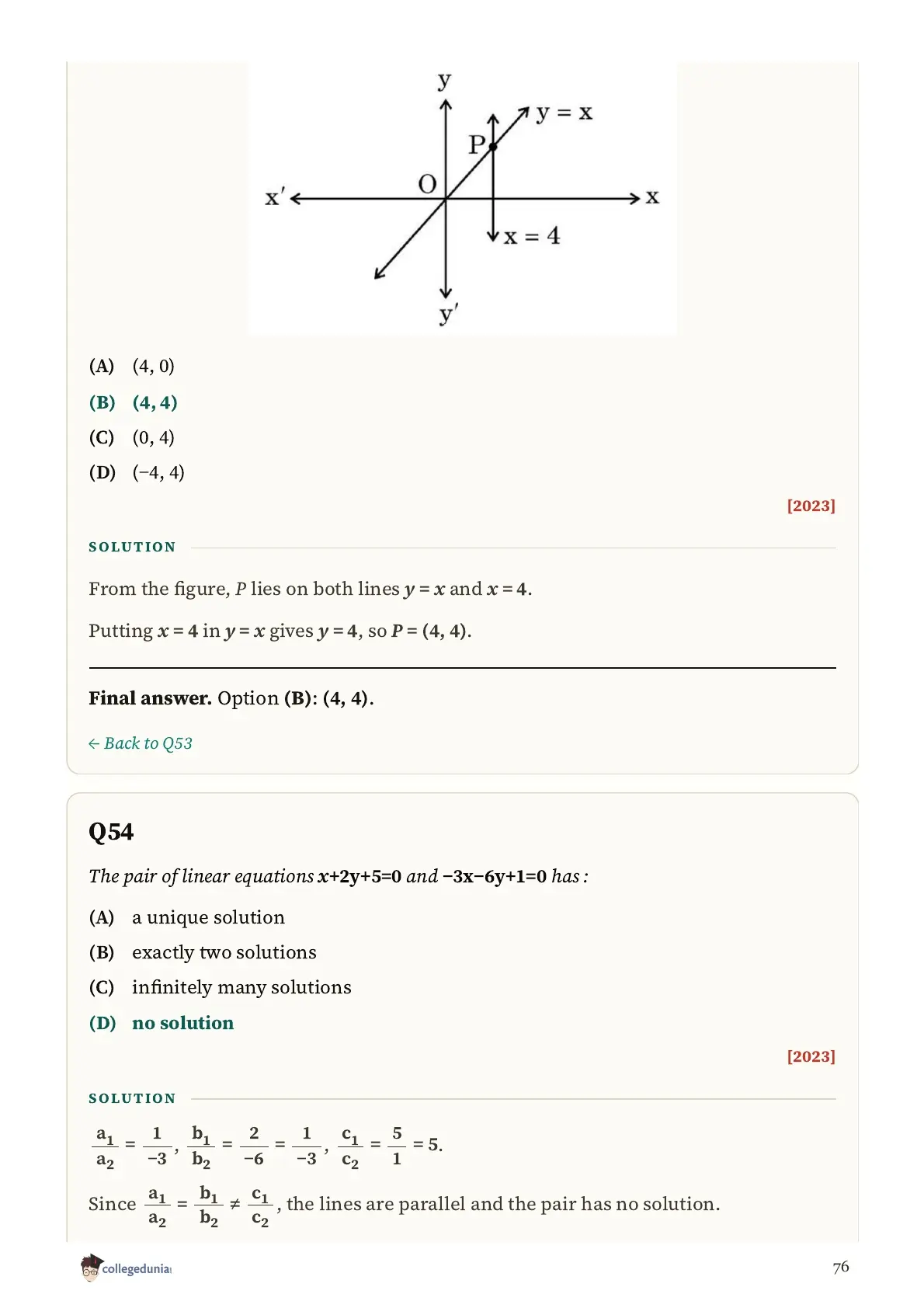
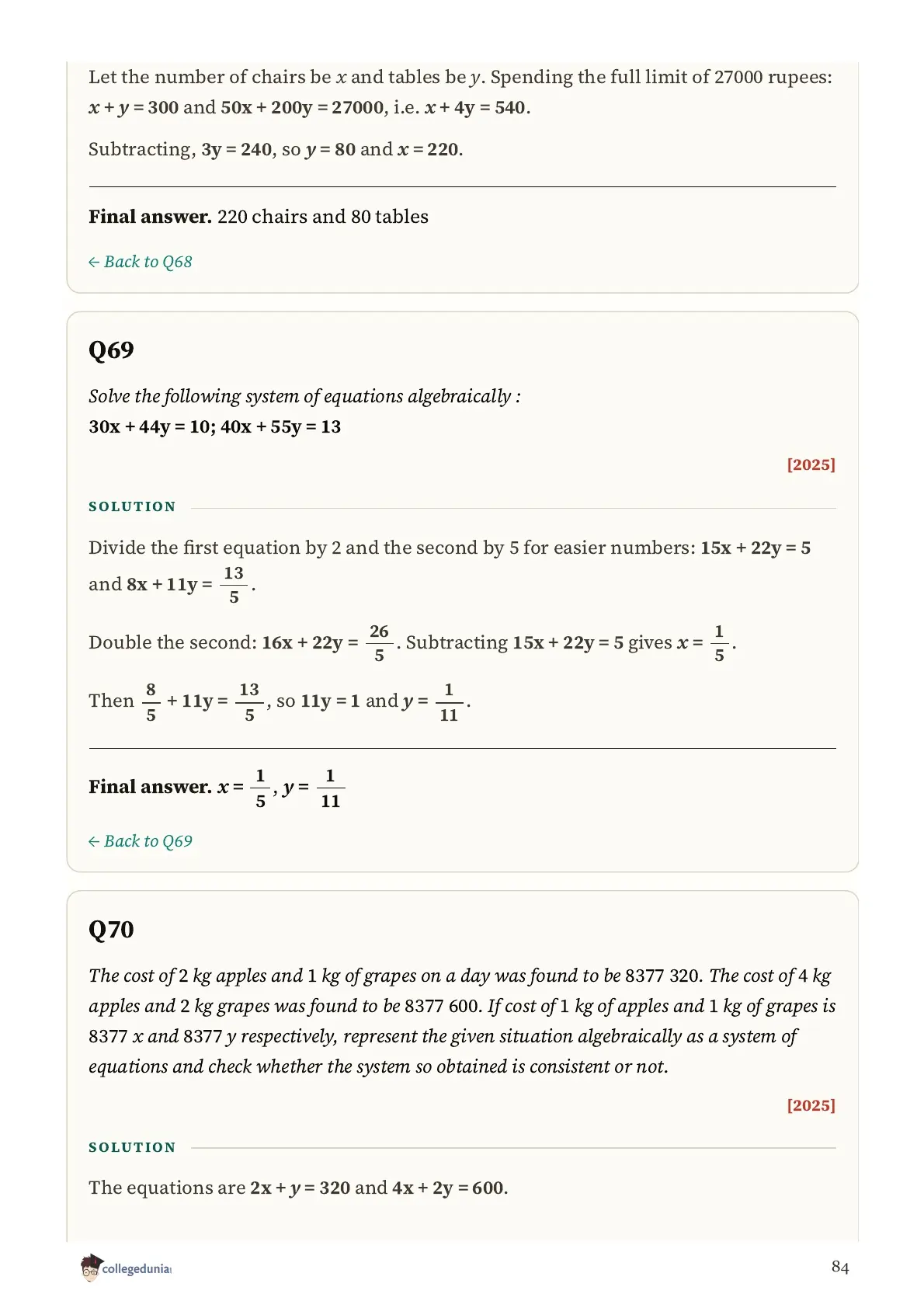
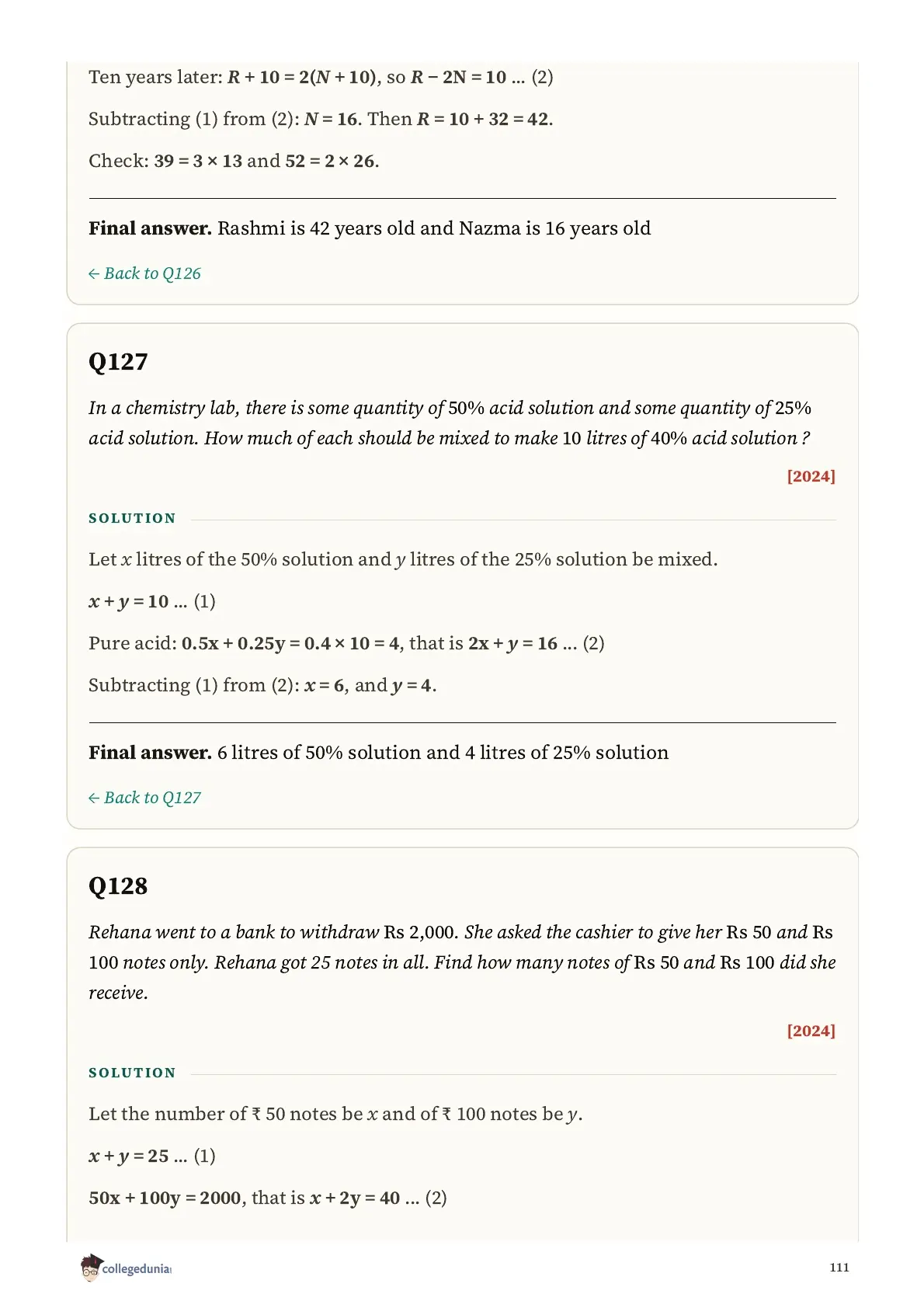
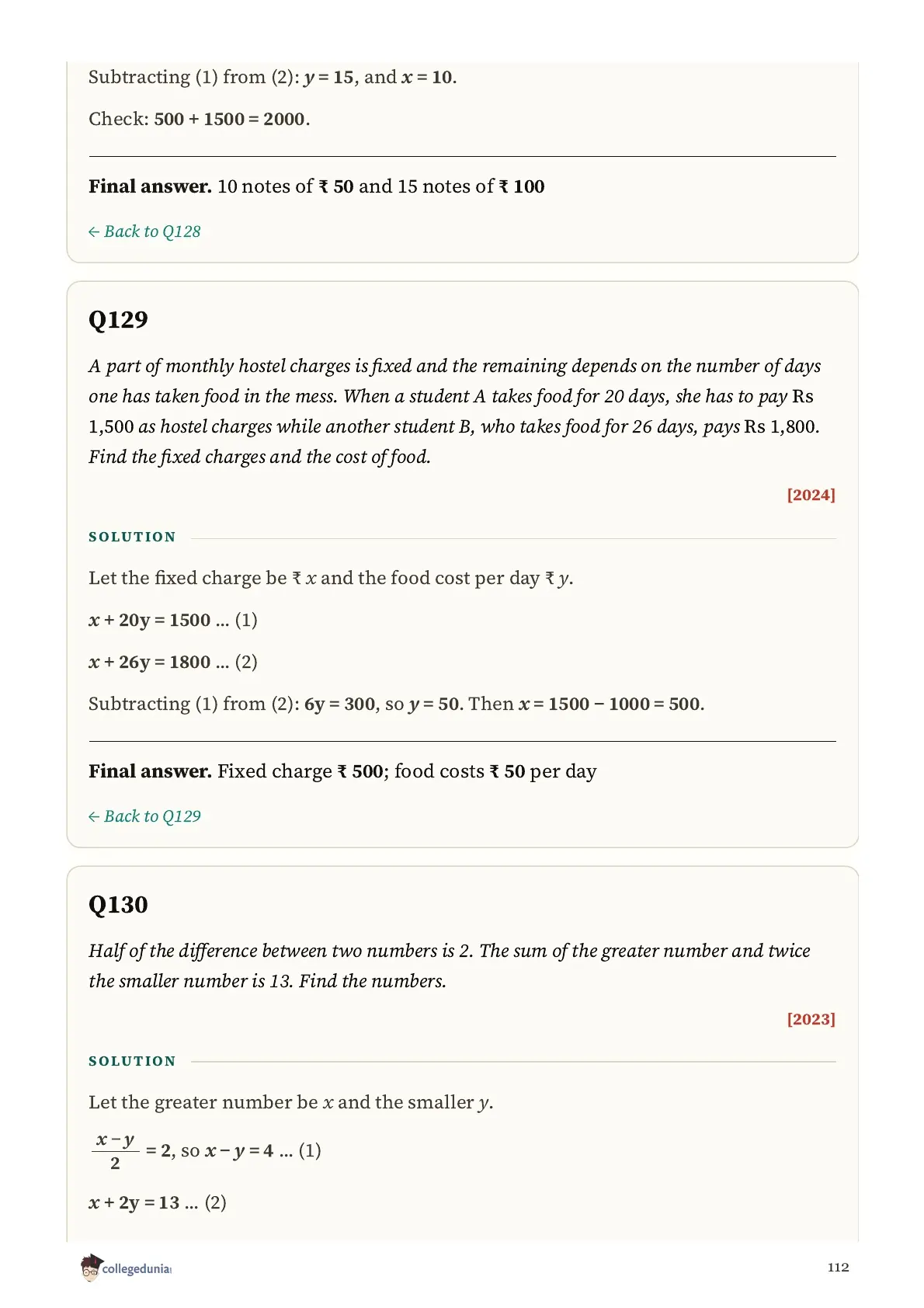
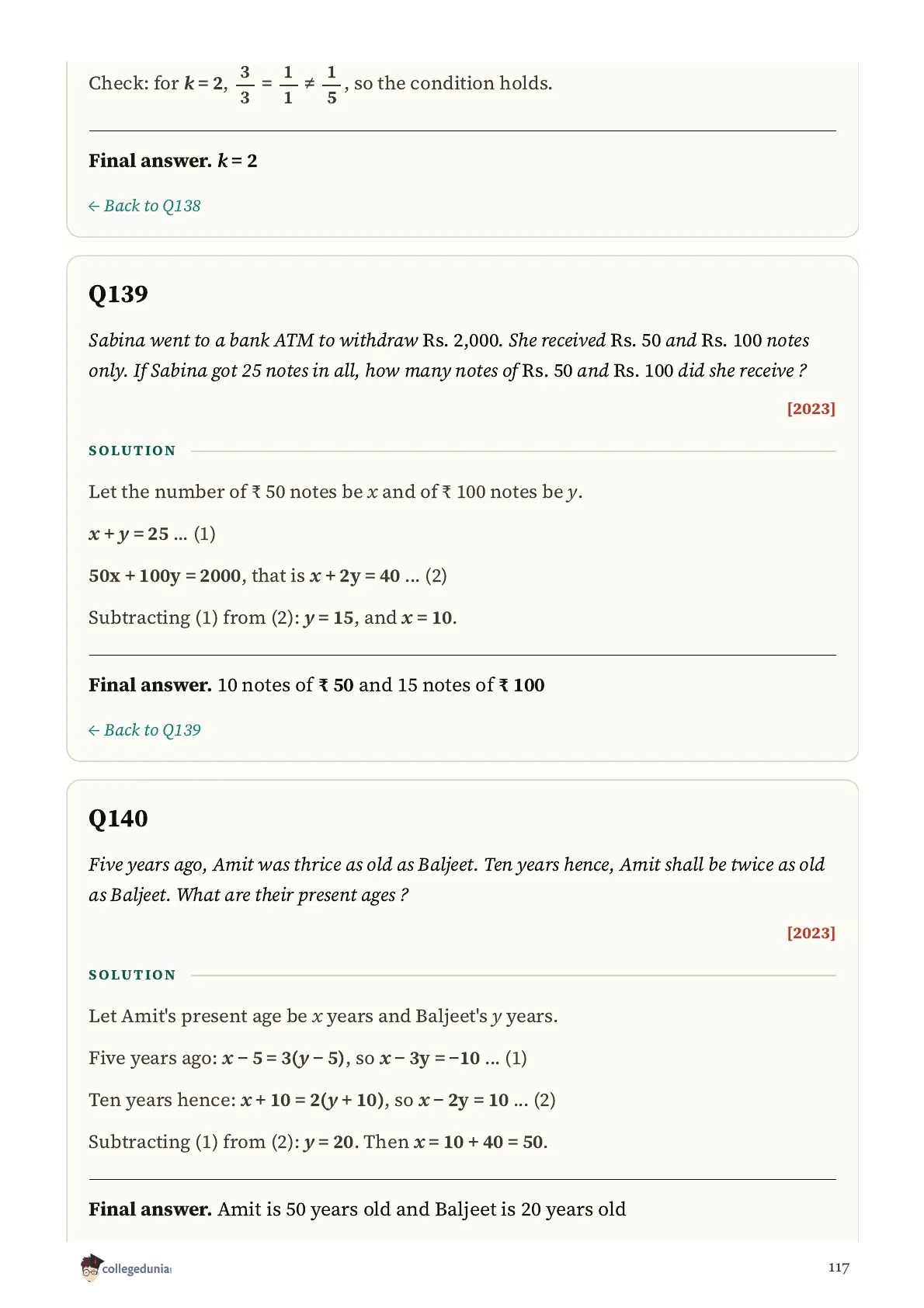
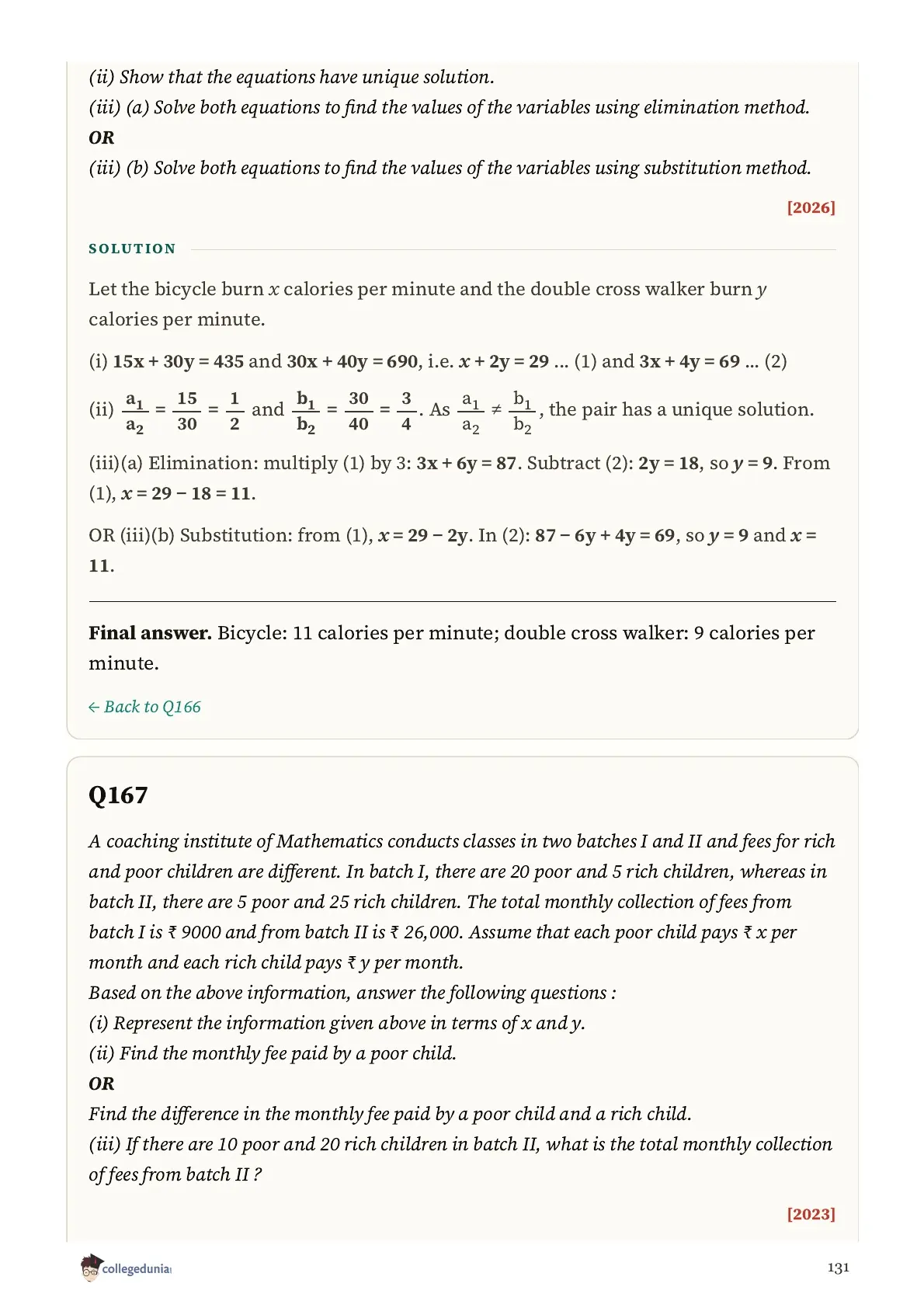
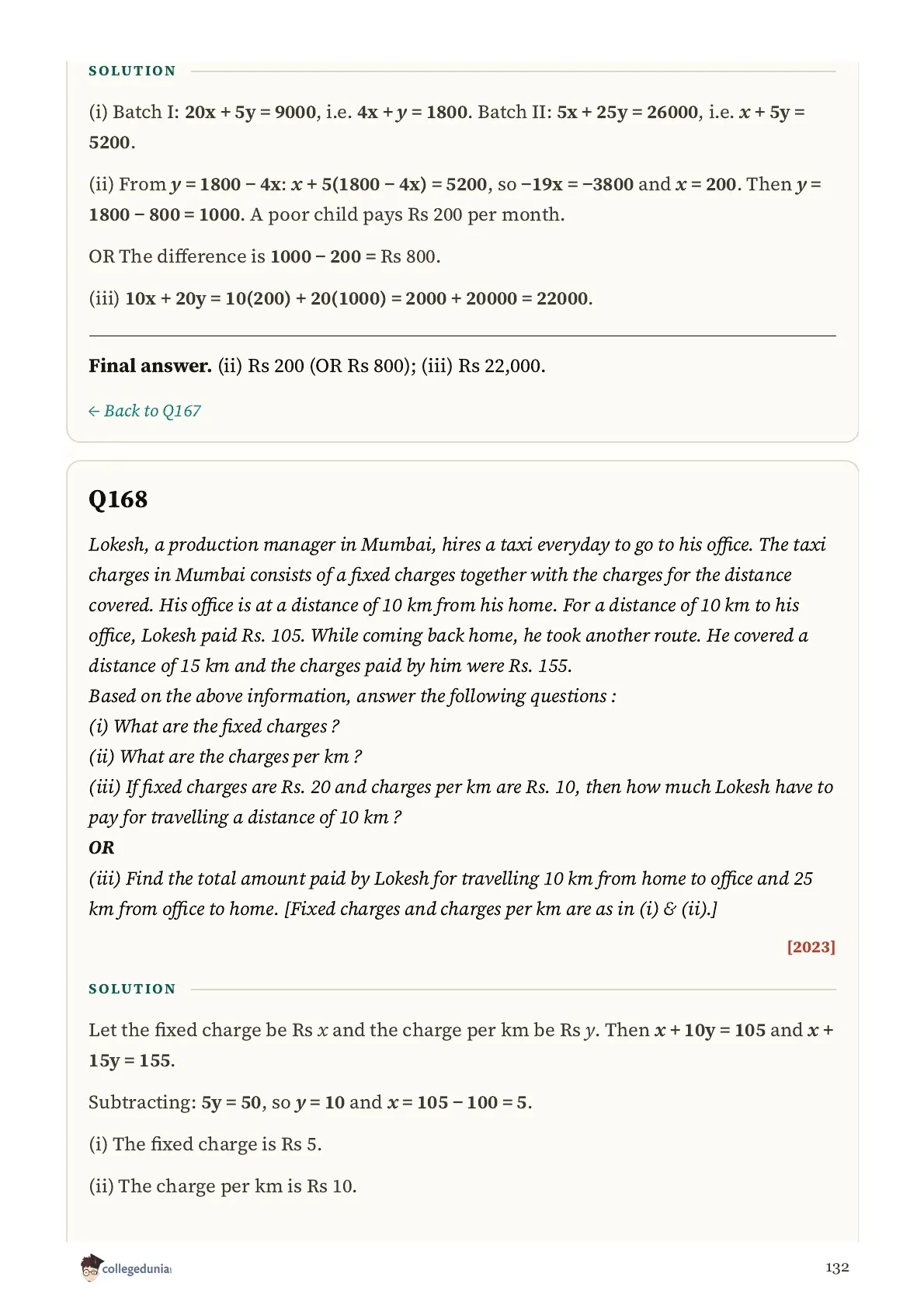
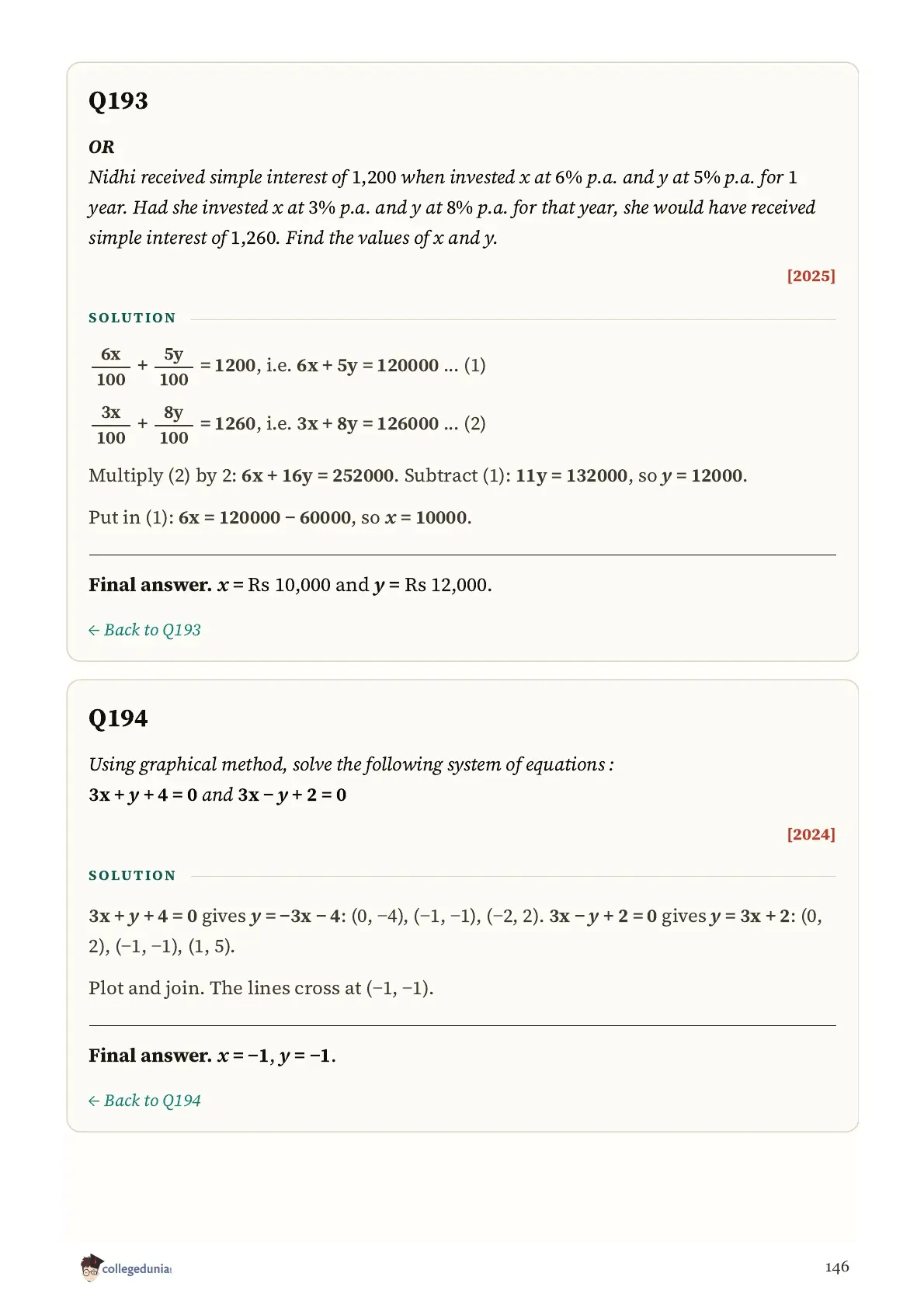
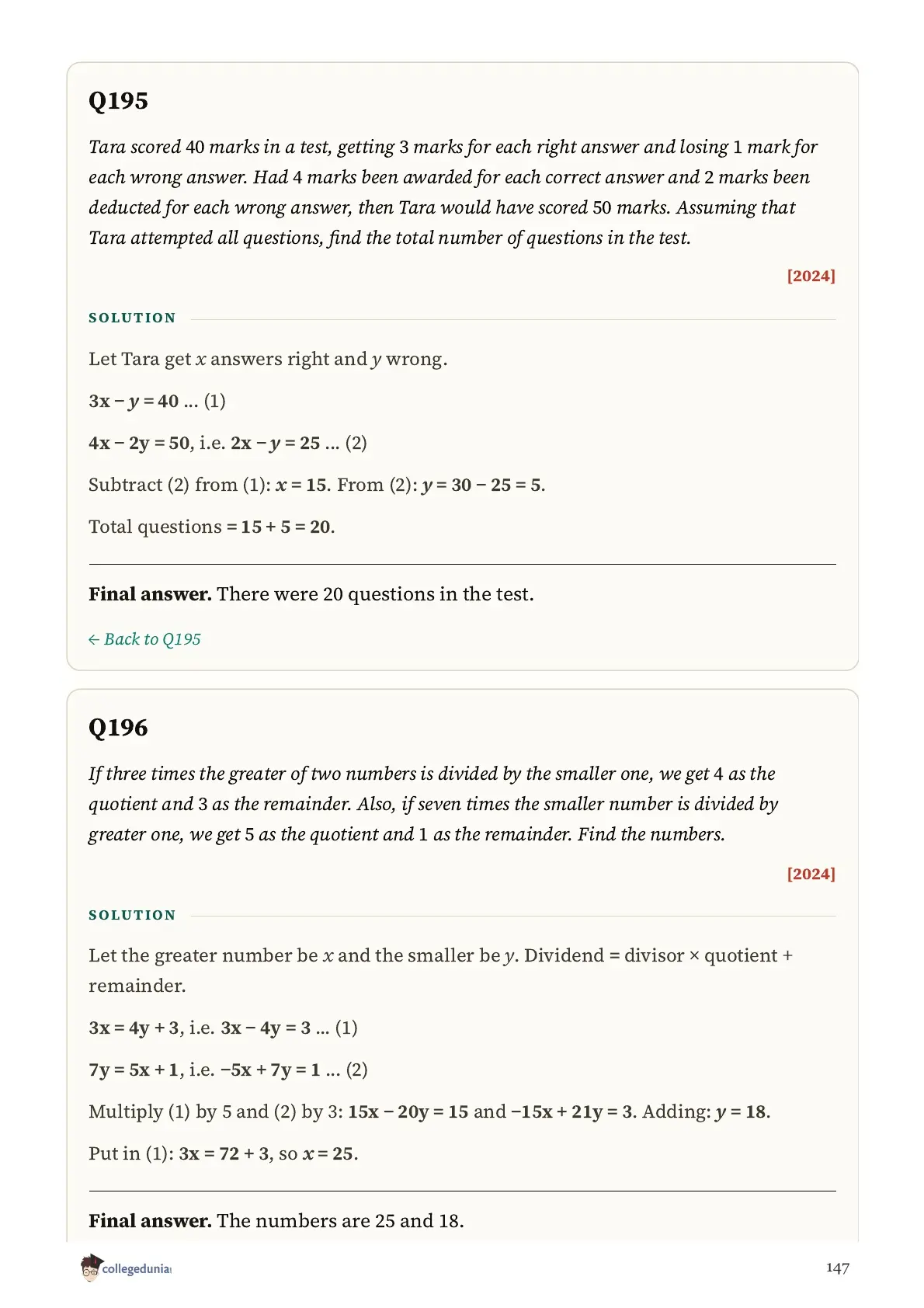
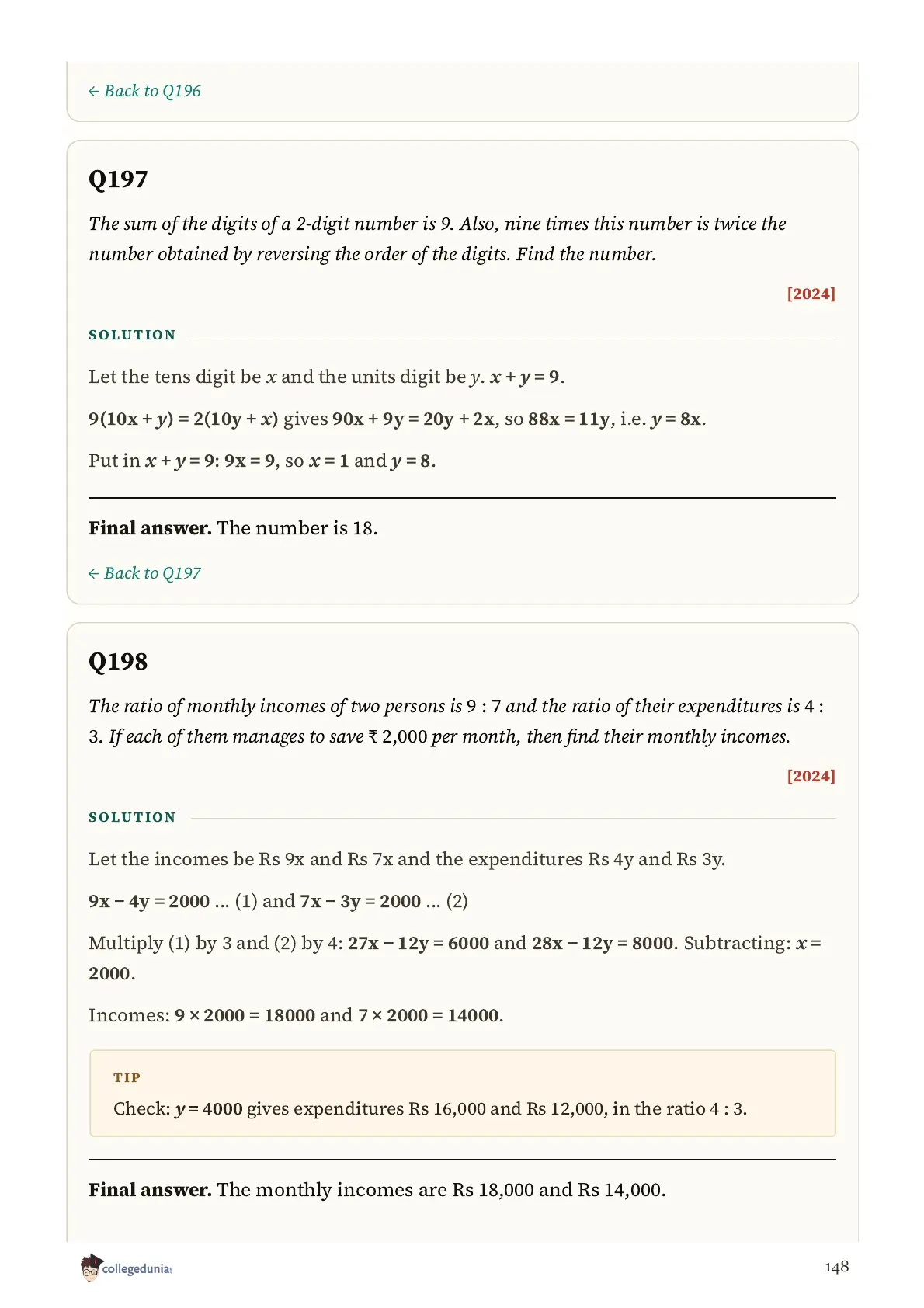
Word problems fill the rest. 31 involve money, price or charges, such as 10 bats and 5 balls for 32,500 (2025) or 25 notes of Rs 50 and Rs 100 making Rs 2,000 (2023 and 2024). 9 are marks-for-right-and-wrong tests, 8 are about ages, 8 about two-digit numbers and 5 about fractions. 5 MCQs are assertion-reason items, 8 questions carry a case-study reference, and 2 questions (2023 and 2018) keep the original diagram. Counts come from keyword matches over the question text, so a question that names two things is counted under both.
Source: GREEN Board
How to Approach the Set
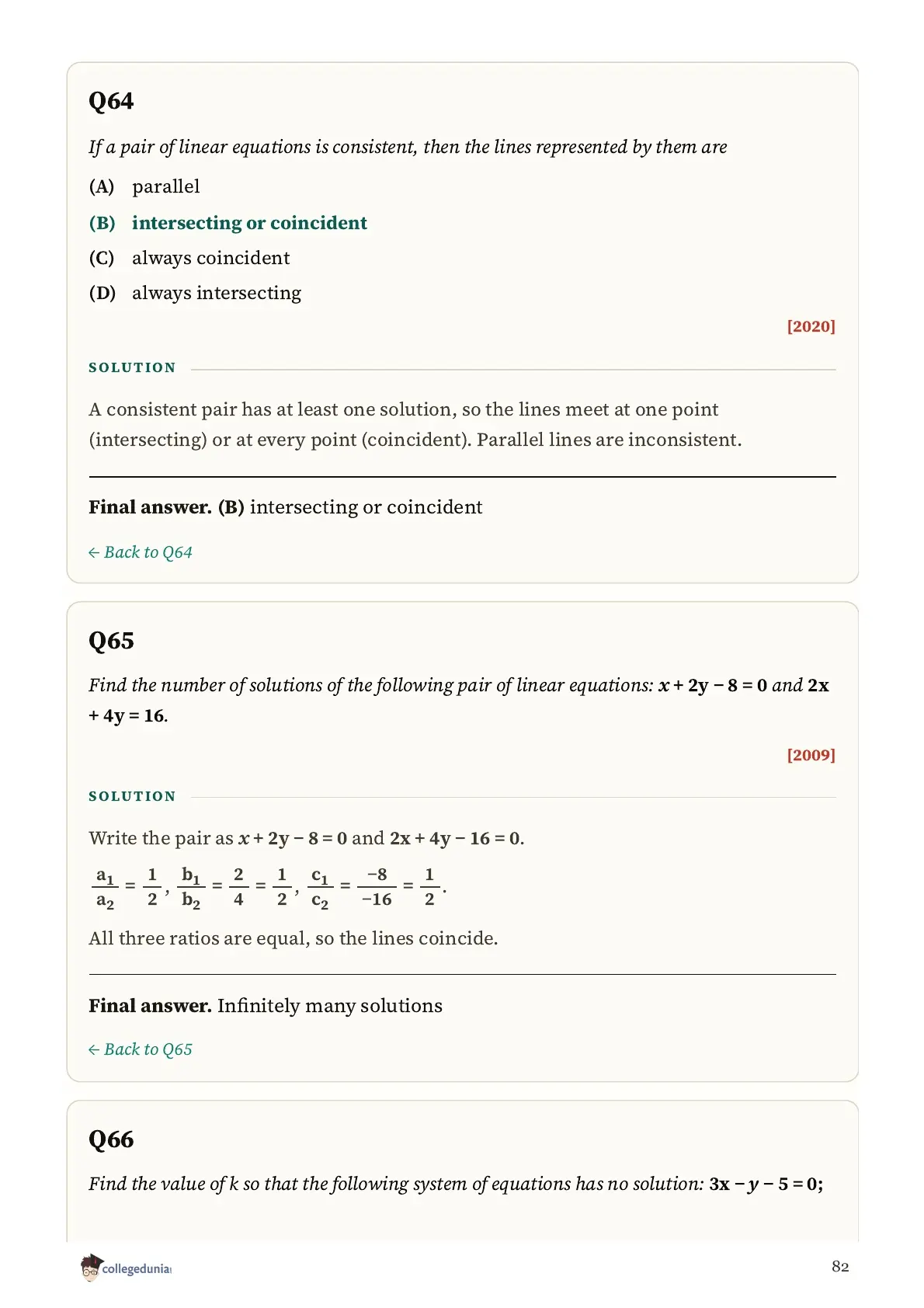
Start with the 54 MCQs and assertion-reason items, which mostly test the ratios a1/a2, b1/b2 and c1/c2. Then take the 66 one-mark questions in all, the 43 two-mark questions and the 56 three-mark questions, where a clean substitution or elimination earns full marks. Keep the 12 four-mark case items, the 22 five-mark questions and the single 6-mark question for last, since these usually pair an equation setup with a graph or a long solution. Learn the three conditions until you can write them without looking: unique when a1/a2 differs from b1/b2, none when the first two ratios match and the third differs, infinite when all three match. Practise the 2025, 2024 and 2023 papers closely, as they hold 119 of the 200 questions.
Common Mistakes in Pair of Linear Equations in Two Variables Questions
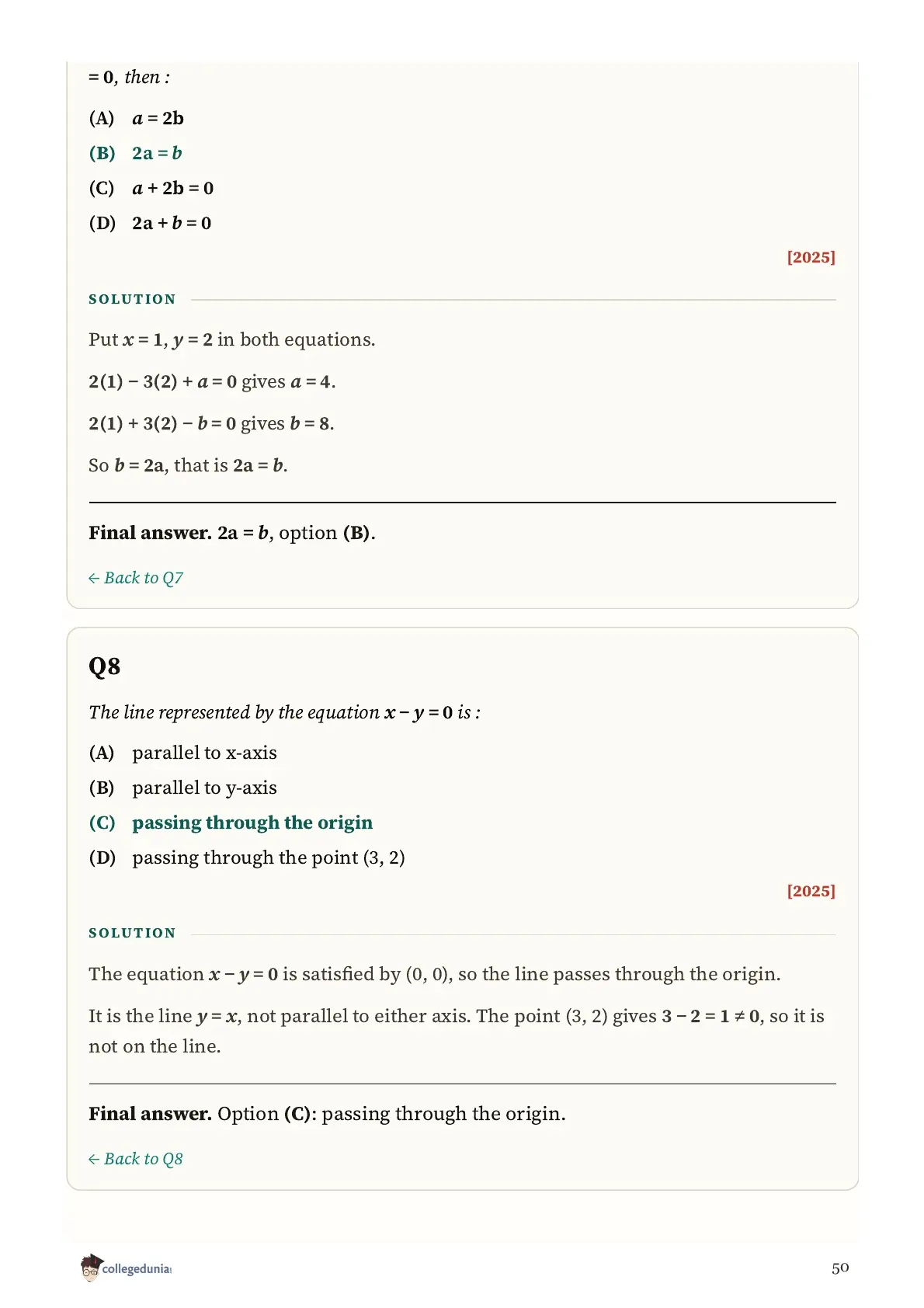
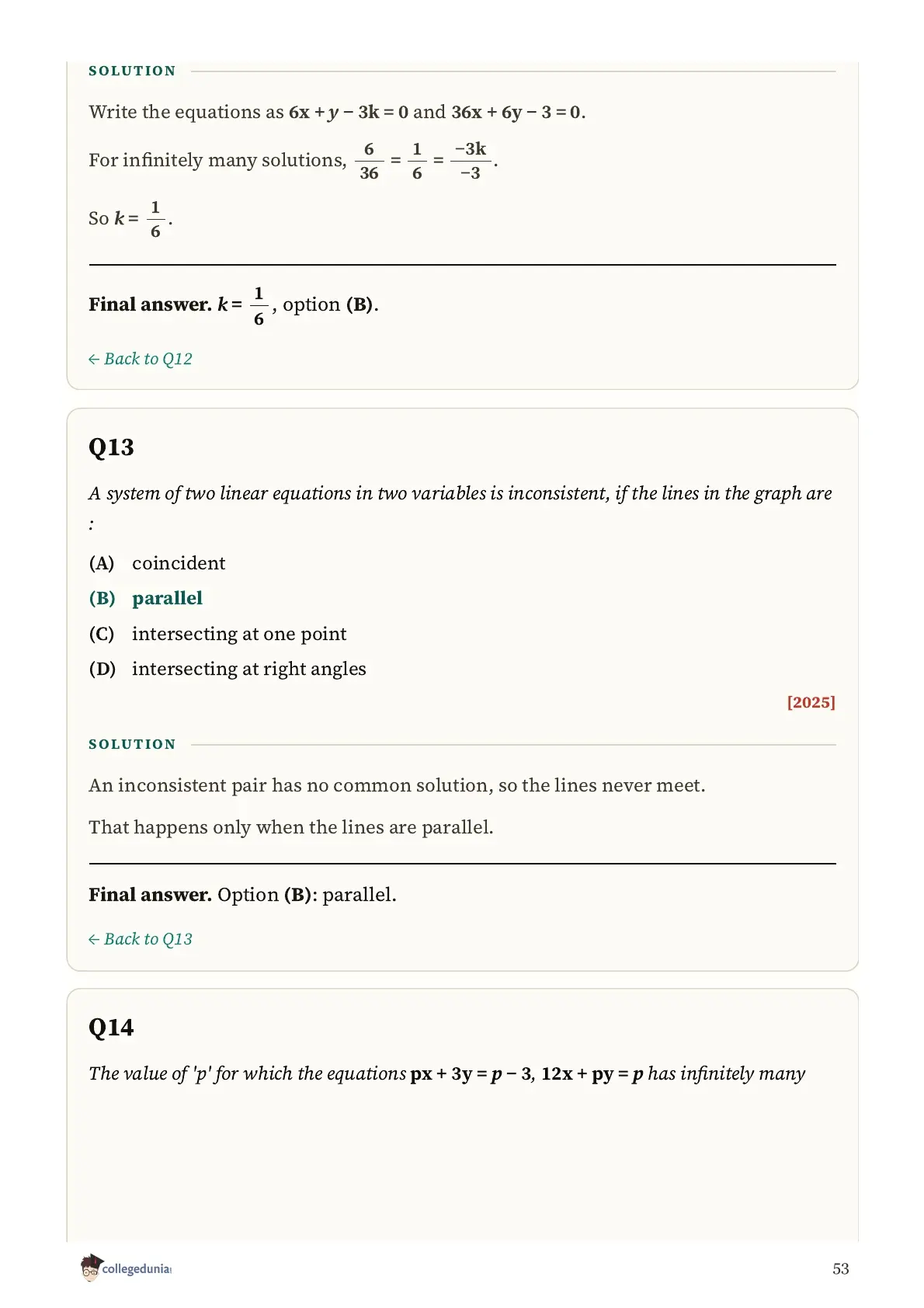
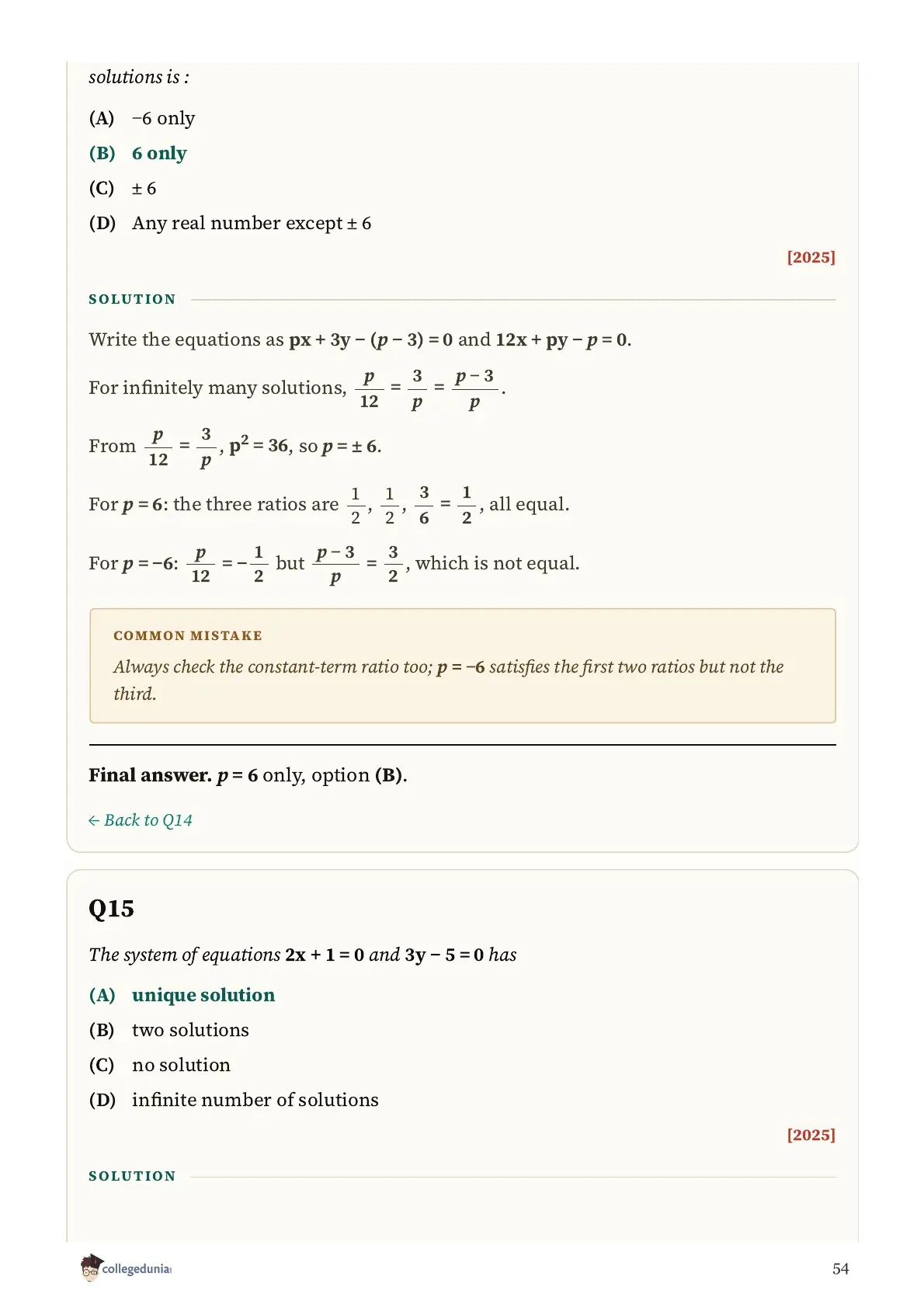
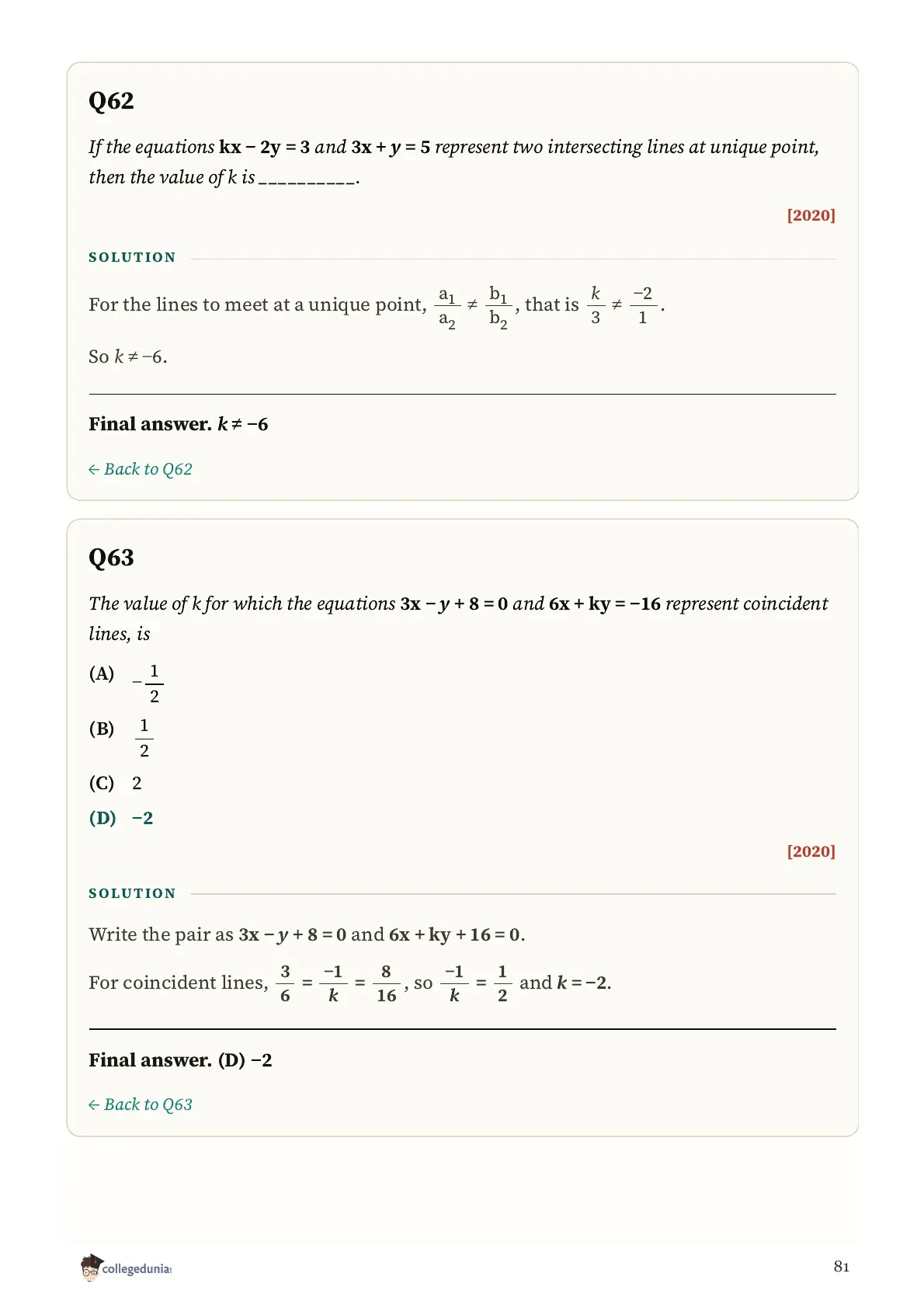
- Stopping at c = 6 or c = -6 in the 2019 question on cx + 3y + (3 - c) = 0 and 12x + cy - c = 0. Test each root against the third ratio, and only c = 6 survives.
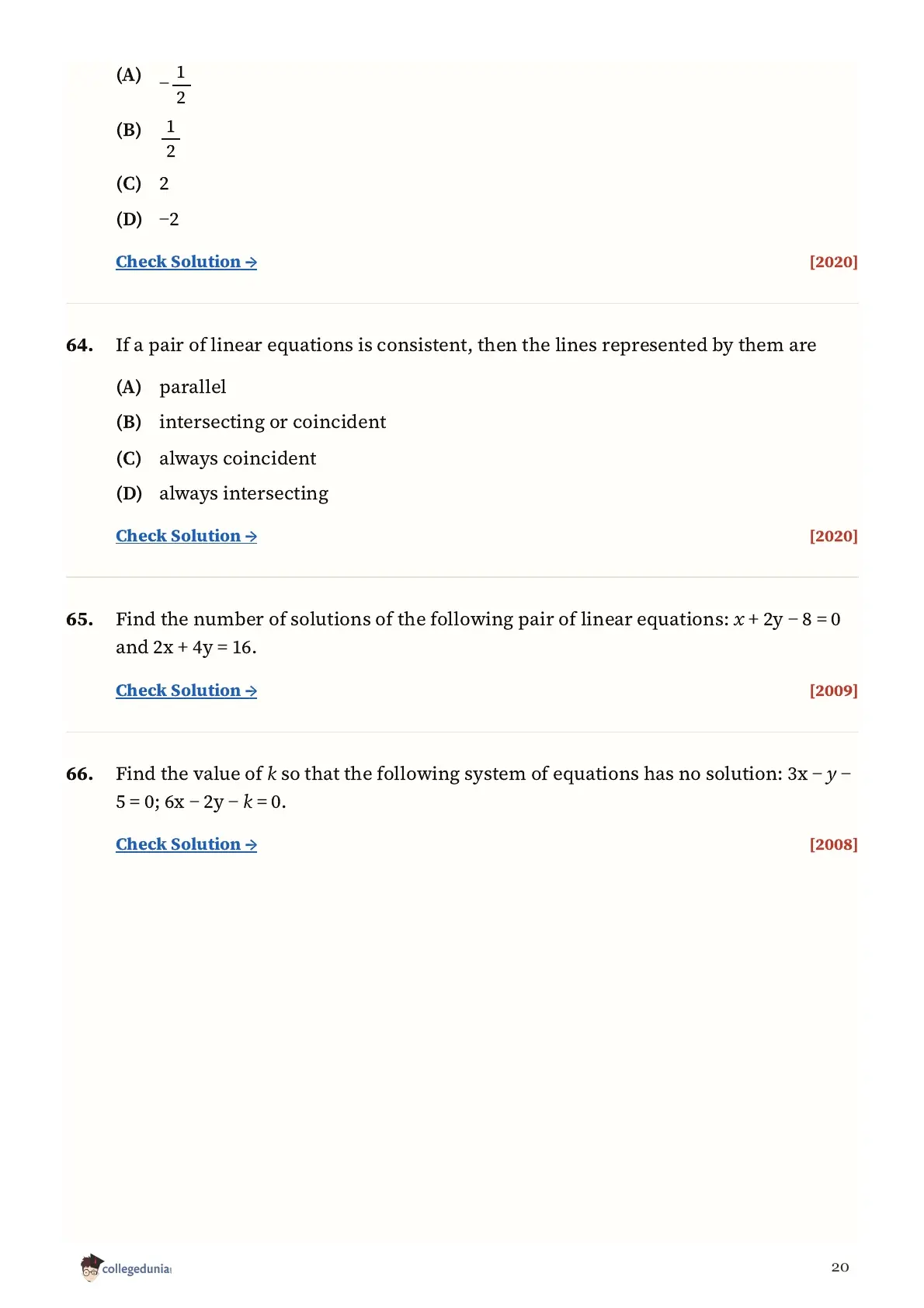
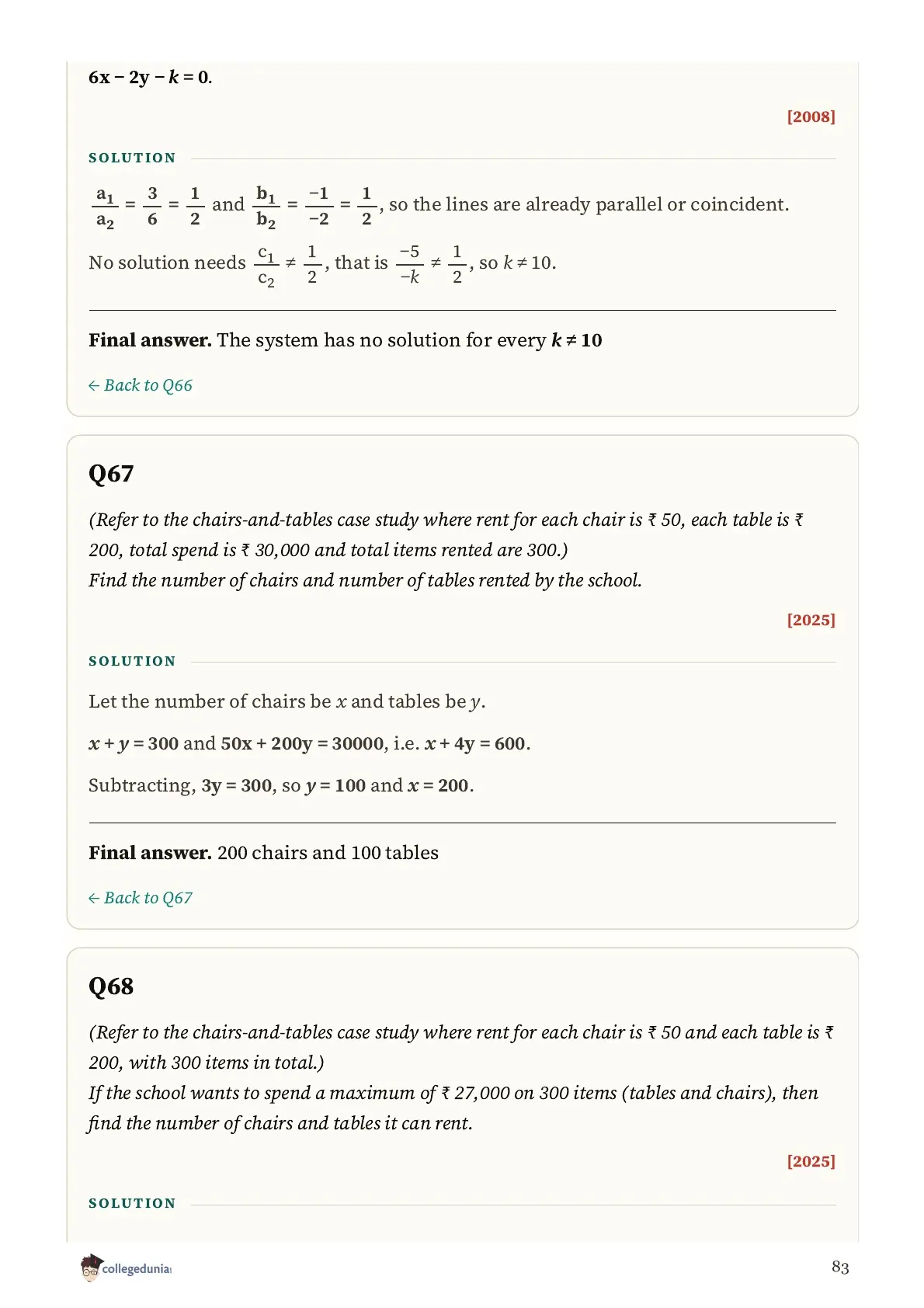
- Answering k = 10 for 3x - y - 5 = 0 and 6x - 2y - k = 0 (2008). No solution holds for every k except 10, since k = 10 makes the lines coincide.
- Reading a point off a hand-drawn graph and not substituting it back. Putting (4, 3) into x + 2y = 10 takes five seconds and catches a slipped line.
- Treating "3 marks for a right answer, 2 lost for a wrong one" as 3 + 2. The lost marks enter the equation with a minus sign: 3c - 2w = 150 in the 2014 question.
- Writing the unknowns the wrong way round in a fraction question. Decide which letter is the numerator before you form either equation.
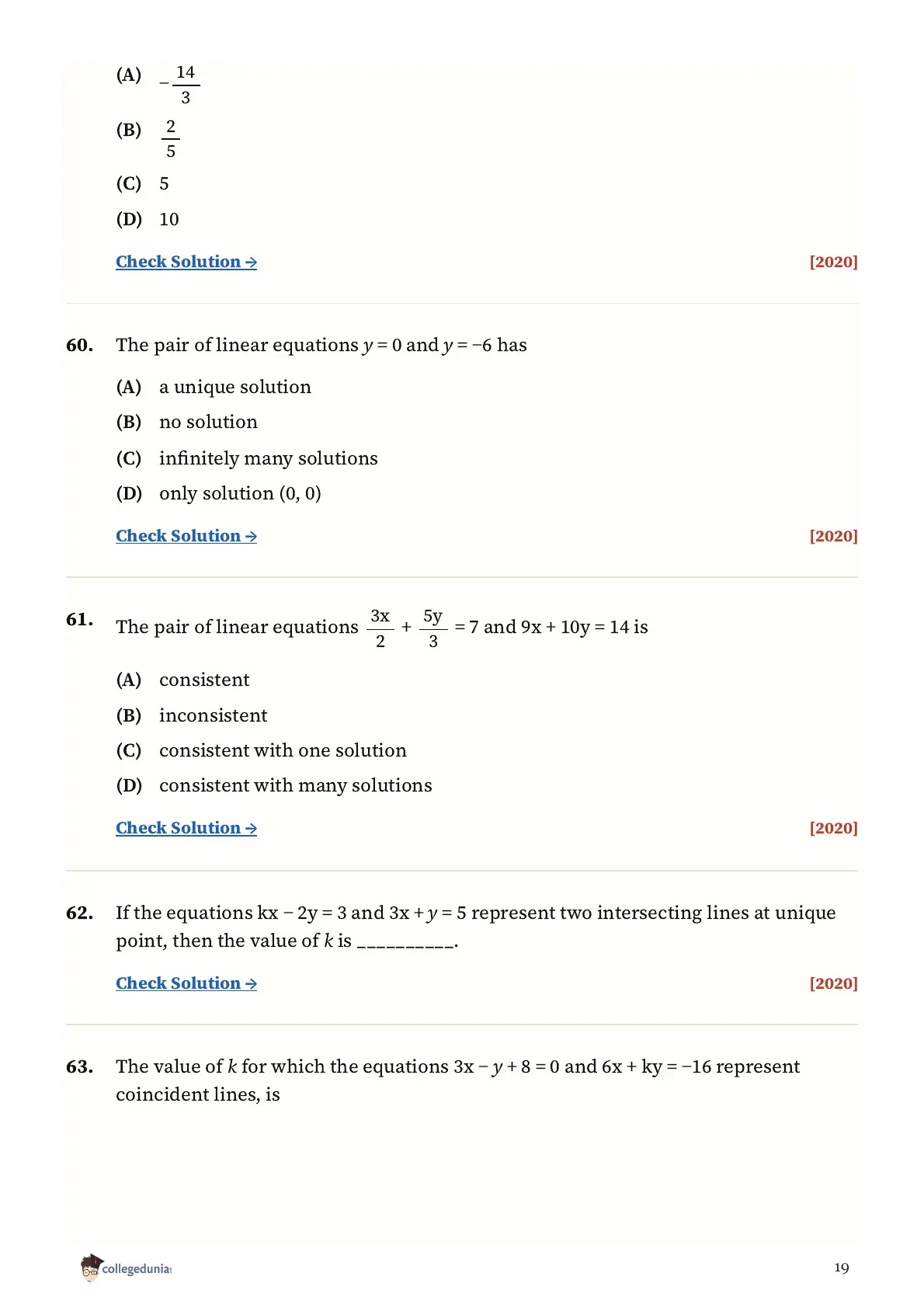
- Mixing up the conditions. In the 2020 MCQ-style question on kx - 2y = 3 and 3x + y = 5, a unique point needs the a and b ratios to differ, which gives k not equal to -6, not an equation.
Using the Answer Key and Solutions
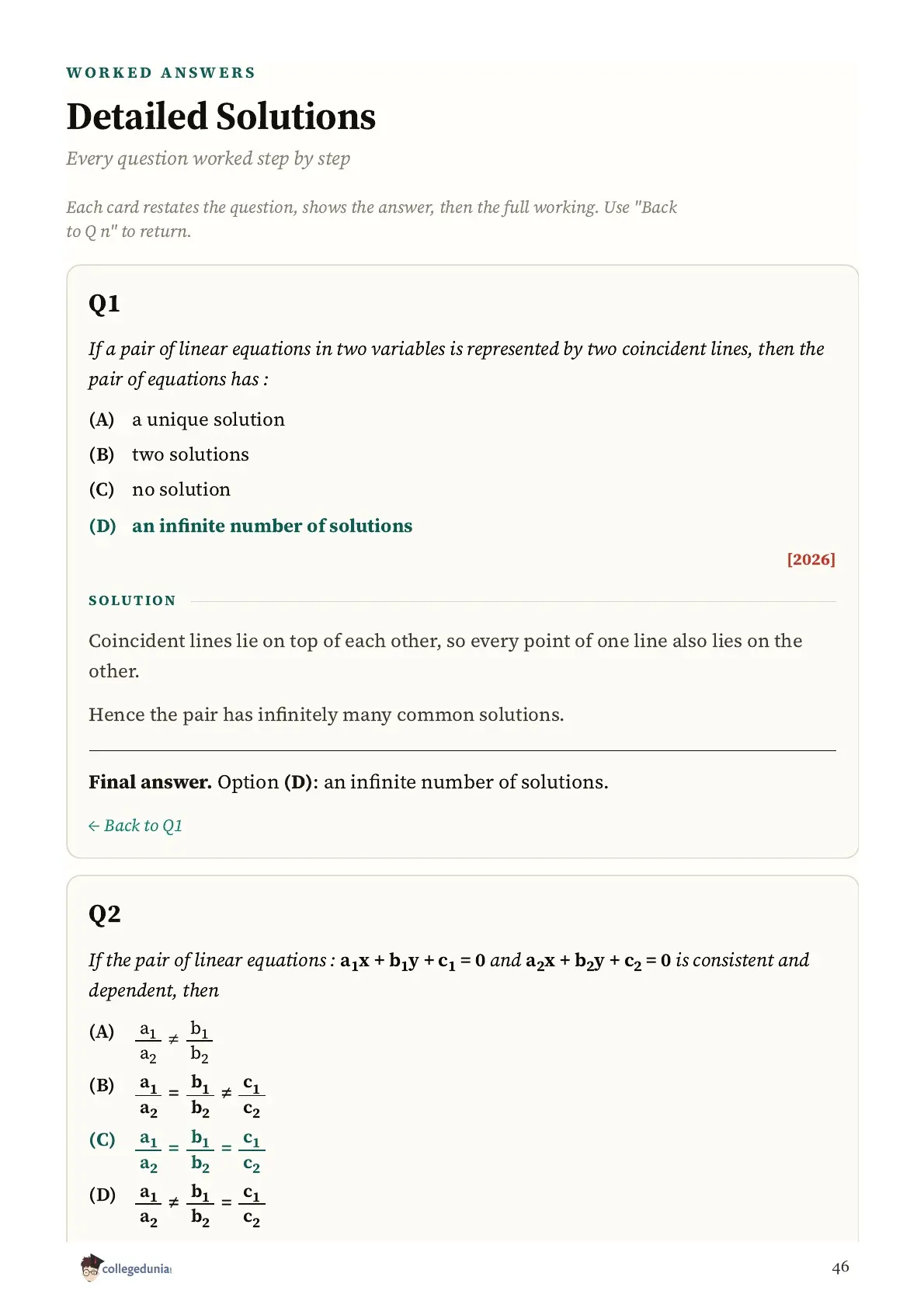
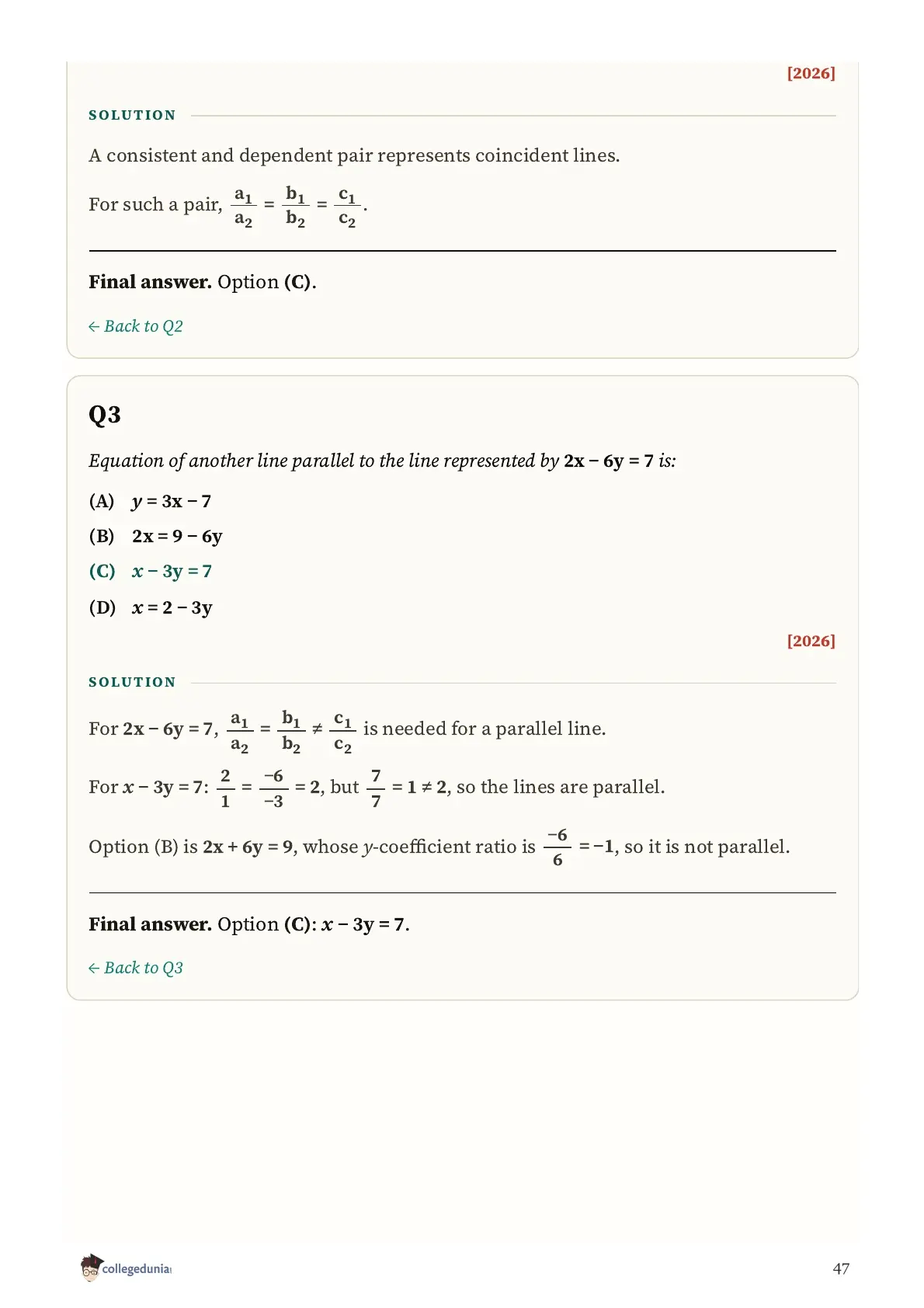
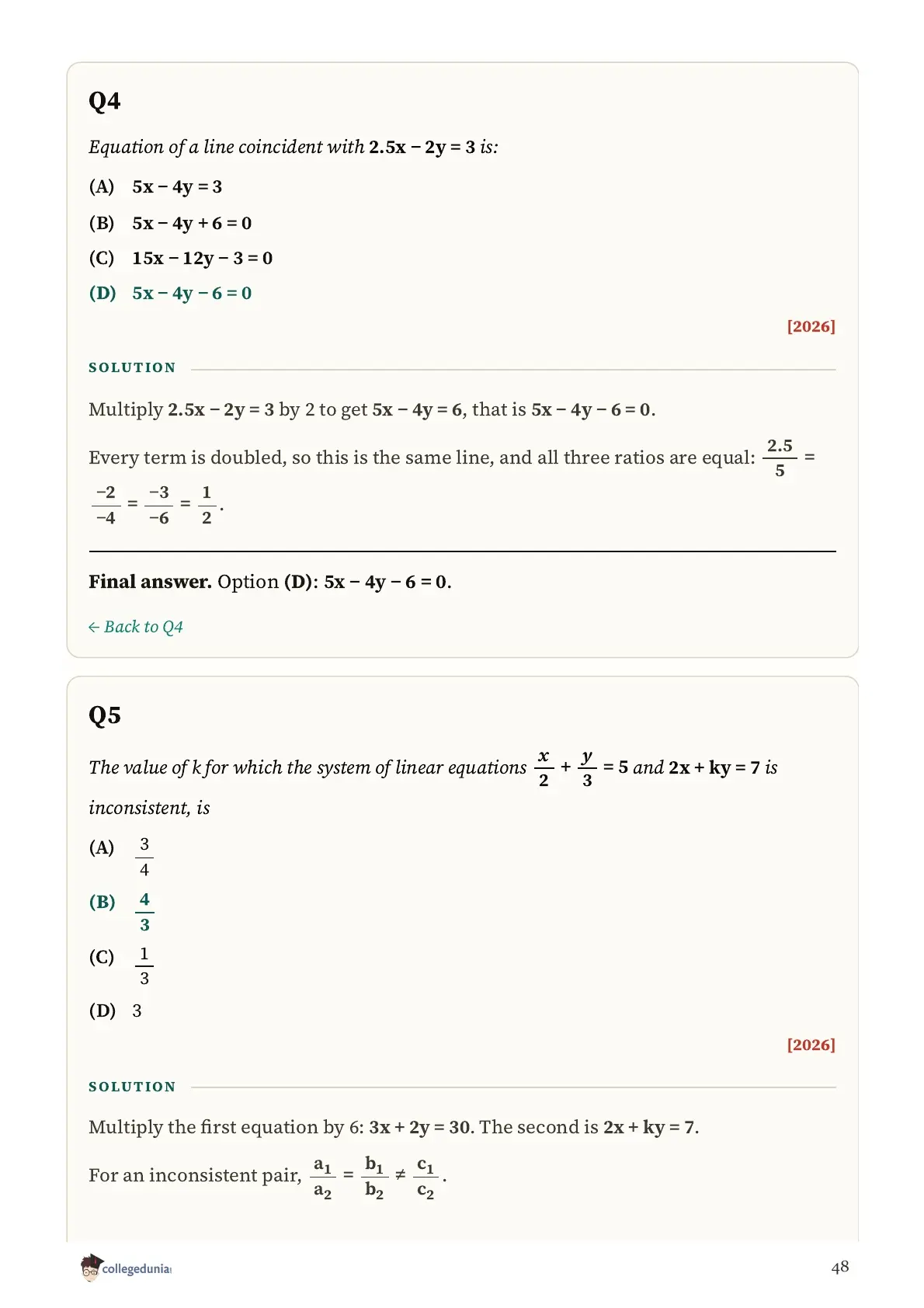
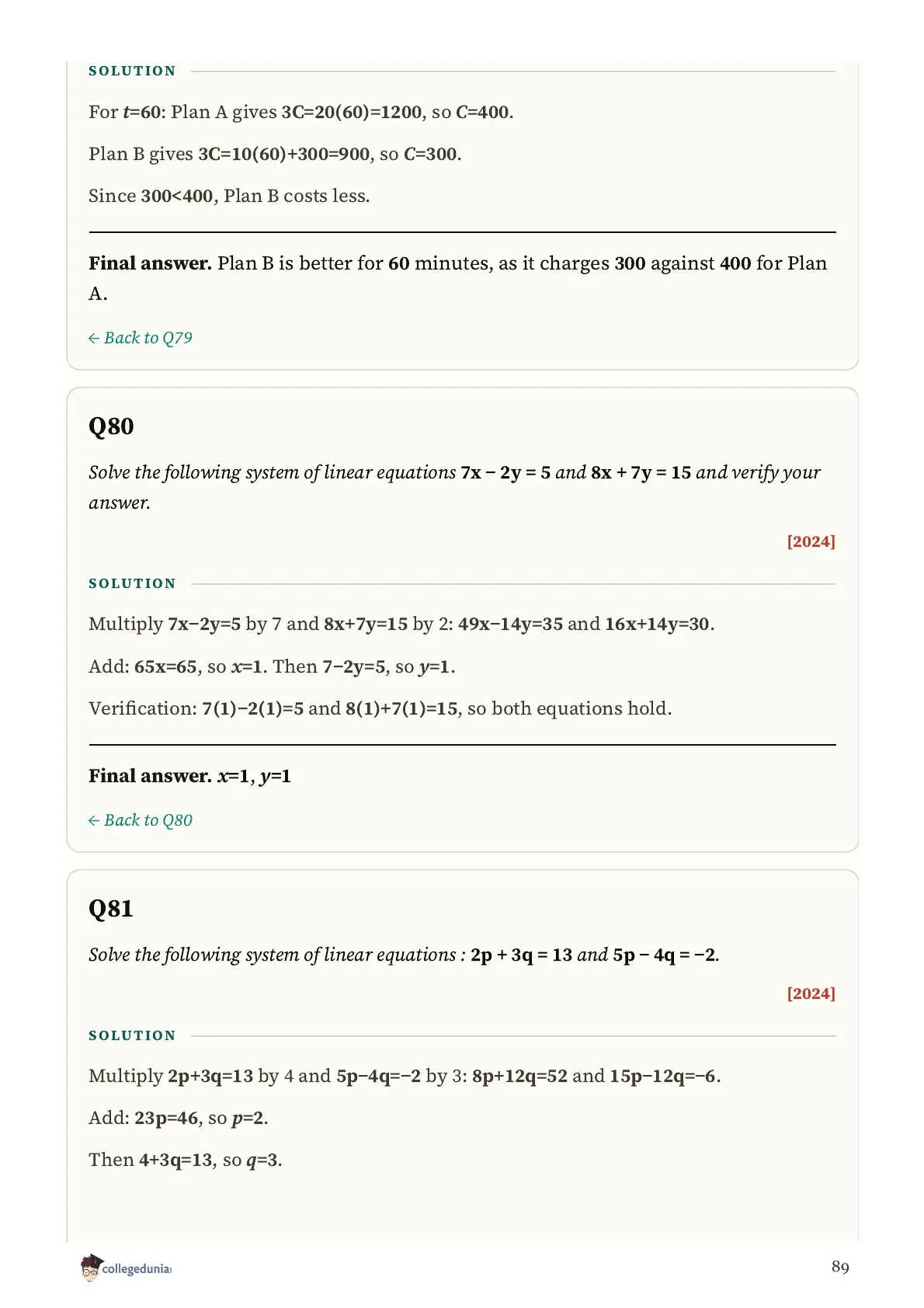
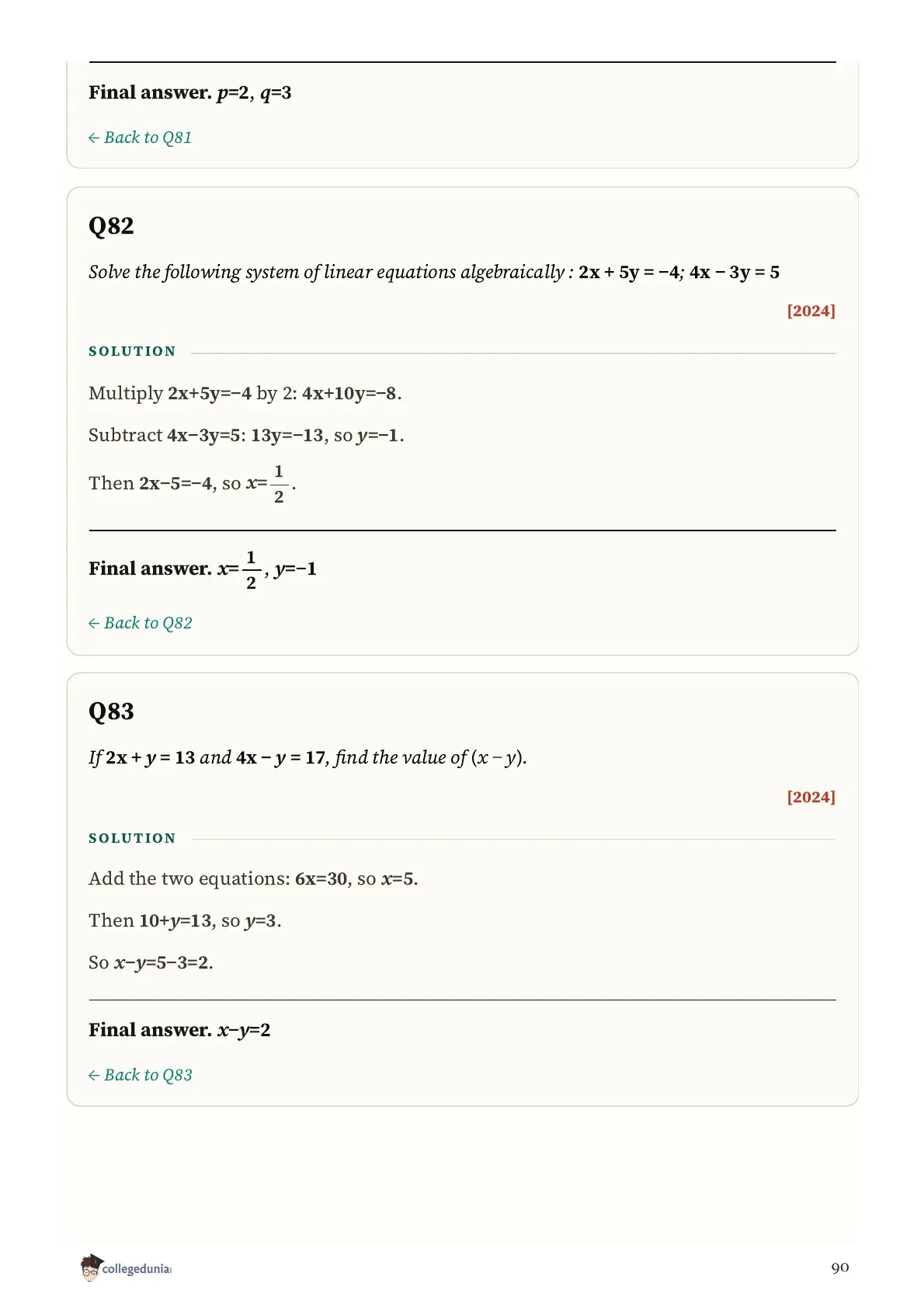
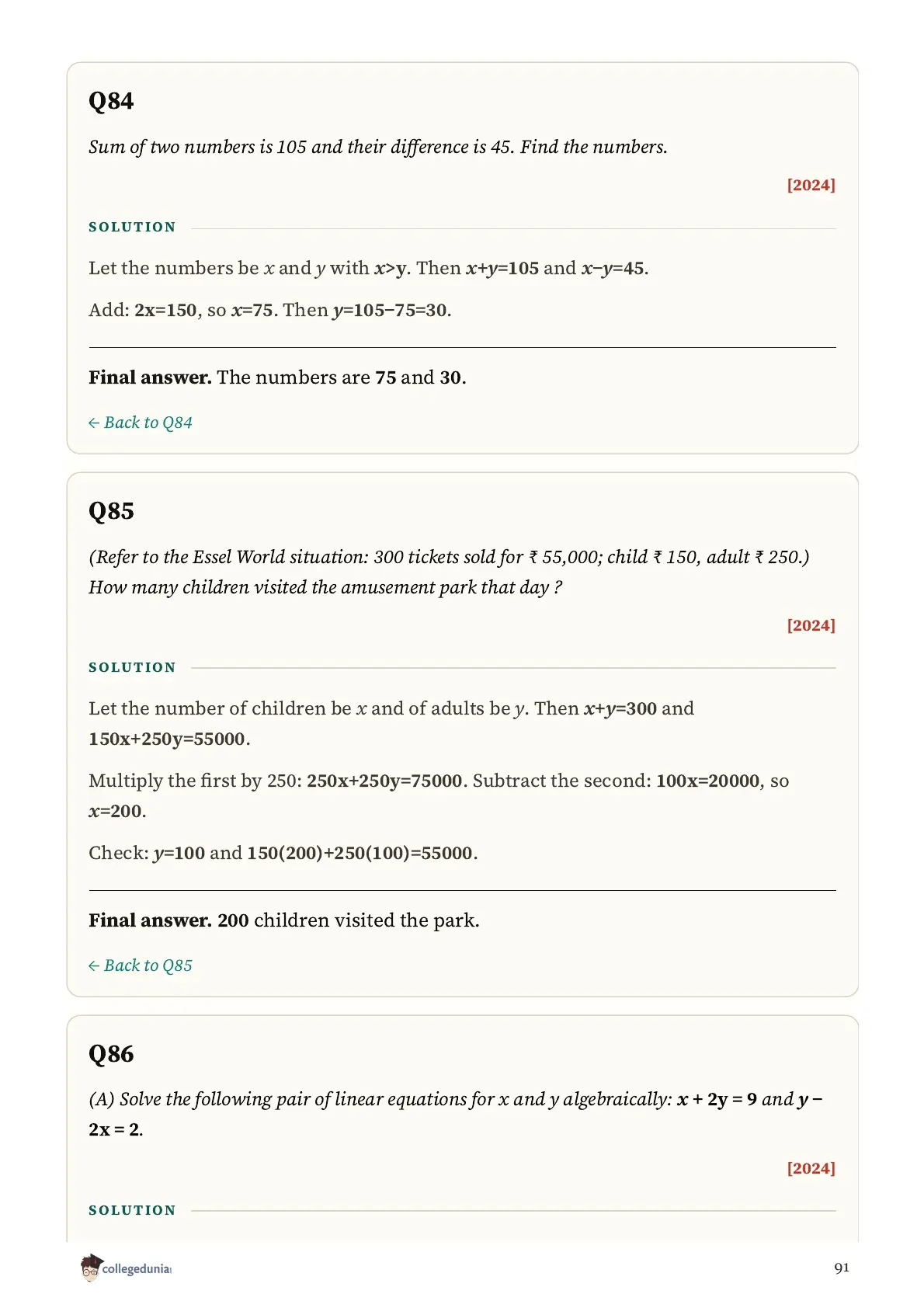
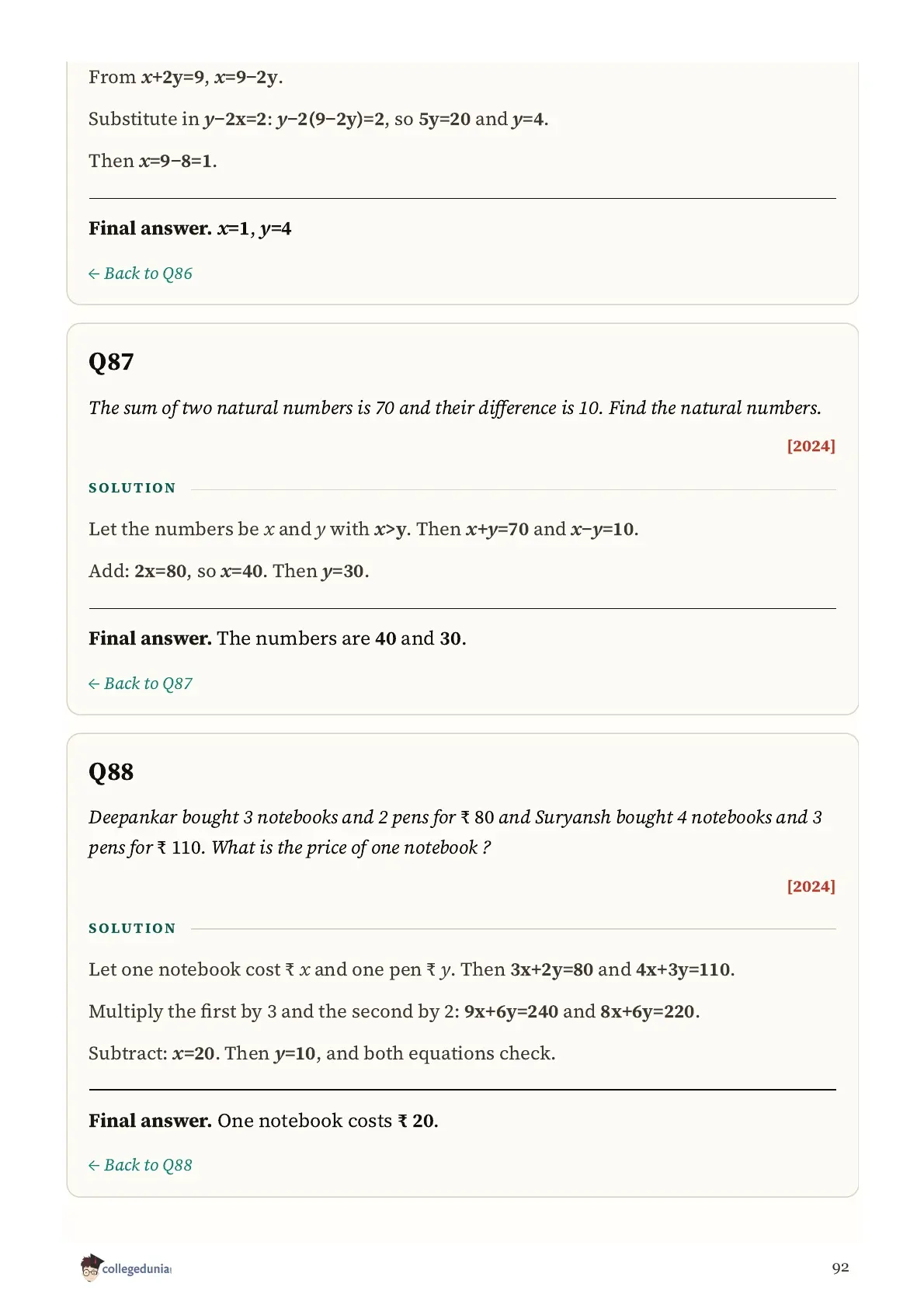
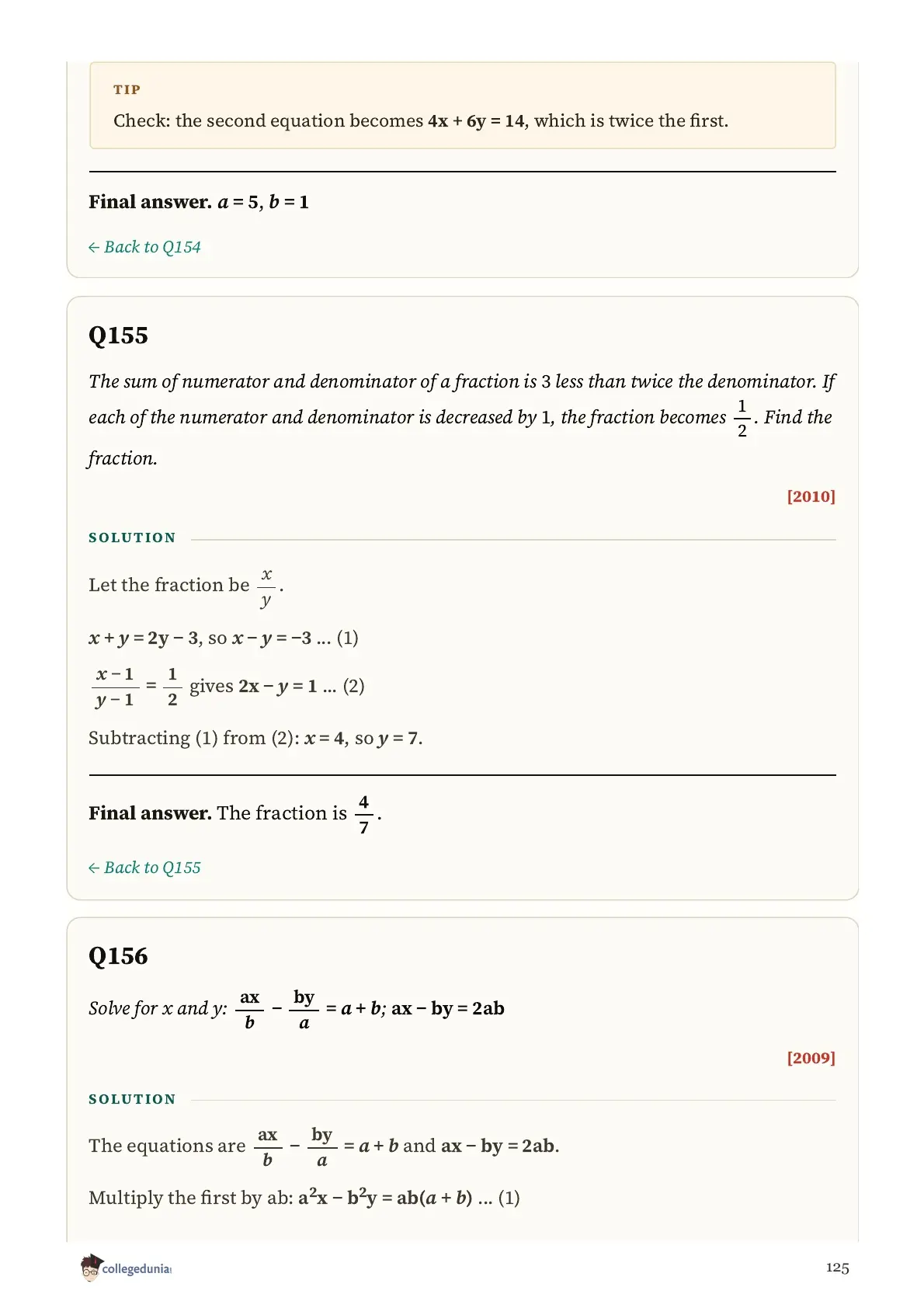
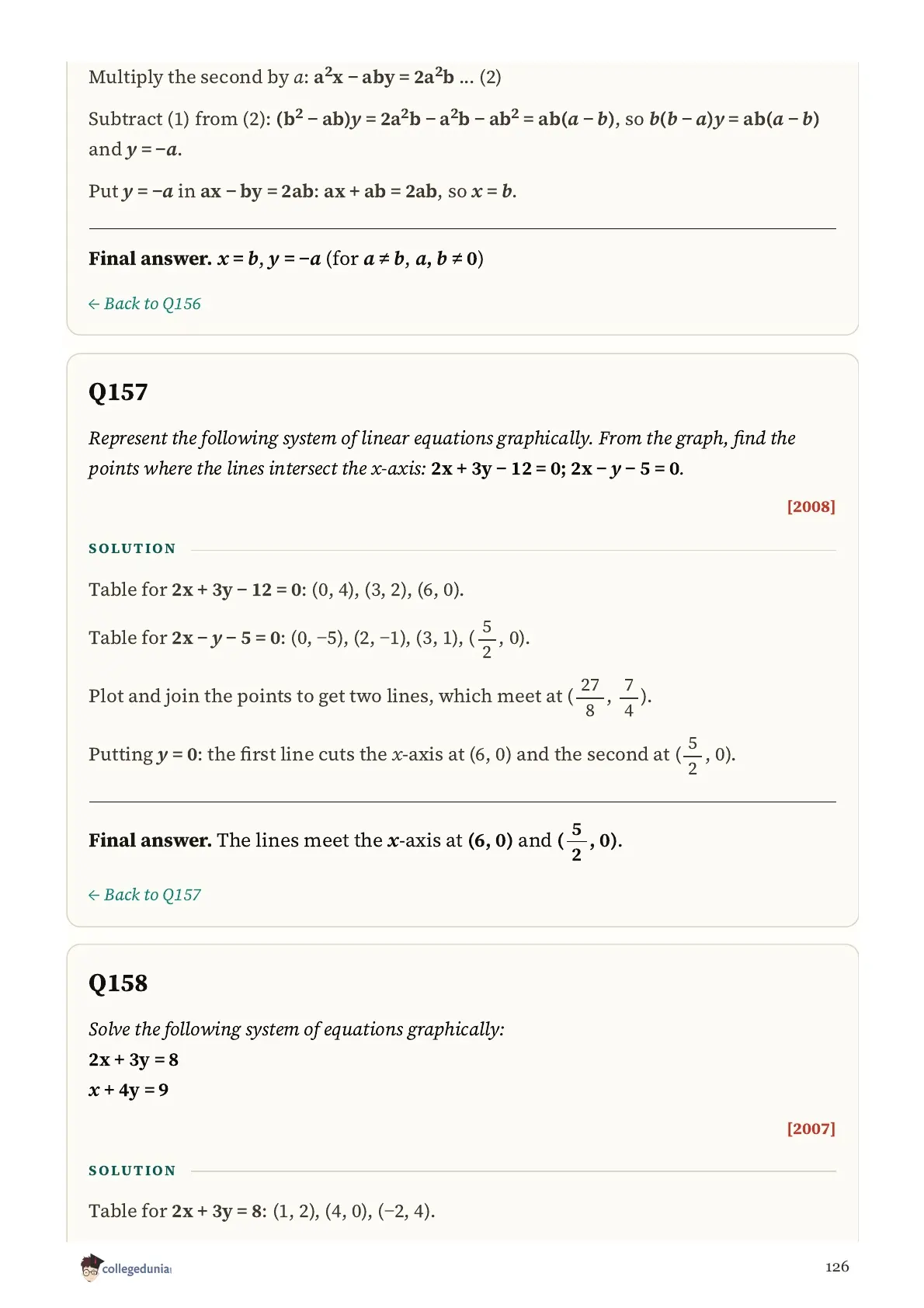
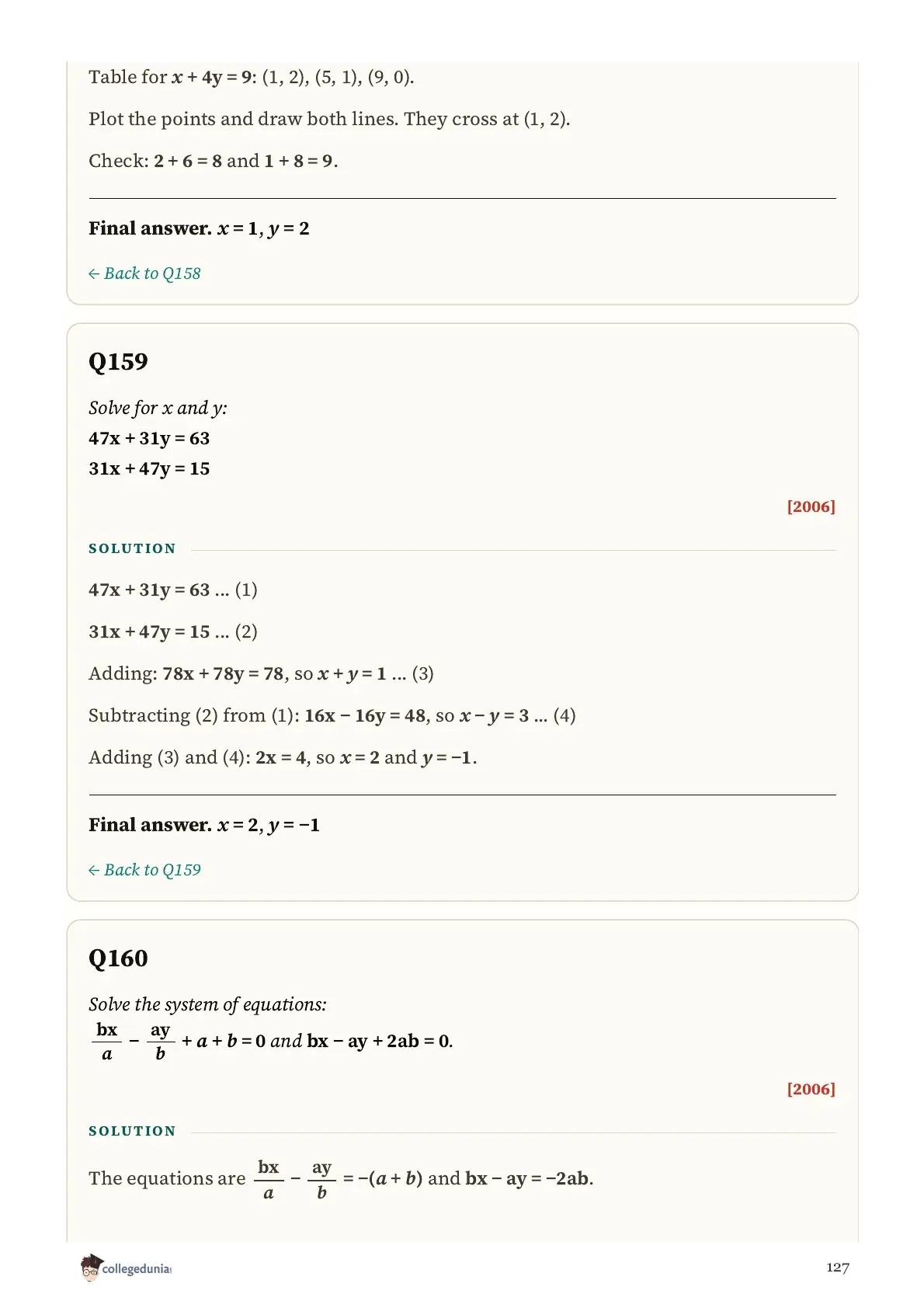
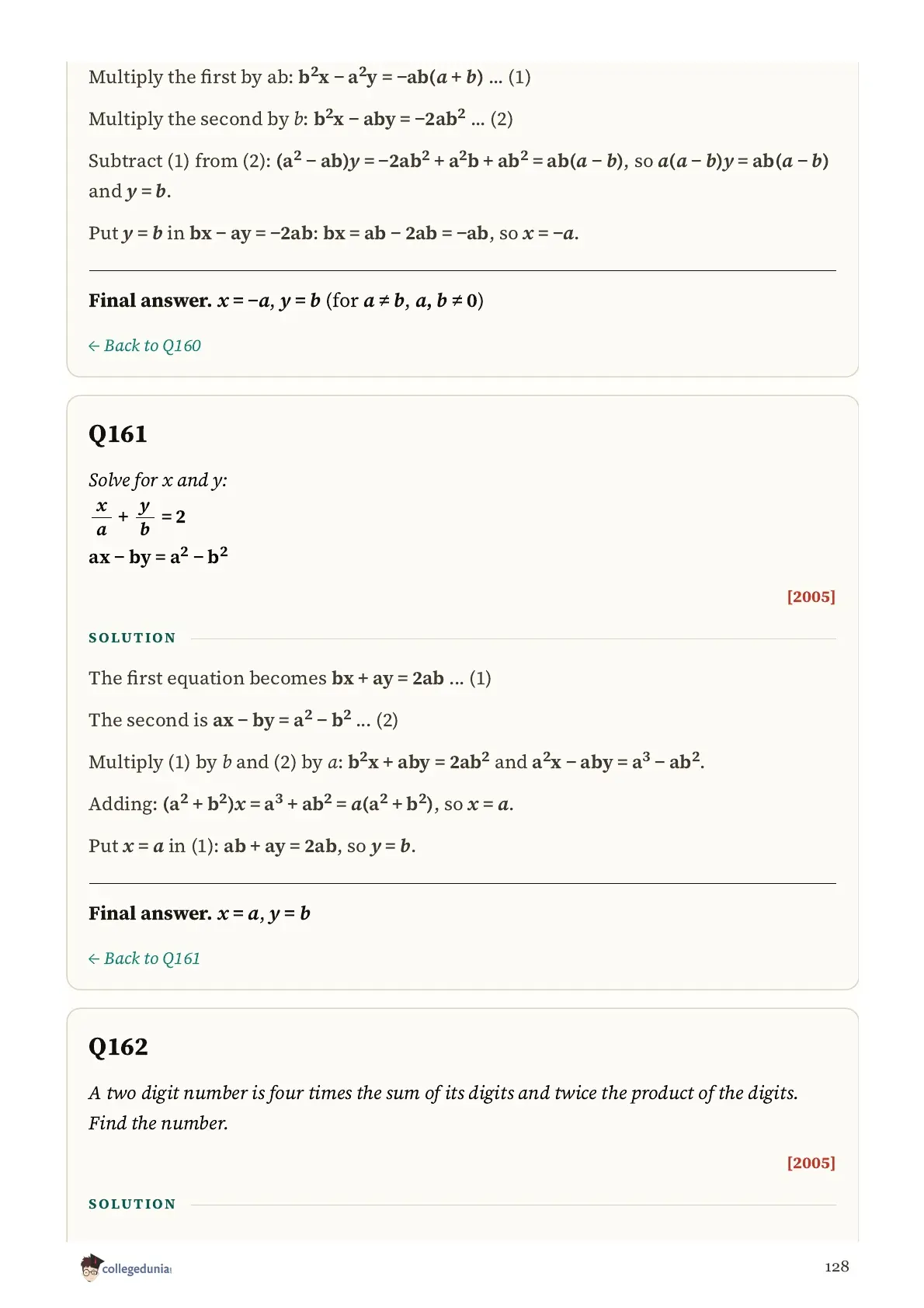
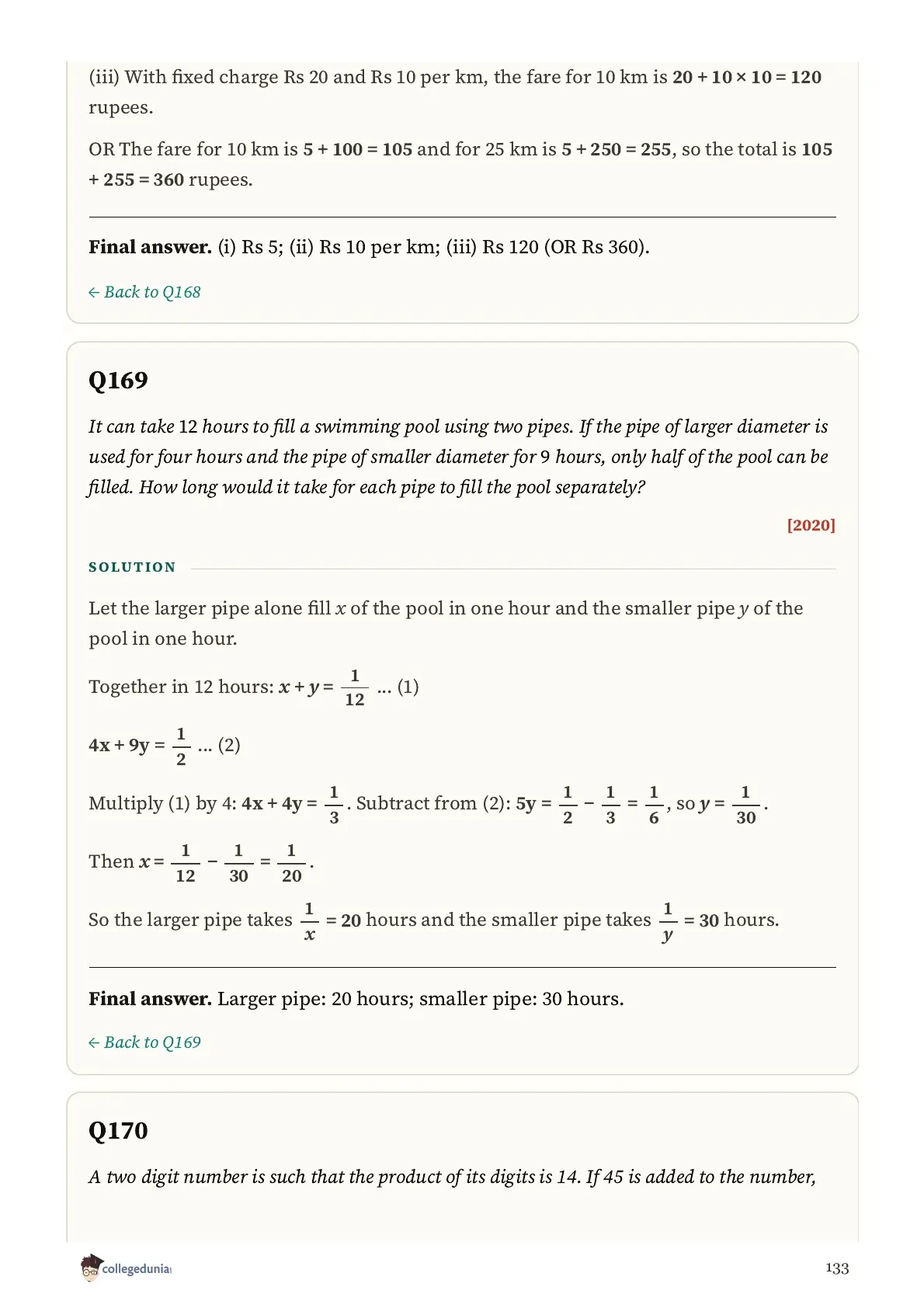
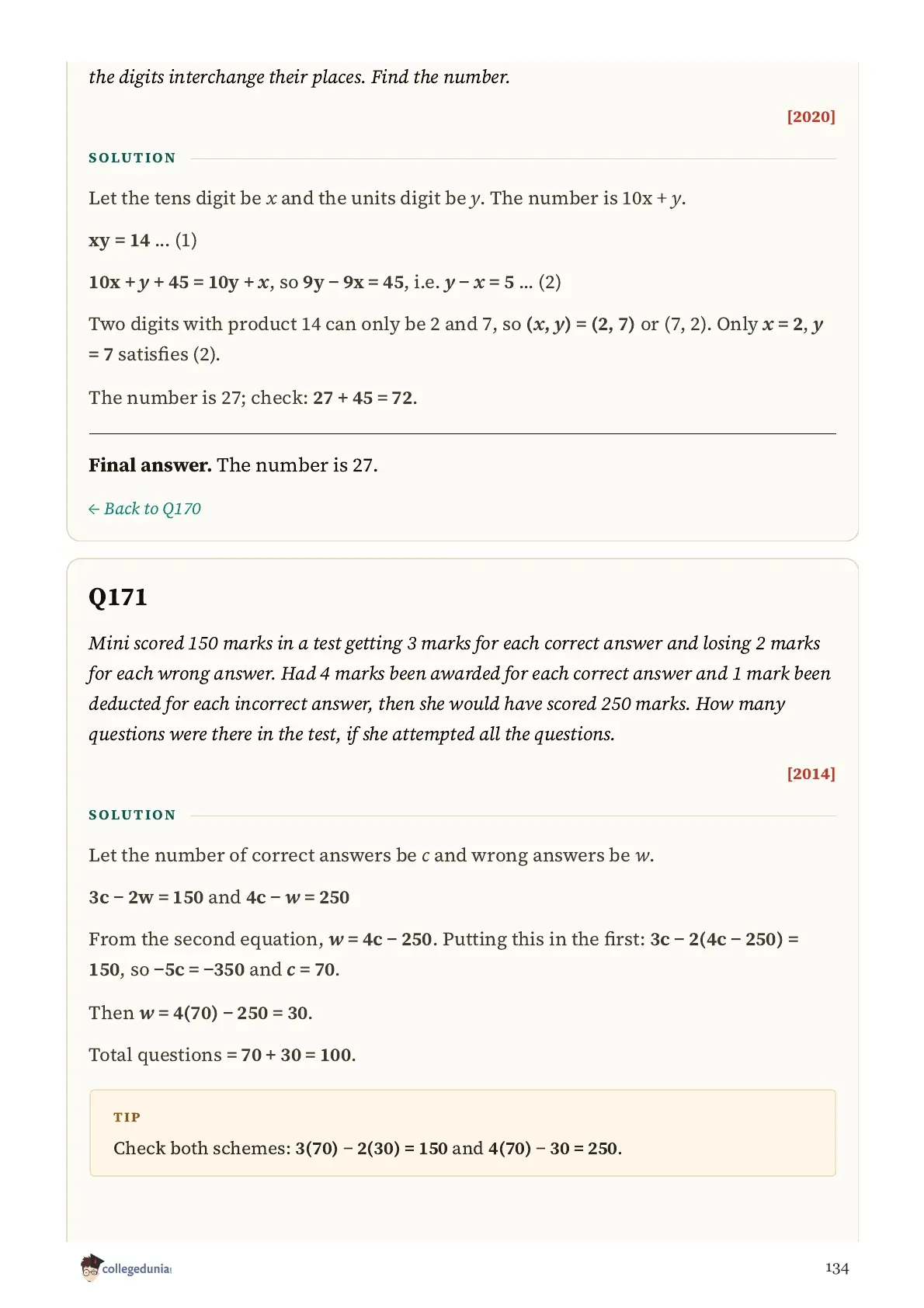
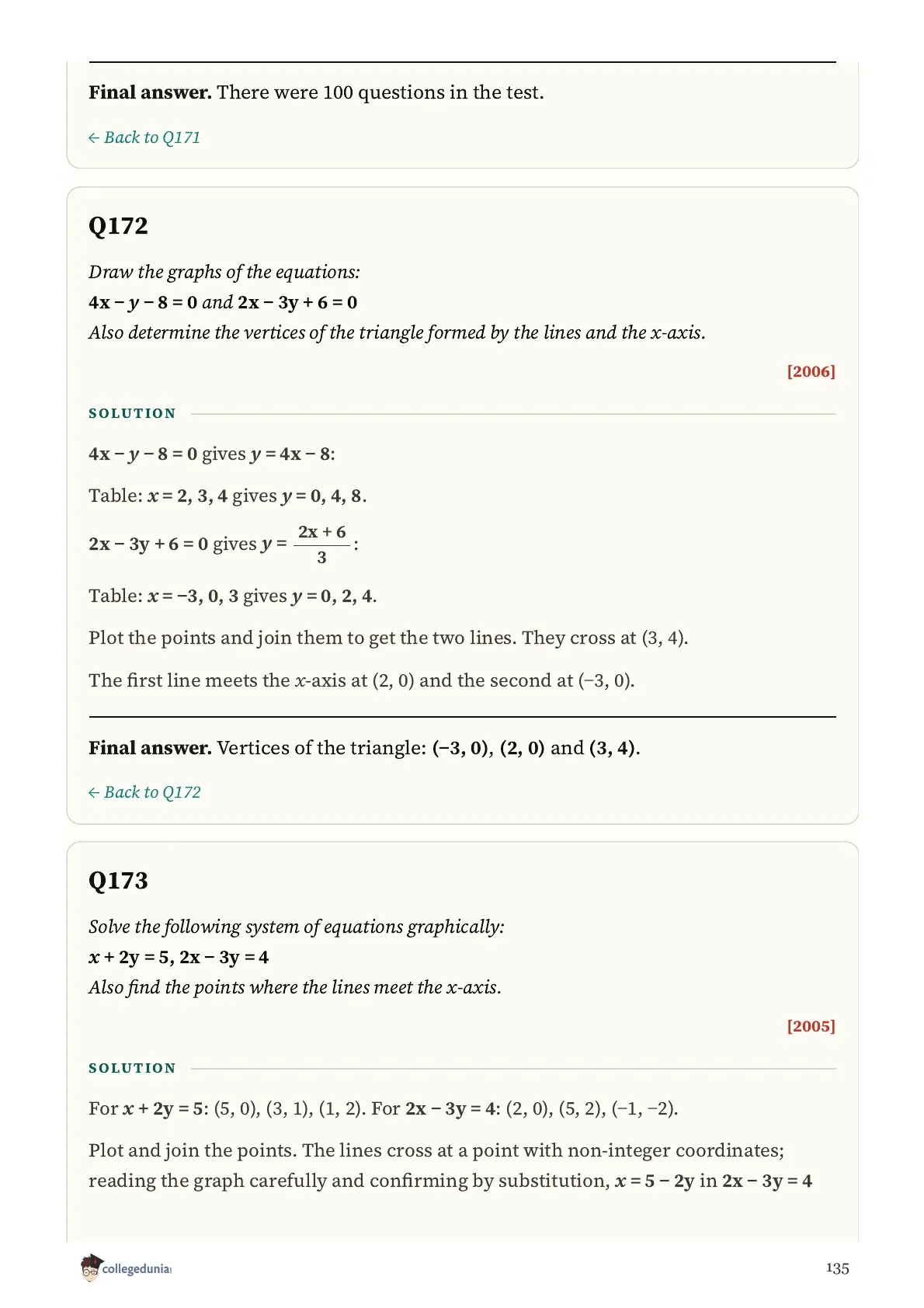
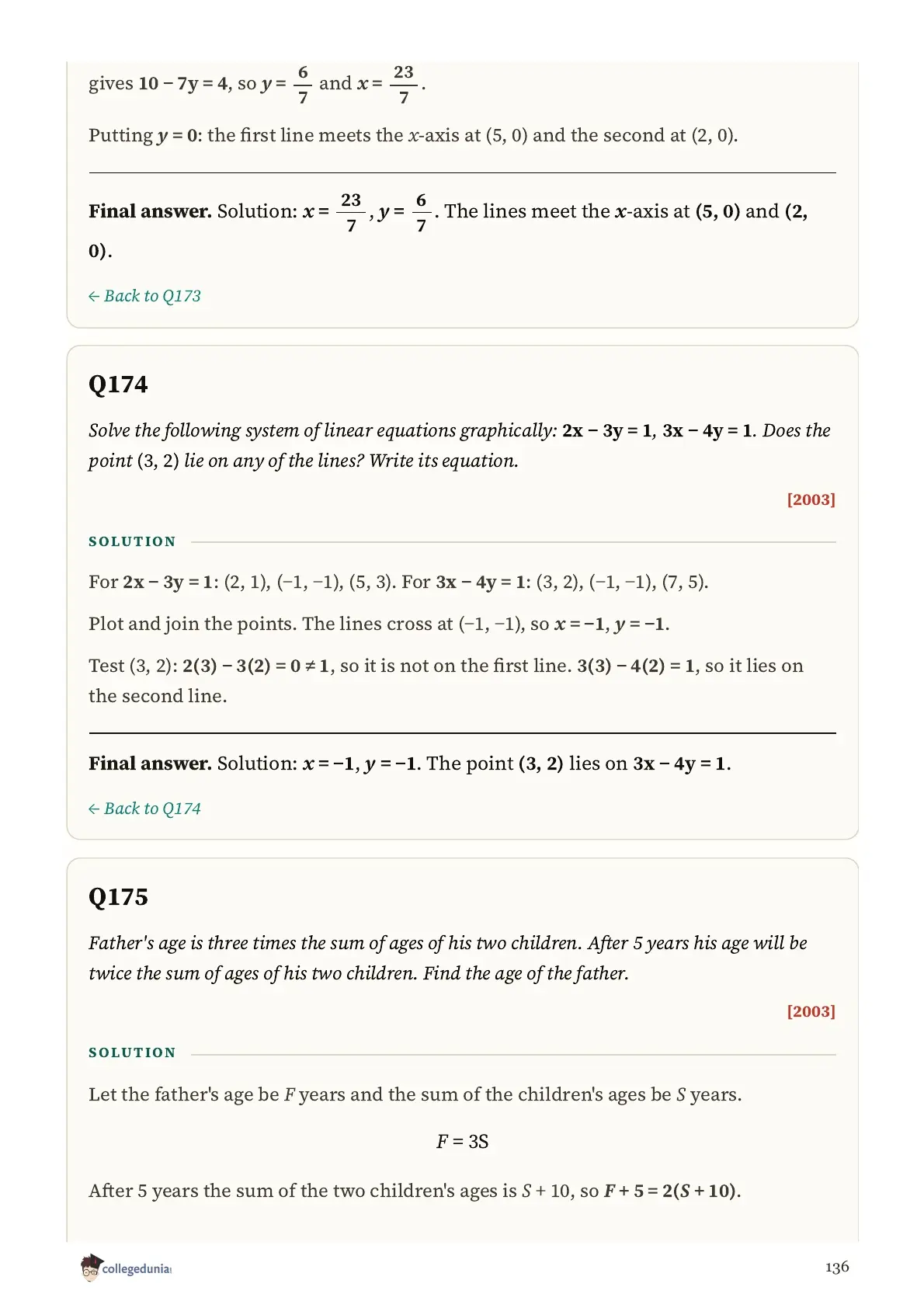
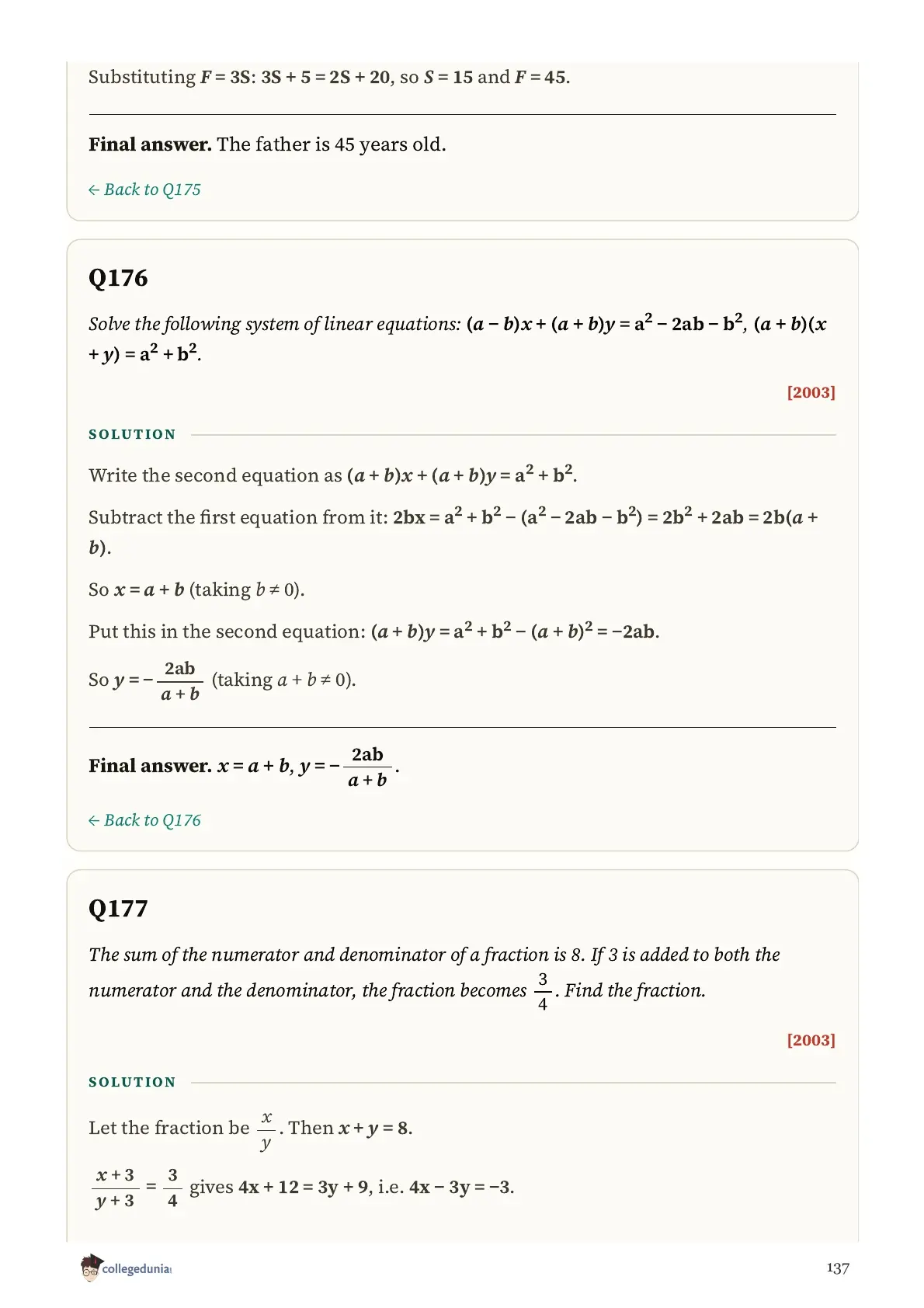
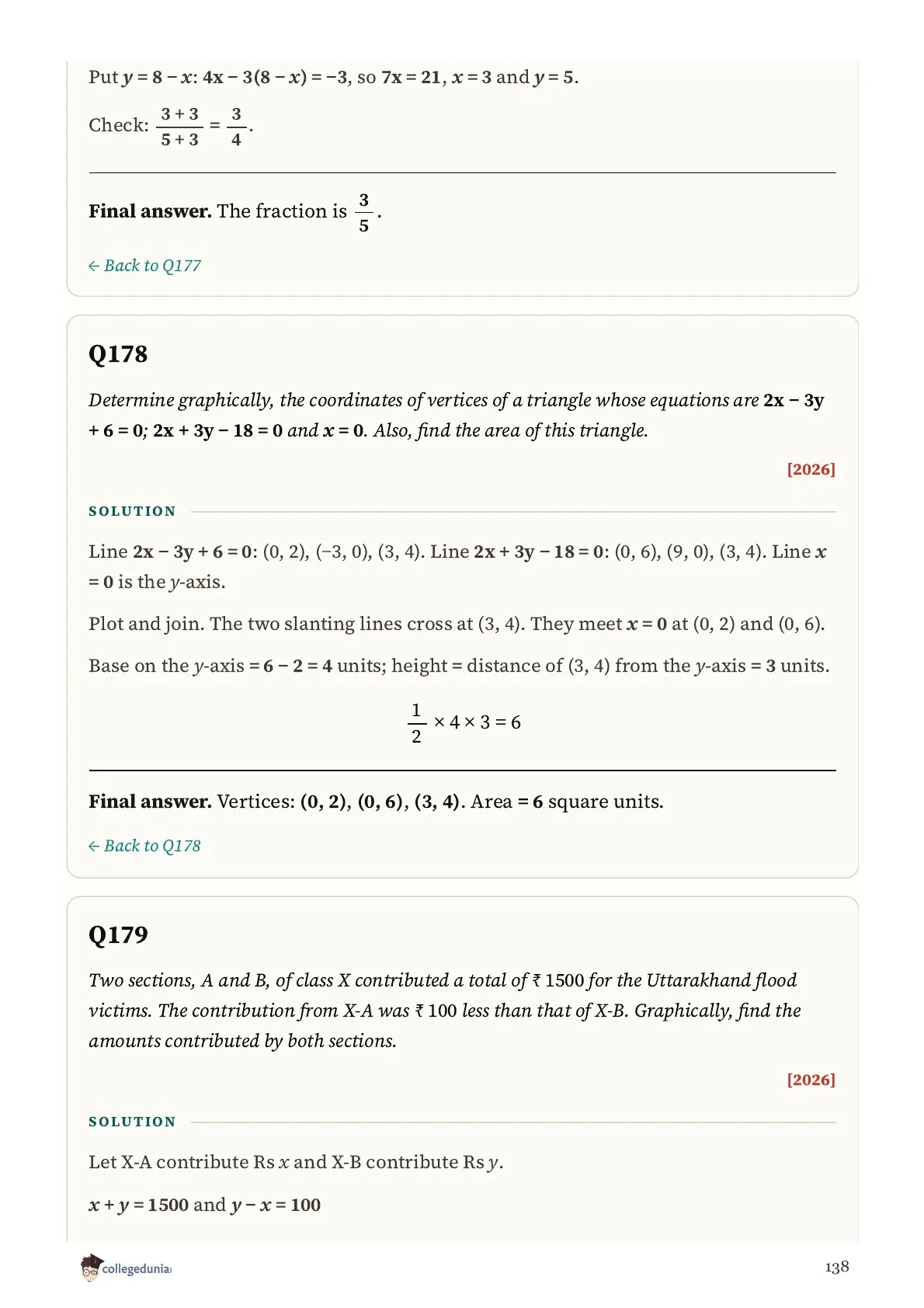
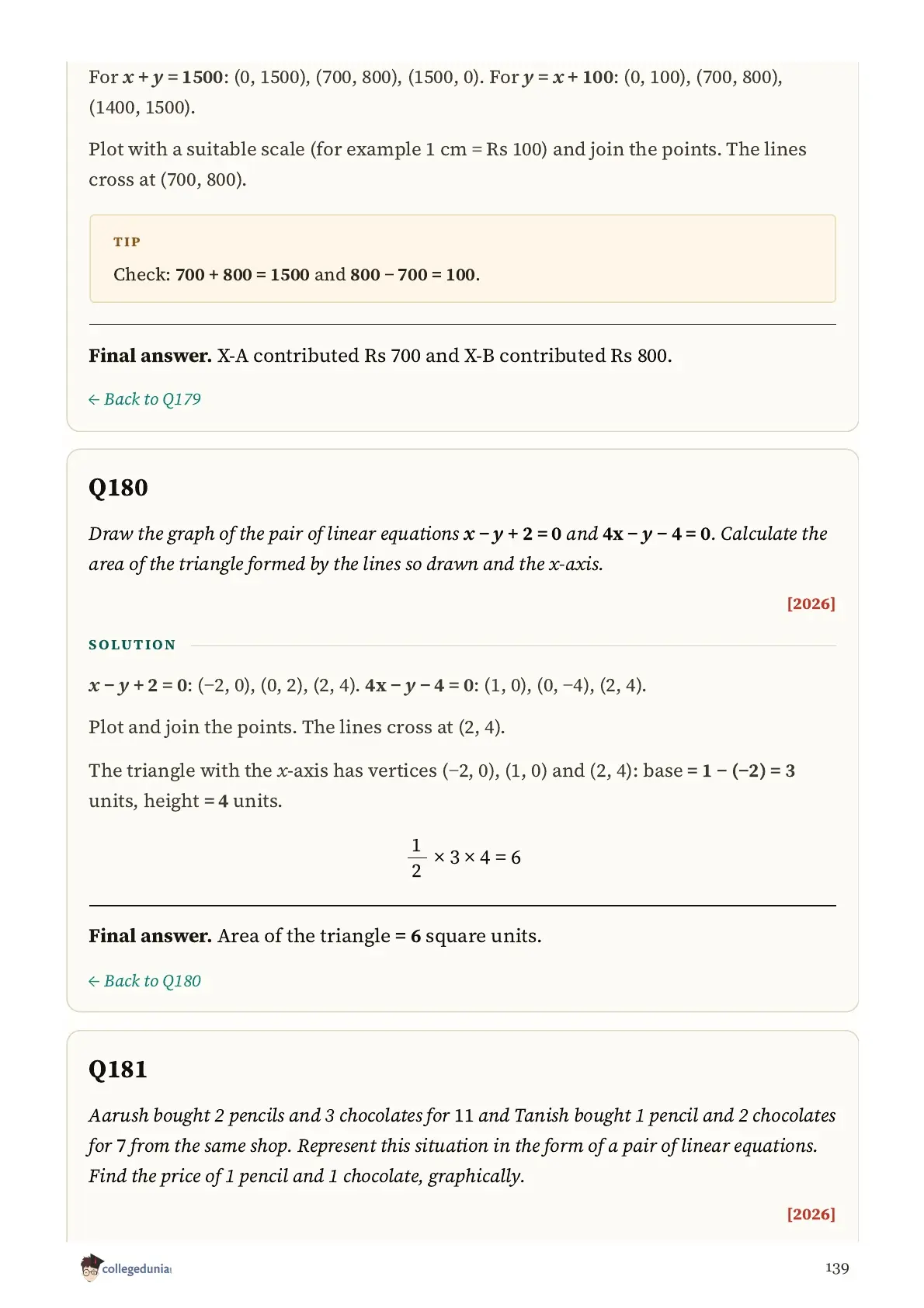
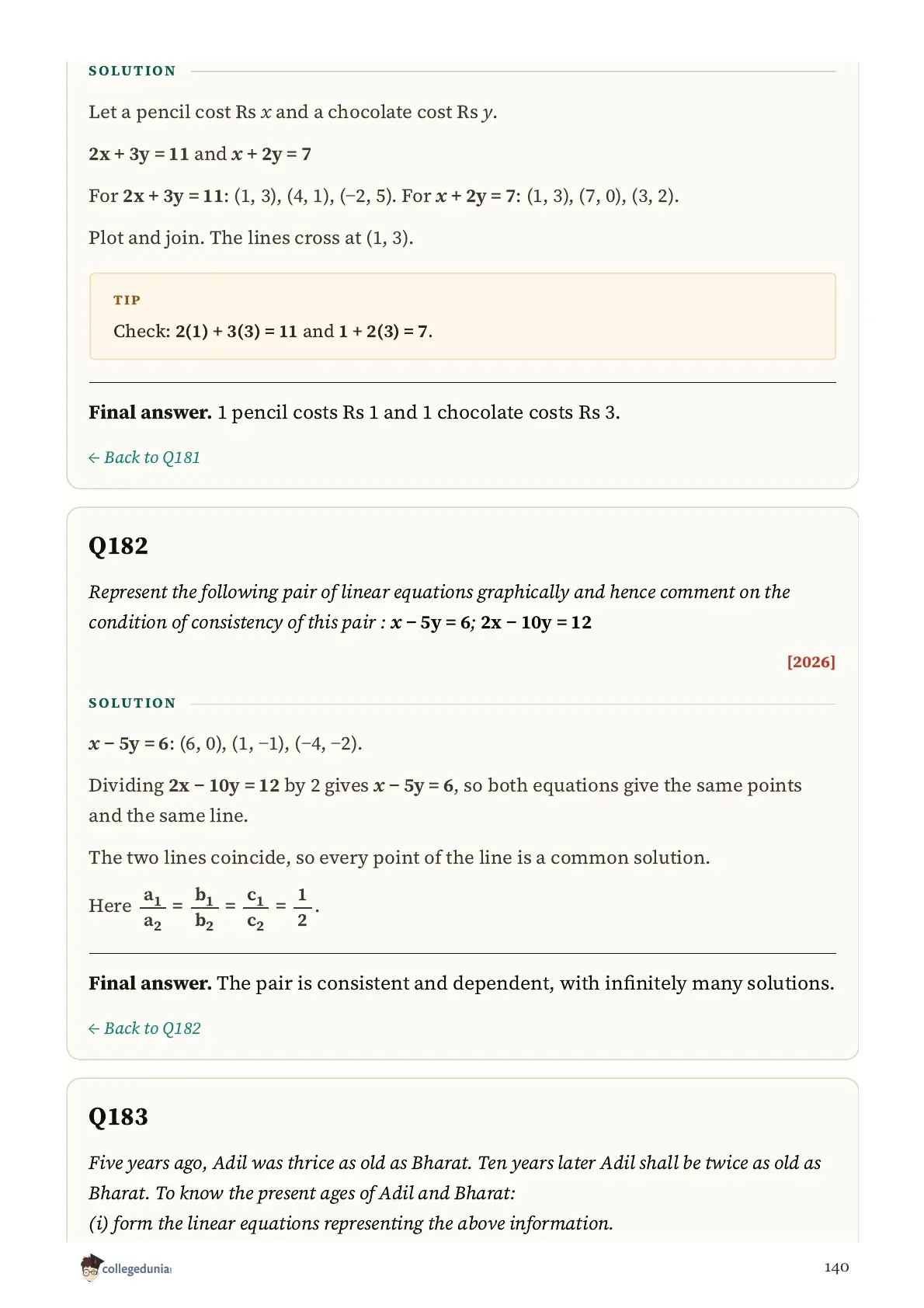
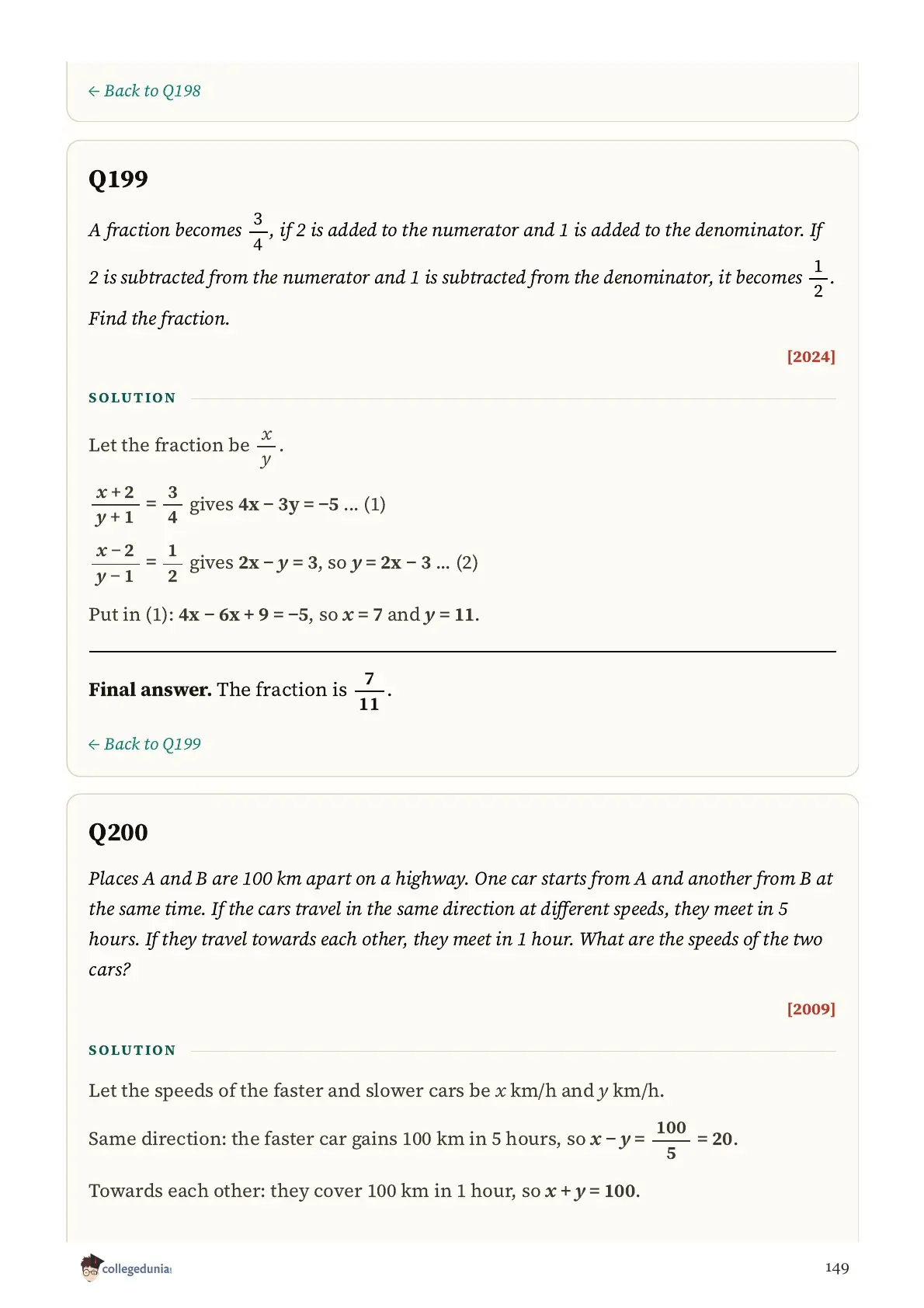
The PDF is 150 pages and free to download. Each section is sorted newest year first, the Answer Key lists the 54 MCQs at a glance, and each question links to its worked solution and back. Attempt a graph or a k-condition question yourself first, check the key, then read the solution. The solutions are written by Collegedunia's Maths experts and are not official CBSE marking schemes.
Class 10 Maths PYQs by Chapter
| Unit | PYQ Page |
|---|---|
| Number Systems | Real Numbers Class 10 Maths PYQ |
| Algebra | Polynomials Class 10 Maths PYQ |
| Algebra | Pair of Linear Equations in Two Variables Class 10 Maths PYQ |
| Algebra | Quadratic Equations Class 10 Maths PYQ |
| Algebra | Arithmetic Progressions Class 10 Maths PYQ |
| Geometry | Triangles Class 10 Maths PYQ |
| Coordinate Geometry | Coordinate Geometry Class 10 Maths PYQ |
| Trigonometry | Introduction to Trigonometry Class 10 Maths PYQ |
| Trigonometry | Some Applications of Trigonometry Class 10 Maths PYQ |
| Geometry | Circles Class 10 Maths PYQ |
| Mensuration | Areas Related to Circles Class 10 Maths PYQ |
| Mensuration | Surface Areas and Volumes Class 10 Maths PYQ |
| Statistics and Probability | Statistics Class 10 Maths PYQ |
| Statistics and Probability | Probability Class 10 Maths PYQ |
Pair of Linear Equations in Two Variables Class 10 Maths PYQ FAQs
Ques. How many questions are in the Pair of Linear Equations in Two Variables Class 10 Maths PYQ PDF?
Ans. The PDF has 200 questions from the 2003 to 2026 board papers: 66 at 1 mark, 43 at 2 marks, 56 at 3 marks, 12 at 4 marks, 22 at 5 marks and 1 at 6 marks.
Ques. Does this PYQ PDF include solutions, or only the questions?
Ans. All 200 questions have a worked solution in the PDF. The 54 MCQs and assertion-reason items are also listed in the Answer Key before the solutions.
Ques. Are the solutions official?
Ans. No. They are written by Collegedunia's Maths experts, checked against the NCERT chapter with every calculation re-run. They are not an official CBSE marking scheme, so the board's wording of an answer may differ.
Ques. How many marks does Pair of Linear Equations in Two Variables carry in the Class 10 Maths paper?
Ans. CBSE publishes marks per unit, not per chapter. This chapter sits in the Algebra unit, which prep sites report at 20 of the 80 theory marks for 2026-27. That figure is unofficial, so check the current curriculum on cbseacademic.nic.in.
Ques. What kind of questions are asked from Pair of Linear Equations in Two Variables?
Ans. Most ask you to solve a pair of equations, by graph or algebra, or to find the value of a constant for which the pair has no, one or infinitely many solutions. Word problems on money, ages, digits, fractions and angles make up the rest, along with case-based items.
Ques. Which years does the set cover?
Ans. The questions come from 16 board years between 2003 and 2026. 2025 has the most questions (50), followed by 2023 (37) and 2024 (32).



Comments