



Class 10 Maths Quadratic Equations PYQ, free to download as a 178-page PDF with 259 solved board questions from the 2003 to 2026 papers. Quadratic Equations is Chapter 4 of the NCERT Class 10 Maths book and sits in the CBSE unit Algebra, which, with Polynomials, Pair of Linear Equations and Arithmetic Progressions, is reported at 20 of the 80 theory marks.
The questions keep returning to finding roots by solving the equation (81 questions), word problems that end in a quadratic (111), discriminant and nature of roots (53), rectangles, triangles and other area problems (49), numbers, digits and fractions (35), a missing value such as k or p (34) and speed, distance and time (23).
On this page you get:
- 259 questions with a worked solution each: 45 MCQs and assertion-reason items, 110 short answers of 1, 2 and 3 marks, and 104 long answers and case studies of 4, 5 and 6 marks
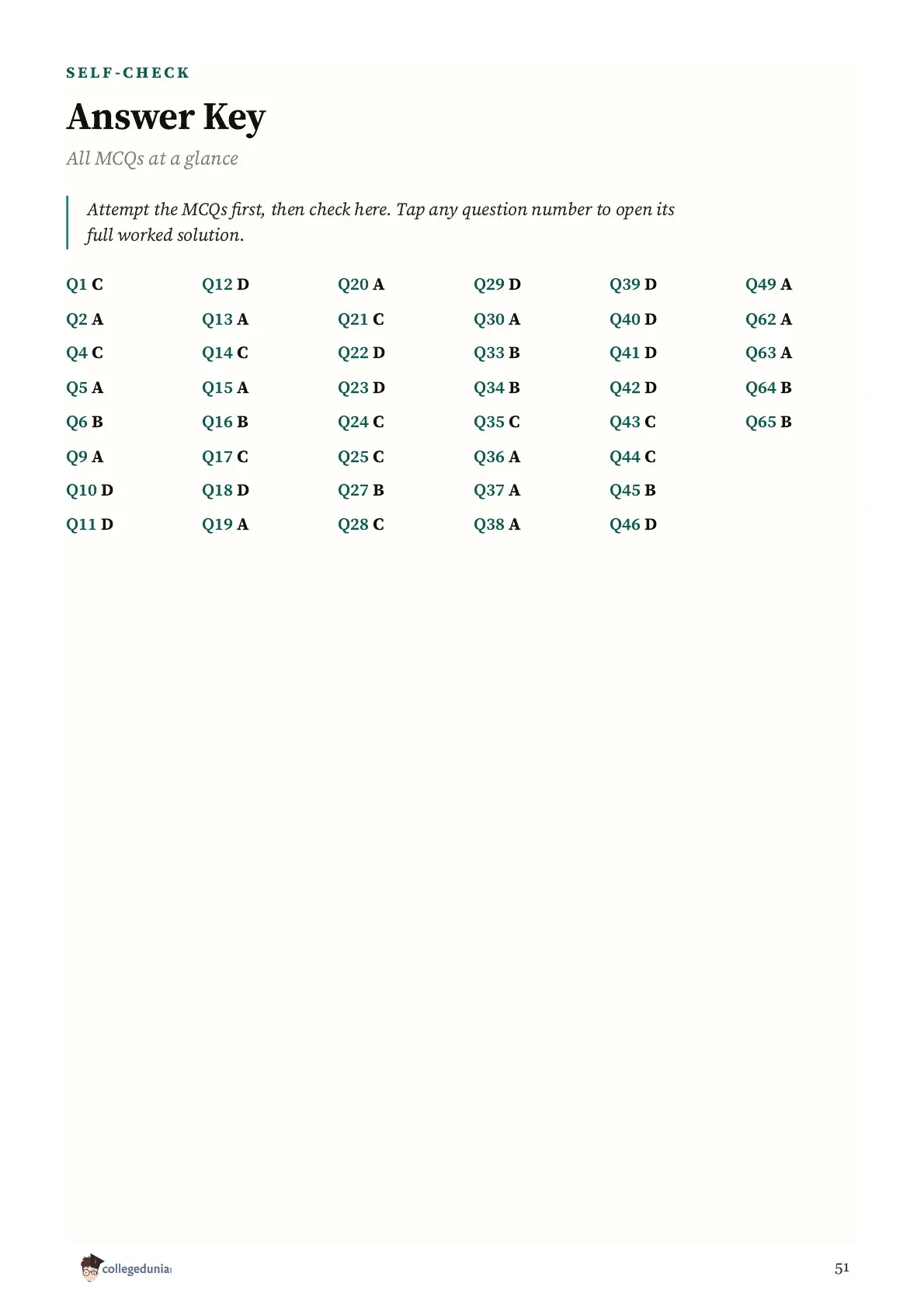
- An Answer Key that lists all 45 MCQs at a glance
- Question counts by topic, so you know whether to start with solving, the discriminant or word problems
- A marks-wise table of questions (1, 2, 3, 4, 5 and 6 mark)
- The common mistakes students make, such as keeping the negative speed in a train problem, and a short FAQ
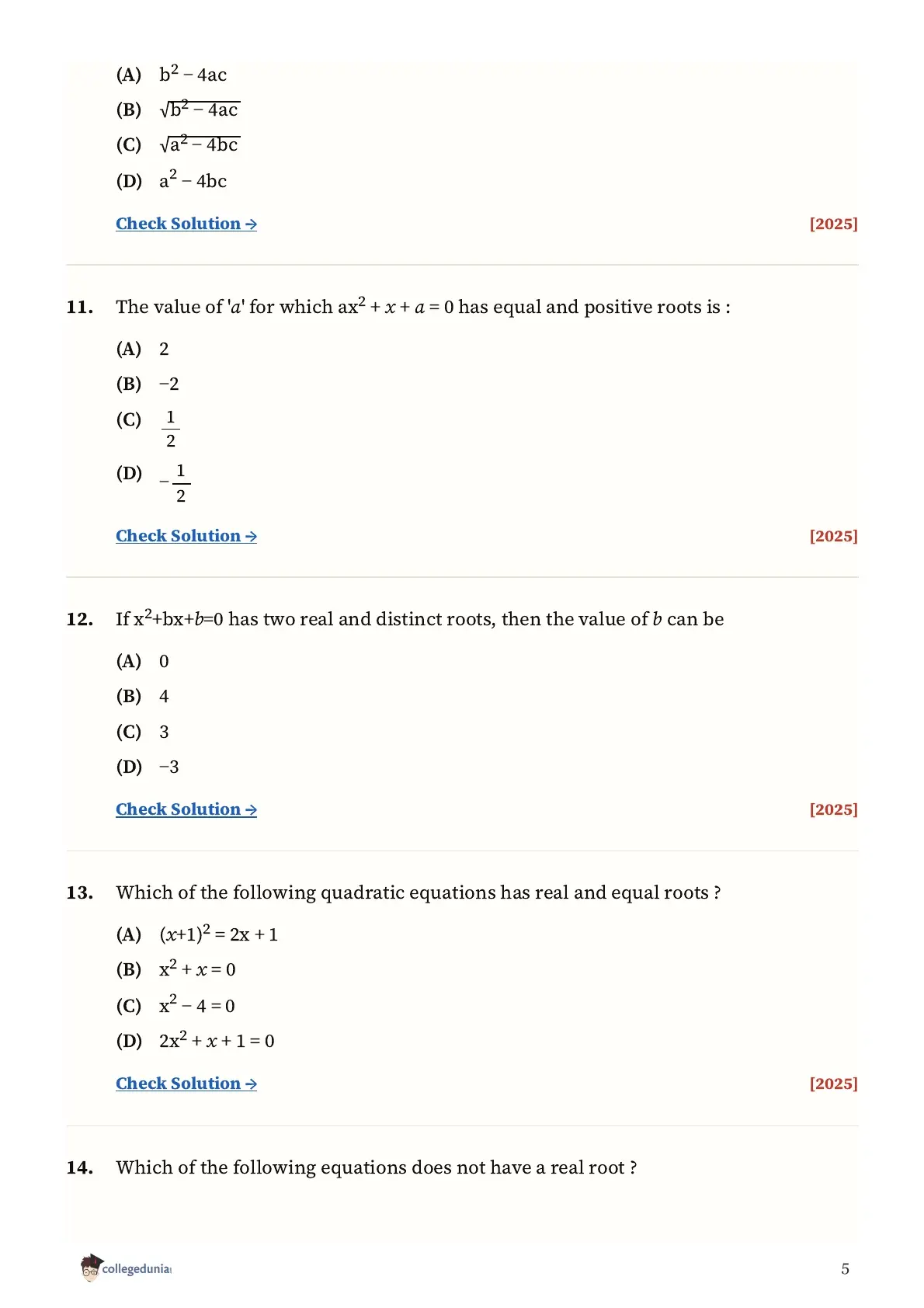
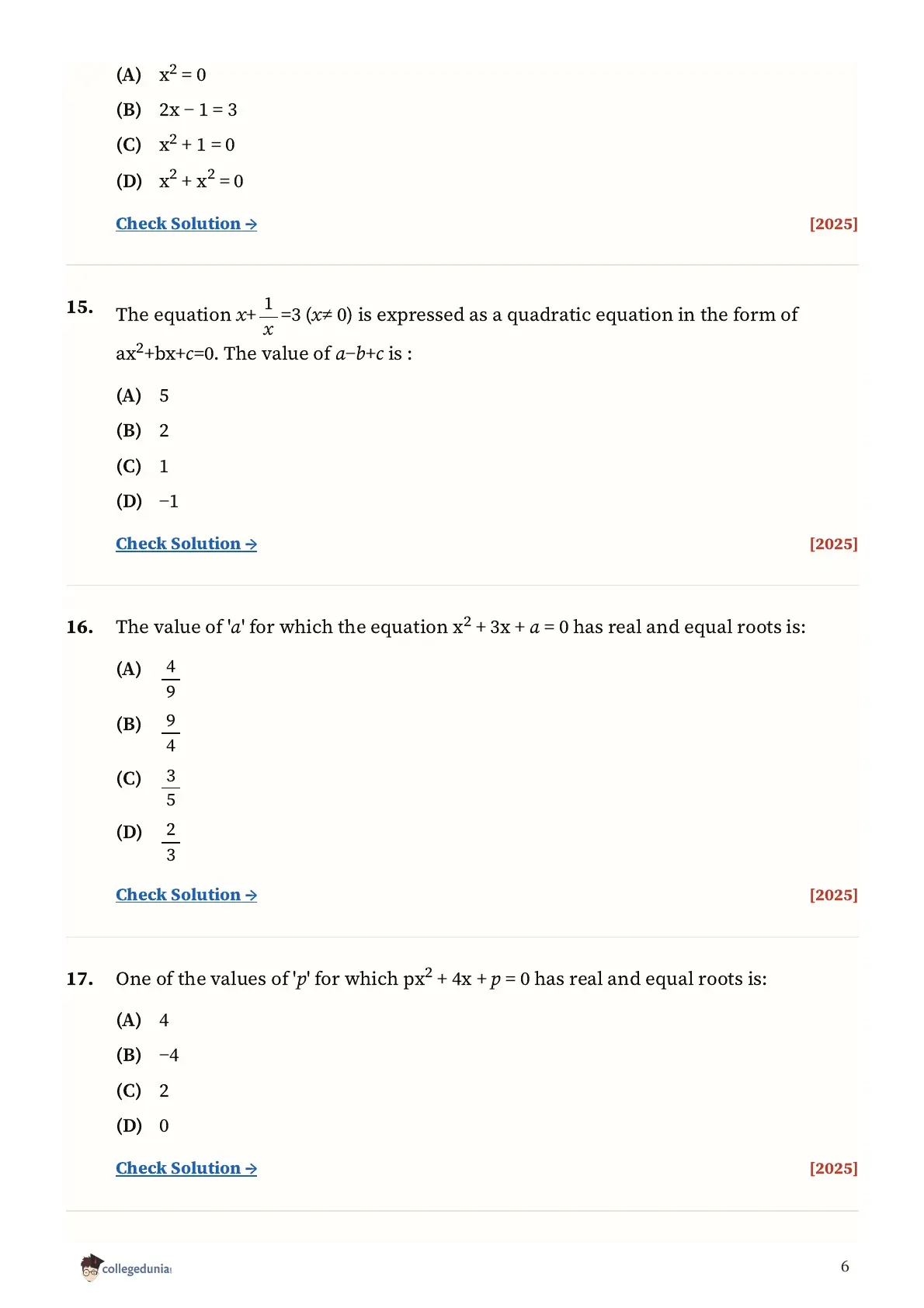
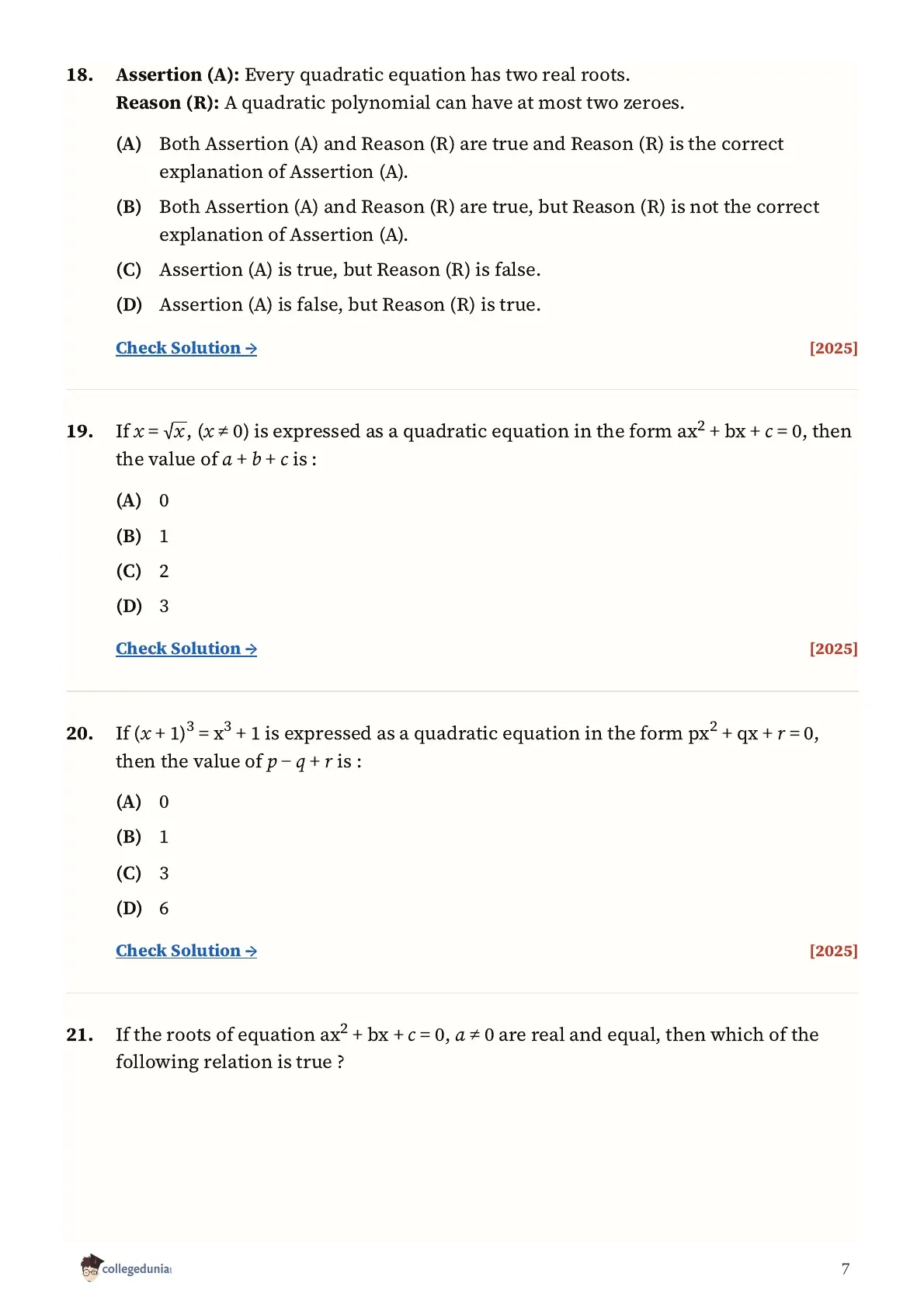
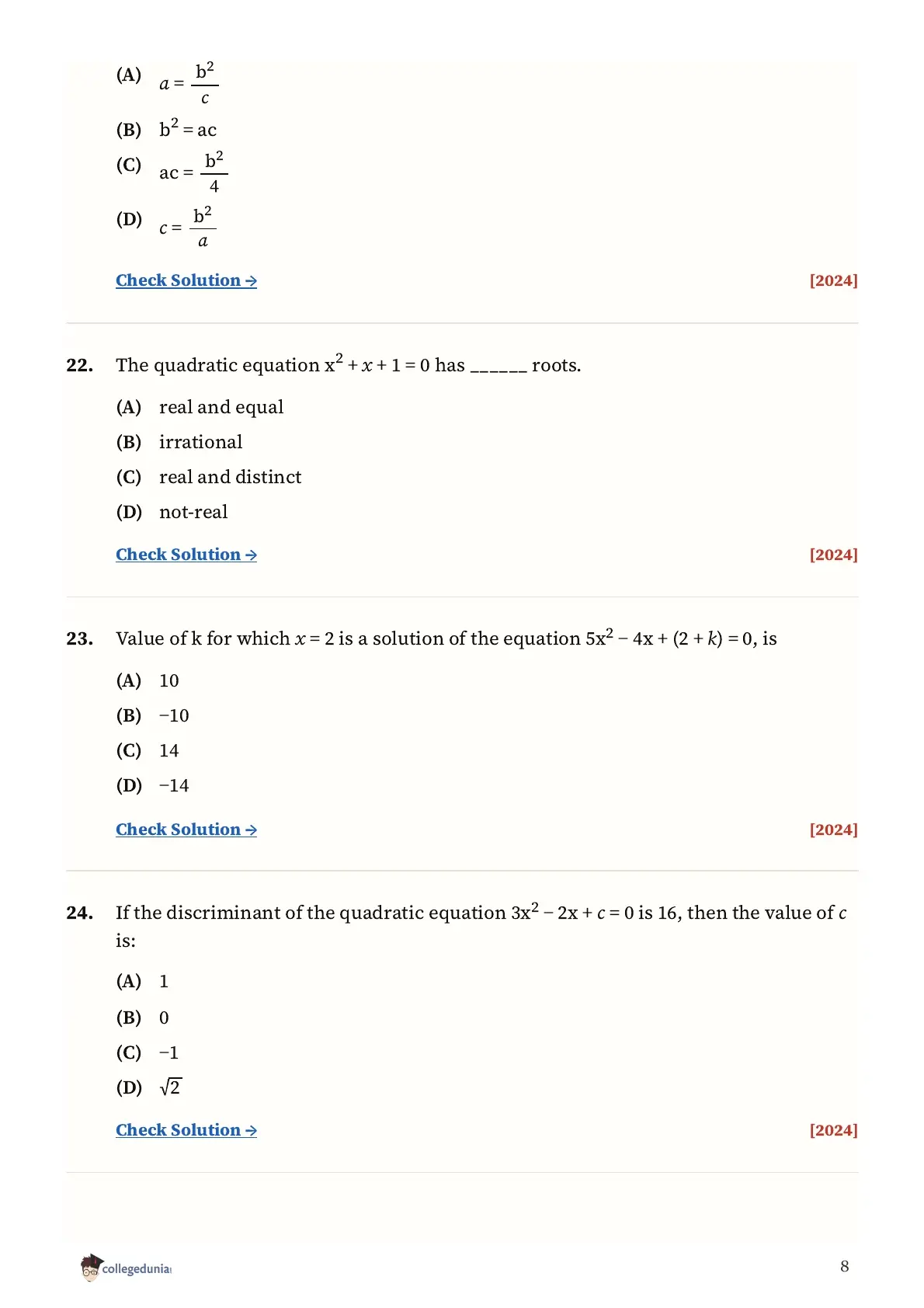
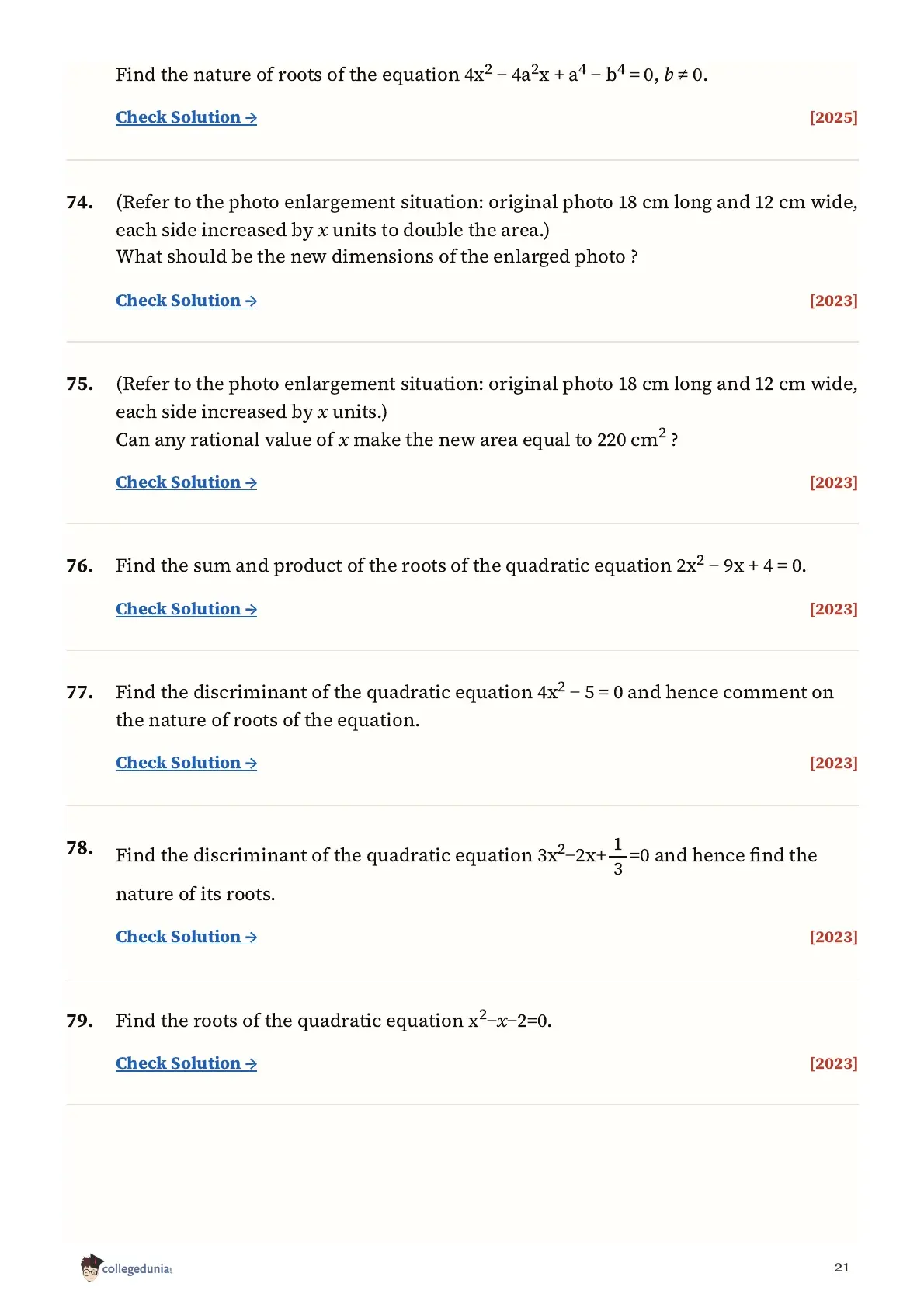
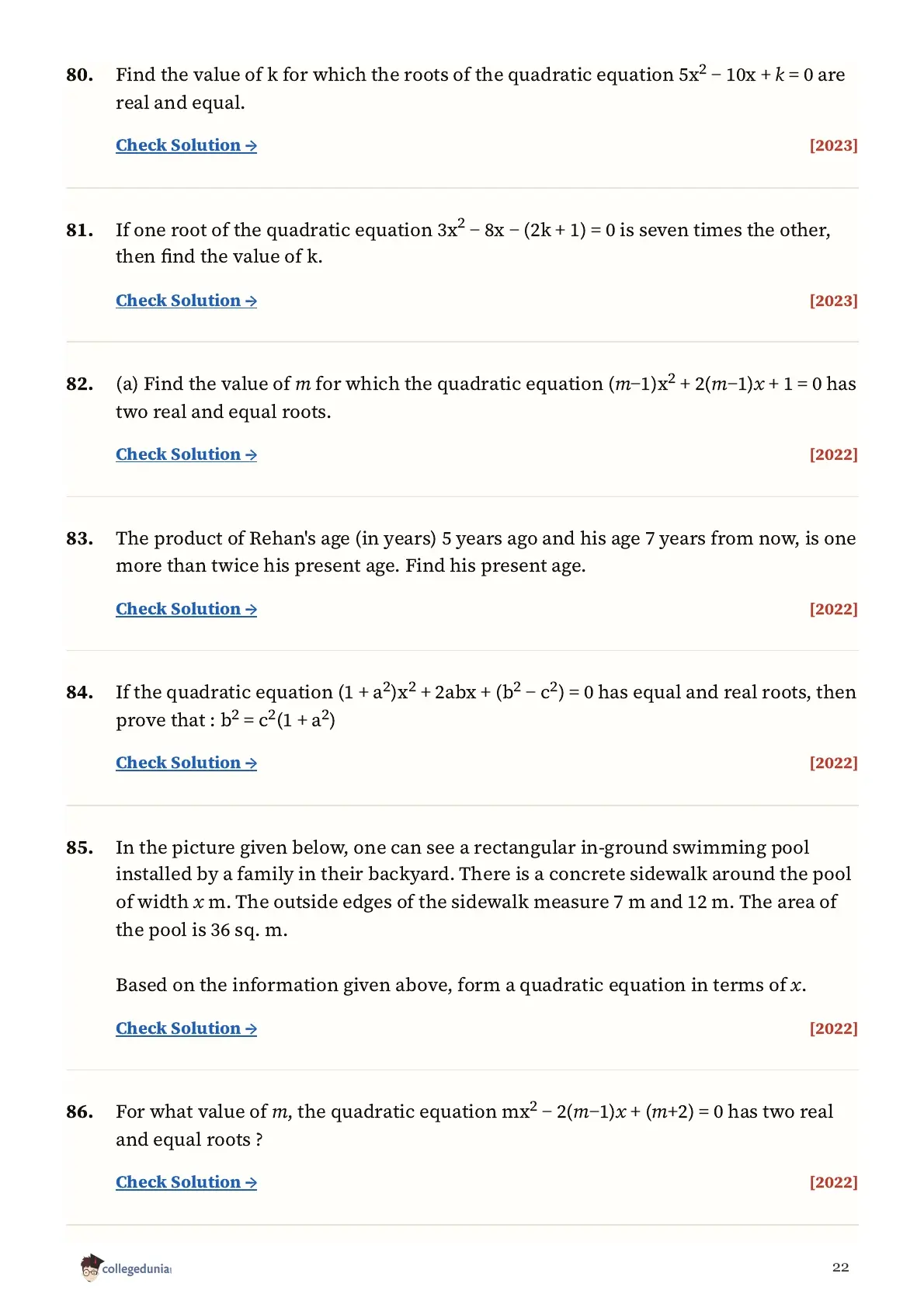
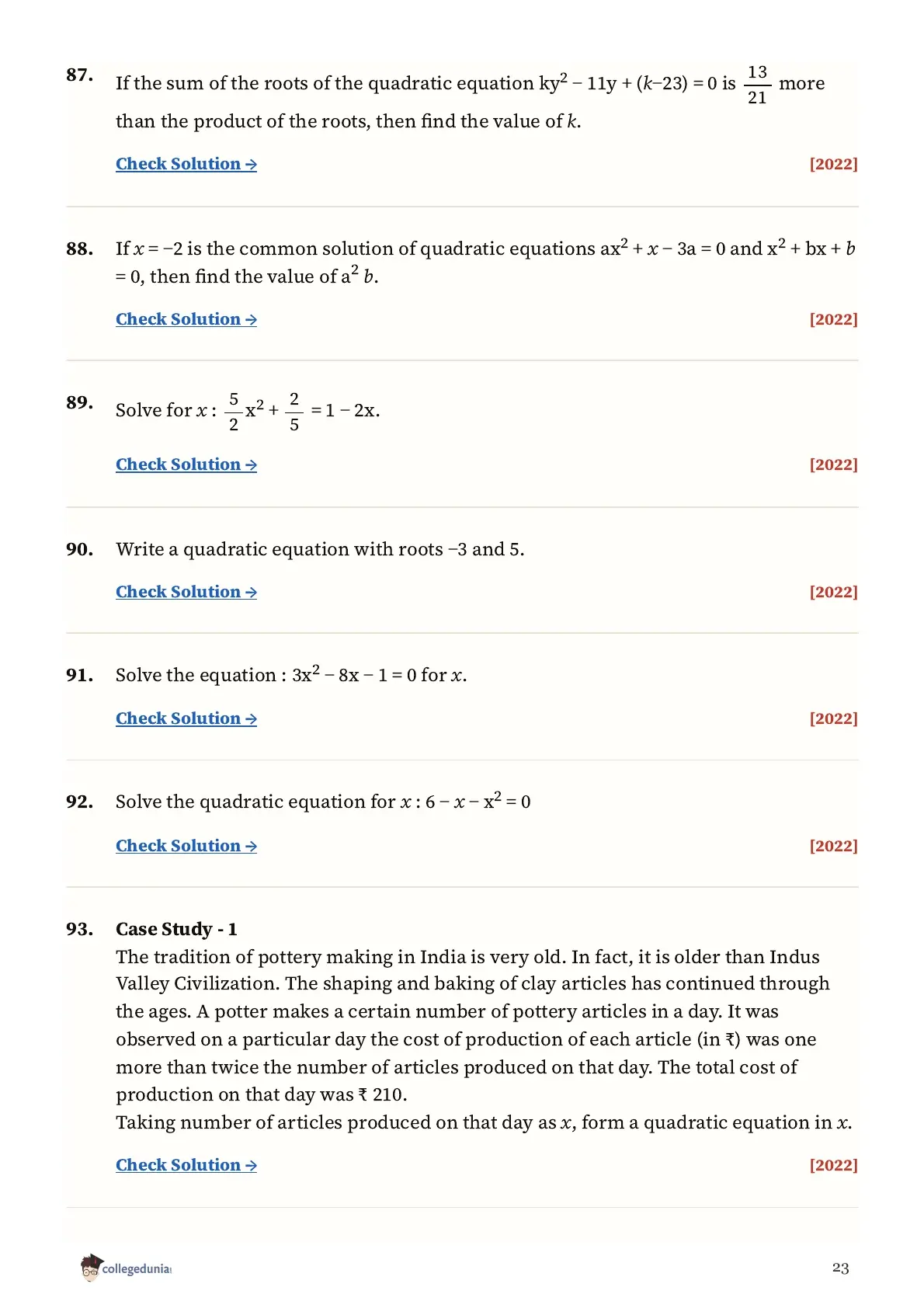
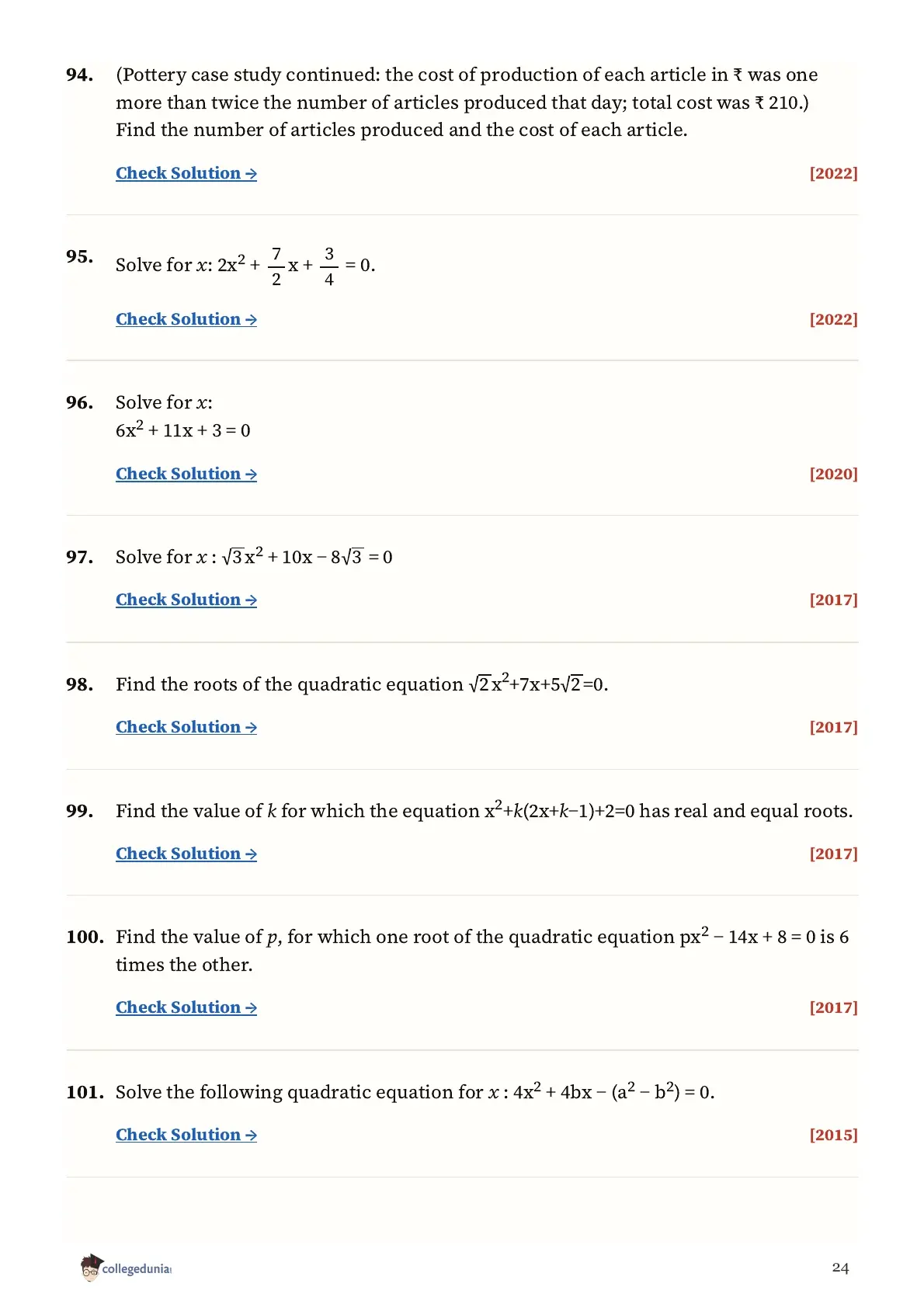
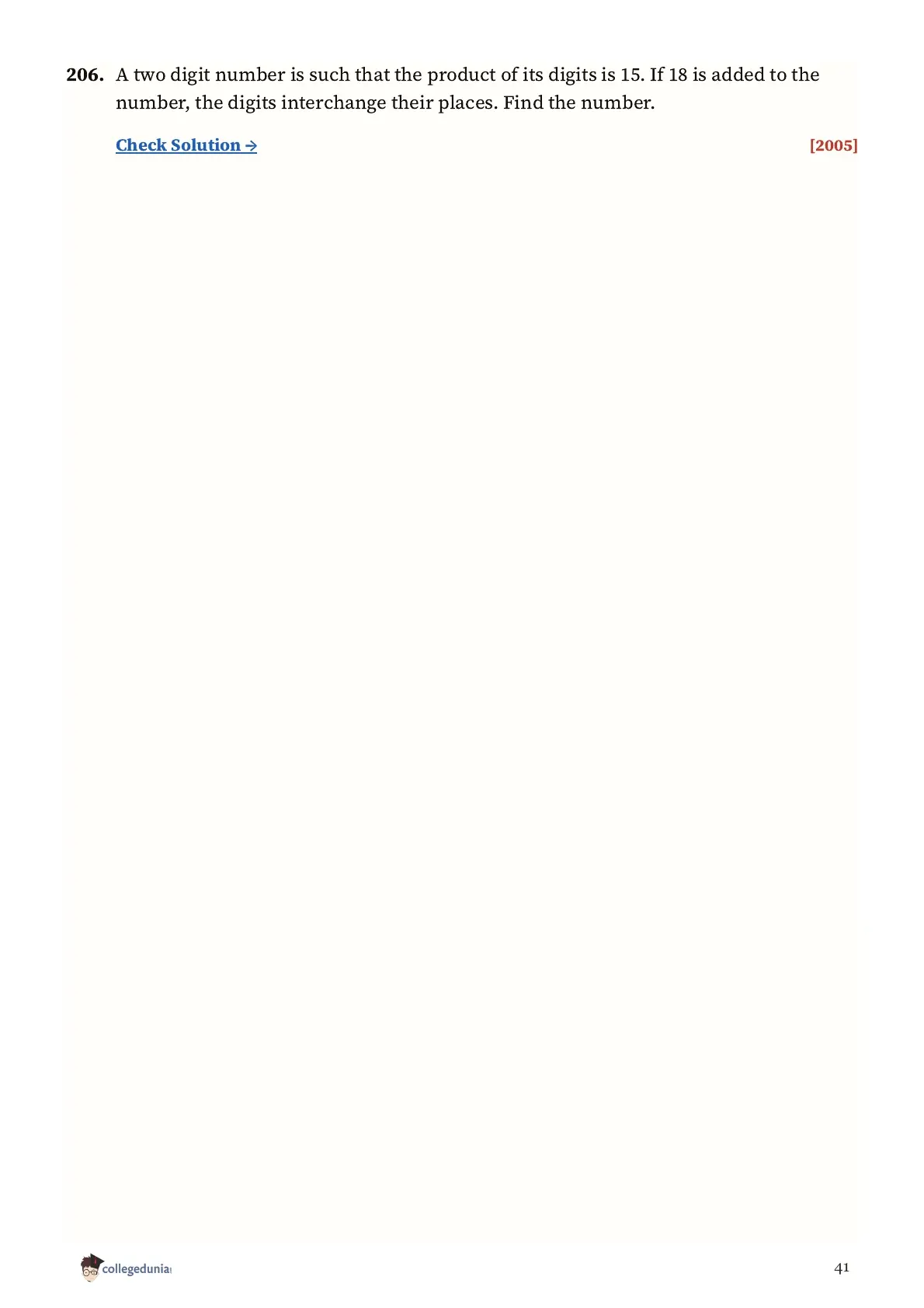
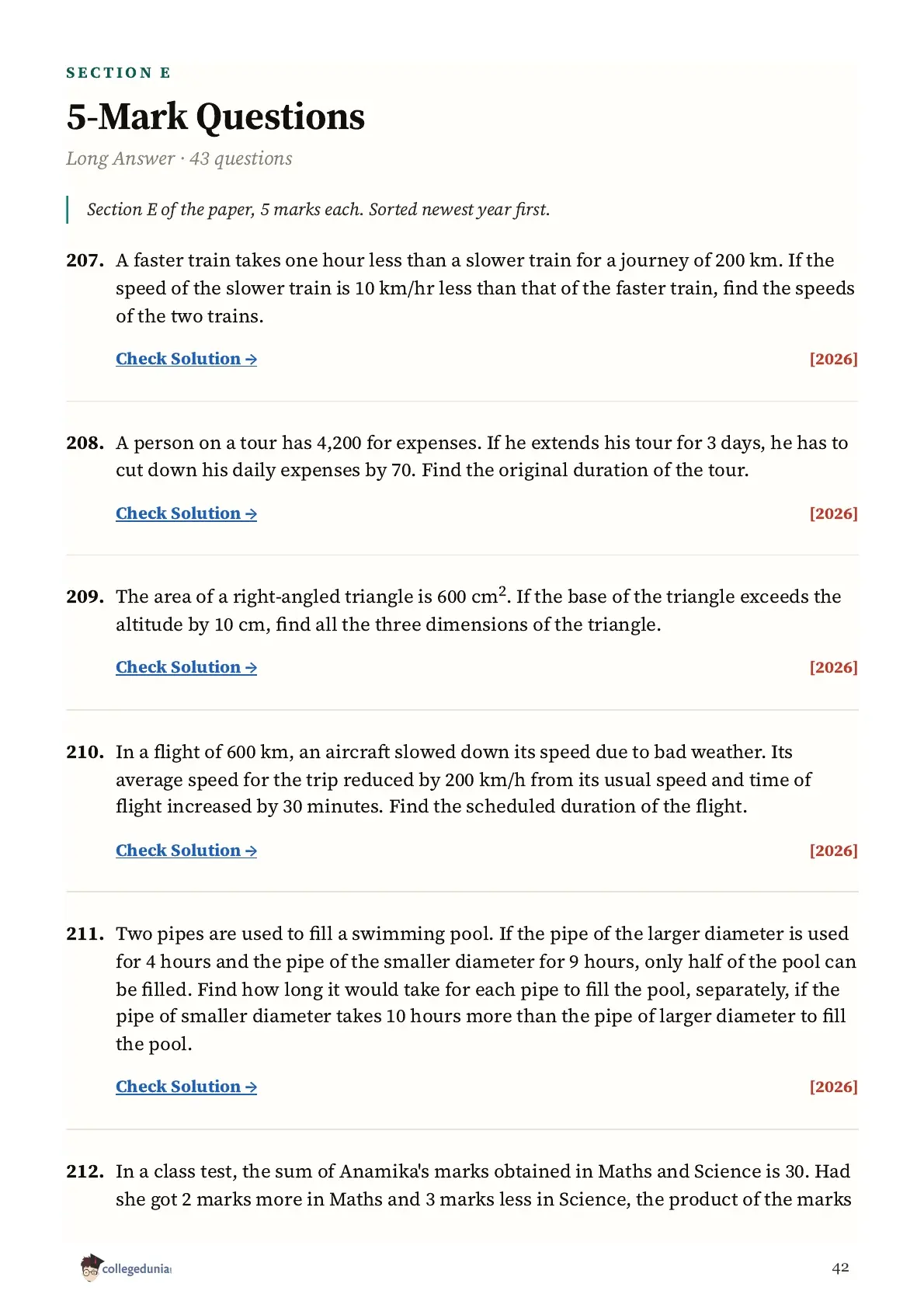
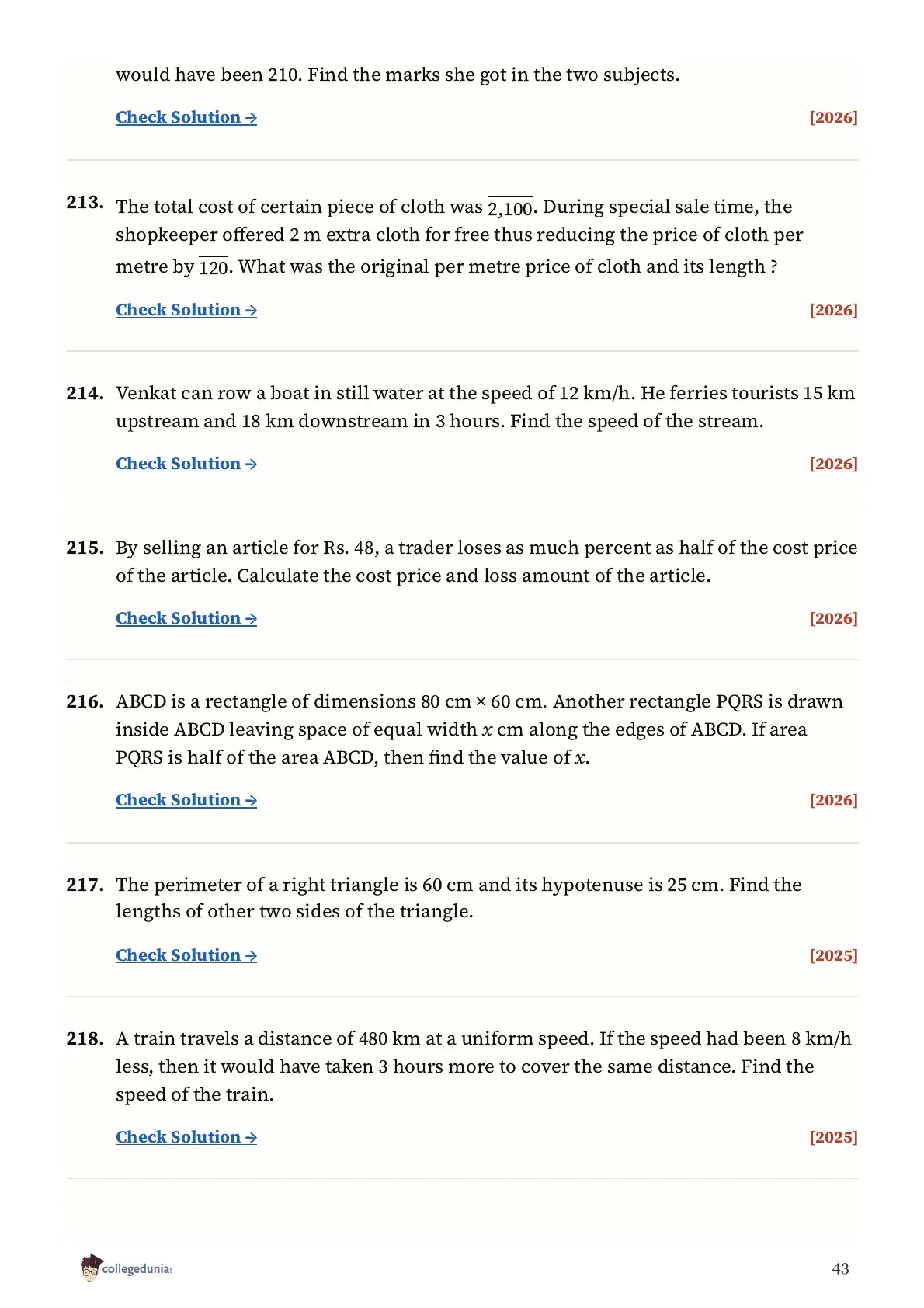
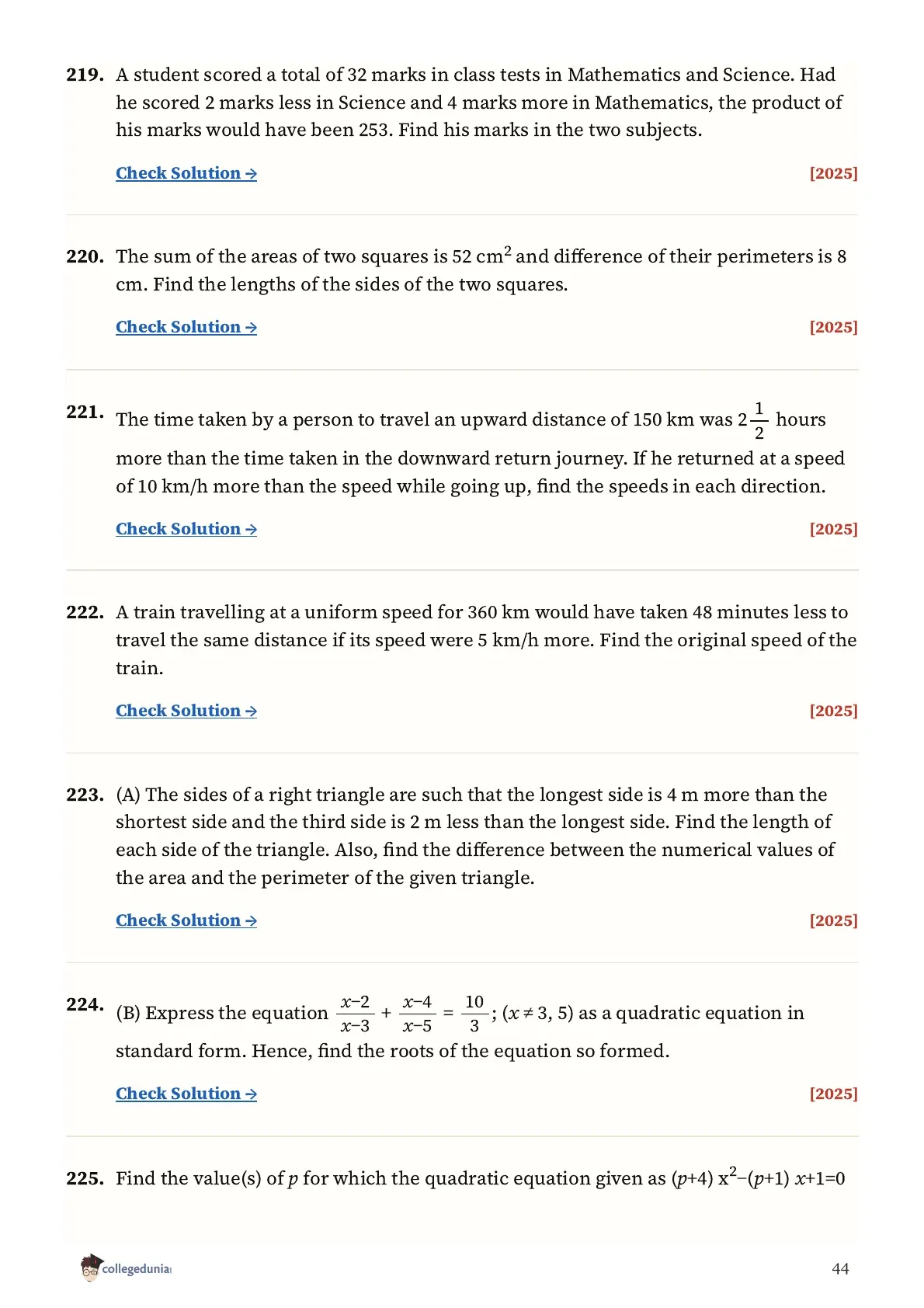
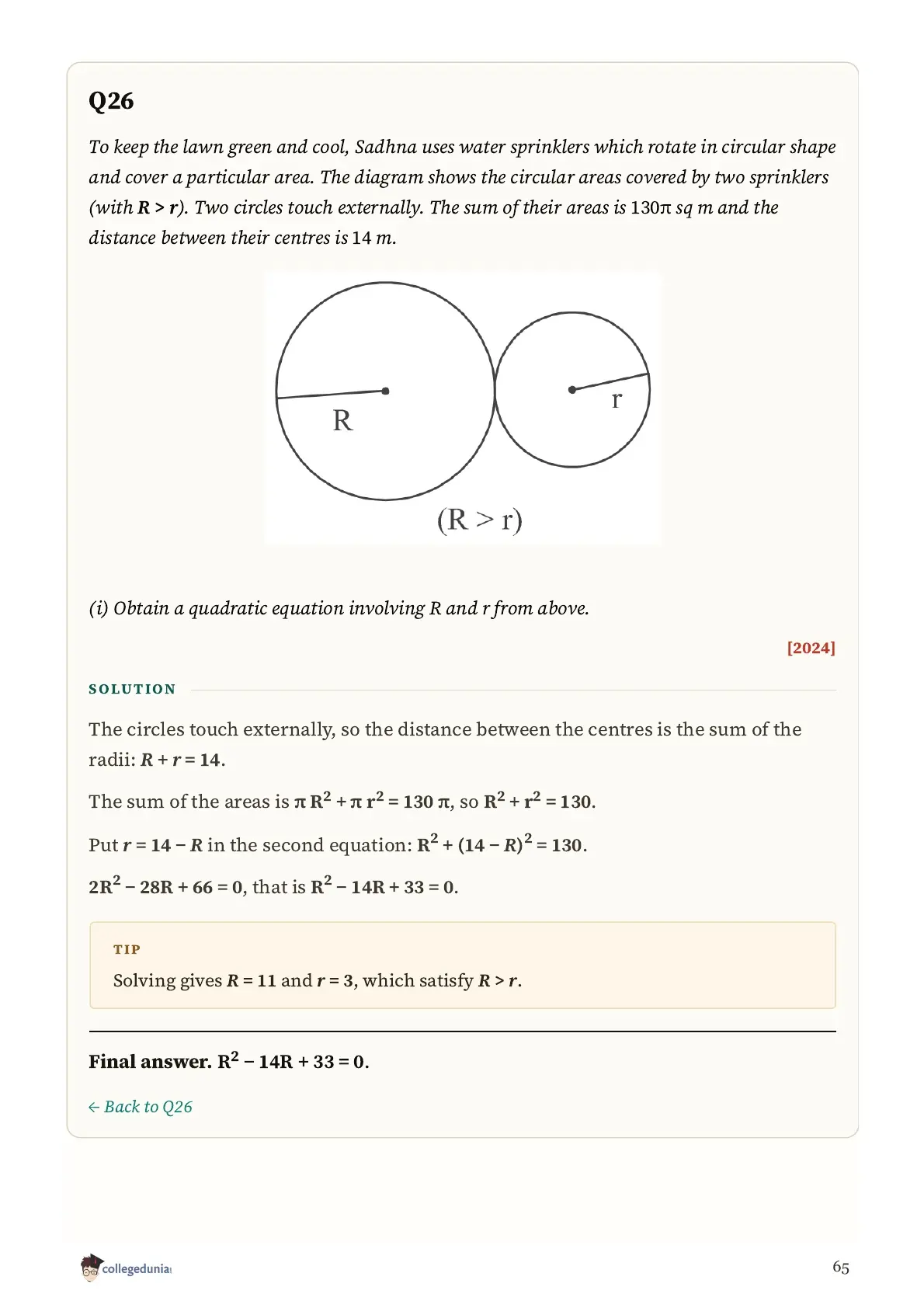
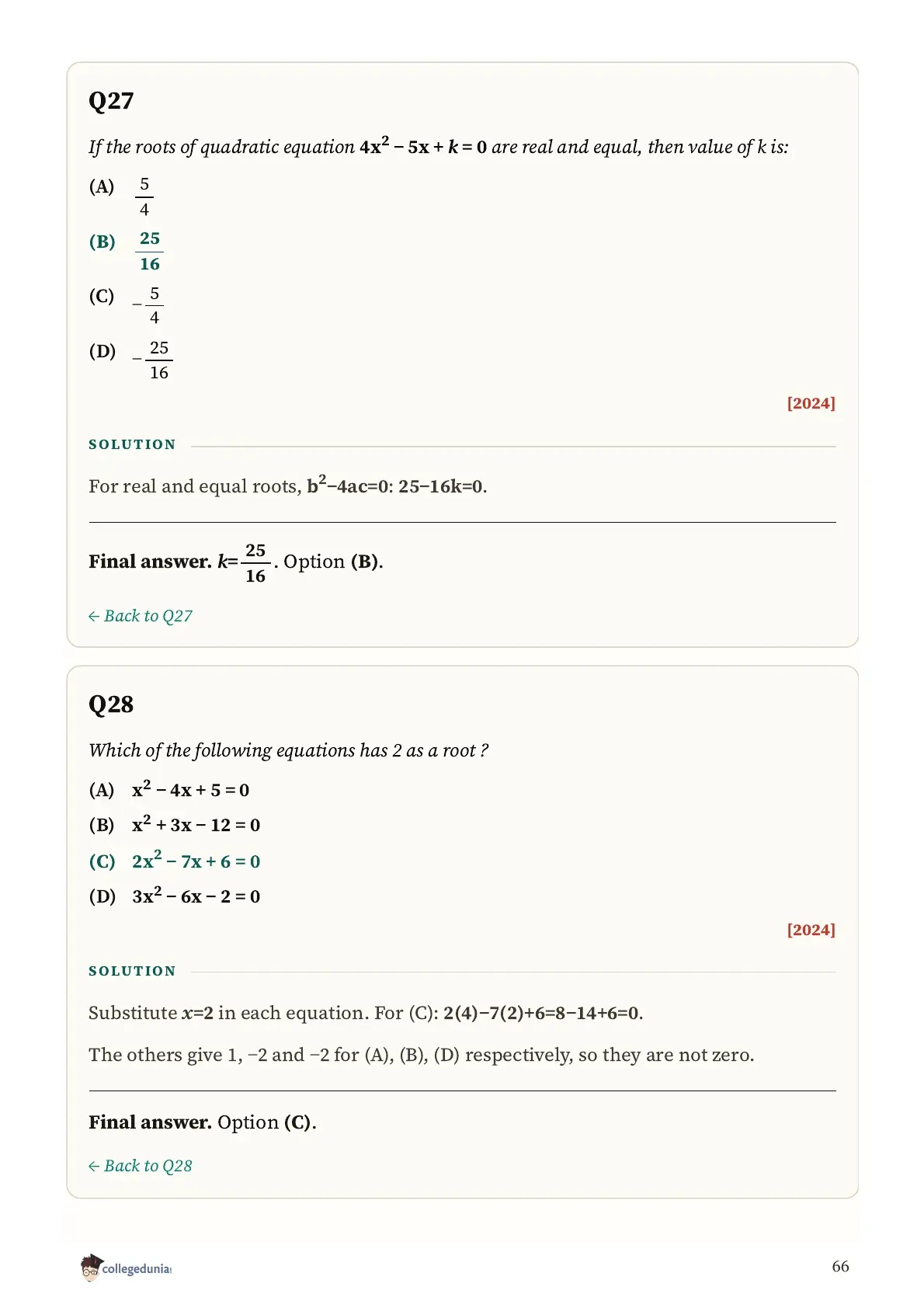
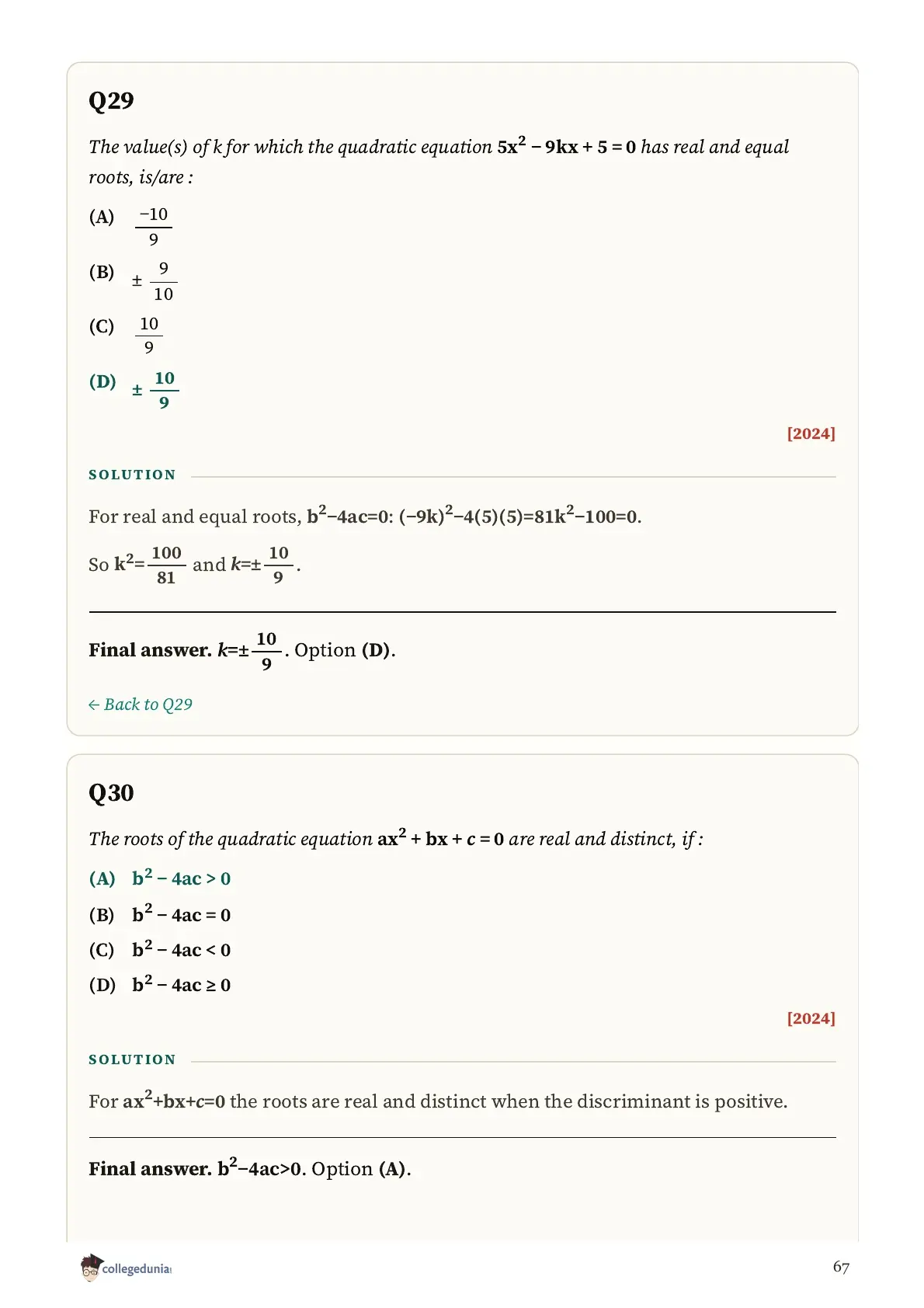
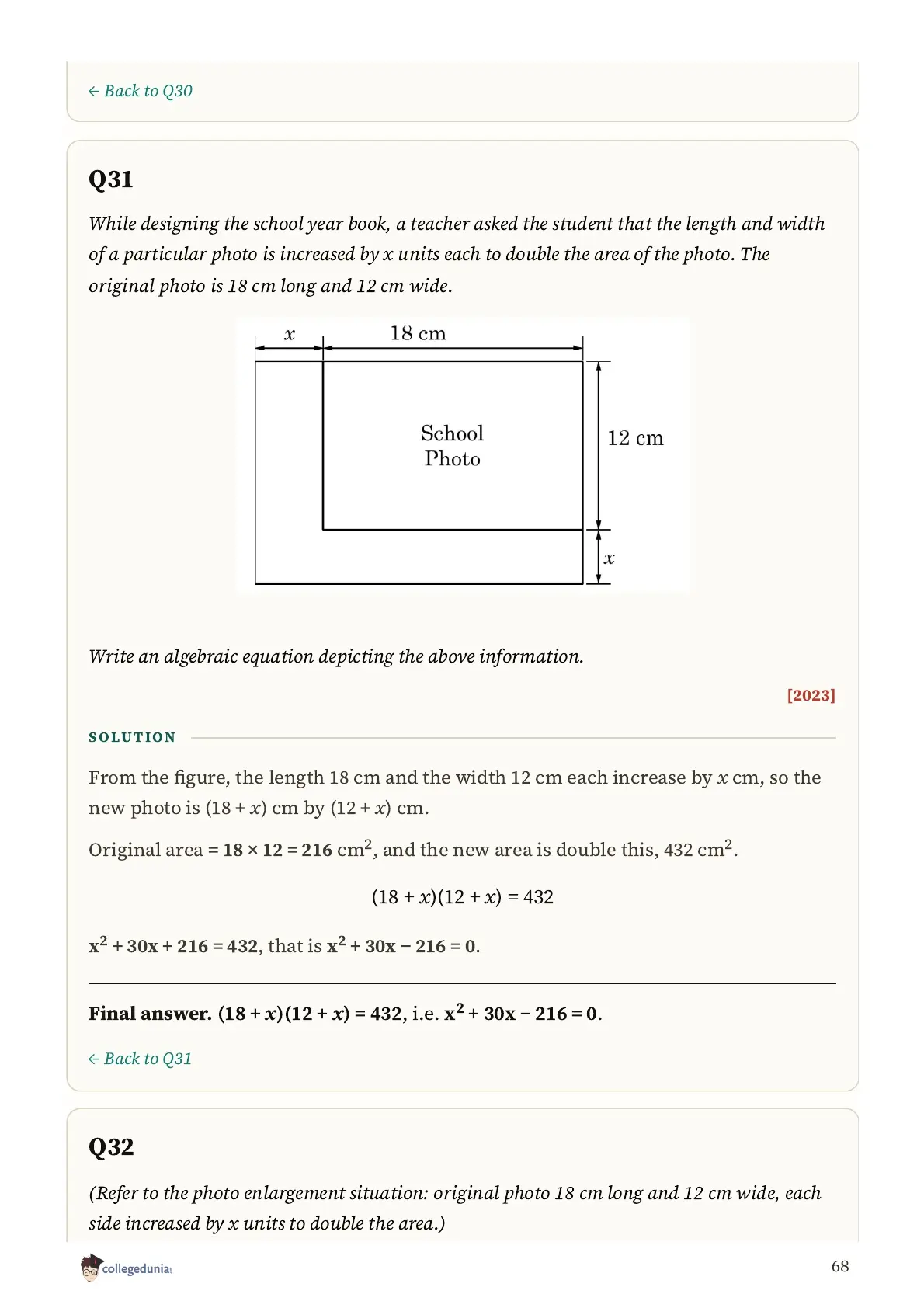
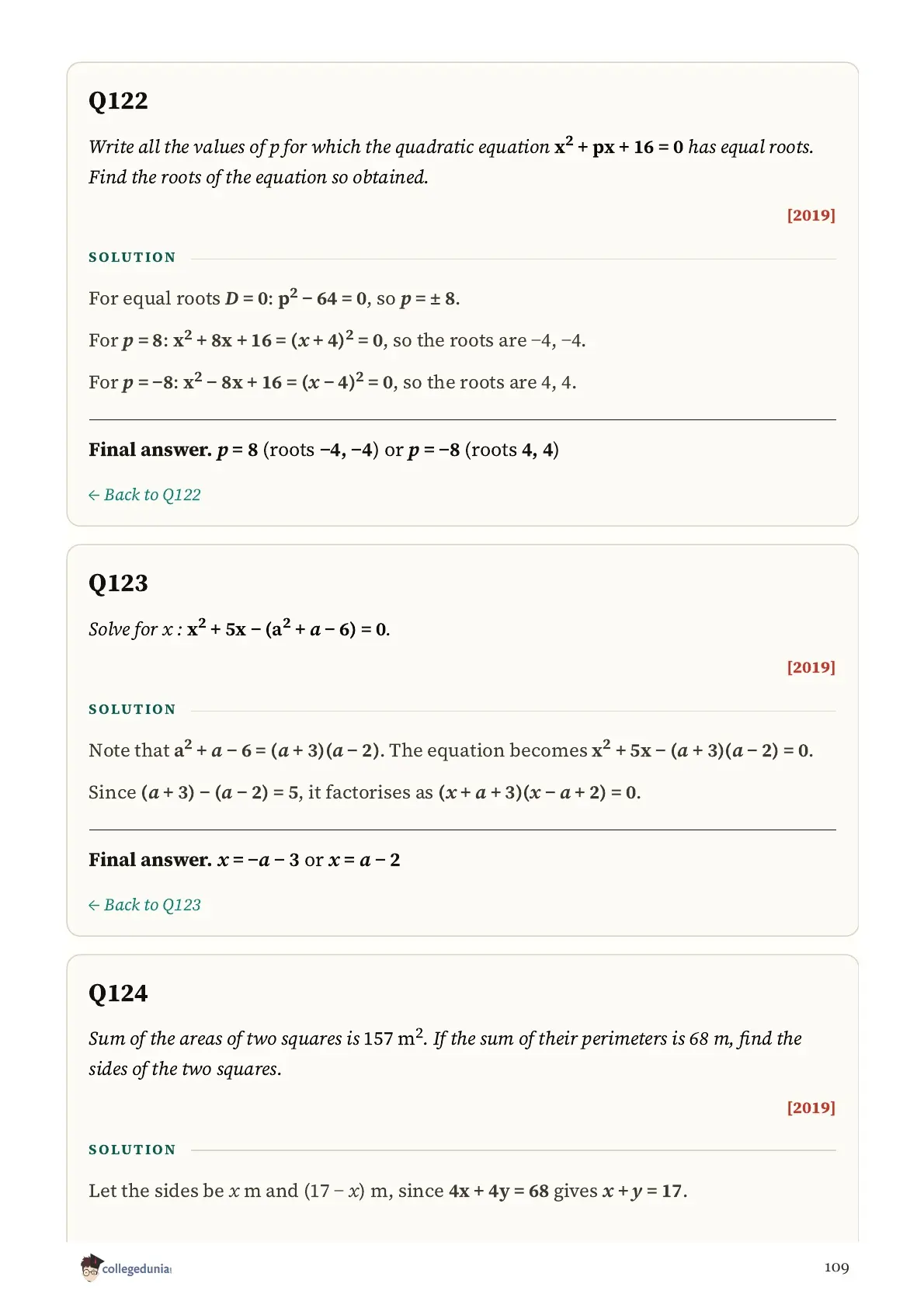
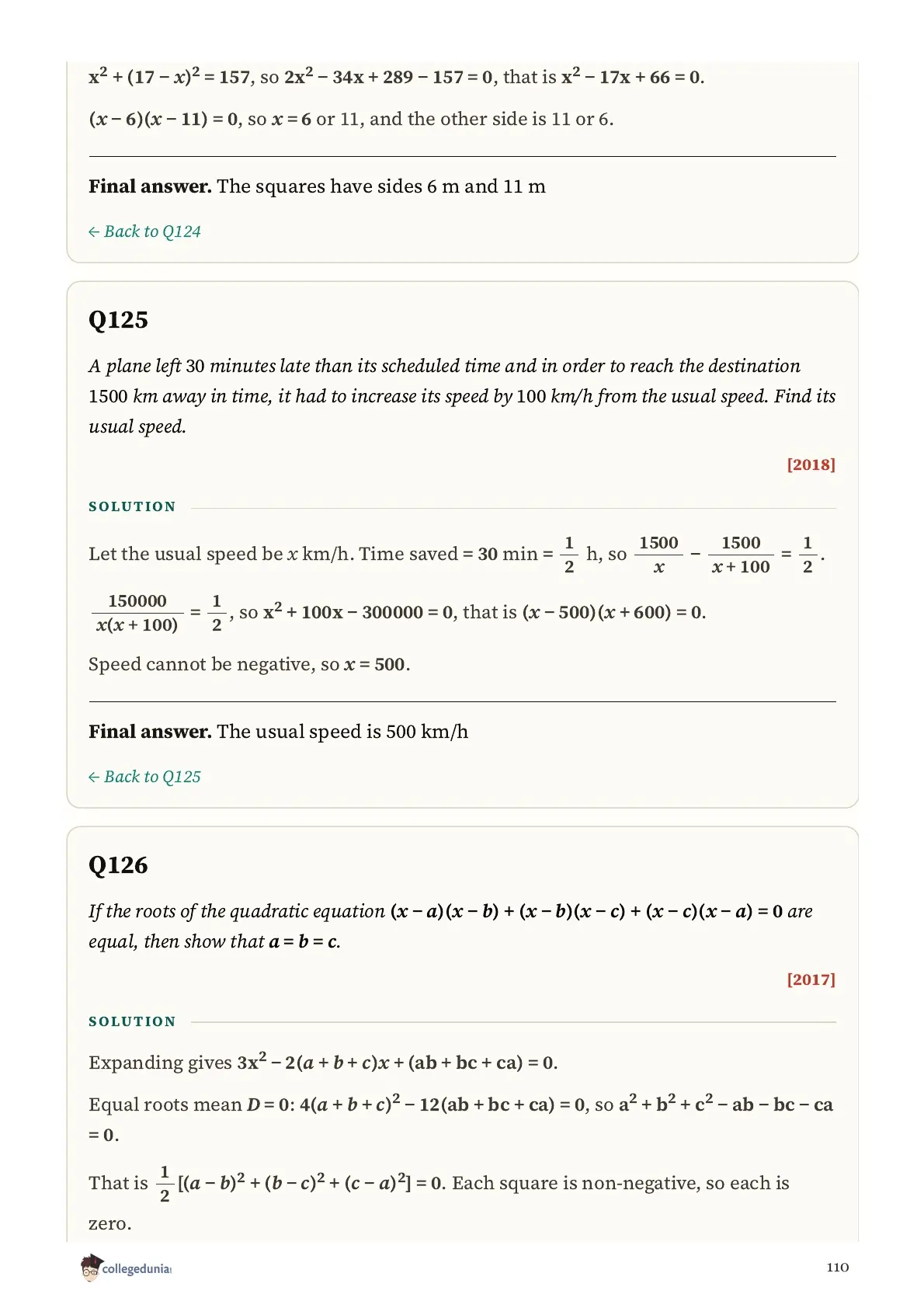
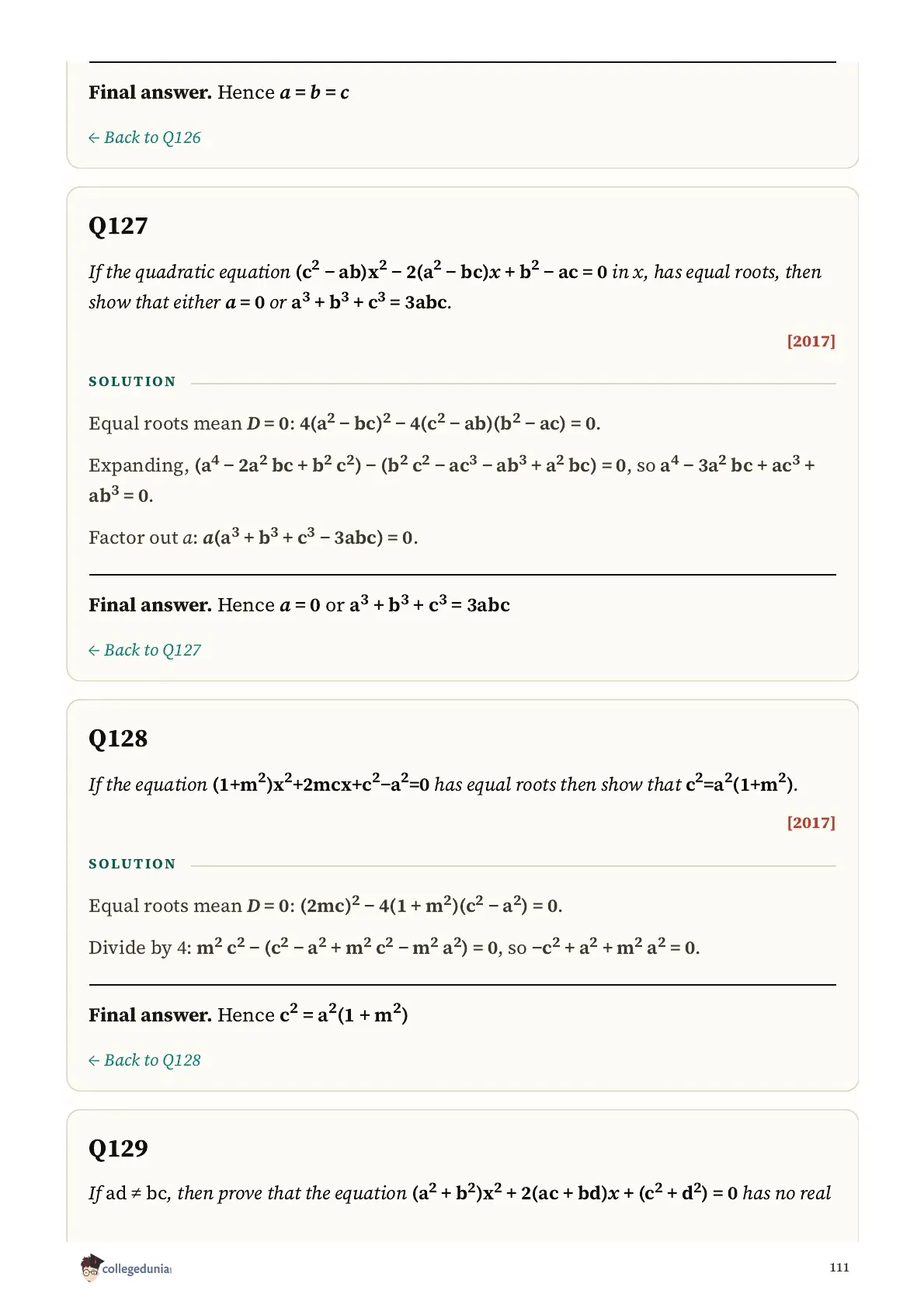
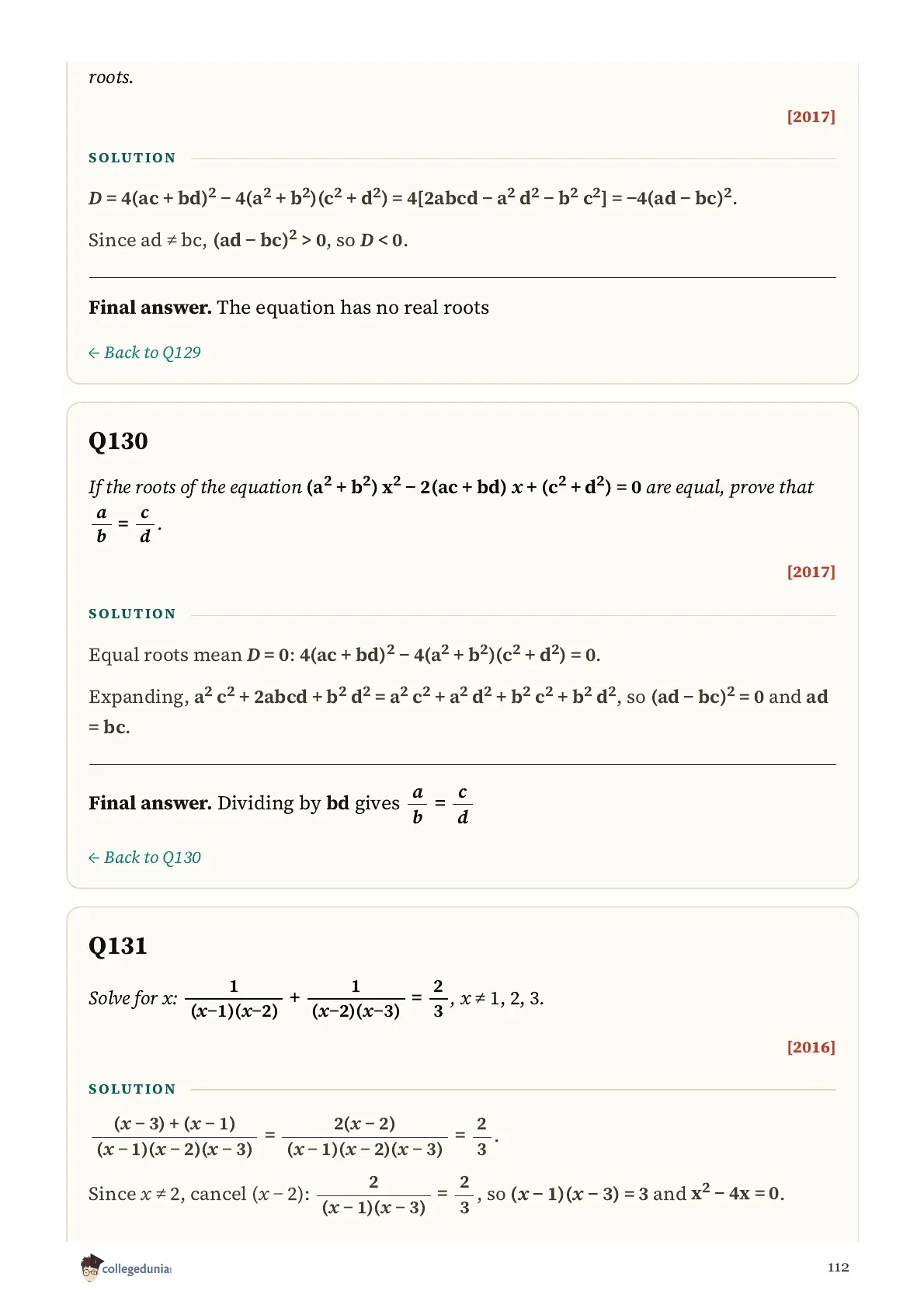
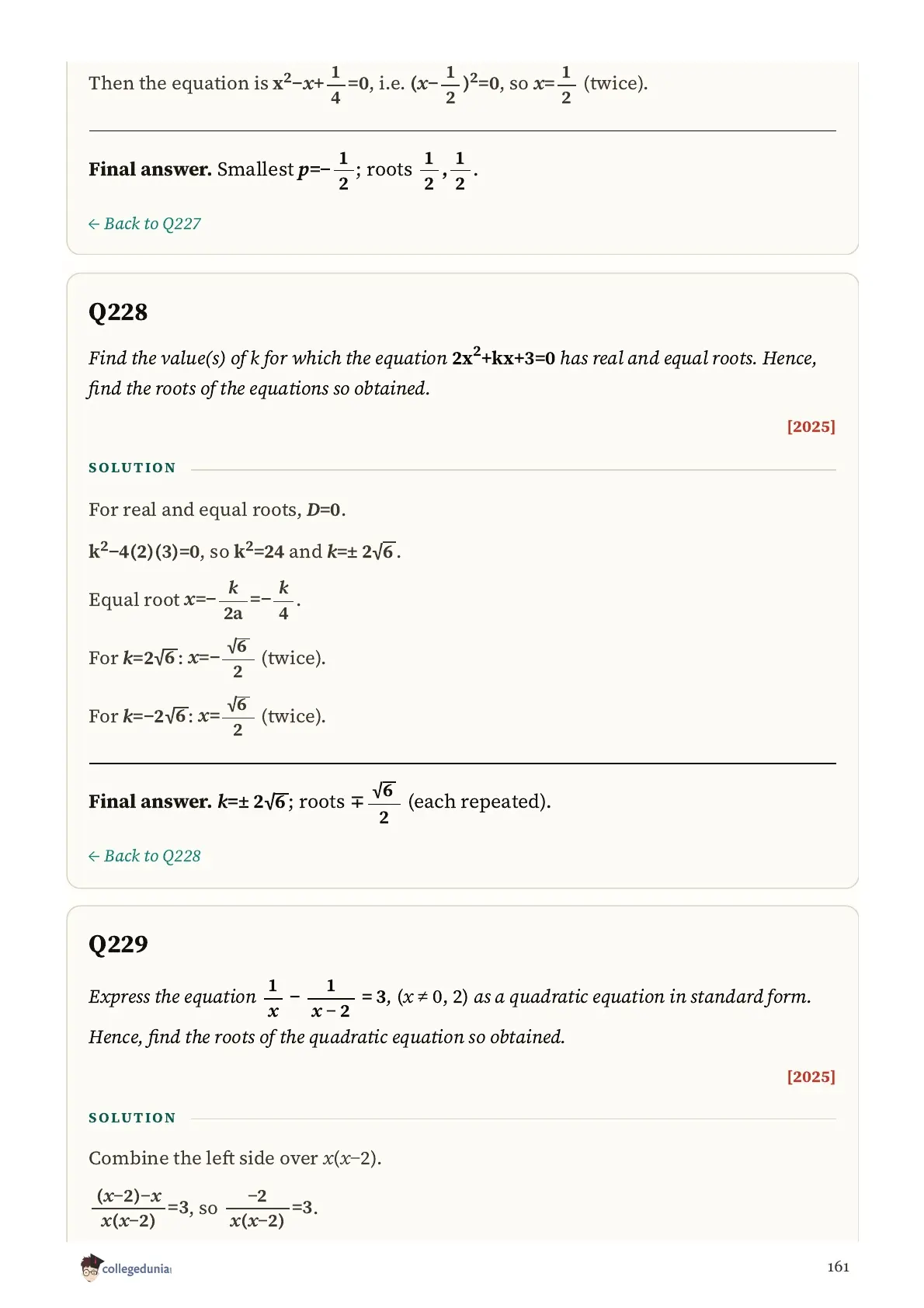
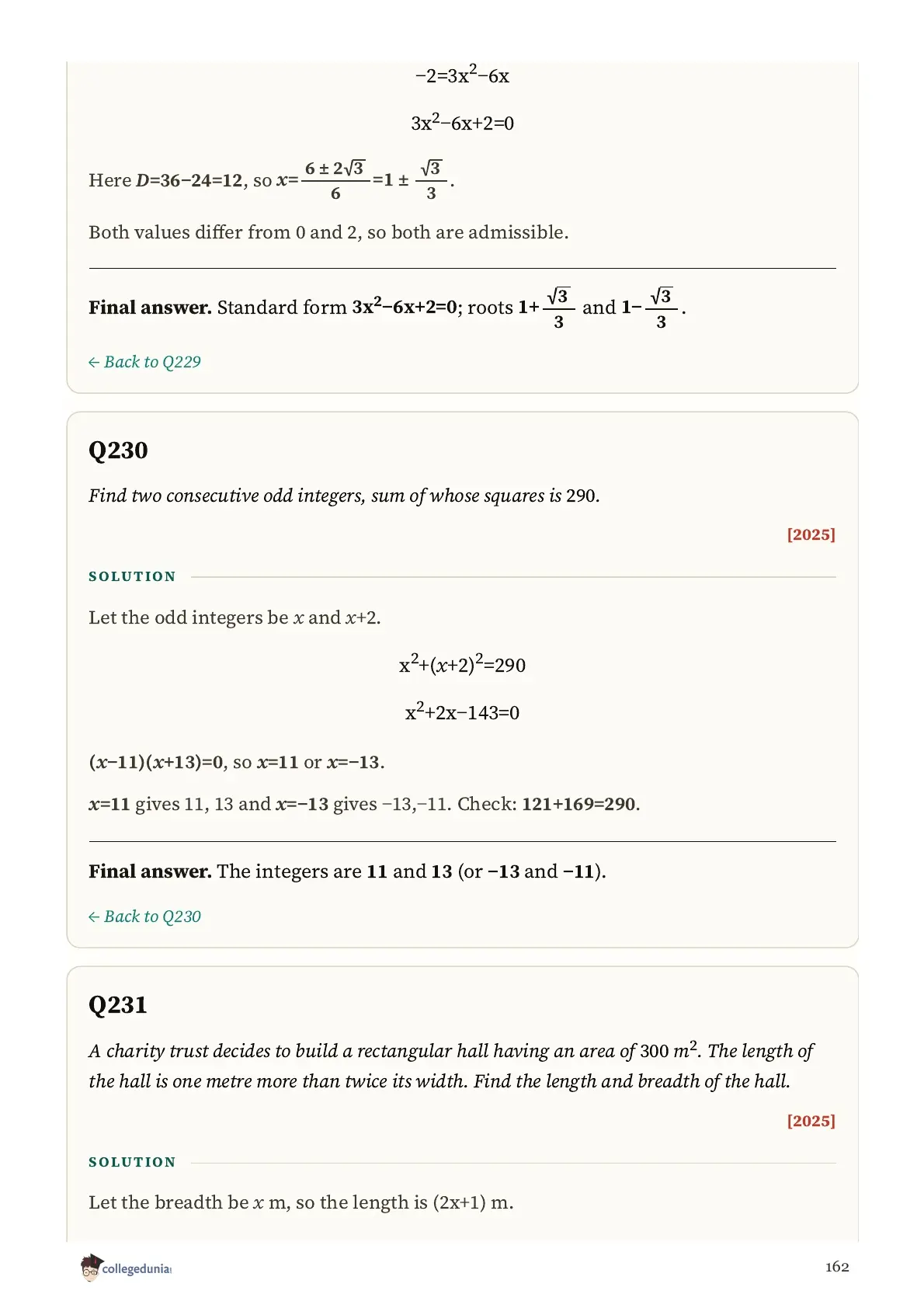
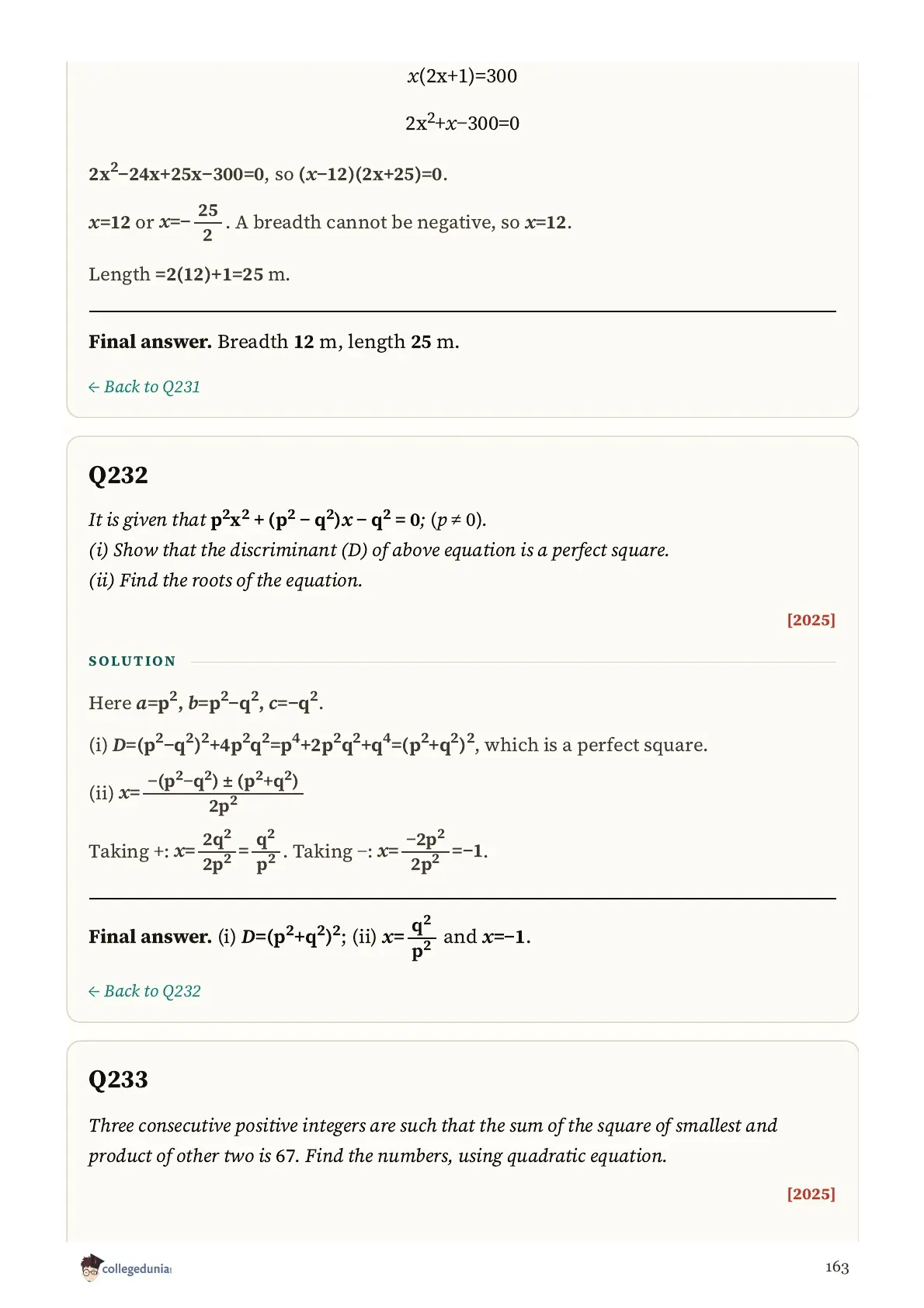
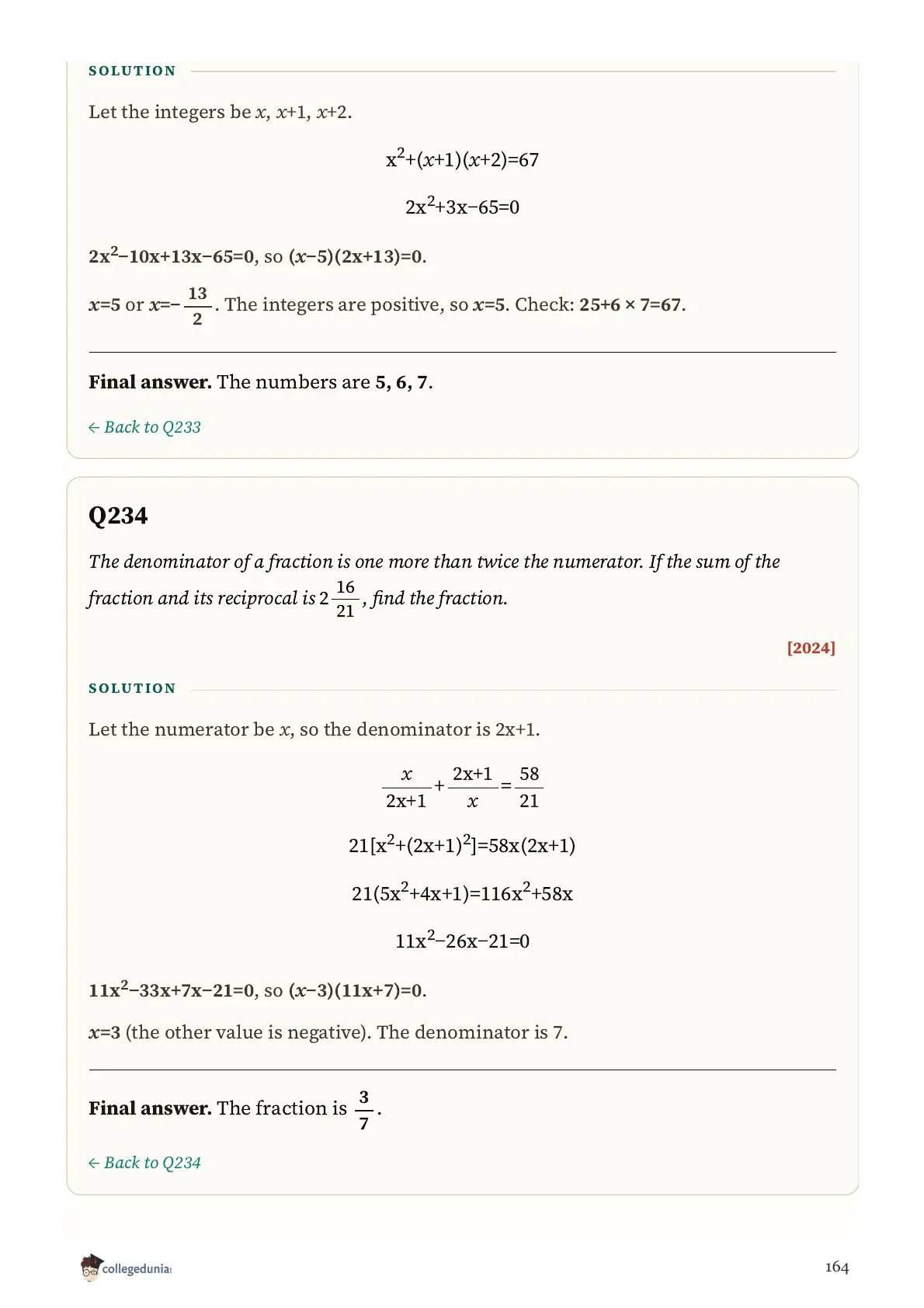
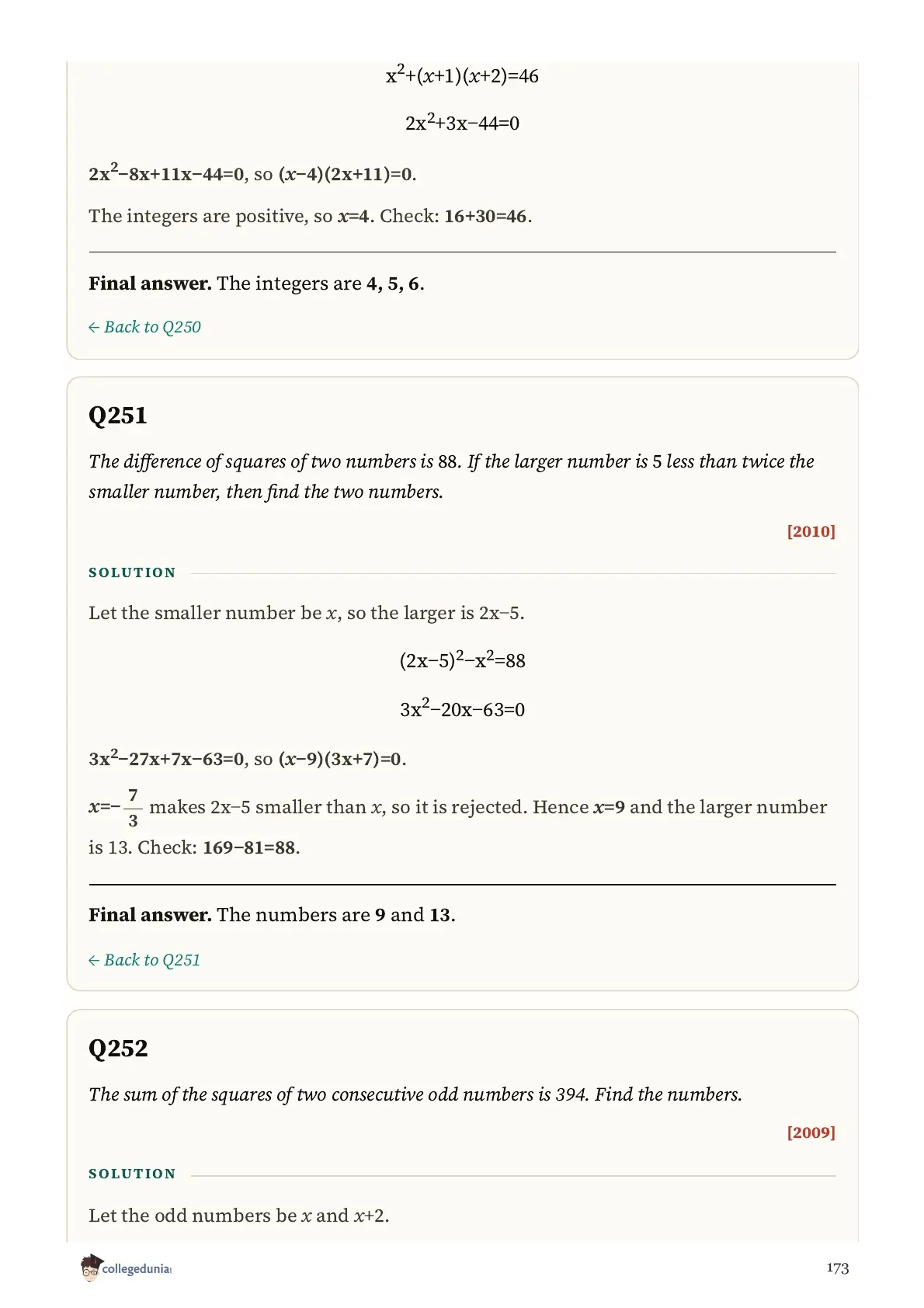
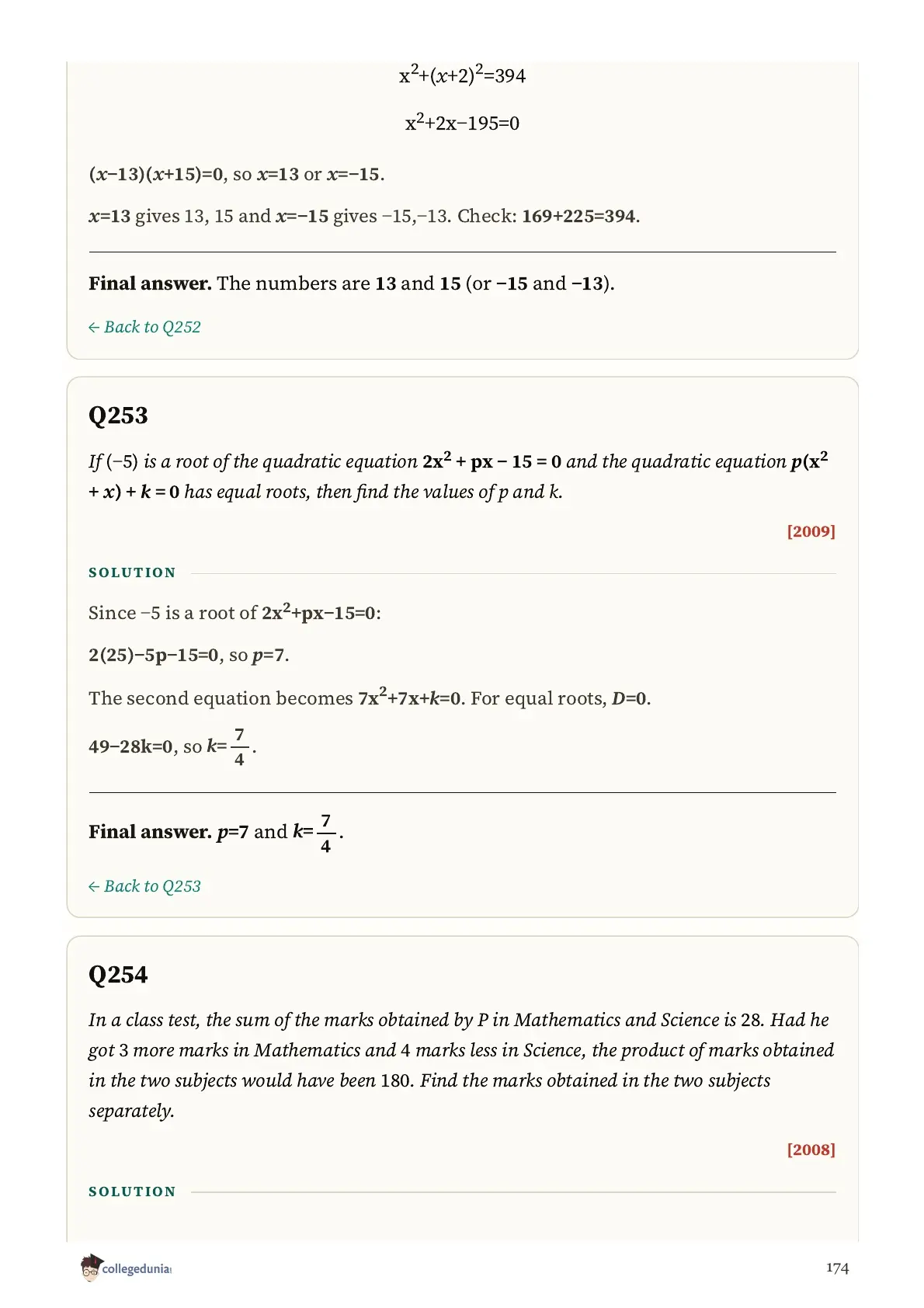
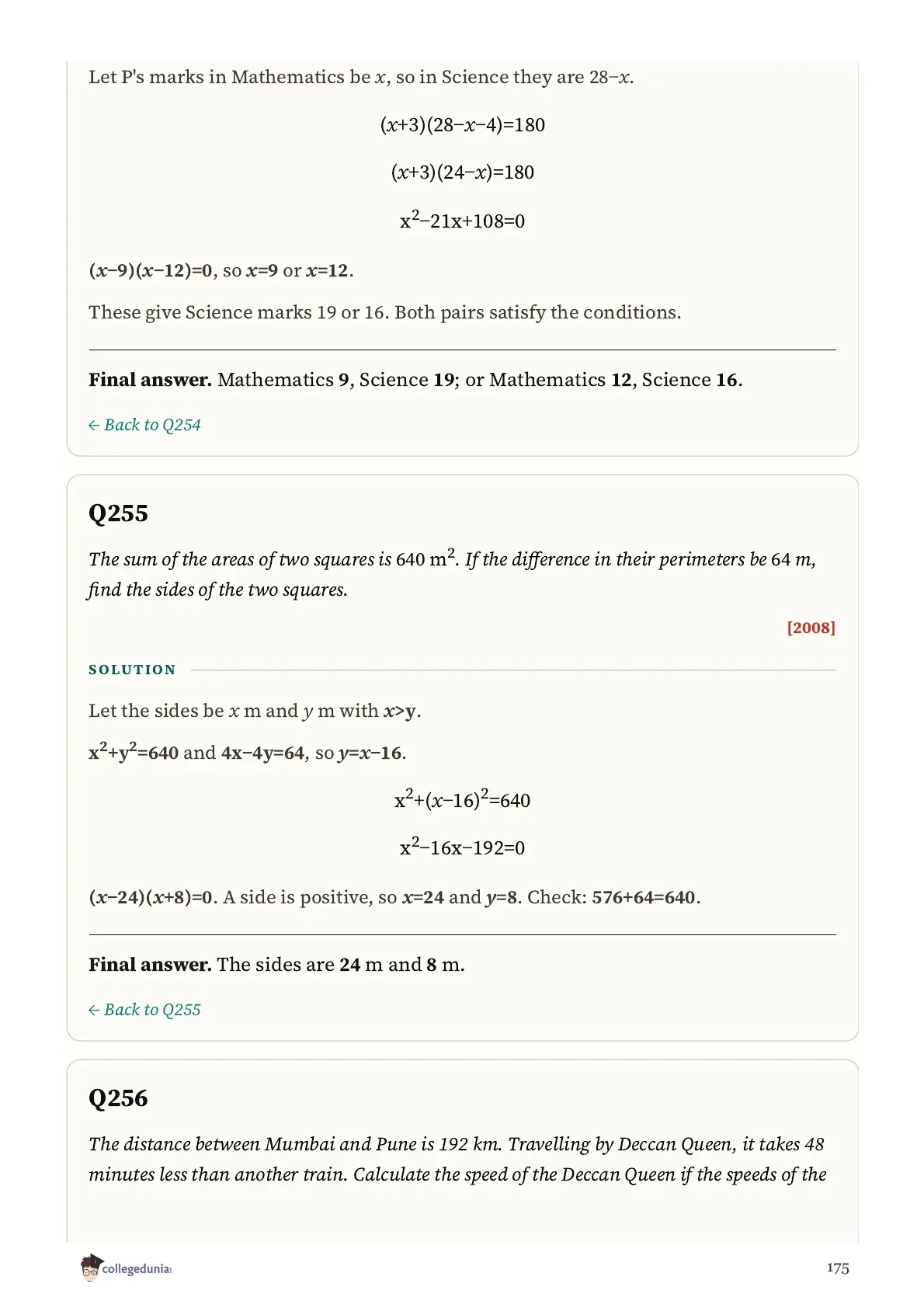
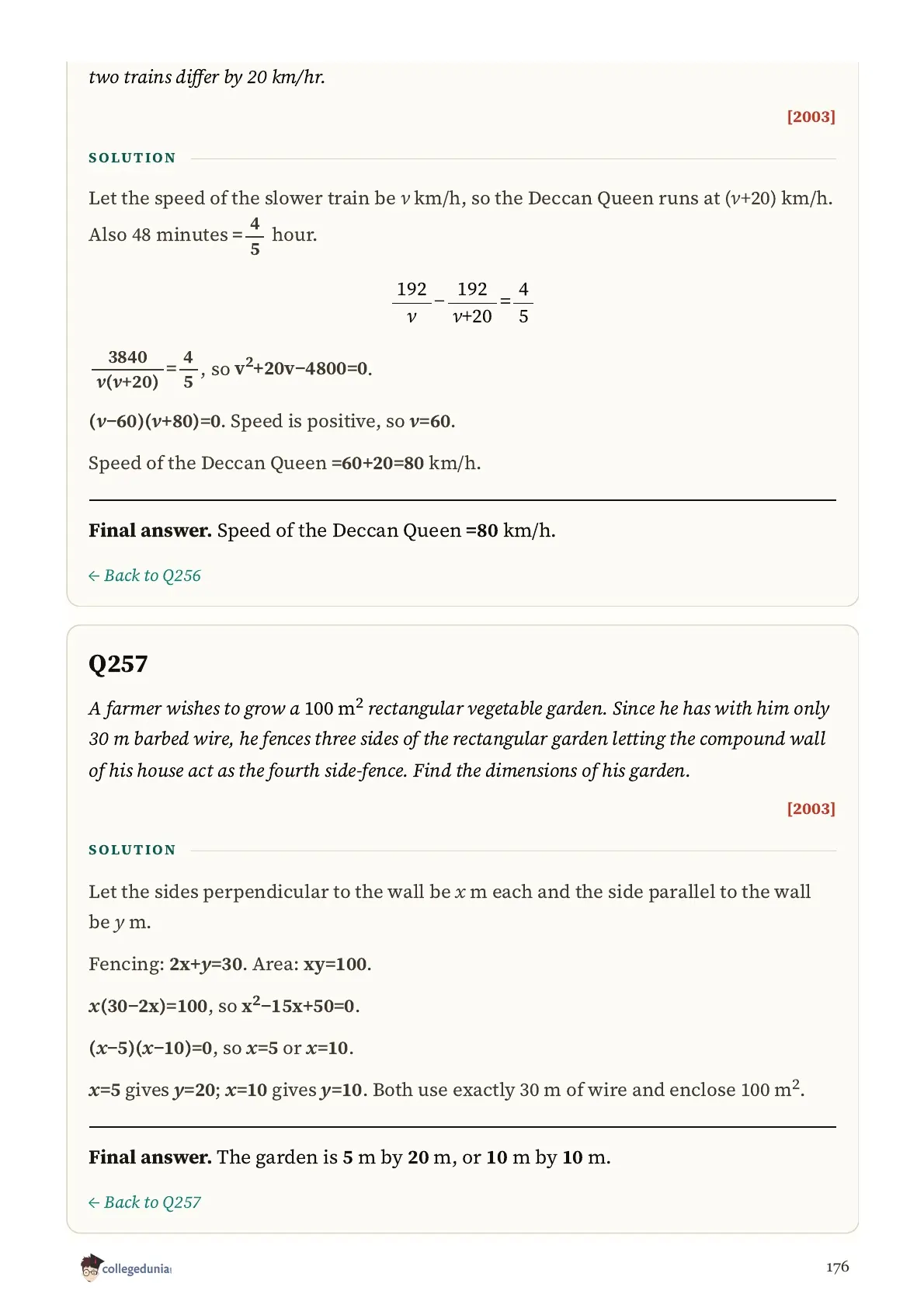

Quadratic Equations Weightage in the Class 10 Maths Paper
CBSE does not print a mark figure for Quadratic Equations alone. The Class 10 Maths (041) paper is 80 theory marks, and Algebra is reported at 20 of them, shared by four chapters. That unit figure comes from prep sites quoting the 2026-27 curriculum and is unofficial, so check the current document on cbseacademic.nic.in. In this set the 1-mark and 4-mark questions are the commonest forms.
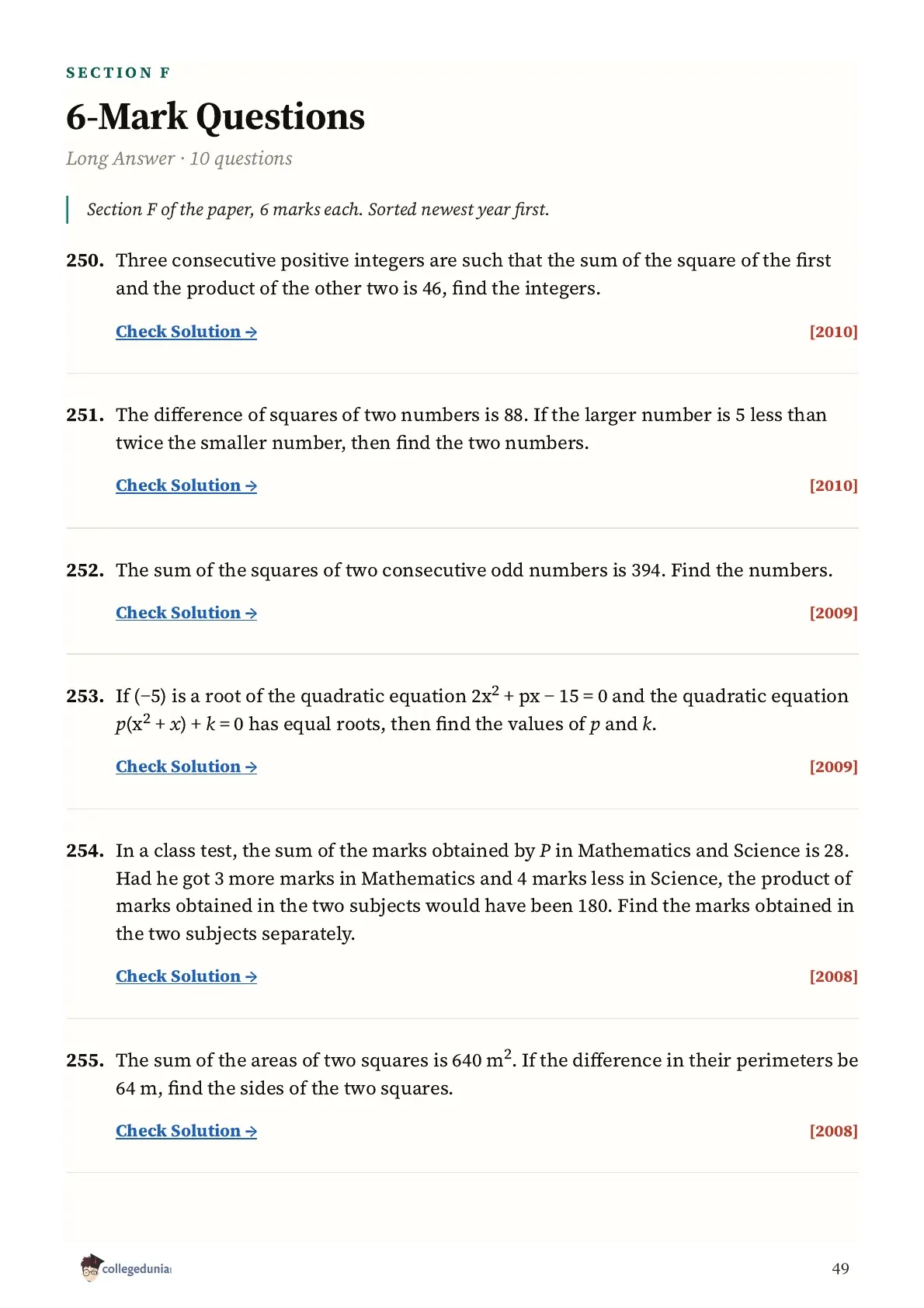
The table shows how many questions the set holds at each mark value.
| Marks per Question | Questions in the Set |
|---|---|
| 1 mark | 66 |
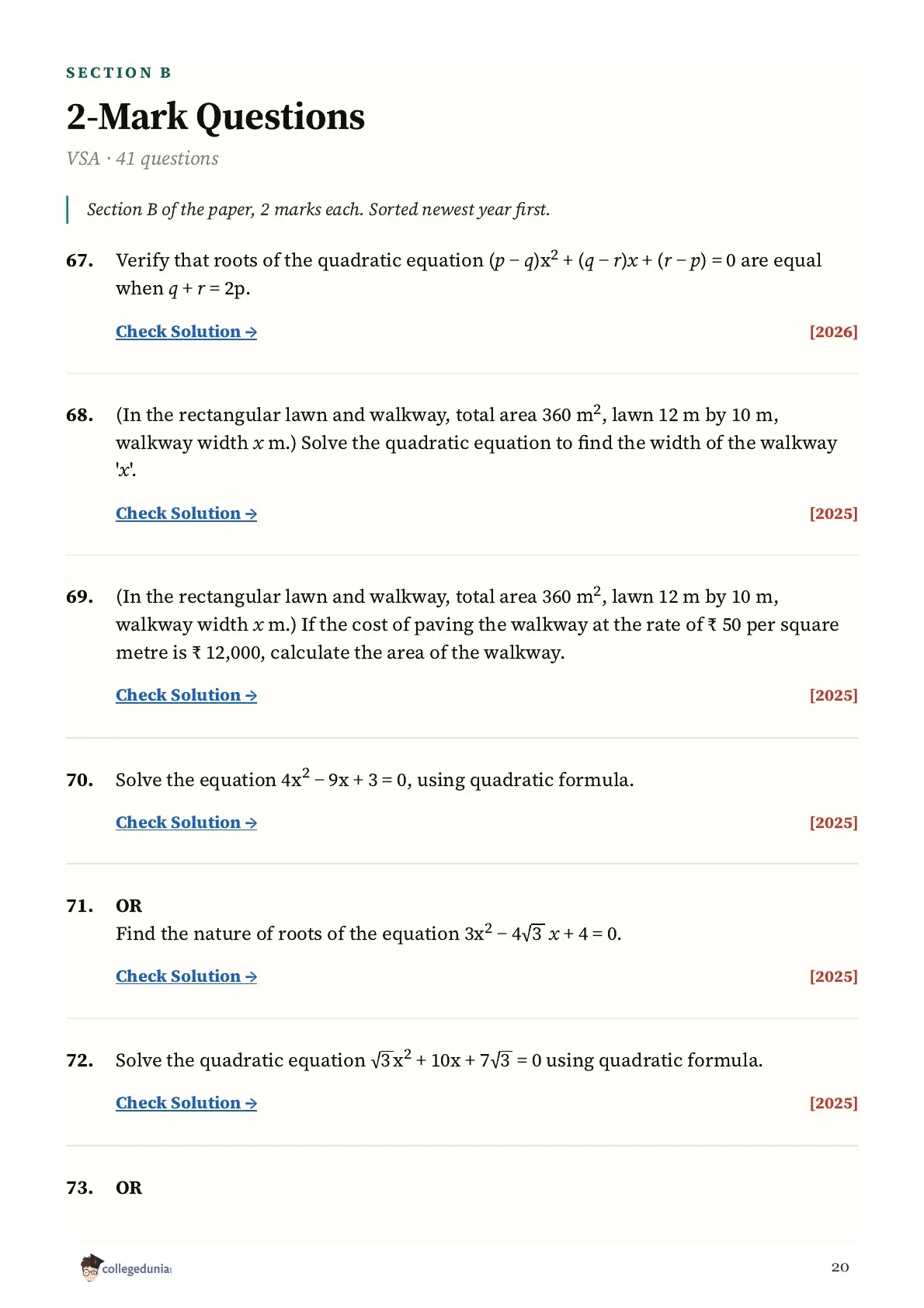
| 2 marks | 41 |
| 3 marks | 48 |
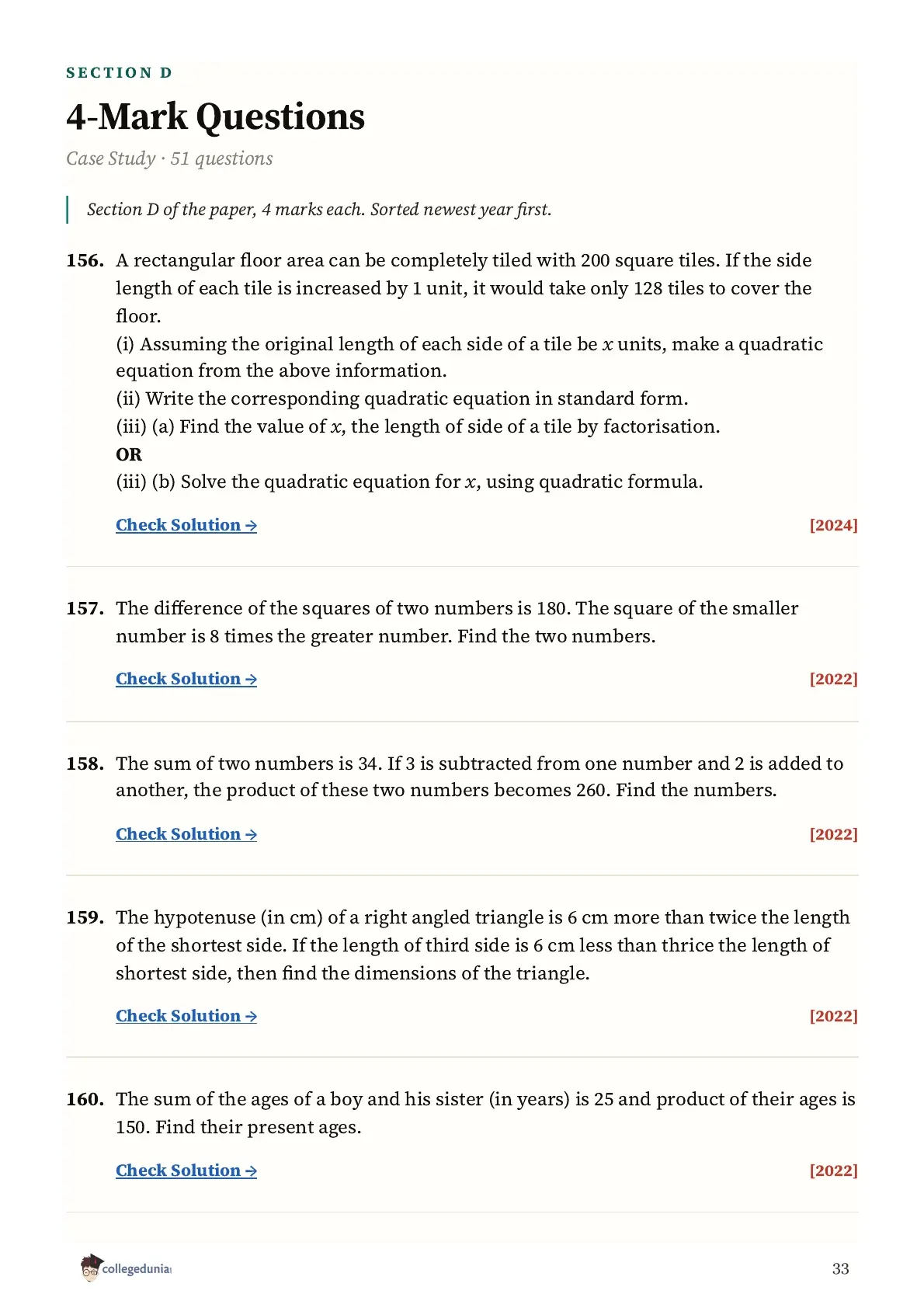
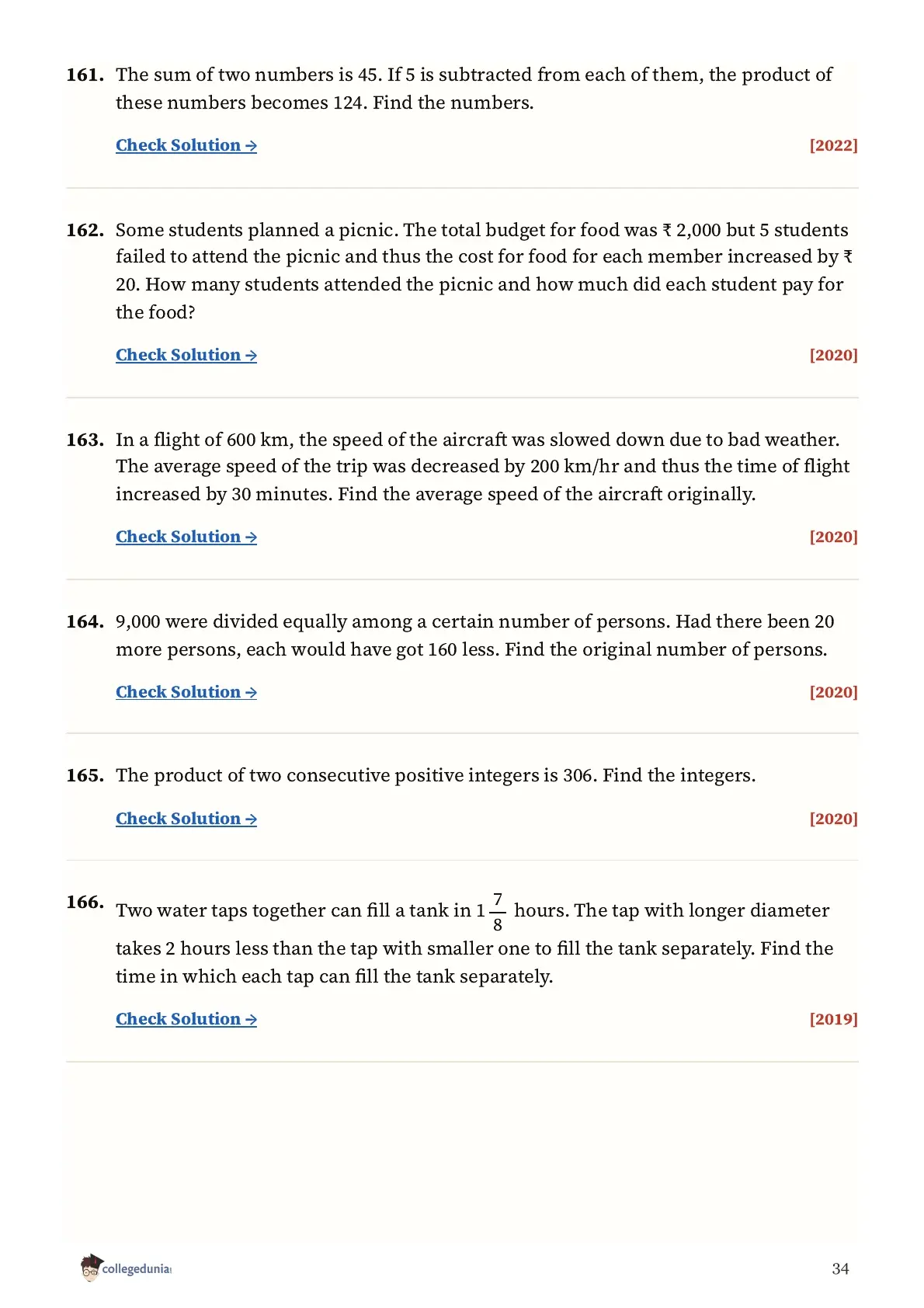
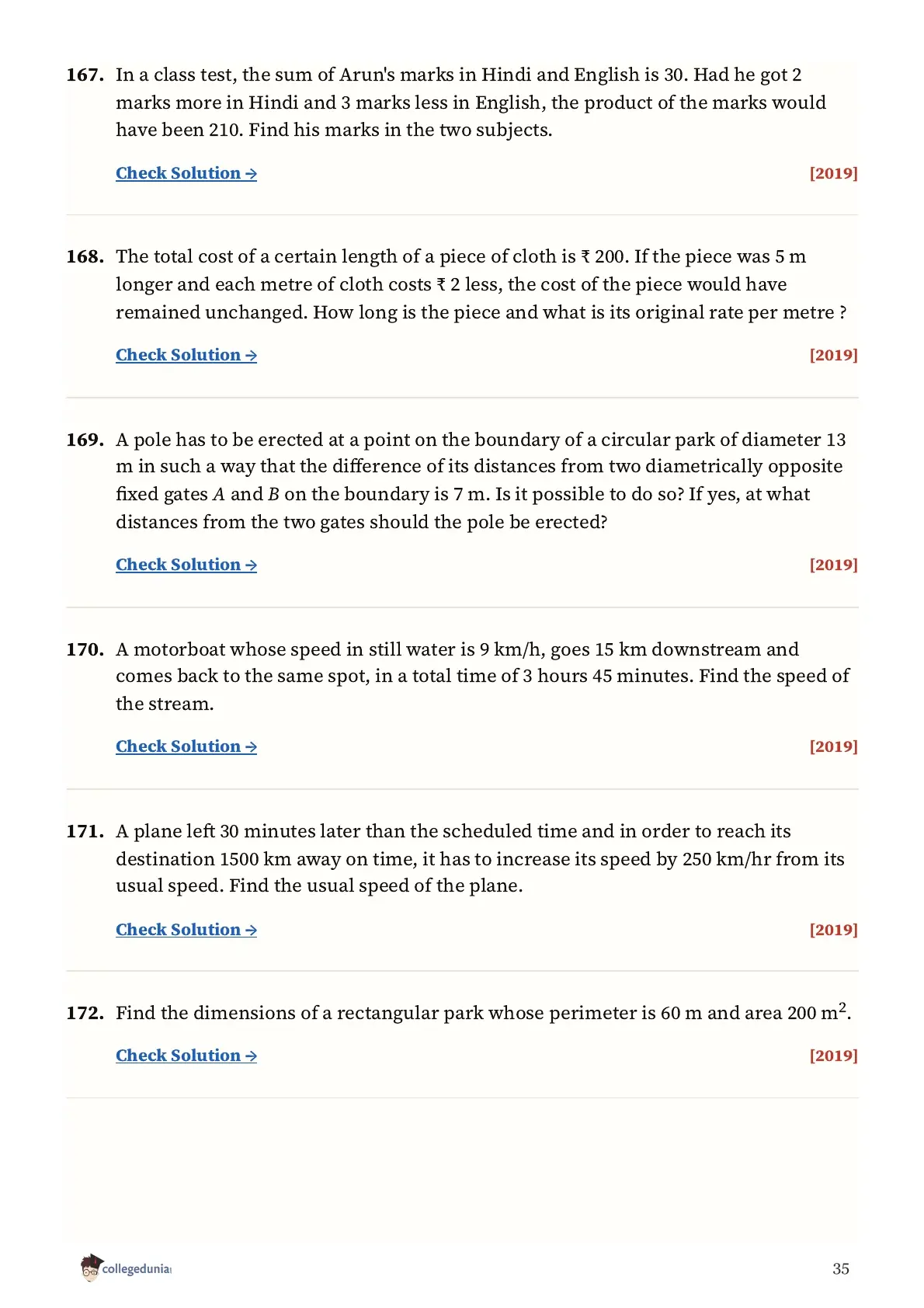
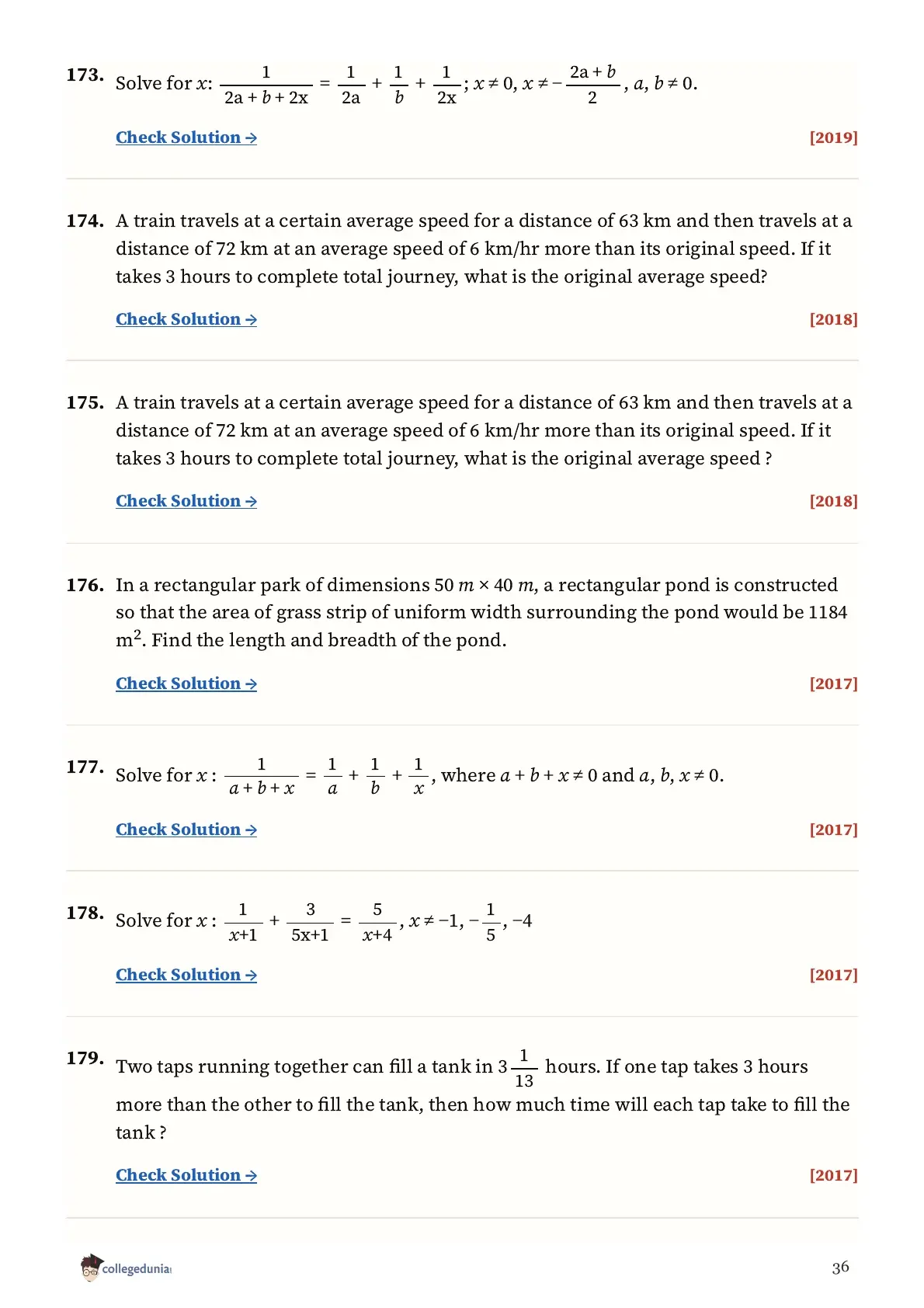
| 4 marks | 51 |
| 5 marks | 43 |
| 6 marks | 10 |
Quadratic Equations Questions by Topic
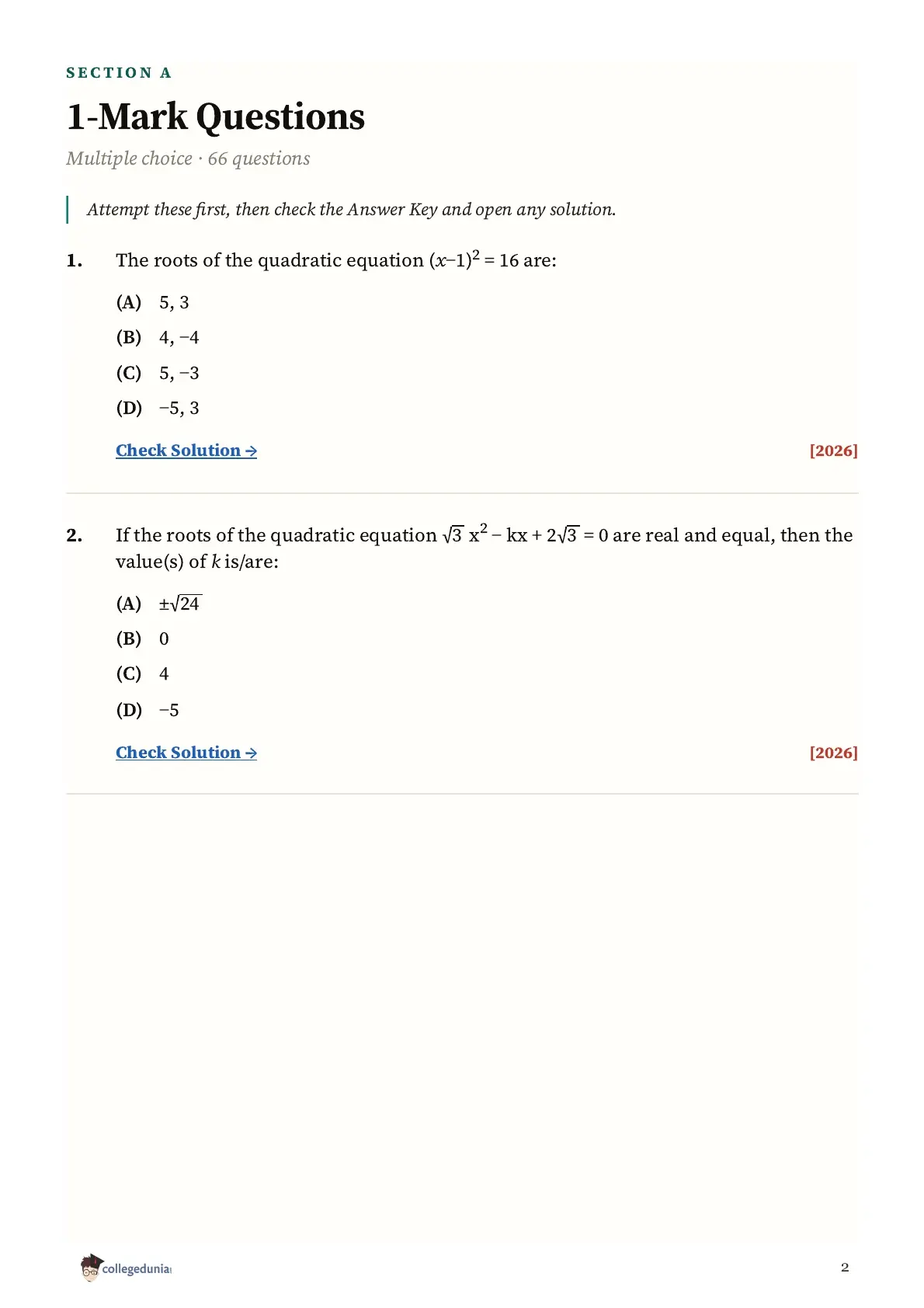
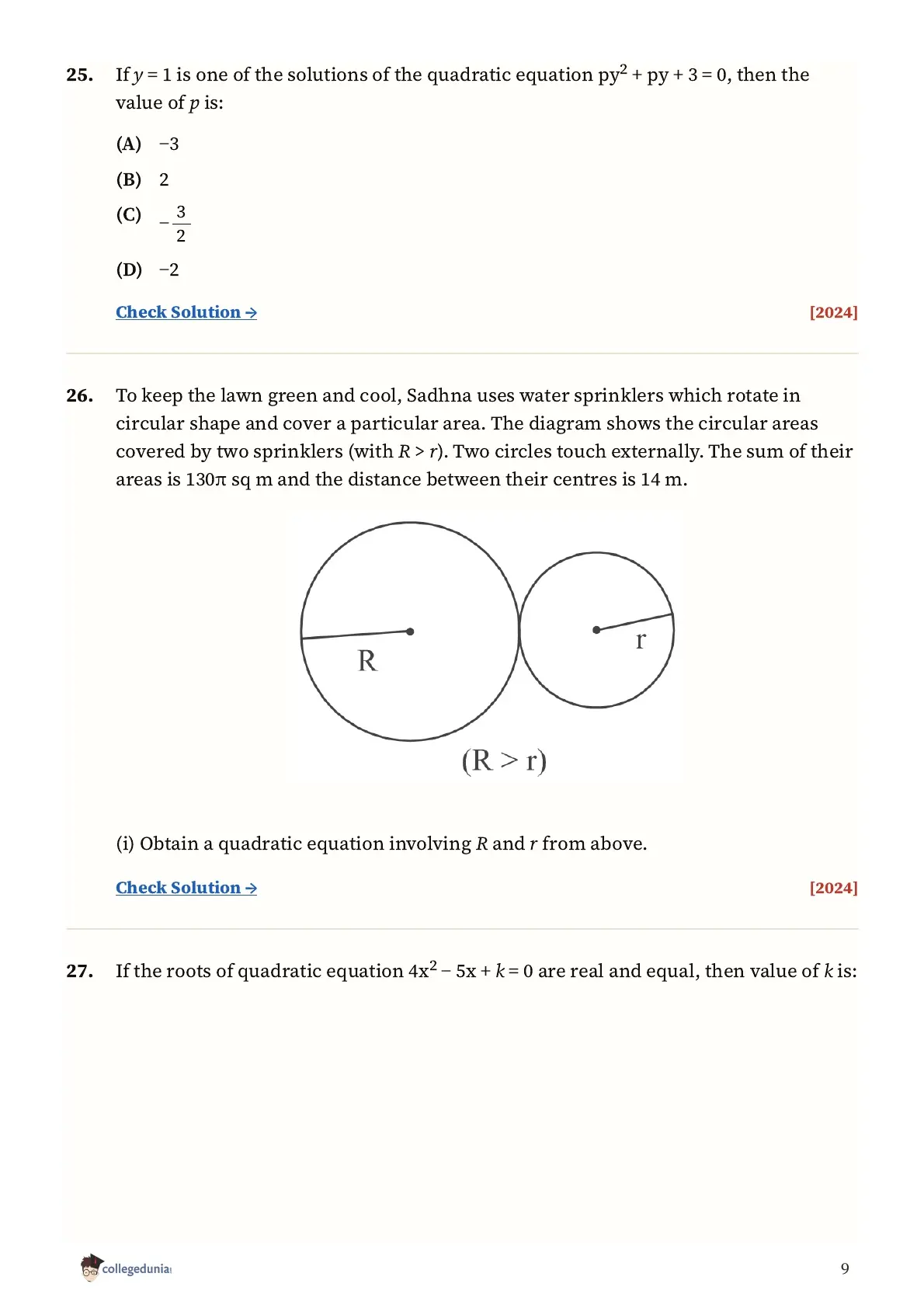
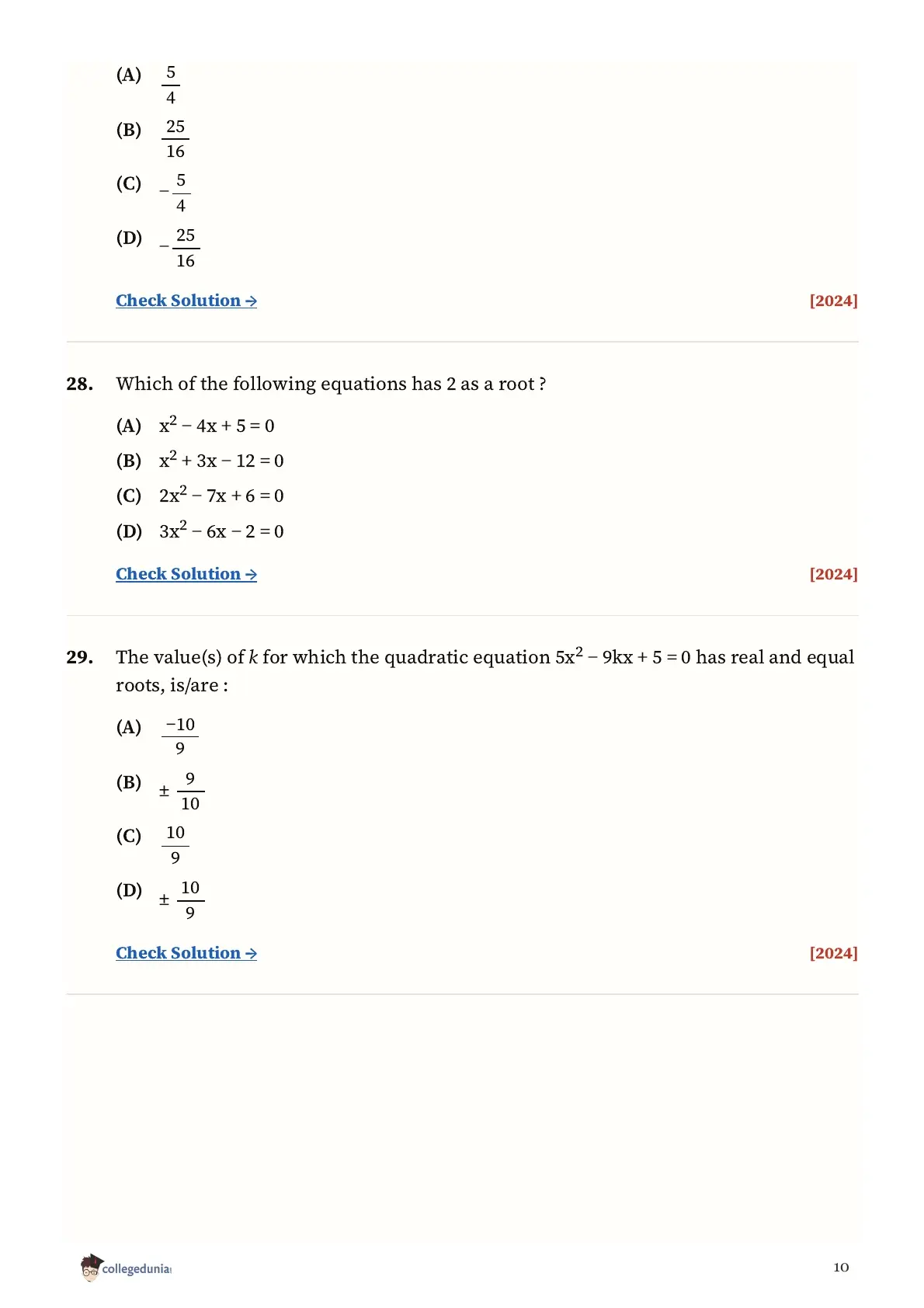
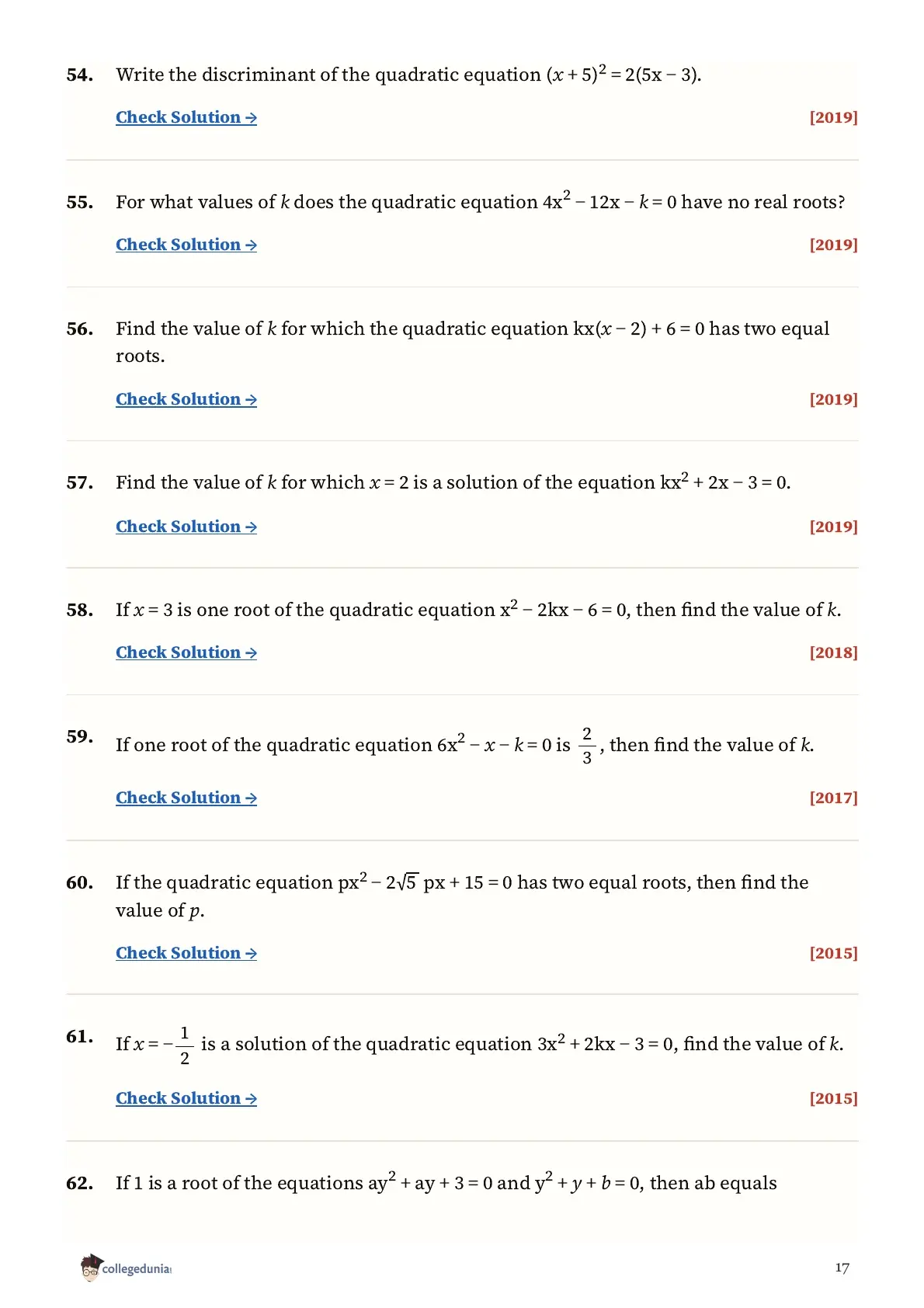
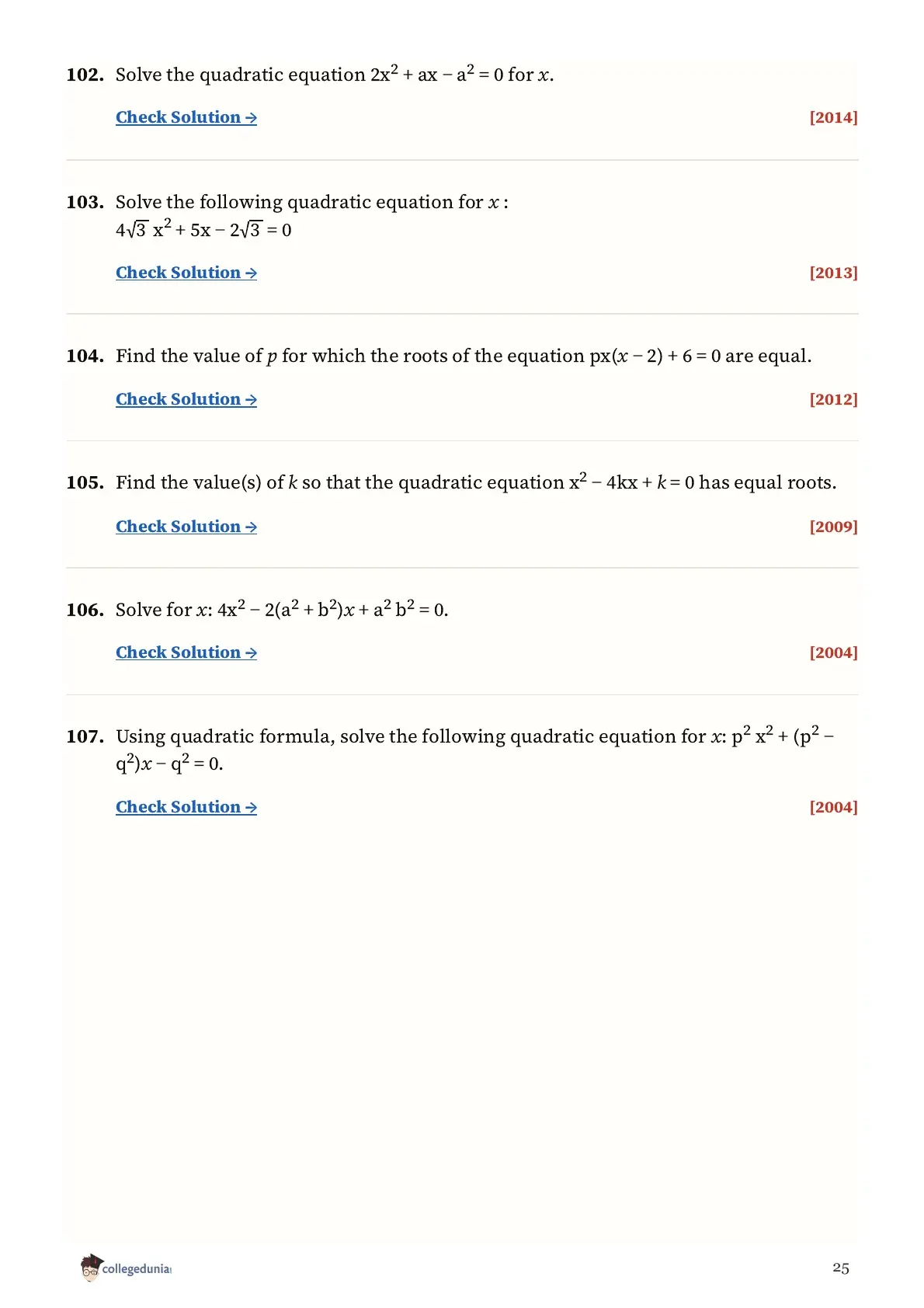
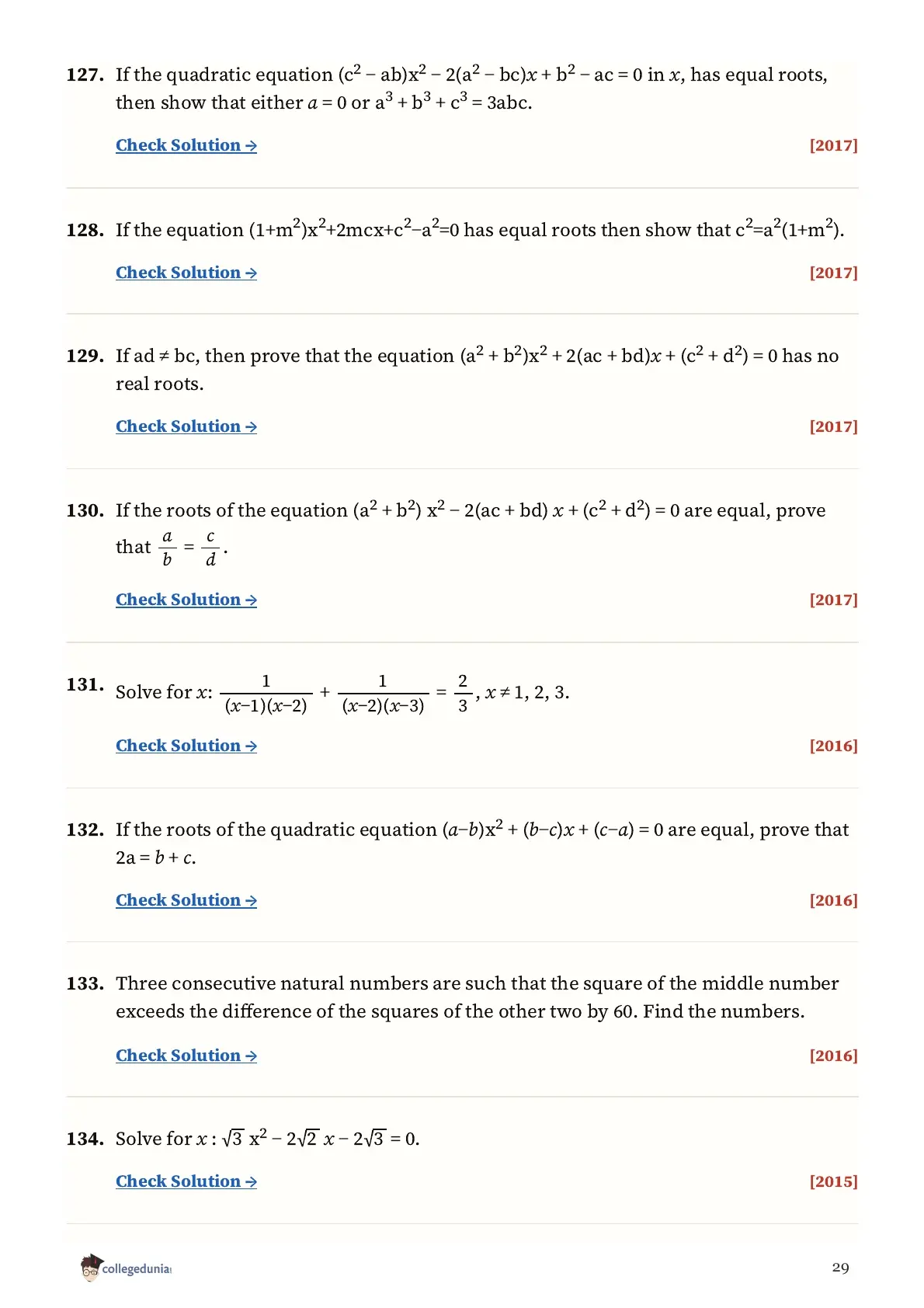
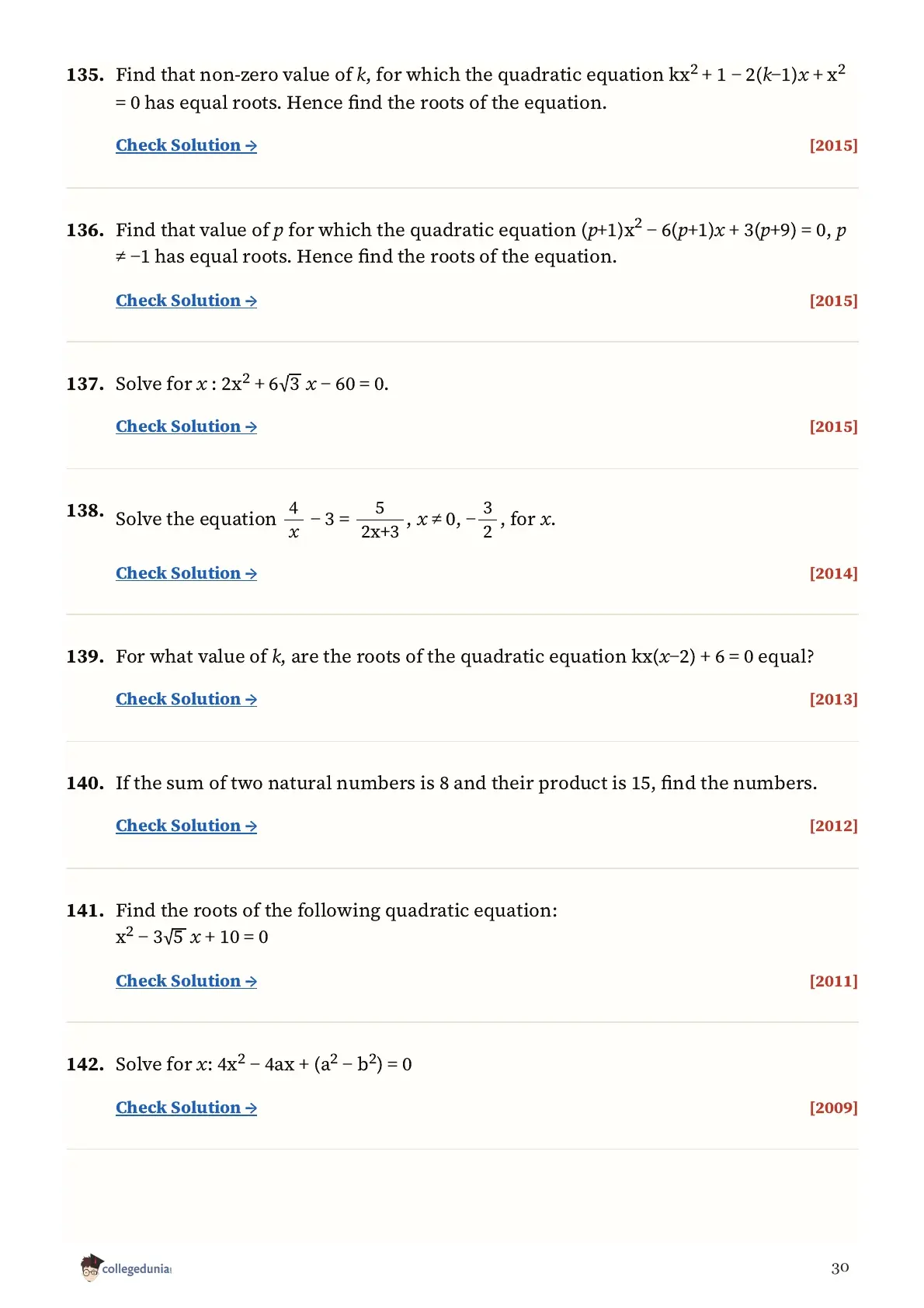
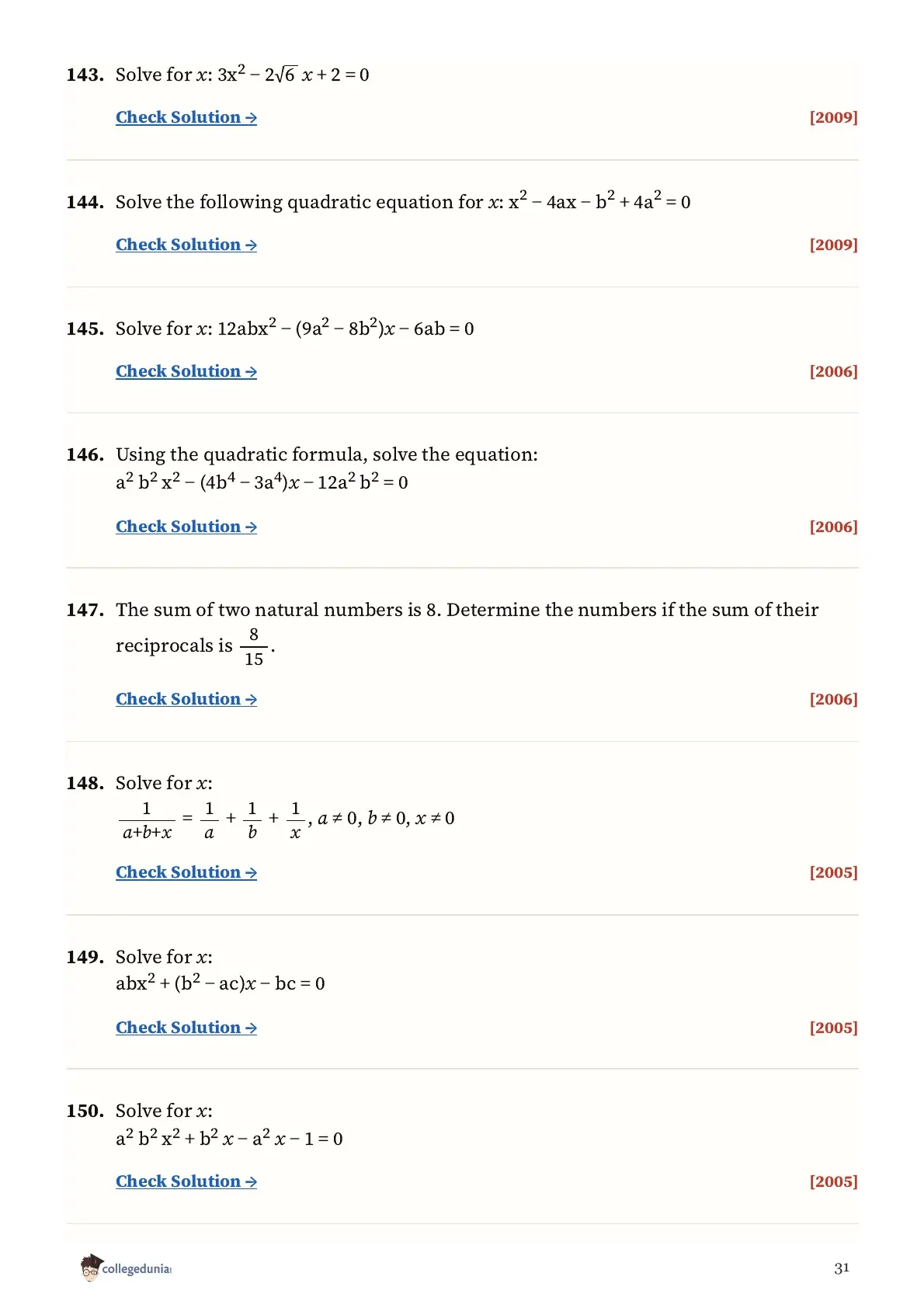
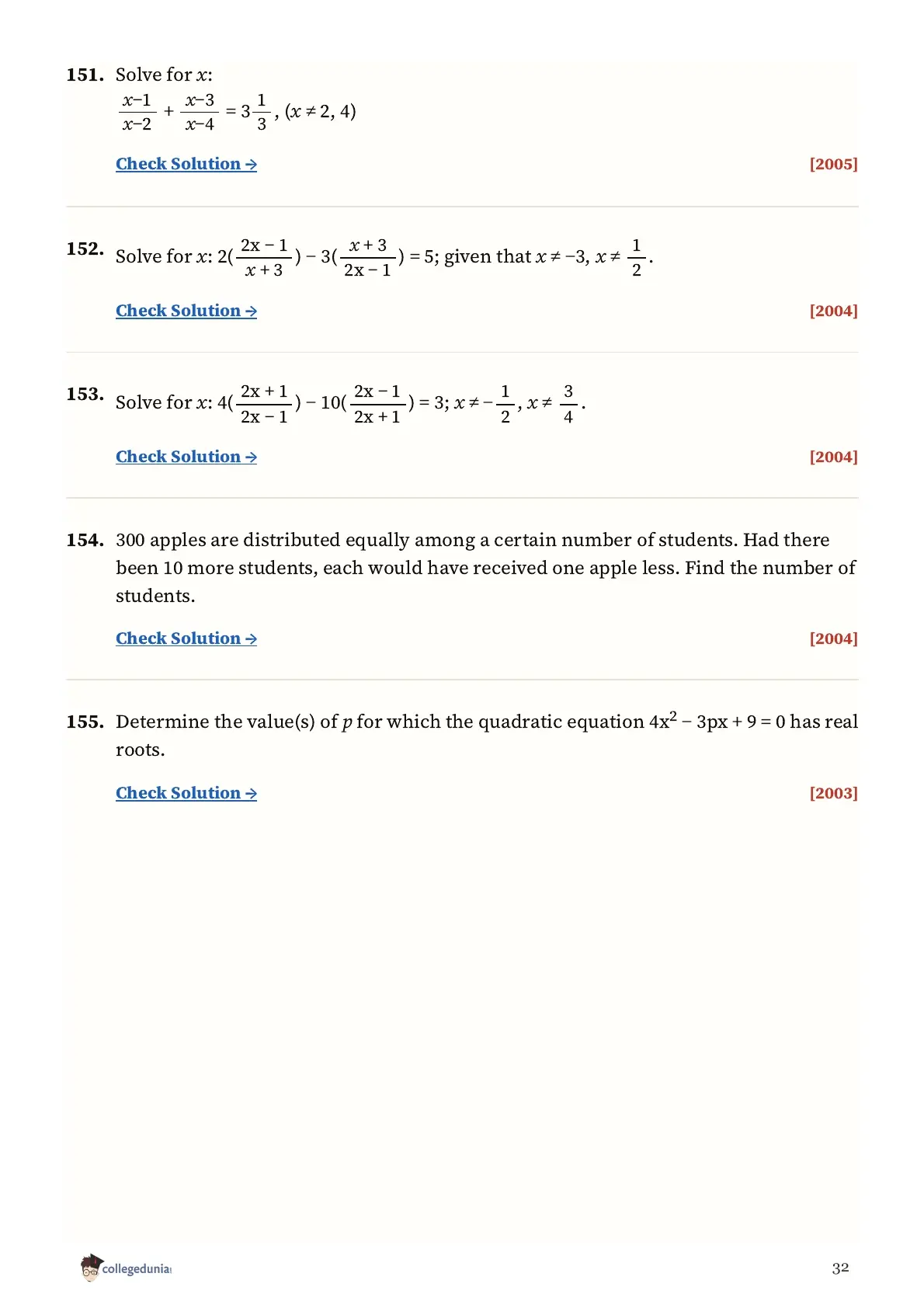
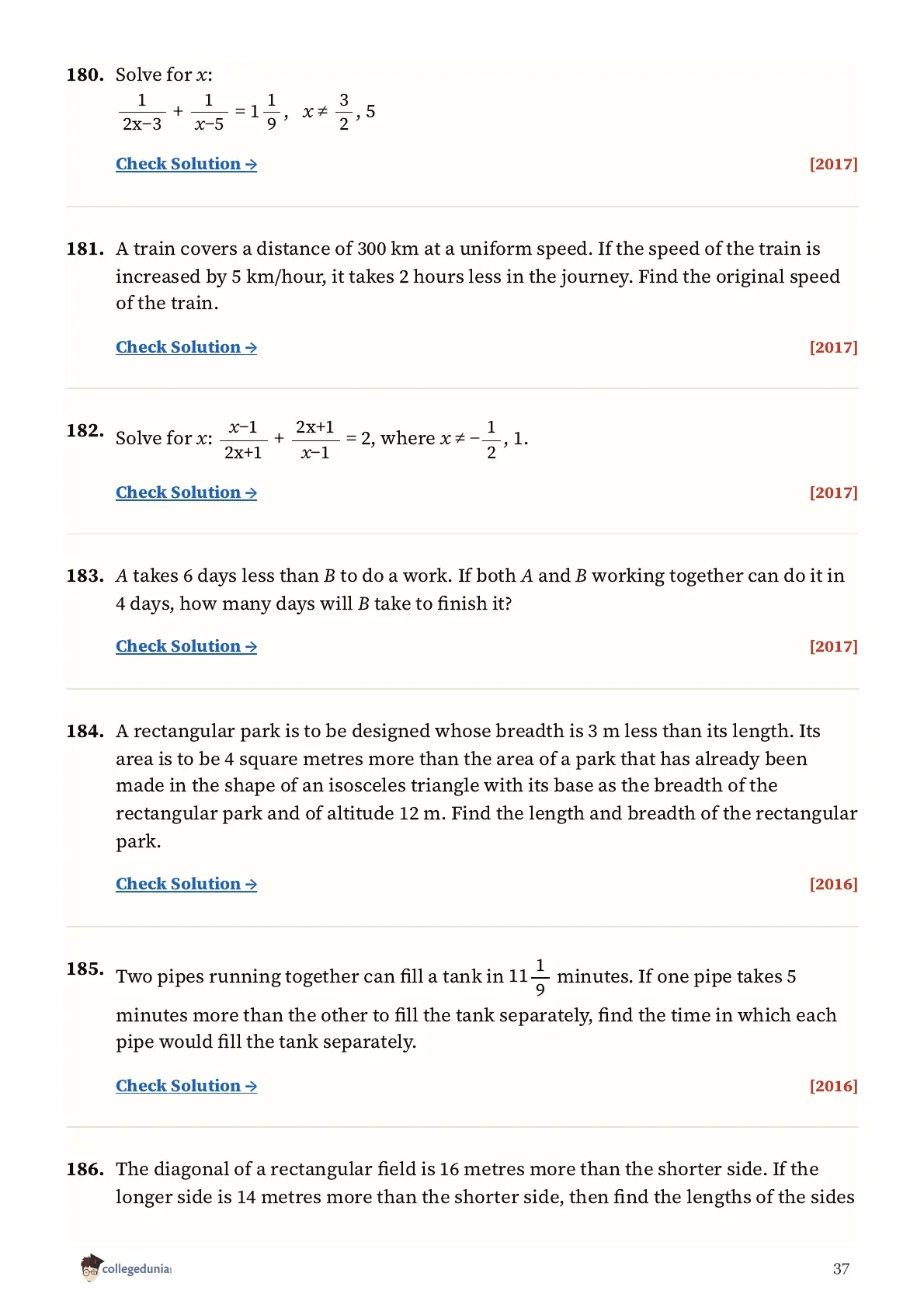
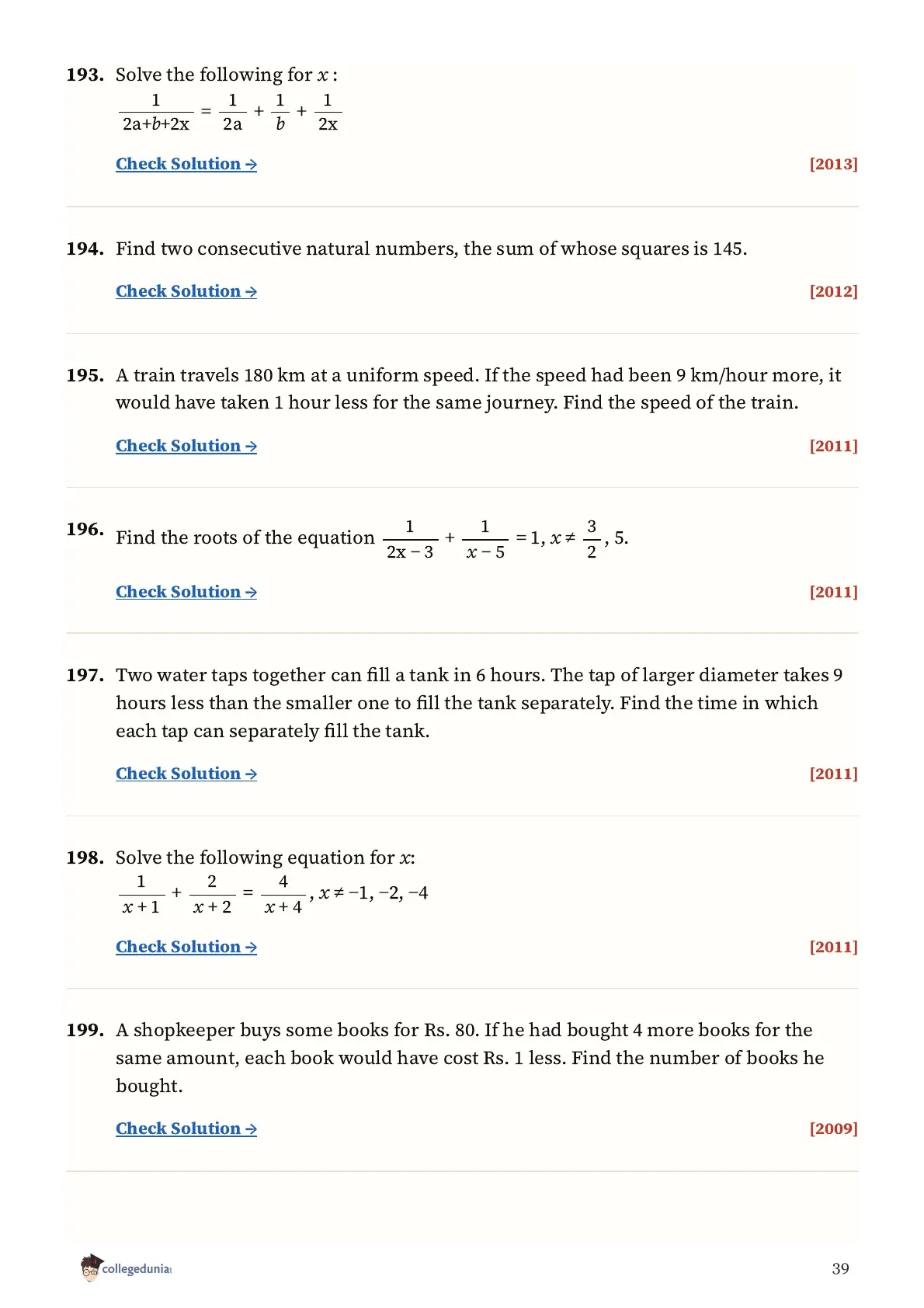
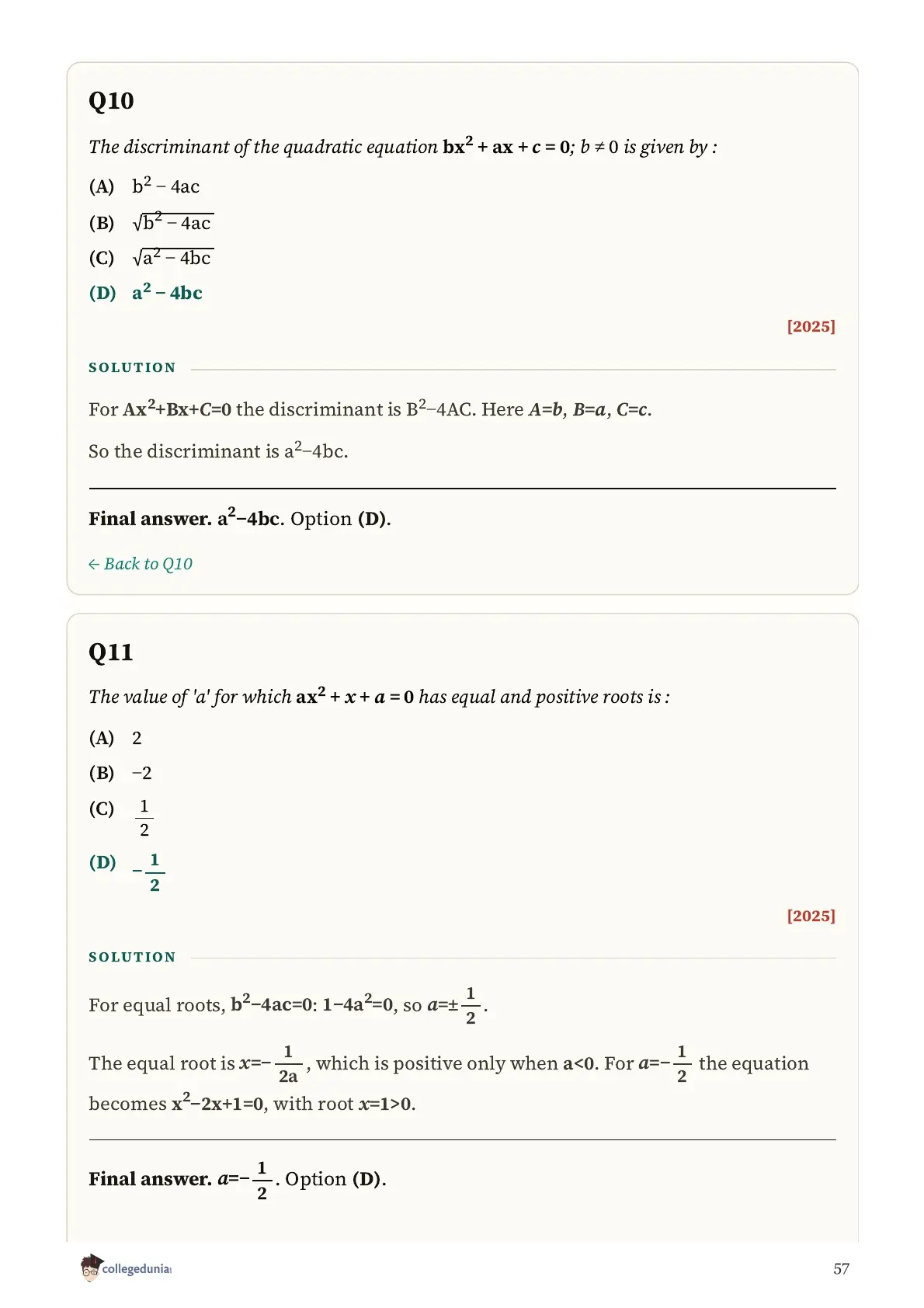
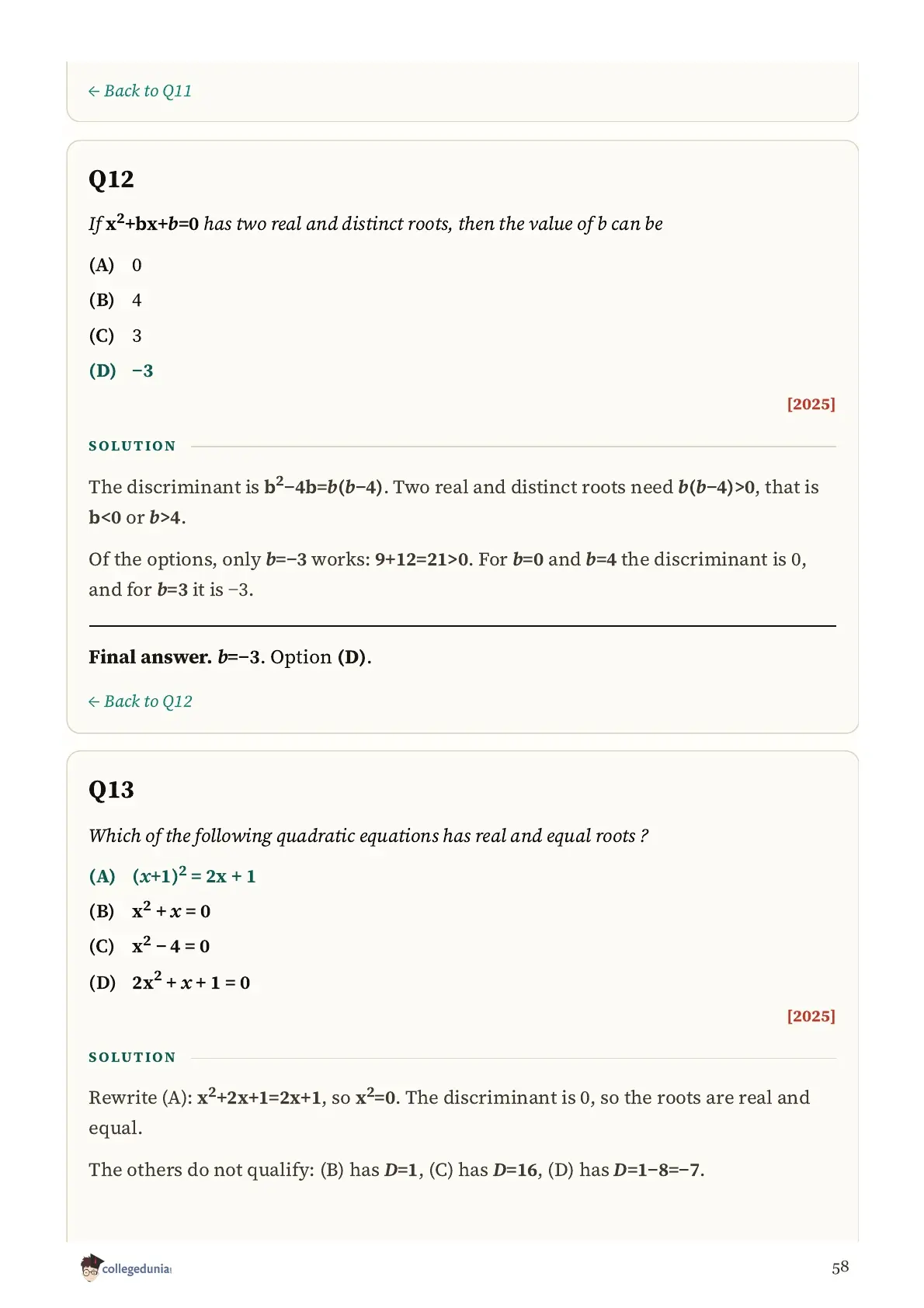
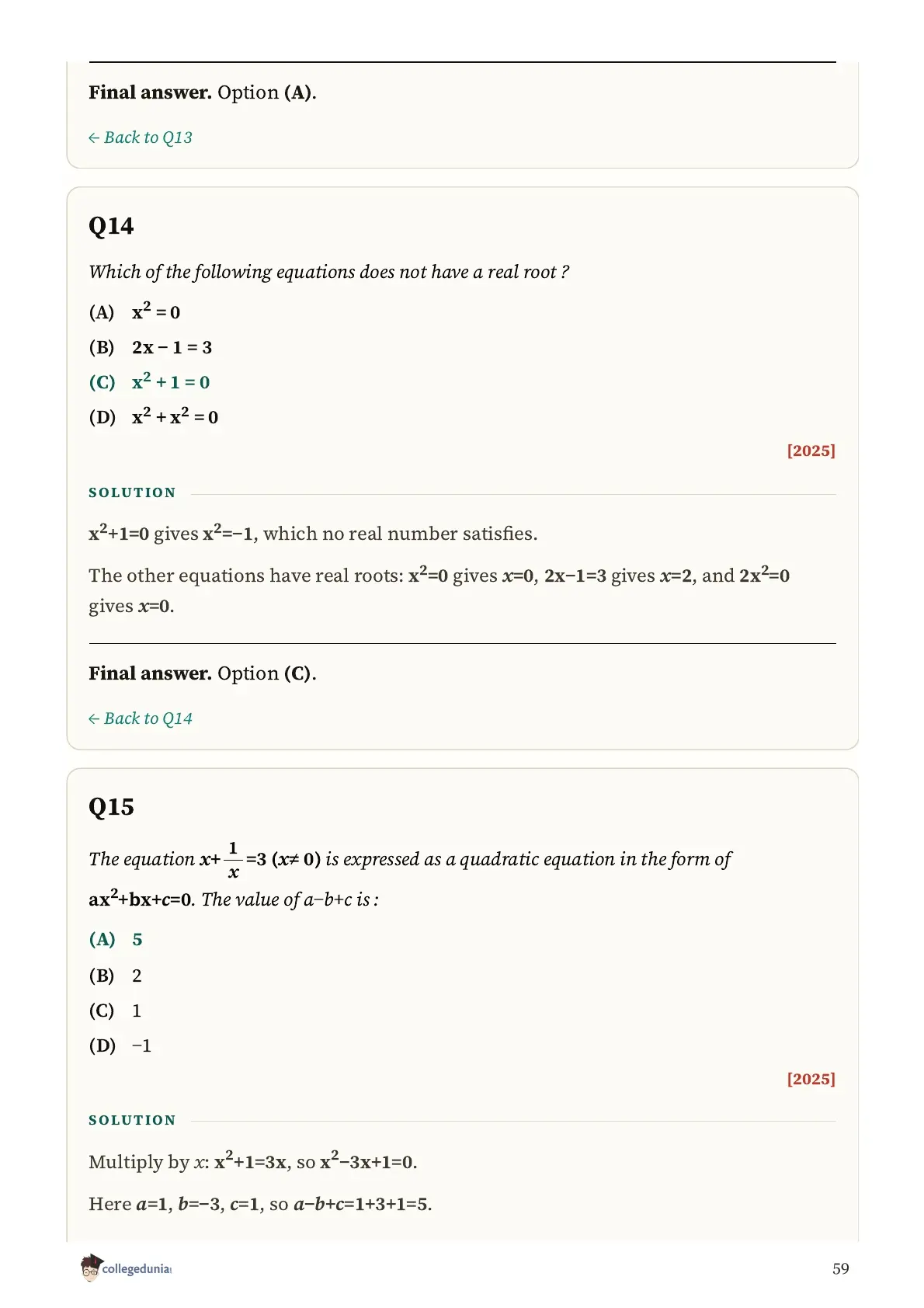
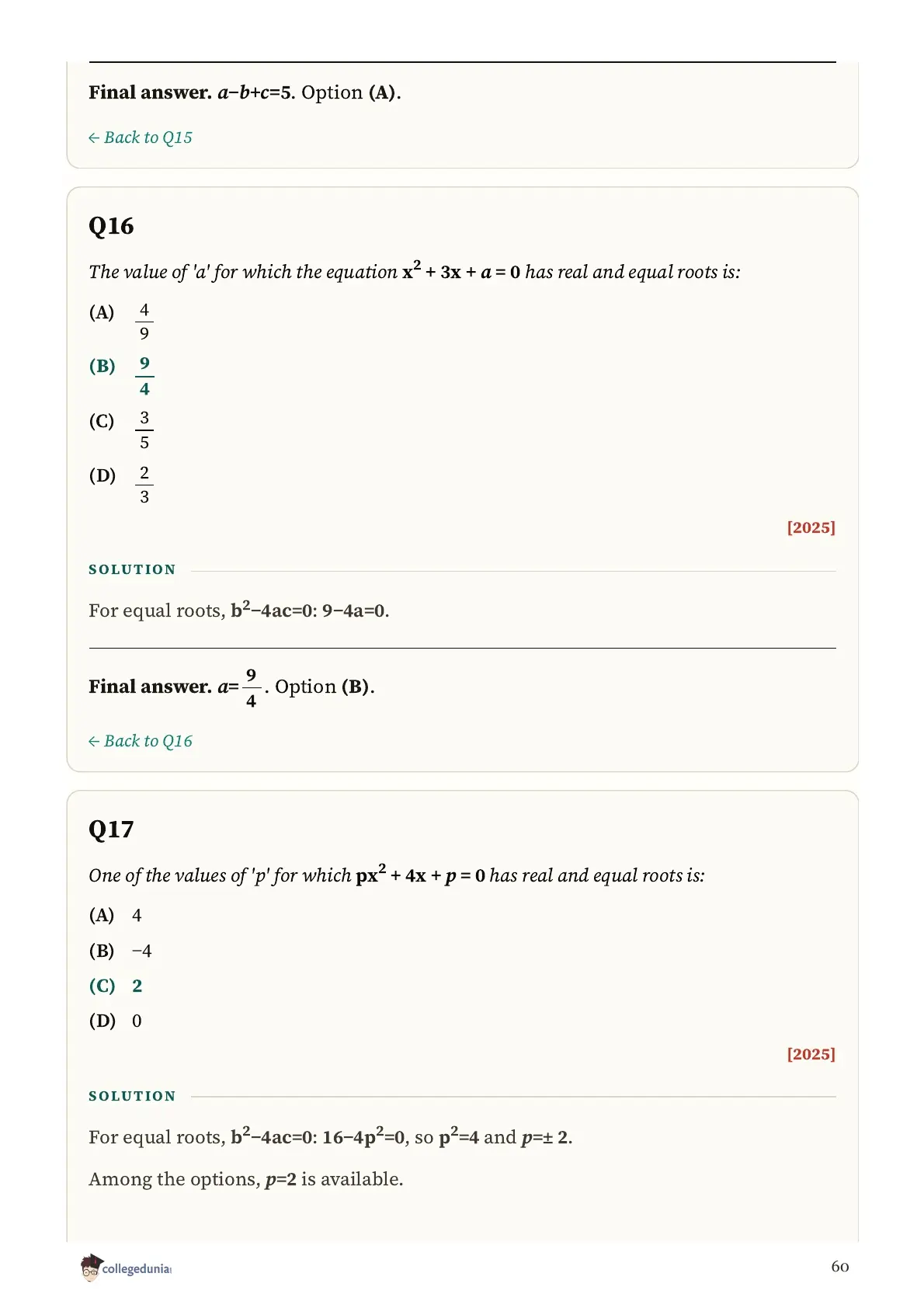
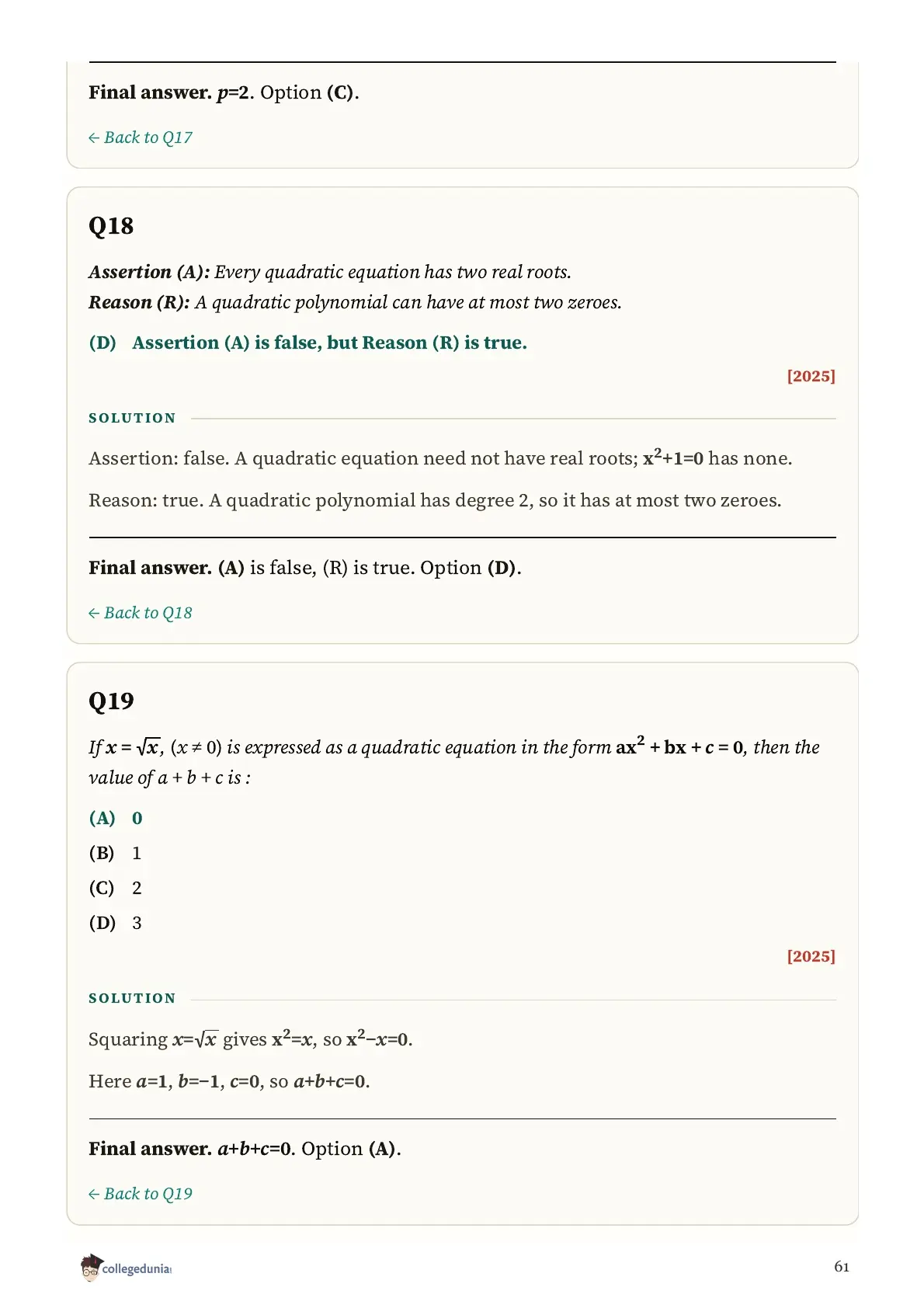
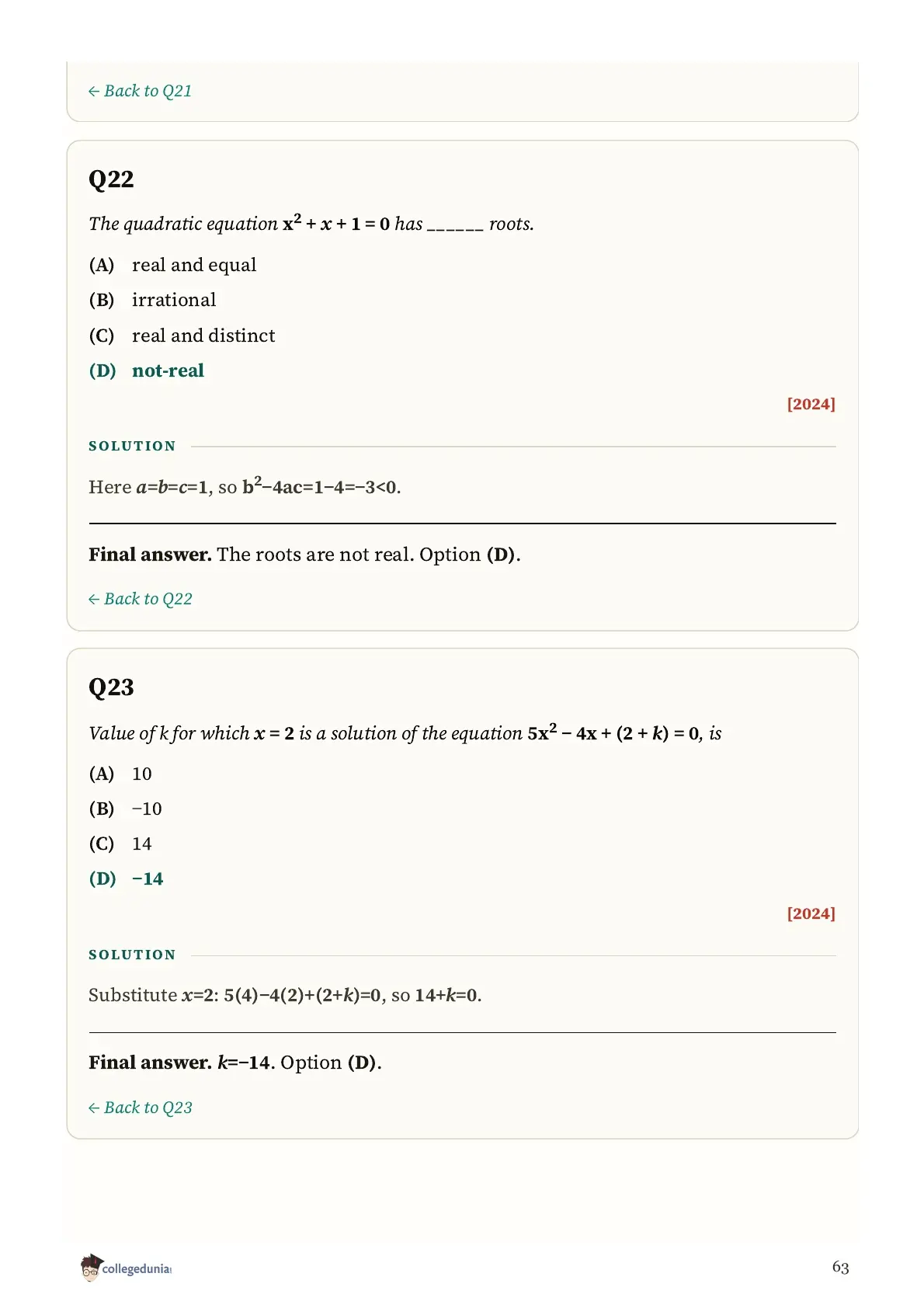
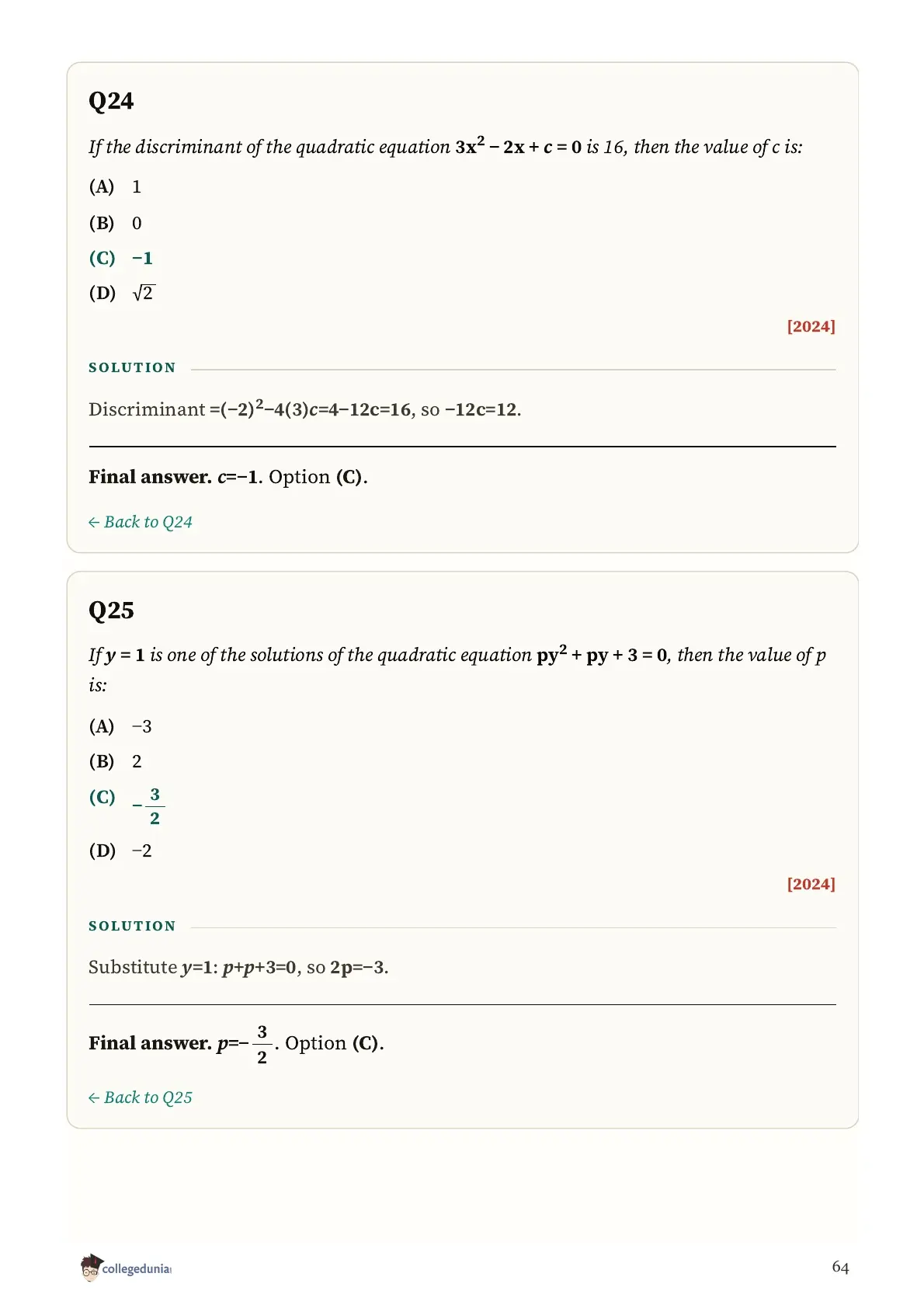
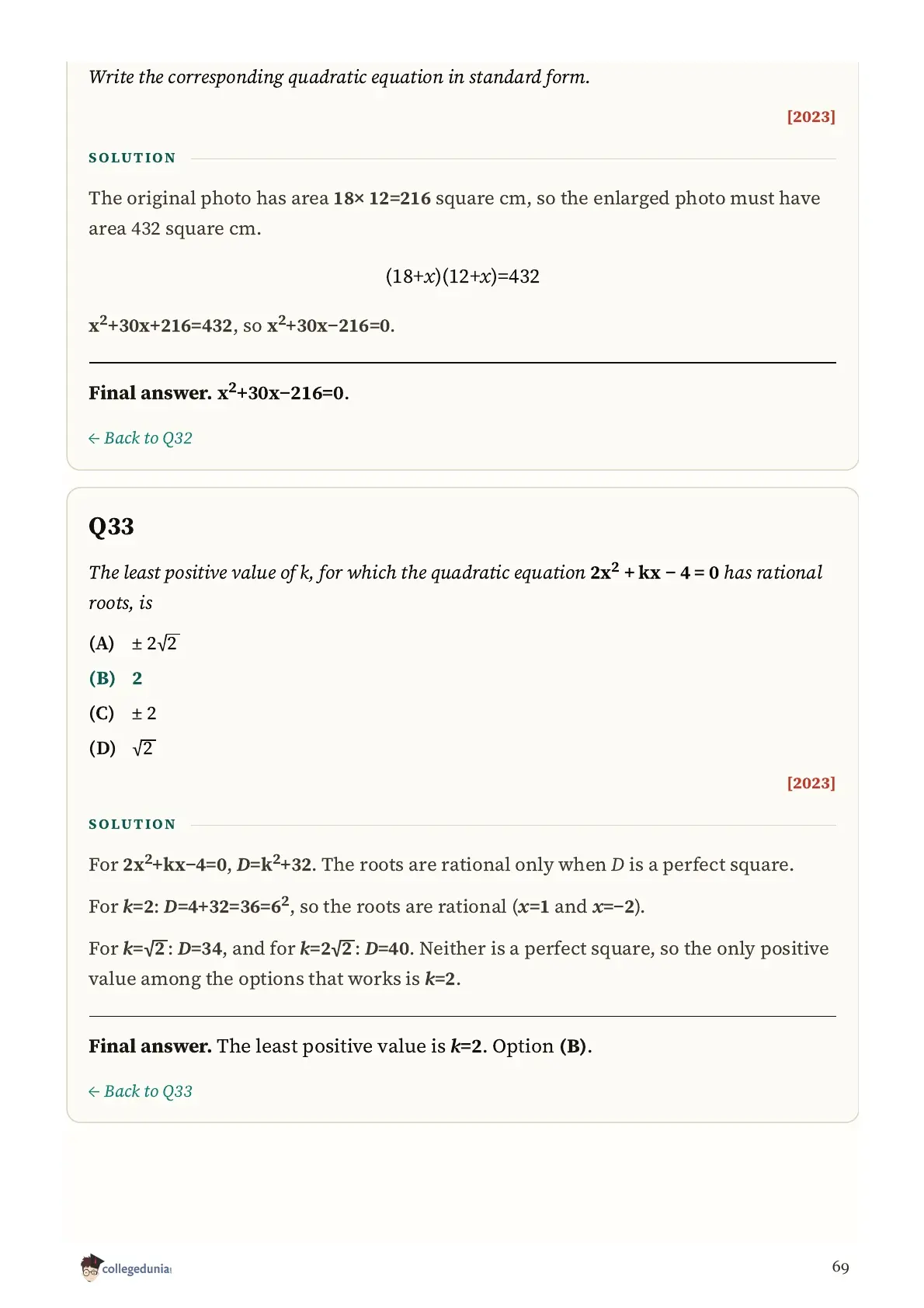
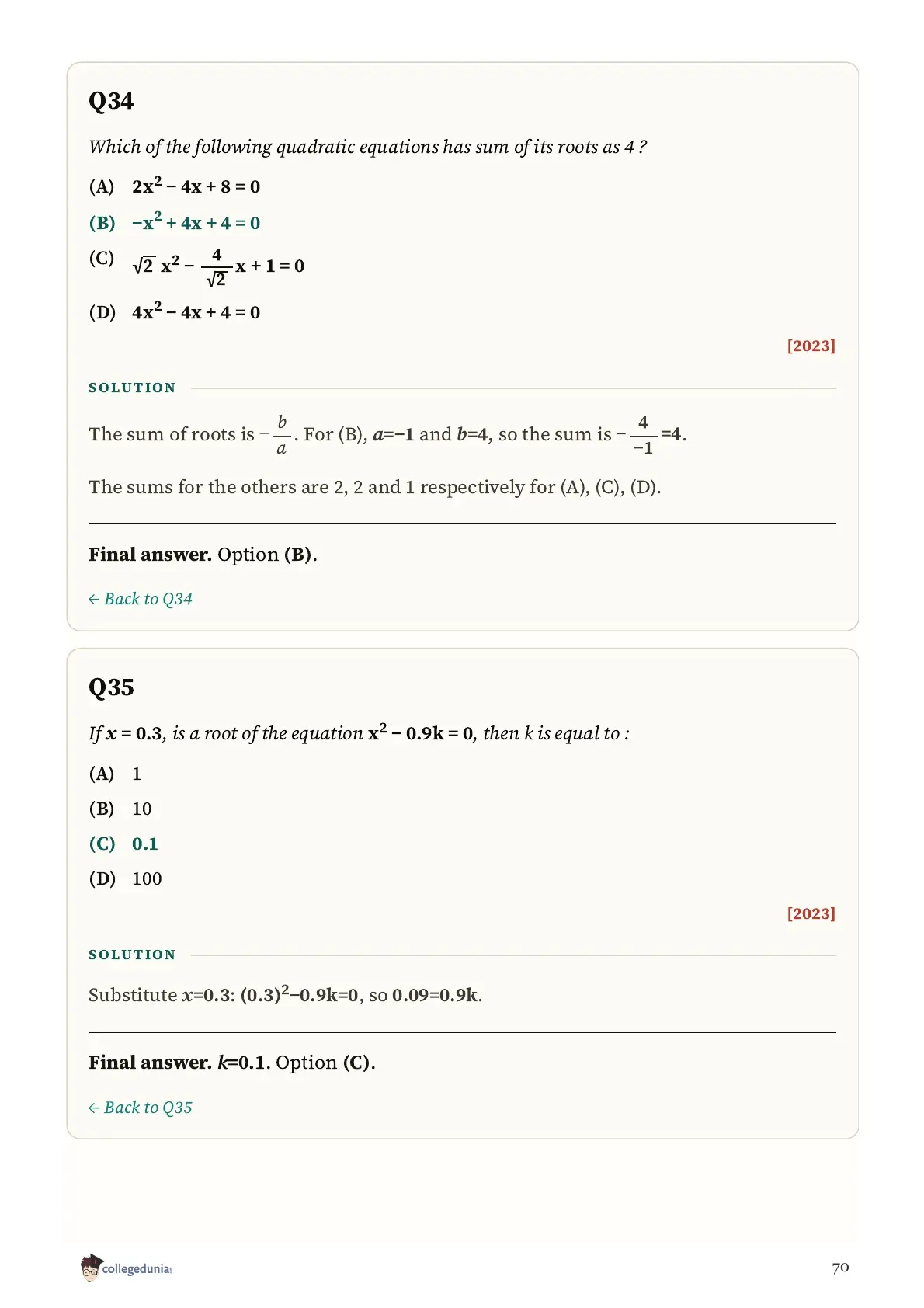
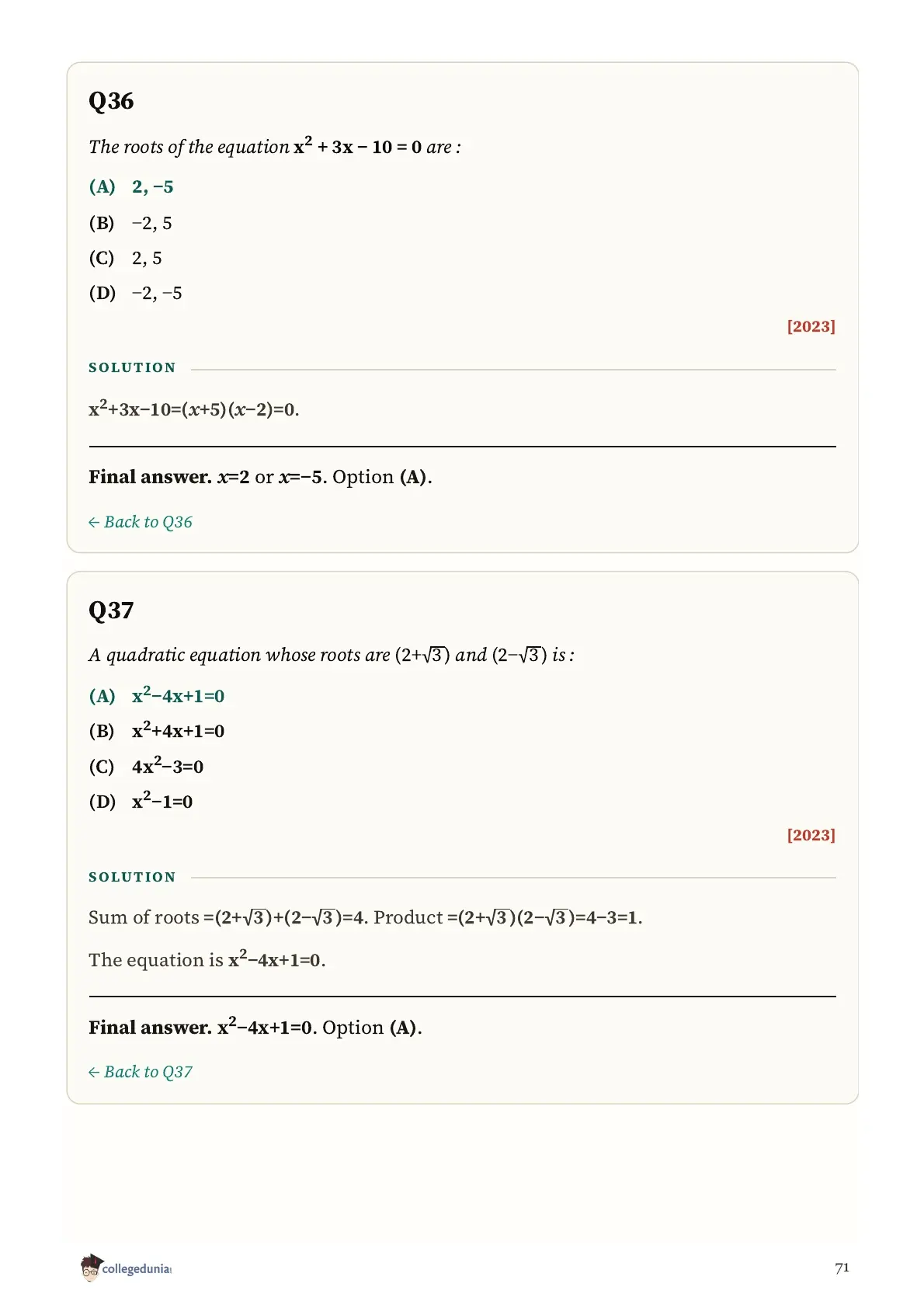
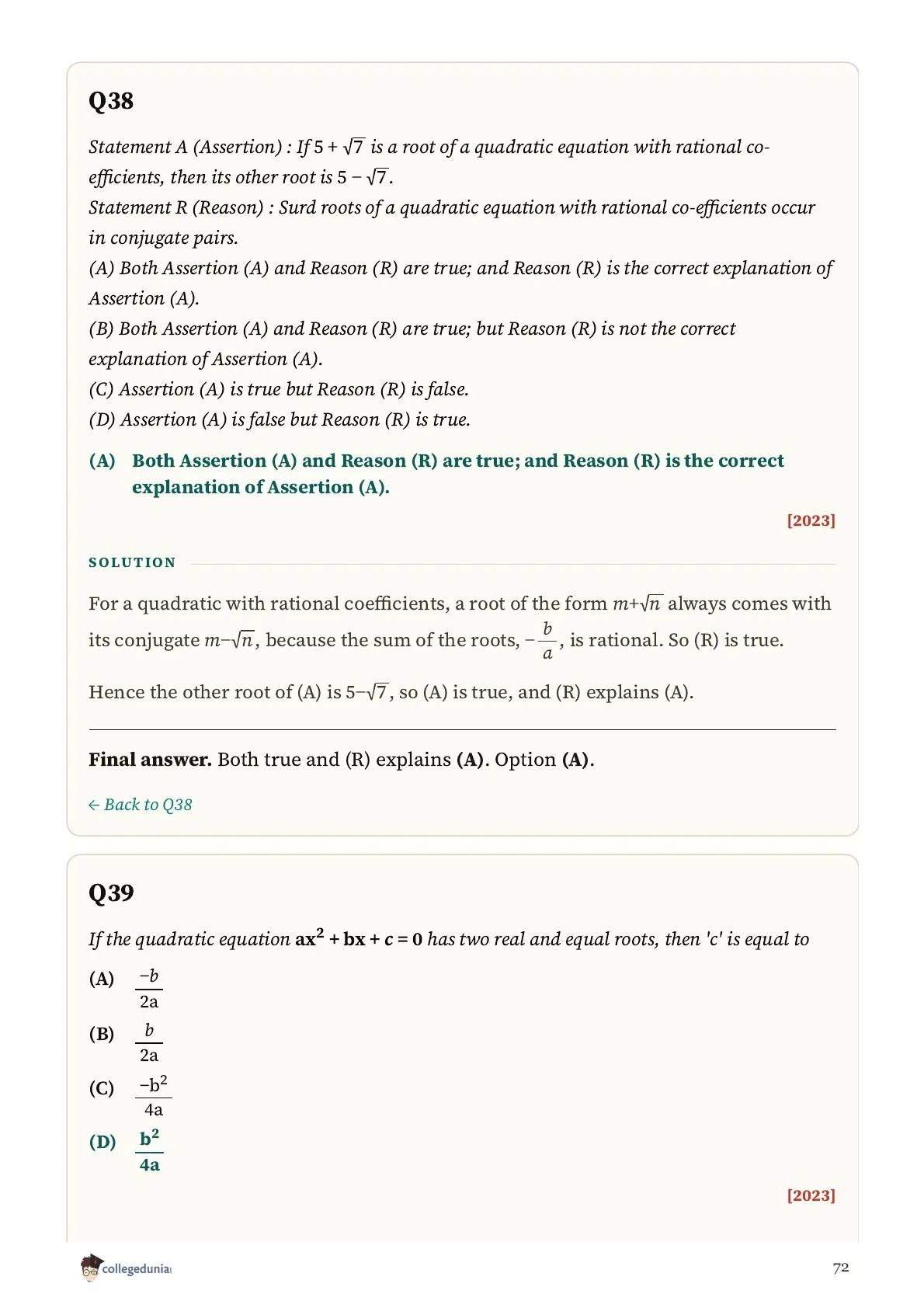
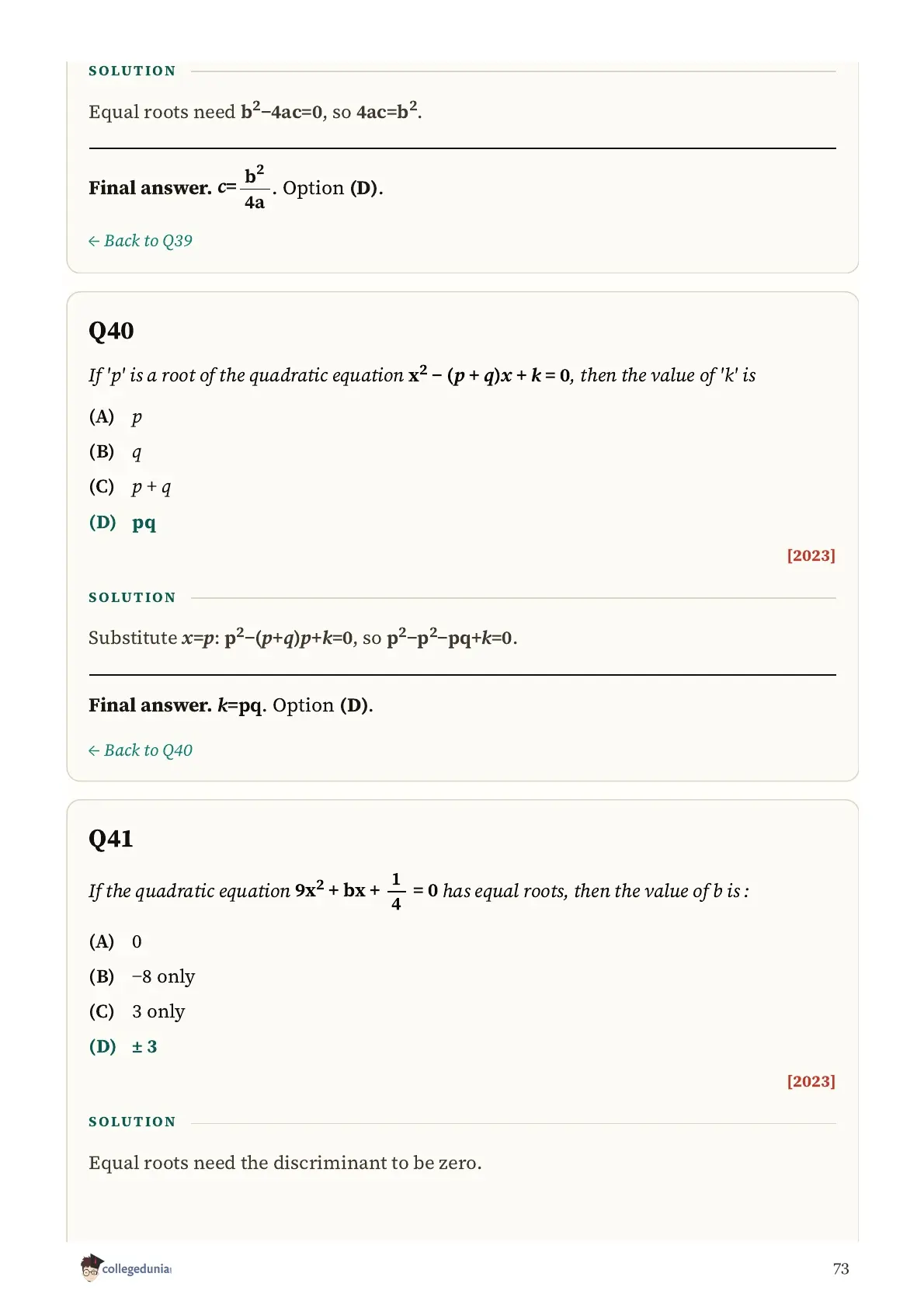
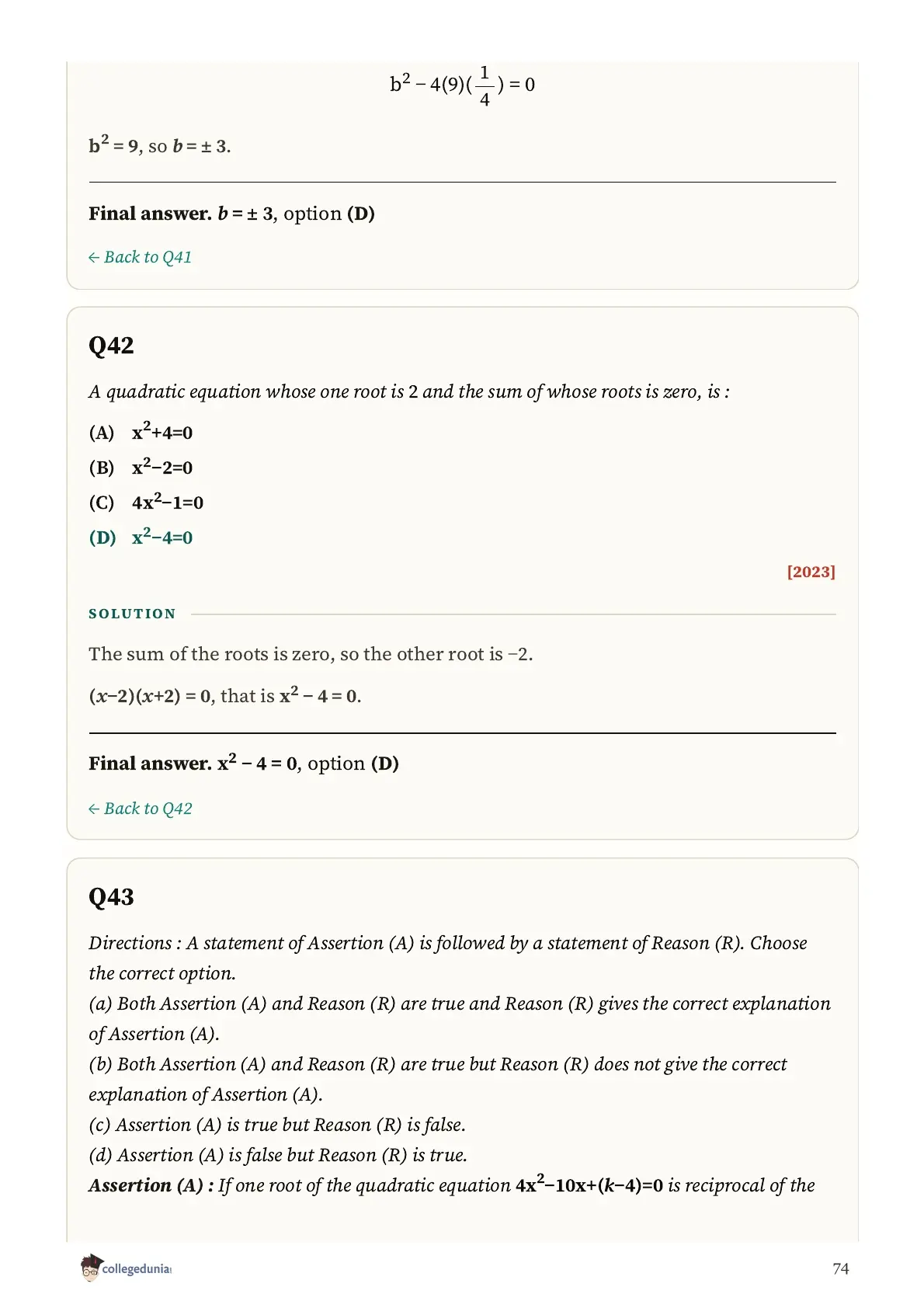
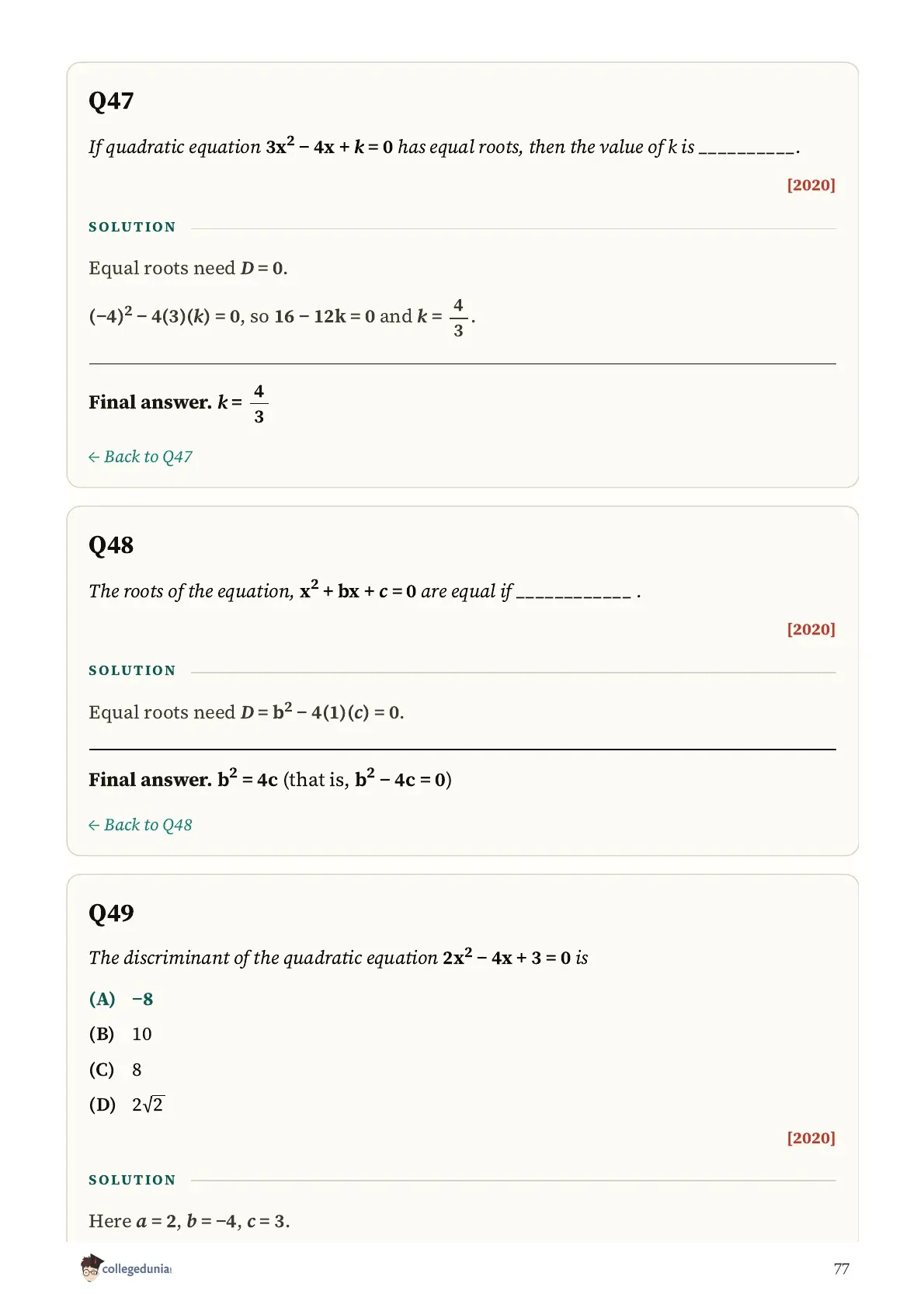
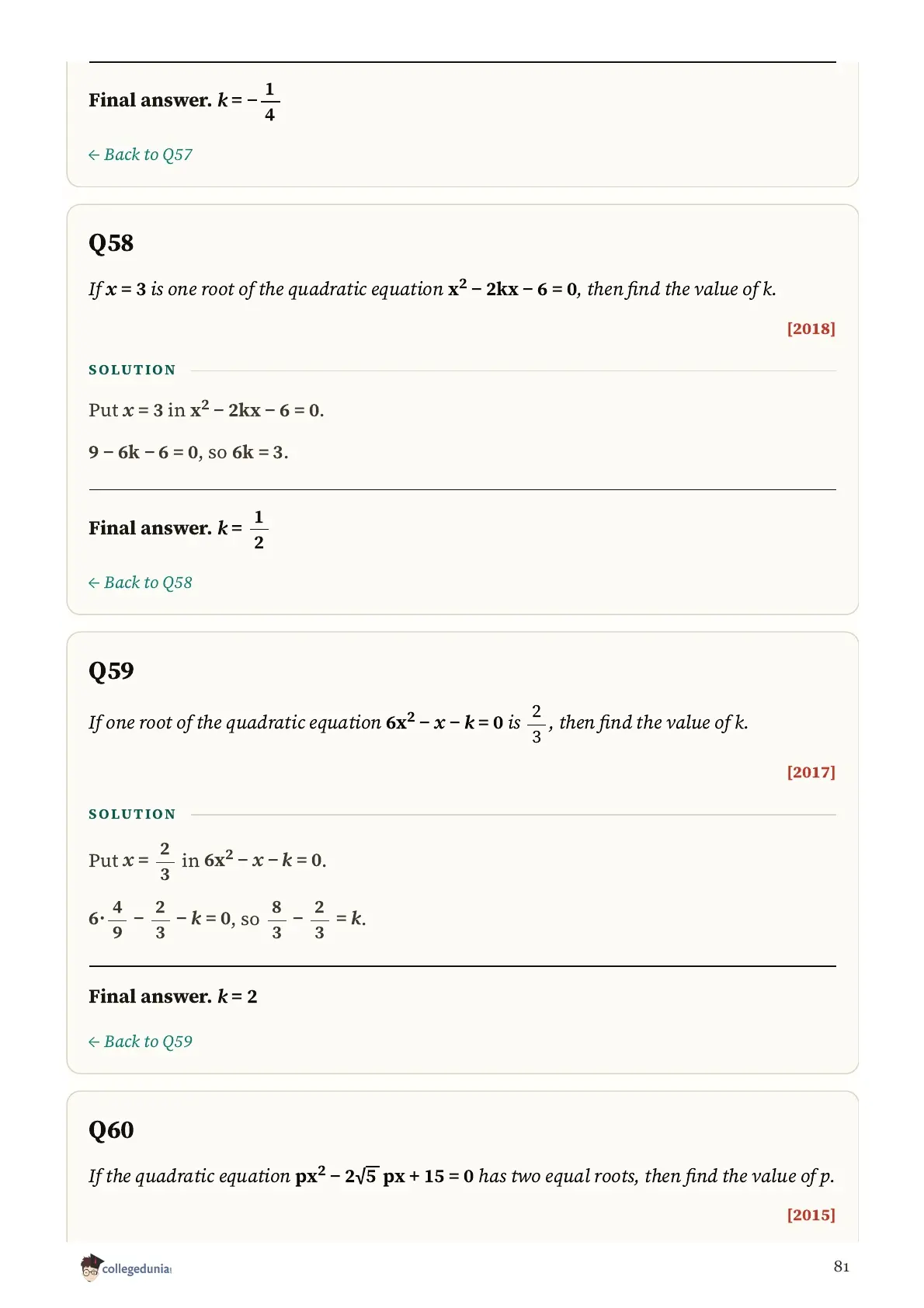
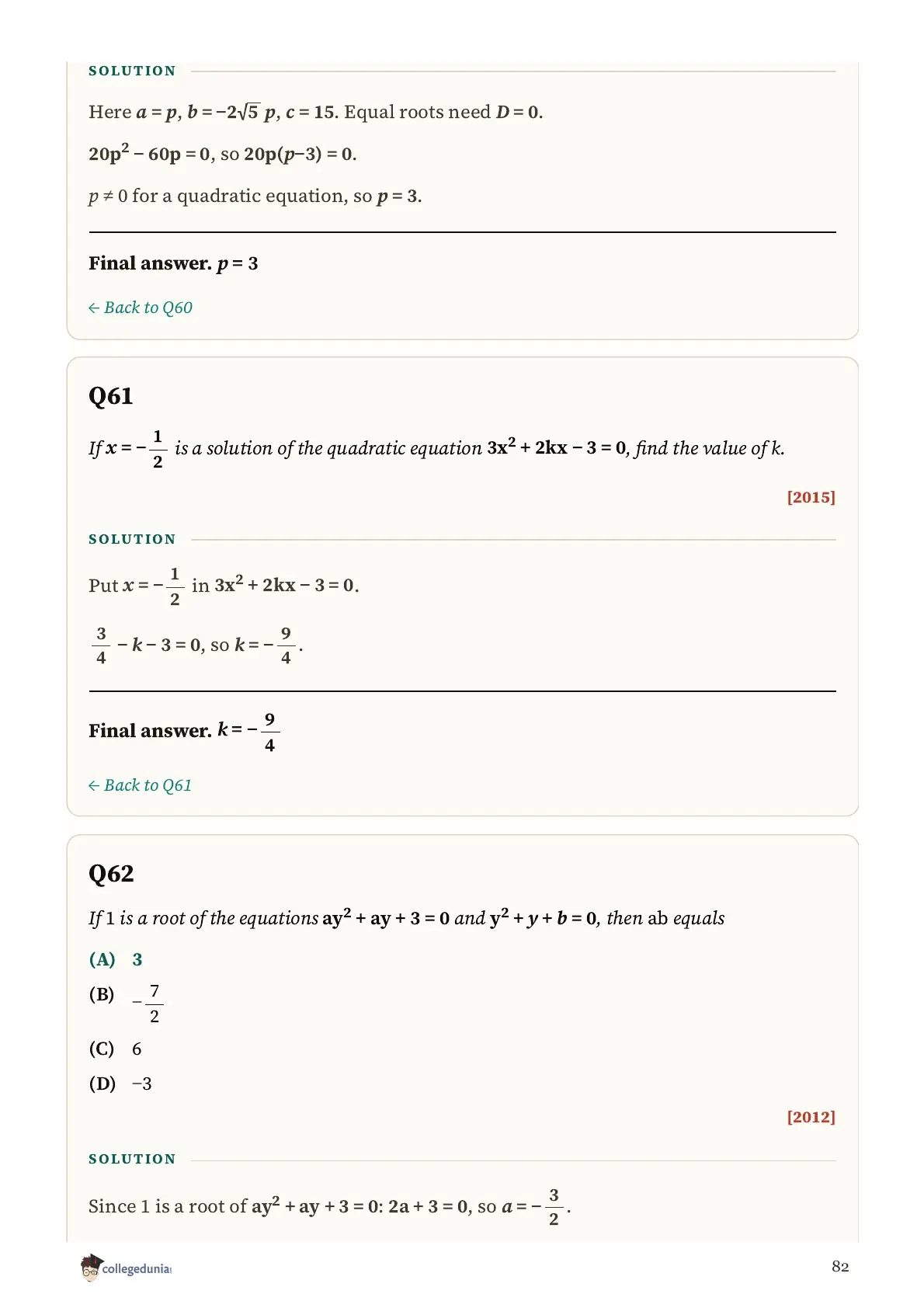
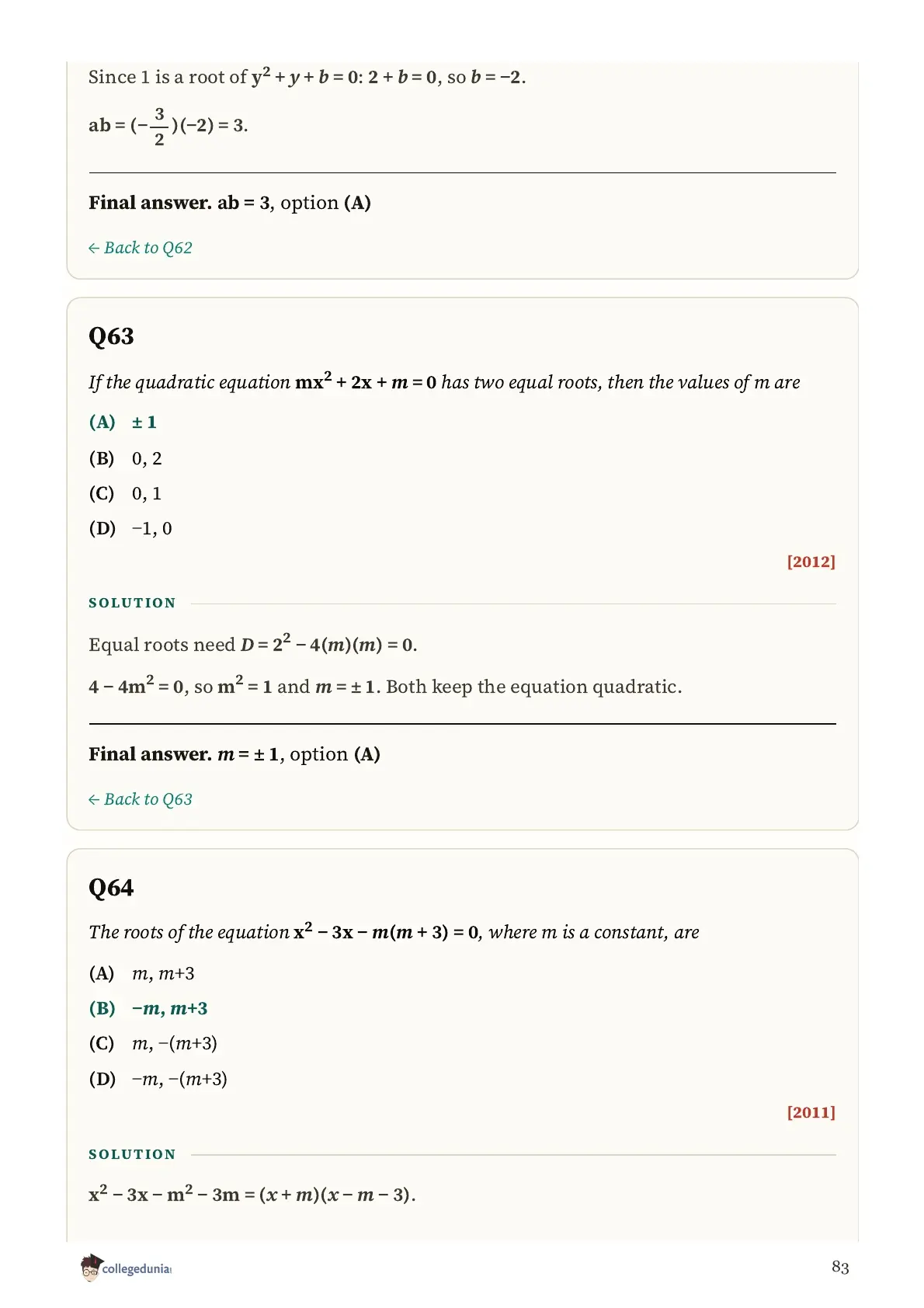
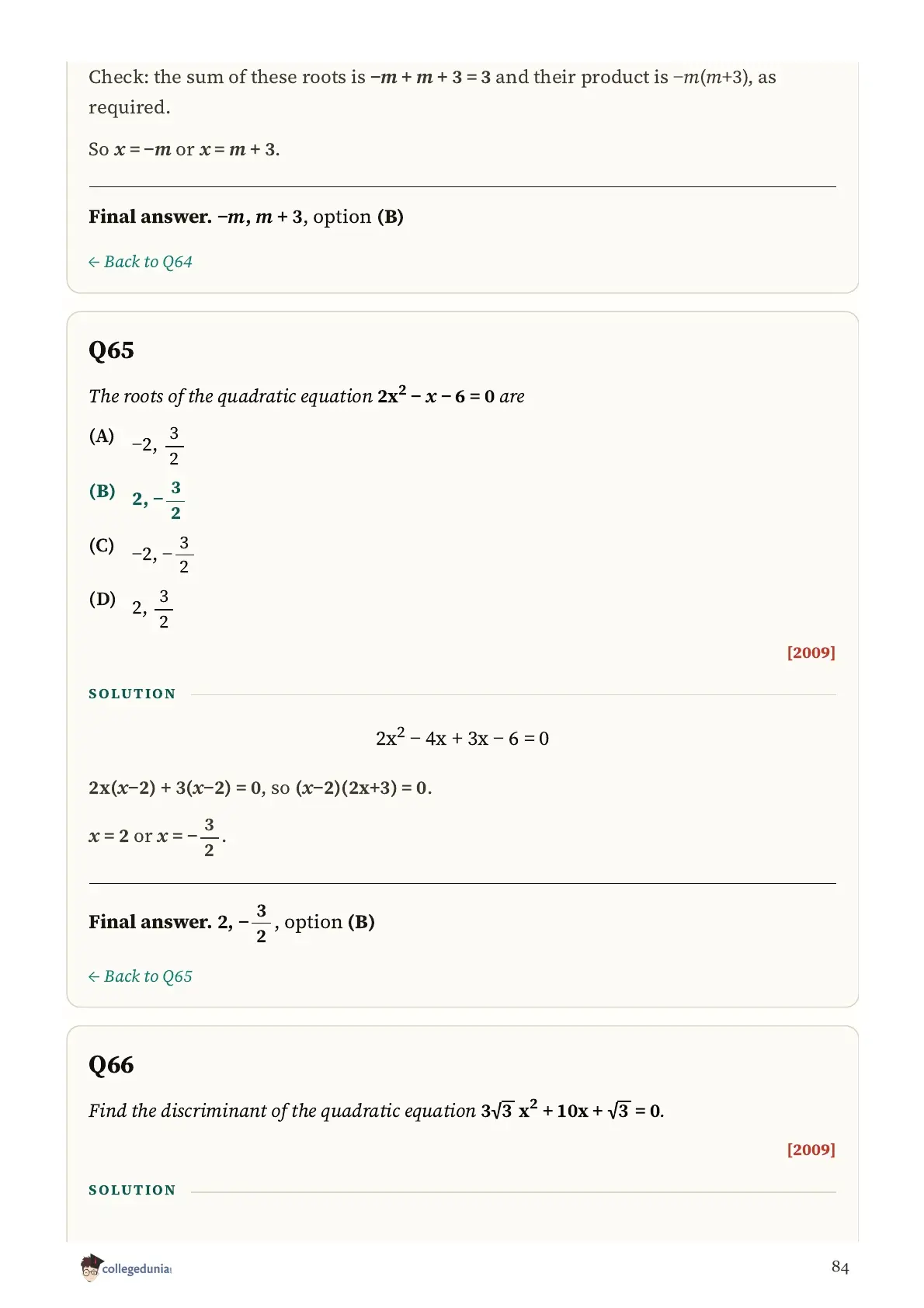
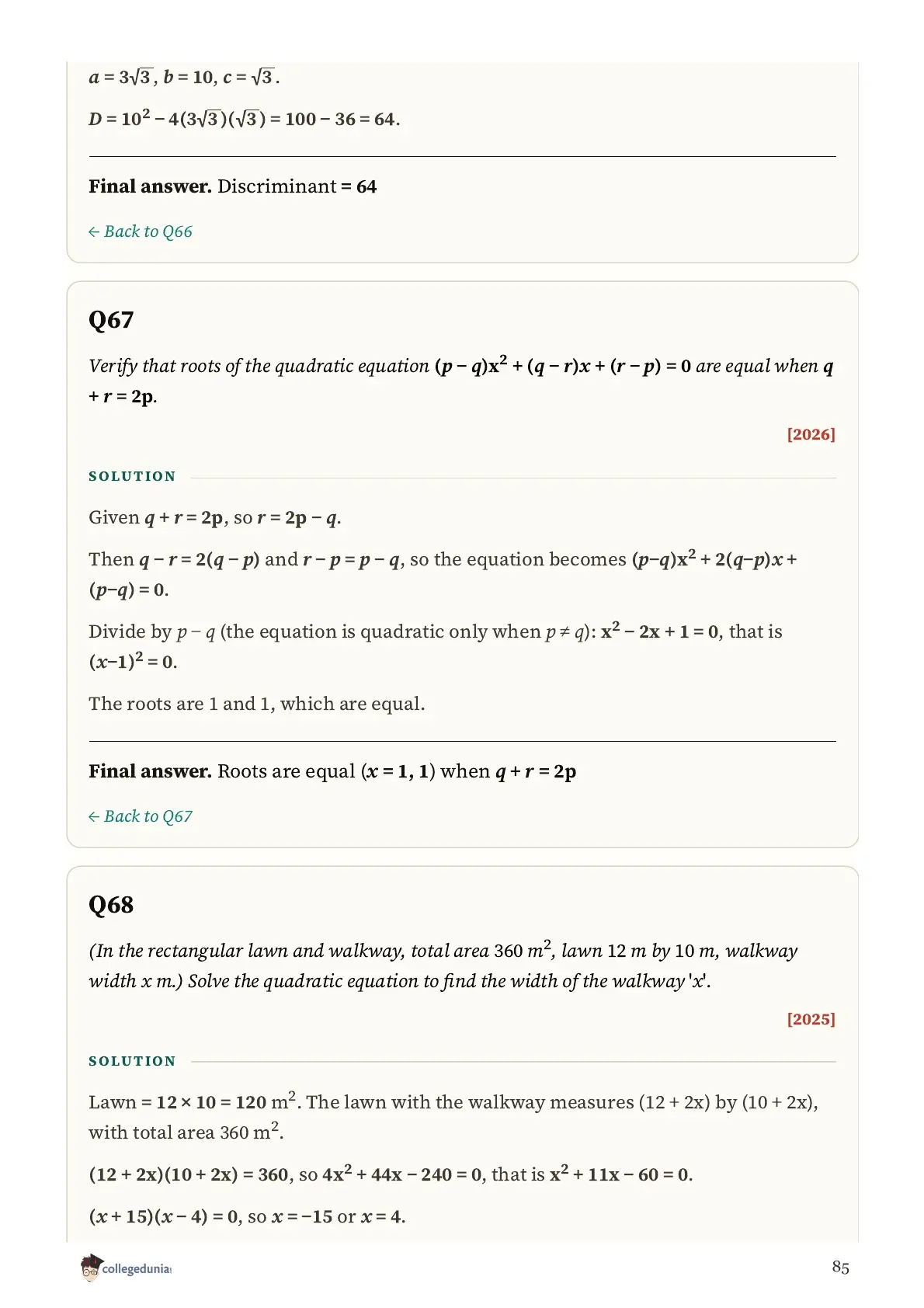
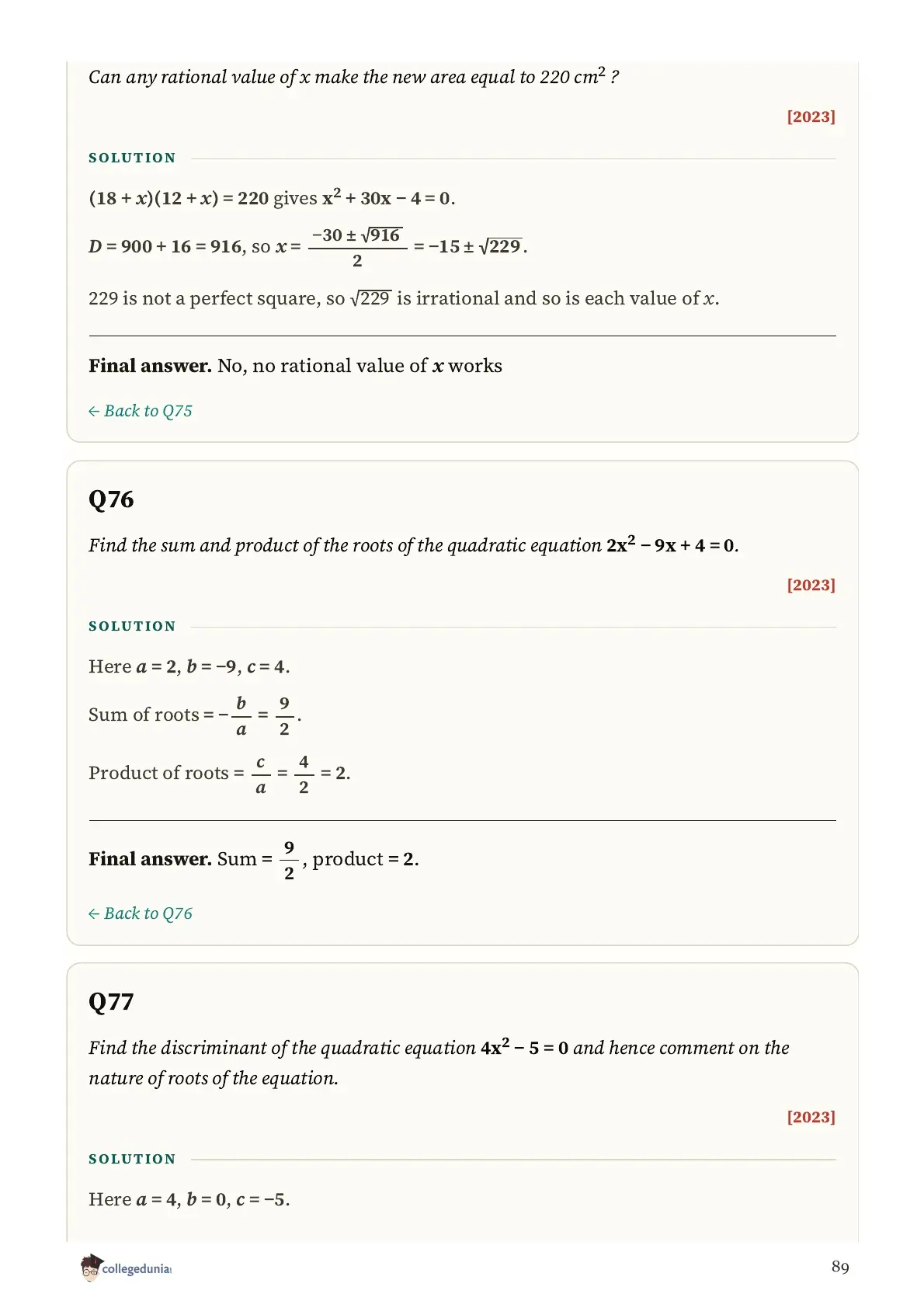
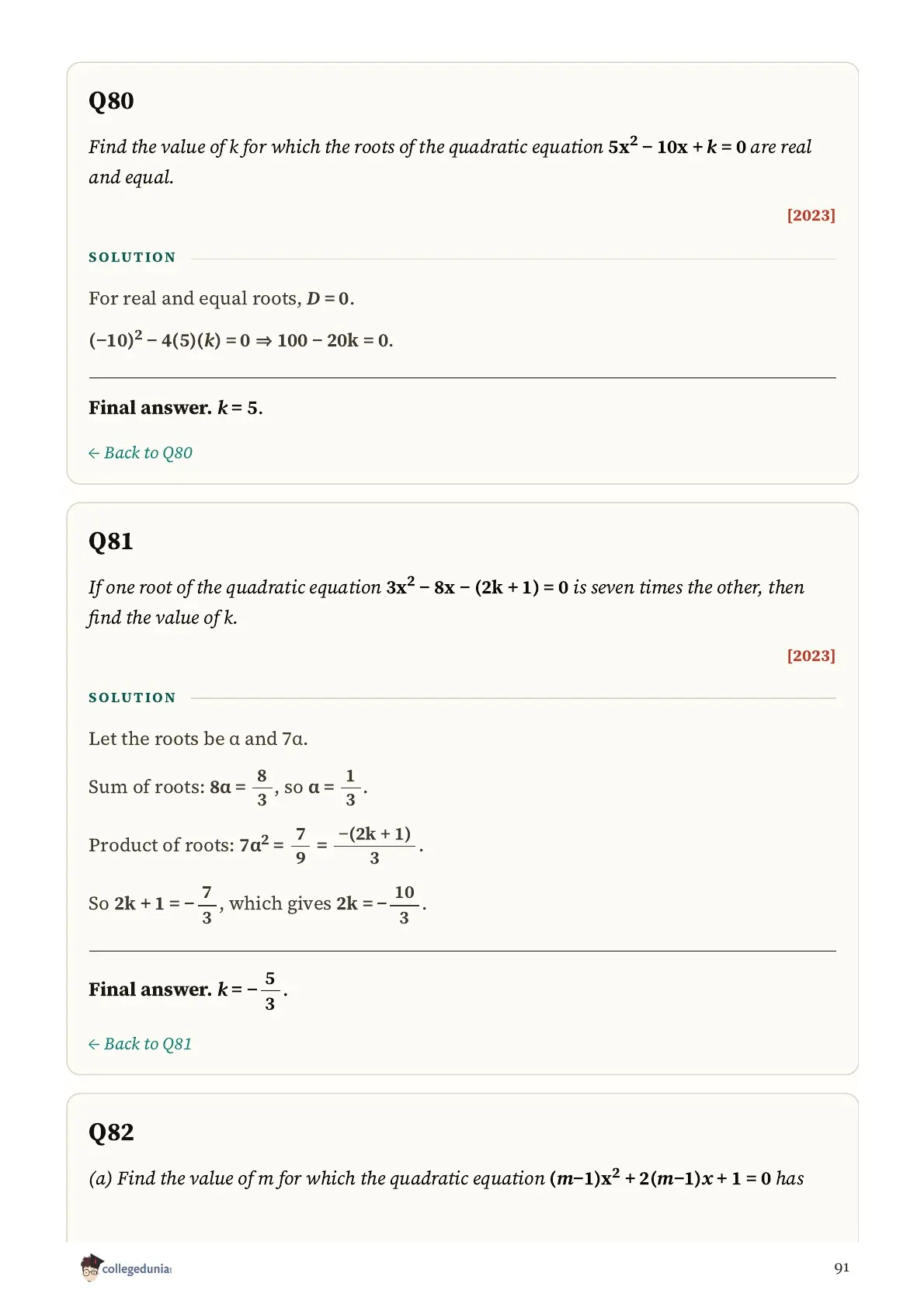
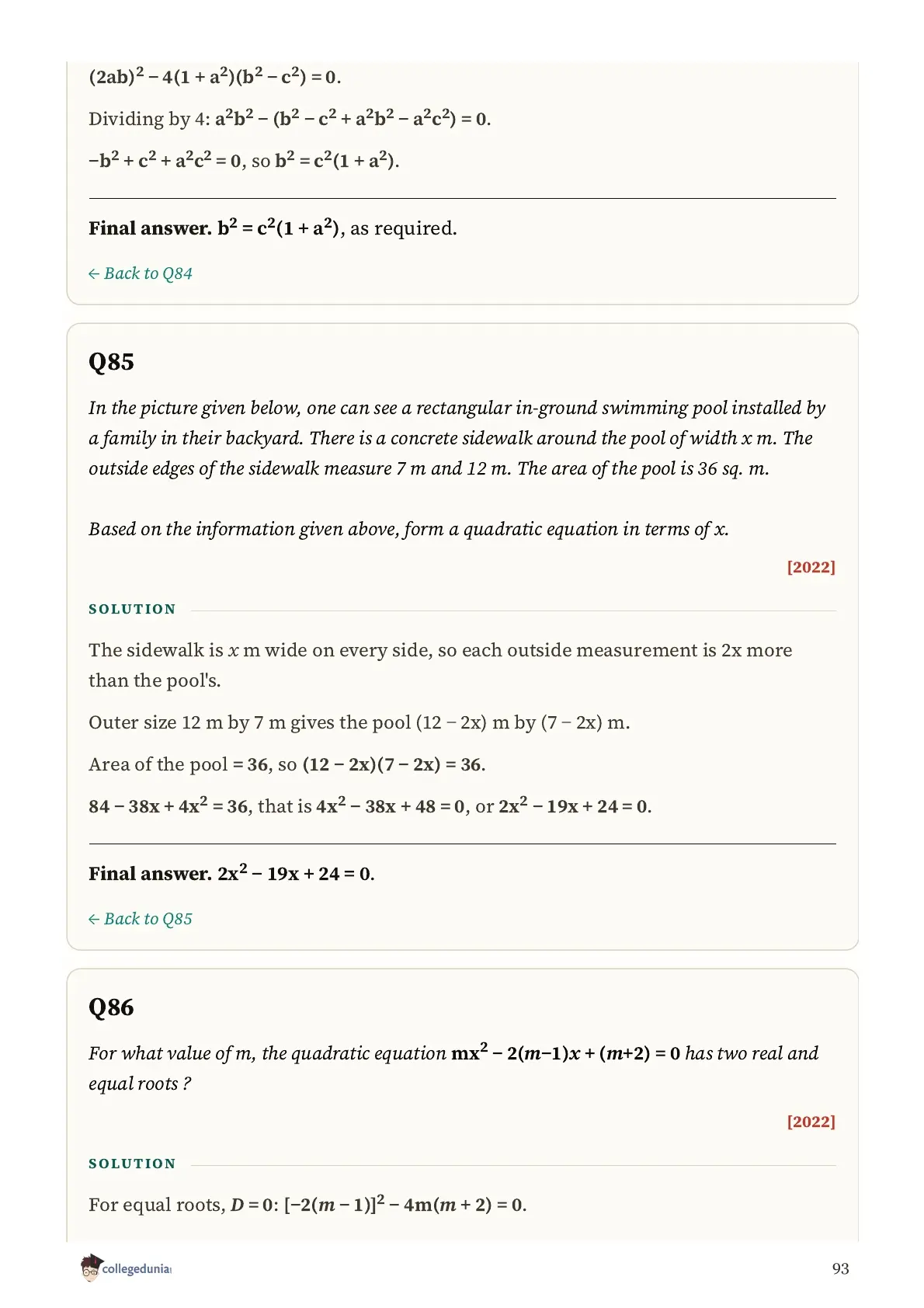
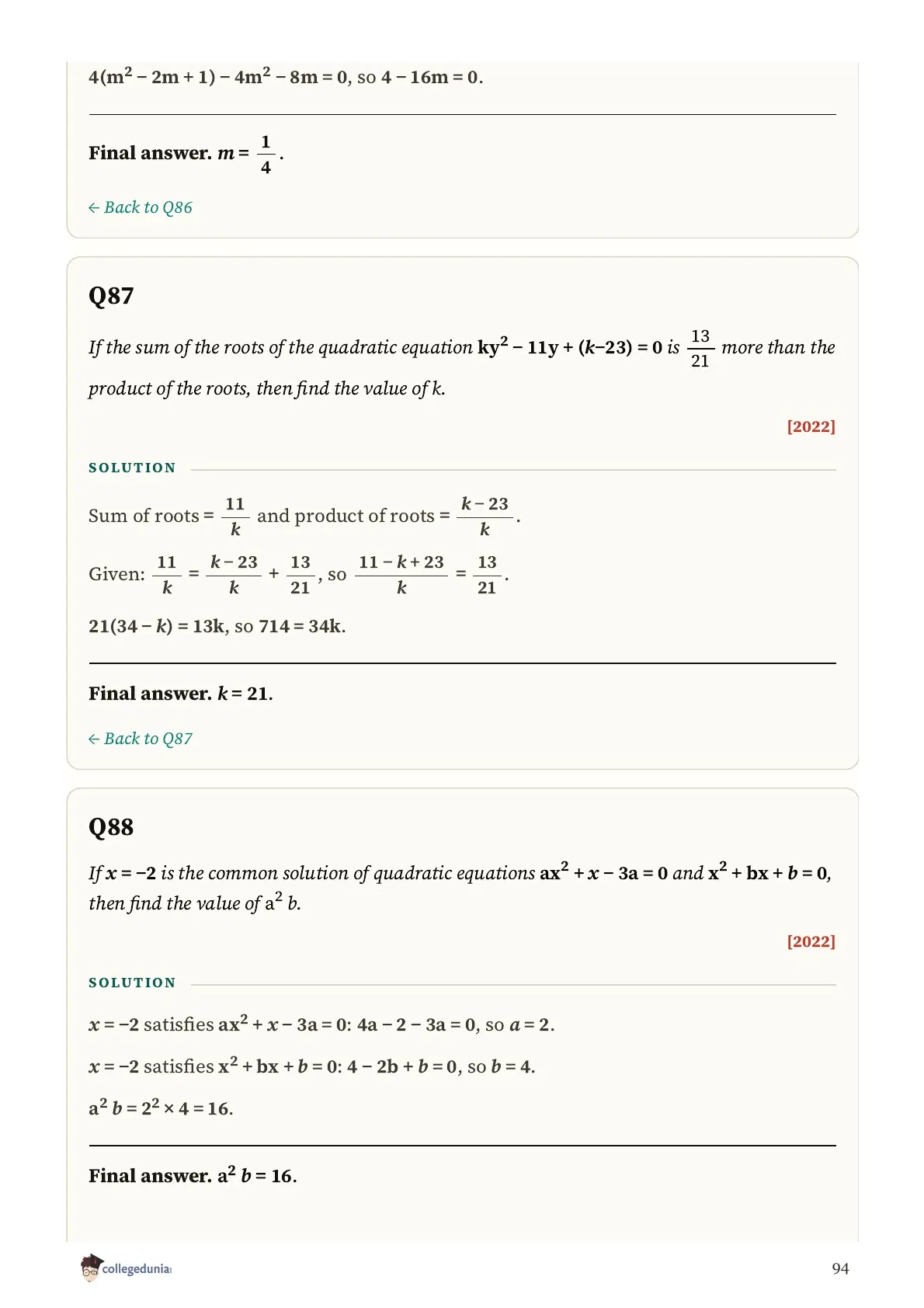
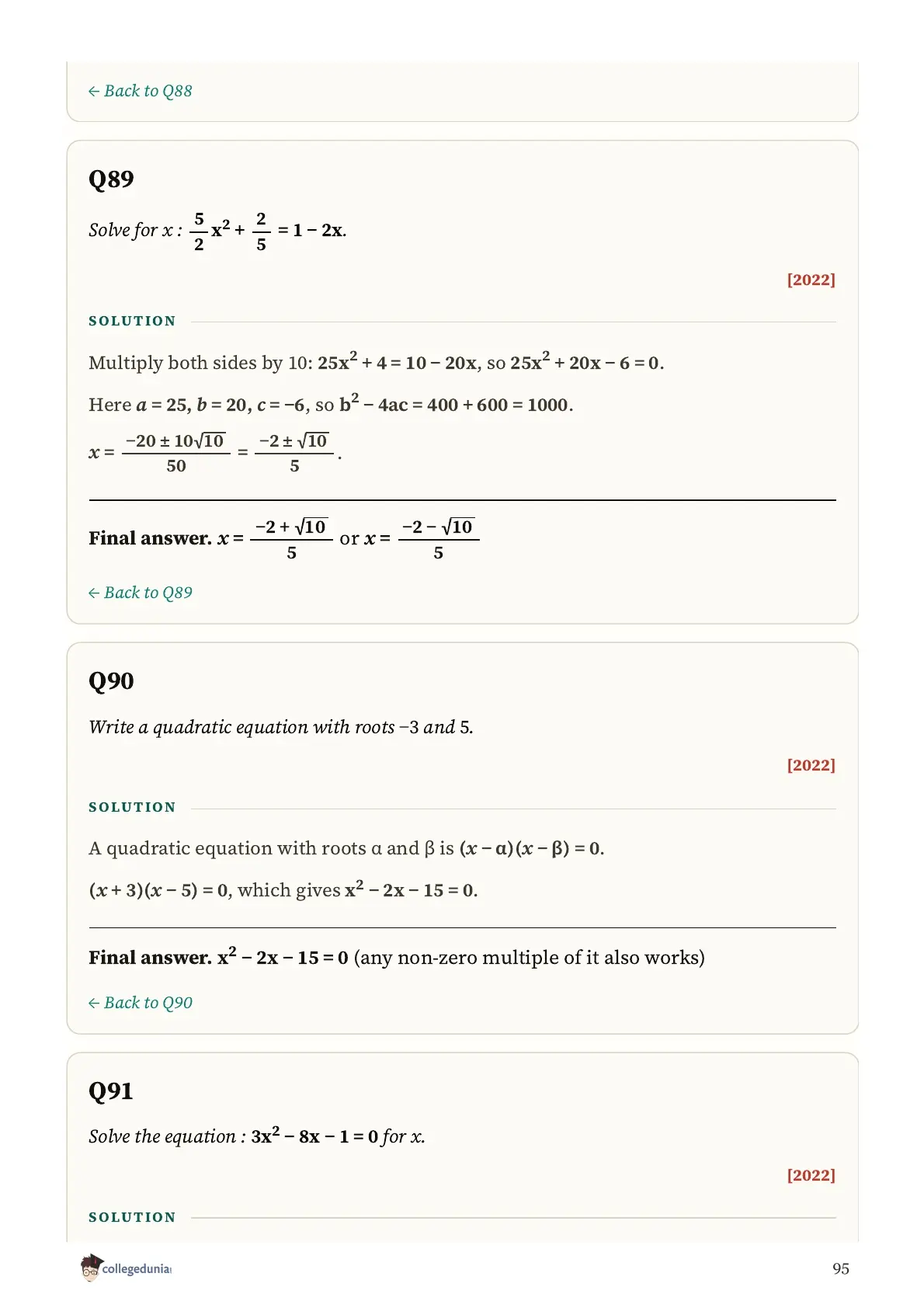
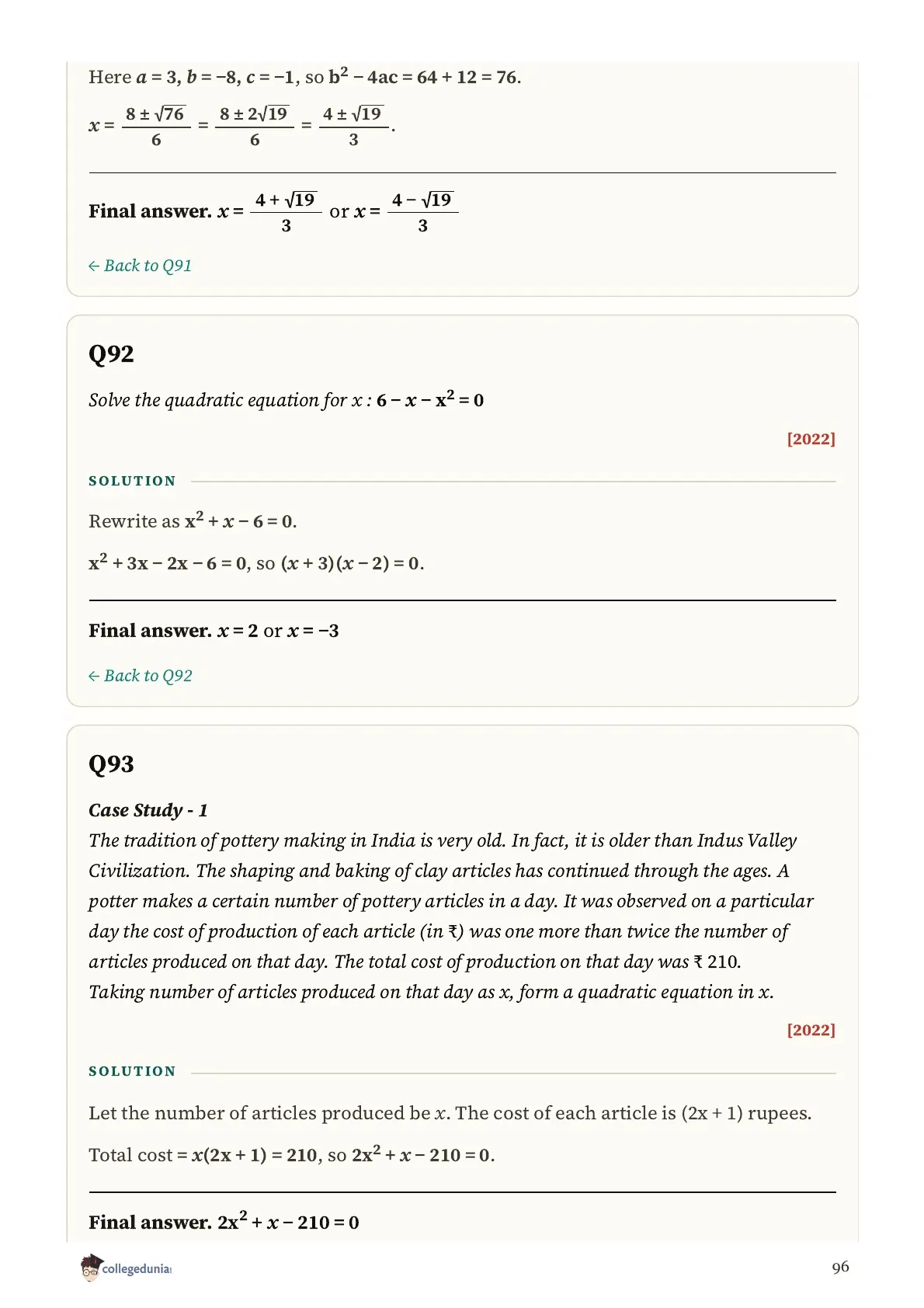
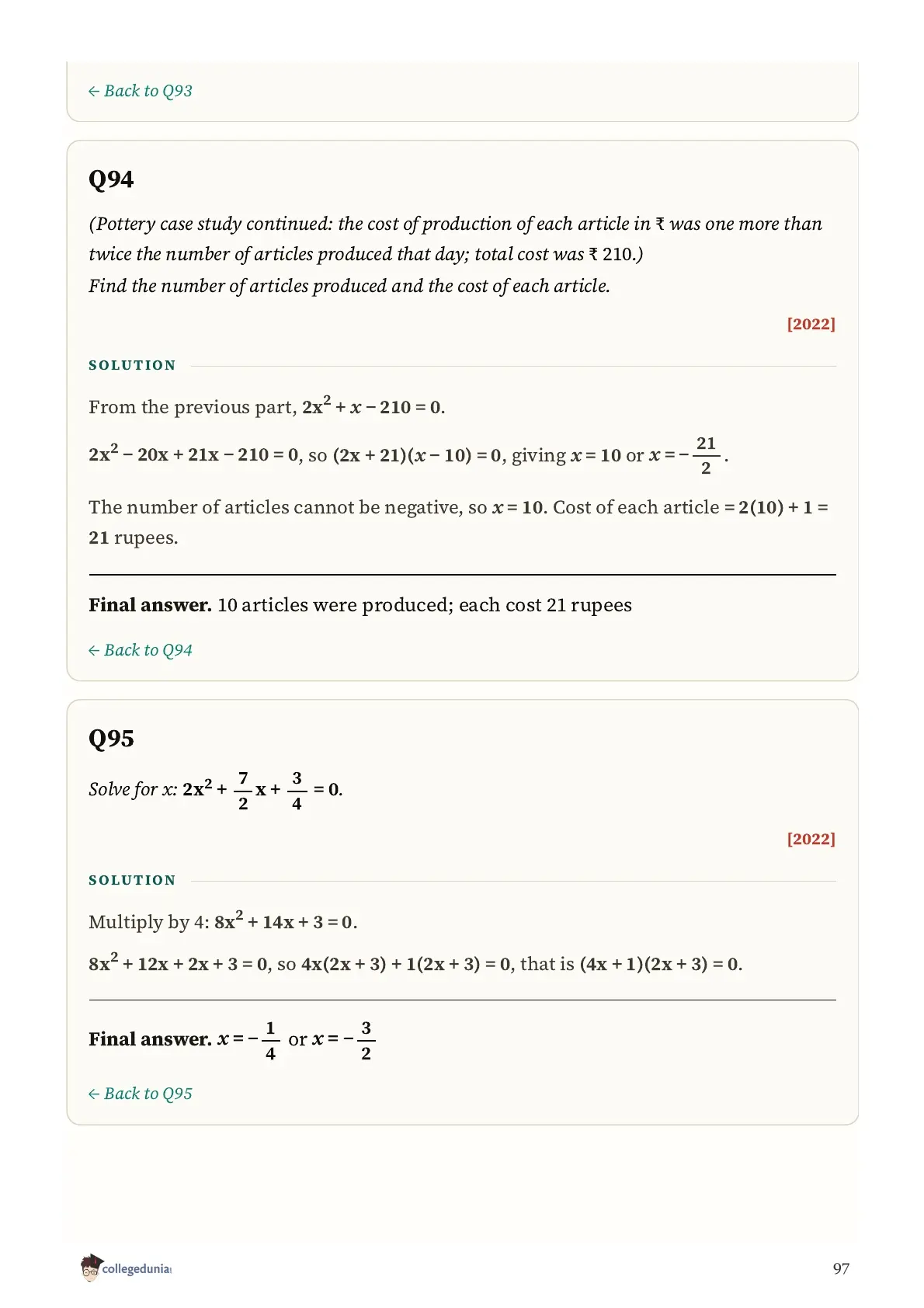
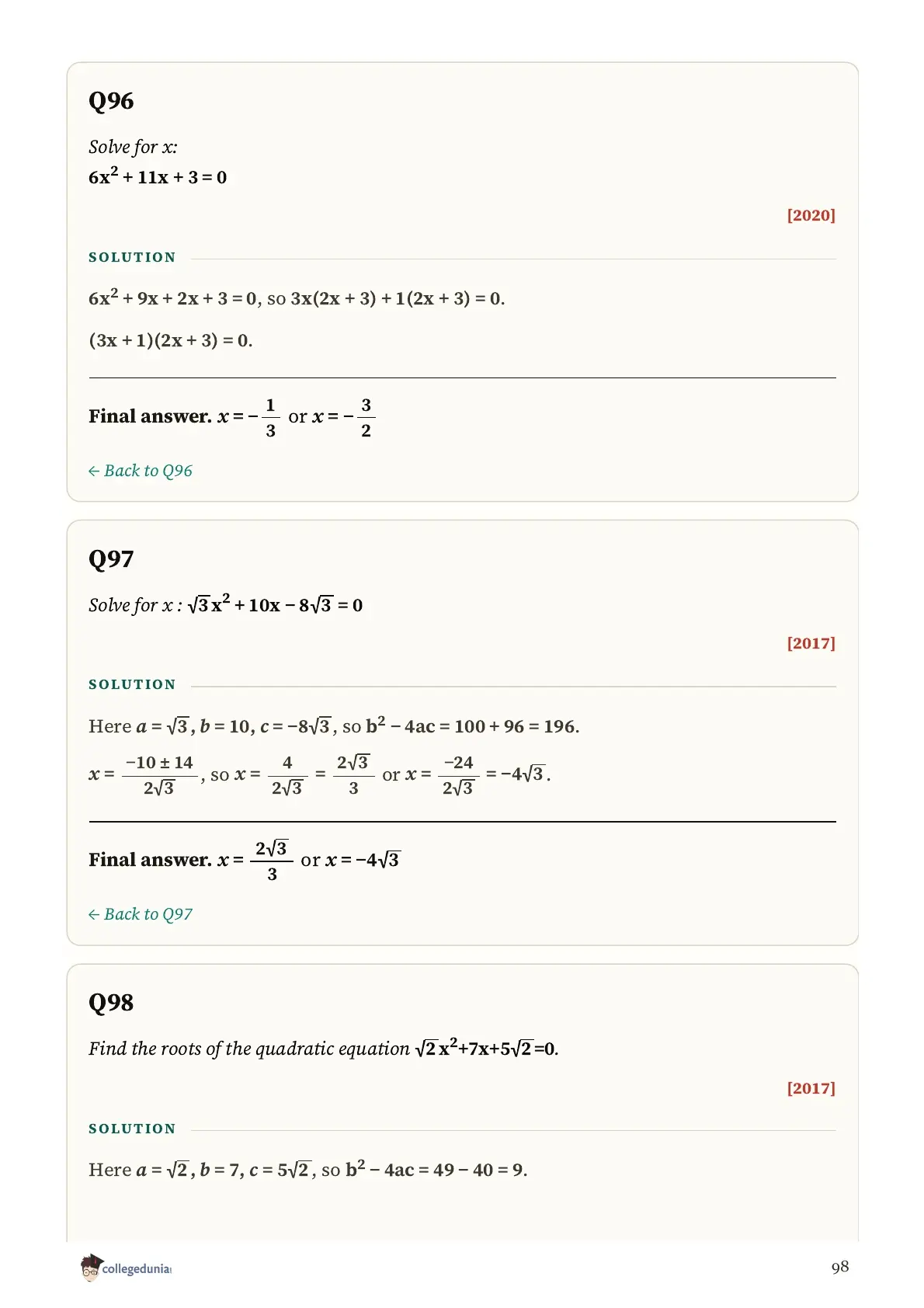
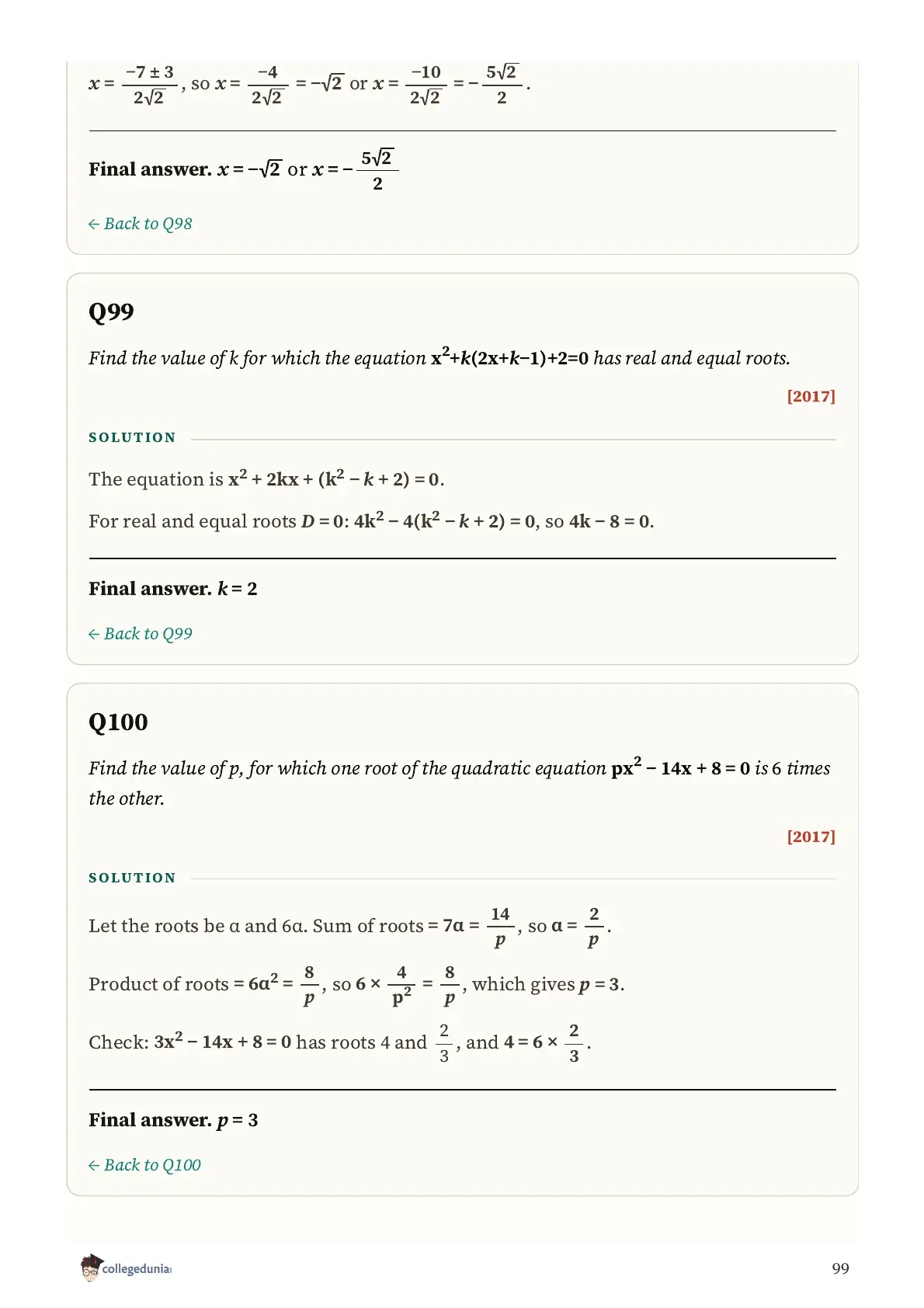
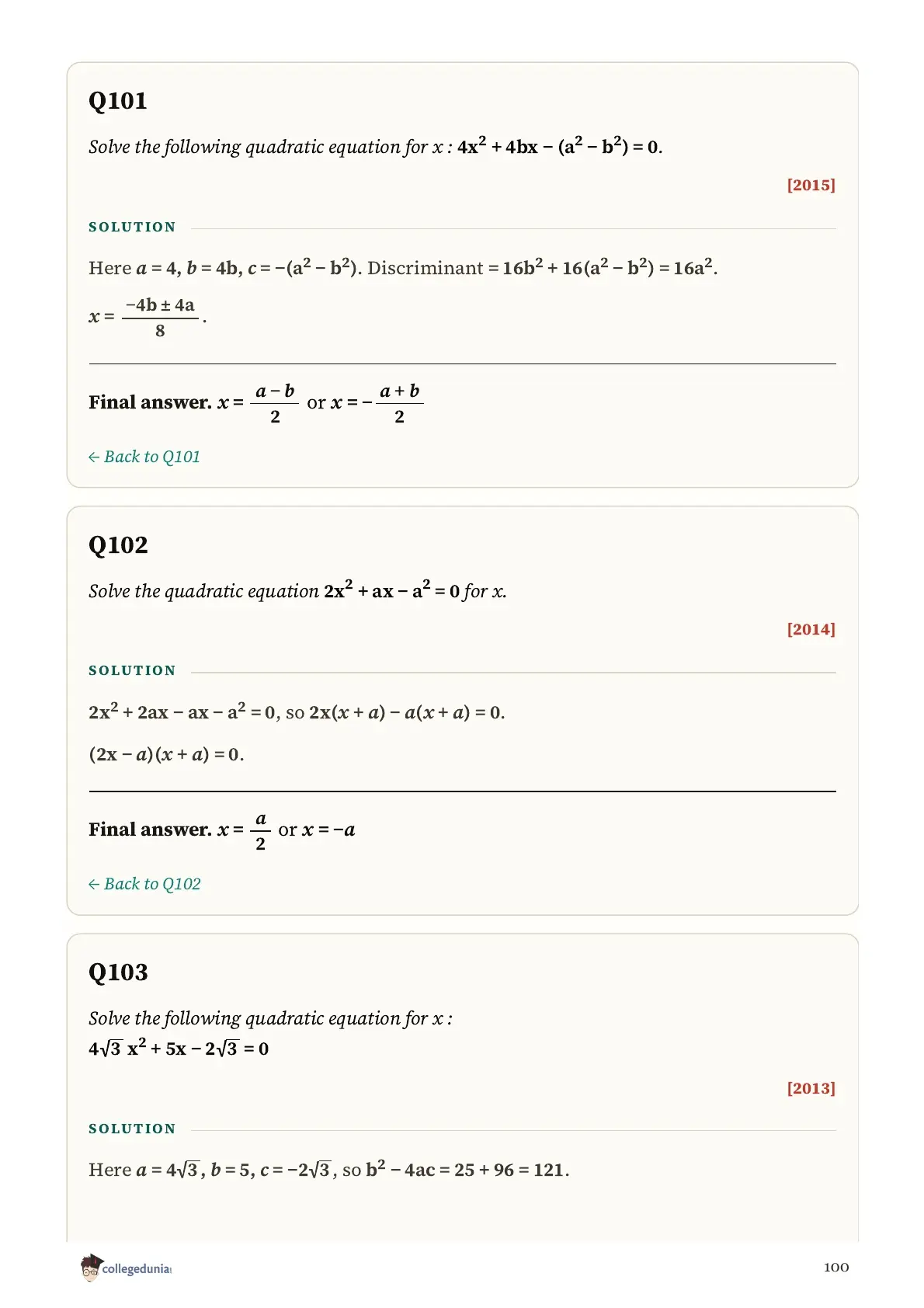
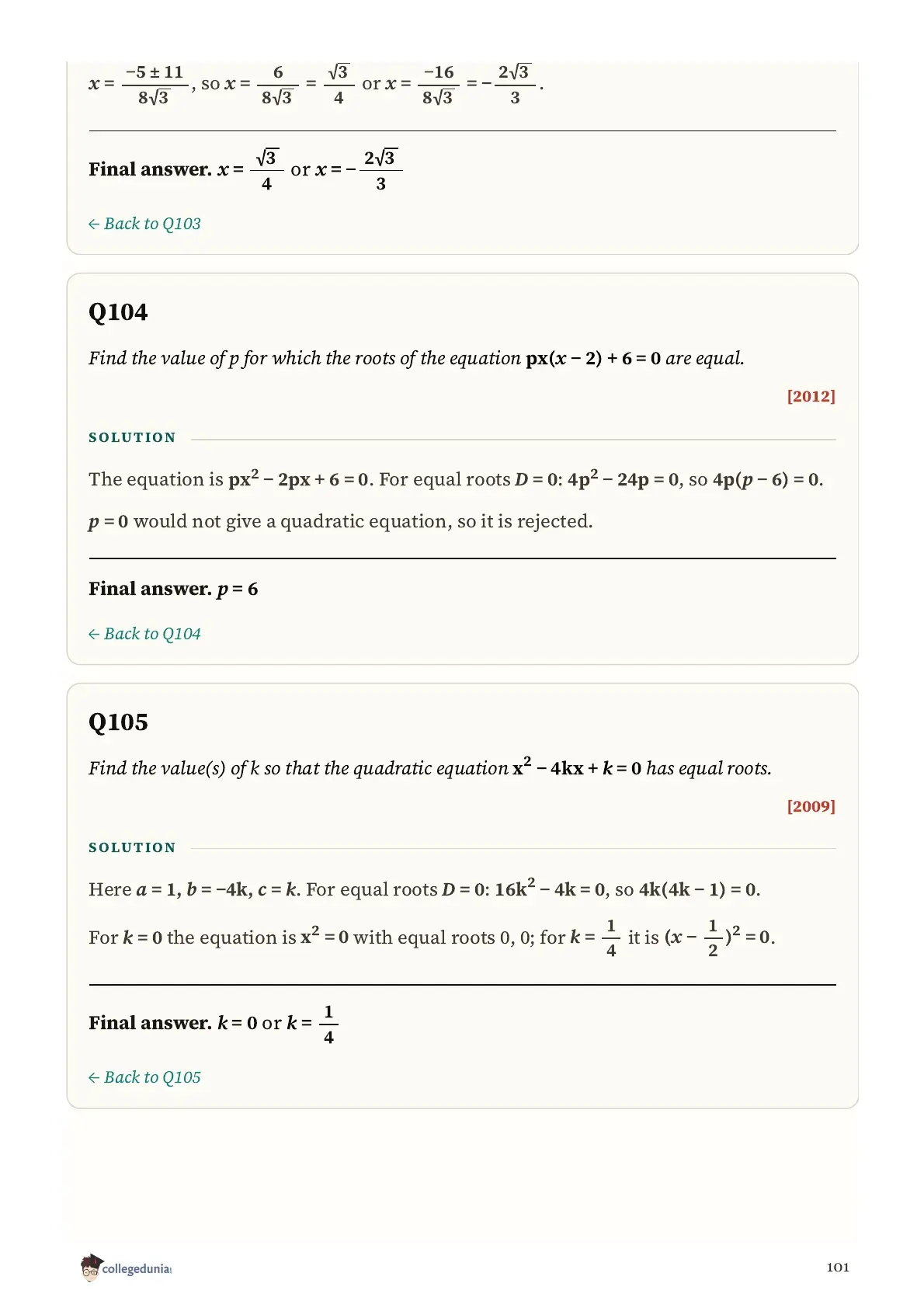
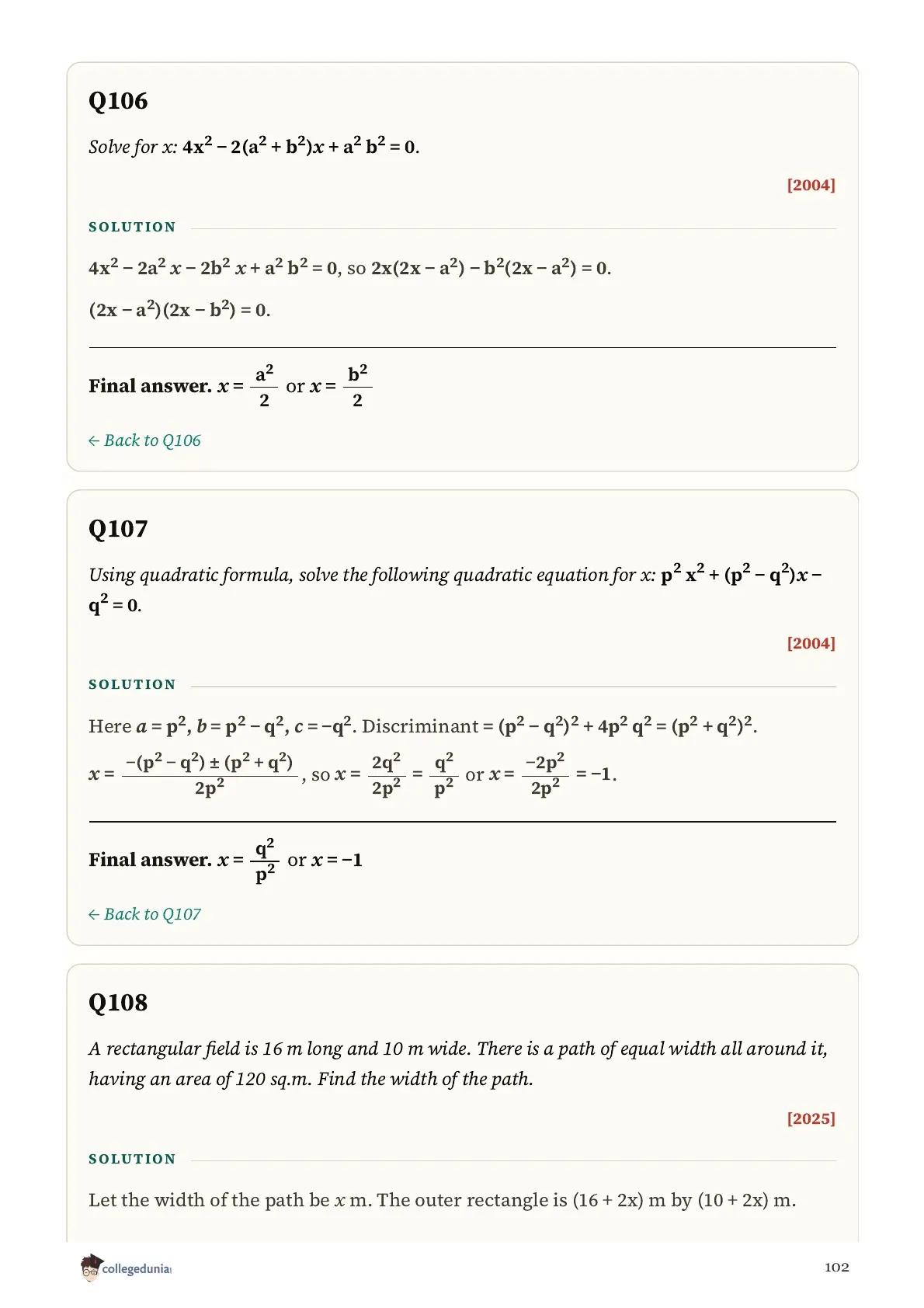
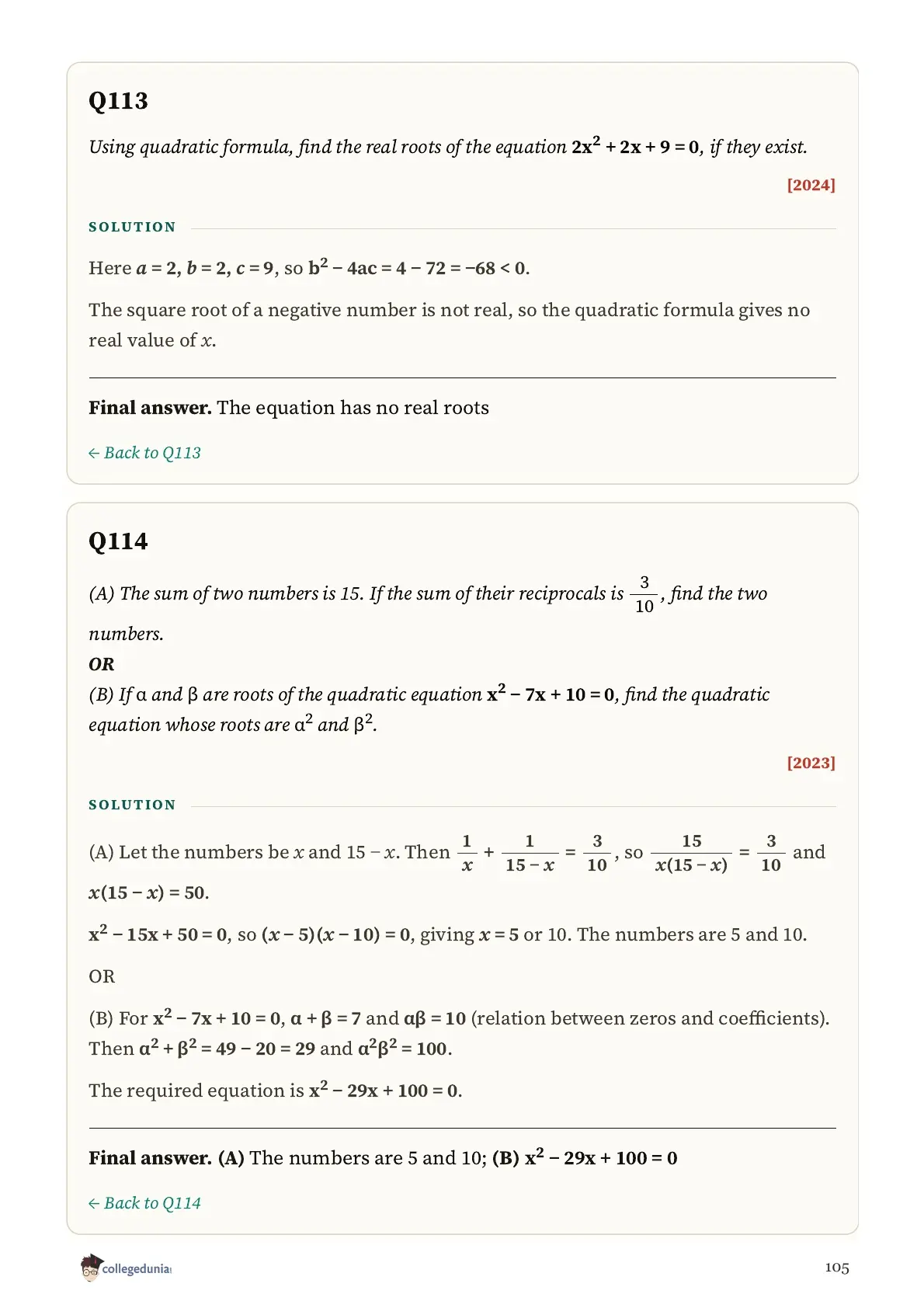
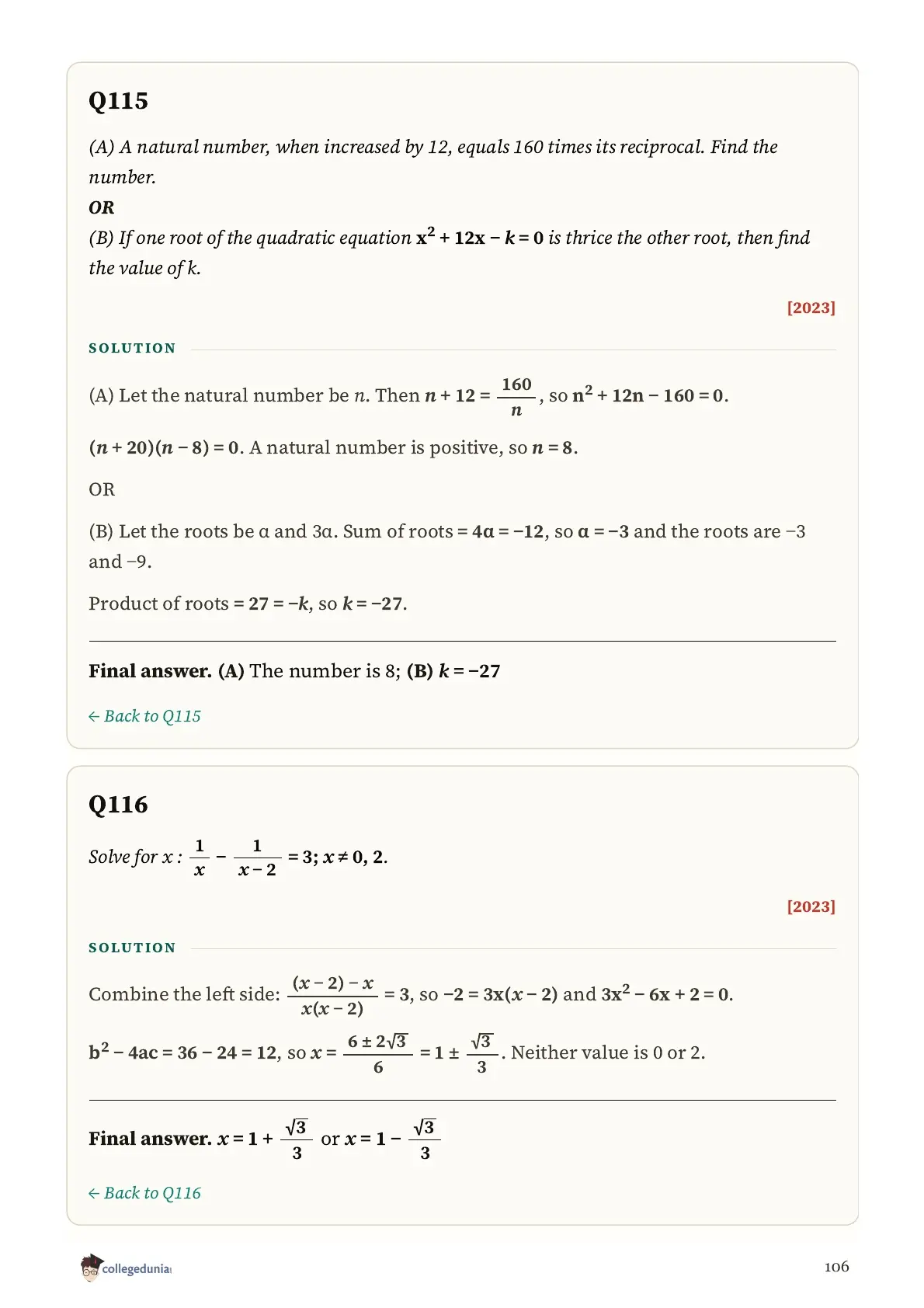
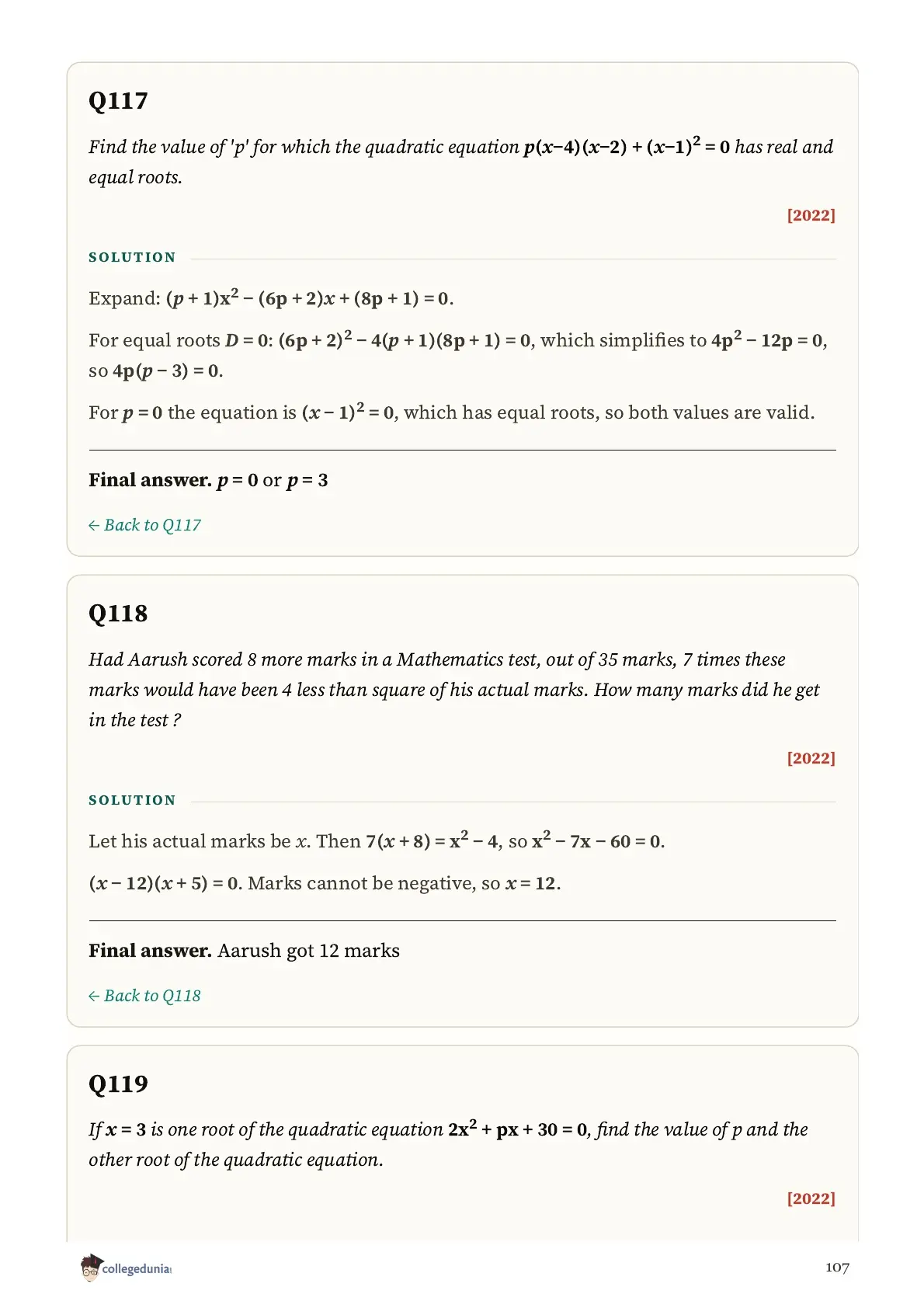
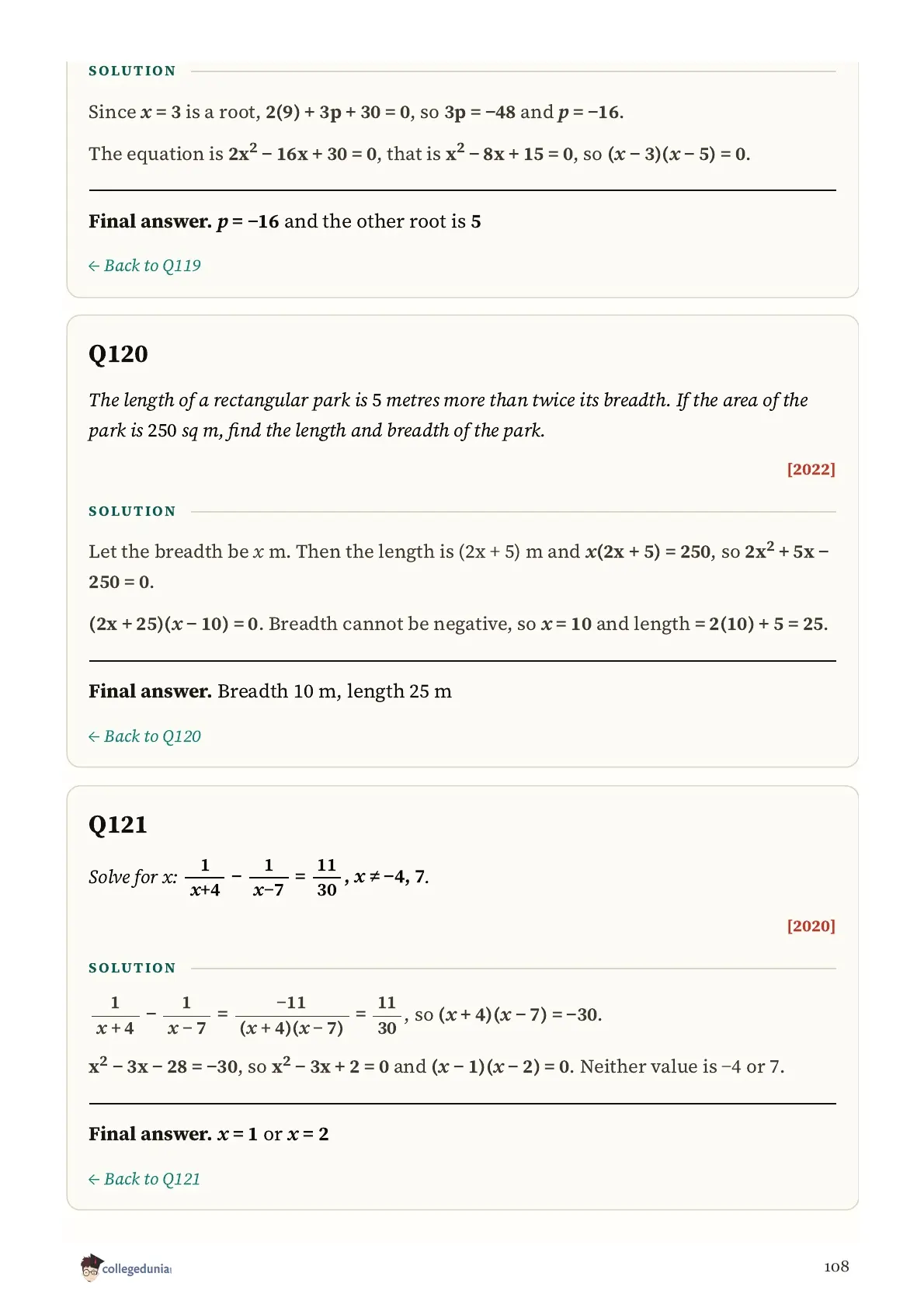
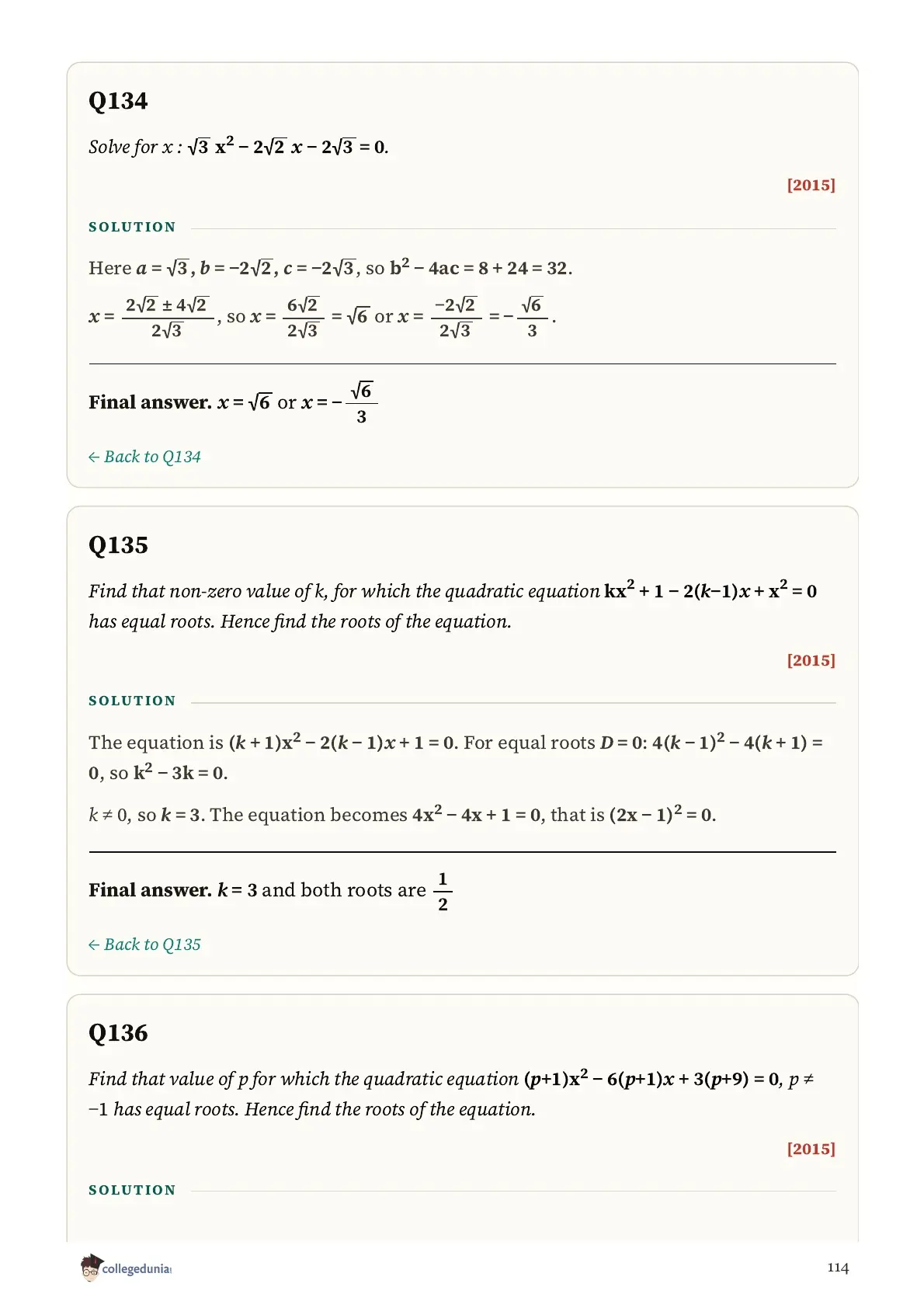
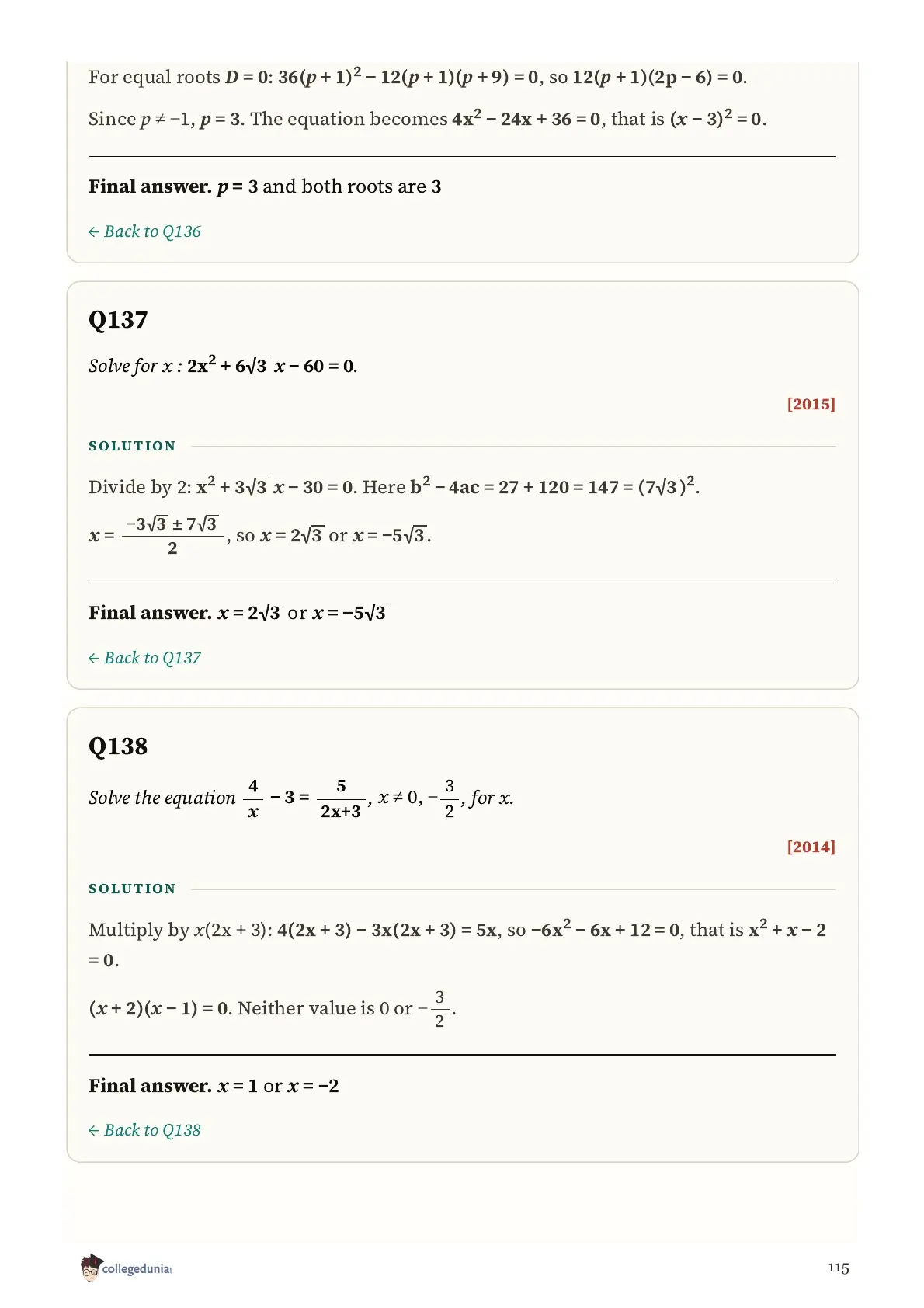
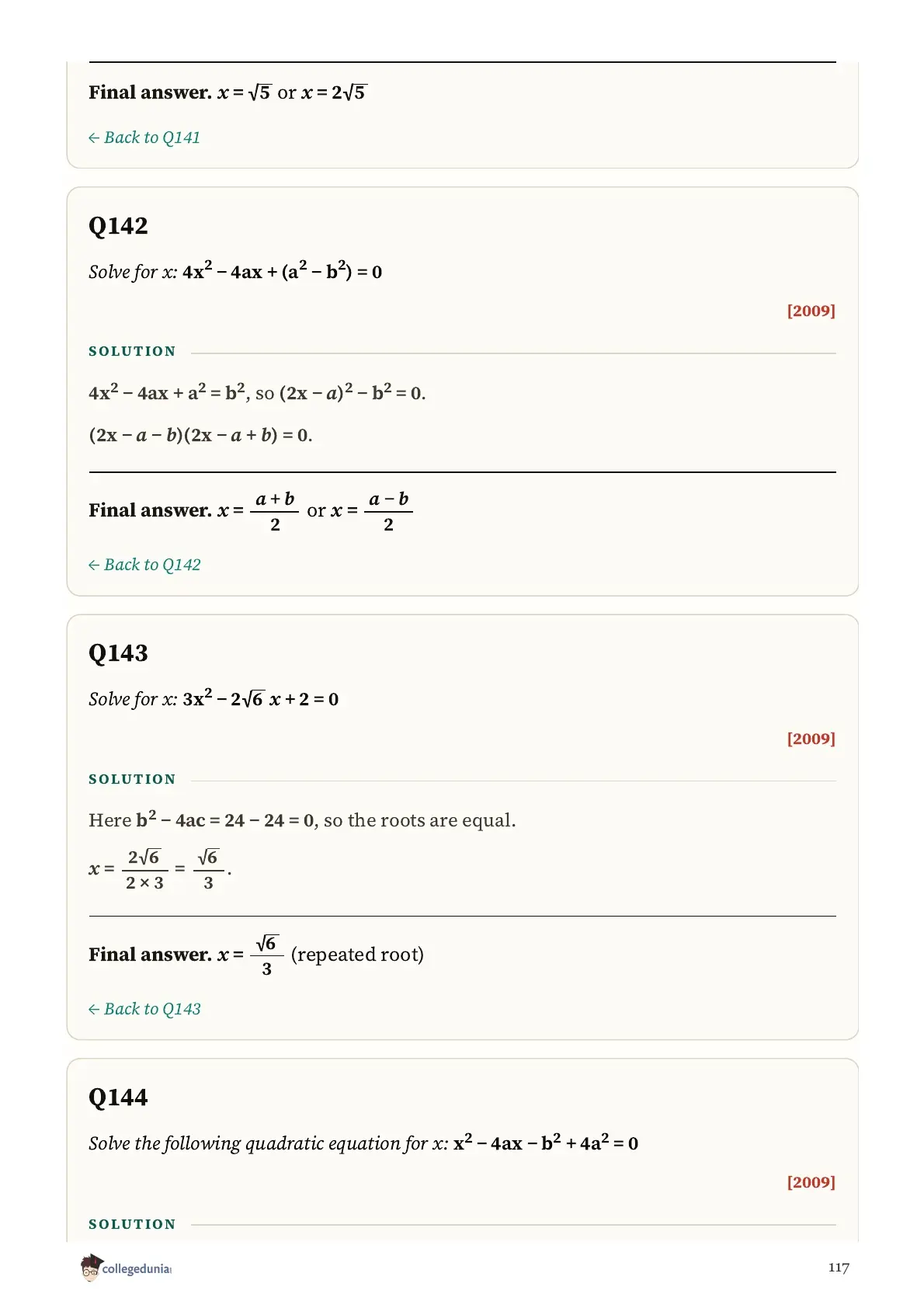
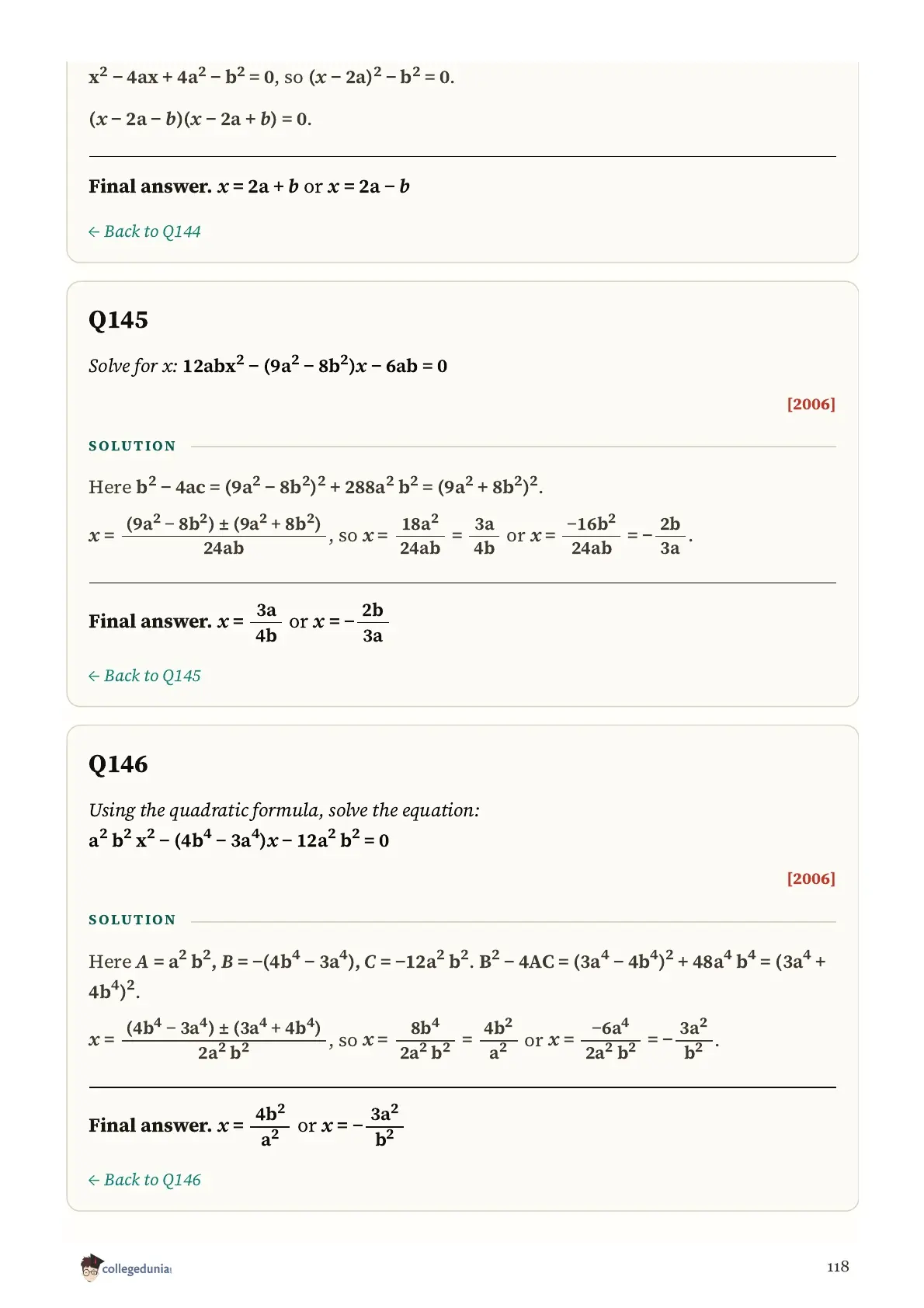
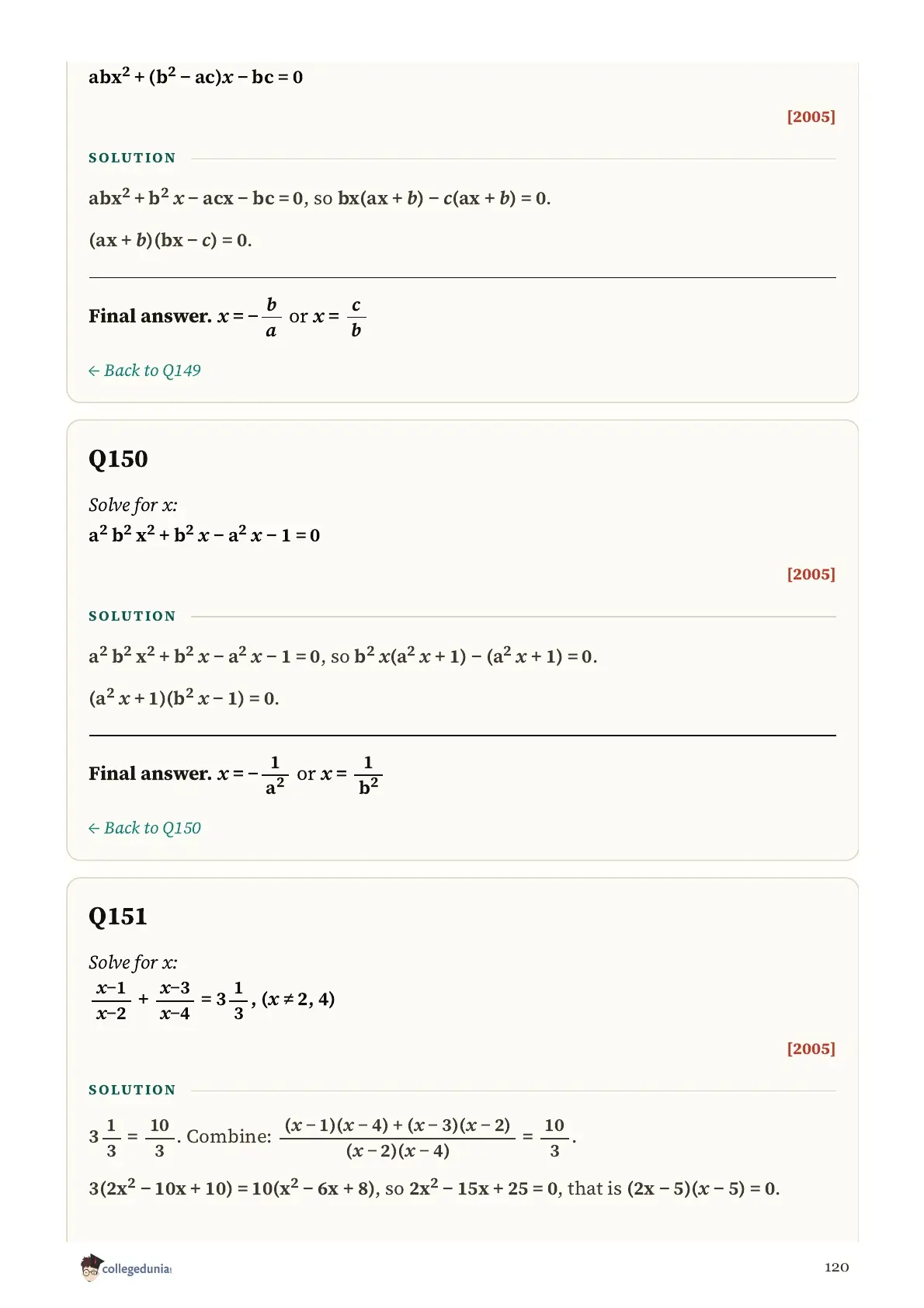
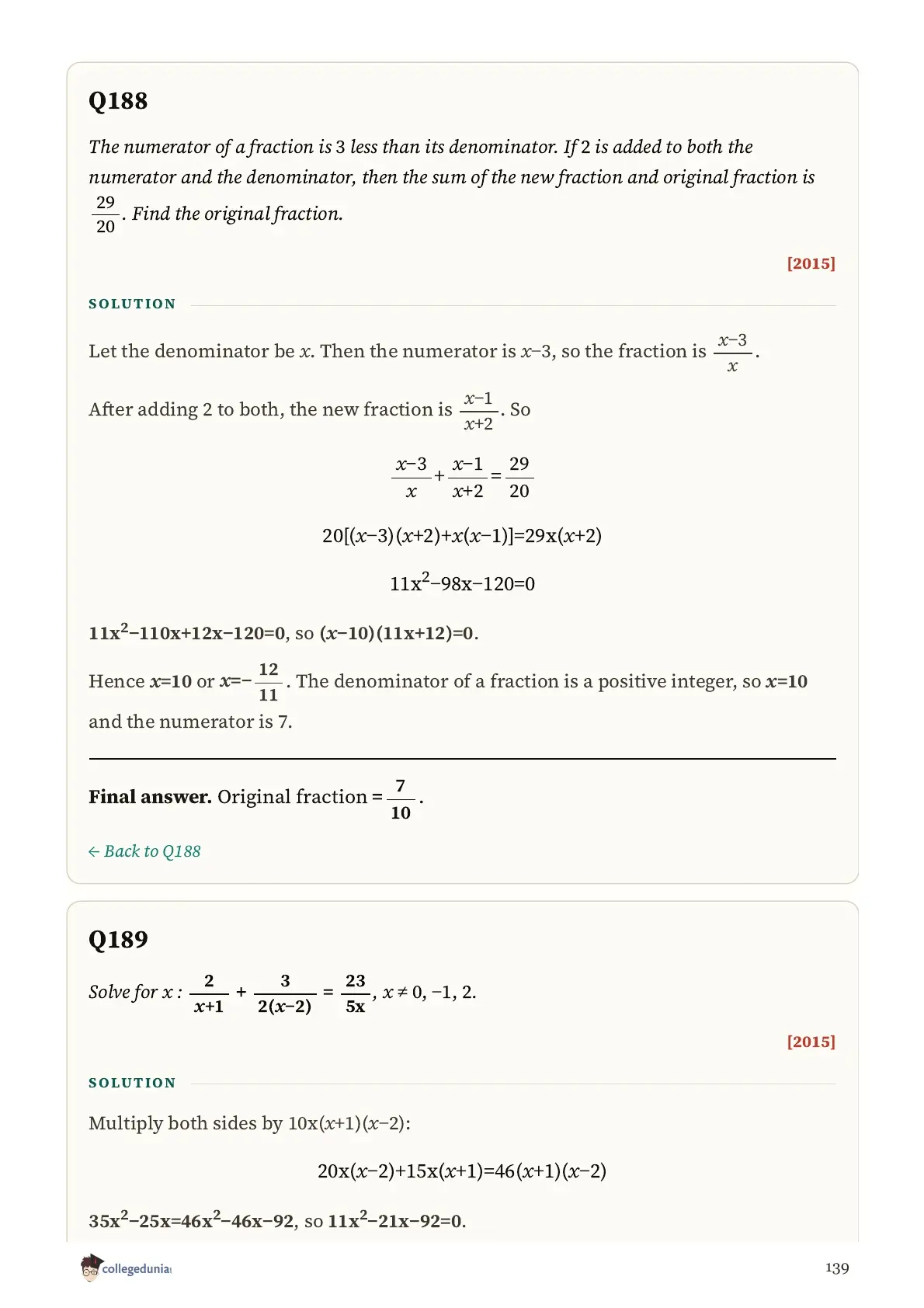
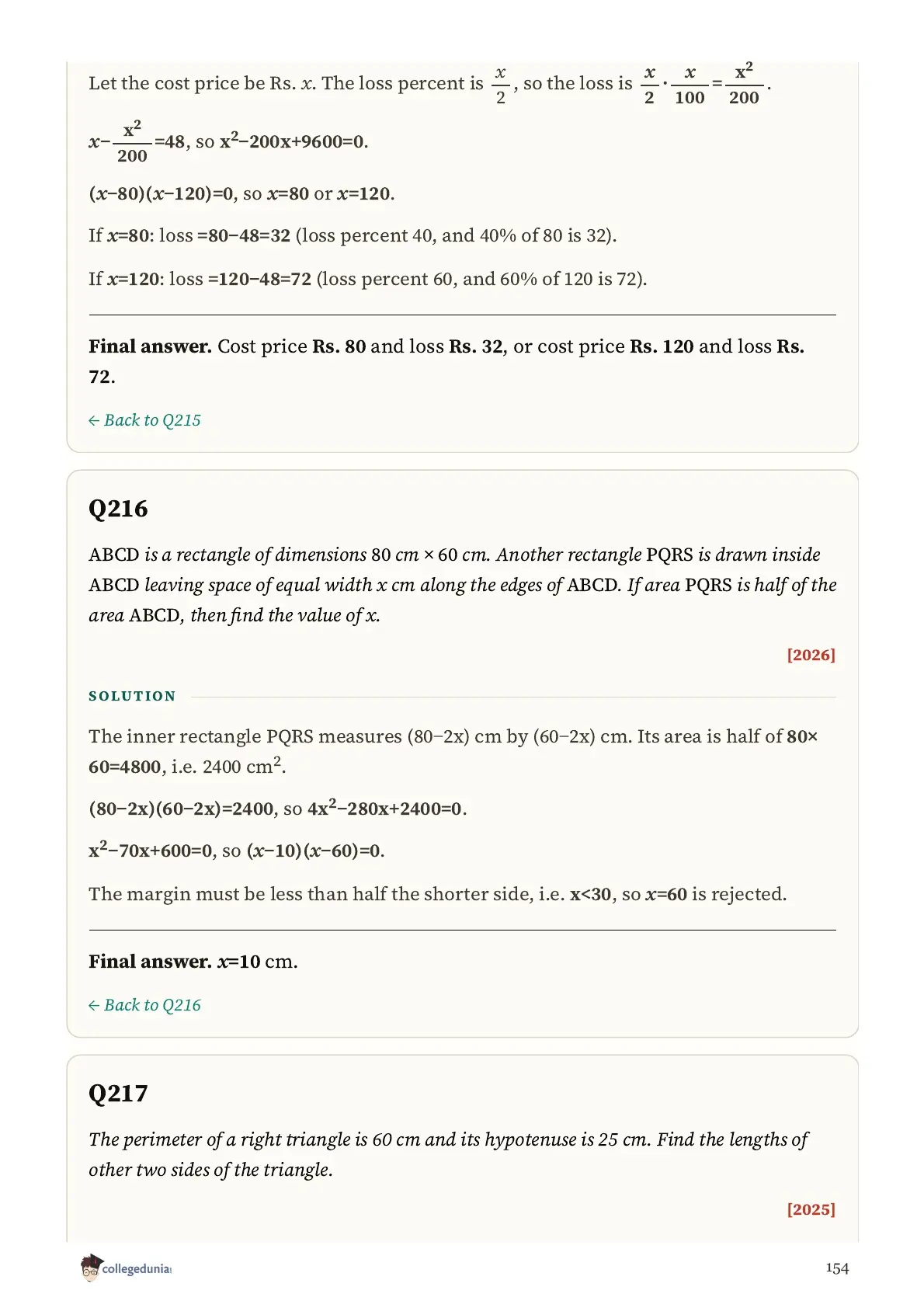
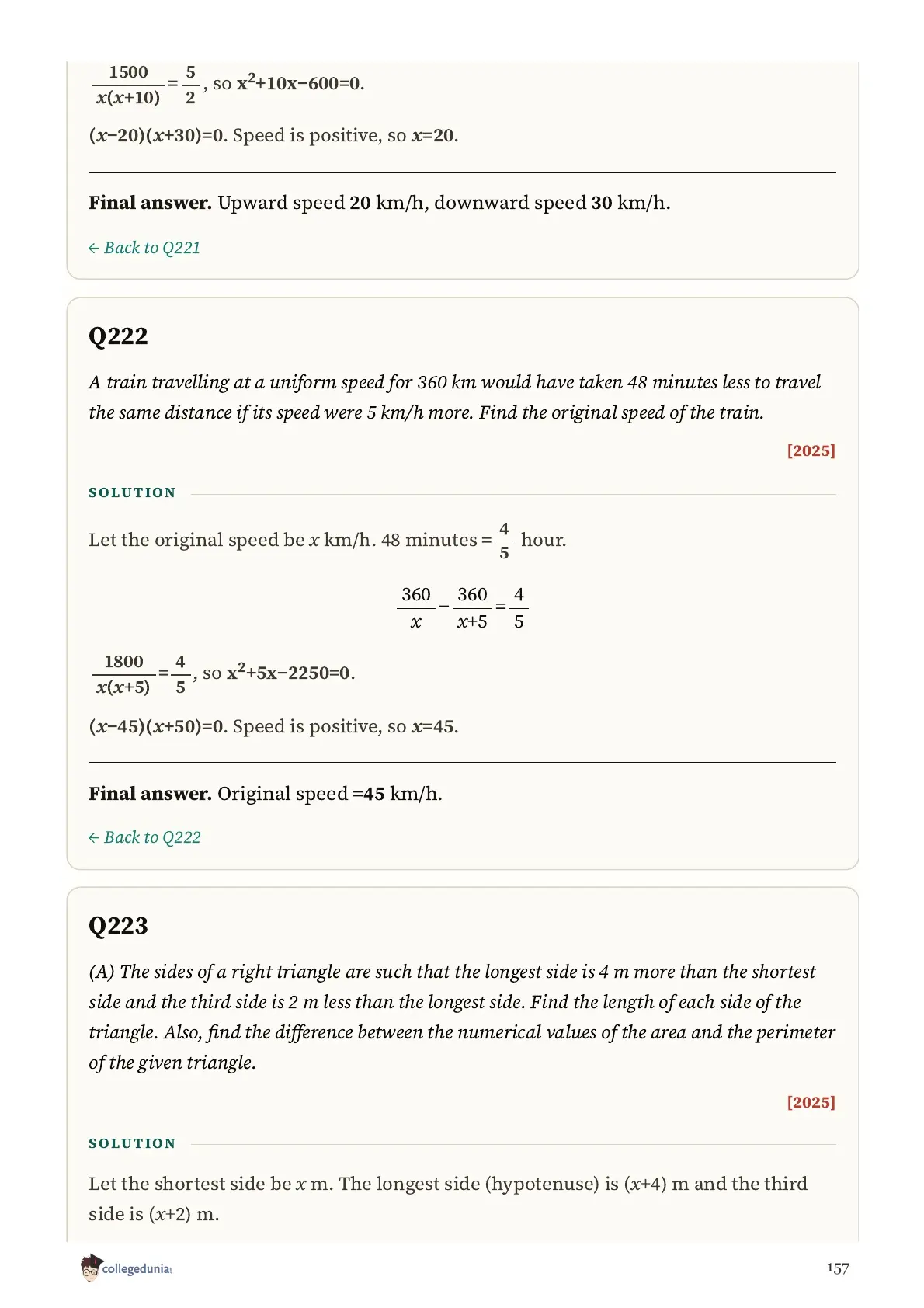
Most questions hand you an equation or a story and ask for its roots. 81 of the 259 say solve or find the roots, usually by factorisation or the quadratic formula, and 16 give one root and ask for the rest, such as py^2 + py + 3 = 0 with y = 1 as a root (2024). The 2026 paper opens the set with (x - 1)^2 = 16. 34 ask for the value of k or p that makes something true.
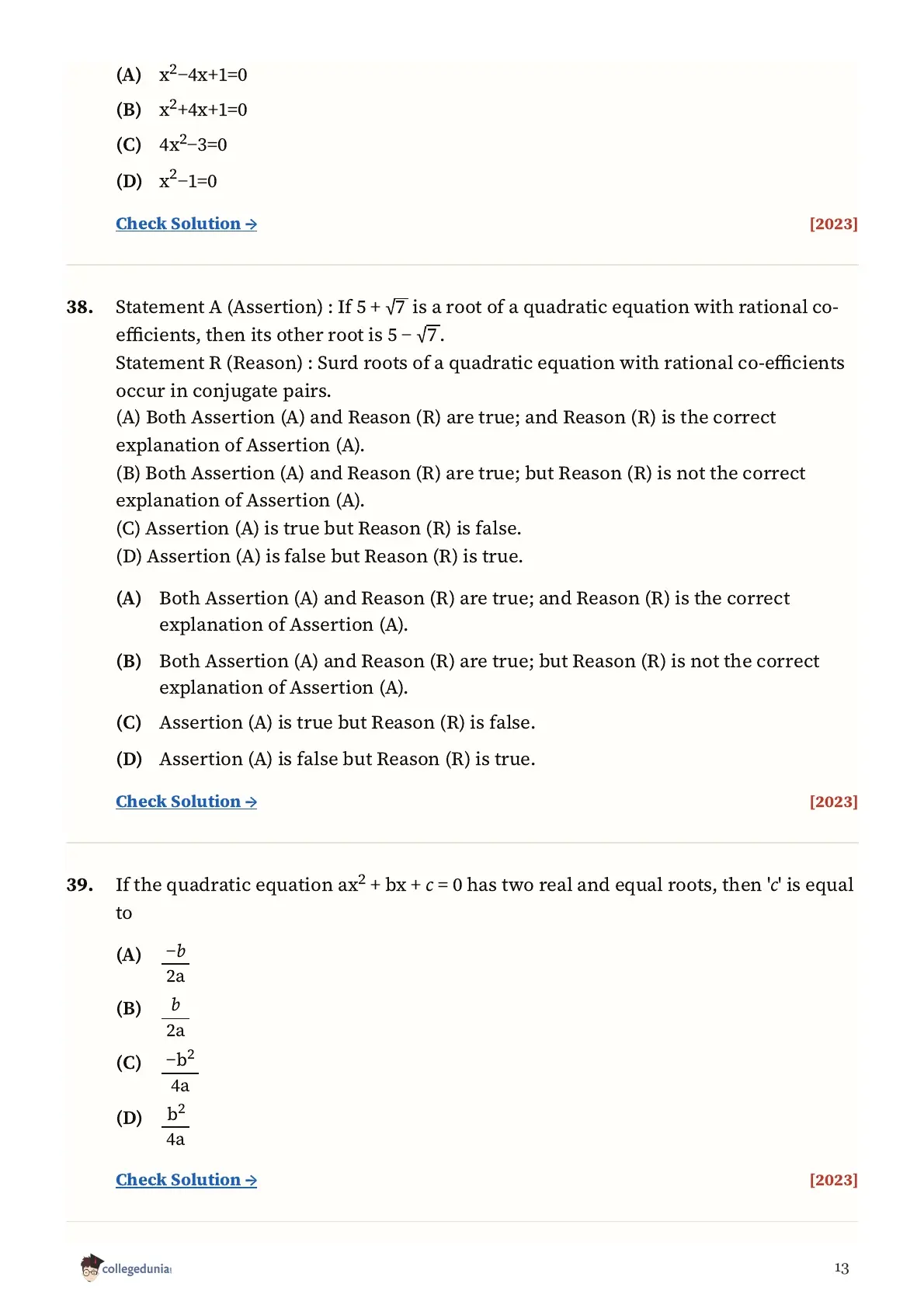
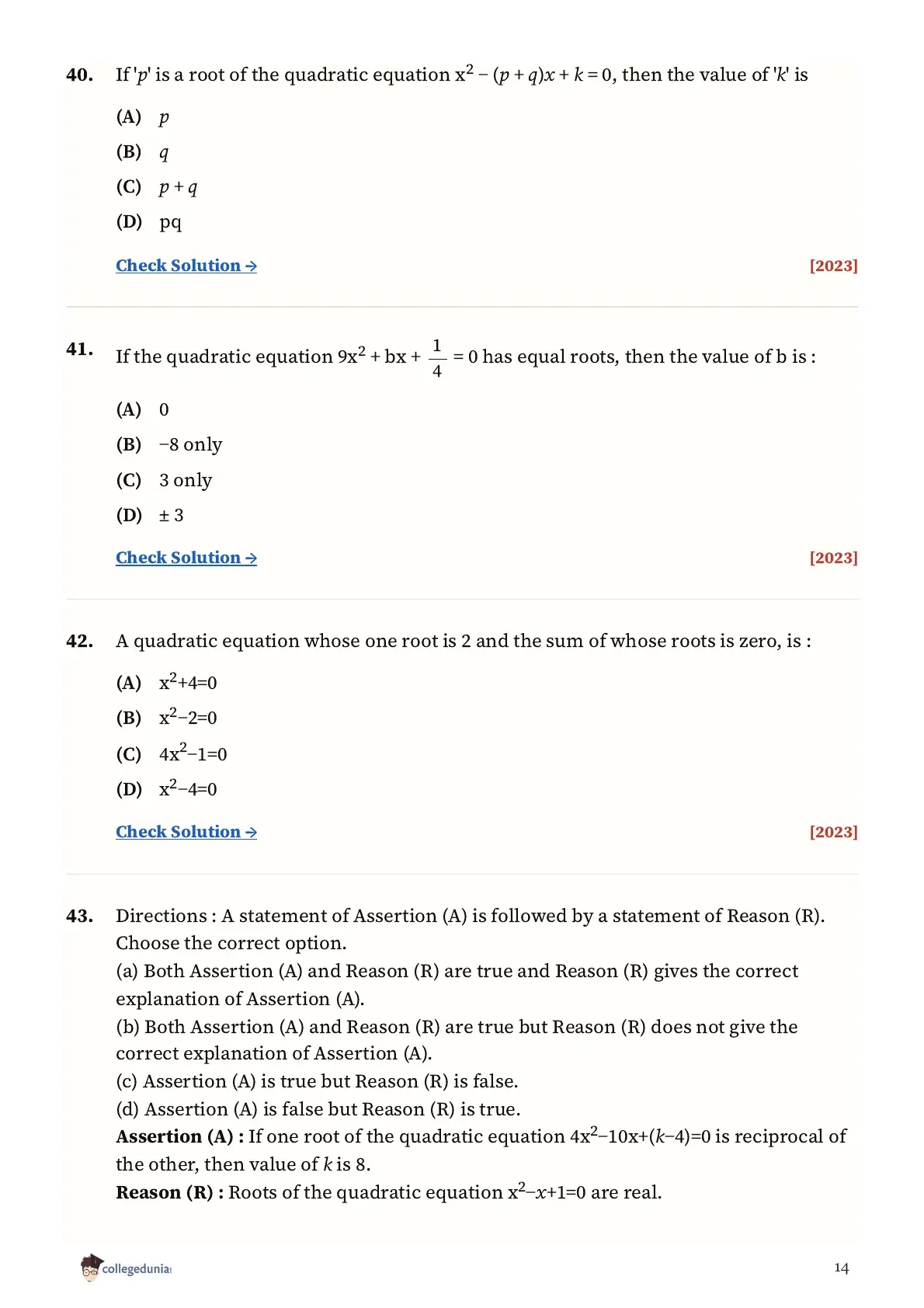
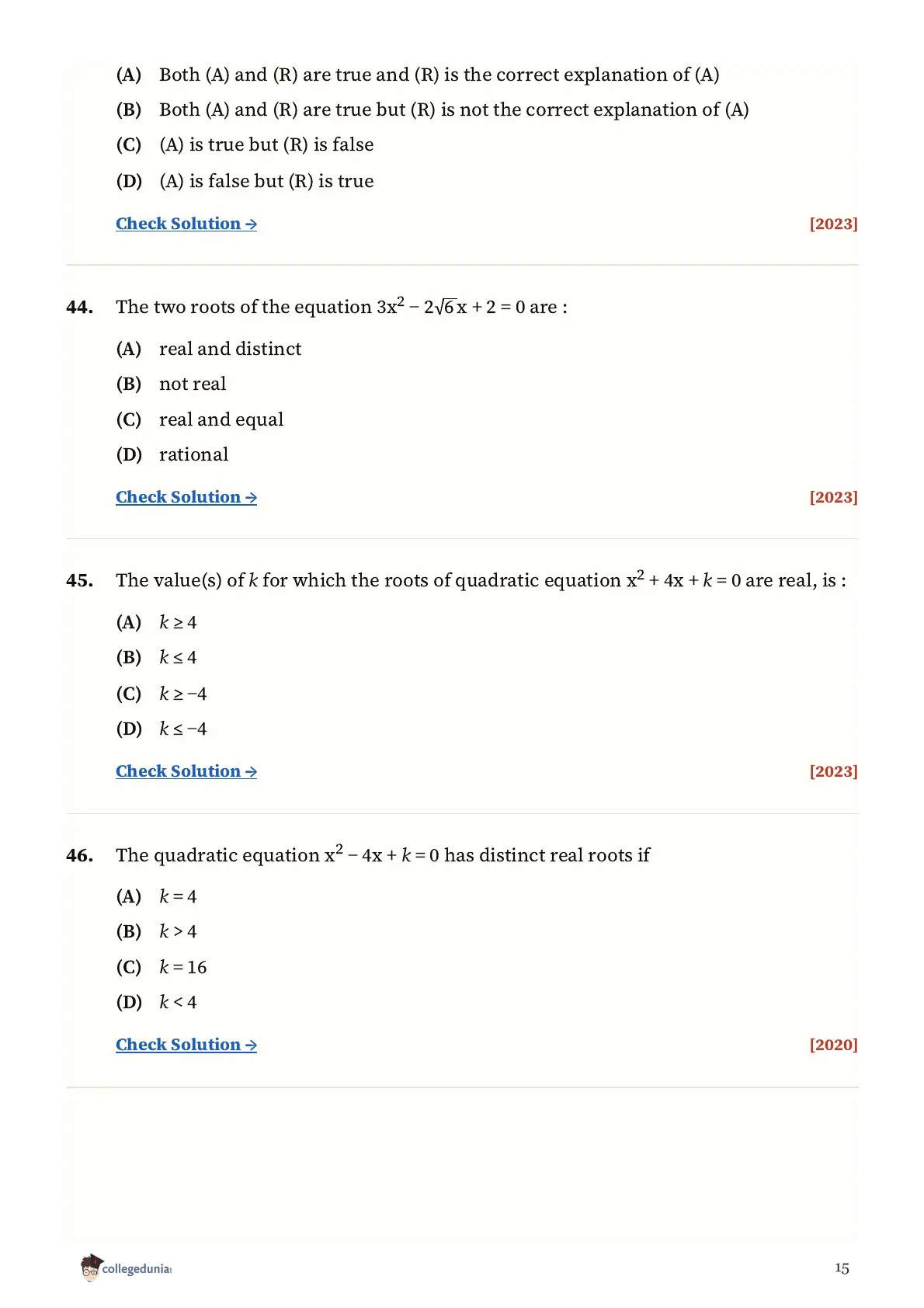
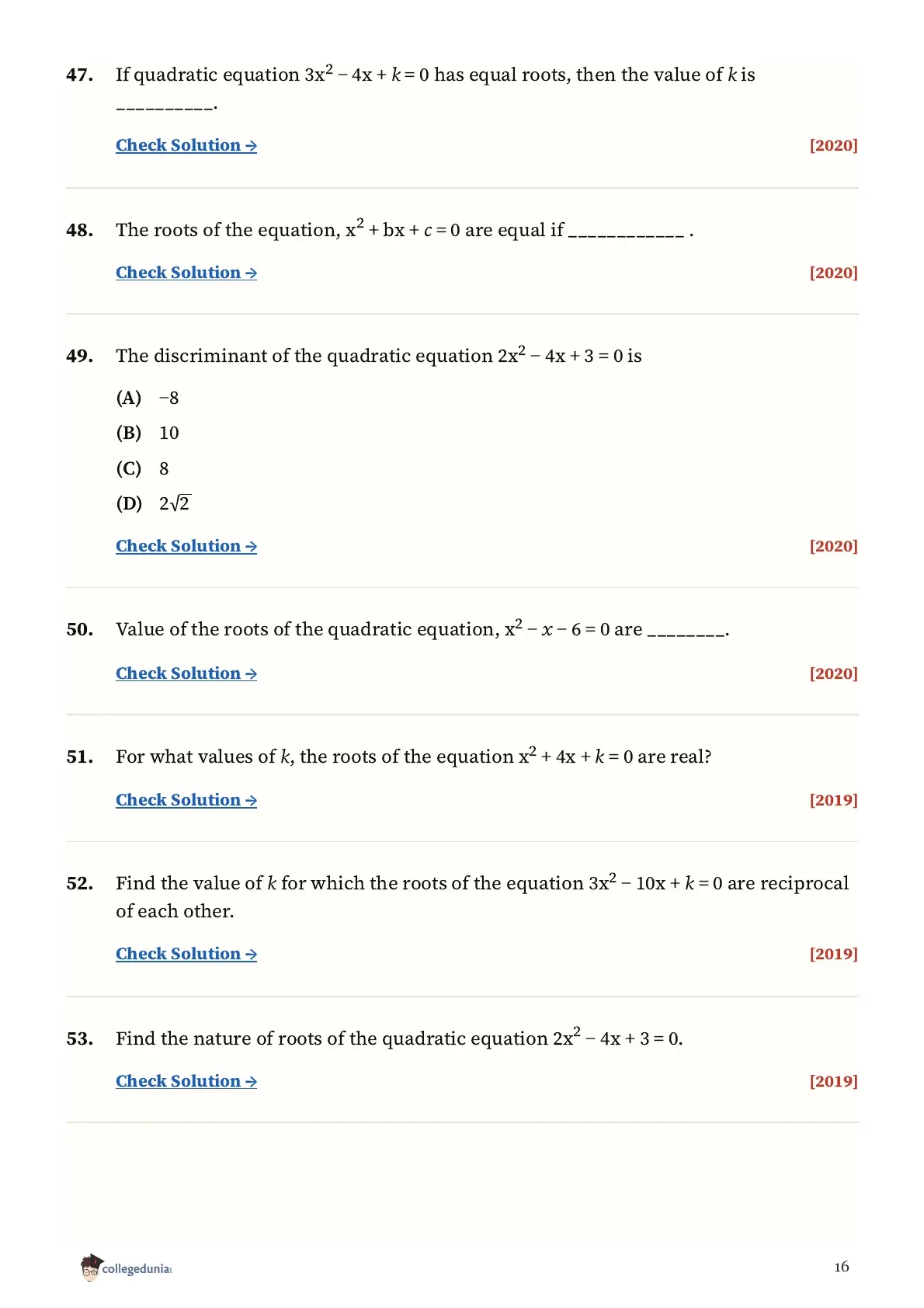
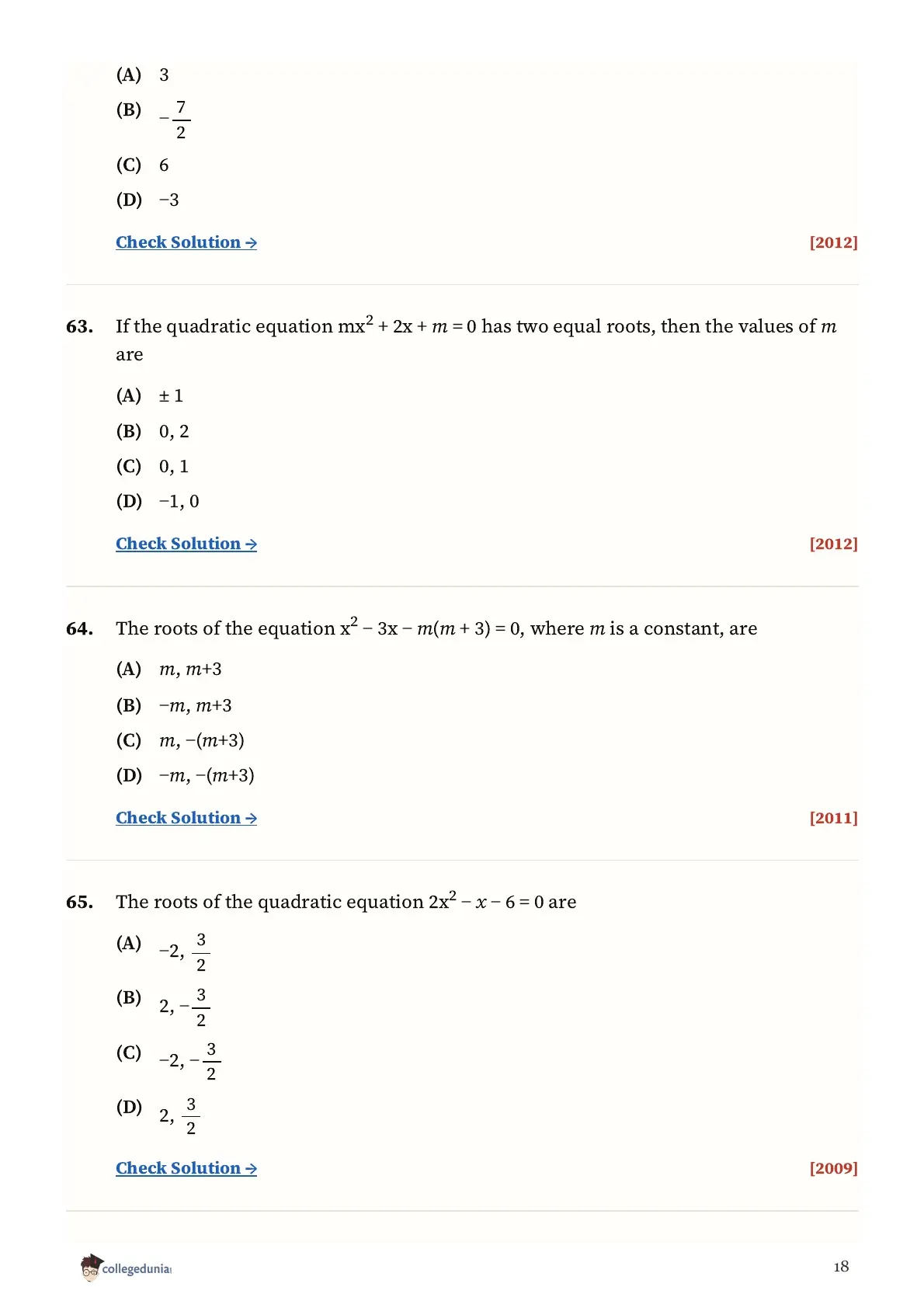
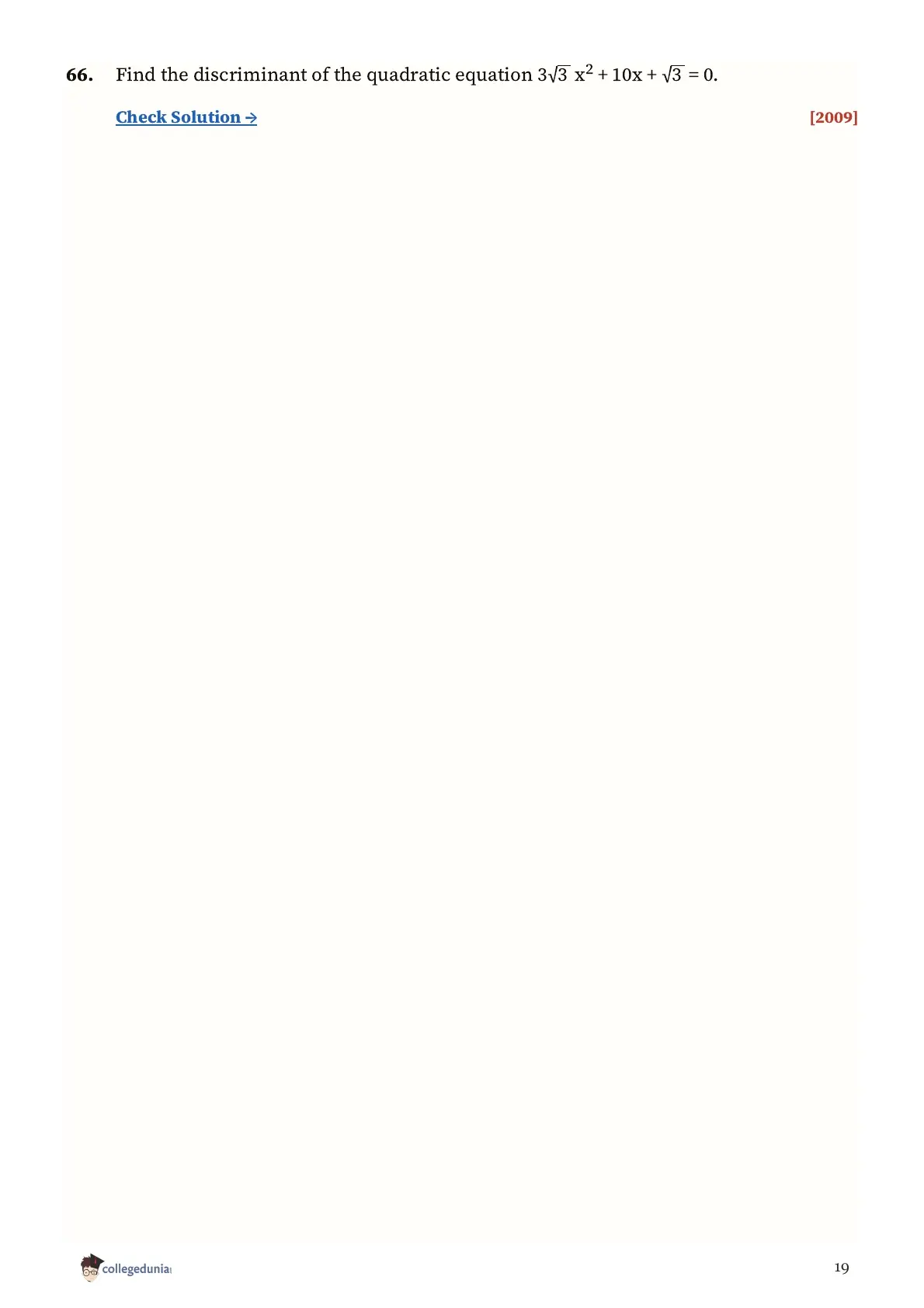
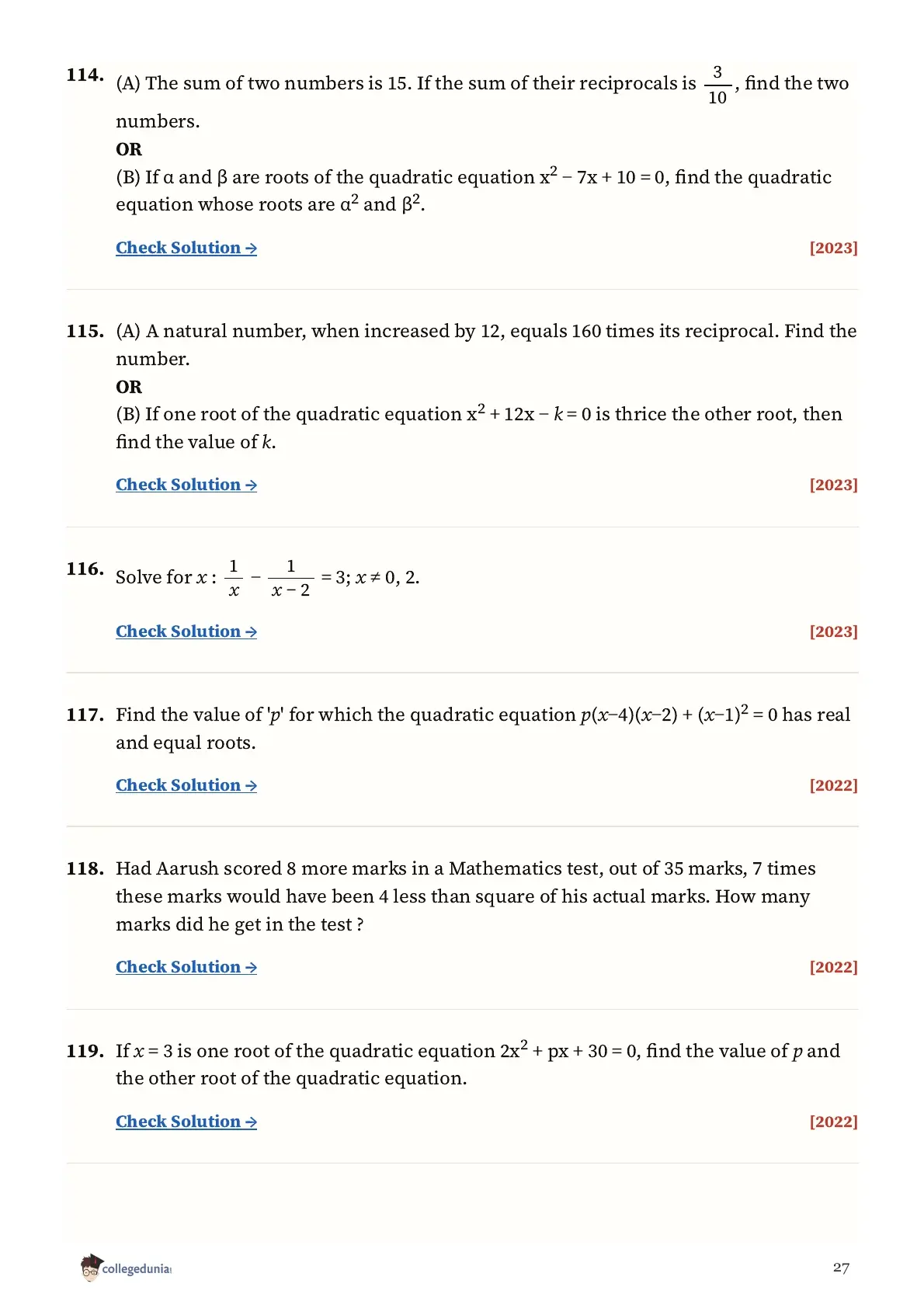
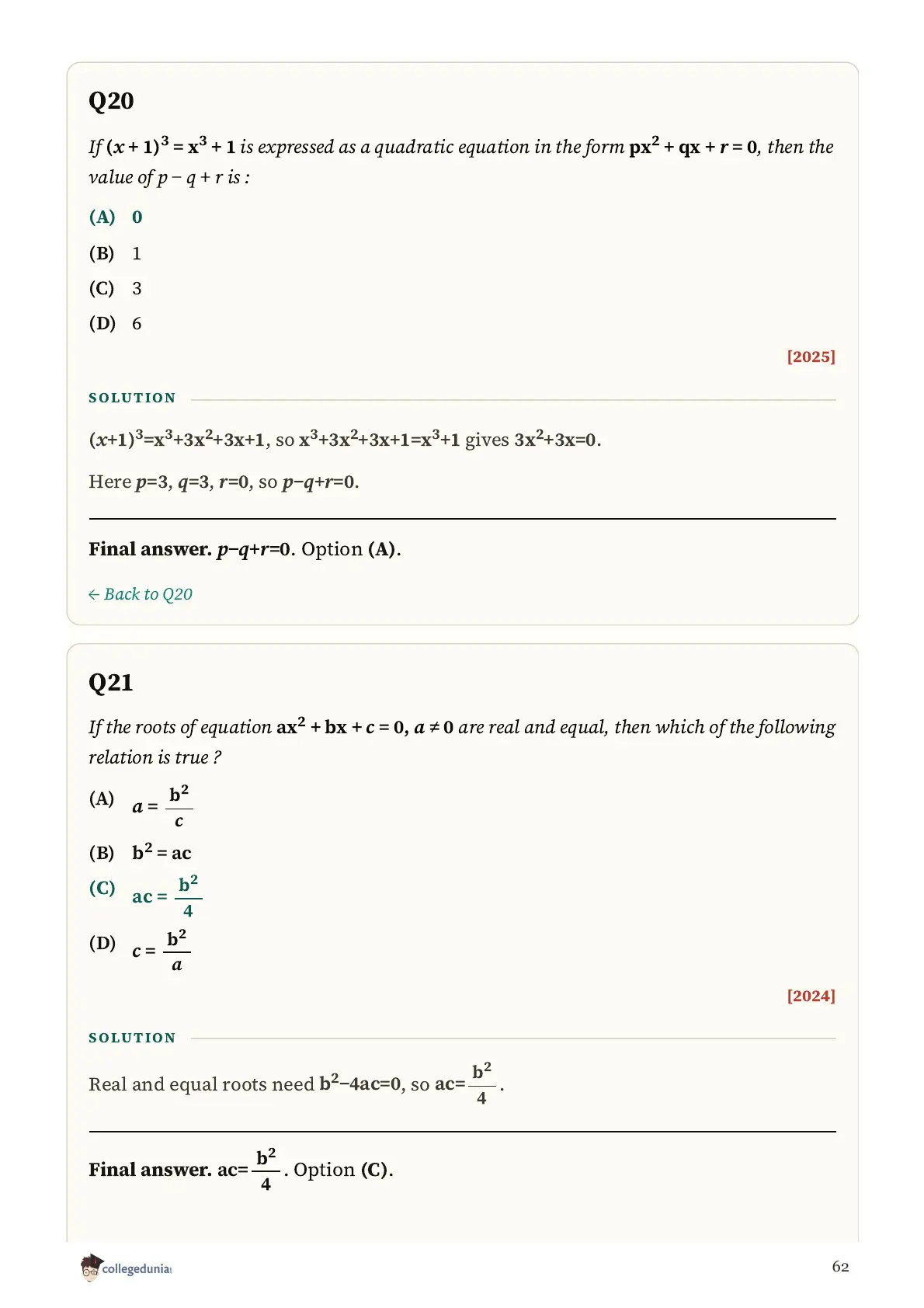
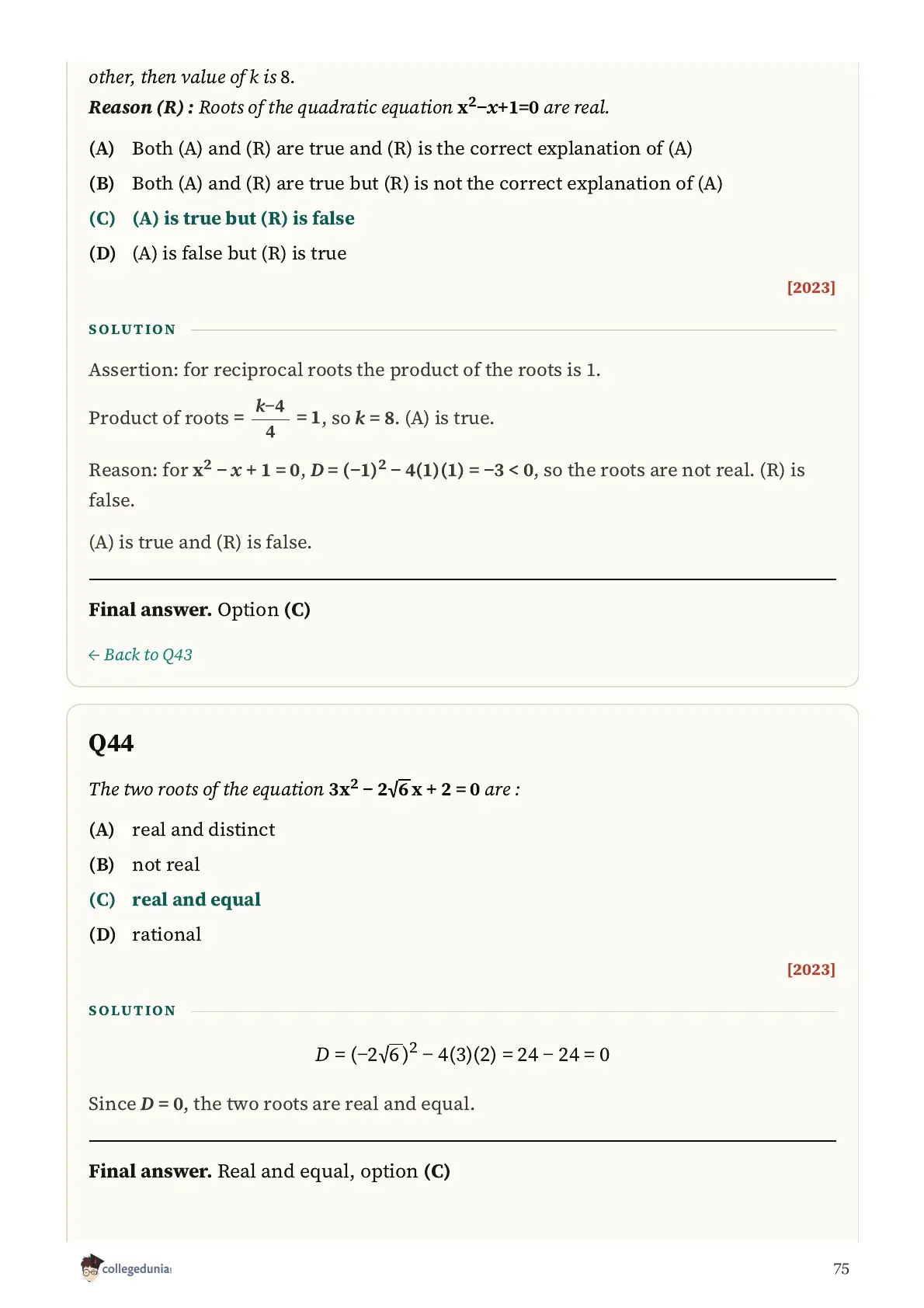
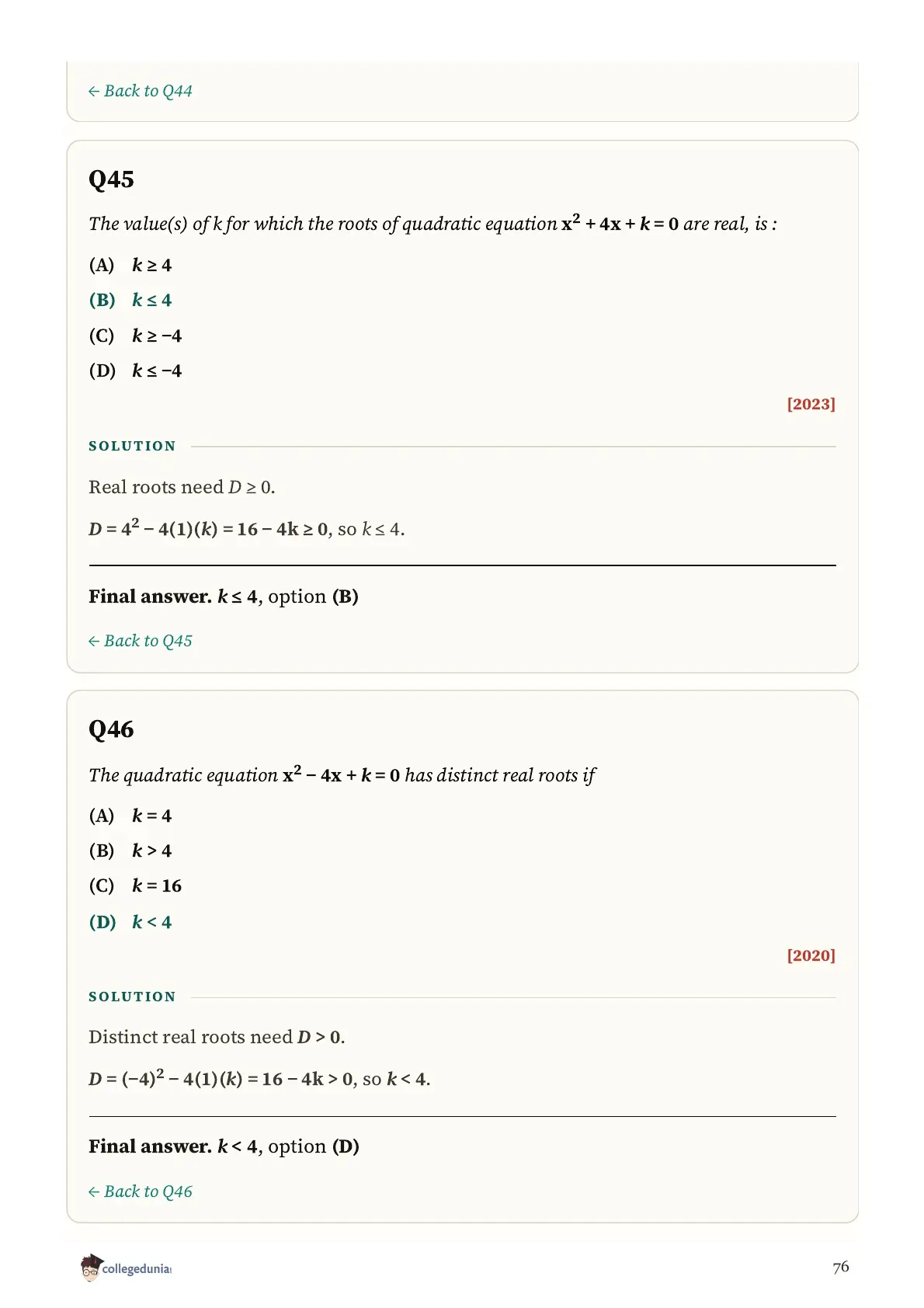
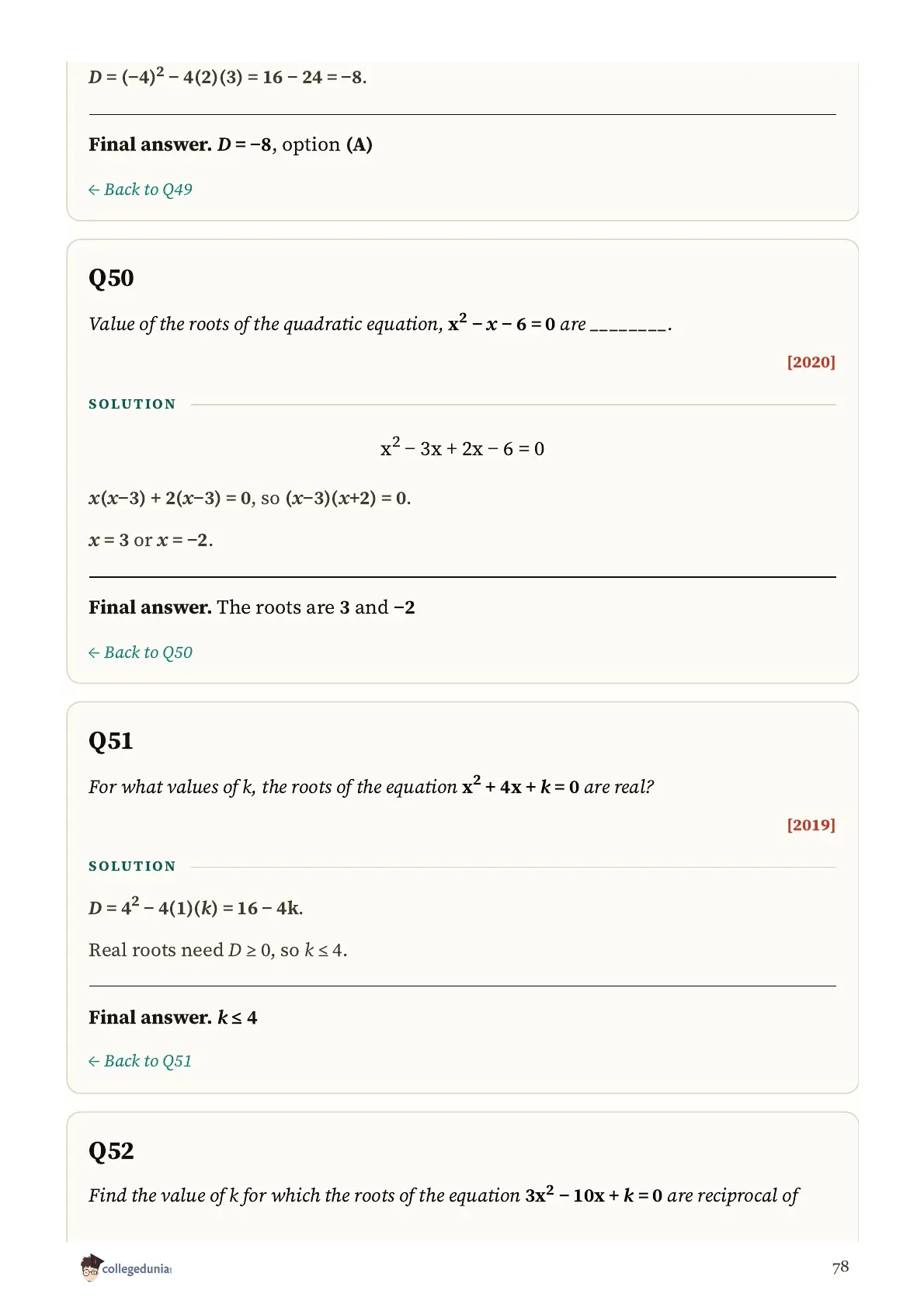
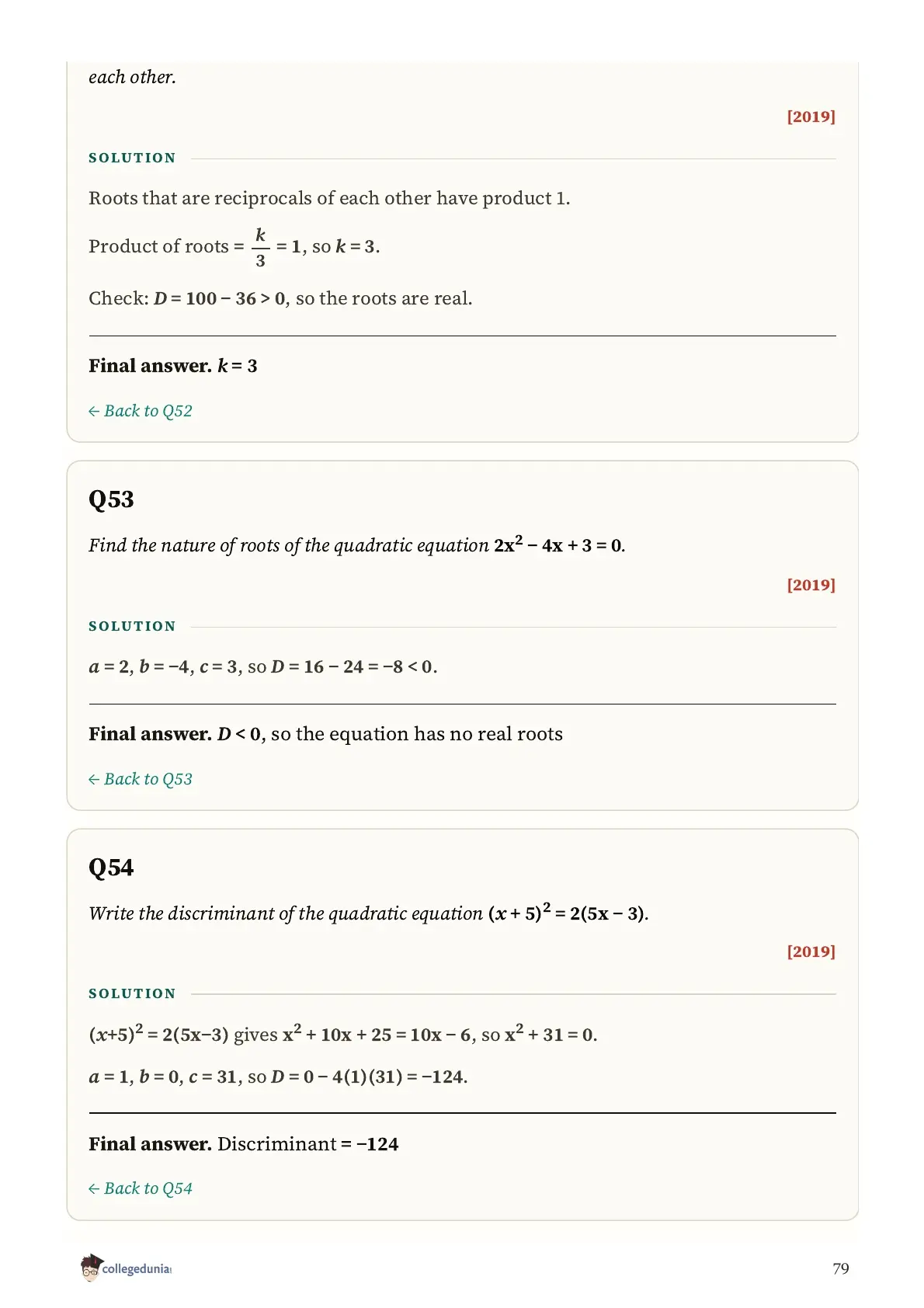
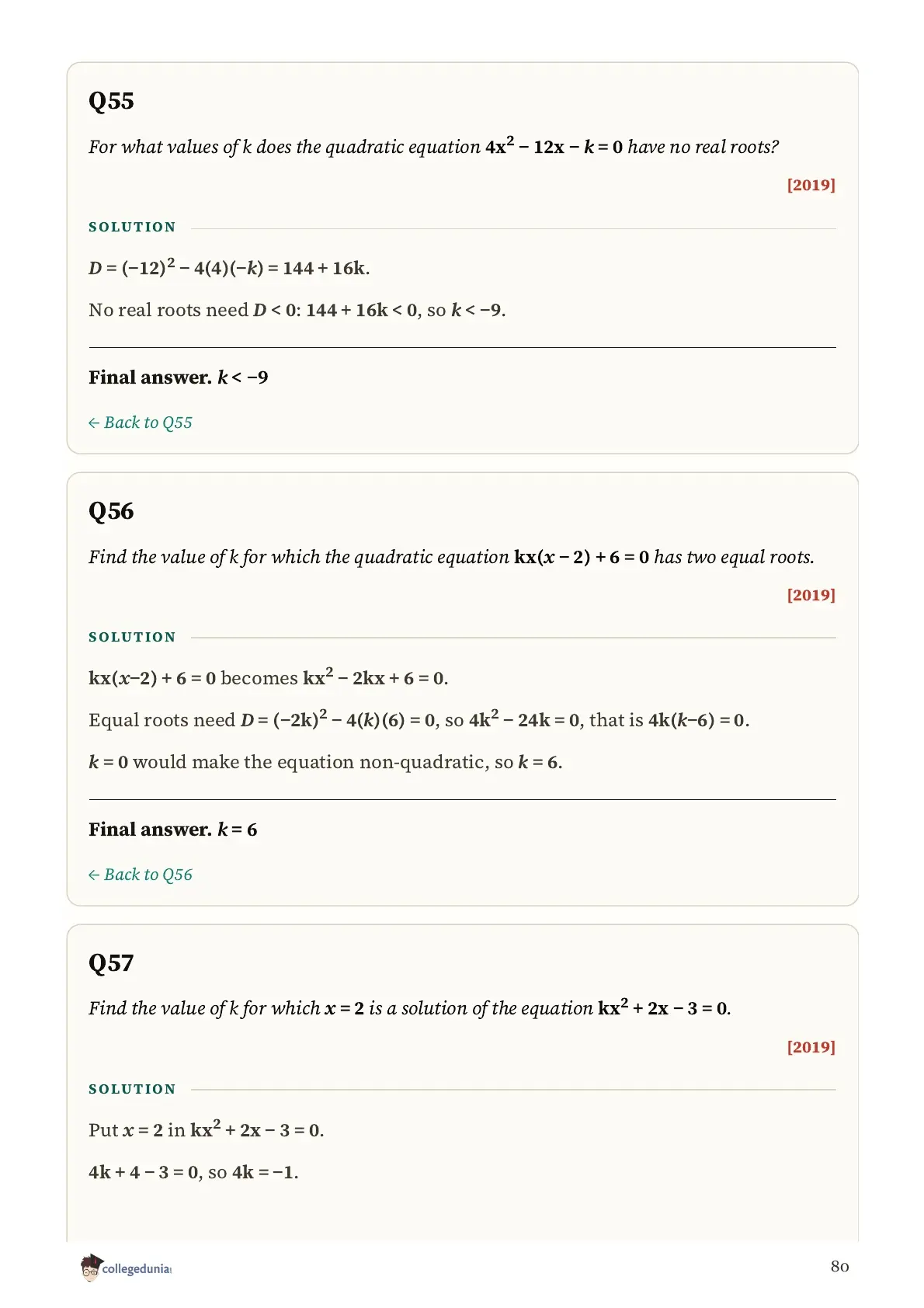
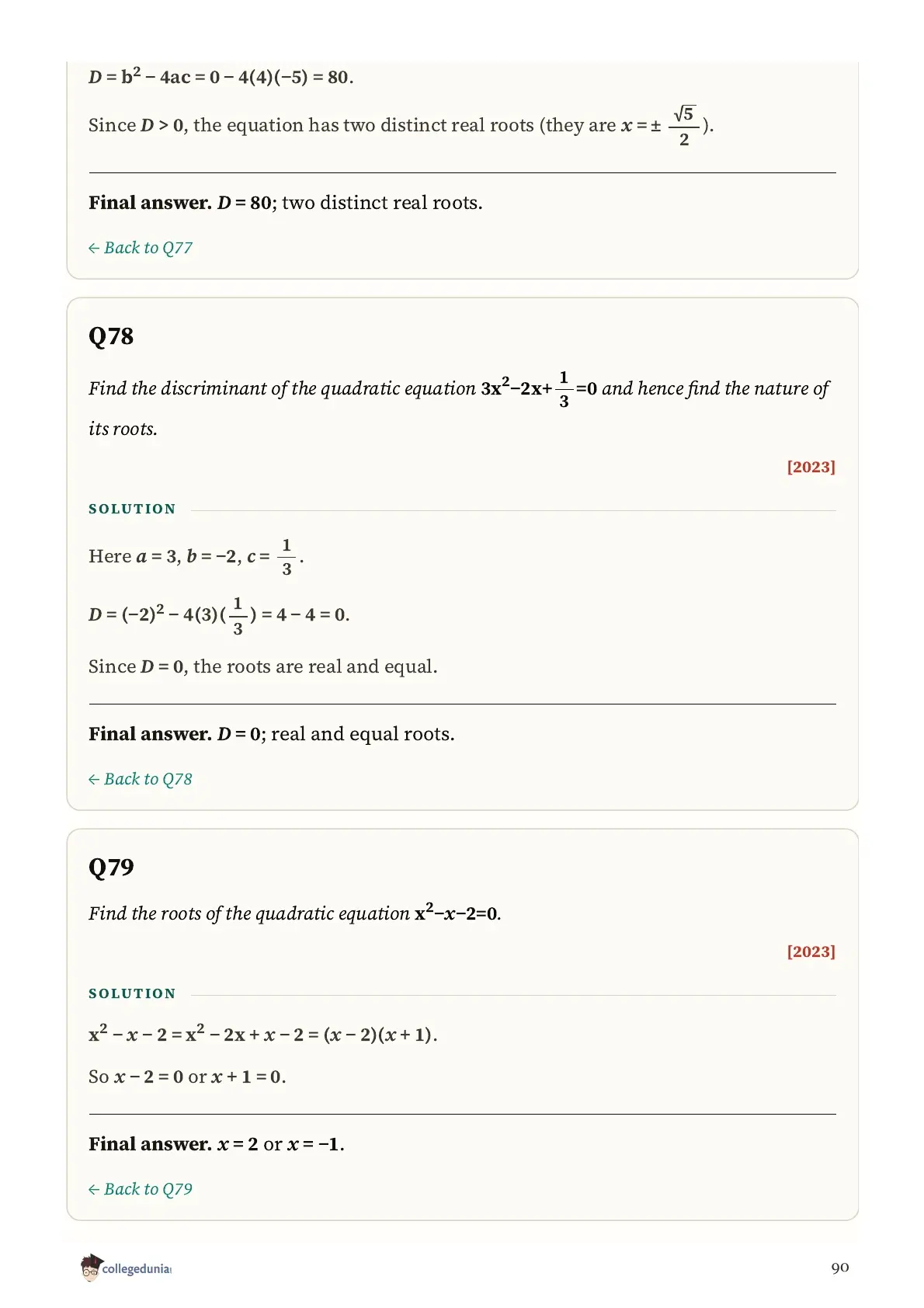
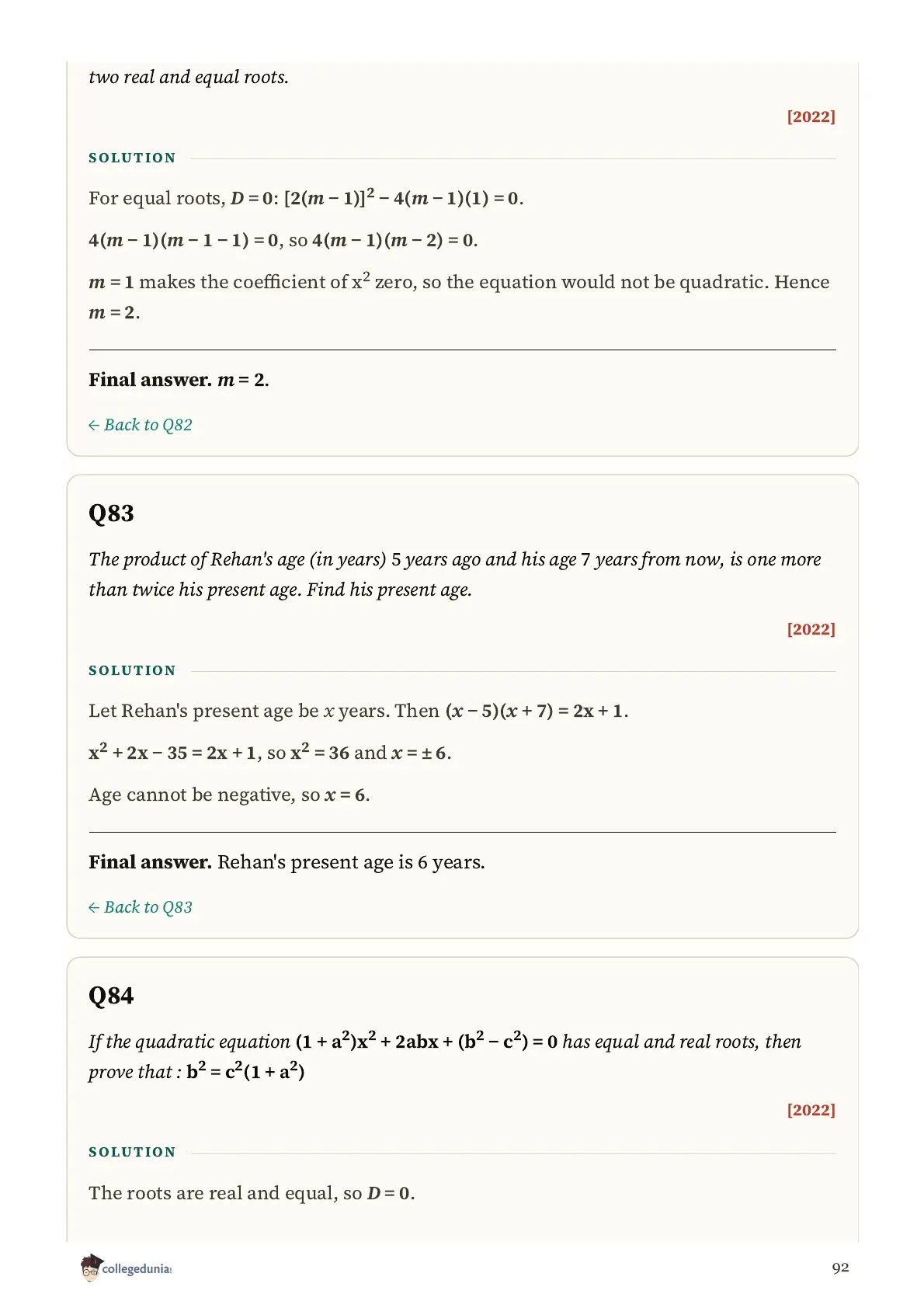
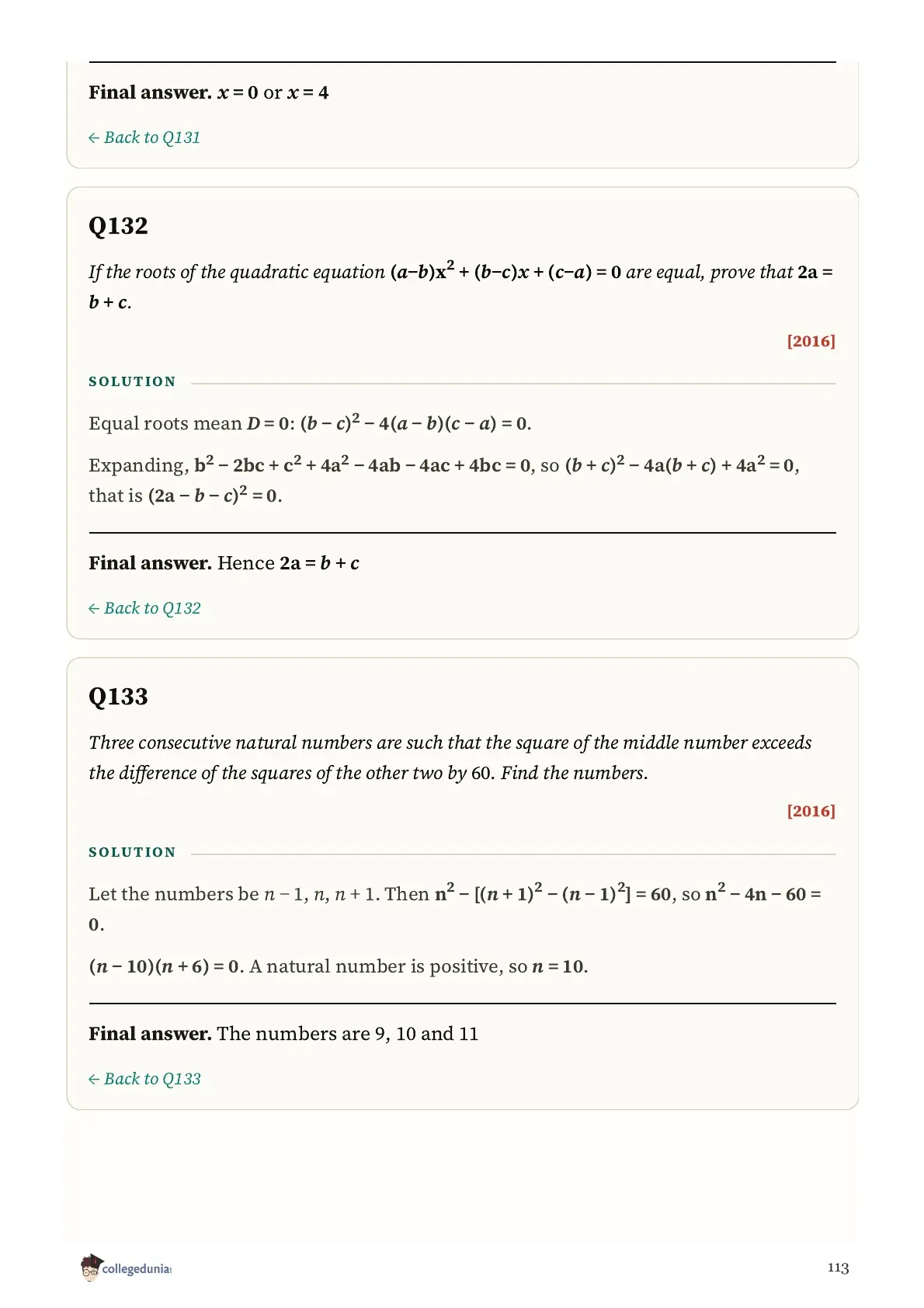
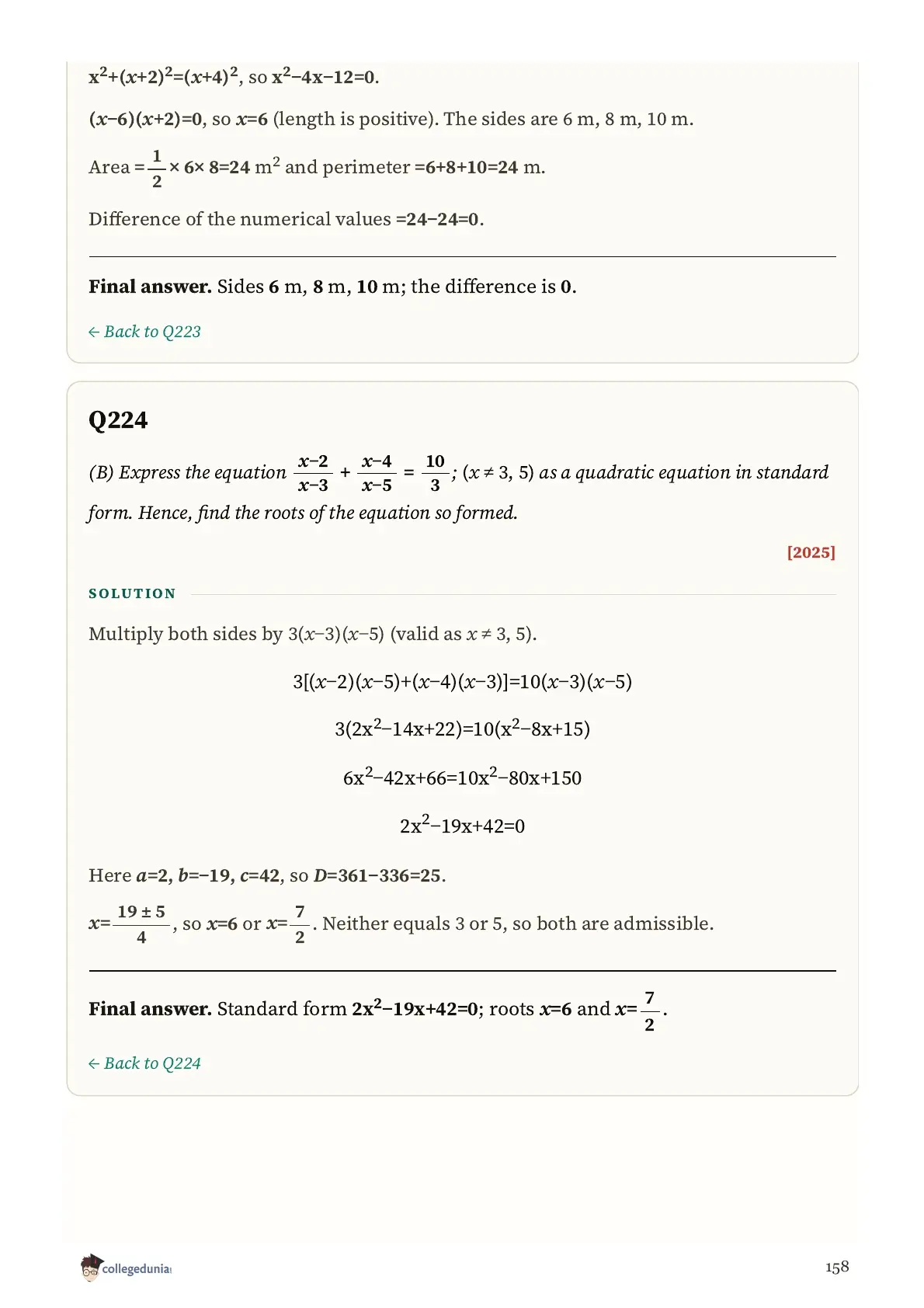
The discriminant carries the next block: 53 questions on real, equal or no real roots. Typical cases are 4x^2 - 12x - k = 0 having no real roots (2019), kx(x - 2) + 6 = 0 having equal roots (2013) and the discriminant of 2x^2 - 4x + 3 = 0 (2020). 13 questions use the sum or product of roots.
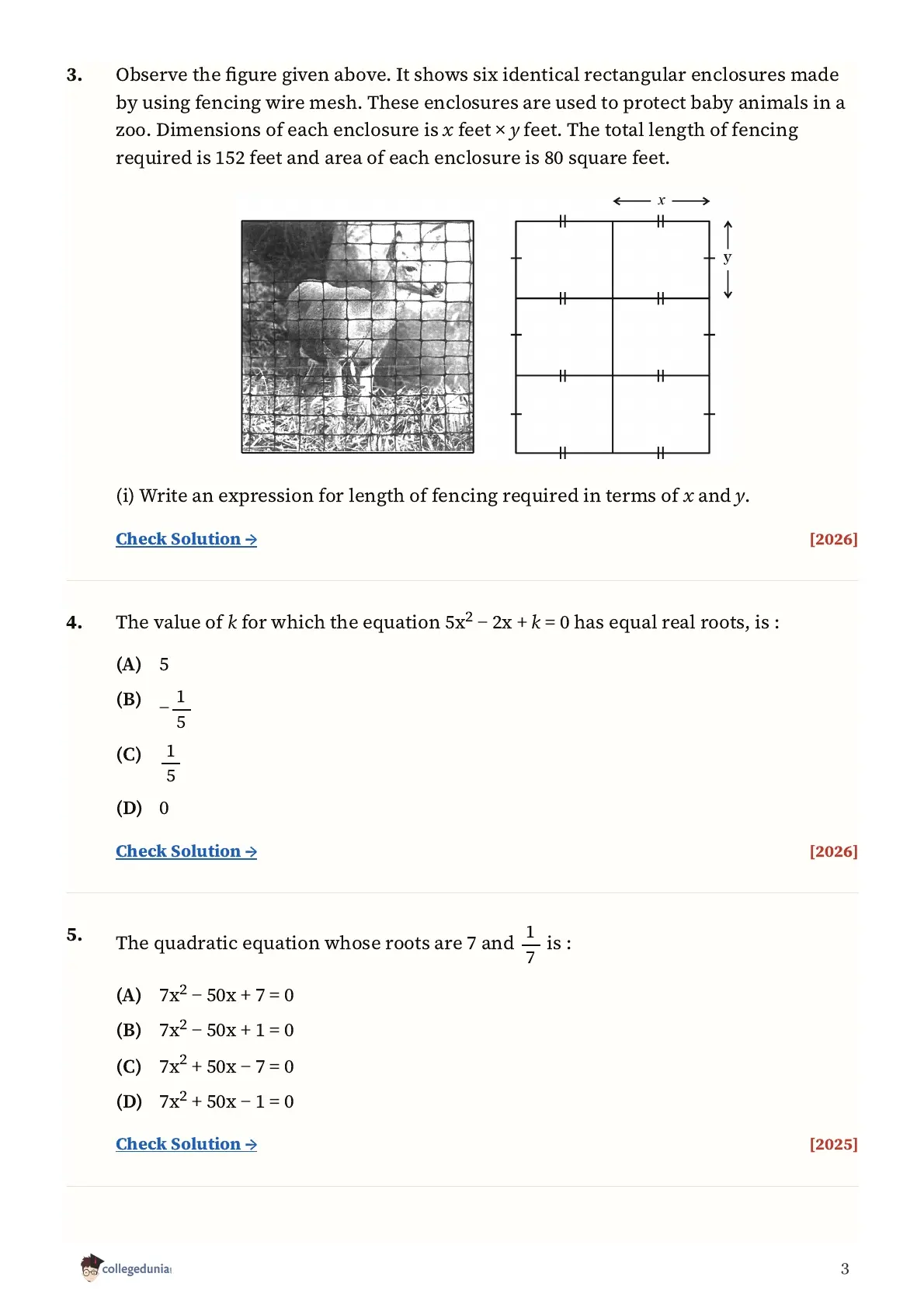
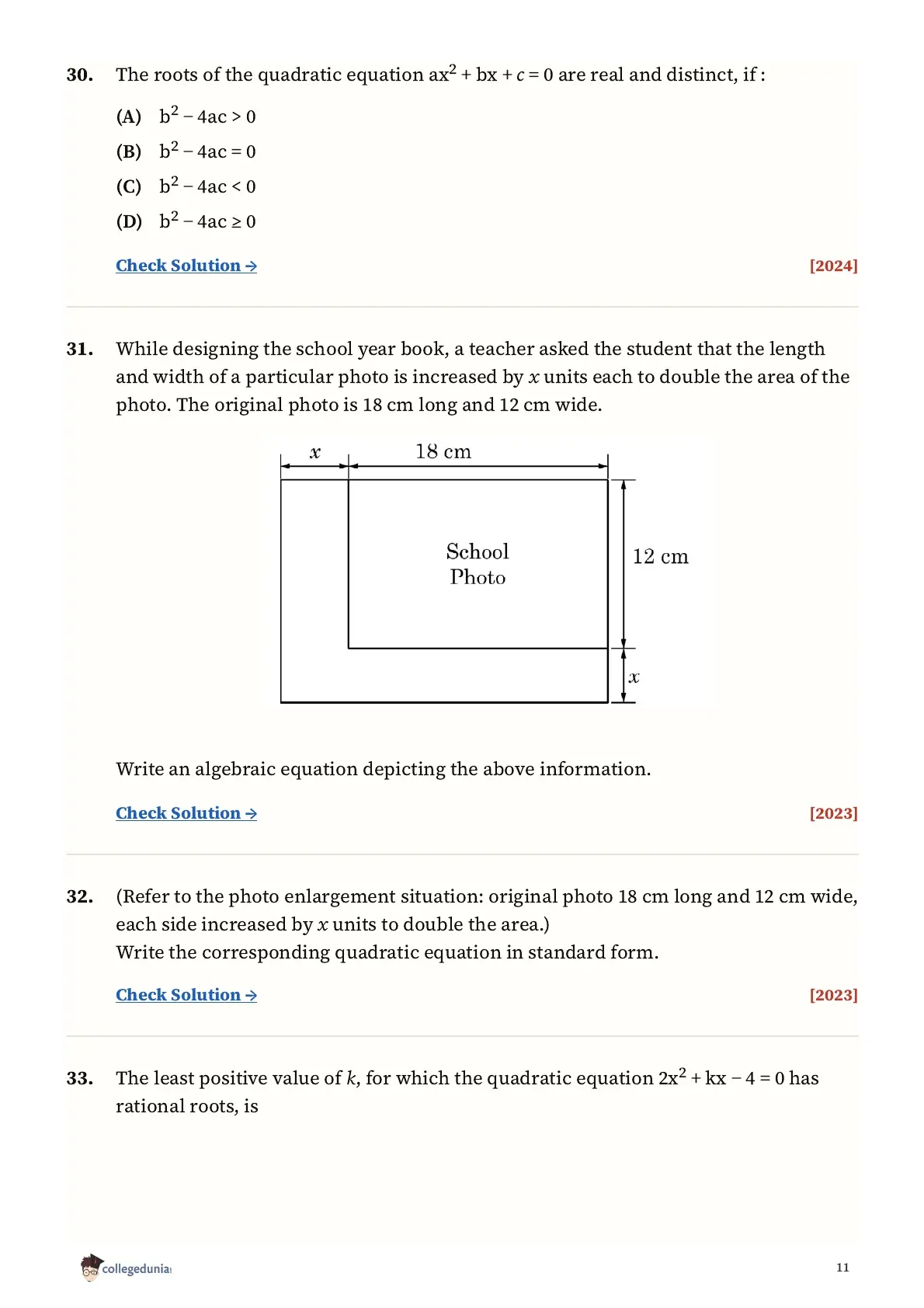
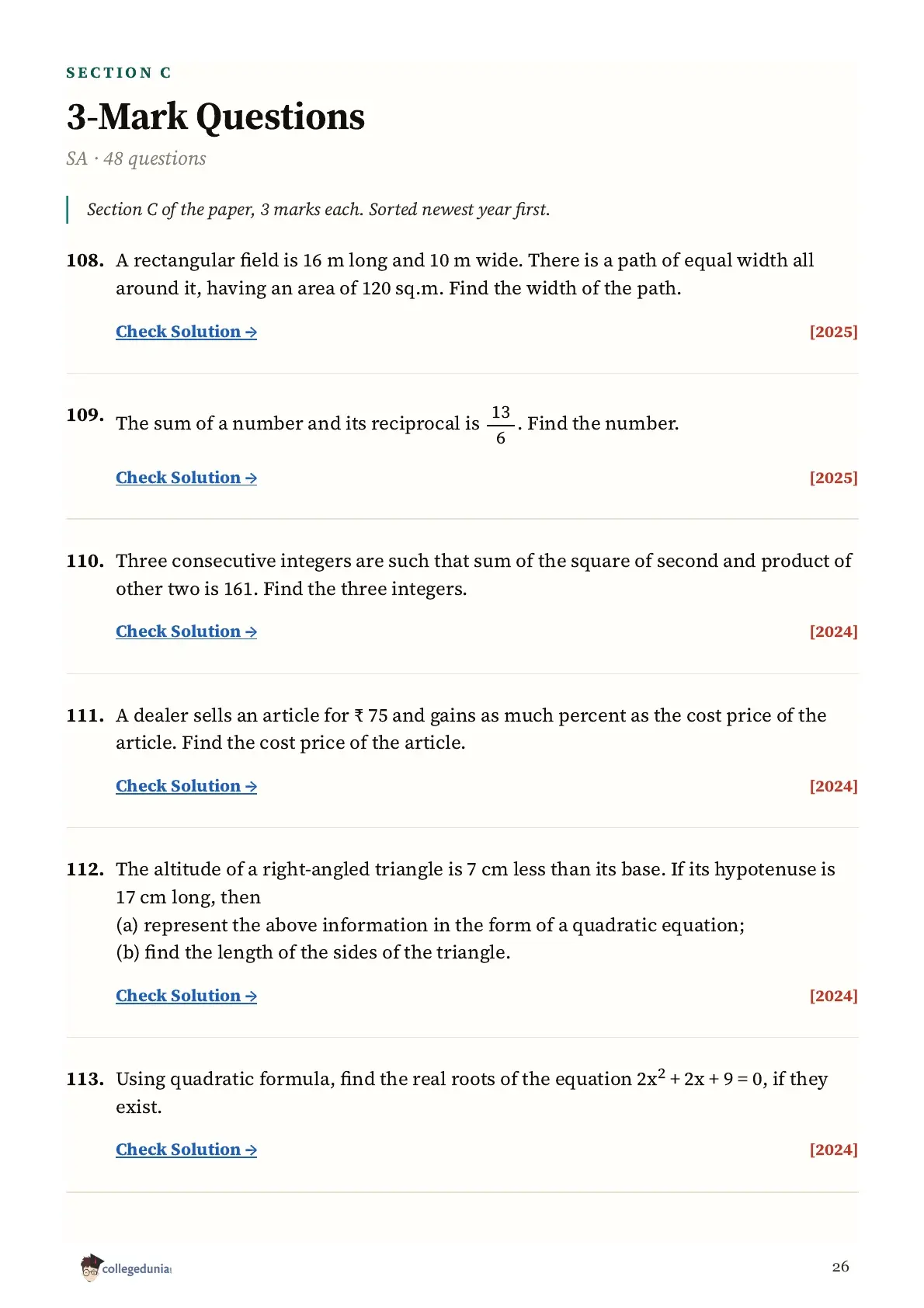
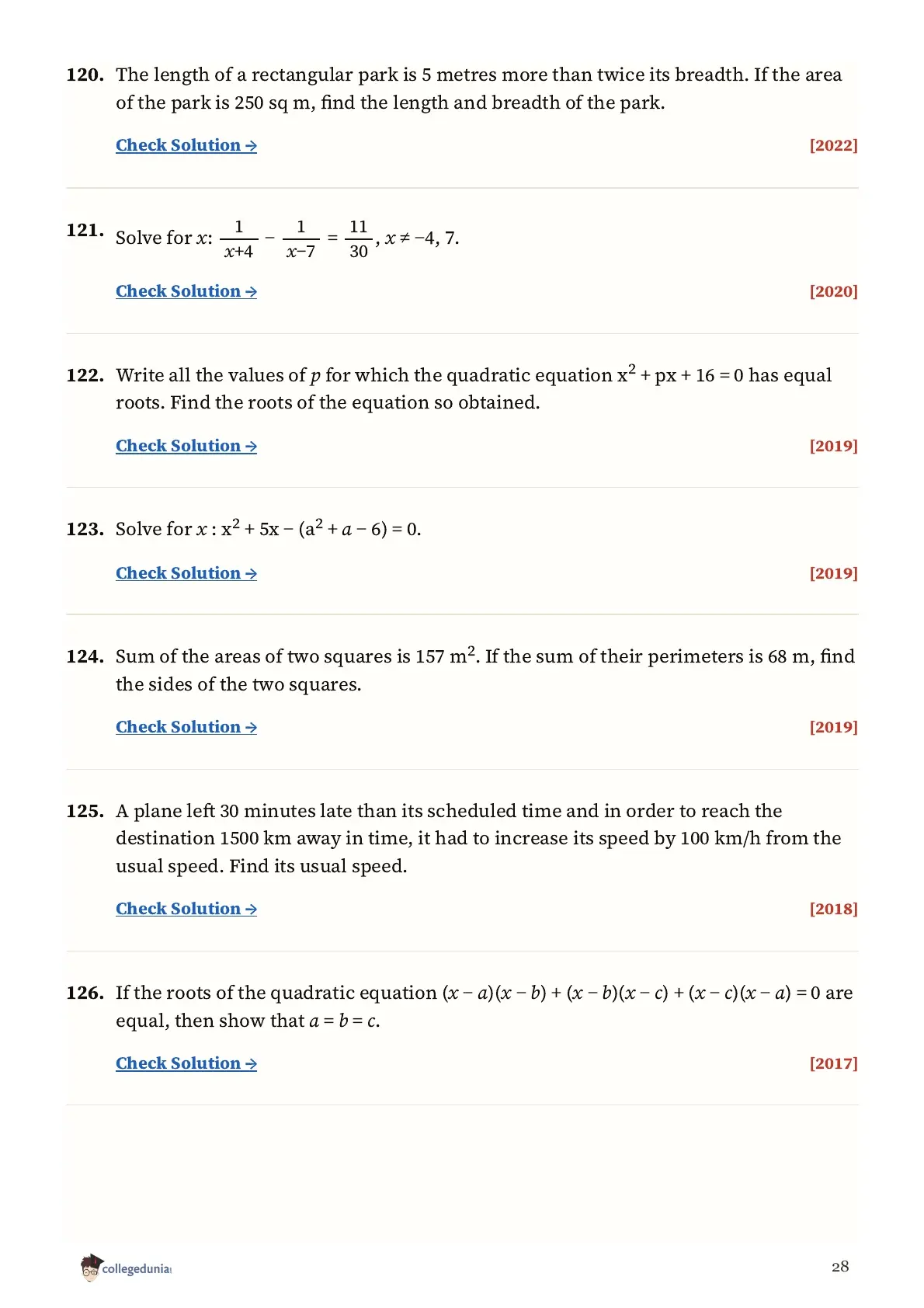
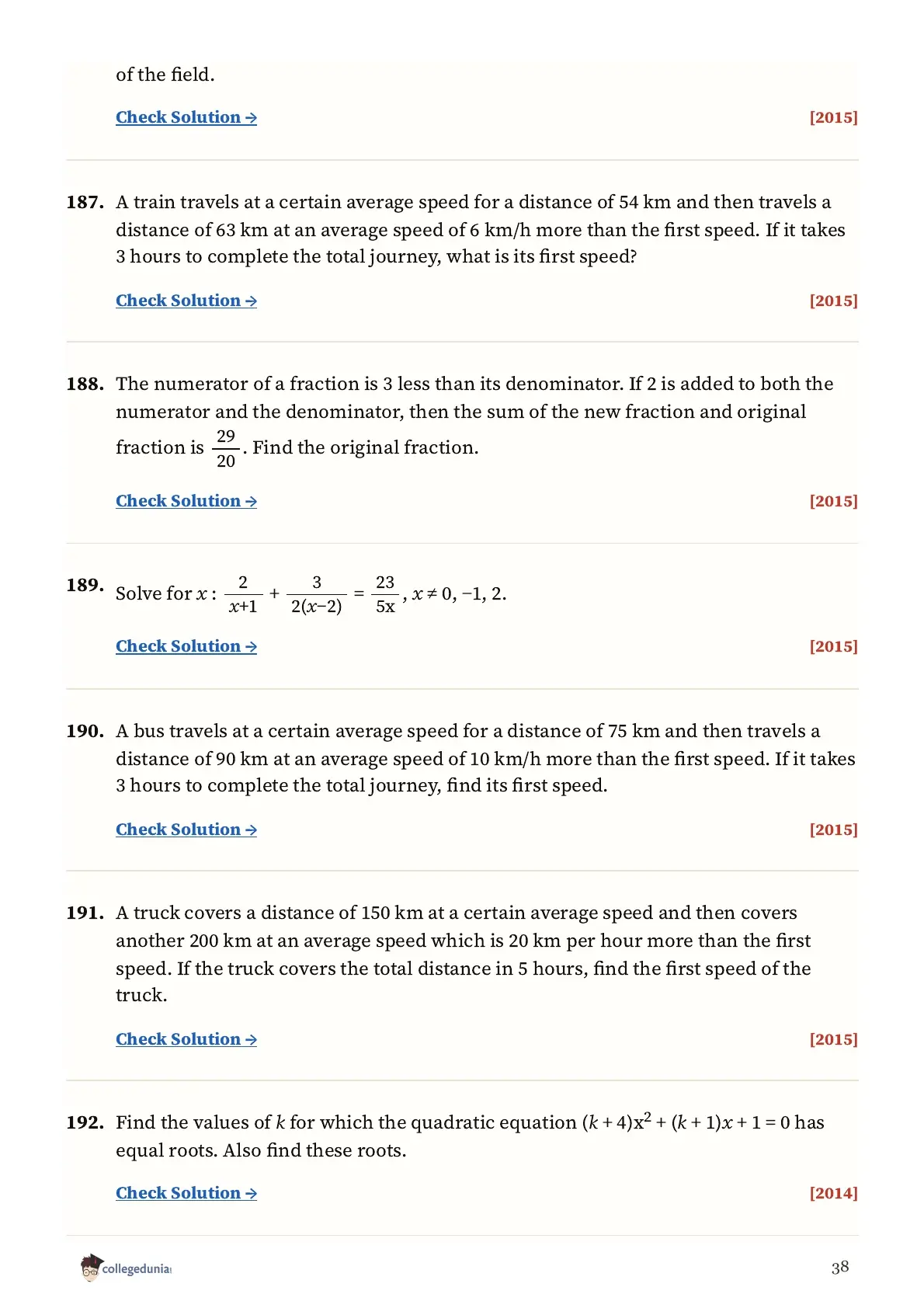
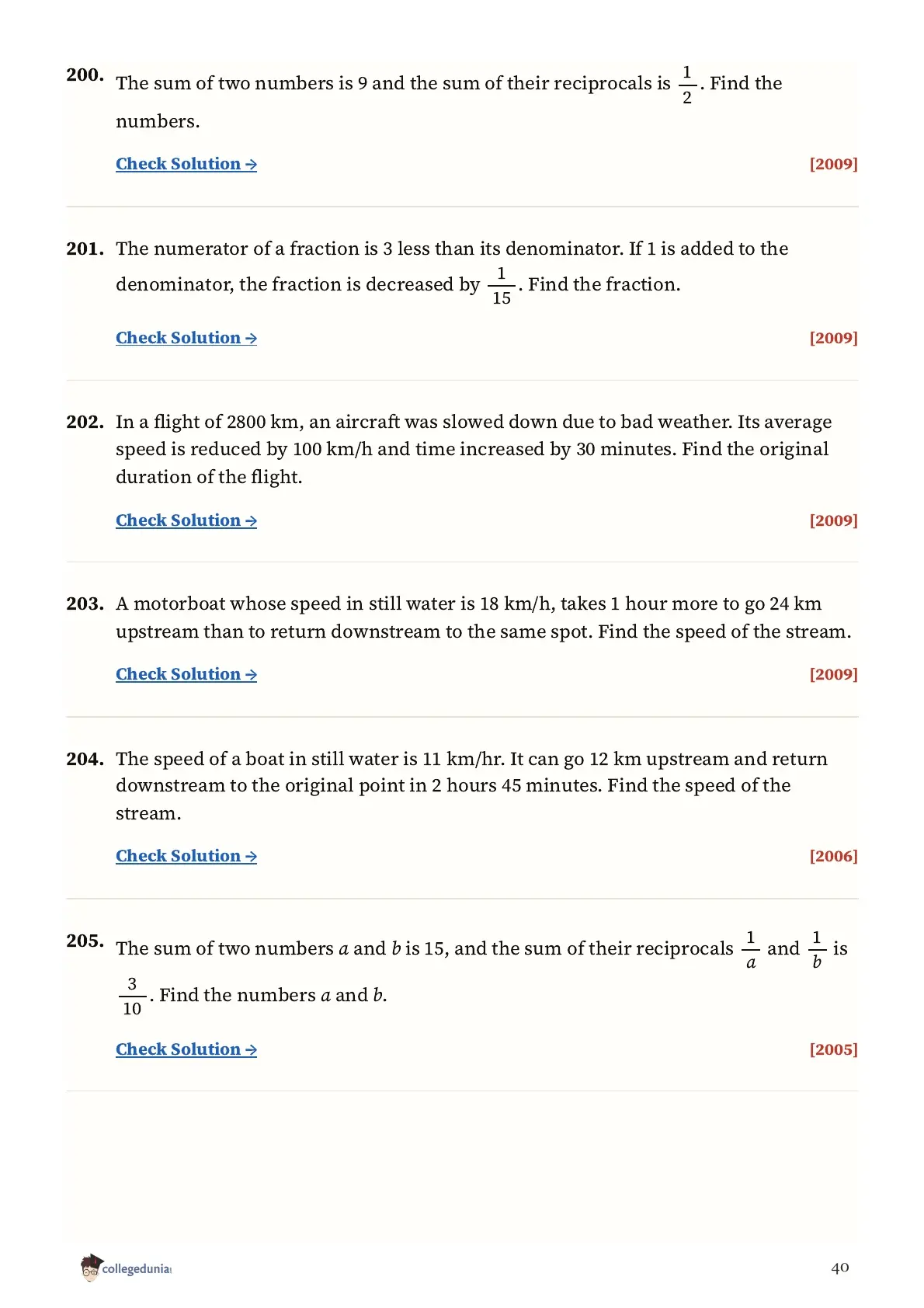
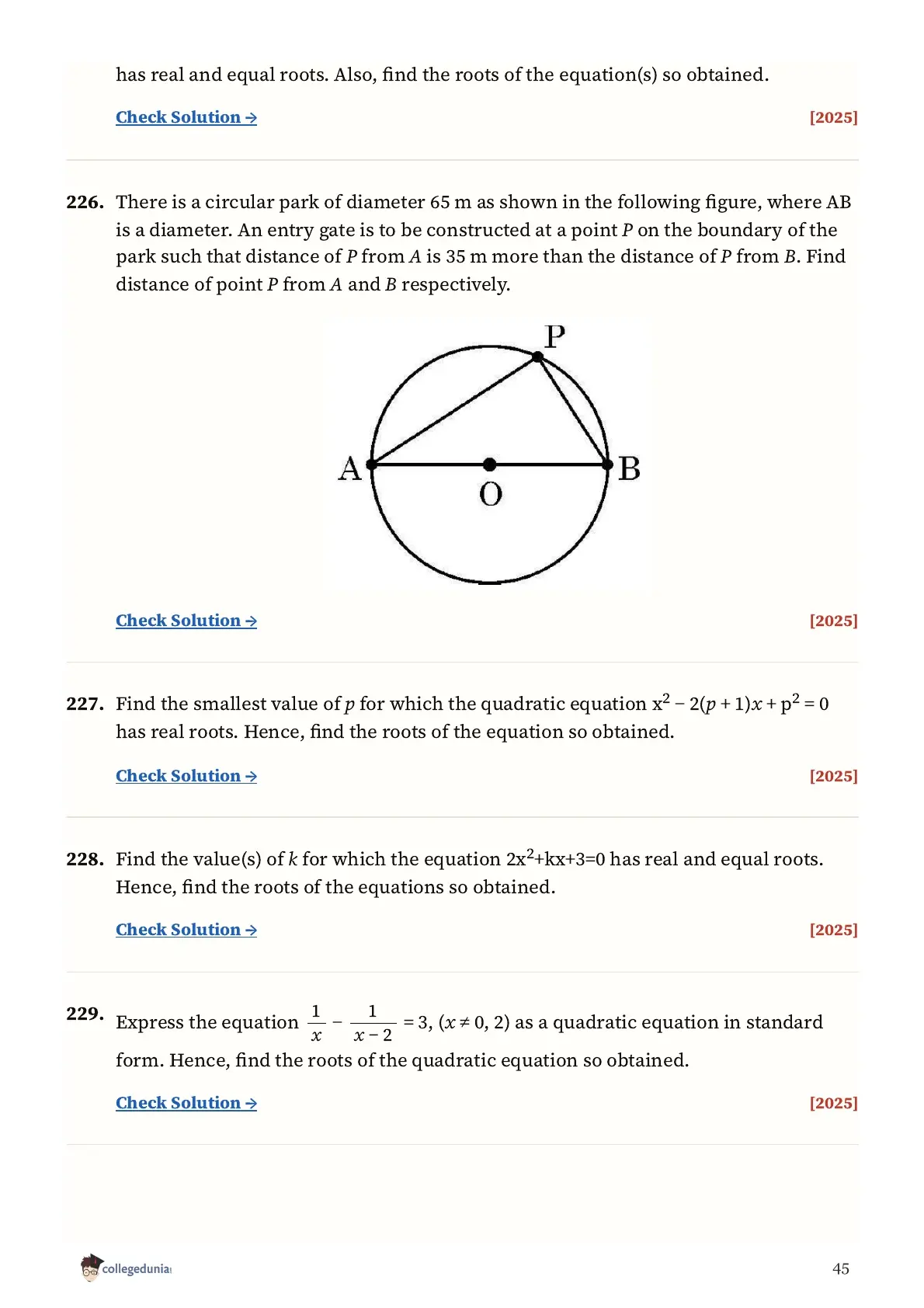
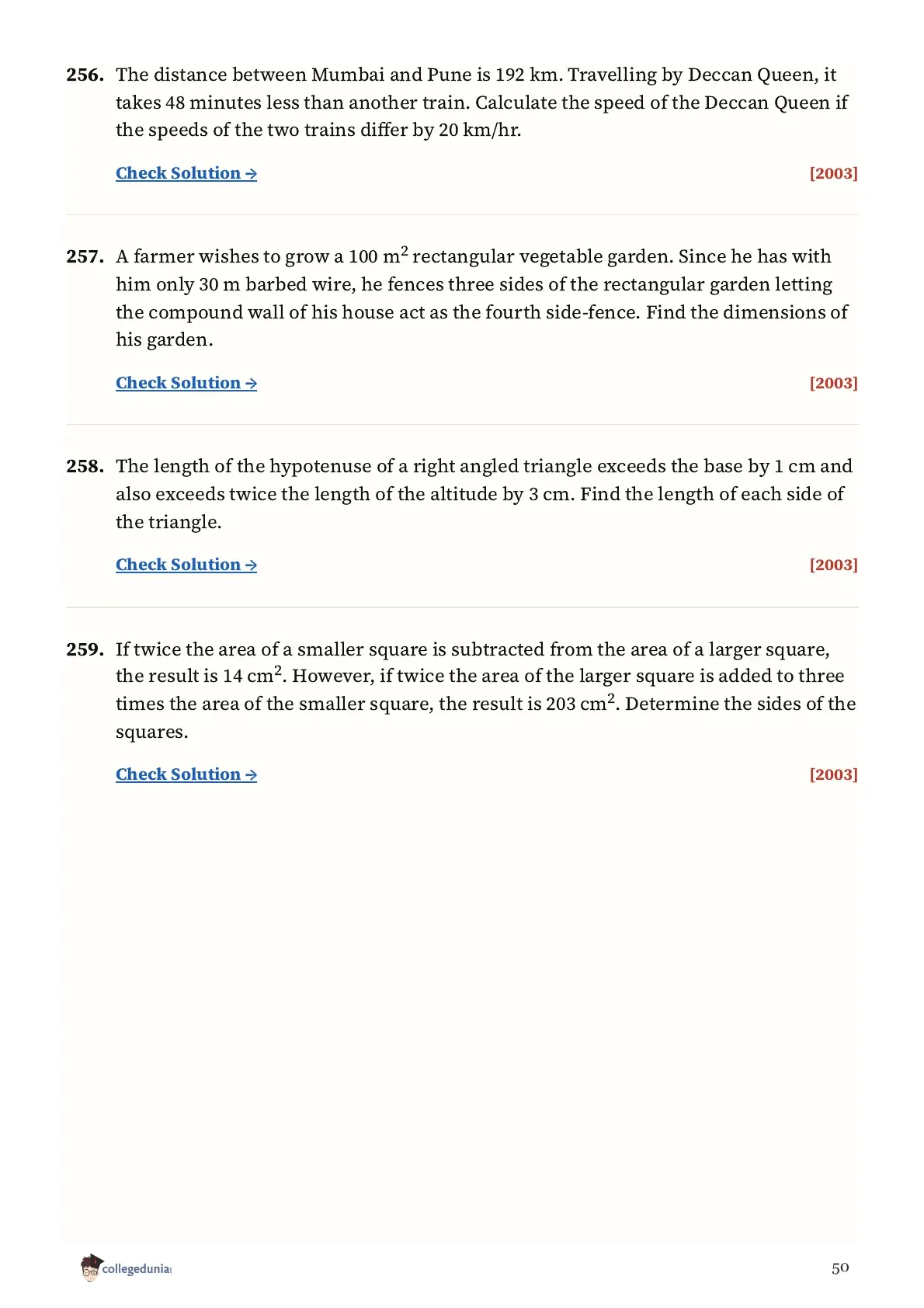
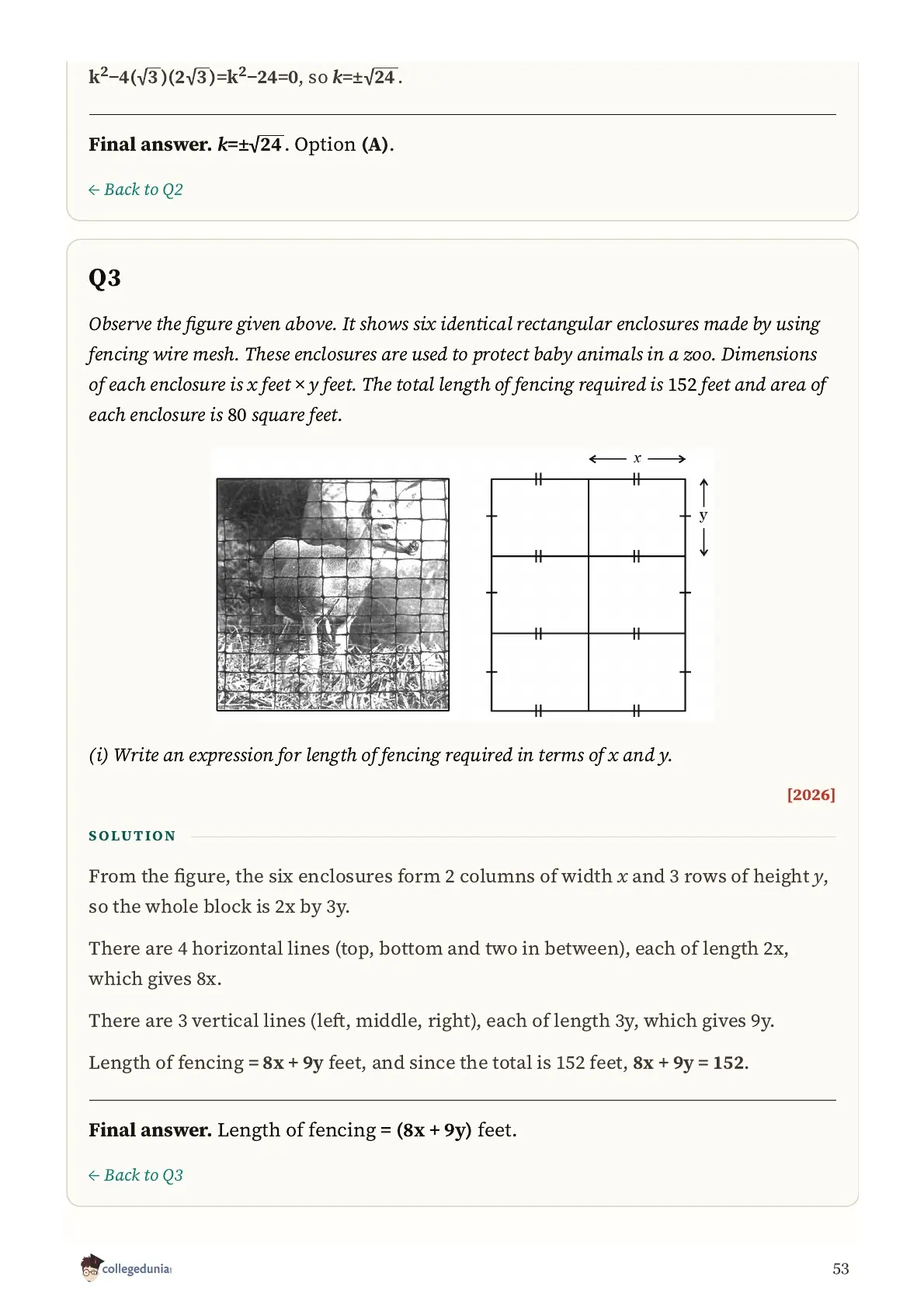
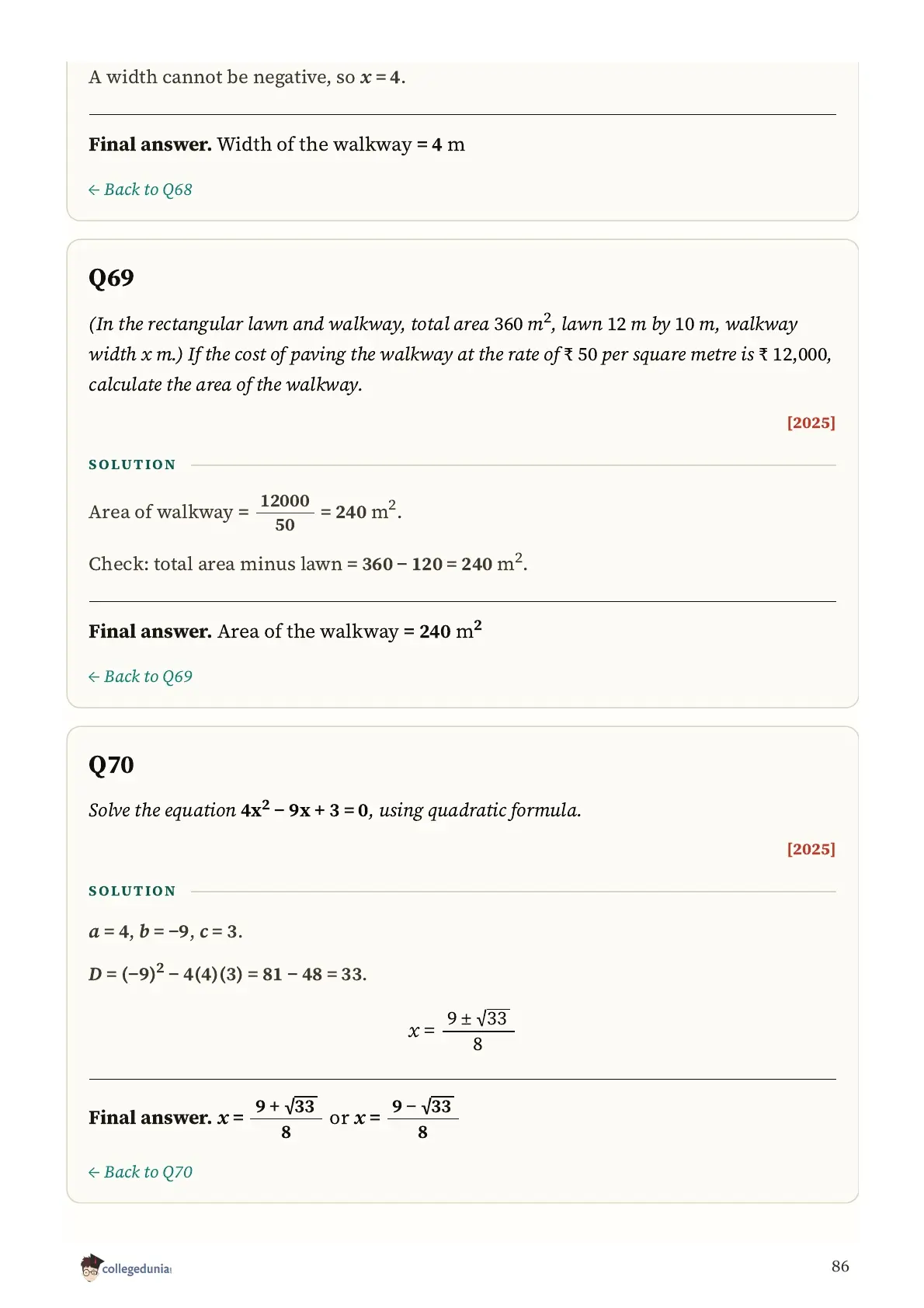
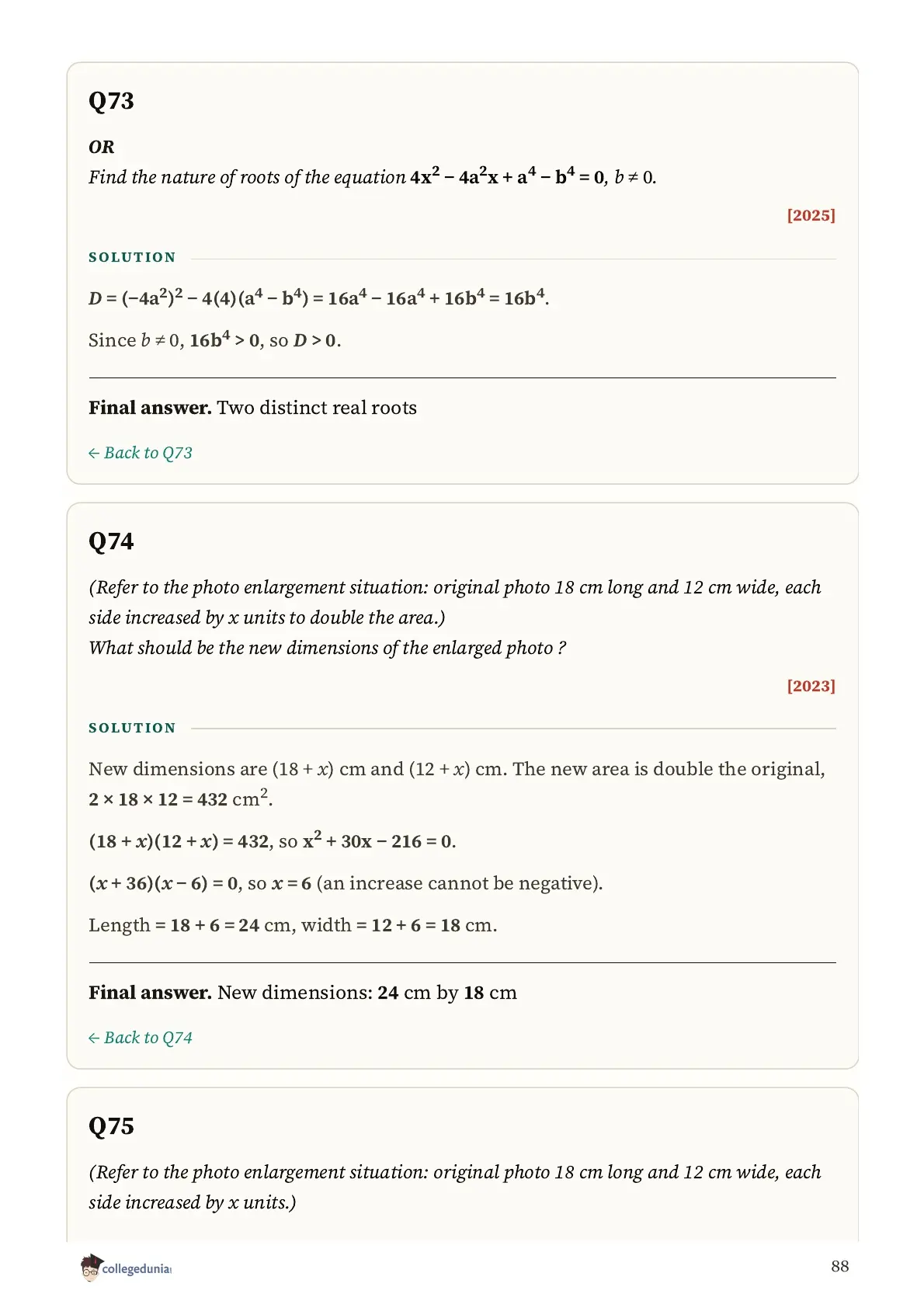
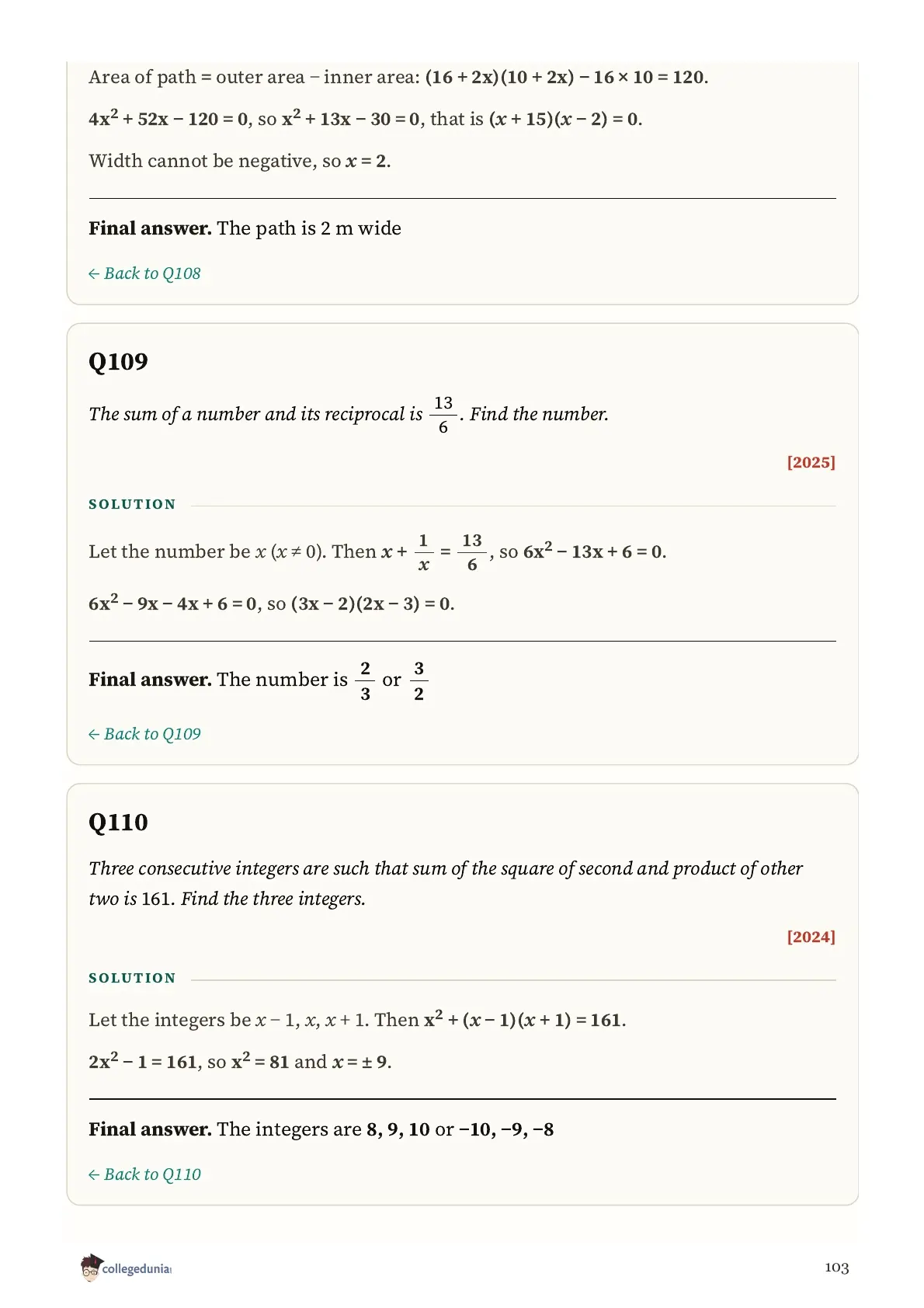
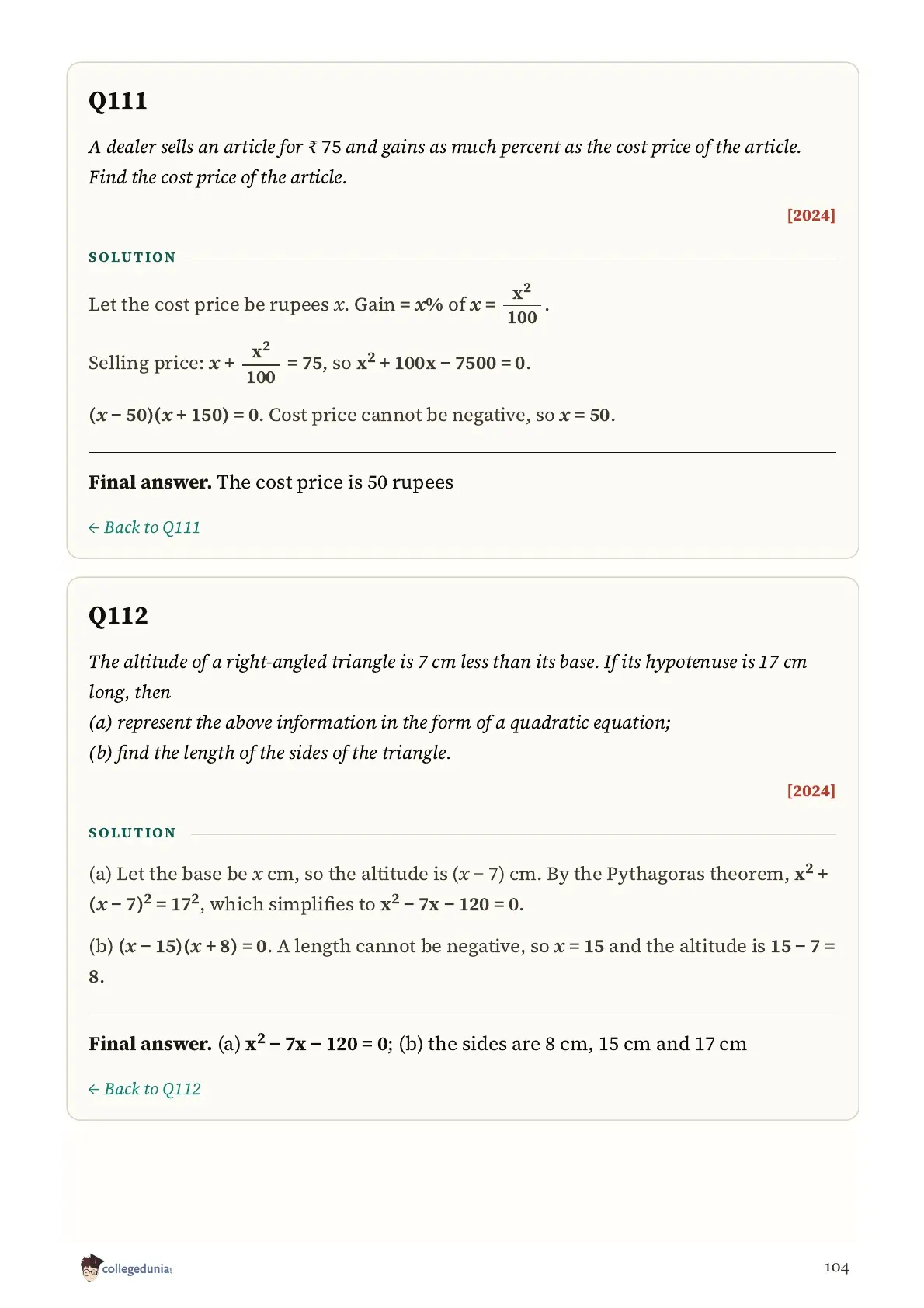
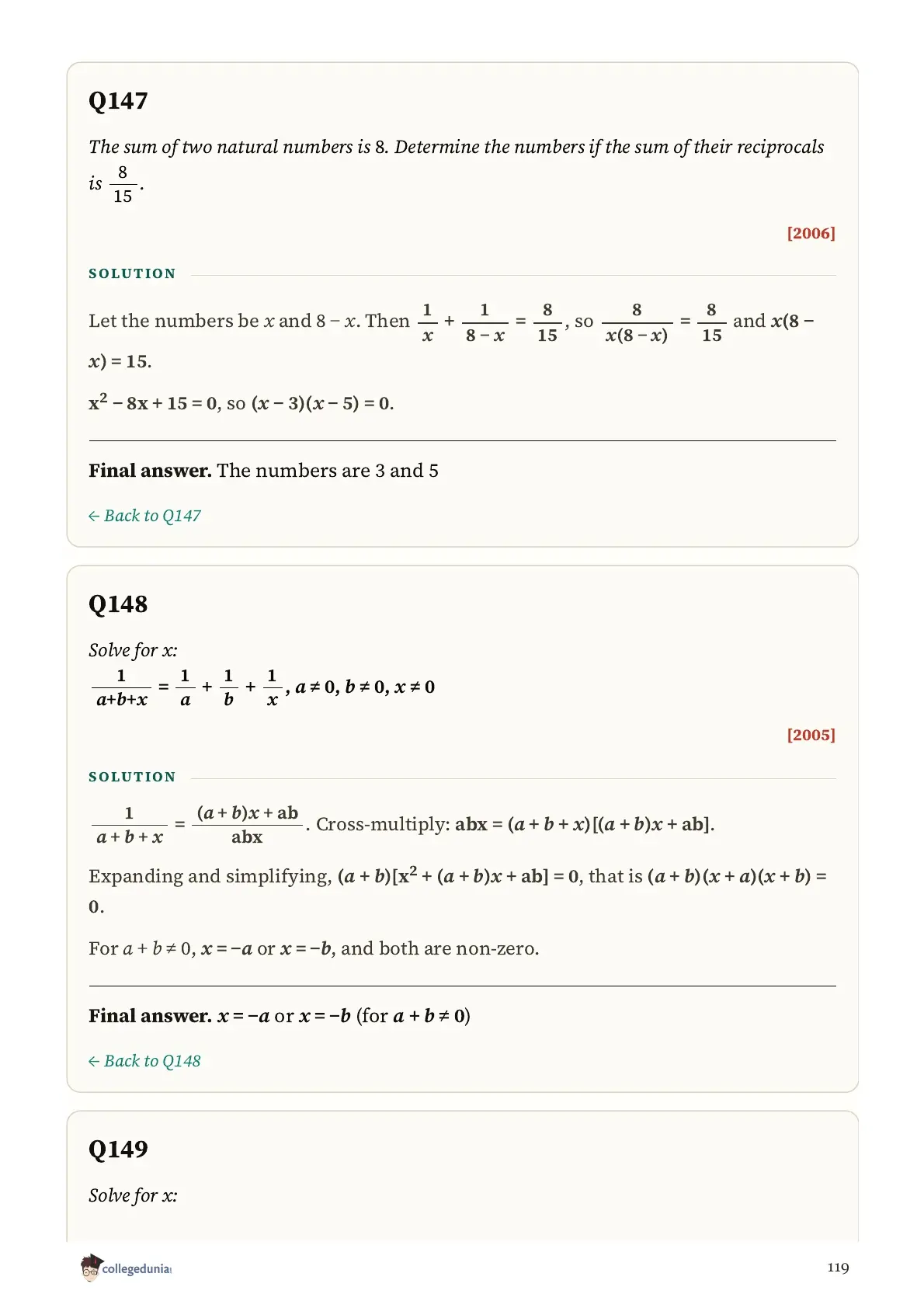
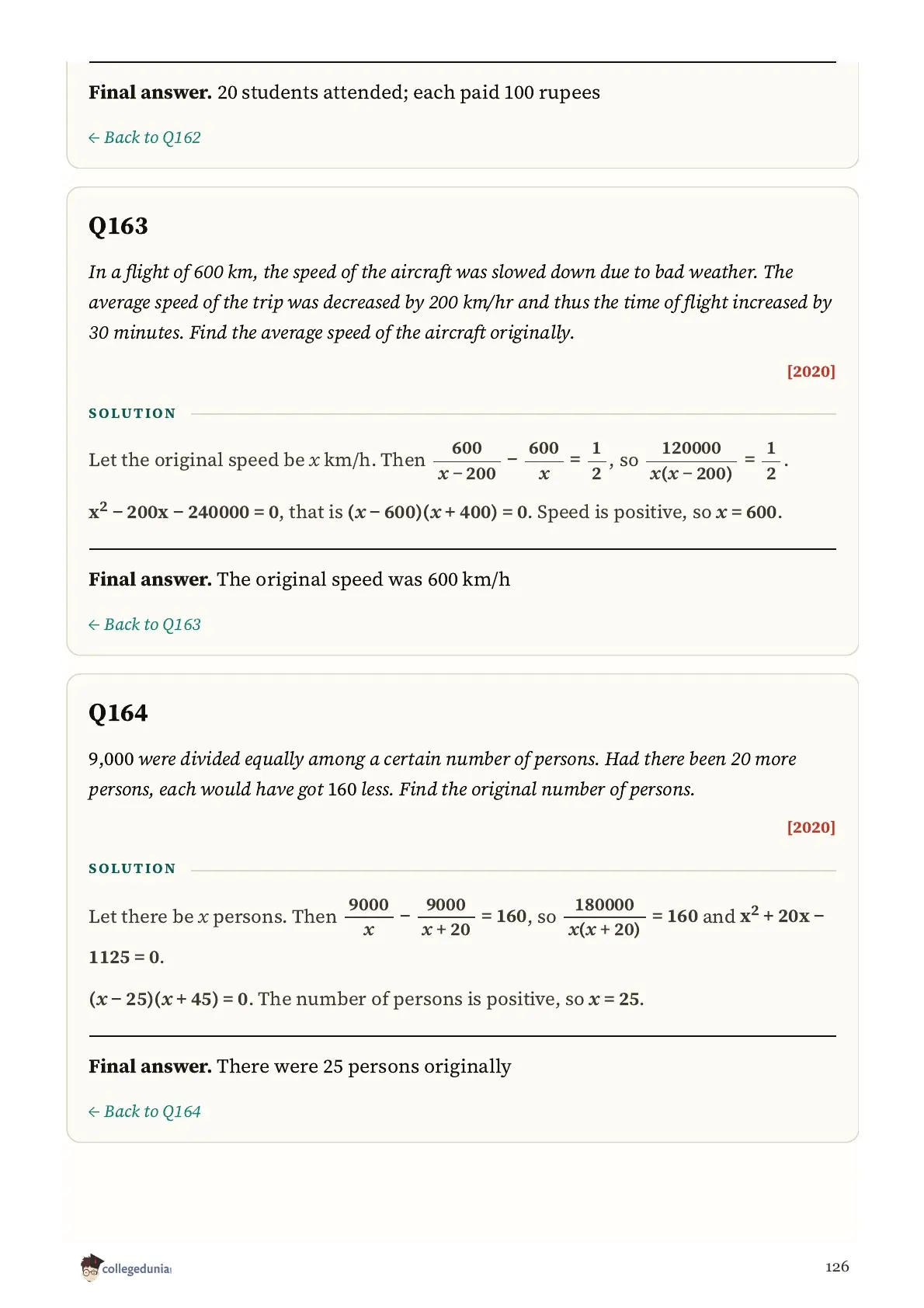
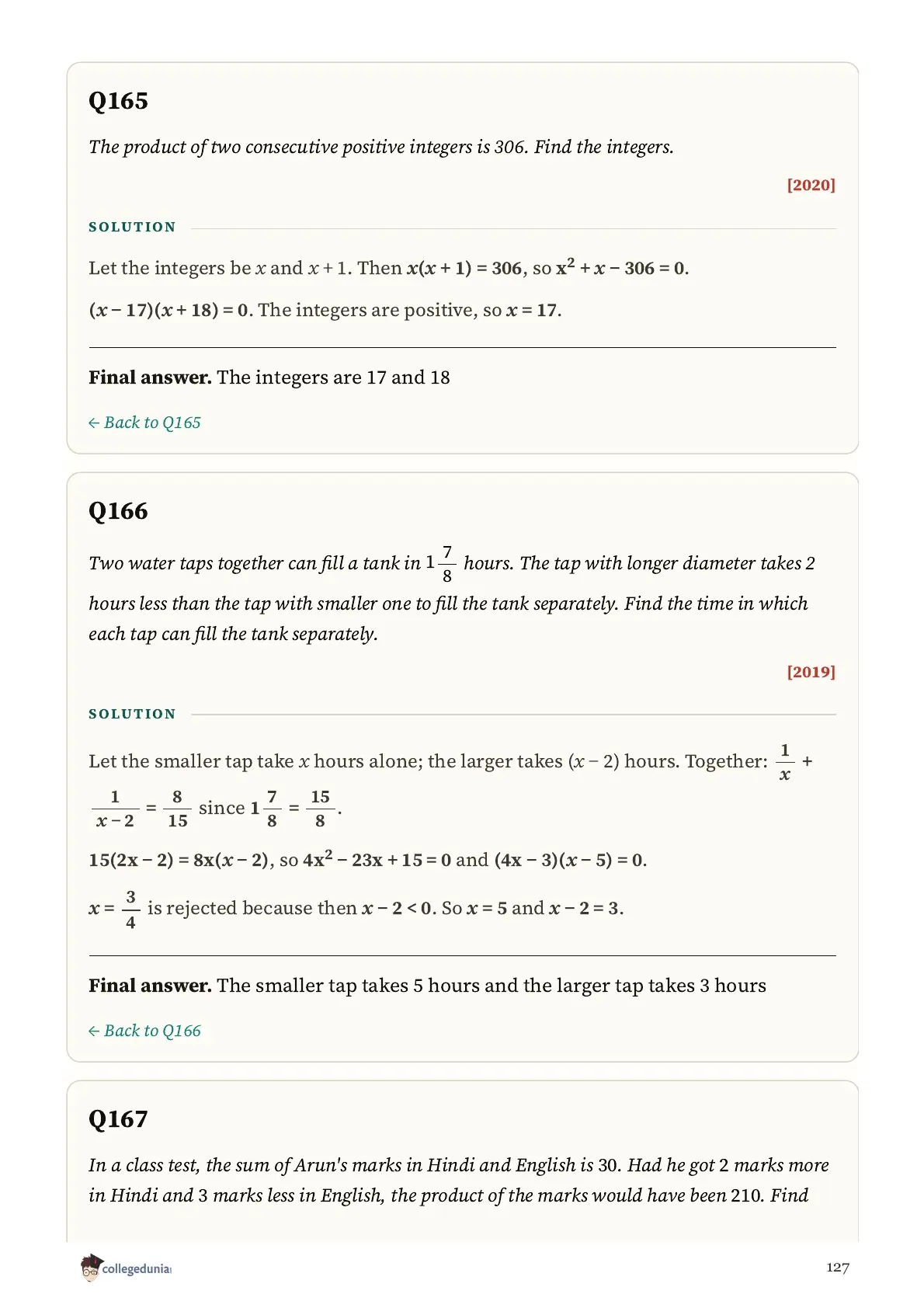
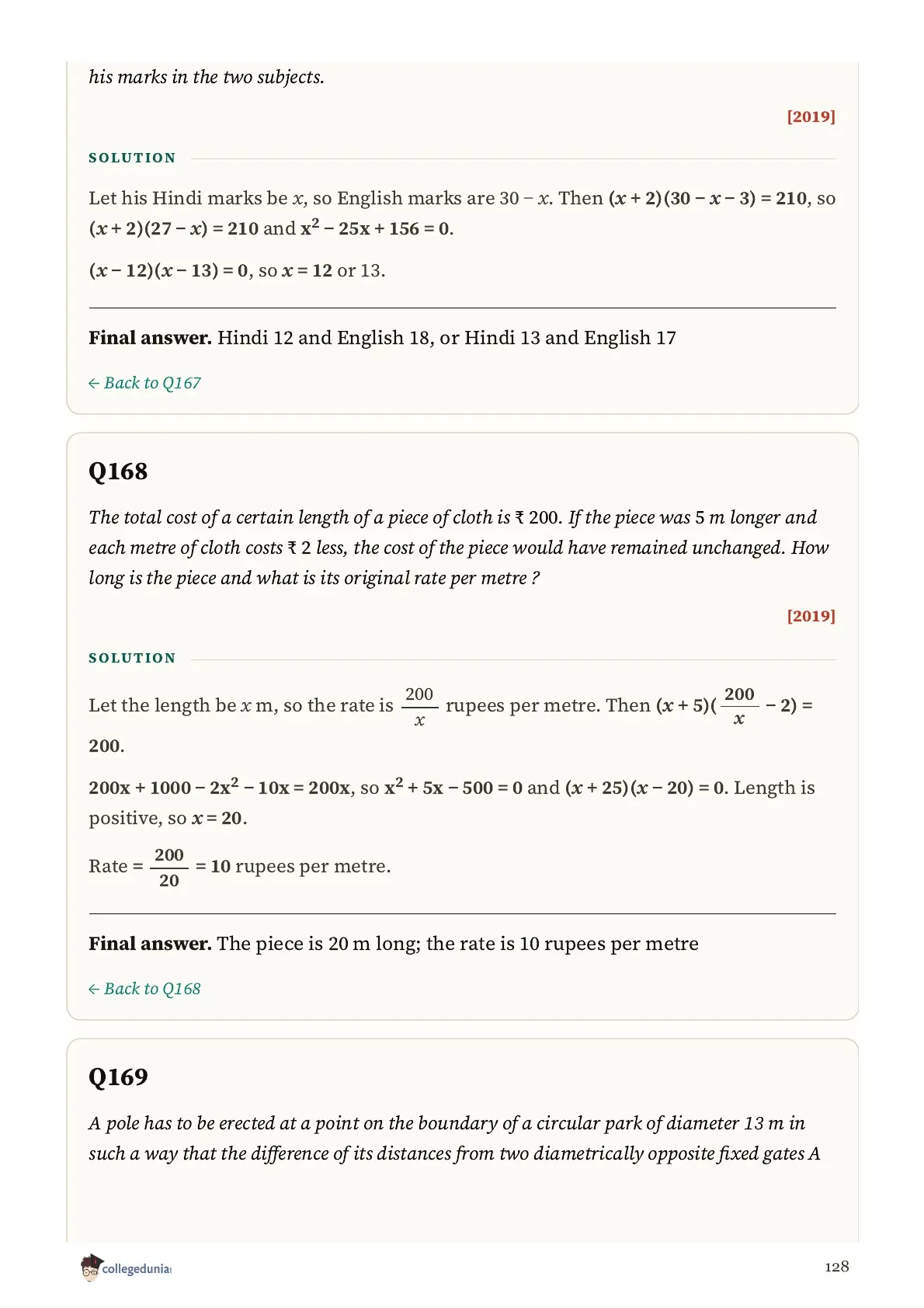
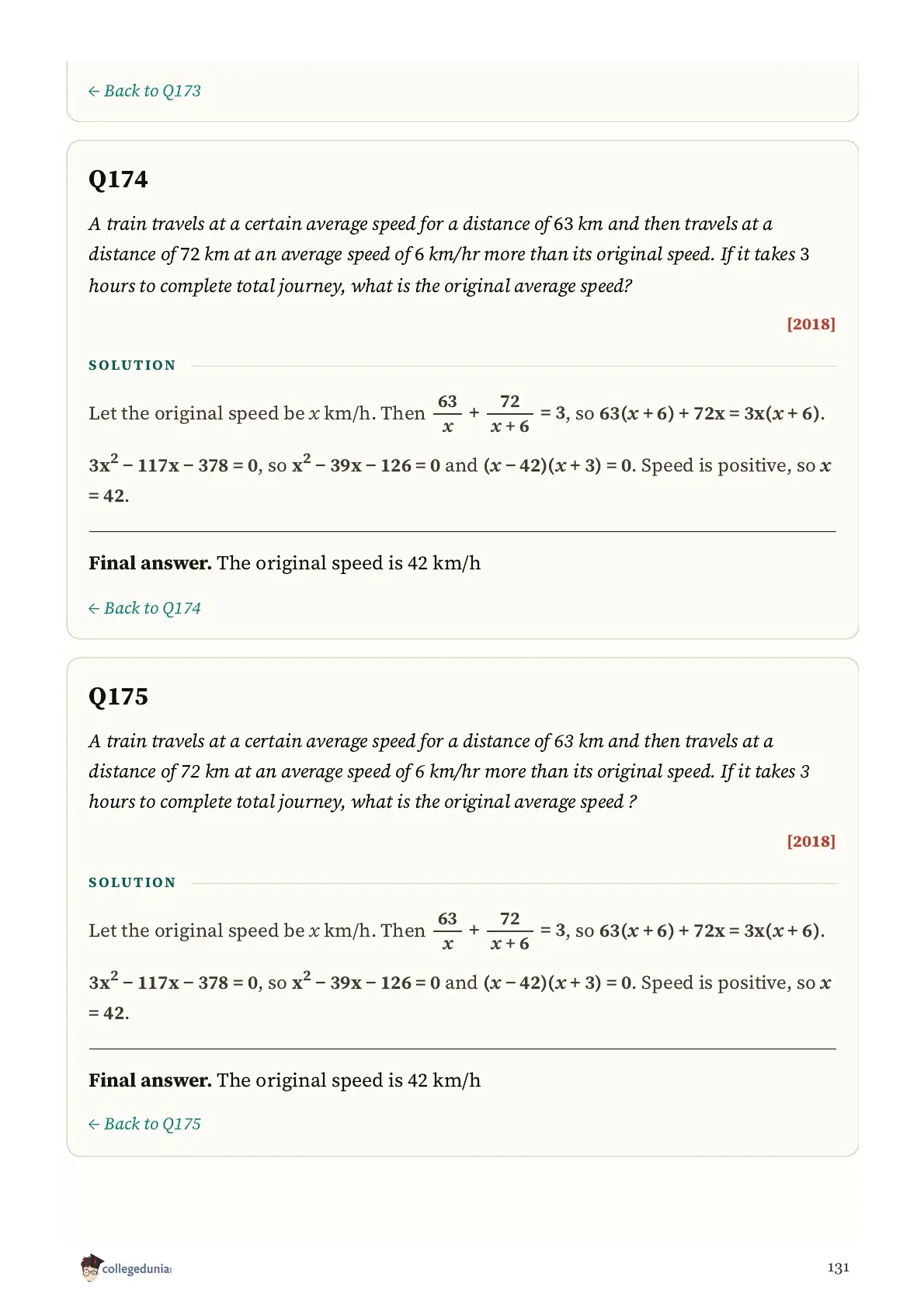
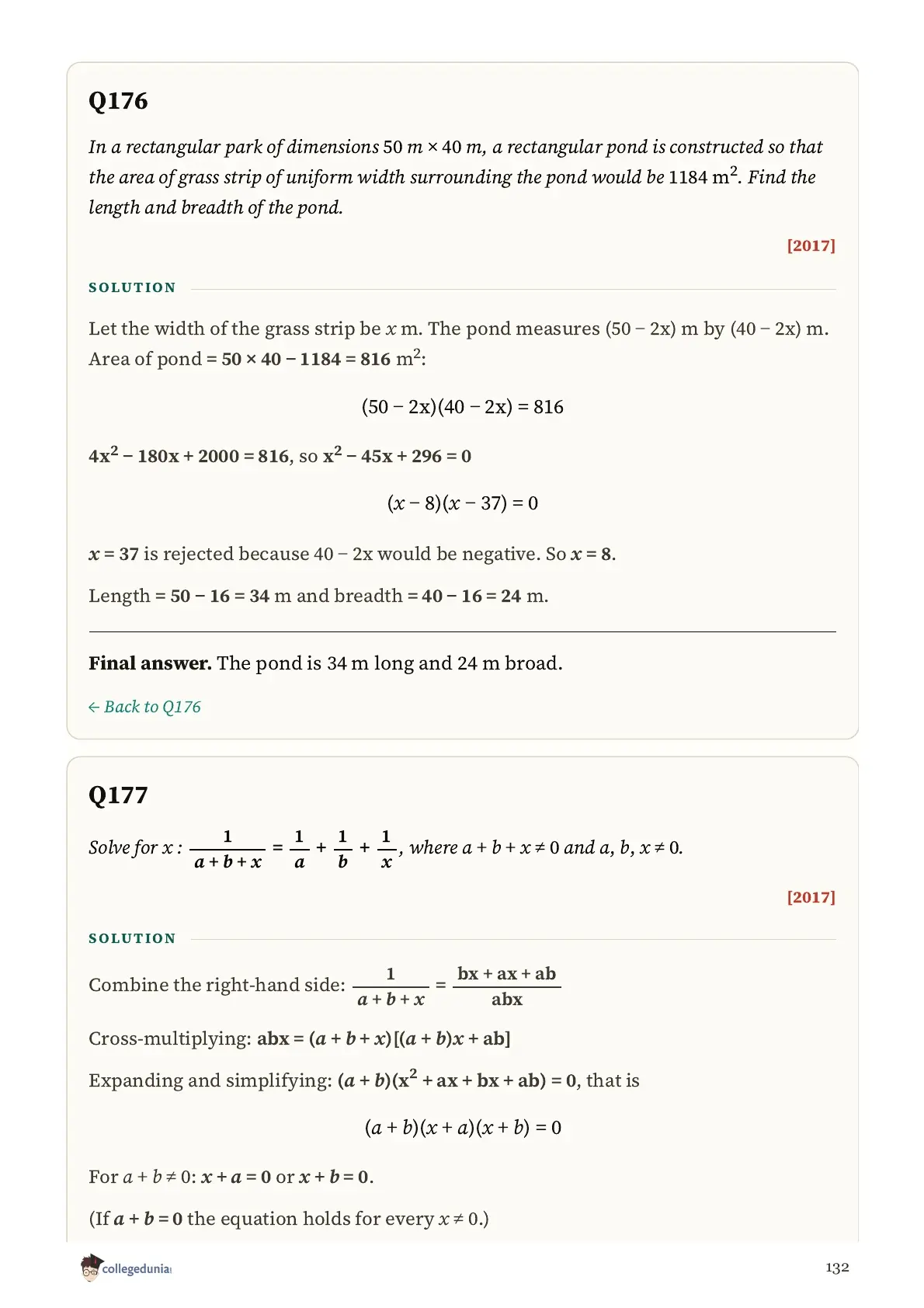
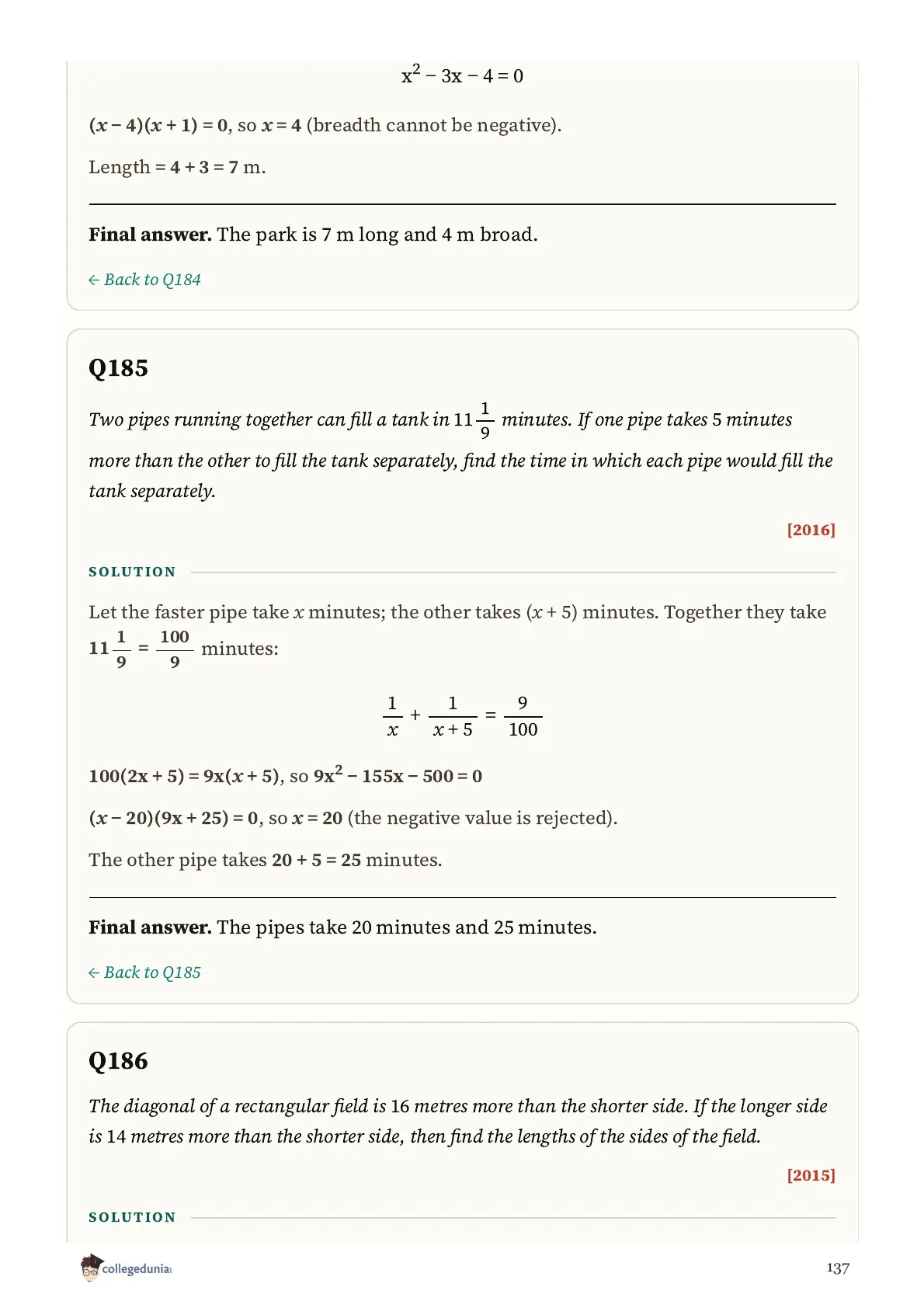
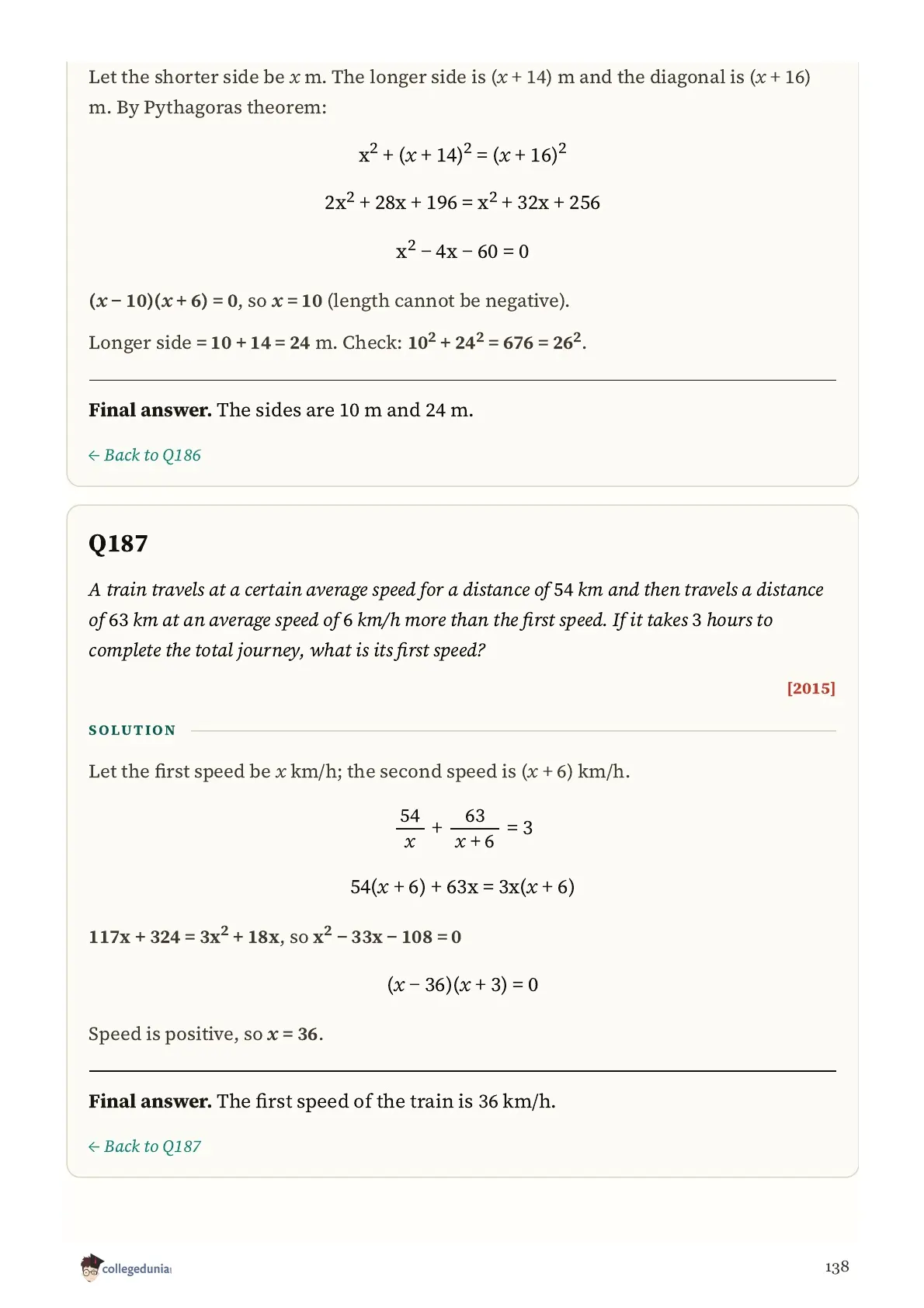
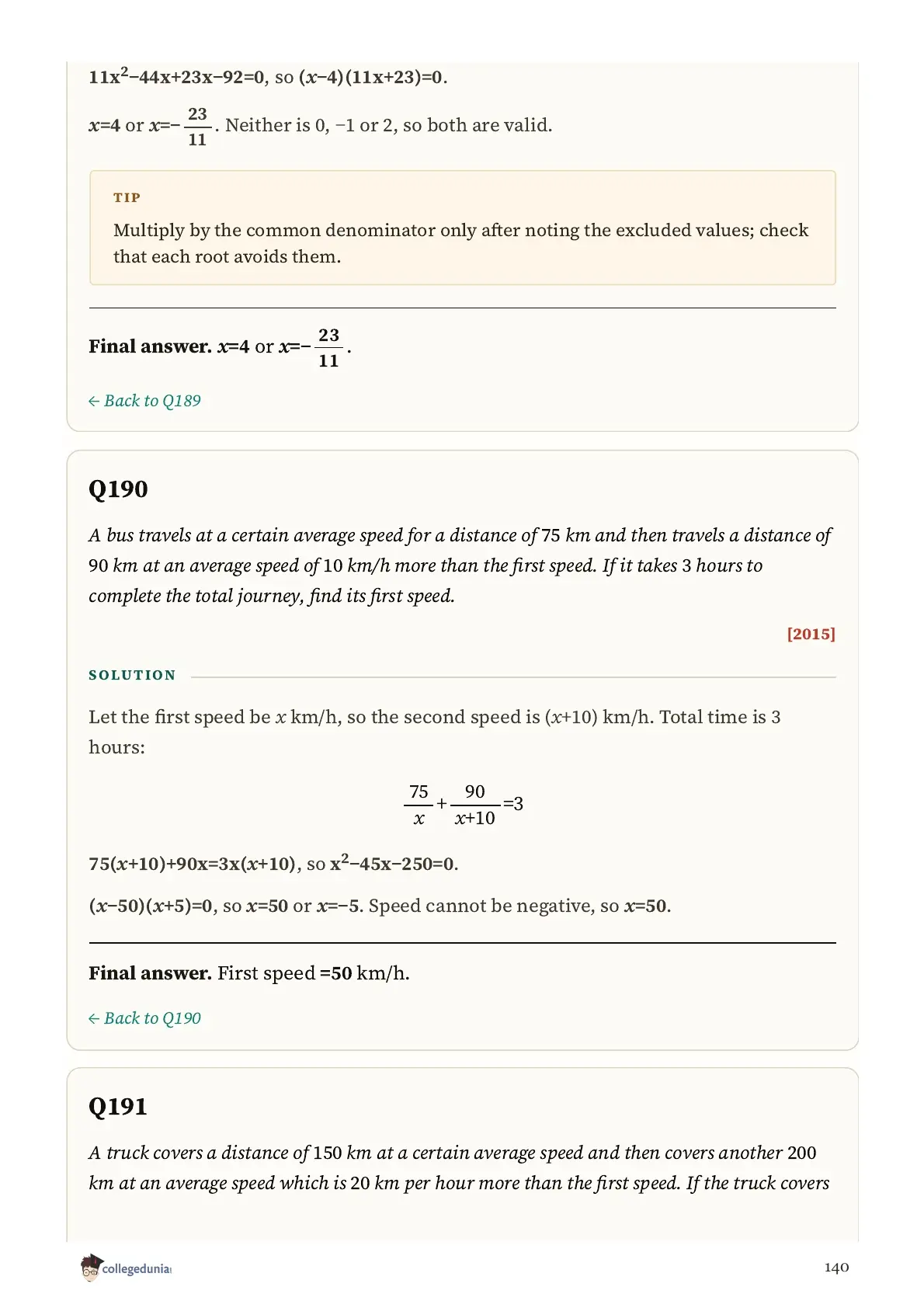
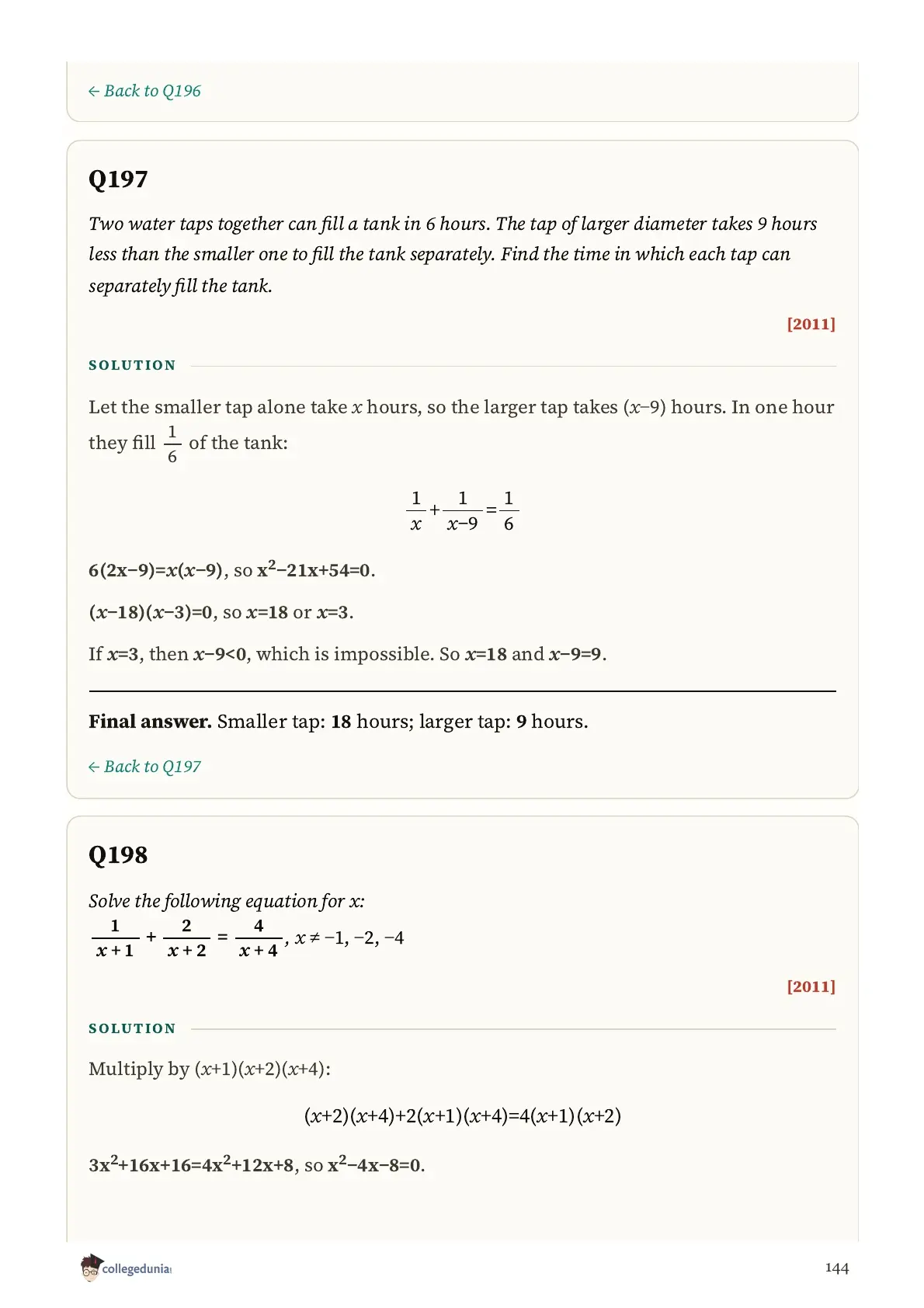
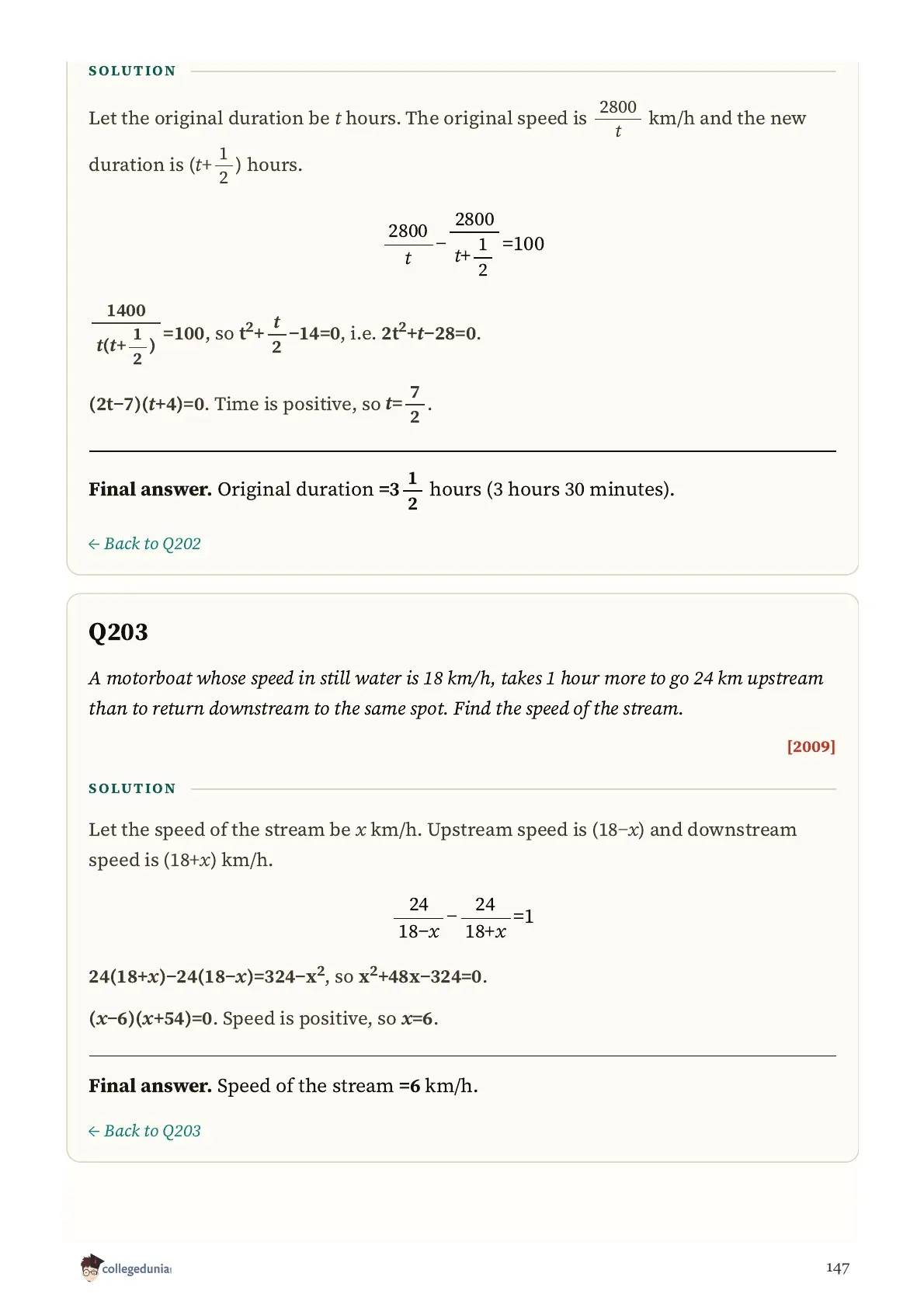
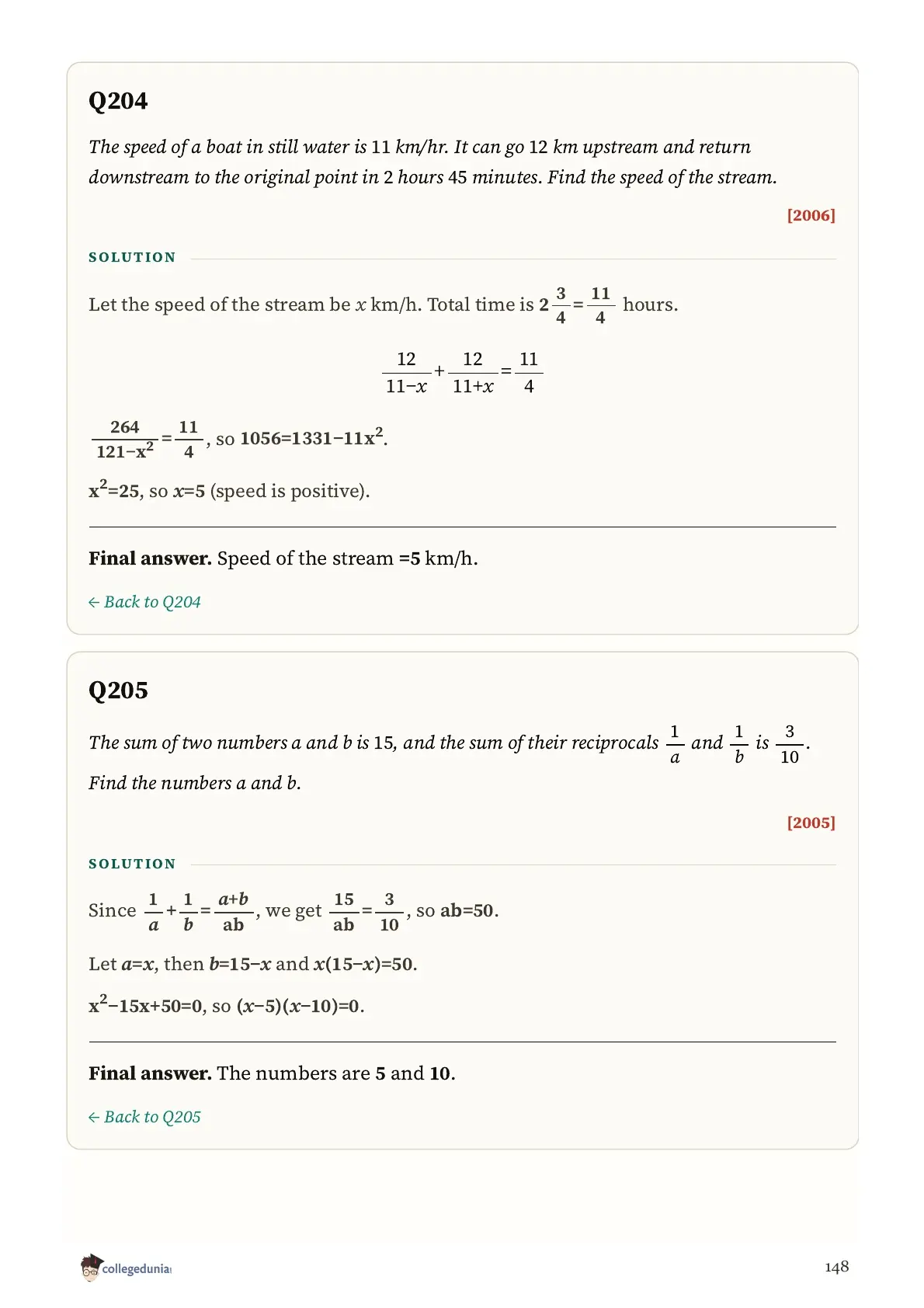
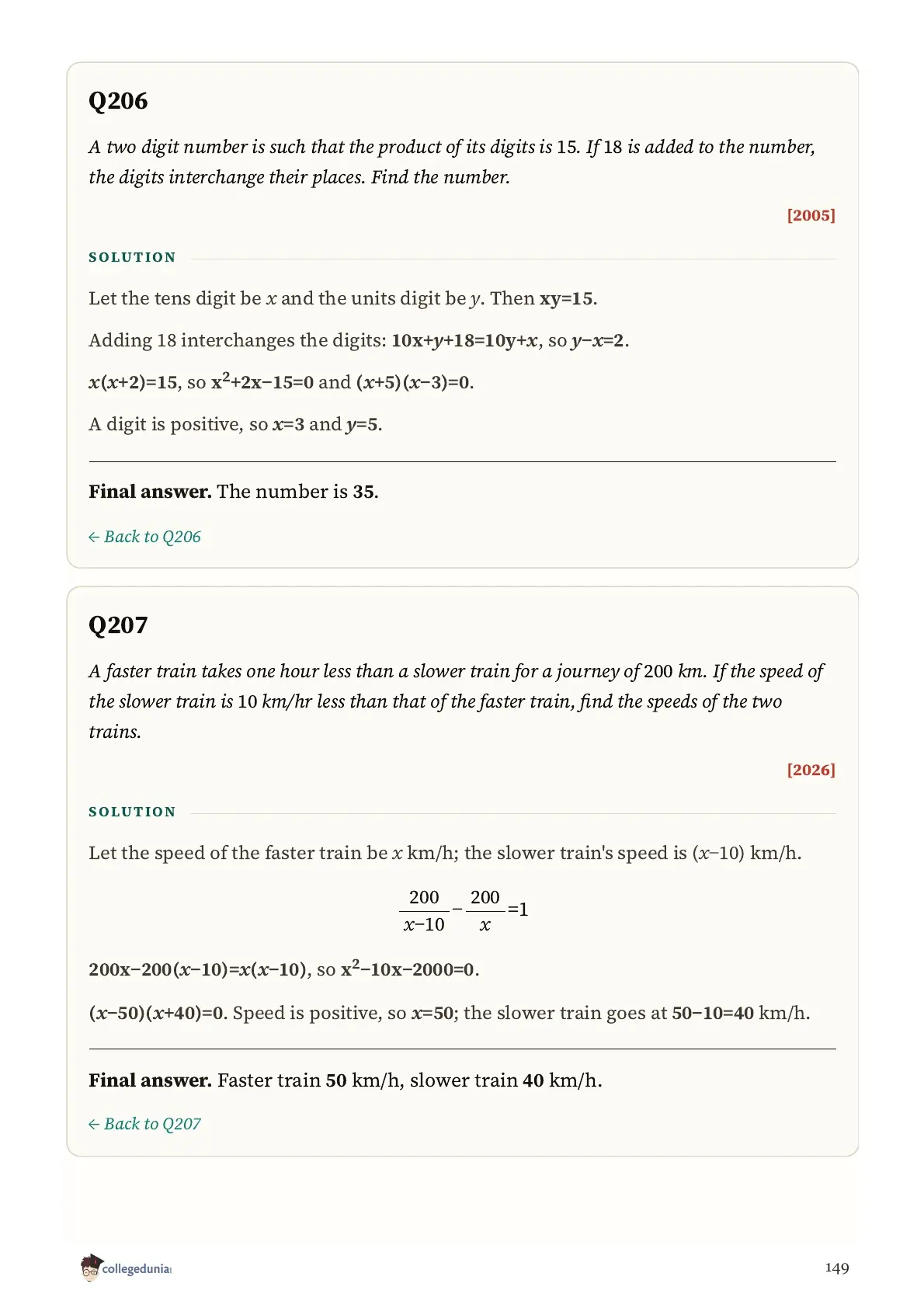
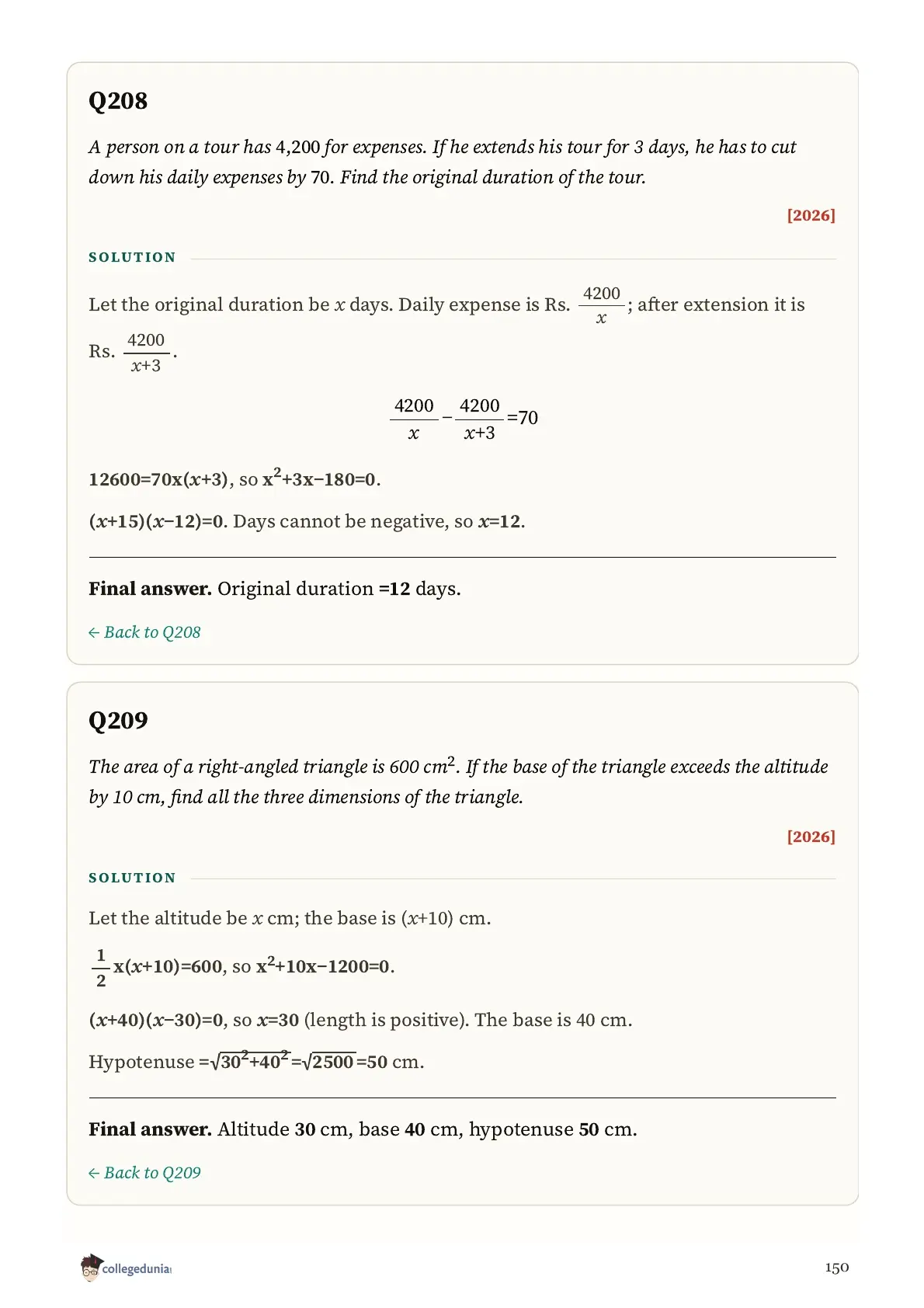
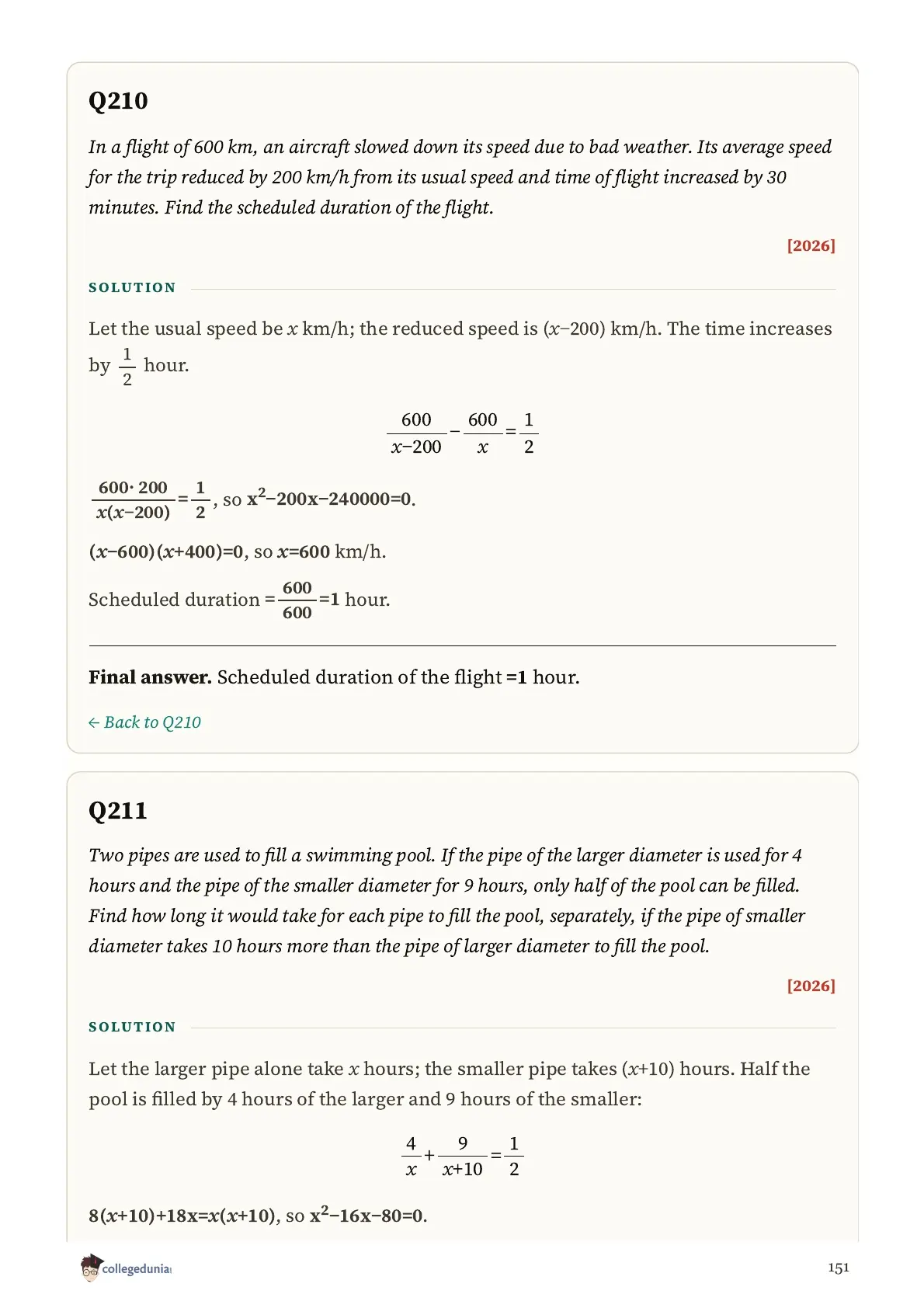
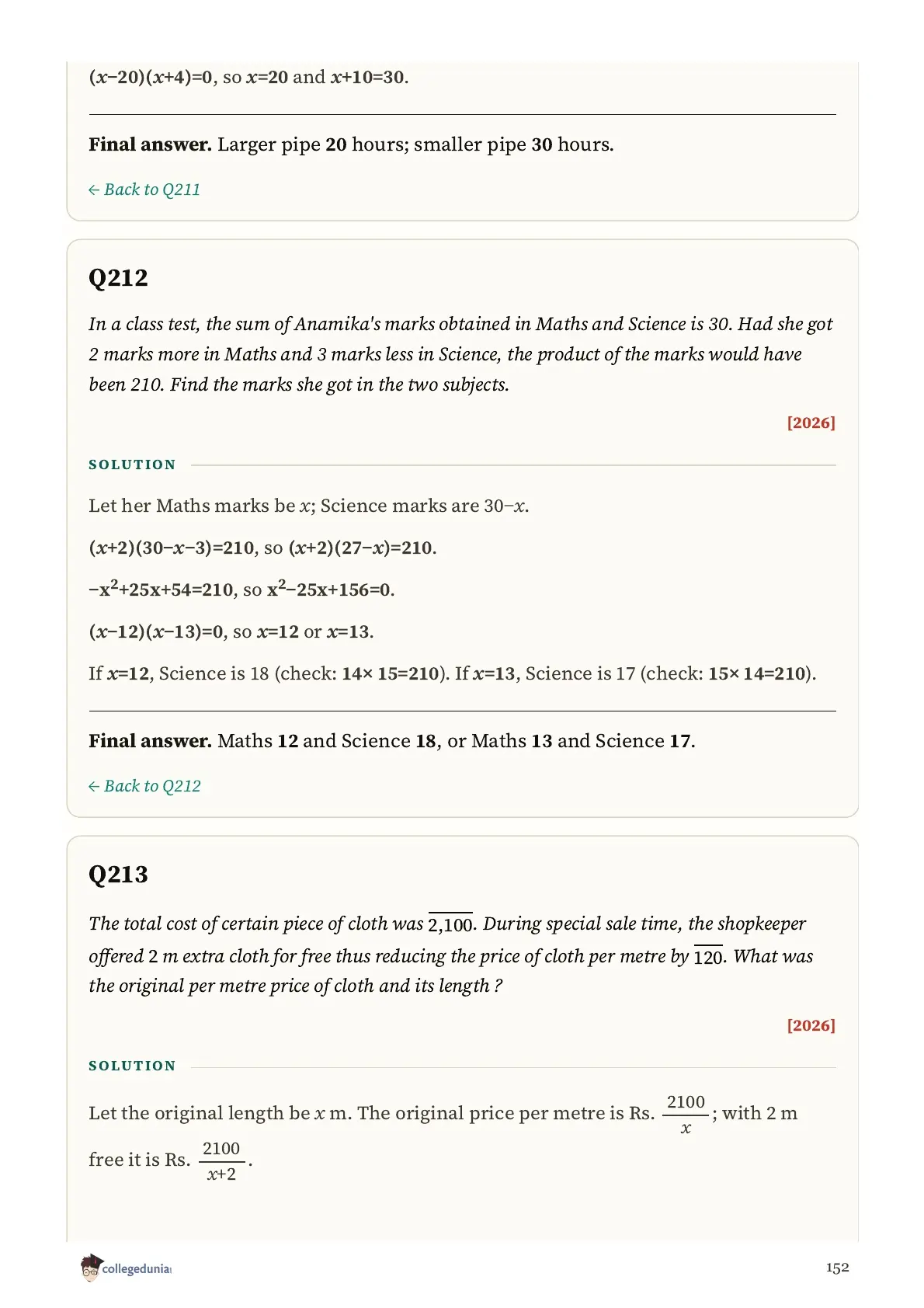
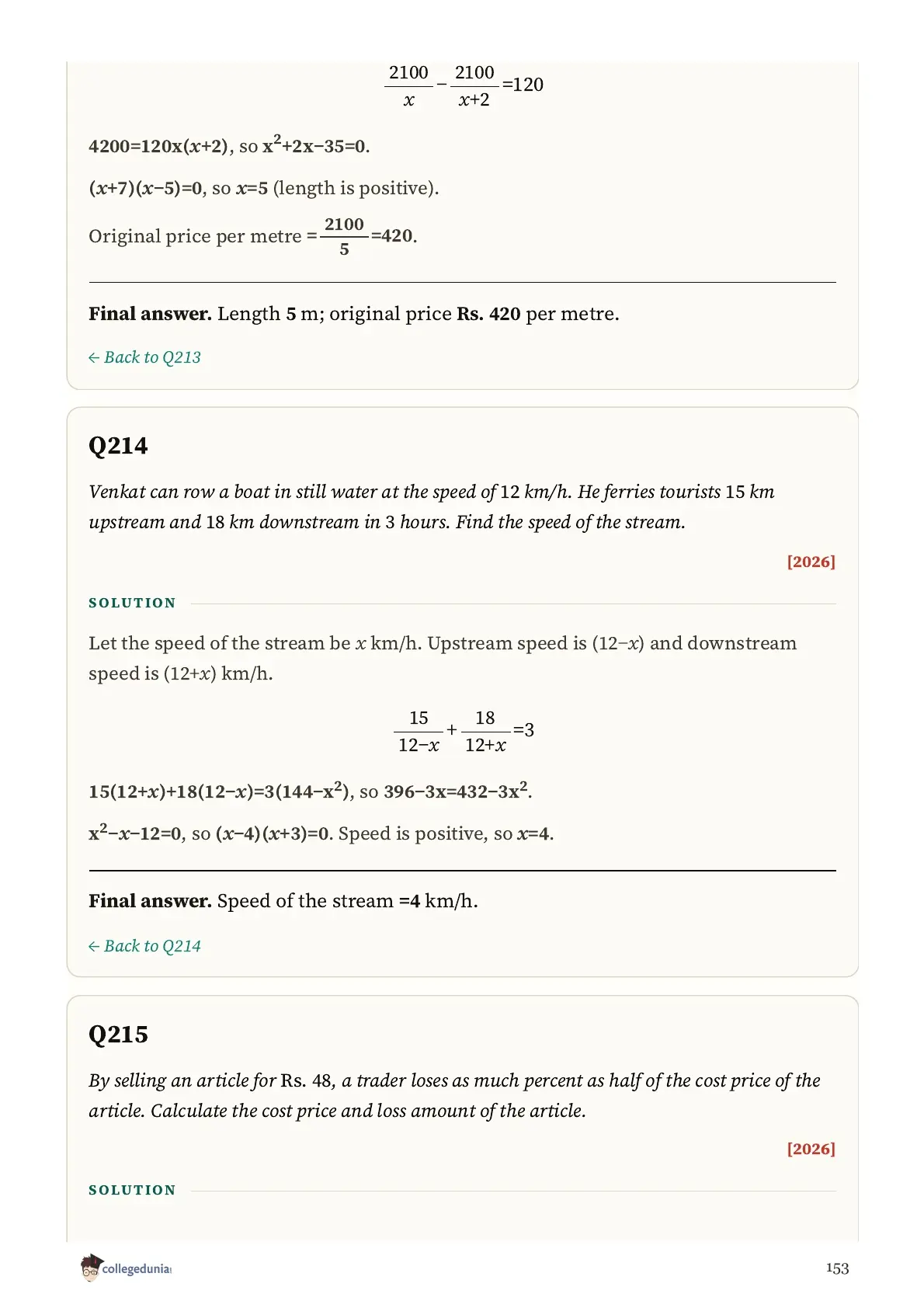
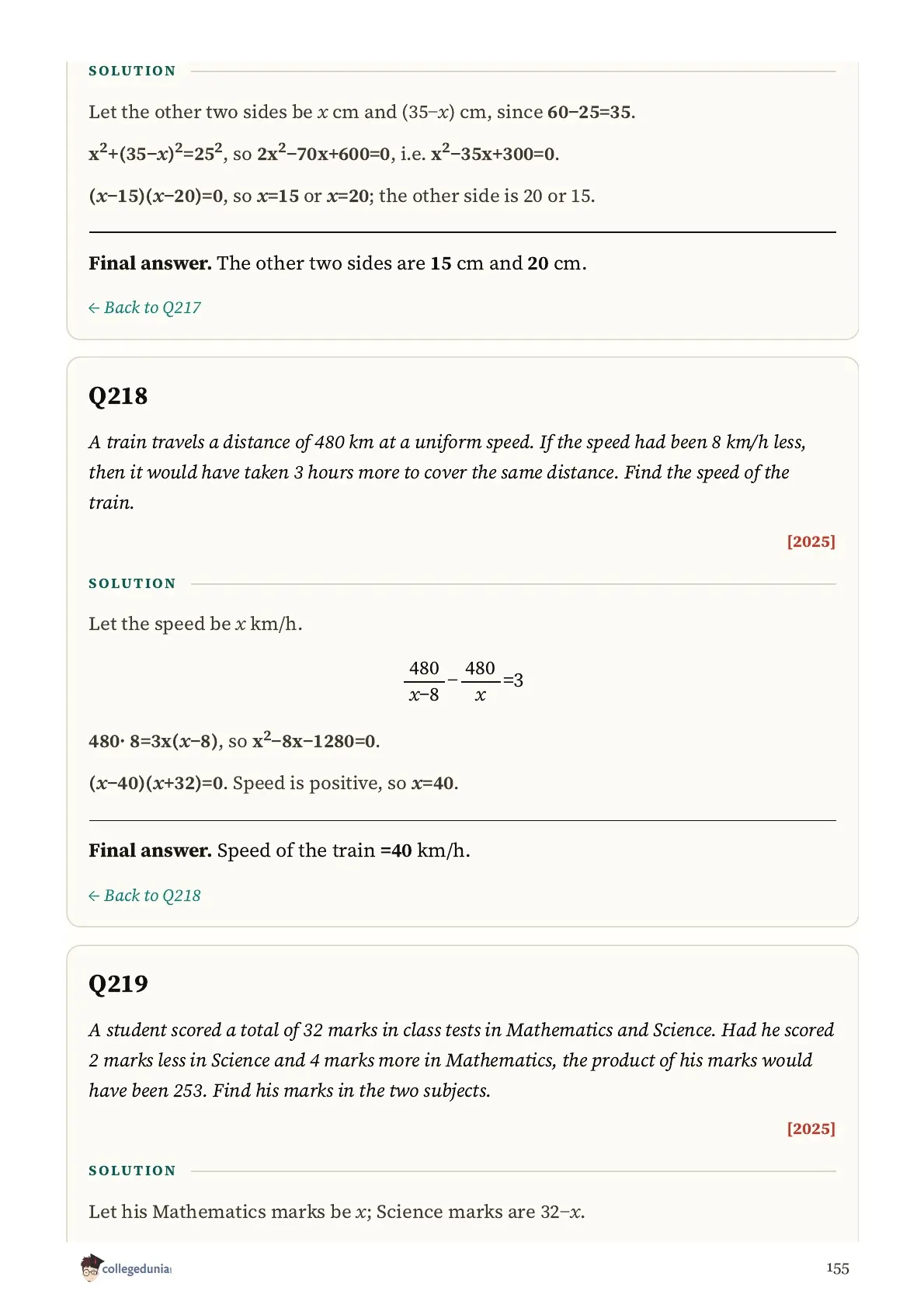
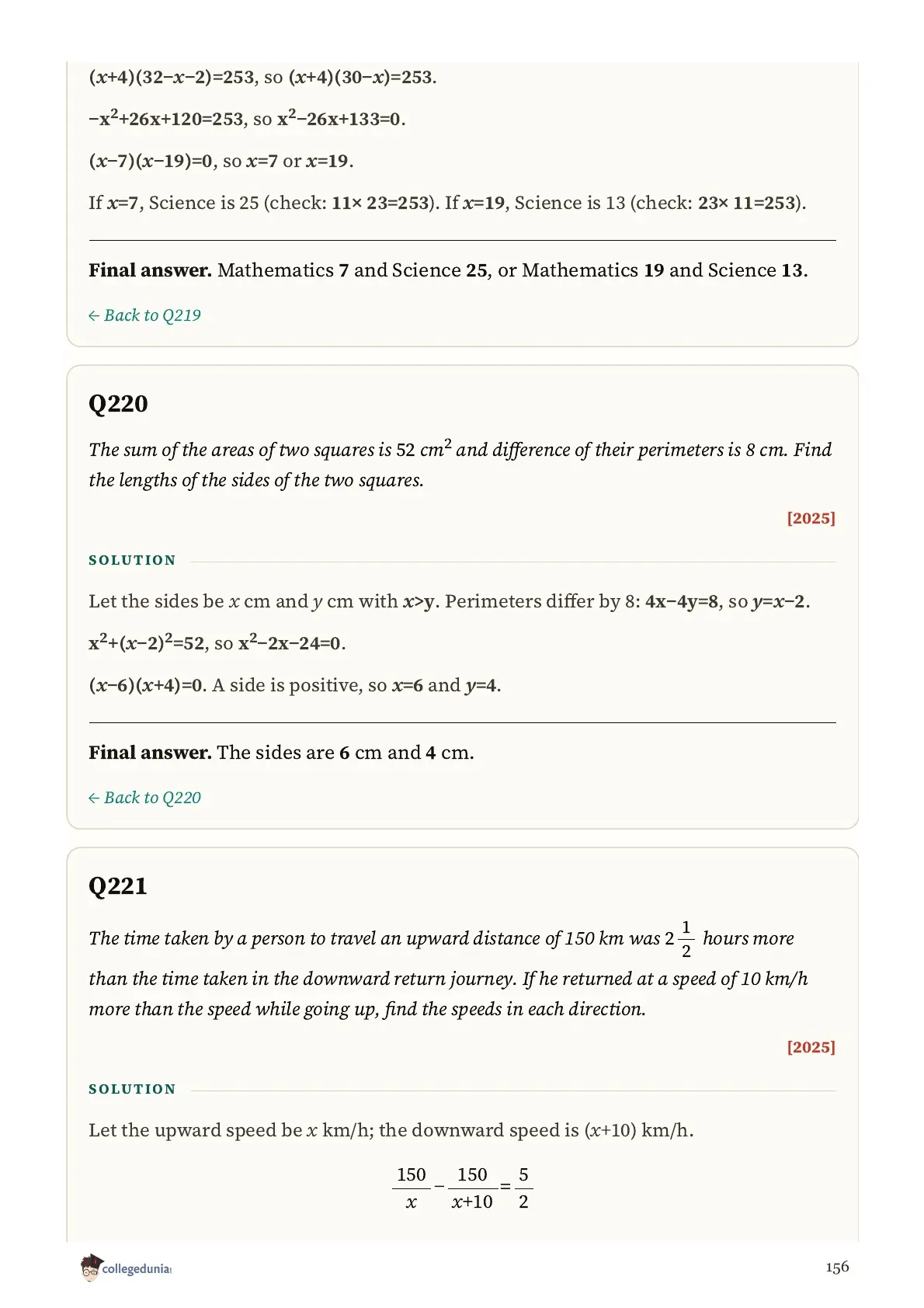
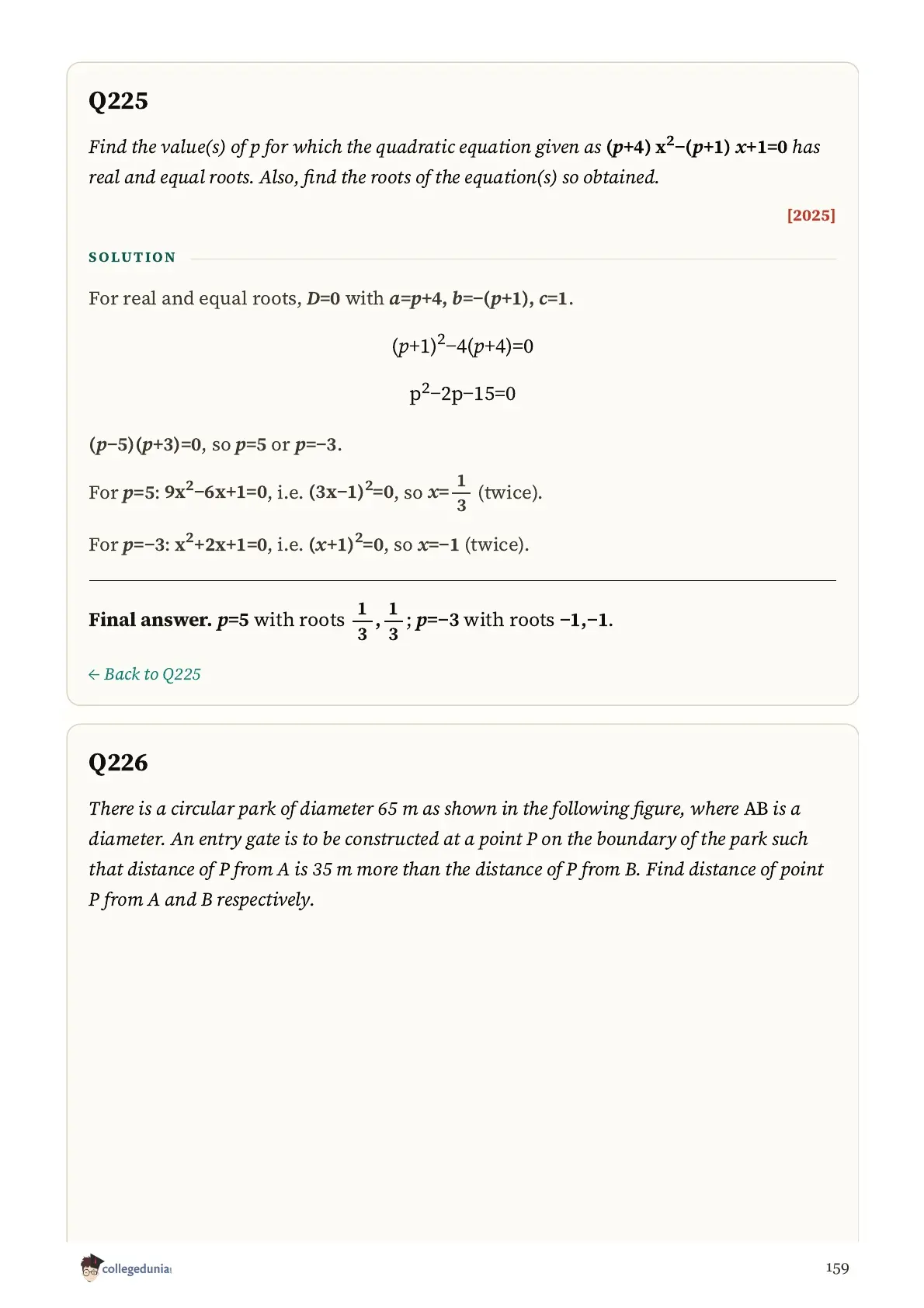
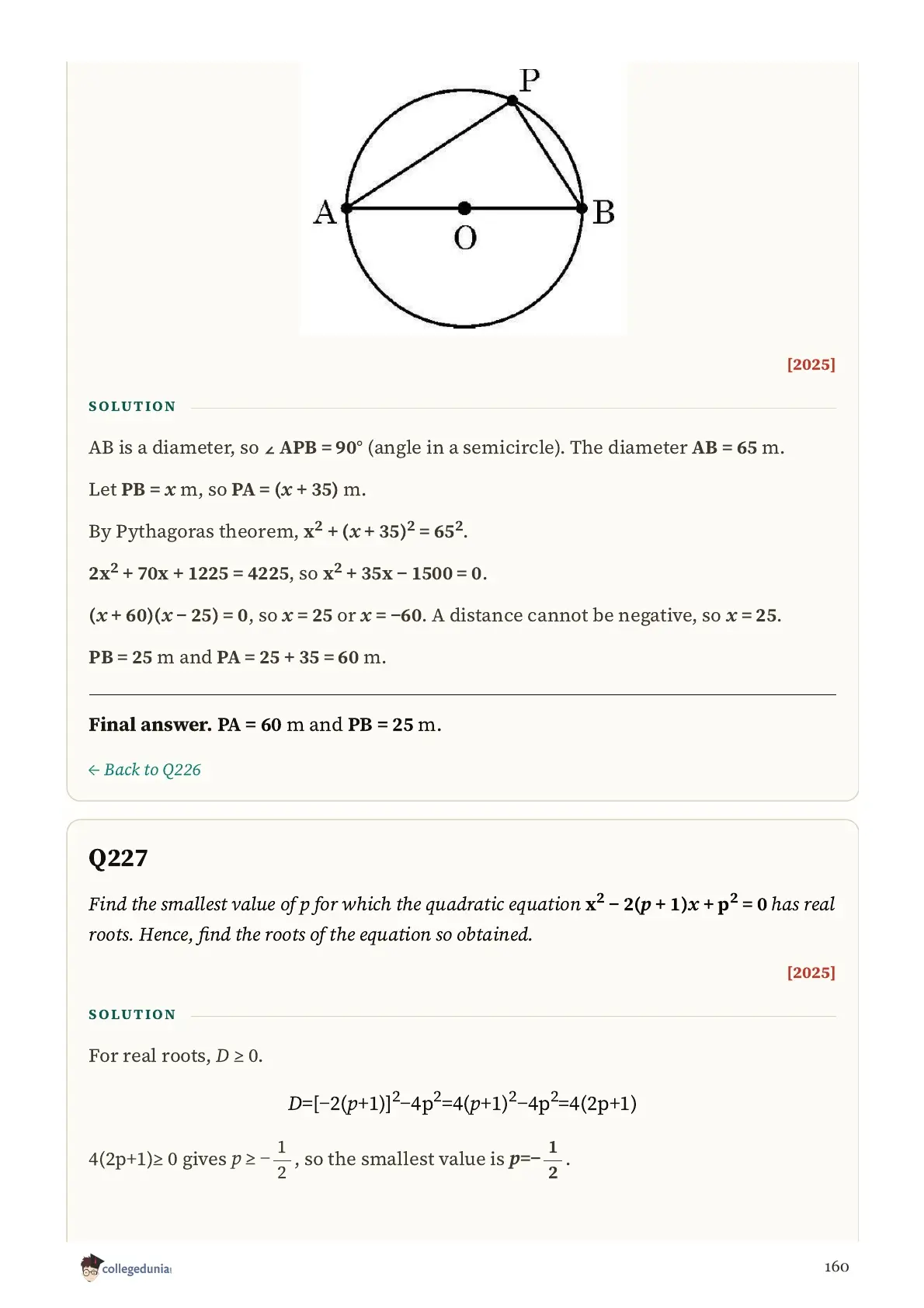
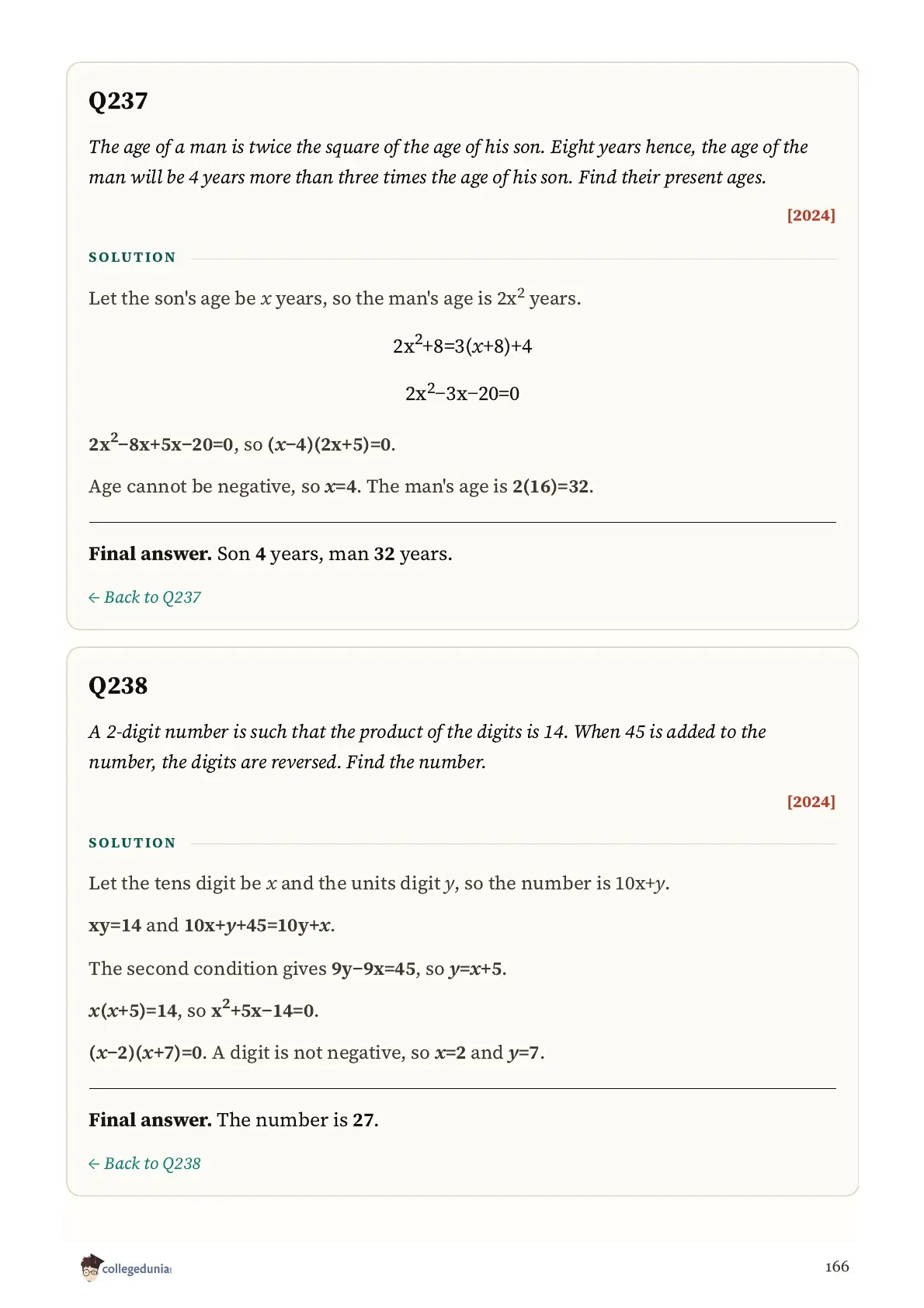
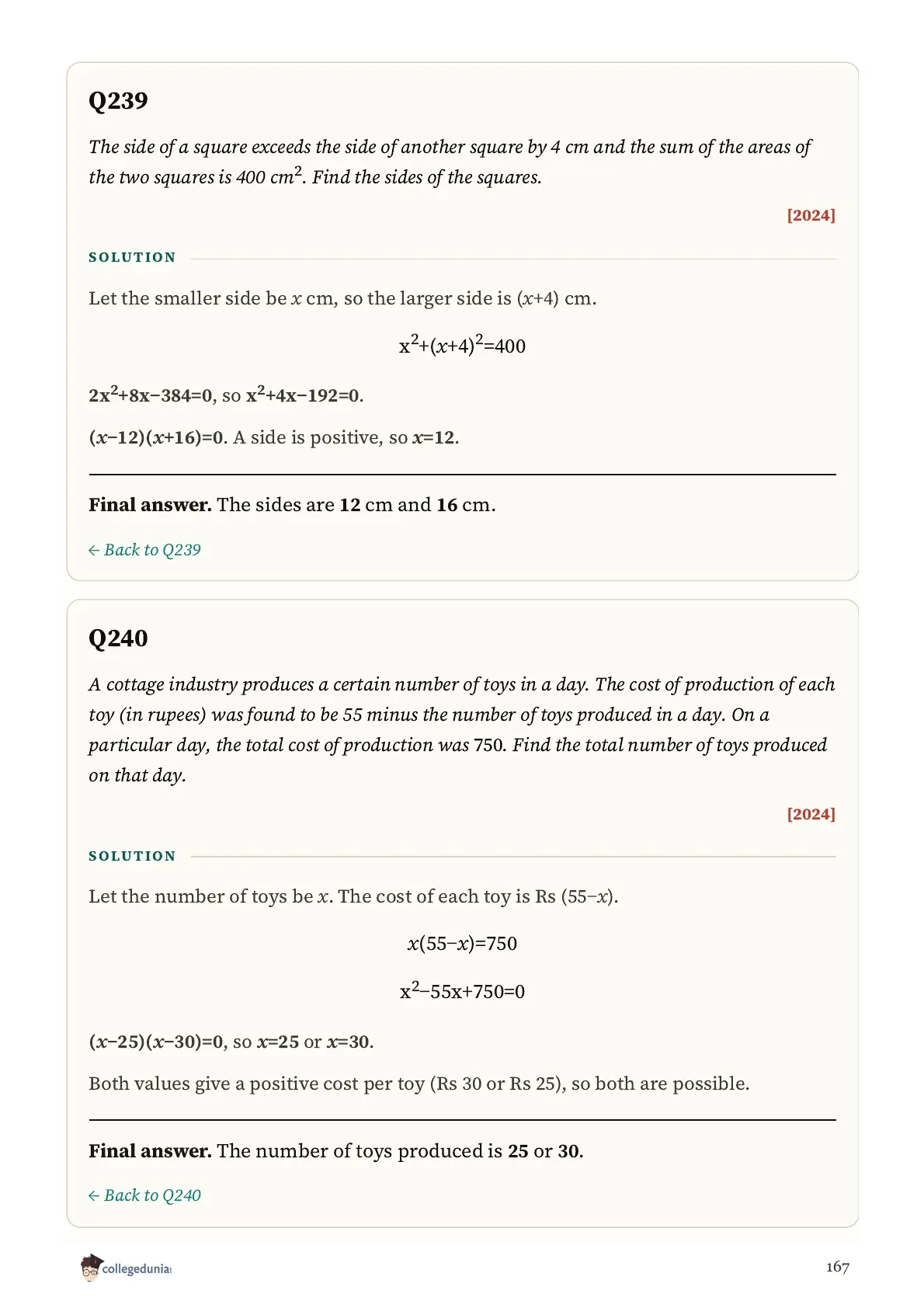
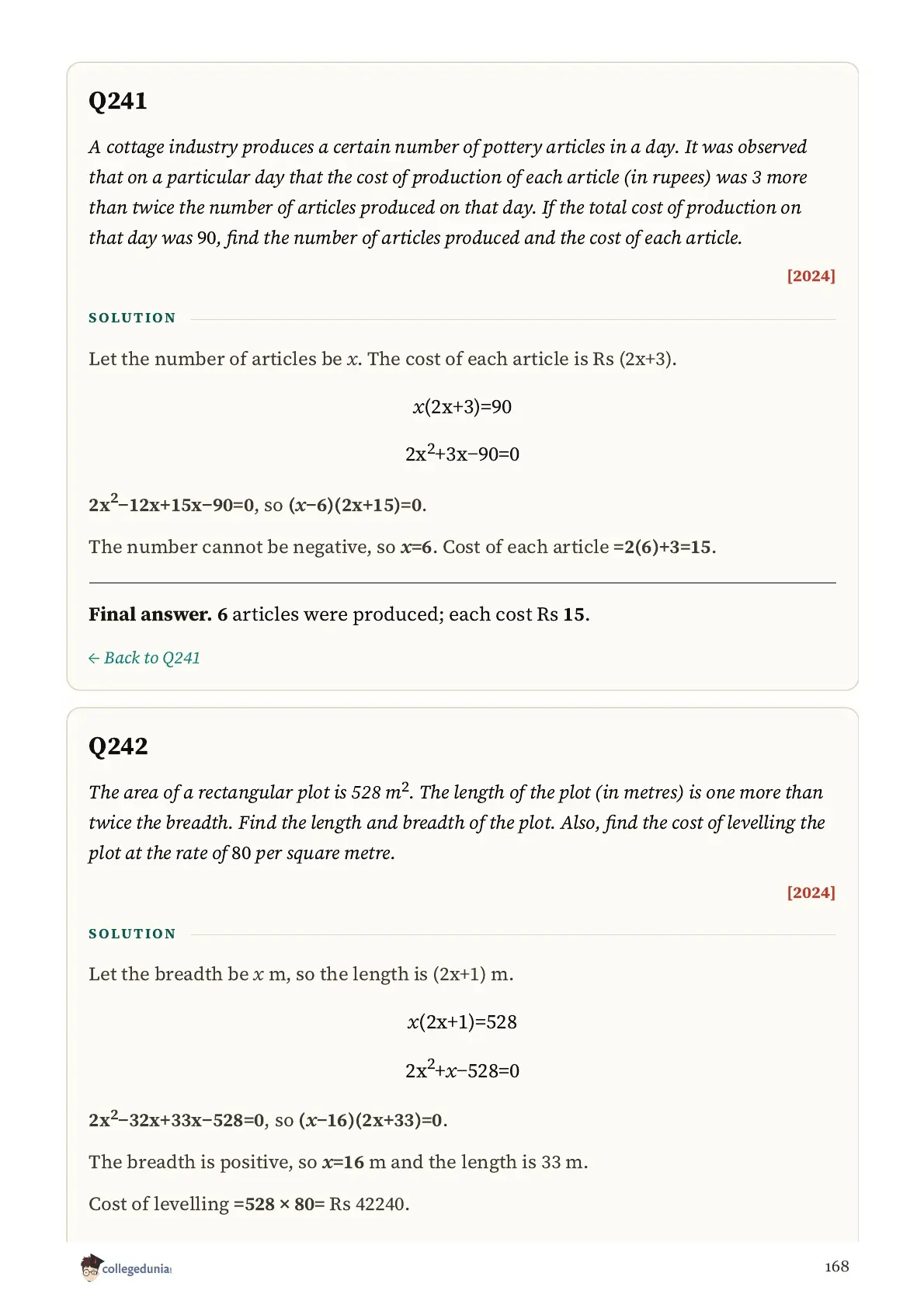
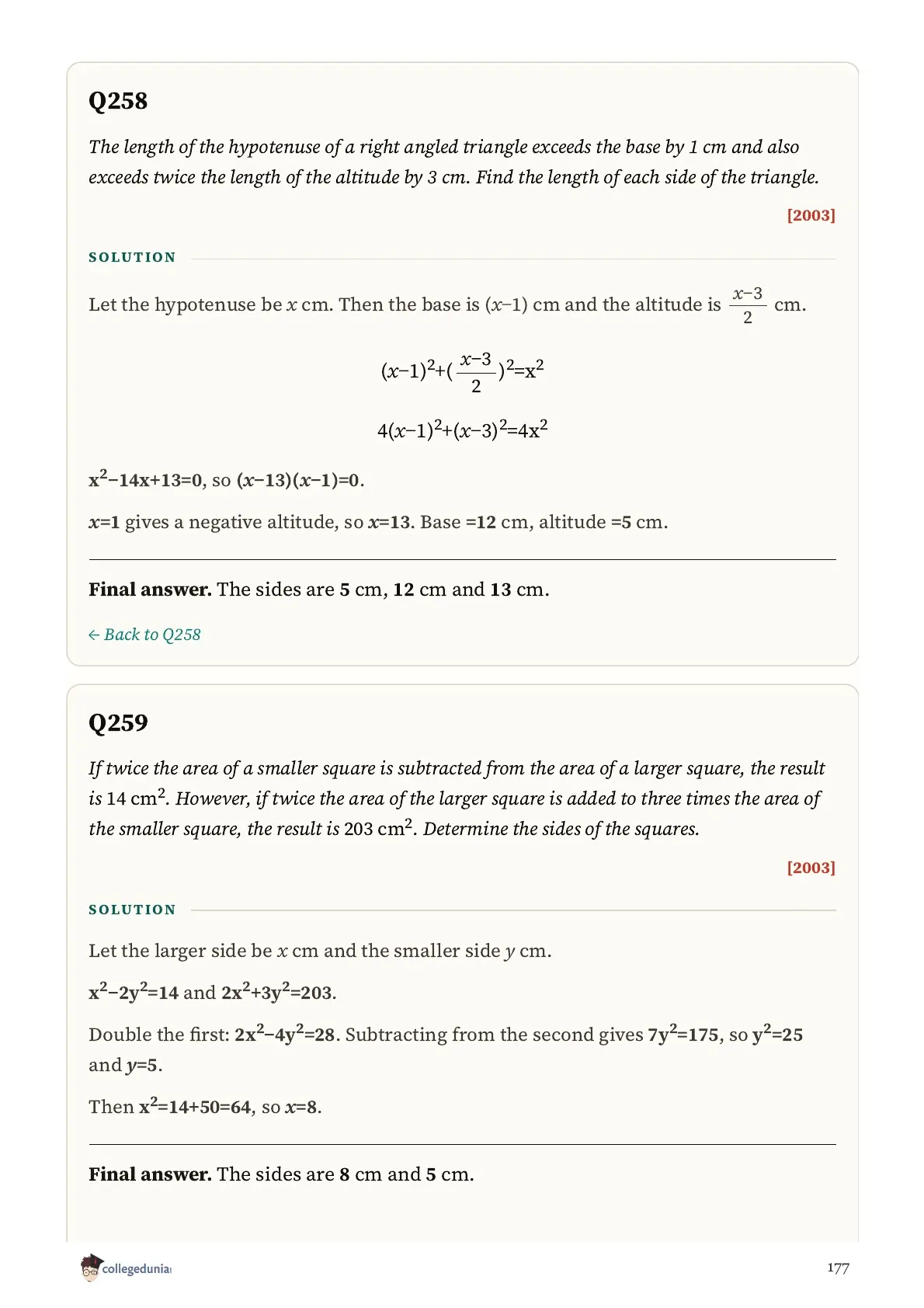
Word problems are the largest group at 111. Area and perimeter of rectangles, right triangles and plots appear in 49, numbers, digits, consecutive integers and fractions in 35, speed and time in 23 (10 of them about a train), pipes and taps in 7, boats and streams in 5 and ages in 4. Case studies are rarer: 4 questions carry their original diagram, such as the six enclosures in a zoo.
Counts come from keyword matches over the question text, so a question that names two things is counted under both.
Source: Physics Wallah Foundation
How to Approach the Set
Start with the 45 MCQs and assertion-reason items, then the 21 one-mark direct questions and the 2-mark and 3-mark solve-for-x questions, which need one method each. Move to the 51 four-mark questions, where the word problem starts, and the 43 five-mark and 10 six-mark questions last. For every word problem write the equation in standard form first, then check the discriminant before solving. Learn the factorisation, the formula x = (-b +/- sqrt(b^2 - 4ac)) / 2a and the three discriminant cases until you can pick the method from the numbers. Practise the 2025 and 2023 papers closely, as they hold 72 of the 259 questions.
Common Mistakes in Quadratic Equations Questions
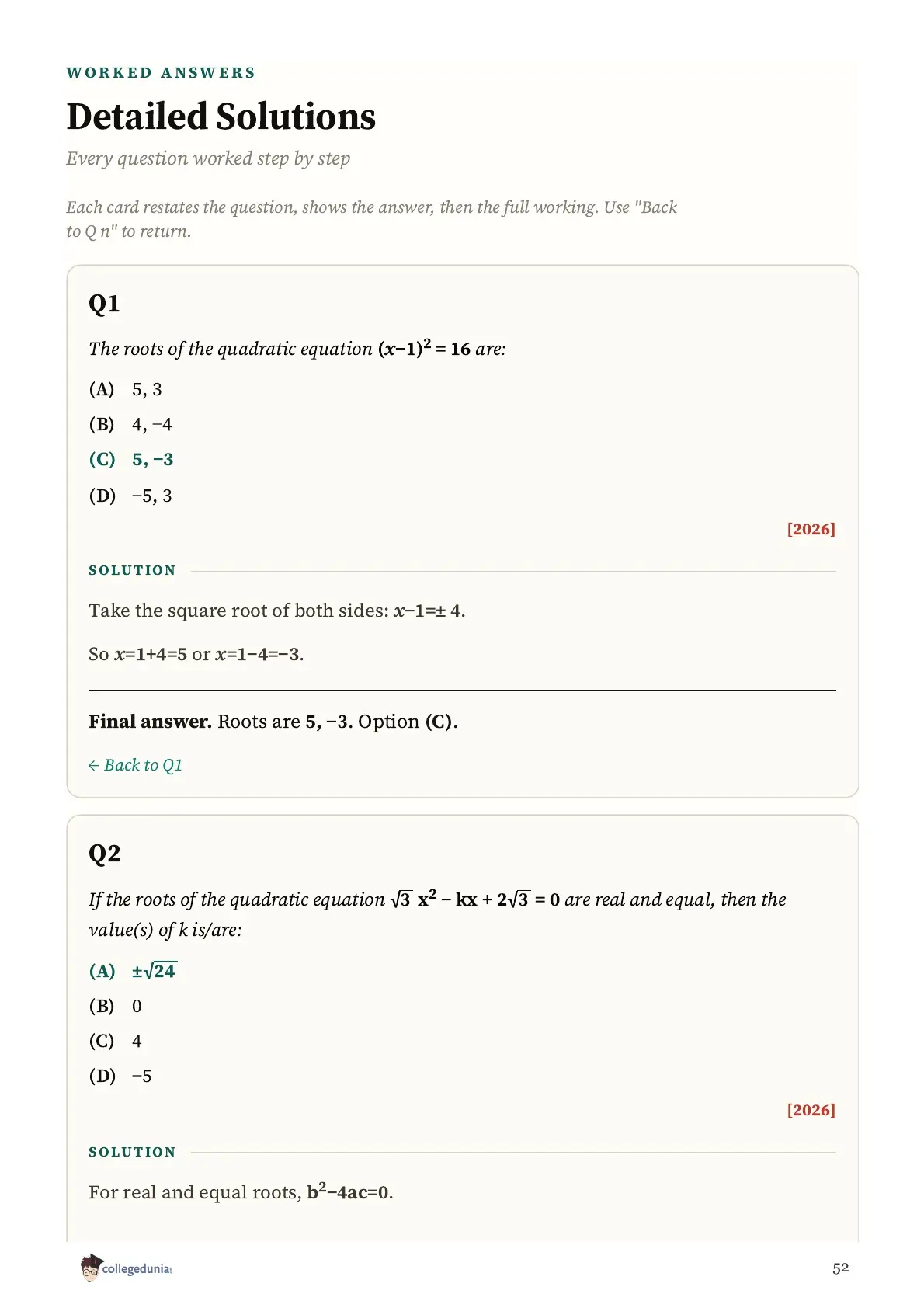
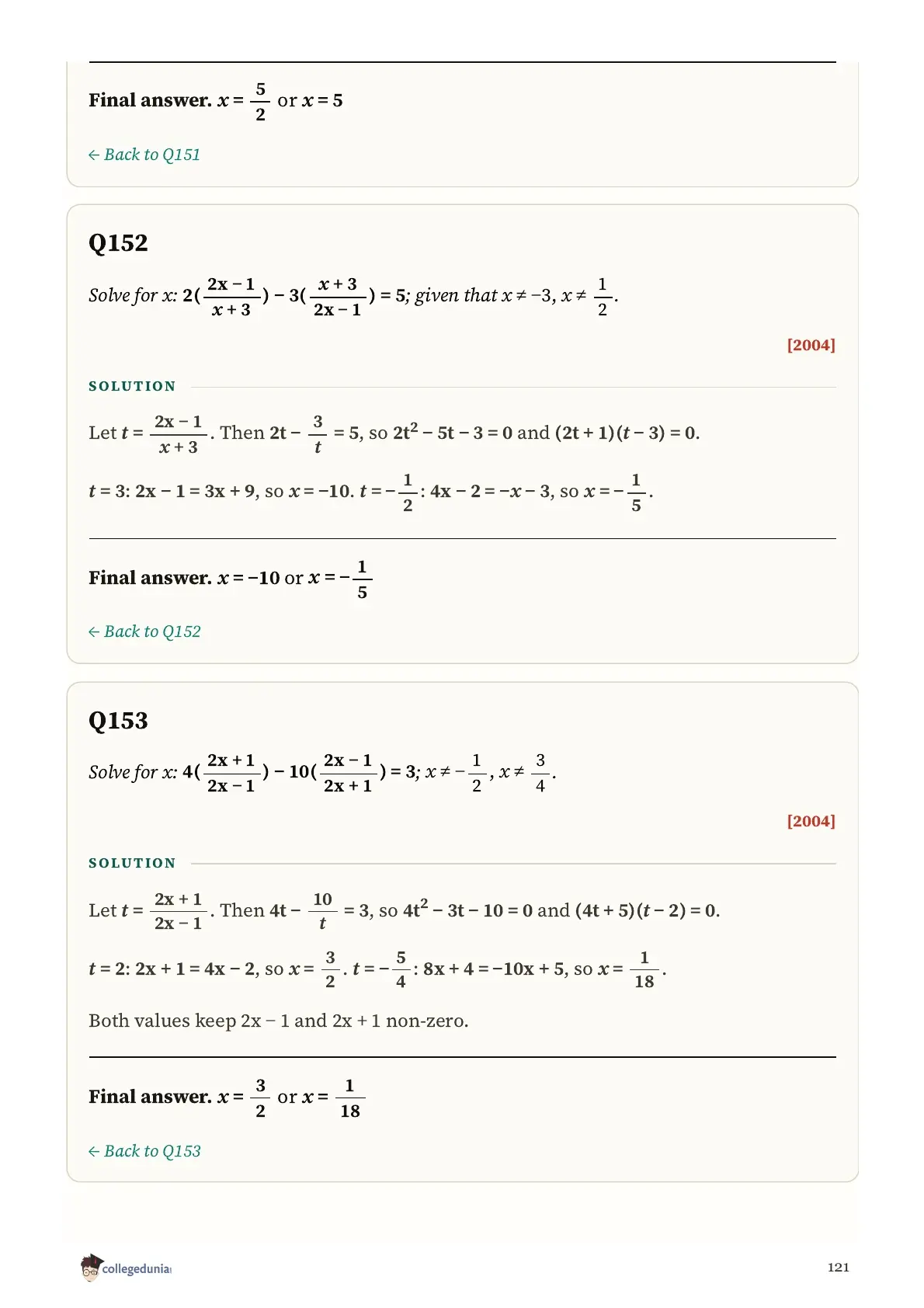
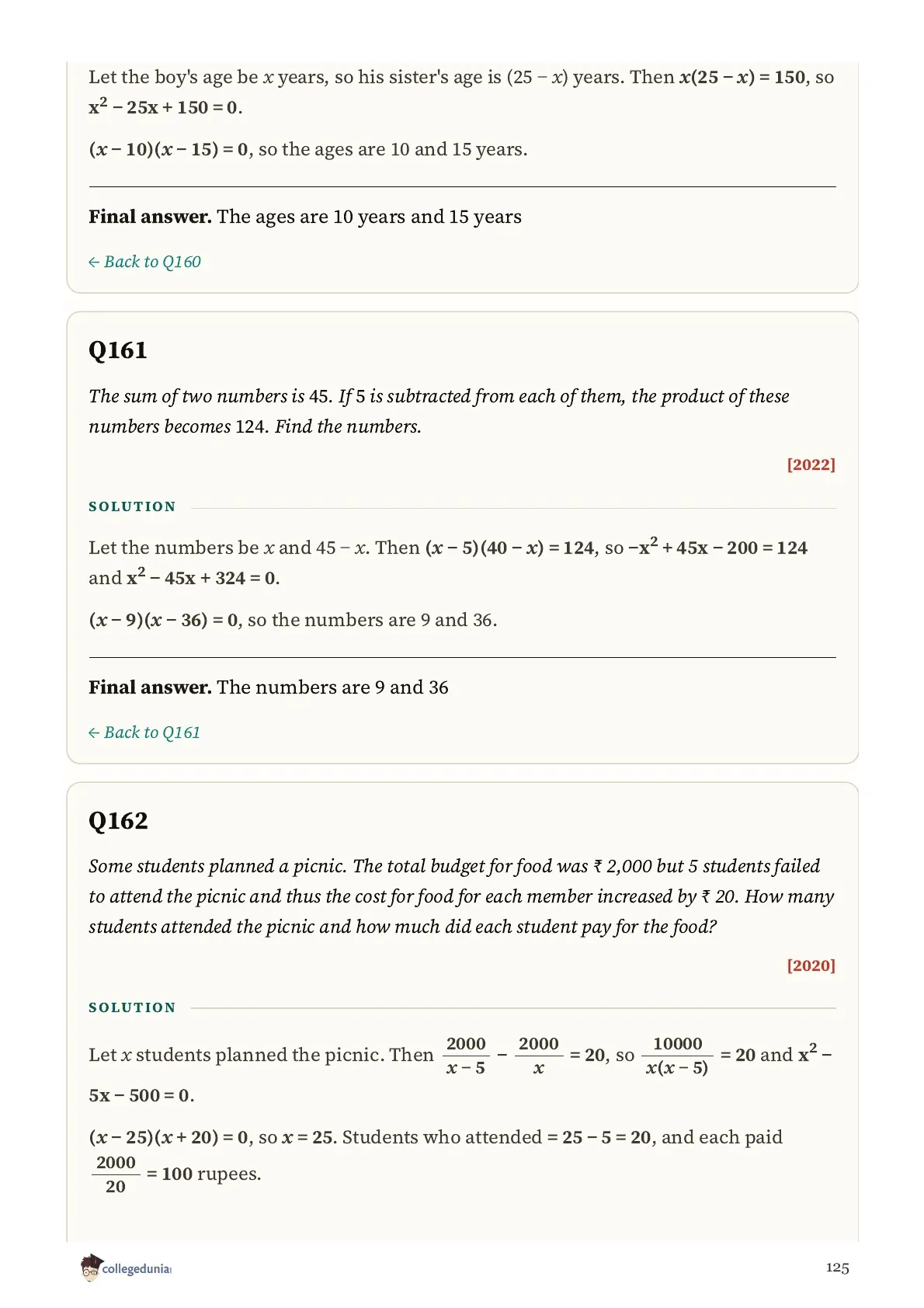
- Giving 4, -4 for (x - 1)^2 = 16. Take the square root as x - 1 = 4 or x - 1 = -4, so the roots are 5 and -3.
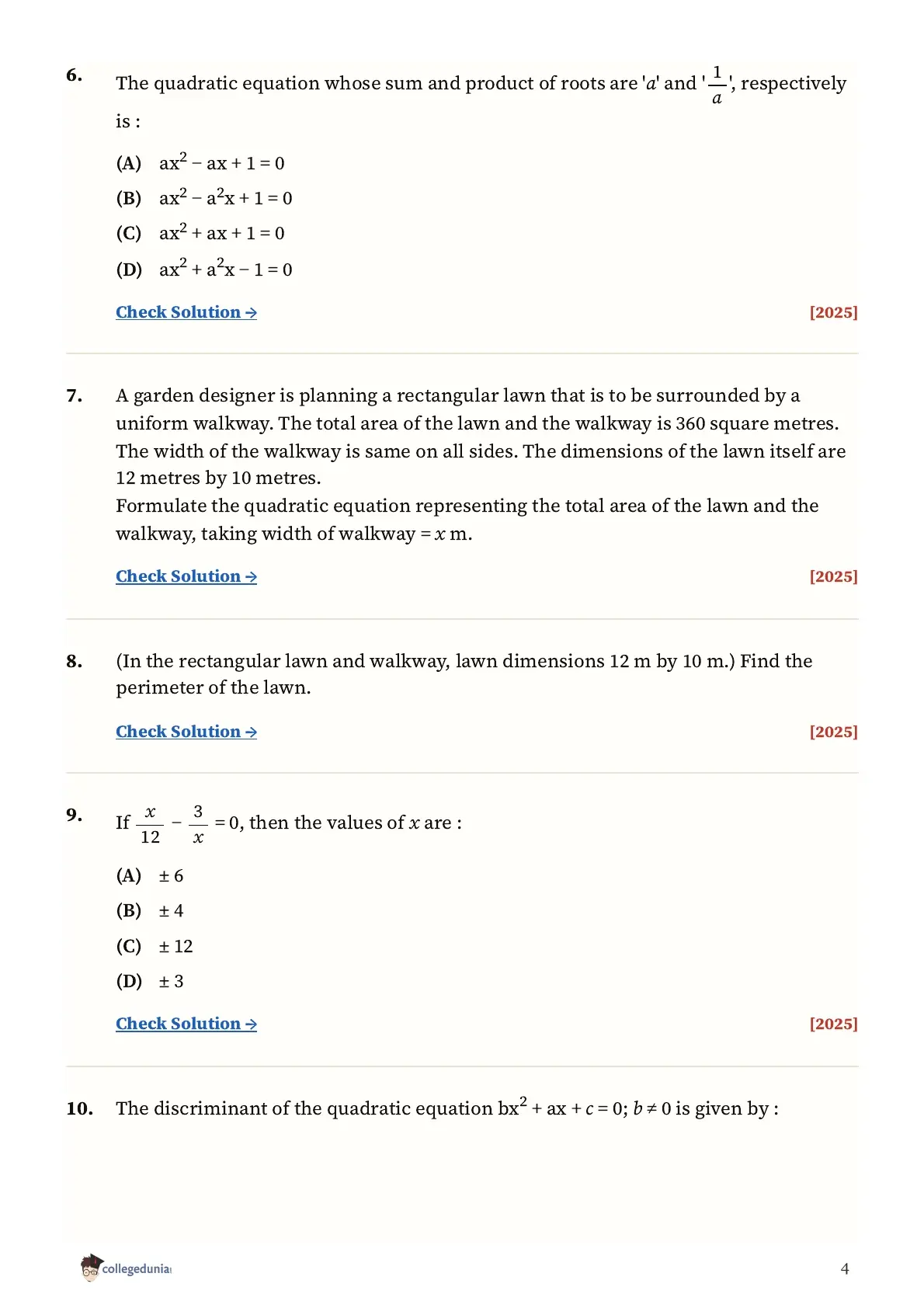
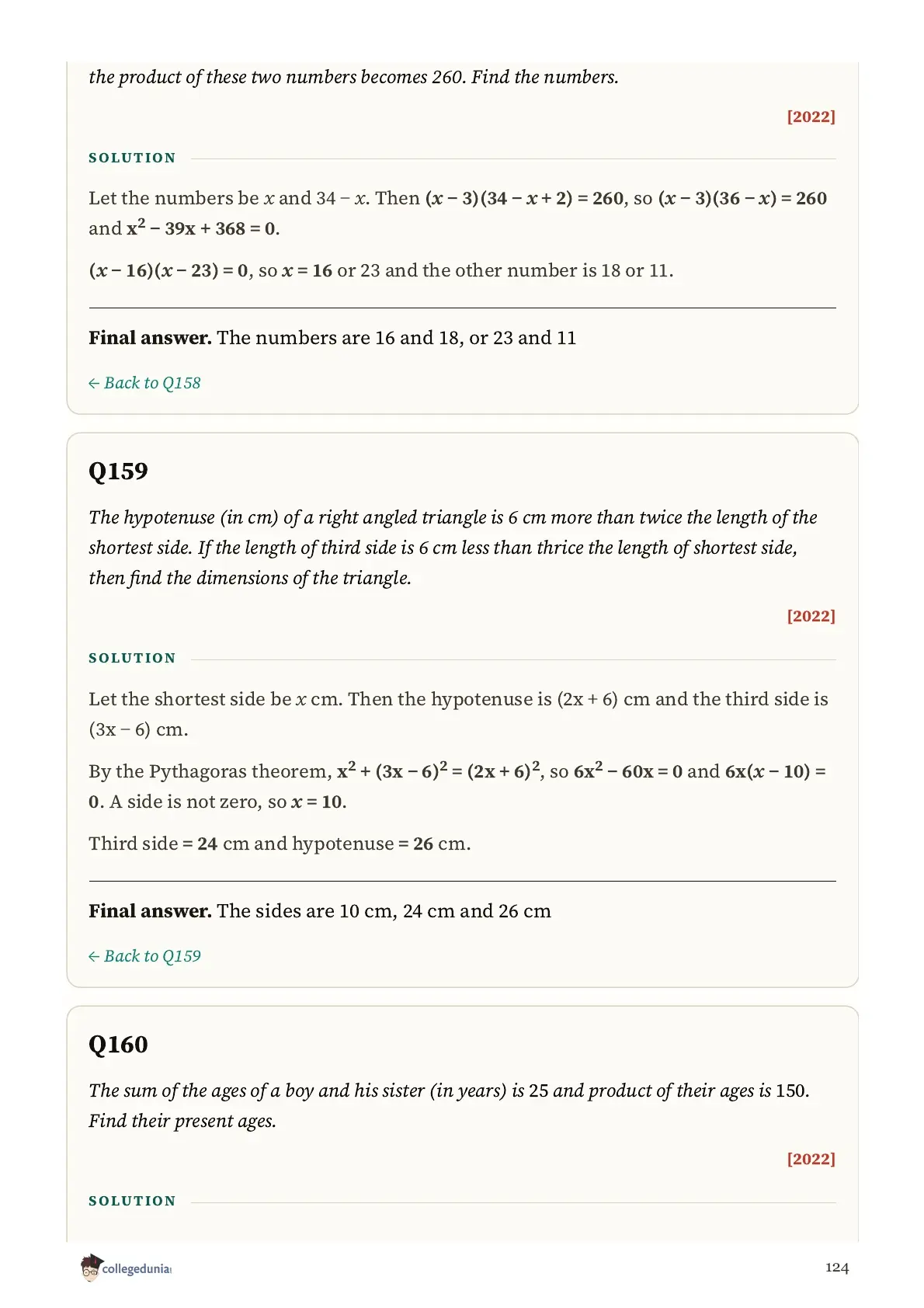
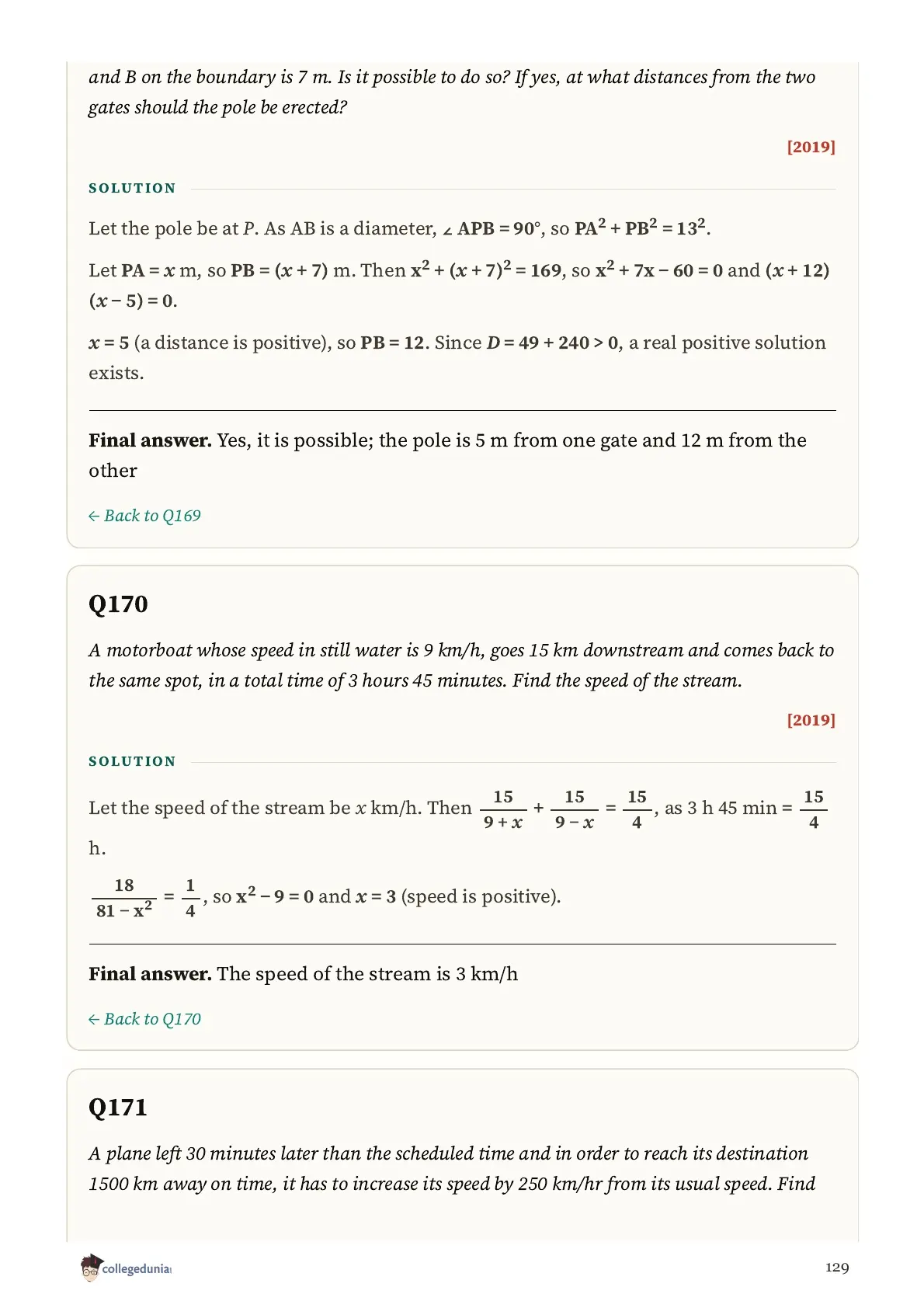
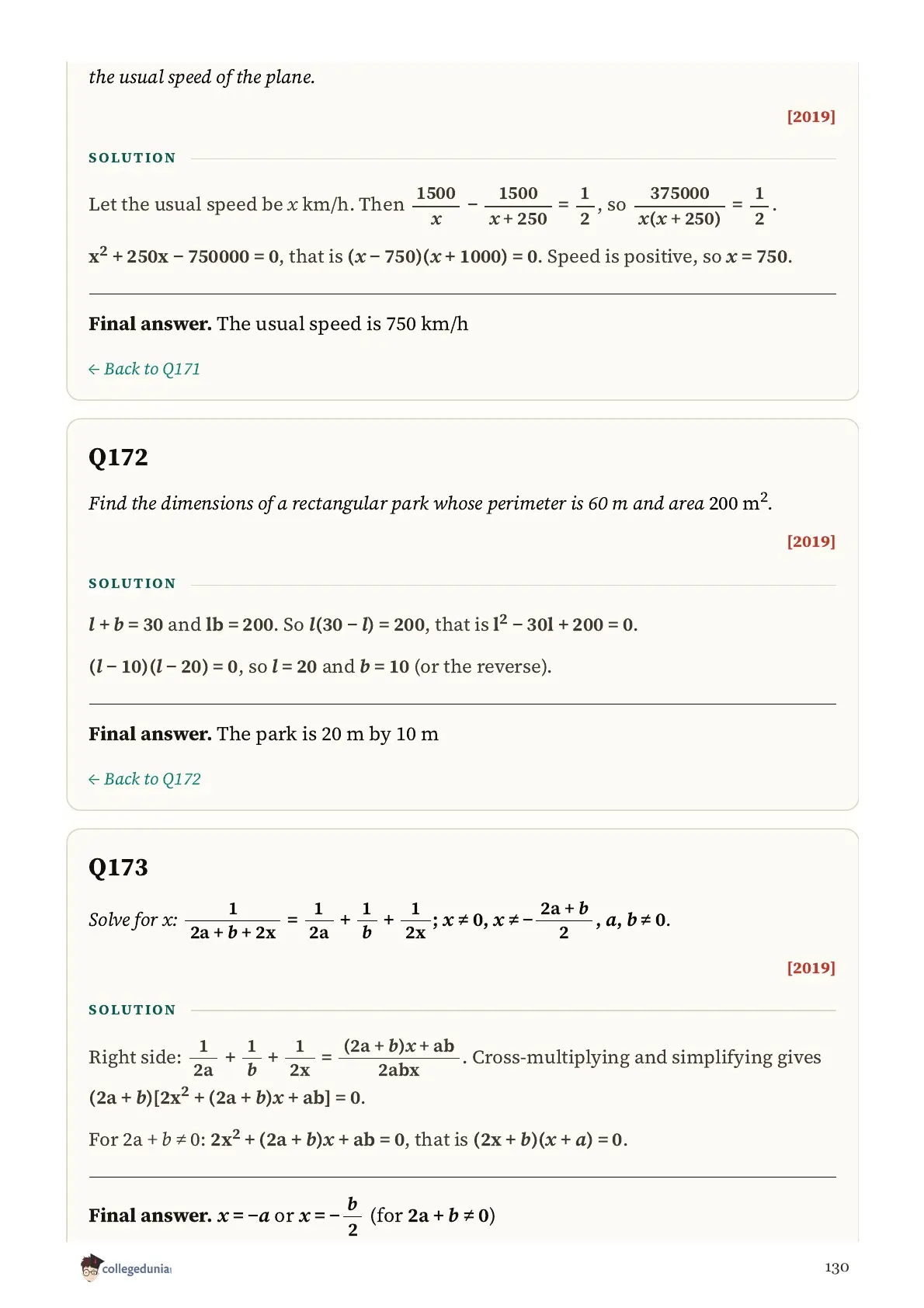
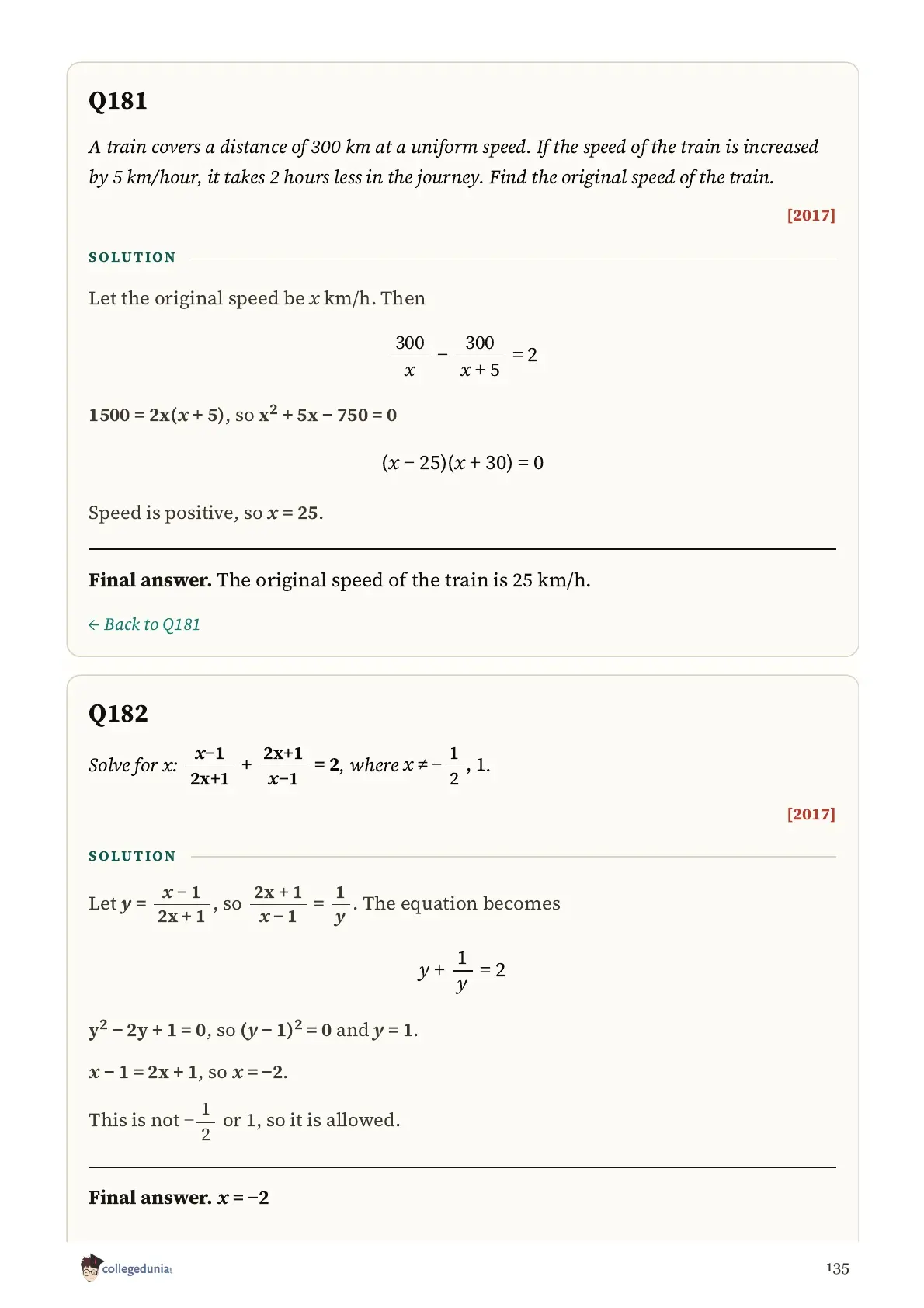
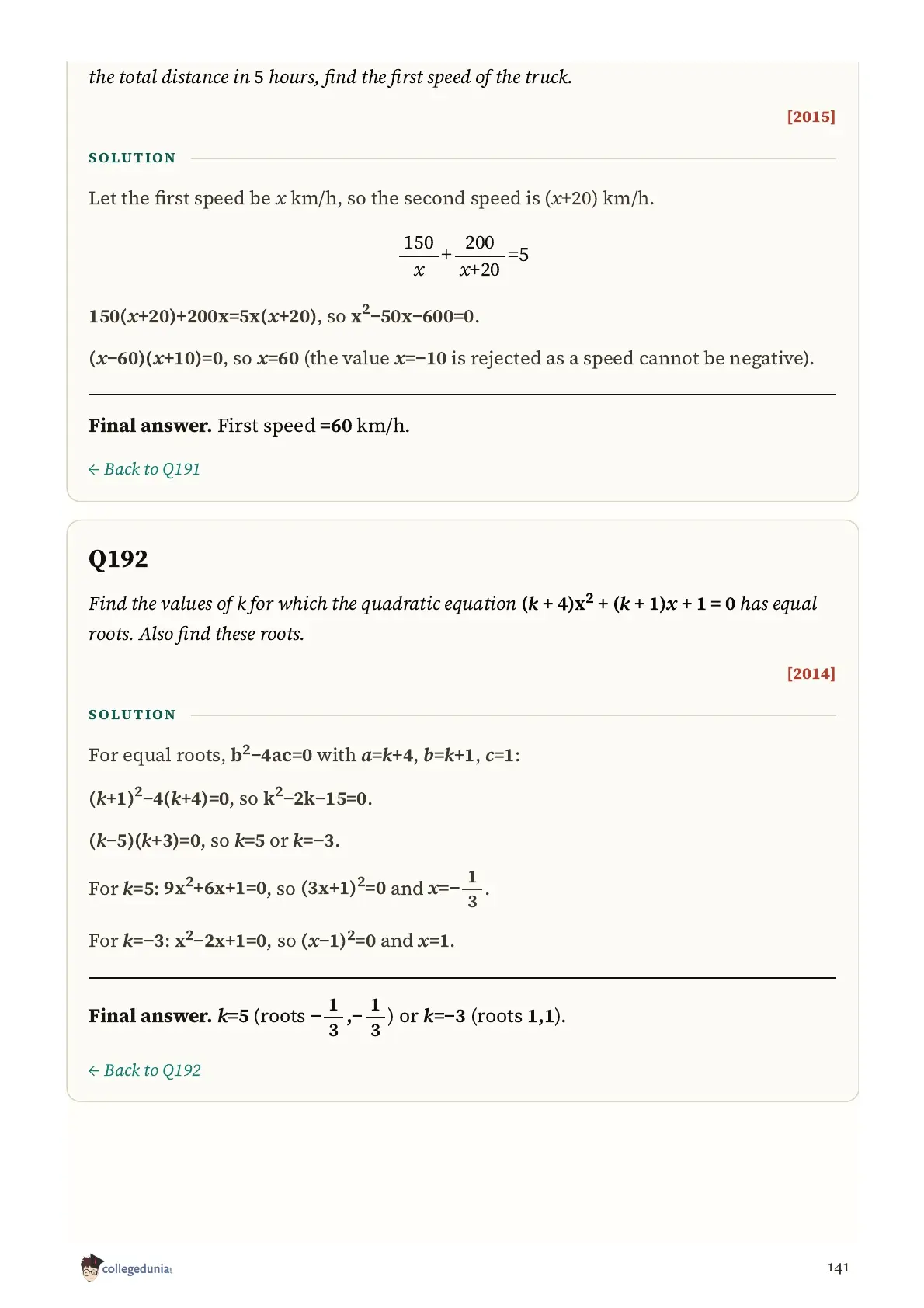
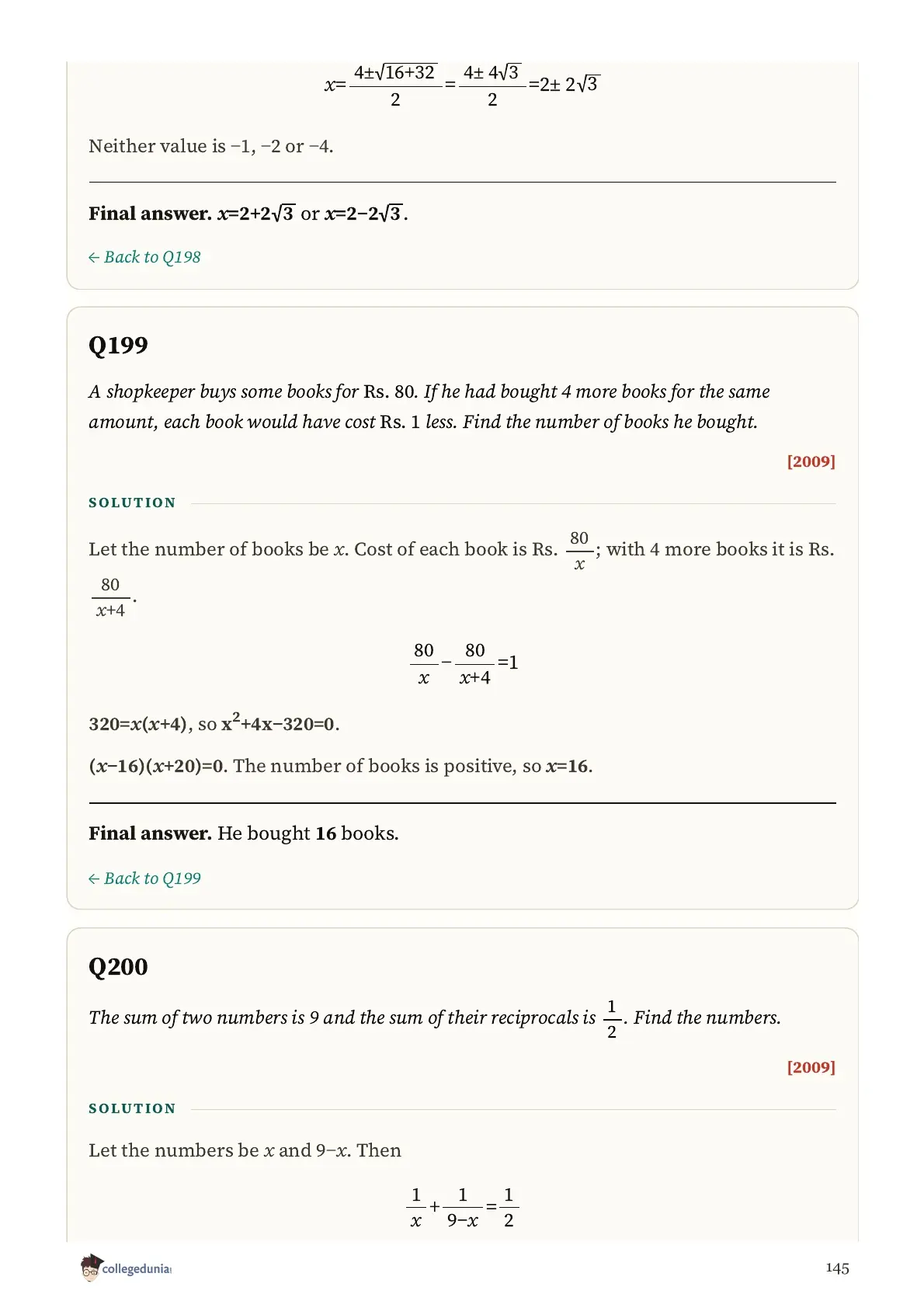
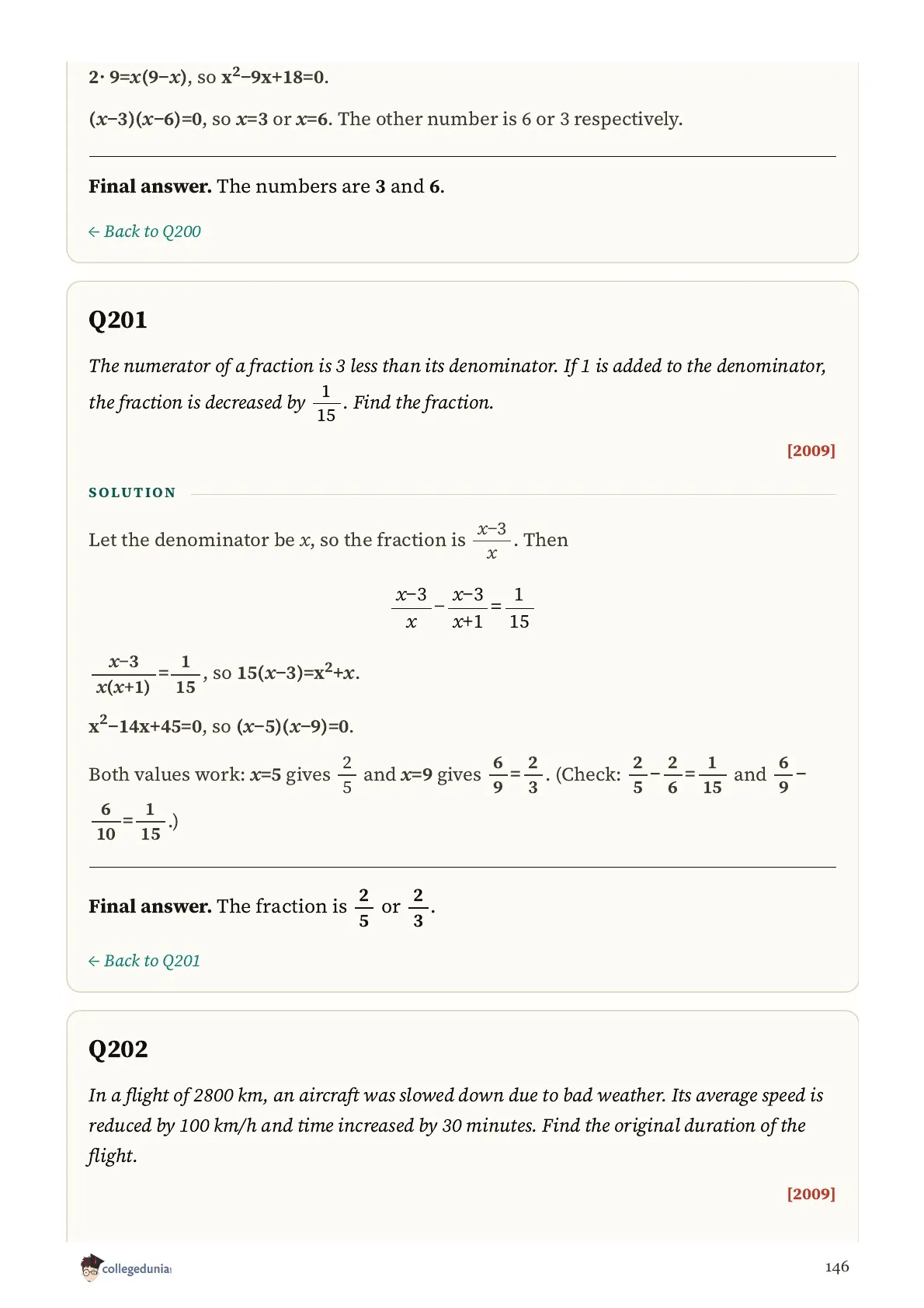
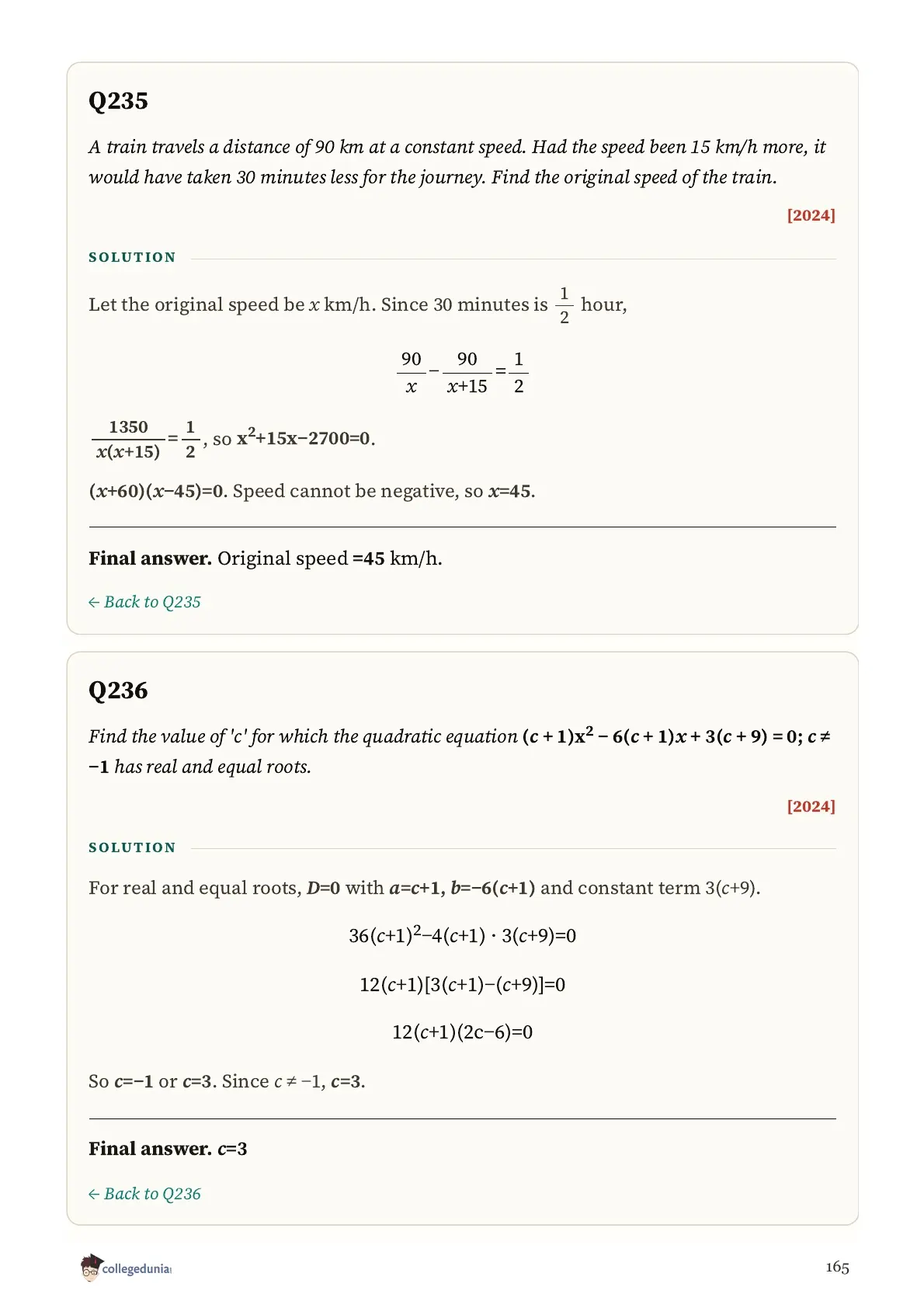
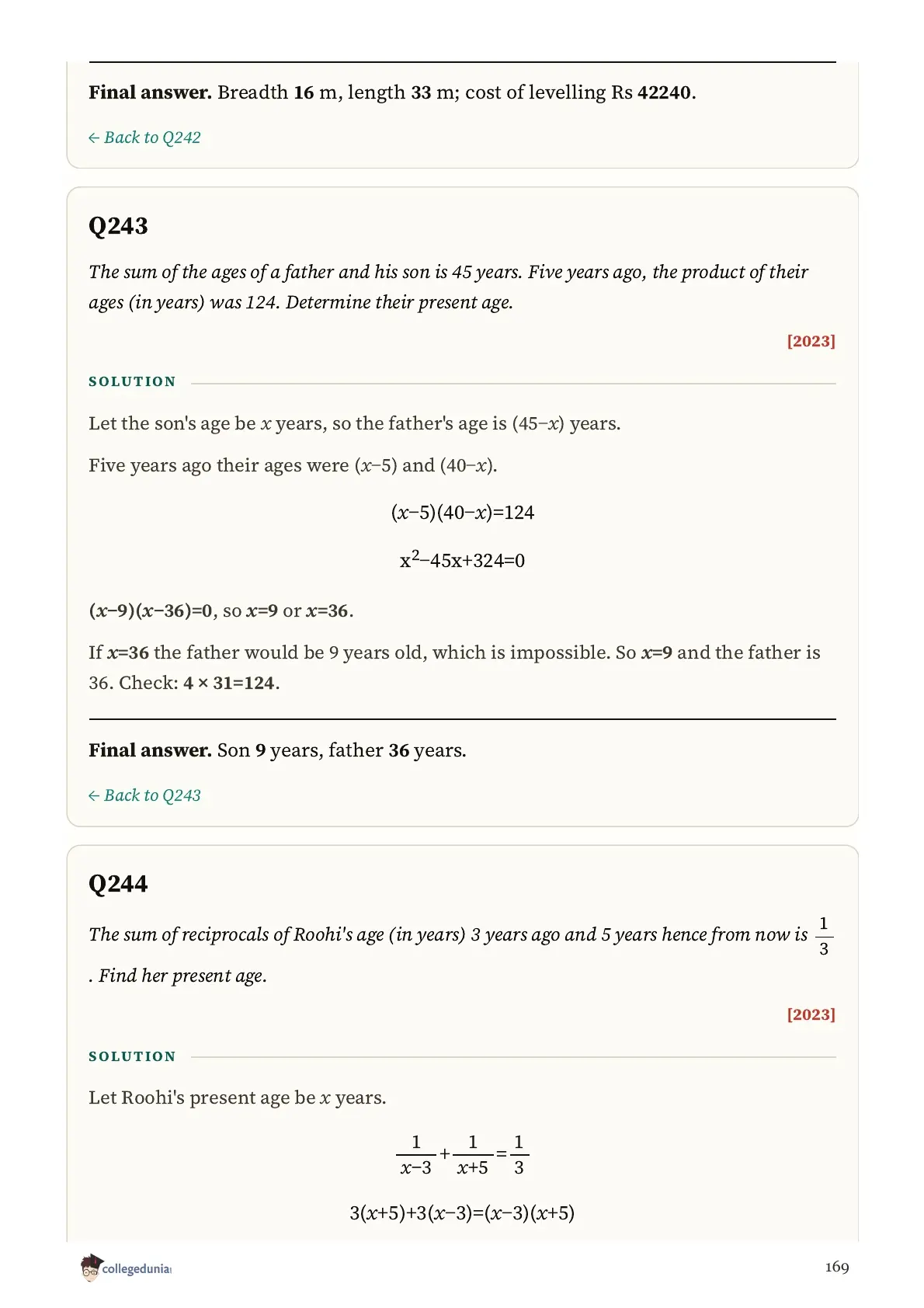
- Keeping the negative root of a speed problem. A train covering 300 km, 2 hours faster with 5 km/h more, gives x^2 + 5x - 750 = 0 and roots 25 and -30. Only 25 km/h is a speed.
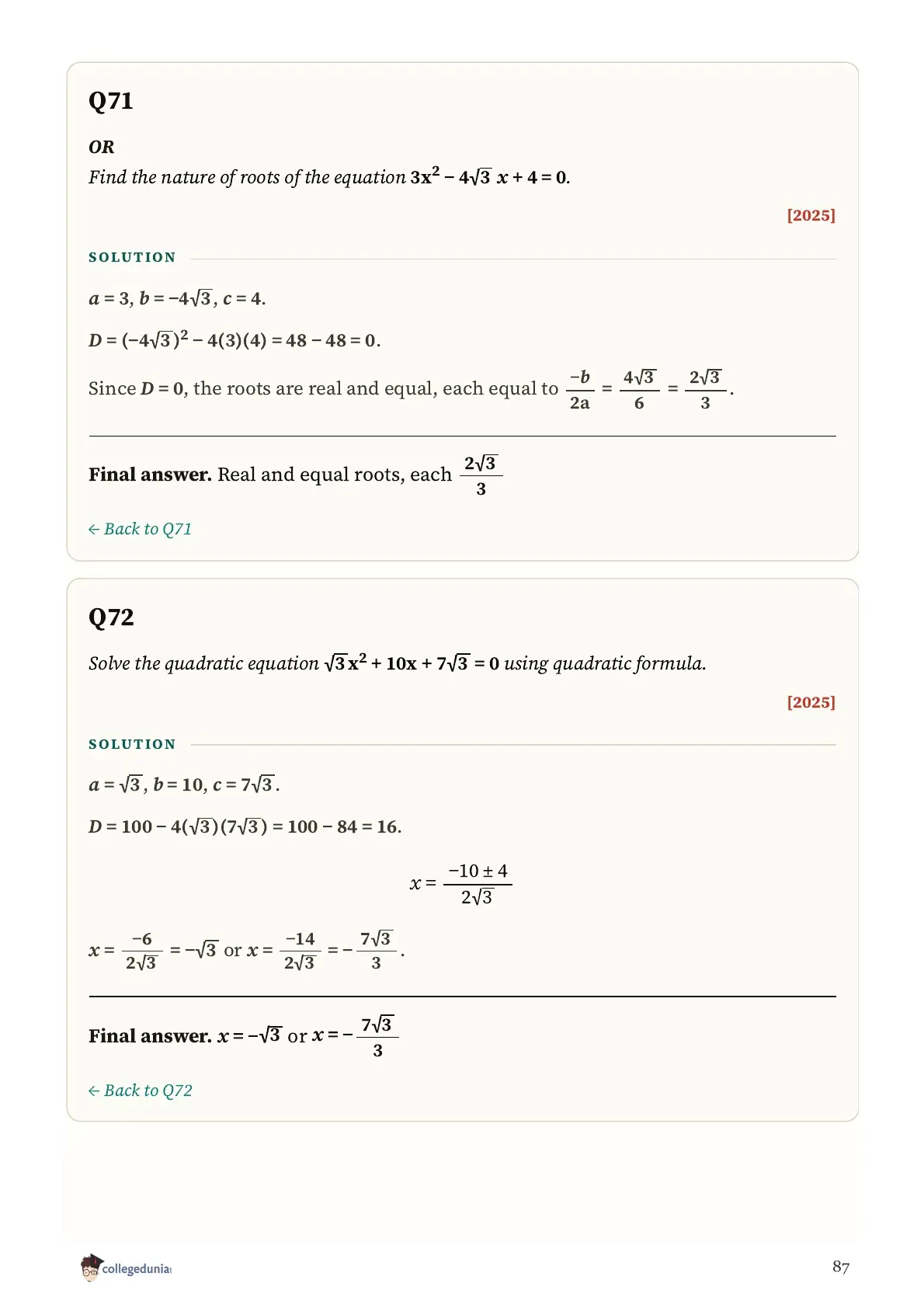
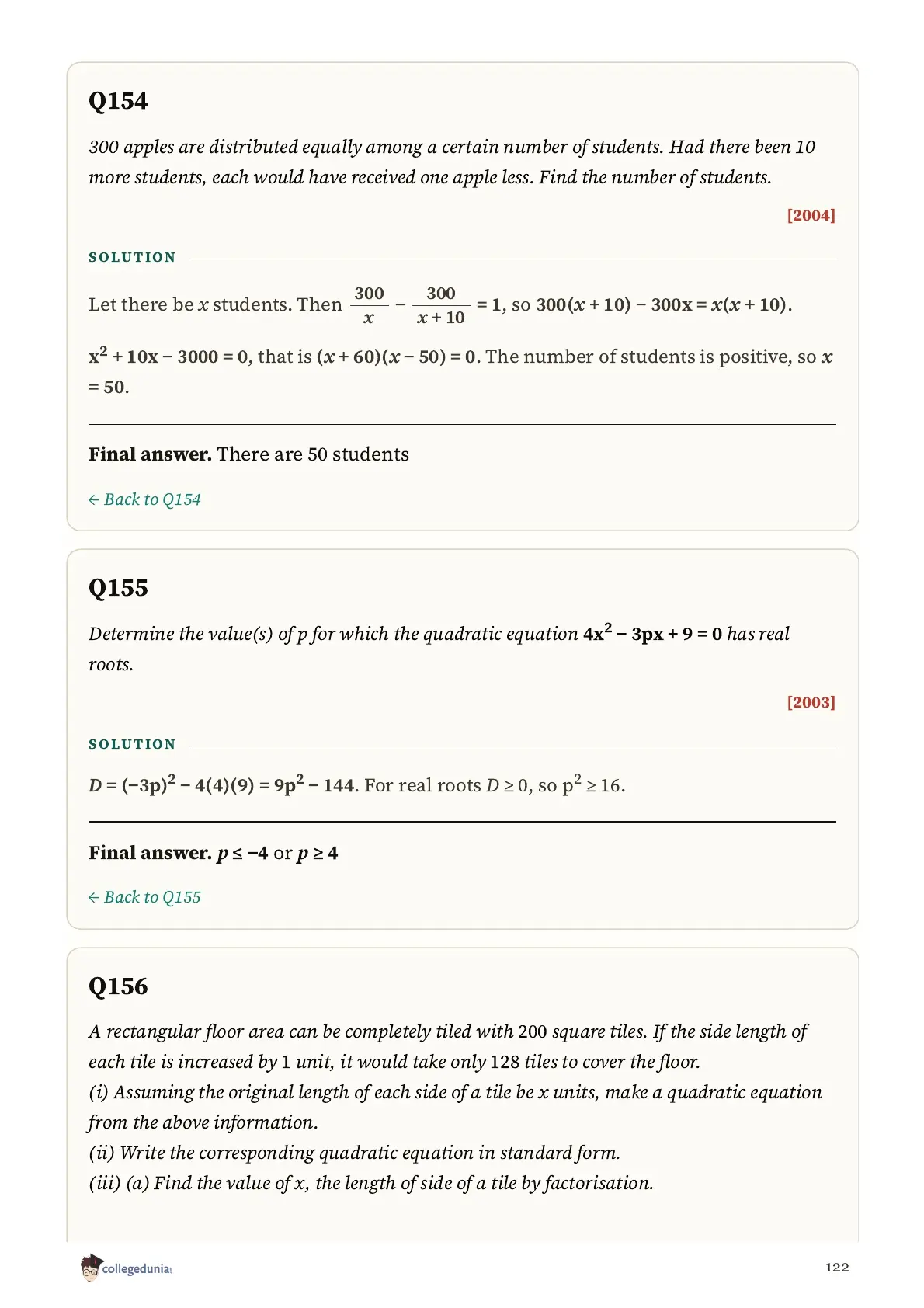
- Getting the sign wrong in the discriminant when the constant is negative. For 4x^2 - 12x - k = 0, D = 144 + 16k, so no real roots means k is less than -9, not more than 9.
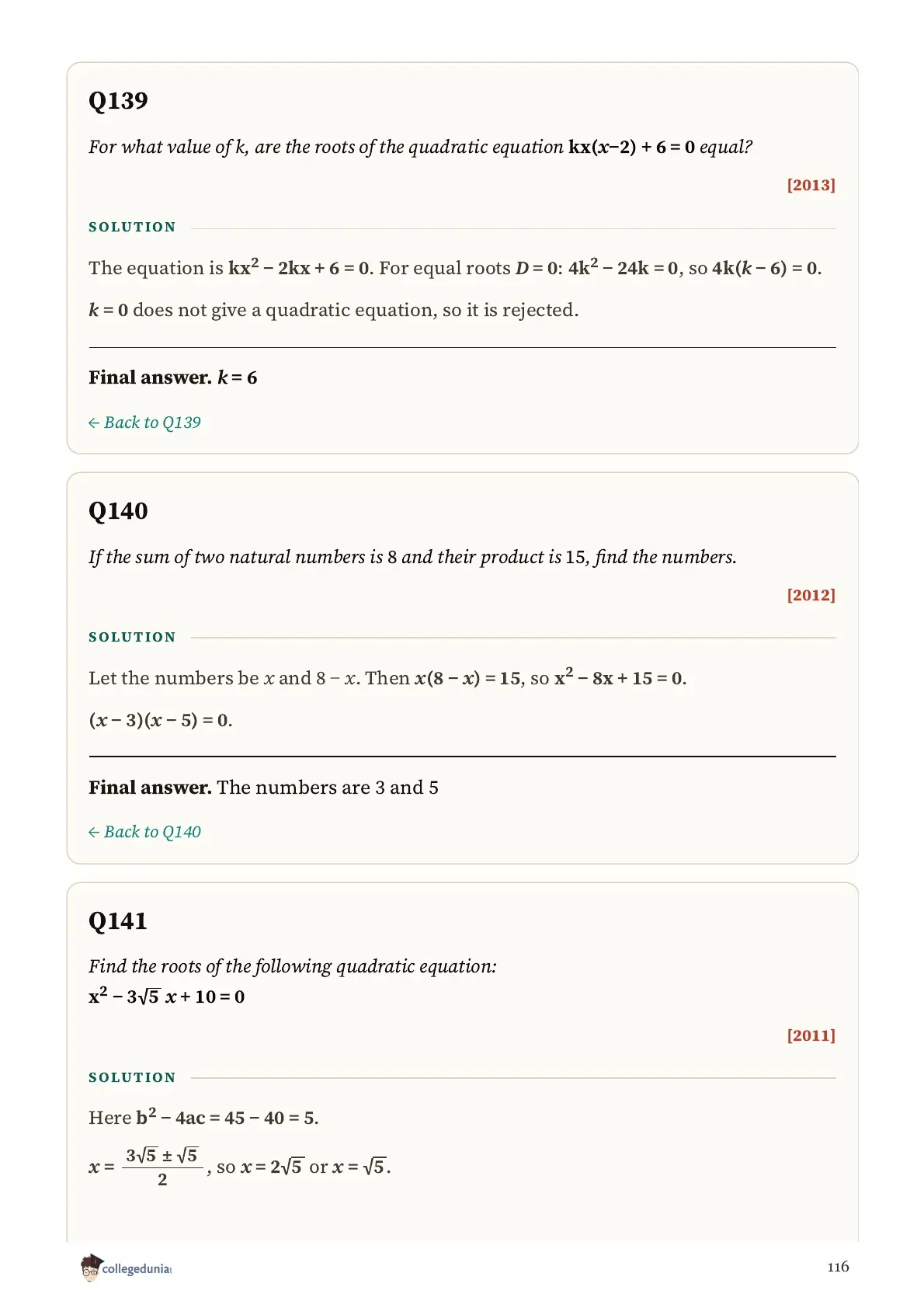
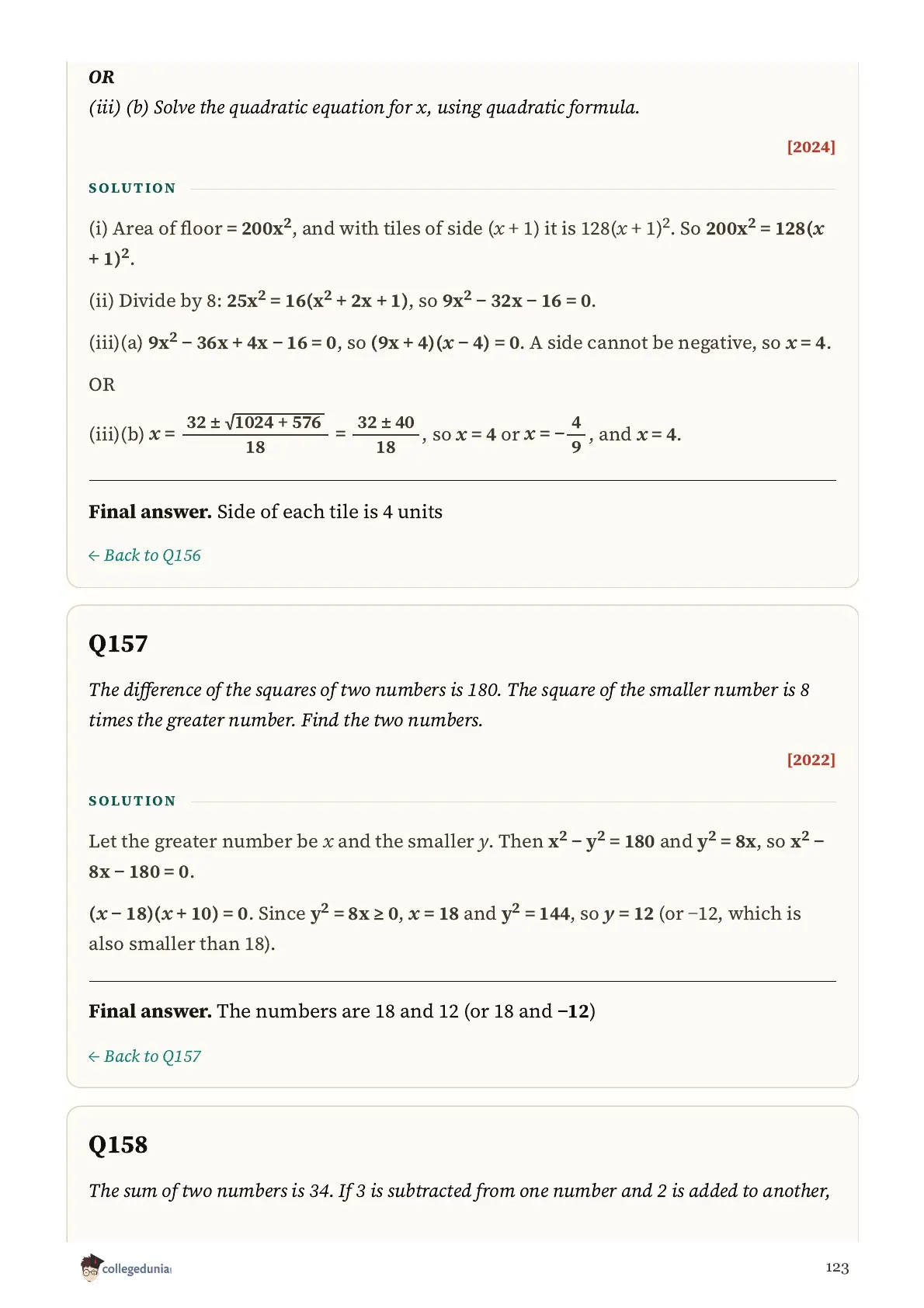
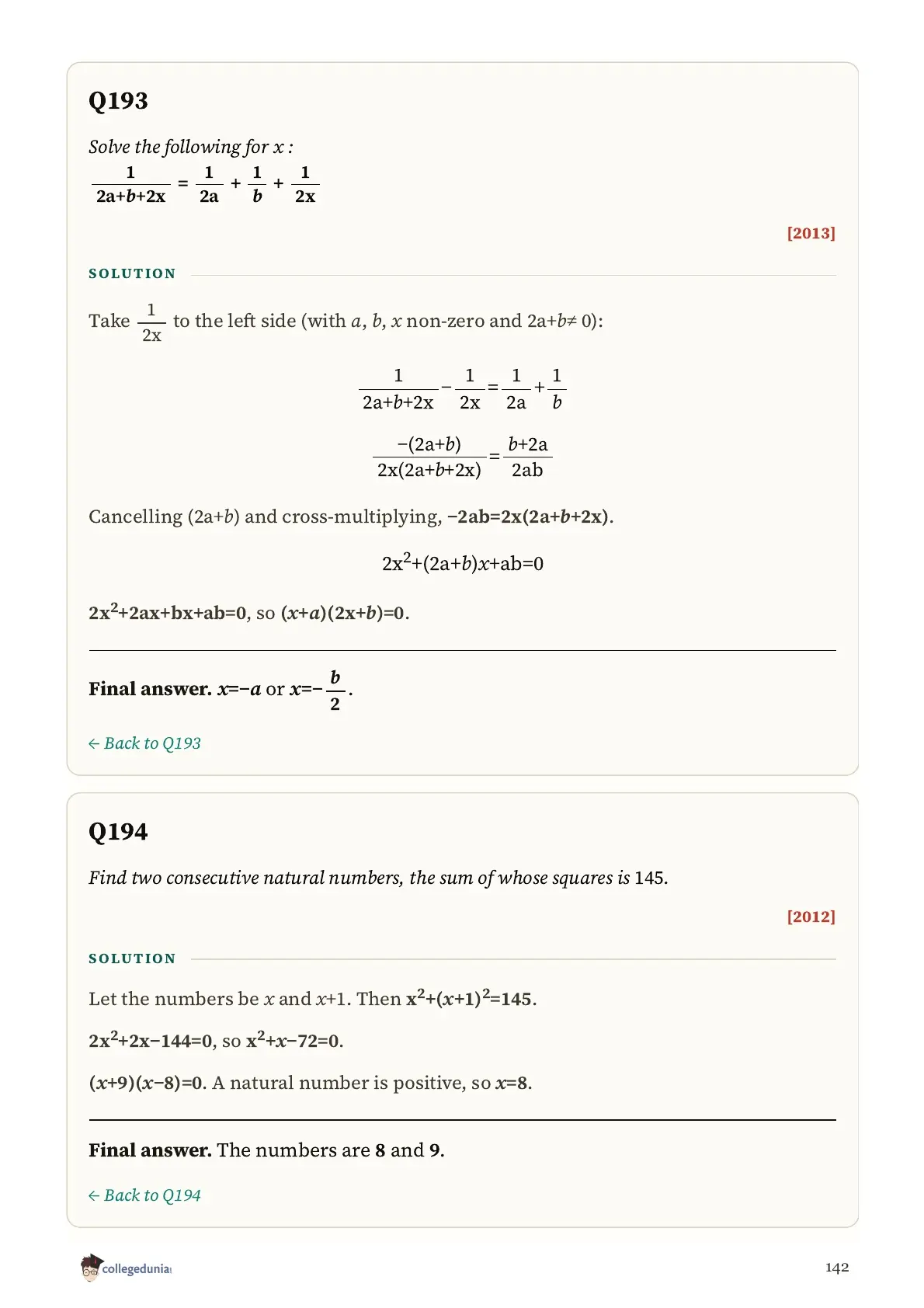
- Accepting k = 0 in kx(x - 2) + 6 = 0. Then the equation is not quadratic, so only k = 6 gives equal roots.
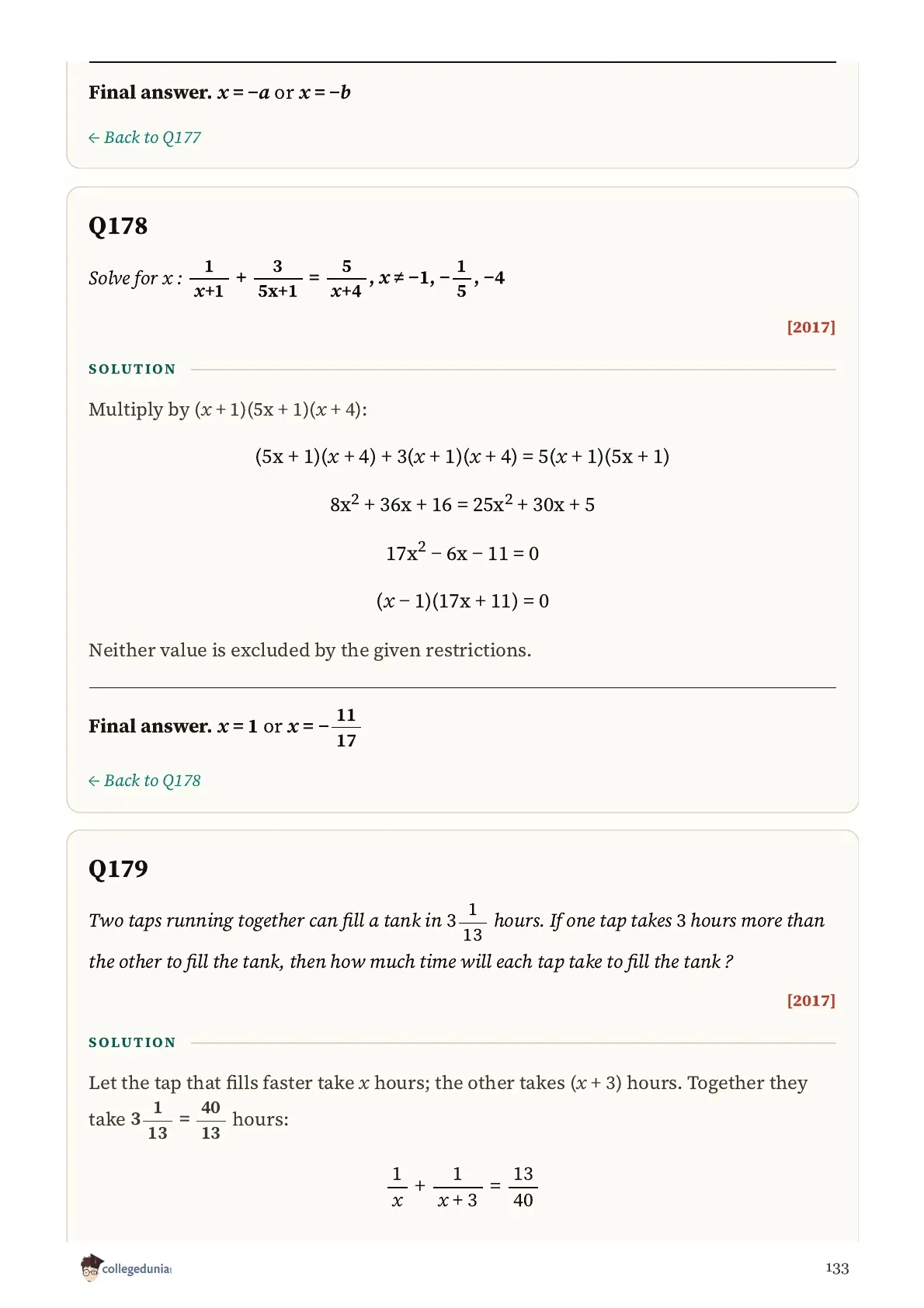
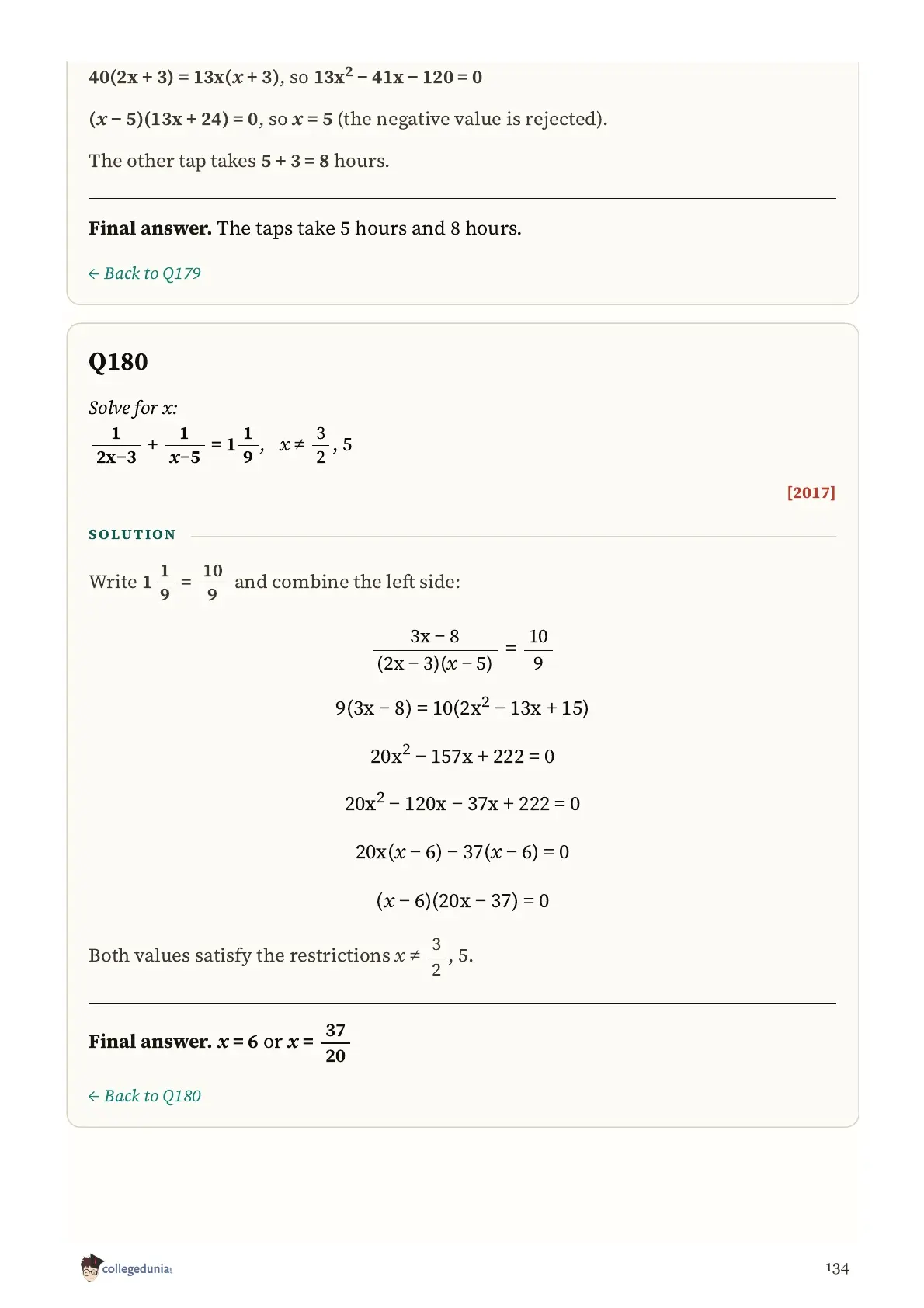
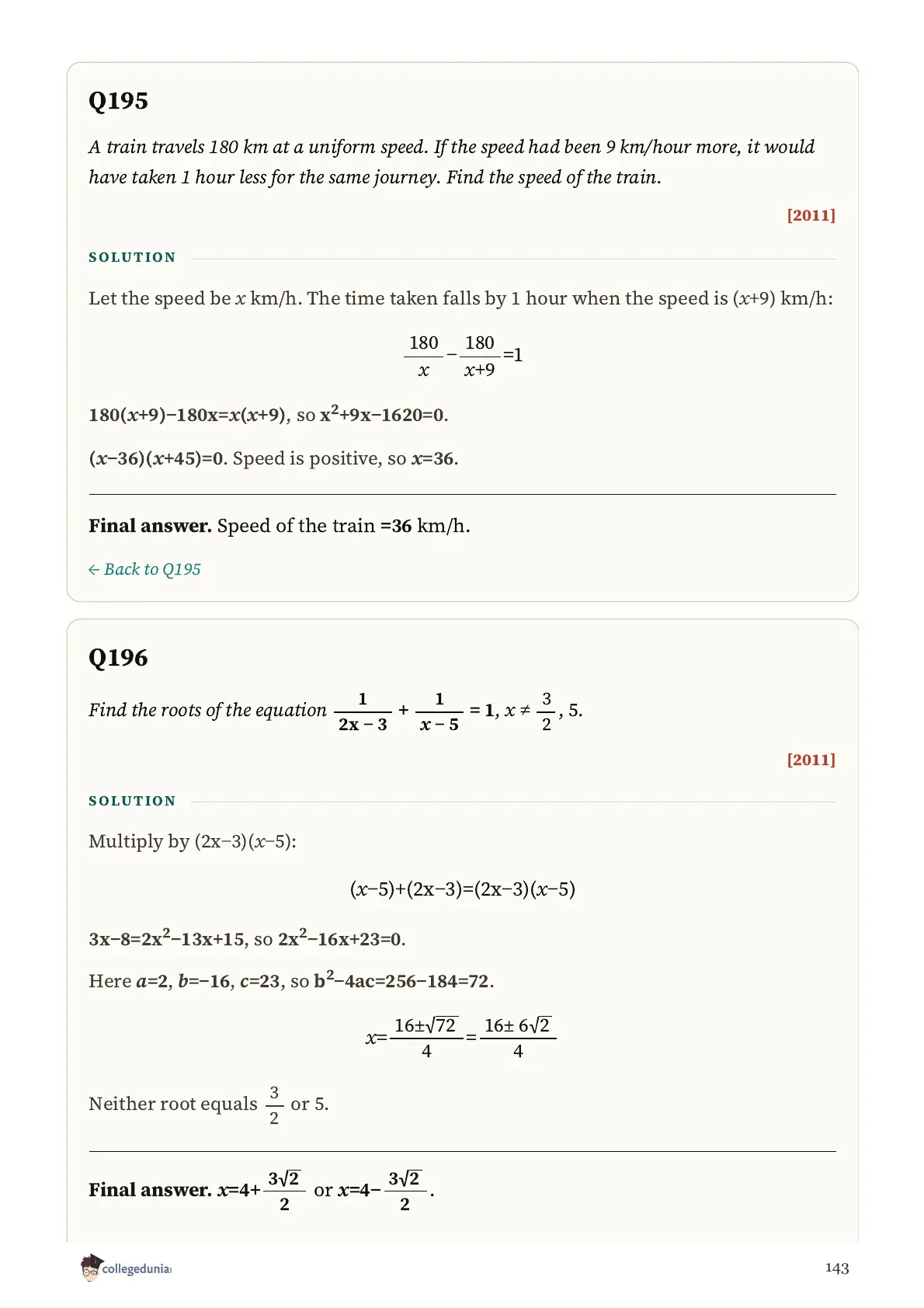
- Forgetting the excluded values in a fractional equation such as 1/(x + 4) - 1/(x - 7) = 11/30, where x cannot be -4 or 7.
- Leaving out the bracket in the formula and dropping the sign of -b.
Using the Answer Key and Solutions
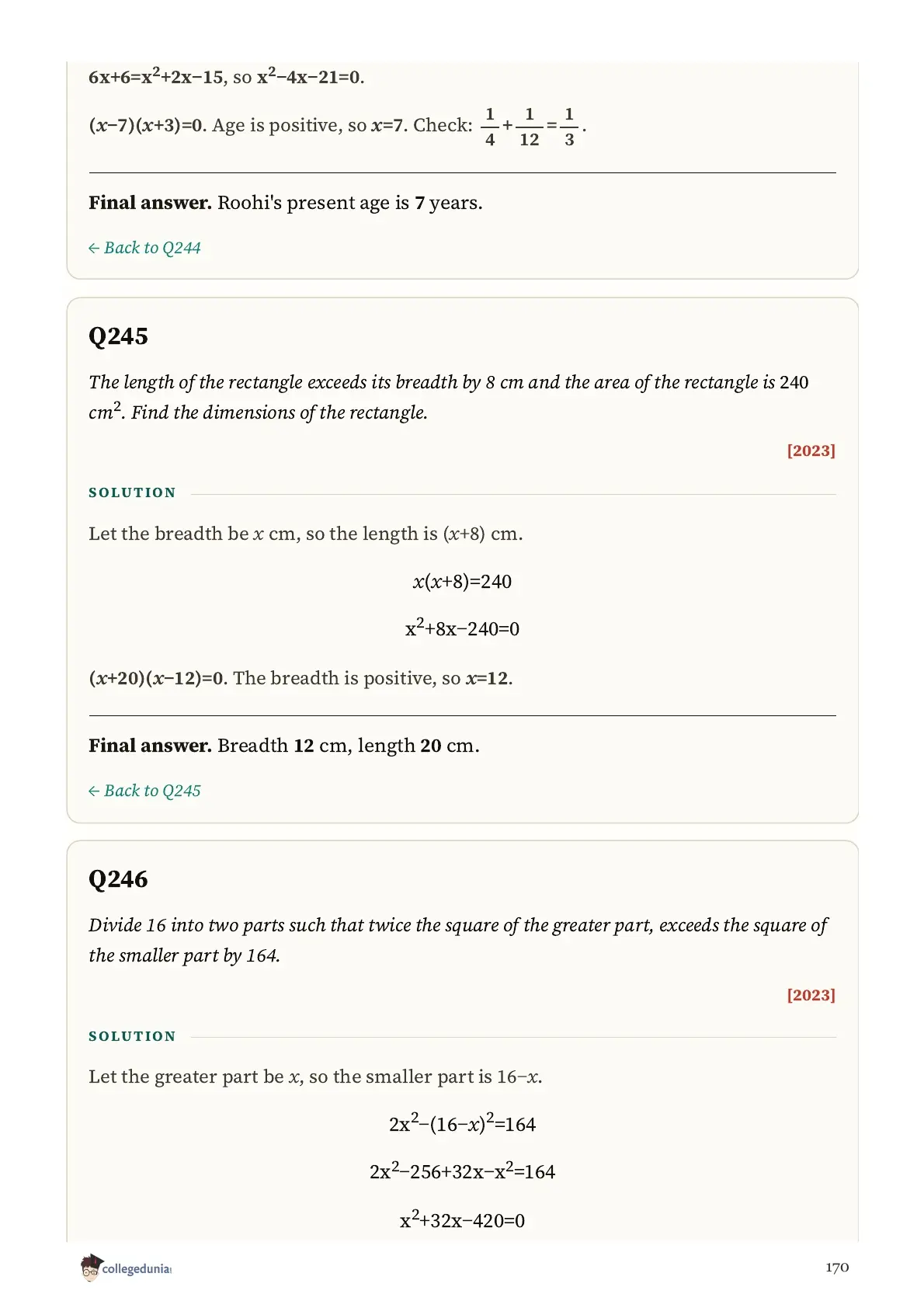
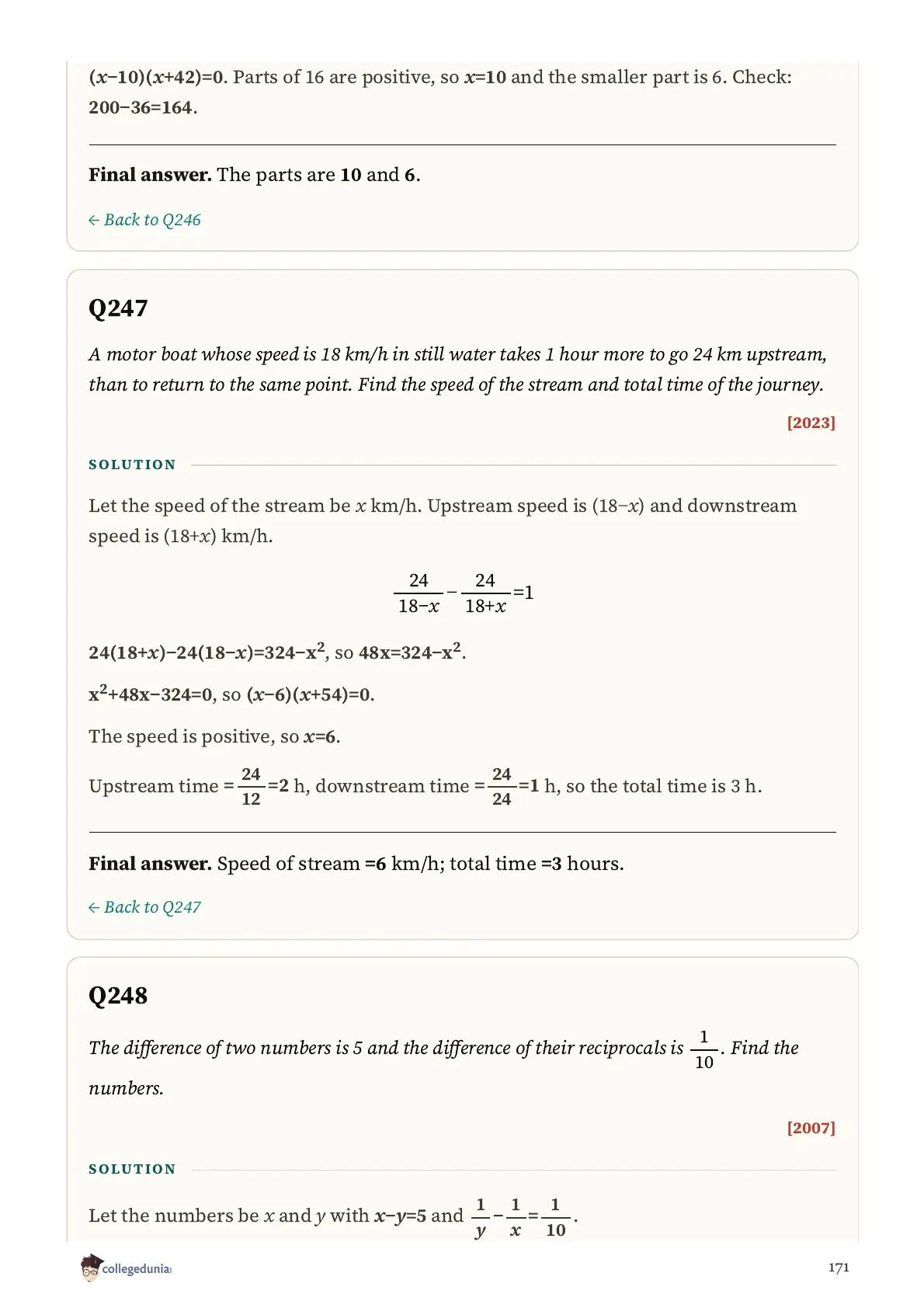
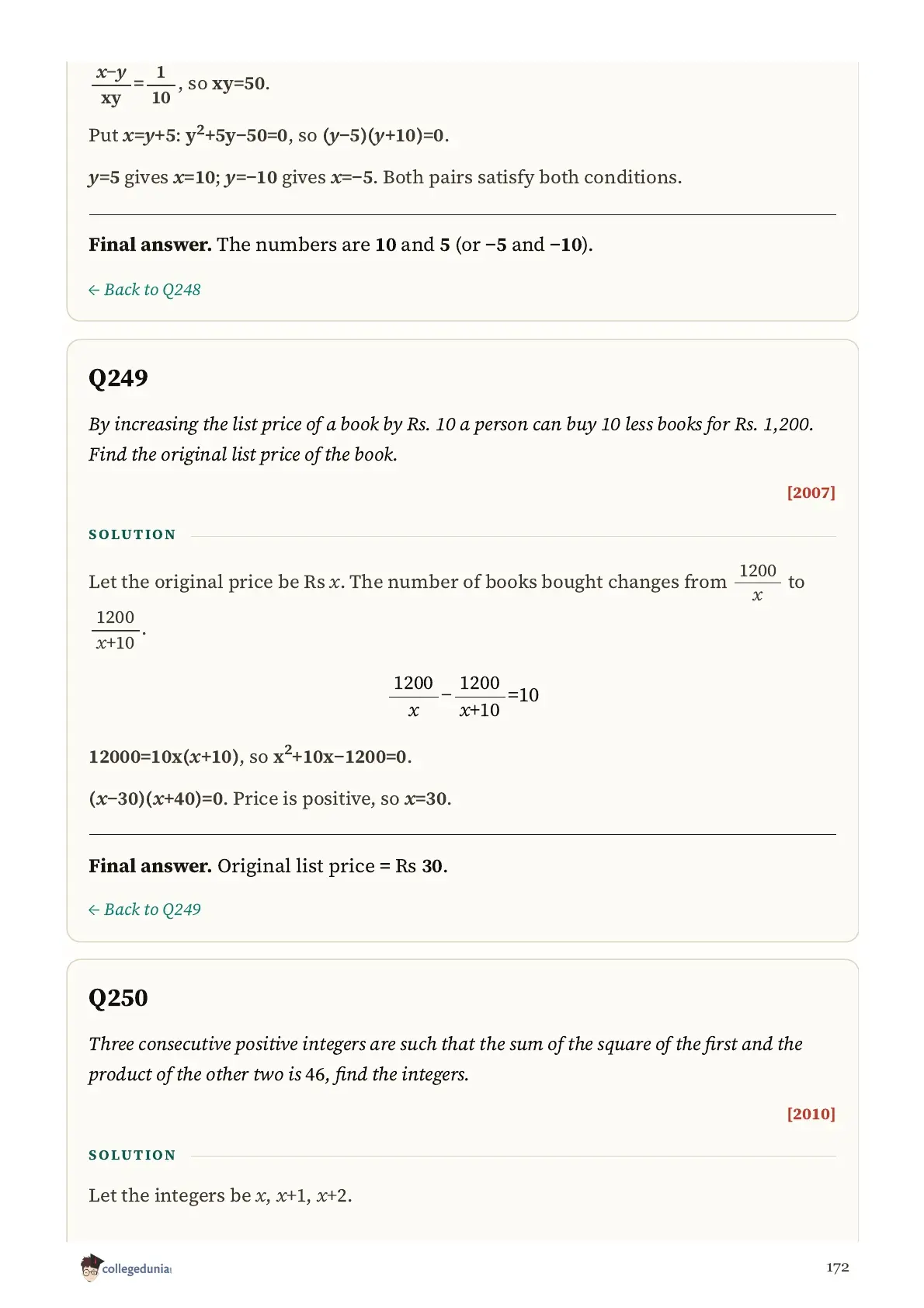
The PDF is 178 pages and free to download. Each section is sorted newest year first, the Answer Key lists the 45 MCQs at a glance, and each question links to its worked solution and back. Attempt a question yourself first, check the key, then read the solution. The solutions are written by Collegedunia's Maths experts and are not official CBSE marking schemes.
Class 10 Maths PYQs by Chapter
| Unit | PYQ Page |
|---|---|
| Number Systems | Real Numbers Class 10 Maths PYQ |
| Algebra | Polynomials Class 10 Maths PYQ |
| Algebra | Pair of Linear Equations in Two Variables Class 10 Maths PYQ |
| Algebra | Quadratic Equations Class 10 Maths PYQ |
| Algebra | Arithmetic Progressions Class 10 Maths PYQ |
| Geometry | Triangles Class 10 Maths PYQ |
| Coordinate Geometry | Coordinate Geometry Class 10 Maths PYQ |
| Trigonometry | Introduction to Trigonometry Class 10 Maths PYQ |
| Trigonometry | Some Applications of Trigonometry Class 10 Maths PYQ |
| Geometry | Circles Class 10 Maths PYQ |
| Mensuration | Areas Related to Circles Class 10 Maths PYQ |
| Mensuration | Surface Areas and Volumes Class 10 Maths PYQ |
| Statistics and Probability | Statistics Class 10 Maths PYQ |
| Statistics and Probability | Probability Class 10 Maths PYQ |
Quadratic Equations Class 10 Maths PYQ FAQs
Ques. How many questions are in the Quadratic Equations Class 10 Maths PYQ PDF?
Ans. The PDF has 259 questions from the 2003 to 2026 board papers: 66 at 1 mark, 41 at 2 marks, 48 at 3 marks, 51 at 4 marks, 43 at 5 marks and 10 at 6 marks.
Ques. Does this PYQ PDF include solutions, or only the questions?
Ans. All 259 questions have a worked solution in the PDF. The 45 MCQs and assertion-reason items are also listed in the Answer Key before the solutions.
Ques. Are the solutions official?
Ans. No. They are written by Collegedunia's Maths experts, checked against the NCERT chapter with every calculation re-run. They are not an official CBSE marking scheme, so the board's wording of an answer may differ.
Ques. How many marks does Quadratic Equations carry in the Class 10 Maths paper?
Ans. CBSE publishes marks per unit, not per chapter. Quadratic Equations is in the unit Algebra, which prep sites report at 20 of the 80 theory marks for 2026-27. That figure is unofficial, so check cbseacademic.nic.in for the current curriculum.
Ques. What kind of questions are asked from Quadratic Equations?
Ans. Word problems form the largest group: about 111 of the 259 questions end in a quadratic equation. Others ask you to solve for x, use the discriminant to judge the nature of roots, or find a missing value such as k.
Ques. Which years does the set cover?
Ans. The questions come from 23 board years between 2003 and 2026, with no questions from 2021. 2025 has the most questions (41), followed by 2023 (31) and 2024 (24).



Comments