




Download the Class 11 Chemistry Chapter 4 Chemical Bonding and Molecular Structure NCERT Exemplar Book PDF, the official 2026-27 NCERT Exemplar problems for this chapter. The Exemplar gives higher-order MCQs, assertion-reason and short and long answer questions that go beyond the textbook, and it is a favourite source for JEE Main, JEE Advanced and NEET.
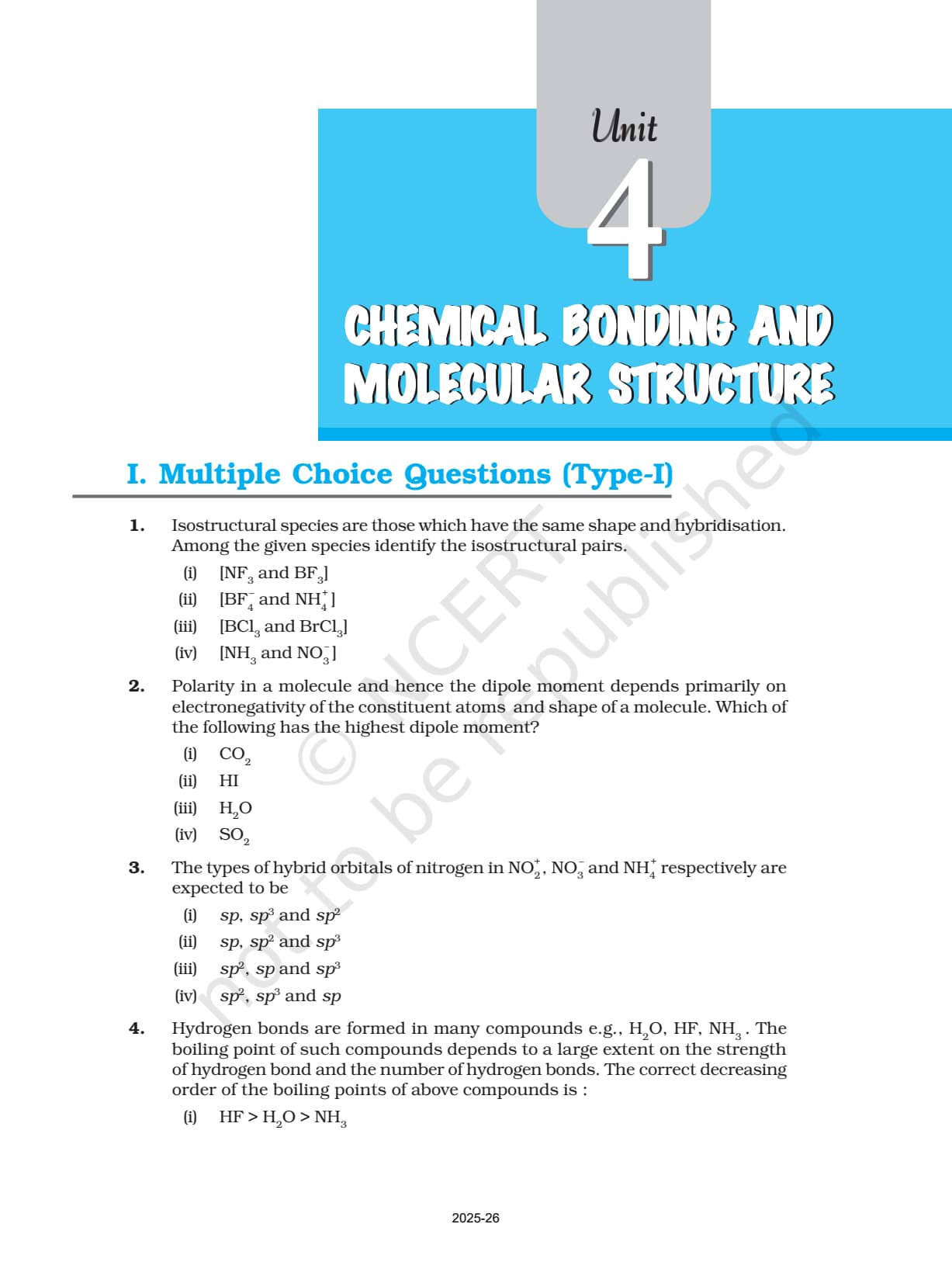
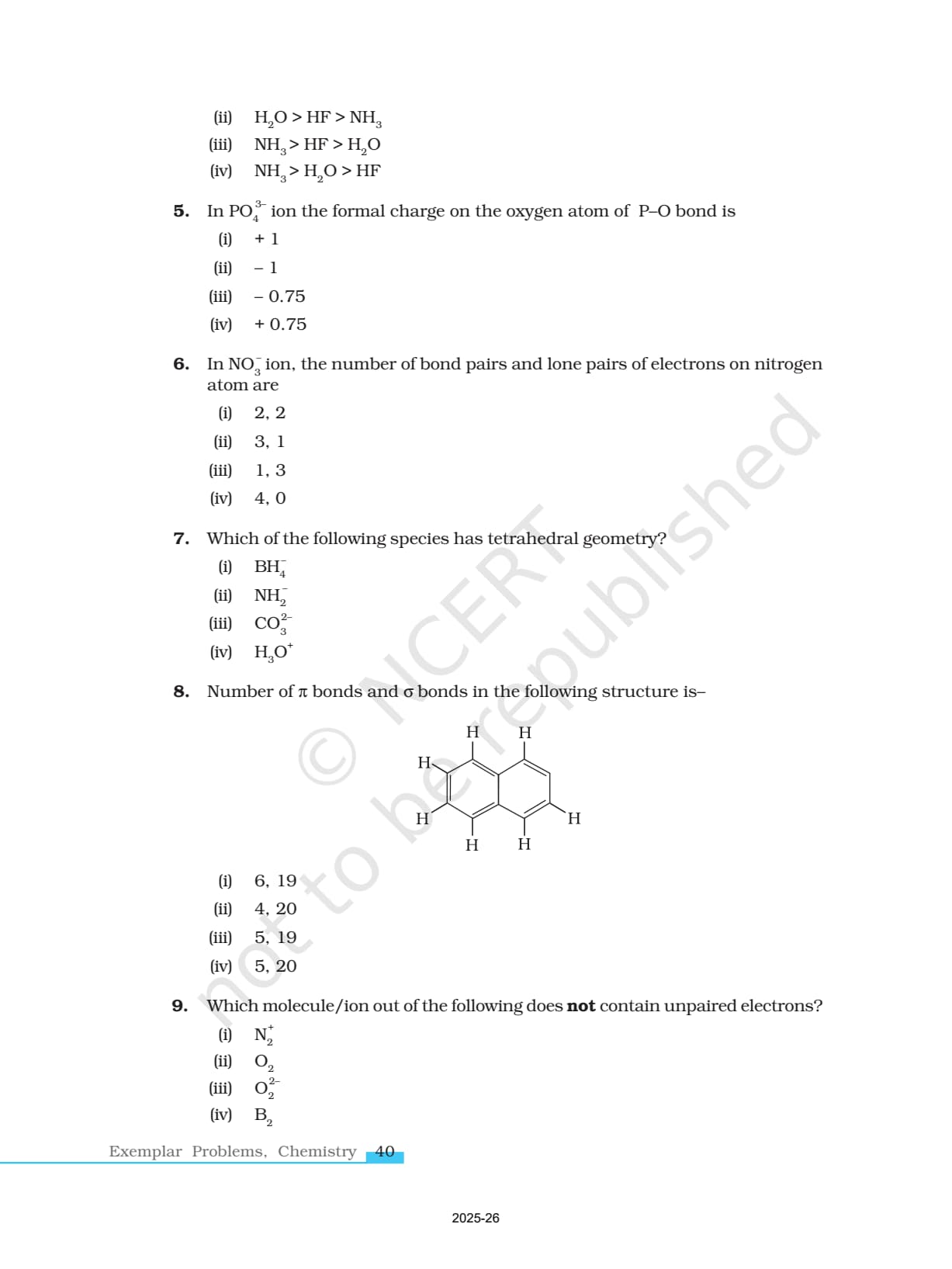
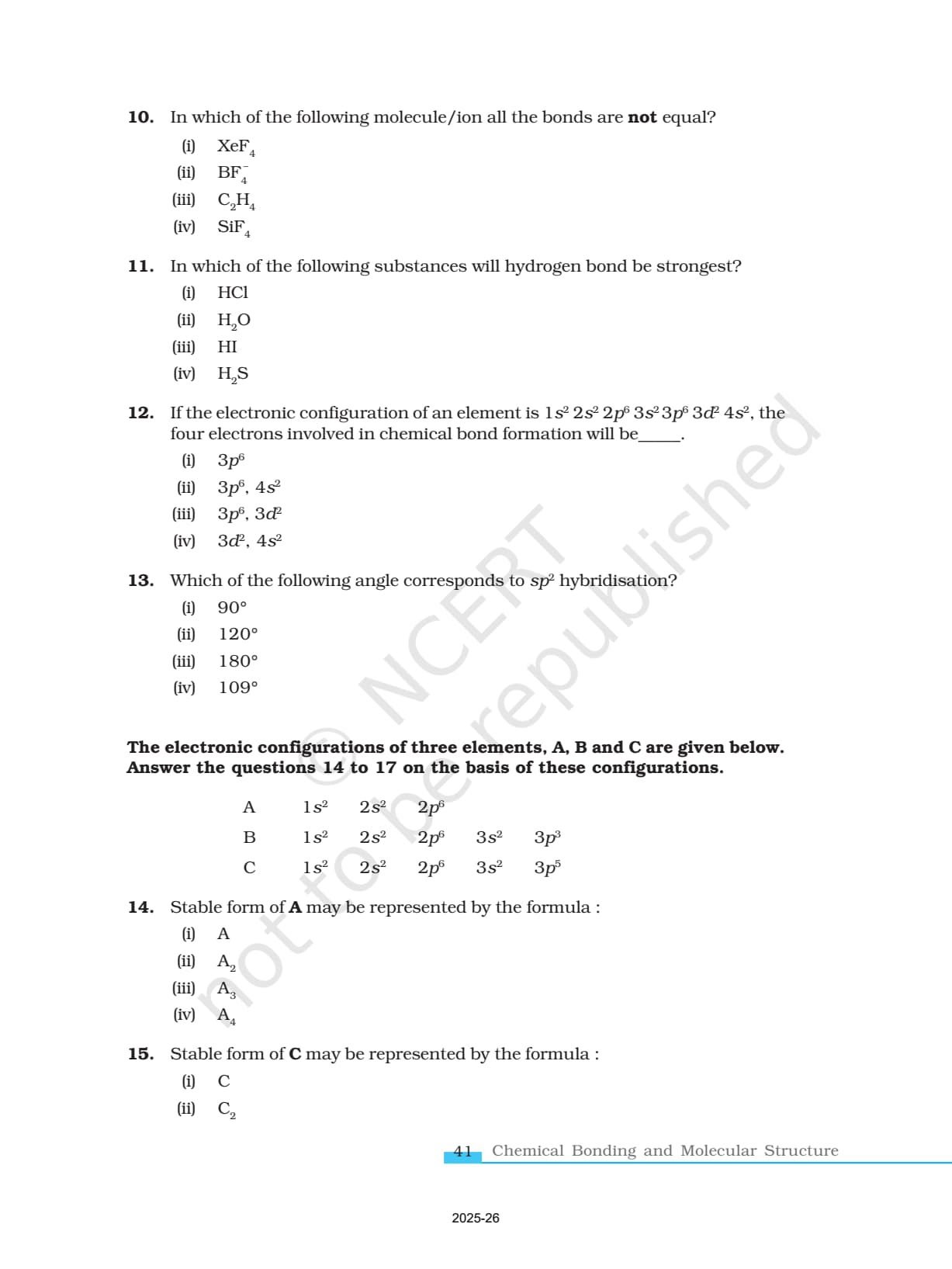
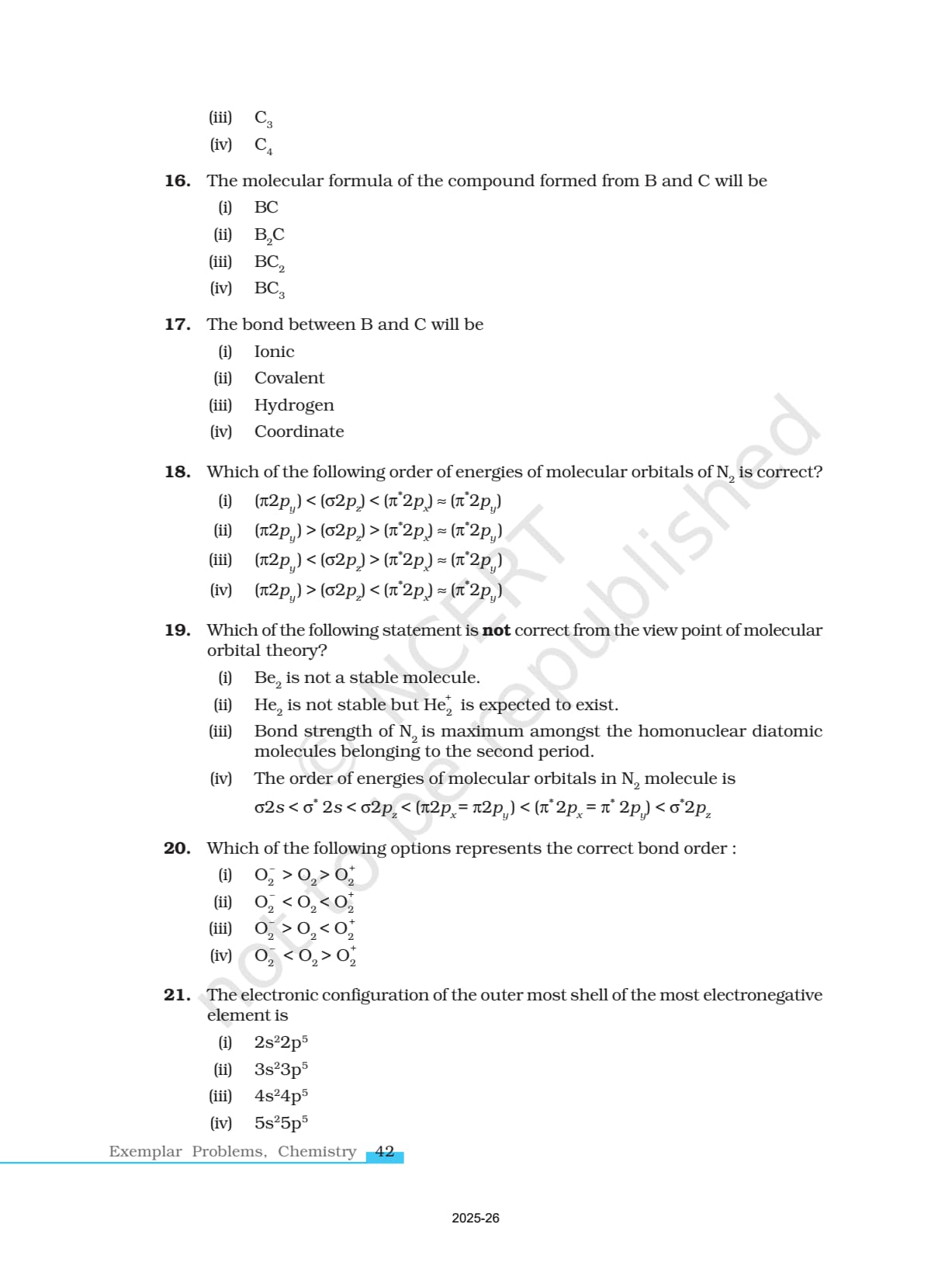
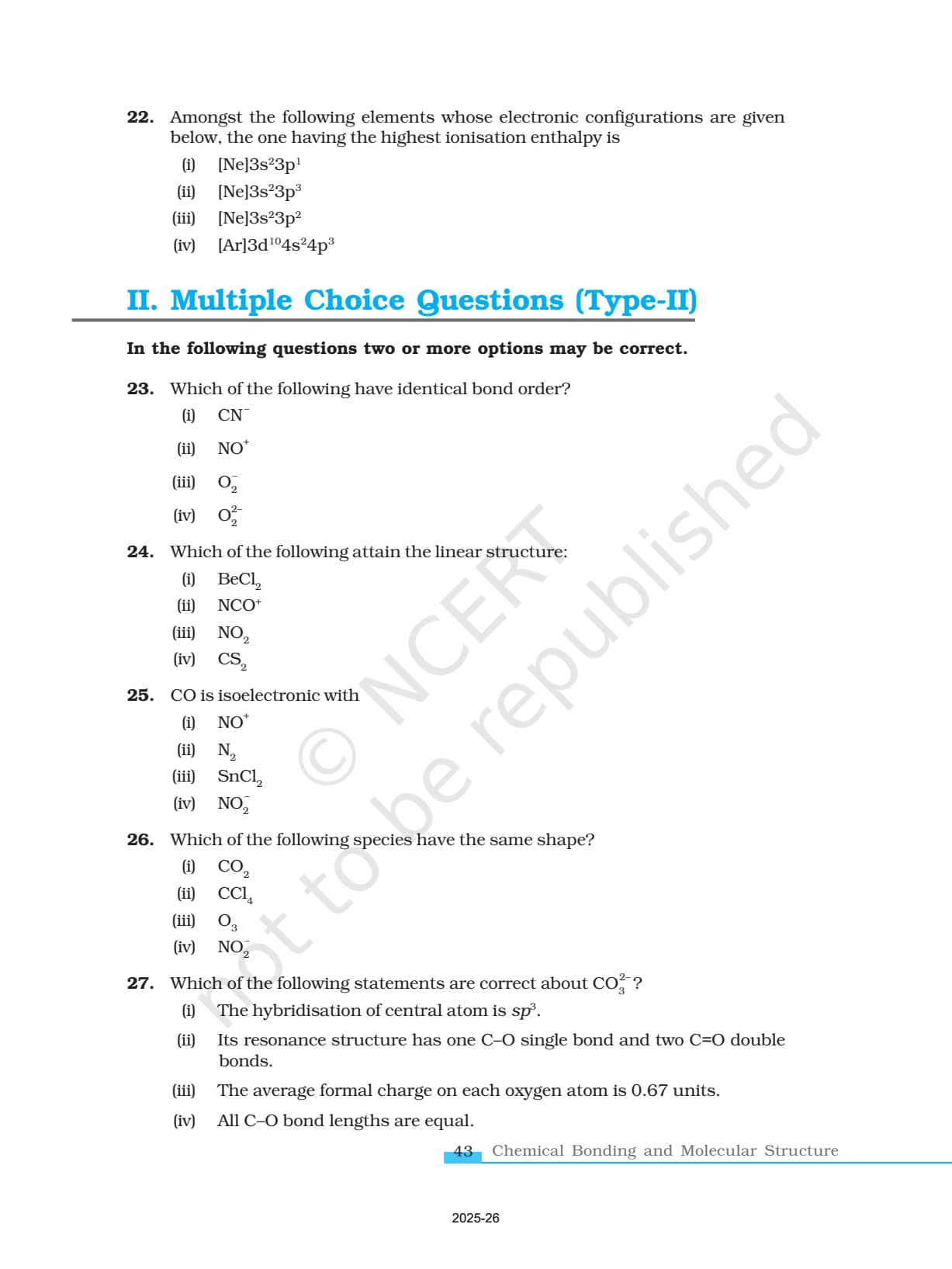
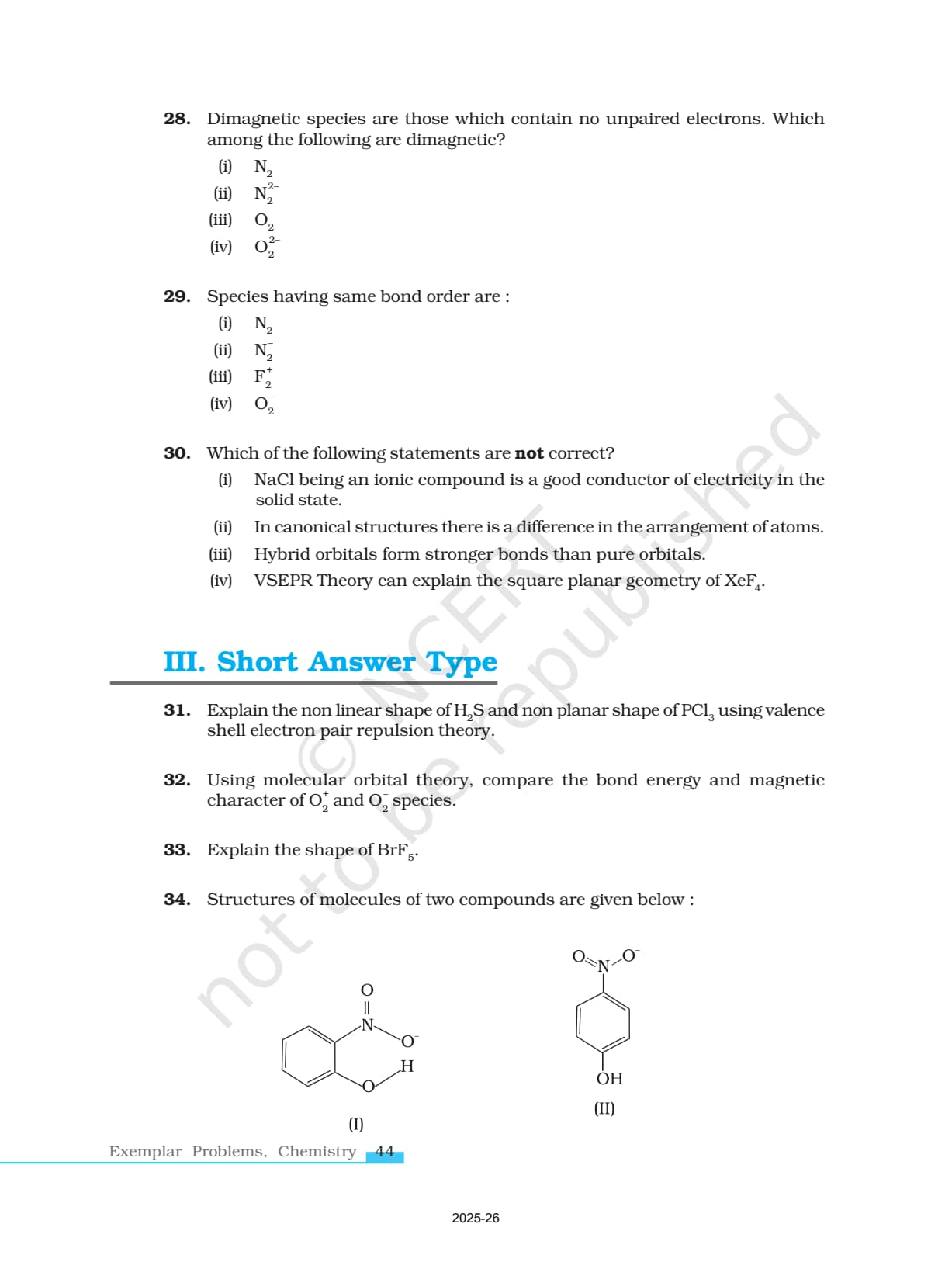
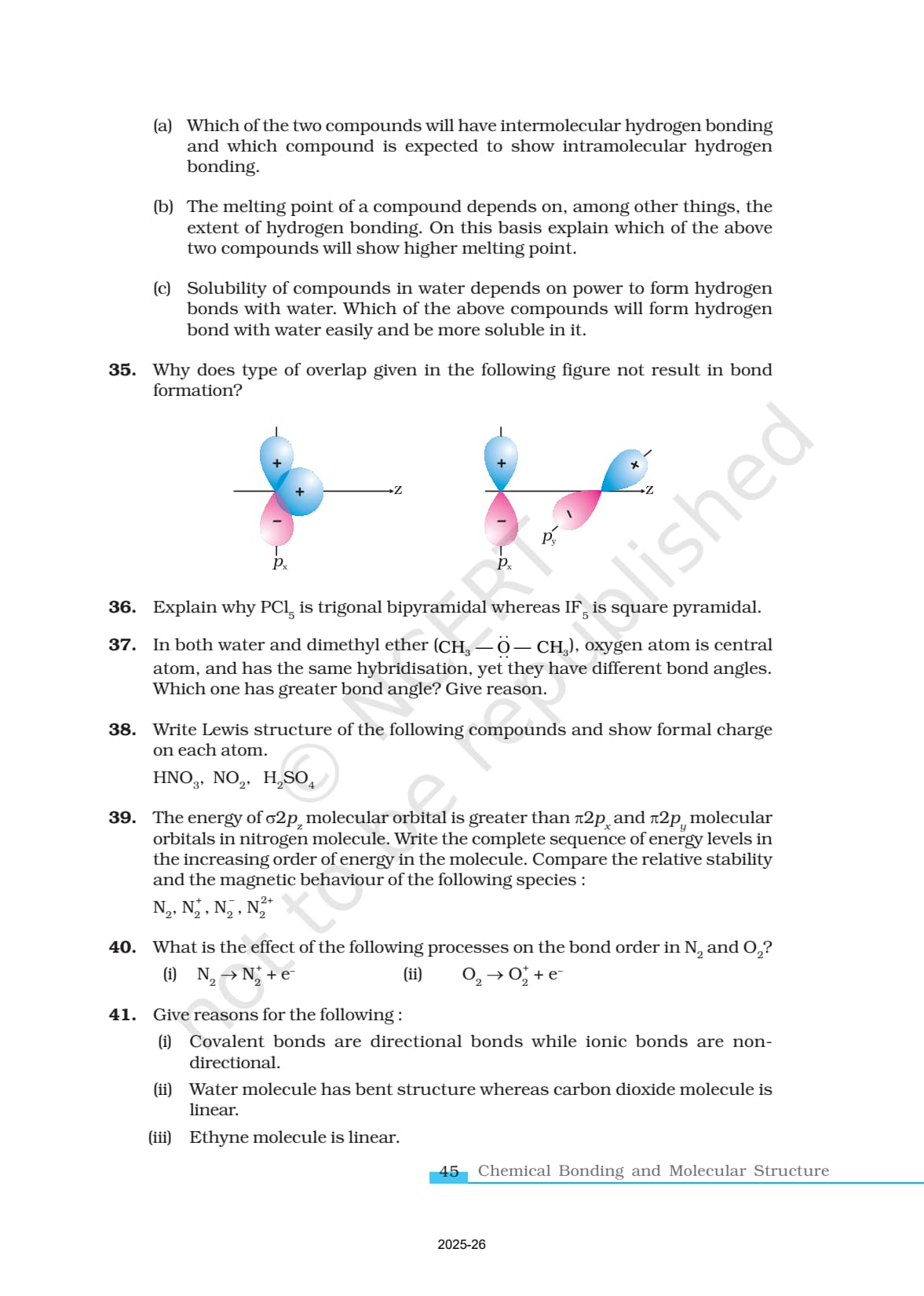
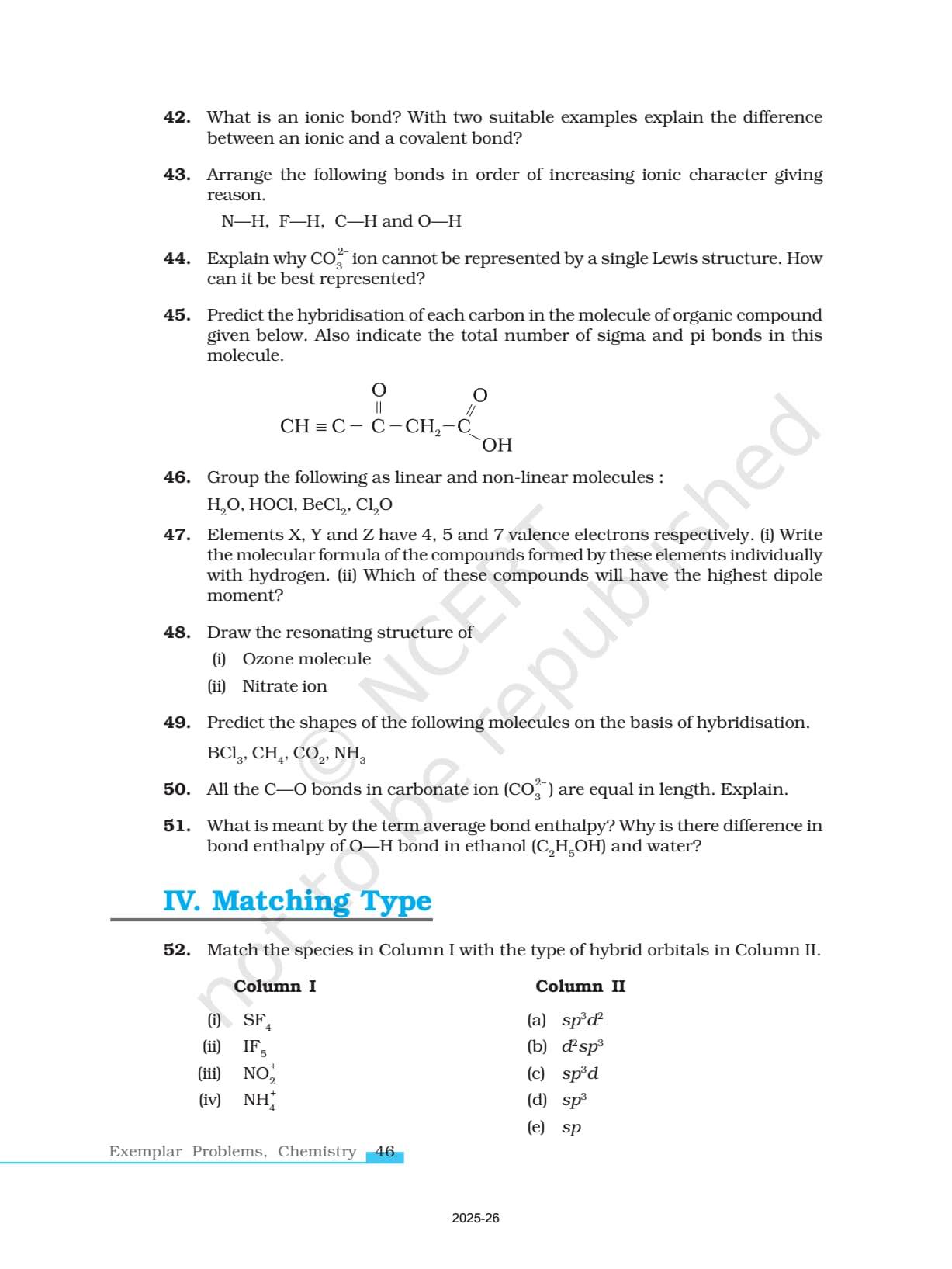
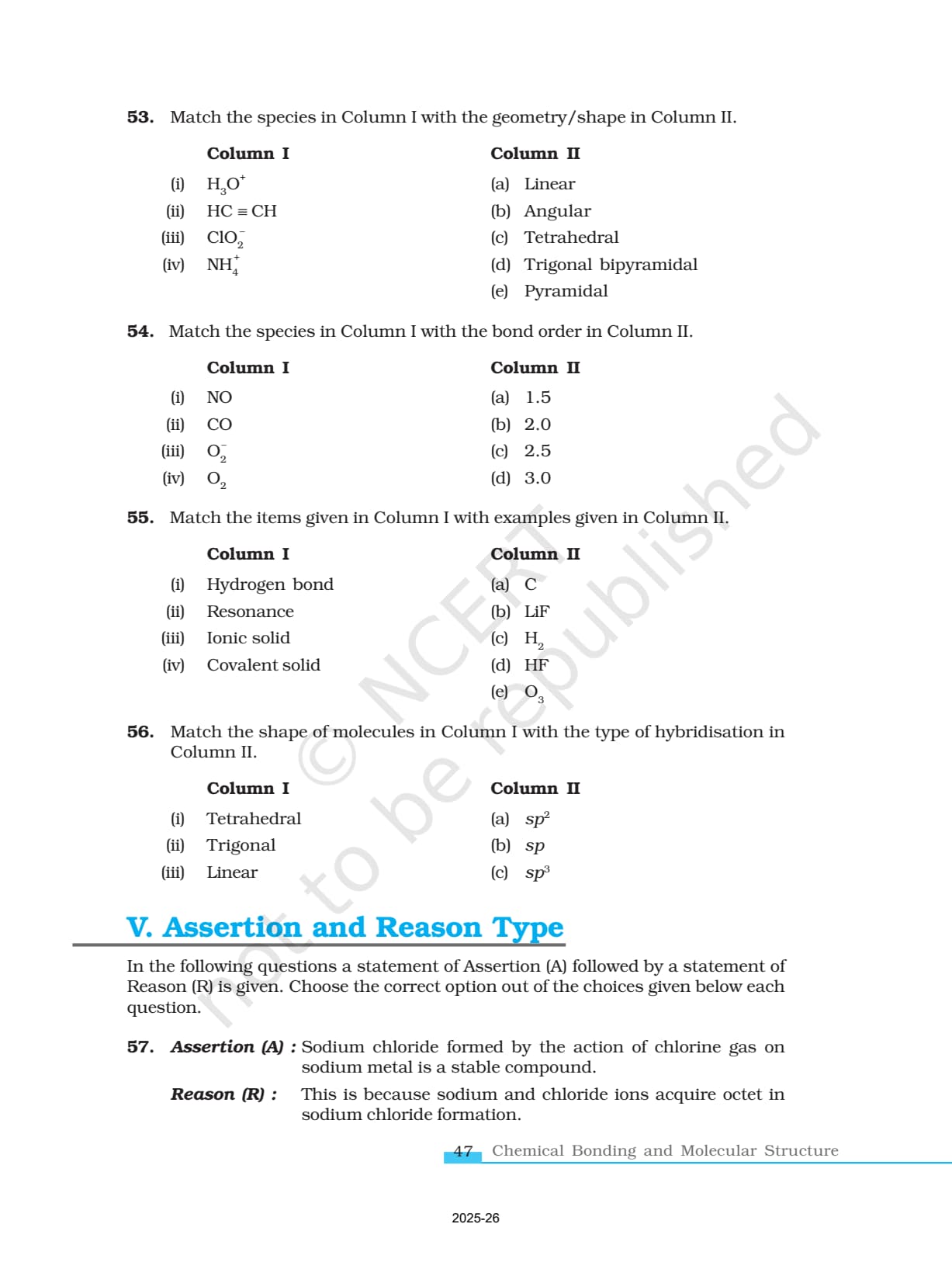
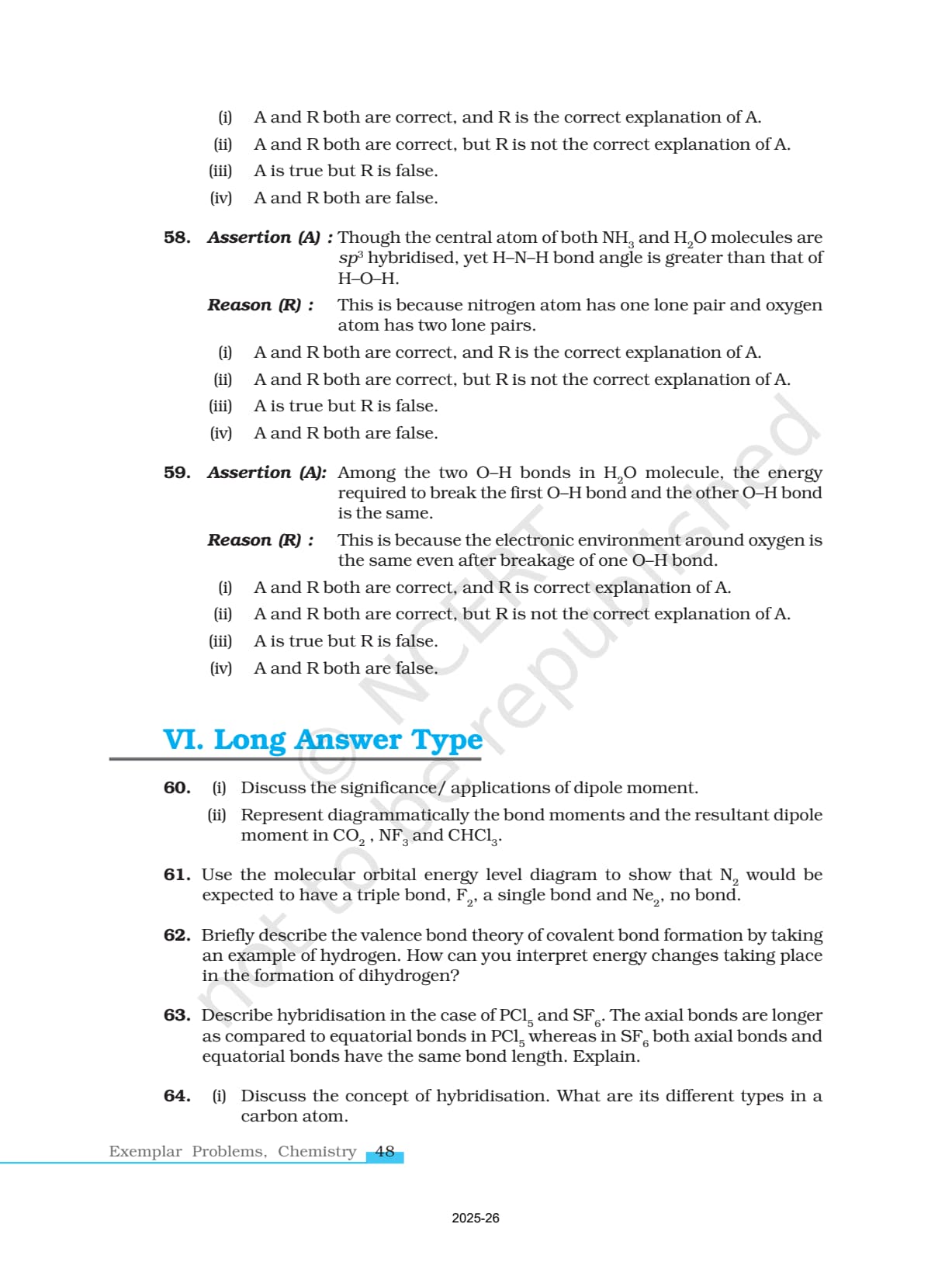
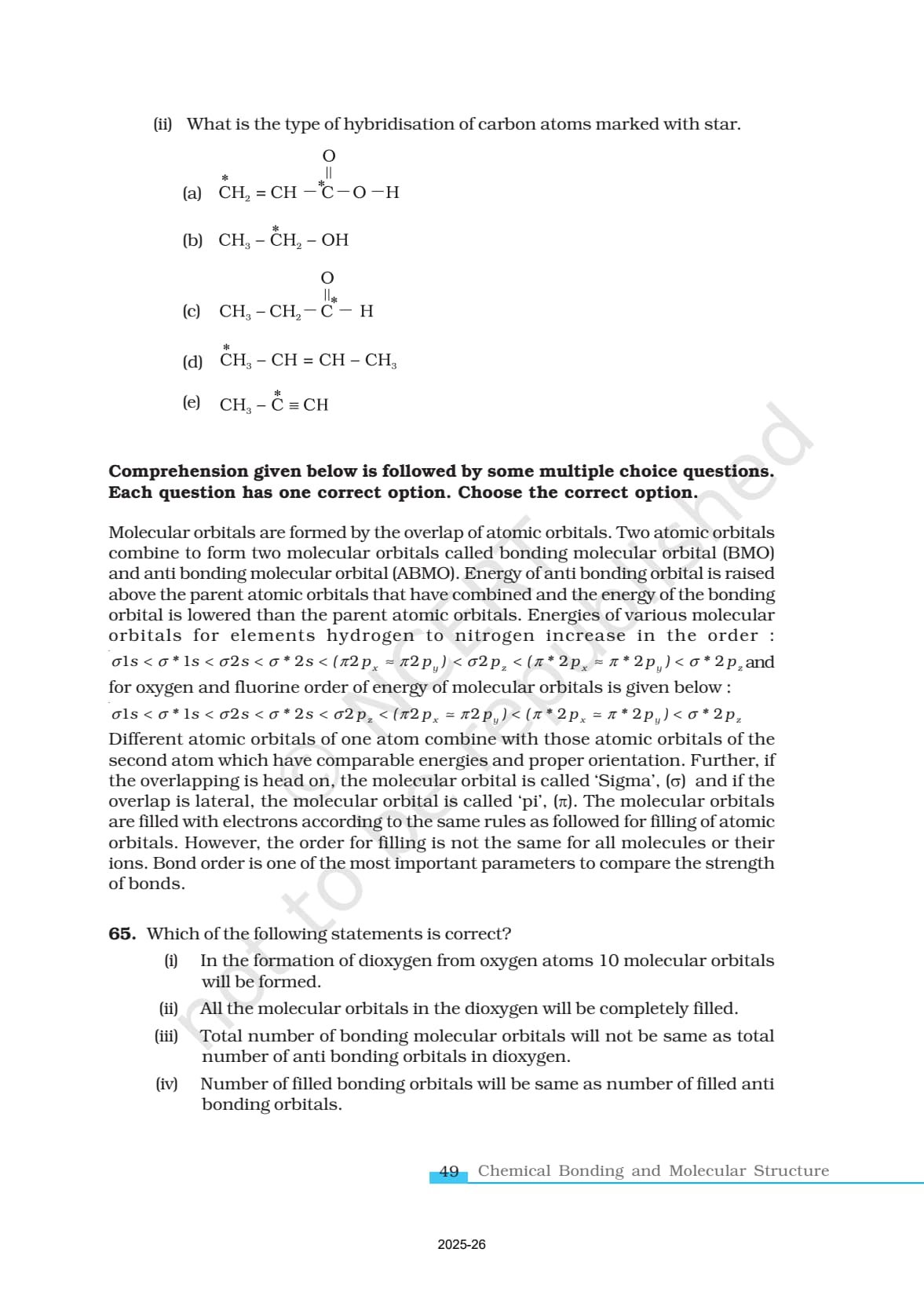
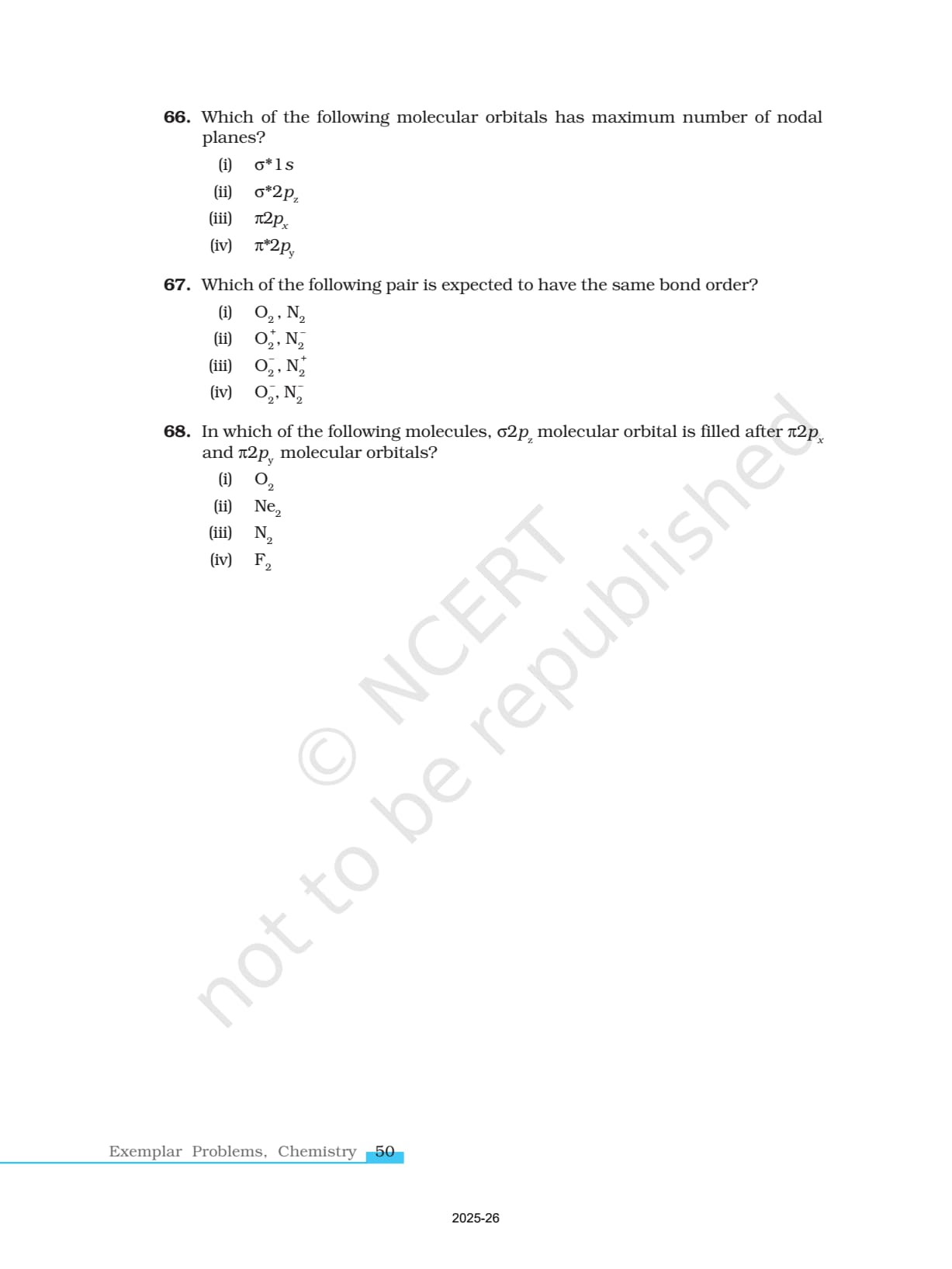
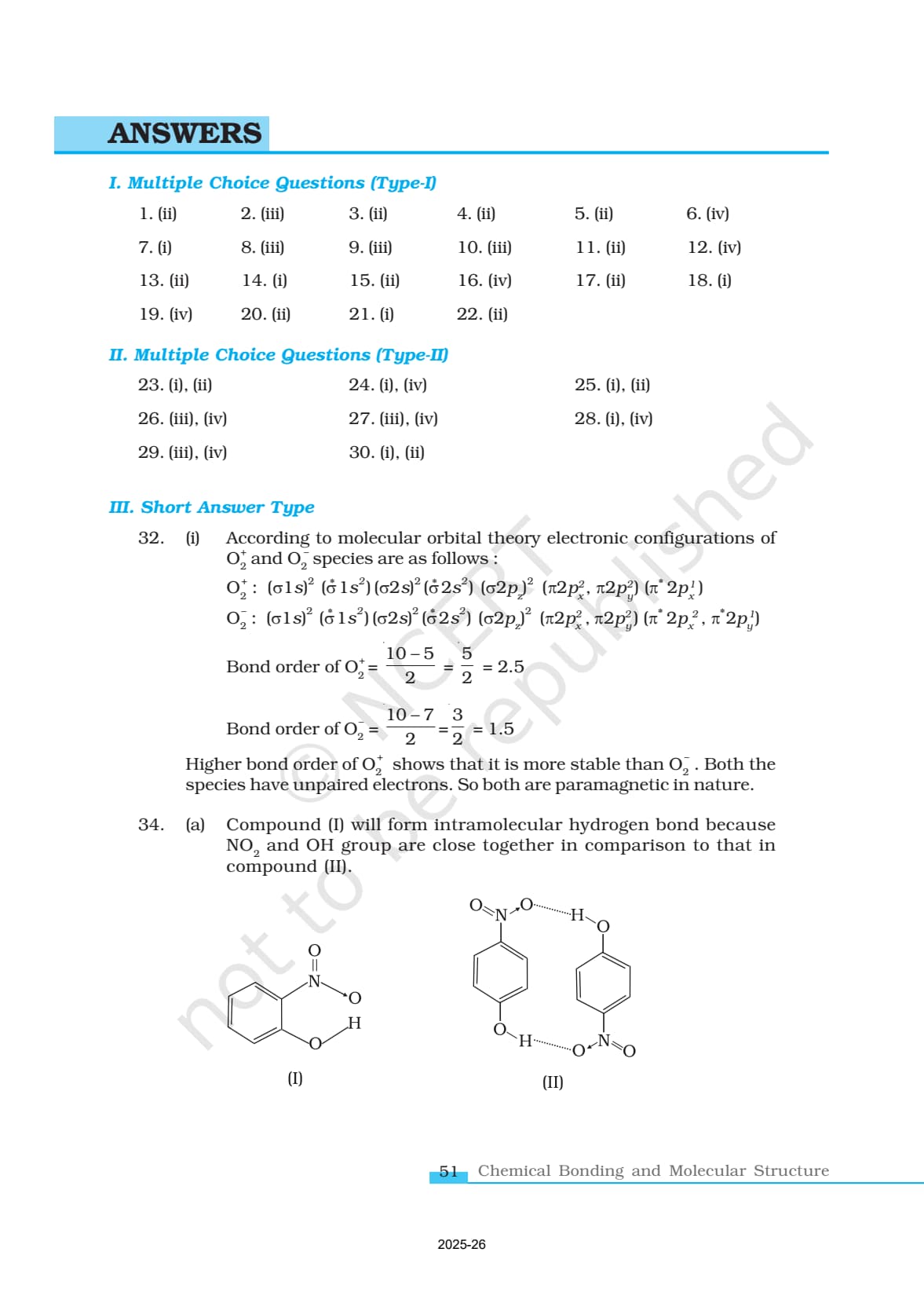
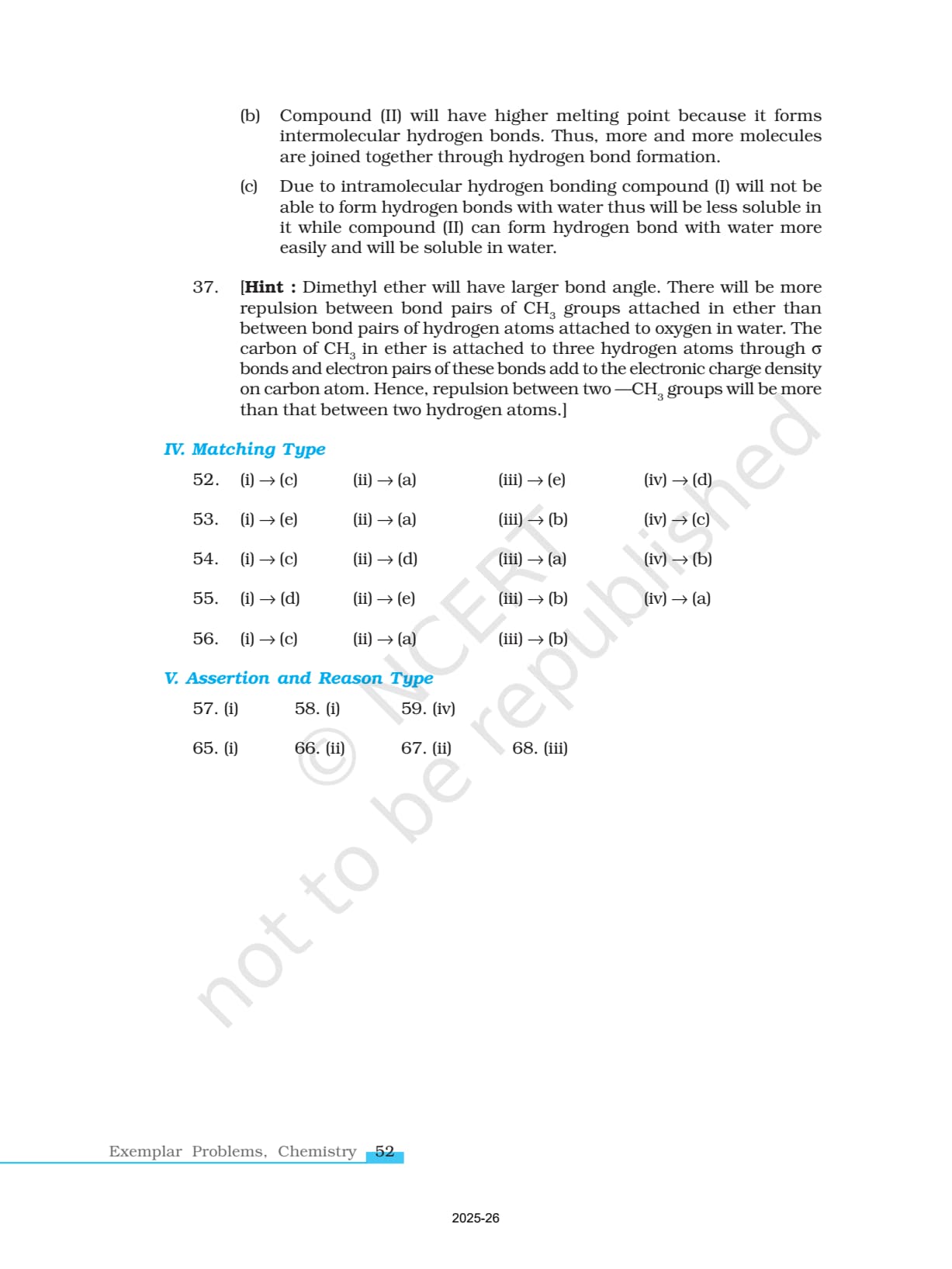
- Official NCERT Exemplar 2026-27 problems for this chapter.
- Includes MCQs, assertion-reason, and short and long answer questions.
- Ideal for extra practice after the NCERT textbook and back exercises.
This Class 11 Chemistry Chapter 4 Chemical Bonding and Molecular Structure NCERT Exemplar Book PDF is the official 2026-27 NCERT Exemplar, checked against the latest edition.
What the Chemical Bonding and Molecular Structure Exemplar Covers
The Exemplar tests the same chapter as the textbook but at a higher level of difficulty. Its questions probe common traps in hybridisation, VSEPR shapes and molecular orbital theory.
| Question Type | What it tests |
|---|---|
| Multiple Choice (MCQ) | Quick recall of hybridisation, bond order and molecular geometry |
| Assertion-Reason | Whether a bonding statement and its reason are both correct and linked |
| Very Short and Short Answer | One-step questions on dipole moment, bond angle or Lewis structure |
| Long Answer | Multi-step problems using VSEPR theory and molecular orbital diagrams |
Why Practise the Exemplar for This Chapter
The Exemplar bridges the gap between the NCERT textbook and the level of a competitive exam. For chemical bonding and molecular structure, its questions are close to the style asked in JEE and NEET.
- Higher-order questions that the textbook exercises do not cover.
- Assertion-reason sets that sharpen your grip on each bonding concept.
- Problems on hybridisation and molecular orbital theory at exam level.
How to Use the Exemplar for Chemical Bonding and Molecular Structure
Attempt the Exemplar only after you have finished the NCERT textbook chapter and its back exercises. Treat it as your second, harder pass over the chapter.
- Solve the MCQs first to test recall, then move to assertion-reason.
- Attempt each structure question fully before checking the Exemplar Solutions.
- Mark the questions you got wrong and redo them after two days.
- Keep the VSEPR shapes and MO diagrams handy while you practise.
Other Class 11 Chemistry Chemical Bonding and Molecular Structure Resources
Use the Exemplar with the textbook PDF, the solved answers and the formula sheet for the same chapter.
| Resource | Link |
|---|---|
| NCERT Book PDF | Chemical Bonding and Molecular Structure NCERT Book PDF |
| Exemplar Solutions | Chemical Bonding and Molecular Structure Exemplar Solutions |
| NCERT Solutions | Chemical Bonding and Molecular Structure NCERT Solutions |
| Formula Sheet | Chemical Bonding and Molecular Structure Formula Sheet |
FAQs on Class 11 Chemistry Chapter 4 NCERT Exemplar PDF
Chemical Bonding and Molecular Structure Exemplar PDF - Frequently Asked Questions
Ques. Is this the latest 2026-27 NCERT Exemplar for Class 11 Chemistry Chapter 4?
Ans. Yes. This is the official NCERT 2026-27 Exemplar for Class 11 Chemistry Chapter 4 Chemical Bonding and Molecular Structure, checked against the latest edition.
Ques. How is the Exemplar different from the NCERT textbook?
Ans. The NCERT textbook builds the concepts, while the Exemplar tests them with harder MCQs, assertion-reason sets and multi-step problems. The Exemplar is meant for practice after you finish the textbook.
Ques. Is the Class 11 Chemistry Exemplar useful for JEE and NEET?
Ans. Yes. The Exemplar for chemical bonding and molecular structure has higher-order and assertion-reason questions that are close to the JEE Main, JEE Advanced and NEET style, so it is strong extra practice.
Ques. Where can I download the Class 11 Chemistry Chapter 4 Exemplar PDF?
Ans. You can download the Class 11 Chemistry Chapter 4 Chemical Bonding and Molecular Structure NCERT Exemplar Book PDF free from the download card at the top of this page, in standard and HD quality.



Comments