




NCERT Exemplar Solutions for Class 11 Chemistry Chapter 4 Chemical Bonding and Molecular Structure solve all 68 questions from the Exemplar book. Every MCQ, Short Answer, Matching, Assertion and Reason and Long Answer problem is solved step by step in the free 309-page PDF, updated for the 2026-27 syllabus.
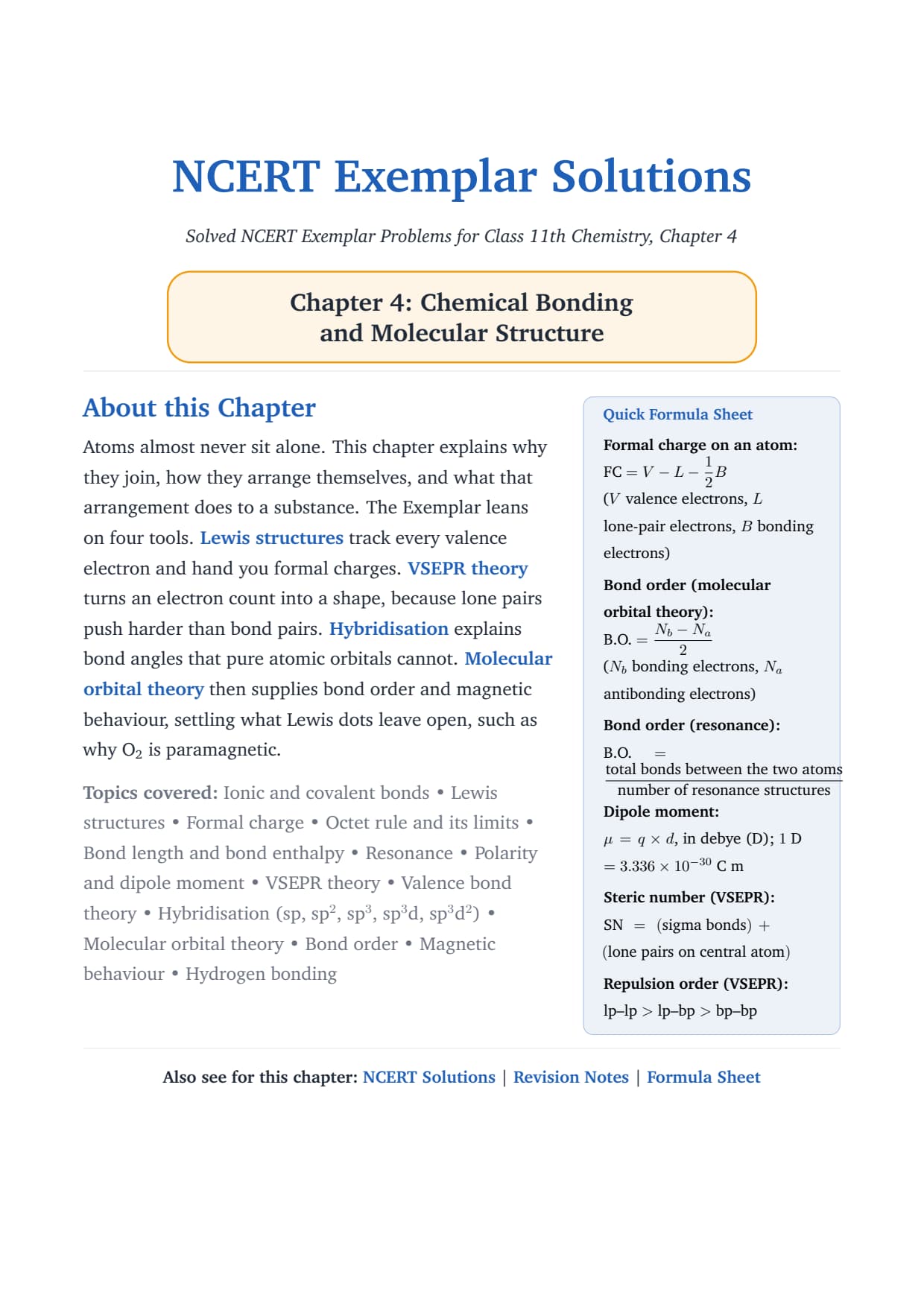
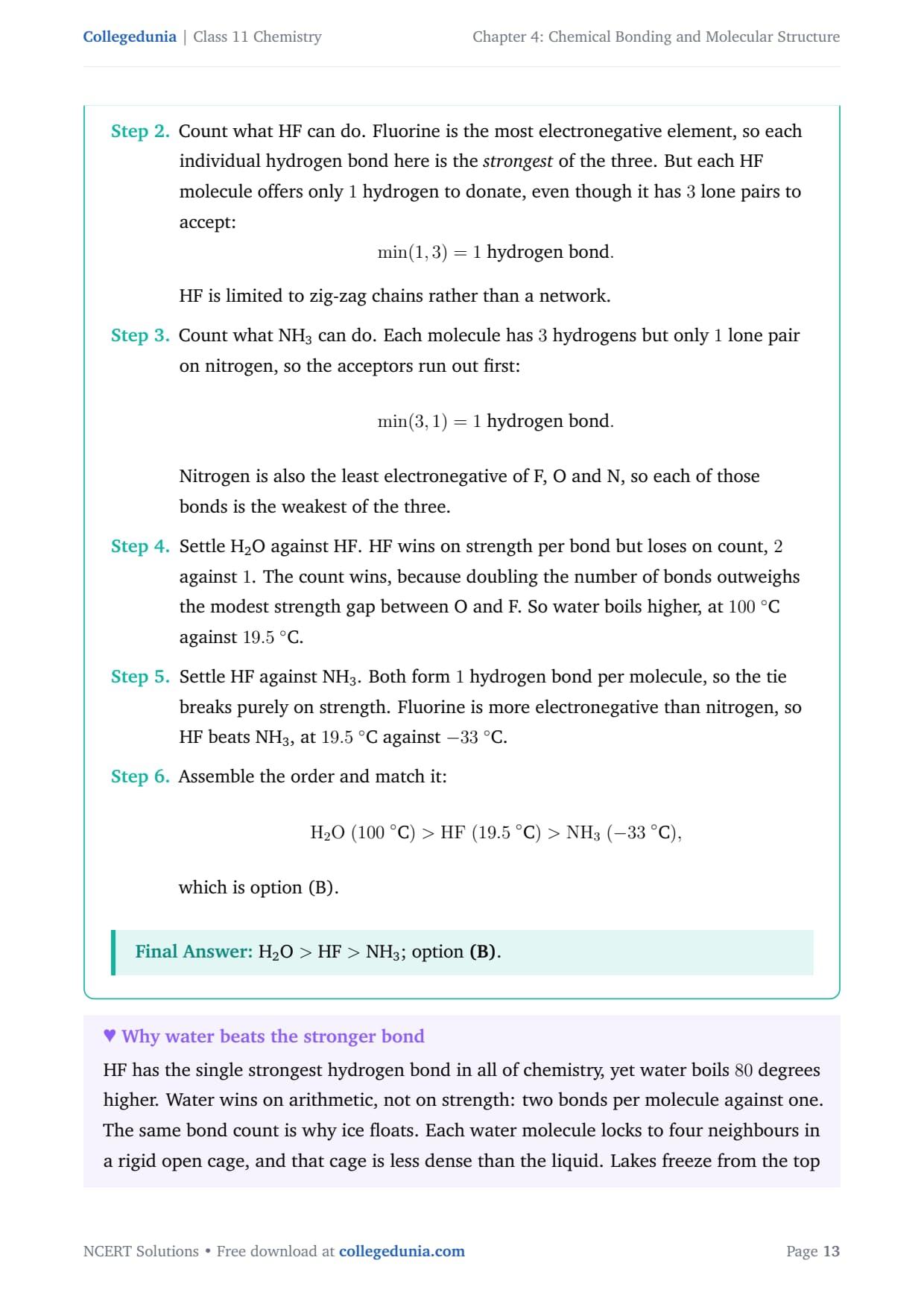
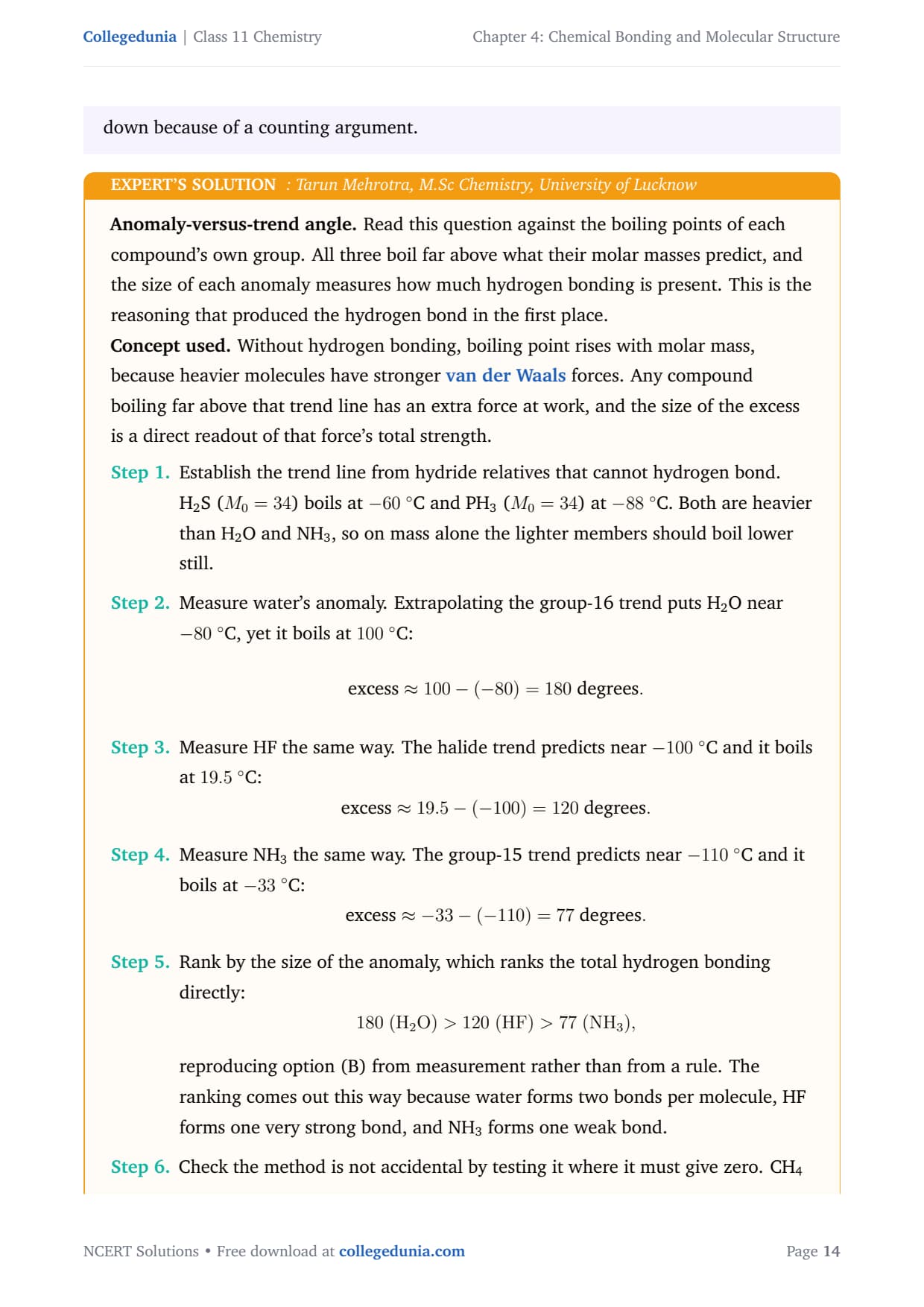
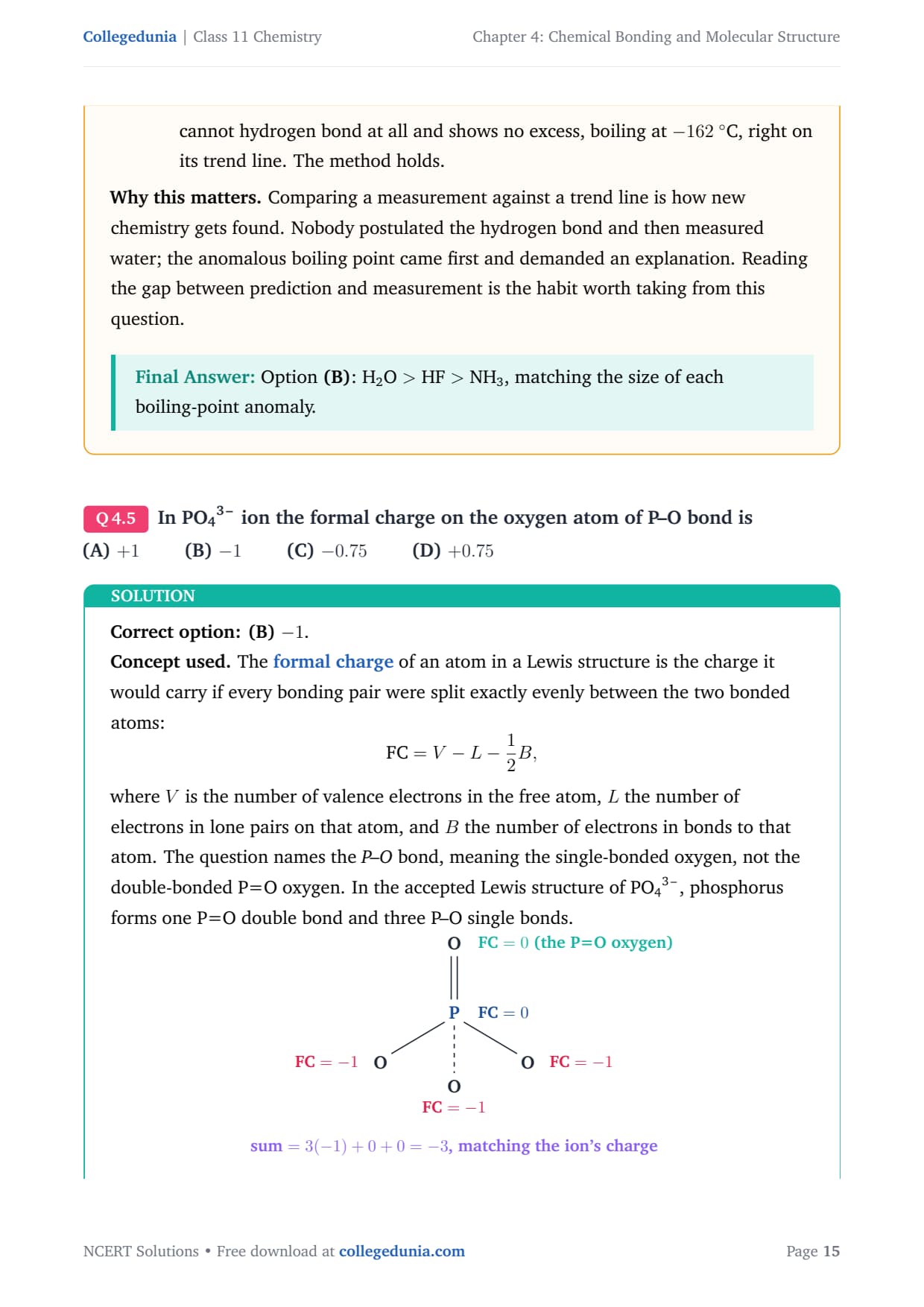
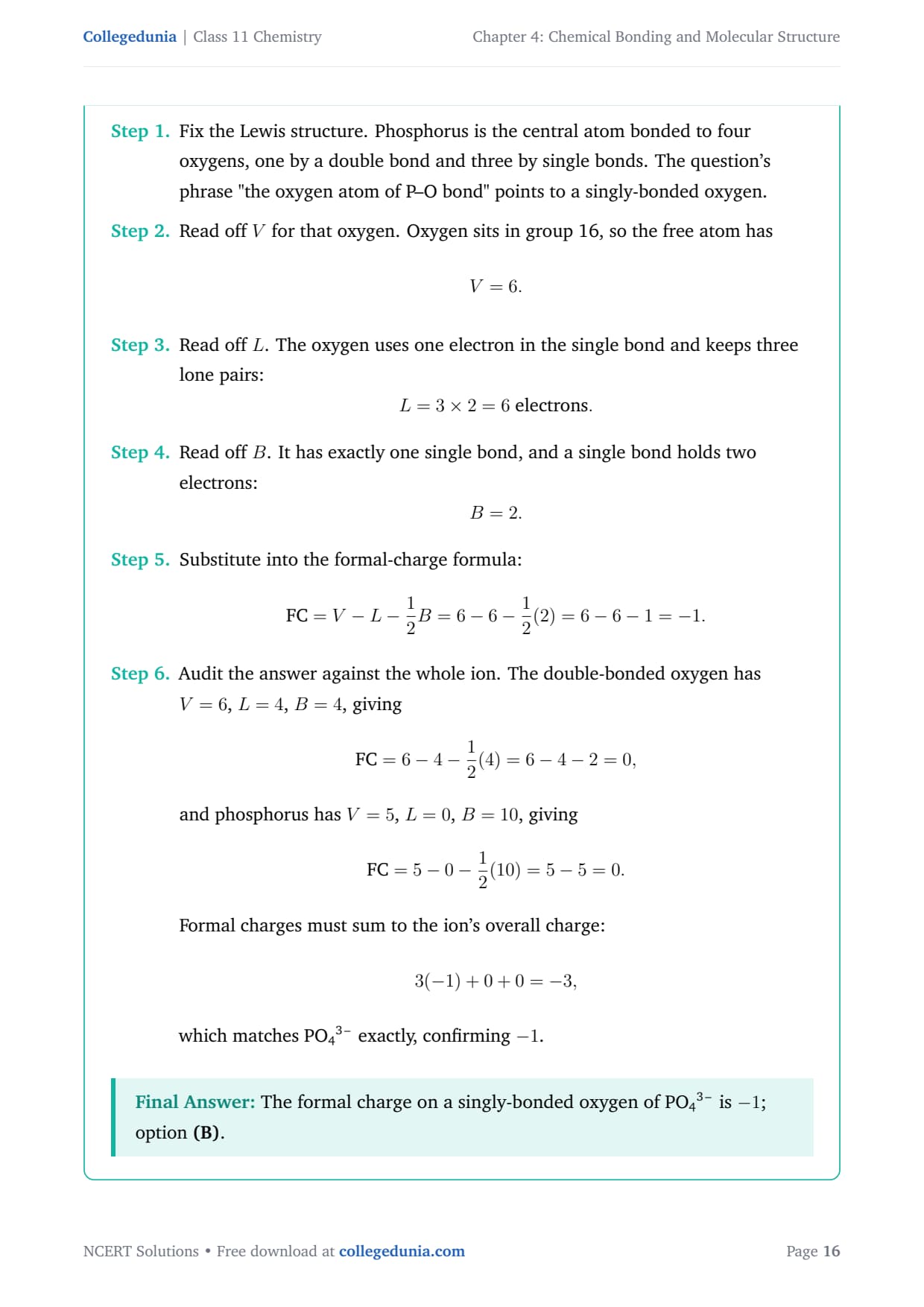
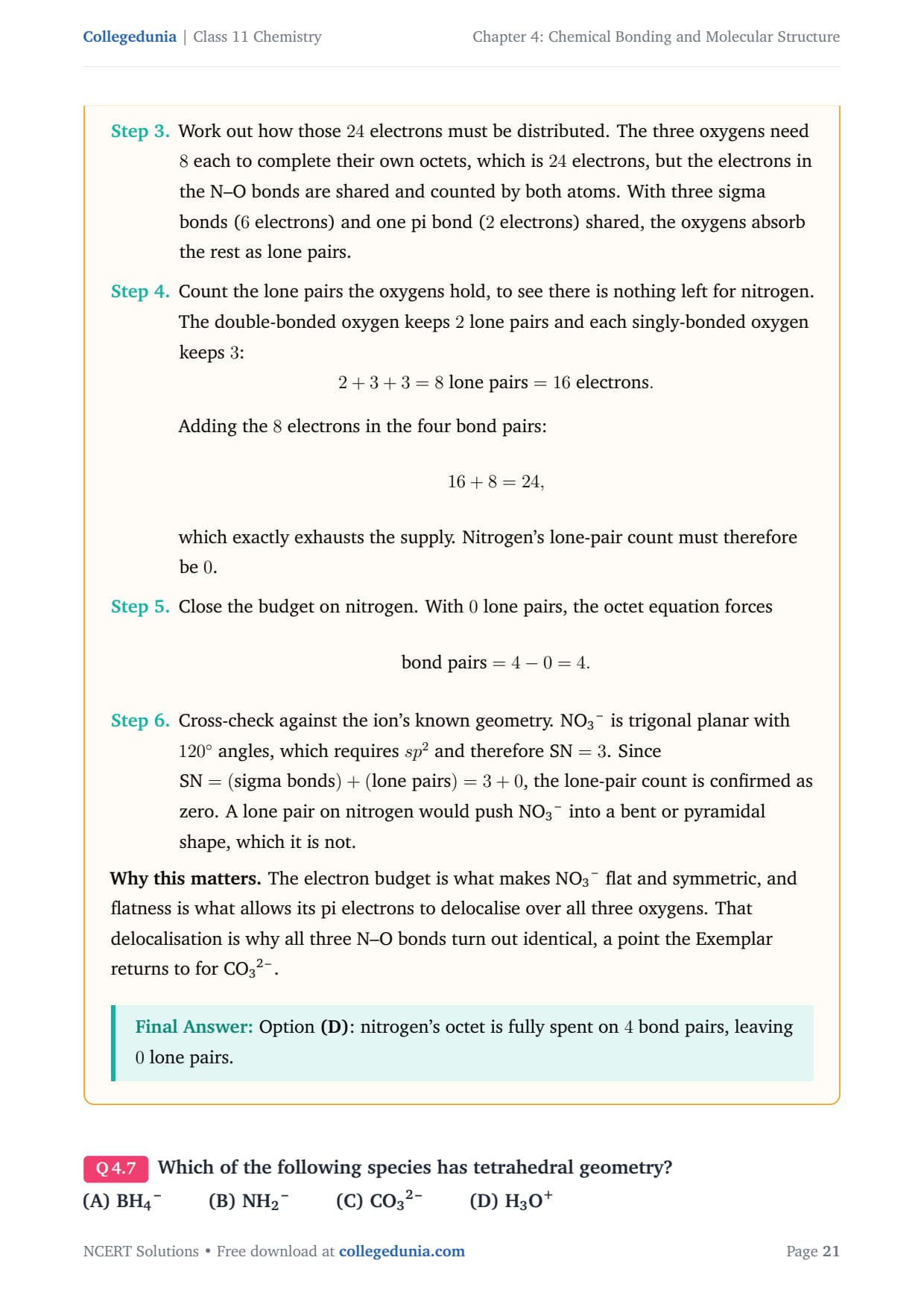
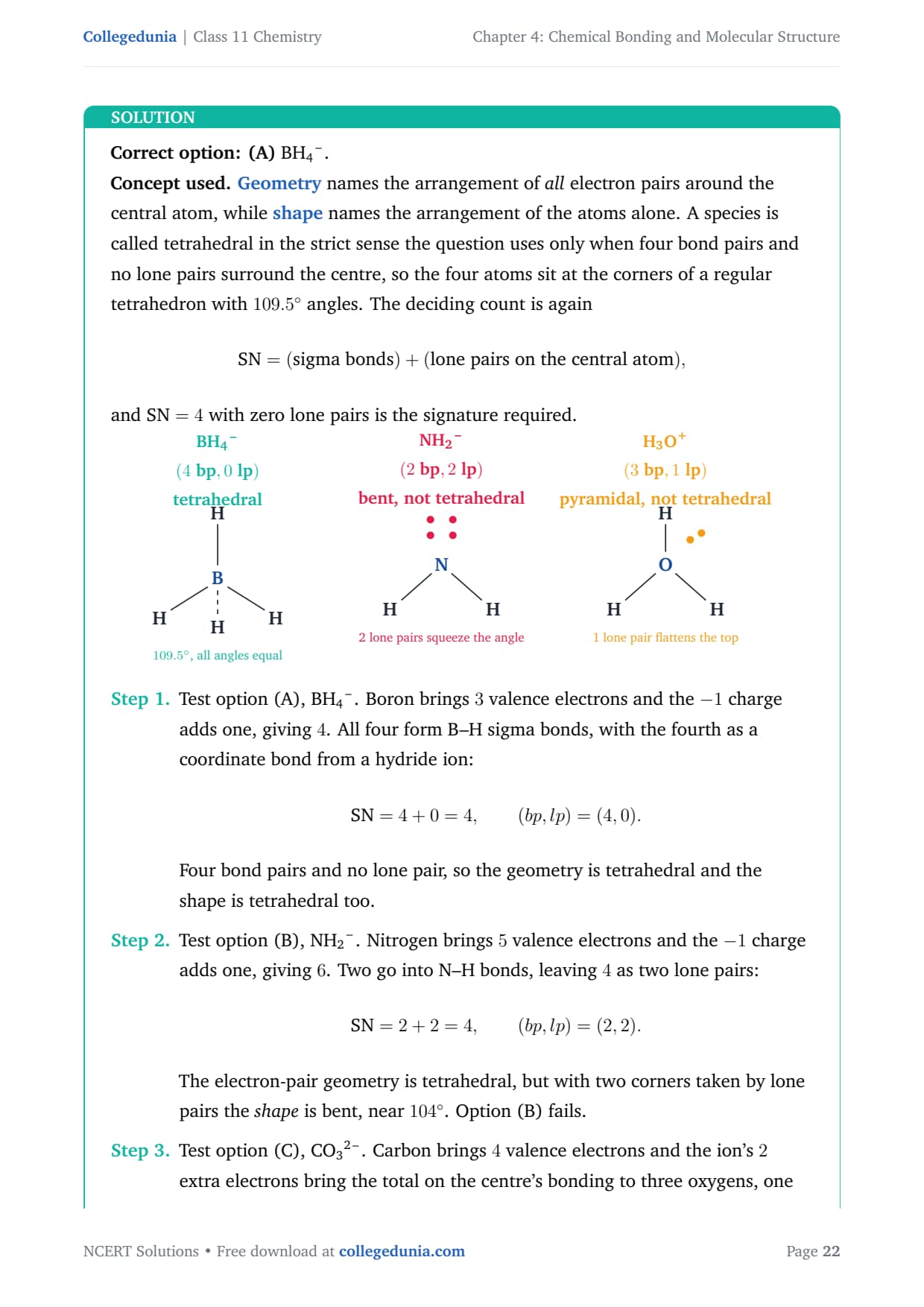
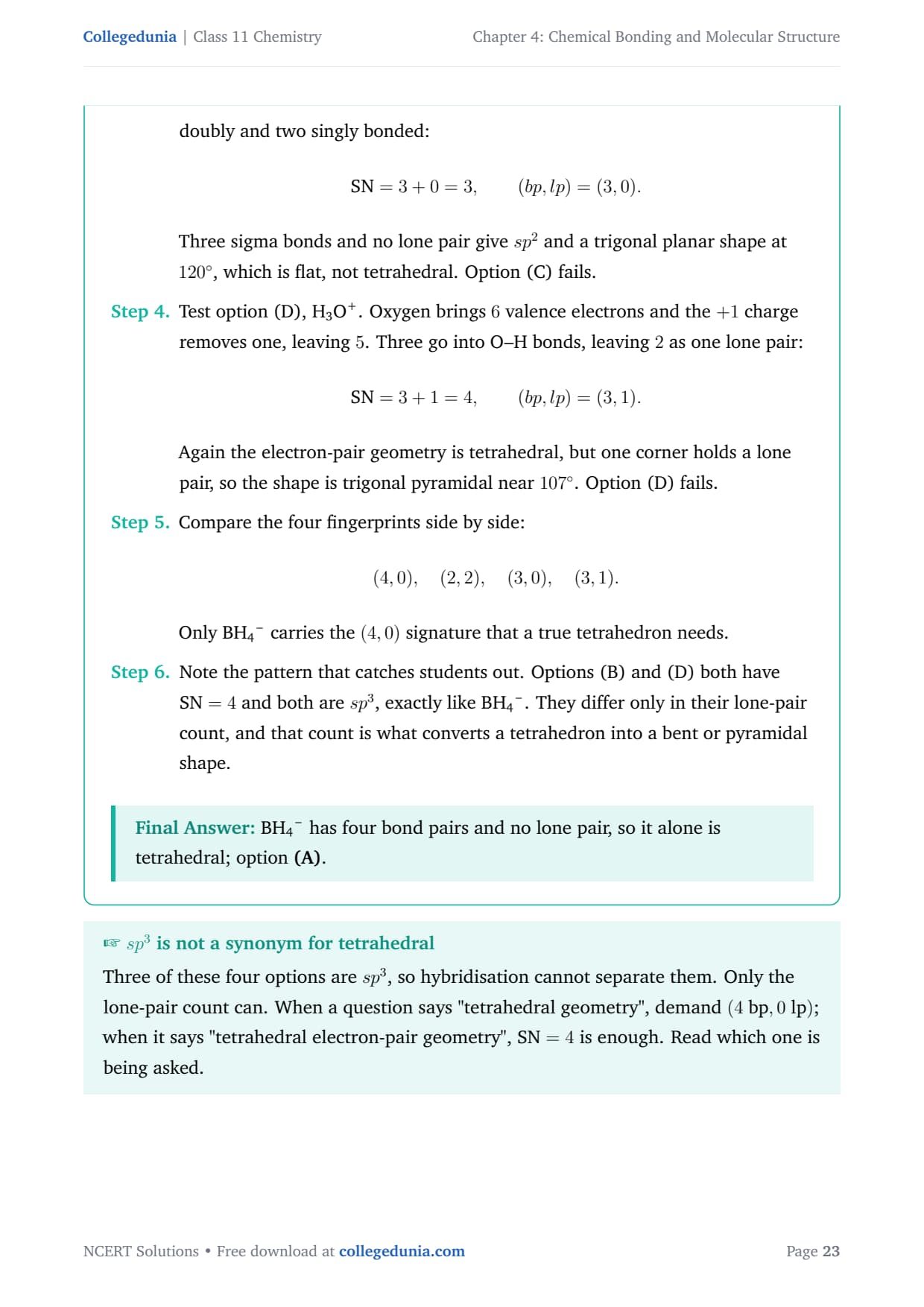
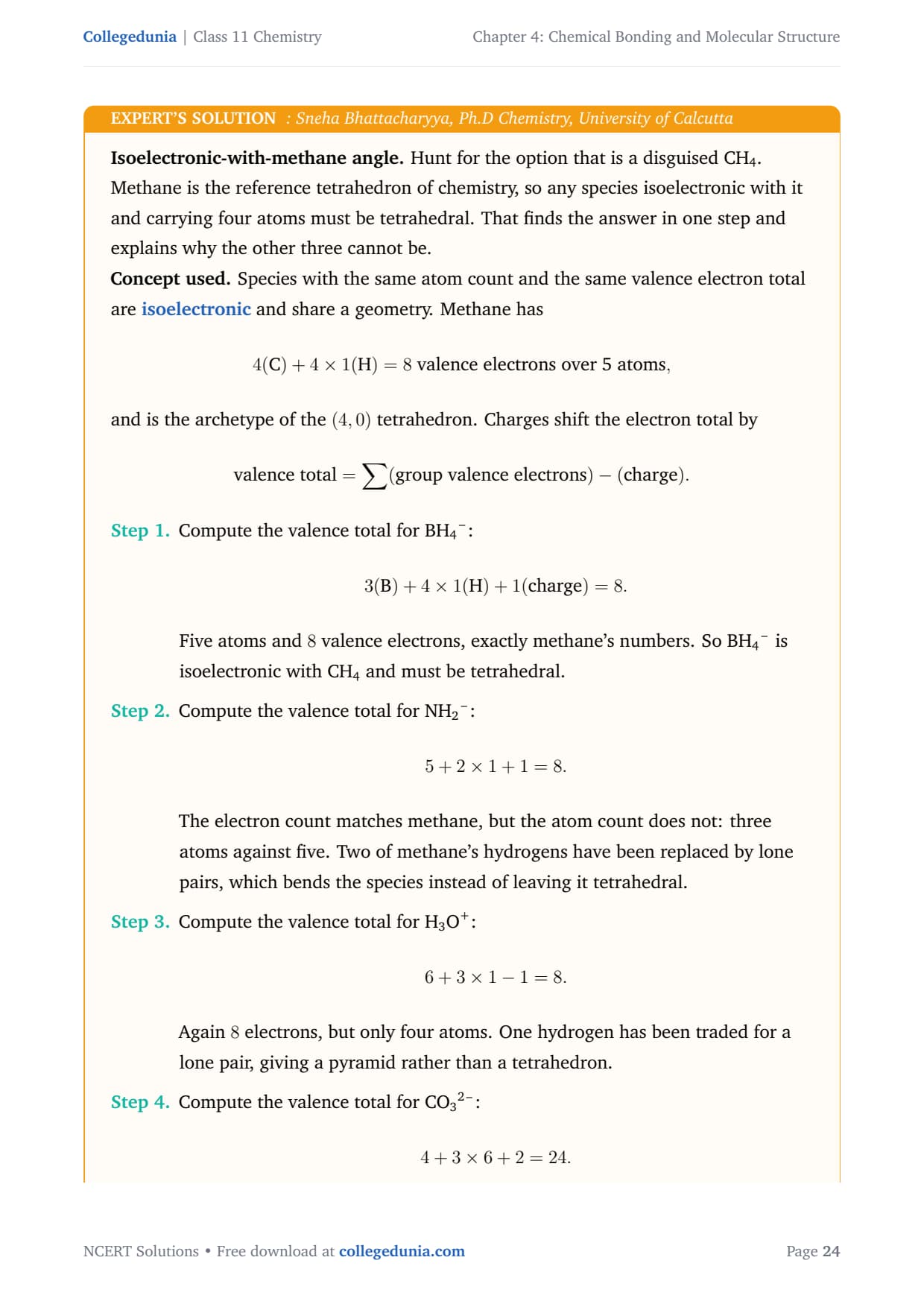
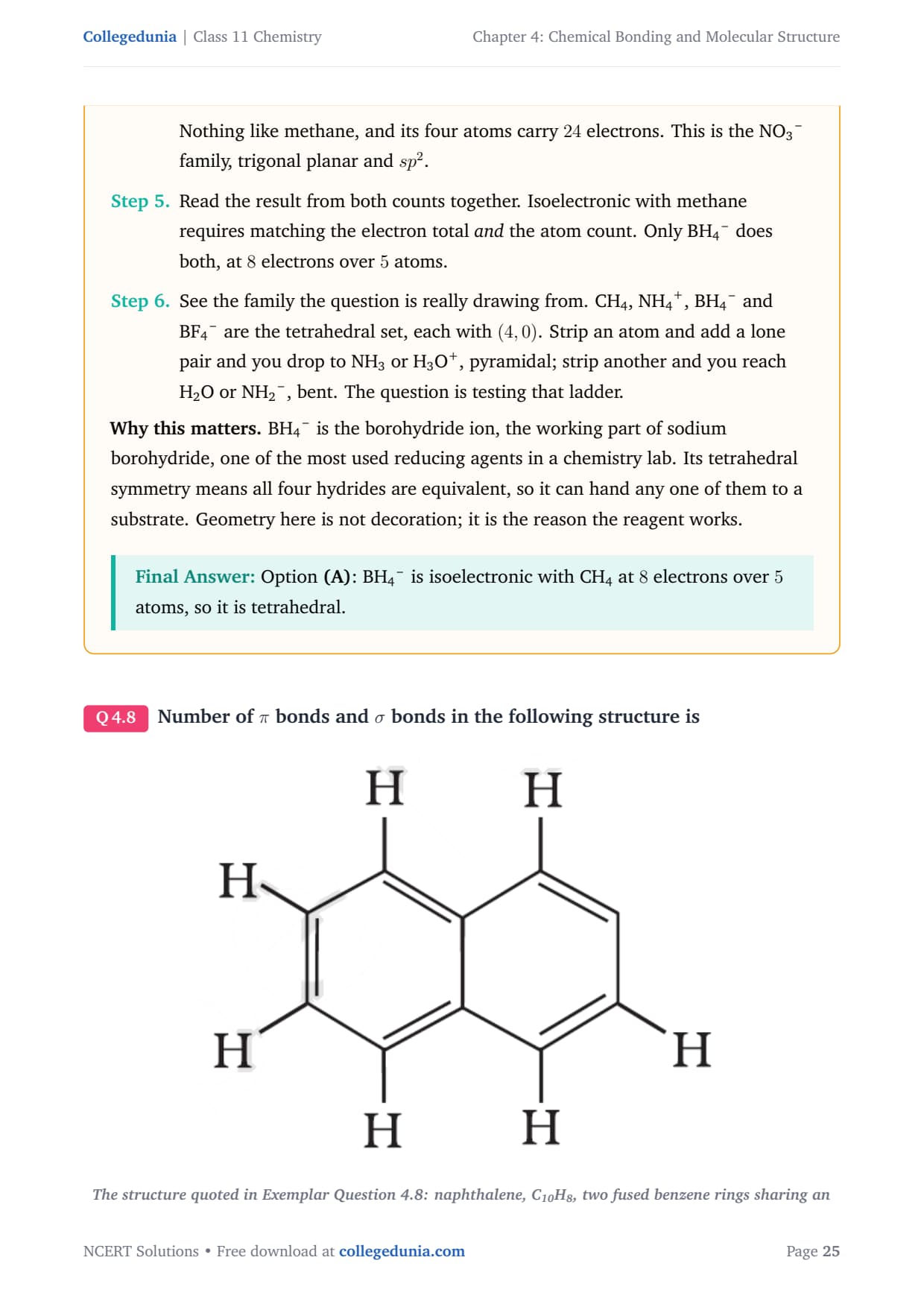
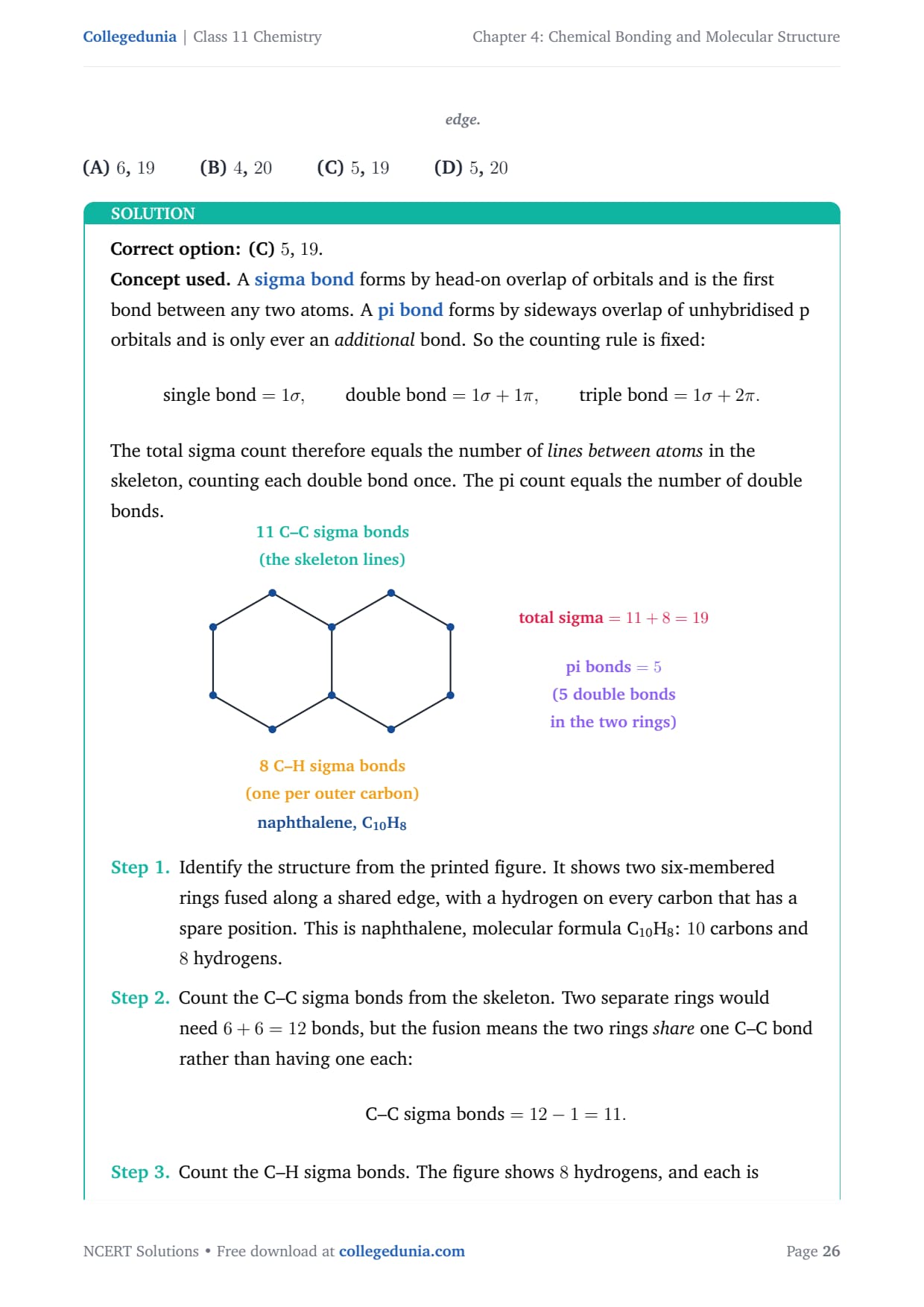
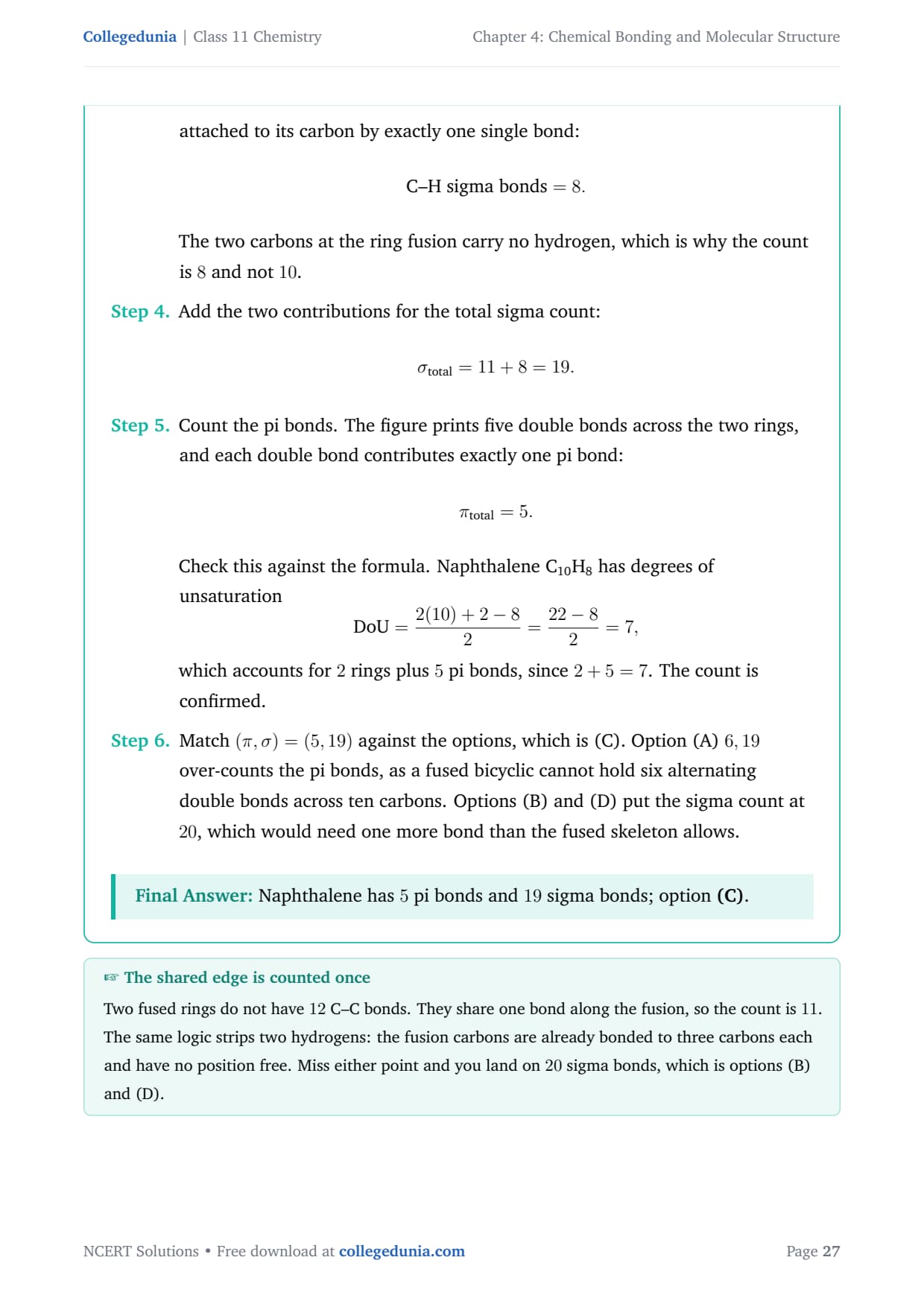
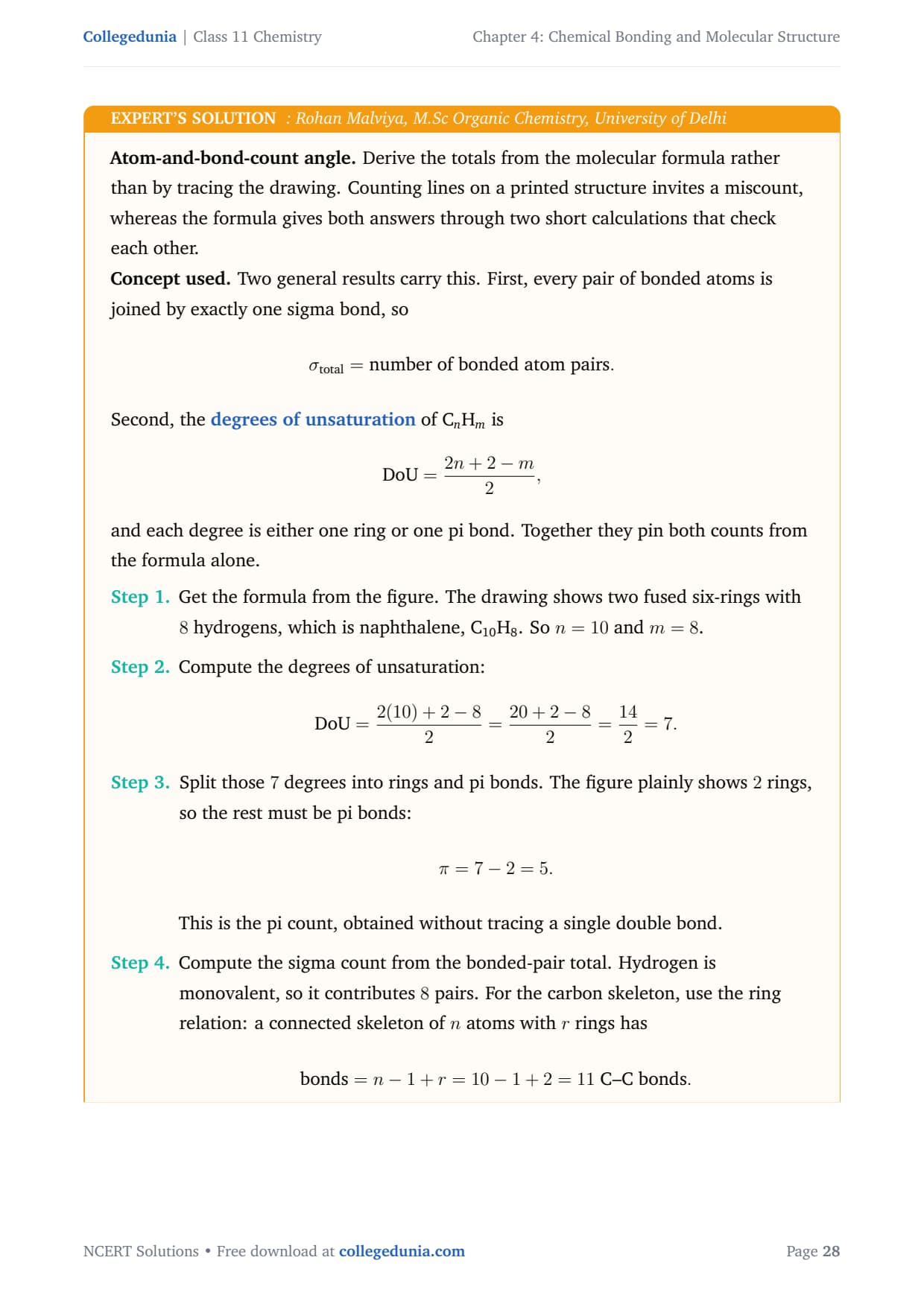
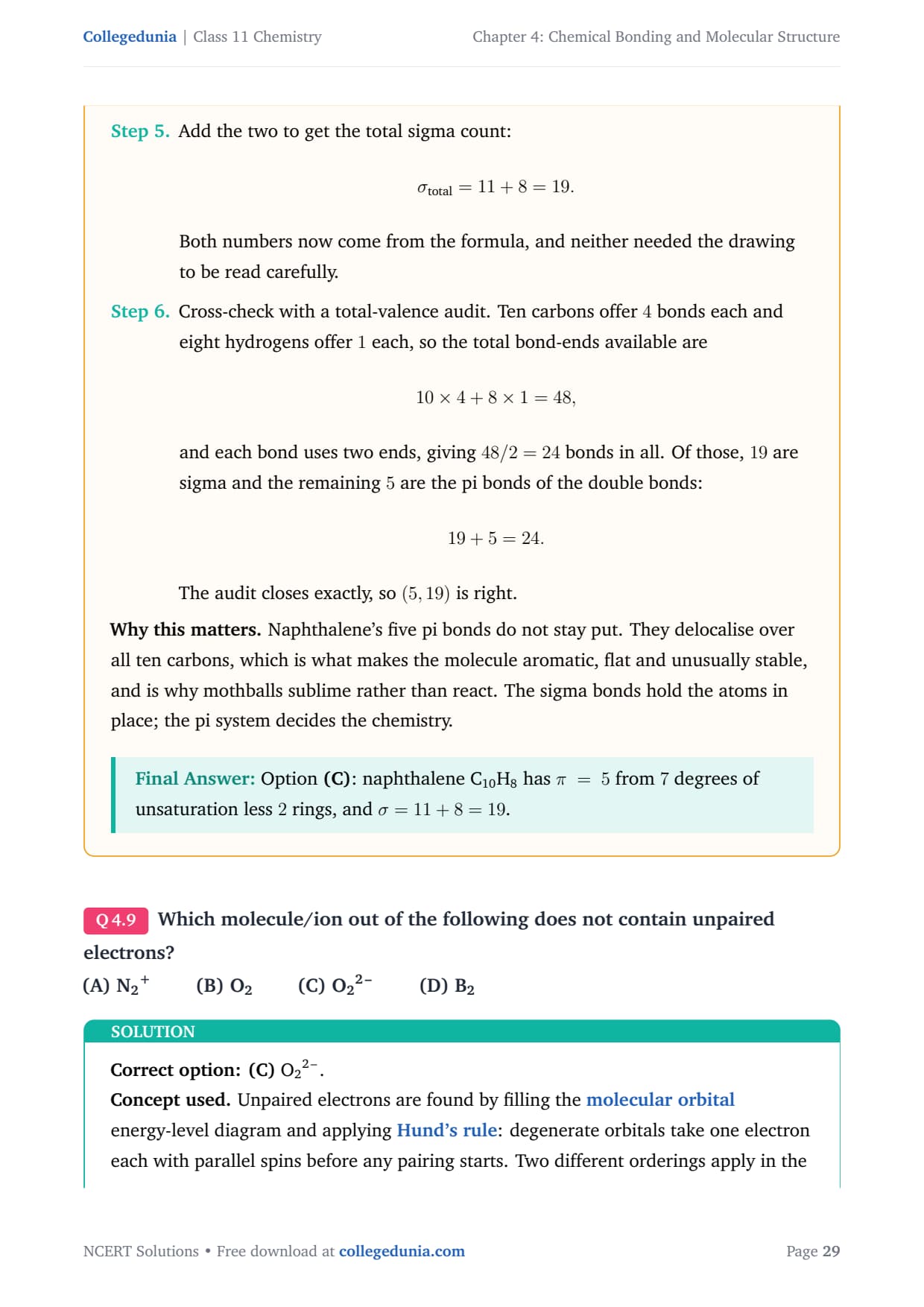
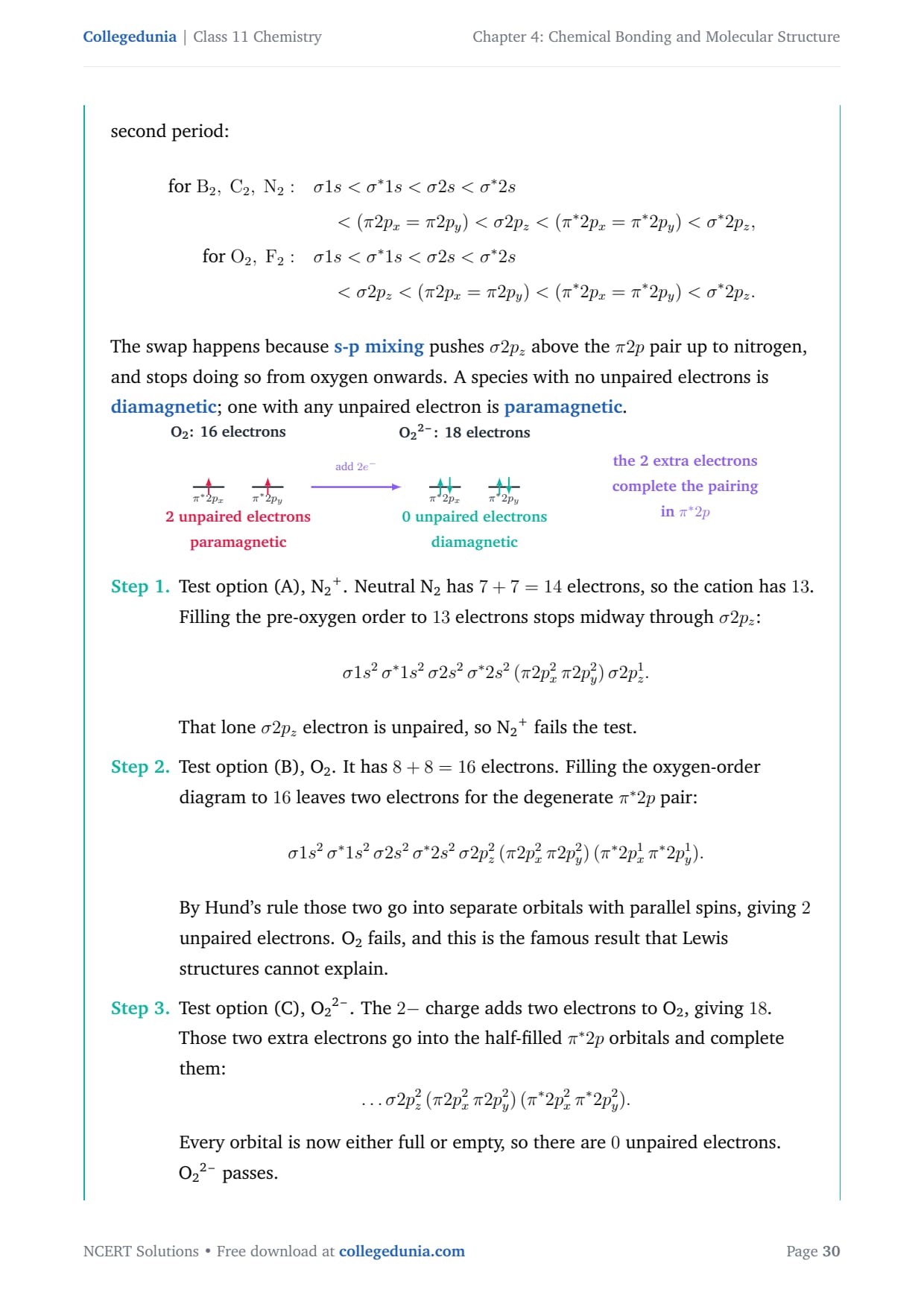
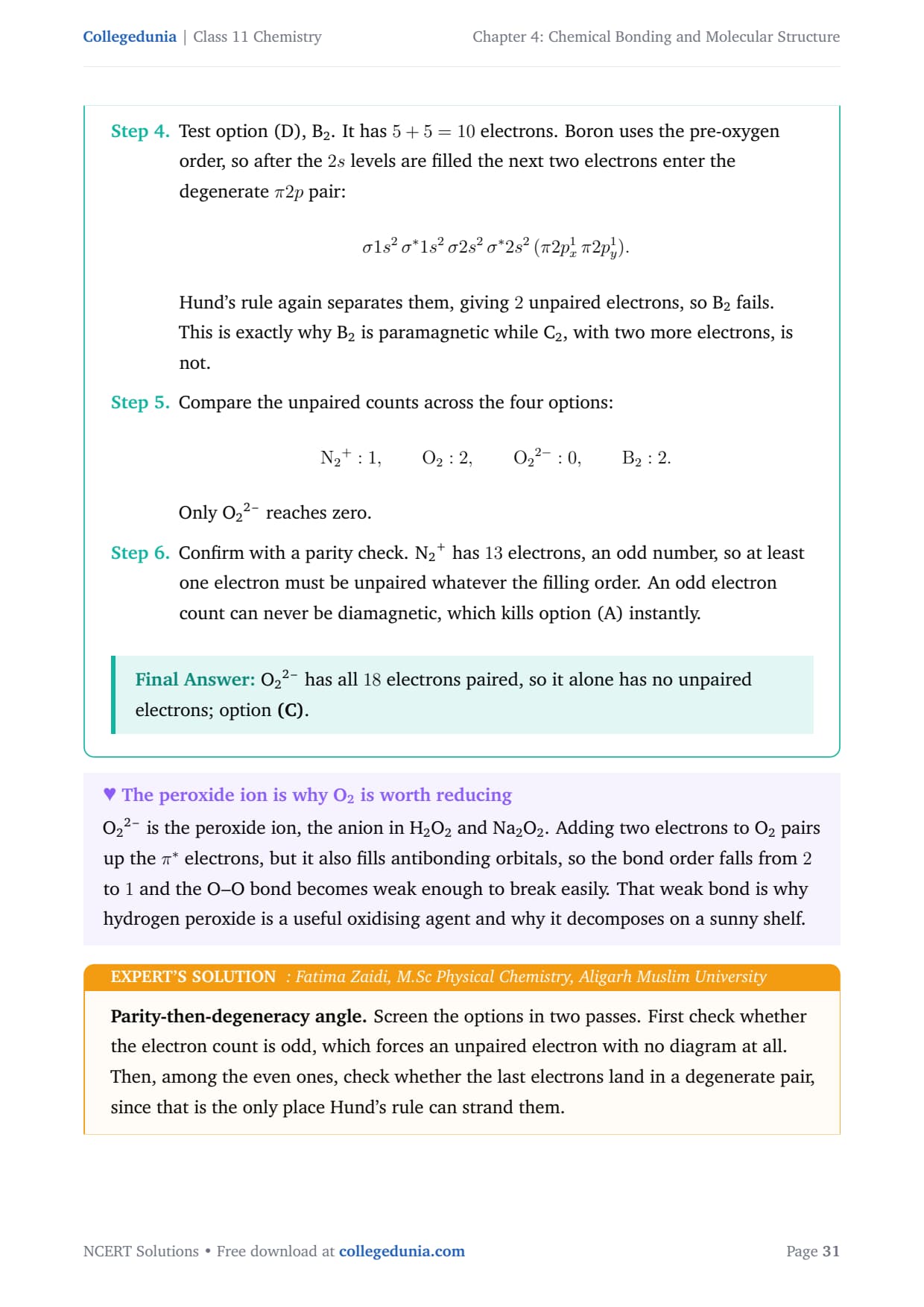
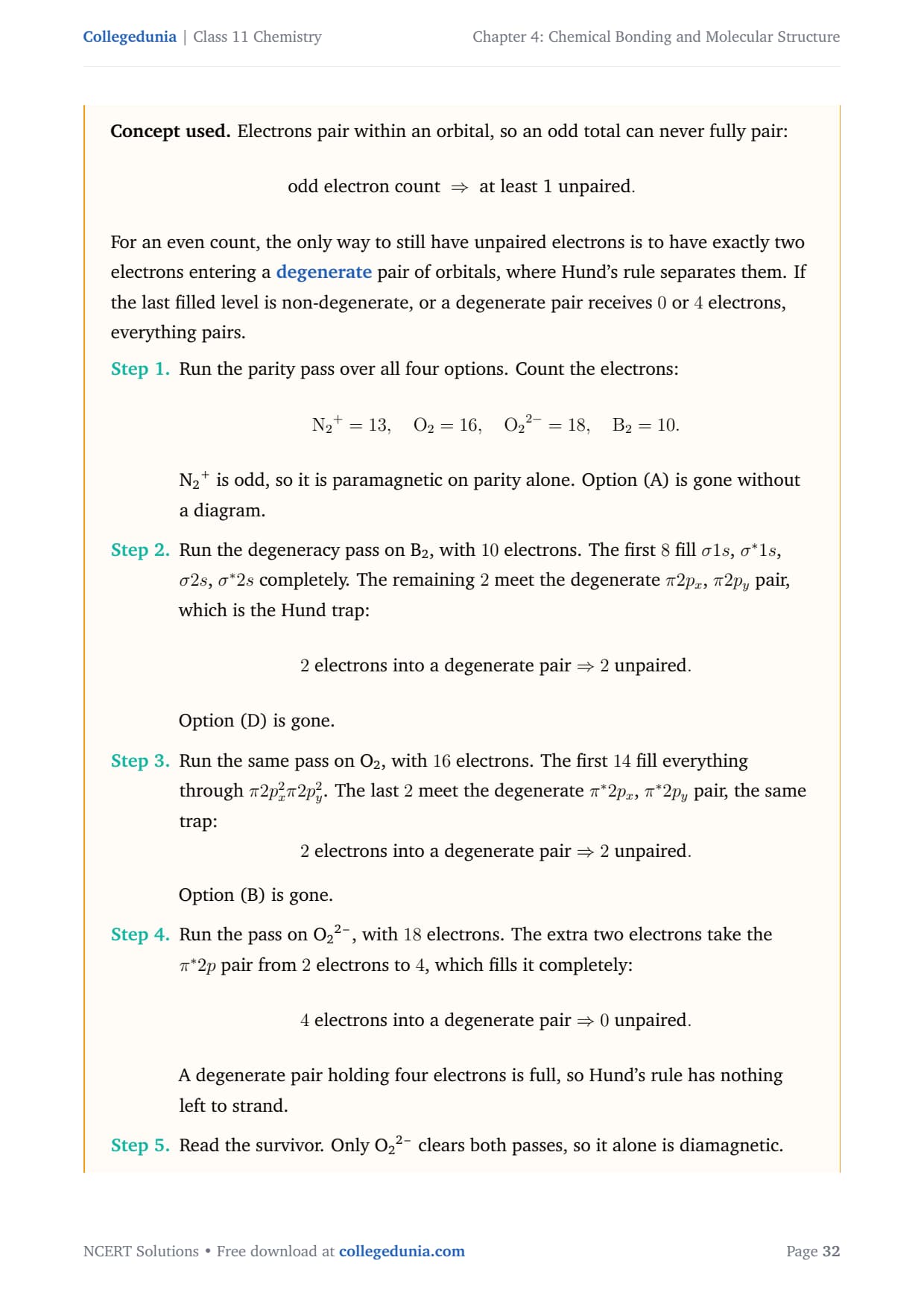
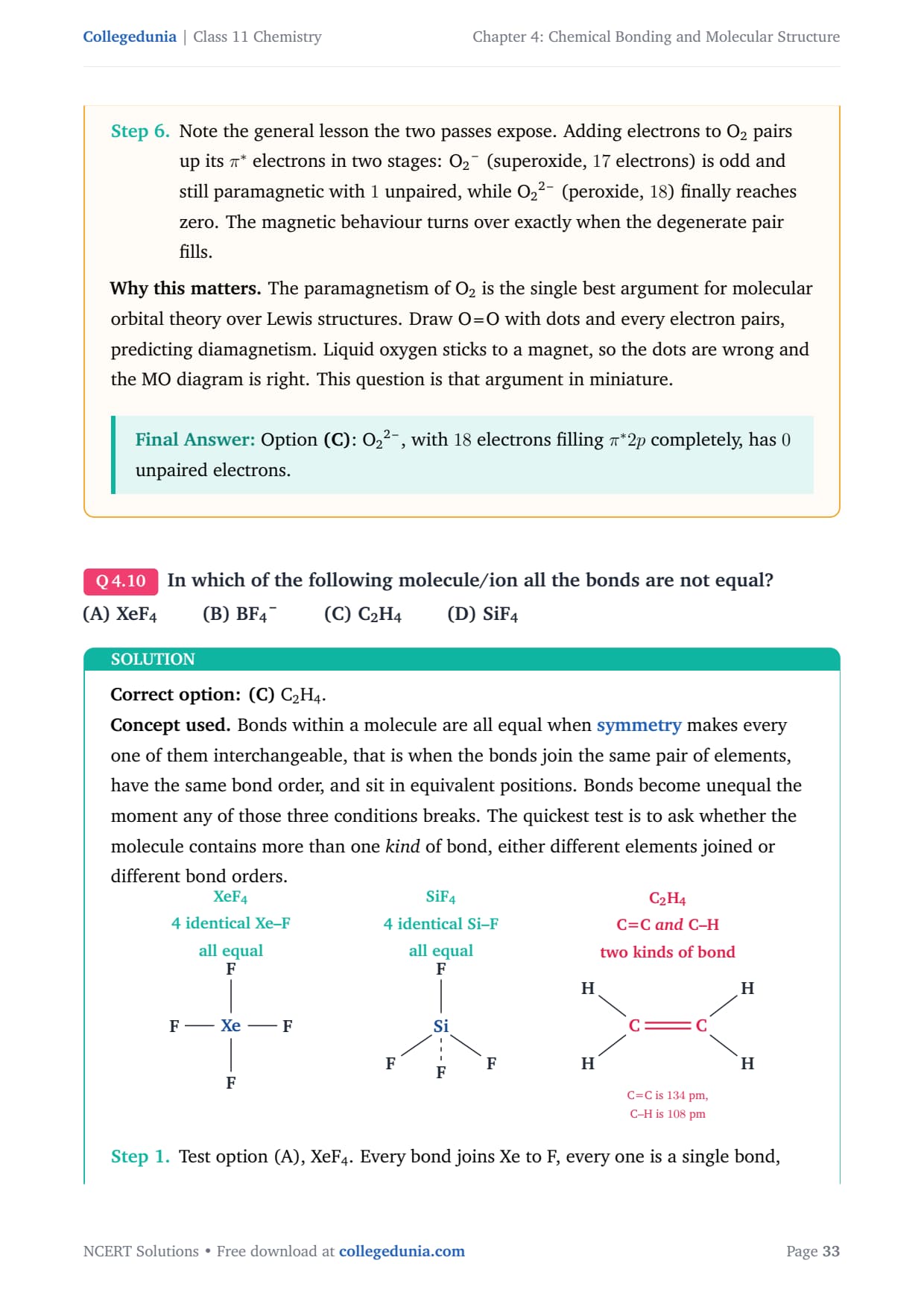
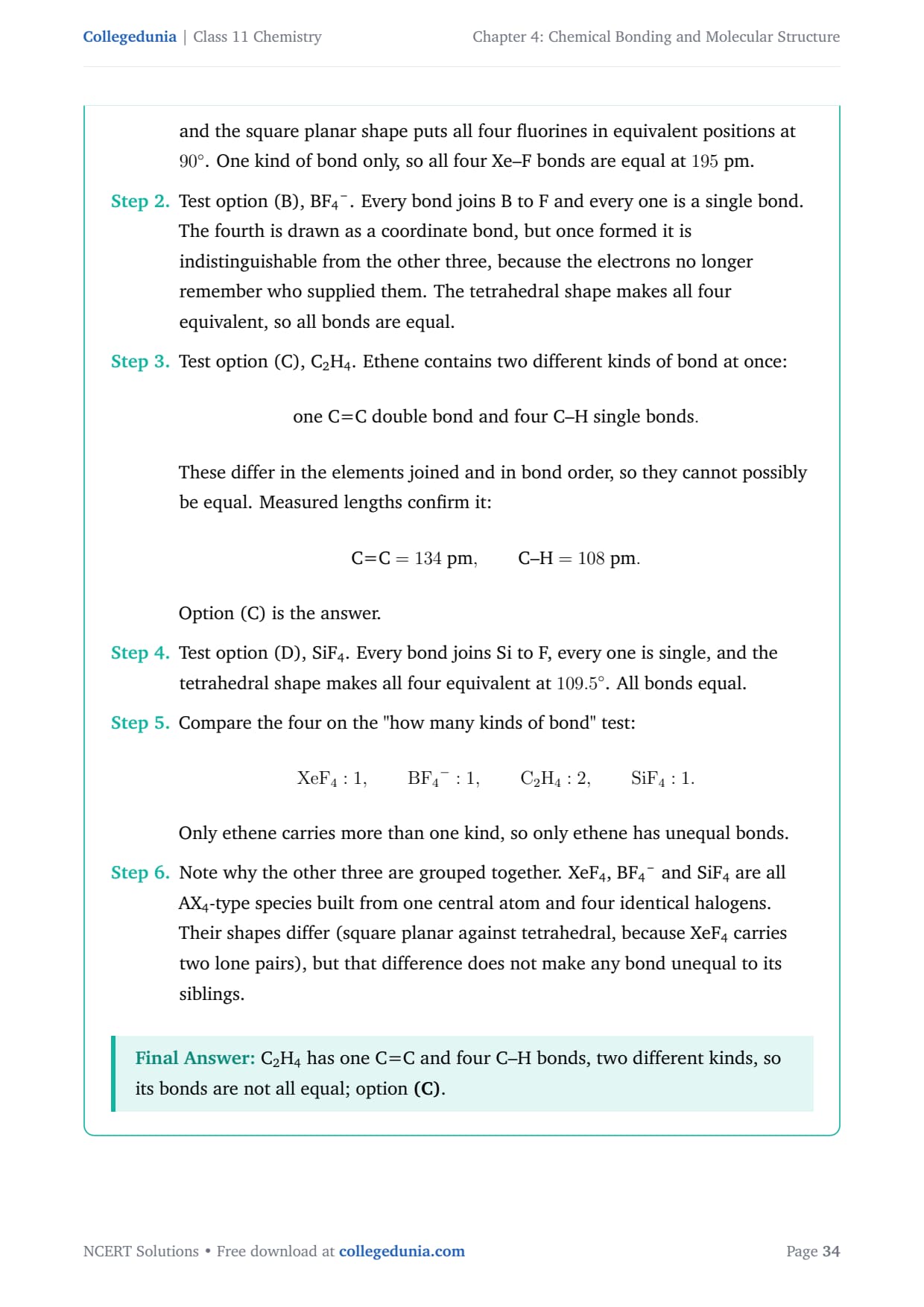
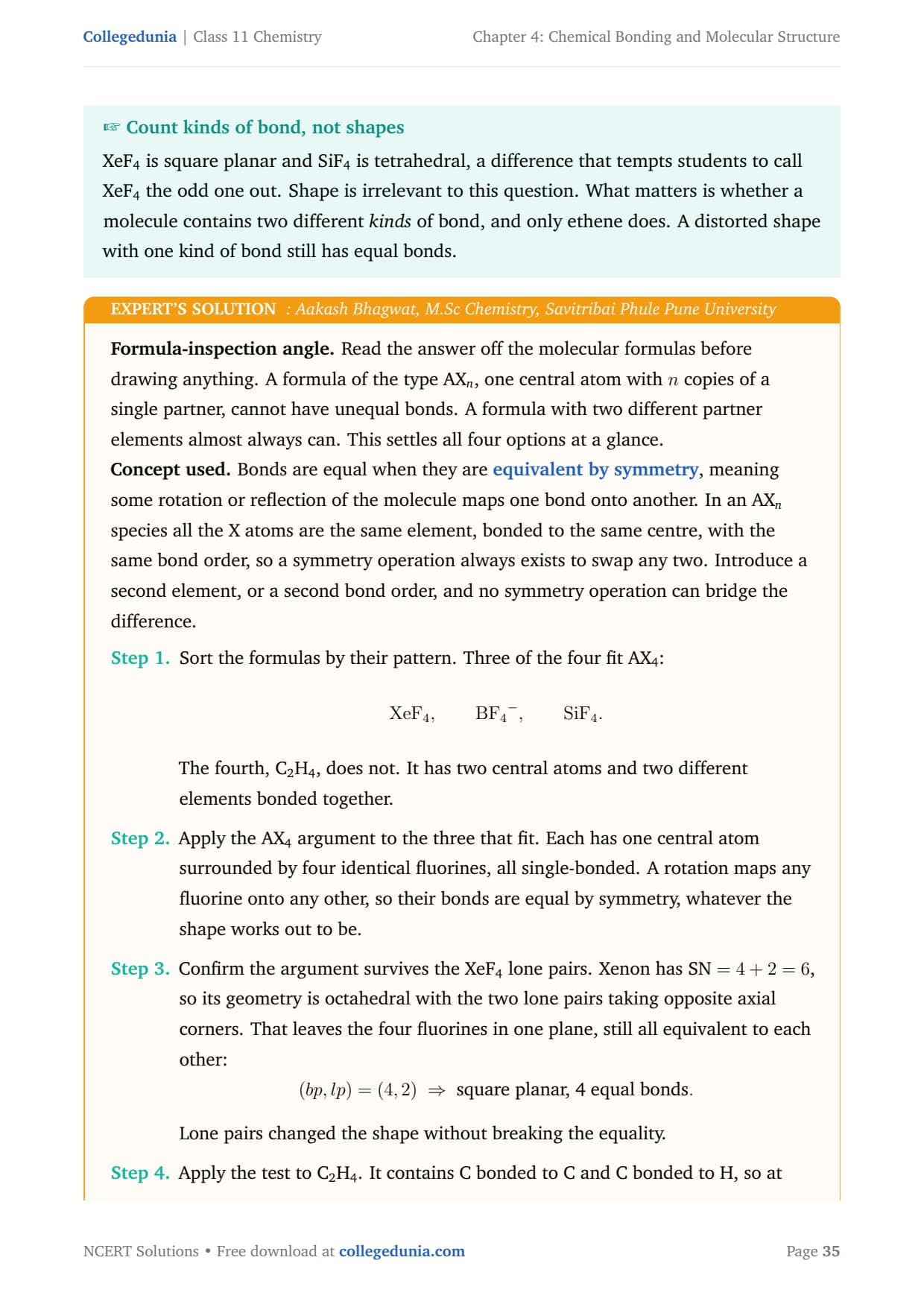
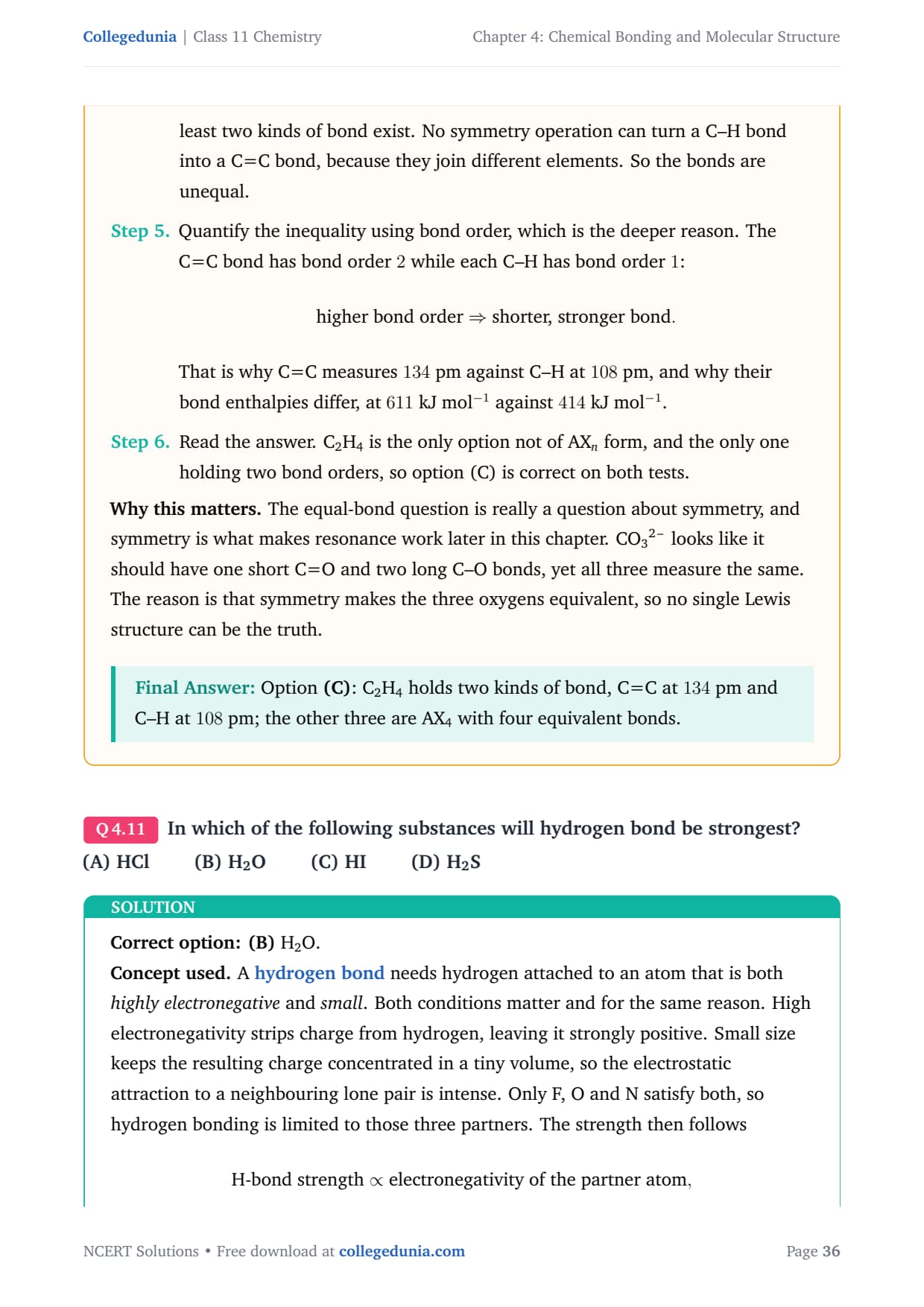
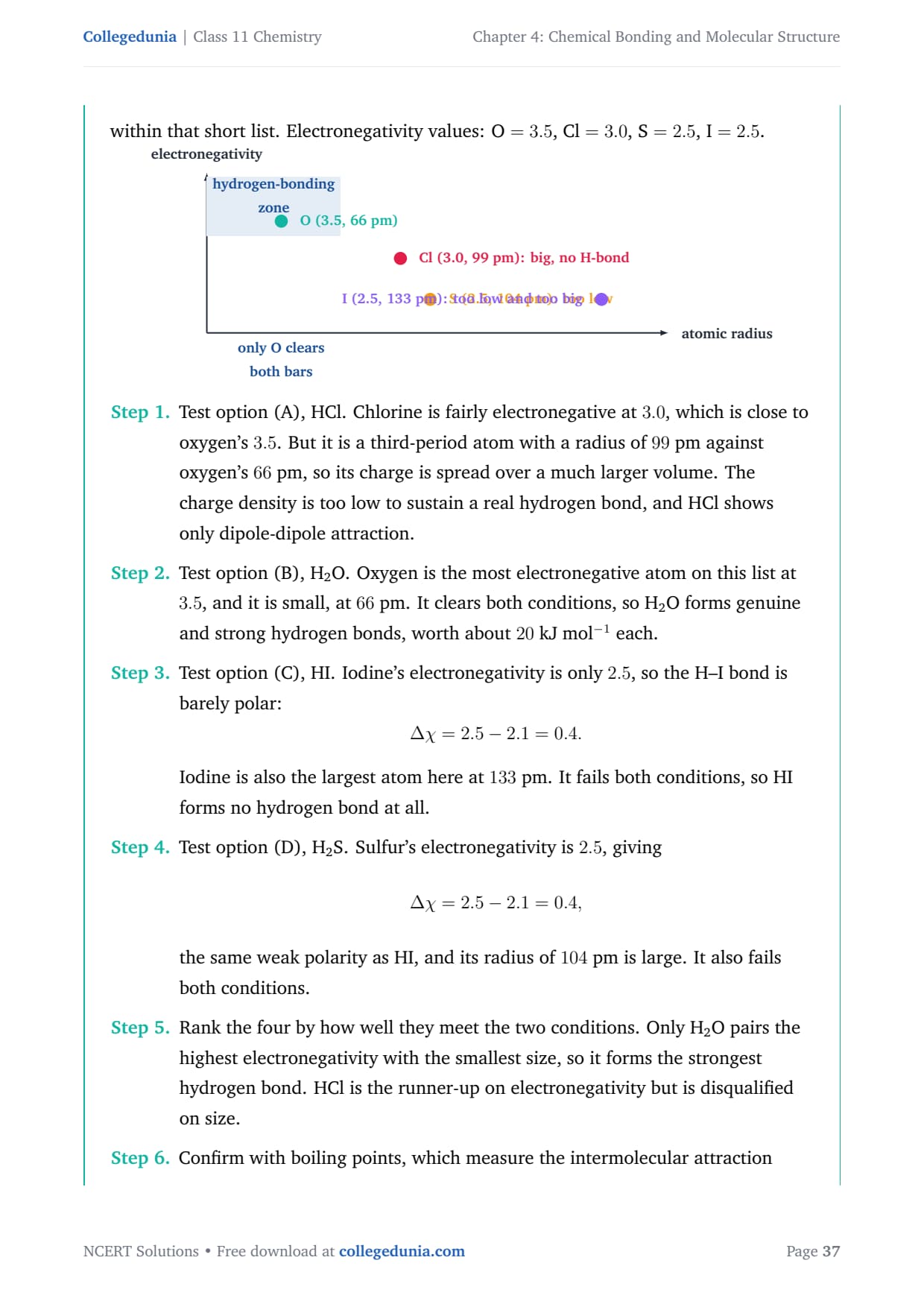
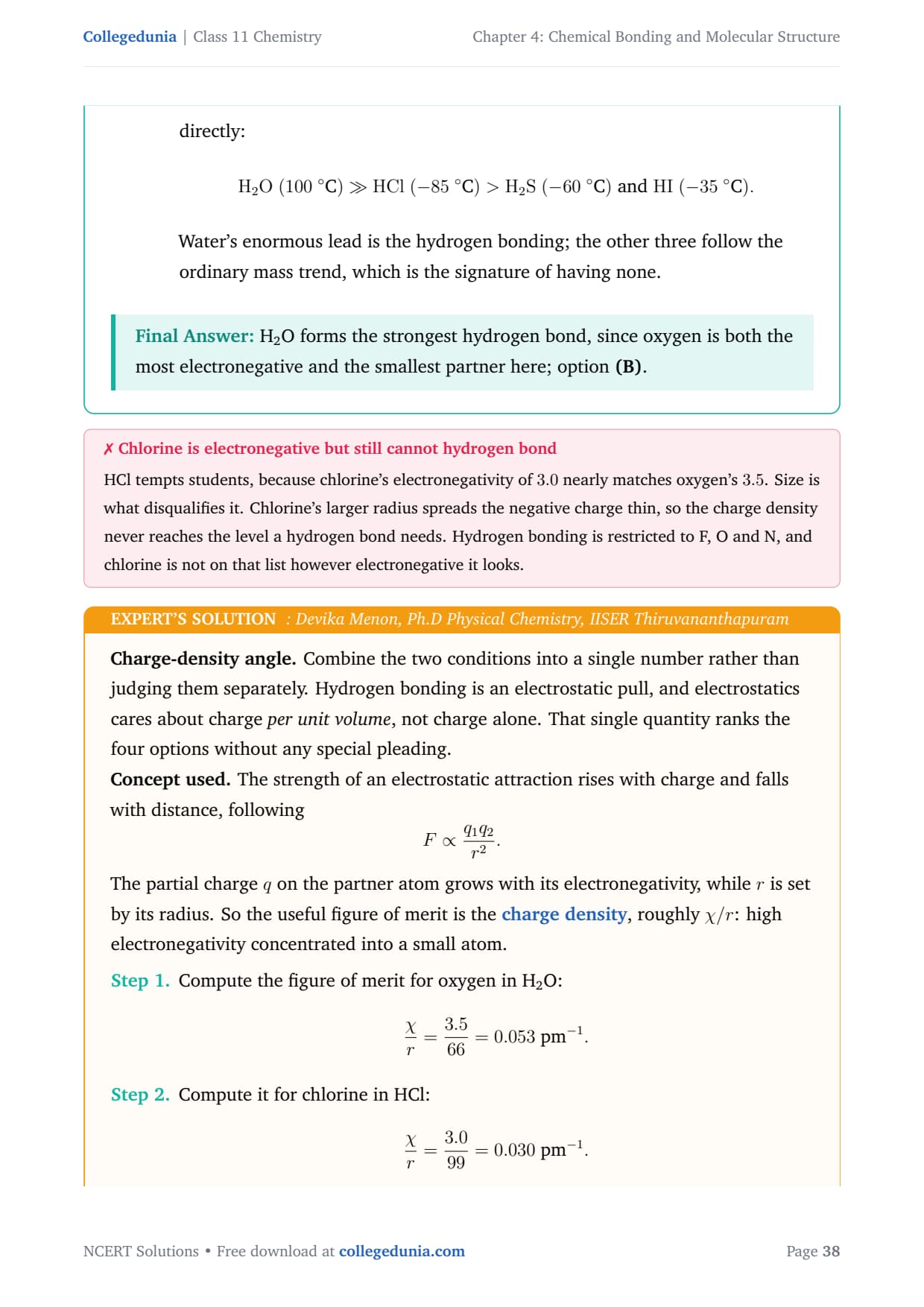
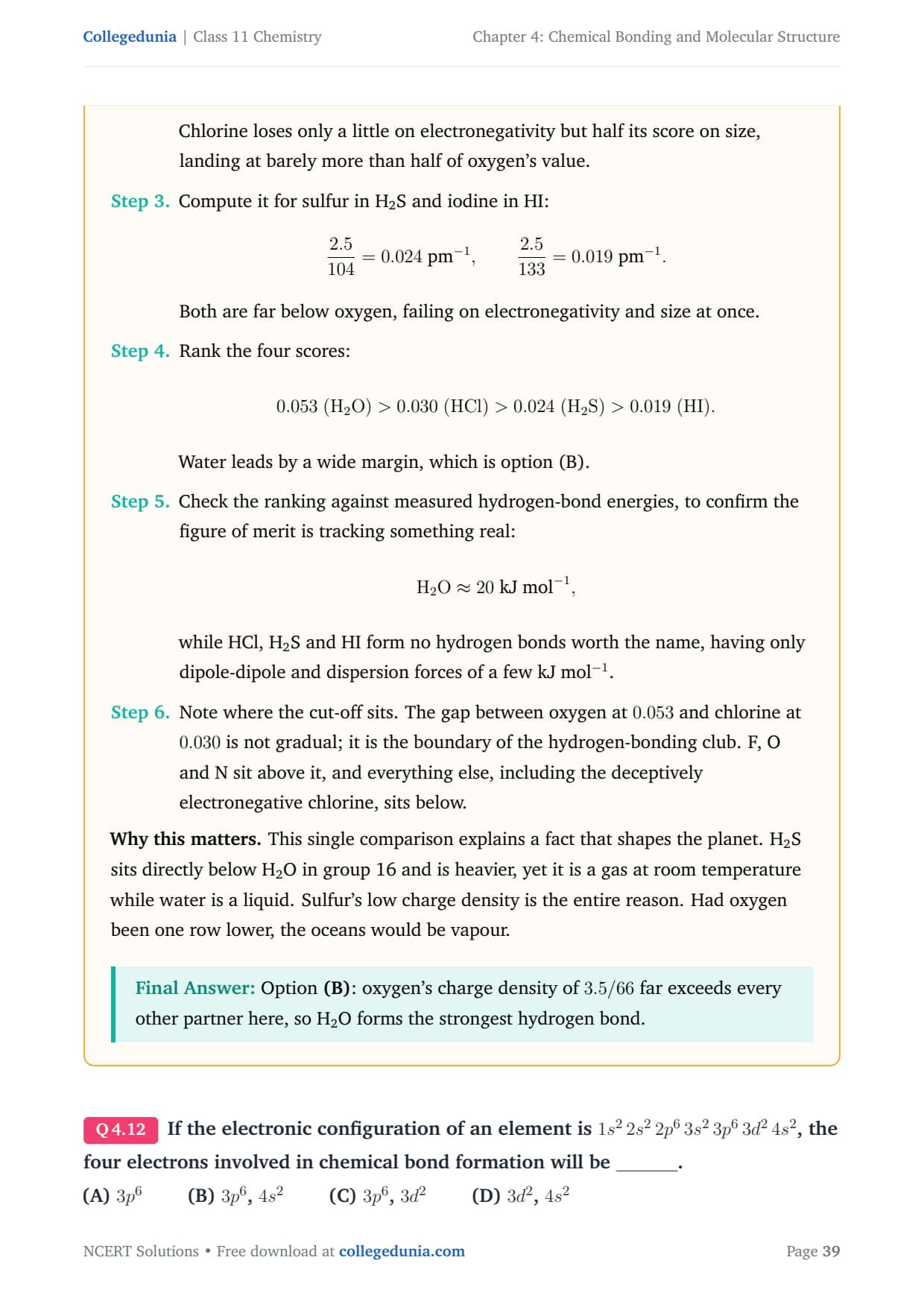
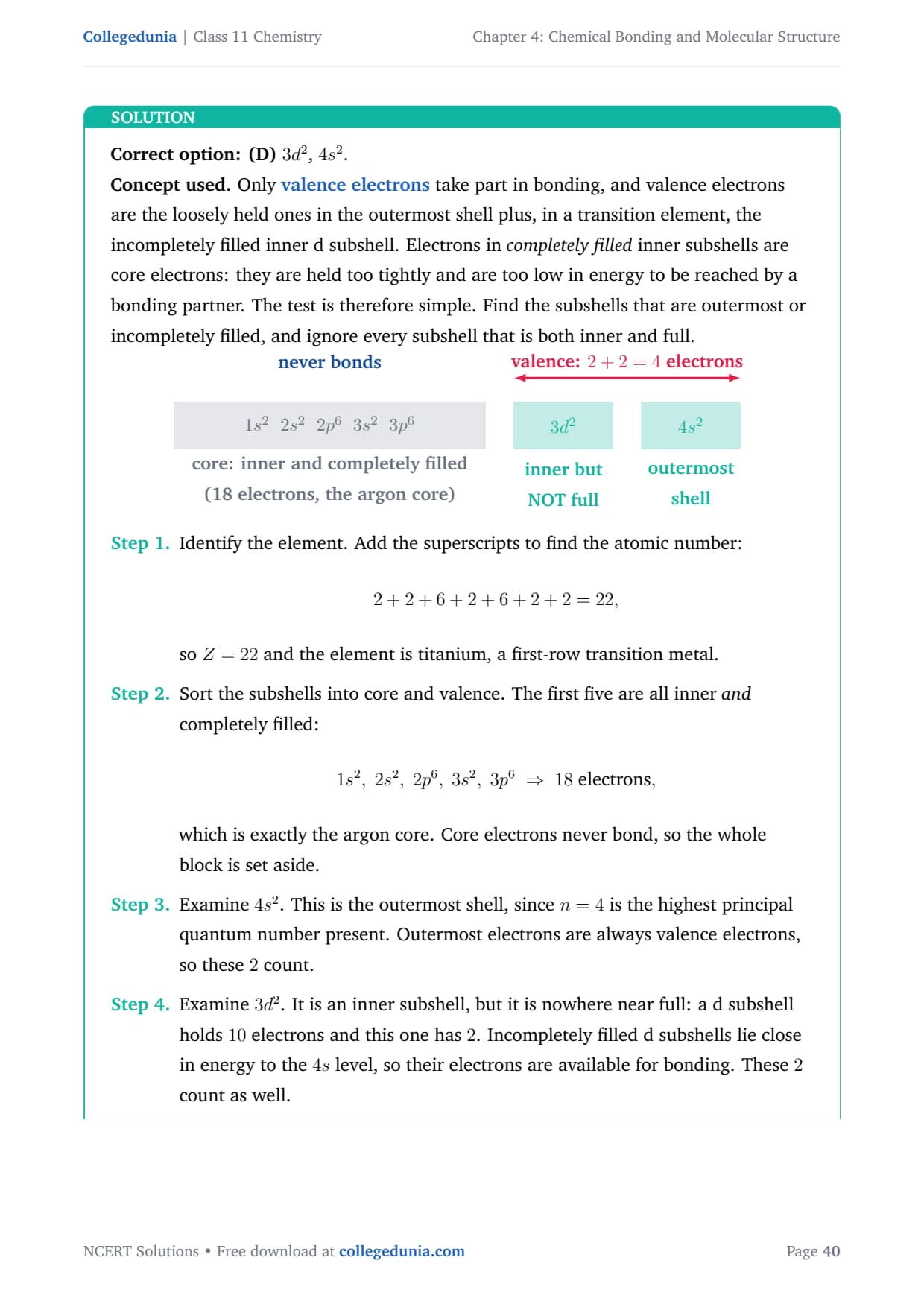
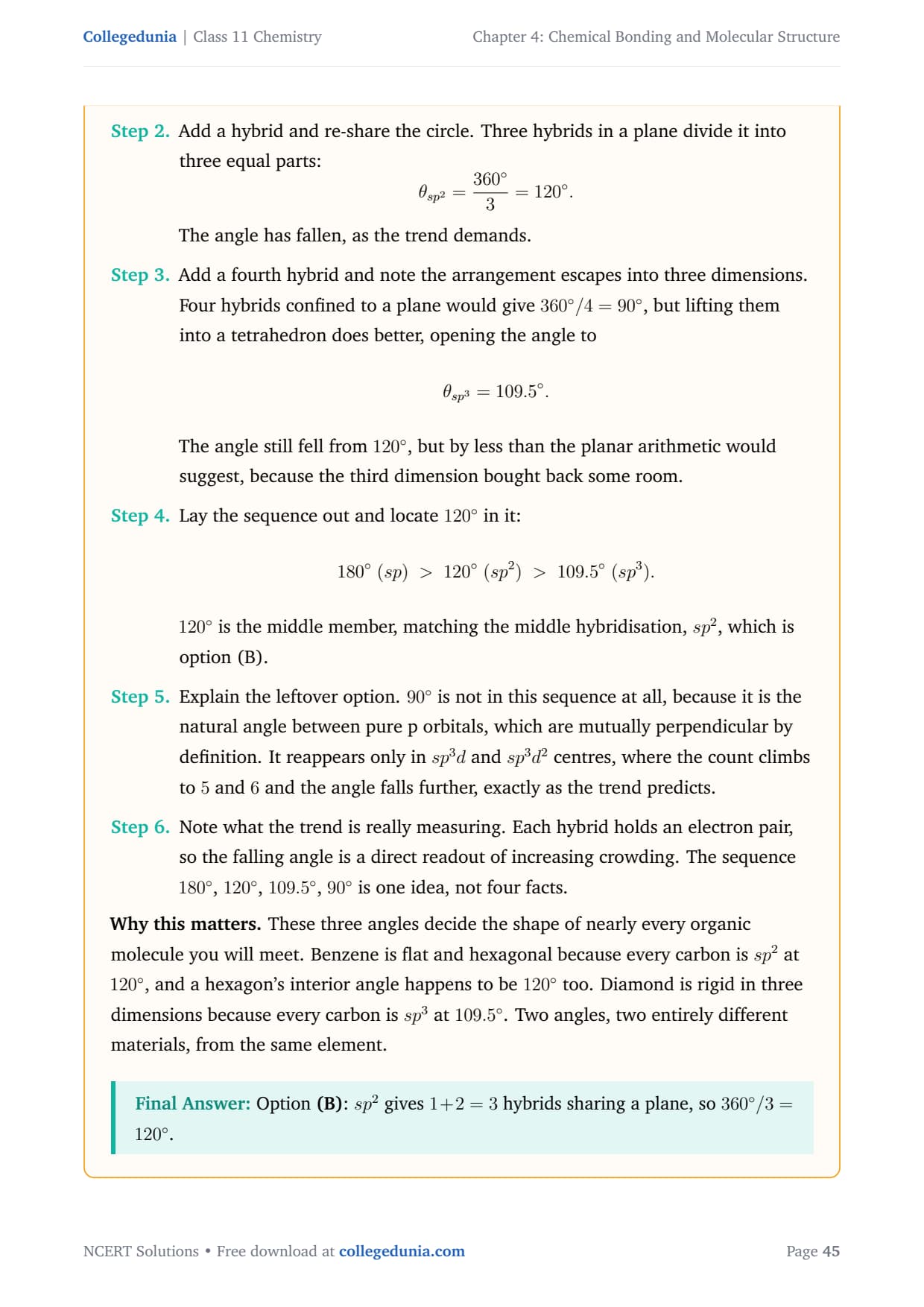
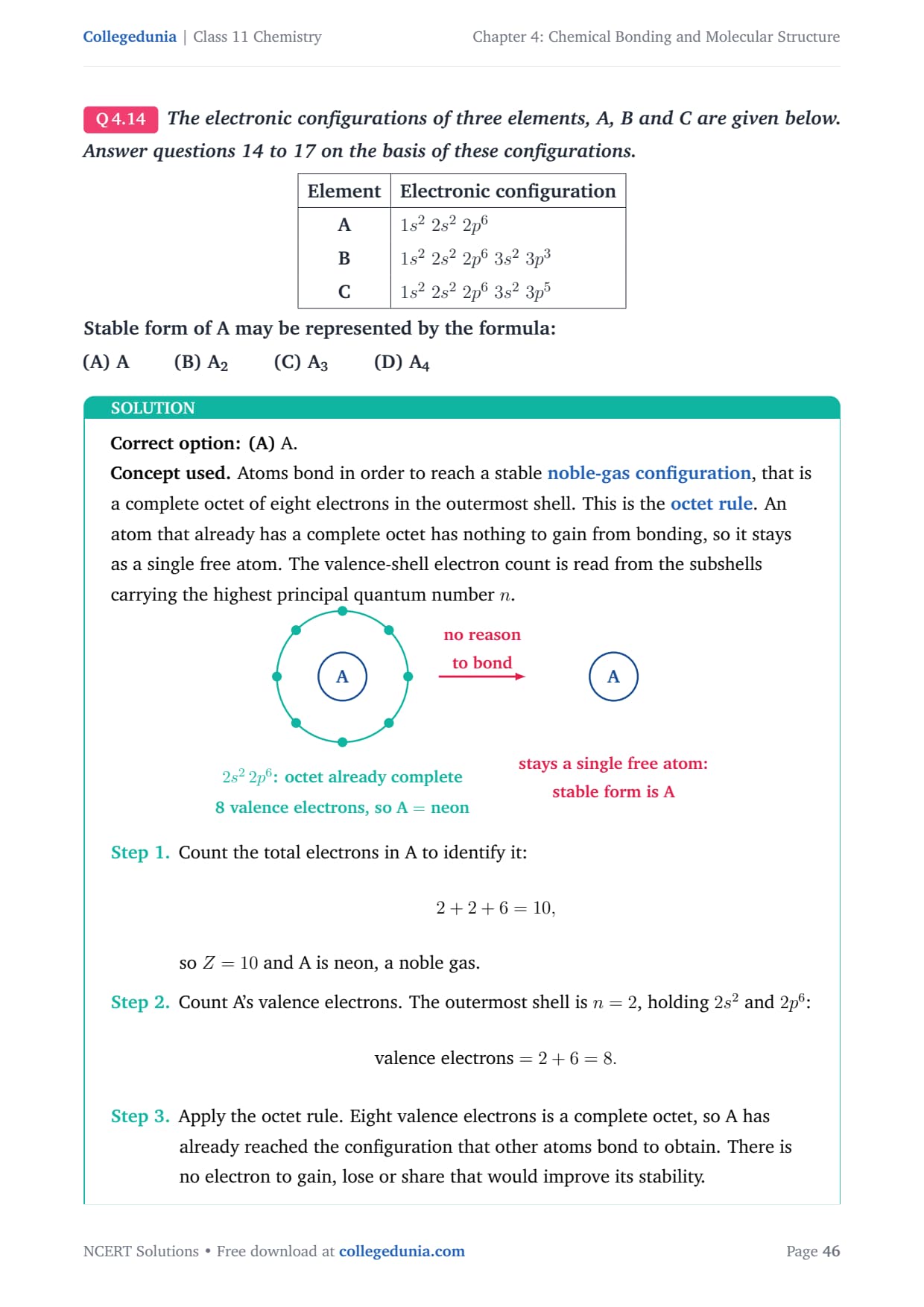
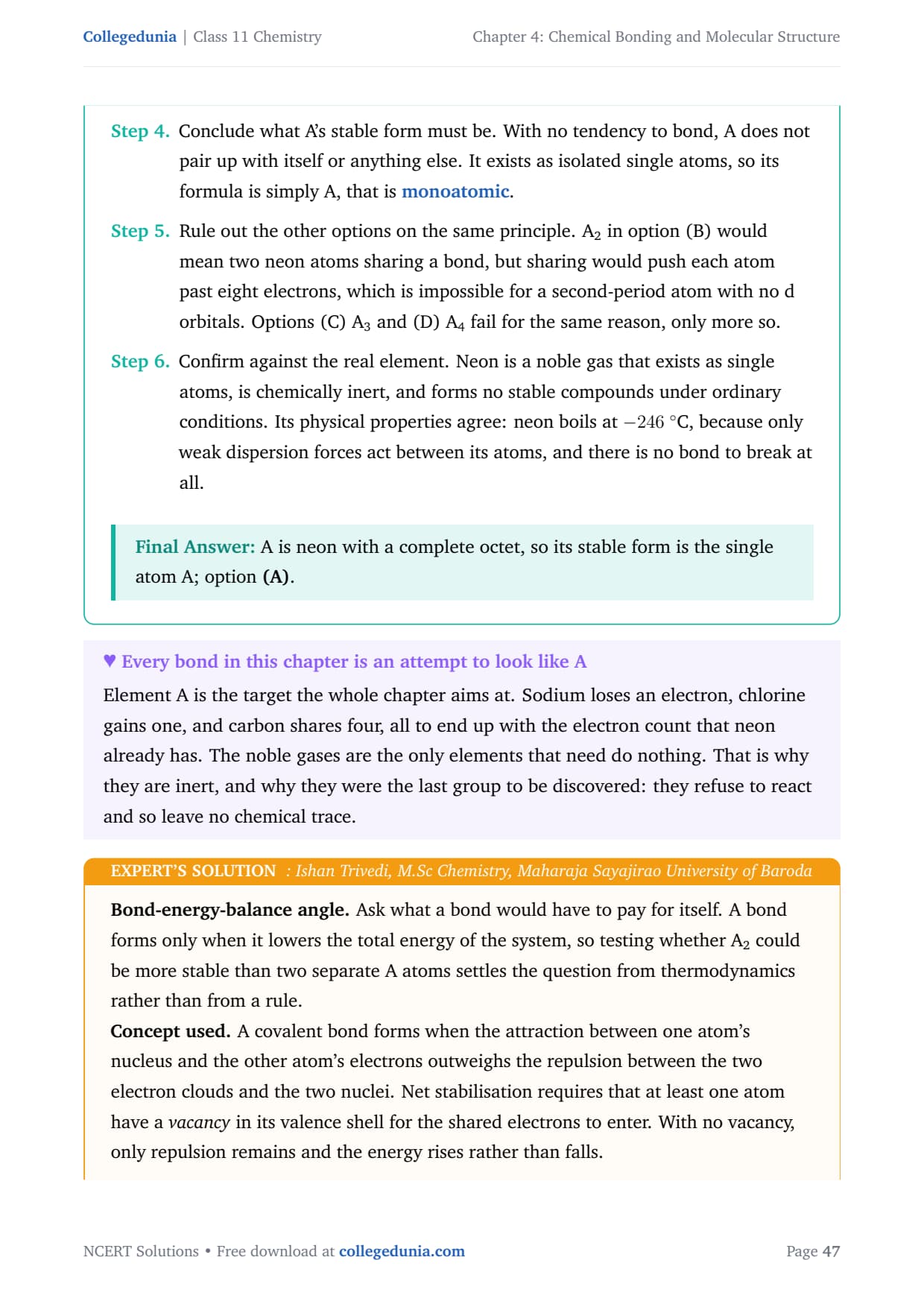
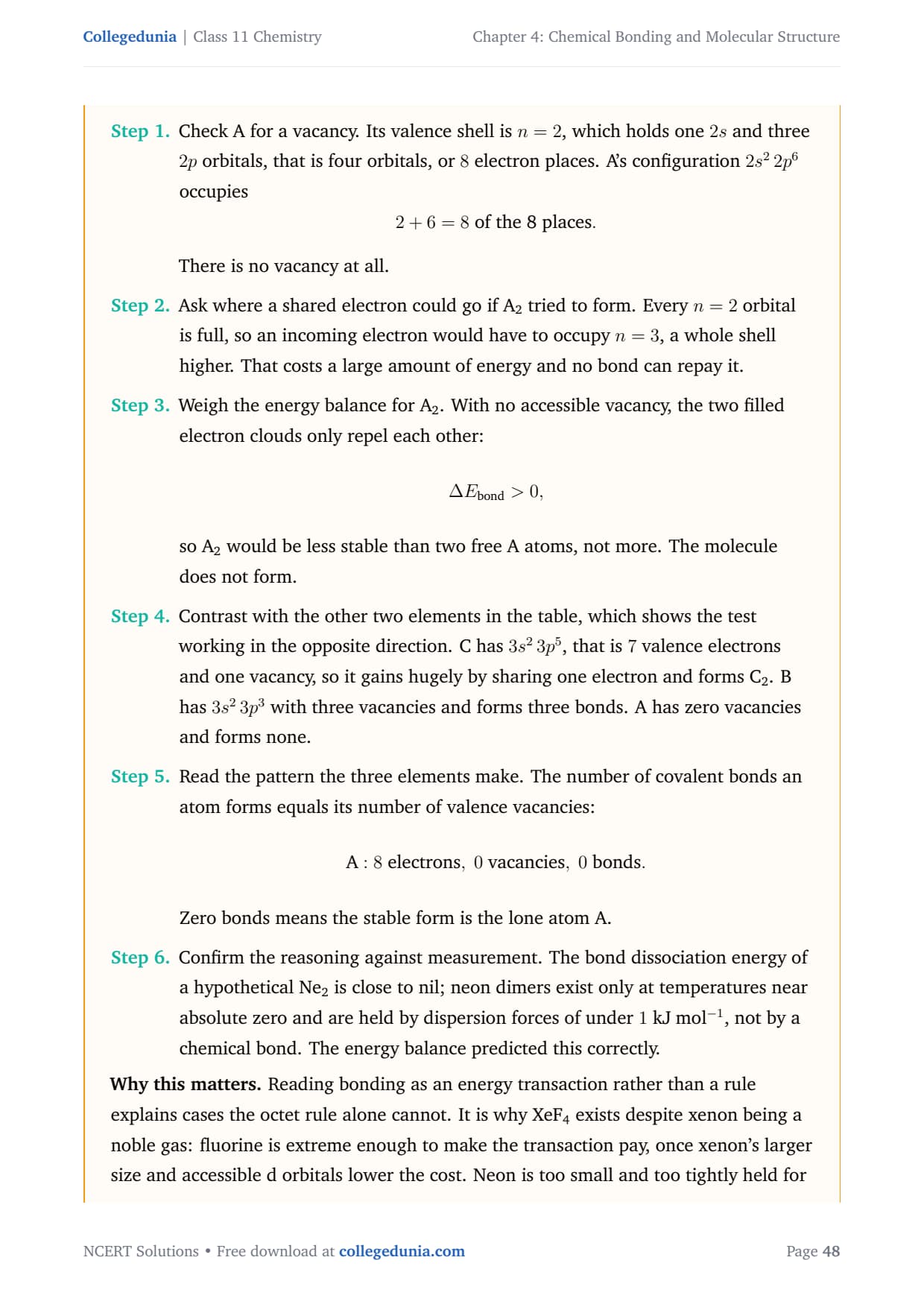
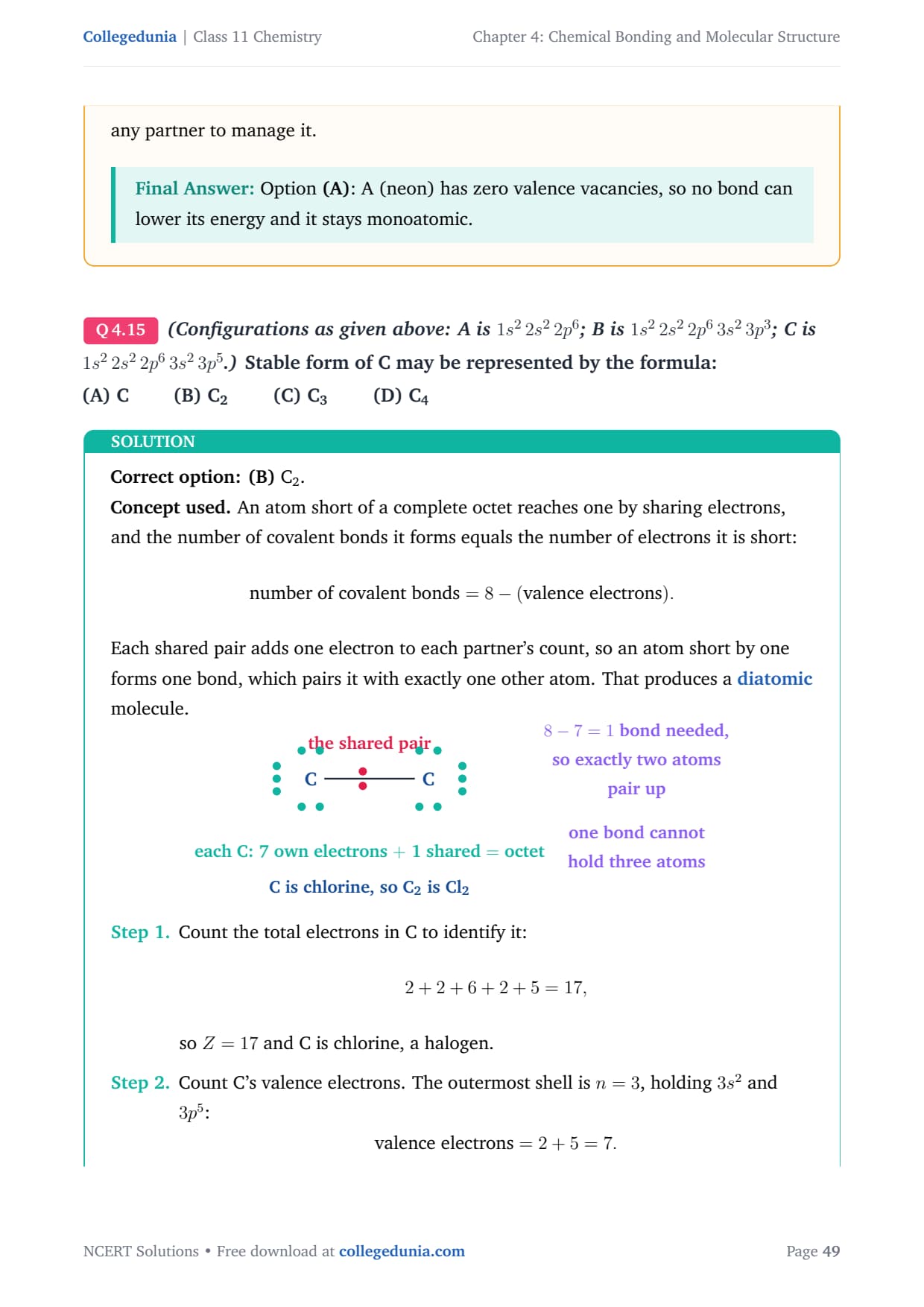
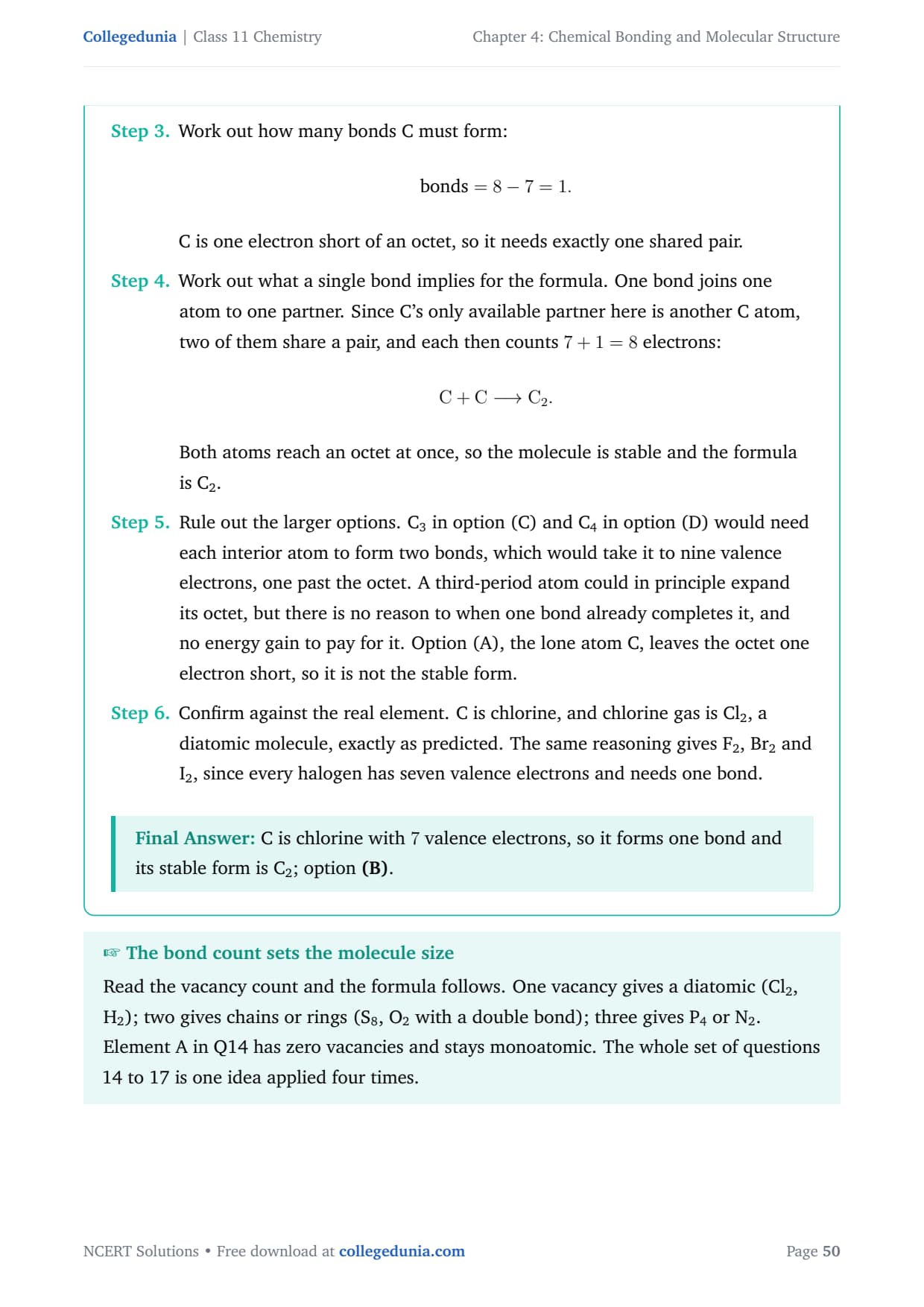
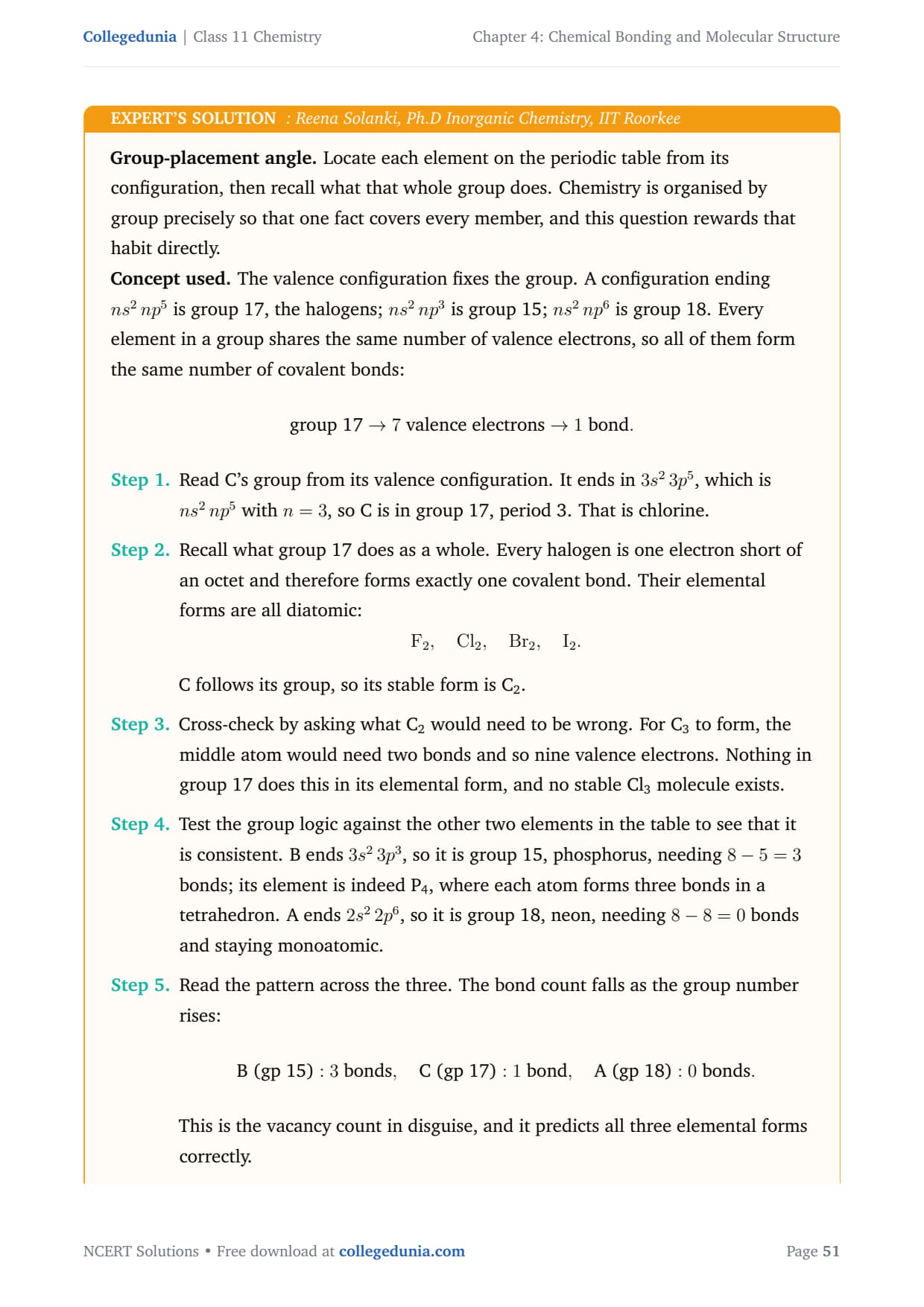
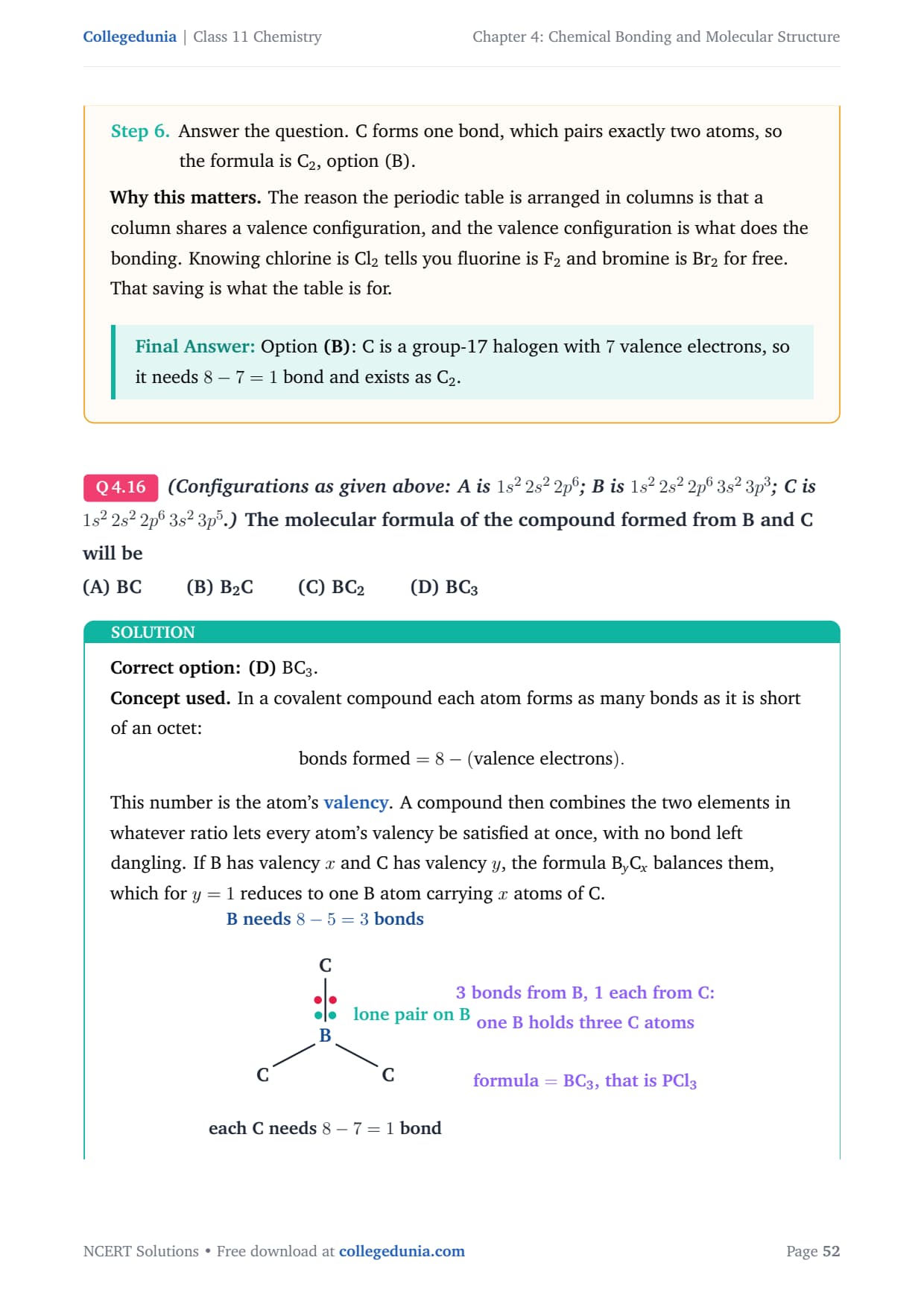
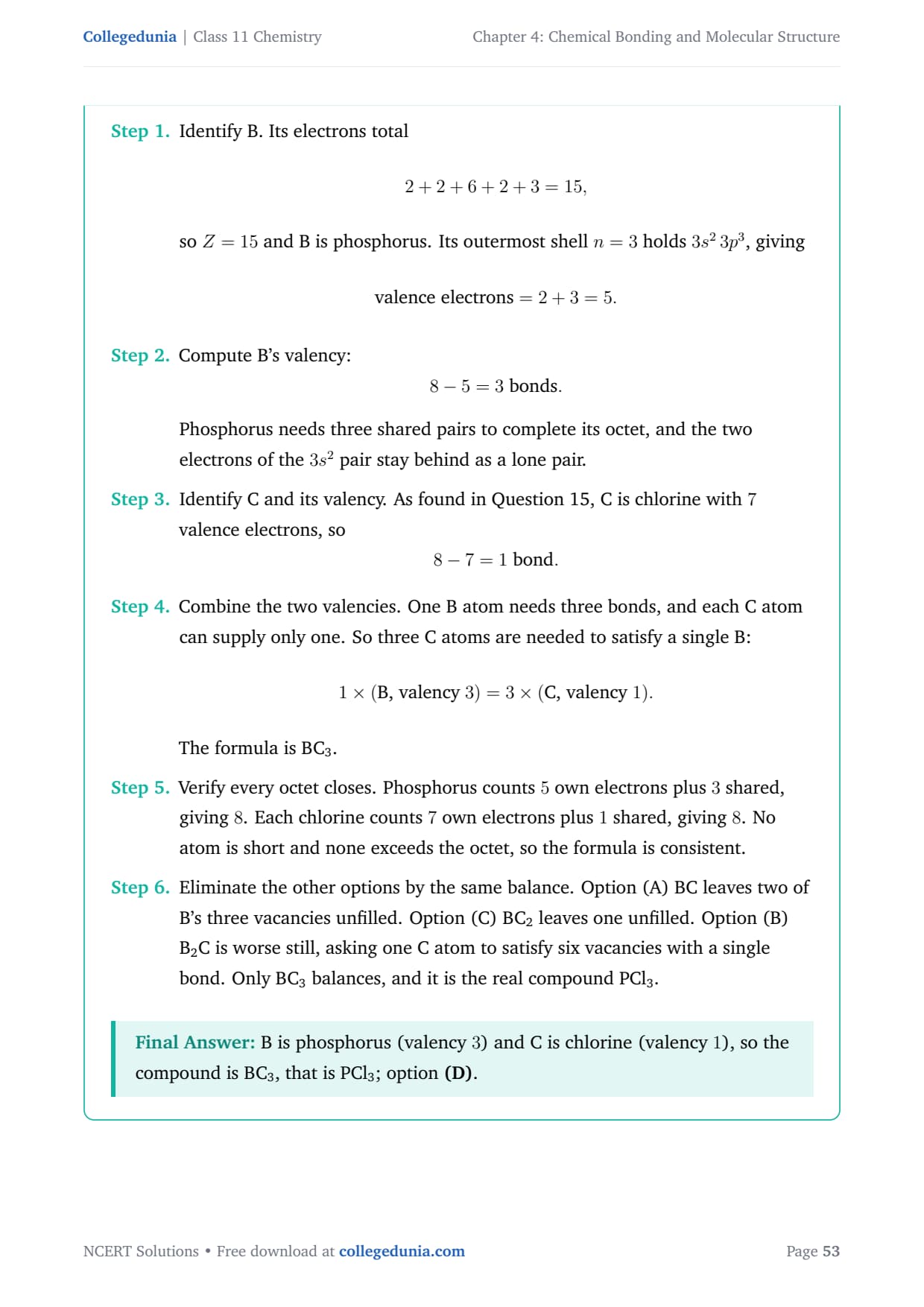
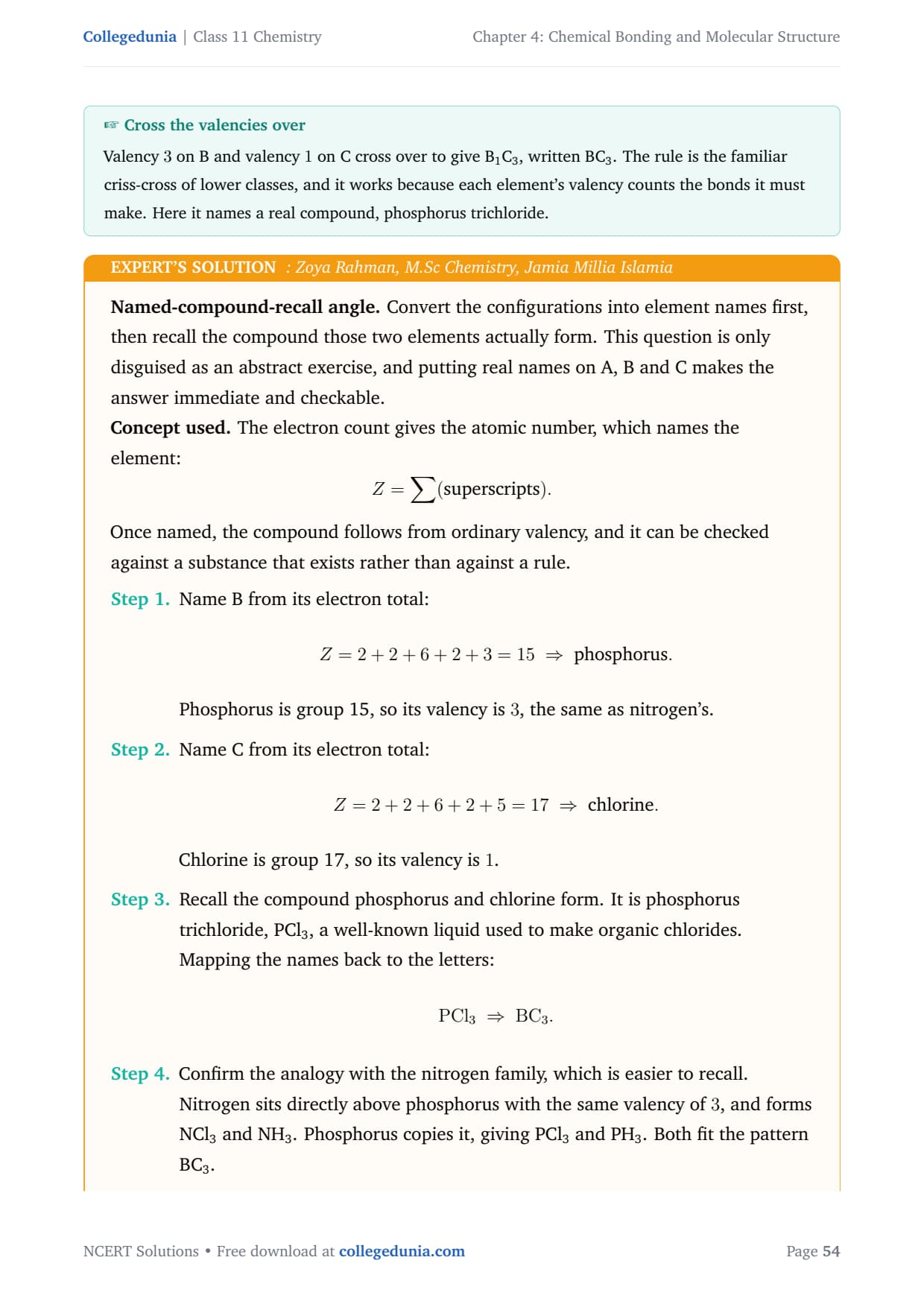
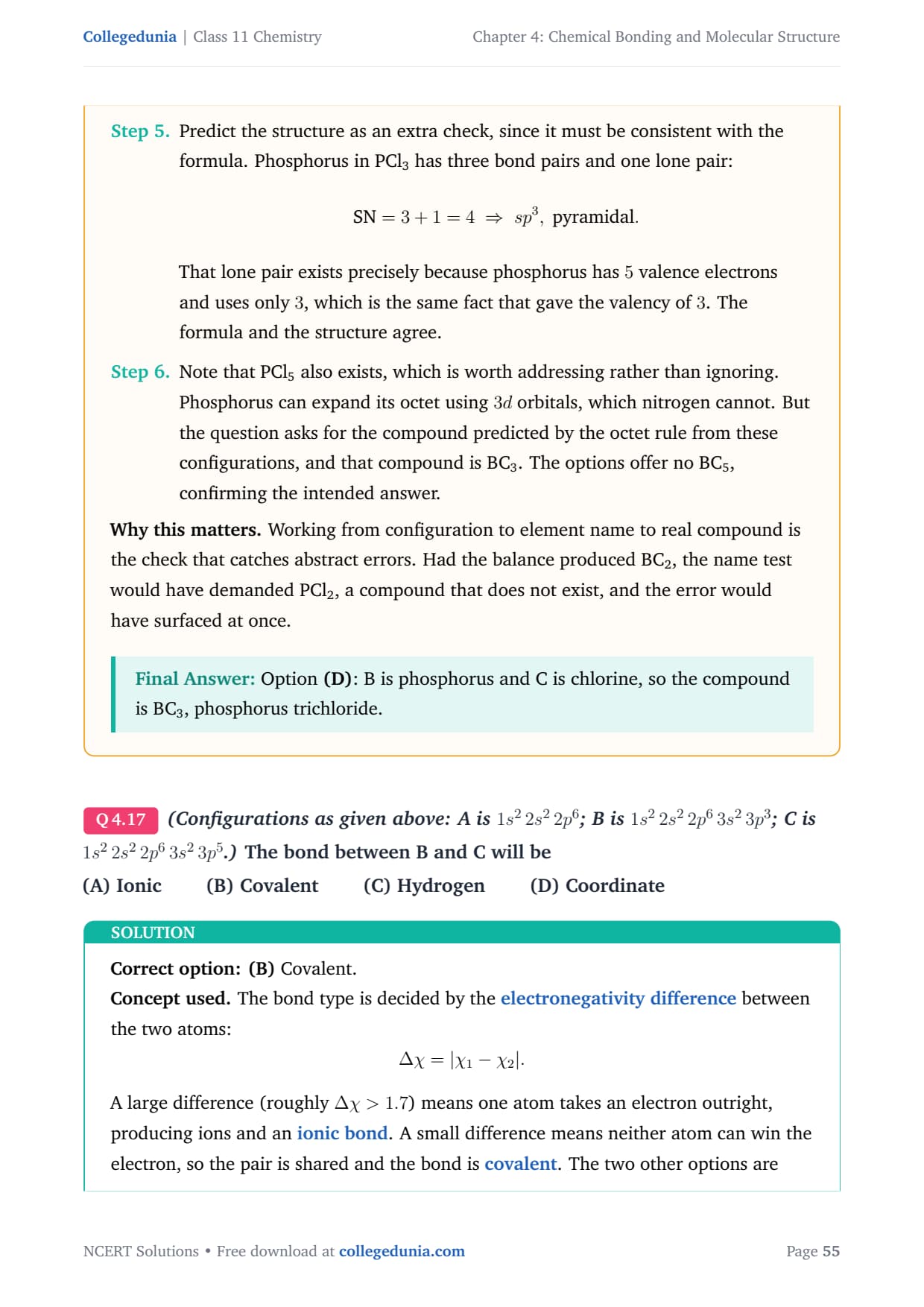
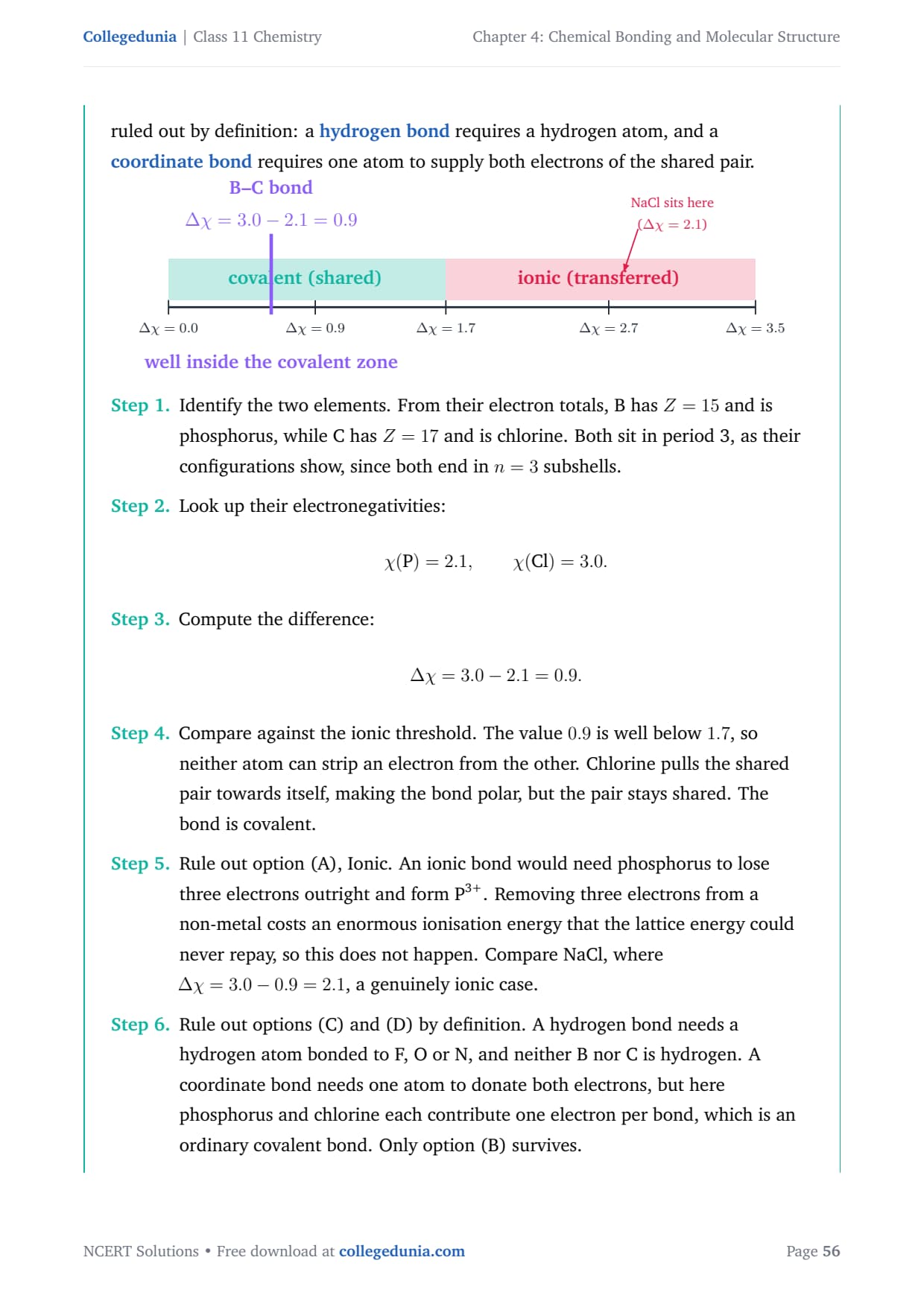
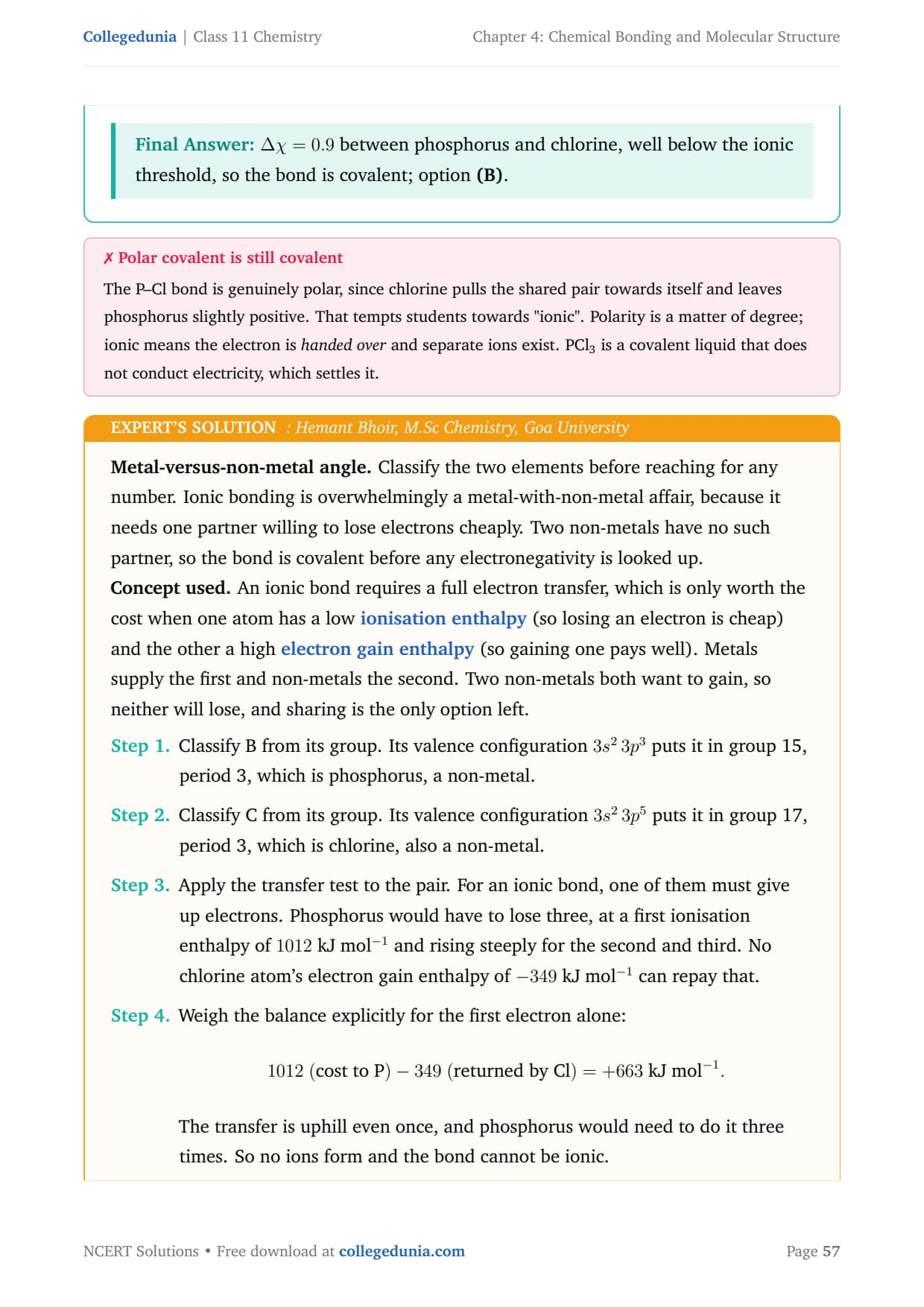
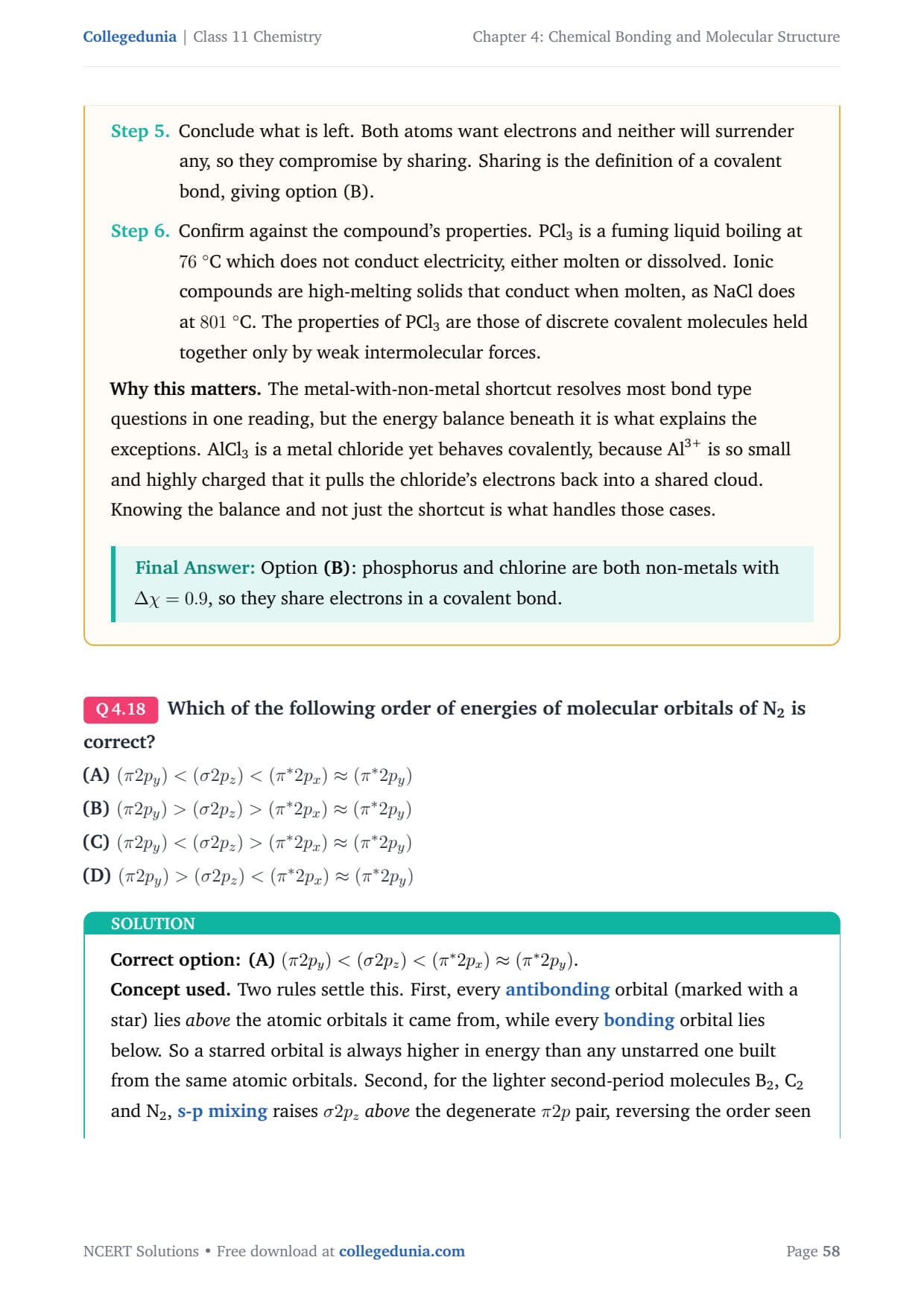
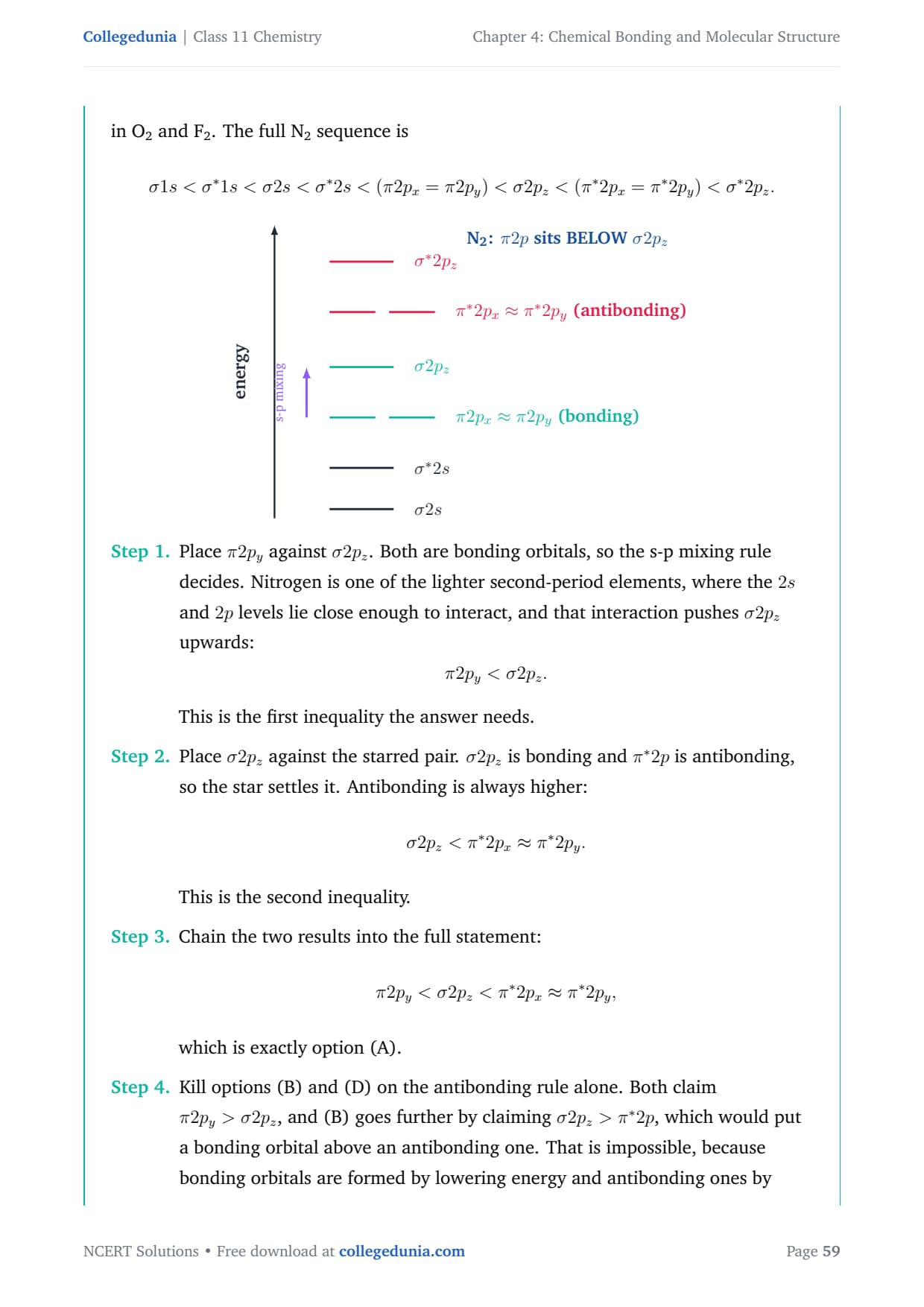
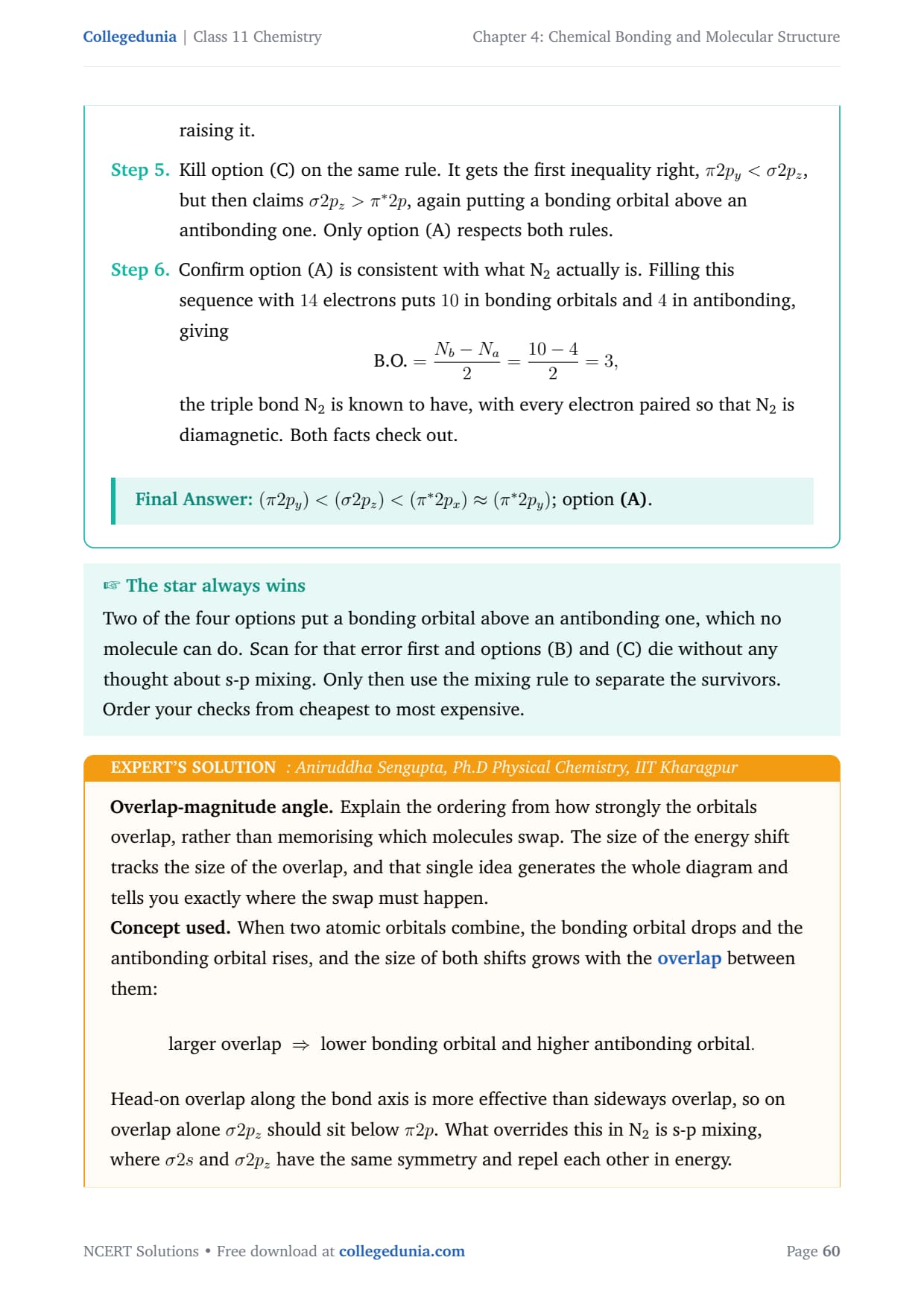
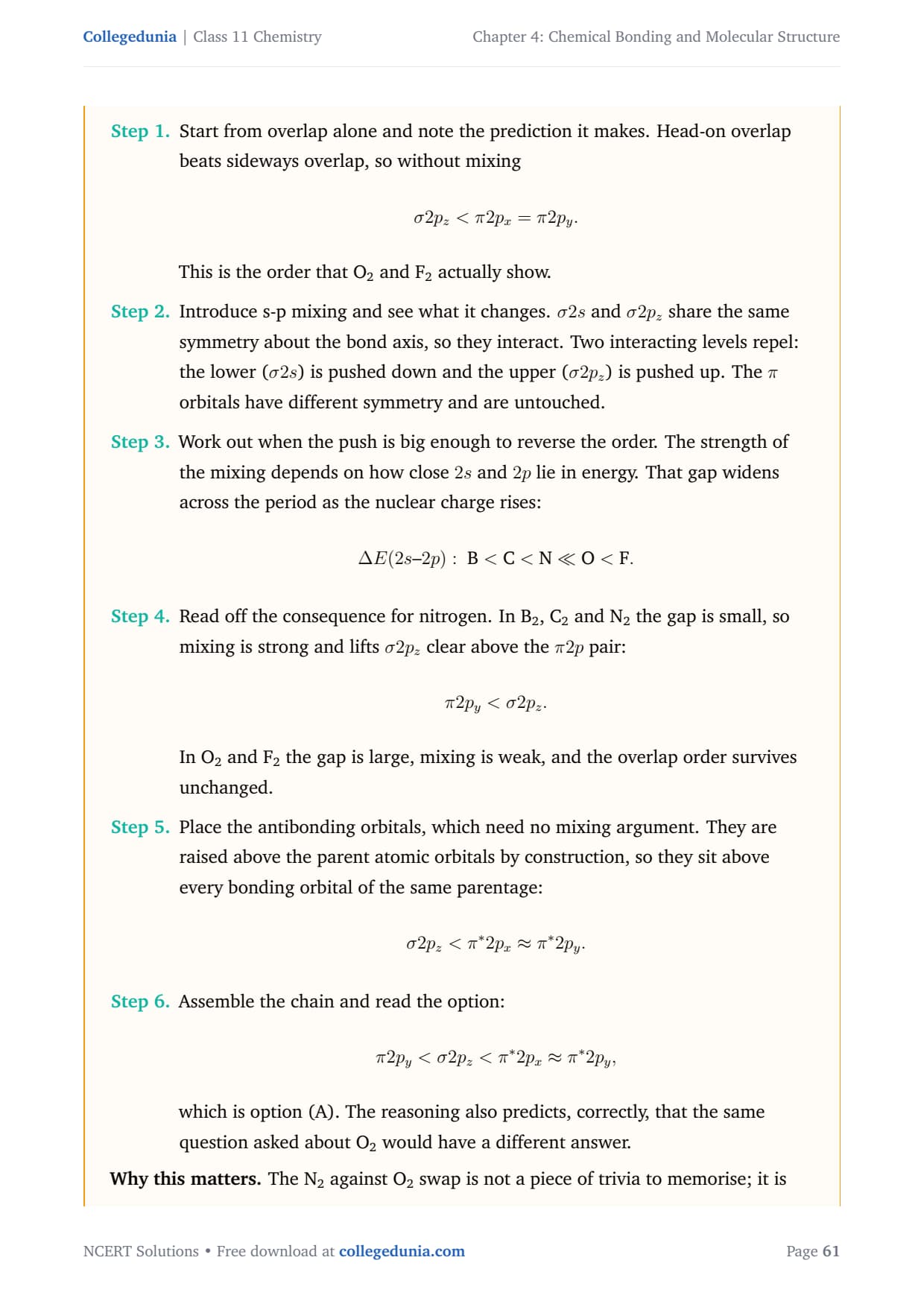
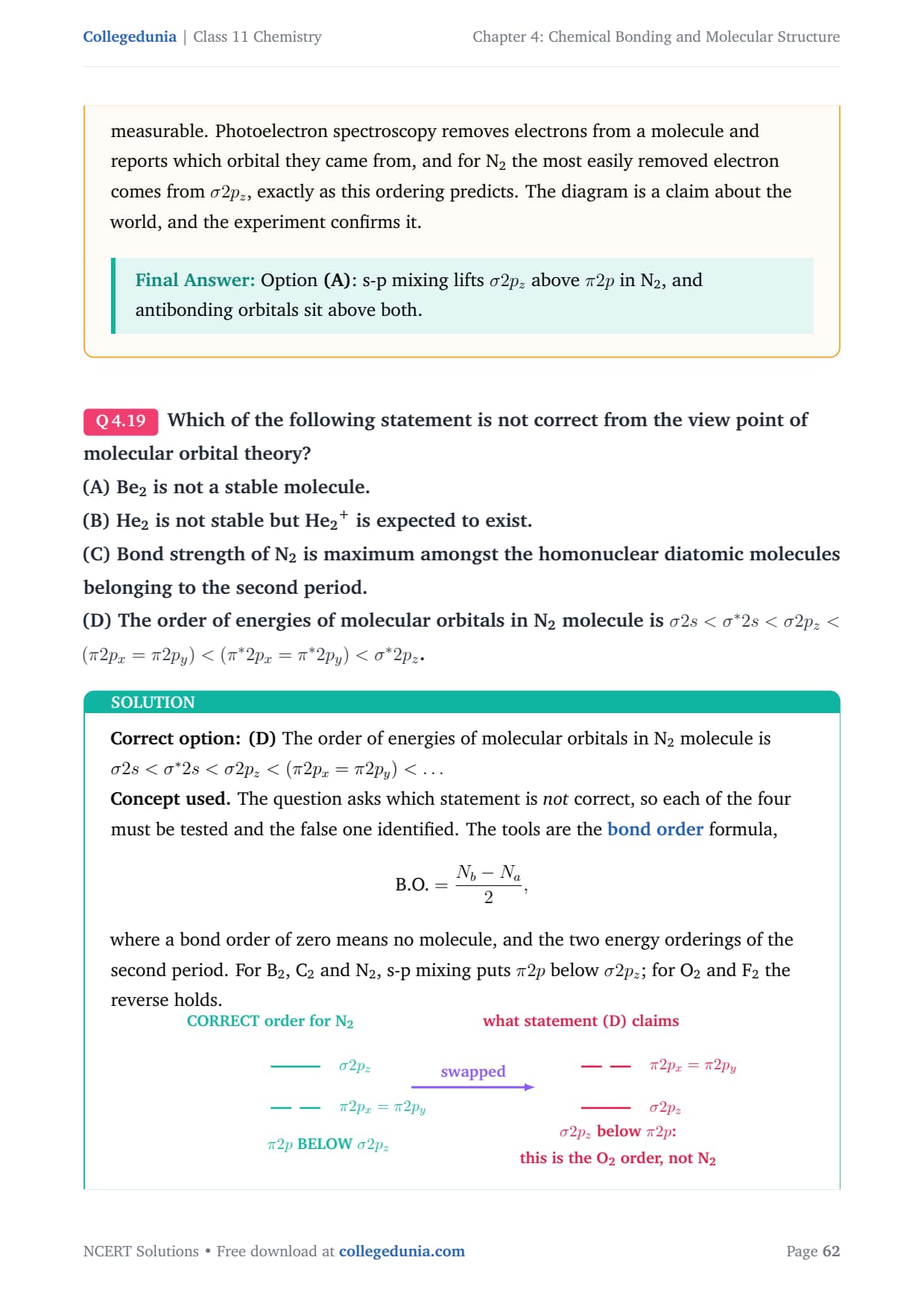
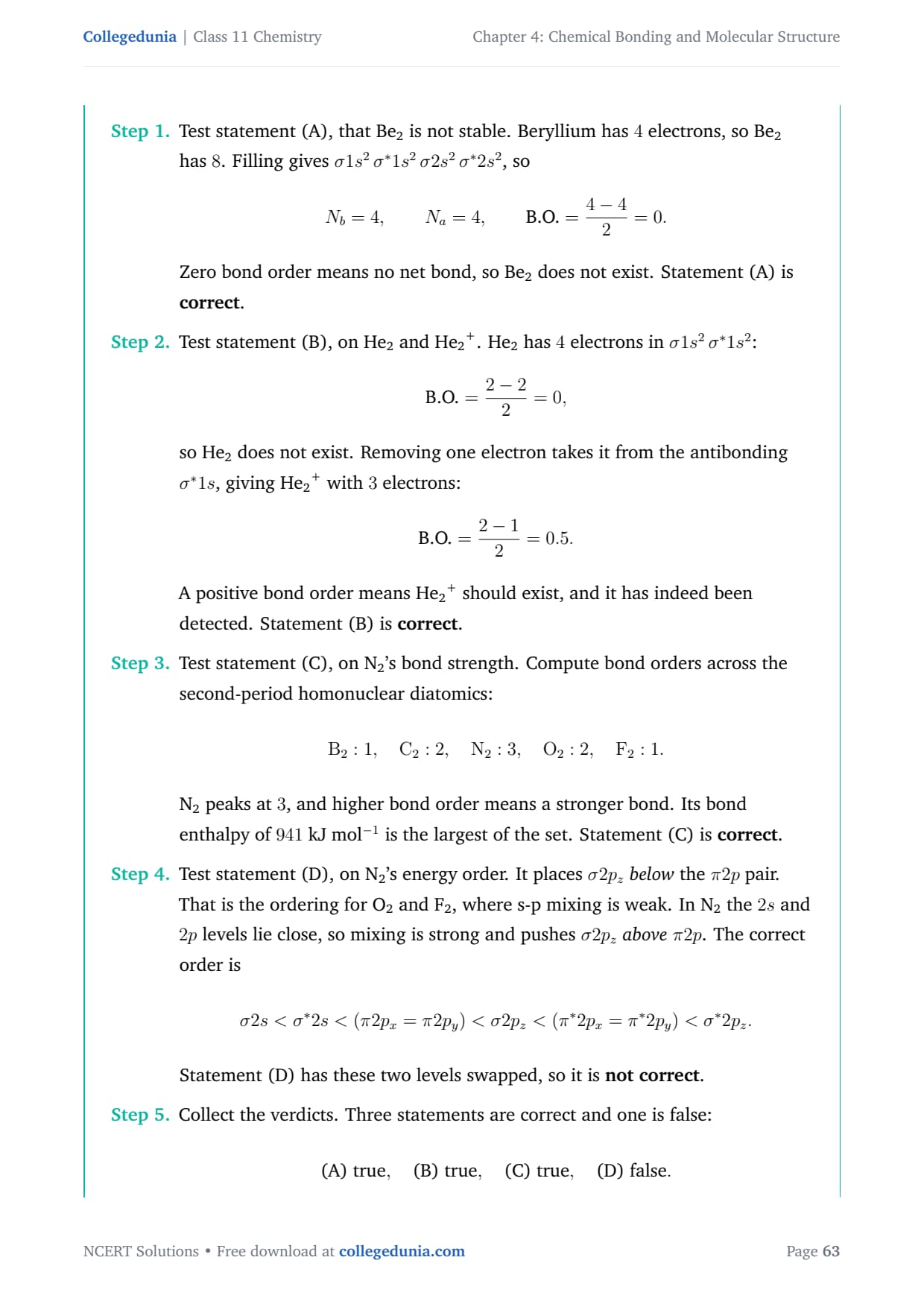
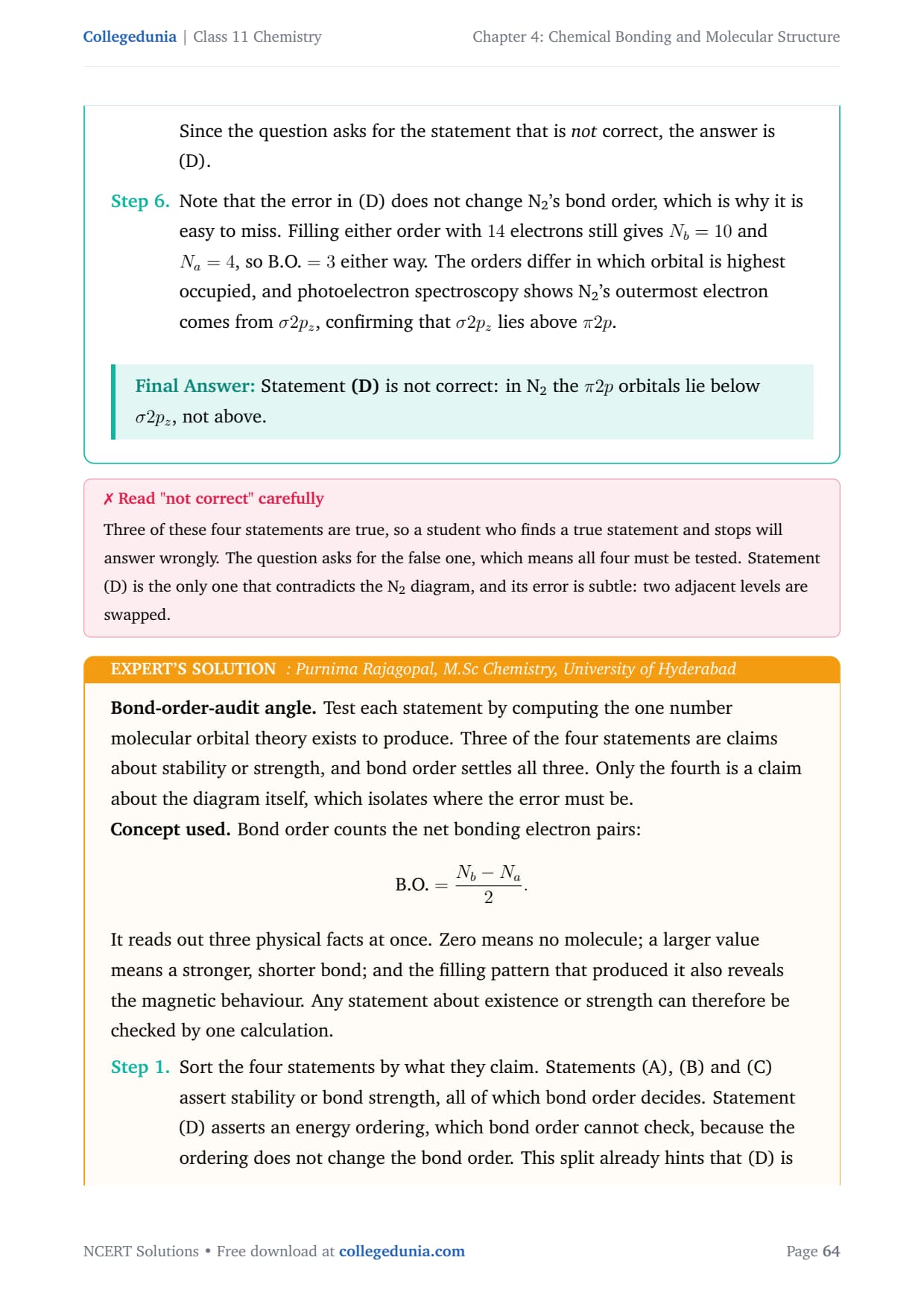
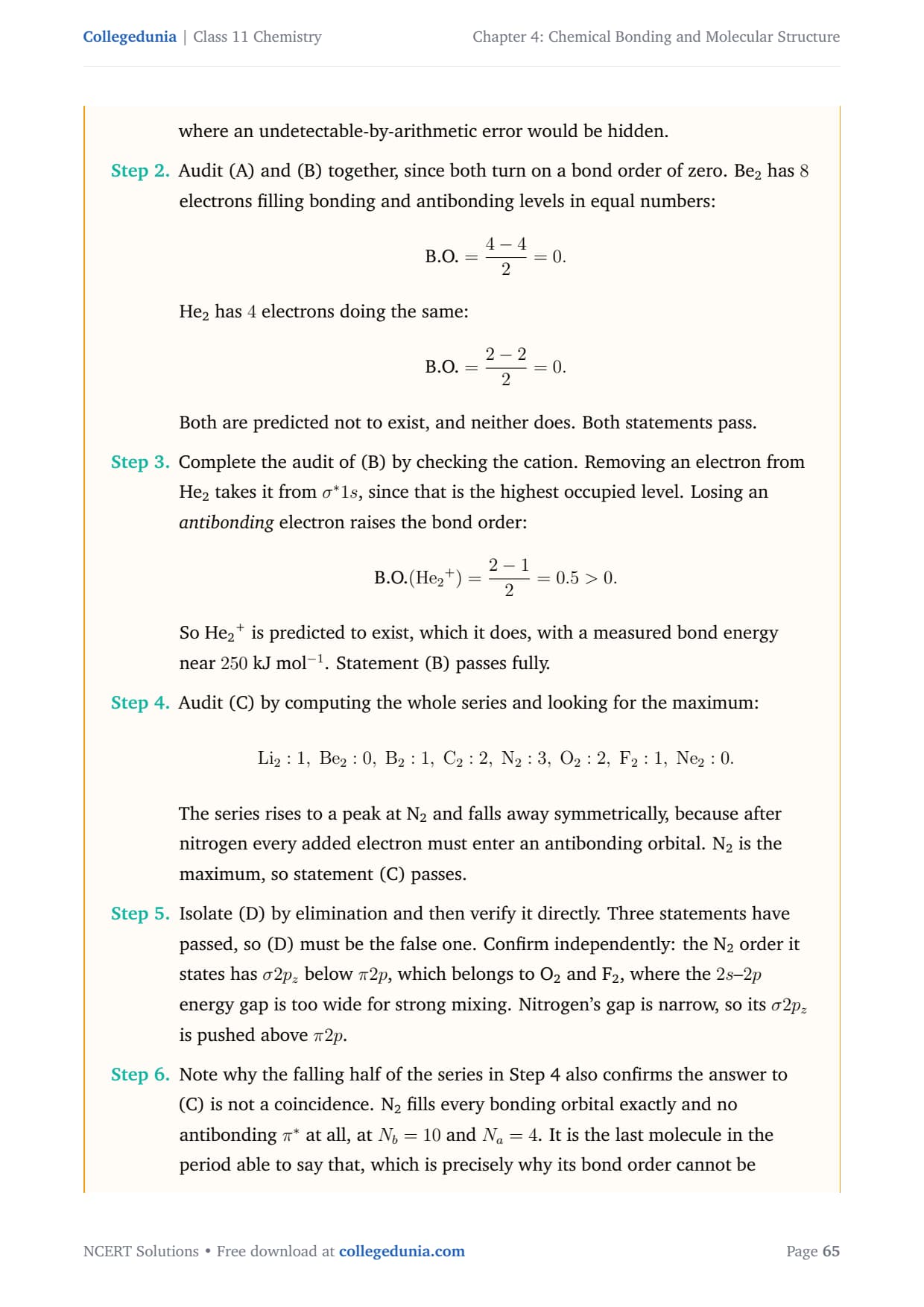
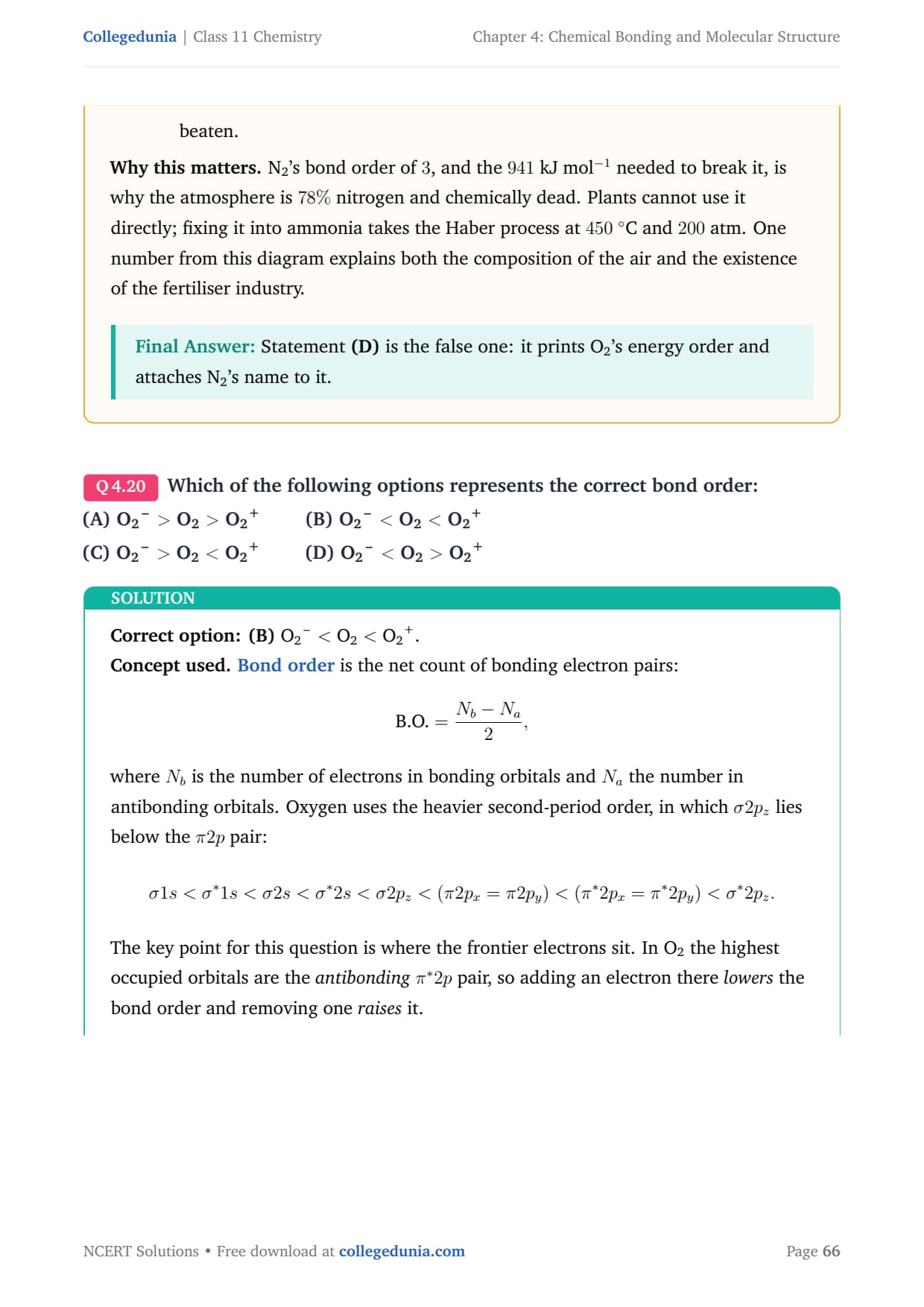
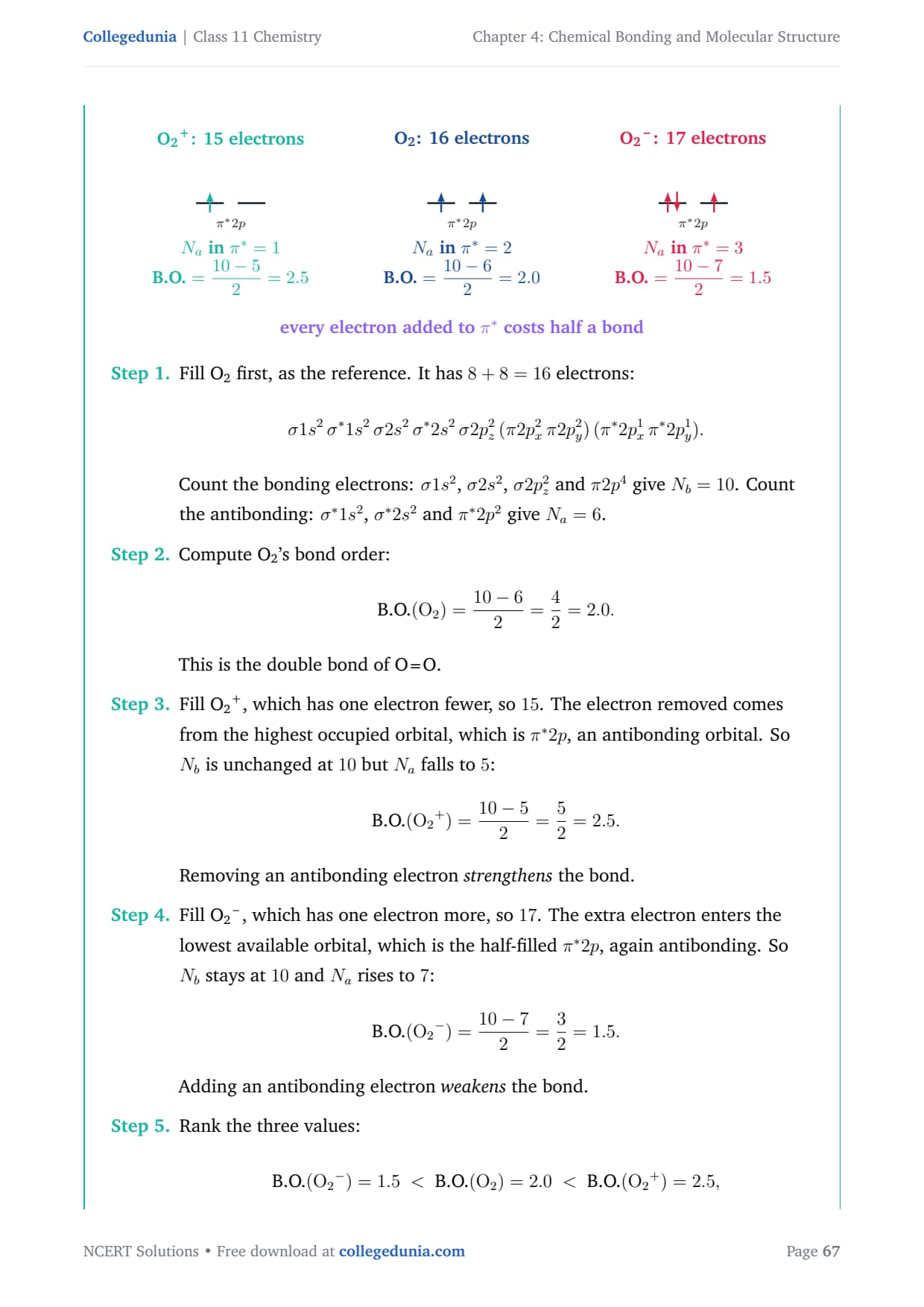
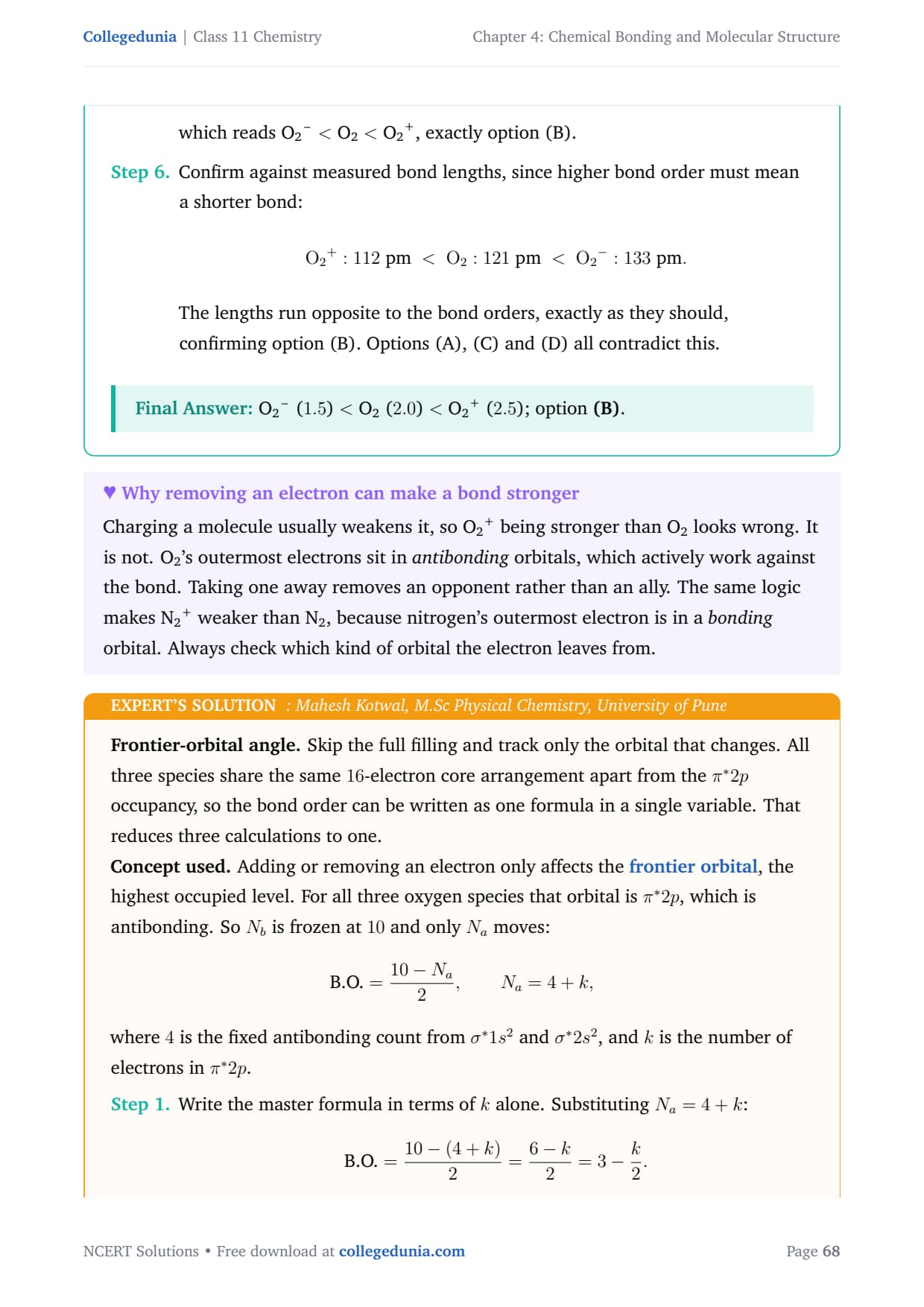
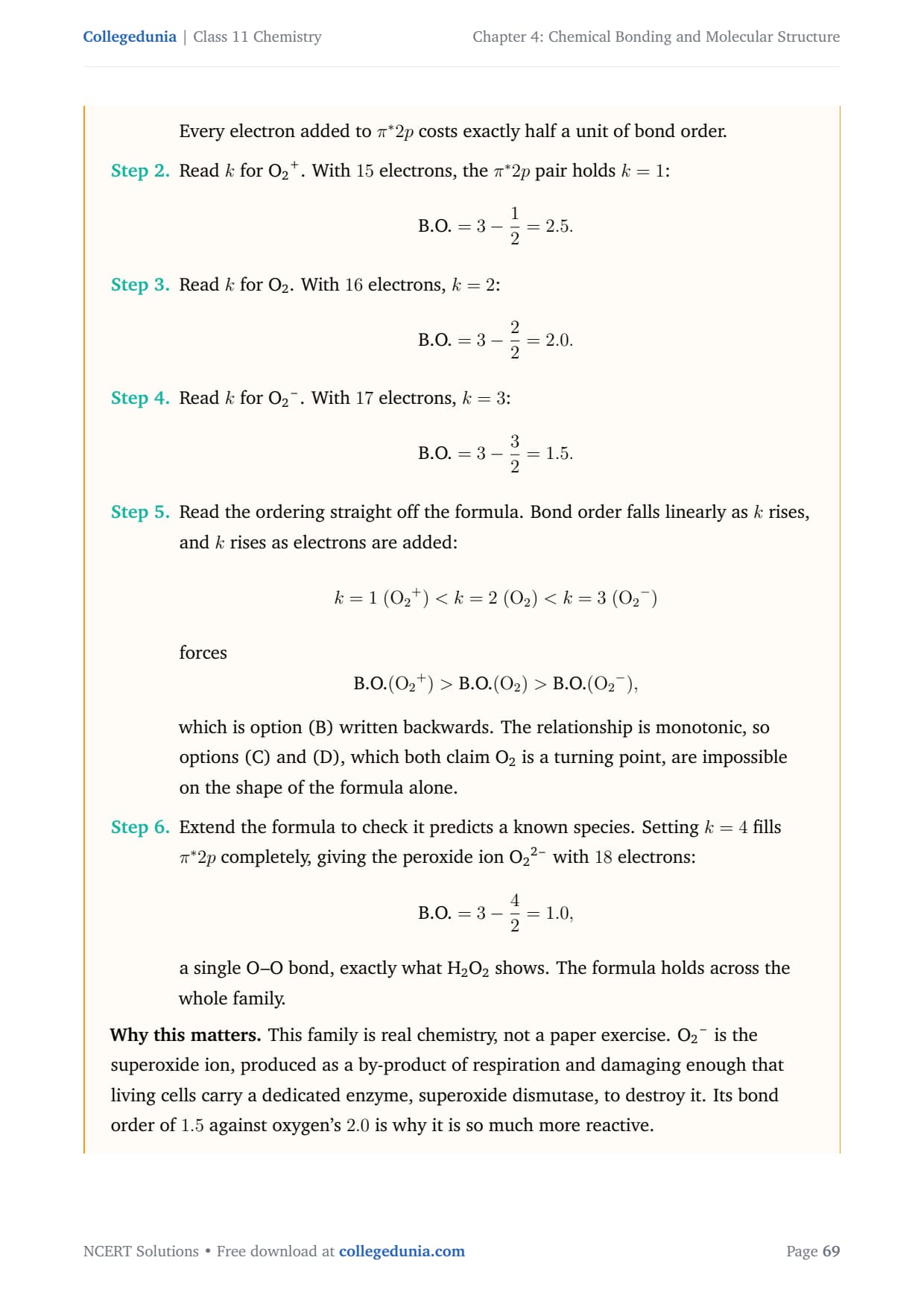
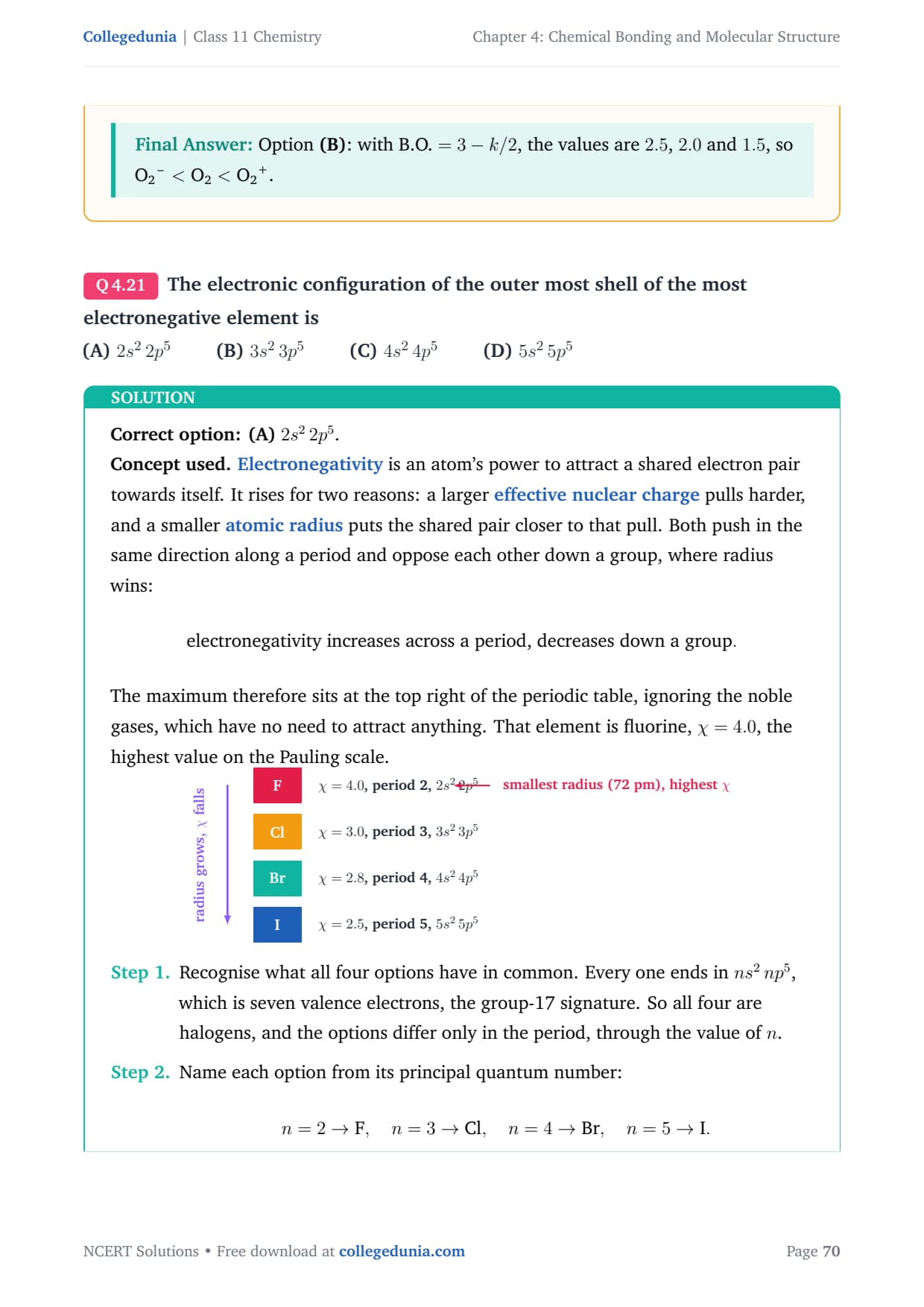
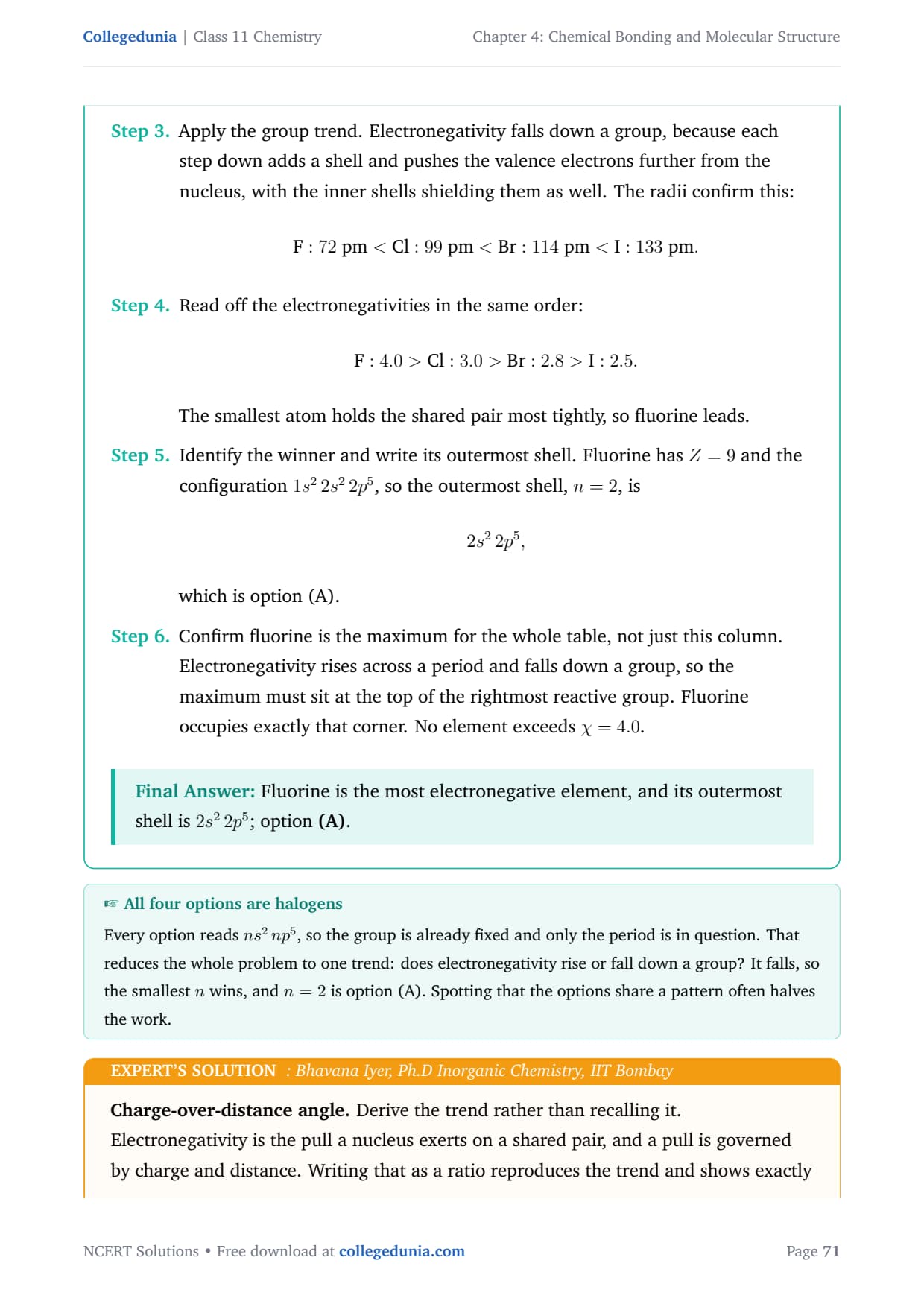
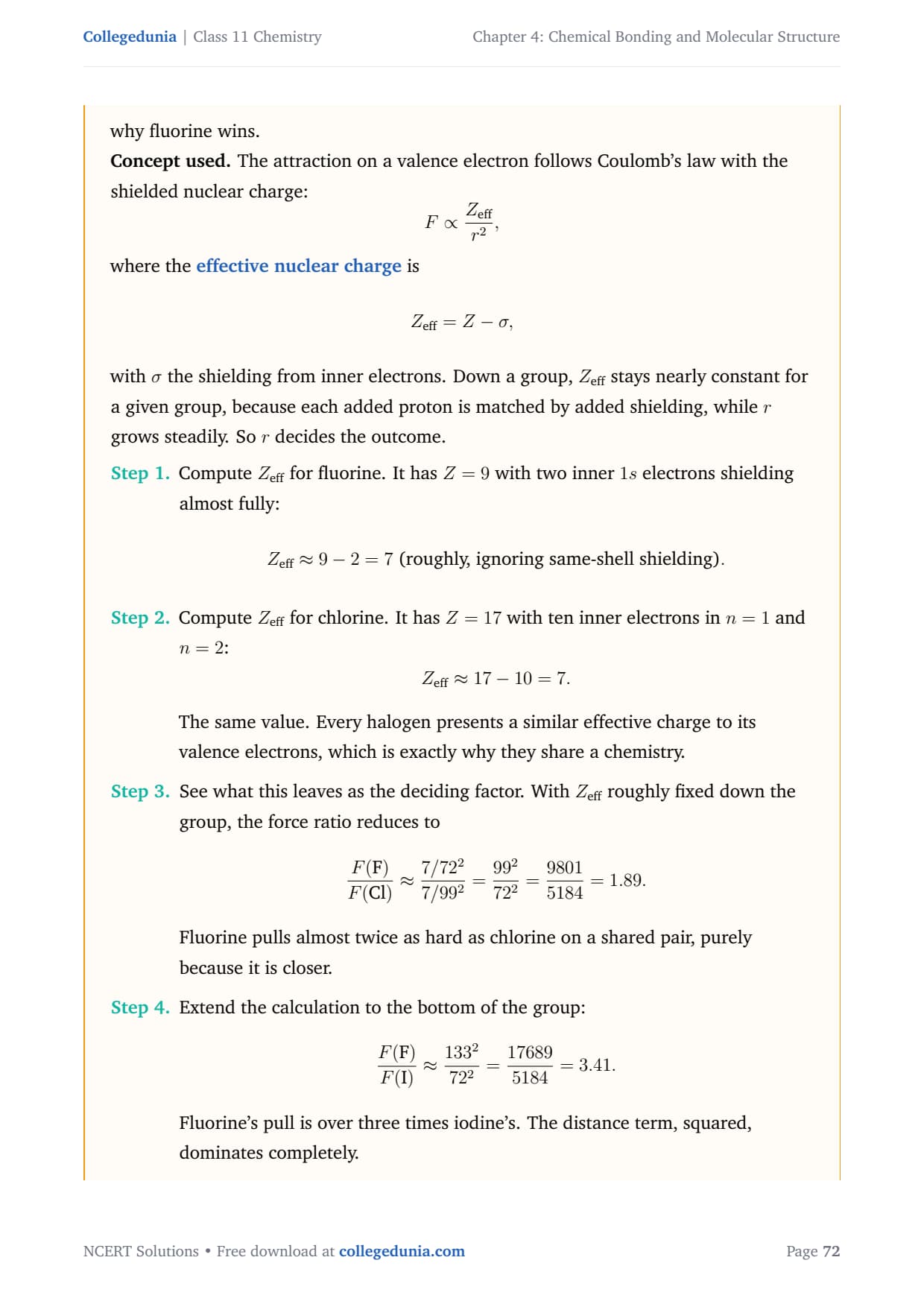
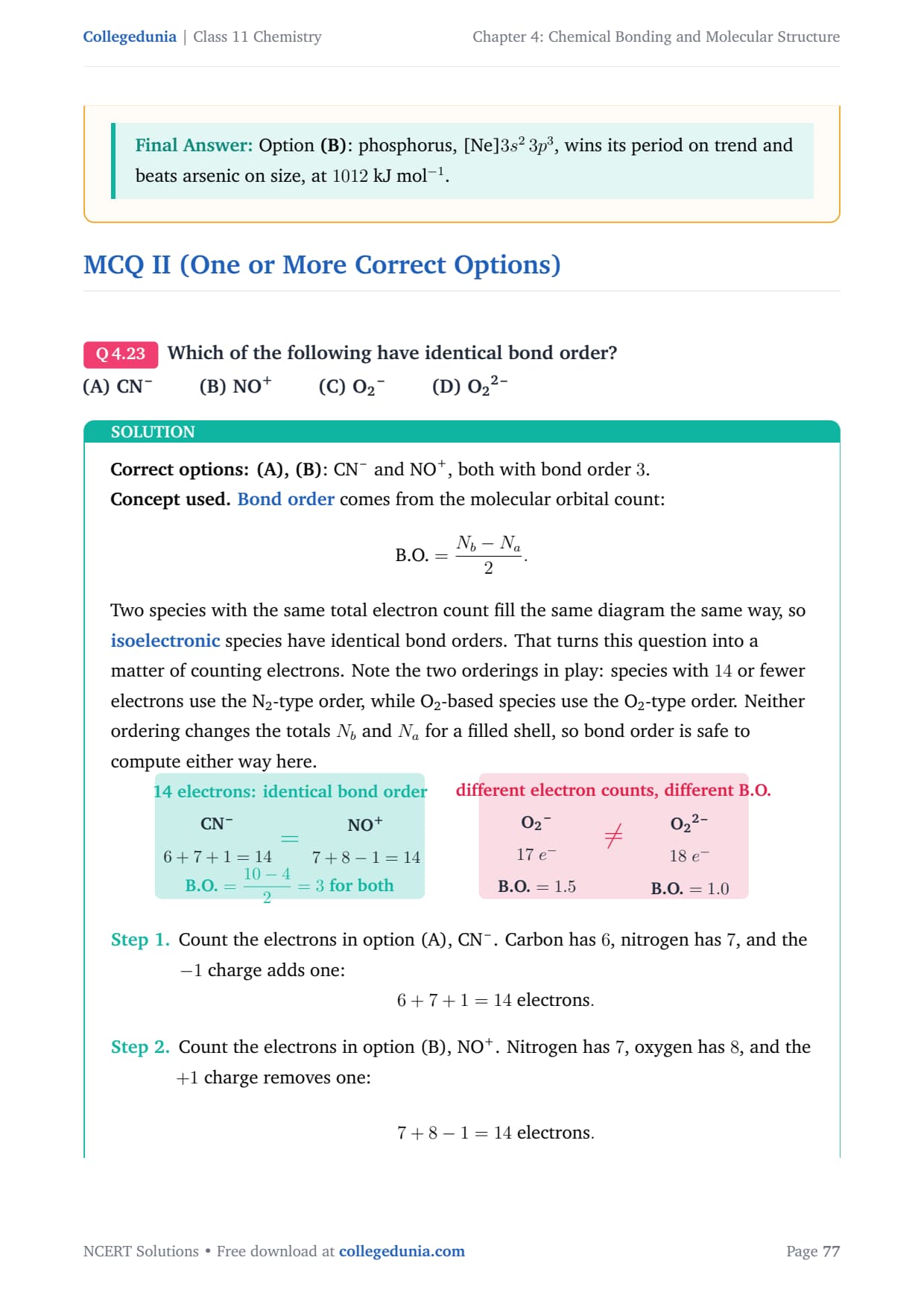
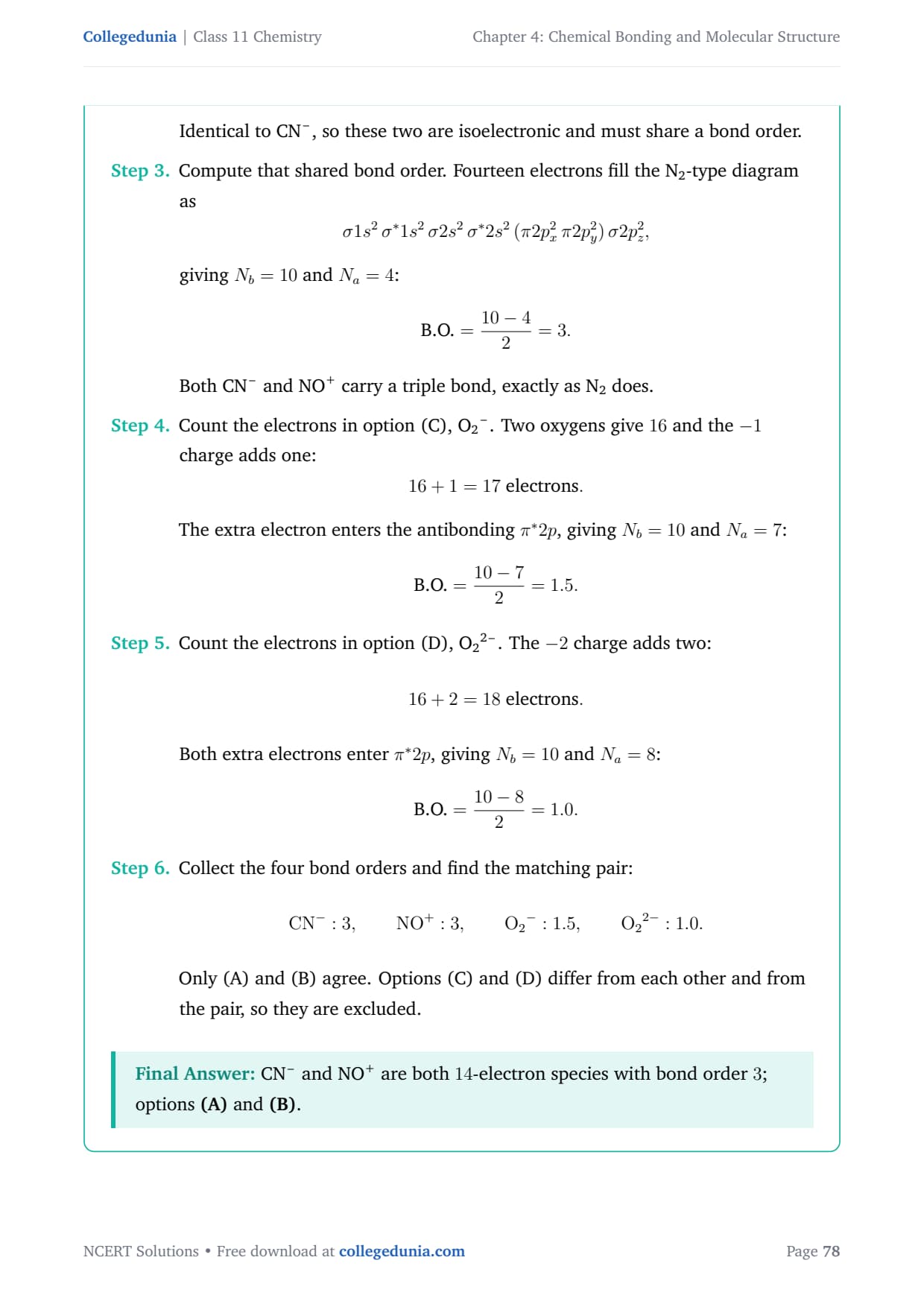
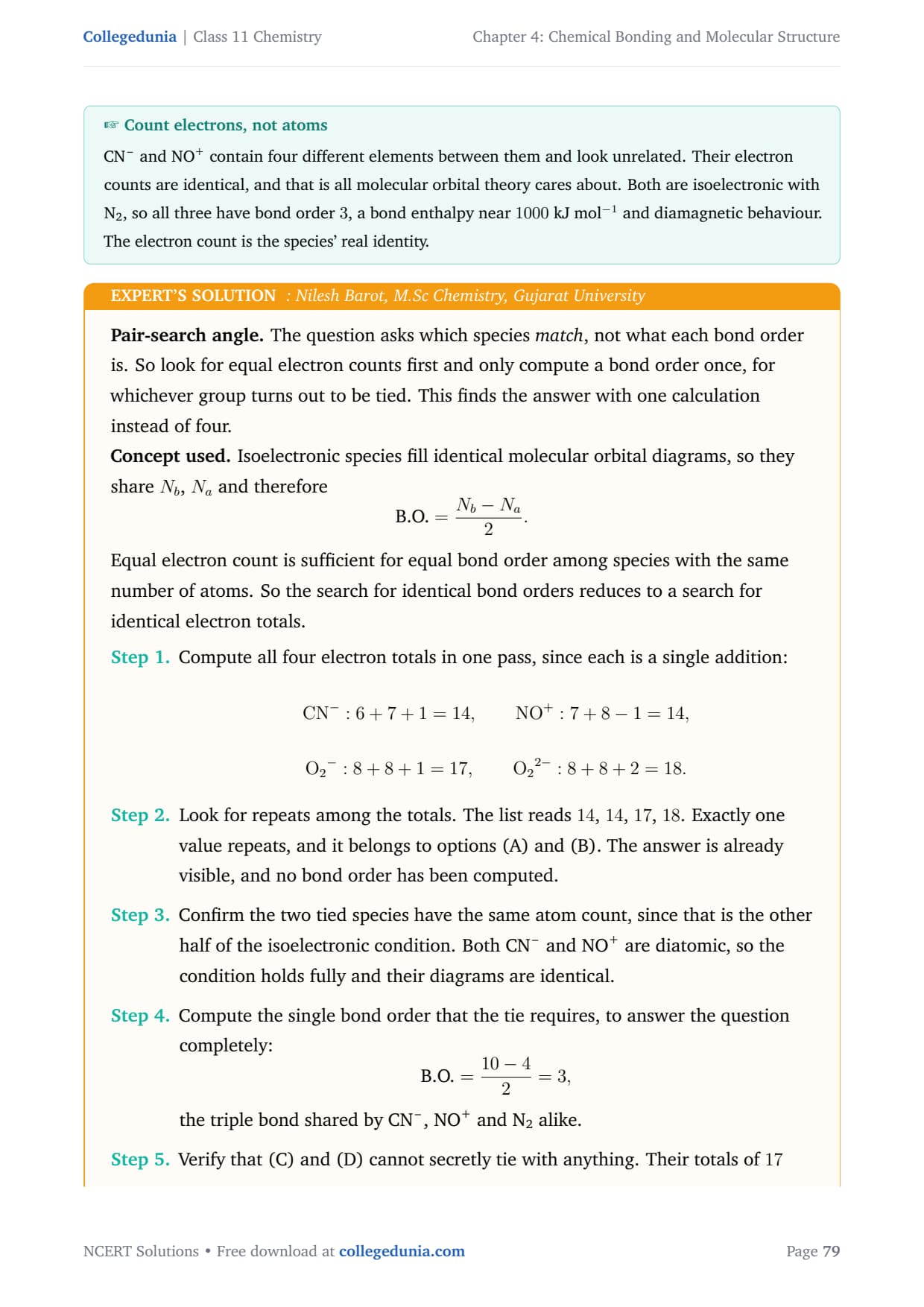
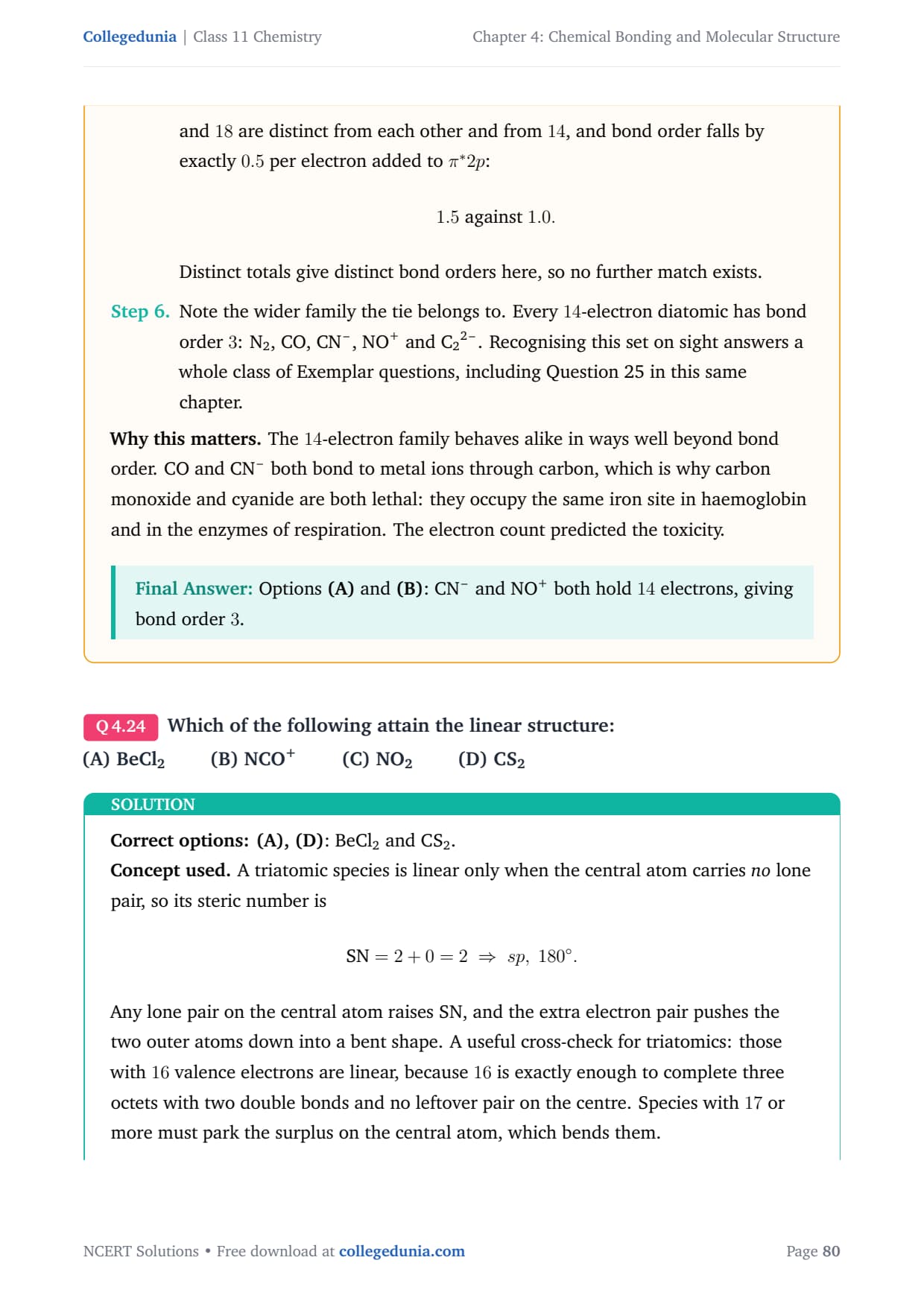
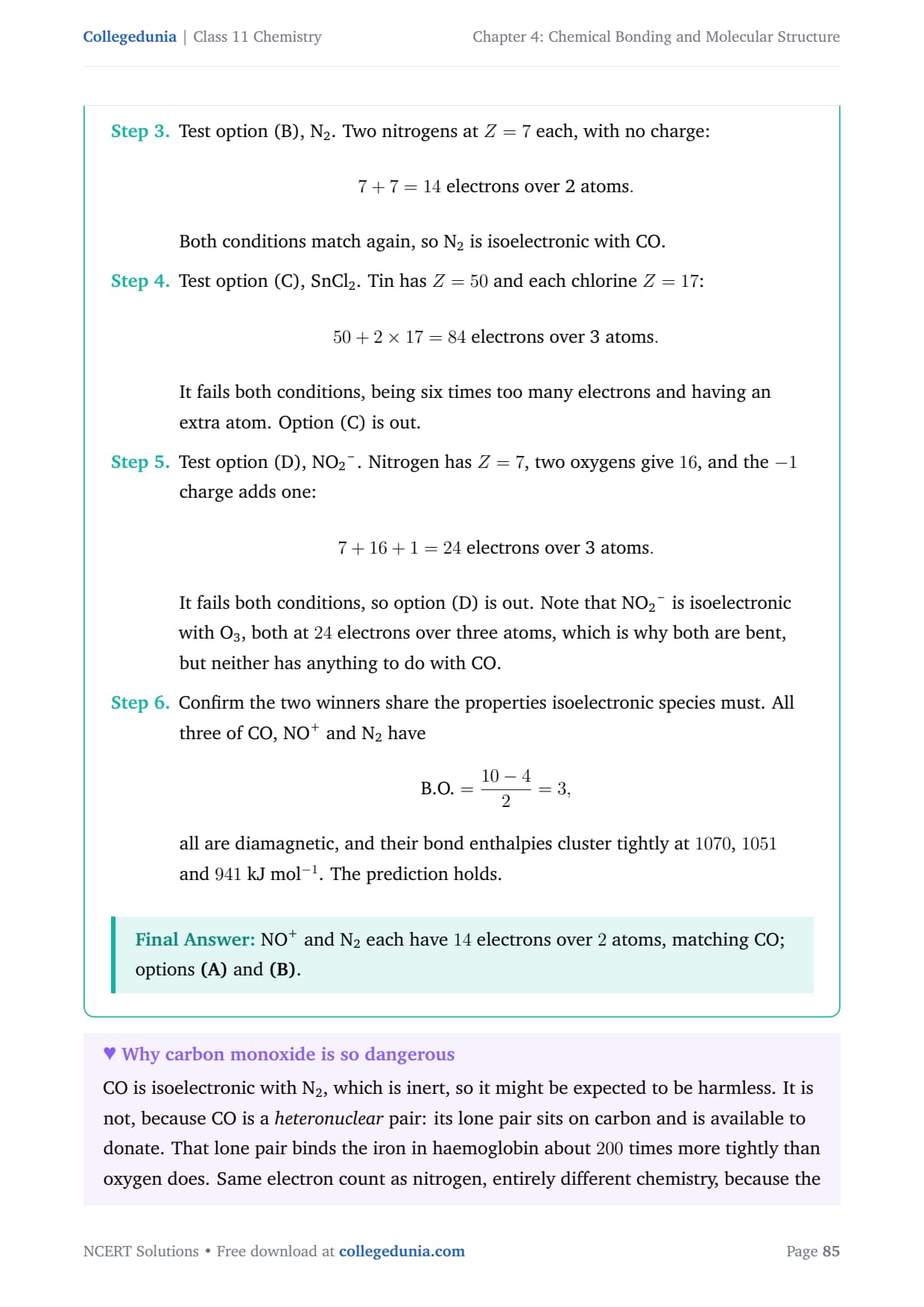
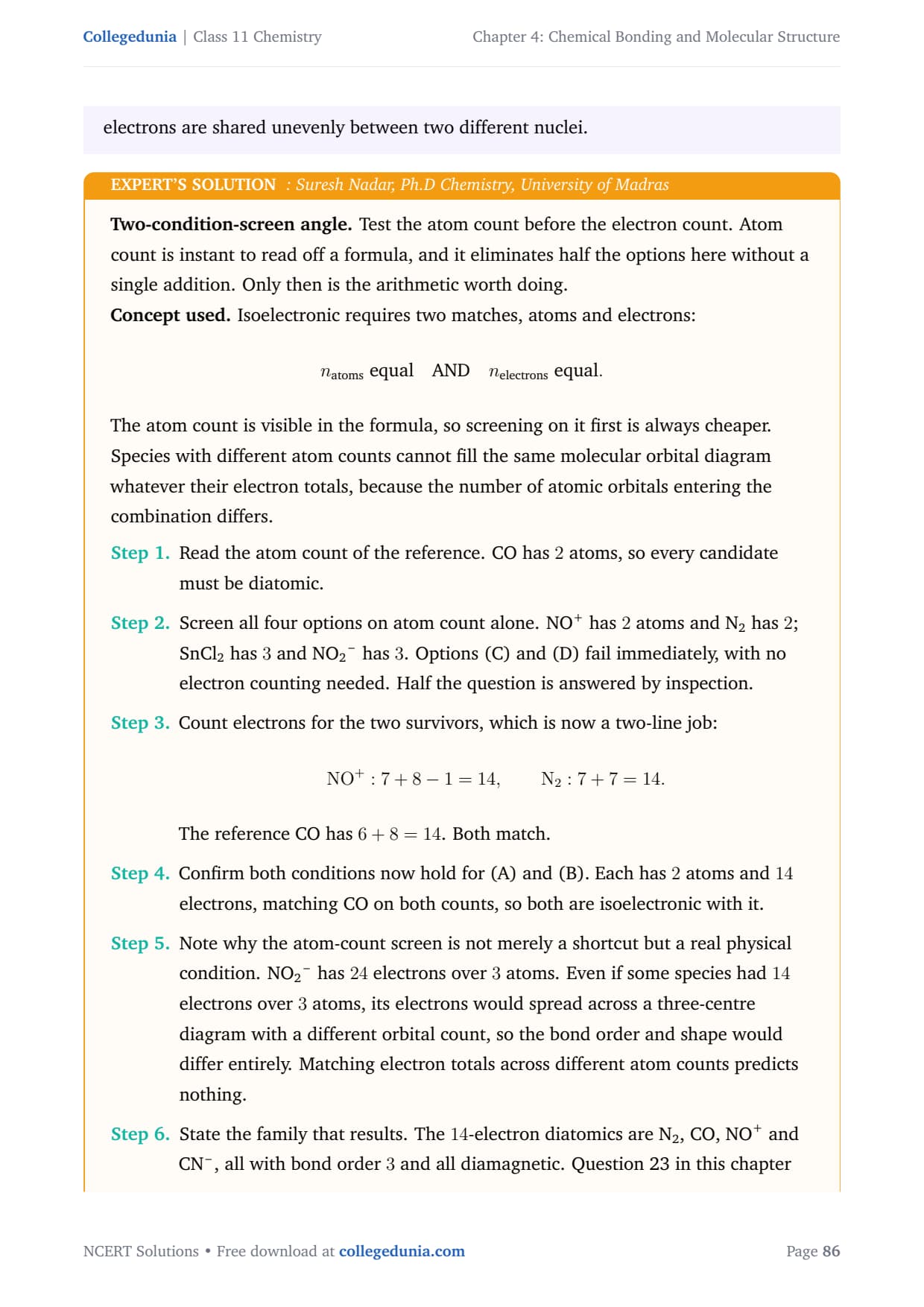
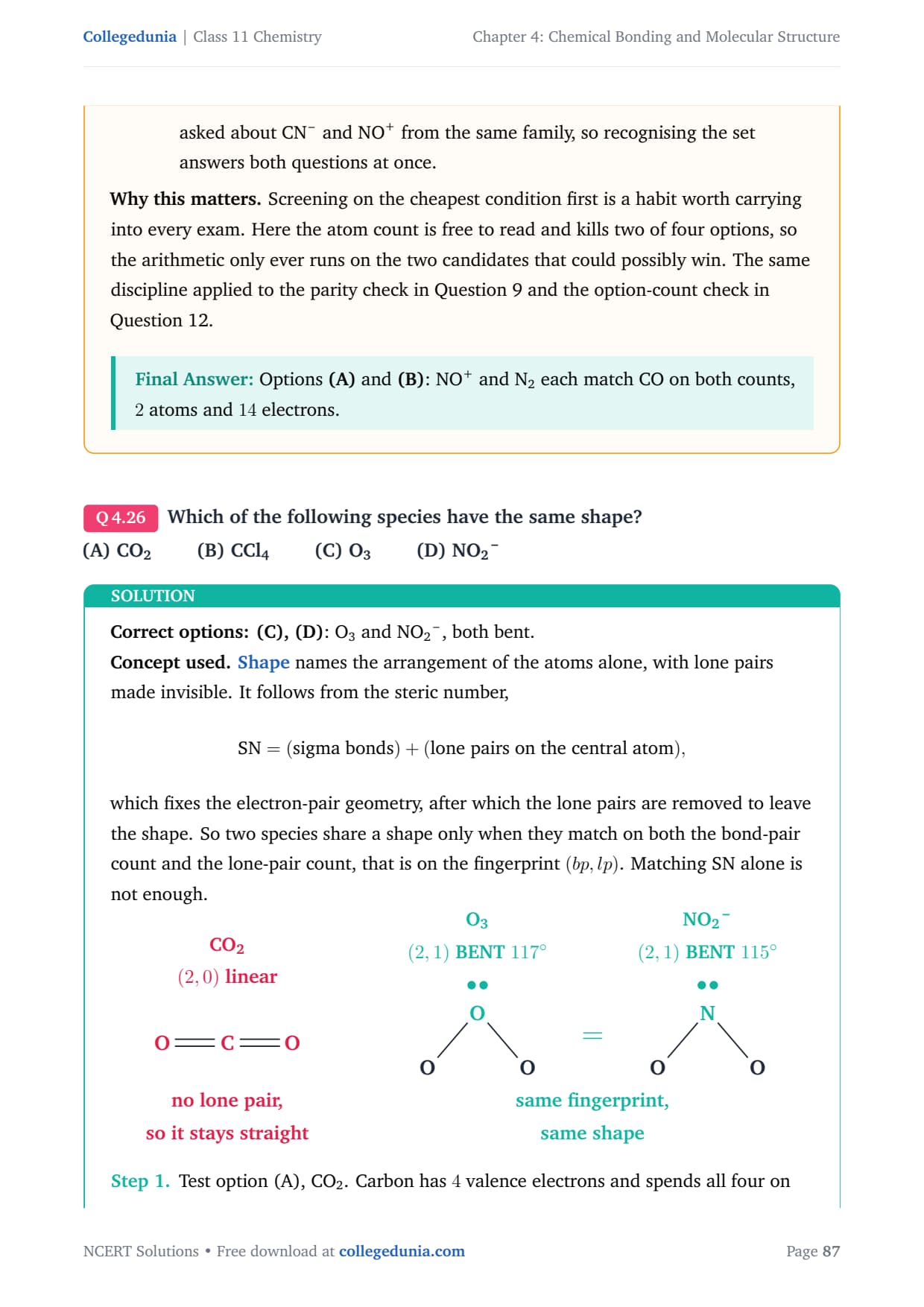
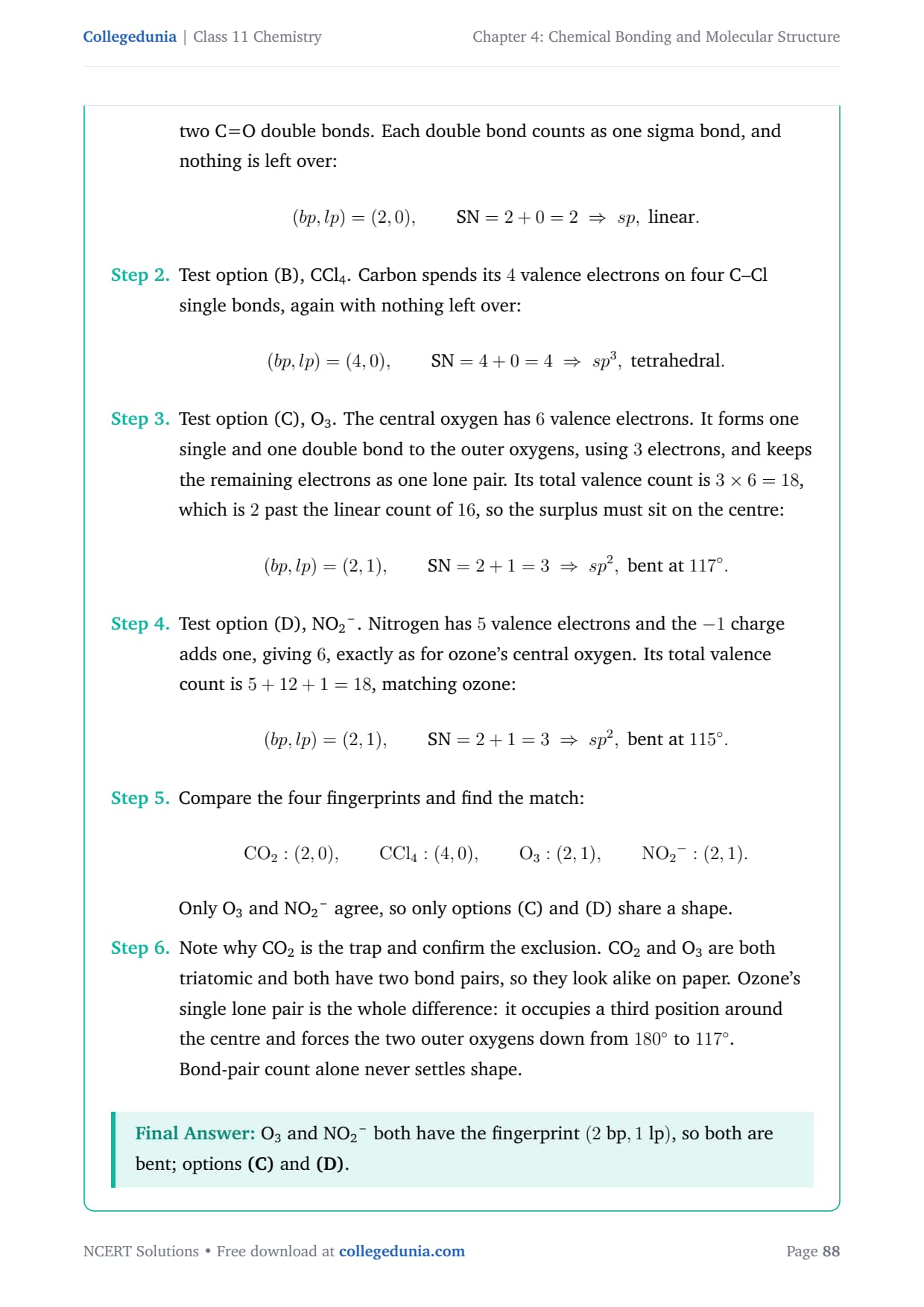
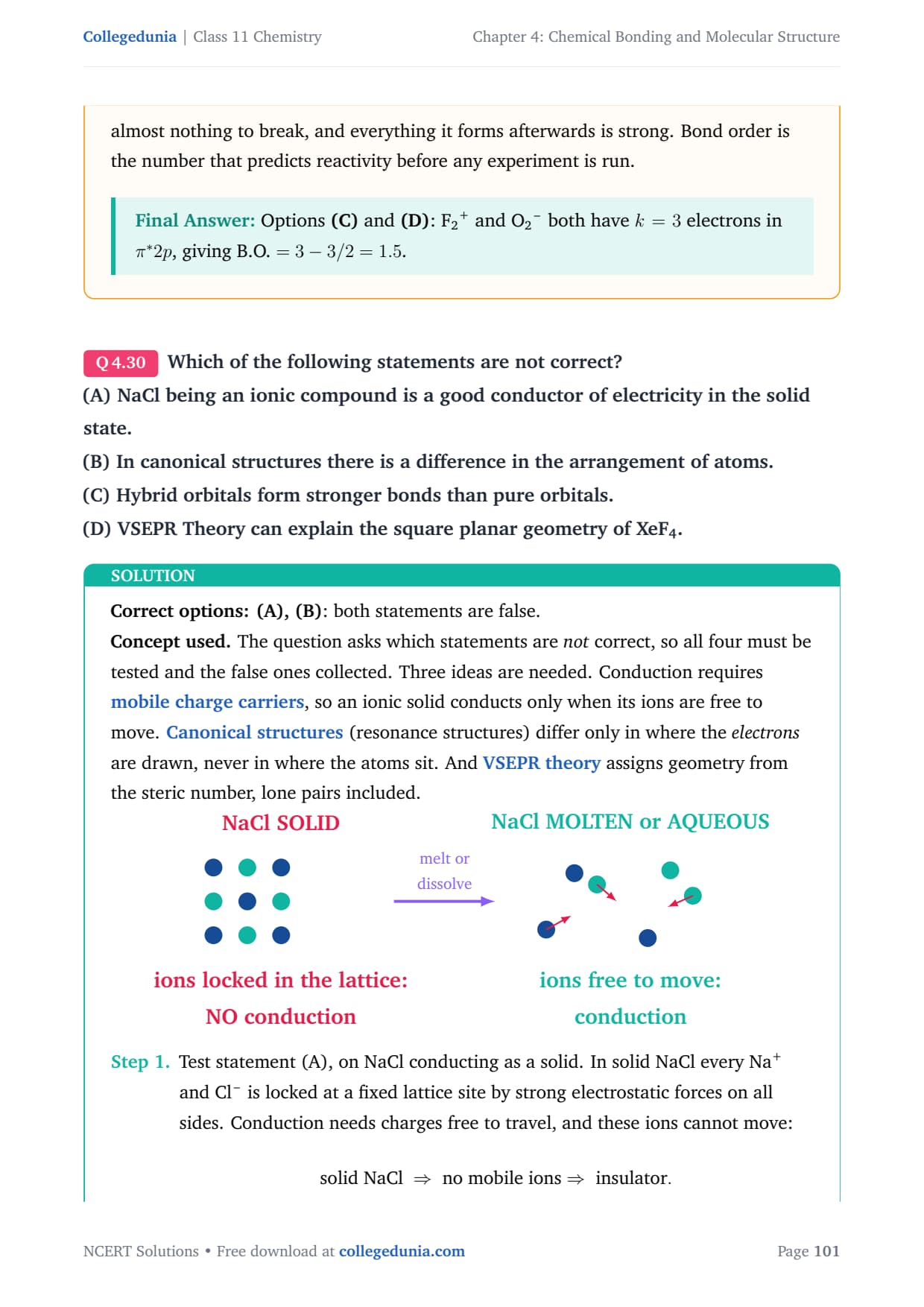
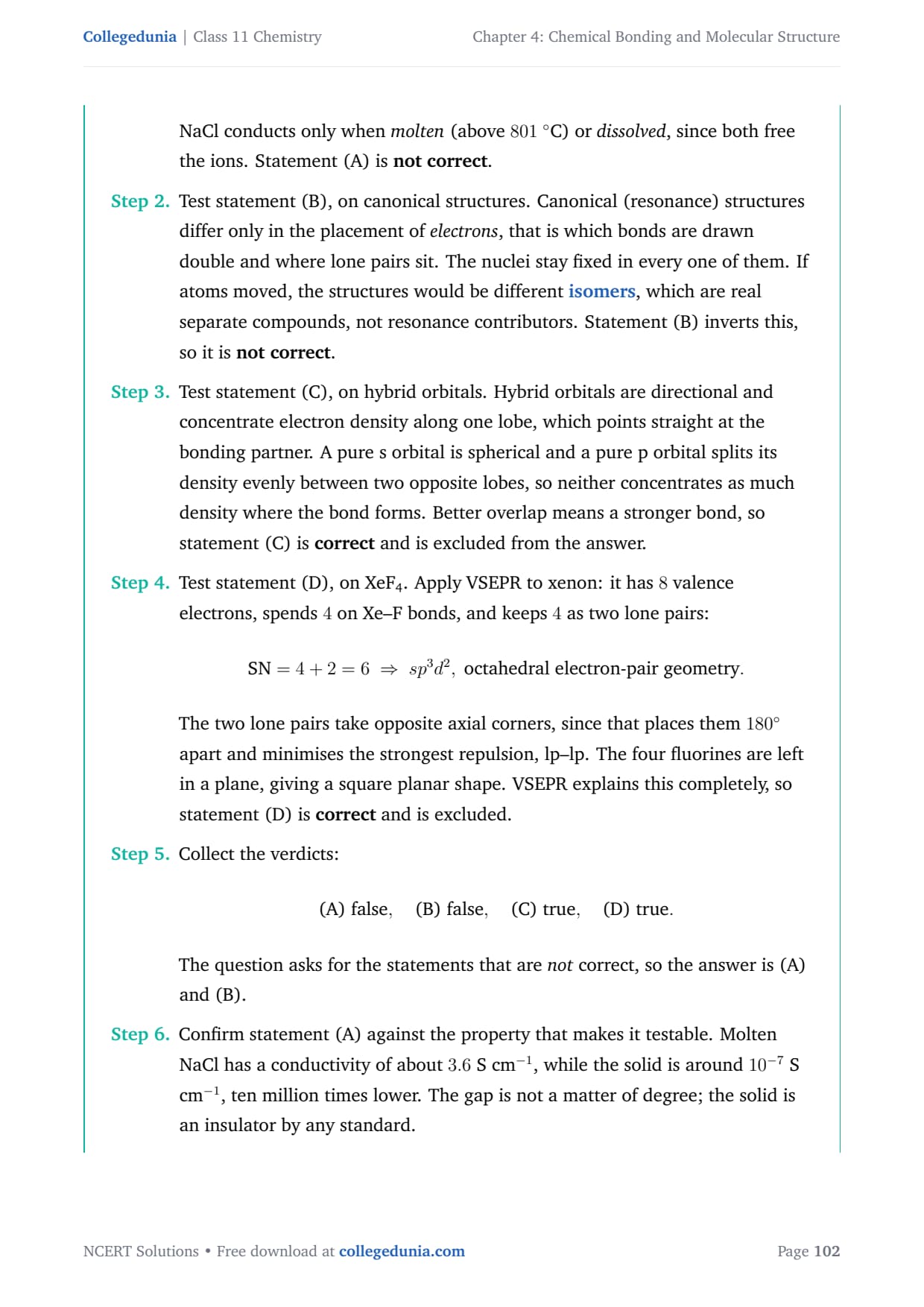
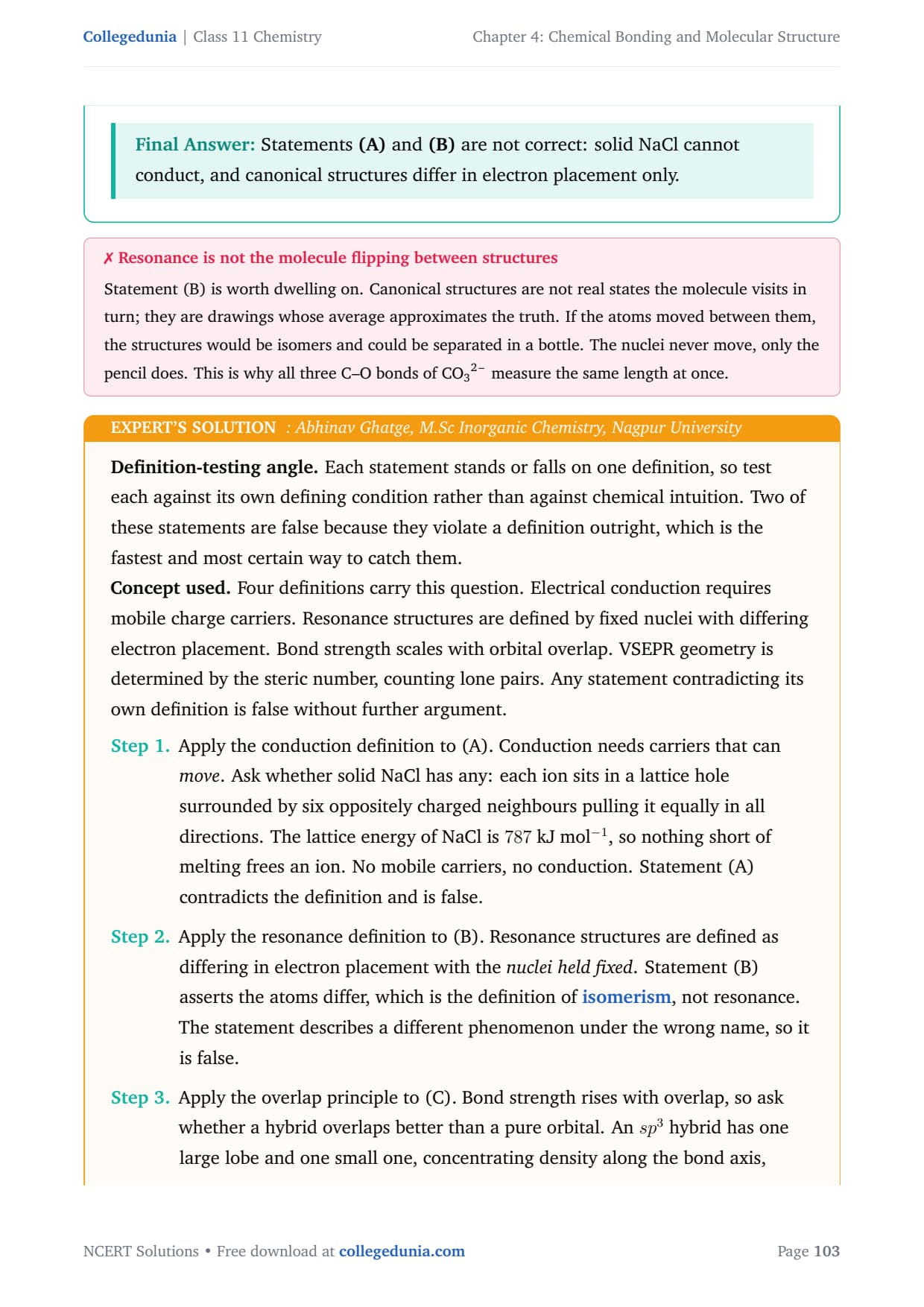
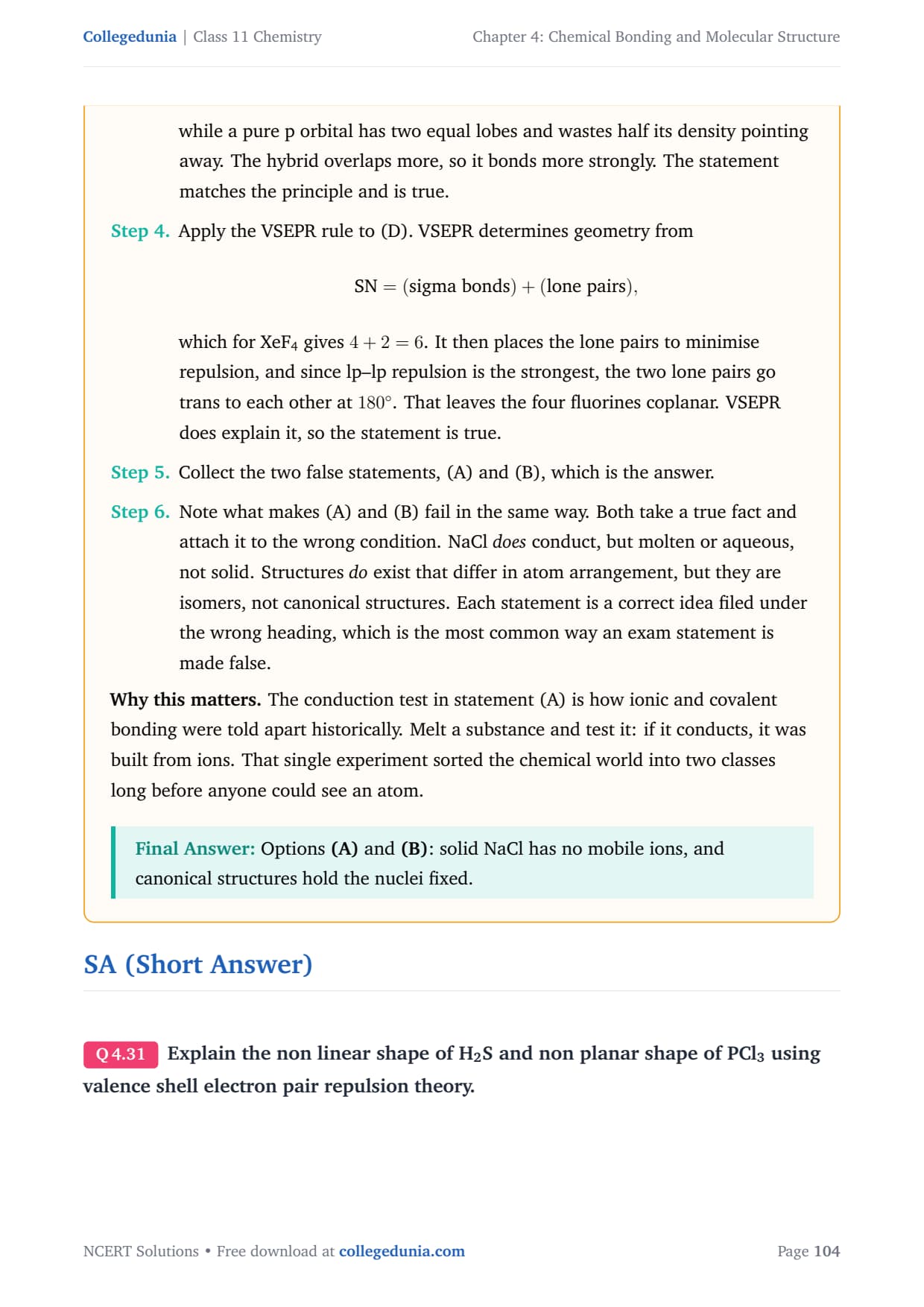
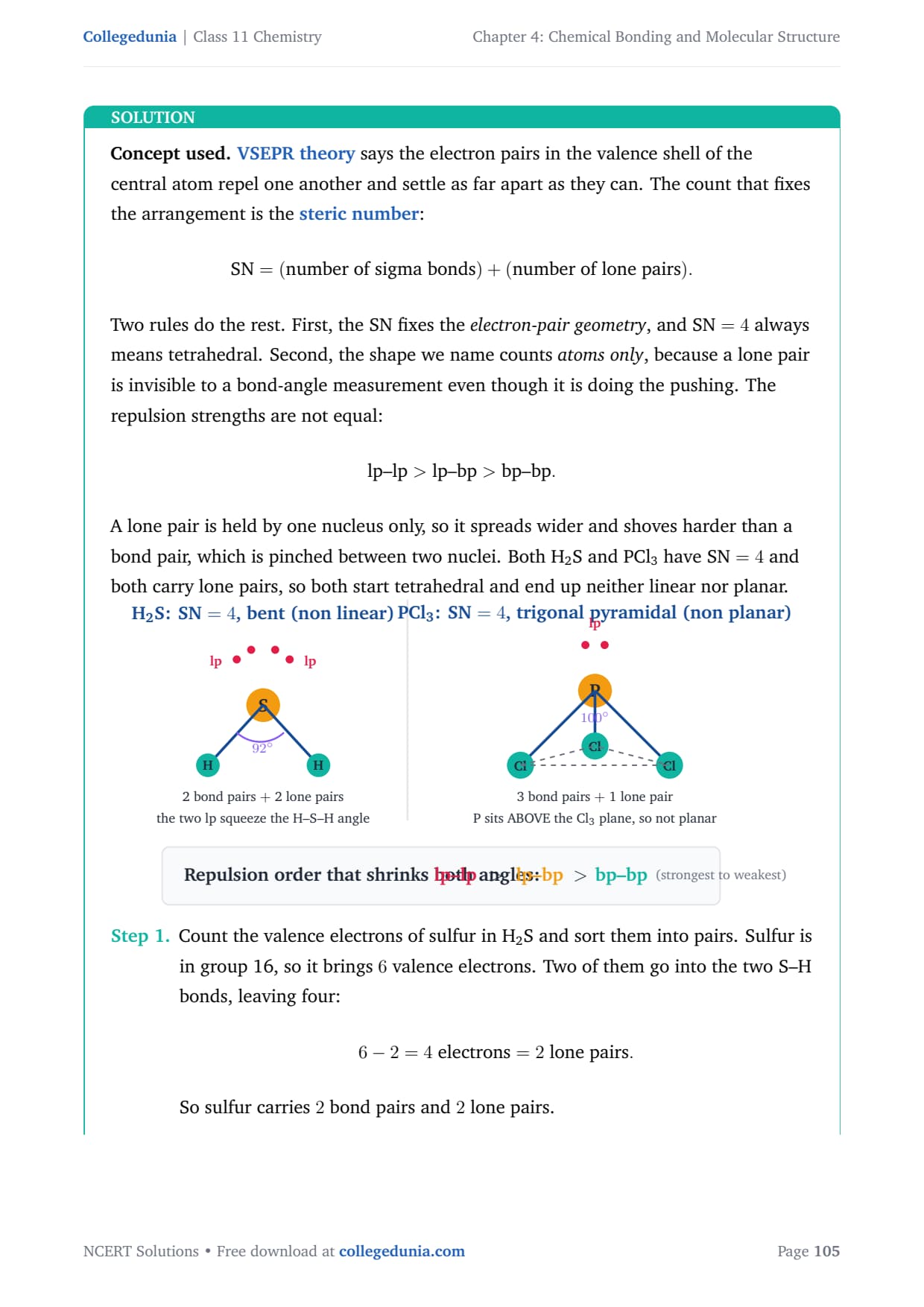
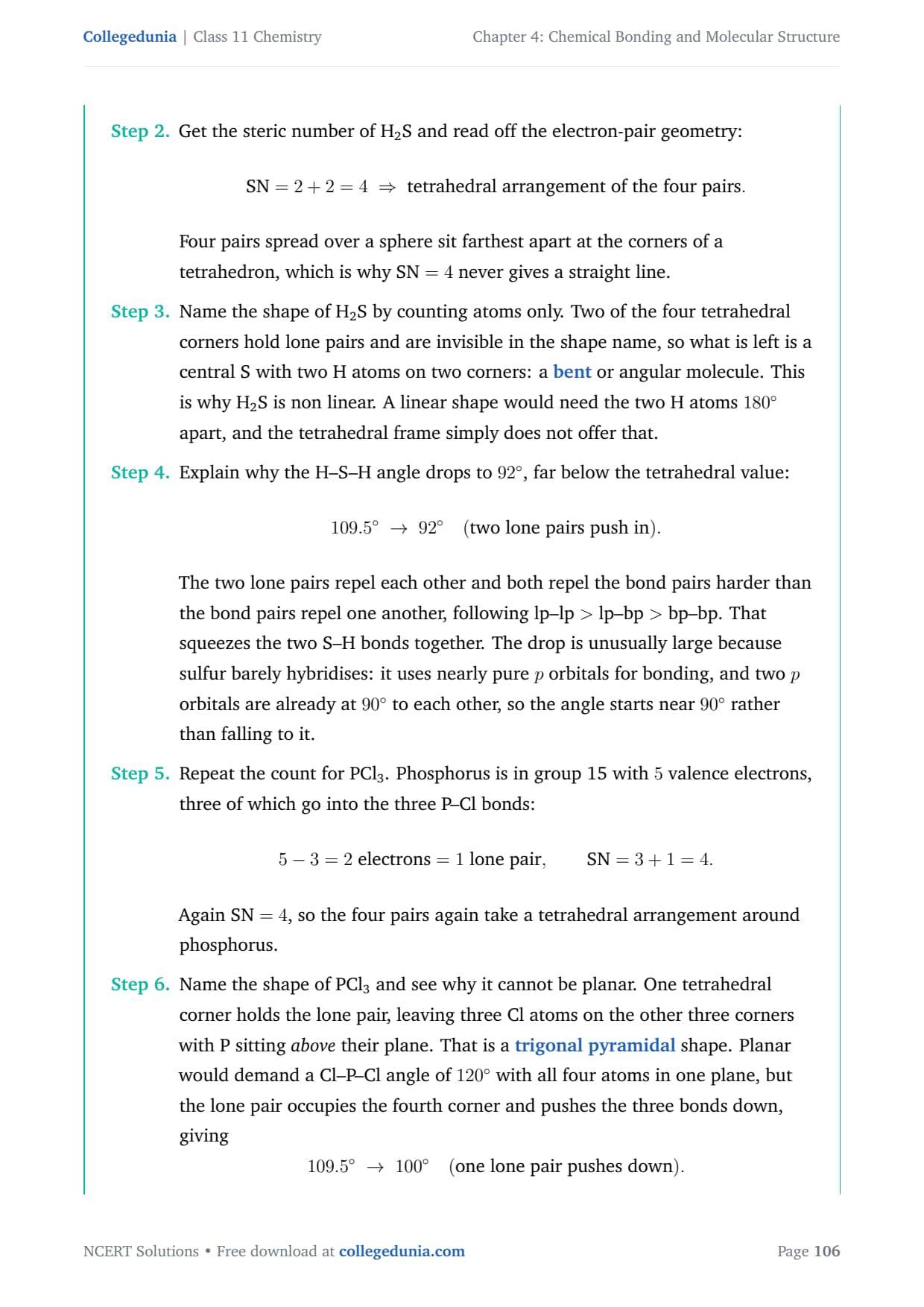
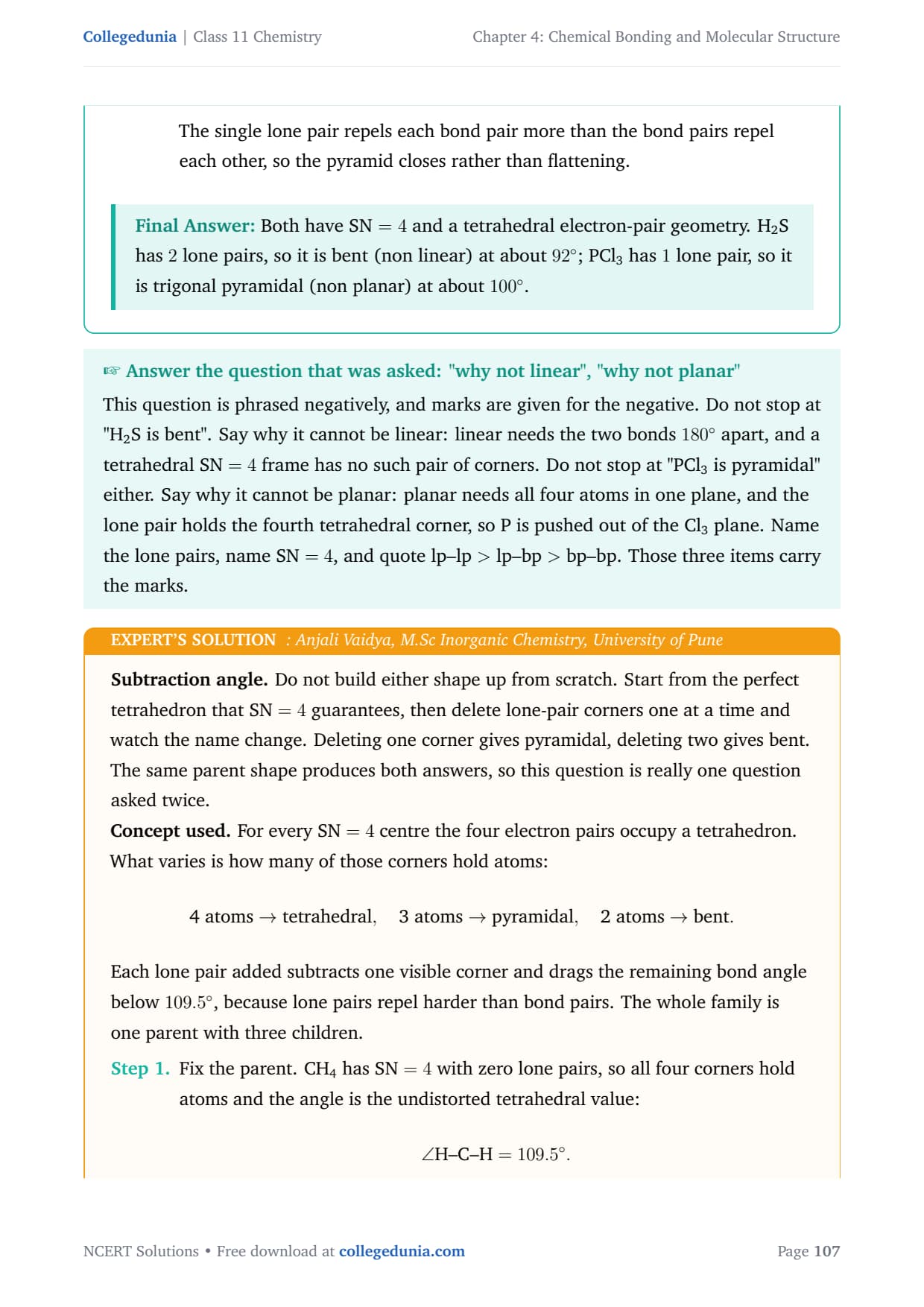
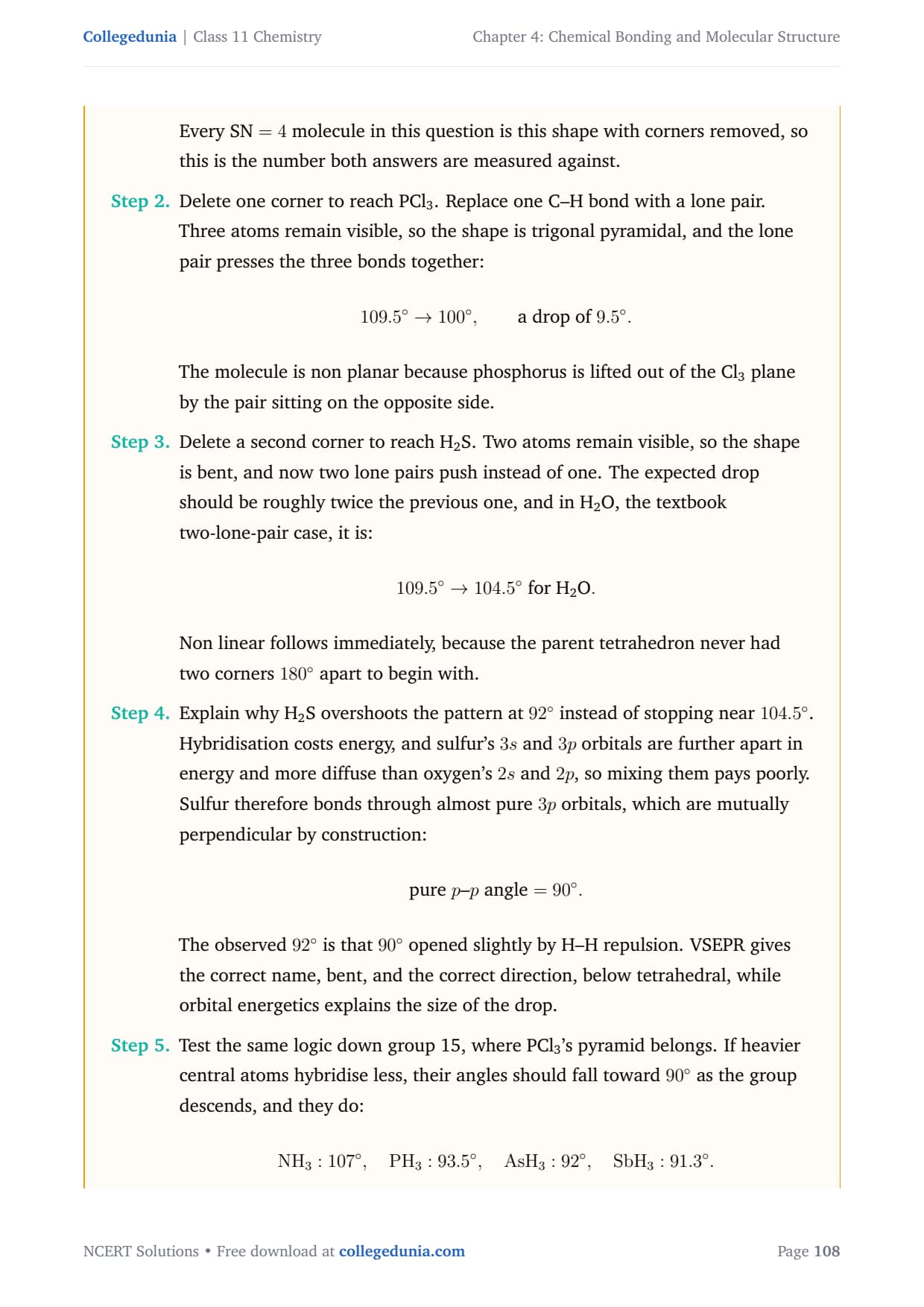
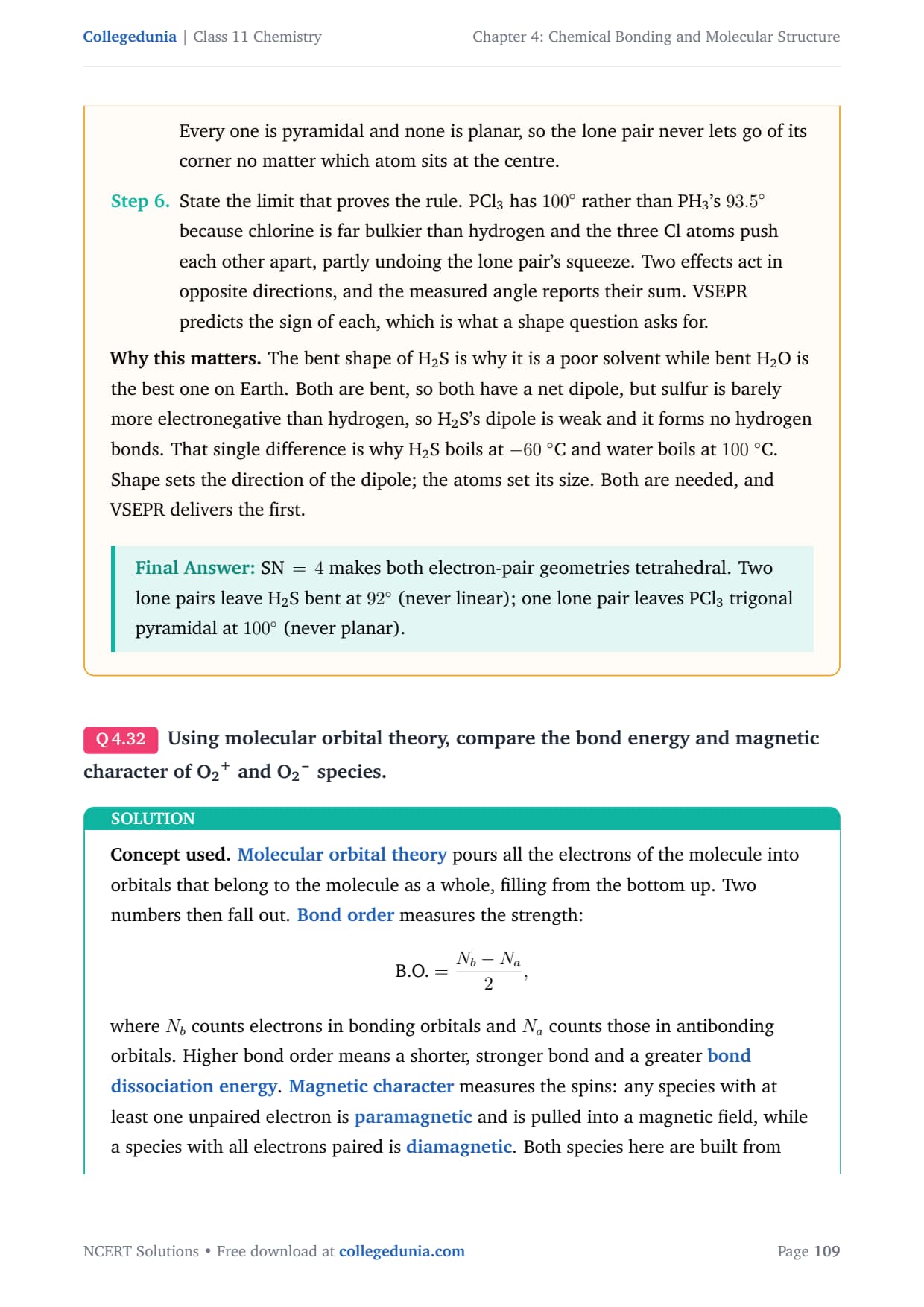
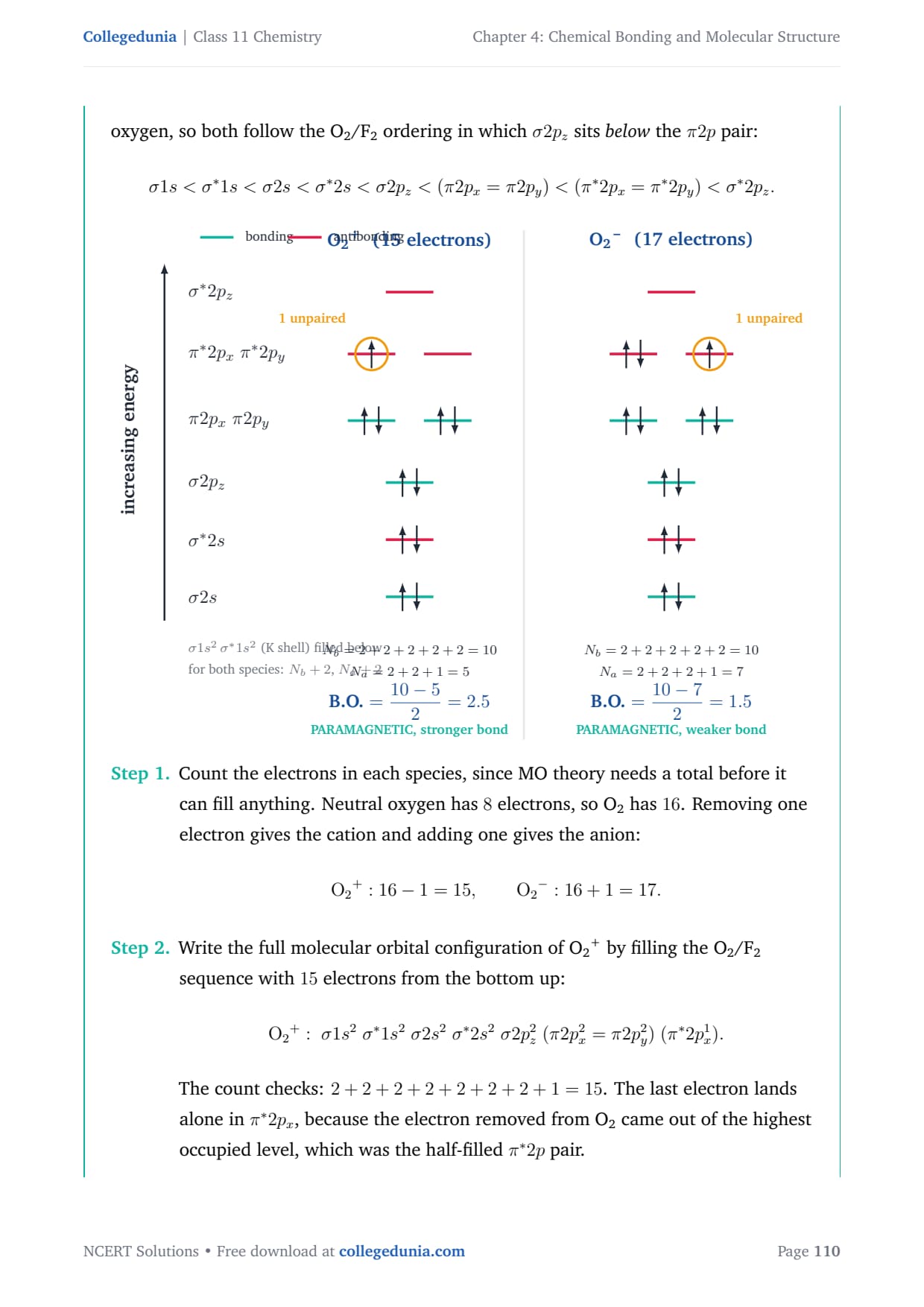
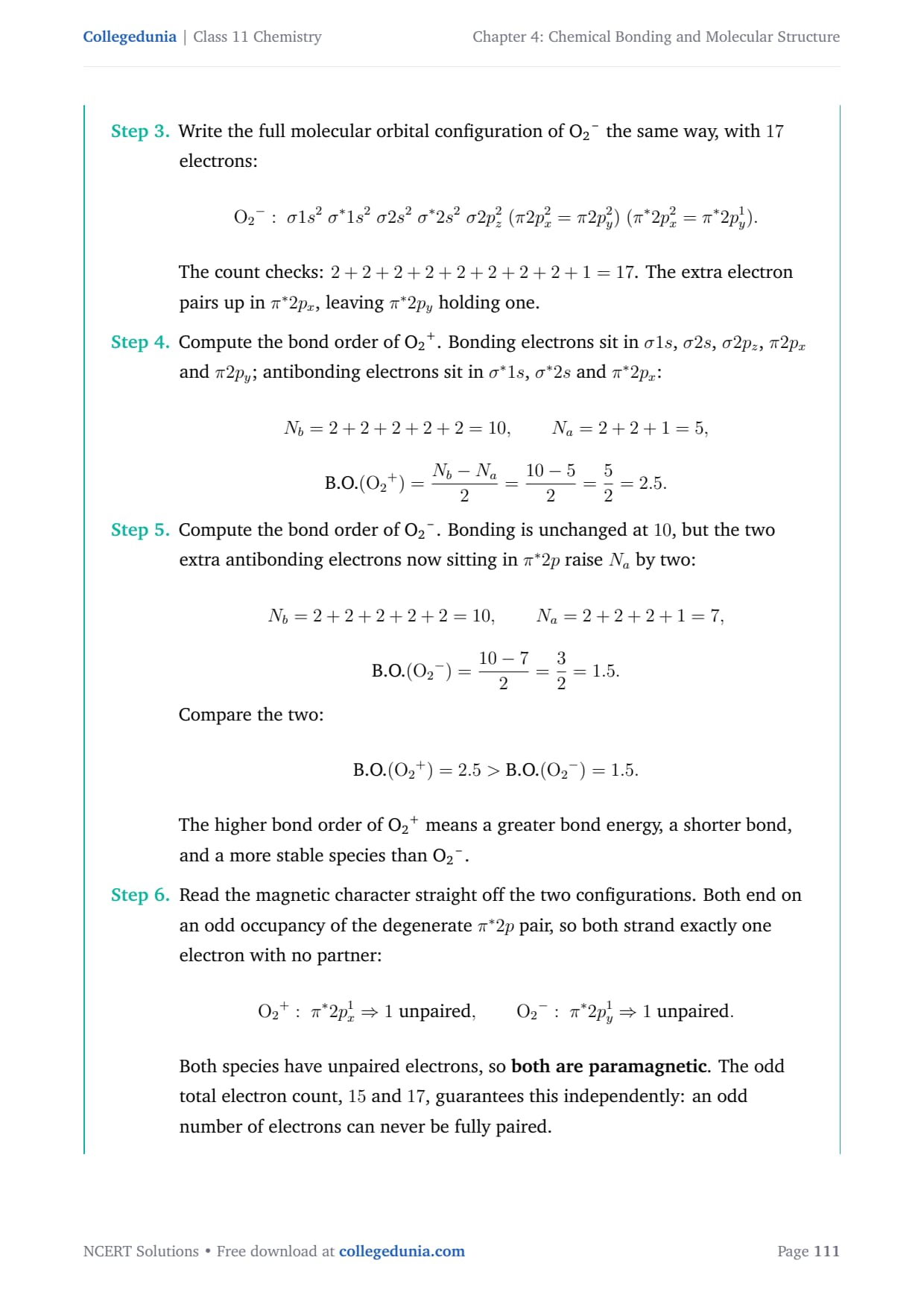
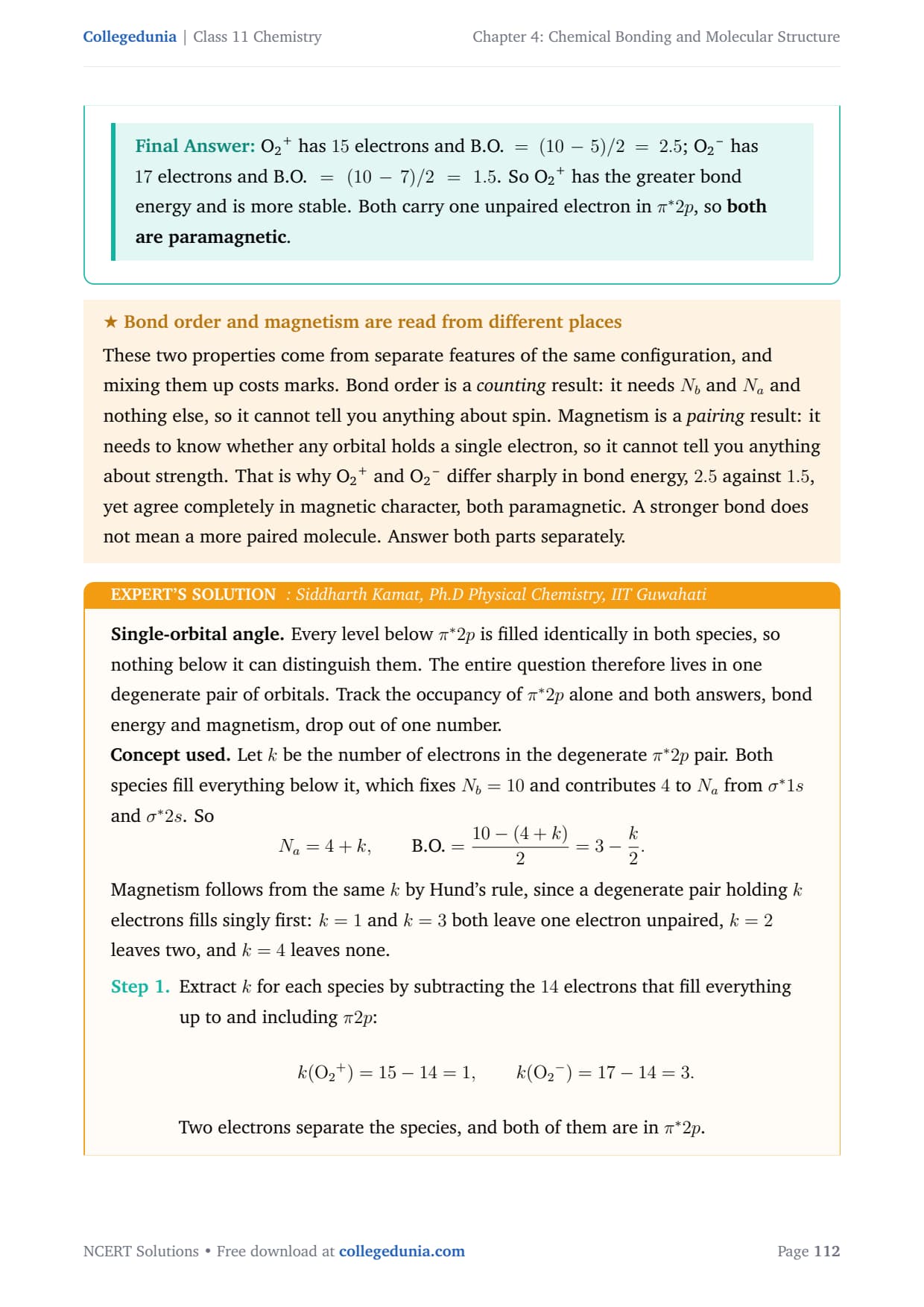
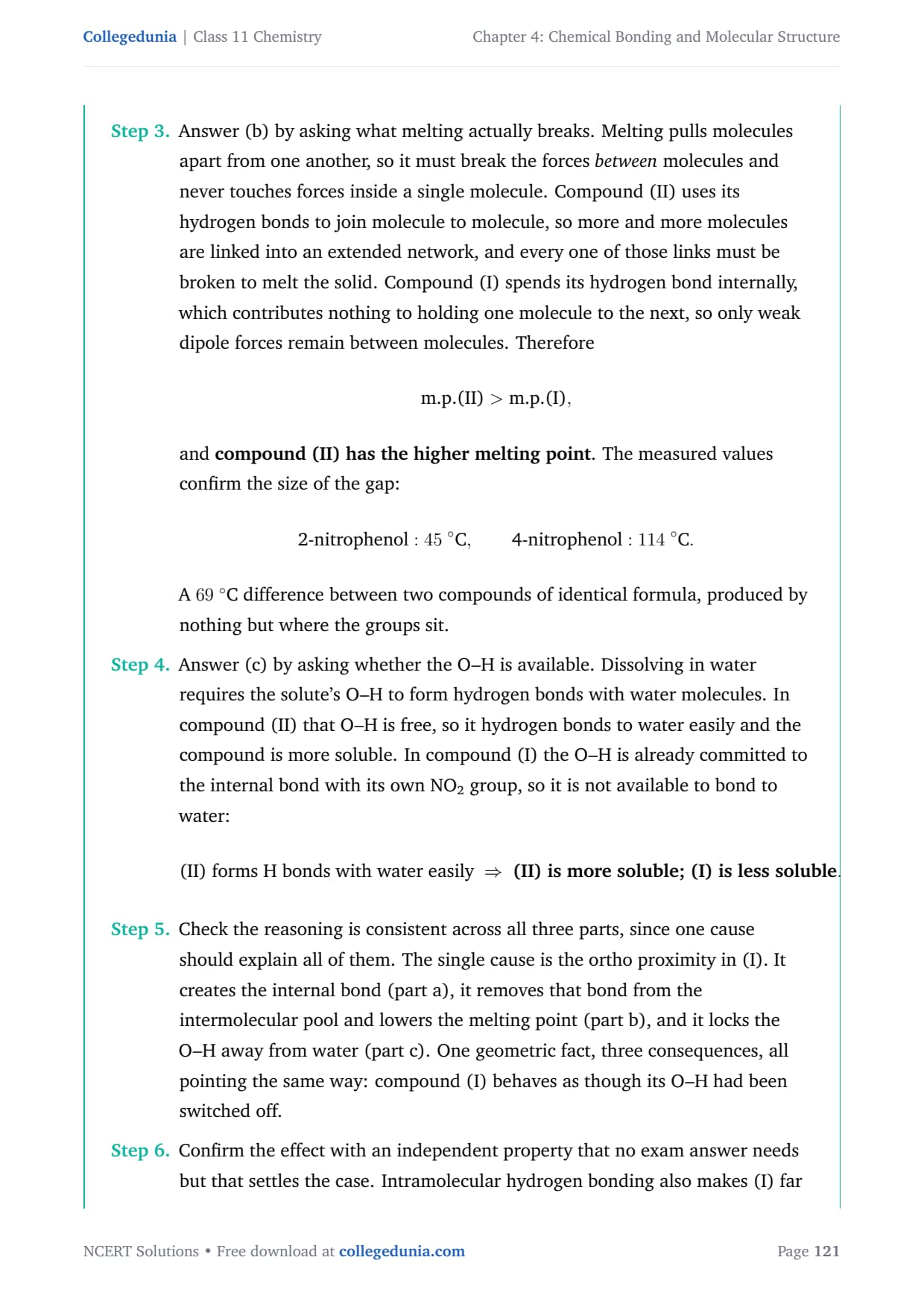
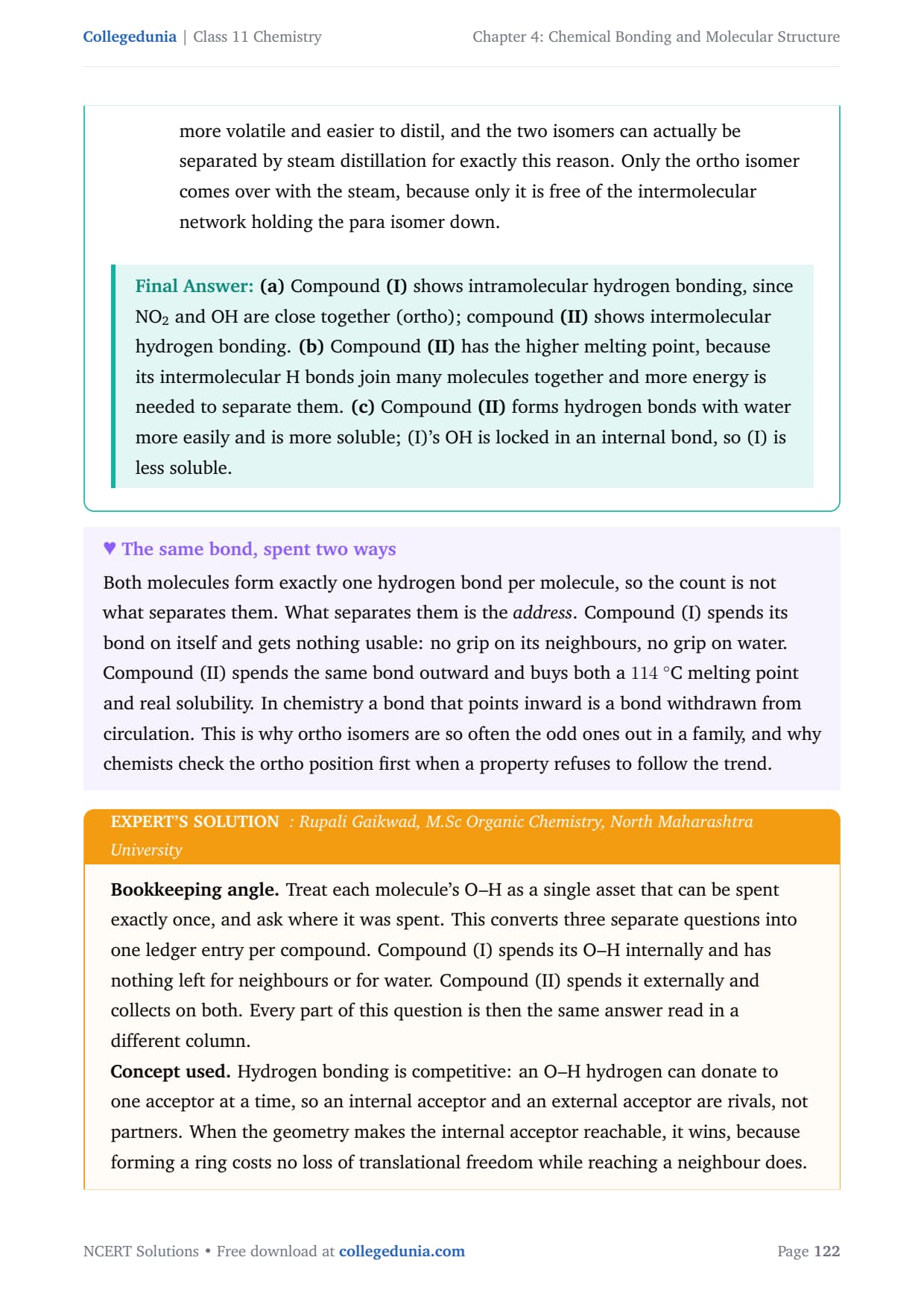
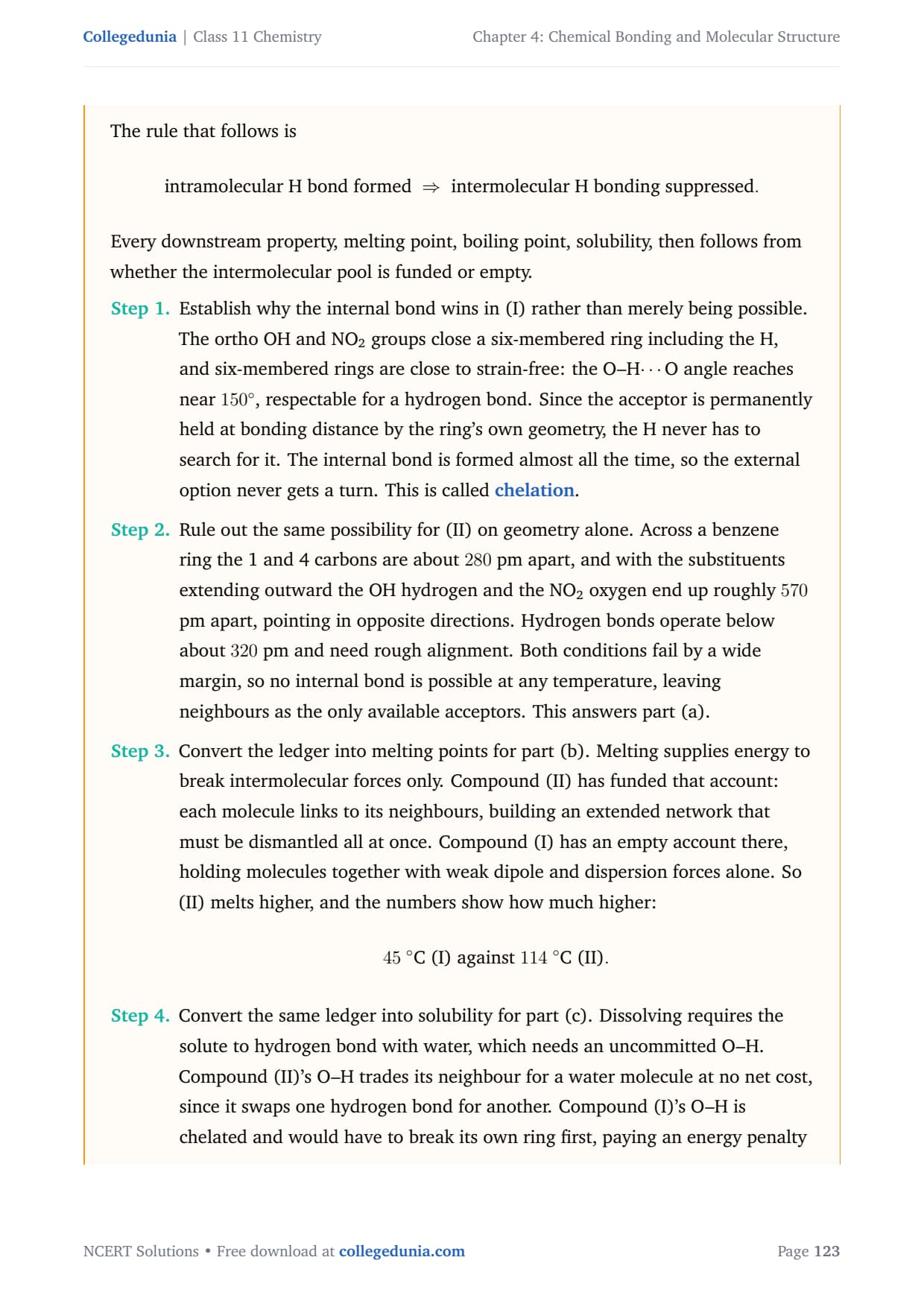
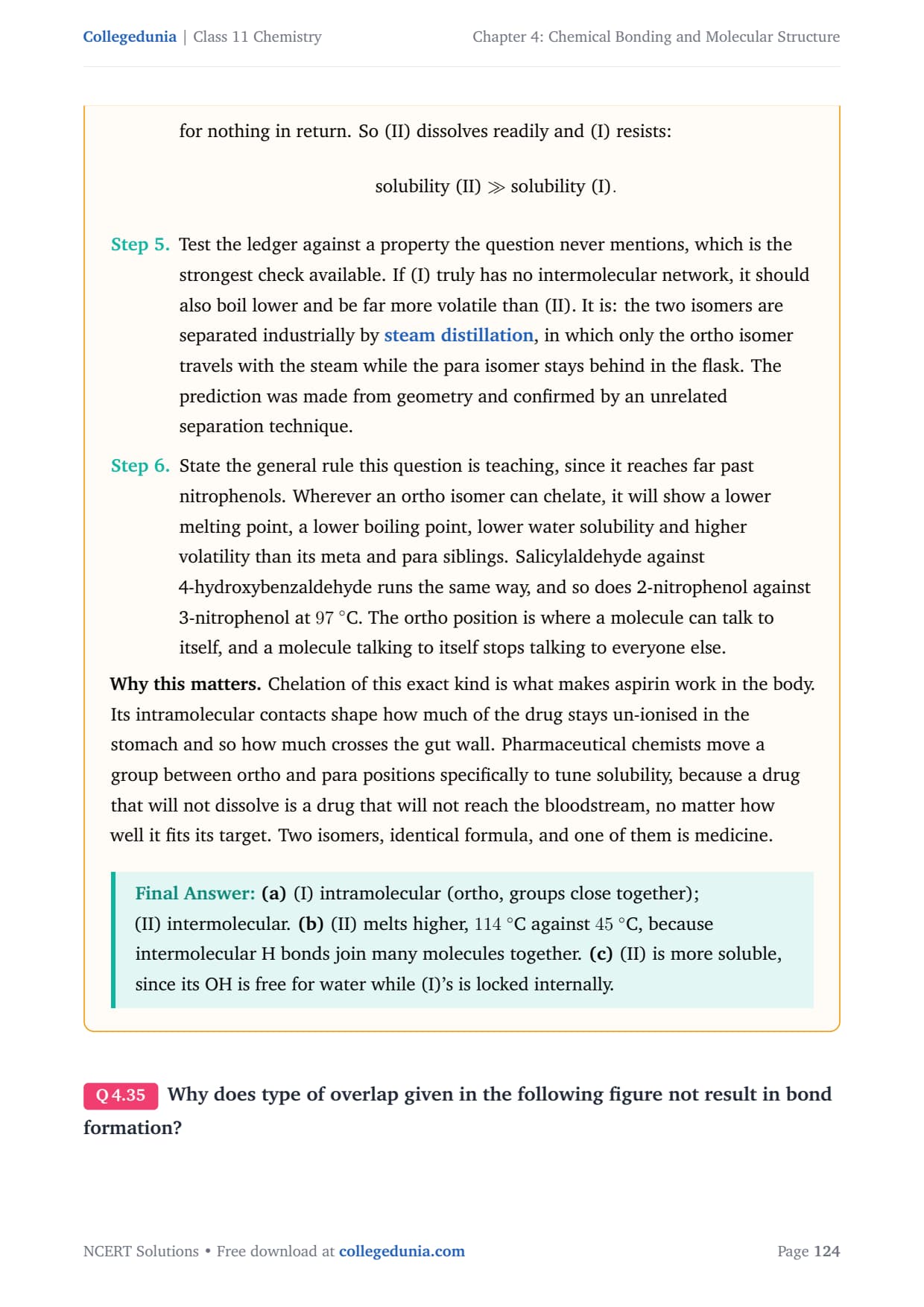
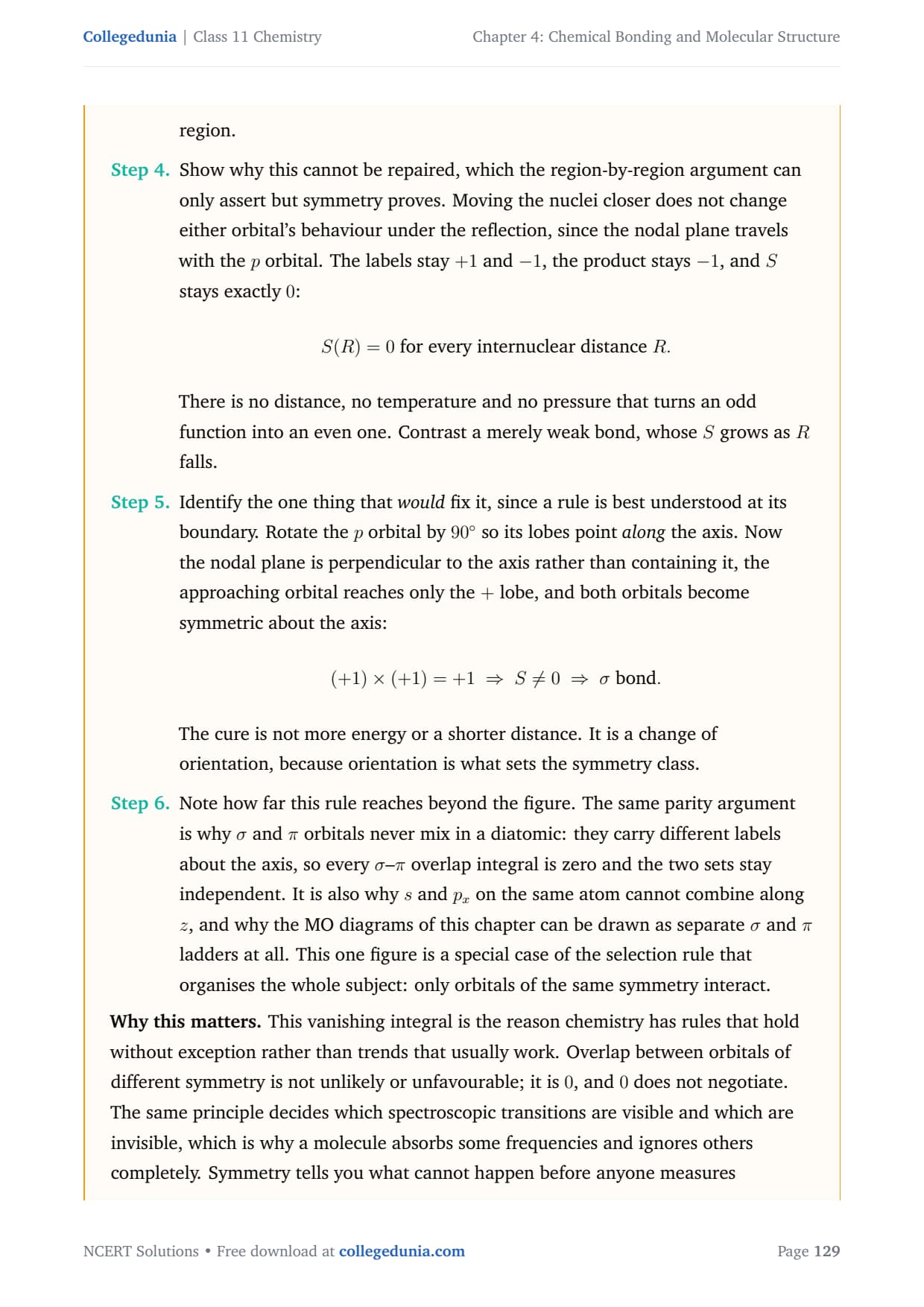
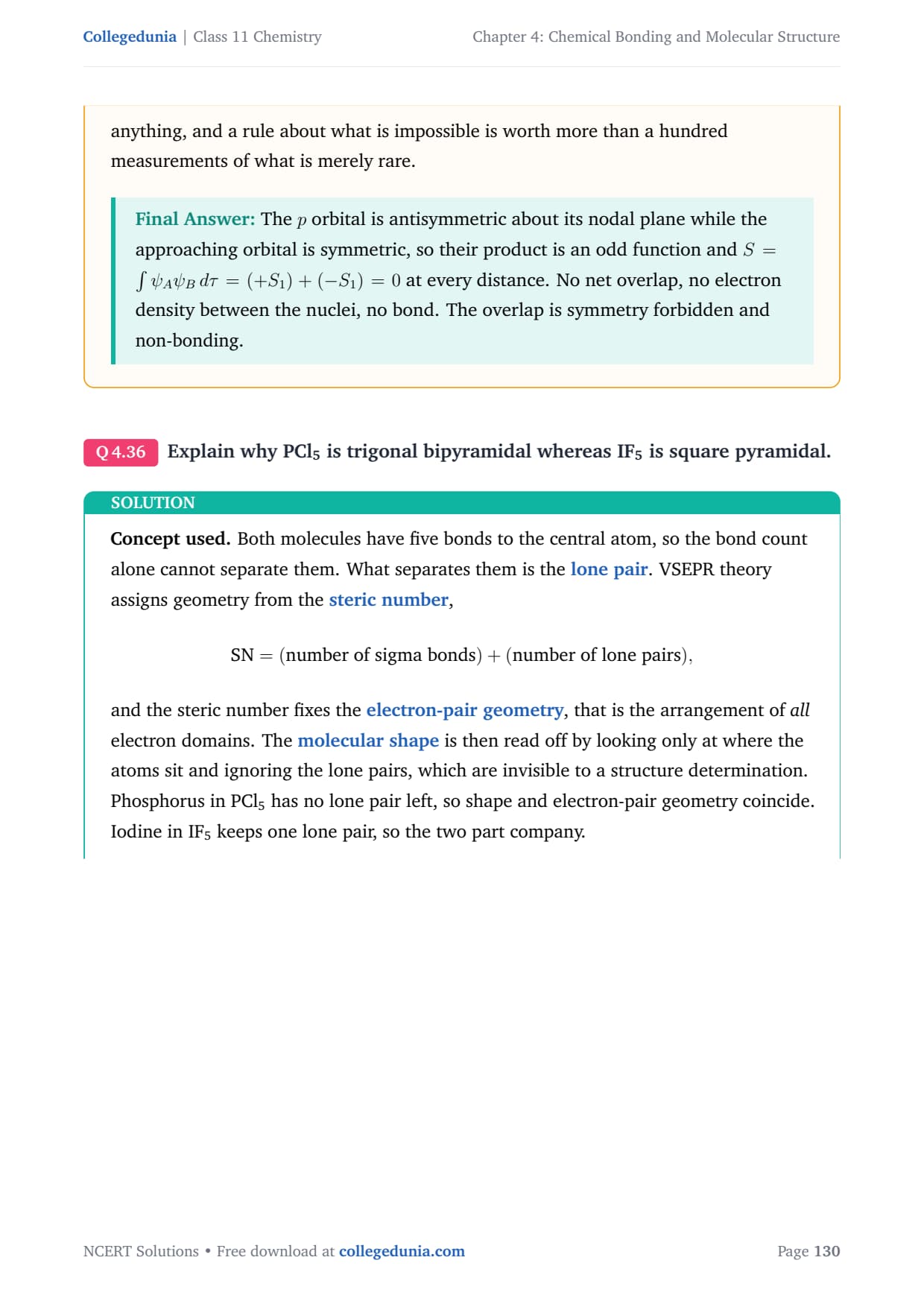
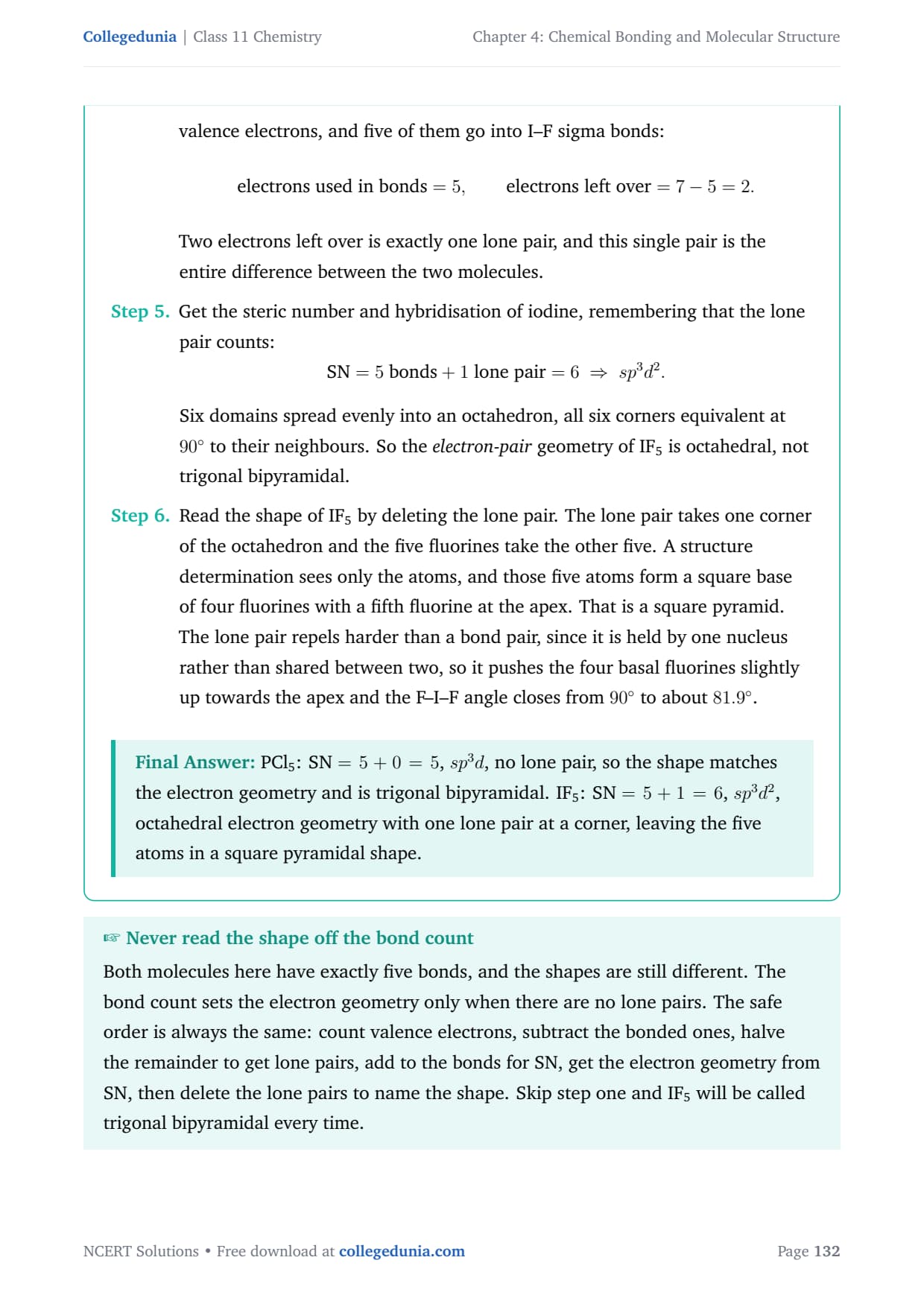
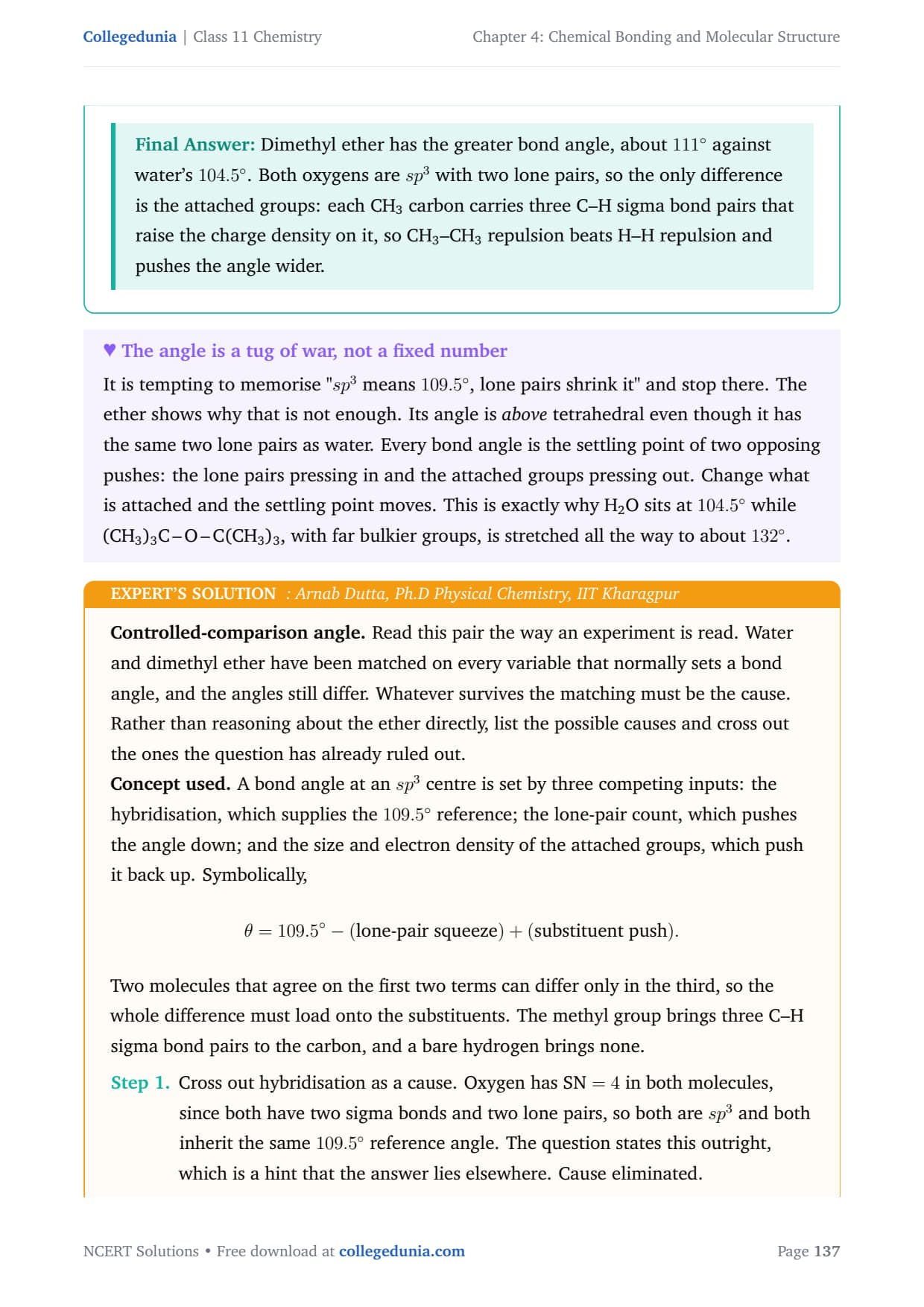
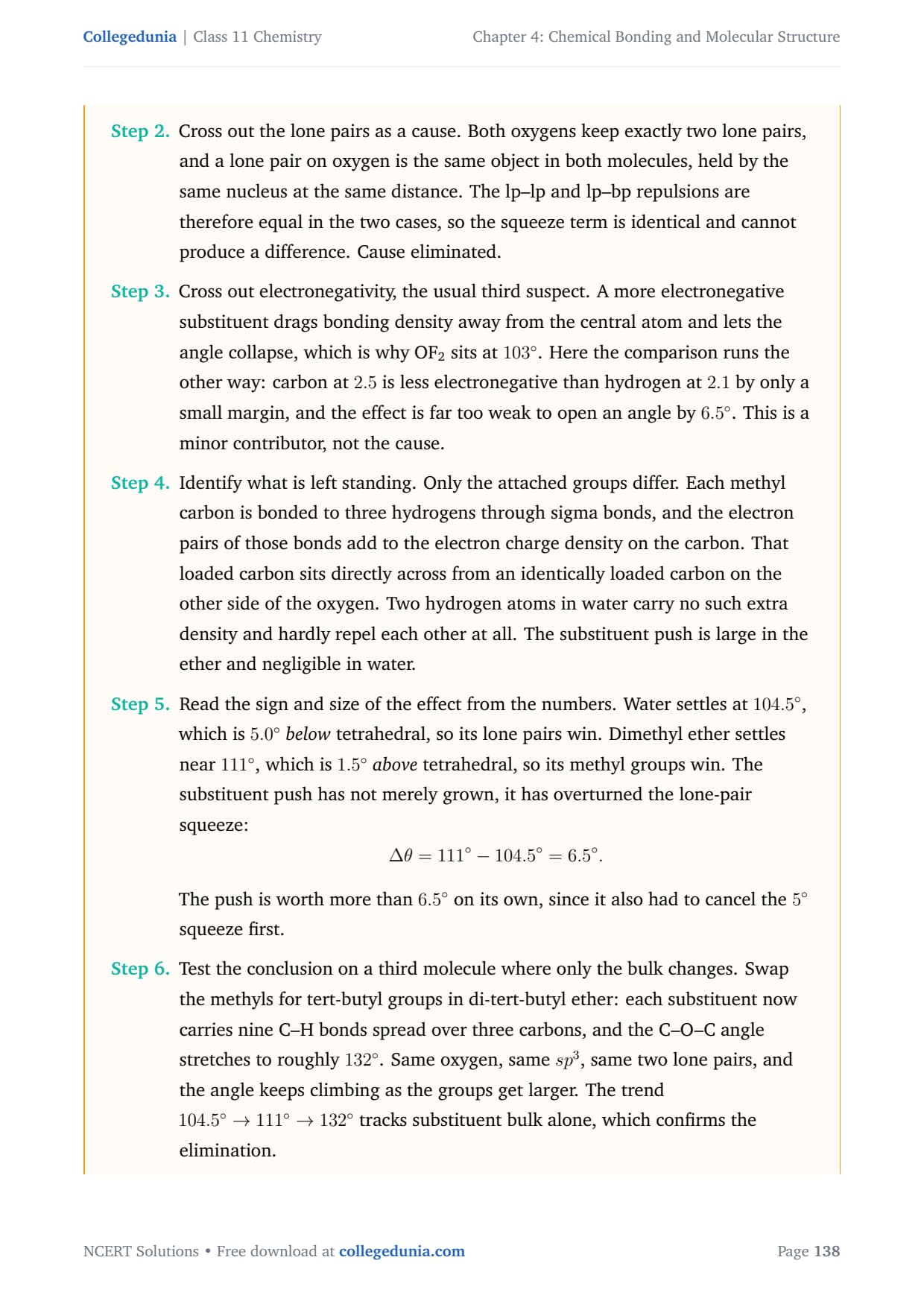
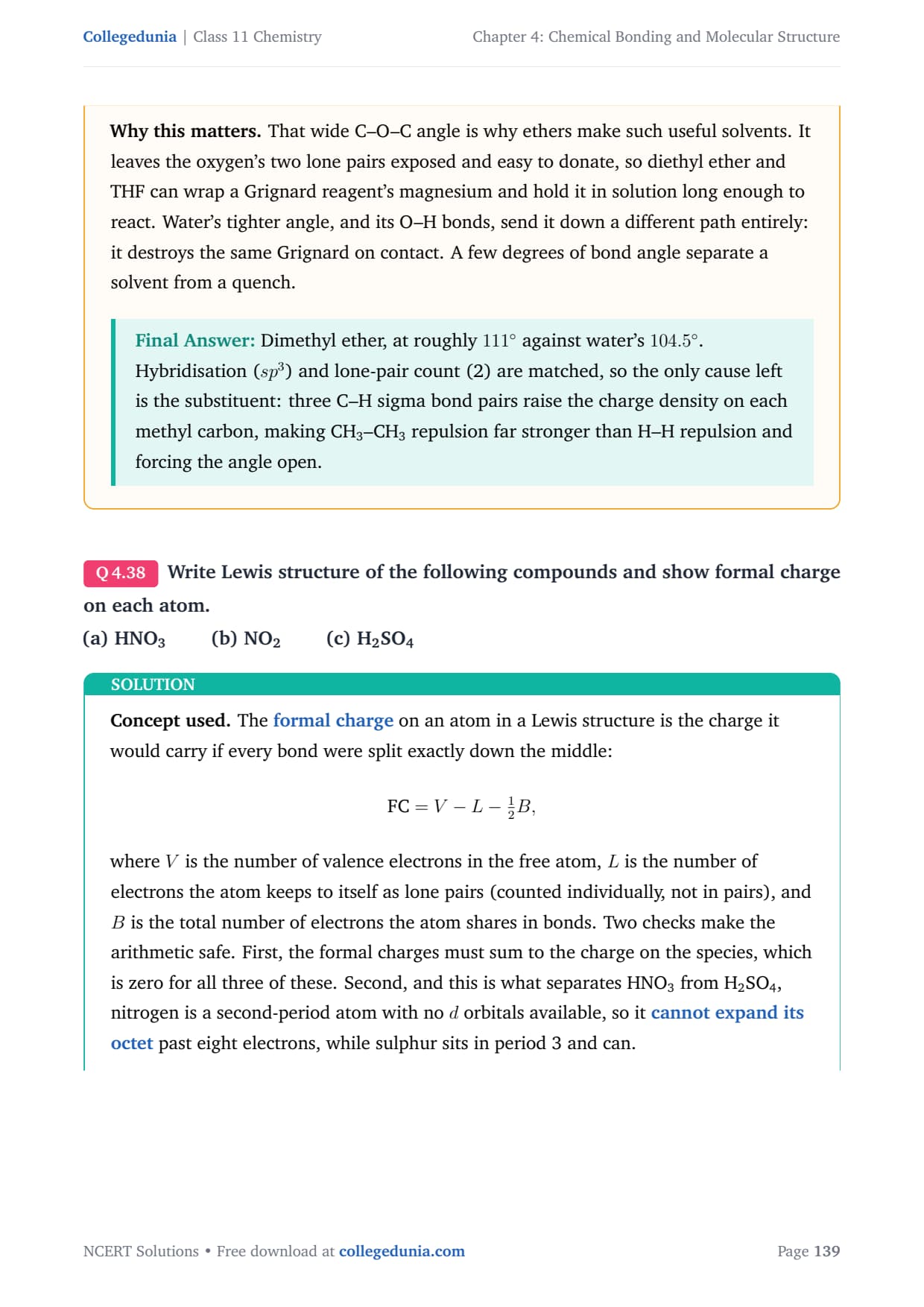
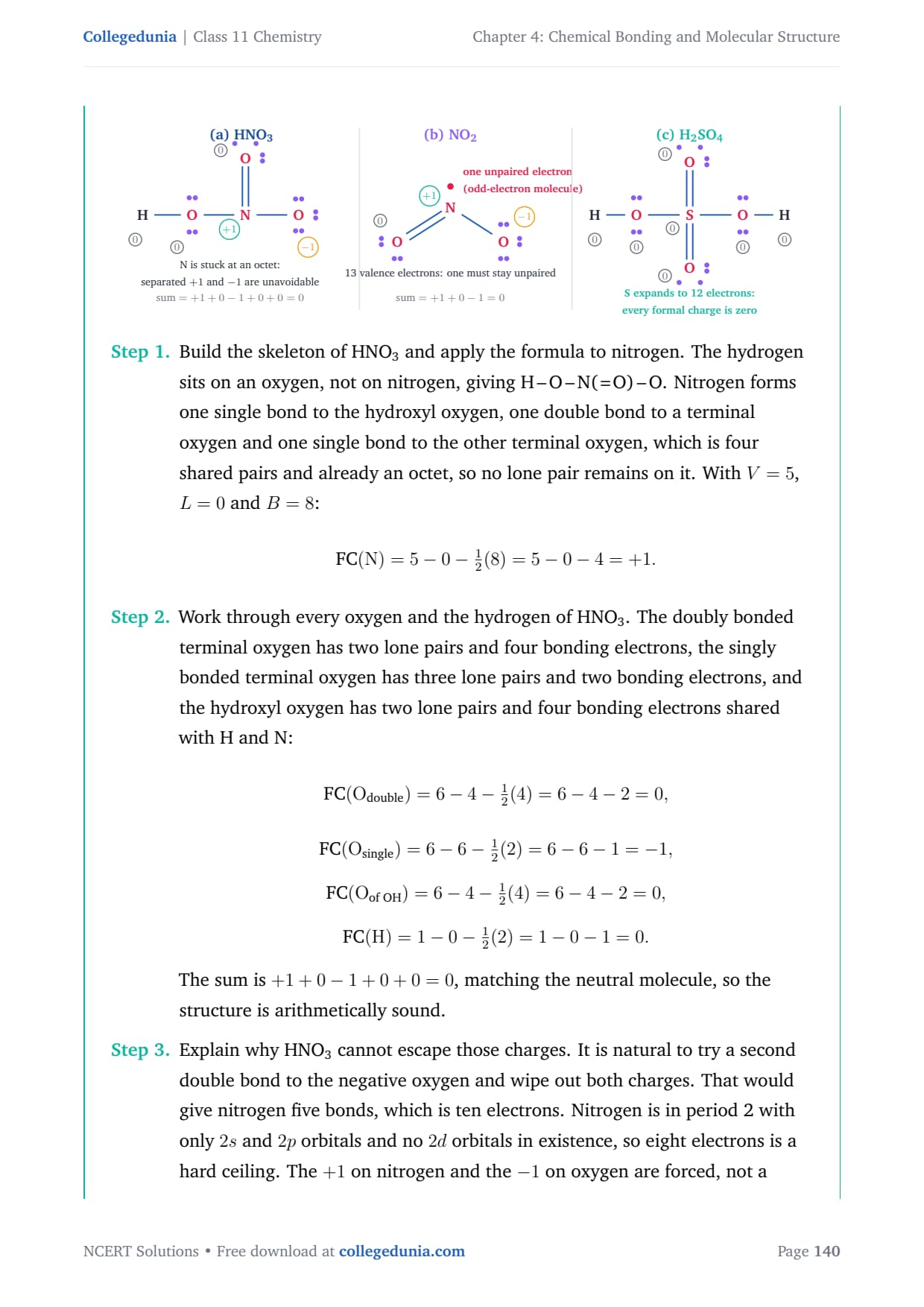
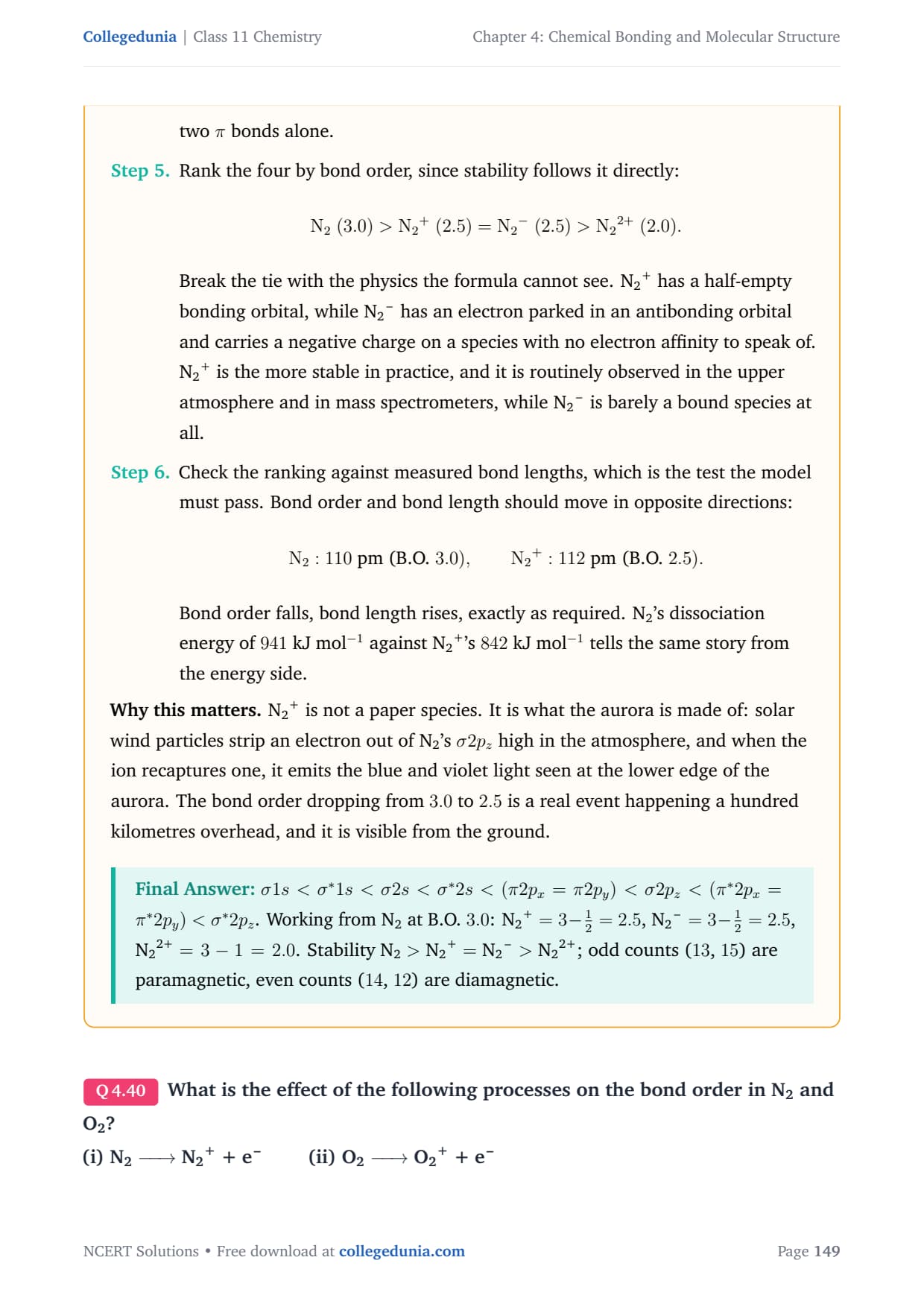
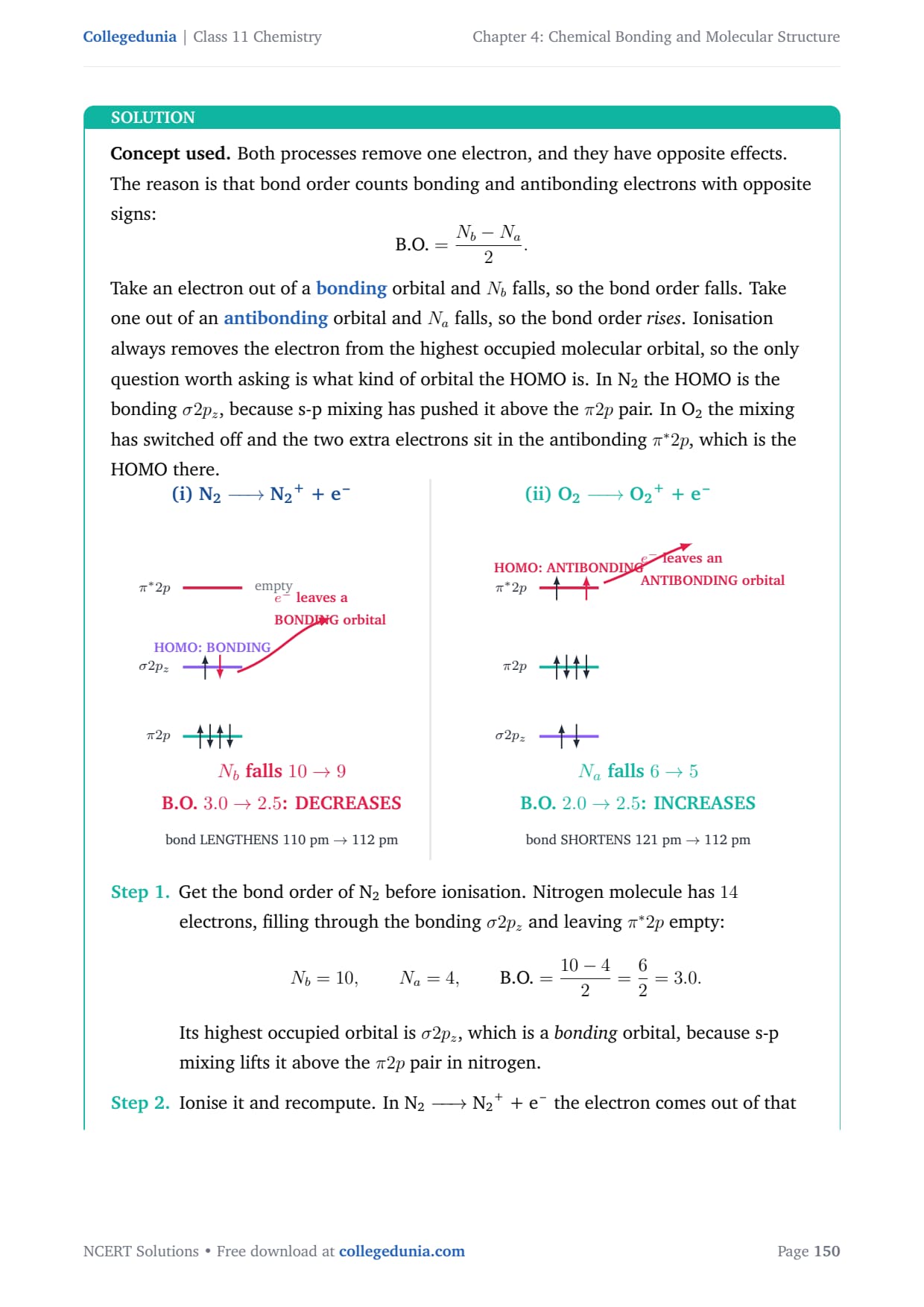
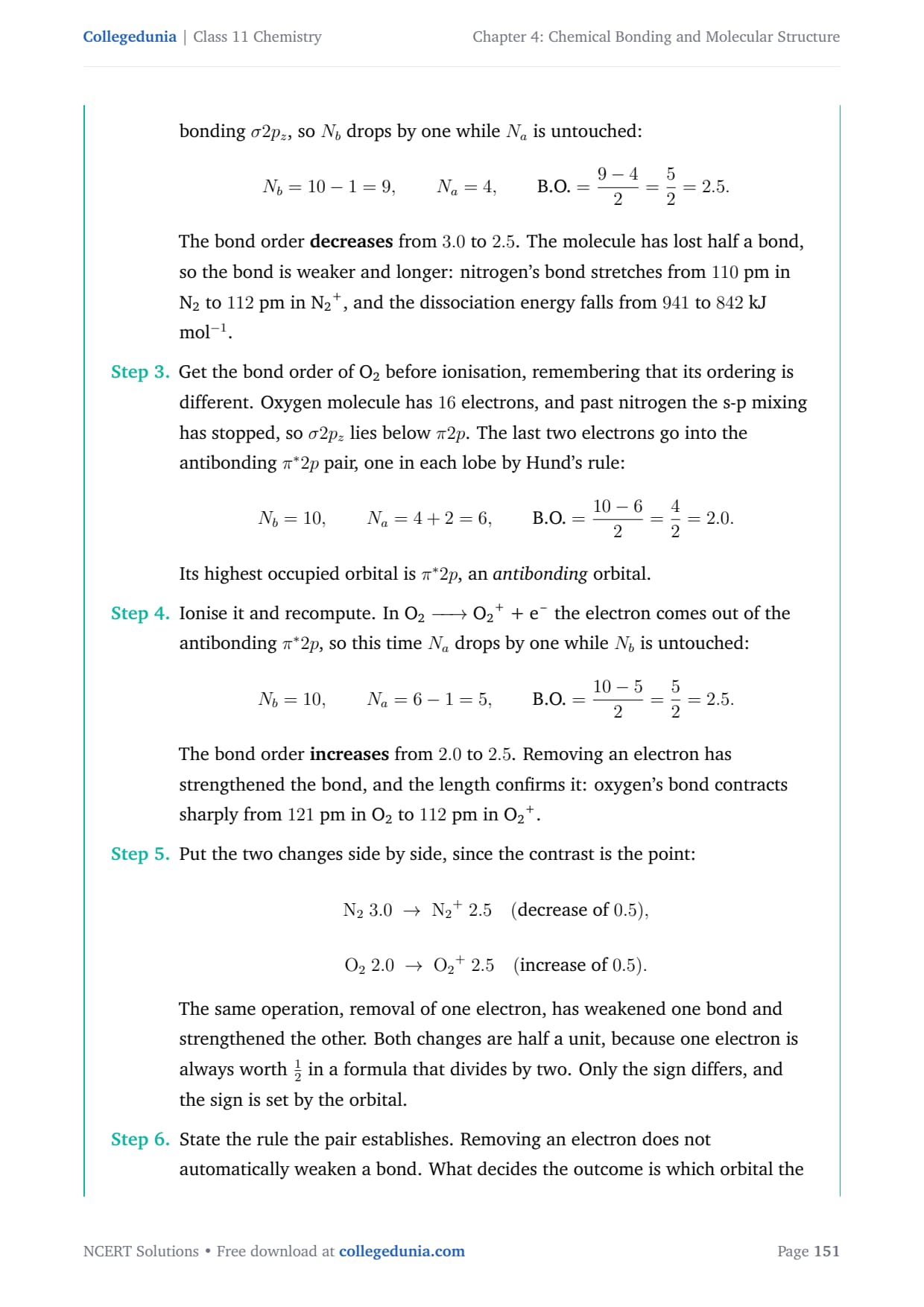
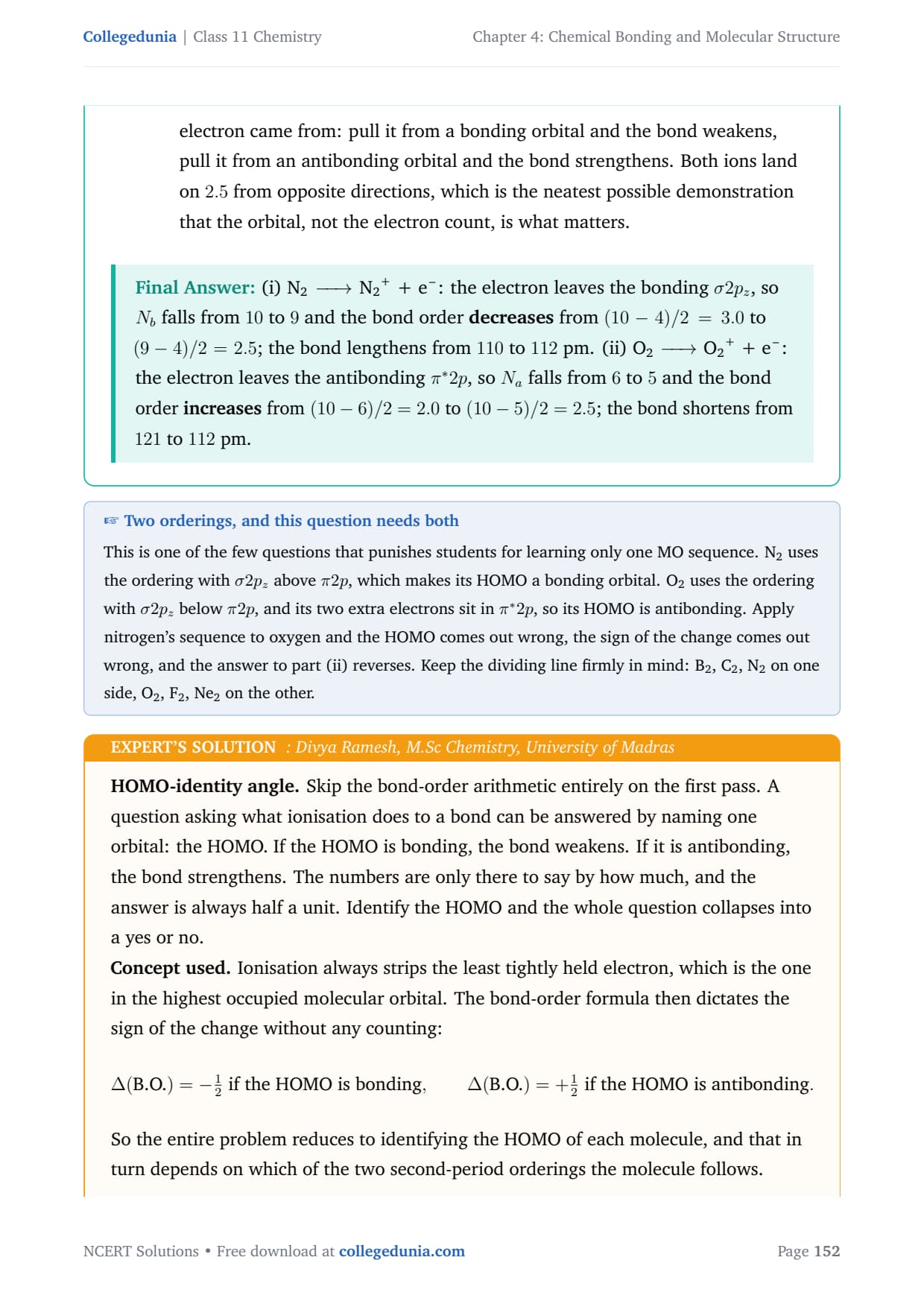
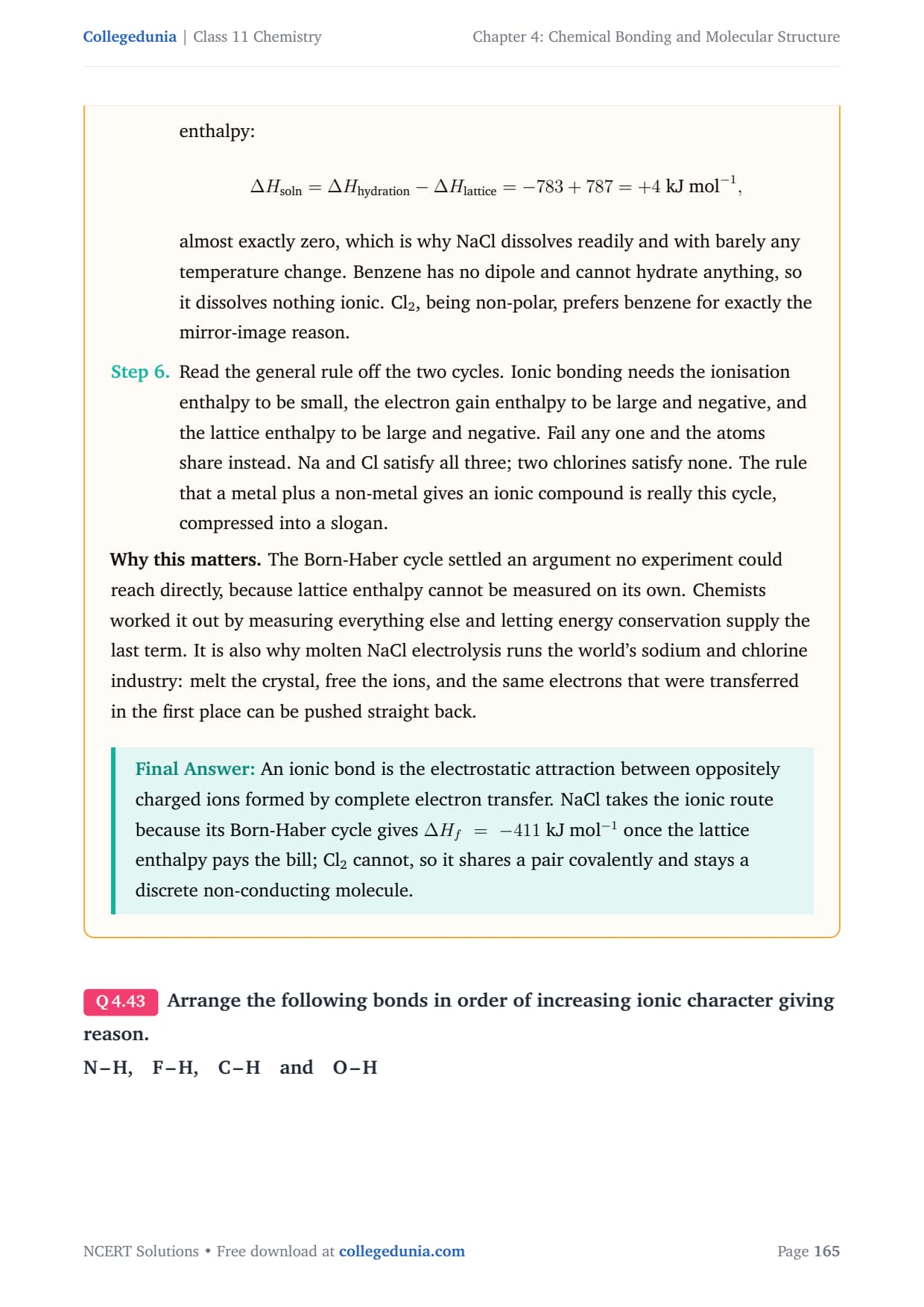
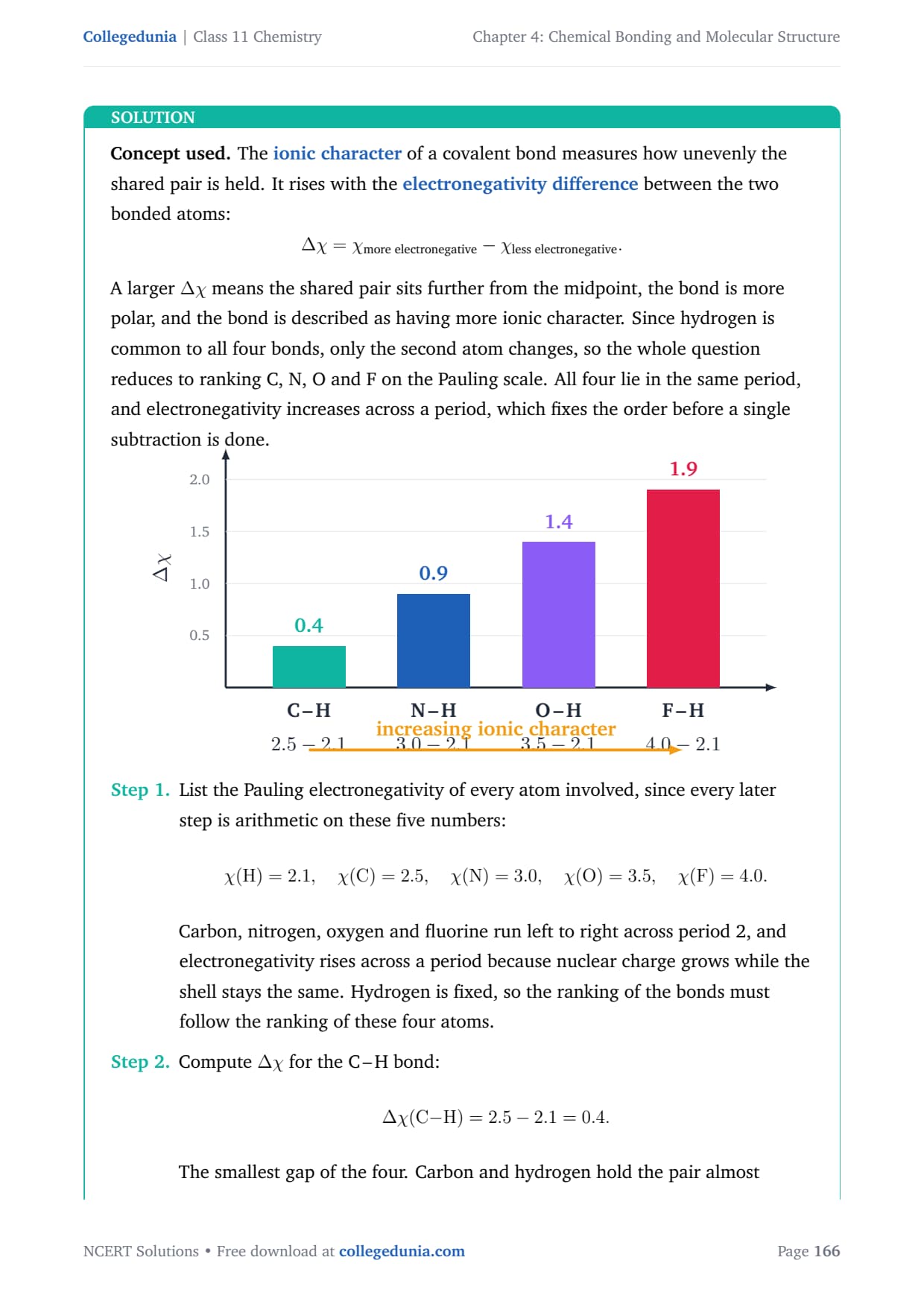
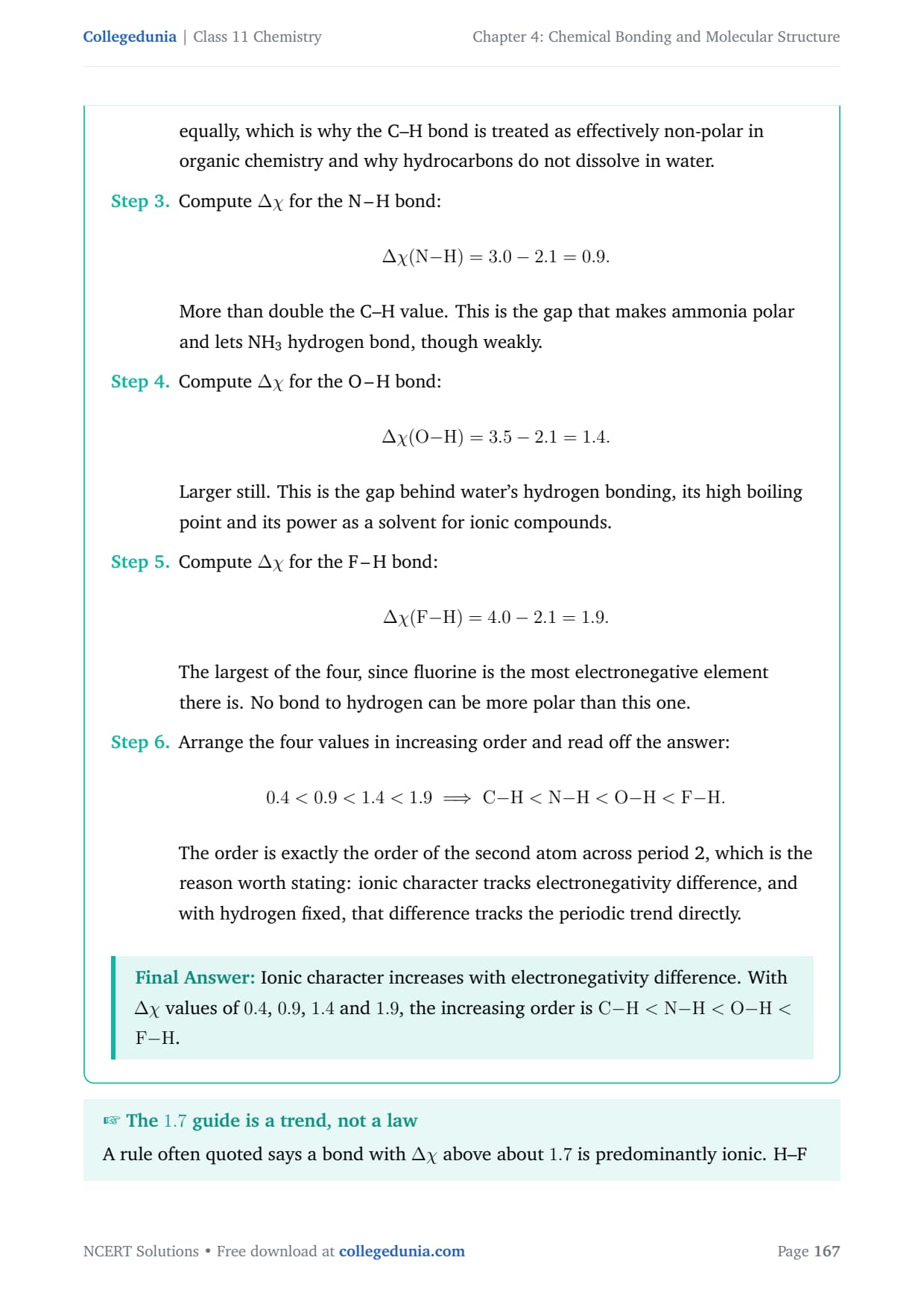
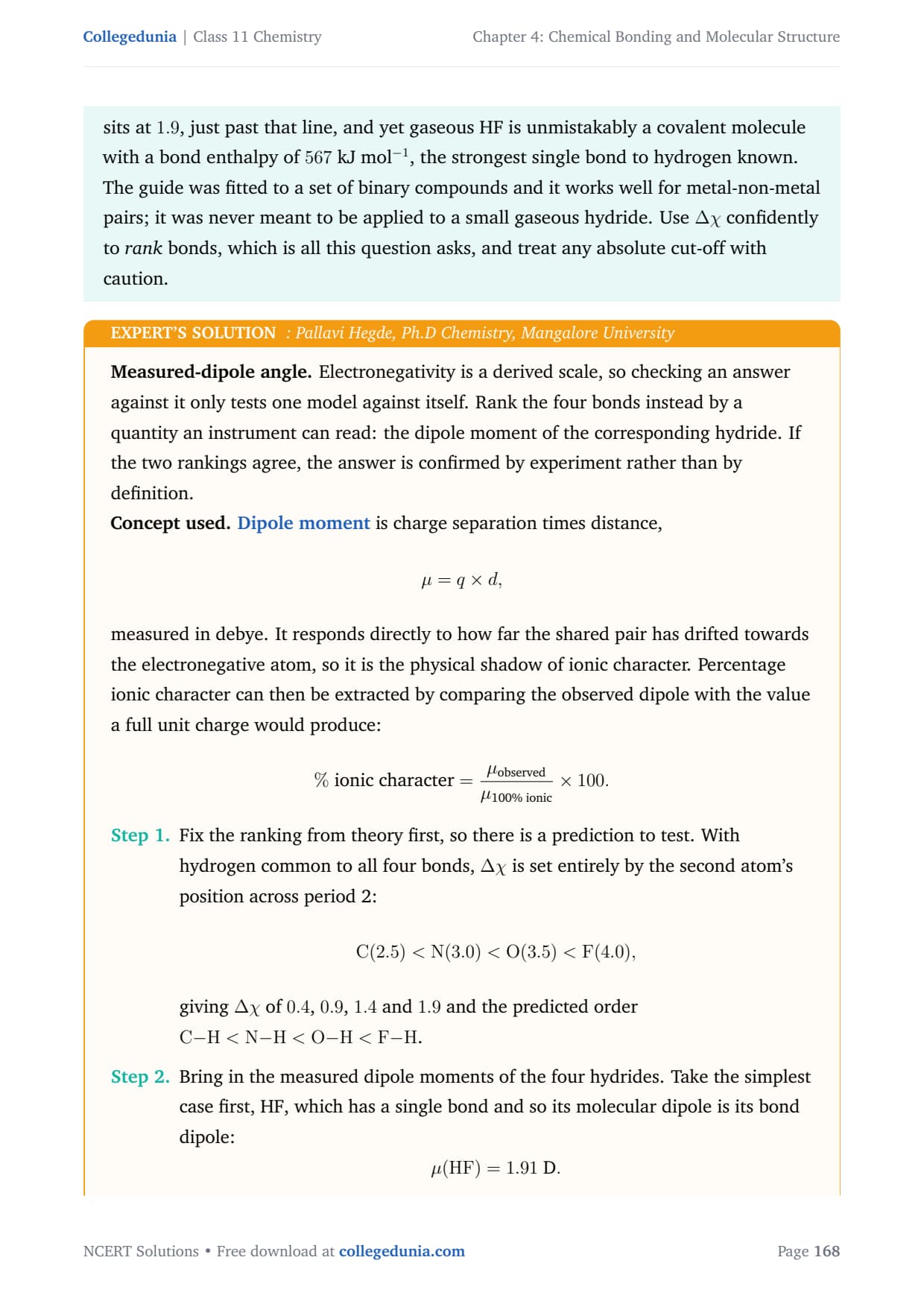
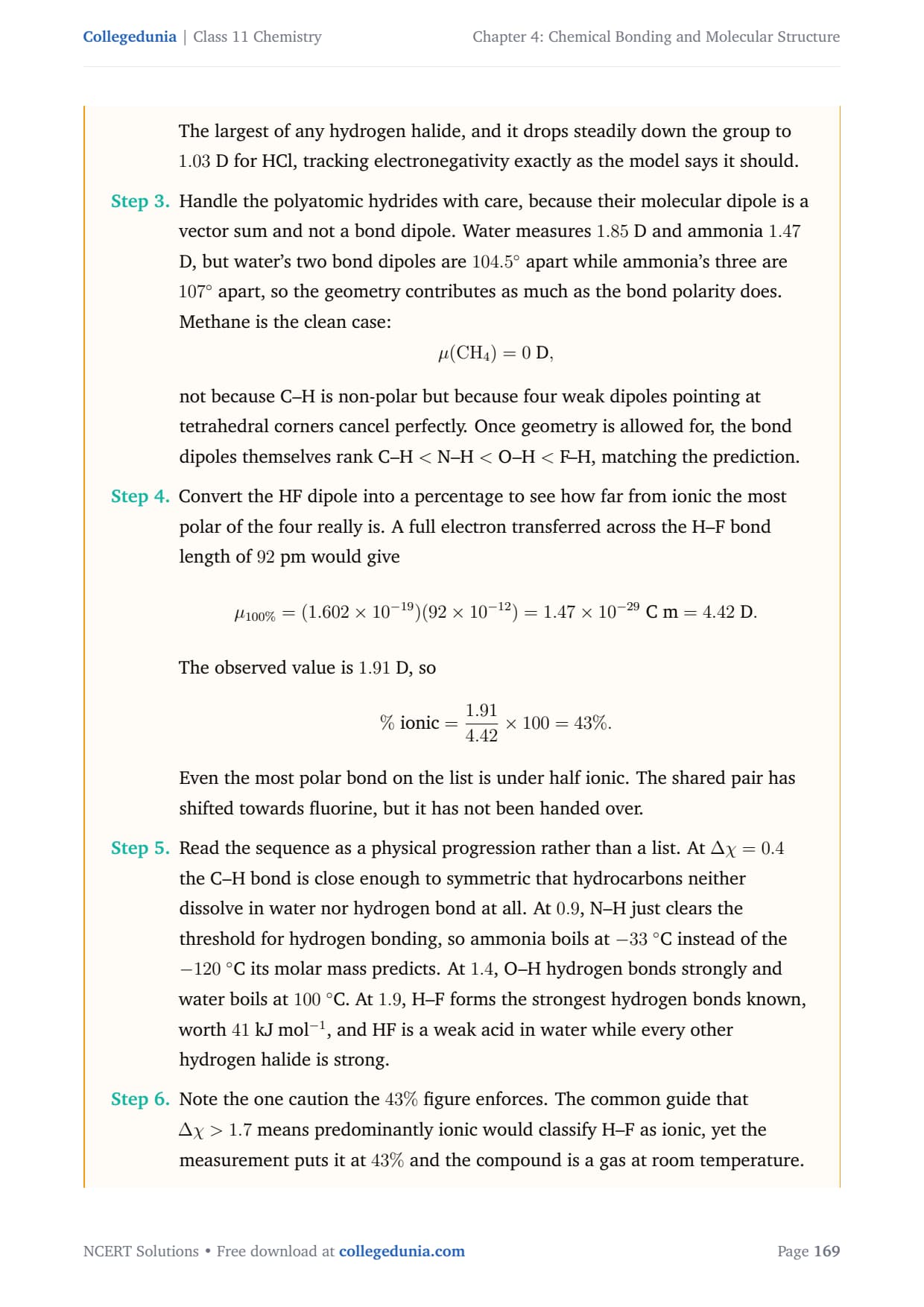
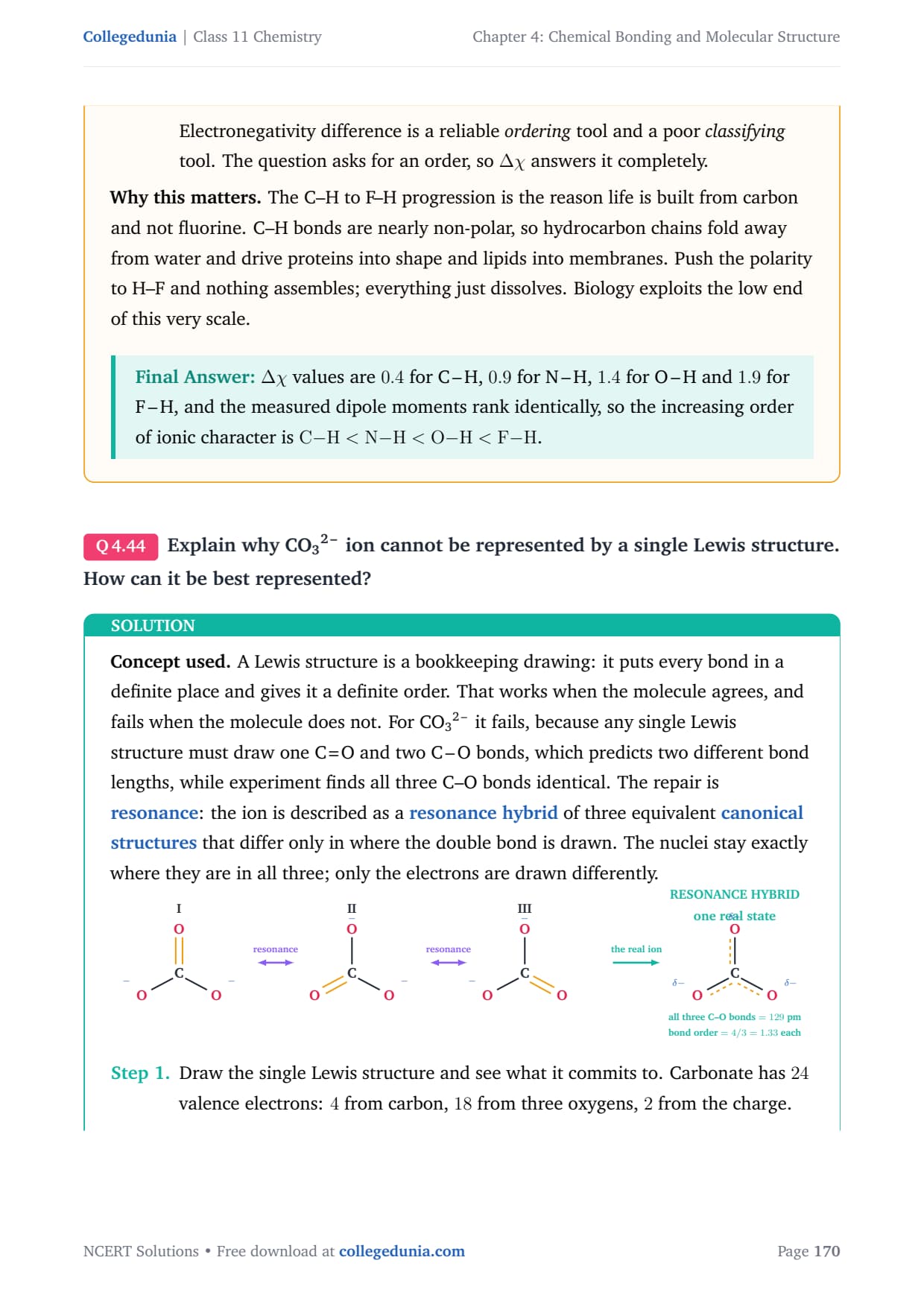
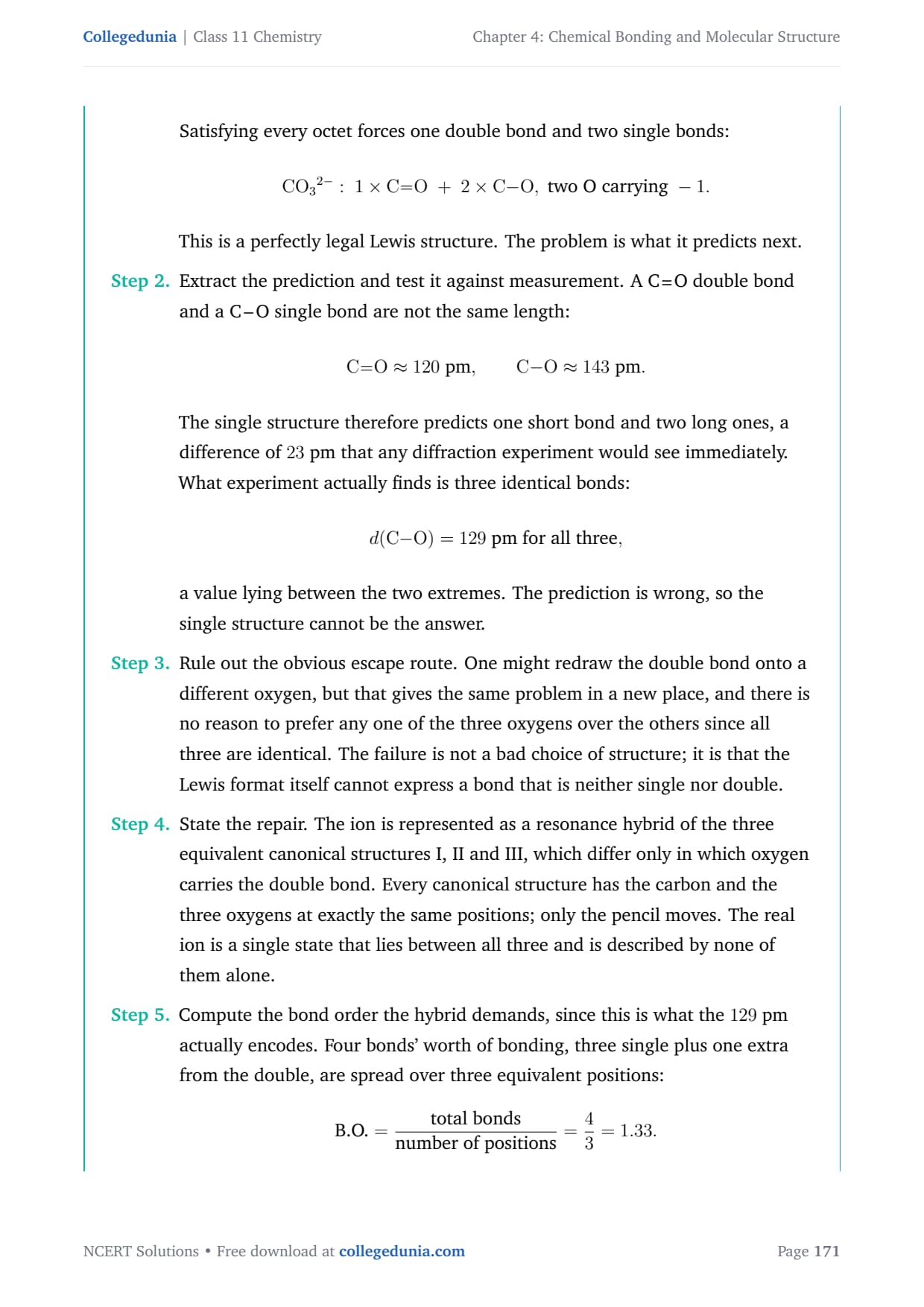
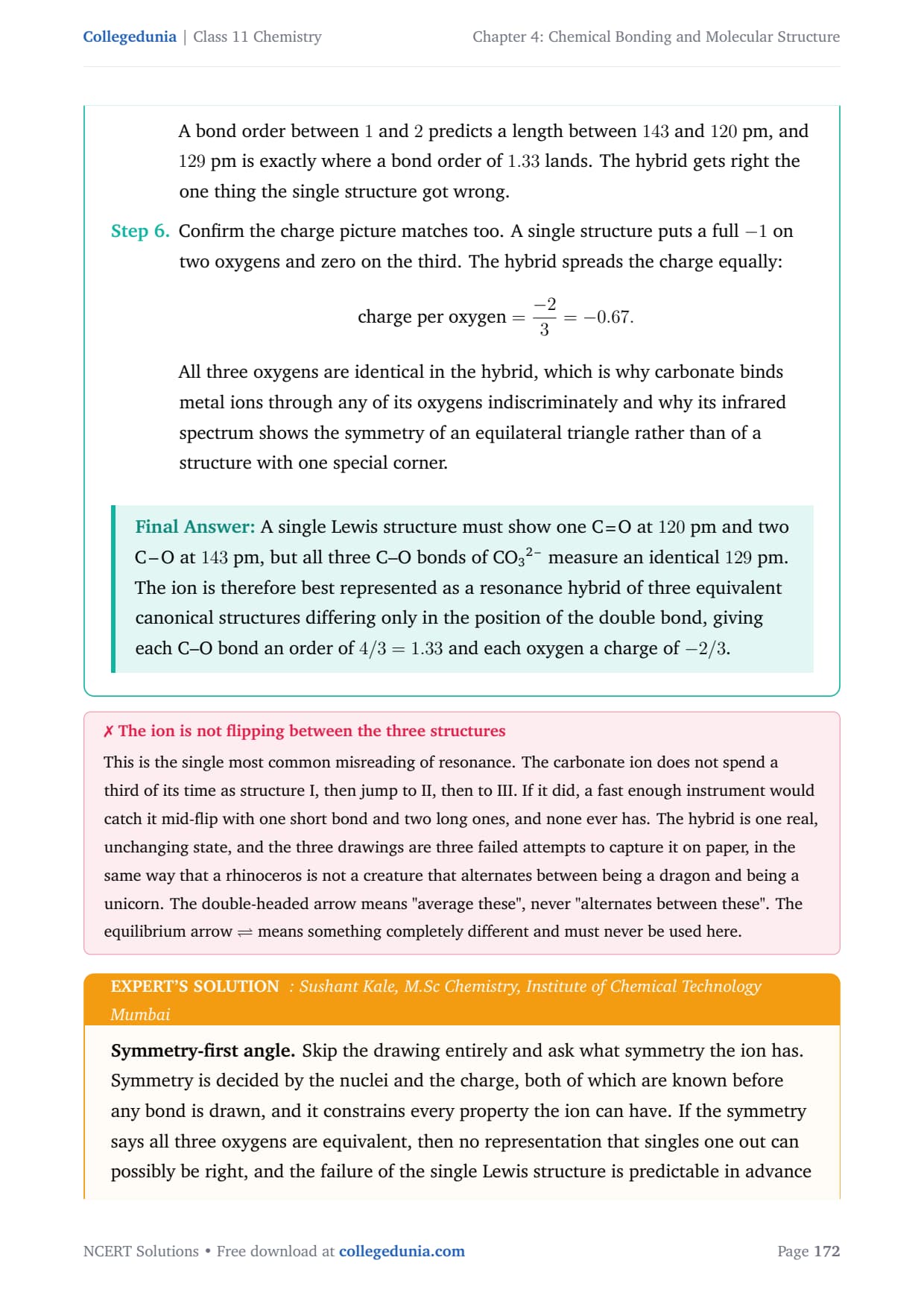
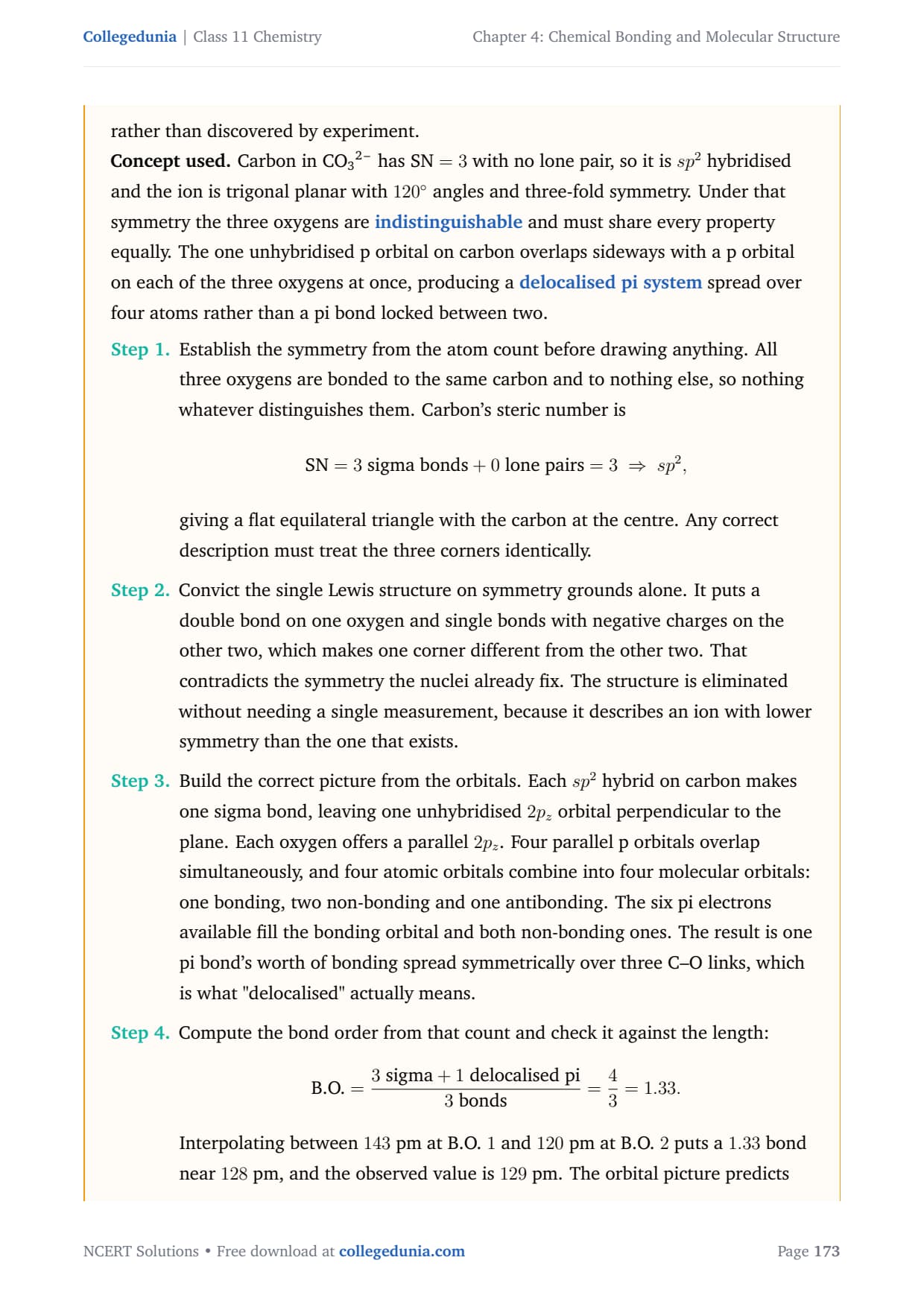
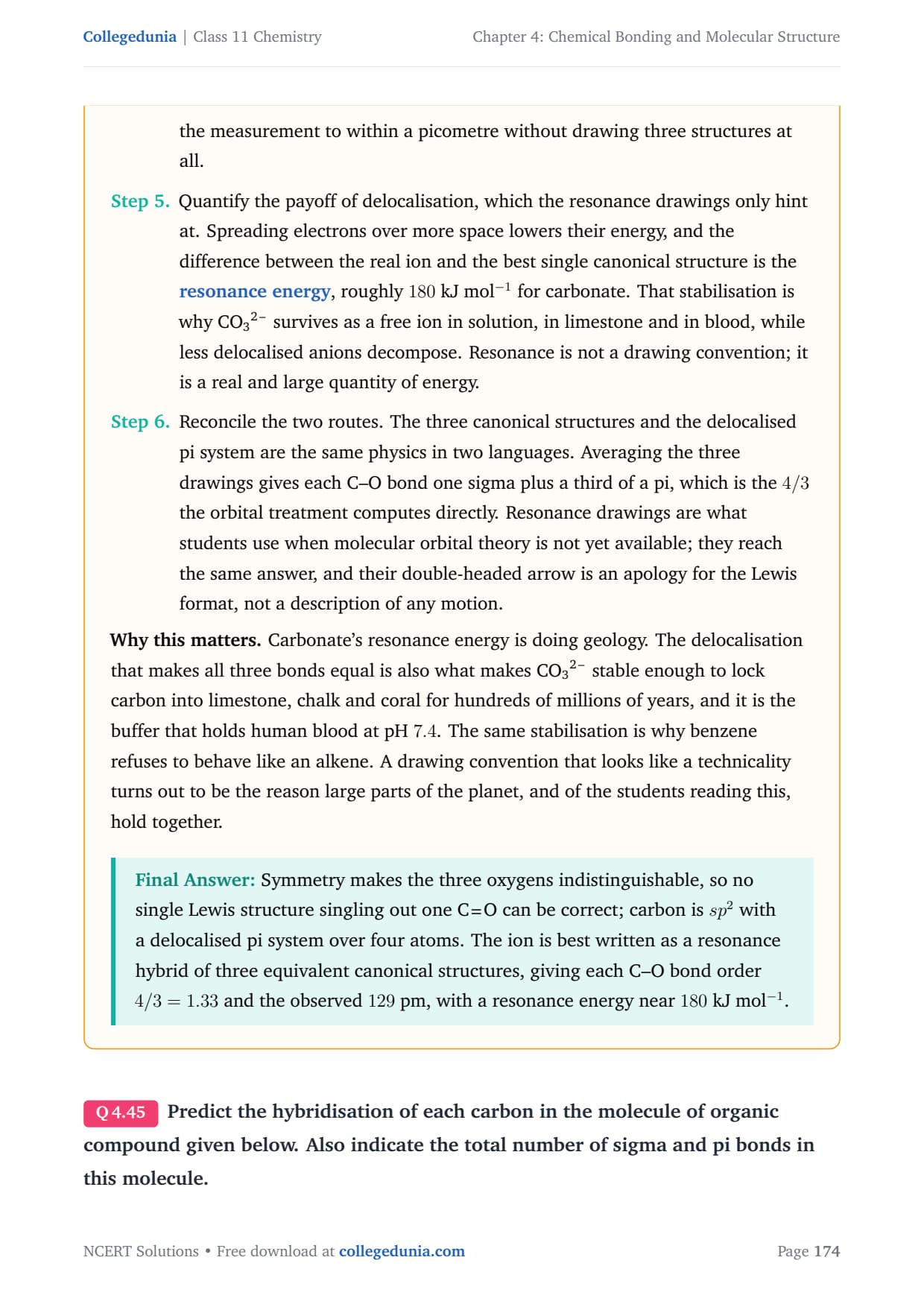
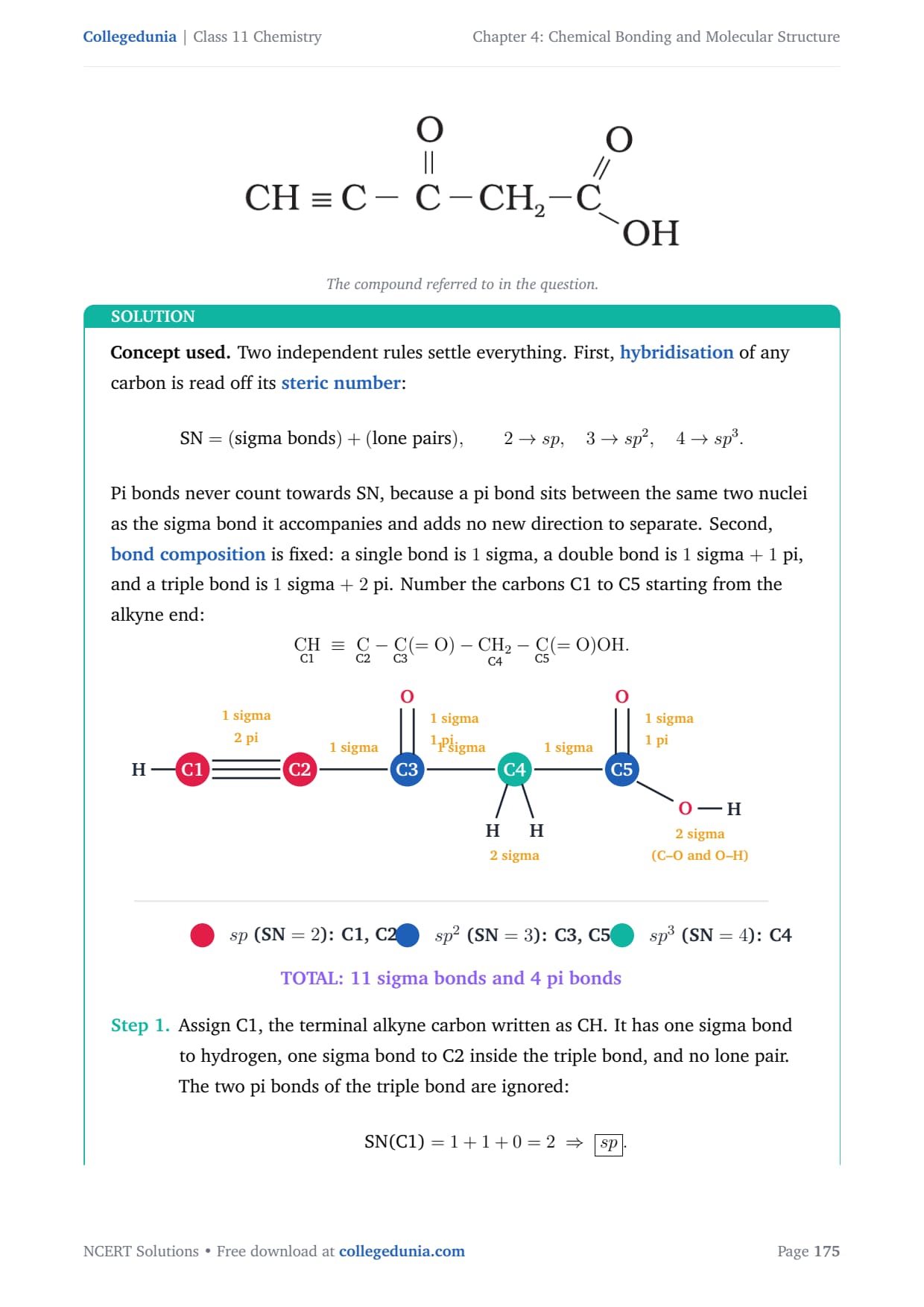
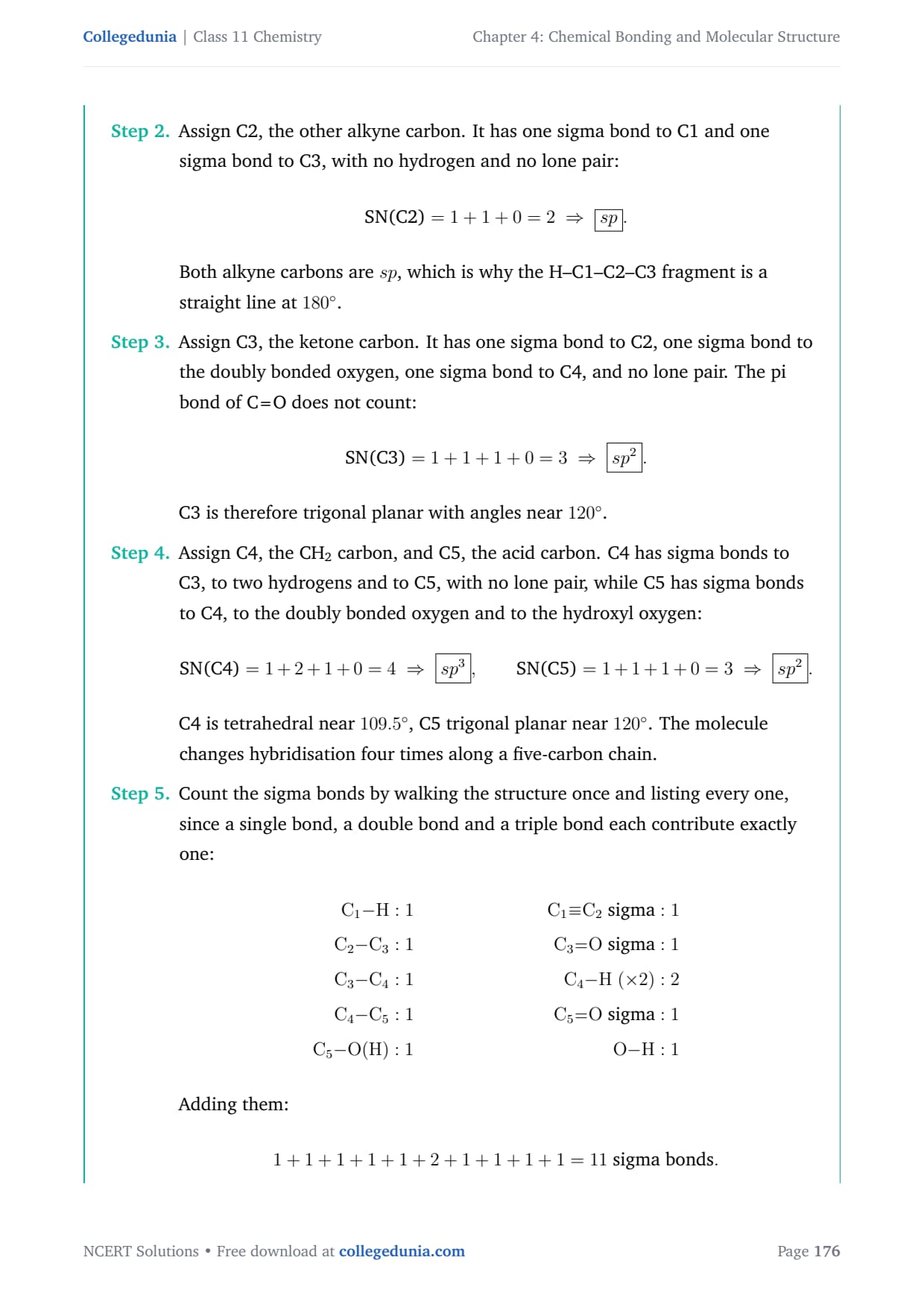
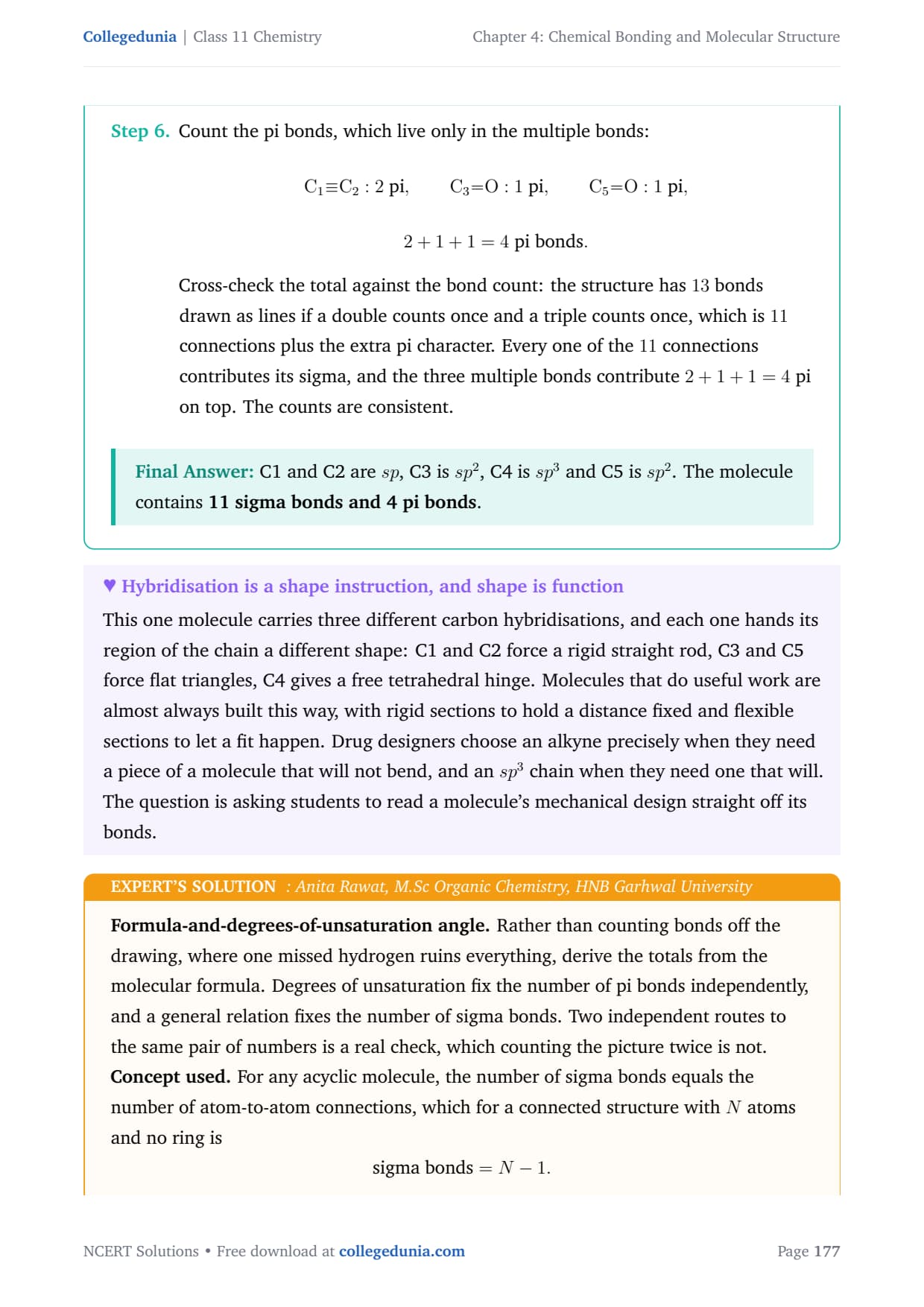
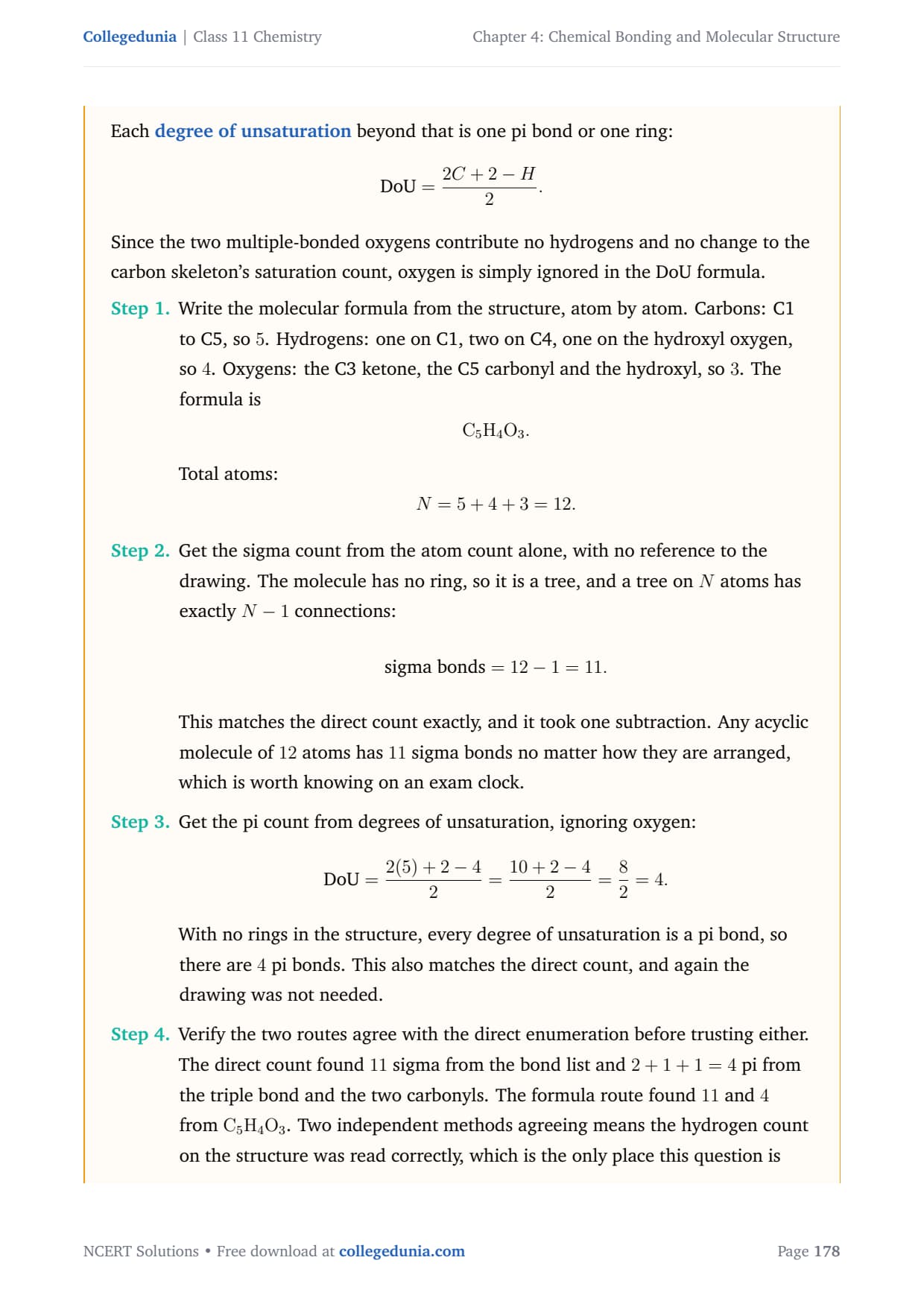
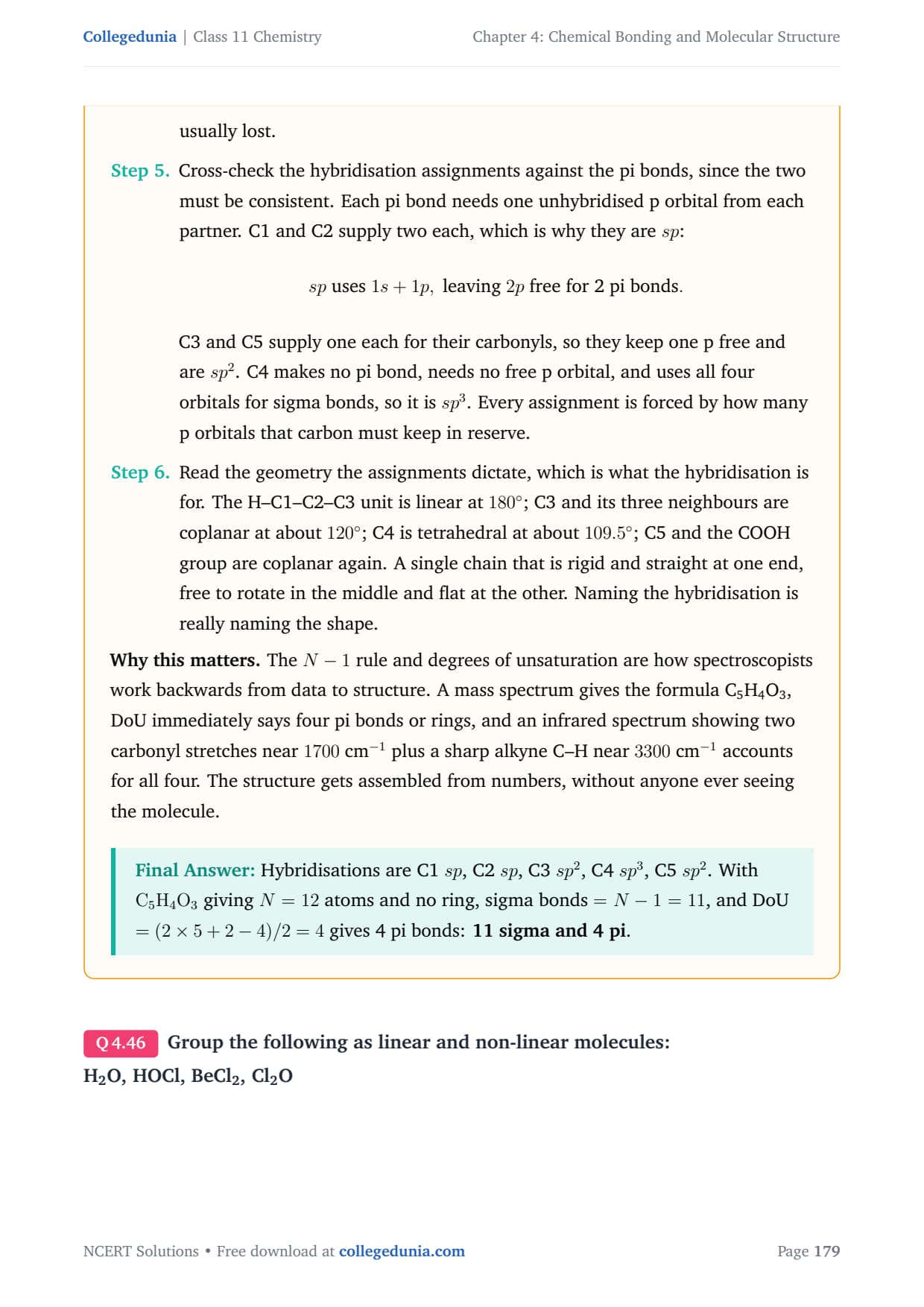
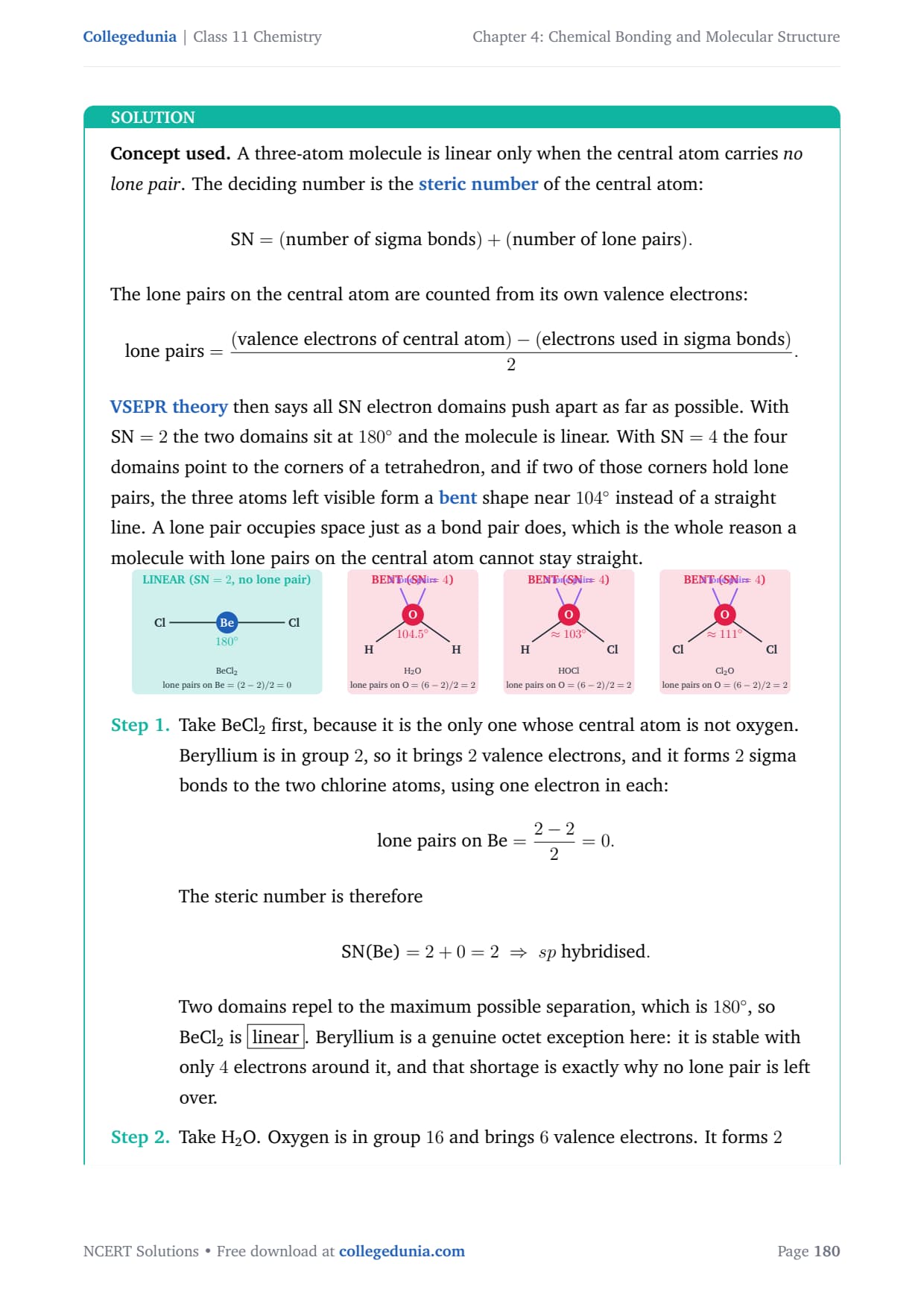
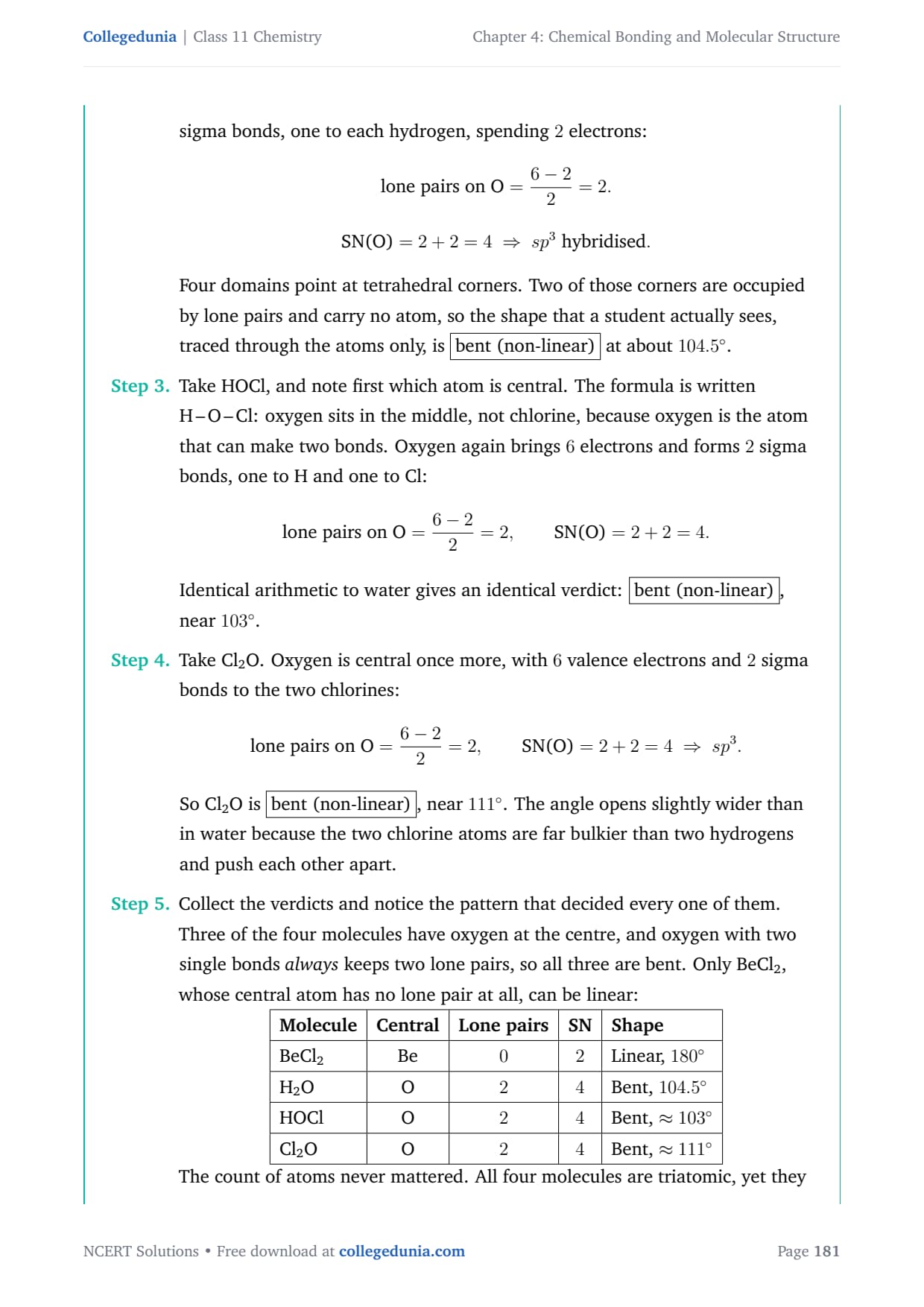
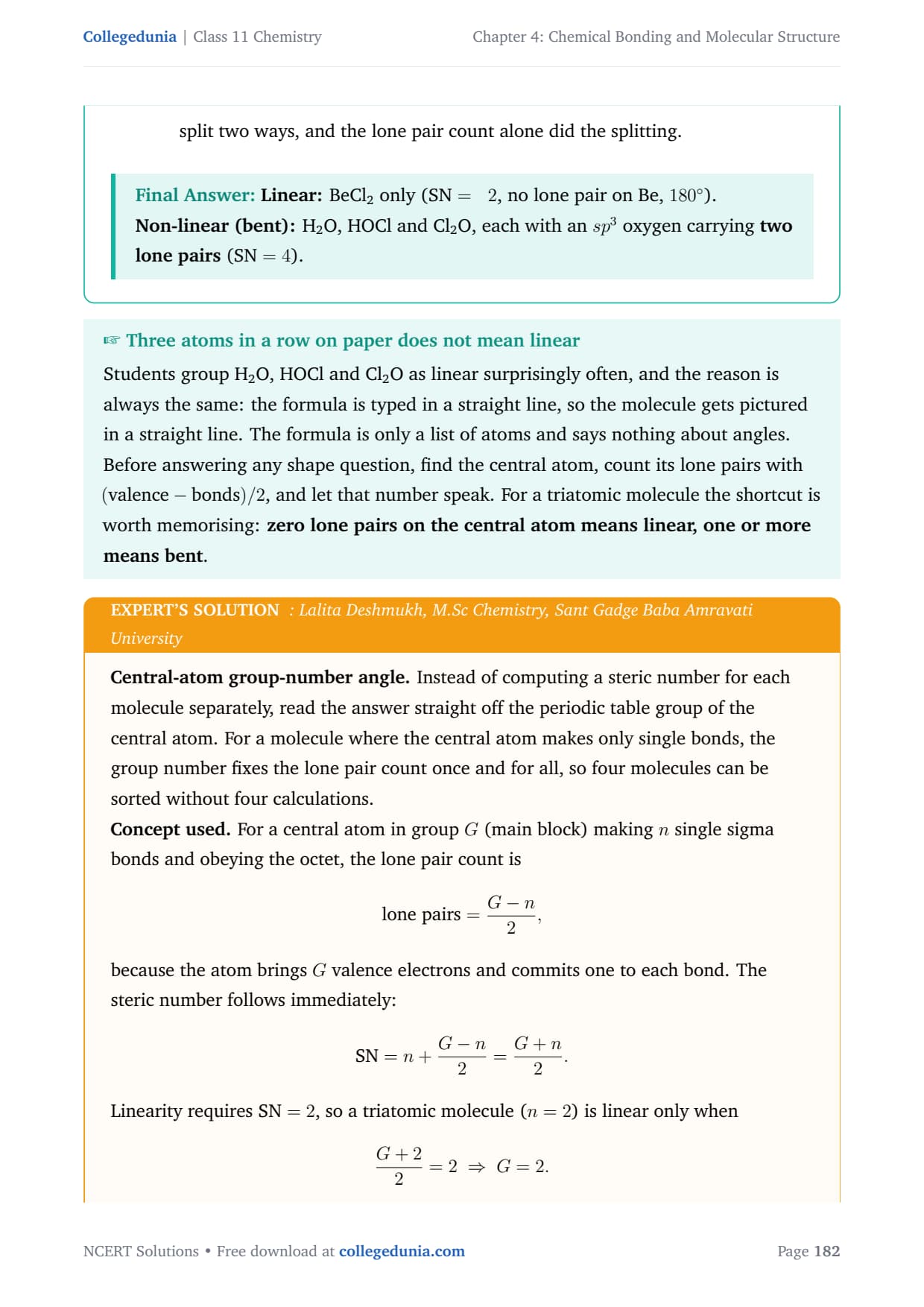
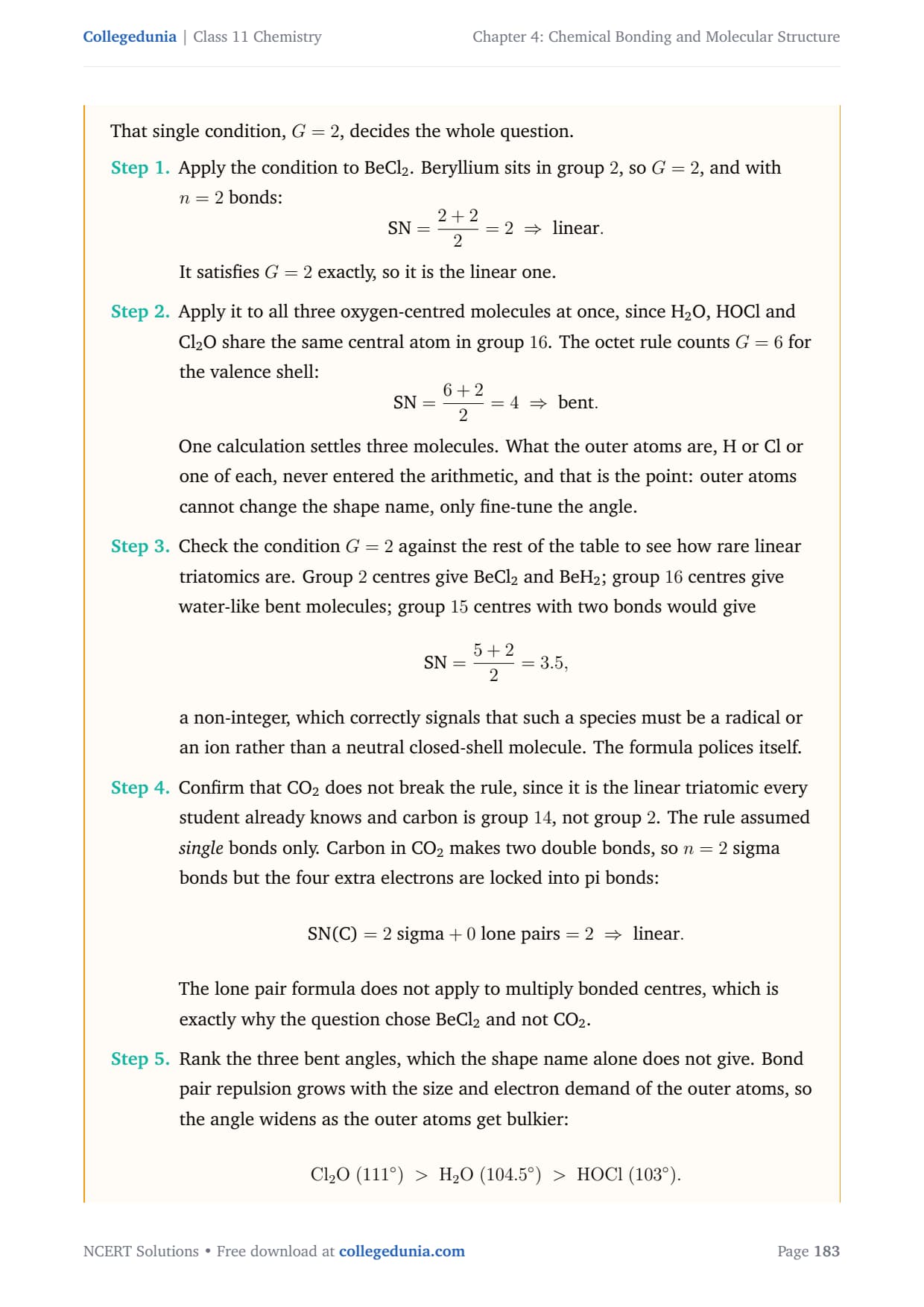
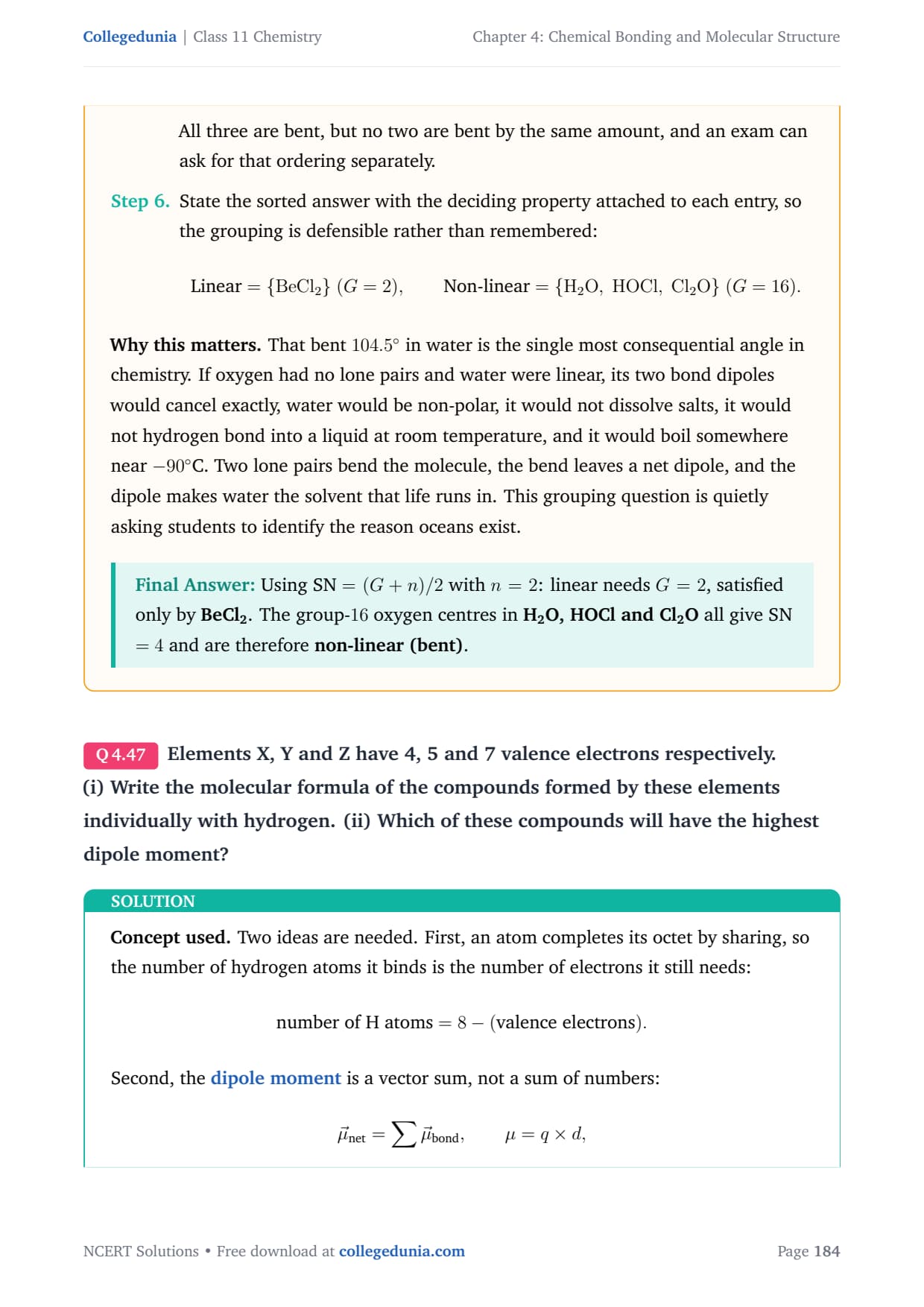
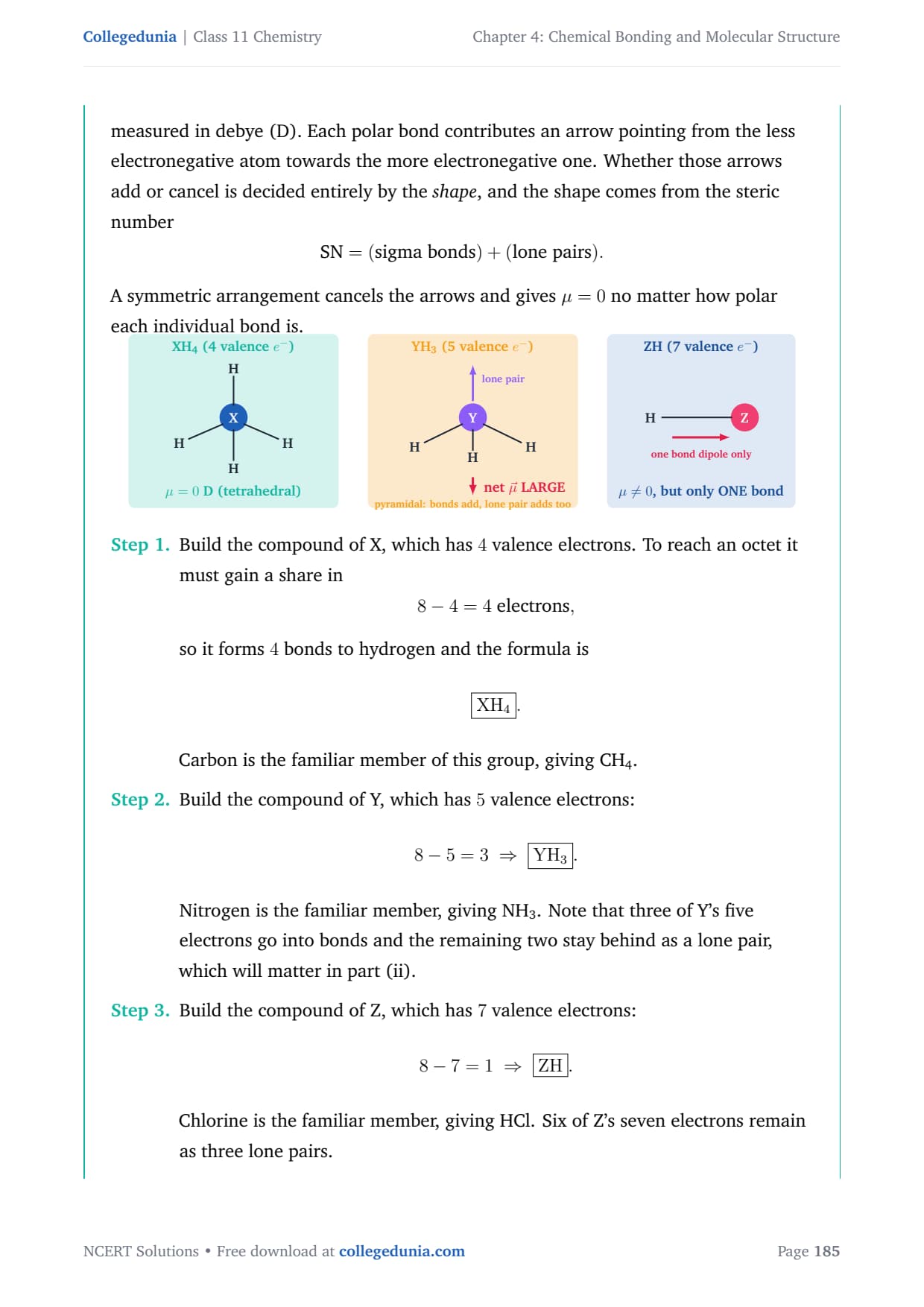
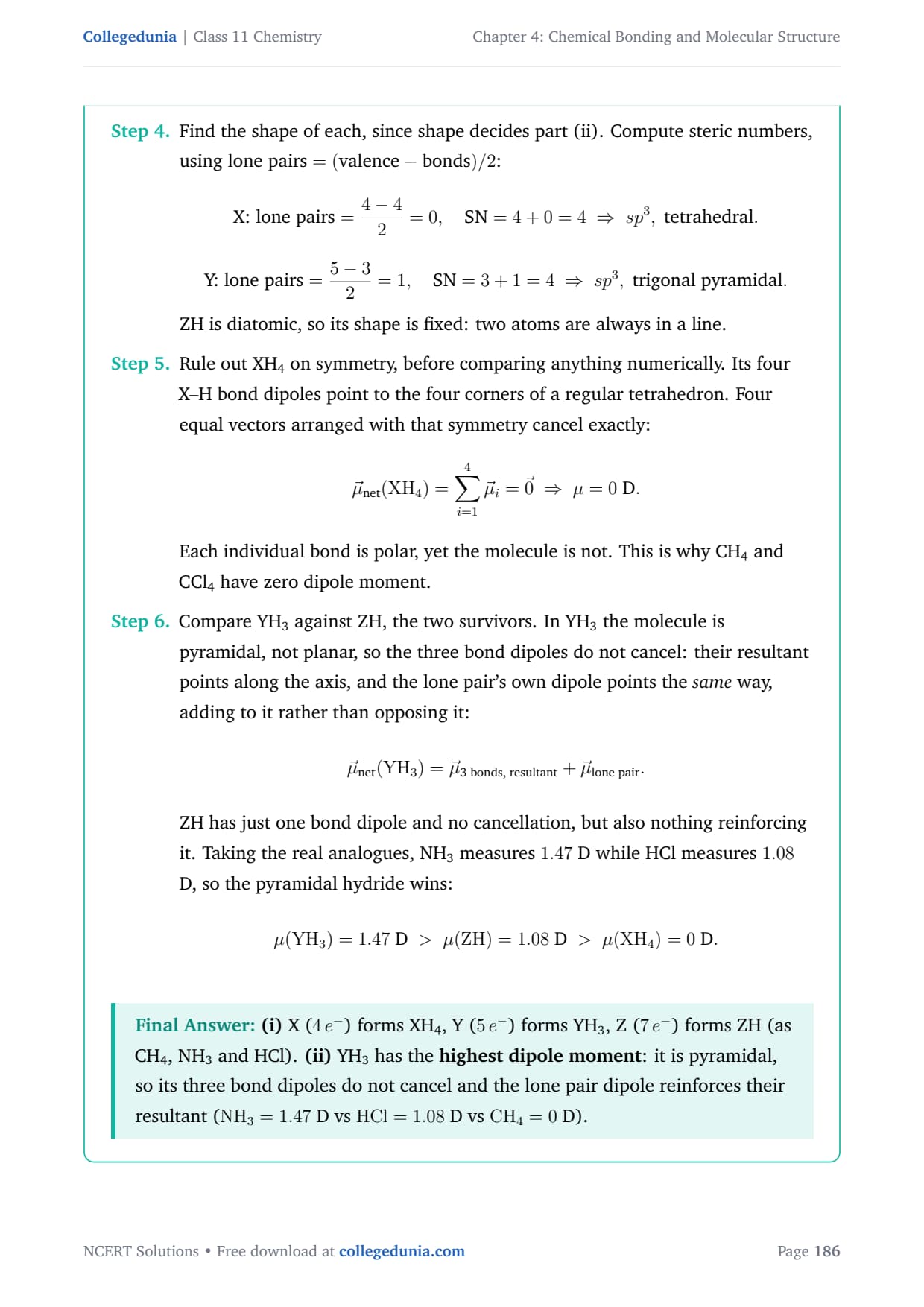
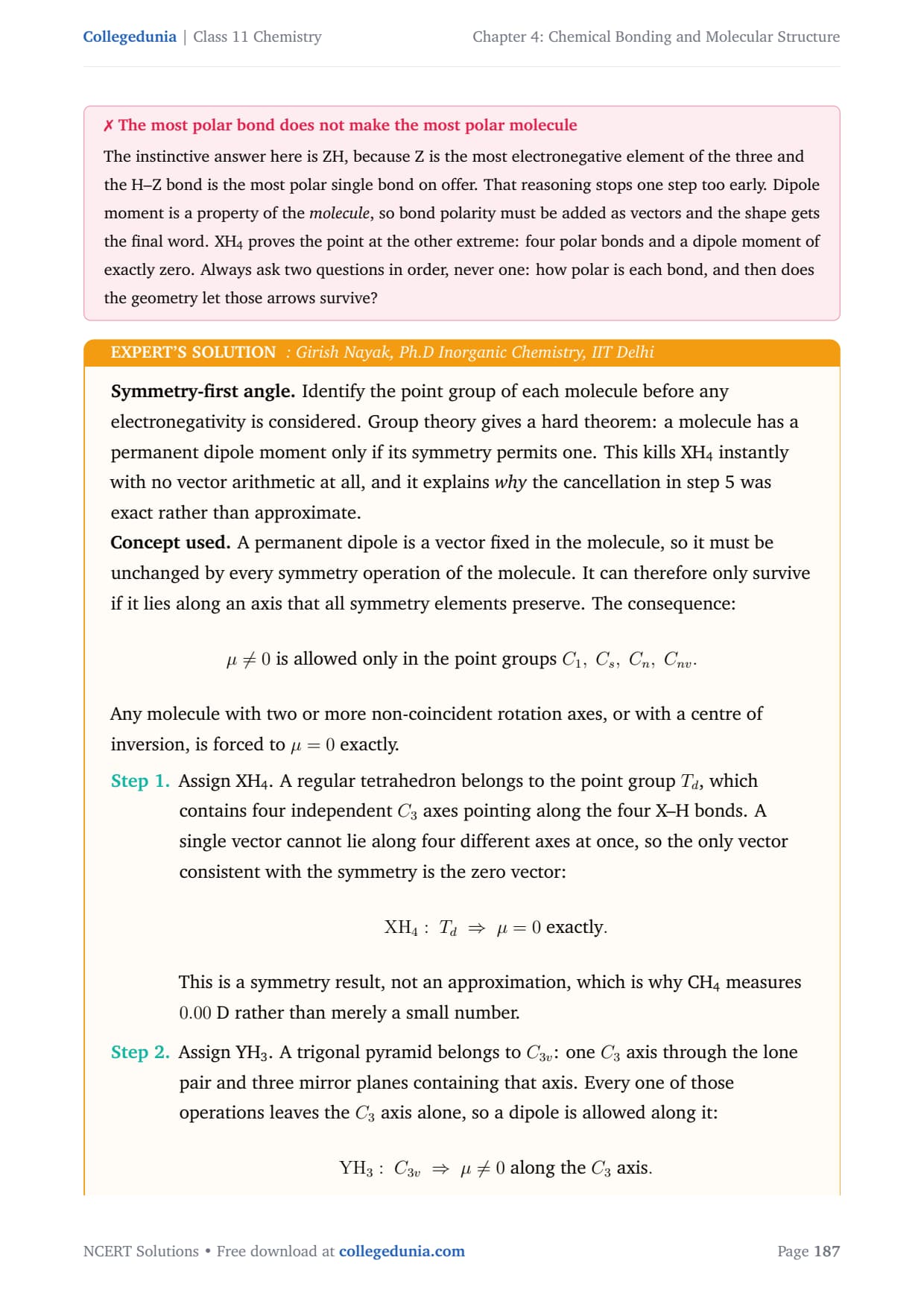
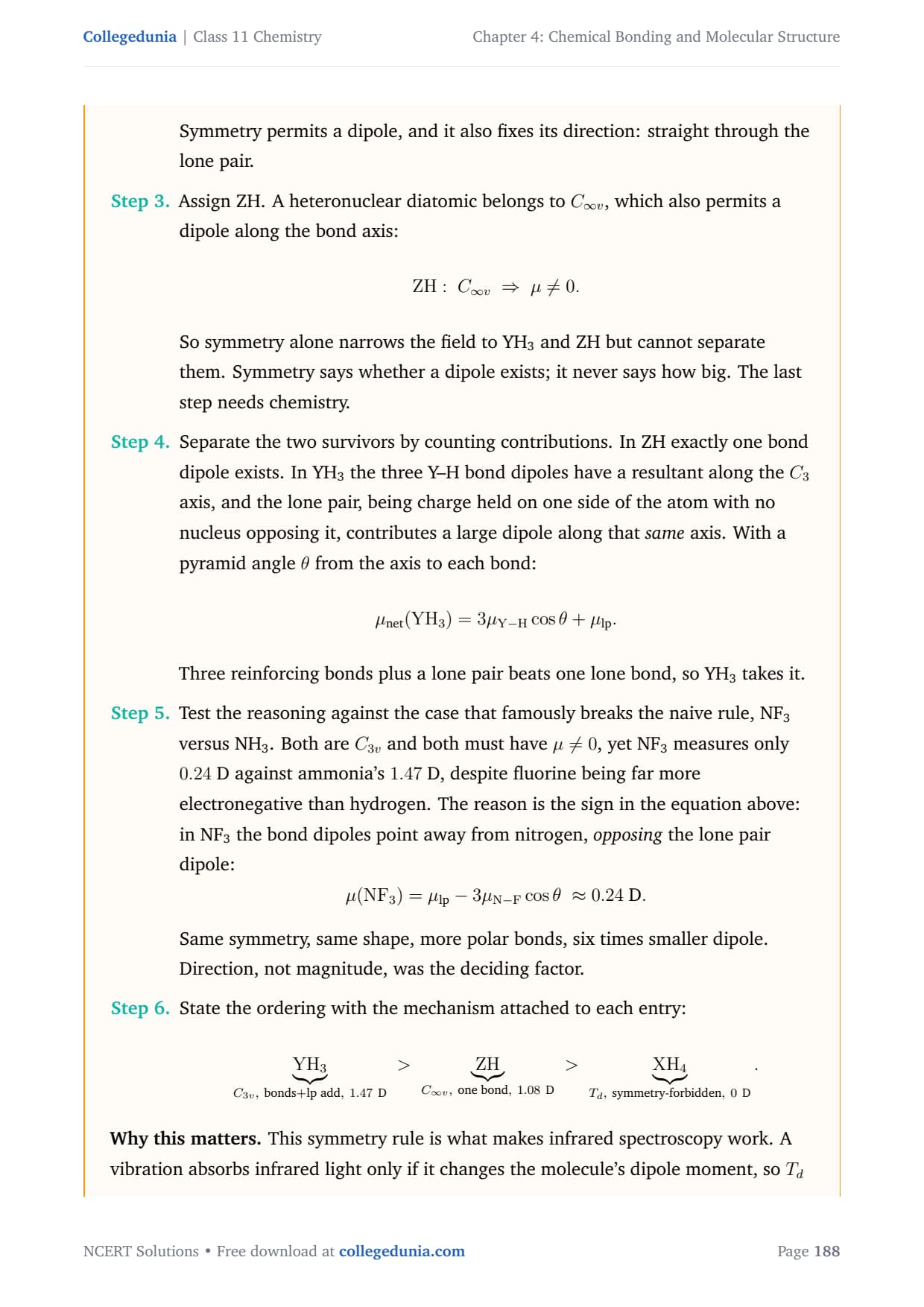
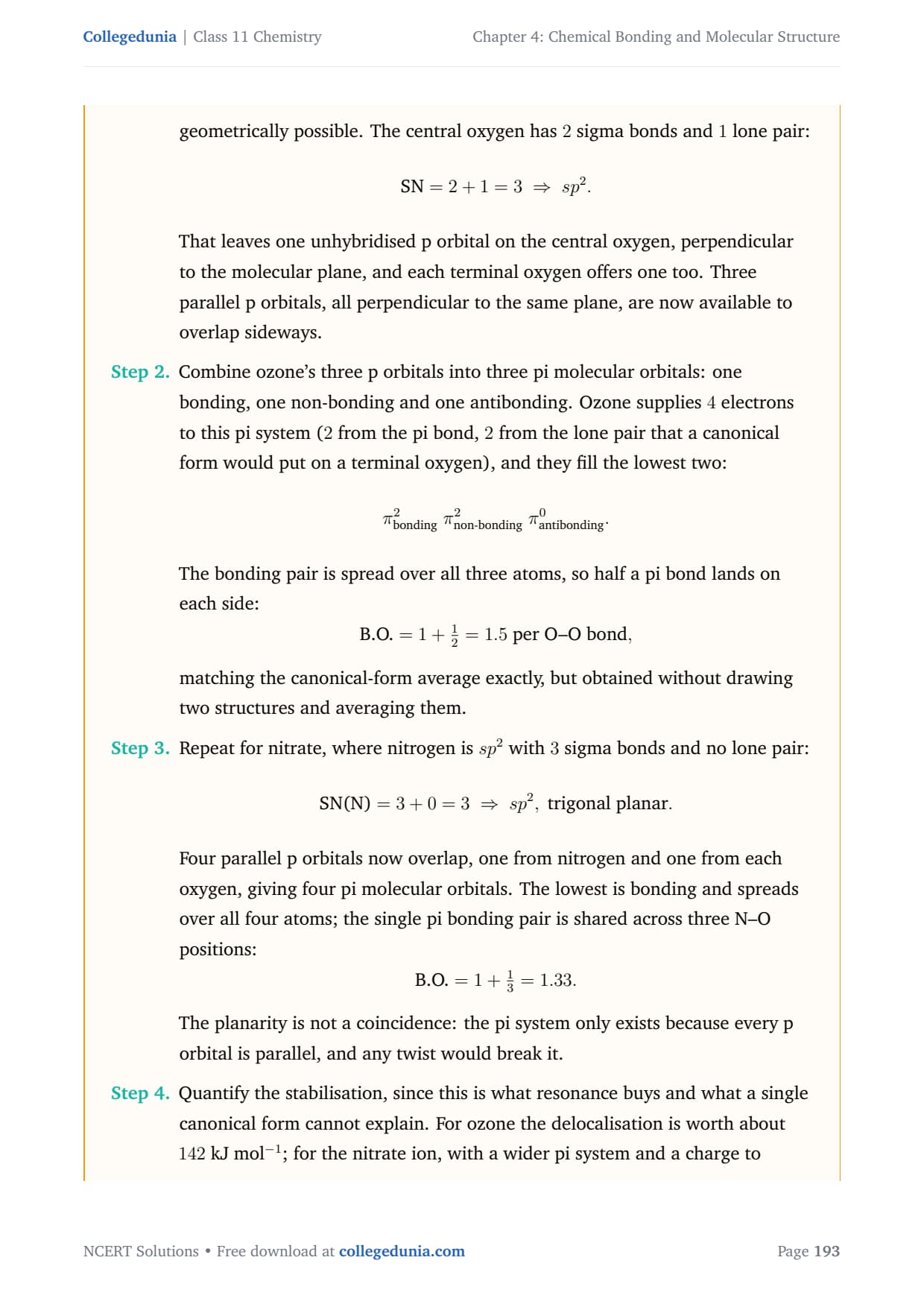
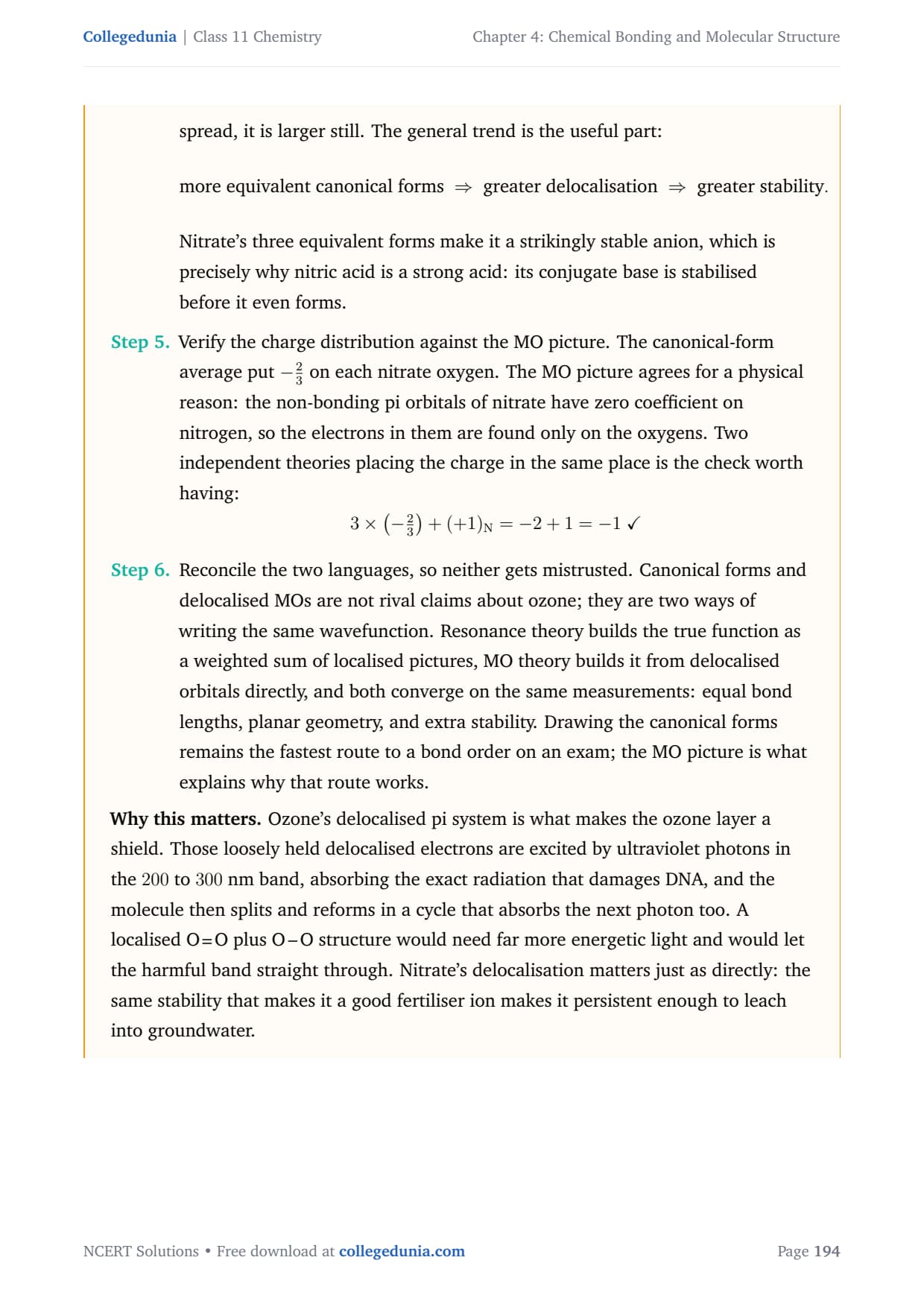
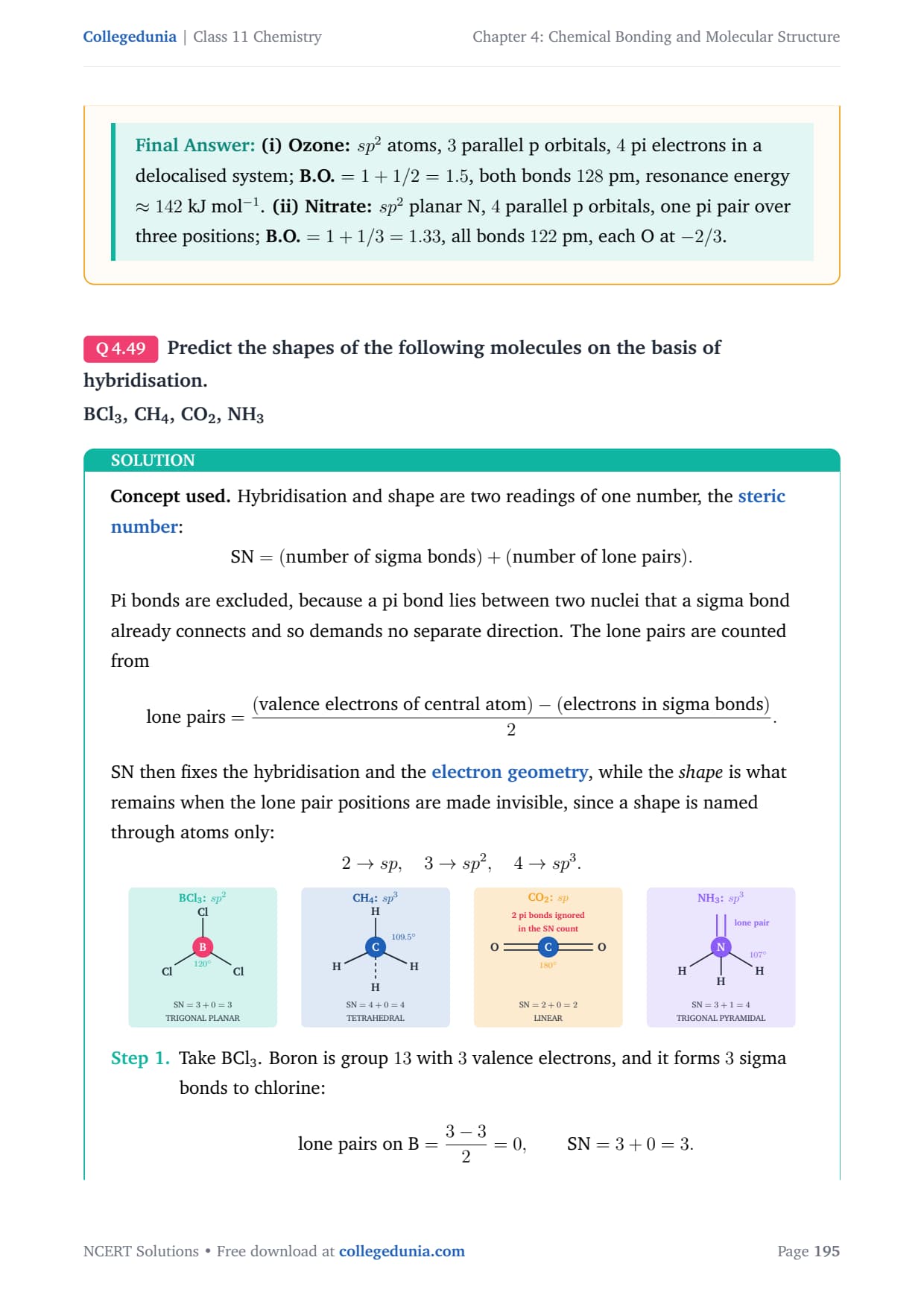
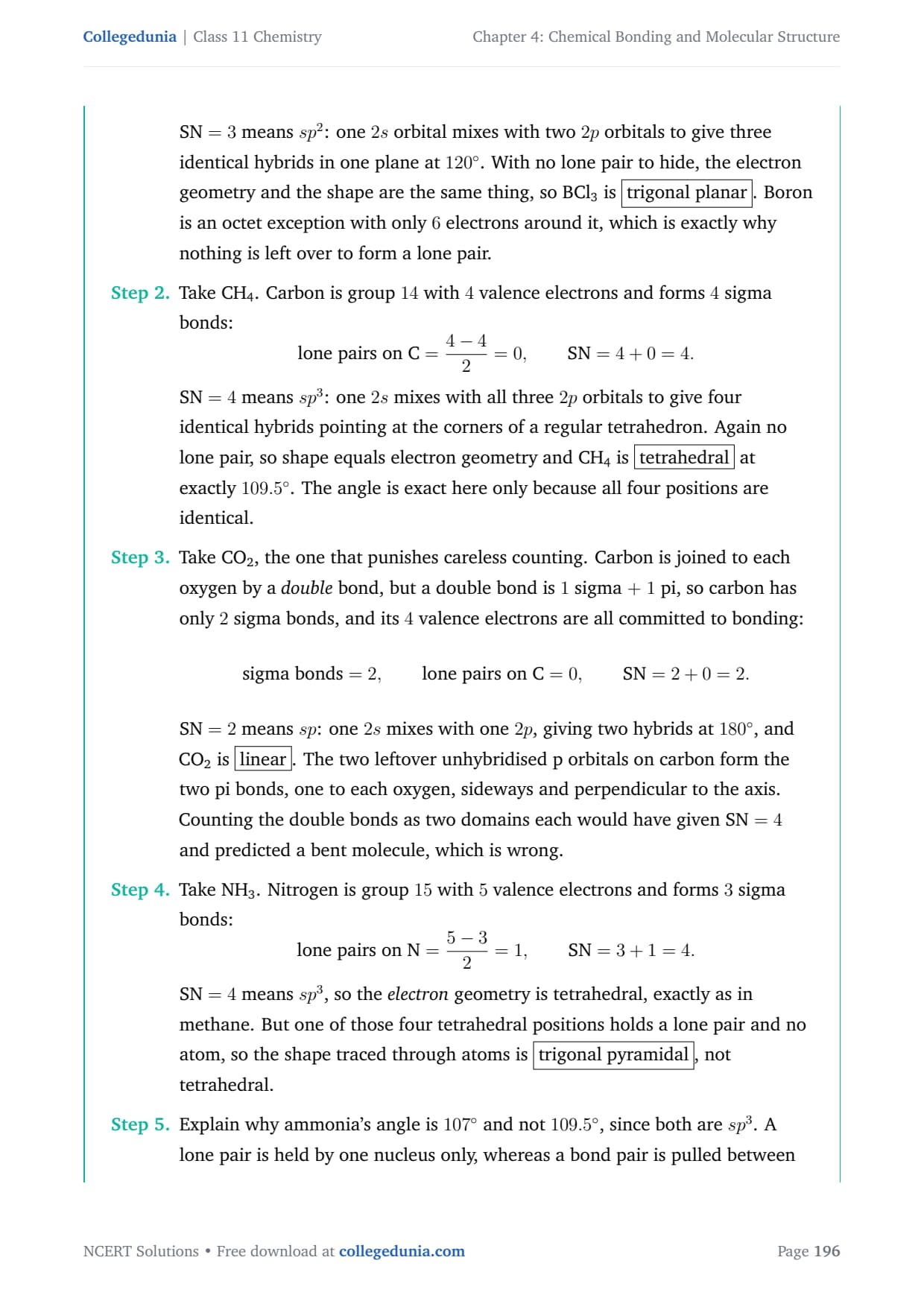
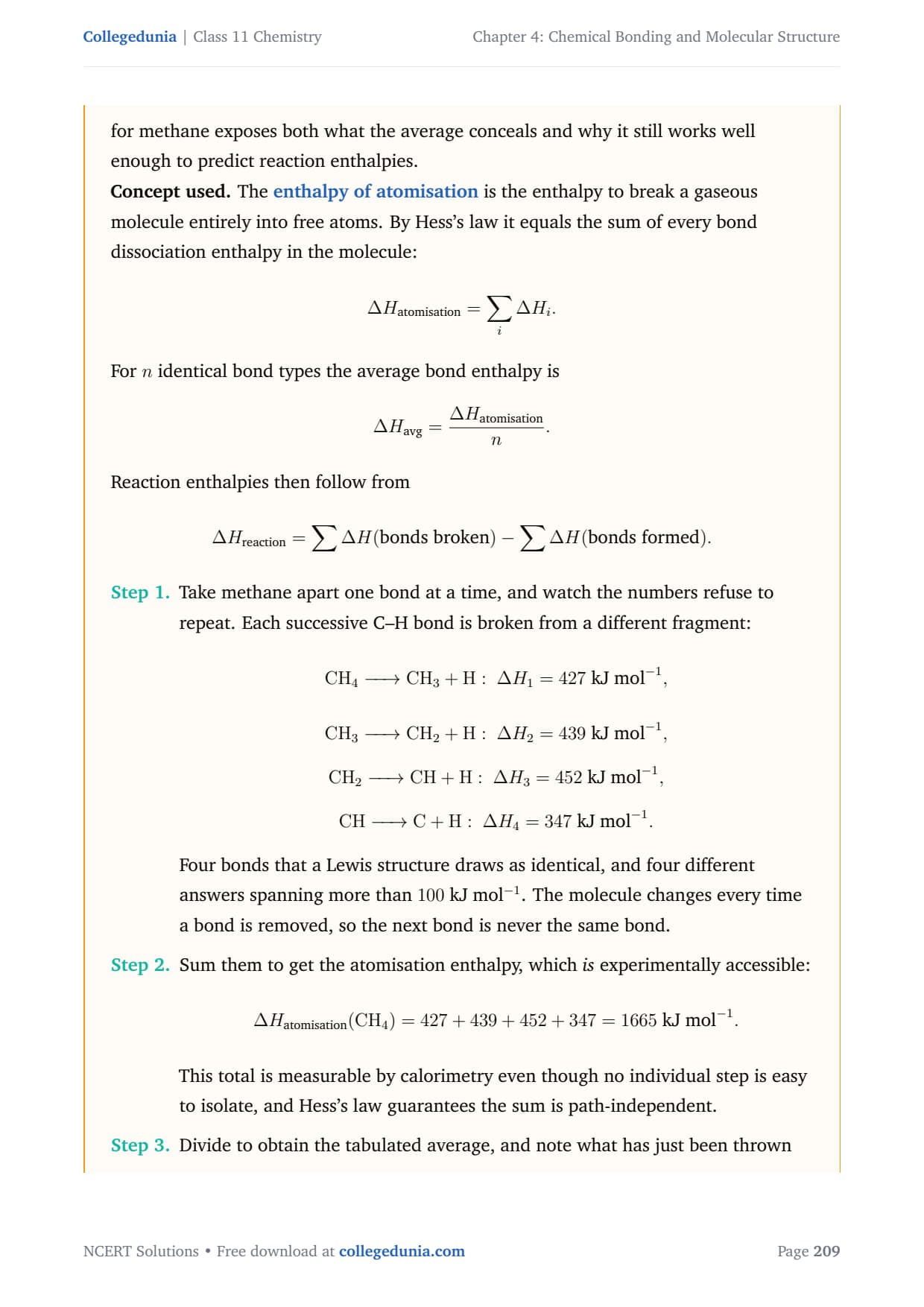
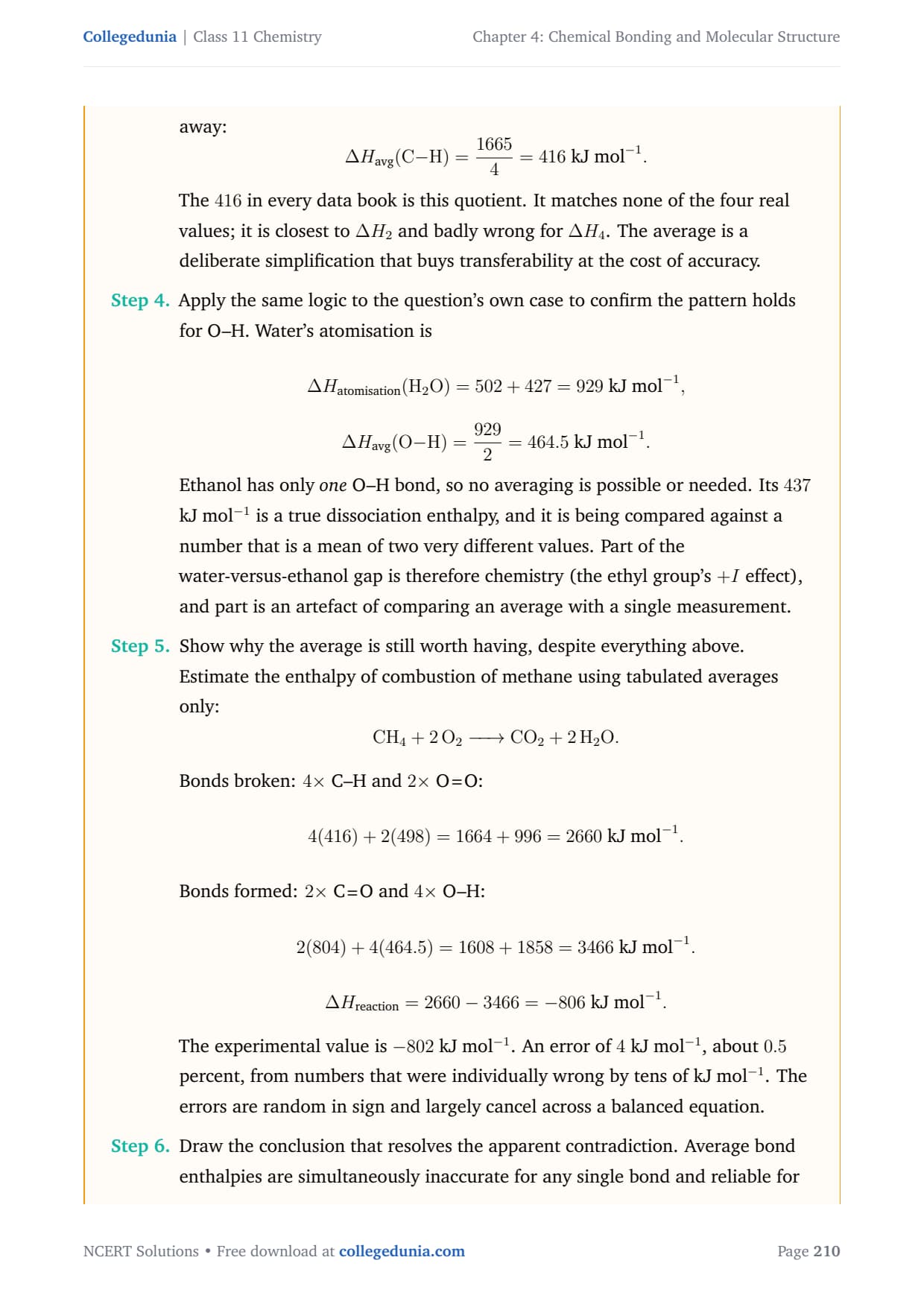
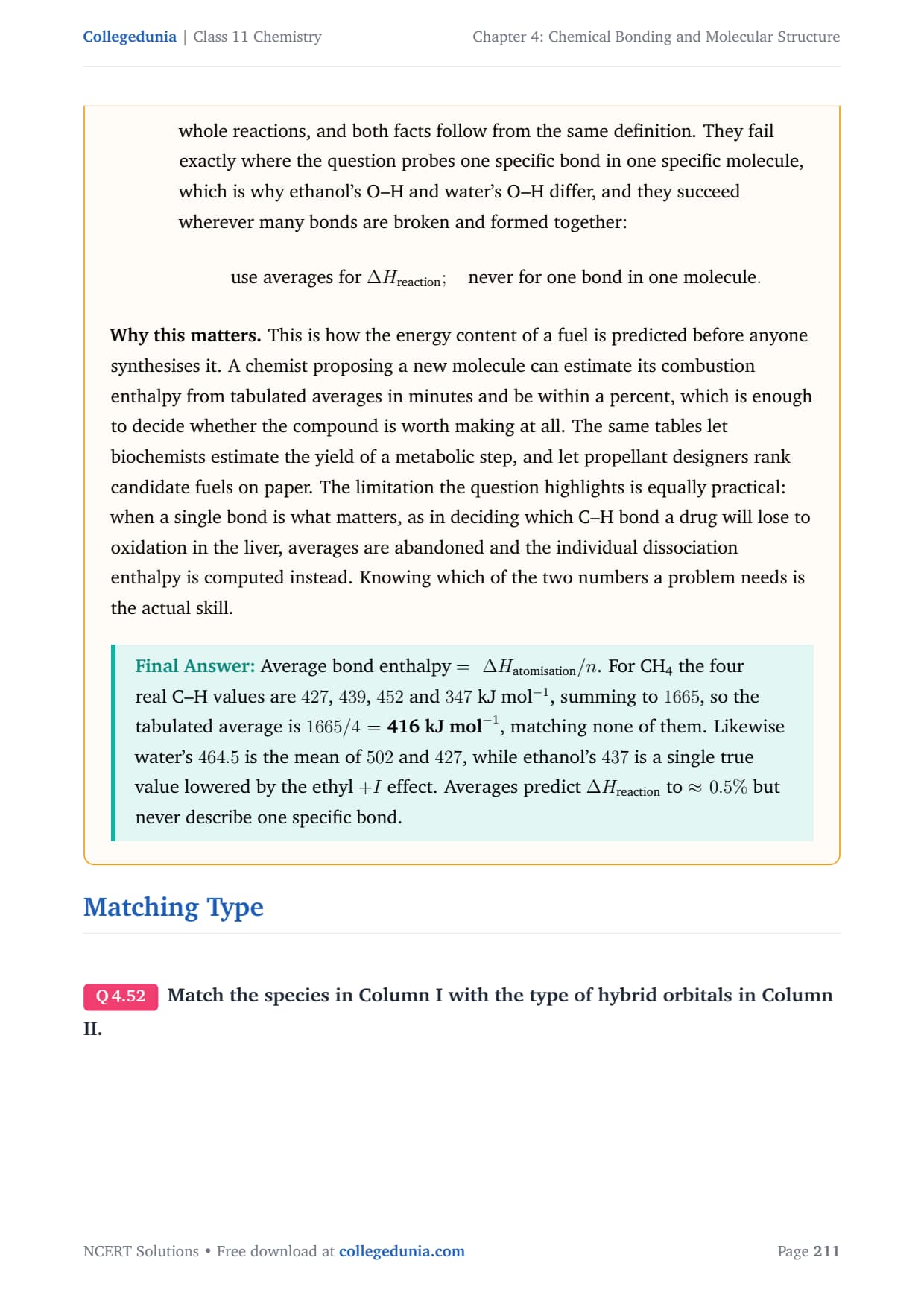
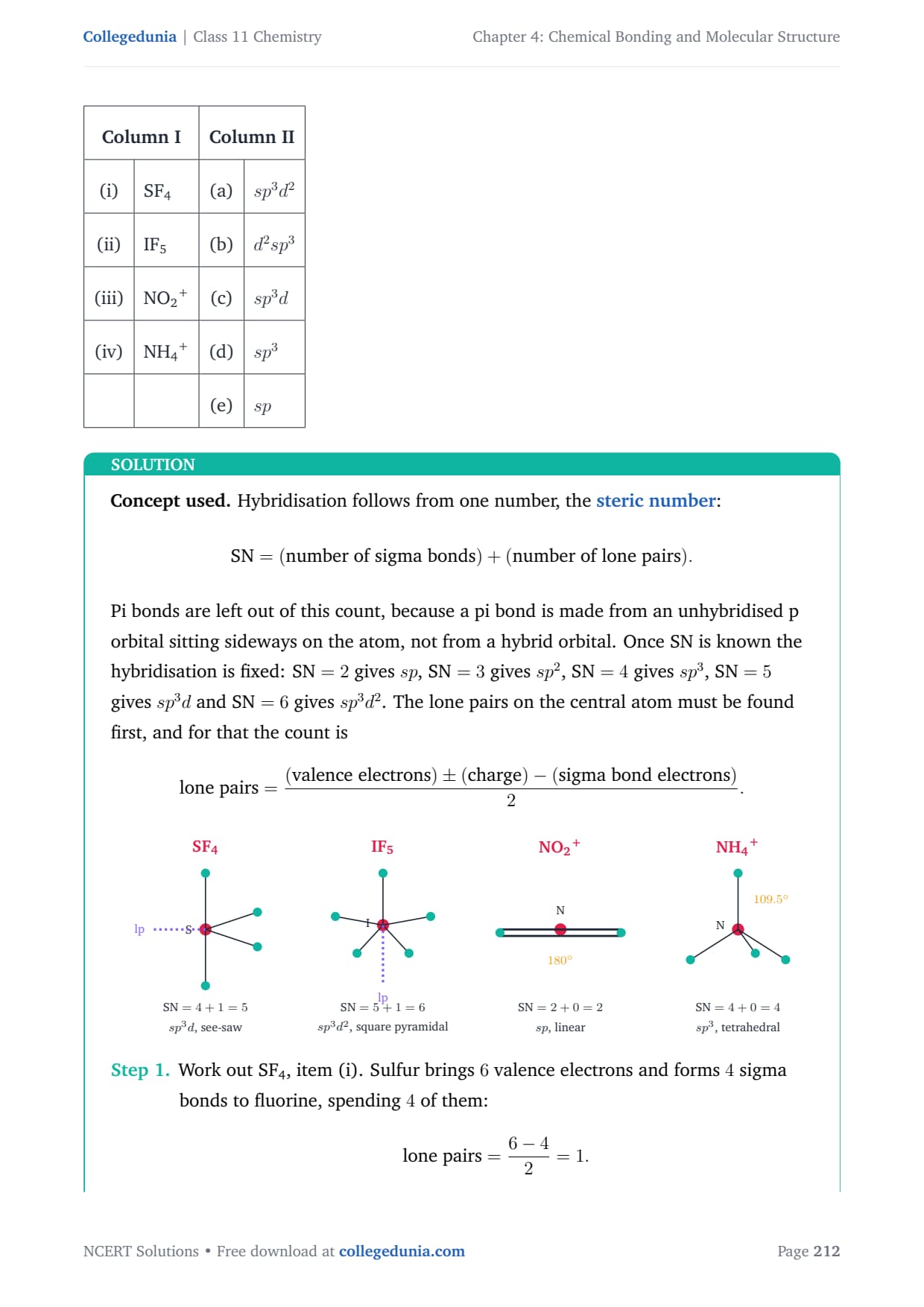
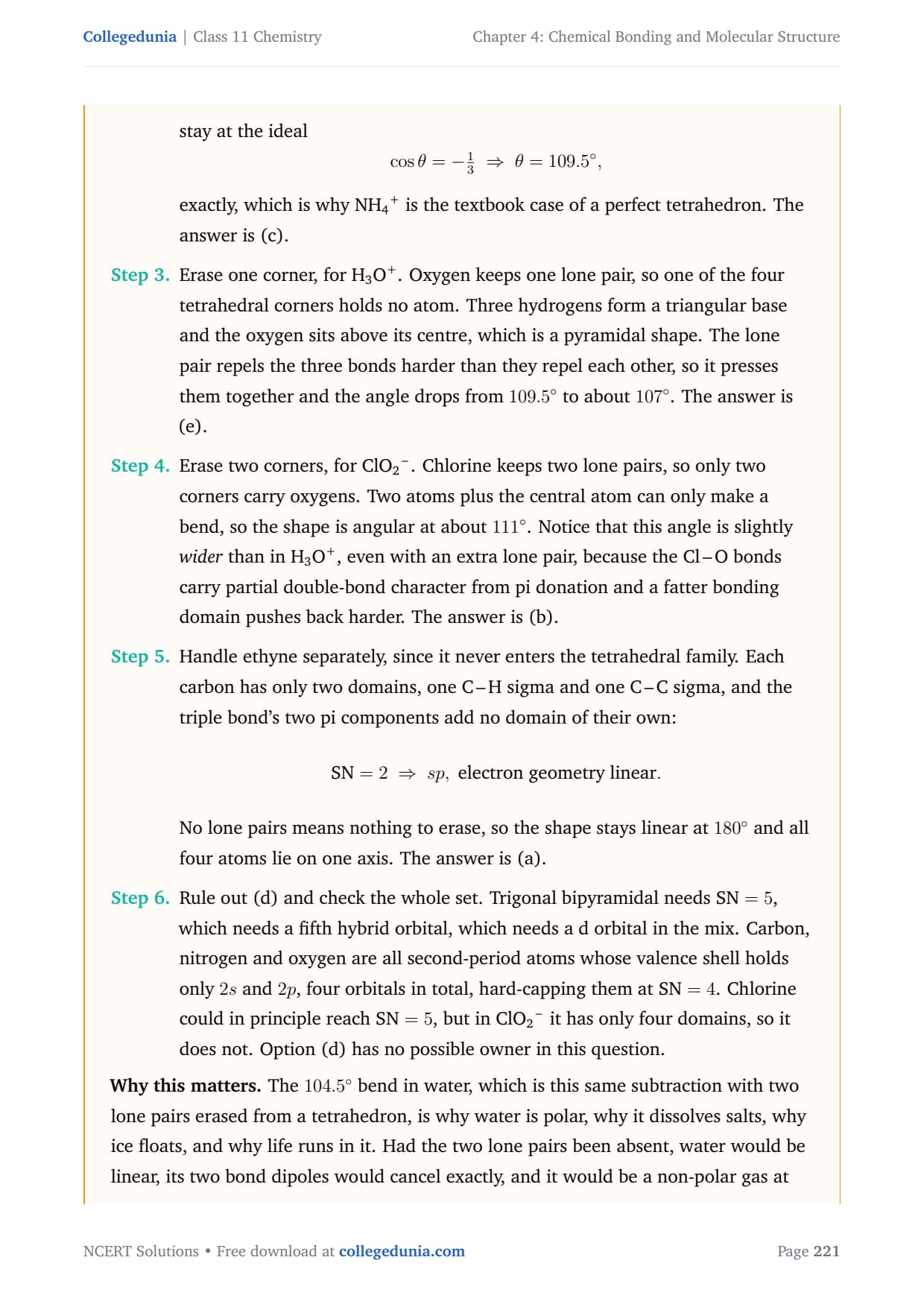
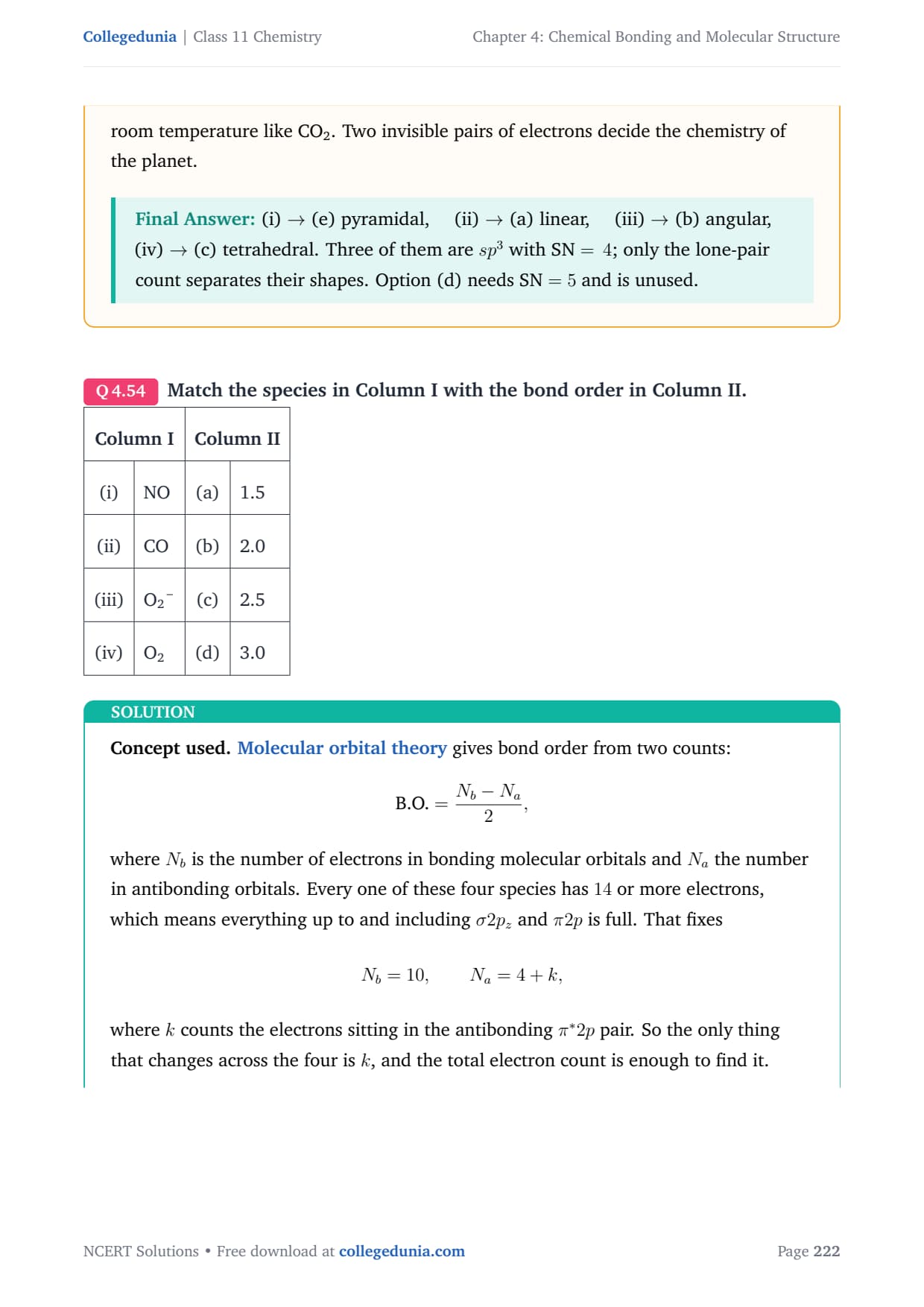
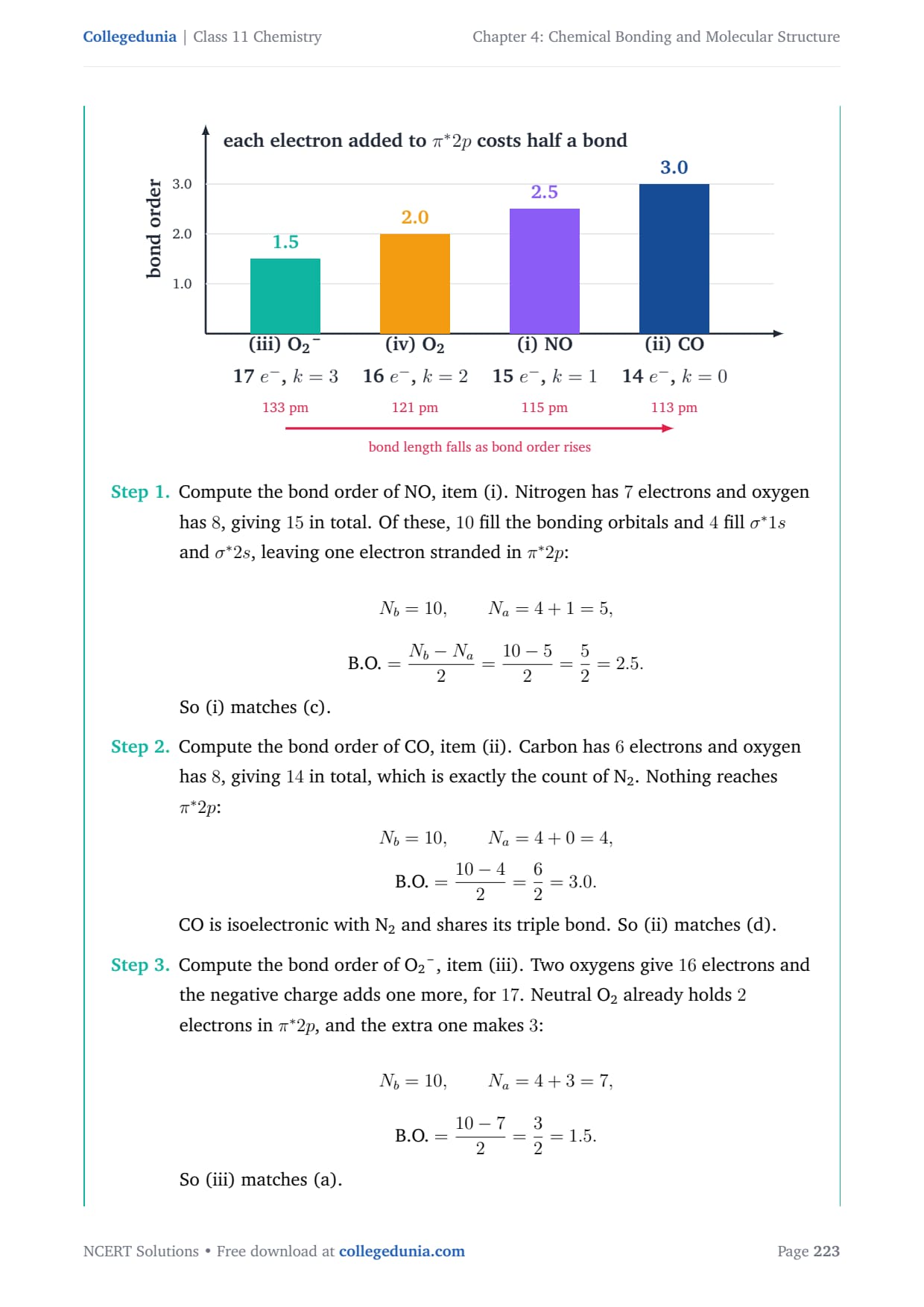
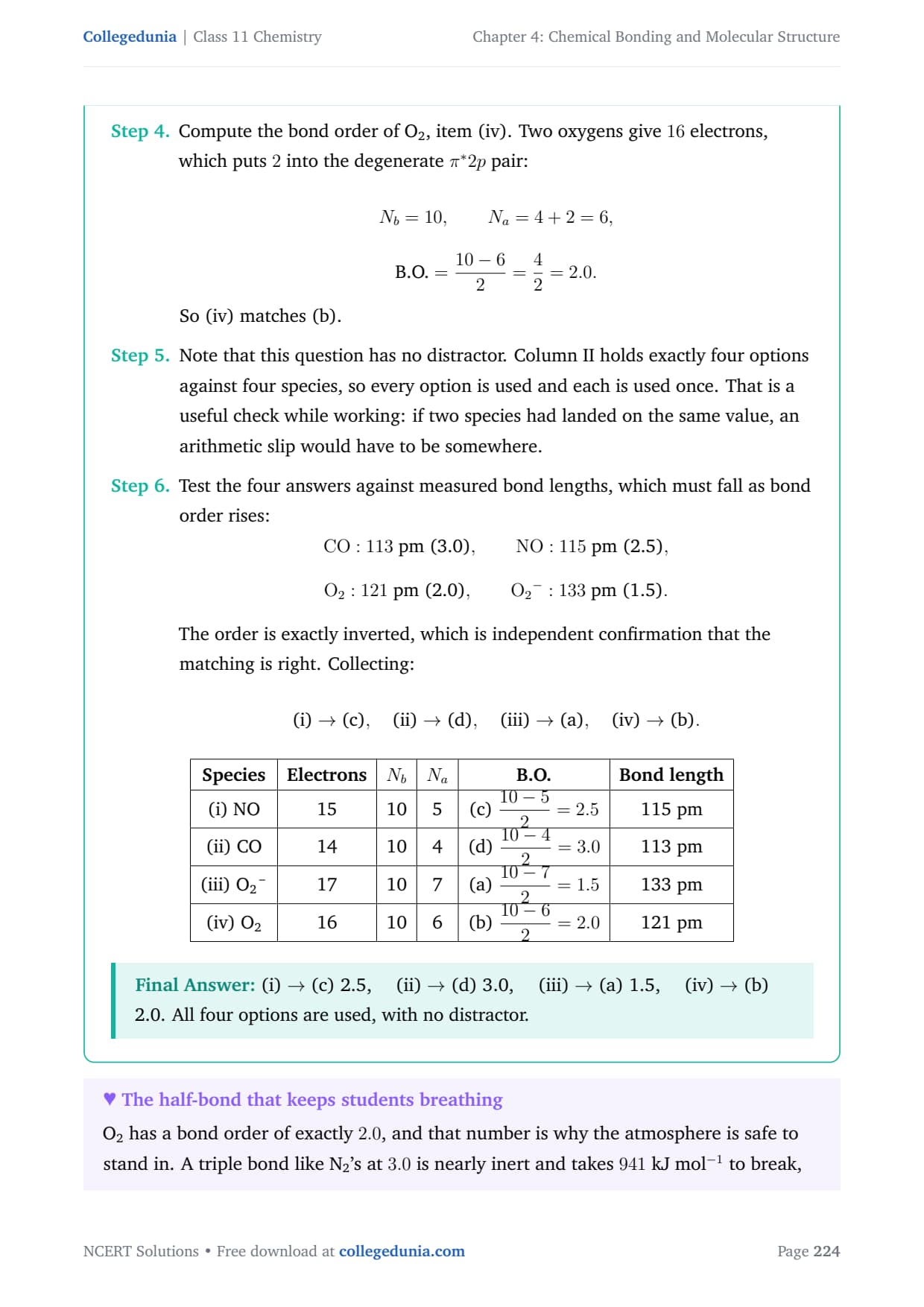
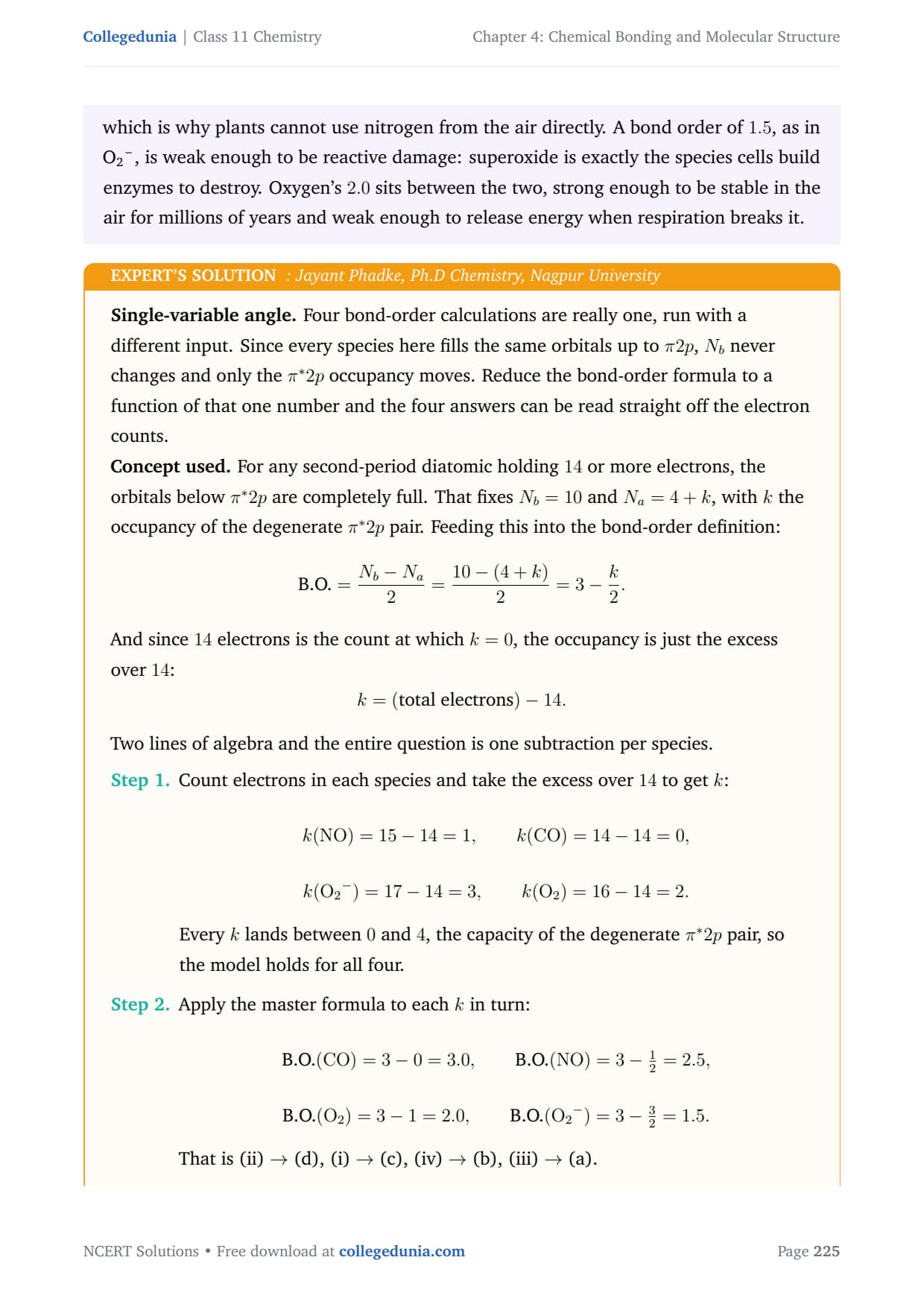
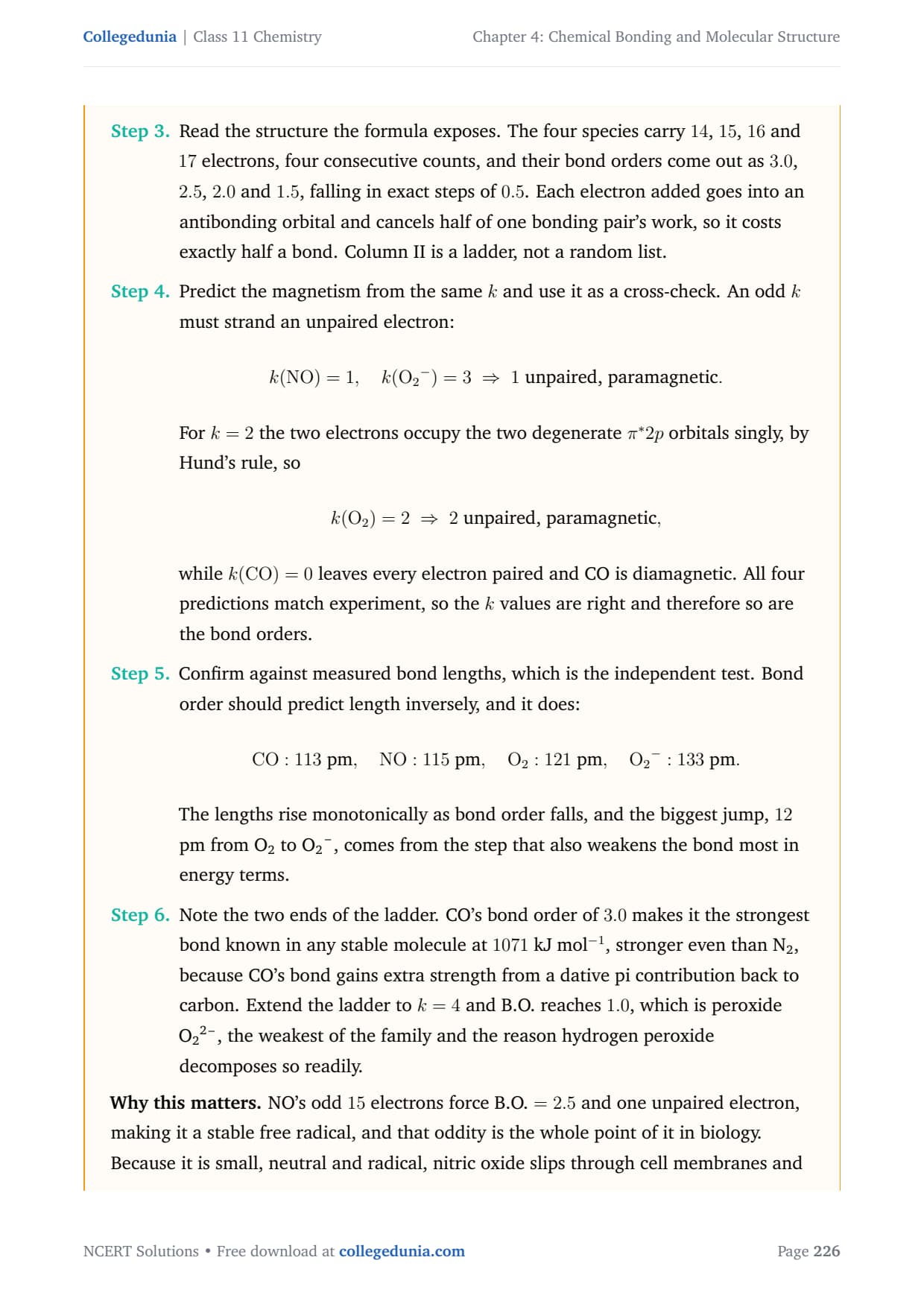
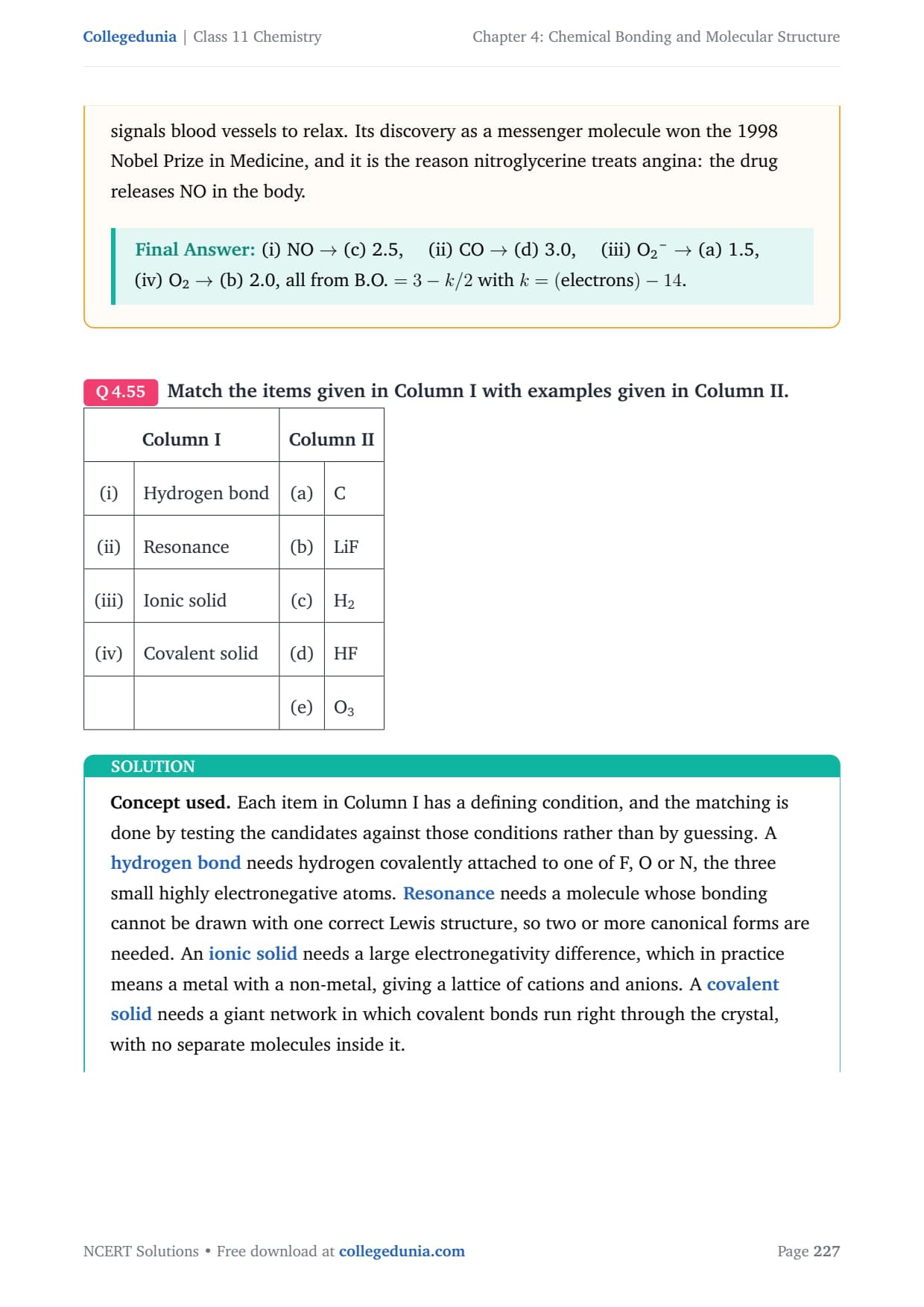
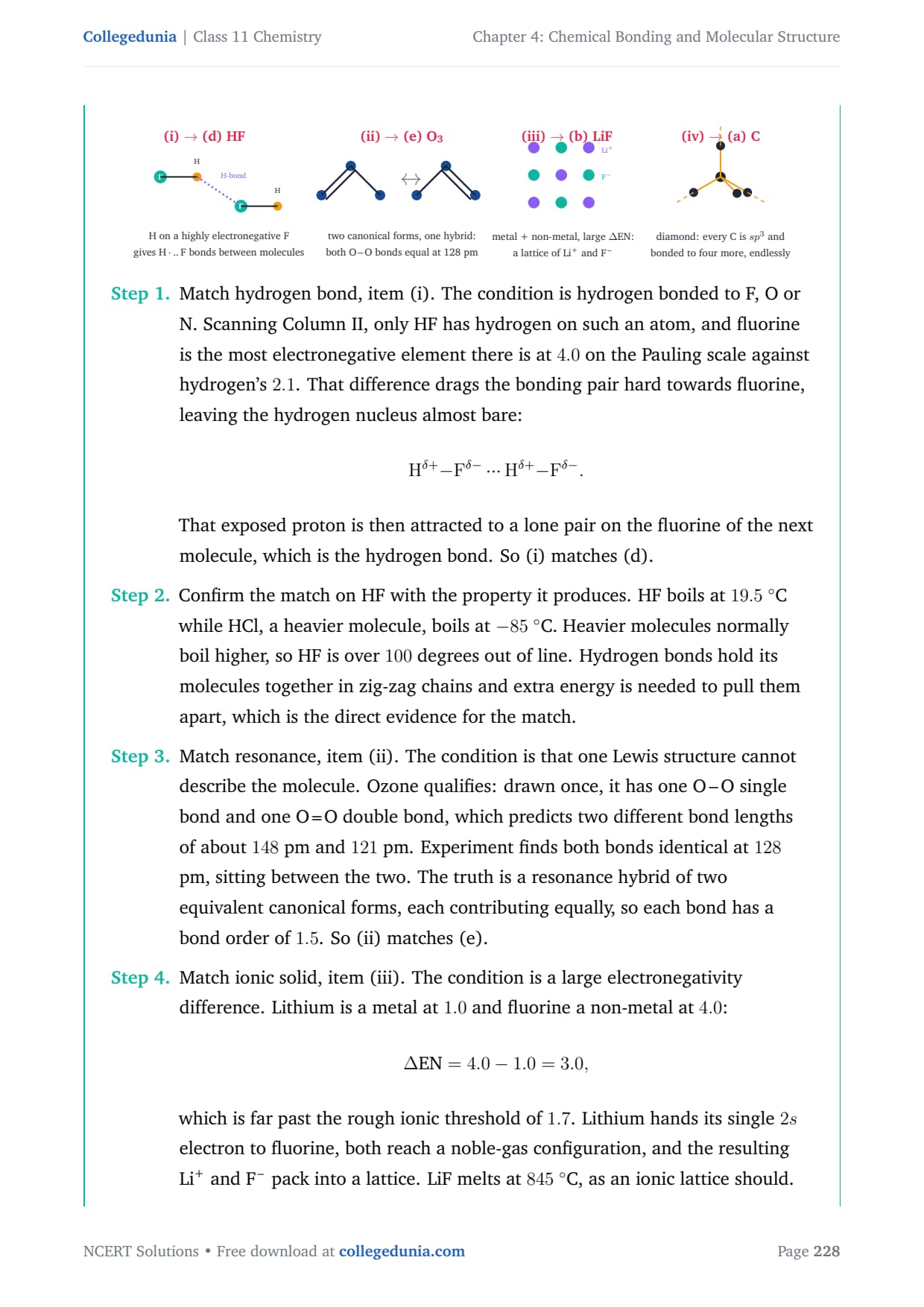
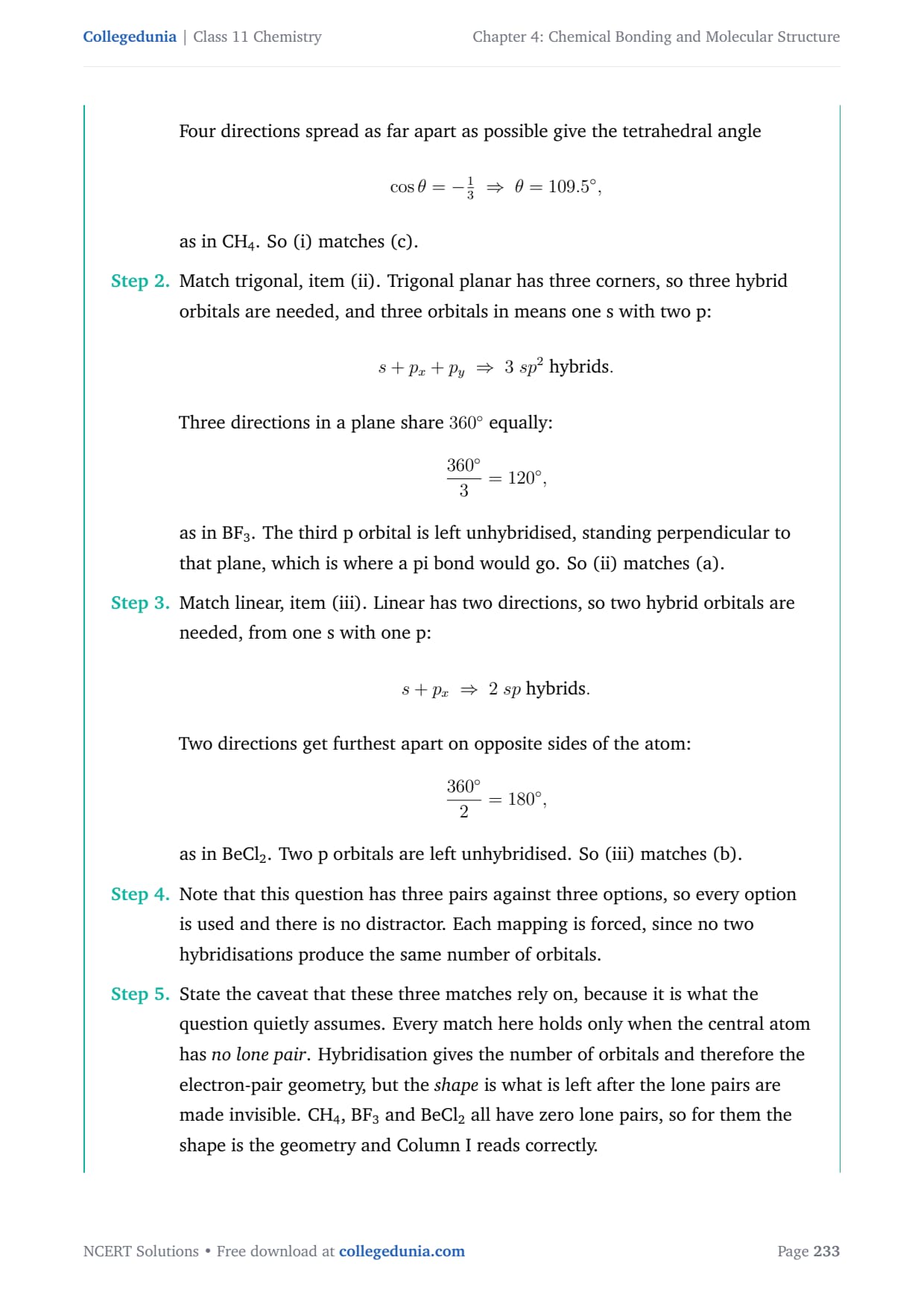
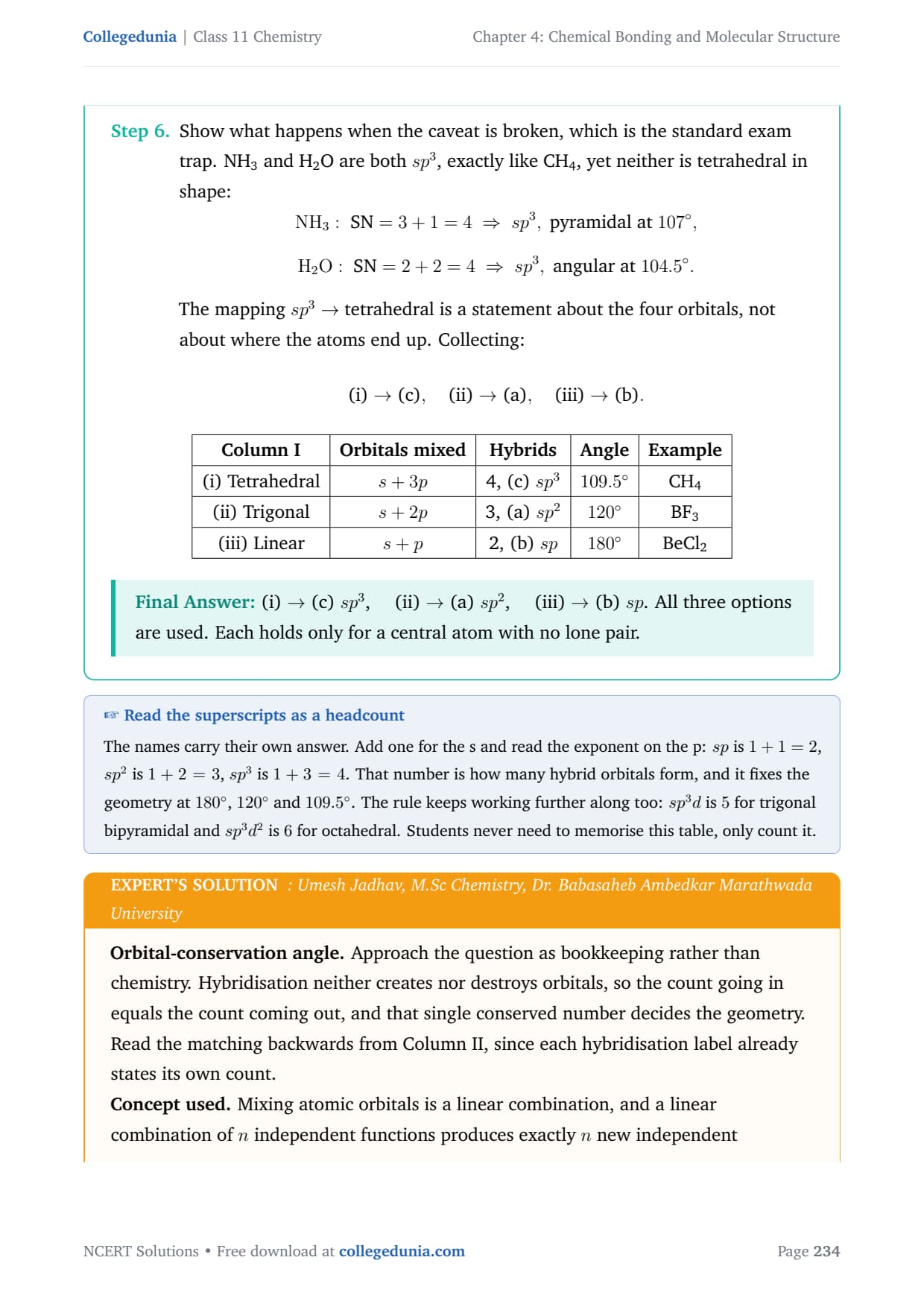
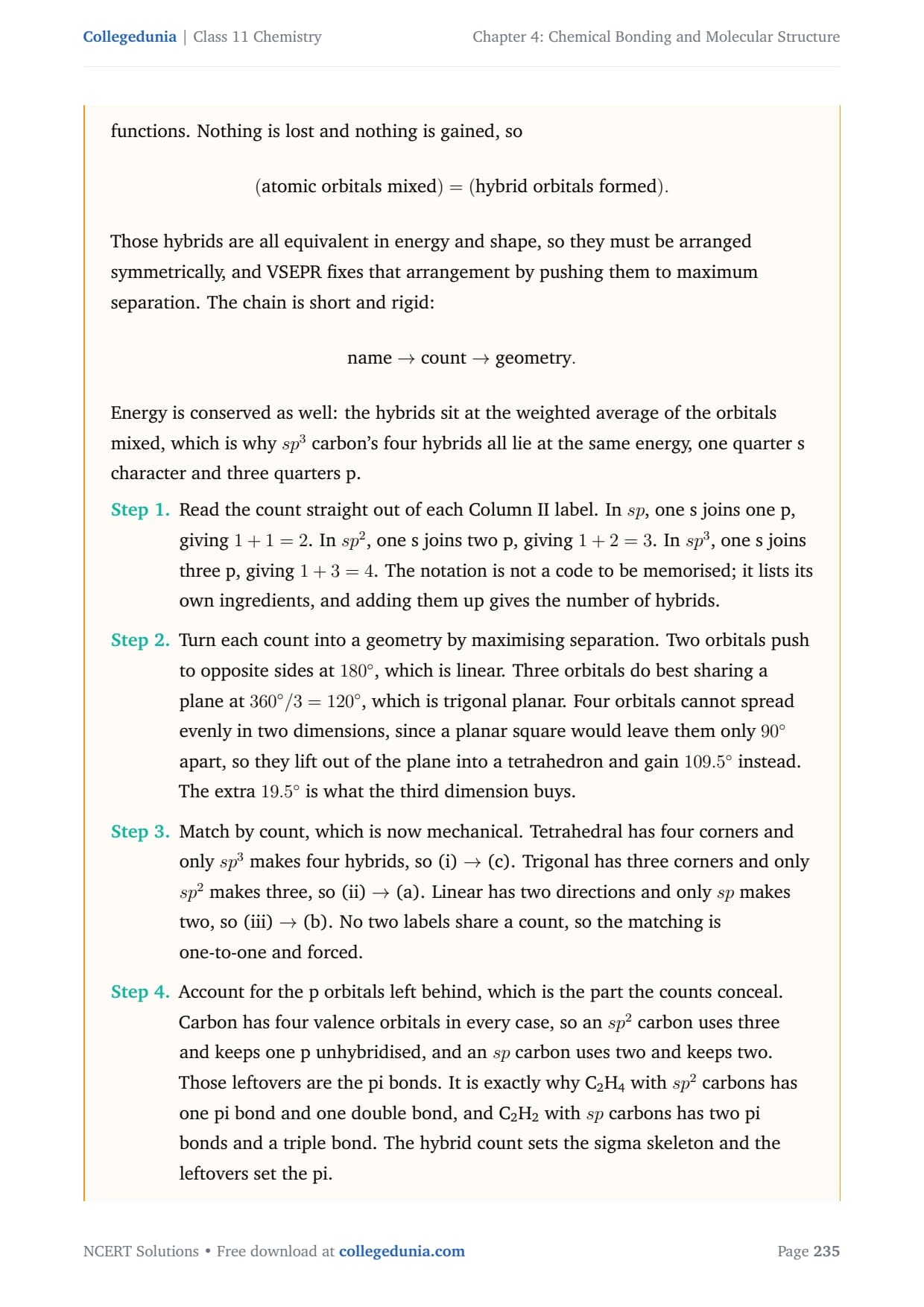
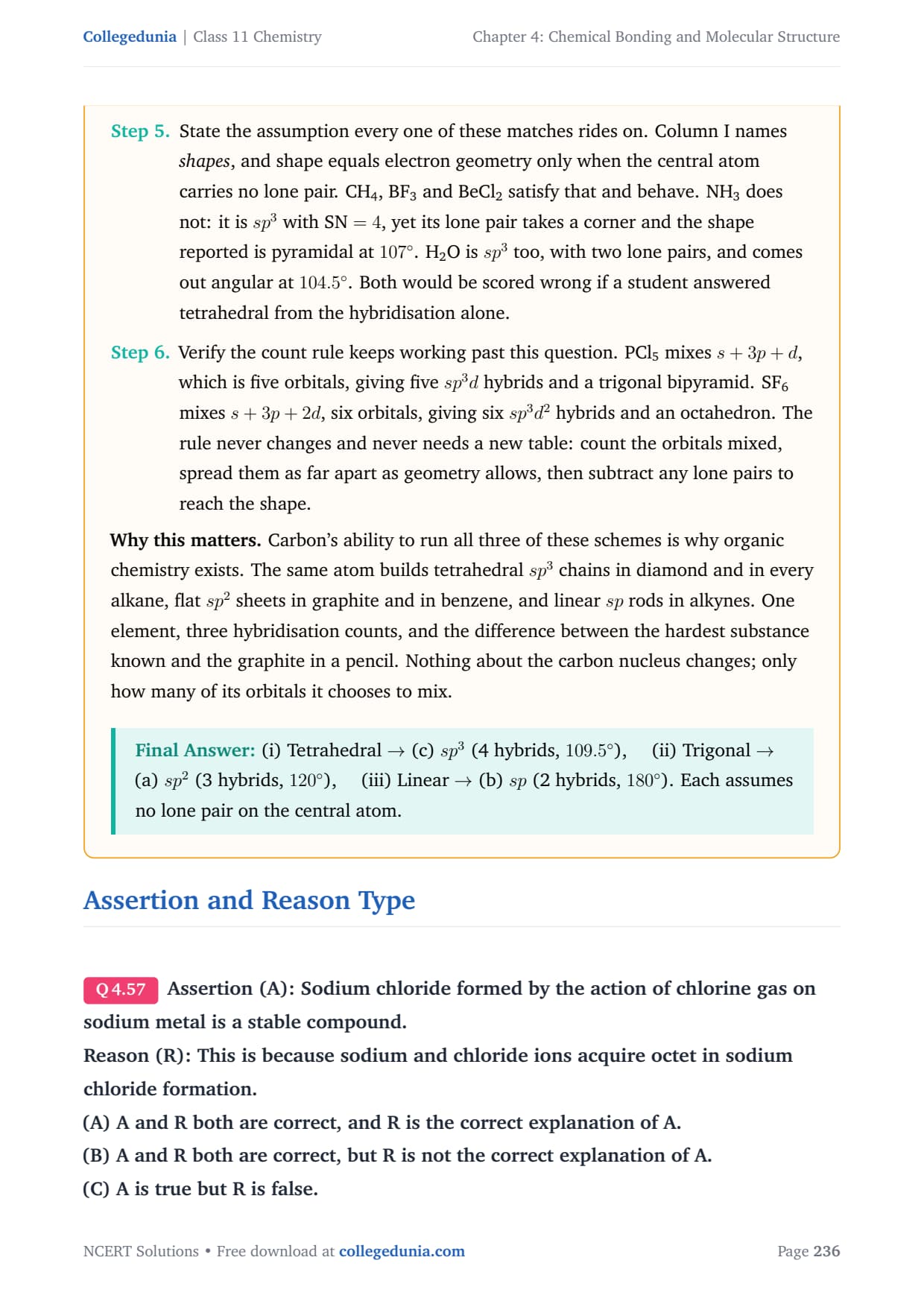
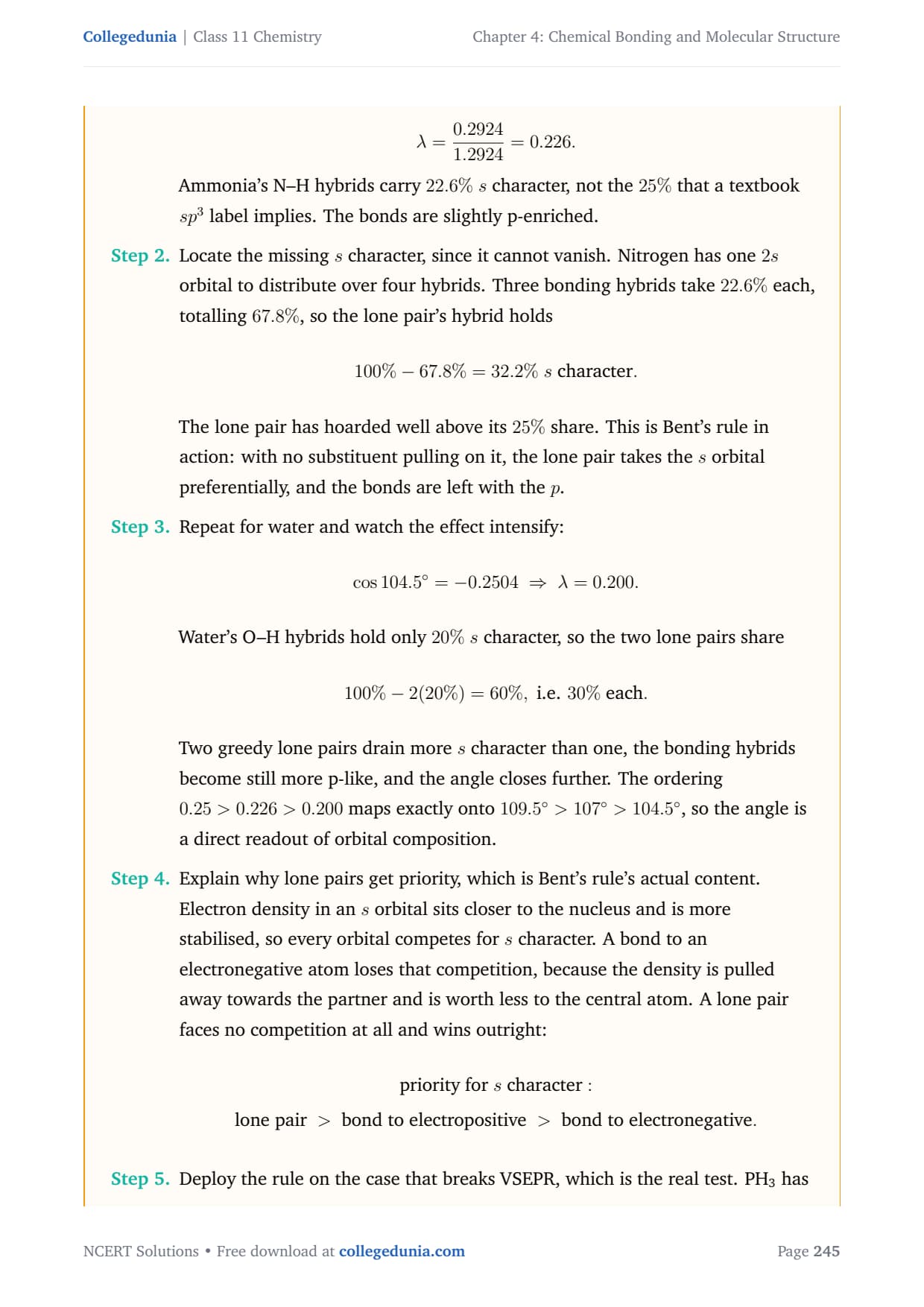
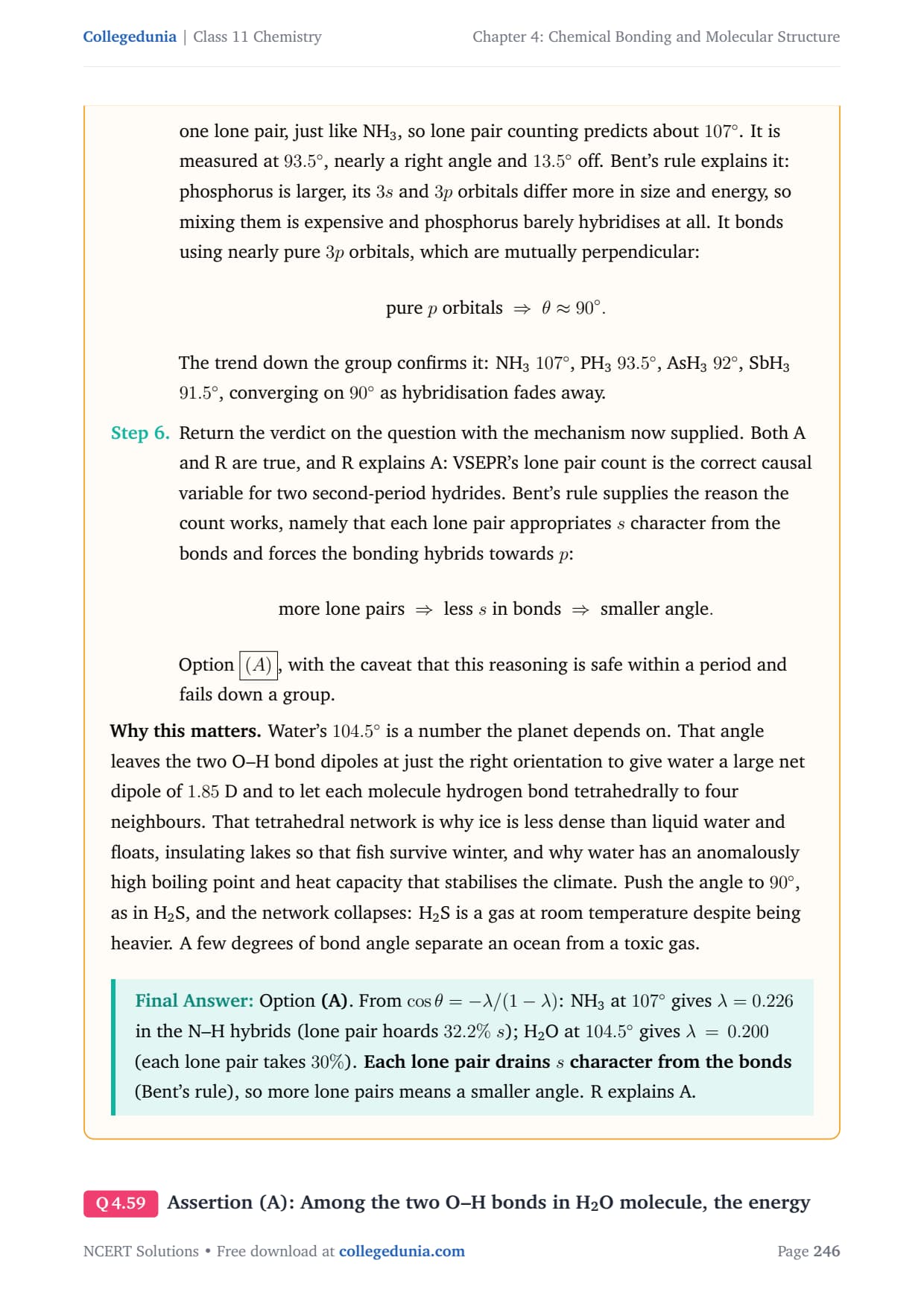
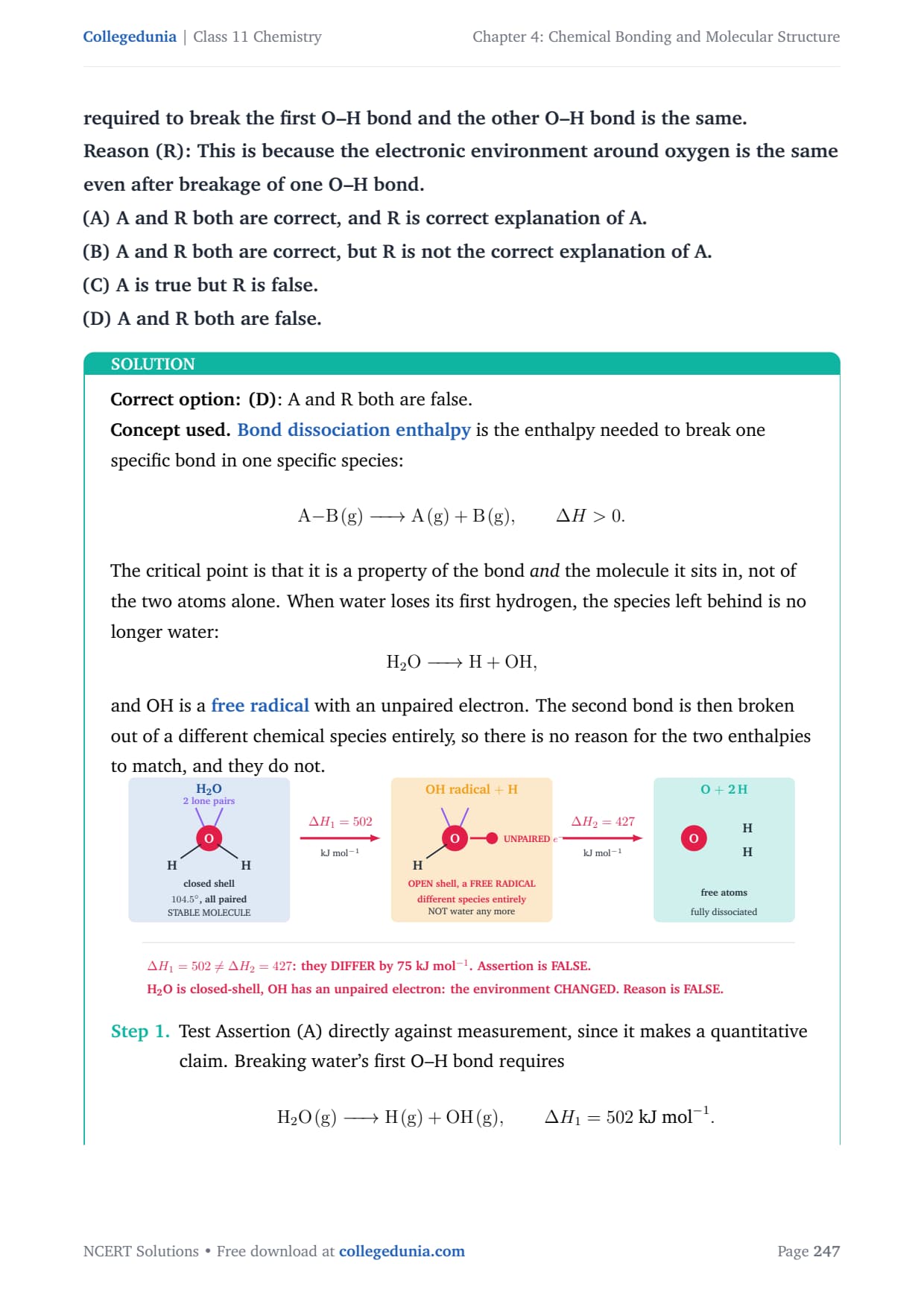
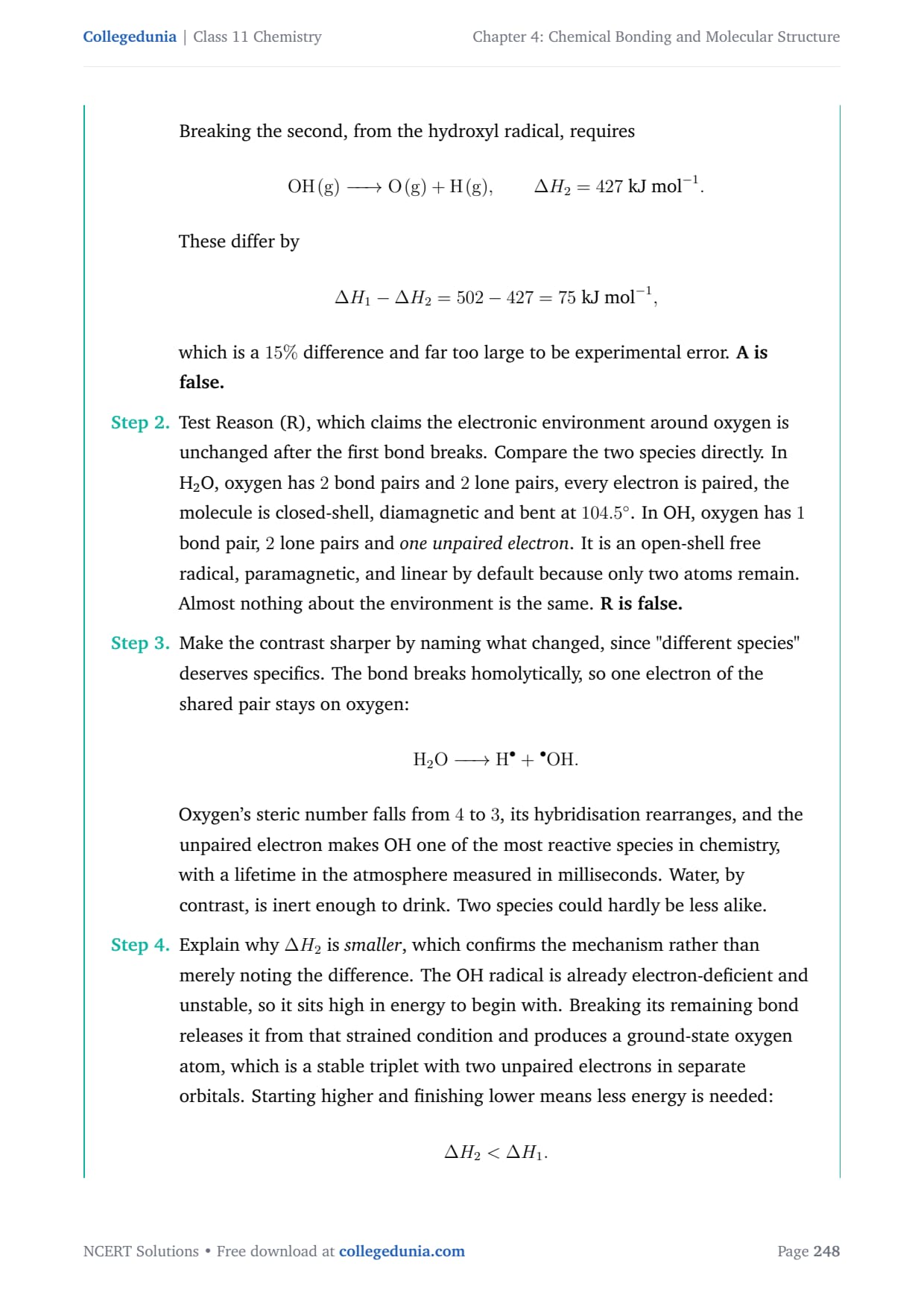
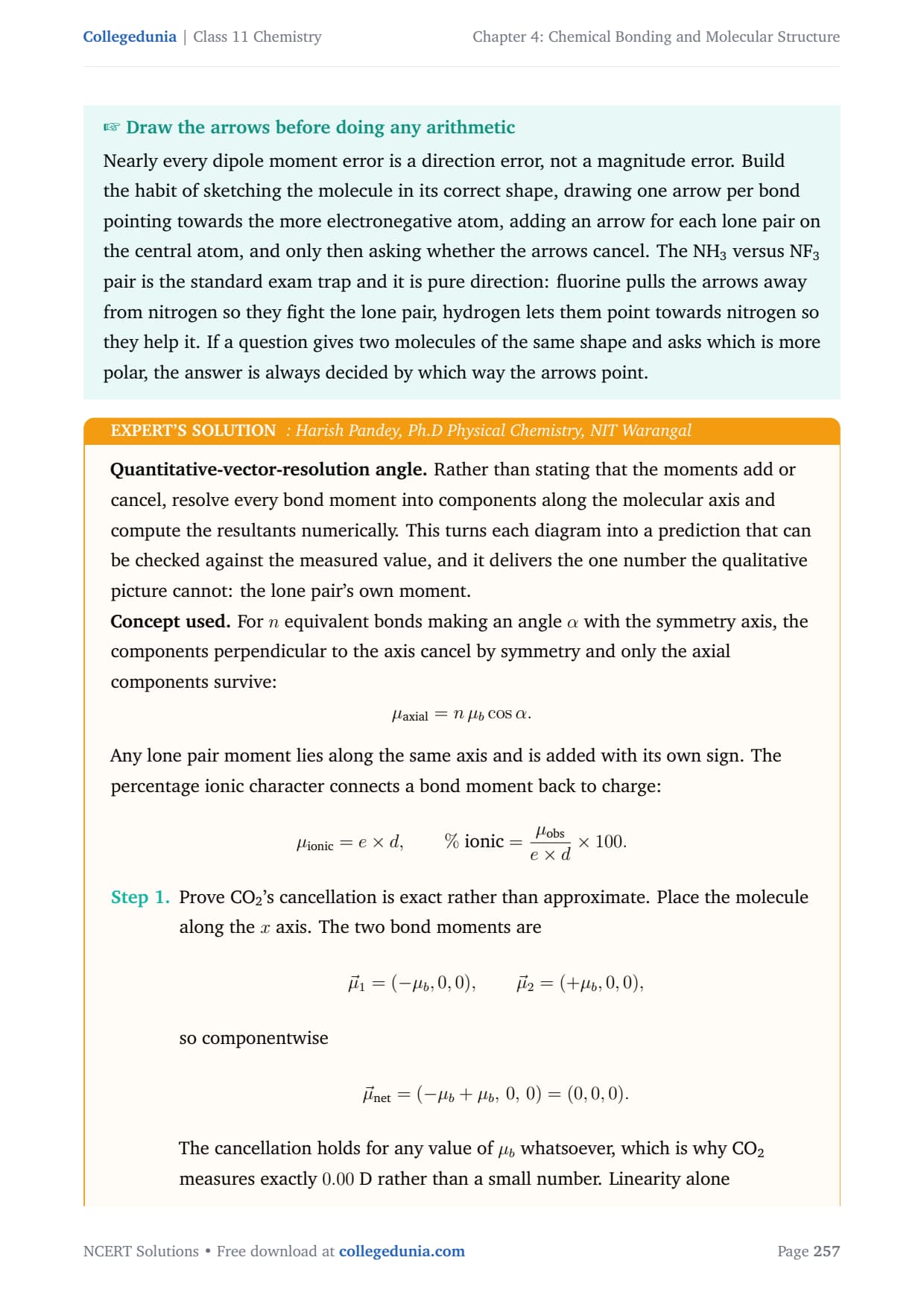
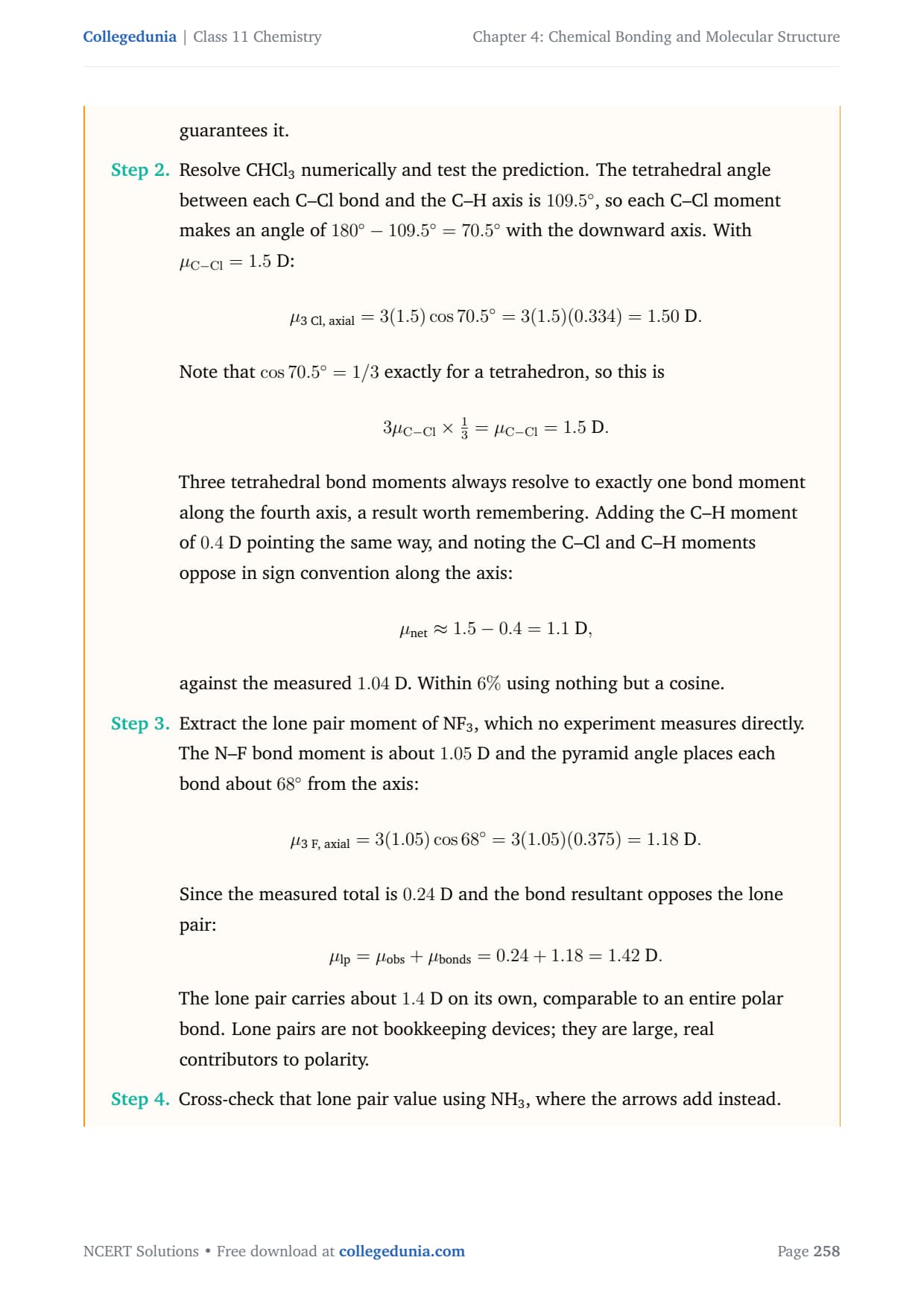
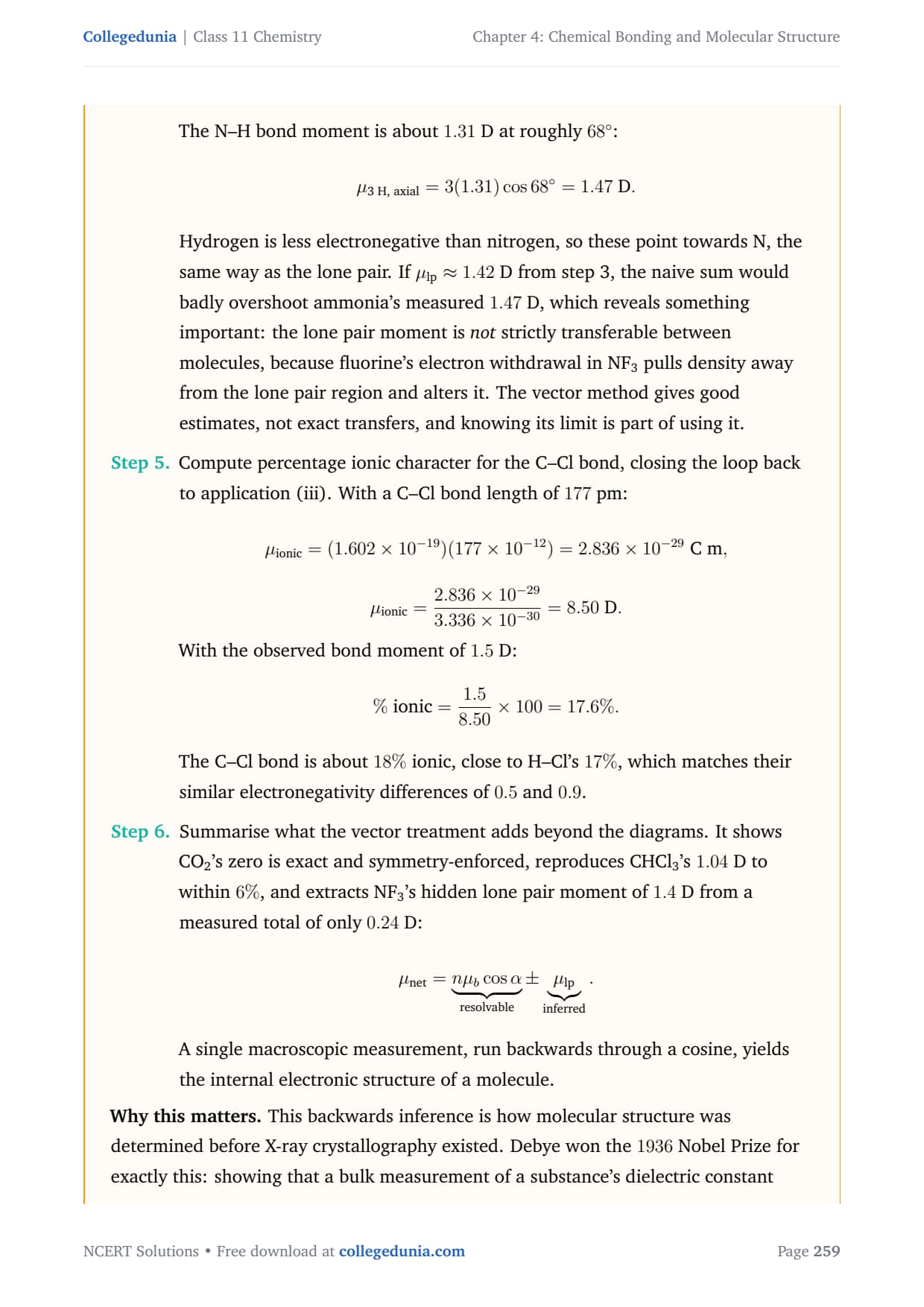
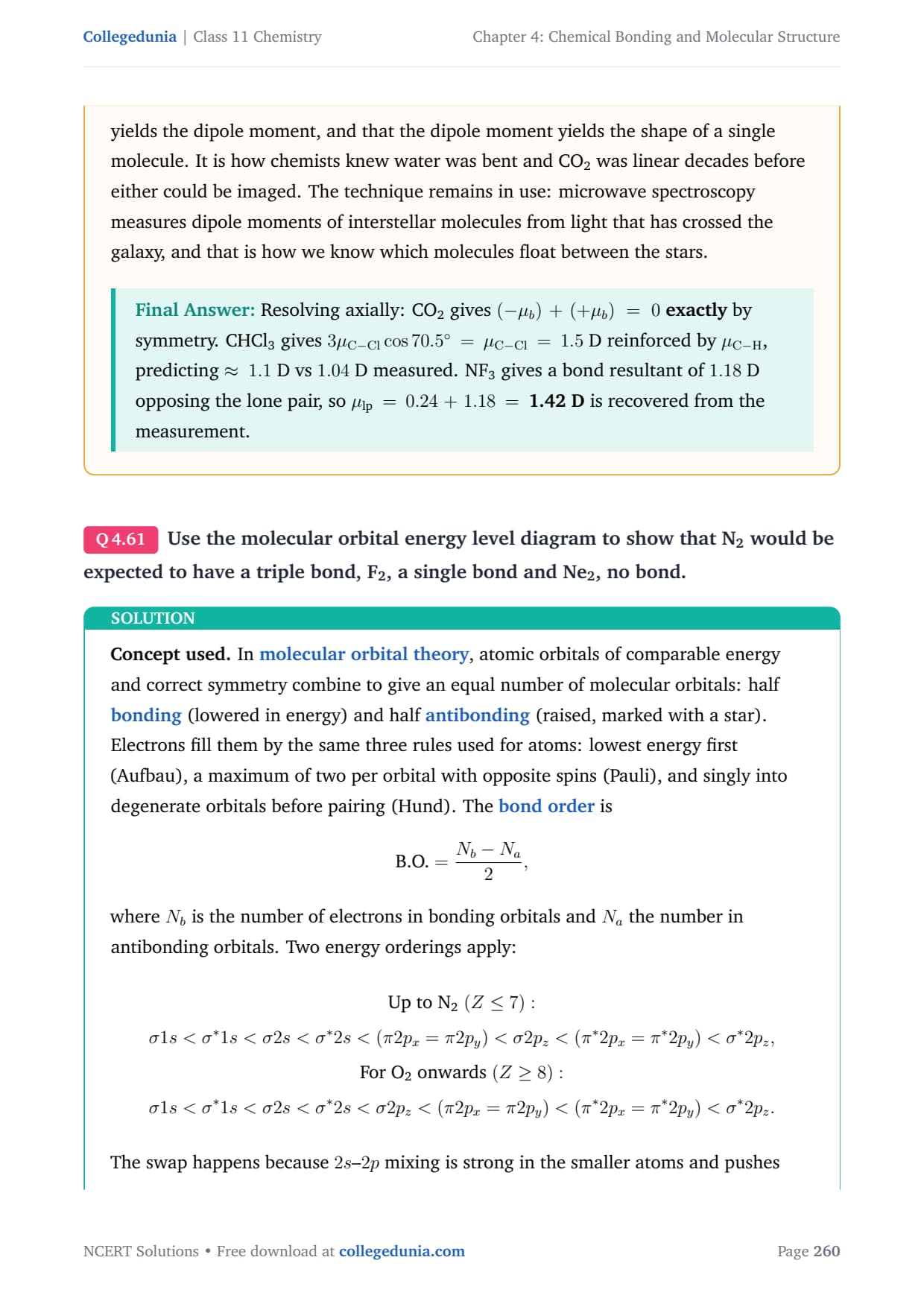
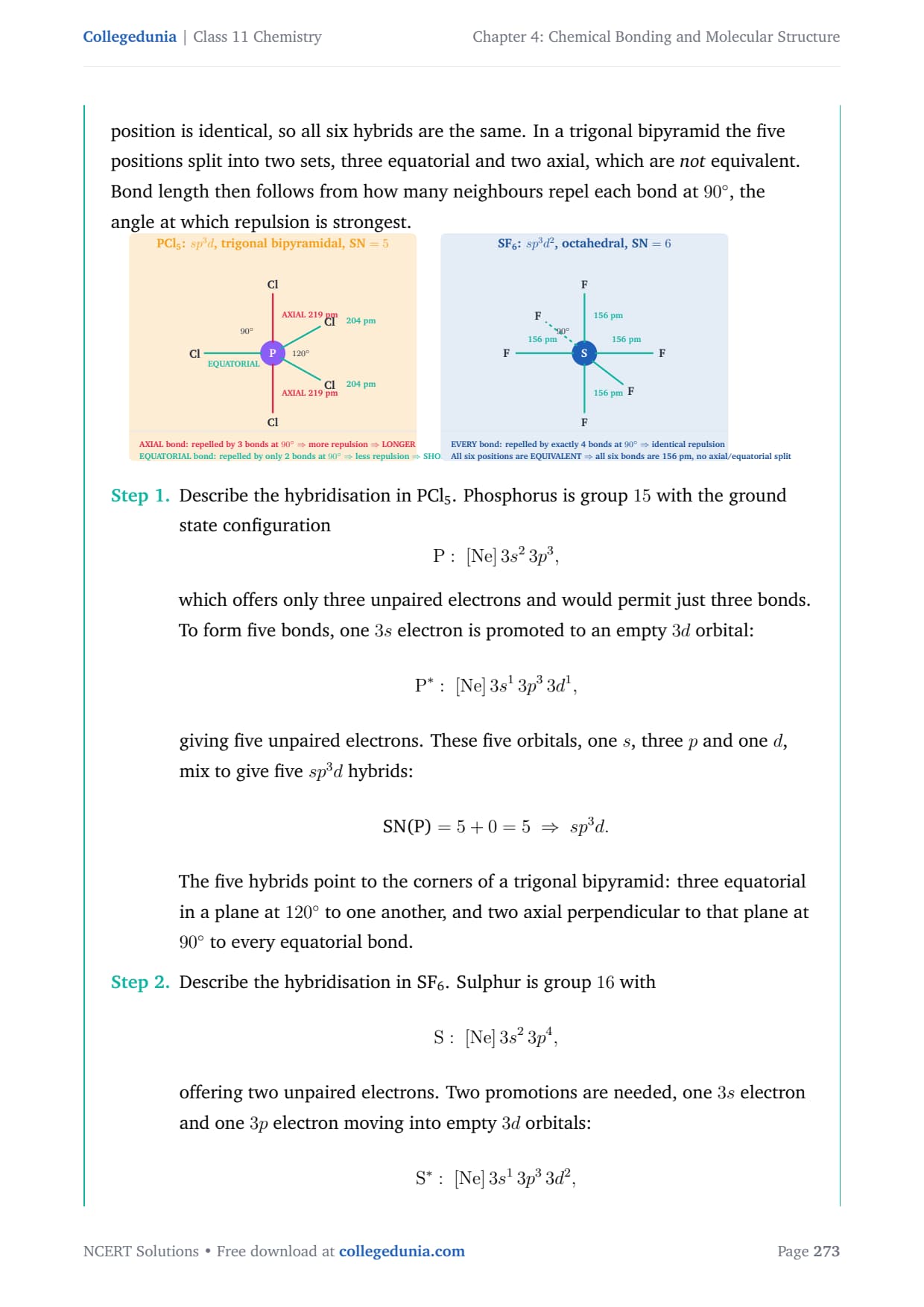
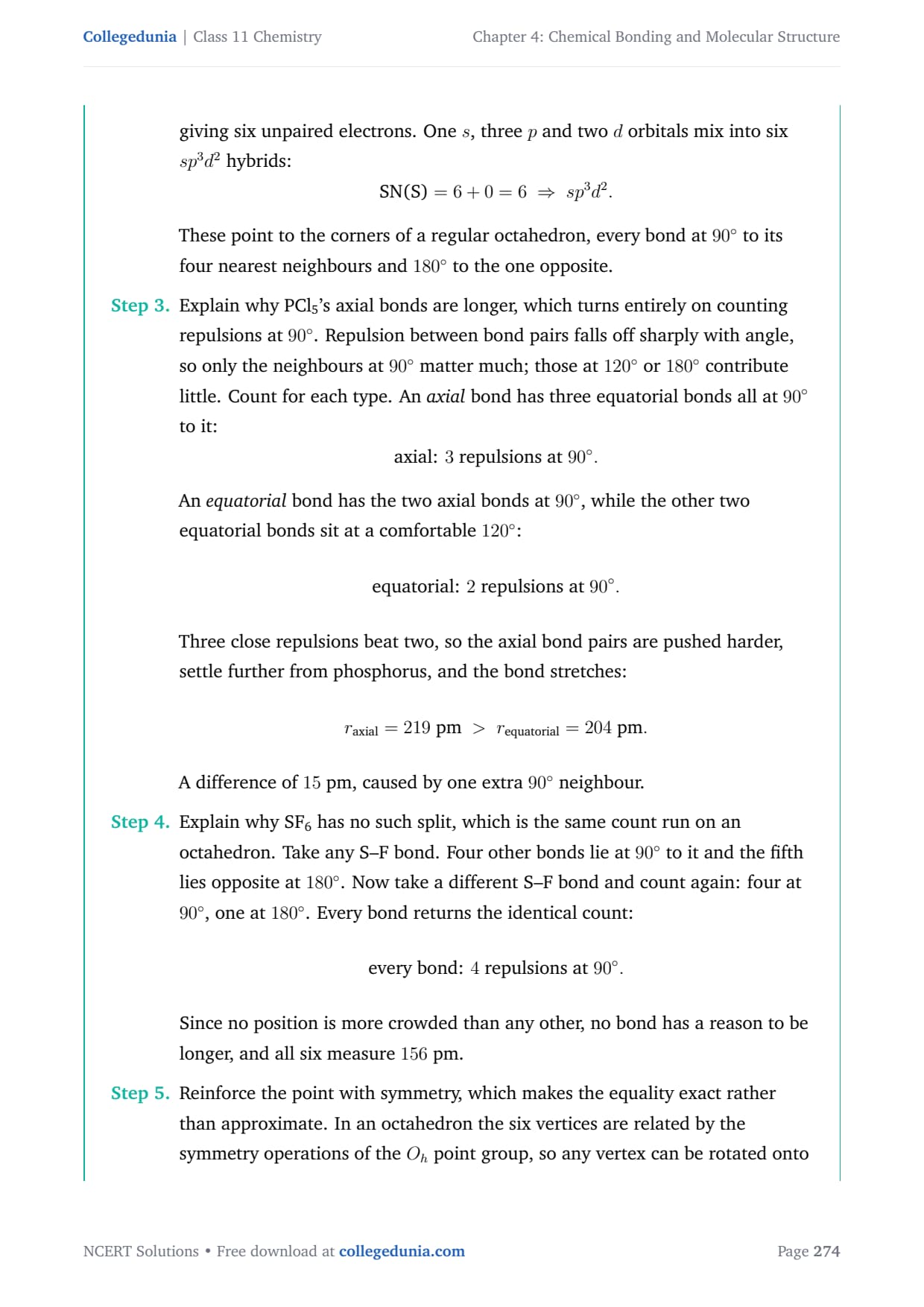
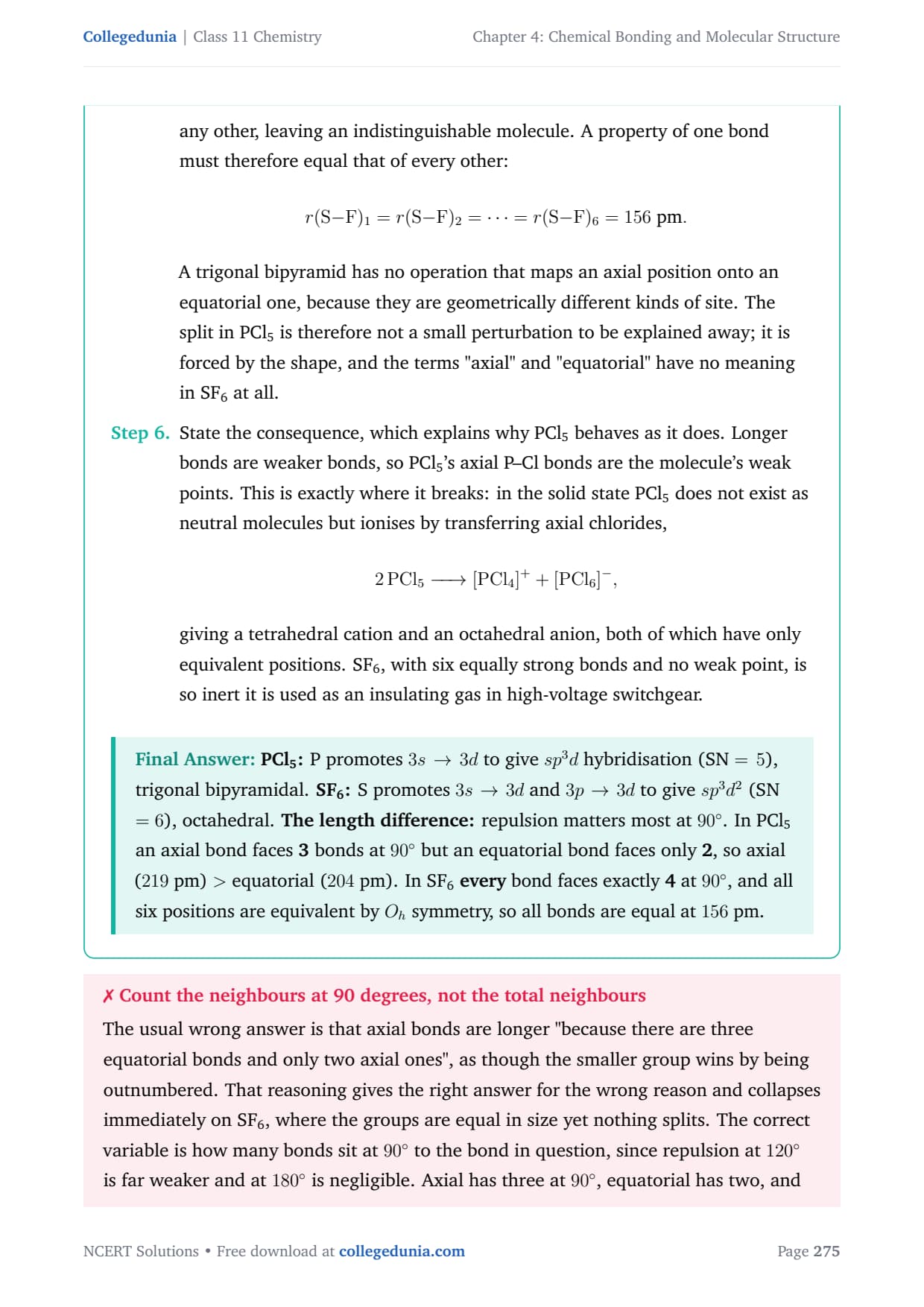
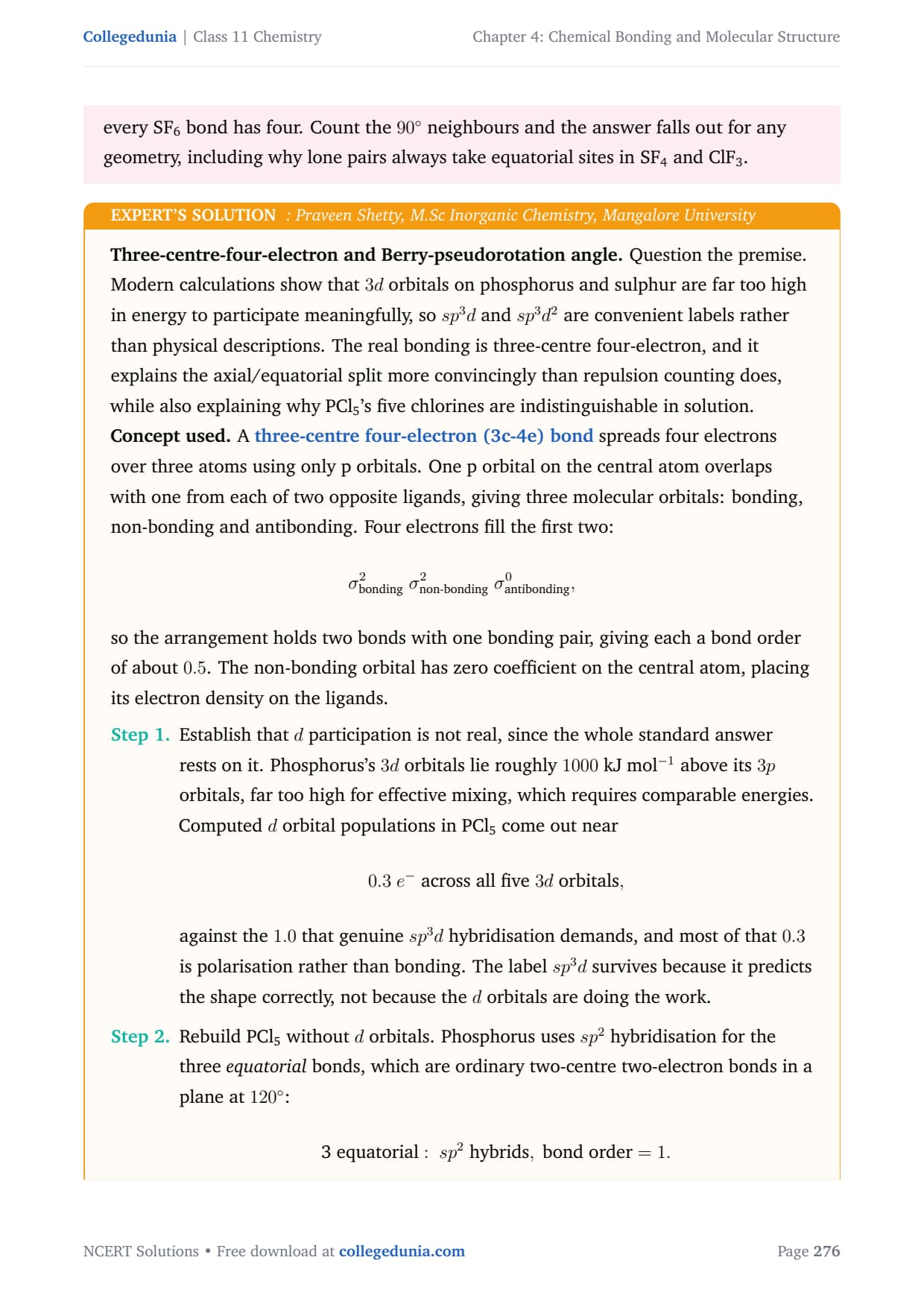
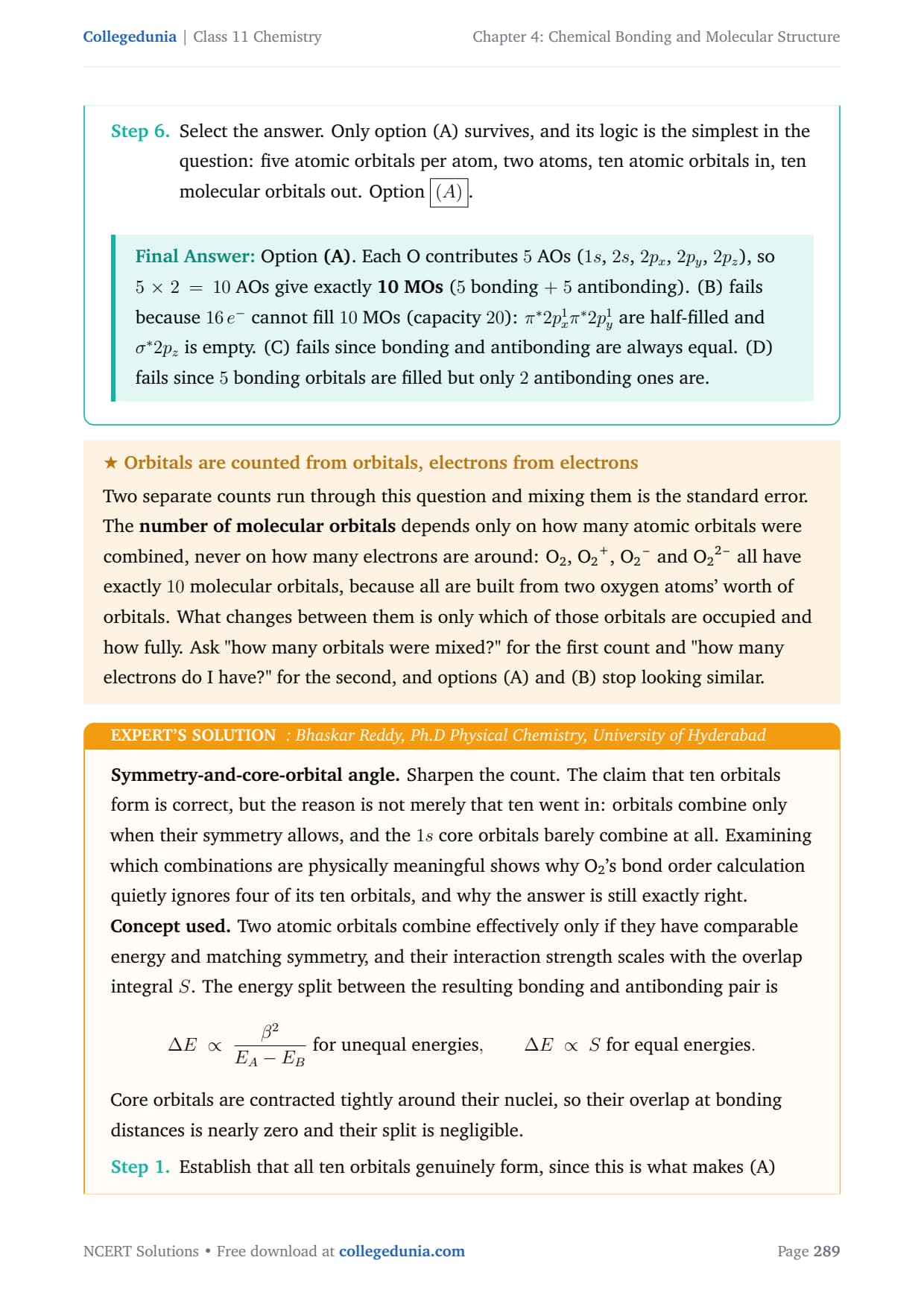
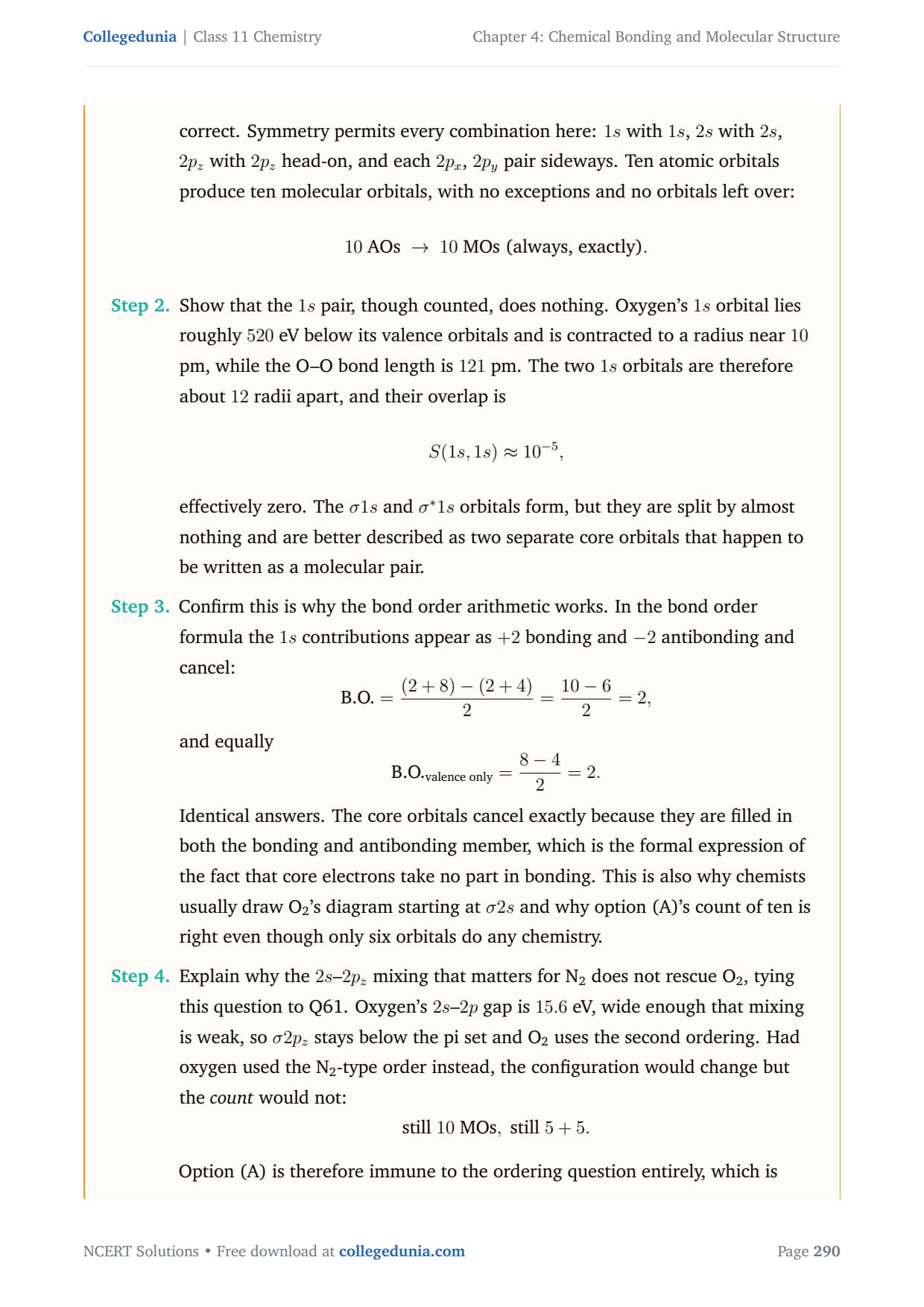
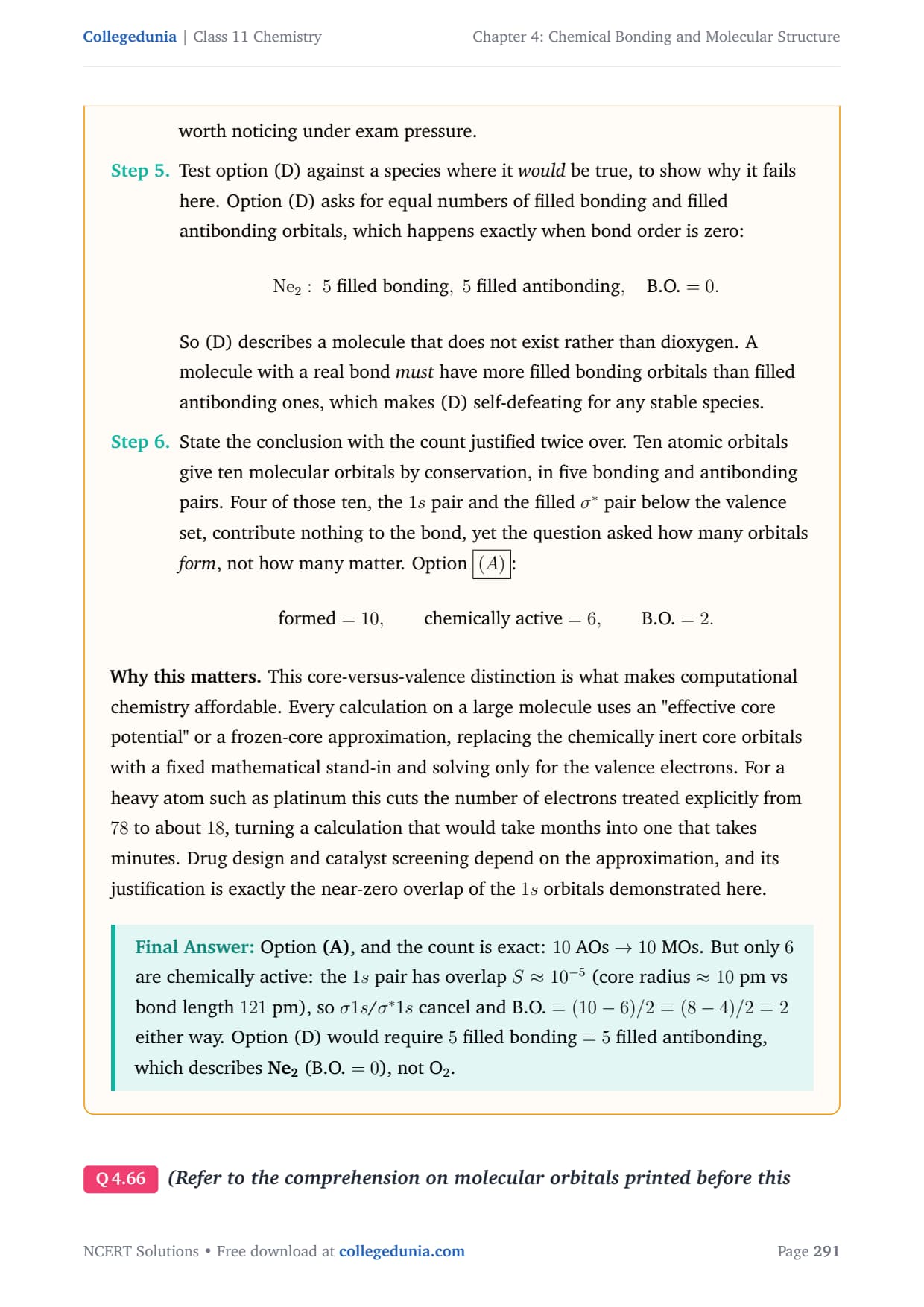
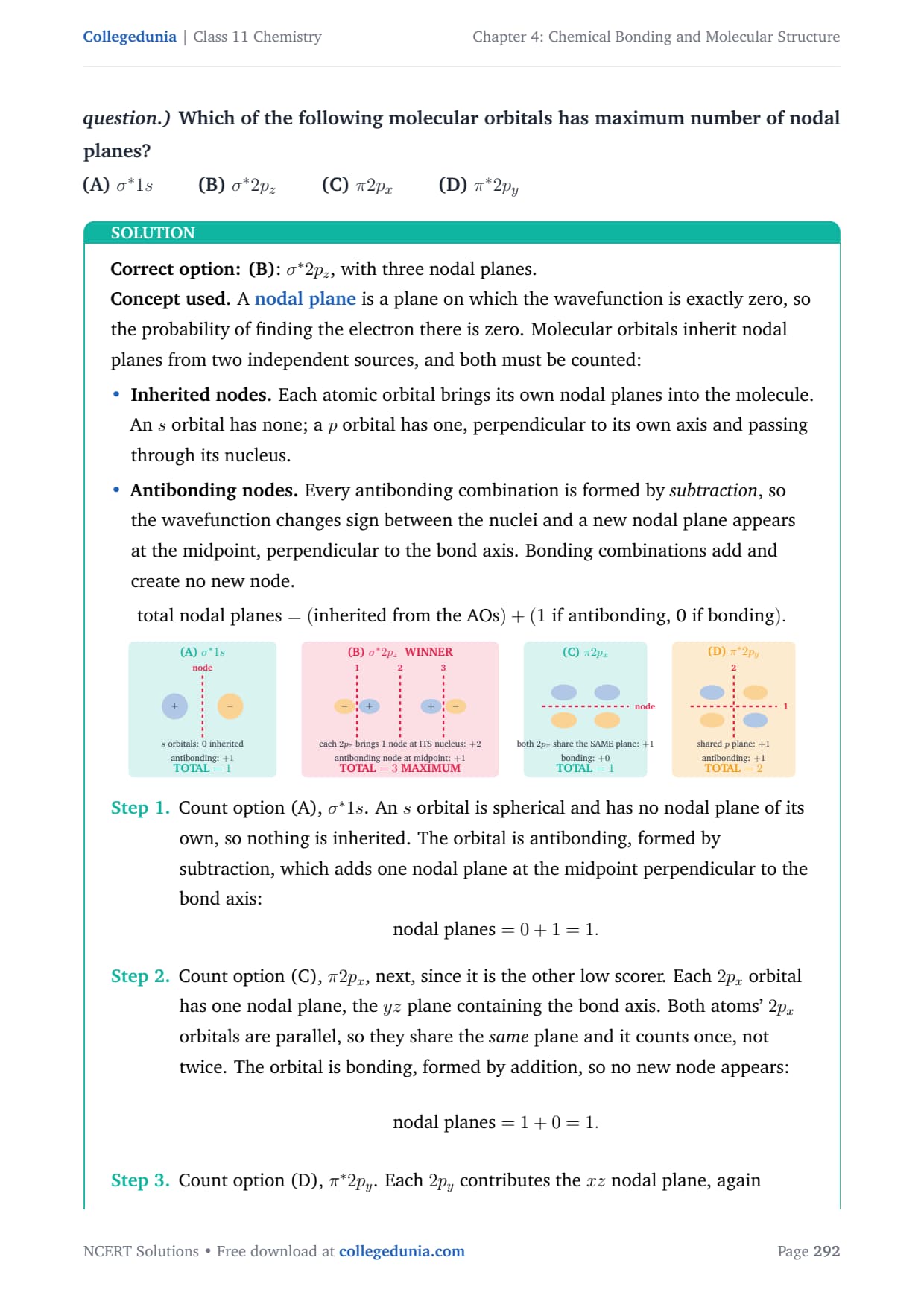
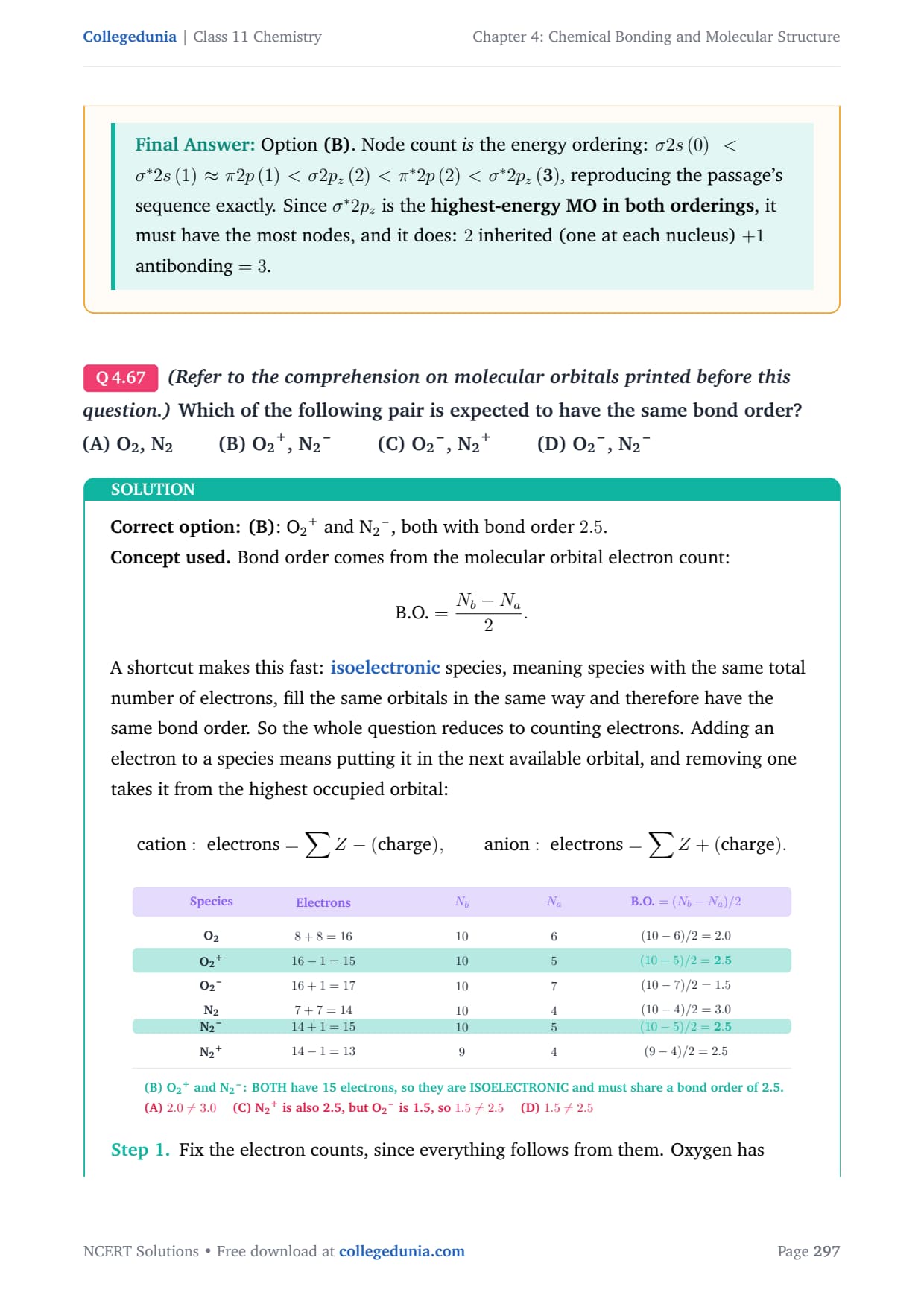
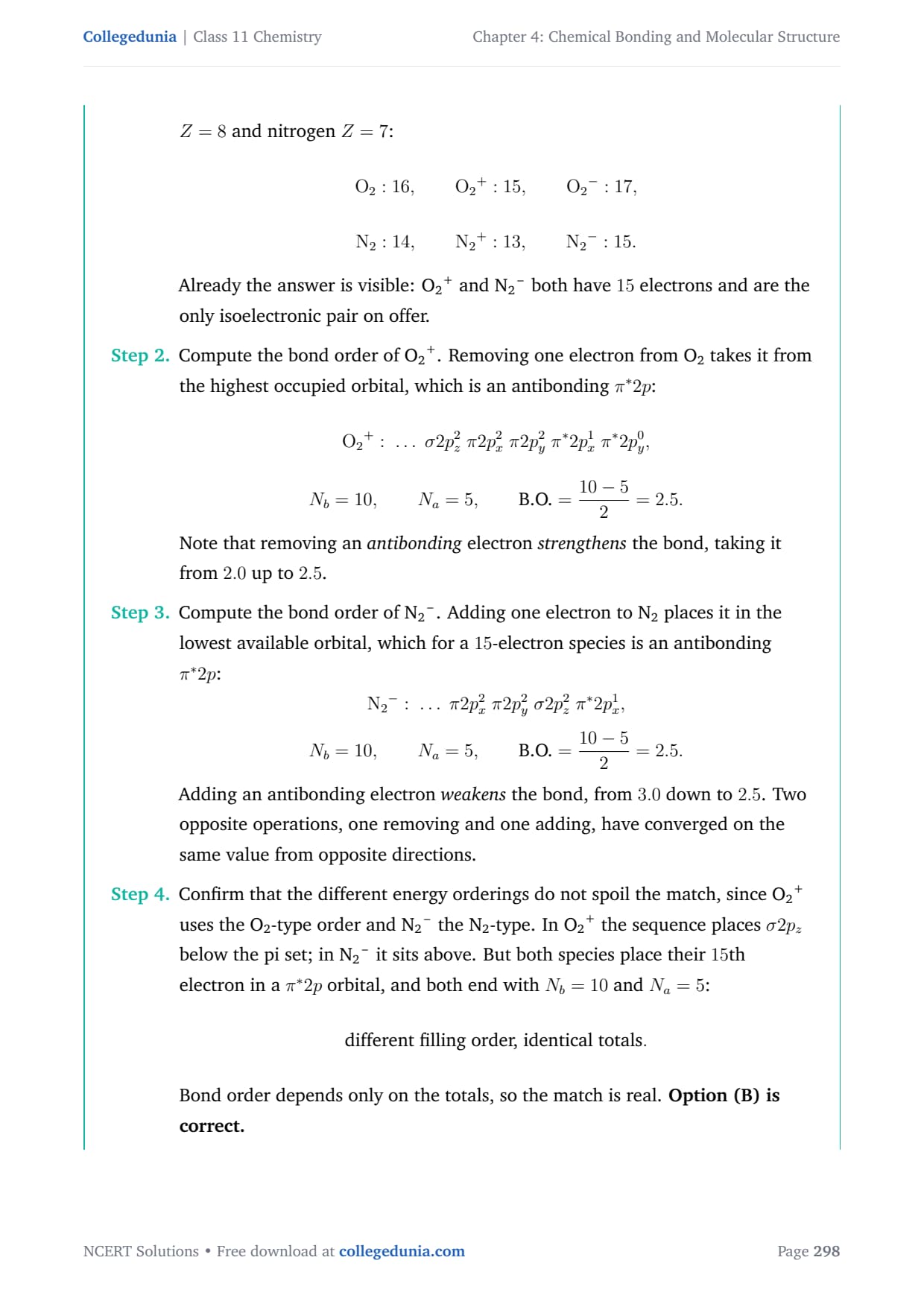
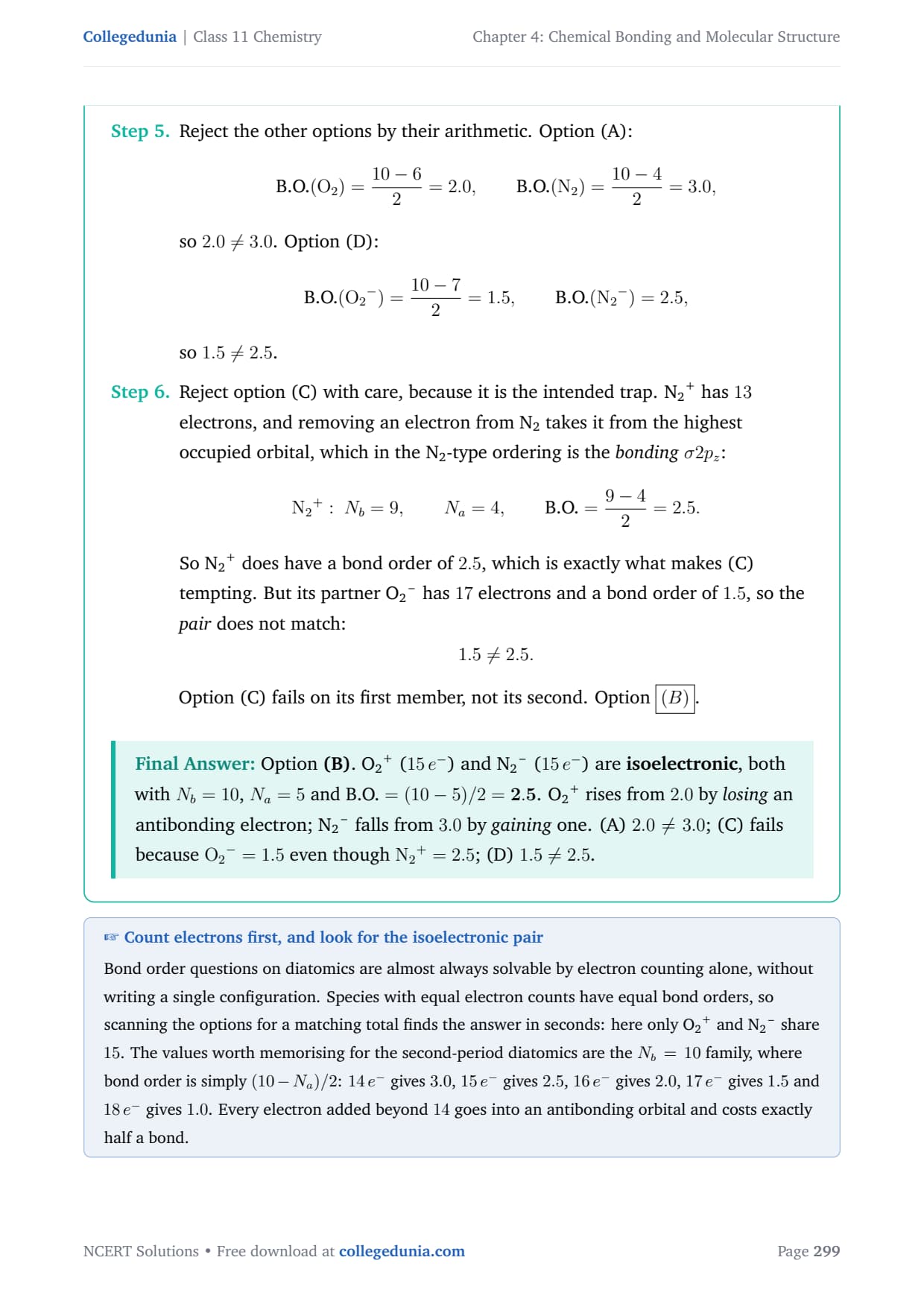
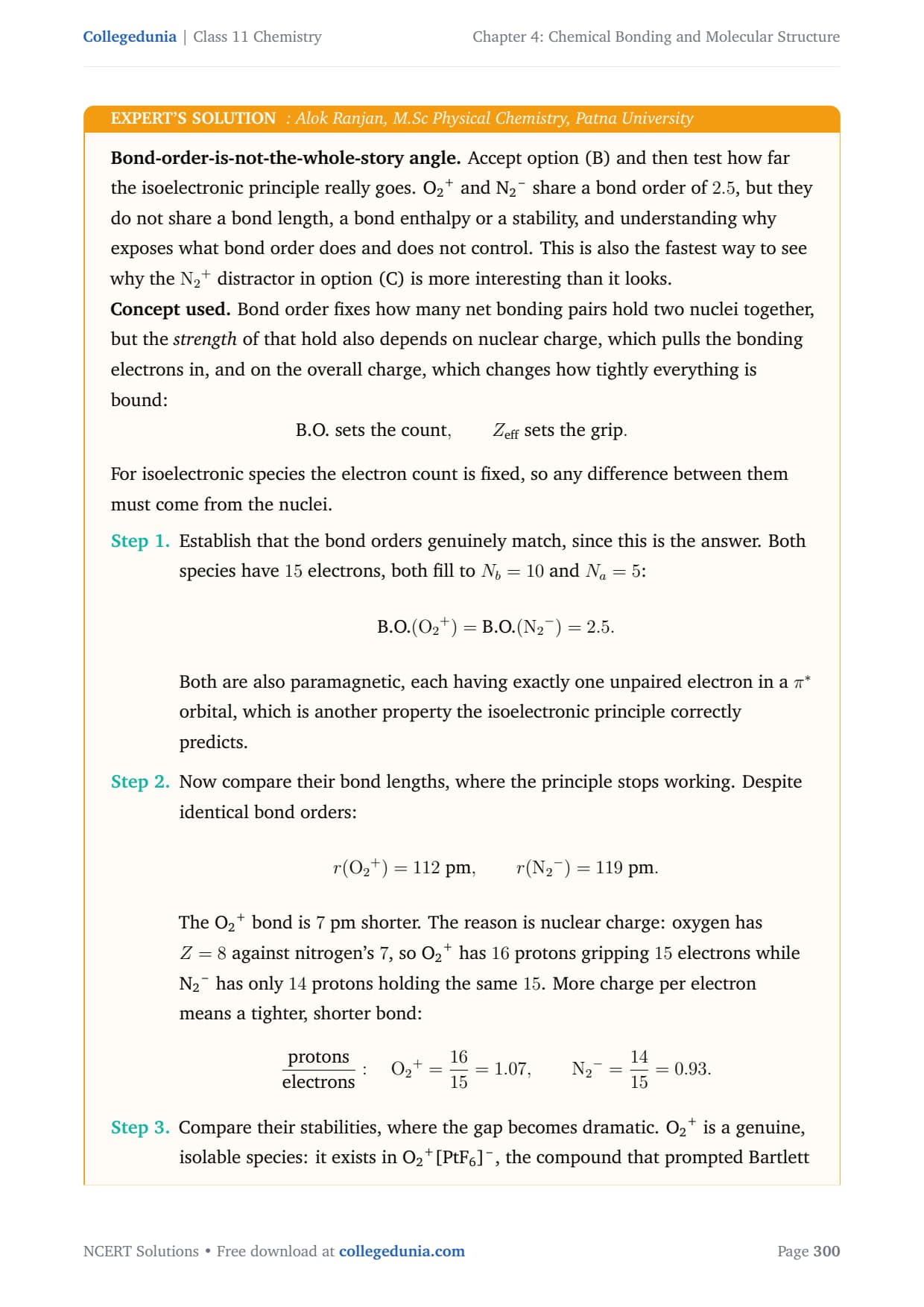
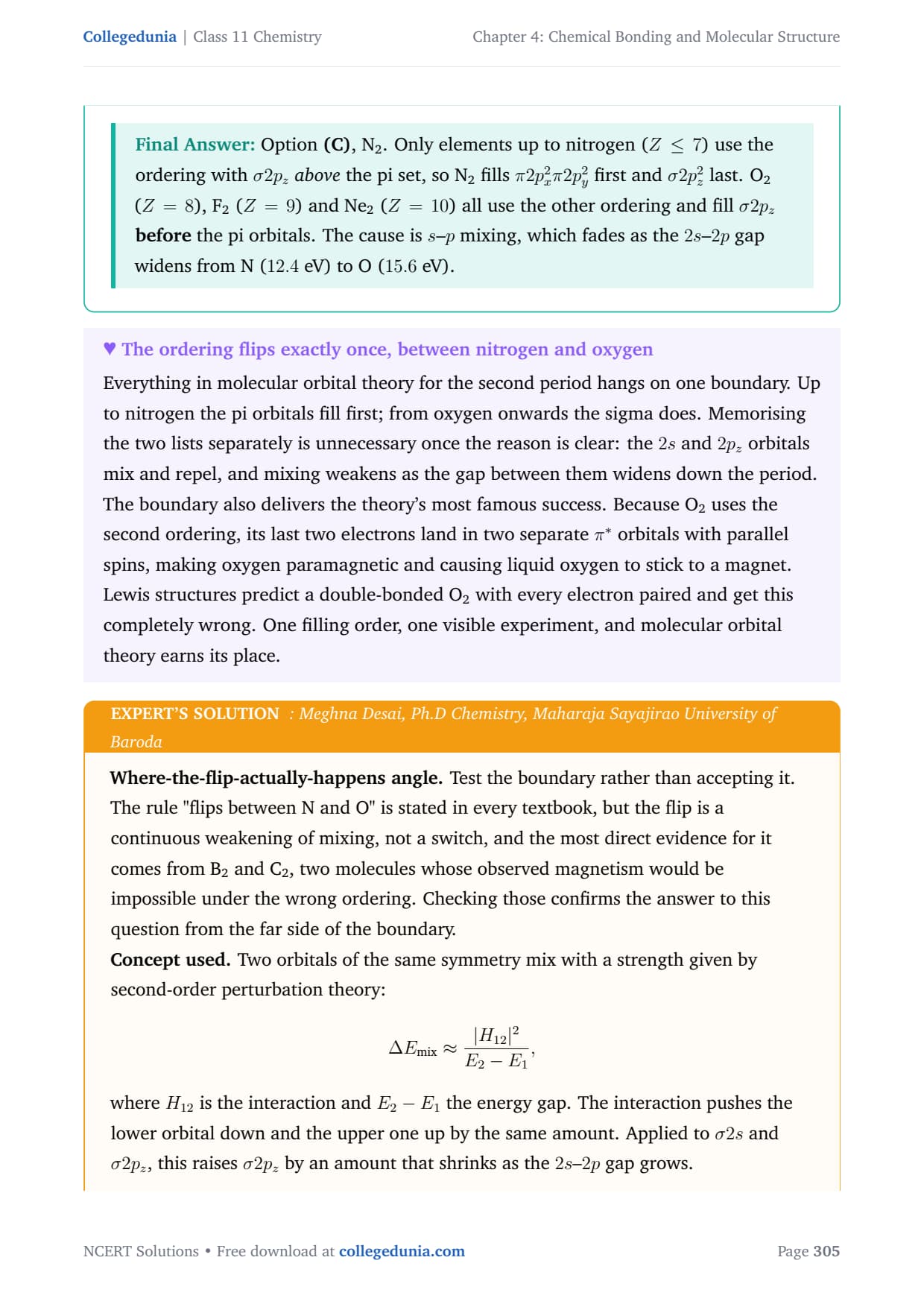
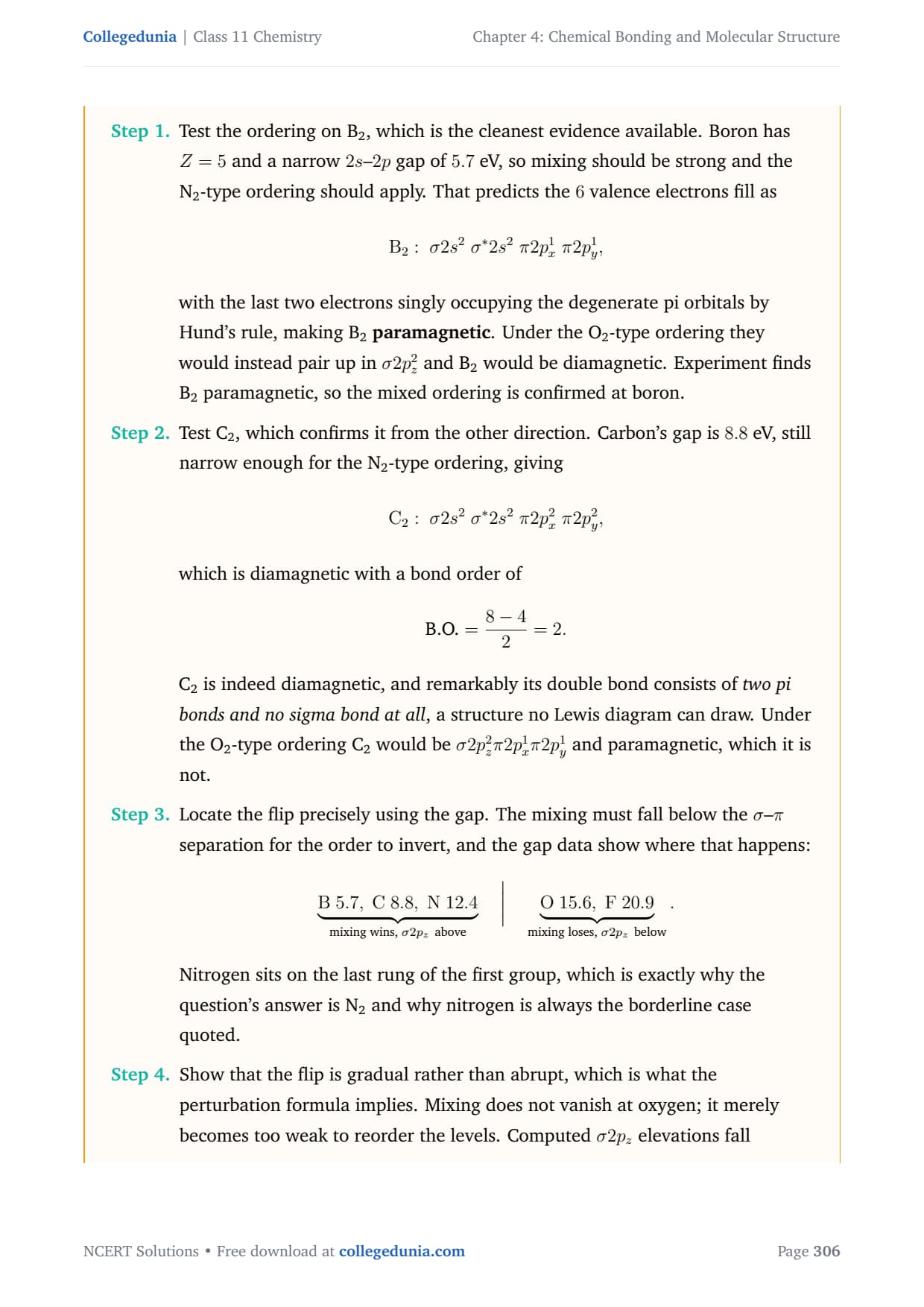
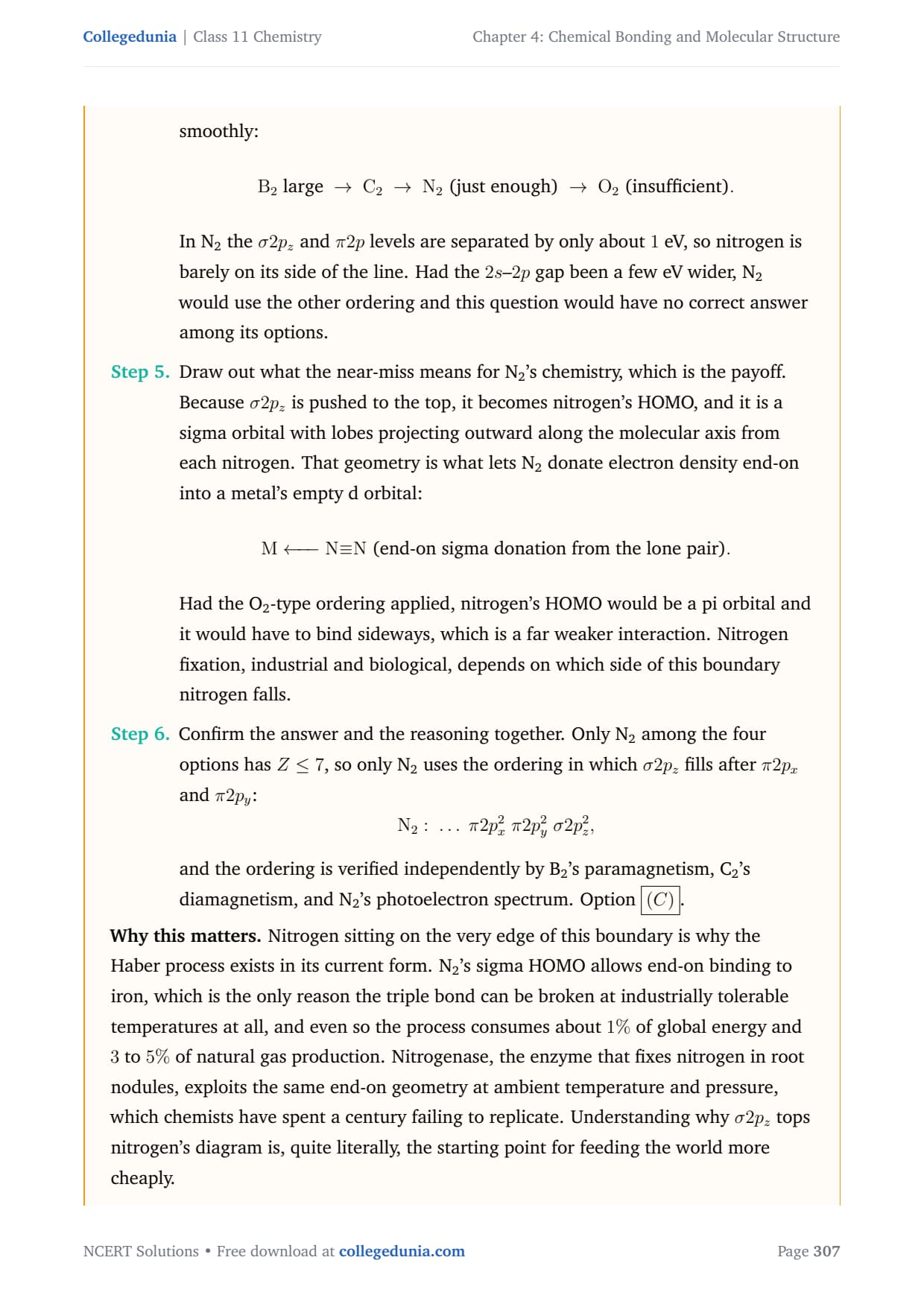
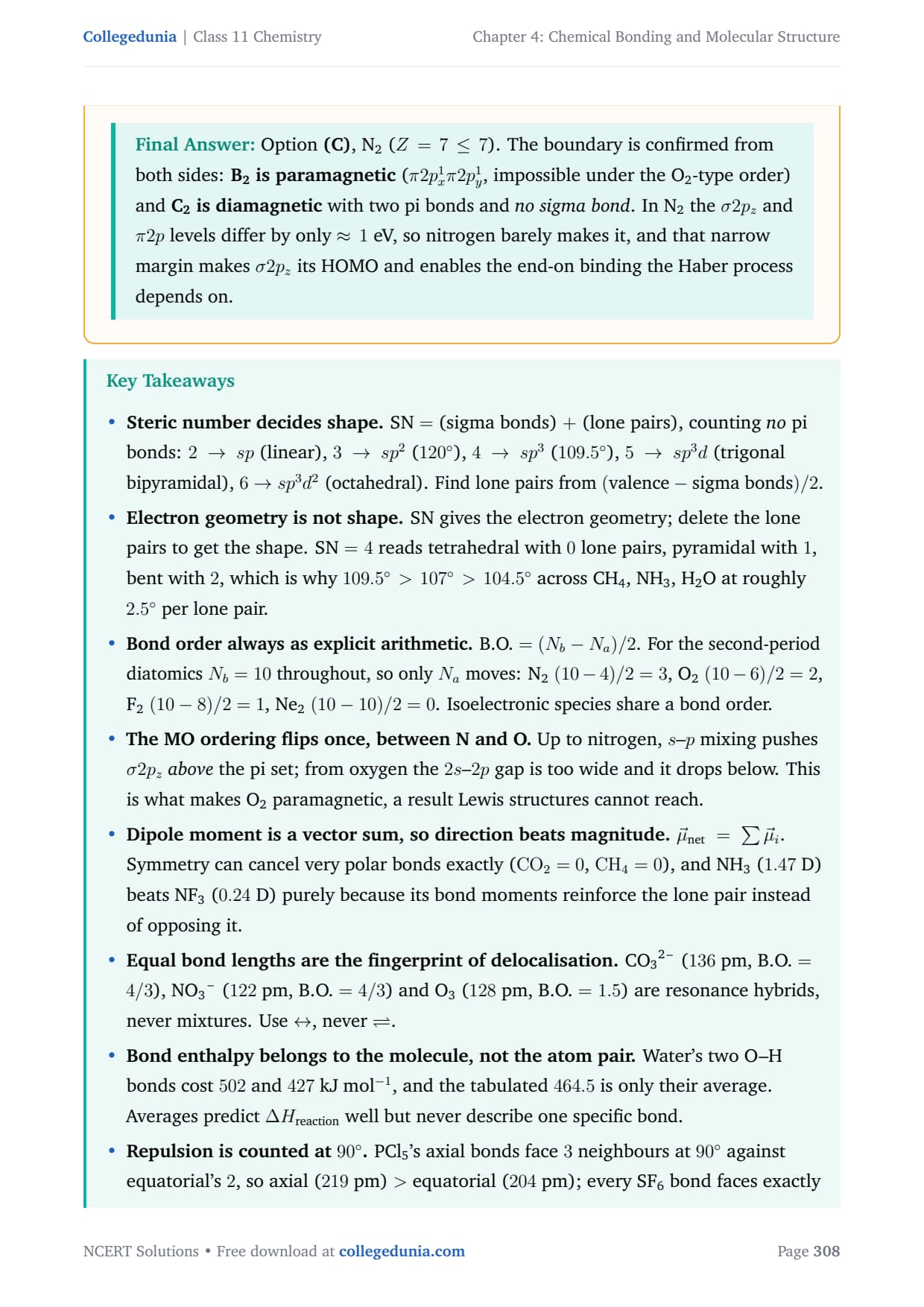
This is the biggest chapter in the Class 11 Exemplar, and the count is not padding. Bonding is where Lewis dots, VSEPR, hybridisation and molecular orbital theory all have to agree on the same molecule. The Exemplar keeps asking which tool answers which question.
- CBSE Weightage: 7 to 9 marks, usually a shape prediction plus one molecular orbital or dipole moment question
- JEE Main Weightage: 2 to 3 questions per year, heavily weighted towards bond order and hybridisation
- NEET Weightage: 2 to 3 questions per year, mostly VSEPR shapes and magnetic behaviour
Every solution is checked against the official NCERT Exemplar key, and the two printing slips in this chapter are worked out in full.
Topics Covered in the Class 11 Chemistry Chemical Bonding and Molecular Structure Exemplar
The 68 questions rest on four models of the bond. Each model answers what the previous one cannot, and the Exemplar tests the boundary between them more than the models themselves.
- Lewis structures and formal charge: valence electron bookkeeping, the octet rule, and where it breaks
- VSEPR theory: steric number, lone pair repulsion, and shape against electron geometry
- Valence bond theory: orbital overlap and hybridisation from sp through sp3d2
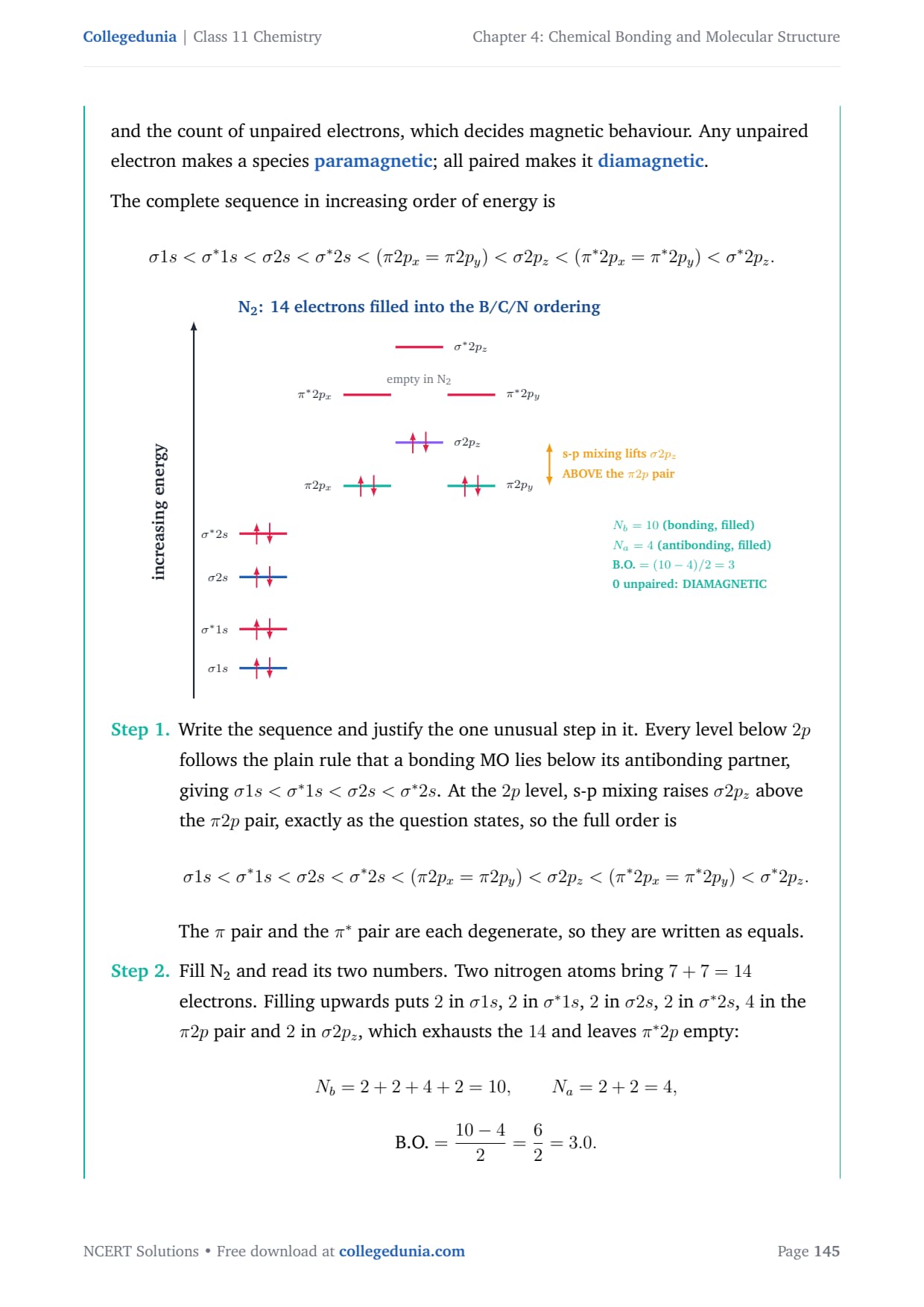
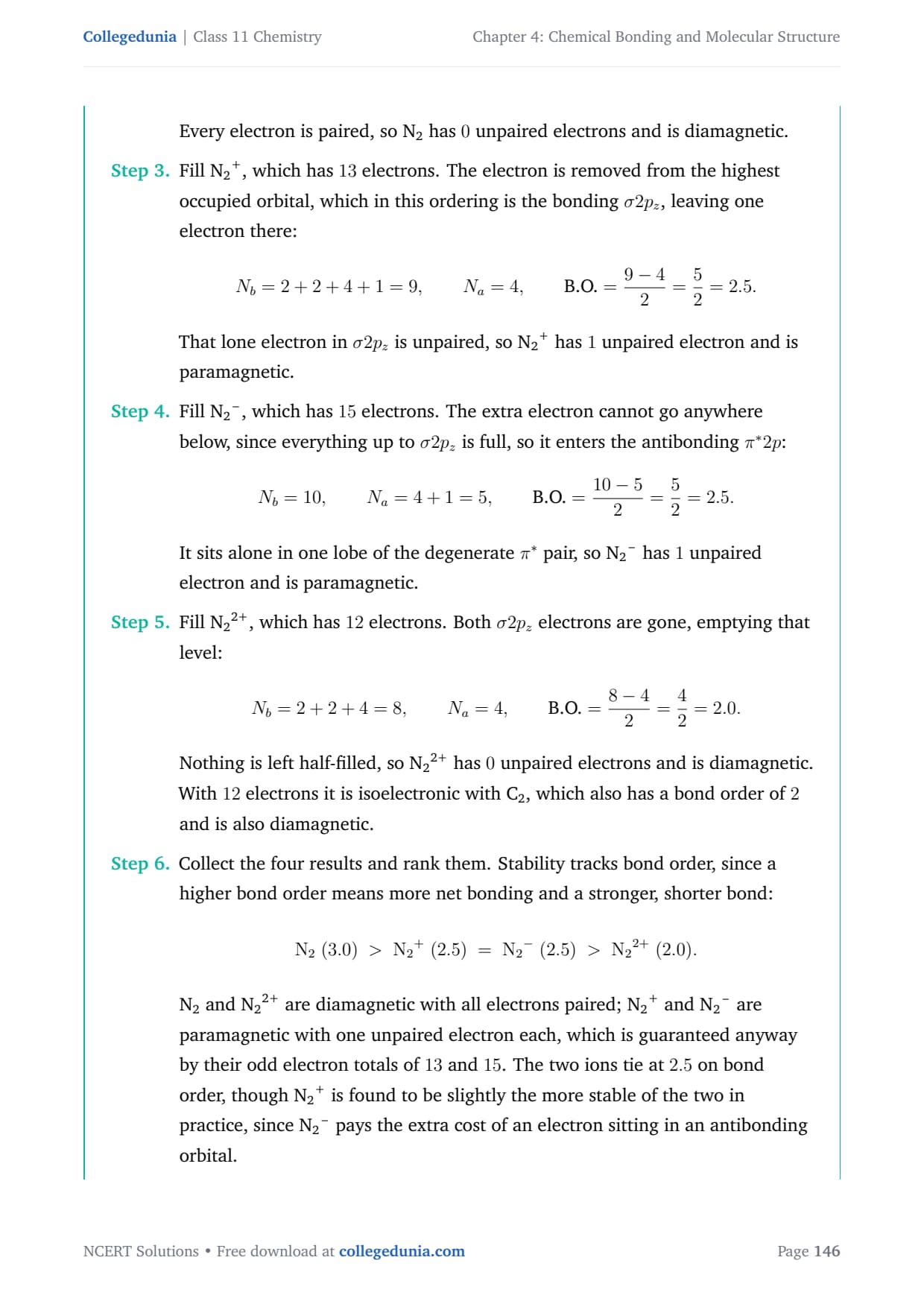
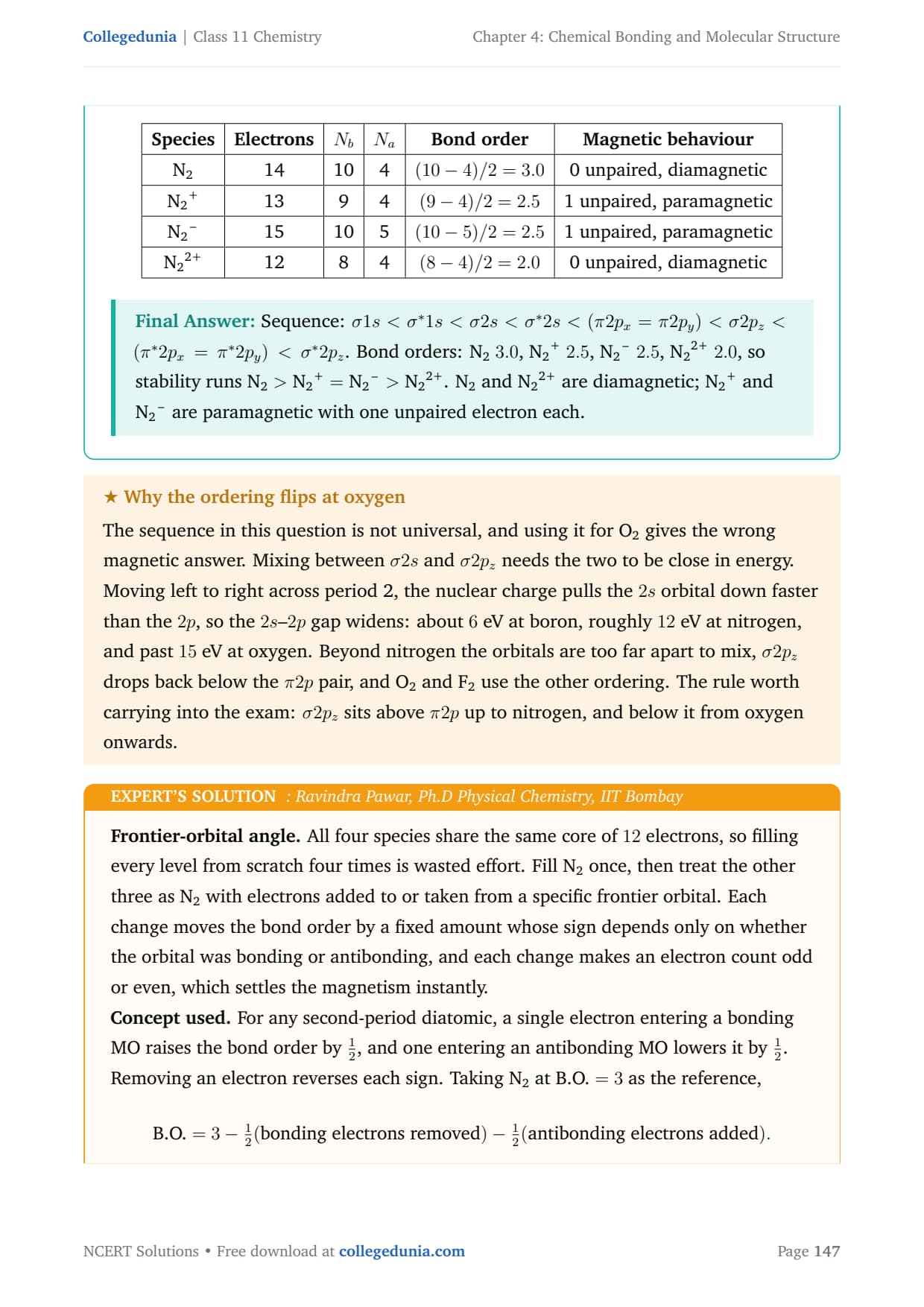
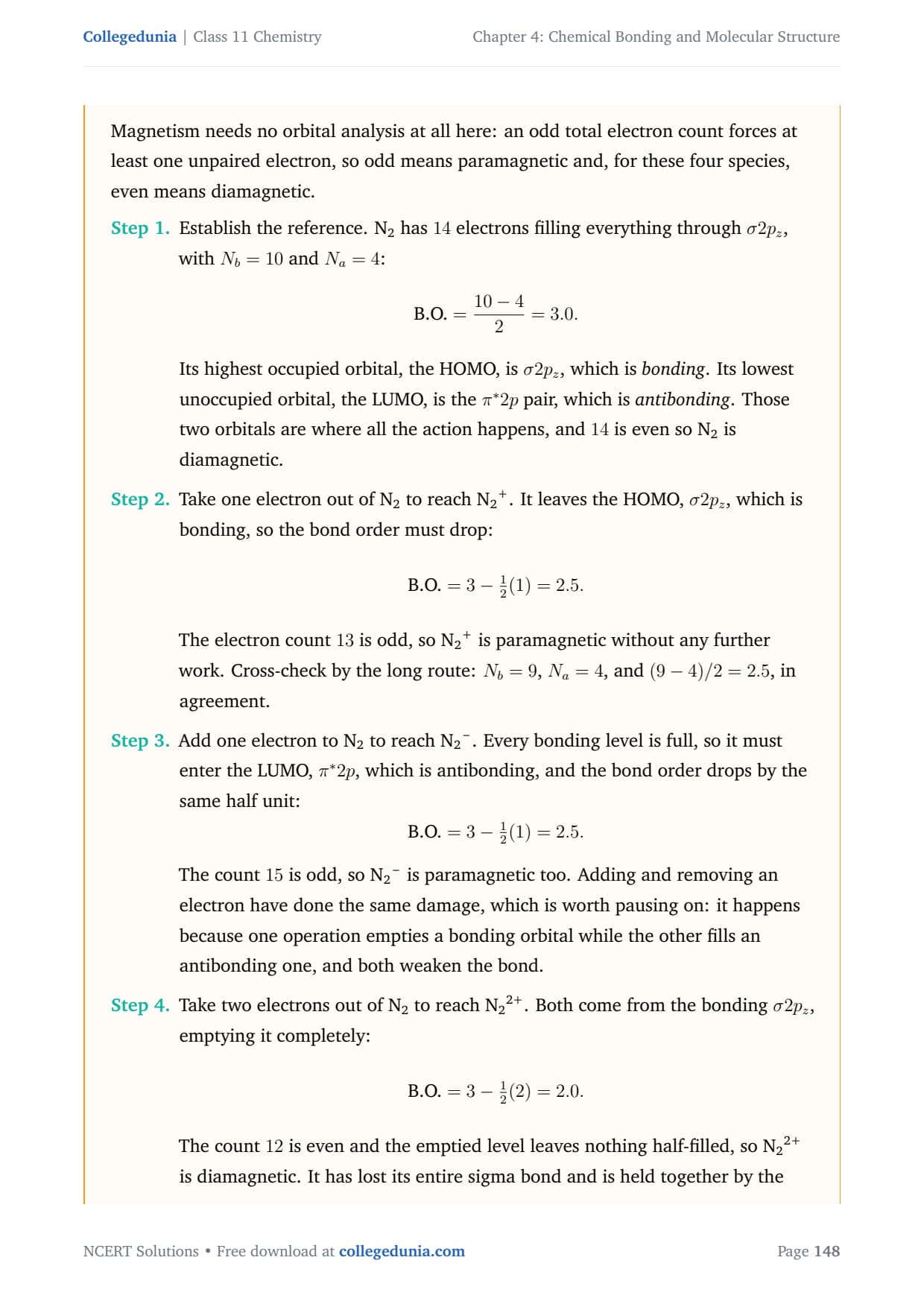
- Molecular orbital theory: bond order, stability, and magnetic behaviour
- Resonance, polarity and hydrogen bonding: dipole moment, canonical forms, and intermolecular against intramolecular bonds
Question Types in the Chemical Bonding and Molecular Structure NCERT Exemplar
Six question types appear here, and the spread is wider than any other Class 11 Chemistry chapter. The MCQ I set alone runs to 22 questions, so the free PDF spends most of its length there.
| Question Type | Count | What It Tests |
|---|---|---|
| MCQ I (single correct) | 22 | Shape, hybridisation and bond order recall under time pressure |
| MCQ II (one or more correct) | 8 | Whether you can reject every wrong option, not just find one right one |
| Short Answer | 21 | Reasoning on polarity, resonance and hydrogen bonding |
| Matching Type | 5 | Pairing species with shapes, hybridisation or bond angles |
| Assertion and Reason | 3 | Whether the reason actually explains the assertion |
| Long Answer | 9 | Full molecular orbital diagrams and multi-part shape prediction |
Two Printing Slips in the Chemical Bonding and Molecular Structure Exemplar
The printed book carries two errors in this chapter. Both are explained in the PDF, so you are never asked to accept something that does not add up.
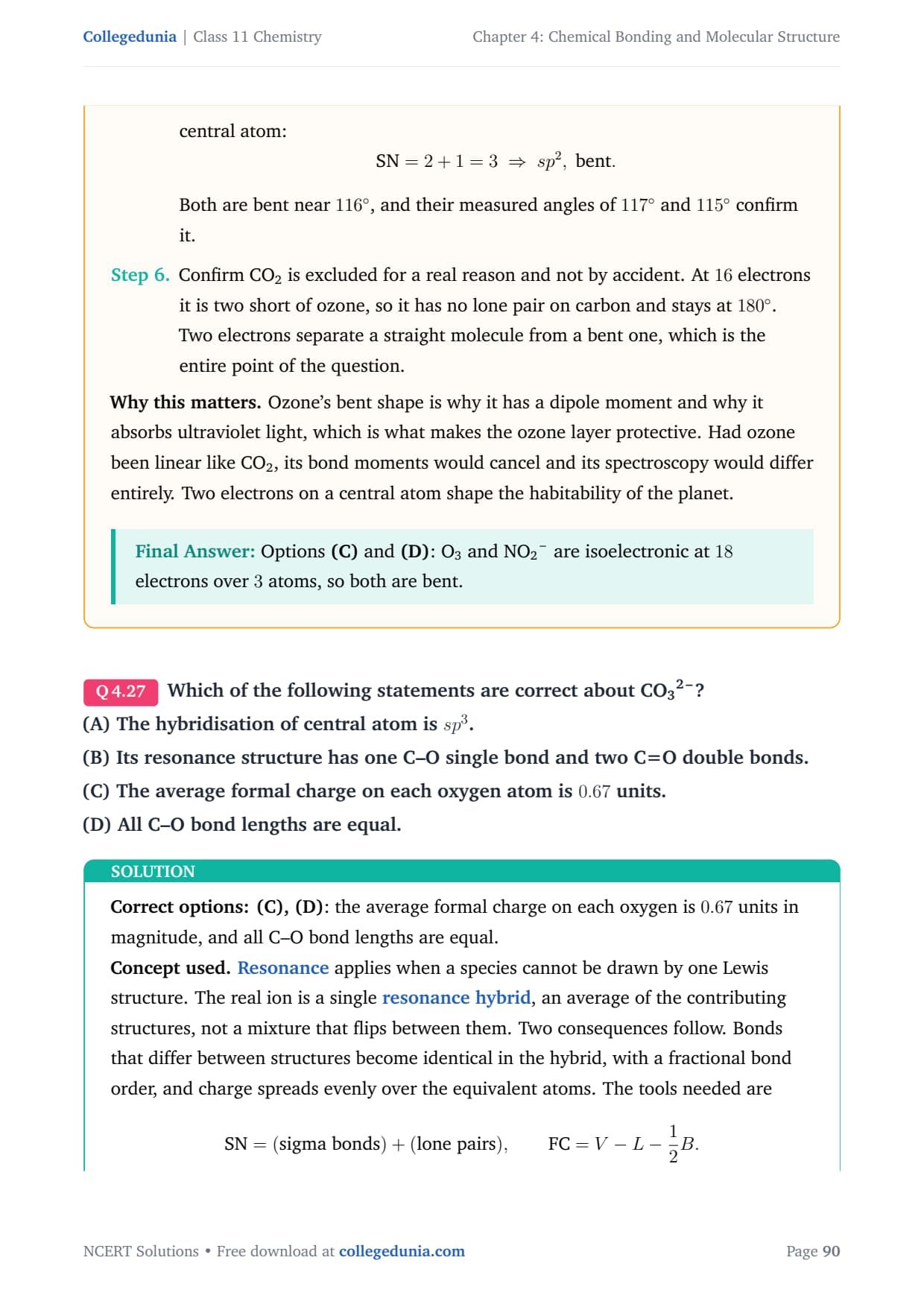
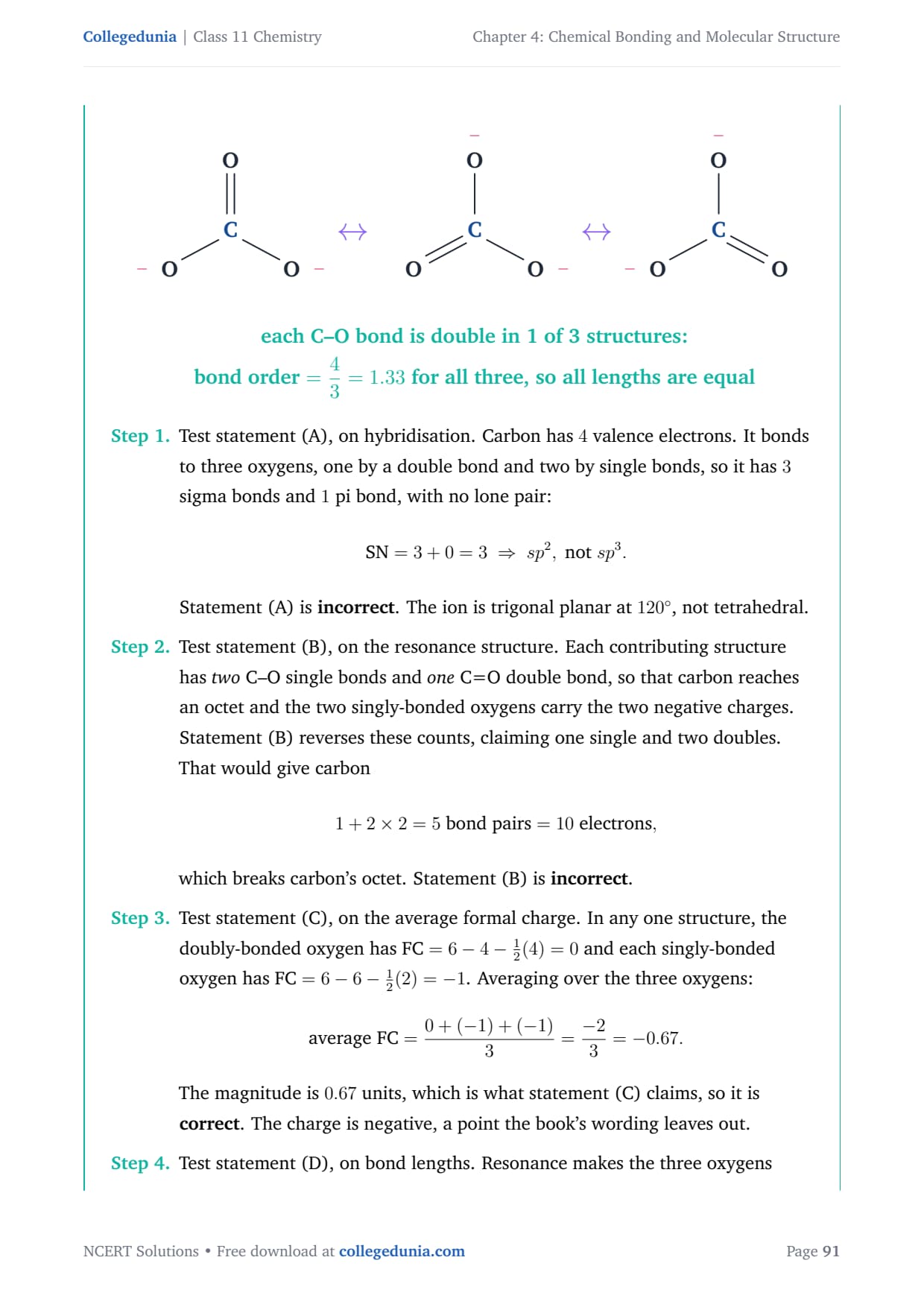
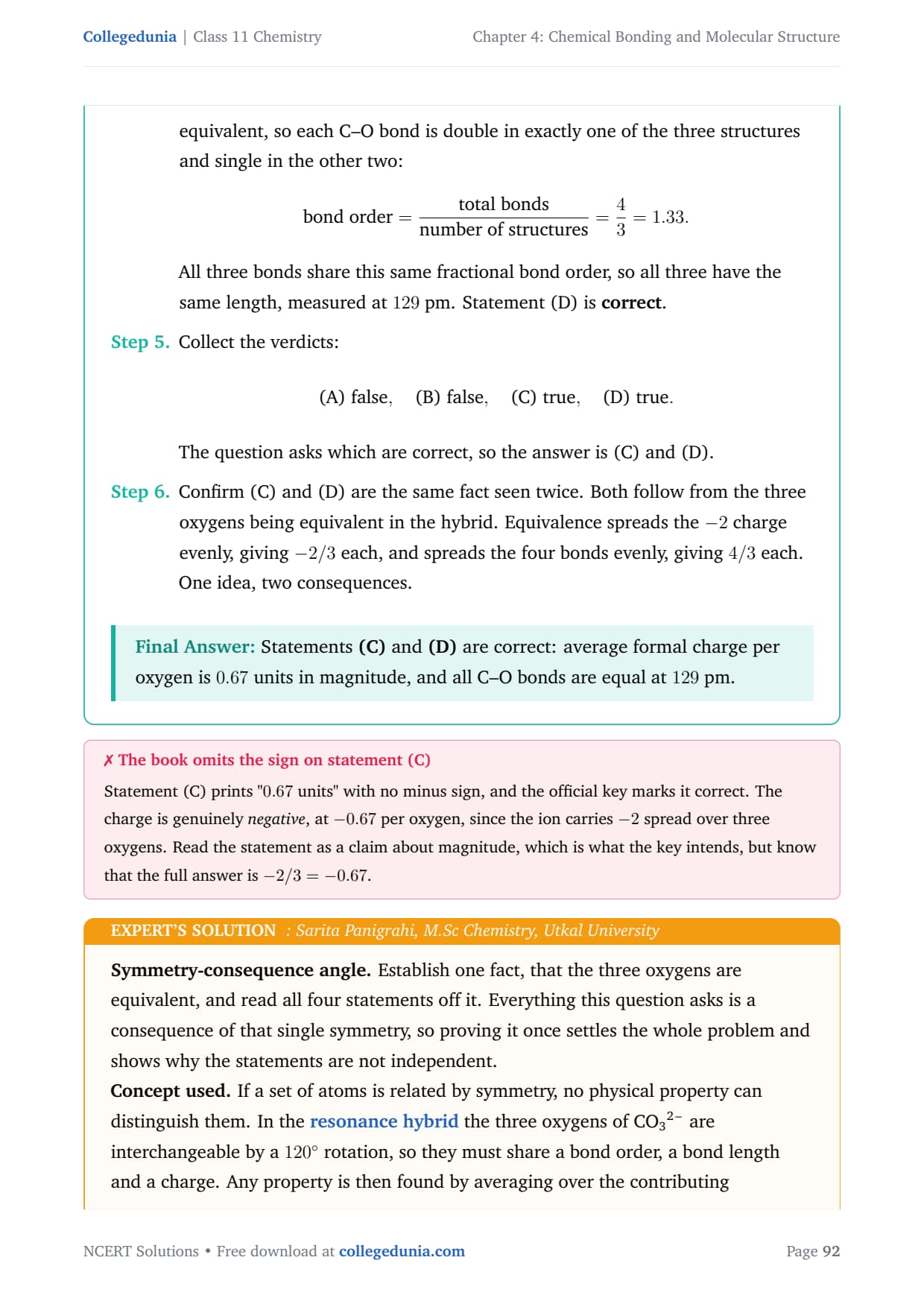
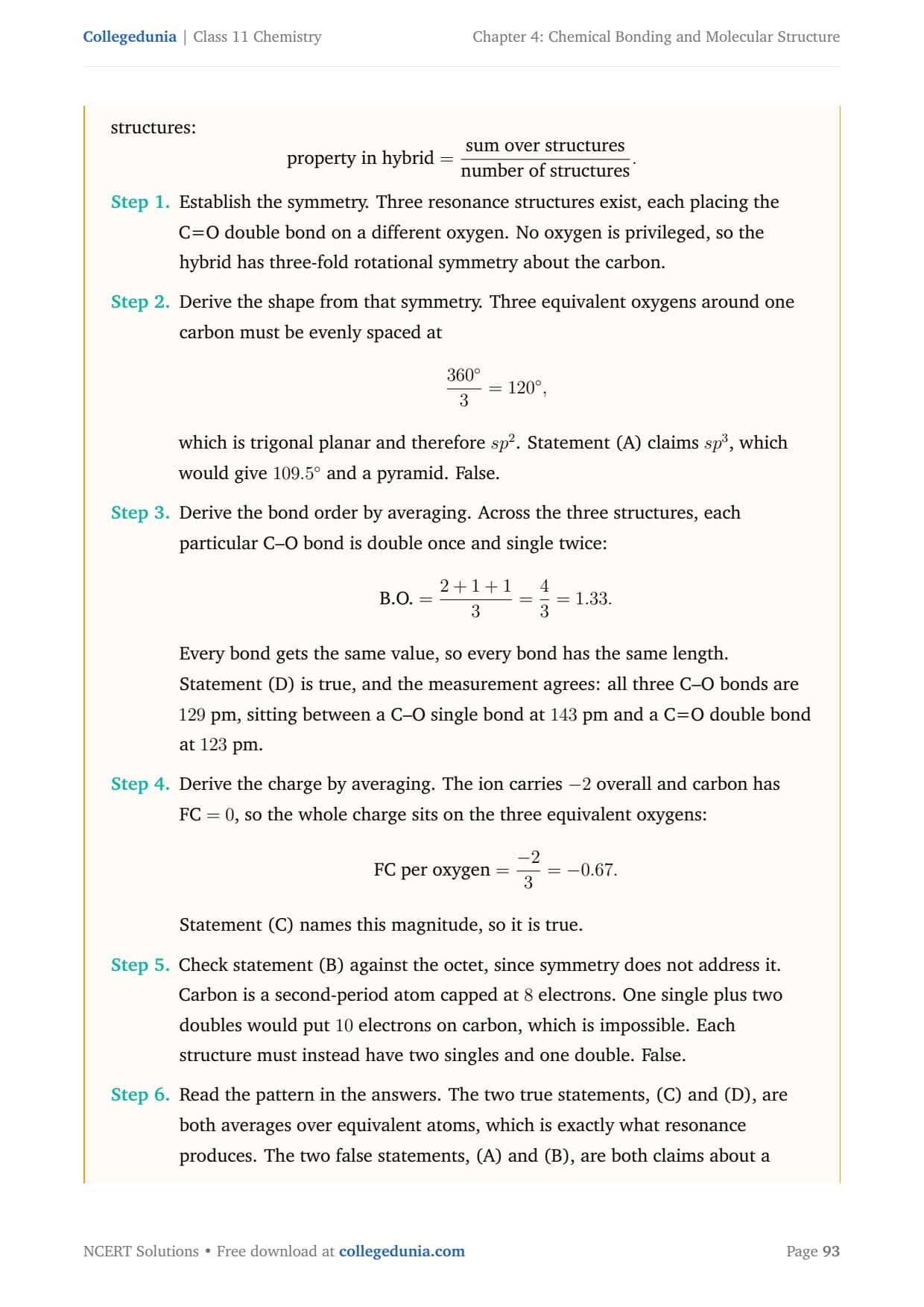
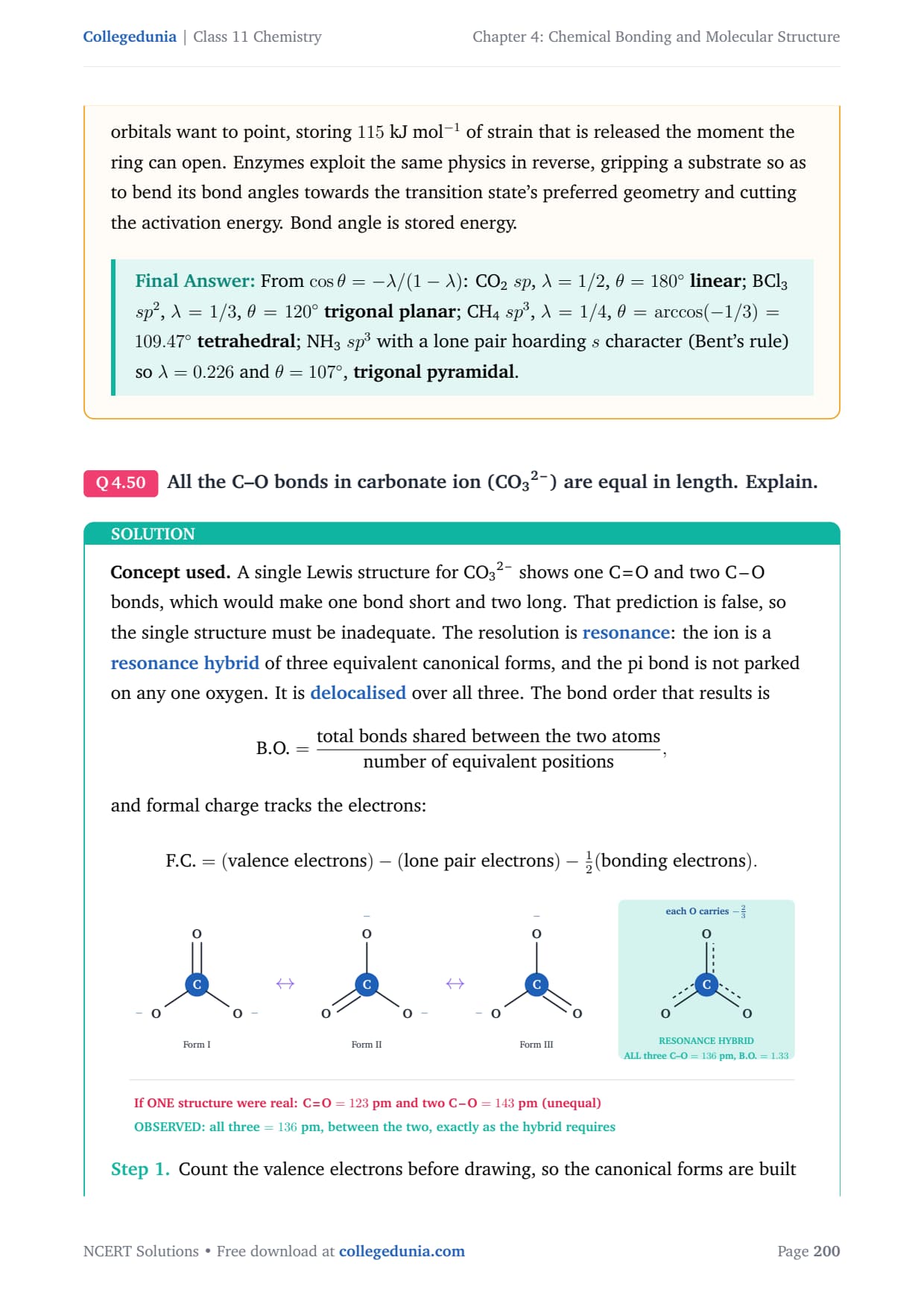
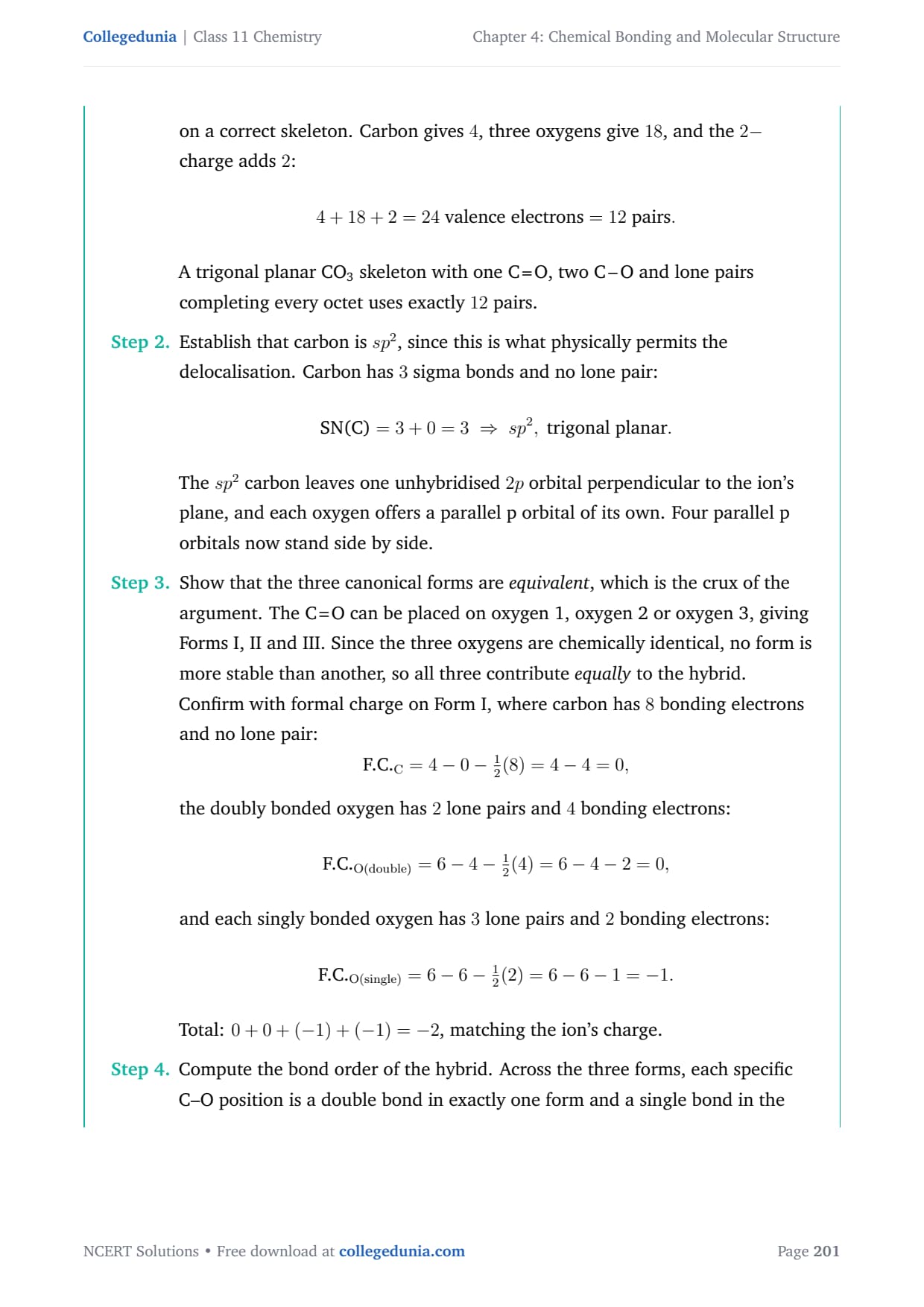
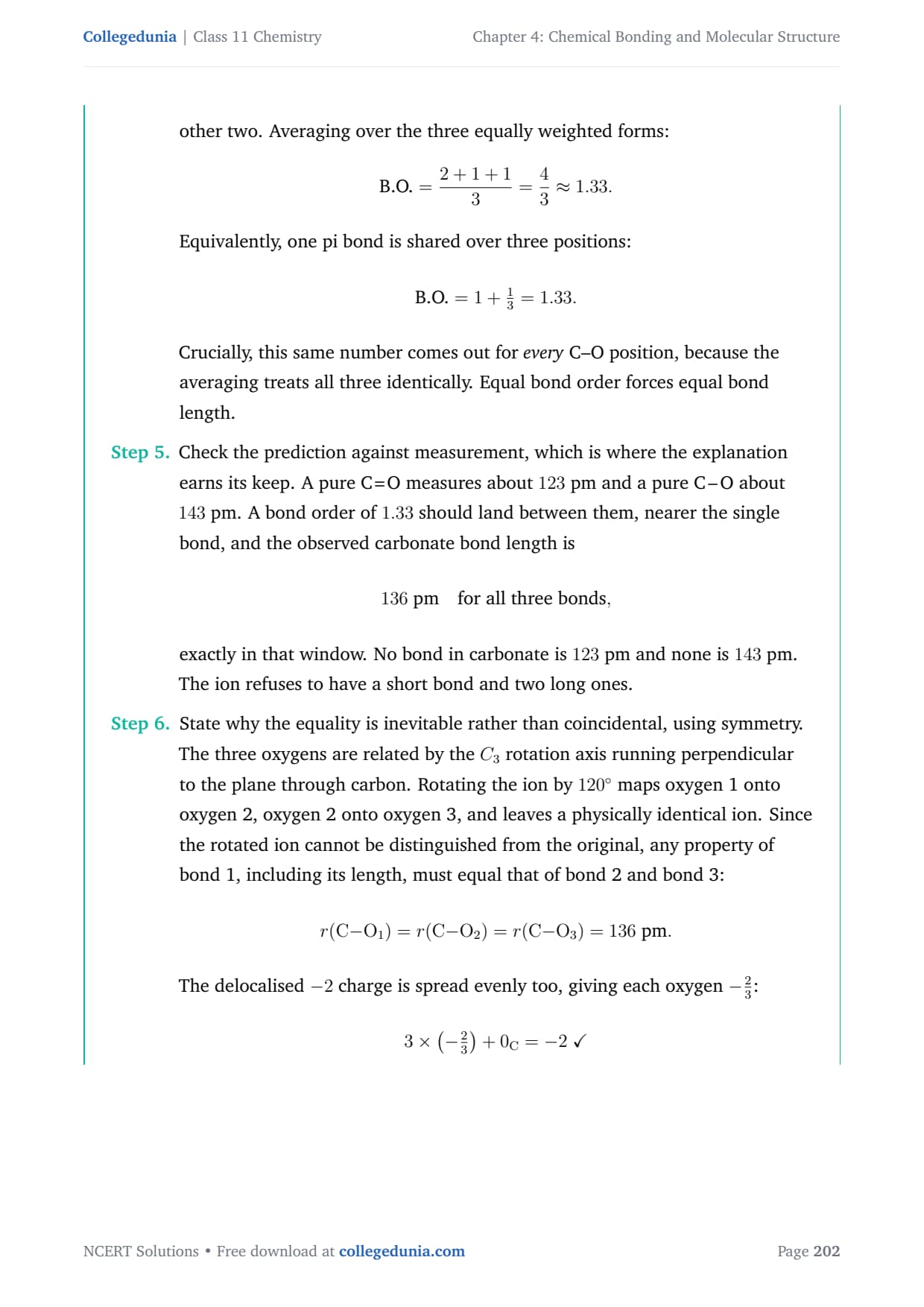
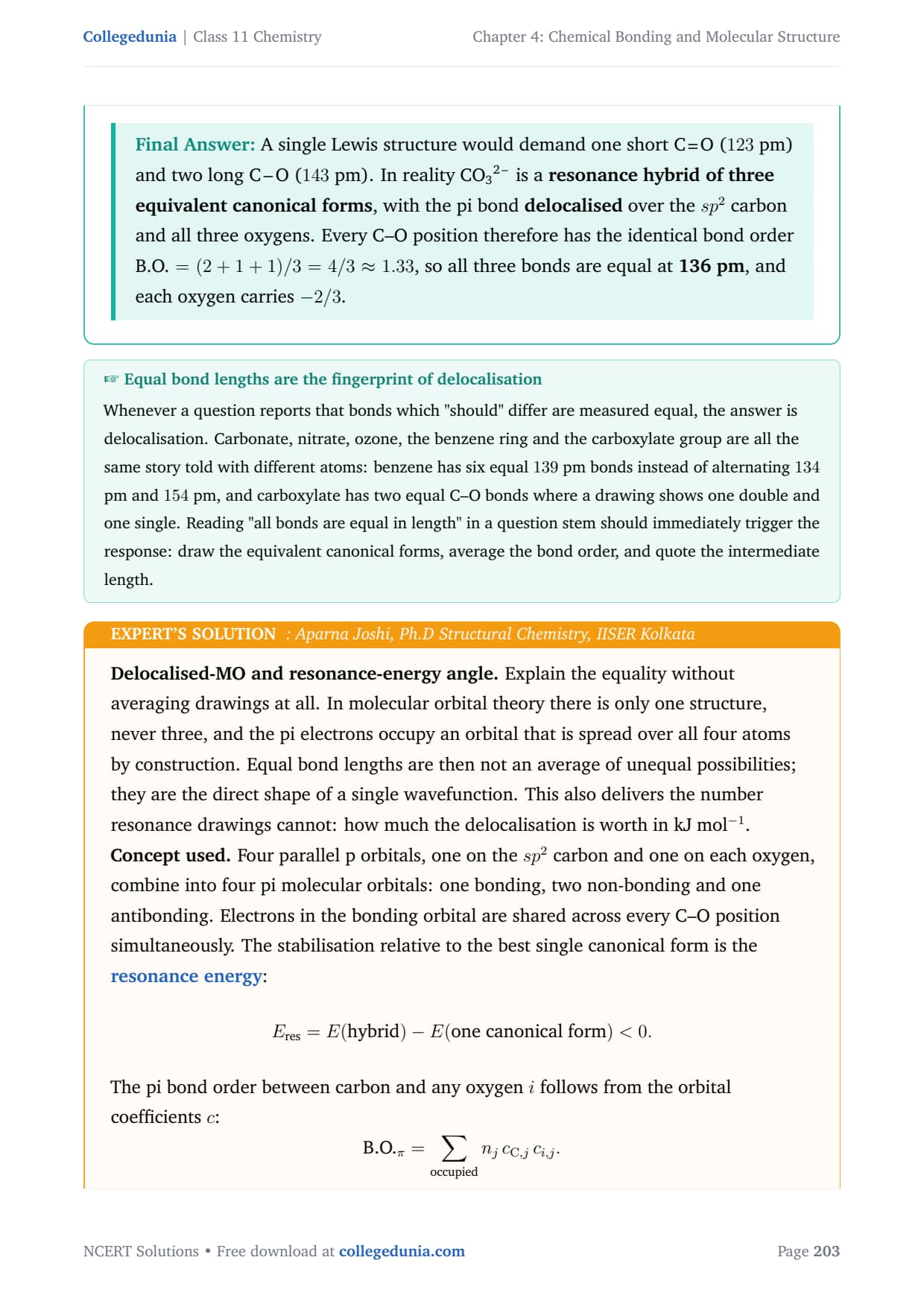
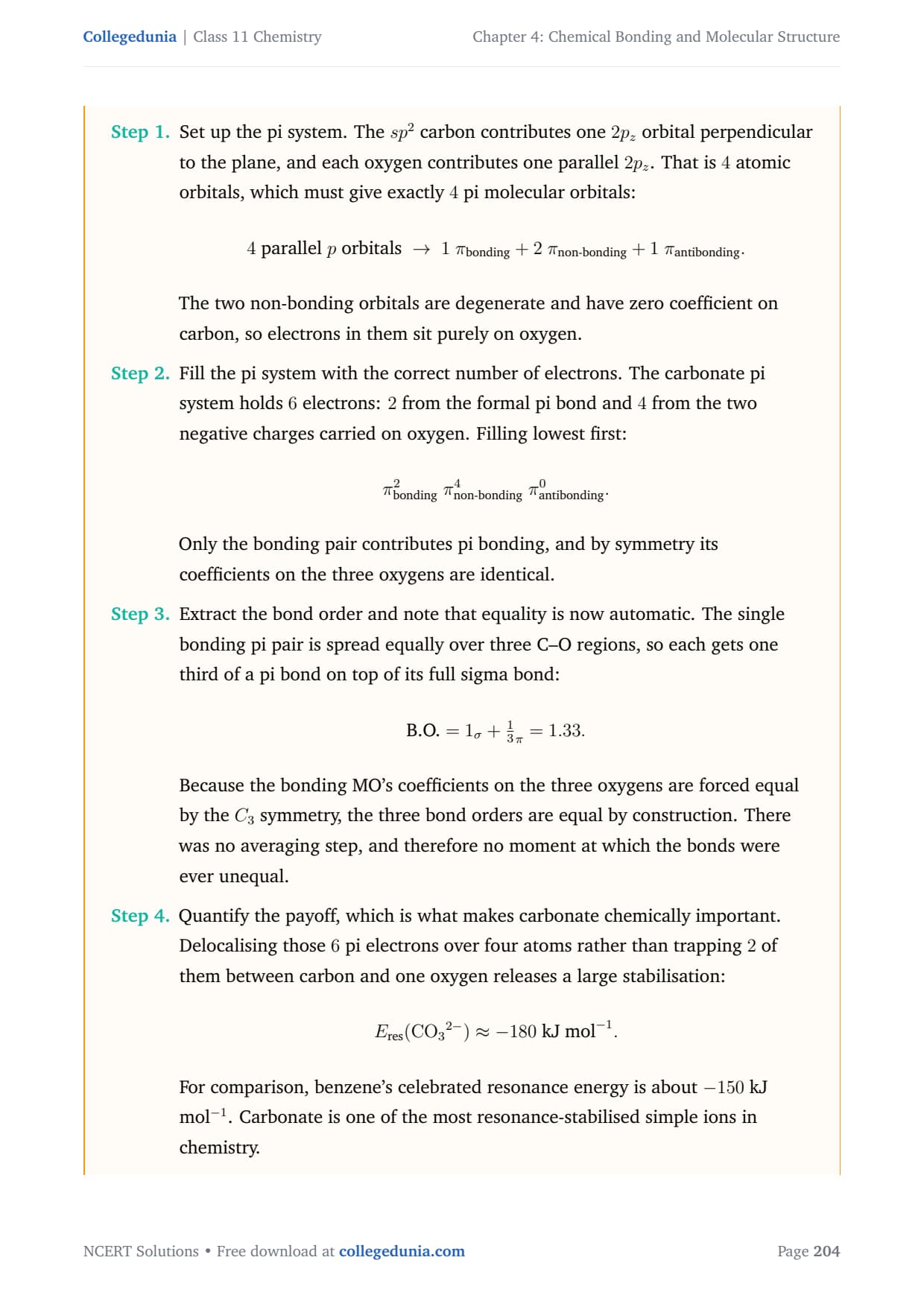
- Question 27: the question asks which statements about CO32- are correct. Statement (C) prints "0.67 units" with no minus sign, and the official key marks it correct. The charge is genuinely negative. The ion carries -2 spread over three equivalent oxygens, so the formal charge is -2/3, or -0.67 per oxygen. The key intends (C) as a claim about magnitude.
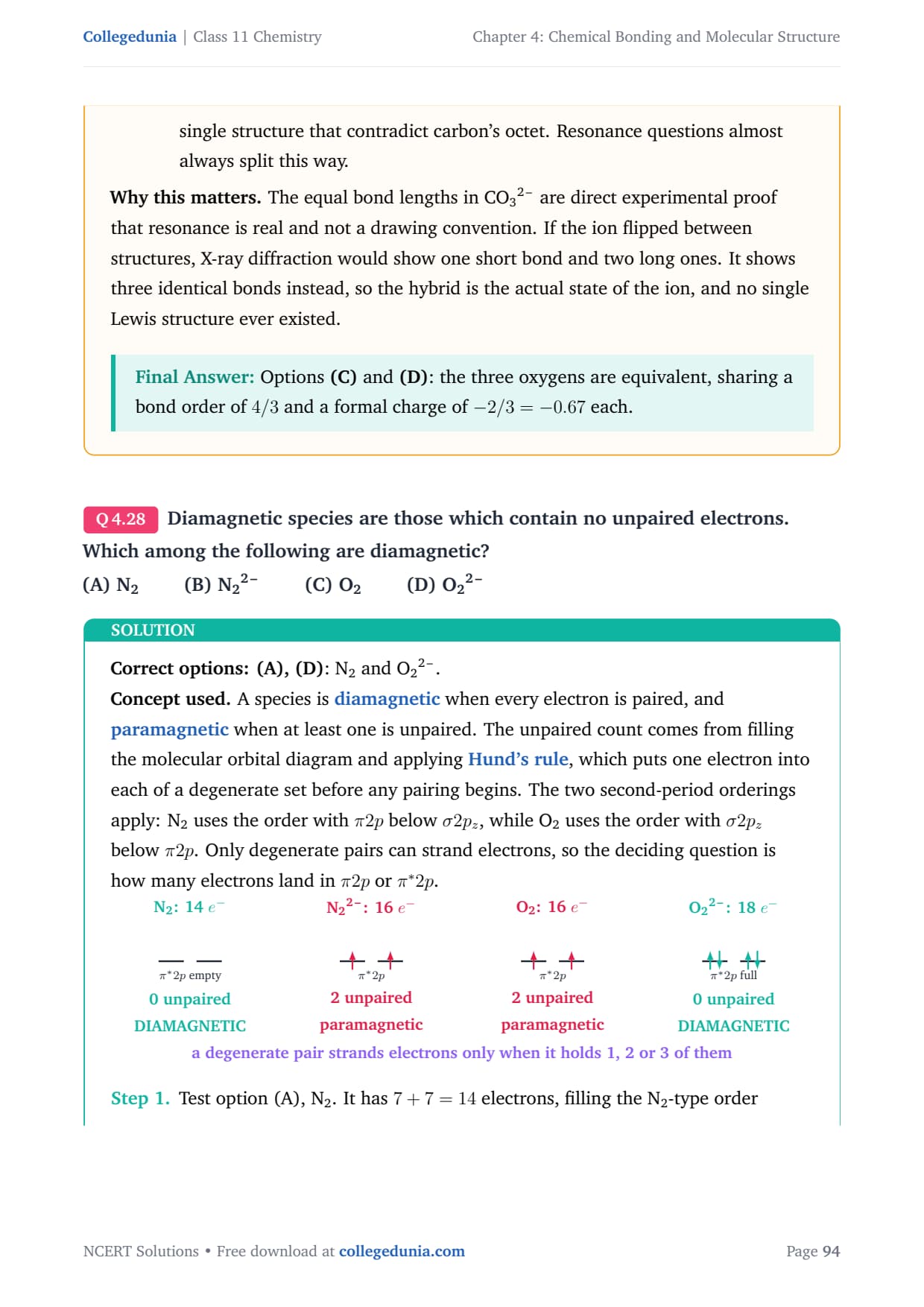
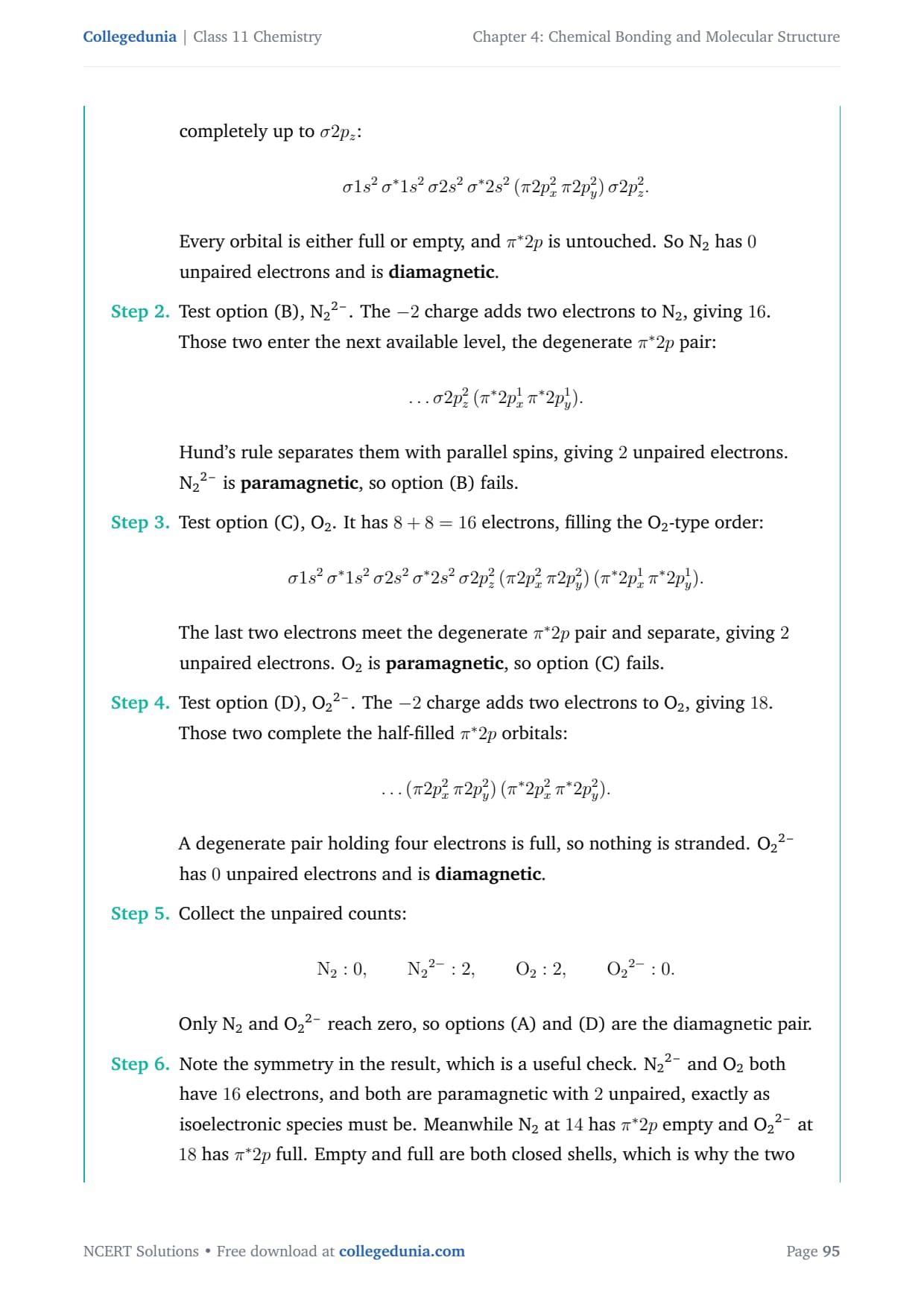
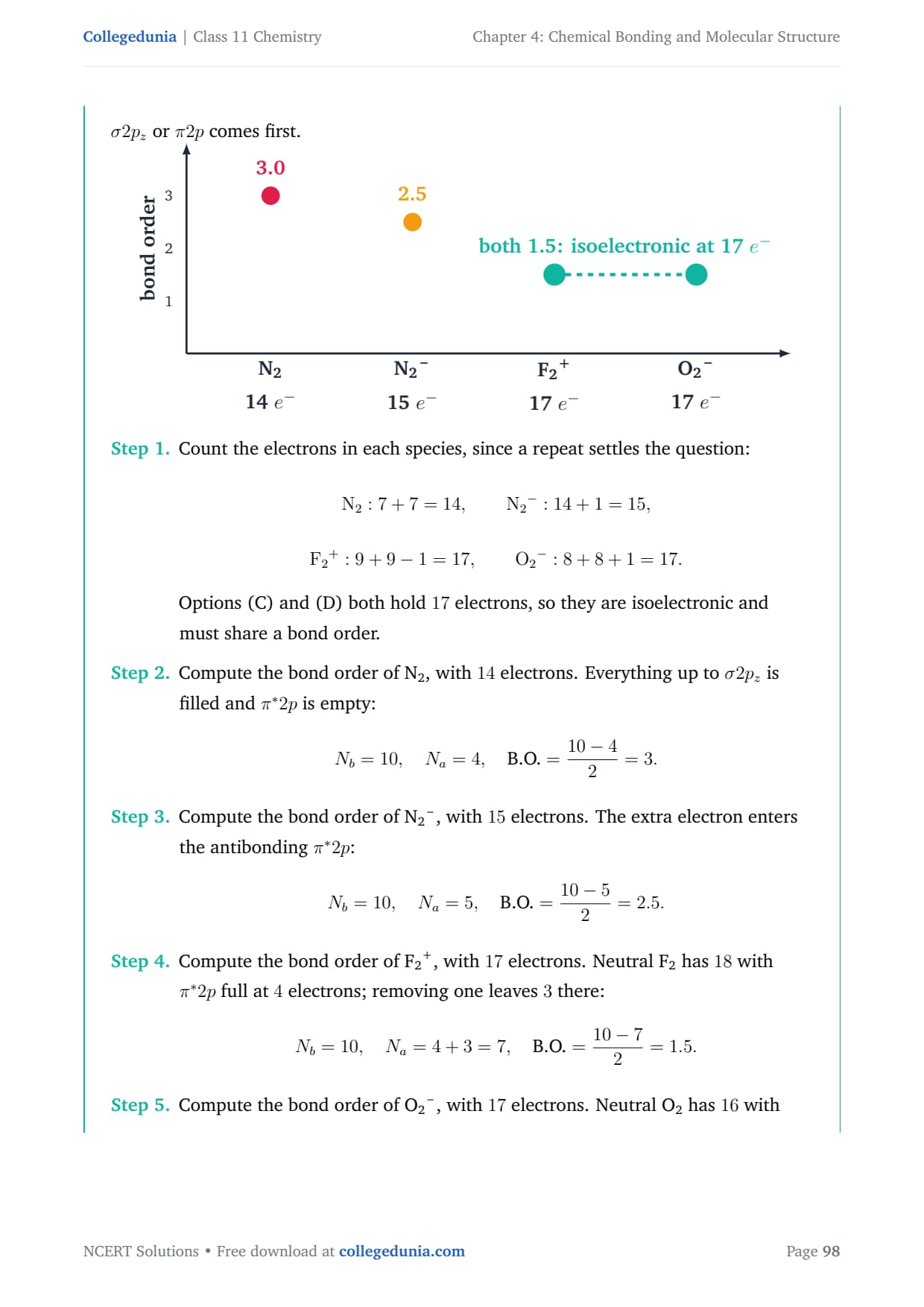
- Question 28: the book prints "Dimagnetic" twice. No such term exists. The question's own definition, "contain no unpaired electrons", confirms that diamagnetic is meant. The answer, N2 and O22-, is unaffected.
Write the key's answer in the exam, but know why it is loose. The marking scheme follows the printed key, so our solution gives the key's choice and then explains the slip.
Common Mistakes Students Make in Chemical Bonding and Molecular Structure
The Exemplar plants wrong options on purpose. These four catch most students, and each is flagged in the PDF where it appears.
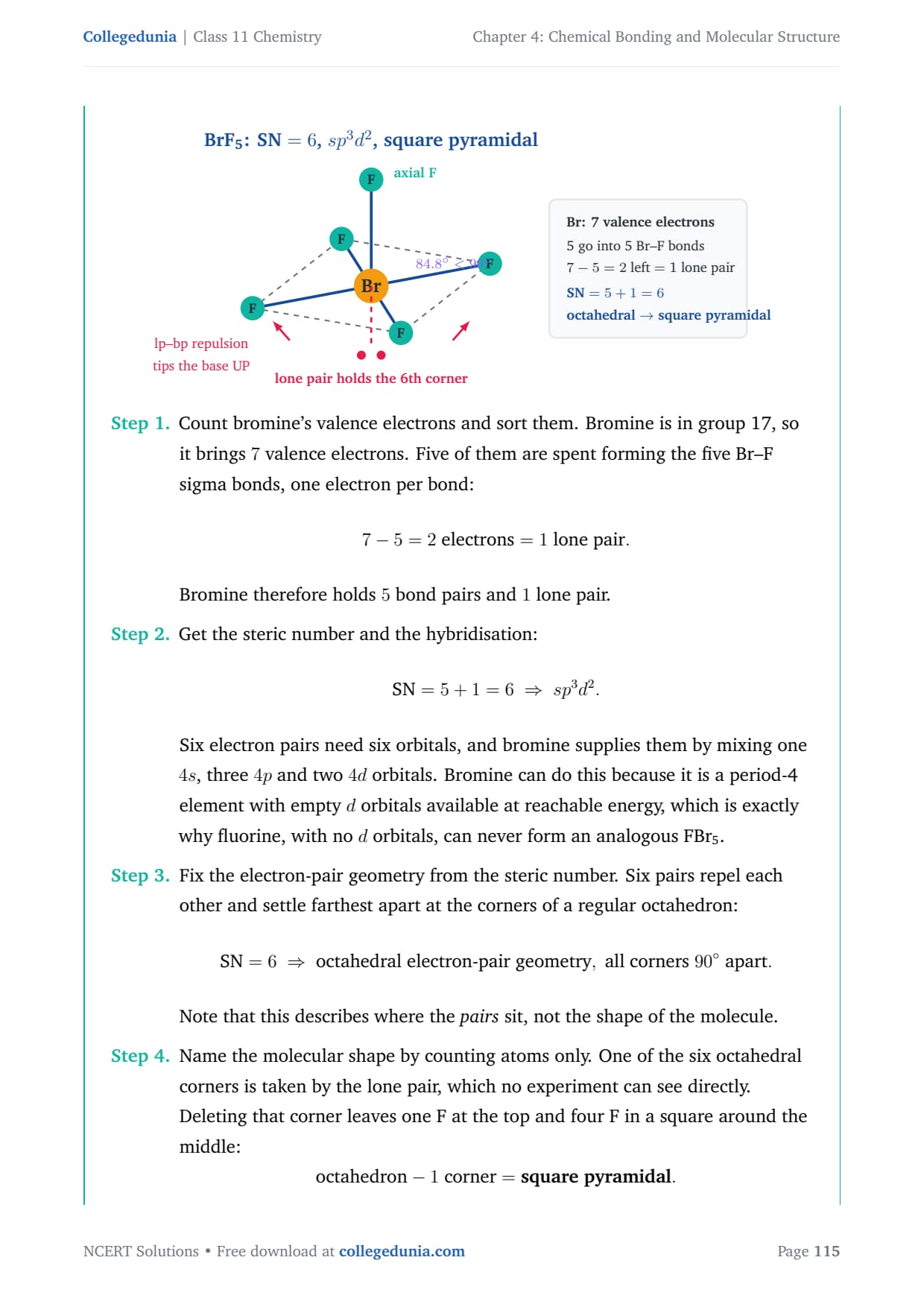
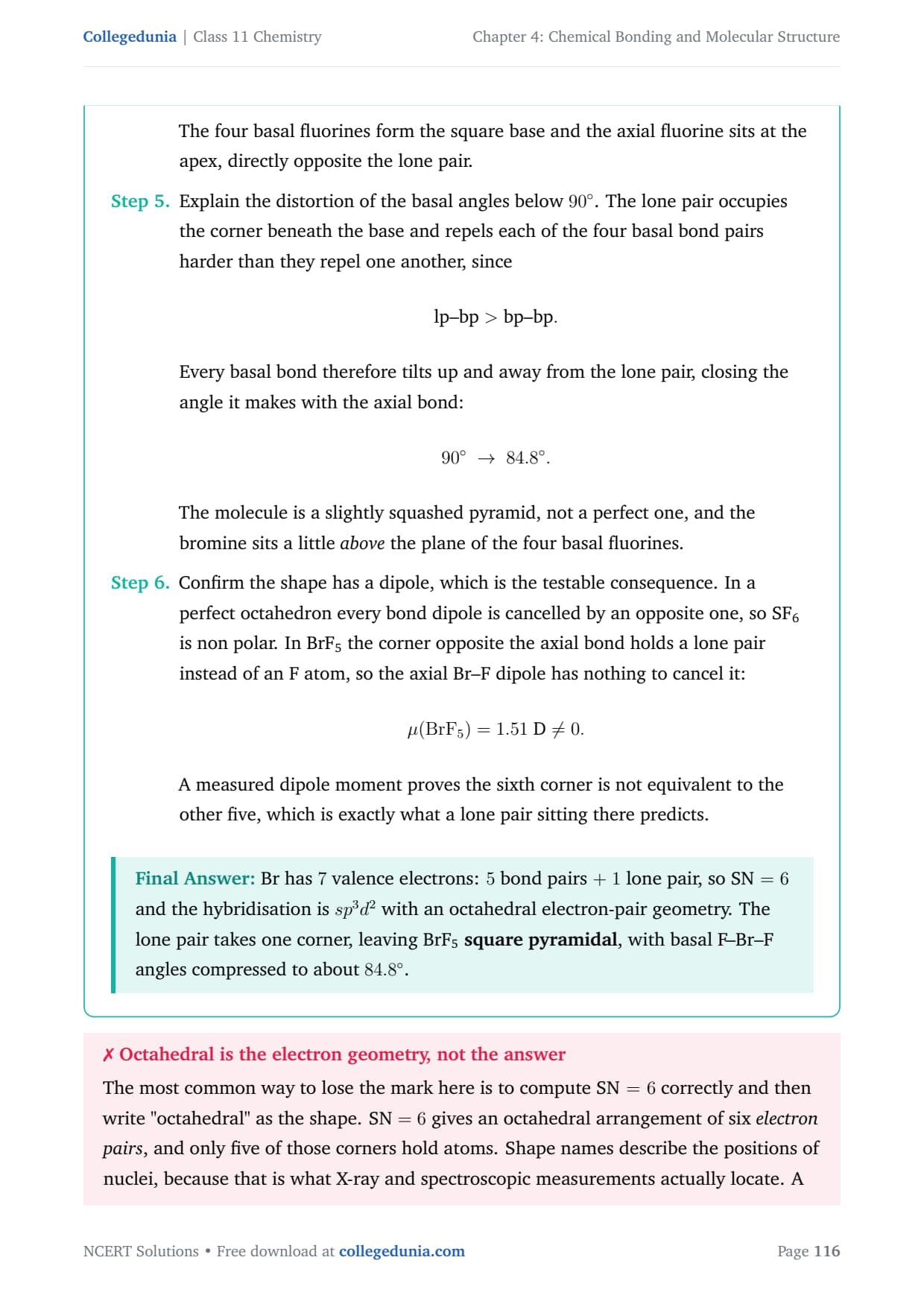
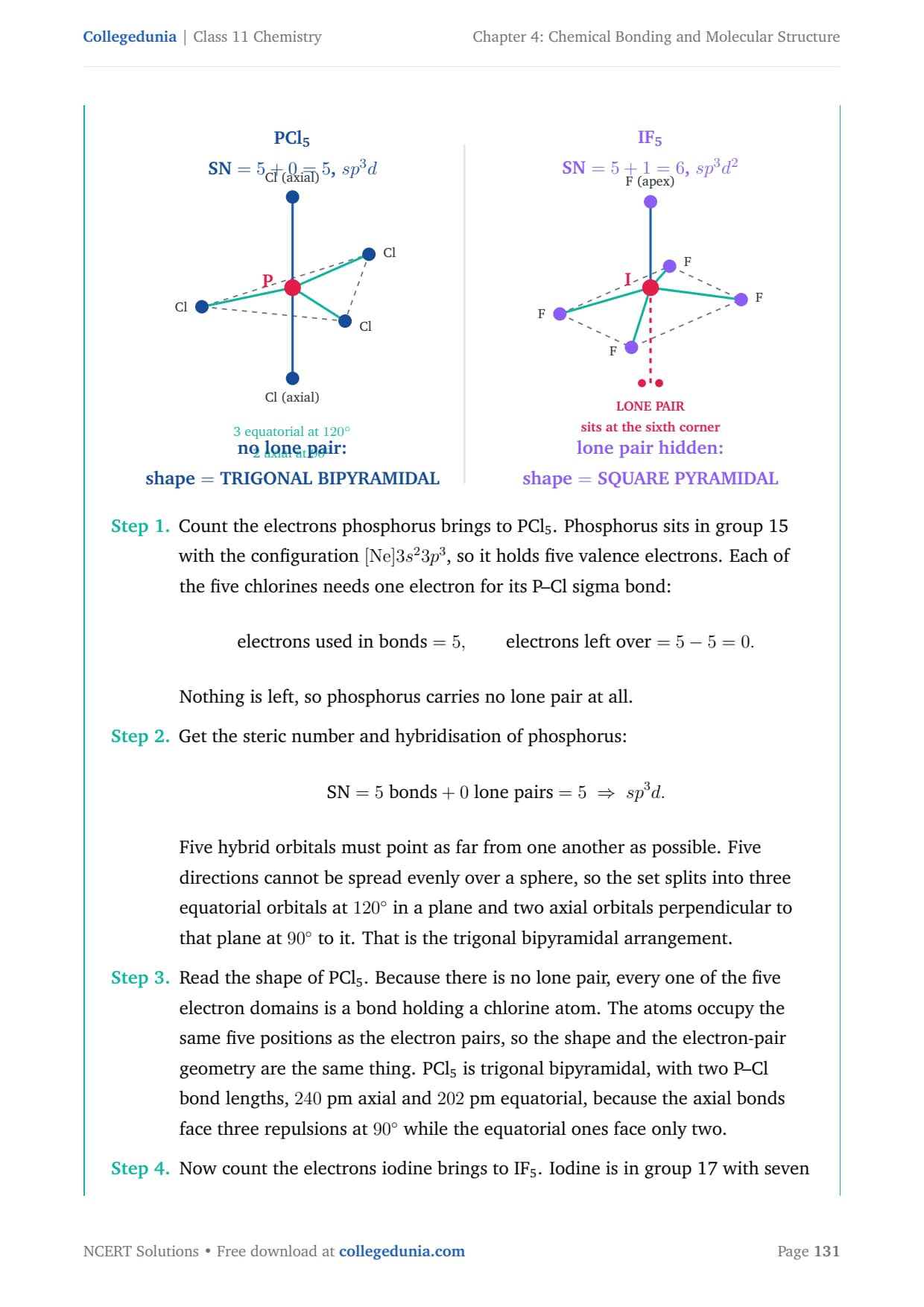
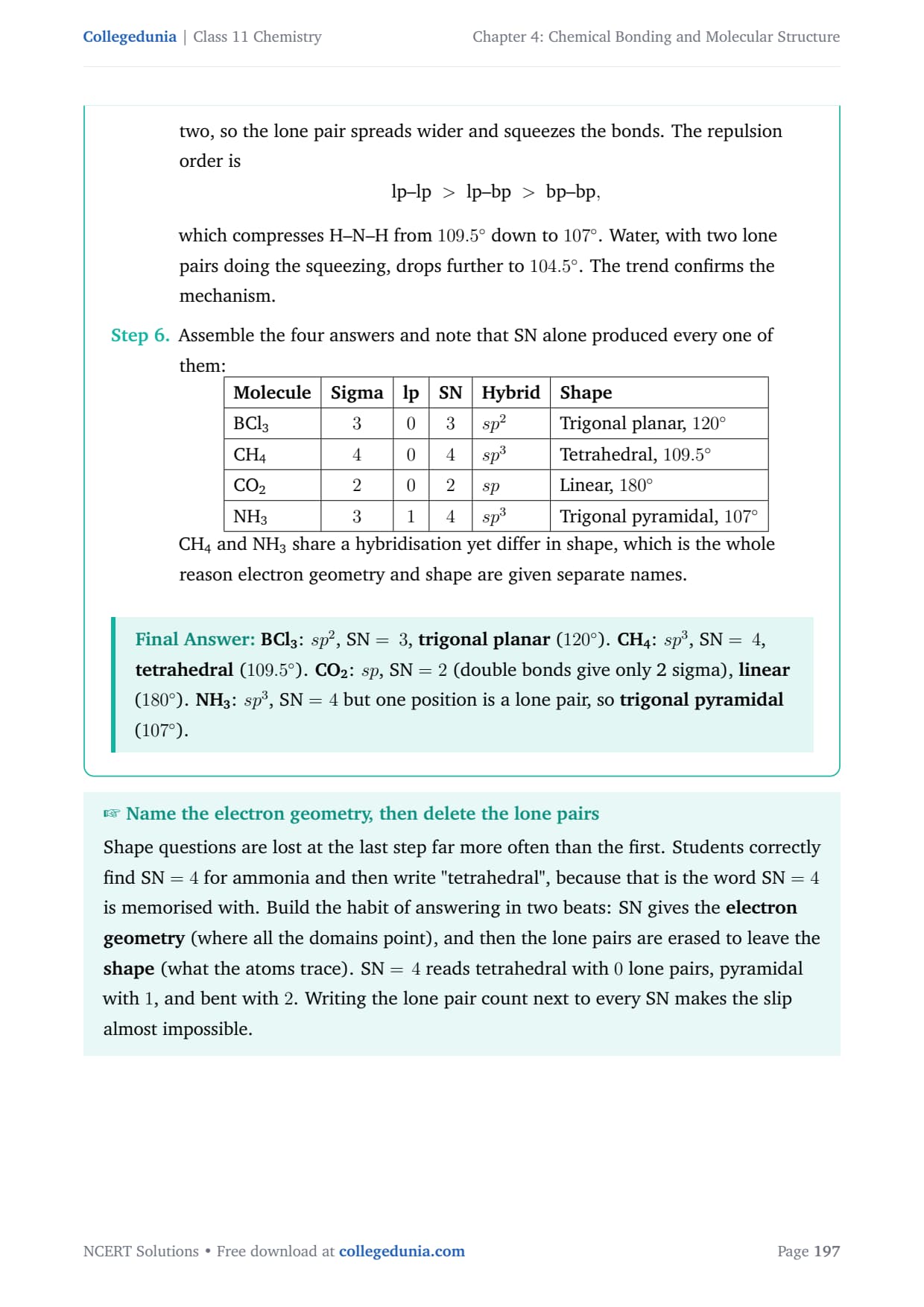
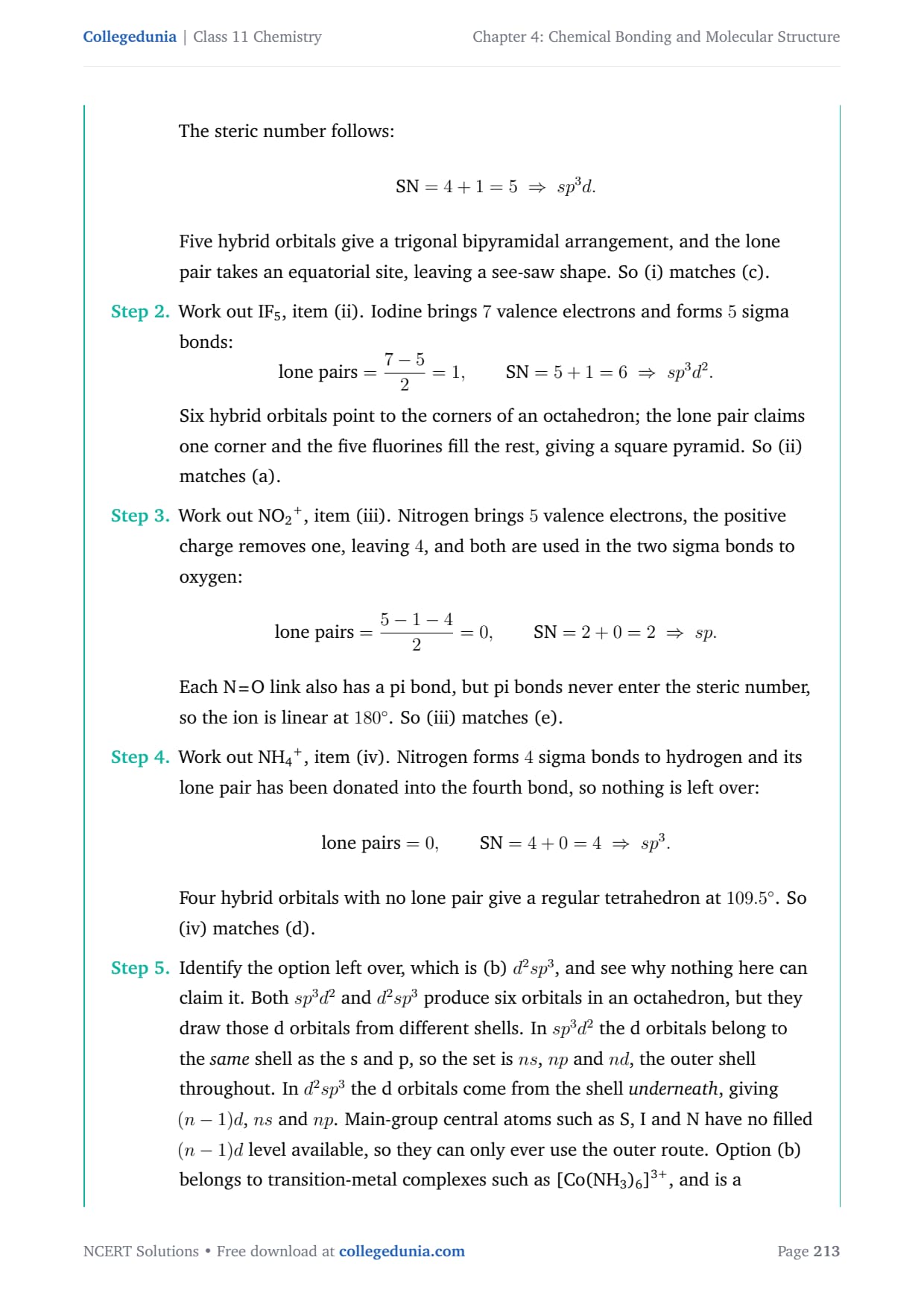
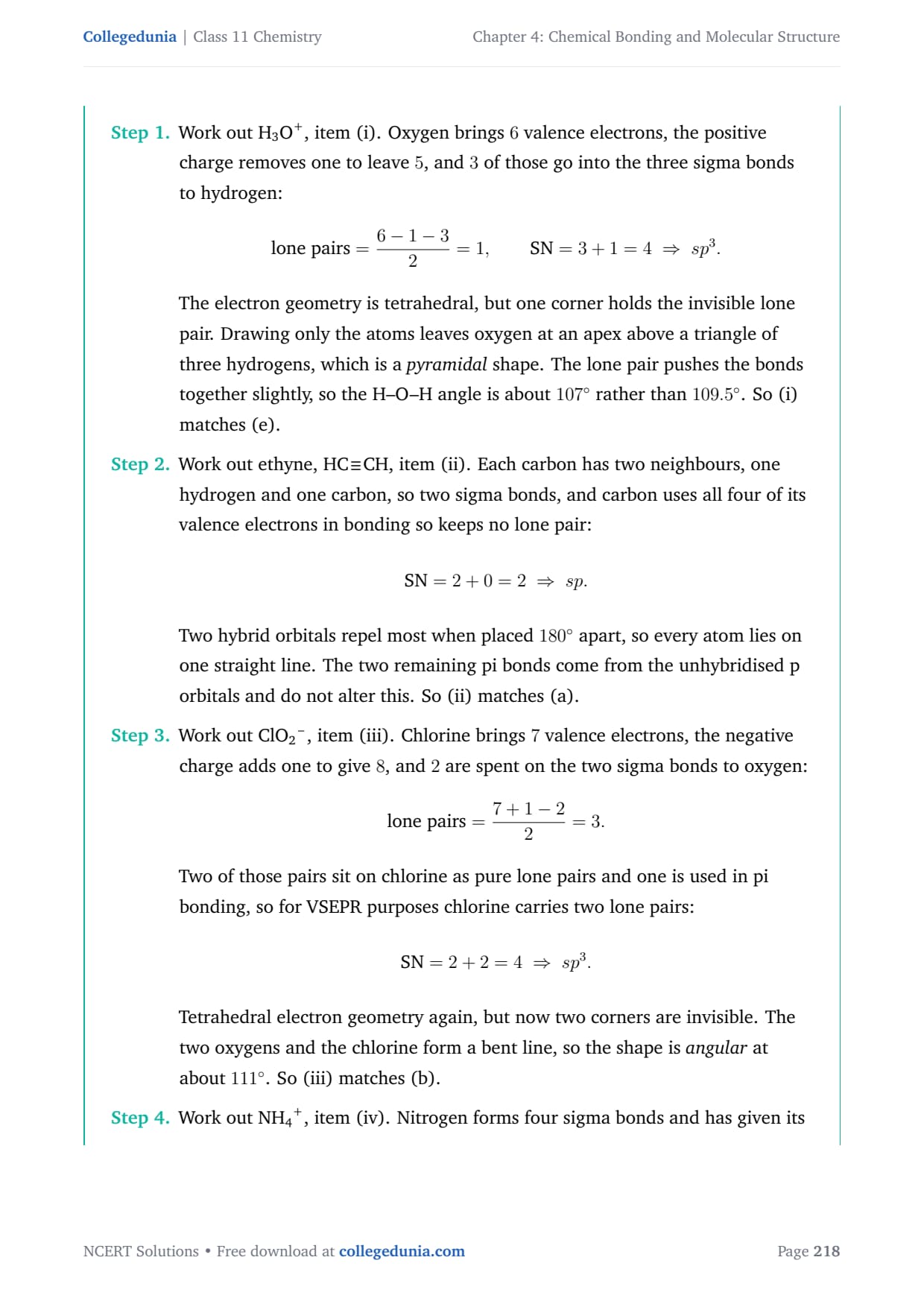
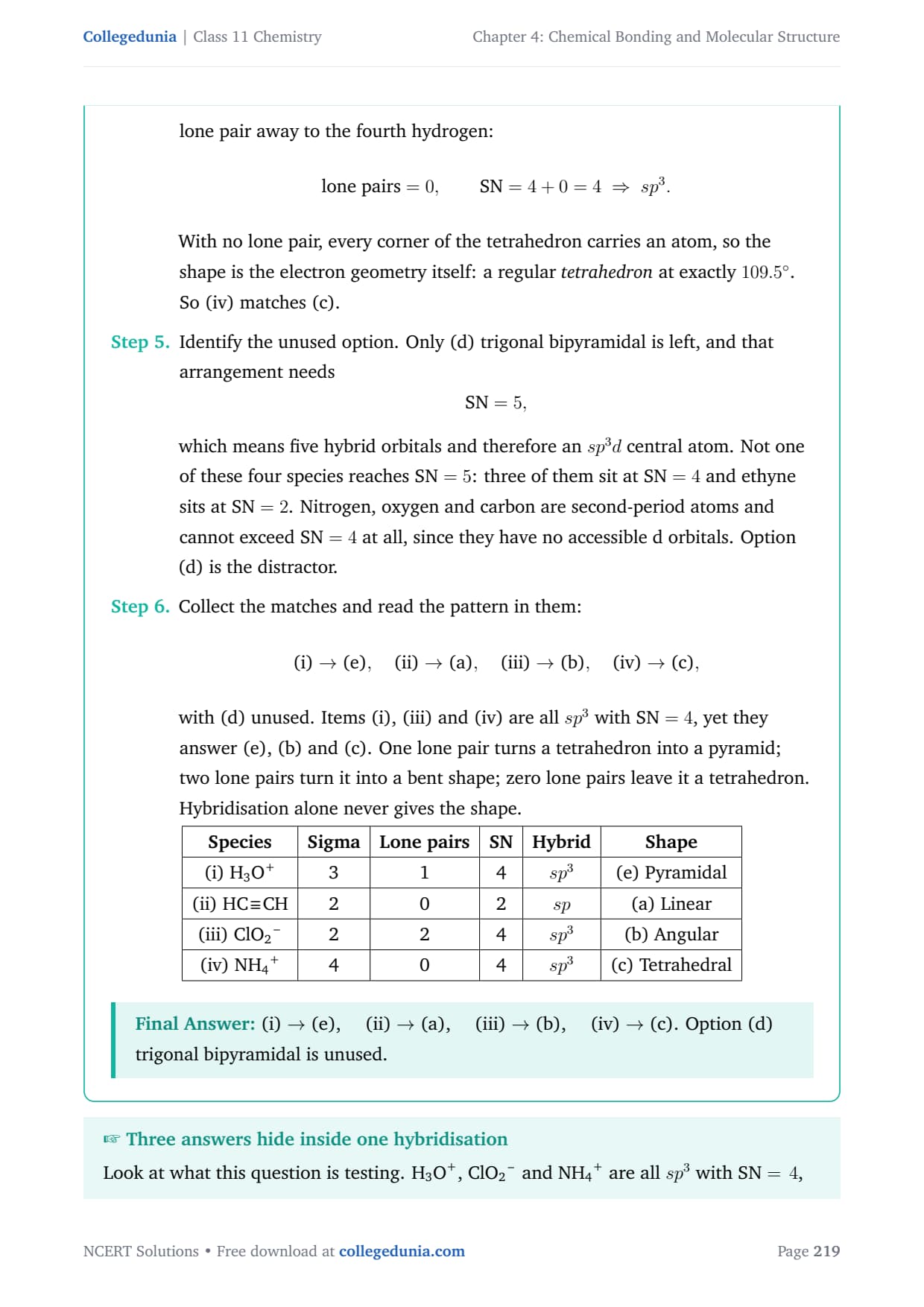
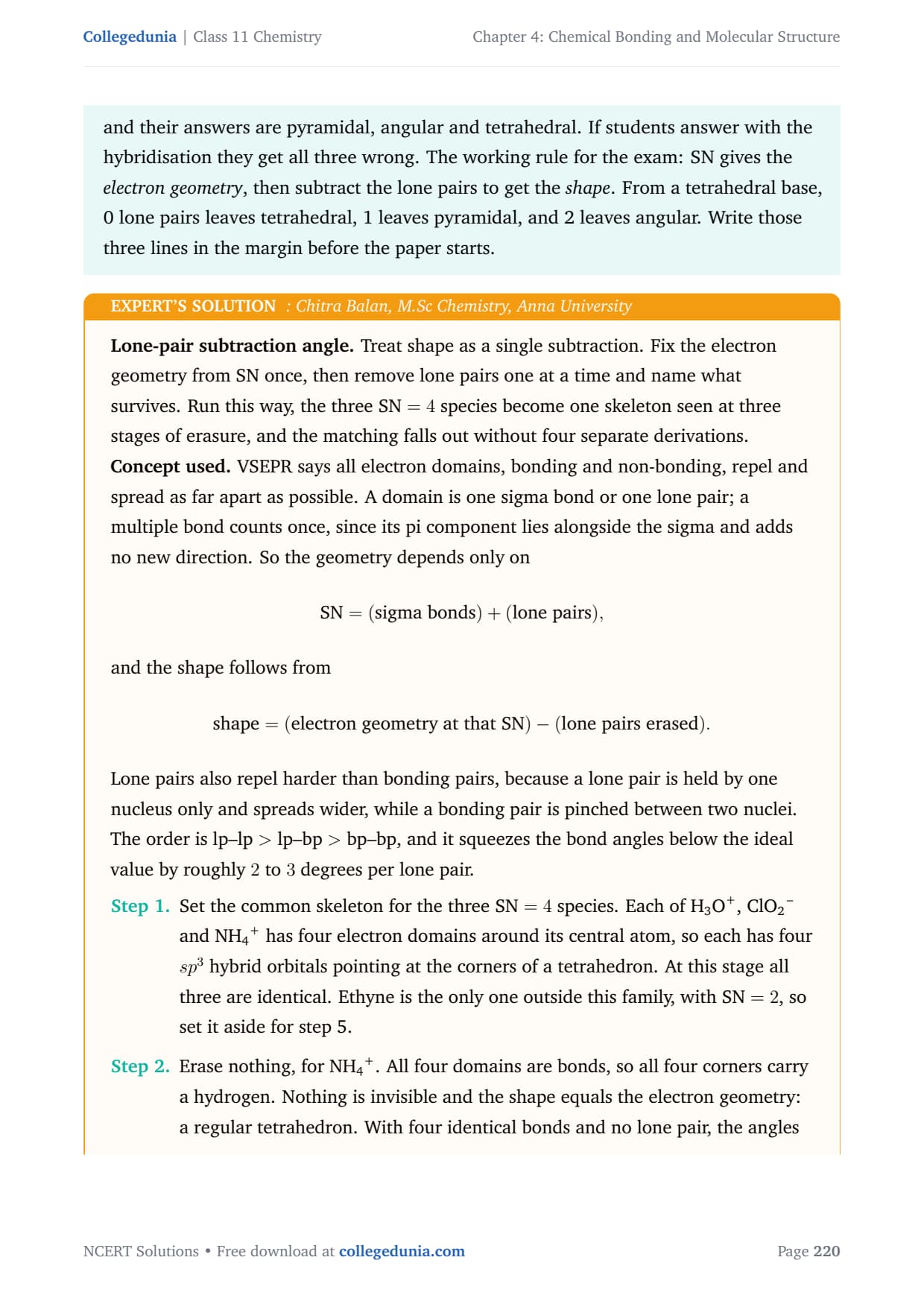
- Electron geometry against shape: a steric number of 6 arranges six electron pairs octahedrally. If one is a lone pair, only five corners hold atoms, and the shape is square pyramidal. Shape names locate nuclei, never lone pairs.
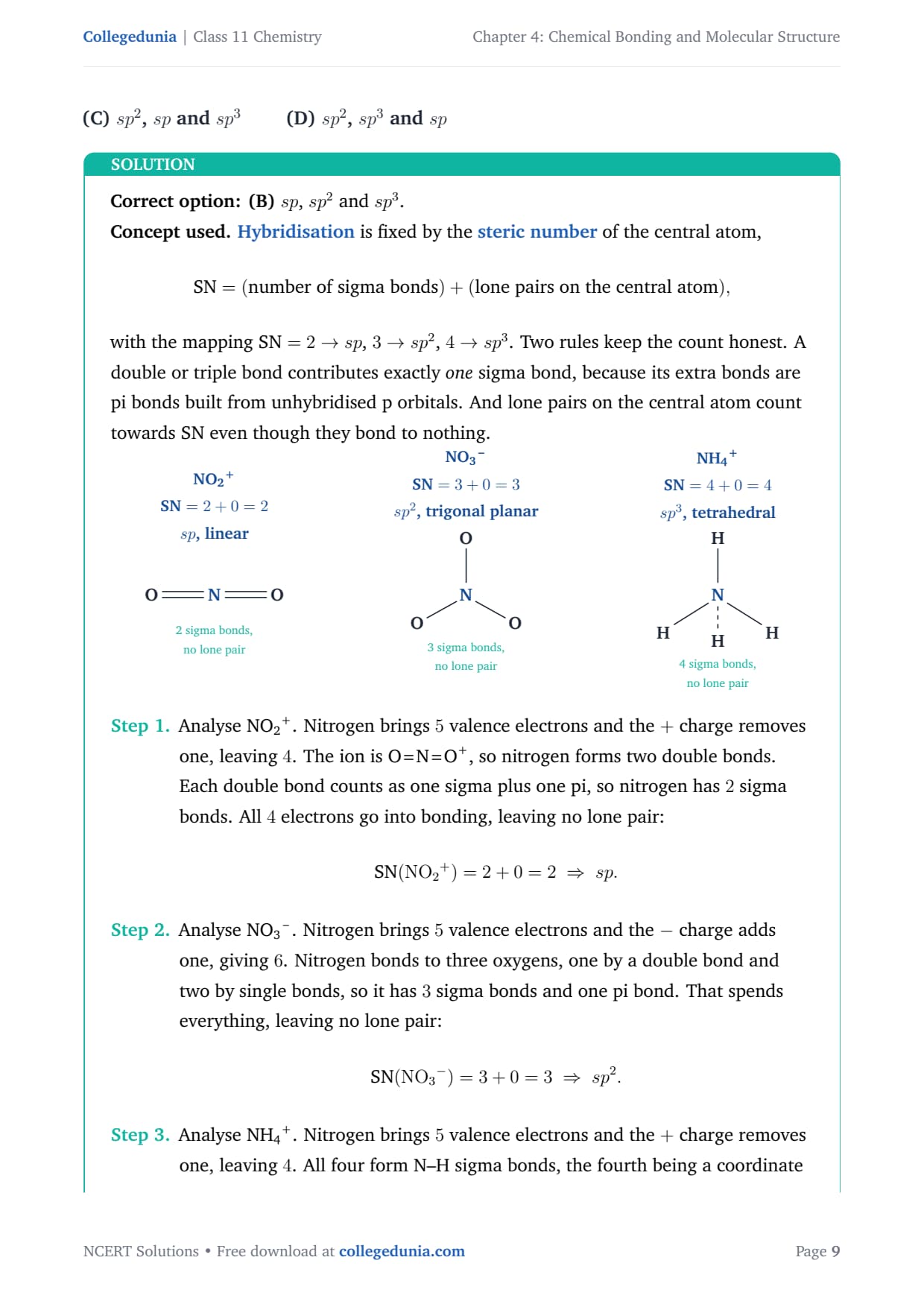
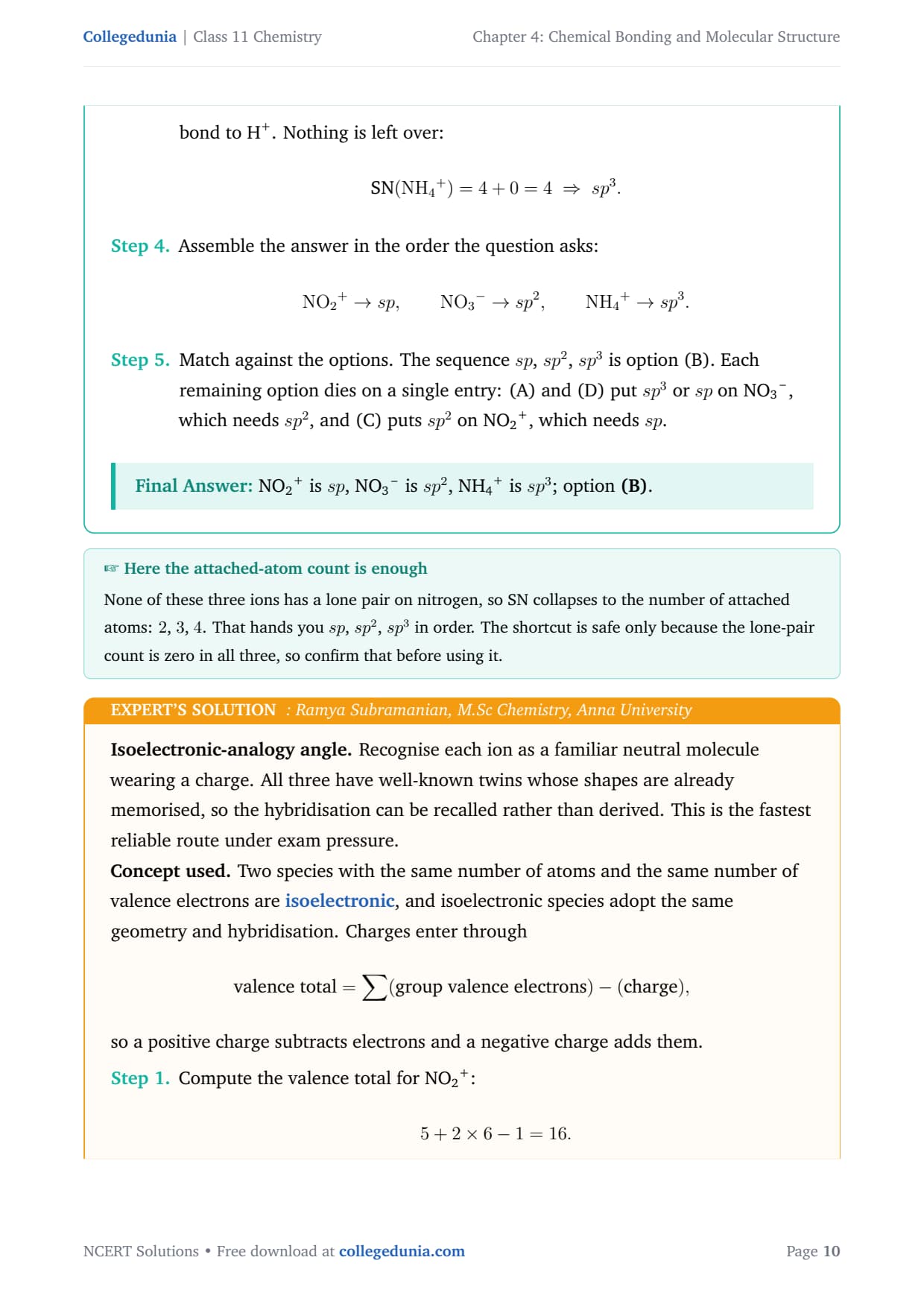
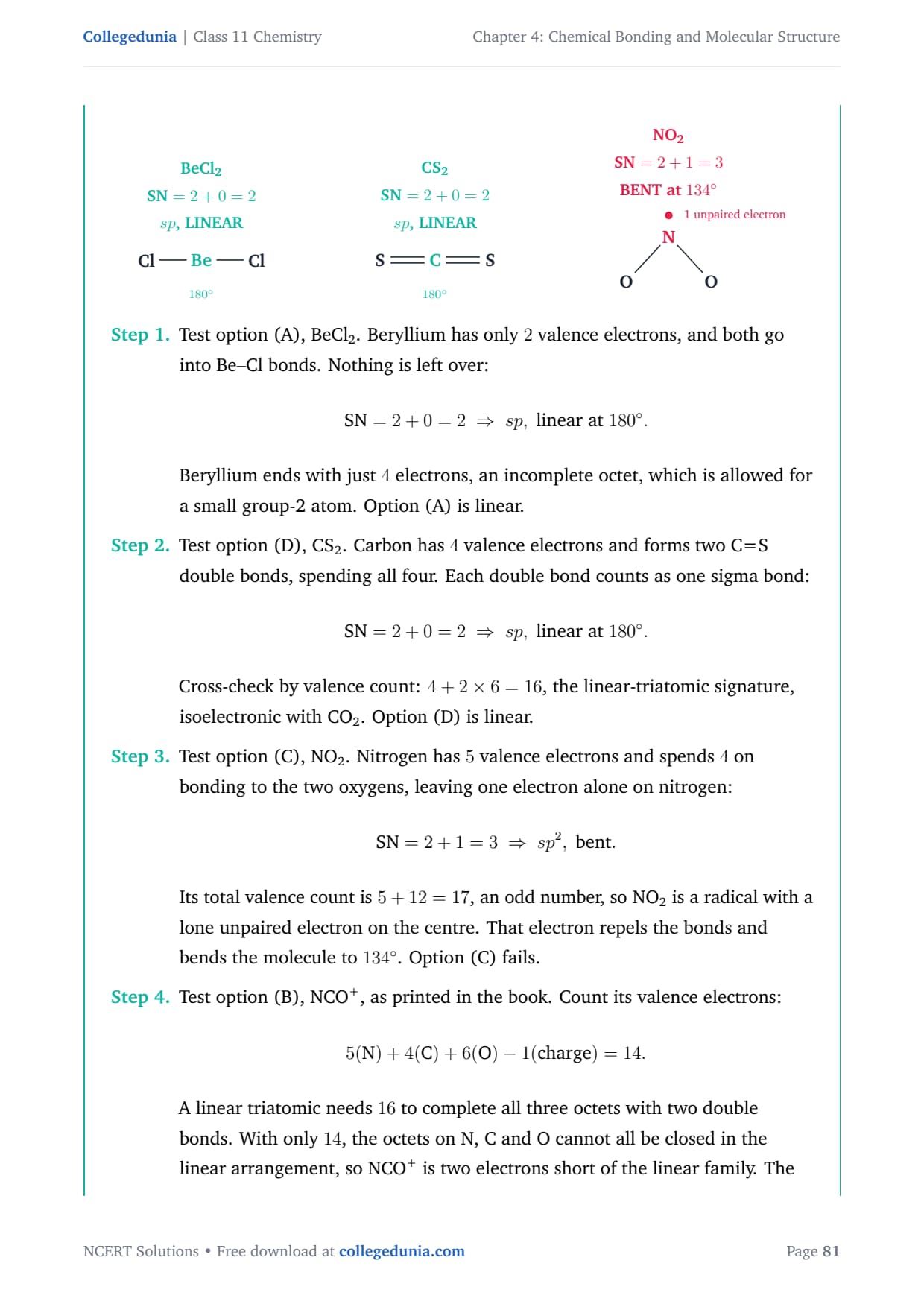
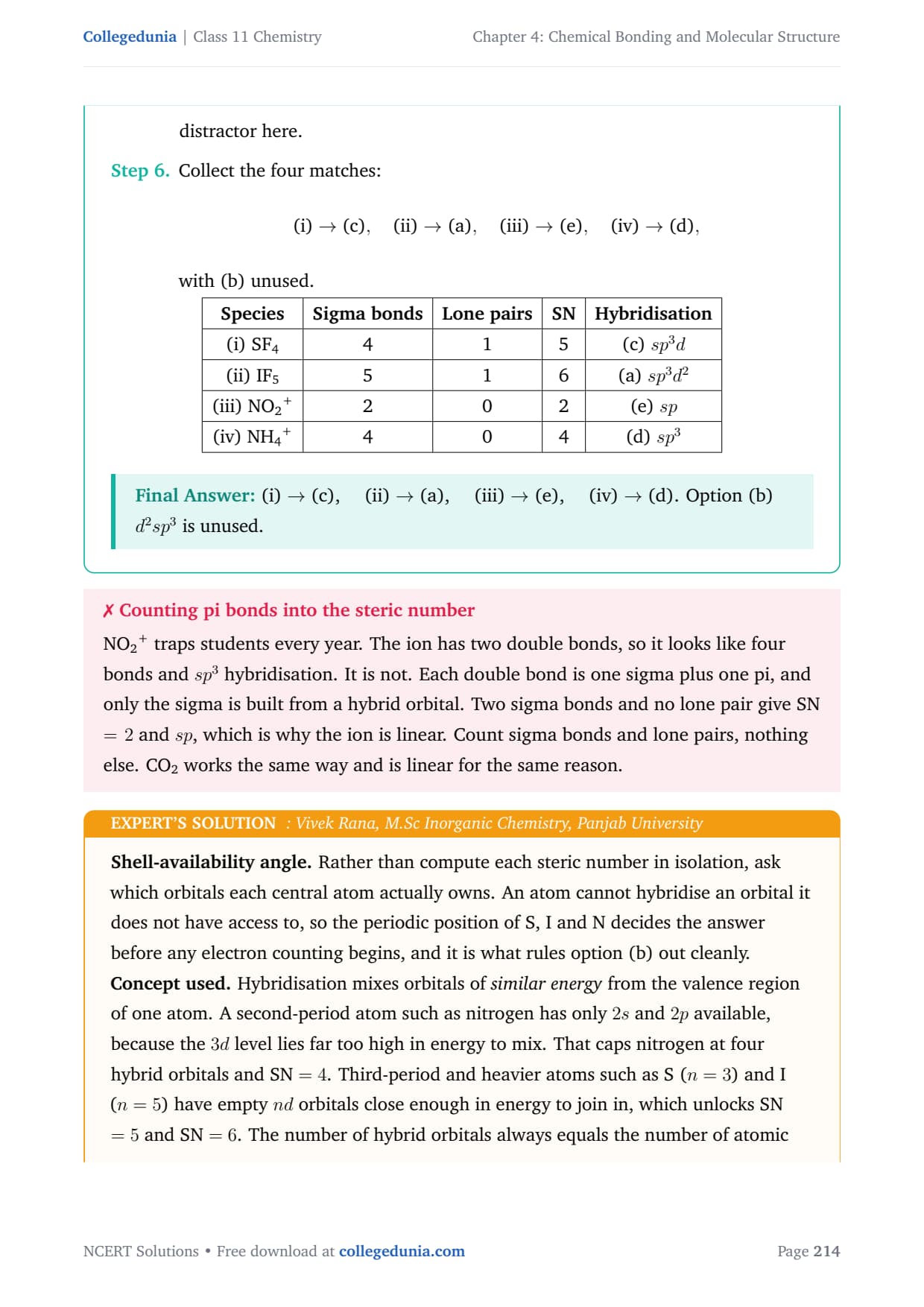
- Pi bonds in the steric number: NO2+ has two double bonds, so it looks sp3. Only sigma bonds come from hybrid orbitals. Two sigma bonds and no lone pair give sp, which is why the ion is linear.
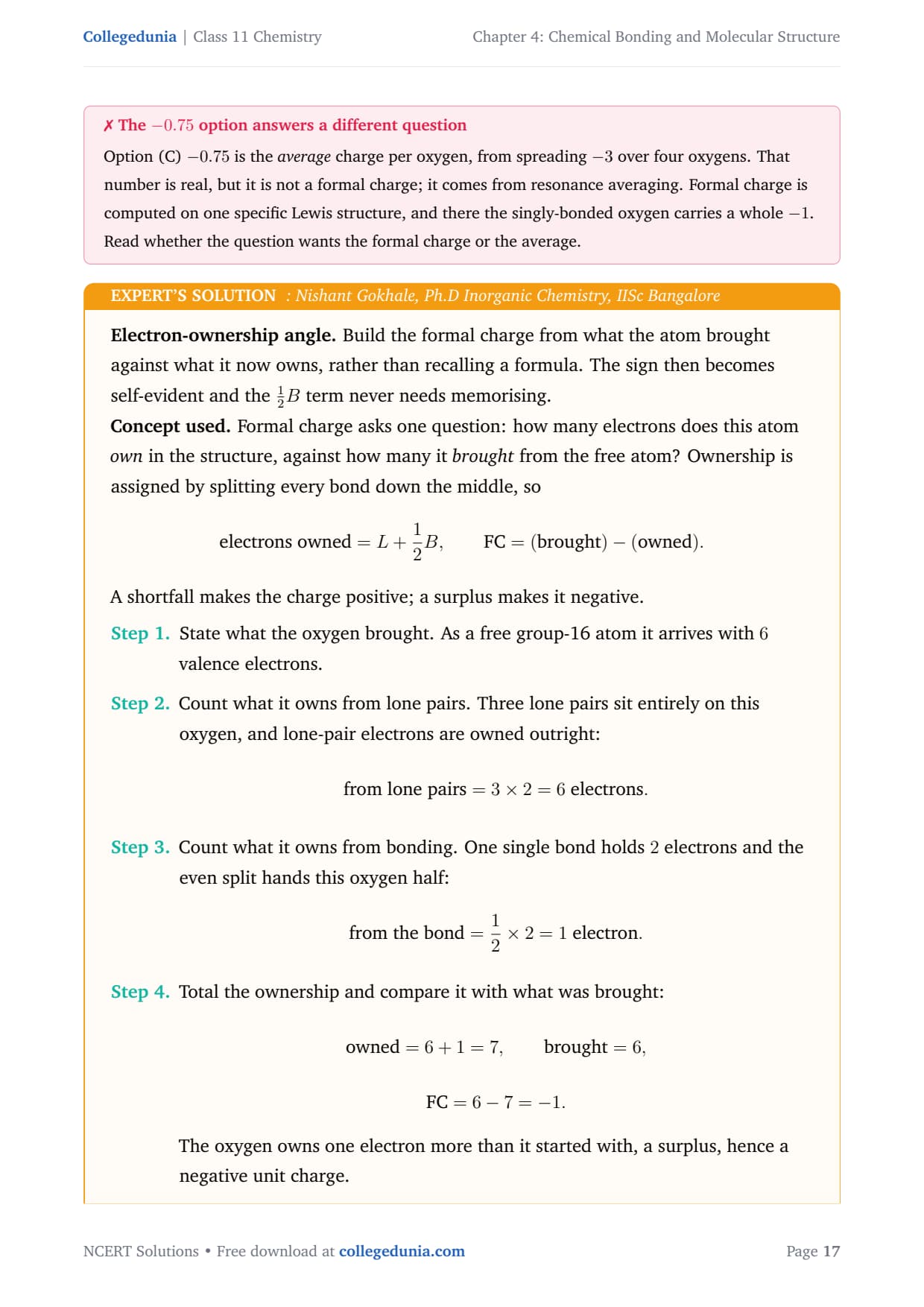
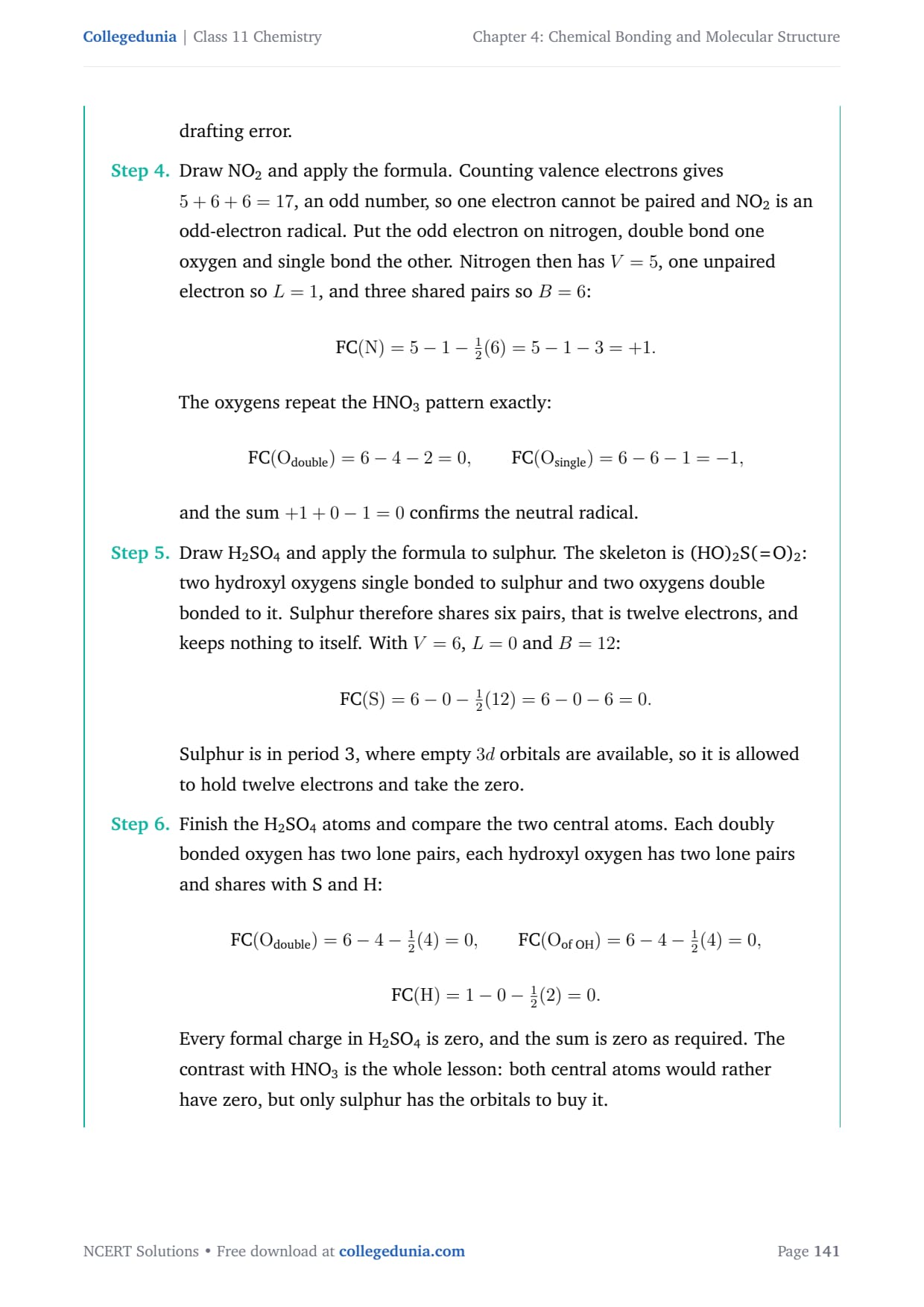
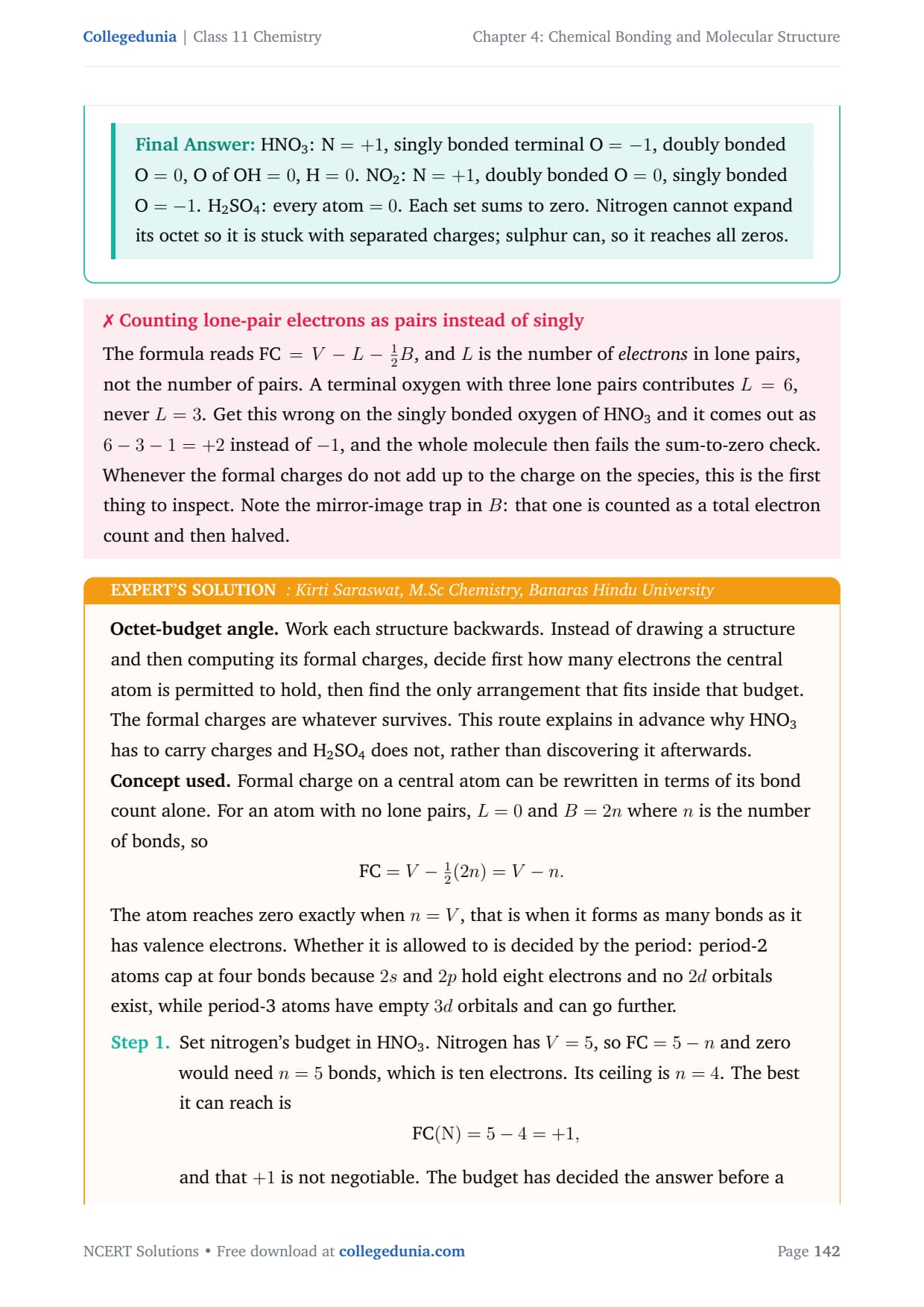
- The formal charge formula: in FC = V - L - B/2, the term L counts lone-pair electrons, not pairs. An oxygen with three lone pairs contributes 6, never 3.
- Resonance arrows: canonical forms are joined by ↔, never by an equilibrium arrow. Nothing switches back and forth. The molecule is one unchanging hybrid.
How the Exemplar Steps Up from the Class 11 Chemistry Textbook
The textbook hands you a rule and asks you to apply it. The Exemplar asks you to pick the rule, then defend the pick.
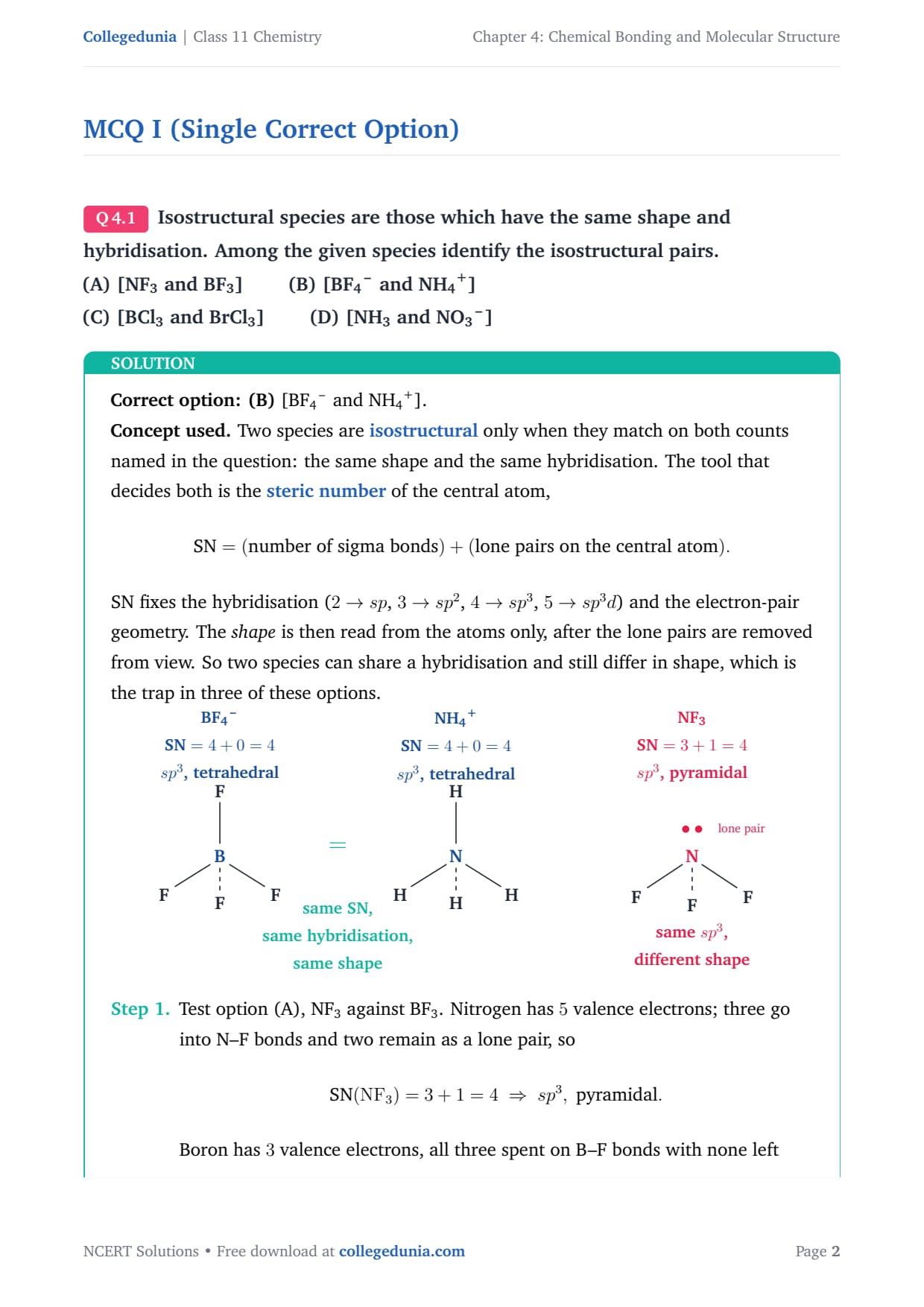
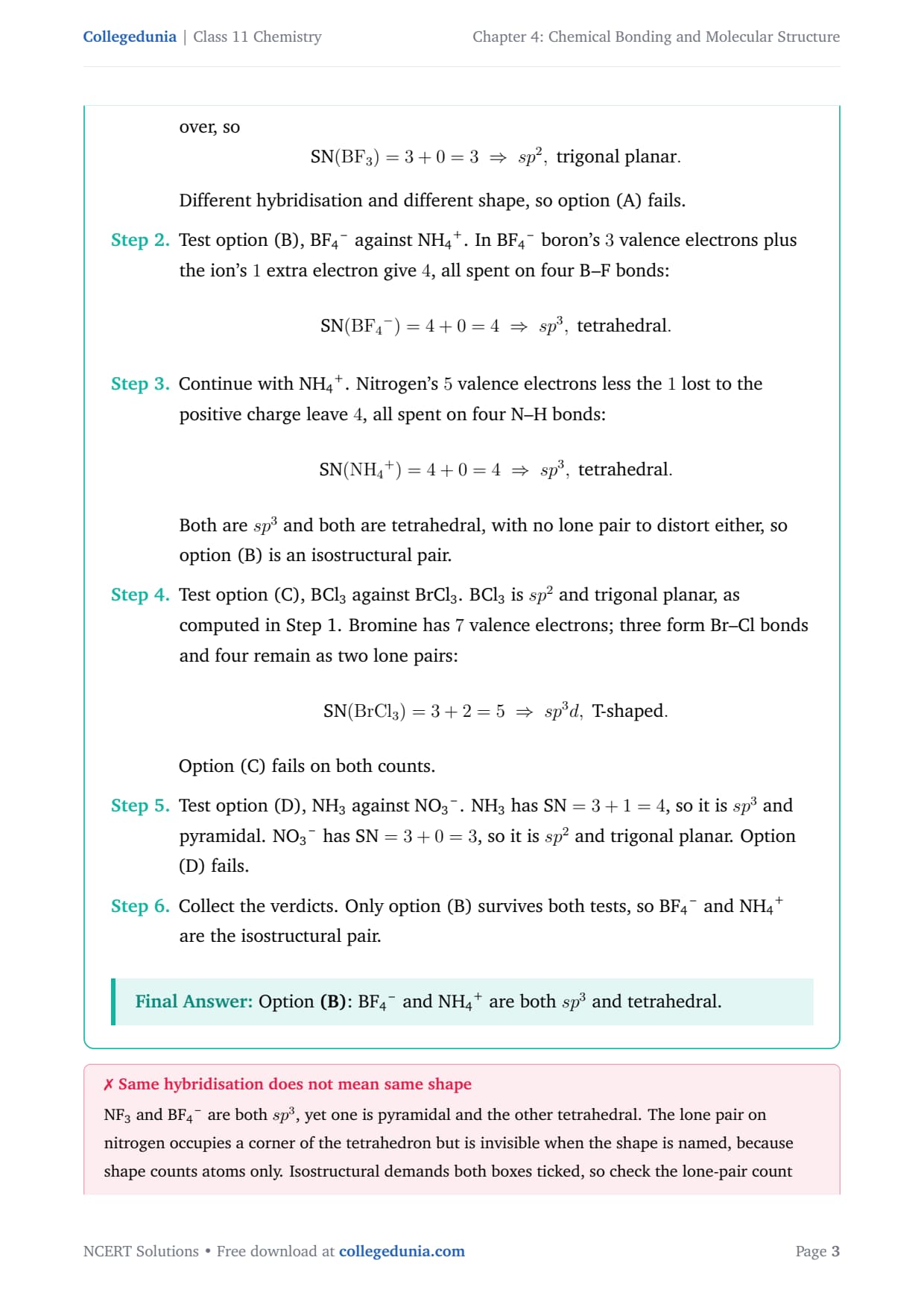
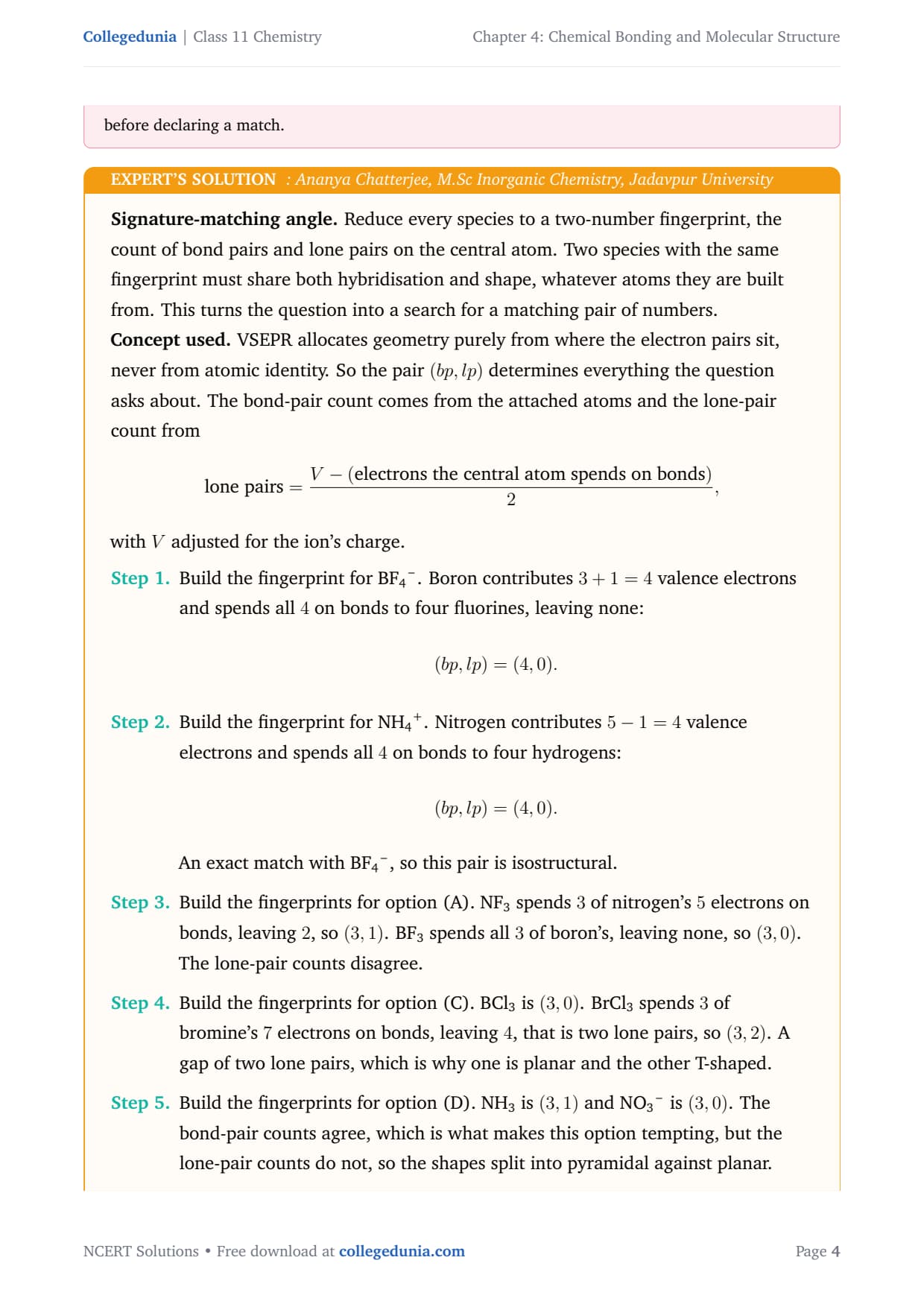
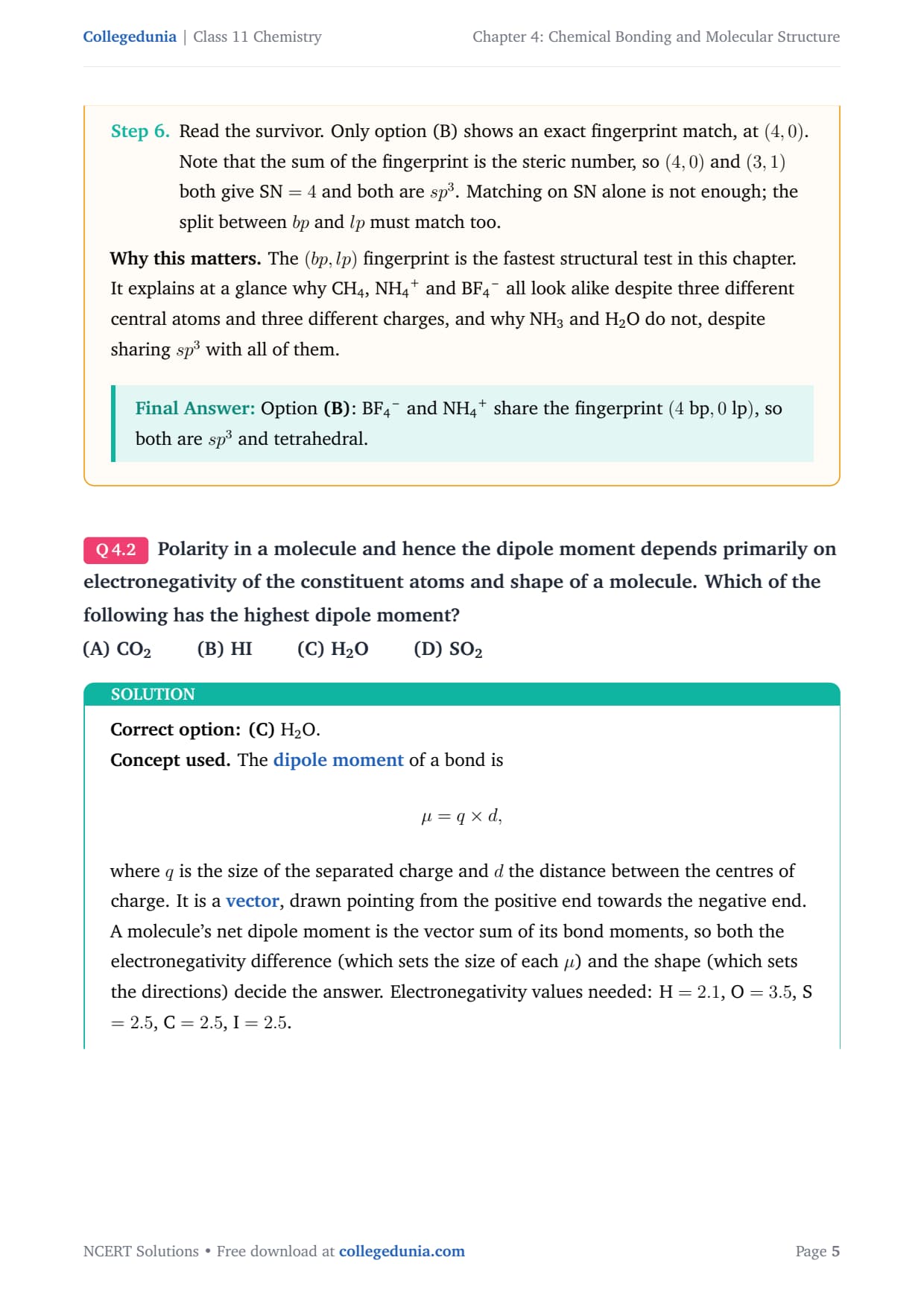
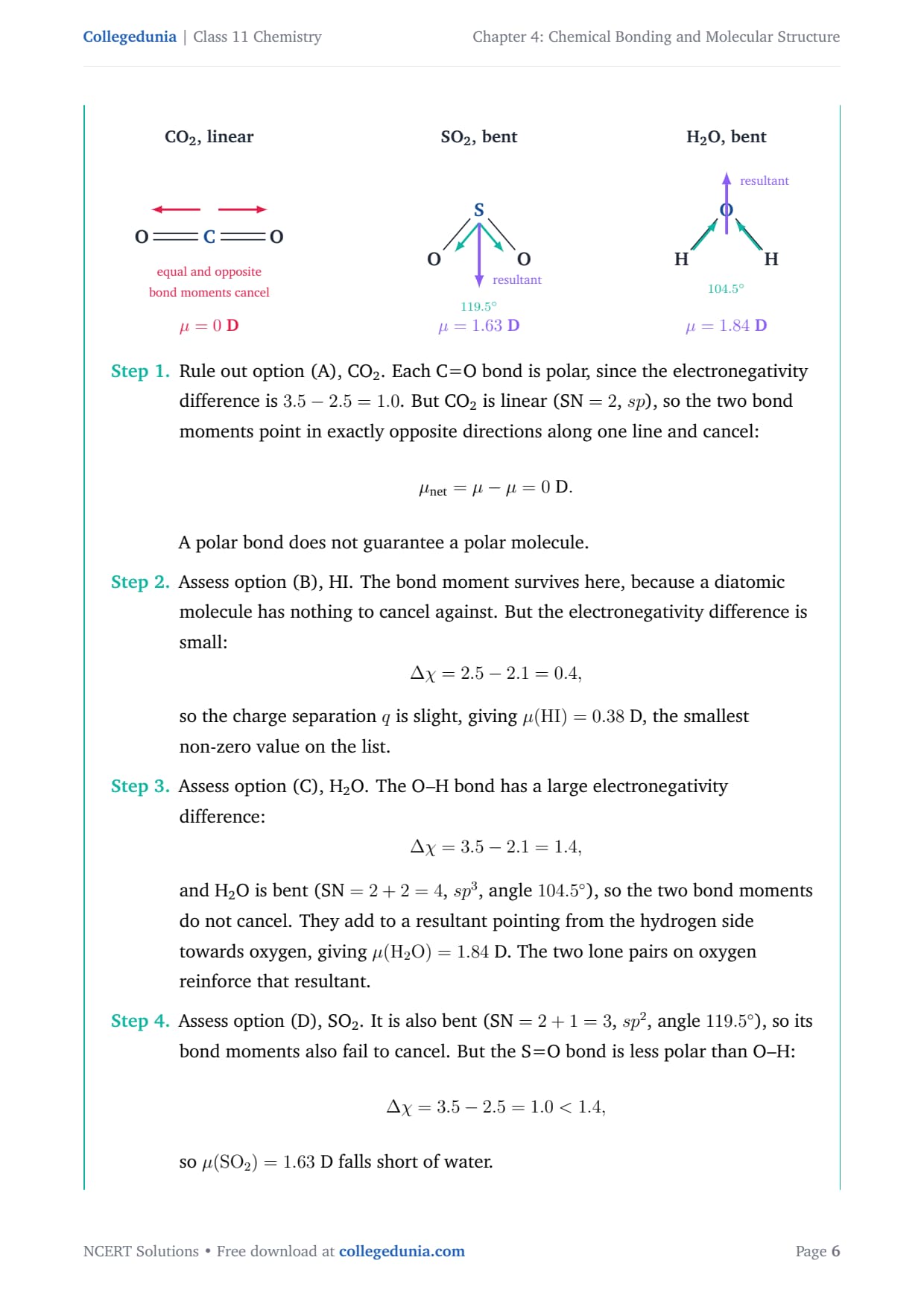
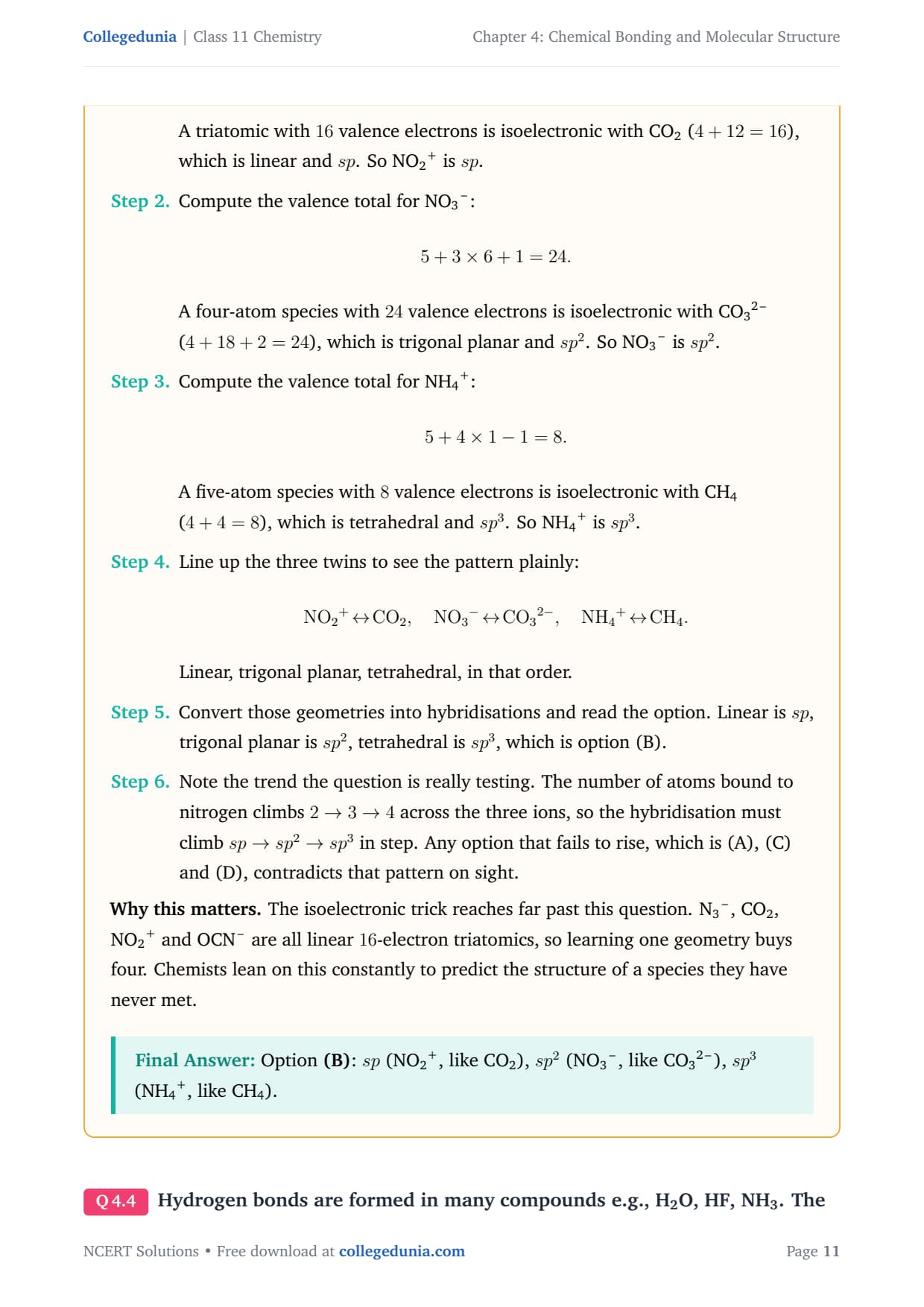
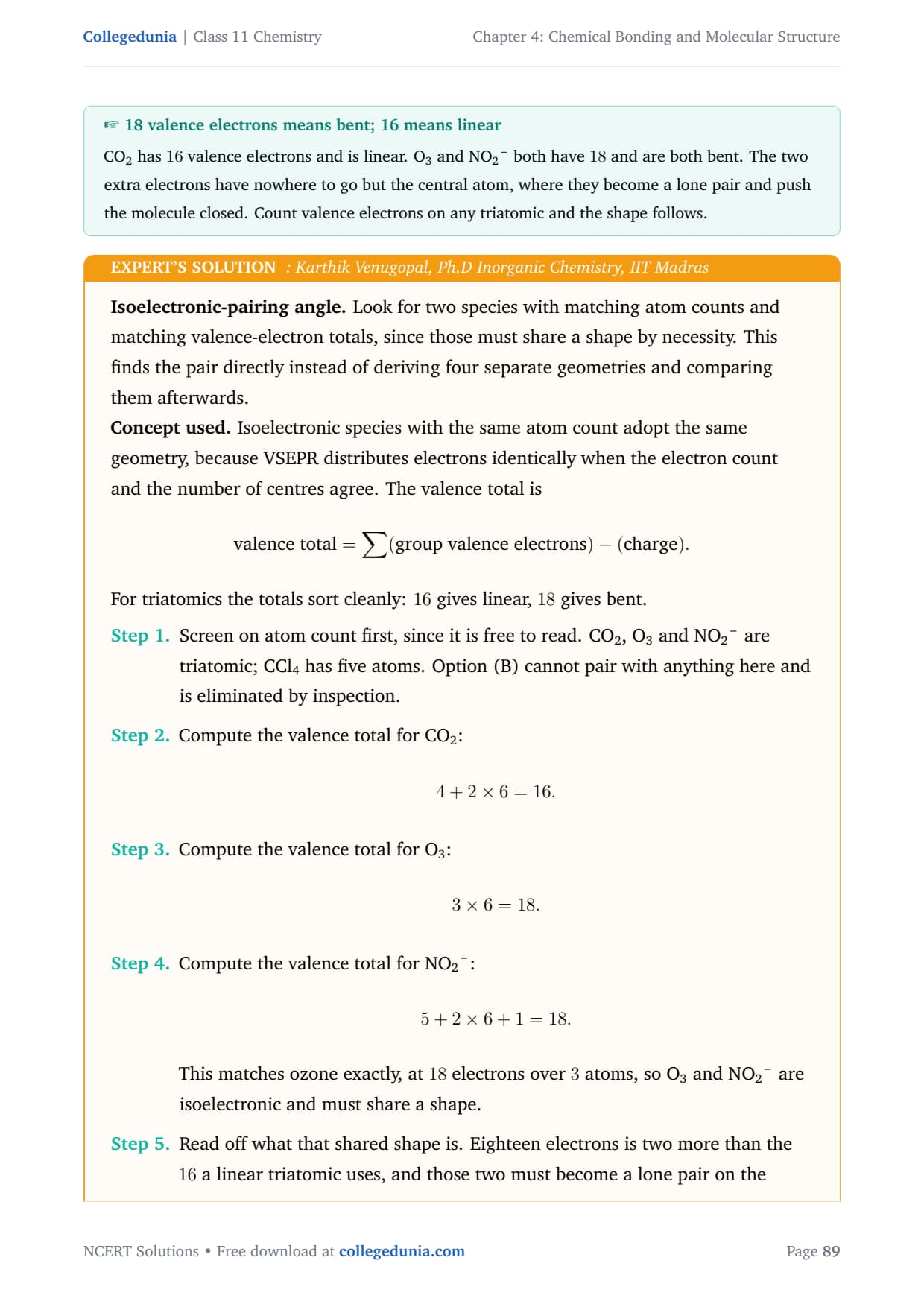
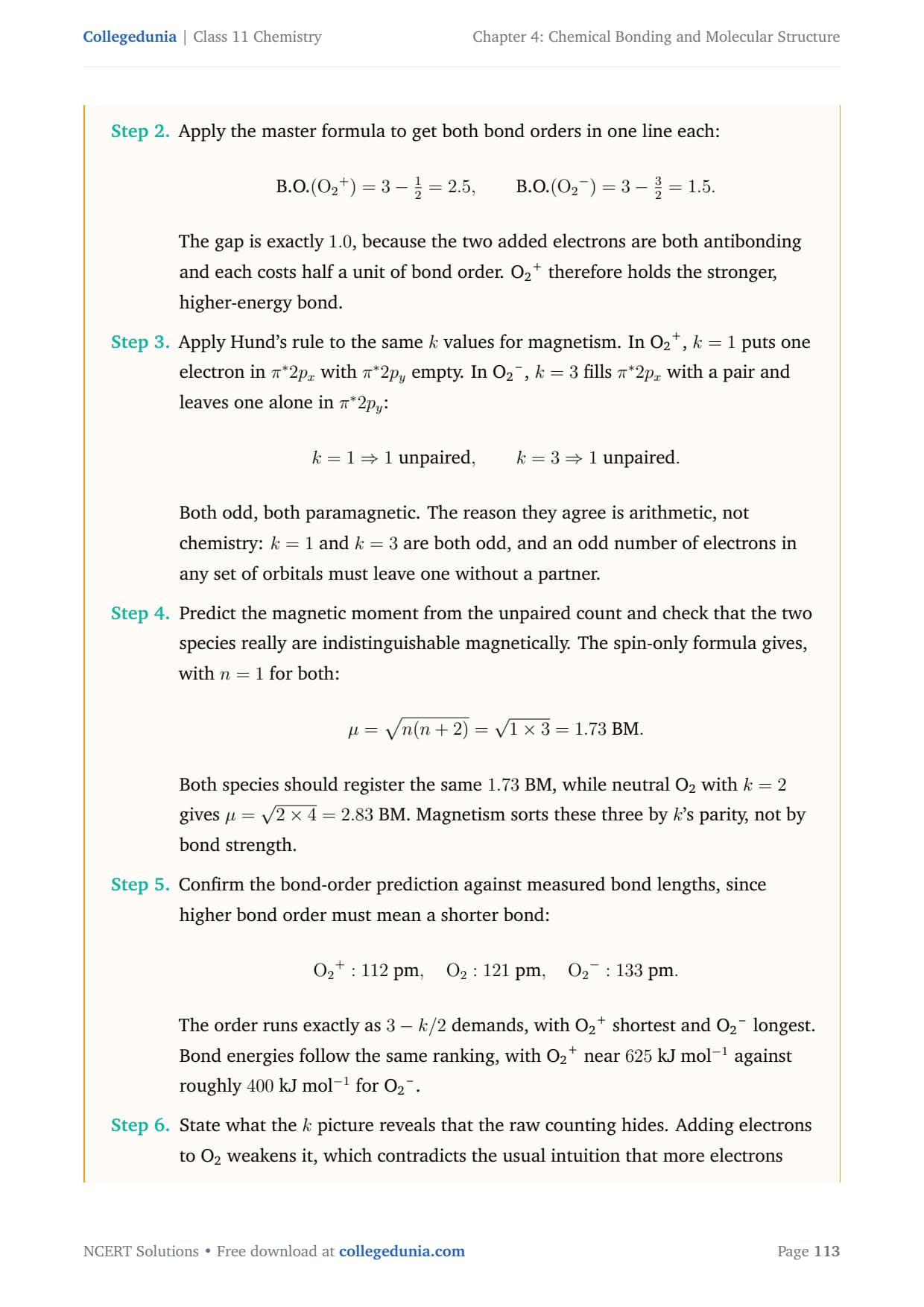
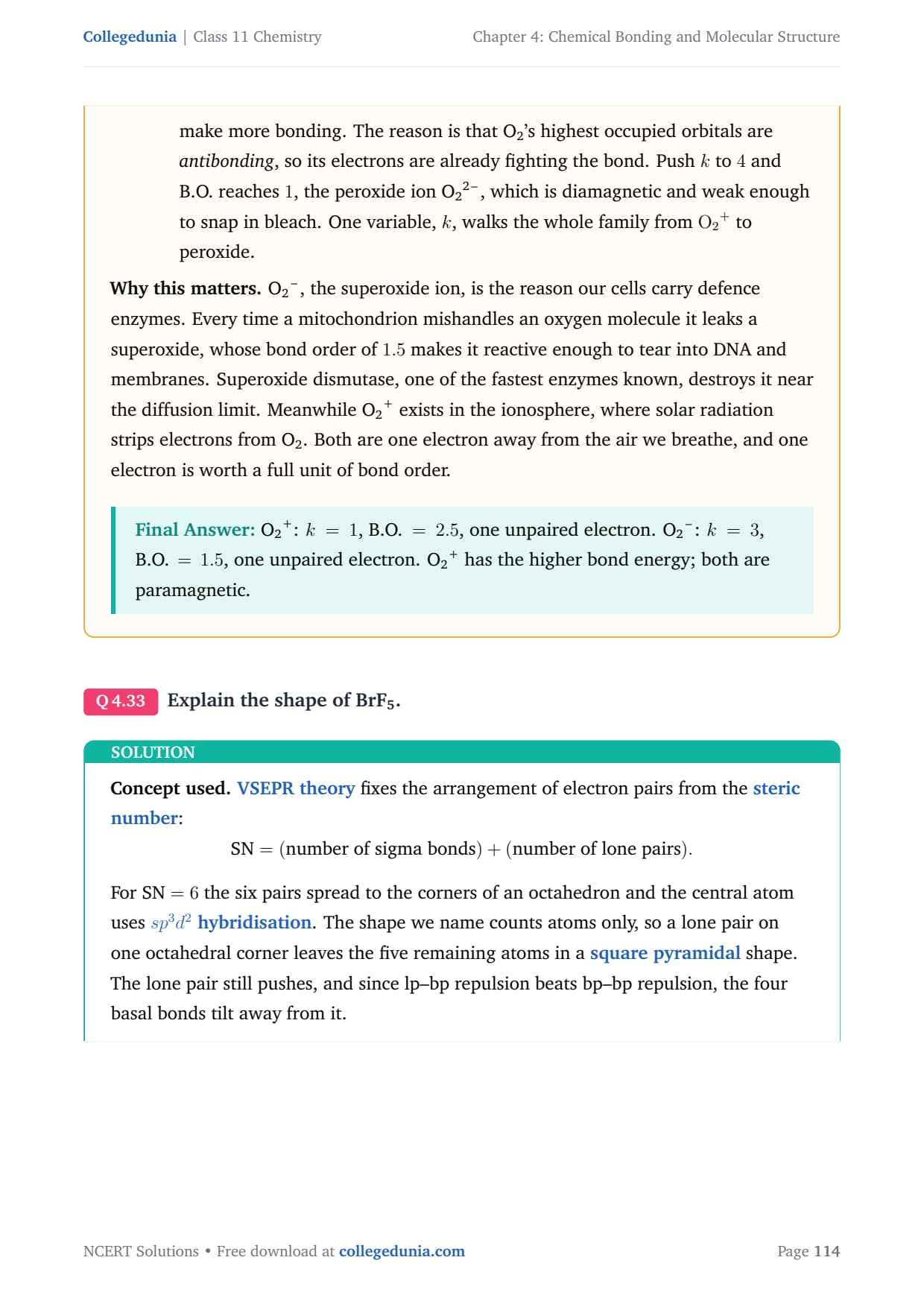
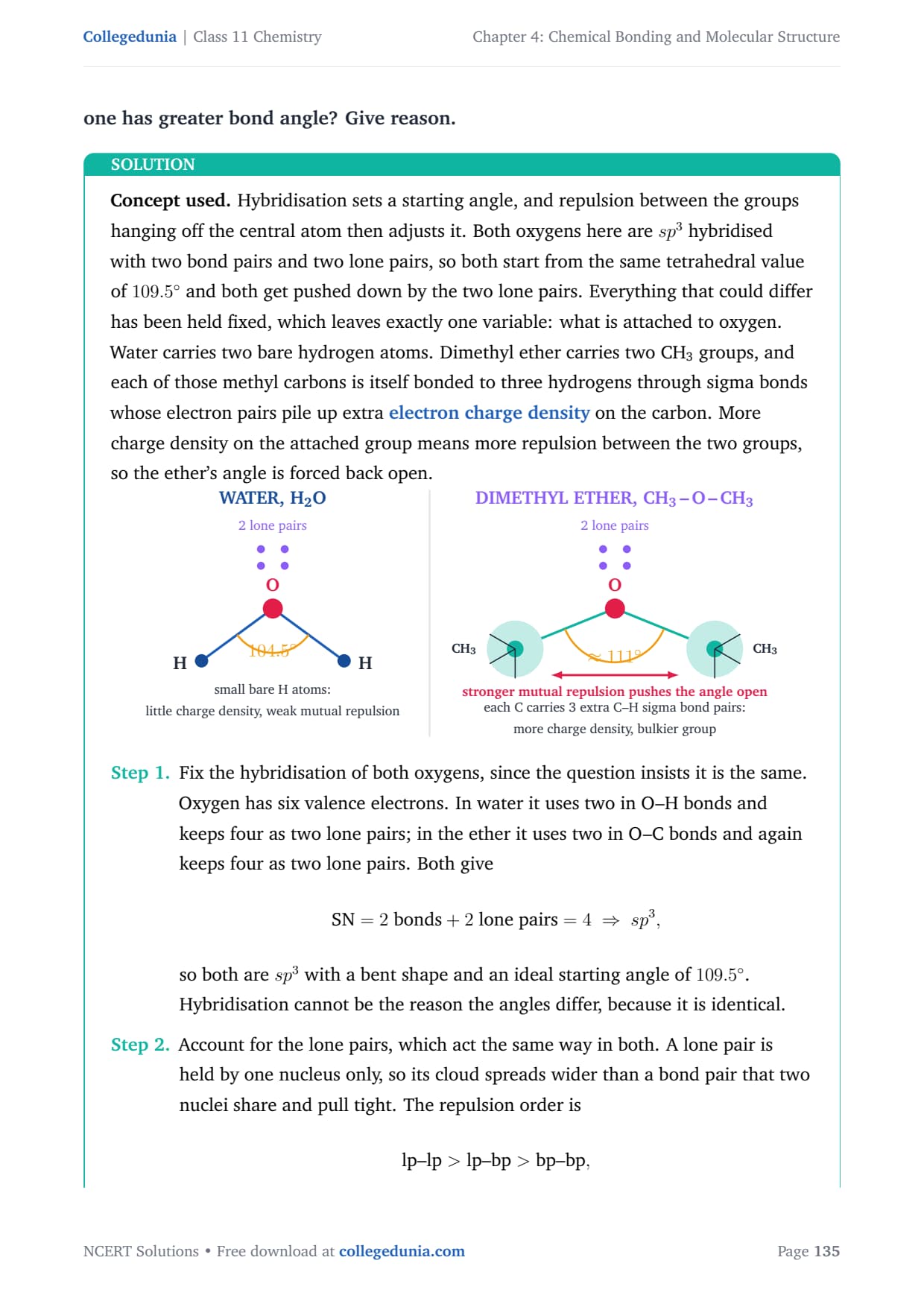
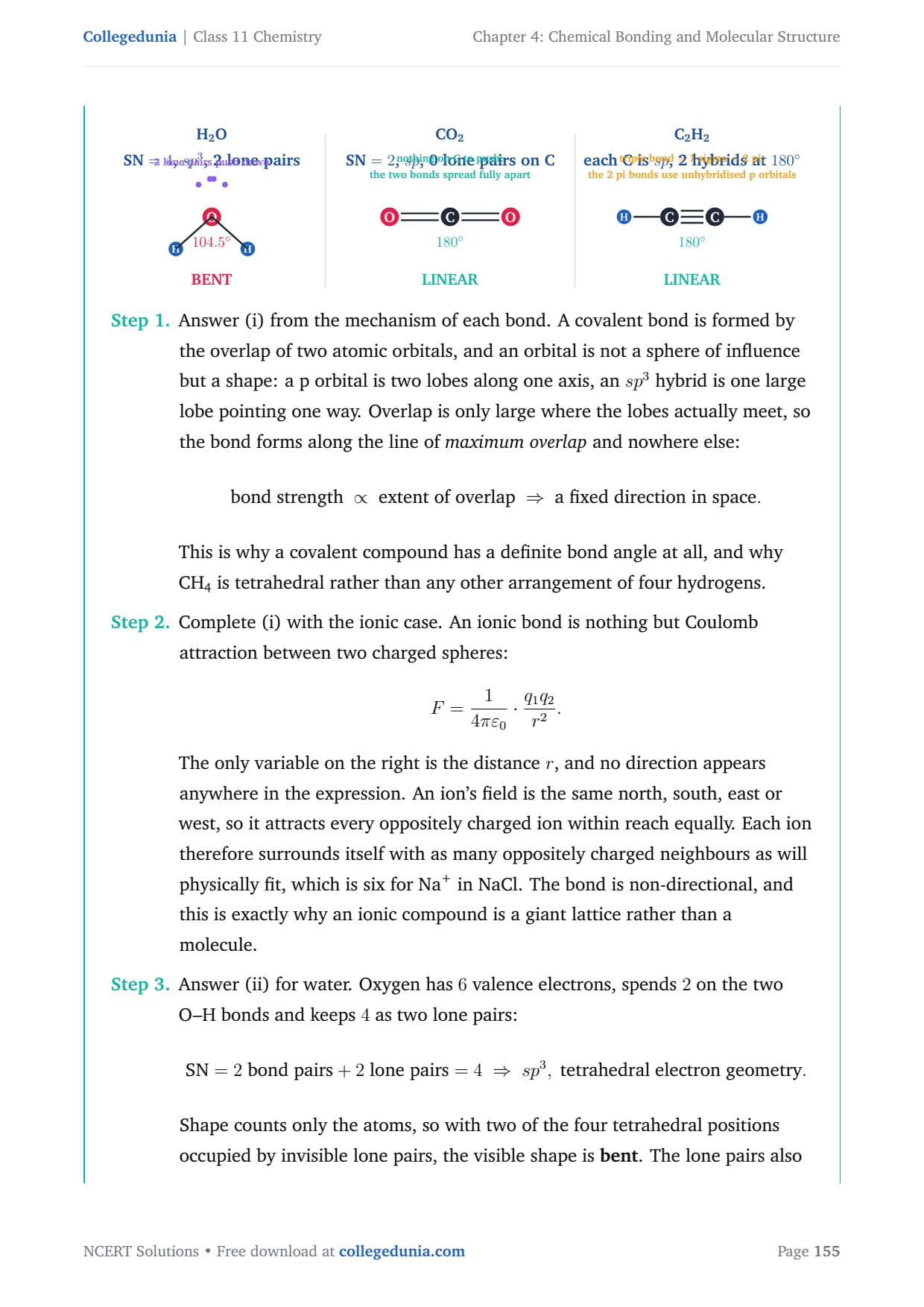
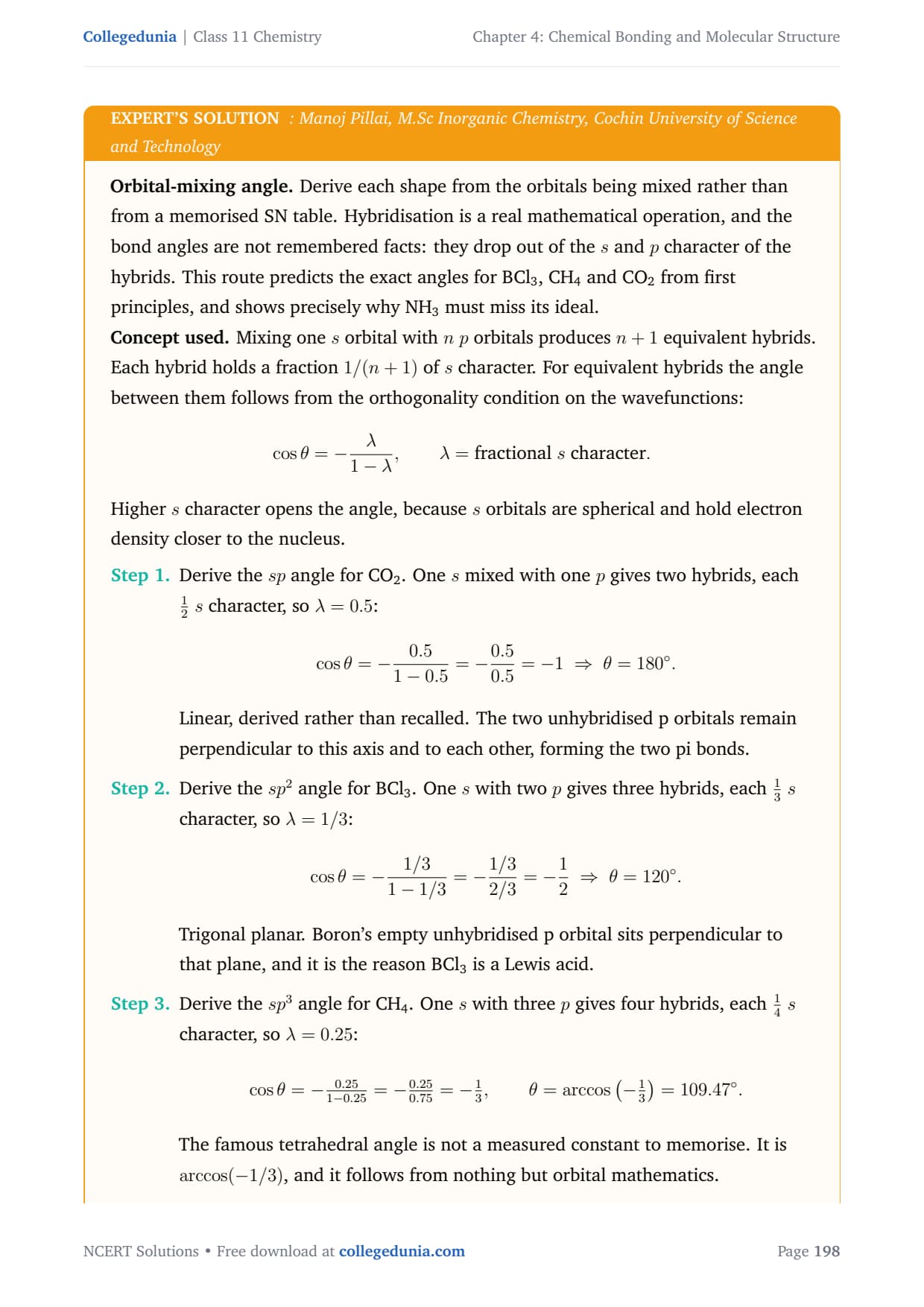
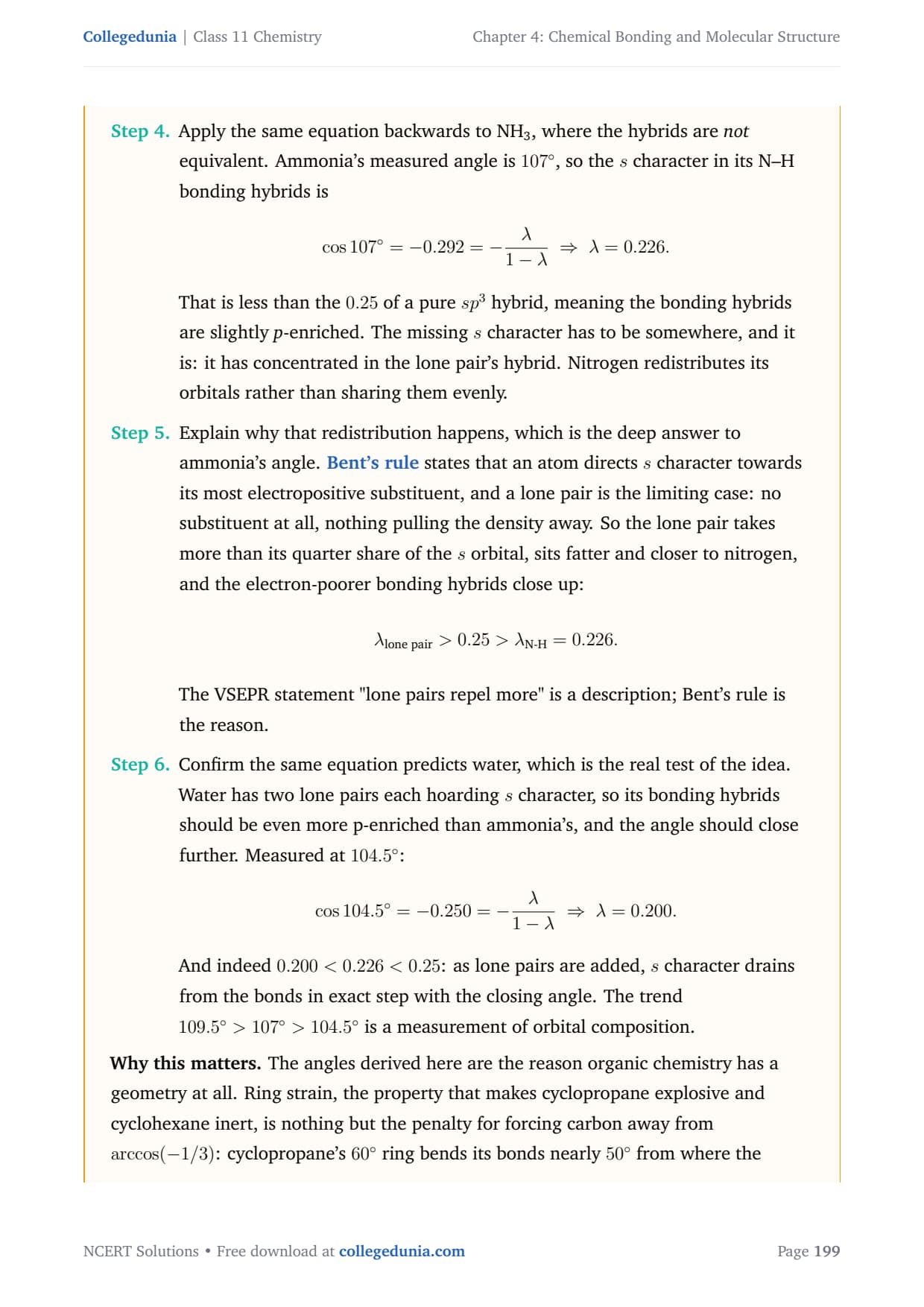
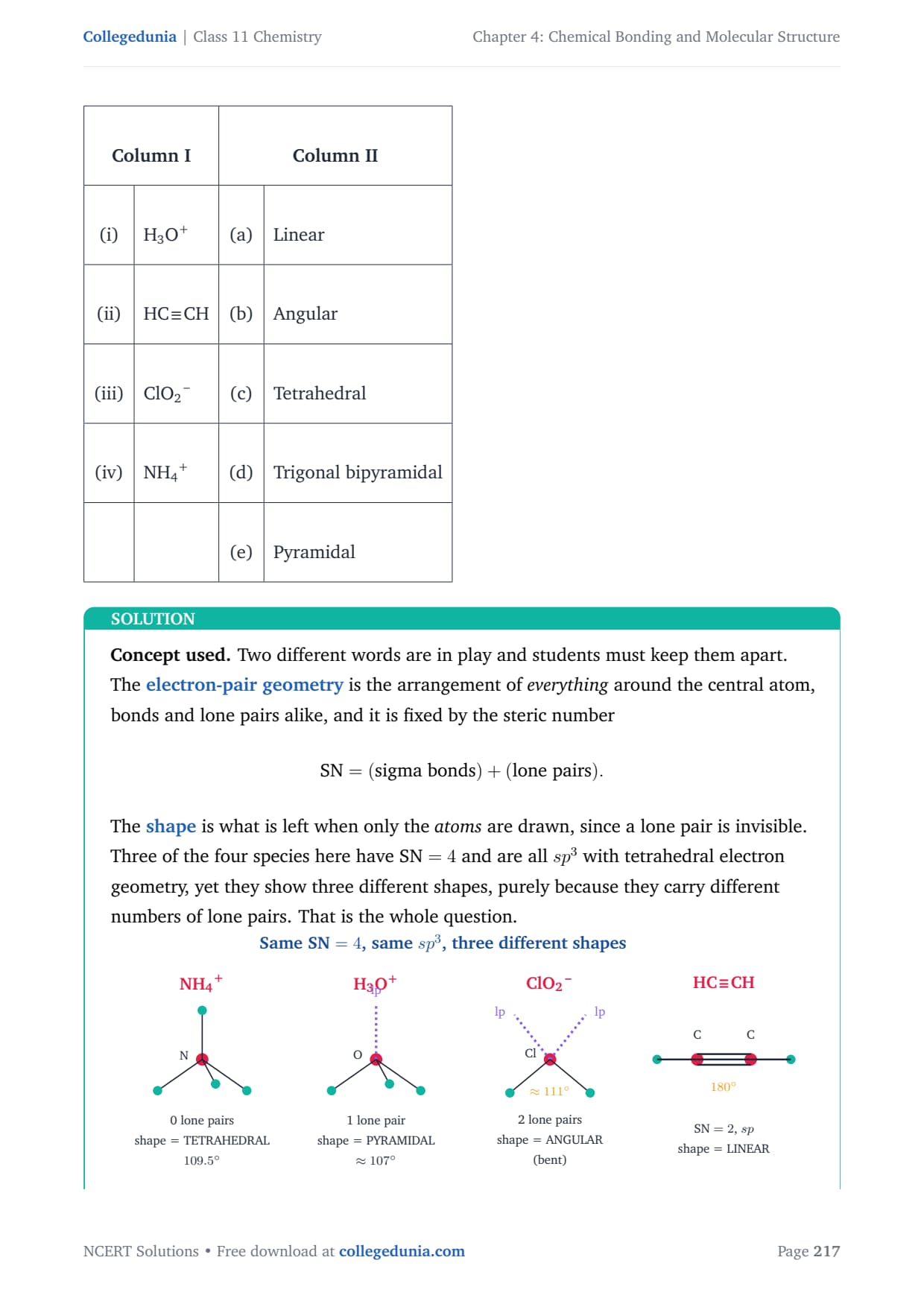
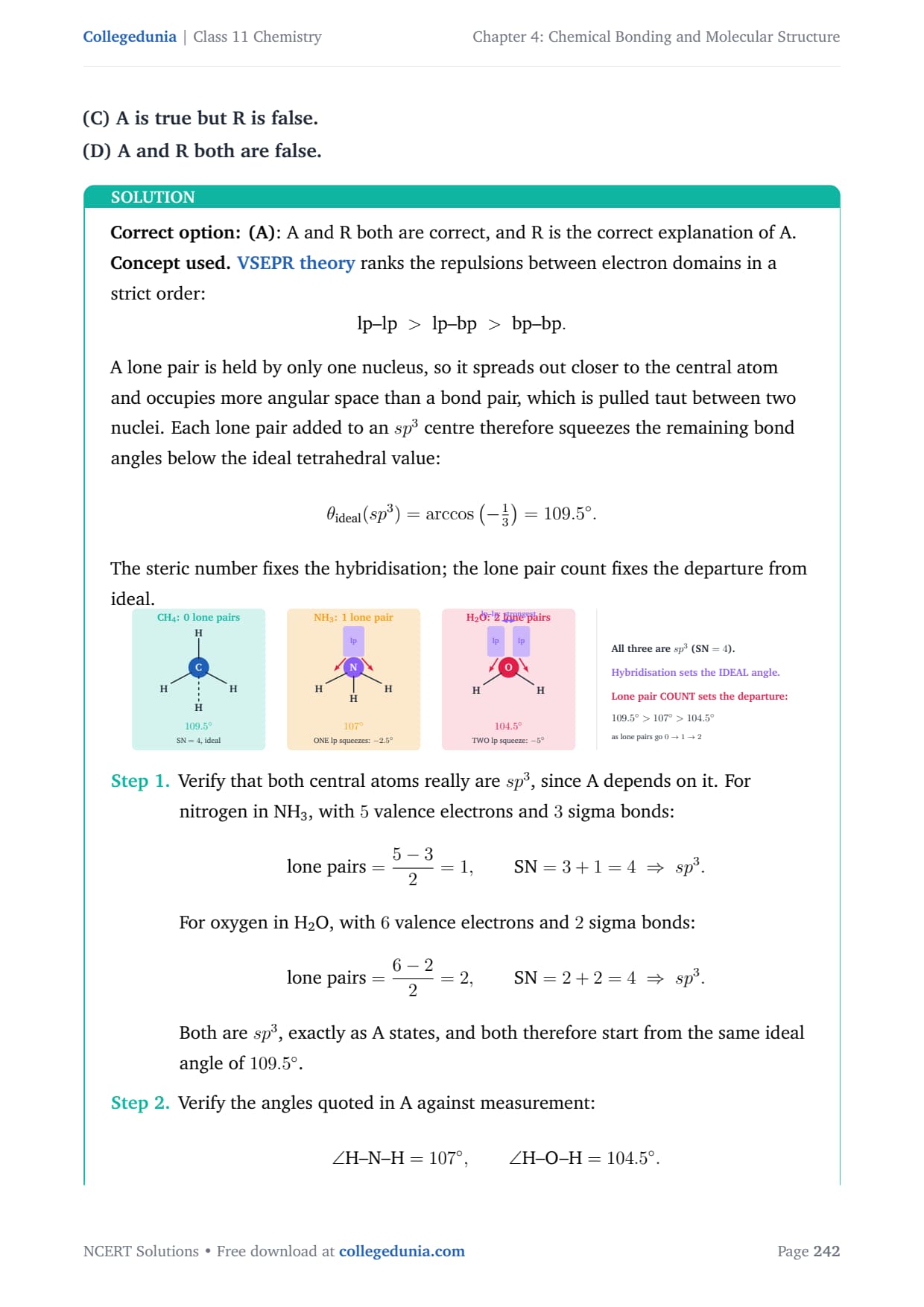
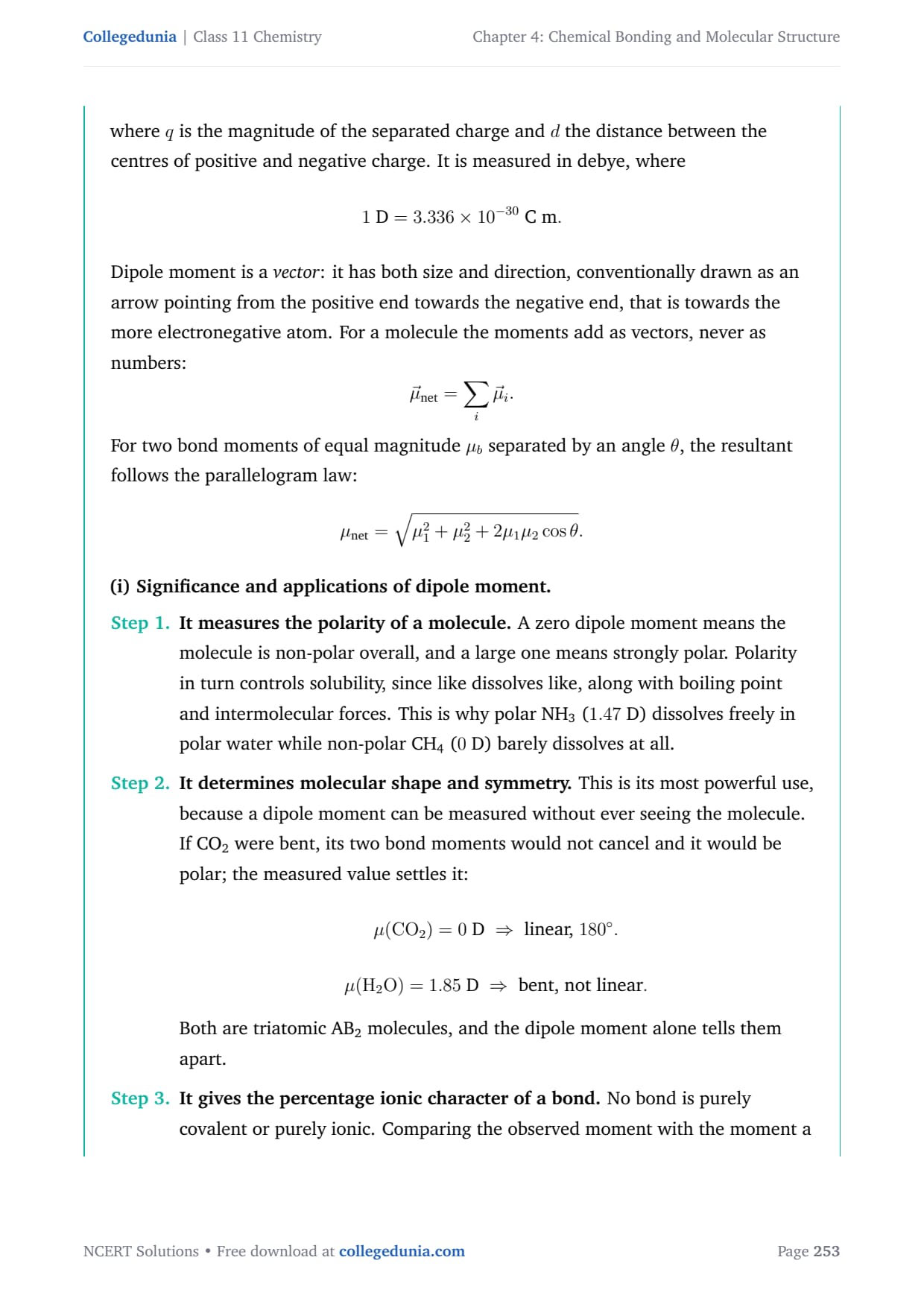
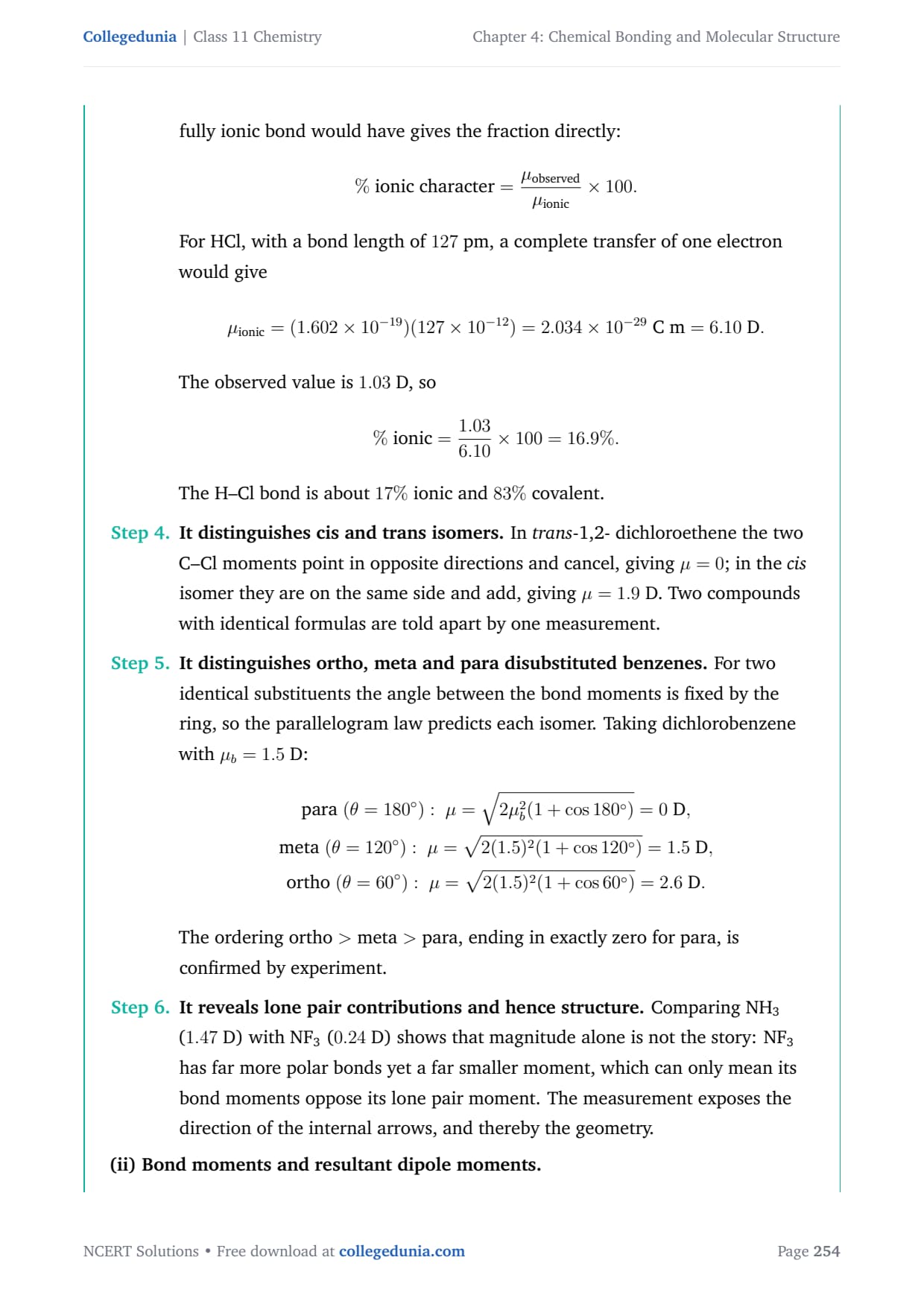
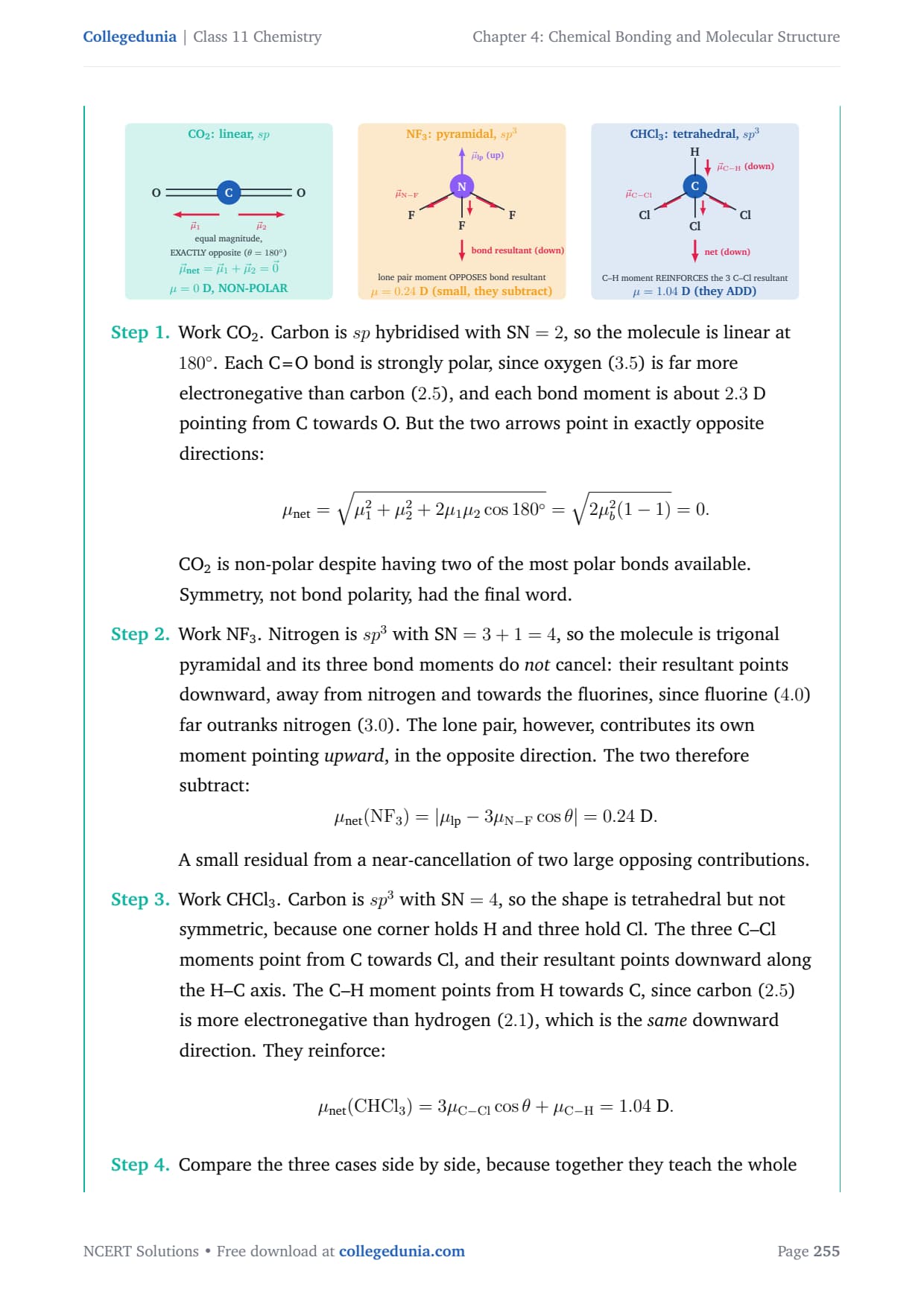
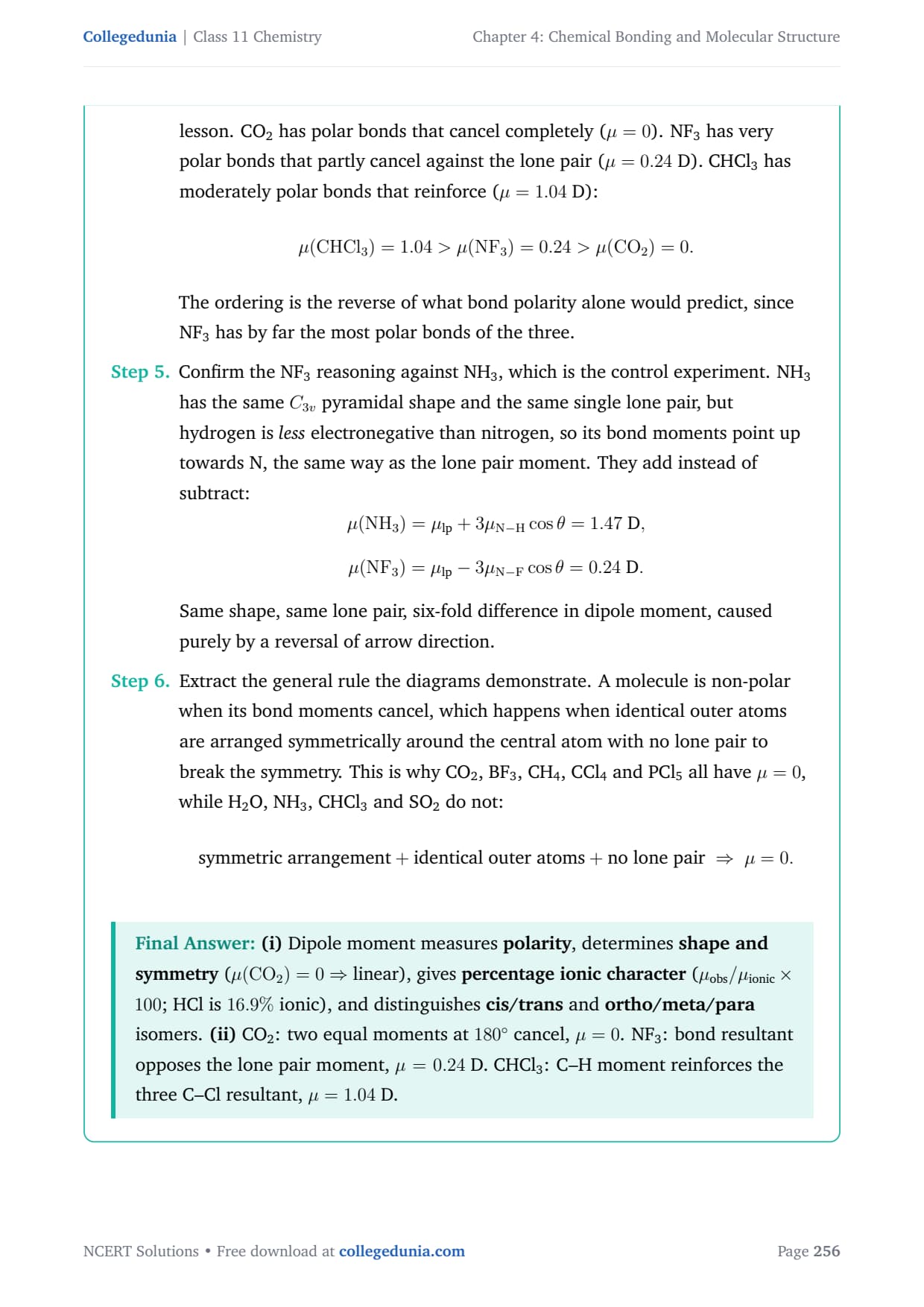
Question 1 shows this well. It asks for the isostructural pair, and the answer is BF4- and NH4+. Both are tetrahedral and sp3, despite different central atoms and opposite charges. Shape follows the electron count, not the element. Question 2 turns the same screw on polarity, where H2O beats SO2 and CO2 on dipole moment because its 104.5° bend leaves the bond vectors uncancelled.
How to Use These NCERT Exemplar Solutions for Boards, NEET and JEE
Attempt each question before you open the solution. The Exemplar rewards the attempt more than the reading.
- Boards: the Short Answer and Long Answer sets match the 3 and 5 mark board pattern closely
- NEET: work the 22 MCQ I questions first, since NEET repeats shape and magnetic behaviour at exactly that level
- JEE Main: the MCQ II and Long Answer sets are the closest practice in NCERT for molecular orbital reasoning
Student Feedback
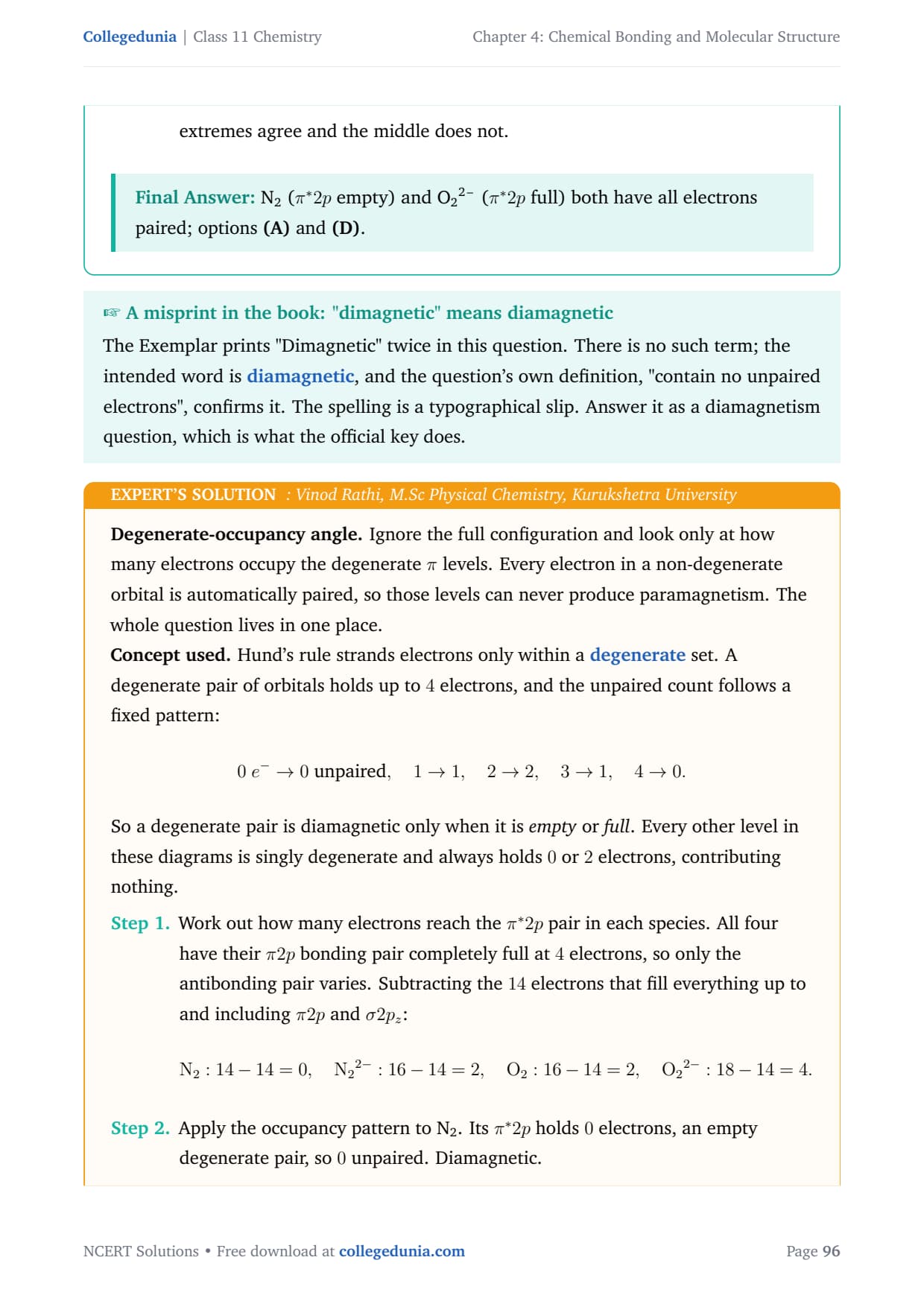
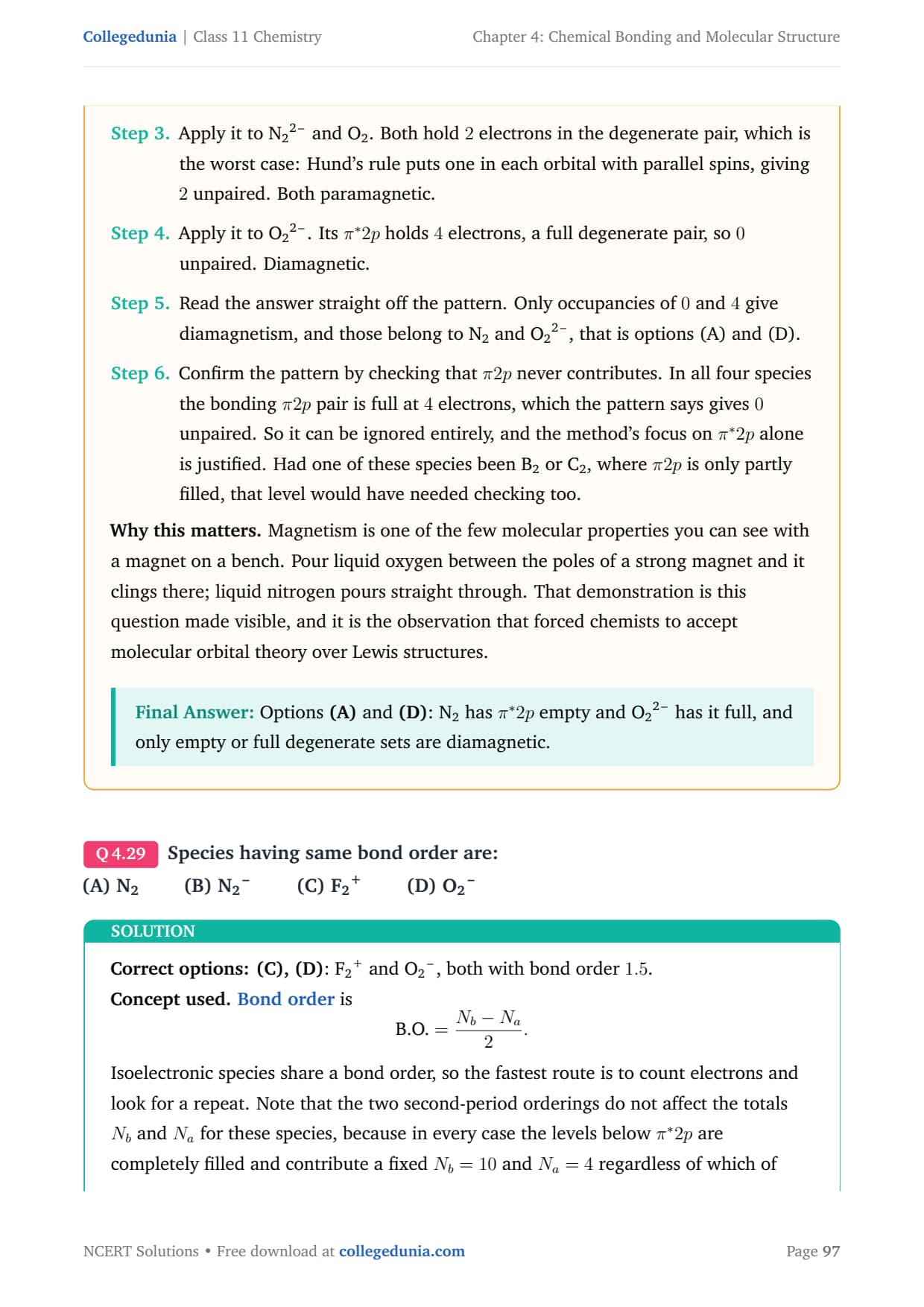
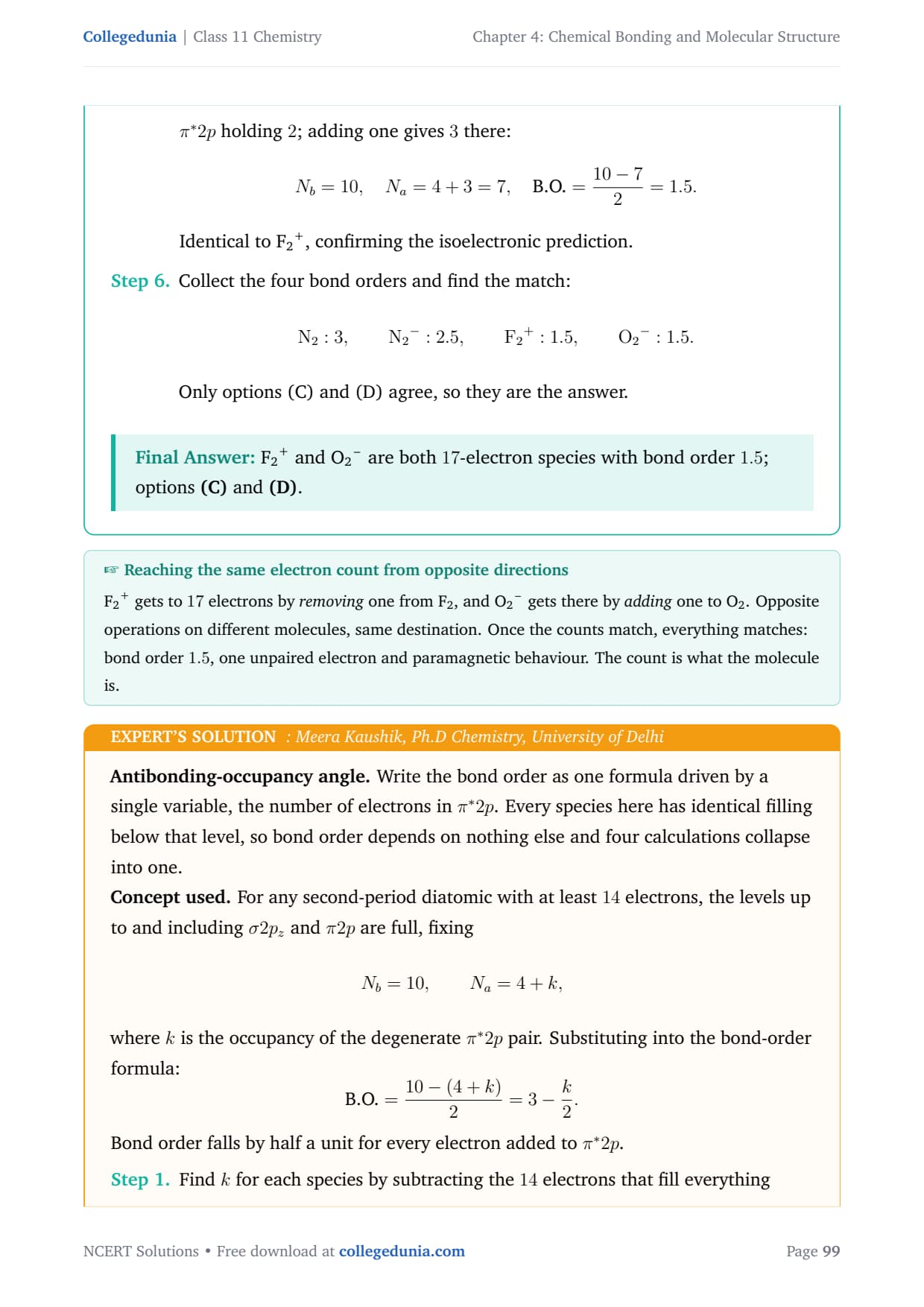
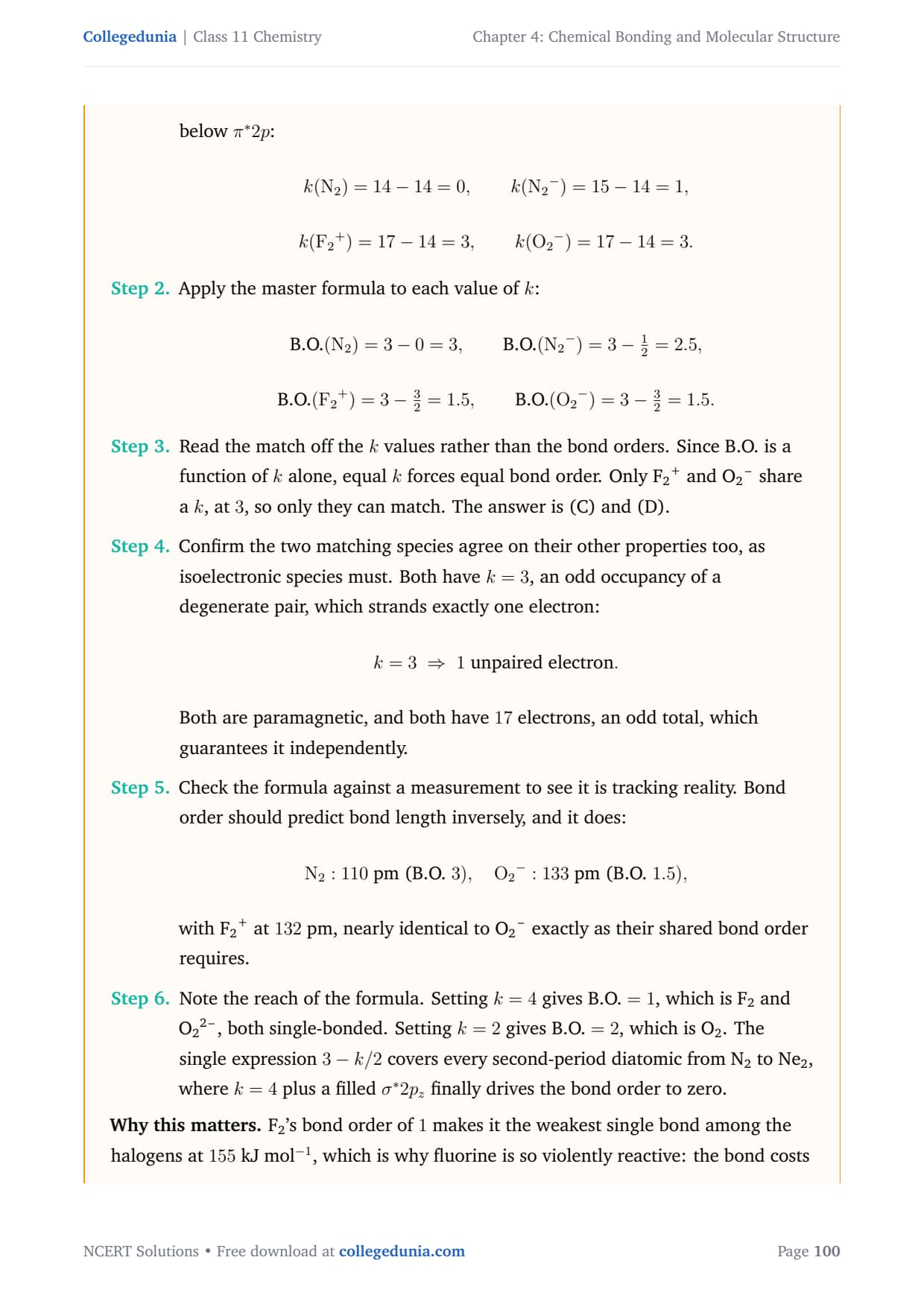
Students using Collegedunia's Class 11 Chemistry Exemplar Solutions told us the molecular orbital questions were the hardest part of this chapter. Around 7 in 10 said counting only the electrons in the degenerate pi levels, rather than writing the full configuration each time, cut their time on magnetic behaviour questions in half.
Other Resources for Class 11 Chemistry Chemical Bonding and Molecular Structure
Collegedunia has the full set of study material for this chapter. Use the Notes for a first read, then the Exemplar once VSEPR feels steady.
Also Check:
- NCERT Solutions for Class 11 Chemistry Chapter 4
- Class 11 Chemistry Chapter 4 Notes
- Class 11 Chemistry Chapter 4 NCERT Book PDF
- Class 11 Chemistry Chapter 4 Exemplar Questions with Solutions
NCERT Exemplar Solutions for Other Class 11 Chemistry Chapters
Each chapter below has the same step-by-step treatment and a free PDF.
Chemical Bonding and Molecular Structure Class 11 NCERT Exemplar Solutions FAQs
Ques. How many questions are there in the Class 11 Chemistry Chemical Bonding and Molecular Structure Exemplar?
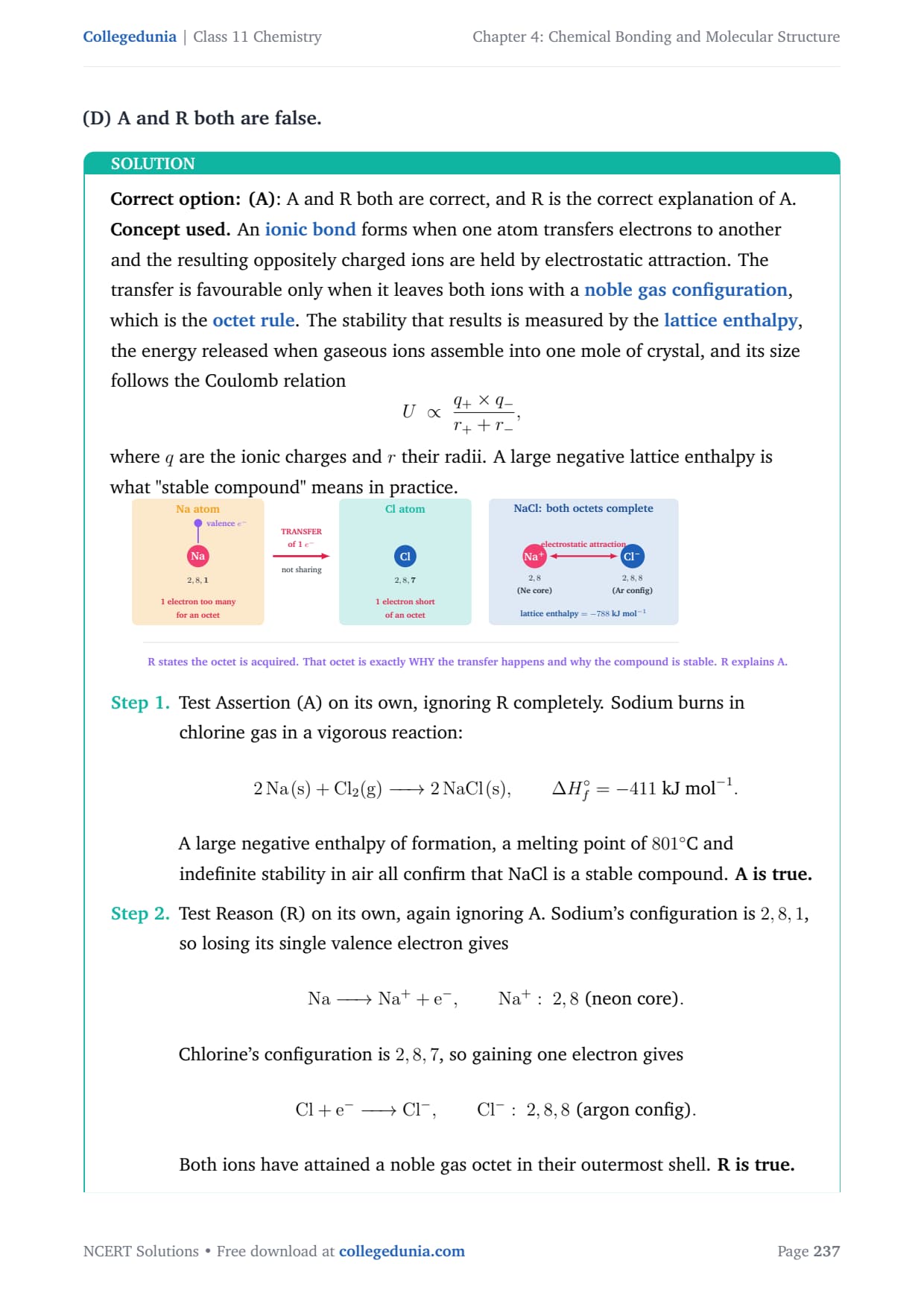
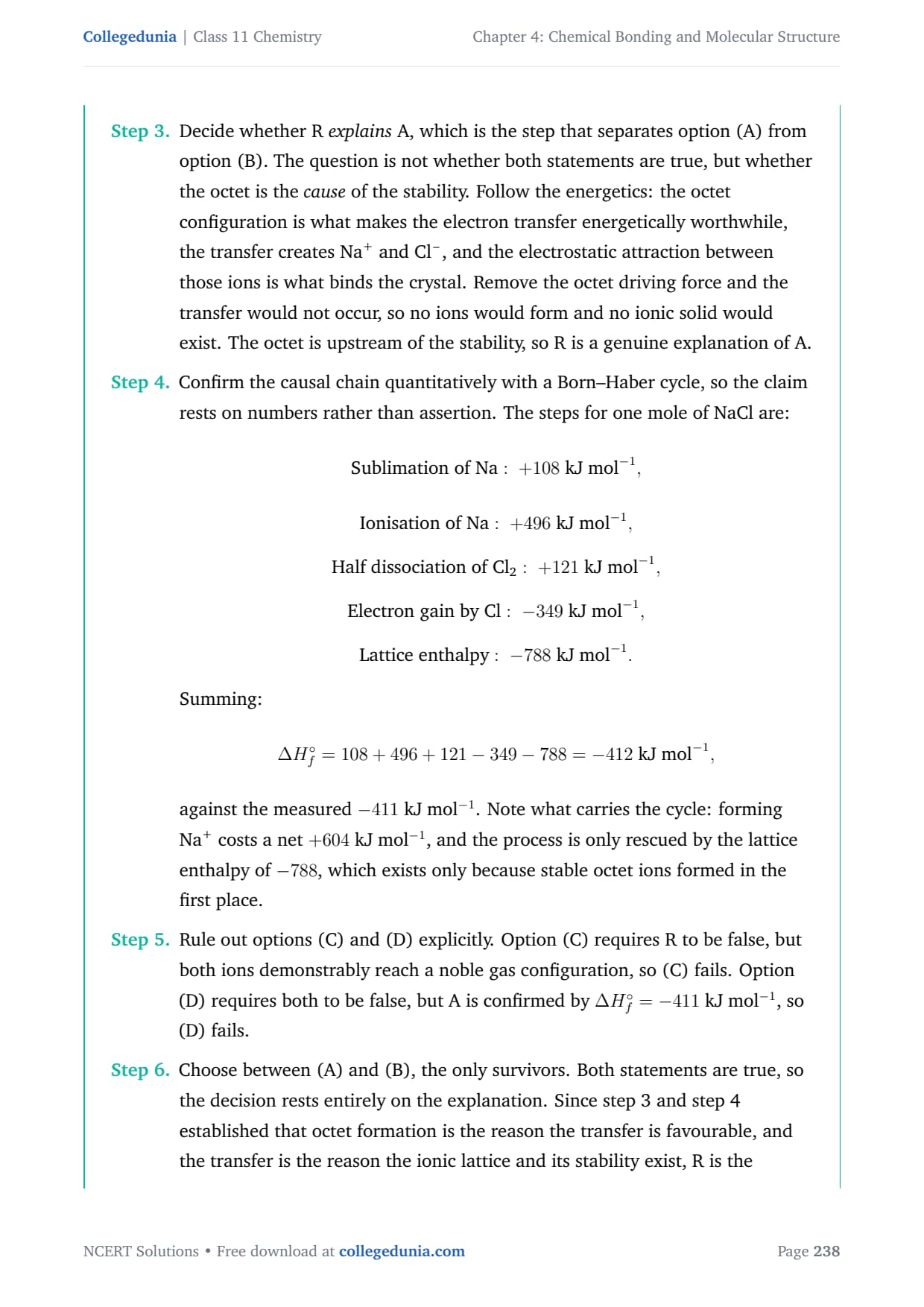
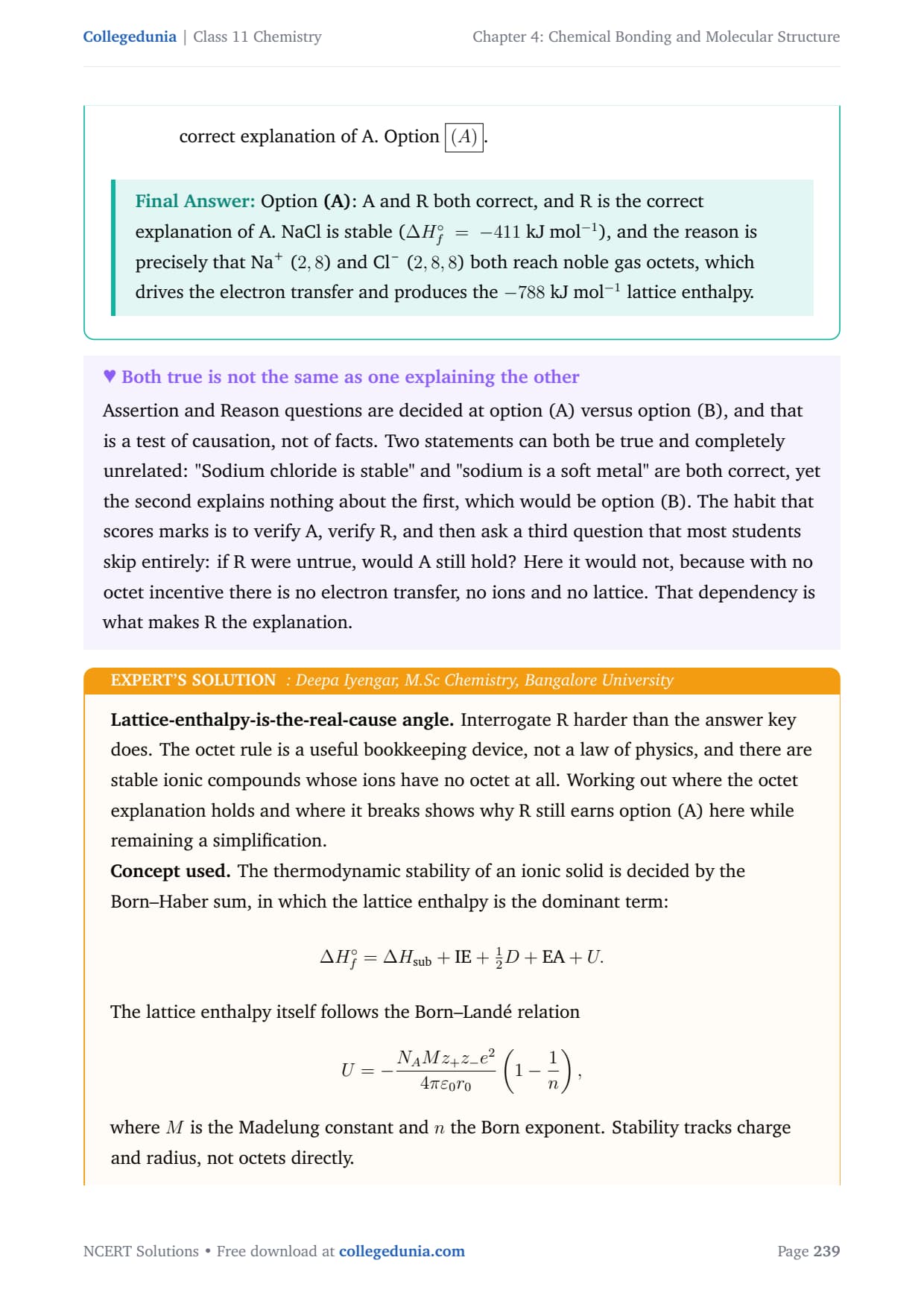
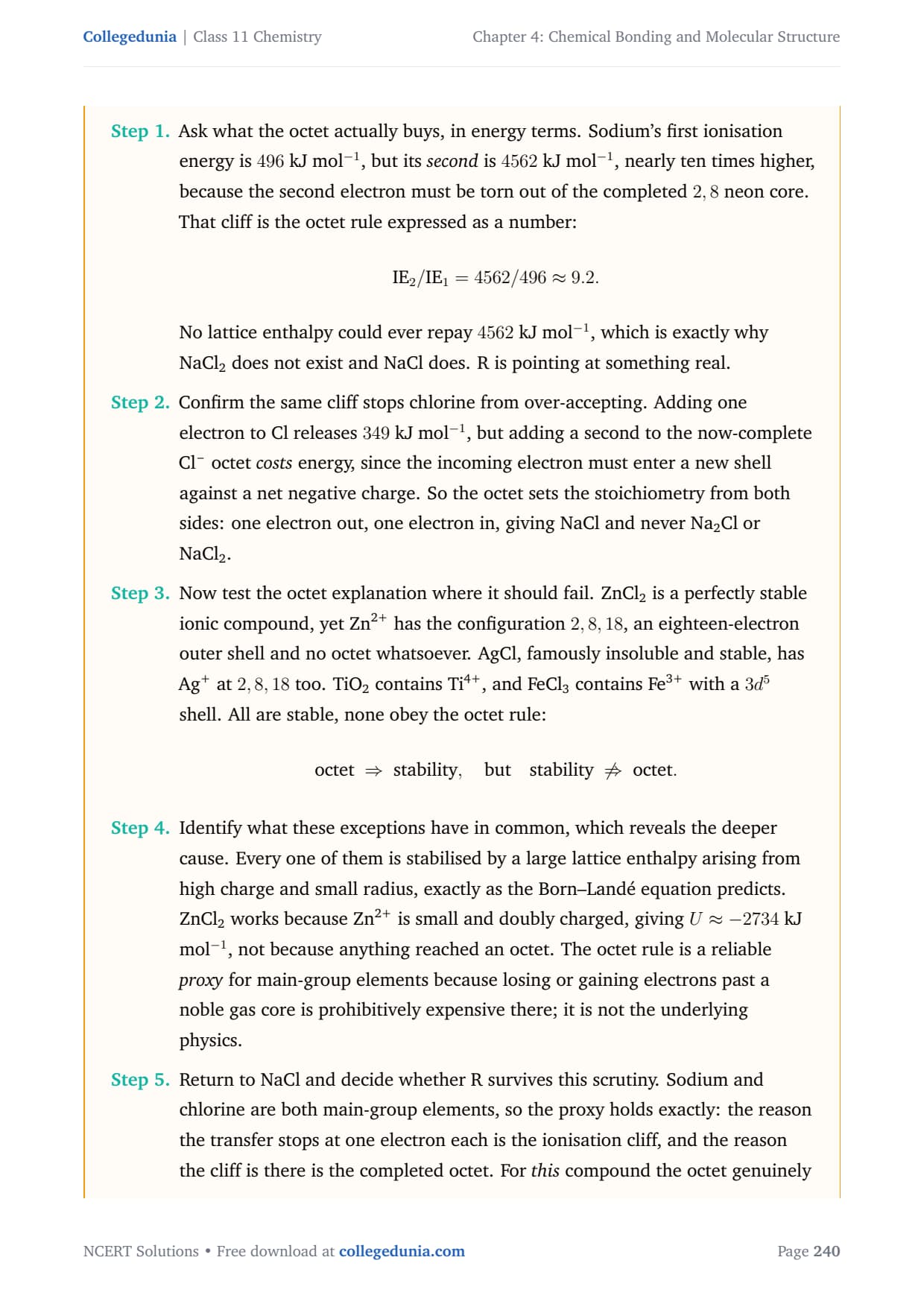
Ans. Chapter 4 has 68 questions, the most of any chapter in the book. They split into 22 MCQ I, 8 MCQ II, 21 Short Answer, 5 Matching Type, 3 Assertion and Reason and 9 Long Answer questions. All 68 are solved in the free 309-page PDF on this page.
Ques. Is the printed NCERT Exemplar answer key for this chapter correct?
Ans. Almost. Two questions carry printing slips. Question 27 prints the average formal charge on each oxygen of CO32- as "0.67 units" with no minus sign, though the true value is -0.67. Question 28 prints "Dimagnetic" where diamagnetic is meant. Neither changes the marked answer, and both are explained on this page.
Ques. Why is the shape of BrF5 square pyramidal and not octahedral?
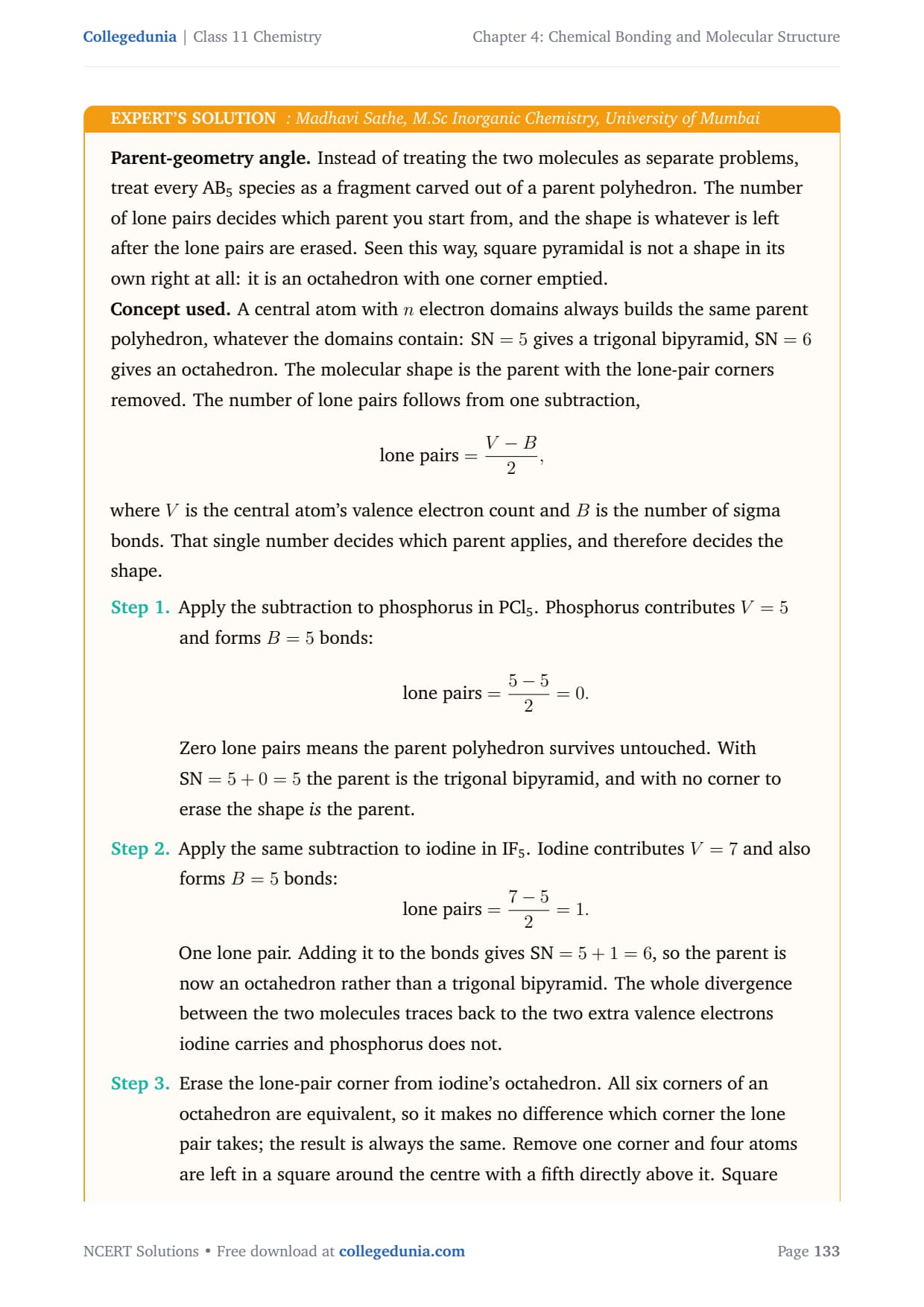
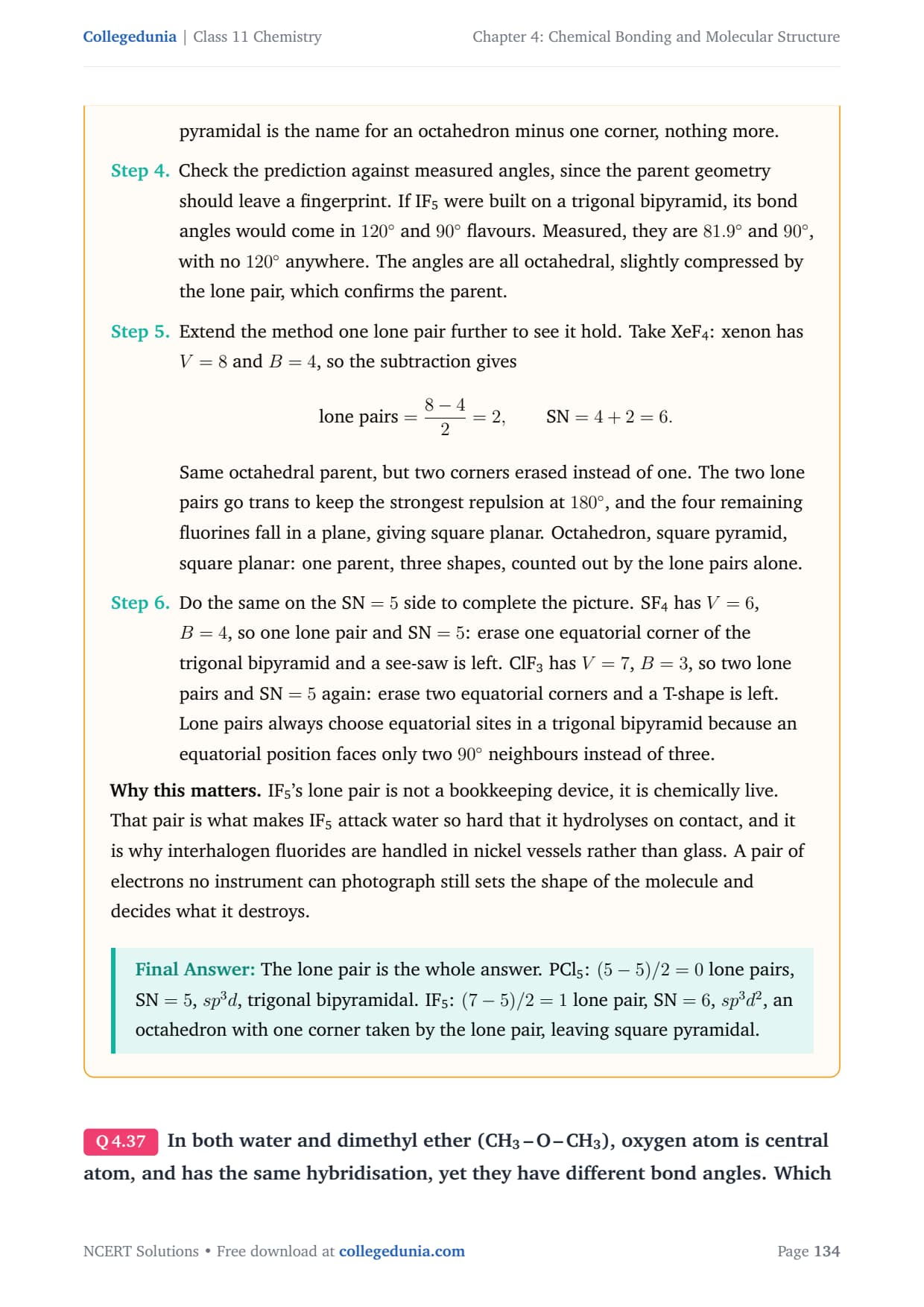
Ans. The steric number is 6, so six electron pairs arrange themselves octahedrally. One of those pairs is a lone pair, so only five corners hold fluorine atoms. Shape names describe where the nuclei sit, not where the electron pairs sit, which makes the shape square pyramidal. SF6 has the same steric number with no lone pair, so it is genuinely octahedral.
Ques. Why does H2O have a higher dipole moment than CO2?
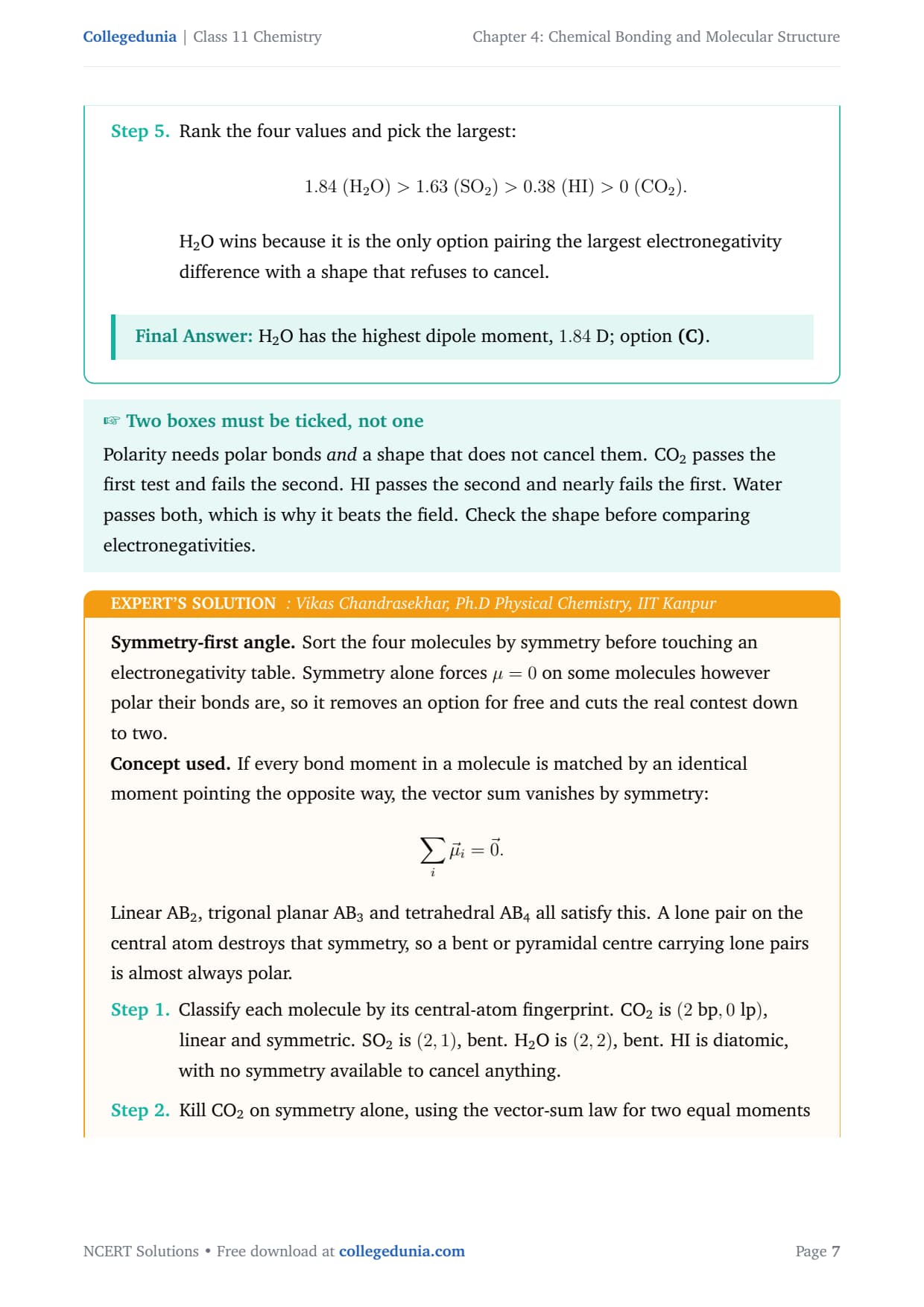
Ans. Dipole moment depends on both electronegativity and shape. CO2 is linear, so its two equal bond dipoles point in opposite directions and cancel exactly, giving zero. H2O is bent at 104.5°, so its bond dipoles add to a net value instead of cancelling. This is Question 2, and the answer is H2O.
Ques. Is the NCERT Exemplar enough for NEET and JEE bonding questions?
Ans. For this chapter it covers the ground well. NEET asks two to three questions a year on shape and magnetic behaviour, and they sit at the level of the Exemplar MCQ I set. JEE Main pushes further on bond order, which the Long Answer set handles. Work all 68 before moving to a coaching module.



Comments