




NCERT Exemplar Solutions for Class 11 Chemistry Chapter 1 Some Basic Concepts of Chemistry solve all 45 questions from the Exemplar book. Every MCQ, Short Answer, Matching, Assertion and Reason and Long Answer problem is solved step by step in the free 108-page PDF, updated for the 2026-27 syllabus.
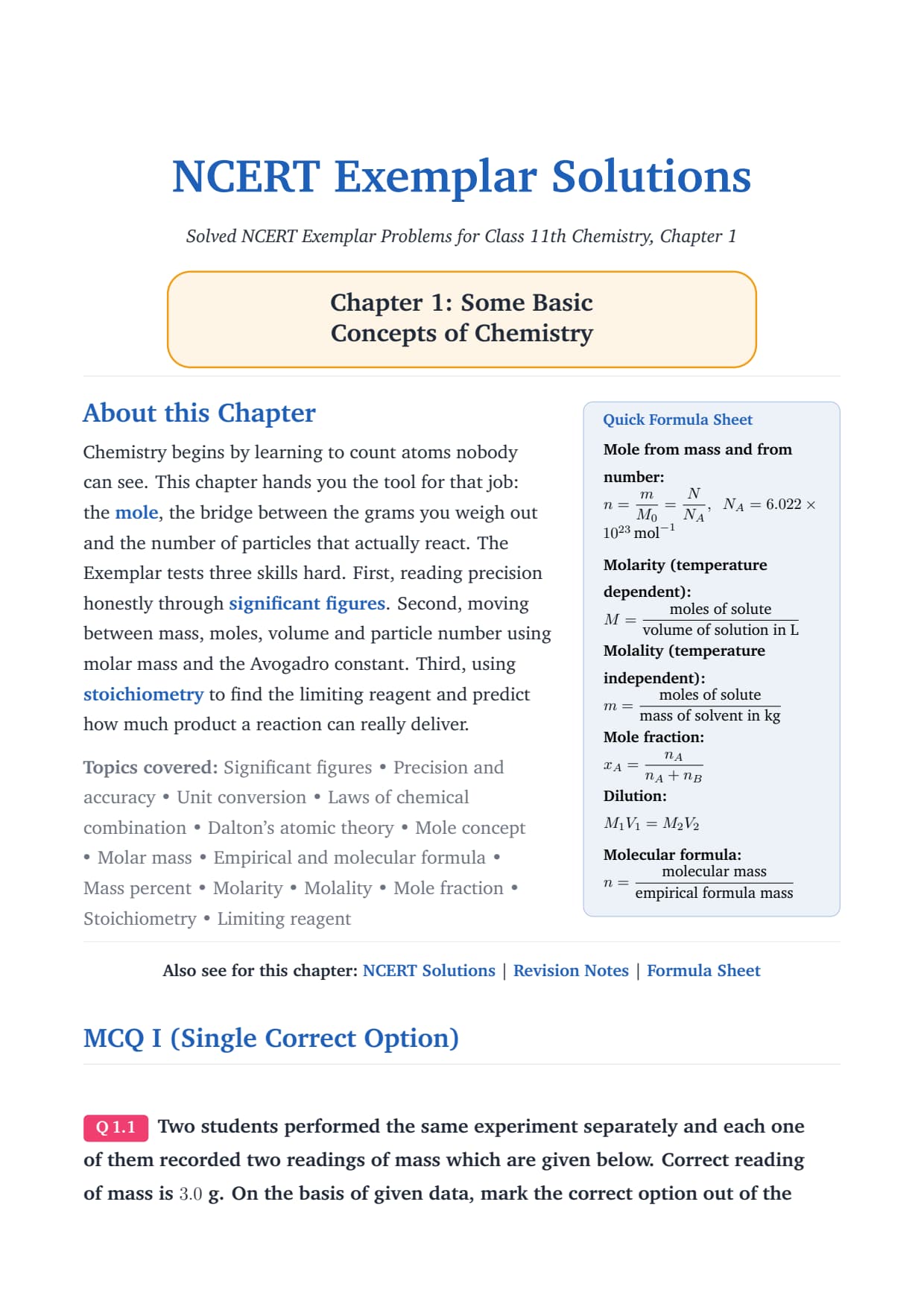
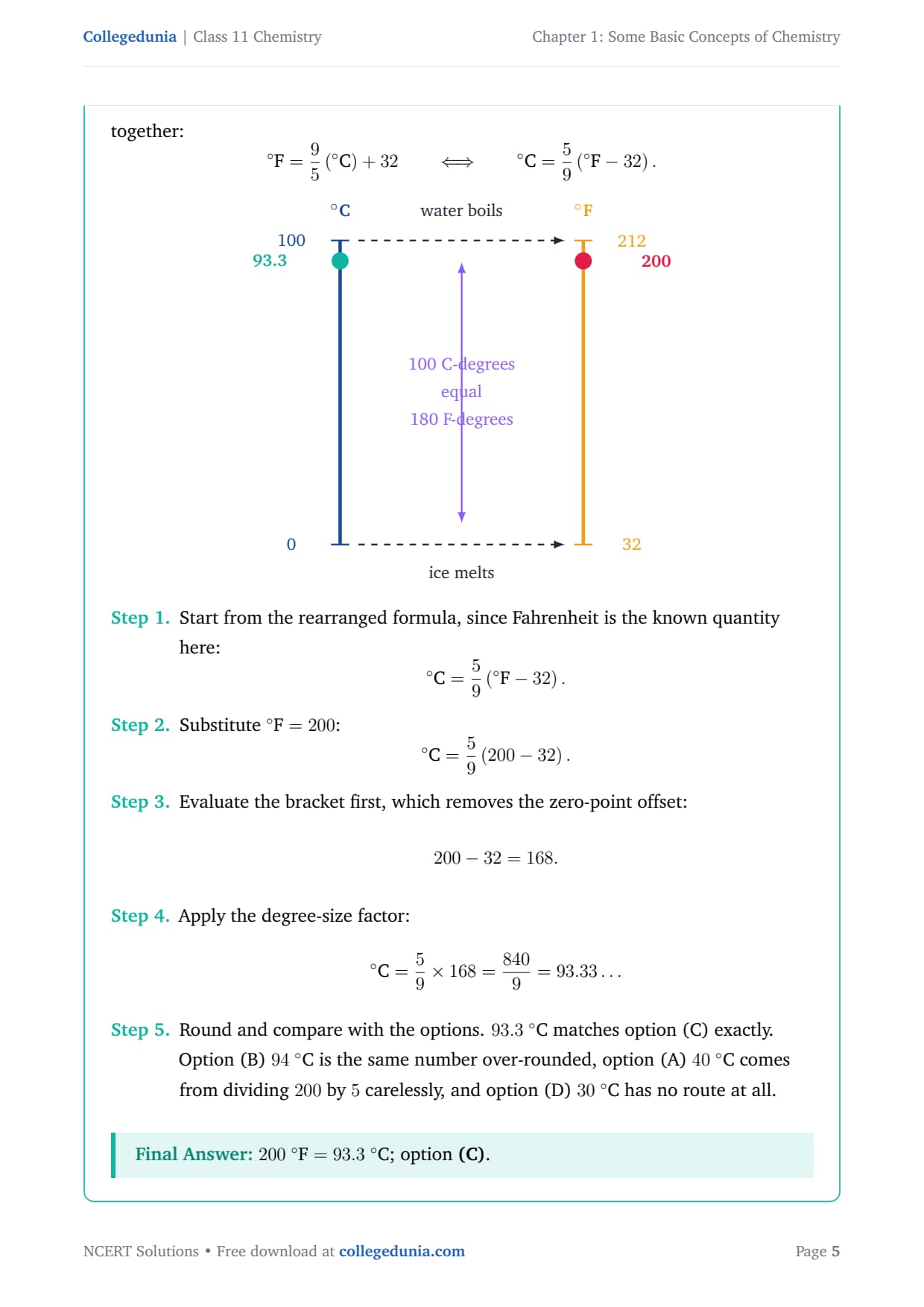
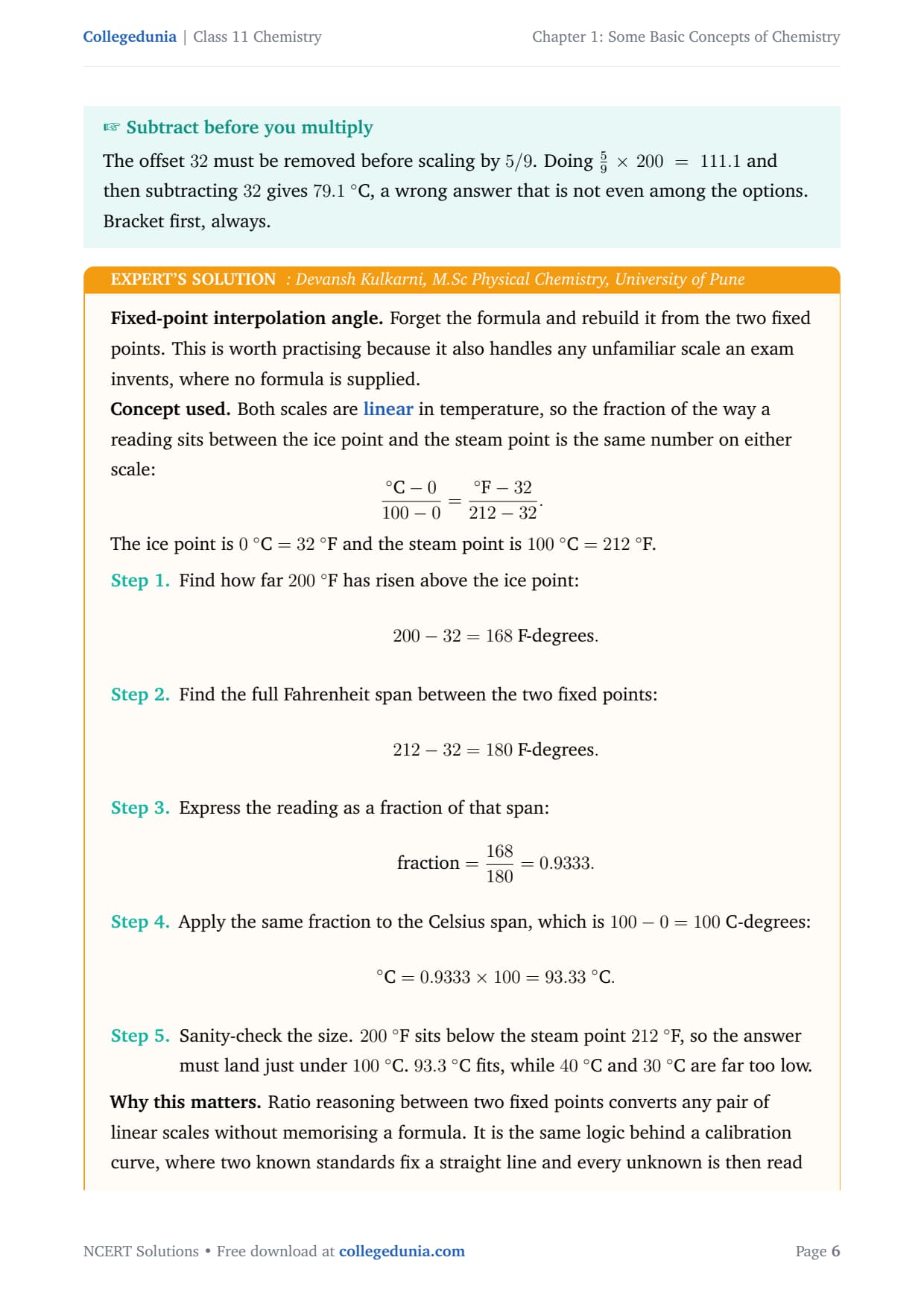
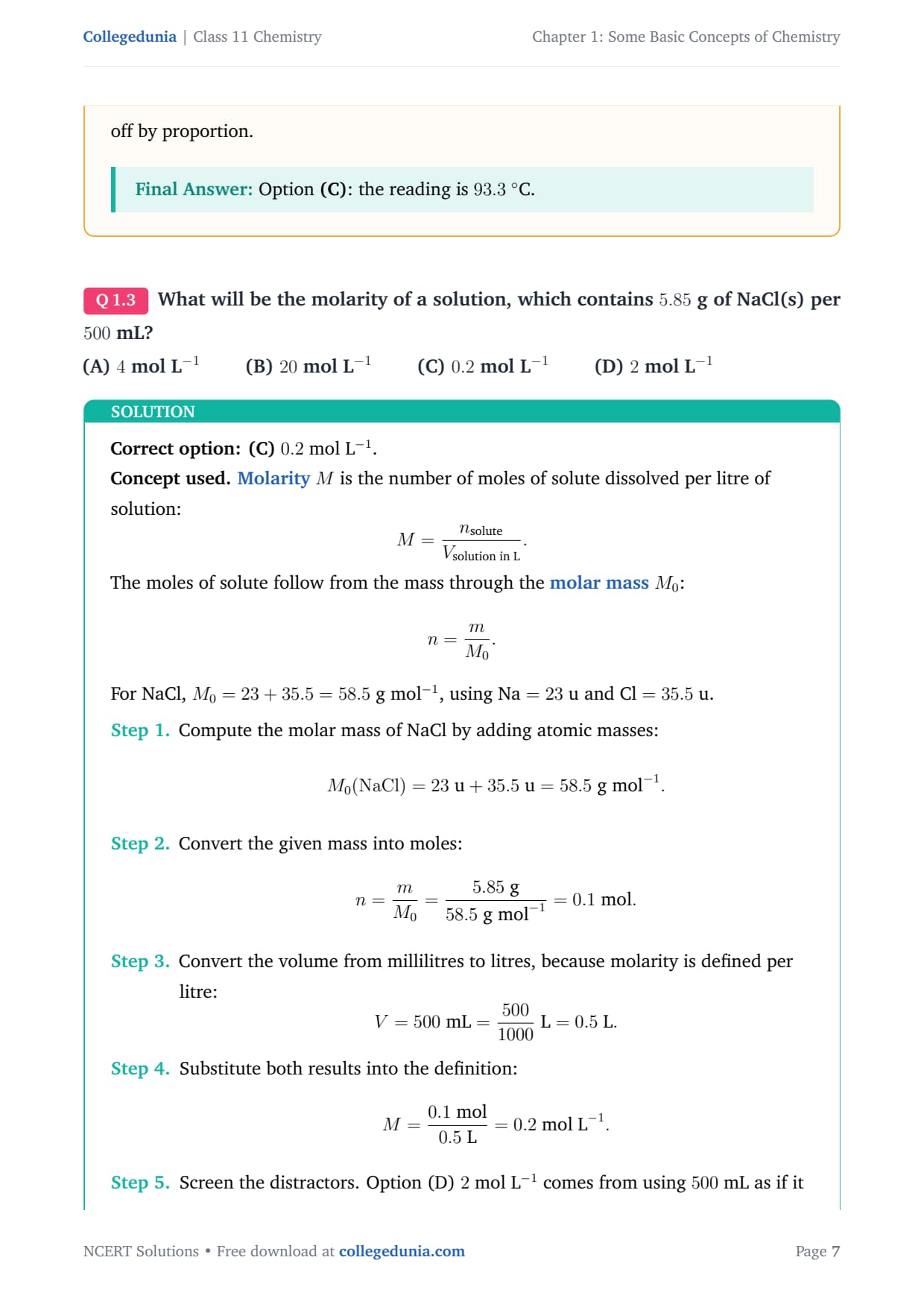
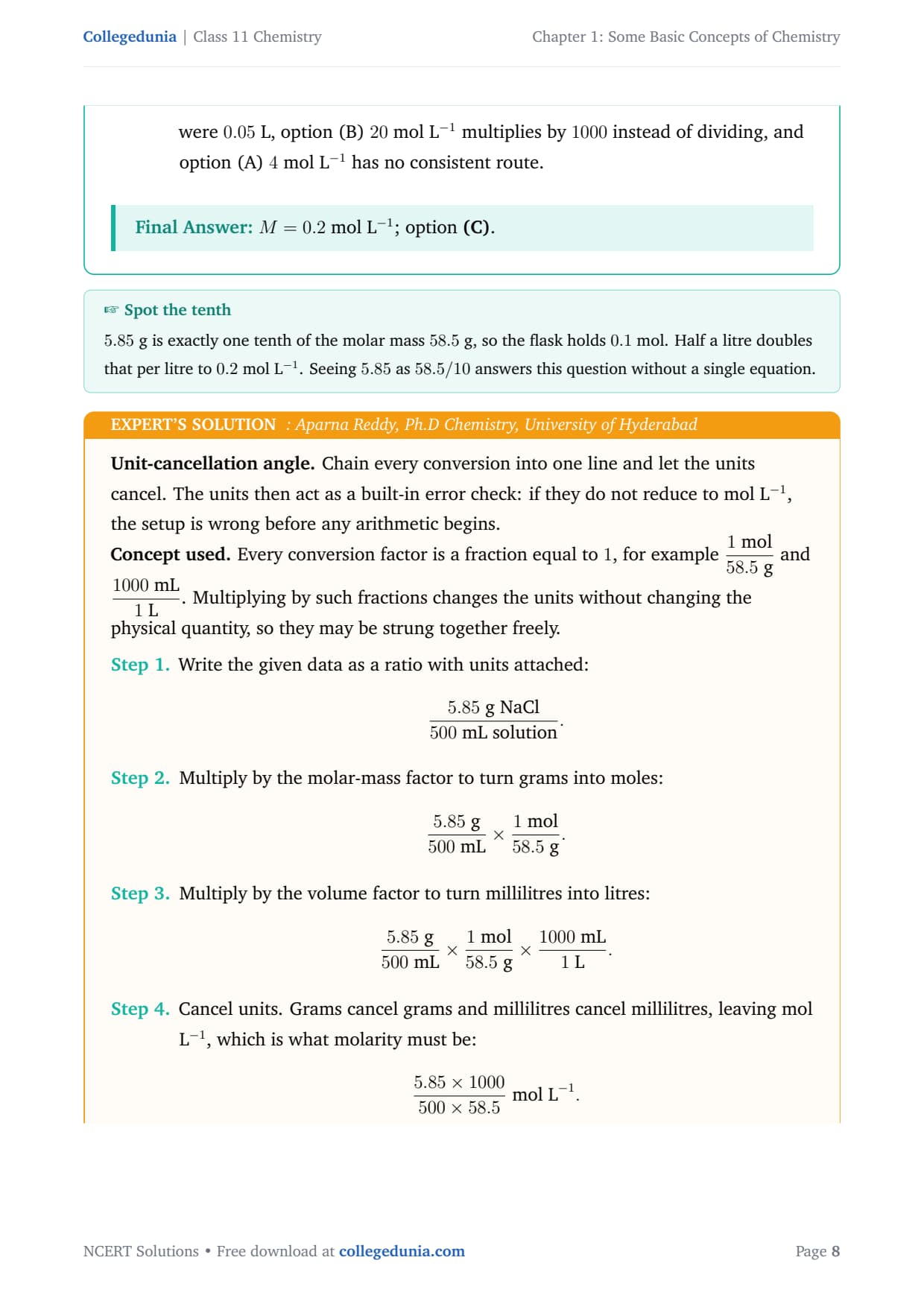
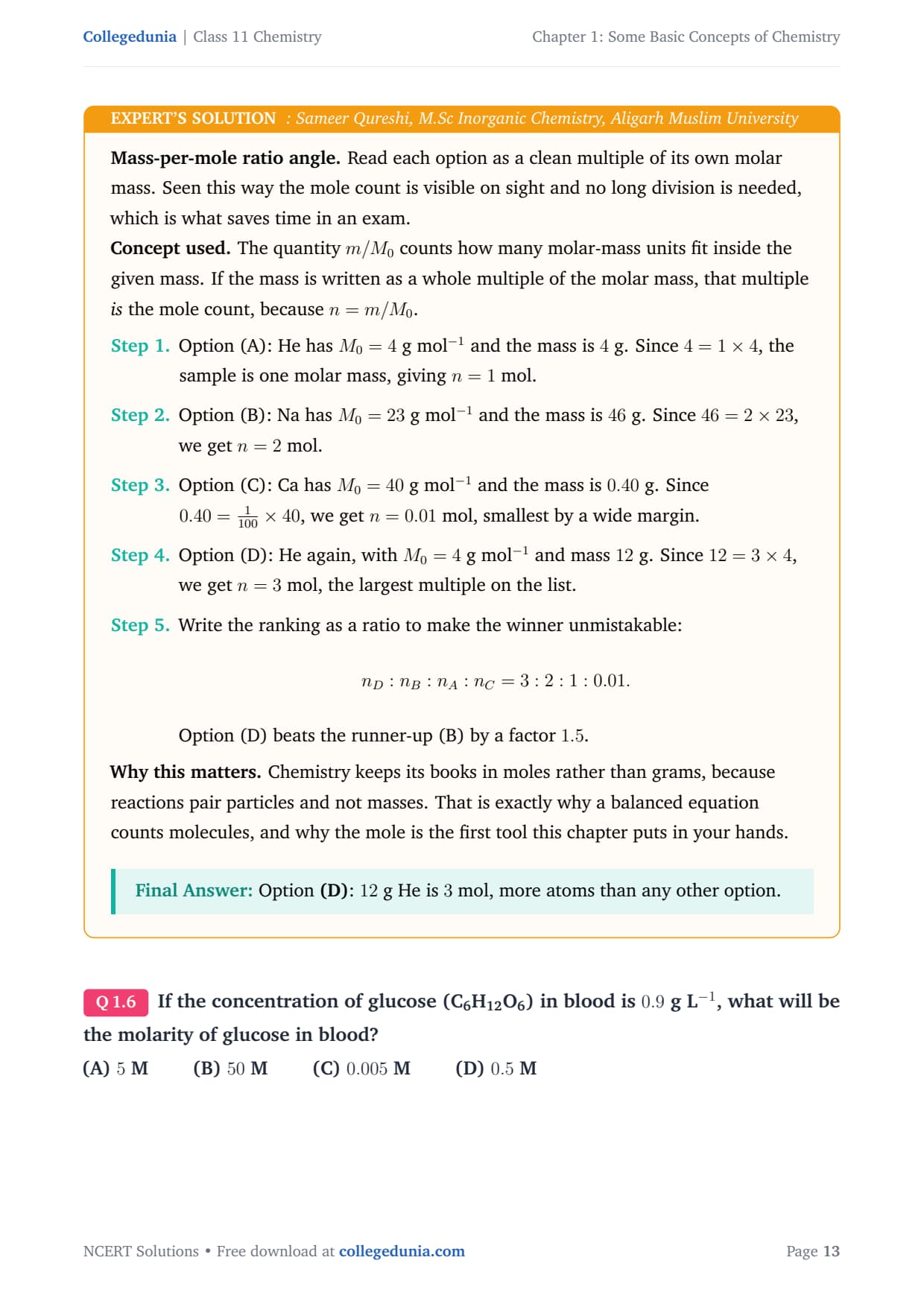
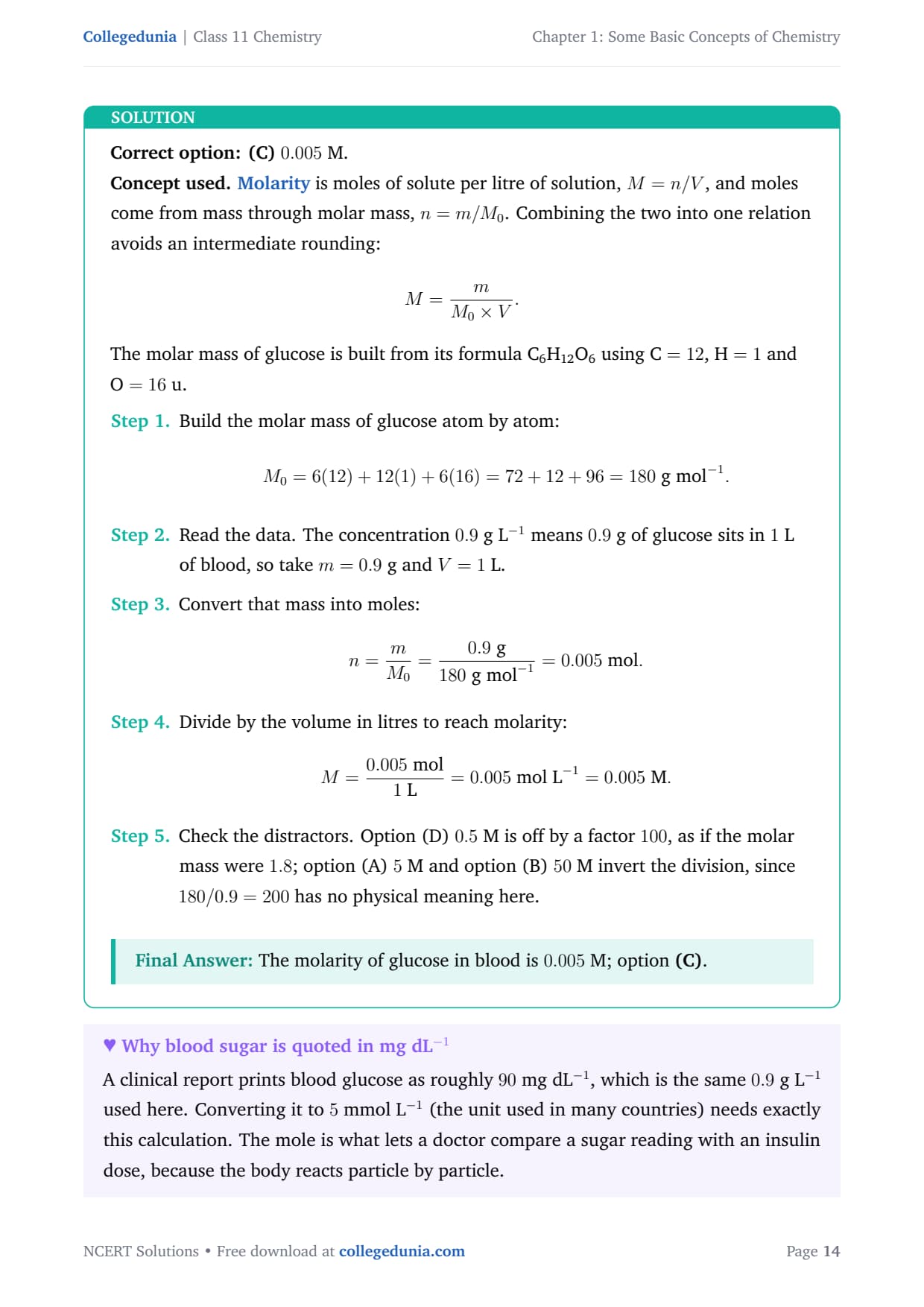
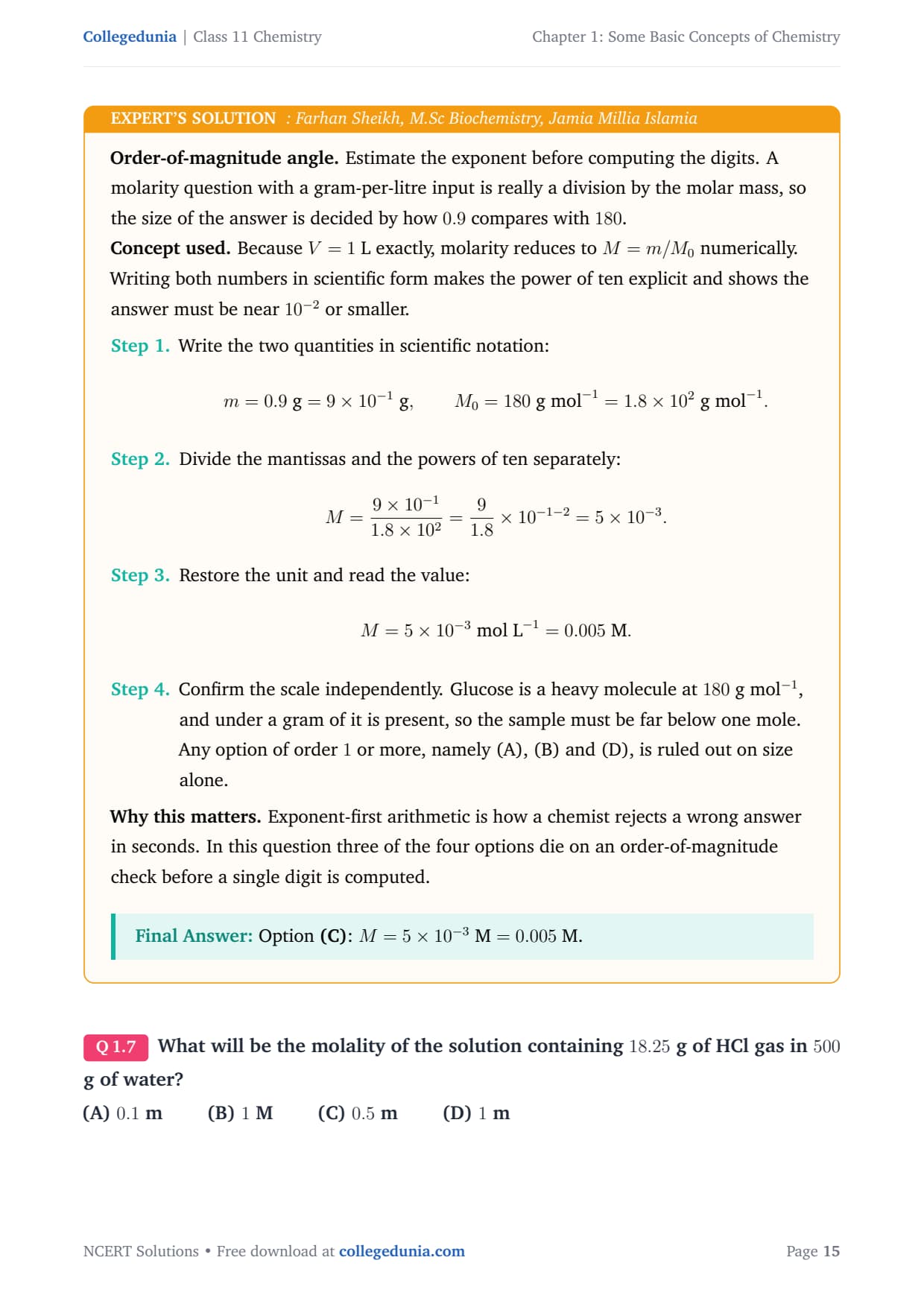
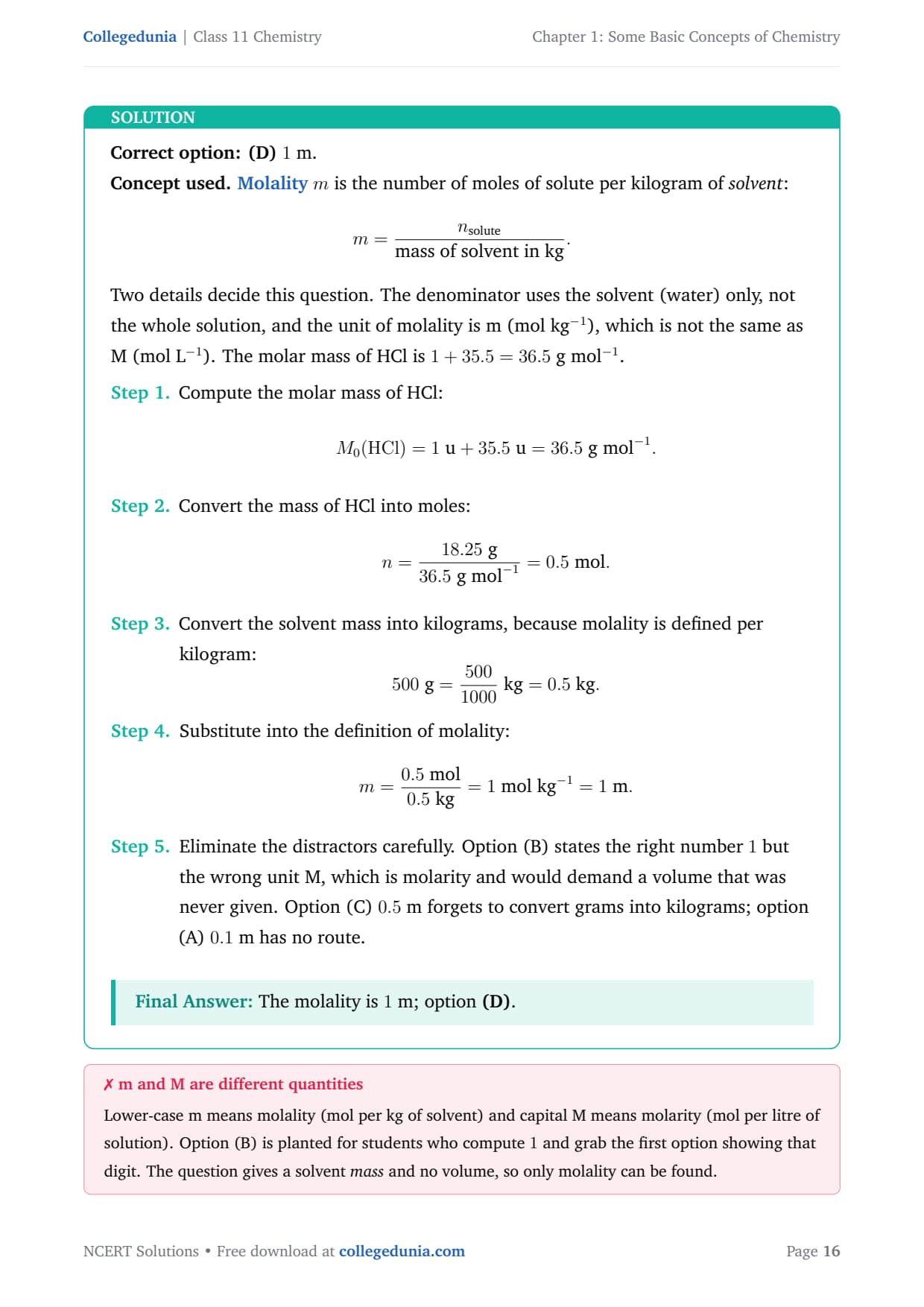
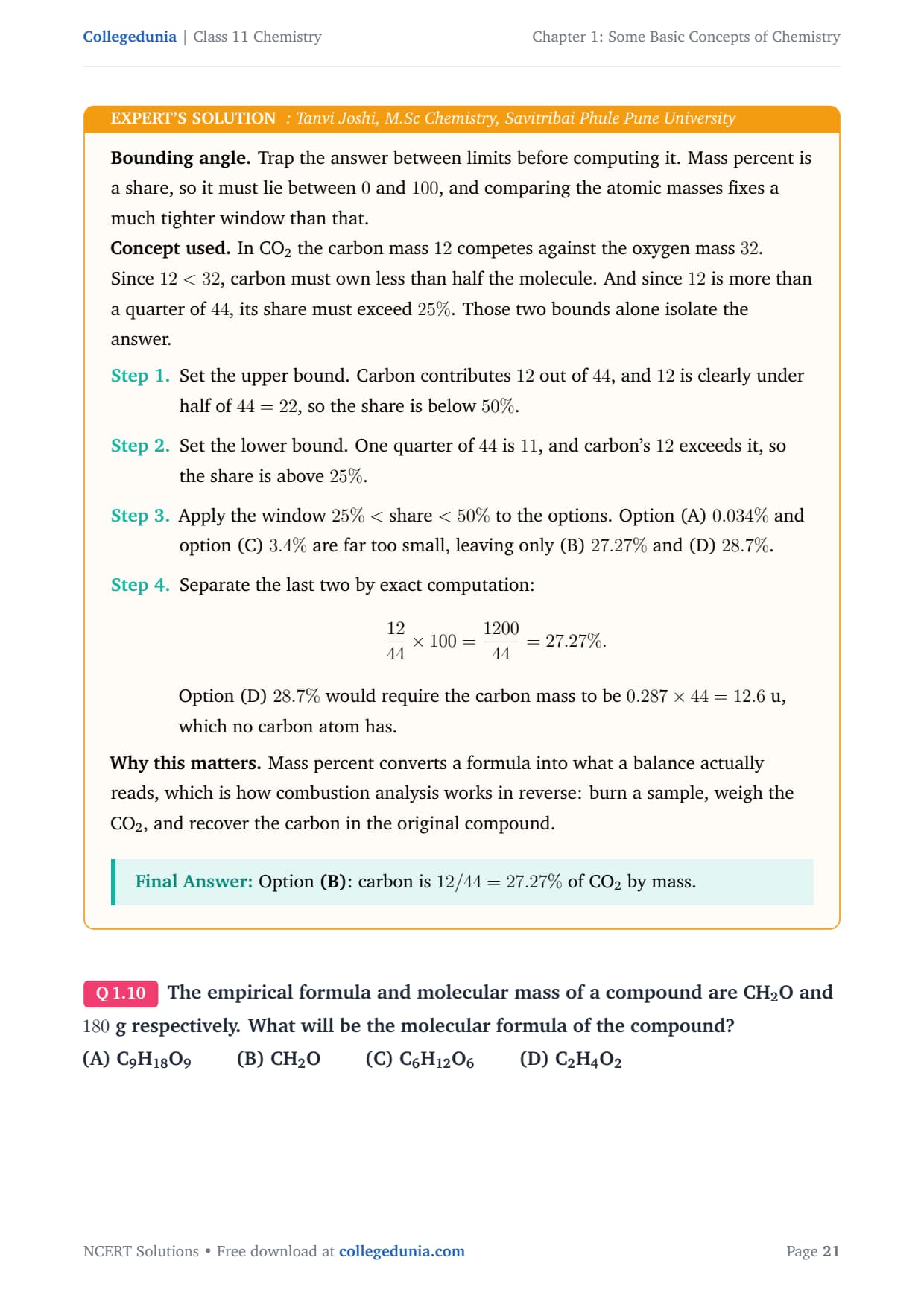
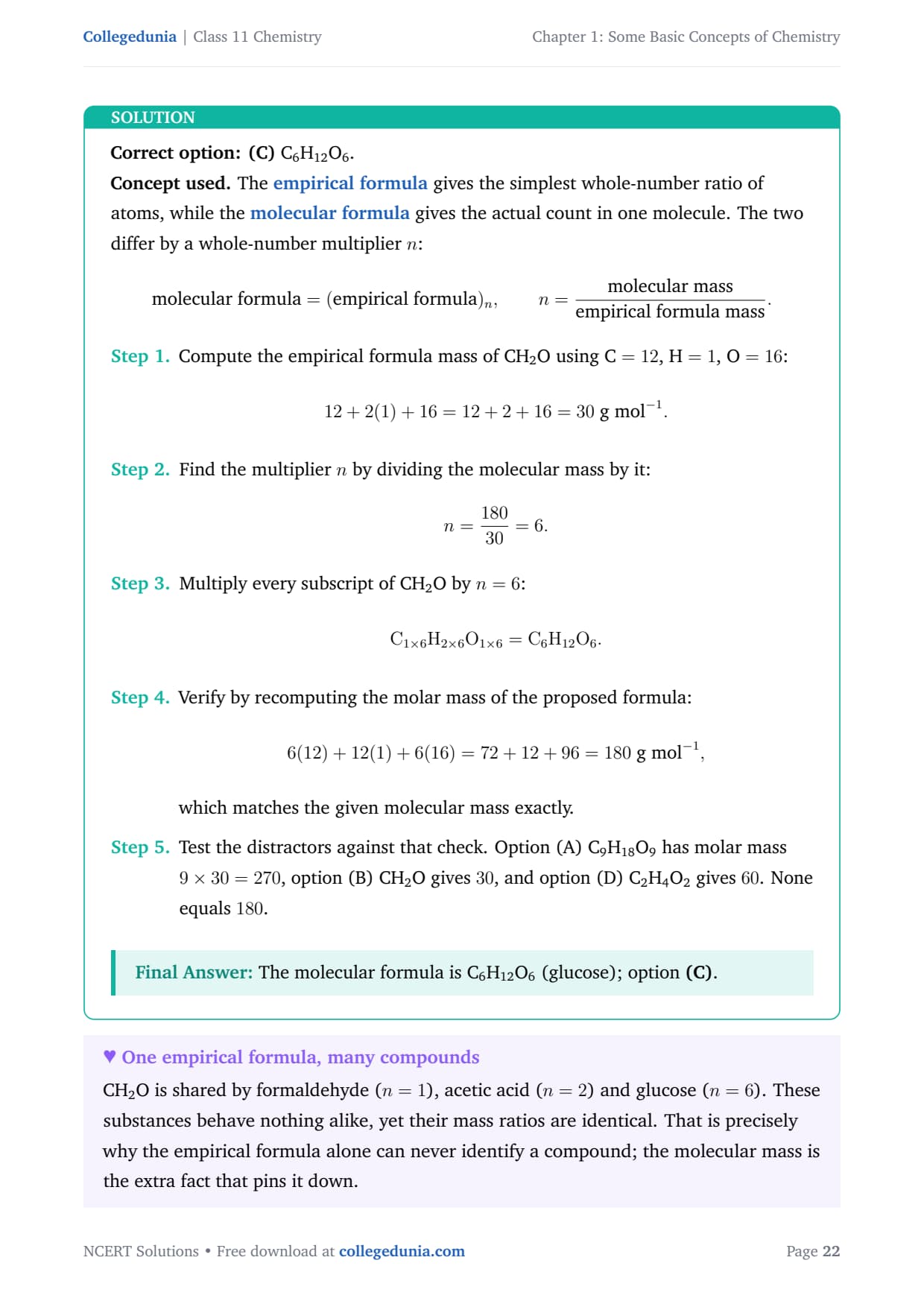
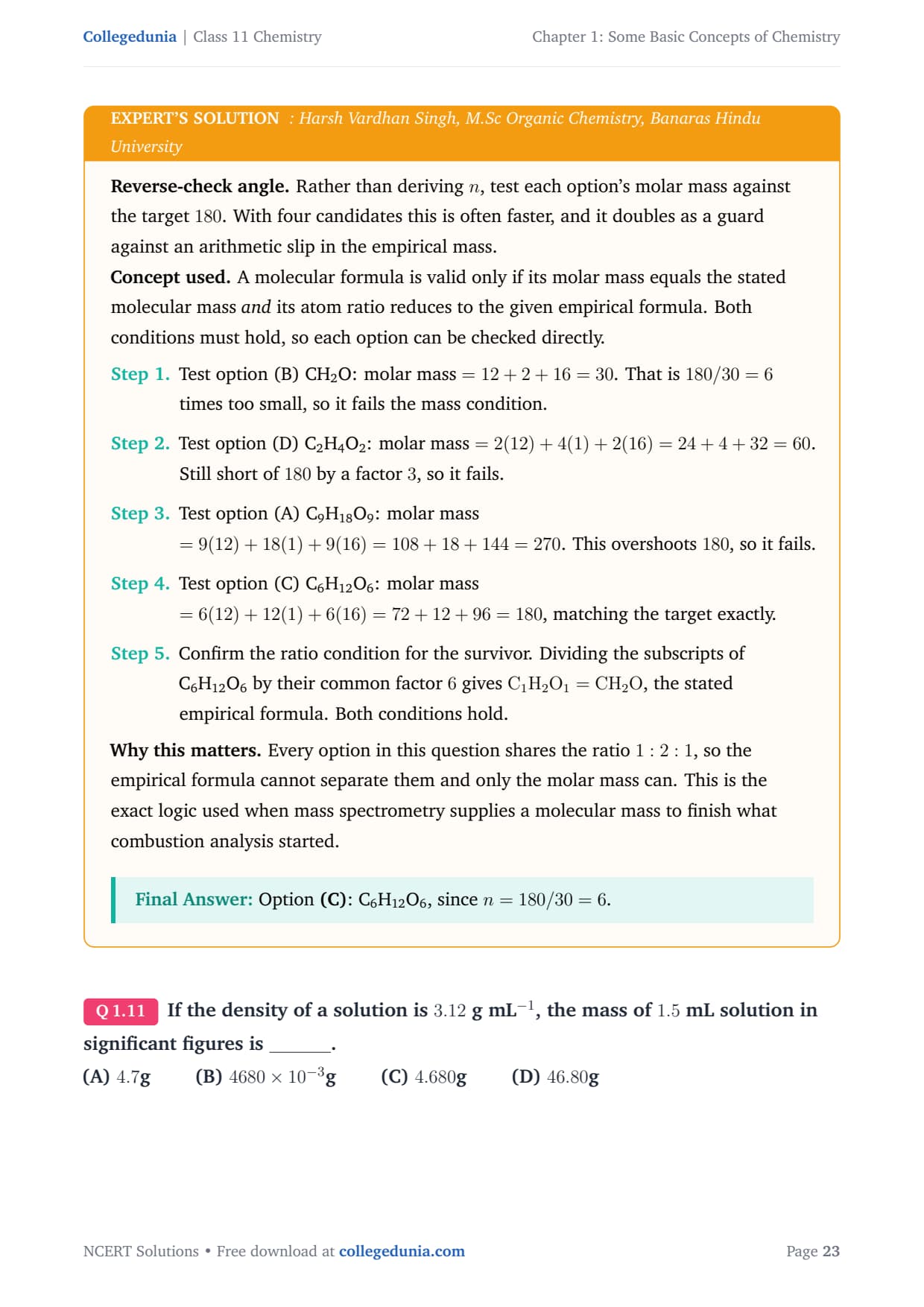
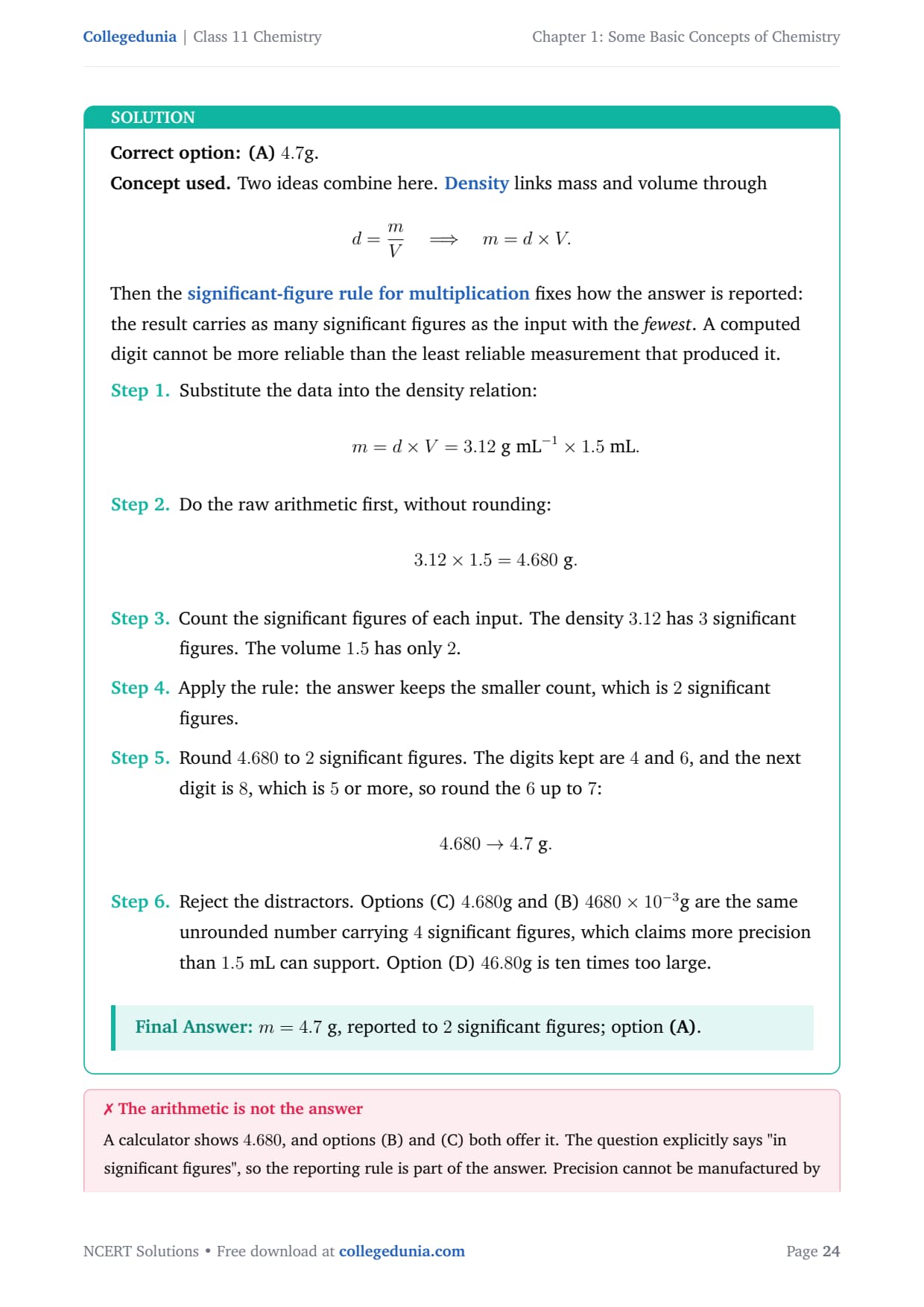
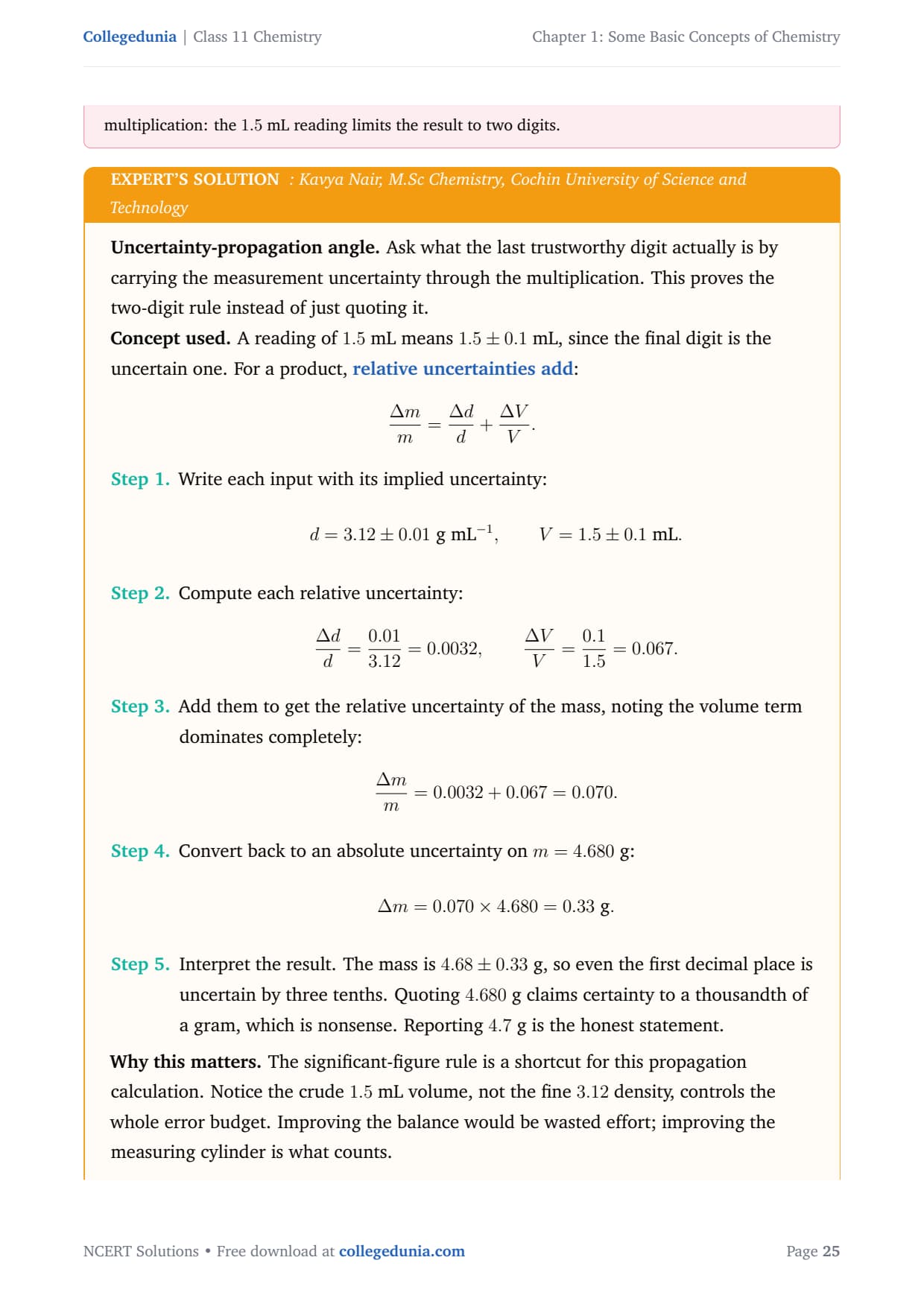
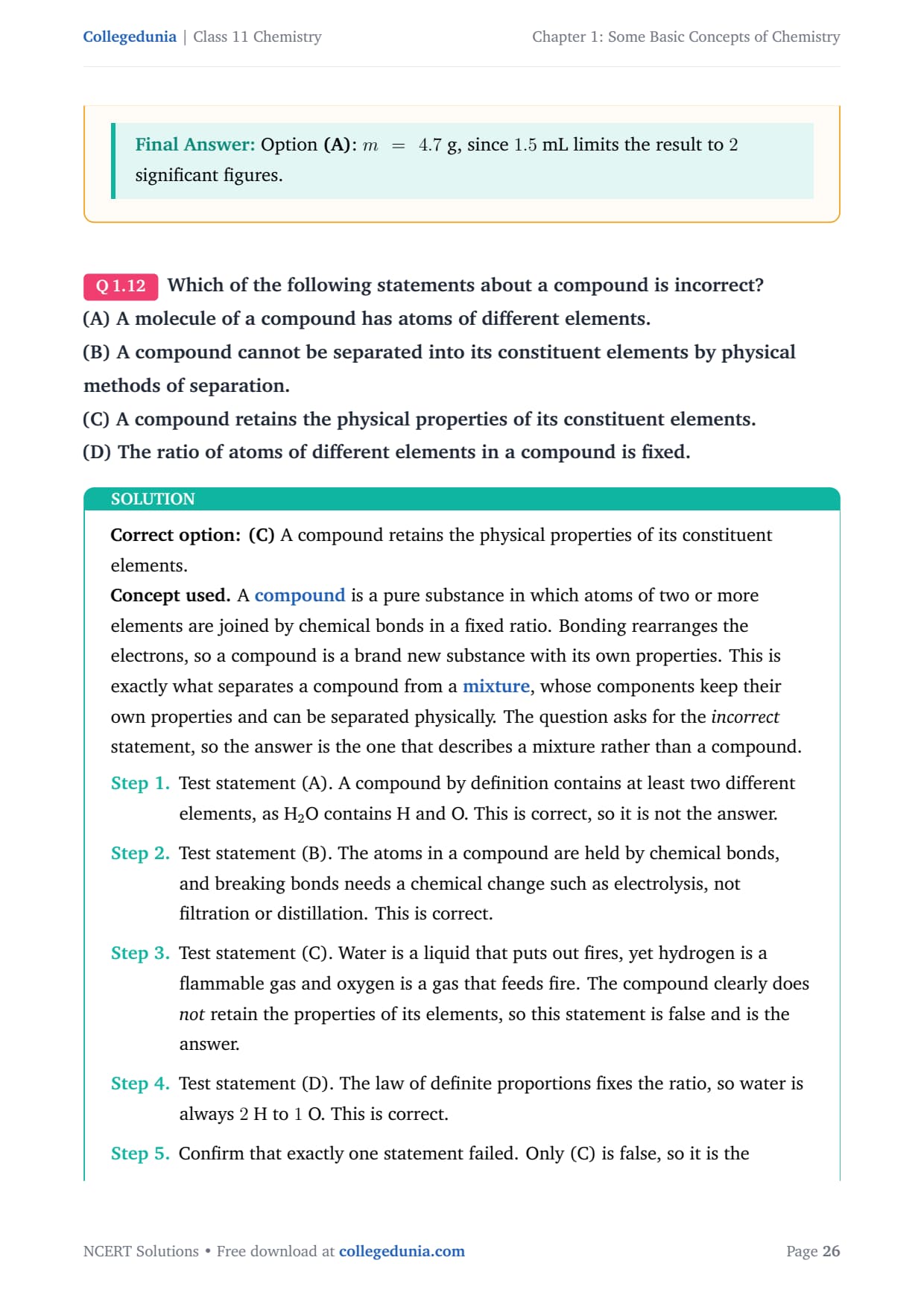
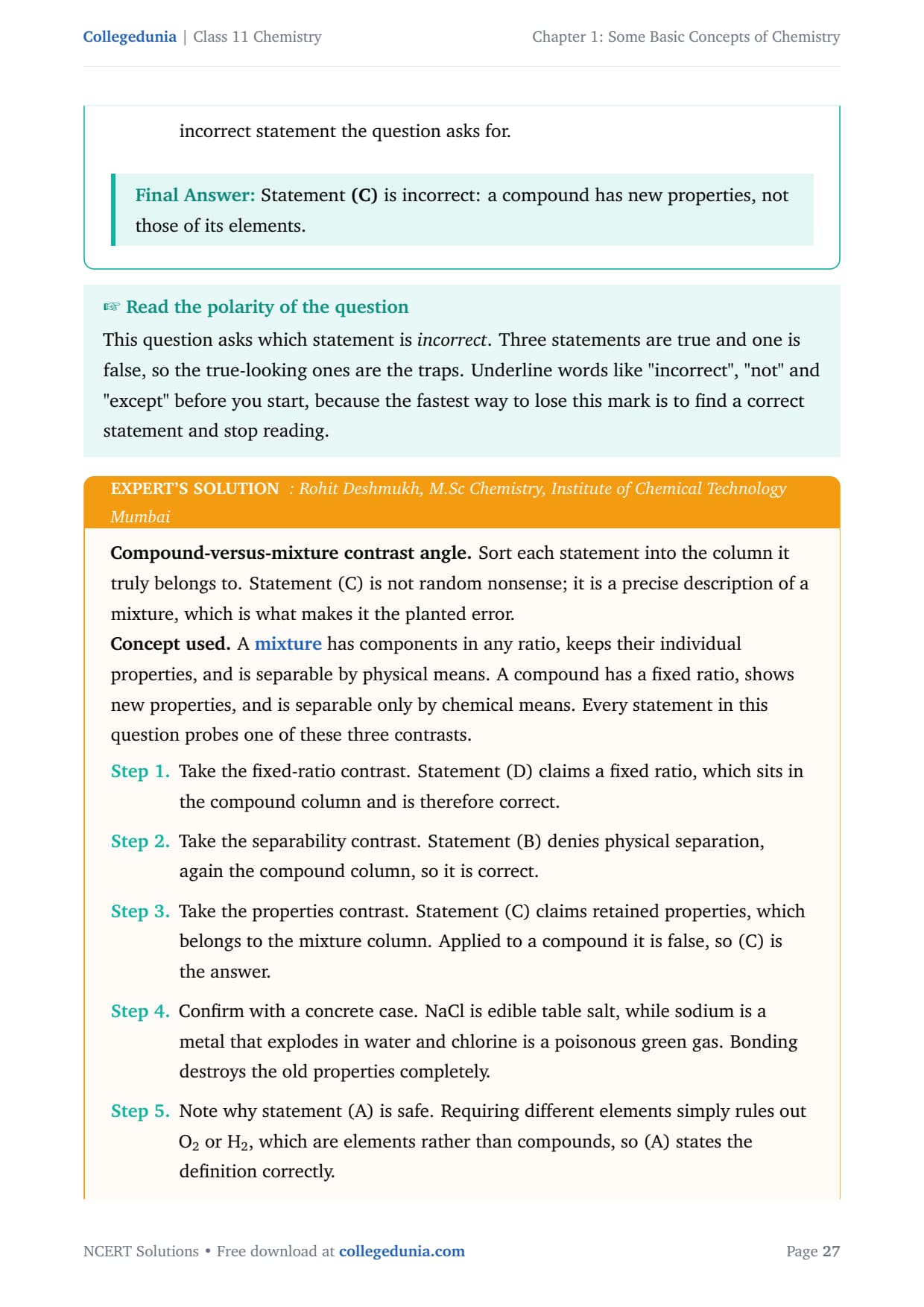
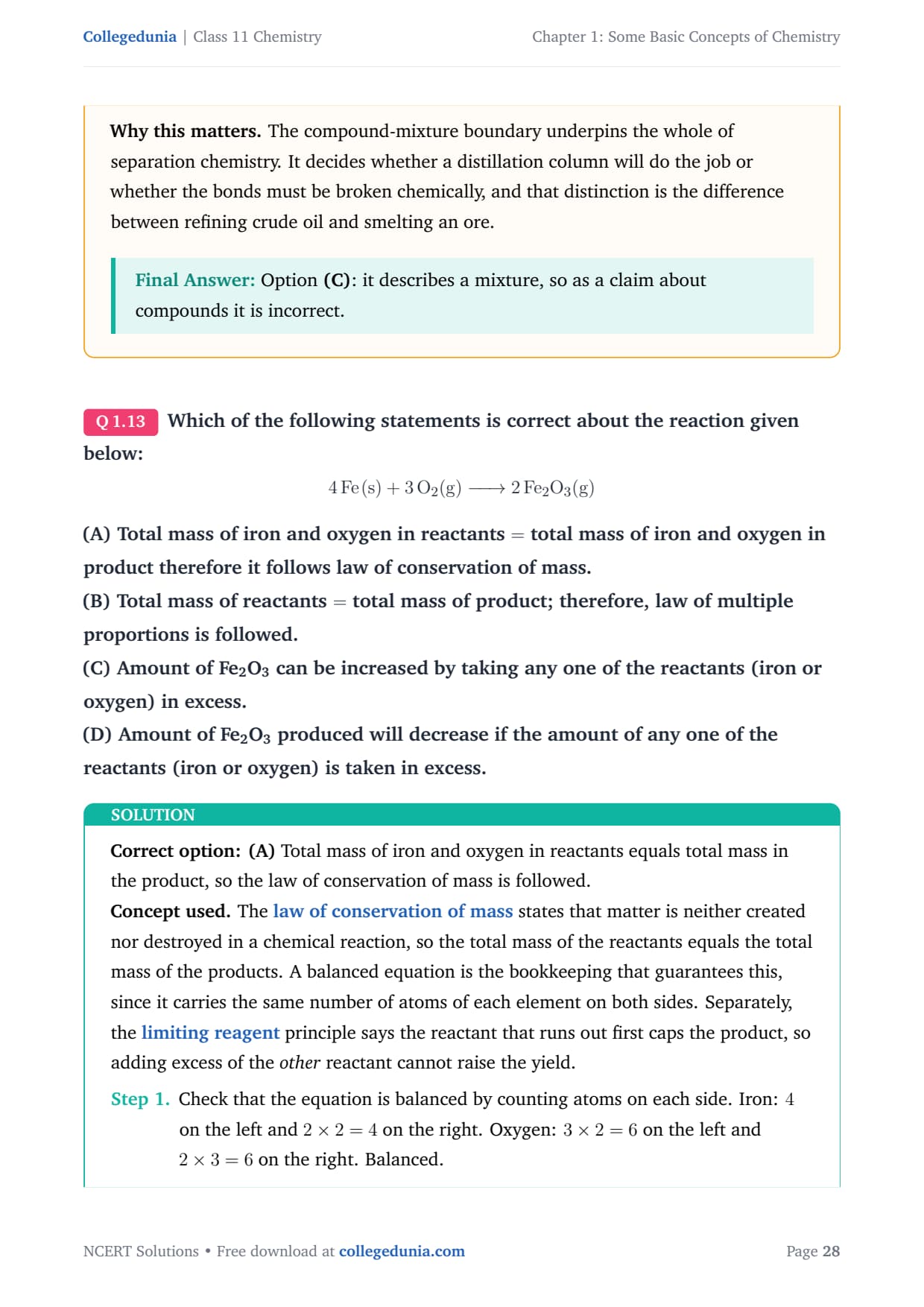
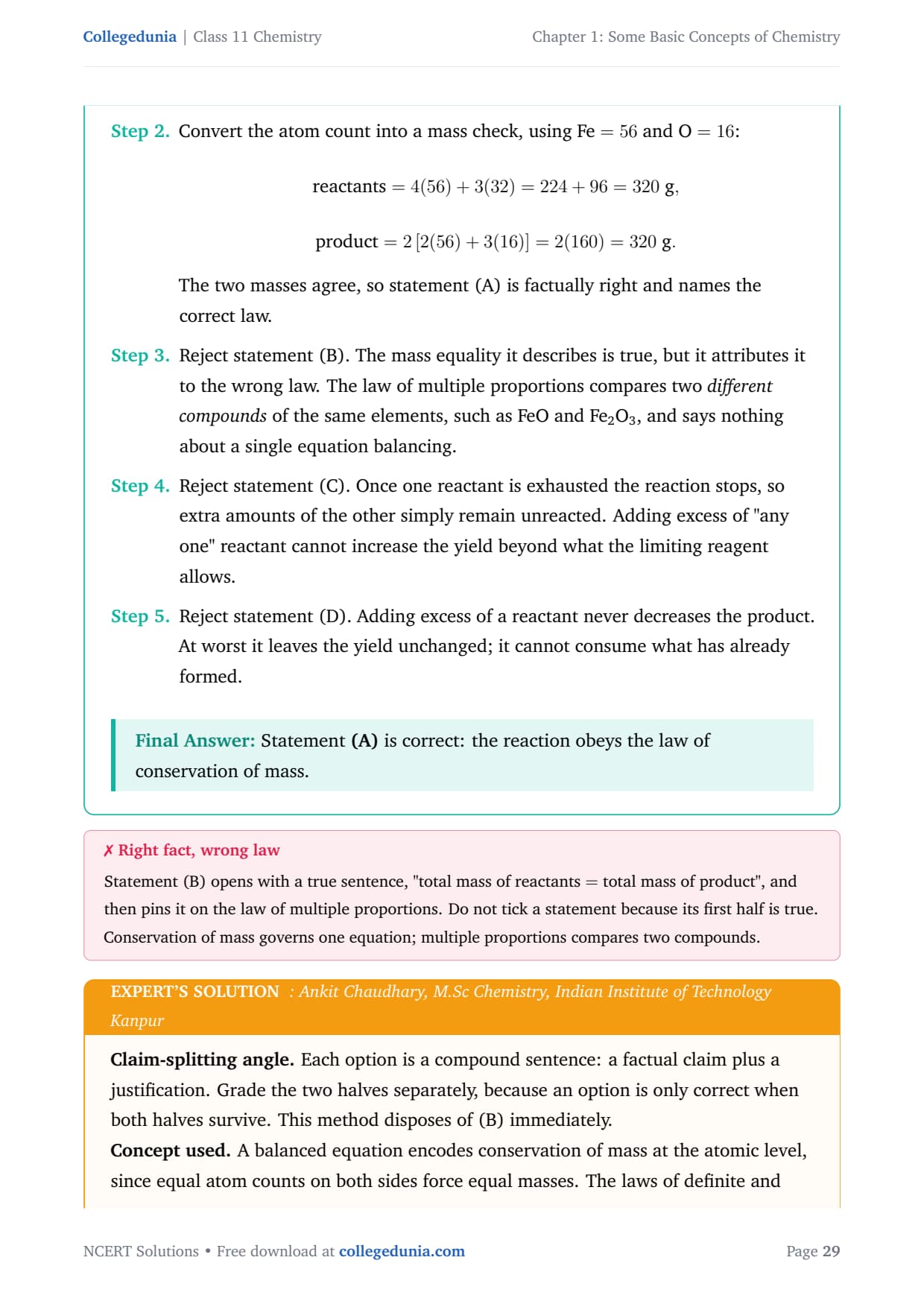
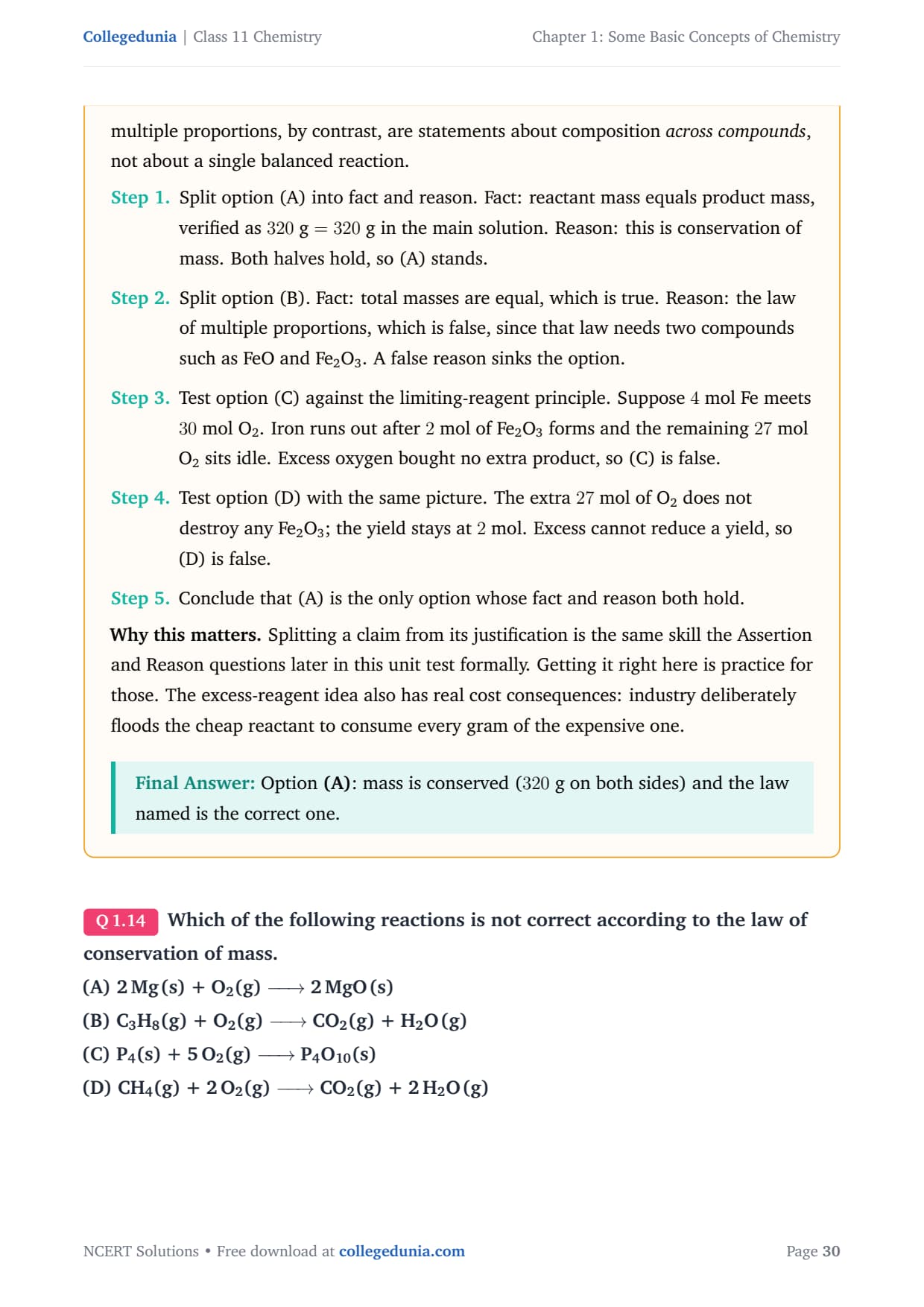
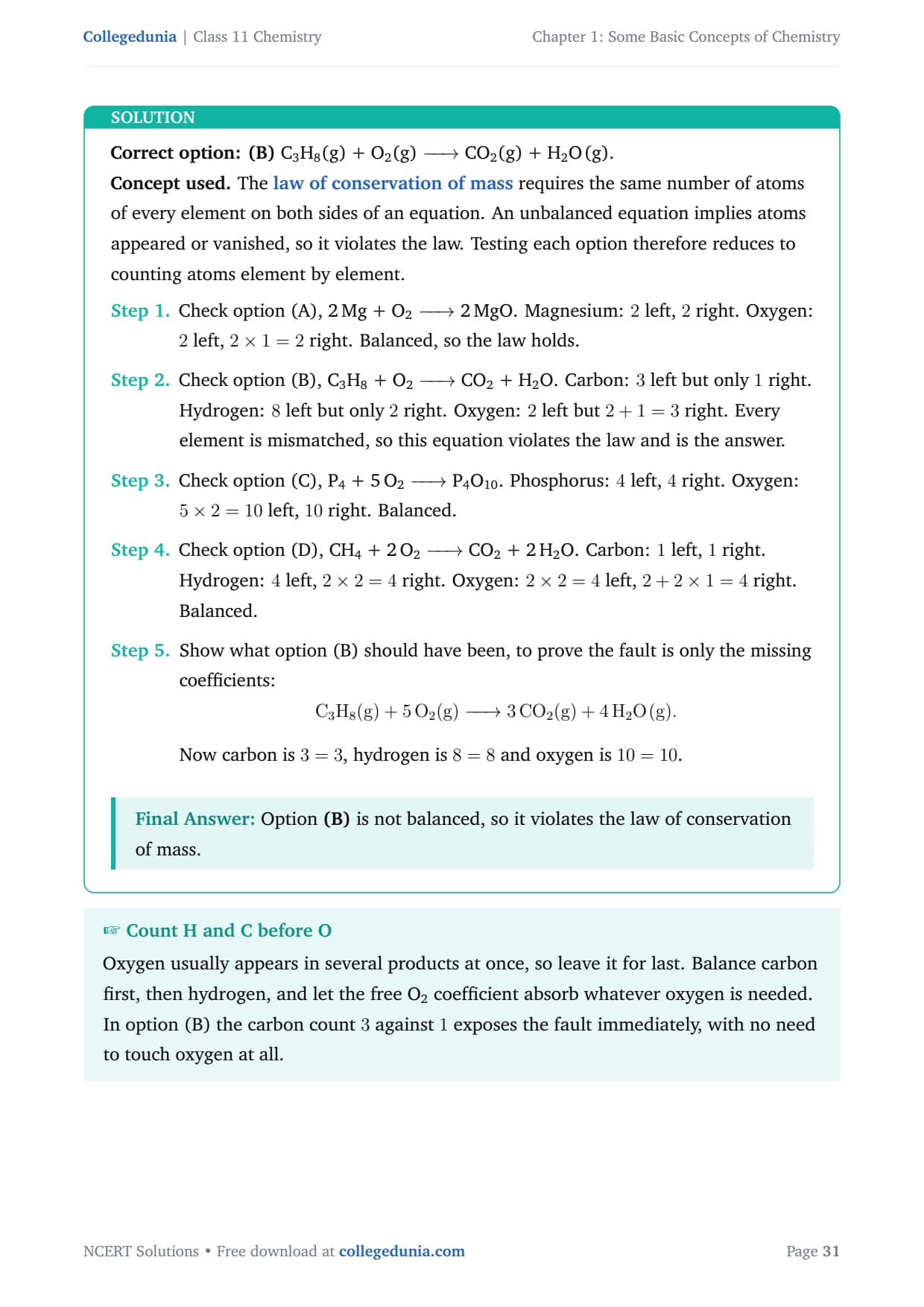
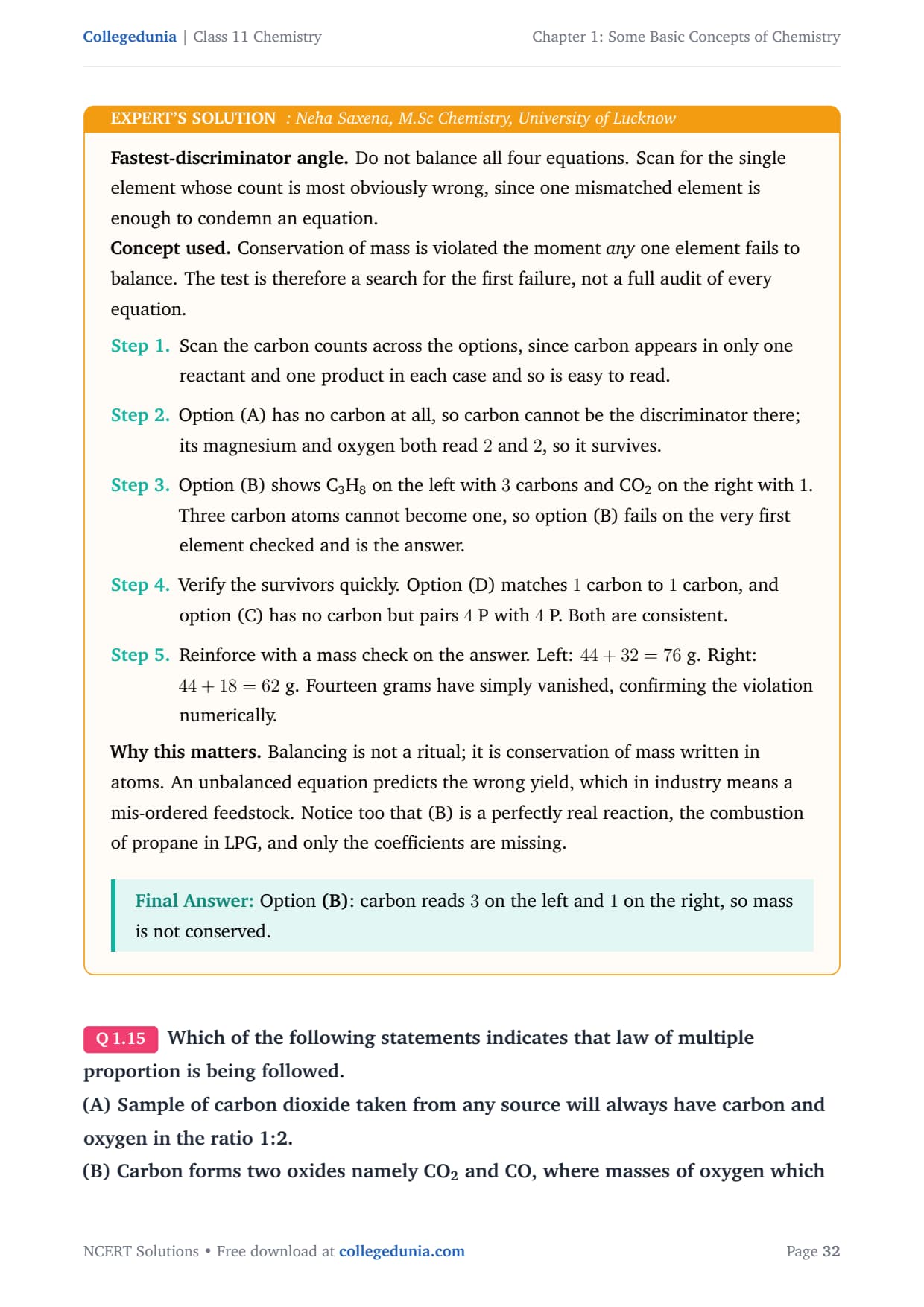
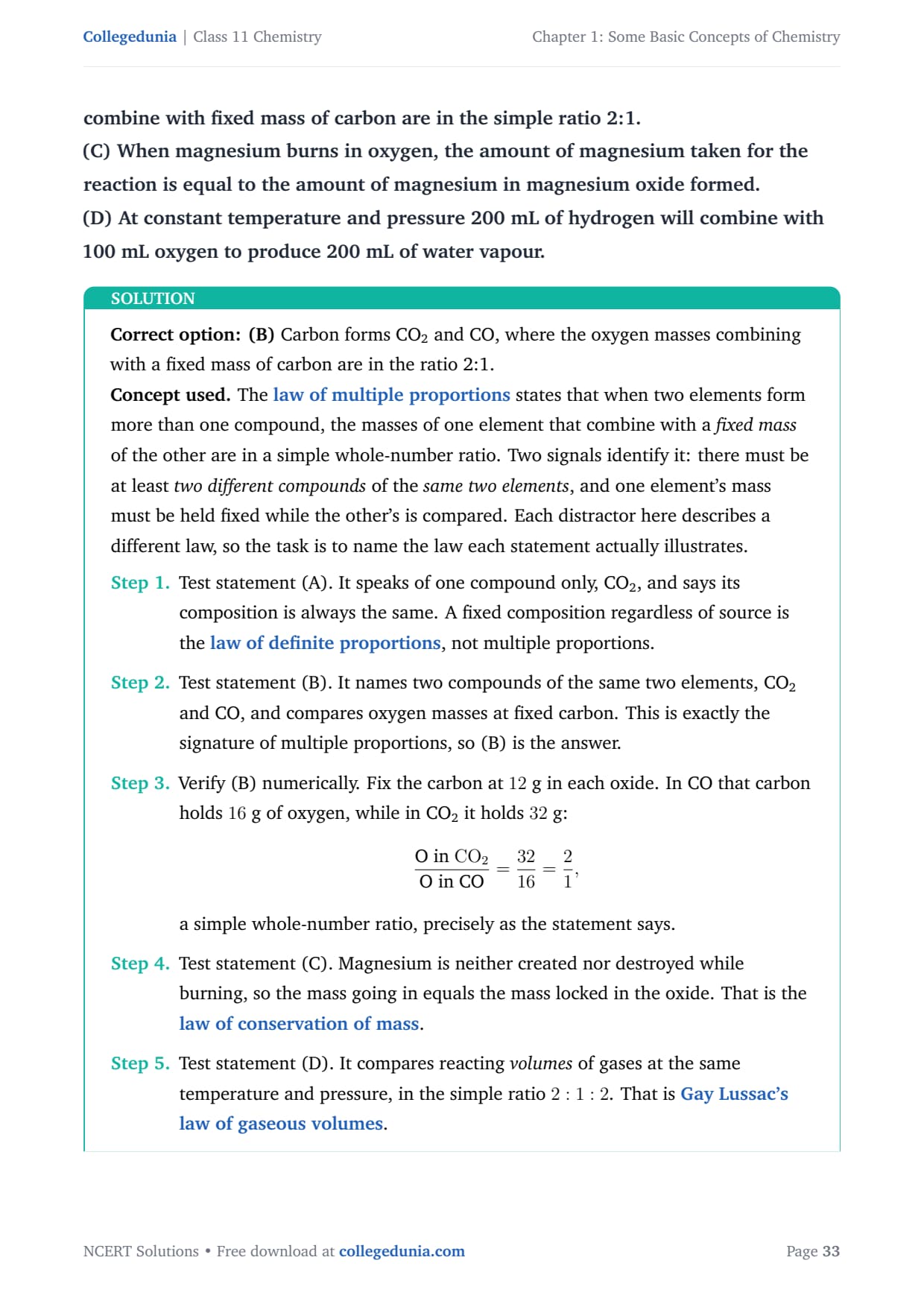
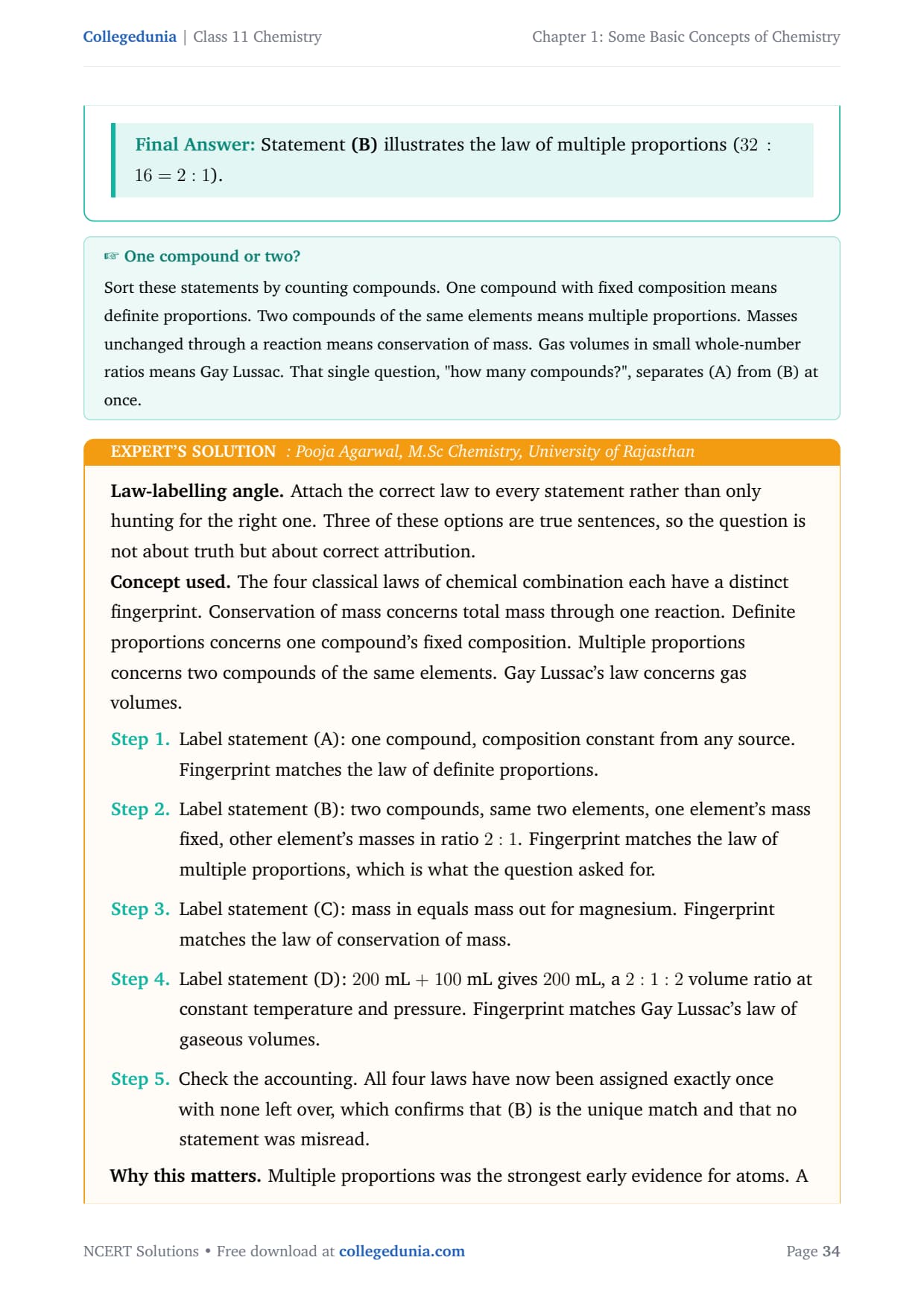
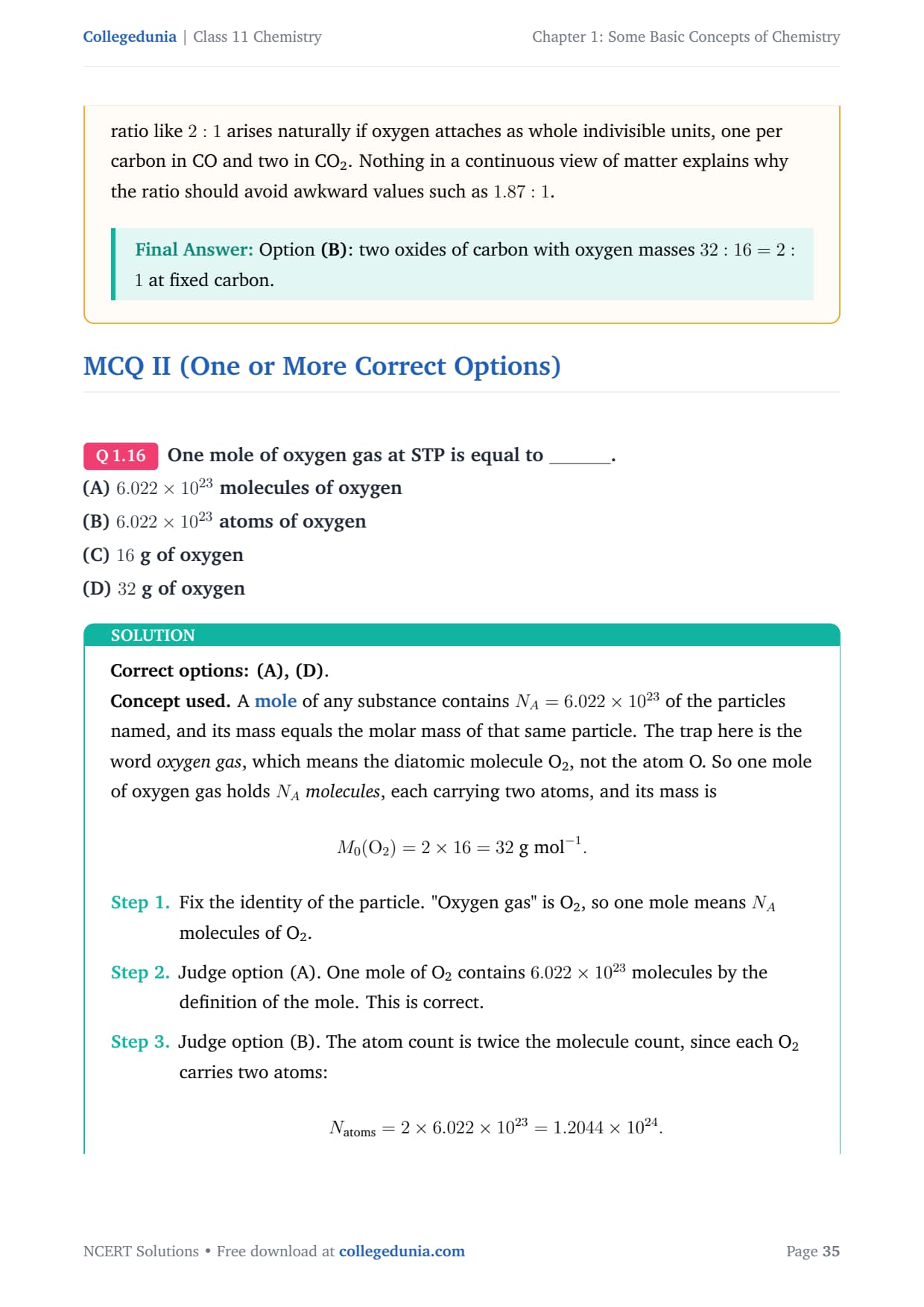
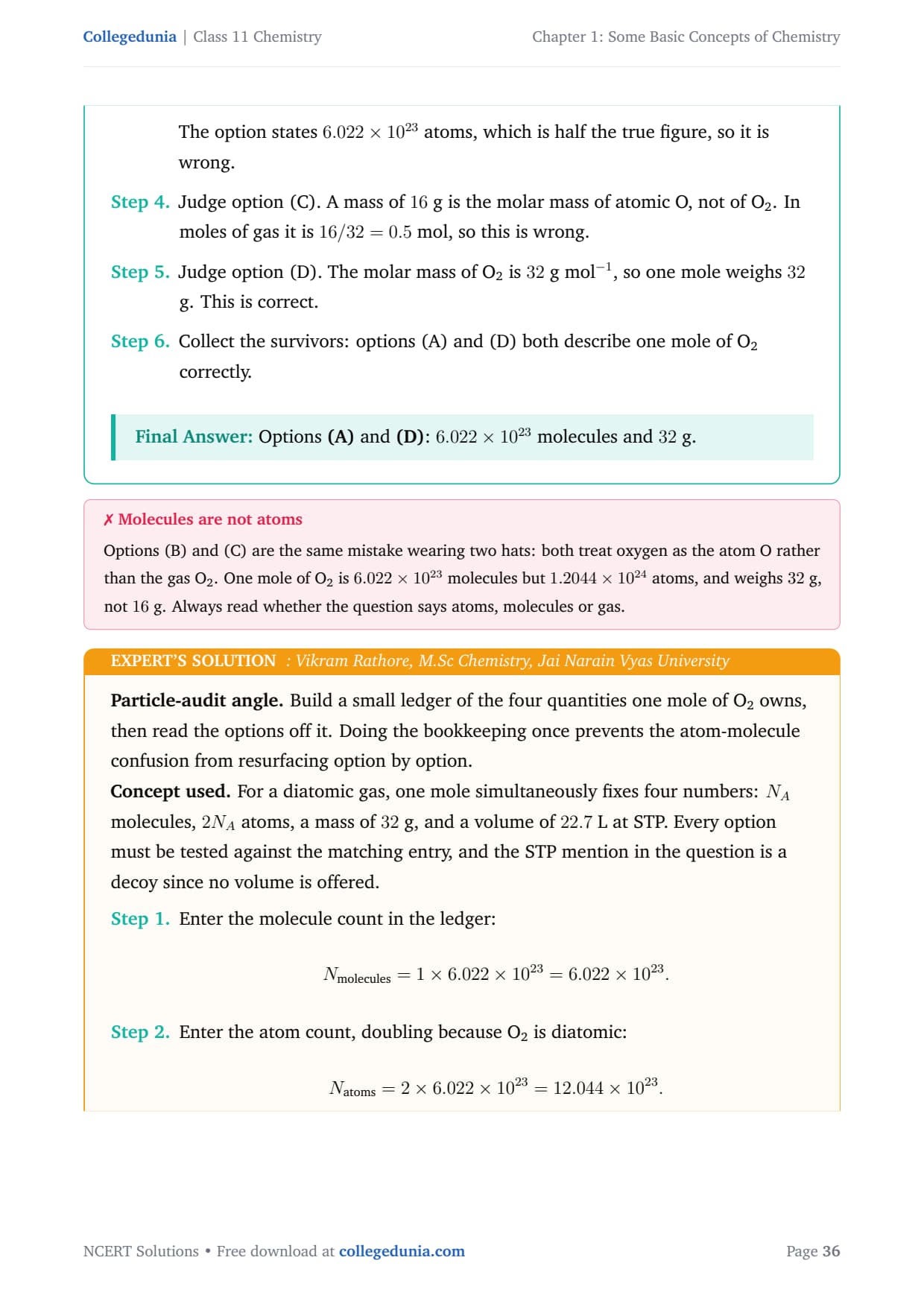
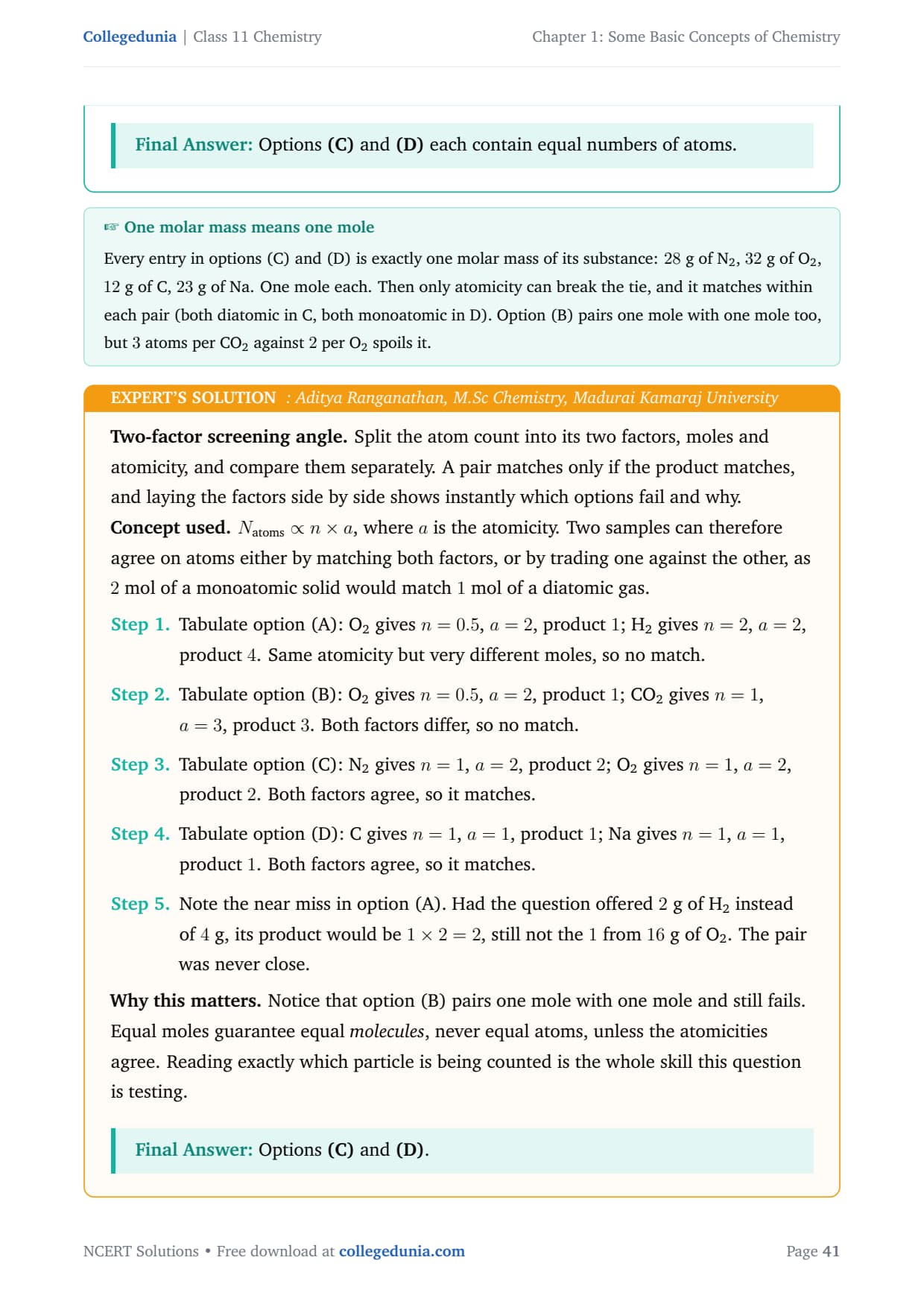
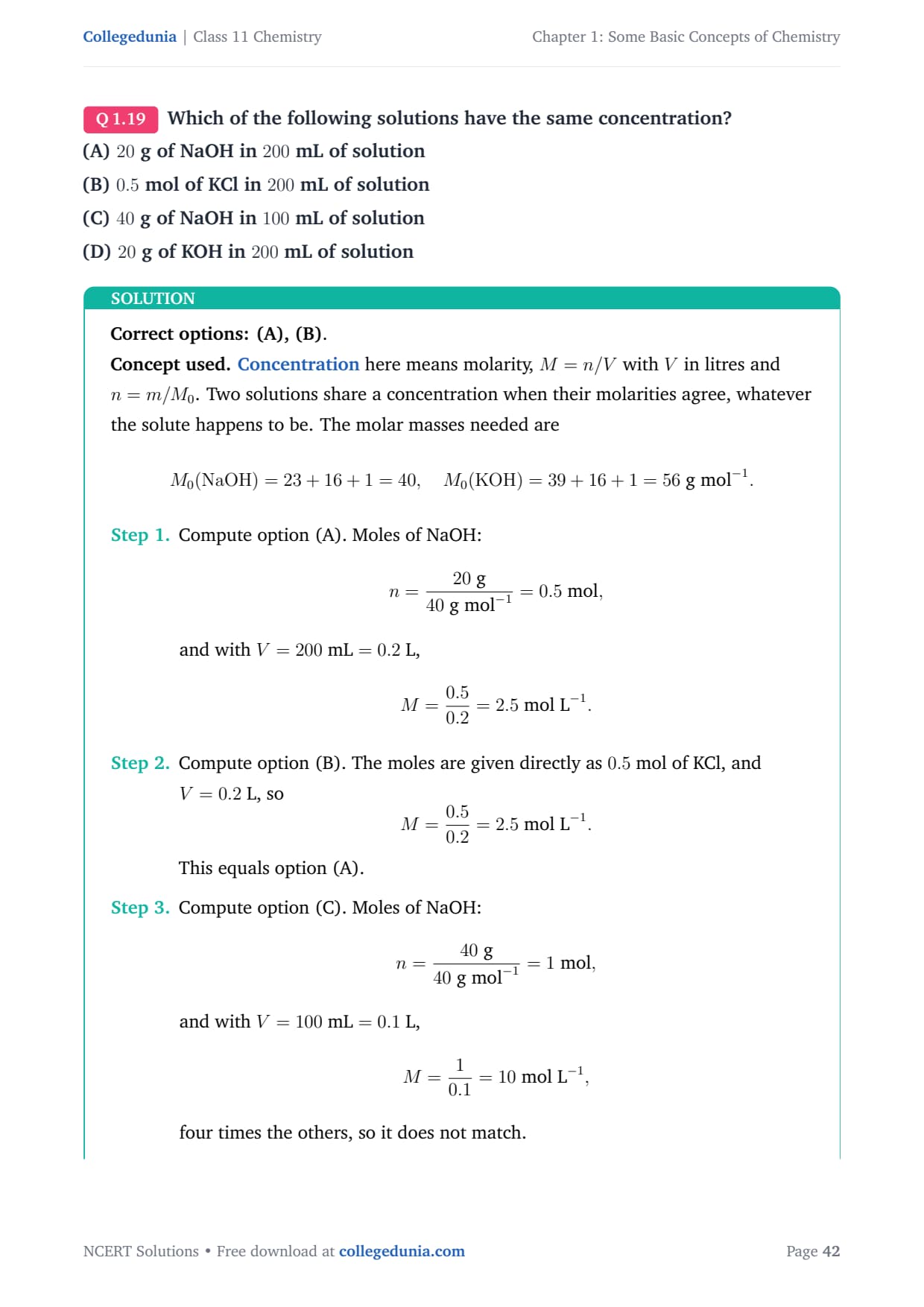
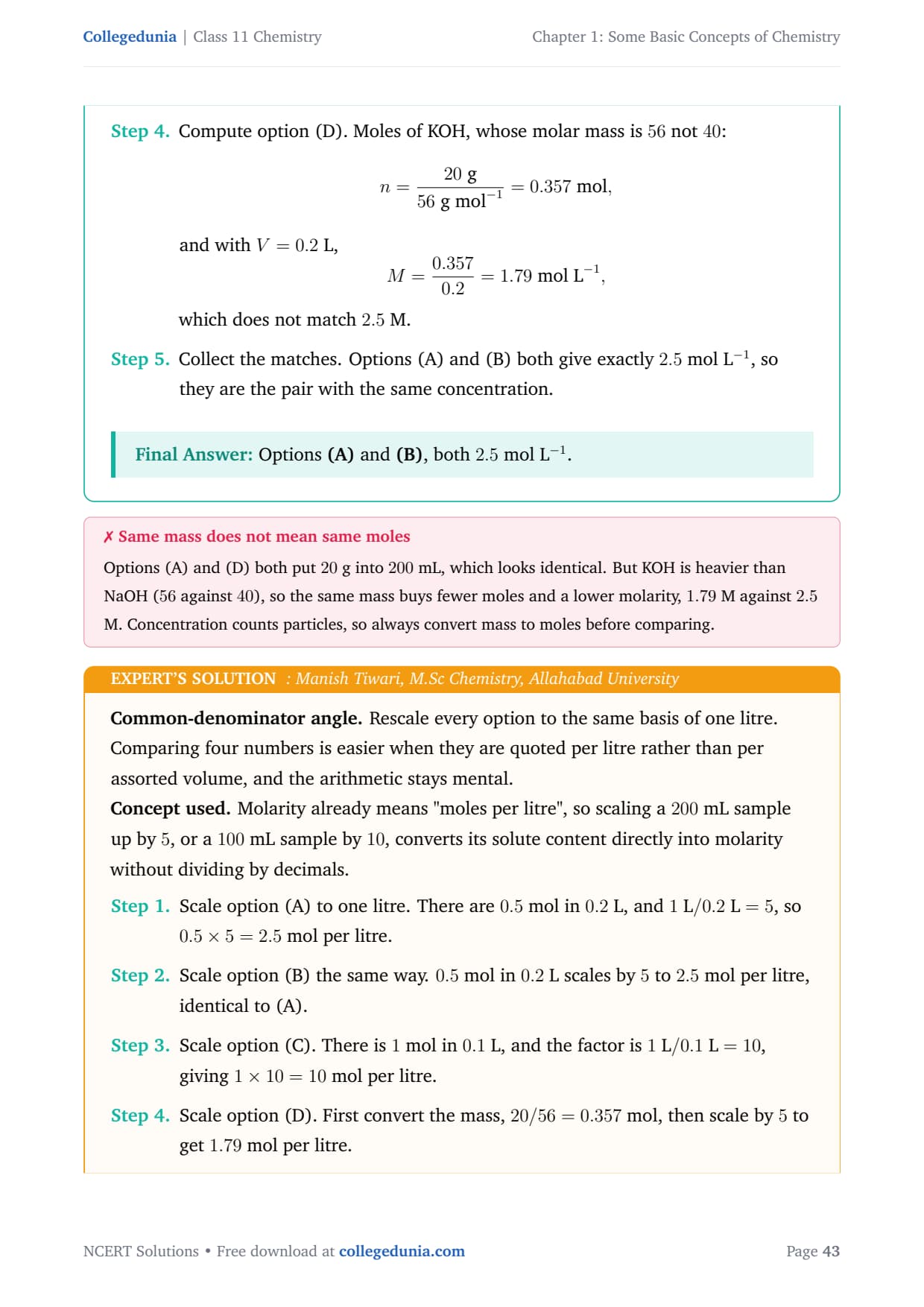
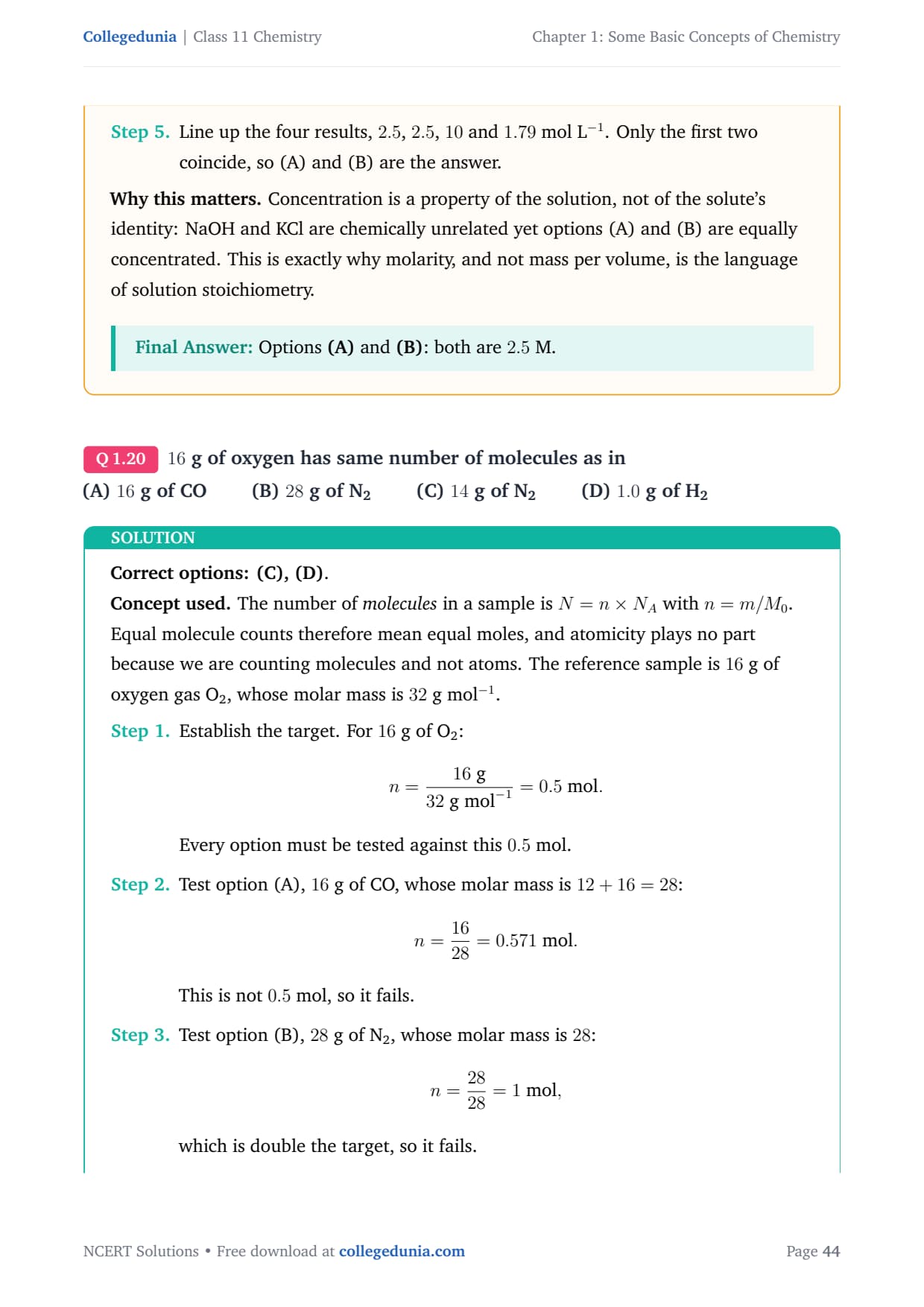
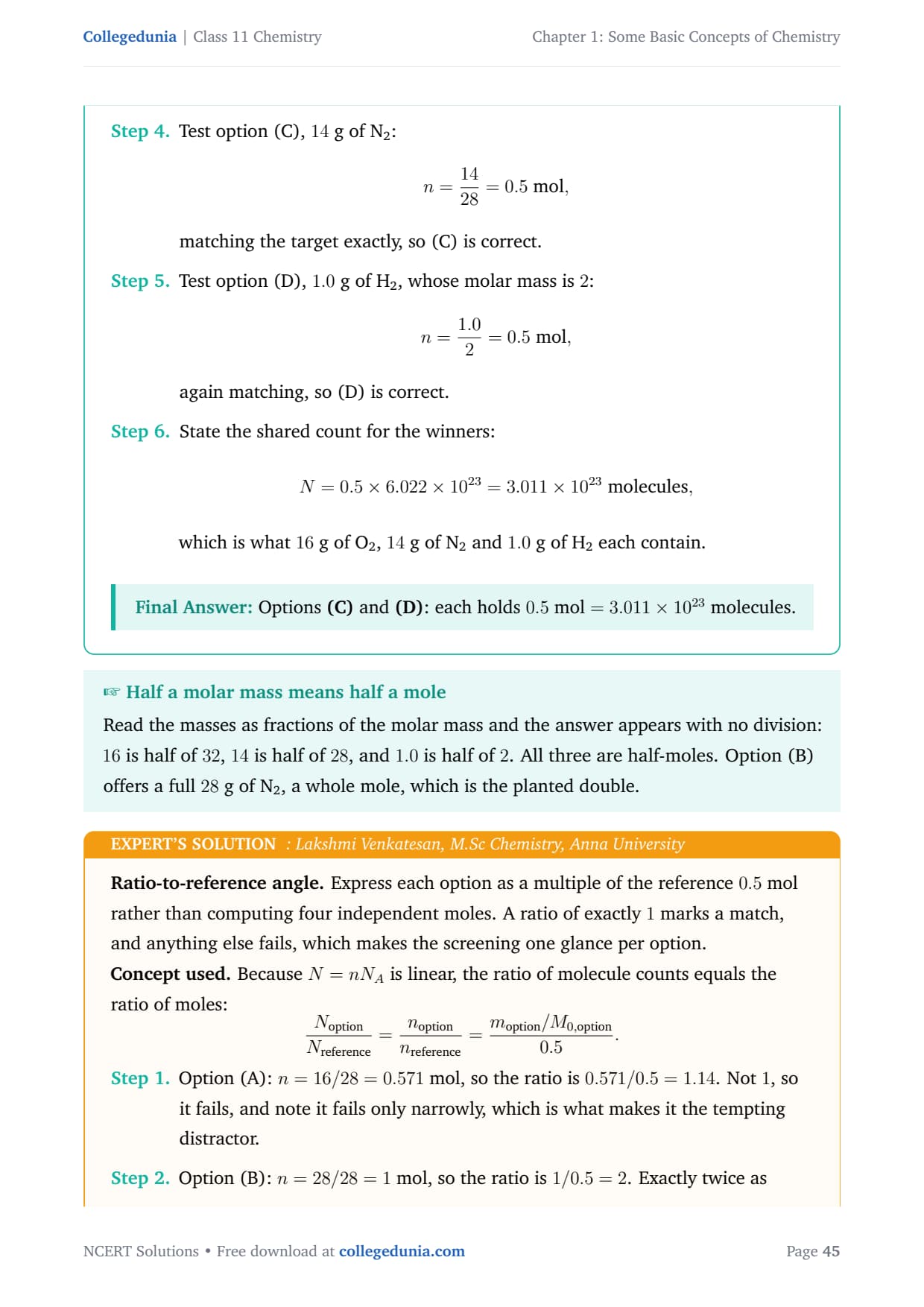
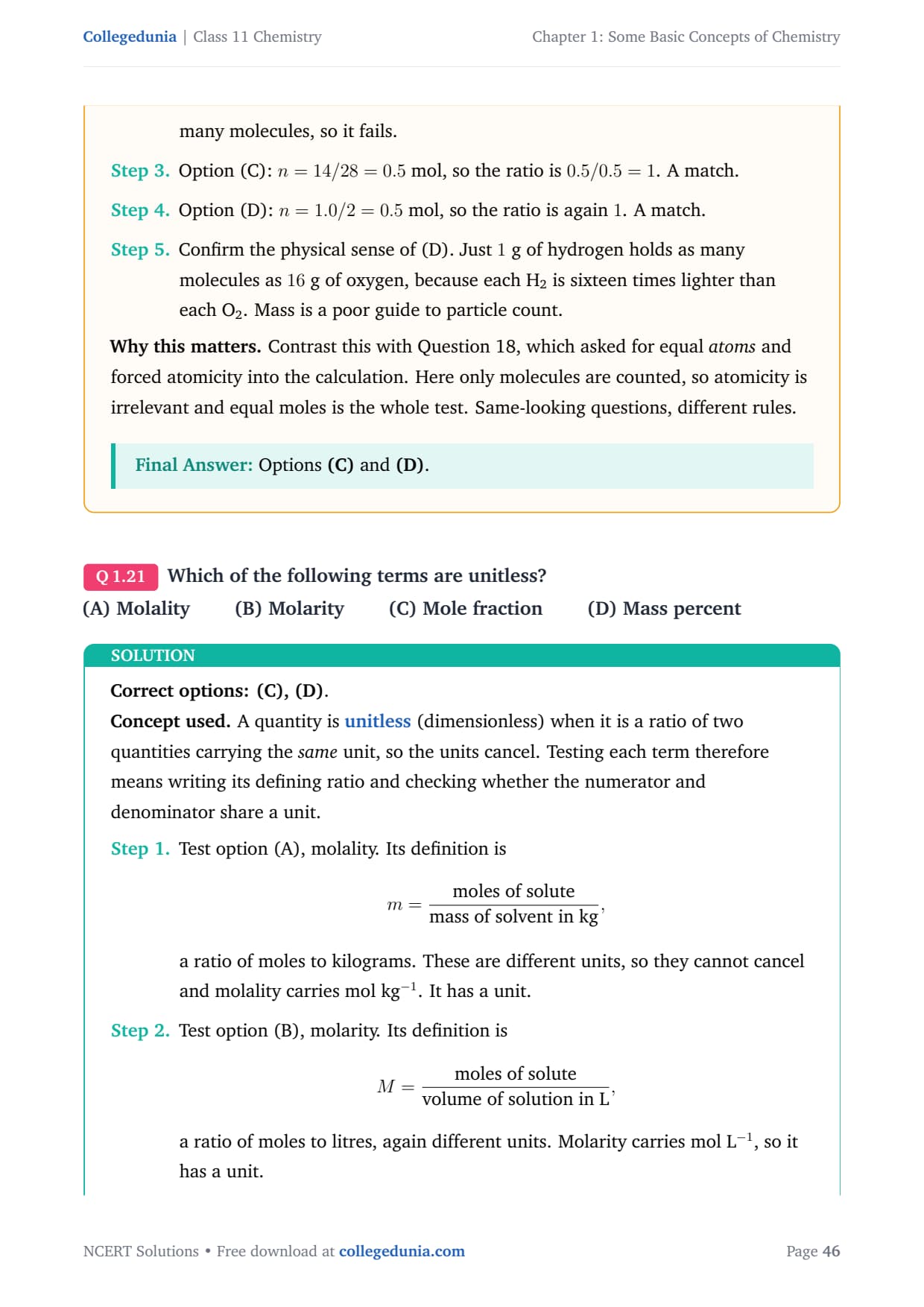
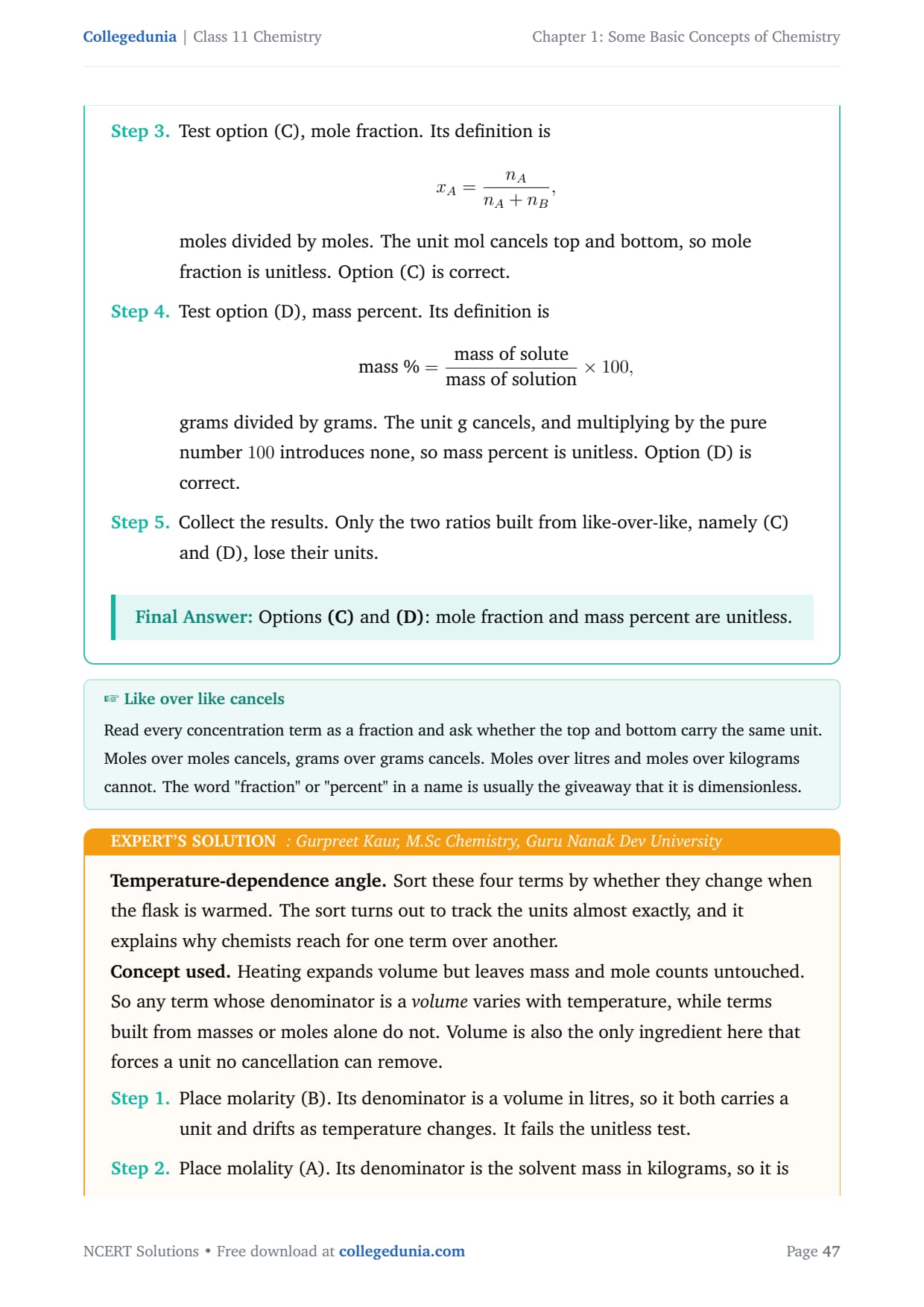
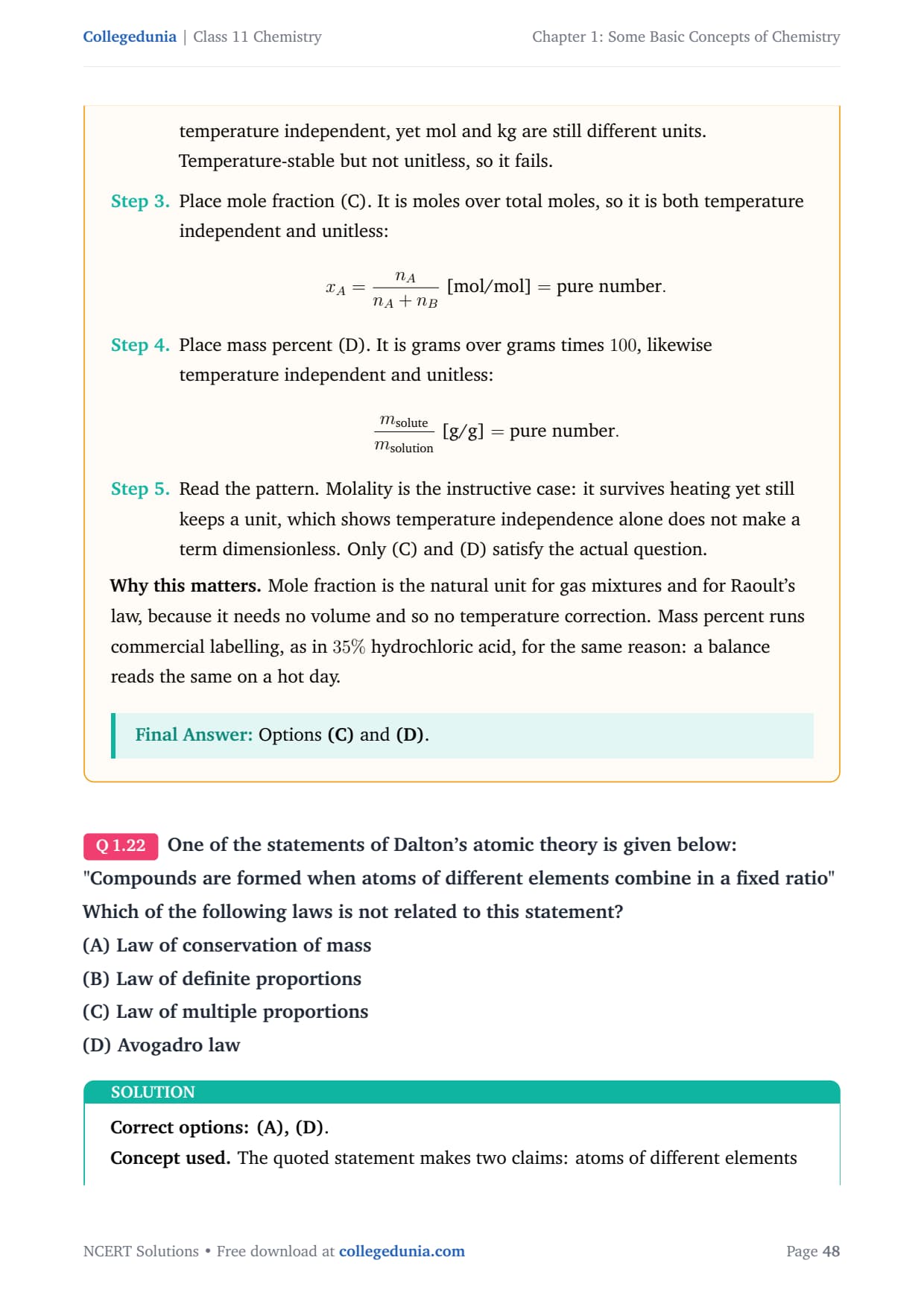
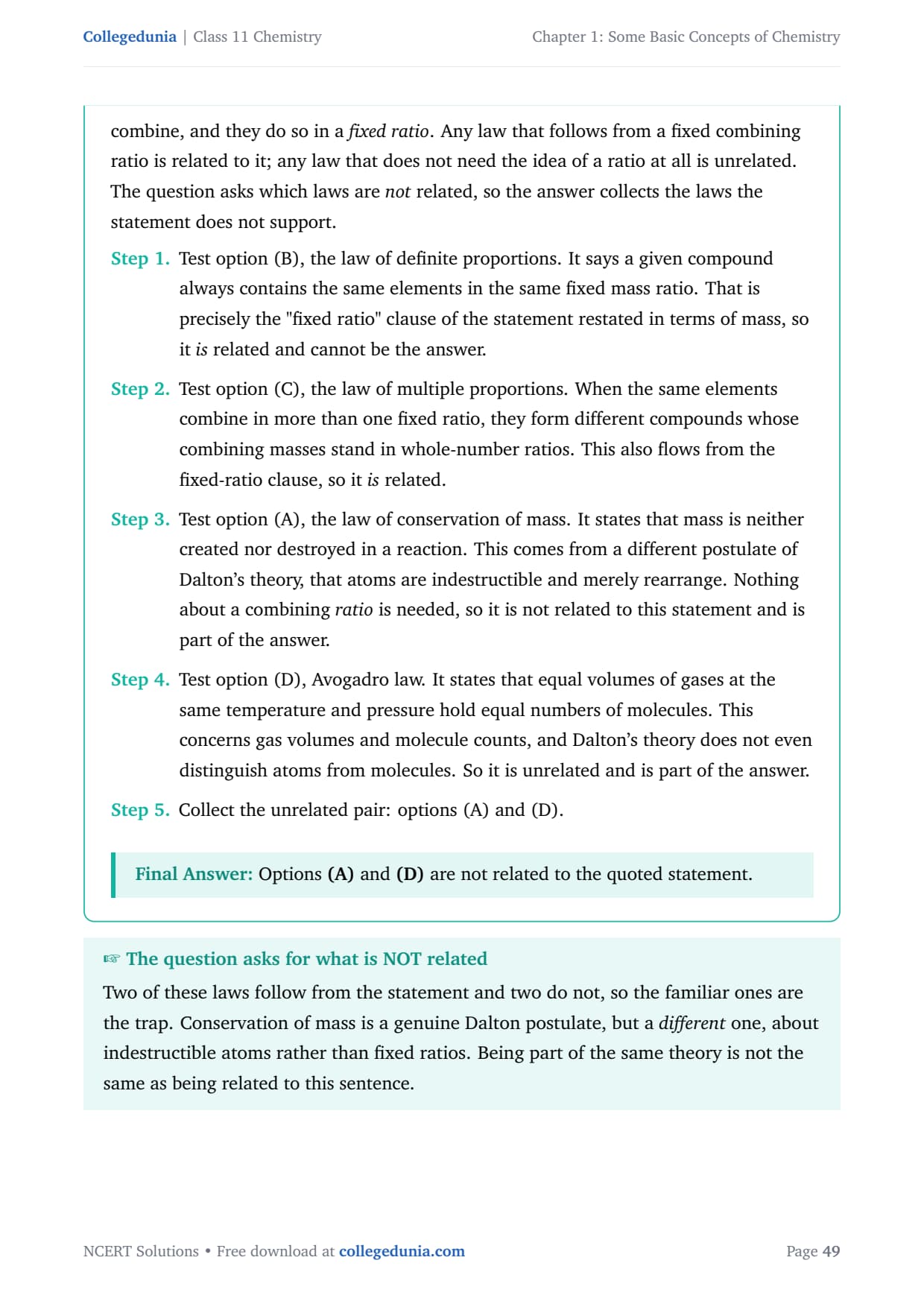
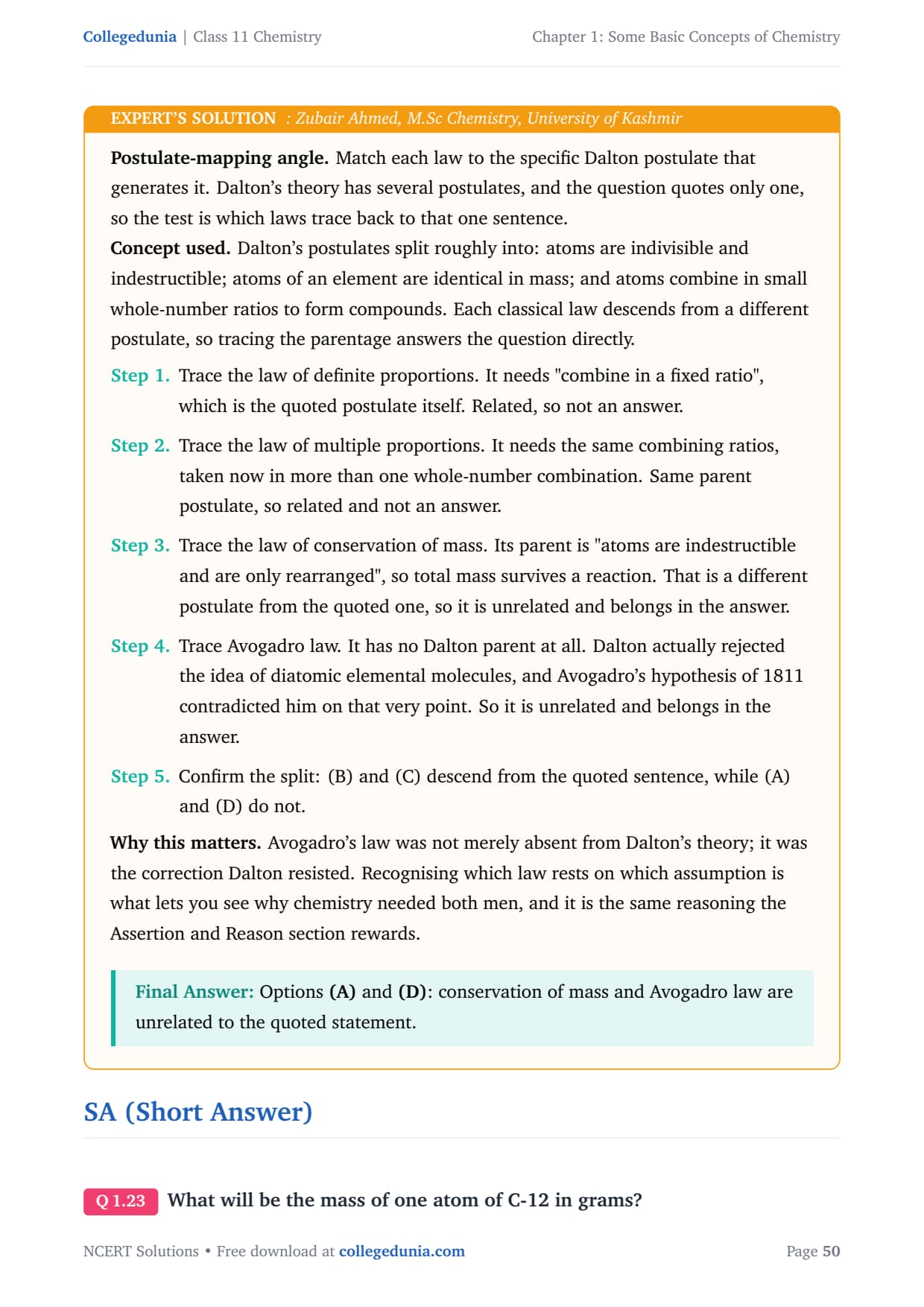
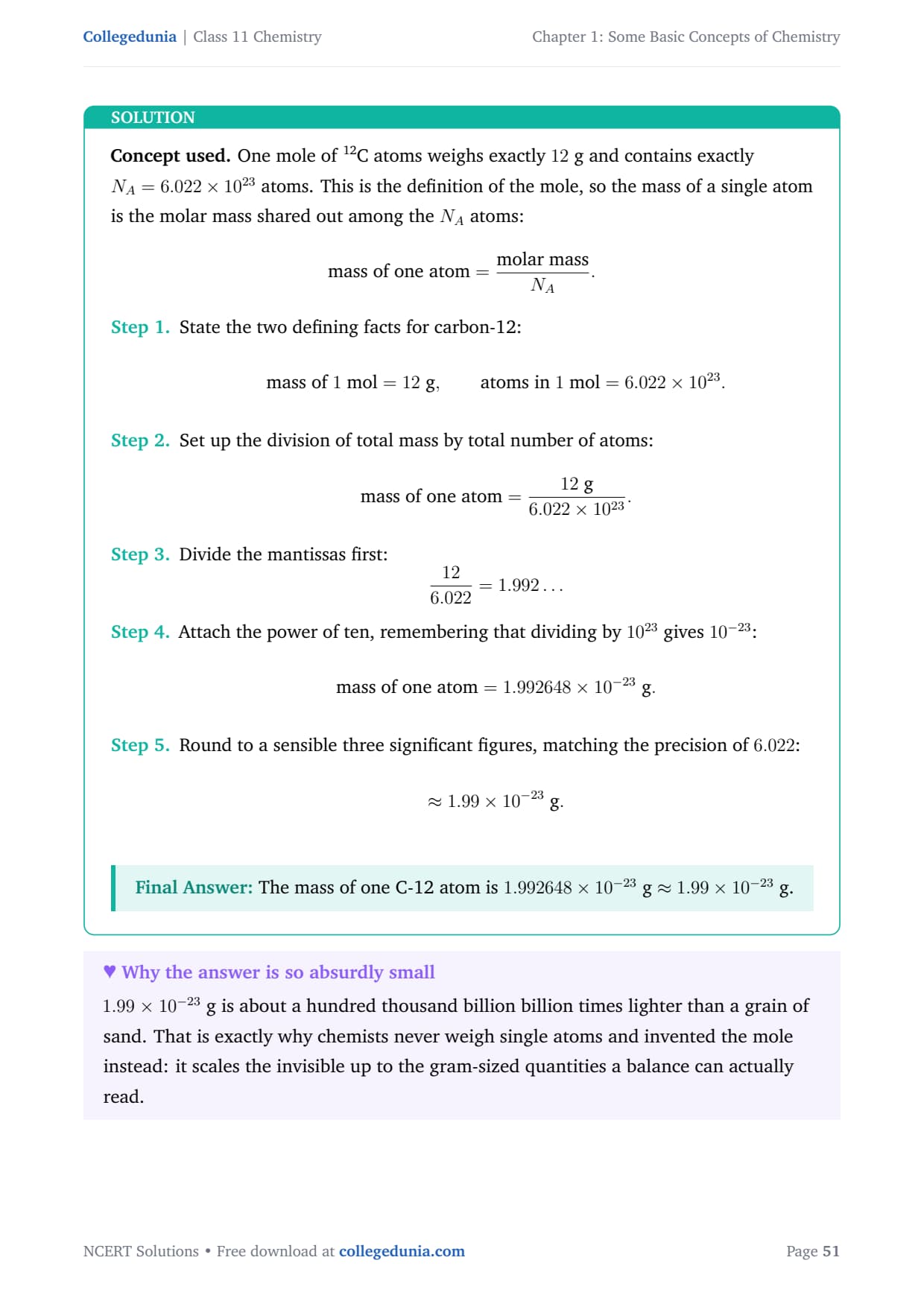
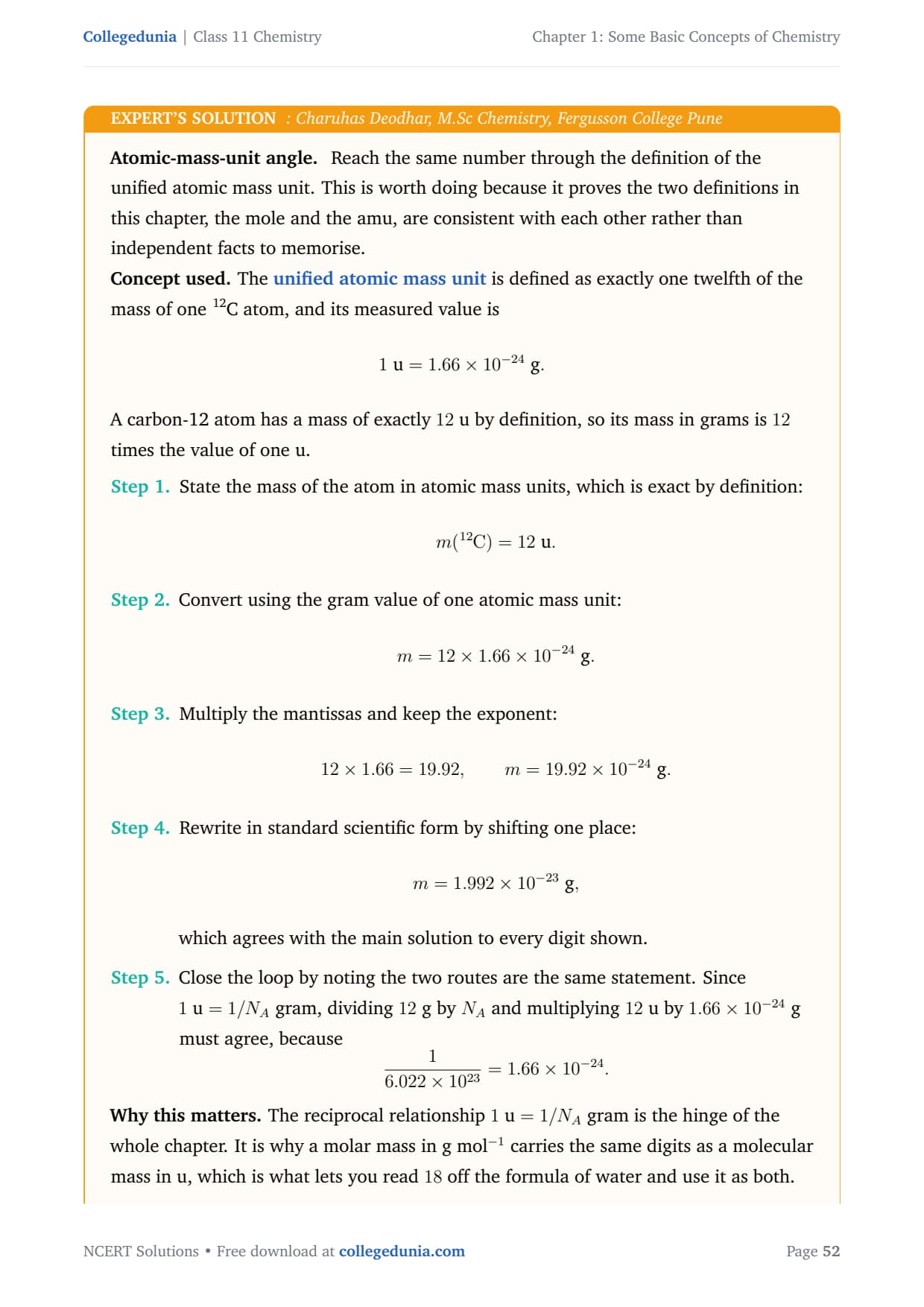
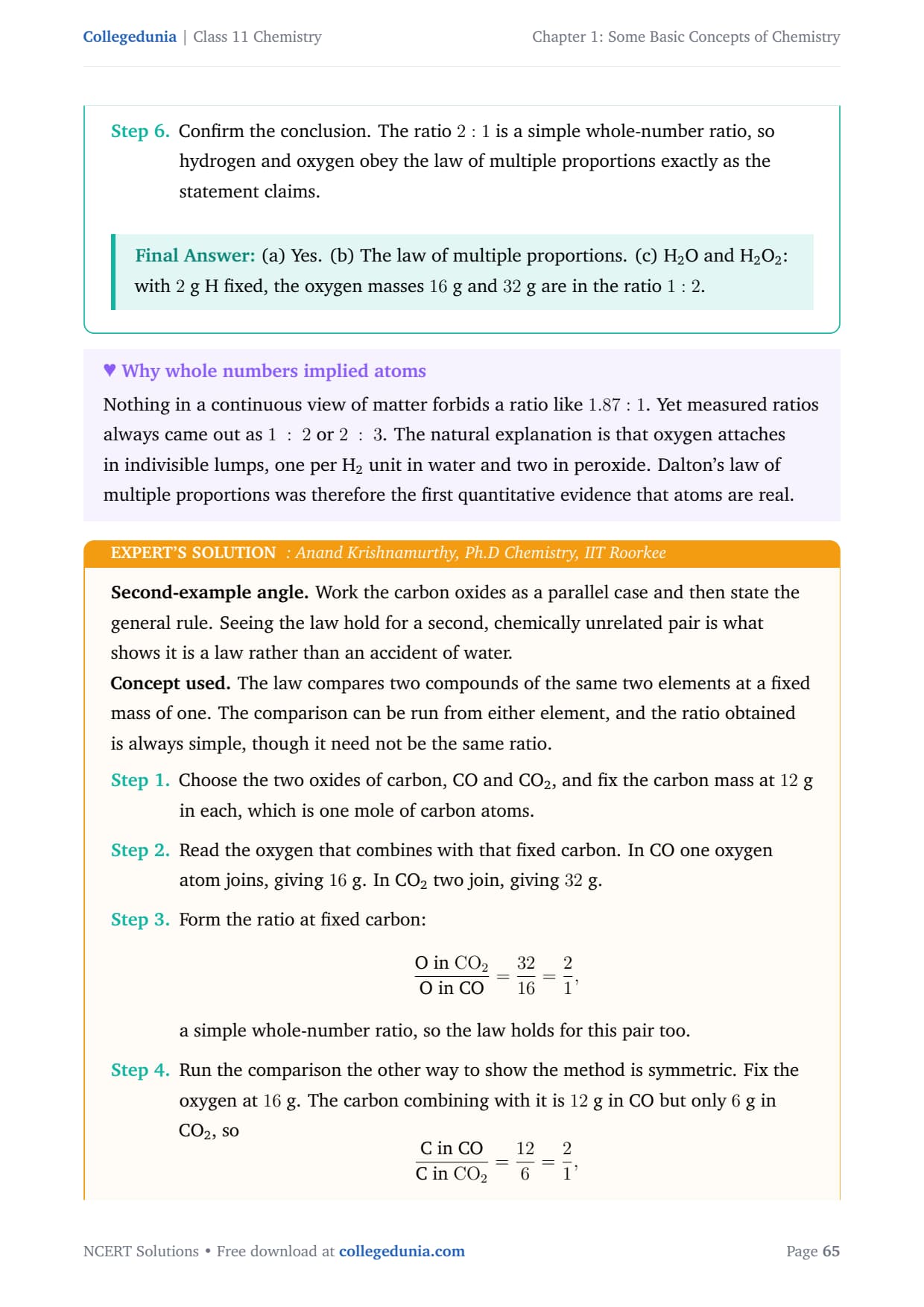
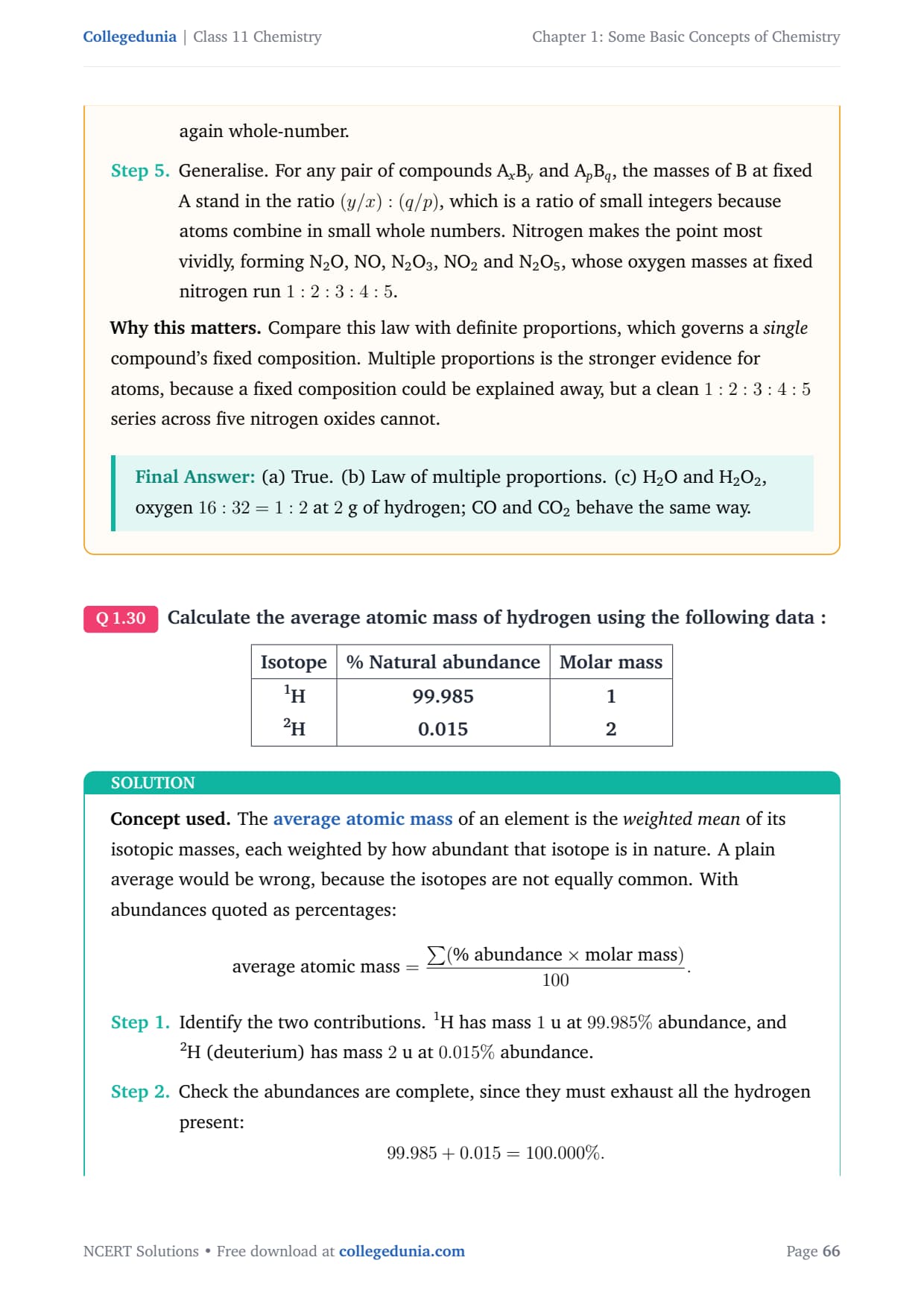
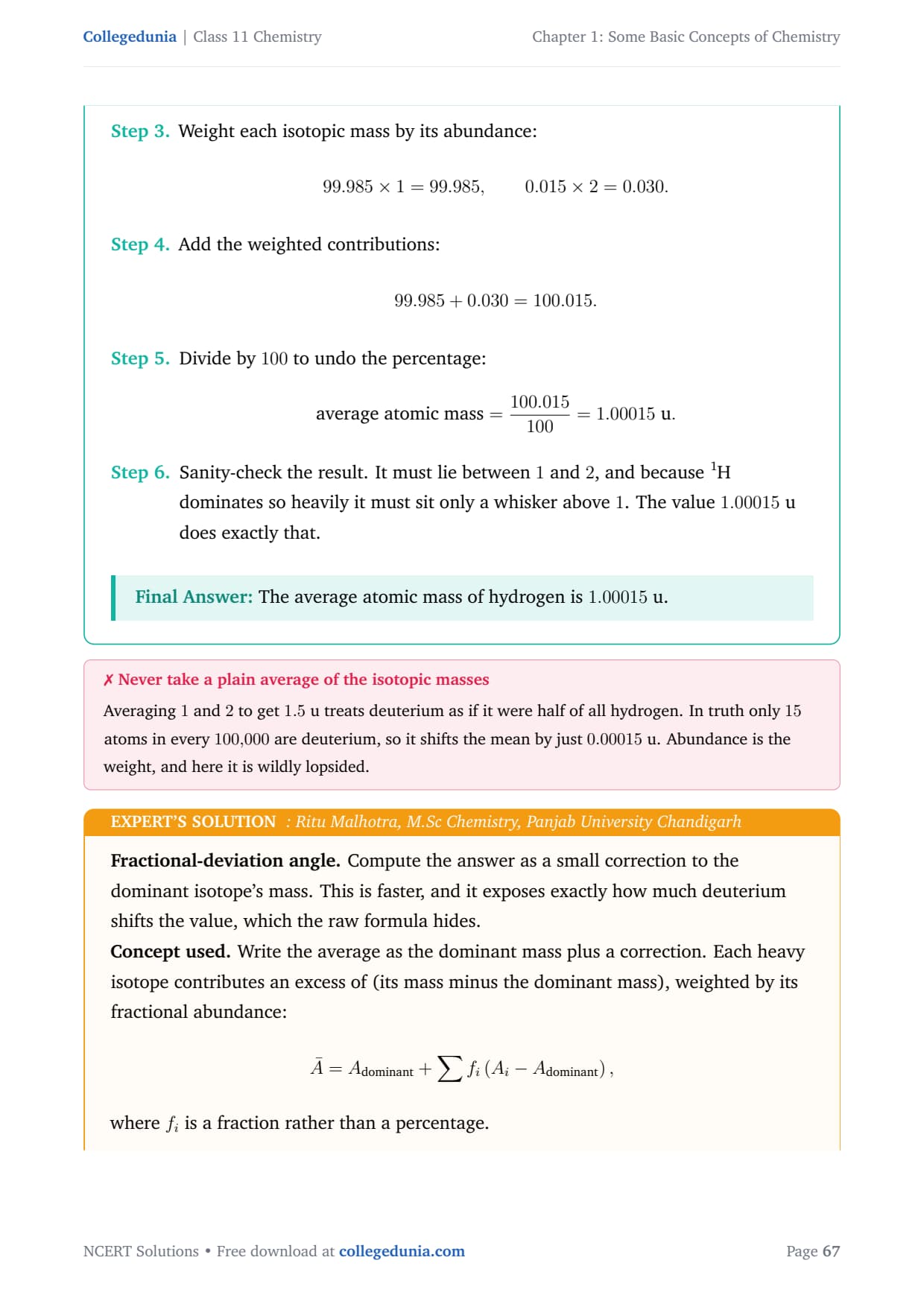
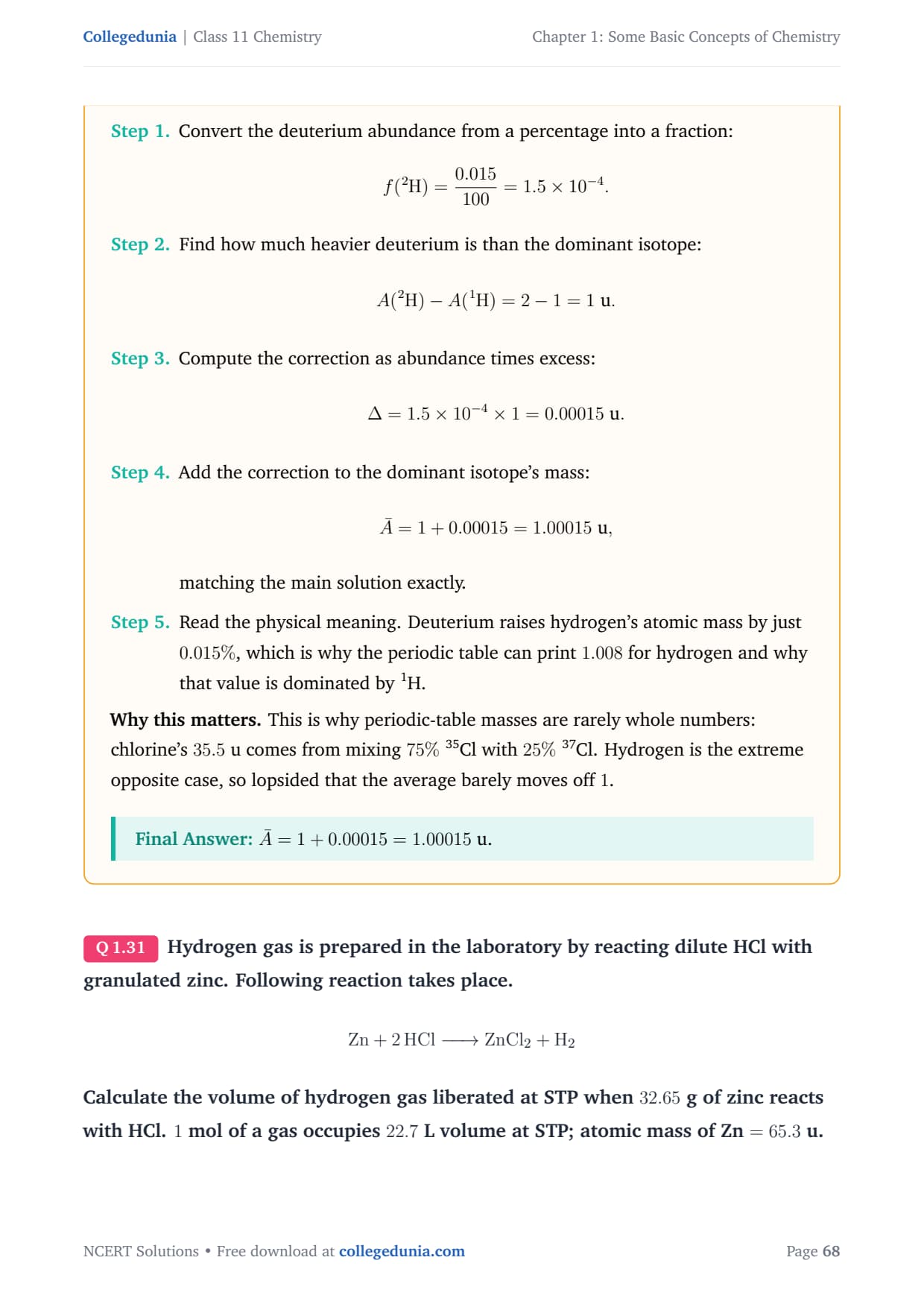
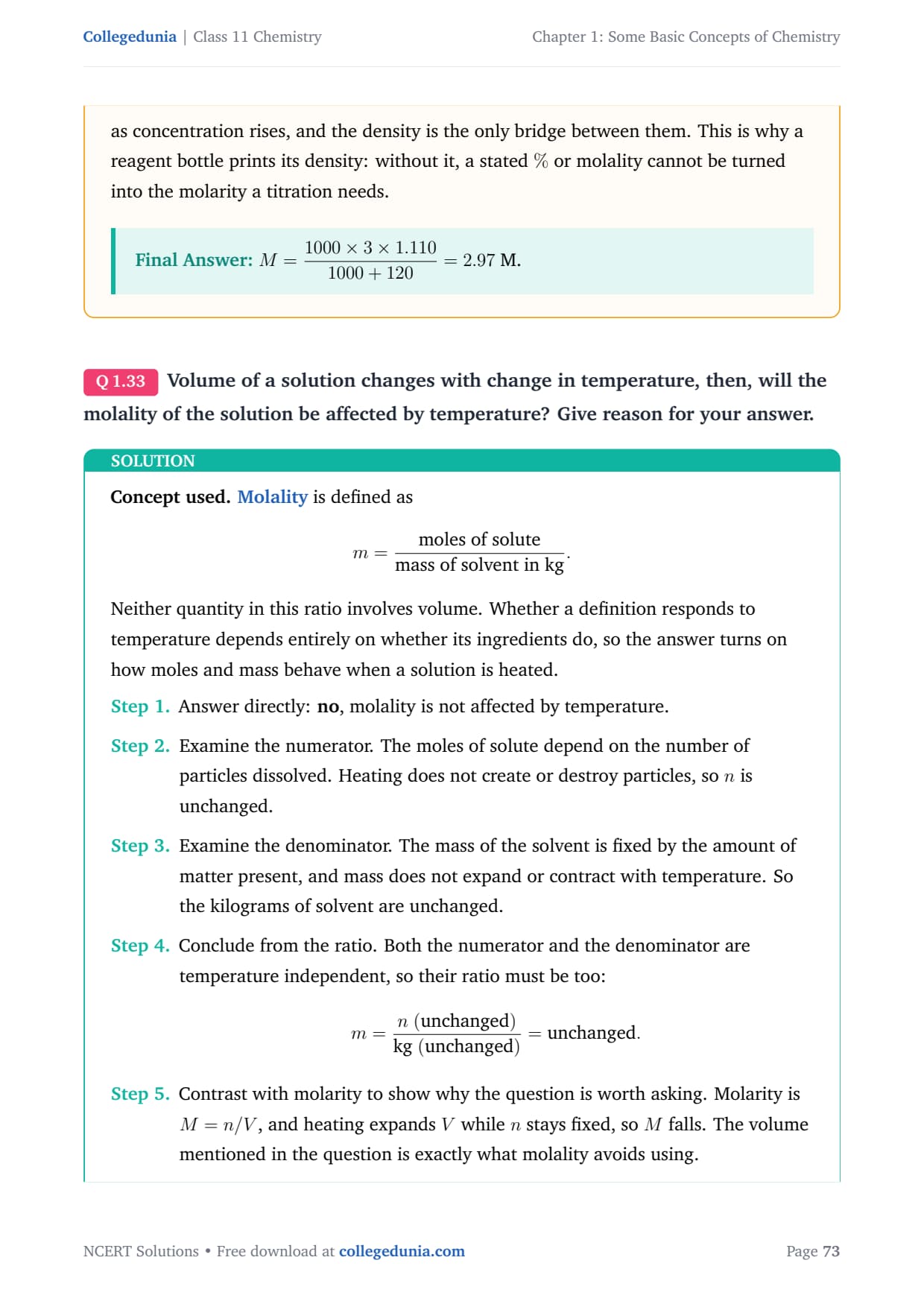
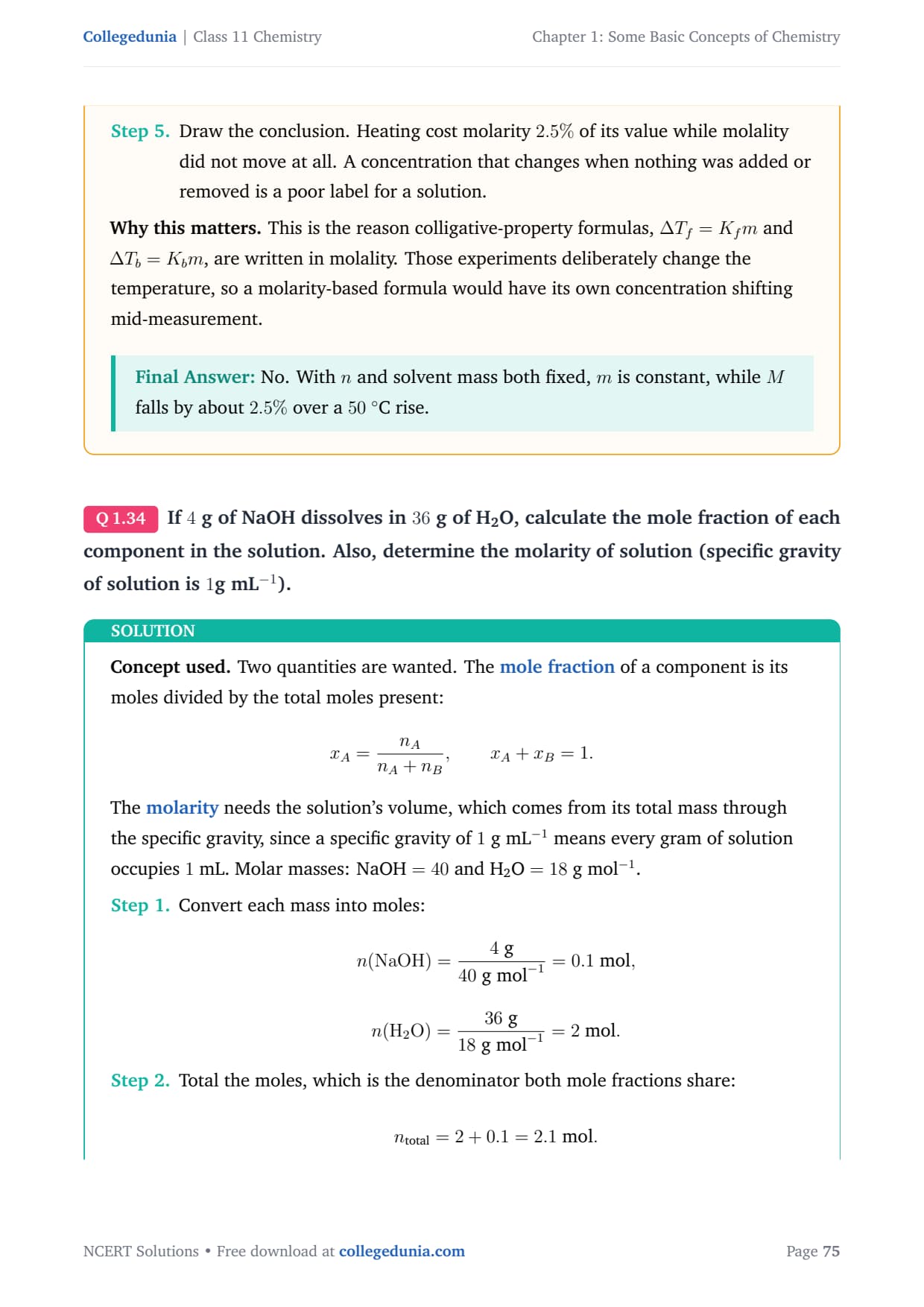
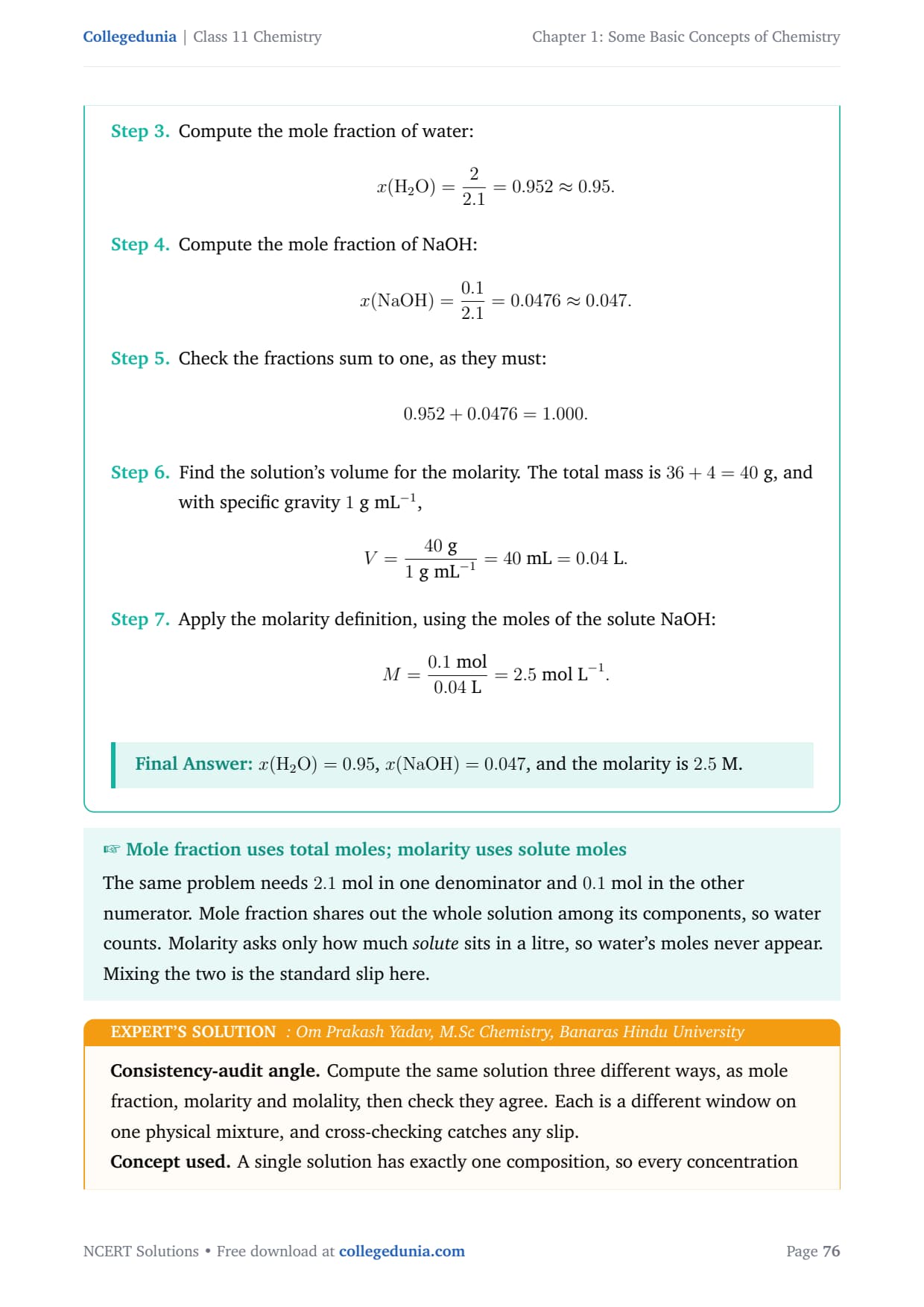
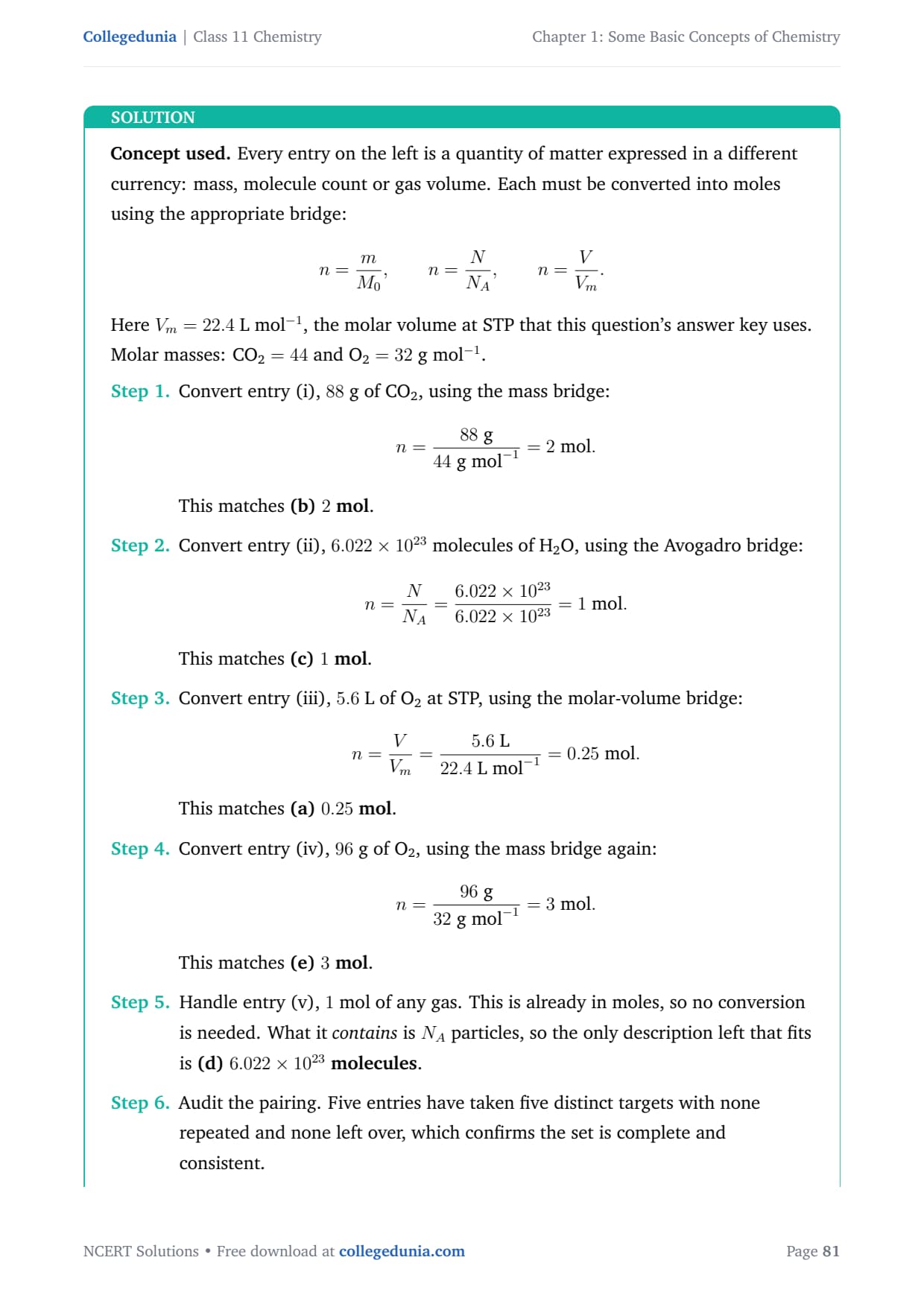
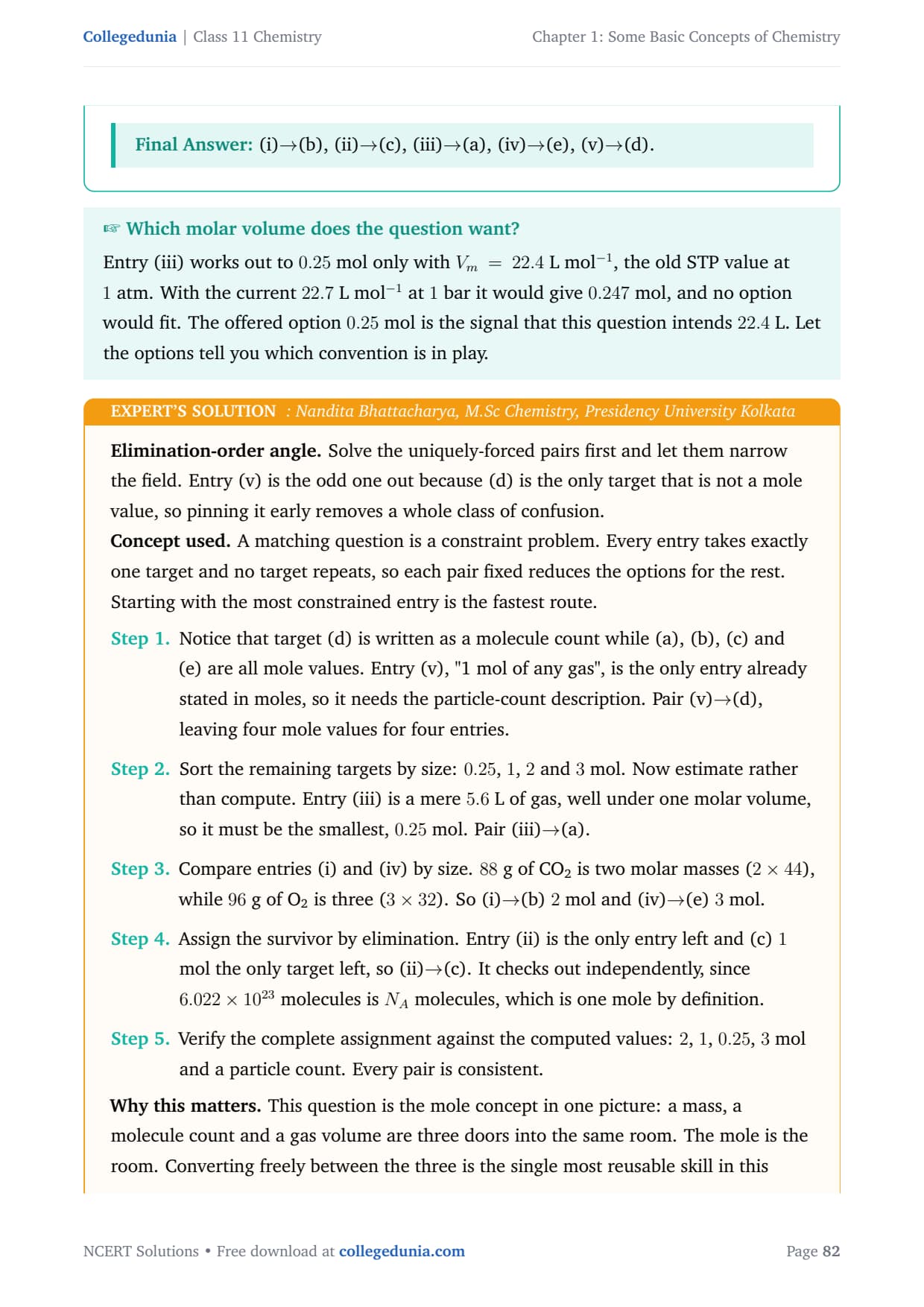
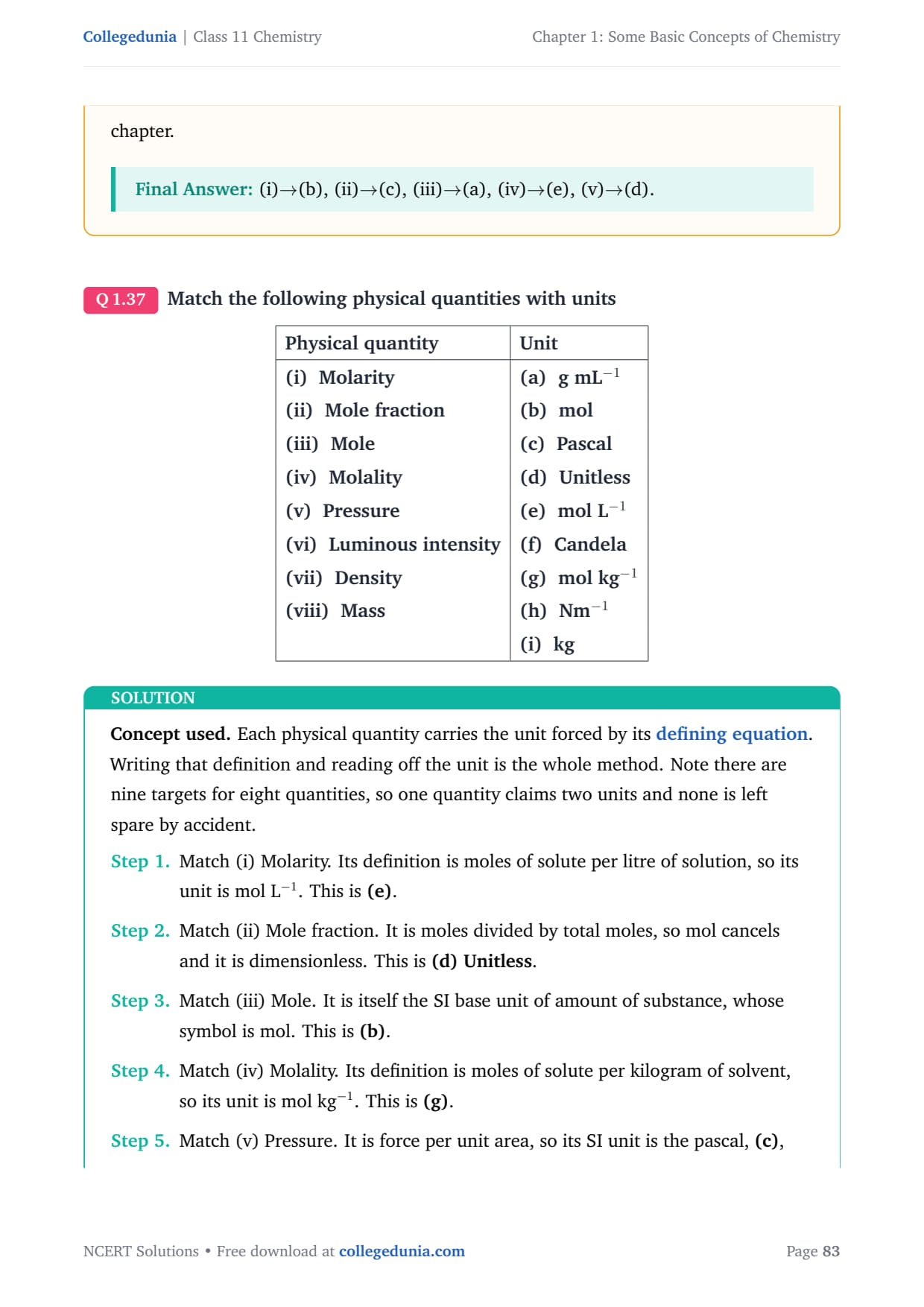
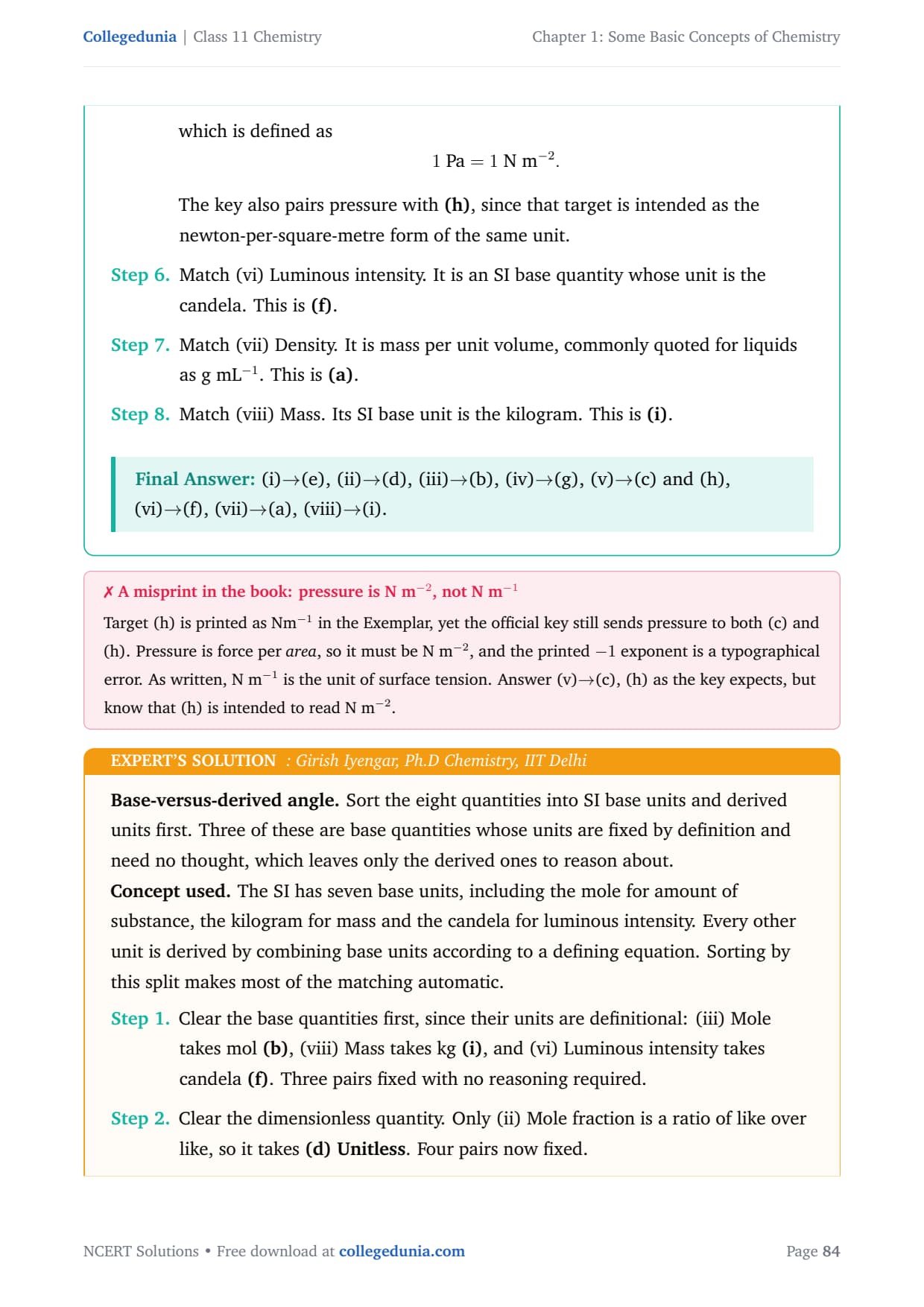
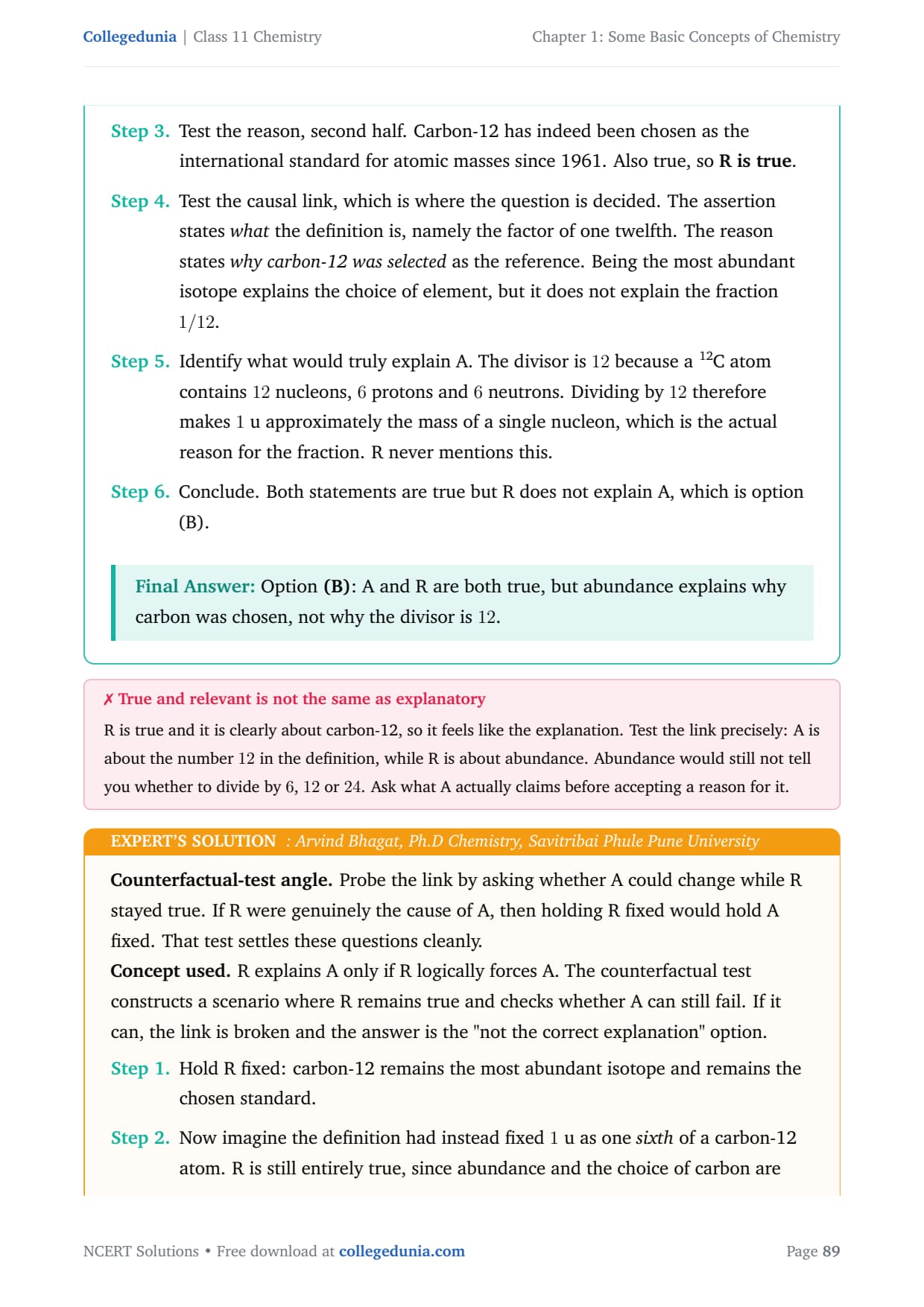
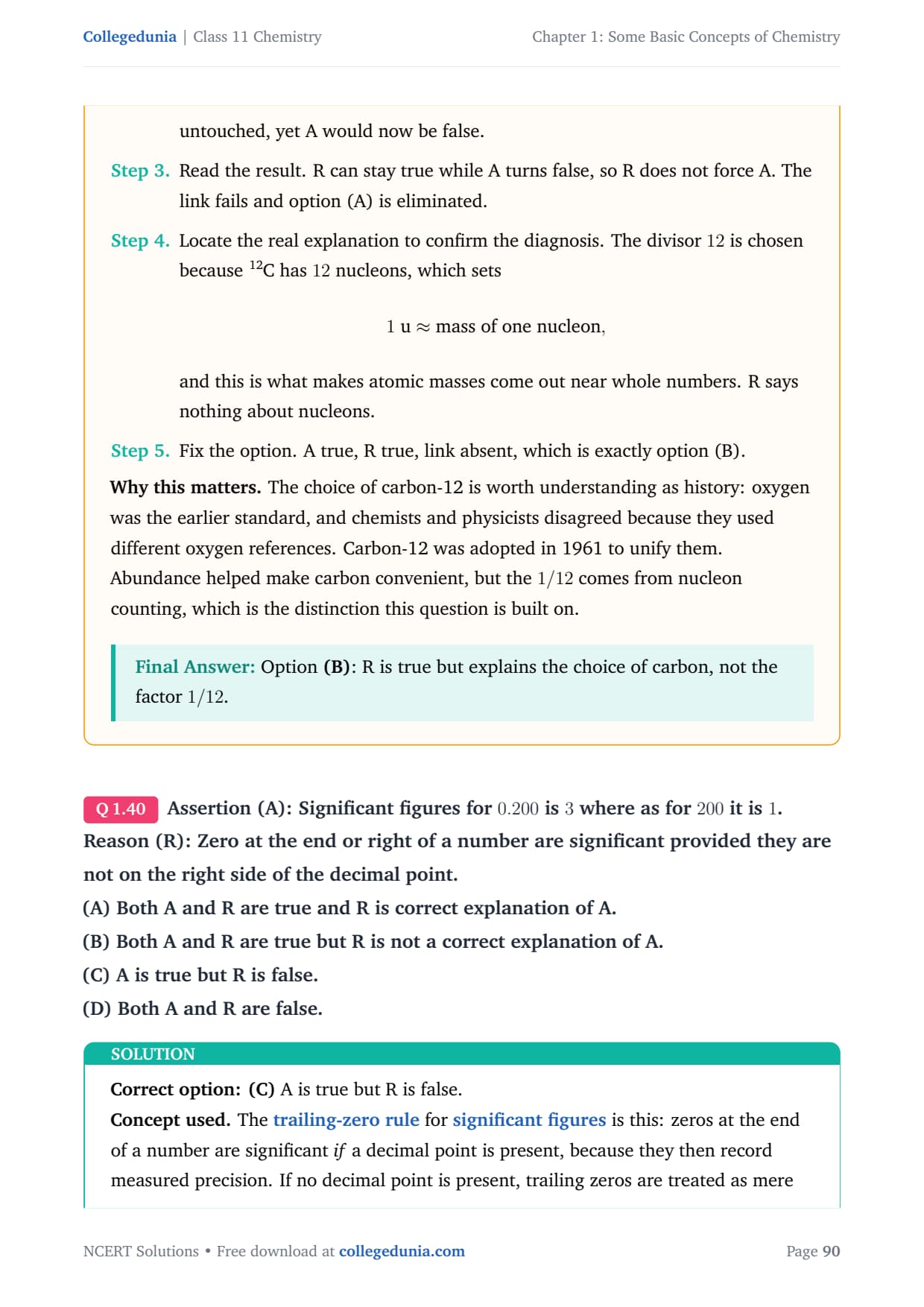
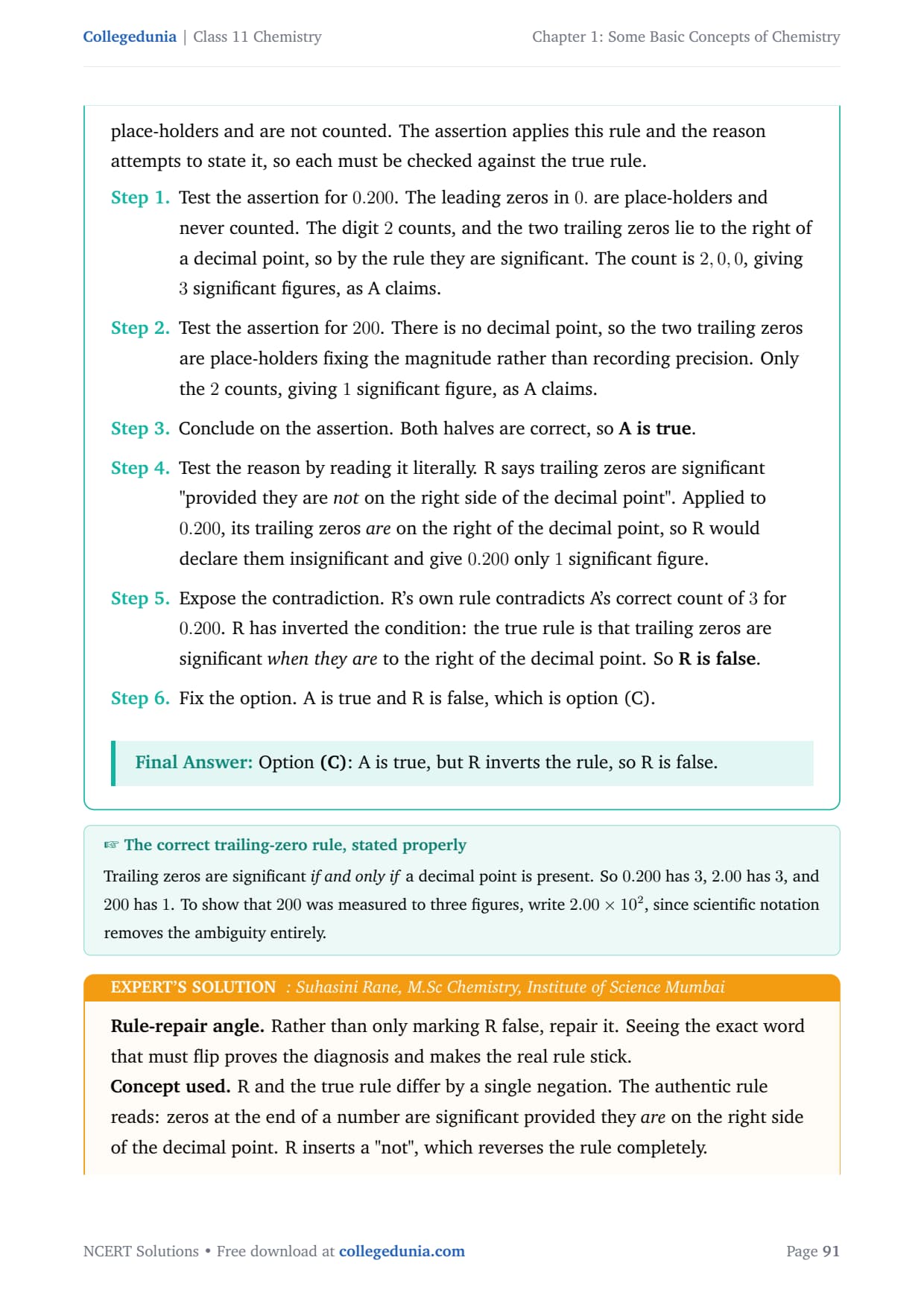
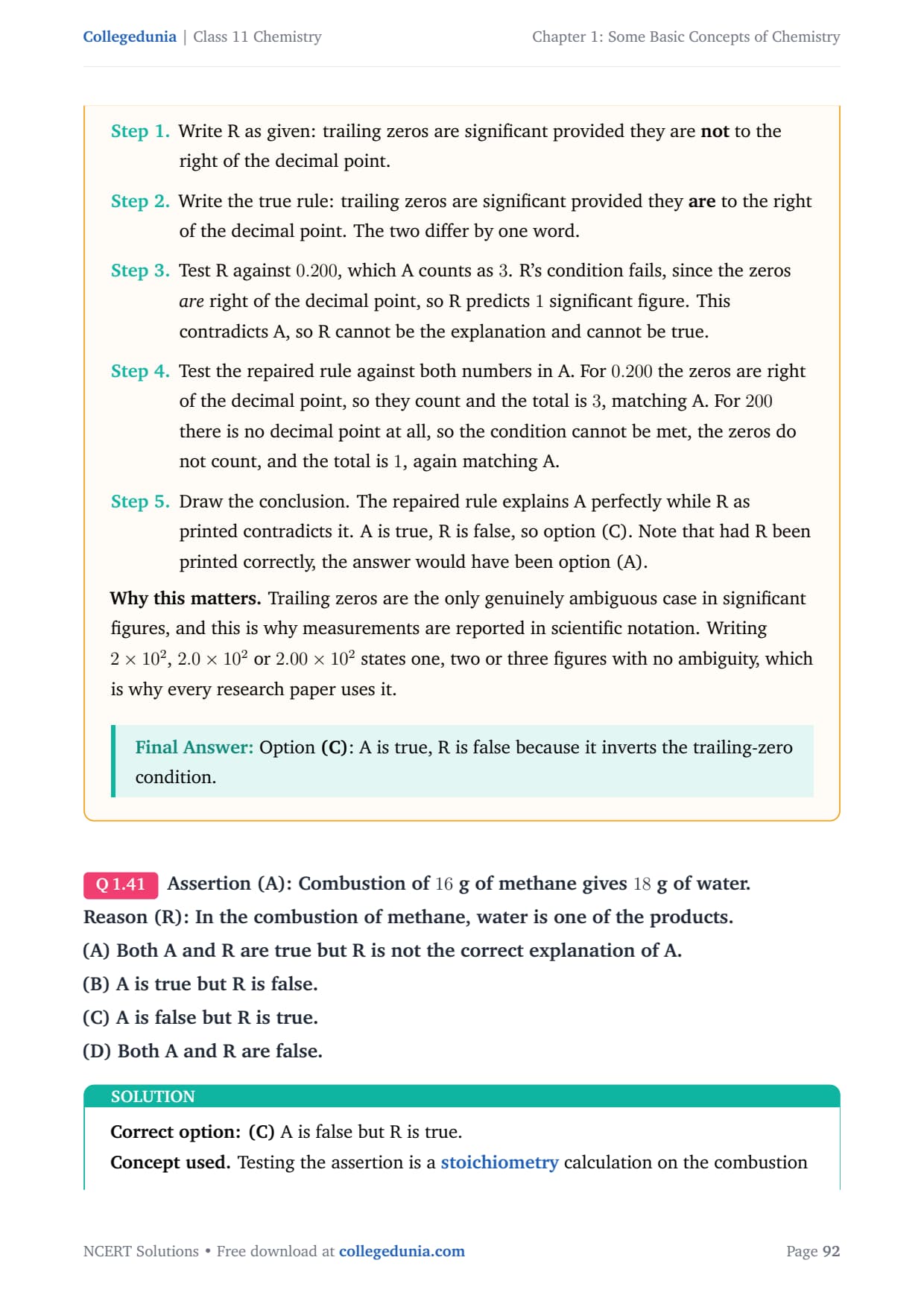
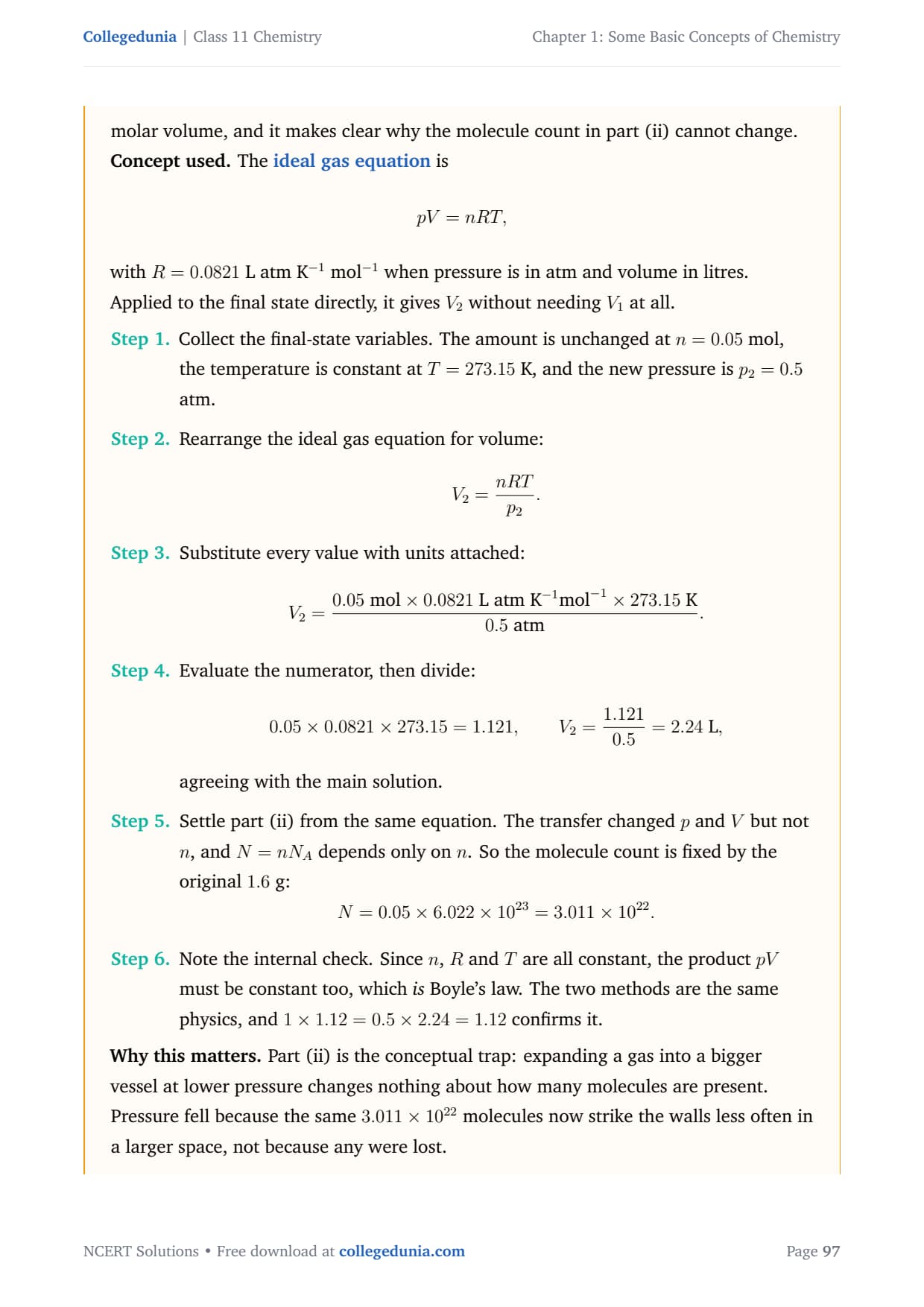
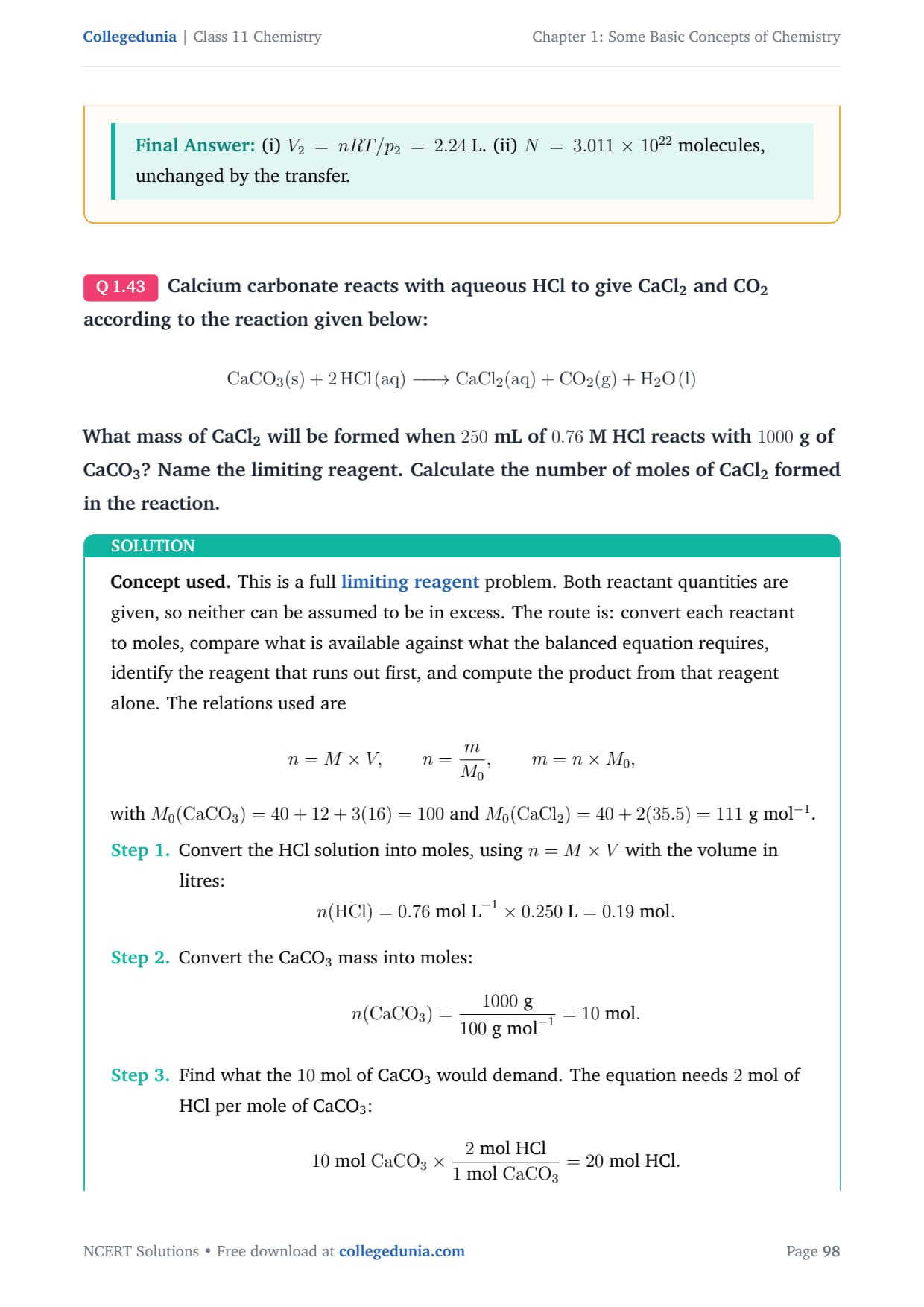
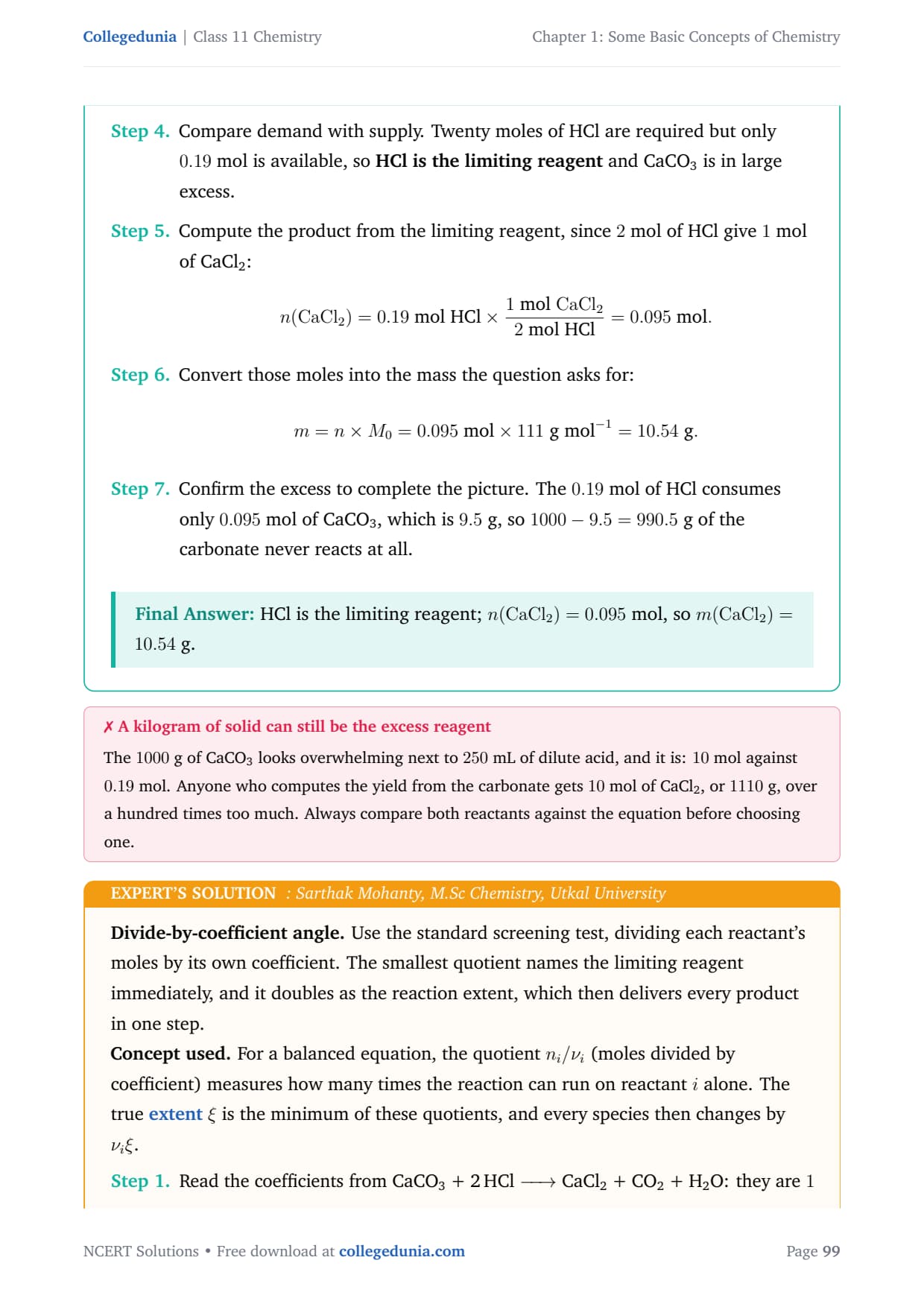
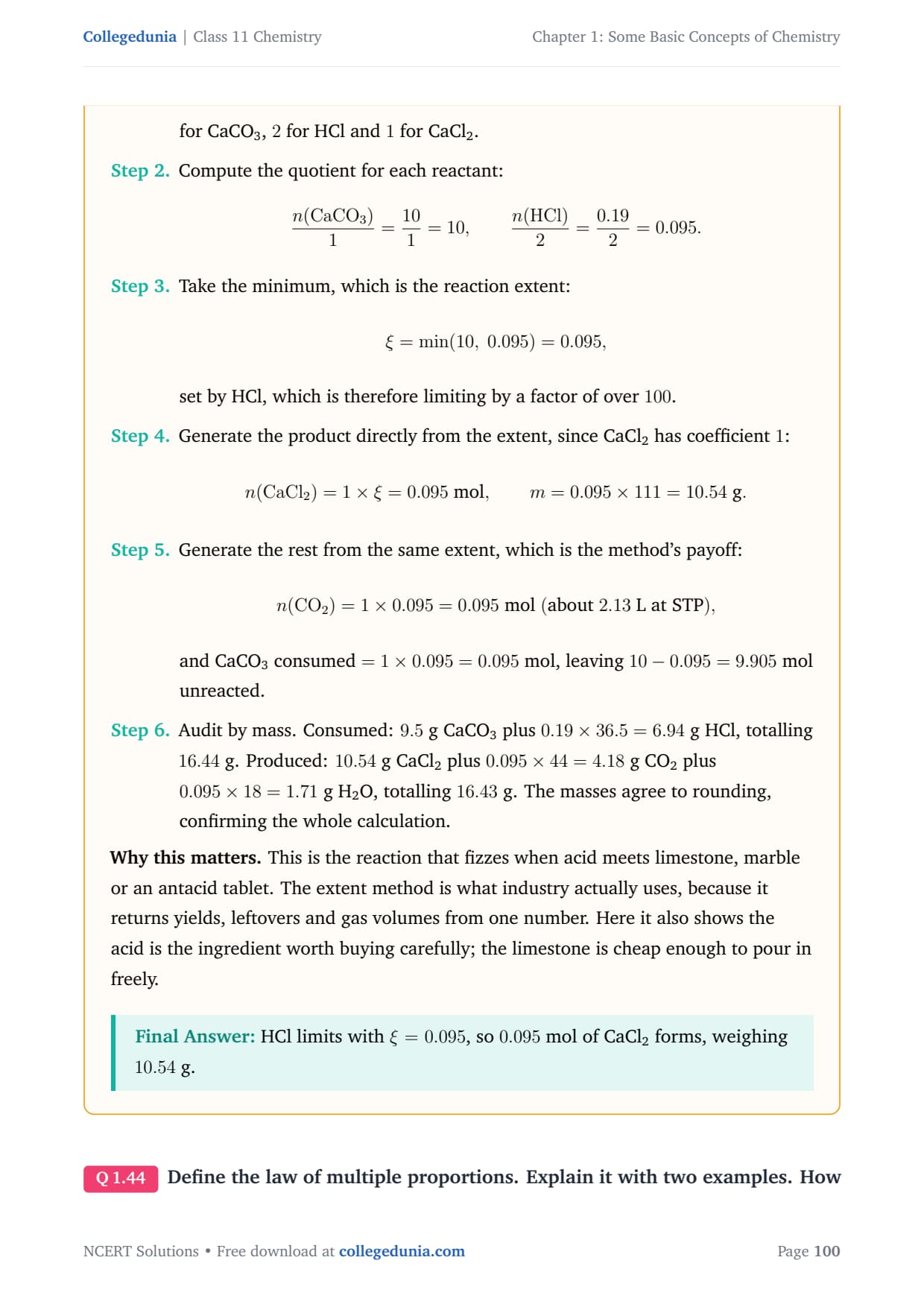
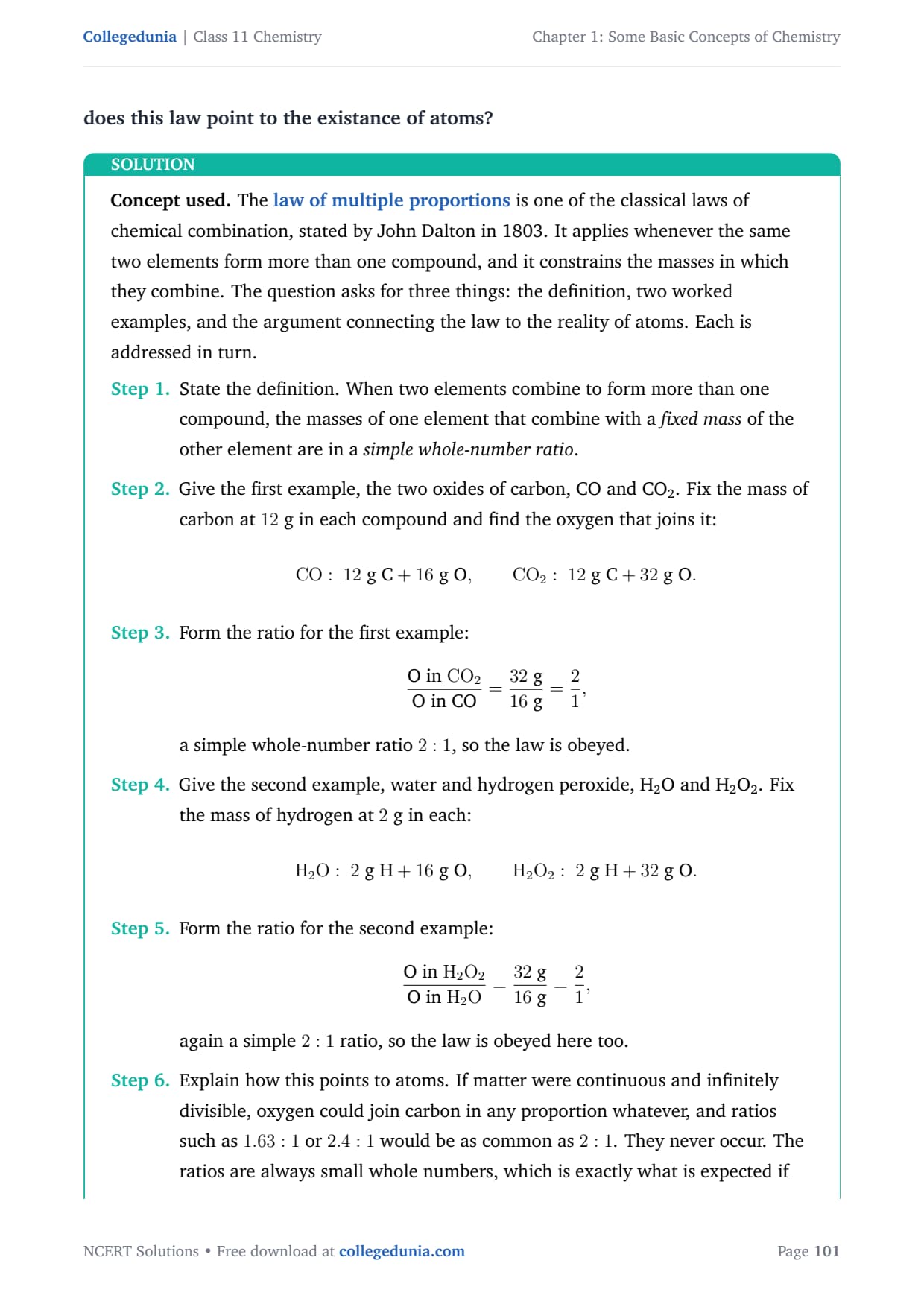
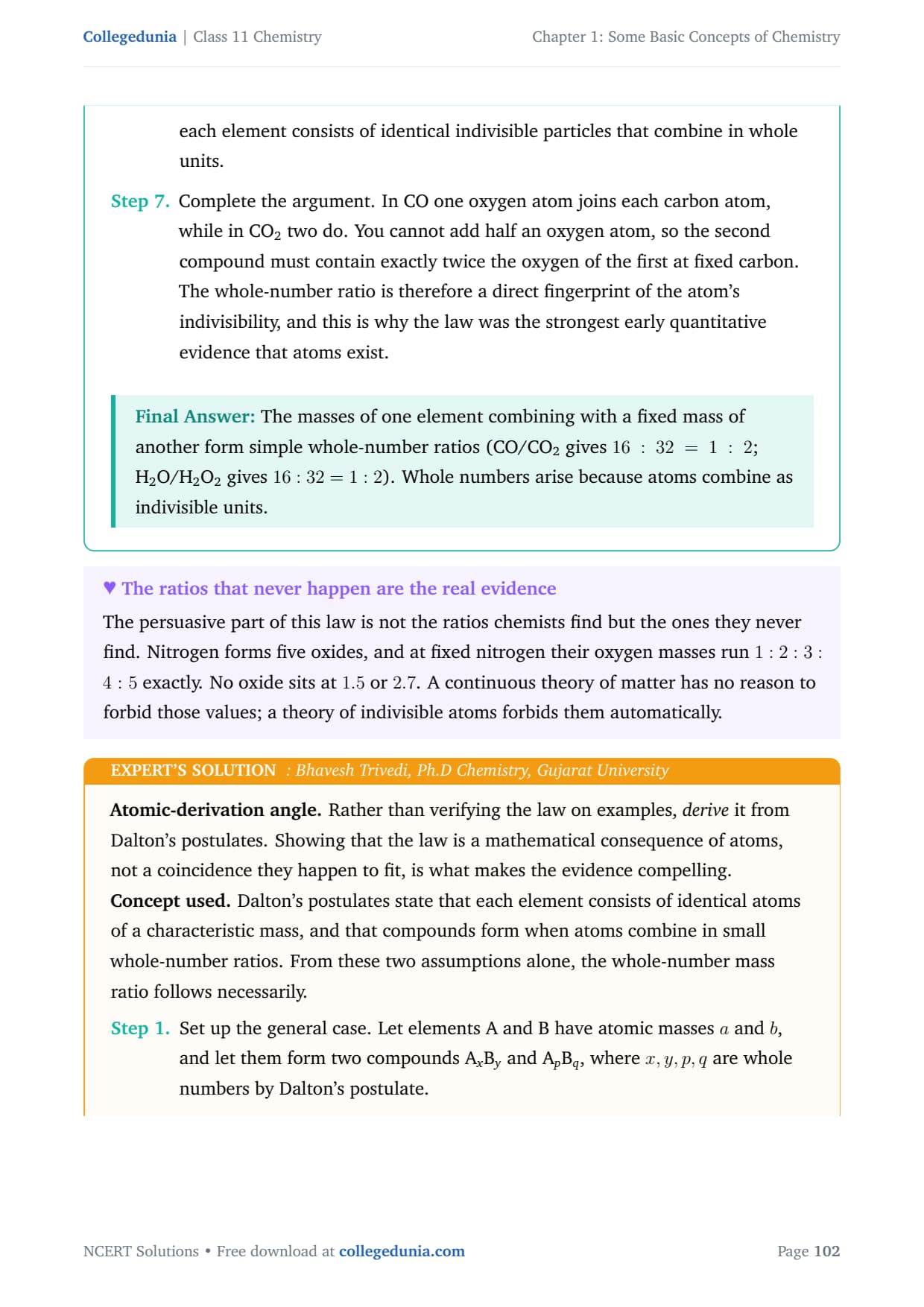
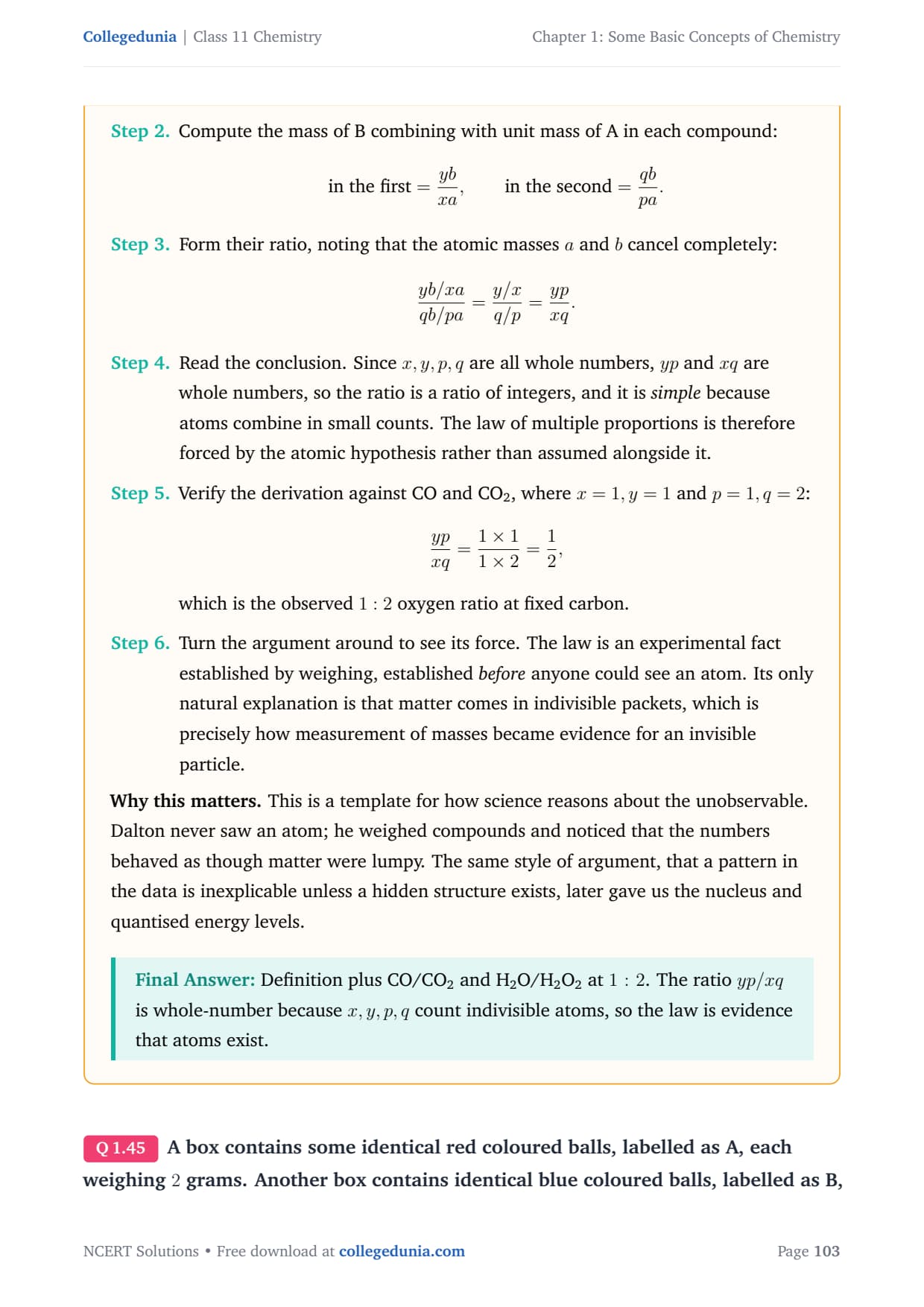
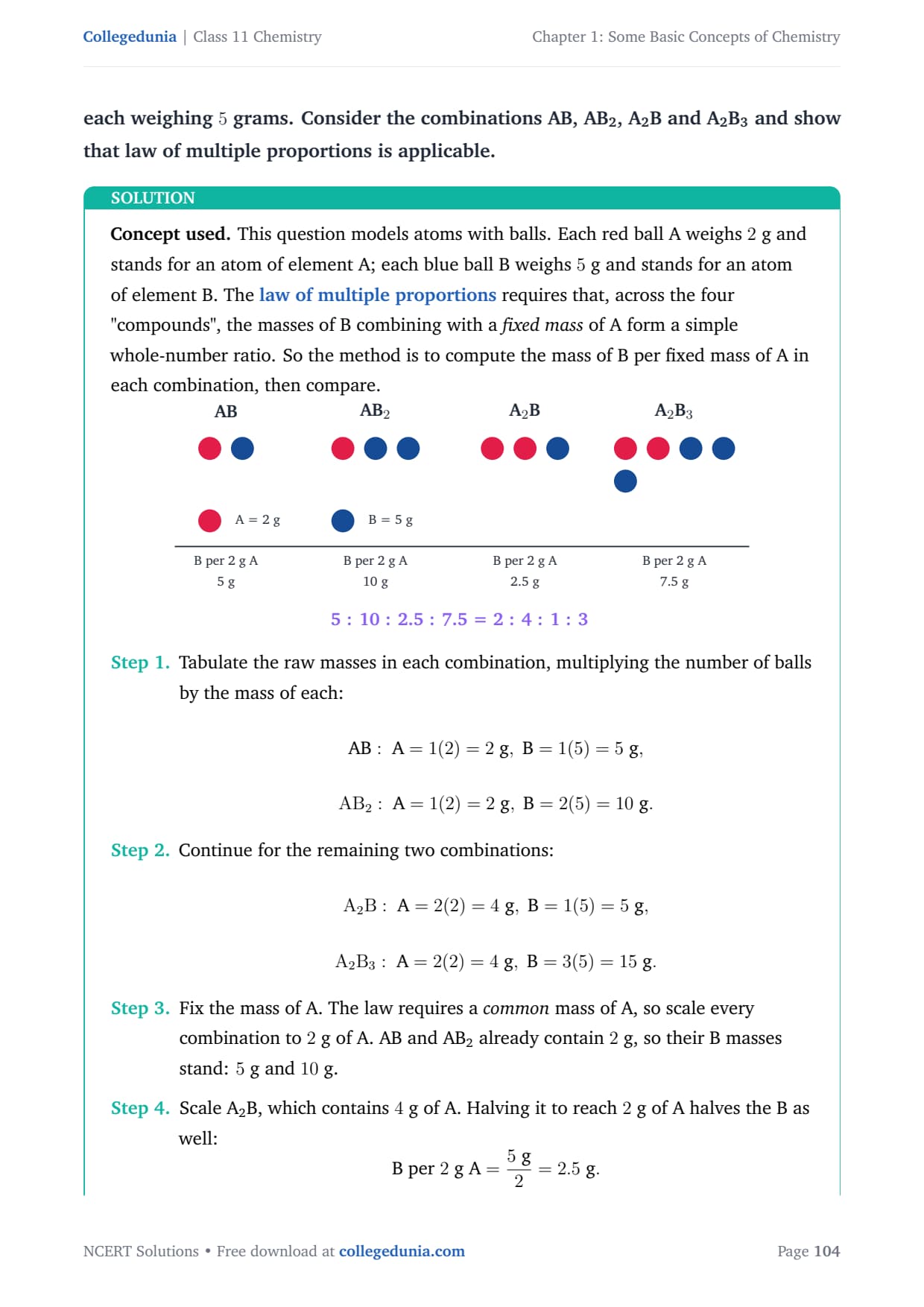
This chapter sets up the mole concept, and almost every calculation you do for the next two years starts from it. Stoichiometry, molarity and significant figures all begin here. The Exemplar tests these ideas far harder than the textbook exercise does.
- CBSE Weightage: 5 to 7 marks, usually one numerical on molarity or a limiting reagent problem
- JEE Main Weightage: 1 to 2 questions per year, mostly mole concept and empirical formula
- NEET Weightage: 1 to 2 questions per year from stoichiometry and concentration terms
Every solution is checked against the official NCERT Exemplar key, and the two printing errors in this chapter are worked out in full.
Topics Covered in the Class 11 Chemistry Some Basic Concepts of Chemistry Exemplar
The 45 questions in this chapter are built on four ideas. Each one returns in Equilibrium, Thermodynamics and Redox, so the effort here is not one-off.
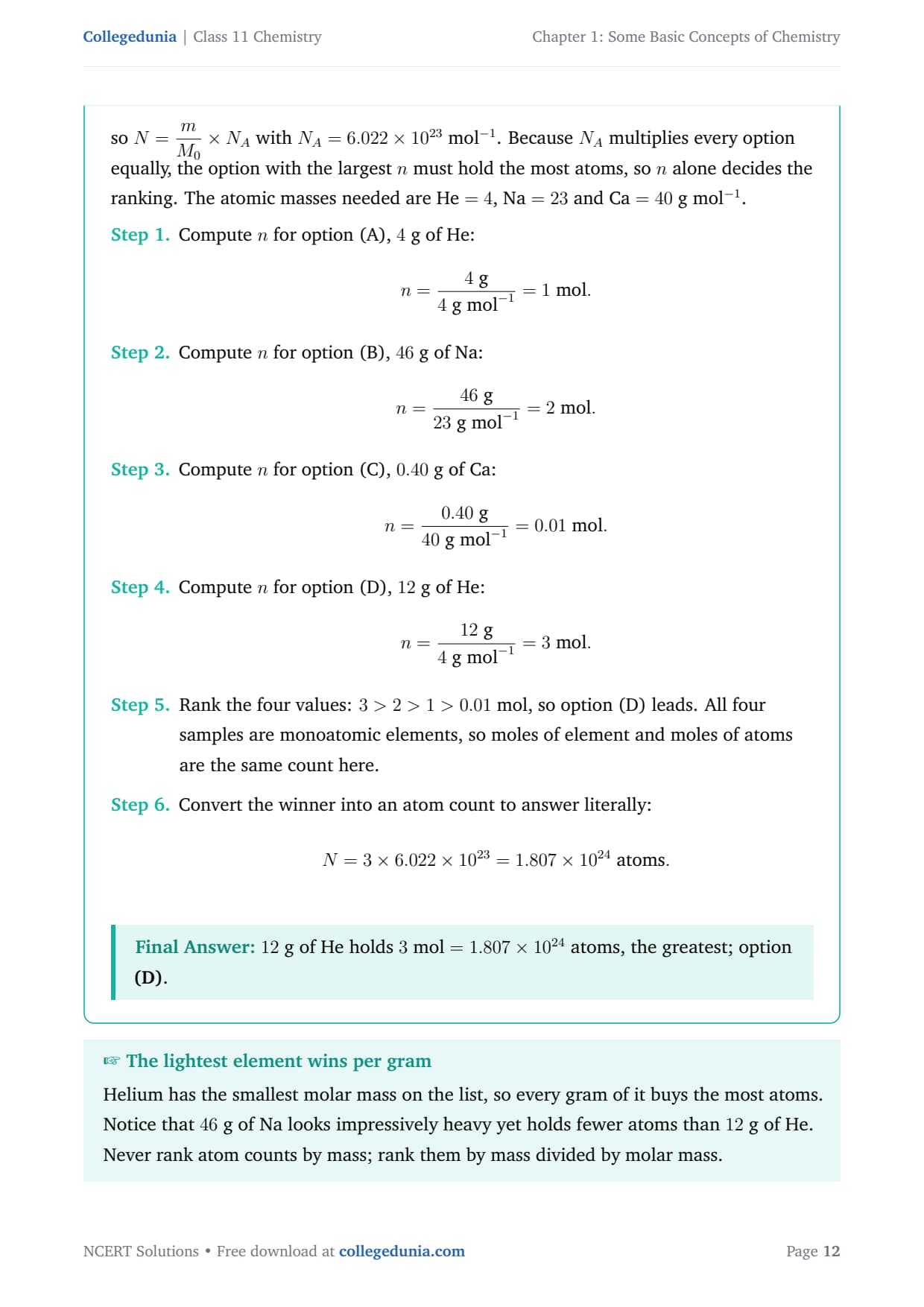
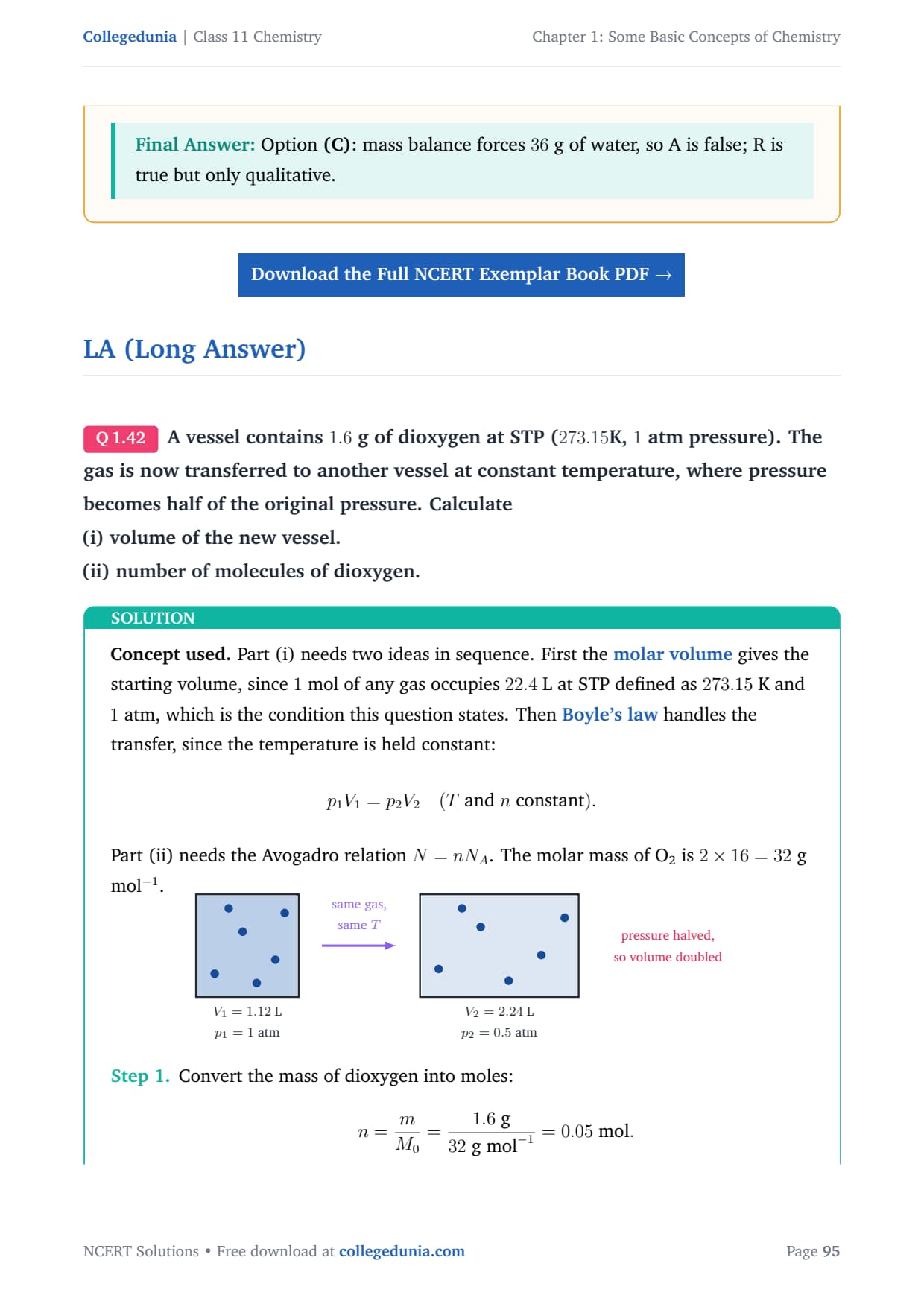
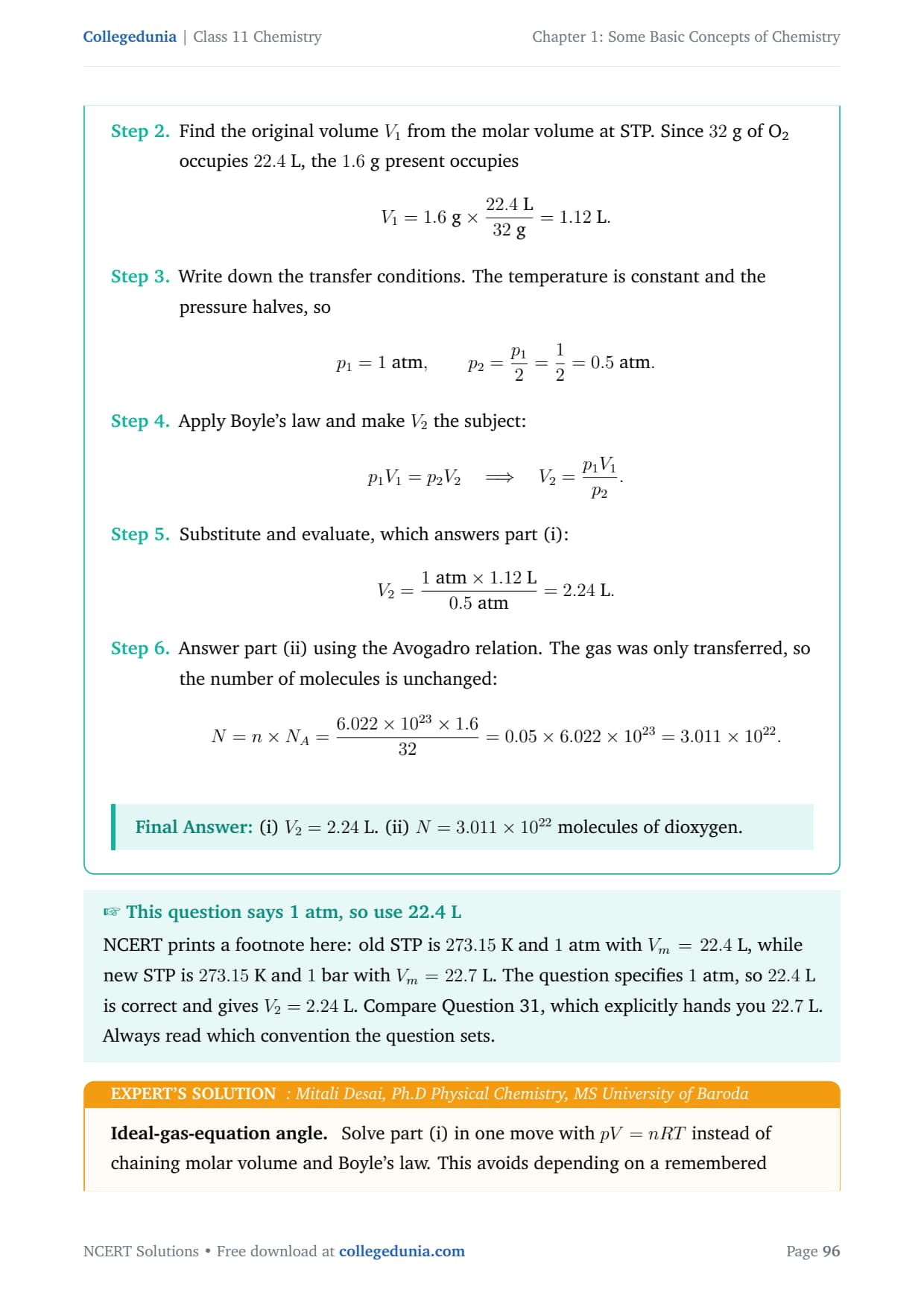
- The mole concept: Avogadro's number, molar mass, and moving between mass, moles and number of particles
- Concentration terms: molarity, molality, mole fraction, and dilution
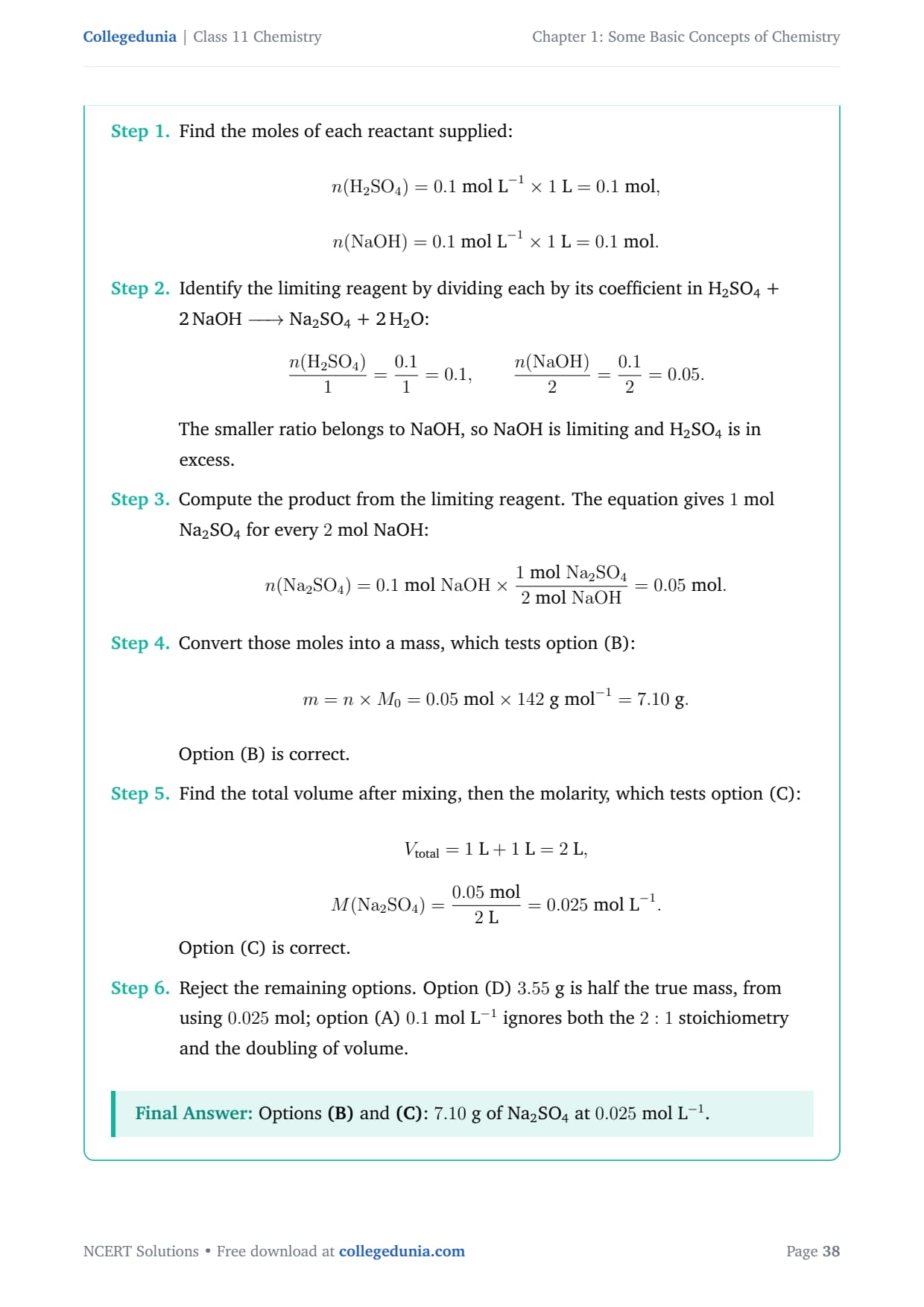
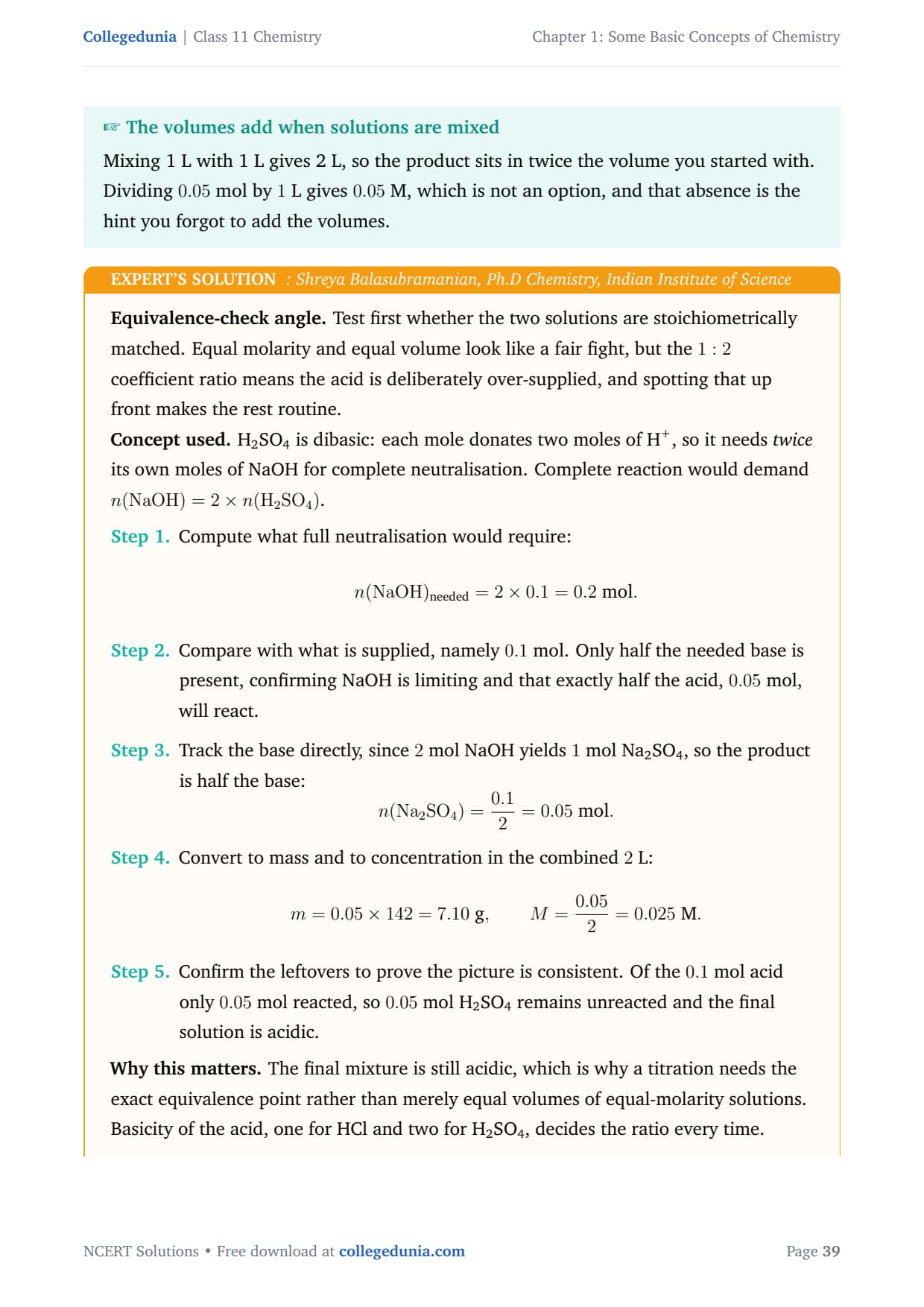
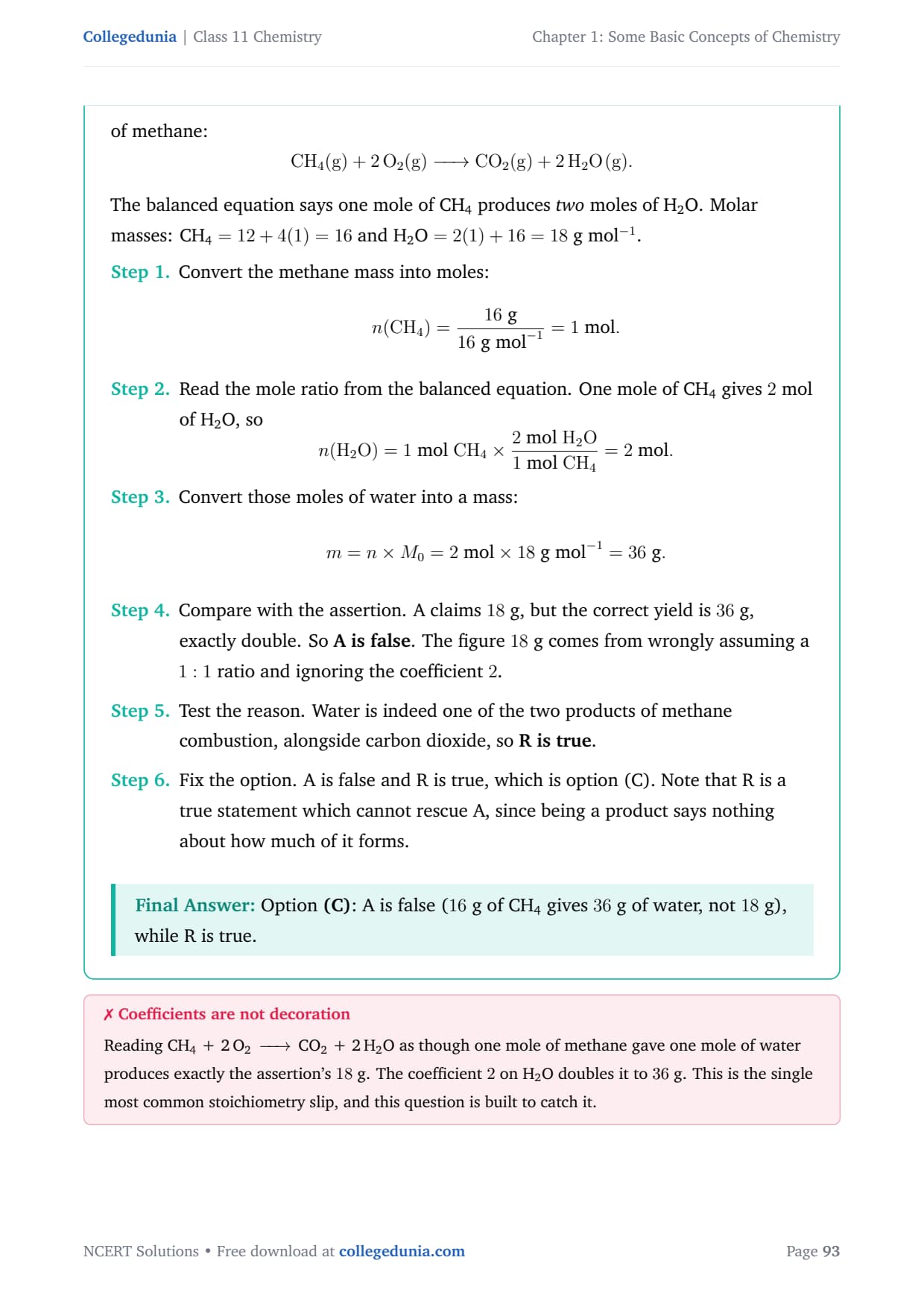
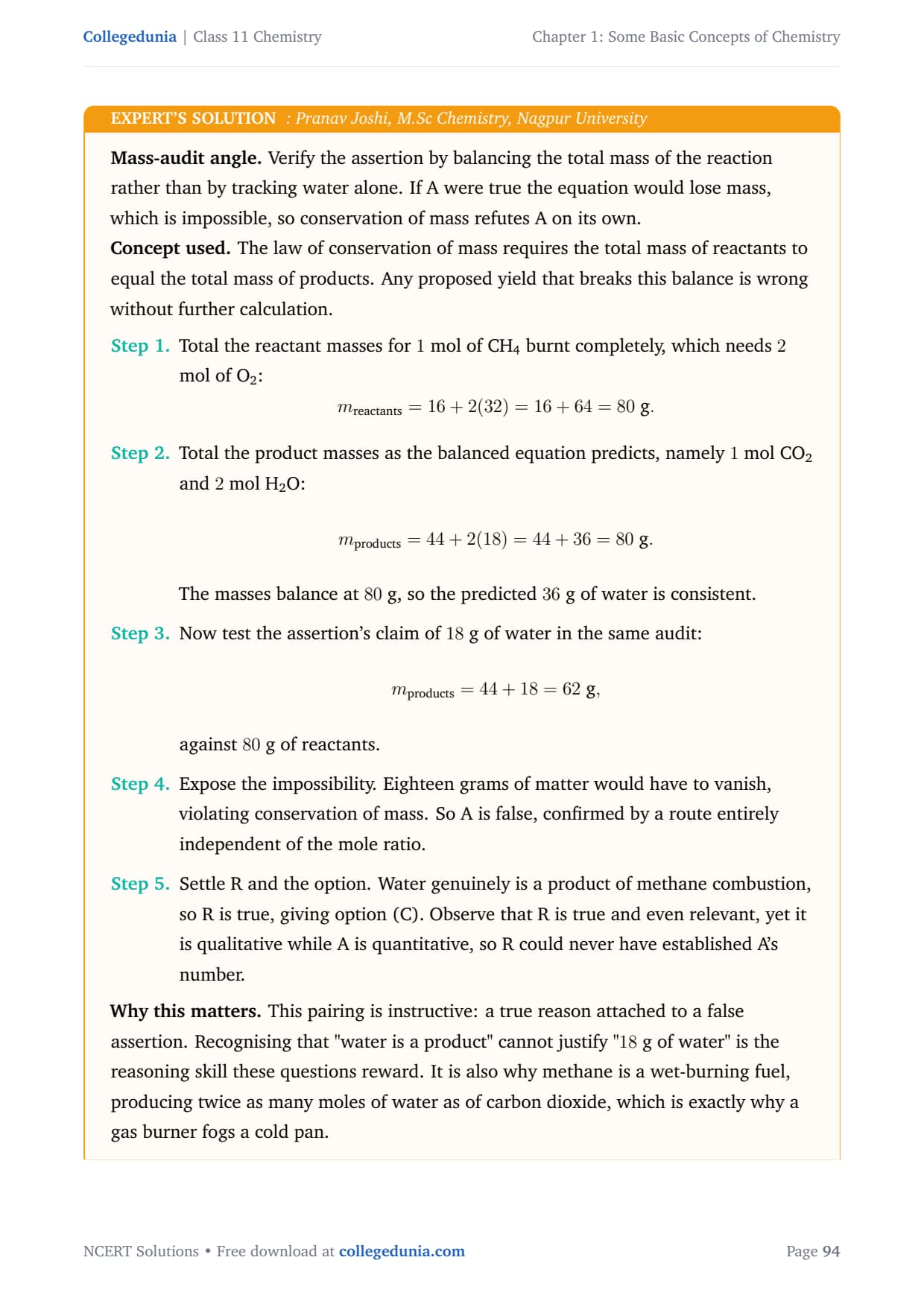
- Stoichiometry: limiting reagent, percentage yield, empirical and molecular formula
- Measurement: significant figures, accuracy against precision, and unit conversion
Question Types in the Some Basic Concepts of Chemistry NCERT Exemplar
Class 11 Chemistry Exemplar chapters use six question types, two more than the Physics book. The Matching and Assertion and Reason sets are where most students lose marks, because both punish a half-remembered rule.
| Question Type | Count | What It Tests |
|---|---|---|
| MCQ I (single correct) | 15 | Direct mole and molarity calculations |
| MCQ II (one or more correct) | 7 | Whether you can reject every wrong option, not just find one right one |
| Short Answer | 13 | Reasoning on laws of chemical combination and concentration |
| Matching Type | 2 | Pairing quantities with their correct SI units |
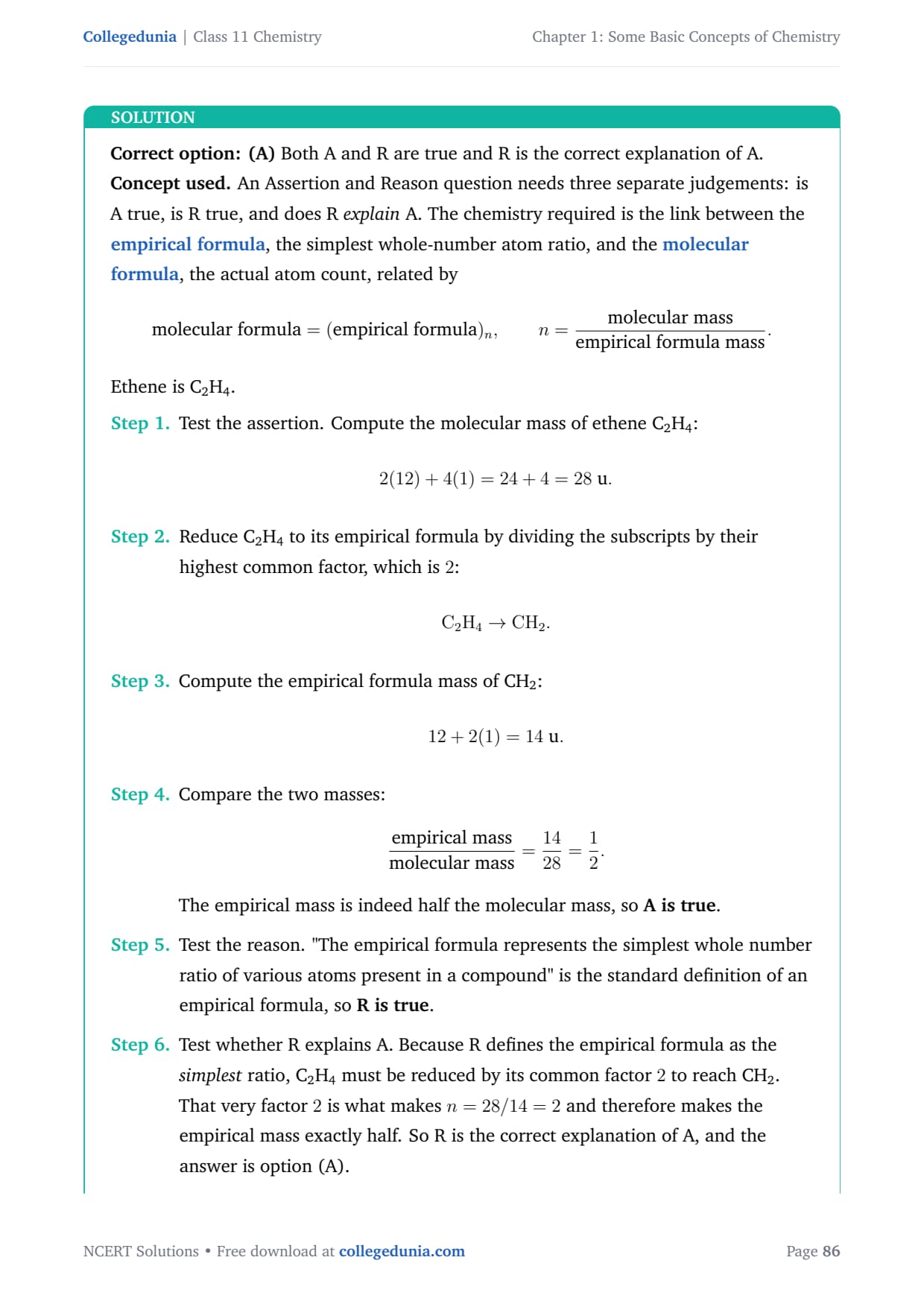
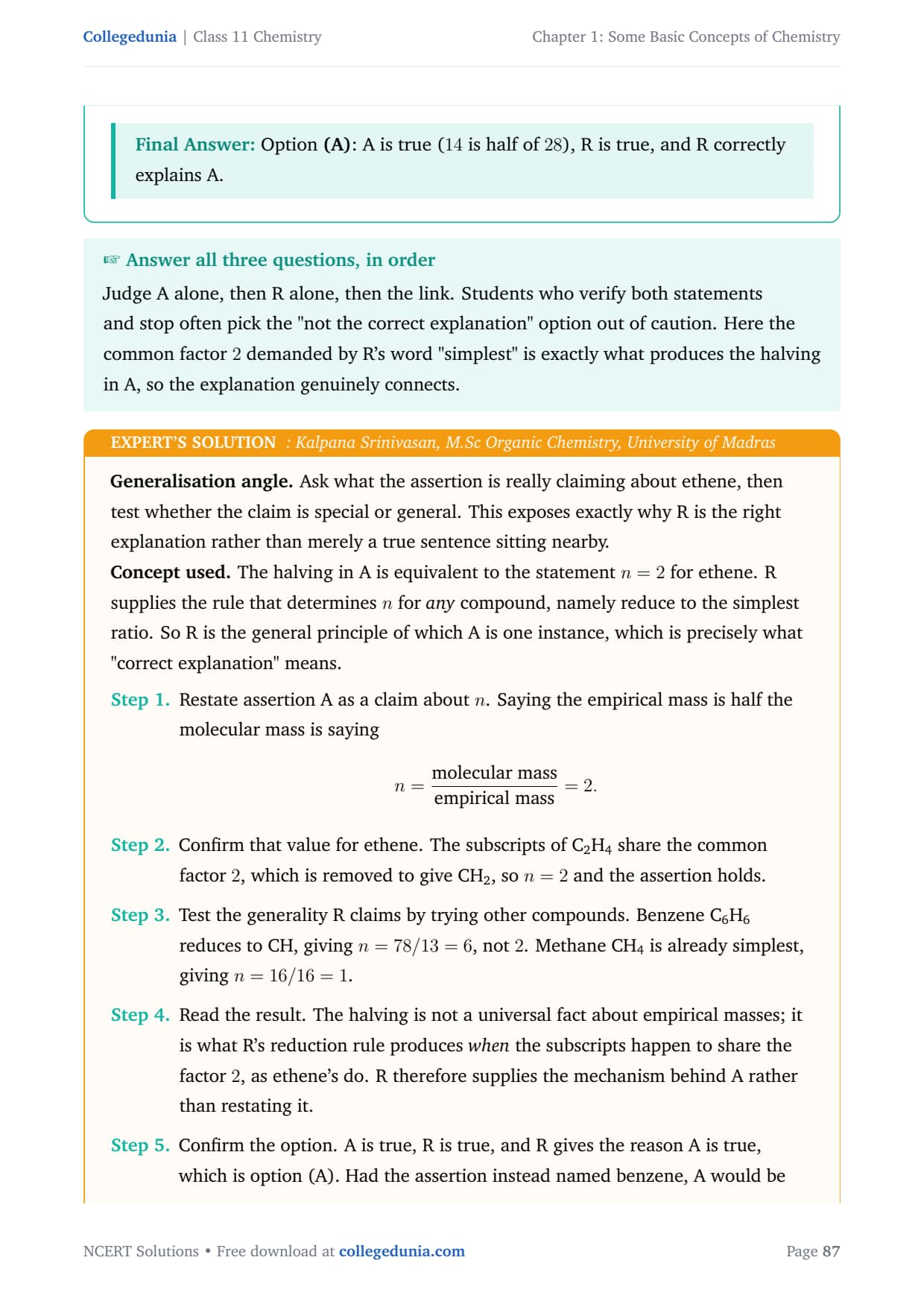
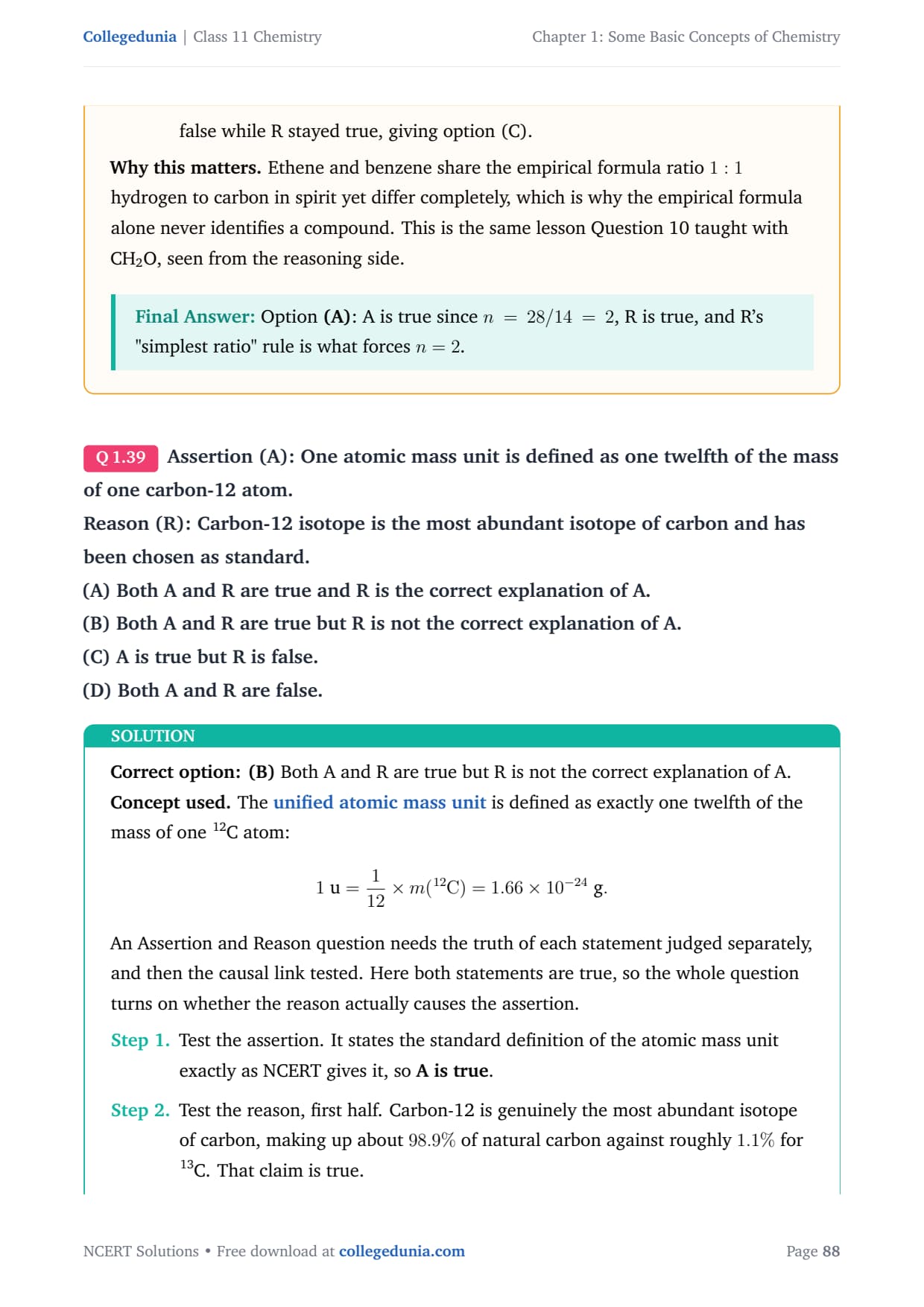
| Assertion and Reason | 4 | Whether the reason actually explains the assertion |
| Long Answer | 4 | Multi-step stoichiometry worth 5 marks |
Two Printing Errors in the Some Basic Concepts of Chemistry Exemplar
The printed book has two mistakes in this chapter. Both are explained in the PDF, so you are never asked to accept something that does not add up.
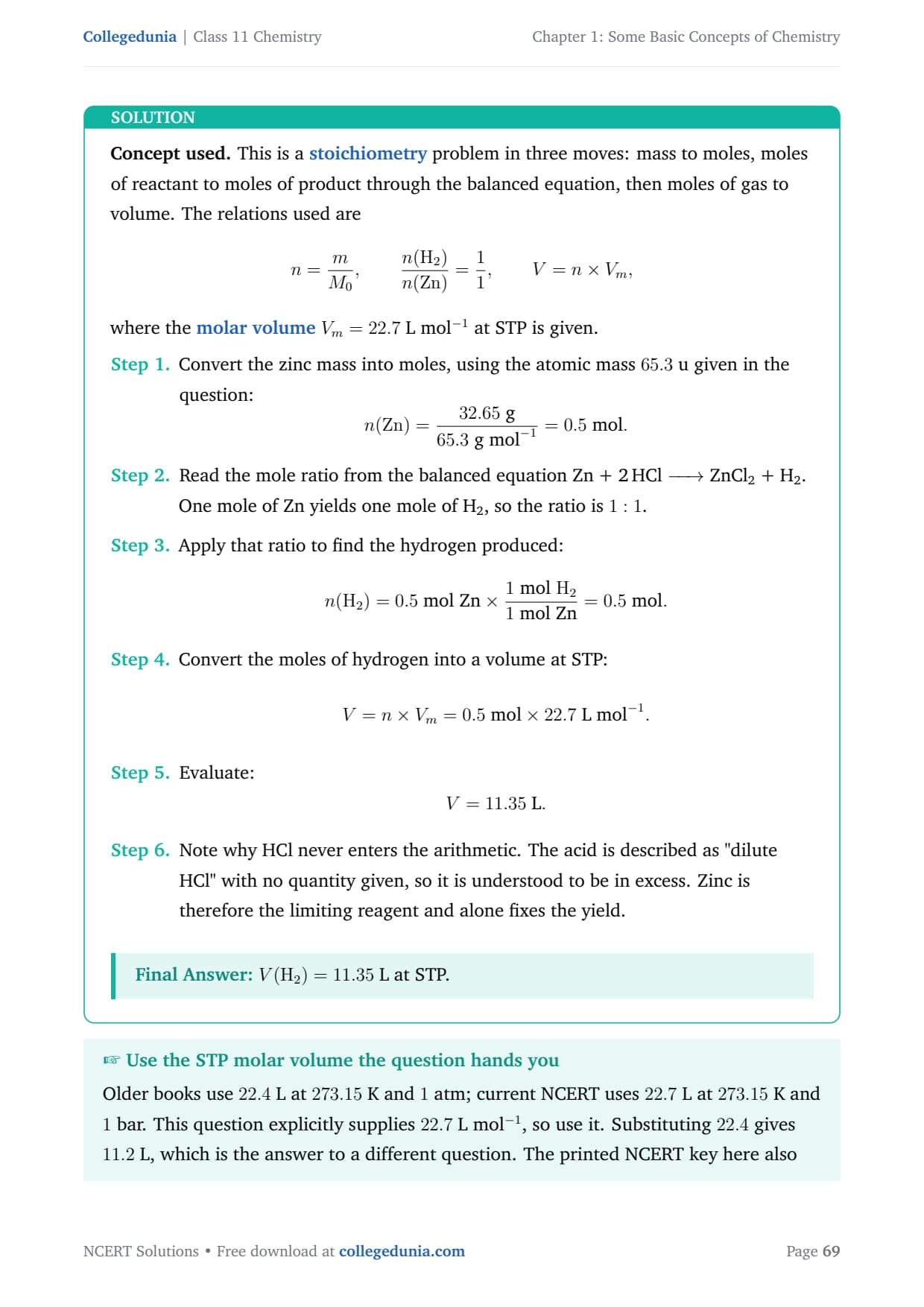
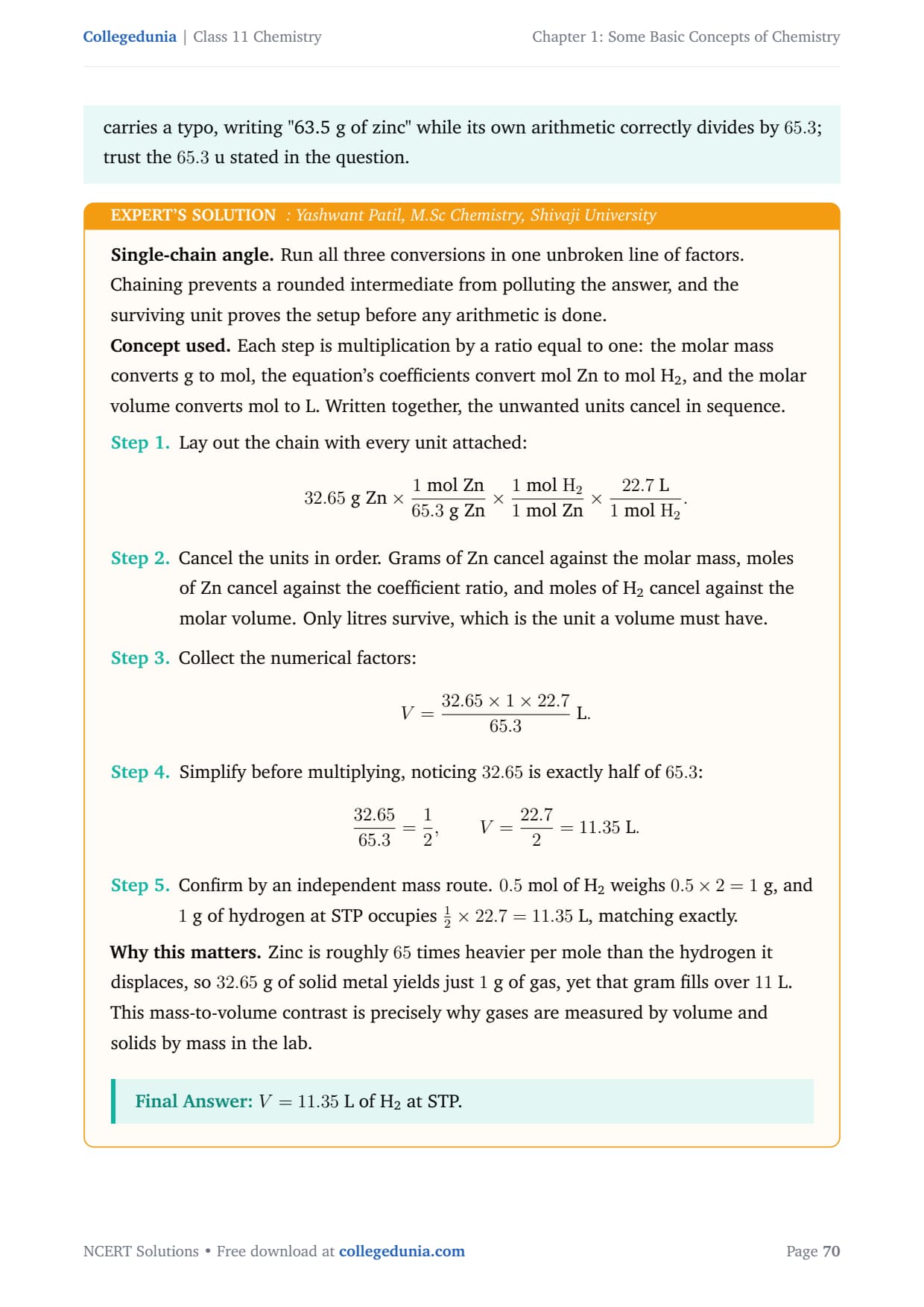
- Question 31: the key says "63.5 g of zinc", but the question itself gives the atomic mass as 65.3 u, and the key's own arithmetic divides by 65.3. The final answer, 11.35 L of hydrogen, is the same either way. Only the printed label is wrong.
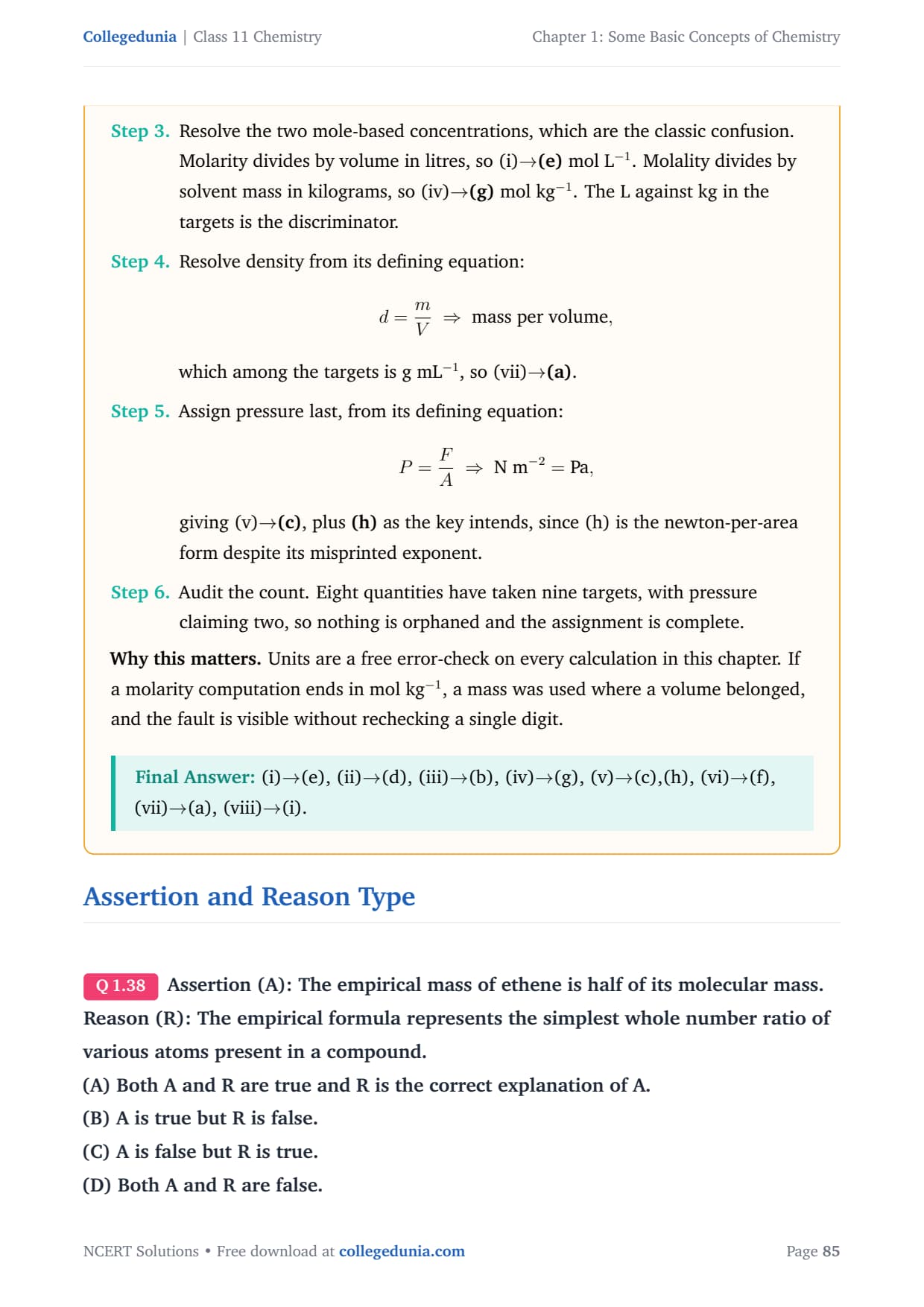
- Question 37: target (h) is printed as N m-1. Pressure is force per unit area, so its unit must be N m-2. As printed, N m-1 is the unit of surface tension.
Write the key's answer in the exam, but know why it is wrong. The marking scheme follows the printed key, so our solution gives the key's mapping and then explains the slip.
Common Mistakes Students Make in Some Basic Concepts of Chemistry
The Exemplar plants wrong options on purpose. These four catch most students, and each is flagged in the PDF where it appears.
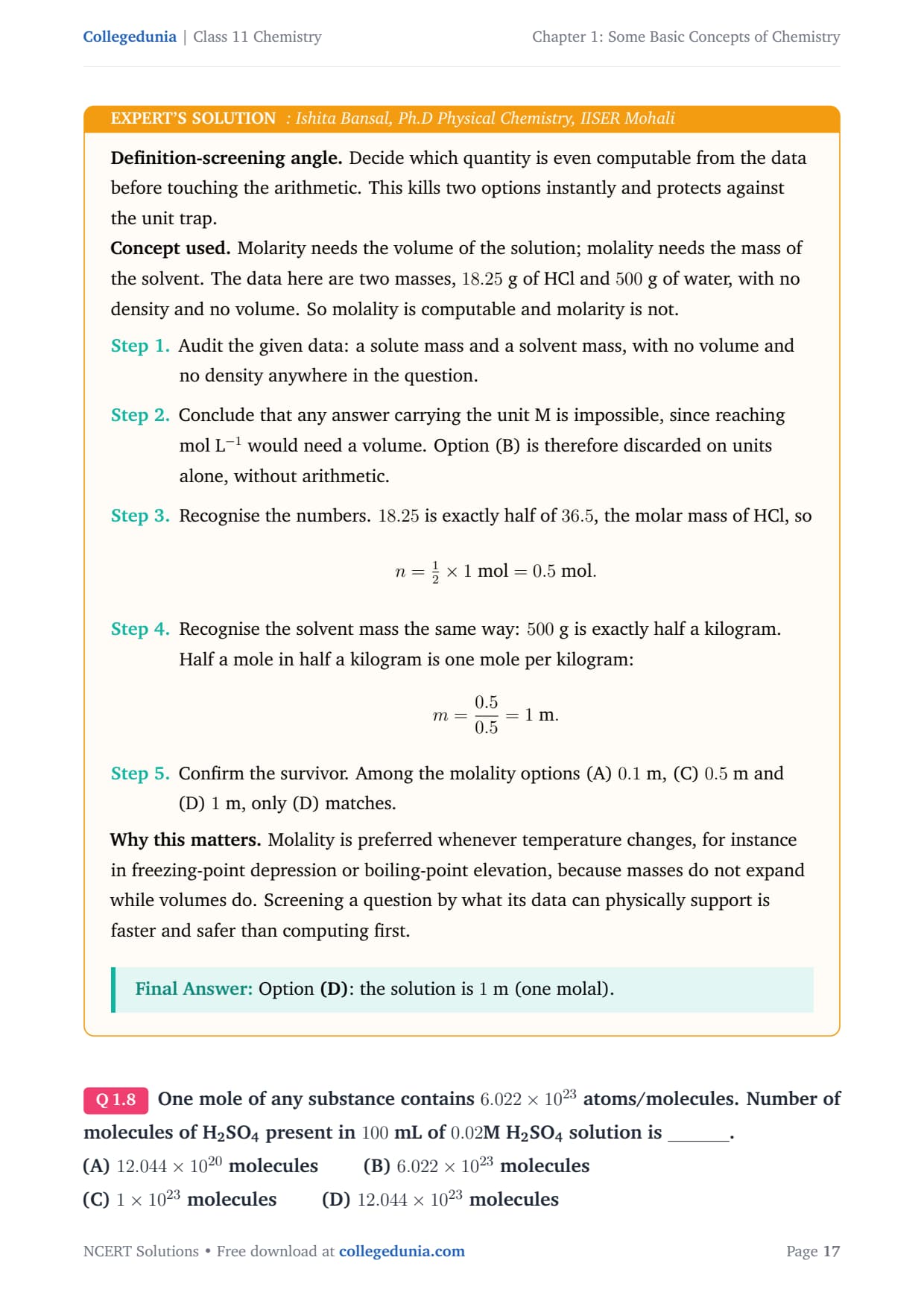
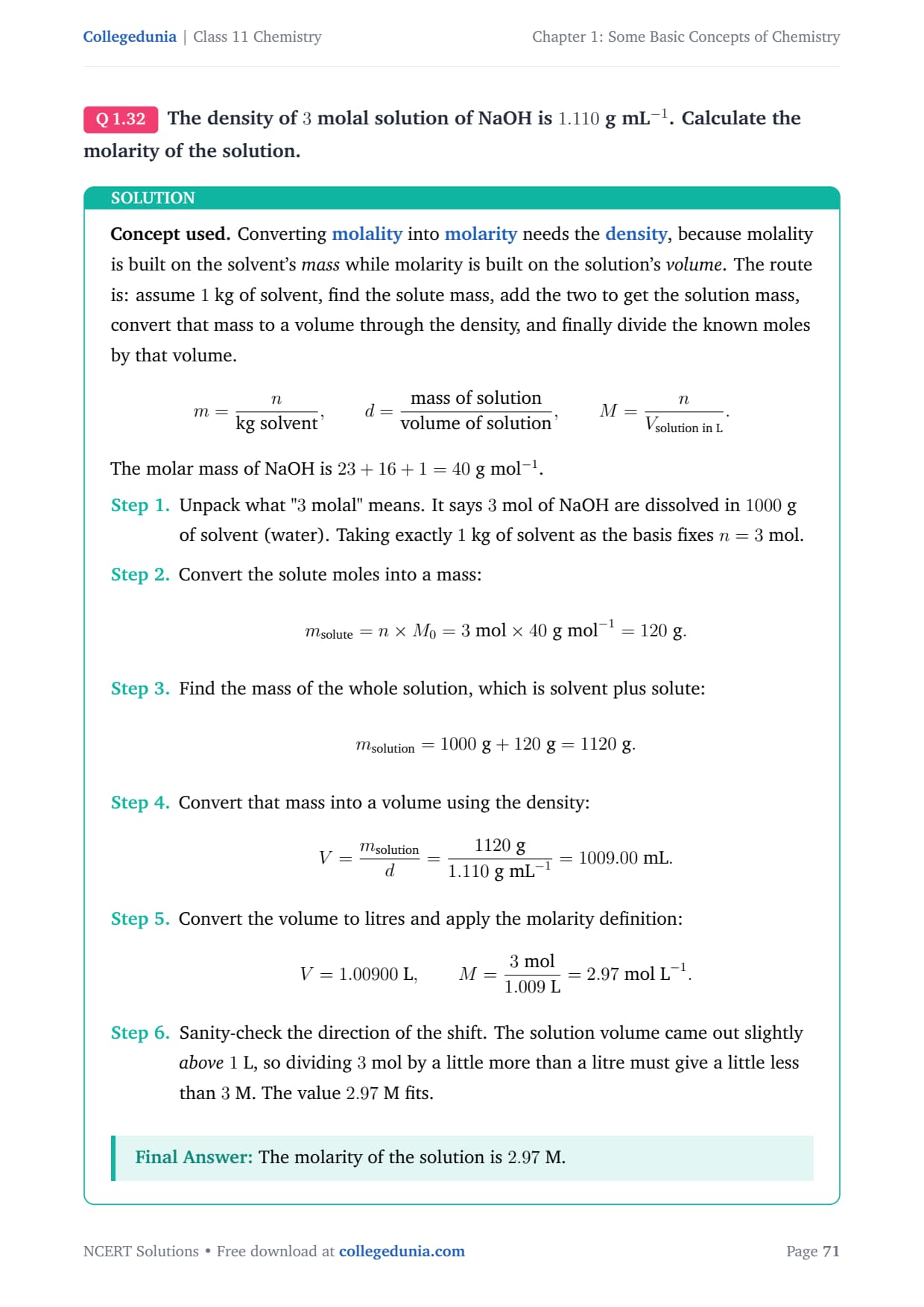
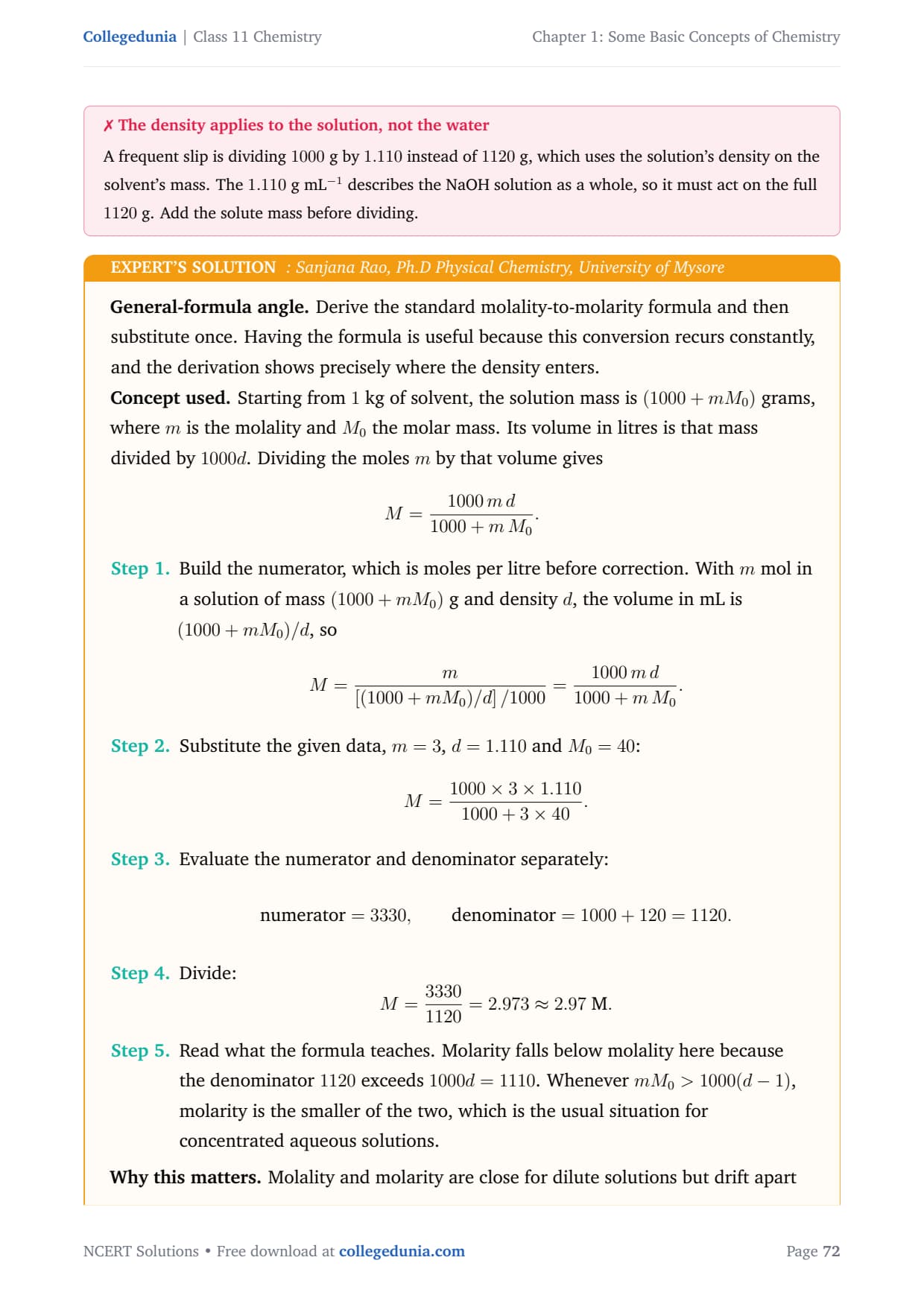
- Molality against molarity: lower-case m is molality, in moles per kg of solvent. Capital M is molarity, in moles per litre of solution. Option (B) in Question 3 exists only to catch this.
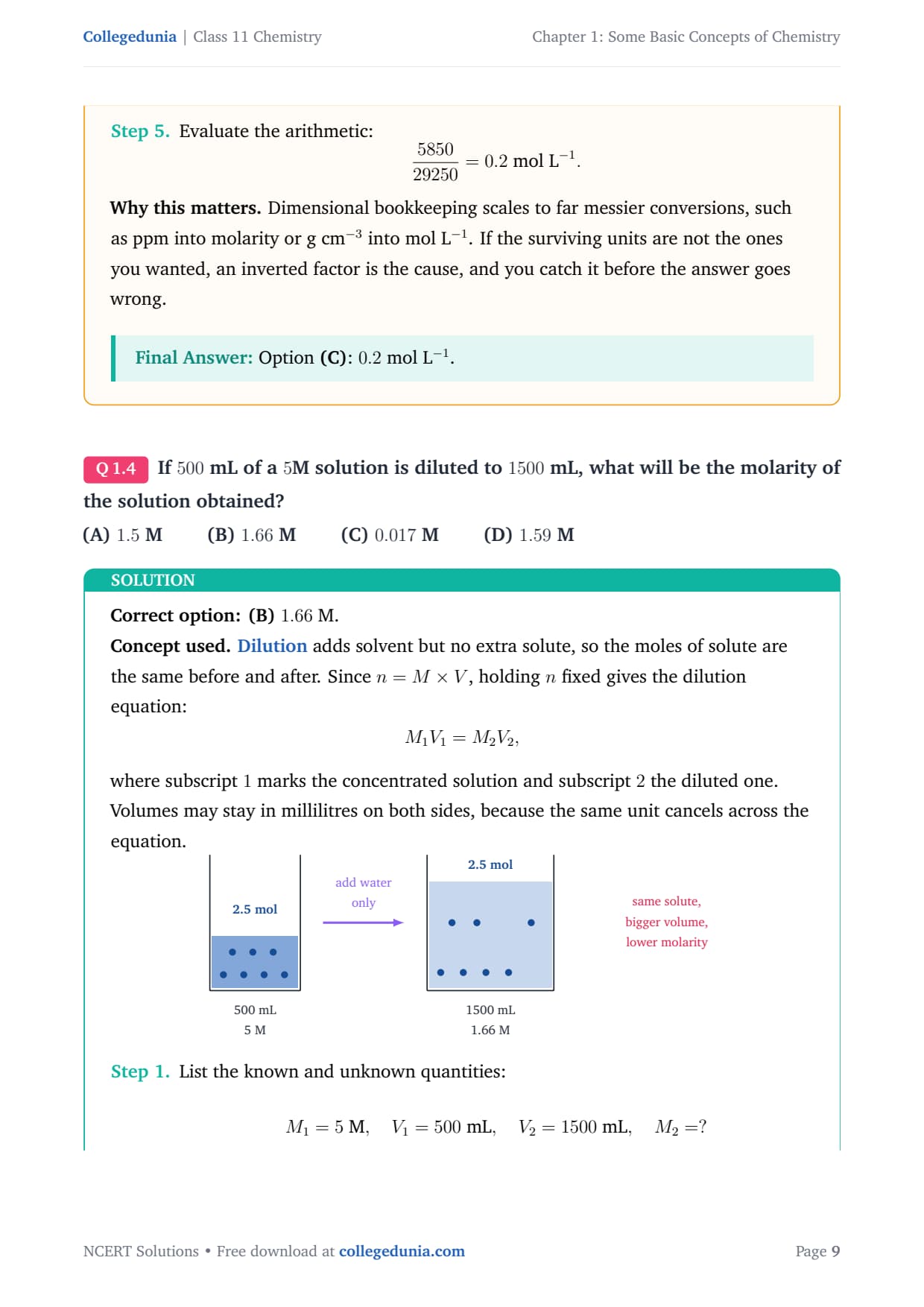
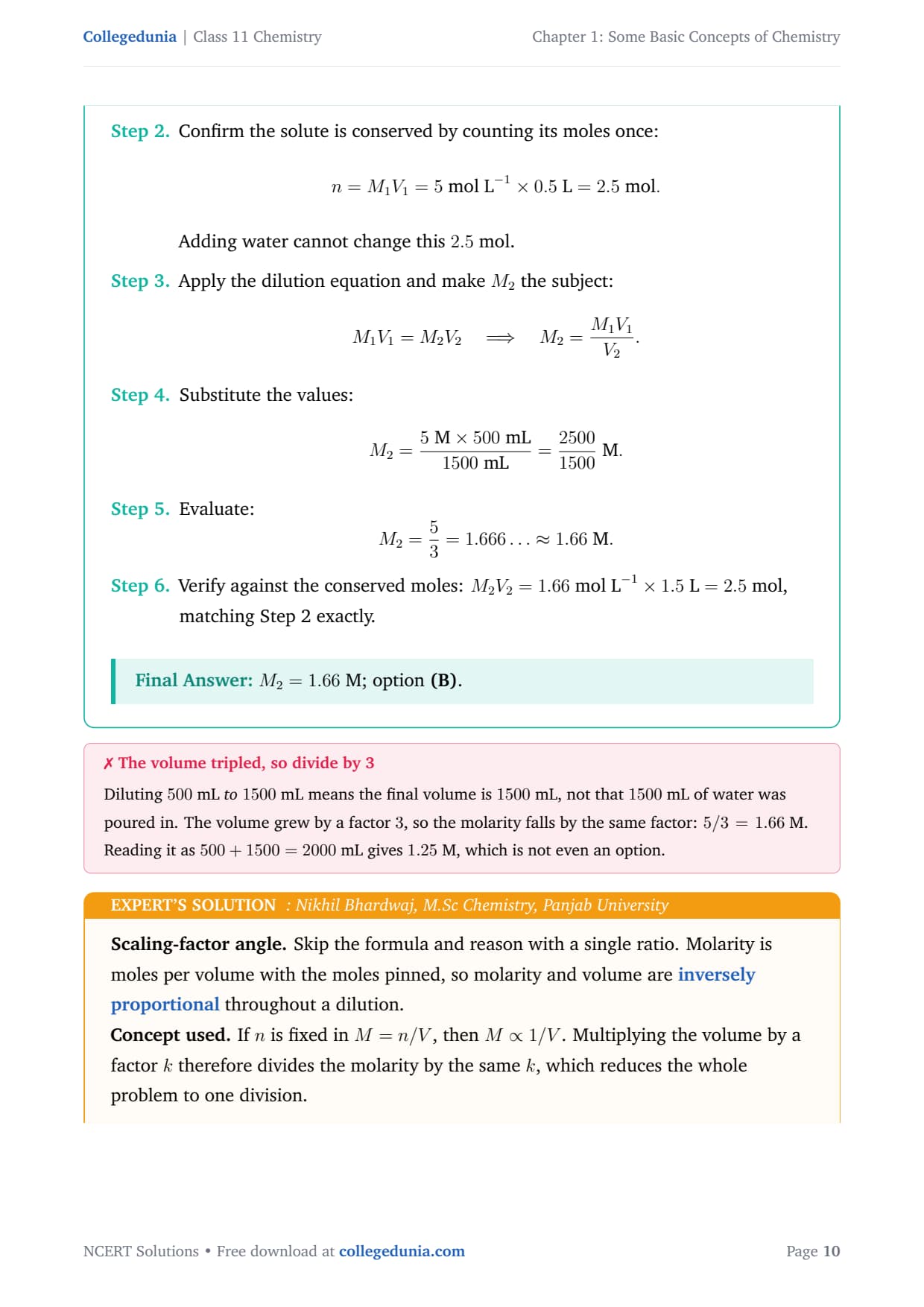
- Dilution: "500 mL diluted to 1500 mL" means the final volume is 1500 mL. It does not mean you added 1500 mL of water, so divide by 3.
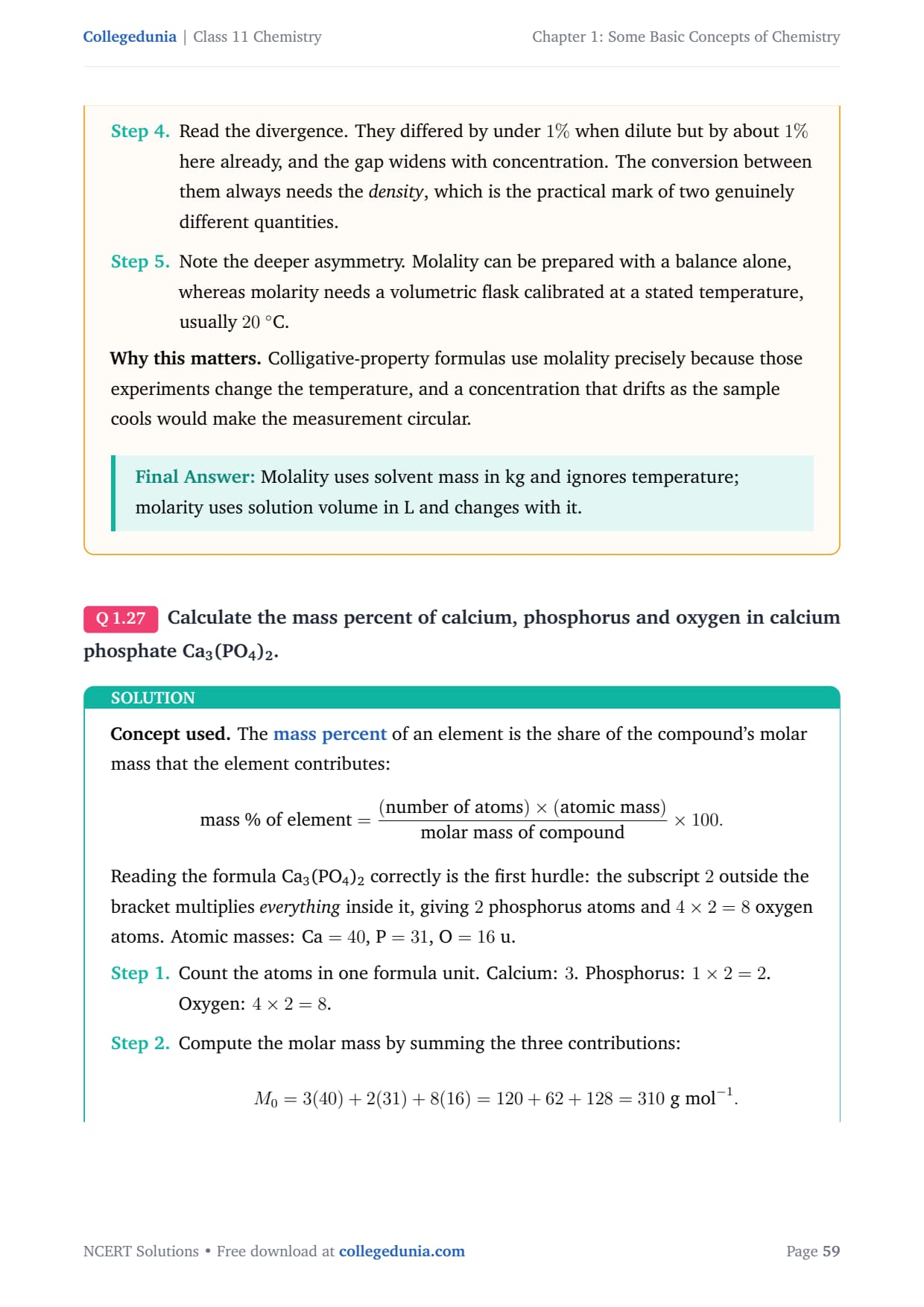
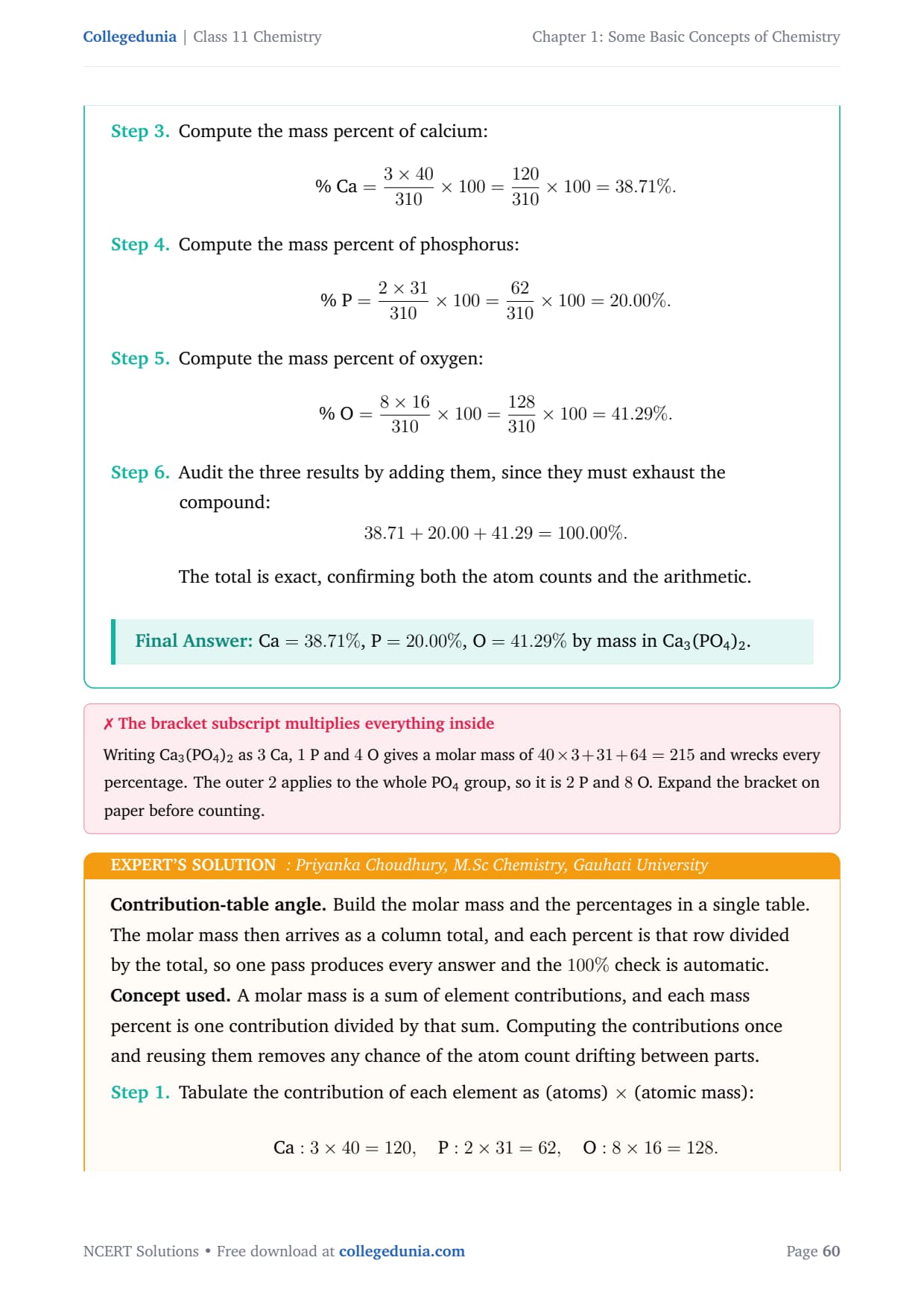
- Bracket subscripts: in Ca3(PO4)2 the outer 2 multiplies everything inside the bracket. Reading it as 1 P and 4 O wrecks every percentage that follows.
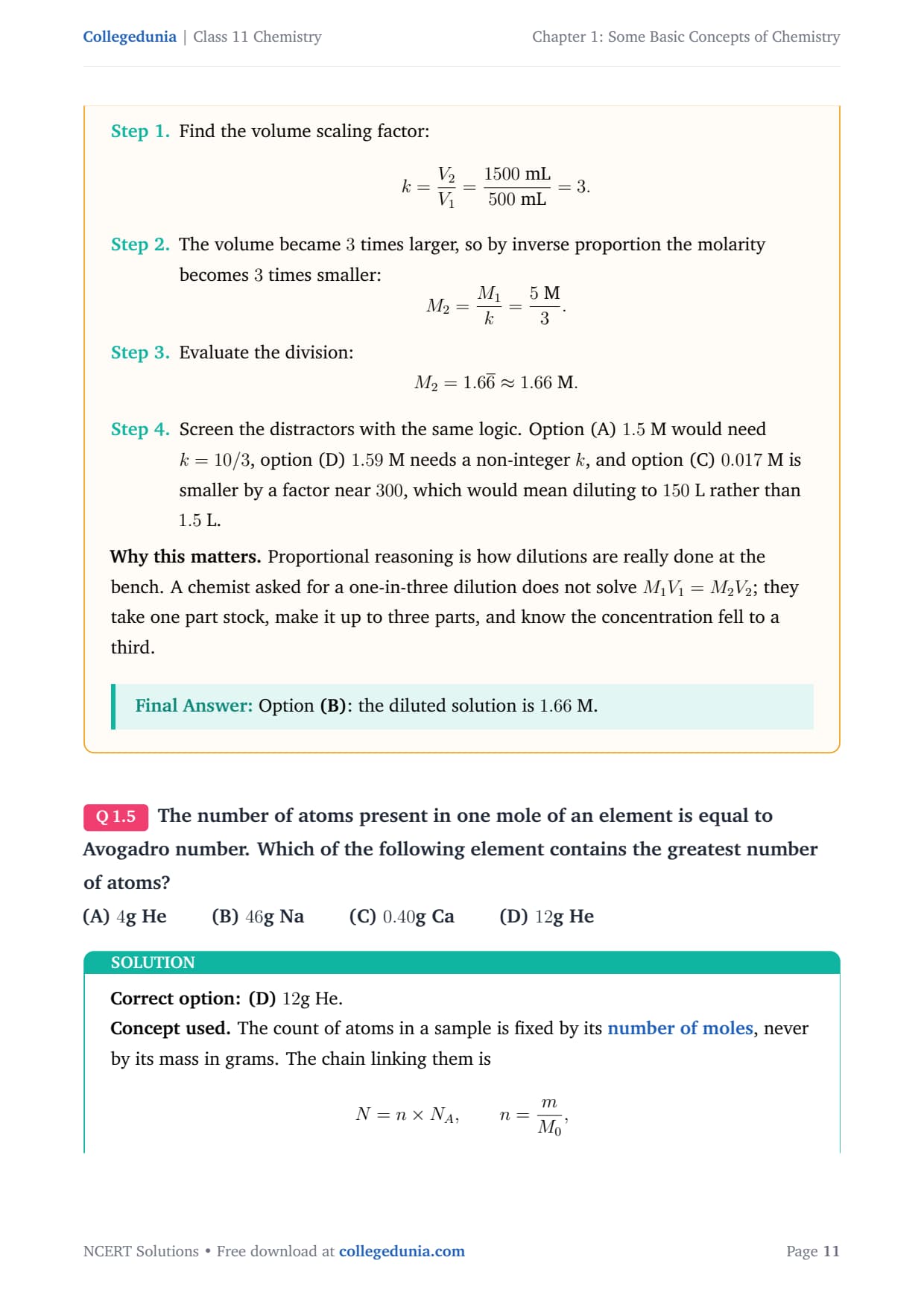
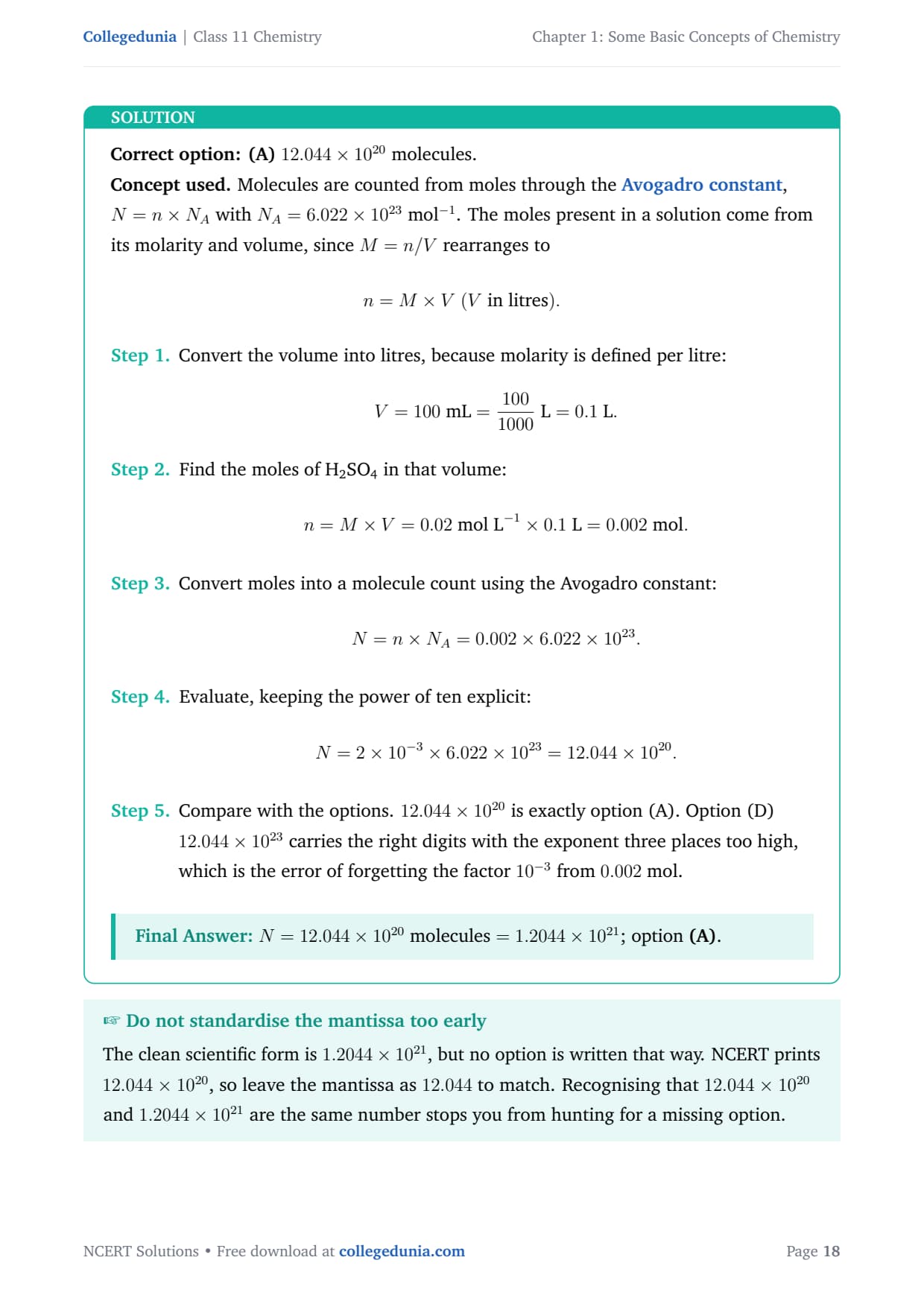
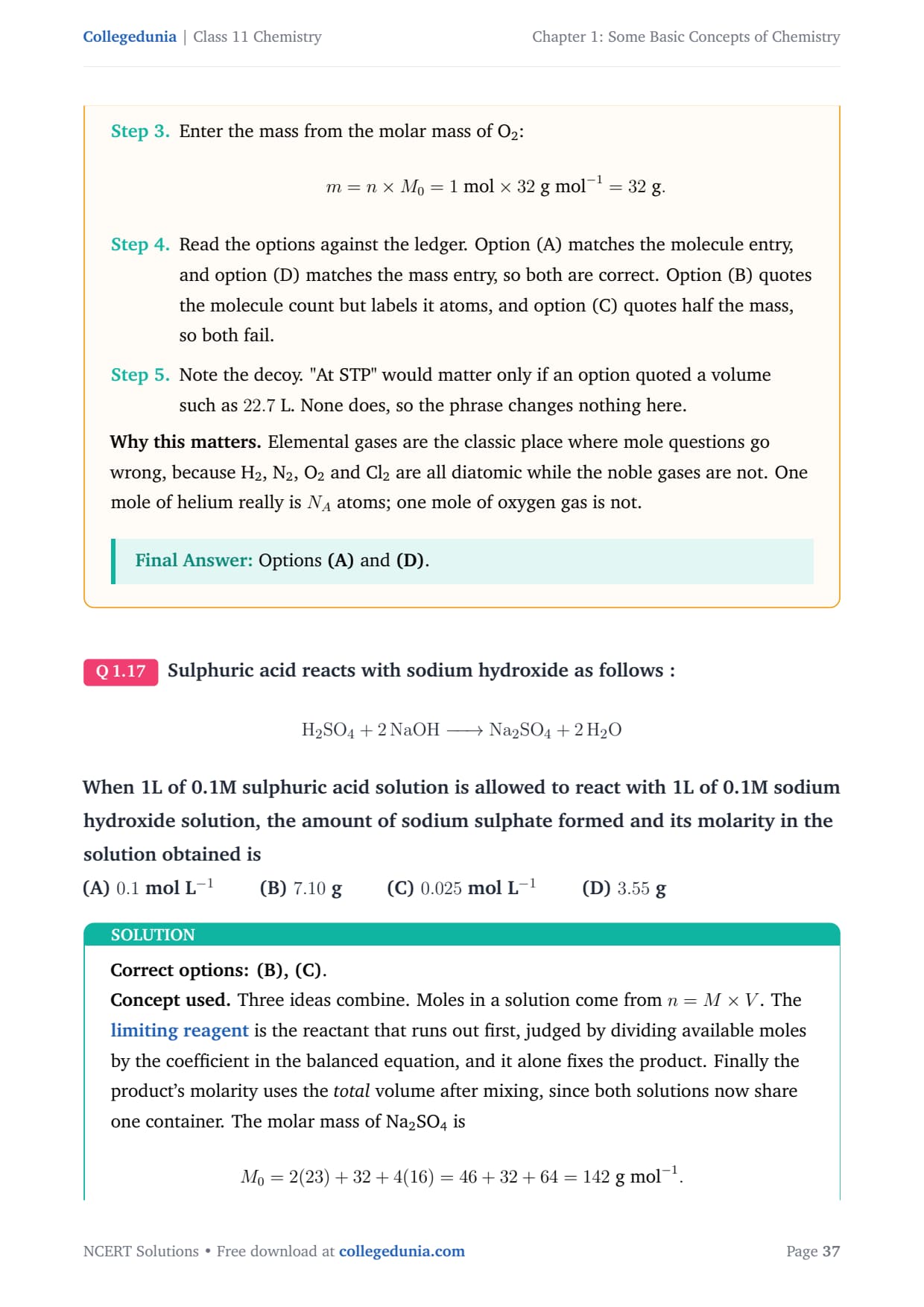
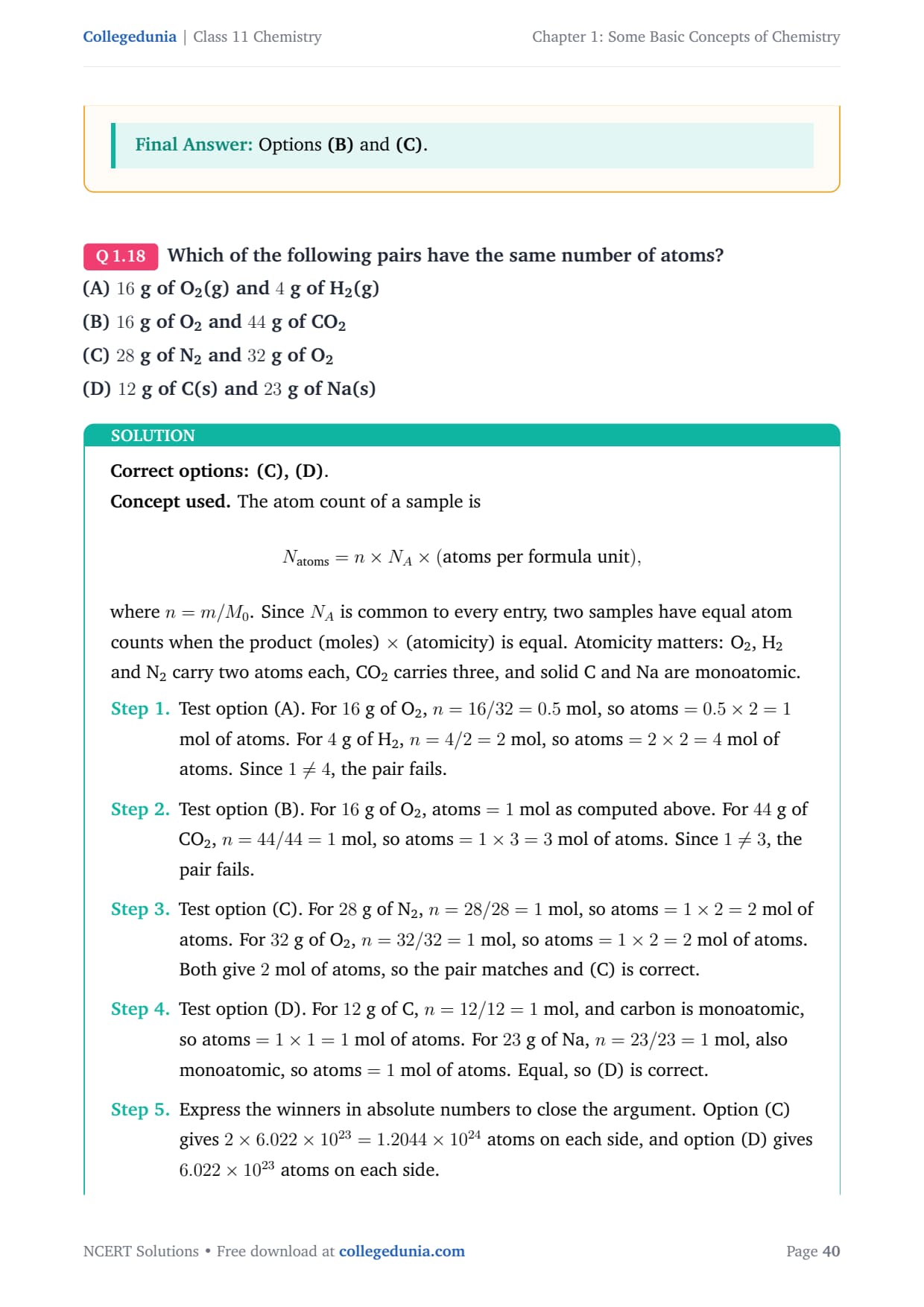
- Atoms against molecules: one mole of O2 holds 6.022 × 10²³ molecules but twice as many atoms.
How the Exemplar Steps Up from the Class 11 Chemistry Textbook
The textbook hands you a rule and asks you to apply it. The Exemplar asks you to choose the rule, and often to explain why the obvious one does not apply.
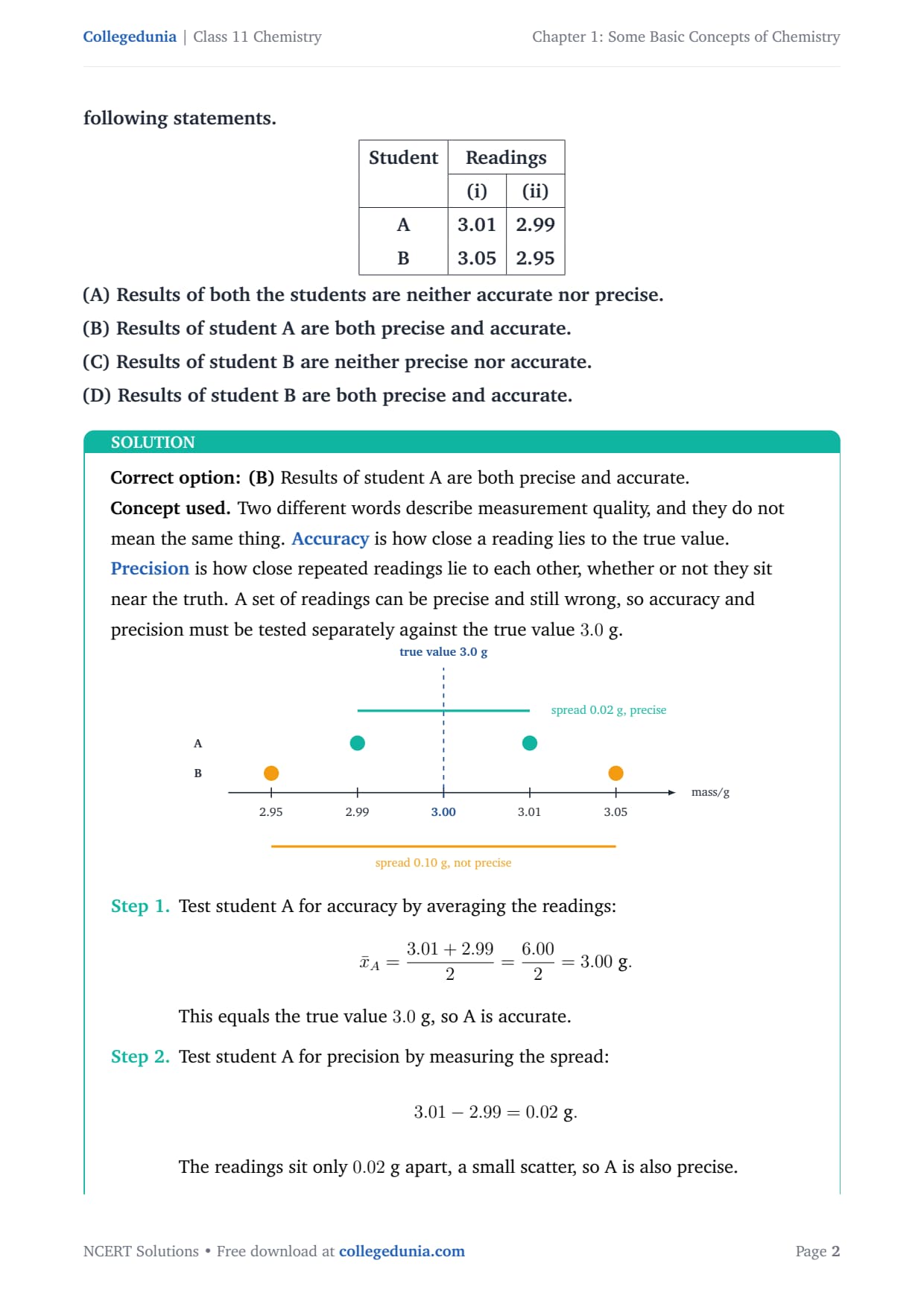
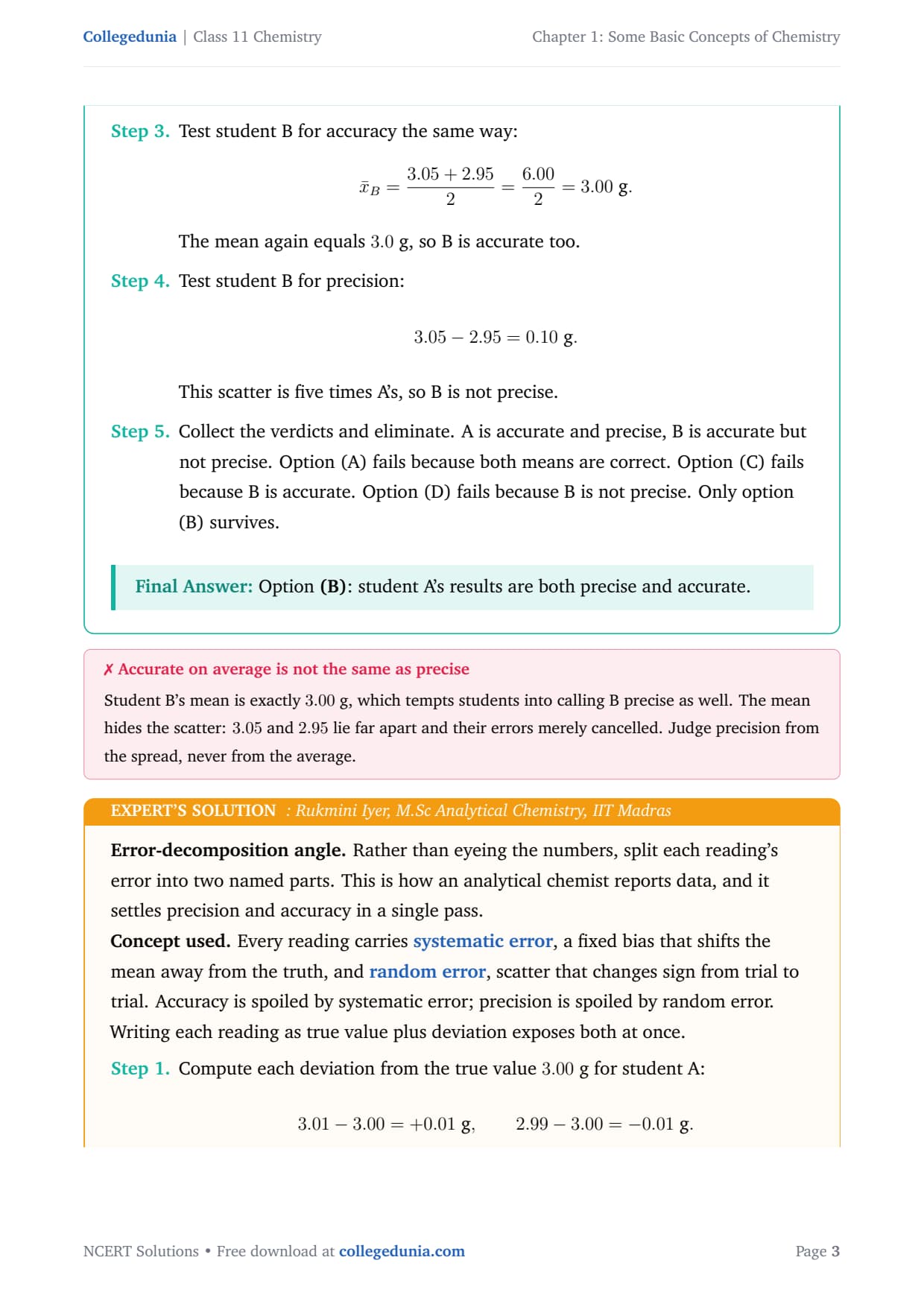
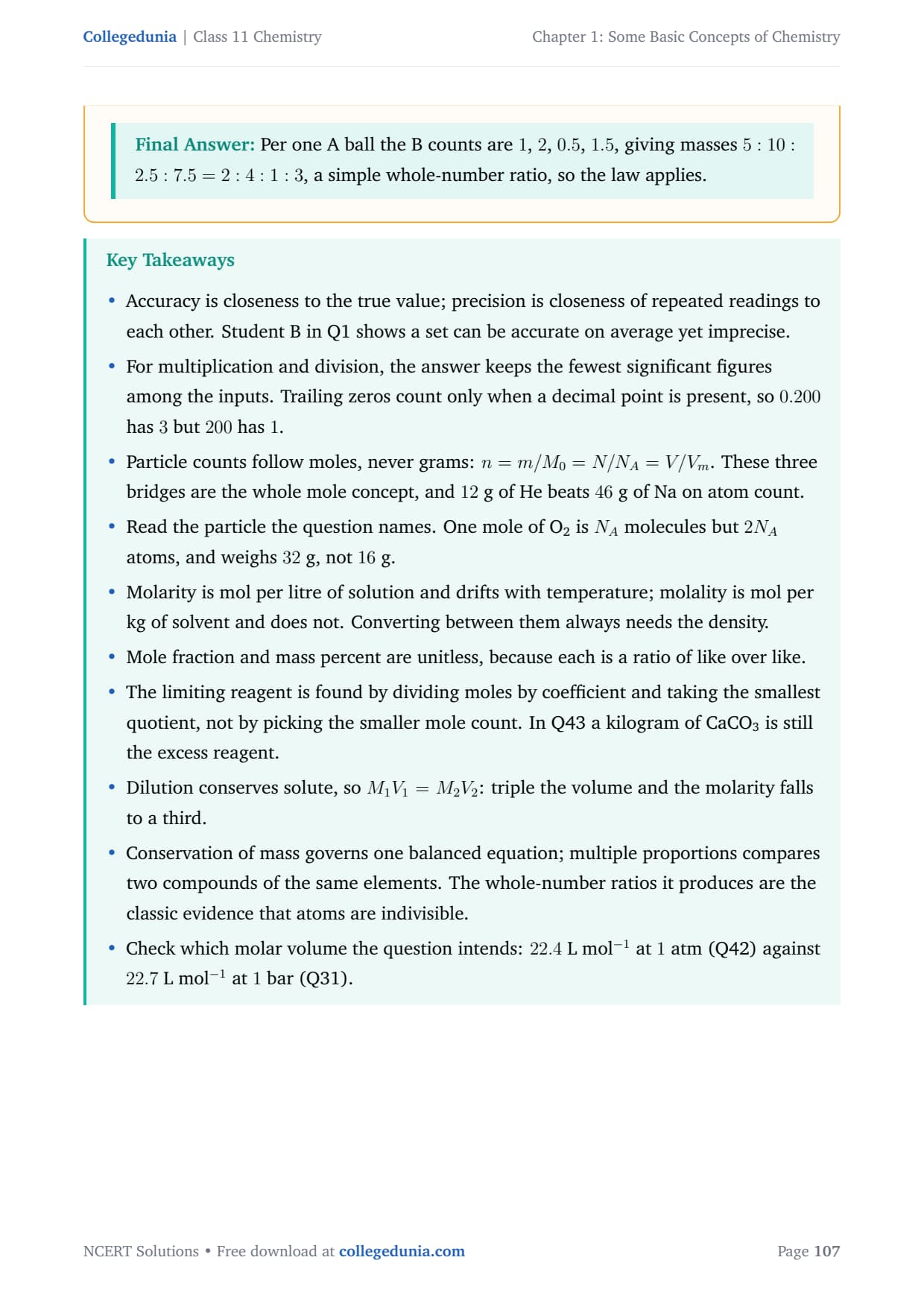
Question 1 shows the difference well. Two students record repeated mass readings, and student B's mean is exactly 3.00 g. That tempts students into calling B precise. The mean hides the scatter. Accuracy is closeness to the true value, precision is agreement between readings, and a set can have one without the other. No textbook question makes that distinction do real work.
How to Use These NCERT Exemplar Solutions for Boards, NEET and JEE
Attempt each question before you open the solution. The Exemplar rewards the attempt more than the reading.
- Boards: the Short Answer and Long Answer sets match the 3 and 5 mark board pattern closely
- NEET: work the MCQ I set first, since NEET repeats mole and molarity questions at that level every year
- JEE Main: the MCQ II and Long Answer sets are the closest practice in NCERT for multi-step stoichiometry
Student Feedback
Students using Collegedunia's Class 11 Chemistry Exemplar Solutions told us the limiting reagent questions were the hardest part of this chapter. Around 7 in 10 said seeing the significant-figure rule applied at the reporting stage, rather than mid-calculation, fixed a mistake they had repeated all year.
Other Resources for Class 11 Chemistry Some Basic Concepts of Chemistry
Collegedunia has the full set of study material for this chapter. Use the Notes for a first read, then the Exemplar once the mole concept is steady.
Also Check:
- NCERT Solutions for Class 11 Chemistry Chapter 1
- Class 11 Chemistry Chapter 1 Notes
- Class 11 Chemistry Chapter 1 NCERT Book PDF
- Class 11 Chemistry Chapter 1 Exemplar Questions with Solutions
NCERT Exemplar Solutions for Other Class 11 Chemistry Chapters
Each chapter below has the same step-by-step treatment and a free PDF.
Some Basic Concepts of Chemistry Class 11 NCERT Exemplar Solutions FAQs
Ques. How many questions are there in the Class 11 Chemistry Some Basic Concepts of Chemistry Exemplar?
Ans. Chapter 1 has 45 questions. They are split into 15 MCQ I, 7 MCQ II, 13 Short Answer, 2 Matching Type, 4 Assertion and Reason and 4 Long Answer questions. All 45 are solved in the free PDF on this page.
Ques. Is the printed NCERT Exemplar answer key for this chapter correct?
Ans. Almost. Two questions carry printing errors. Question 31 labels the zinc as 63.5 g while the question and the key's own working both use 65.3 u, and Question 37 prints the unit of pressure as N m-1 instead of N m-2. Neither changes the final marked answer, and both are explained on this page.
Ques. What is the difference between molarity and molality?
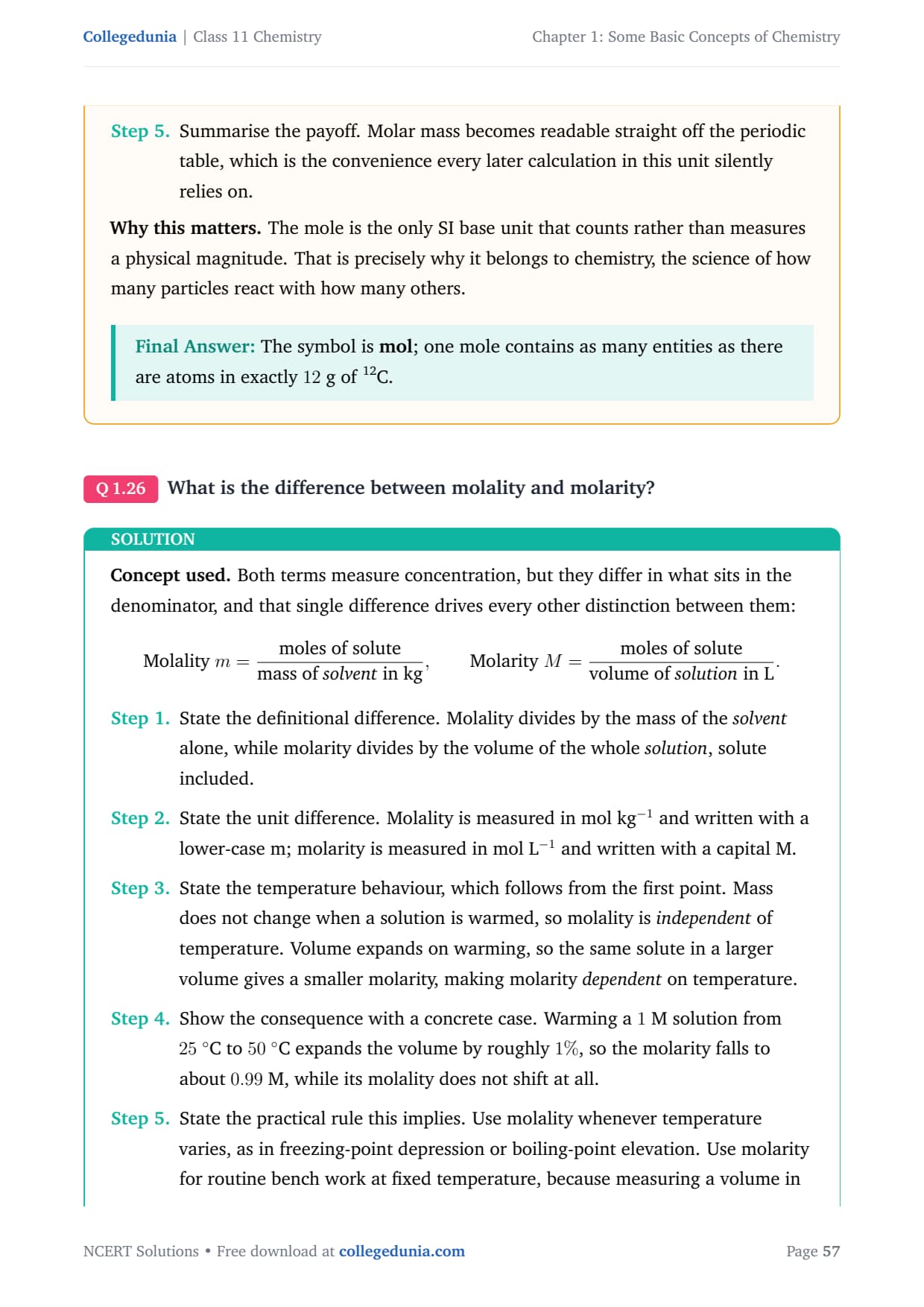
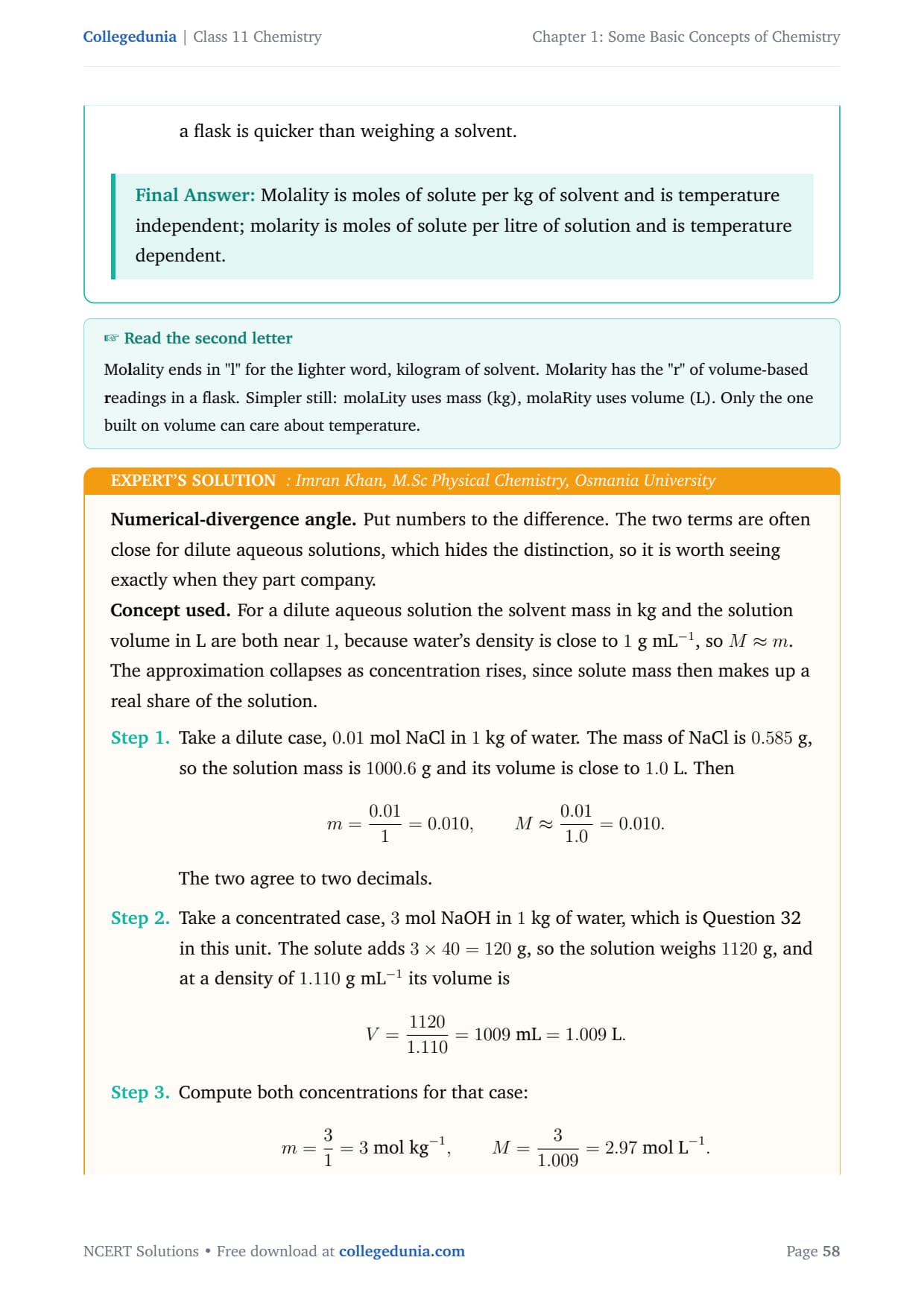
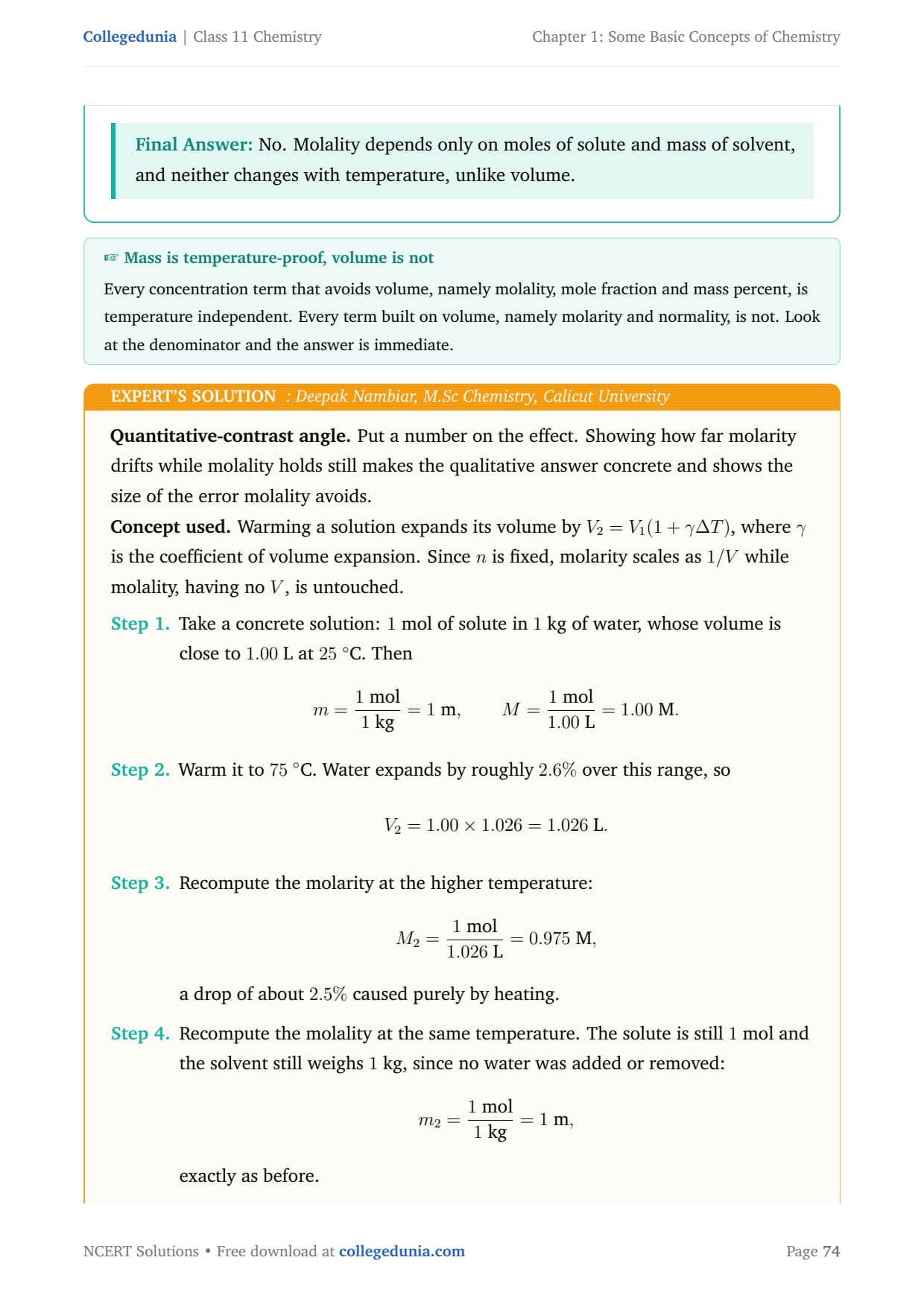
Ans. Molarity (M) is moles of solute per litre of solution. Molality (m) is moles of solute per kilogram of solvent. Molarity changes with temperature because volume expands, while molality does not, since mass is fixed. The Exemplar plants an option for students who mix up the two.
Ques. Can a set of readings be accurate but not precise?
Ans. Yes, and Question 1 is built on it. Readings can scatter widely and still average out to the true value, which makes them accurate on the mean but not precise. Precision is how closely the readings agree with each other, not how close they sit to the truth.
Ques. Is the NCERT Exemplar enough for NEET mole concept questions?
Ans. For this chapter it covers the ground well. NEET asks one to two questions a year on the mole concept and concentration terms, and they sit at the level of the Exemplar MCQ I set. Work all 15 of those before moving to a coaching module.



Comments