




NCERT Exemplar Solutions for Class 11 Chemistry Chapter 3 Classification of Elements and Periodicity in Properties solve all 55 questions from the Exemplar book. Every MCQ, Short Answer, Matching, Assertion and Reason and Long Answer problem is worked out in the free 241-page PDF, updated for the 2026-27 syllabus.
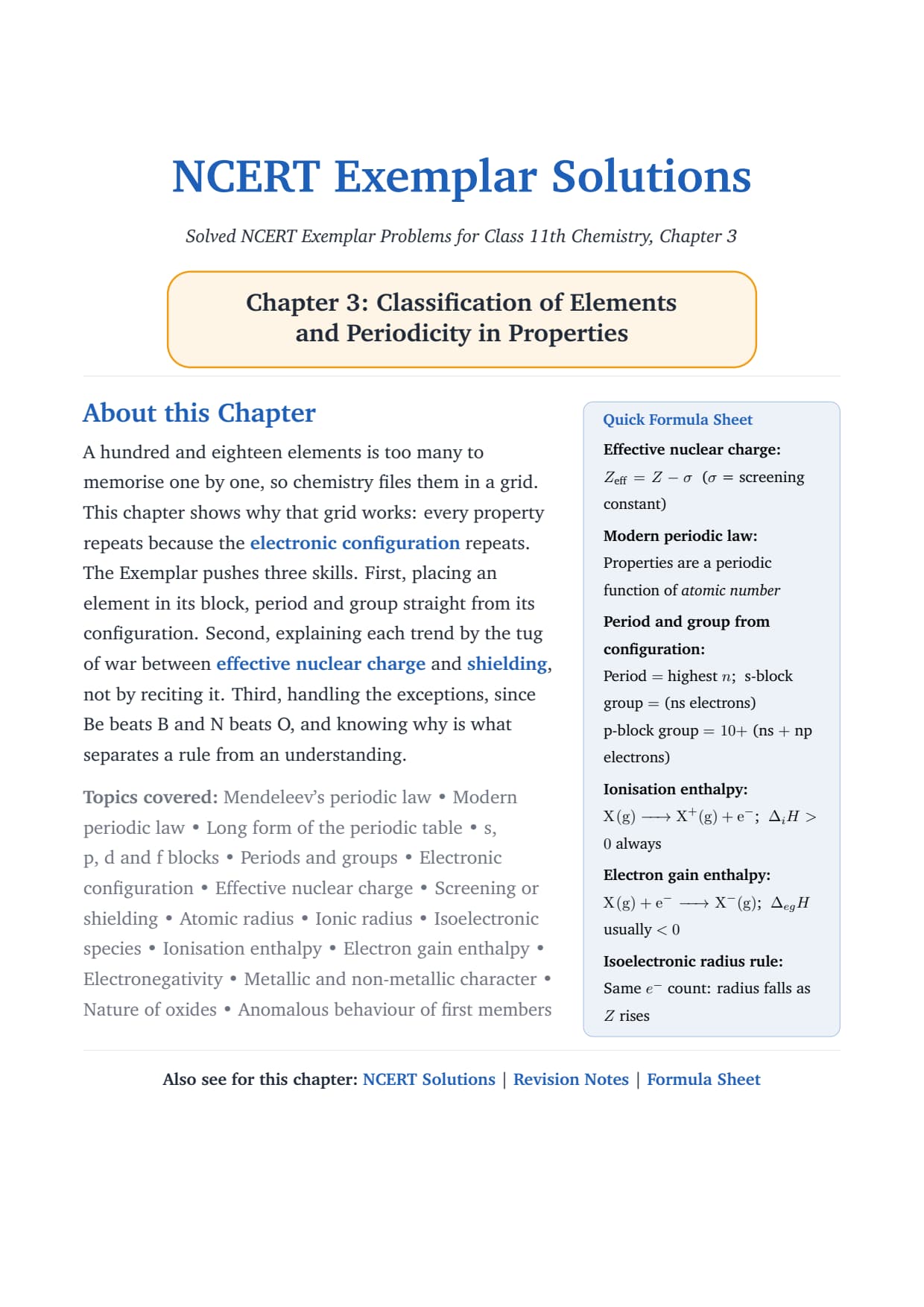
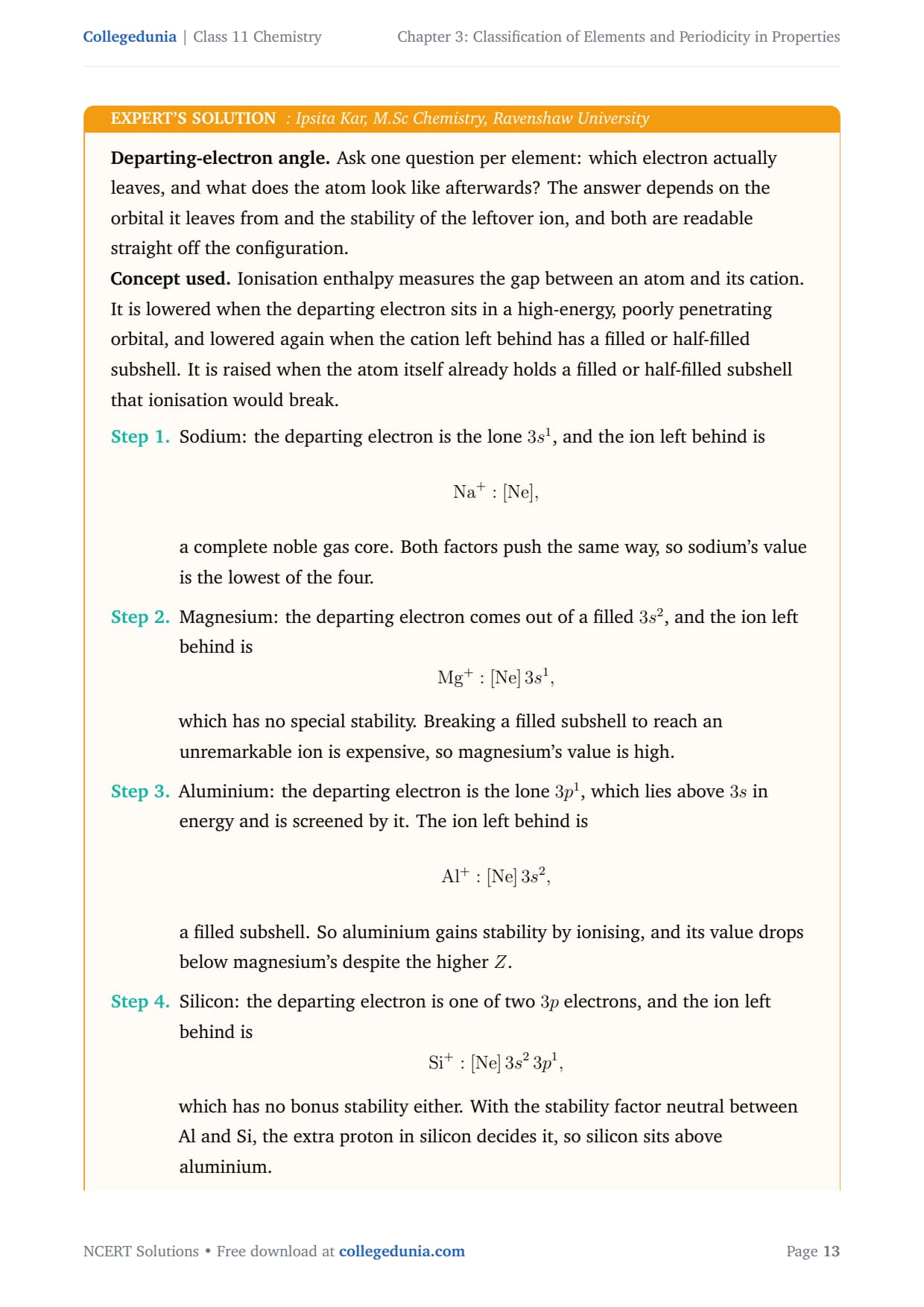
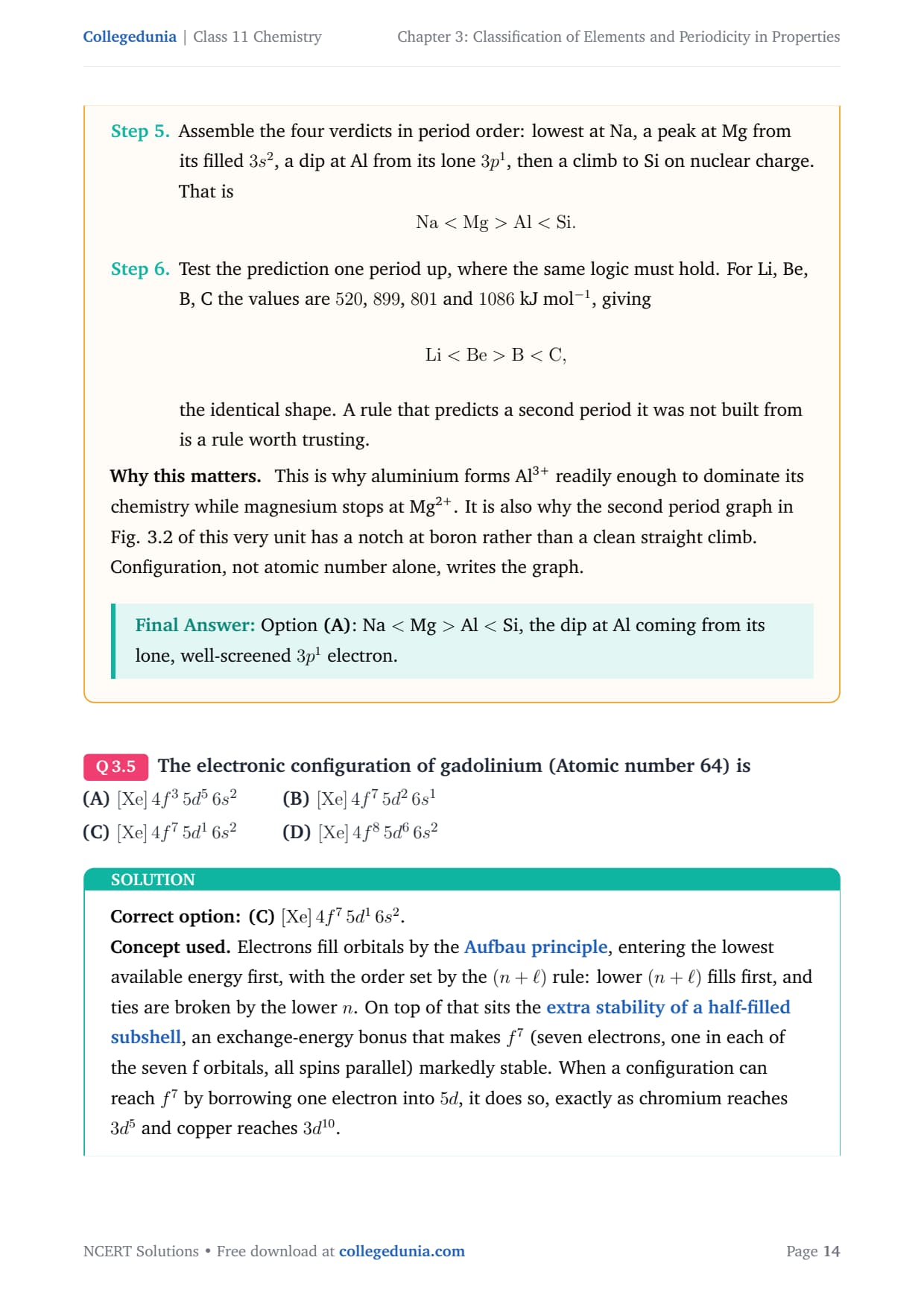
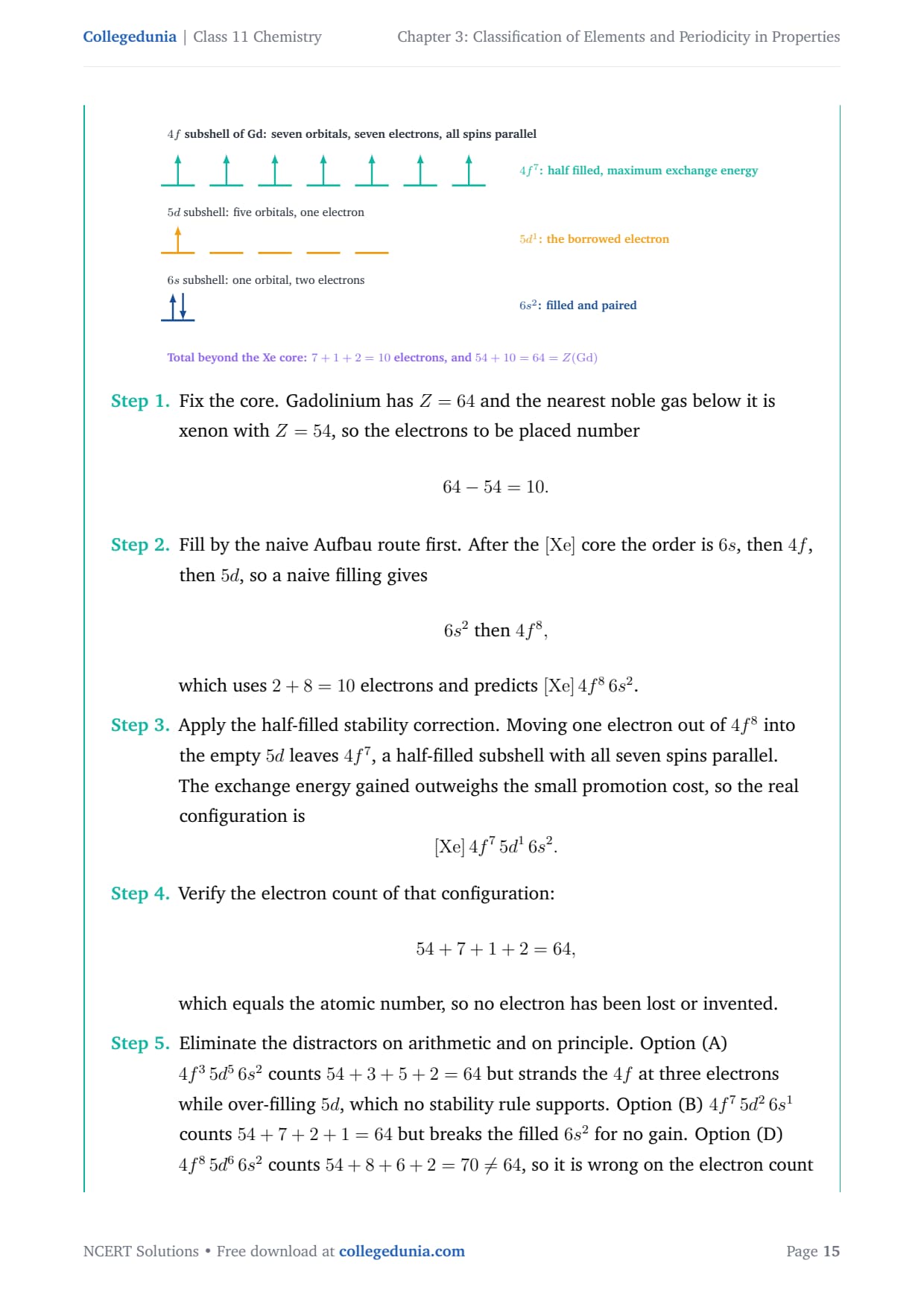
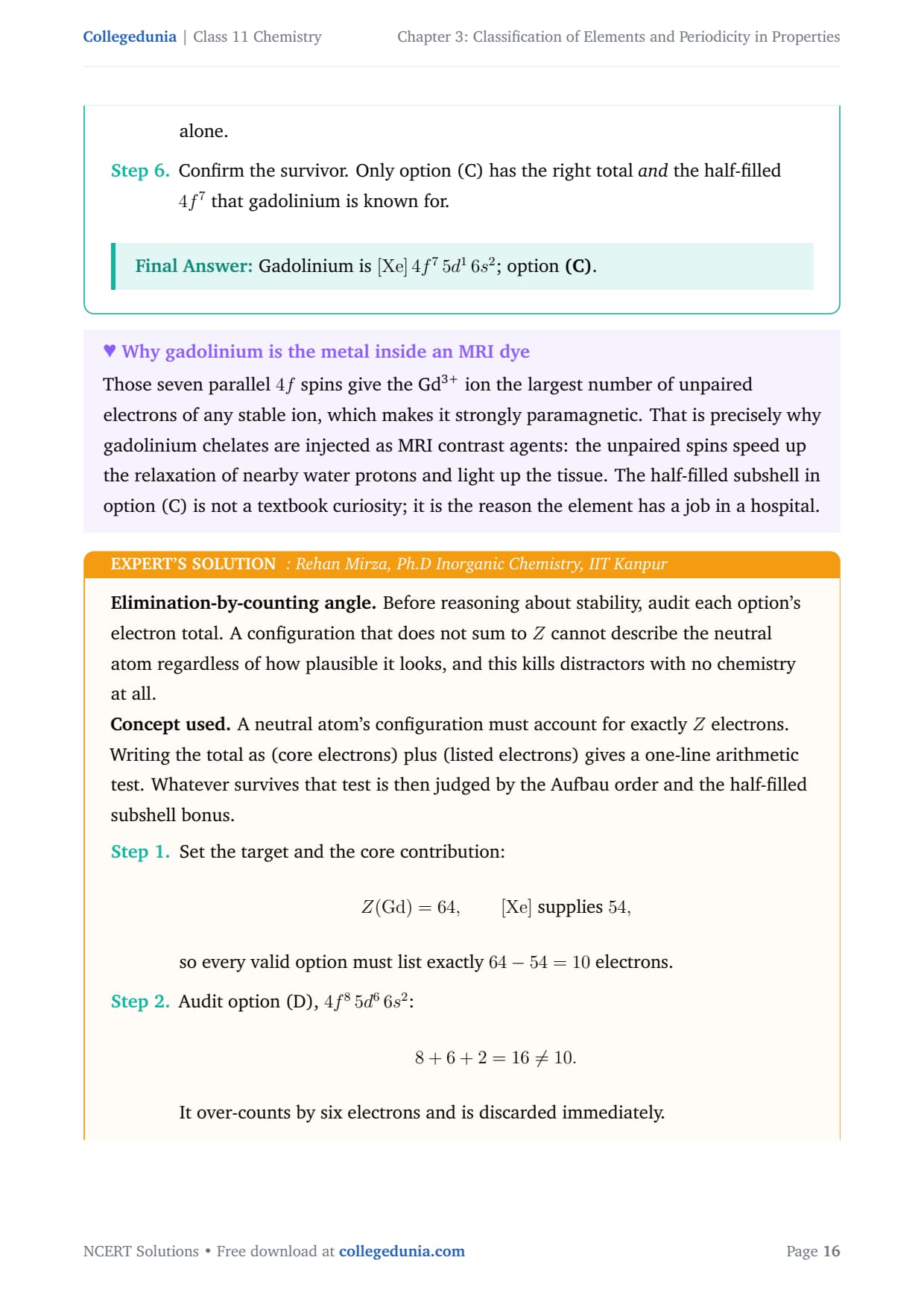
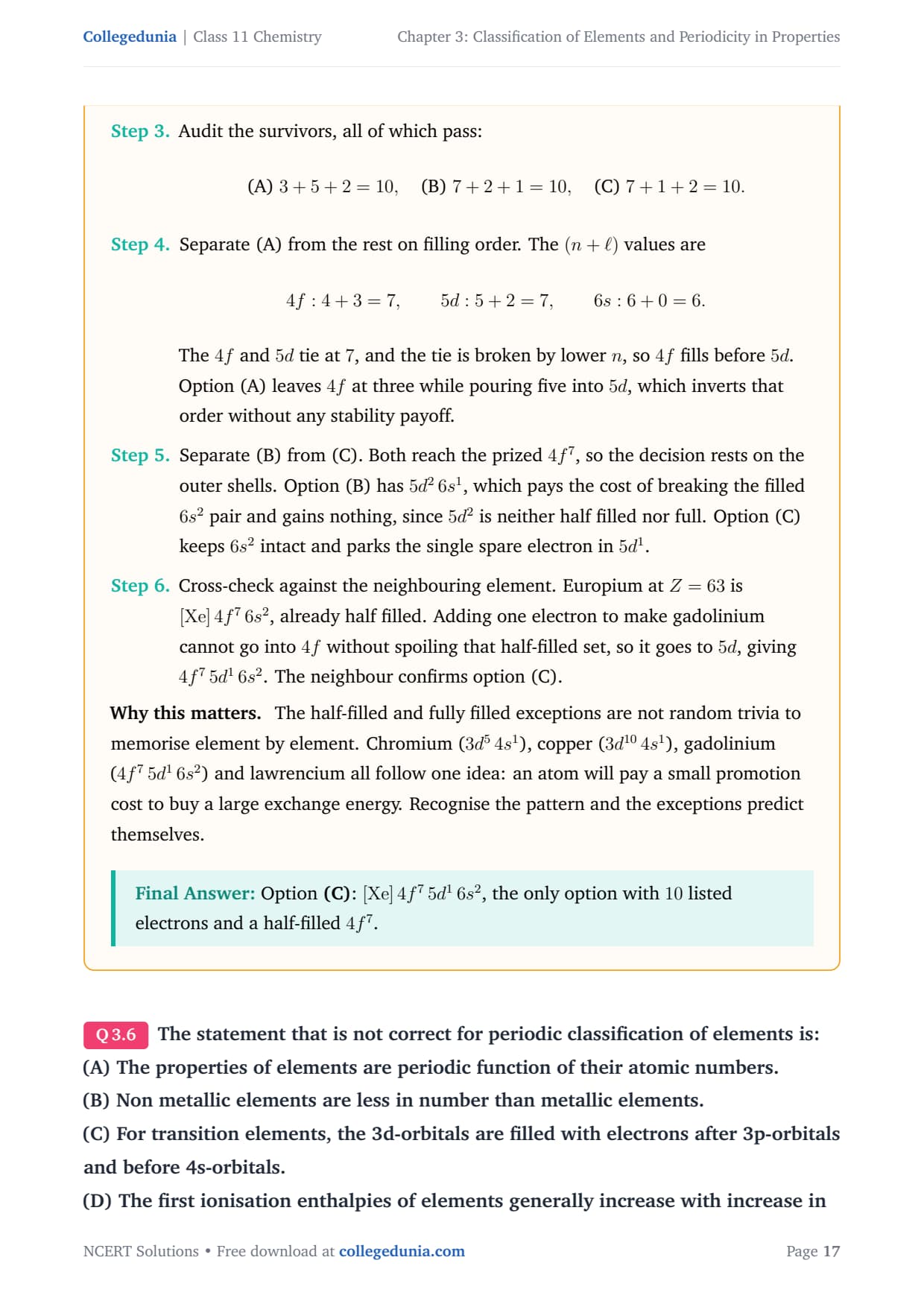
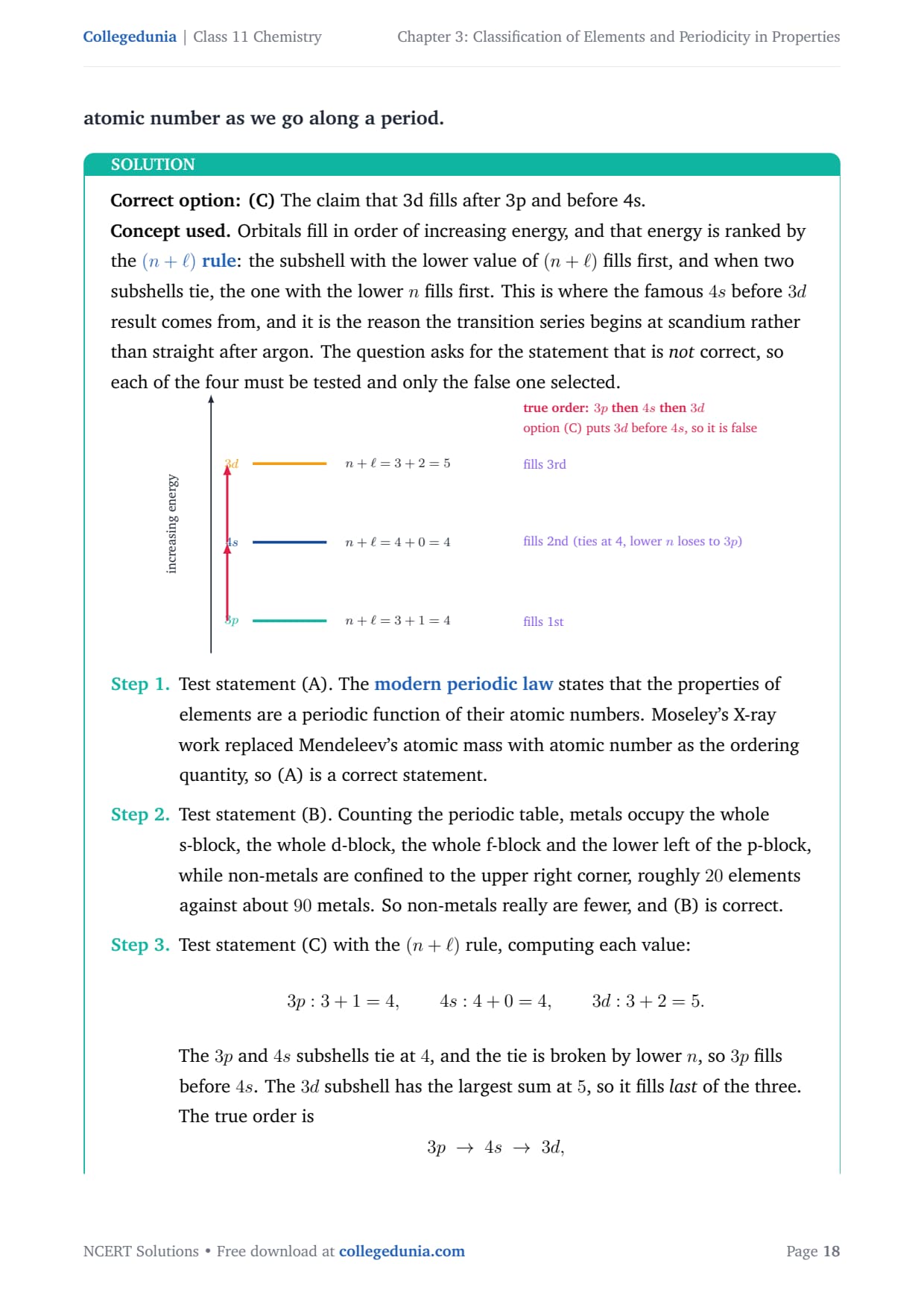
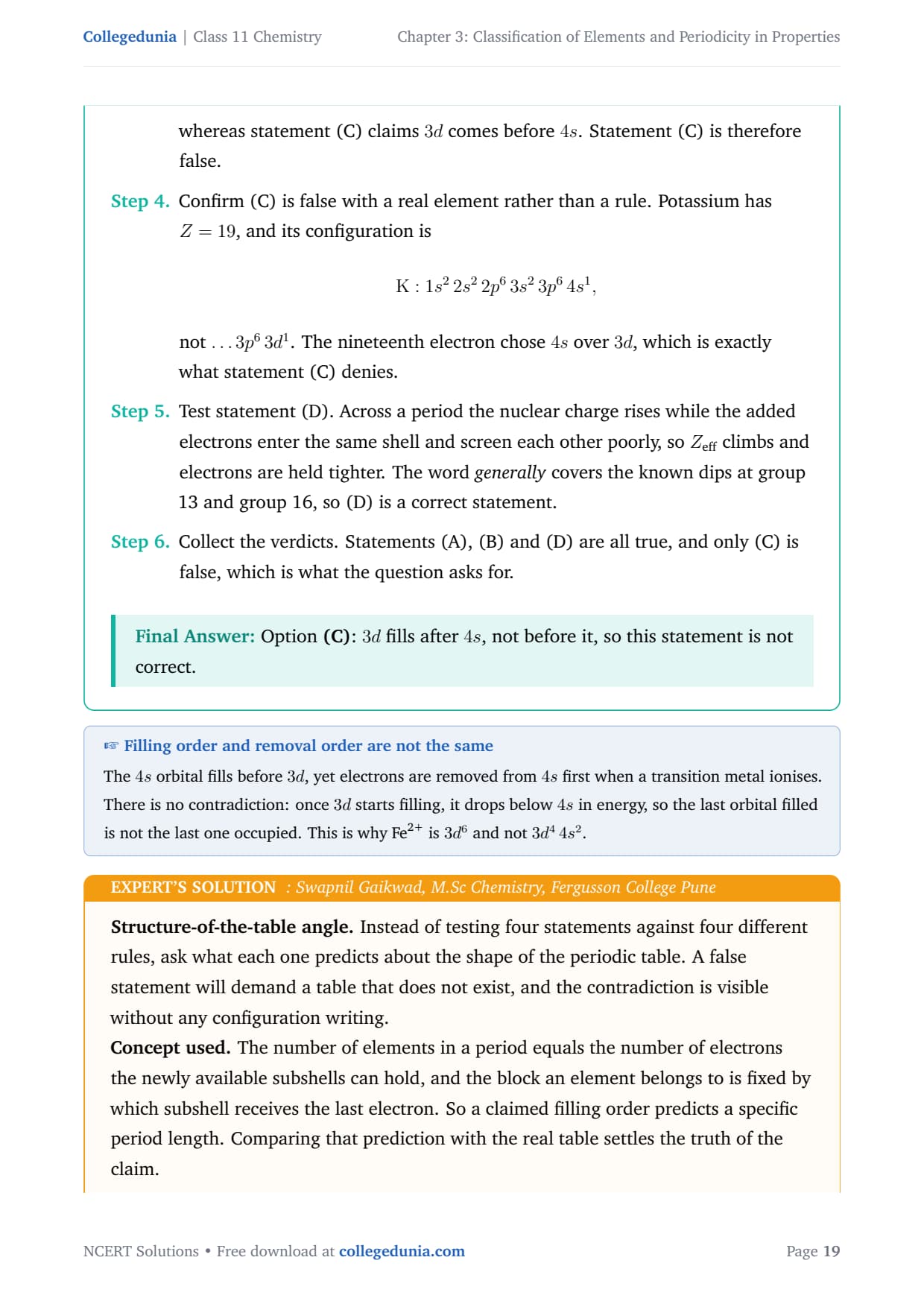
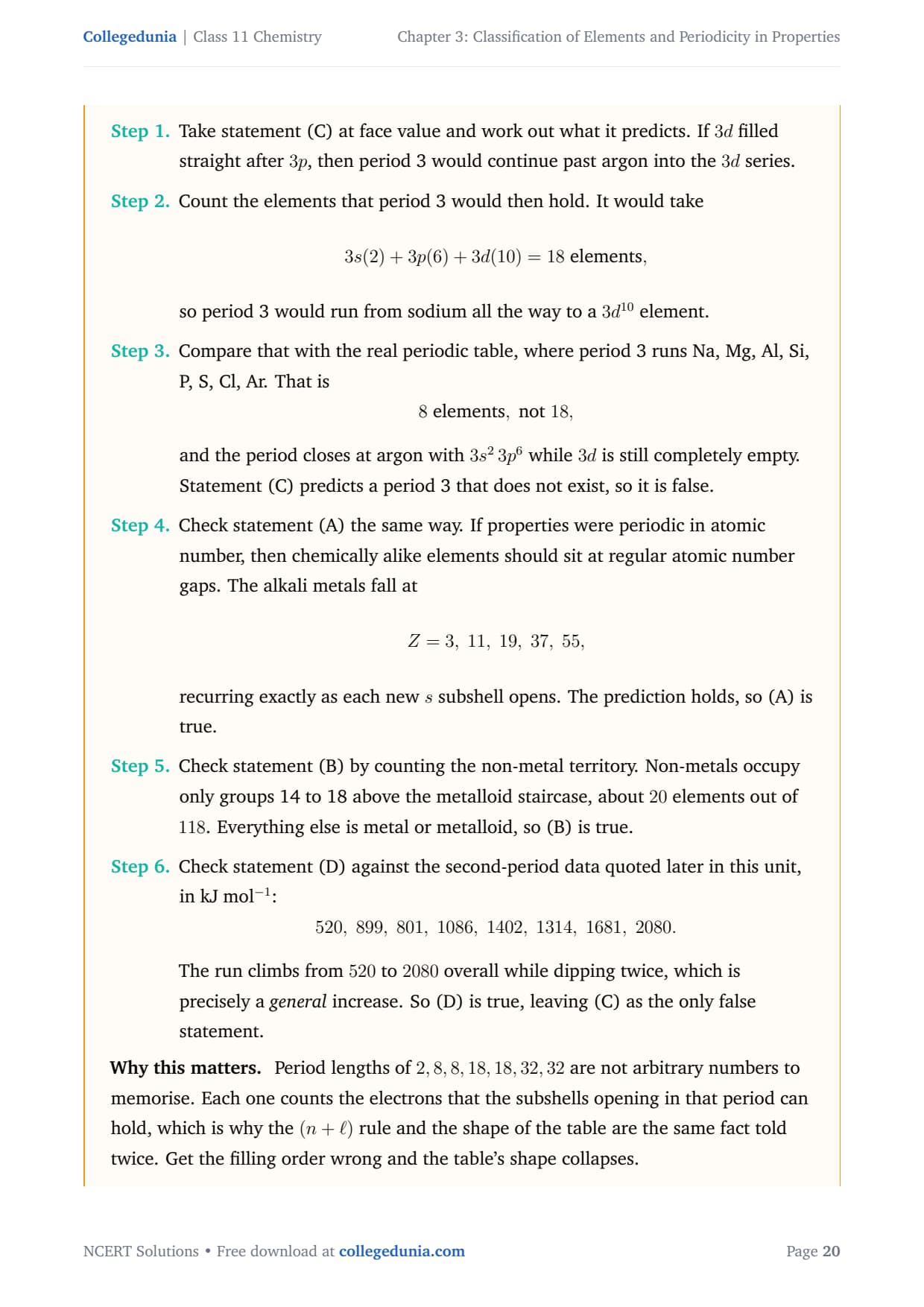
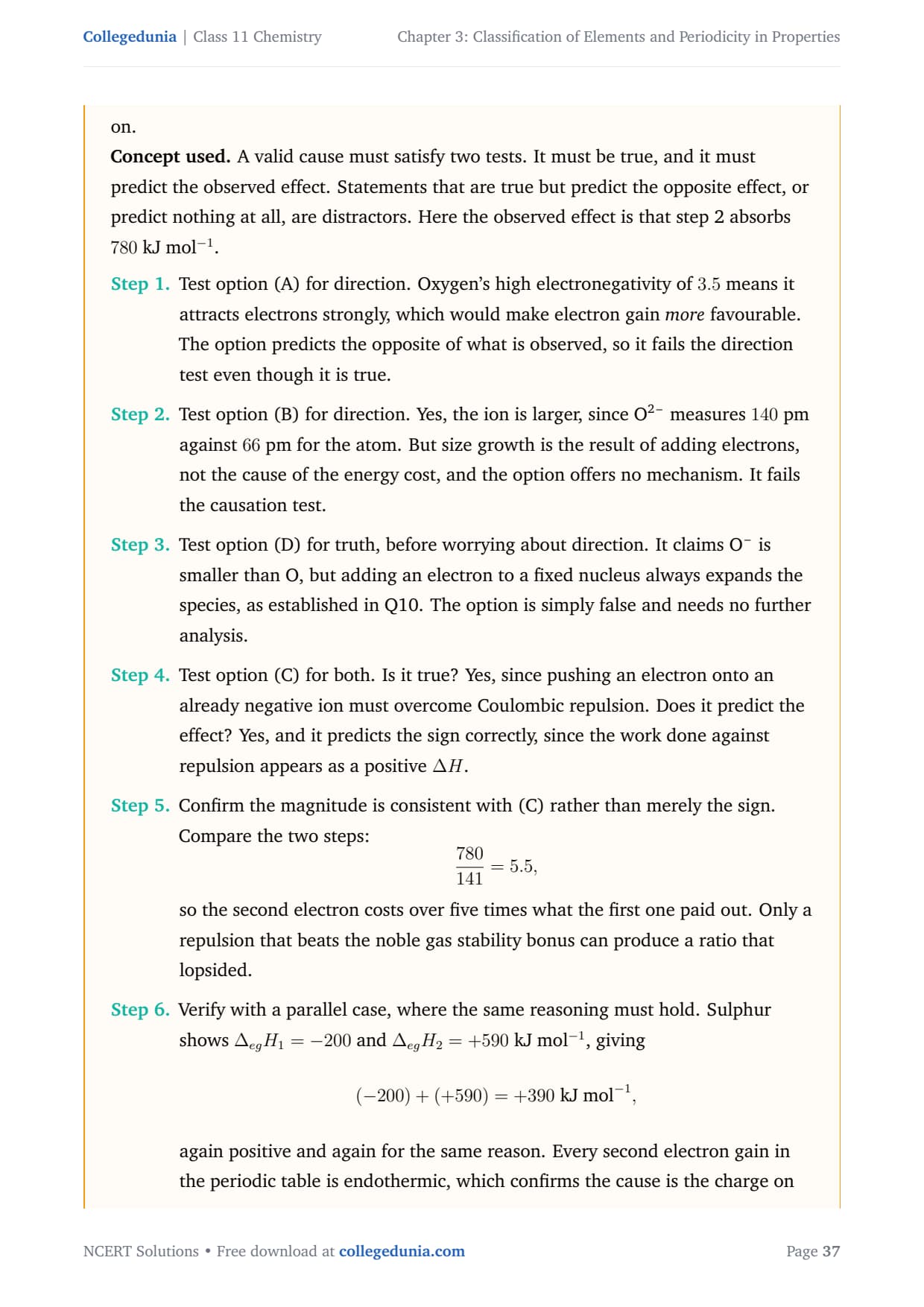
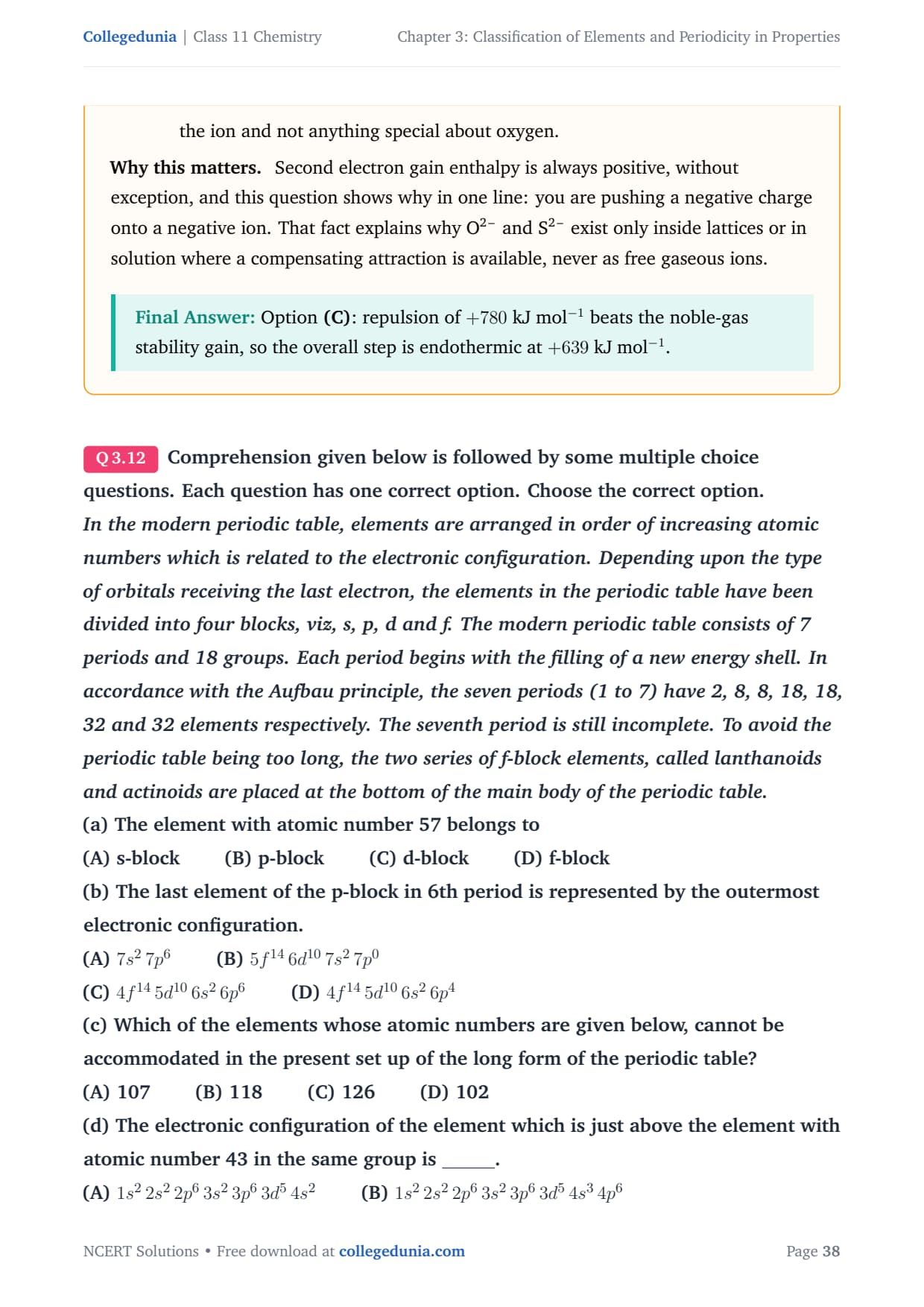
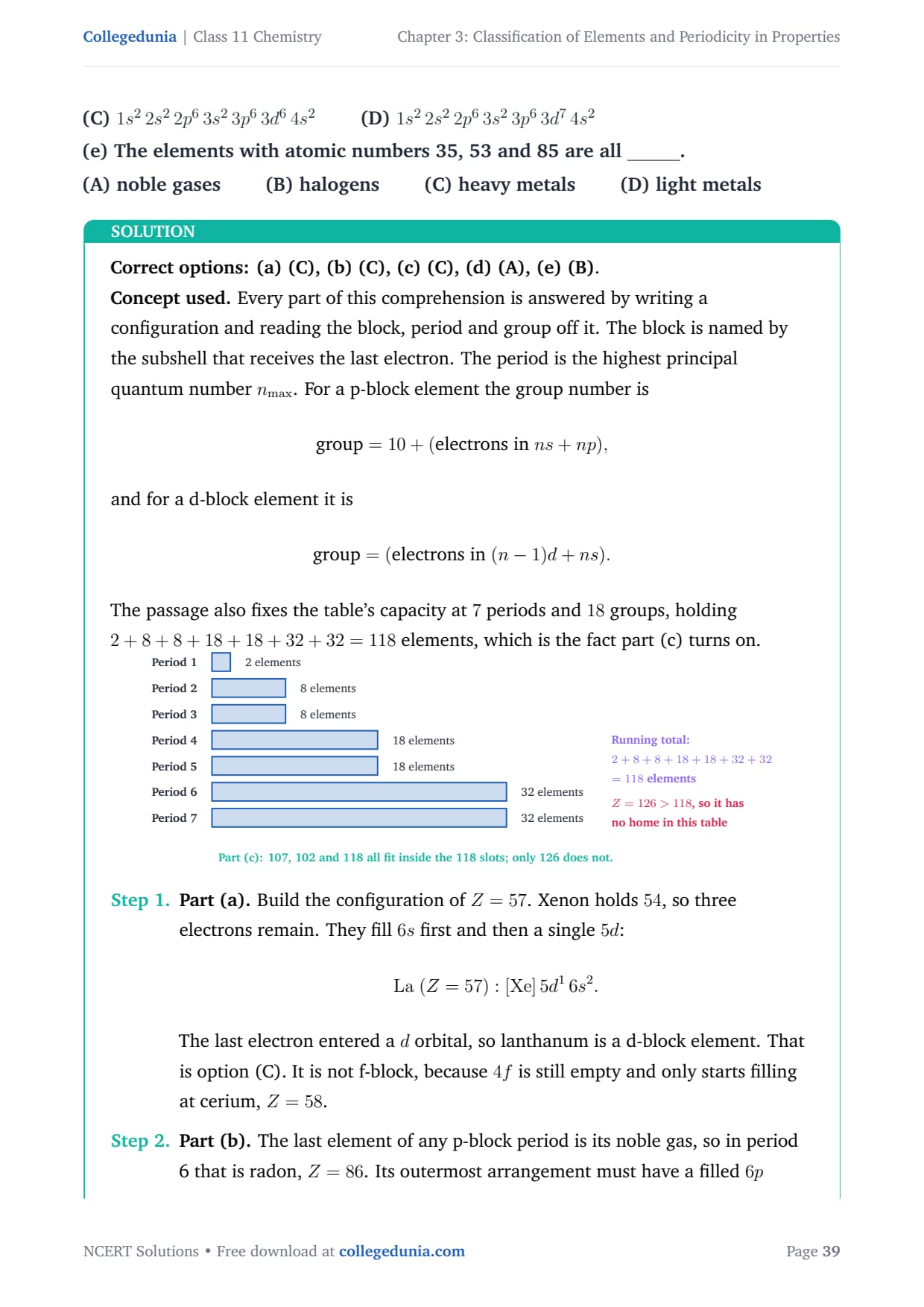
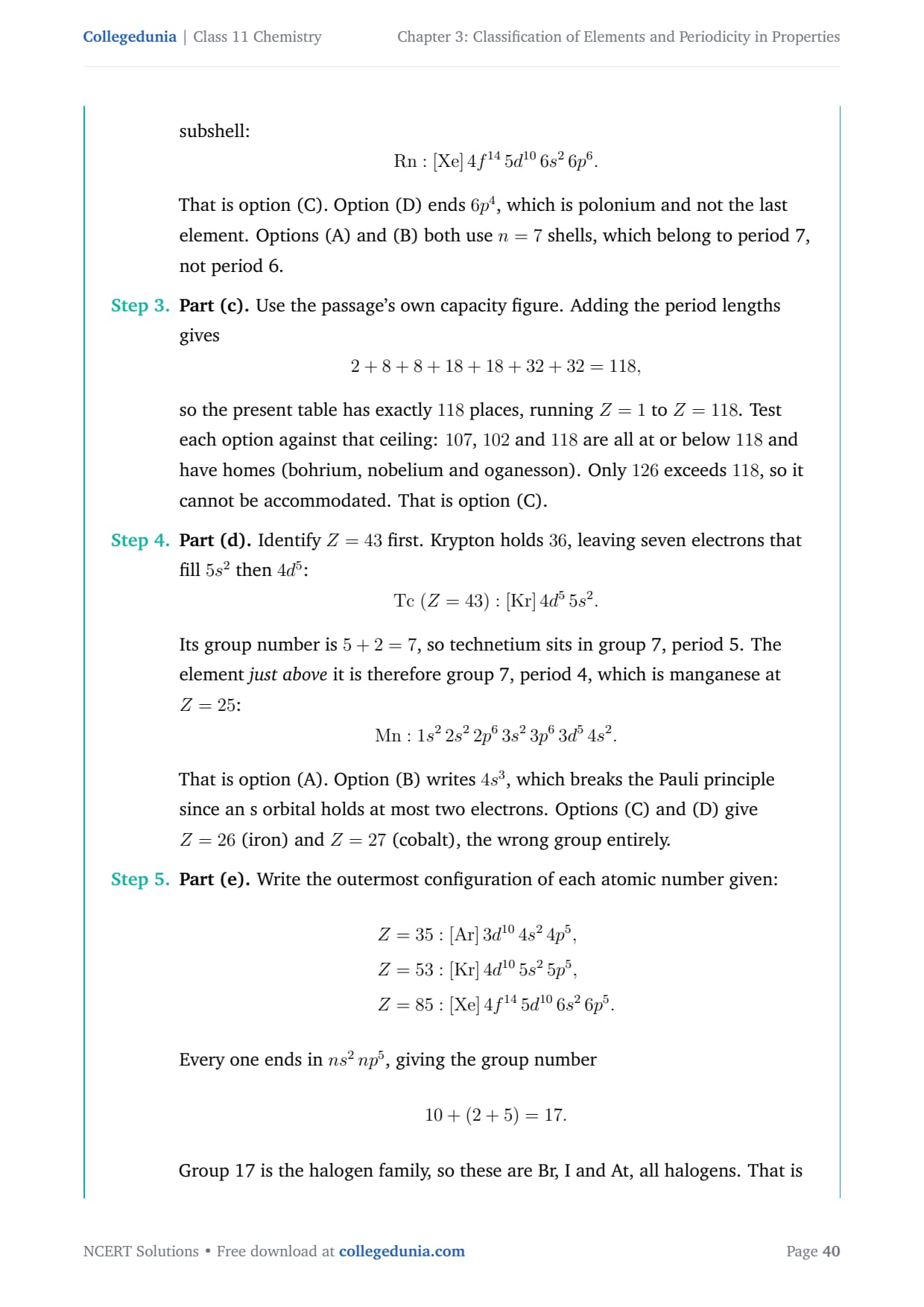
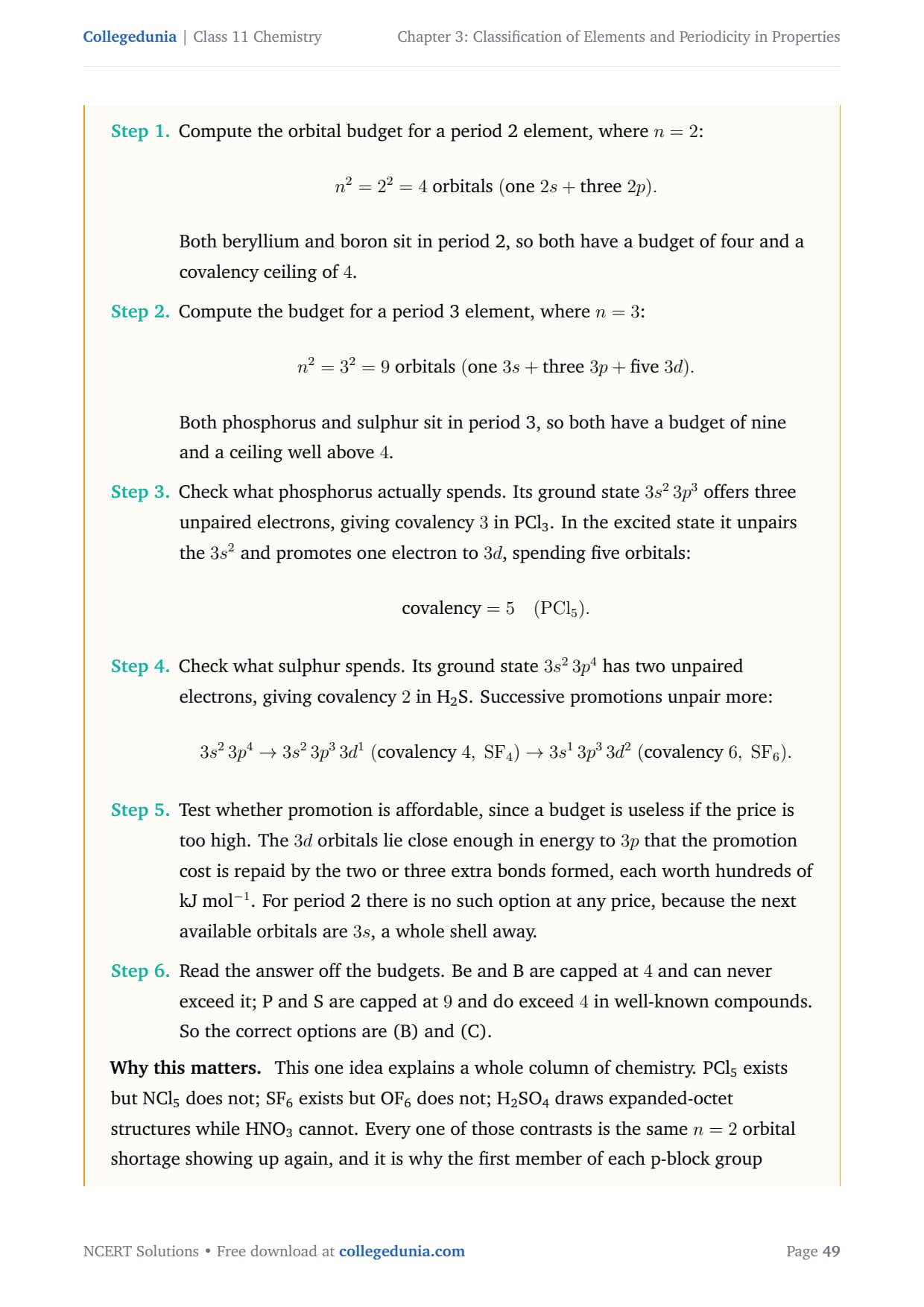
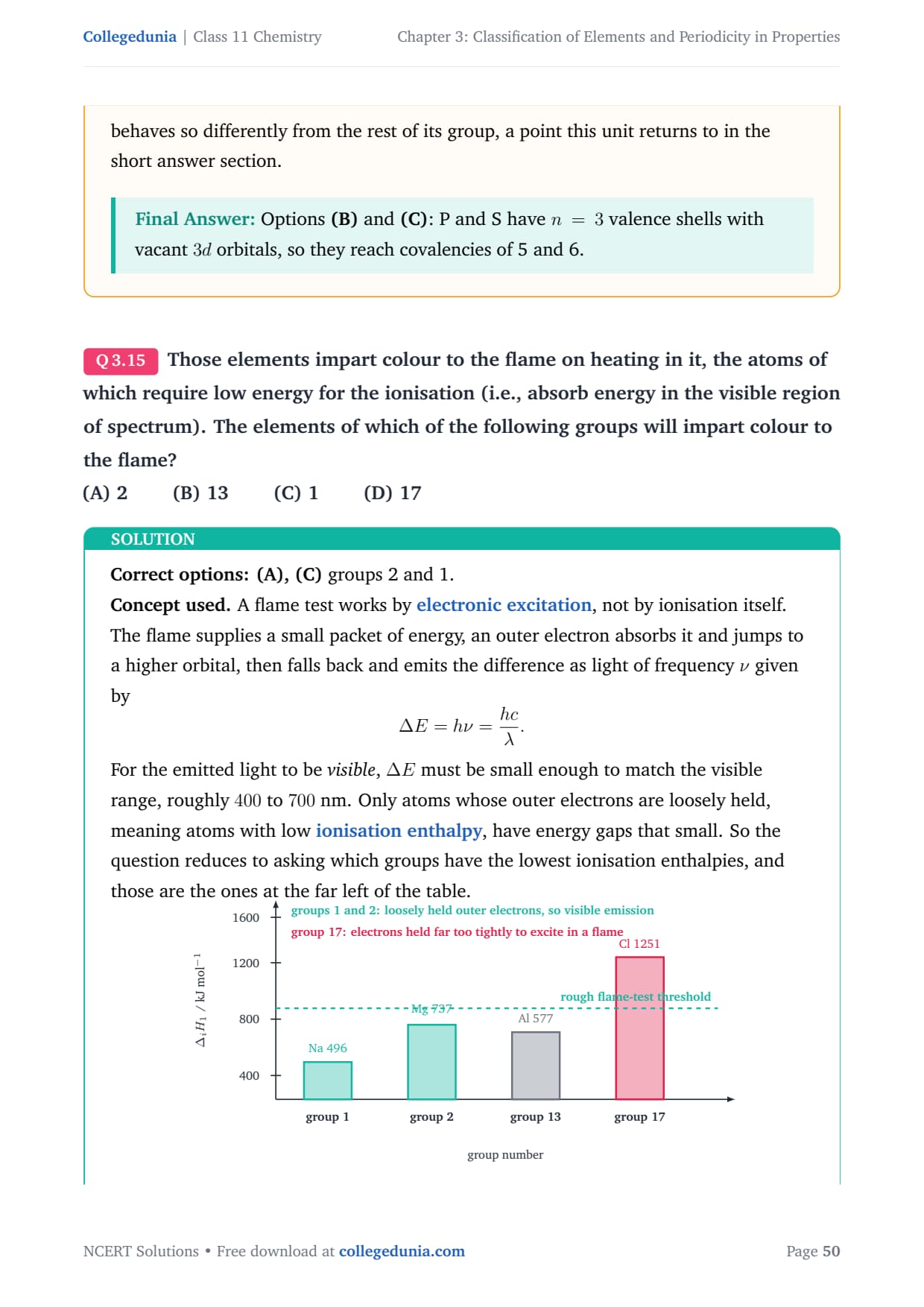
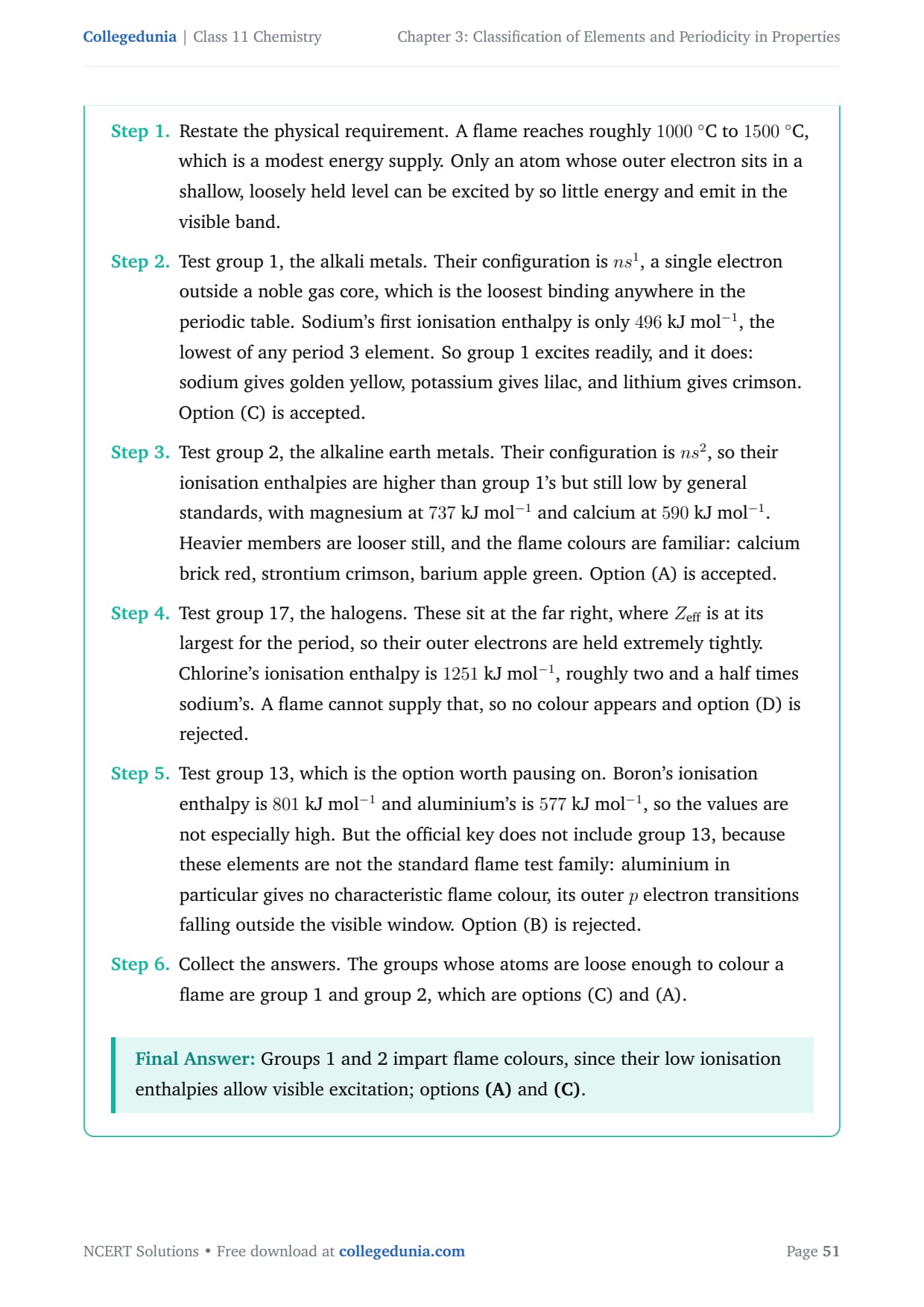
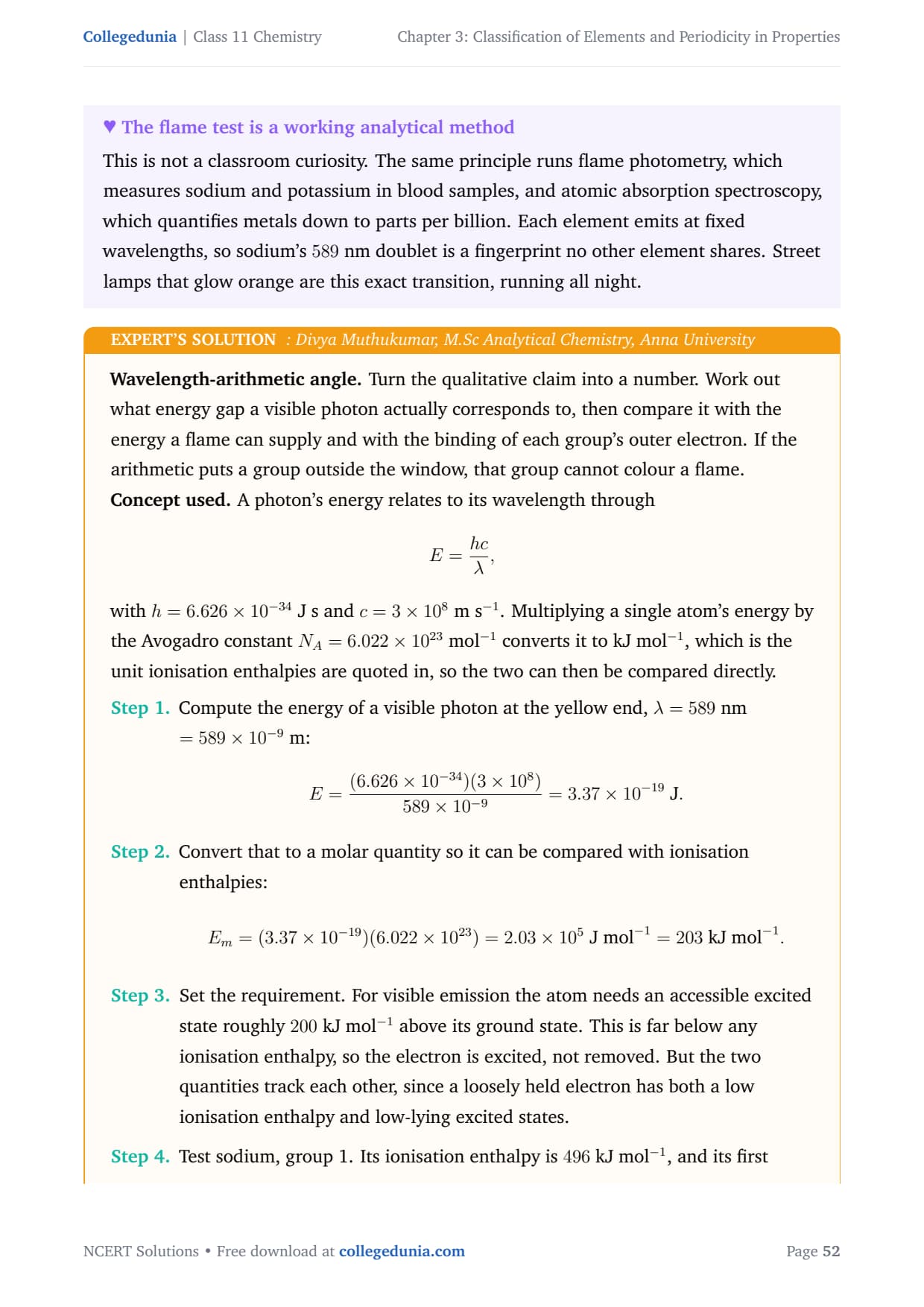
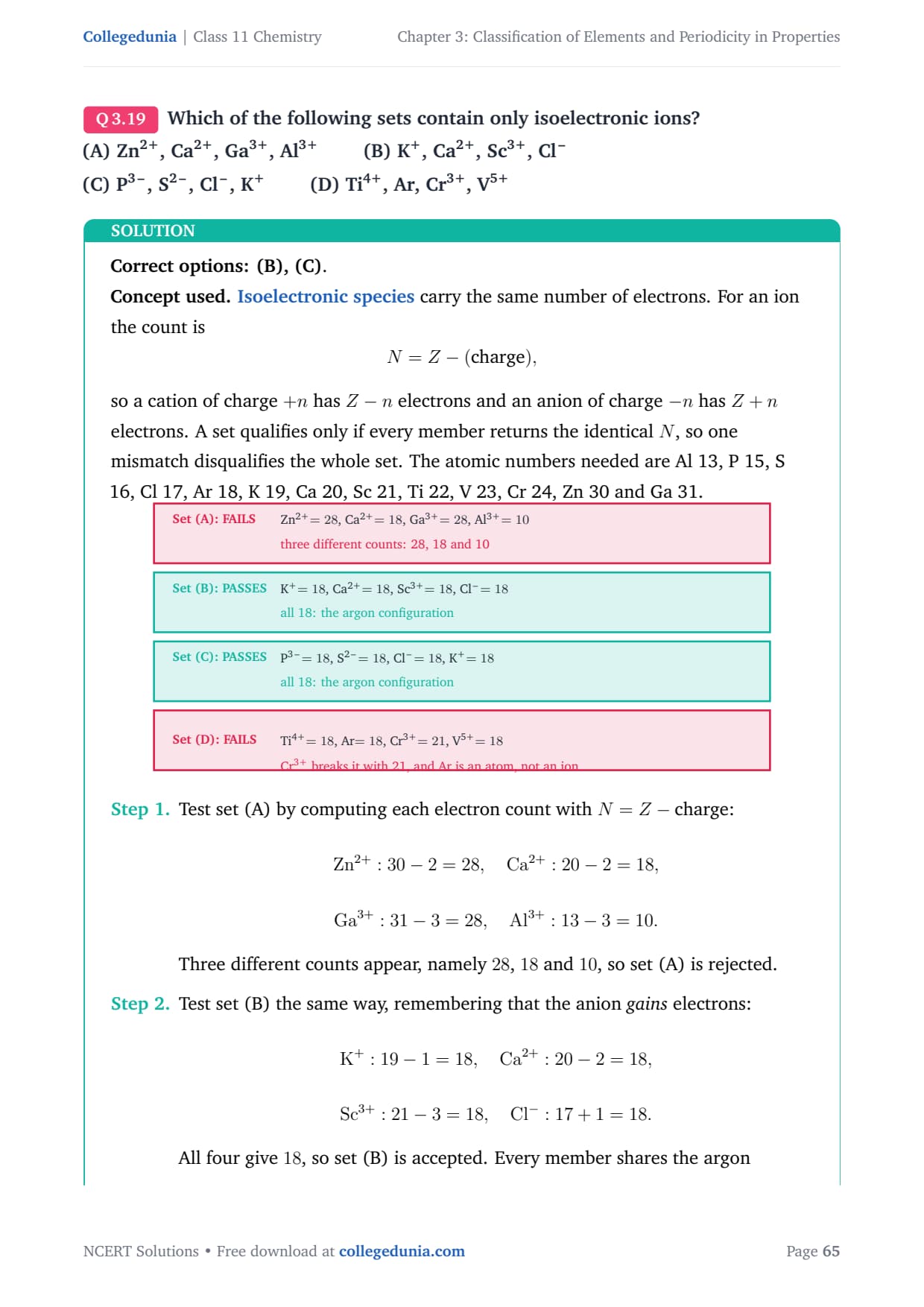
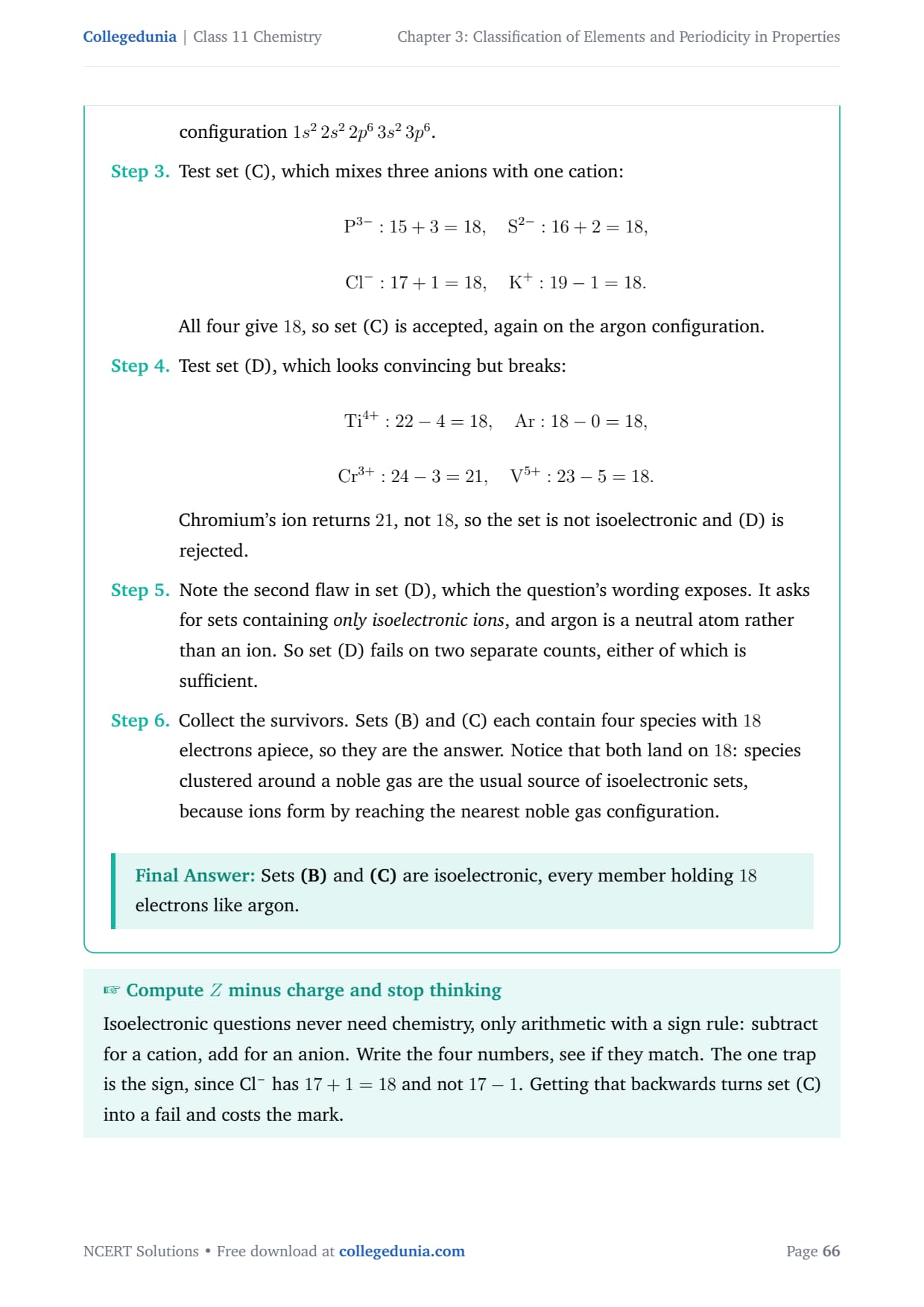
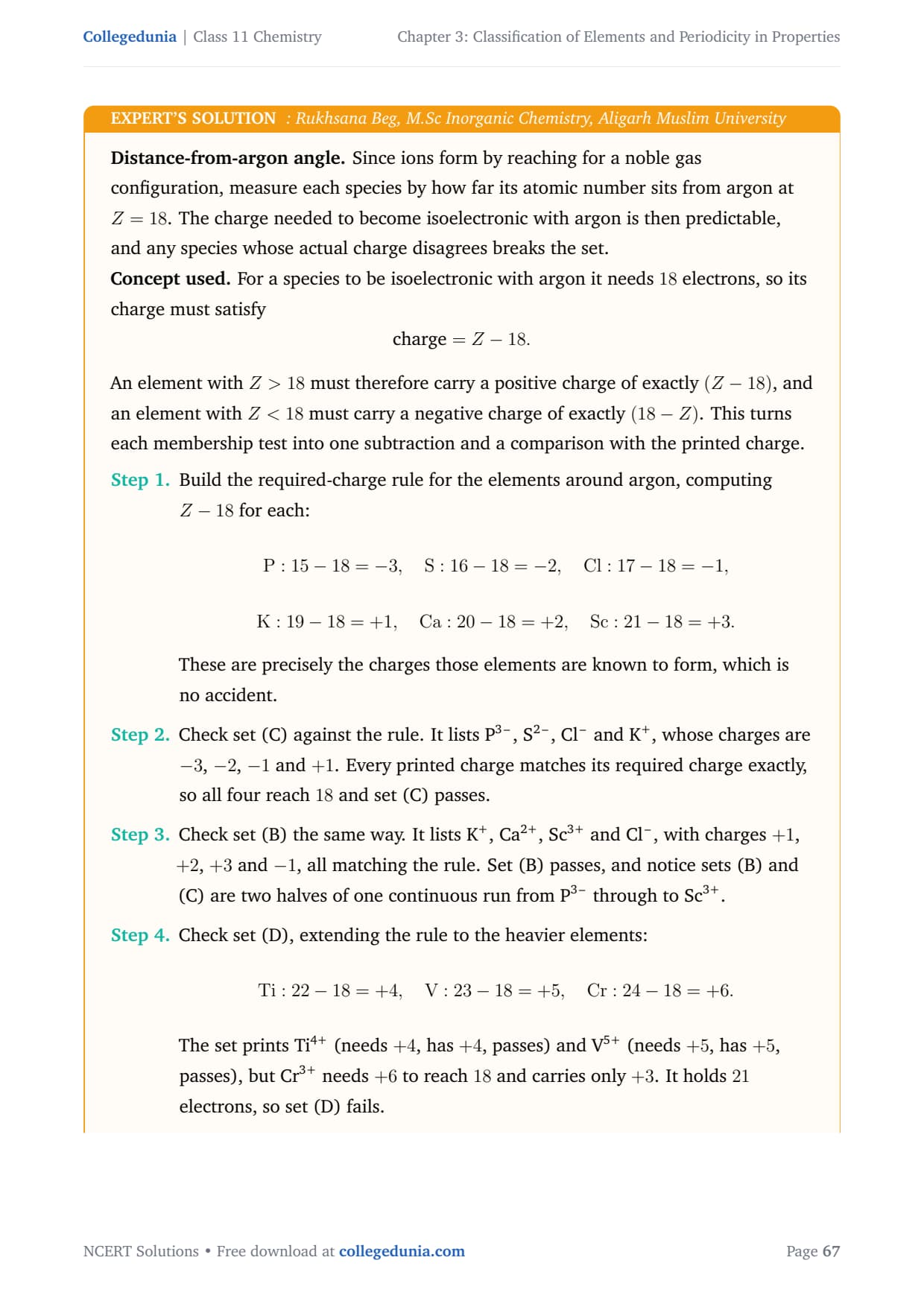
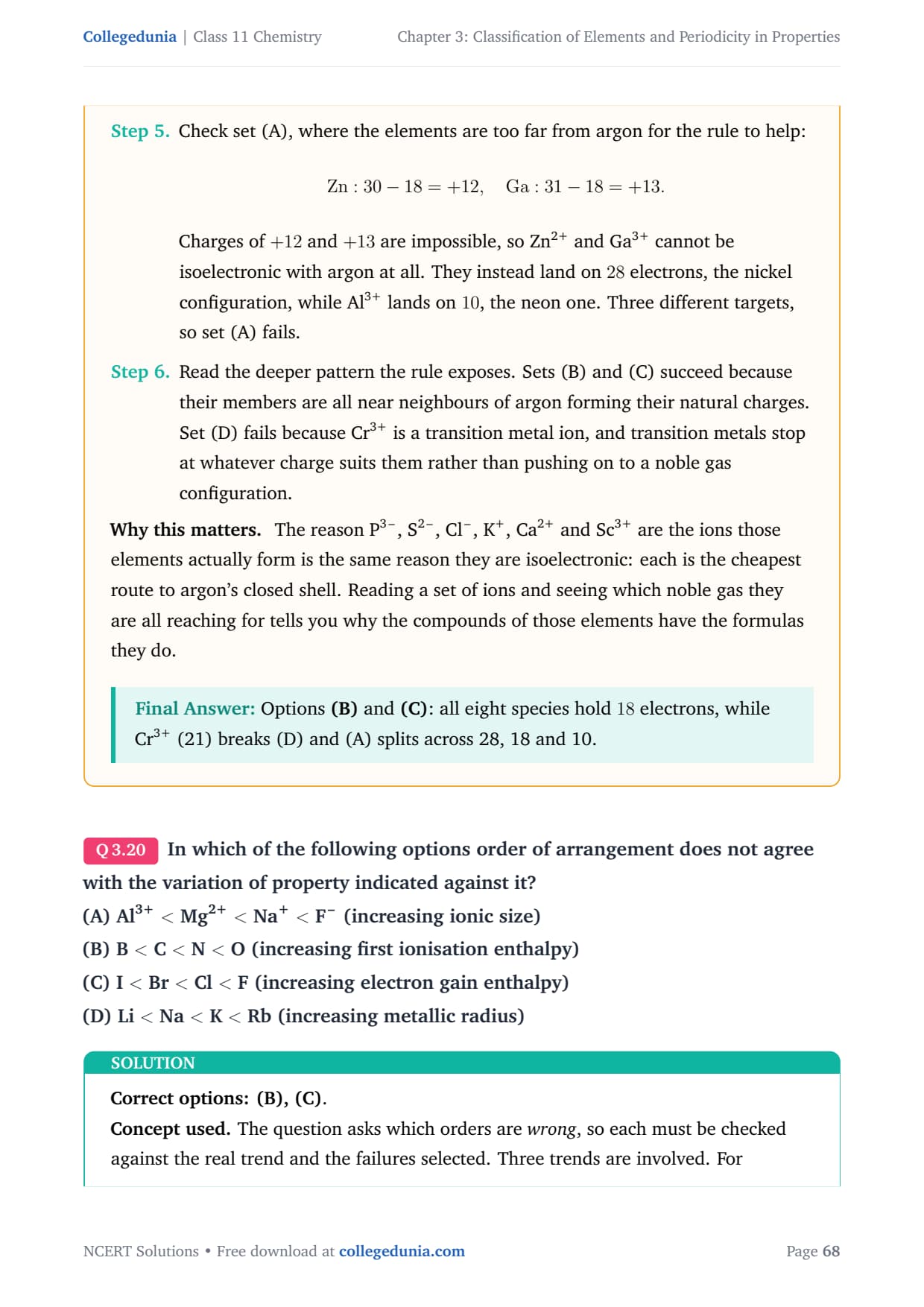
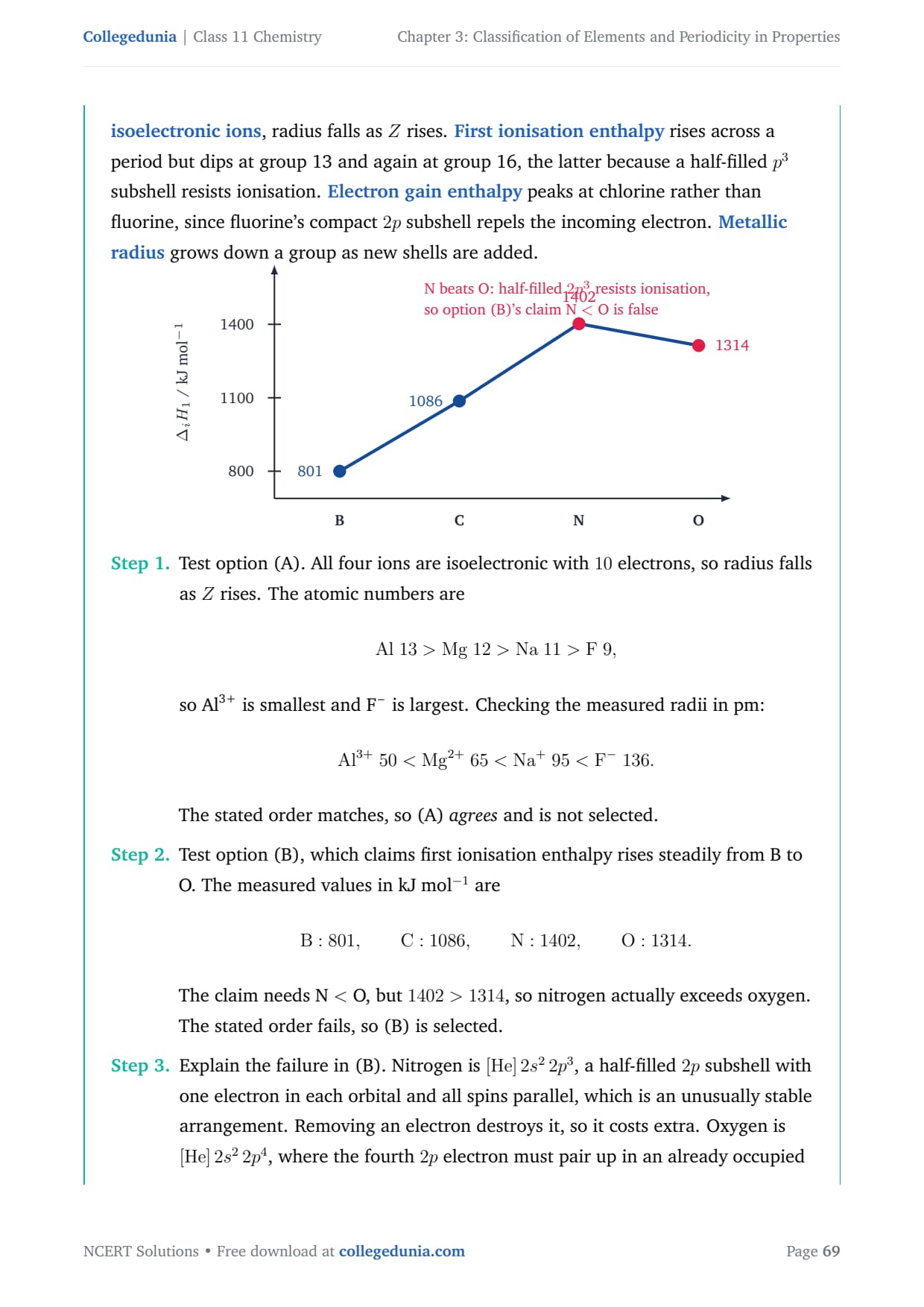
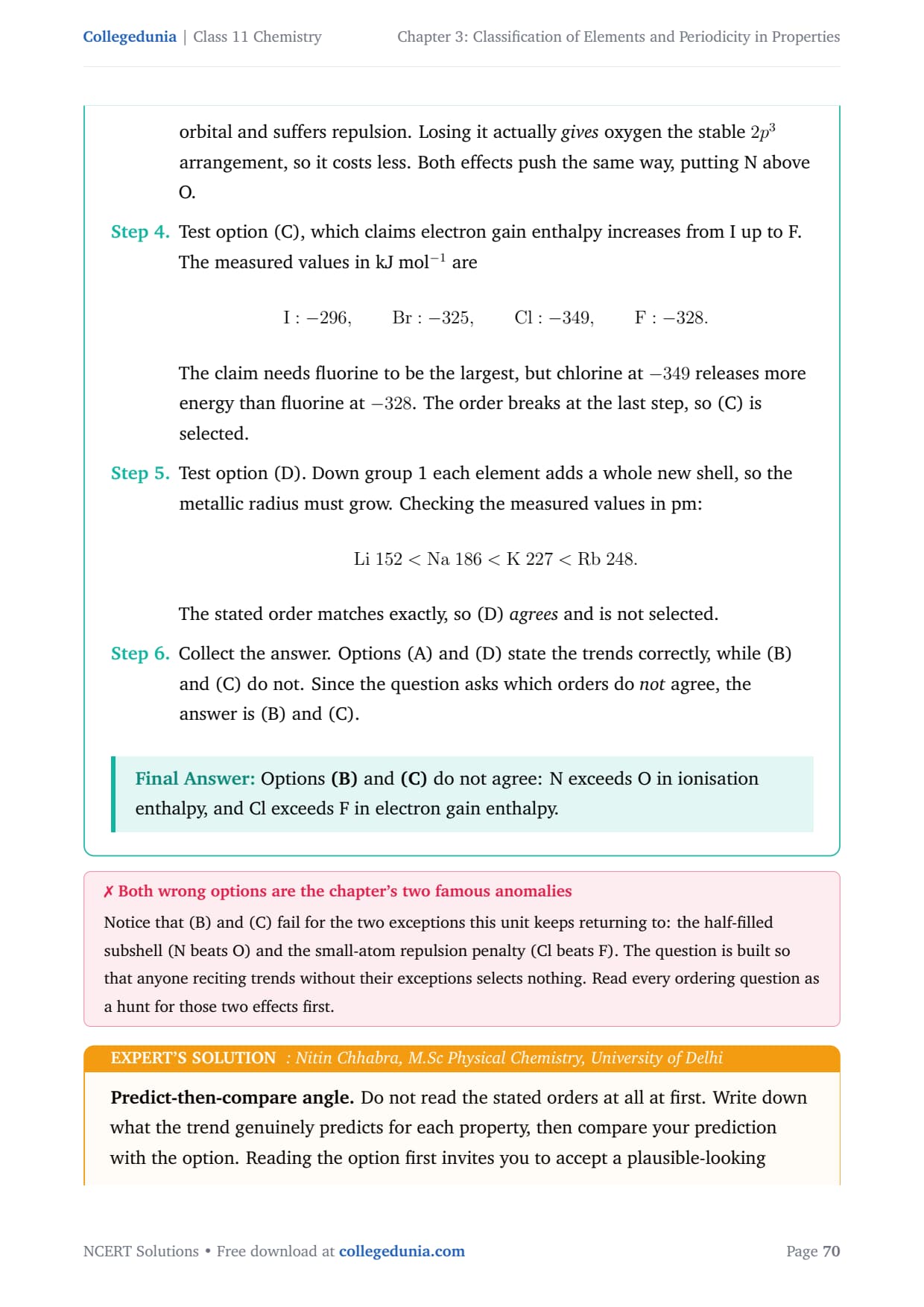
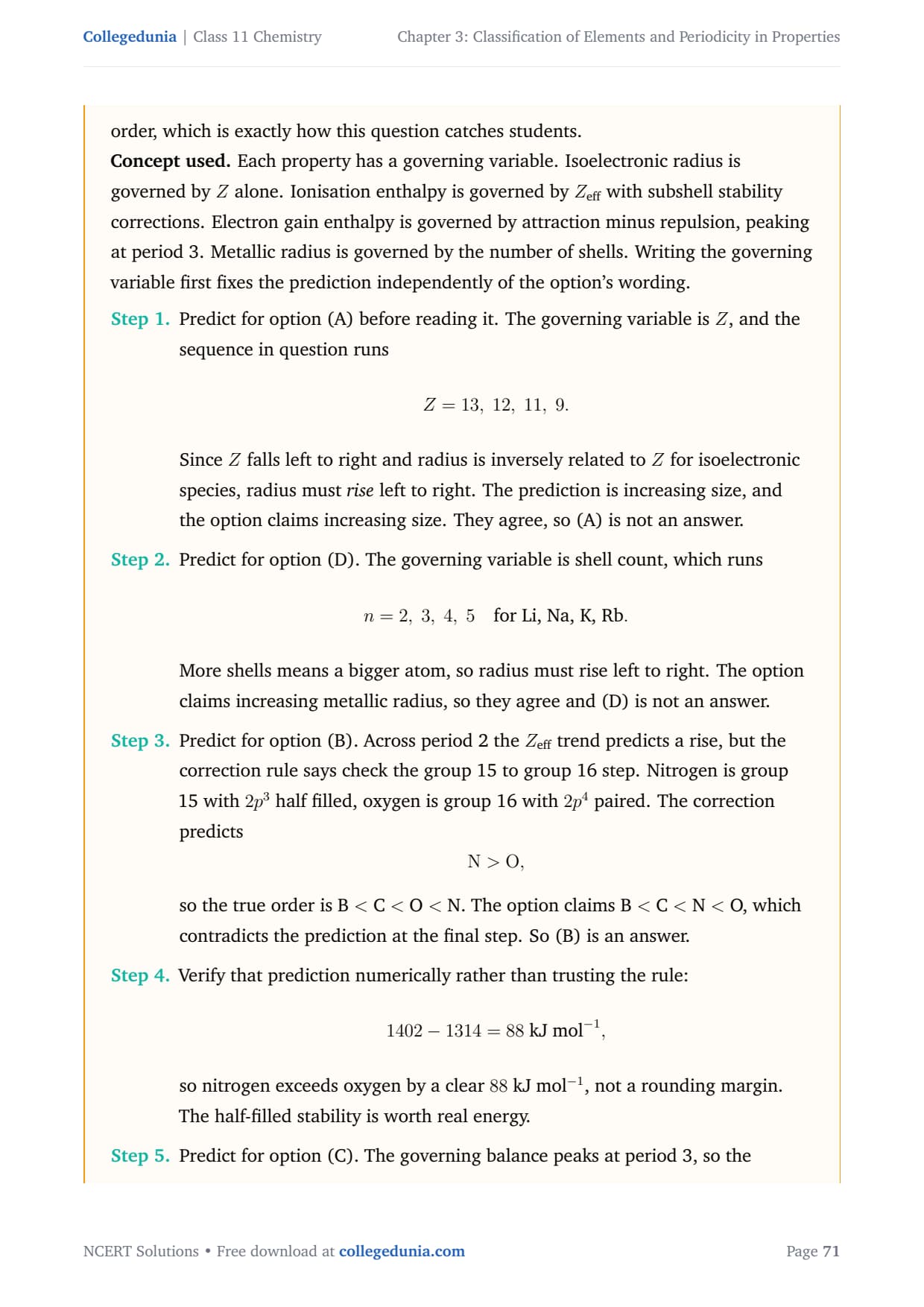
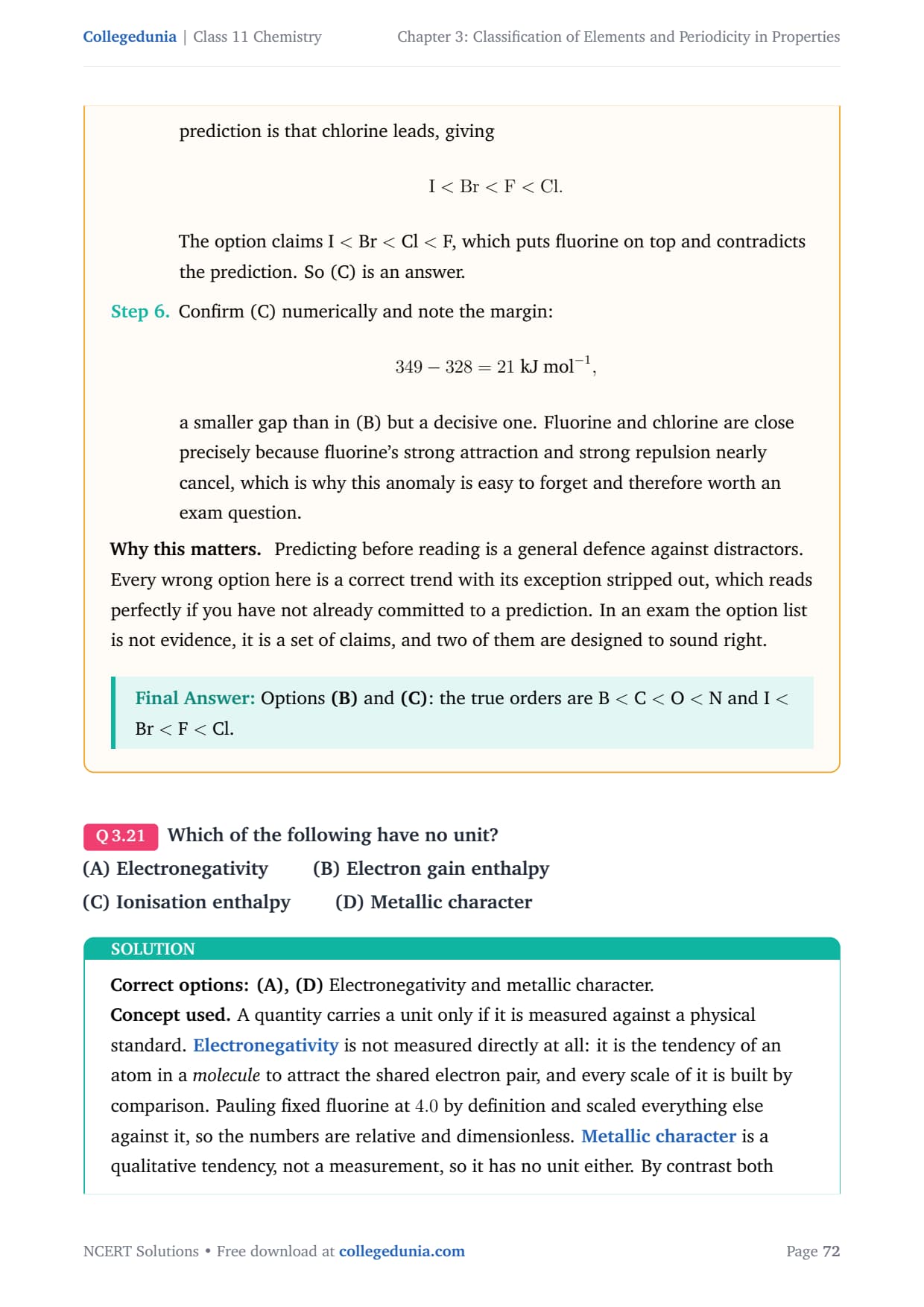
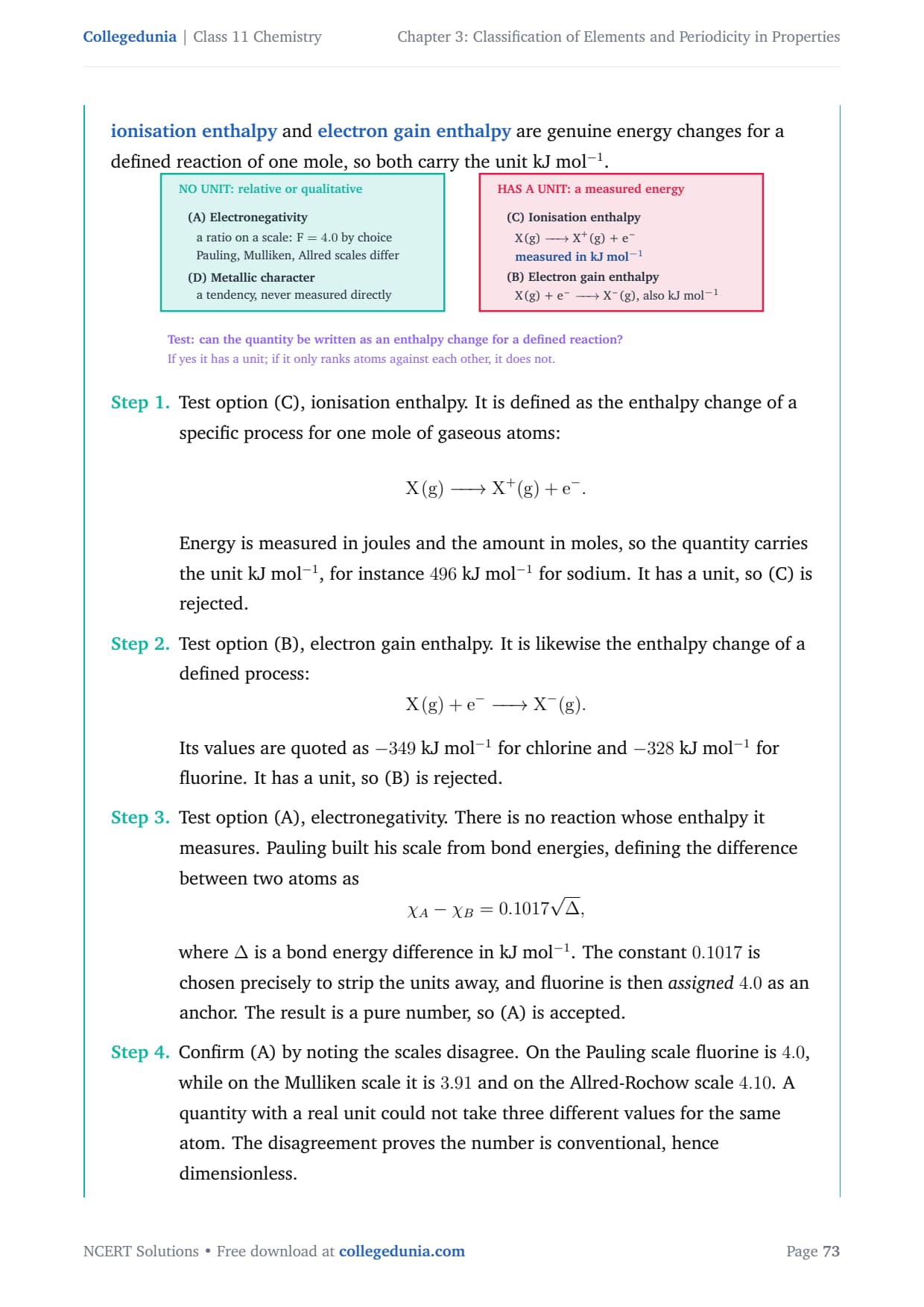
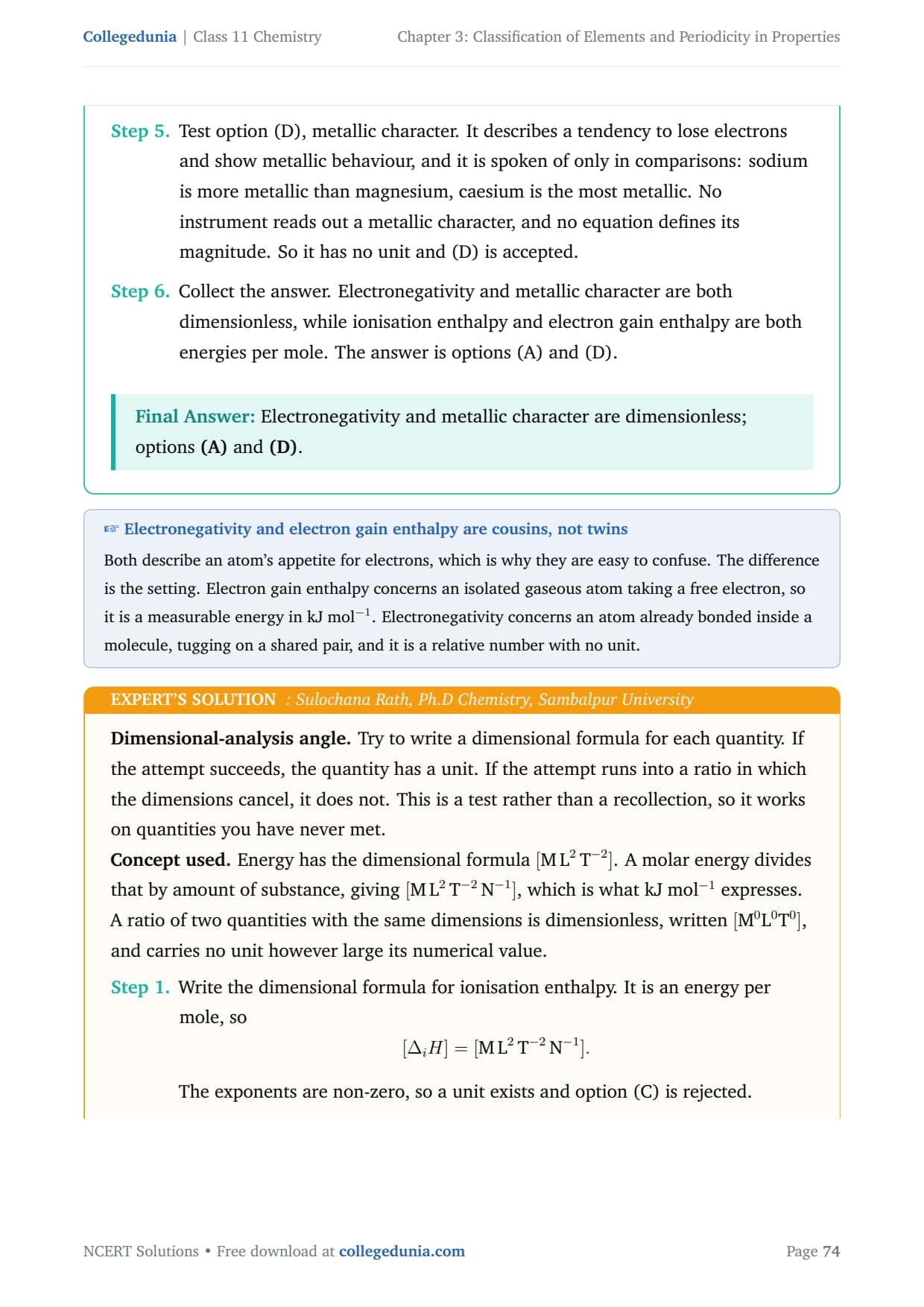
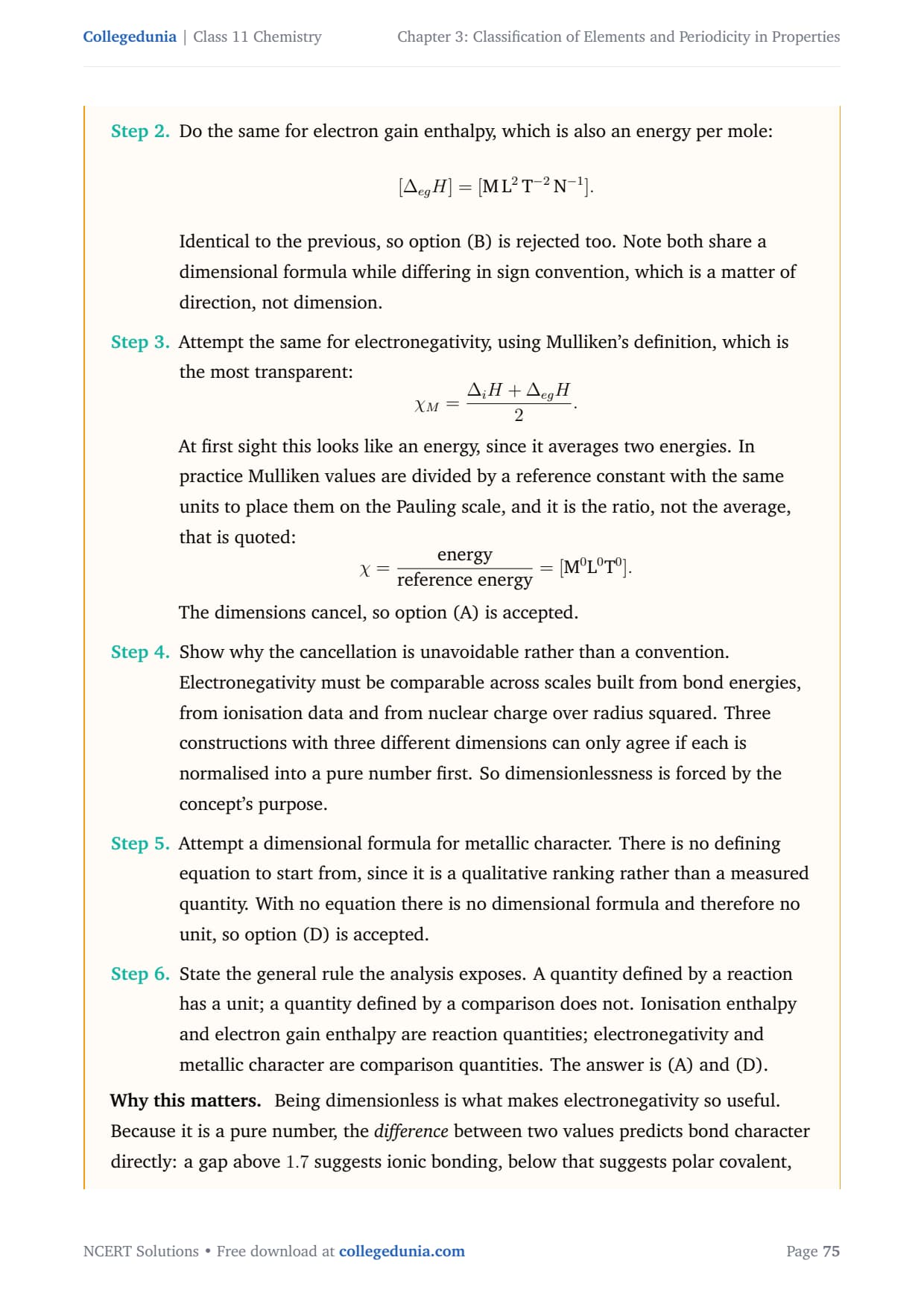
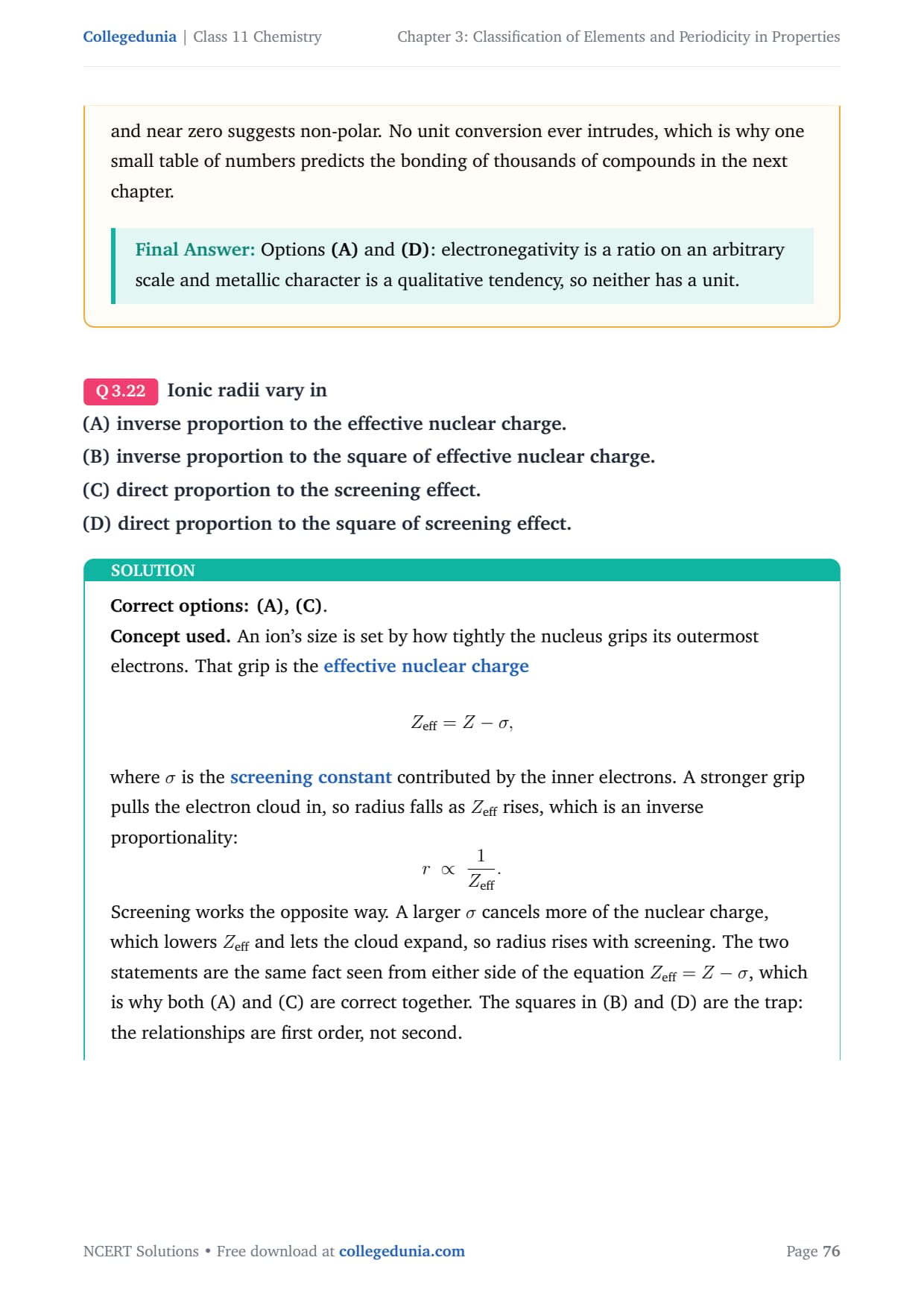
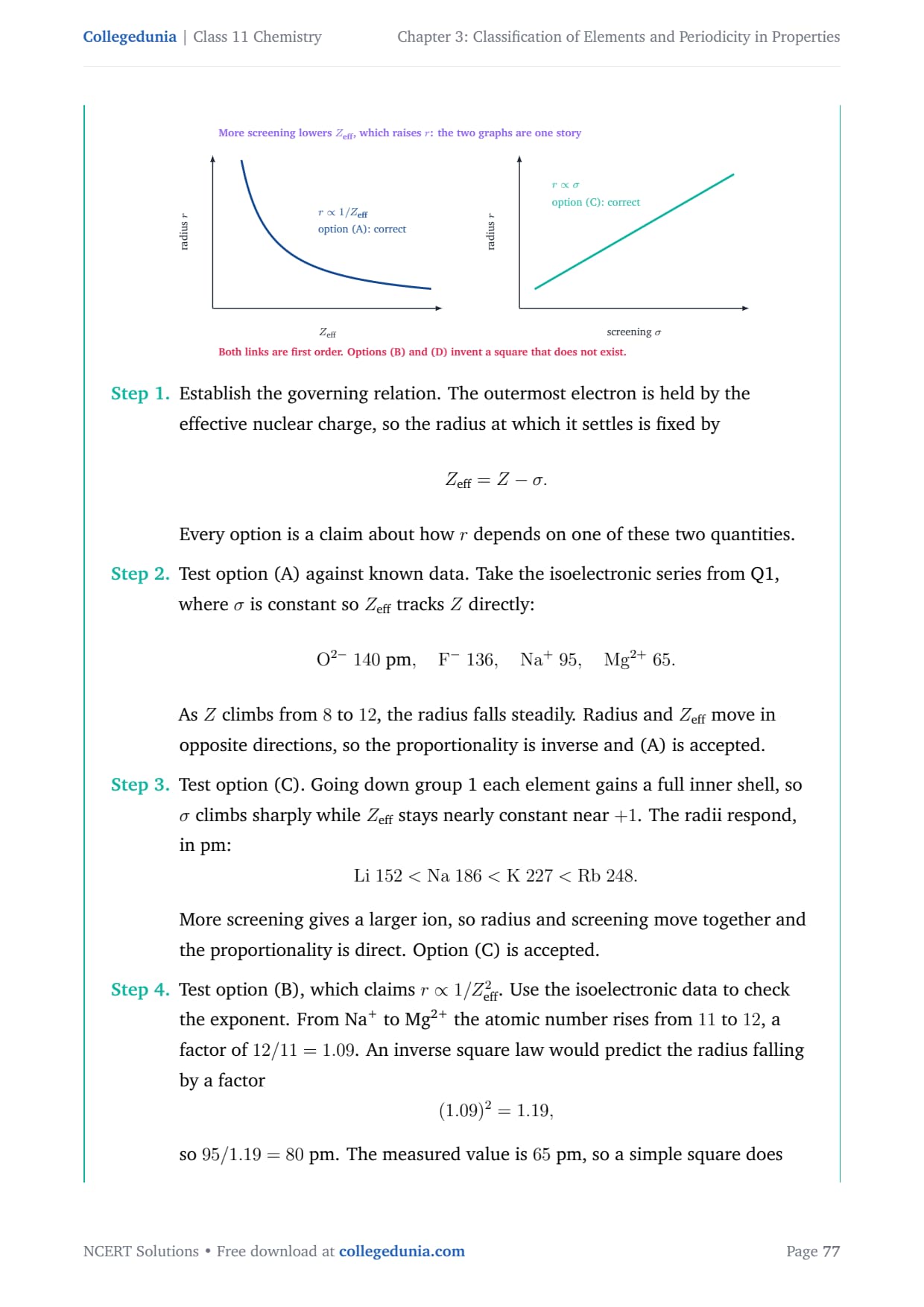
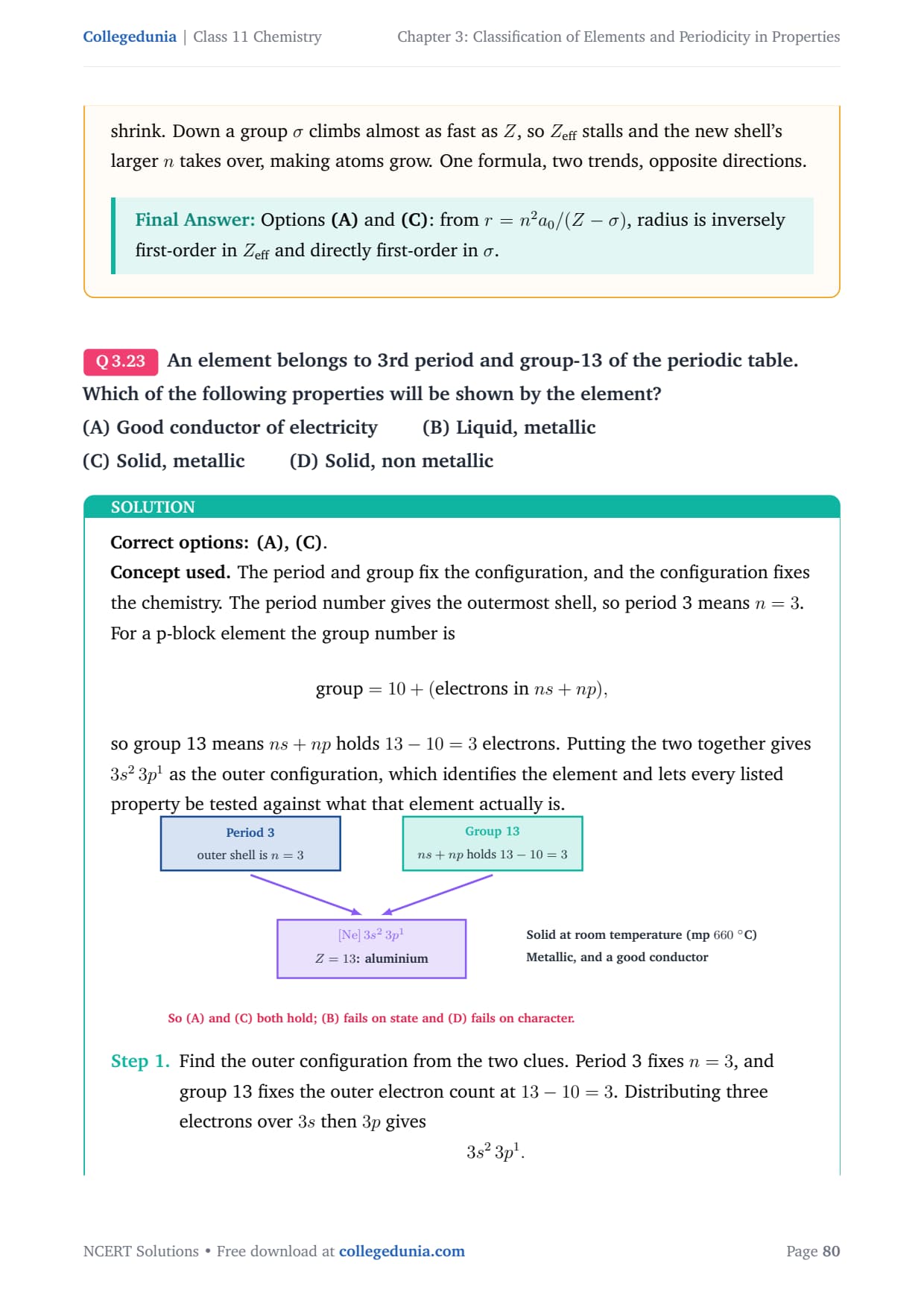
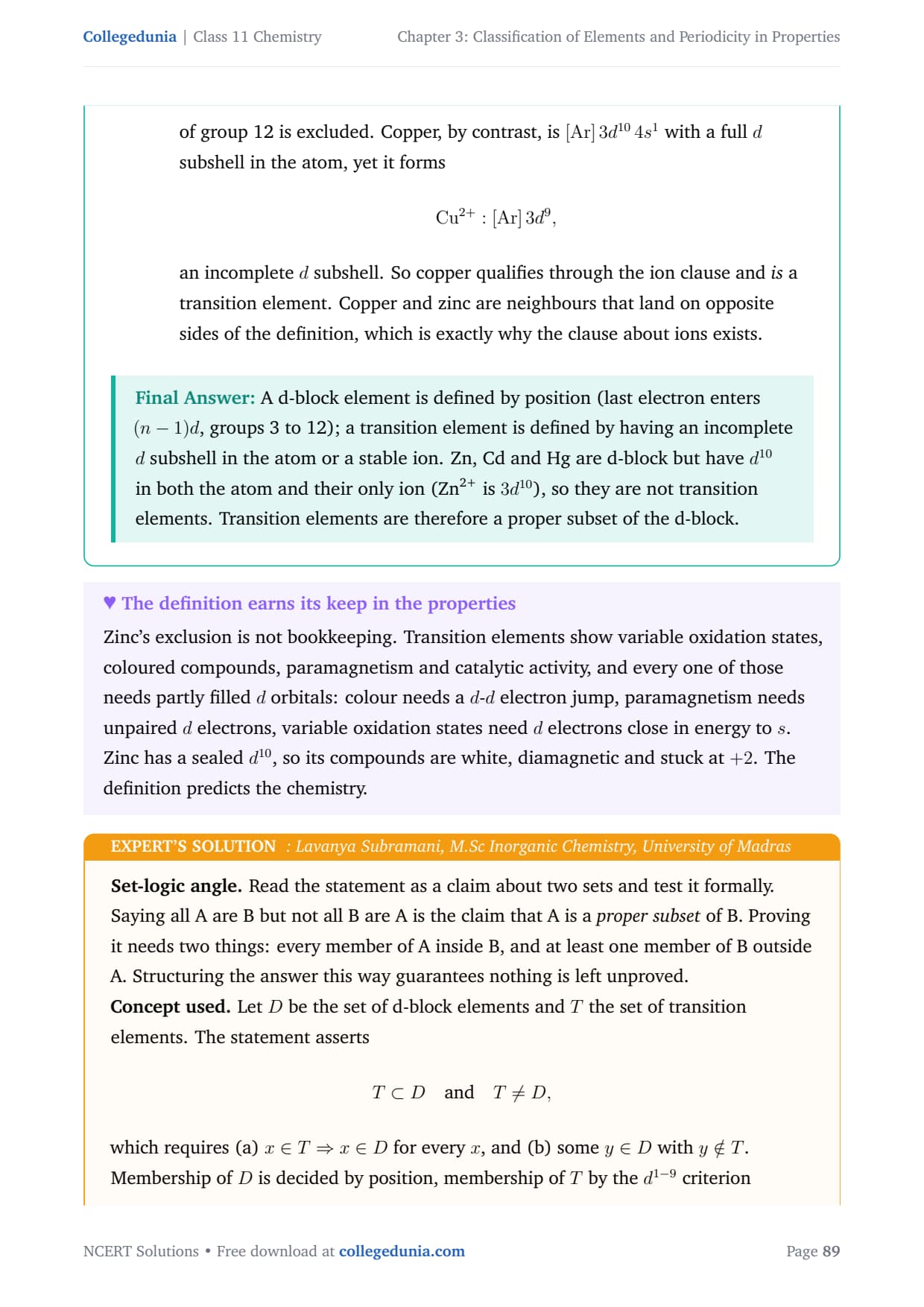
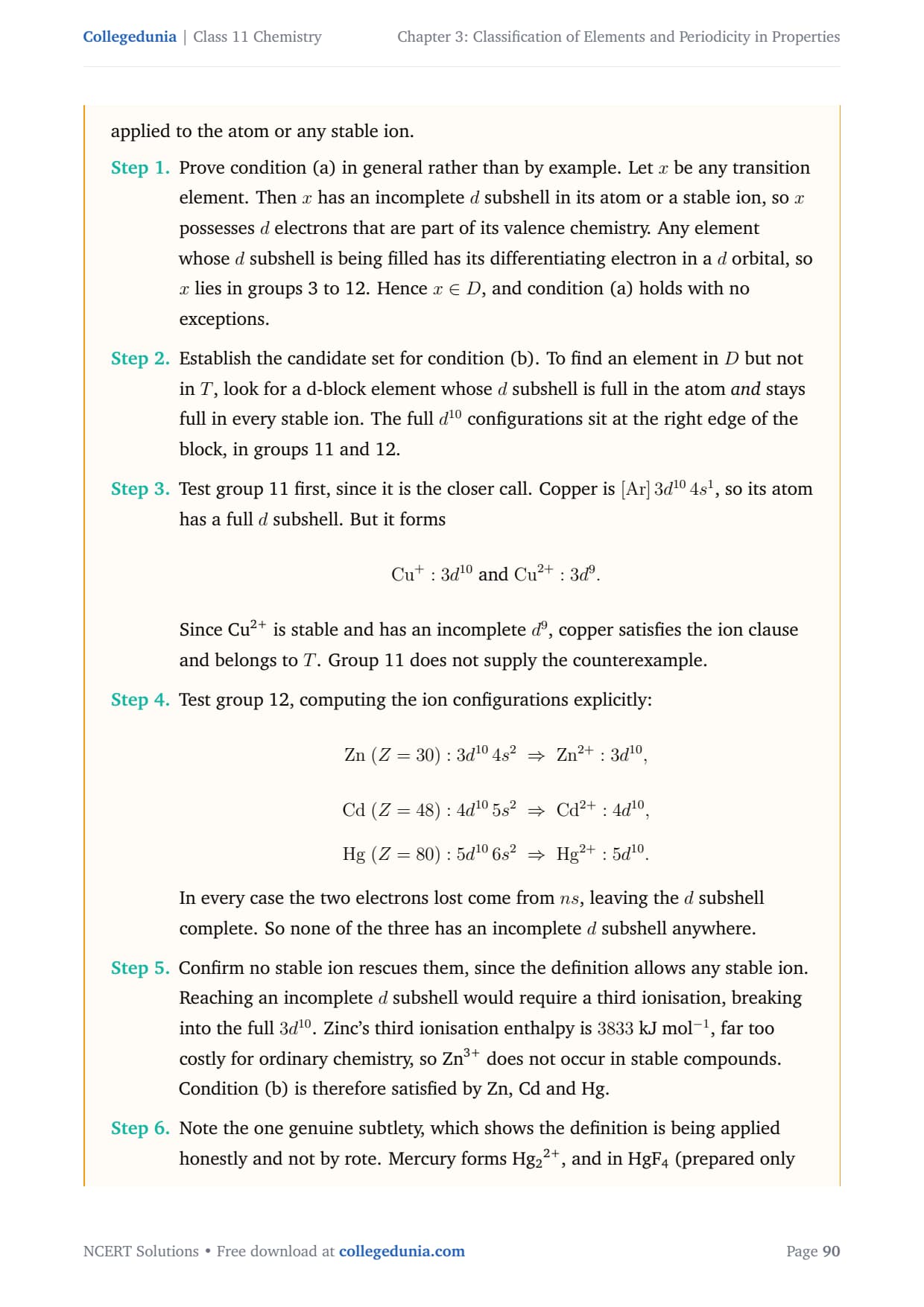
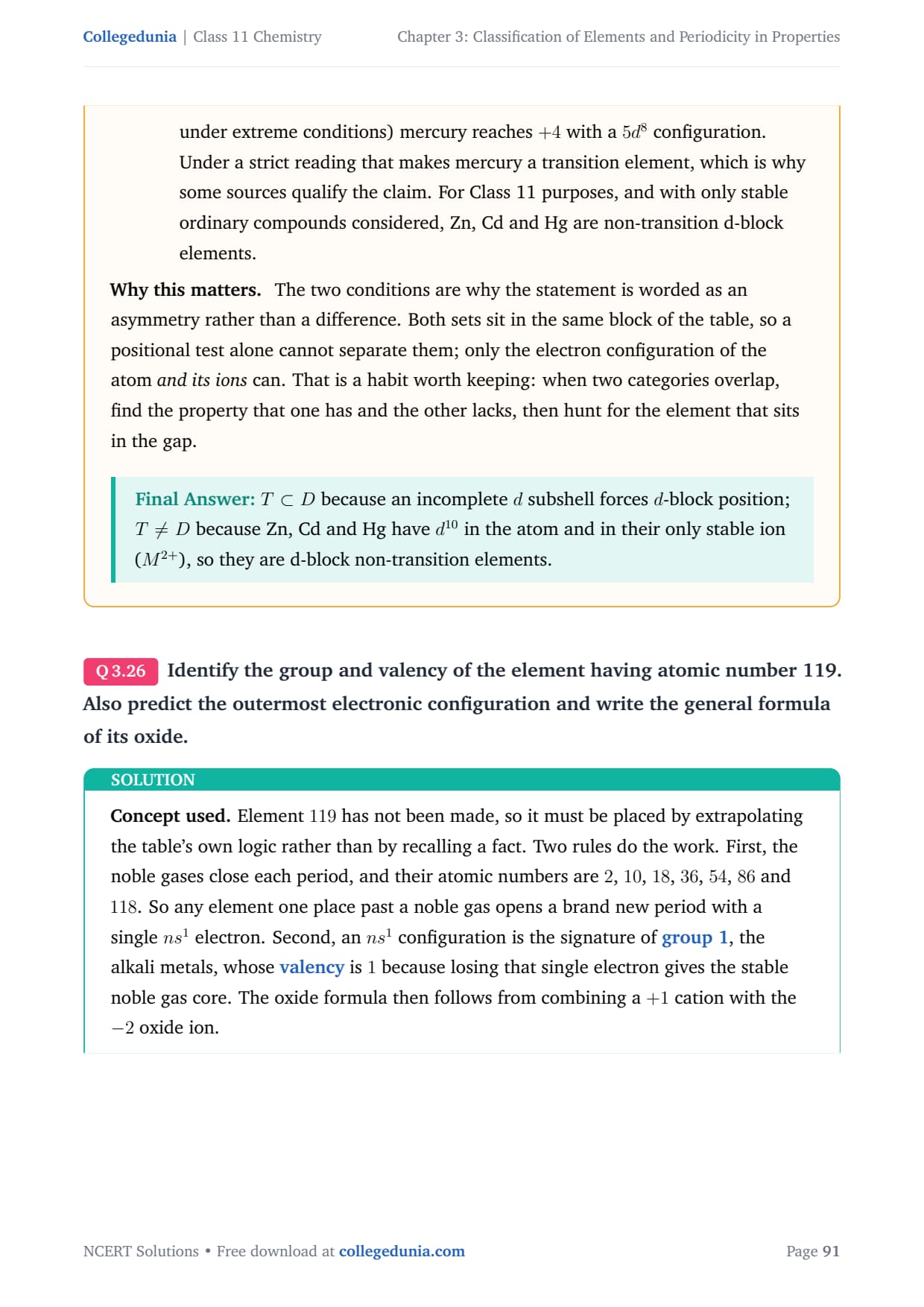
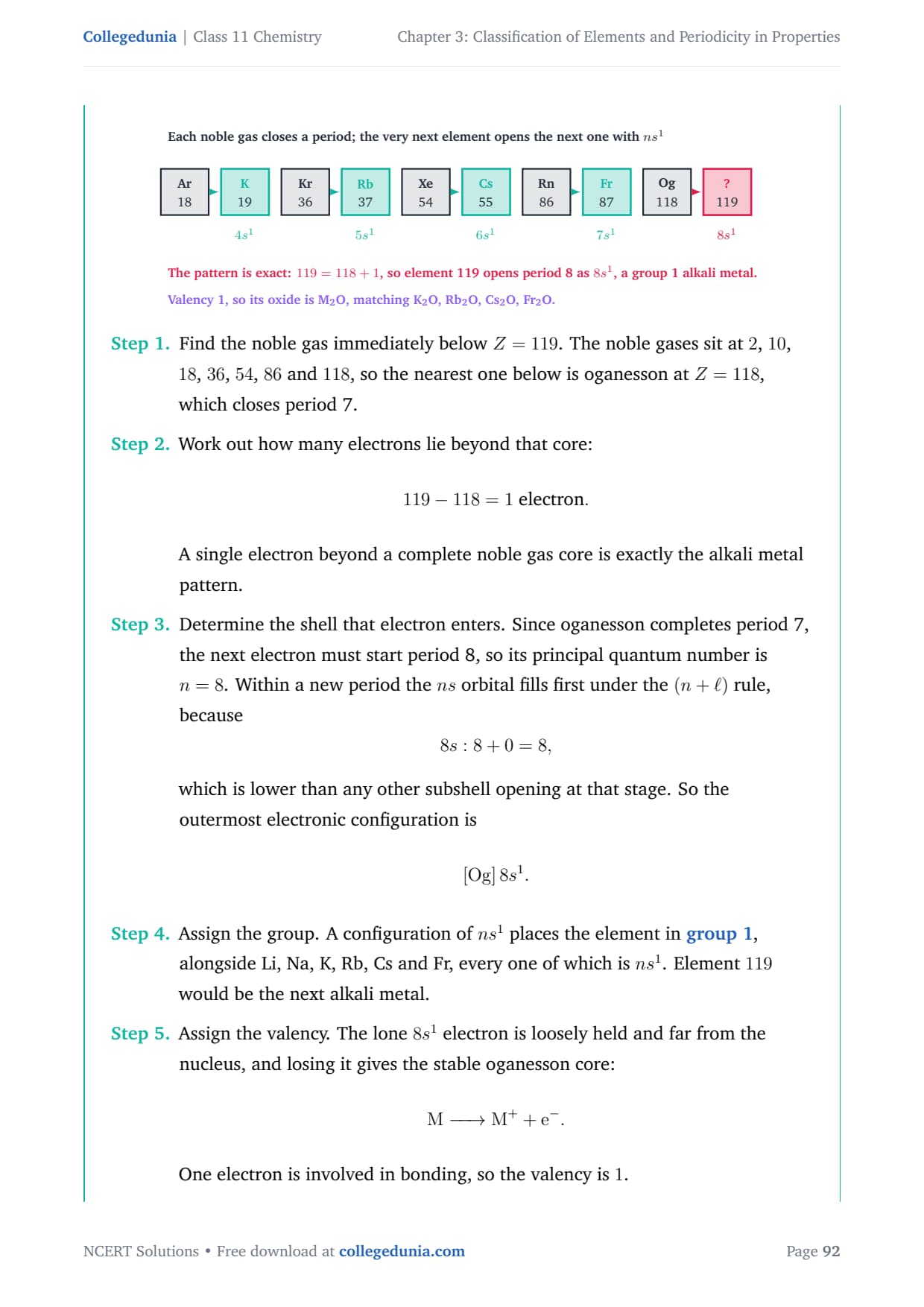
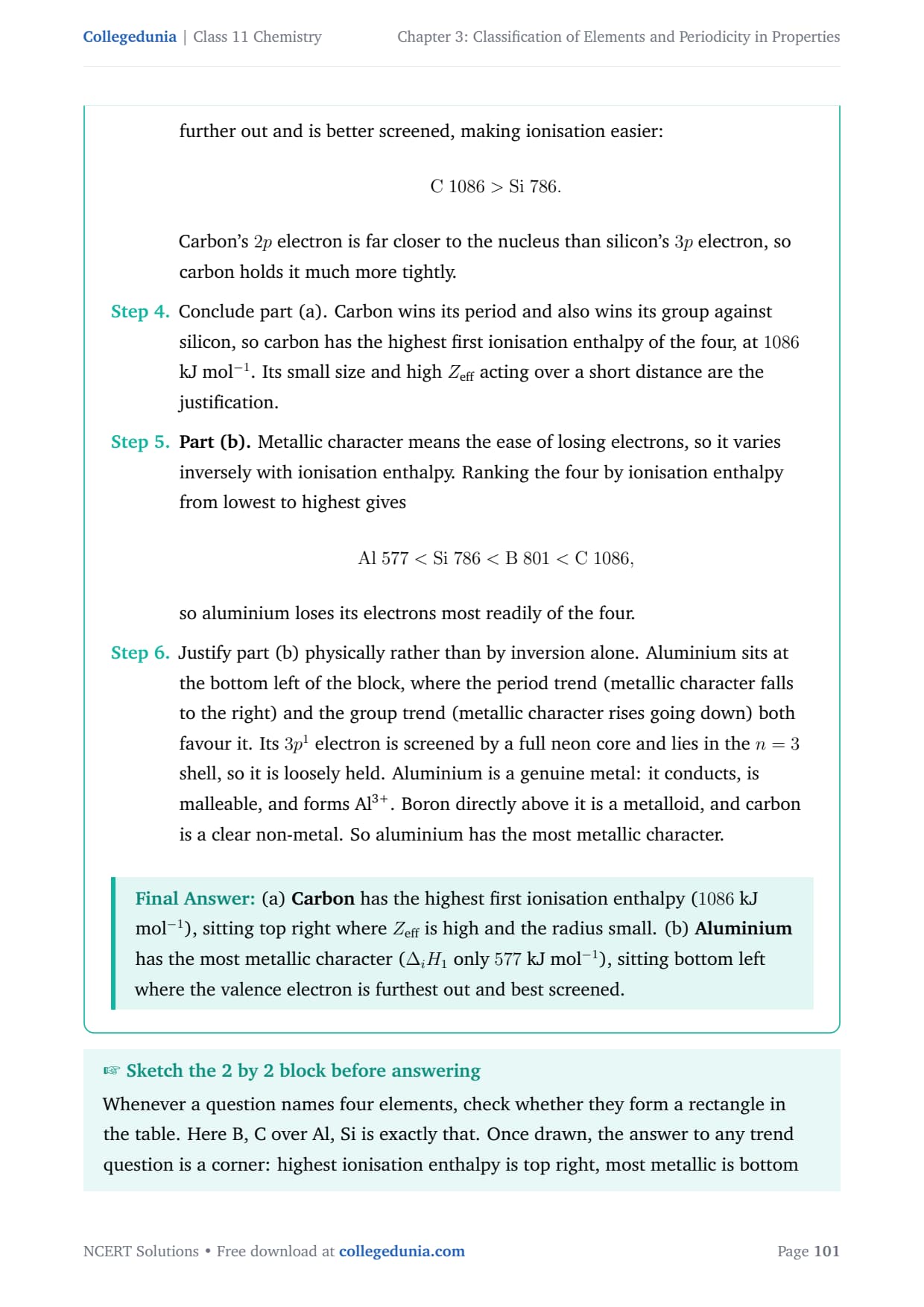
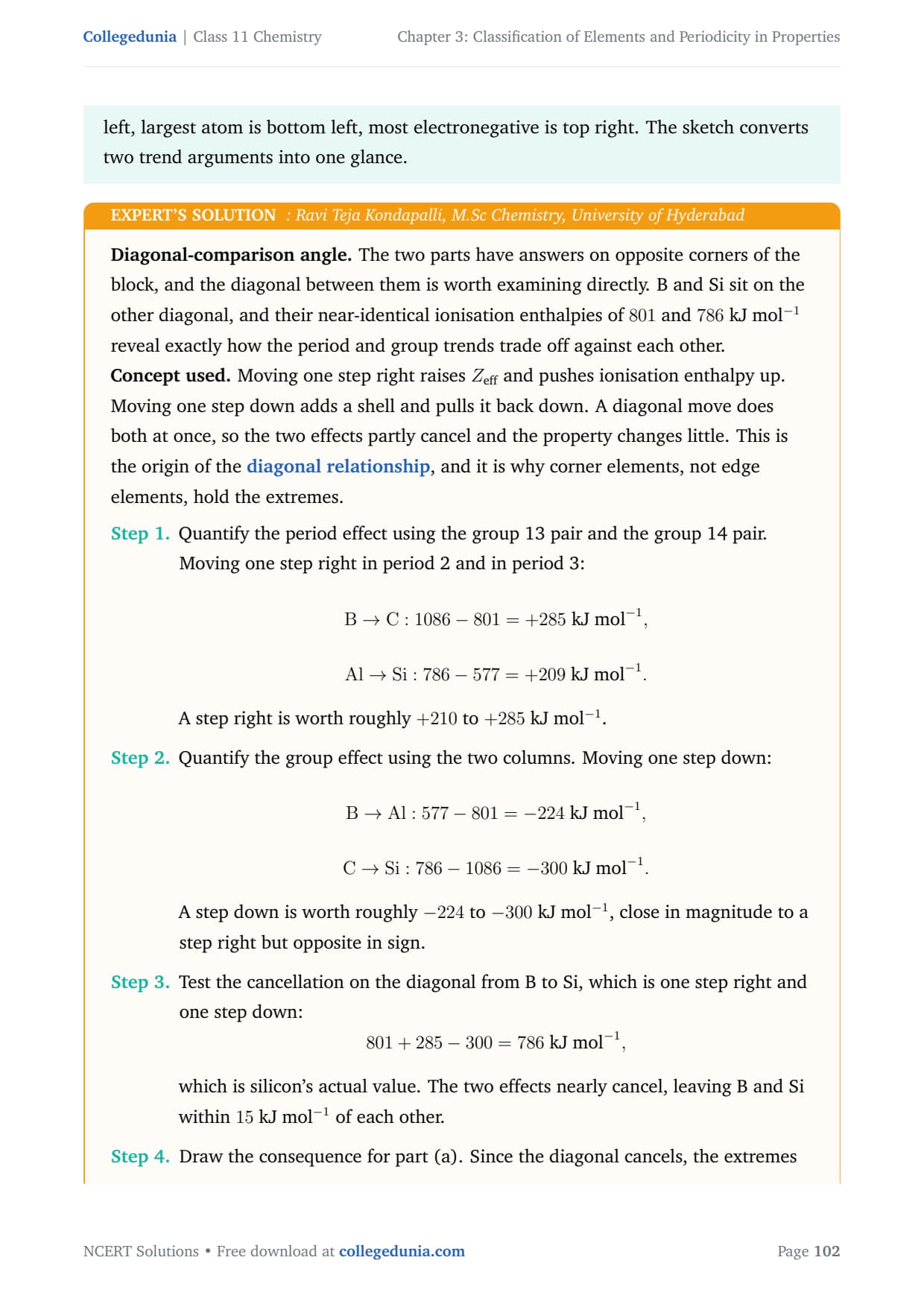
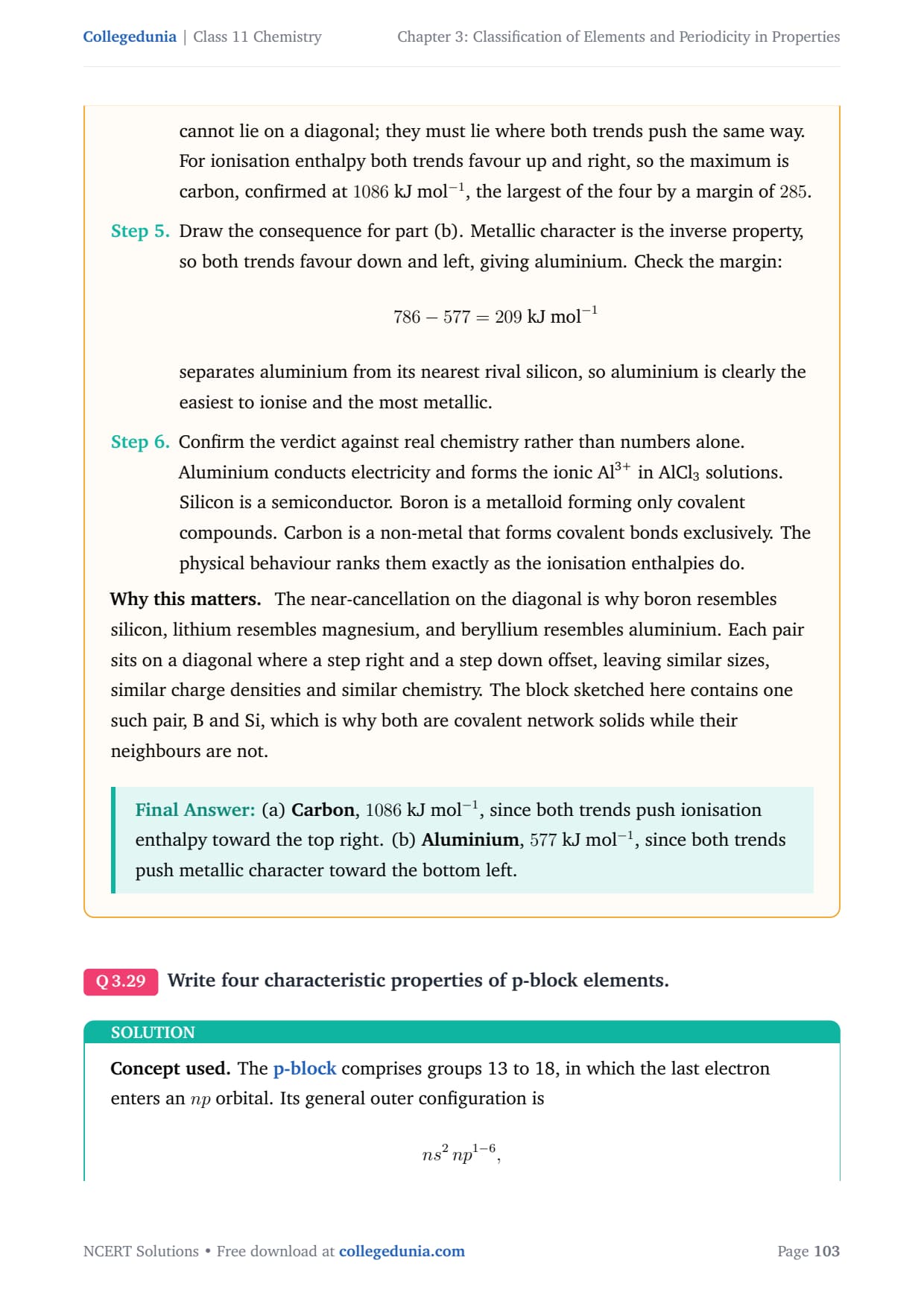
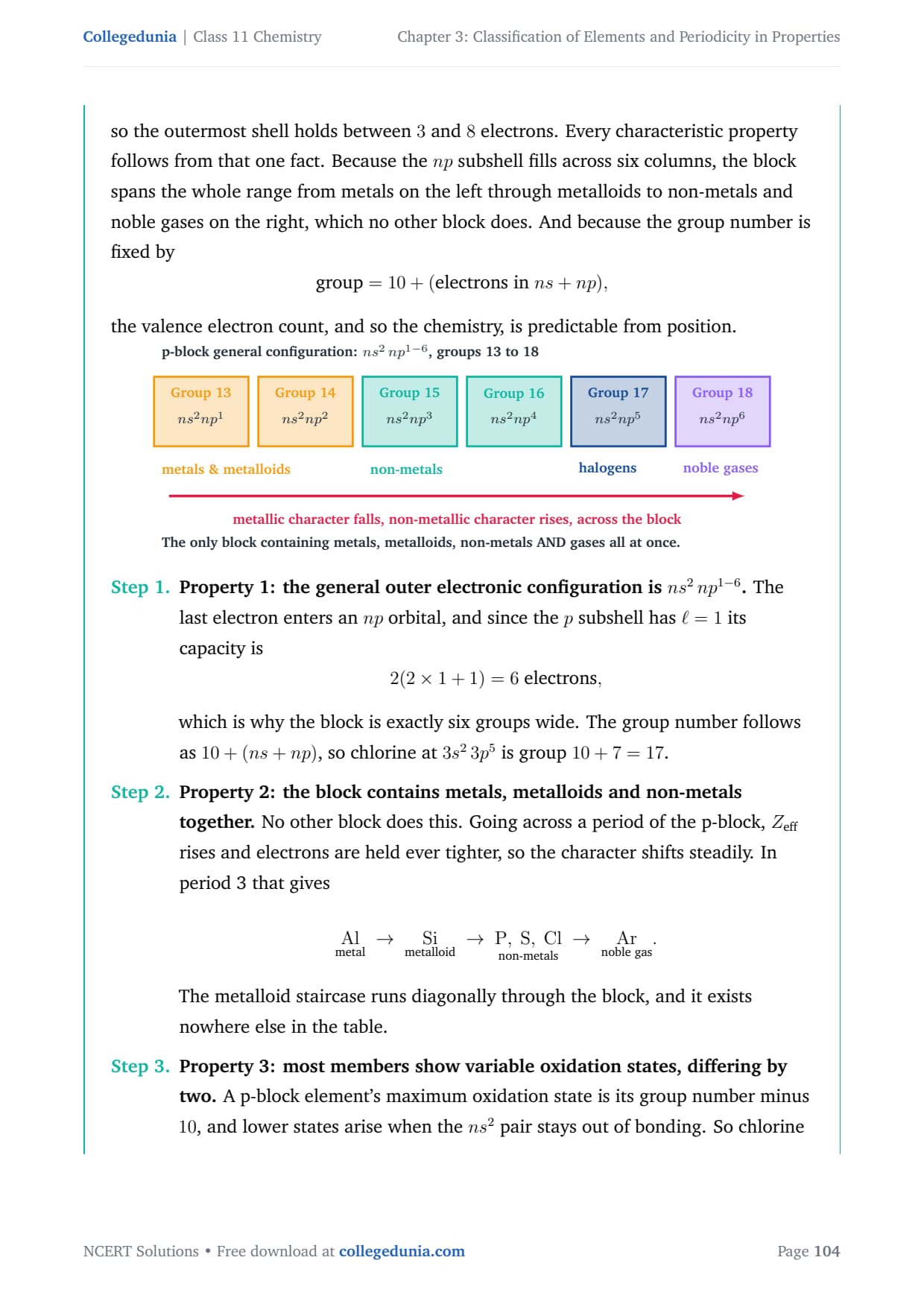
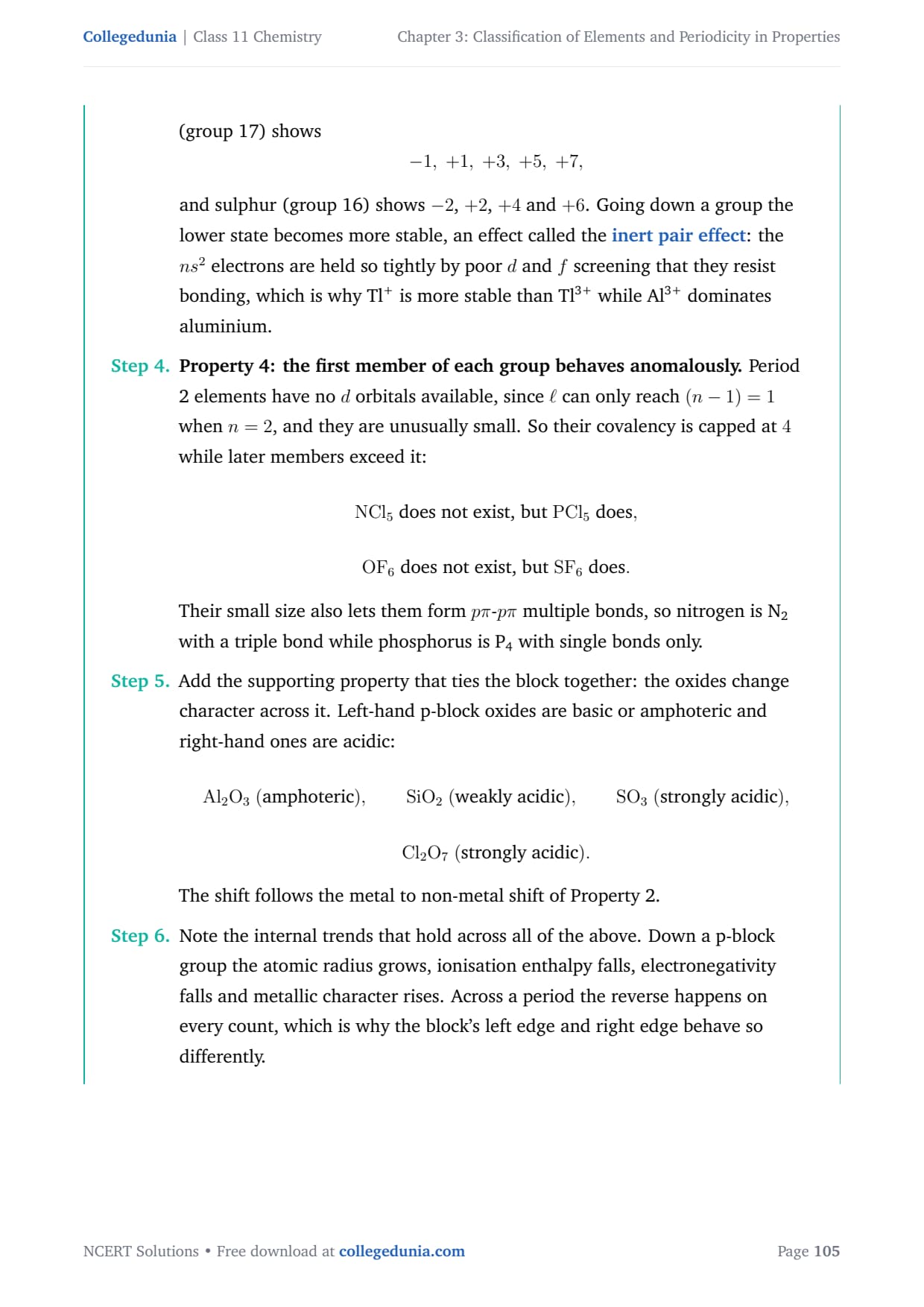
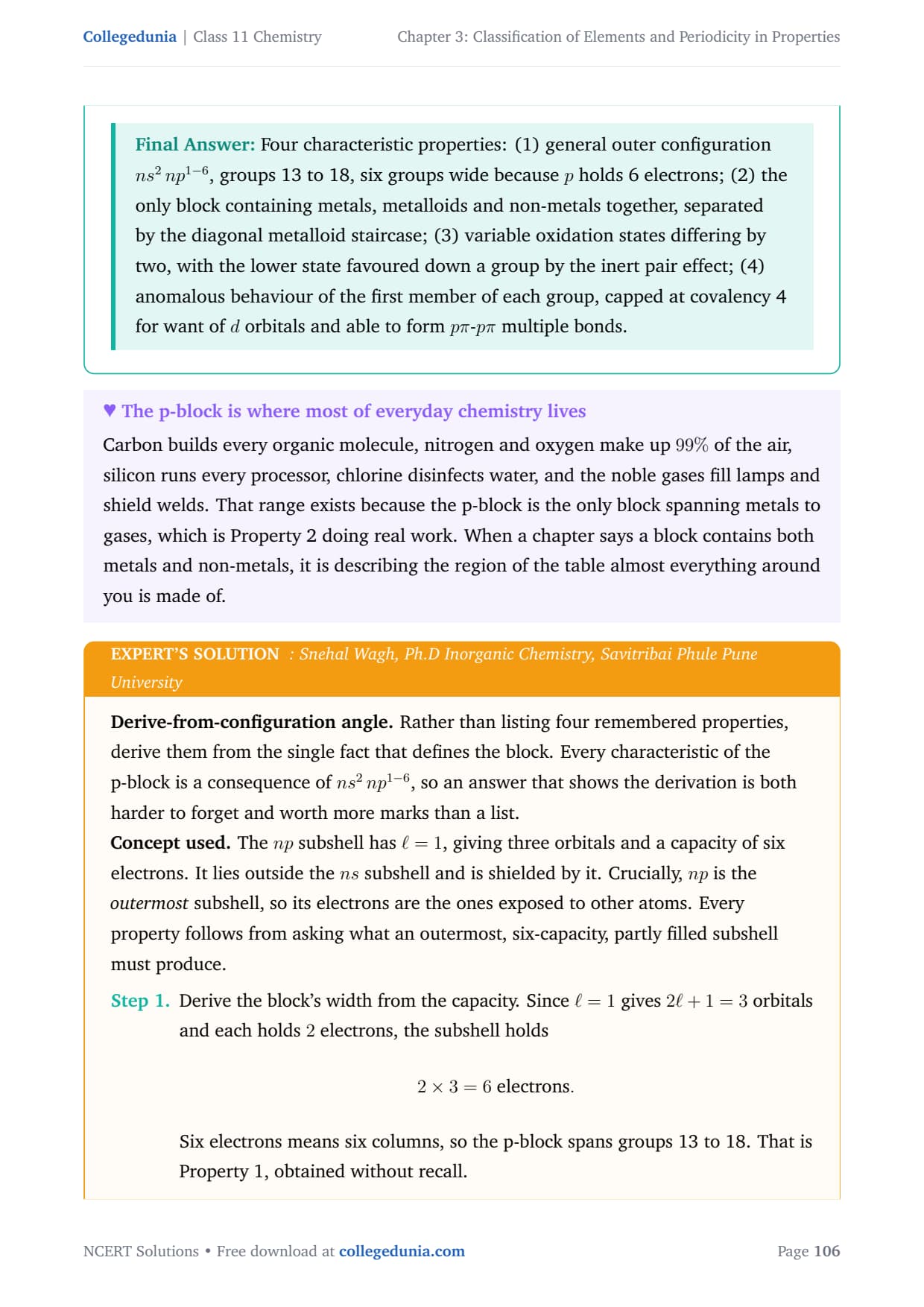
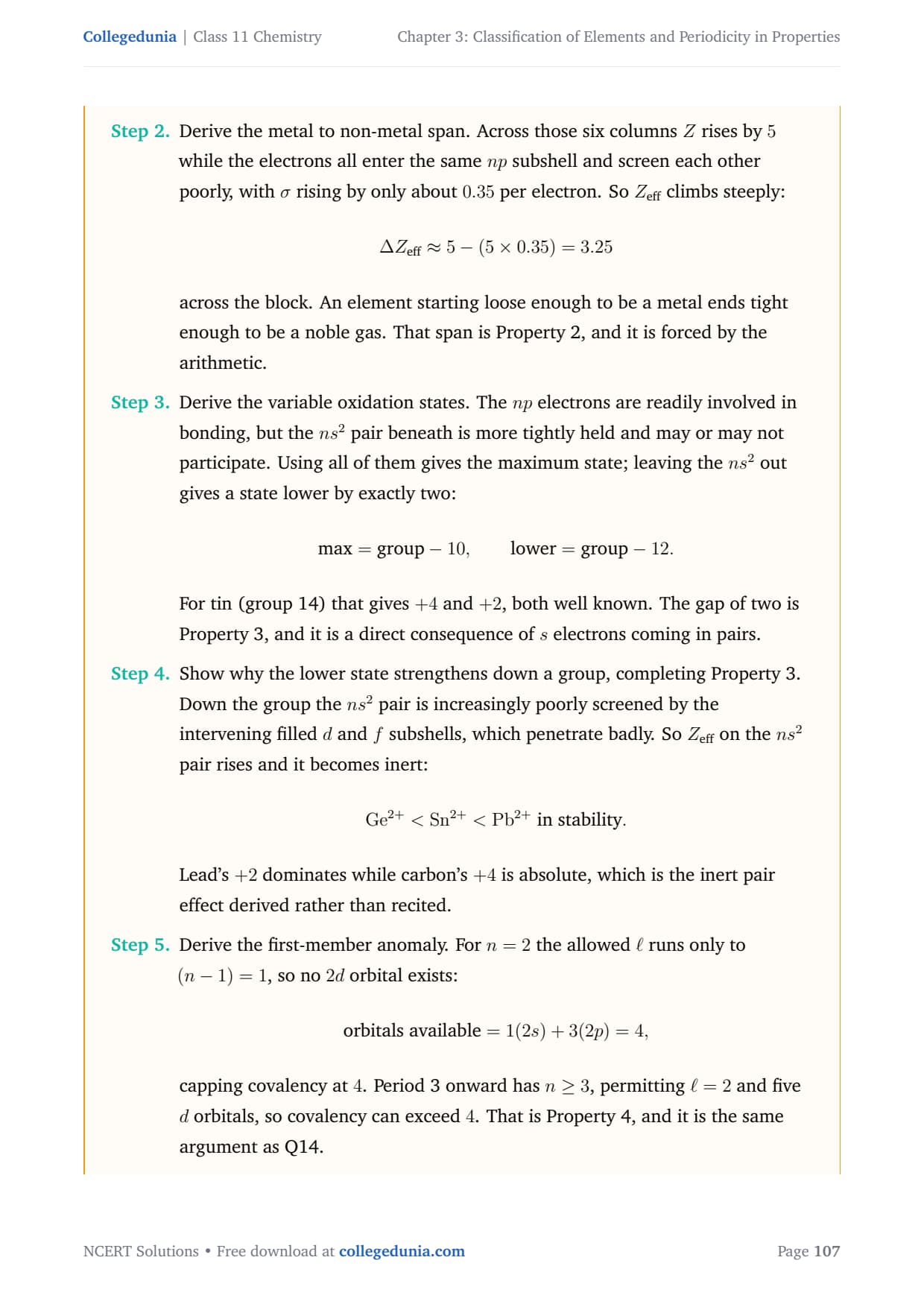
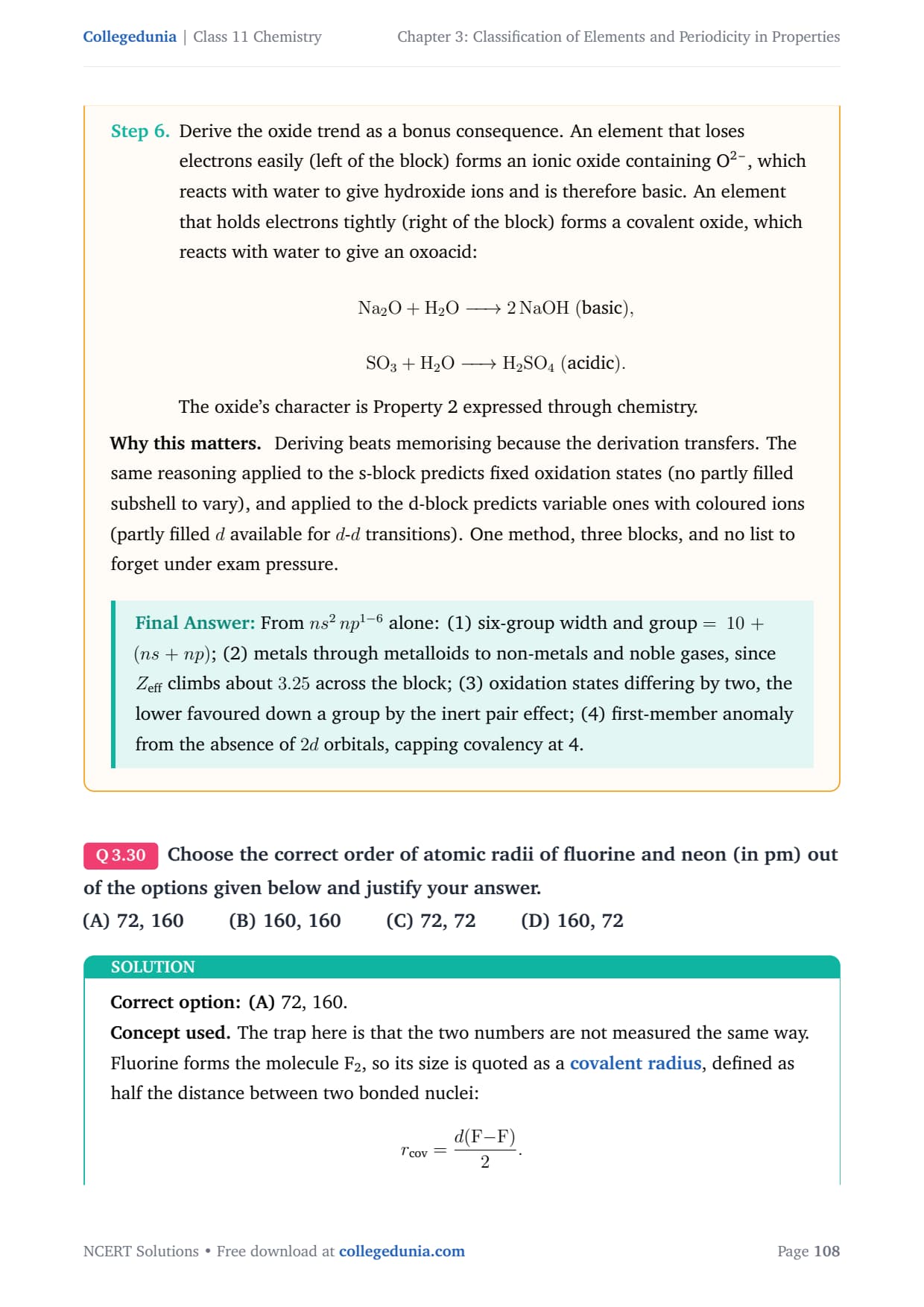
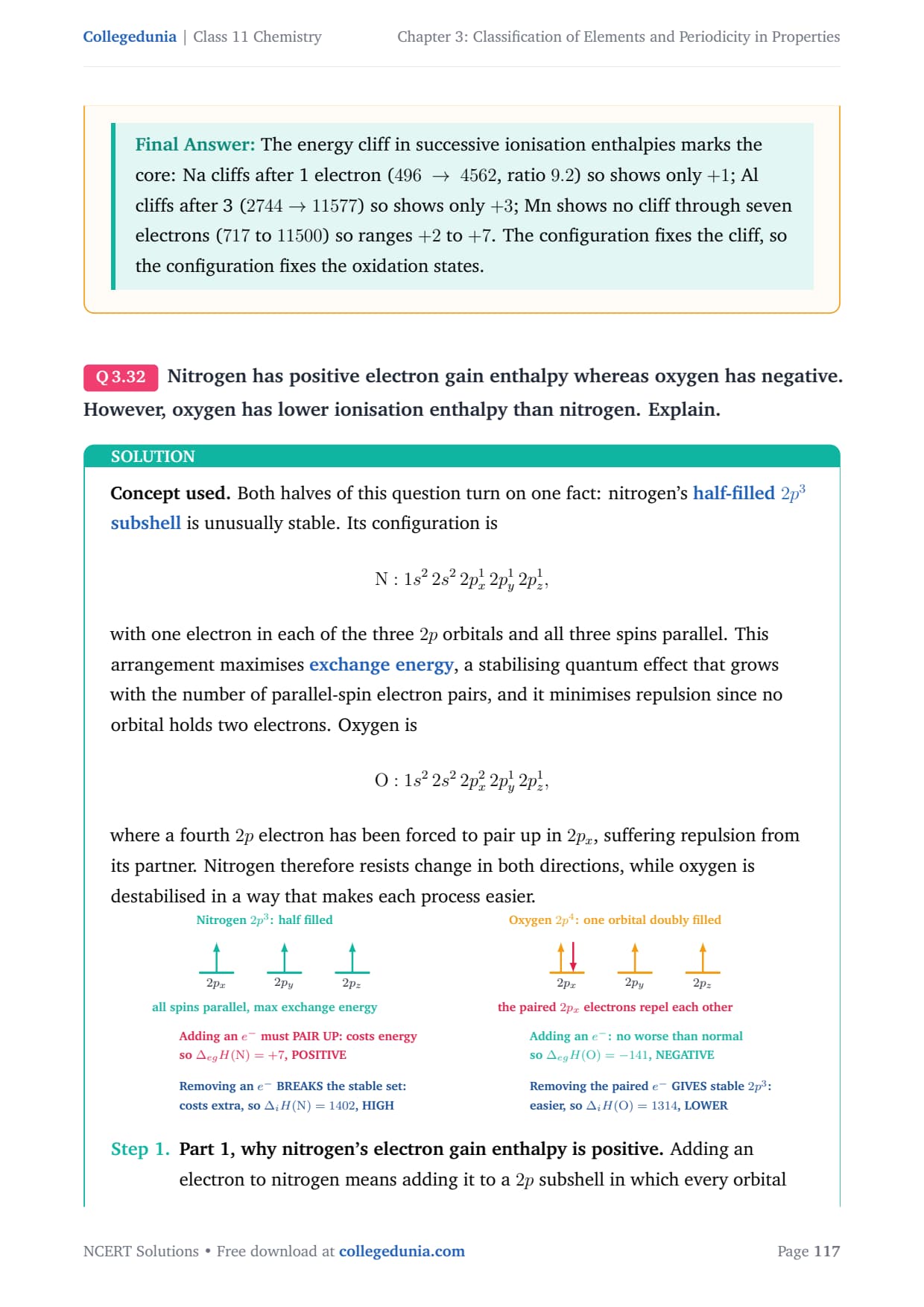
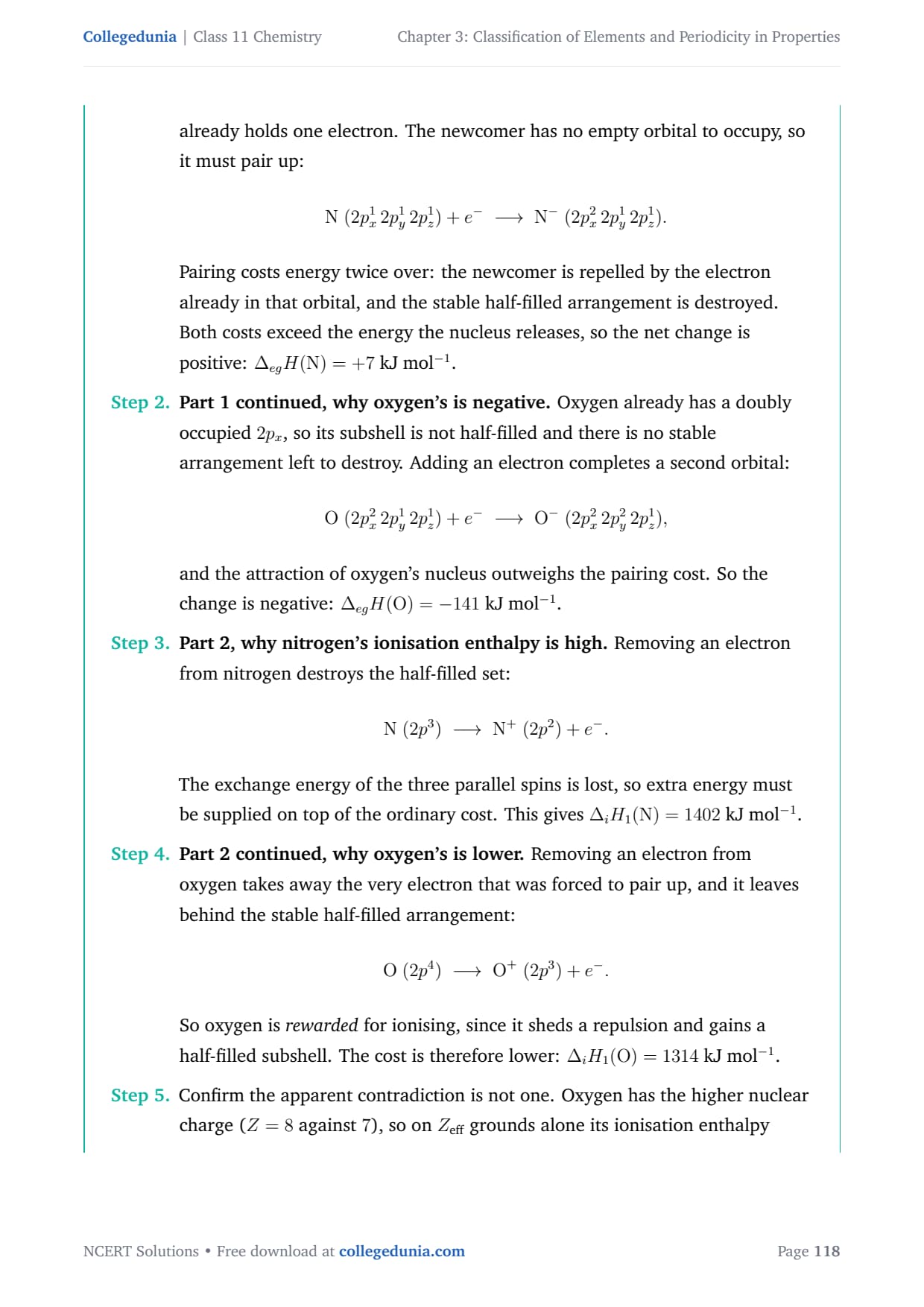
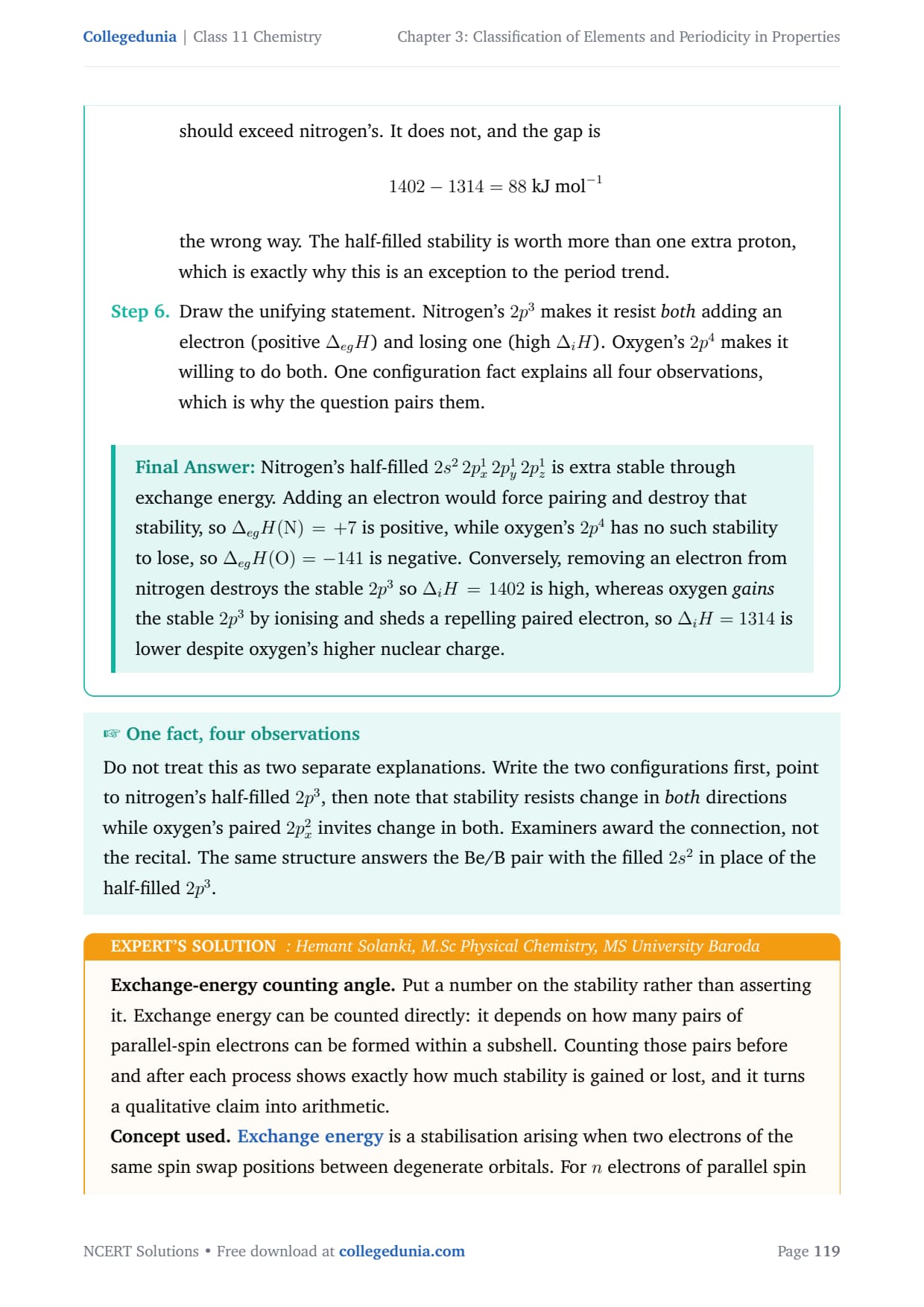
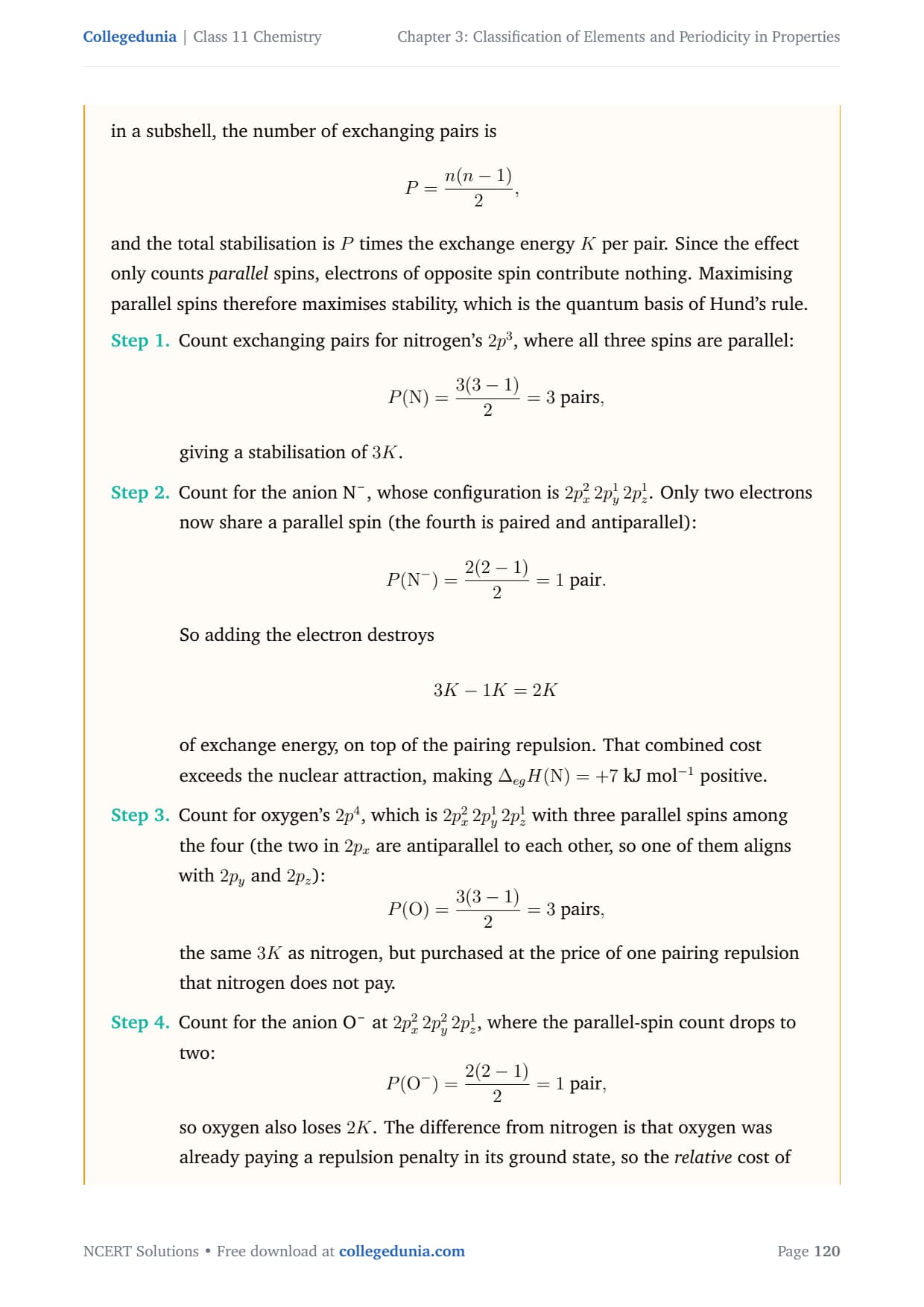
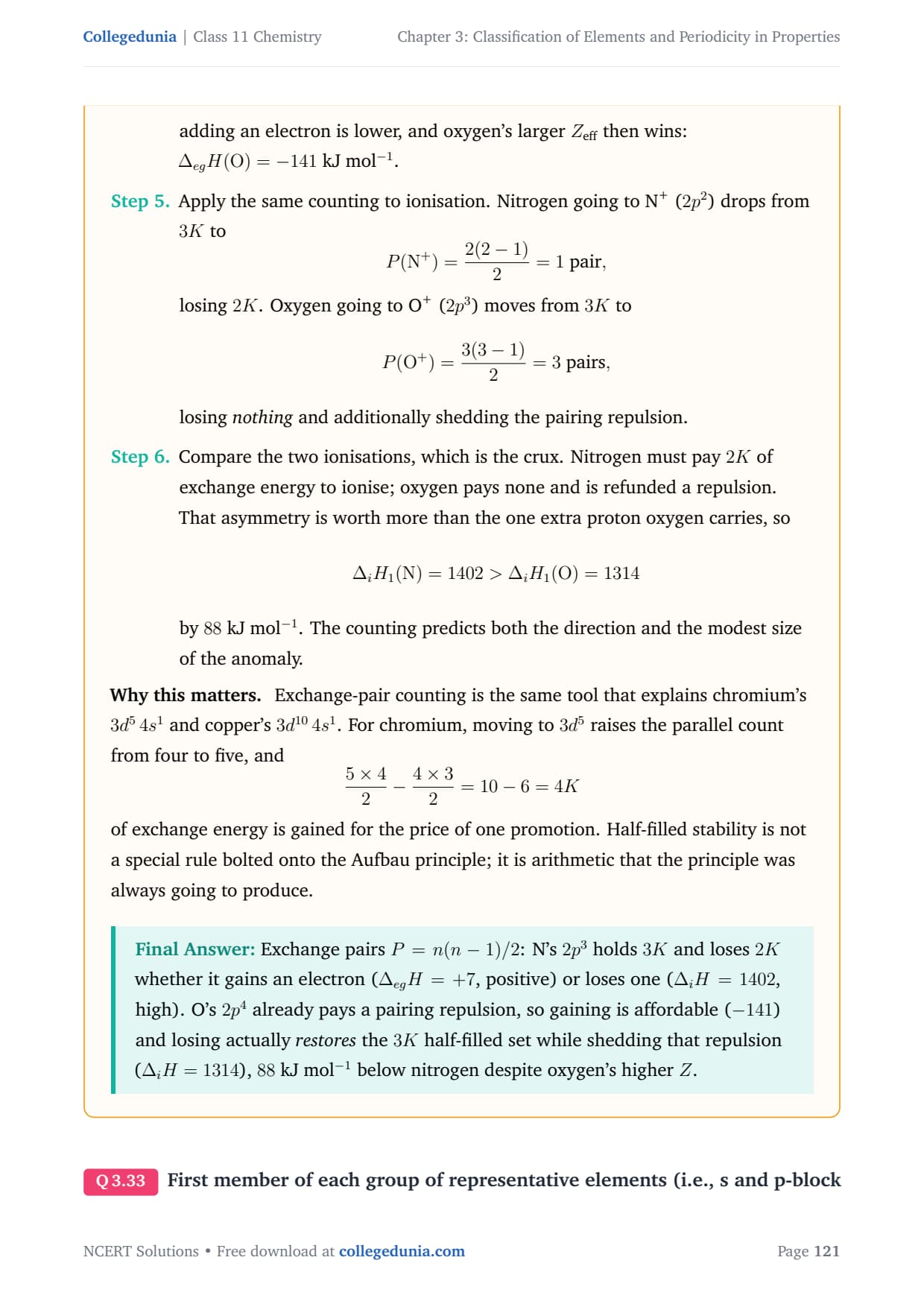
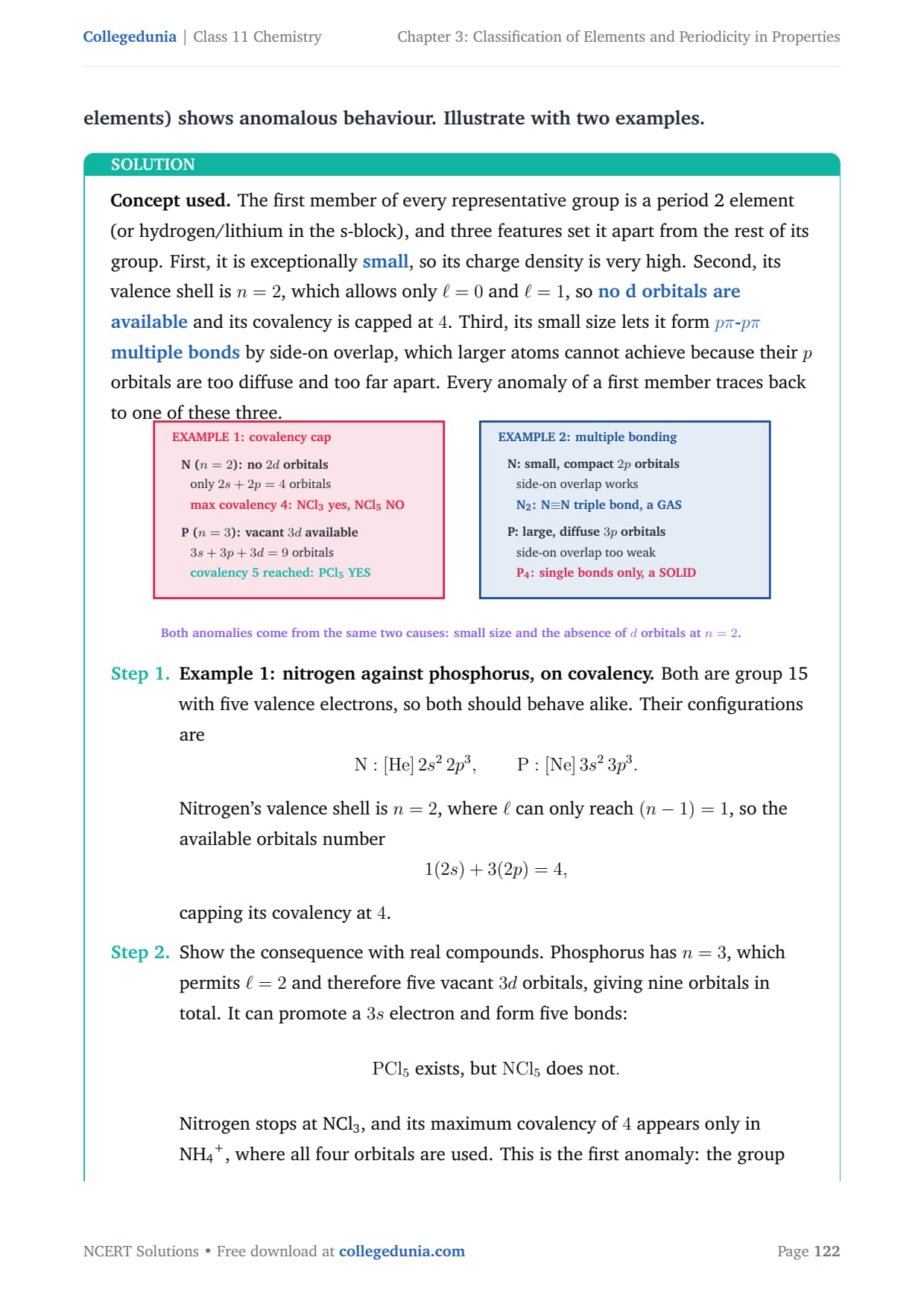
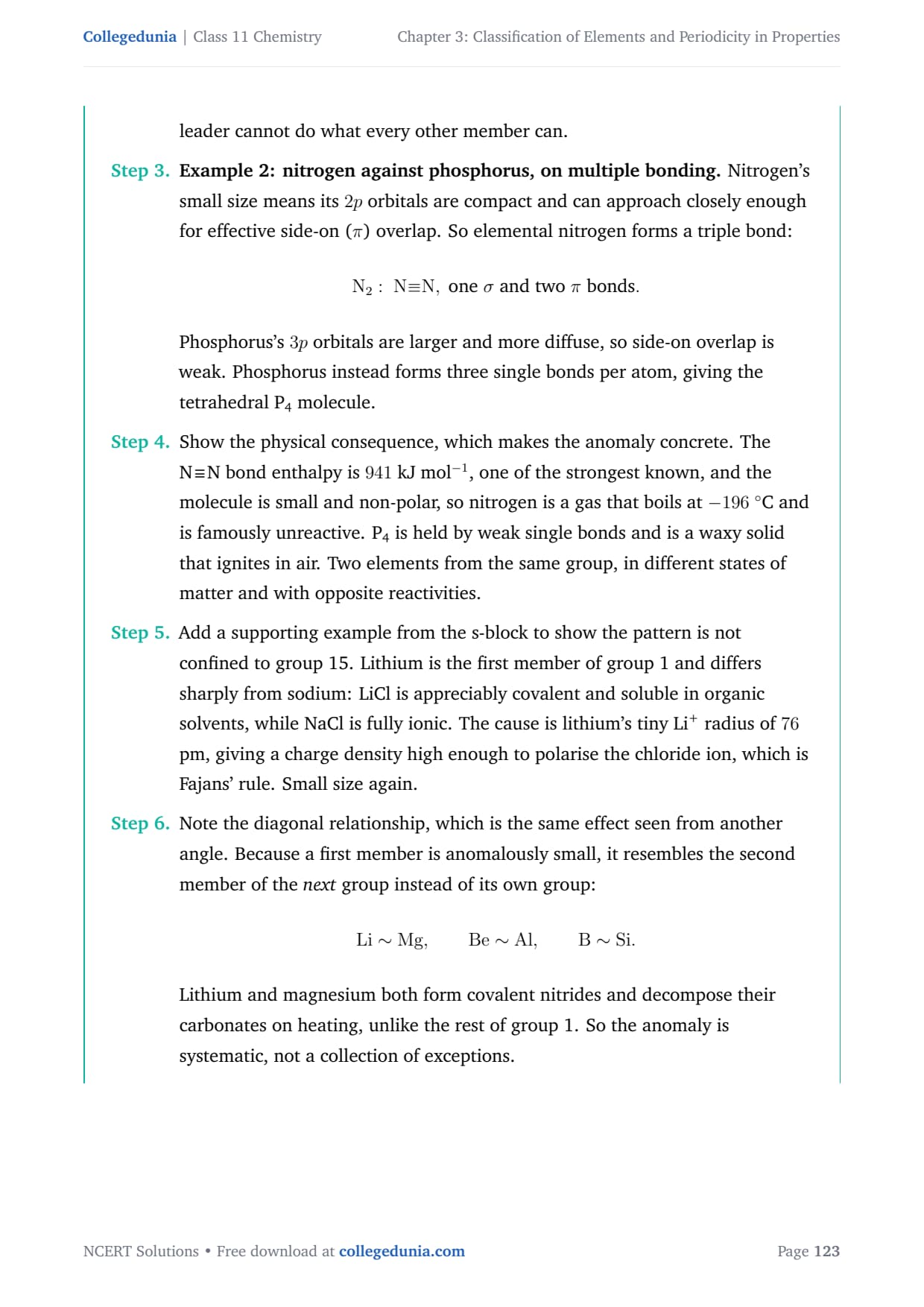
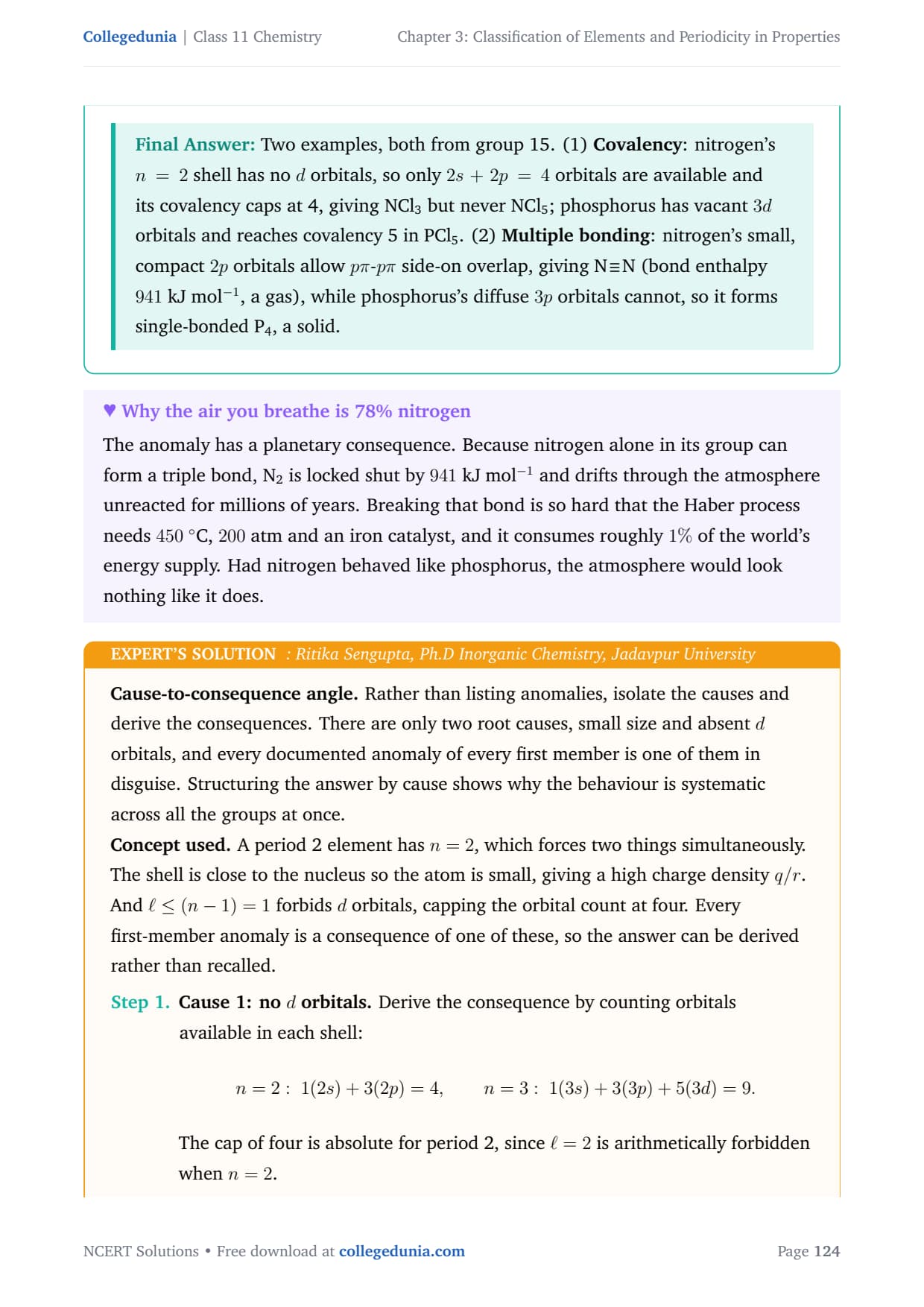
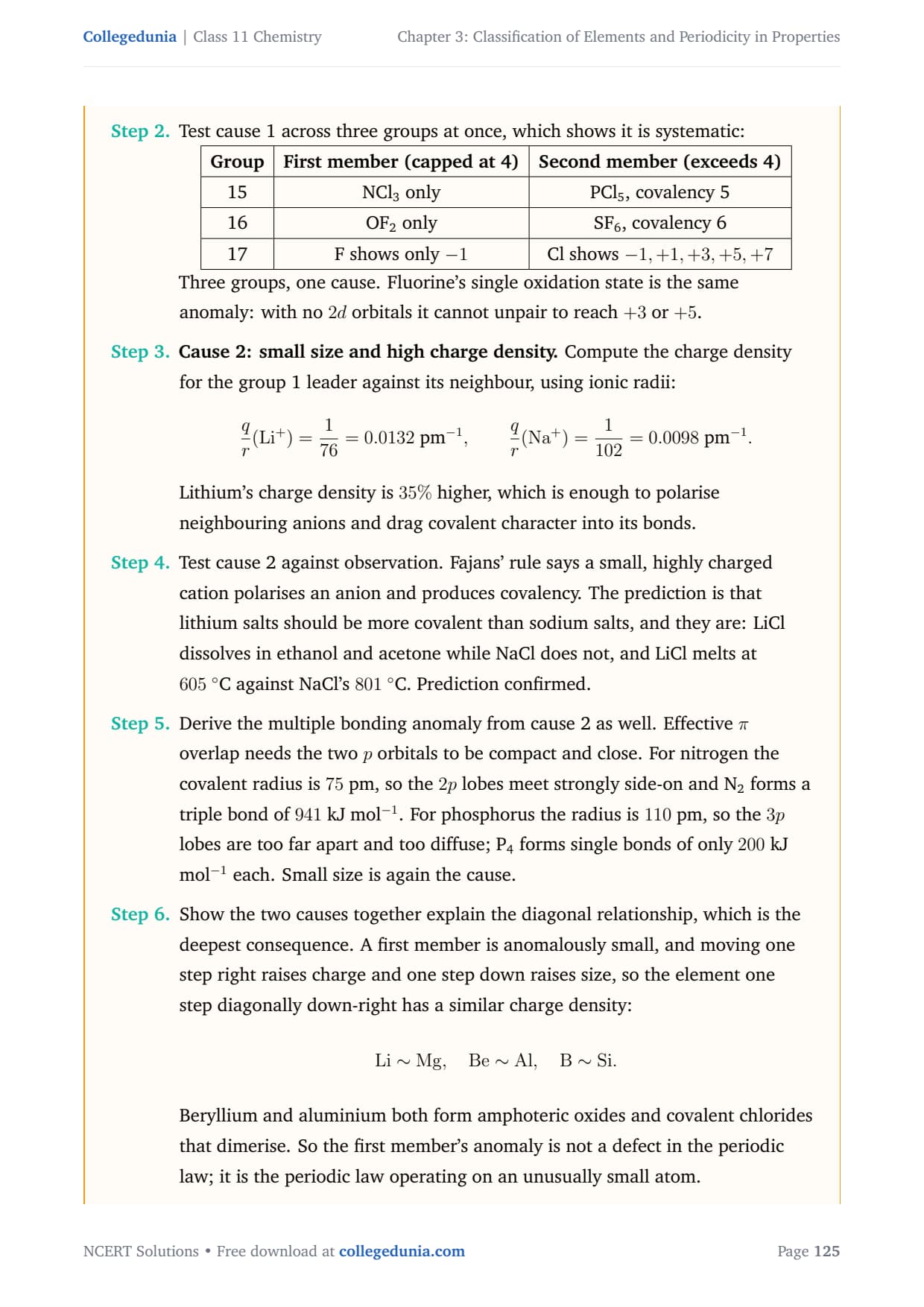
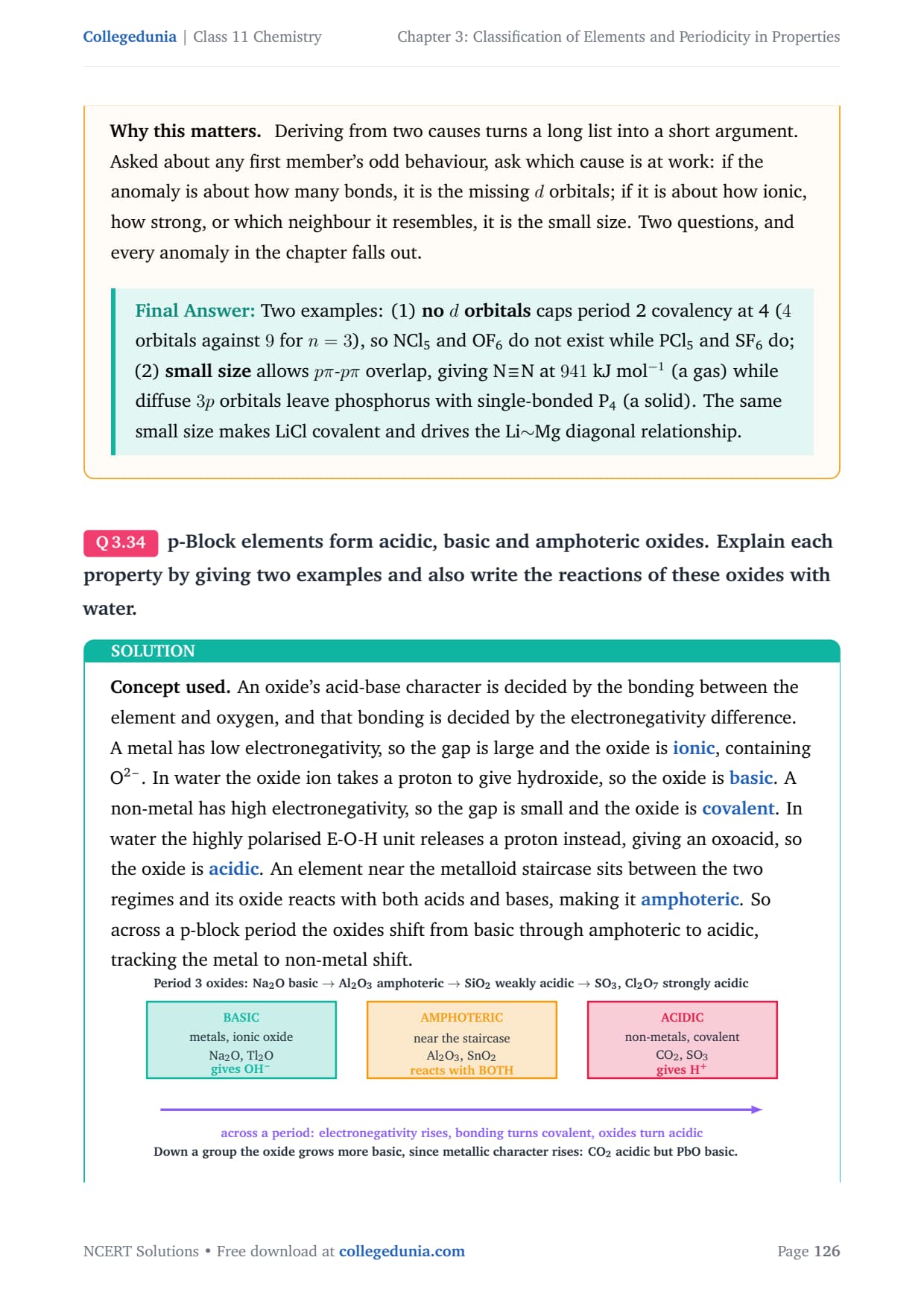
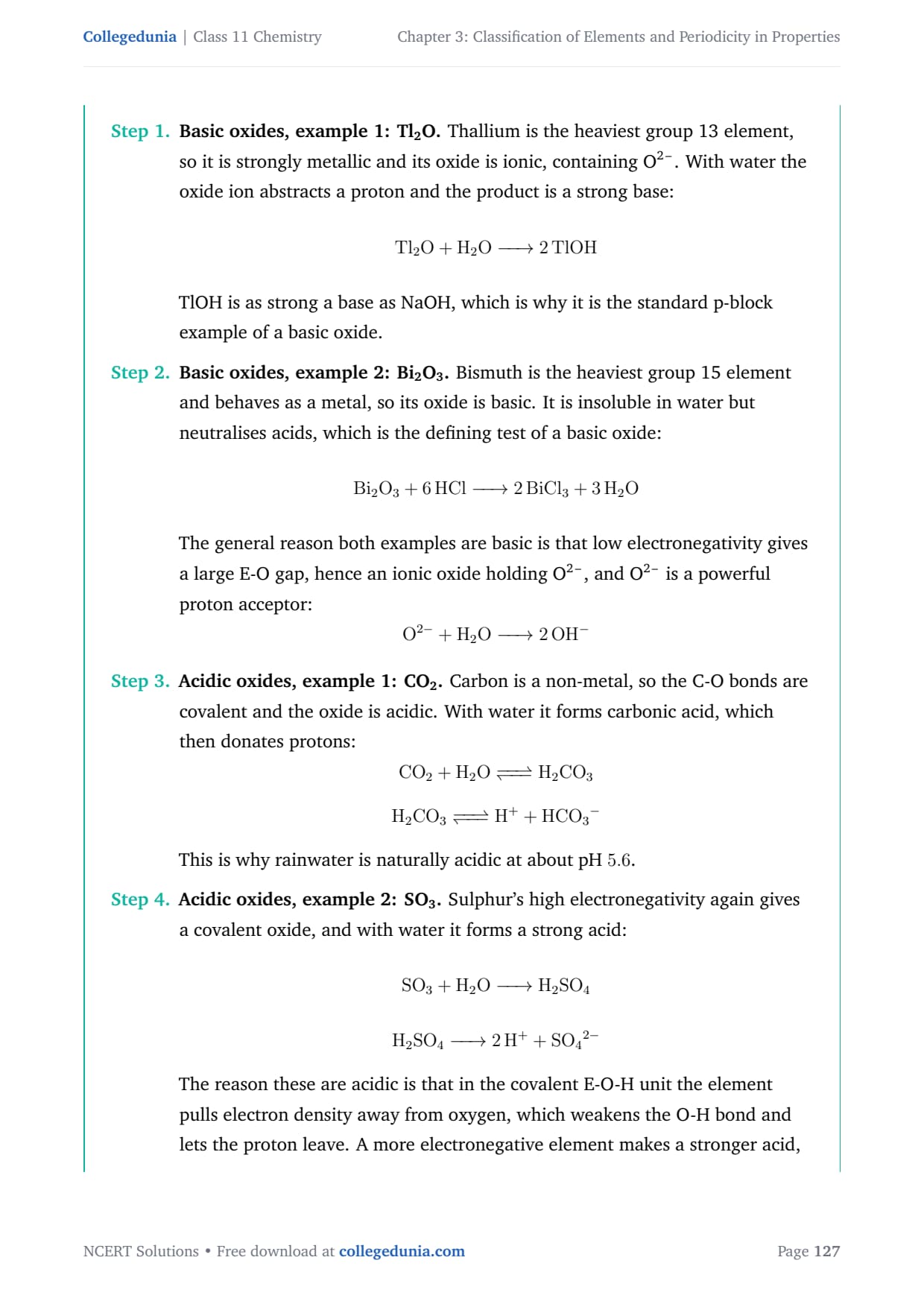
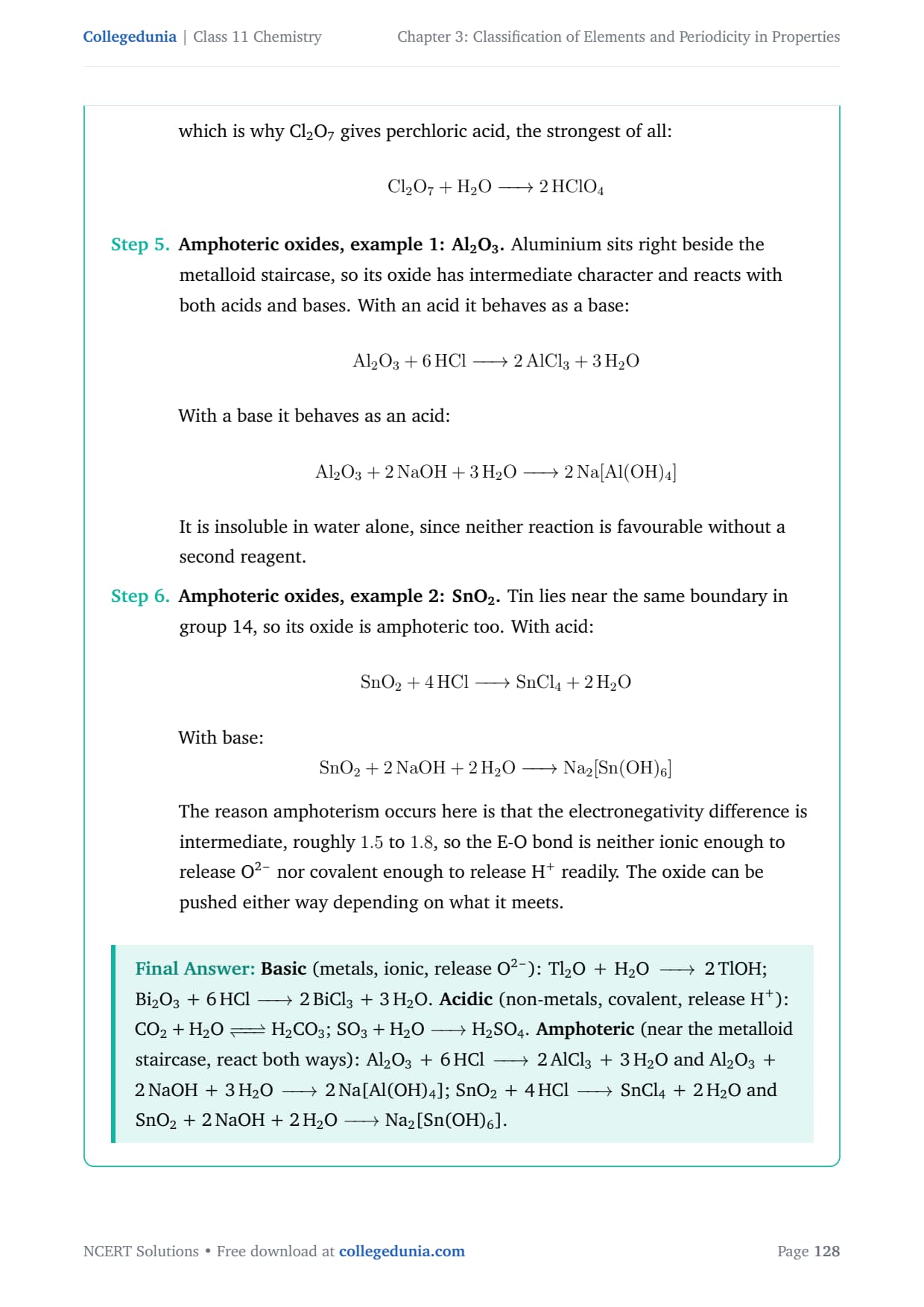
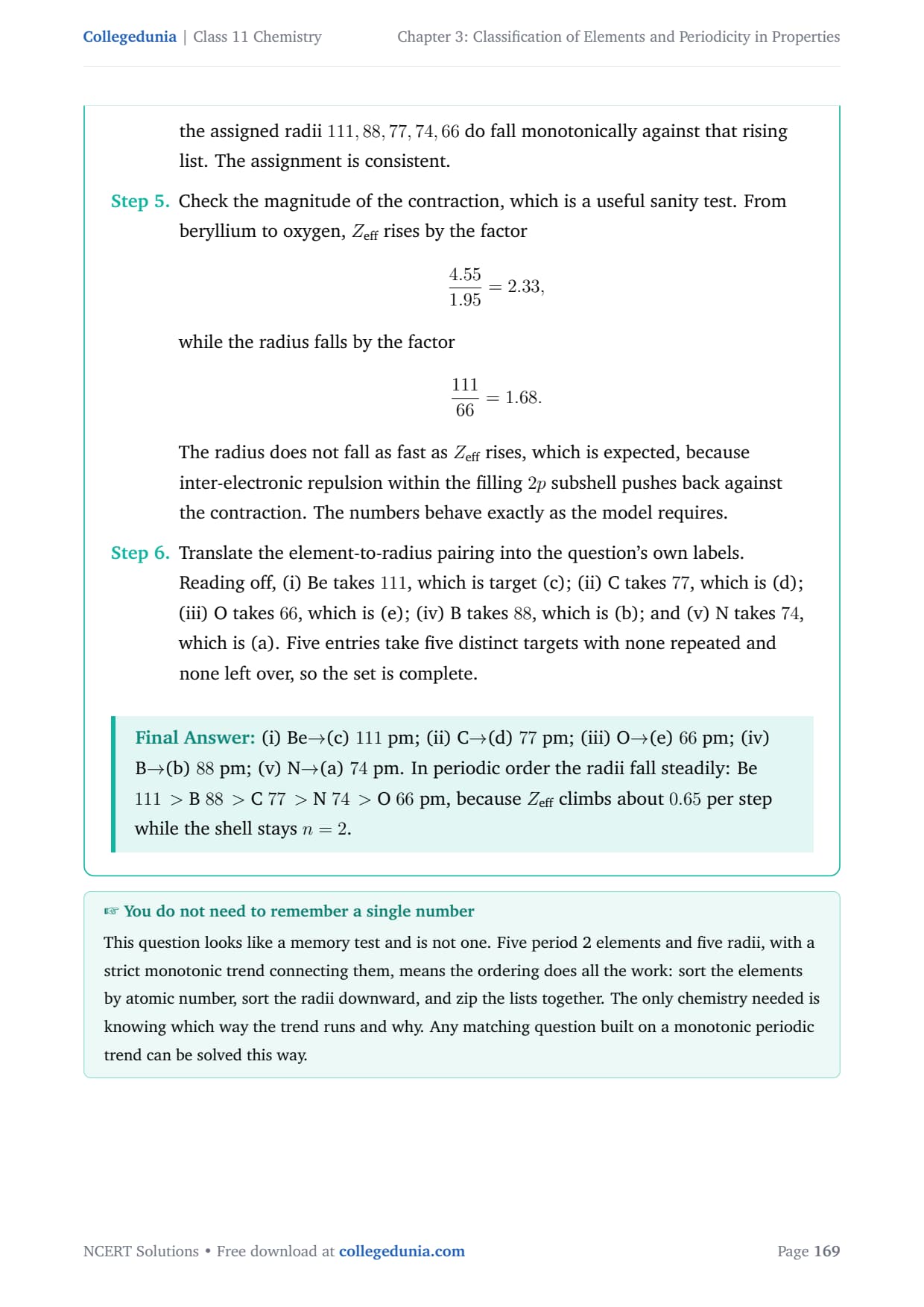
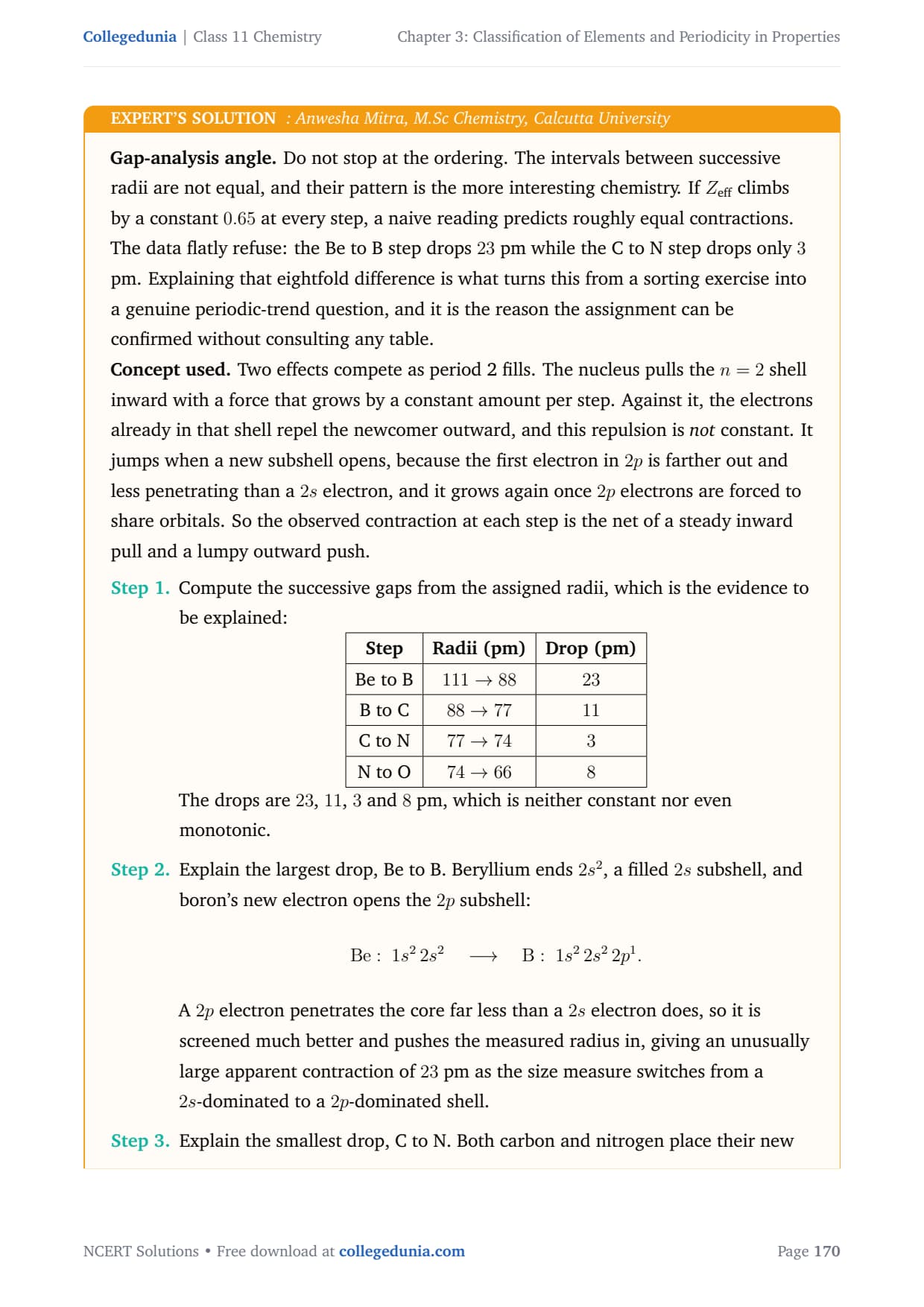
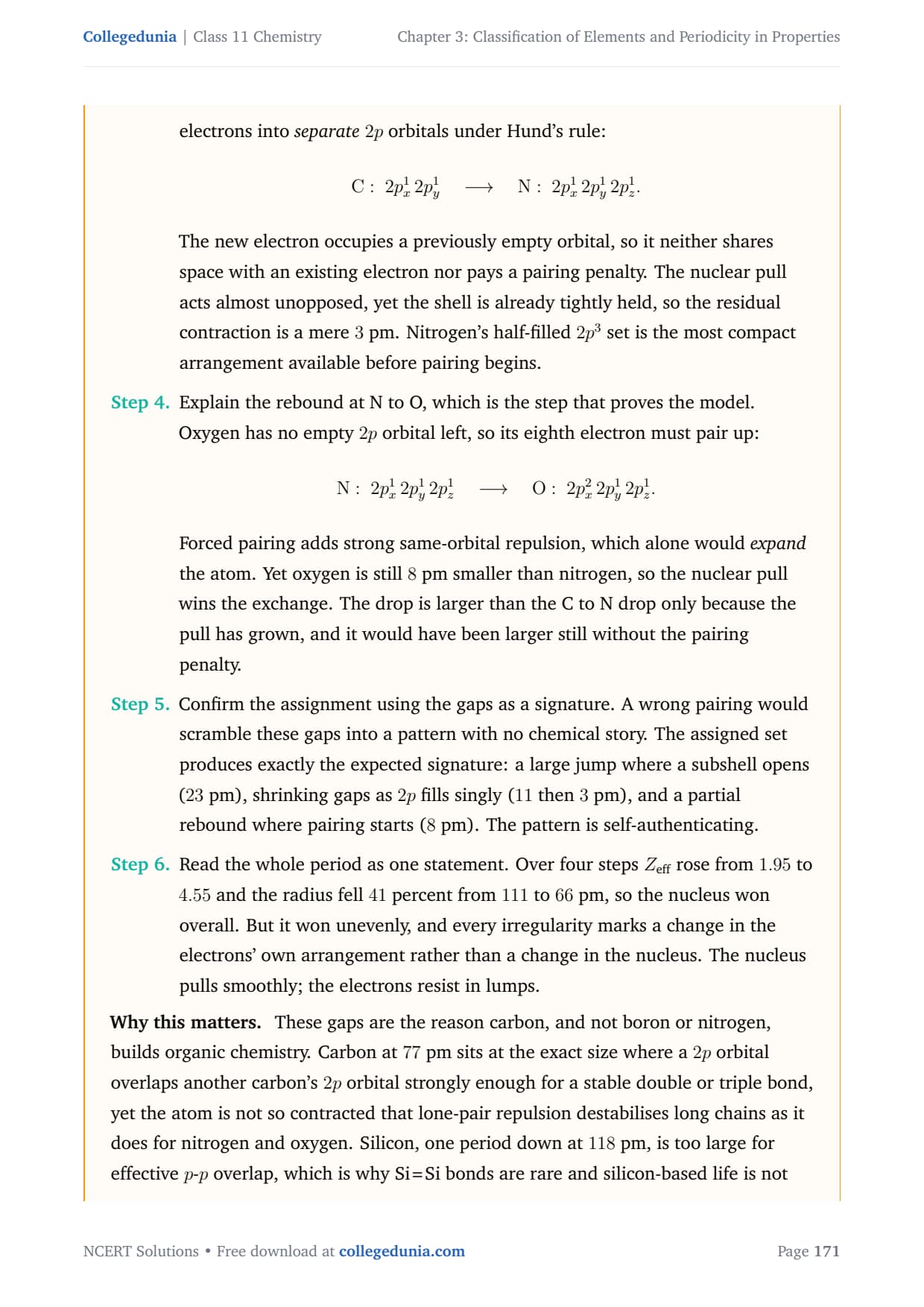
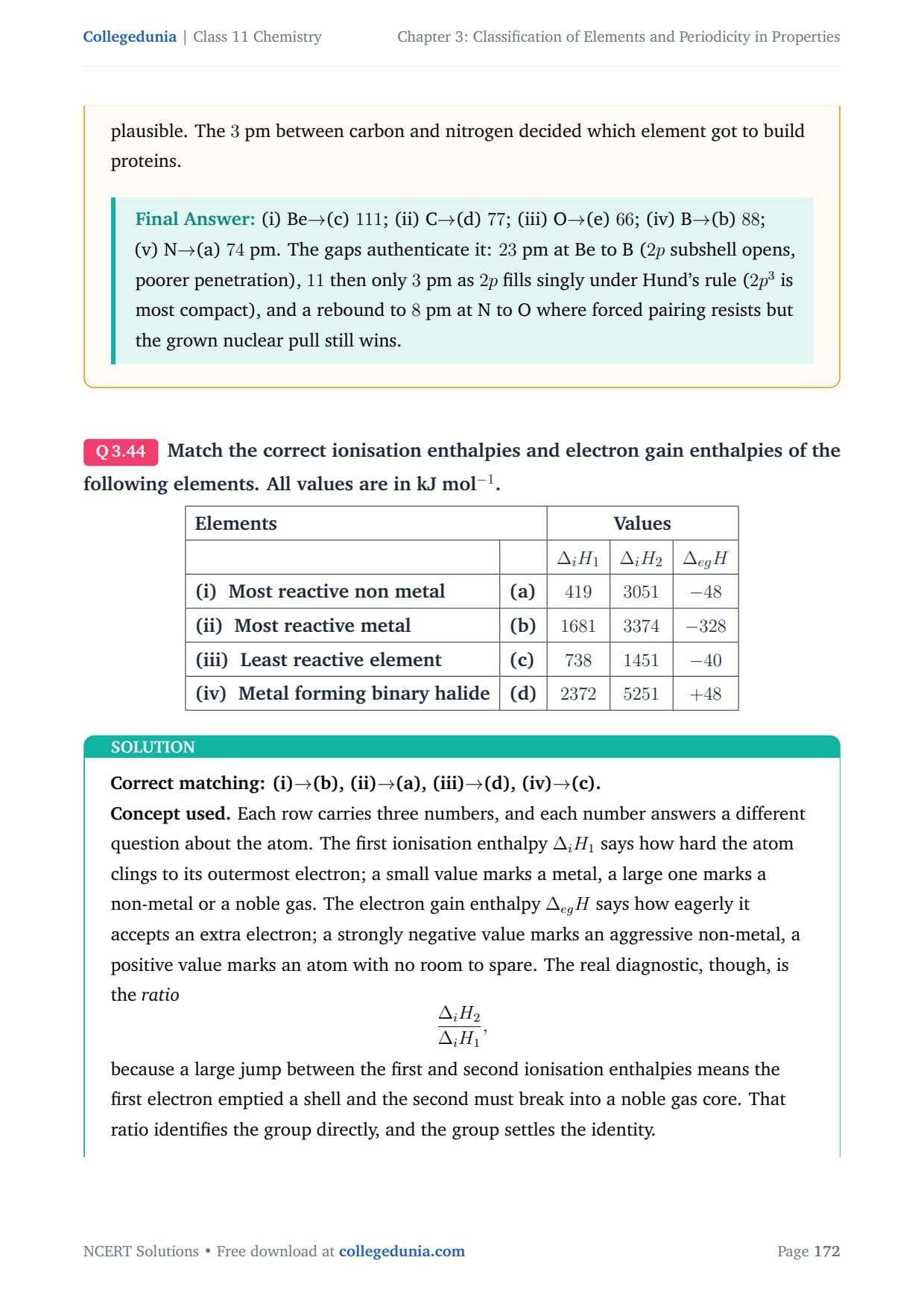
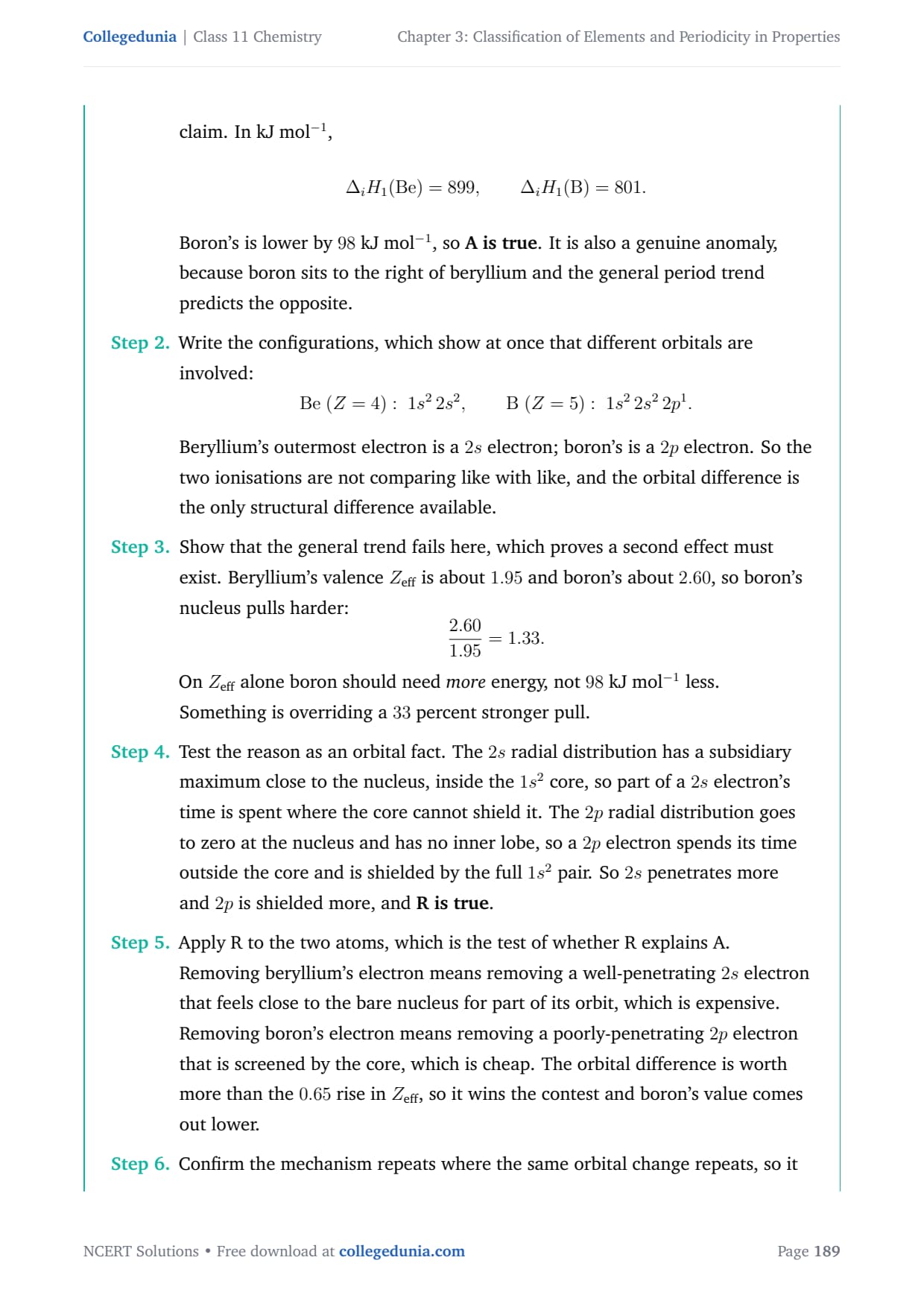
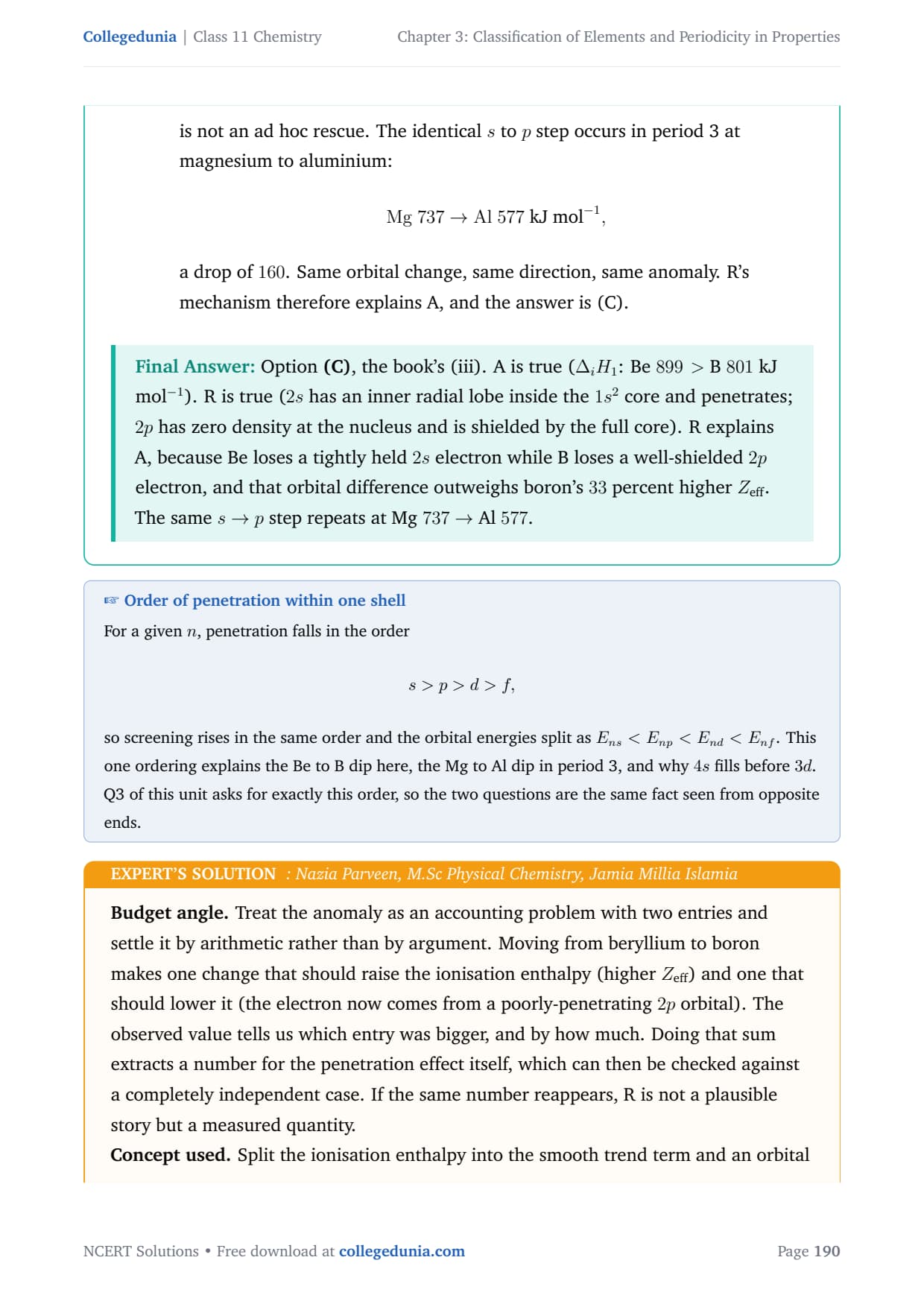
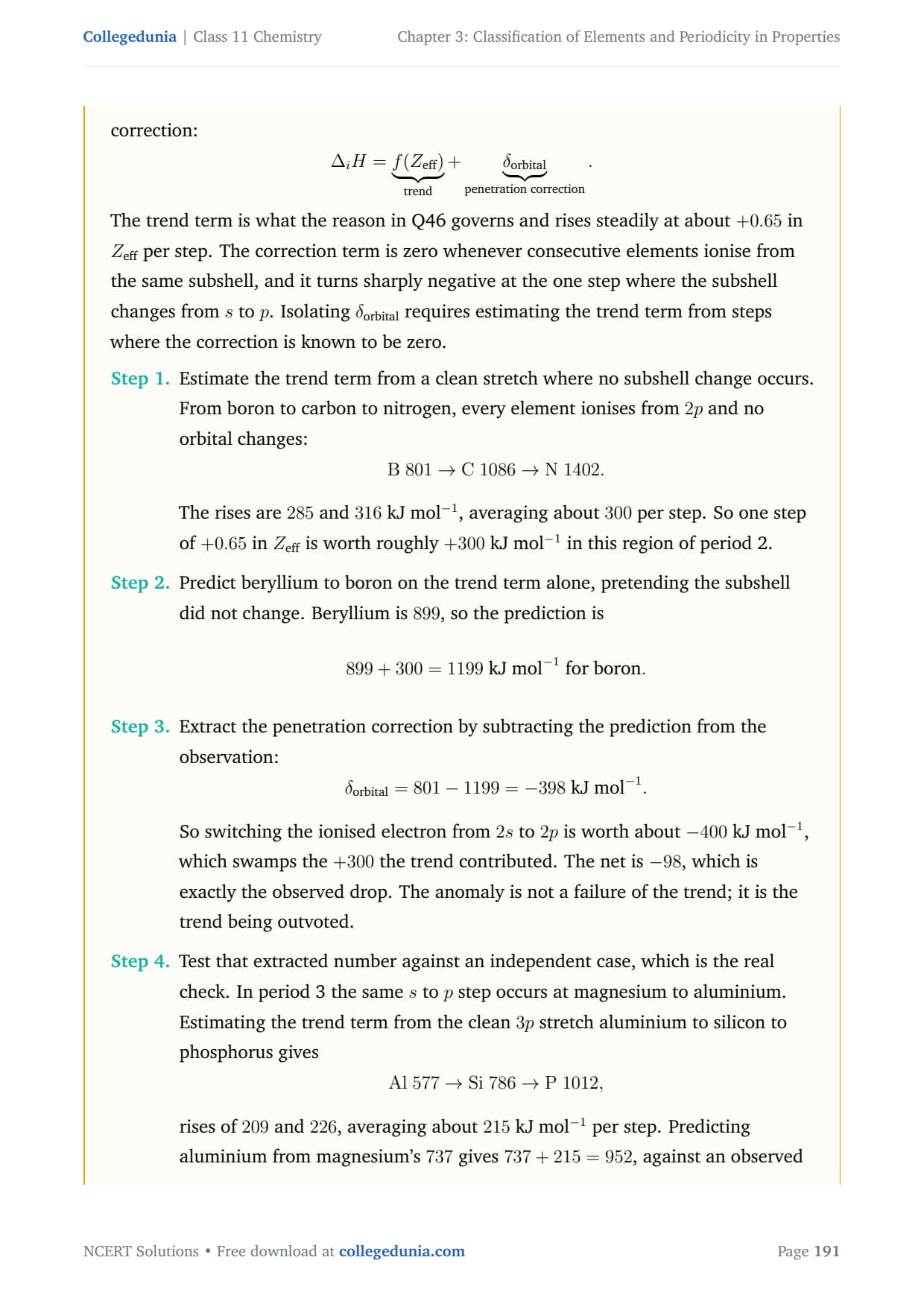
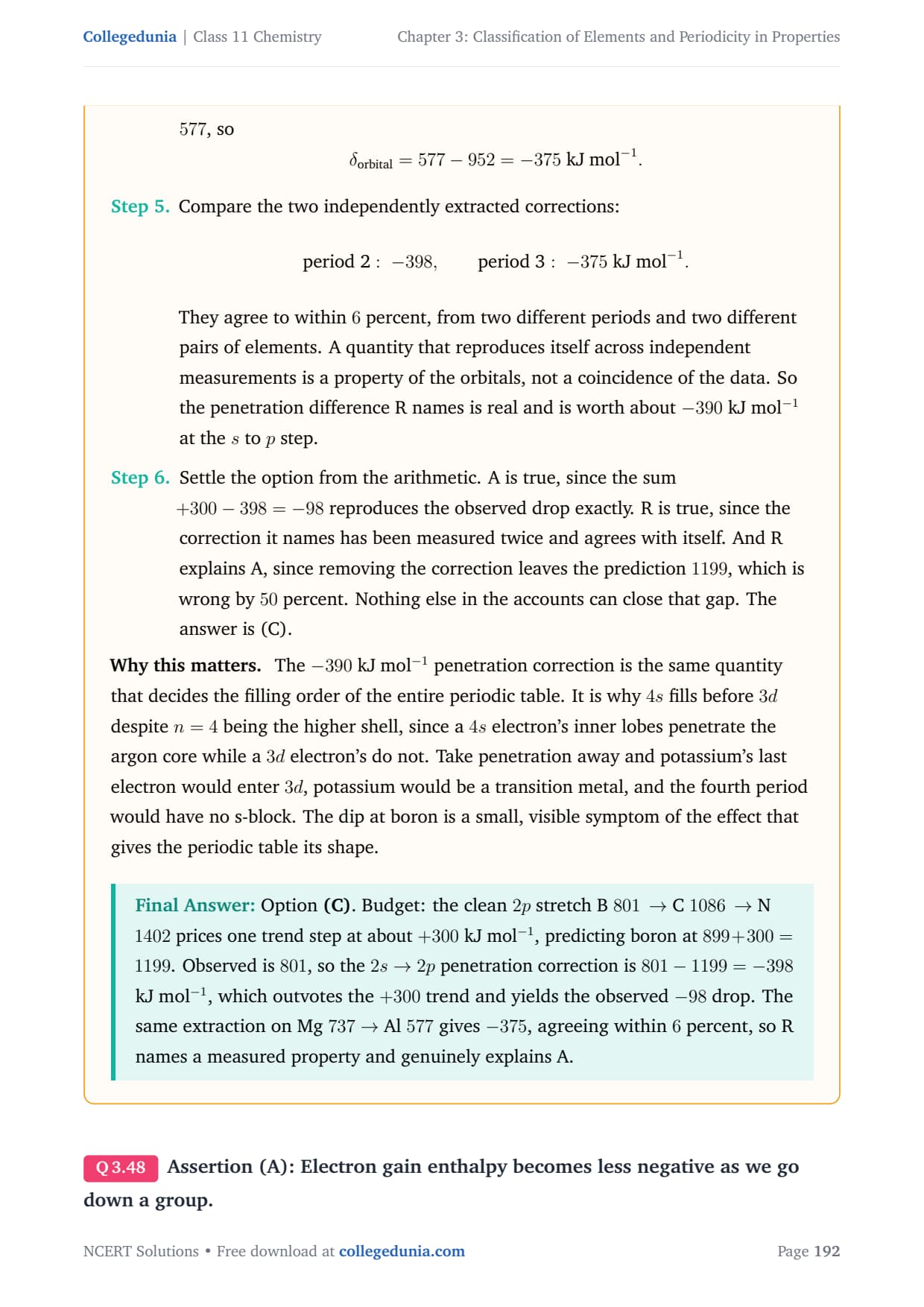
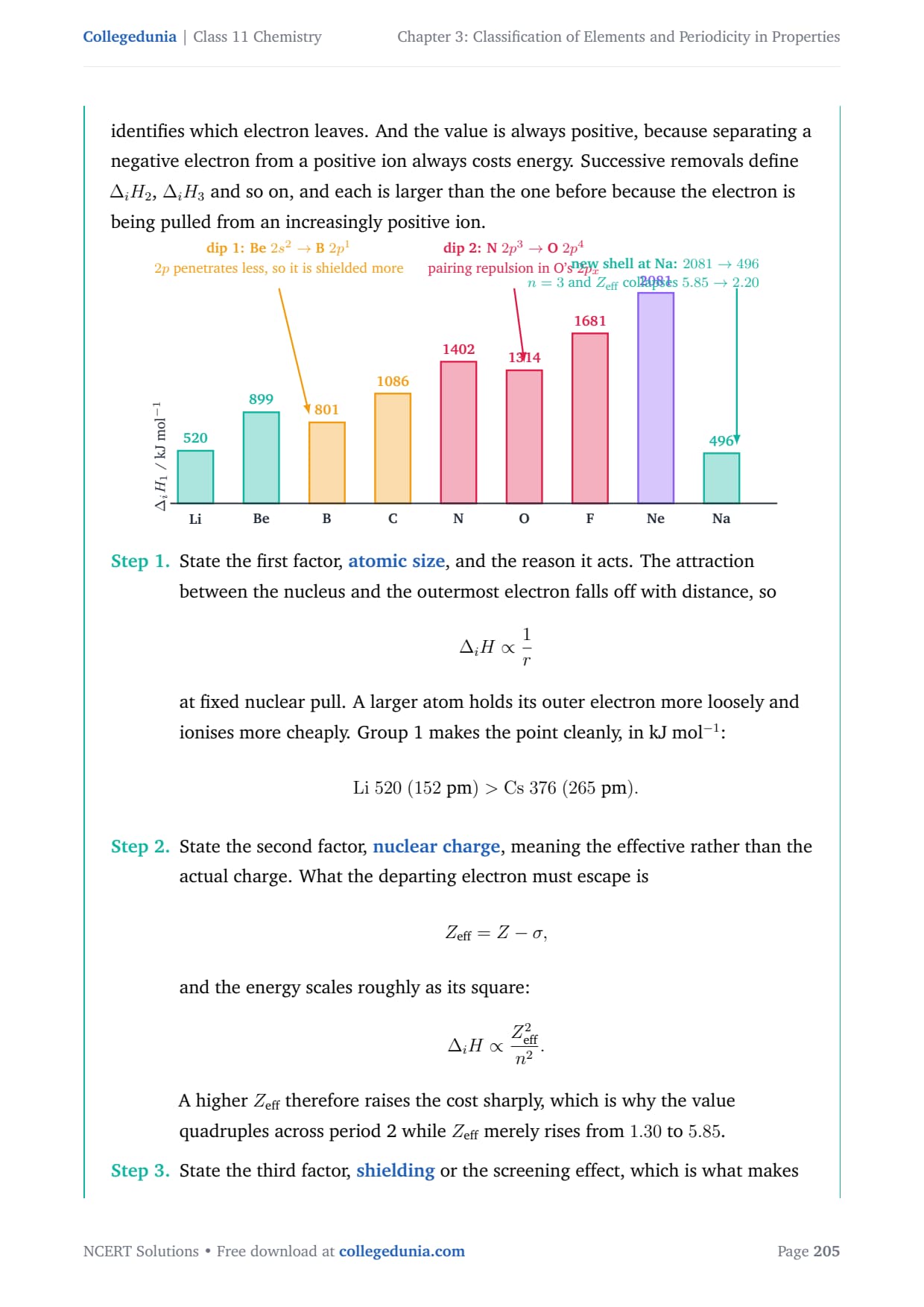
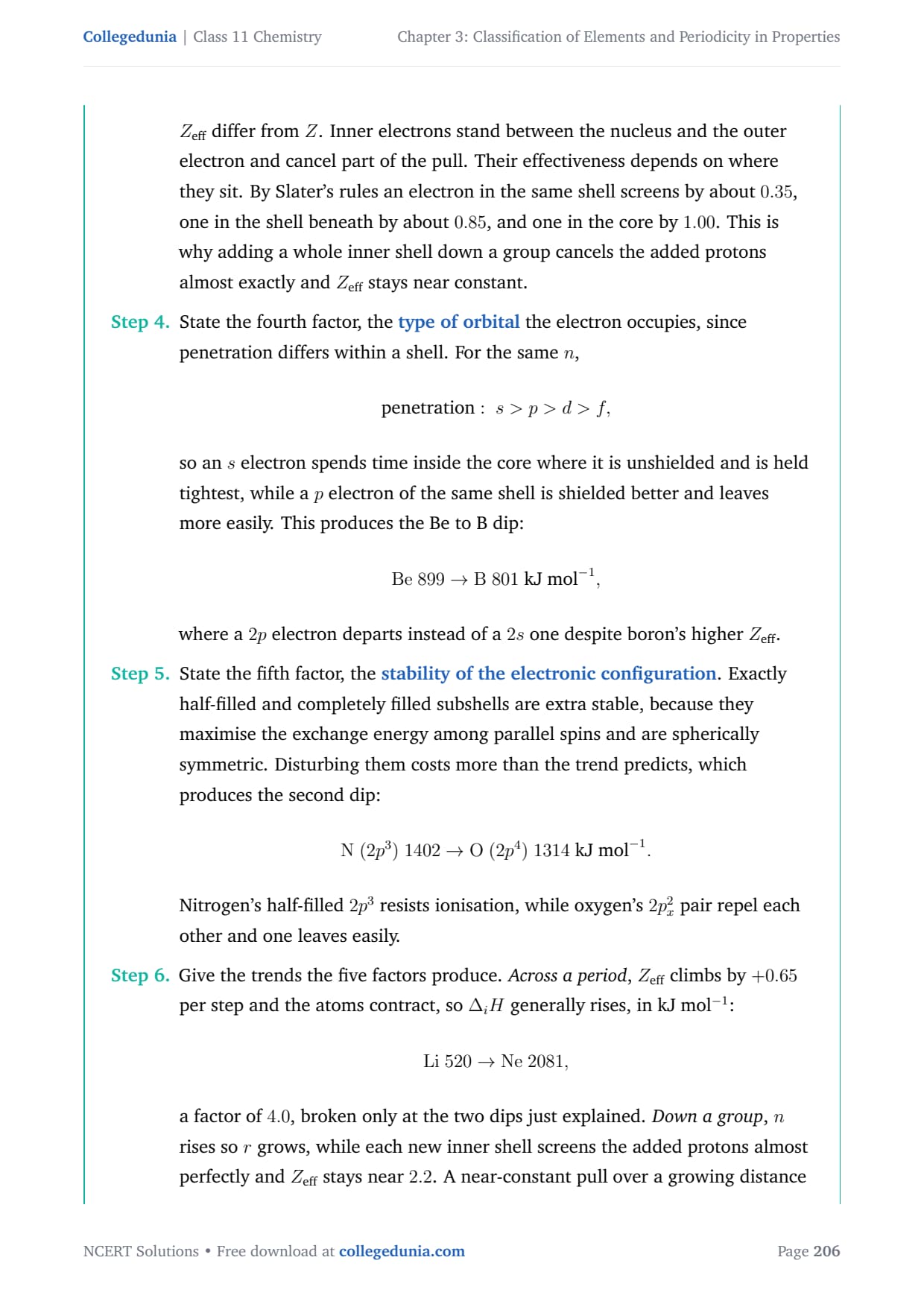
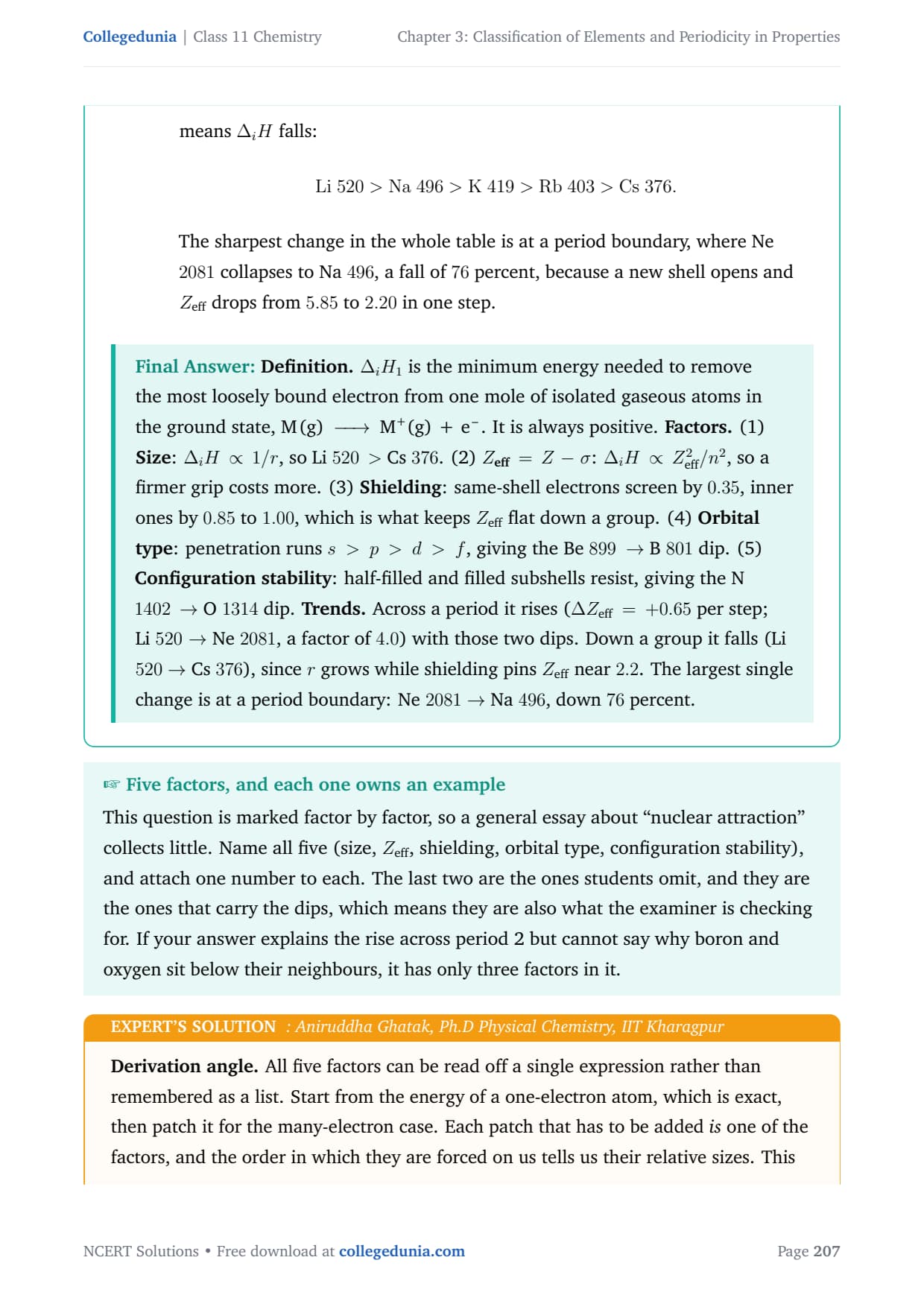
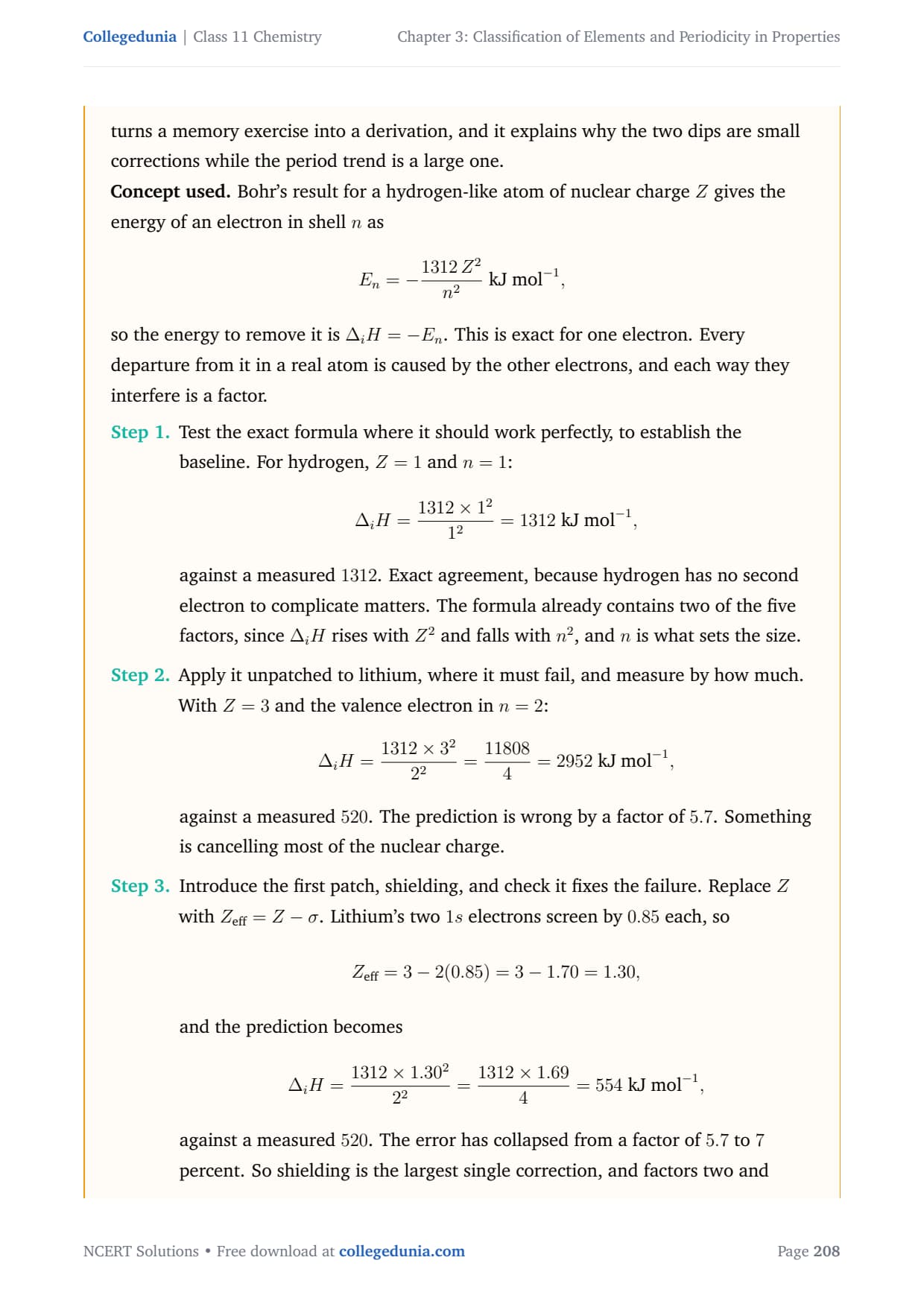
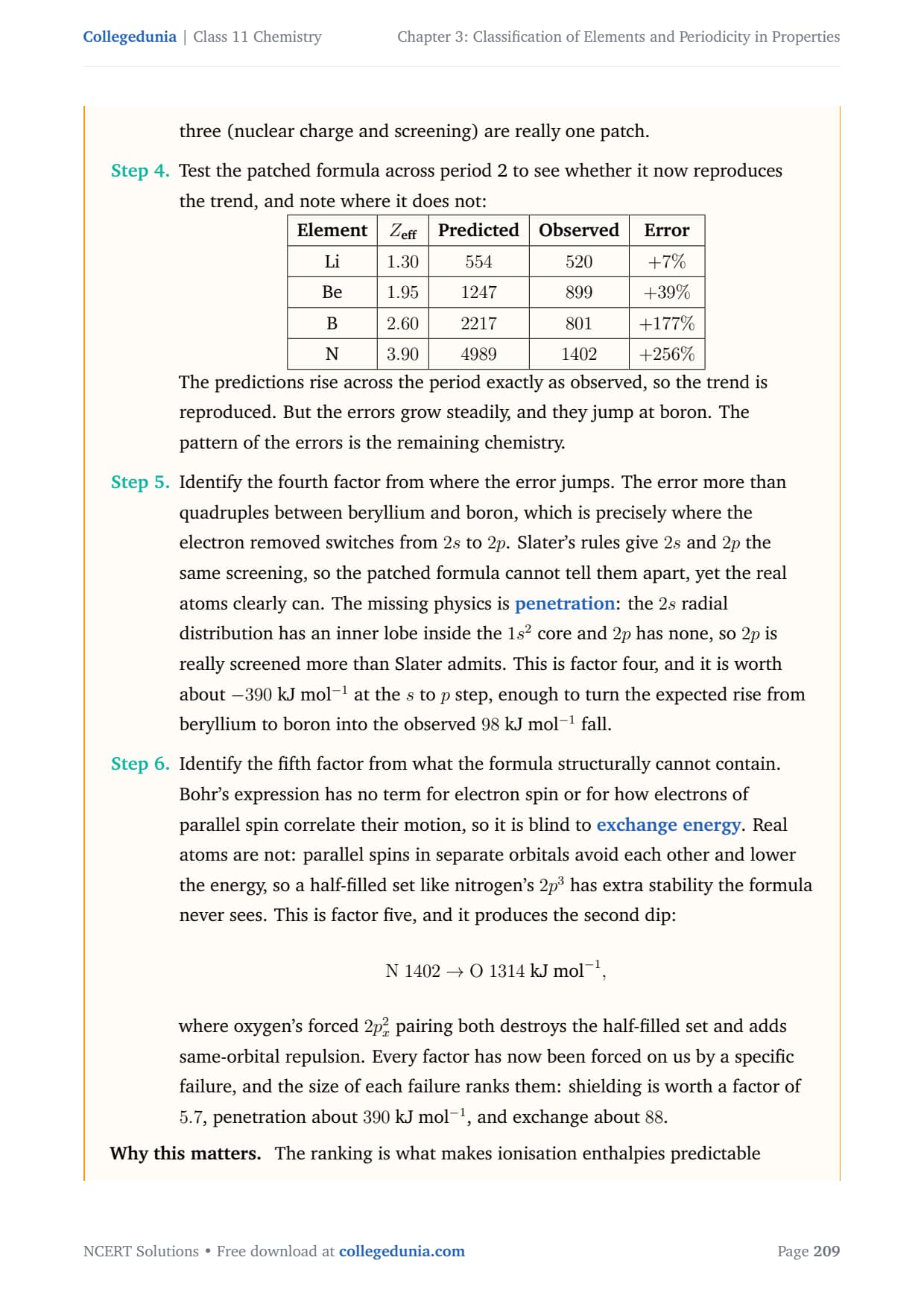
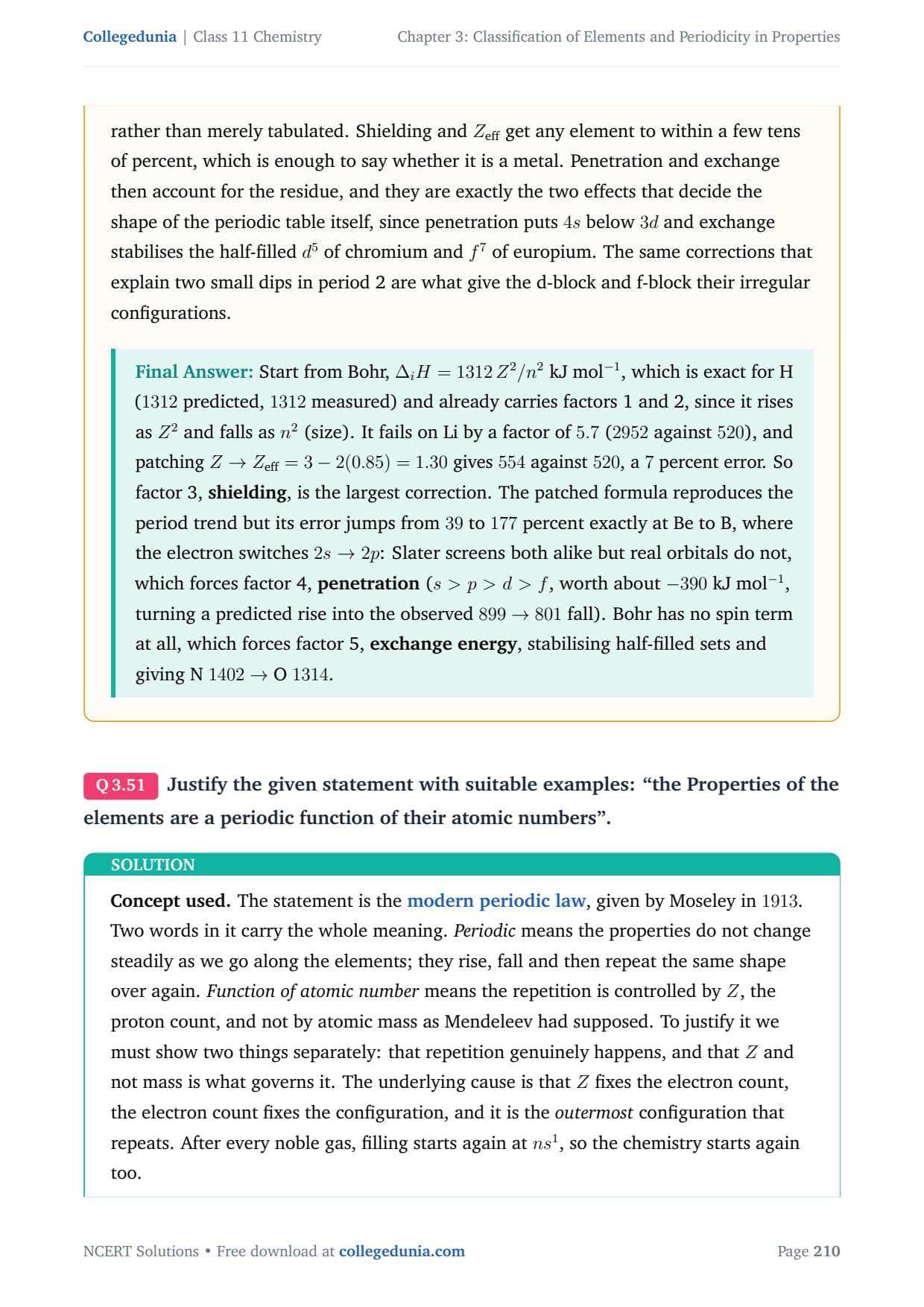
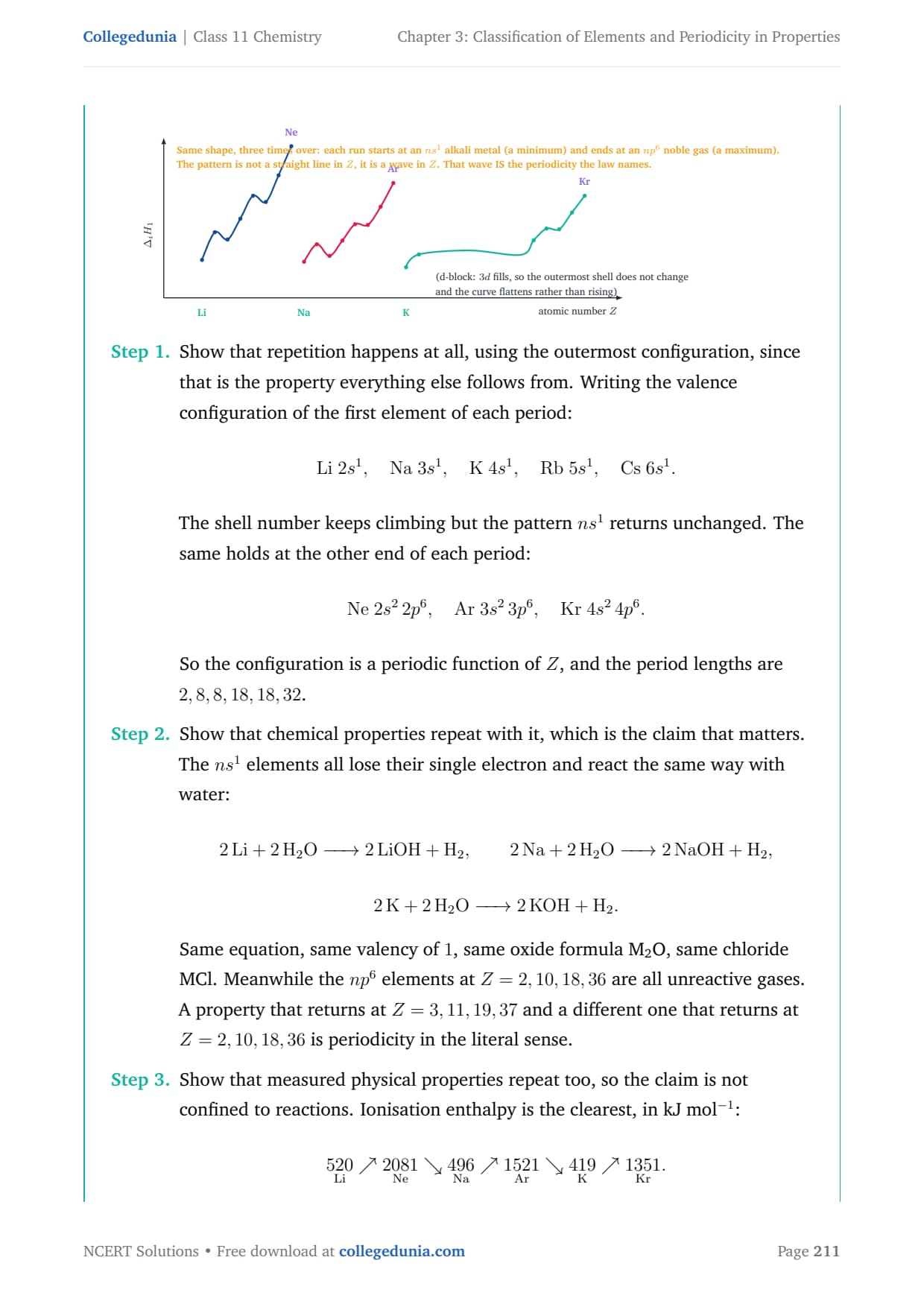
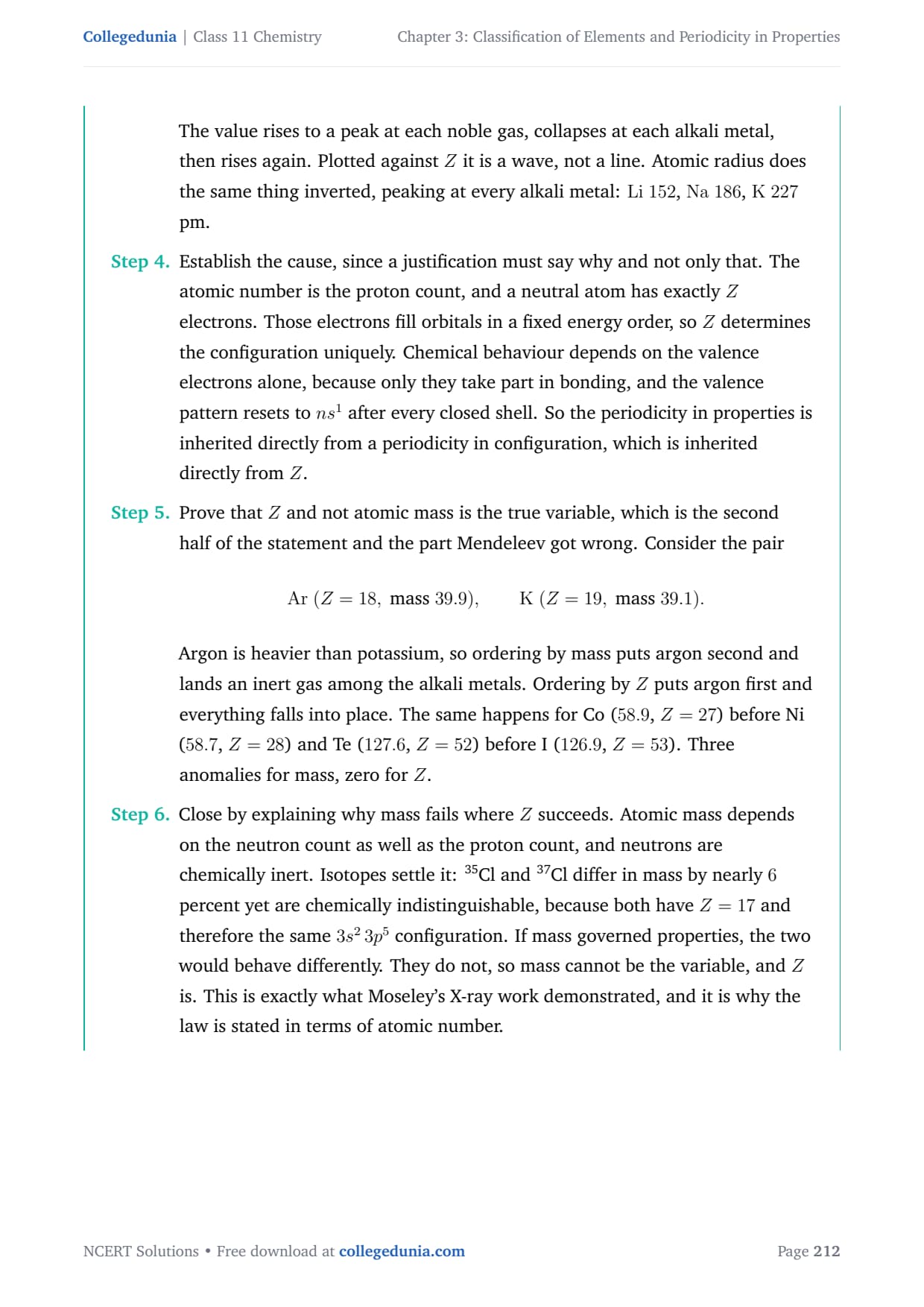
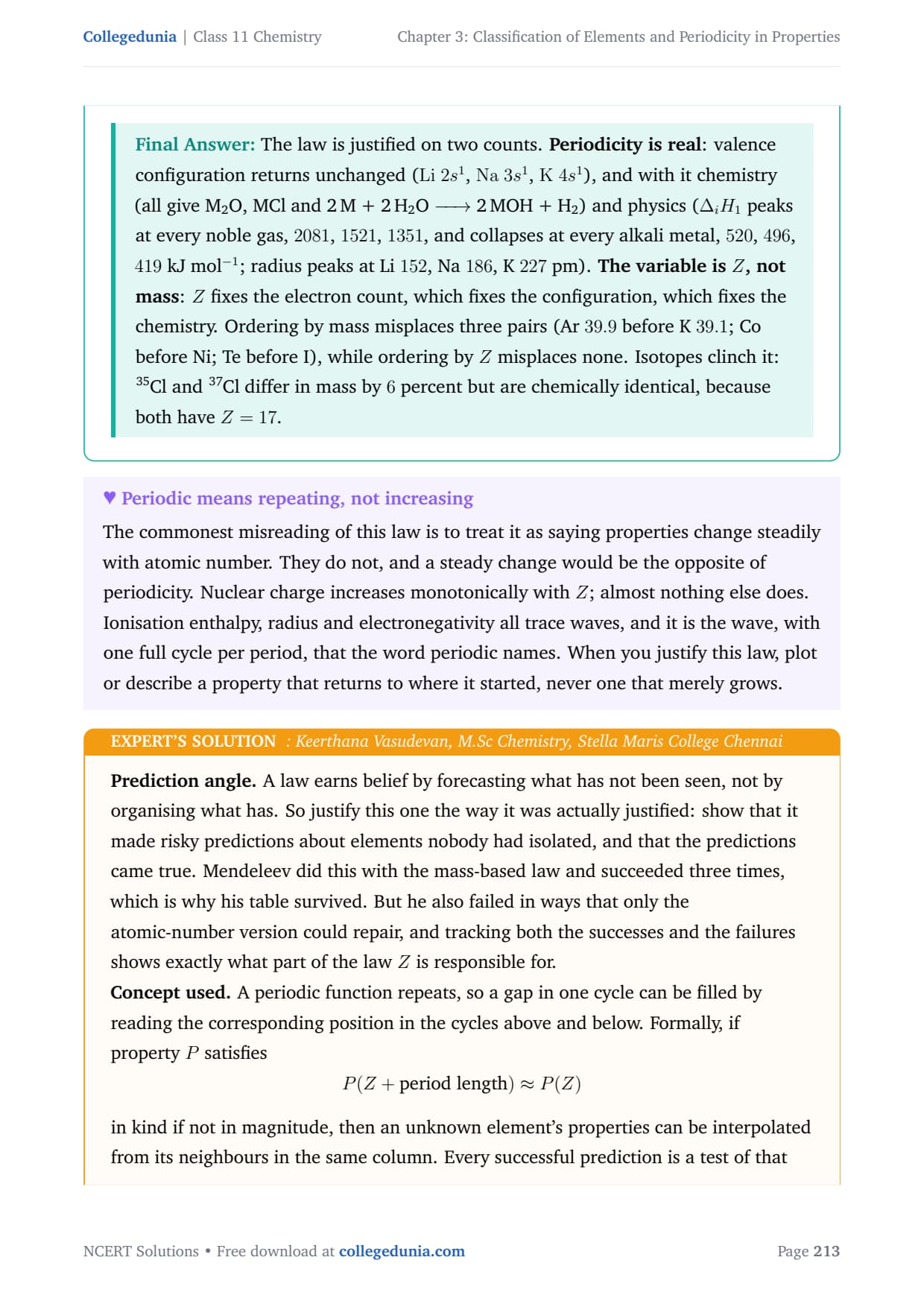
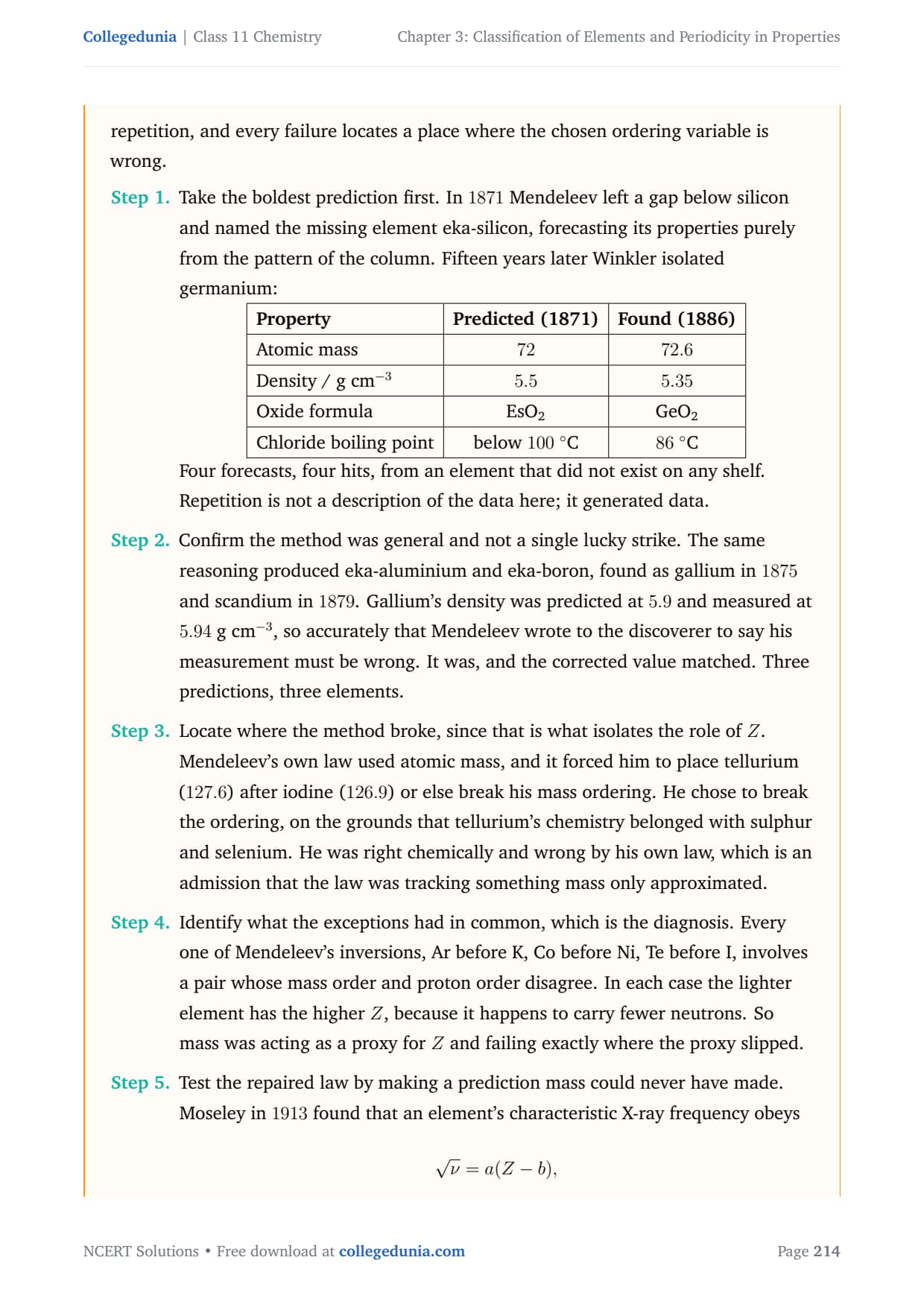
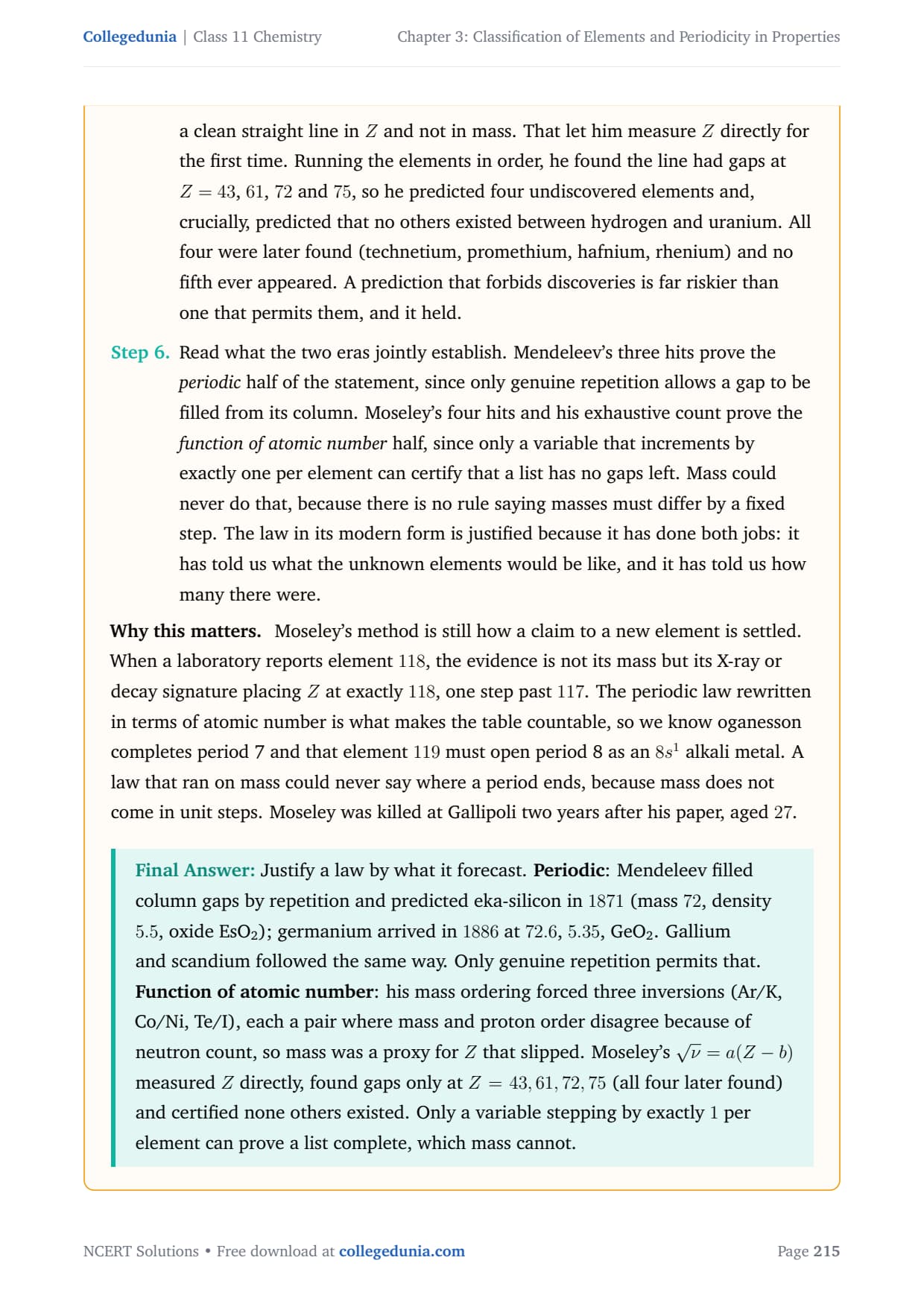
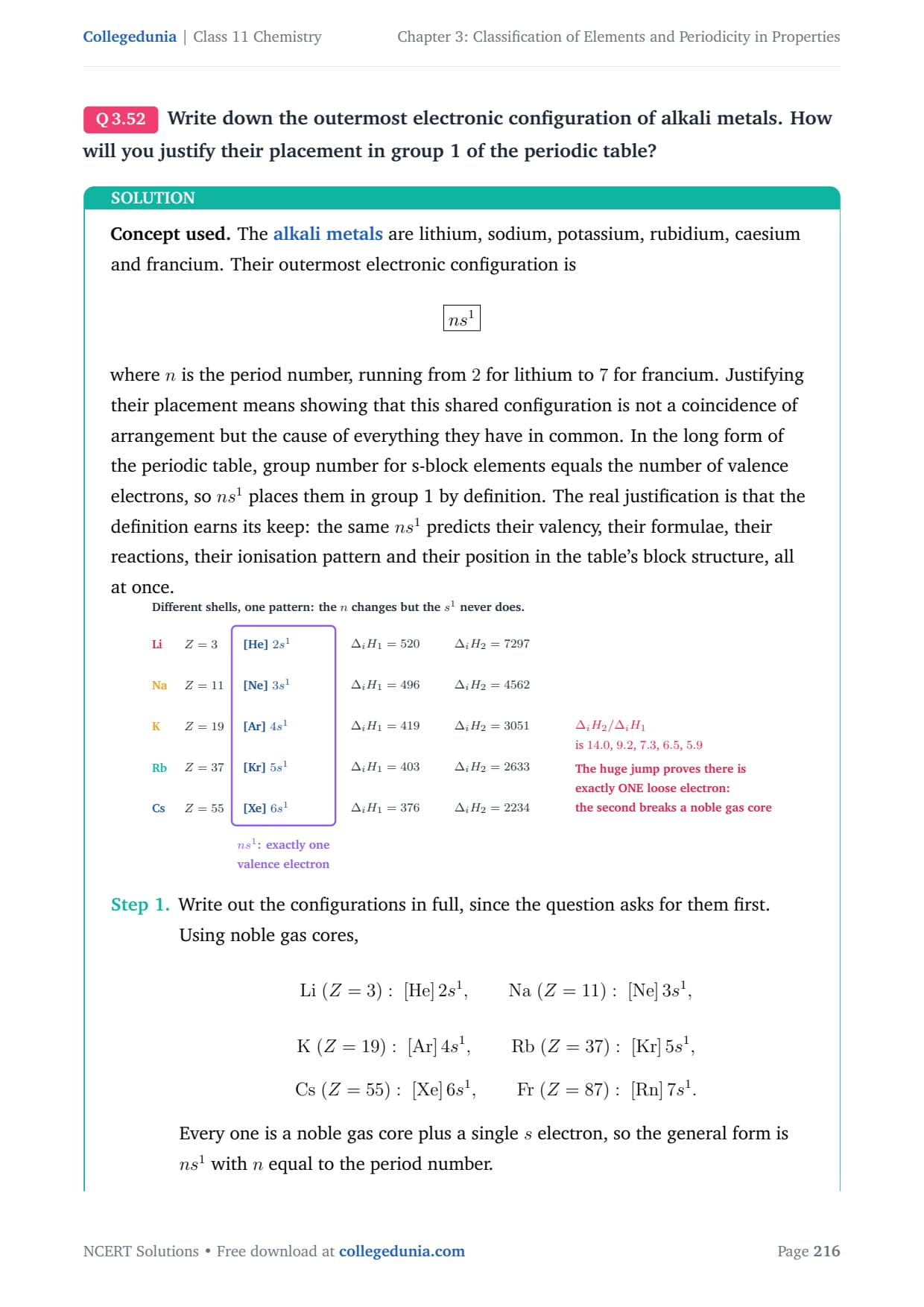
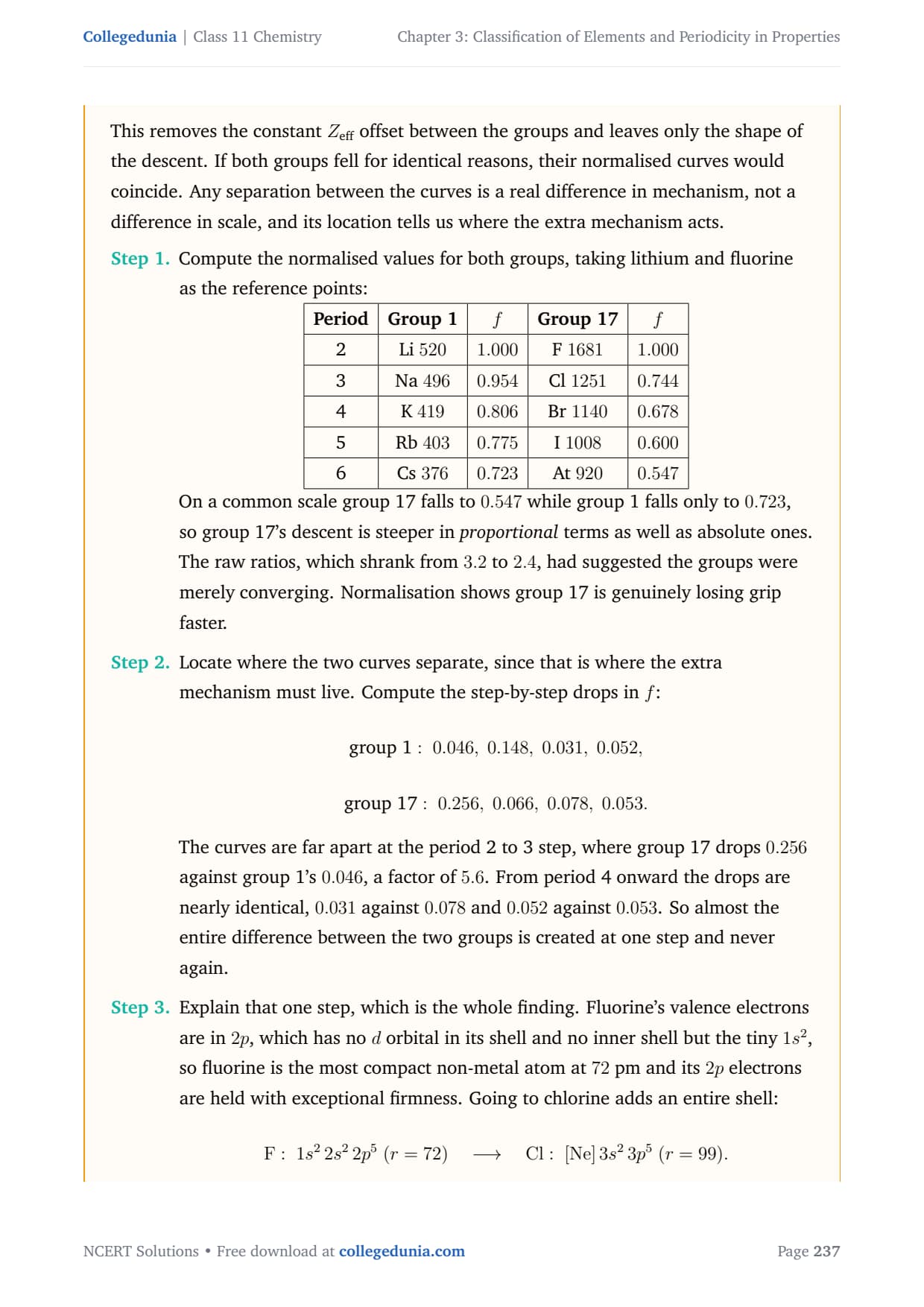
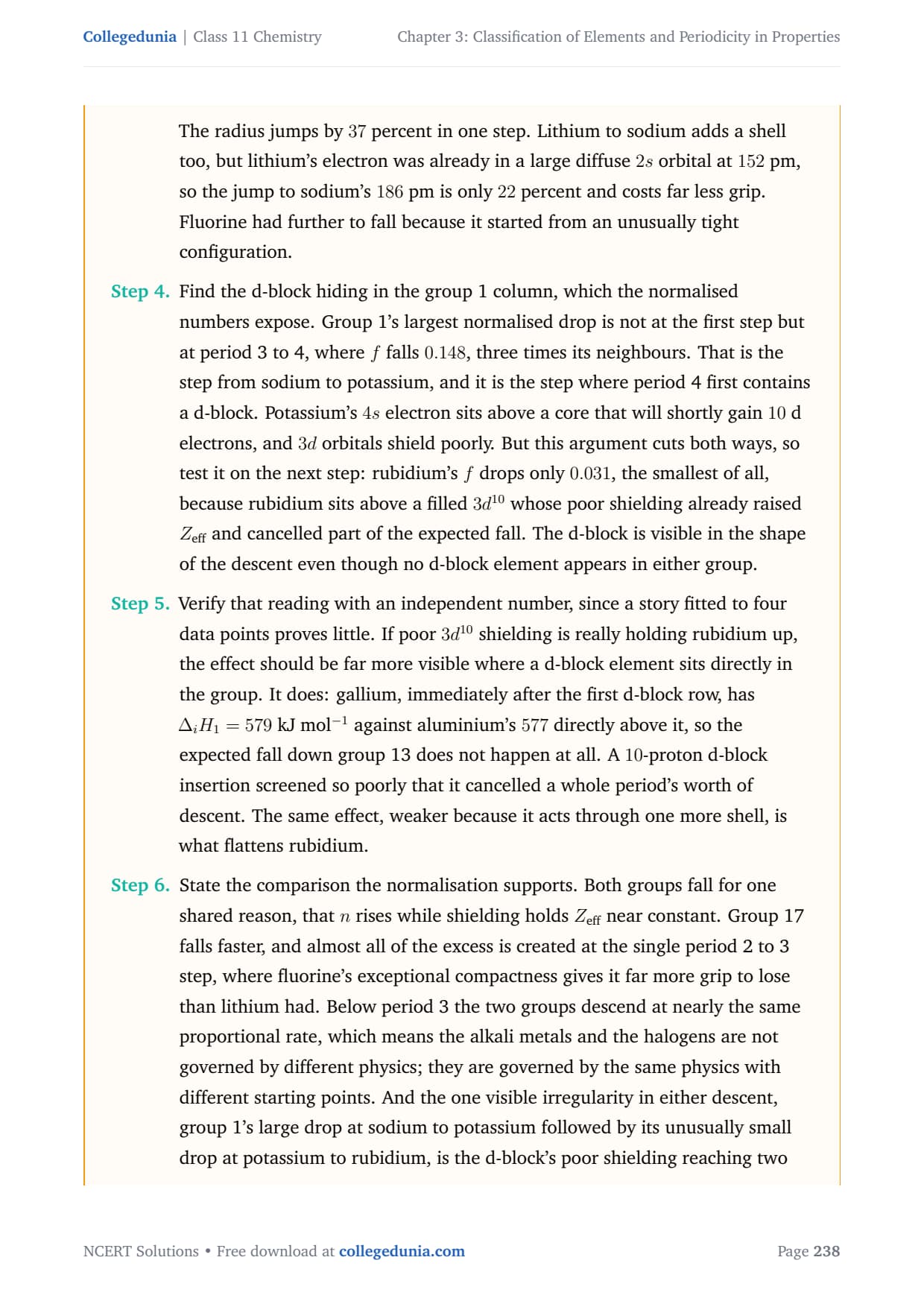
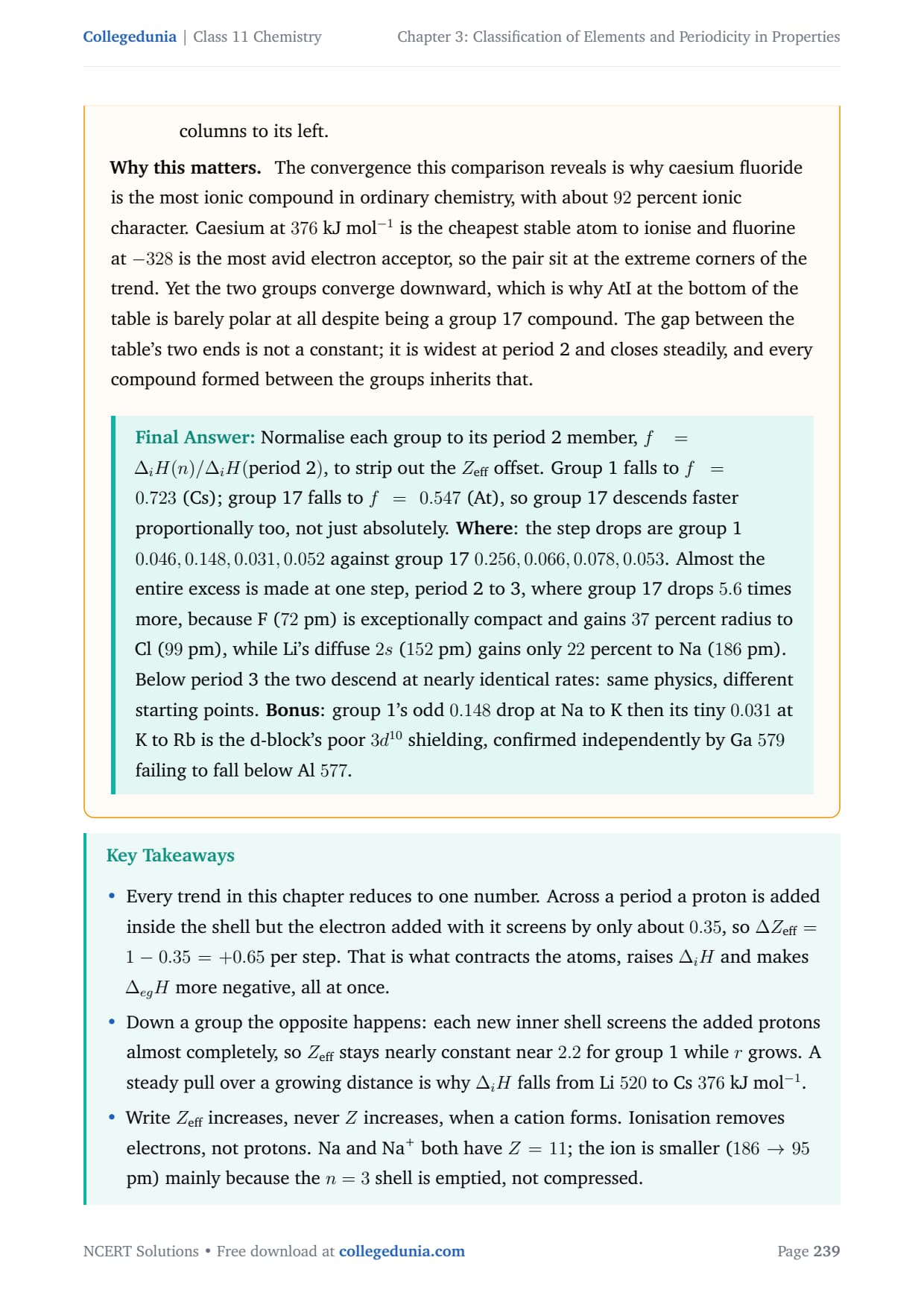
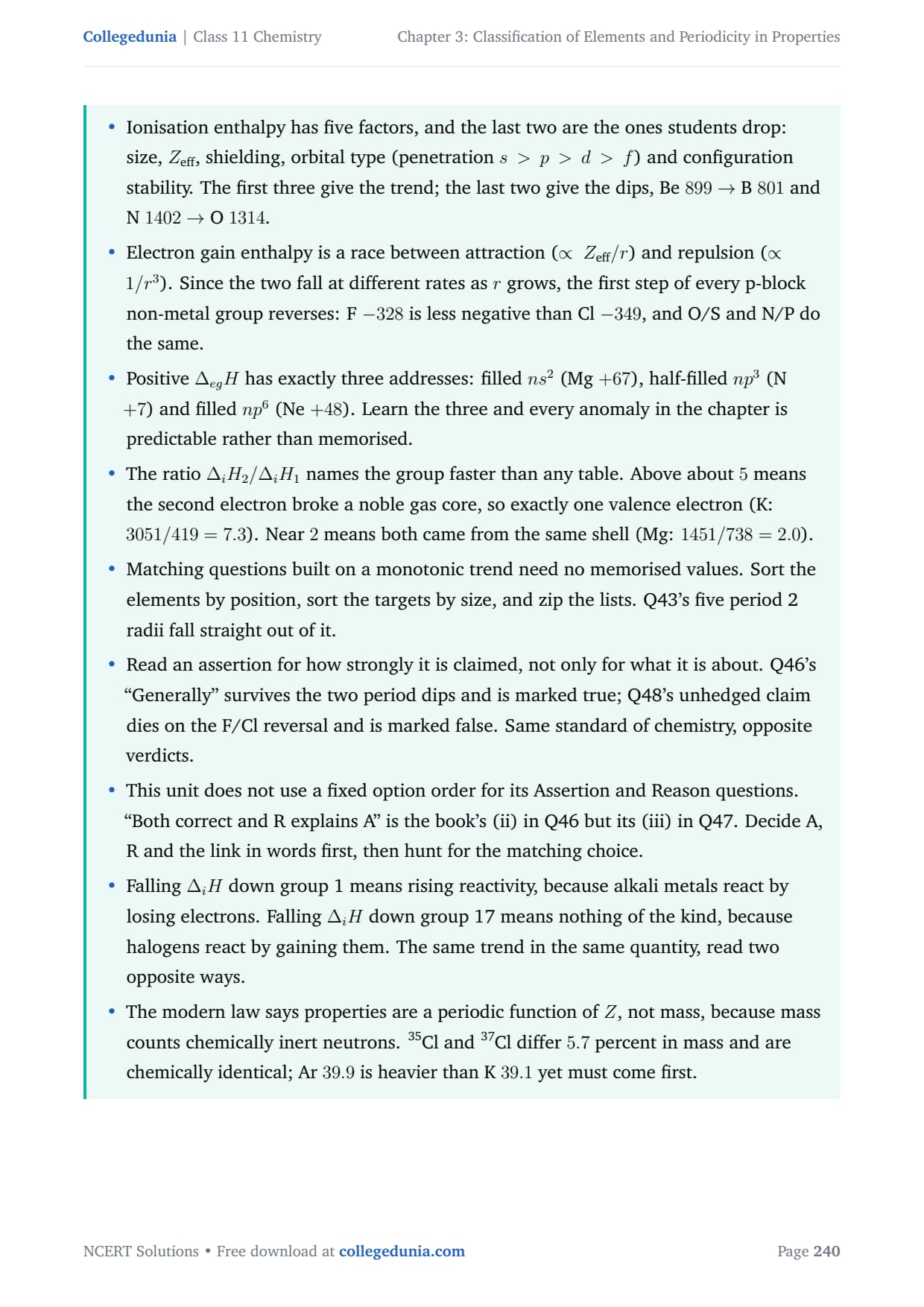
At 241 pages this is the longest solved chapter in the book, and the length is earned. Almost every trend here has a named exception, and the Exemplar builds its questions around those exceptions rather than around the trend itself.
- CBSE Weightage: 4 to 6 marks, usually one trend-reasoning question and one configuration or block identification
- JEE Main Weightage: 1 to 2 questions per year, mostly ionic radii ordering and ionisation enthalpy anomalies
- NEET Weightage: 2 questions per year from periodic trends and electron gain enthalpy
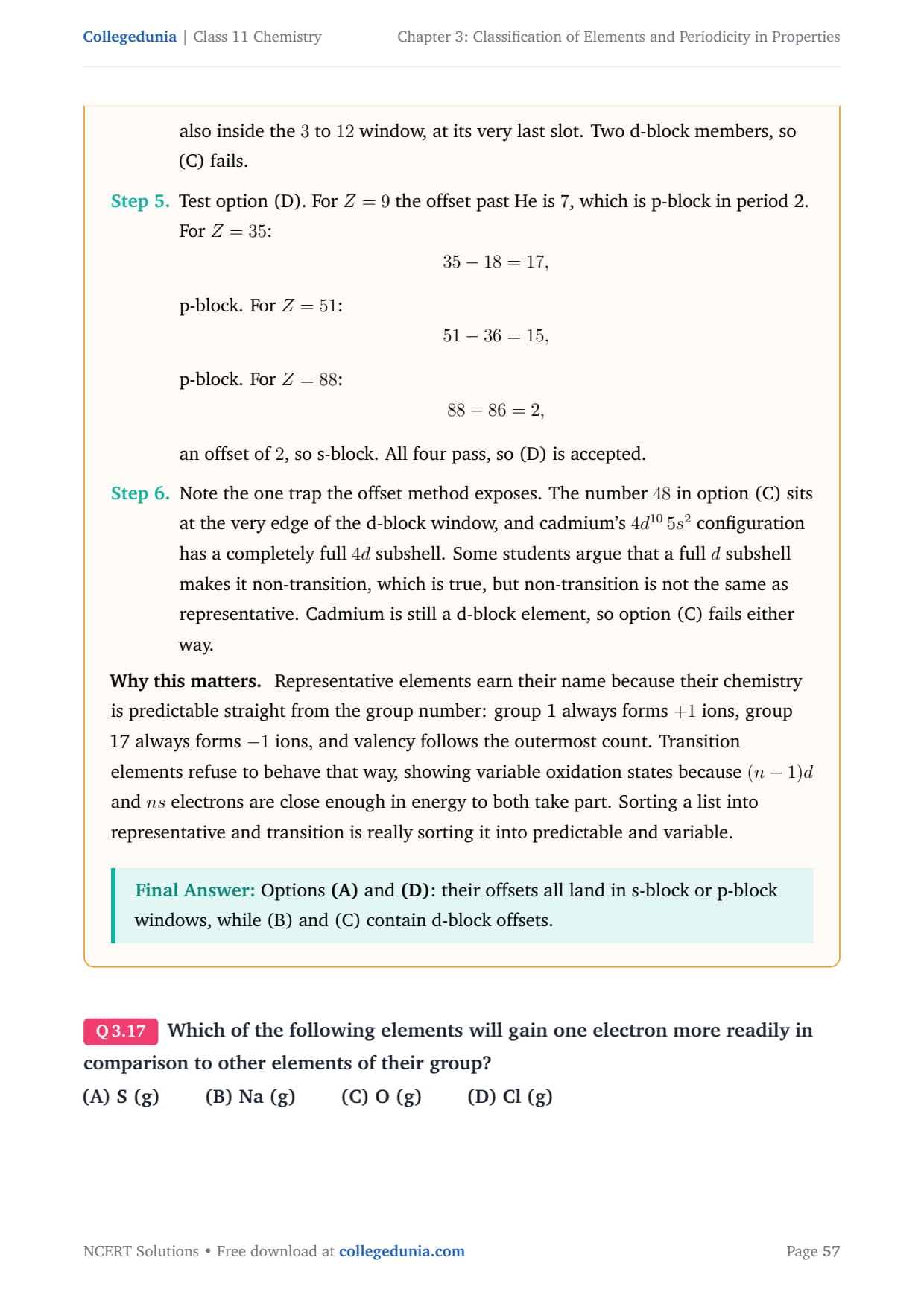
Every answer is checked against the official NCERT Exemplar key printed in unit keep503, and the two printing errors in this chapter are worked out in full.
Topics Covered in the Class 11 Chemistry Classification of Elements and Periodicity in Properties Exemplar
The 55 questions in this chapter rest on four ideas. Each one carries straight into Chemical Bonding and the p-block units, so the work here is not spent once.
- Periodic law and the long form: Mendeleev's table against the modern law, period number as the maximum principal quantum number, and s, p, d and f block assignment
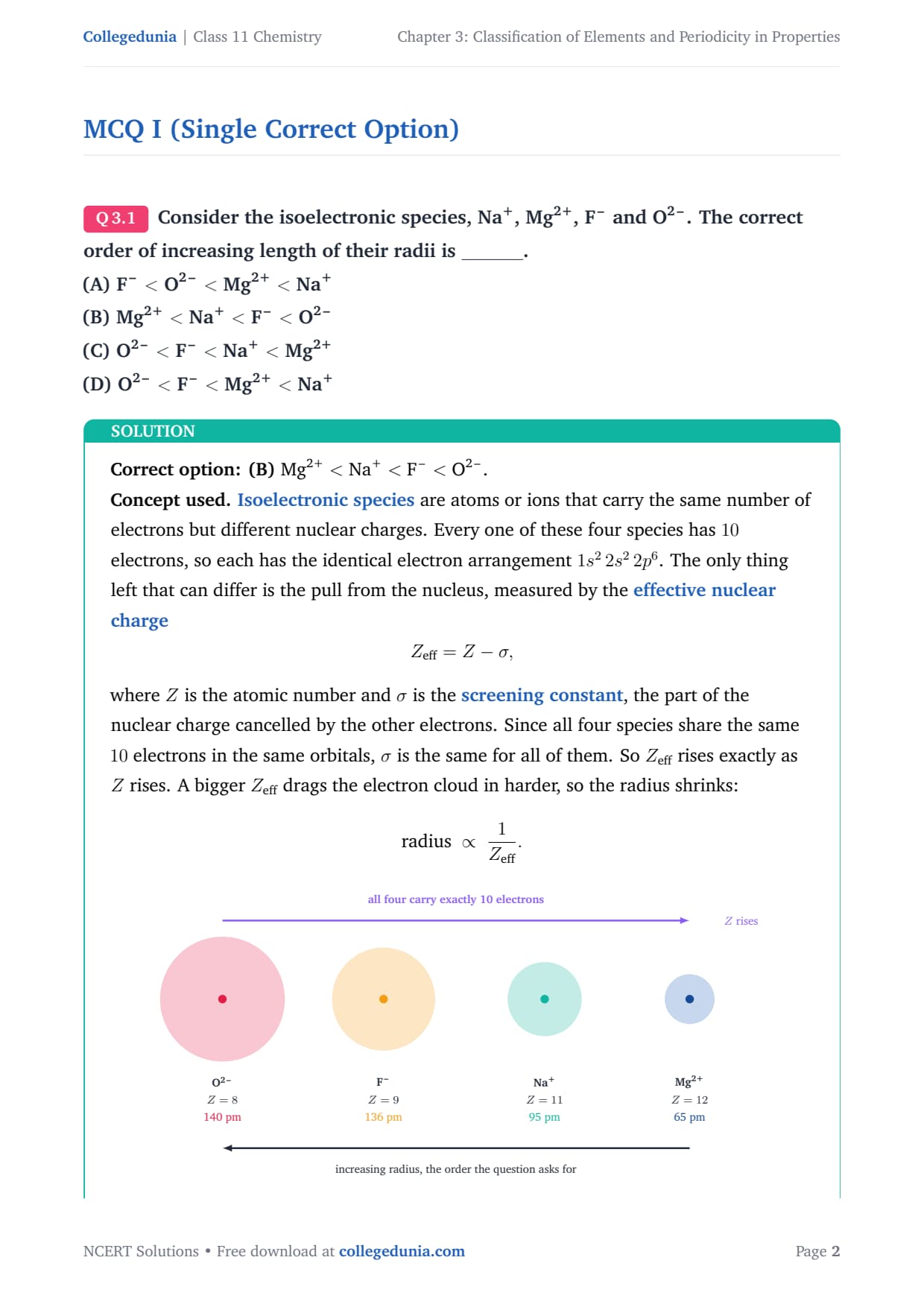
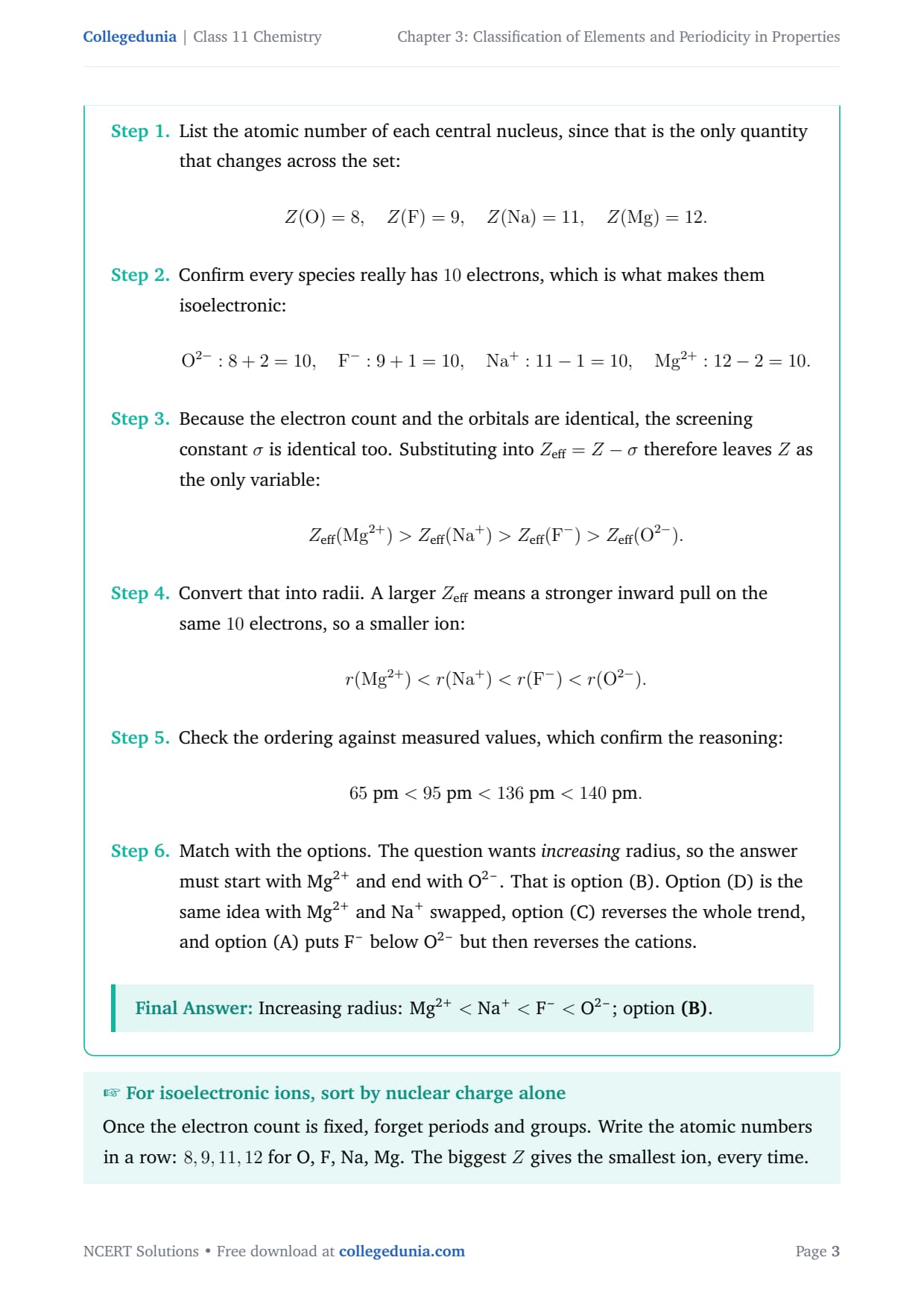
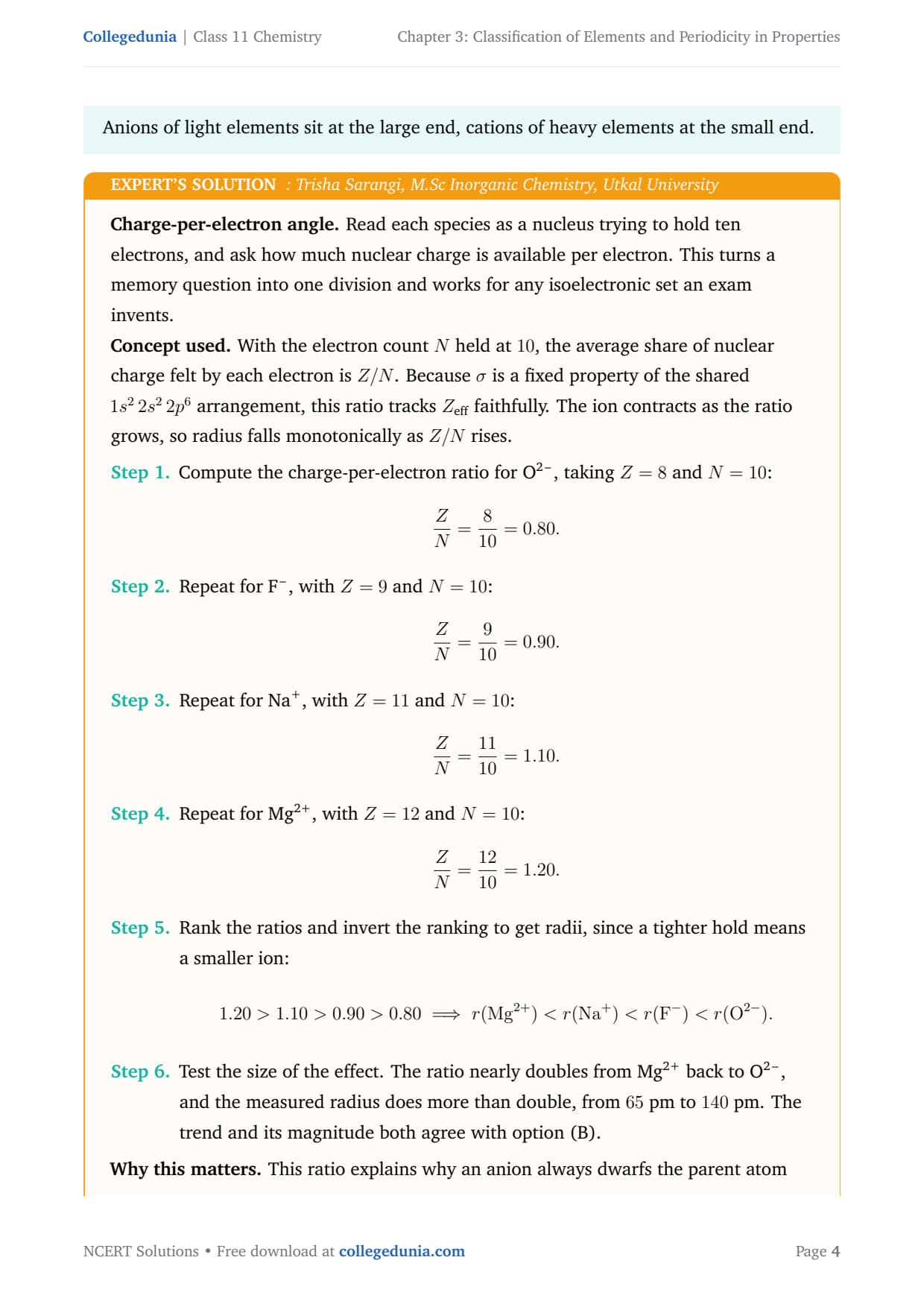
- Atomic and ionic size: covalent, van der Waals and ionic radii, plus isoelectronic species such as Mg2+, Na+, F- and O2-
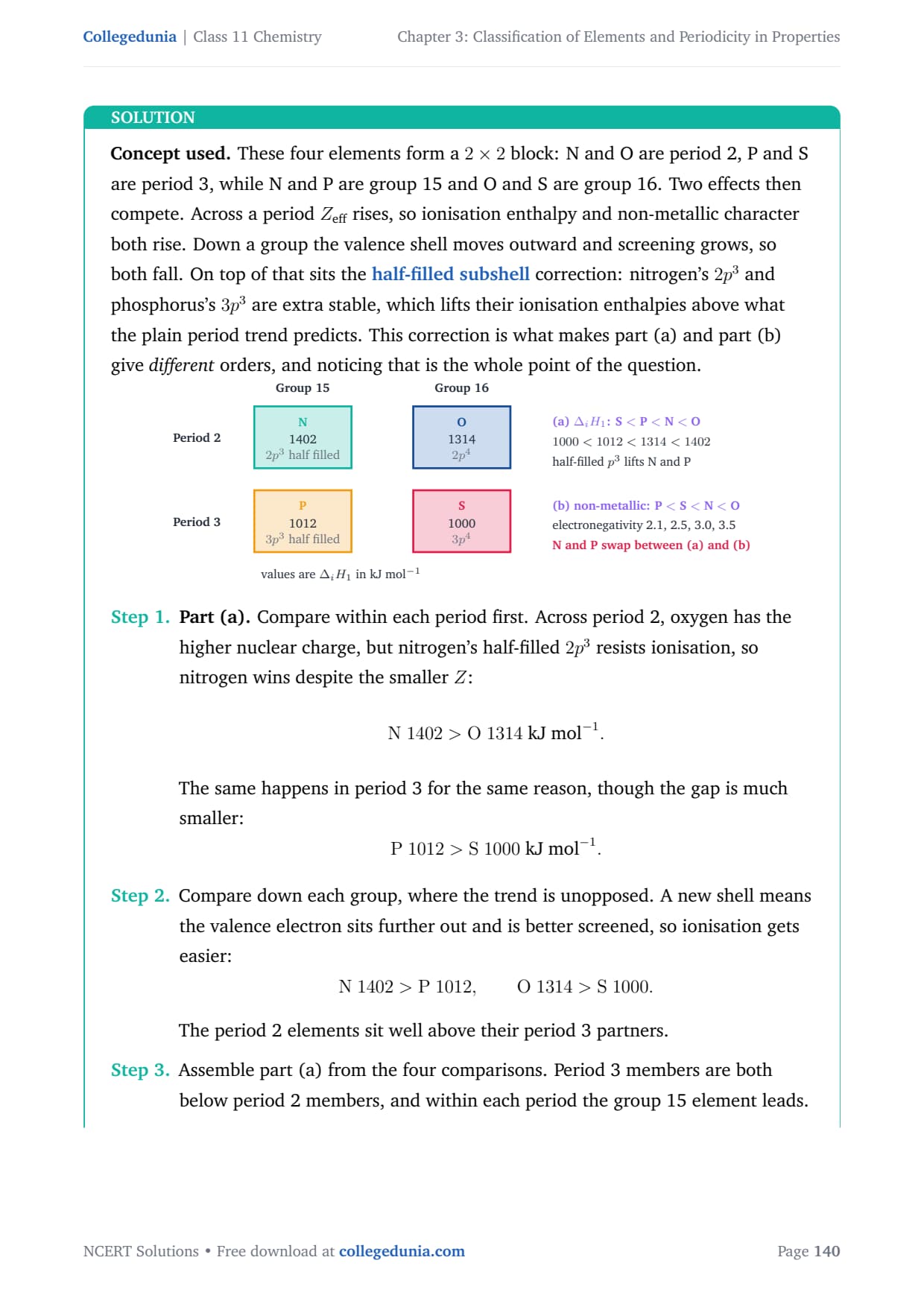
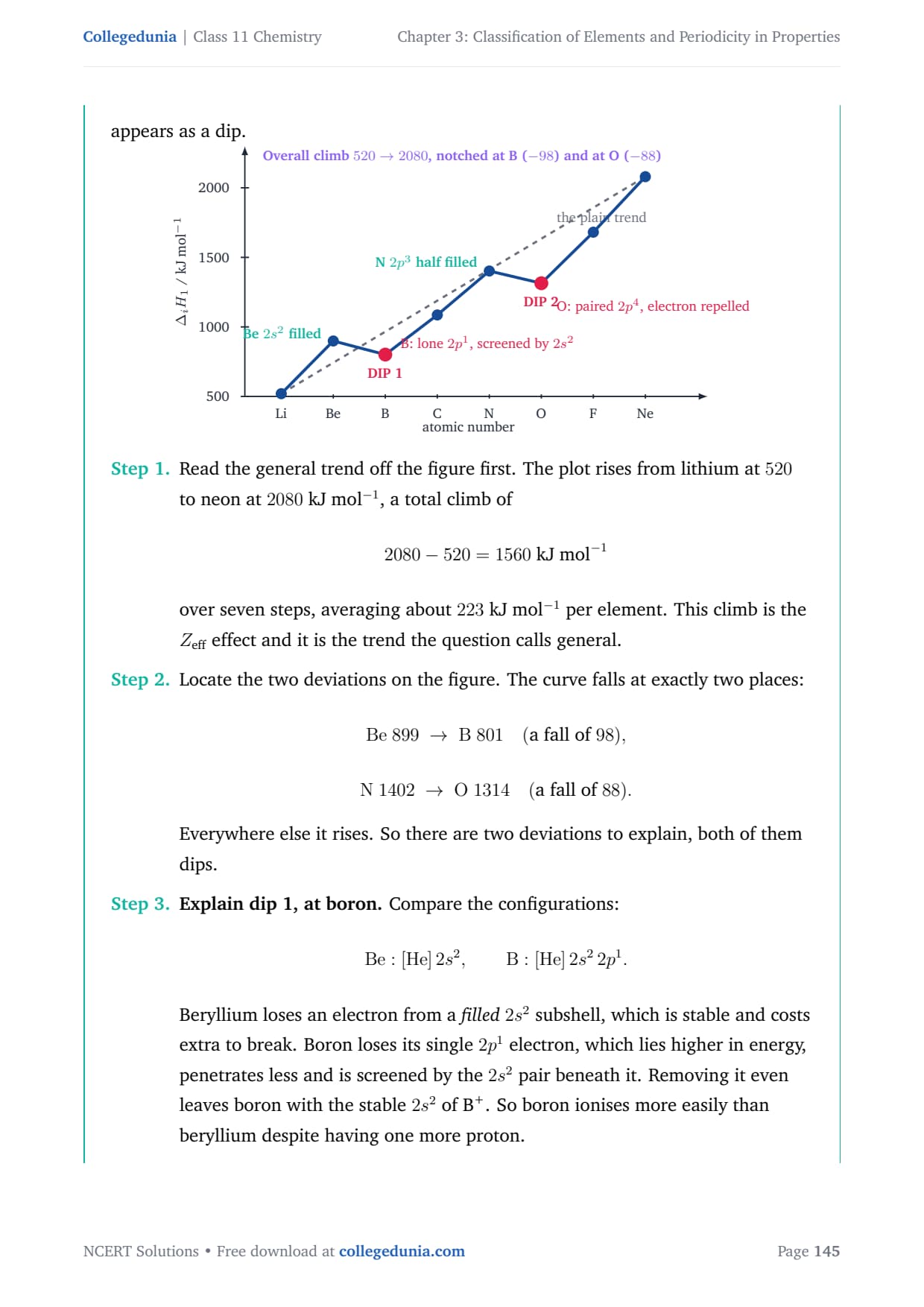
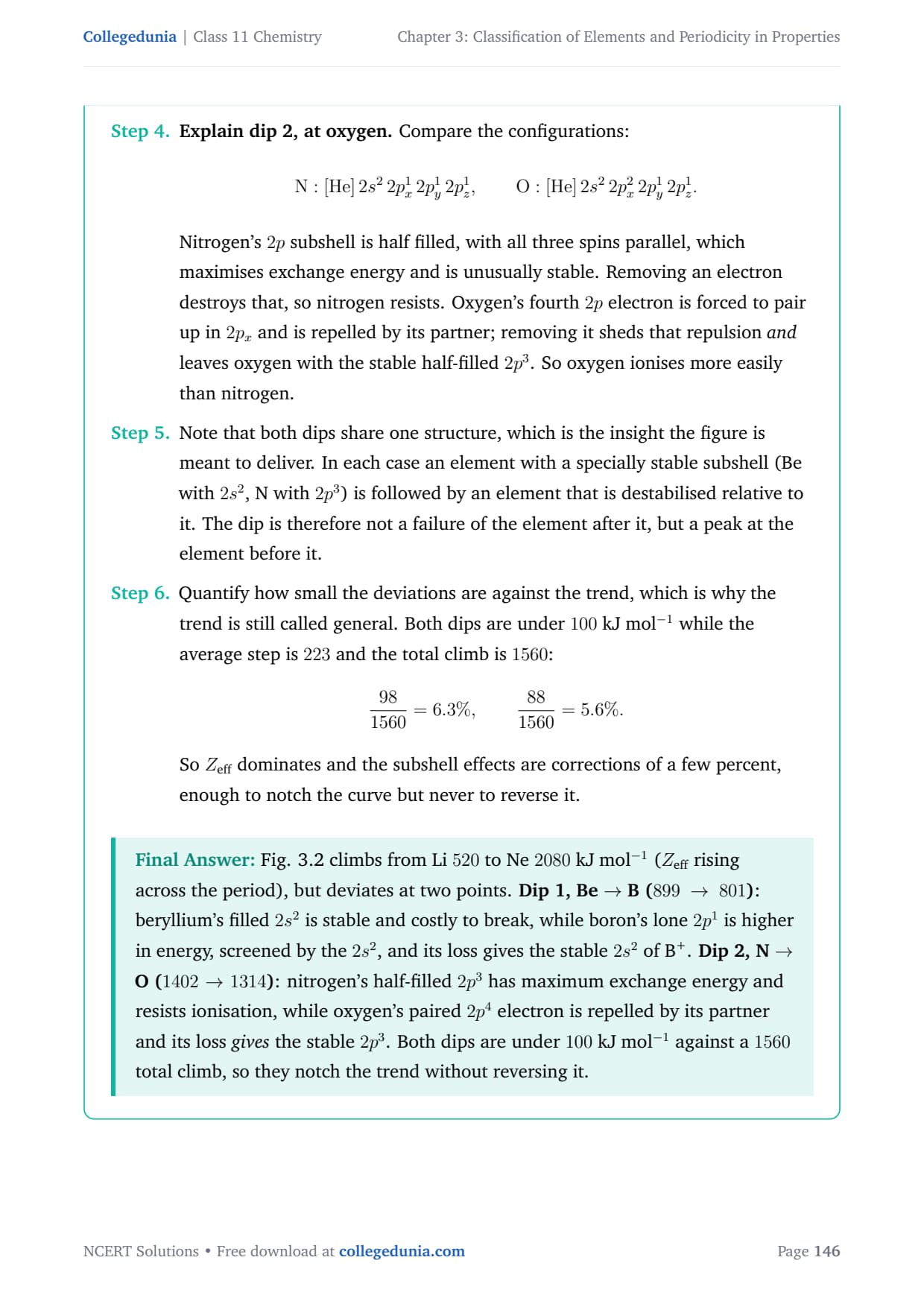
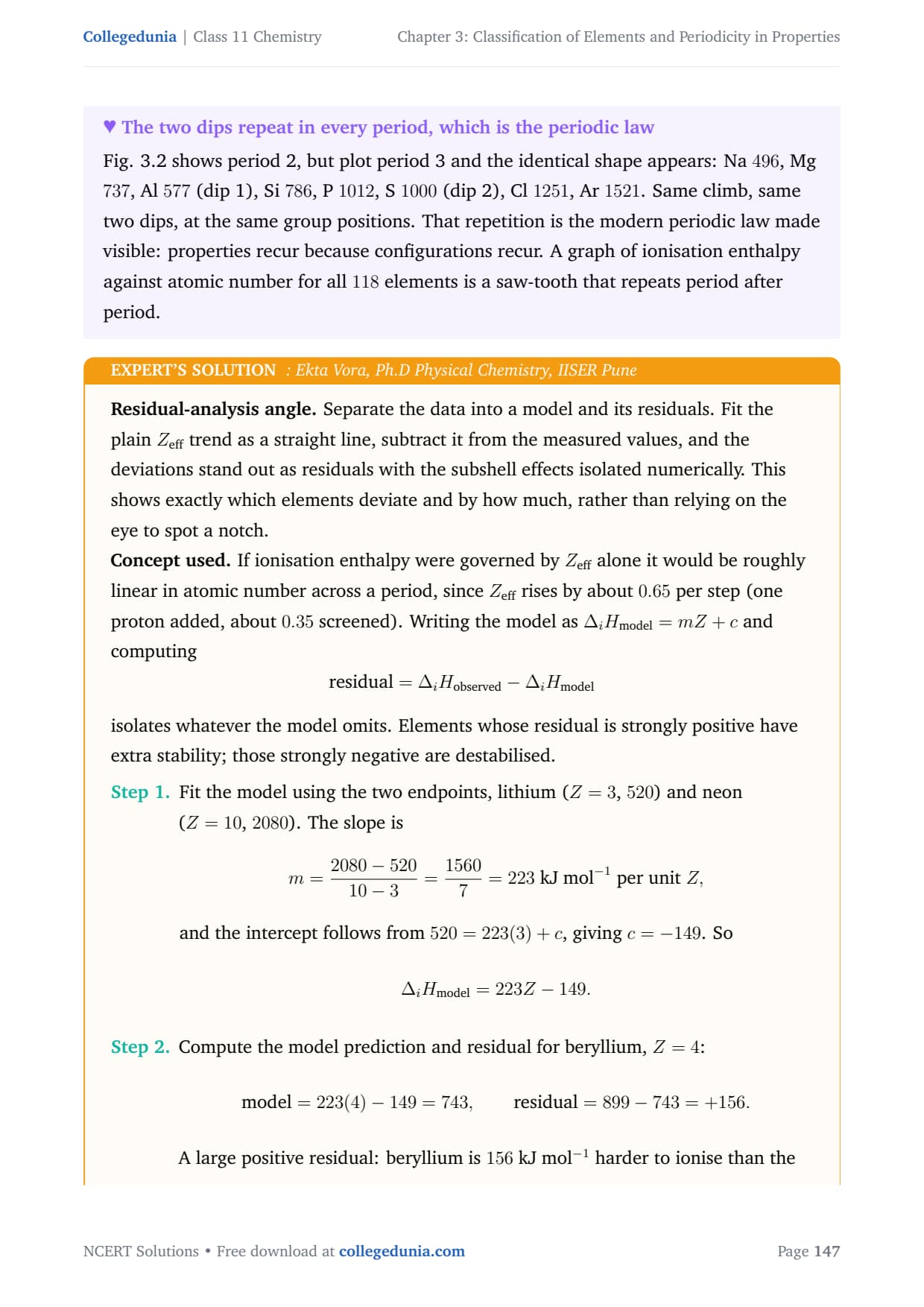
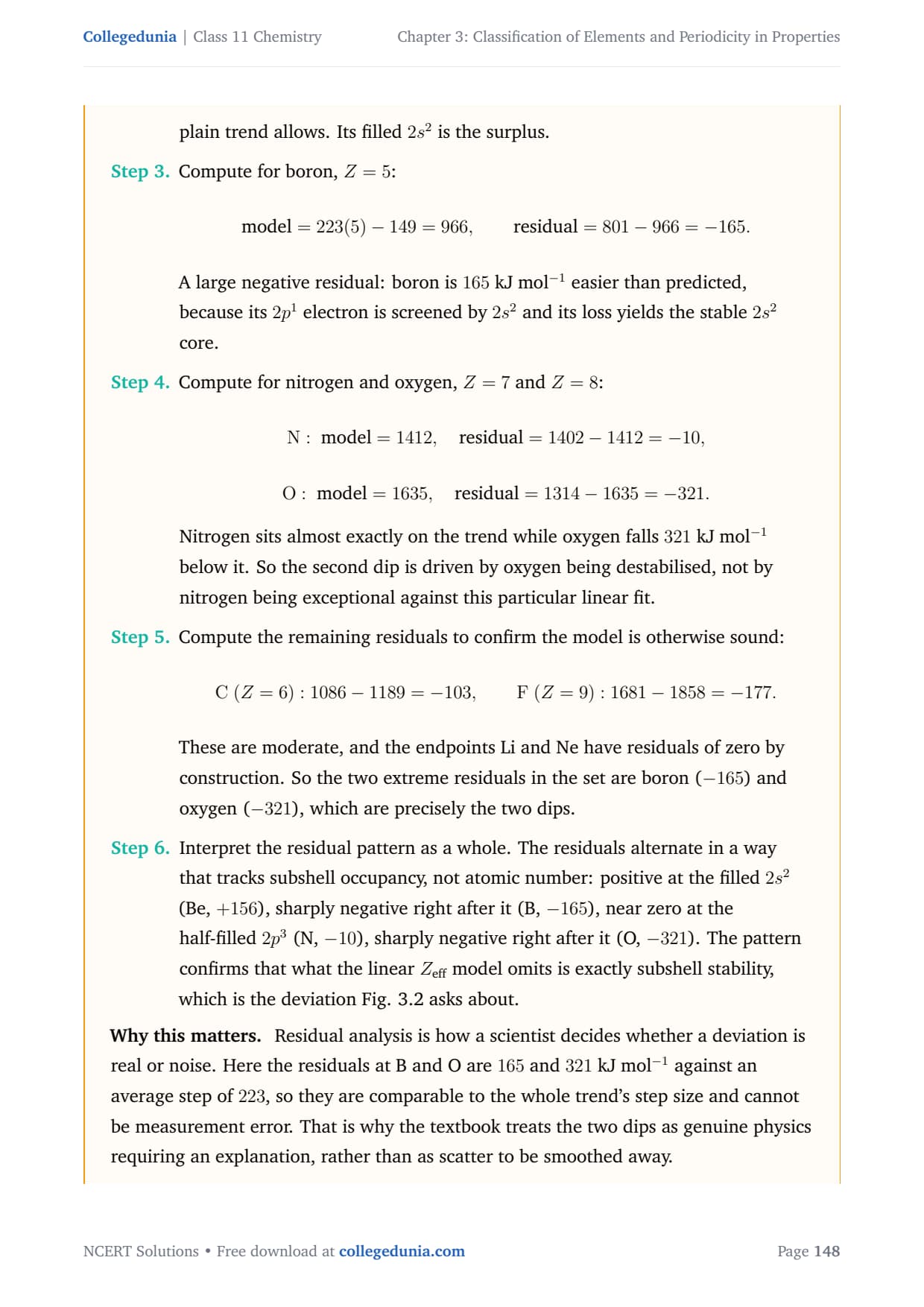
- Ionisation and electron gain enthalpy: effective nuclear charge, shielding, and the half-filled subshell effect
- Electronegativity and character: metallic against non-metallic behaviour, oxide acidity, and the anomalous first member of each group
Question Types in the Classification of Elements and Periodicity in Properties NCERT Exemplar
Six question types appear in this chapter. The Short Answer set is the largest of any Class 11 Chemistry chapter, which tells you what the examiner wants here: reasoning written out, not a trend recited.
| Question Type | Count | What It Tests |
|---|---|---|
| MCQ I (single correct) | 13 | Ordering radii, ionisation enthalpies and blocks |
| MCQ II (one or more correct) | 10 | Whether you can reject every wrong option, not just find one right one |
| Short Answer | 19 | Explaining a trend by effective nuclear charge and shielding |
| Matching Type | 3 | Pairing configurations with elements, values or groups |
| Assertion and Reason | 3 | Whether the reason actually explains the assertion |
| Long Answer | 7 | Full trend discussions and plot completion worth 5 marks |
Two Printing Errors in the Classification of Elements Exemplar
The printed book carries two slips in this chapter. Both are explained in the PDF, so you are never asked to accept something that does not add up.
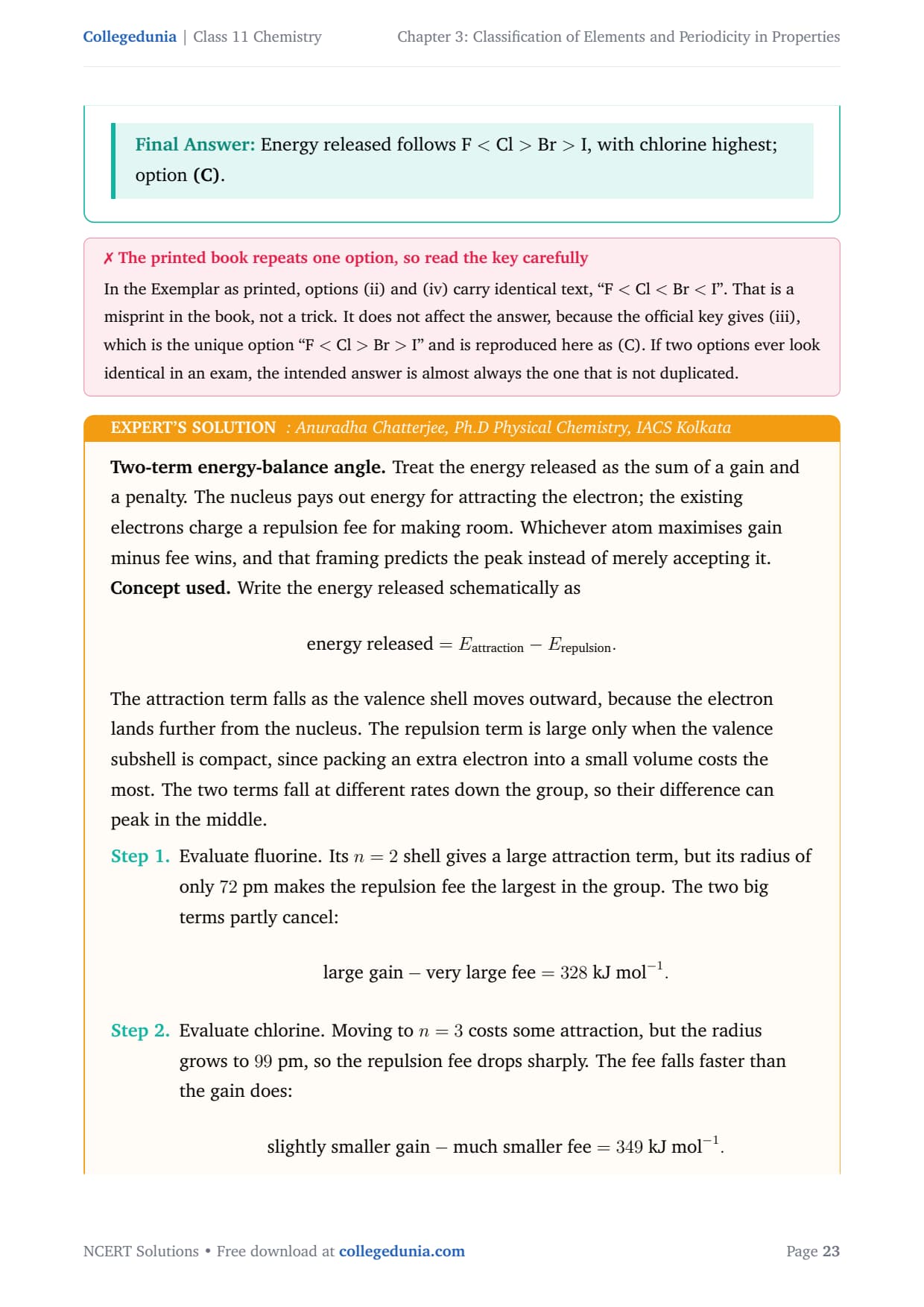
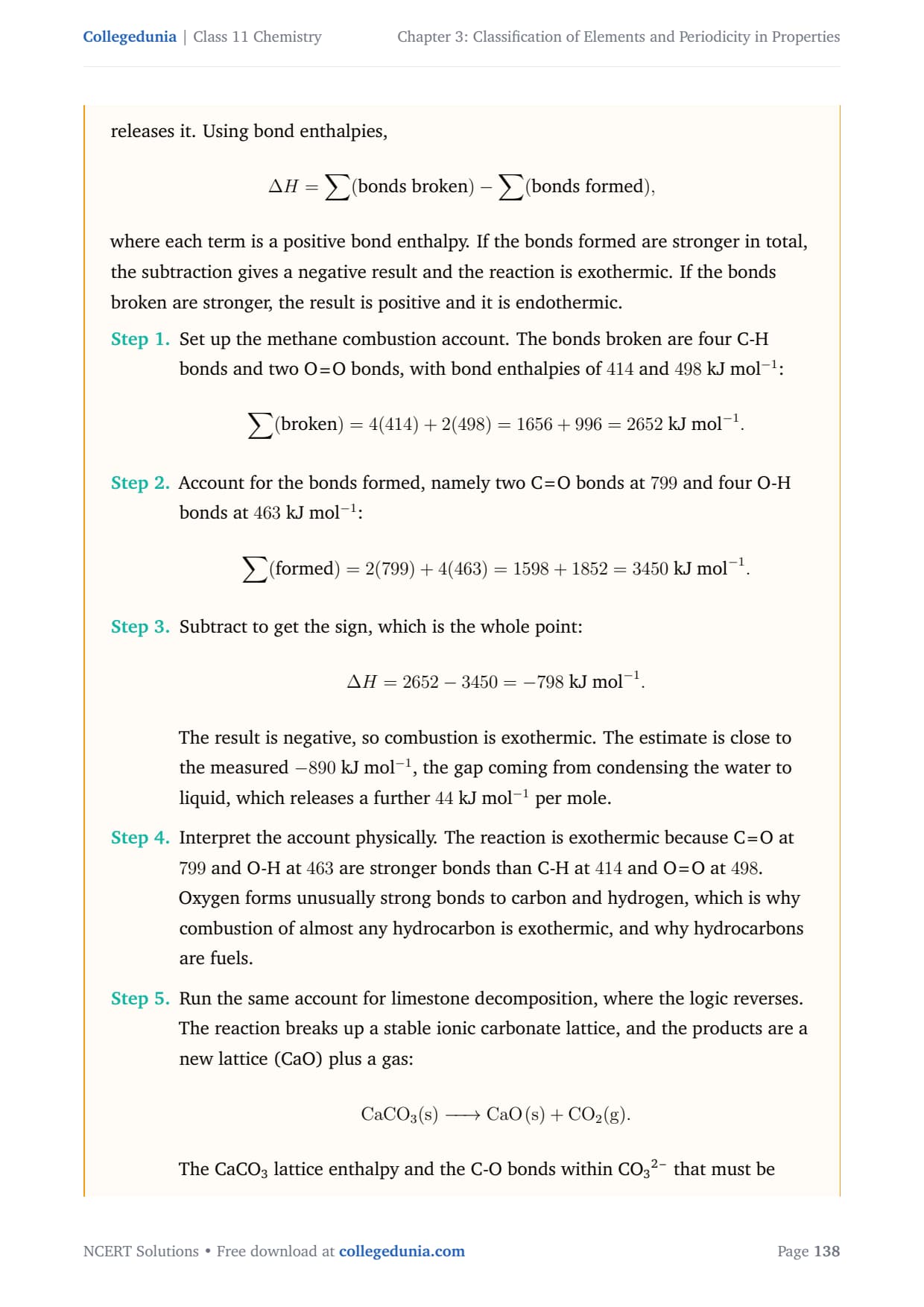
- Question 7: options (ii) and (iv) carry identical text, "F < Cl < Br < I". That is a misprint, not a trick. The official key gives (iii), the unique option F < Cl > Br > I, so the answer is unaffected. If two options ever look identical, the intended one is almost always the one not duplicated.
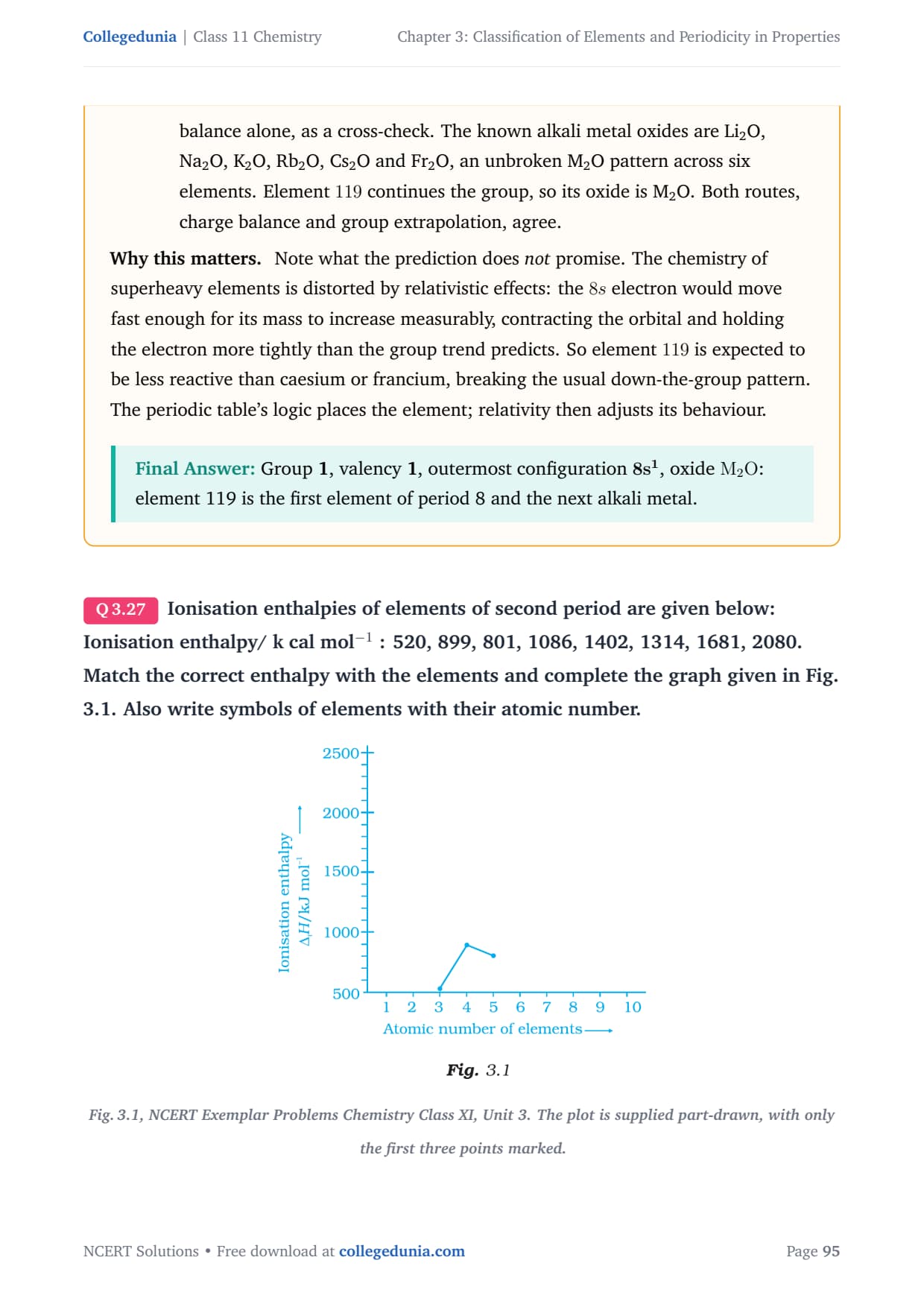
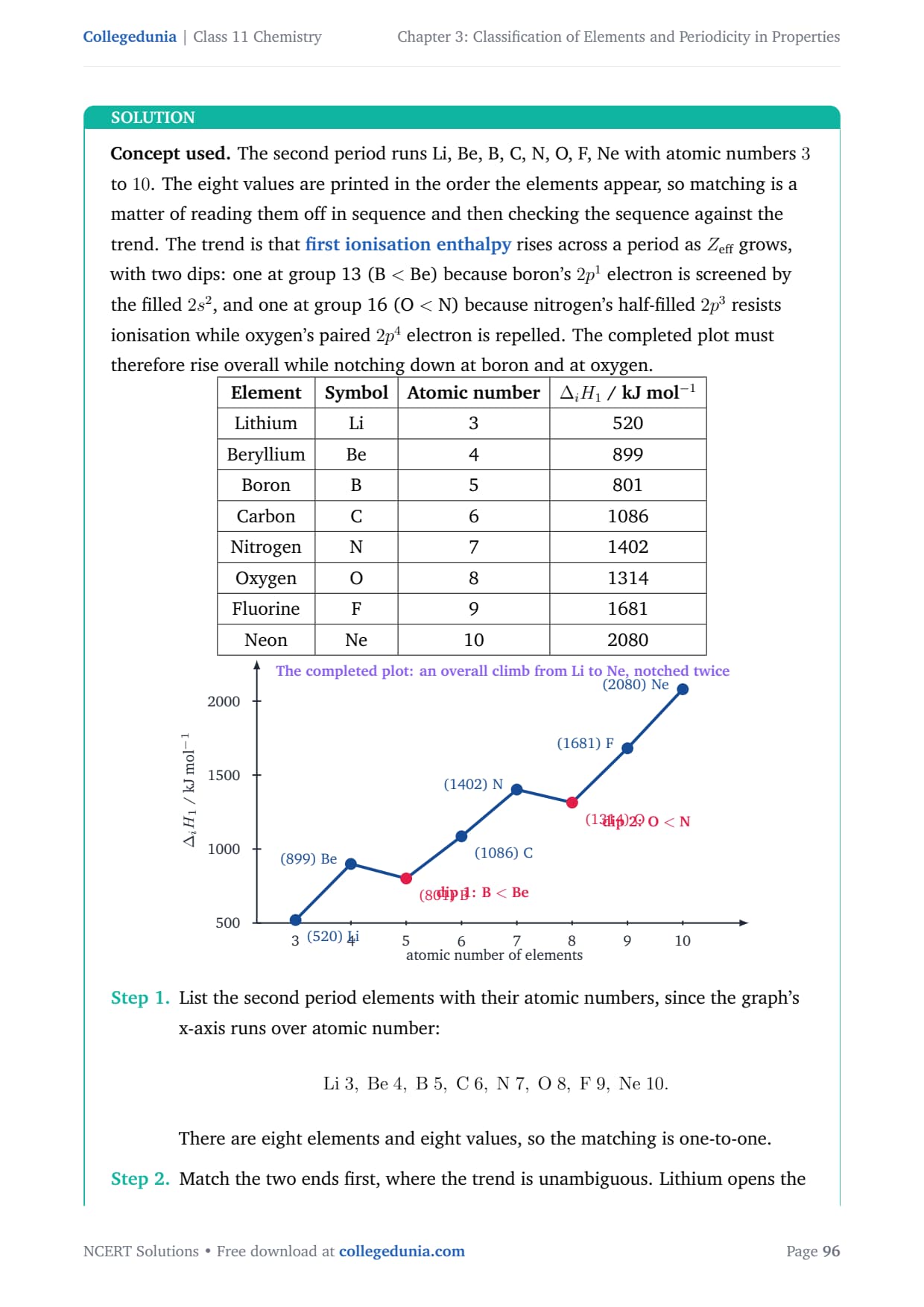
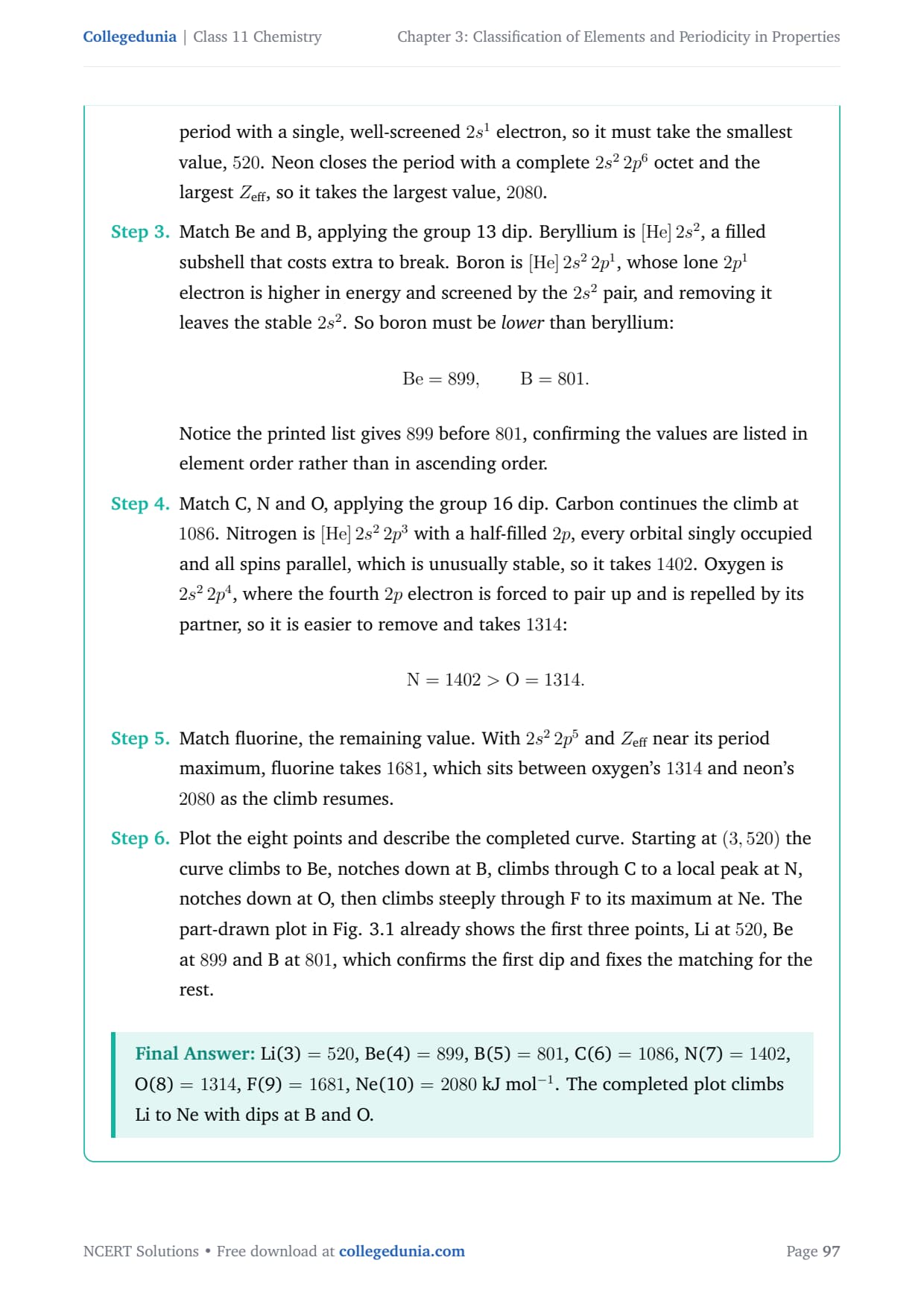
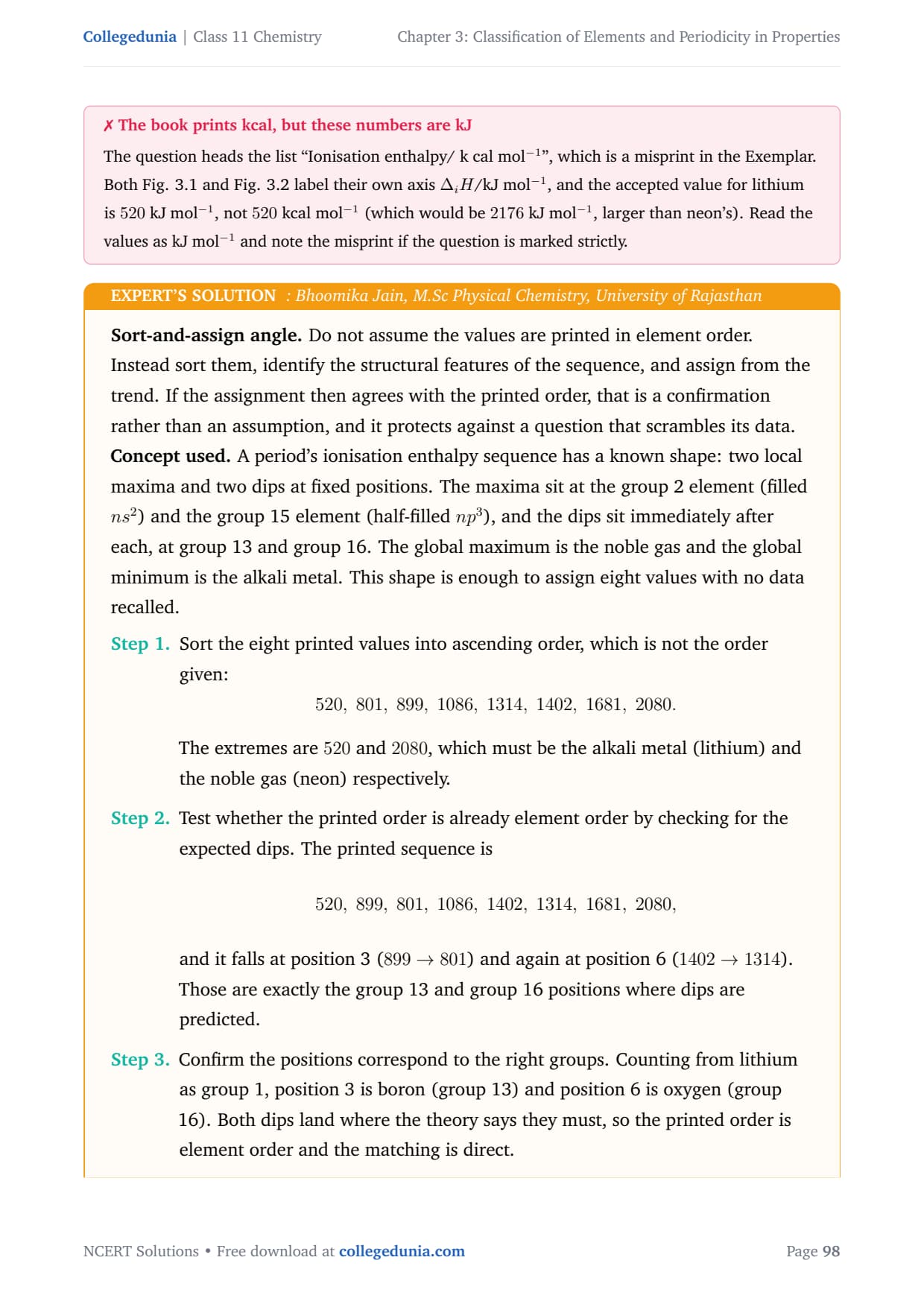
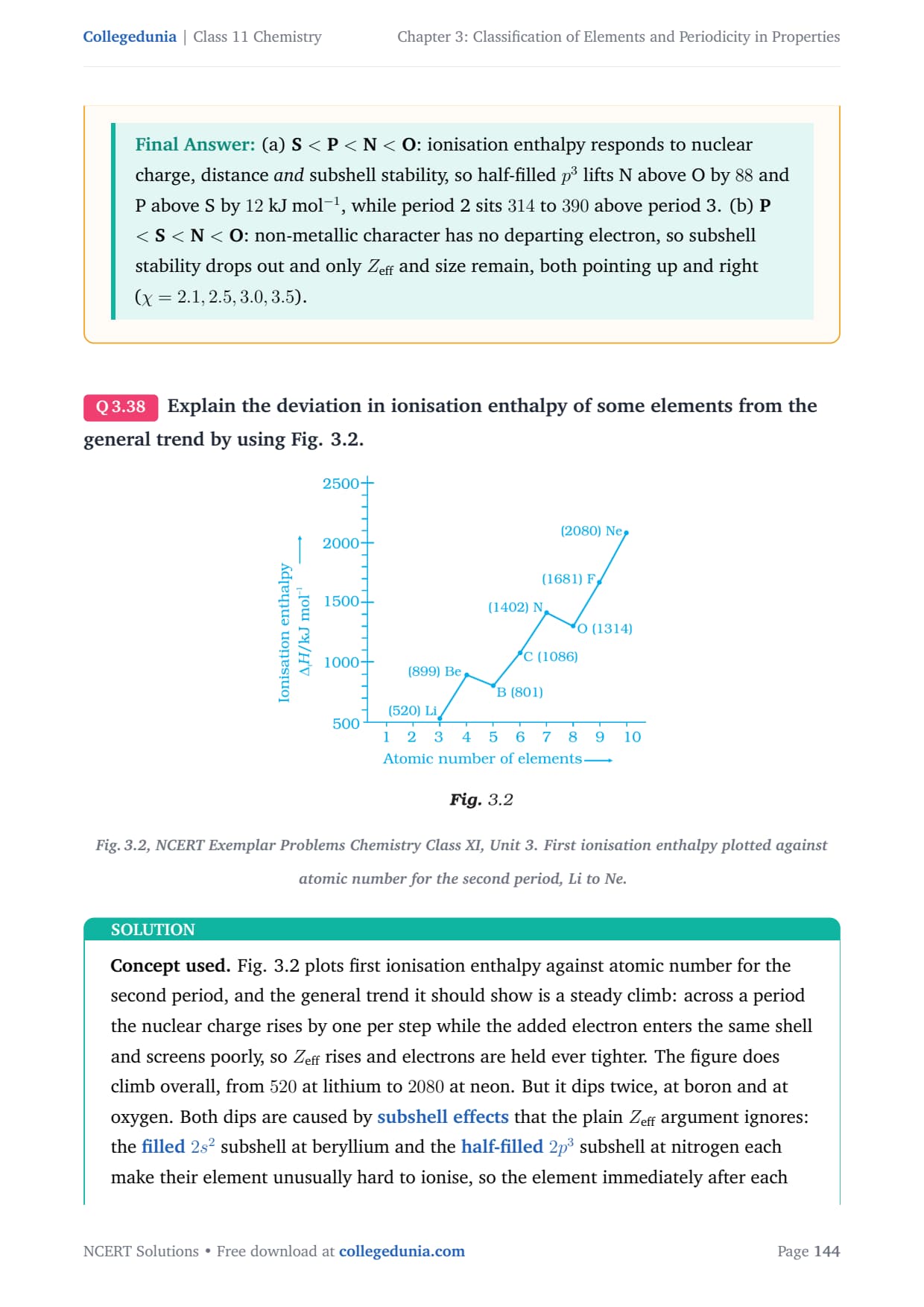
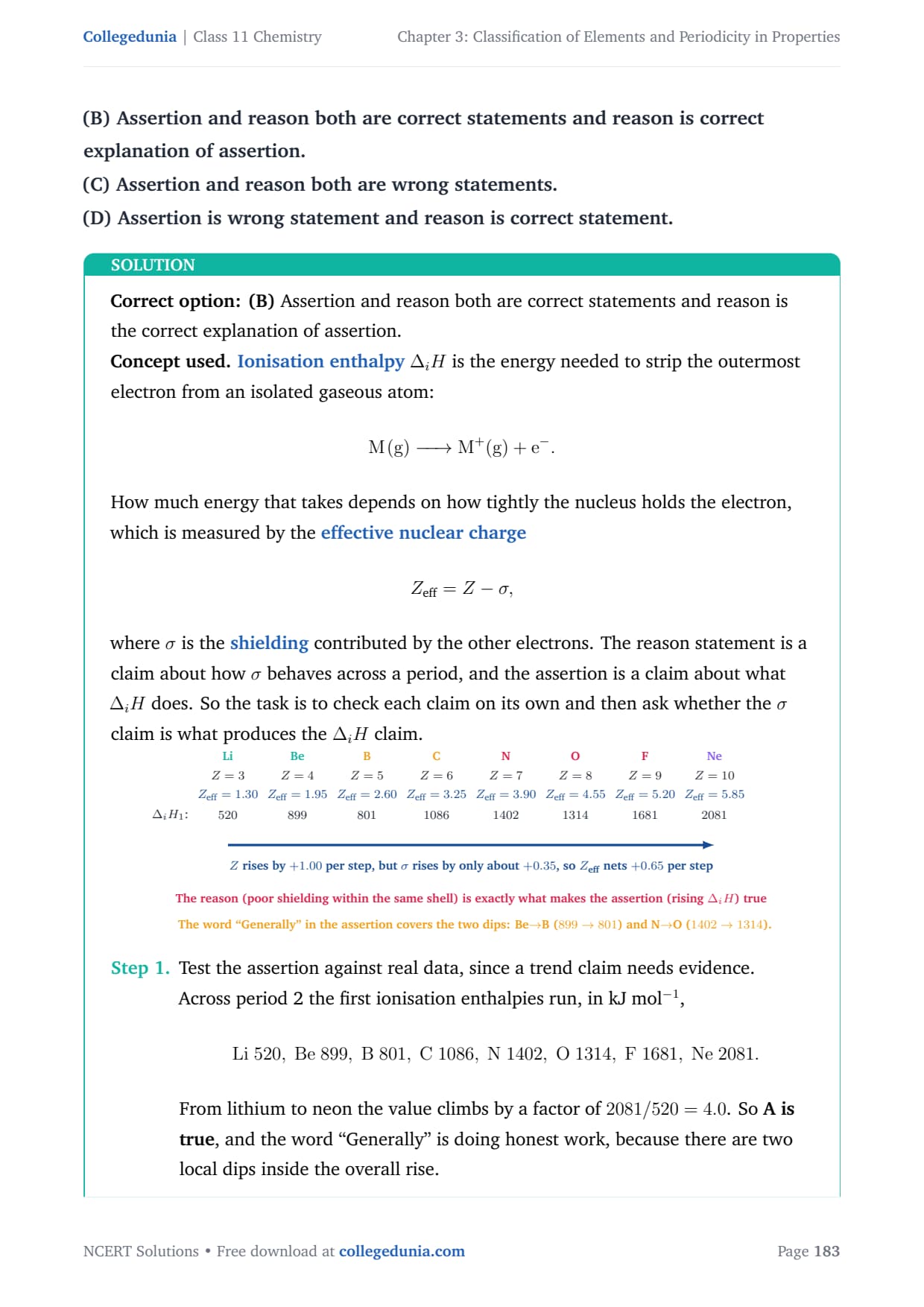
- Question 27: the list is headed "Ionisation enthalpy / k cal mol-1". Both Fig. 3.1 and Fig. 3.2 label their own axis ΔiH / kJ mol-1, and lithium's accepted value is 520 kJ mol-1. Read as kcal it would be 2176 kJ mol-1, larger than neon's. The unit is kJ mol-1.
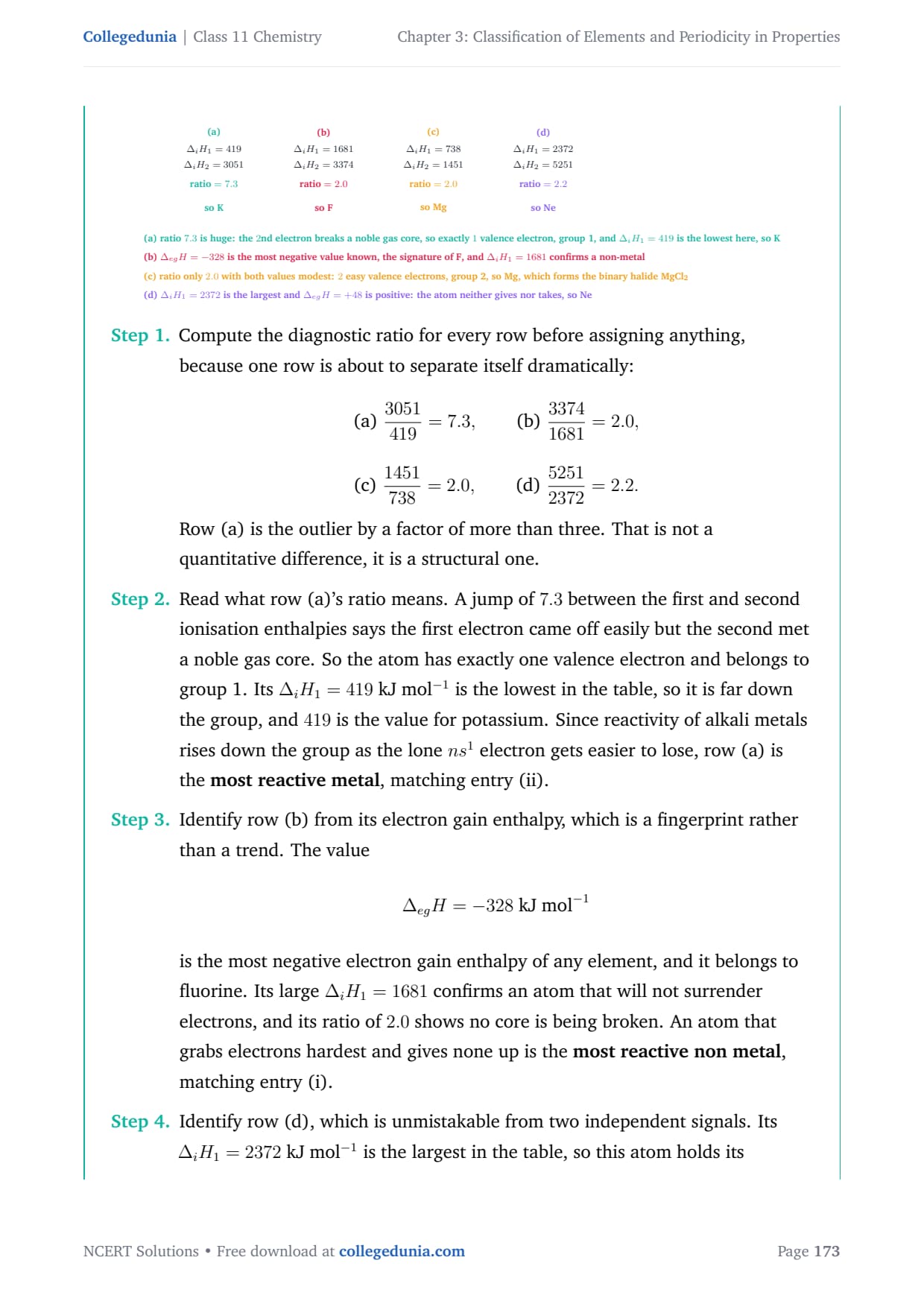
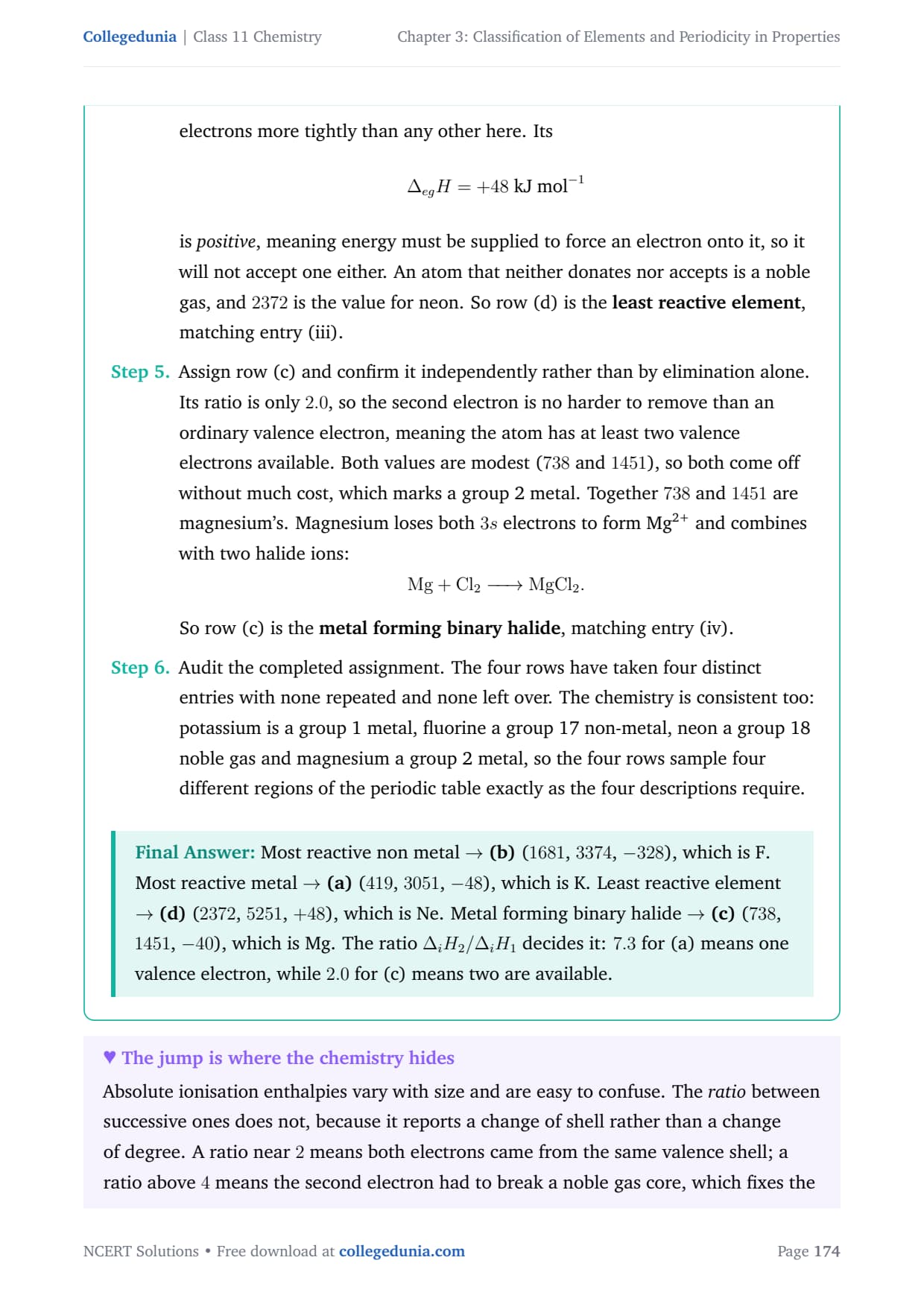
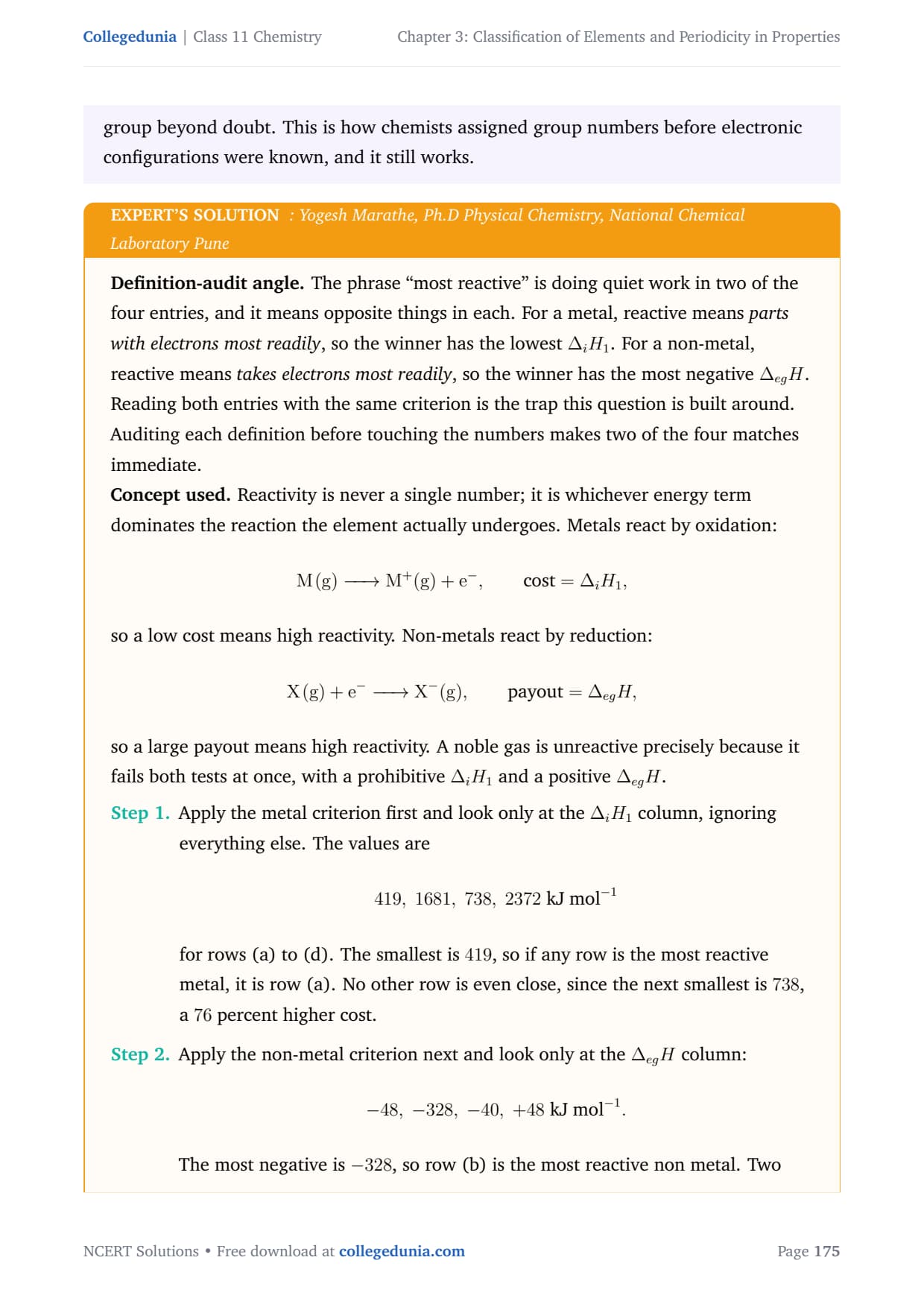
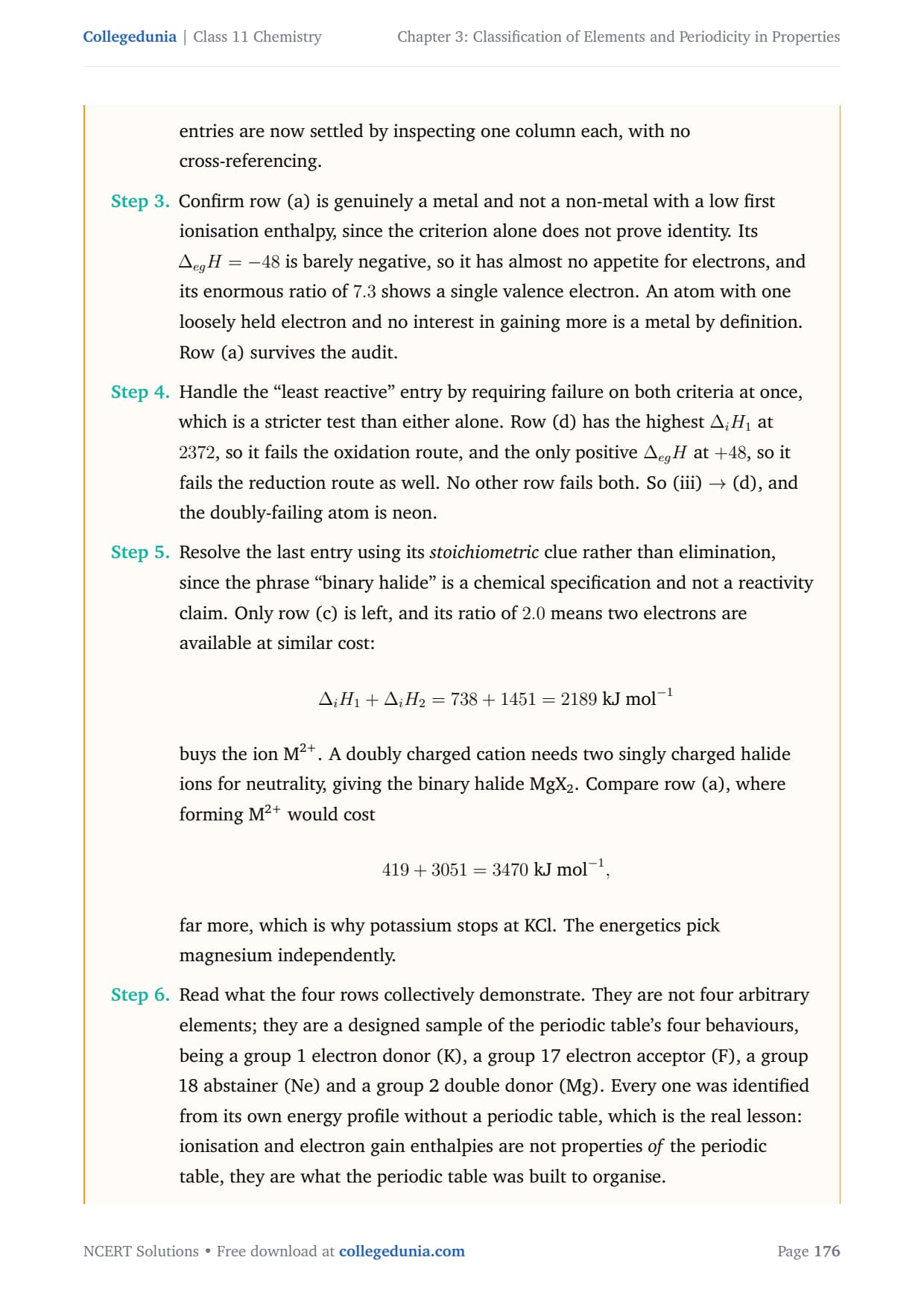
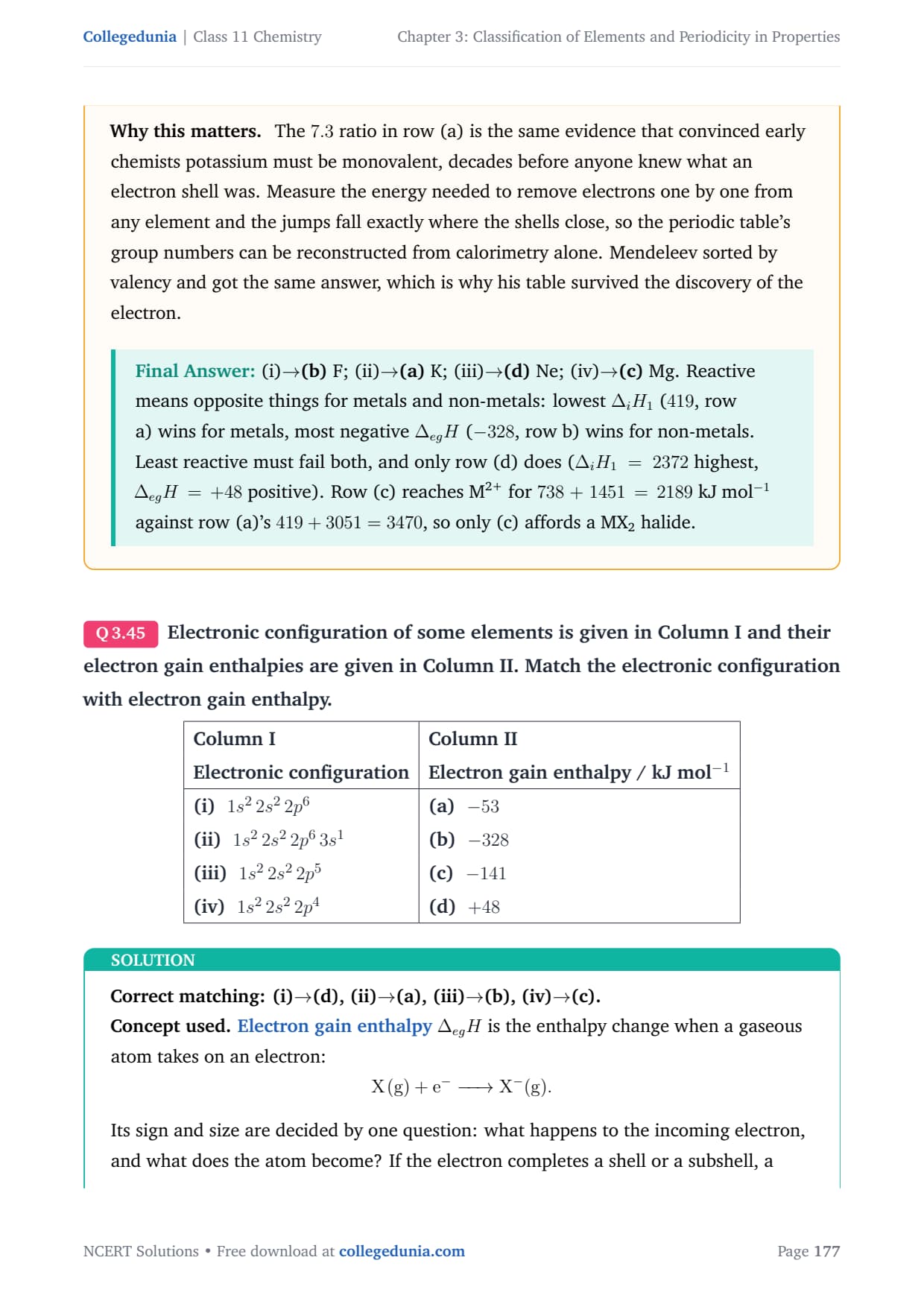
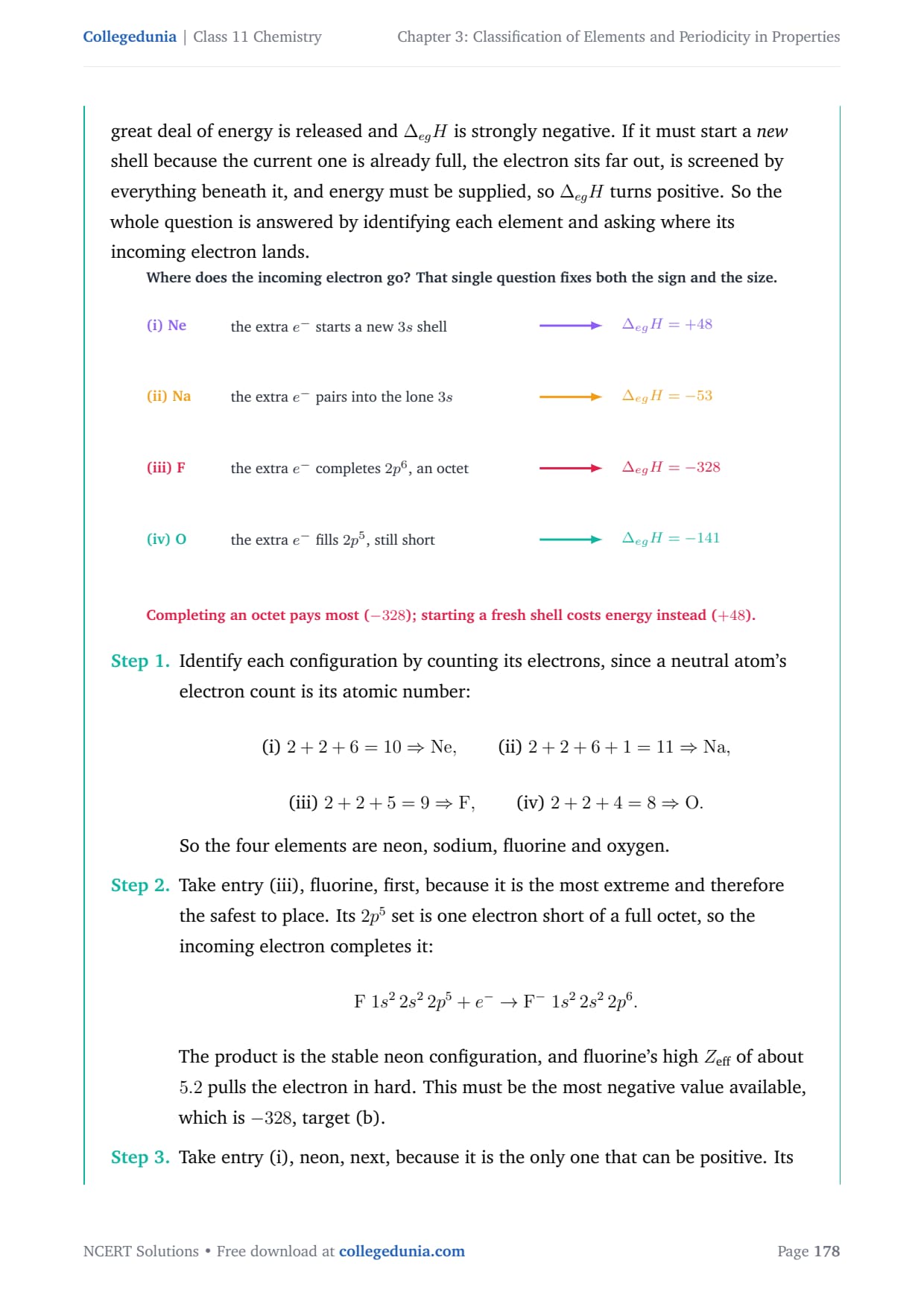
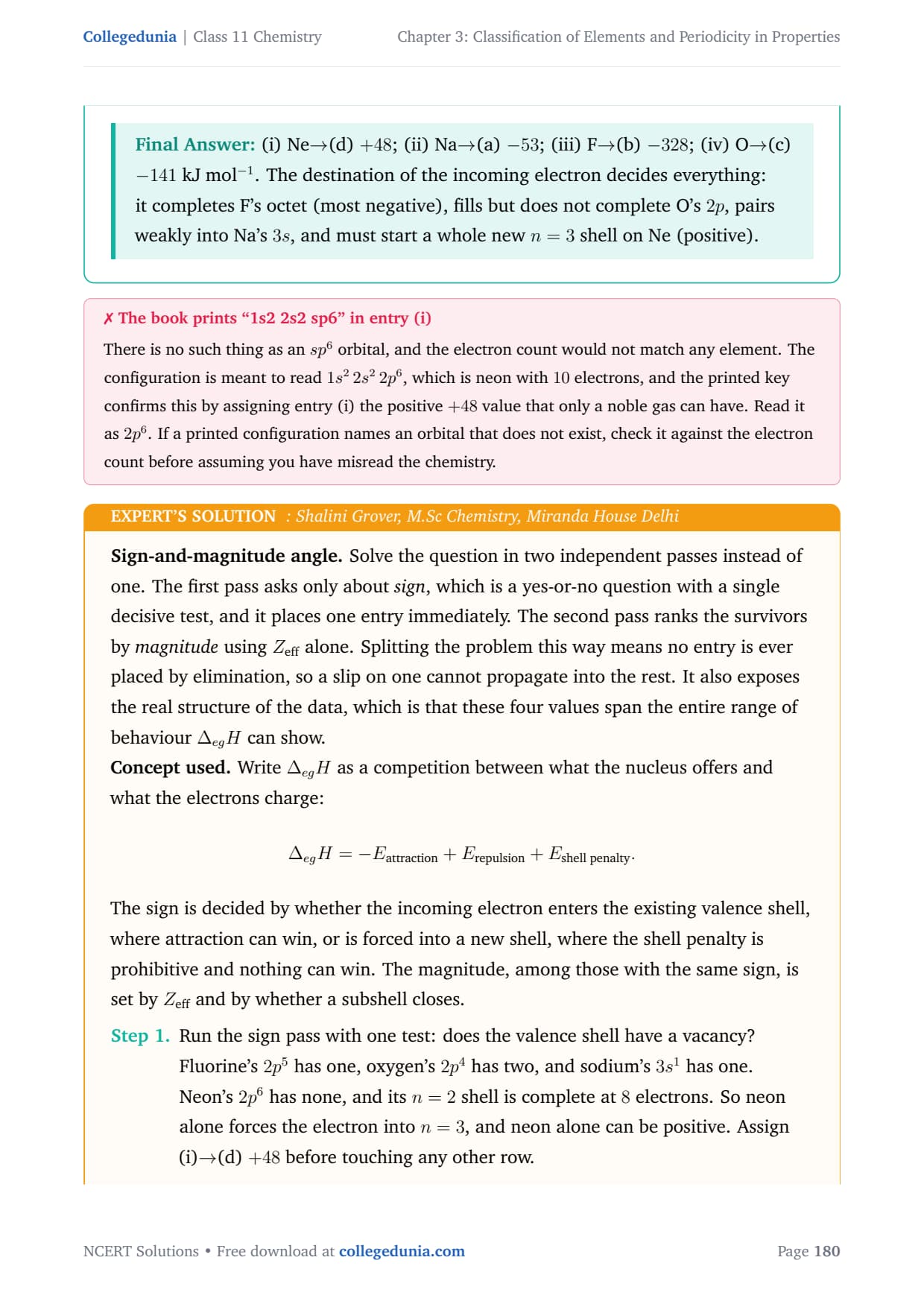
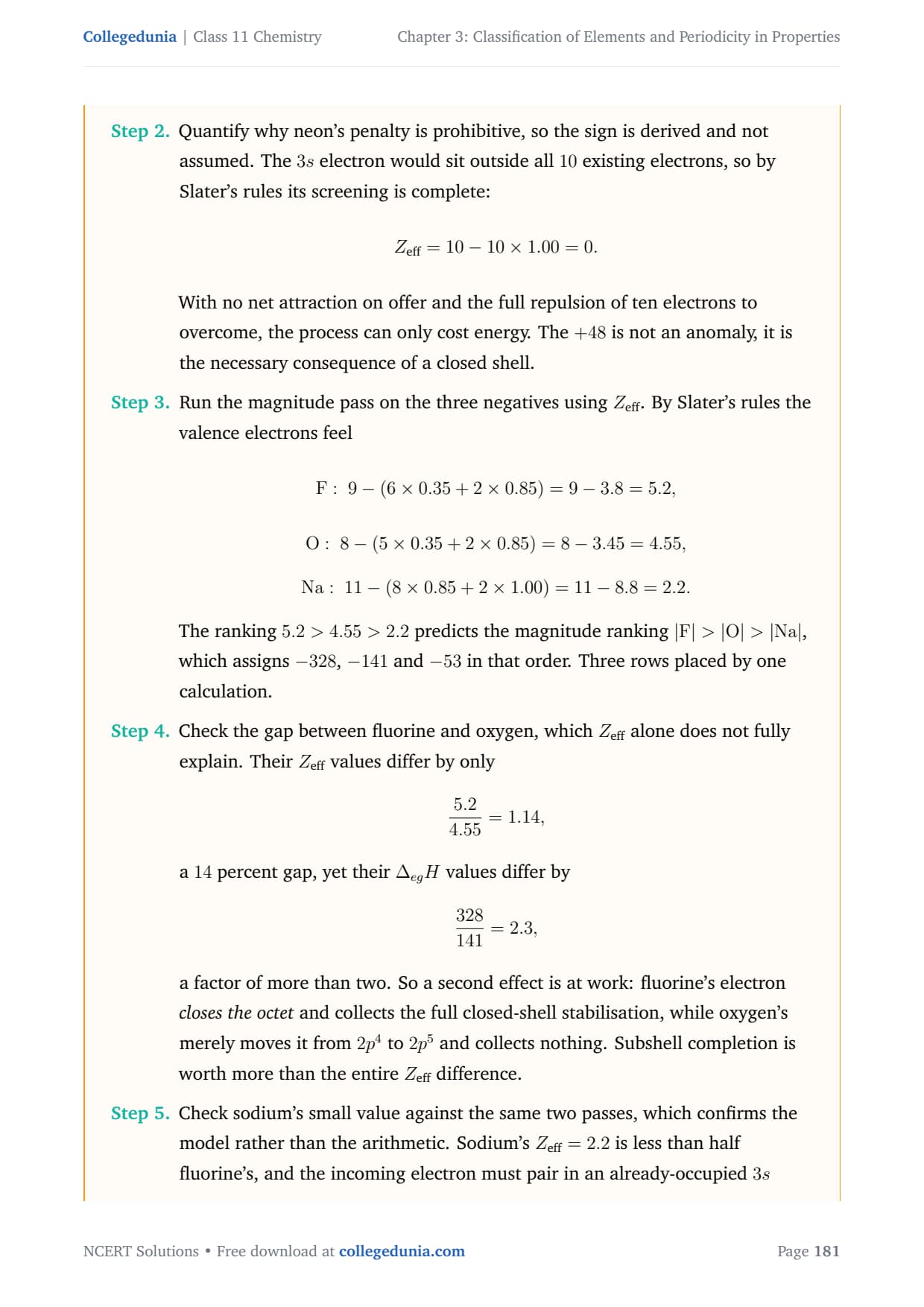
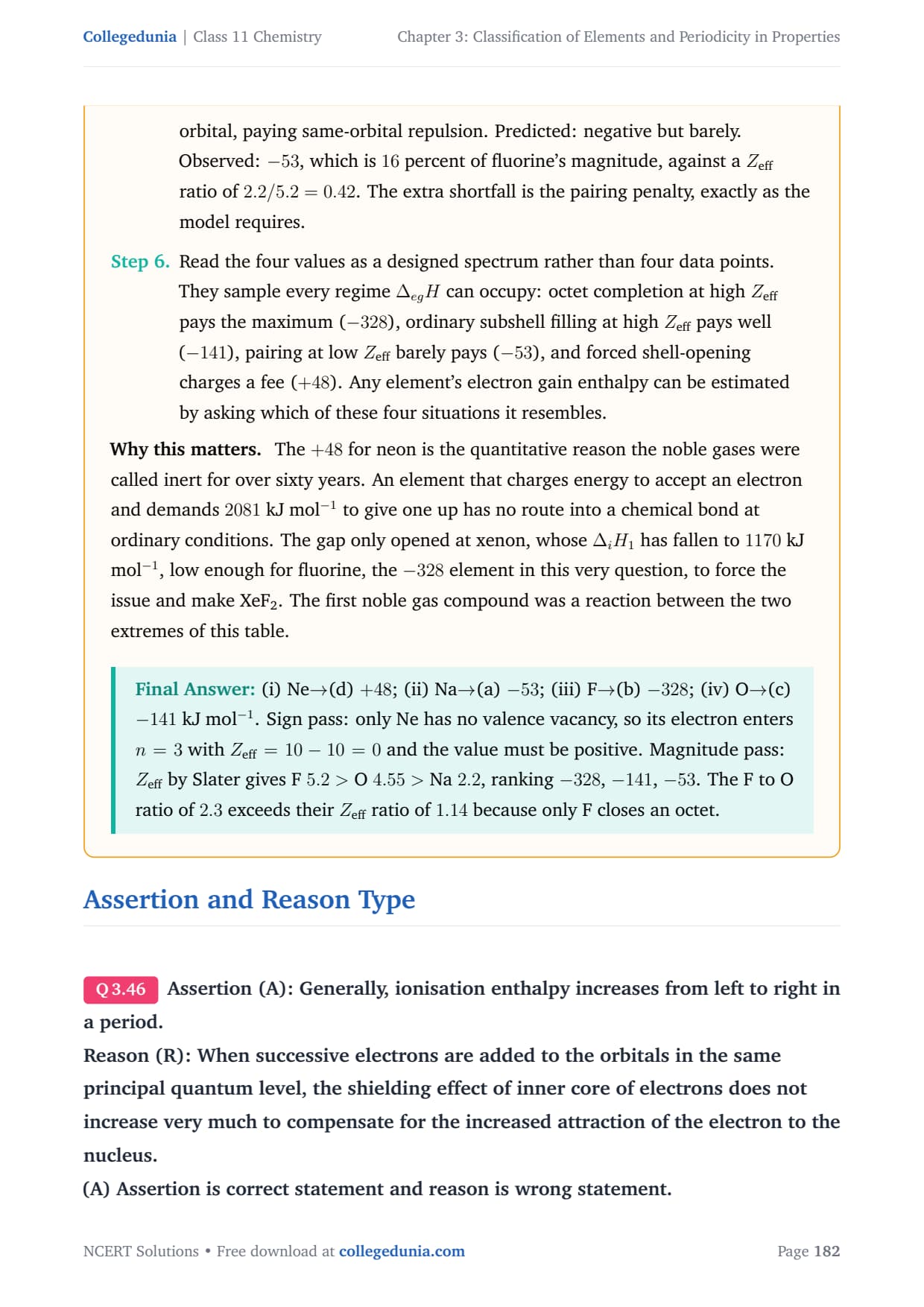
Neither error changes the marked answer. Question 45 adds a third slip: entry (i) reads "1s2 2s2 sp6", and no sp6 orbital exists. It should read 1s2 2s2 2p6, which is neon, and the key confirms it by handing entry (i) the +48 value only a noble gas can take.
Common Mistakes Students Make in Periodicity in Properties
The Exemplar plants wrong options on purpose here more than in any other Class 11 Chemistry chapter. These four traps are flagged in the PDF at the question where each one bites.
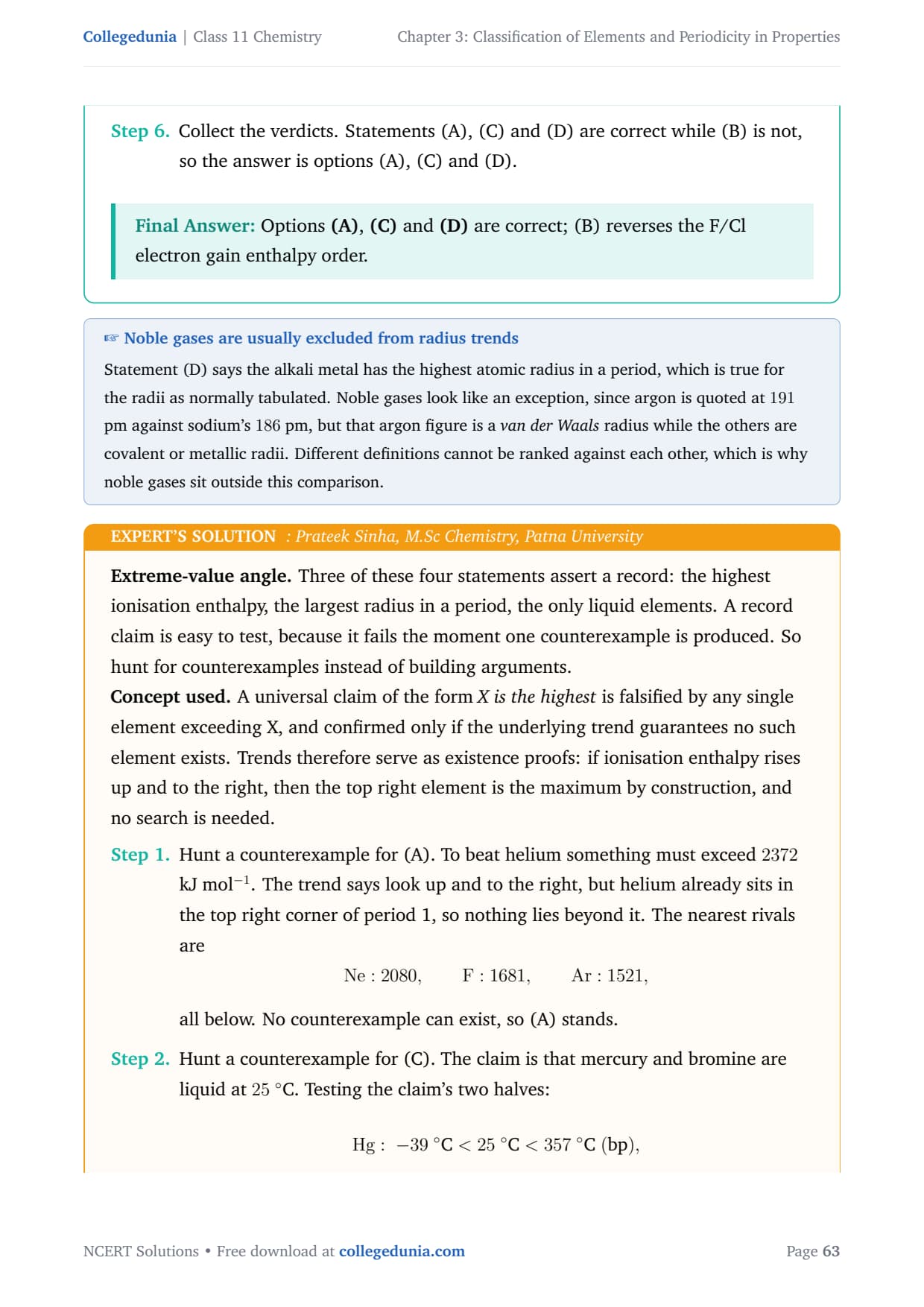
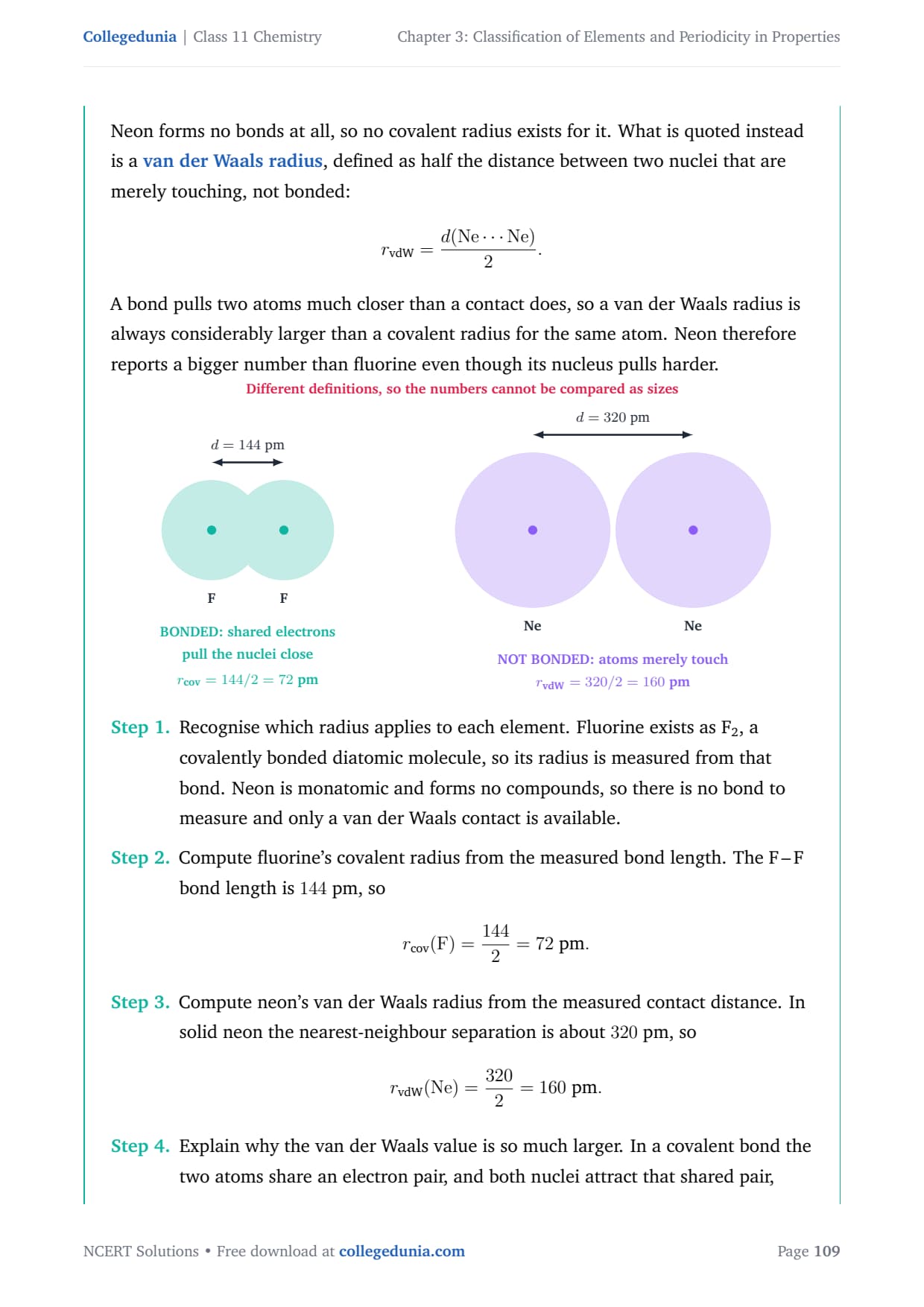
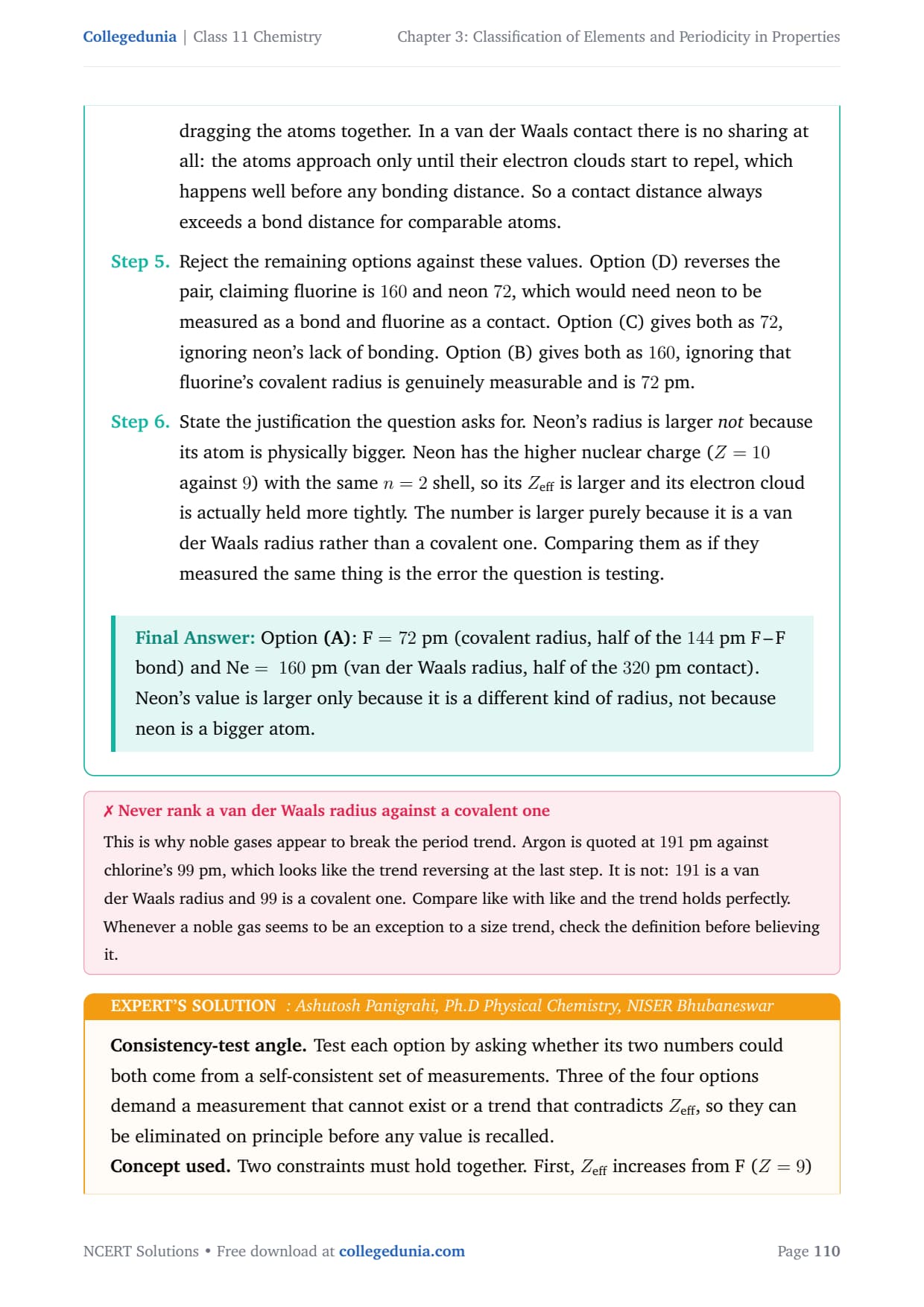
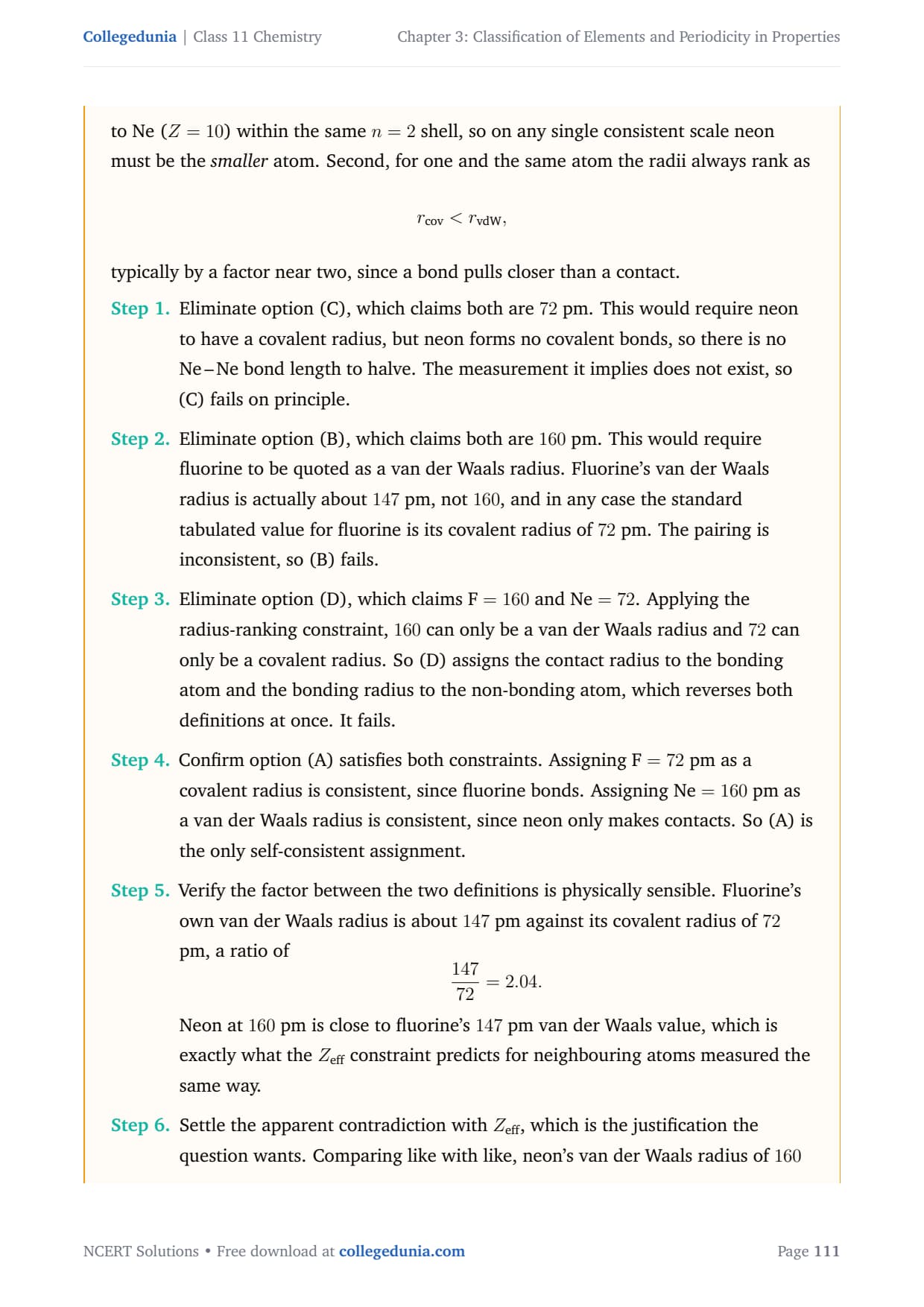
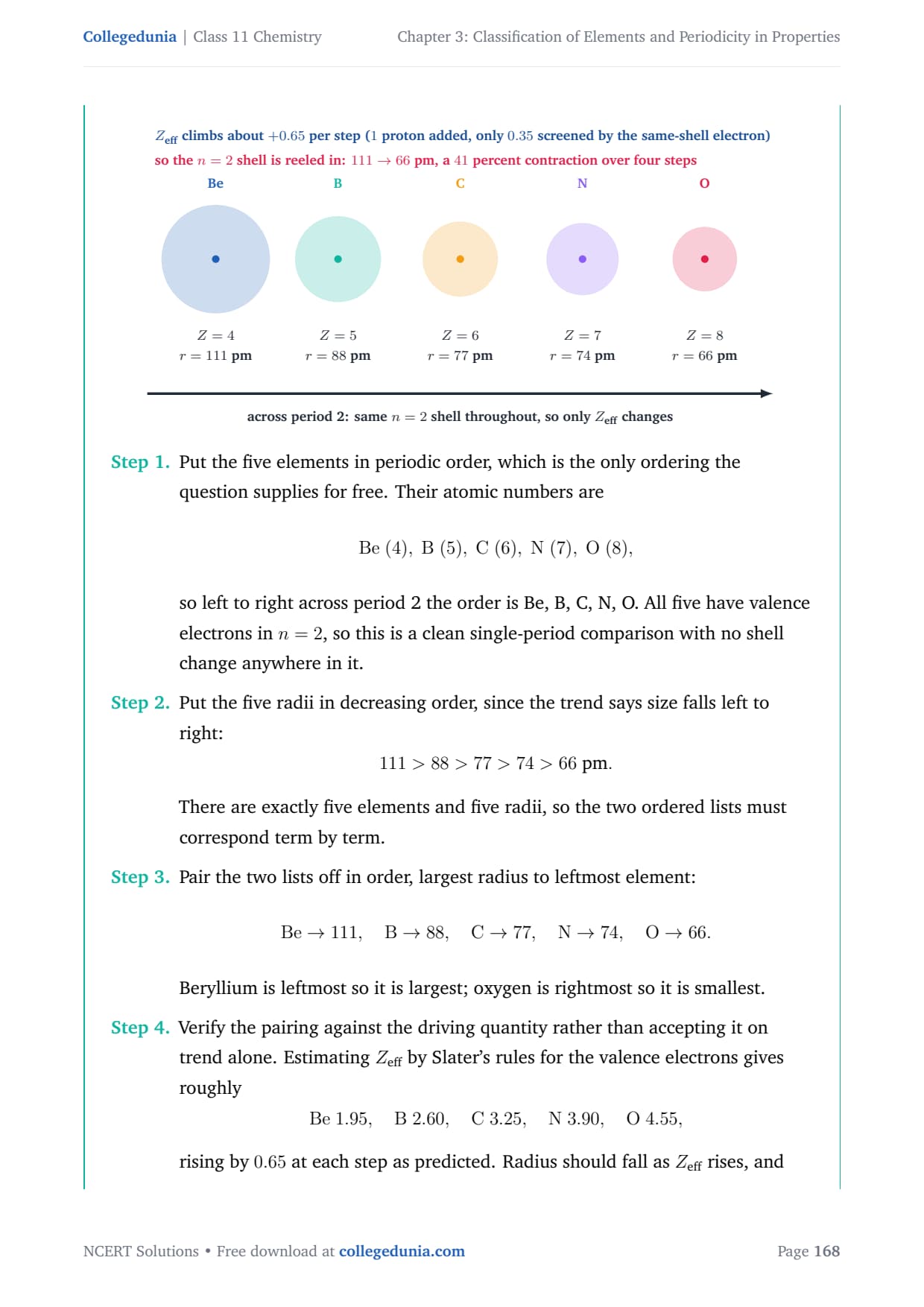
- Mixing radius types: argon is quoted at 191 pm against chlorine's 99 pm, which looks like the period trend reversing. It does not. 191 pm is a van der Waals radius and 99 pm is covalent. Compare like with like.
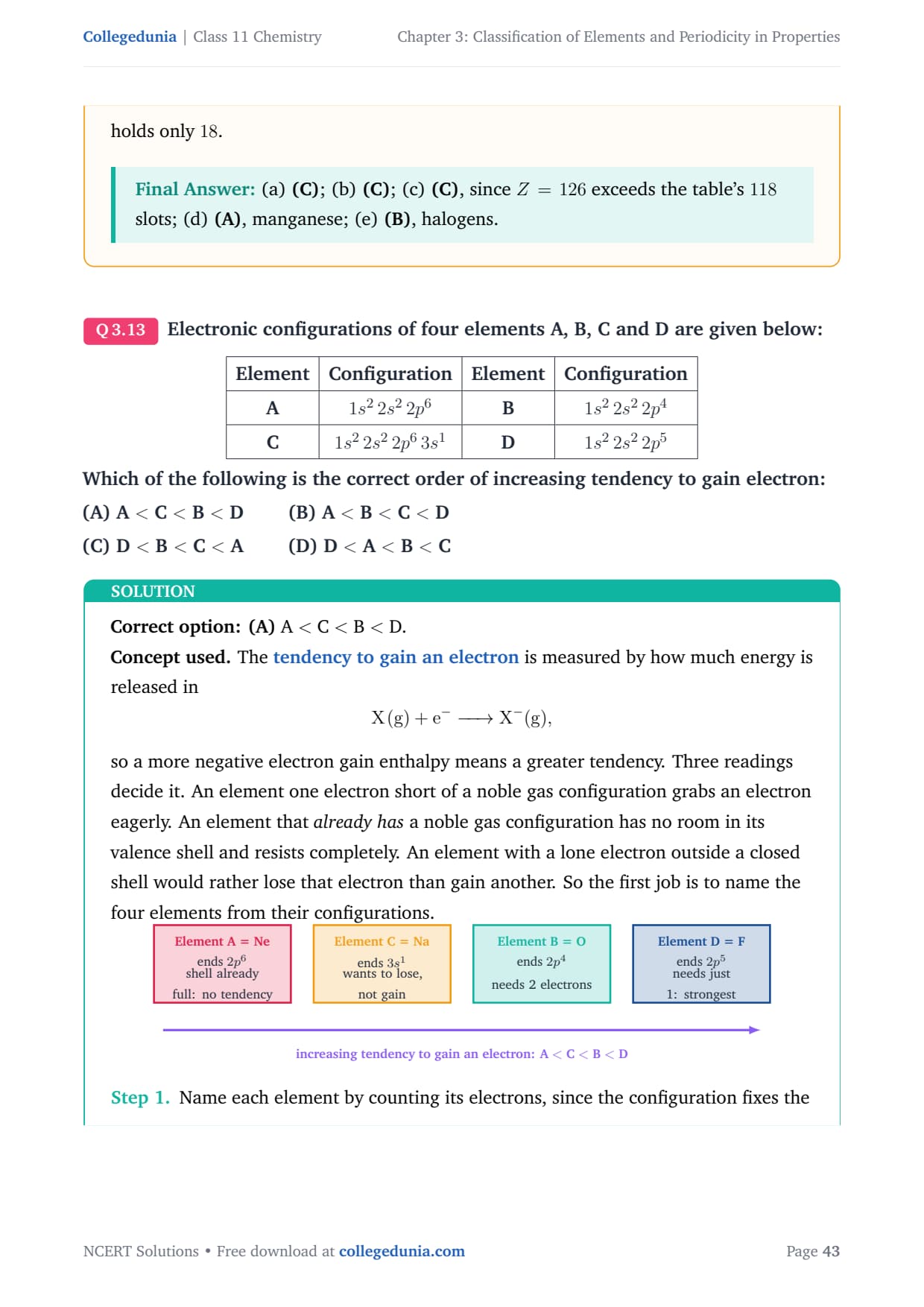
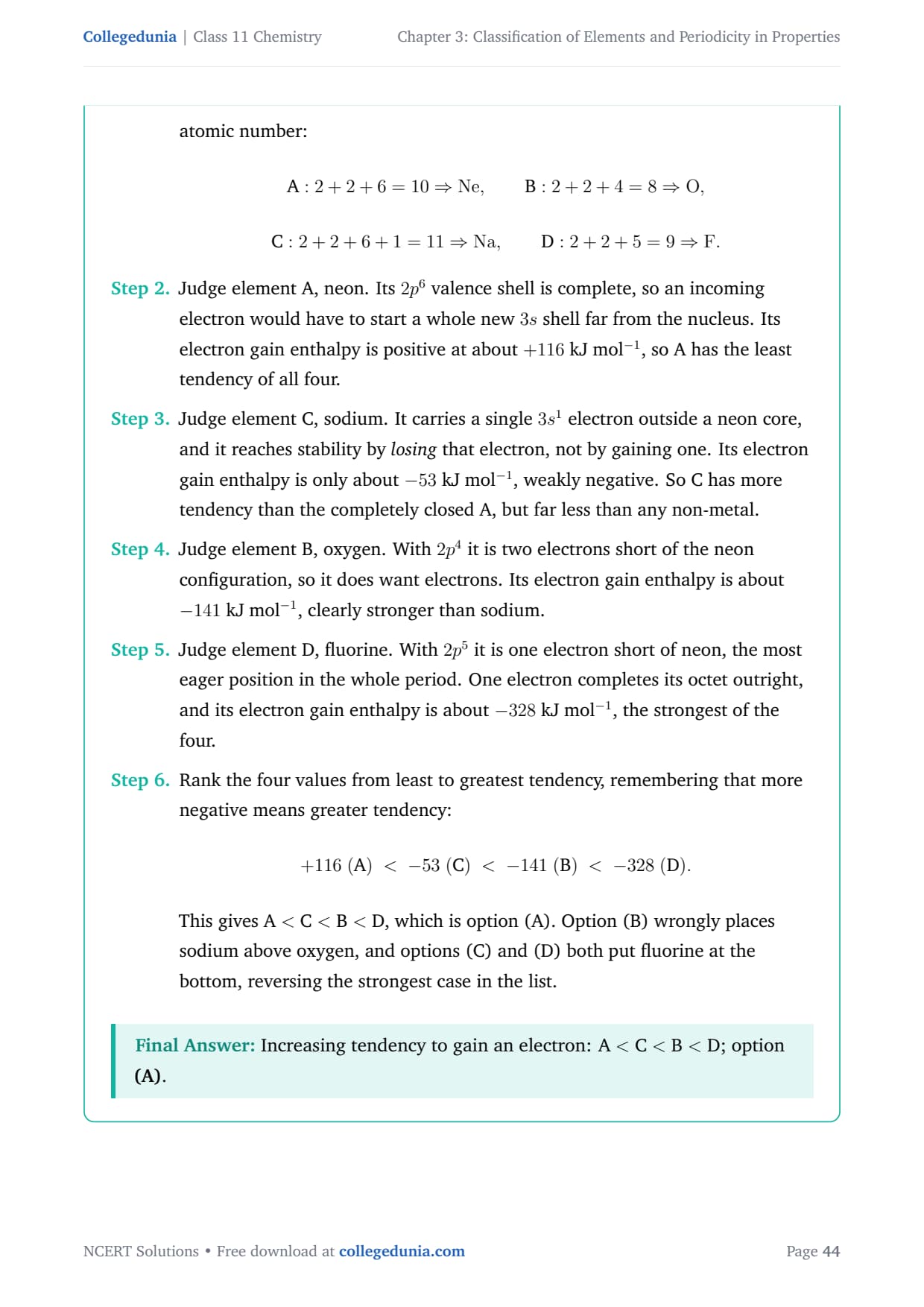
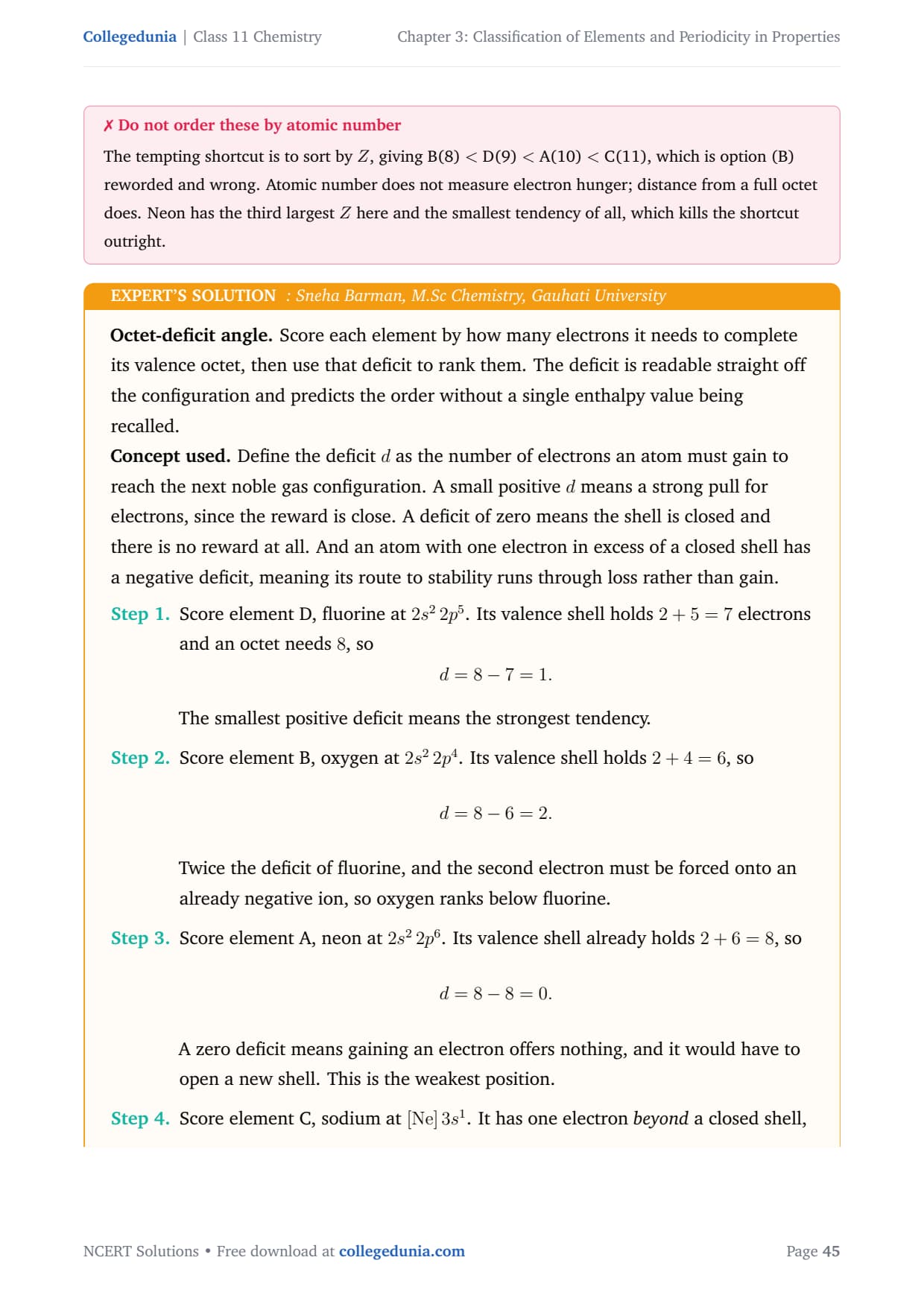
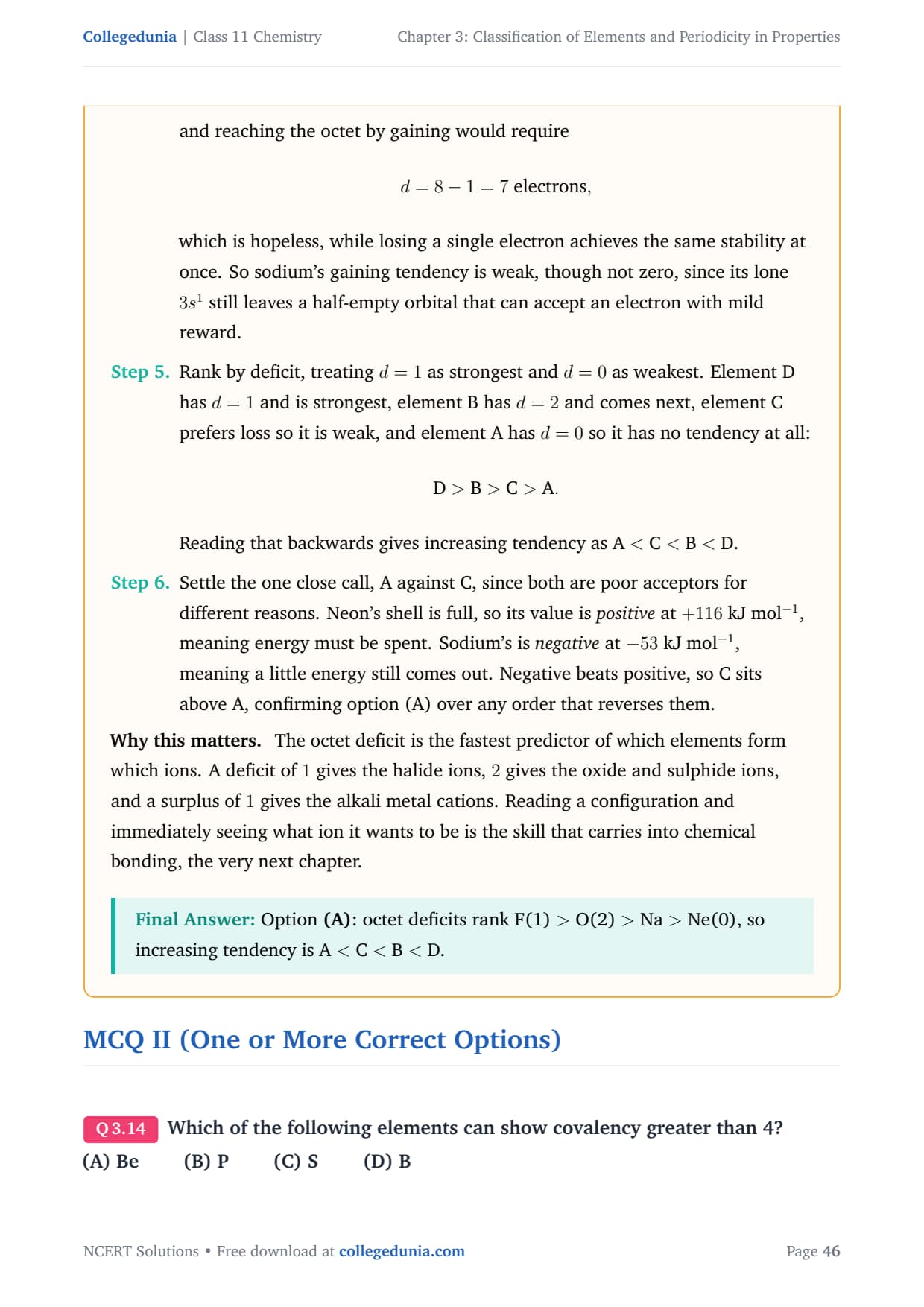
- Ordering by atomic number: Question 13 tempts you into sorting by Z. Distance from a full octet decides electron hunger, not Z, and neon settles the point.
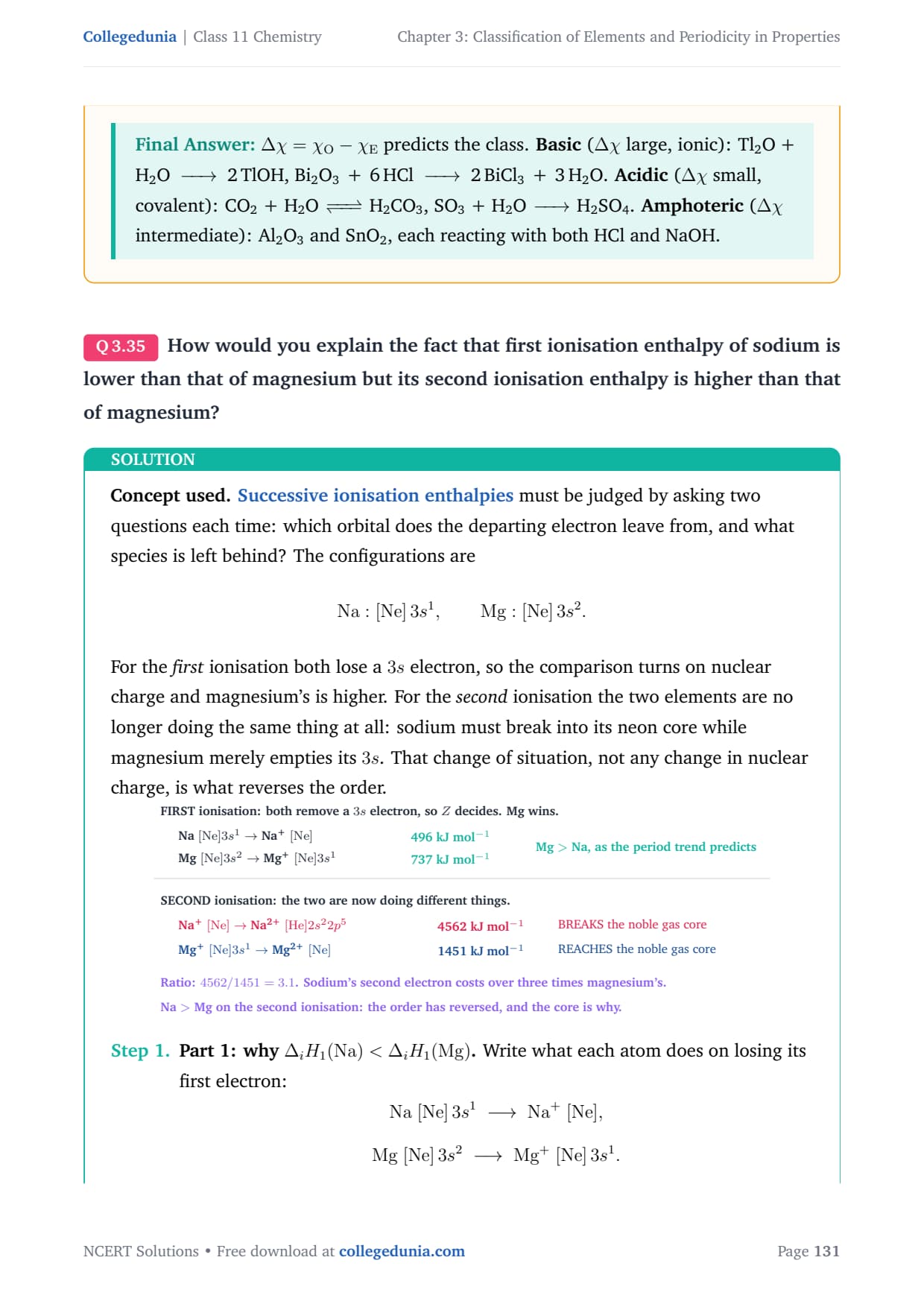
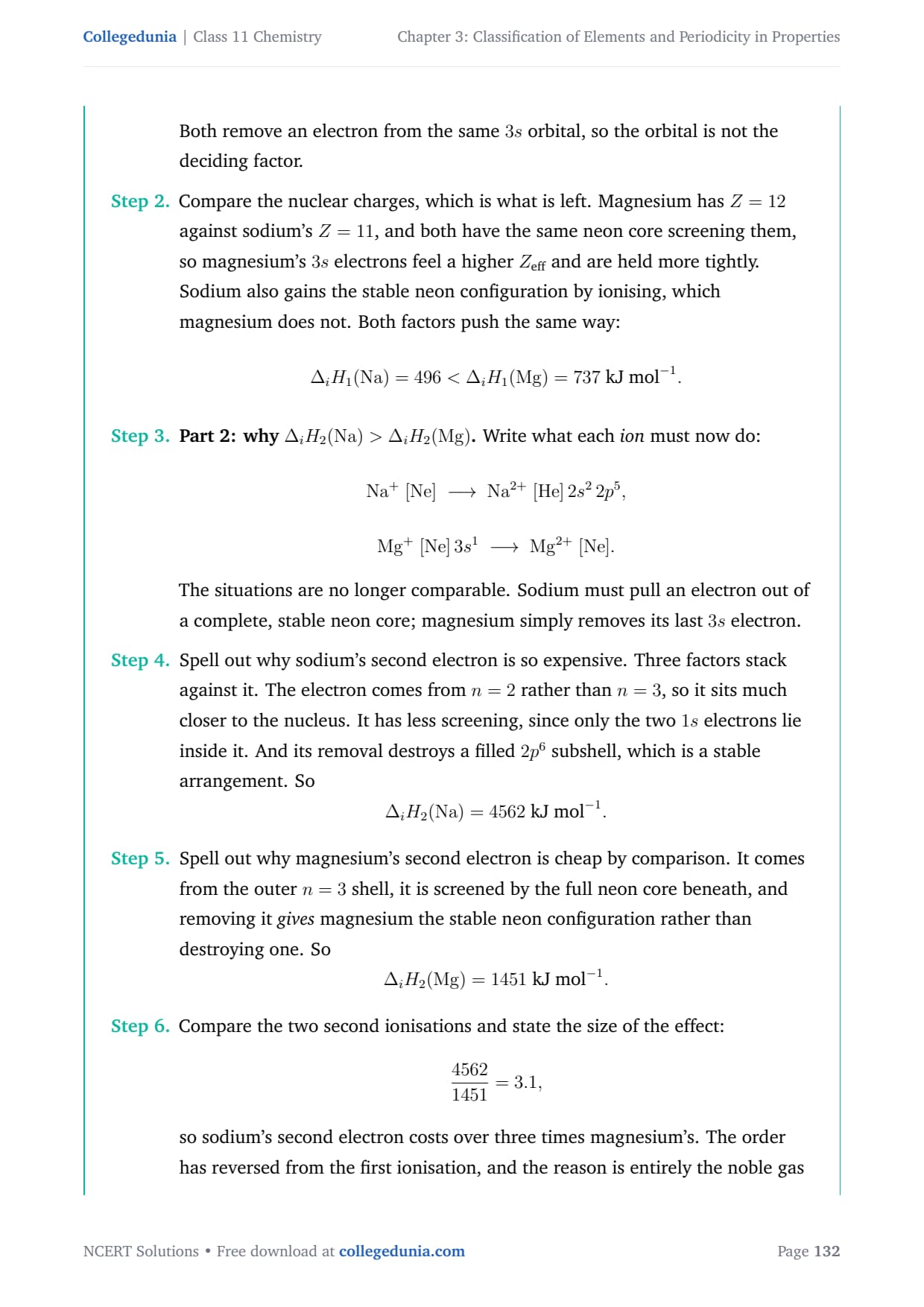
- Comparing atoms for a second ionisation: in Question 35 the second electron leaves Na+ and Mg+, which are [Ne] and [Ne]3s1. Rewrite the species before you compare.
- Reciting trends without exceptions: Question 20 sets both wrong options on the two anomalies of this unit, the half-filled subshell and small-atom repulsion.
How the Exemplar Steps Up from the Class 11 Chemistry Textbook
The textbook states a trend and asks you to apply it. The Exemplar asks which trend applies, and usually the answer is that two of them are competing.
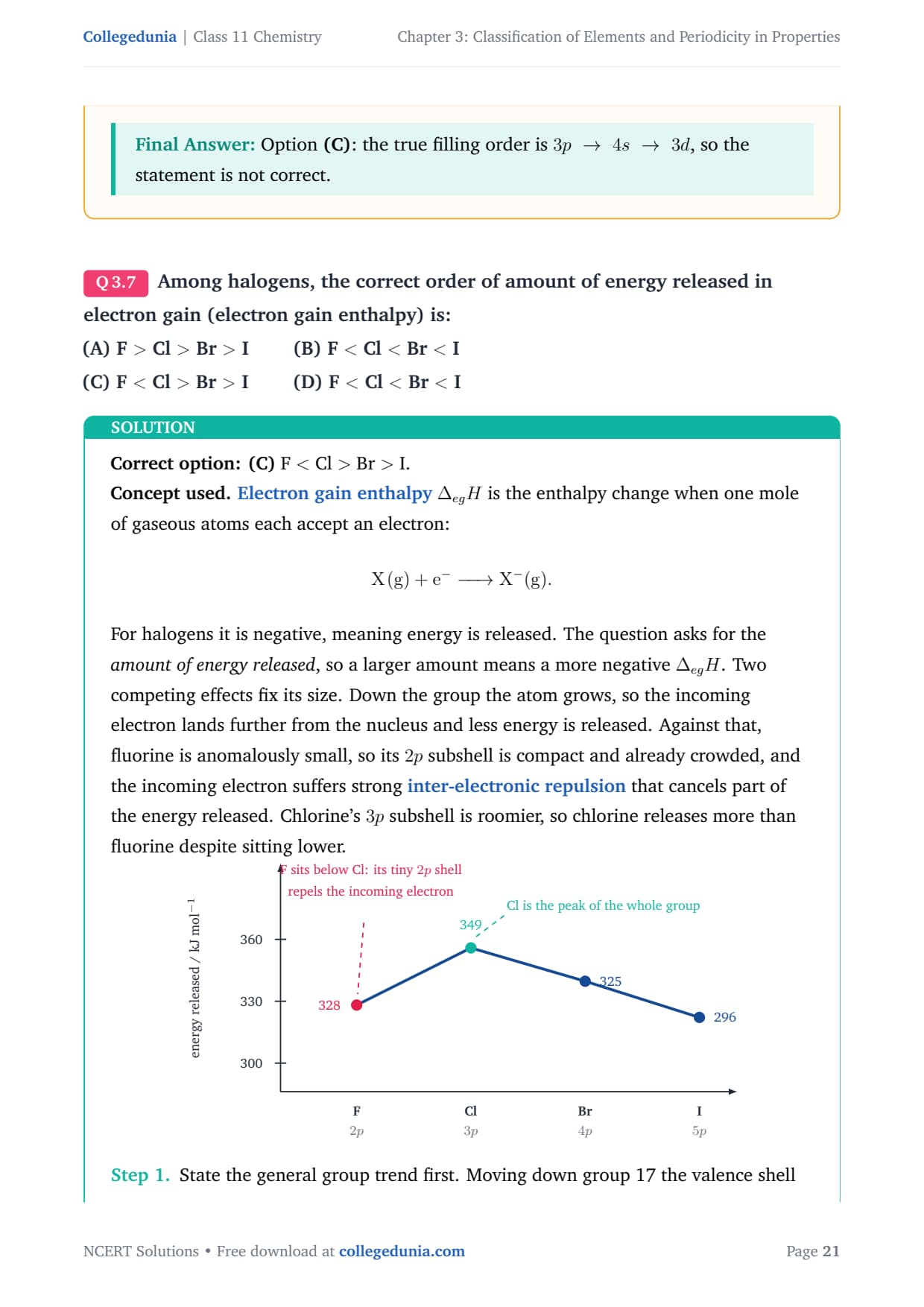
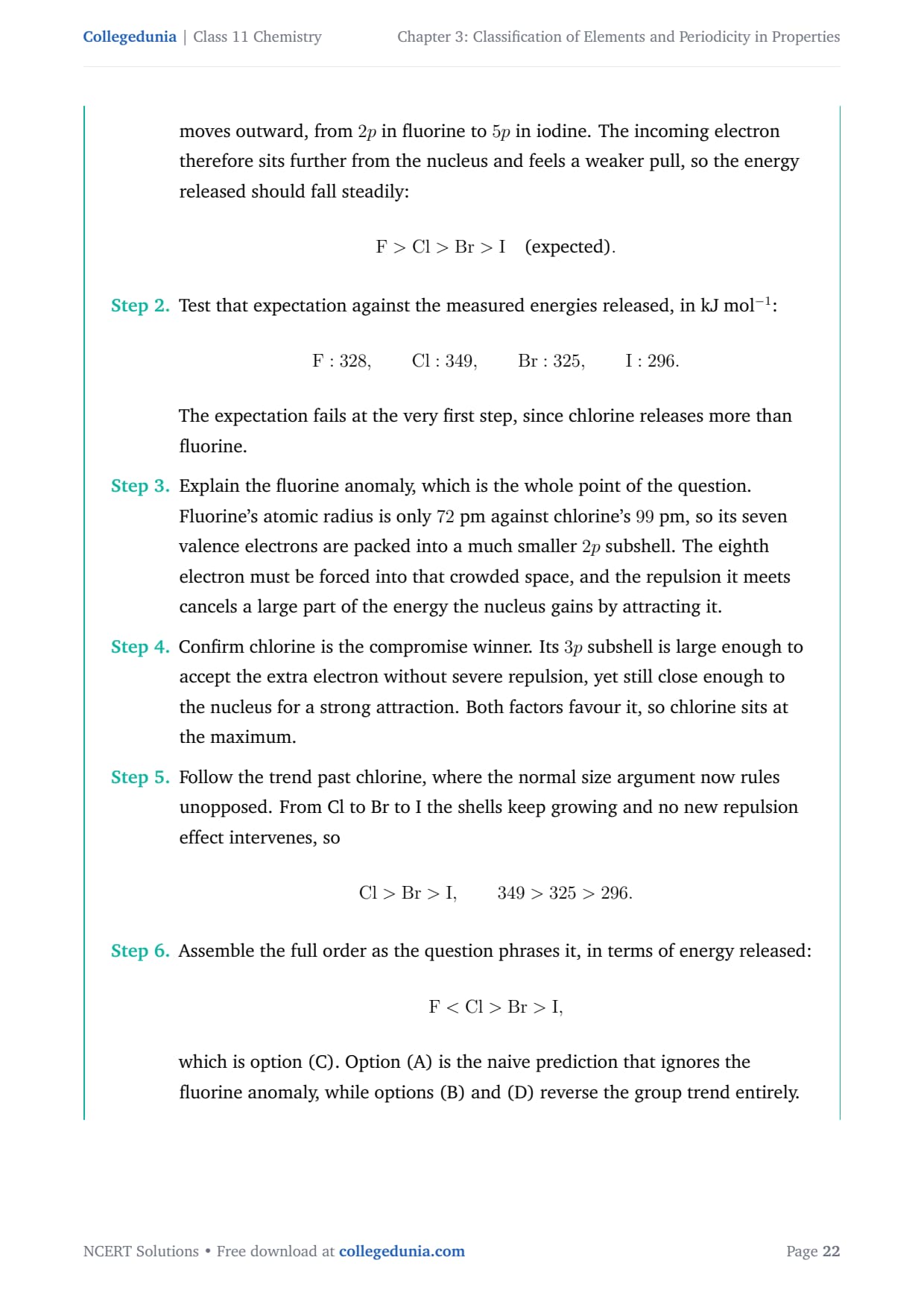
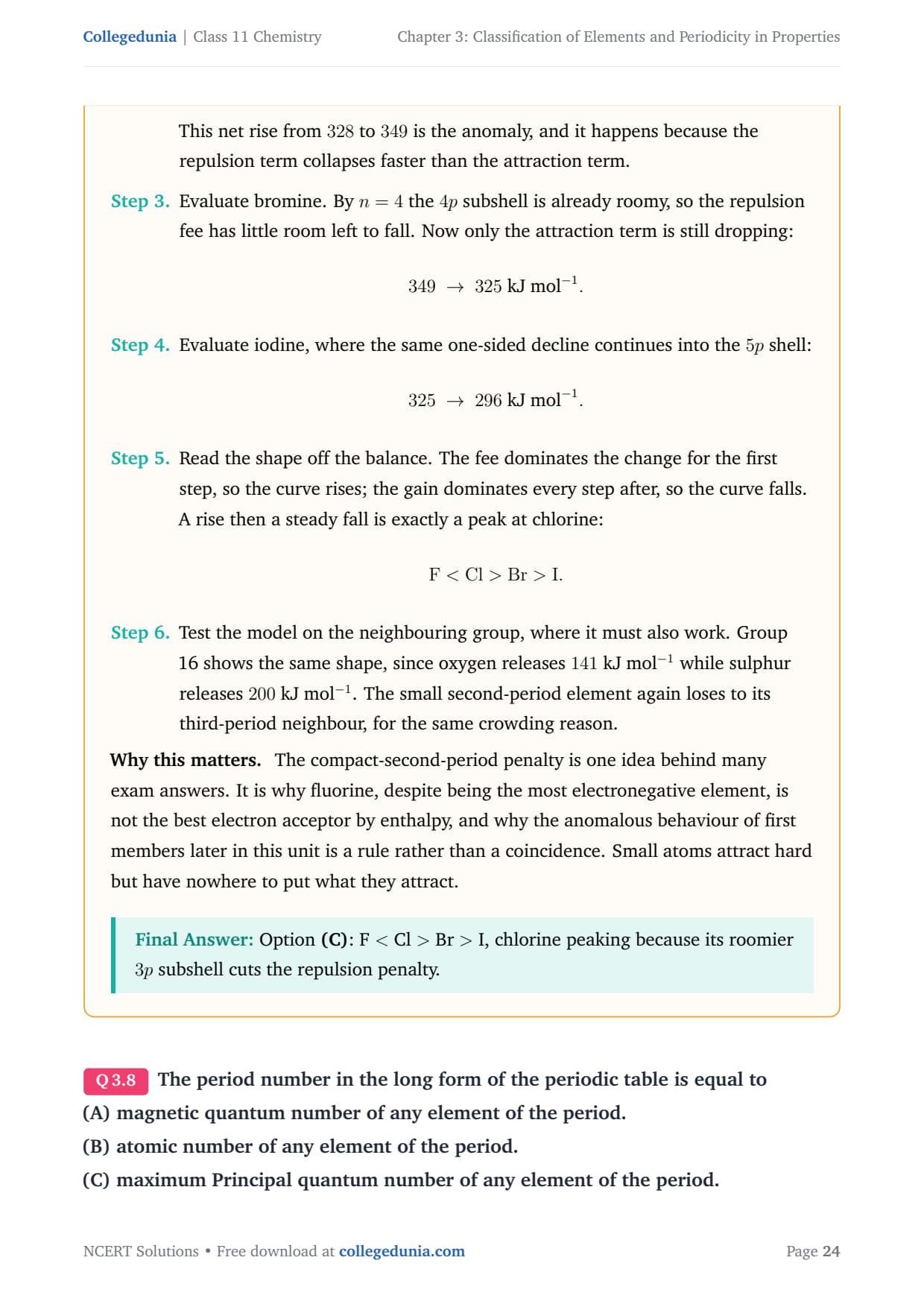
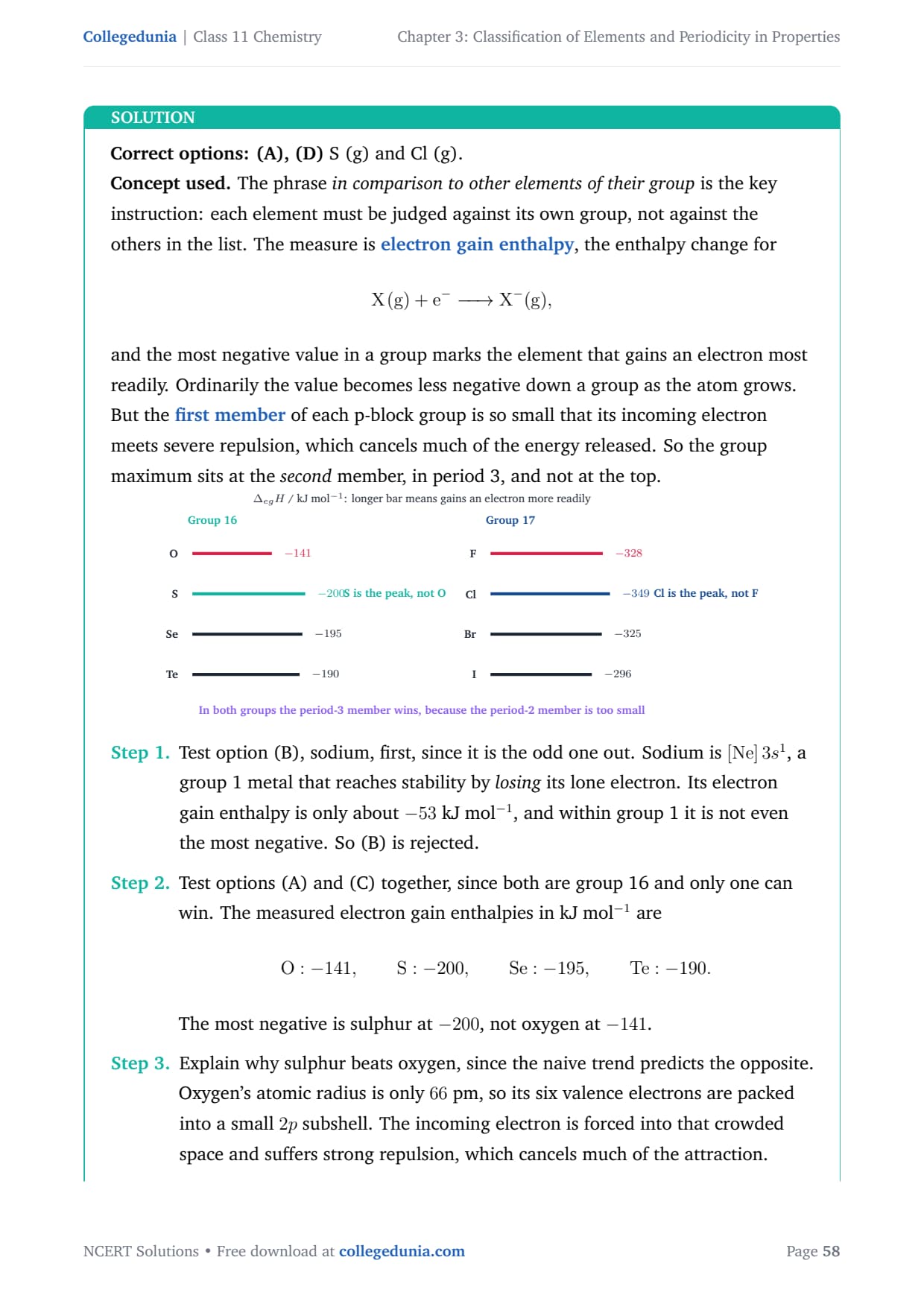
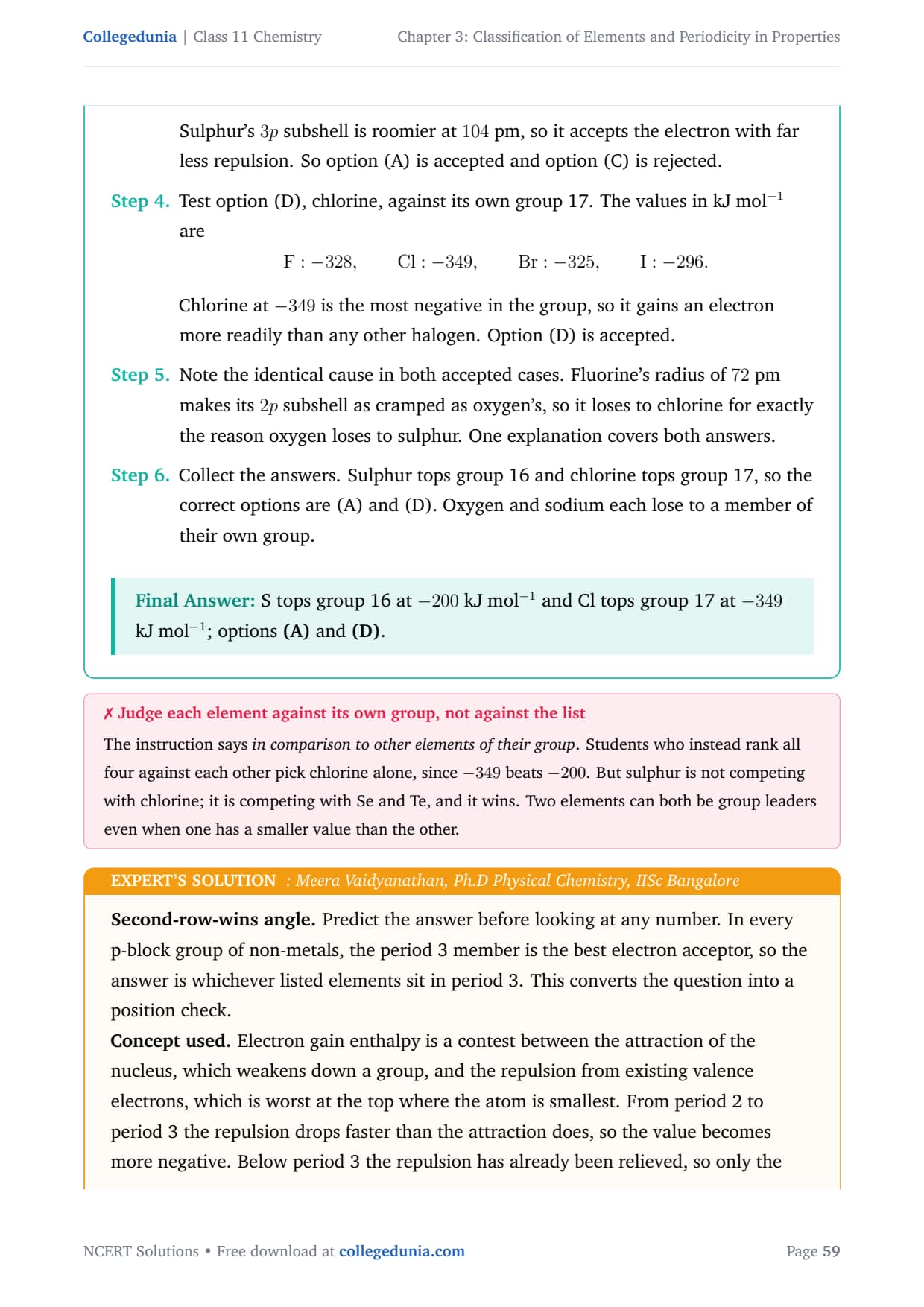
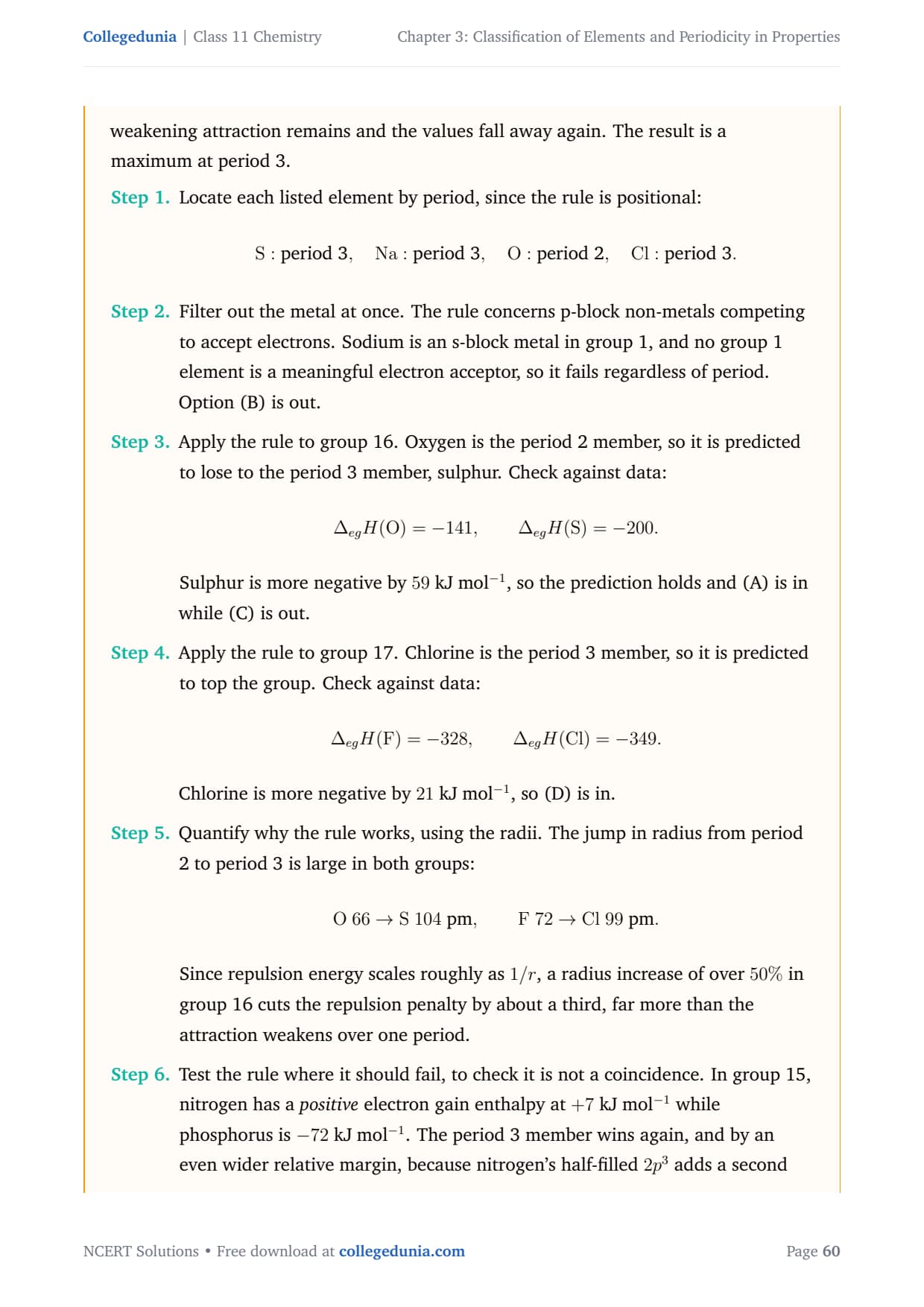
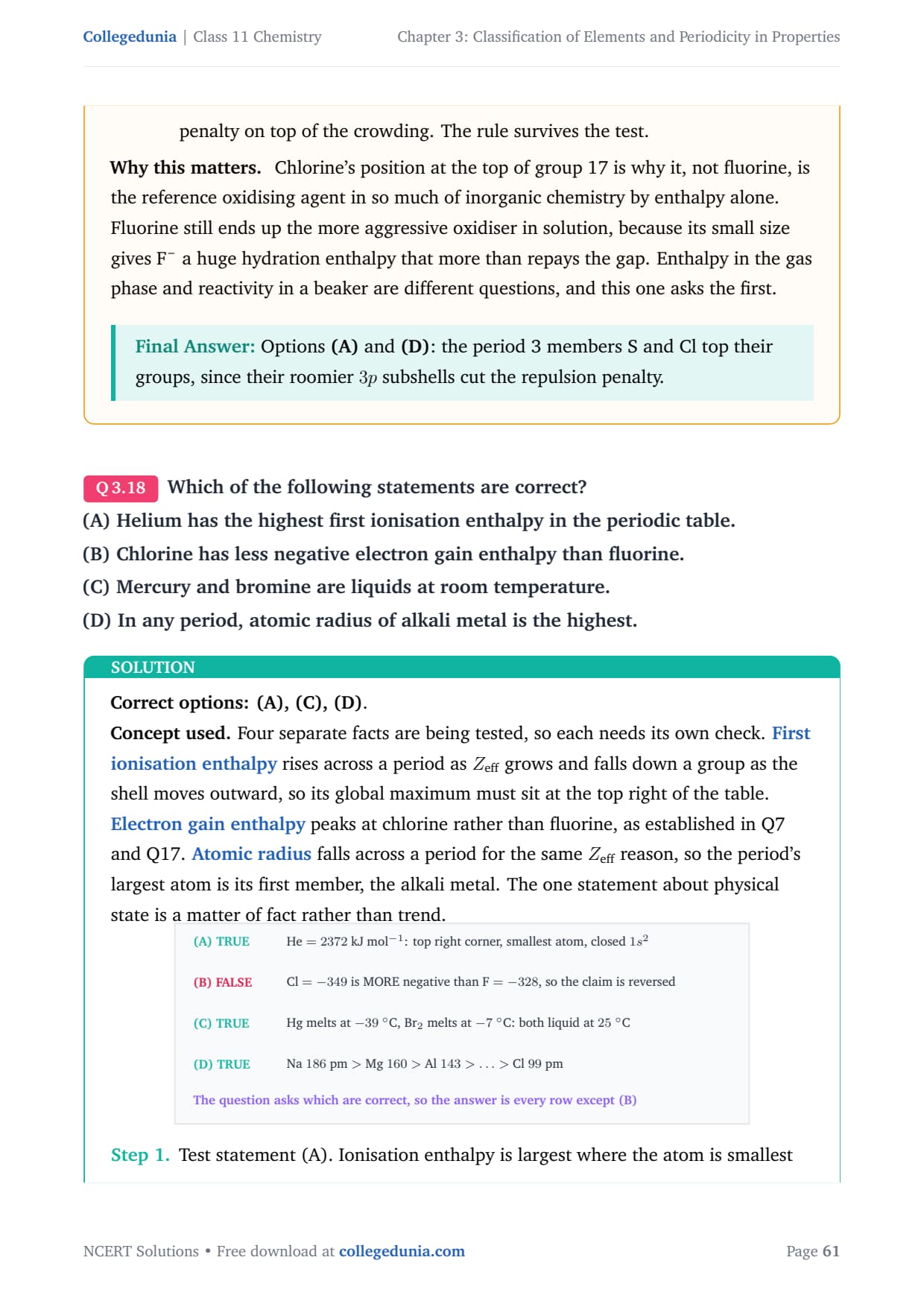
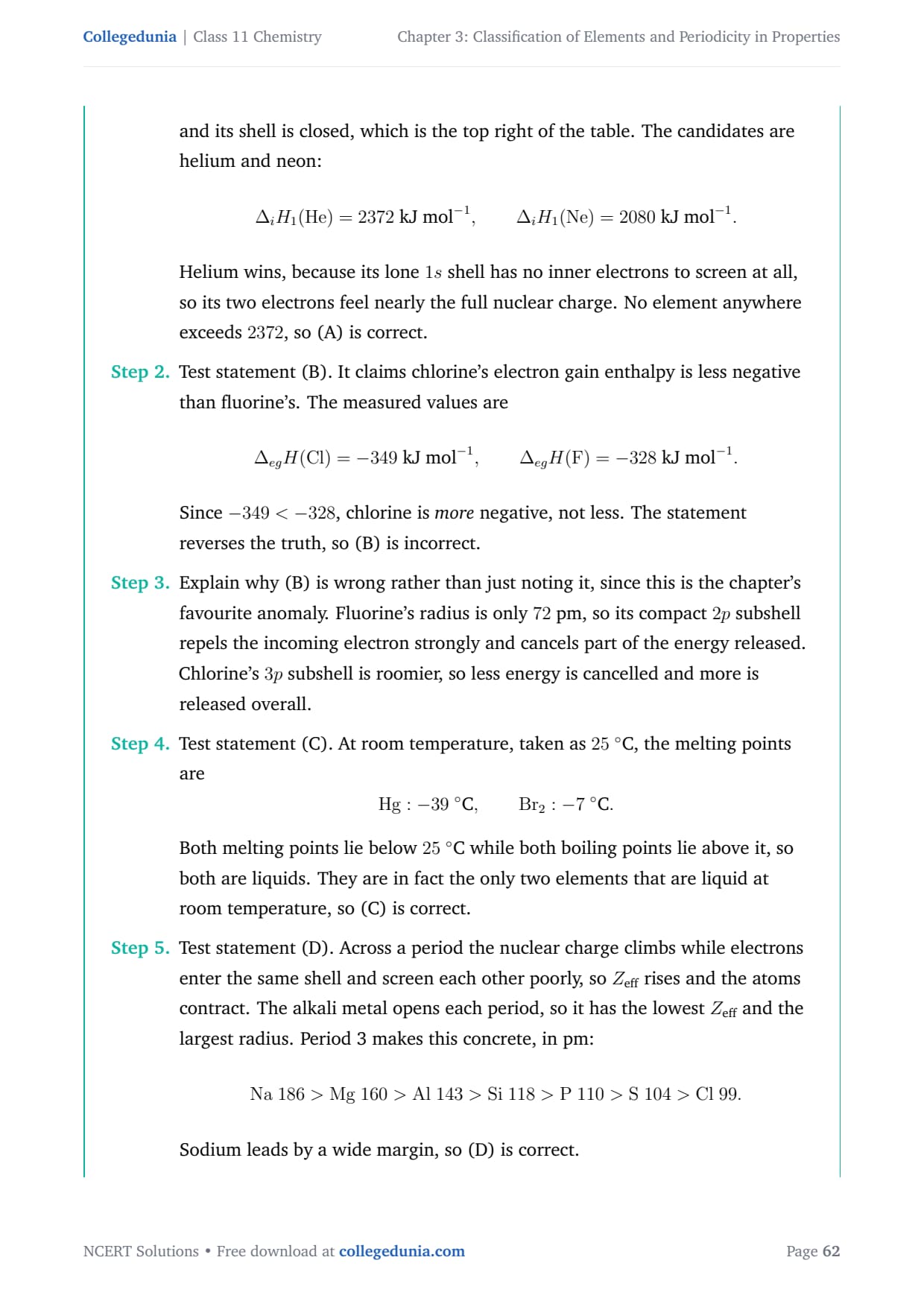
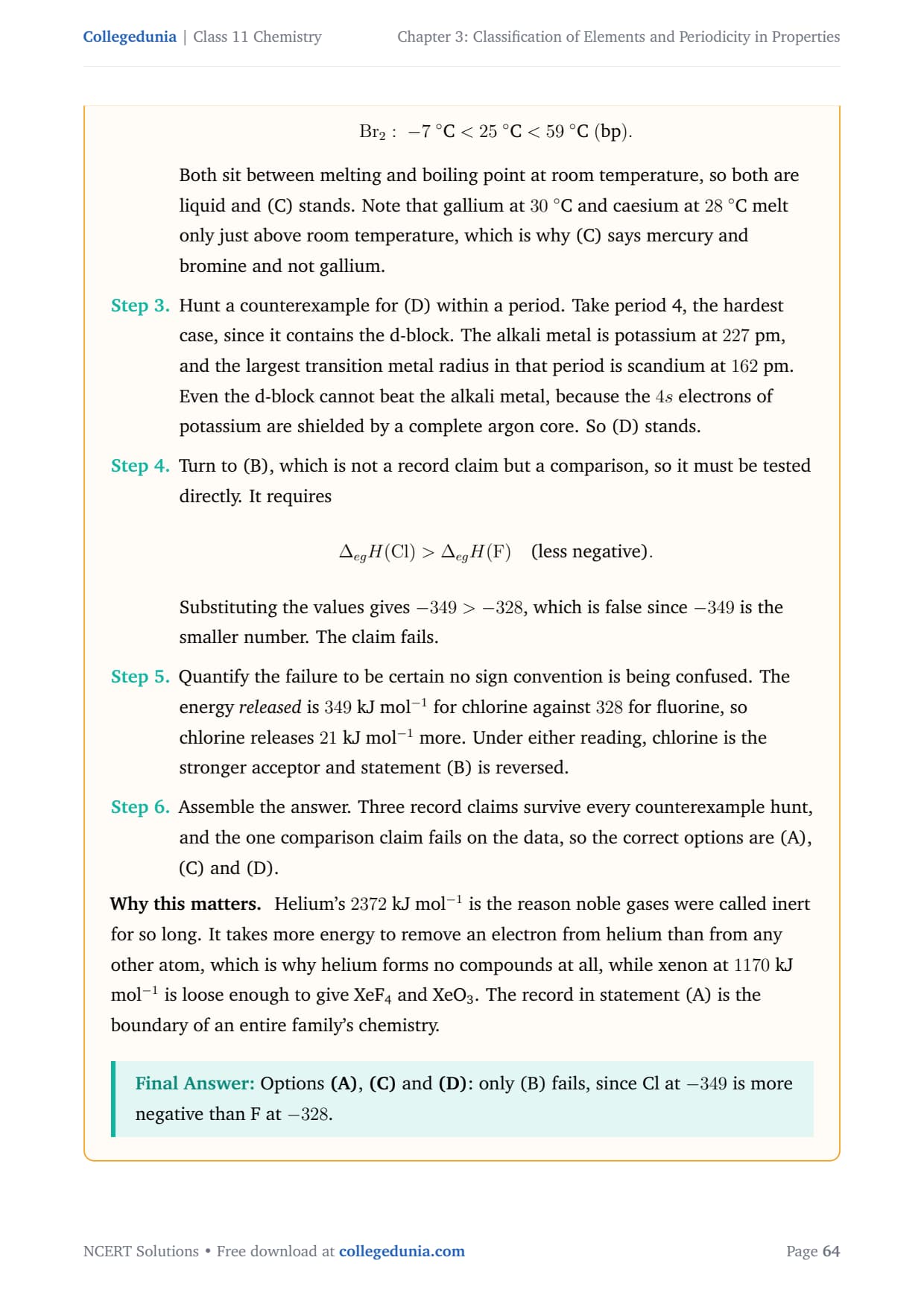
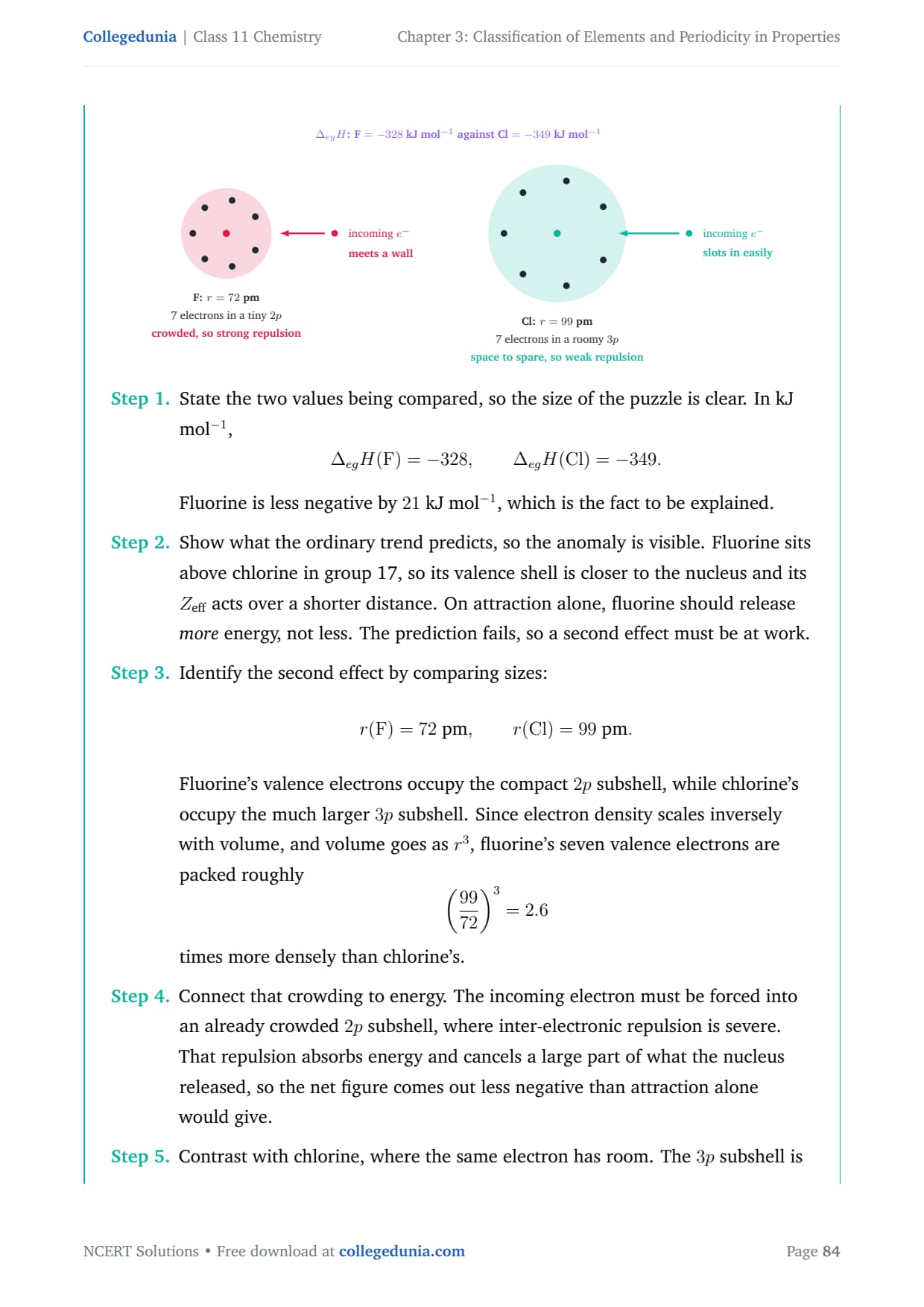
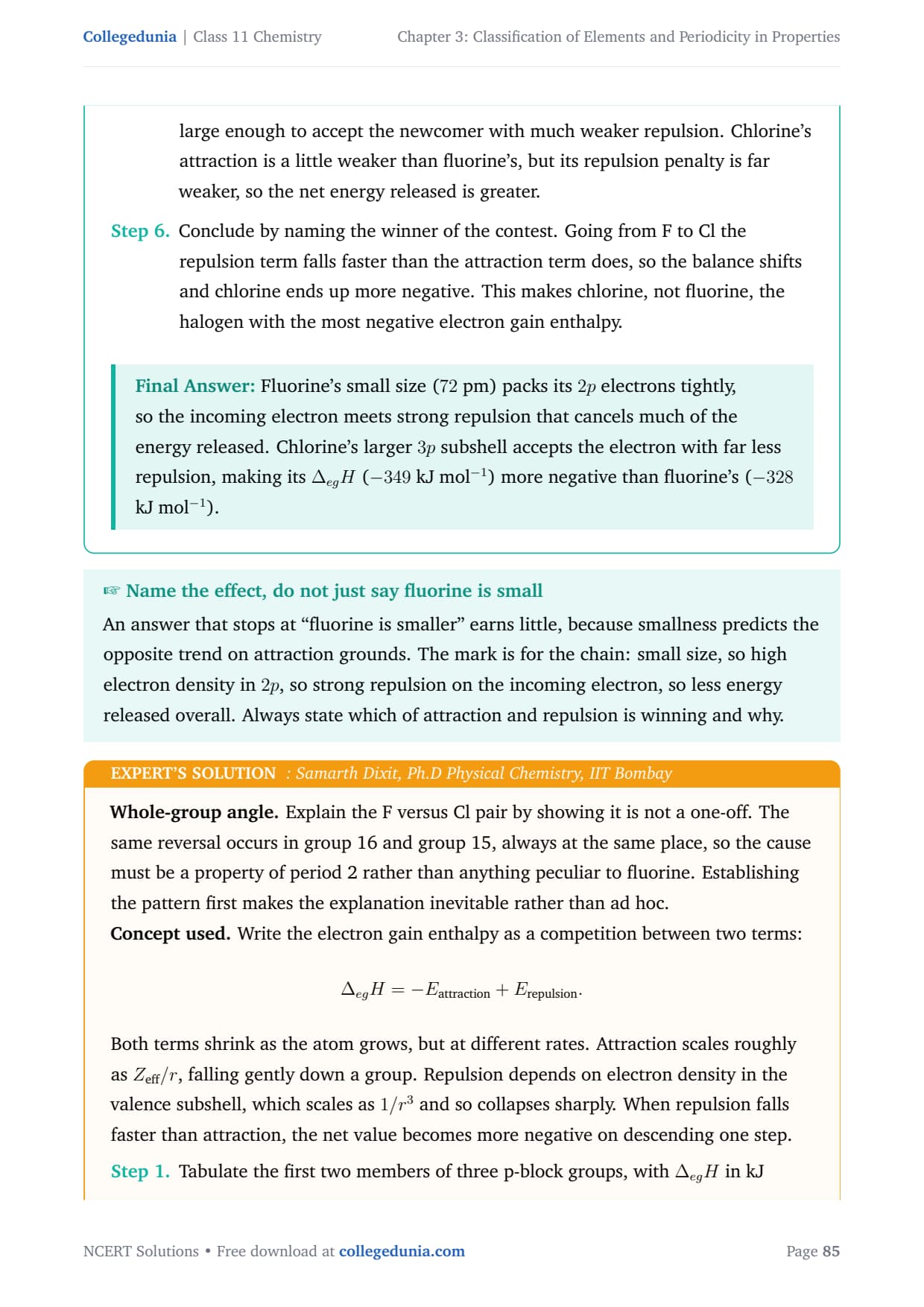
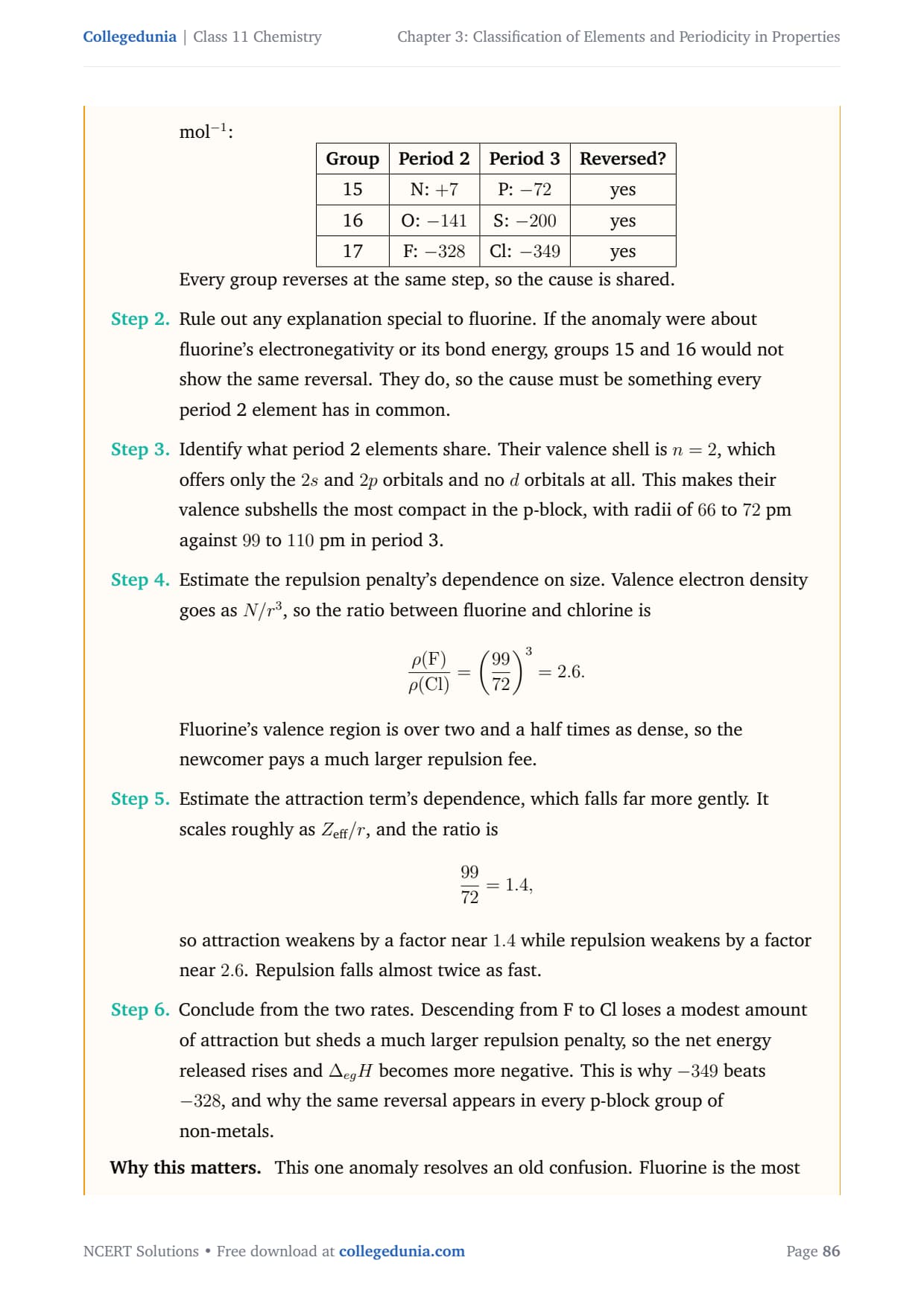
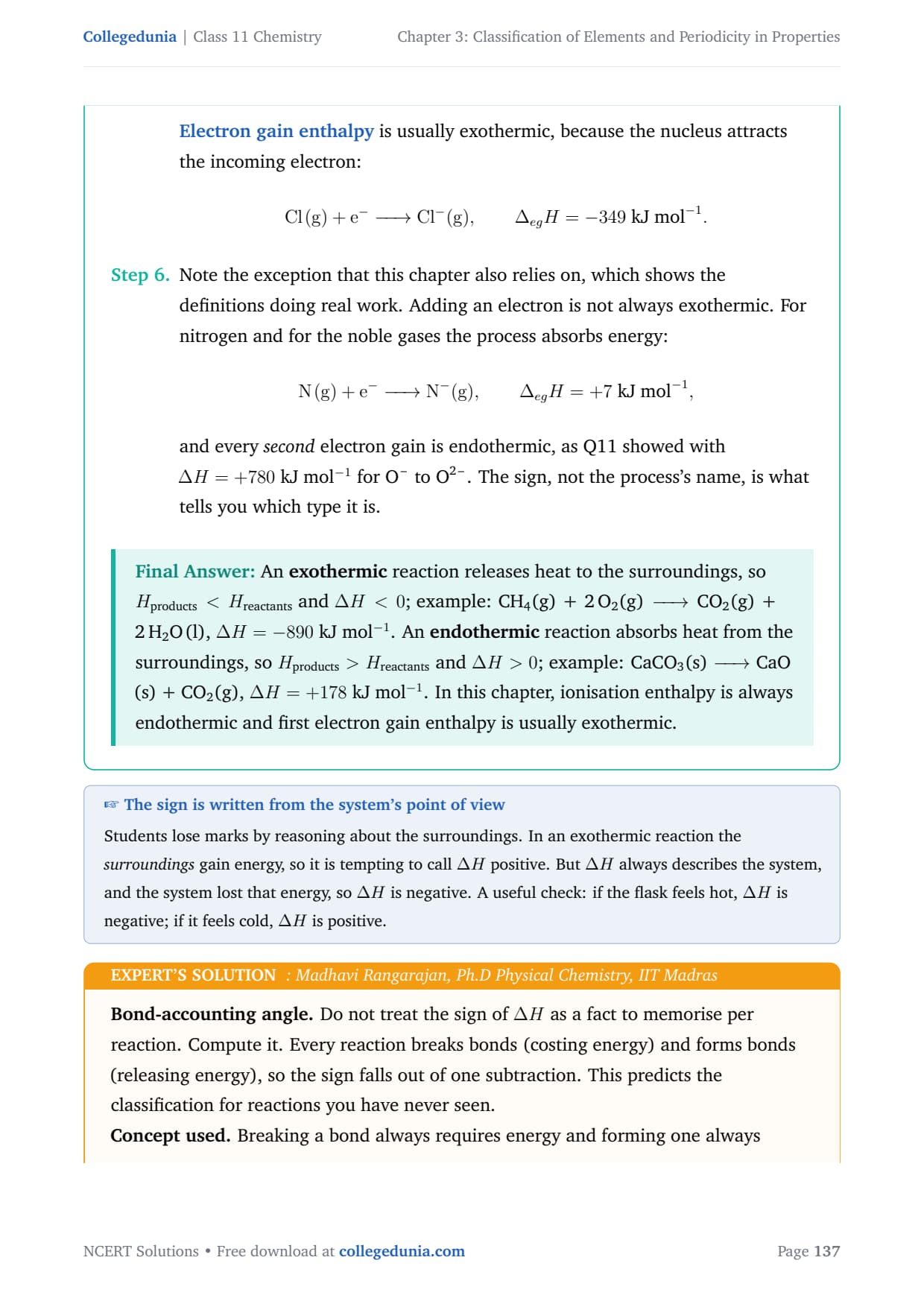
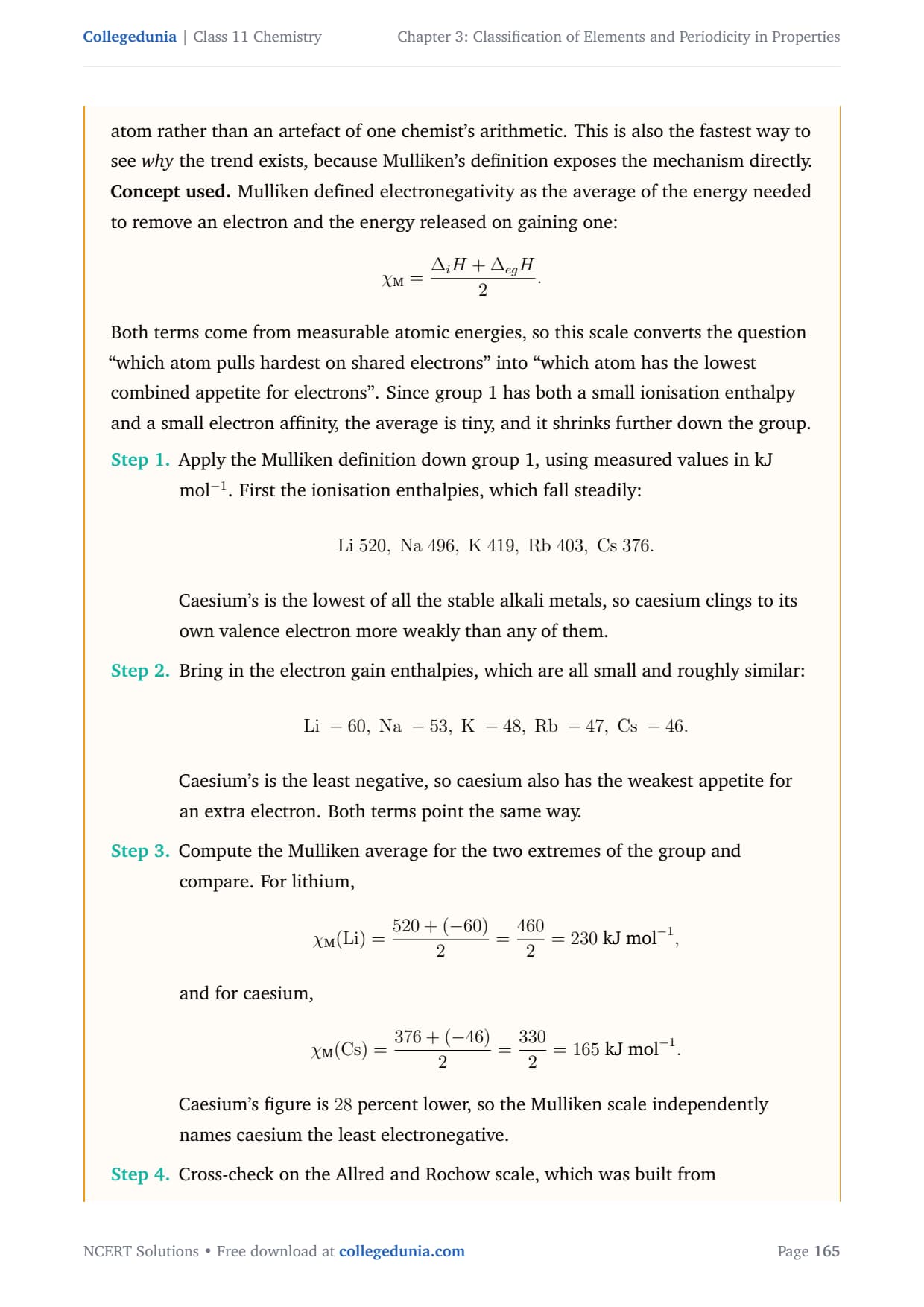
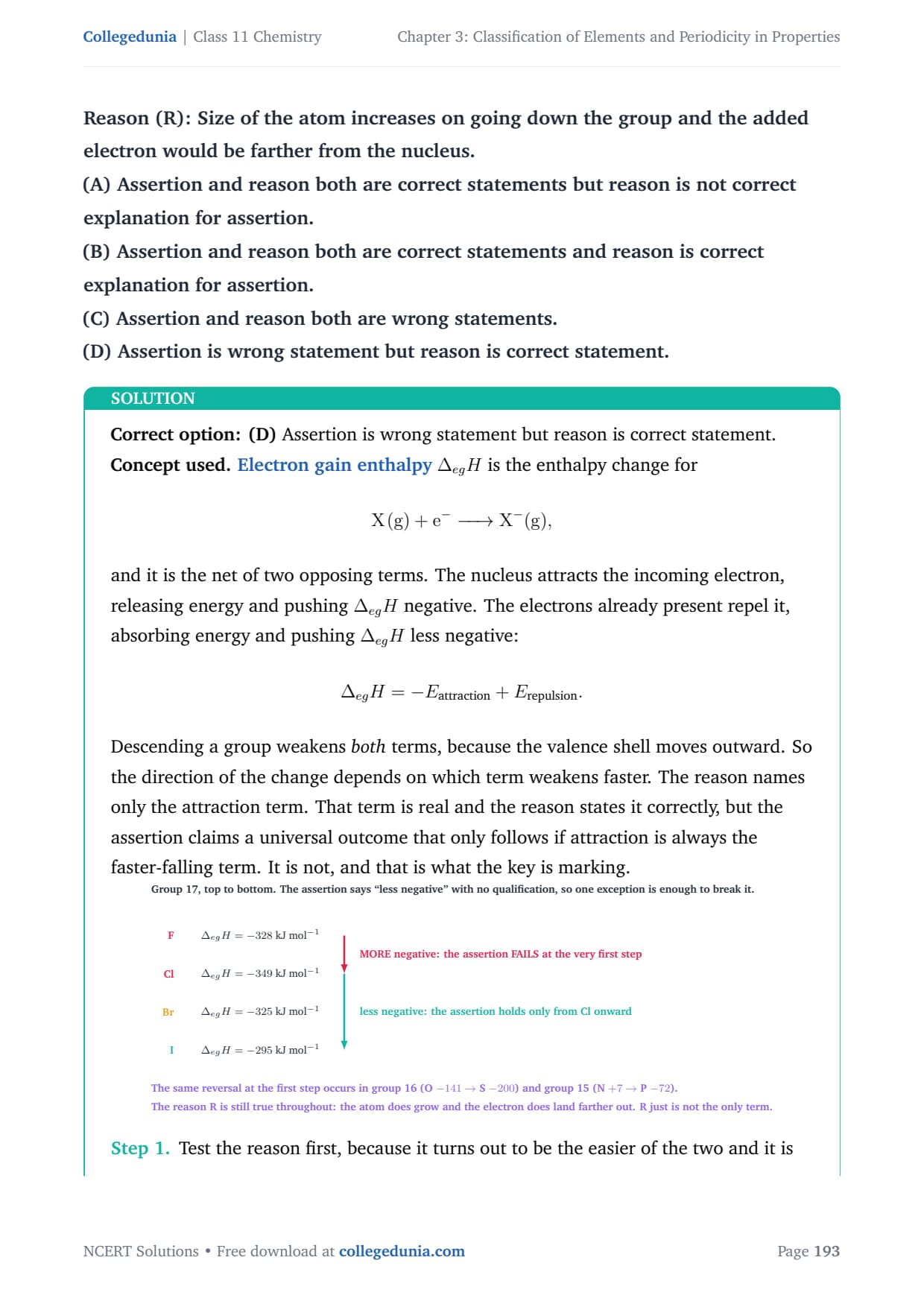
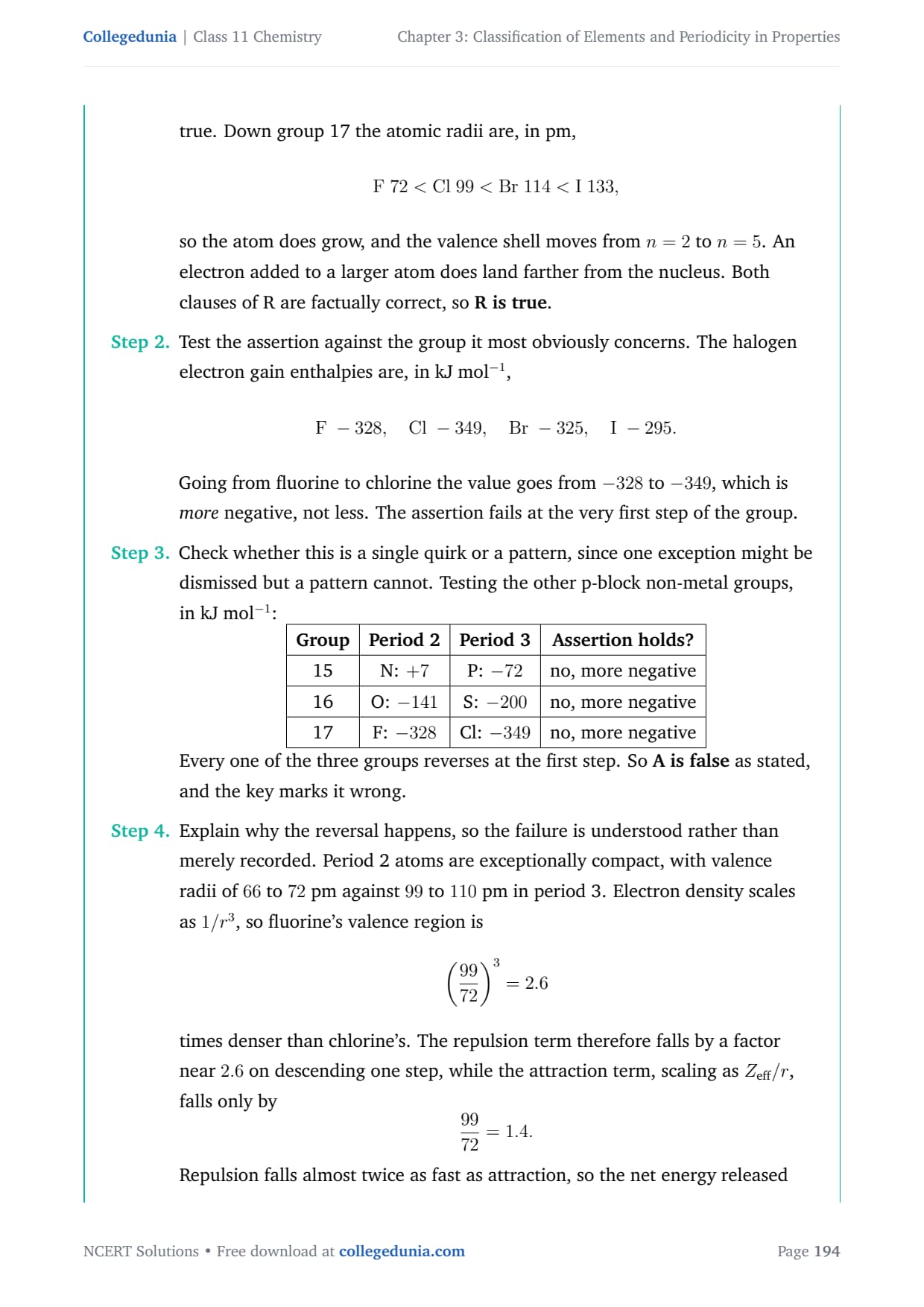
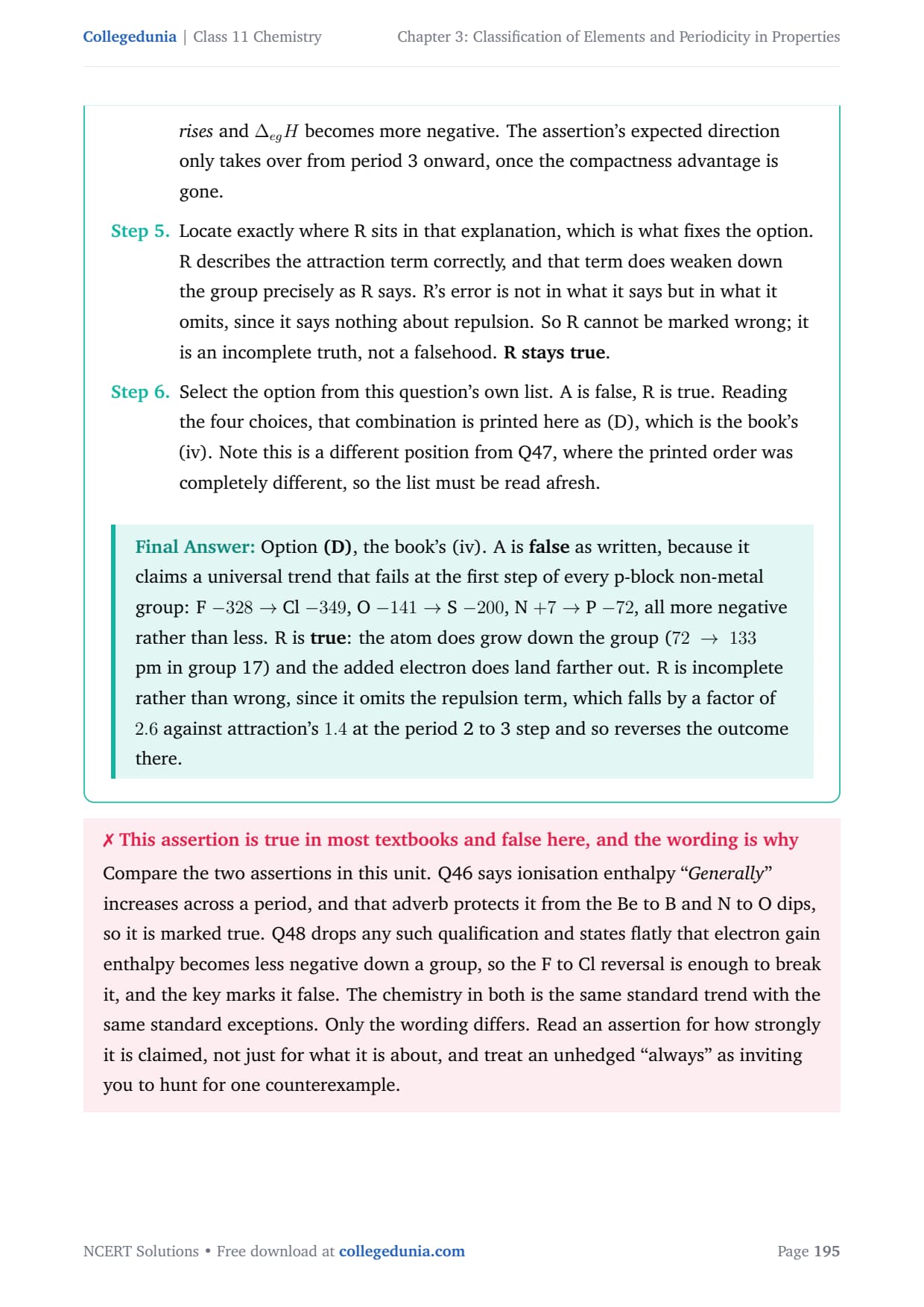
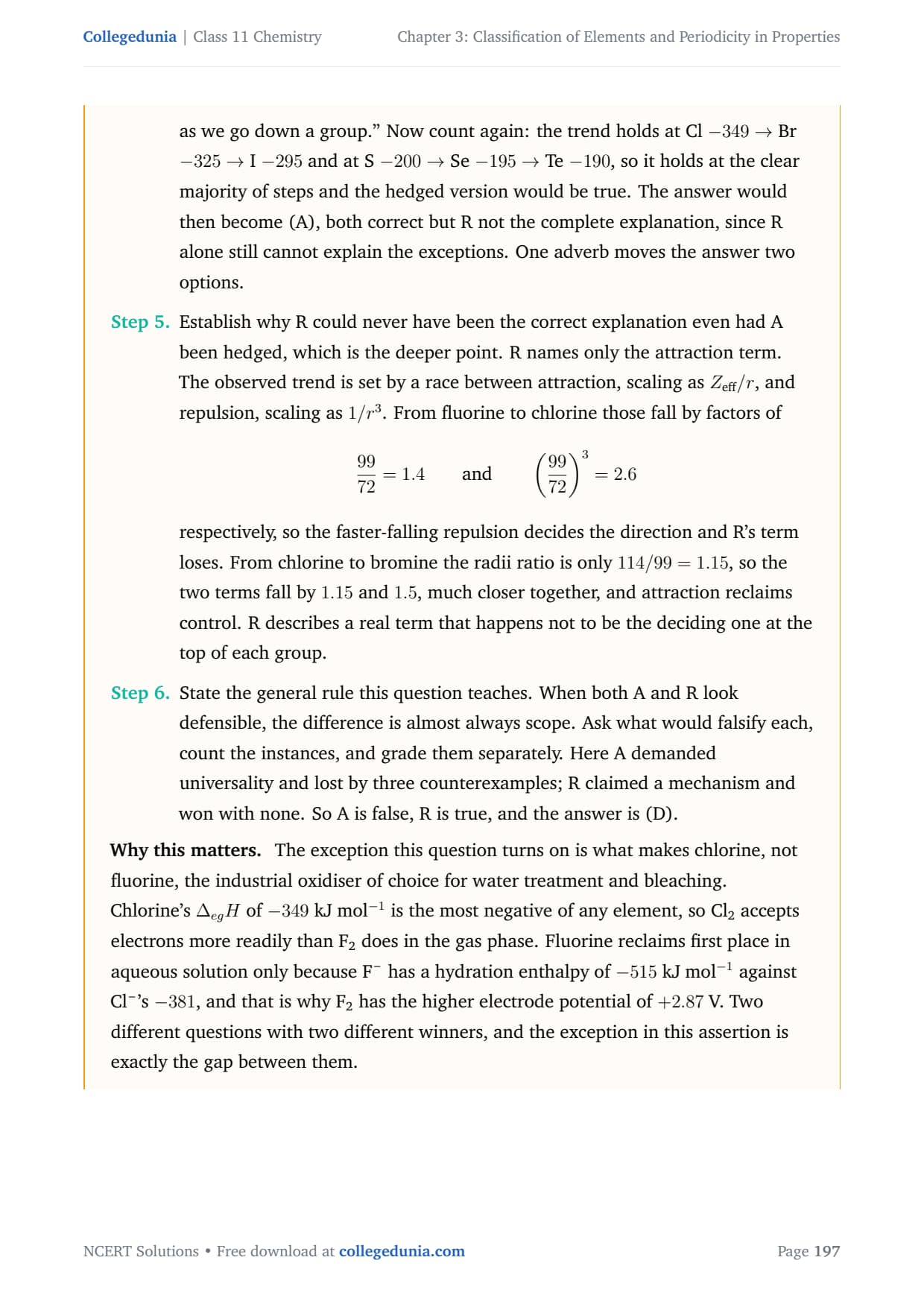
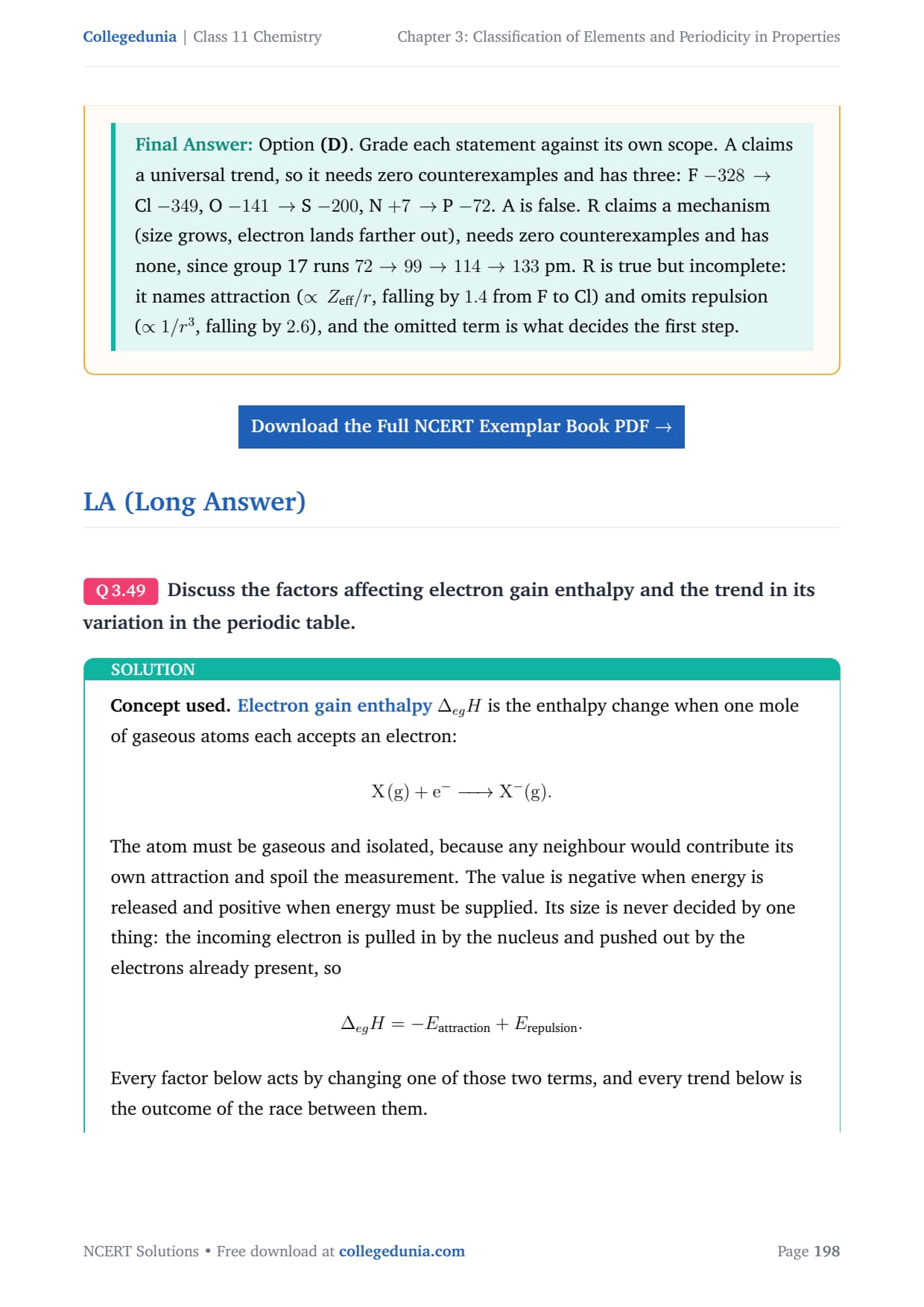
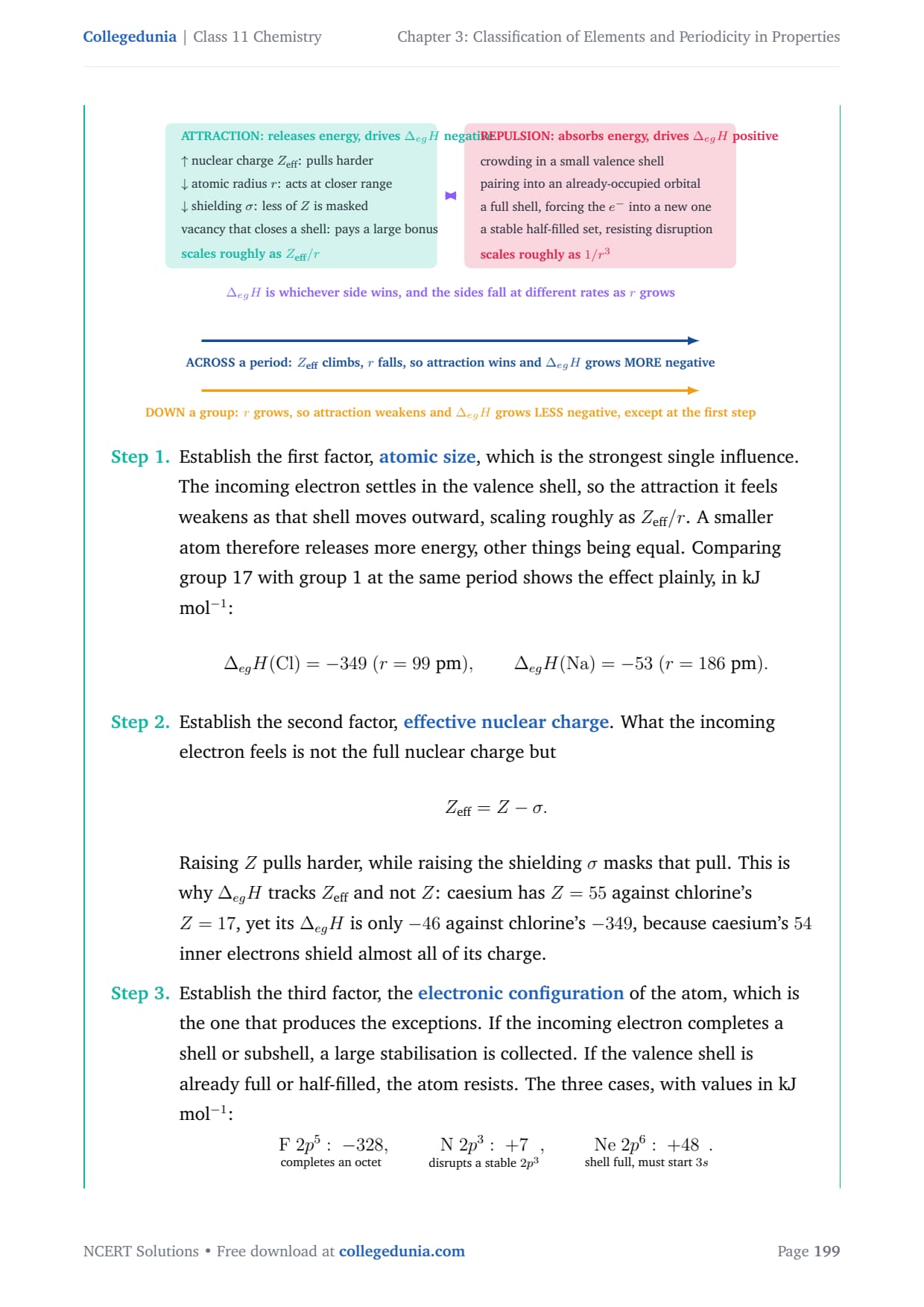
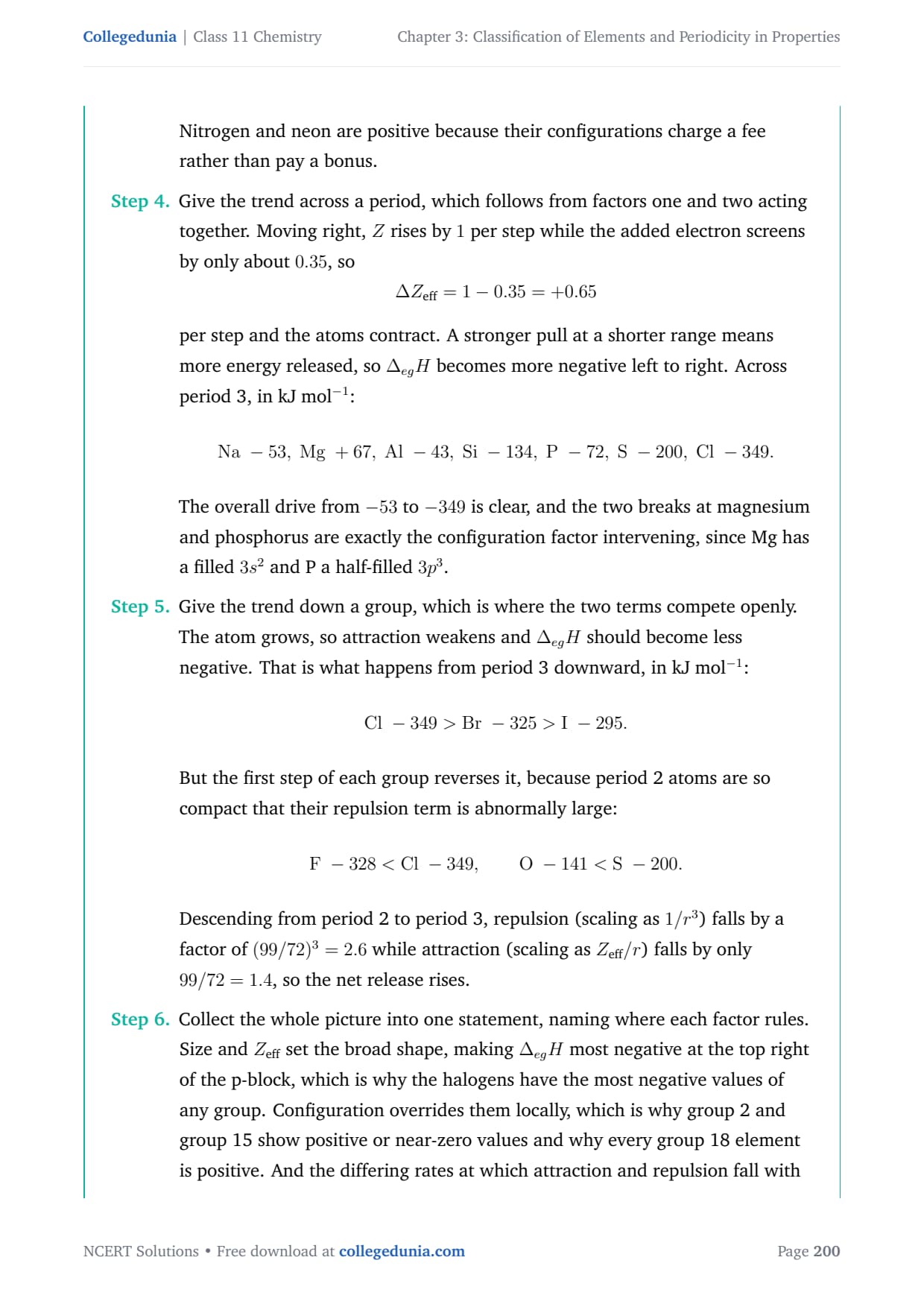
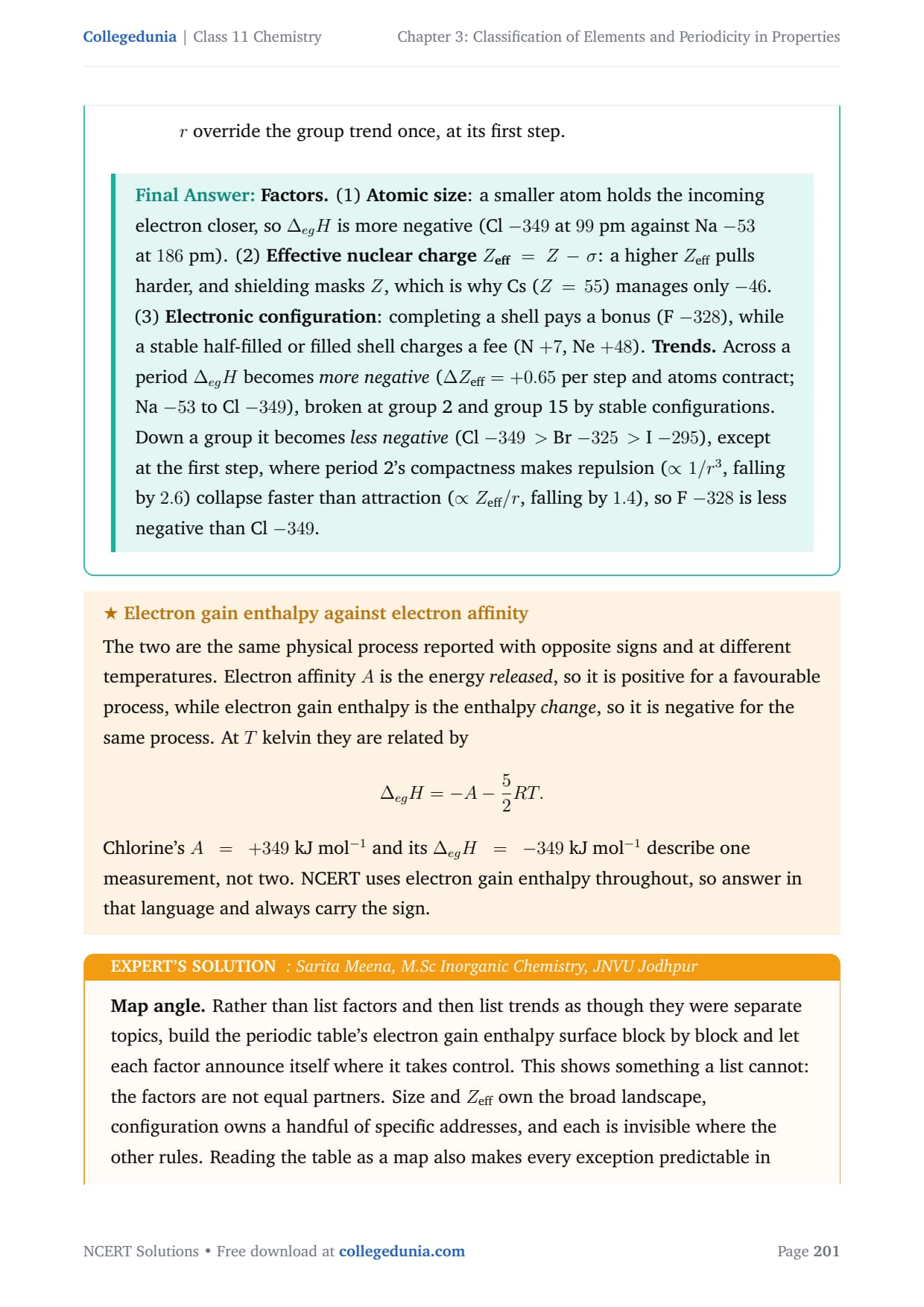
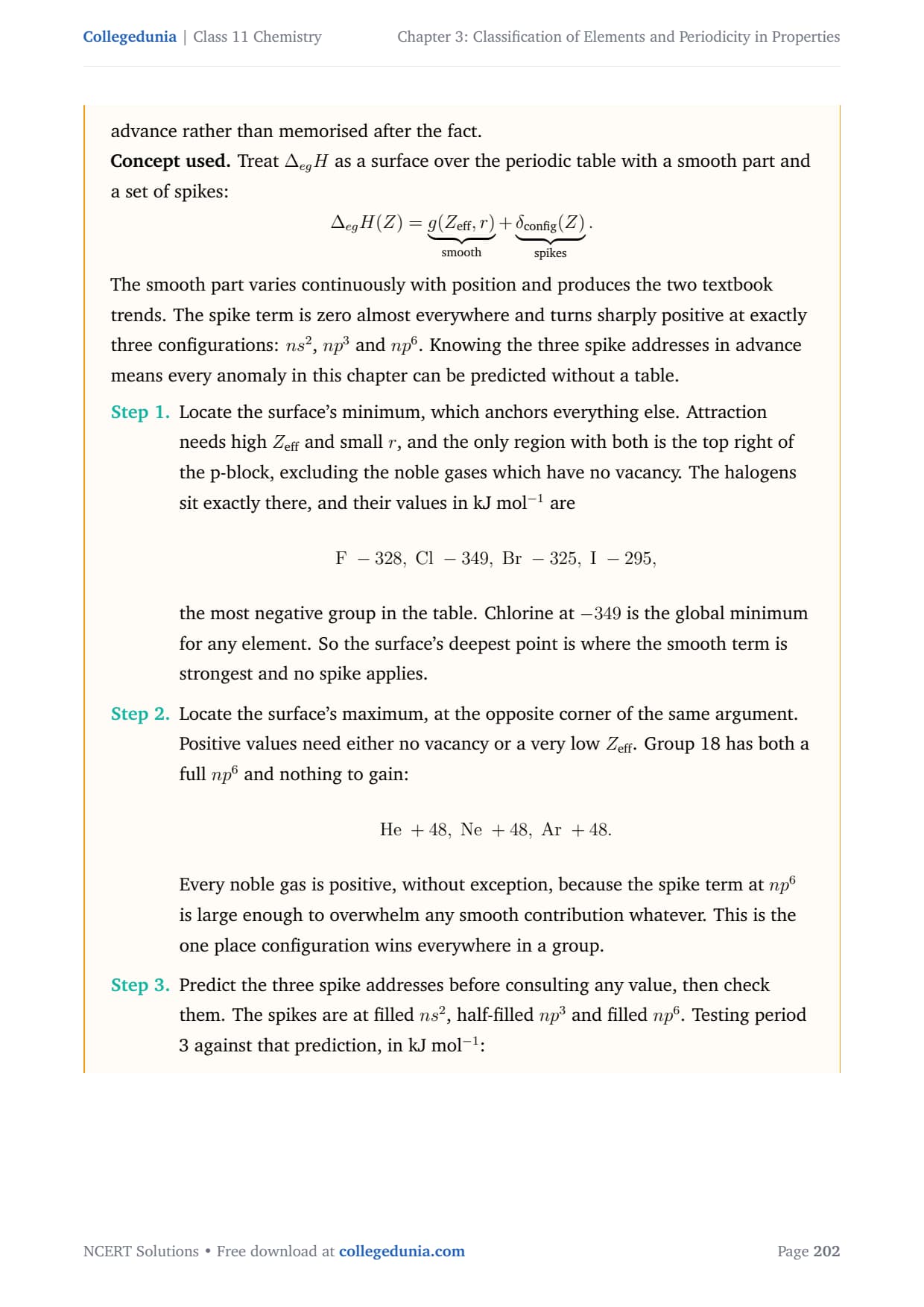
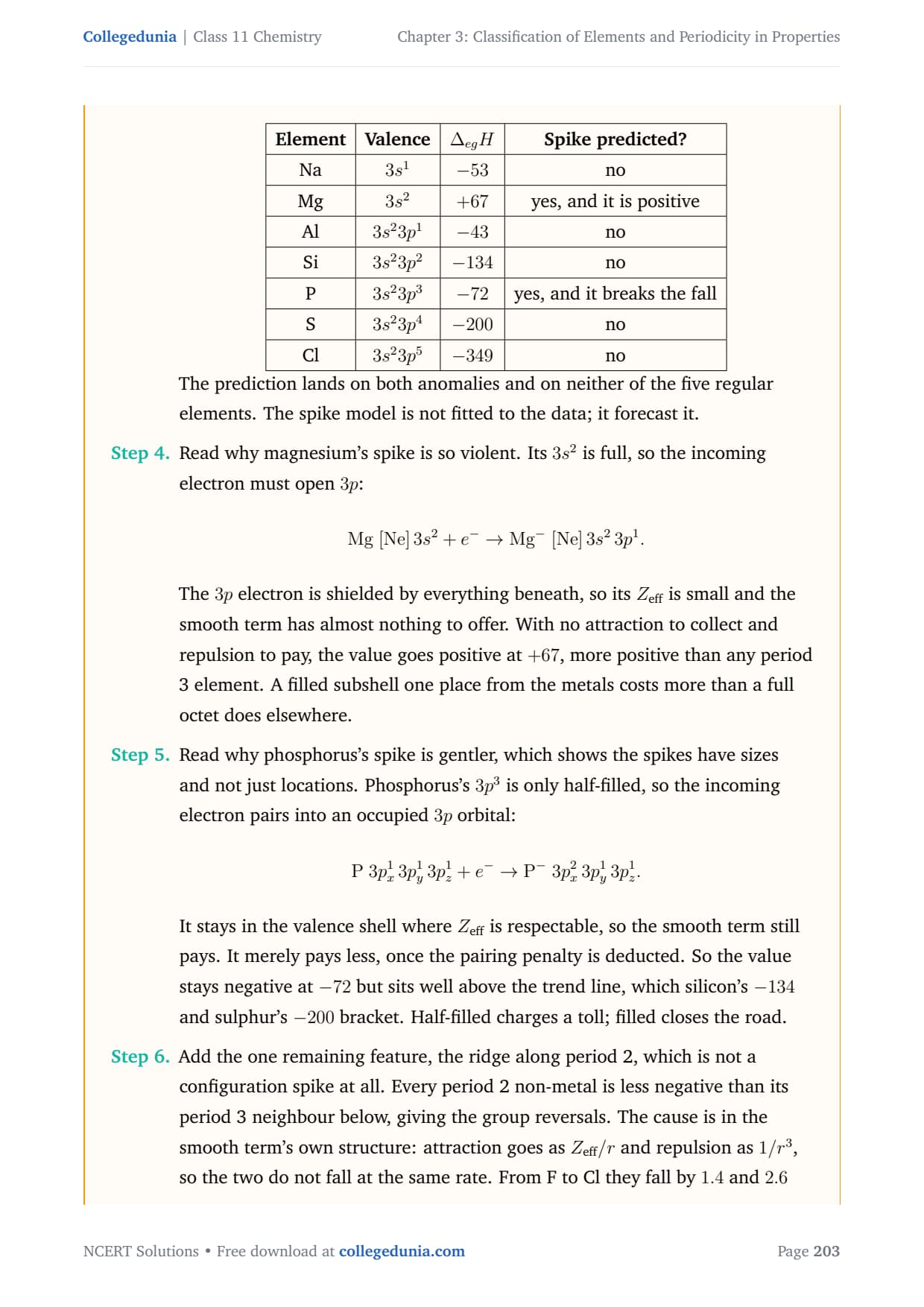
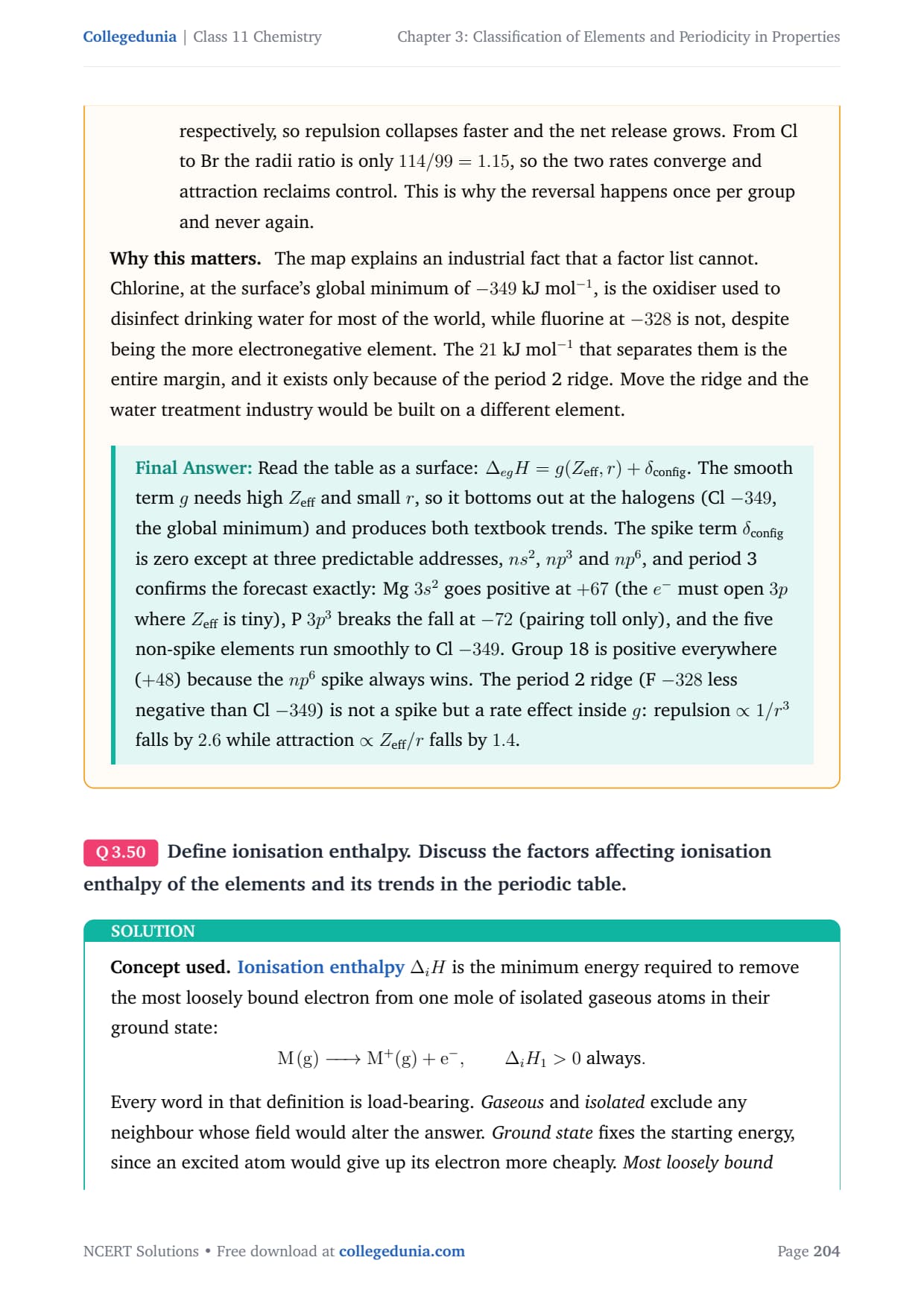
Question 7 shows this best. The naive prediction says fluorine, the smallest halogen, must release the most energy on gaining an electron. The measured values say chlorine. Fluorine's radius is 72 pm against chlorine's 99 pm, so its valence electrons are crowded into a small 2p subshell and the incoming electron meets heavy repulsion. Chlorine's 3p subshell is roomy enough to take the electron yet close enough for a strong pull, so it wins at 349 kJ mol-1 against fluorine's 328.
How to Use These NCERT Exemplar Solutions for Boards, NEET and JEE
Attempt every question before opening the solution. This chapter rewards a wrong attempt you then understand.
- Boards: the 19 Short Answer questions match the 2 and 3 mark reasoning pattern almost exactly
- NEET: work the 13 MCQ I questions first, since NEET repeats radii and enthalpy ordering at that level yearly
- JEE Main: the MCQ II set is the closest NCERT practice for options that are each partly right
Student Feedback
Students using Collegedunia's Class 11 Chemistry Exemplar Solutions told us the electron gain enthalpy questions cost them the most marks. Around 7 in 10 said that seeing the fluorine anomaly explained as a size and repulsion trade-off, rather than as a fact to memorise, fixed the error for good.
Other Resources for Class 11 Chemistry Classification of Elements
Collegedunia has the full study set for this chapter. Read the Notes once for the trends, then take on the Exemplar for the exceptions.
Also Check:
- NCERT Solutions for Class 11 Chemistry Chapter 3
- Class 11 Chemistry Chapter 3 Notes
- Class 11 Chemistry Chapter 3 NCERT Book PDF
- Class 11 Chemistry Chapter 3 Exemplar Questions with Solutions
NCERT Exemplar Solutions for Other Class 11 Chemistry Chapters
Each chapter below gets the same step-by-step treatment and a free PDF.
Classification of Elements and Periodicity in Properties Class 11 NCERT Exemplar Solutions FAQs
Ques. How many questions are there in the Class 11 Chemistry Classification of Elements Exemplar?
Ans. Chapter 3 has 55 questions. They are split into 13 MCQ I, 10 MCQ II, 19 Short Answer, 3 Matching Type, 3 Assertion and Reason and 7 Long Answer questions. All 55 are solved in the free 241-page PDF on this page.
Ques. Is the printed NCERT Exemplar answer key for this chapter correct?
Ans. The key is correct, but the question text carries two misprints. Question 7 prints options (ii) and (iv) with identical text, and the key's answer (iii) is unaffected. Question 27 heads its list "k cal mol-1" when both figures and the accepted values are in kJ mol-1. Both are explained on this page.
Ques. Why does chlorine have a higher electron gain enthalpy than fluorine?
Ans. Fluorine's atomic radius is only 72 pm, so its seven valence electrons are packed into a small 2p subshell. The incoming electron meets strong repulsion that cancels much of the nuclear attraction. Chlorine's larger 3p subshell takes the electron with less repulsion, so it releases 349 kJ mol-1 against fluorine's 328.
Ques. Why does argon look bigger than chlorine if size decreases across a period?
Ans. It is a definition problem, not a broken trend. Argon's 191 pm is a van der Waals radius, measured between non-bonded atoms, while chlorine's 99 pm is a covalent radius, measured as half a bond length. Noble gases form no covalent bonds, so only van der Waals values exist. Compare like with like and the trend holds.
Ques. Is the NCERT Exemplar enough for NEET periodicity questions?
Ans. For this chapter it covers the ground well. NEET asks about two questions a year on periodic trends and electron gain enthalpy, and they sit at the level of the Exemplar MCQ I set. Work all 13 of those, then the 19 Short Answer questions, before touching a coaching module.



Comments