




NCERT Exemplar Solutions for Class 11 Chemistry Chapter 9 Hydrocarbons solve all 51 questions from the Exemplar book. Every MCQ, Short Answer, Matching, Assertion and Reason and Long Answer problem is solved step by step in the free 196-page PDF, updated for the 2026-27 syllabus.
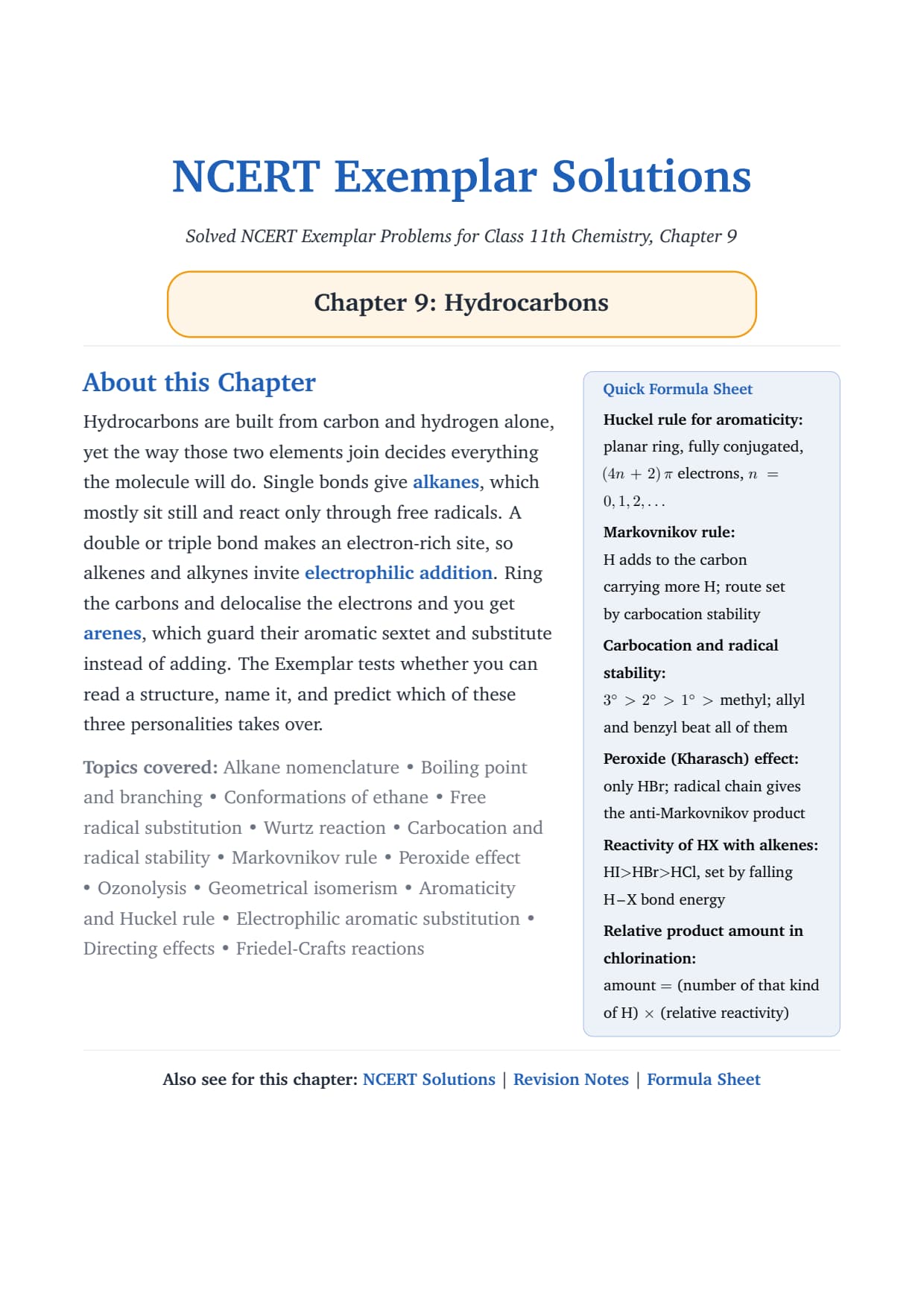
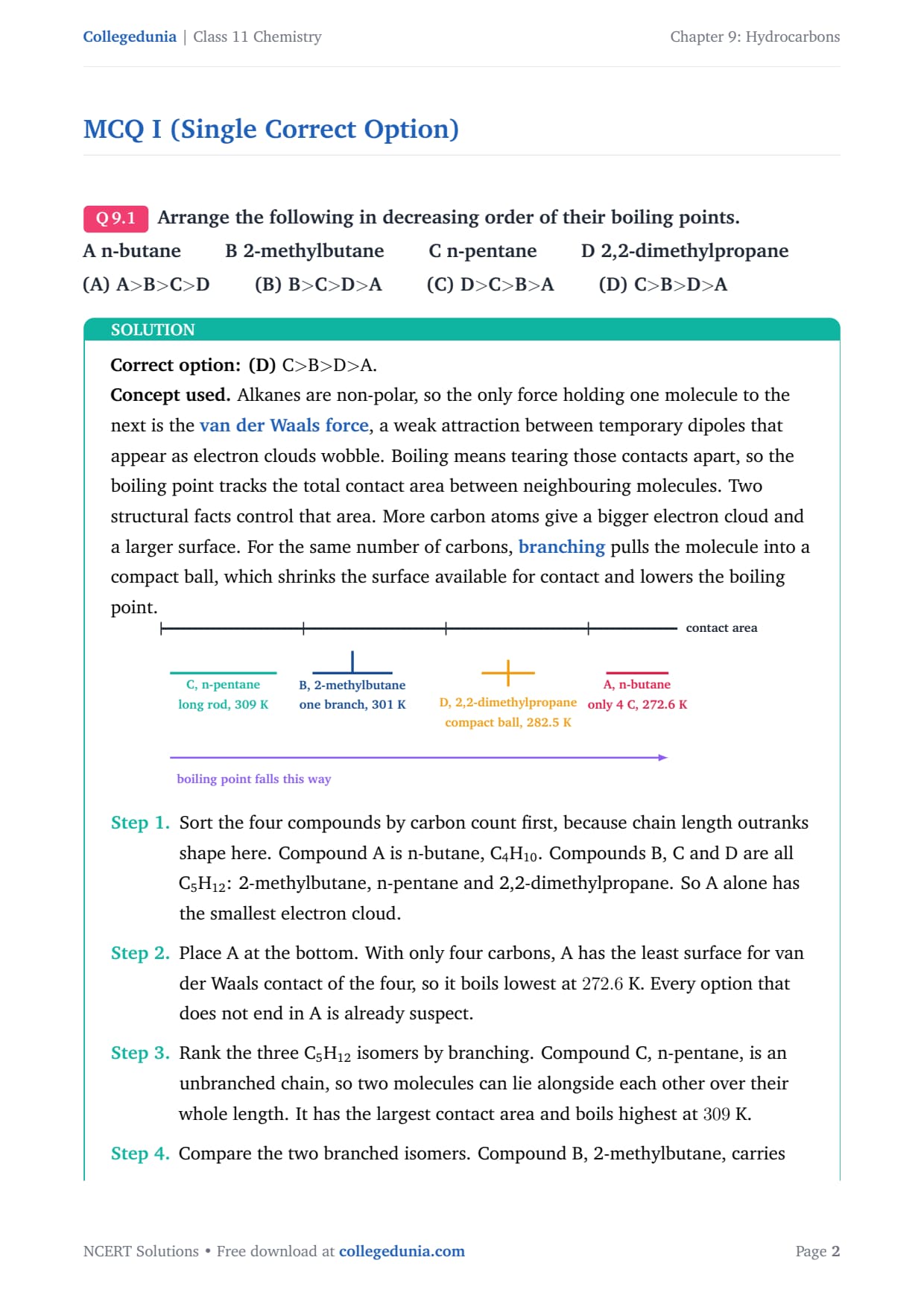
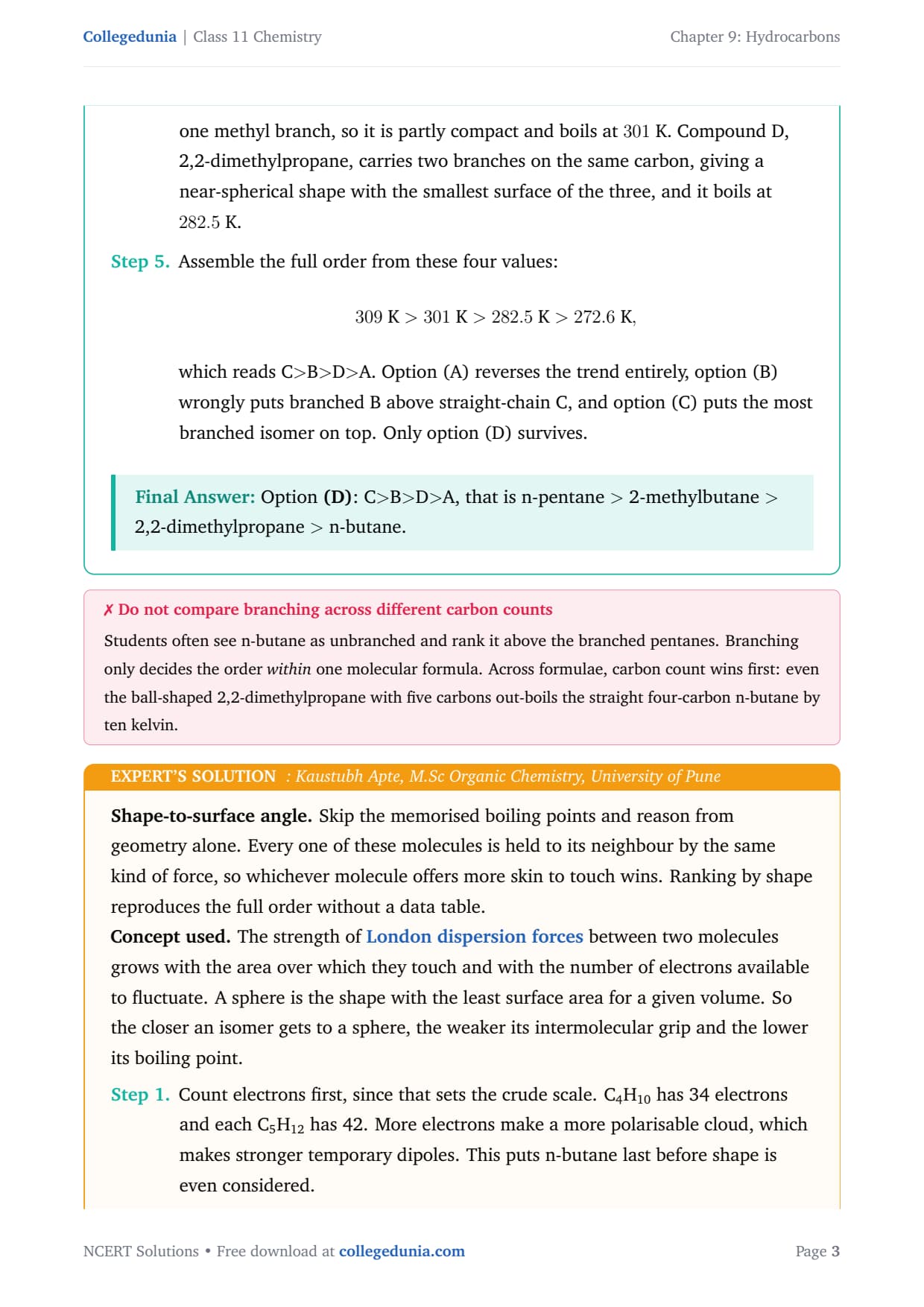
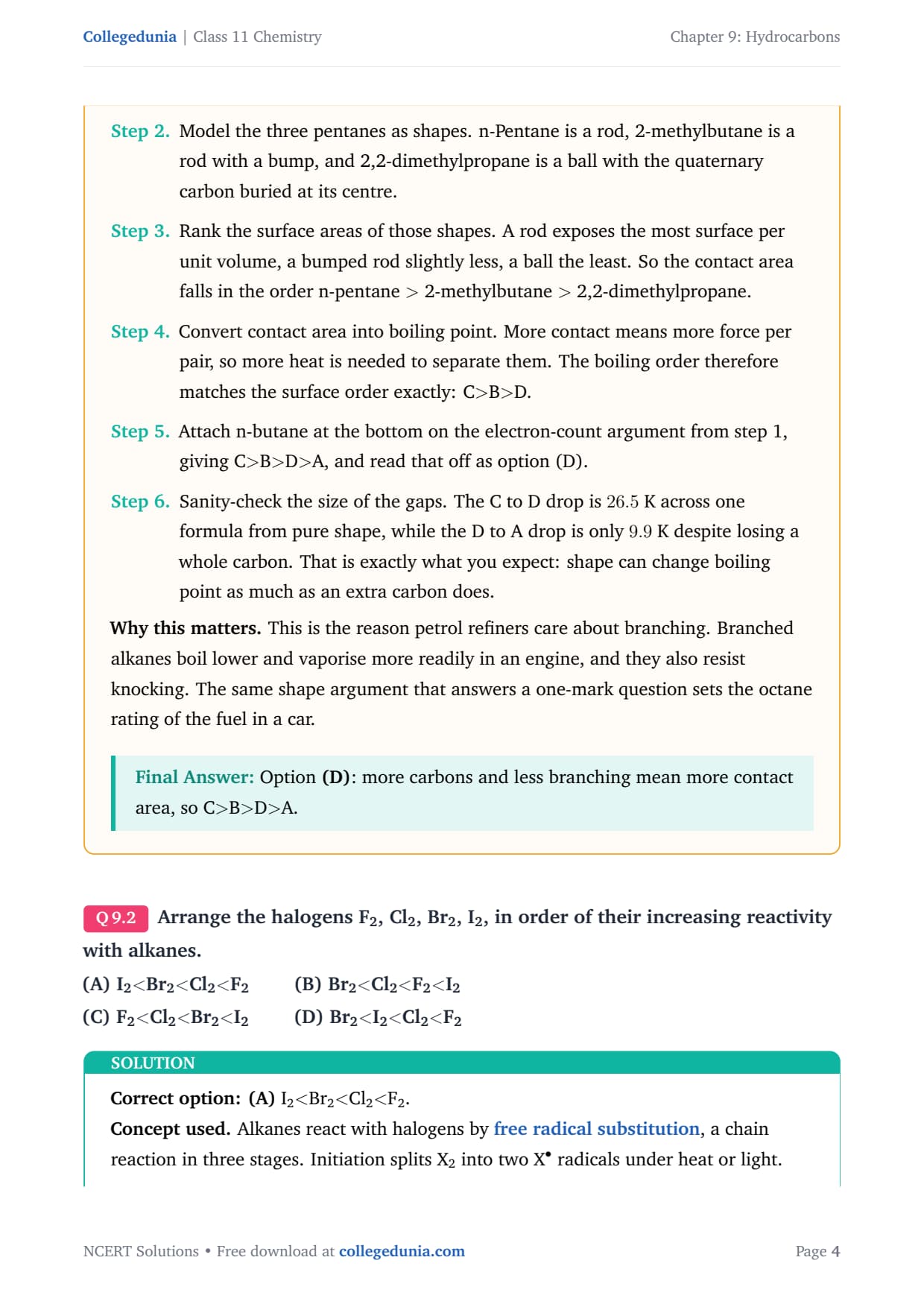
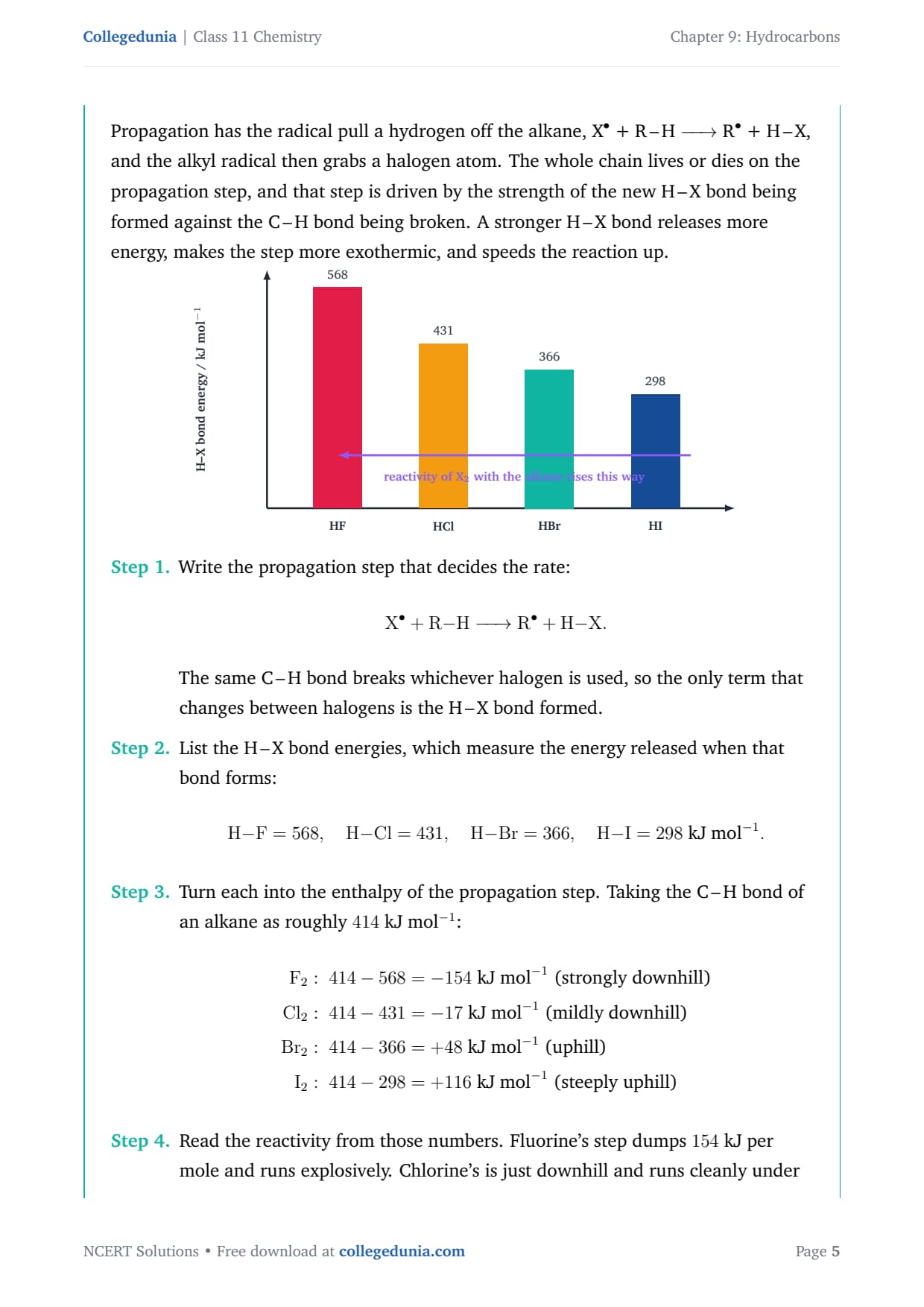
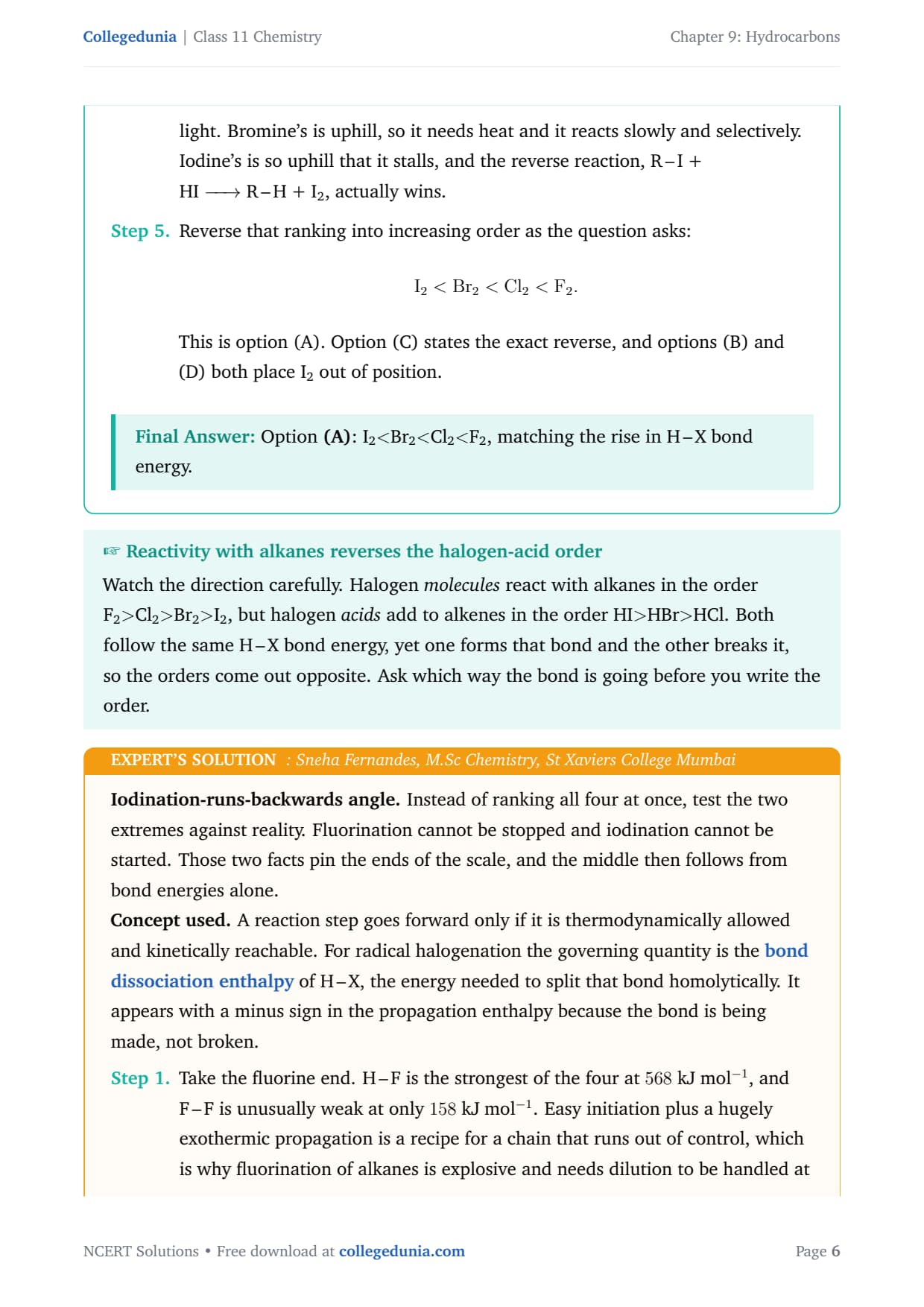
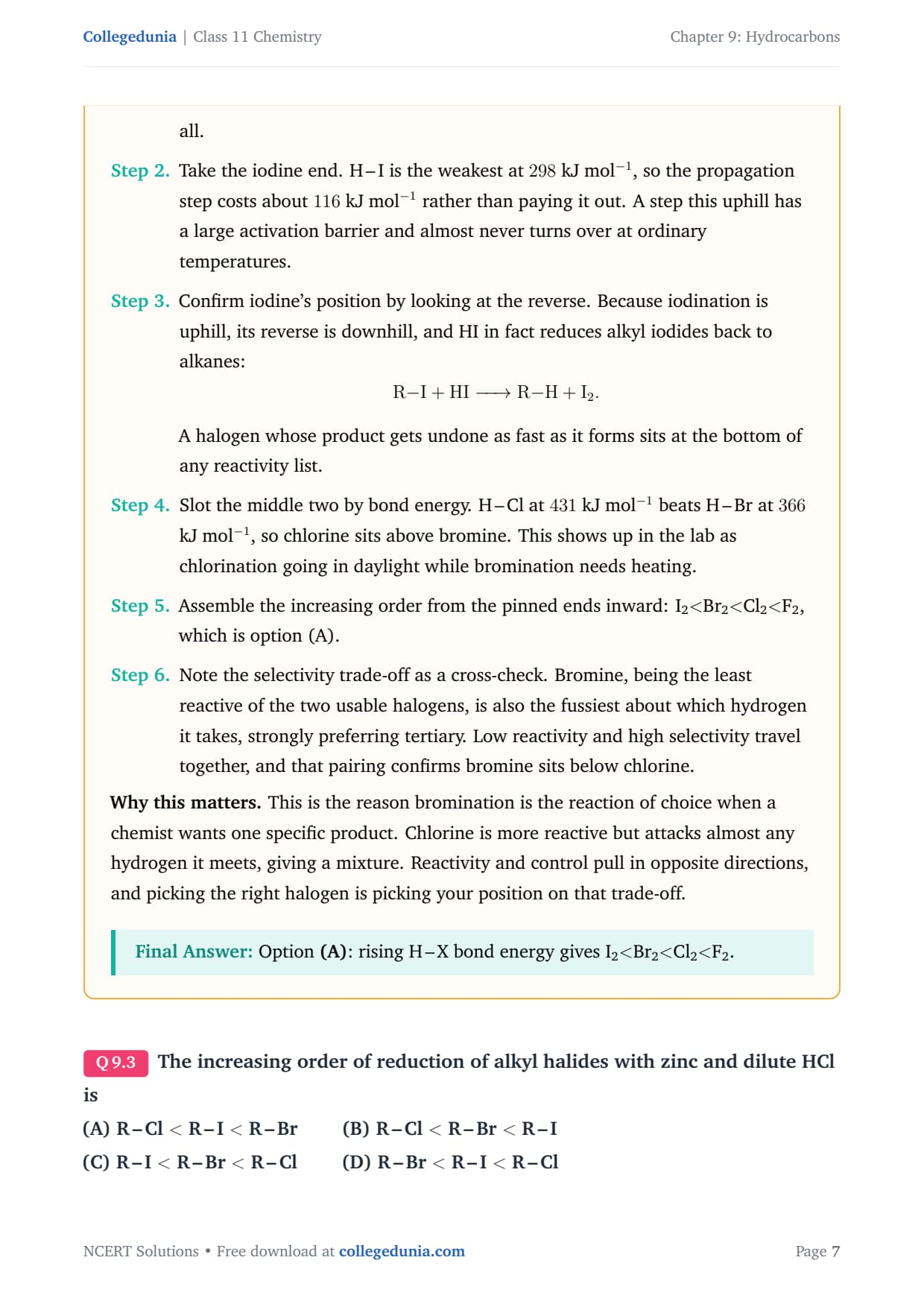
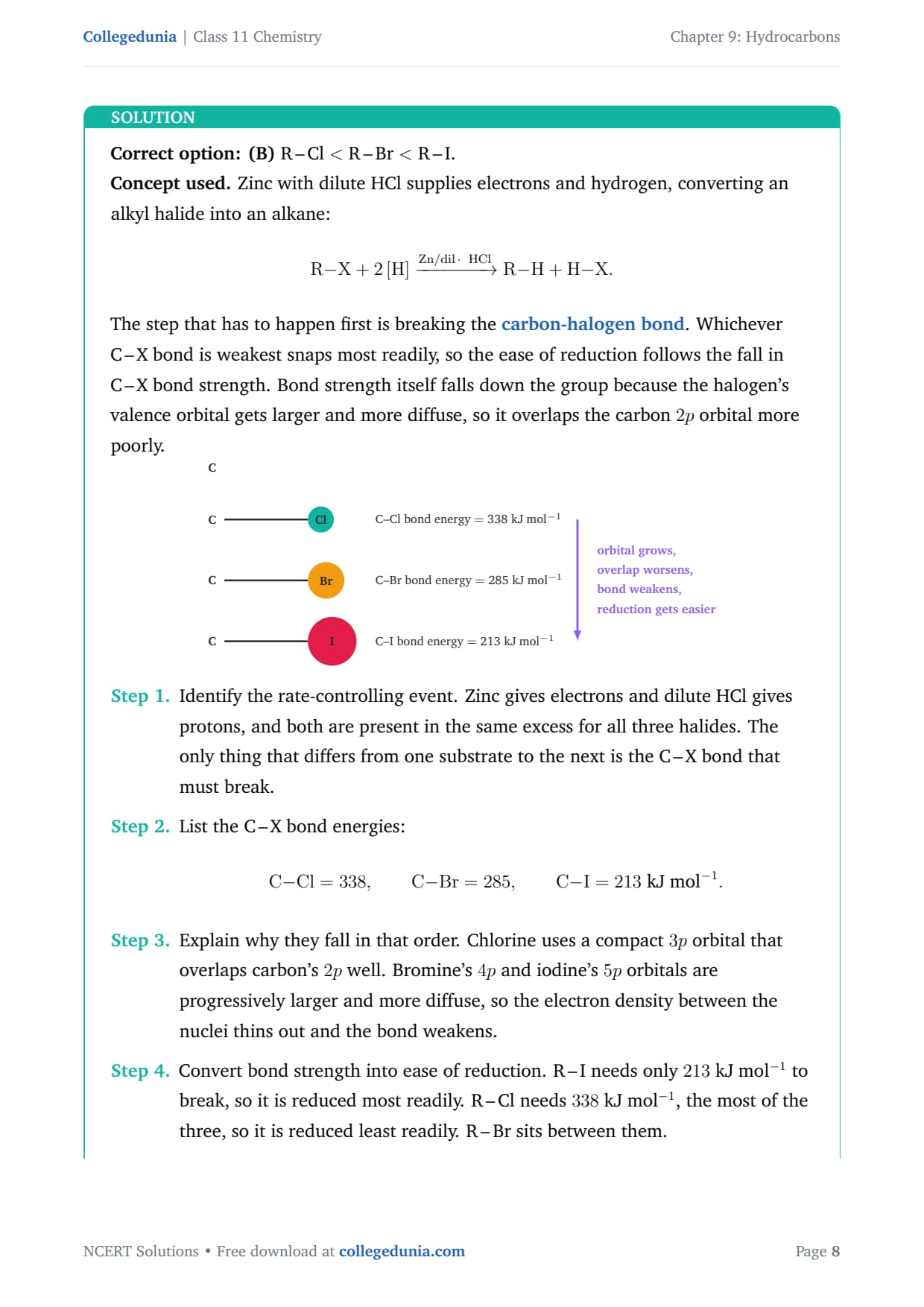
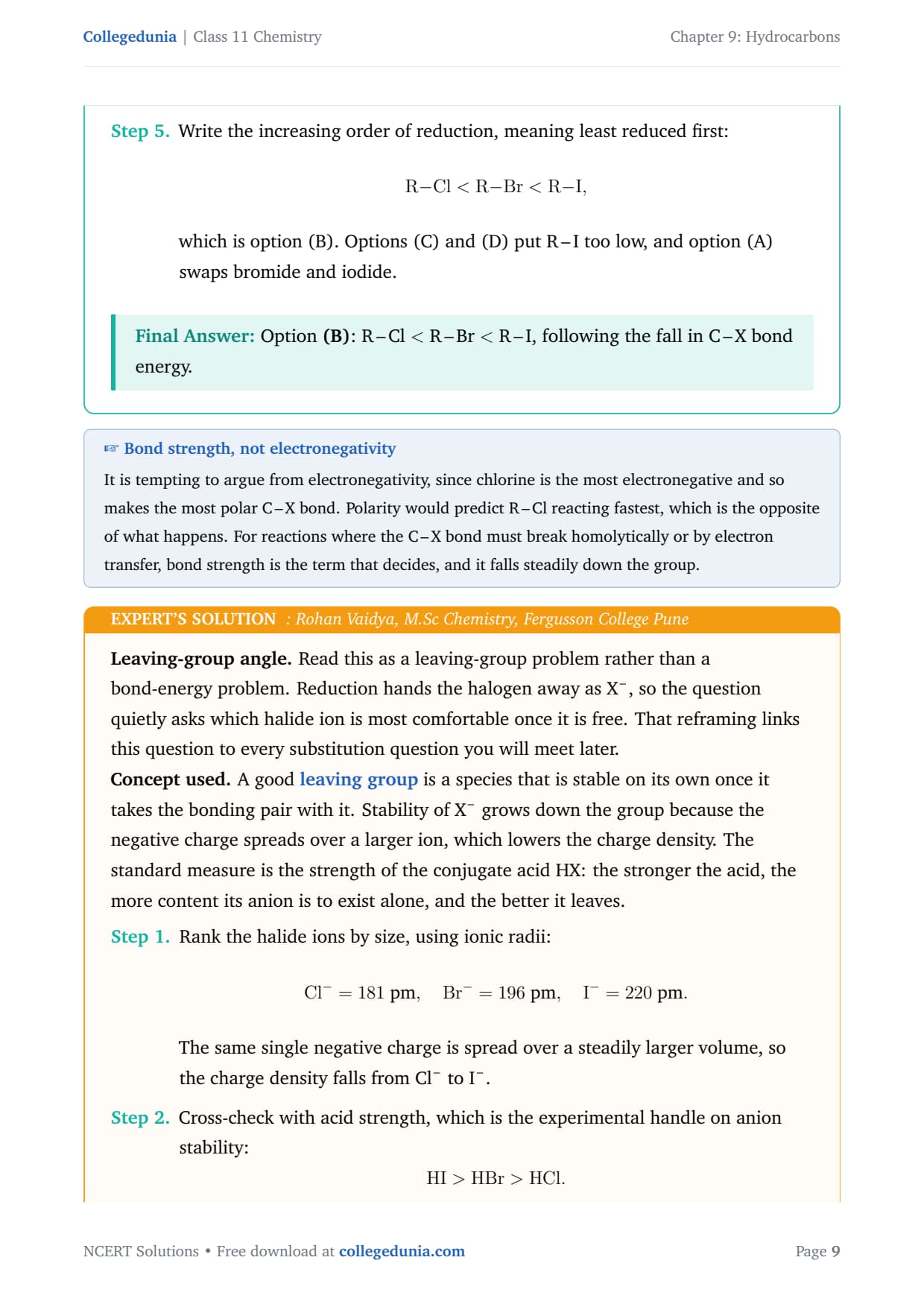
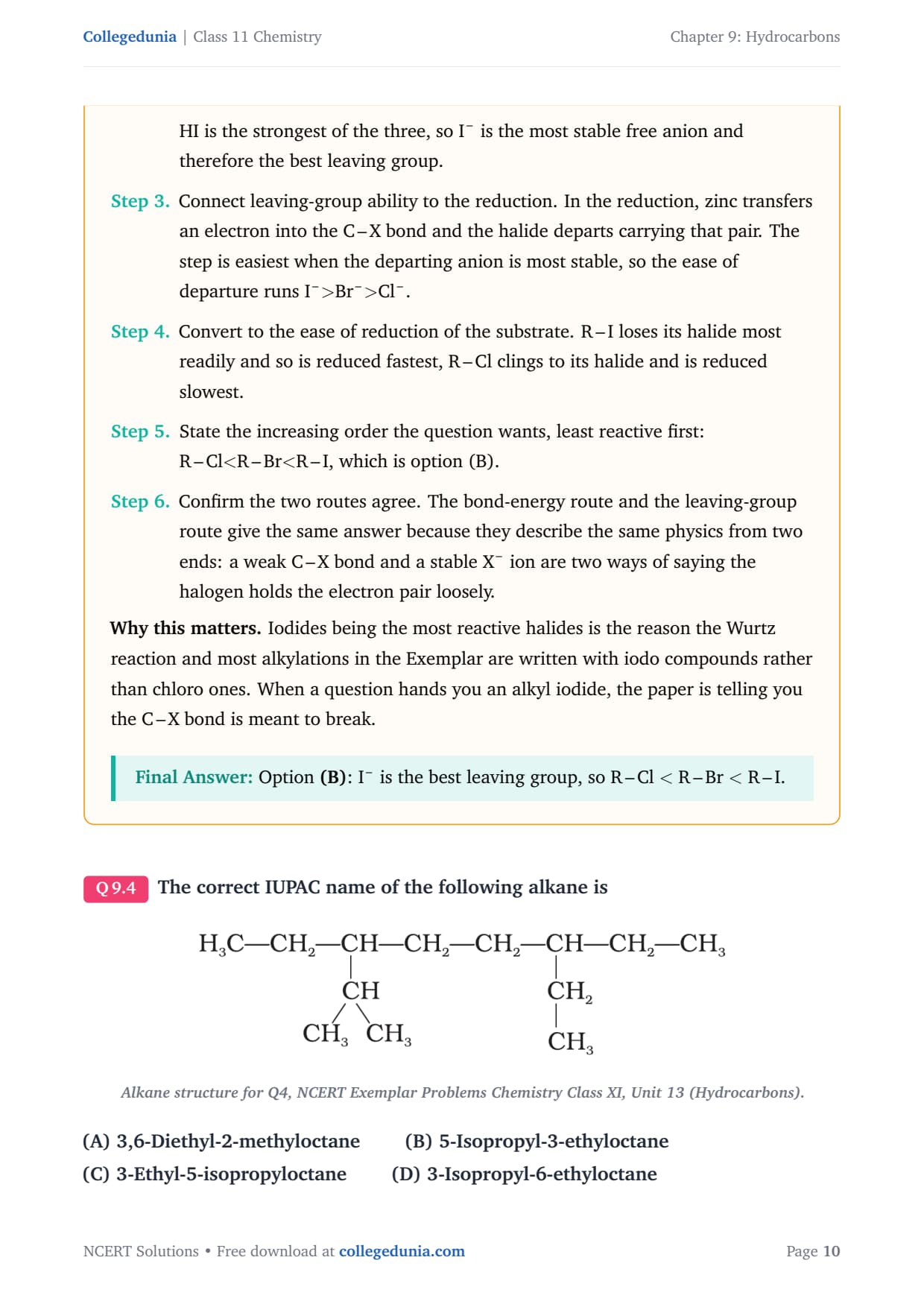
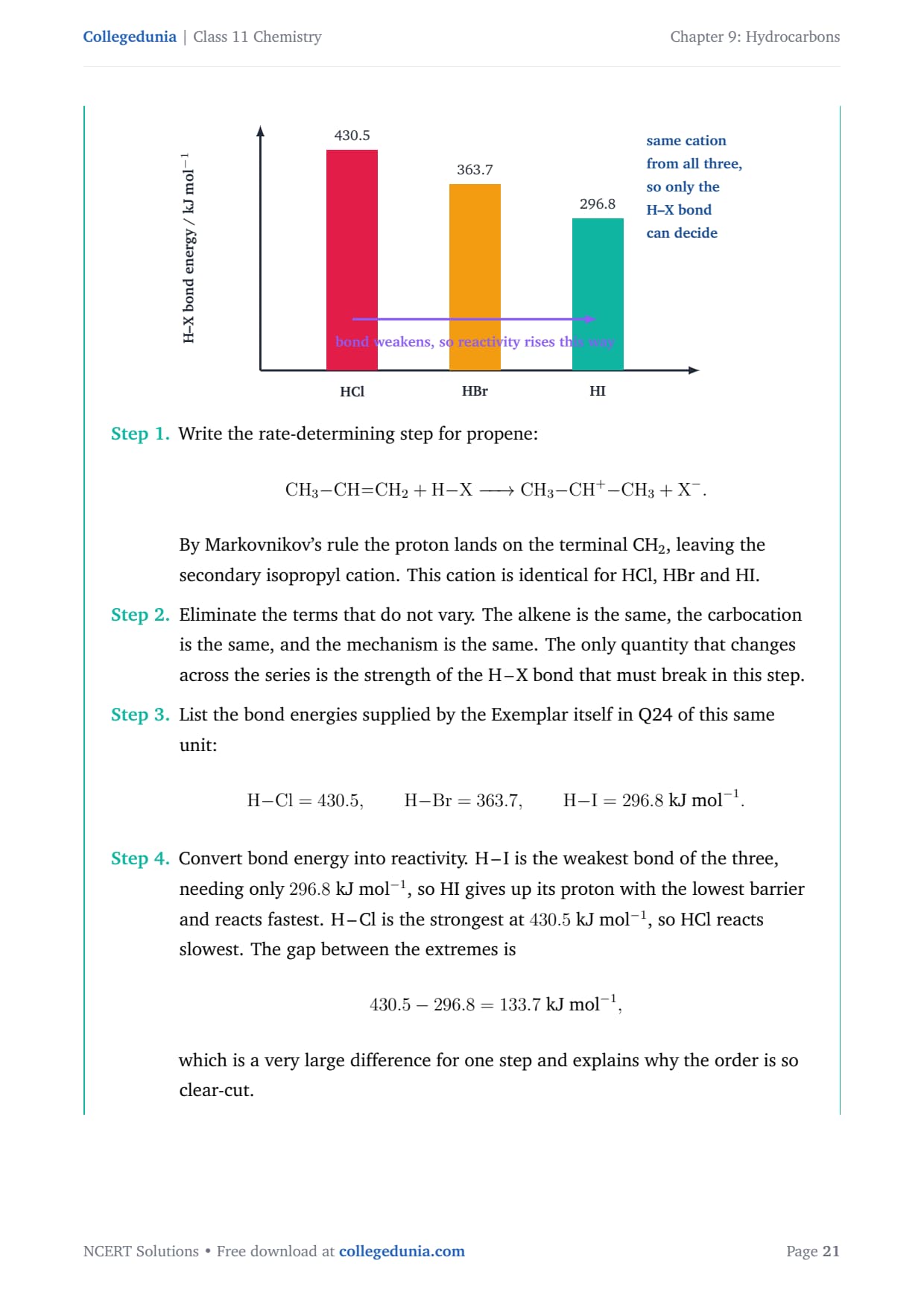
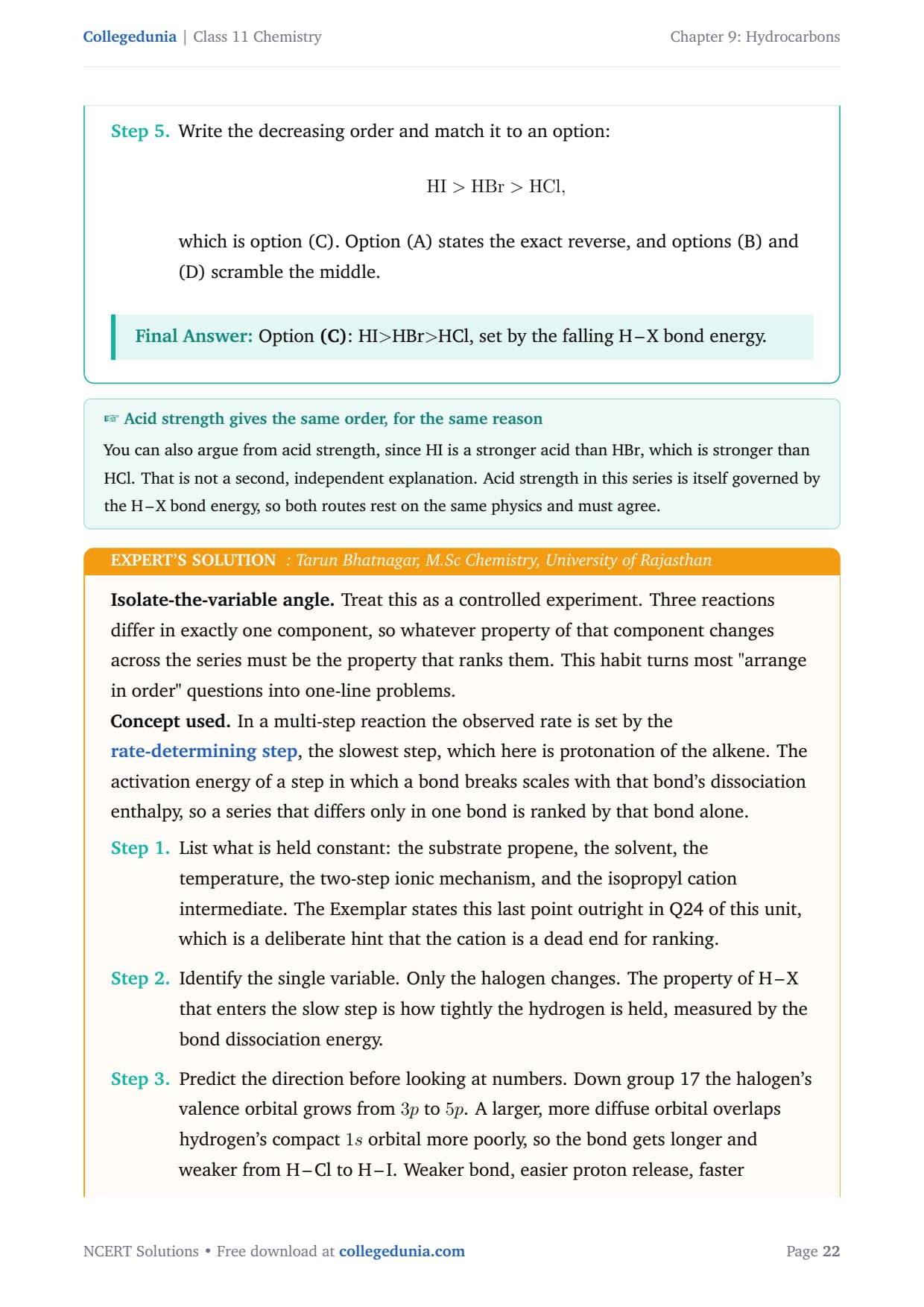
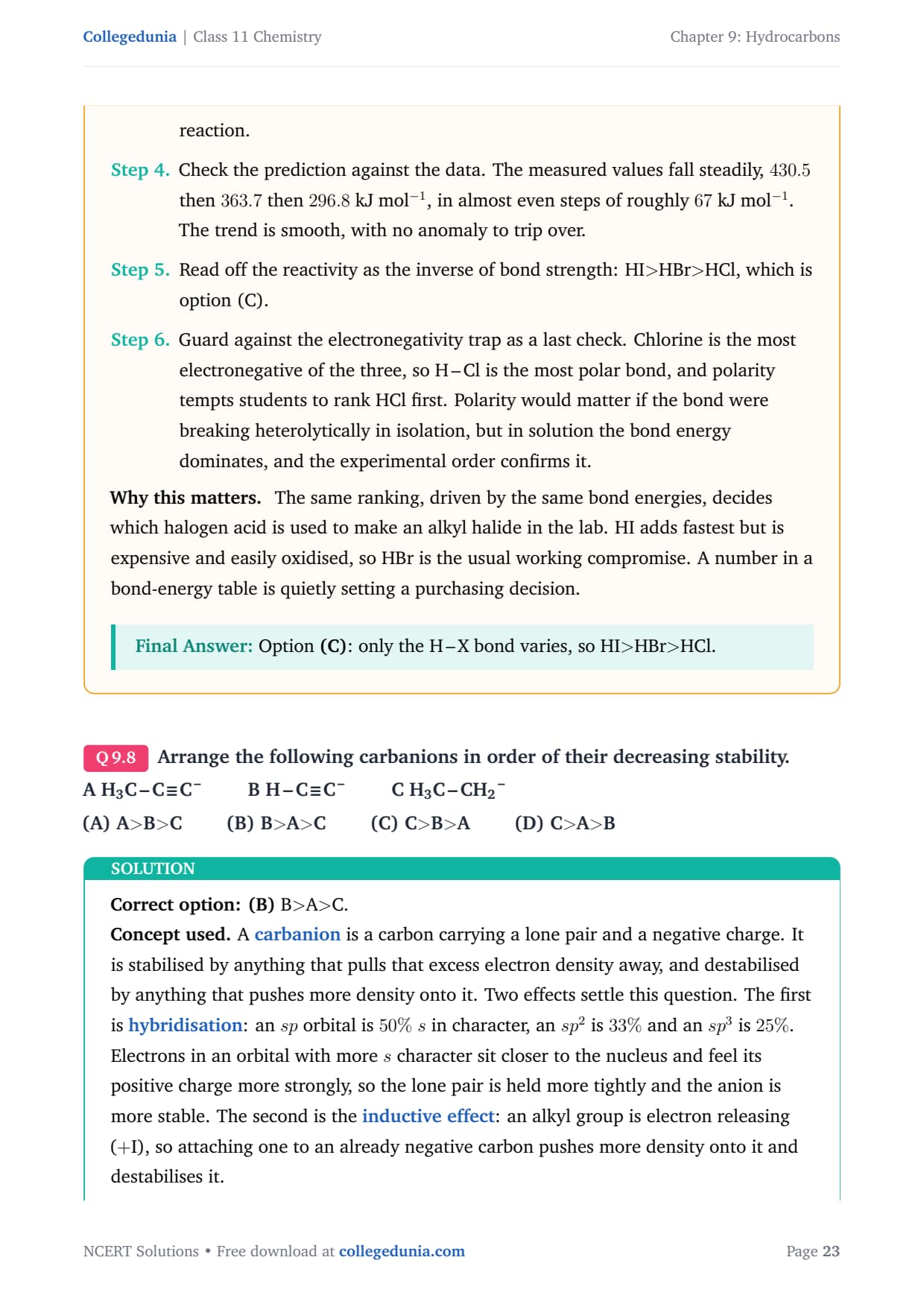
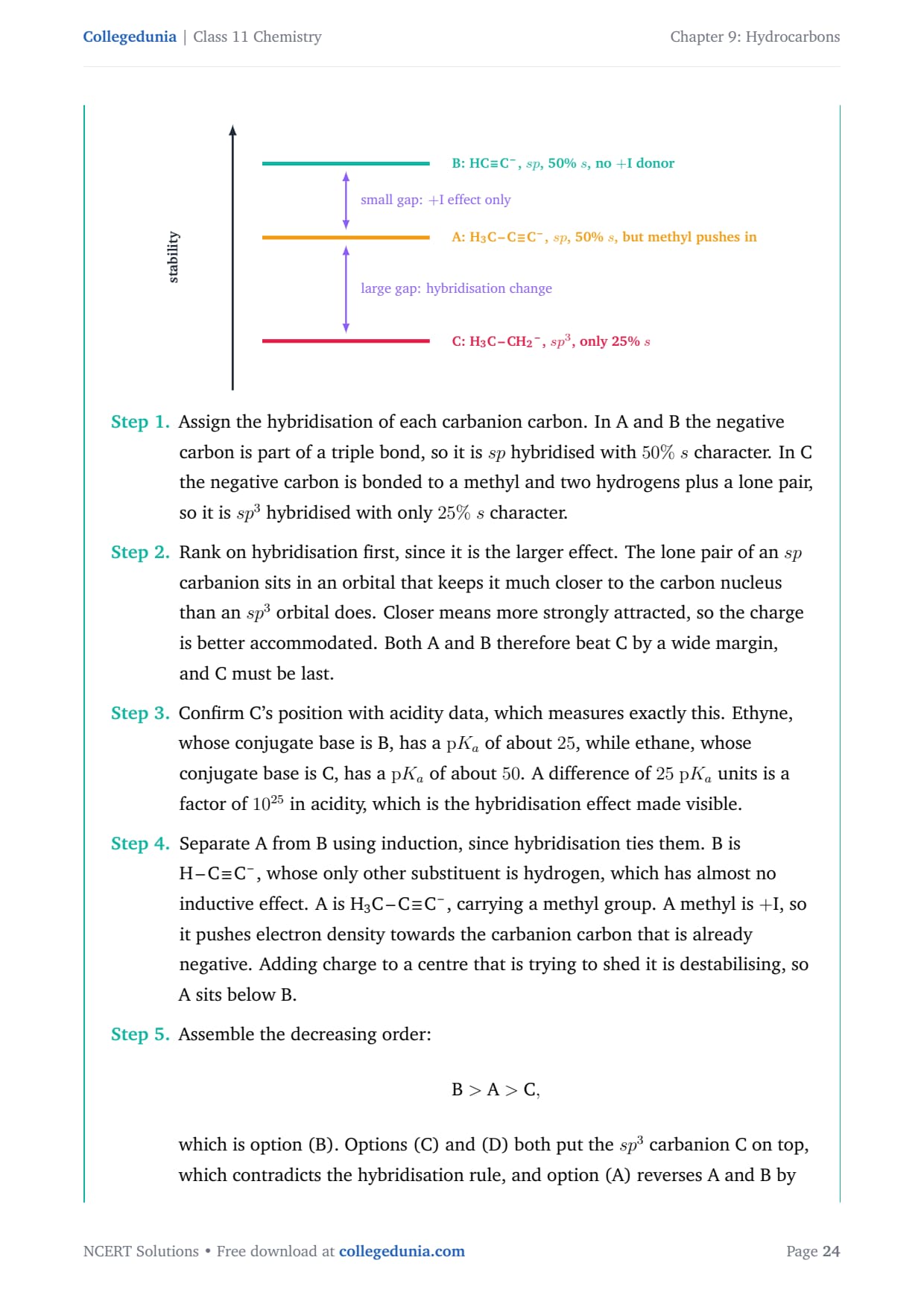
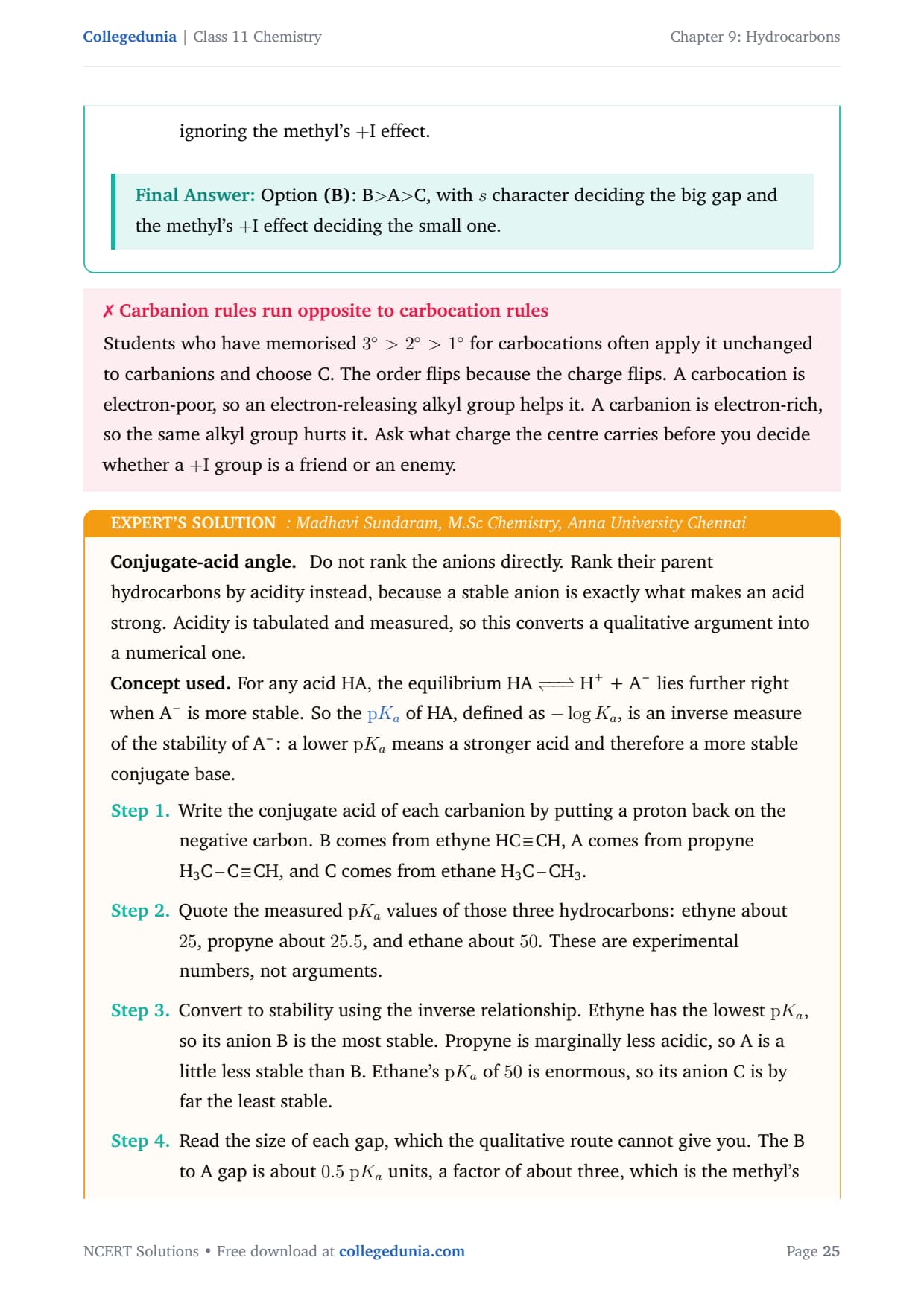
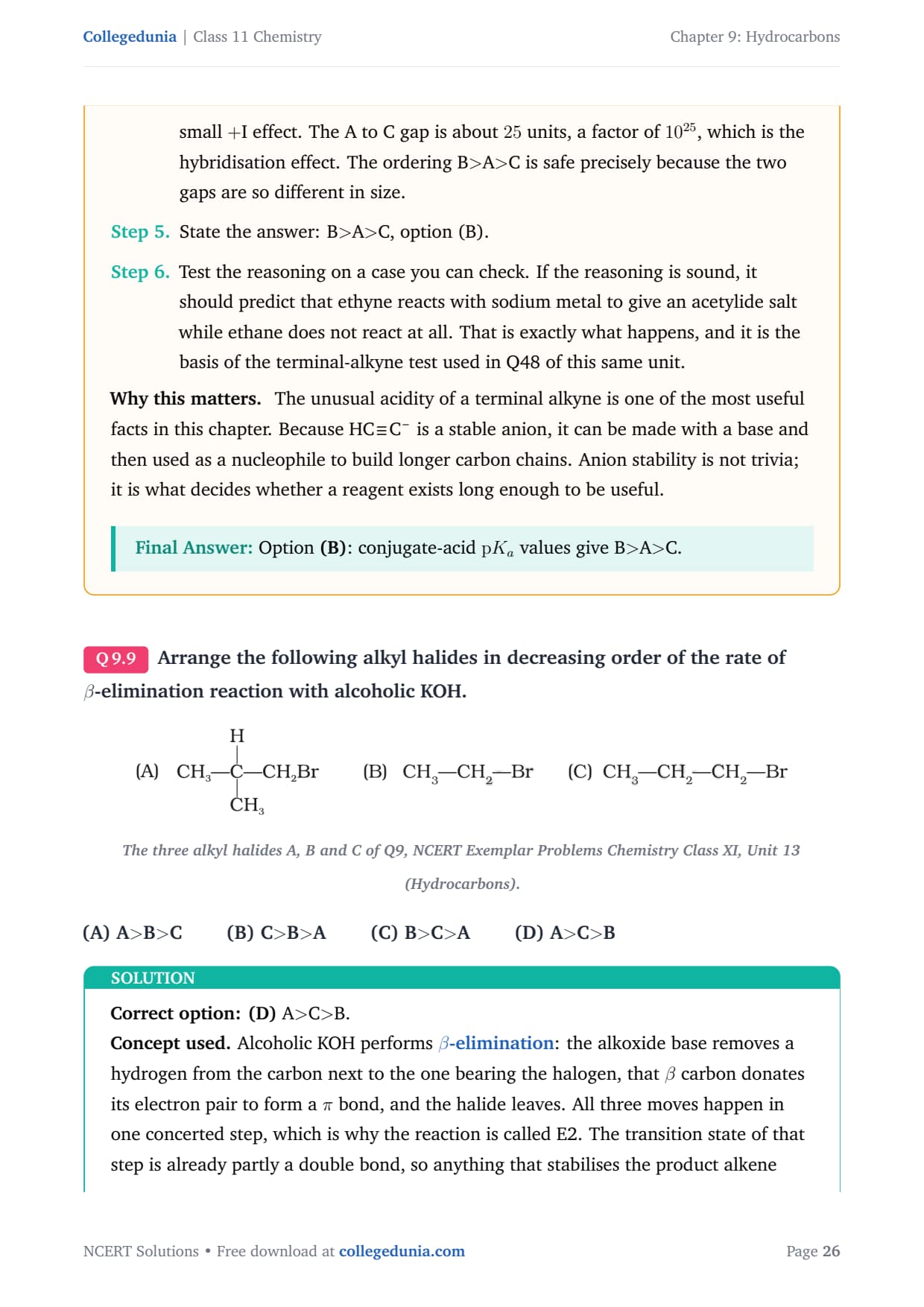
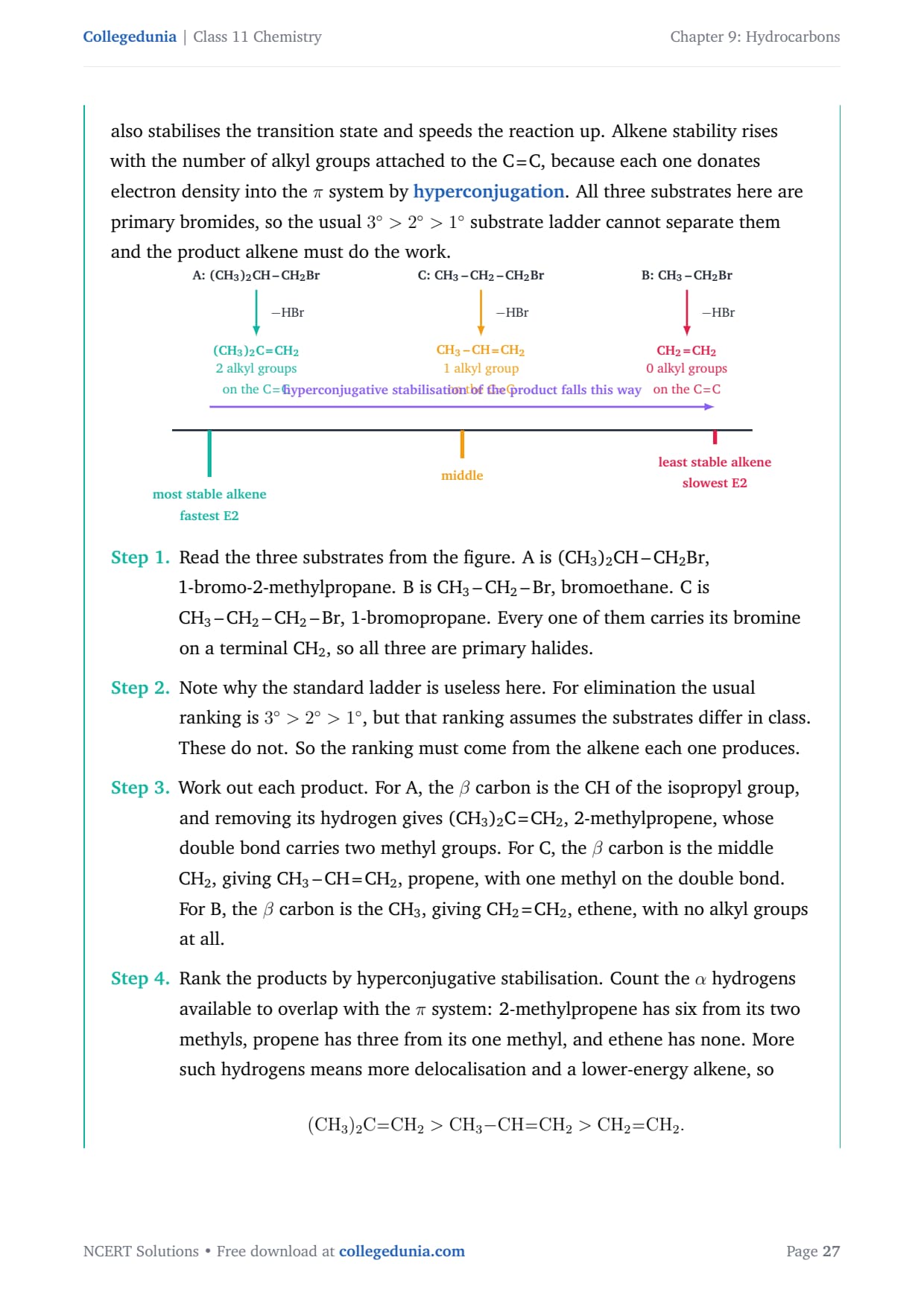
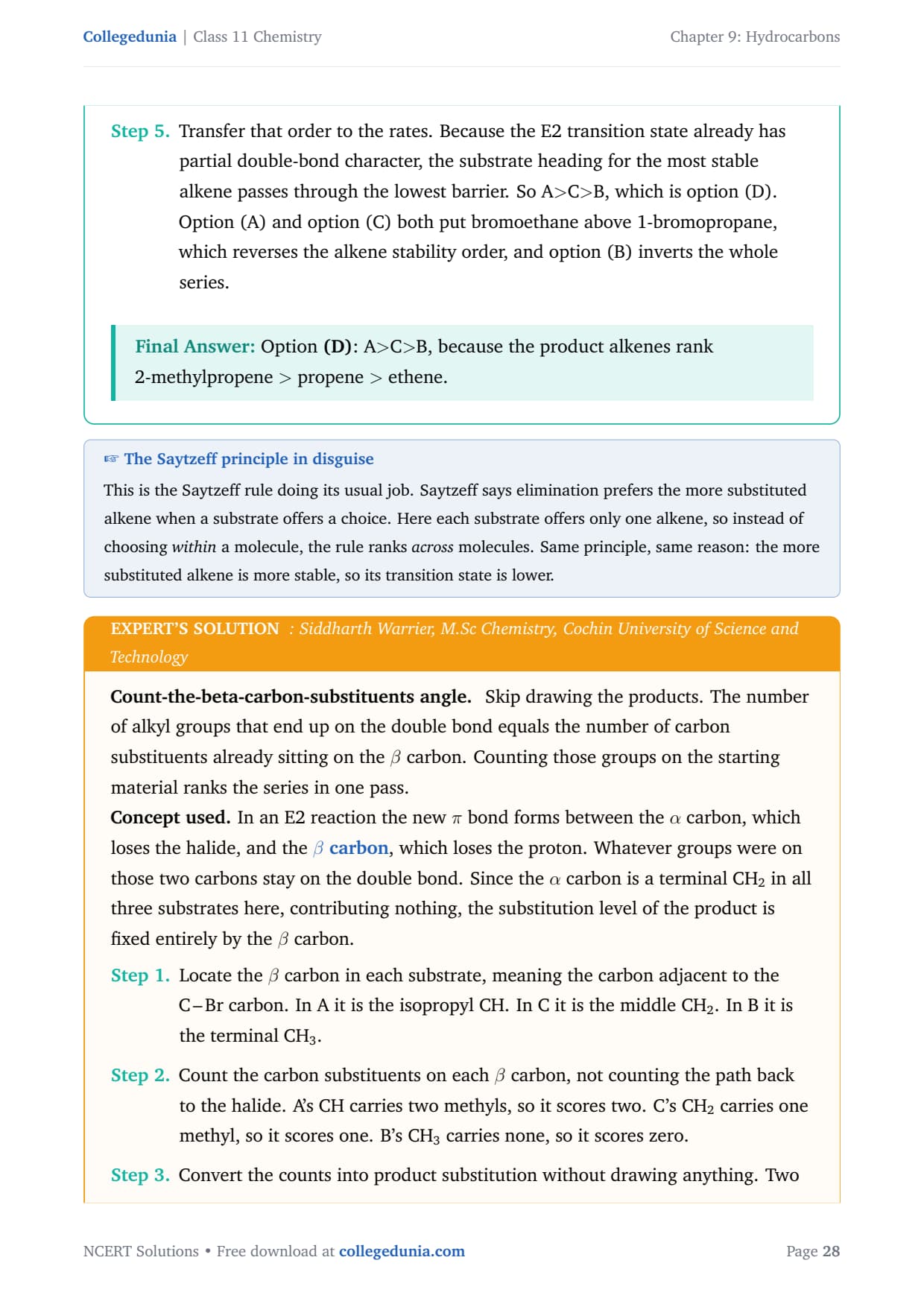
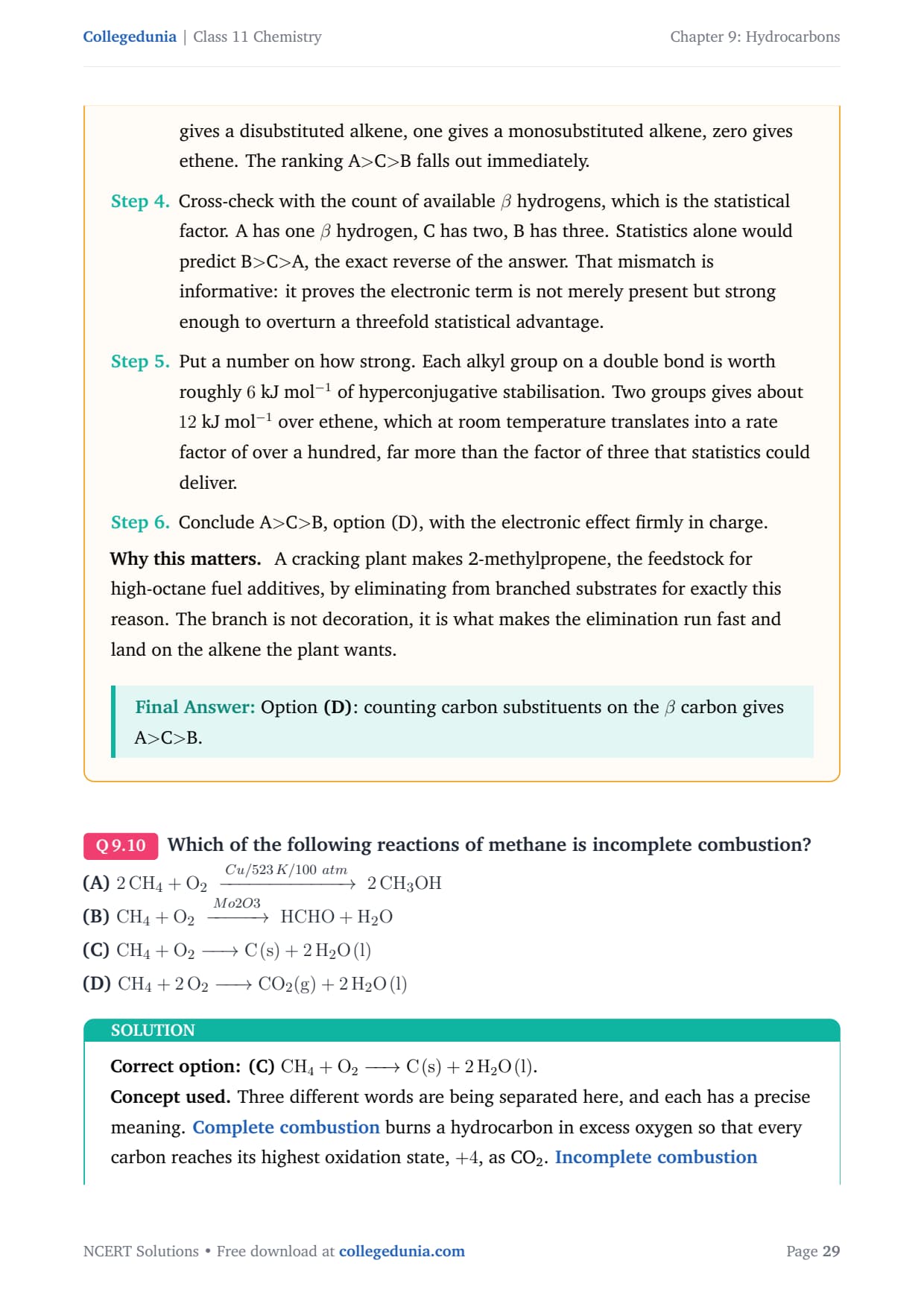
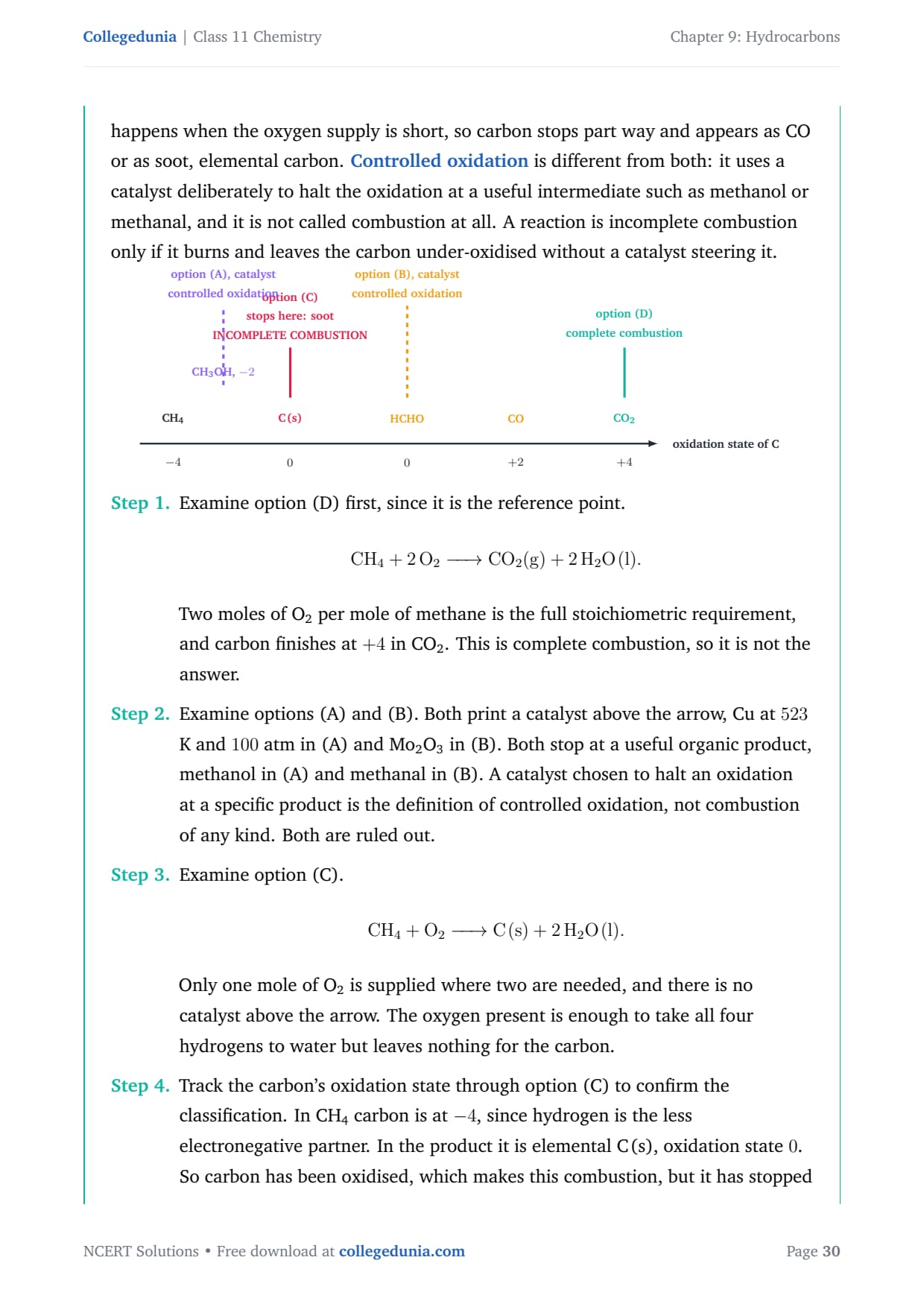
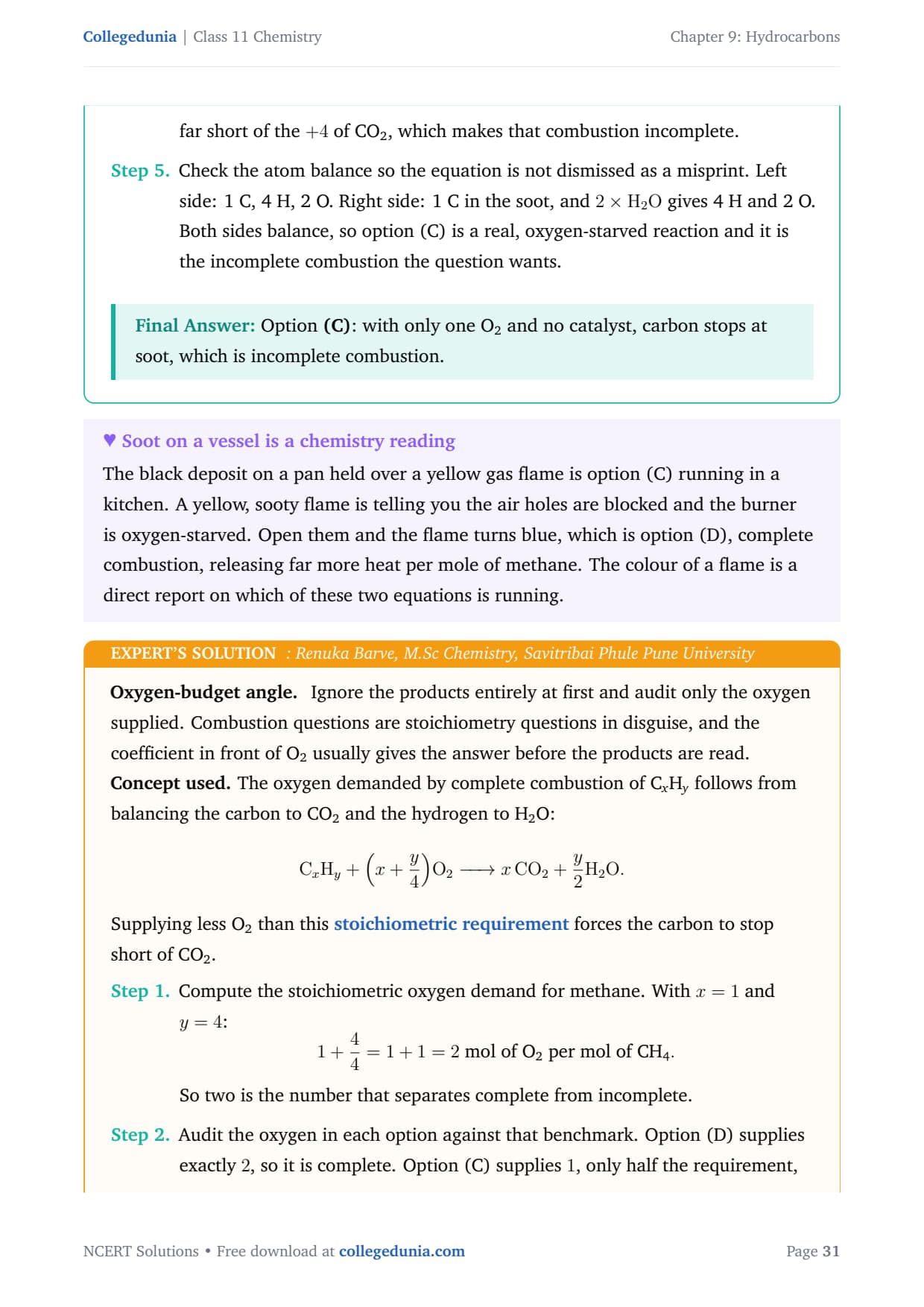
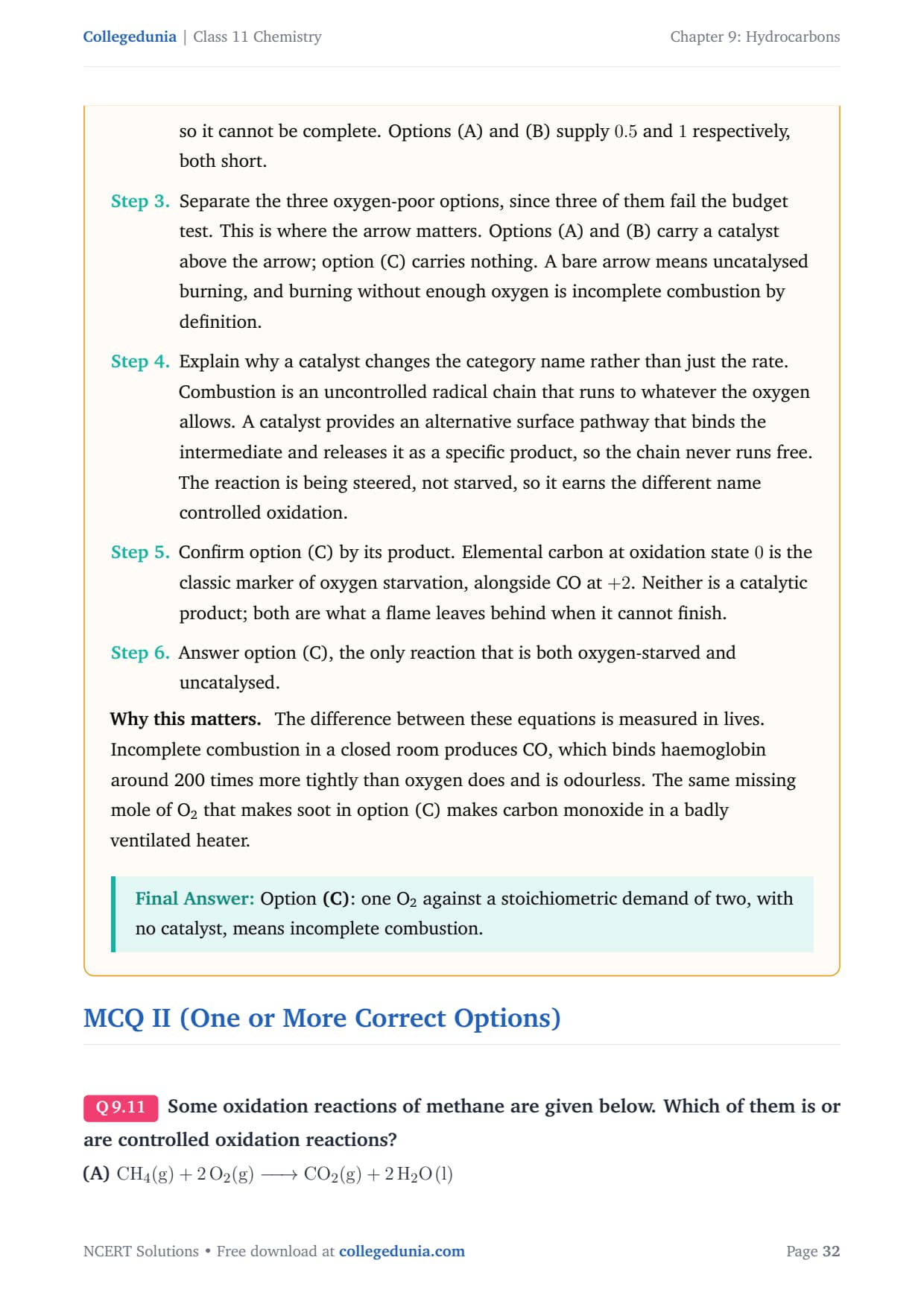
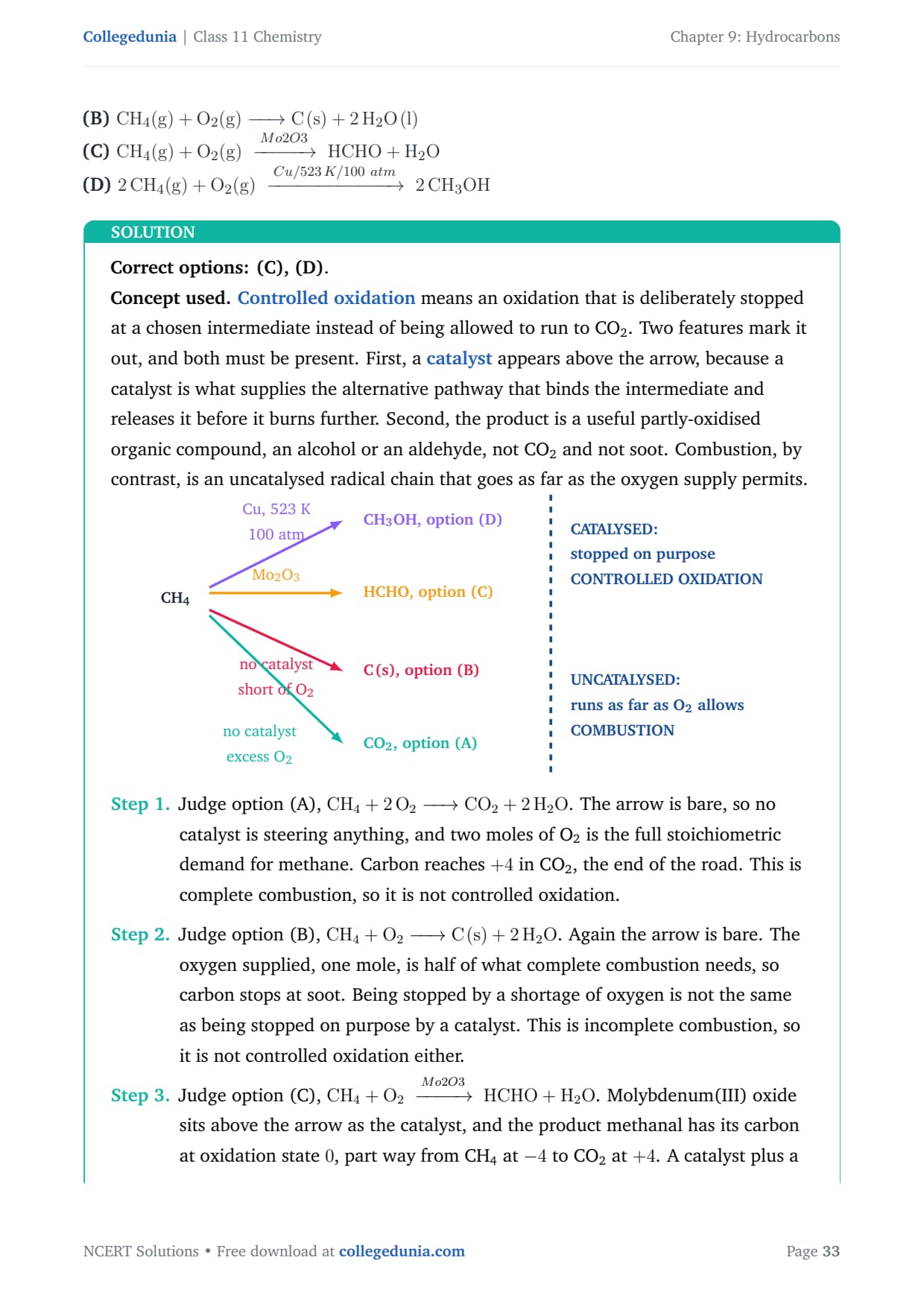
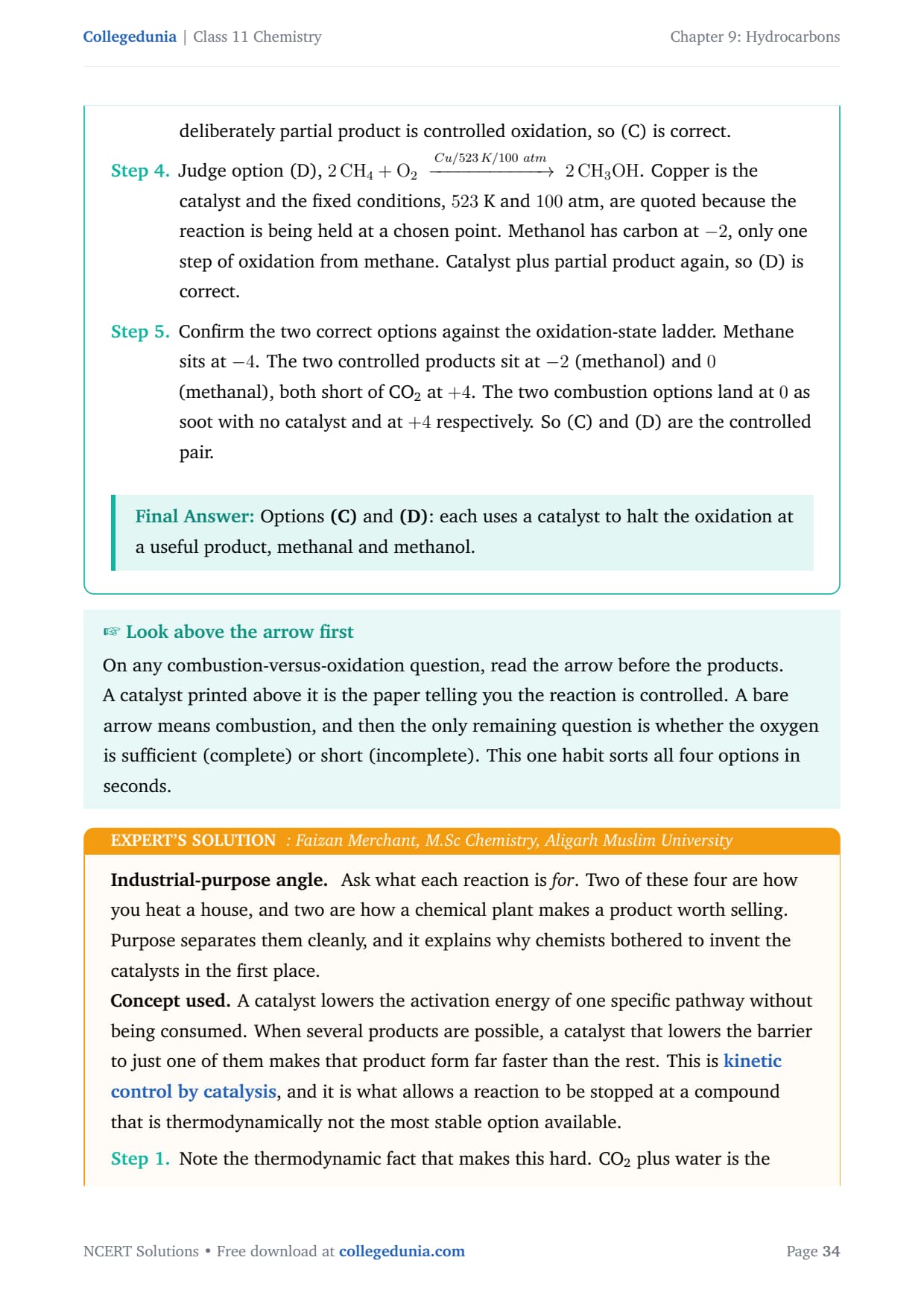
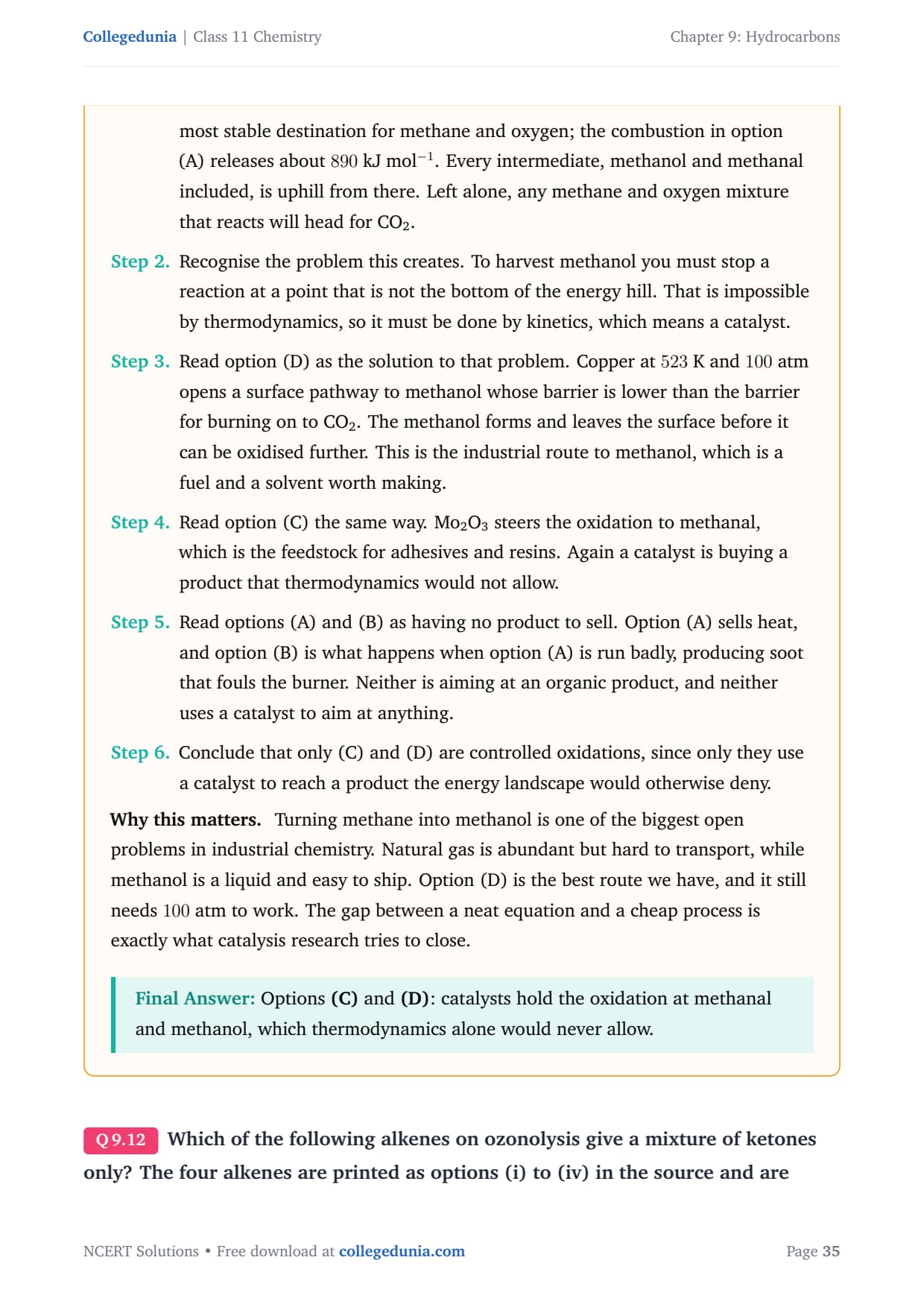
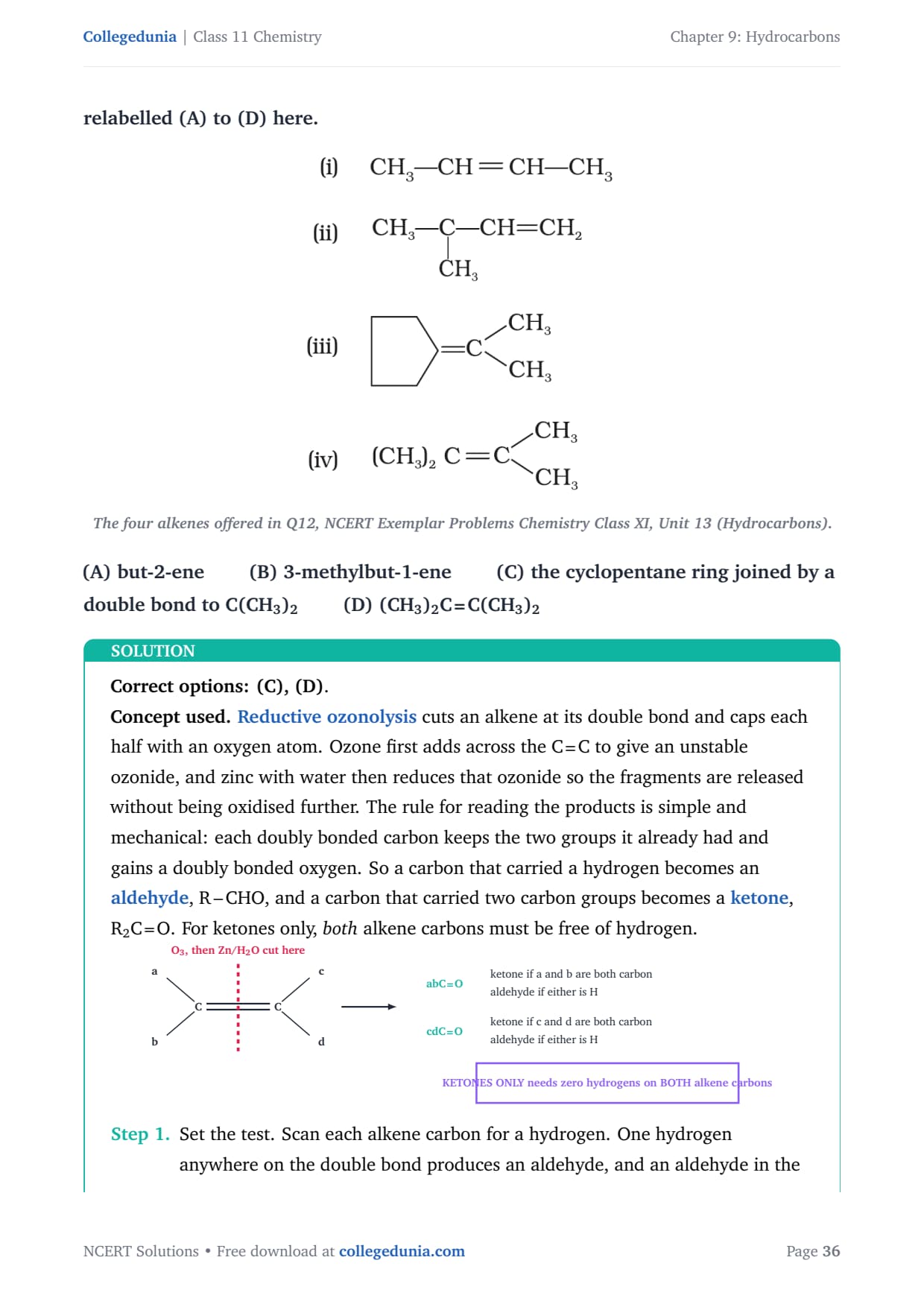
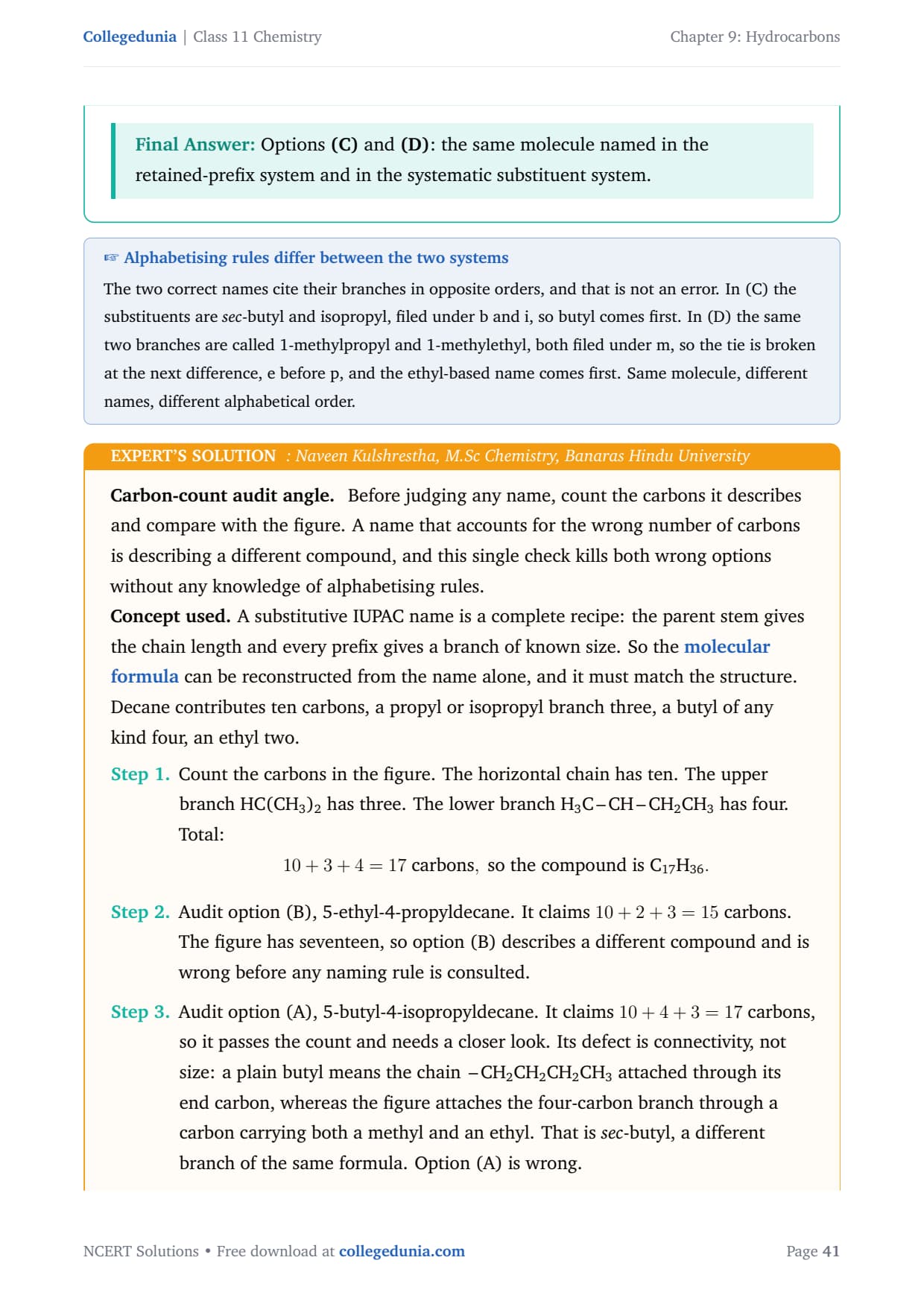
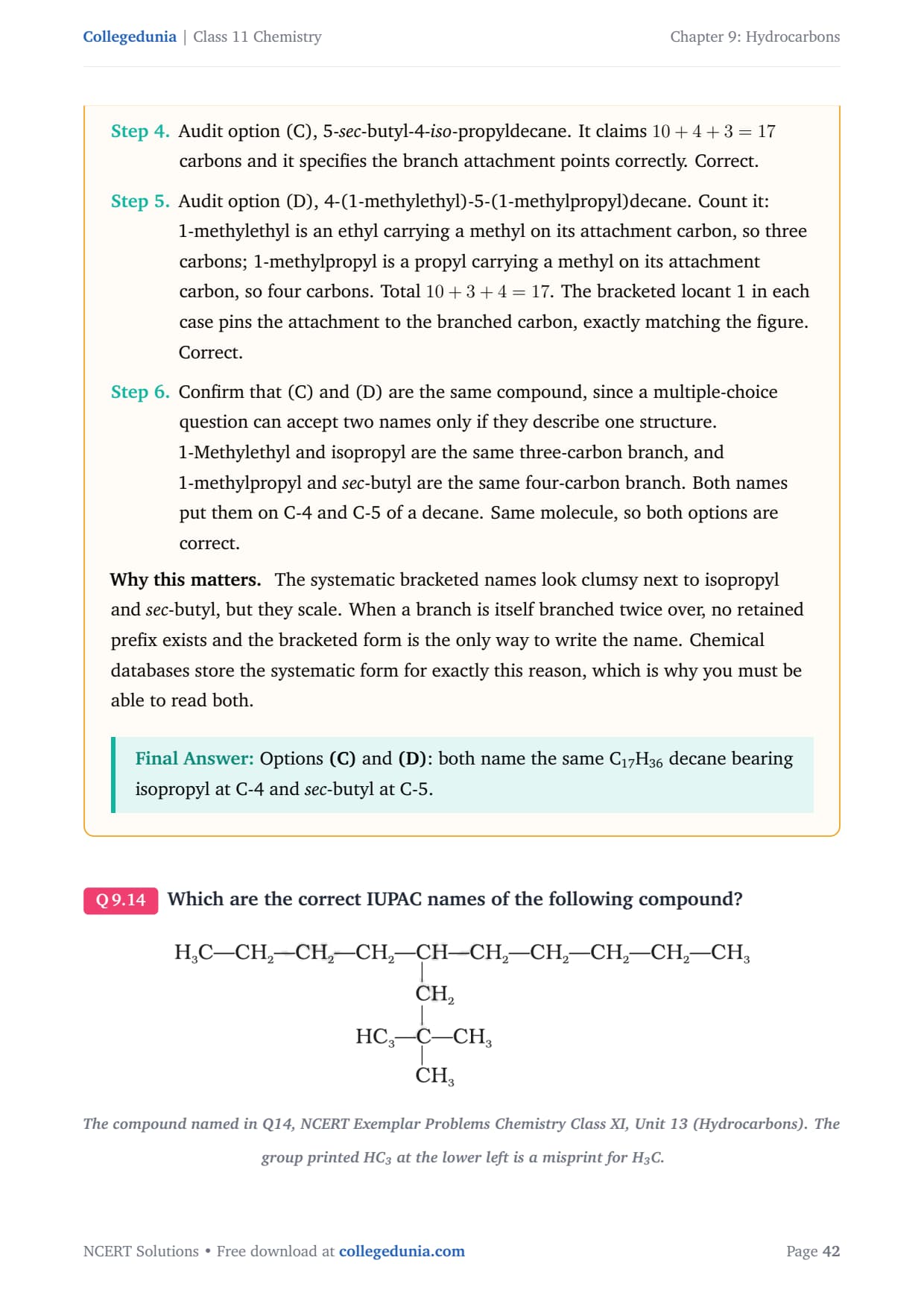
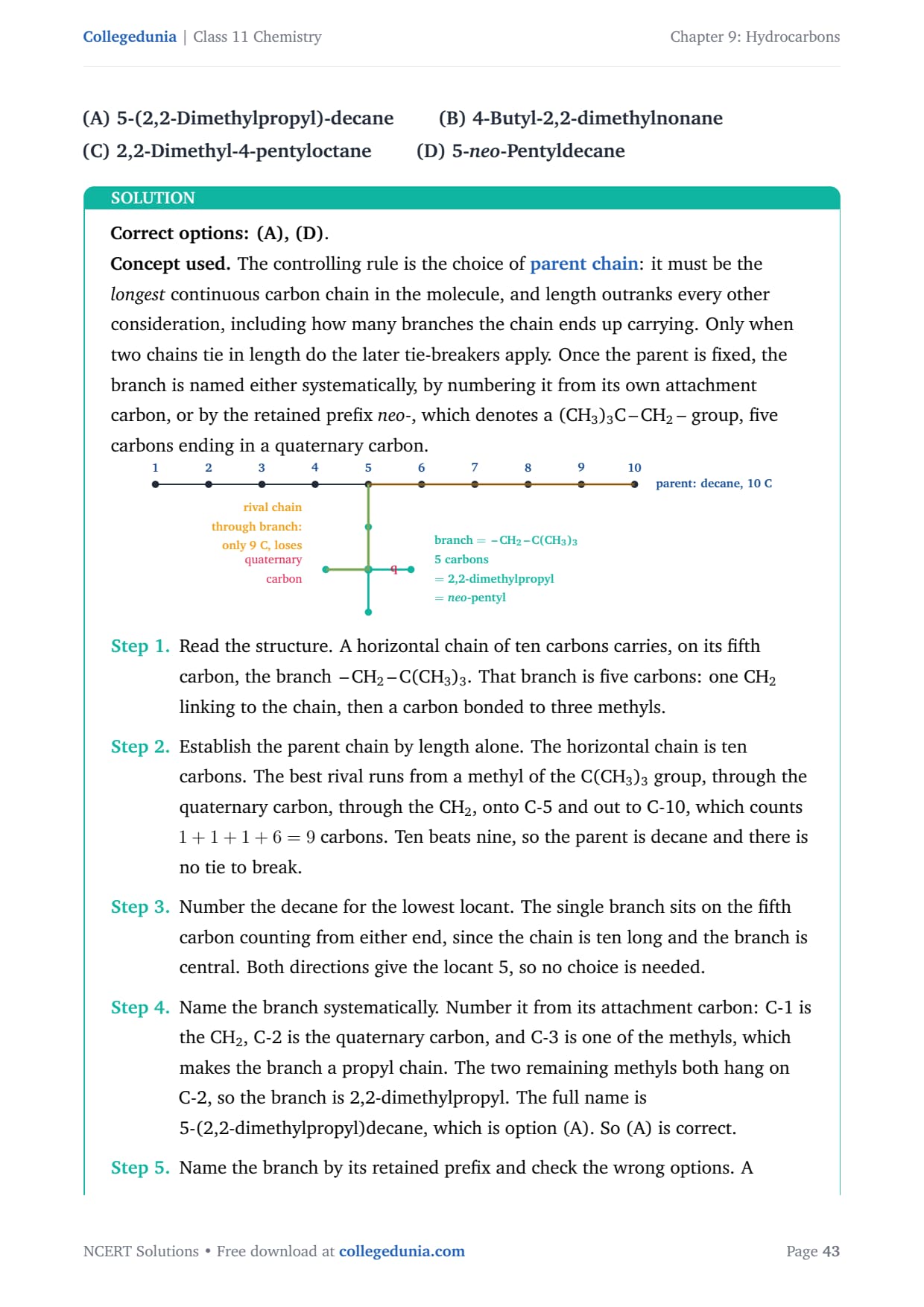
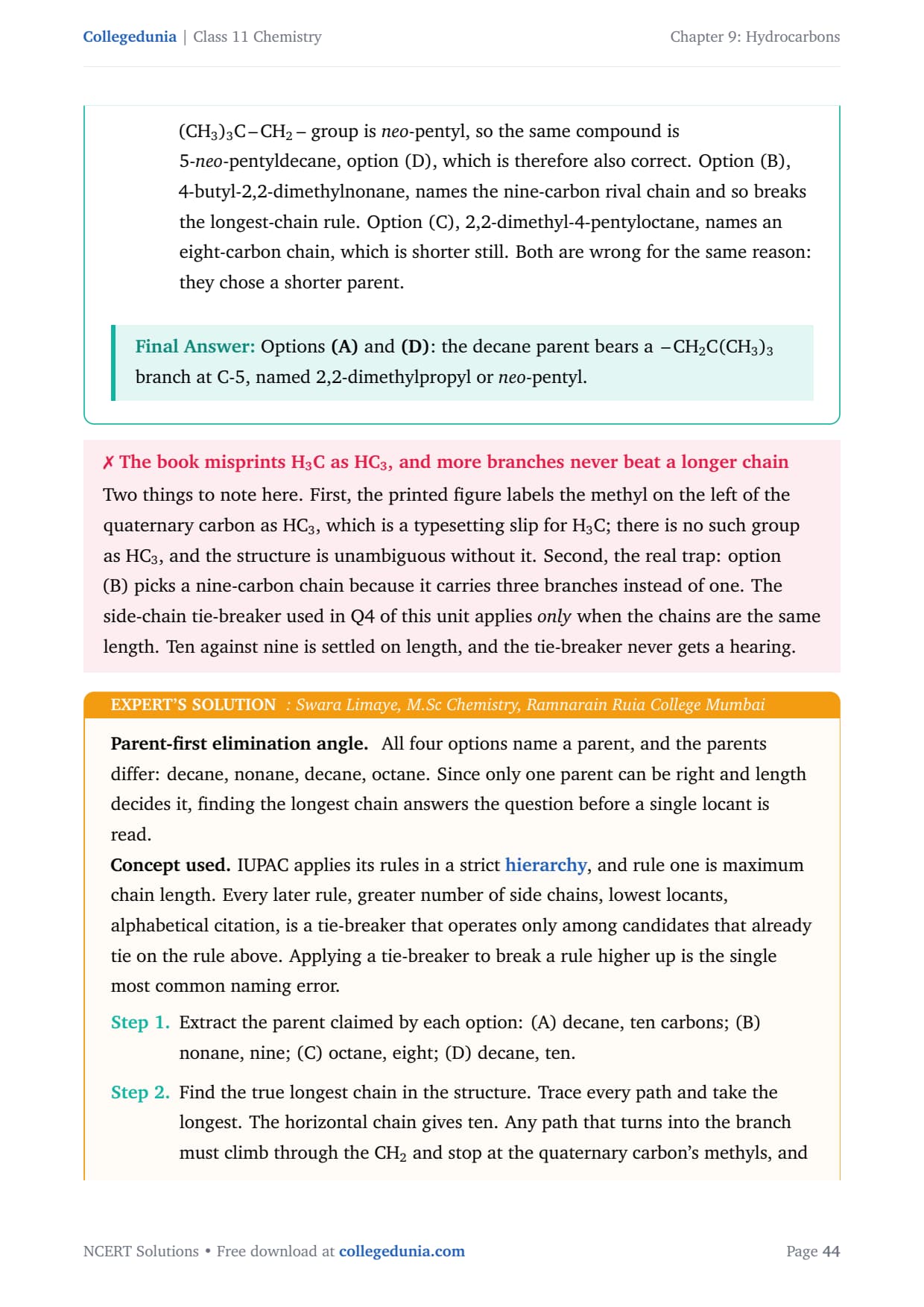
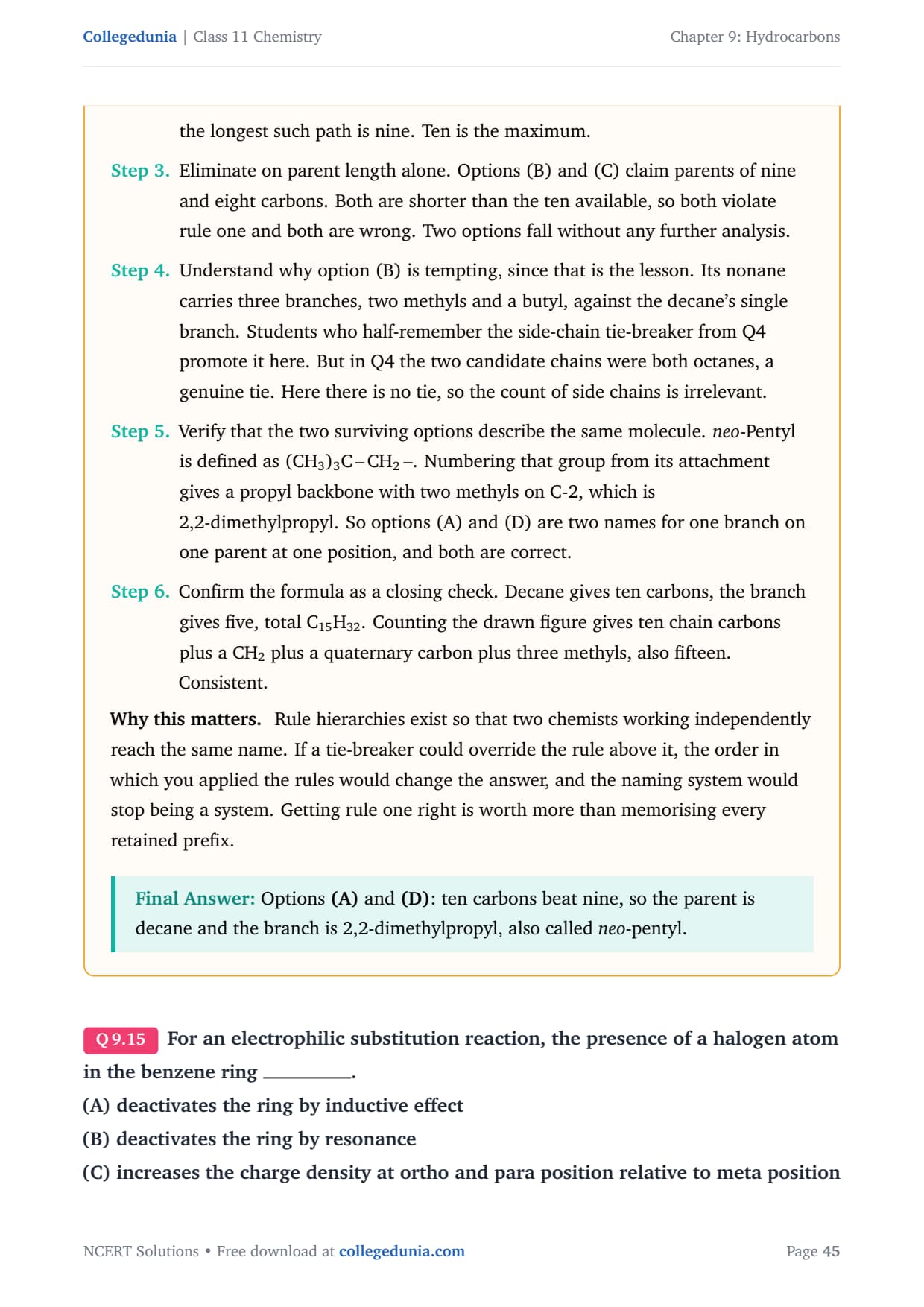
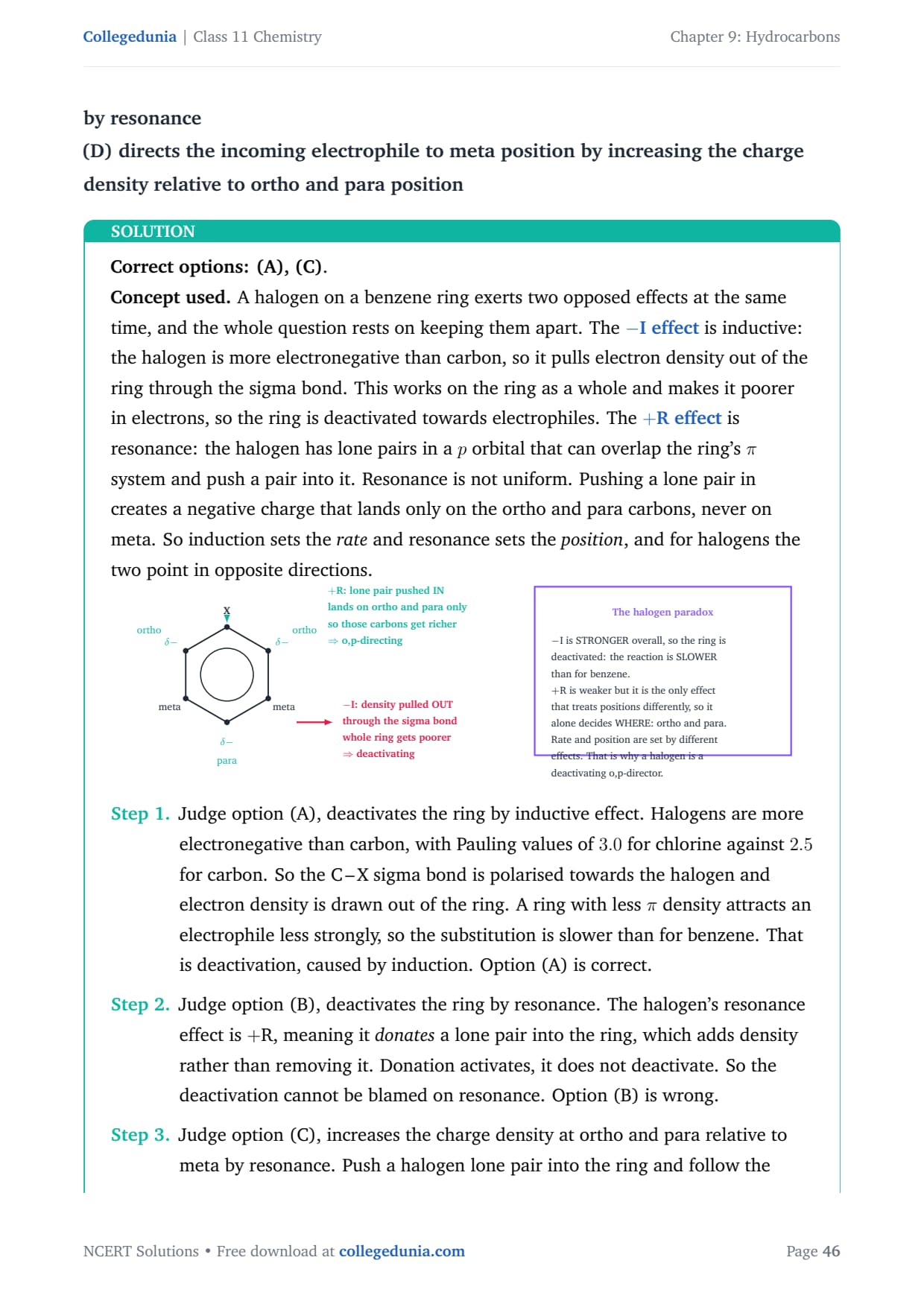
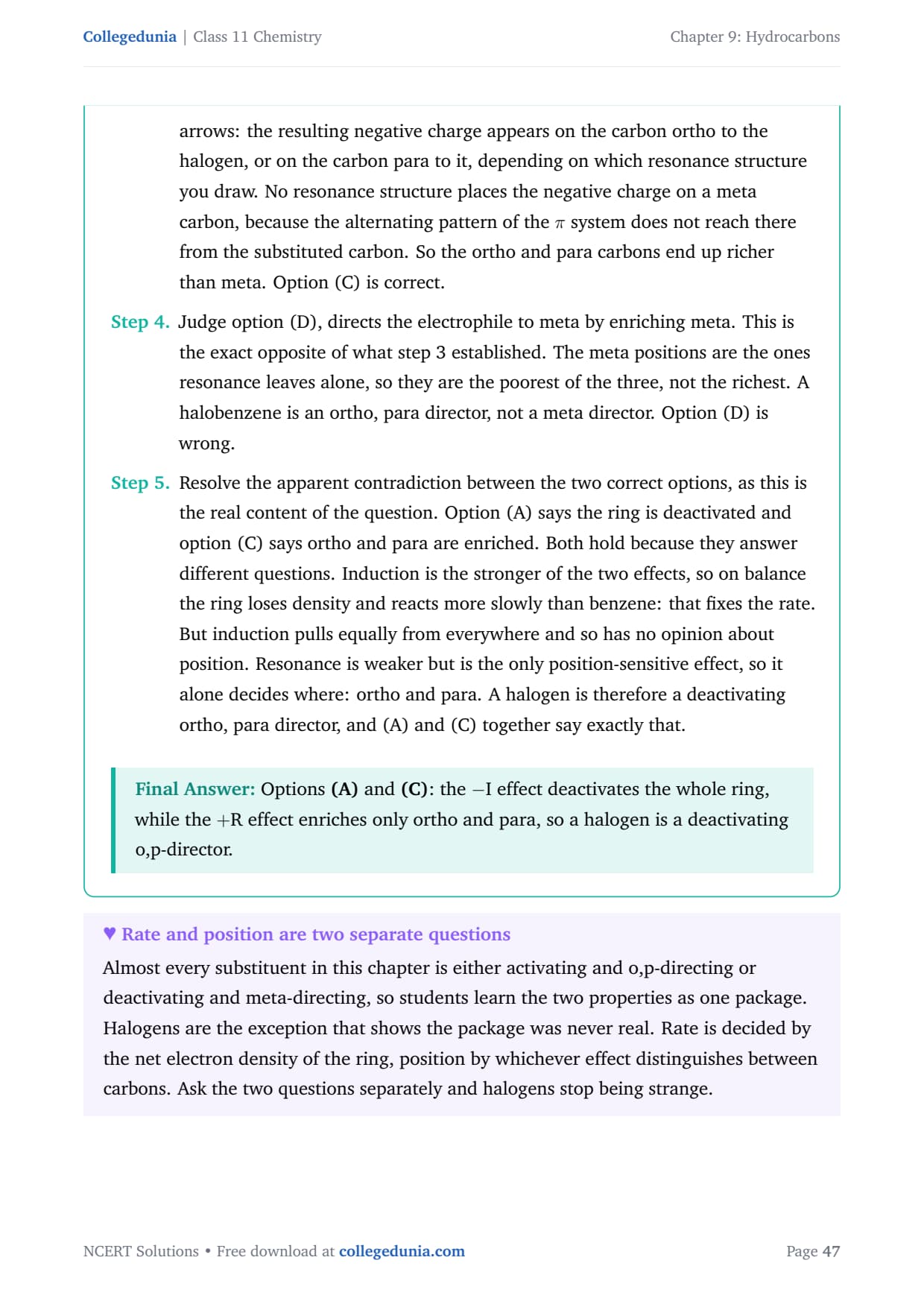
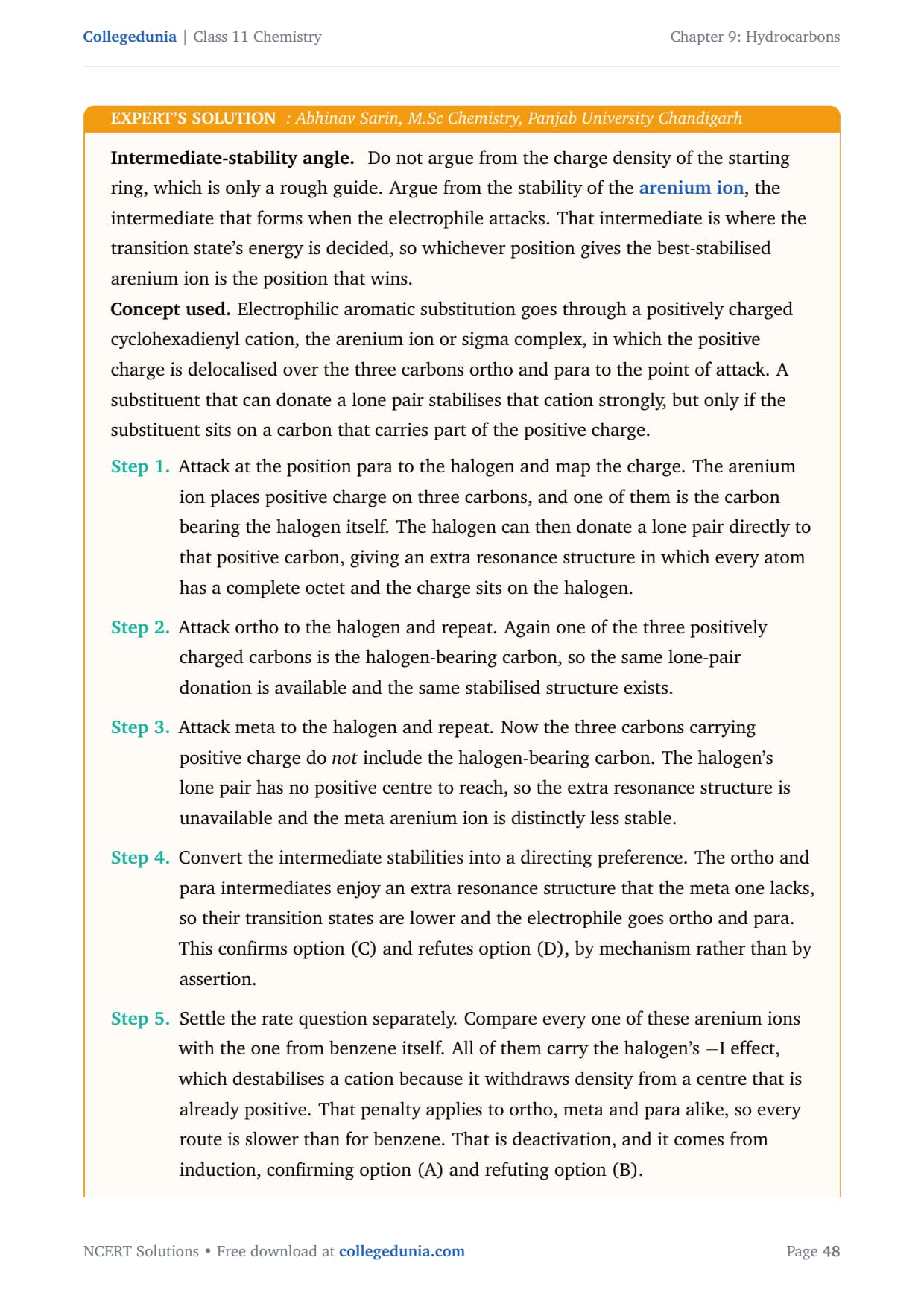
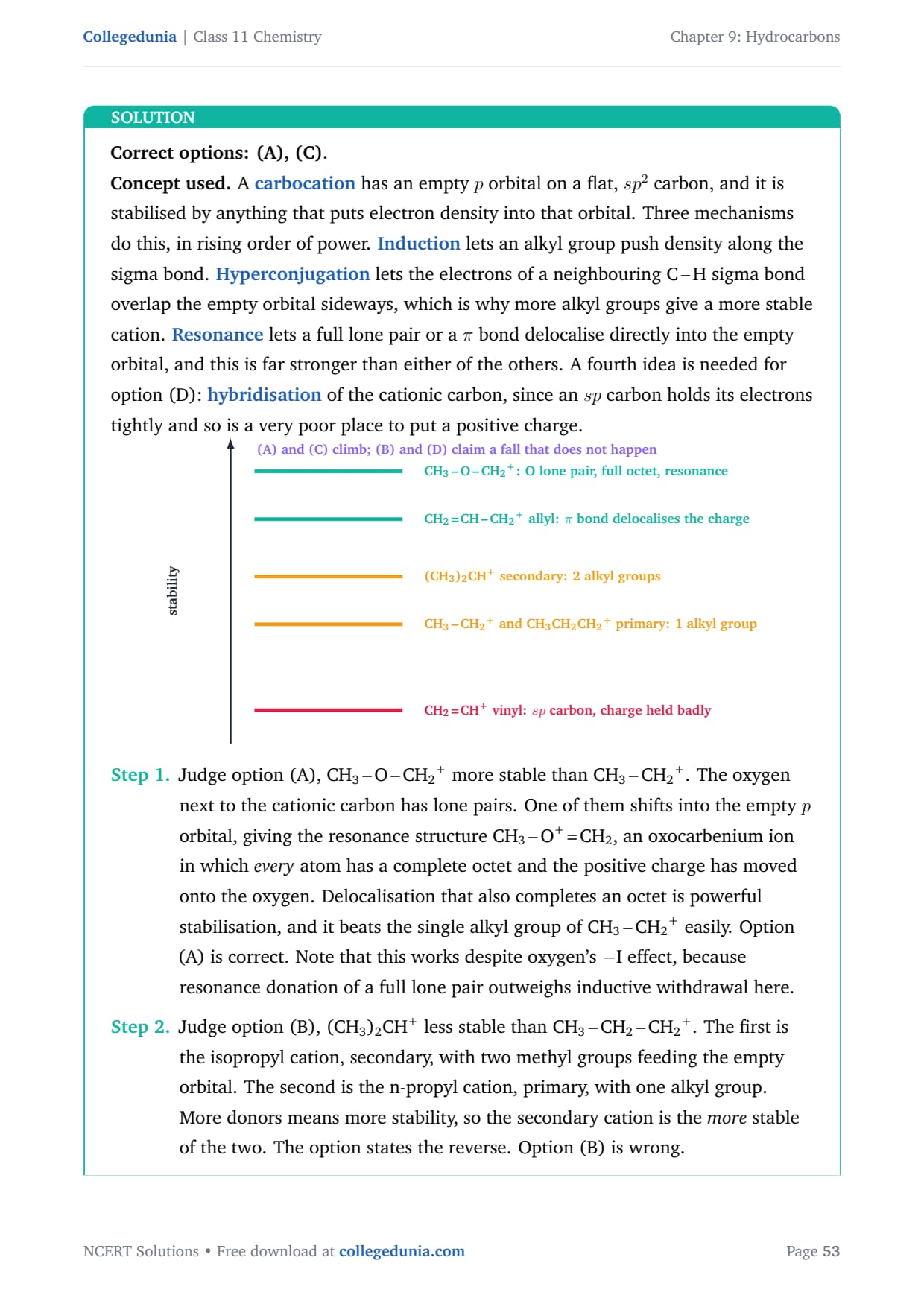
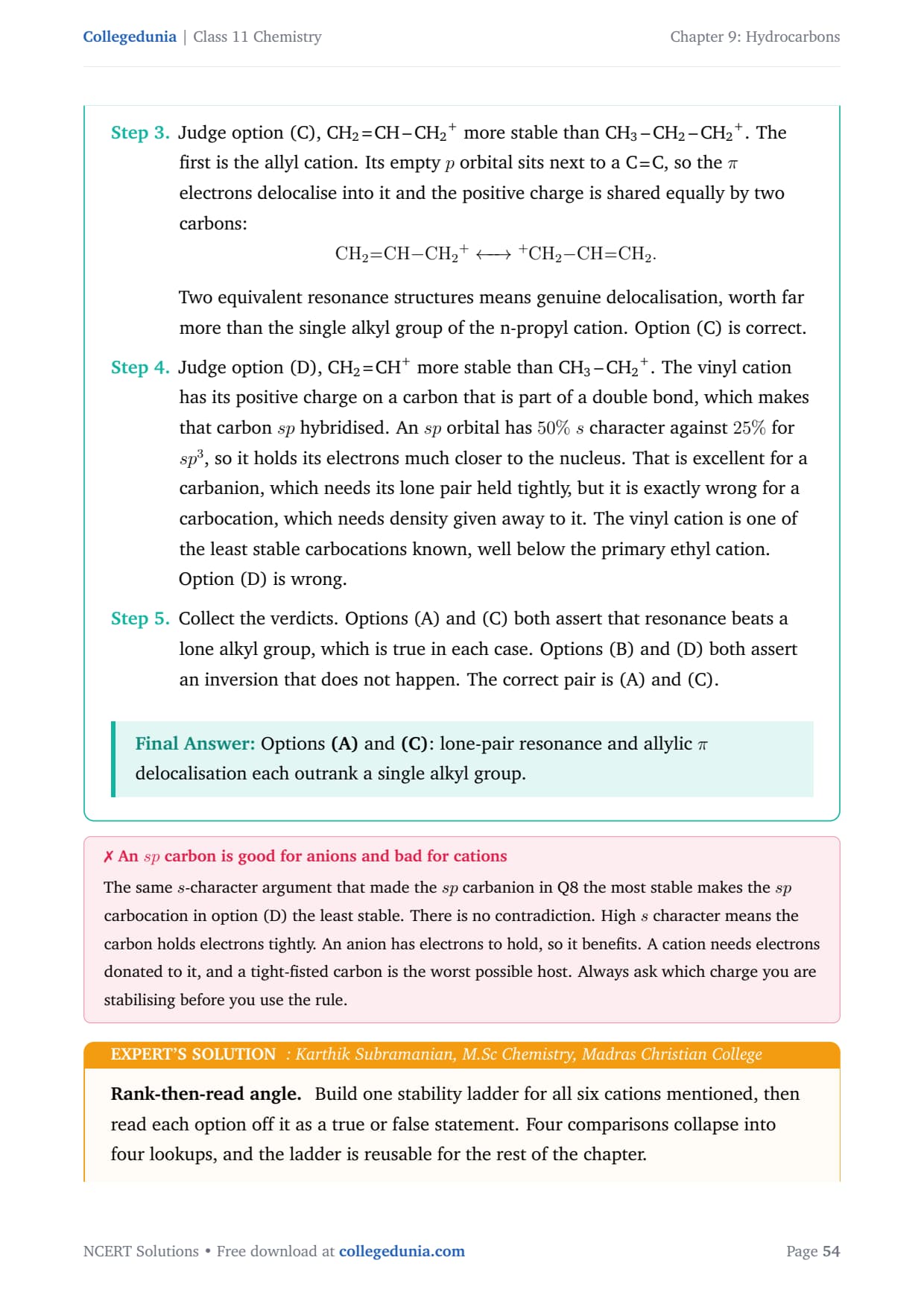
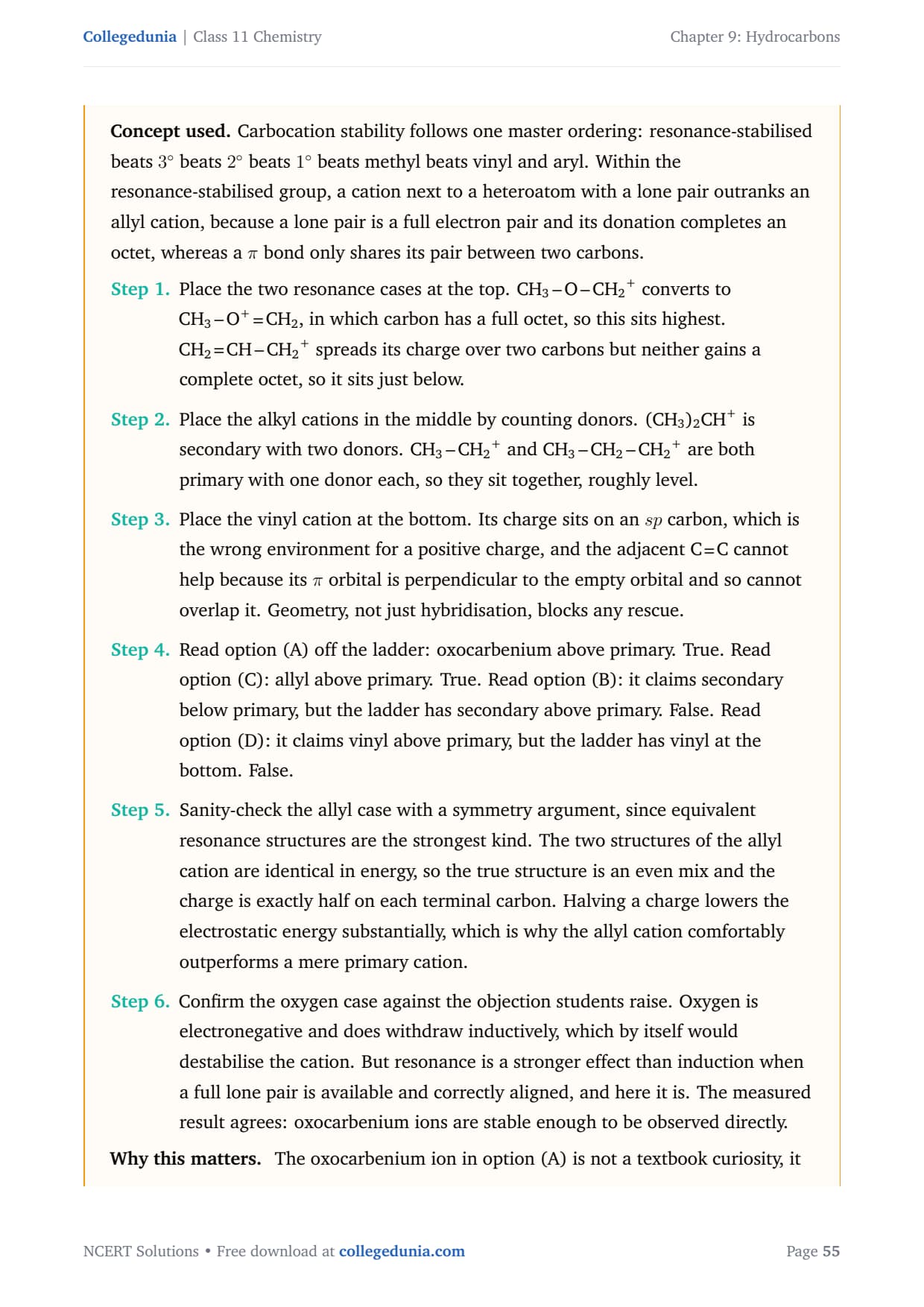
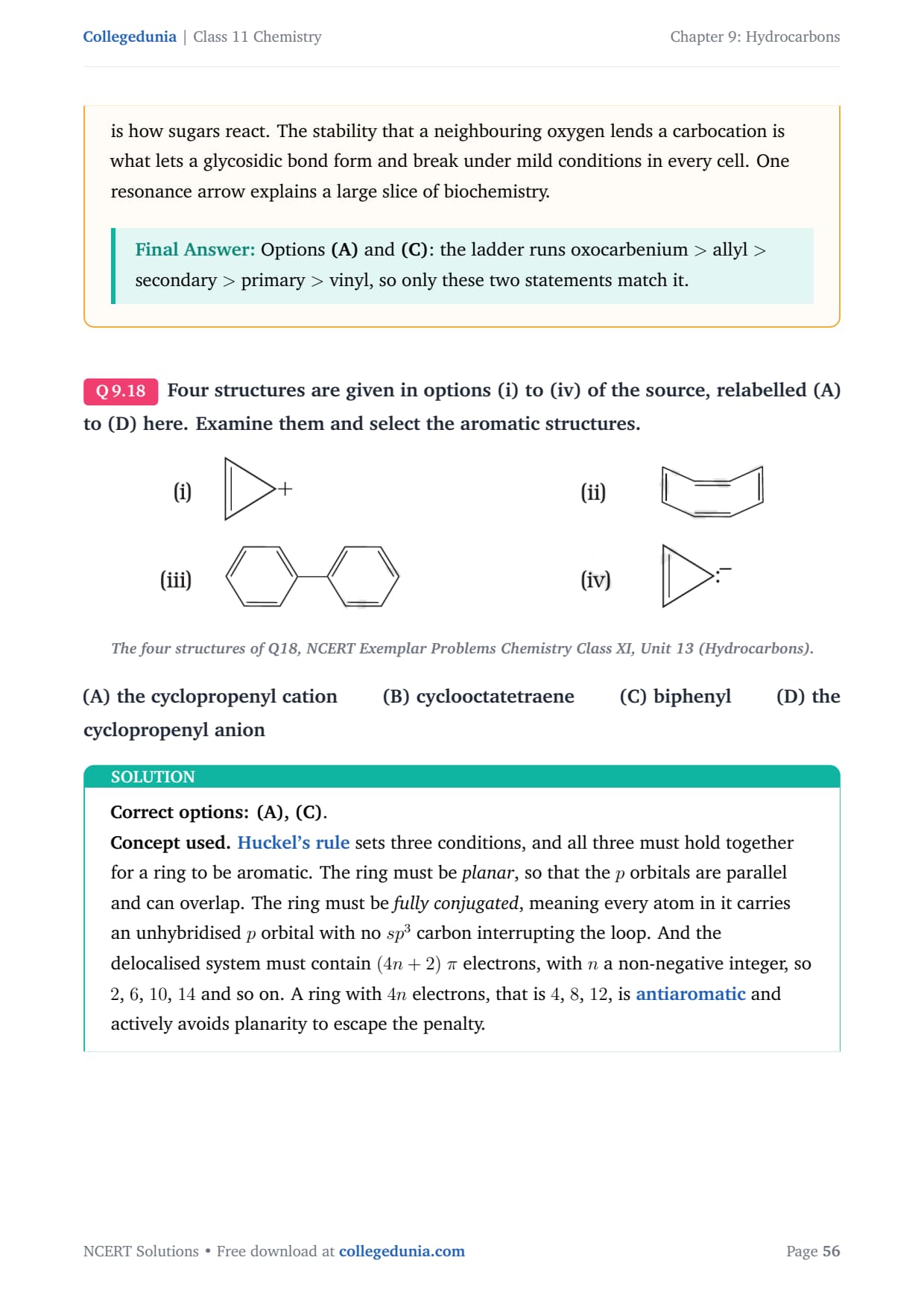
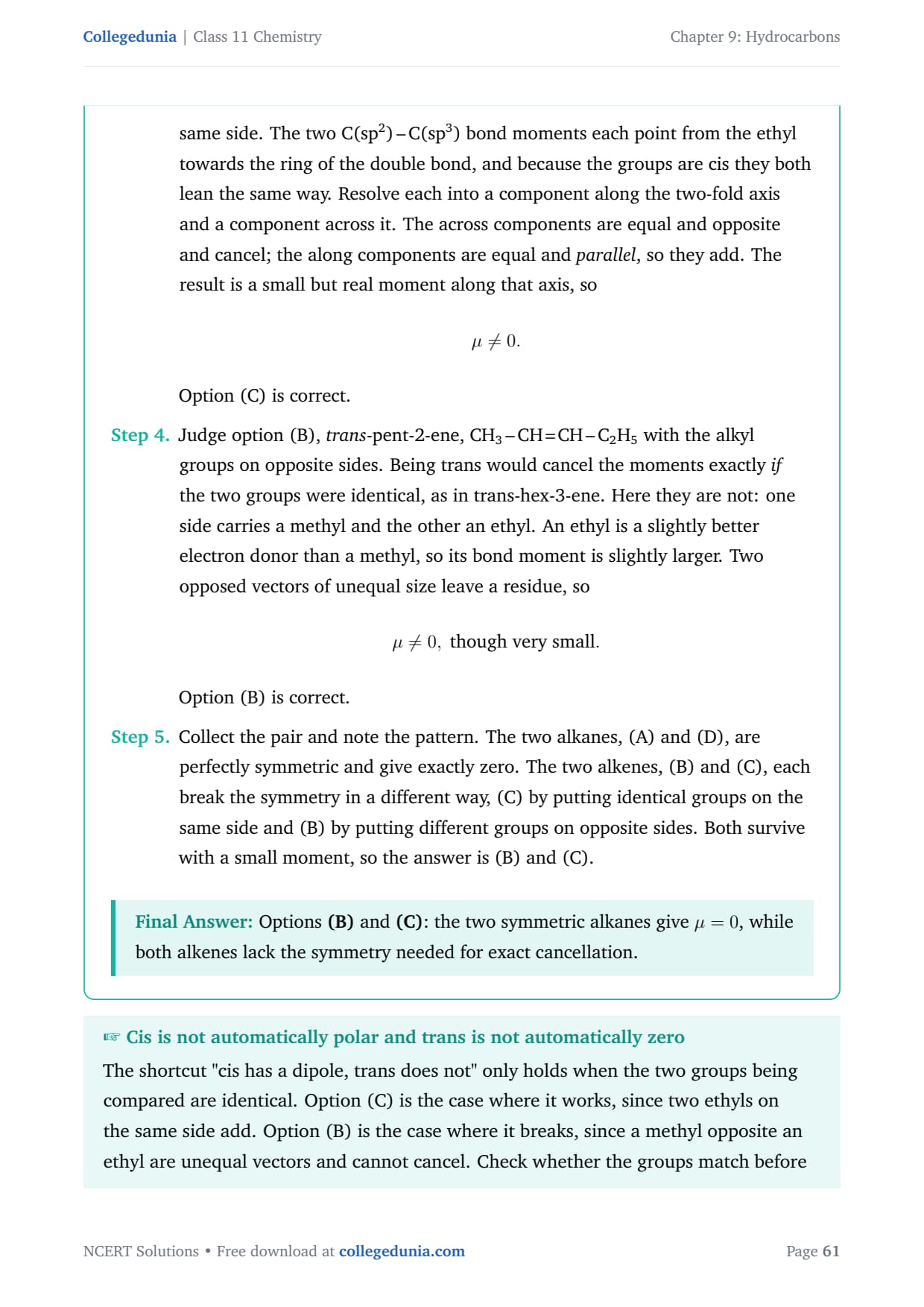
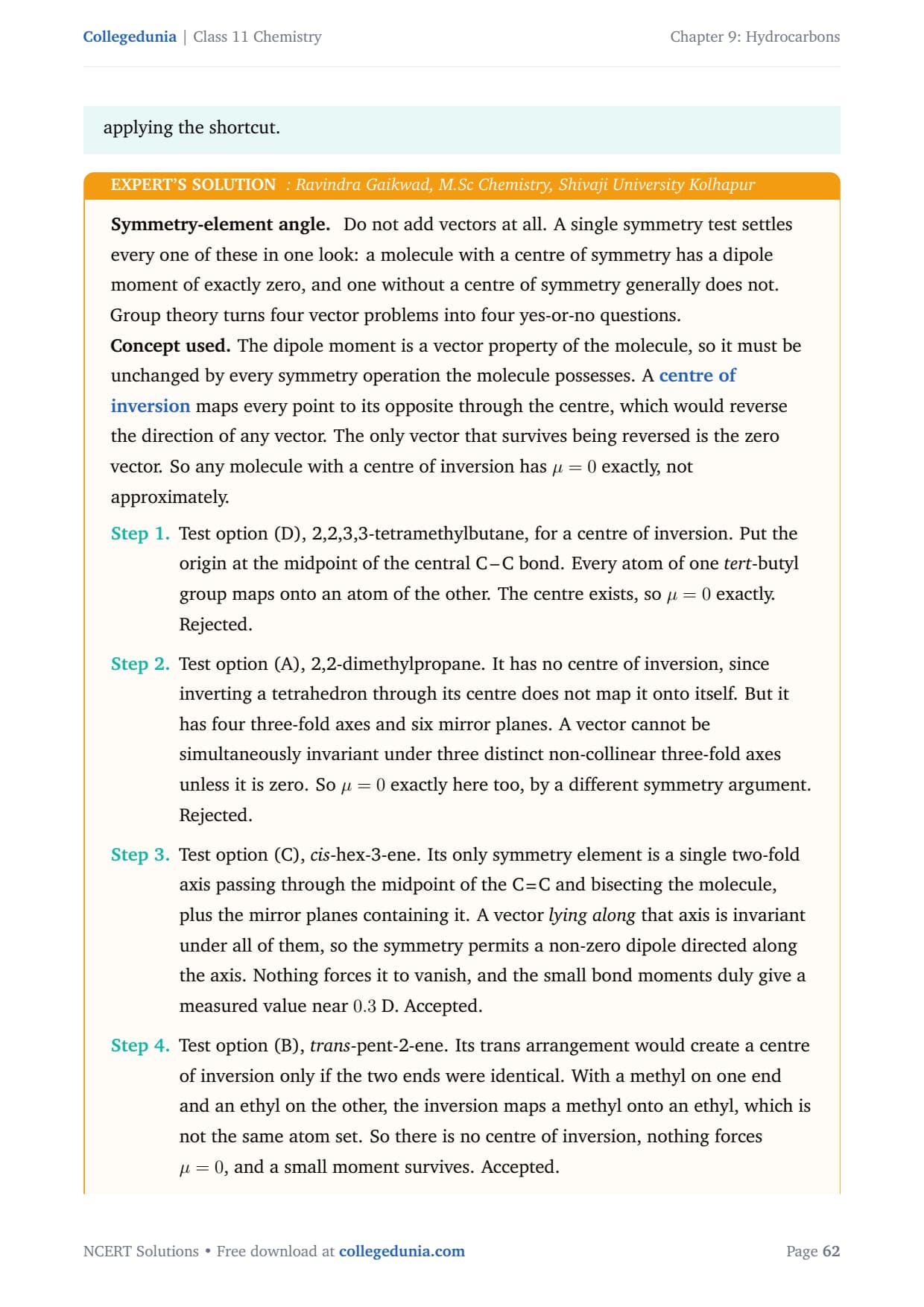
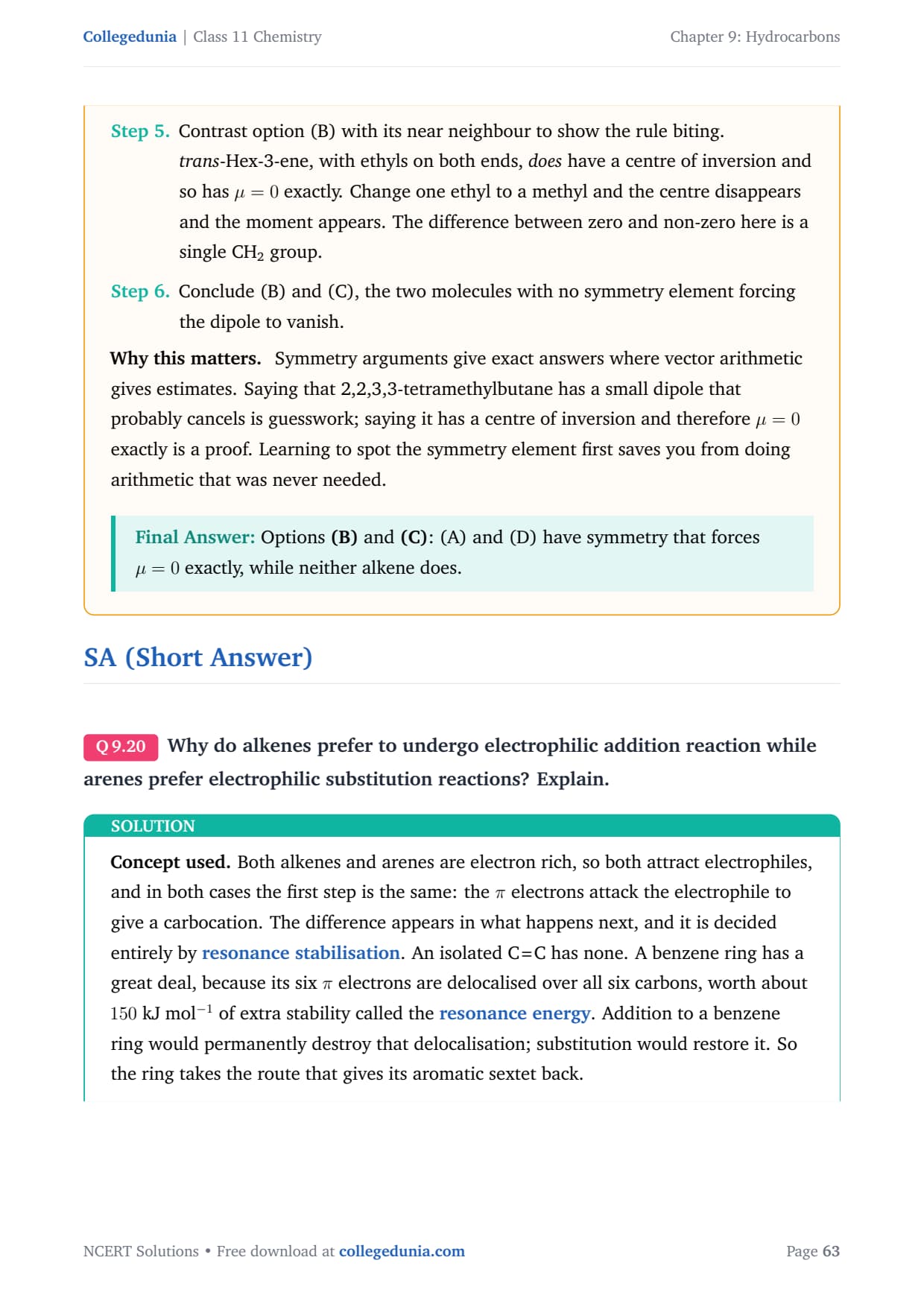
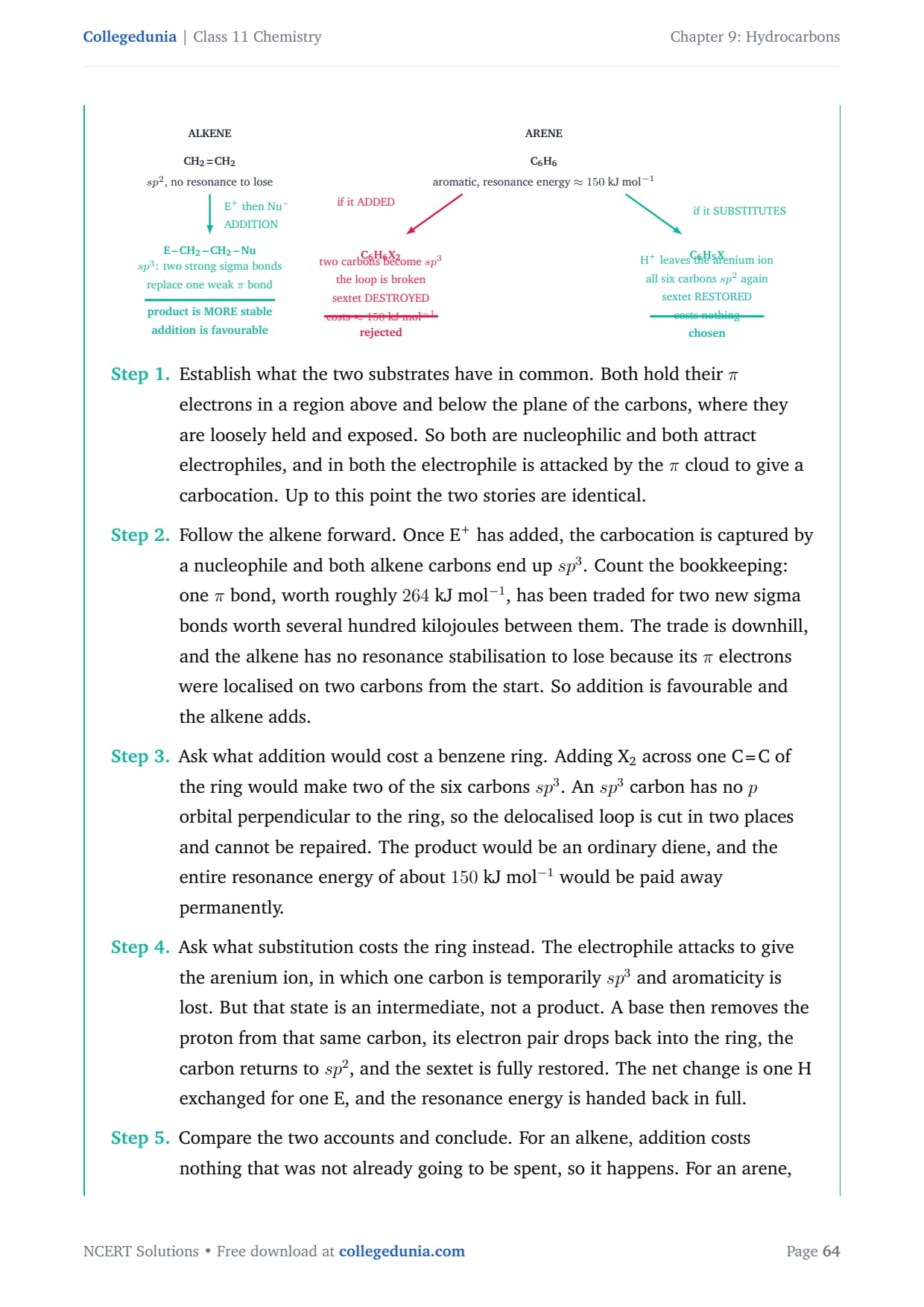
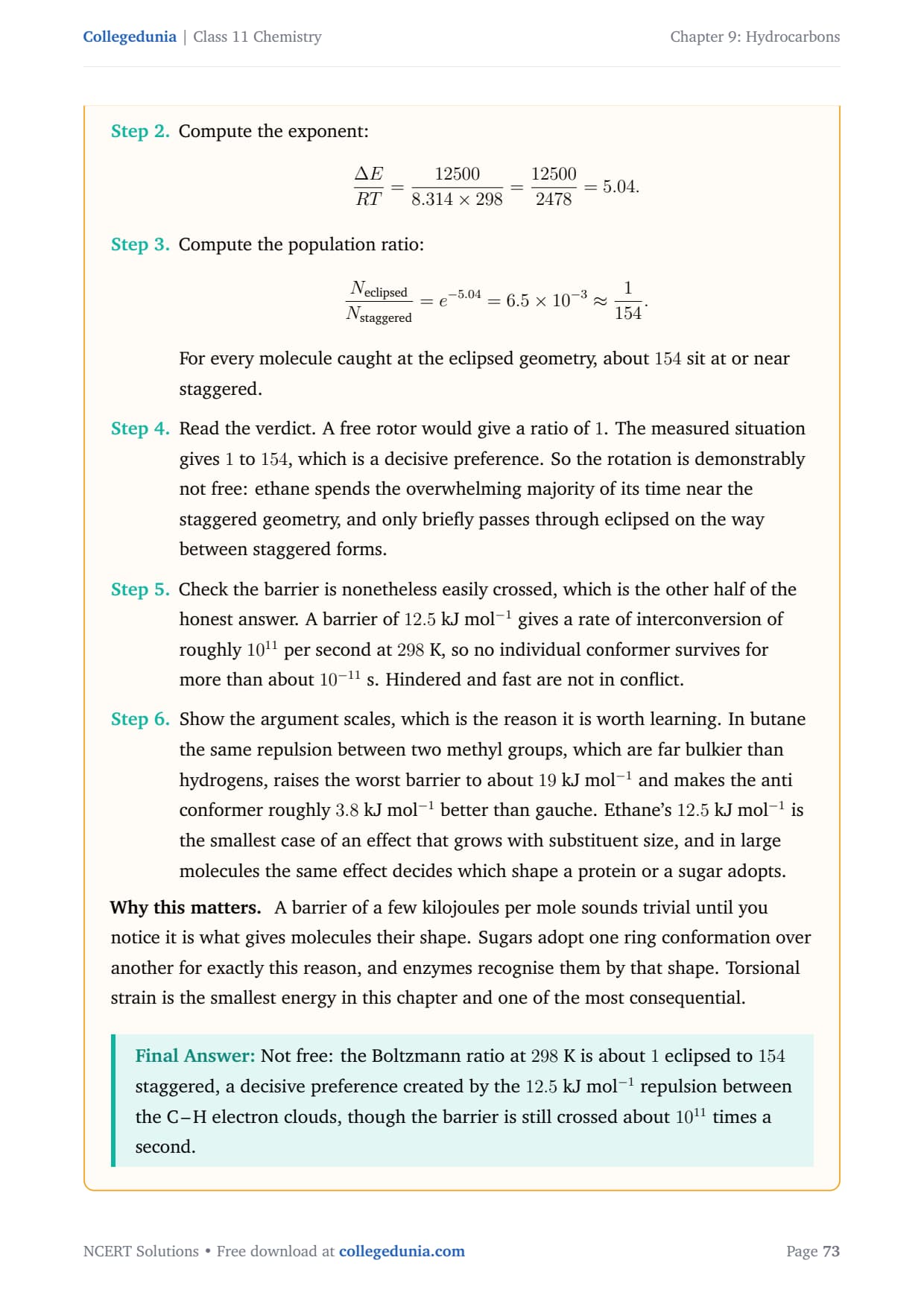
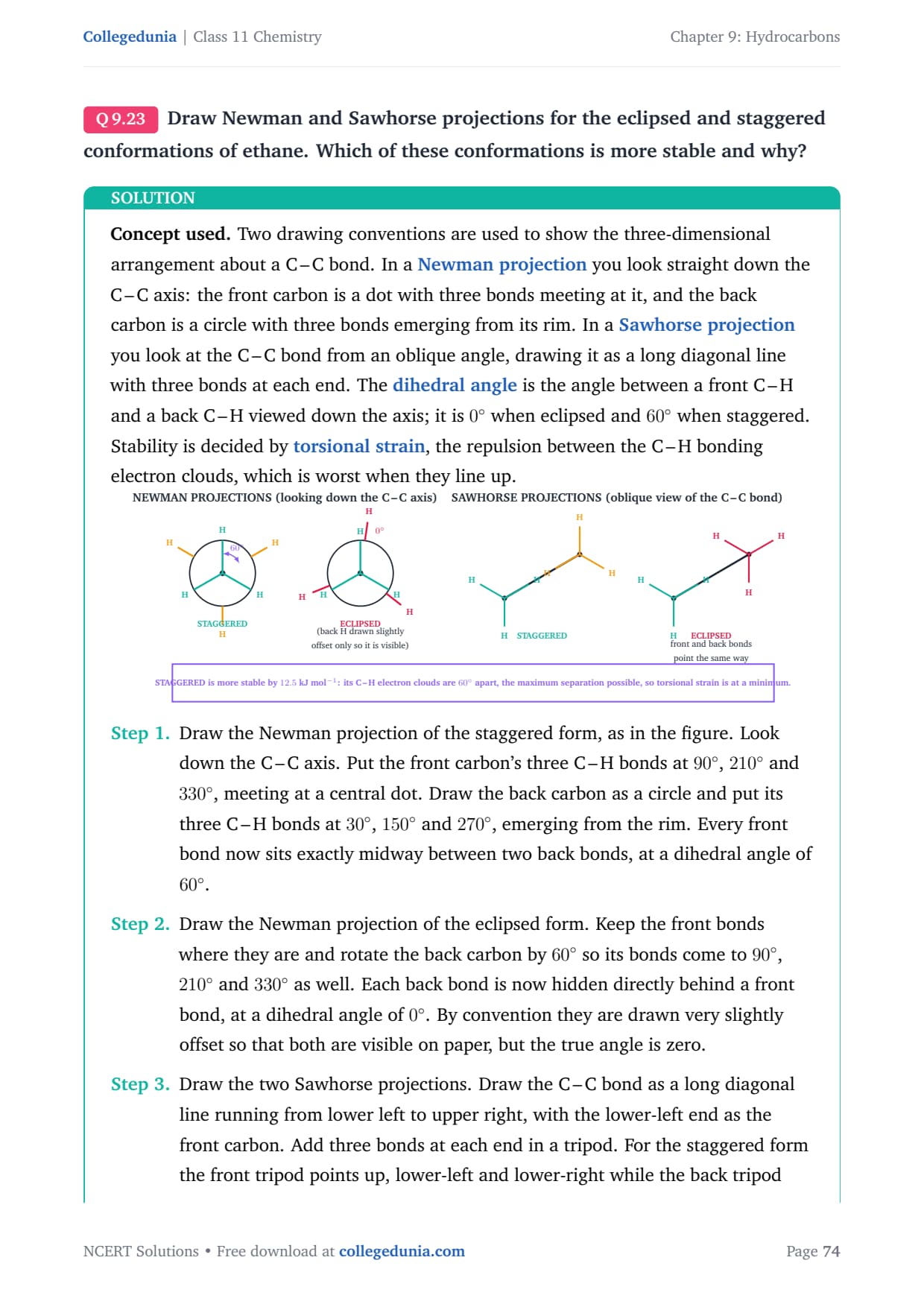
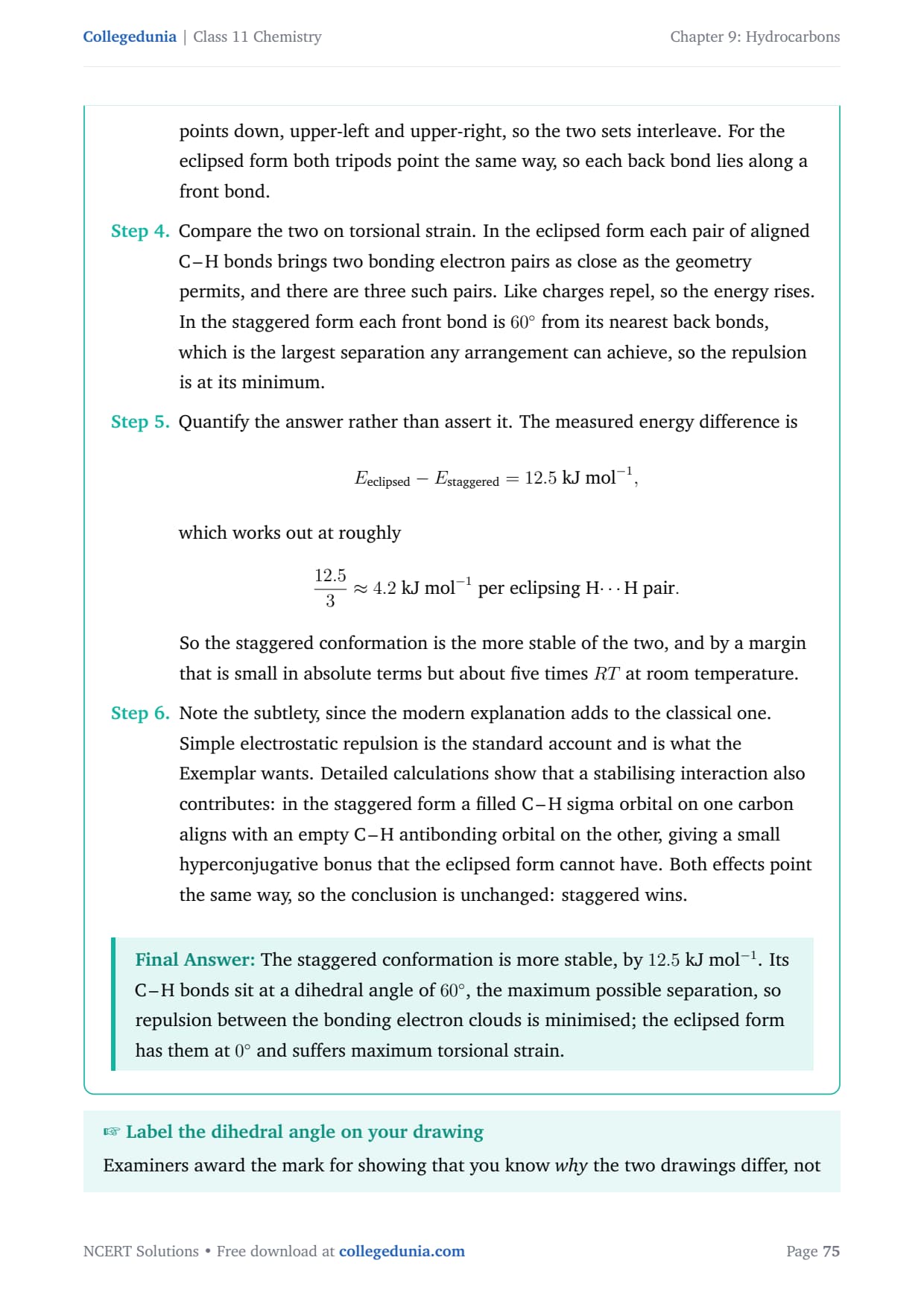
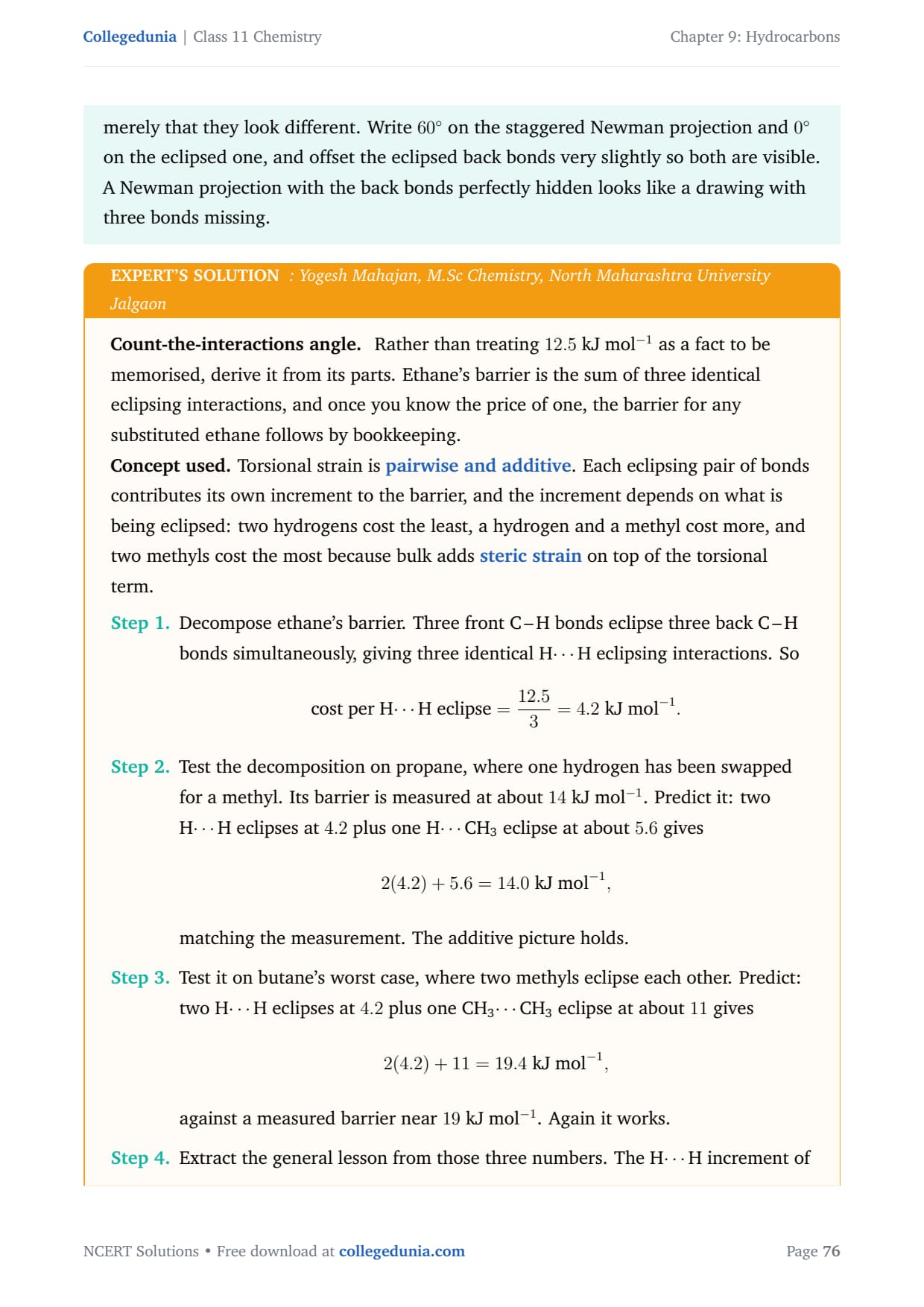
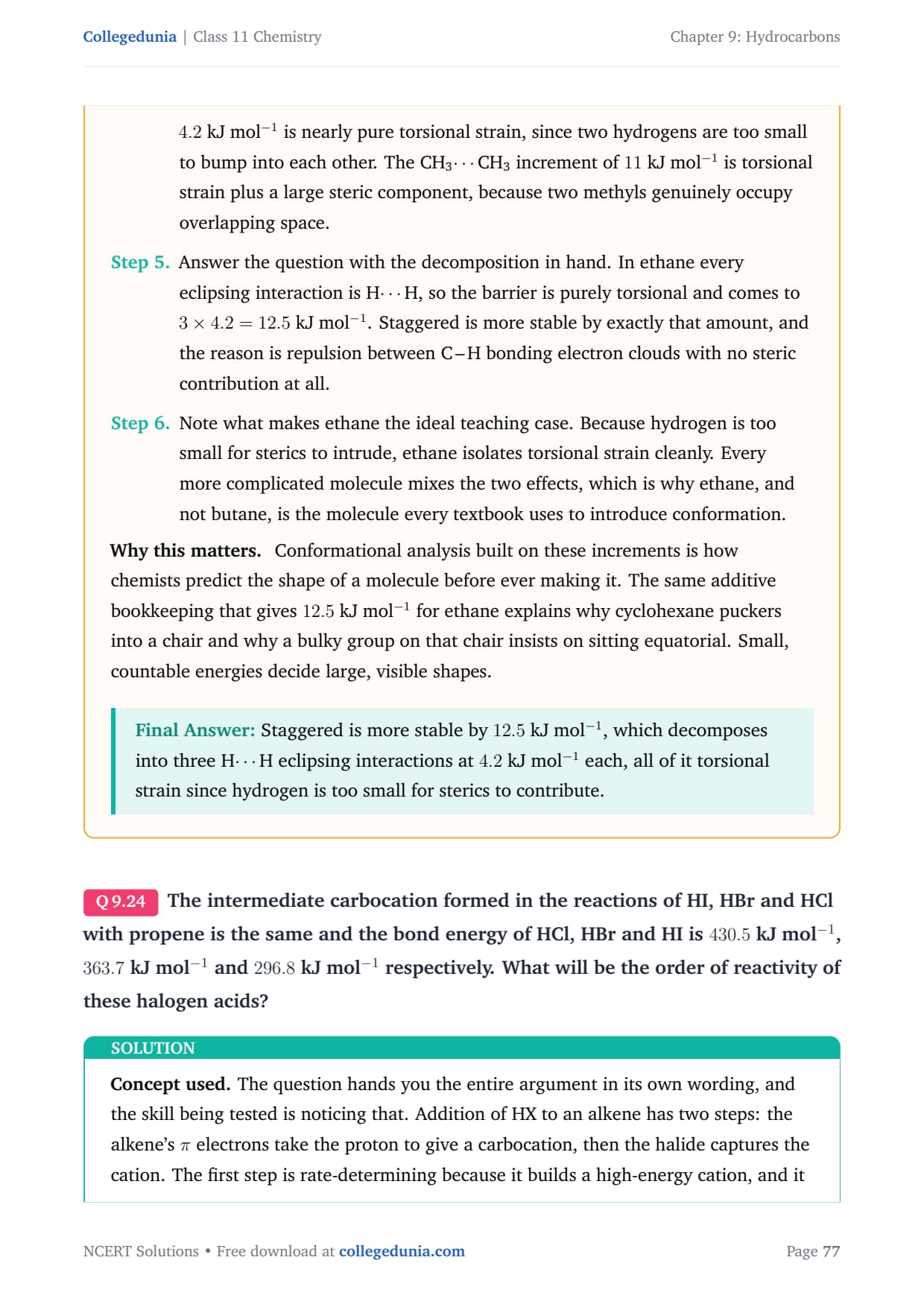
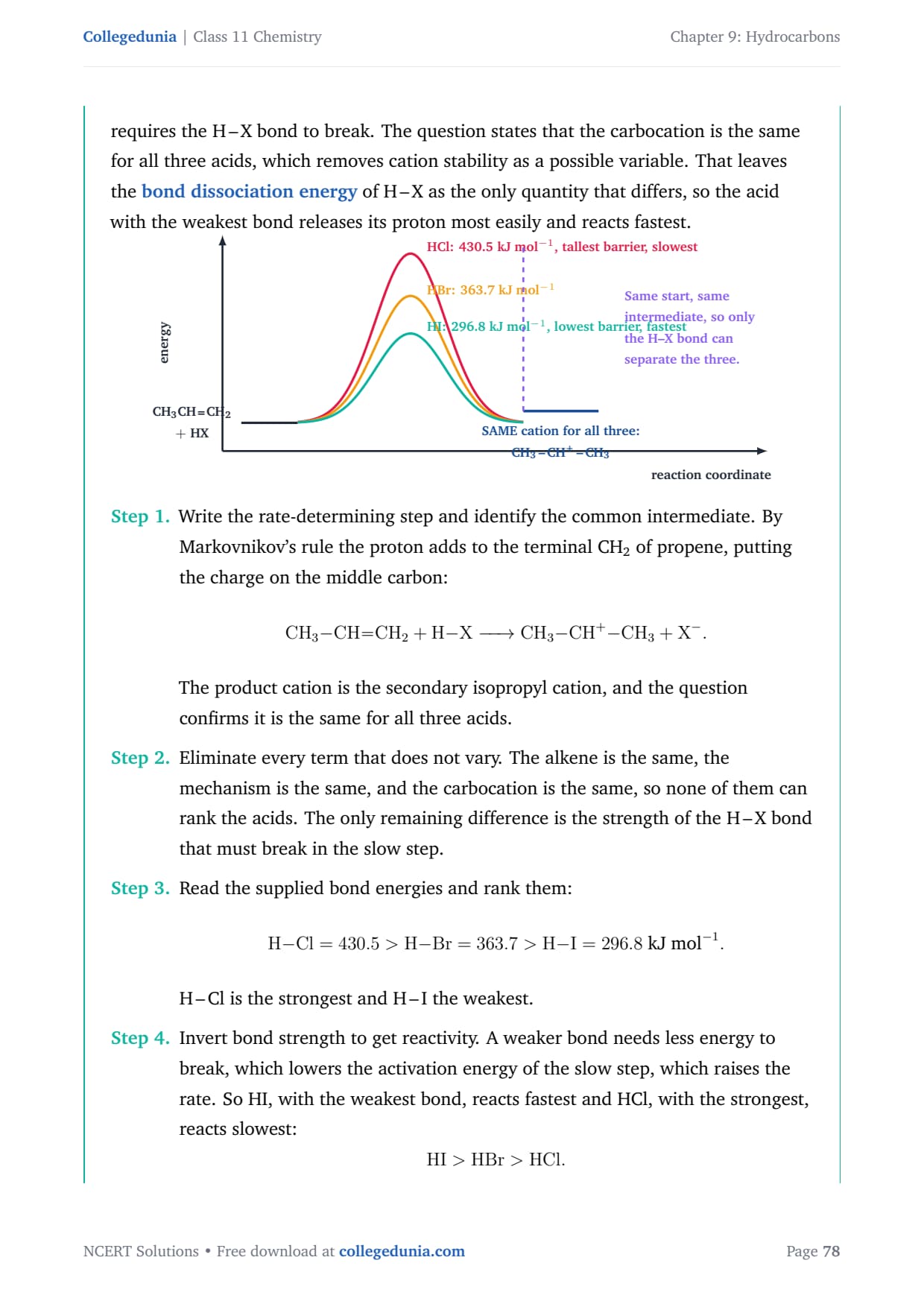
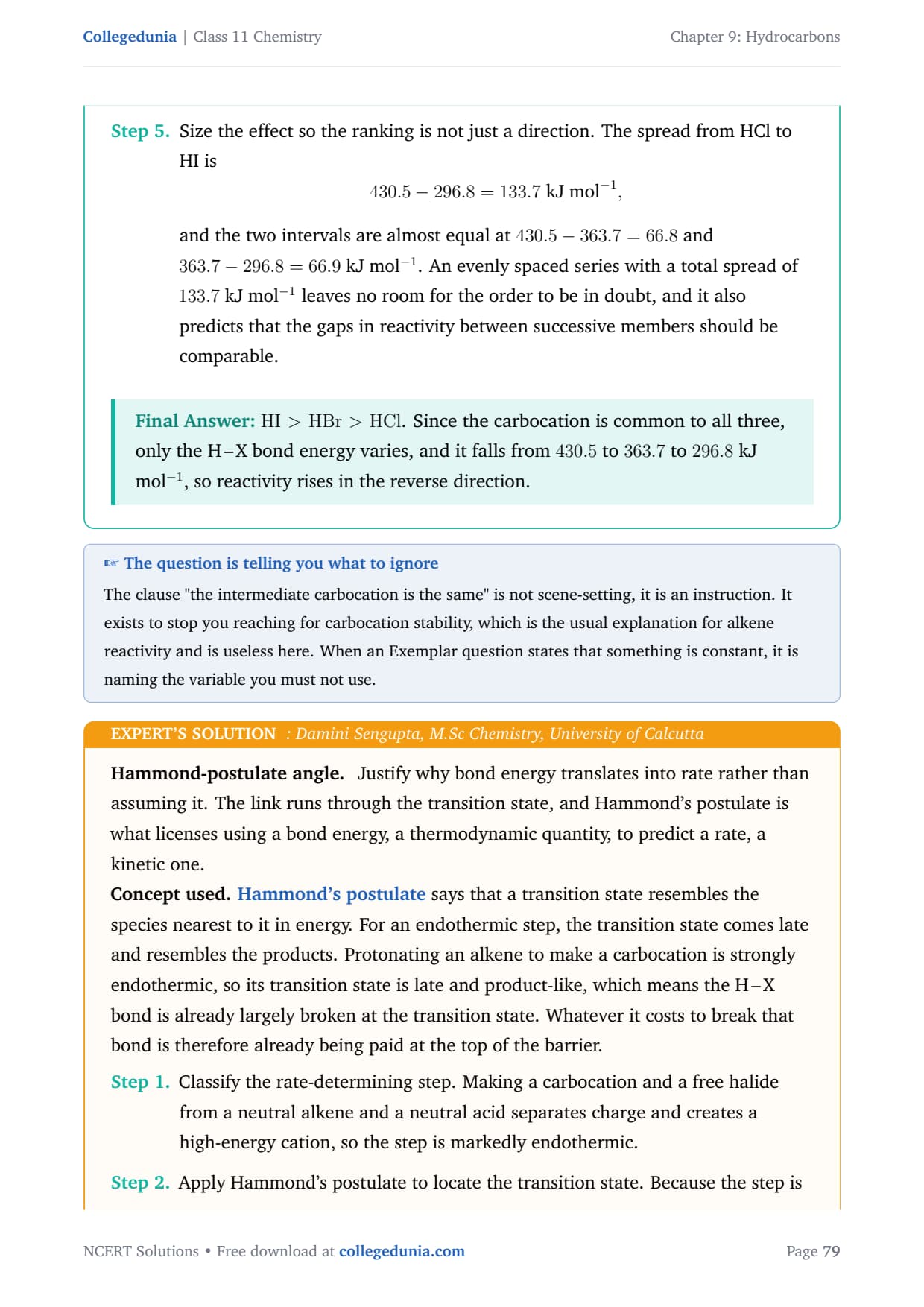
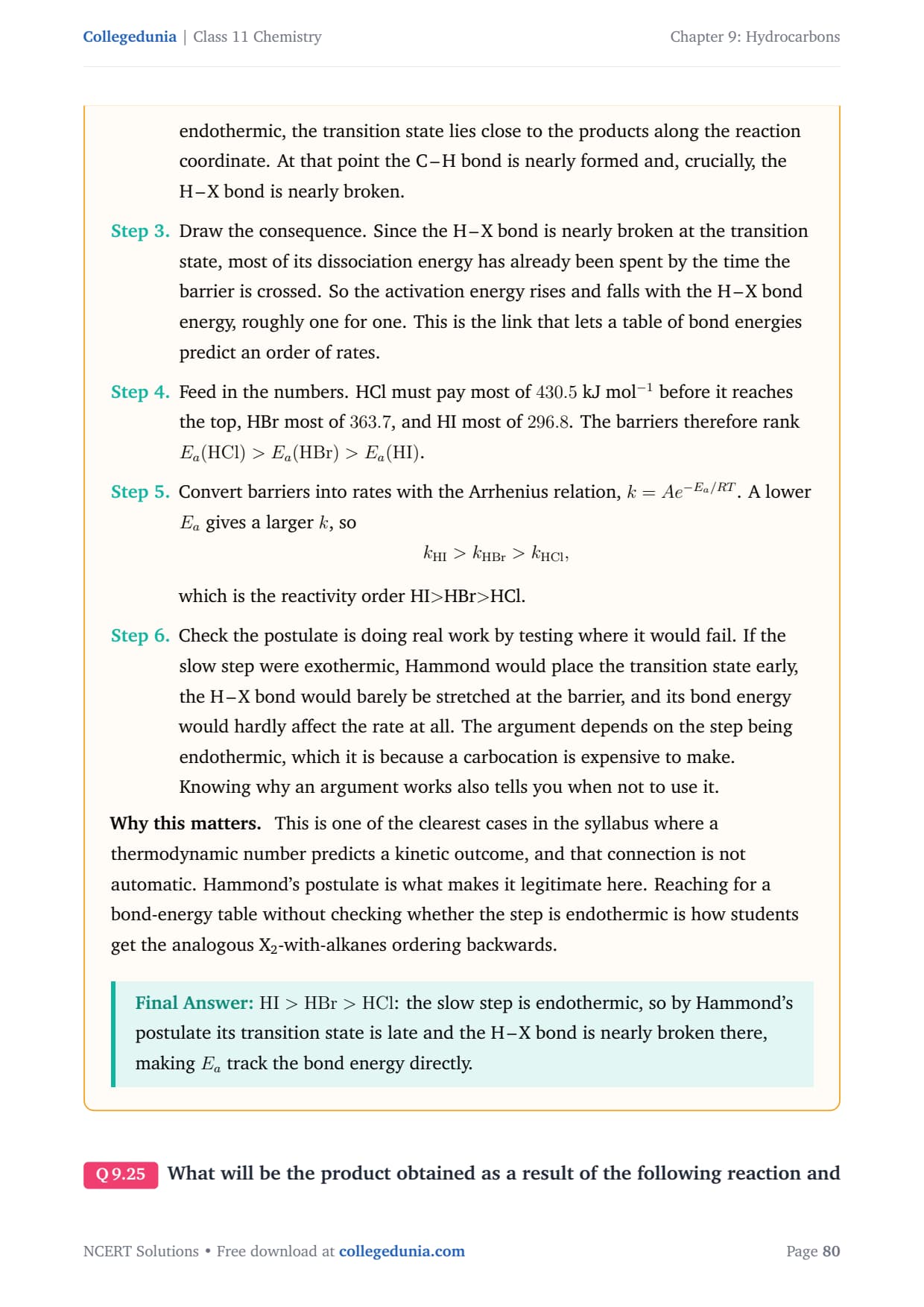
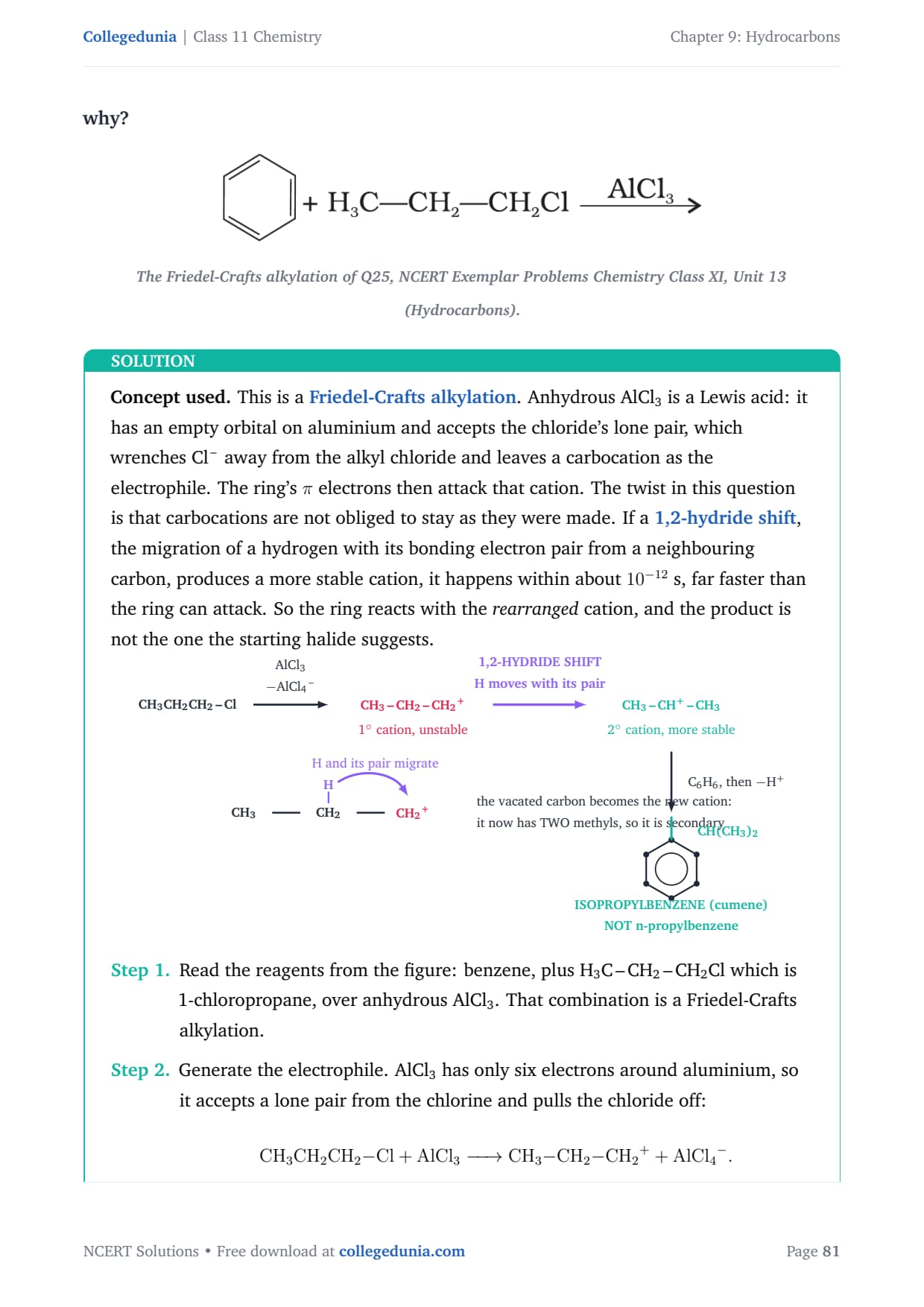
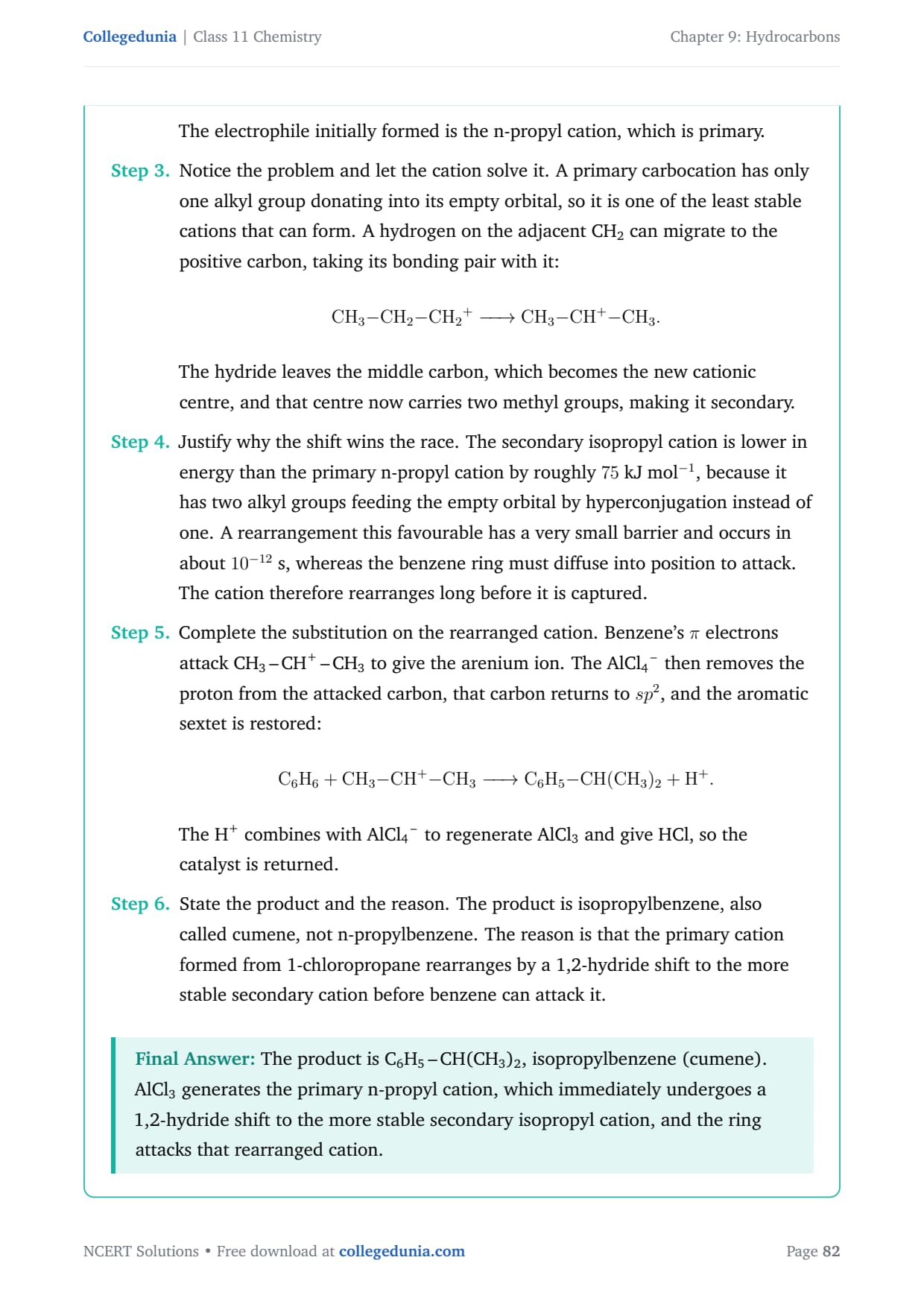
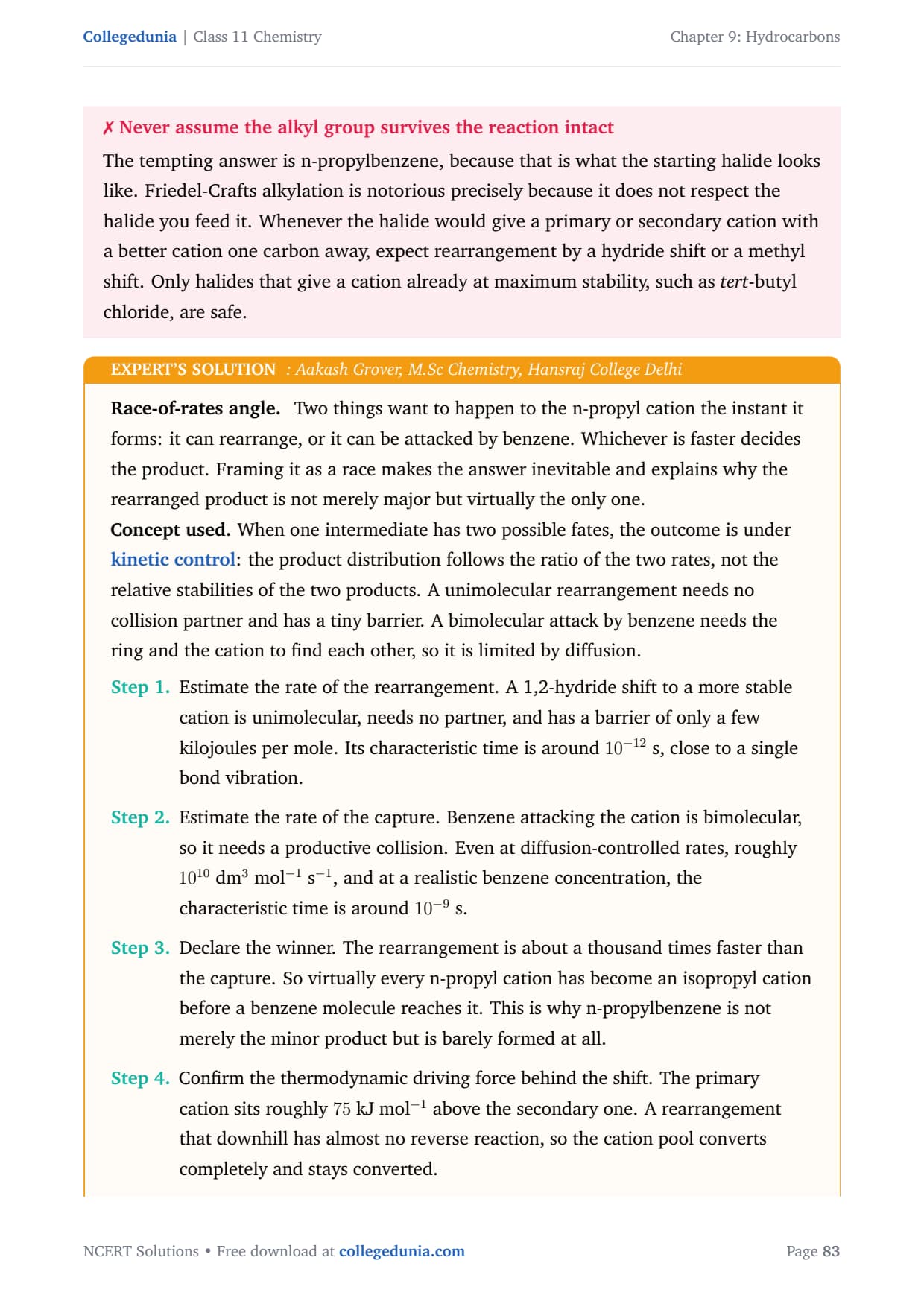
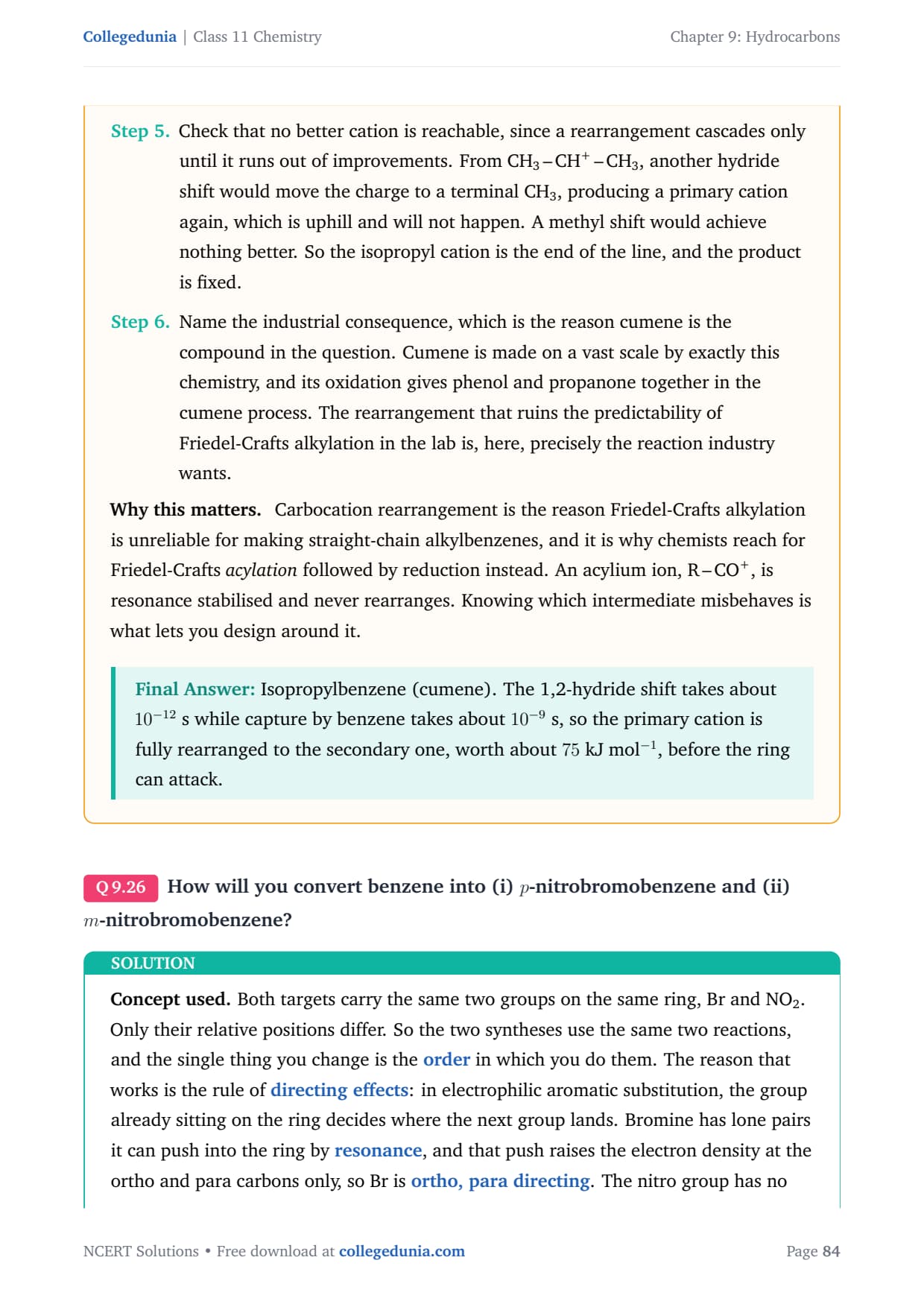
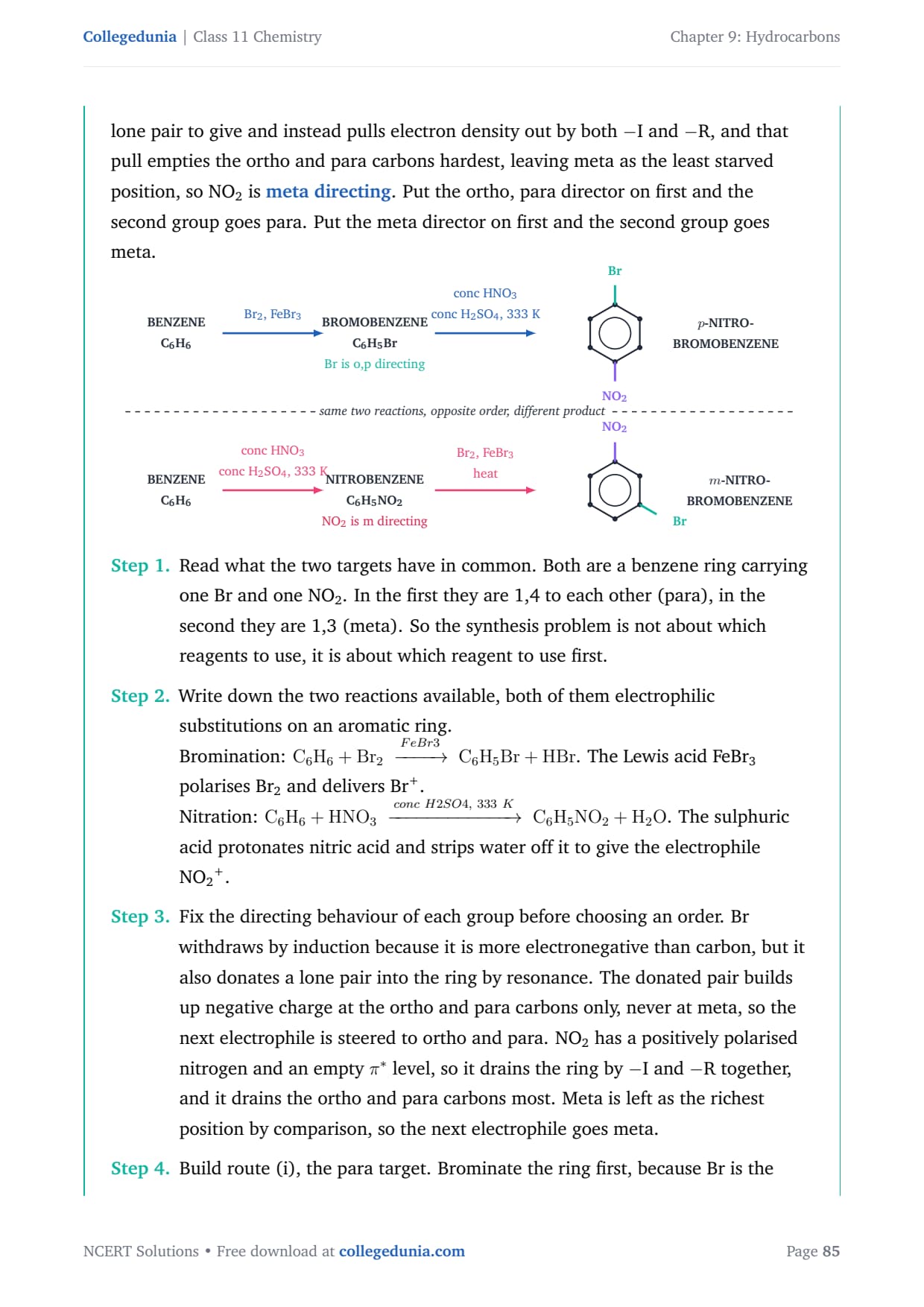
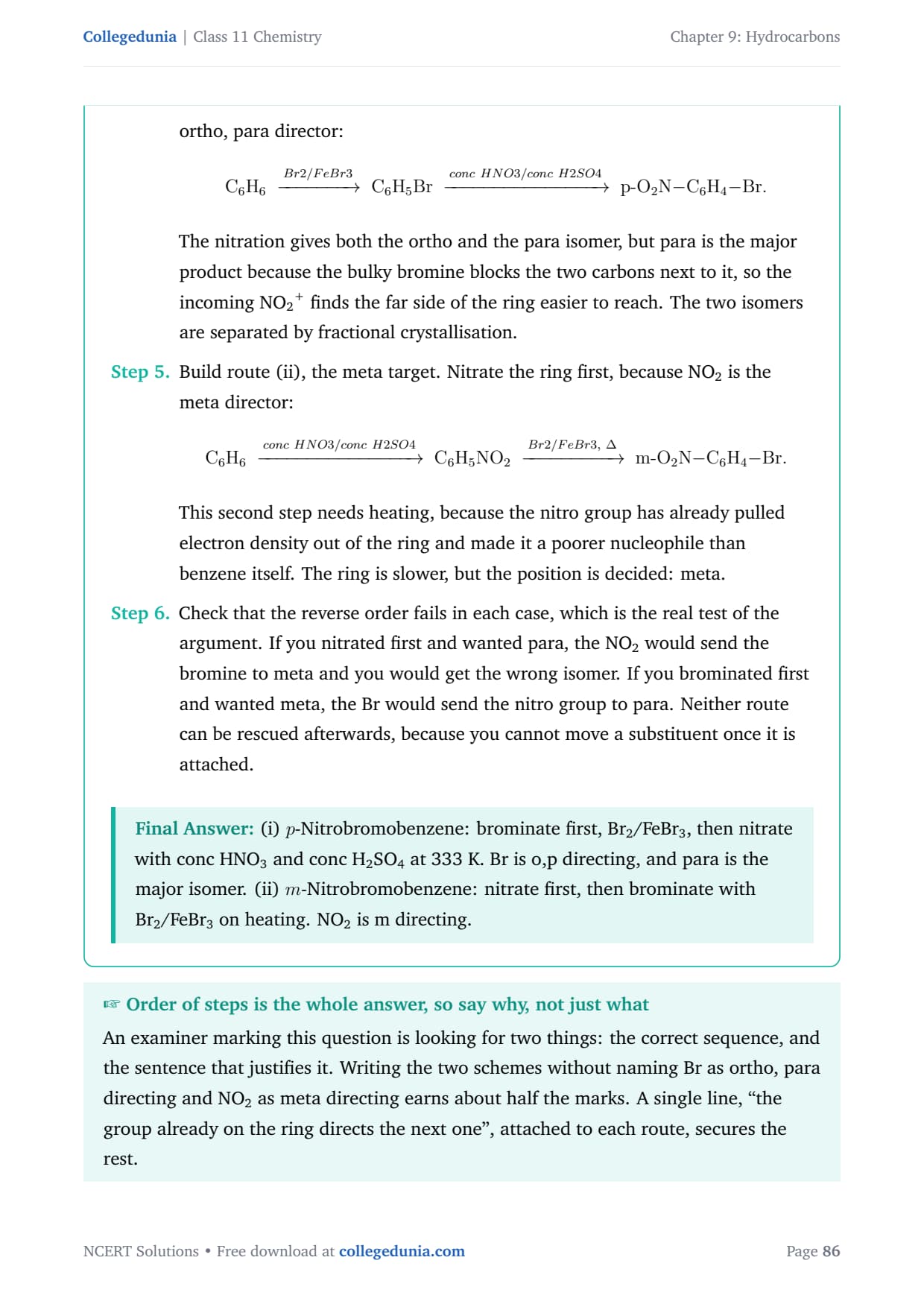
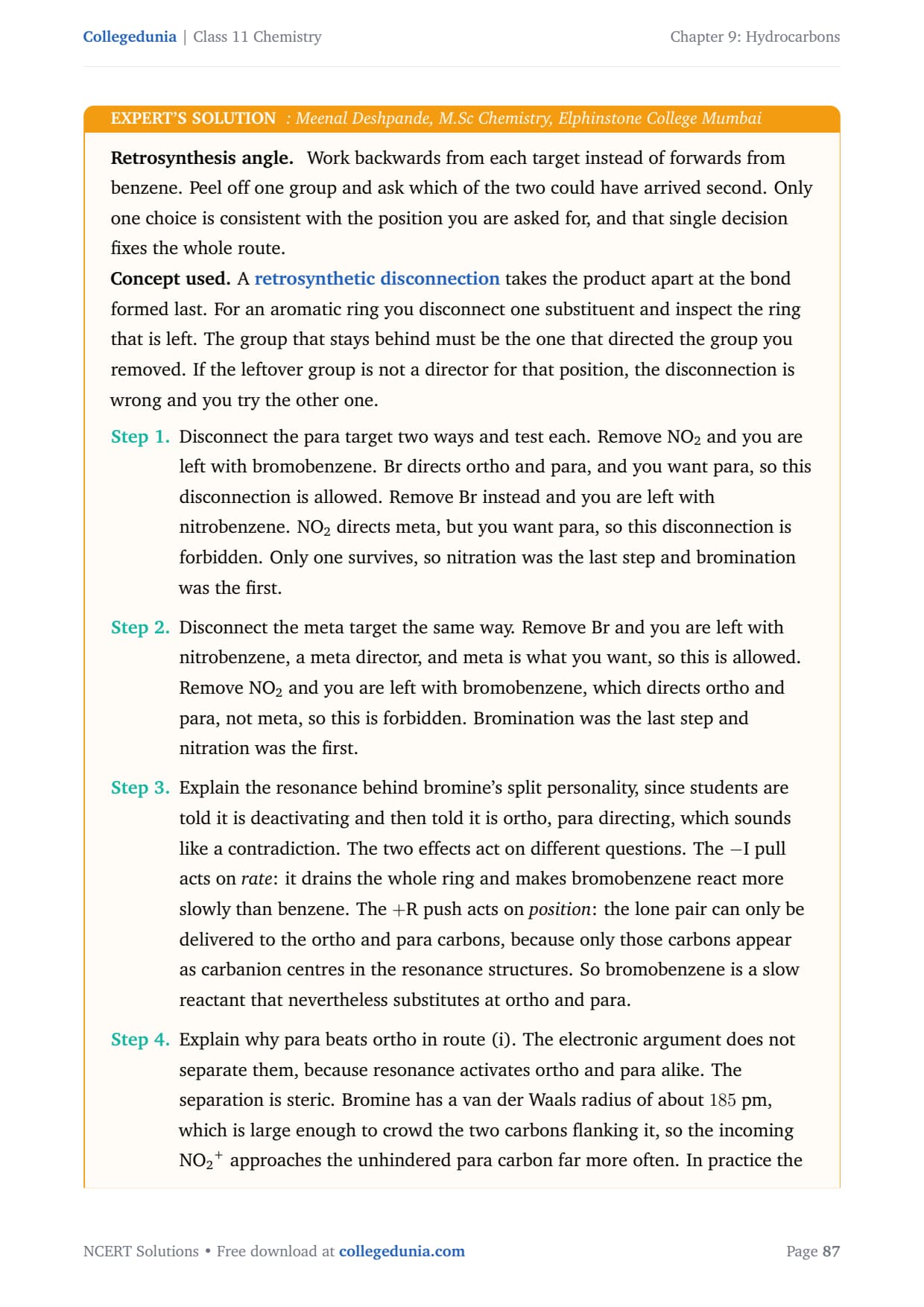
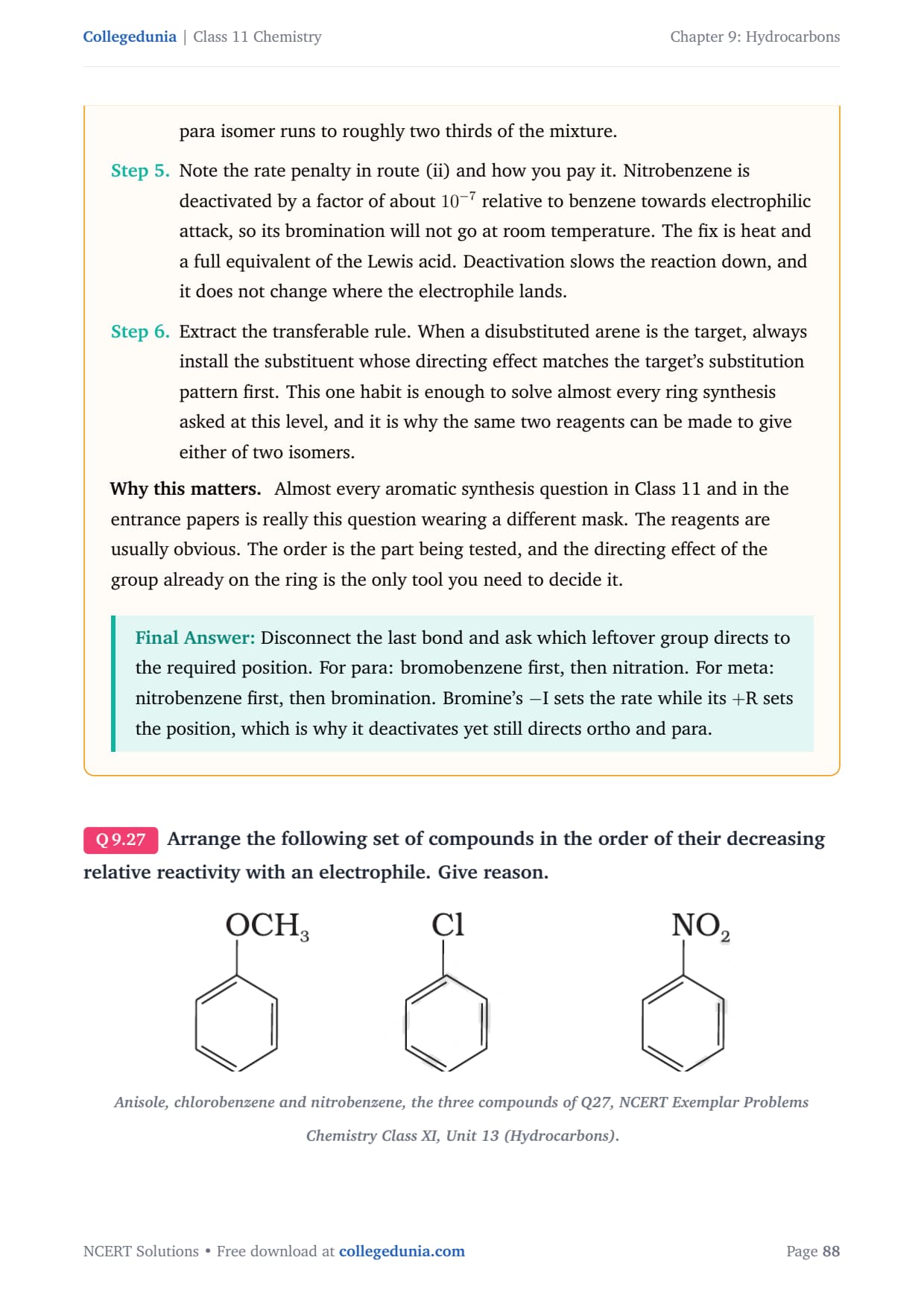
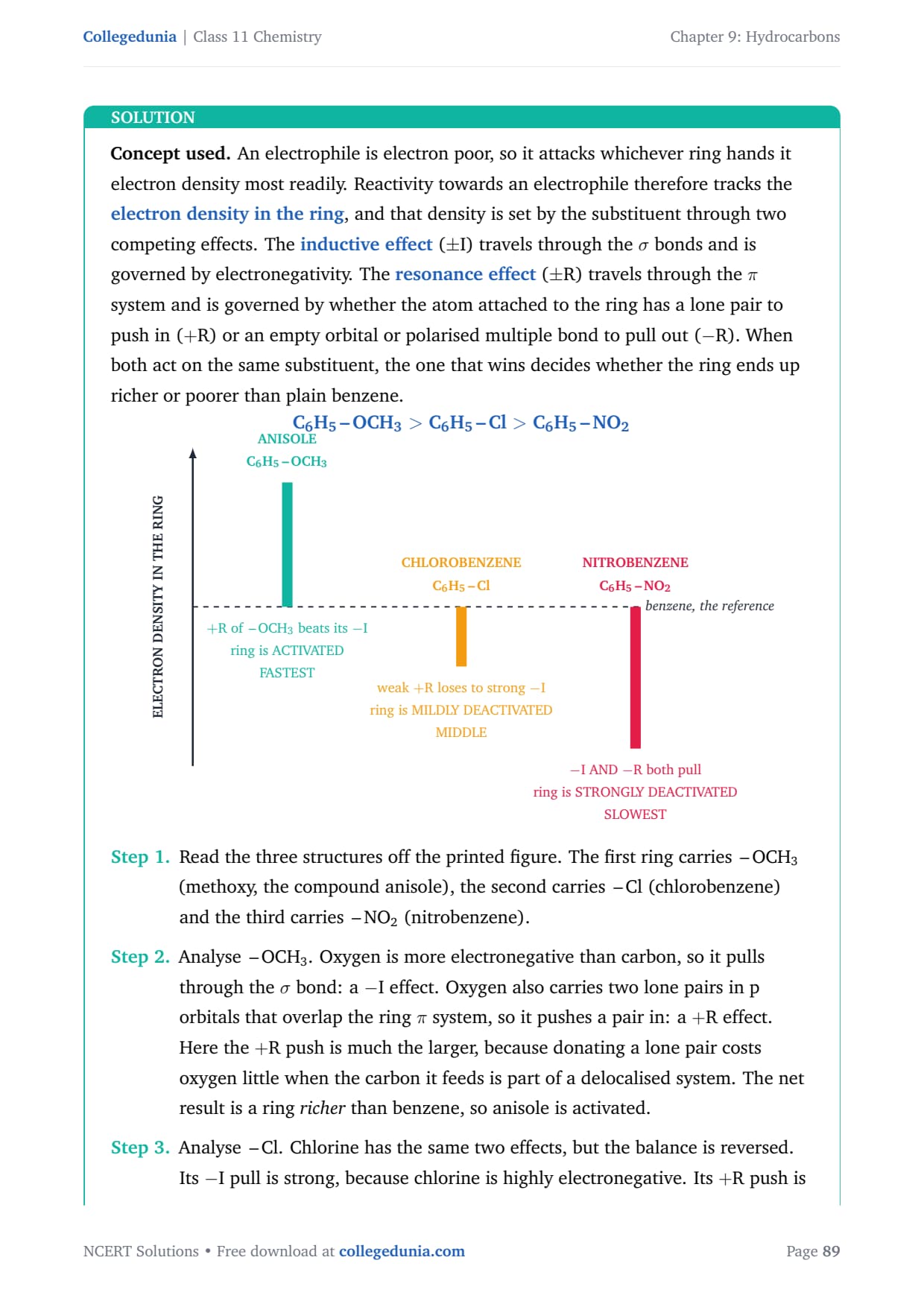
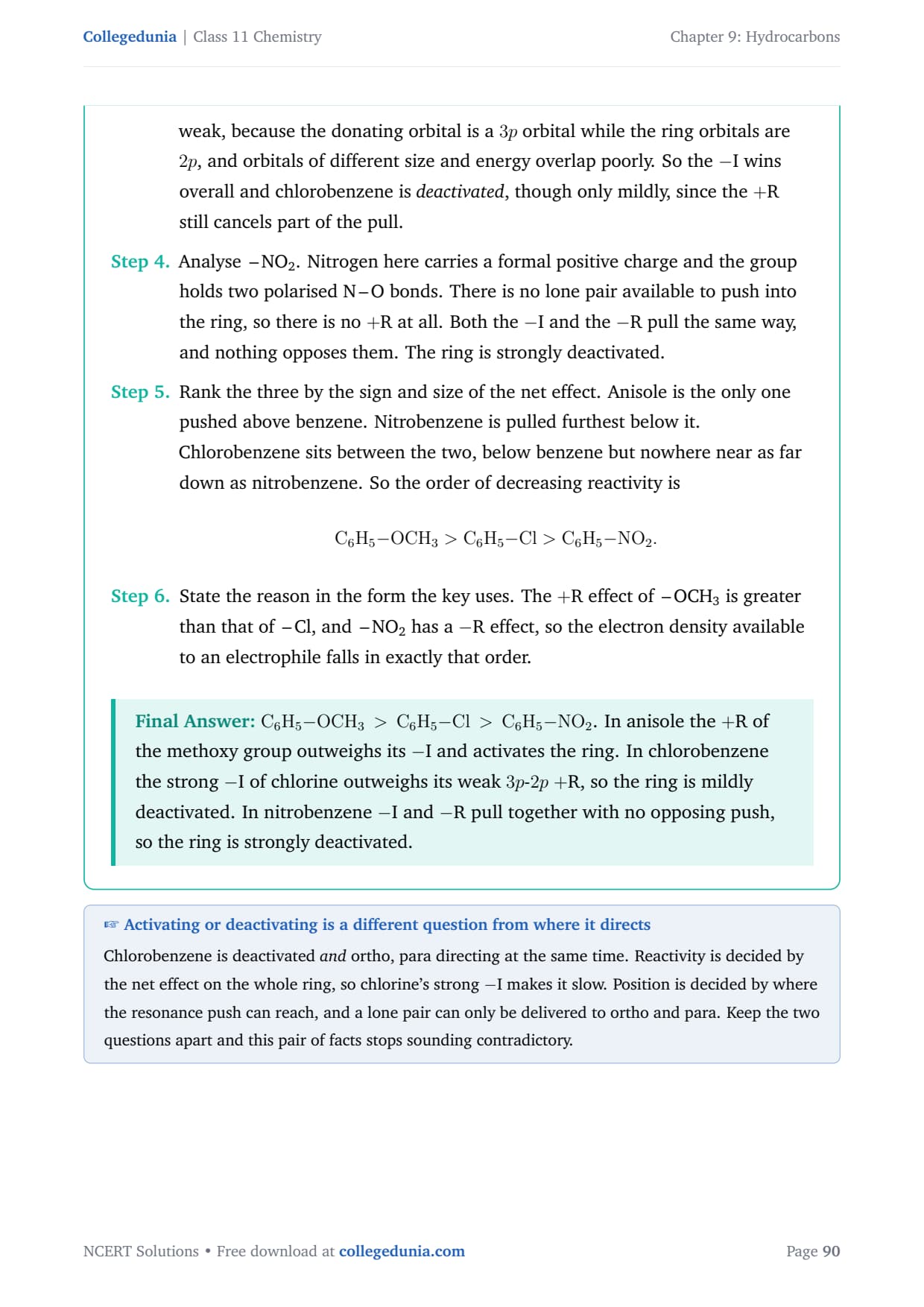
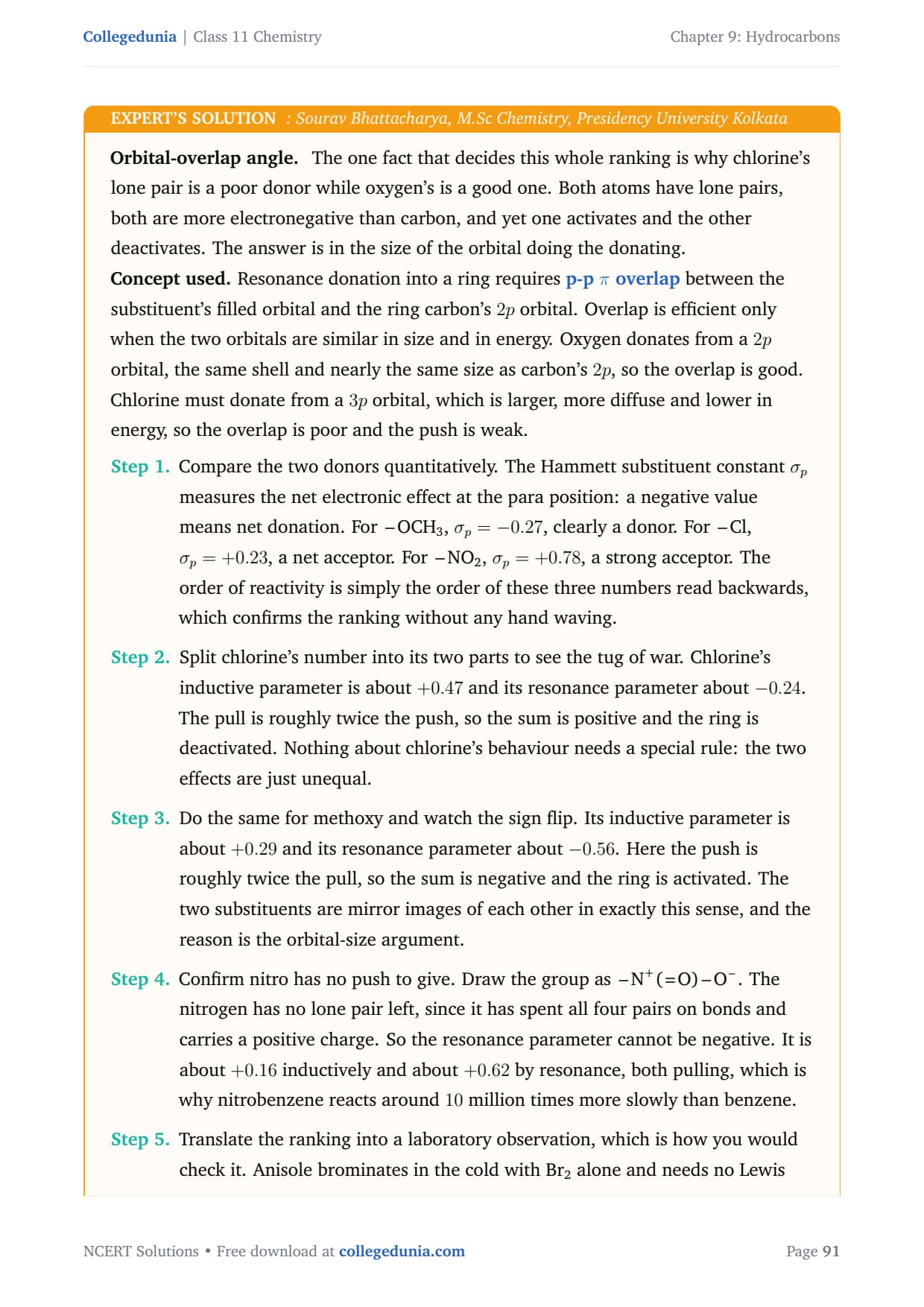
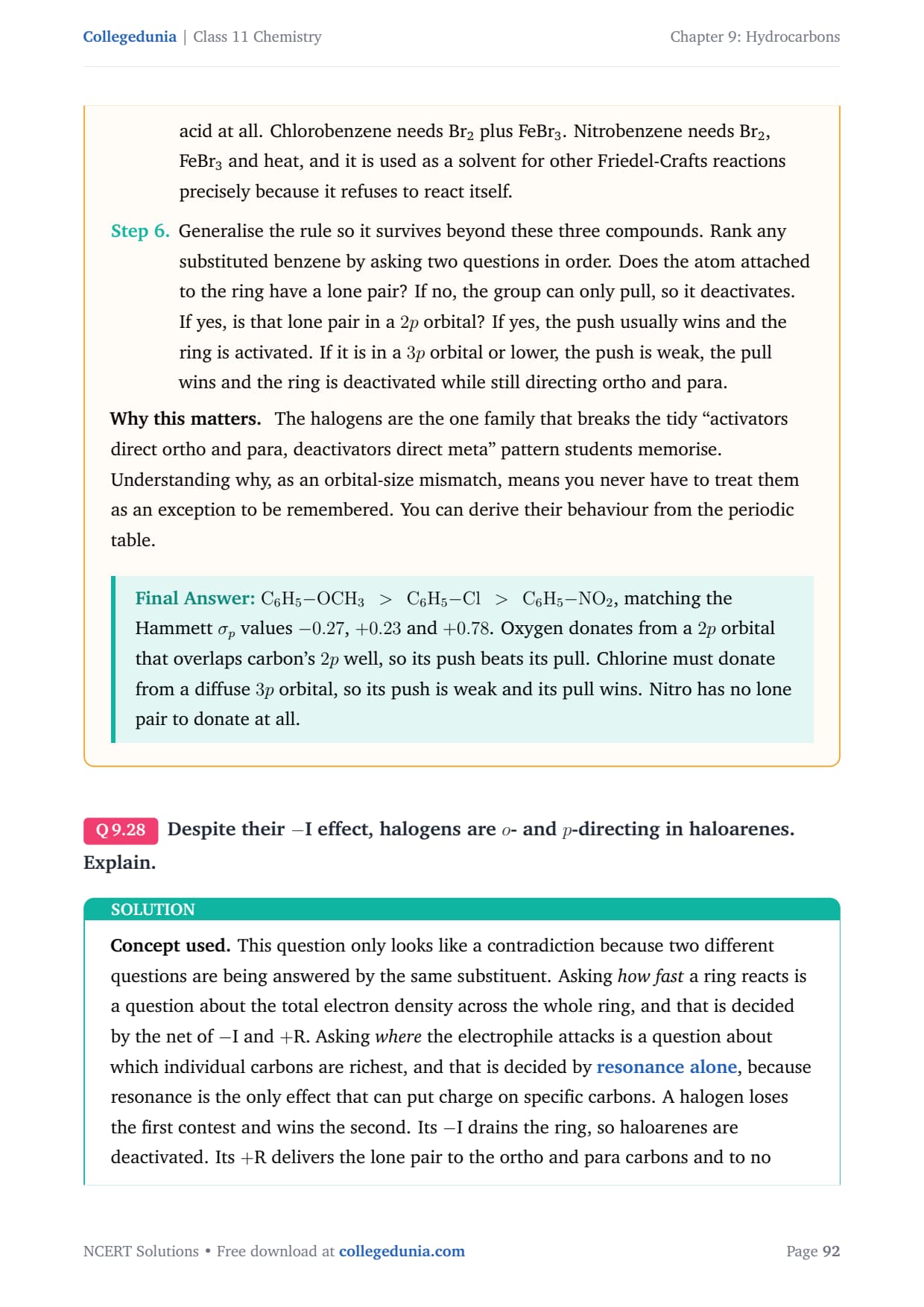
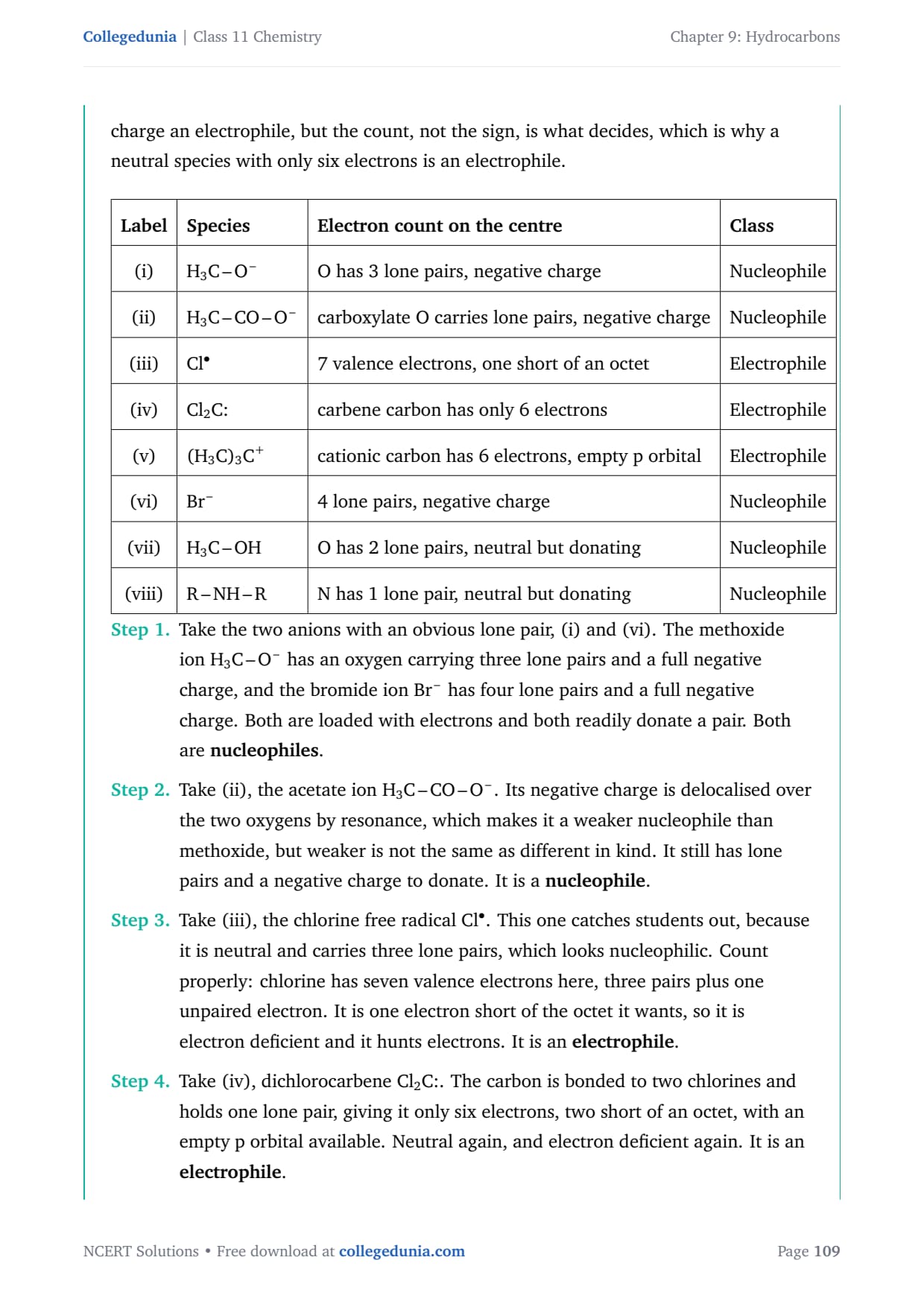
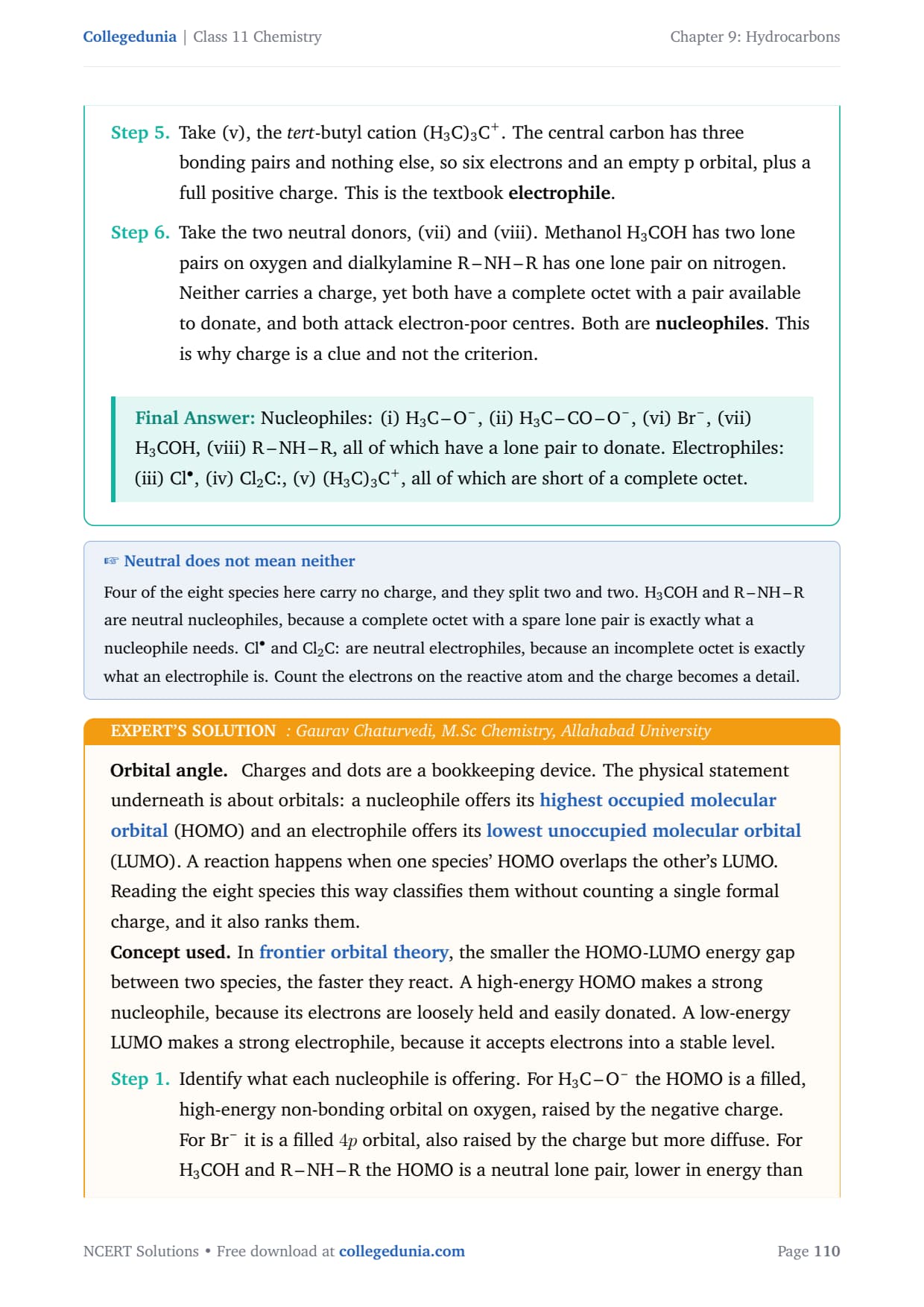
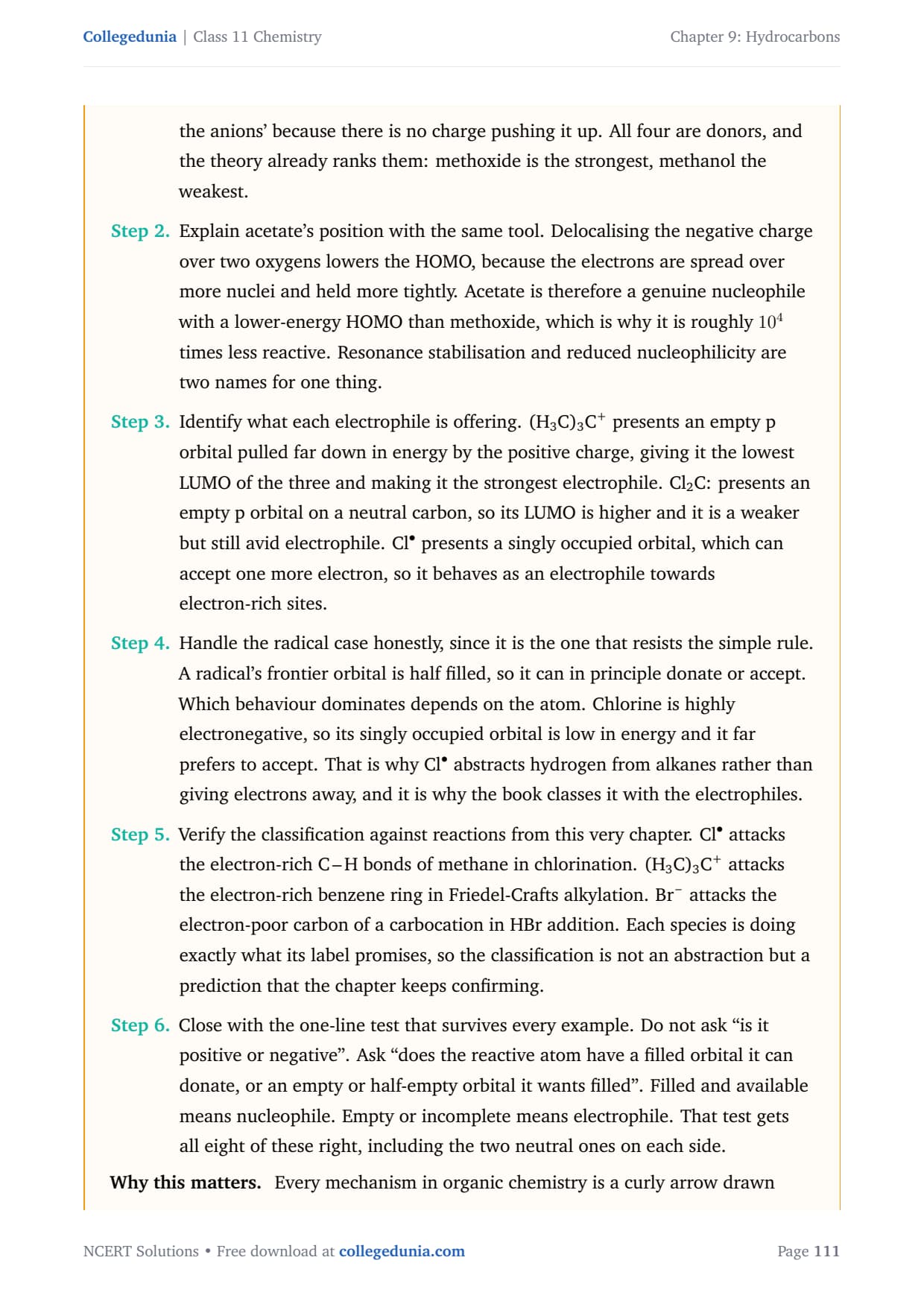
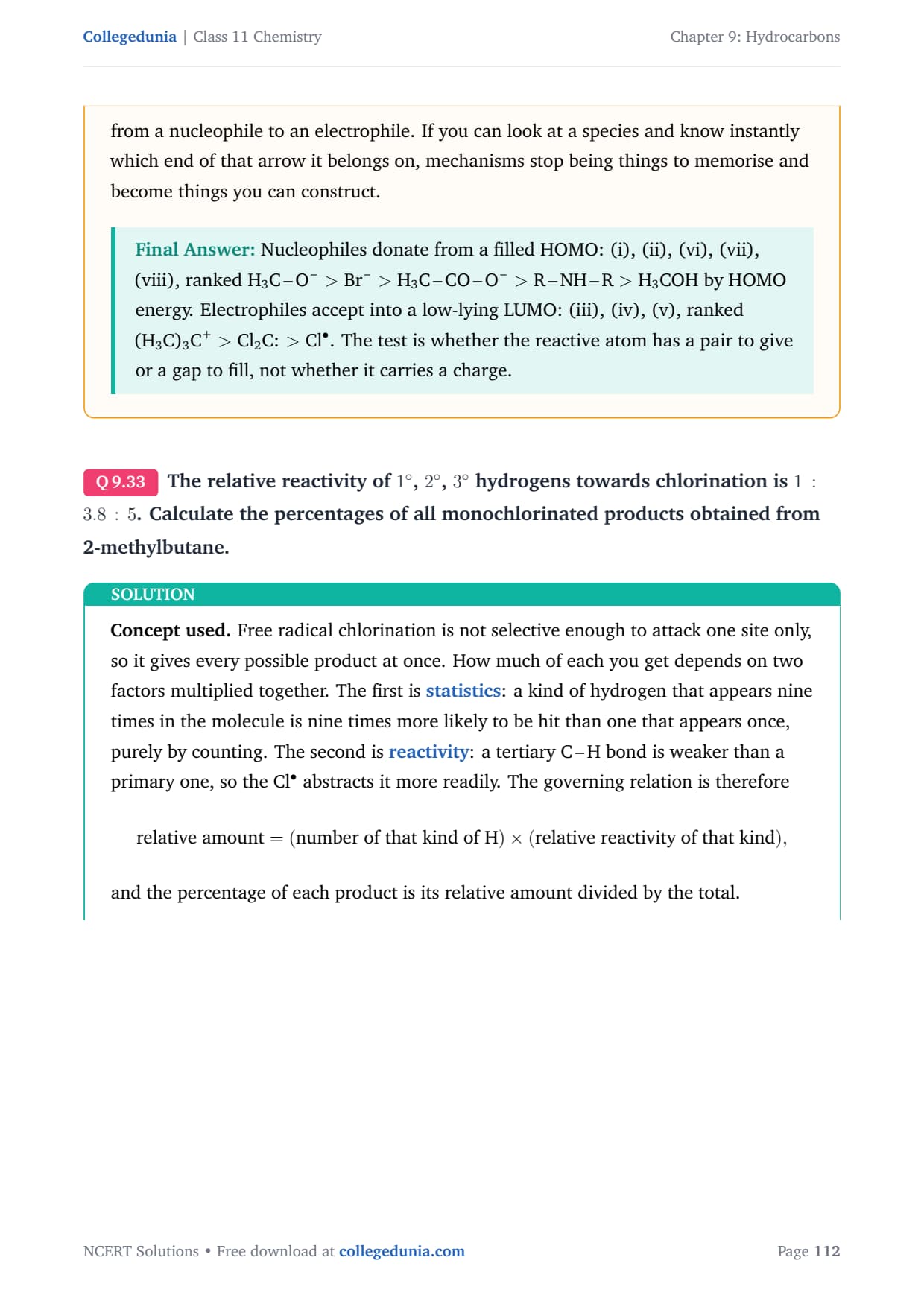
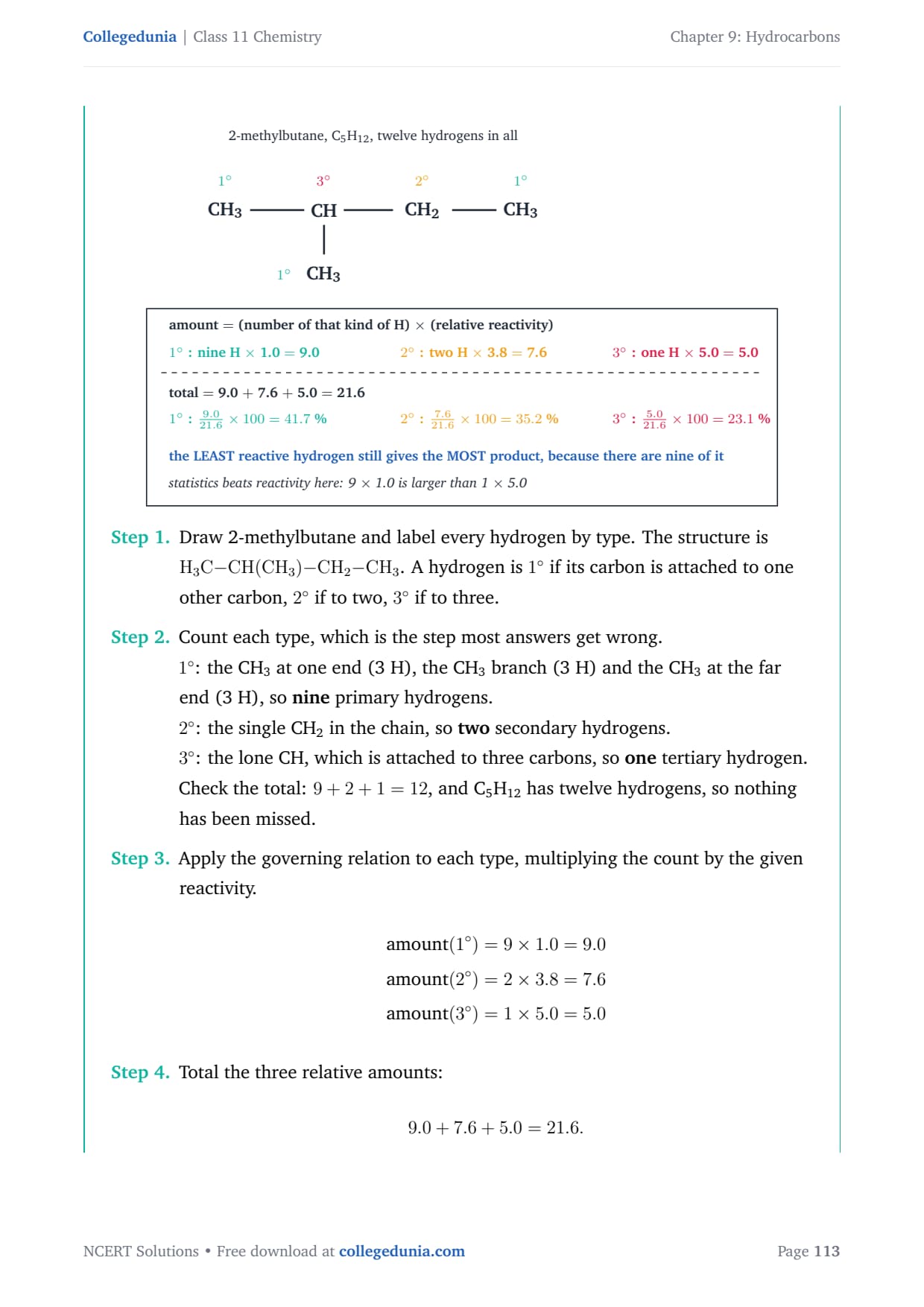
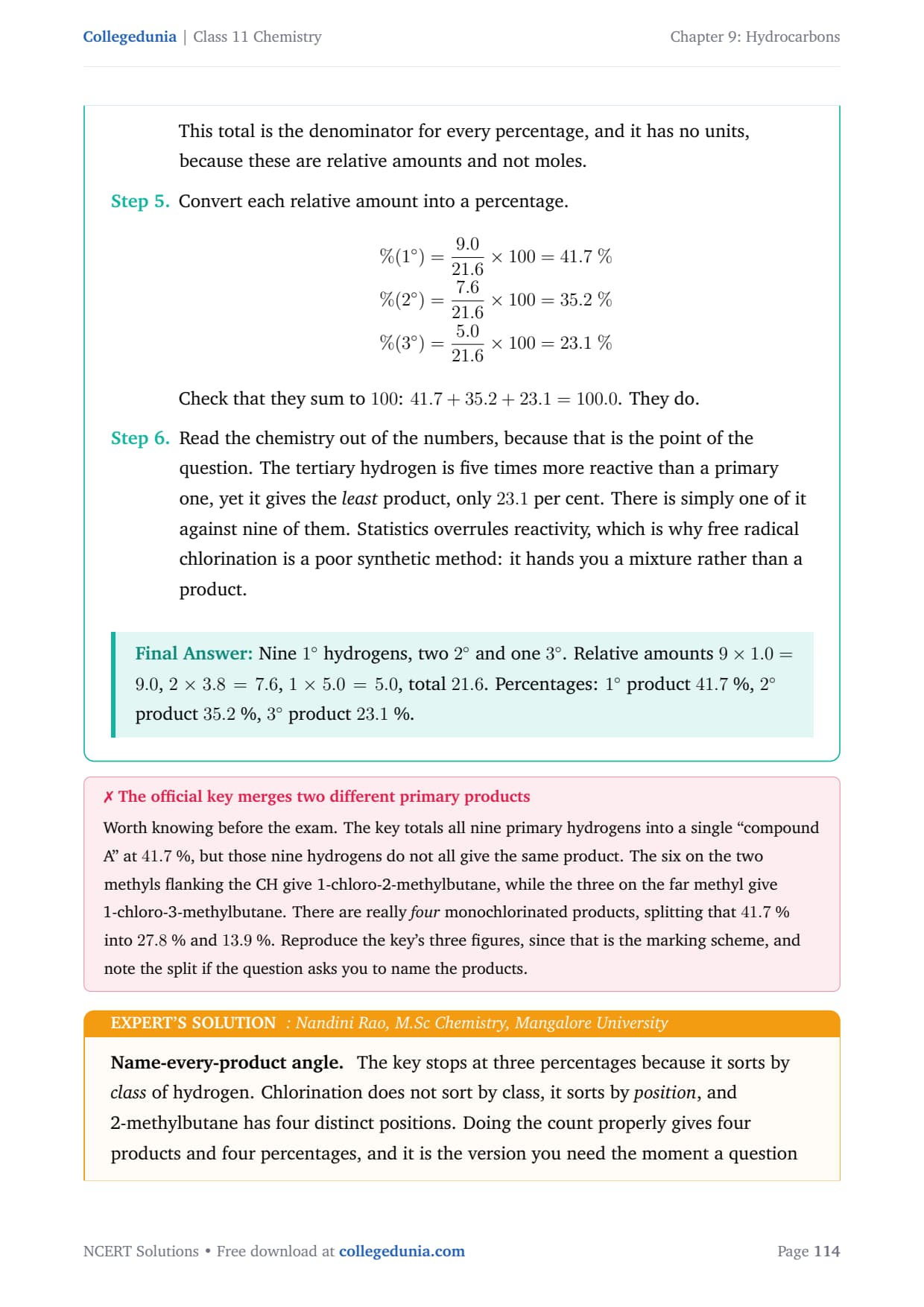
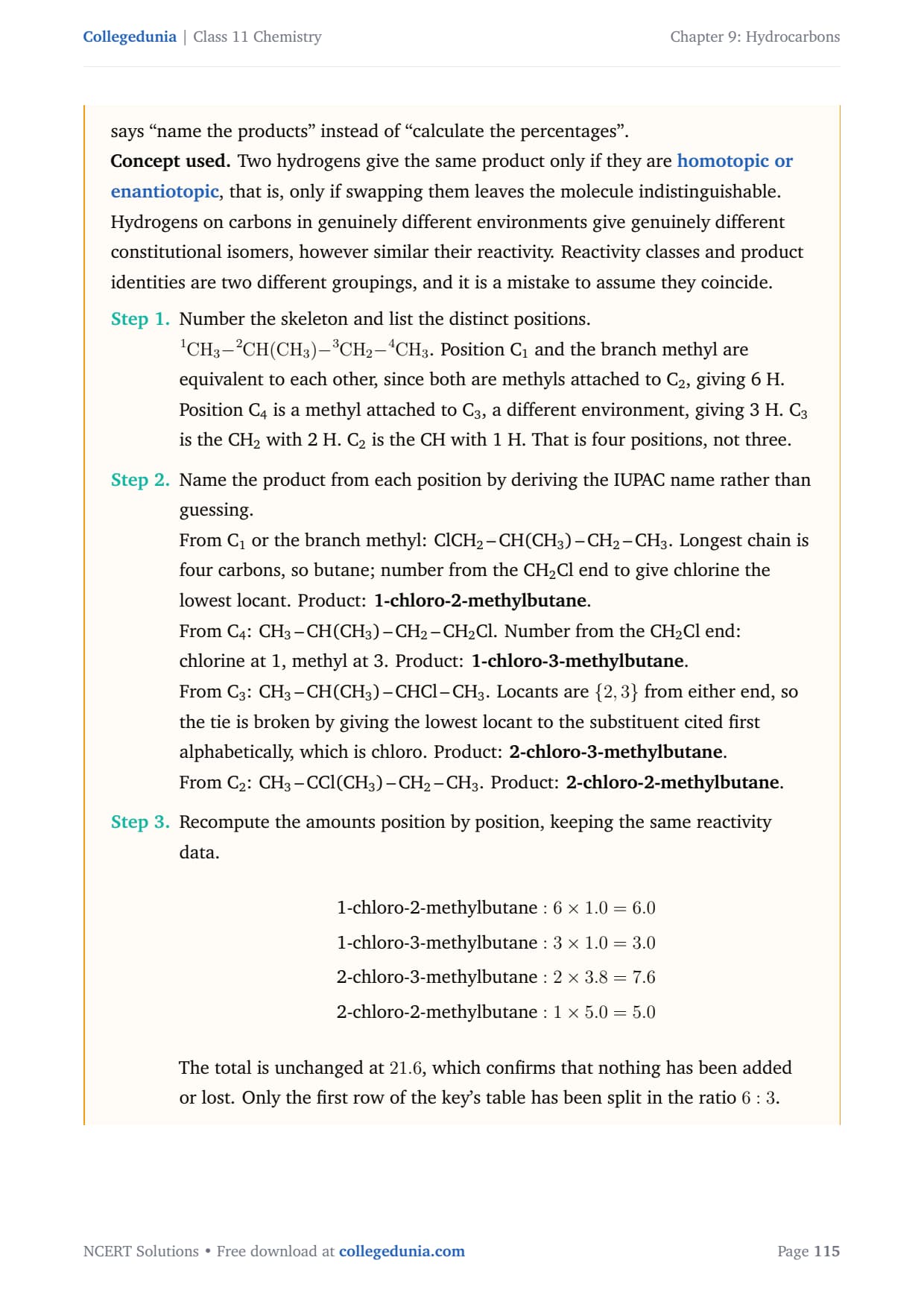
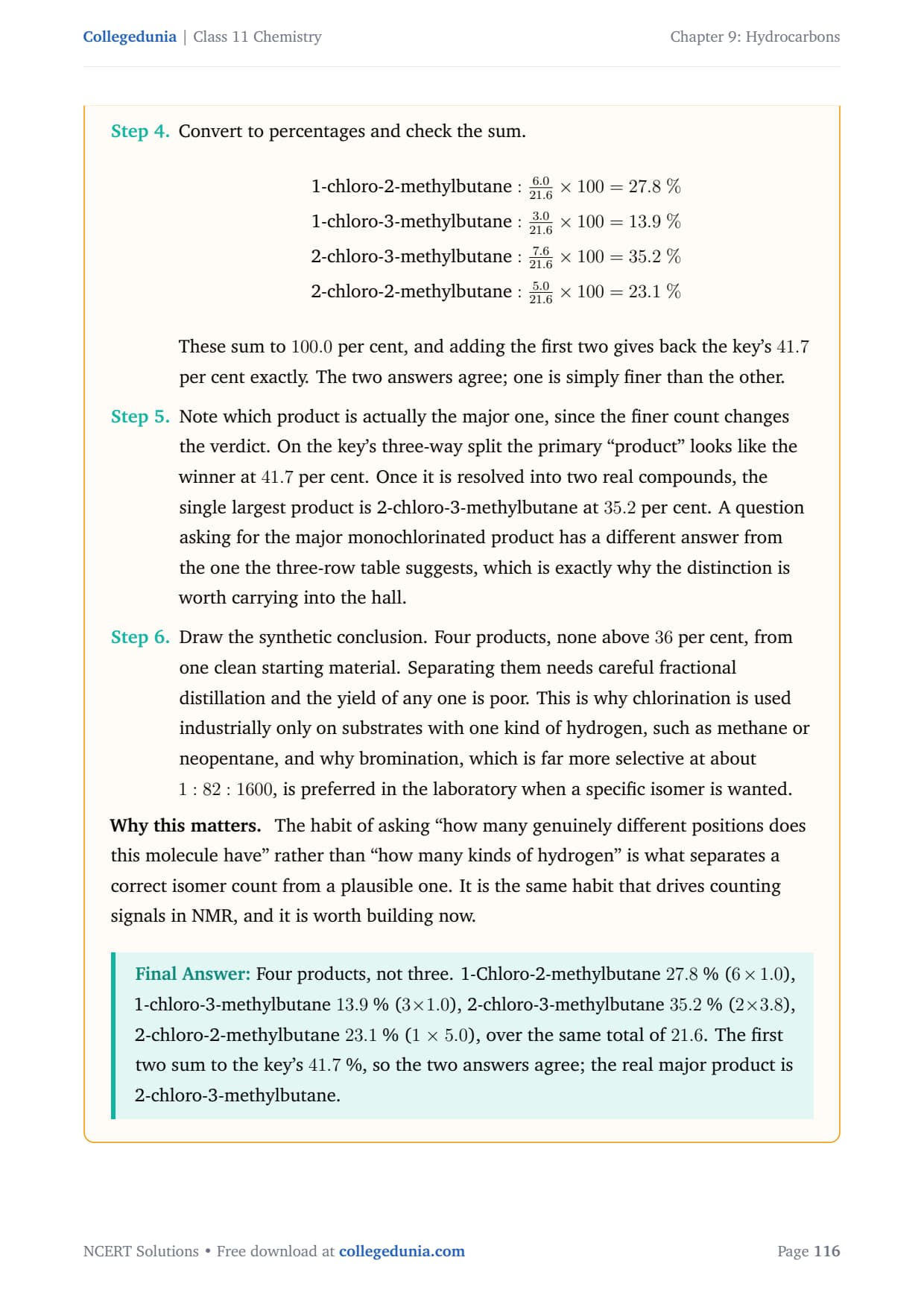
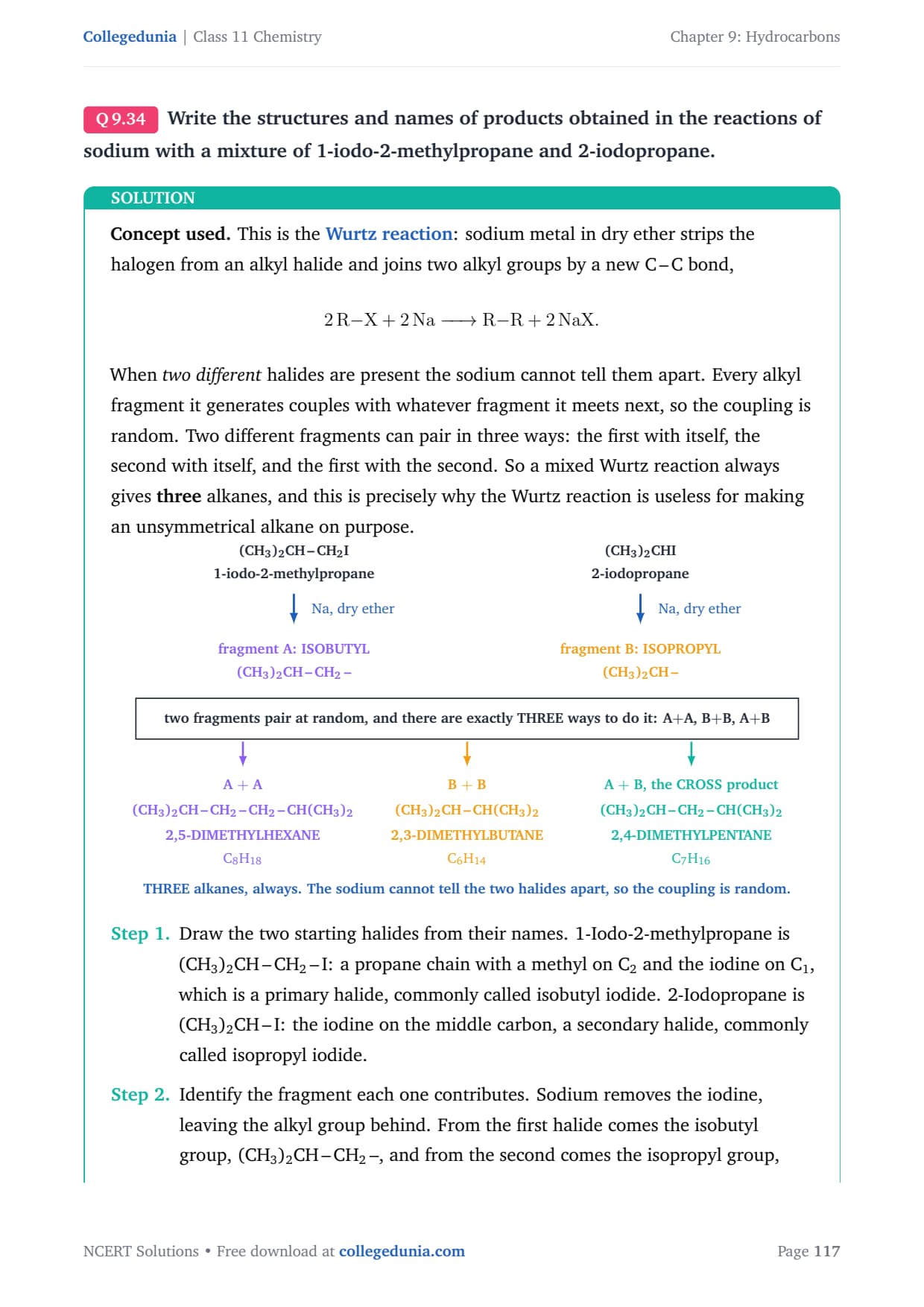
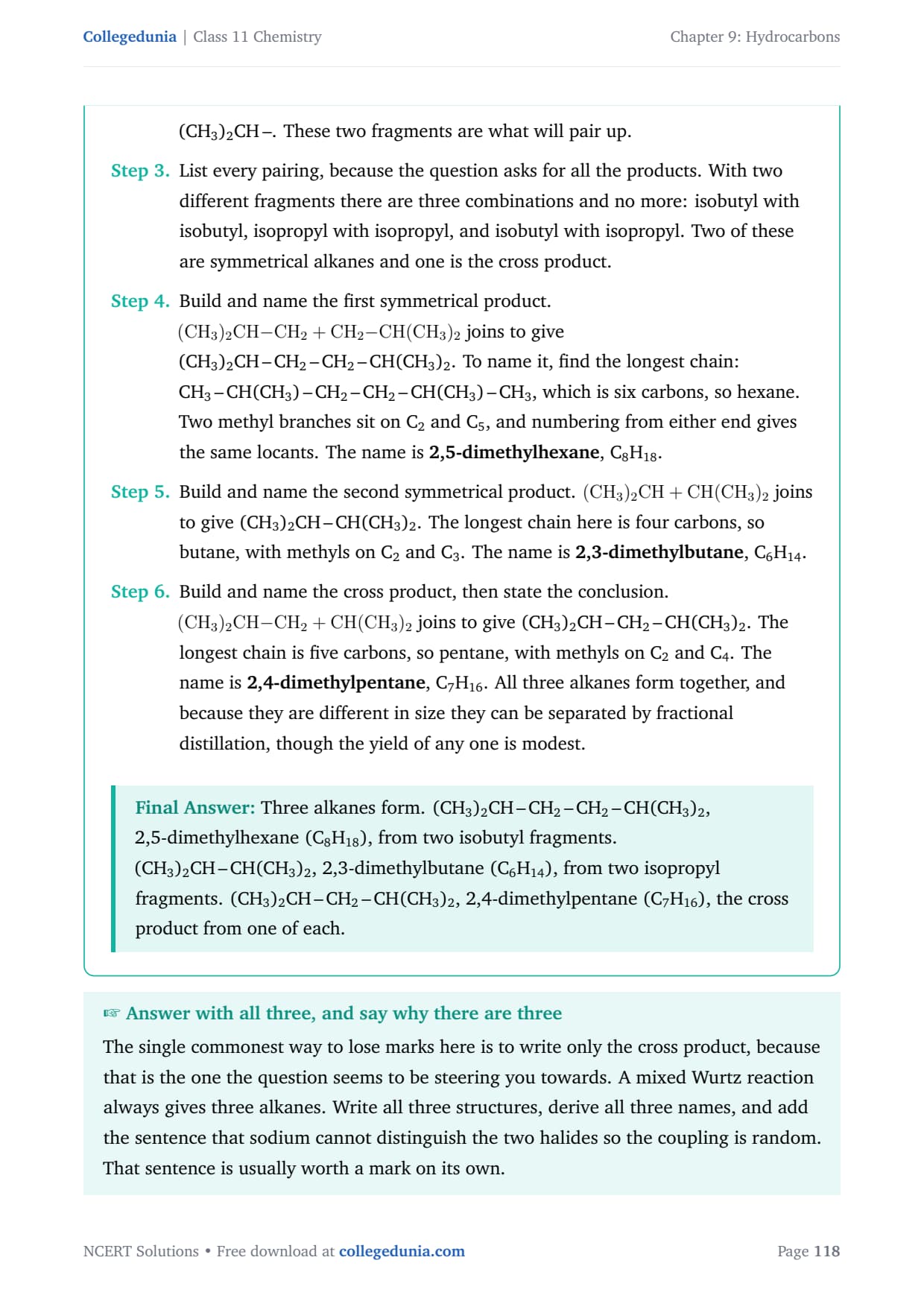
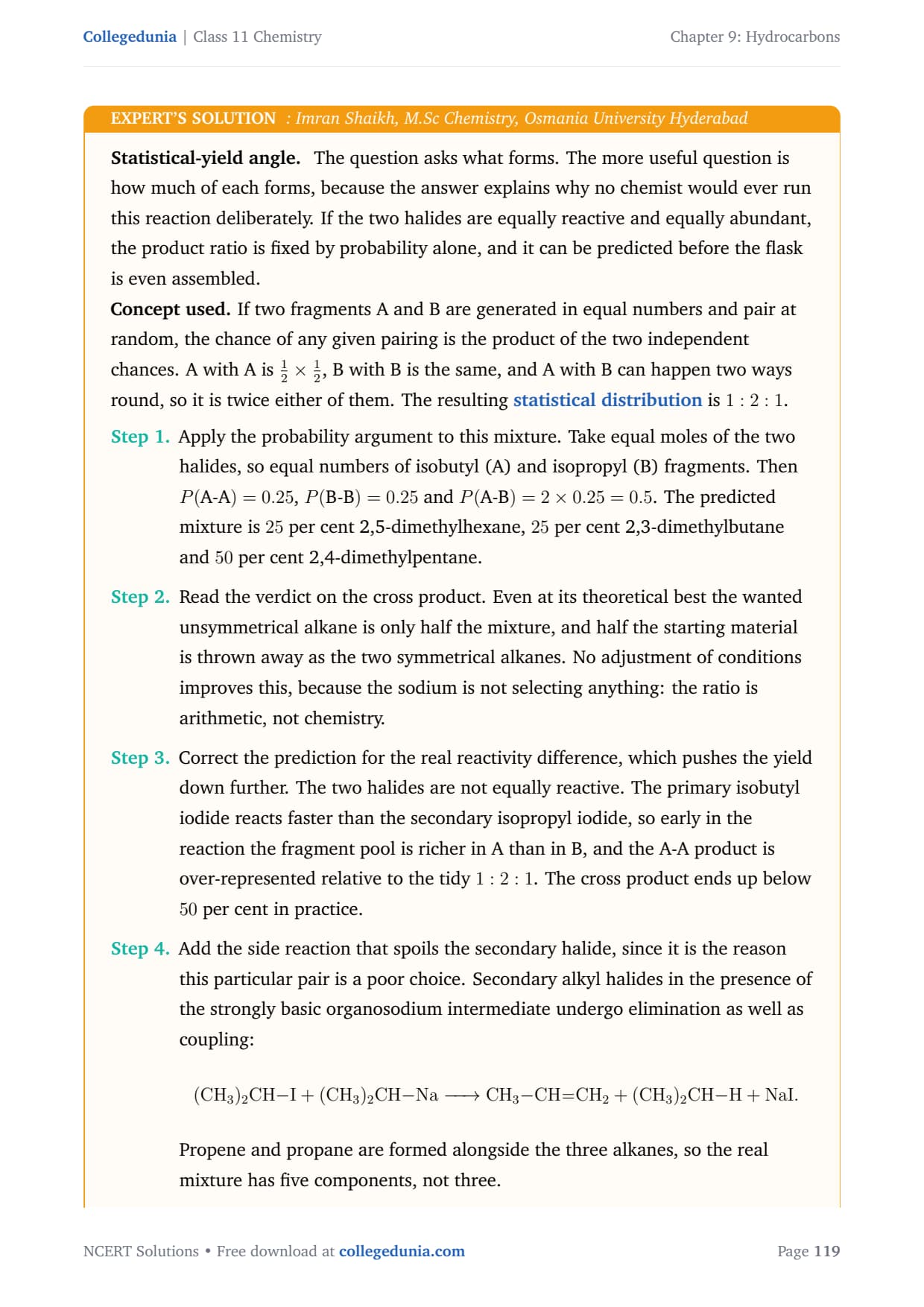
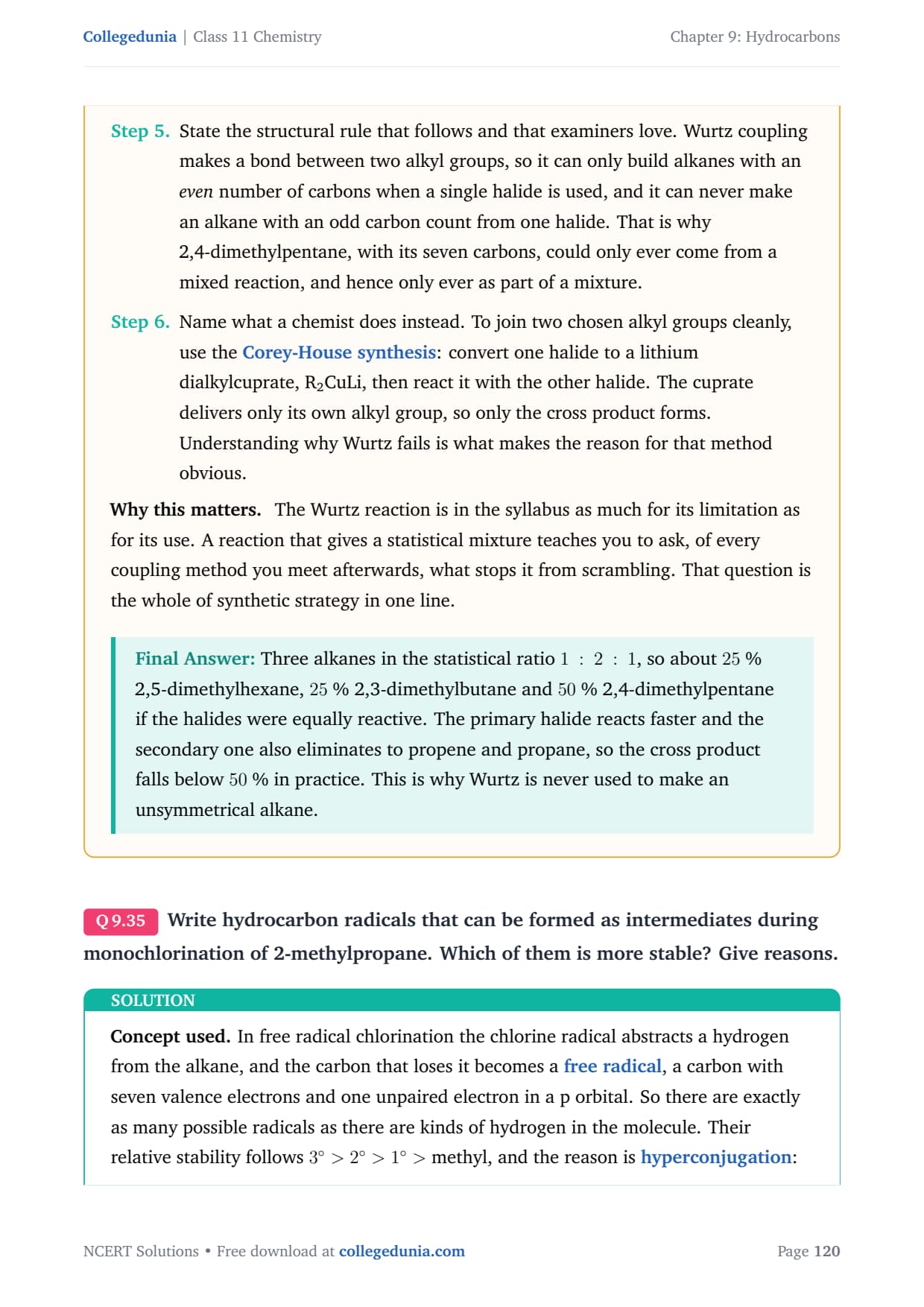
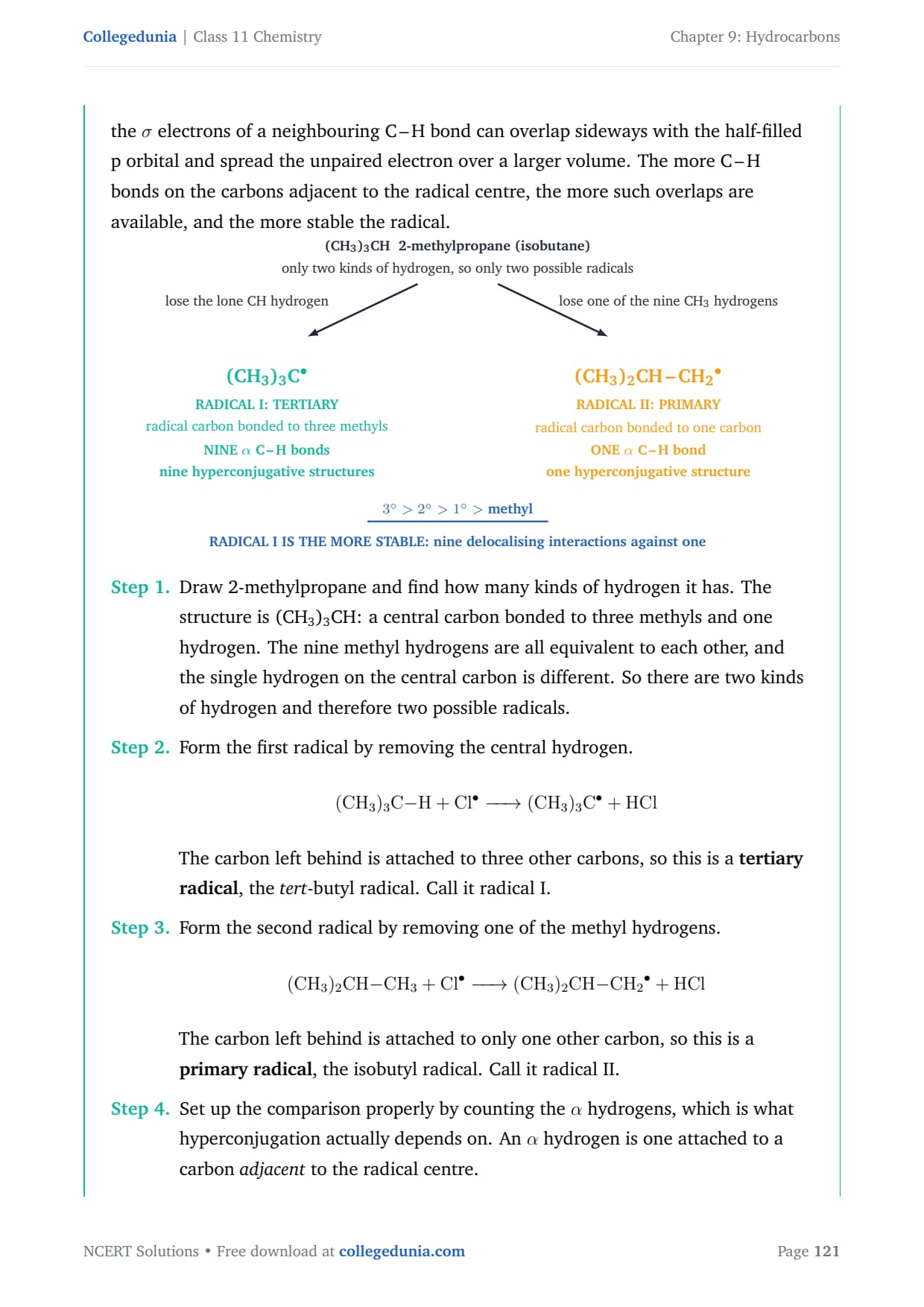
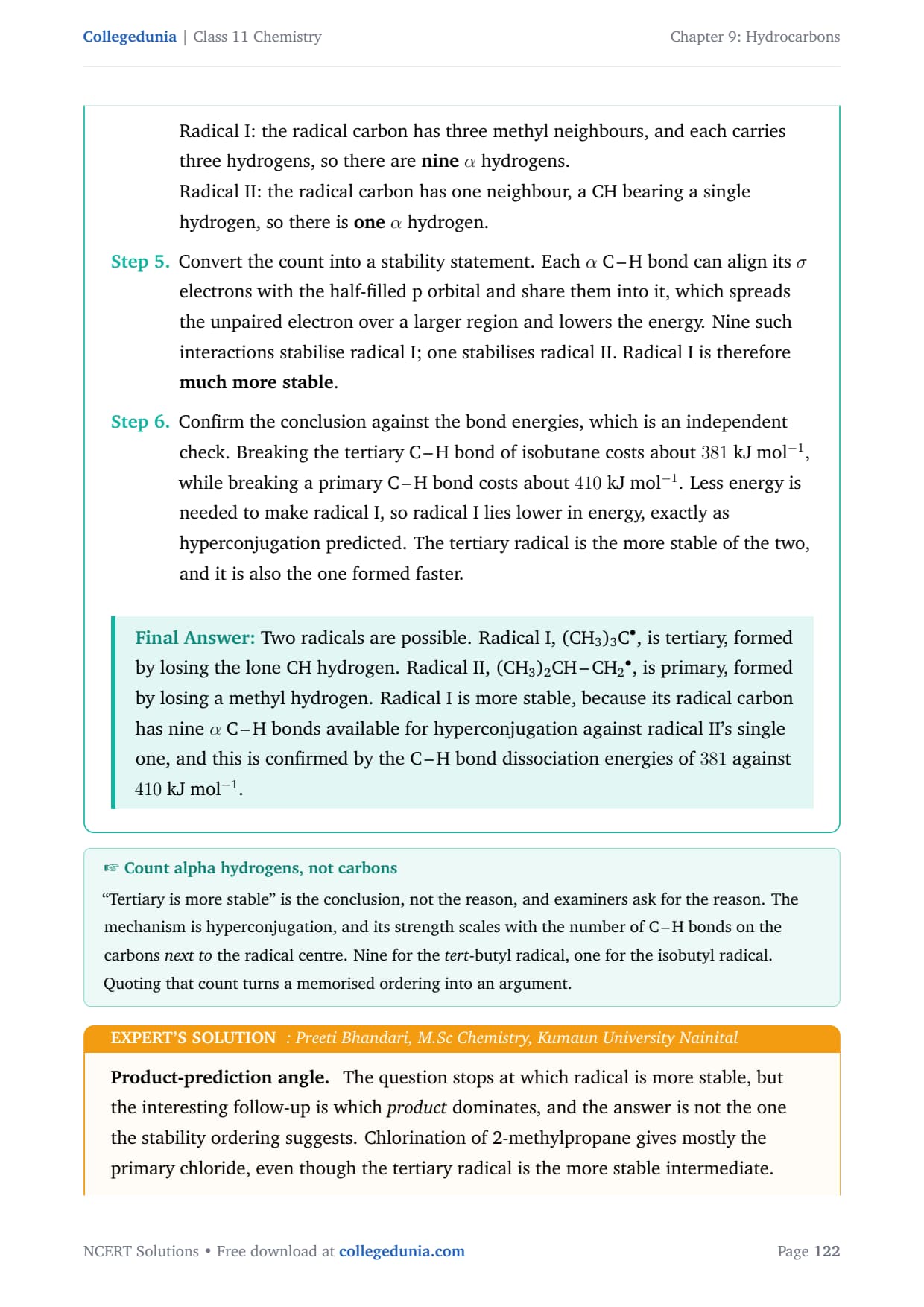
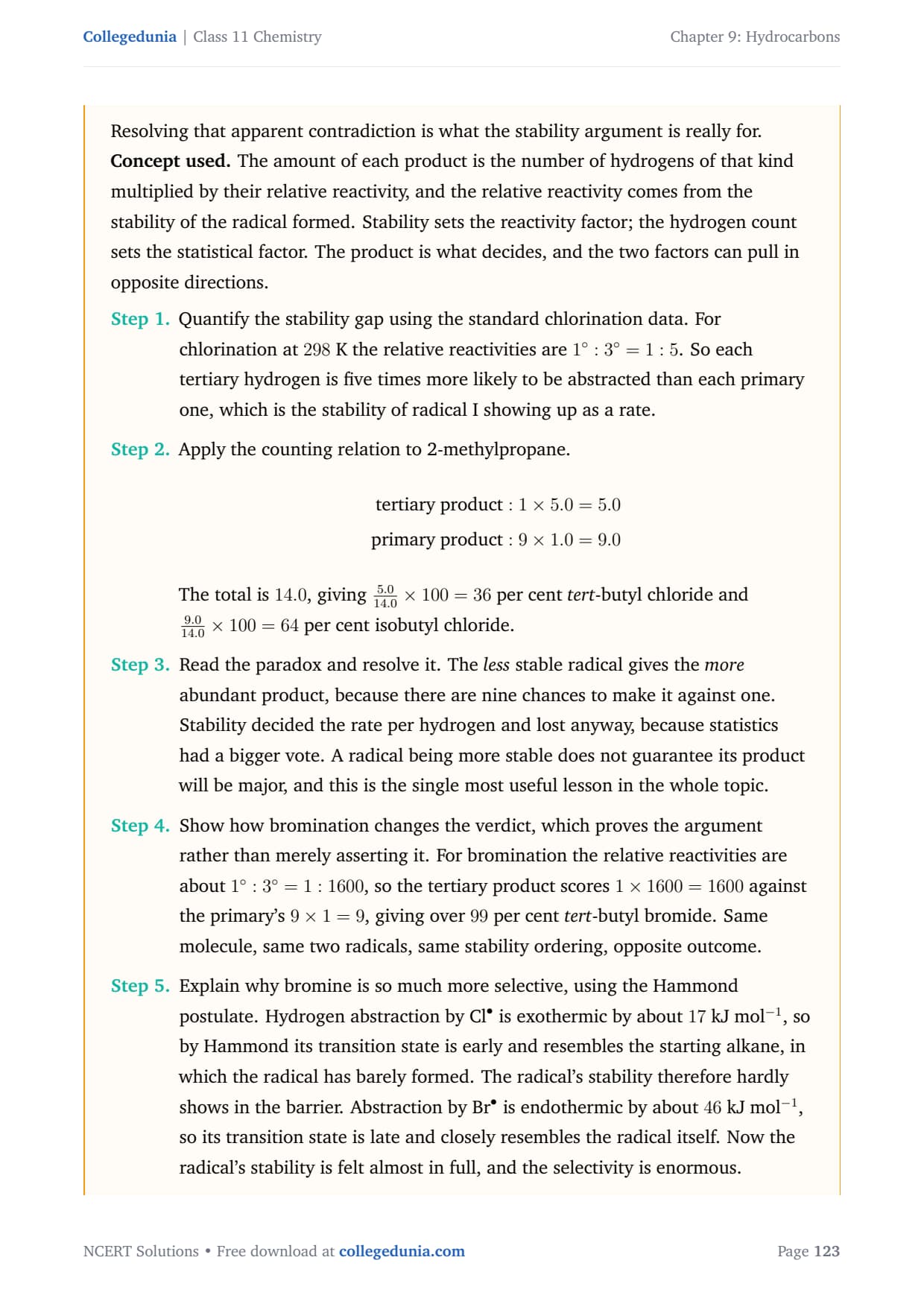
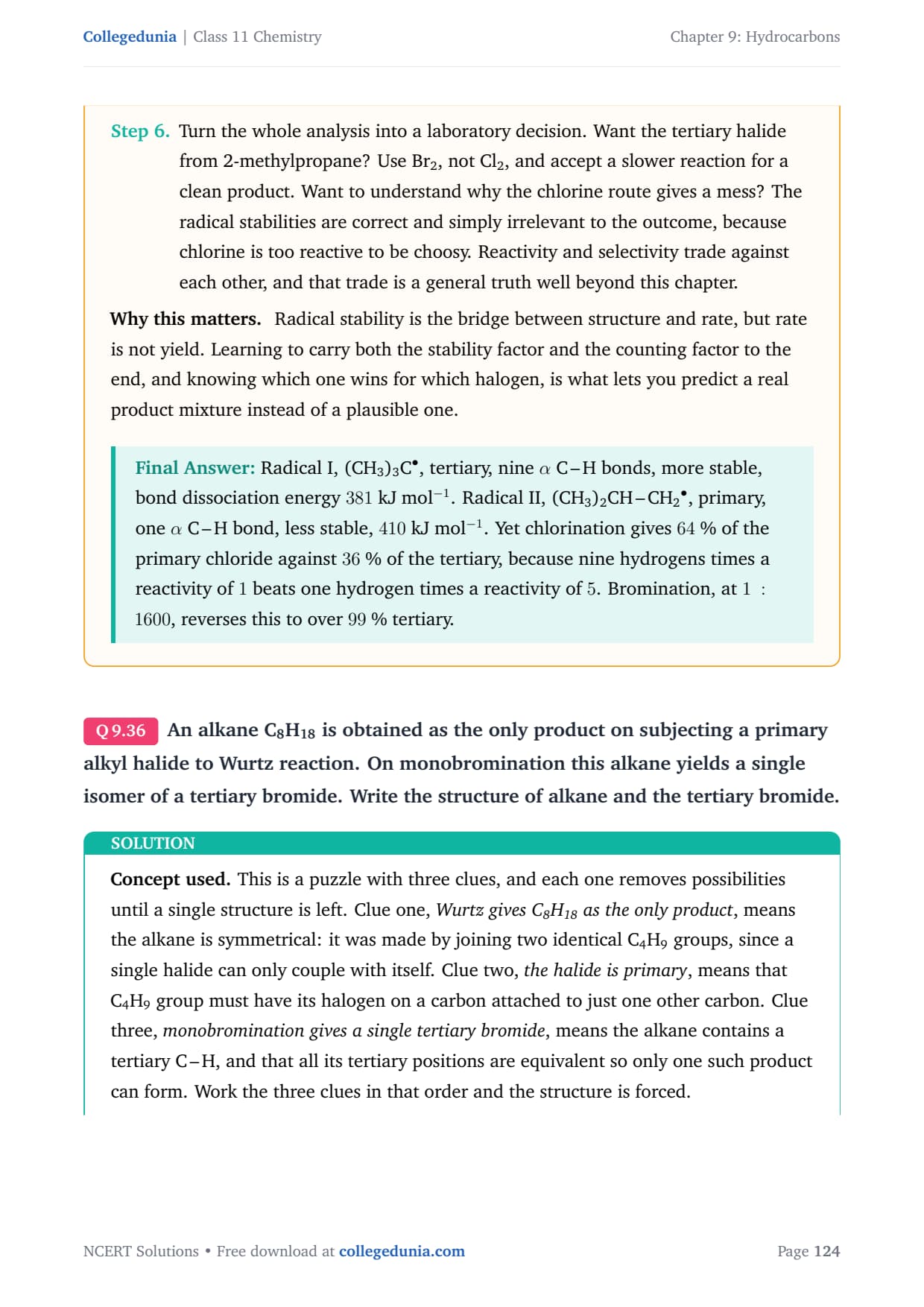
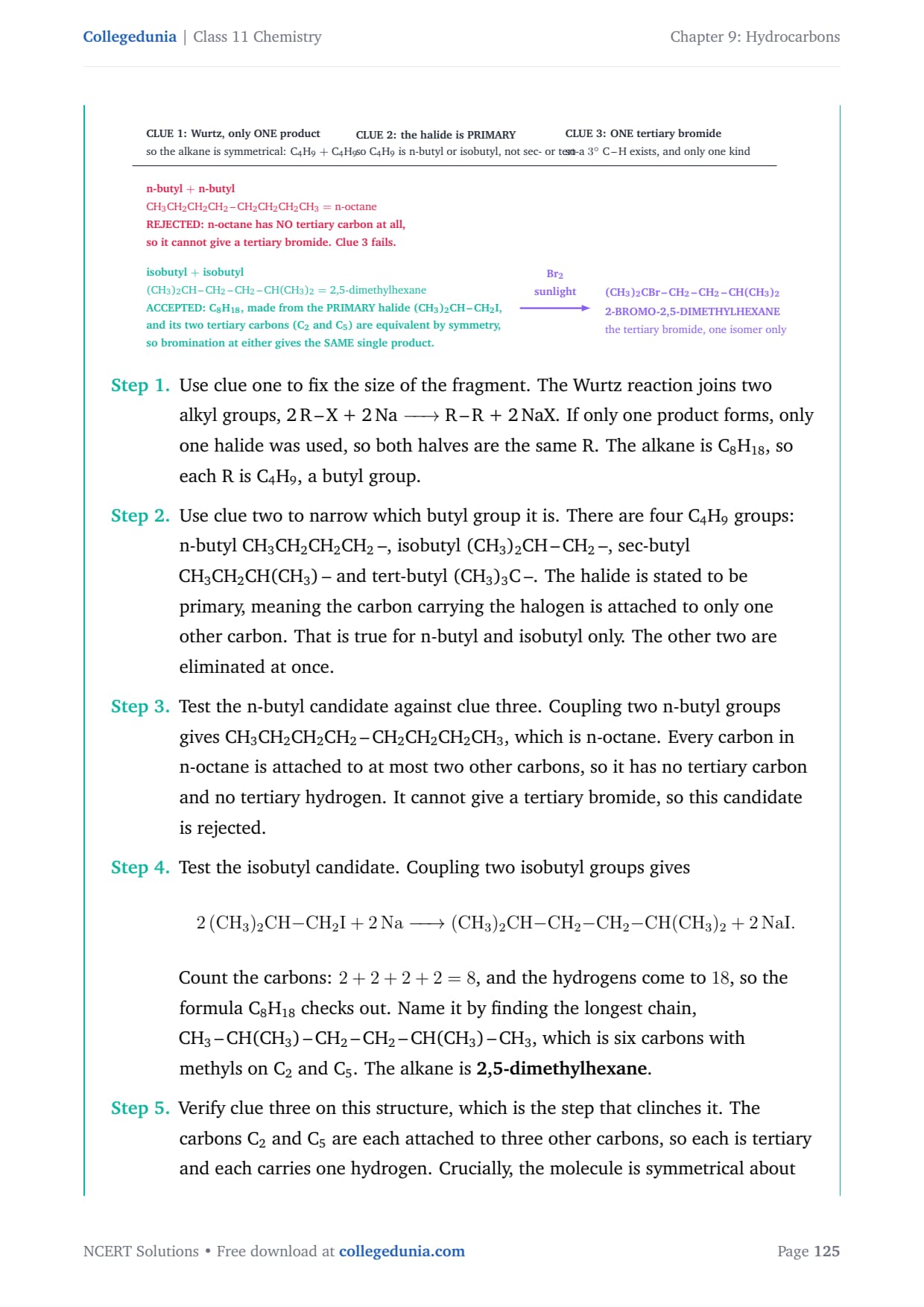
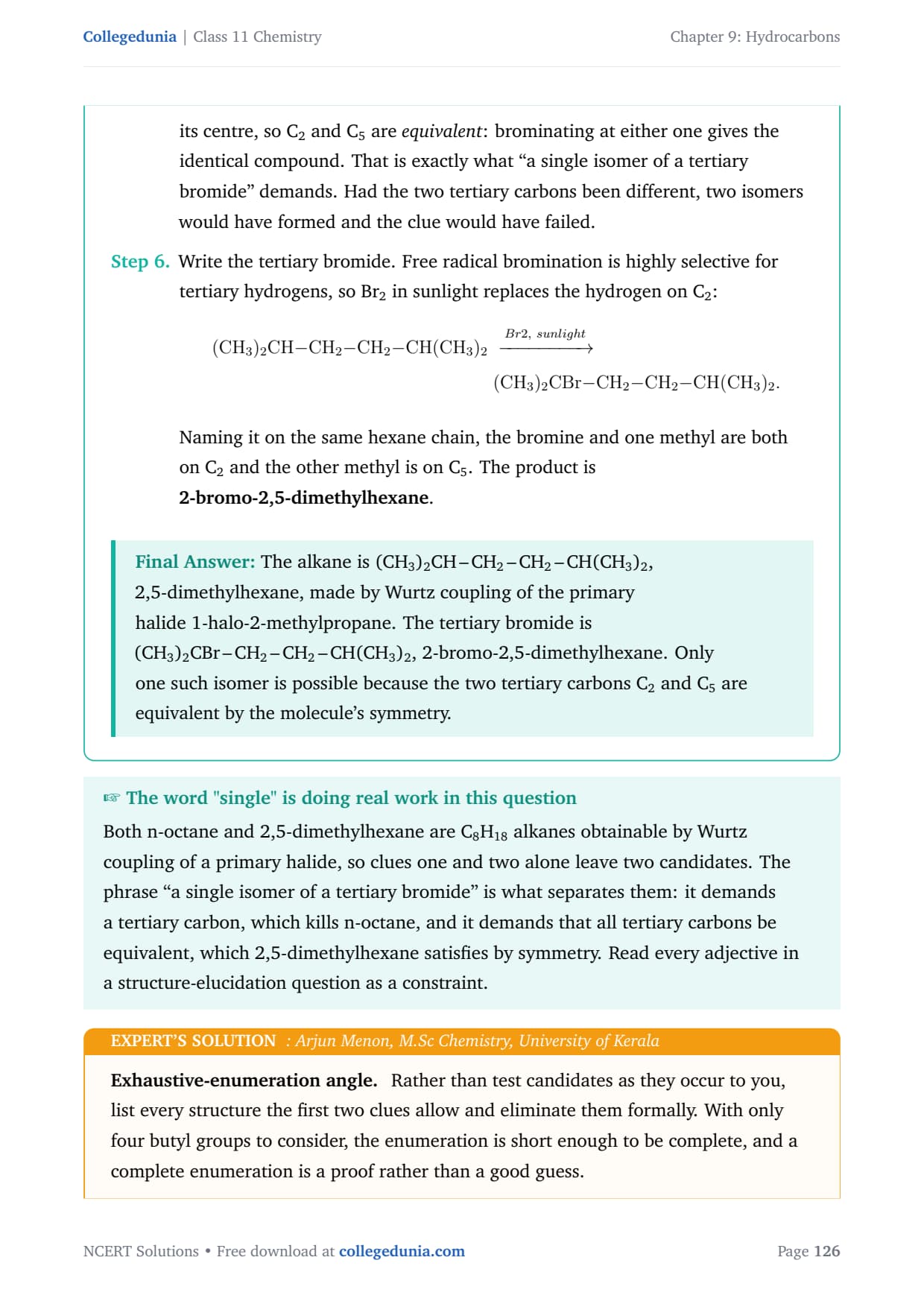
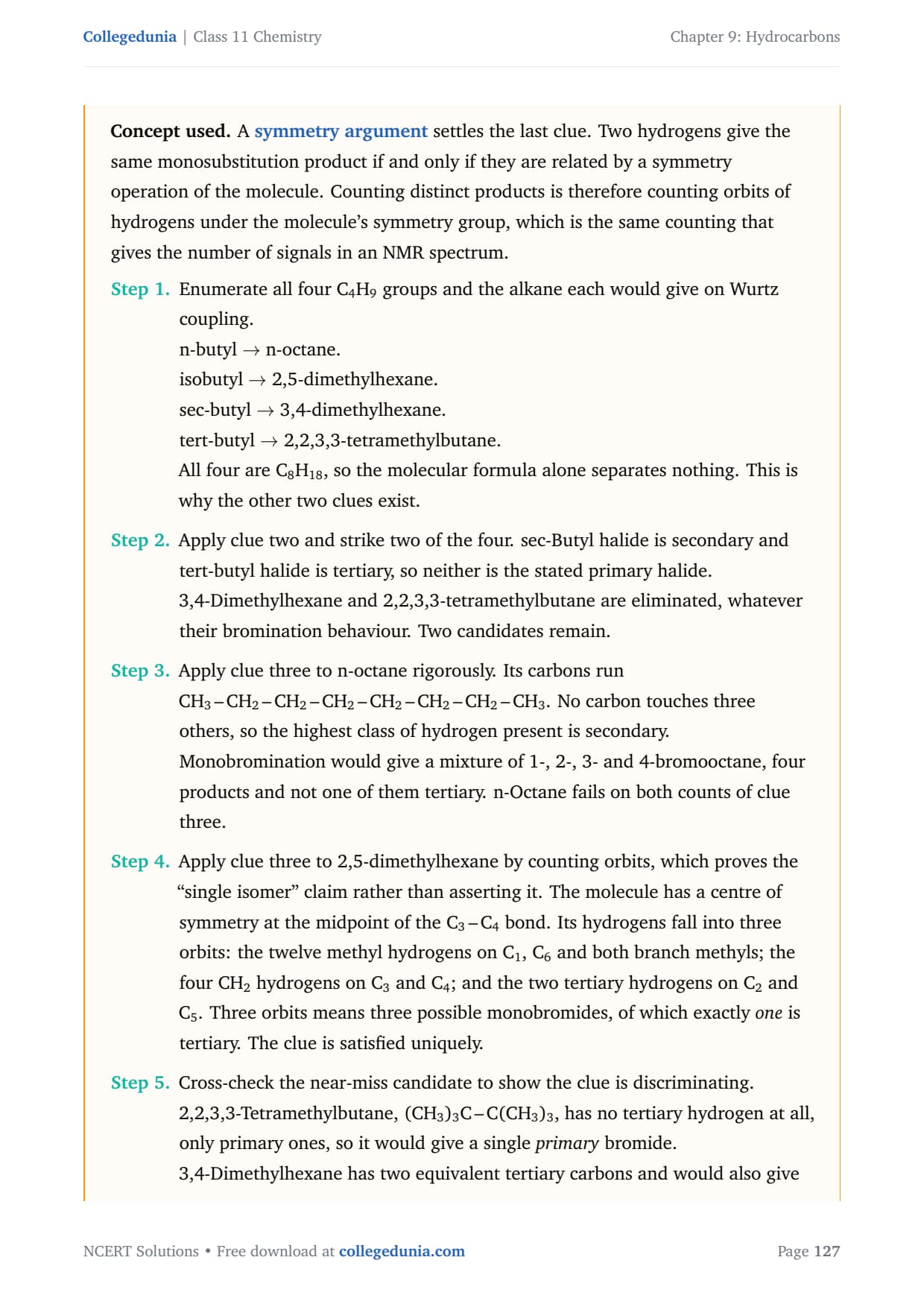
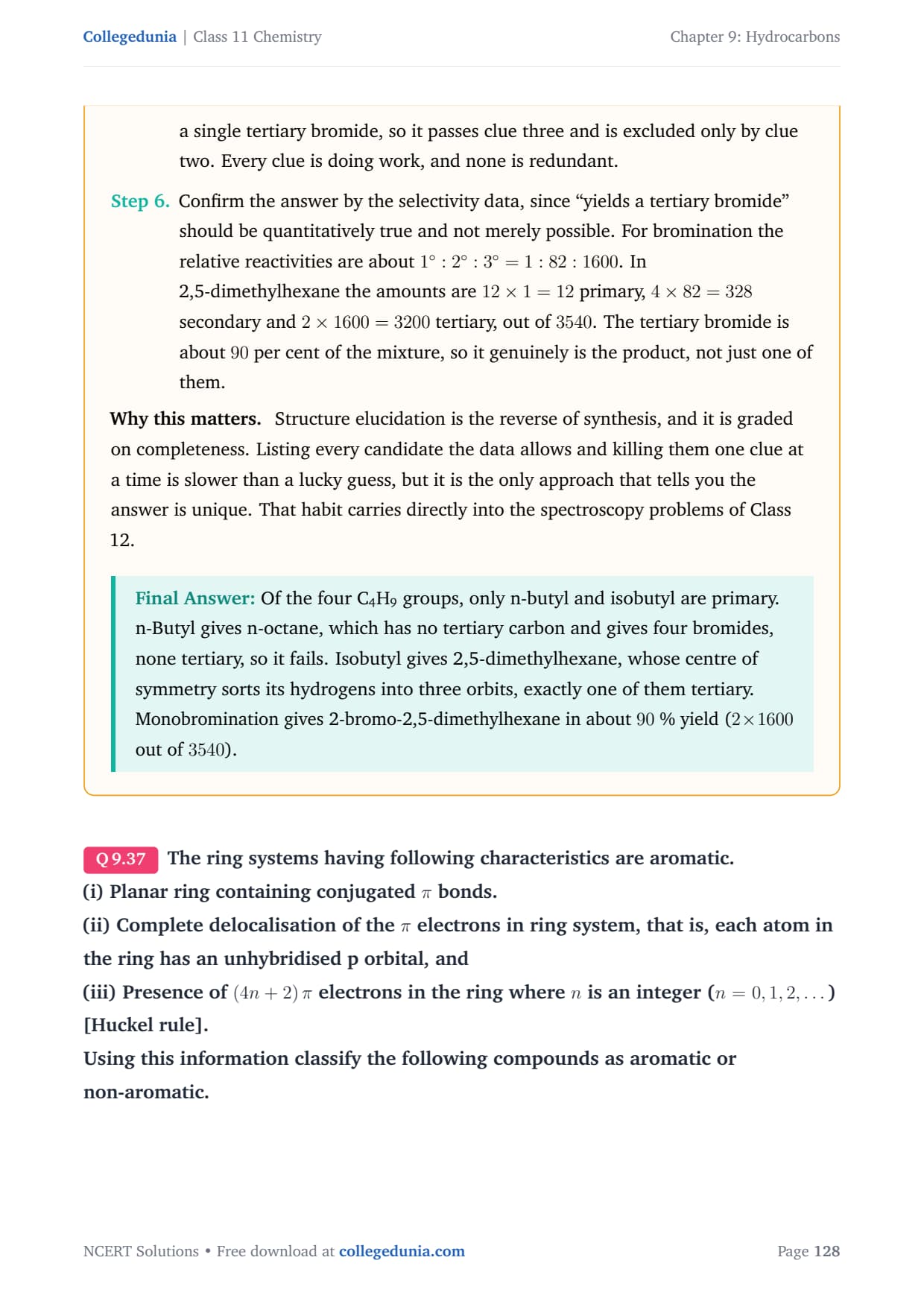
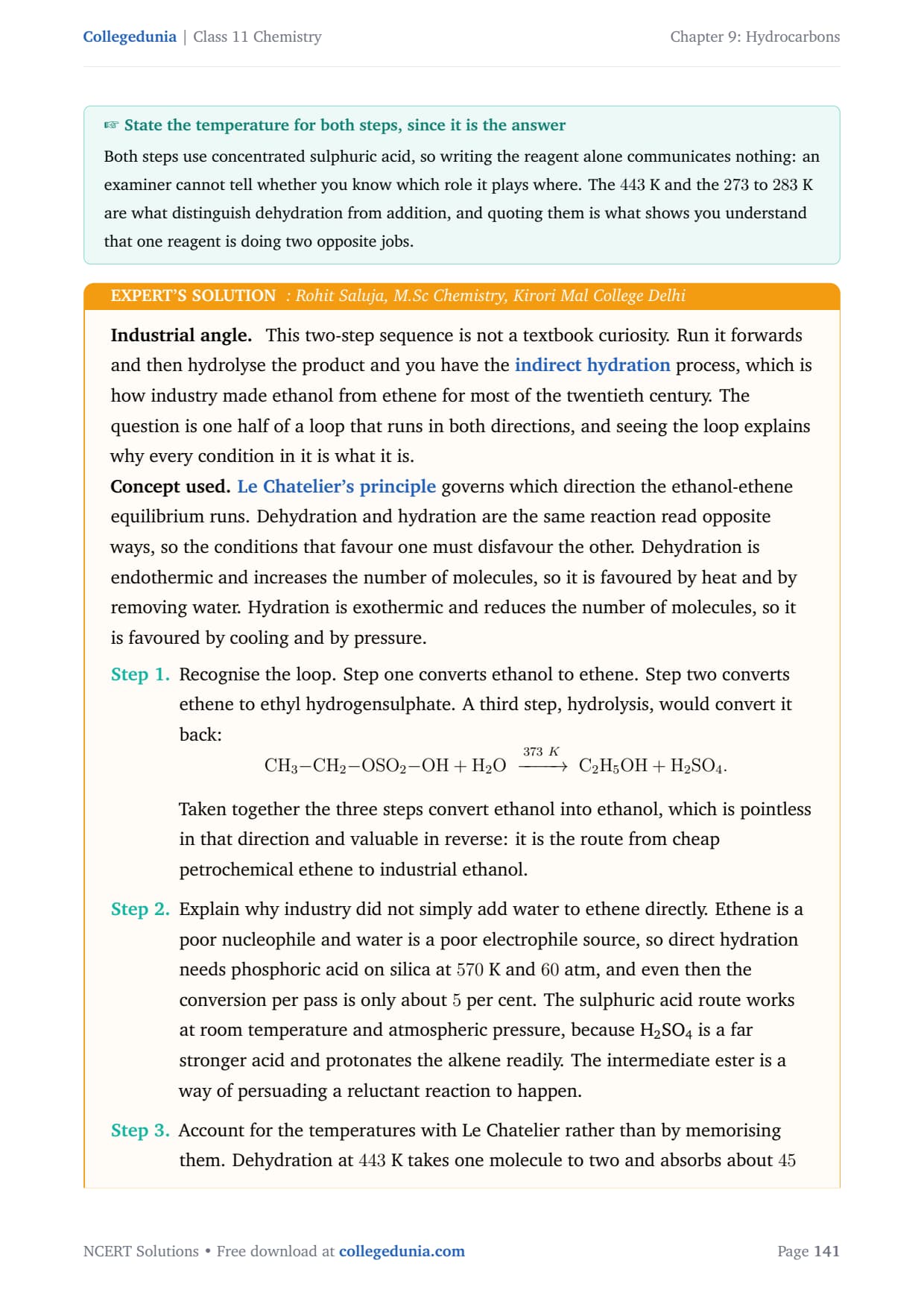
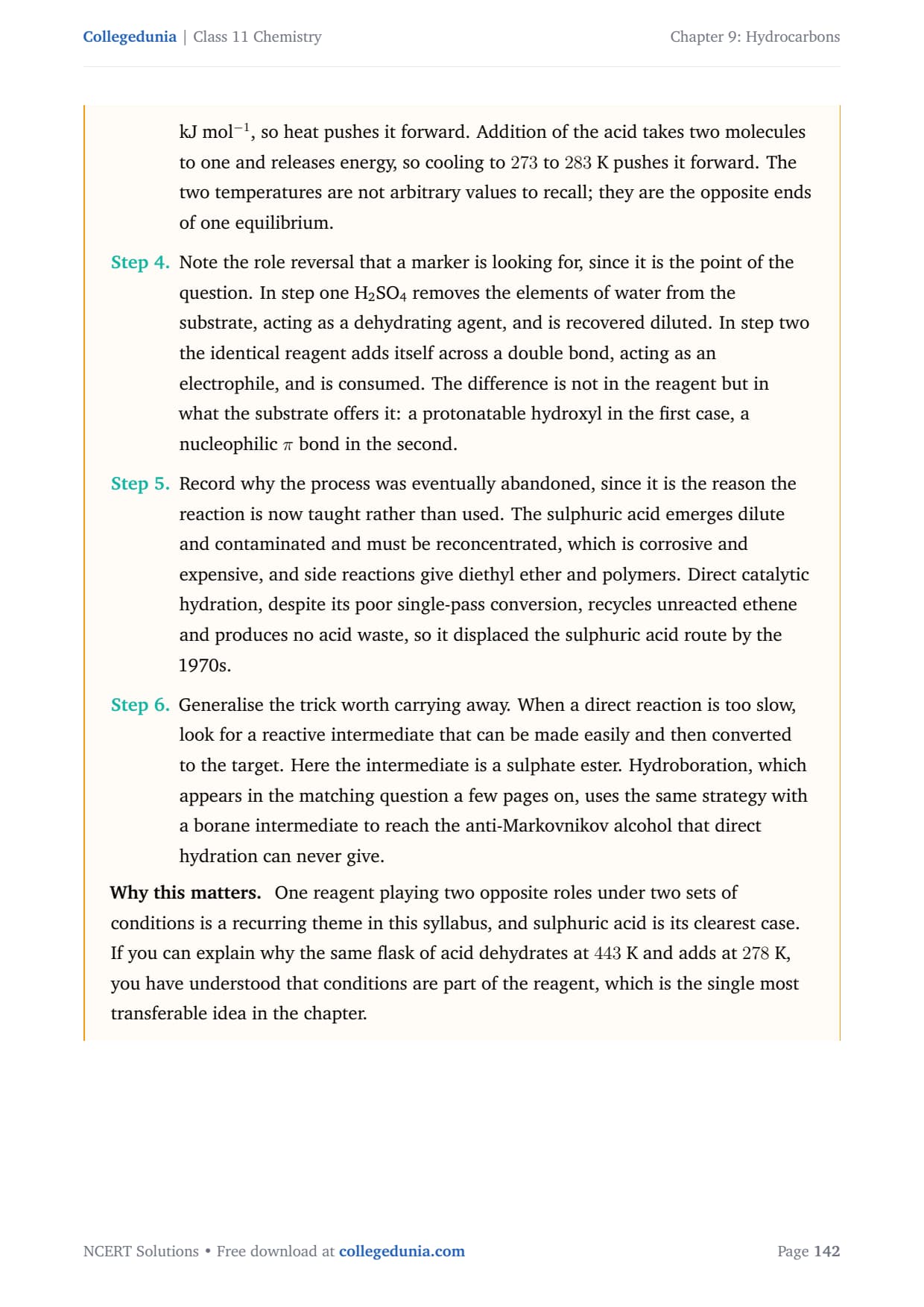
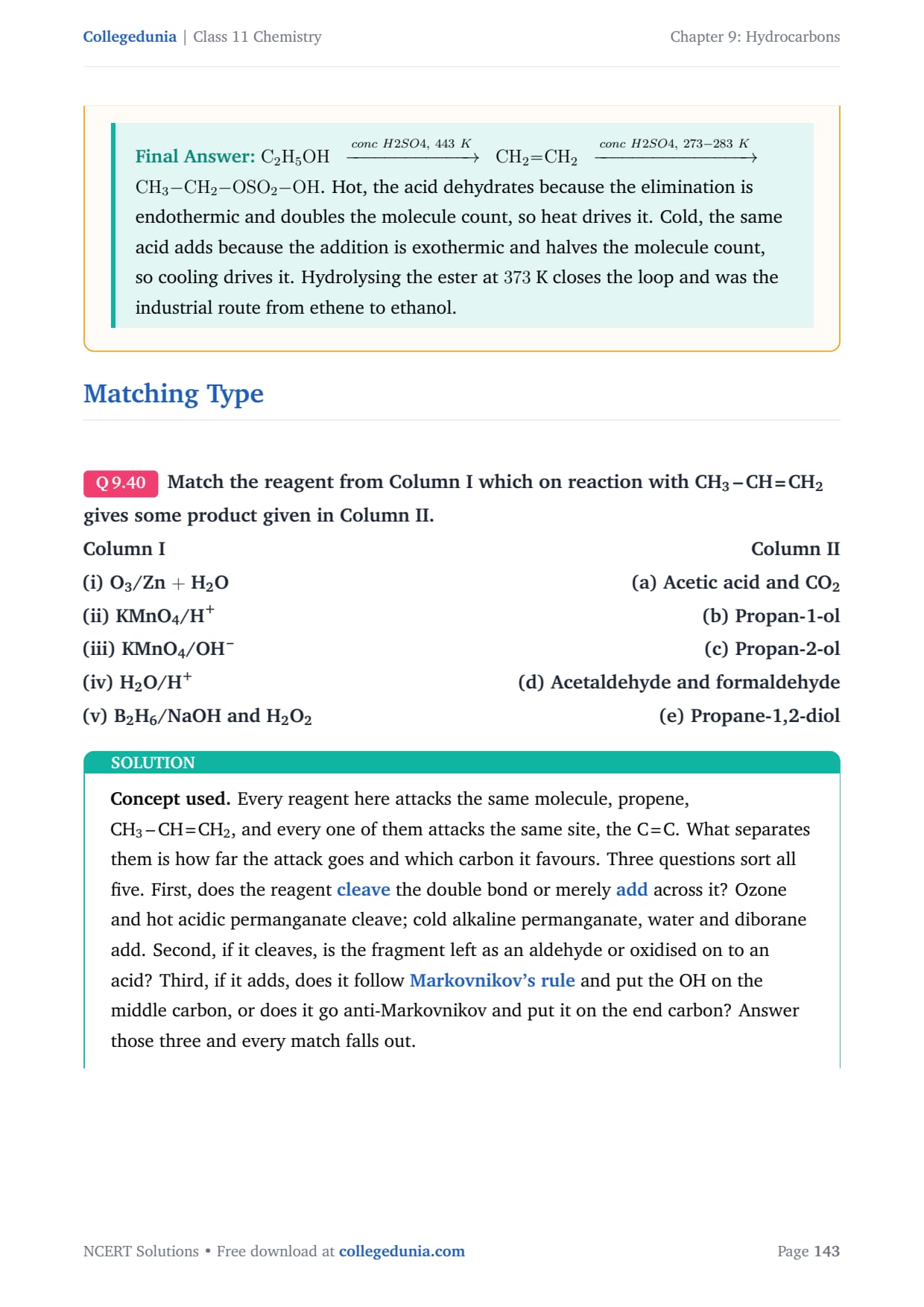
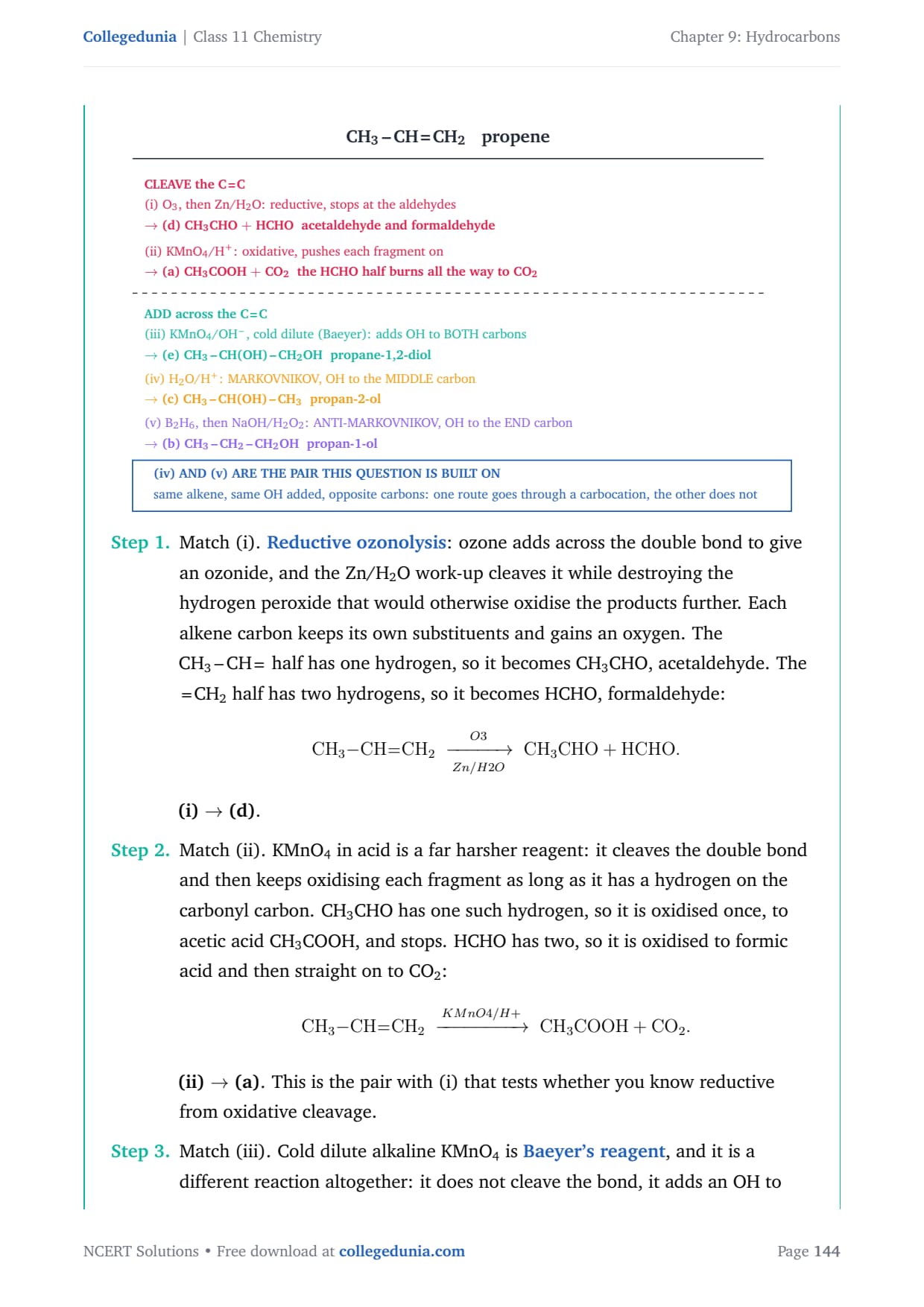
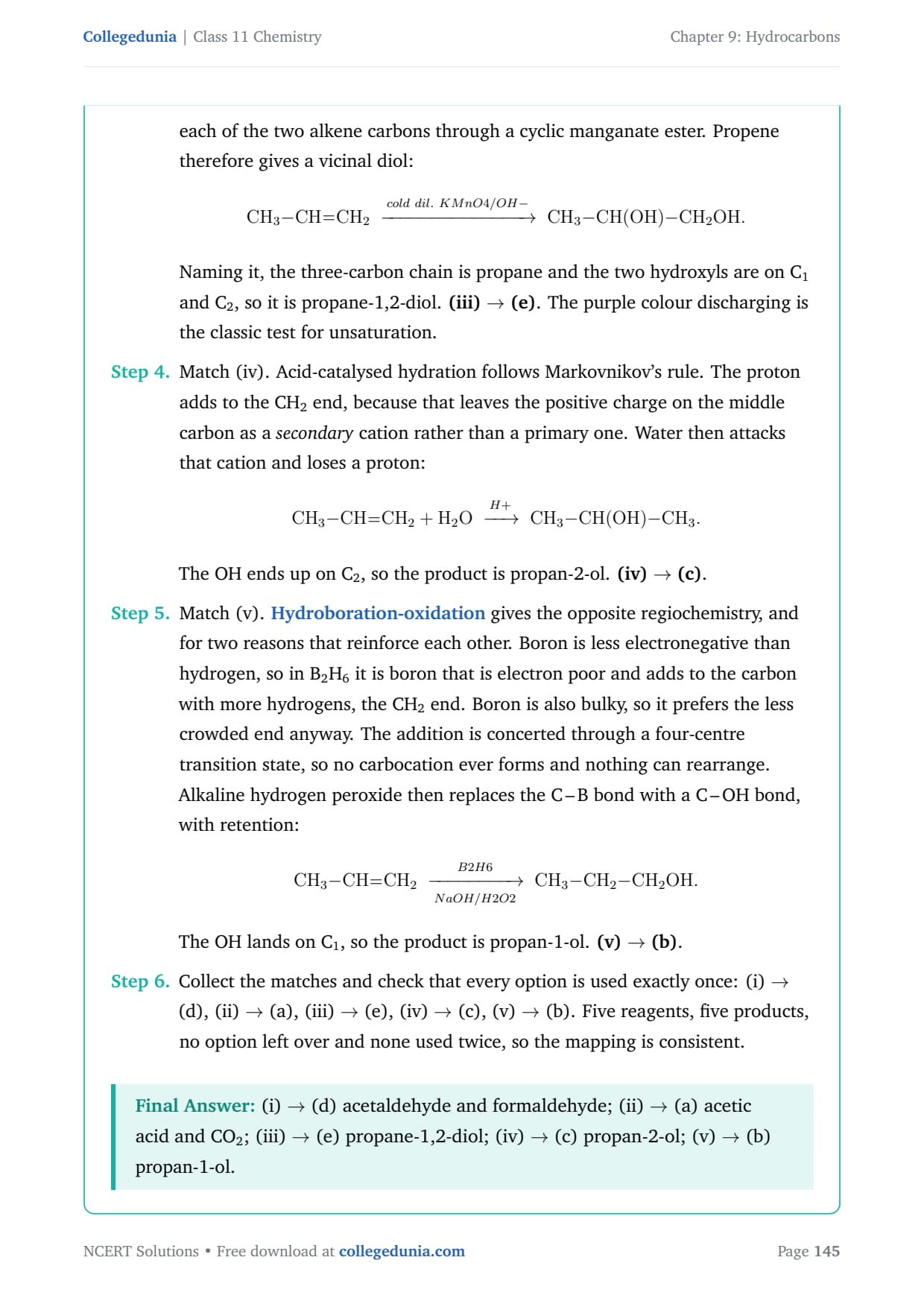
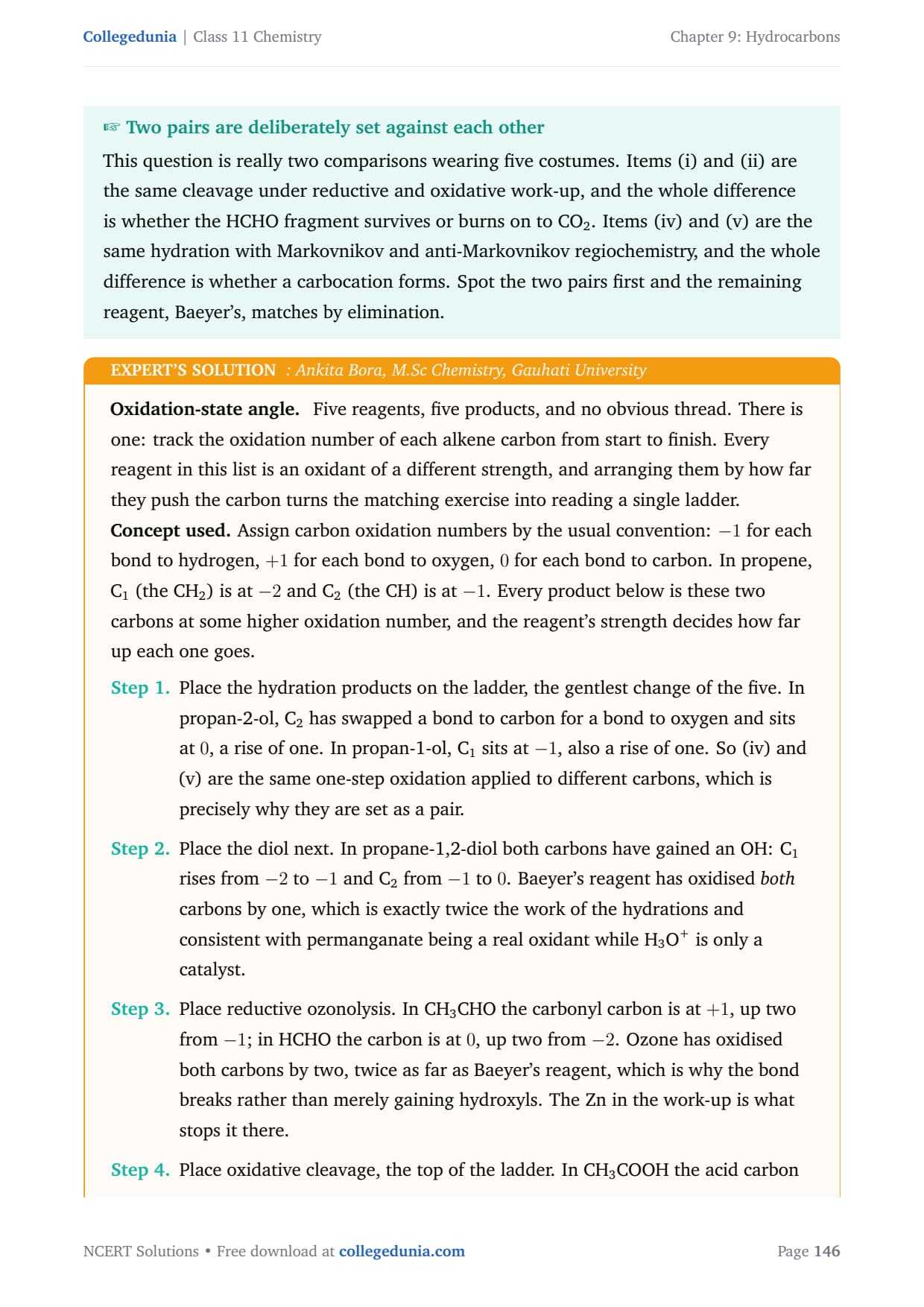
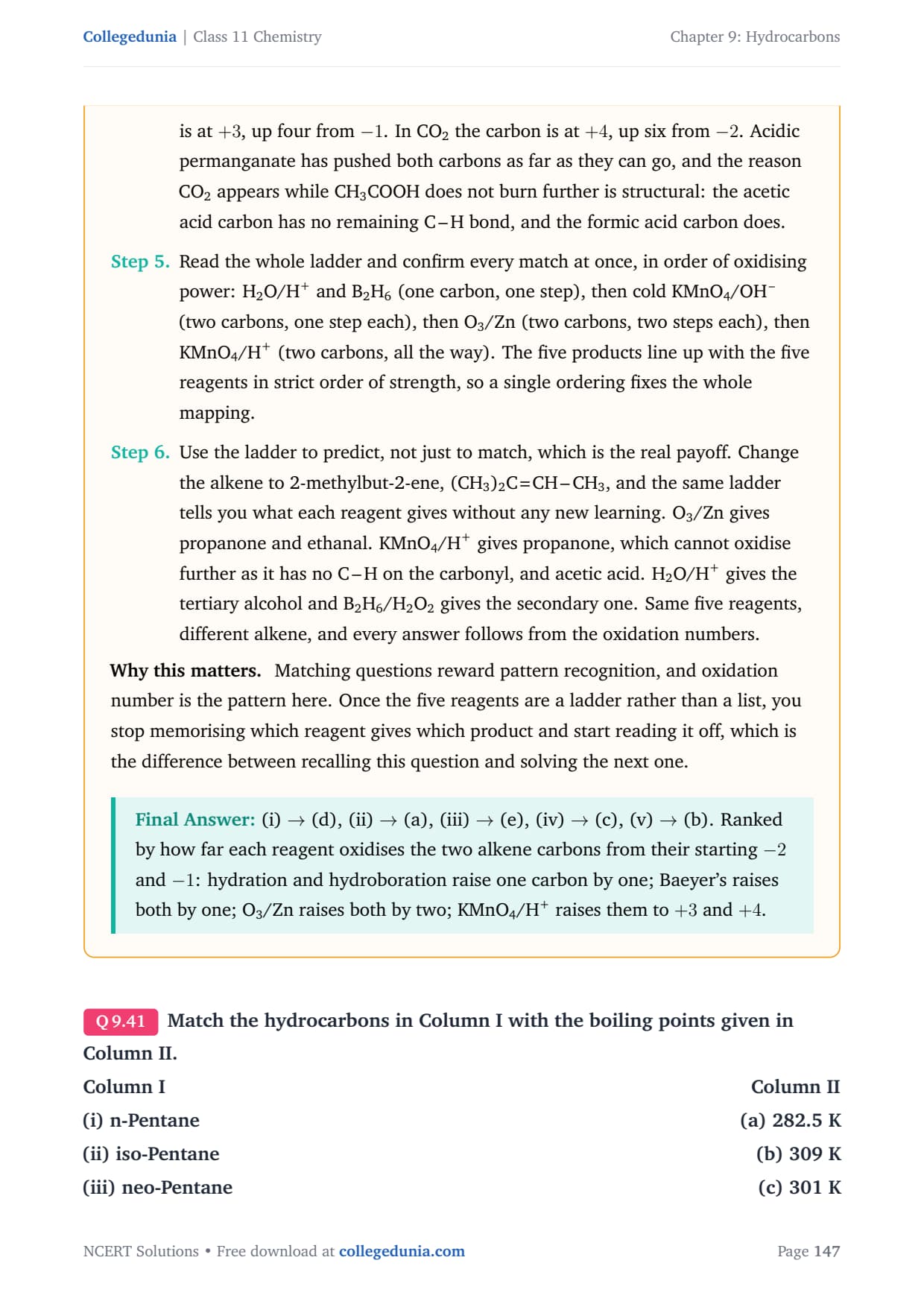
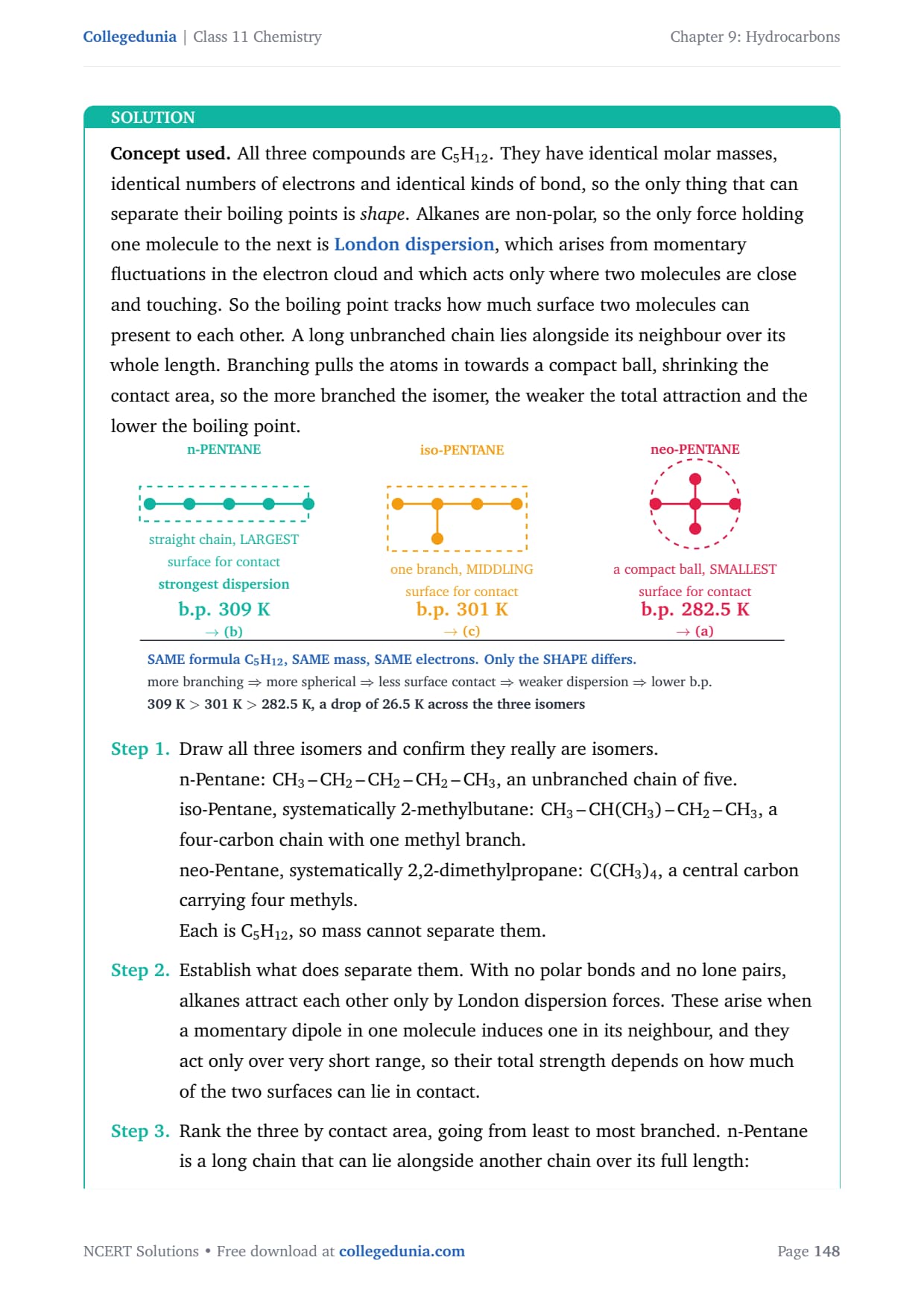
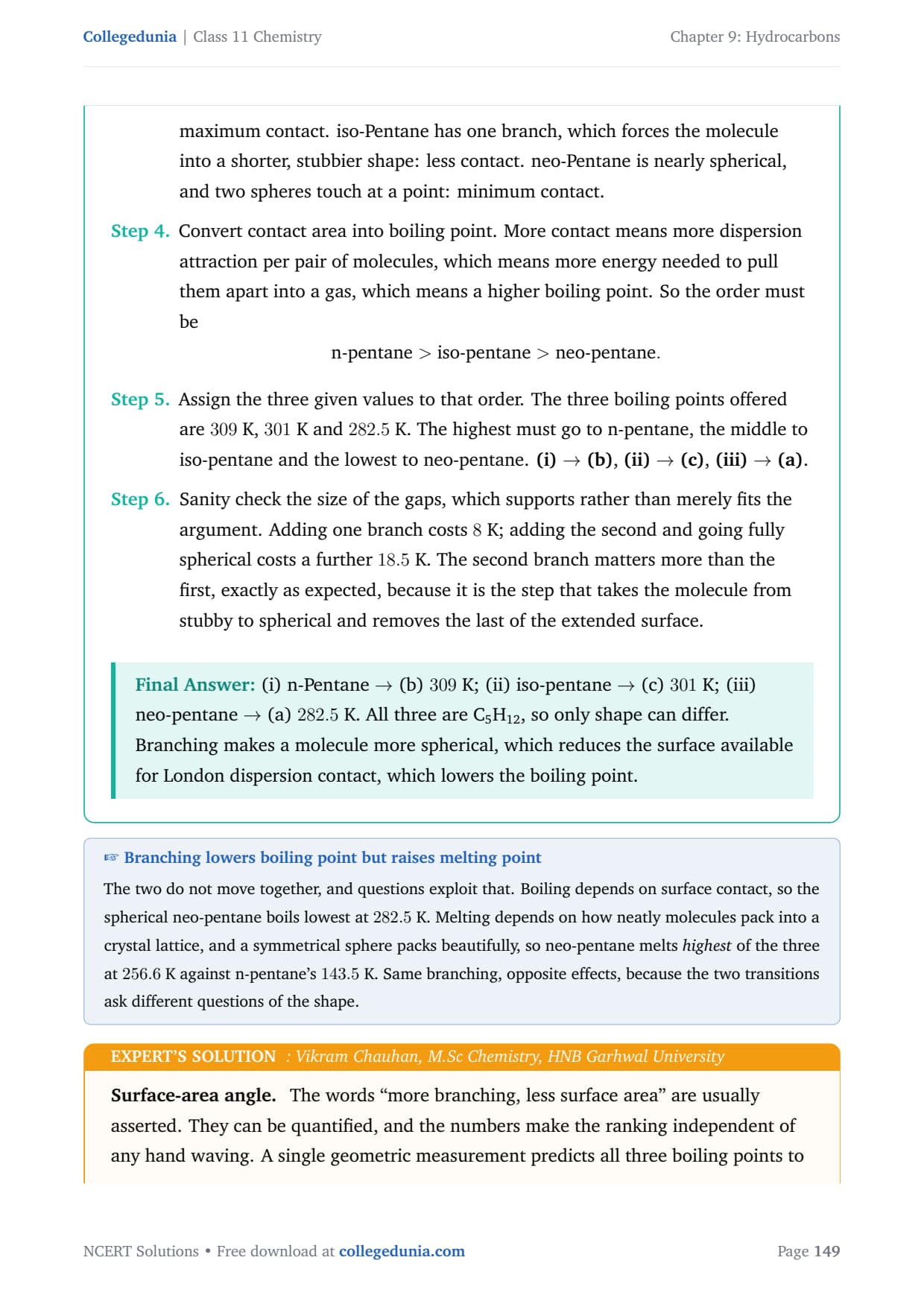
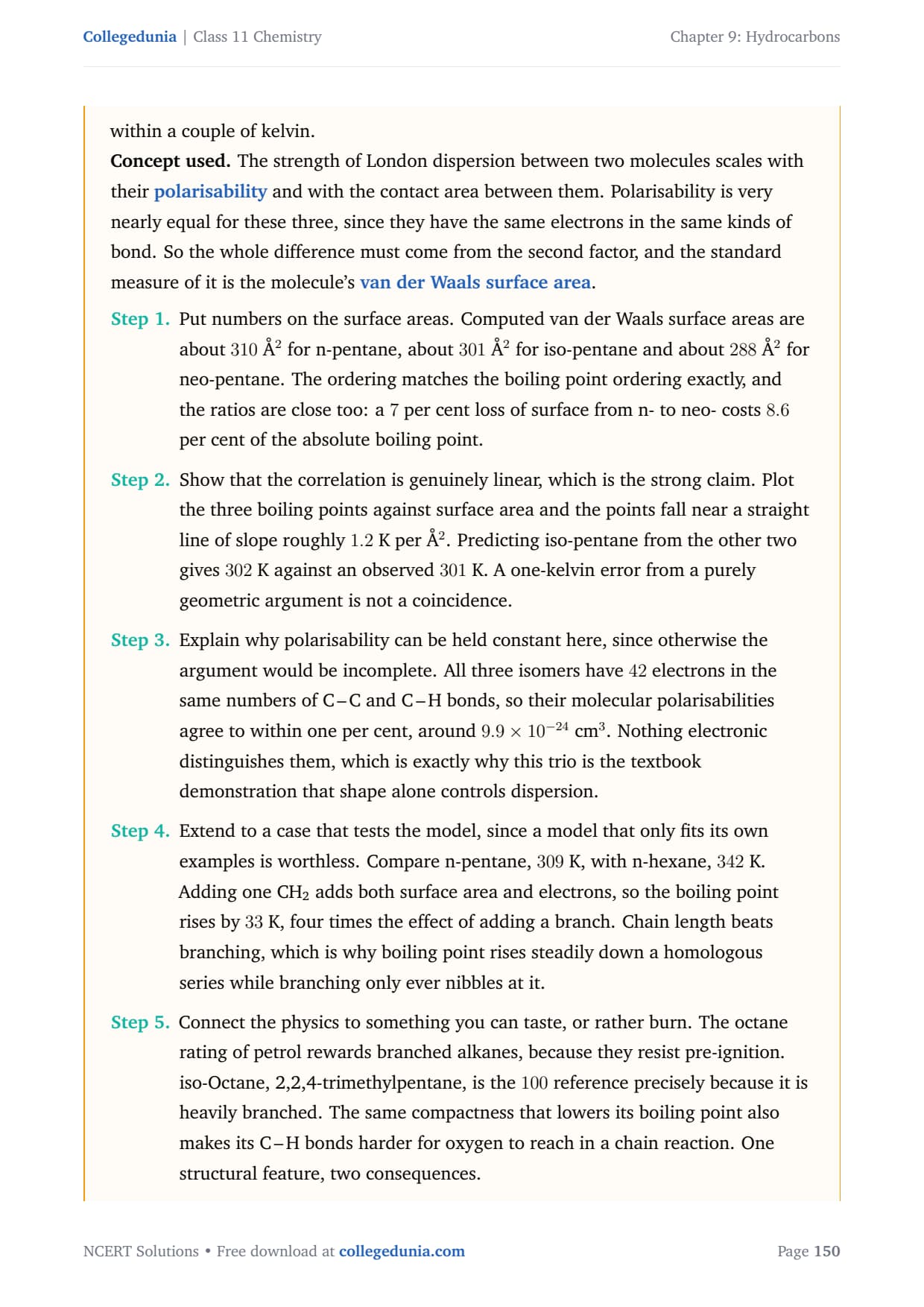
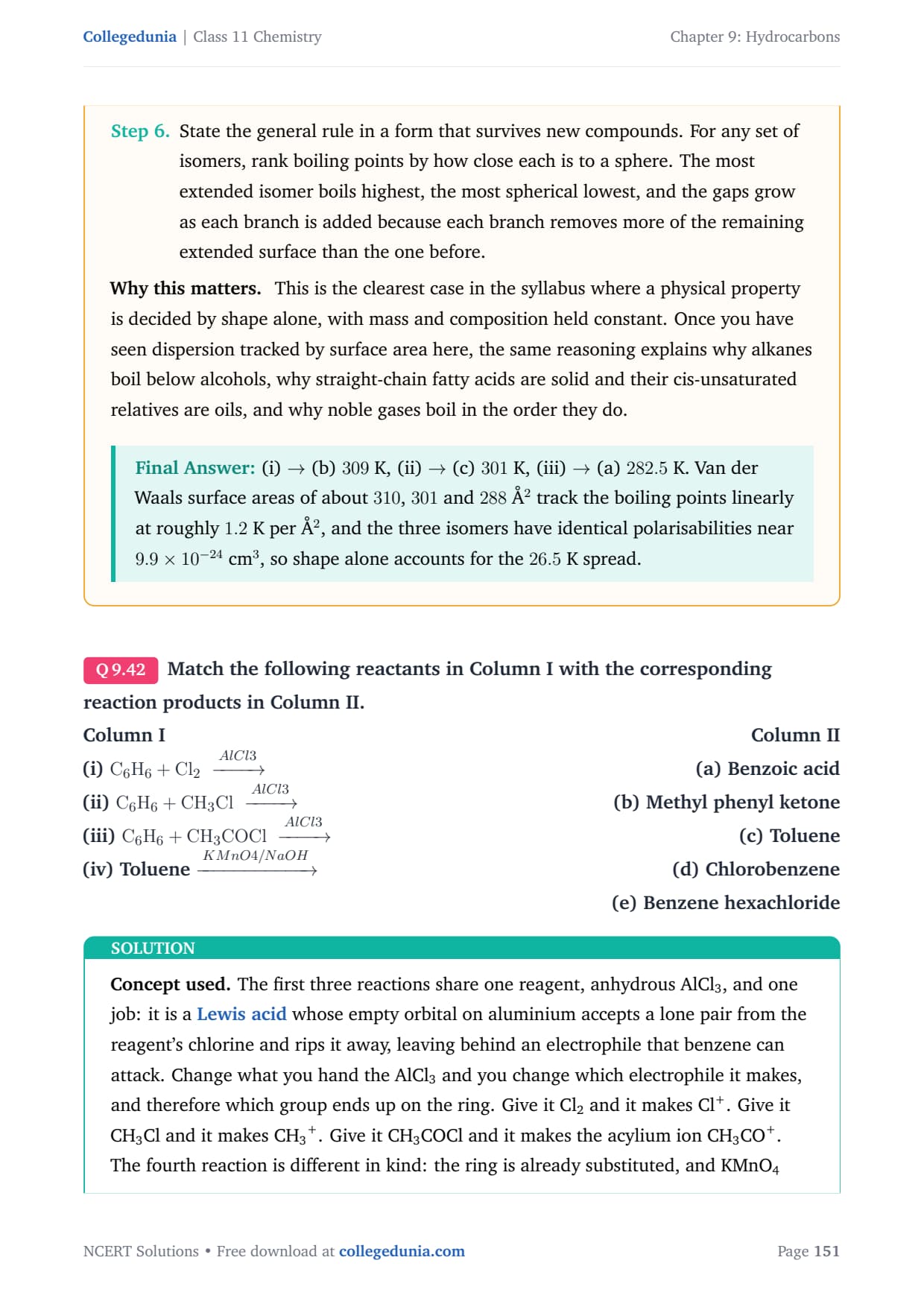
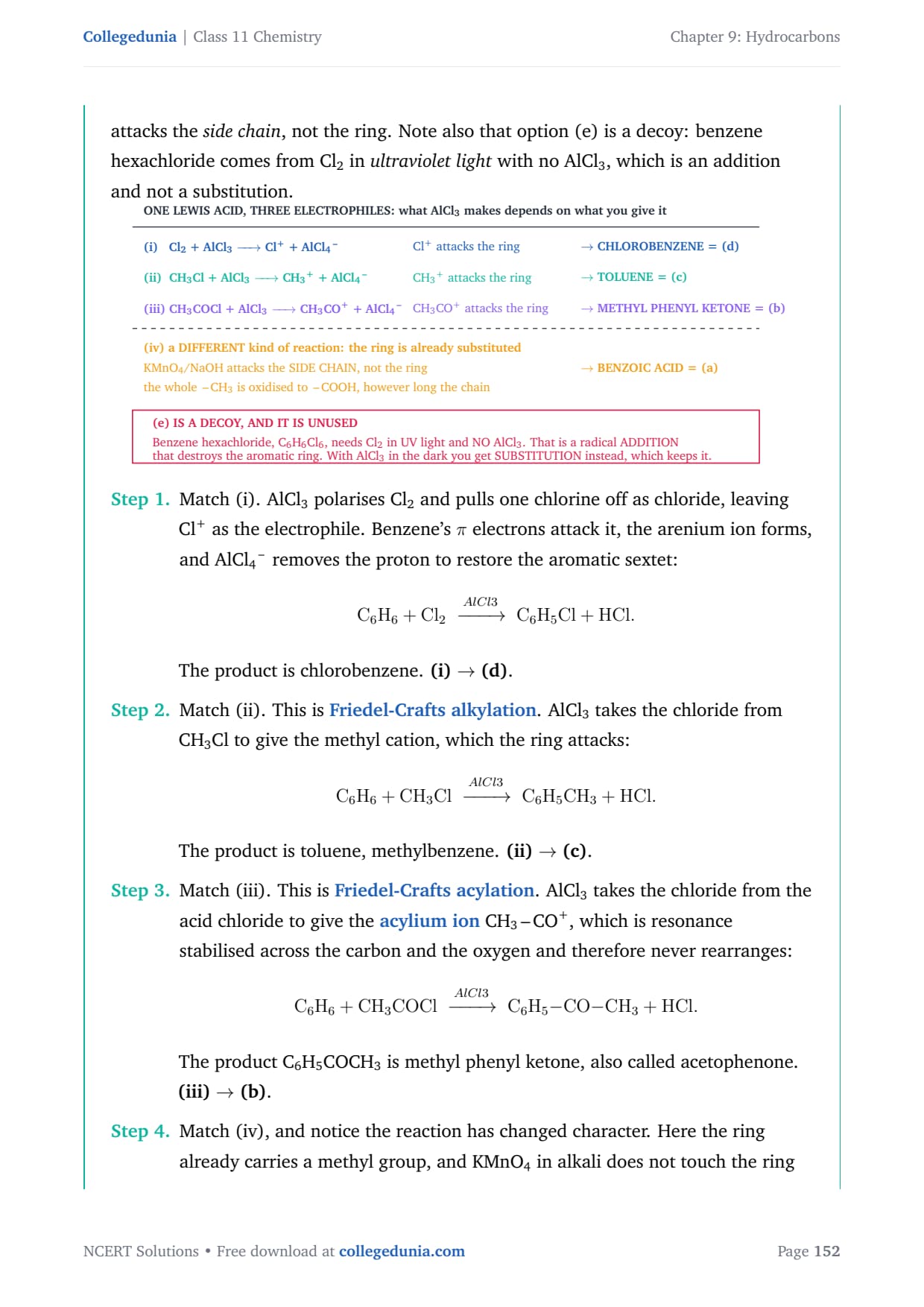
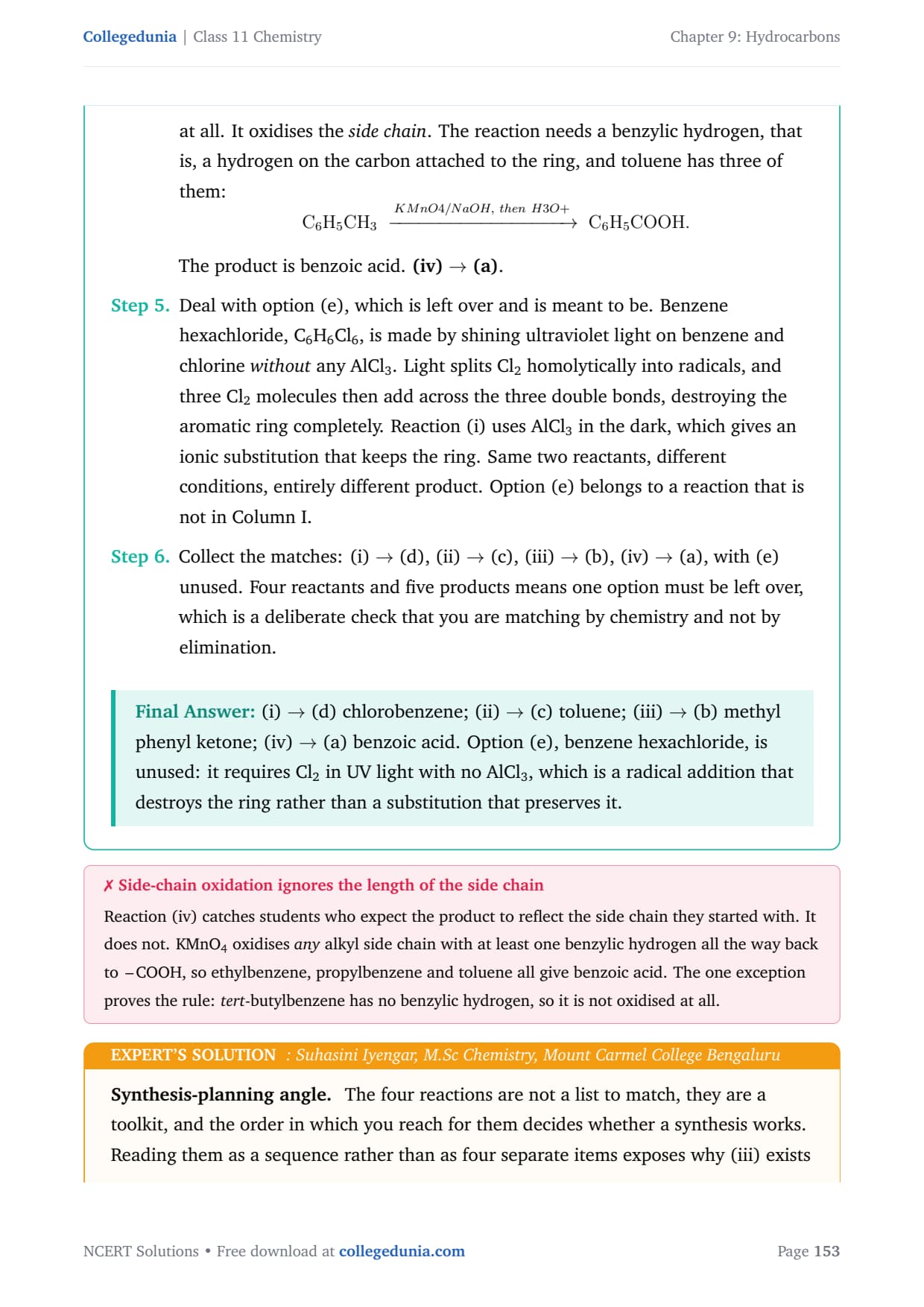
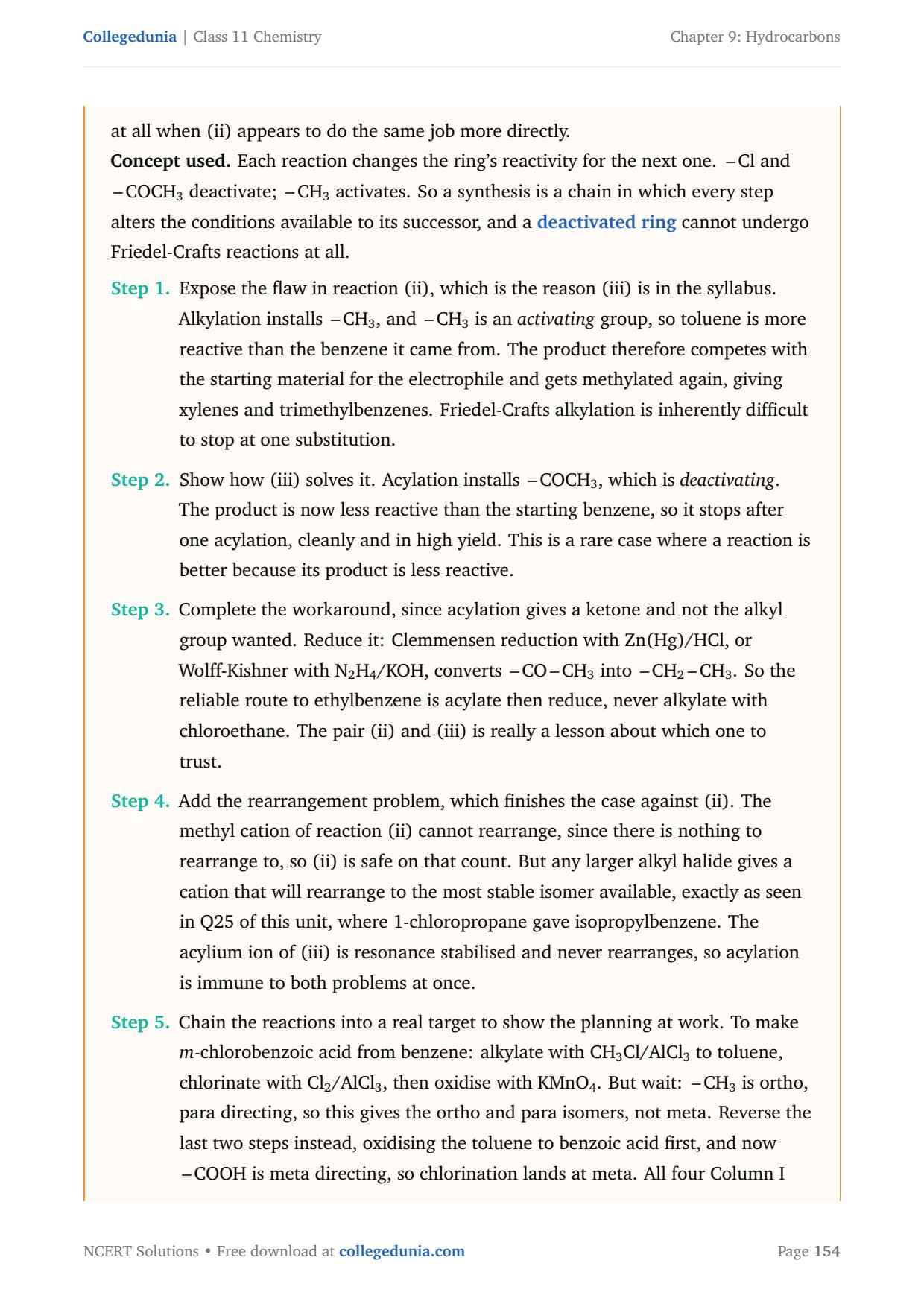
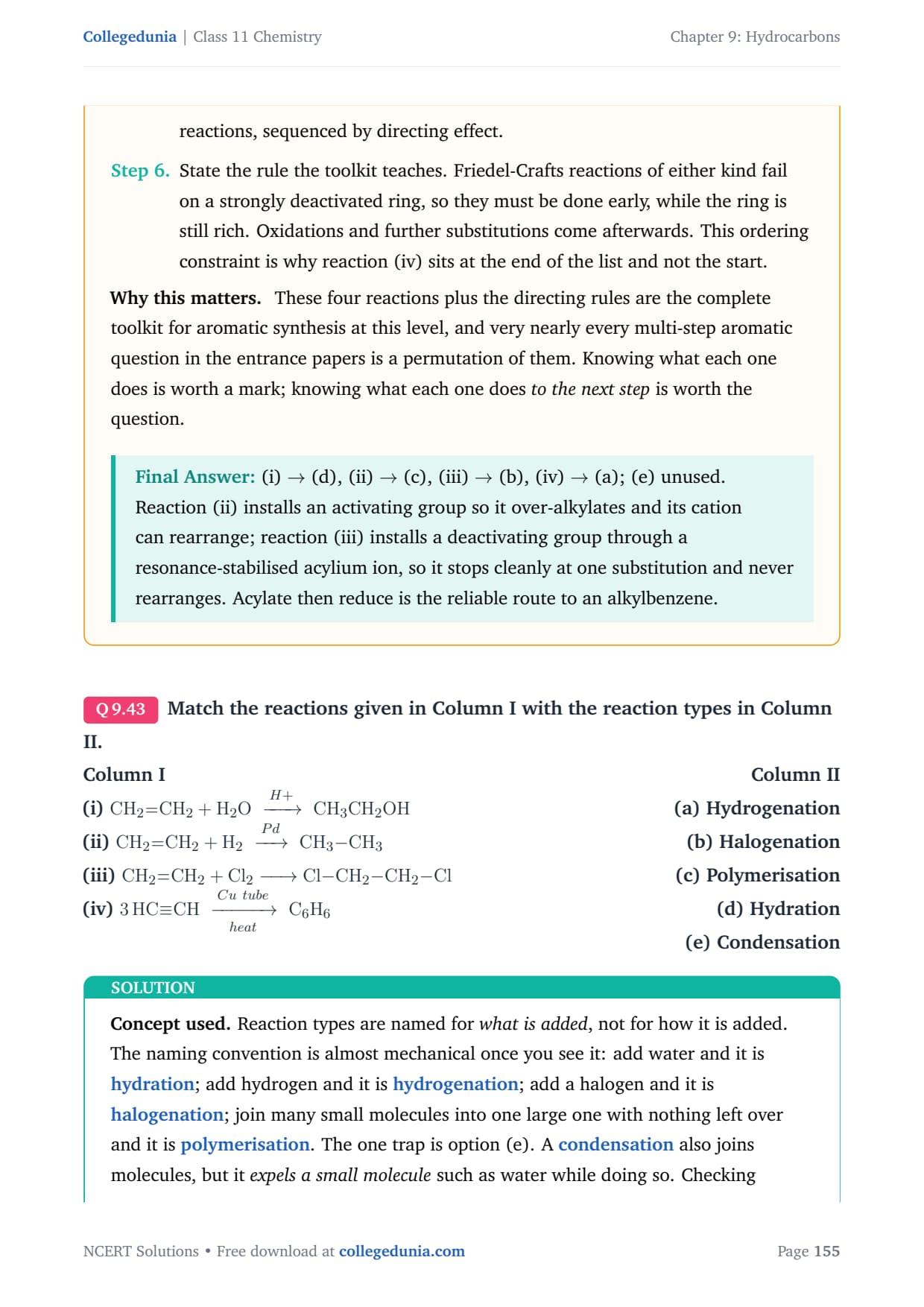
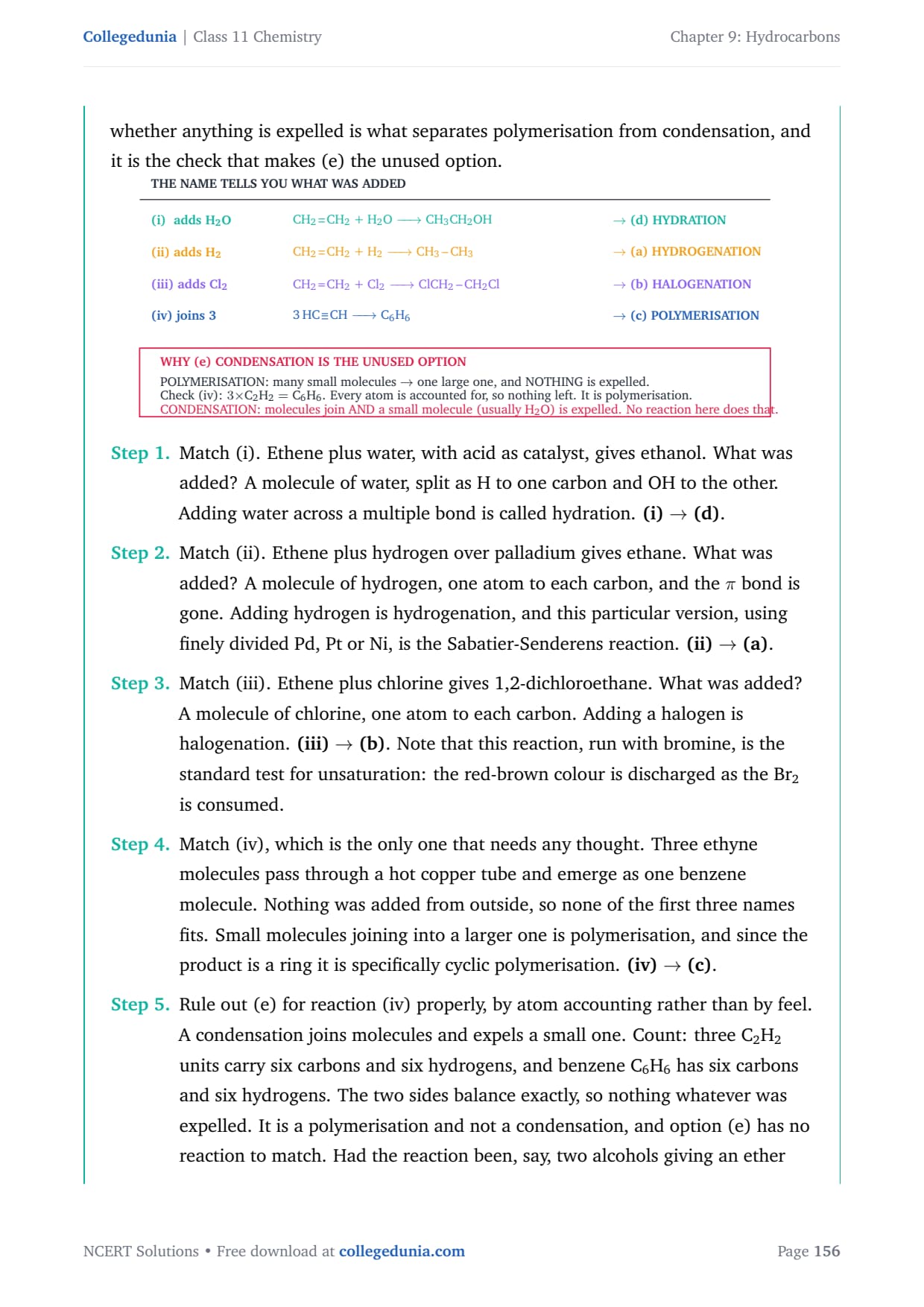
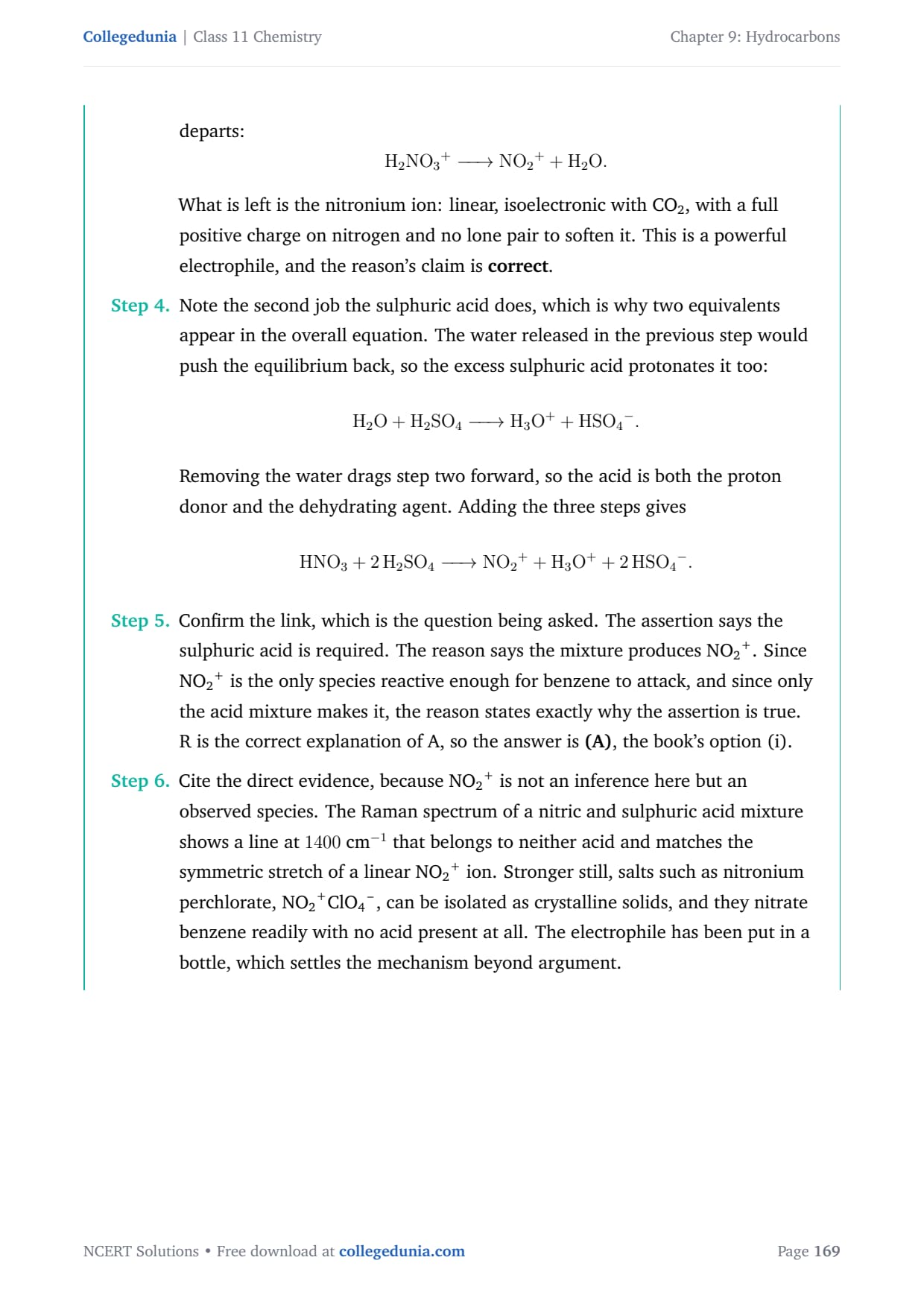
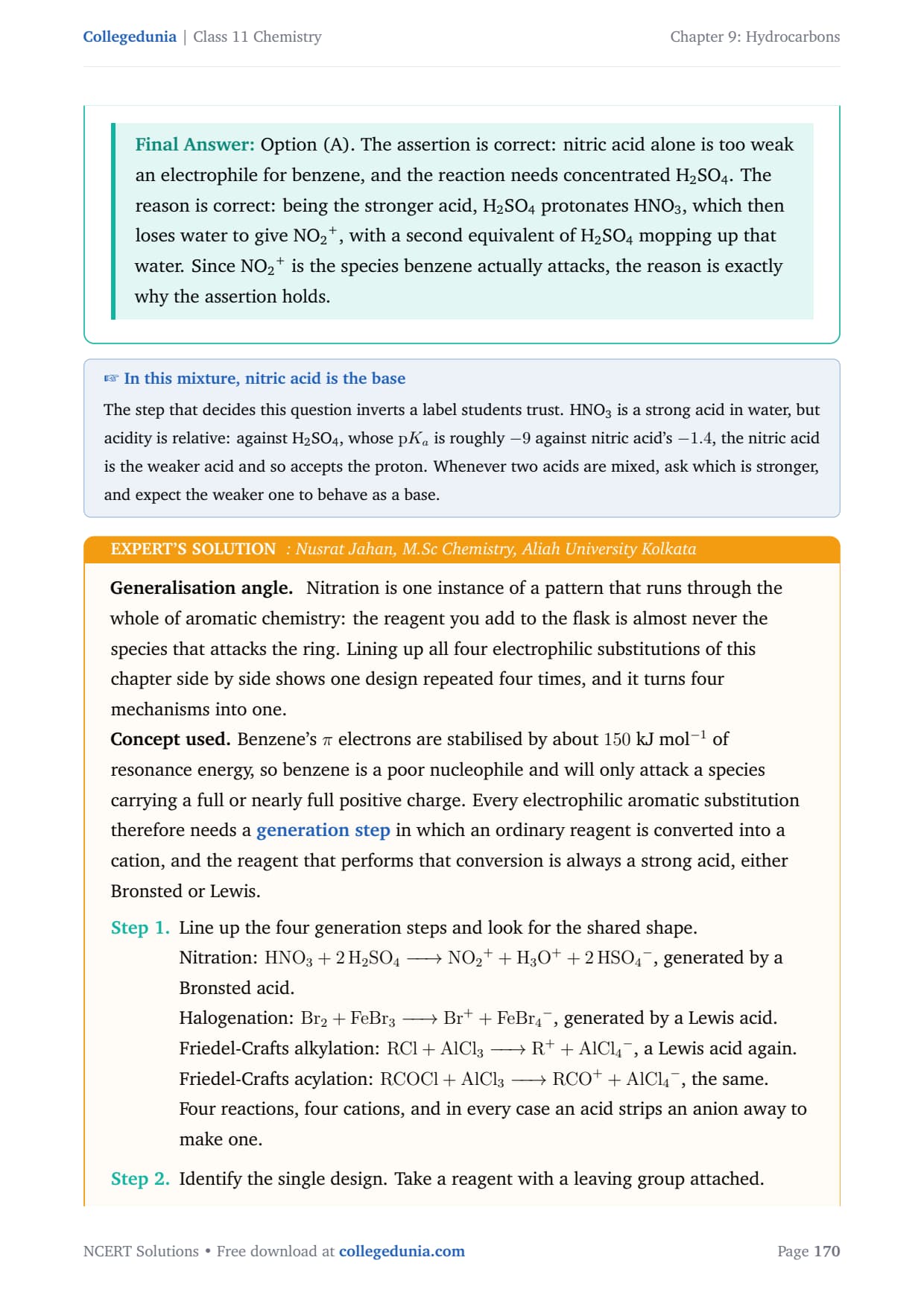
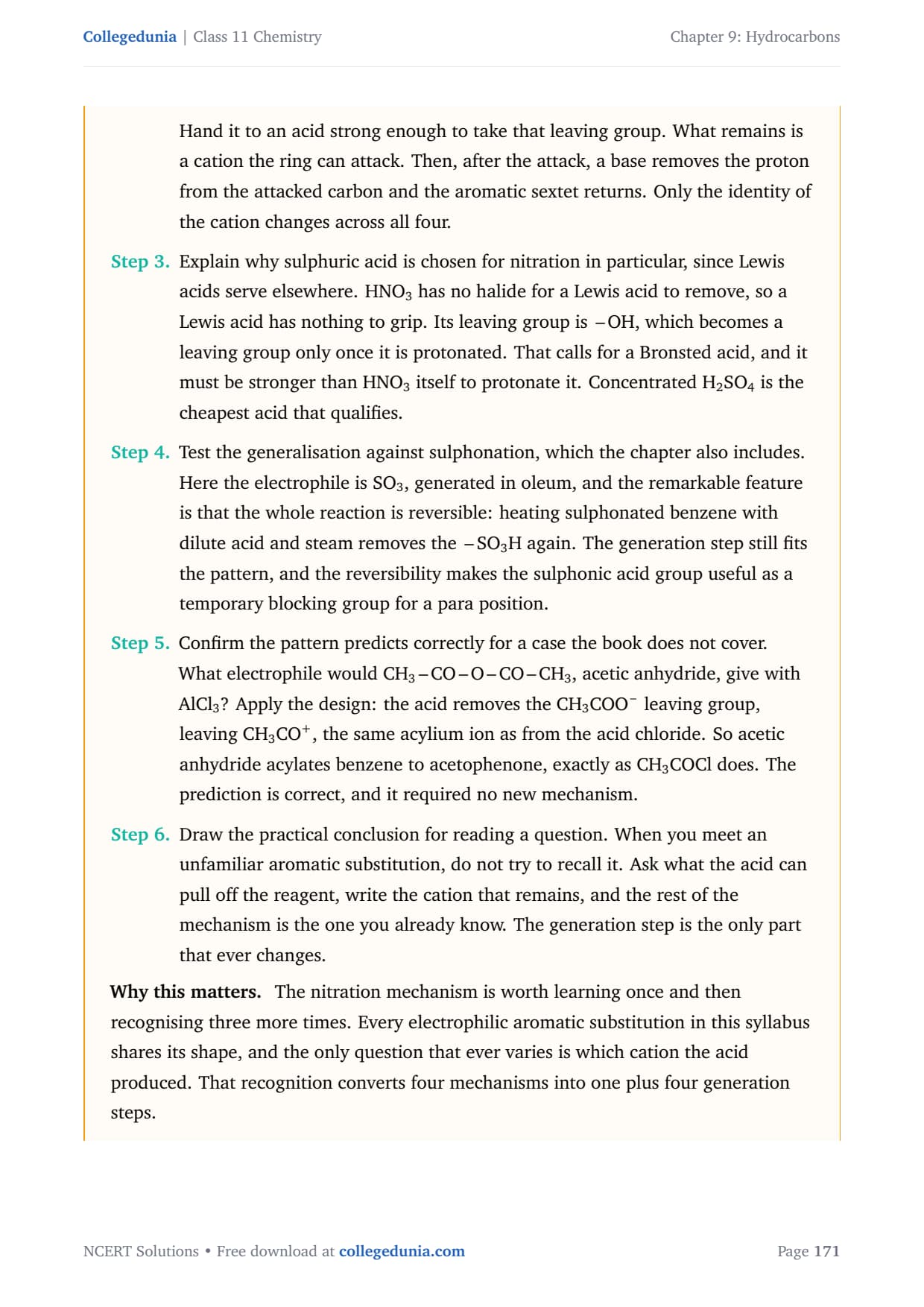
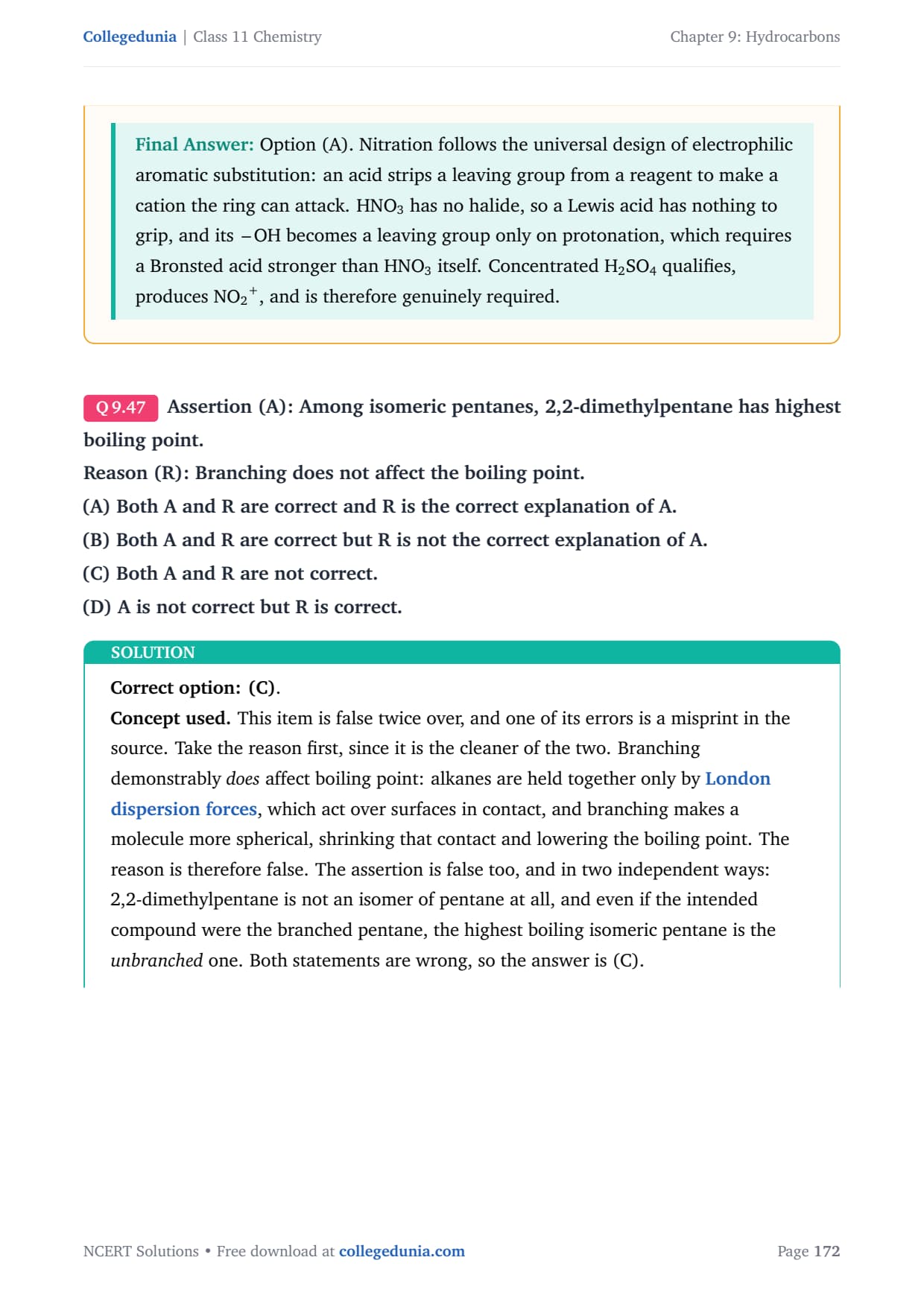
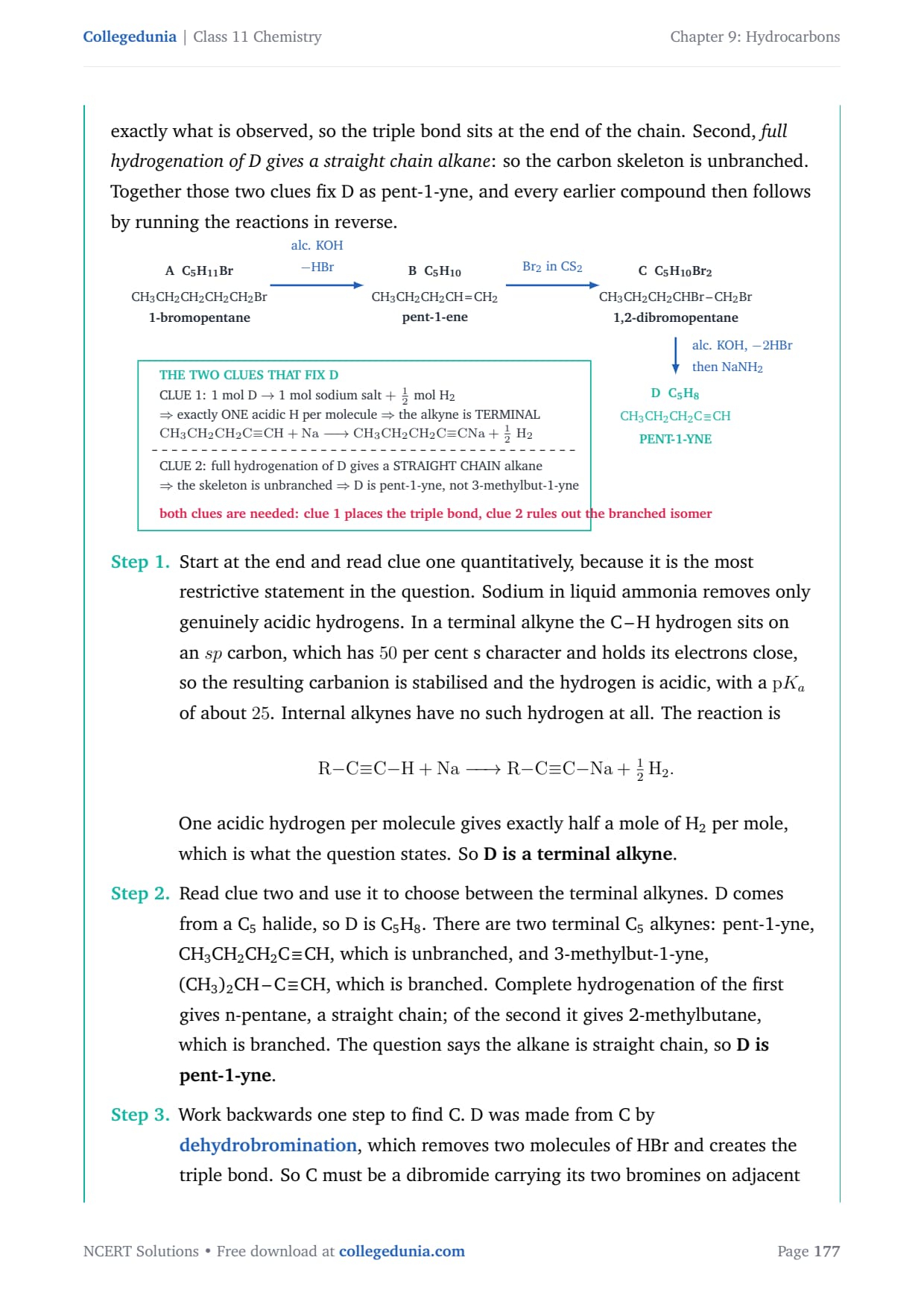
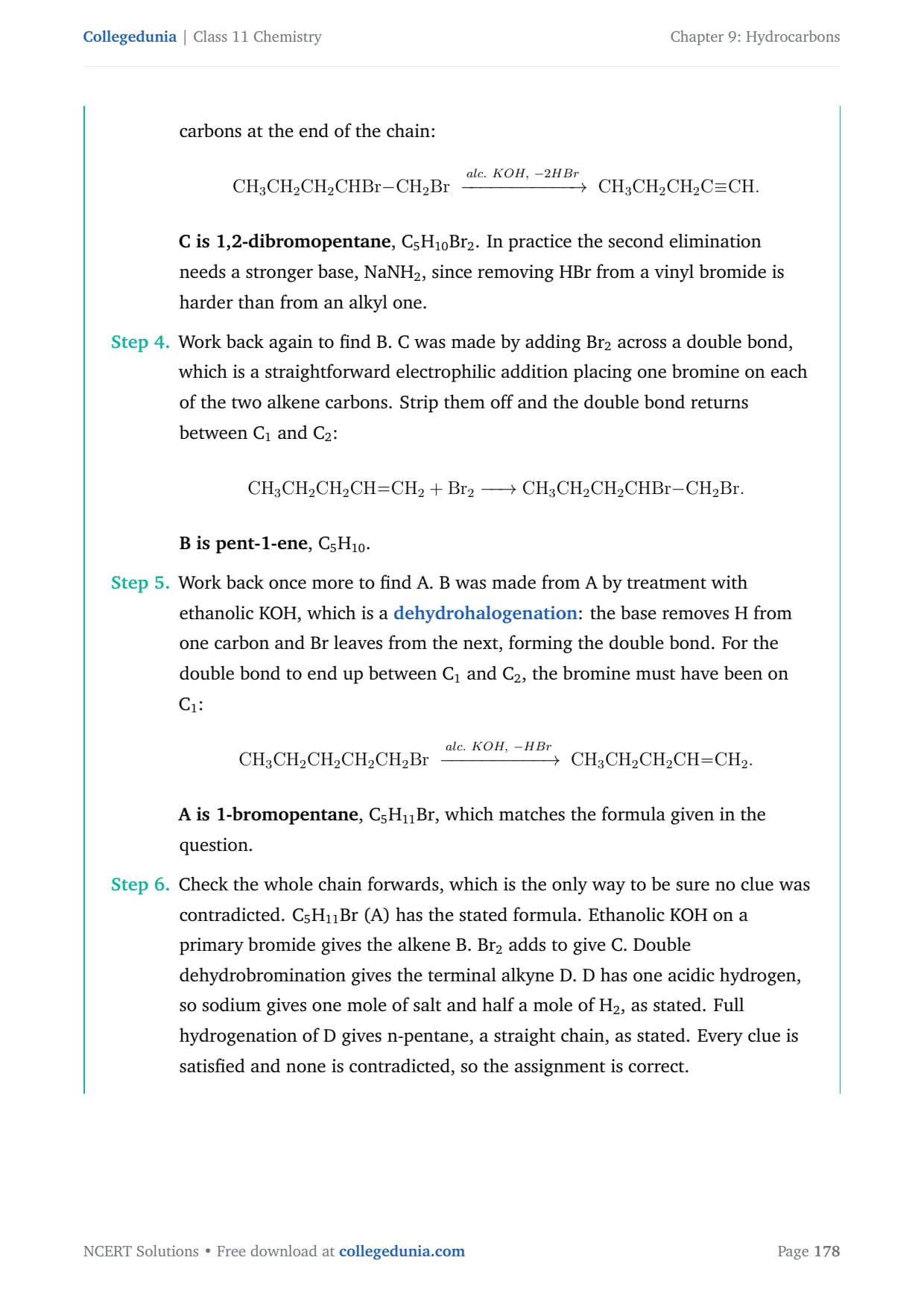
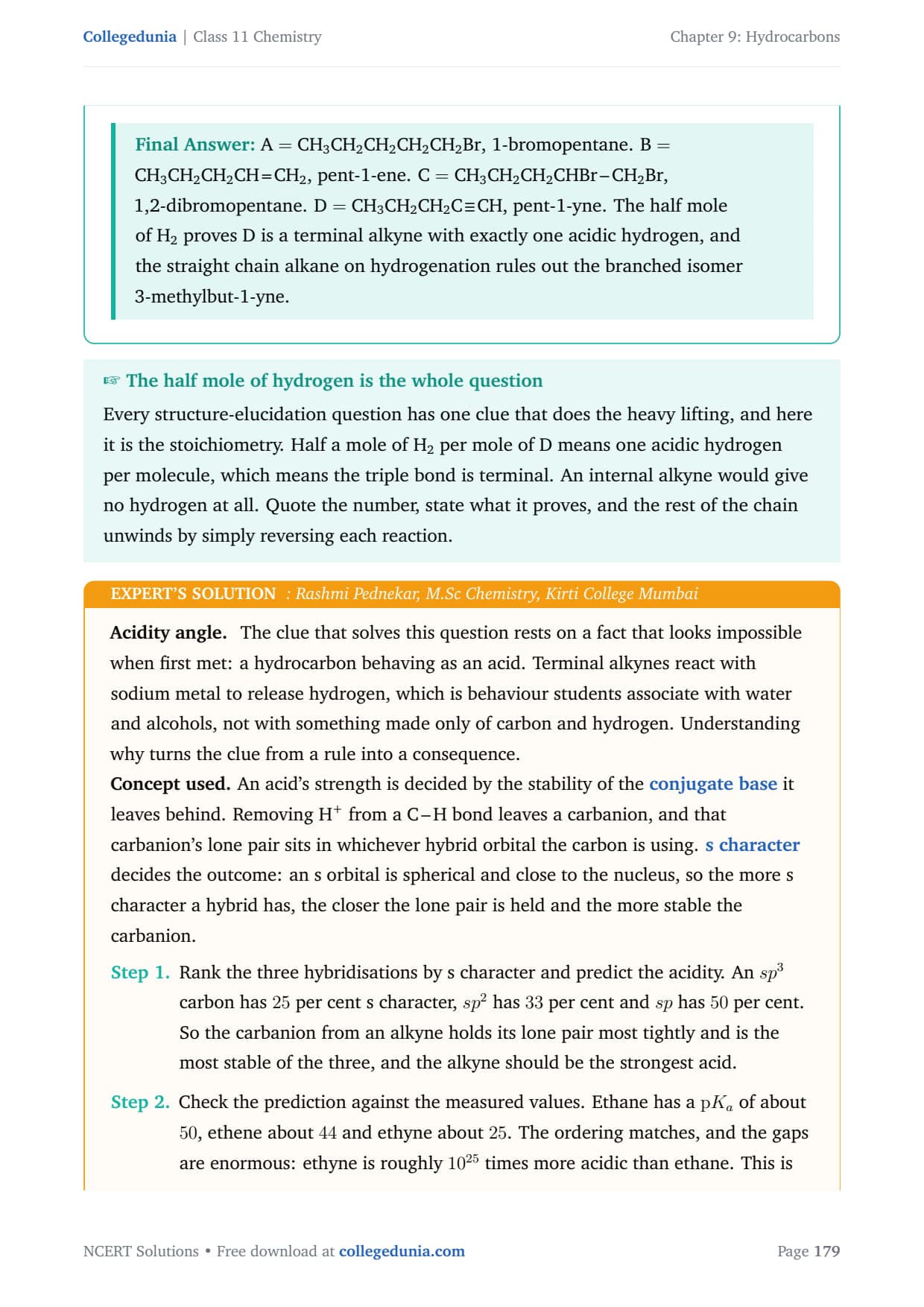
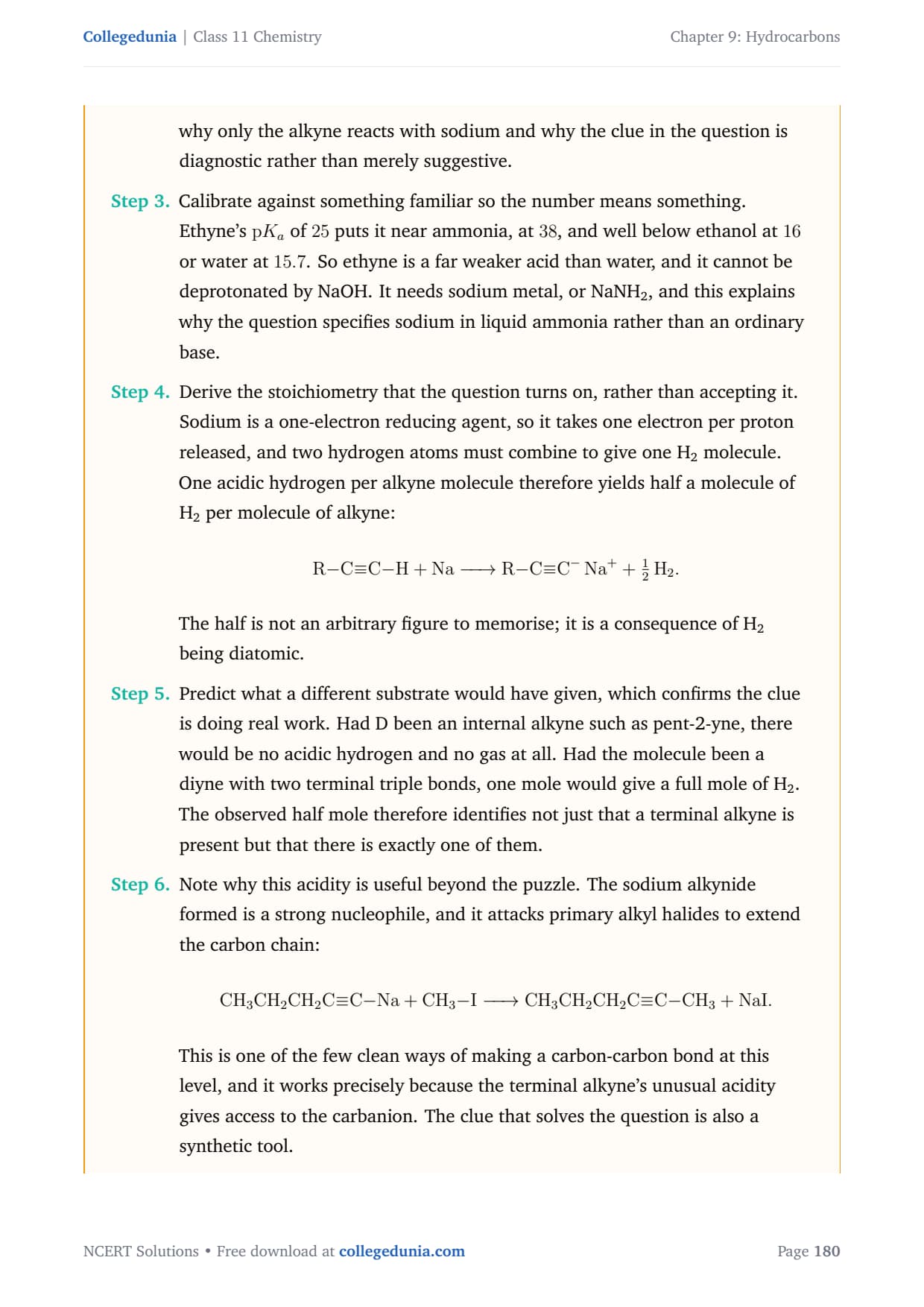
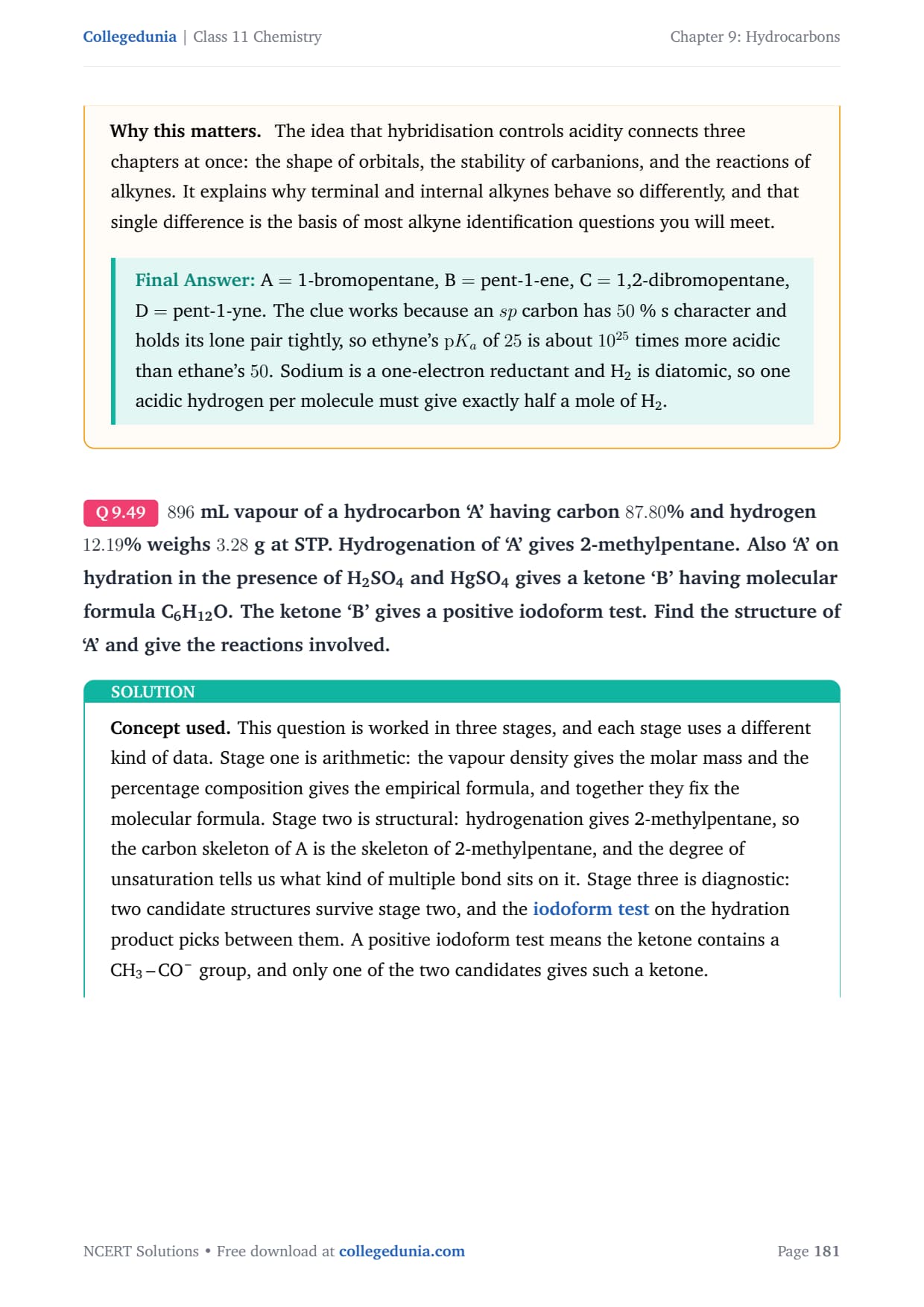
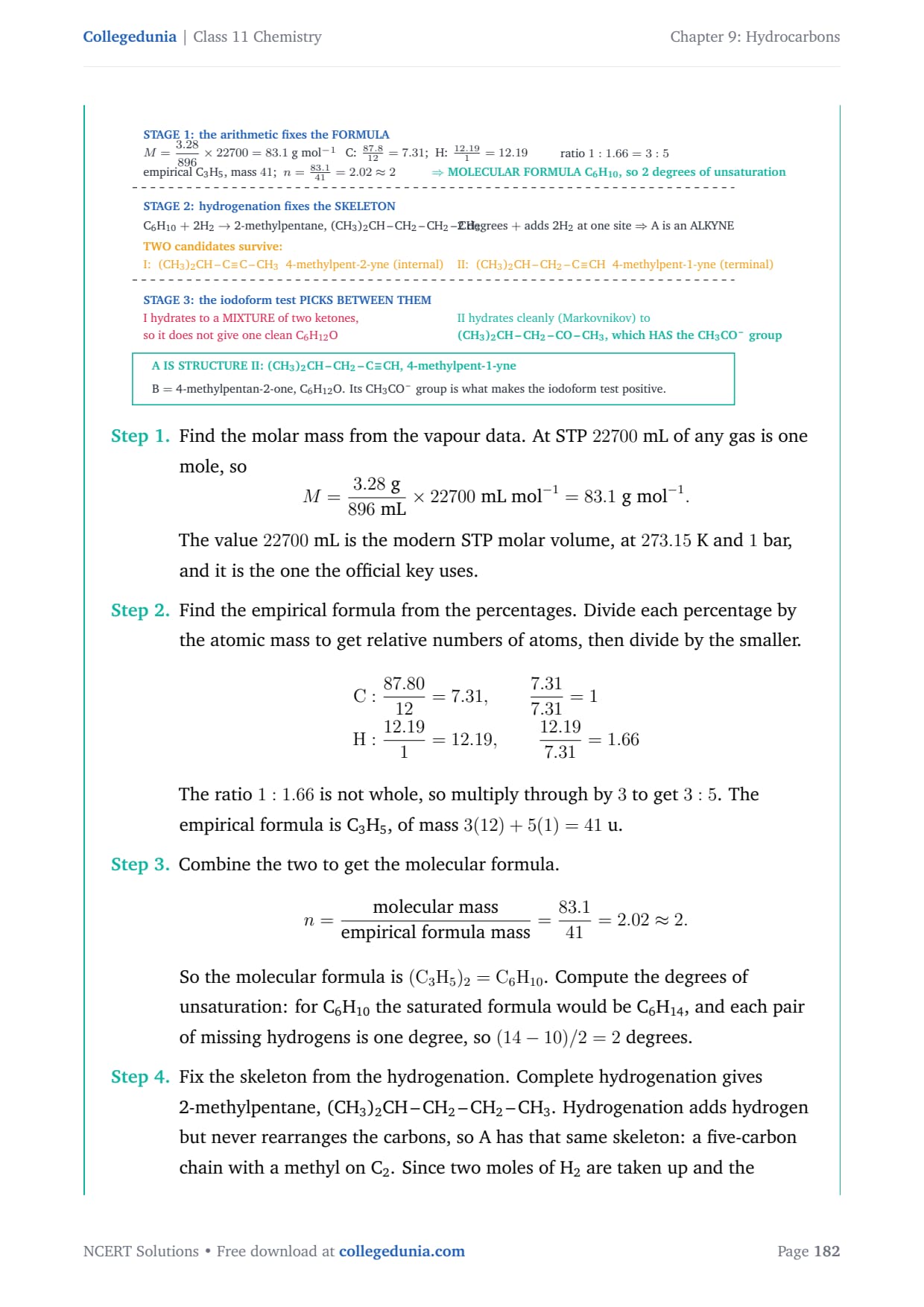
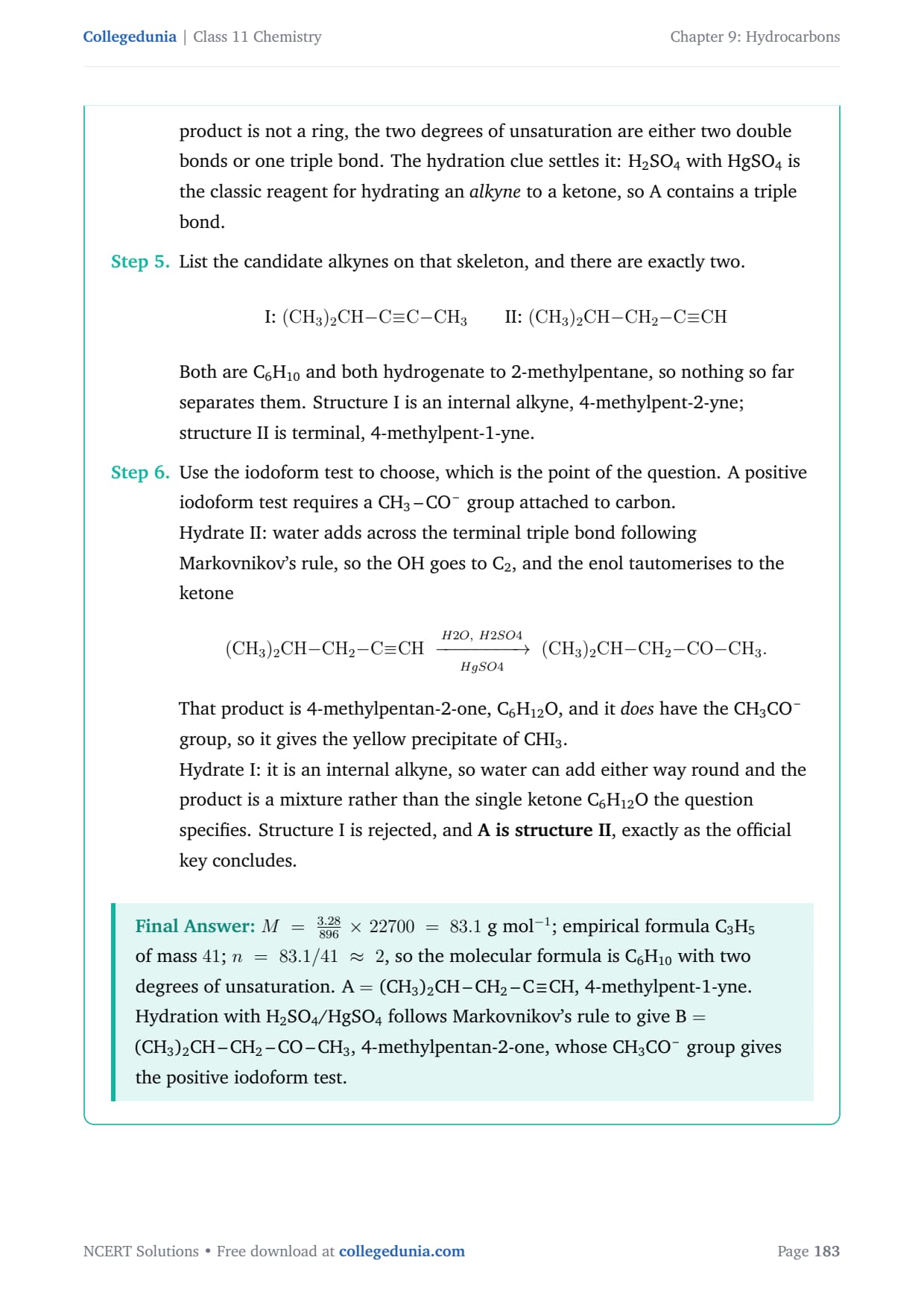
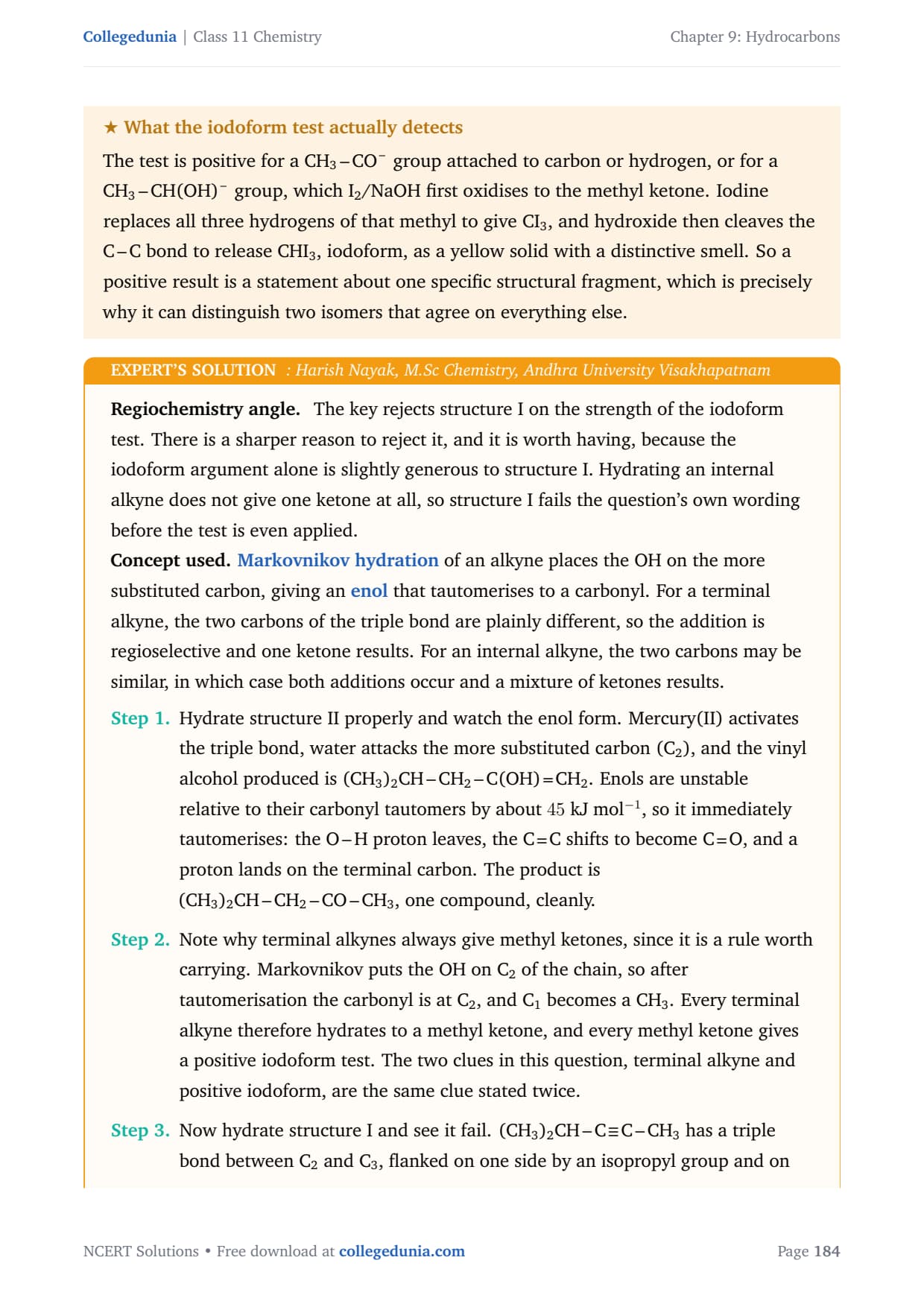
Hydrocarbons is where the reasoning of the previous chapter turns into reactions. Alkanes, alkenes, alkynes and arenes each have their own way of reacting, yet a handful of ideas run through all four. Markovnikov's rule, the peroxide effect, aromaticity and directing effects appear again in every named reaction of Class 12, so the Exemplar drills them harder than the textbook exercise does.
- CBSE Weightage: 6 to 8 marks, usually one reaction-mechanism question and one on preparation or IUPAC naming
- JEE Main Weightage: 2 to 3 questions per year, mostly addition mechanisms and aromaticity
- NEET Weightage: 2 to 3 questions per year from Markovnikov addition, ozonolysis and electrophilic aromatic substitution
Every solution is checked against the official NCERT Exemplar key, and both printing errors in this chapter are worked out in full.
Why Class 11 Chemistry Chapter 9 is Unit 13 in the Printed Exemplar
The printed Exemplar still follows the older 14-unit edition of the book. Because rationalisation dropped several units from the textbook, the two numbering systems no longer line up. Chapter 9 of the new edition is Unit 13 of the Exemplar, published as the source file keep513.
This catches students off guard the first time. Searching the Exemplar PDF for Unit 9 lands you on Hydrogen, not Hydrocarbons. Our solutions print both numbers on every question, so a figure labelled 13.14 in the book is still findable from Chapter 9.
Topics Covered in the Class 11 Chemistry Hydrocarbons Exemplar
The 51 questions sit on four families of compounds and the reactions that separate them. Each family returns in Haloalkanes, Alcohols, Aldehydes and every named reaction of Class 12, so the effort here is not one-off.
- Alkanes: conformations of ethane, free radical halogenation, Wurtz reaction, decarboxylation and Kolbe electrolysis
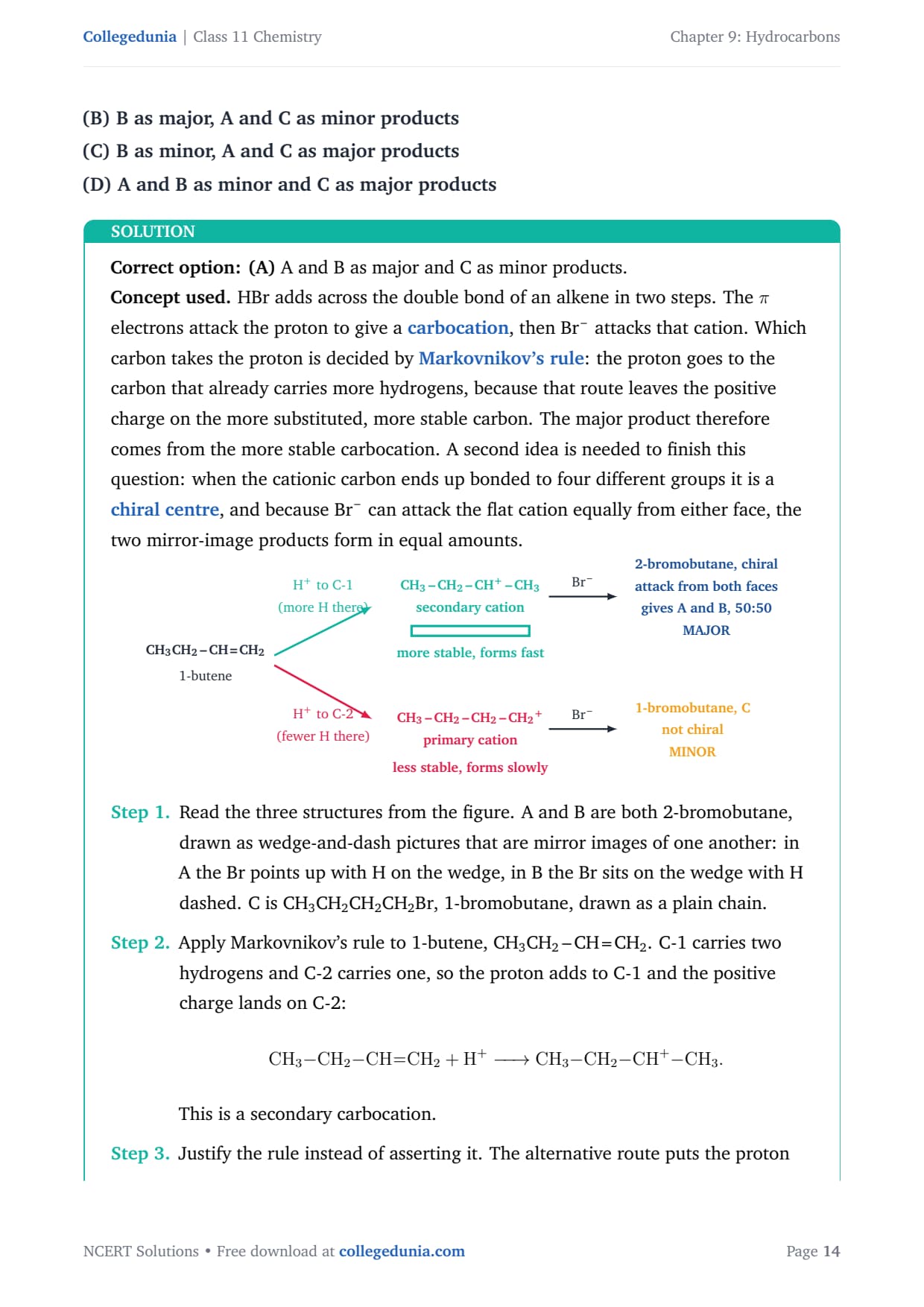
- Alkenes and alkynes: Markovnikov and anti-Markovnikov addition, the peroxide effect, ozonolysis, hydroboration and acidity of terminal alkynes
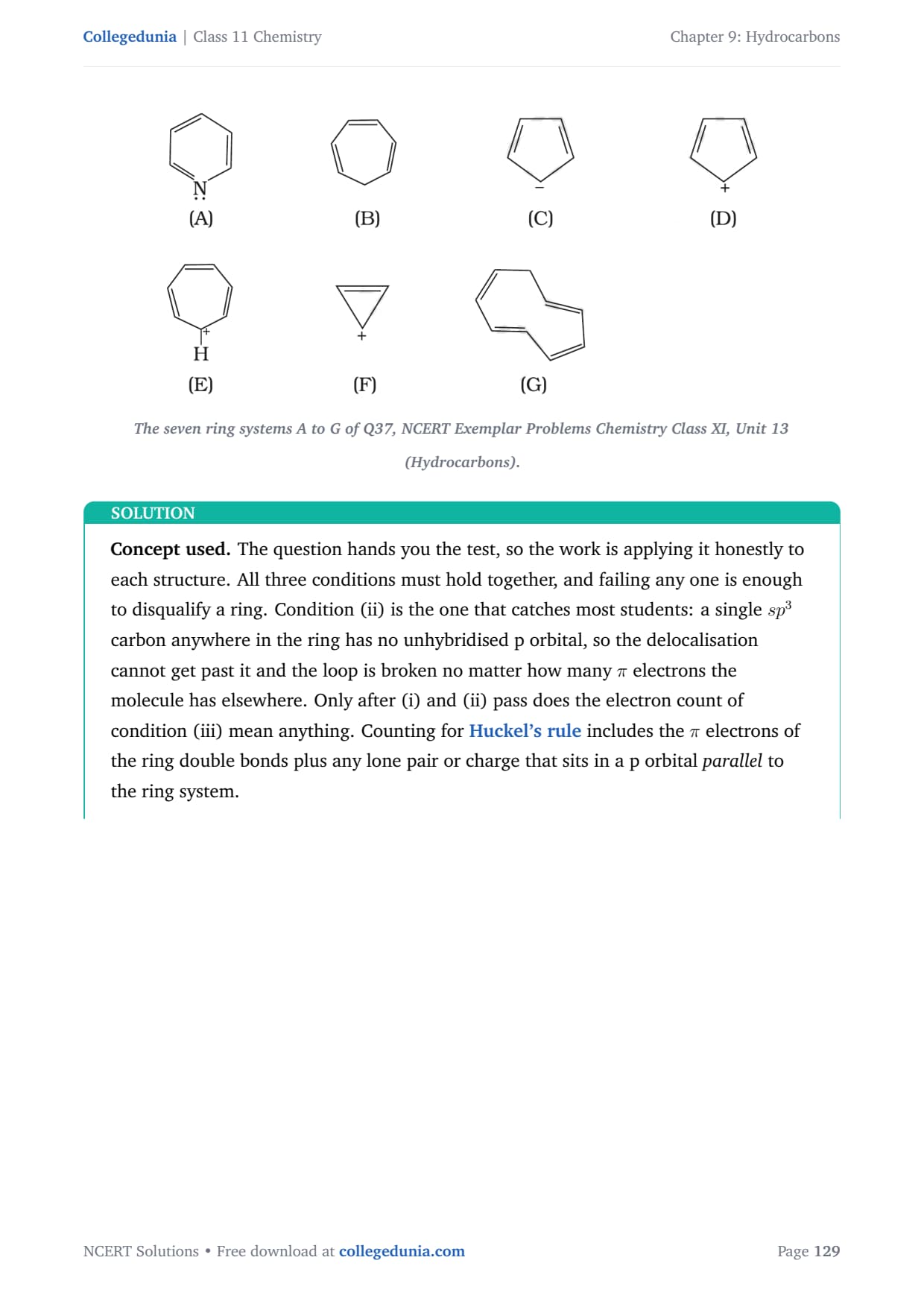
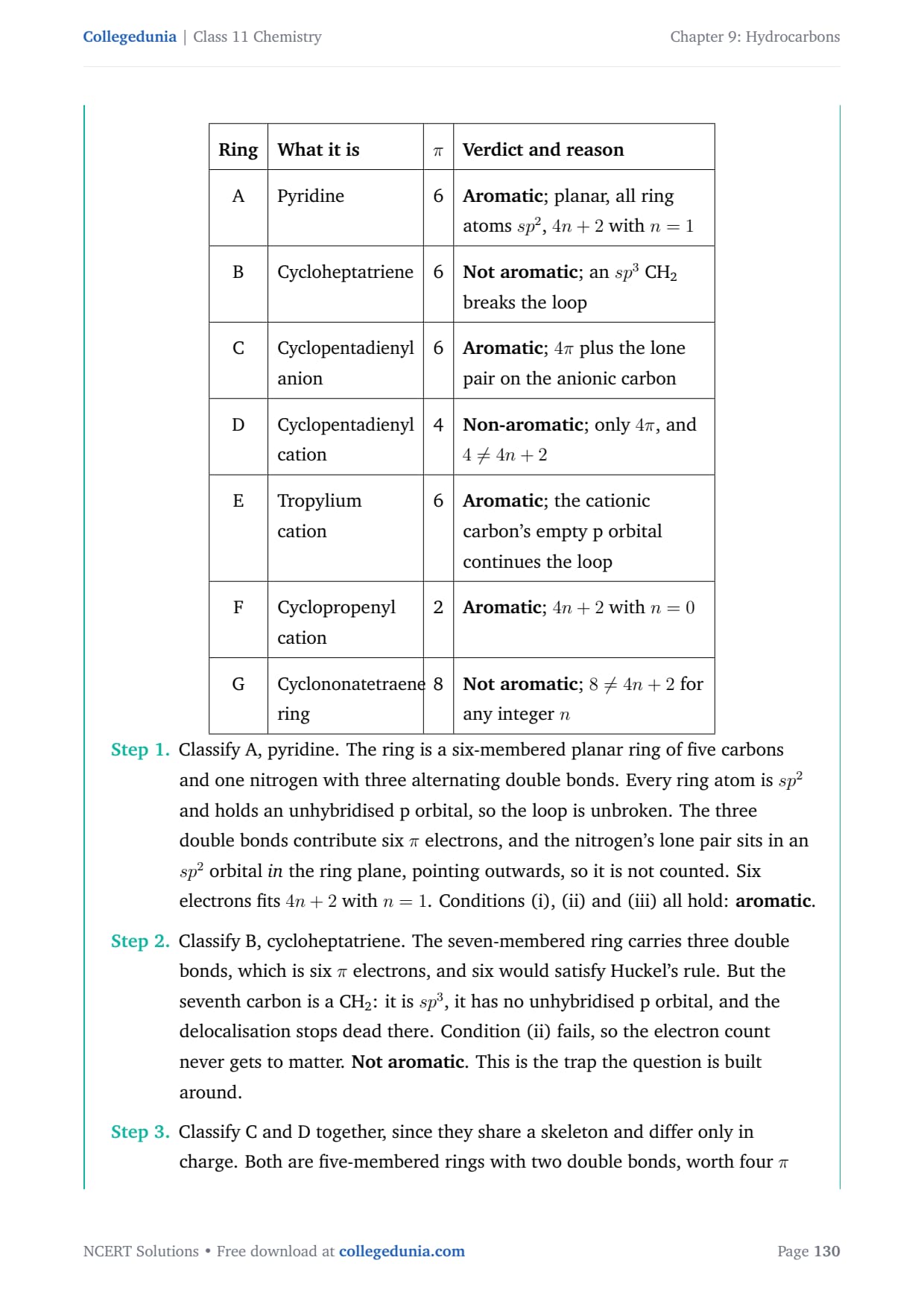
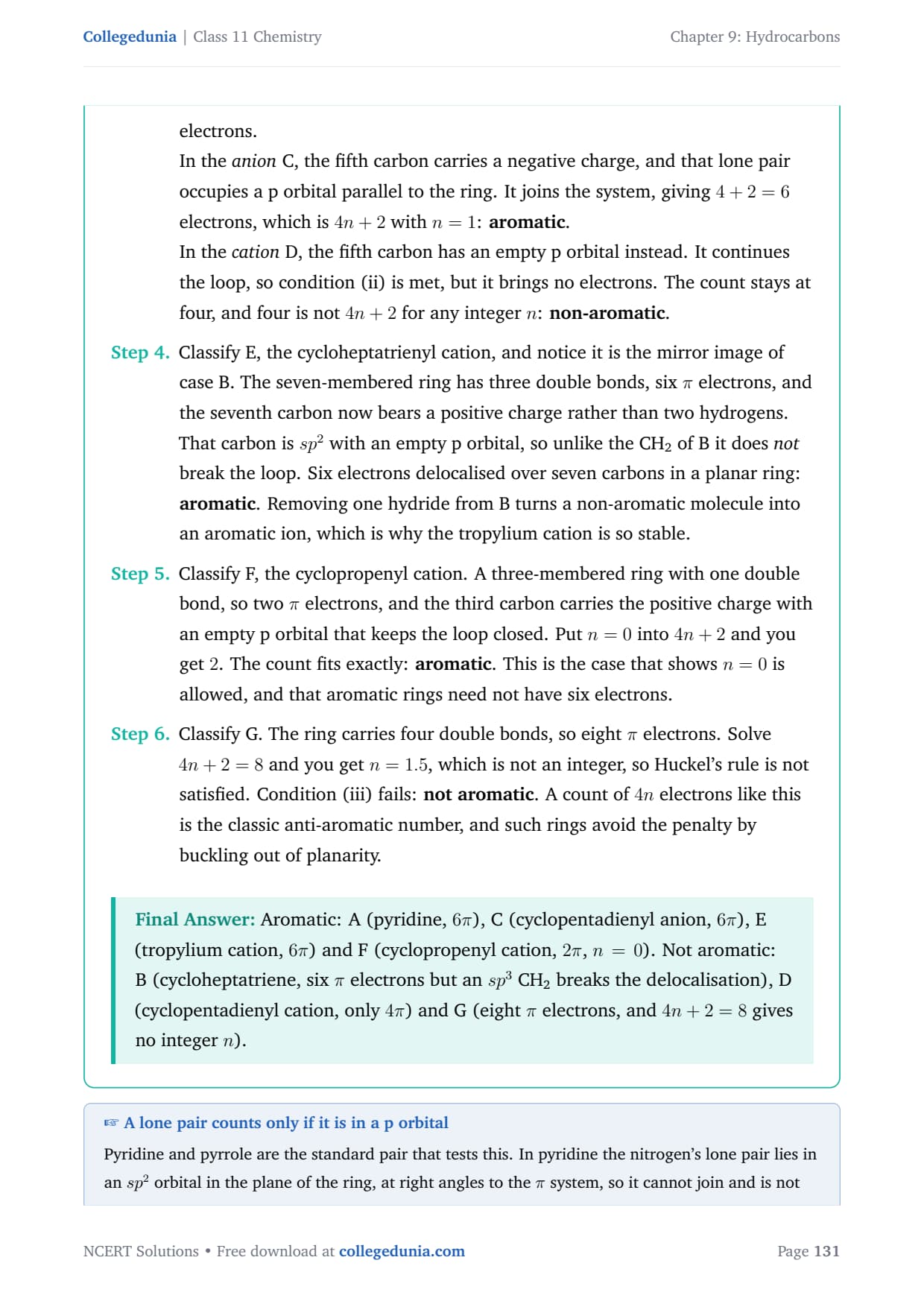
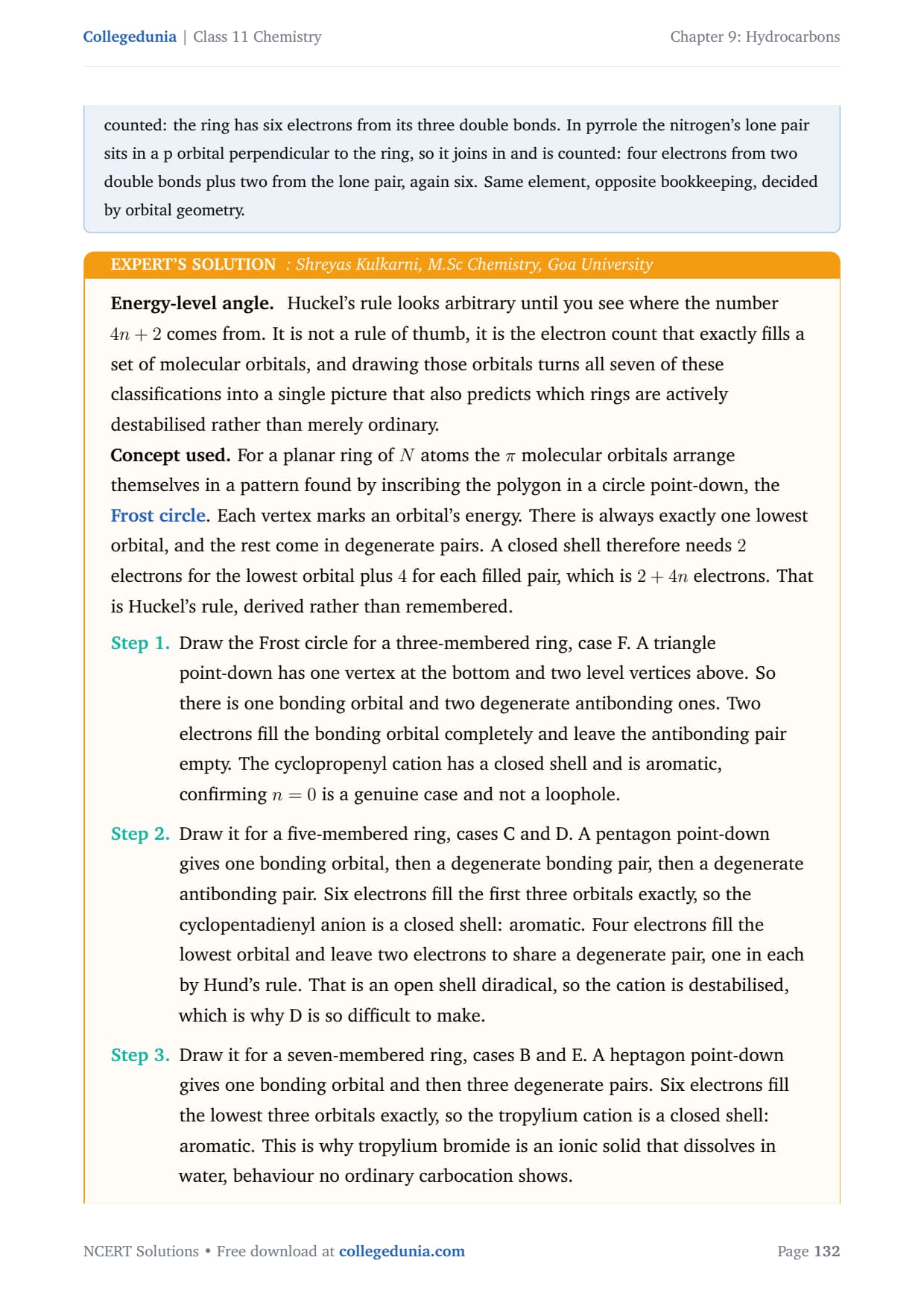
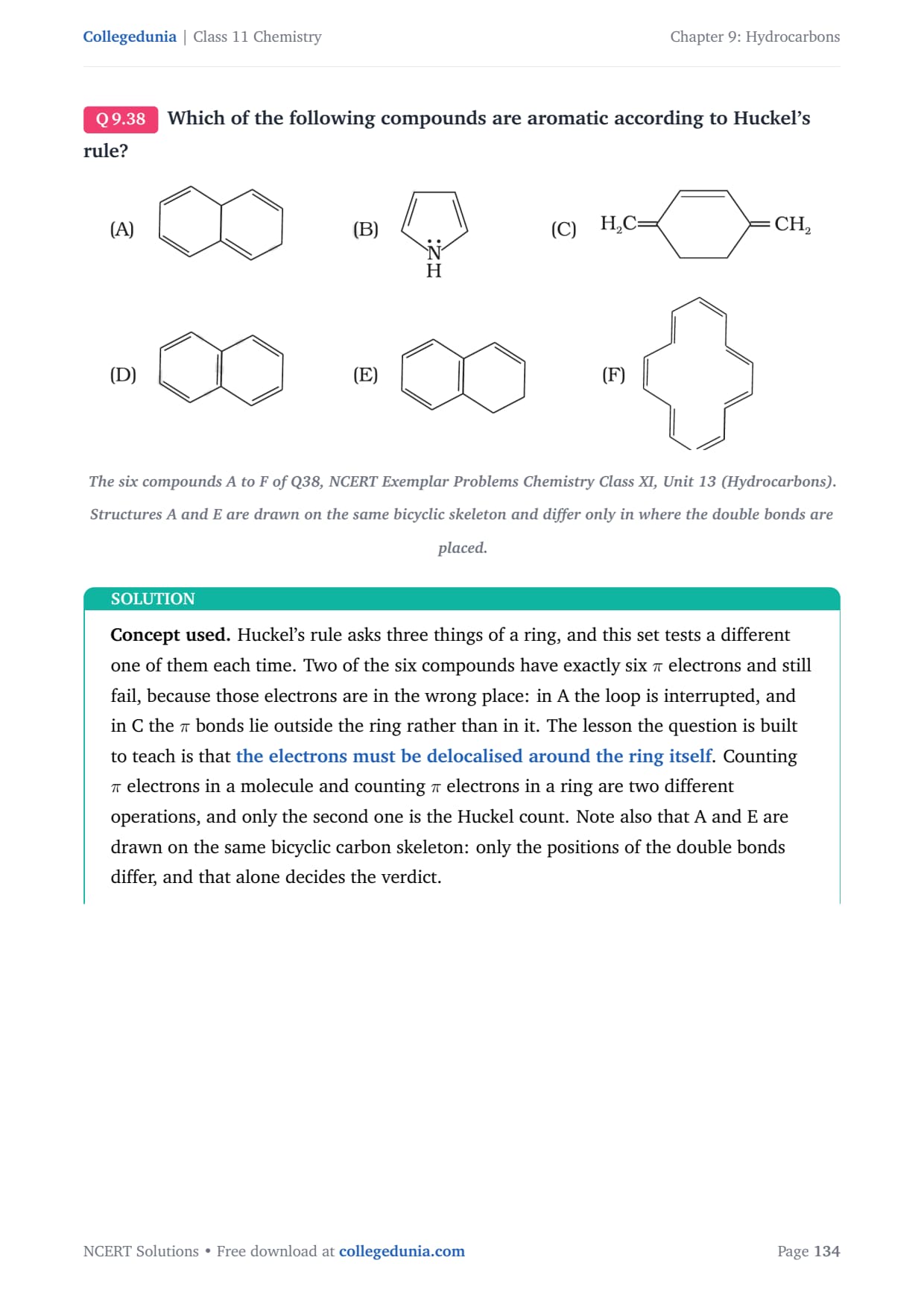
- Aromatic hydrocarbons: Huckel's 4n+2 rule, resonance in benzene, and electrophilic aromatic substitution with its ortho, para and meta directors
- Nomenclature and isomerism: longest chain, lowest locants, and chain, position and functional isomerism across all four families
Question Types in the Hydrocarbons NCERT Exemplar
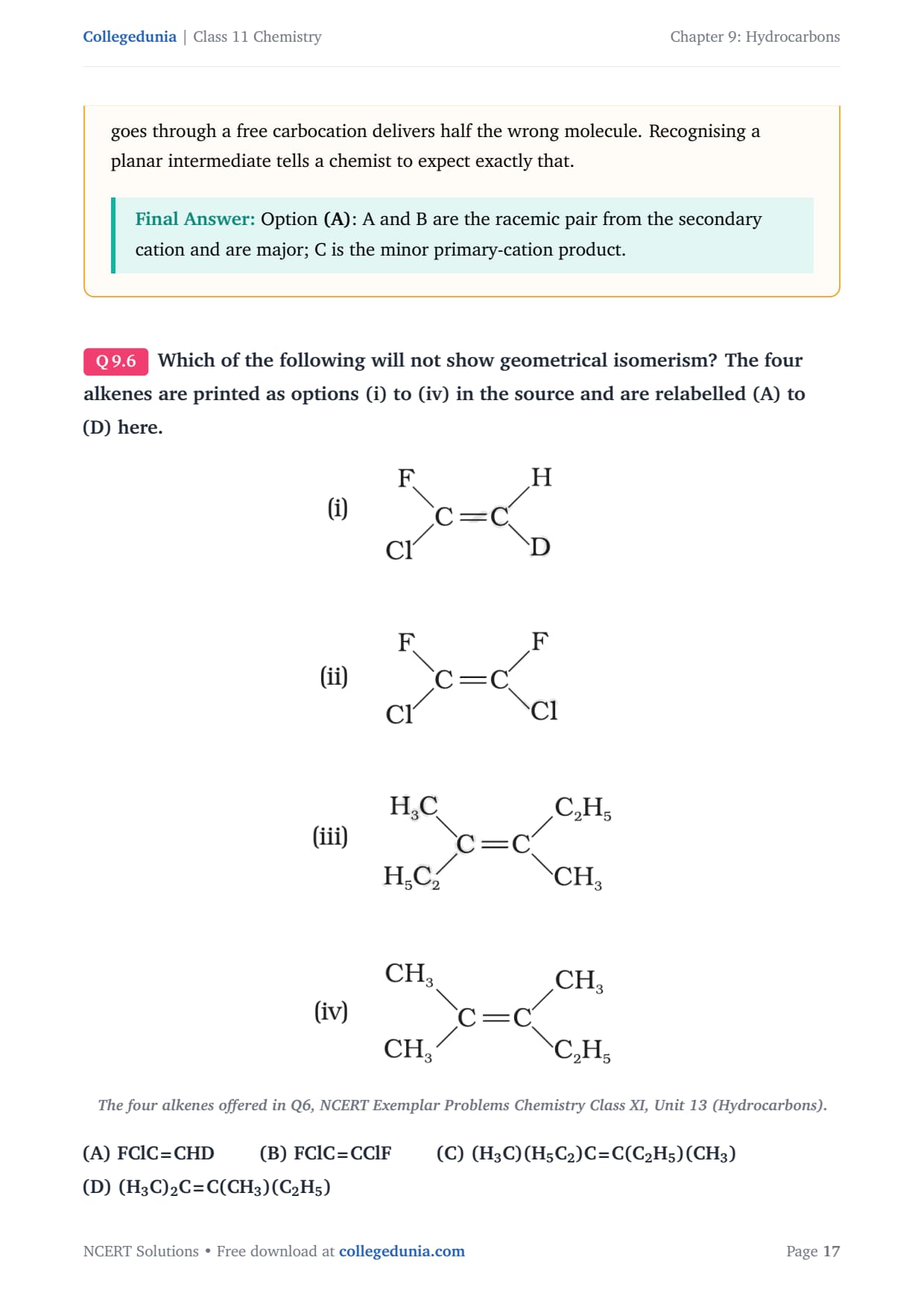
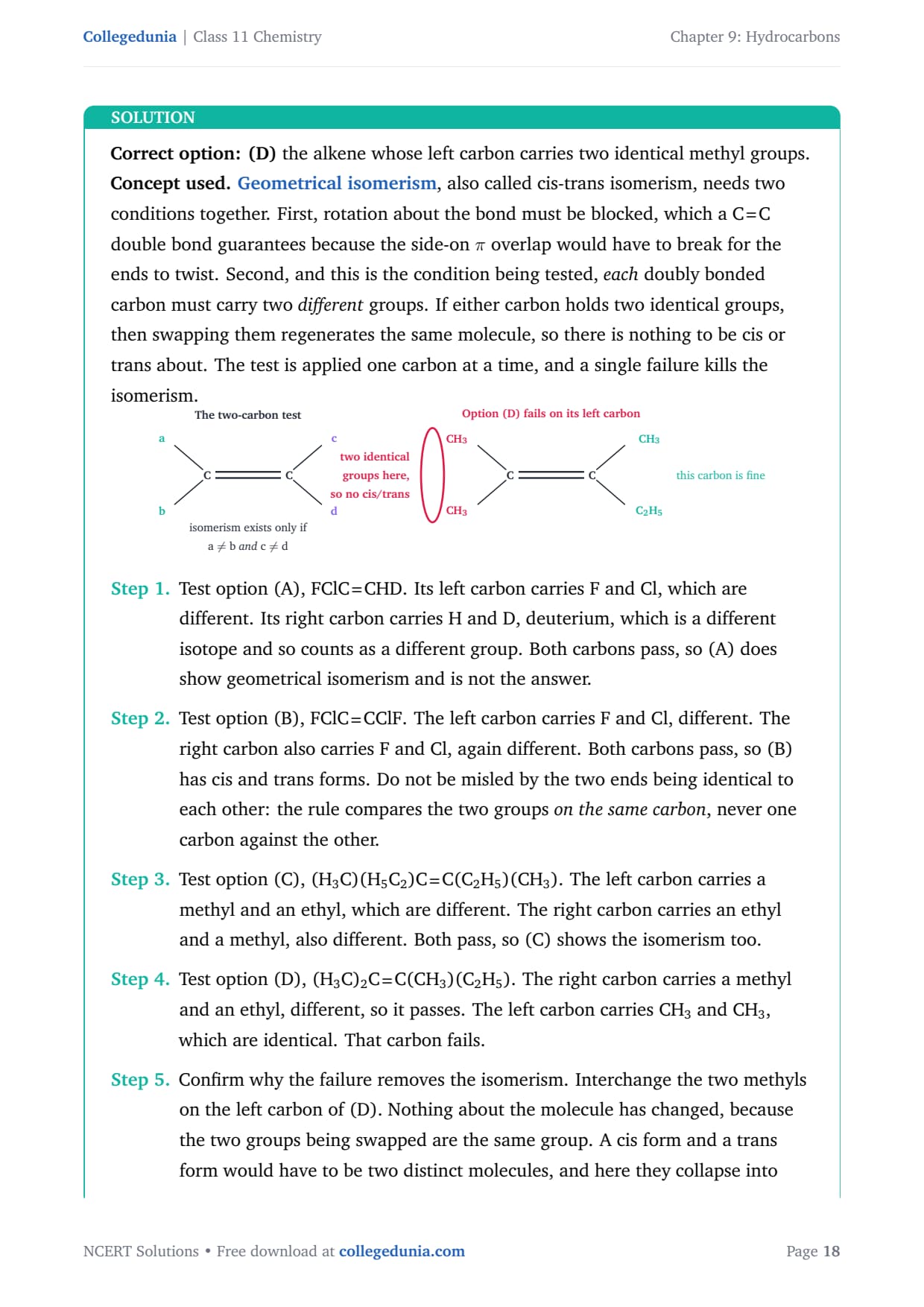
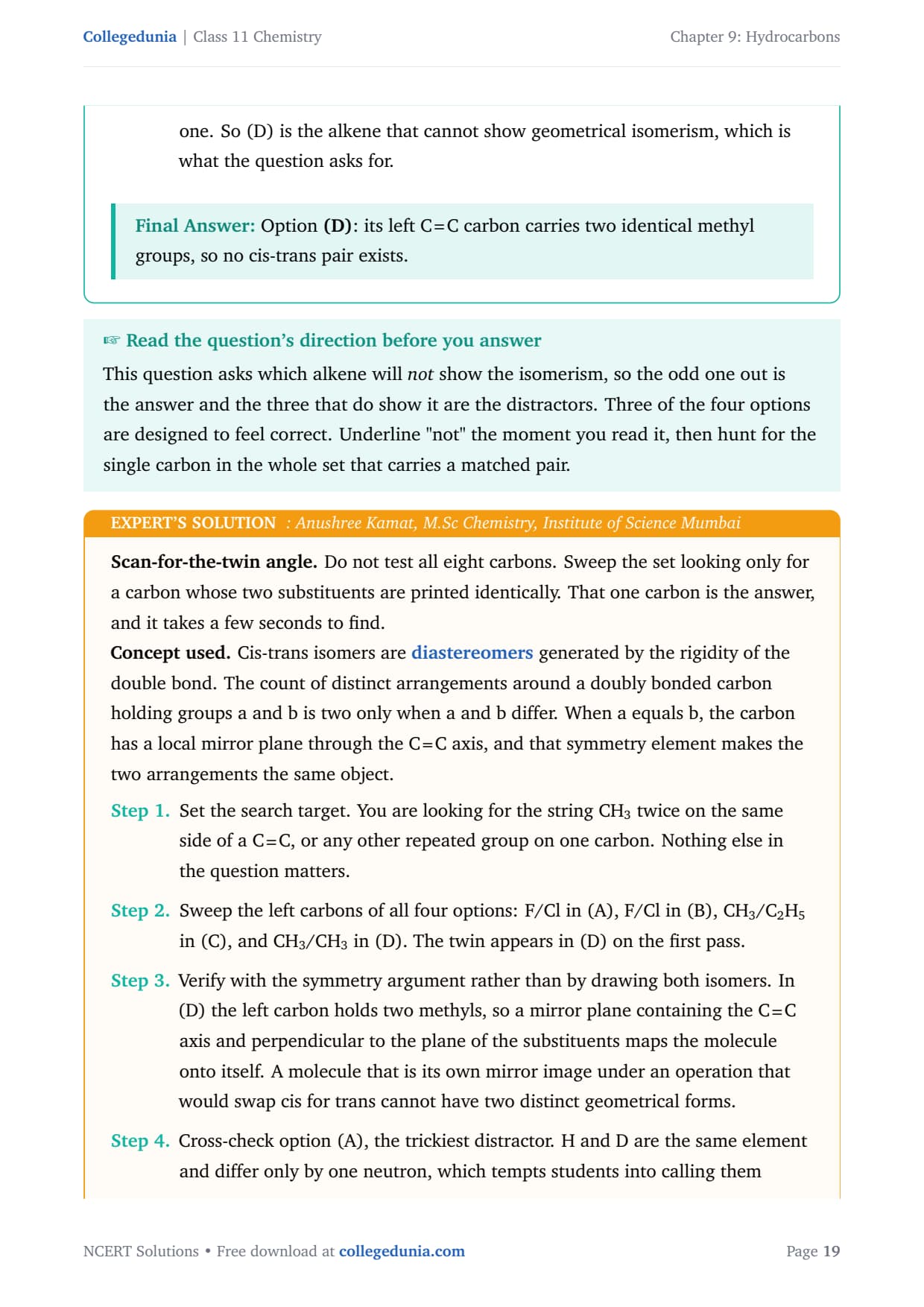
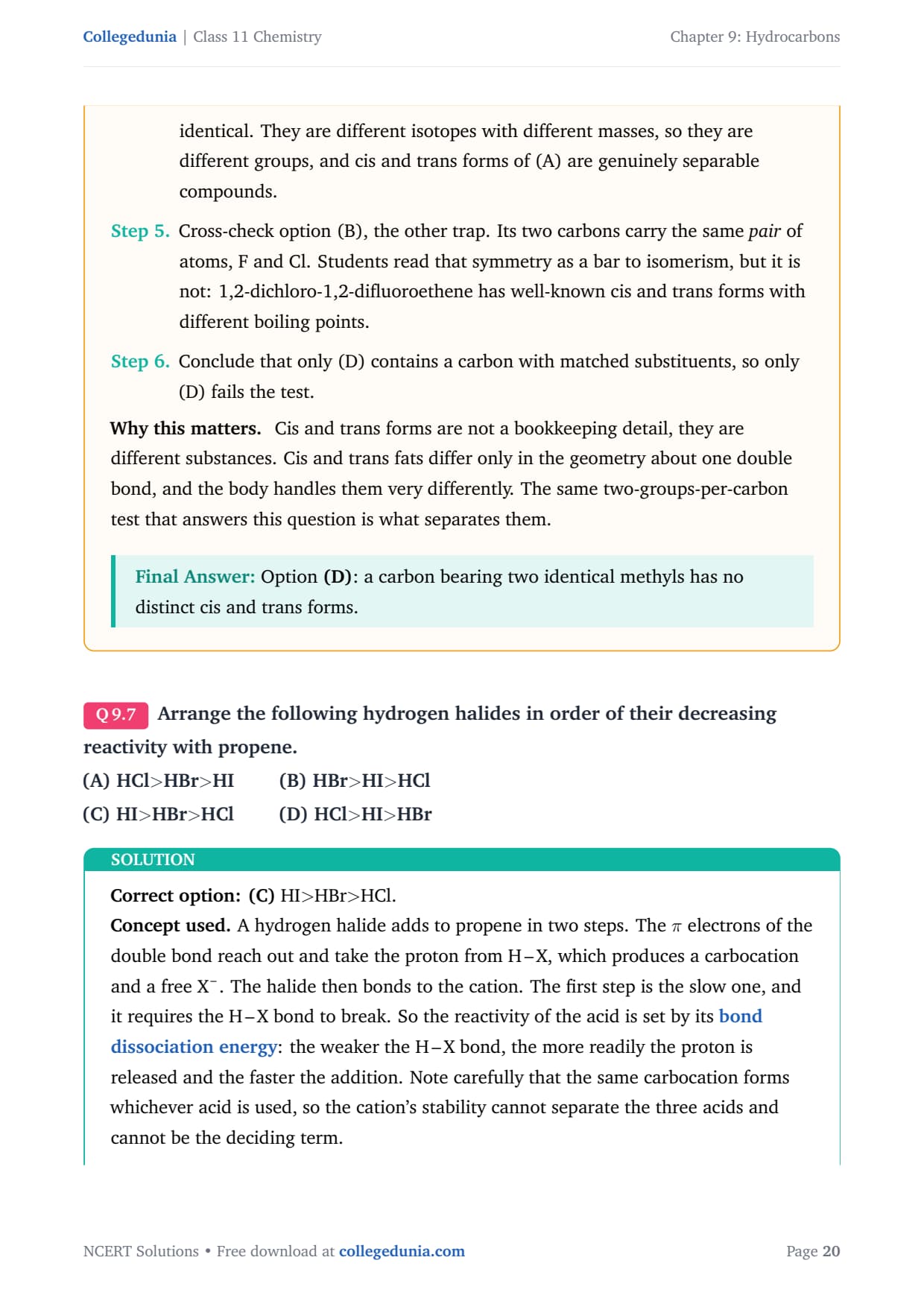
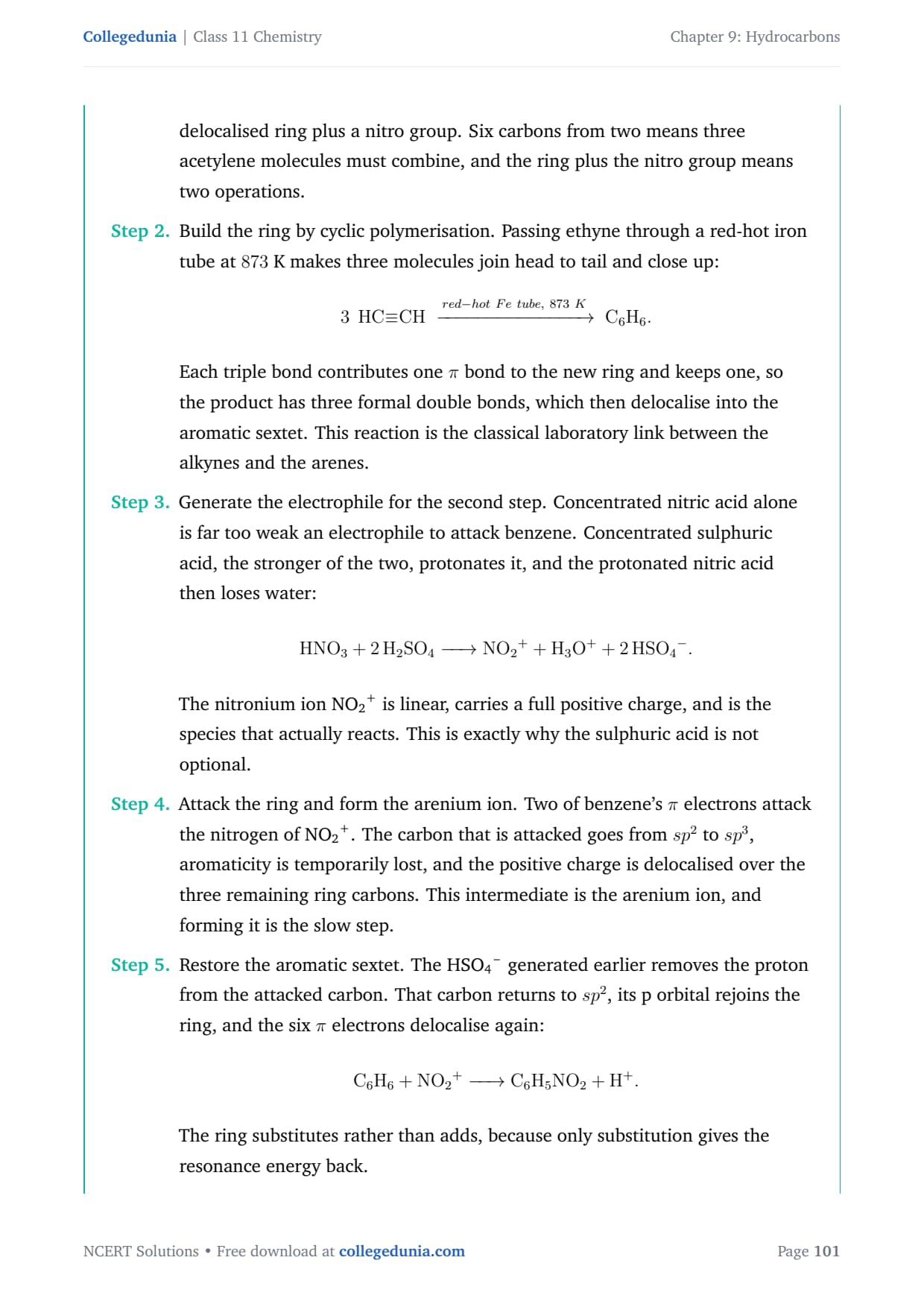
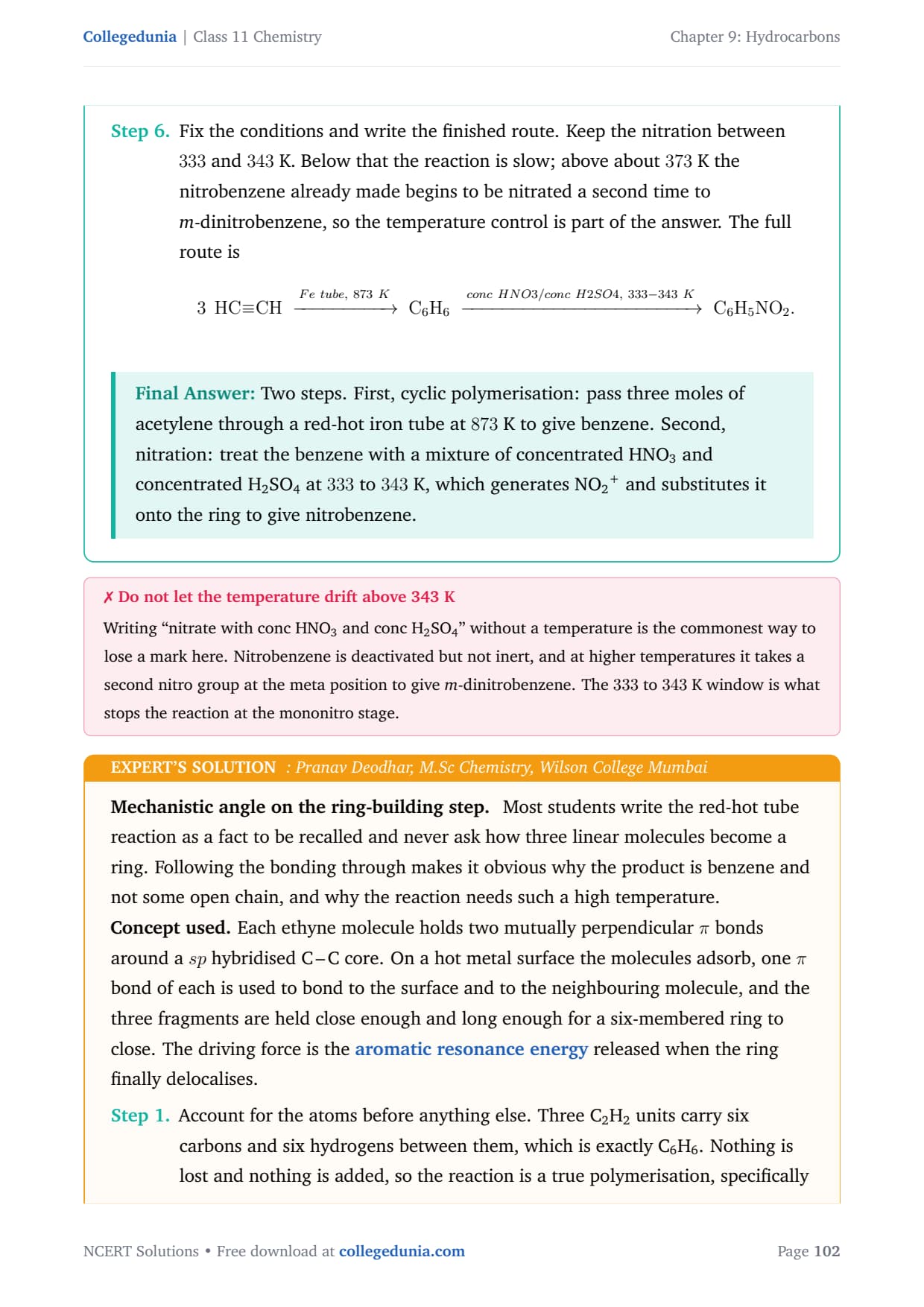
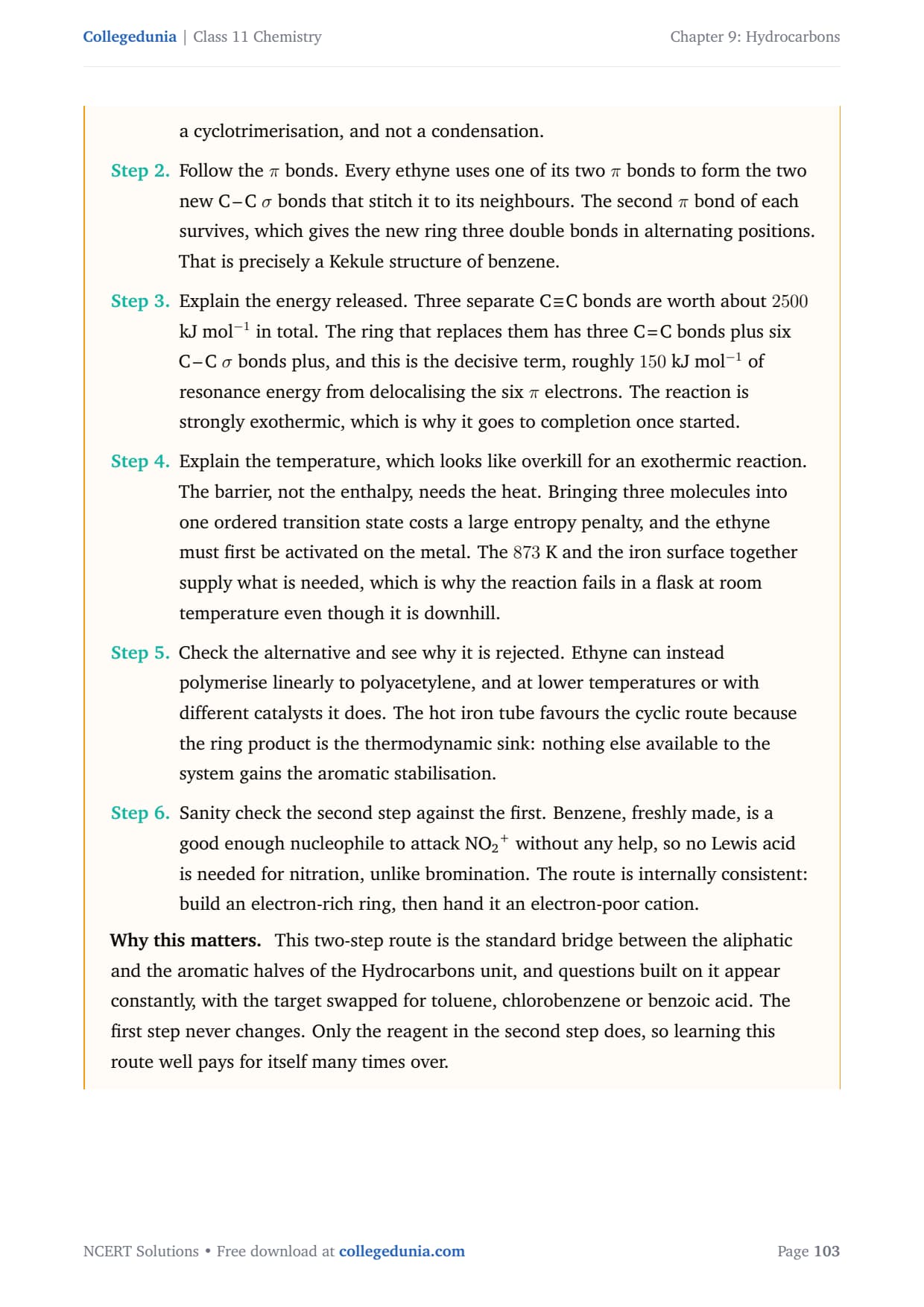
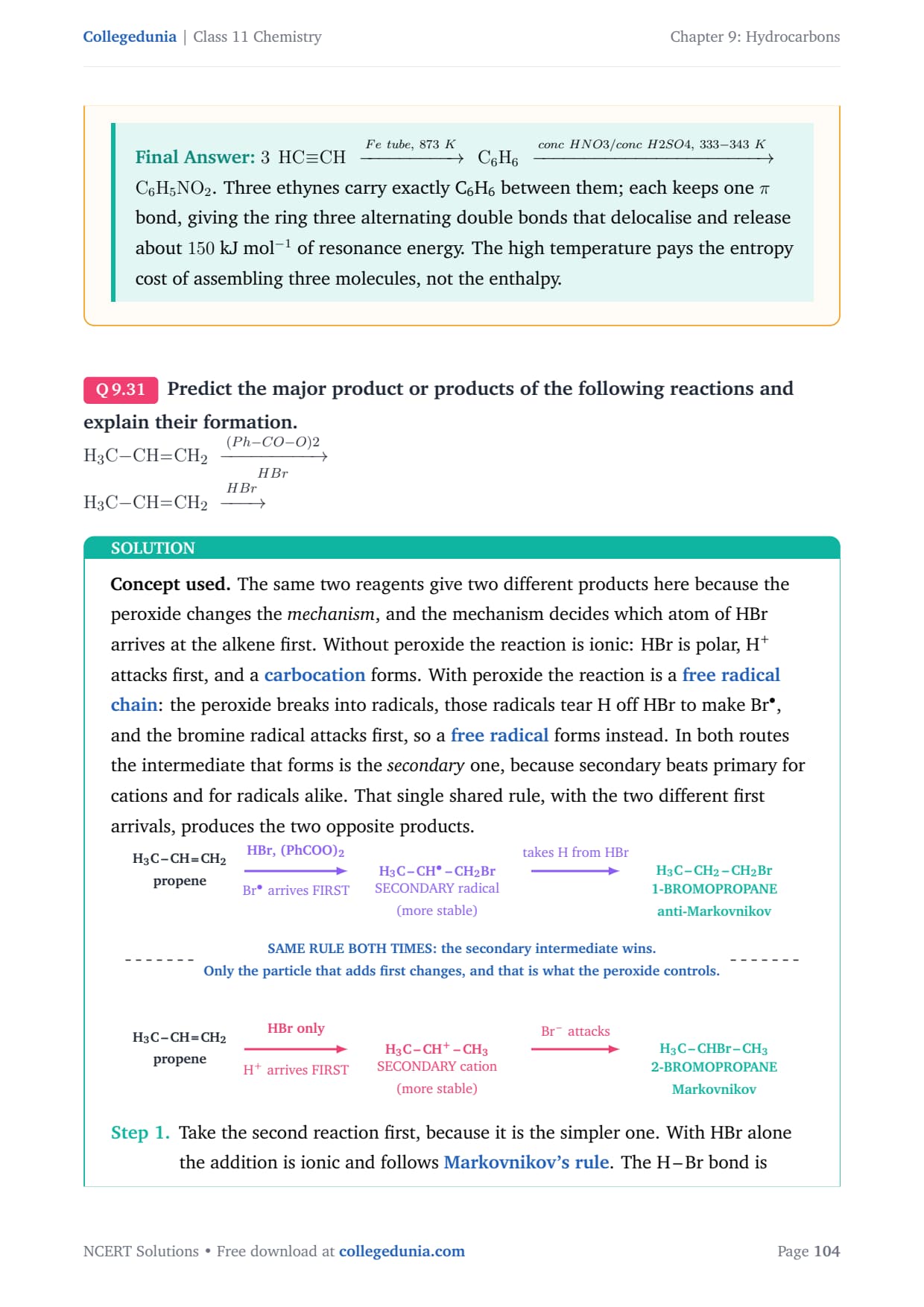
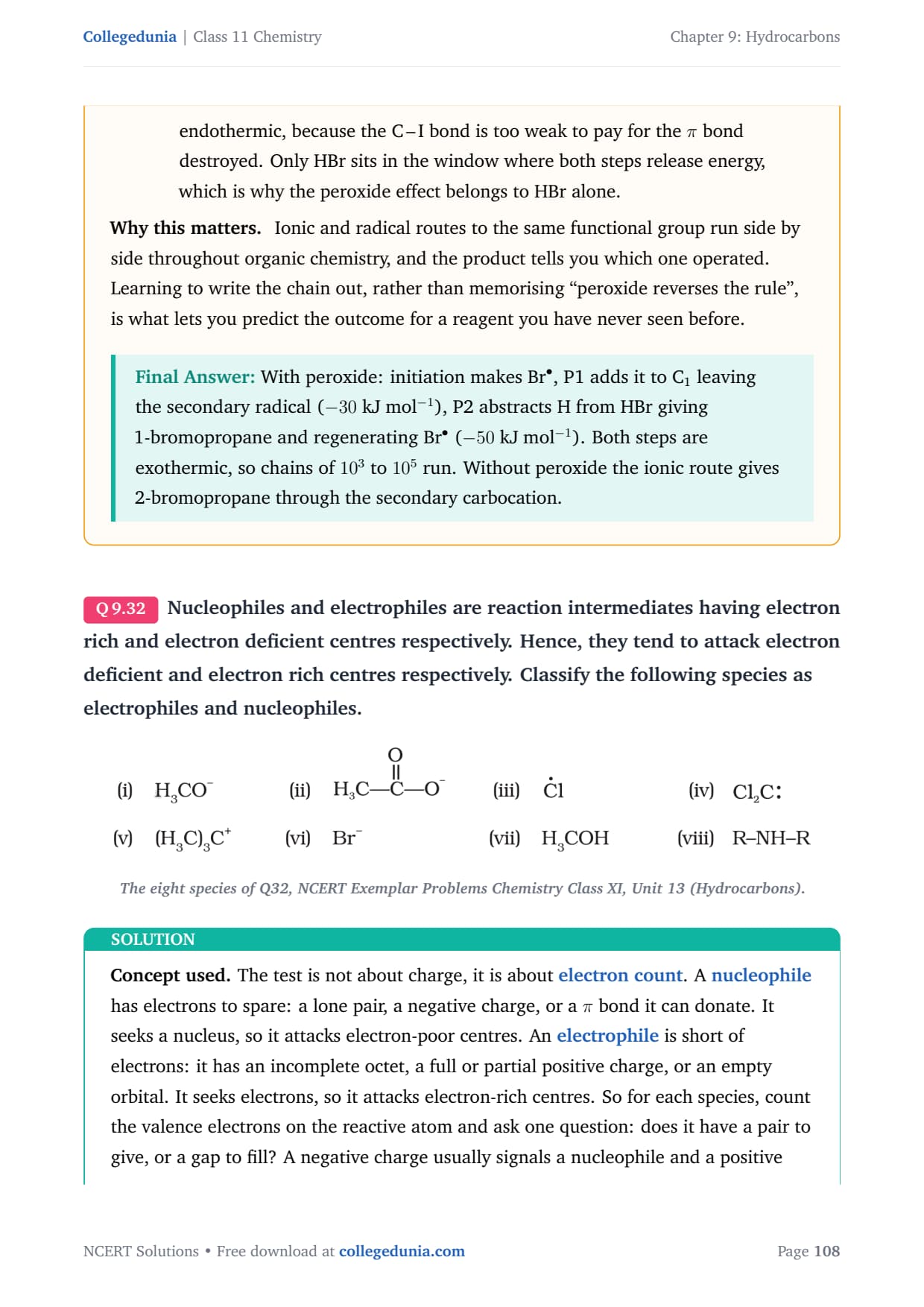
This is one of the more visual Exemplar chapters in Class 11 Chemistry. It carries 14 figures from the Exemplar book, and every figure is reproduced in the PDF beside its question so students never solve blind.
| Question Type | Count | What It Tests |
|---|---|---|
| MCQ I (single correct) | 10 | Bond strength trends, naming and Markovnikov products |
| MCQ II (one or more correct) | 9 | Whether you can reject every wrong option, not just find one right one |
| Short Answer | 20 | Reasoning on mechanisms, directing effects and choice of reagent |
| Matching Type | 4 | Pairing reagents with the products or reactions they give |
| Assertion and Reason | 4 | Whether the reason actually explains the assertion |
| Long Answer | 4 | Full mechanisms and multi-step syntheses, worth 5 marks |
Two Printing Errors in the Chapter 9 Exemplar
Two questions in this chapter carry misprints, and both are explained in the PDF so students are never asked to accept something that contradicts the rules the chapter just taught.
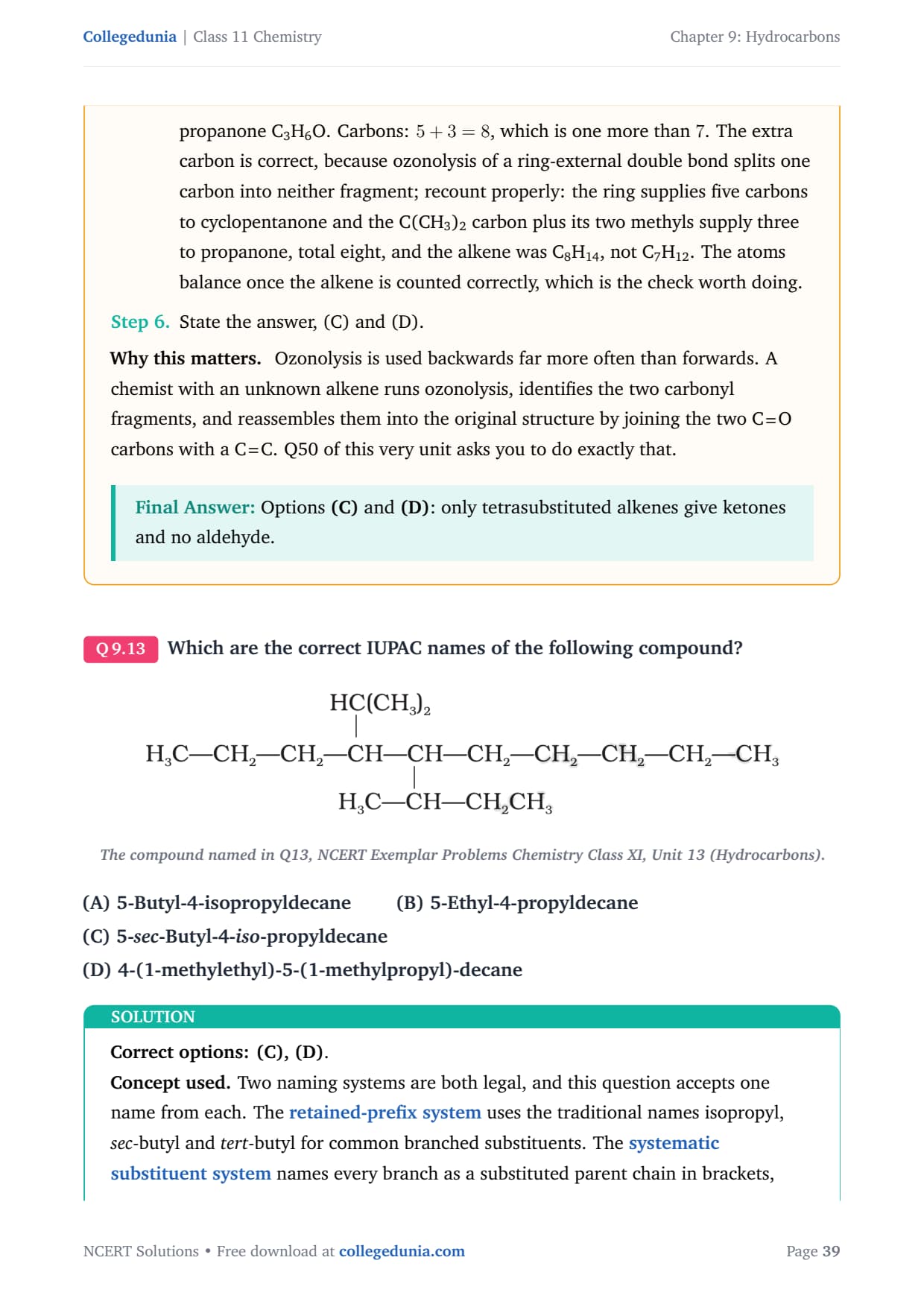
- Question 14: the structure prints the lower-left group as HC3, which is not a real group. It is a typesetting slip for H3C, a normal methyl. The solution names the compound correctly once the group is read as methyl.
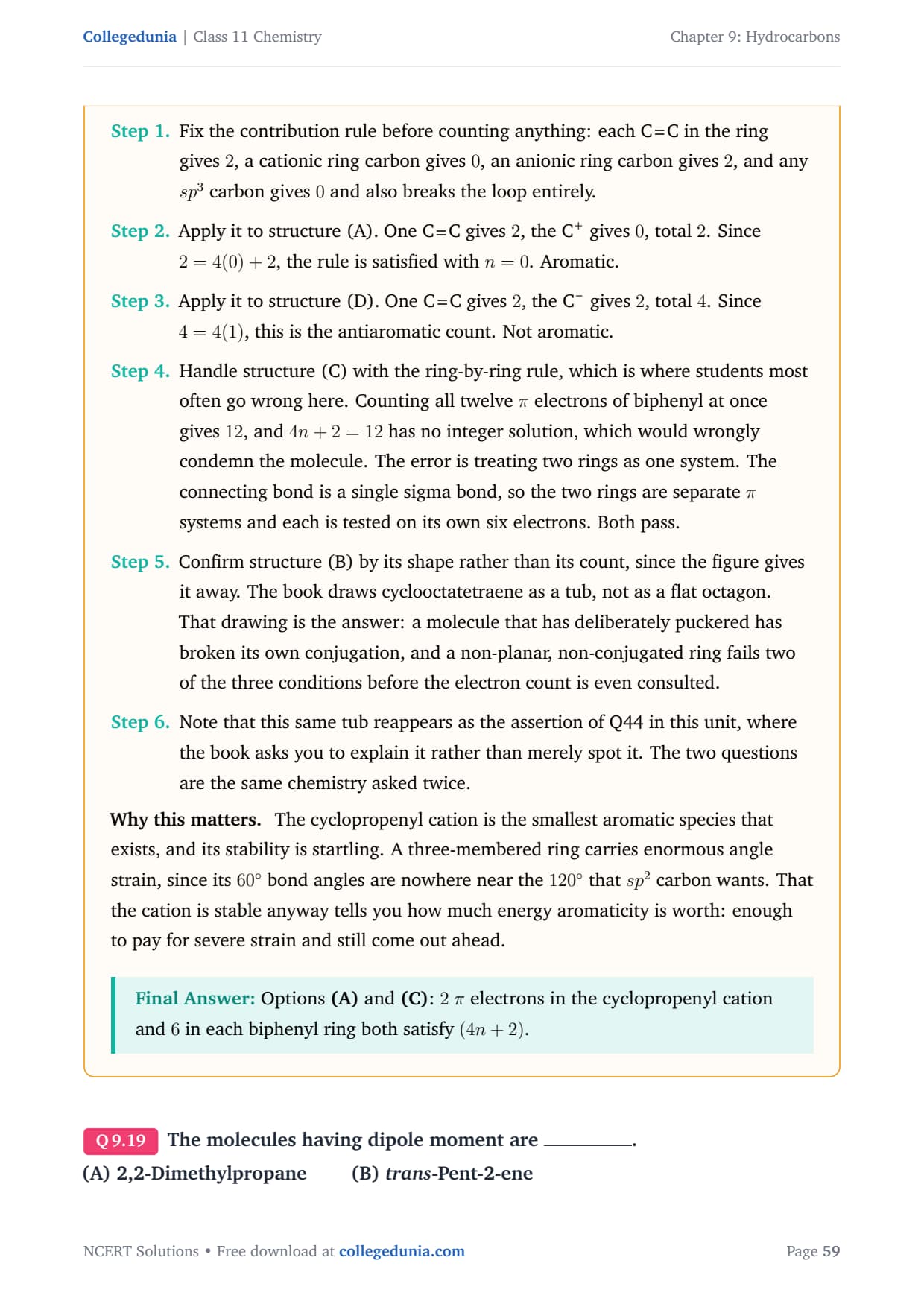
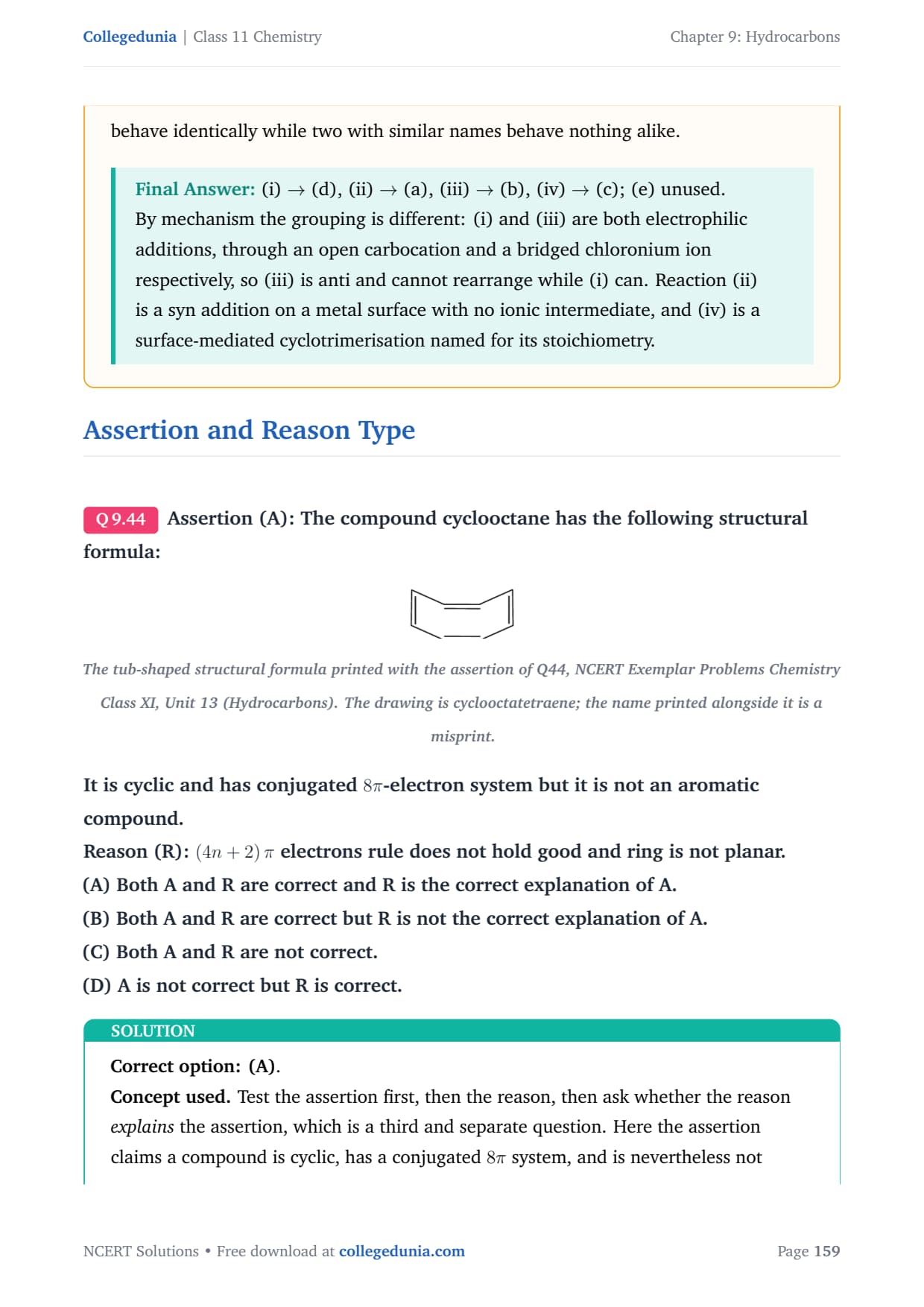
- Question 44: the assertion labels the drawn tub-shaped molecule "cyclooctane", but cyclooctane is the fully saturated C8H16 ring with no pi electrons. The structure drawn is cyclooctatetraene, which is what makes the 8-pi and non-aromatic claim consistent.
A few Short Answer and Long Answer items are open-ended, and the official key prints no model answer for them. Our solution marks a full worked answer for each, so questions like the Wurtz product set and the two-step syntheses are not left blank.
Common Mistakes Students Make in Hydrocarbons
The Exemplar plants wrong options deliberately. These four catch most students, and each is flagged in the PDF at the question where it bites.
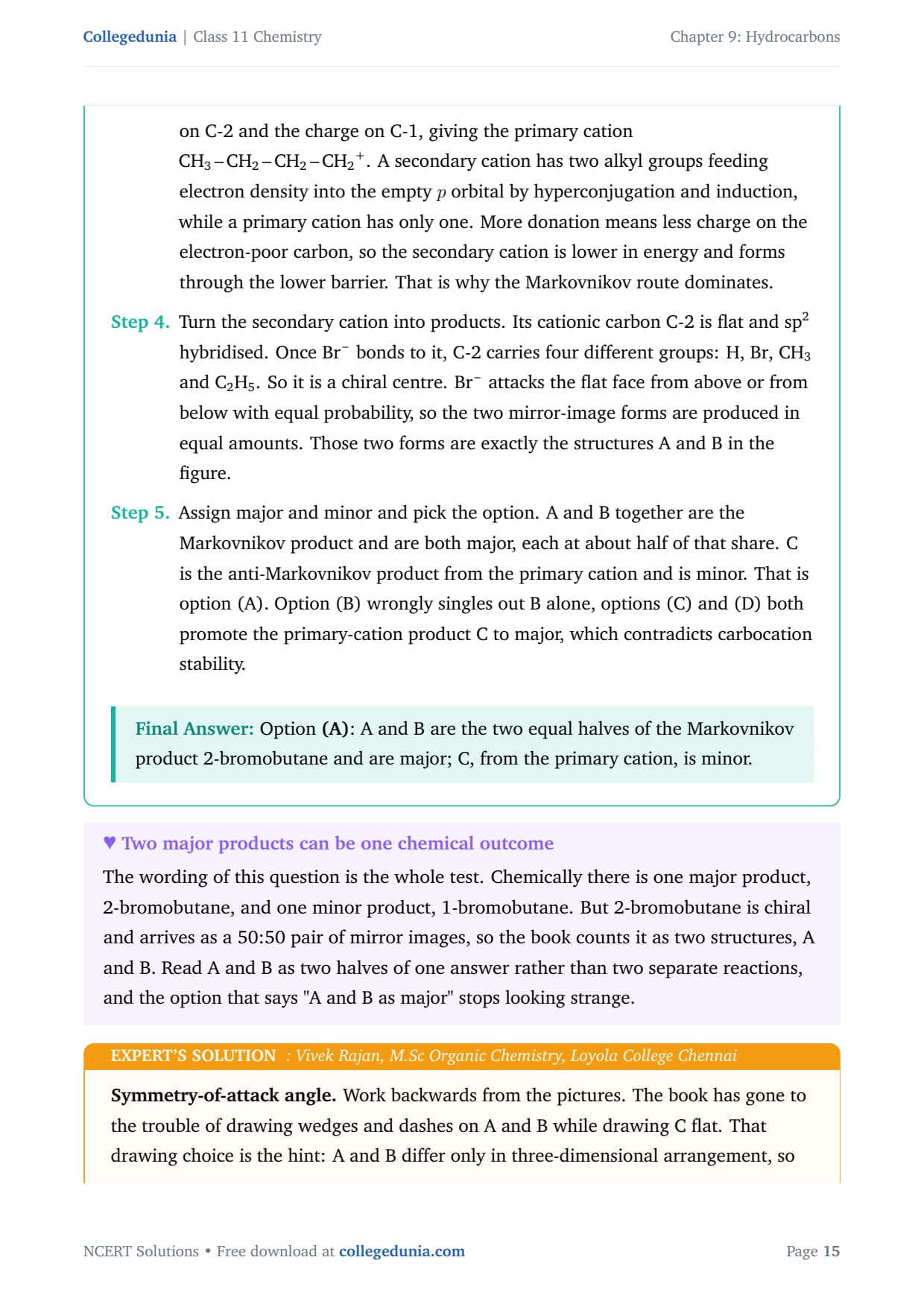
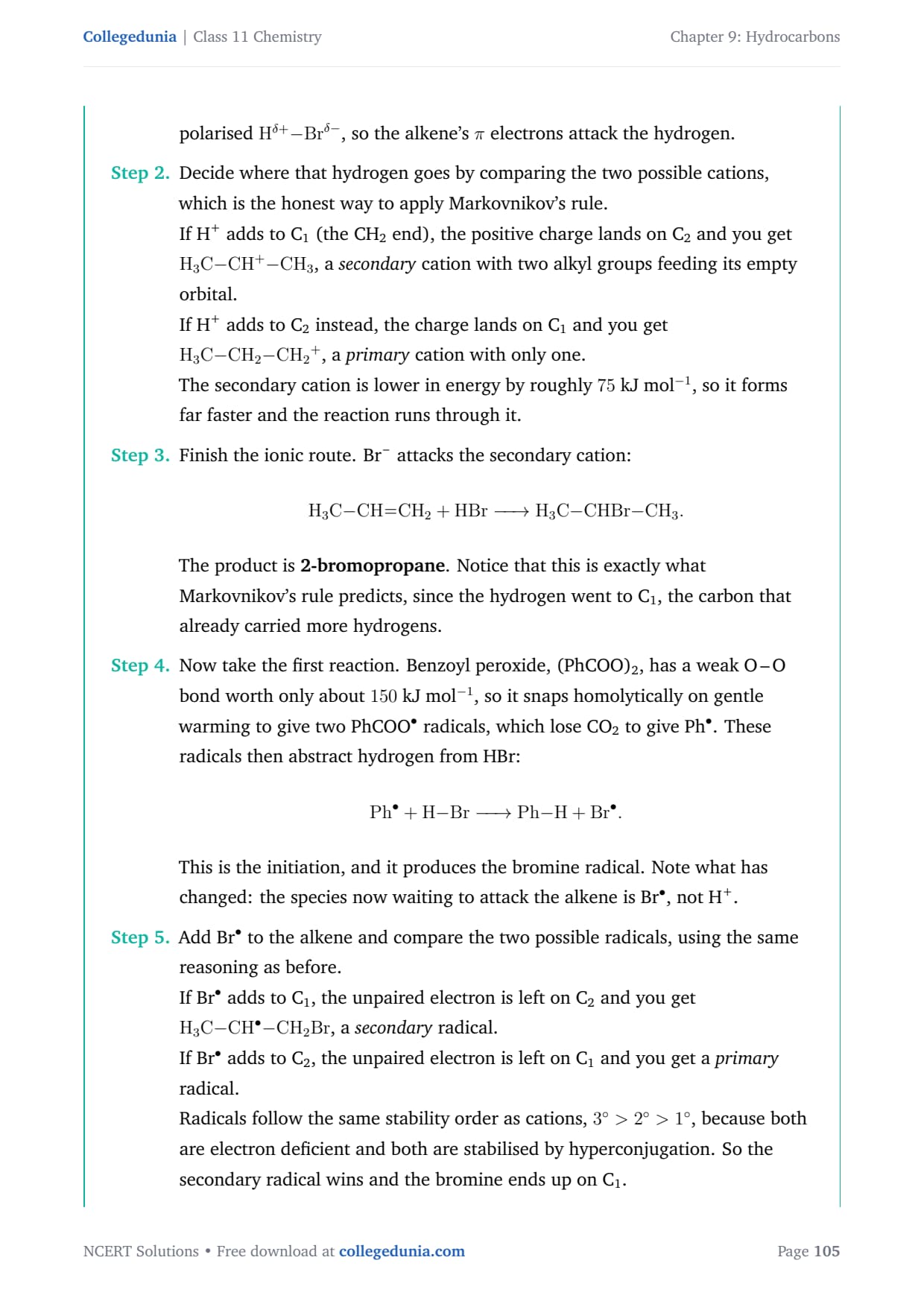
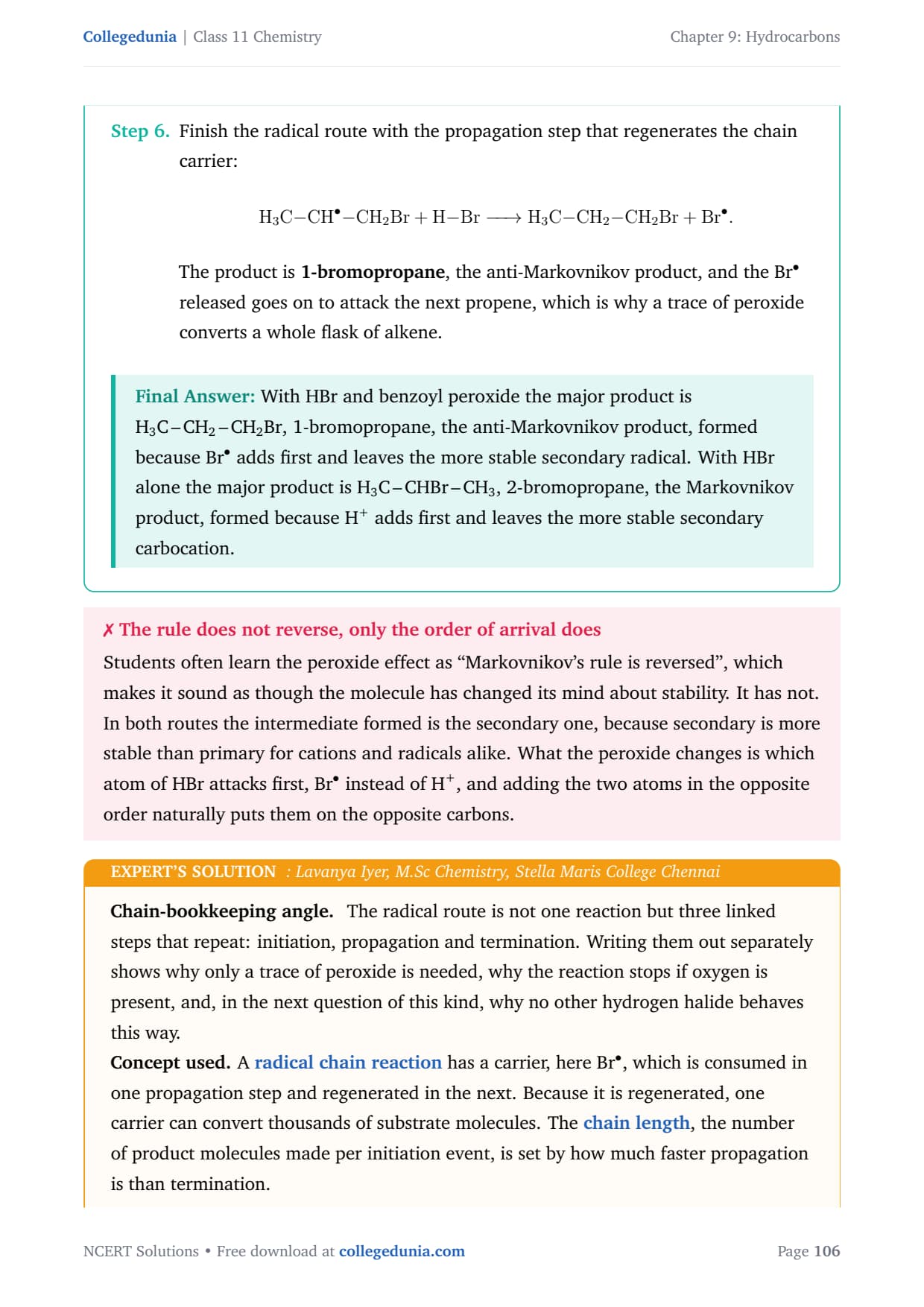
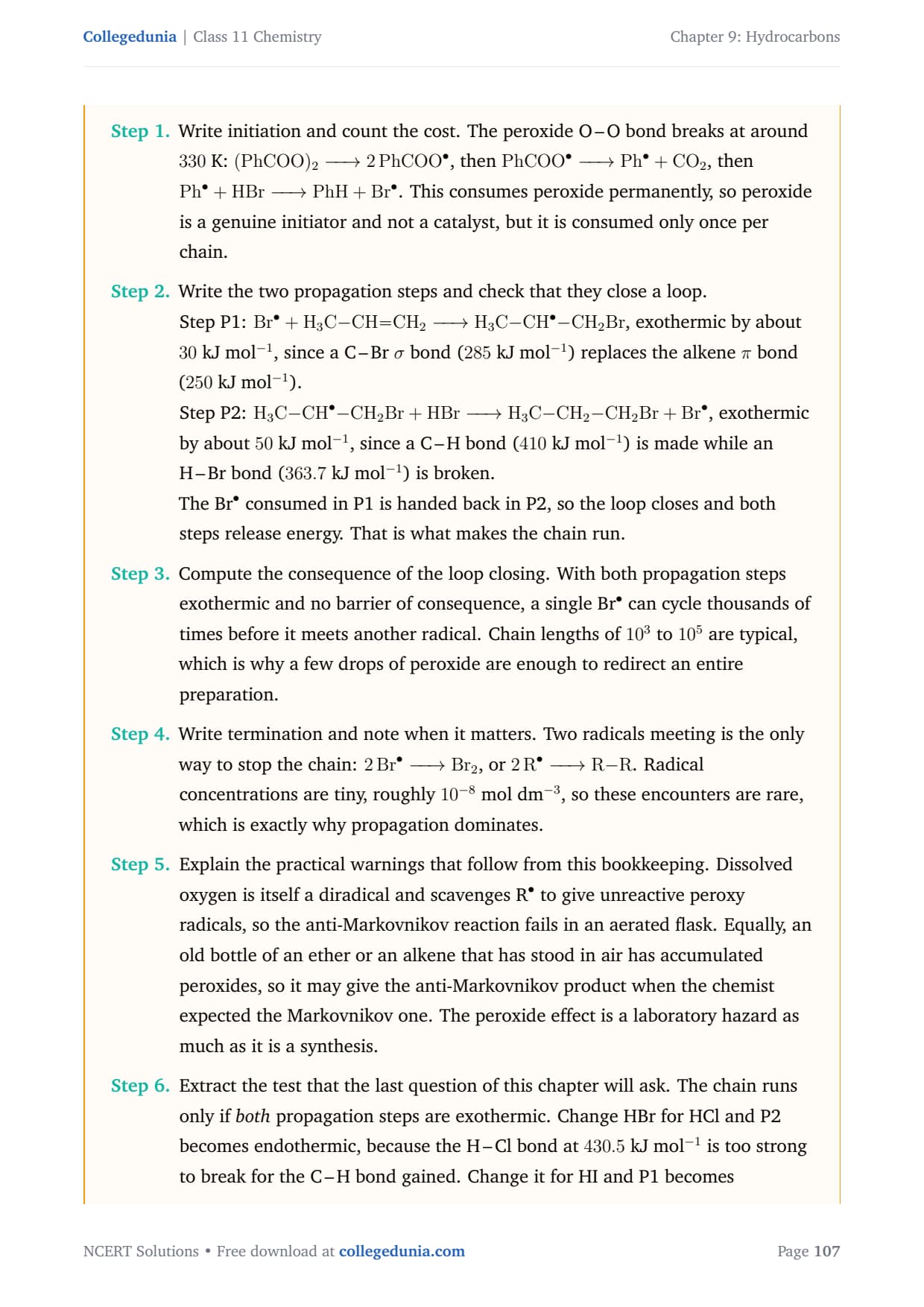
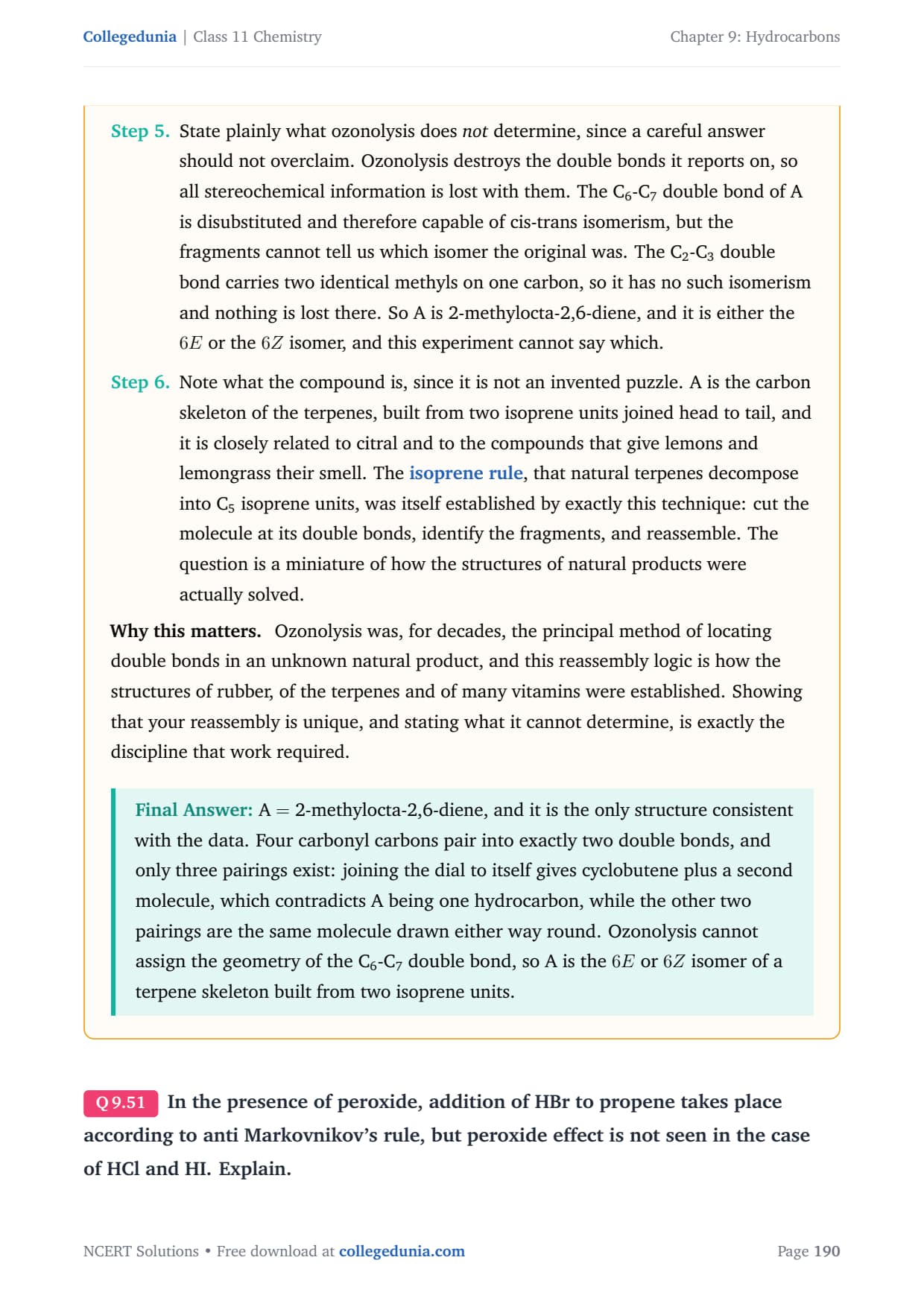
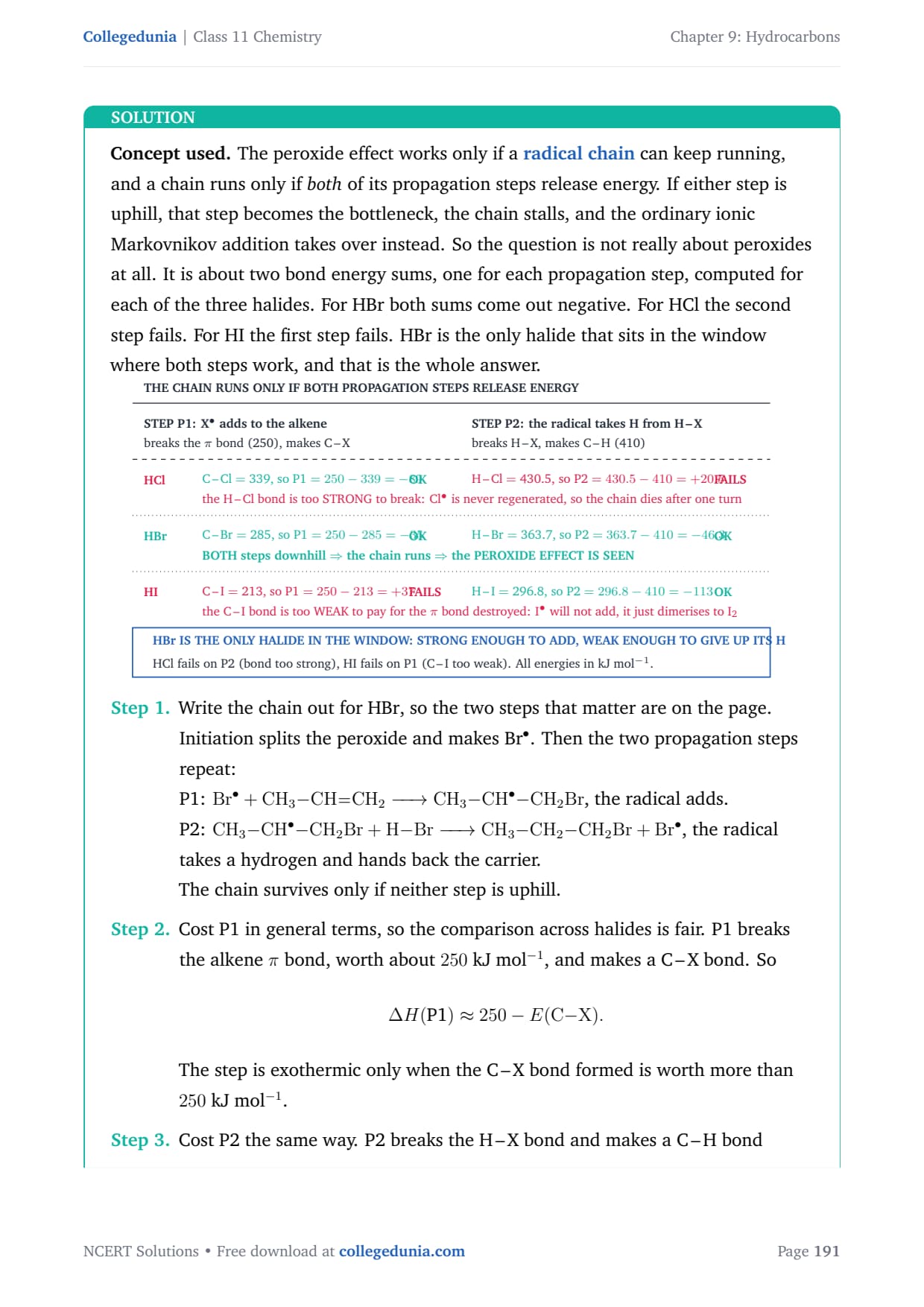
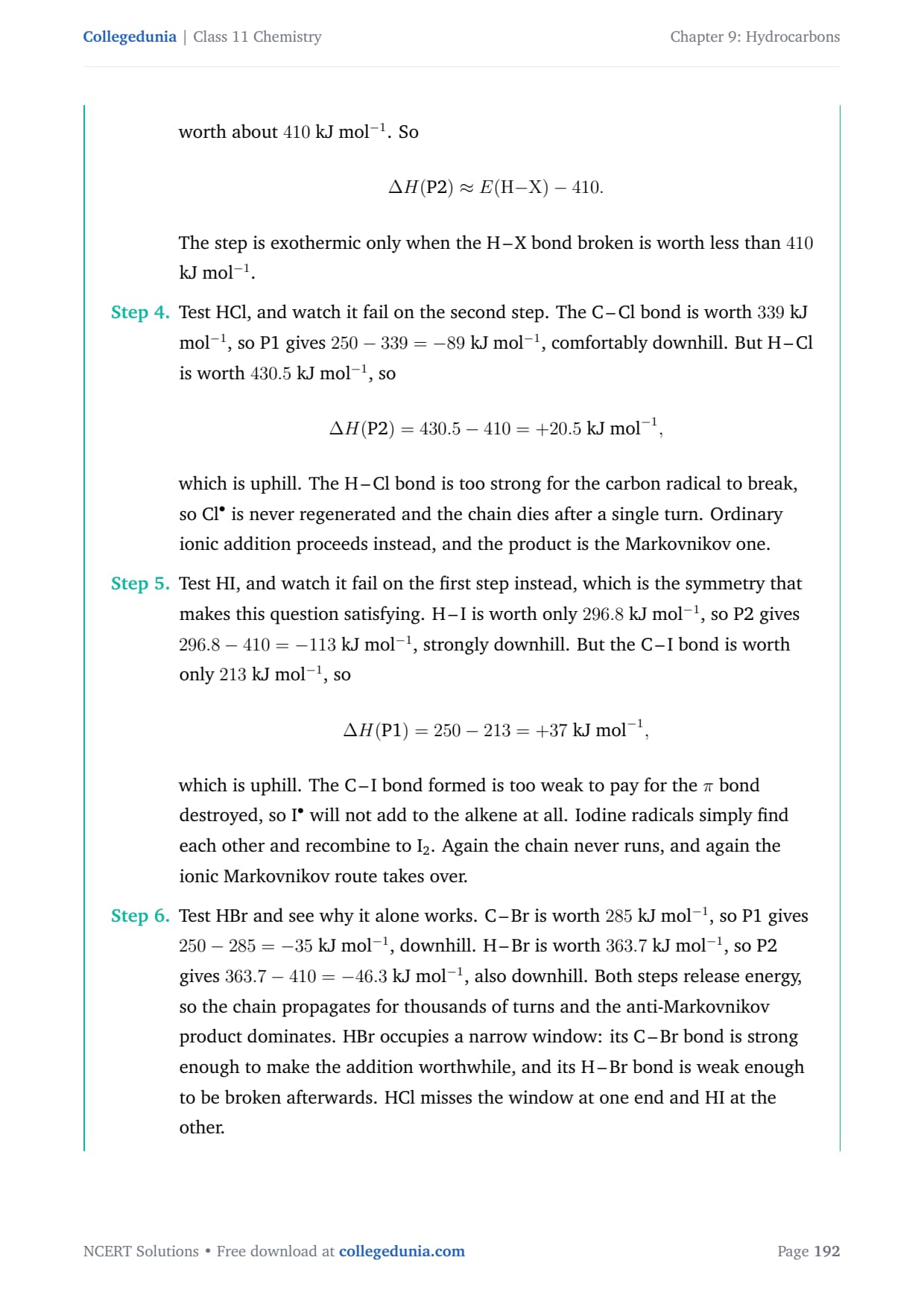
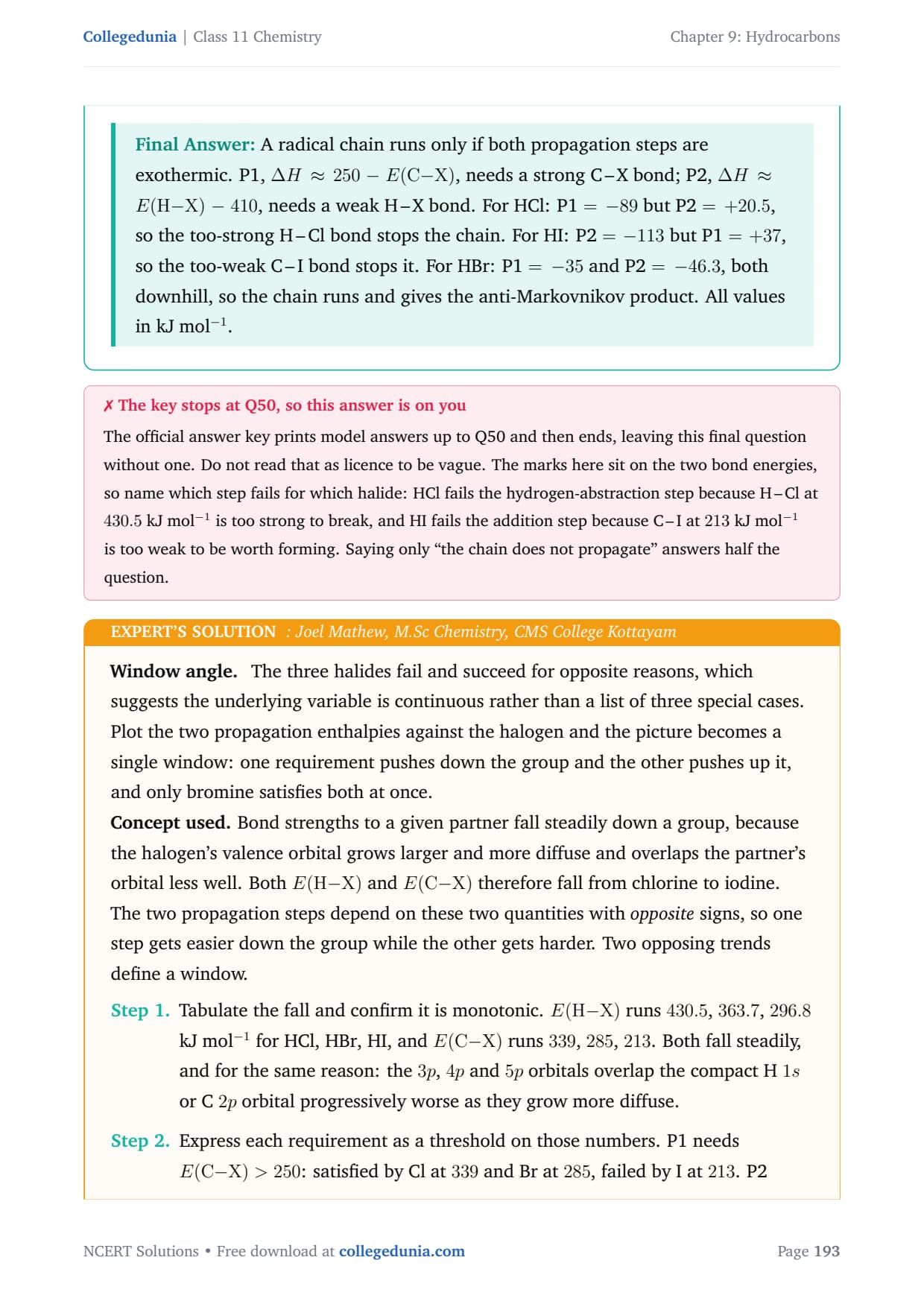
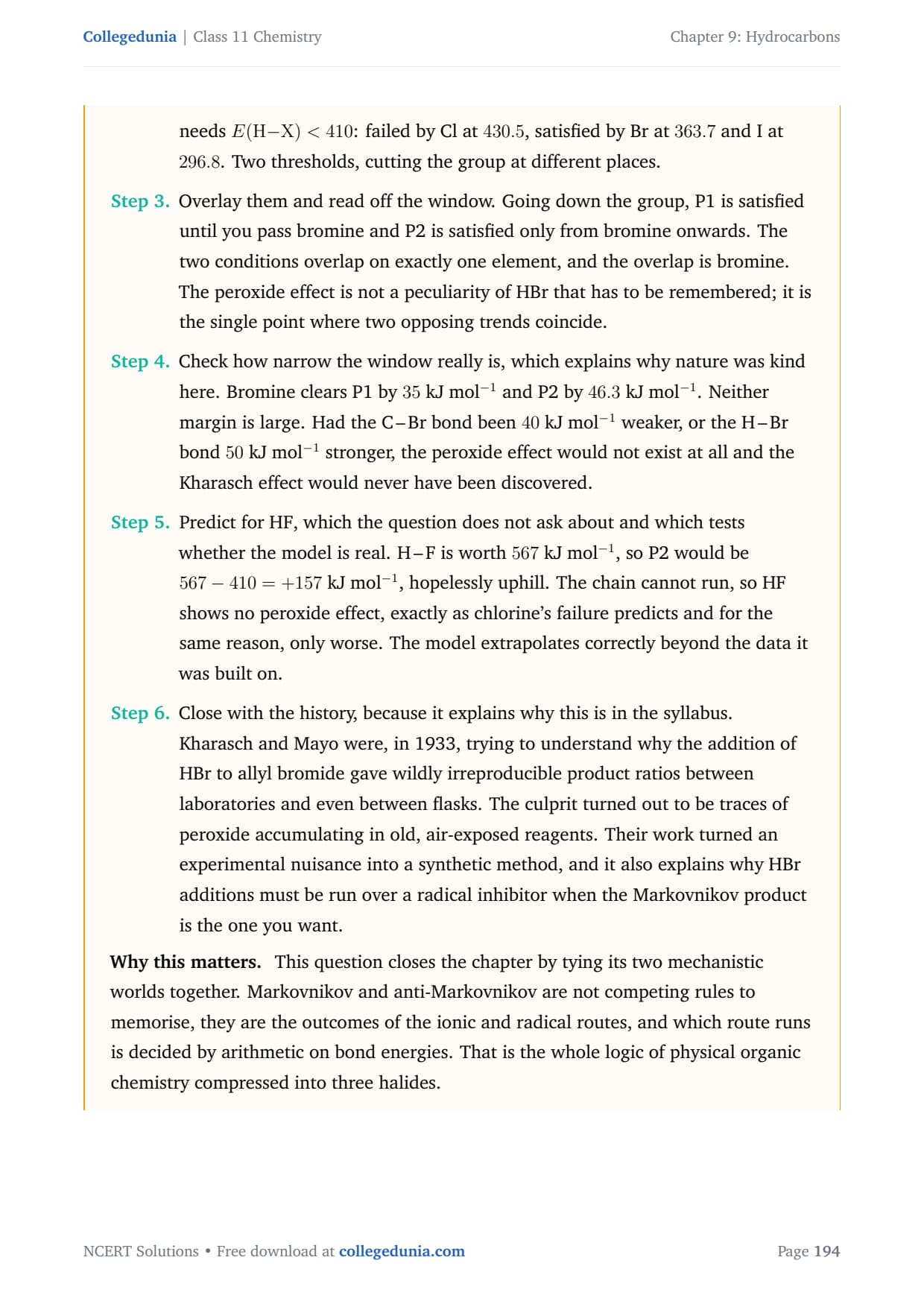
- Markovnikov versus peroxide: HBr adds by Markovnikov's rule, but only HBr reverses to anti-Markovnikov with peroxide. HCl and HI never show the peroxide effect, so the trap is applying it to the wrong acid.
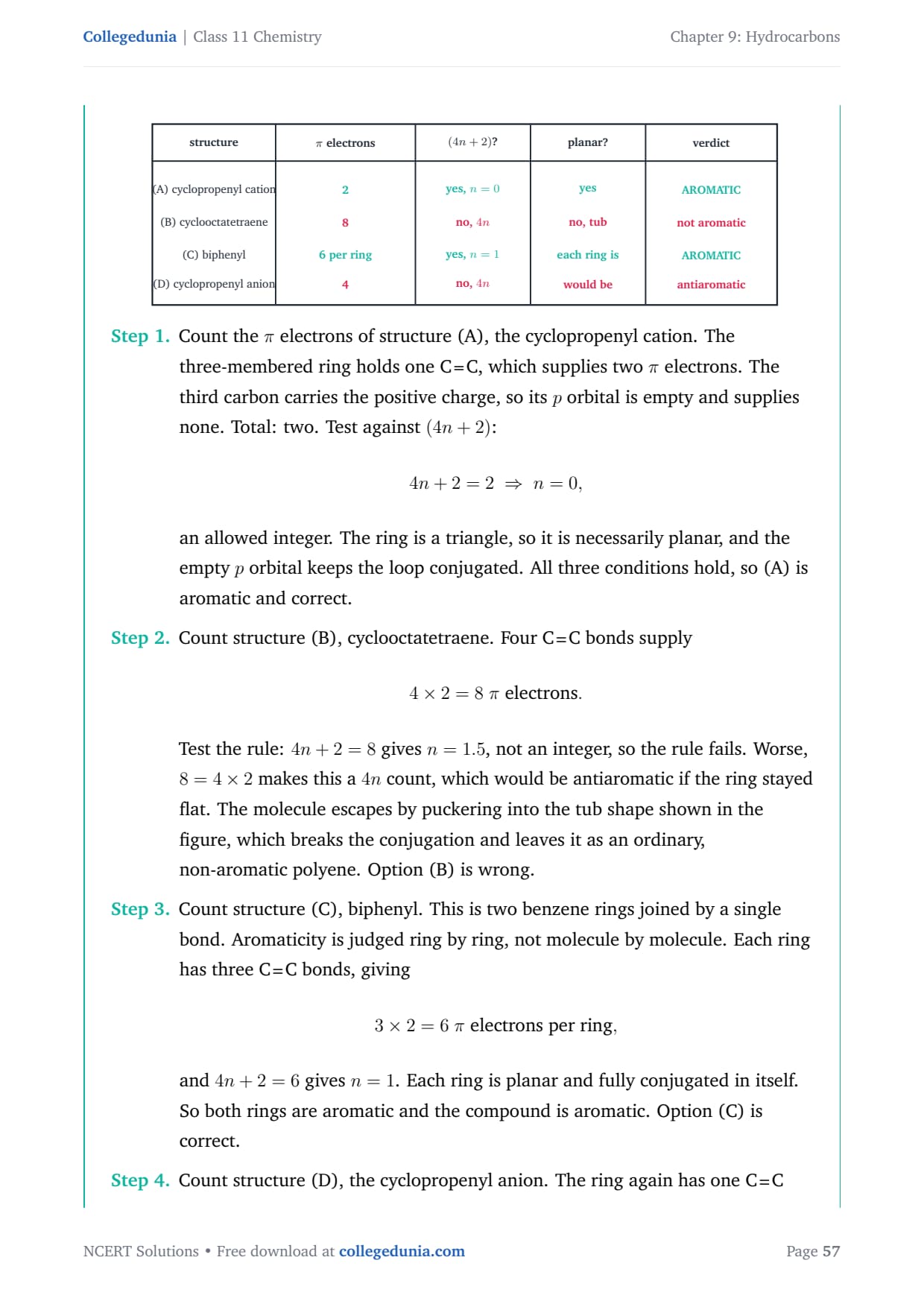
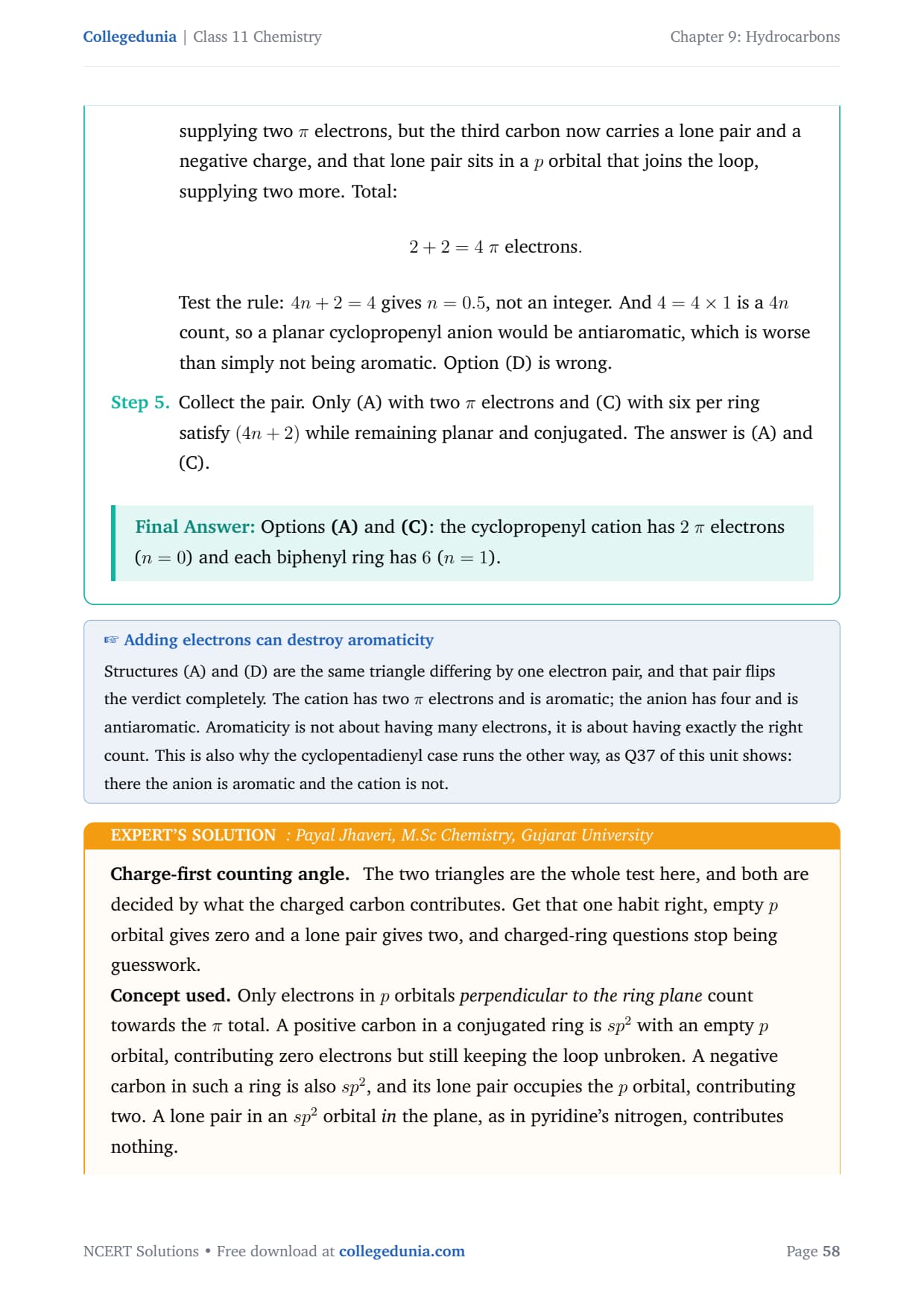
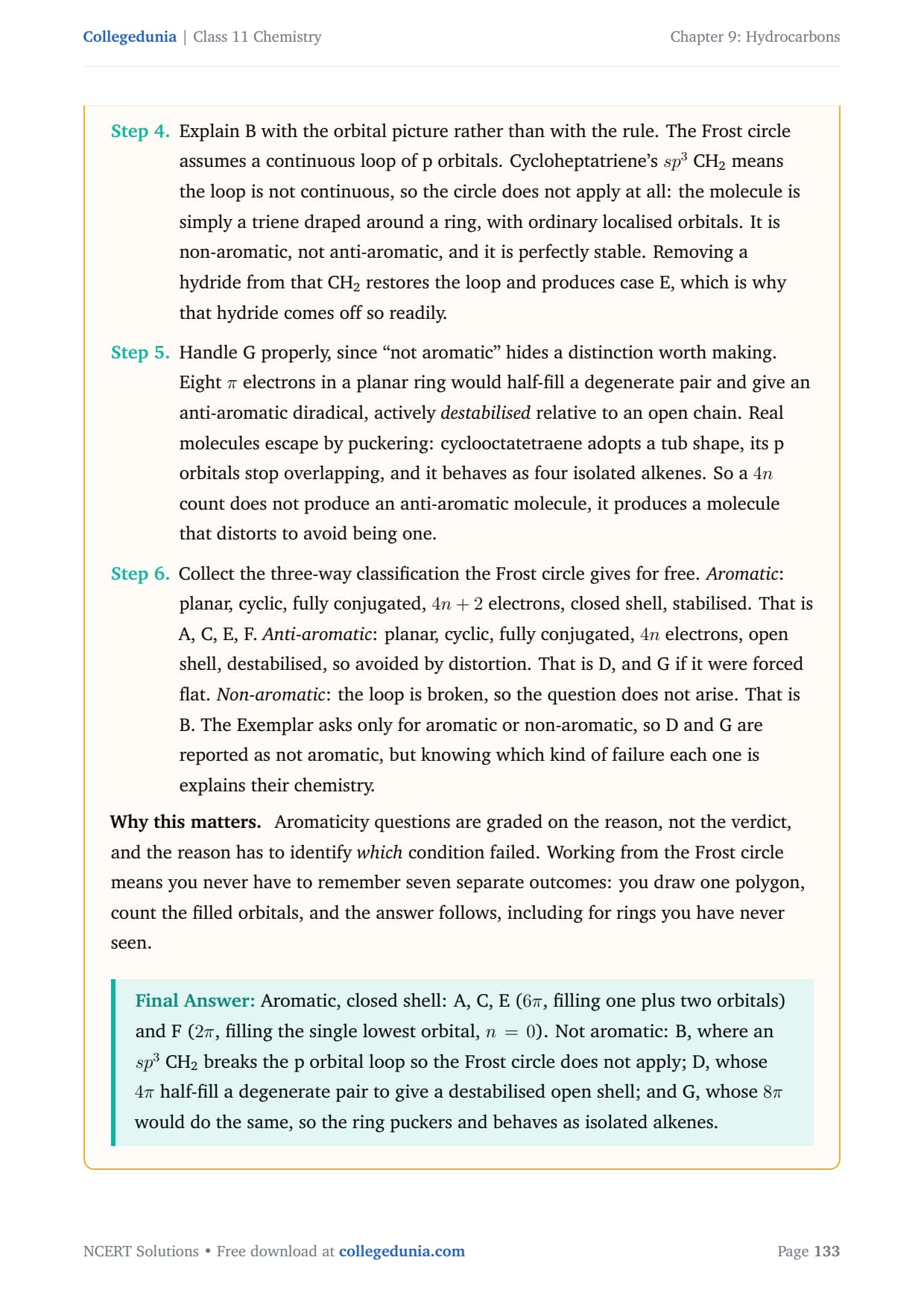
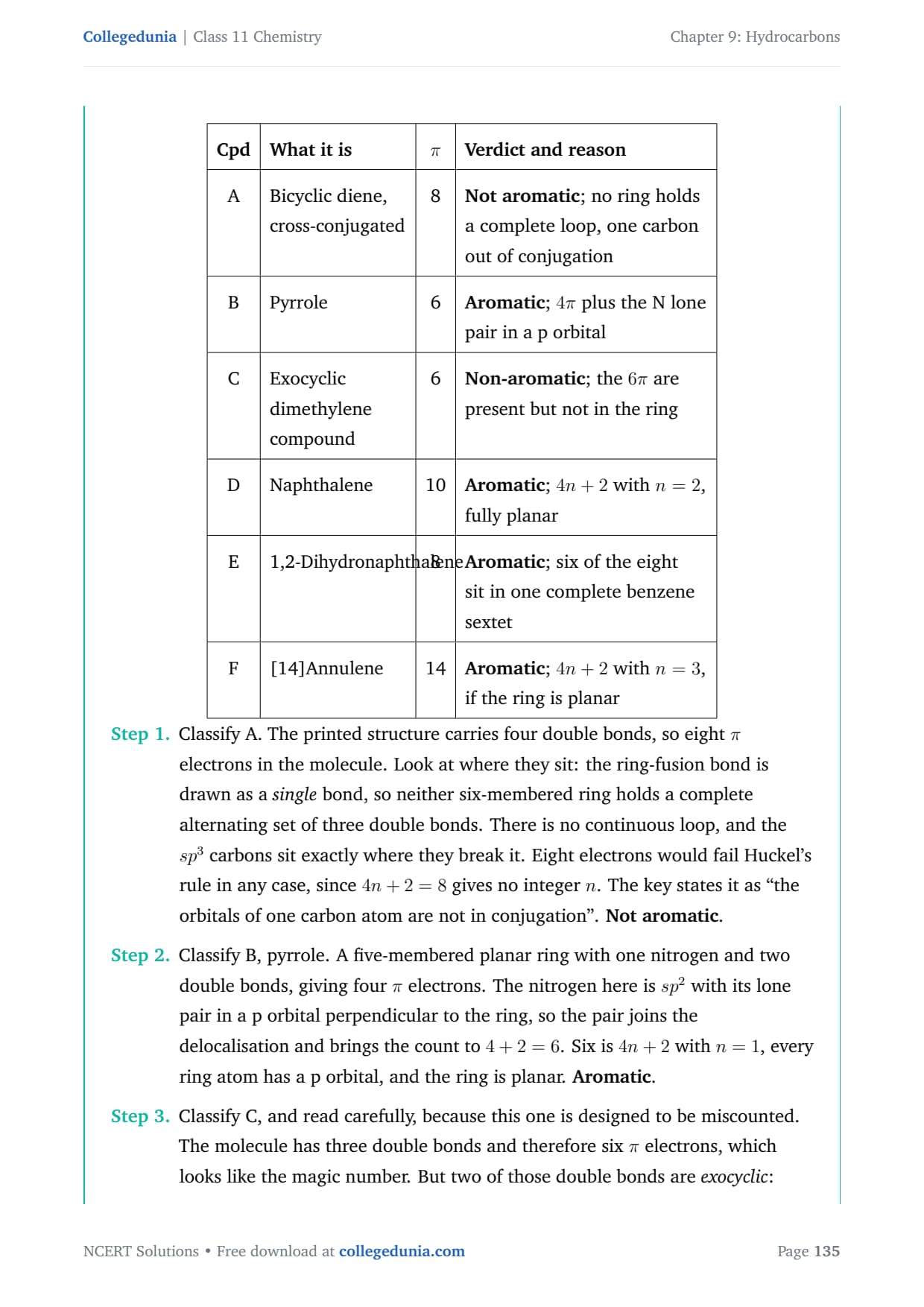
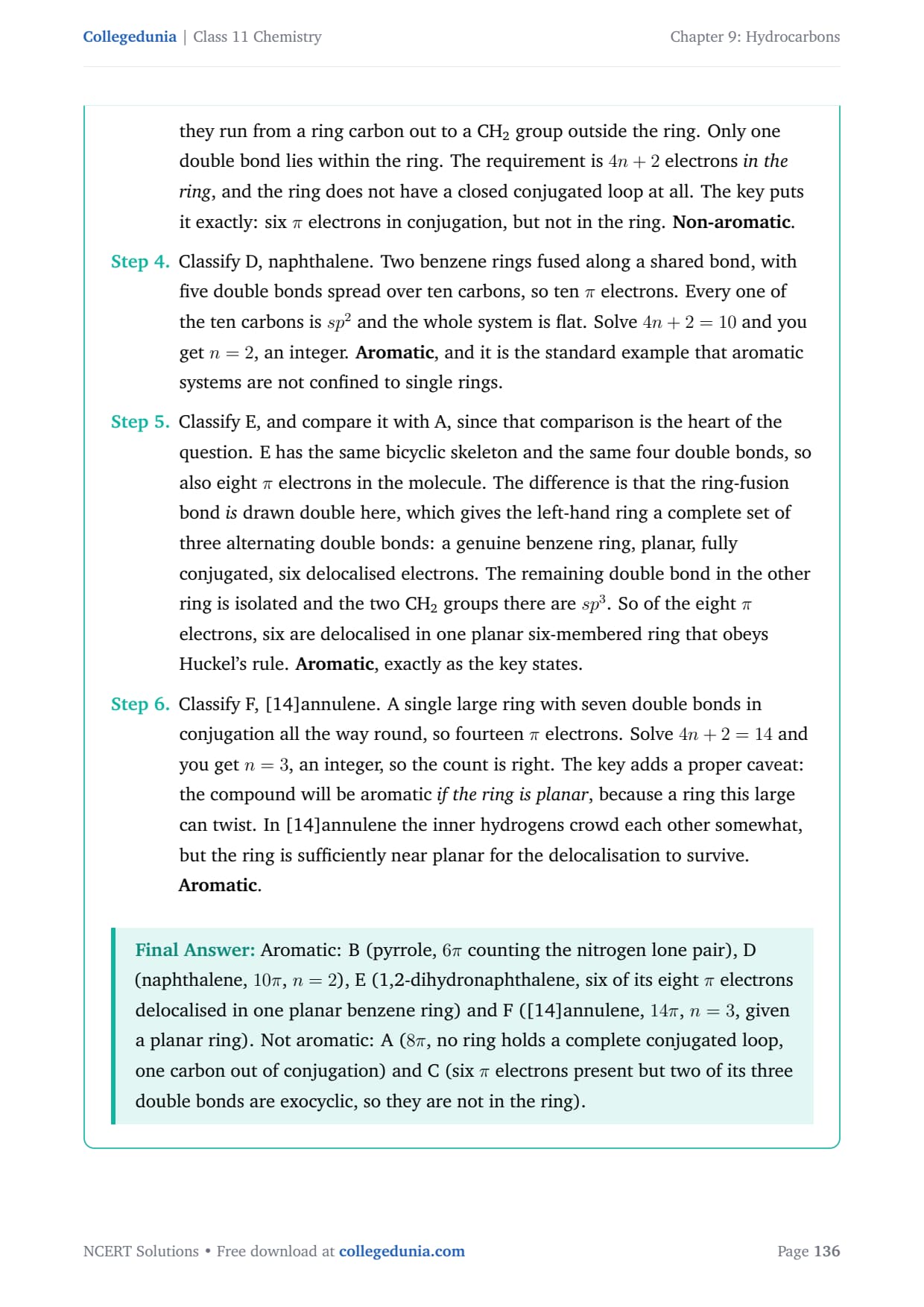
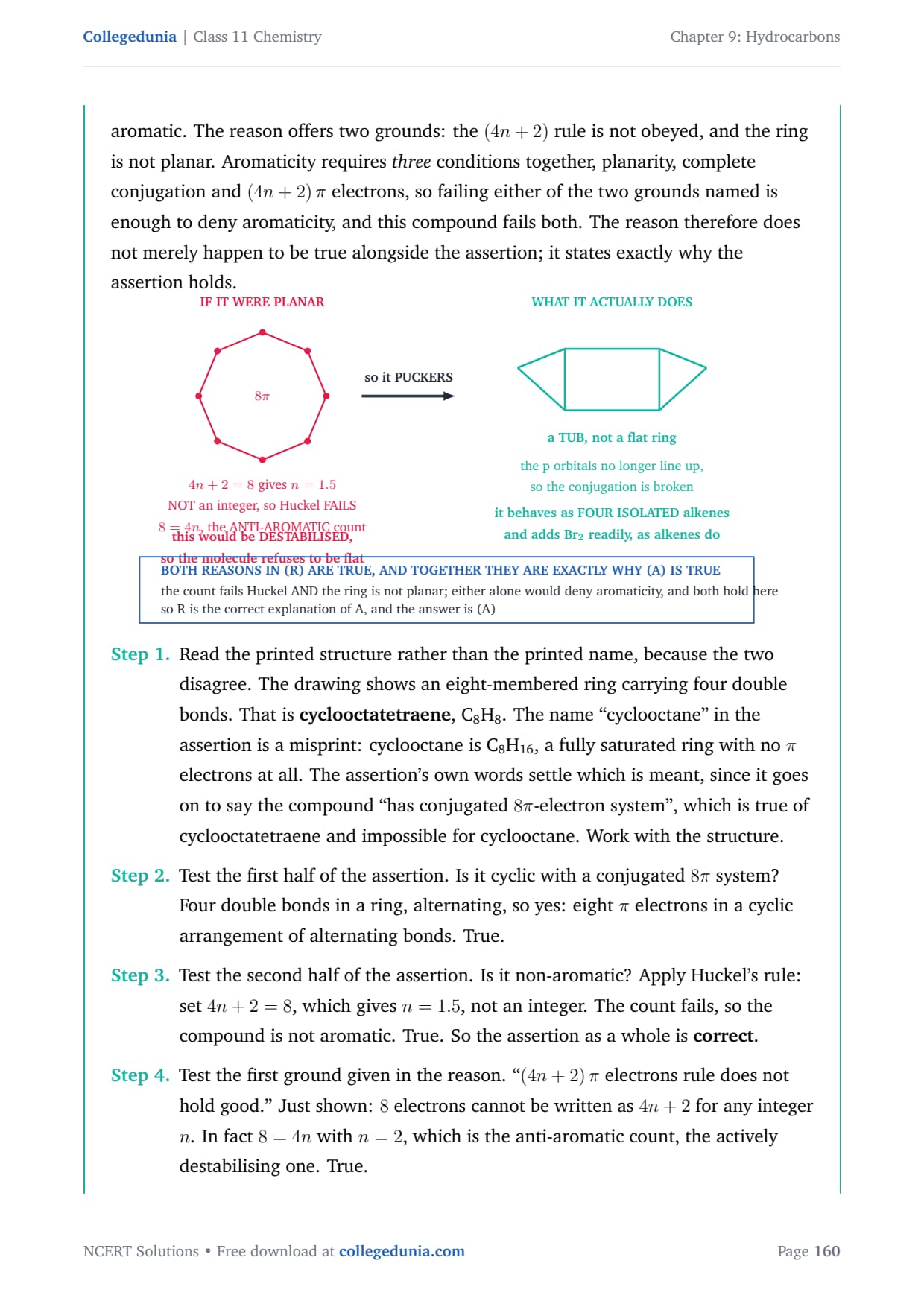
- Counting for aromaticity: Huckel's rule needs a planar, fully conjugated ring with 4n+2 pi electrons. Eight pi electrons give n equal to 1.5, which is not an integer, so cyclooctatetraene is not aromatic.
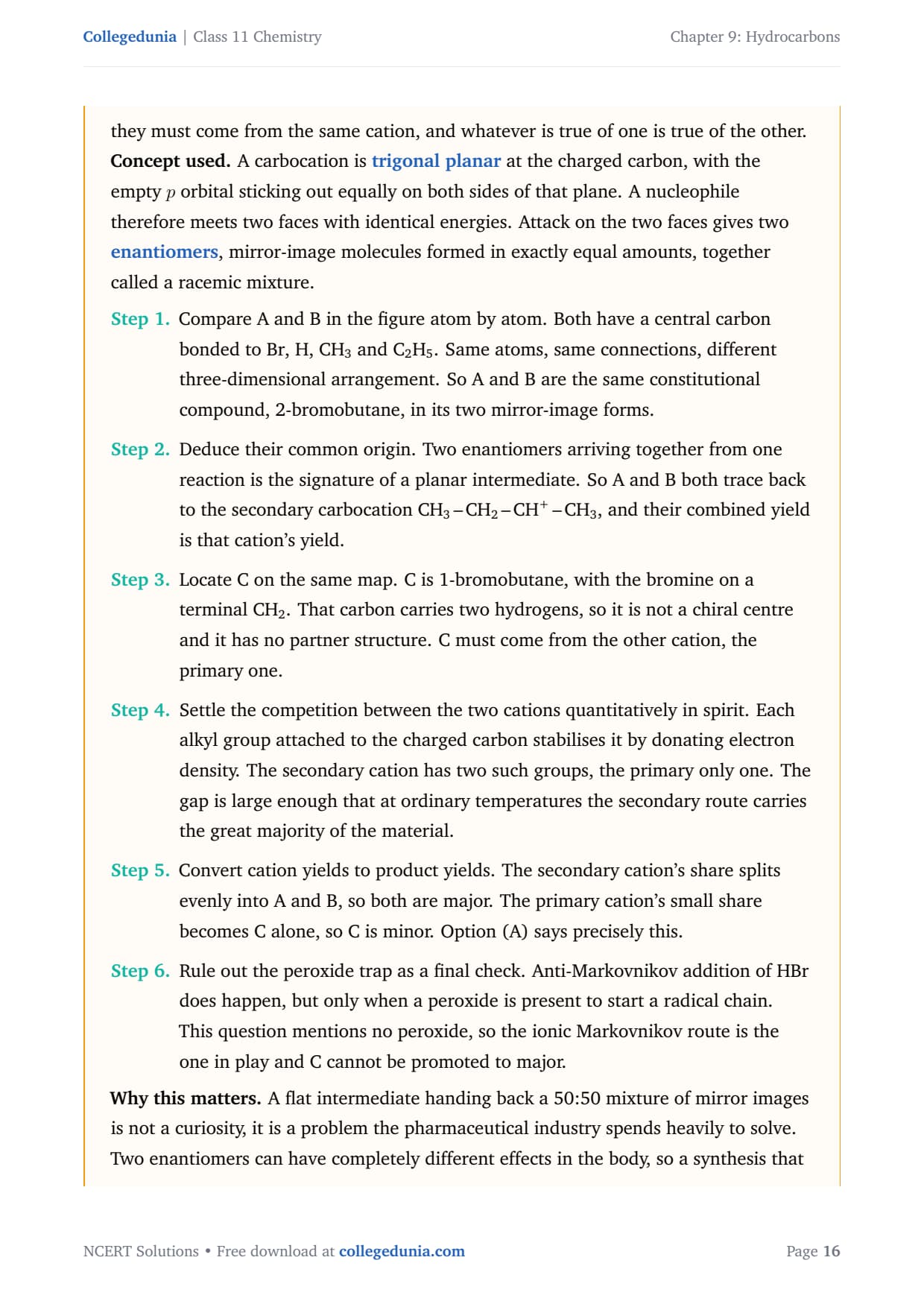
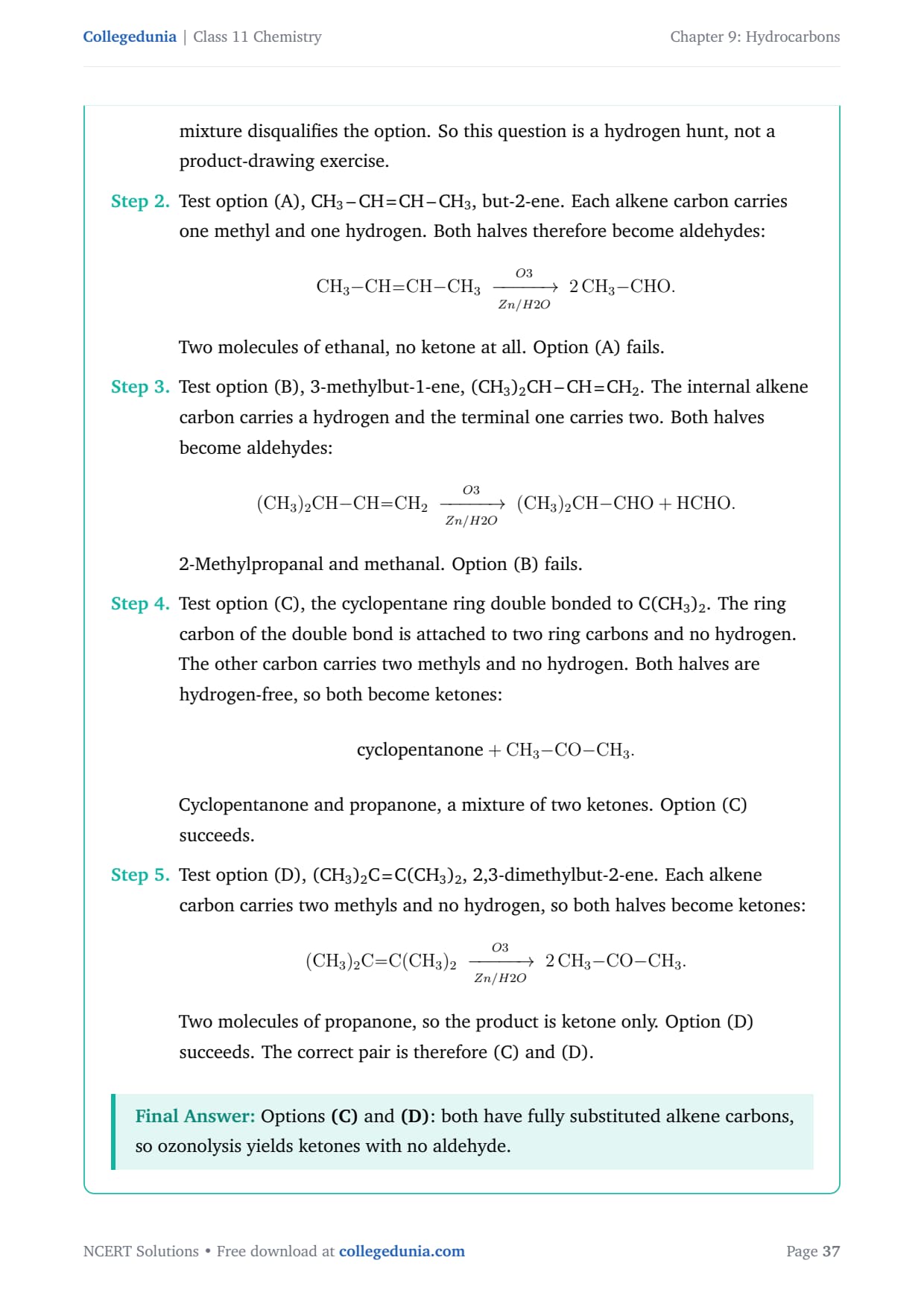
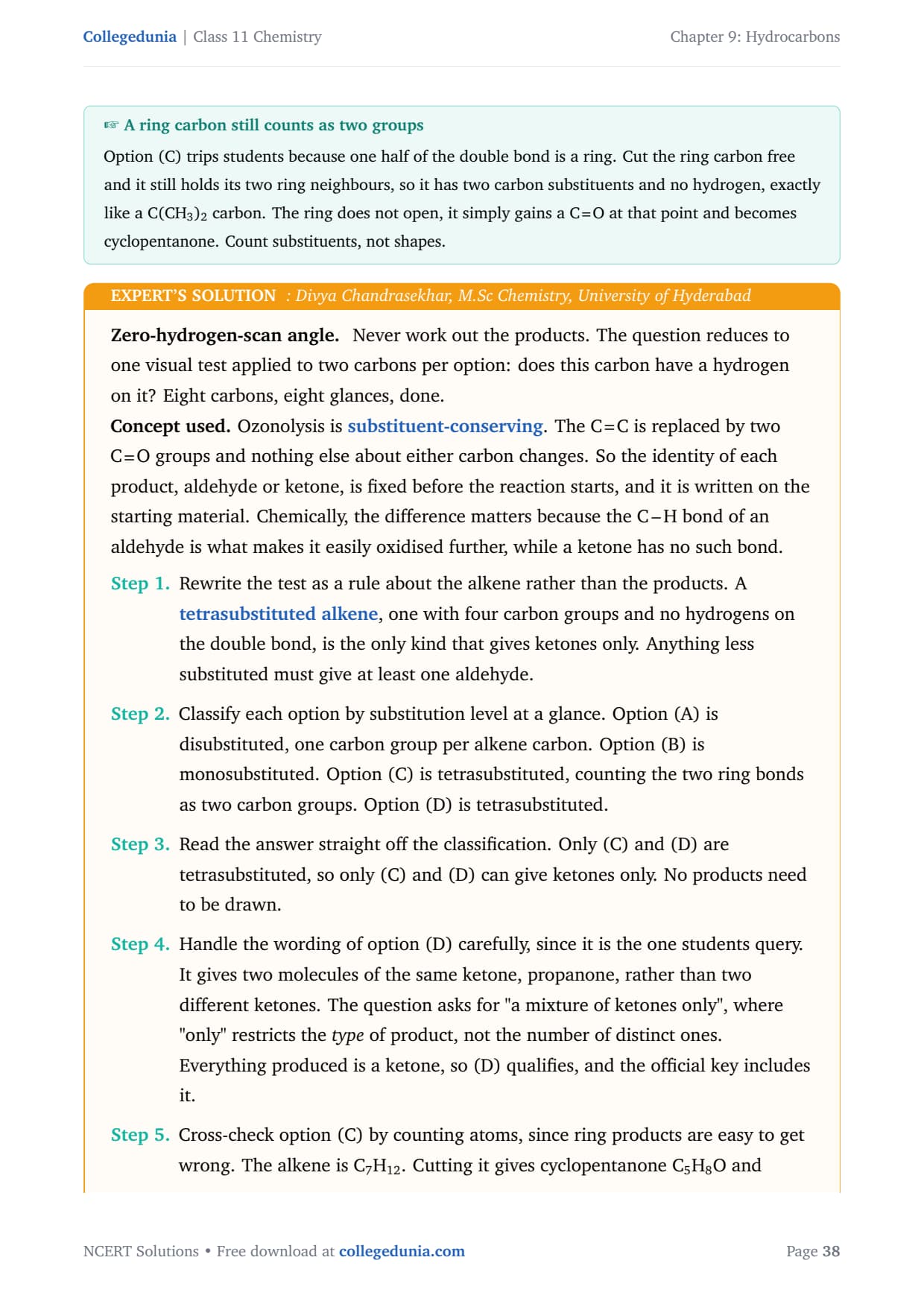
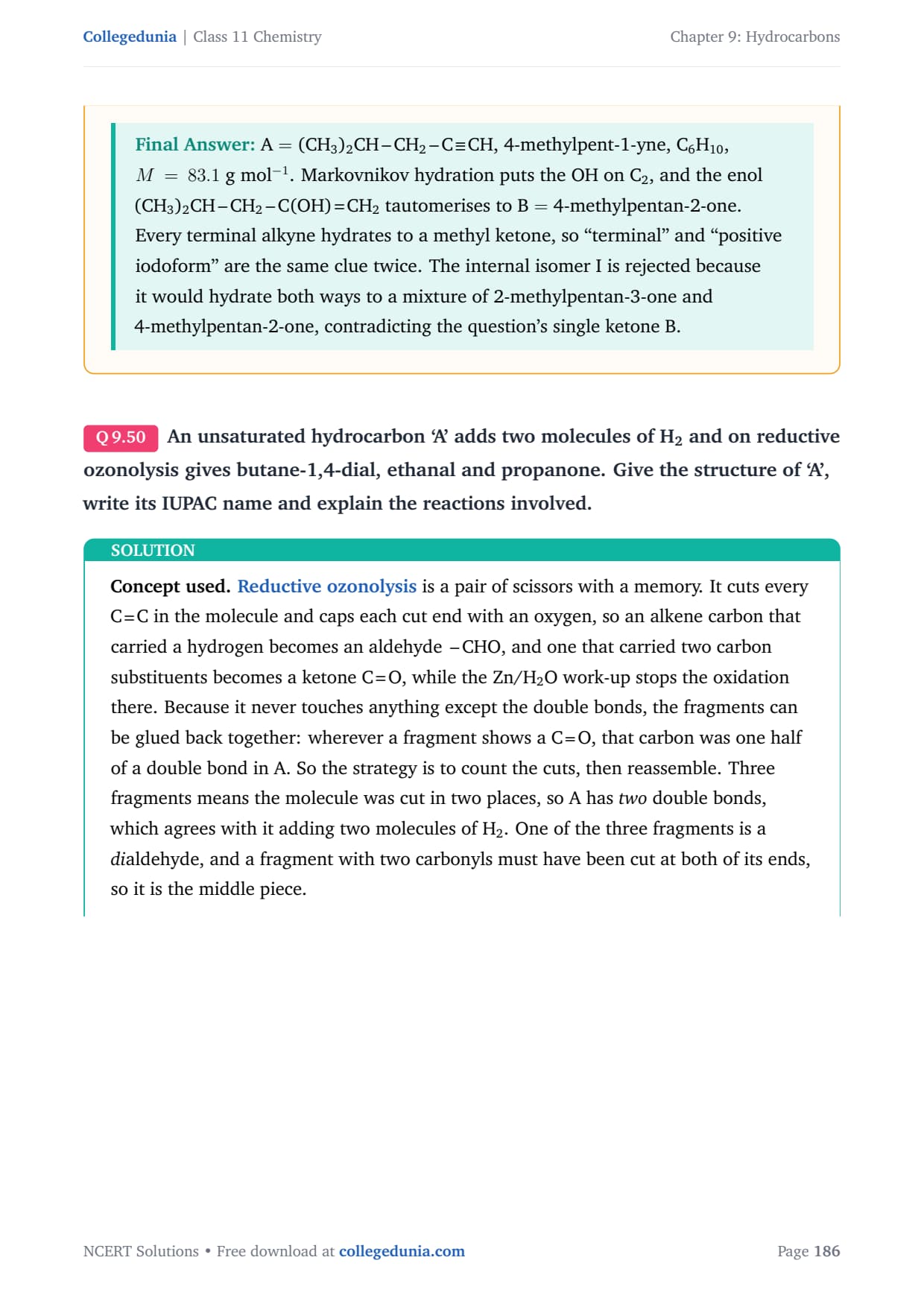
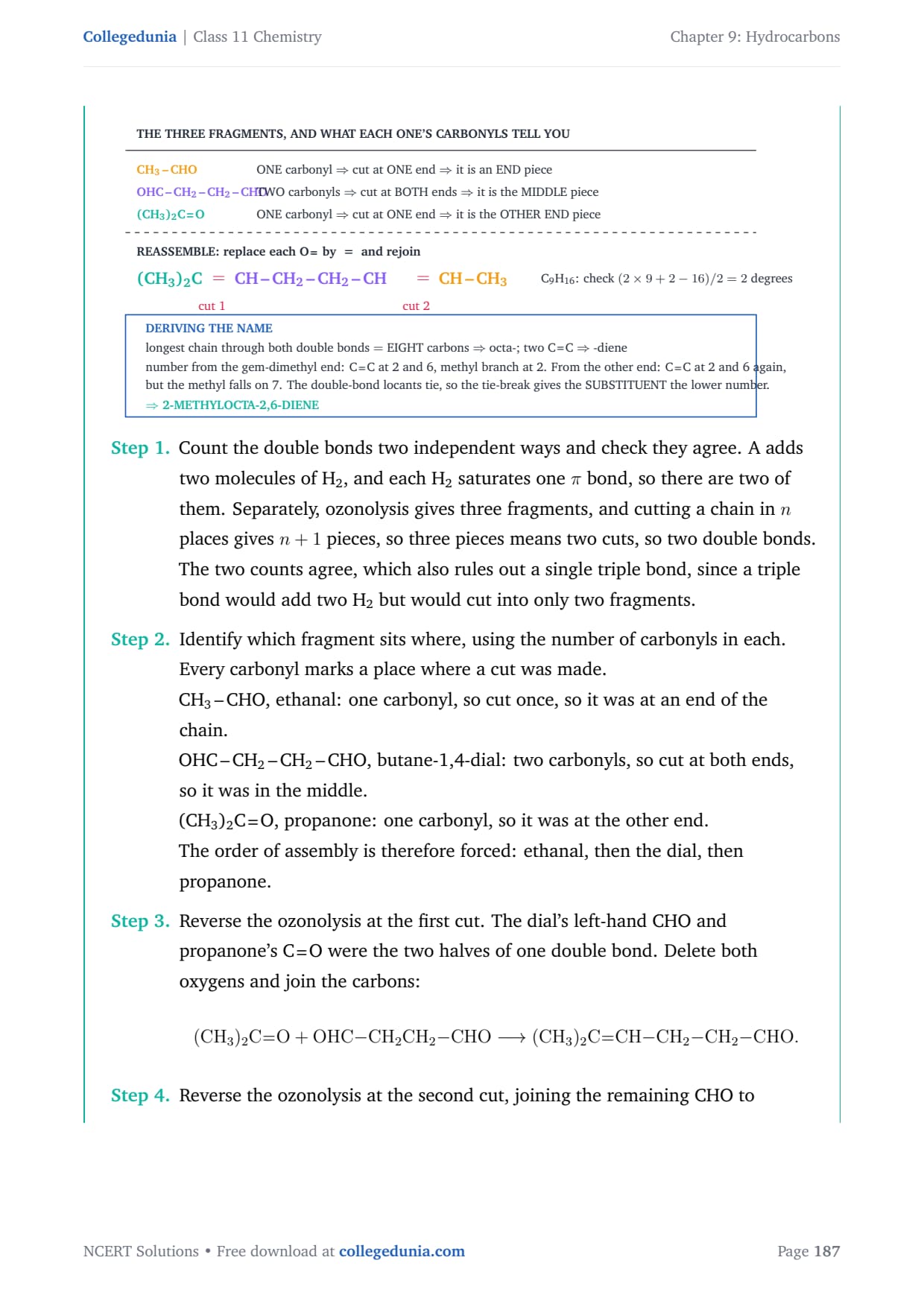
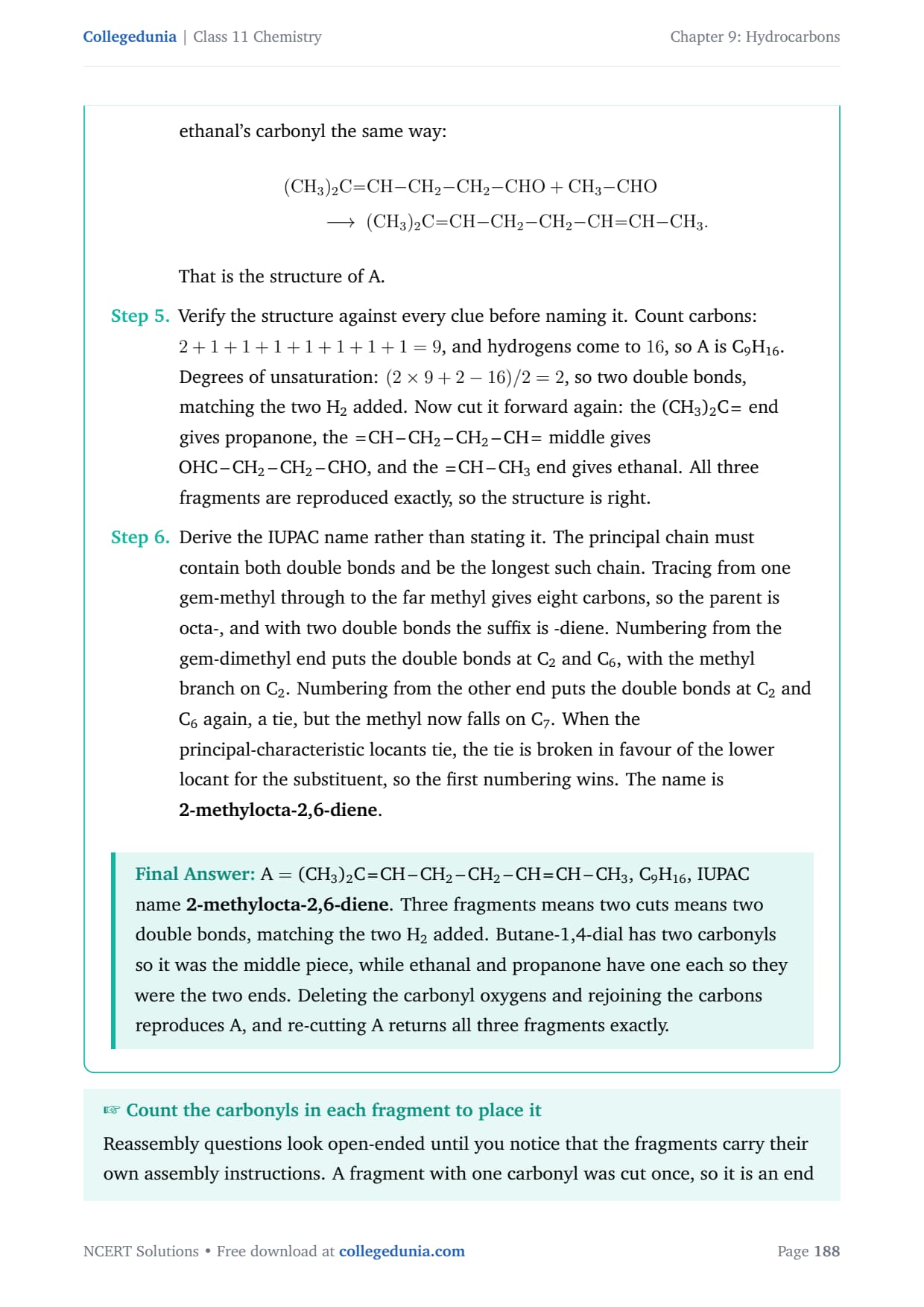
- Ozonolysis mapping: each doubly bonded carbon becomes a carbonyl carbon. Students forget that the two fragments must add back to the original carbon count, which is the quickest check on the answer.
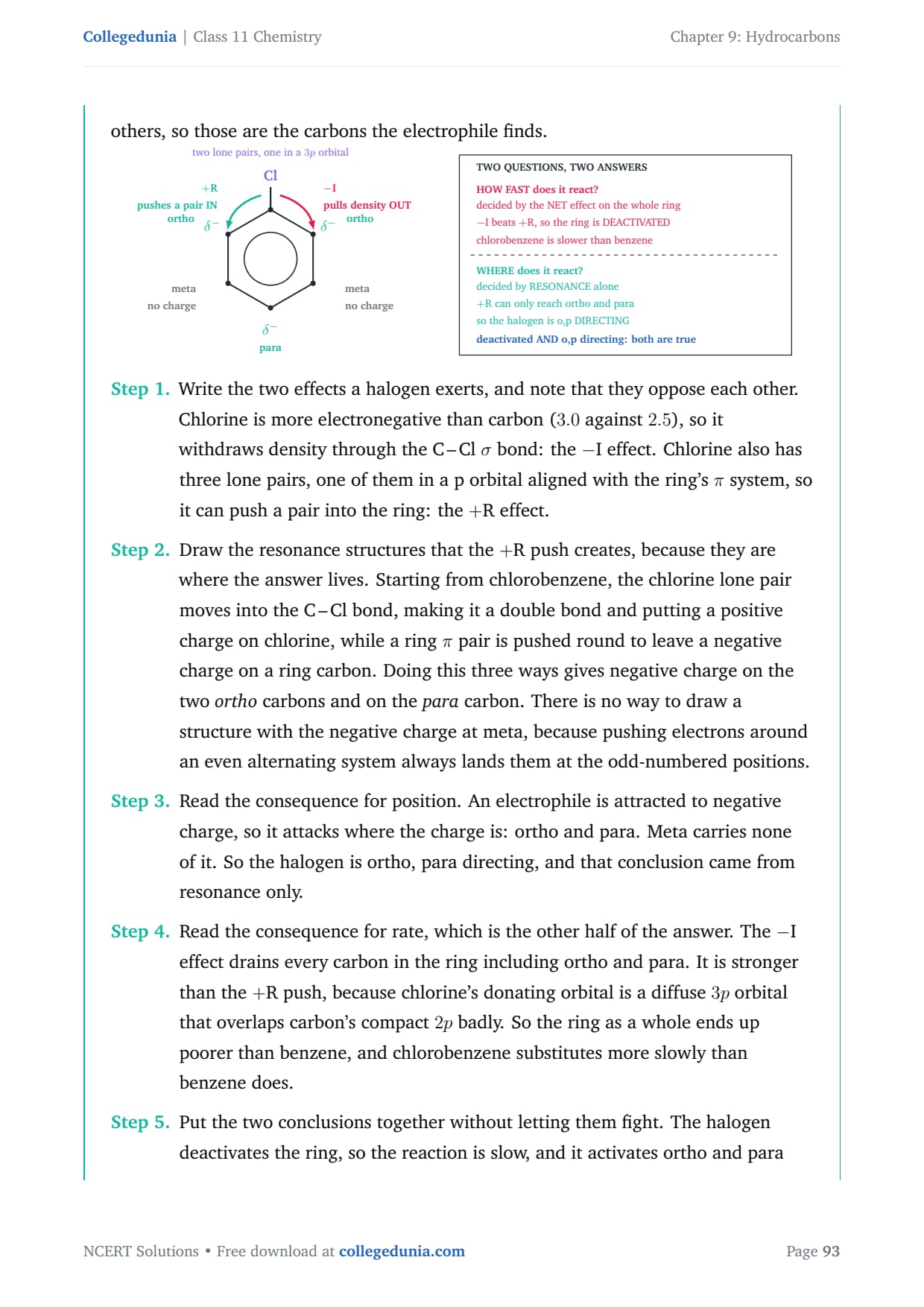
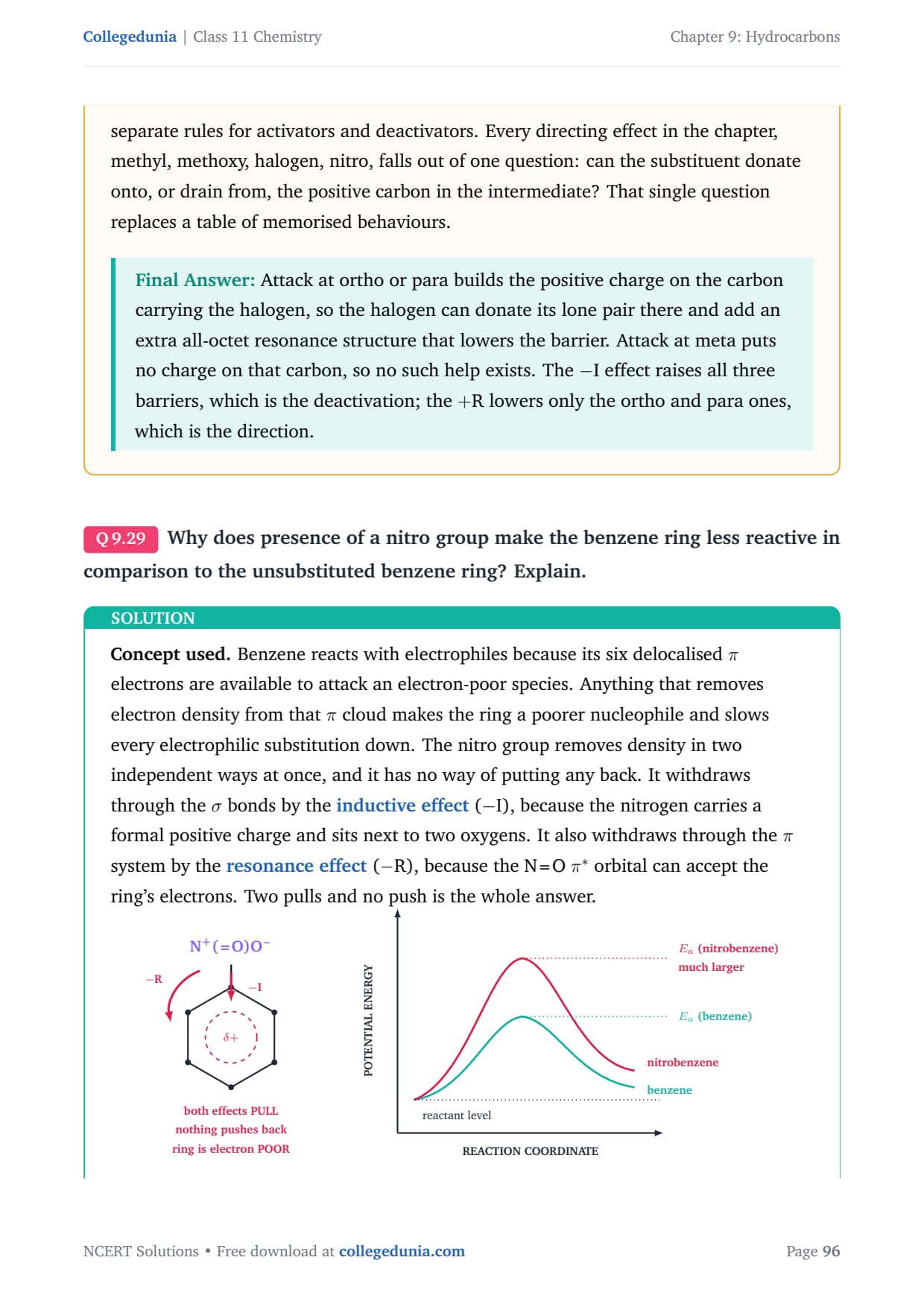
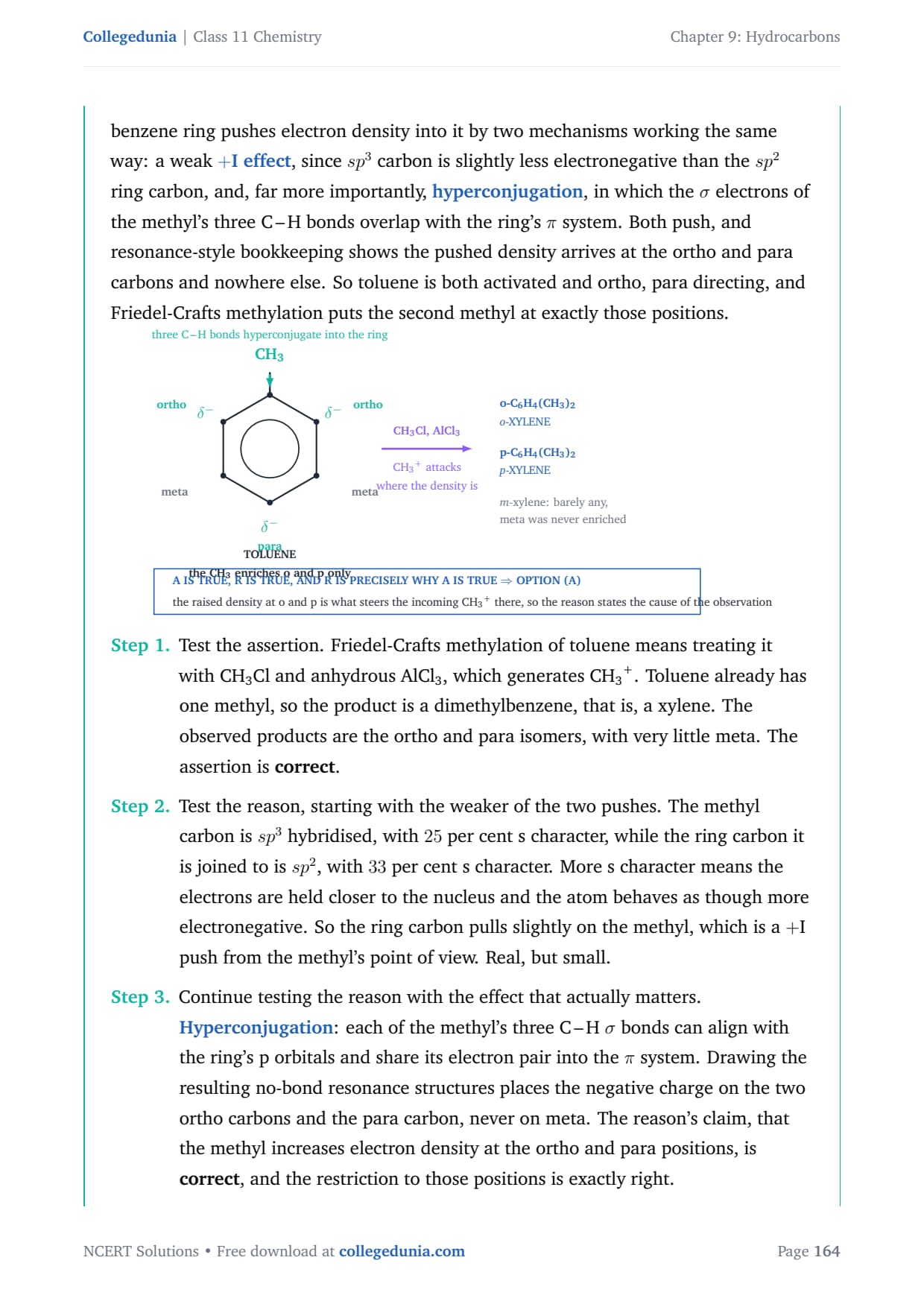
- Directing effects: alkyl and most lone-pair groups are ortho and para directors, while nitro, carbonyl and cyano groups are meta directors. Halogens are the exception, deactivating yet ortho and para directing.
How to Use These NCERT Exemplar Solutions for Boards, NEET and JEE
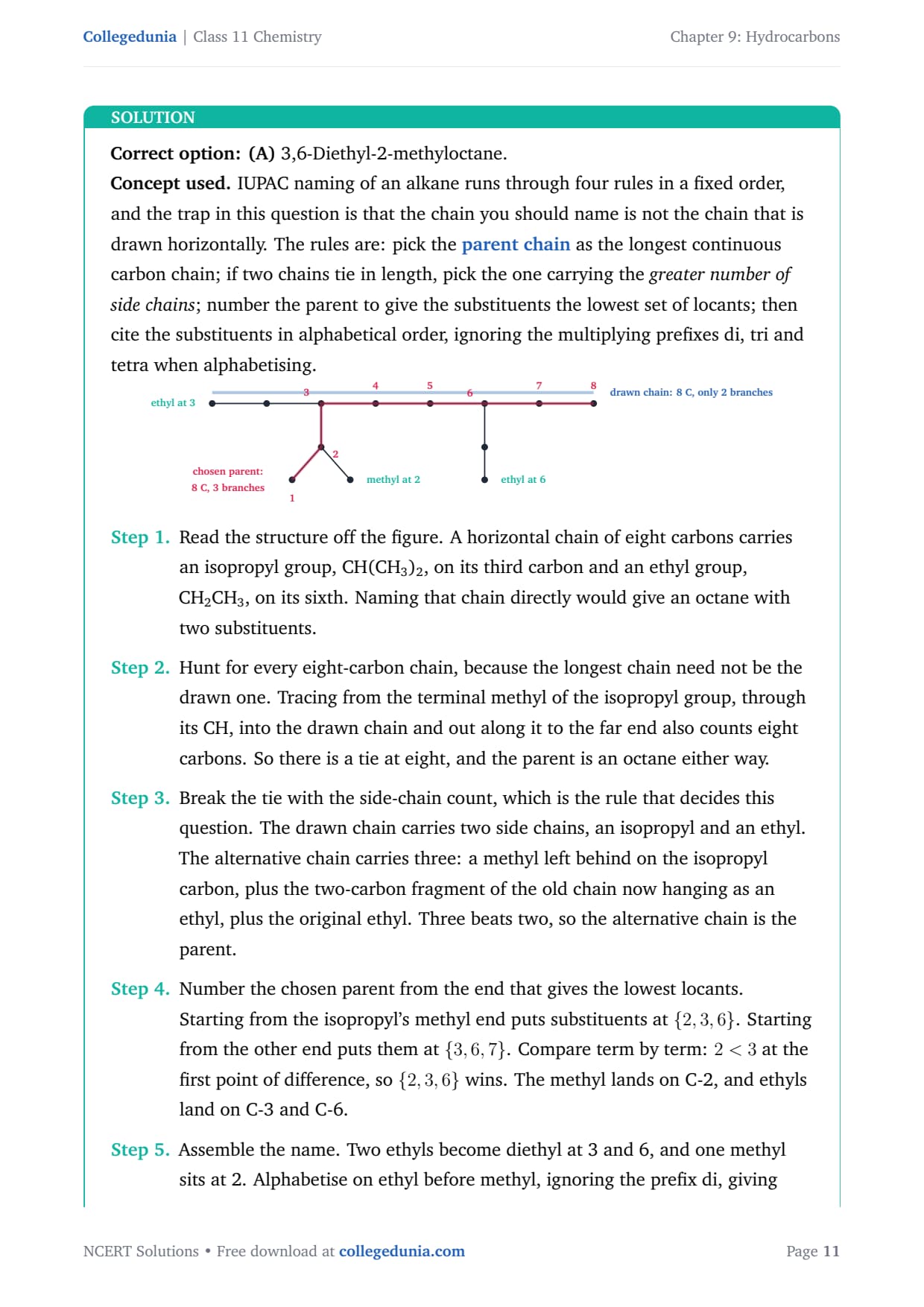
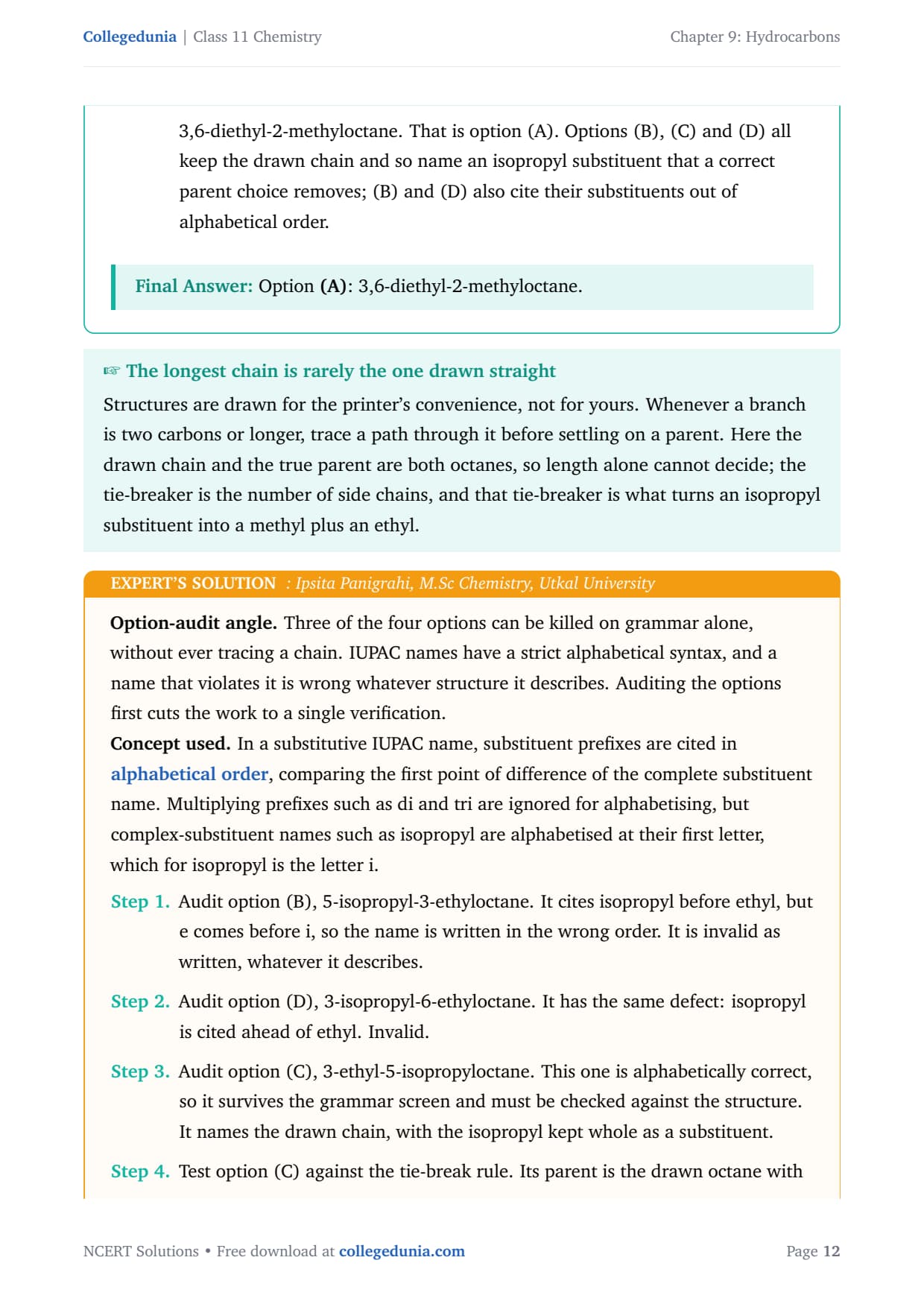
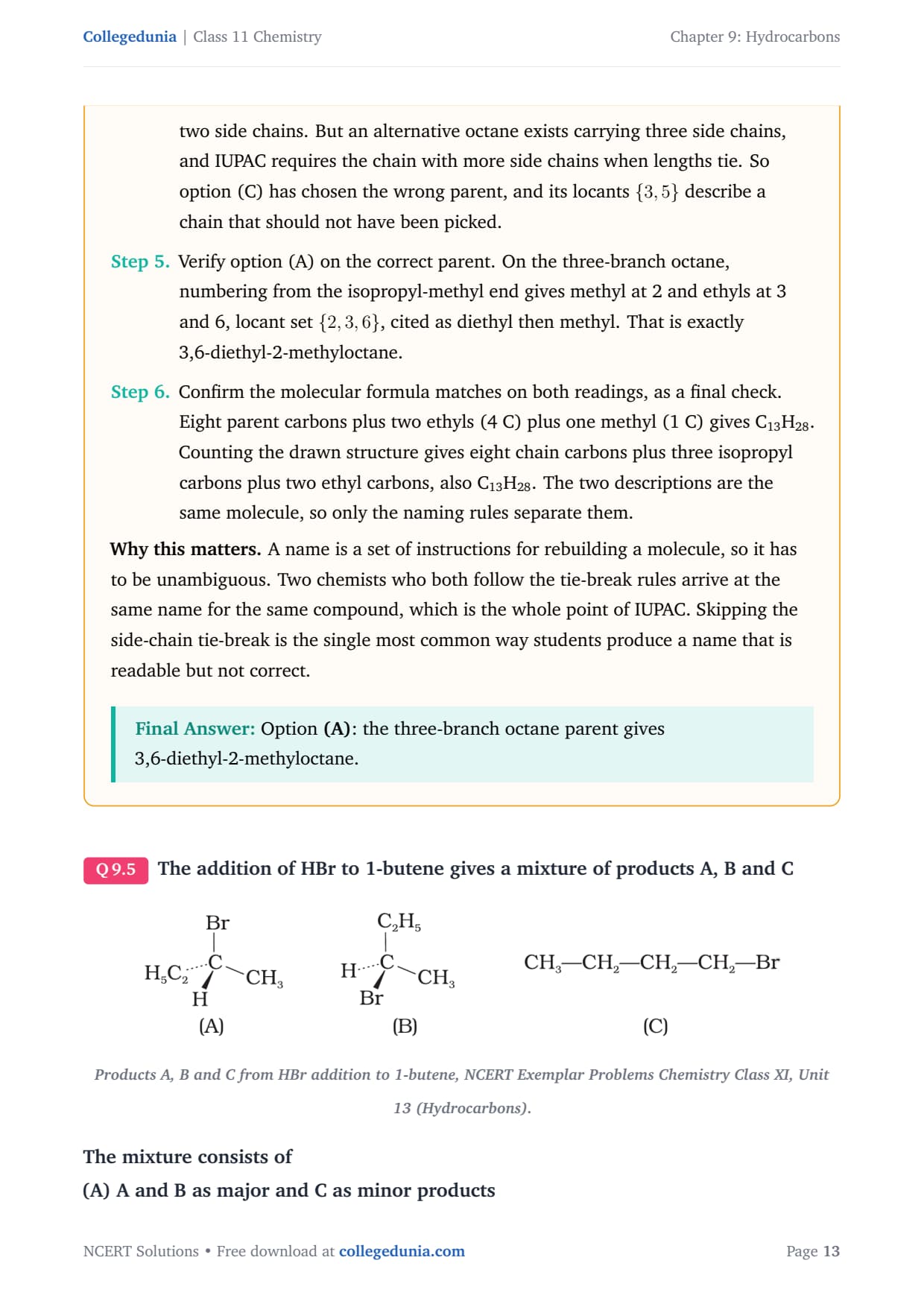
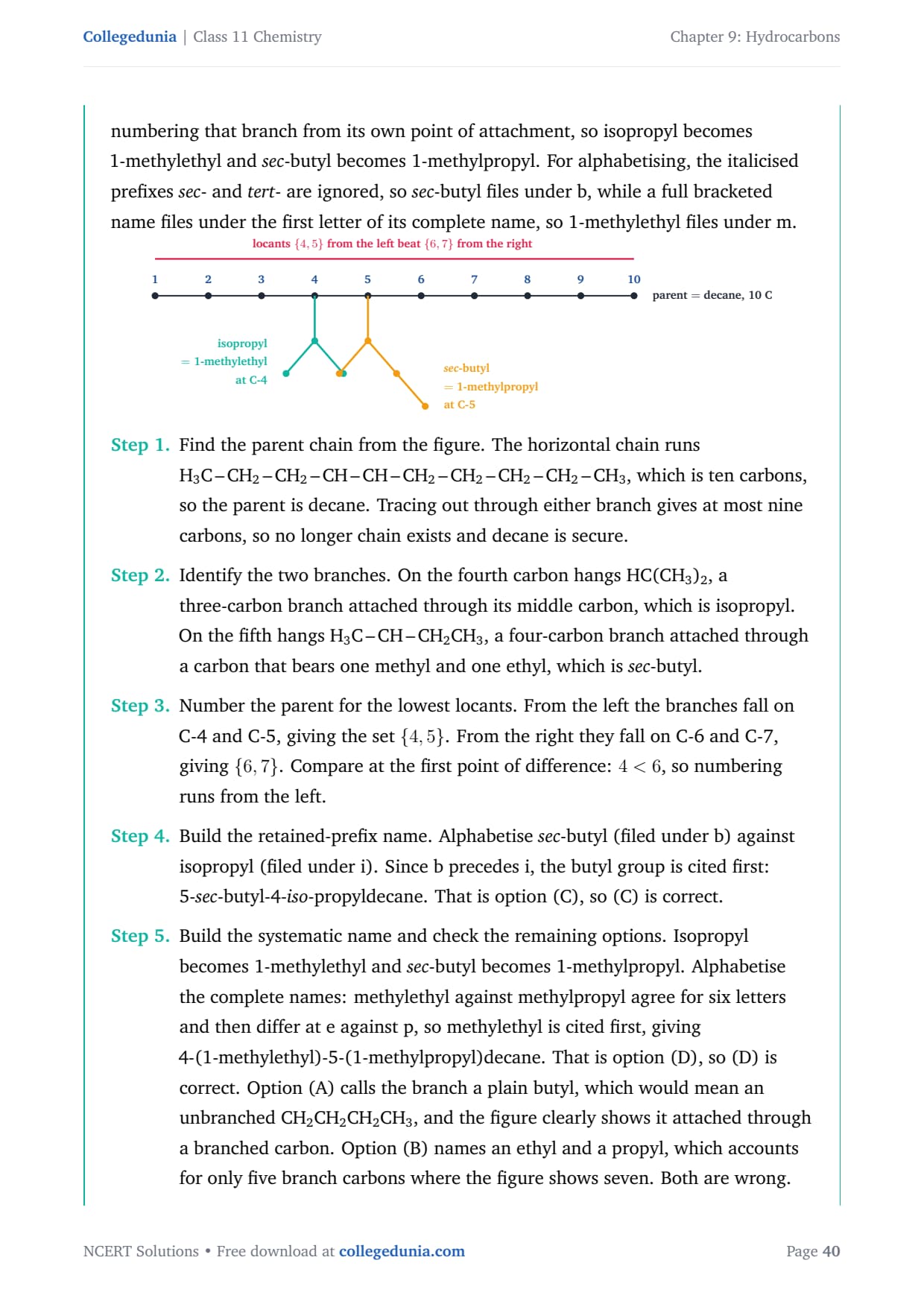
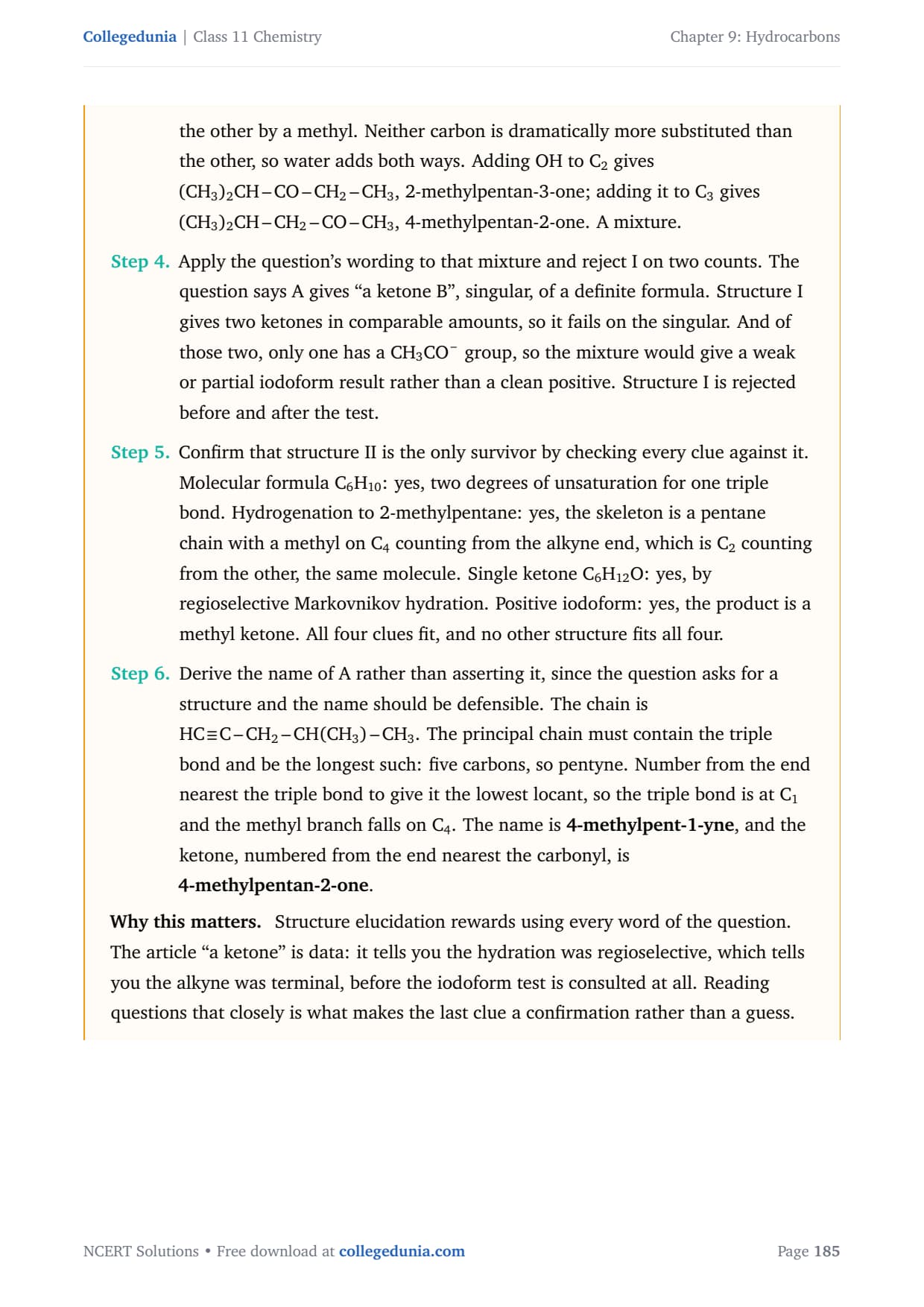
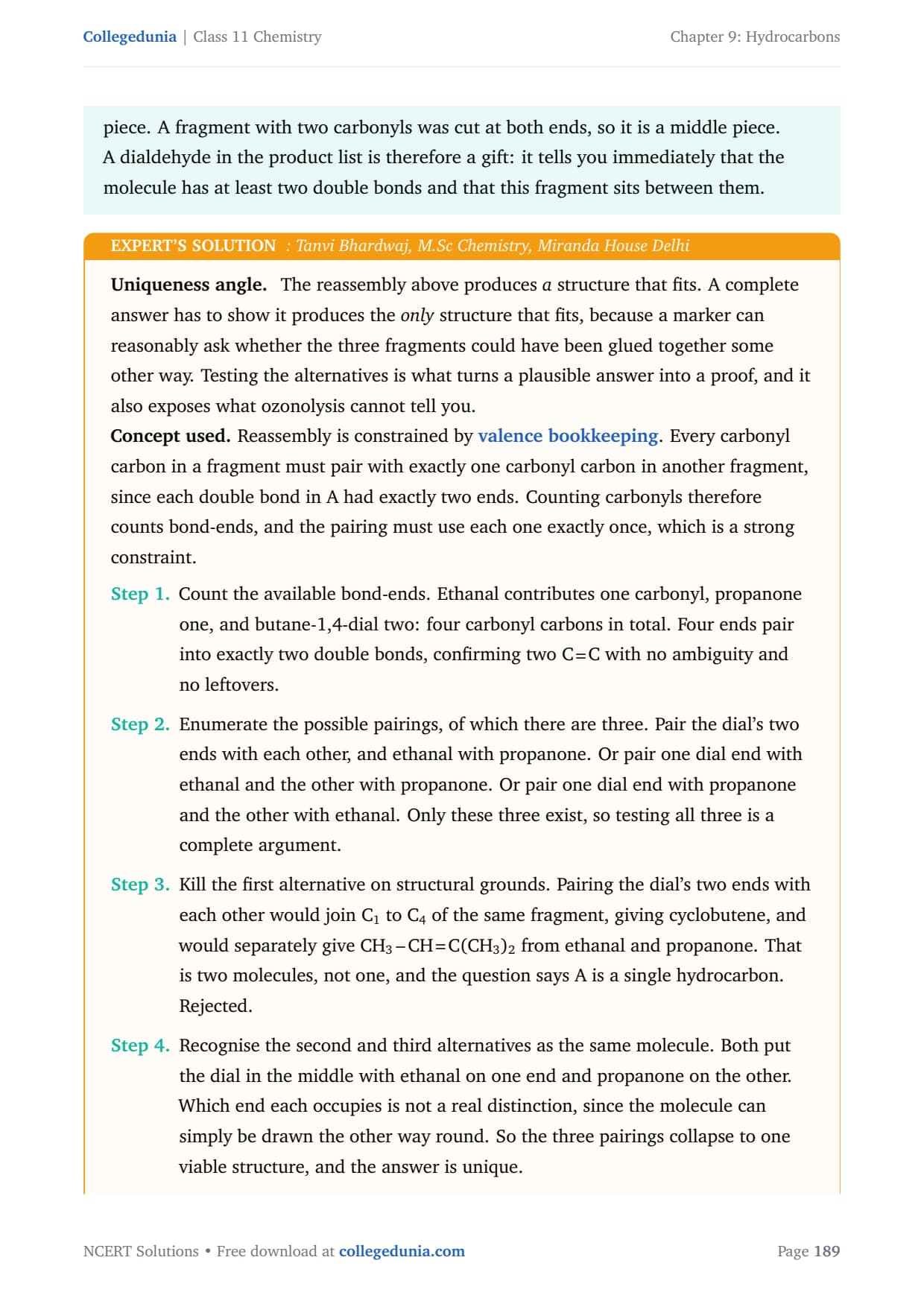
Attempt each question before you open the solution. Question 4 shows why: the longest chain is not the one drawn straight across the page, and only counting carefully gives 3,6-diethyl-2-methyloctane rather than a shorter, wrongly numbered parent.
- Boards: the 20 Short Answer questions match the 2 and 3 mark board pattern almost exactly
- NEET: work the MCQ I set first, since NEET repeats addition and aromatic substitution questions at that level
- JEE Main: the MCQ II and Long Answer sets are the closest NCERT practice for mechanism and multi-step synthesis
Student Feedback
Students using Collegedunia's Class 11 Chemistry Exemplar Solutions told us the mechanism questions in this chapter were the hardest part. Around 7 in 10 said that seeing the Unit 13 numbering explained upfront saved them a wasted evening hunting the wrong unit in the Exemplar PDF.
Other Resources for Class 11 Chemistry Hydrocarbons
Collegedunia has the full study material set for this chapter. Read the Notes first, then attempt the Exemplar once the reactions of each family feel steady.
Also Check:
- NCERT Solutions for Class 11 Chemistry Chapter 9
- Class 11 Chemistry Chapter 9 Notes
- Class 11 Chemistry Chapter 9 NCERT Book PDF
- Class 11 Chemistry Chapter 9 Exemplar Questions with Solutions
NCERT Exemplar Solutions for Other Class 11 Chemistry Chapters
Each chapter below has the same step-by-step treatment and a free PDF.
Hydrocarbons Class 11 NCERT Exemplar Solutions FAQs
Ques. How many questions are there in the Class 11 Chemistry Hydrocarbons Exemplar?
Ans. Chapter 9 has 51 questions. They split into 10 MCQ I, 9 MCQ II, 20 Short Answer, 4 Matching Type, 4 Assertion and Reason and 4 Long Answer questions. All 51 are solved in the free 196-page PDF on this page.
Ques. Why is Chapter 9 called Unit 13 in the NCERT Exemplar book?
Ans. The printed Exemplar still follows the older 14-unit edition, while the textbook now has fewer chapters because several units were dropped. Hydrocarbons is Chapter 9 of the new textbook and Unit 13 of the Exemplar, published as source file keep513. Our solutions carry both numbers, so the book's figure labels still match.
Ques. Is the printed NCERT Exemplar answer key for this chapter correct?
Ans. Mostly, but two questions carry misprints. Question 14's figure prints HC3 instead of H3C, and Question 44's assertion says cyclooctane when the molecule drawn is cyclooctatetraene. A few Short Answer and Long Answer items are also open-ended with no printed model answer. All of these are worked out in full on this page and in the PDF.
Ques. When does HBr add by the anti-Markovnikov path in the Chapter 9 Exemplar?
Ans. Only HBr reverses to anti-Markovnikov, and only in the presence of a peroxide. The peroxide starts a free radical chain in which bromine adds to the less substituted carbon. HCl and HI never show this peroxide effect, so an anti-Markovnikov answer for them is always wrong.
Ques. How do you decide if a hydrocarbon is aromatic in this chapter?
Ans. Apply Huckel's rule. The ring must be cyclic, planar and fully conjugated, and it must hold 4n+2 pi electrons where n is a whole number. Benzene has 6 pi electrons, giving n equal to 1, so it is aromatic. Cyclooctatetraene has 8 pi electrons, giving n equal to 1.5, so it is not aromatic and adopts a non-planar tub shape.



Comments