



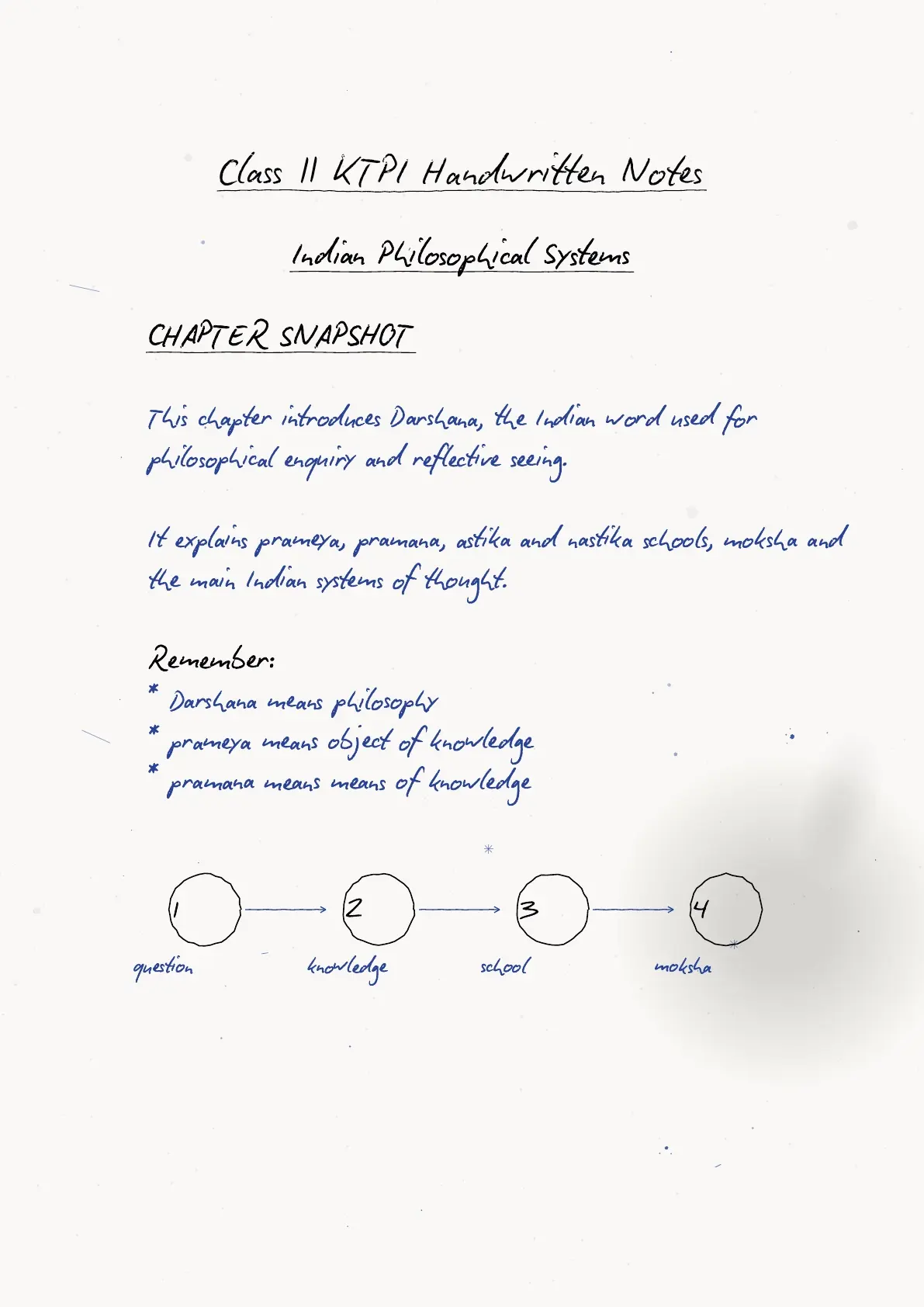
NCERT Handwritten Notes for Class 11 KTPI Chapter 4 Indian Philosophical Systems are prepared for quick 2026-27 revision. The PDF covers Darshana, pramana, astika and nastika schools, moksha, Buddhism, Jainism, Sankhya, Yoga, Nyaya, Vaisheshika, Mimamsa and Vedanta.
- Resource: Class 11 KTPI Indian Philosophical Systems handwritten revision notes PDF.
- Chapter focus: valid knowledge, schools of Indian philosophy, suffering and liberation.
- Revision use: quick notebook pages, comparison tables, answer frames and common mistakes.
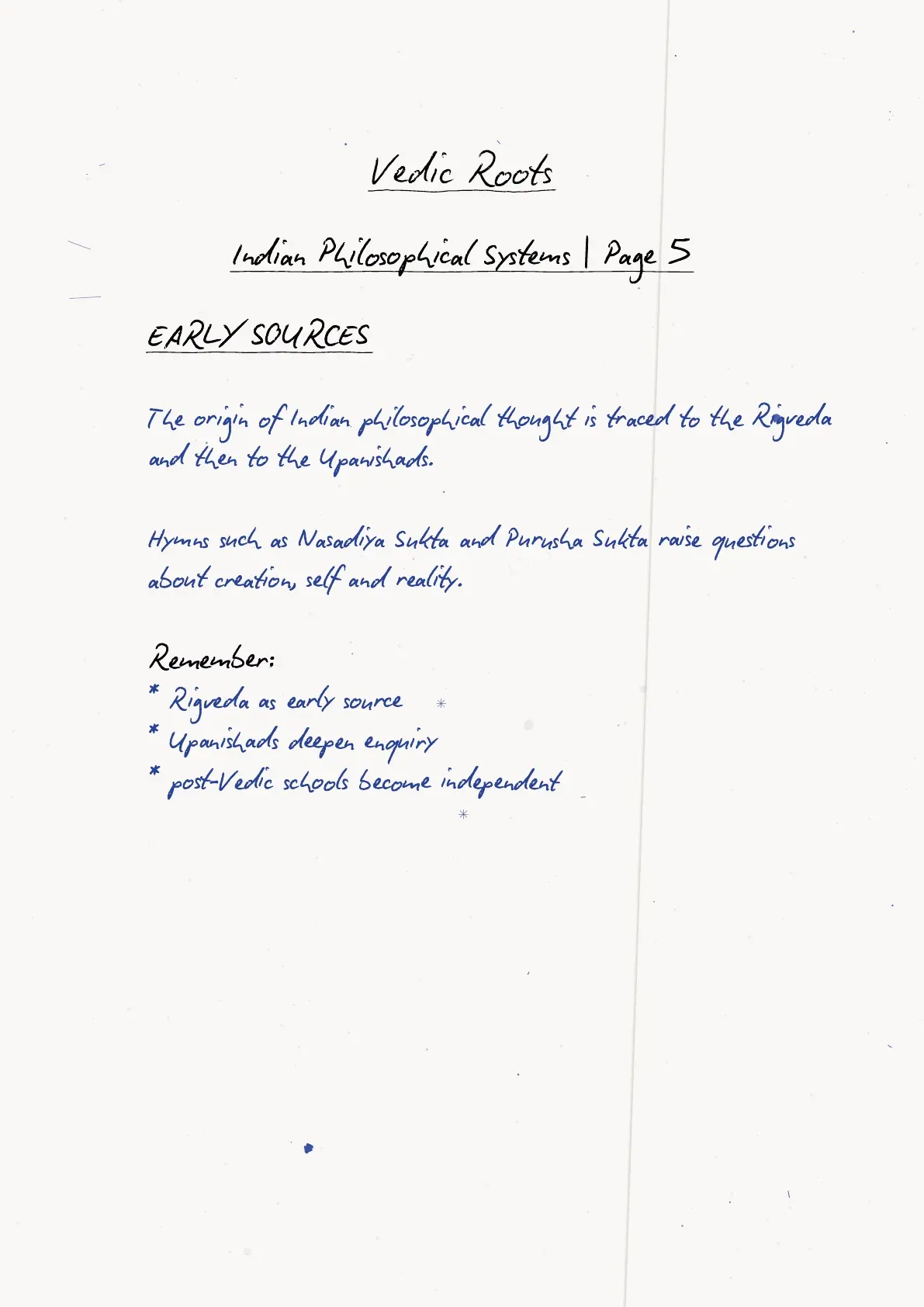
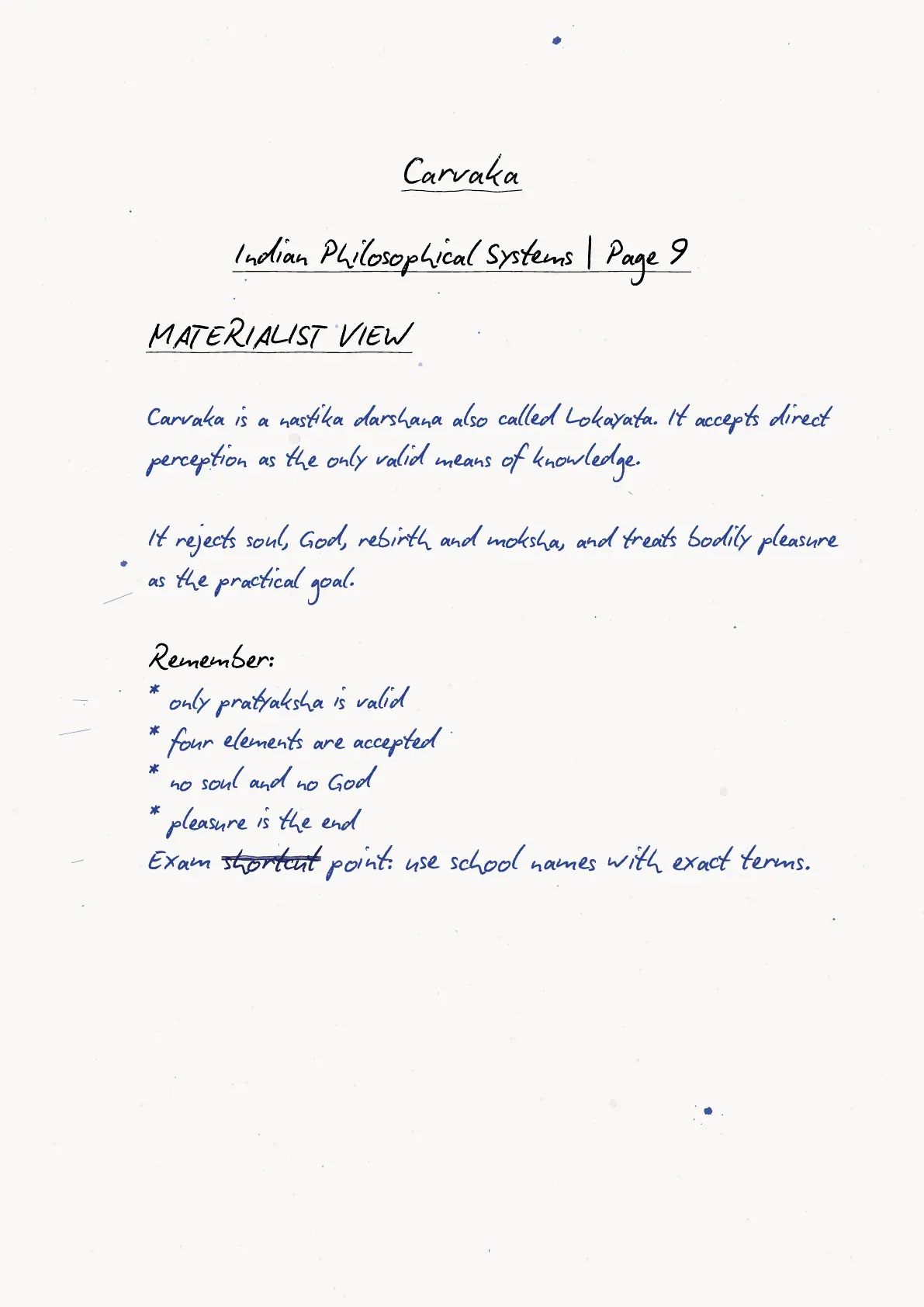
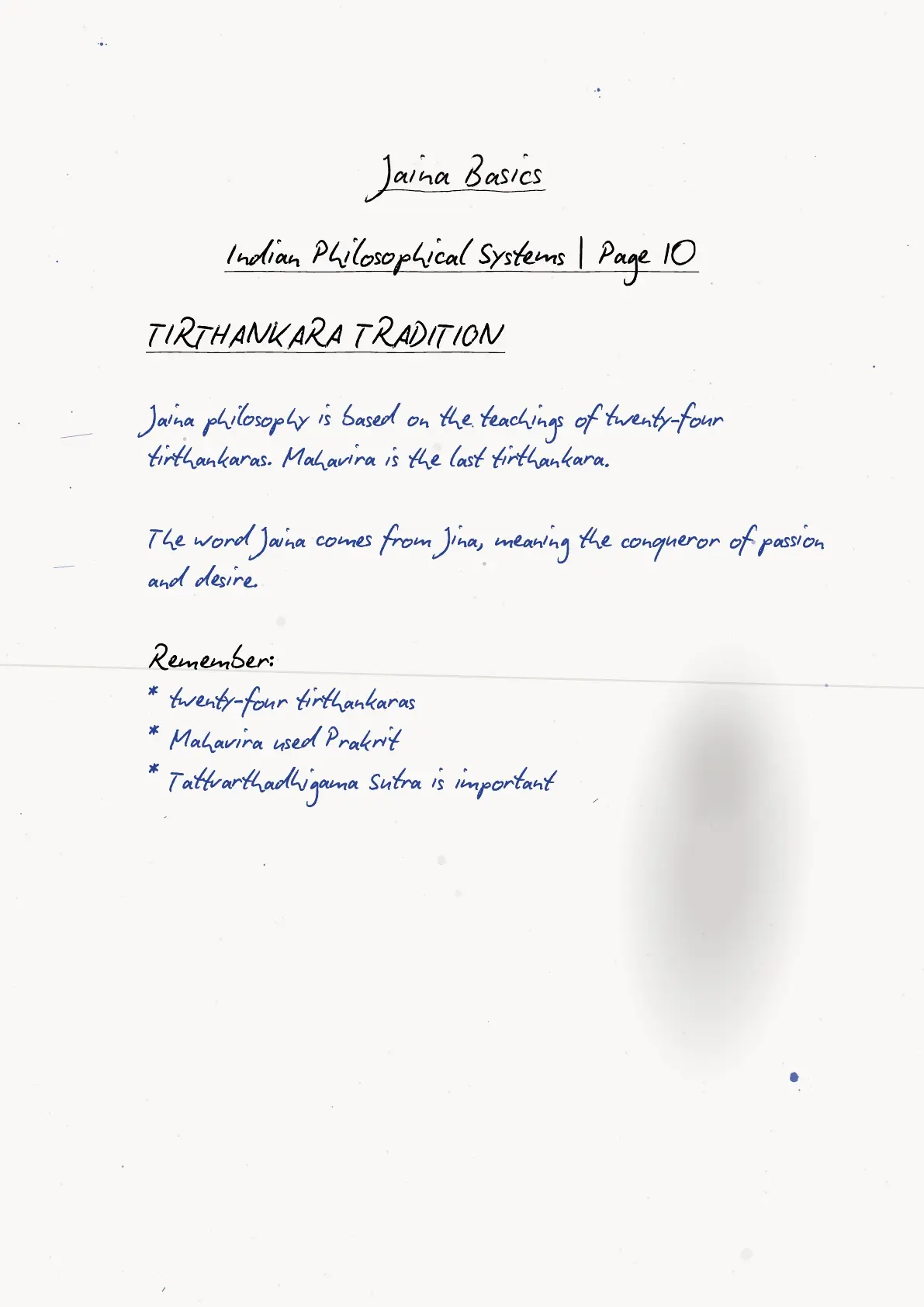
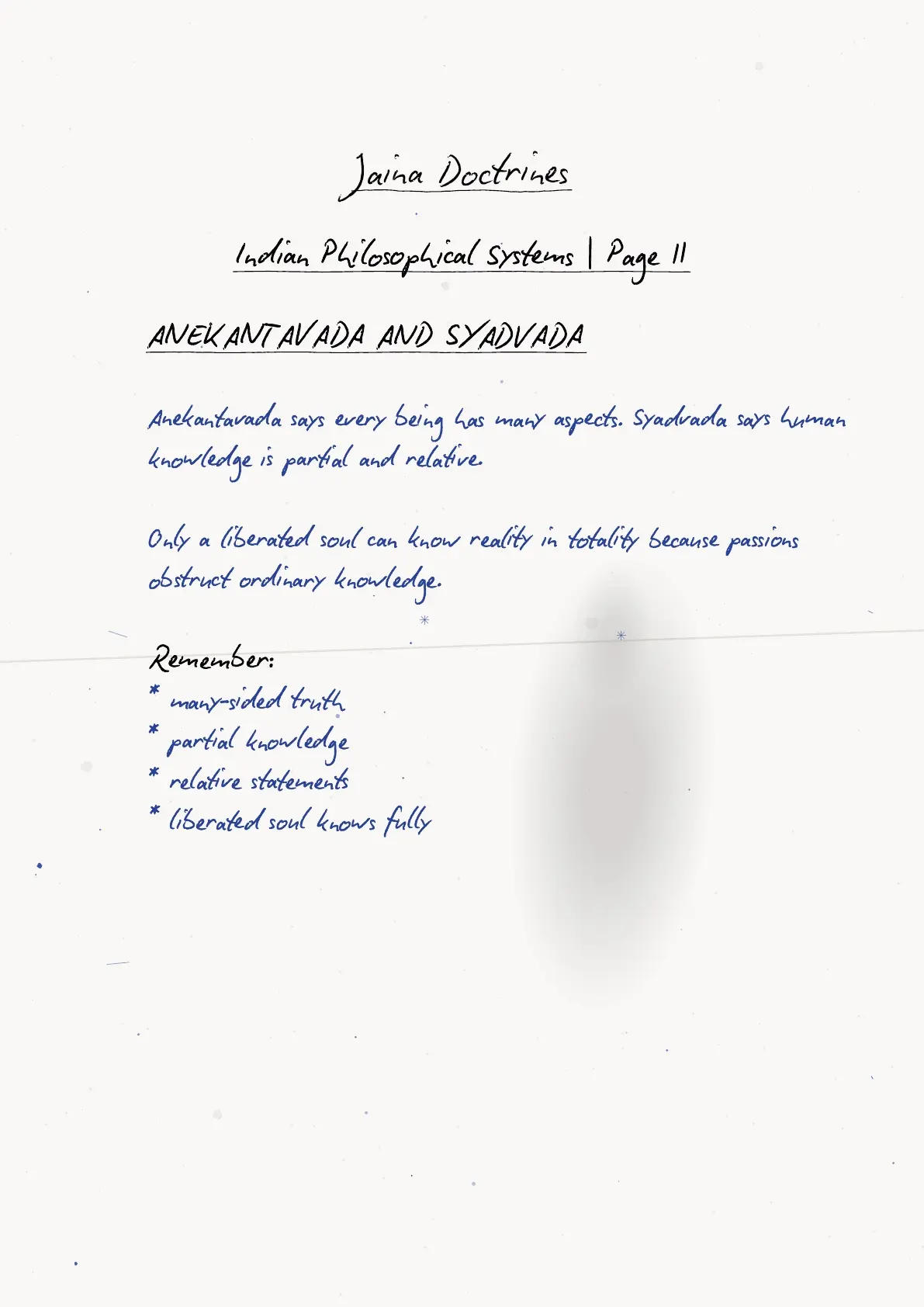
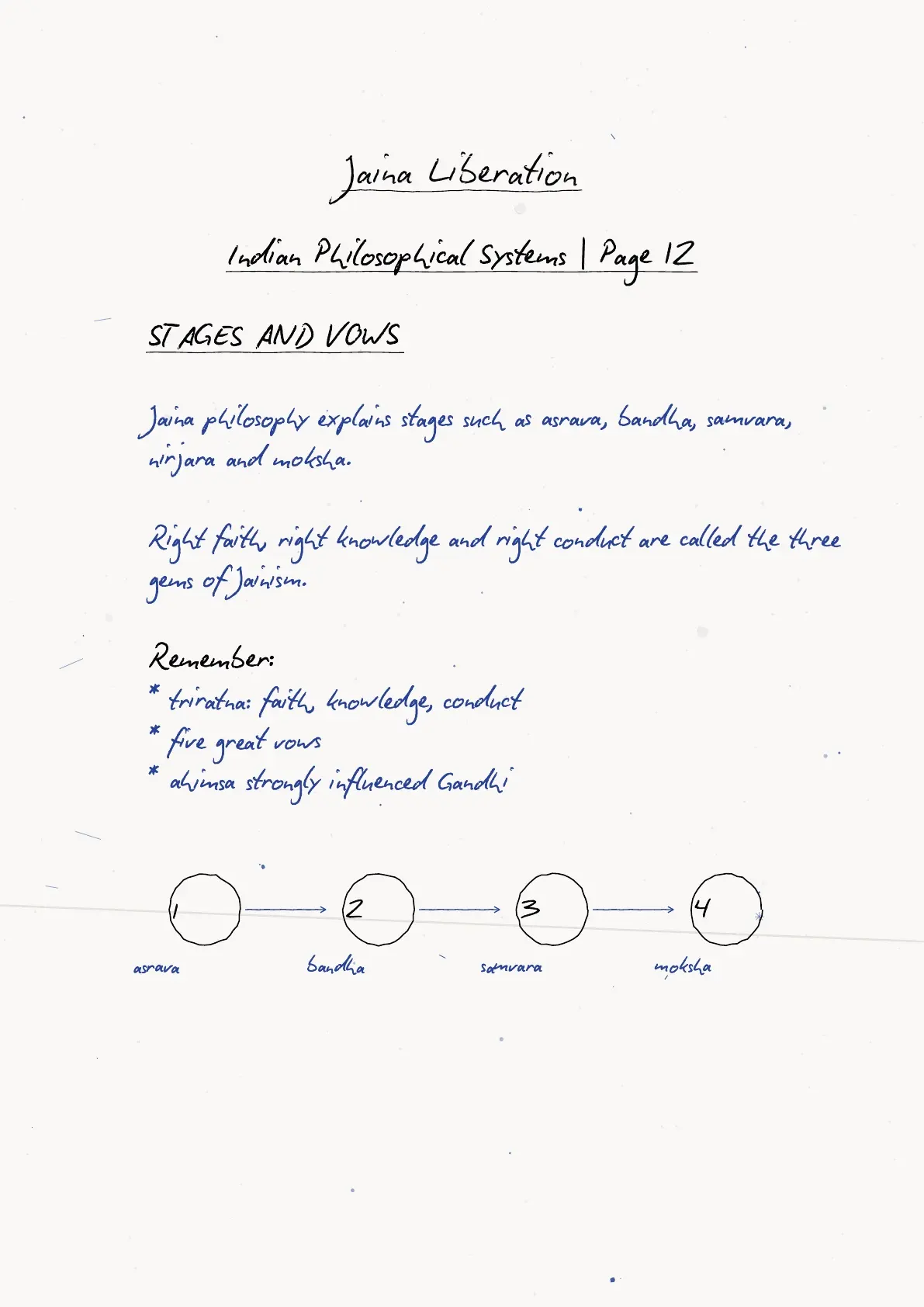
Student Feedback: Students revise this chapter faster when they group schools into astika and nastika before learning each school's main idea.
Table of Contents |
Indian Philosophical Systems Handwritten Notes Overview
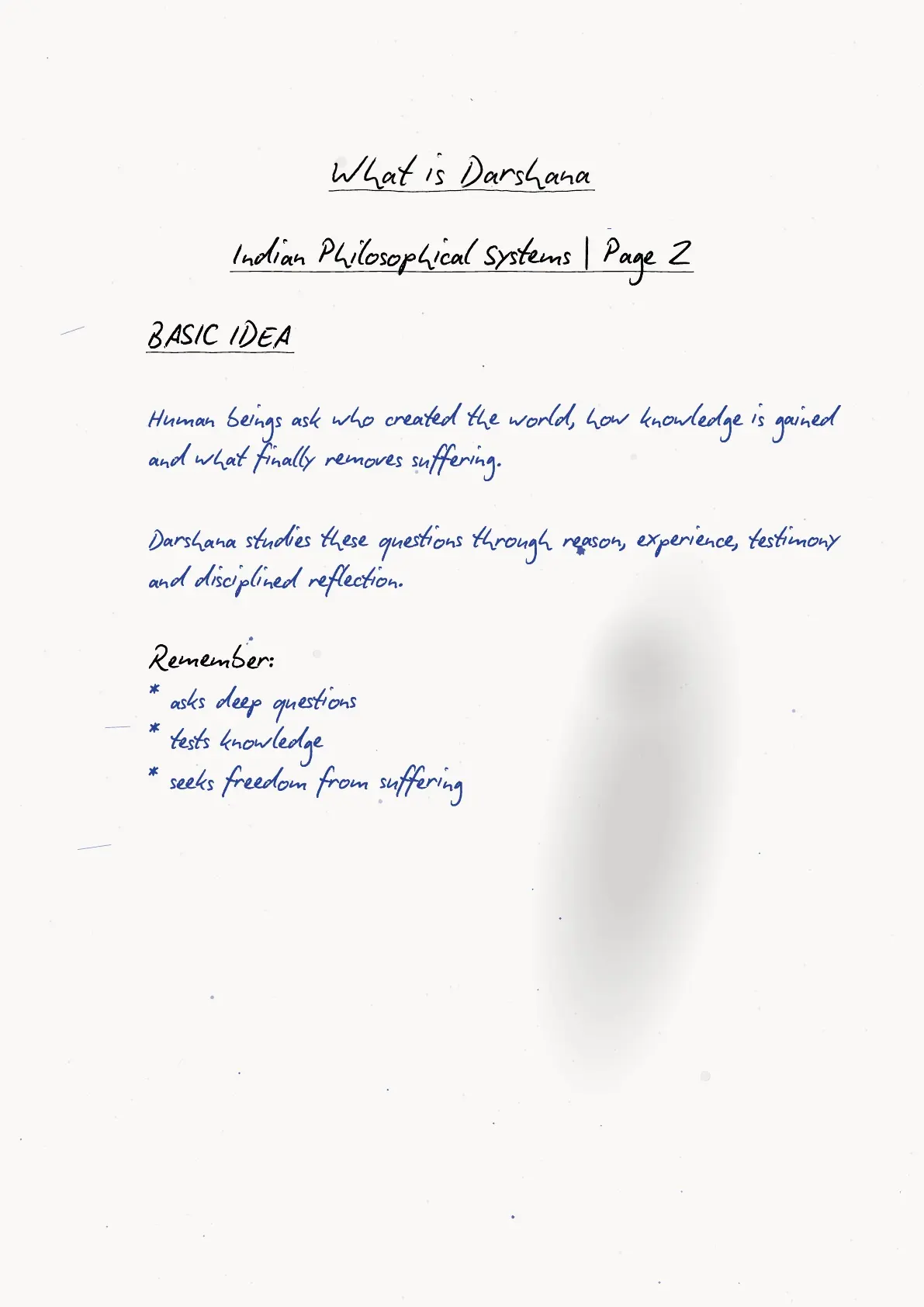
The Indian Philosophical Systems handwritten notes explain the chapter's core route: human questions, valid knowledge, philosophical schools and the search for moksha. The notes keep Sanskrit terms visible, but each term is paired with a plain meaning for faster revision.
The core revision idea is simple: Indian philosophy asks how valid knowledge removes ignorance and suffering.
- Knowledge side: prameya, pramana, perception, inference, analogy and testimony.
- School side: astika and nastika systems with one key feature from each.
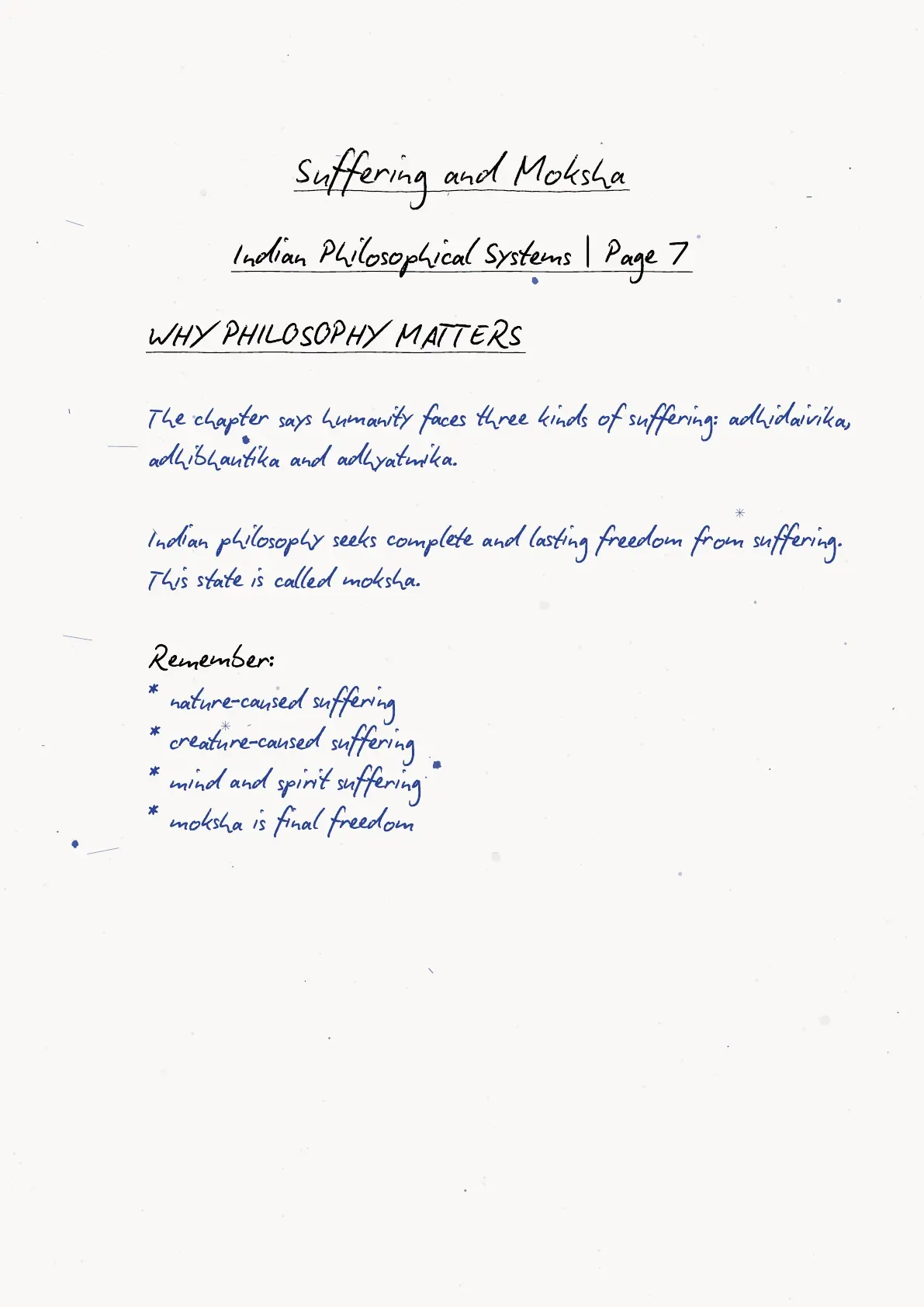
- Goal side: moksha, liberation, moral discipline and freedom from suffering.
Darshana, Prameya and Pramana
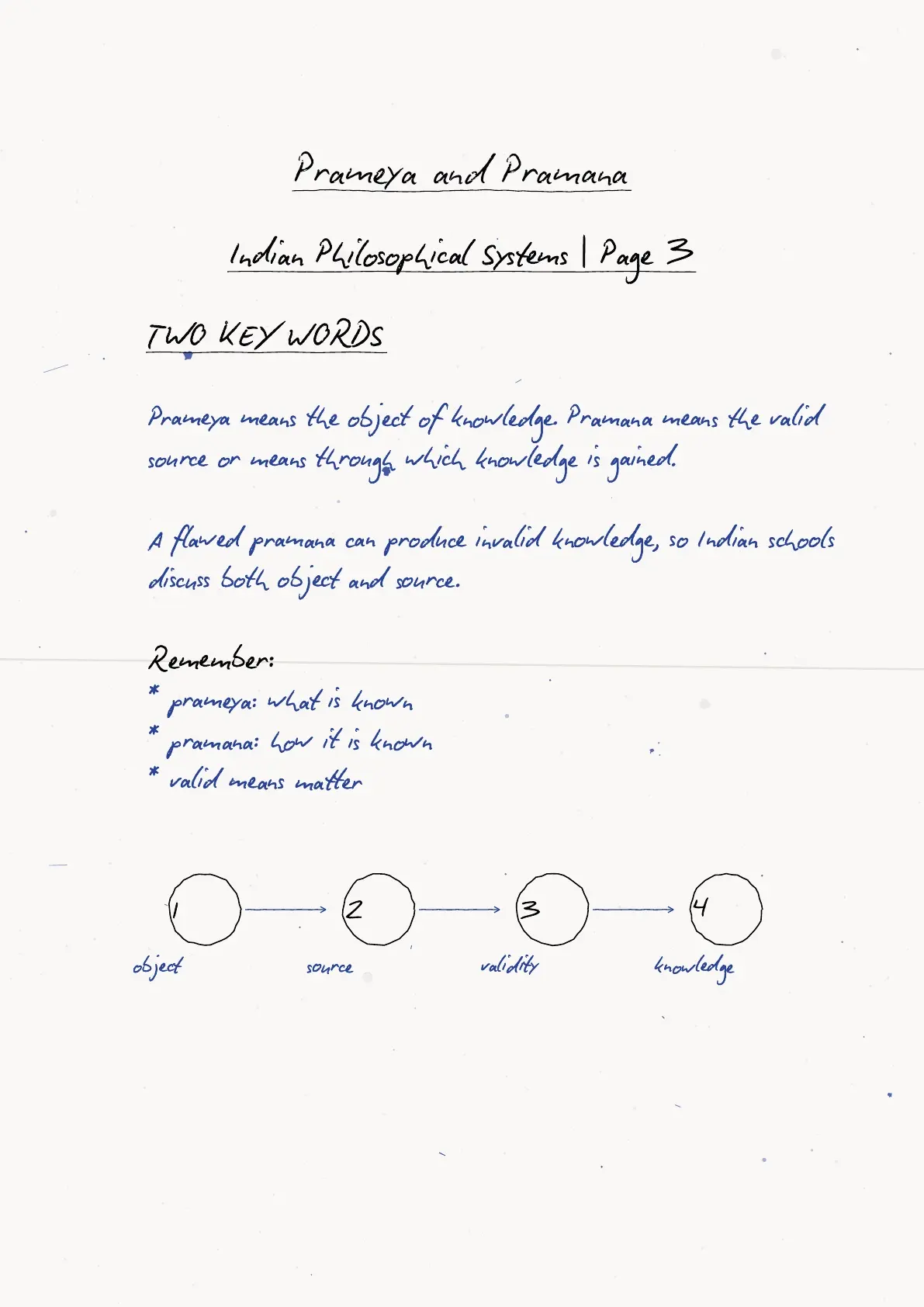
Darshana means philosophy or reflective seeing. The chapter begins with questions about the world, knowledge and liberation. Prameya means the object of knowledge. Pramana means the valid means of knowledge.
| Term | Plain meaning | Revision use |
|---|---|---|
| Darshana | Philosophy or reflective enquiry. | Use in the opening definition. |
| Prameya | Object of knowledge. | Pair it with pramana. |
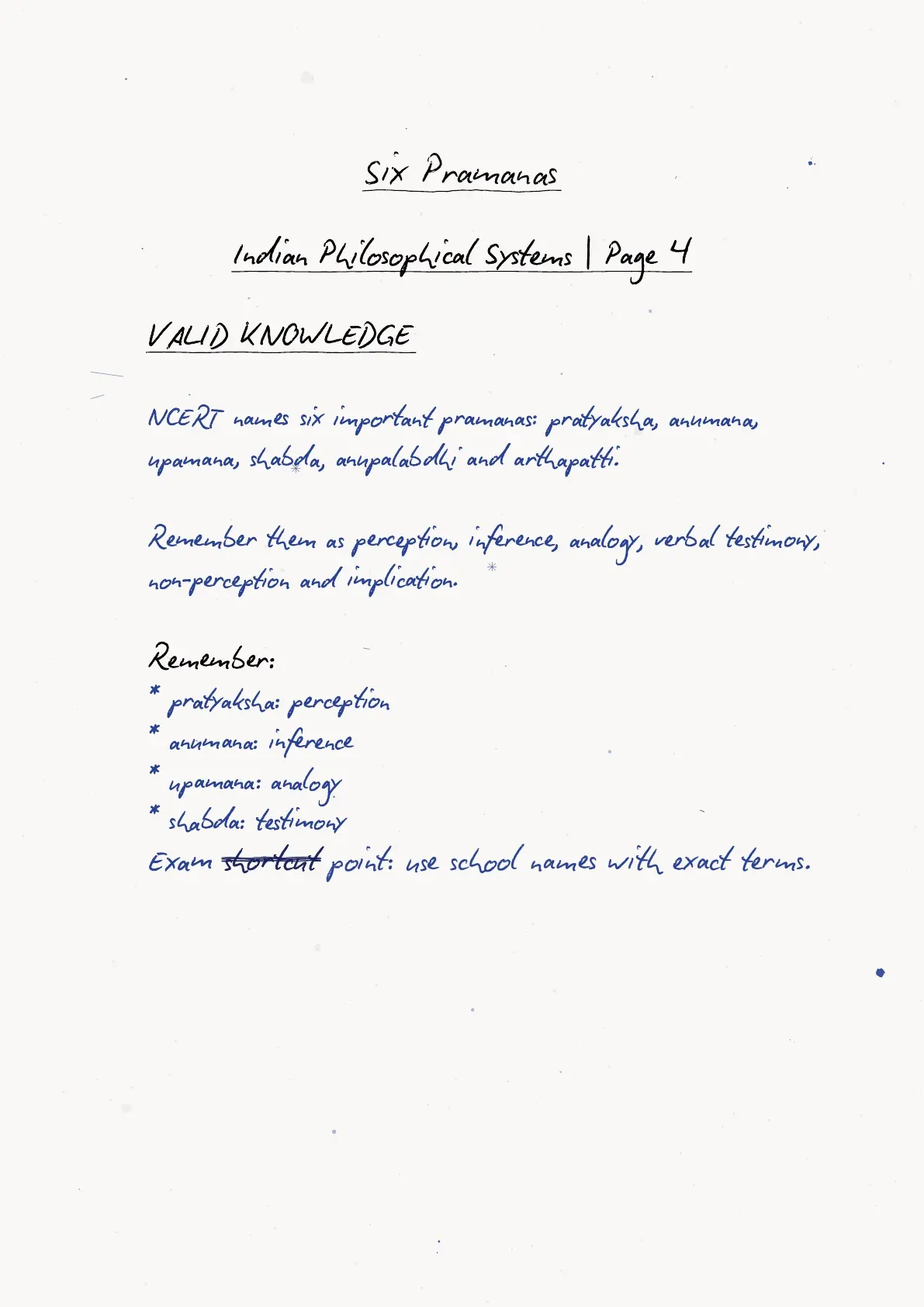
| Pramana | Valid means of knowledge. | List perception, inference and testimony first. |
| Moksha | Final freedom from suffering. | Use as the goal of most systems. |
Class 11 KTPI Indian Philosophy Video
Source: LTX IAS Classes on YouTube
Astika and Nastika Schools
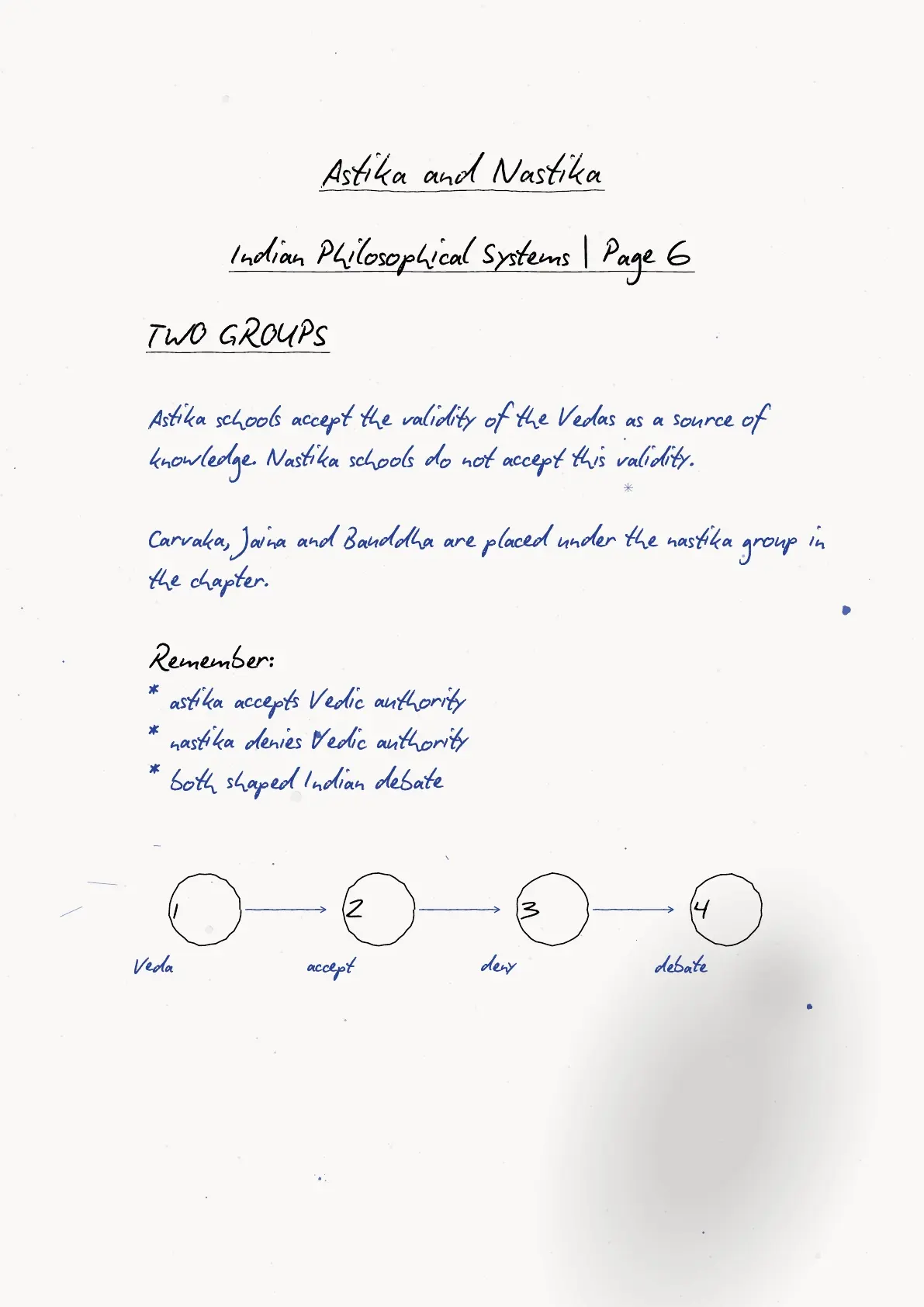
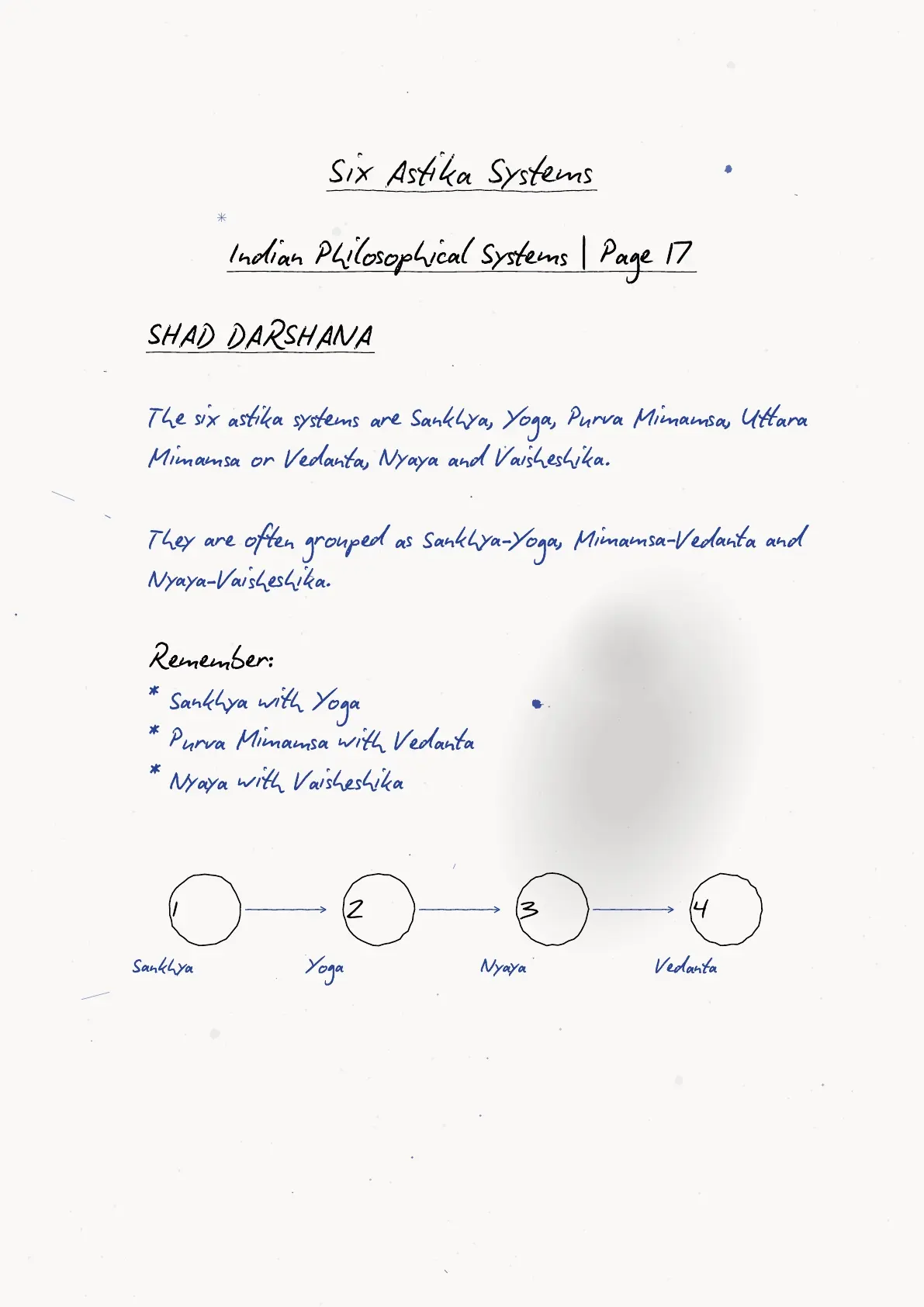
Astika schools accept the validity of the Vedas as a source of knowledge. Nastika schools deny this validity. This is a classification based on Vedic authority, not a simple test of belief in God.
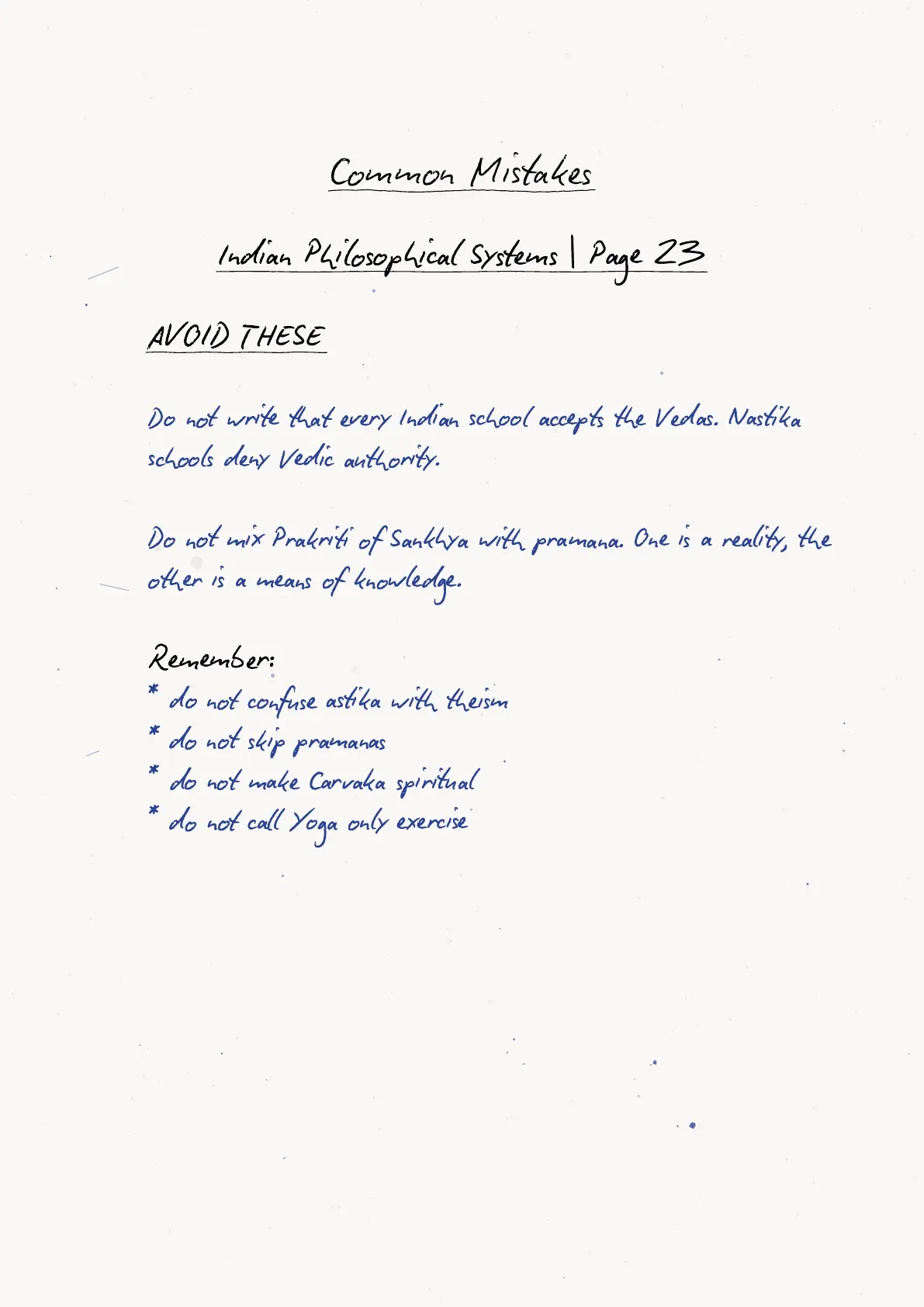
Do not confuse astika with theism. The chapter uses astika for schools that accept Vedic authority.
| Group | Schools | Quick recall |
|---|---|---|
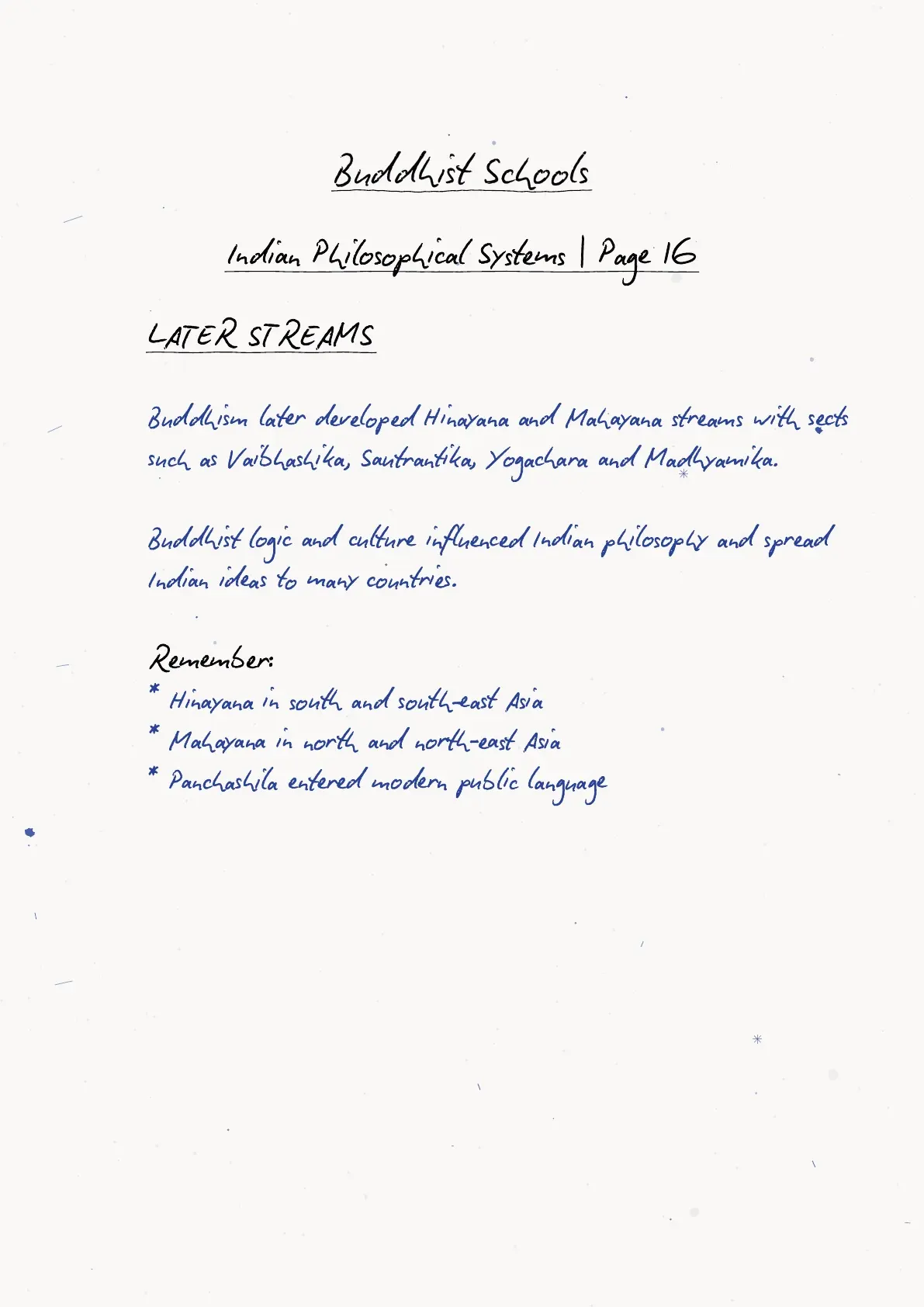
| Nastika | Carvaka, Jaina and Bauddha. | Carvaka stresses perception, Jainism stresses many-sided truth, Buddhism stresses ending suffering. |
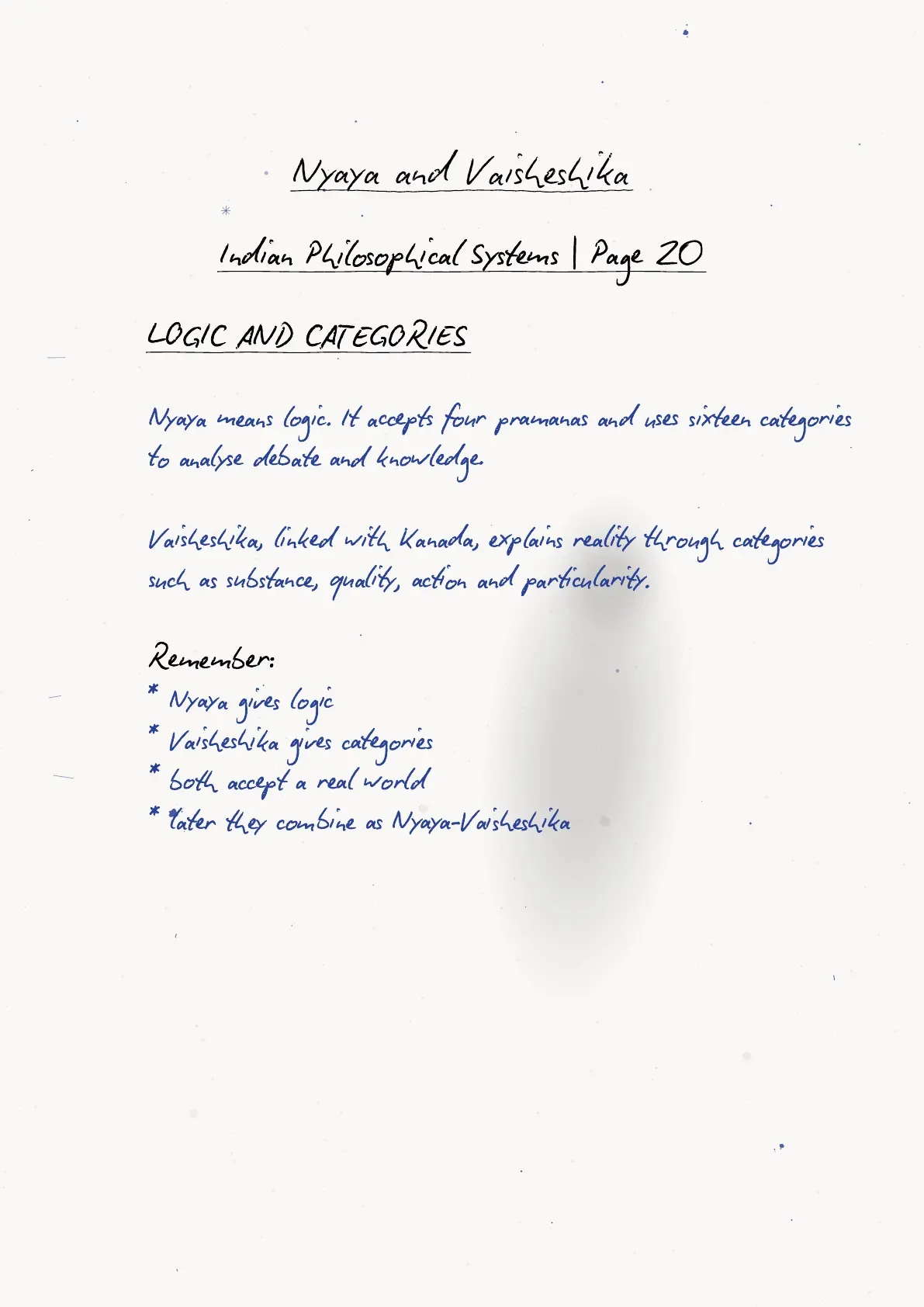
| Astika | Sankhya, Yoga, Mimamsa, Vedanta, Nyaya and Vaisheshika. | These accept Vedic authority but differ in method and doctrine. |
| Three pairs | Sankhya-Yoga, Mimamsa-Vedanta, Nyaya-Vaisheshika. | Use this for comparison answers. |
Buddhism, Jainism and Liberation Ideas
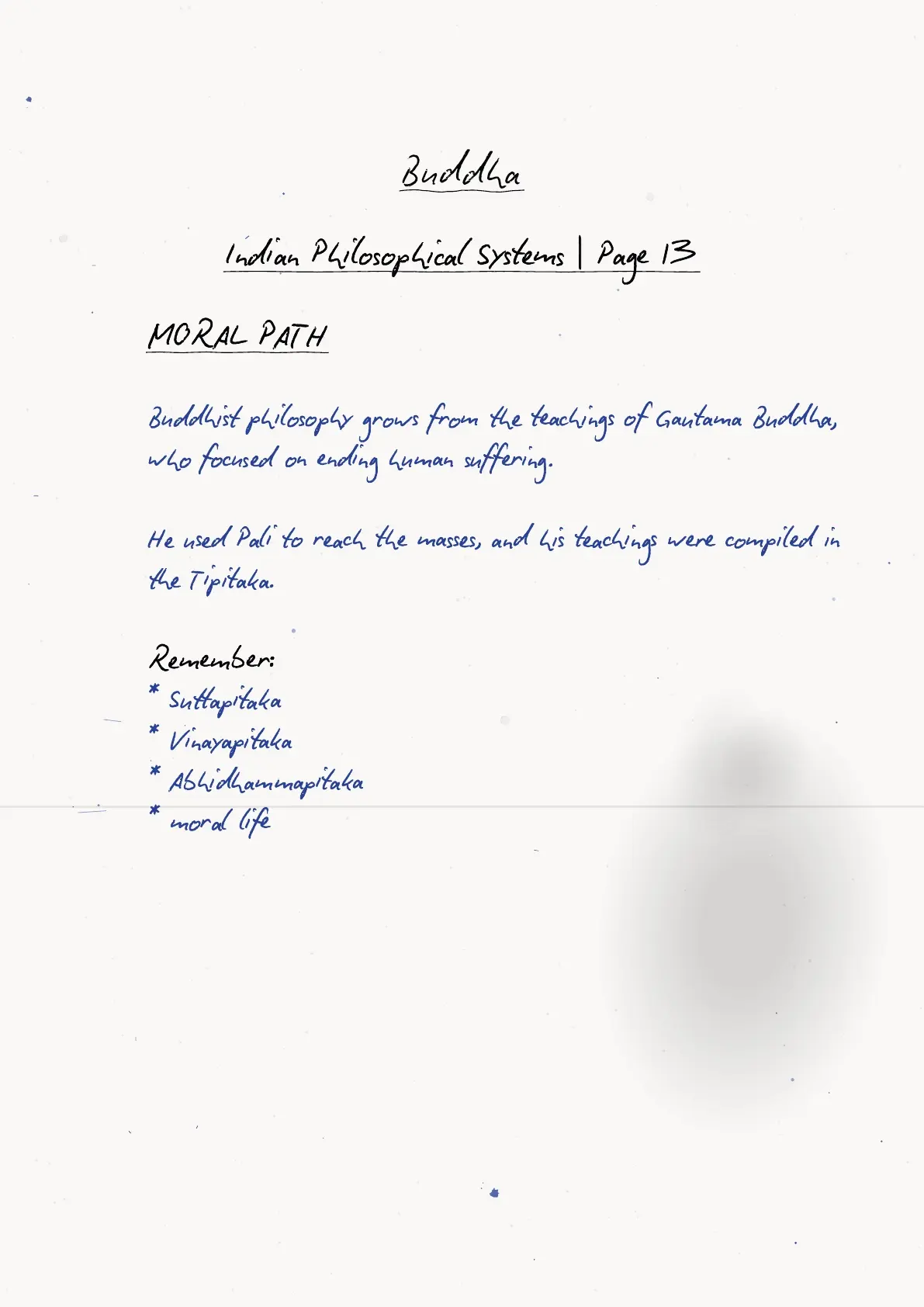
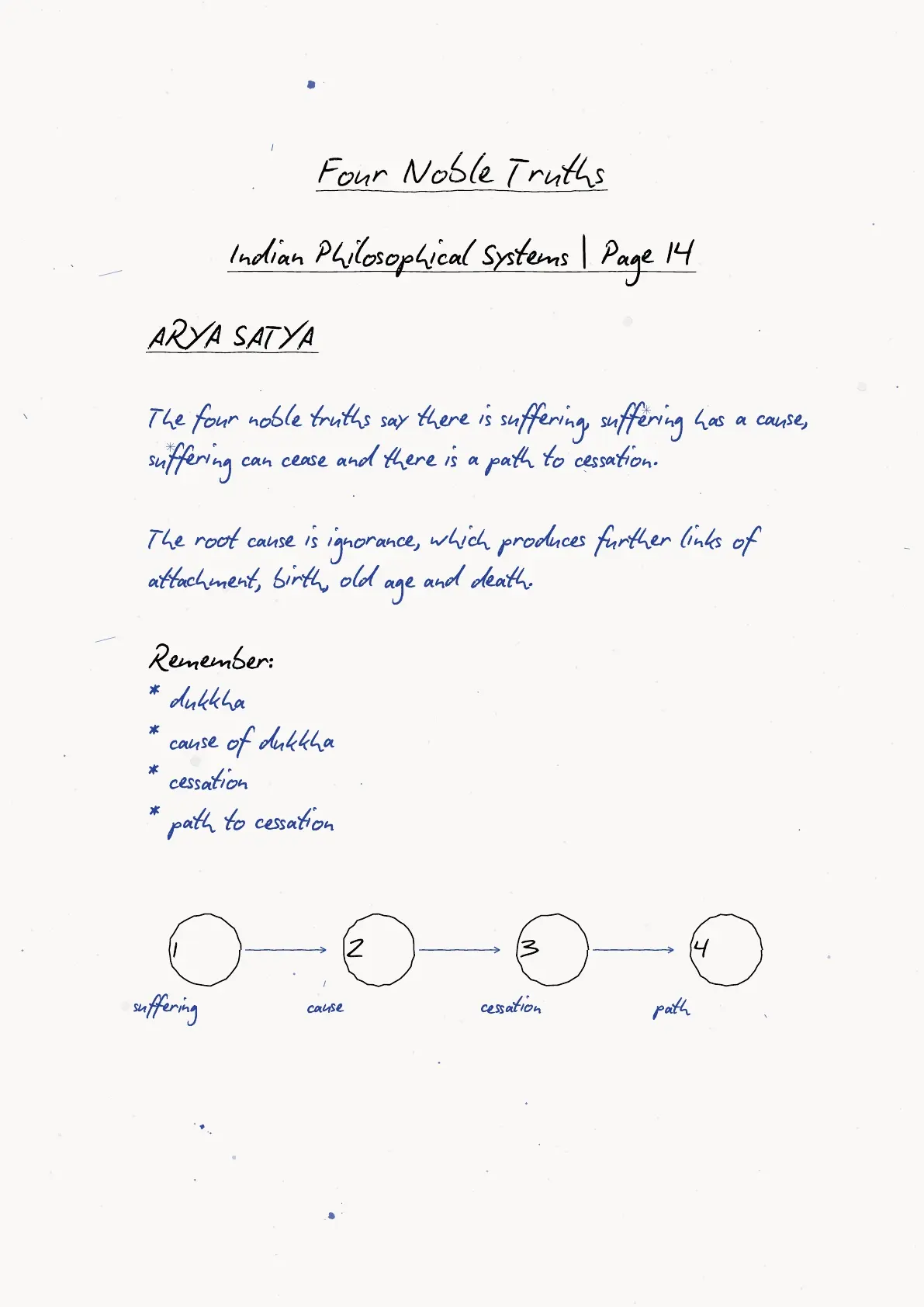
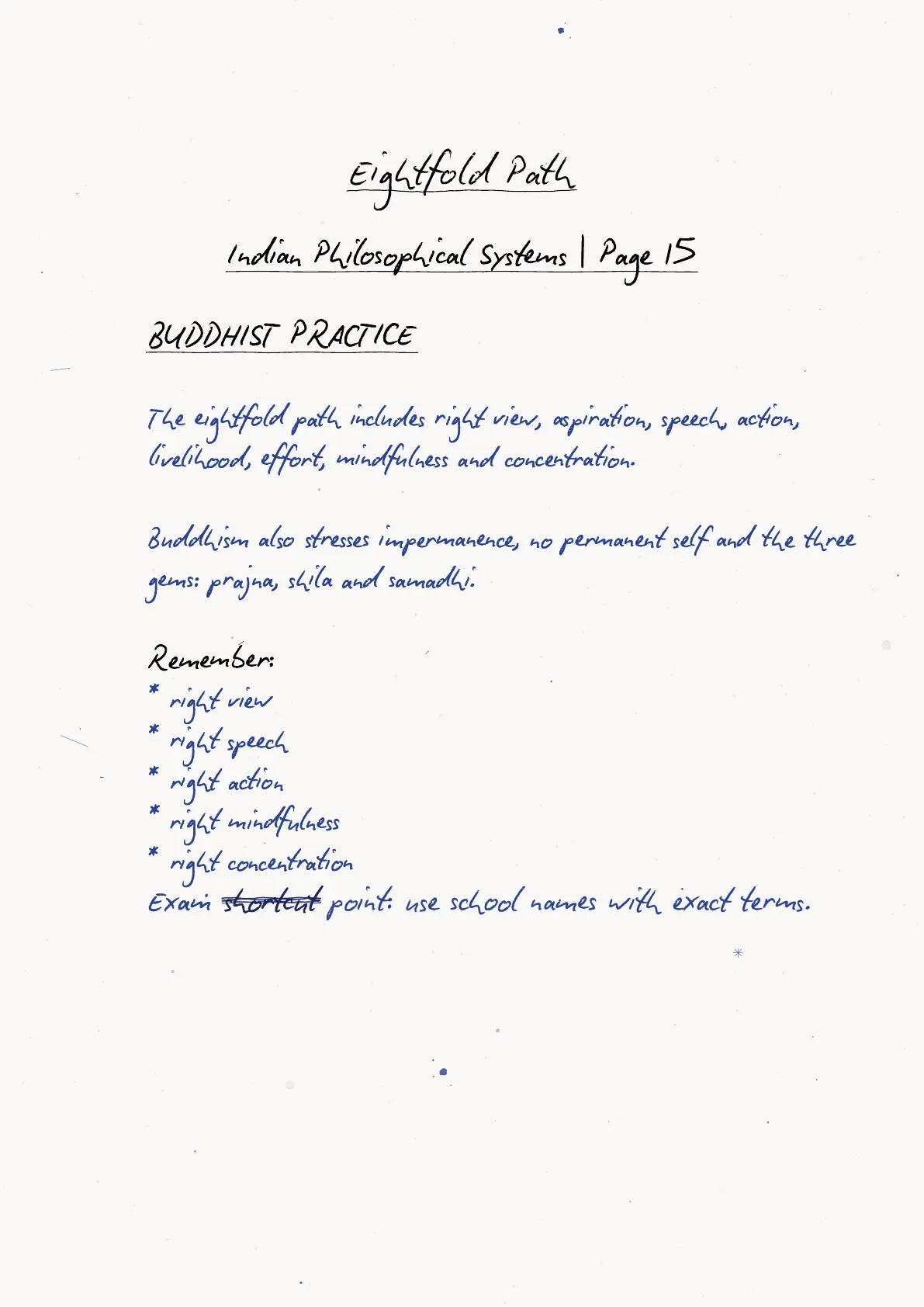
Jaina philosophy explains many-sided truth through anekantavada and syadvada. It also teaches right faith, right knowledge and right conduct. Buddhism begins with suffering and gives the four noble truths and the eightfold path.
- Jaina recall: tirthankara, Jina, triratna, five vows, ahimsa and moksha.
- Buddhist recall: dukkha, cause, cessation, path and the eightfold path.
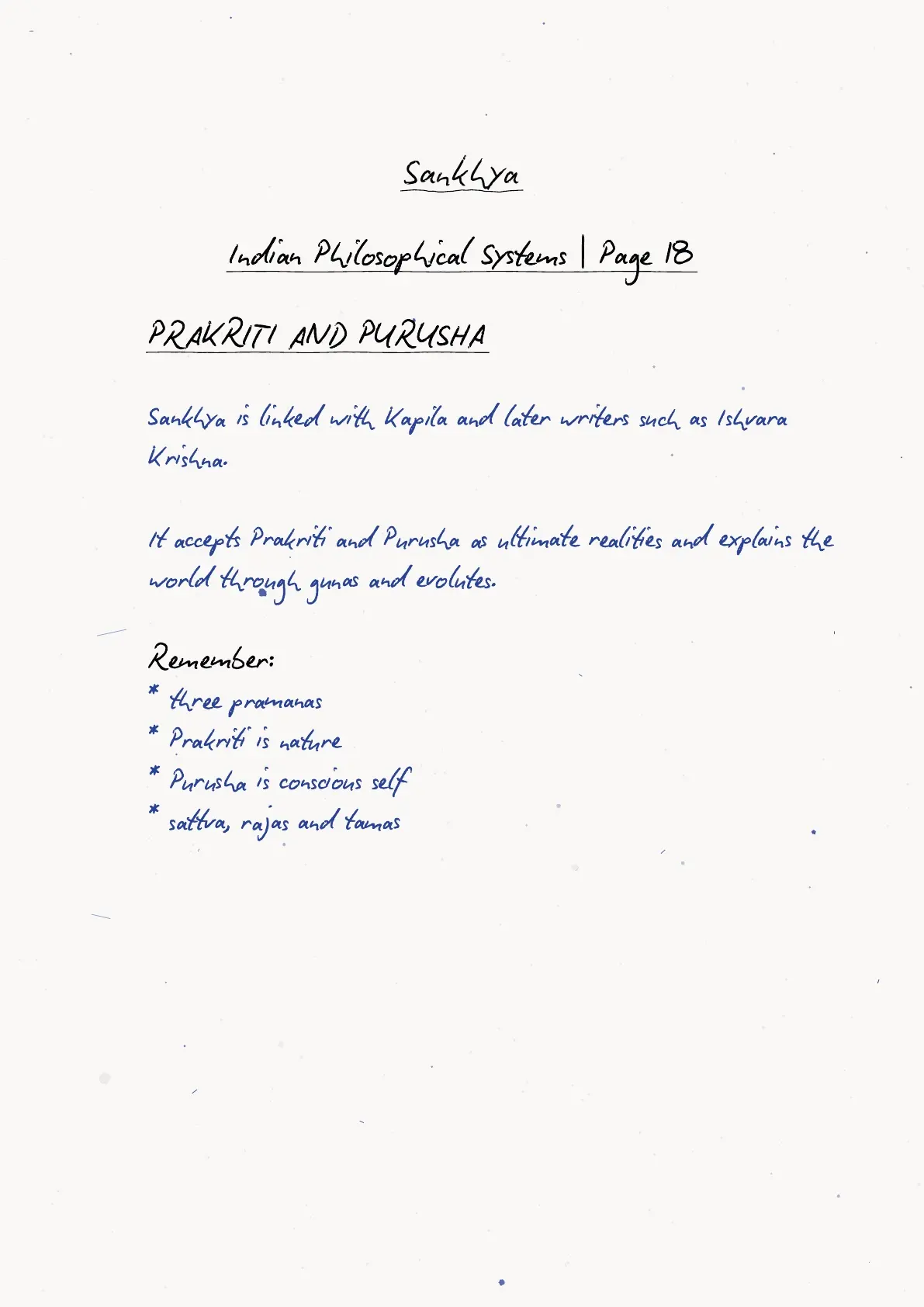
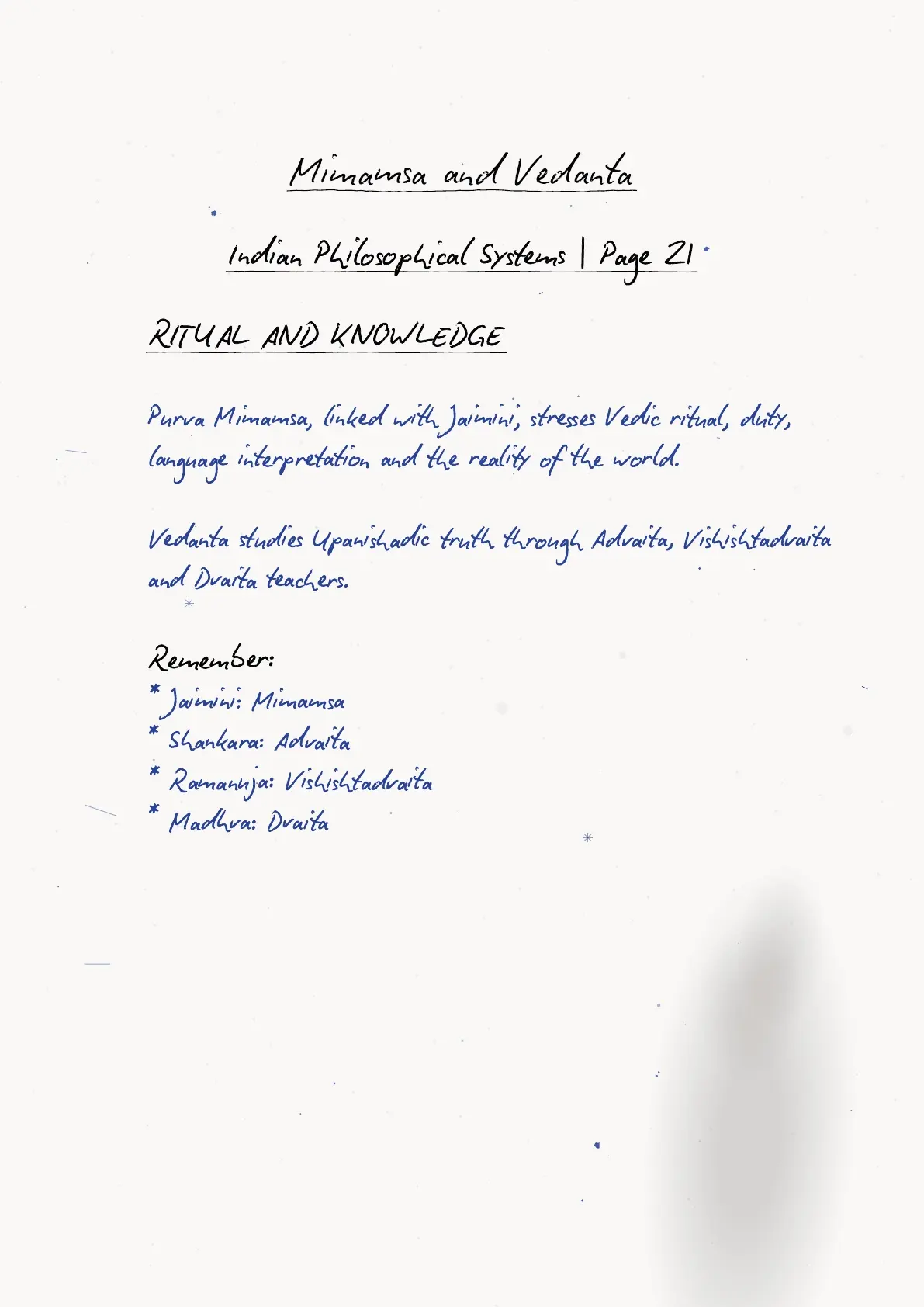
- Sankhya recall: Prakriti, Purusha, three gunas and valid knowledge.
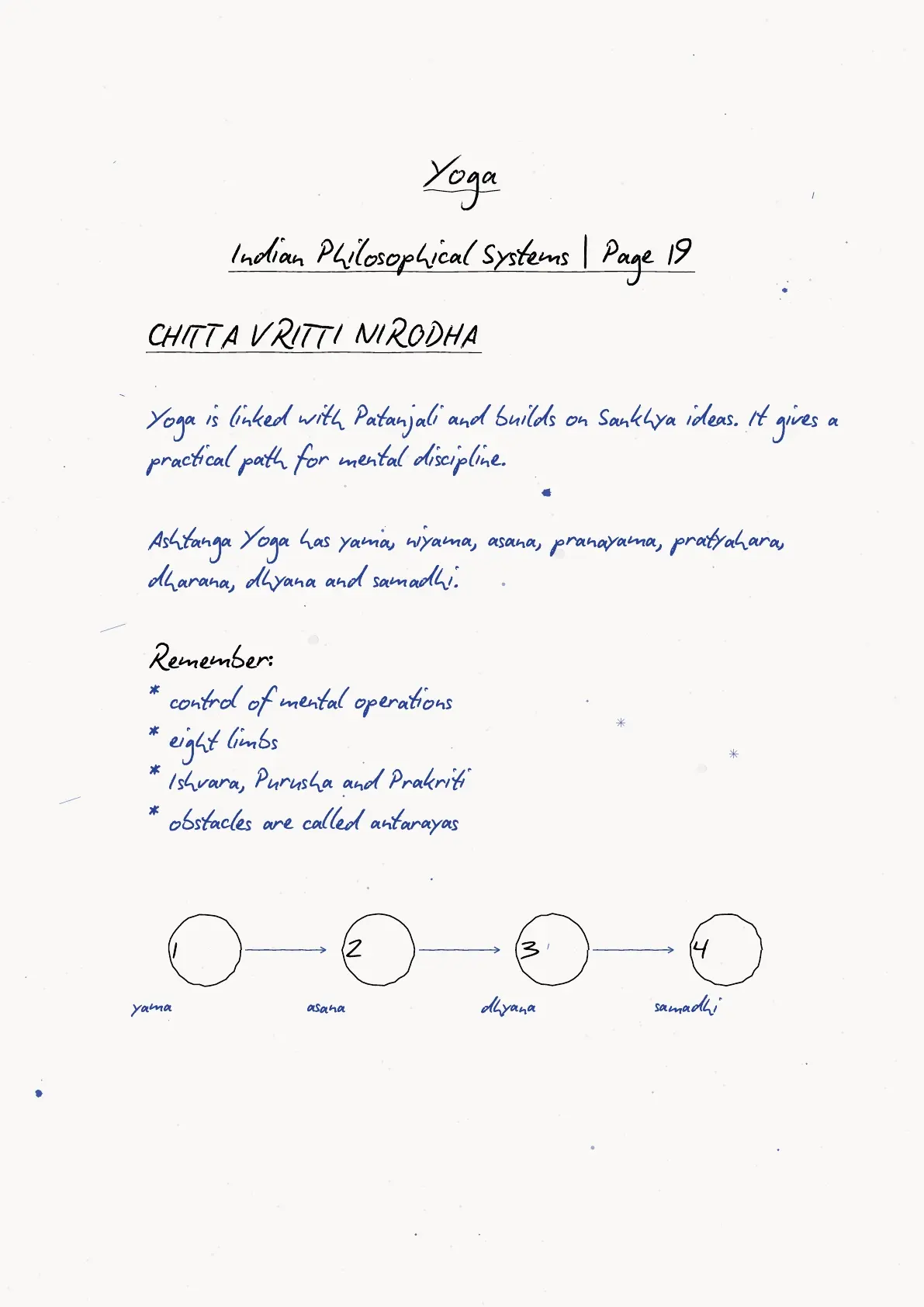
- Yoga recall: chitta vritti nirodha and eight limbs of Yoga.
How to Use the Indian Philosophical Systems Handwritten Notes PDF
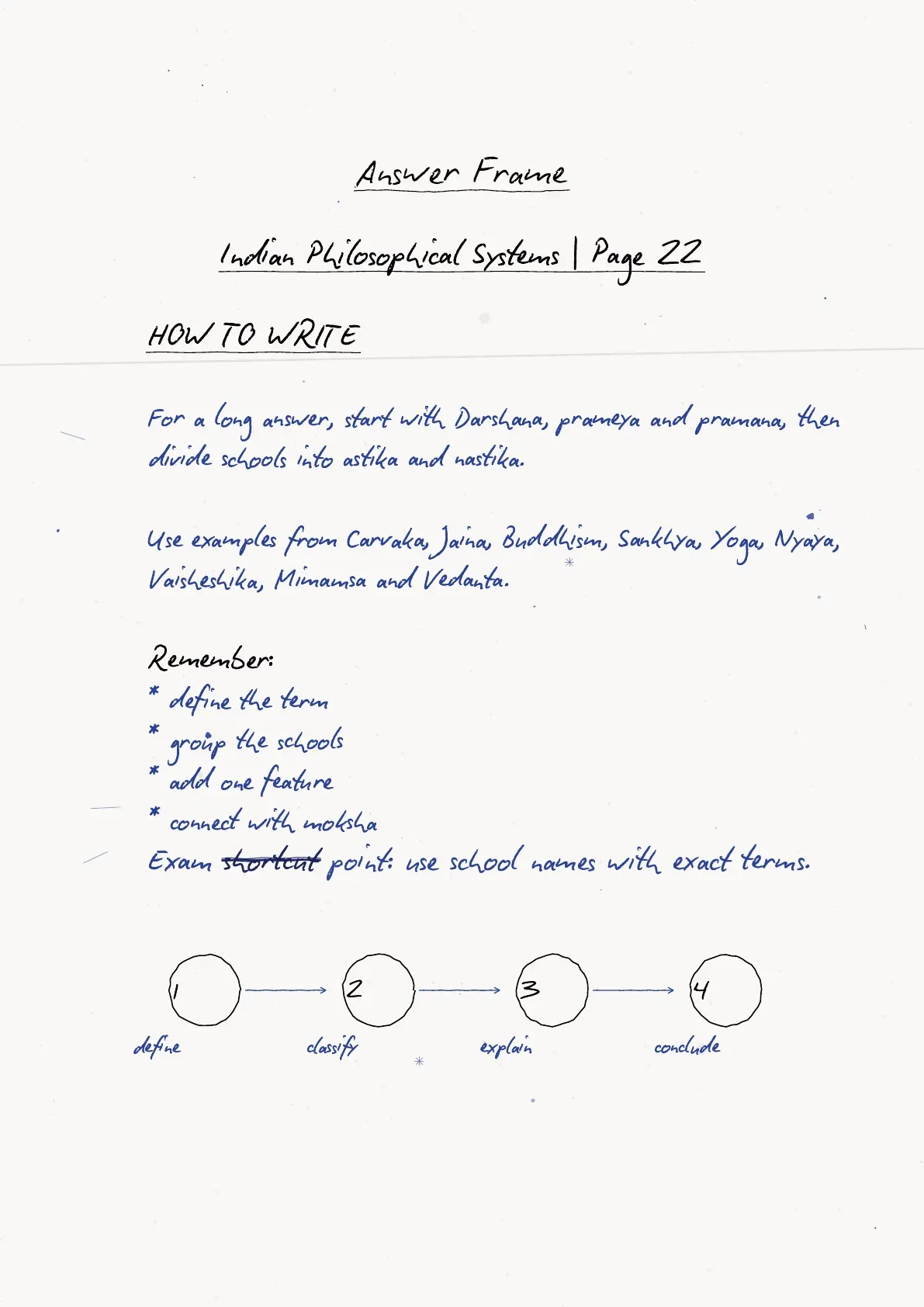
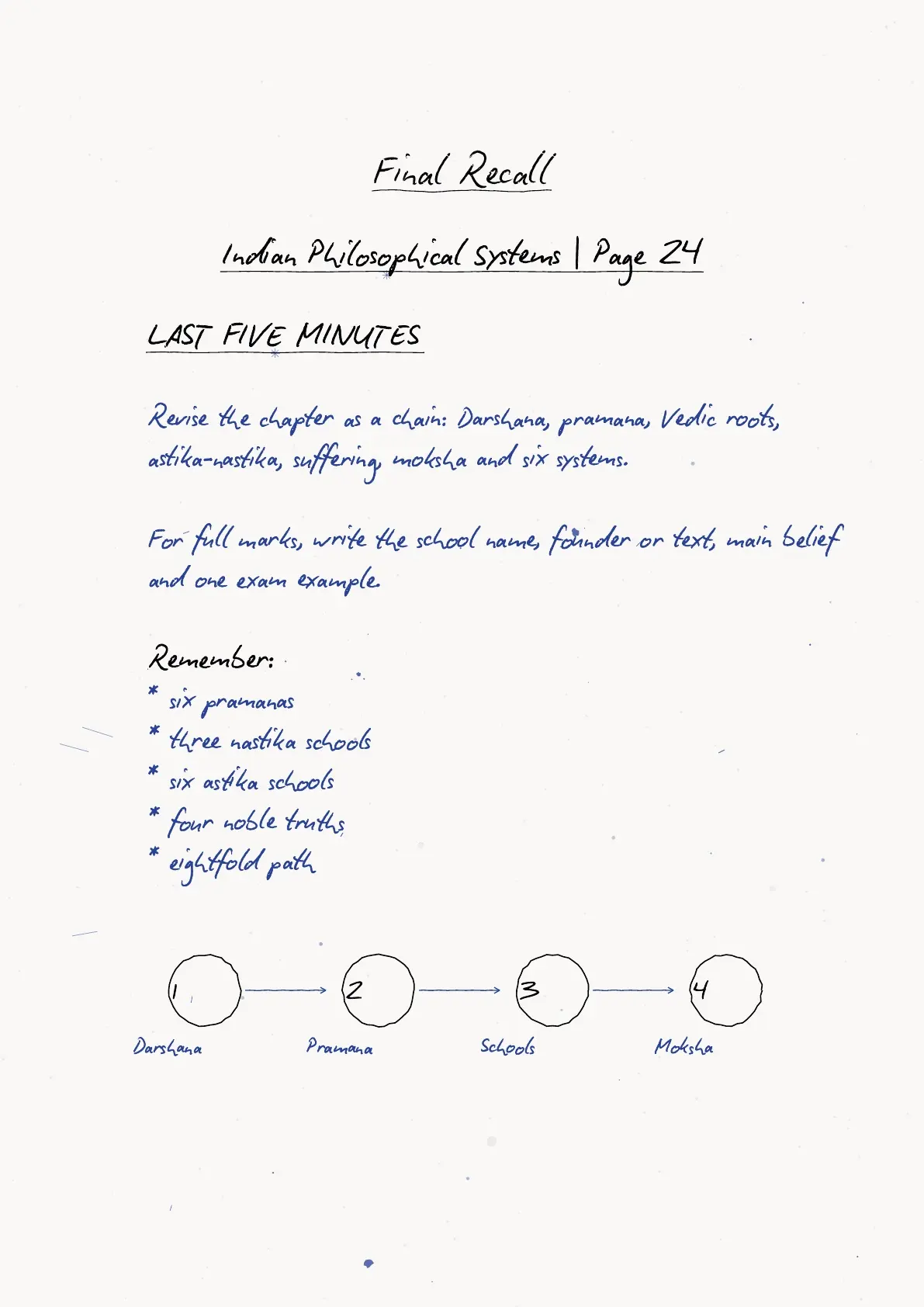
Start with the first pages for Darshana, prameya and pramana. Then revise the school classification pages. End with the pages on answer frames and common mistakes before writing long answers.
For a 200-word answer, use this order: definition, classification, two or three school examples, and a closing line on moksha or freedom from suffering. Short, grouped answers score better than a random list of school names.
Related Class 11 KTPI Resources
| Resource | Use it for | Link |
|---|---|---|
| NCERT Solutions | Exercise answers for the Indian Philosophical Systems source chapter. | Class 11 KTPI Indian Philosophical Systems Solutions |
| NCERT Book PDF | Original textbook reading and source examples. | Class 11 KTPI Indian Philosophical Systems Book PDF |
| Notes | Typed revision notes for theory-heavy study. | Class 11 KTPI Indian Philosophical Systems Notes |
| Handwritten Notes | Quick one-shot revision before tests. | Class 11 KTPI Indian Philosophical Systems Handwritten Notes |
All Class 11 KTPI Handwritten Notes
| Chapter | Title | Handwritten Notes |
|---|---|---|
| Chapter 1 | Astronomy in India | Open handwritten notes |
| Chapter 2 | Chemistry in India | Open handwritten notes |
| Chapter 3 | Indian Literature Part I Introduction of Indian Literature | Open handwritten notes |
| Chapter 4 | Indian Philosophical Systems | Open handwritten notes |
| Chapter 5 | Indian Traditional Knowledge on Environmental Conservation | Open handwritten notes |
| Chapter 6 | Life Sciences 1 Ayurveda for Life, Health and Well-Being | Open handwritten notes |
| Chapter 7 | Life Sciences 2 The Historical Evolution of Medical Tradition in Ancient India | Open handwritten notes |
| Chapter 8 | Mathematics in India | Open handwritten notes |
| Chapter 9 | Theatre and Drama in India | Open handwritten notes |
Class 11 KTPI Indian Philosophical Systems Handwritten Notes FAQs
Ques. What is covered in Class 11 KTPI Indian Philosophical Systems handwritten notes?
Ans. The PDF covers Darshana, prameya, pramana, astika and nastika schools, Jainism, Buddhism, Sankhya, Yoga, Nyaya, Vaisheshika, Mimamsa and Vedanta.
Ques. What is the difference between astika and nastika schools?
Ans. Astika schools accept the validity of the Vedas as a source of knowledge, while nastika schools deny that validity.
Ques. Which pramanas should students revise first?
Ans. Revise pratyaksha, anumana, upamana, shabda, anupalabdhi and arthapatti with their plain meanings.
Ques. How should students write long answers from this chapter?
Ans. Start with Darshana, group the schools into astika and nastika, add key examples, and close with moksha or freedom from suffering.



Comments