




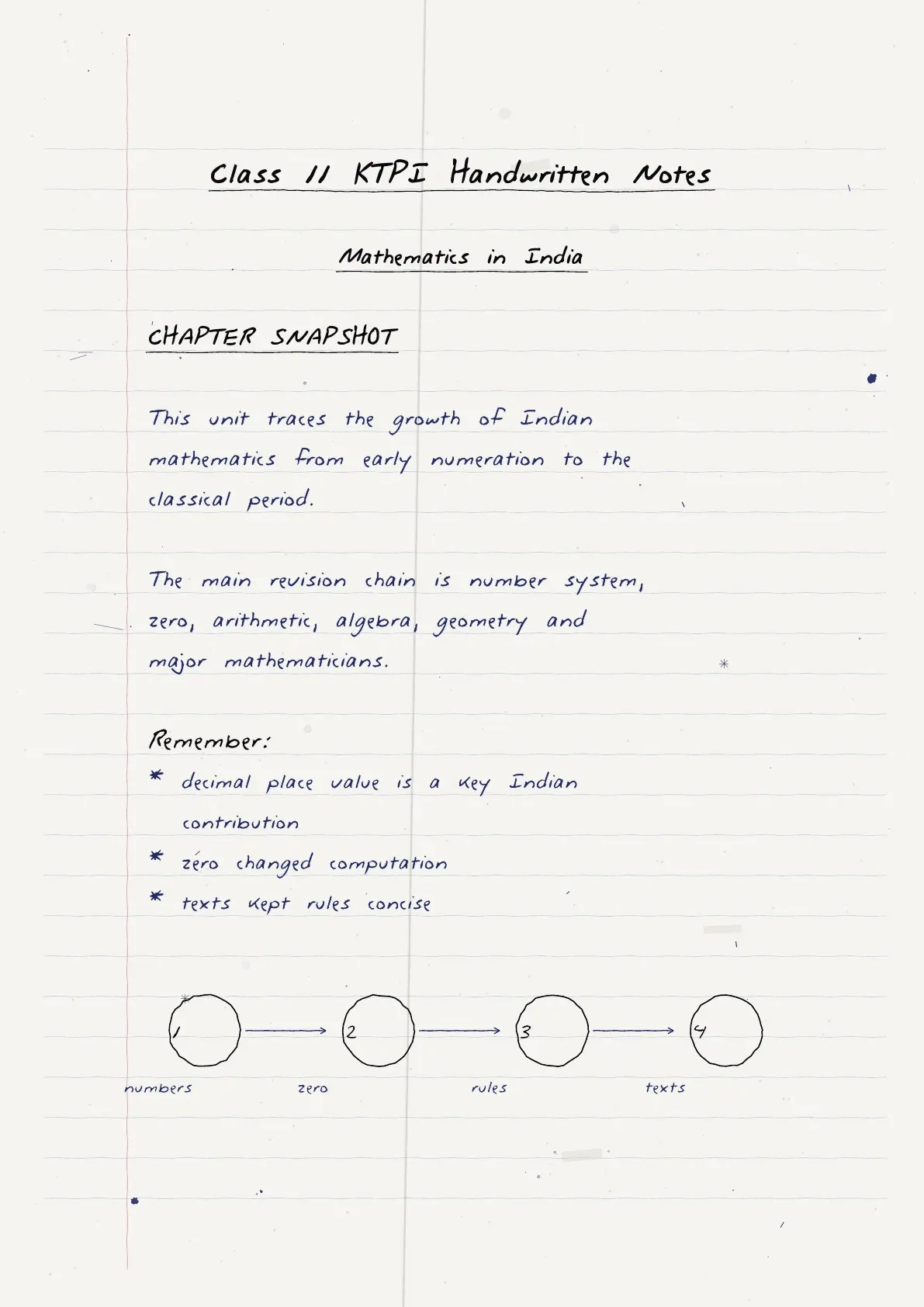
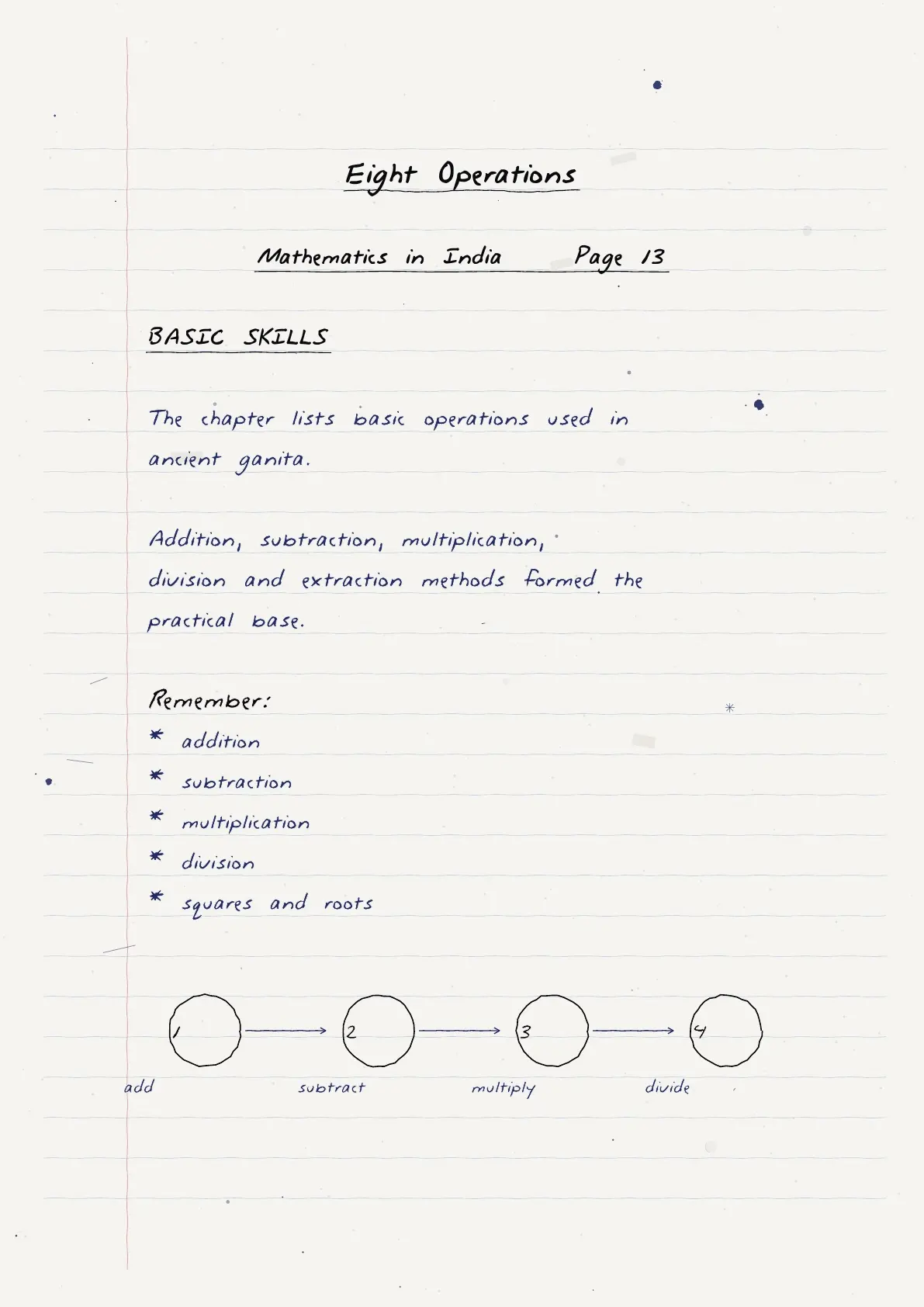
NCERT Handwritten Notes for Class 11 KTPI Chapter 8 Mathematics in India are prepared for quick 2026-27 revision. The PDF covers Indian numerals, decimal place value, zero, ganita, algebra, geometry, astronomy links and major mathematicians.
- Resource: Class 11 KTPI Mathematics in India handwritten revision notes PDF.
- Chapter focus: zero, place value, Brahmi numerals, arithmetic, algebra and major texts.
- Revision use: timeline points, scholar names, answer frames, comparison tables and common mistakes.
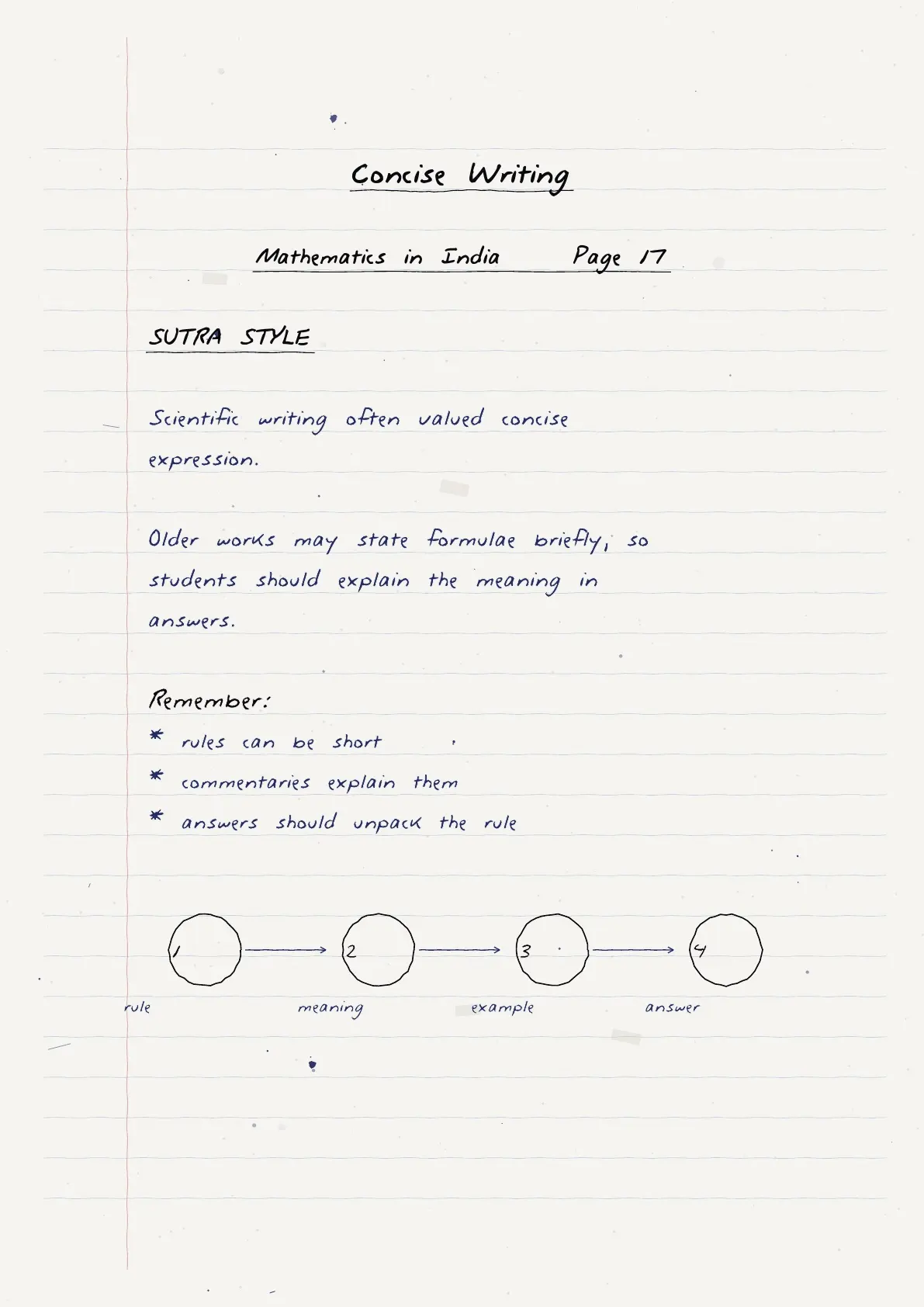
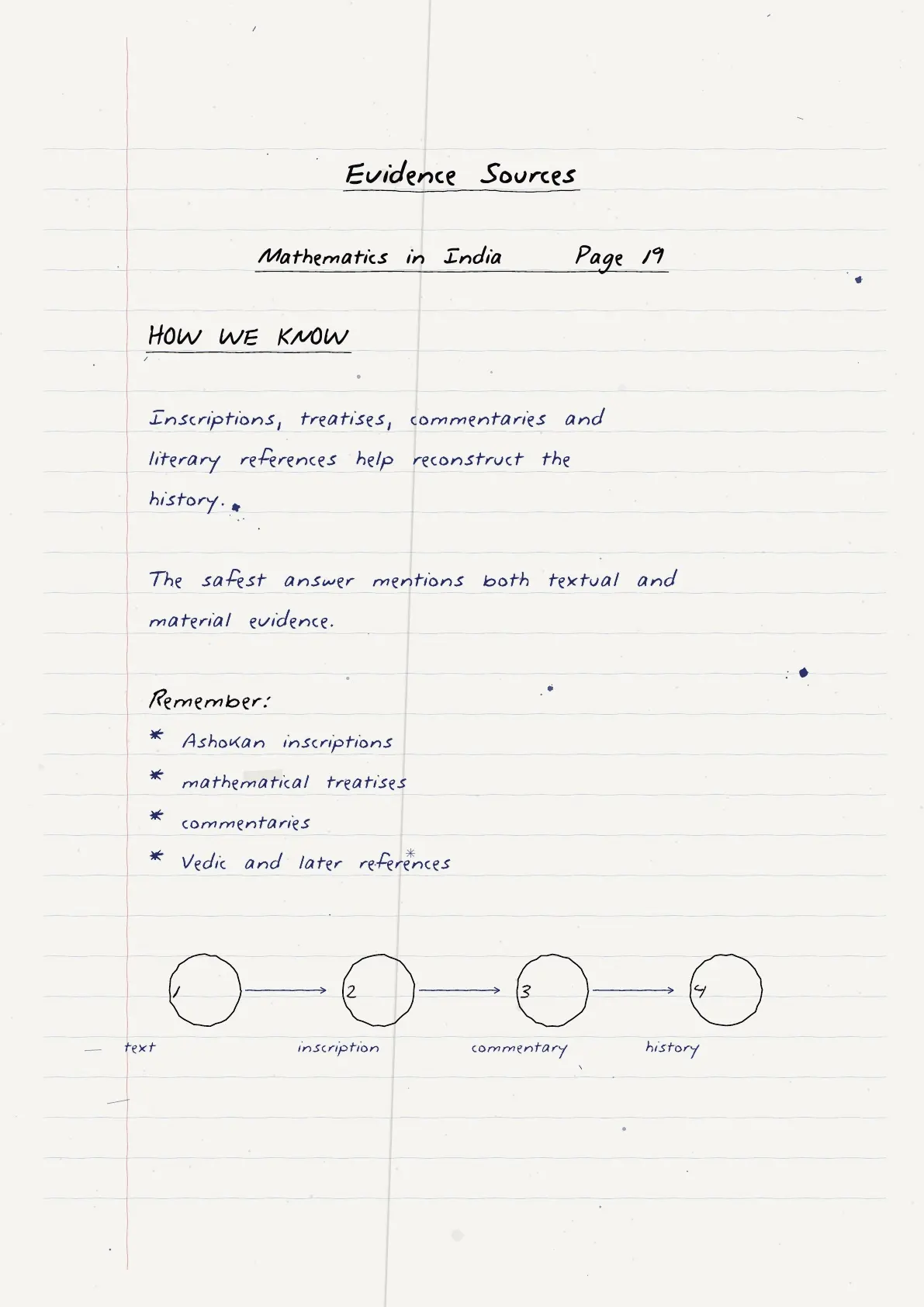
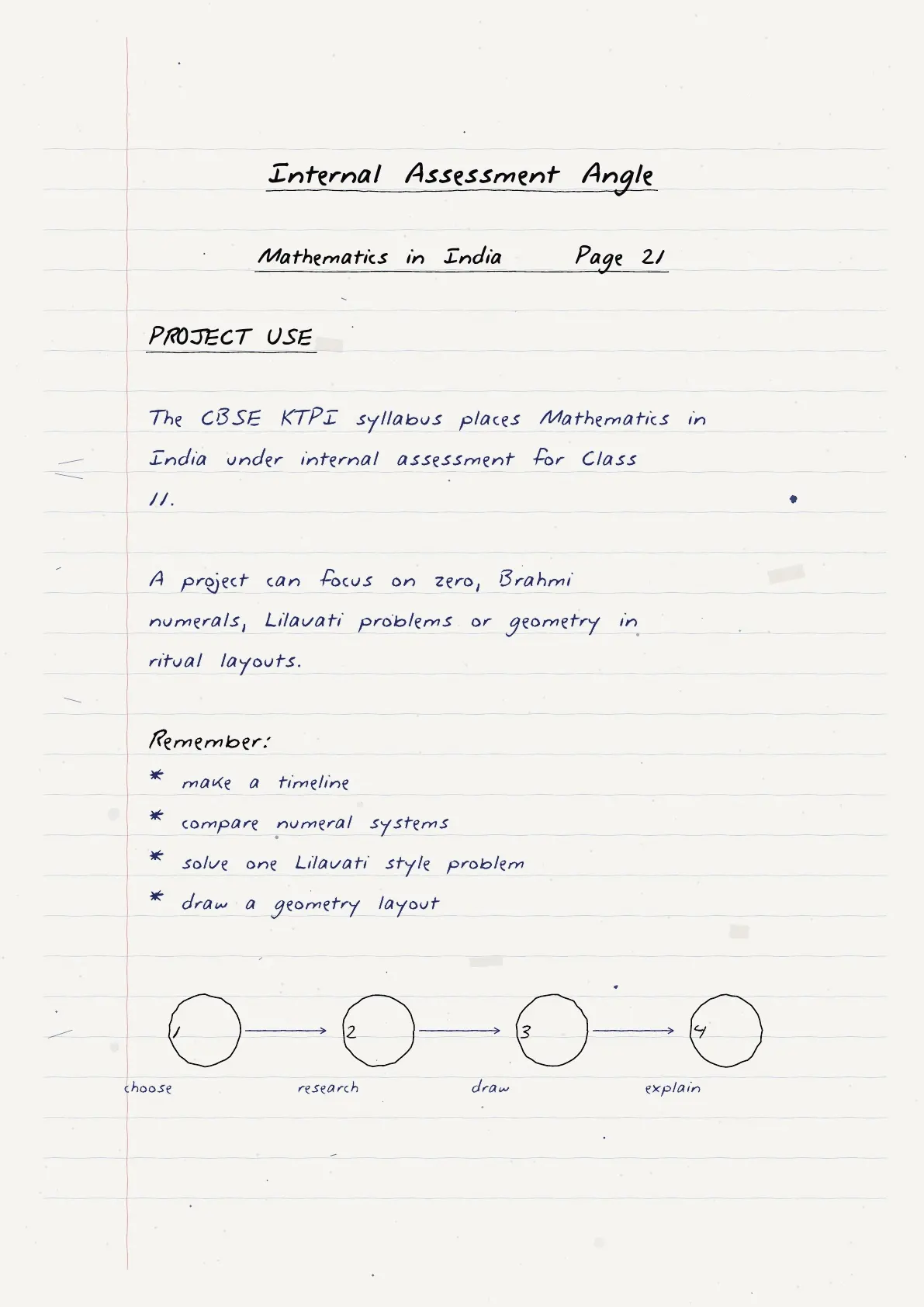
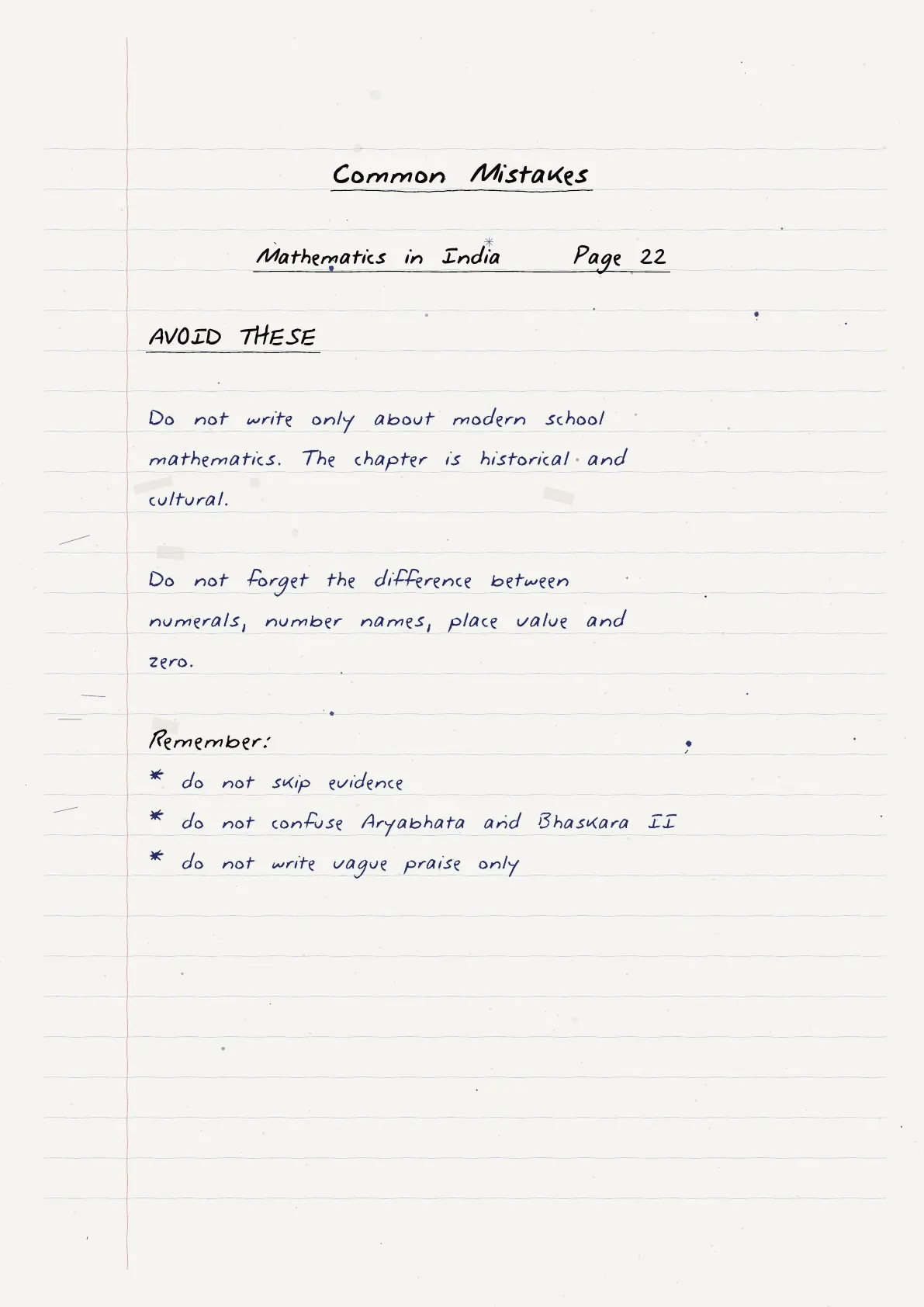
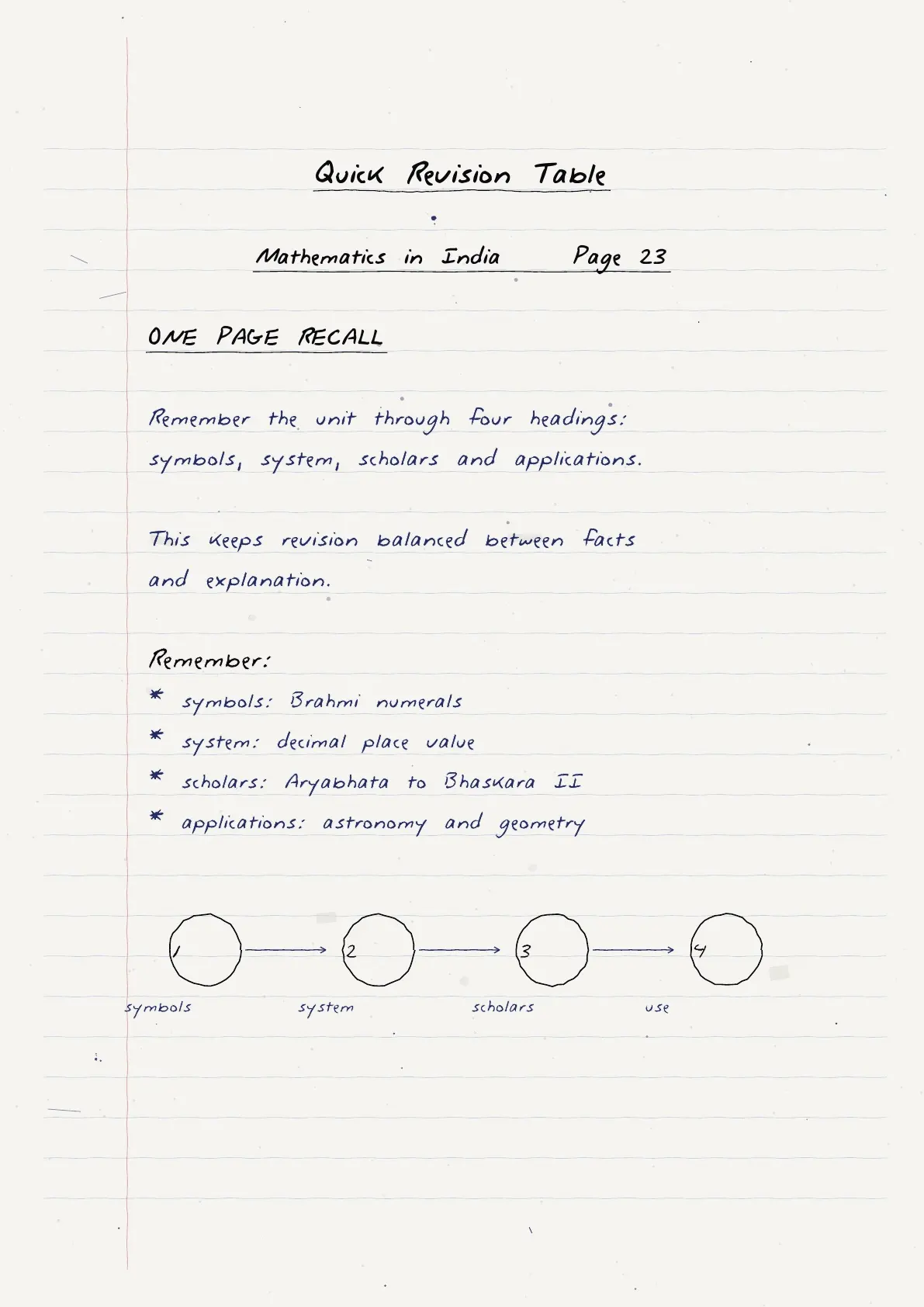
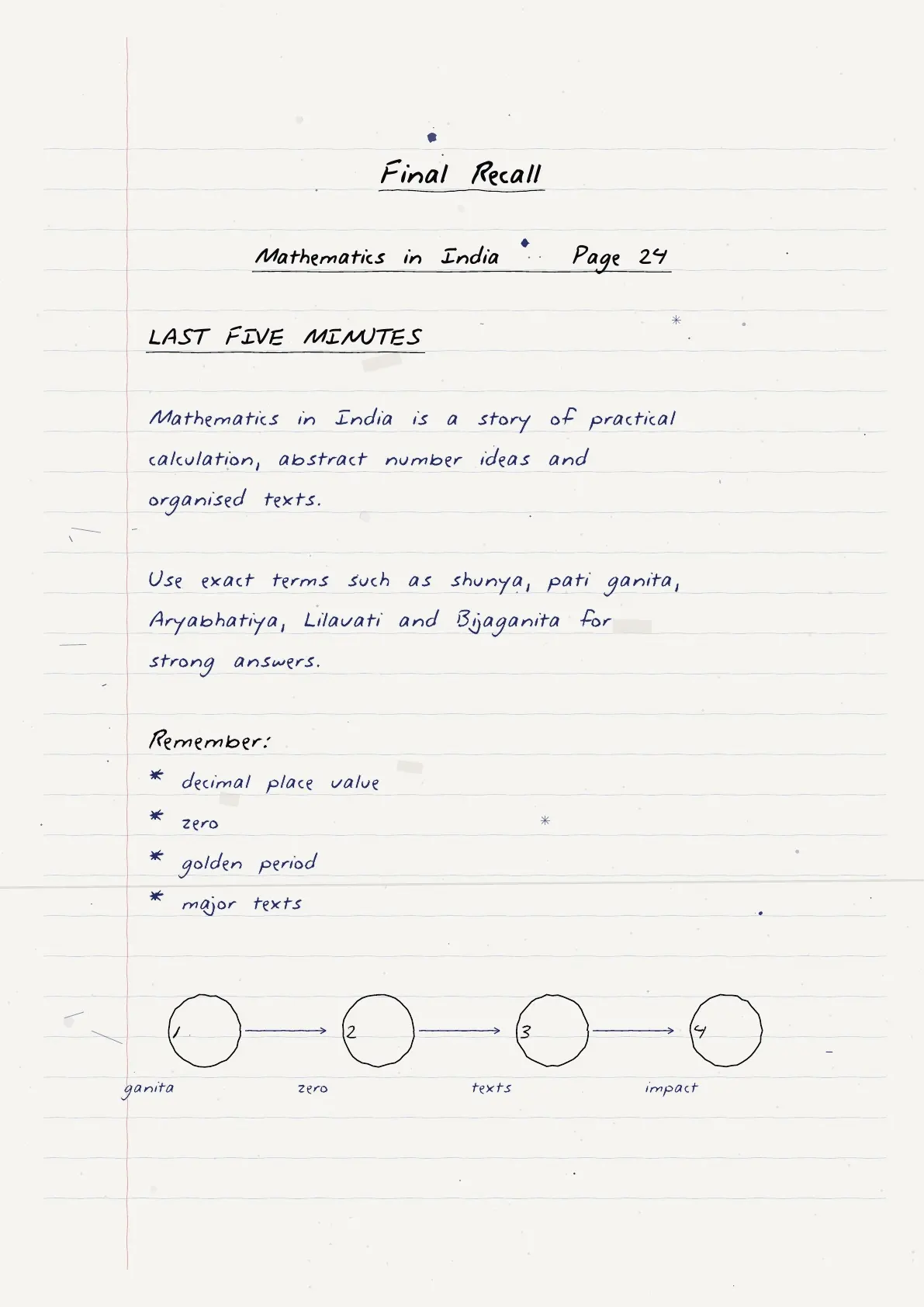
Student Feedback: Students revise this unit faster when they keep the chain clear: number names, Brahmi numerals, decimal place value, zero, ganita texts and applications.
Mathematics in India Handwritten Notes Overview
The Mathematics in India handwritten notes explain how Indian mathematical thought developed through number names, numerical symbols, decimal place value, zero, arithmetic and organised texts. The PDF is made for short 2026-27 Class 11 KTPI revision.
The central revision idea is simple: Indian mathematics joined practical calculation with abstract number ideas and concise scholarly writing.
- Theme: history and growth of mathematical knowledge in India.
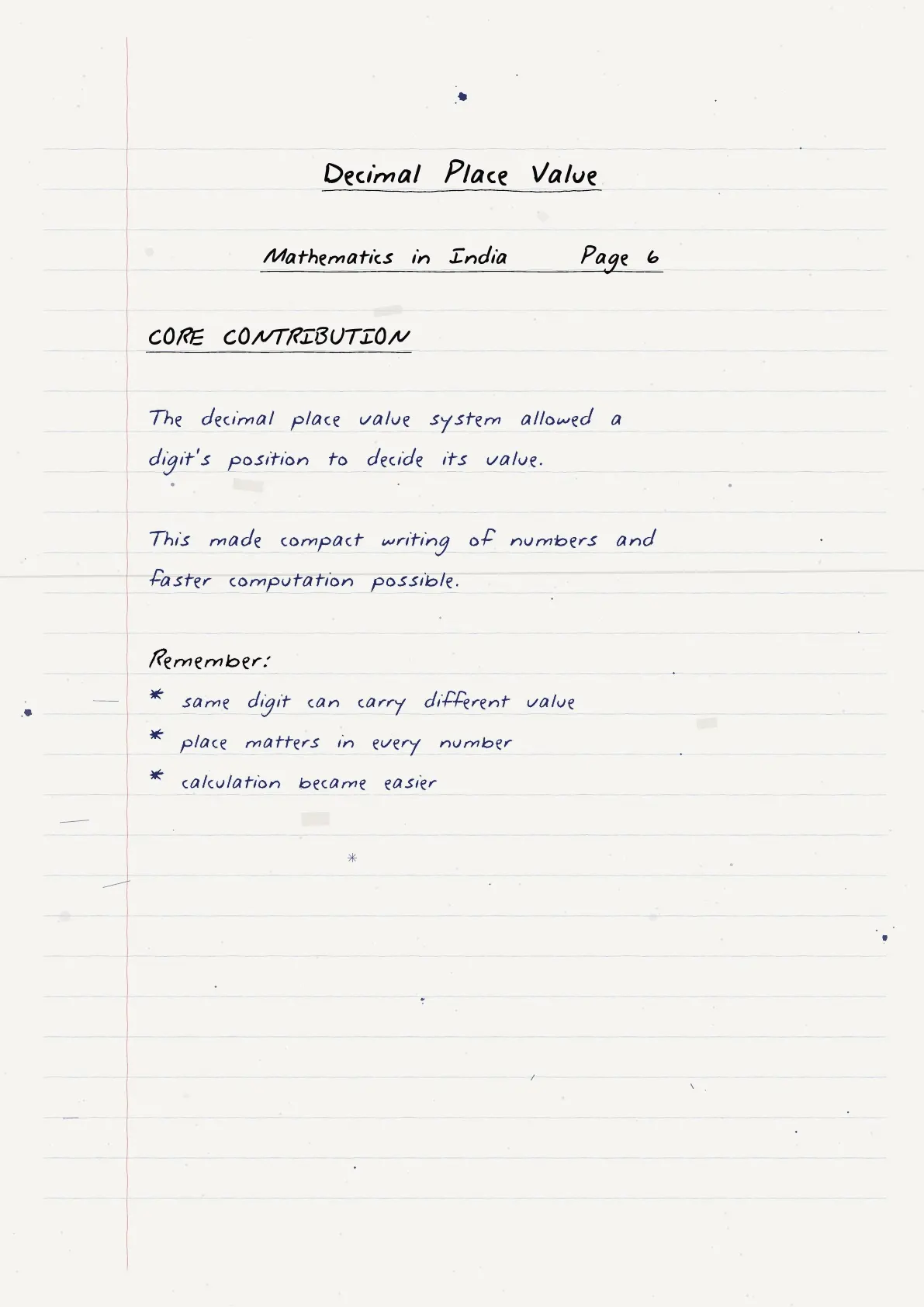
- Key contribution: decimal place value and zero made computation compact.
- Study map: evidence, scholars, texts, operations, geometry and astronomy links.
Numerals, Place Value and Zero
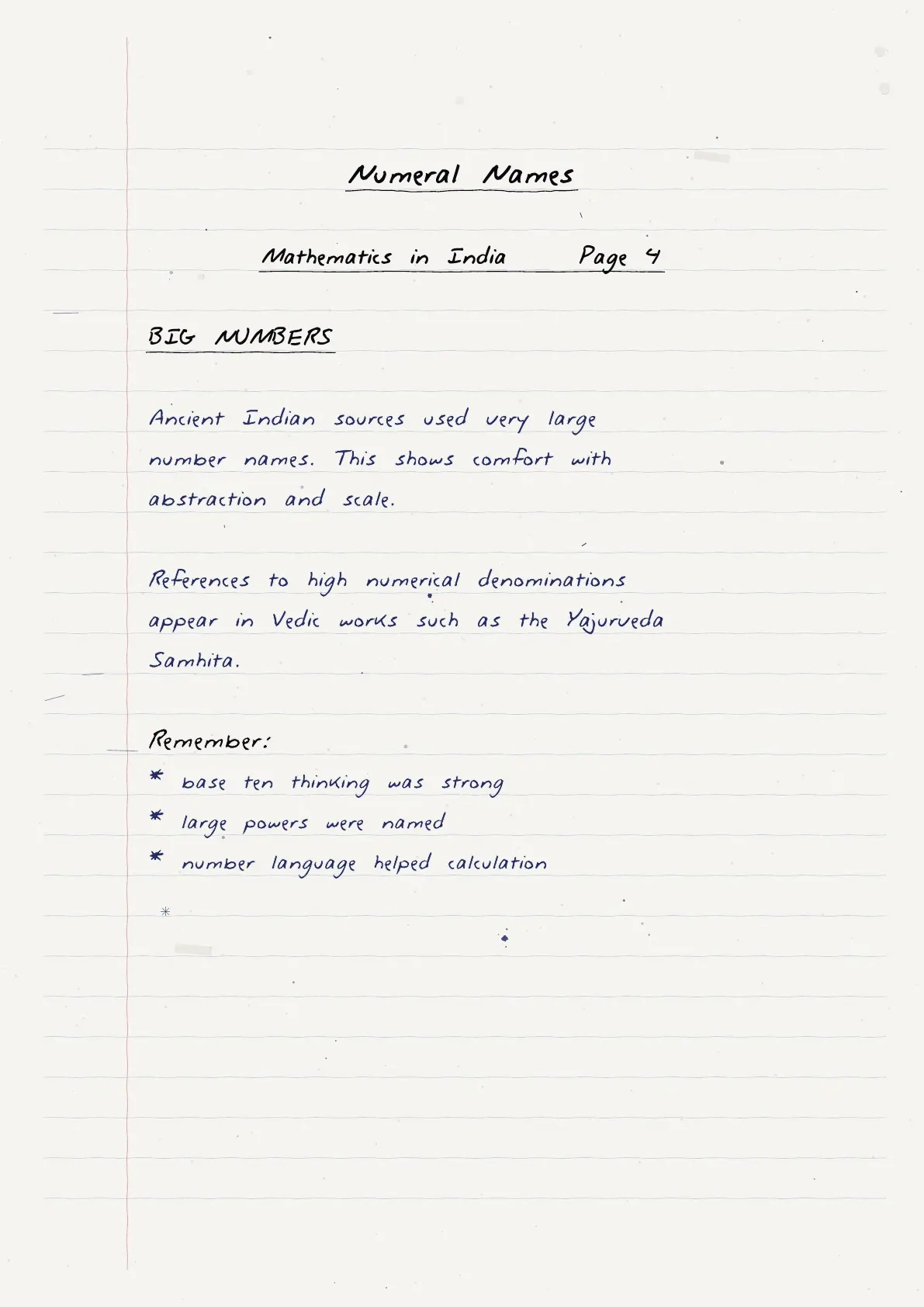
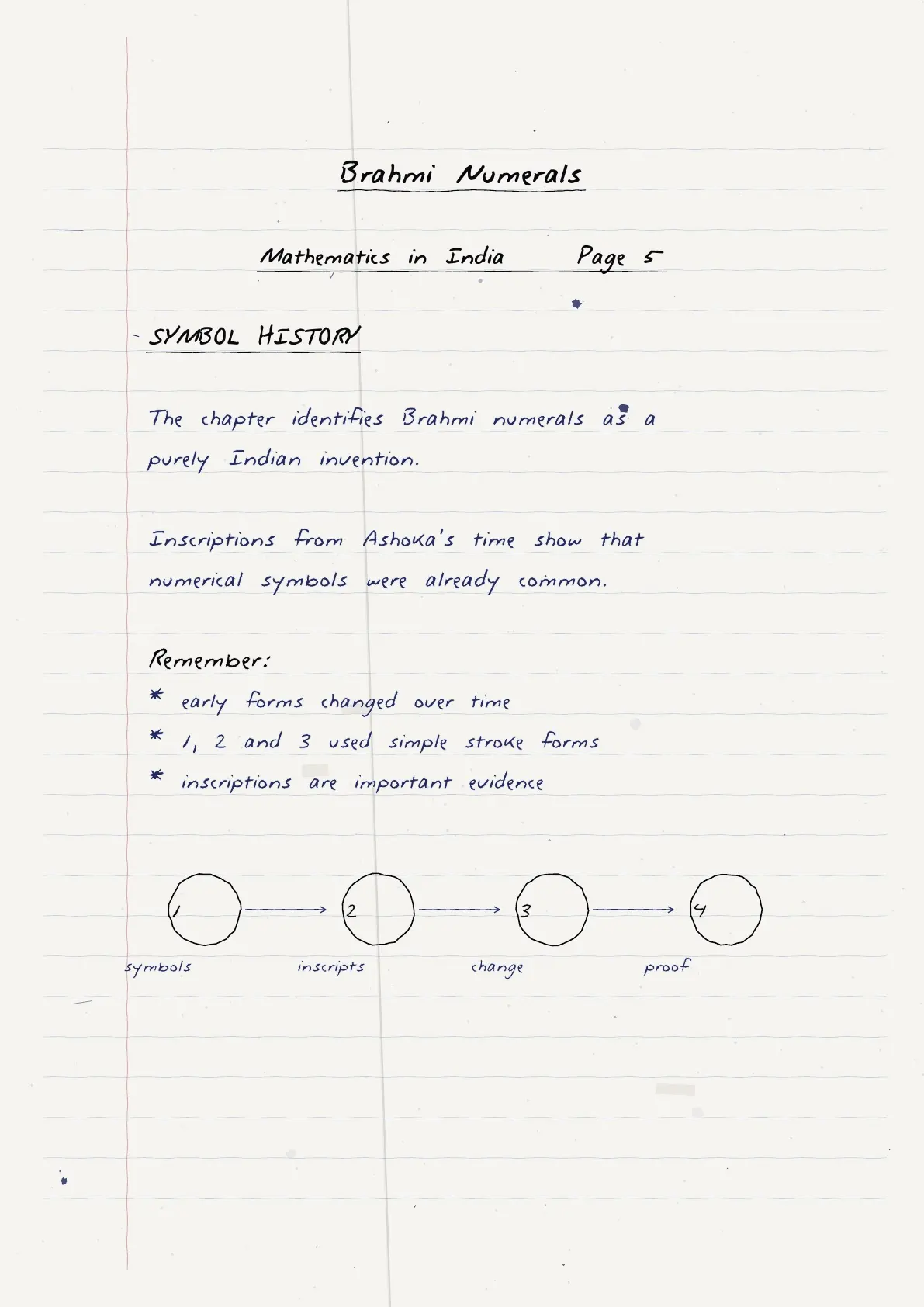
The chapter treats numerical symbolism as a major achievement. Brahmi numerals, Ashokan inscriptions, large number names and the use of zero help students explain why Indian mathematics mattered globally.
| Idea | Meaning | Revision use |
|---|---|---|
| Brahmi numerals | Early Indian numerical symbols seen through inscriptions. | Use as evidence for number history. |
| Decimal place value | A digit changes value by position in the number. | Explain why calculation became compact. |
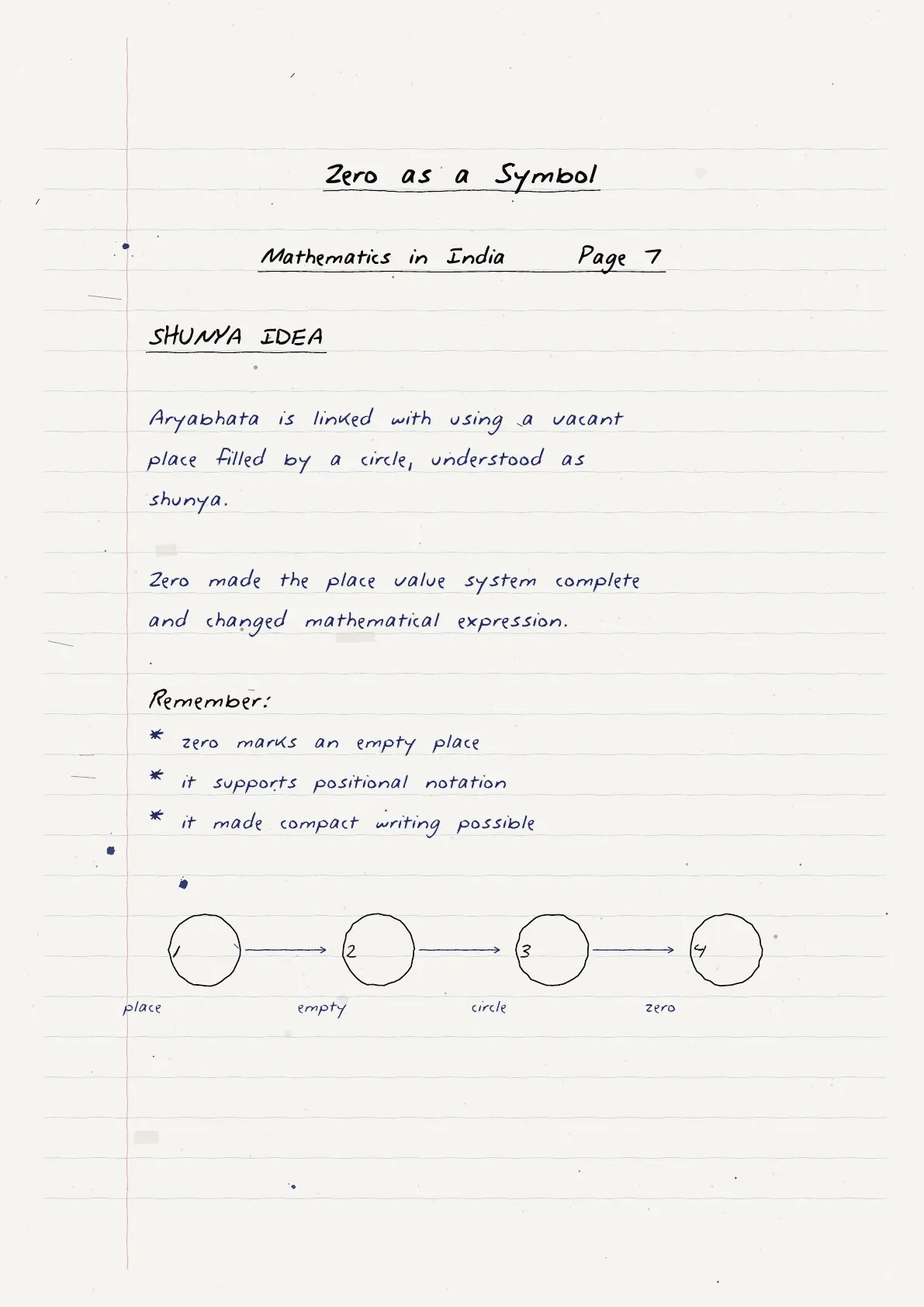
| Zero | The empty place was marked and used in notation. | Connect with shunya and computation. |
| Large number names | Ancient texts used names for very high numbers. | Shows abstract numerical thinking. |
Class 11 KTPI Mathematics in India Video
Source: BBC on YouTube
Golden Period Mathematicians and Texts
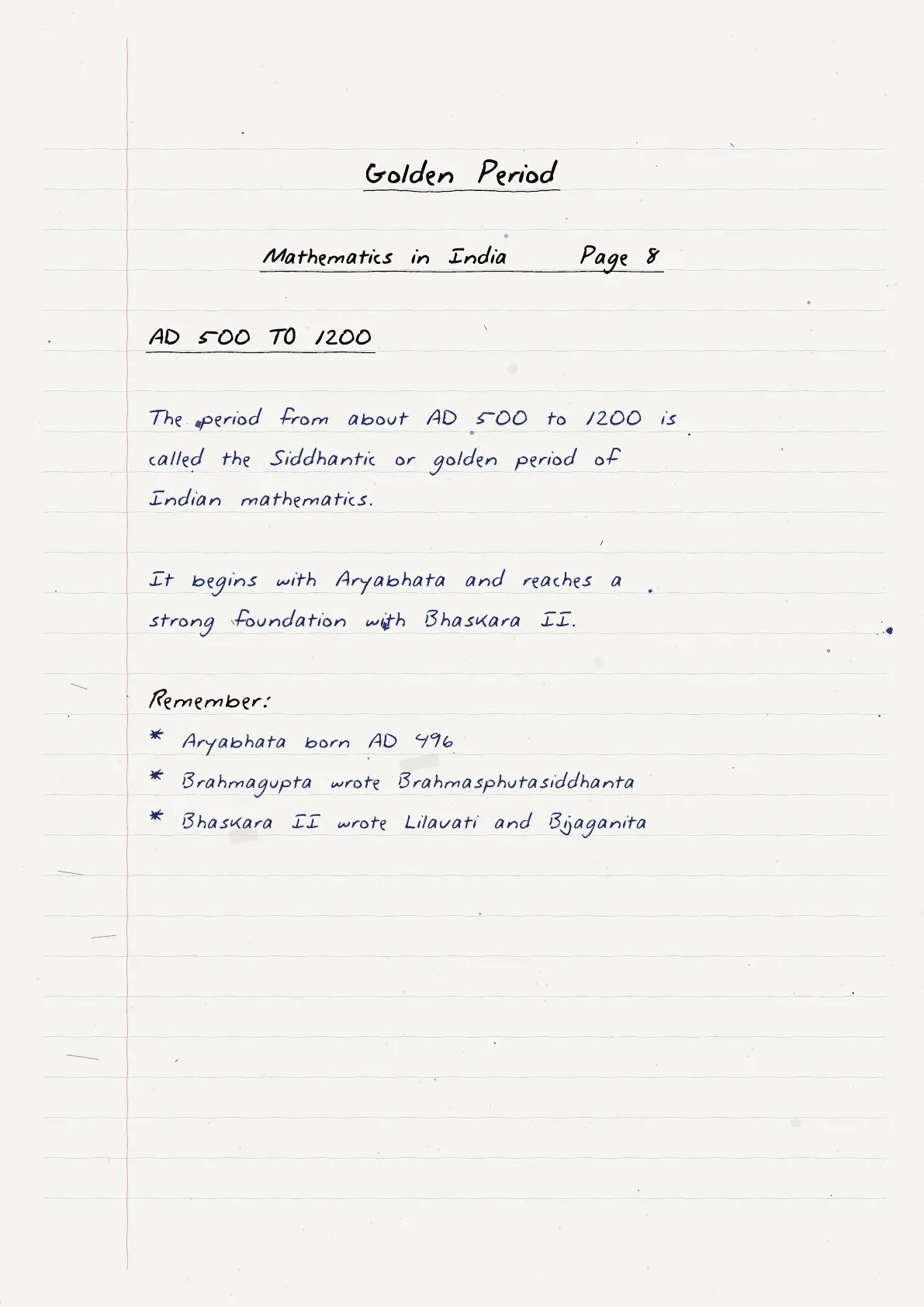
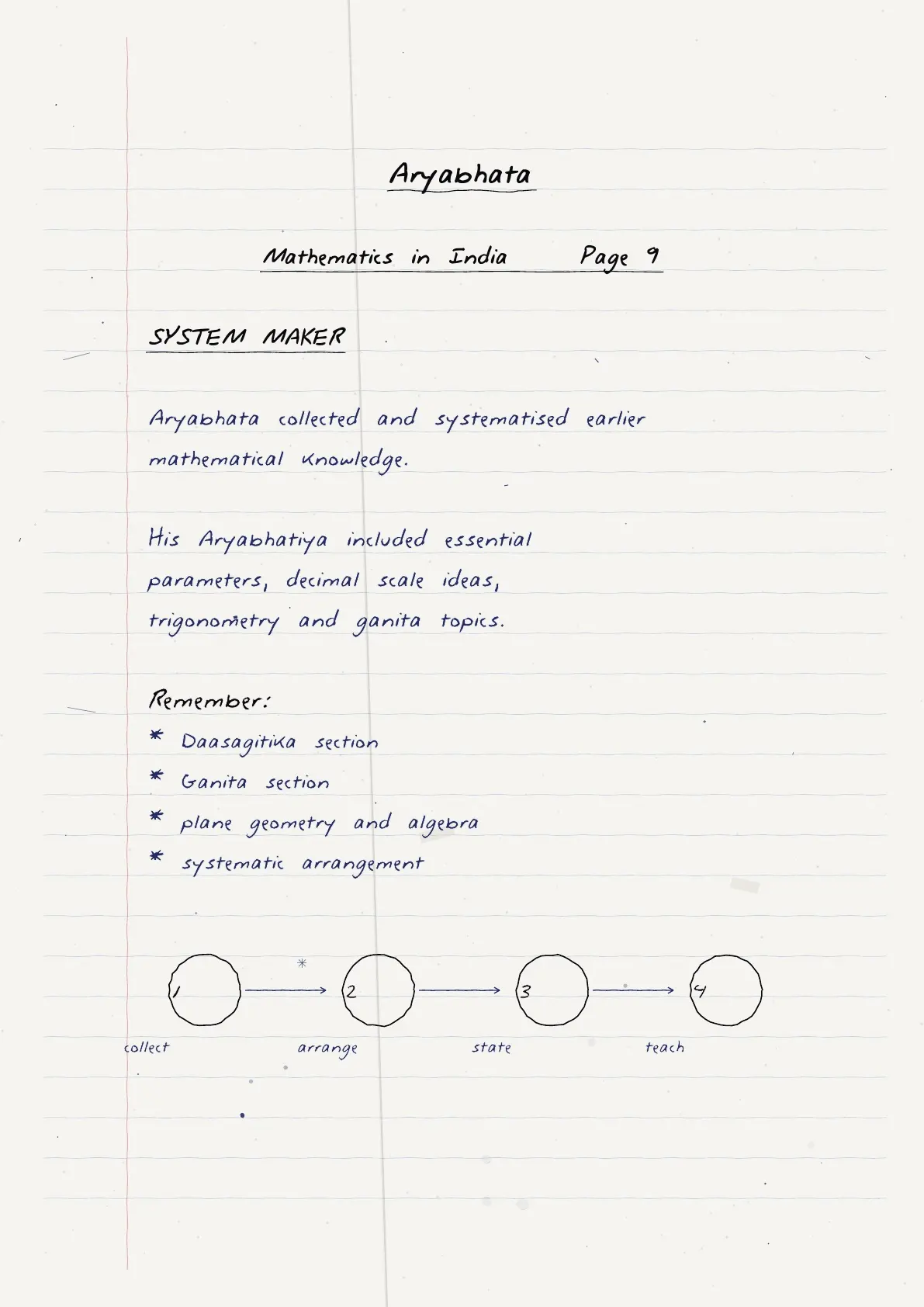
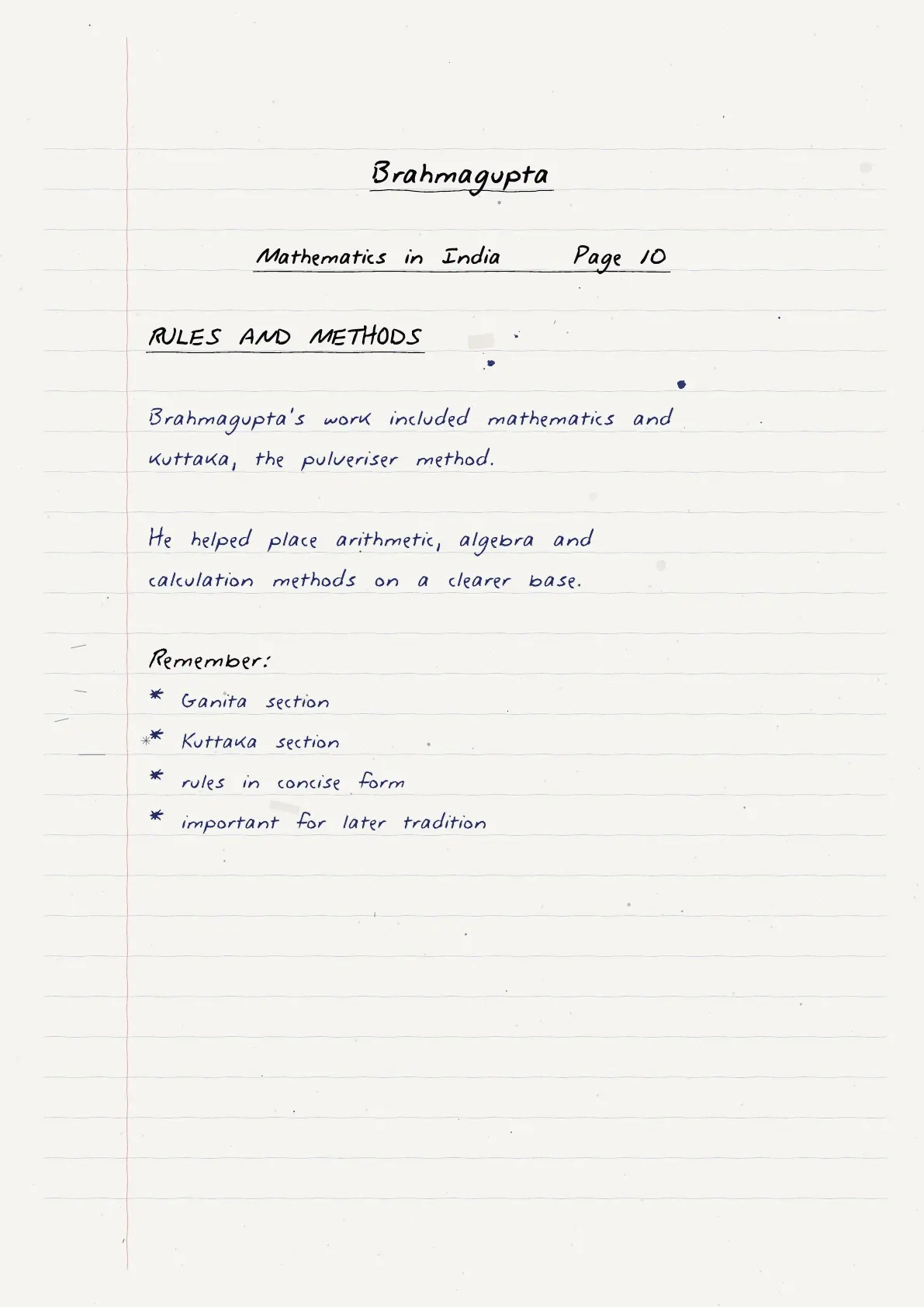
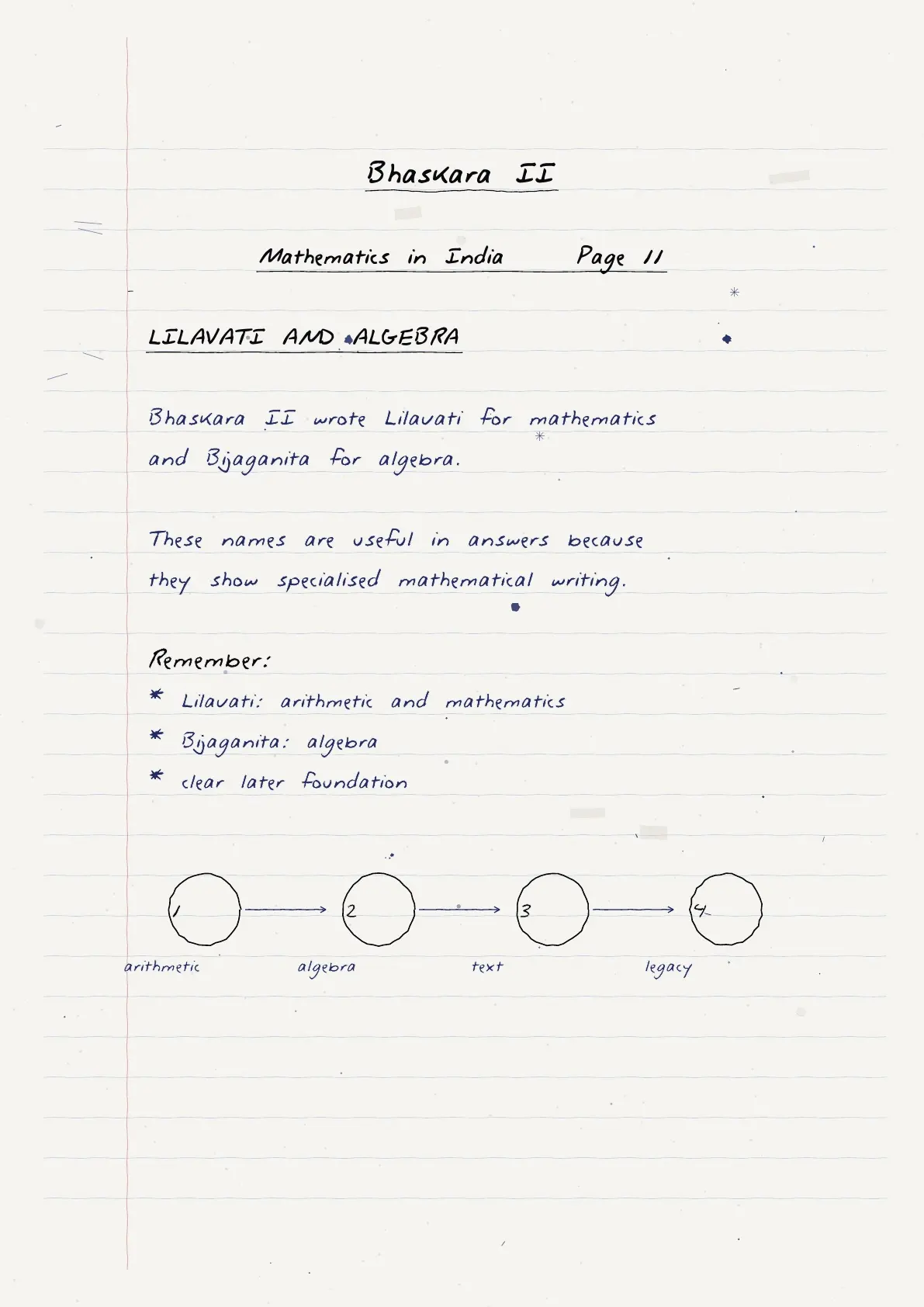
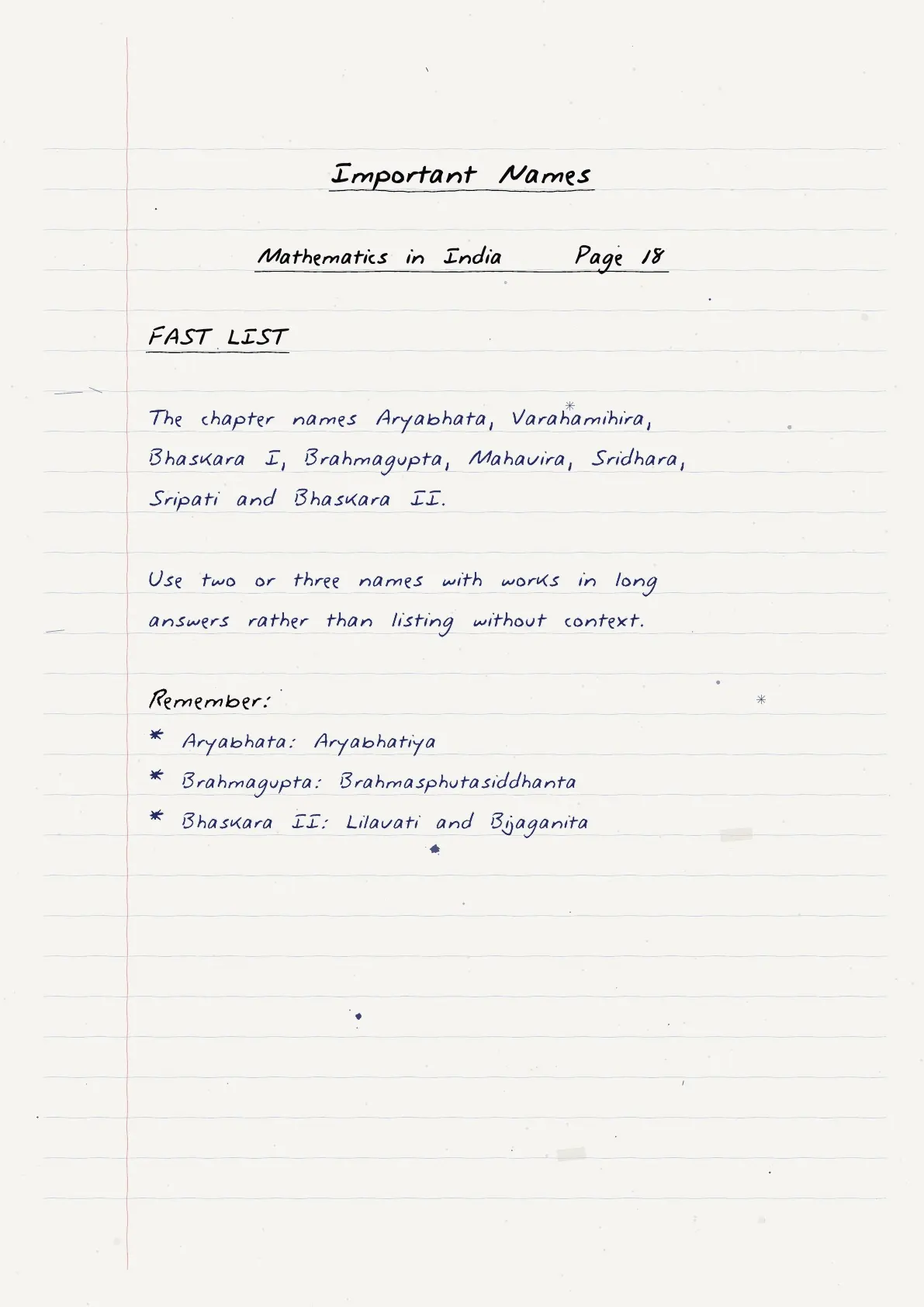
The period from about AD 500 to 1200 is important for answers. Aryabhata, Brahmagupta and Bhaskara II are the safest names to revise because the chapter links them with important texts and methods.
| Scholar or text | Key point | How to remember |
|---|---|---|
| Aryabhata | Systematised mathematical knowledge in Aryabhatiya. | Start of the golden period frame. |
| Brahmagupta | Wrote Brahmasphutasiddhanta with ganita and kuttaka sections. | Link with rules and equation methods. |
| Bhaskara II | Wrote Lilavati and Bijaganita. | Link with arithmetic and algebra. |
| Commentaries | Helped explain concise rules in older works. | Use to show knowledge transmission. |
Arithmetic, Algebra, Geometry and Astronomy
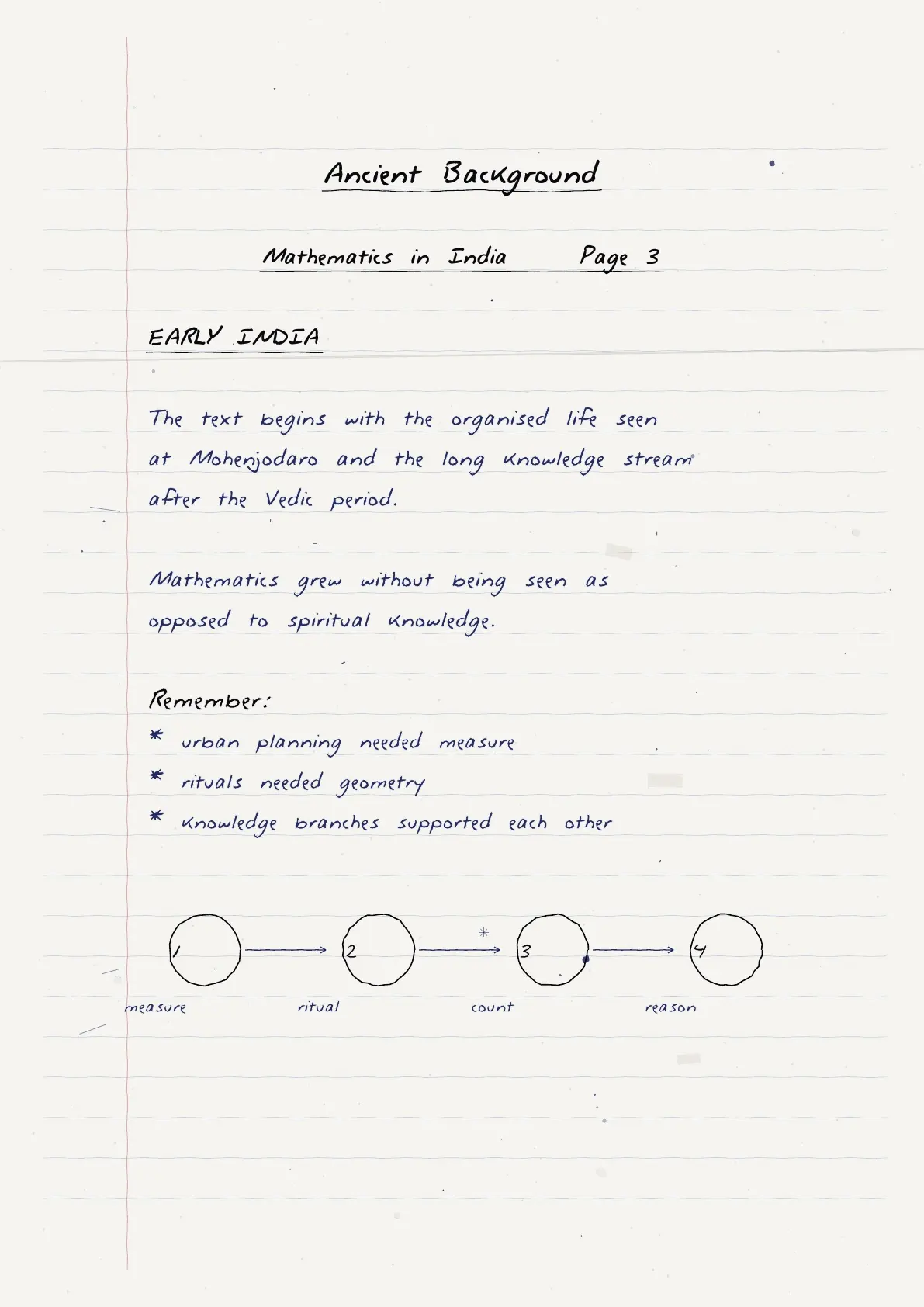
Mathematics in India was not only symbolic. It was used in arithmetic, algebra, geometry, astronomy, measurement and ritual layouts. This helps students move beyond a list of names.
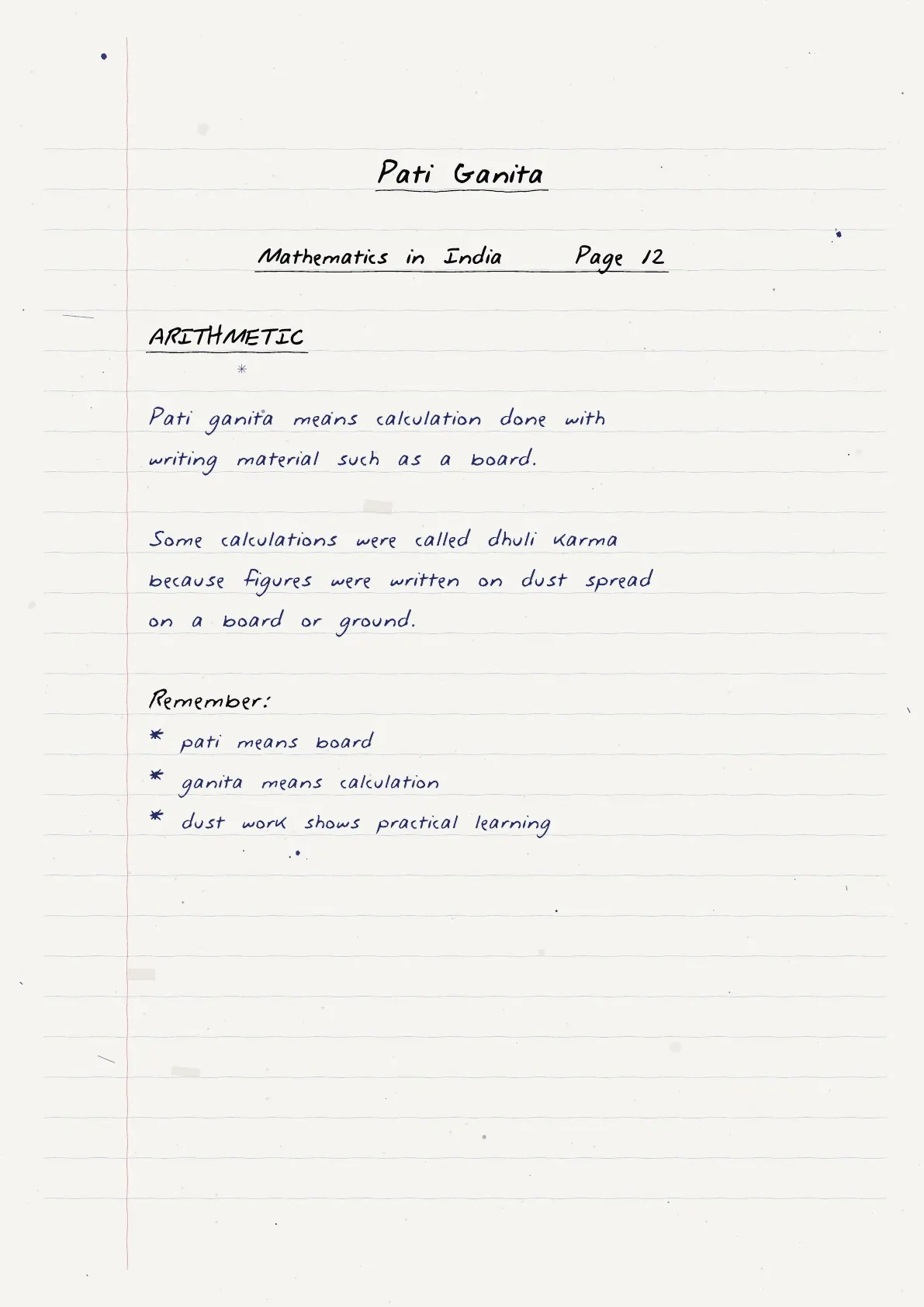
- Pati ganita: calculation using a board or writing surface.
- Dhuli karma: calculation written on dust spread on a board or ground.
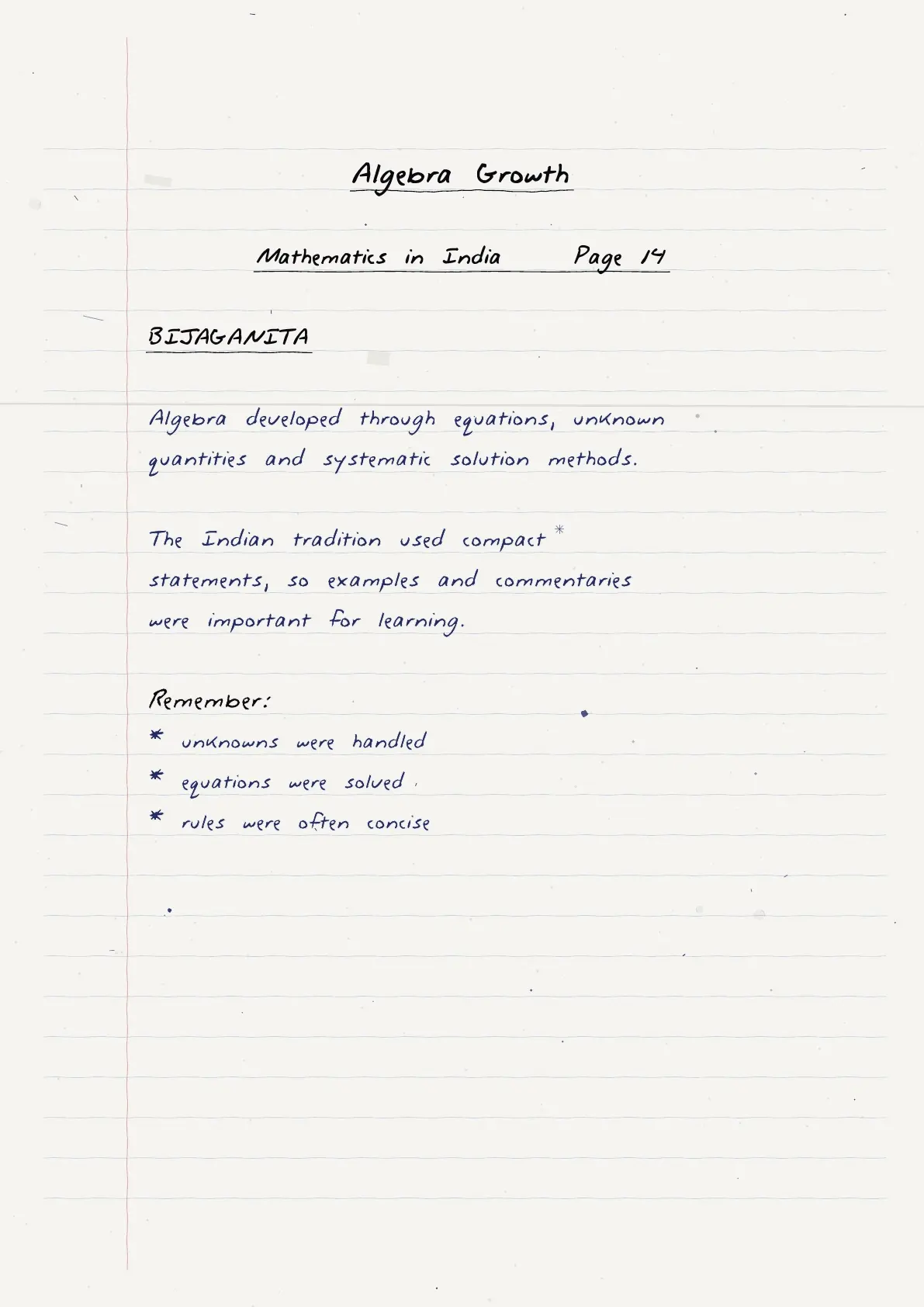
- Algebra: equations and unknown quantities became part of systematic mathematics.
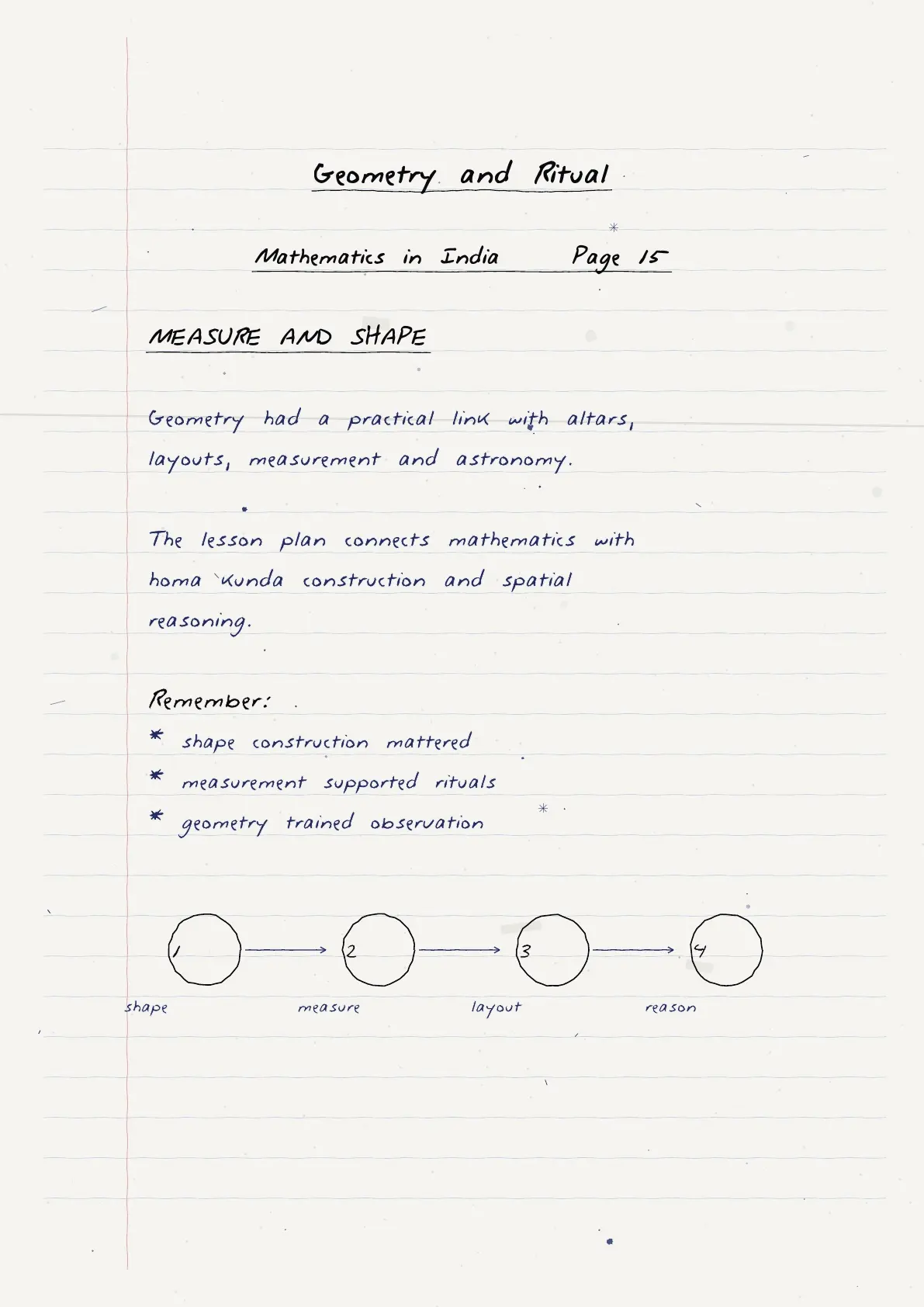
- Geometry: shape, measure and layout were linked with practical and ritual use.
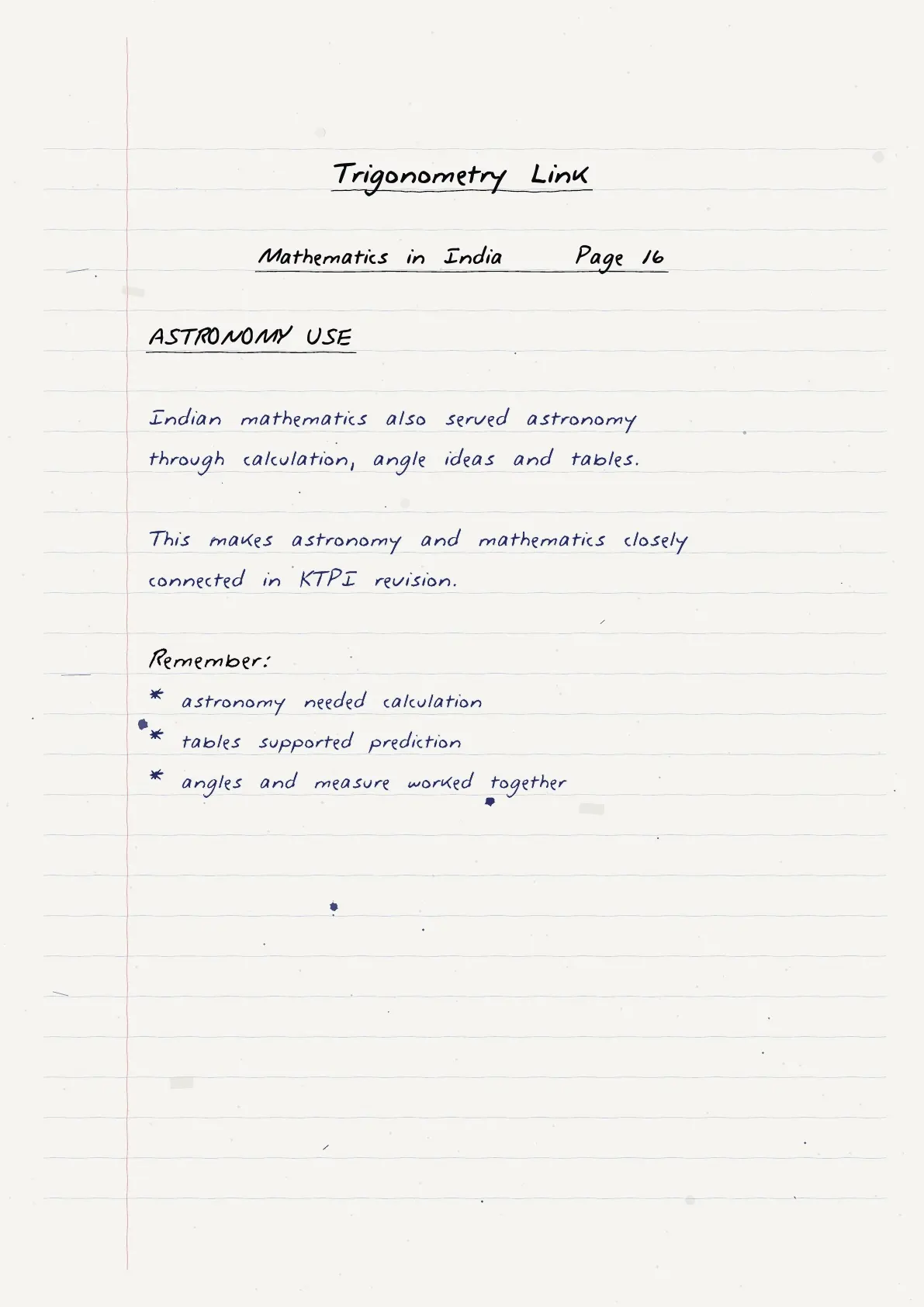
- Astronomy: calculations and tables supported observation and prediction.
How to Use the Mathematics in India Handwritten Notes PDF
Start with the first pages for the chapter theme. Then revise the pages on Brahmi numerals, place value and zero. End with the golden period, major mathematicians, texts and the exam answer frame.
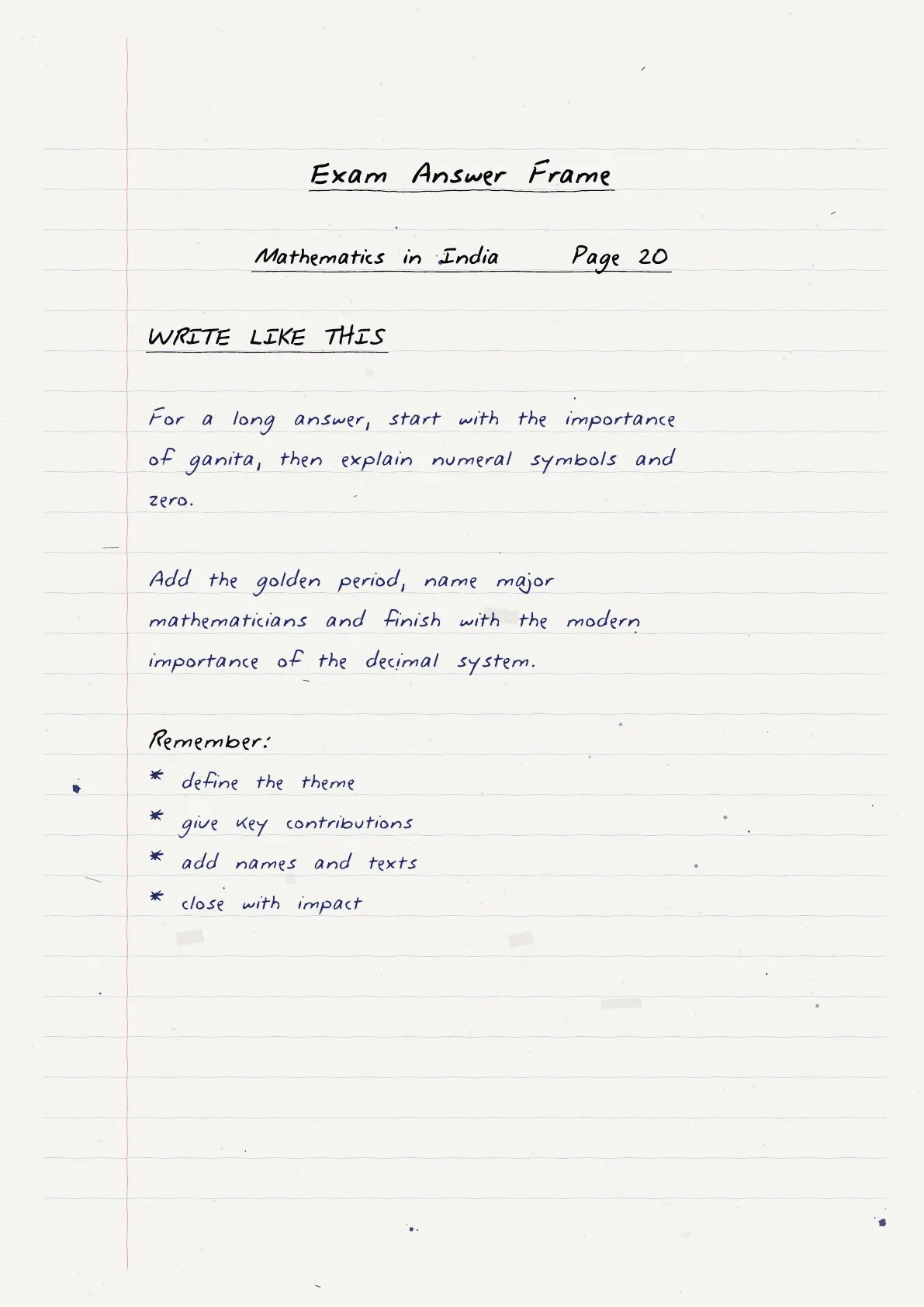
For a 200-word answer, use this order: introduce ganita, explain number symbolism and zero, name Aryabhata, Brahmagupta and Bhaskara II, add one text name, and close with the impact of the decimal system. Exact terms score better than general praise.
Related Class 11 KTPI Resources
| Resource | Use it for | Link |
|---|---|---|
| NCERT Solutions | Exercise answers for the related Mathematics in India source unit. | Class 11 KTPI Mathematics in India Solutions |
| NCERT Book PDF | Original textbook chapter reading. | Class 11 KTPI Mathematics in India Book PDF |
| Notes | Typed revision notes for theory-heavy study. | Class 11 KTPI Mathematics in India Notes |
| Handwritten Notes | Quick one-shot revision before tests. | Class 11 KTPI Mathematics in India Handwritten Notes |
All Class 11 KTPI Handwritten Notes
| Chapter | Title | Handwritten Notes |
|---|---|---|
| Chapter 1 | Astronomy in India | Open handwritten notes |
| Chapter 2 | Chemistry in India | Open handwritten notes |
| Chapter 3 | Indian Literature Part I Introduction of Indian Literature | Open handwritten notes |
| Chapter 4 | Indian Philosophical Systems | Open handwritten notes |
| Chapter 5 | Indian Traditional Knowledge on Environmental Conservation | Open handwritten notes |
| Chapter 6 | Life Sciences 1 Ayurveda for Life Health and Well-Being | Open handwritten notes |
| Chapter 7 | Life Sciences 2 Historical Evolution of Medical Tradition in Ancient India | Open handwritten notes |
| Chapter 8 | Mathematics in India | Open handwritten notes |
| Chapter 9 | Theatre and Drama in India | Open handwritten notes |
Class 11 KTPI Mathematics in India Handwritten Notes FAQs
Ques. What is covered in Class 11 KTPI Mathematics in India handwritten notes?
Ans. The PDF covers number names, Brahmi numerals, decimal place value, zero, ganita, major mathematicians, texts and applications.
Ques. Why is zero important in Mathematics in India?
Ans. Zero completed the place value system by marking an empty place and made compact calculation possible.
Ques. Which mathematicians should students remember?
Ans. Aryabhata, Brahmagupta and Bhaskara II are the safest names because the chapter connects them with major texts and methods.
Ques. How should students write long answers from this chapter?
Ans. Start with ganita, explain numerical symbolism and zero, name key scholars and texts, then add the impact of decimal place value.



Comments