




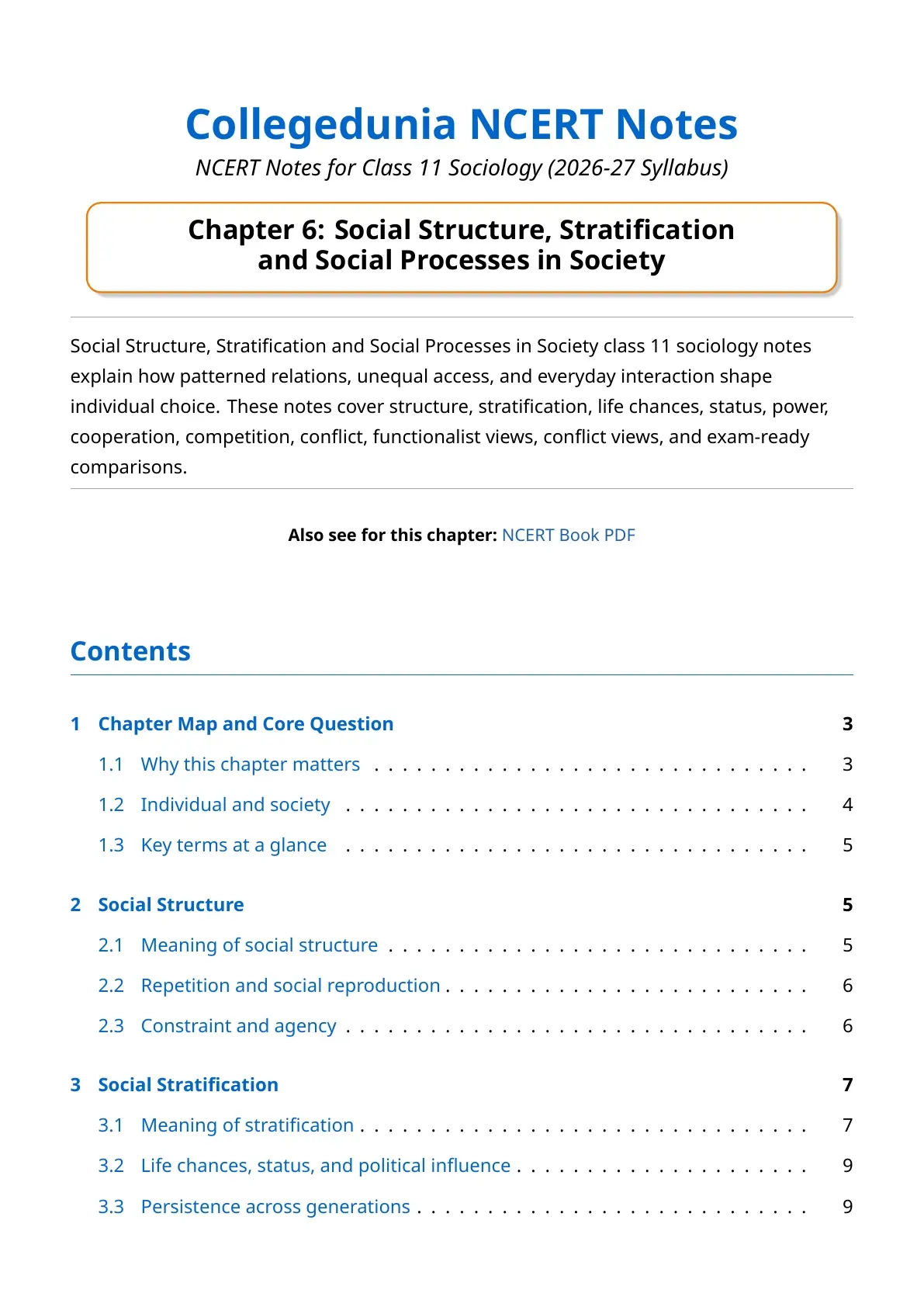
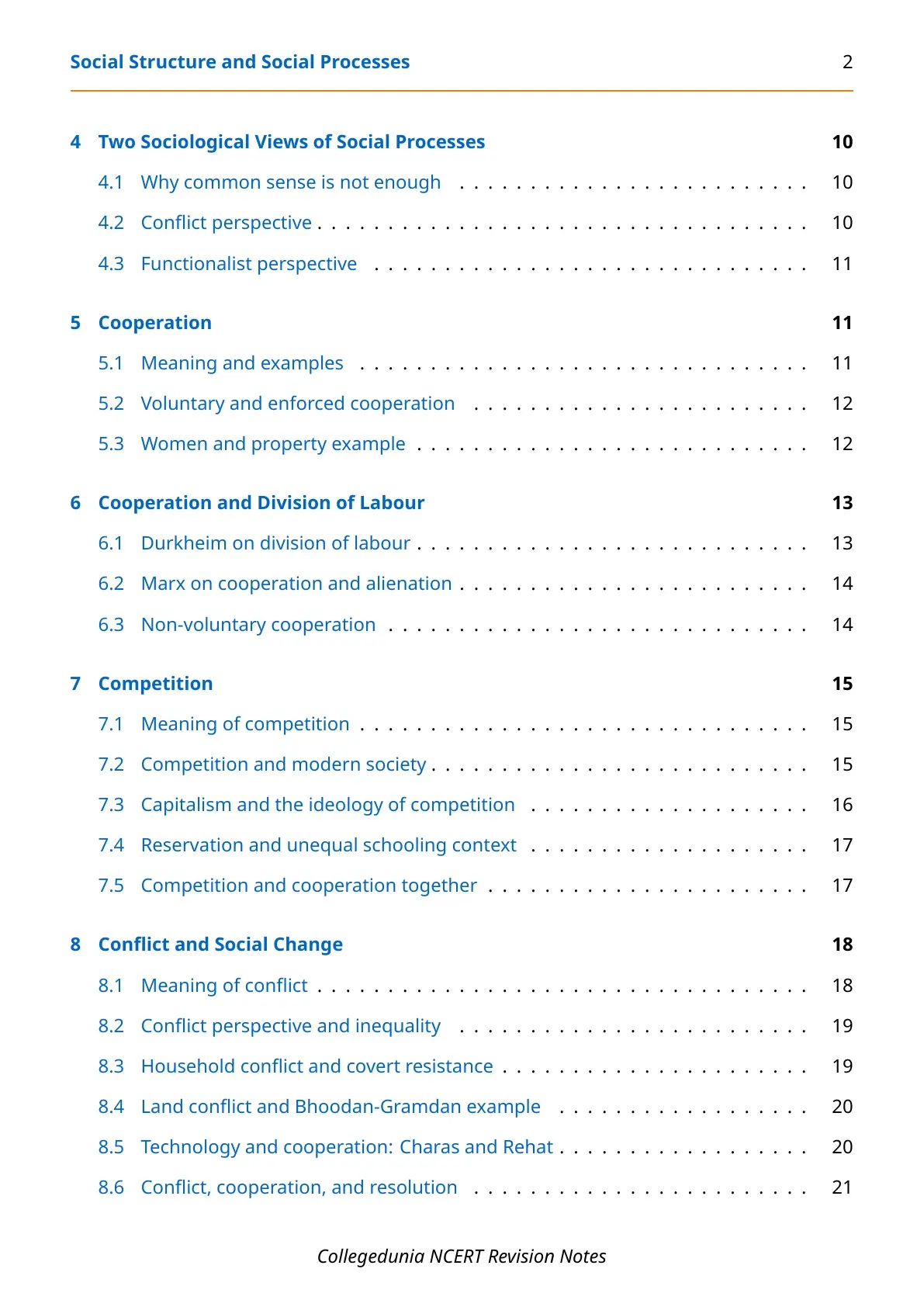
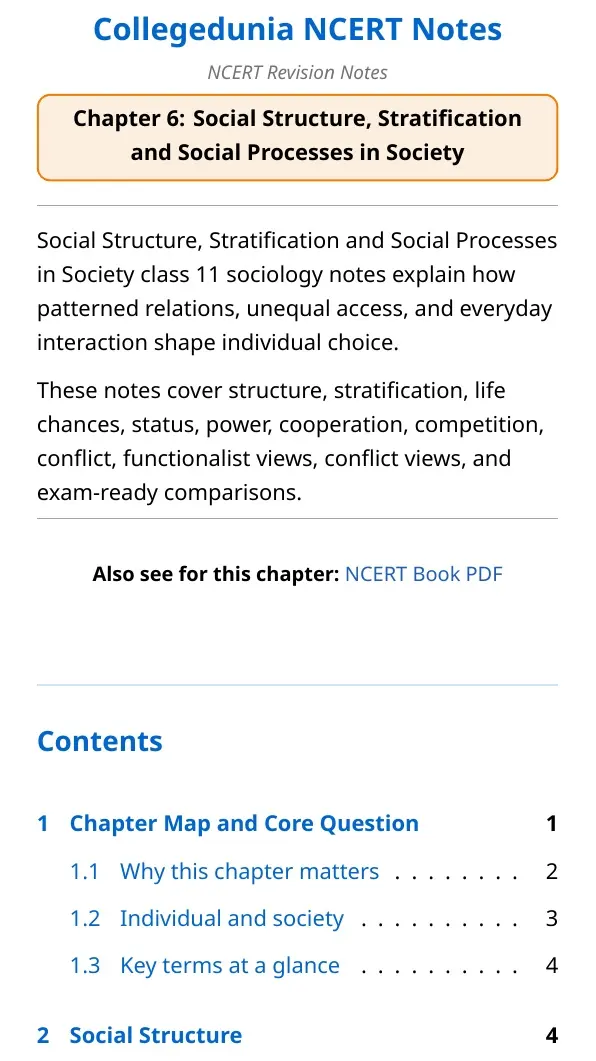
The NCERT Class 11 Sociology Chapter 6 Social Structure, Stratification and Social Processes in Society Notes help students revise the 2026-27 NCERT chapter on patterned social relations, inequality and everyday interaction. The PDF explains social structure, stratification, life chances, status, power, cooperation, competition and conflict in a compact revision format.
- Best for: Class 11 Sociology tests, NCERT reading and pre-exam revision.
- PDF focus: social structure, stratification, life chances, cooperation, competition and conflict.
- Chapter value: this chapter links individual action with society's patterned inequalities.
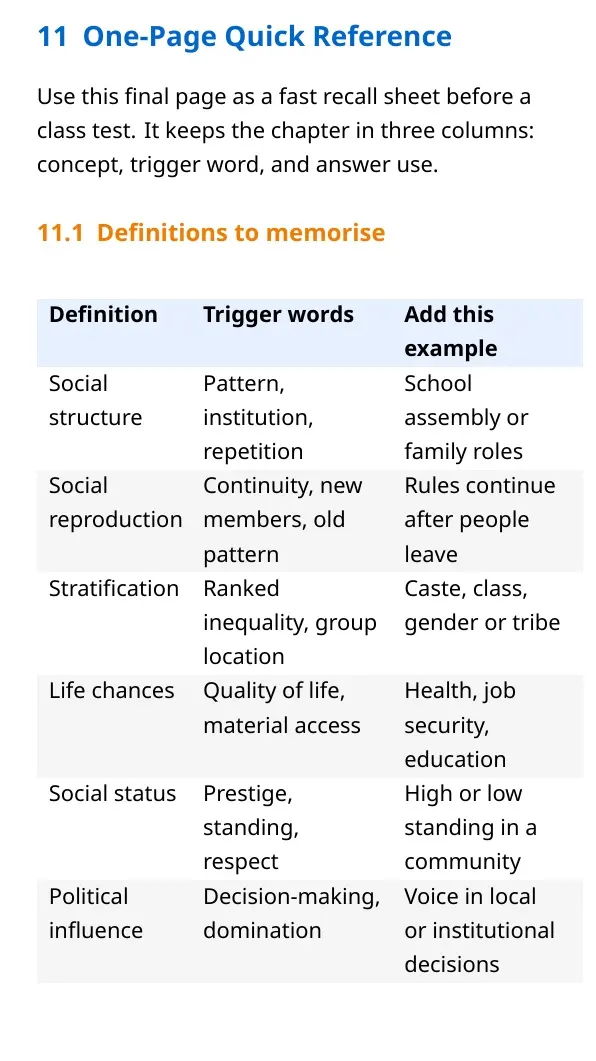
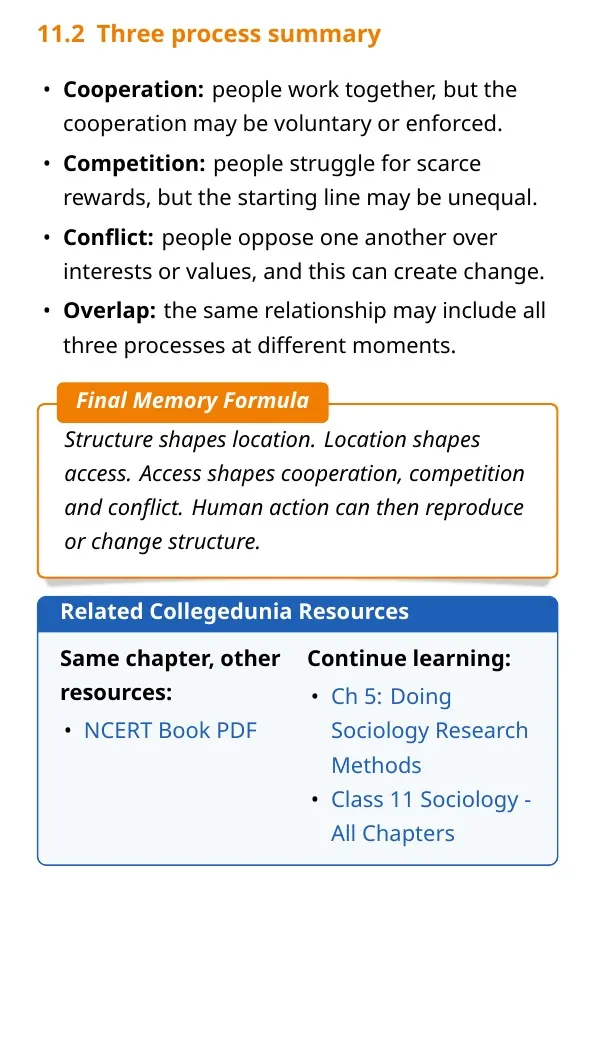
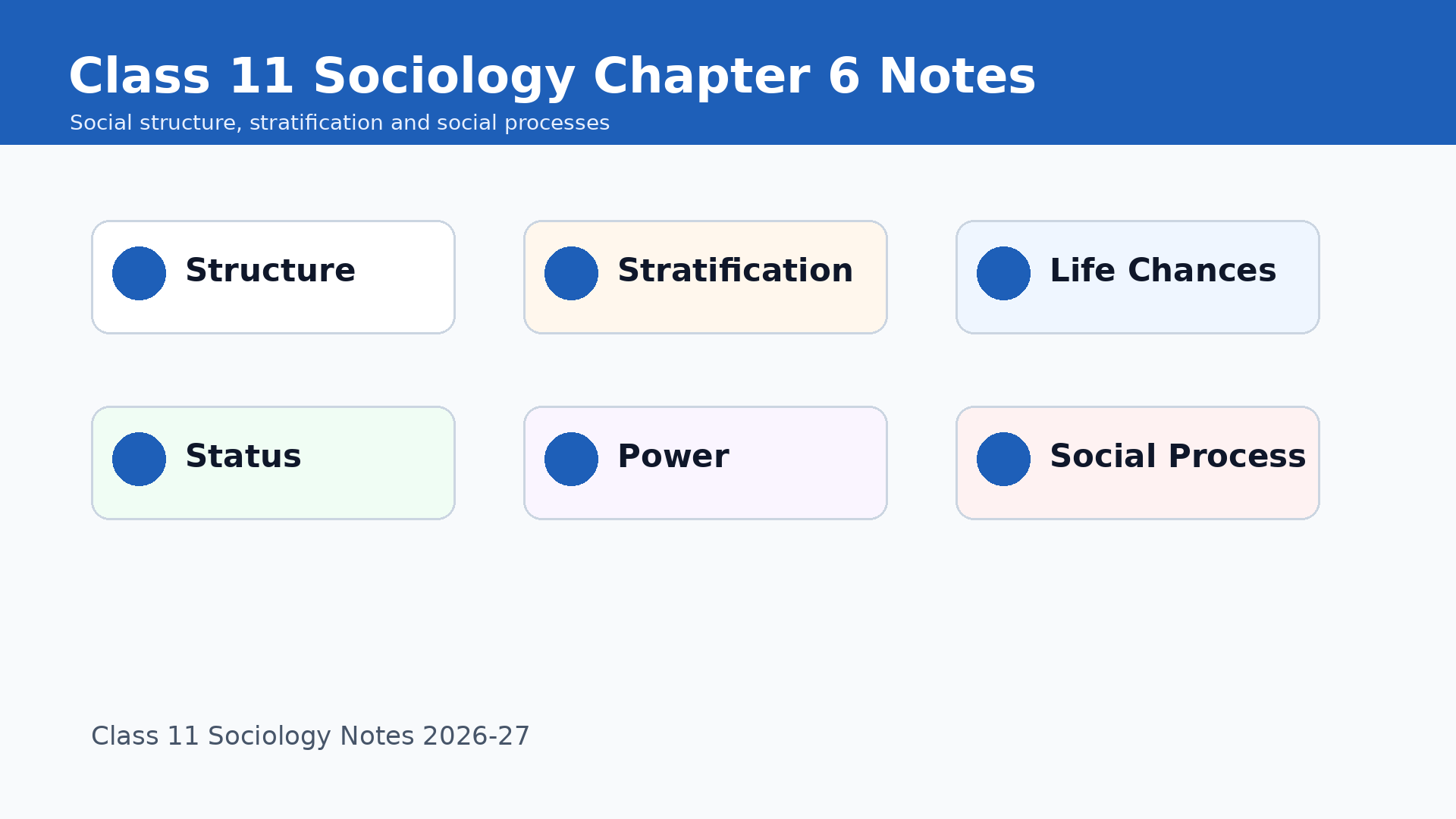
Student Feedback: In a Collegedunia poll of 10,980 Class 11 Sociology students before the 2026 exams, 76% said this chapter became easier after revising structure, stratification and social processes in one comparison chart.
Source: 2026 Class 11 Sociology student poll across CBSE schools.
What the Social Structure and Stratification Notes Cover
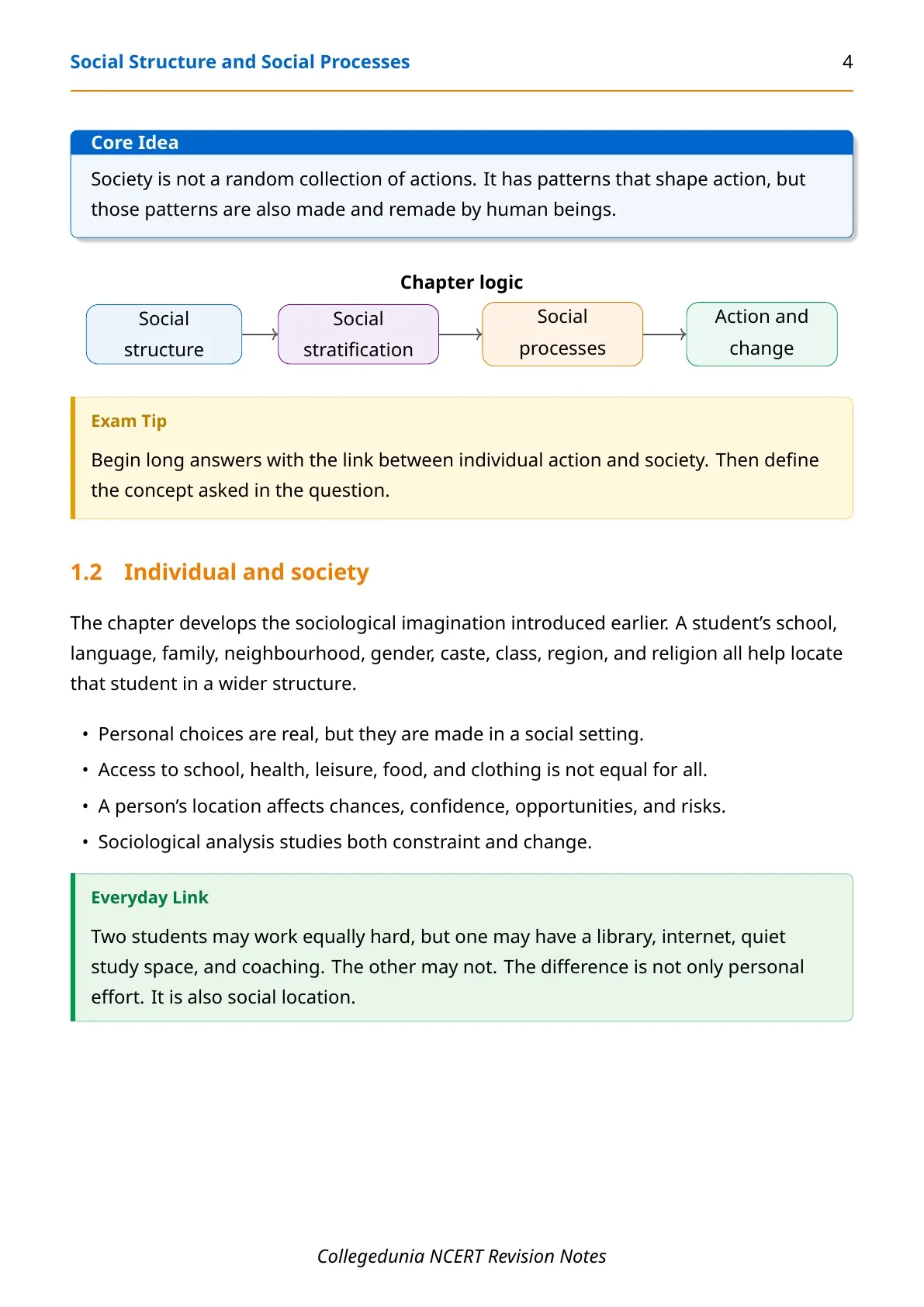
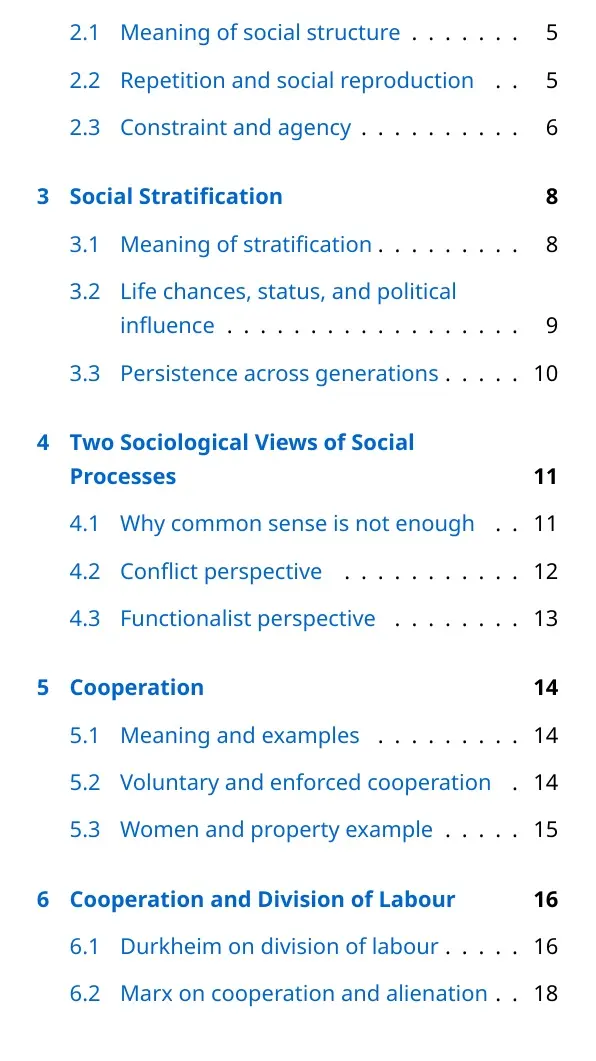
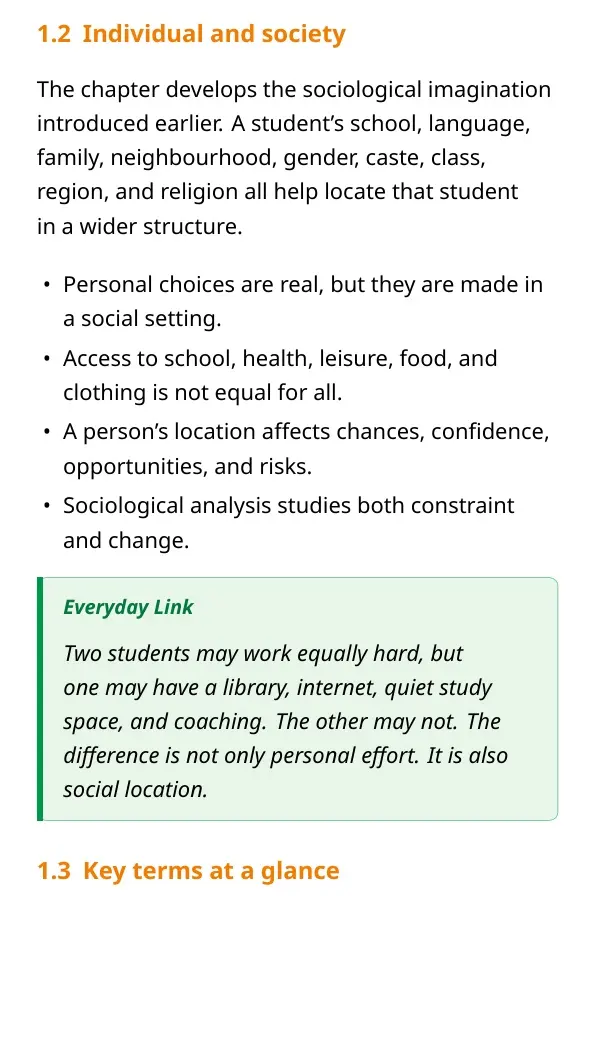
Chapter 6 explains how individual choices are shaped by patterned relationships and unequal social locations. Social structure gives society a regular form, while social stratification shows patterned inequality within that form.
| PDF section | What students revise |
|---|---|
| Social structure | Patterns, institutions, repetition, social reproduction, constraint and agency. |
| Social stratification | Life chances, social status, political influence and durable inequality. |
| Social processes | Cooperation, competition and conflict as connected forms of interaction. |
| Perspectives | Functionalist and conflict views of order, power and change. |
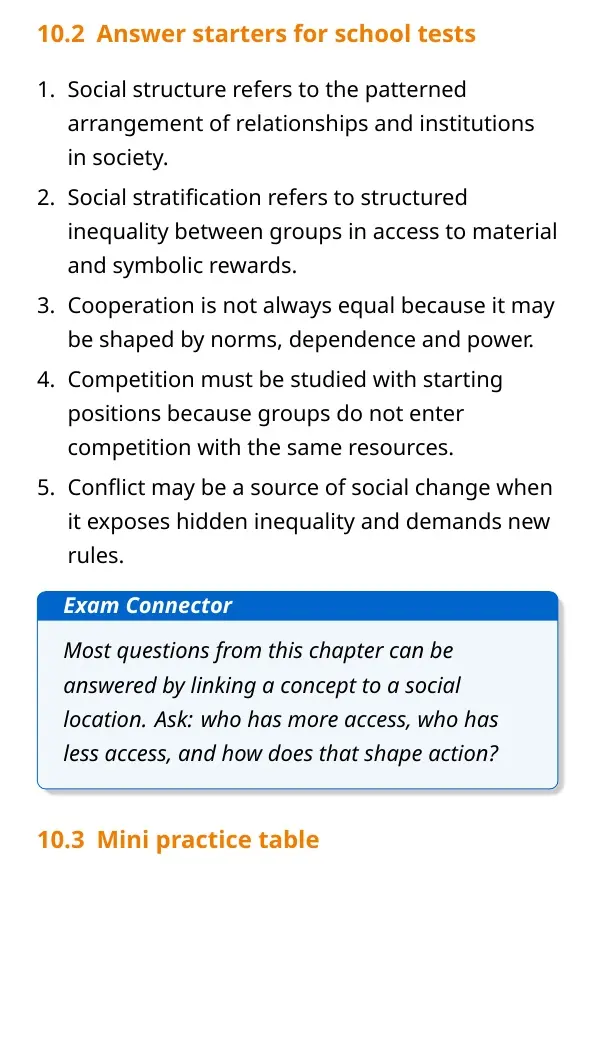
For exam answers, connect every social process to social location and unequal access.
Social Structure and Stratification Class 11 Sociology Video
Source: Magnet Brains on YouTube
Social Structure and Stratification in Class 11 Sociology
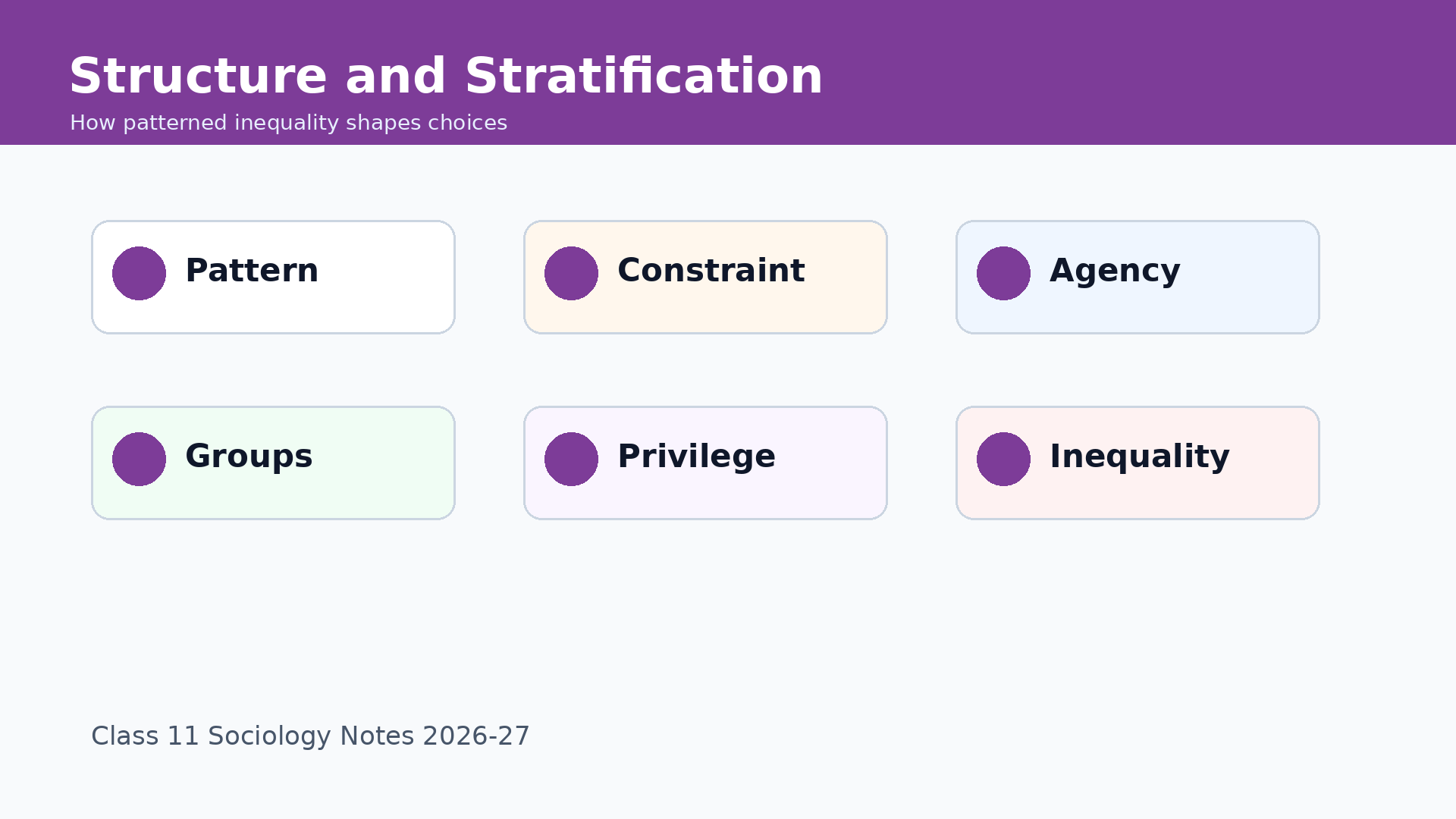
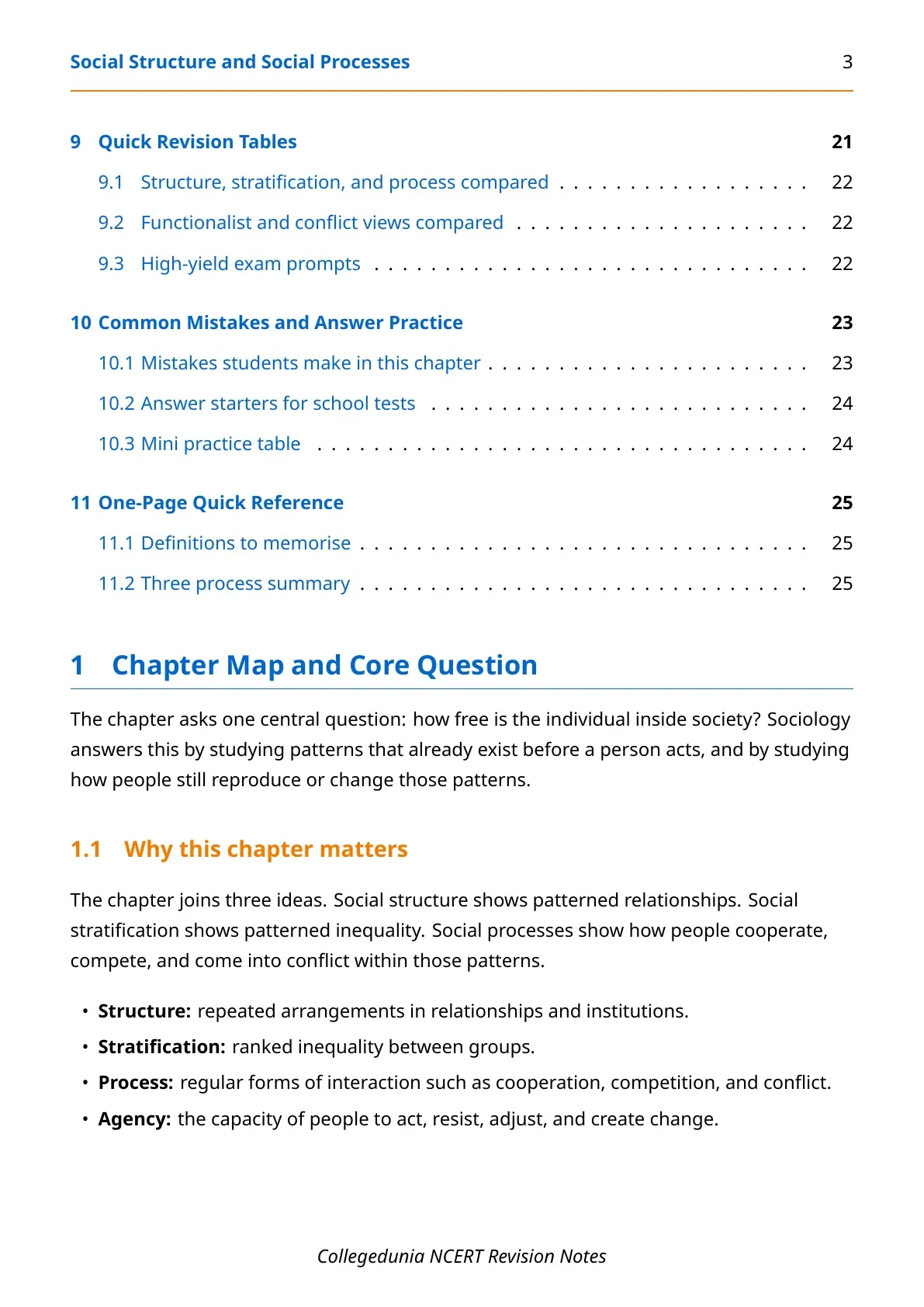
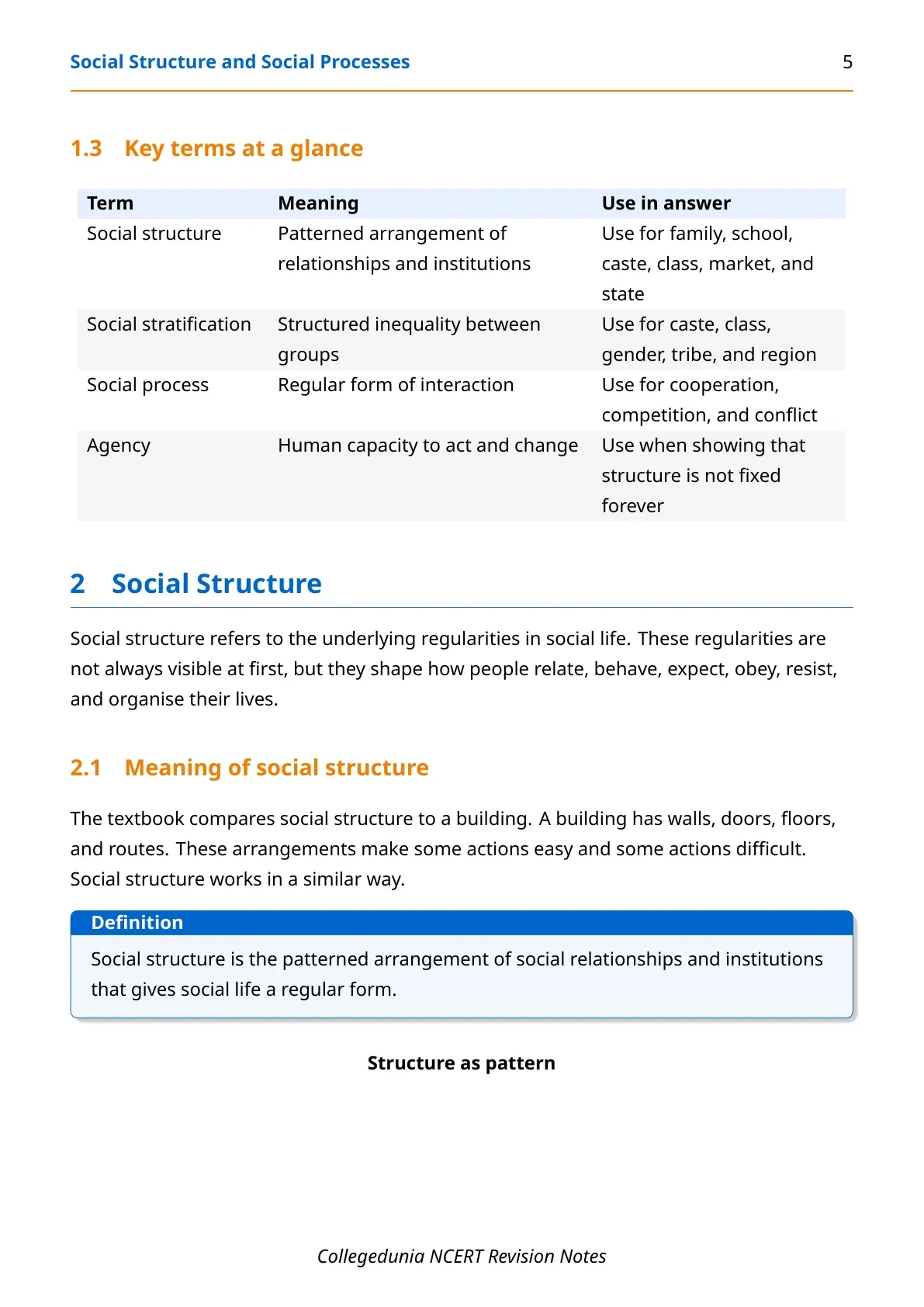
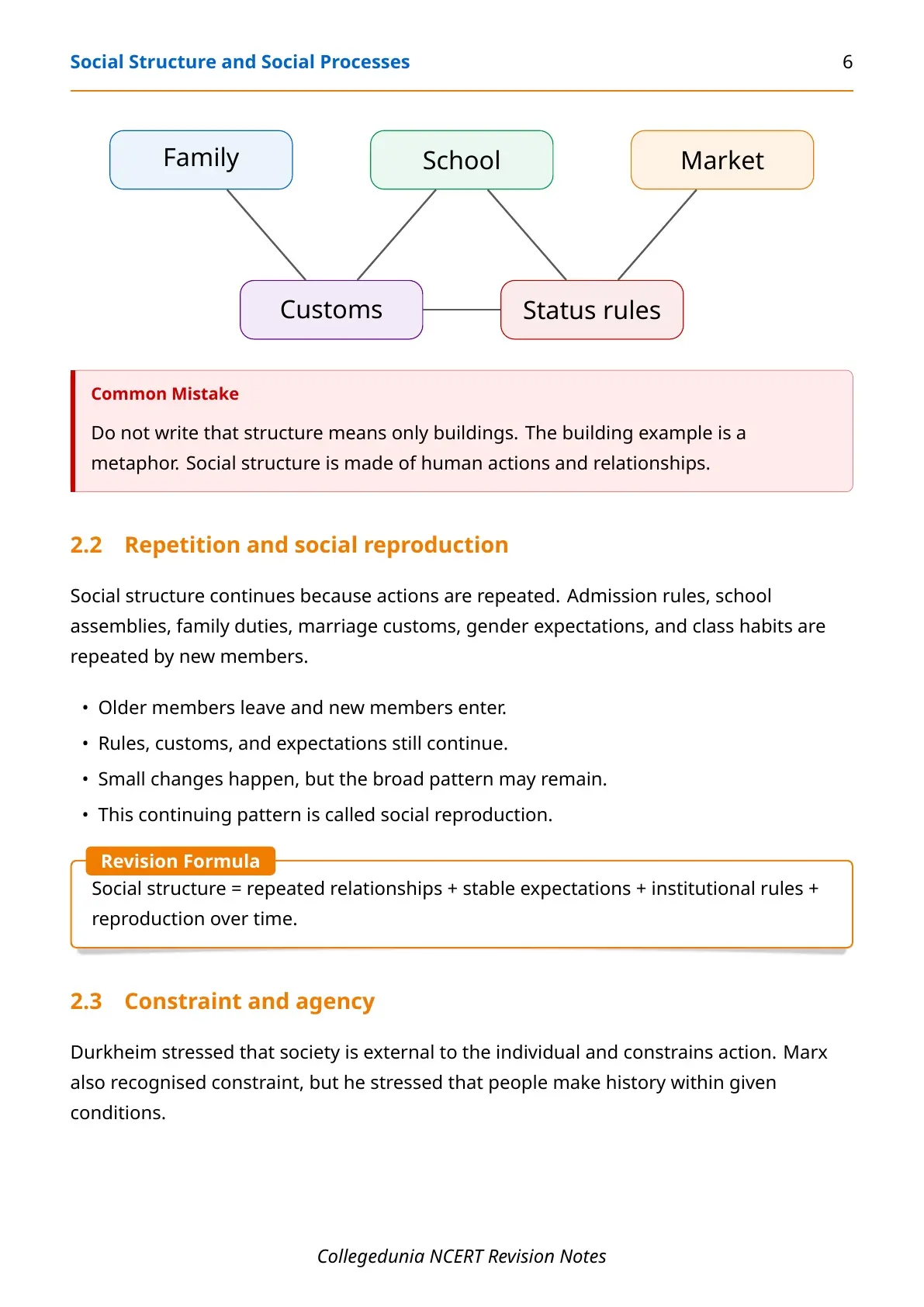
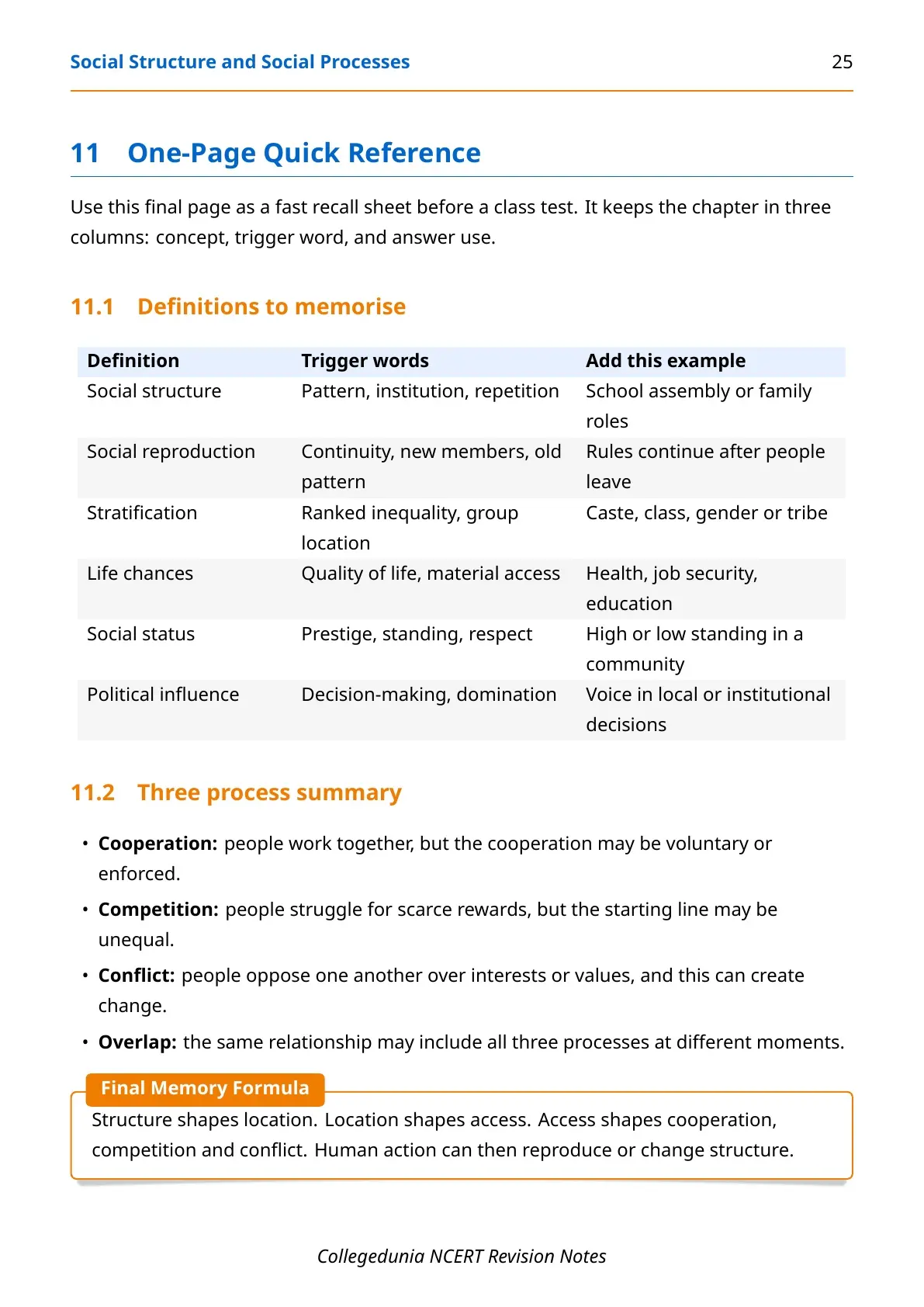
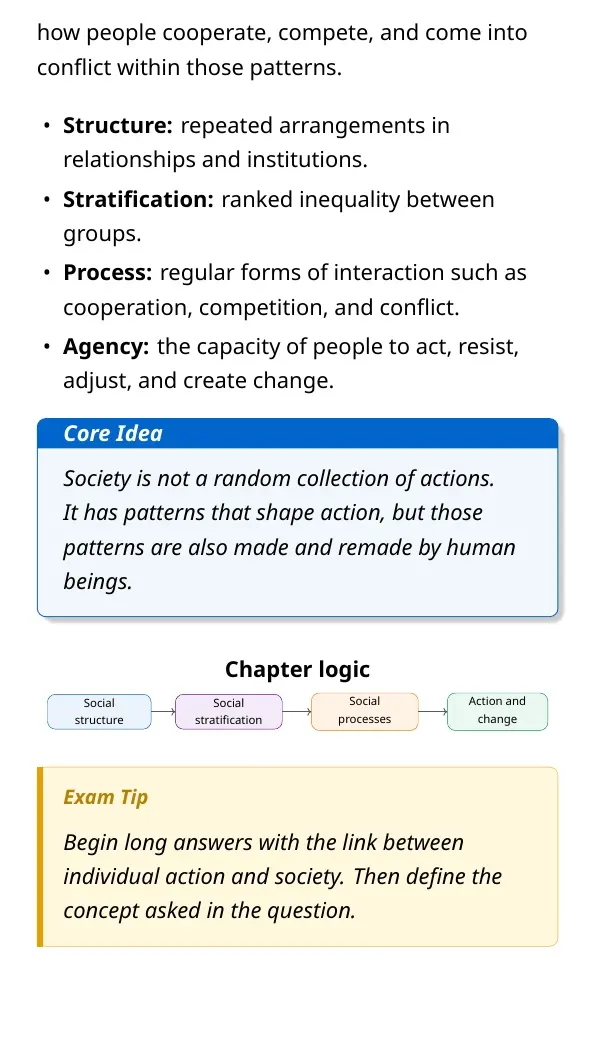
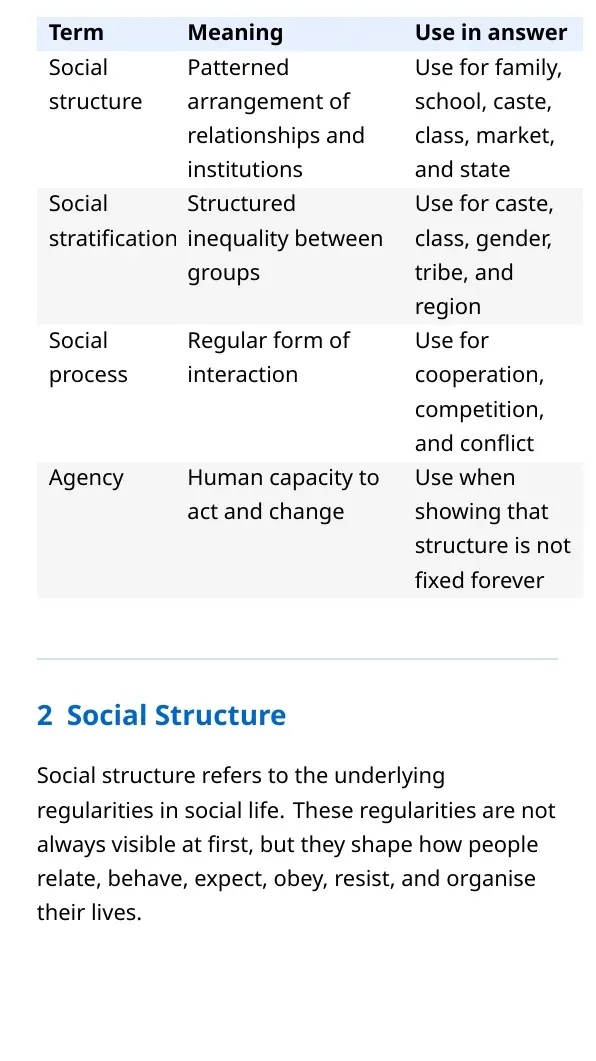
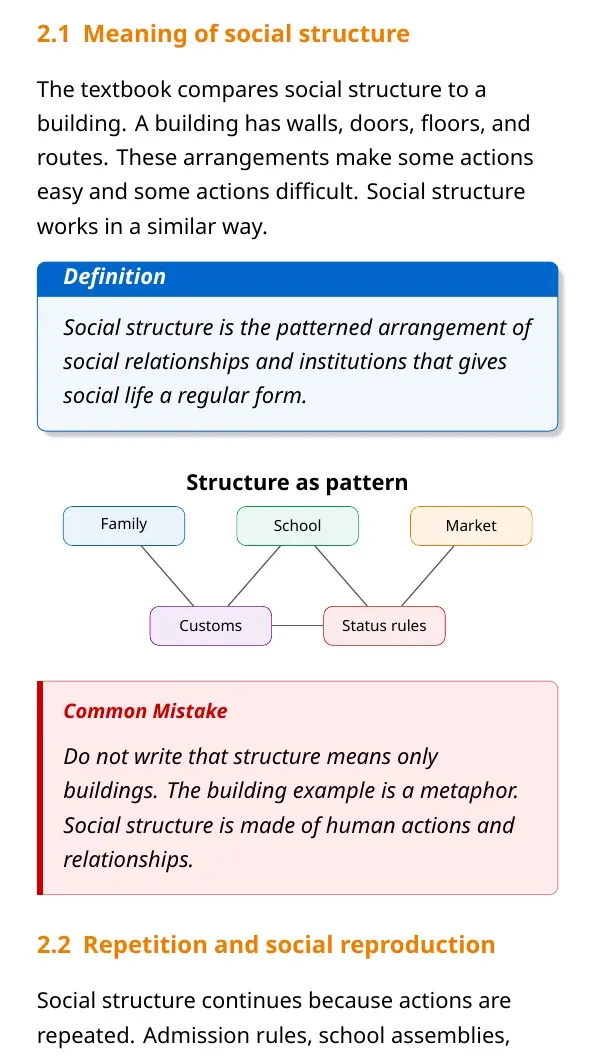
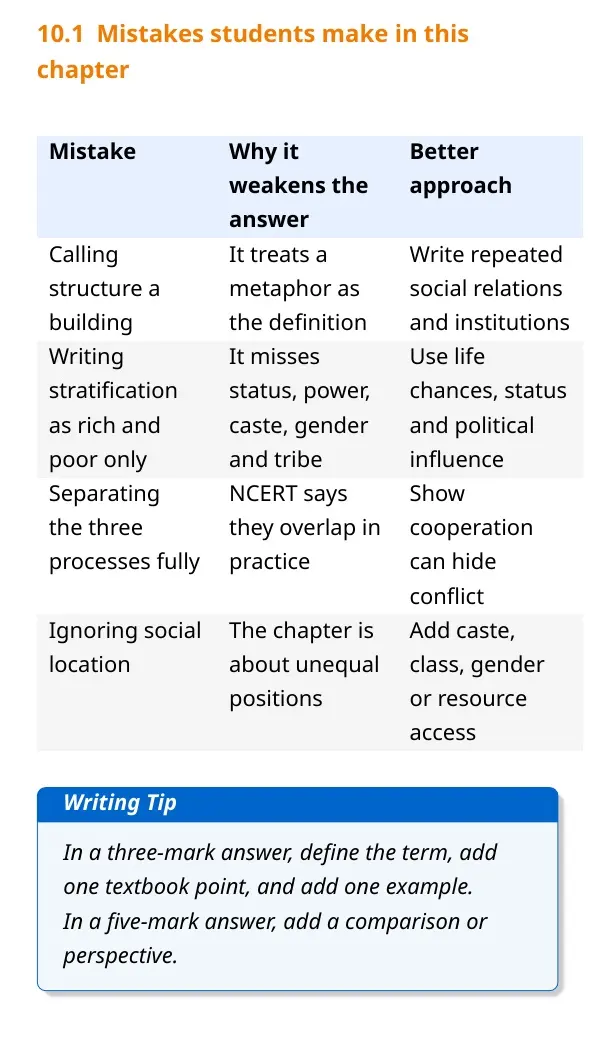
NCERT explains social structure through patterned relationships. A family, school, market or caste group does not work through random actions only. It has repeated expectations, roles and rules that guide behaviour over time.
- Structure: regular arrangement of social relationships and institutions.
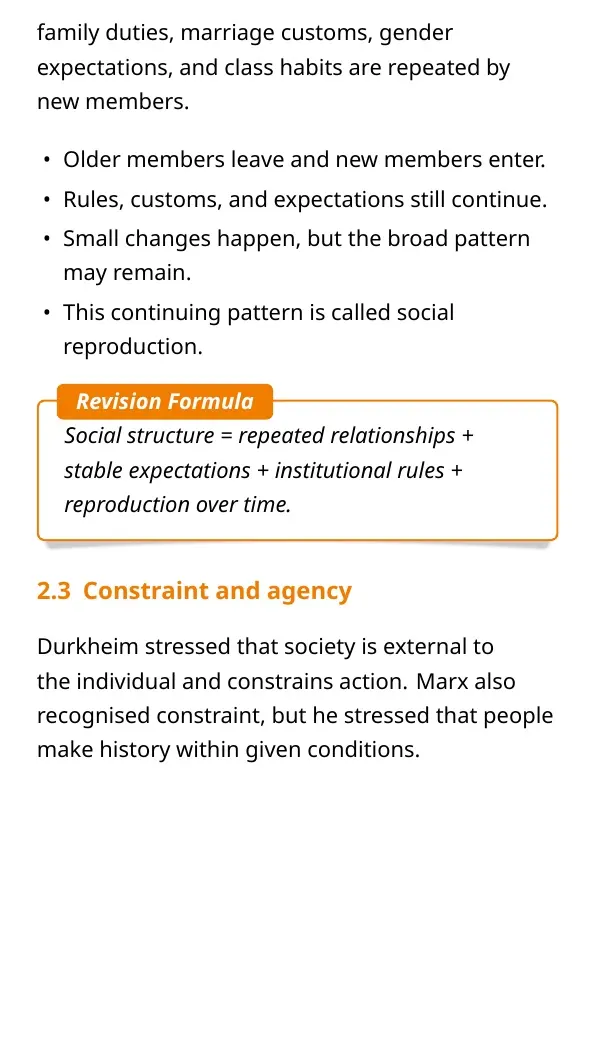
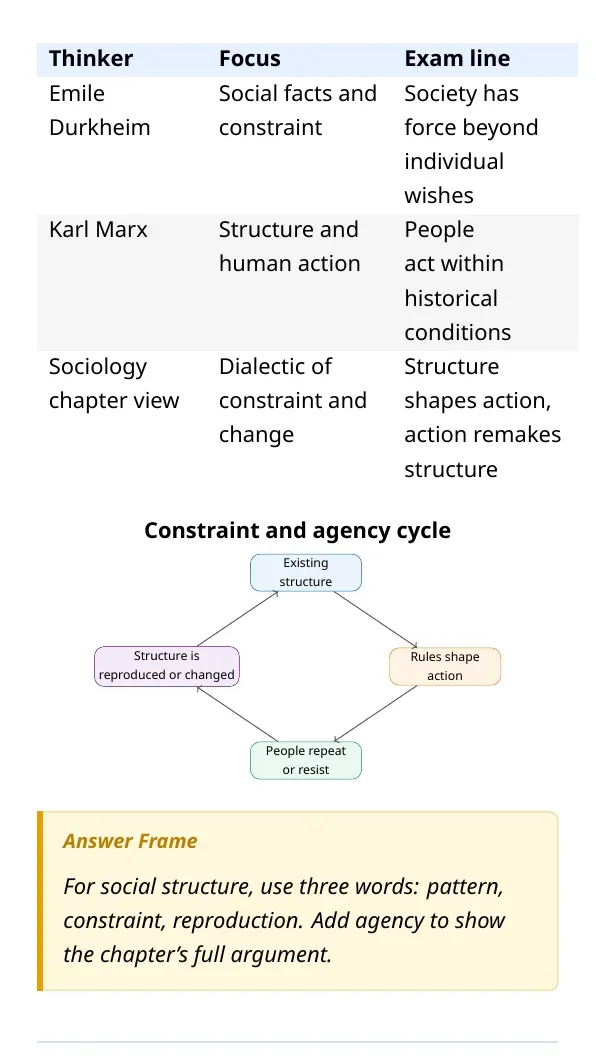
- Social reproduction: continuation of rules and practices across generations.
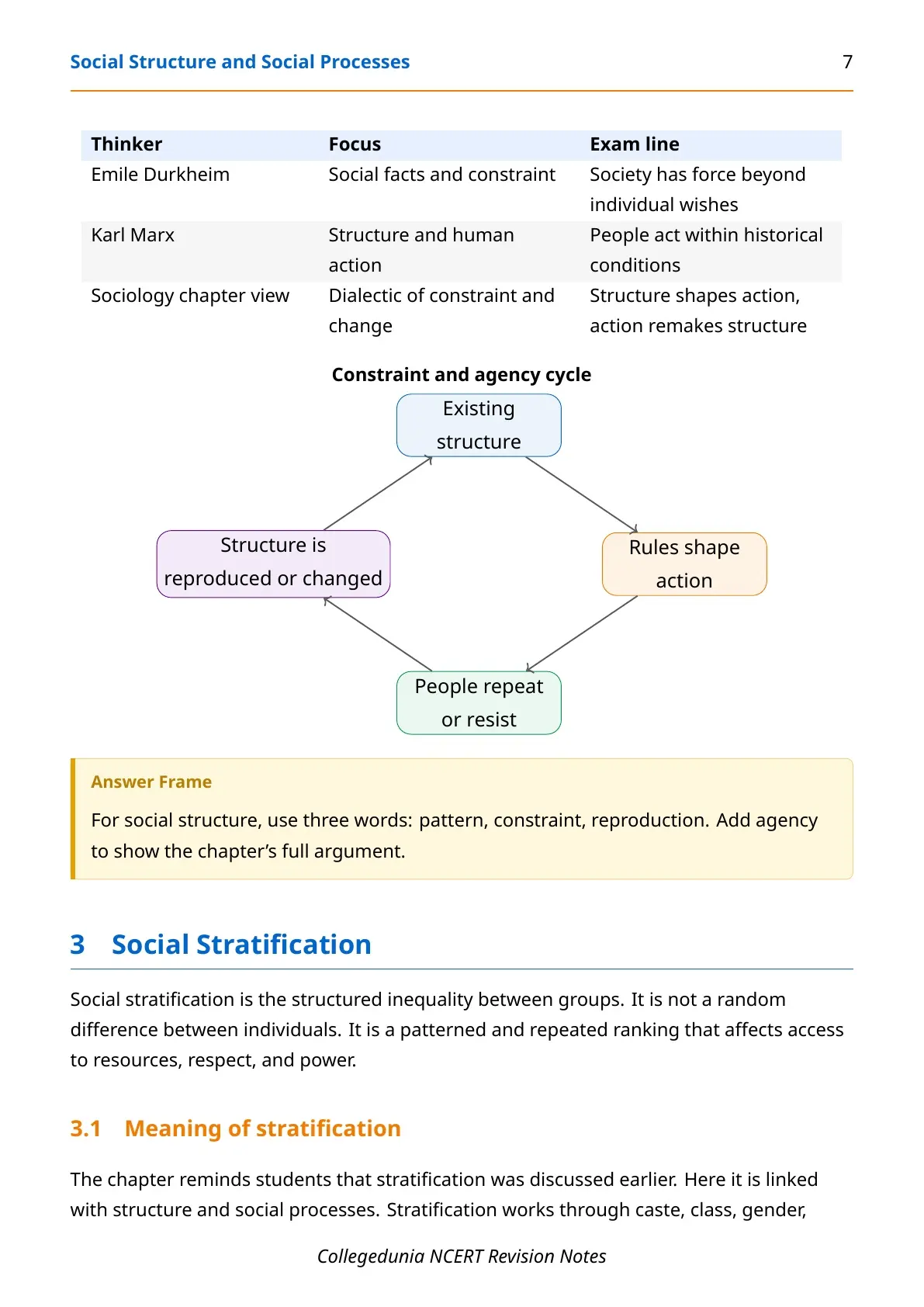
- Constraint: limits placed on what people can easily do.
- Agency: the human capacity to act, resist and change patterns.
Life Chances, Social Status and Political Influence
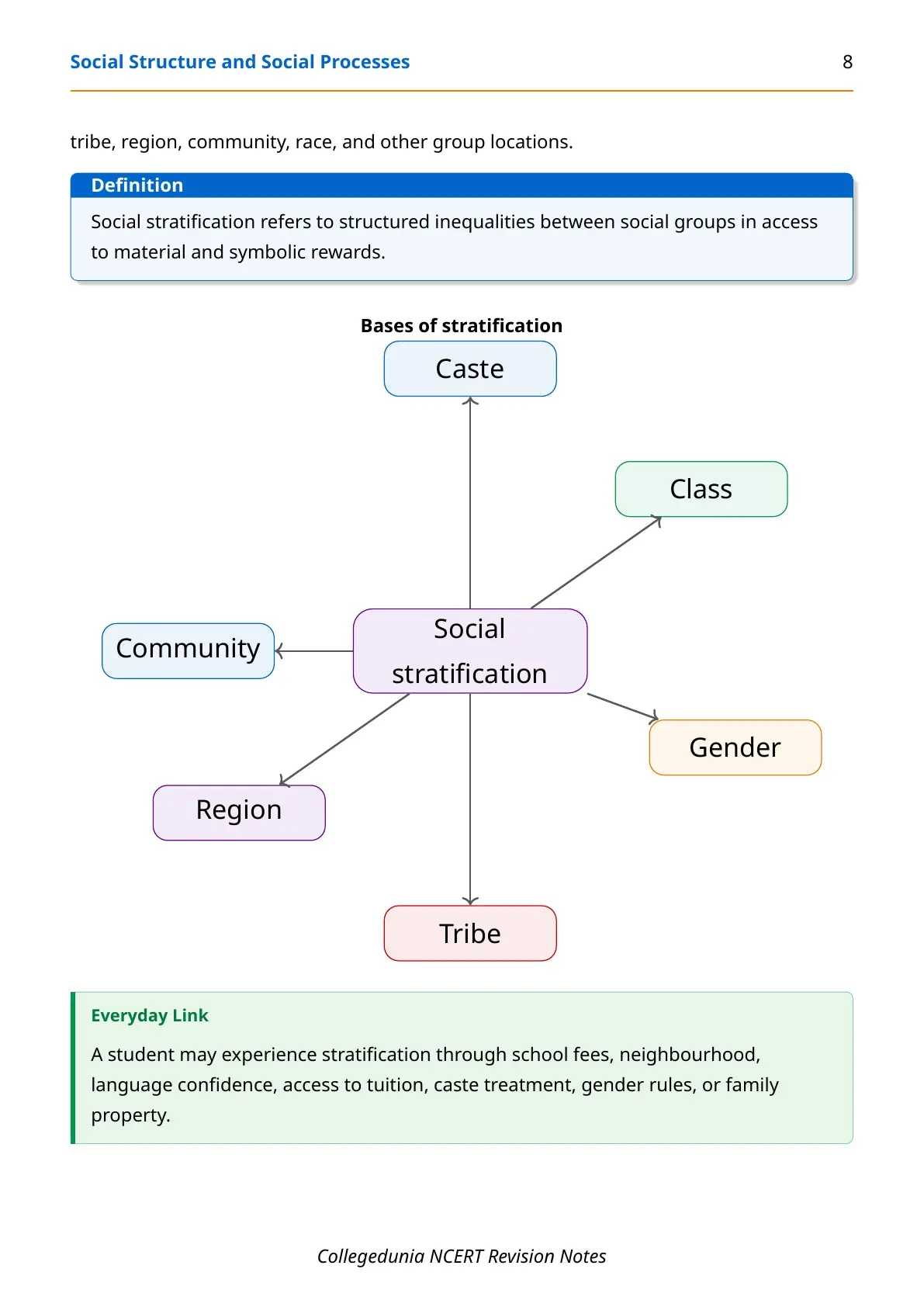
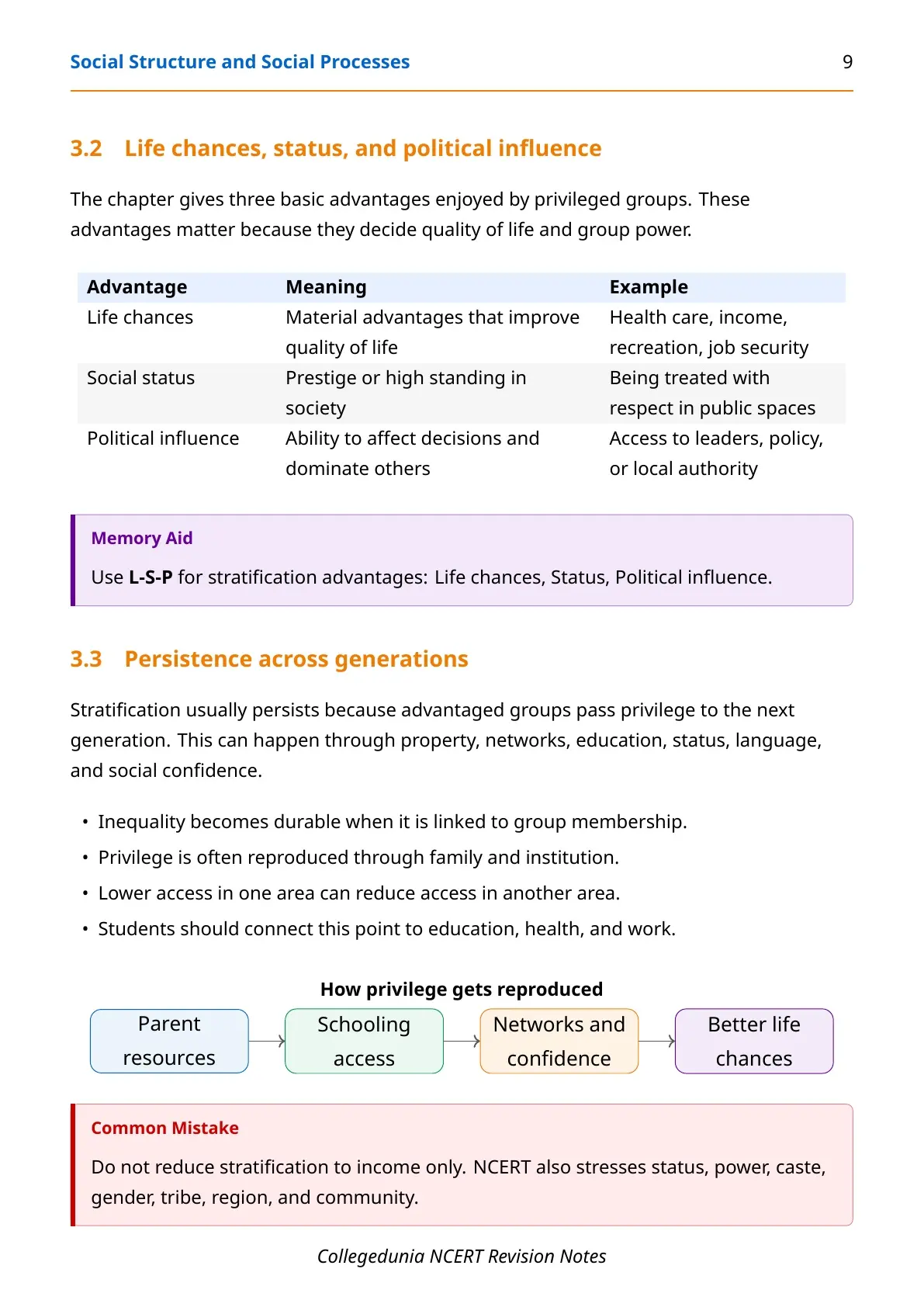
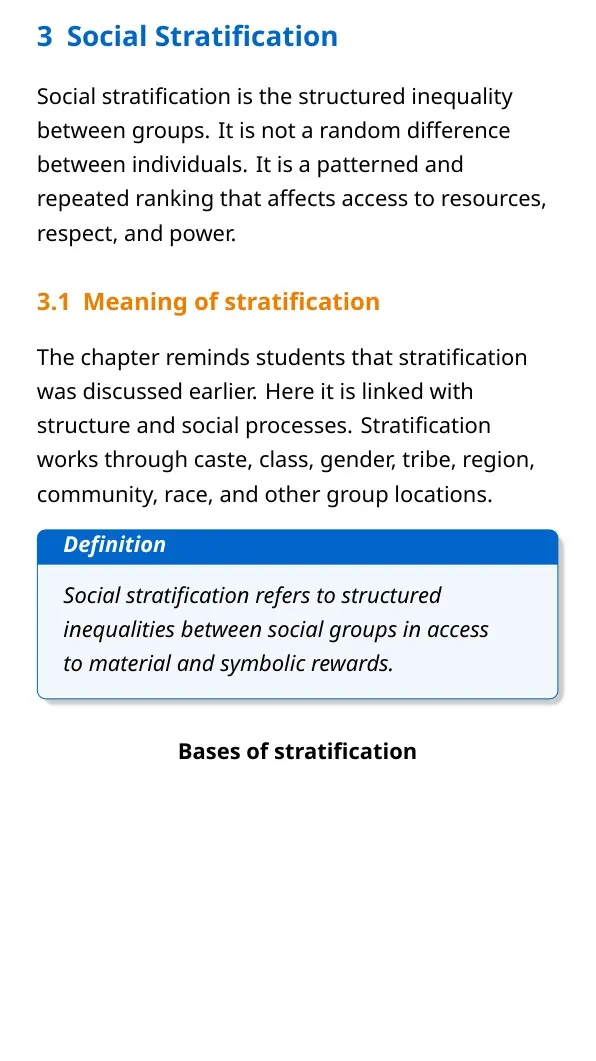
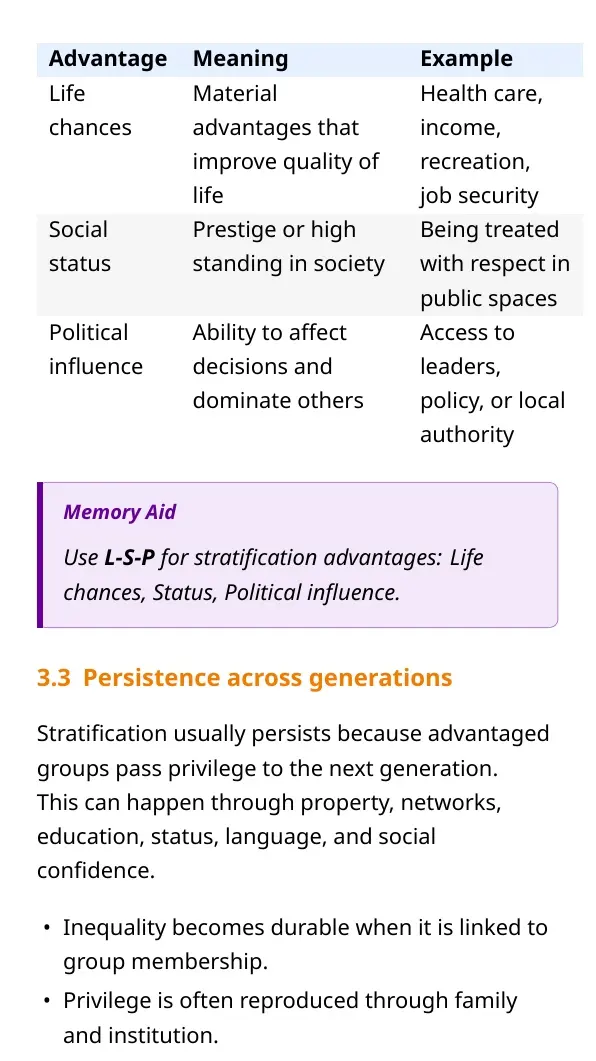
Social stratification means inequality is structured between groups. NCERT gives three major advantages that privileged groups may enjoy: life chances, social status and political influence.
| Advantage | Meaning | Example |
|---|---|---|
| Life chances | Material advantages that improve quality of life. | Health, income, job security, recreation and education. |
| Social status | Prestige or high standing in the eyes of others. | Respect attached to caste, class, occupation or family name. |
| Political influence | Ability to shape decisions or dominate others. | Access to local leaders, institutions and rule-making spaces. |
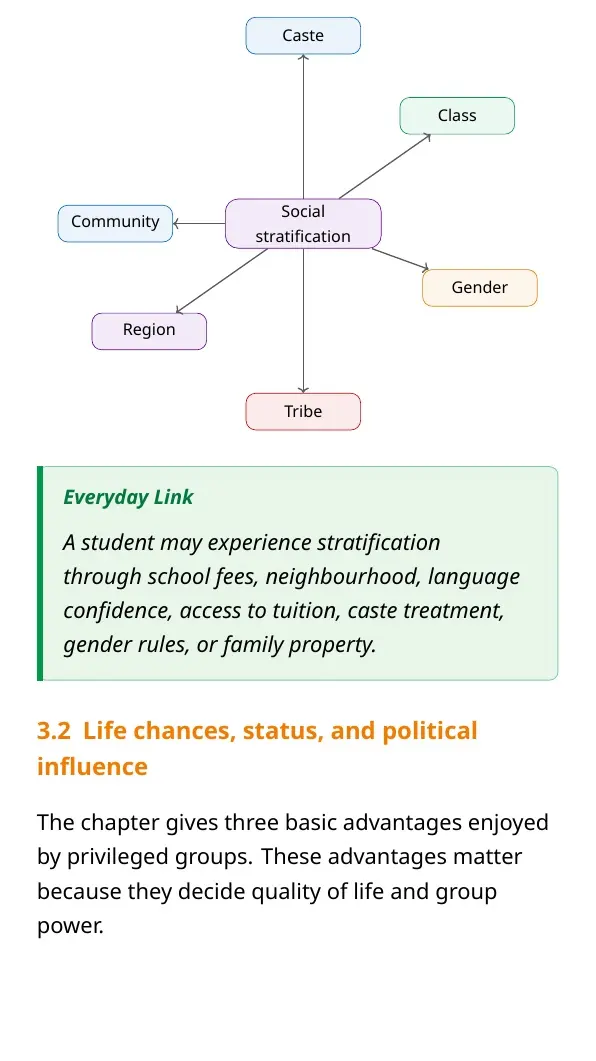
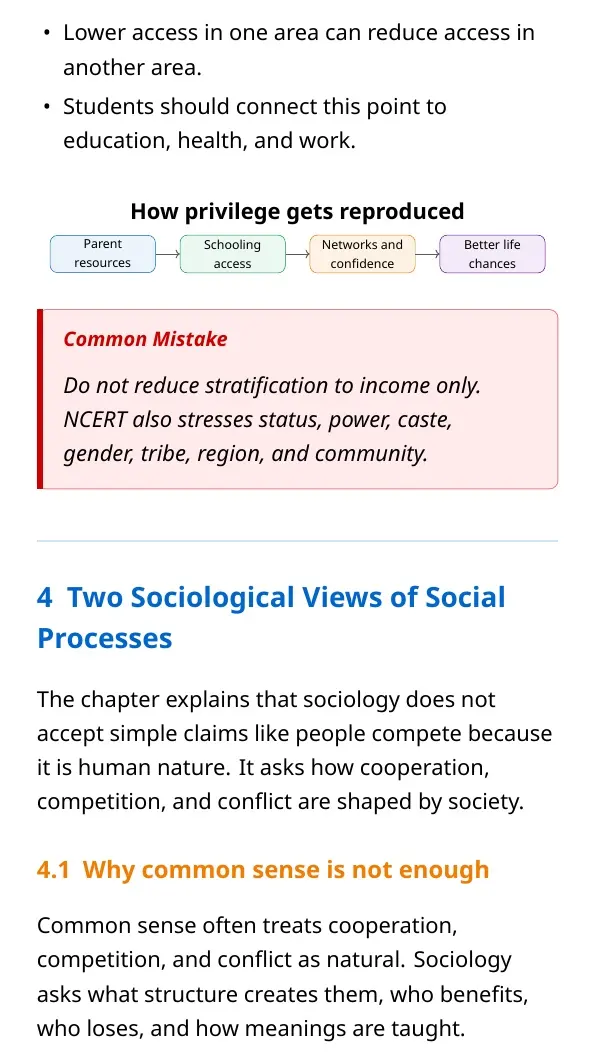
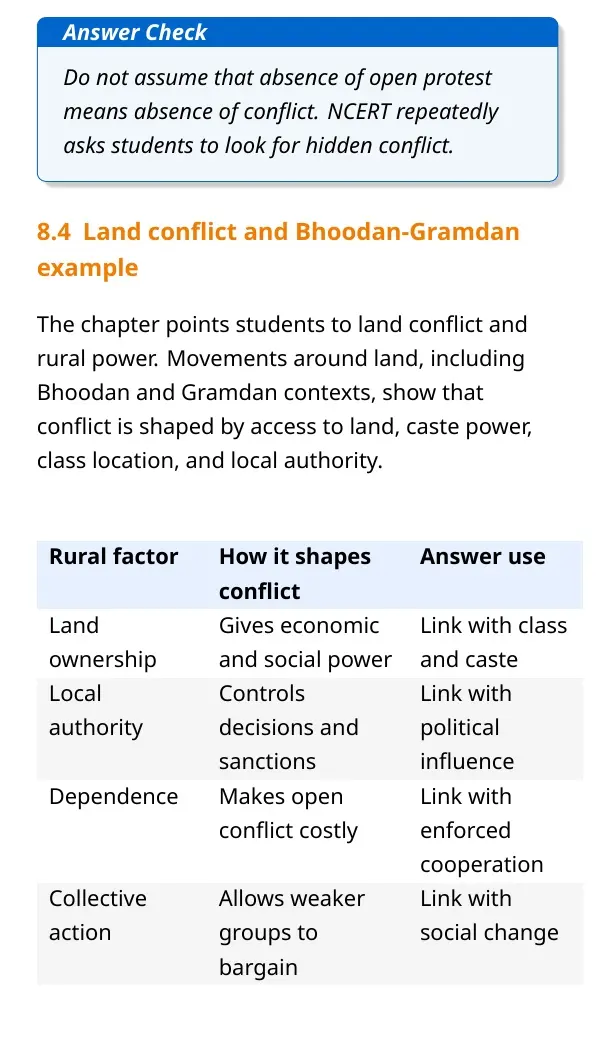
Stratification is not just income difference. It includes status, power, caste, class, gender, tribe, region and community.
Cooperation, Competition and Conflict
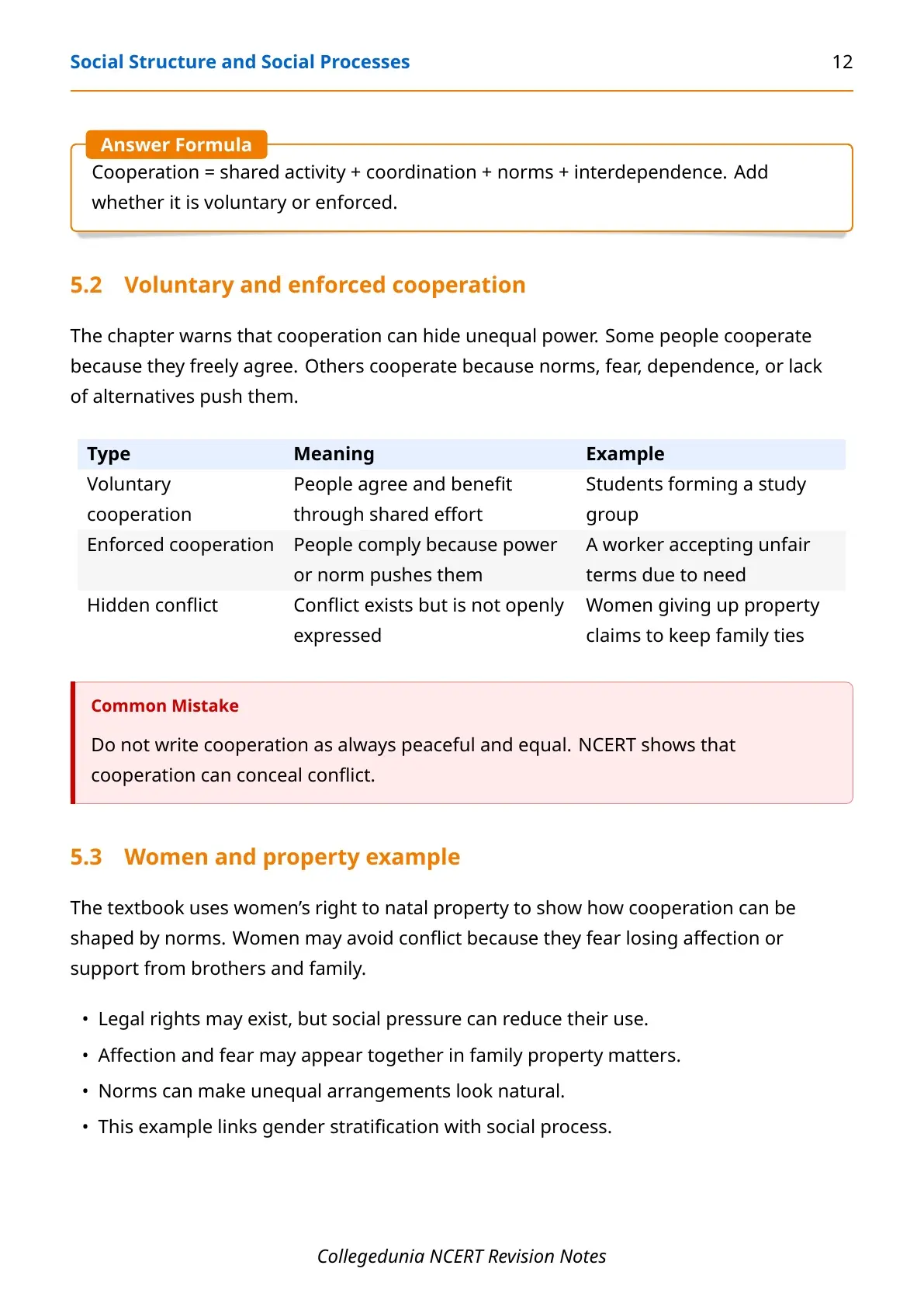
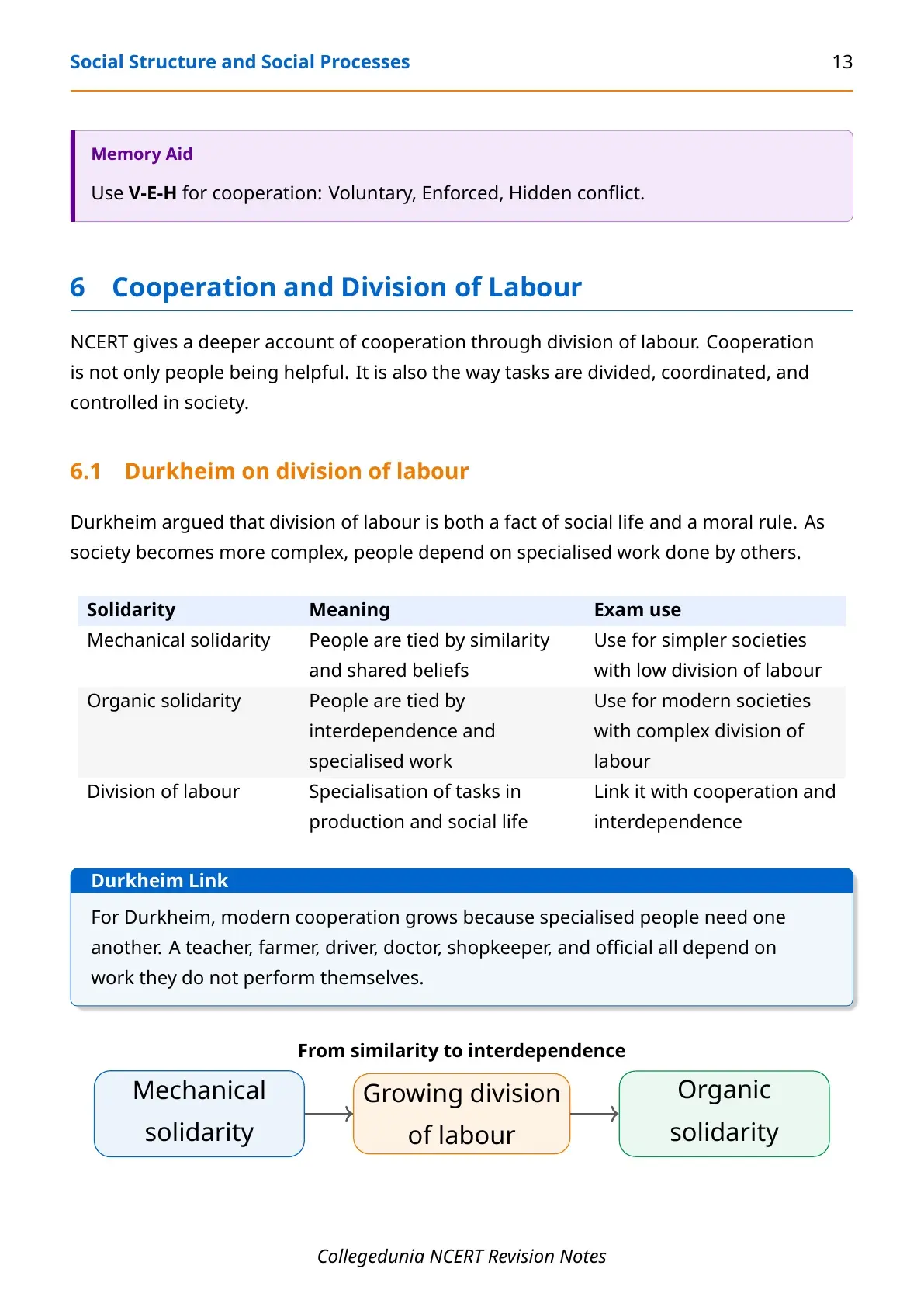
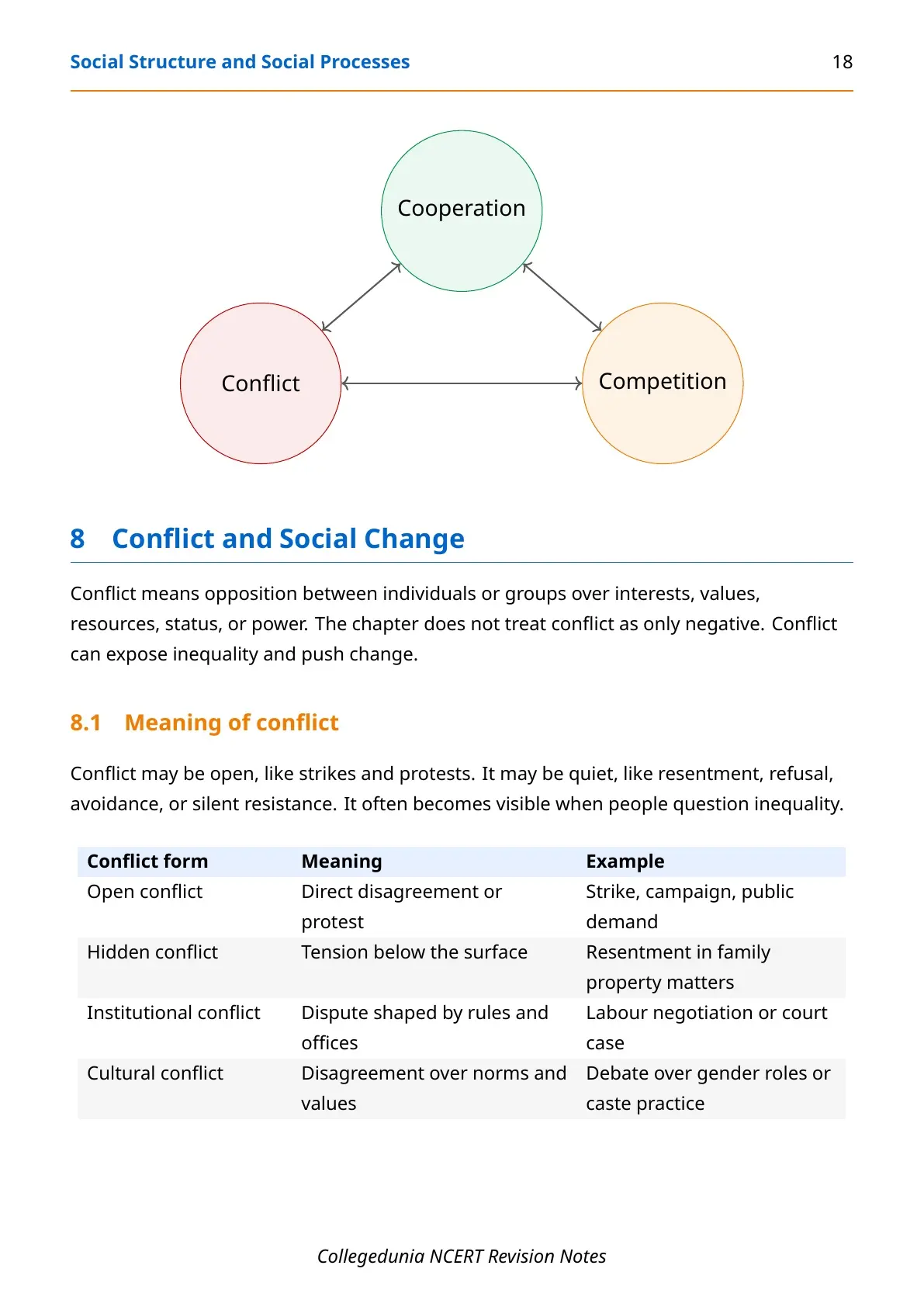
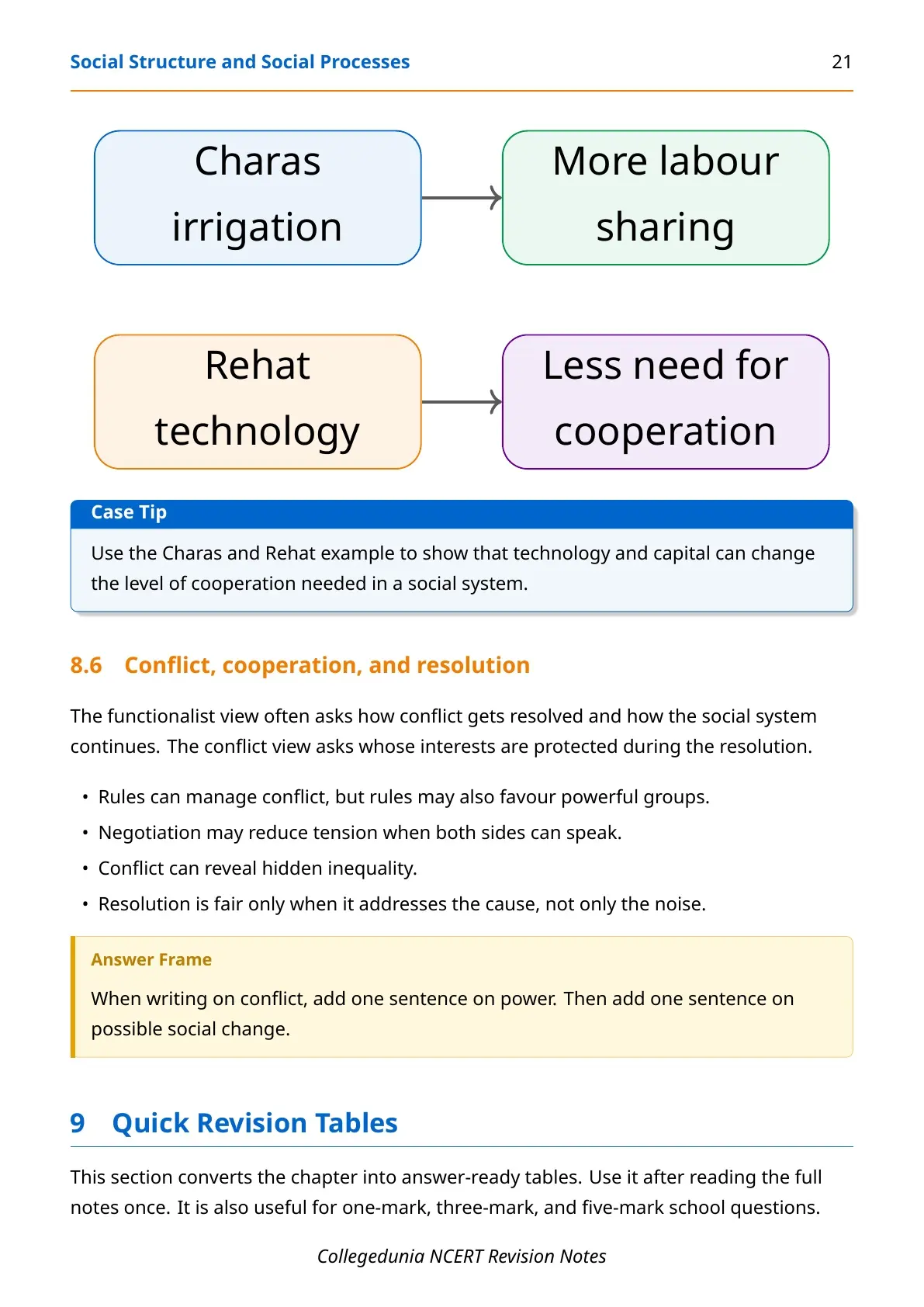
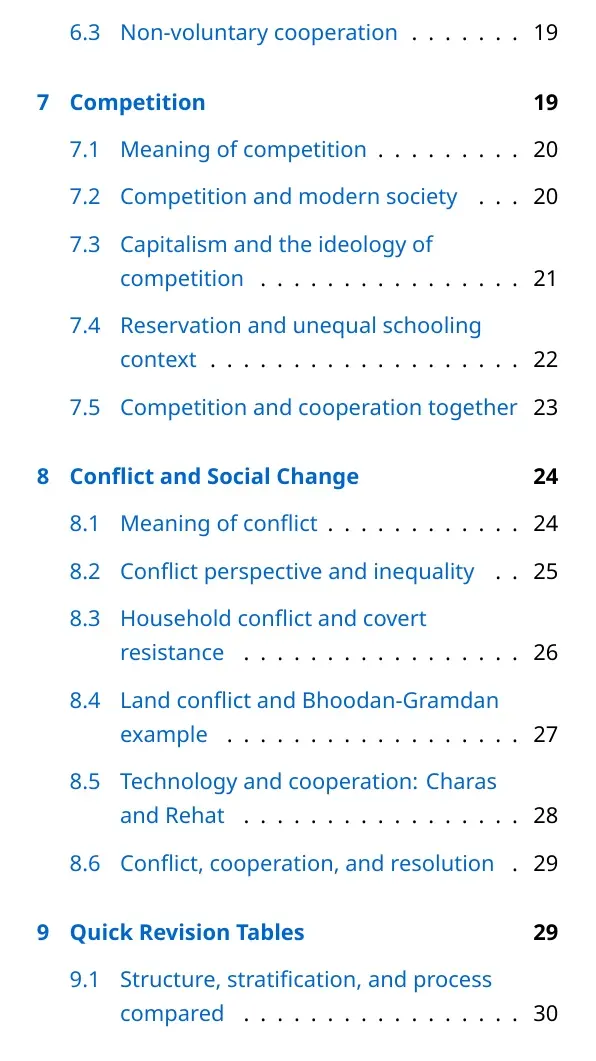
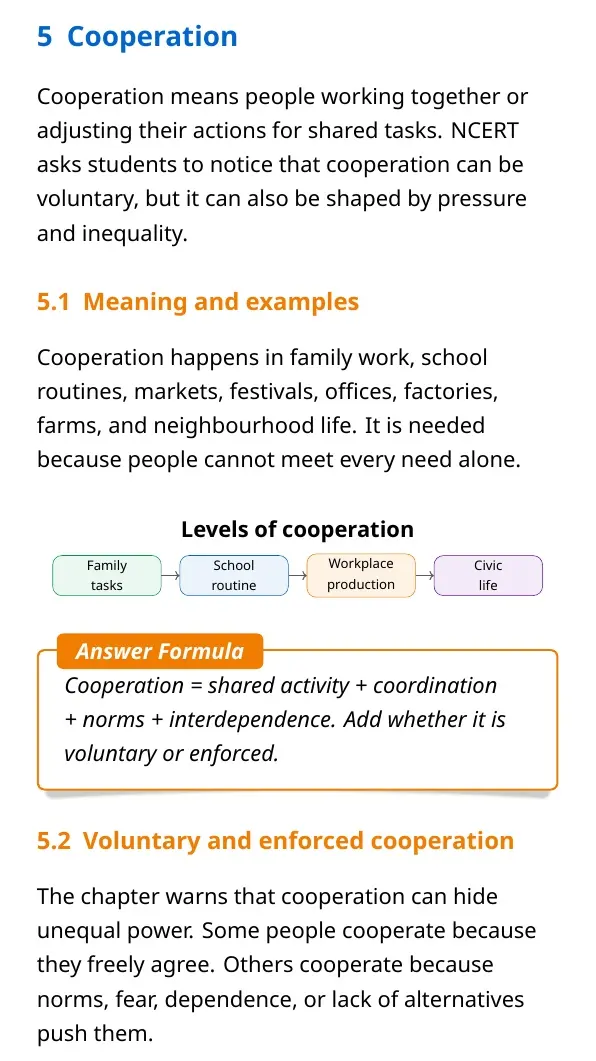
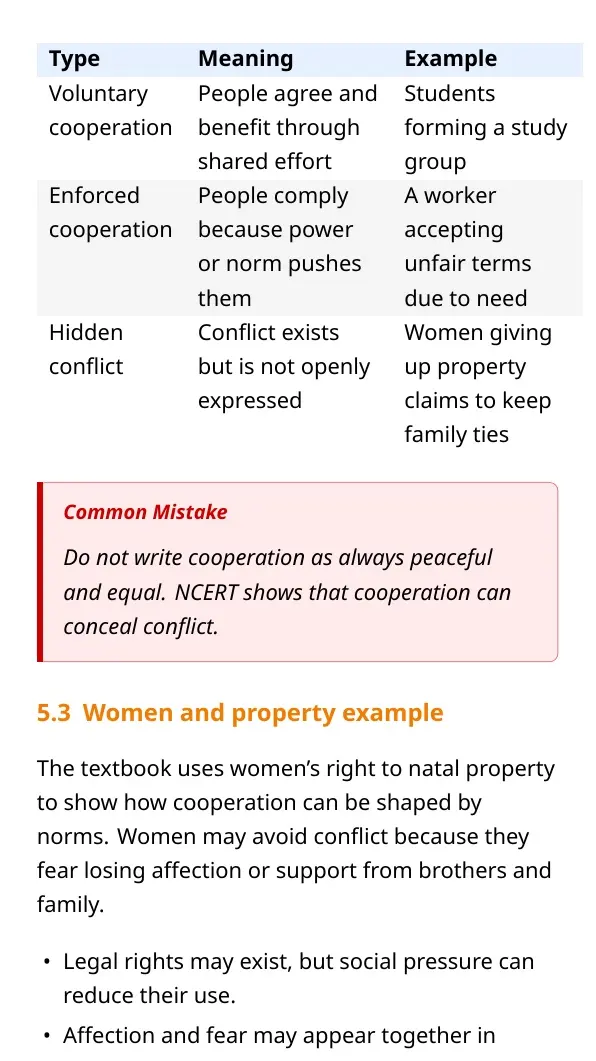
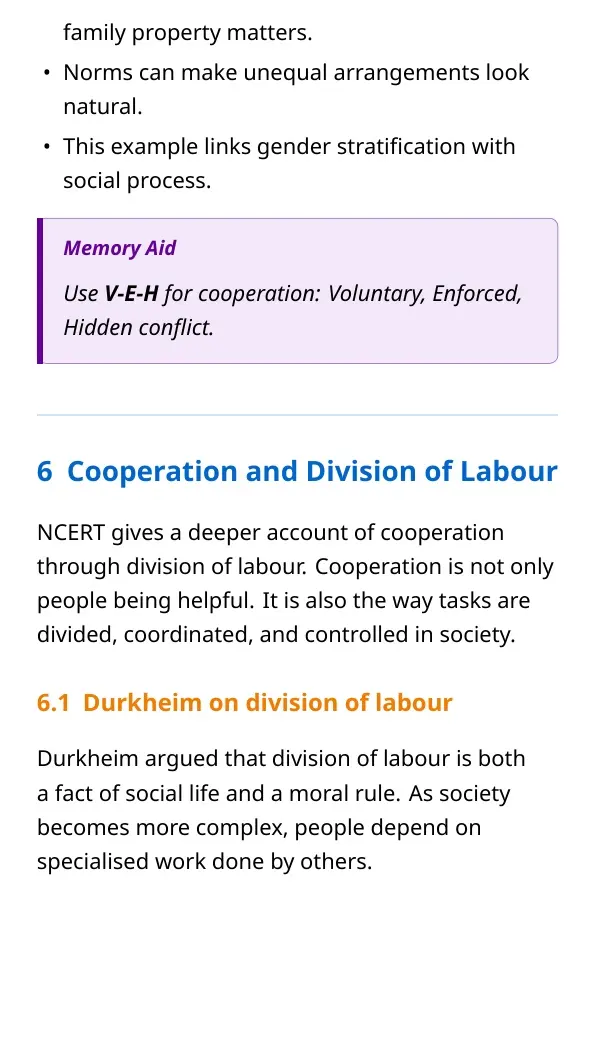
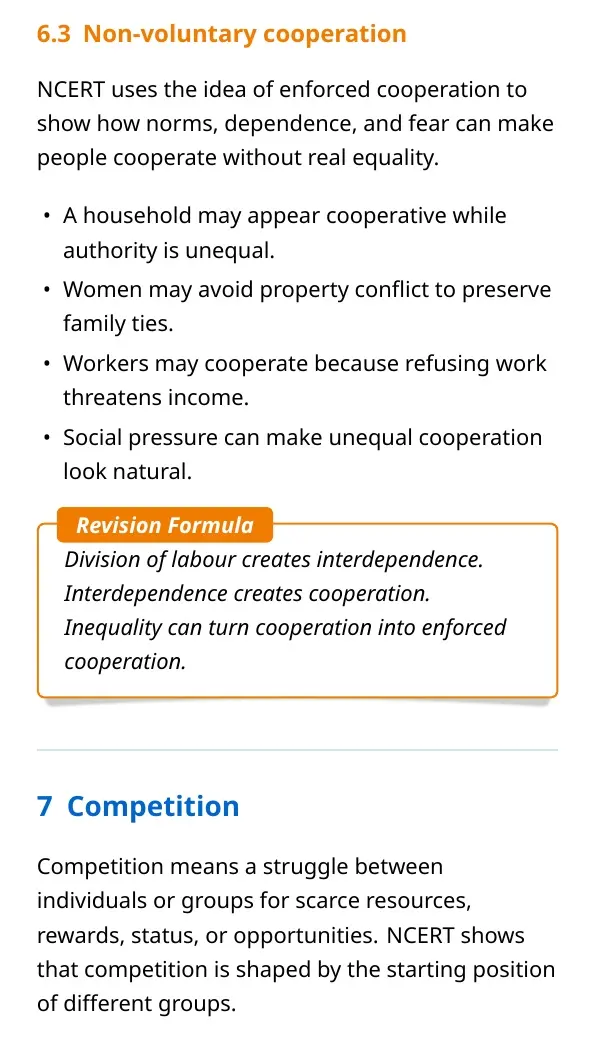
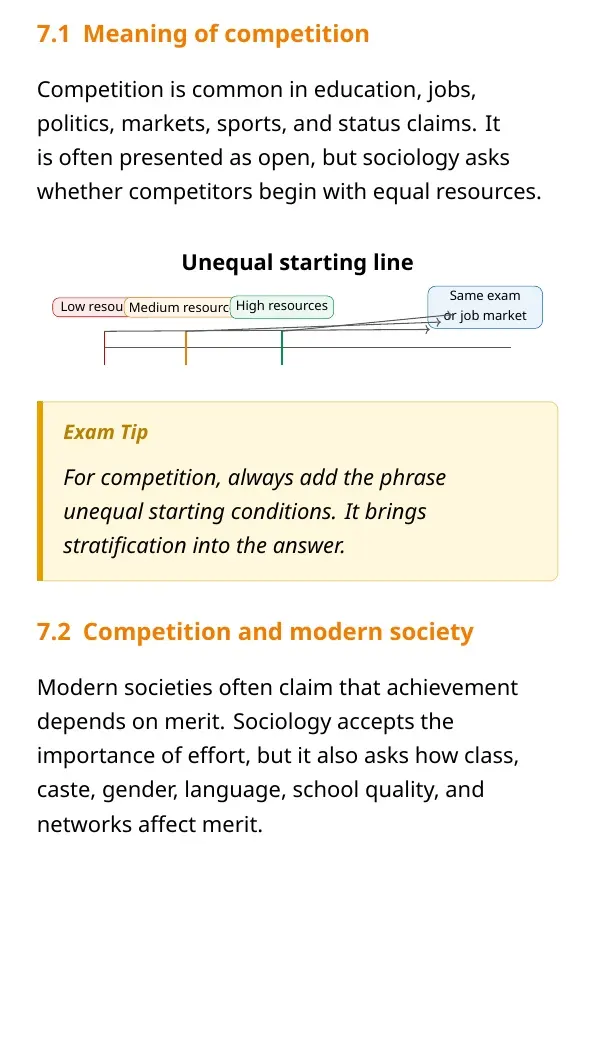
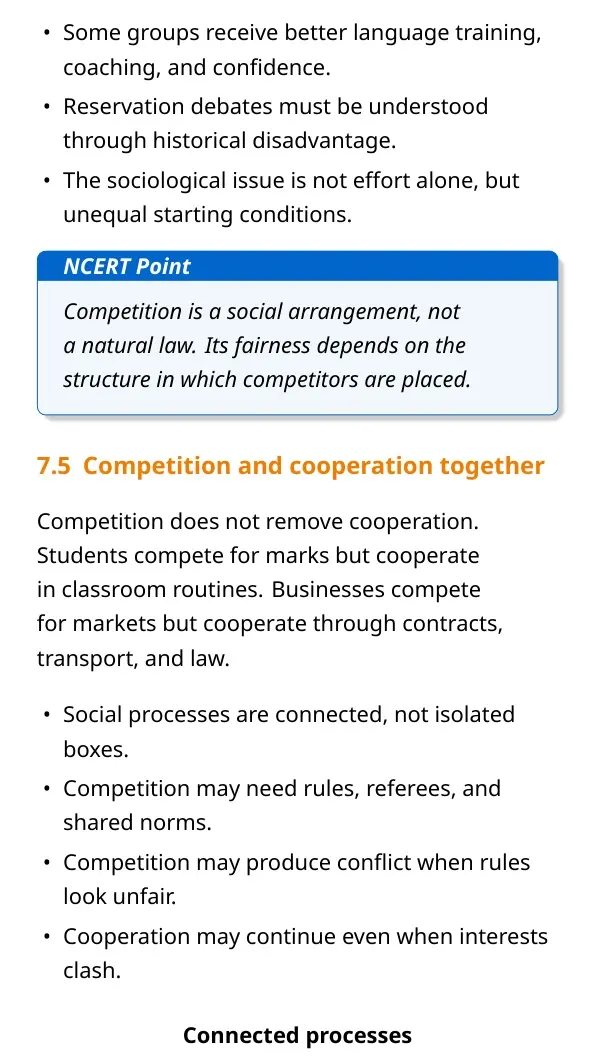
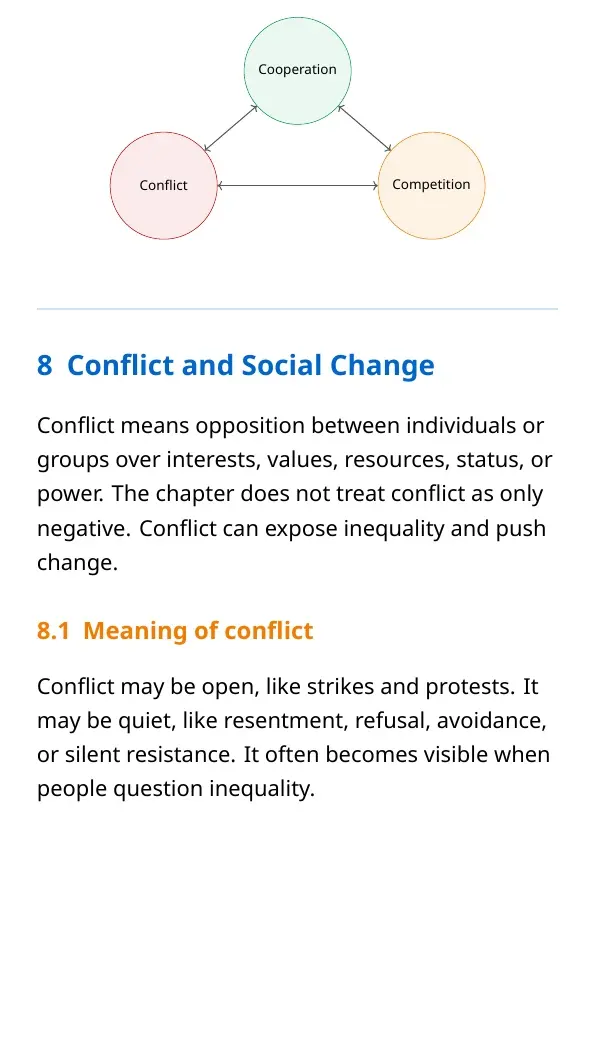
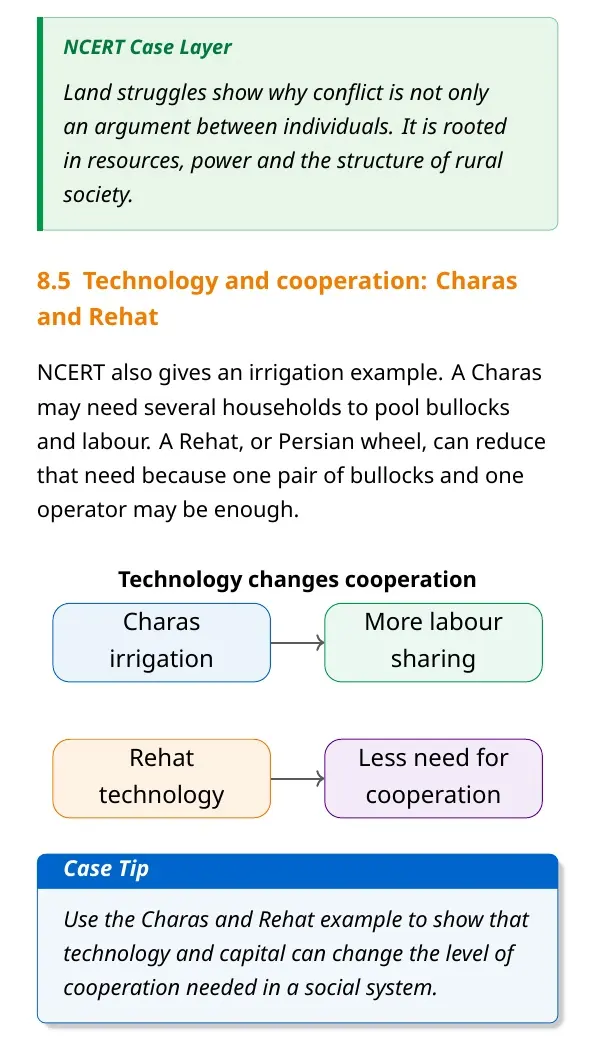
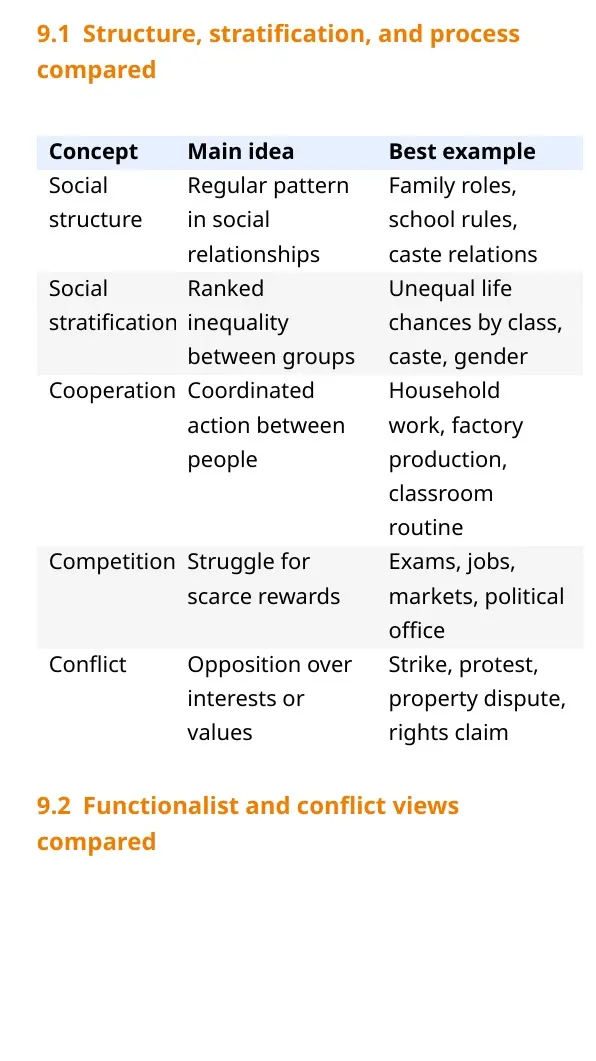
The chapter studies three social processes. Cooperation means coordinated action. Competition means struggle for scarce rewards. Conflict means opposition over interests, values or power.
| Process | Revision meaning | Exam example |
|---|---|---|
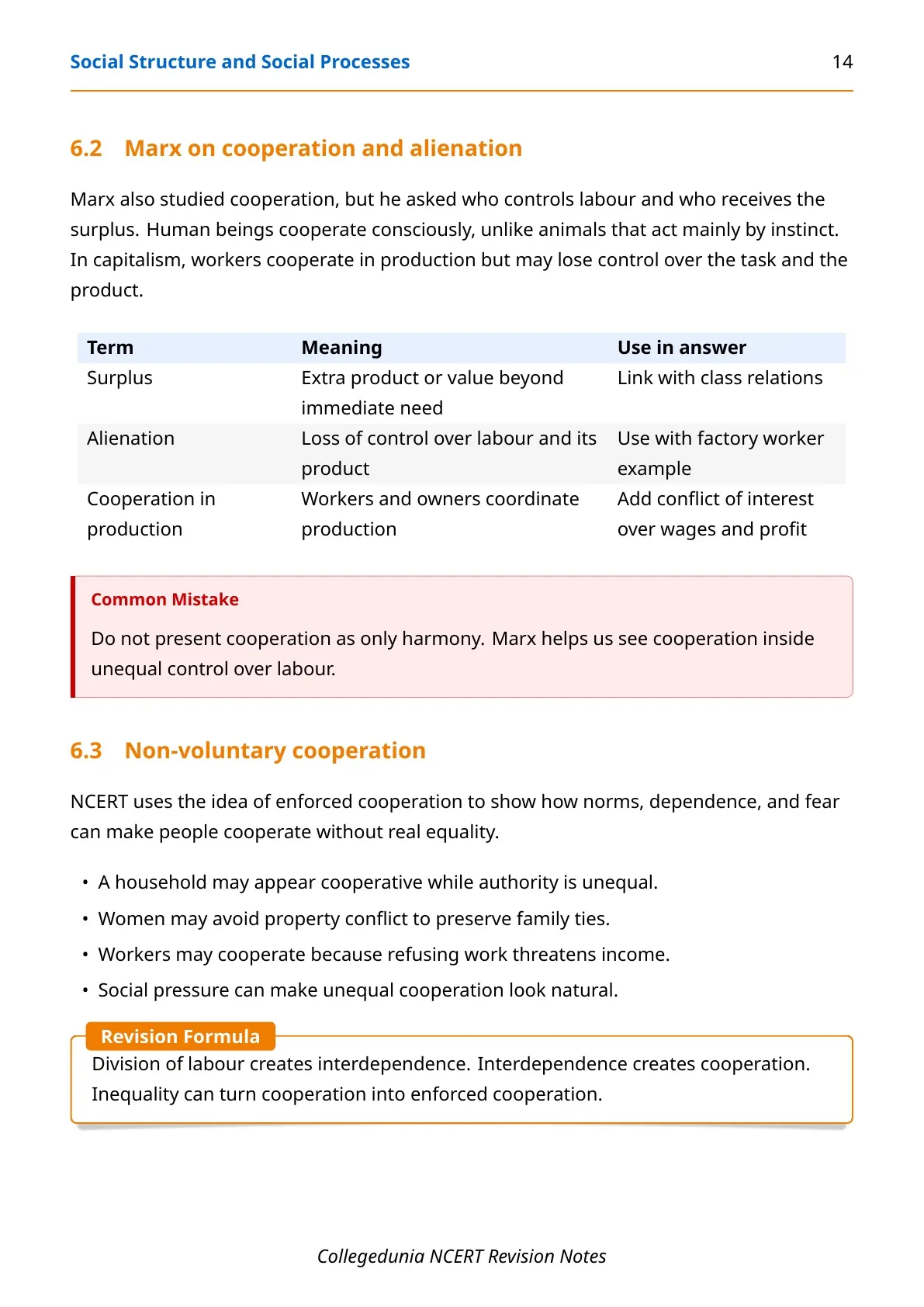
| Cooperation | People coordinate action for shared tasks. | Family work, school routines, factory production. |
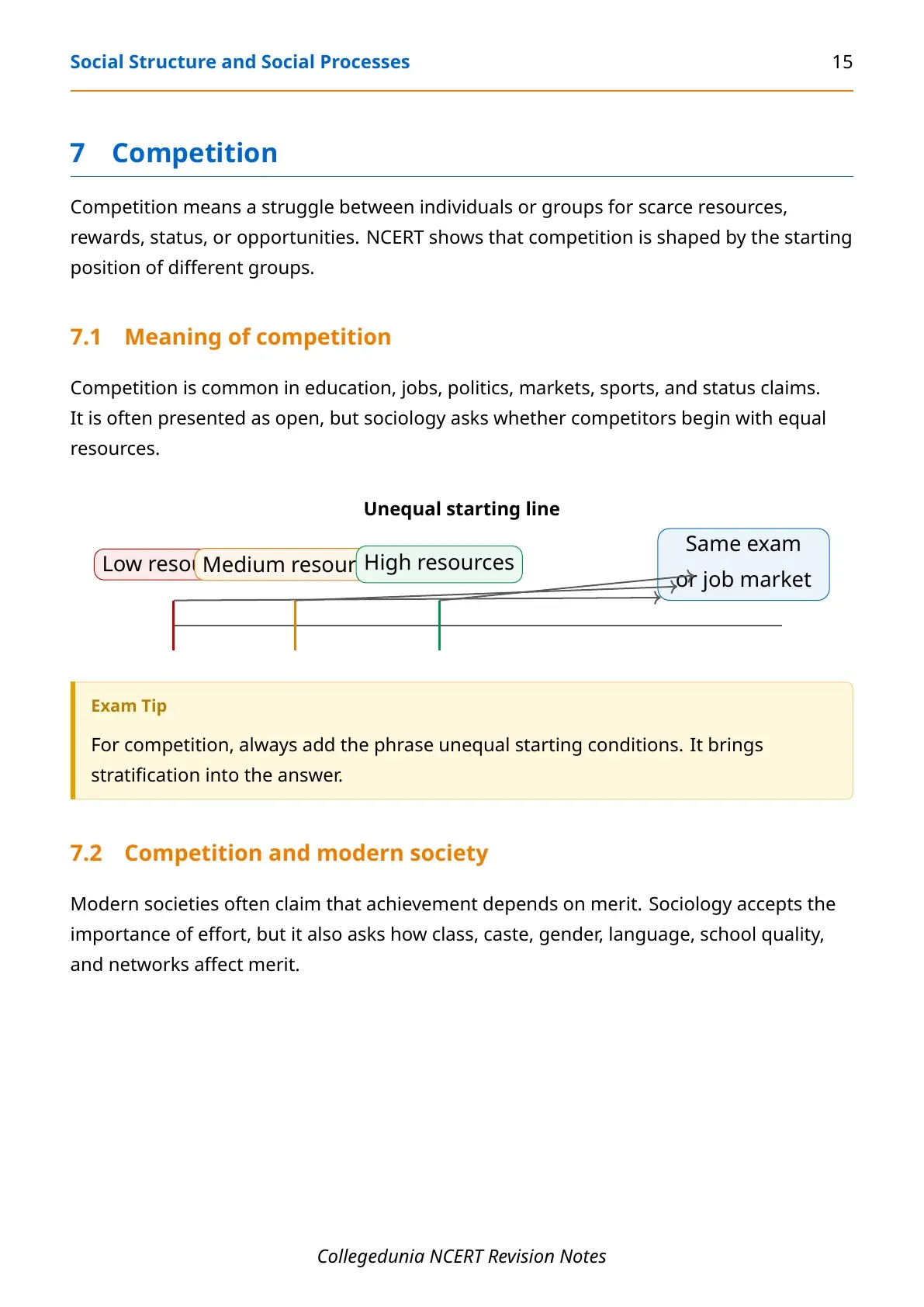
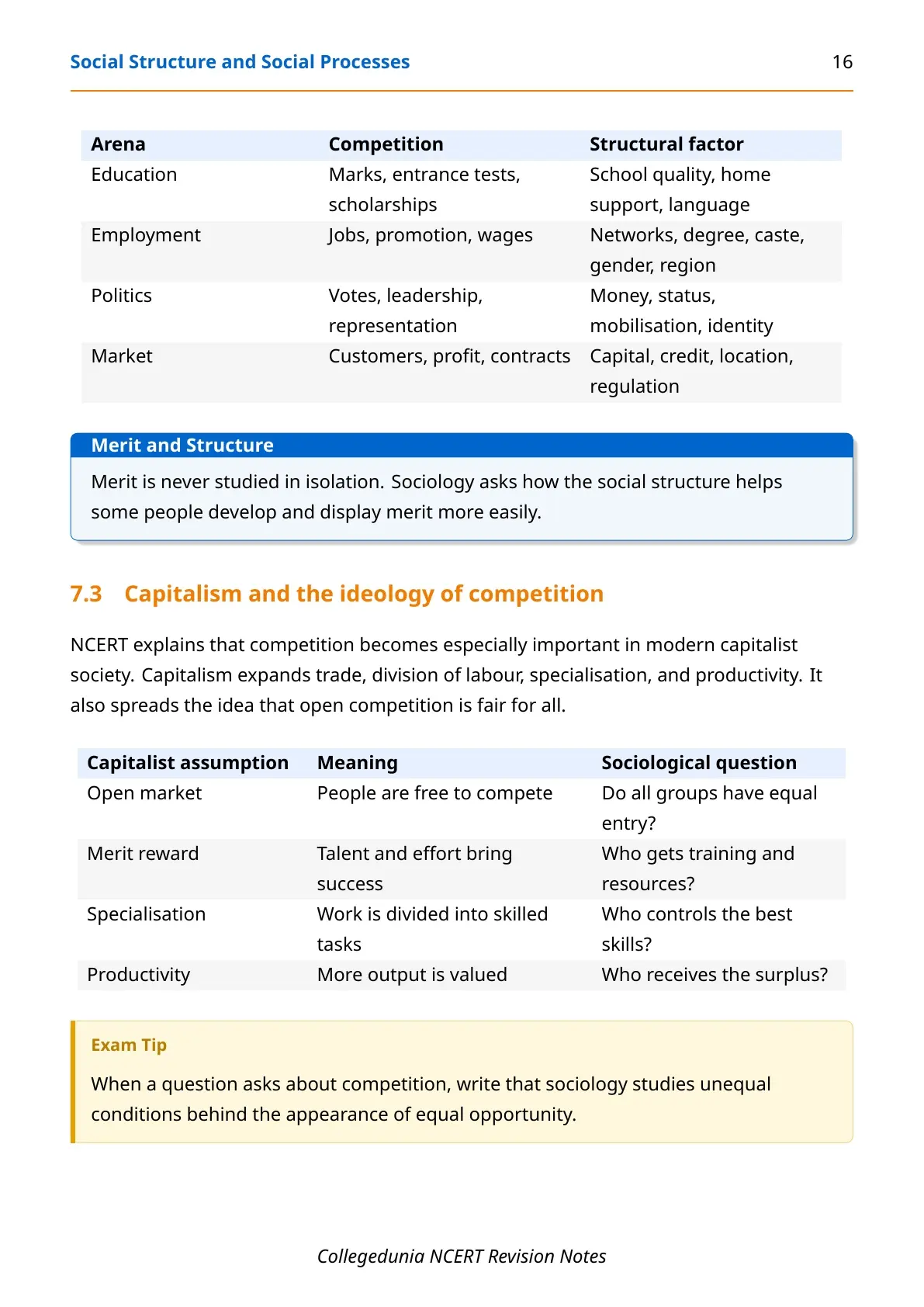
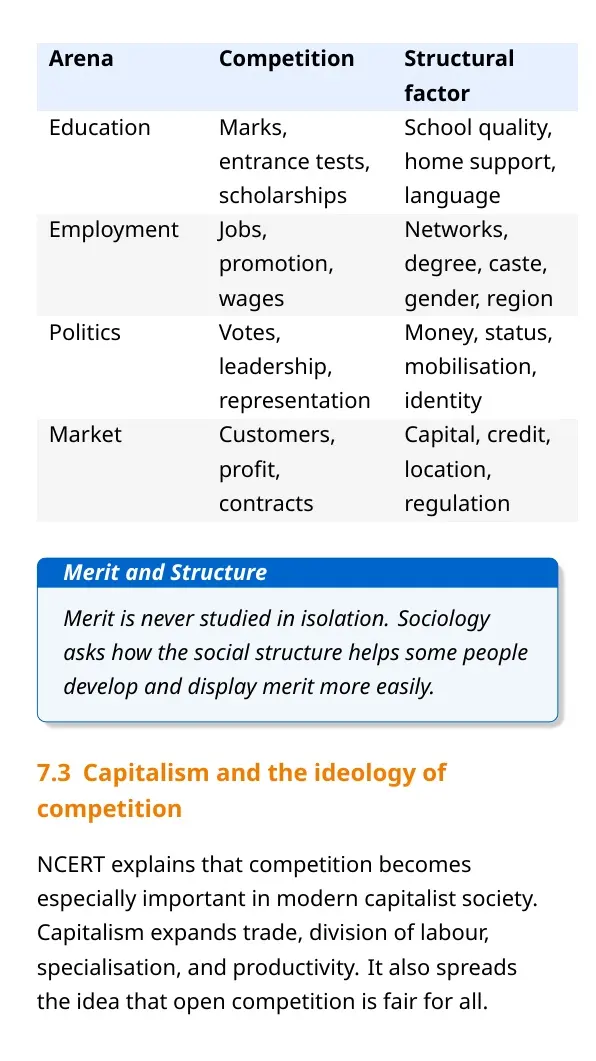
| Competition | People or groups struggle for scarce rewards. | Exams, jobs, markets, political posts. |
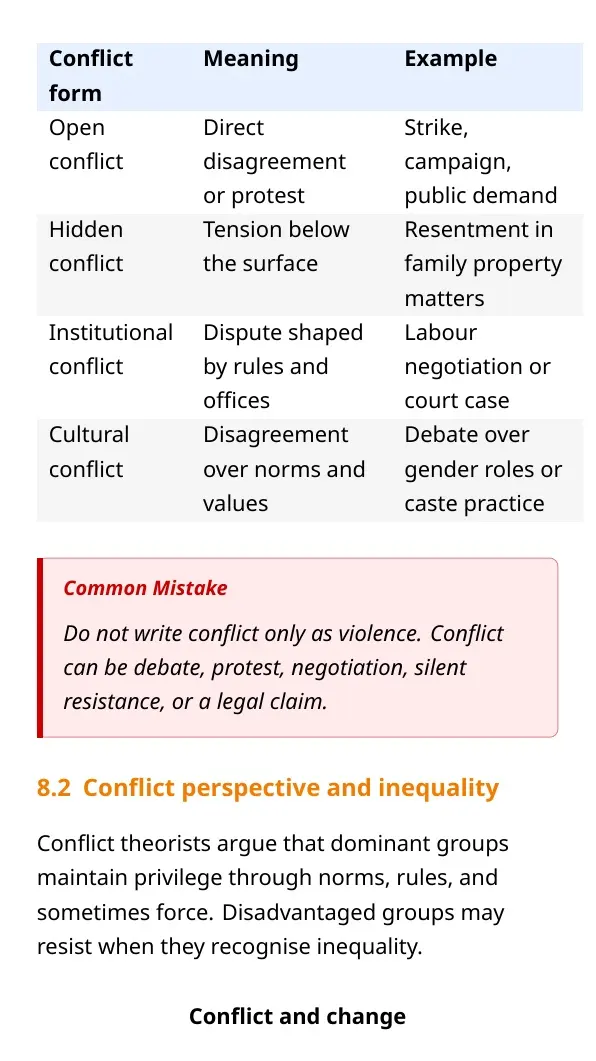
| Conflict | Groups oppose each other over interests or values. | Strike, protest, property dispute, rights movement. |
Functionalist and Conflict Perspectives
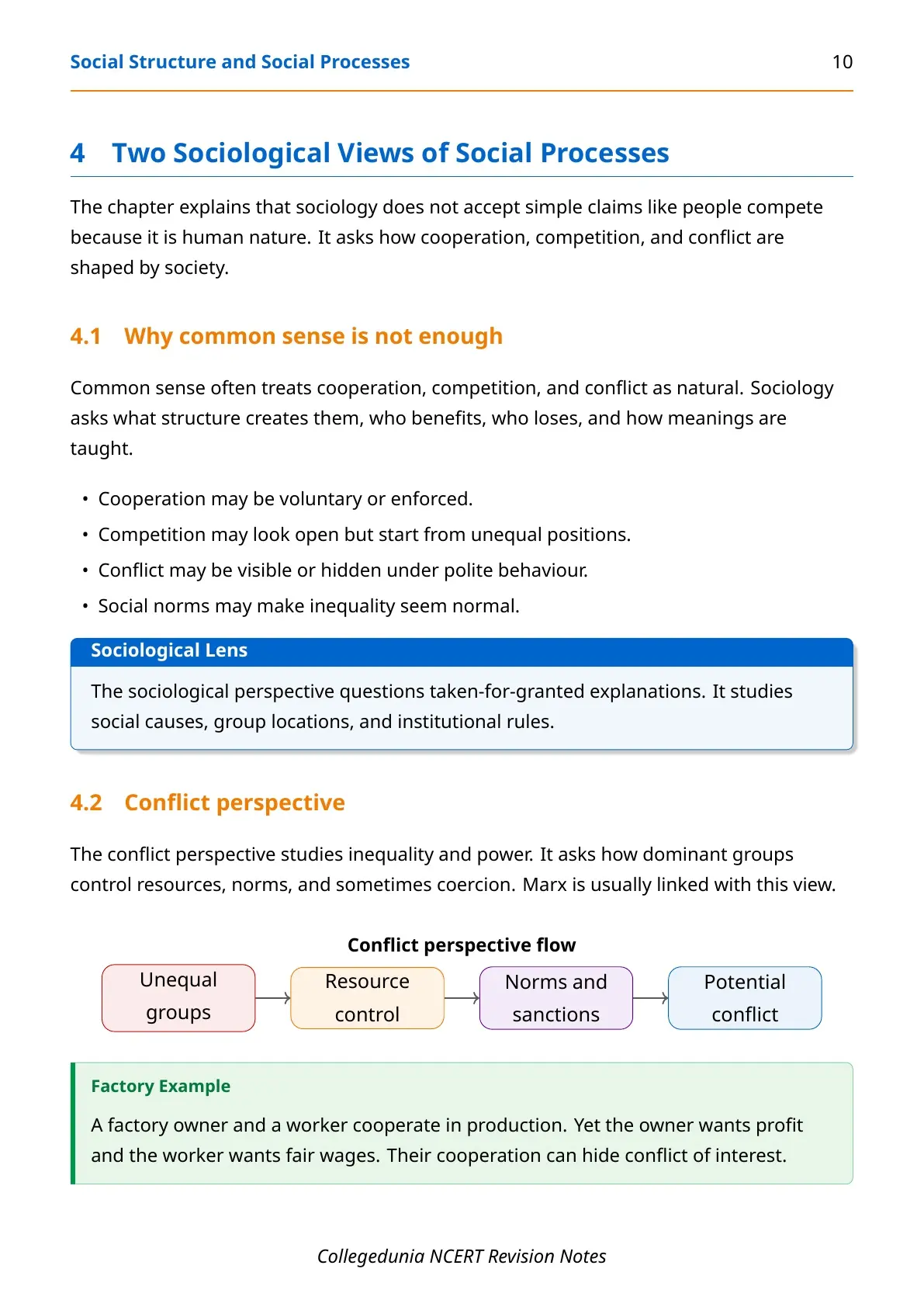
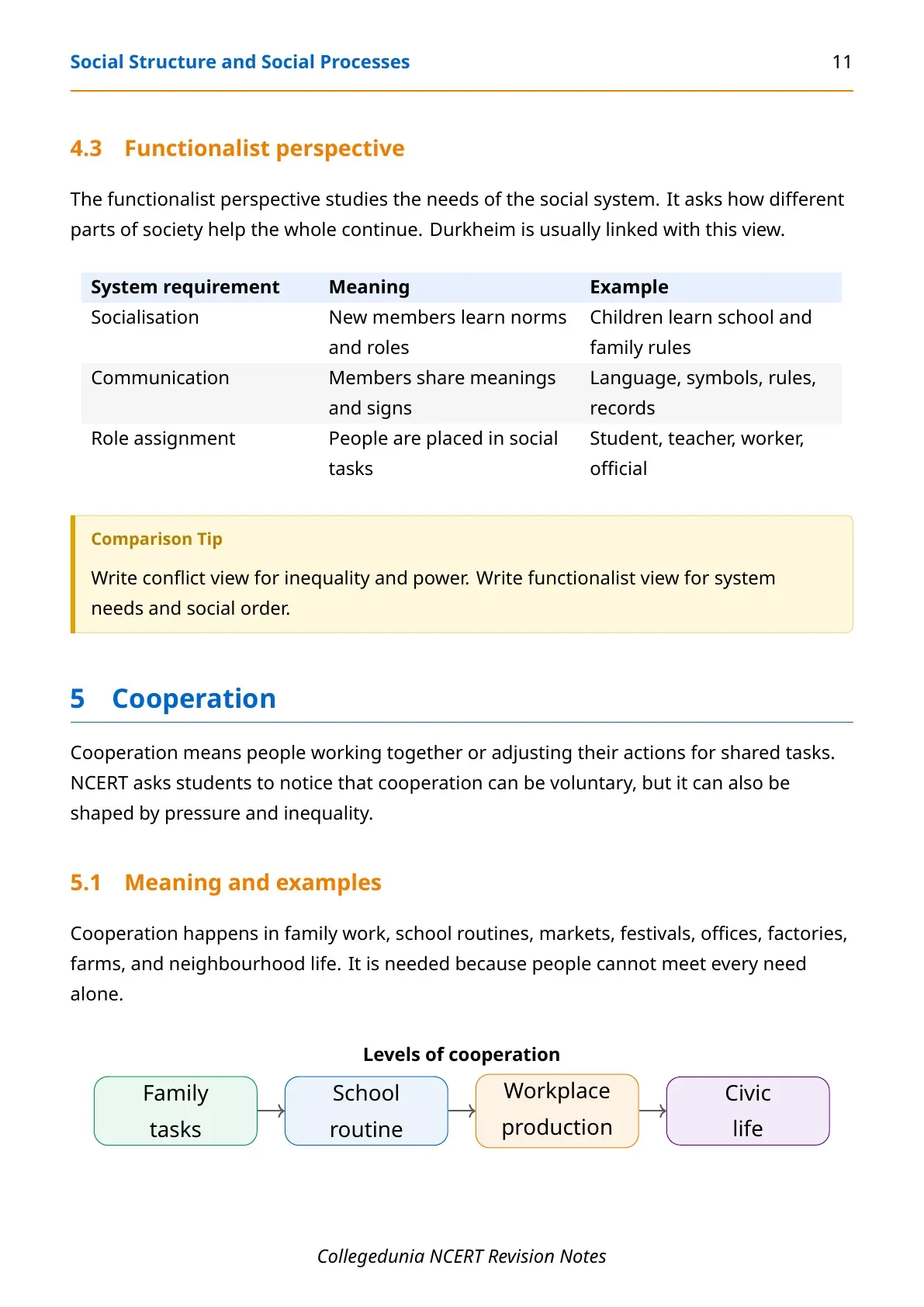
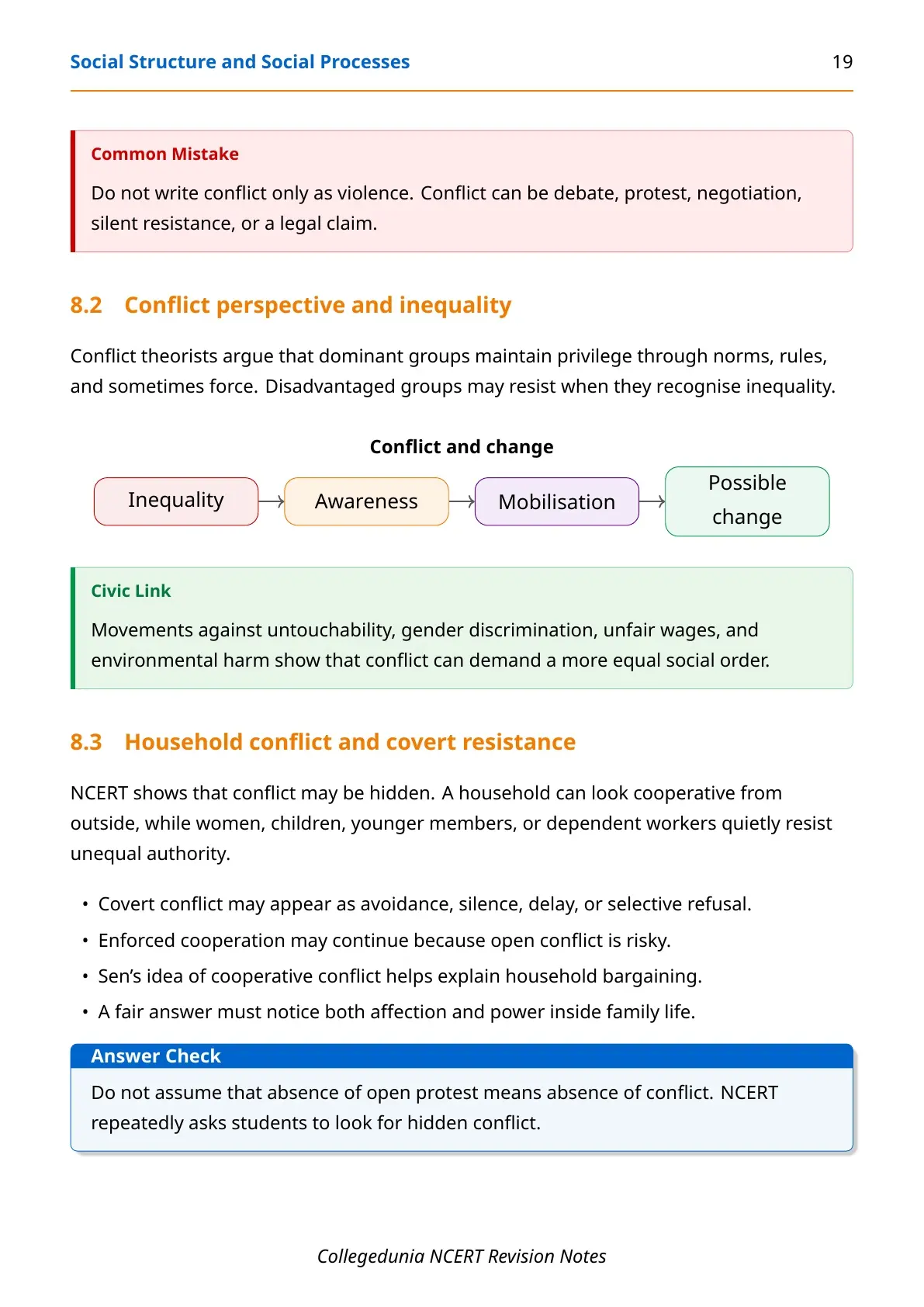
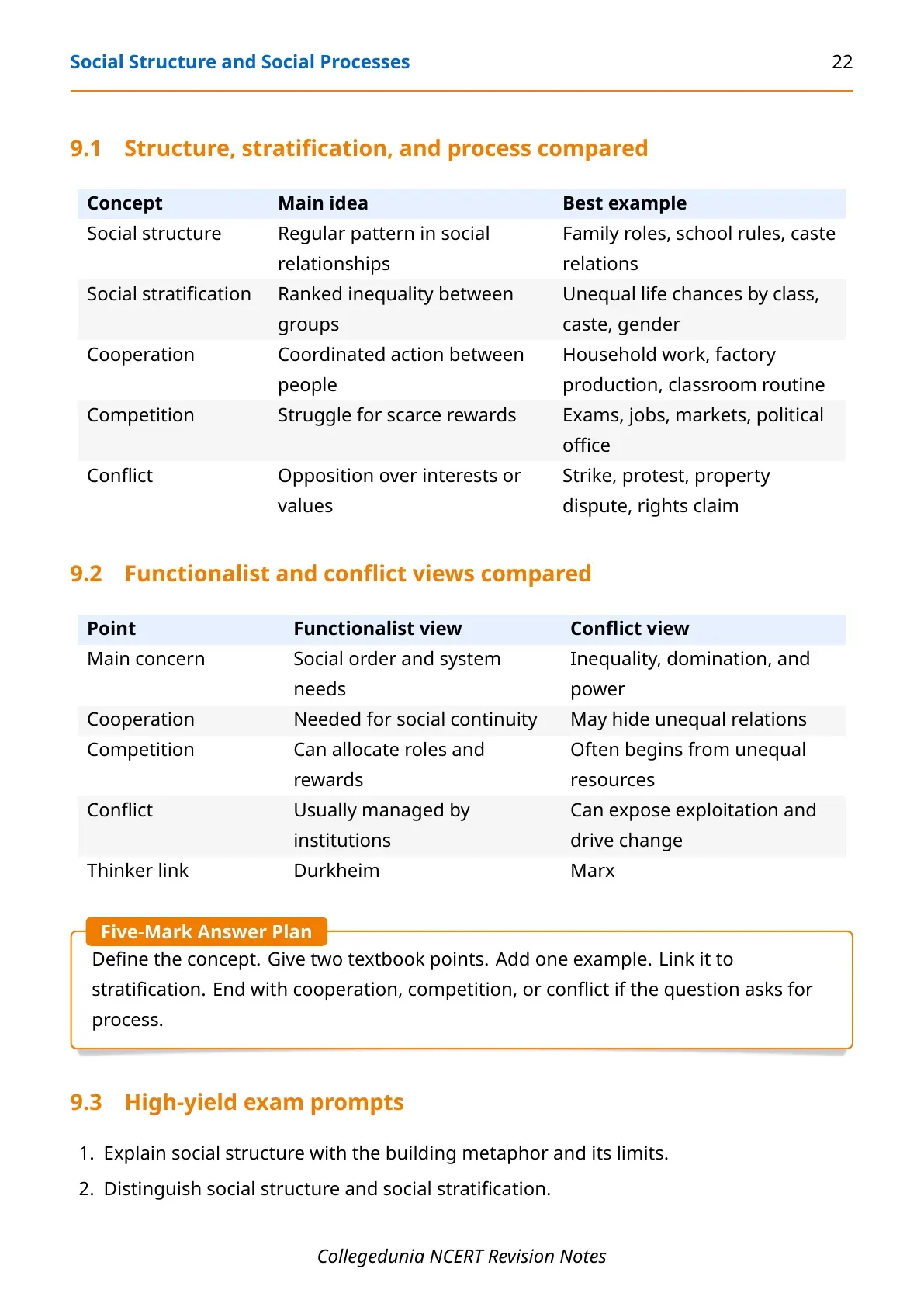
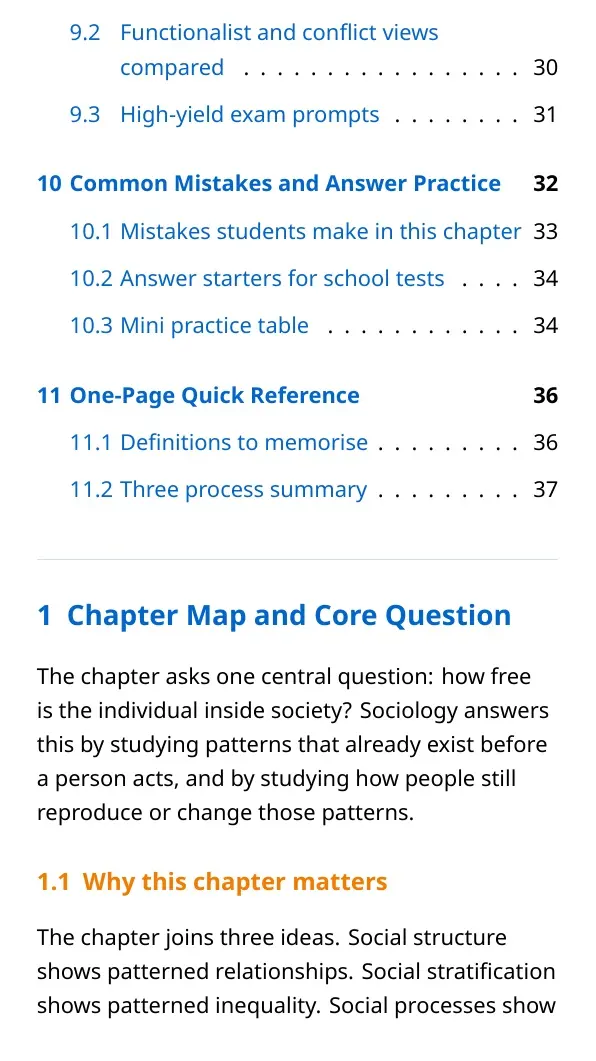
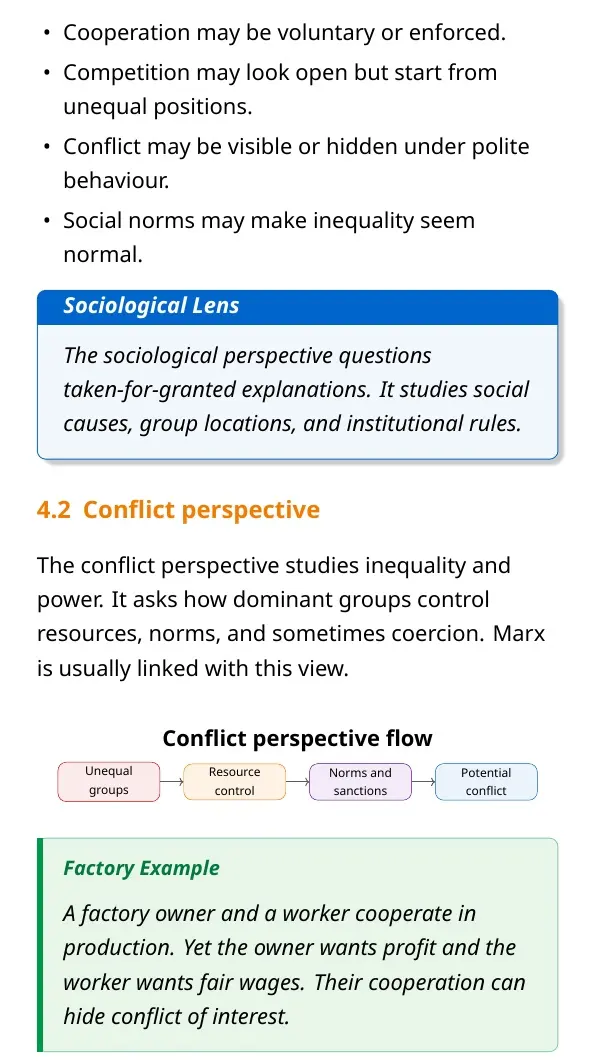
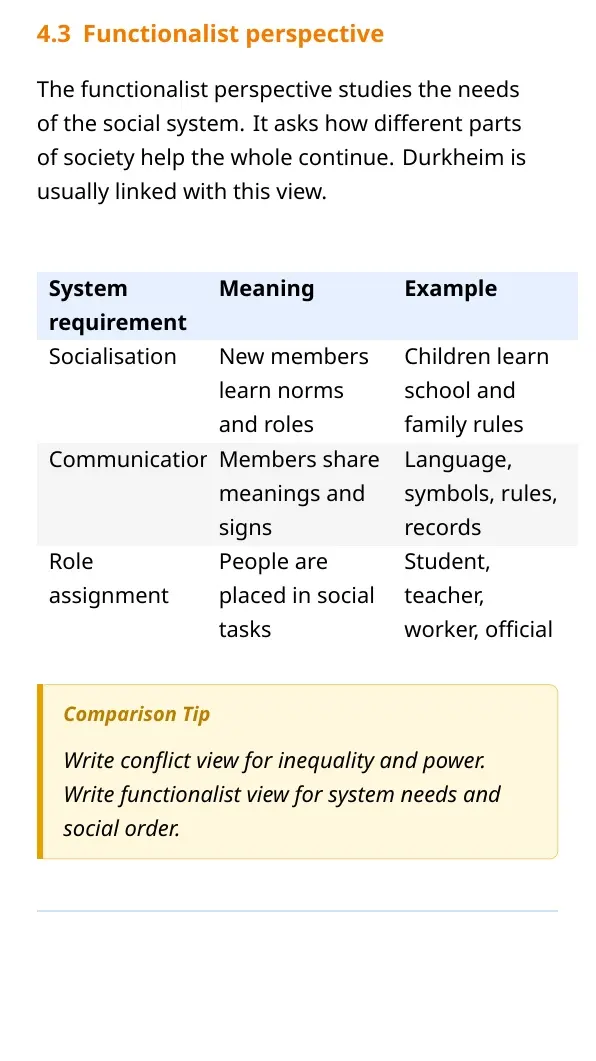
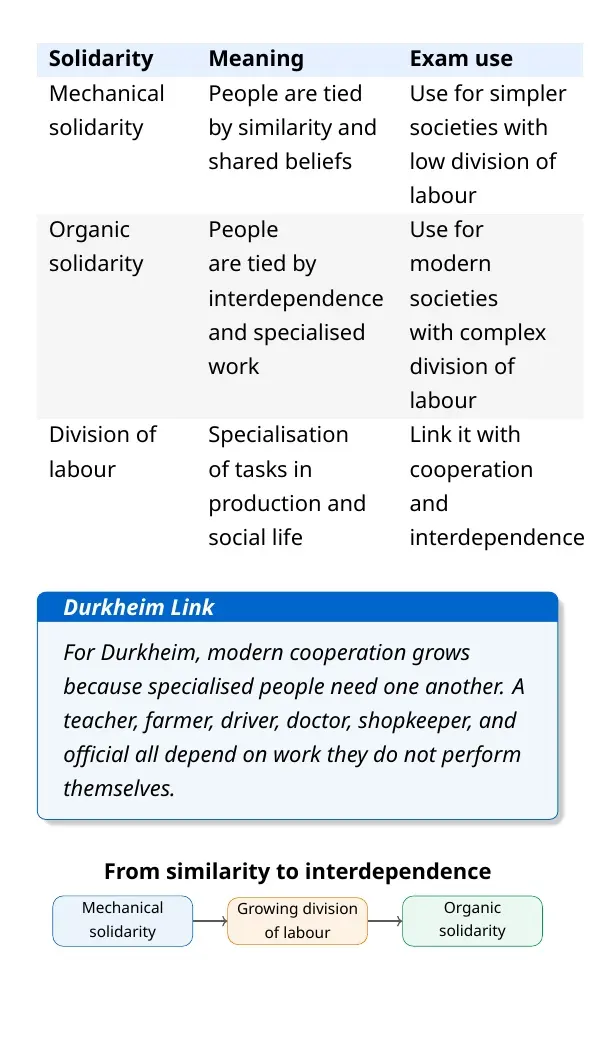
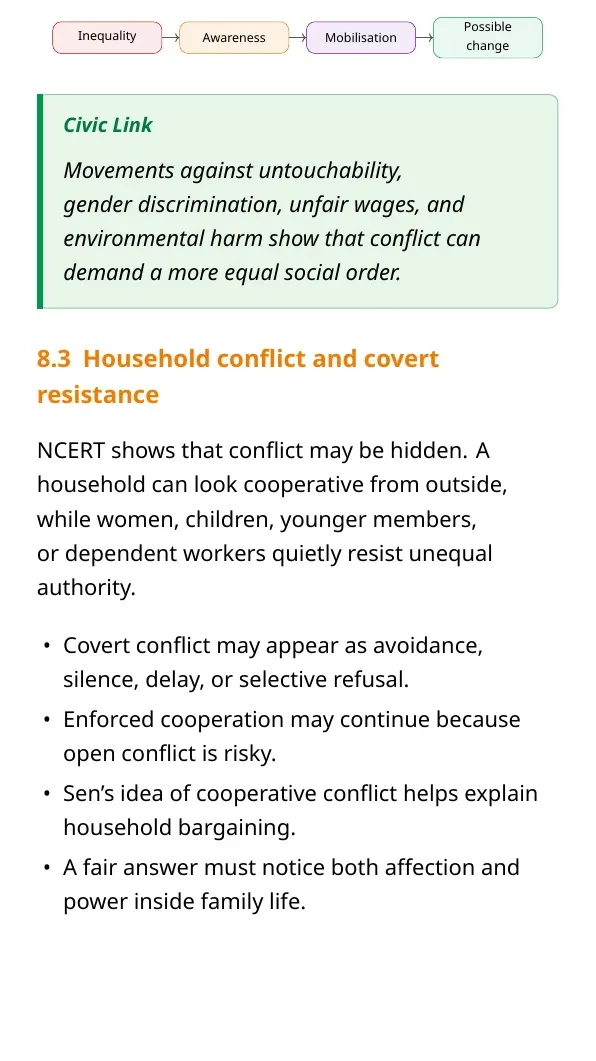
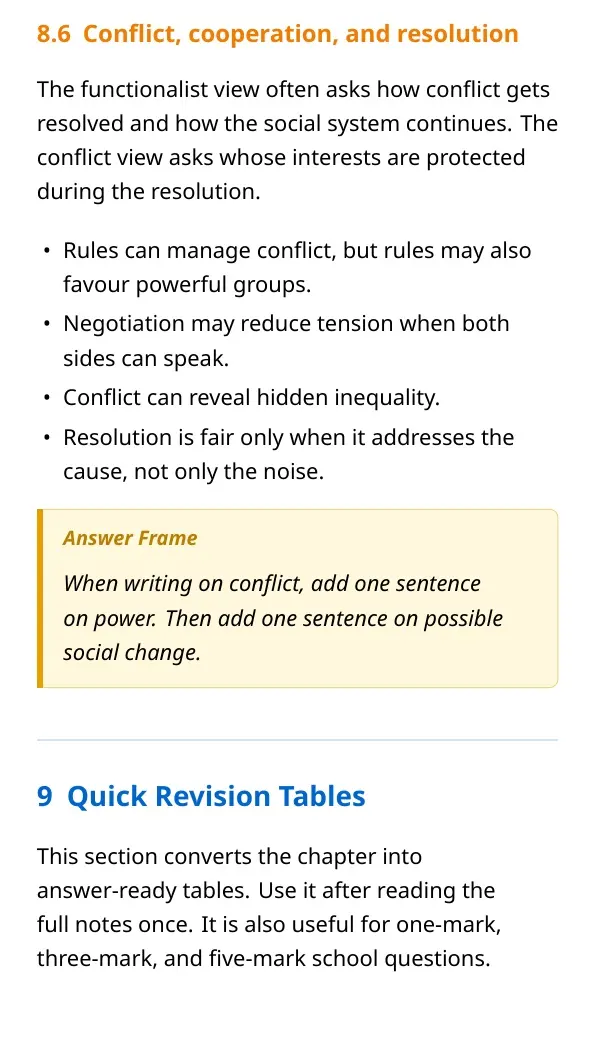
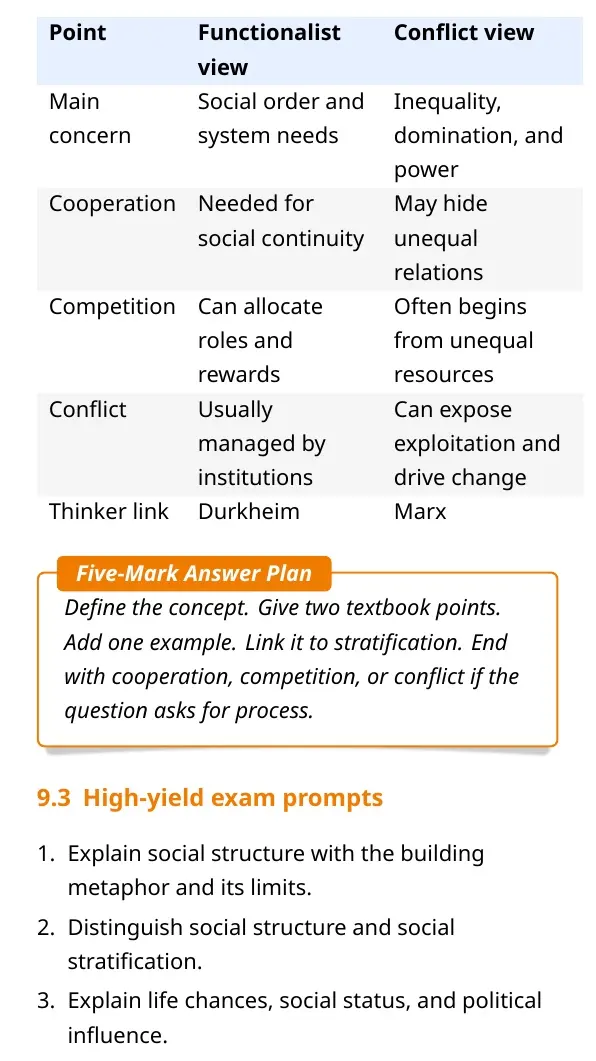
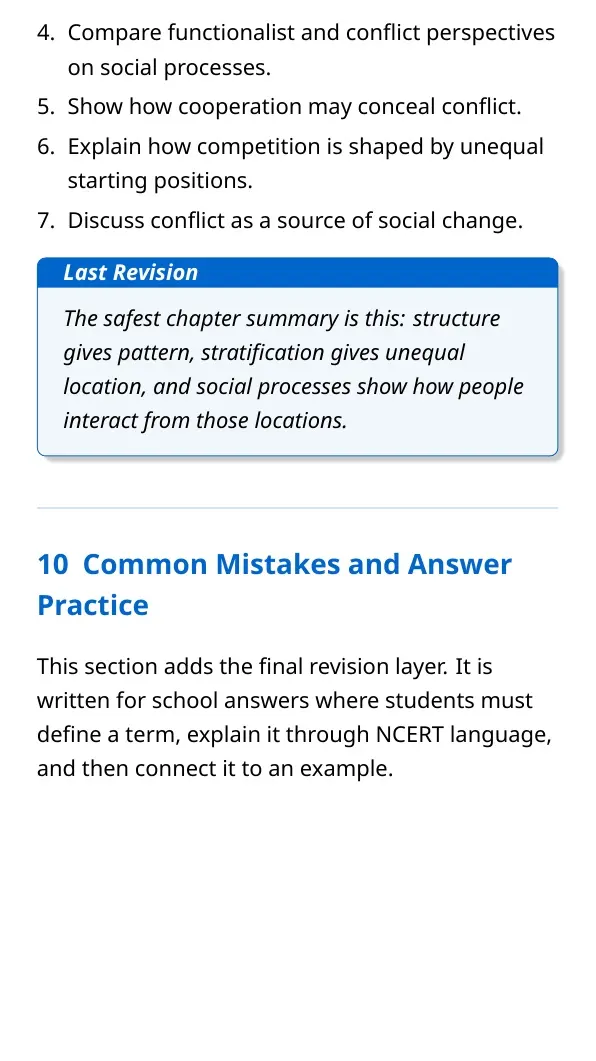
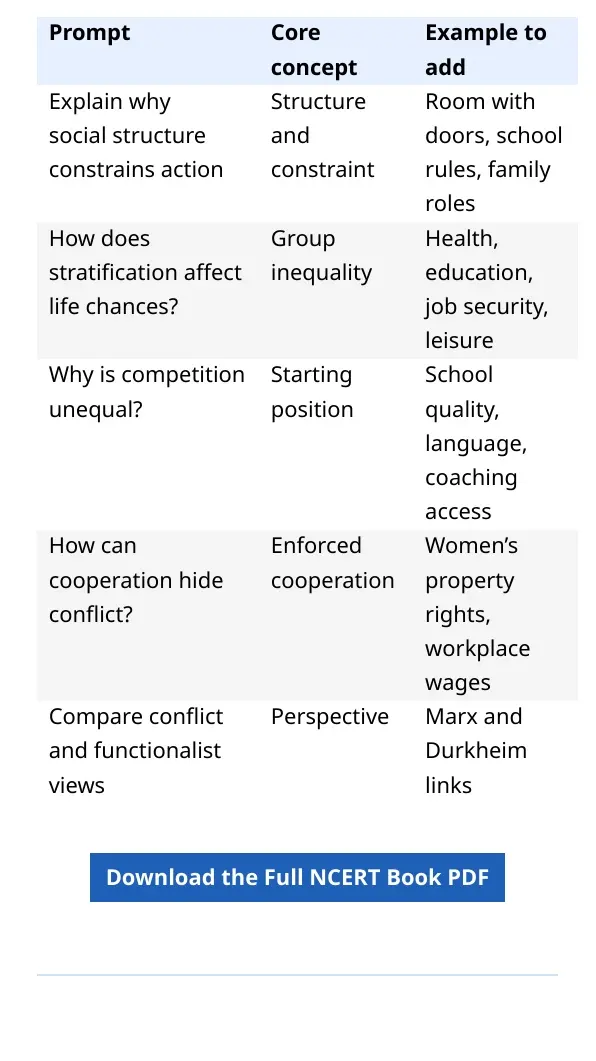
NCERT asks students to see that social processes can be explained differently. The functionalist view studies system needs and order. The conflict view studies inequality, domination and power.
| Point | Functionalist view | Conflict view |
|---|---|---|
| Main concern | Social order and system requirements. | Inequality, domination and social change. |
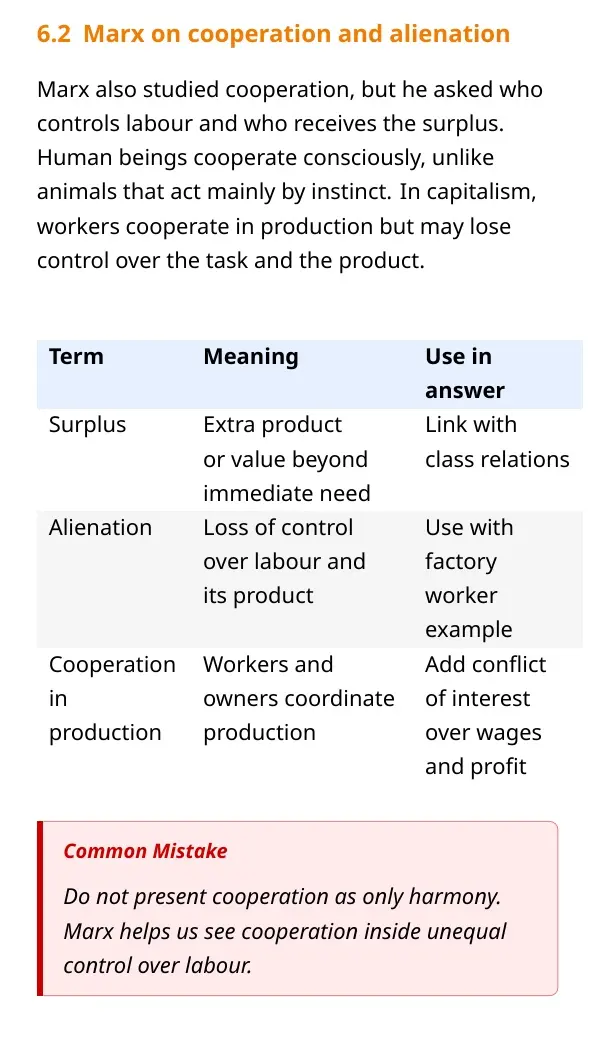
| Cooperation | Needed for continuity. | May conceal unequal relations. |
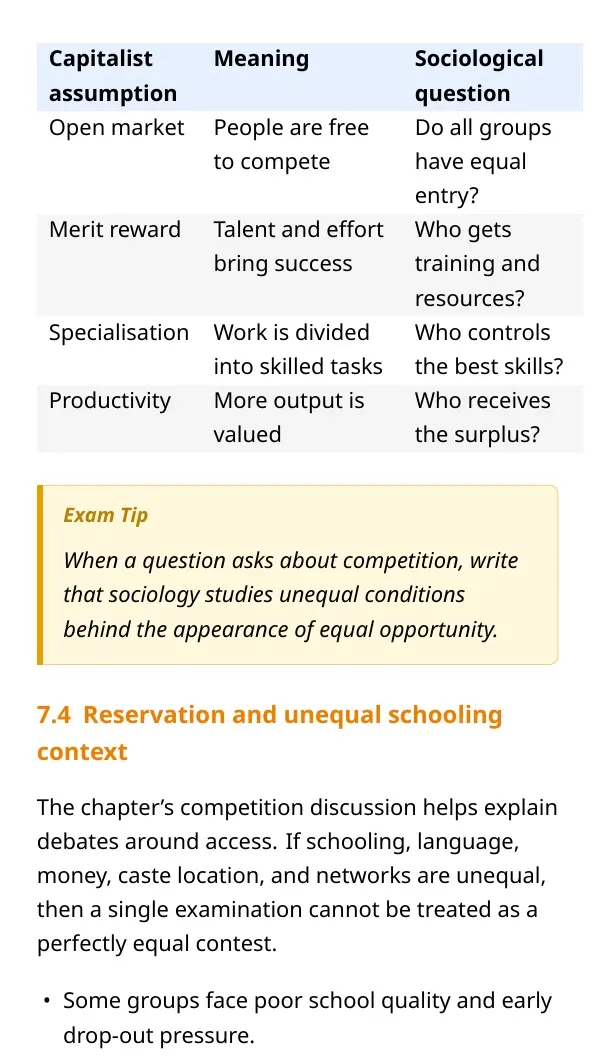
| Competition | Can allocate roles and rewards. | Often begins from unequal starting points. |
| Conflict | Usually managed by institutions. | Can expose exploitation and push change. |
How to Use These Chapter 6 Sociology Notes
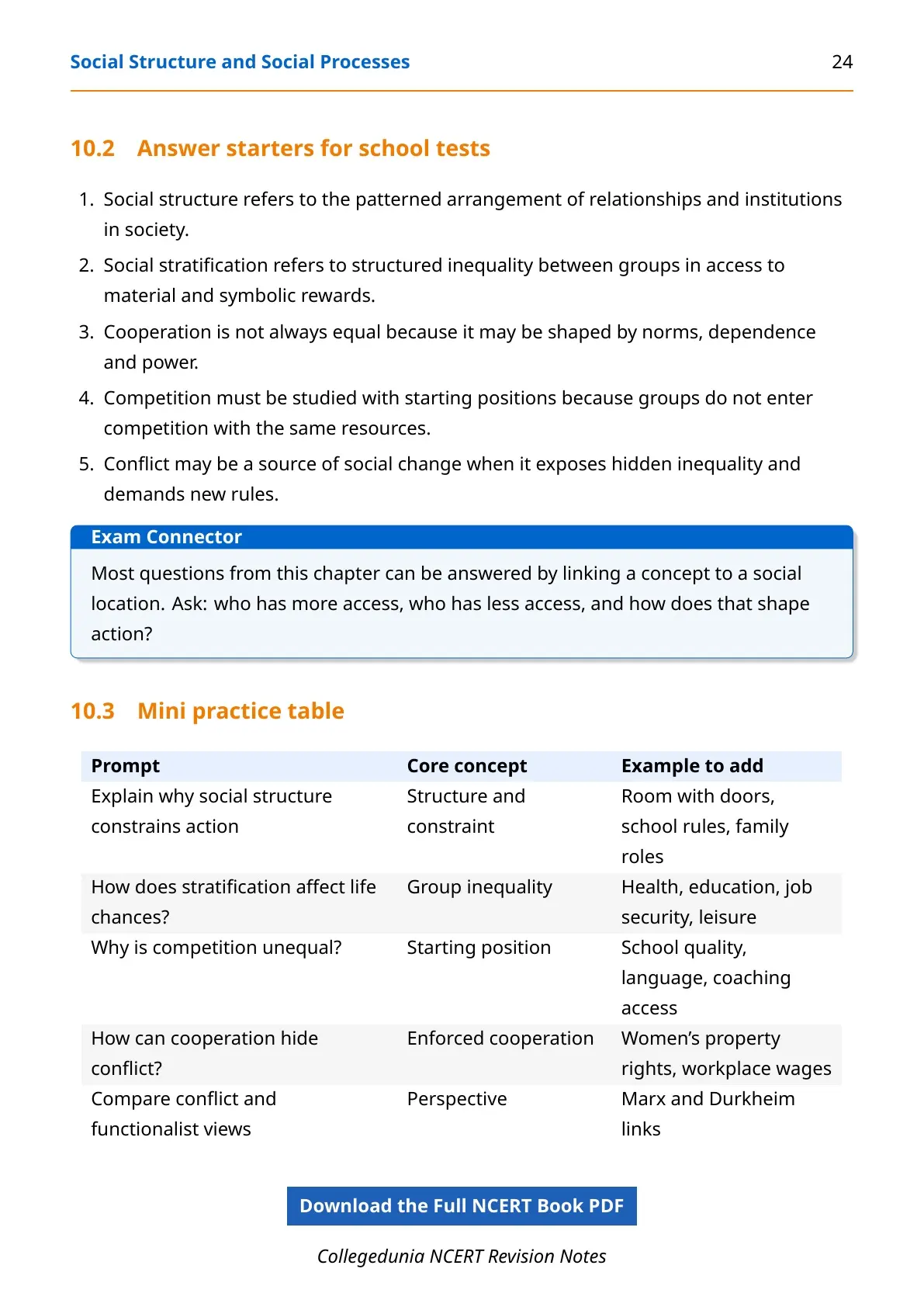
Read the PDF after one textbook reading. First revise the definitions, then use the comparison tables for answer writing. End with examples because this chapter becomes clear when concepts are tied to school, family, work and property.
- Memorise the definitions of social structure and social stratification.
- Use life chances, status and political influence for stratification answers.
- Write one example each for cooperation, competition and conflict.
- Compare functionalist and conflict perspectives in a two-column table.
| NCERT exercise anchor | Concept to use |
|---|---|
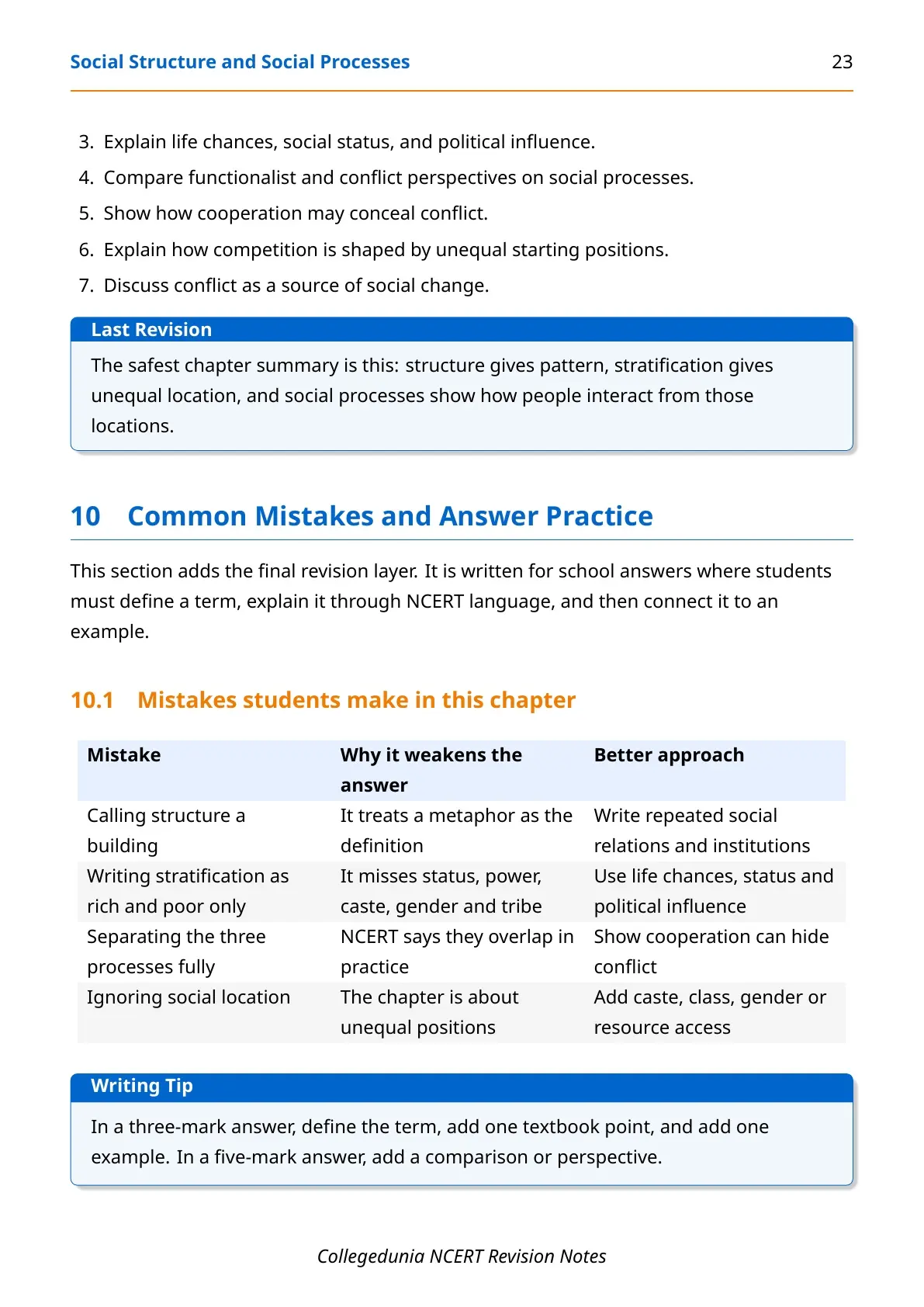
| Questions on social structure | Pattern, repetition, institution, constraint and agency. |
| Questions on social stratification | Structured inequality, group location and unequal access. |
| Questions on cooperation | Voluntary cooperation, enforced cooperation and hidden conflict. |
| Questions on competition and conflict | Unequal starting positions, power and social change. |
Related NCERT Resources for Social Structure and Stratification
| Resource | Use it for |
|---|---|
| Class 11 Sociology Chapter 6 NCERT Solutions | Exercise answers and answer-writing format. |
| Class 11 Sociology Chapter 6 NCERT Book PDF | Official textbook reading and examples. |
| Class 11 Sociology Chapter 6 Handwritten Notes | Notebook-style last-minute revision once available. |
All Class 11 Sociology Notes Chapters
| Chapter | NCERT Notes link |
|---|---|
| Chapter 1 | Sociology and Society Notes |
| Chapter 2 | Terms, Concepts and Their Use in Sociology Notes |
| Chapter 3 | Understanding Social Institutions Notes |
| Chapter 4 | Culture and Socialisation Notes |
| Chapter 5 | Doing Sociology Research Methods Notes |
| Chapter 6 | Social Structure, Stratification and Social Processes Notes |
Social Structure and Stratification Class 11 Notes FAQs
Ques. What is covered in Class 11 Sociology Chapter 6 Notes?
Ans. The notes cover social structure, social stratification, life chances, status, political influence, cooperation, competition, conflict and sociological perspectives.
Ques. What is social structure in sociology?
Ans. Social structure is the patterned arrangement of social relationships and institutions that gives society a regular form.
Ques. What are the three advantages linked with stratification?
Ans. NCERT lists life chances, social status and political influence as key advantages enjoyed by privileged groups.
Ques. How should students revise this chapter for 2026-27 exams?
Ans. Students should revise definitions, compare functionalist and conflict perspectives, and practise examples of cooperation, competition and conflict.



Comments