



These NCERT notes on Haloalkanes and Haloarenes summarise every topic in the latest Class 12 Chemistry textbook. The reaction mechanisms are explained step by step in the PDF below.

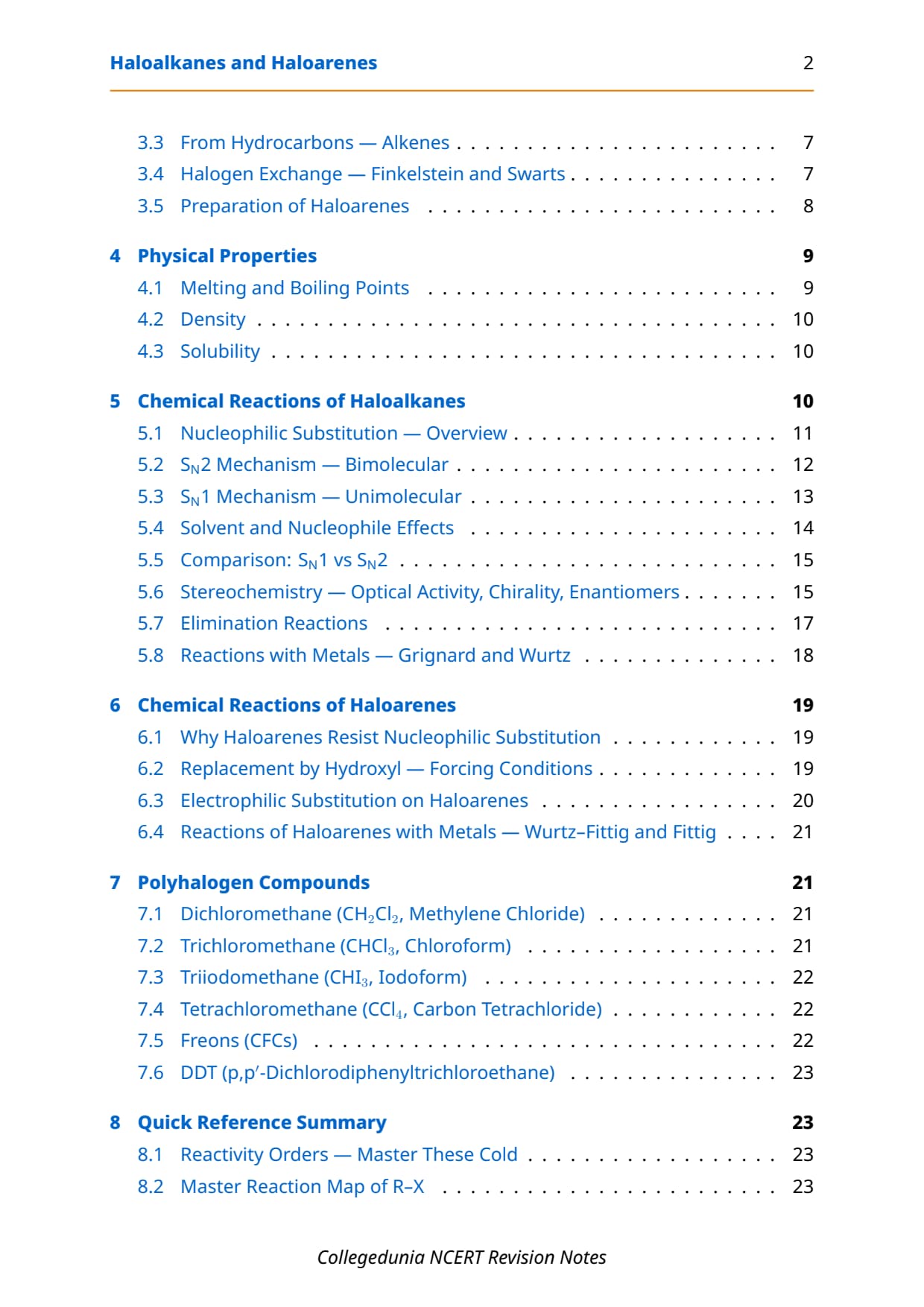
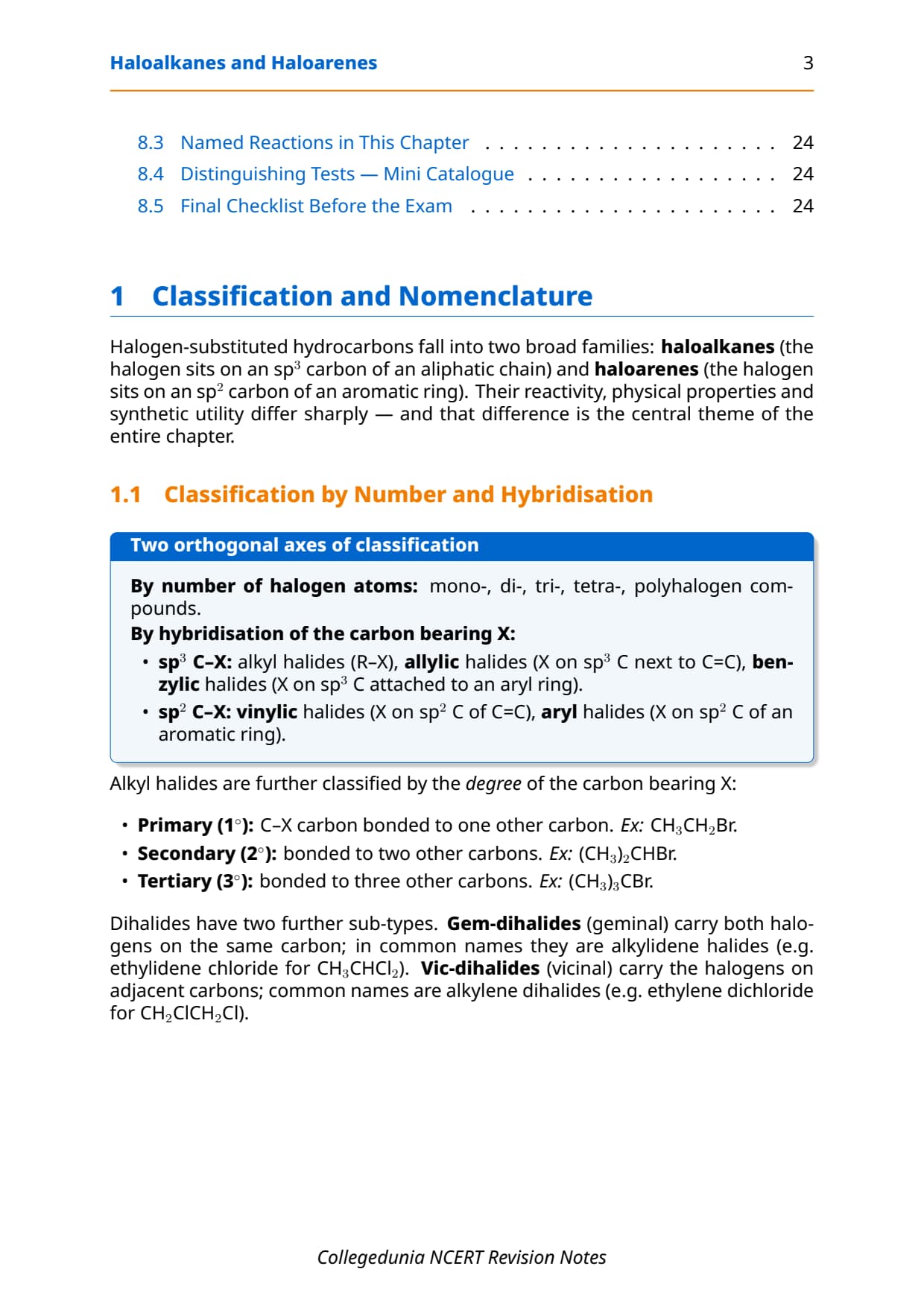
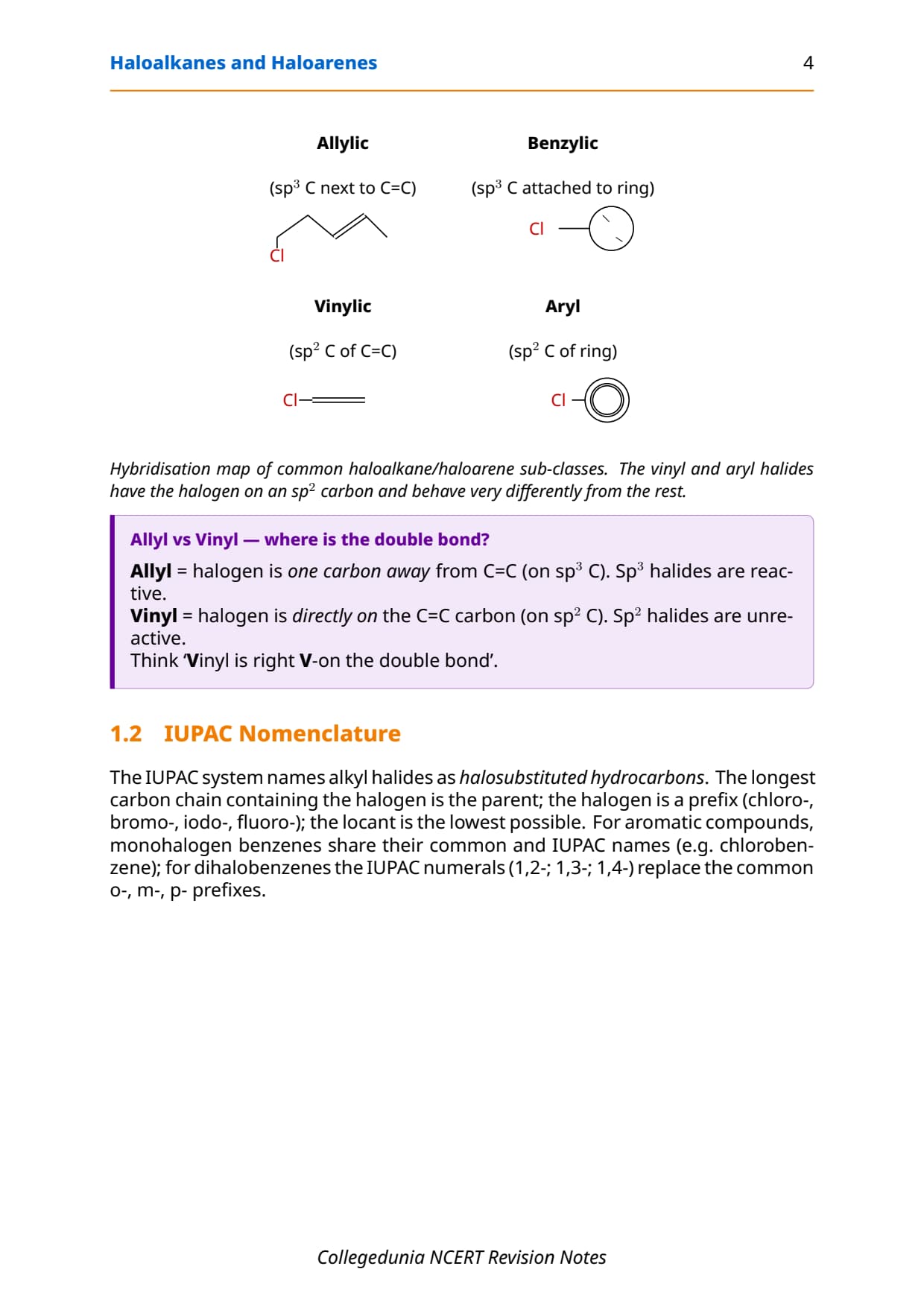
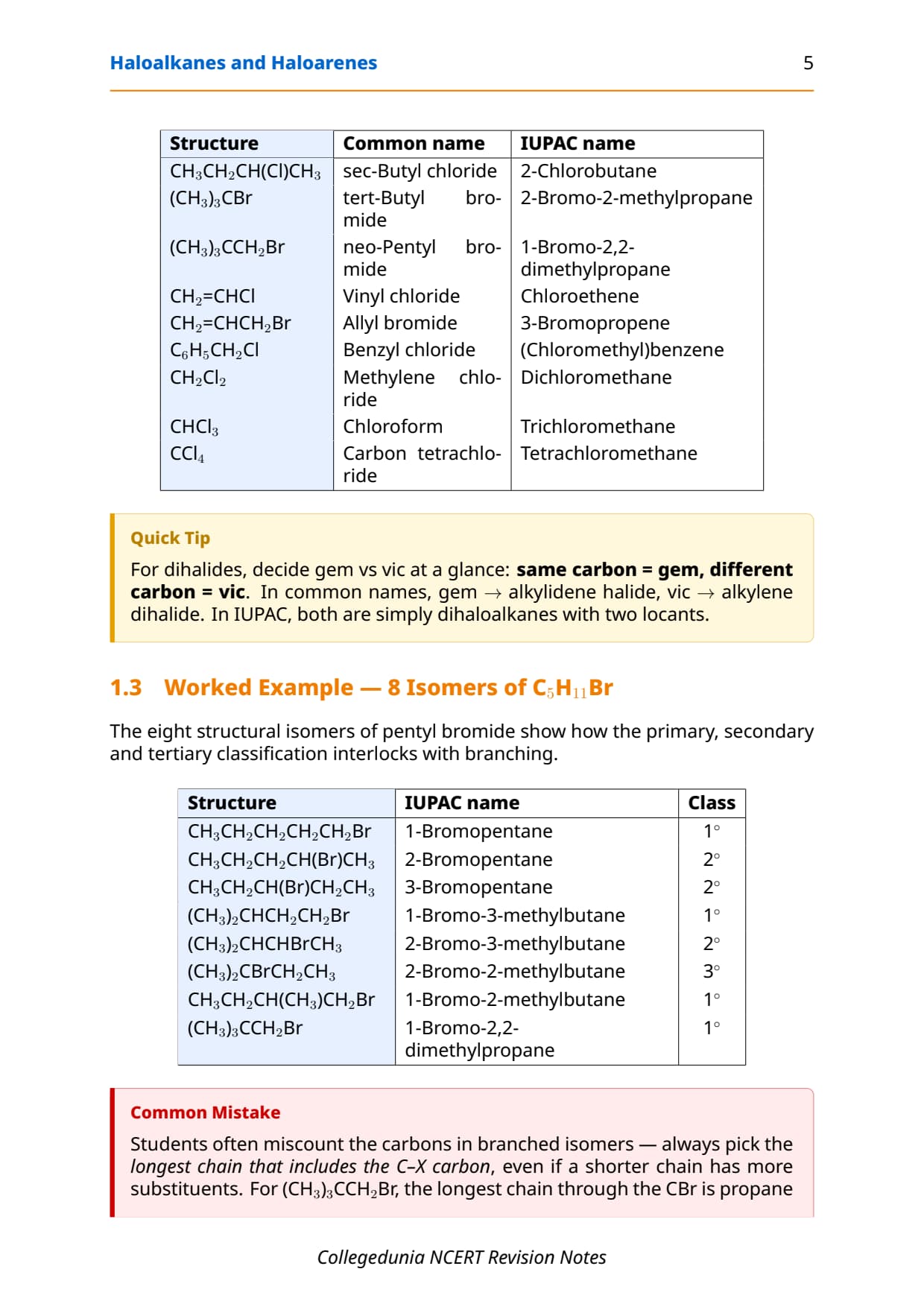





This page hosts the 25-page Notes PDF covering the SN1, SN2, E1, and E2 mechanisms.
- CBSE Boards: 5 to 7 marks a year, usually a 3-mark SN1-versus-SN2 mechanism or a reactivity comparison.
- JEE Main: 3 to 4% of the paper, 1 to 2 questions per shift on optical activity, Saytzeff, Wurtz, and Fittig.
- NEET: 2 to 3 questions a year on reactivity order, carbocation stability, and Sandmeyer/Finkelstein.
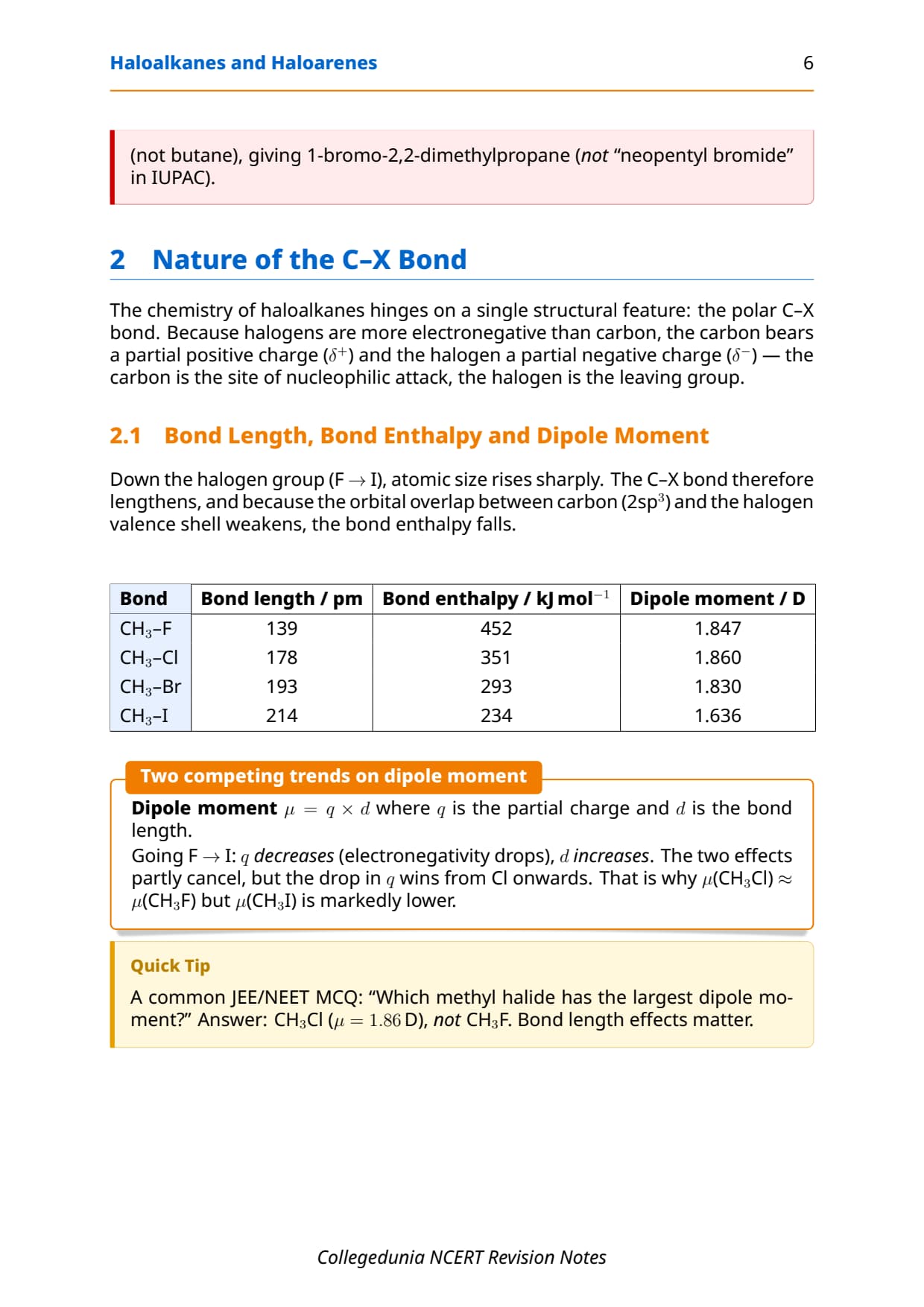
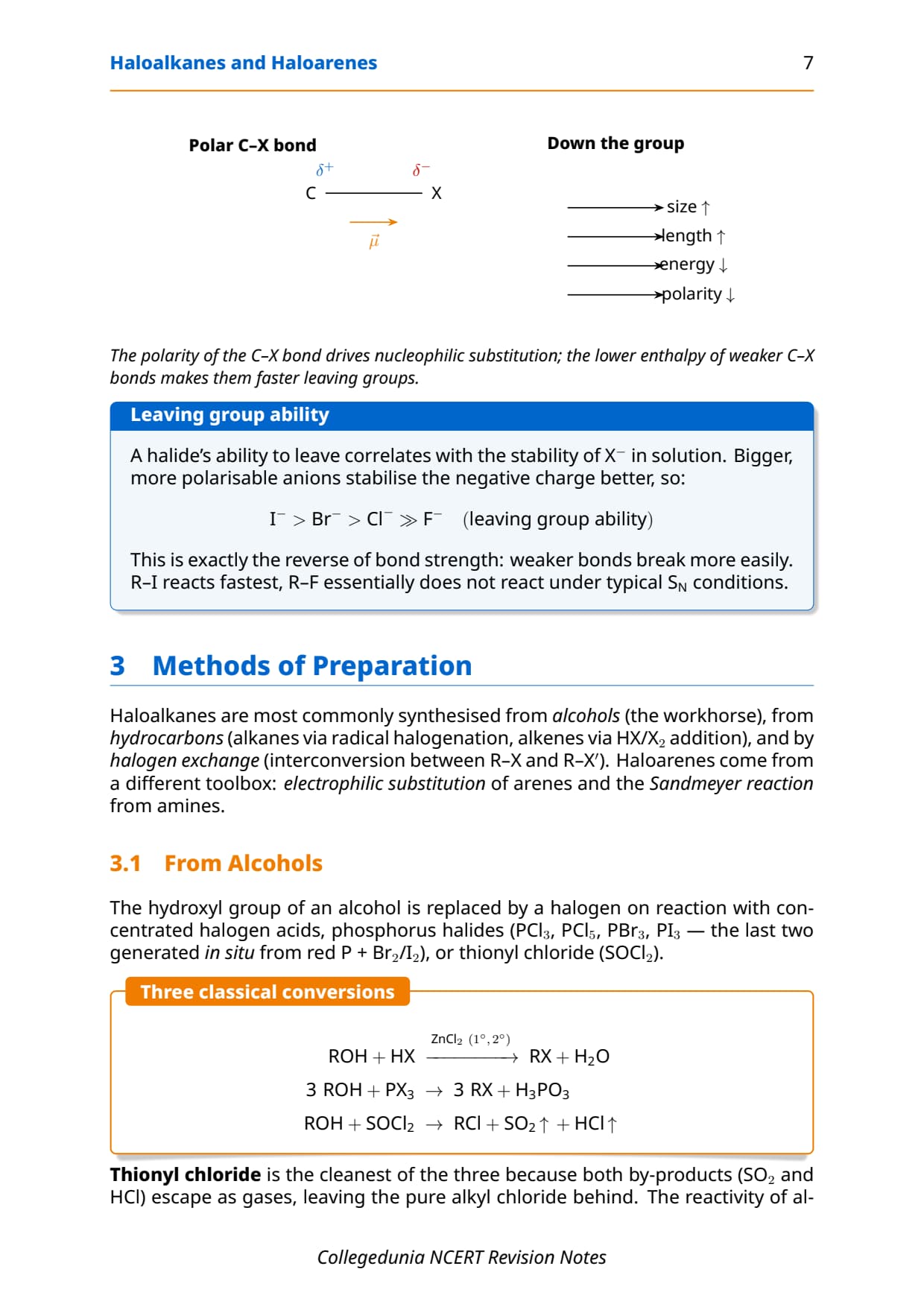
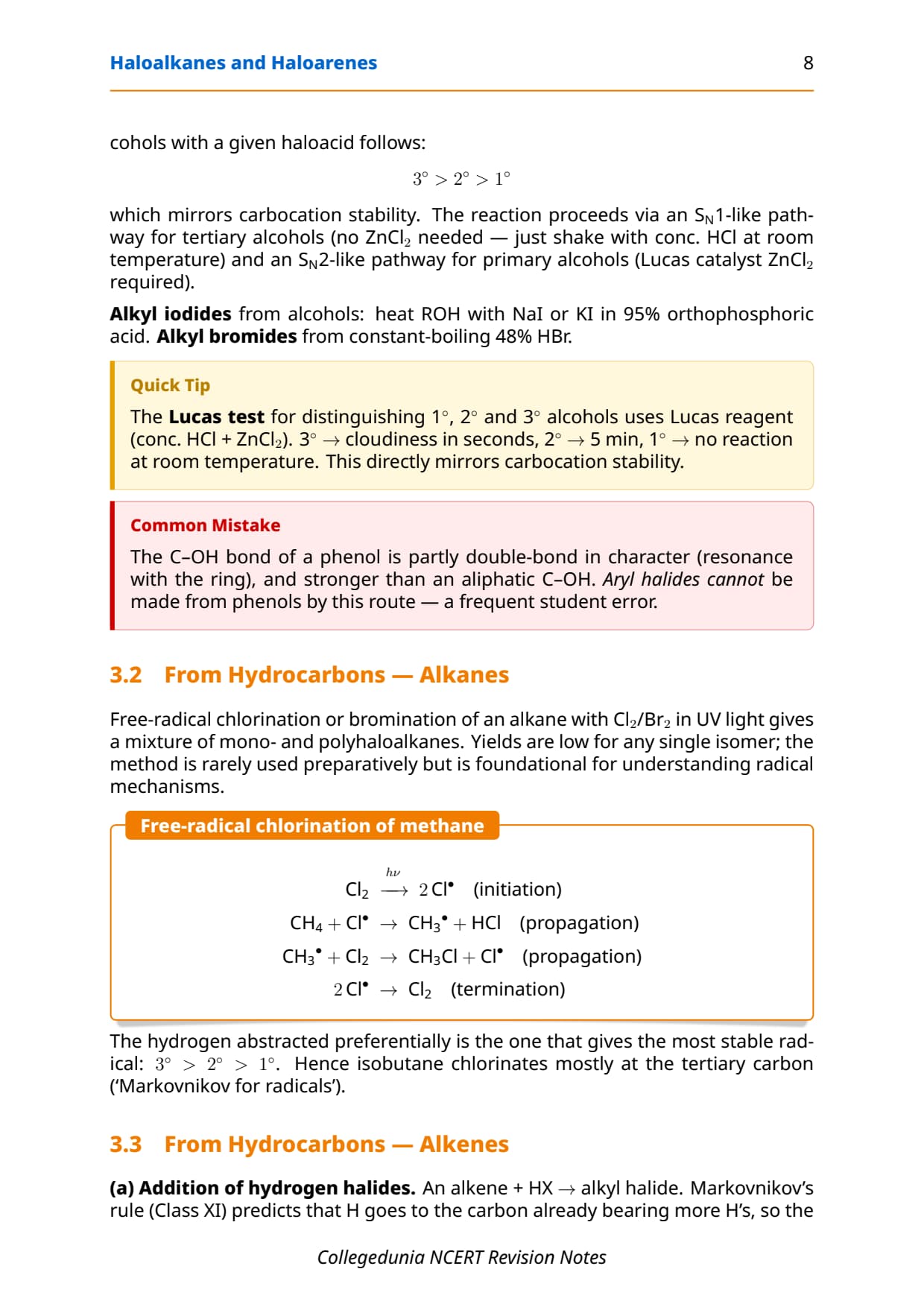
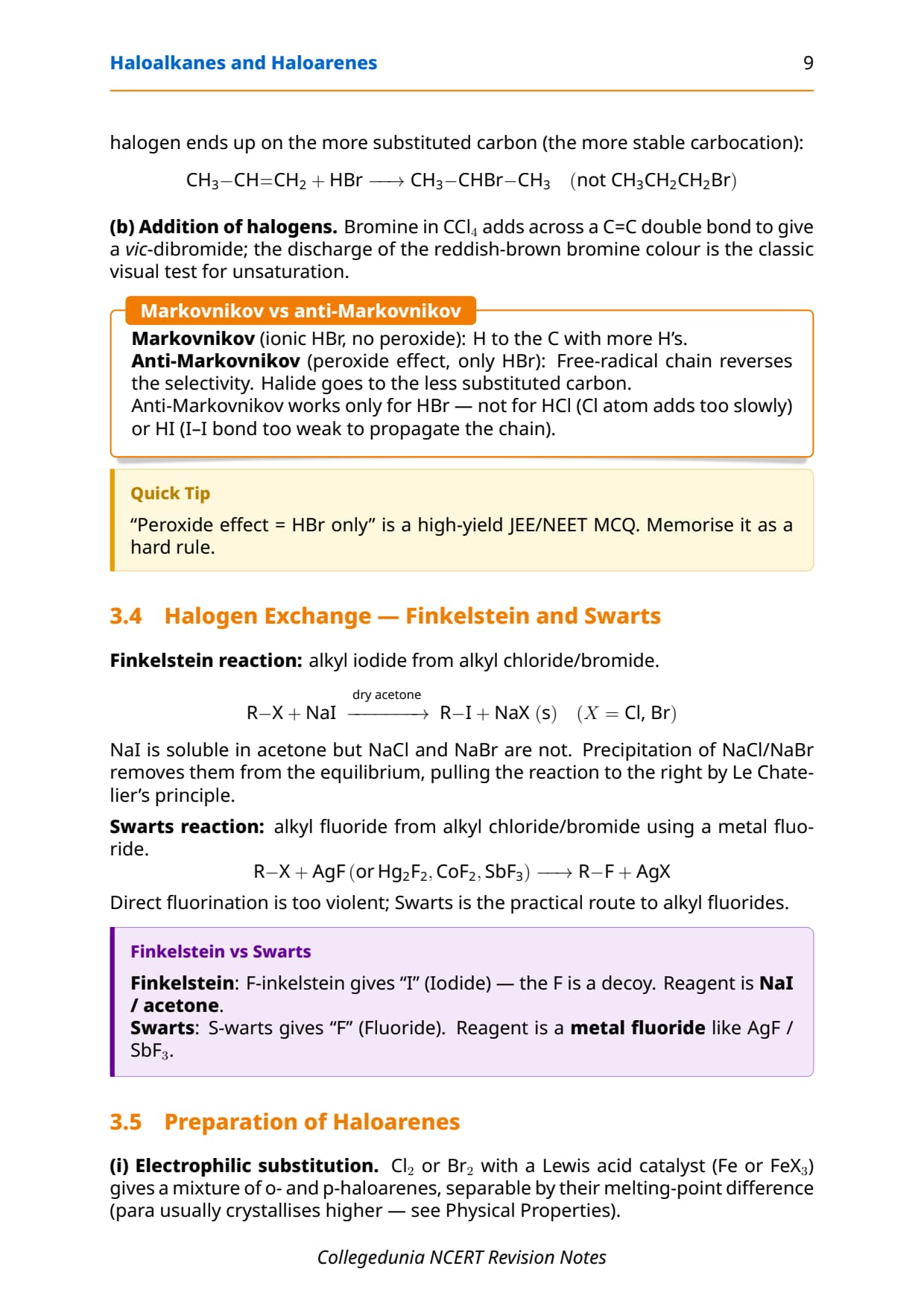
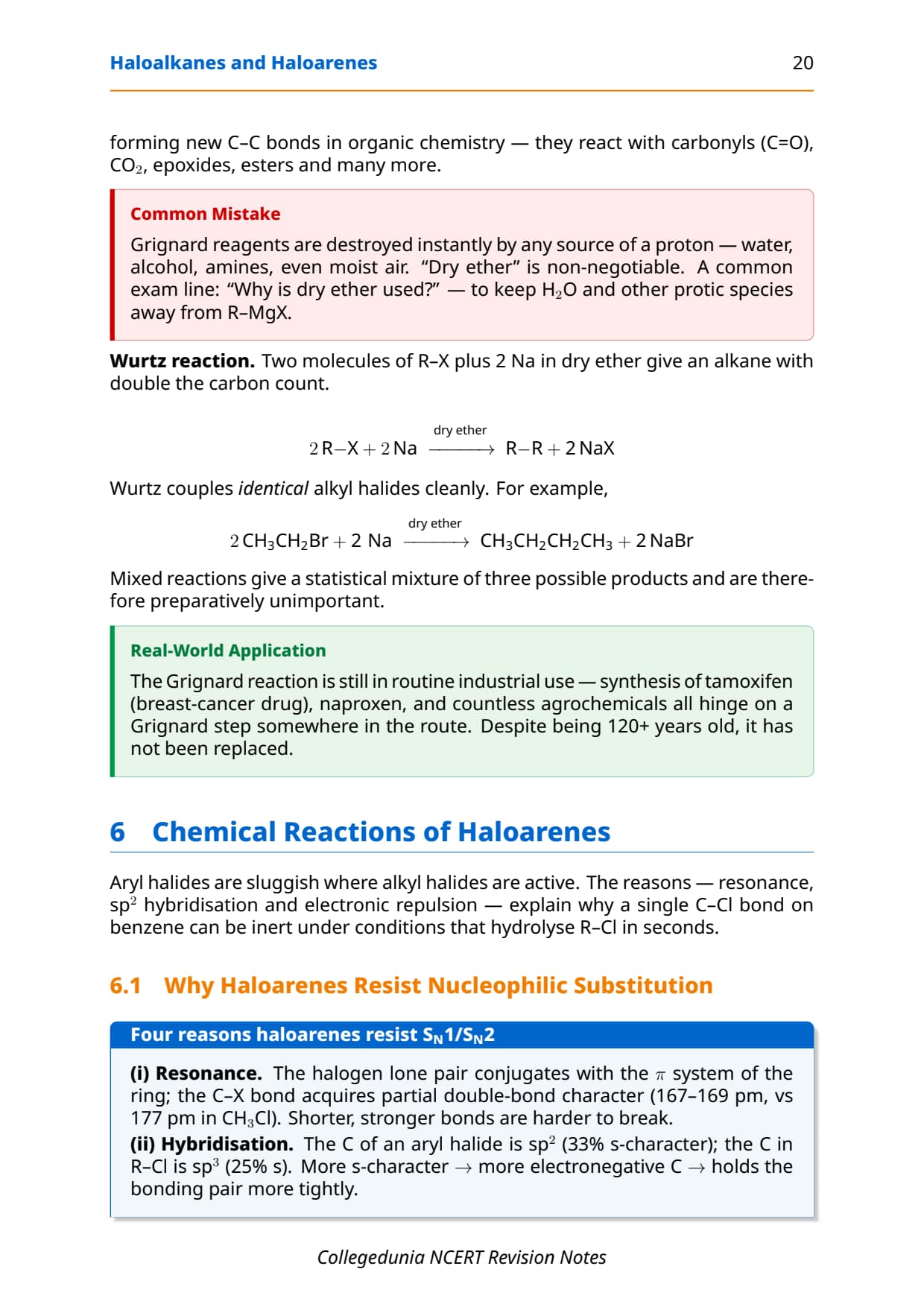
The notes below walk the chapter the way CBSE actually marks it: nomenclature and the C-X bond first, then preparation routes from alcohols and hydrocarbons, then the SN1 and SN2 mechanism contrast with stereochemistry, and finally the haloarene block with the difference in reactivity towards nucleophilic substitution and the named reactions.
These Collegedunia Haloalkanes and Haloarenes notes are curated by subject experts, mapped to the current 2026-27 NCERT print, and refined against the last five years of CBSE Board, JEE Main, and NEET papers.
Also Check:
- Haloalkanes and Haloarenes Class 12 Chemistry NCERT Solutions
- Haloalkanes and Haloarenes Class 12 Chemistry Formula Sheet
- CBSE Class 12 Chemistry Syllabus 2026-27
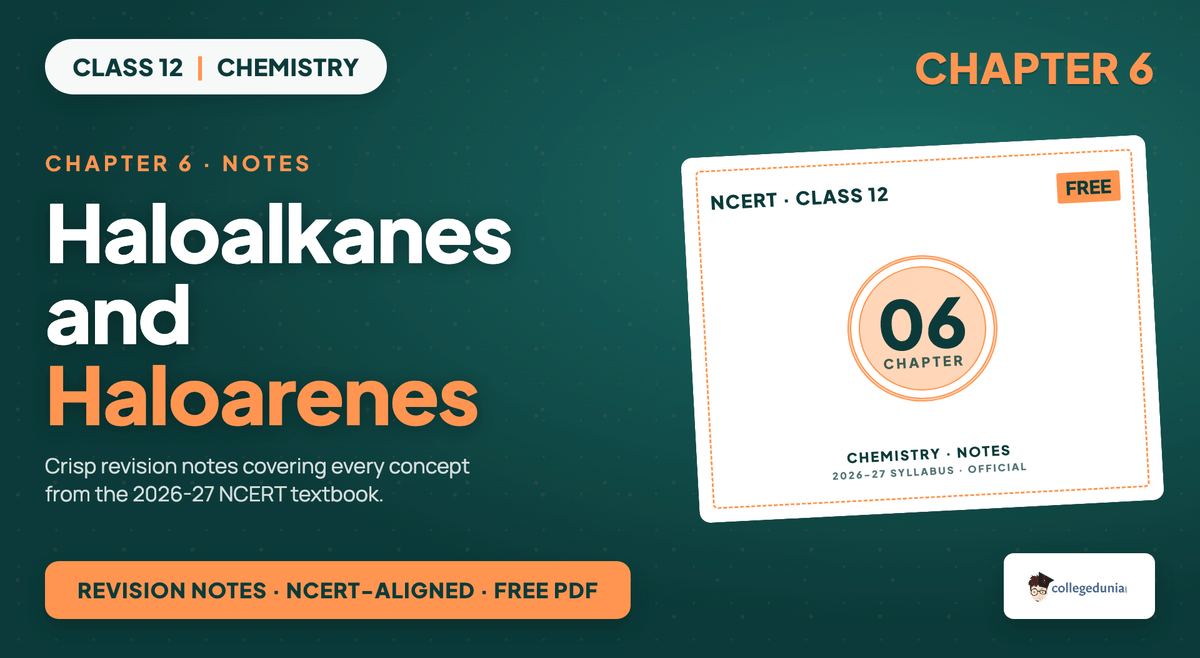
Haloalkanes and Haloarenes Class 12 Chapter at a Glance: Sub-Topic Counts
How the 2026-27 NCERT print splits this chapter across four buckets:
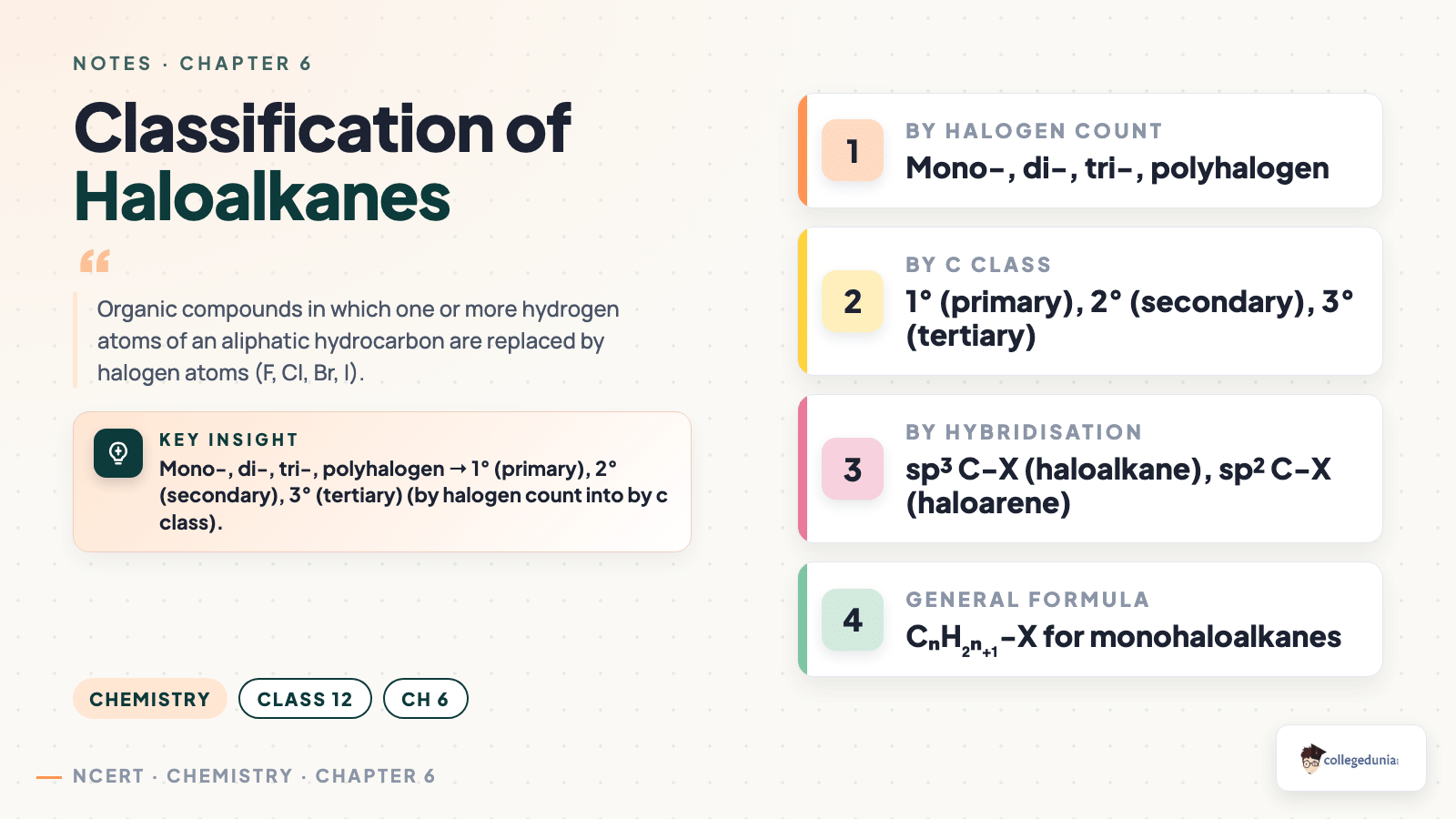
Haloalkanes and Haloarenes Class 12 Chemistry Video Lecture
Source: Magnet Brains on YouTube
Haloalkanes and Haloarenes Topic-by-Topic Notes for Class 12 Chemistry
How will Collegedunia's NCERT Notes Help You with Haloalkanes and Haloarenes?
These Notes target the three things students lose most marks on: a side-by-side SN1 versus SN2 table with stereochemistry, an ortho-para directing summary for haloarenes, and a named-reaction memory wall.
Most Important Sub-Topics in Haloalkanes and Haloarenes and Their Mark Distribution
Averaged across CBSE, JEE Main, and NEET papers (2021 to 2025), this shows which sub-topics to revise first.
| Sub-Topic | NCERT Section | CBSE Marks | JEE / NEET Question Frequency |
|---|---|---|---|
| SN1 versus SN2 Mechanism | 6.7 | 3 | Very High |
| Nomenclature and C-X Bond | 6.1 - 6.2 | 1 - 2 | High |
| Reactions of Haloalkanes (Wurtz, Grignard) | 6.6 | 2 - 3 | High |
| Reactions of Haloarenes (Sandmeyer, Dow, Wurtz-Fittig) | 6.4, 6.8 | 2 - 3 | High |
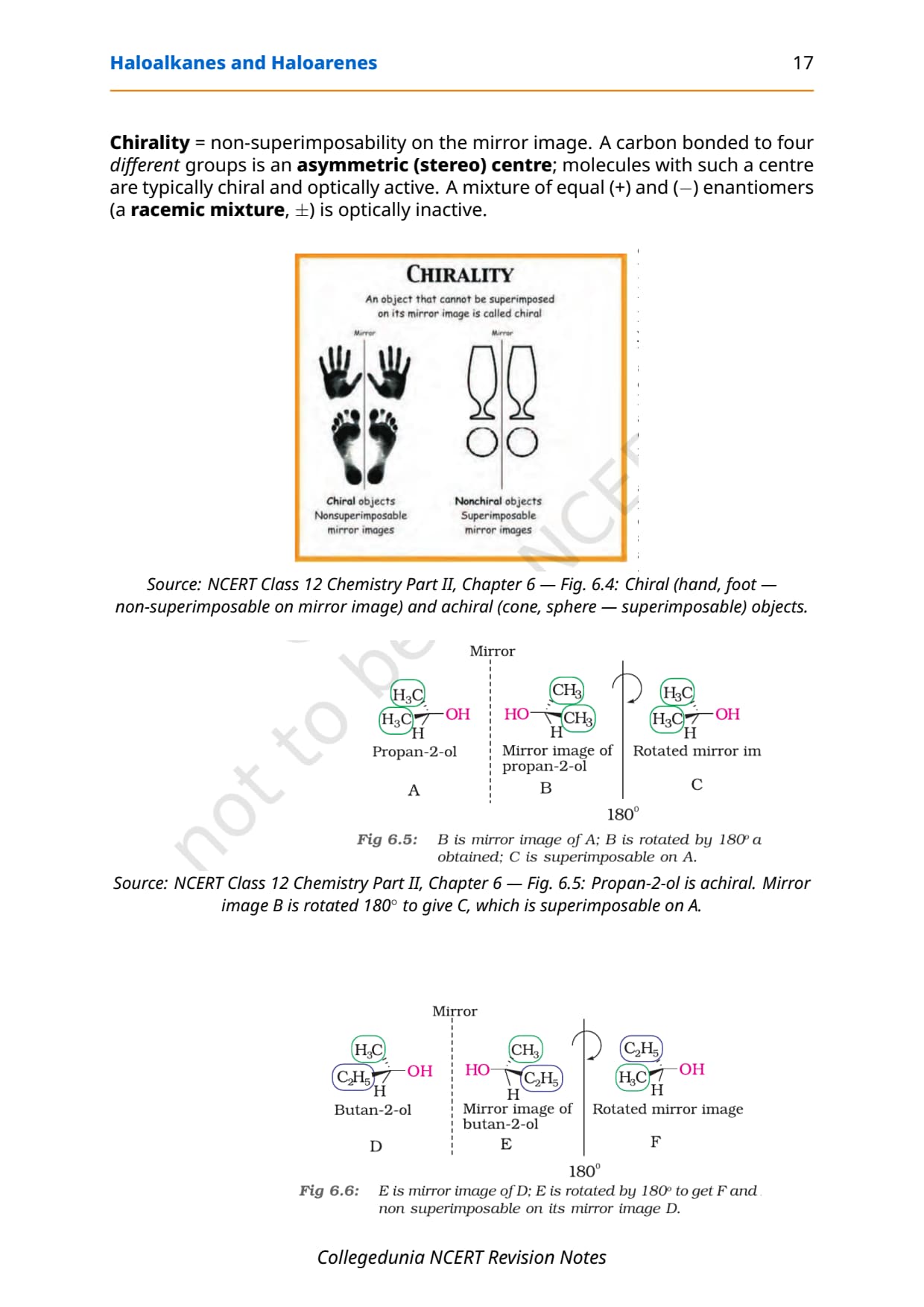
| Optical Activity and Stereochemistry | 6.7 | 1 - 2 | Medium |
| Polyhalogen Uses and Environmental Impact | 6.9 | 1 | Low |
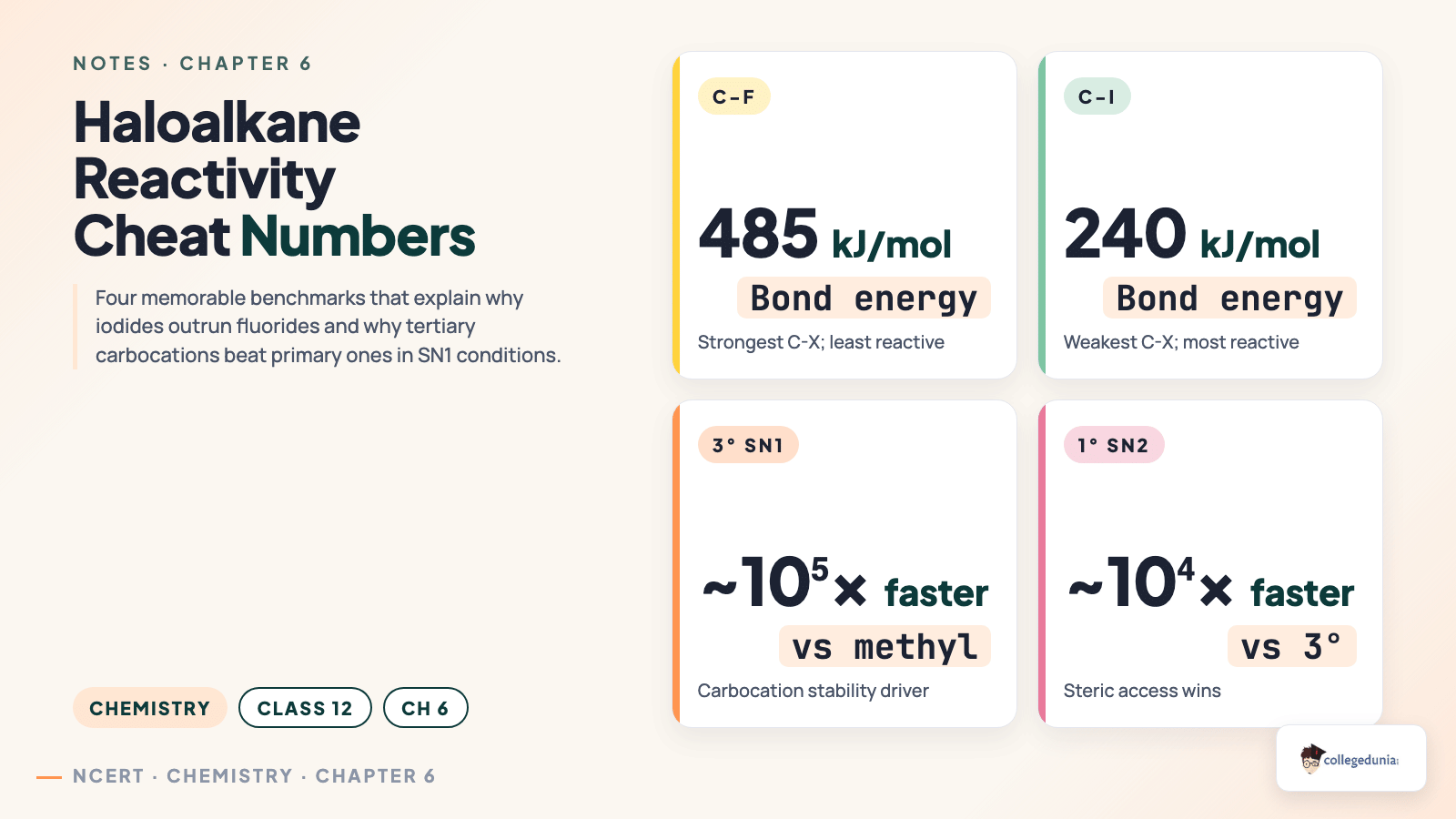
Important Named Reactions in Class 12 Chemistry Chapter 6
These nine cover every haloalkane and haloarene synthesis CBSE has asked since 2021.
| Name | Reactants -> Products | Conditions |
|---|---|---|
| Wurtz reaction | 2 R-X + 2 Na -> R-R + 2 NaX | Dry ether |
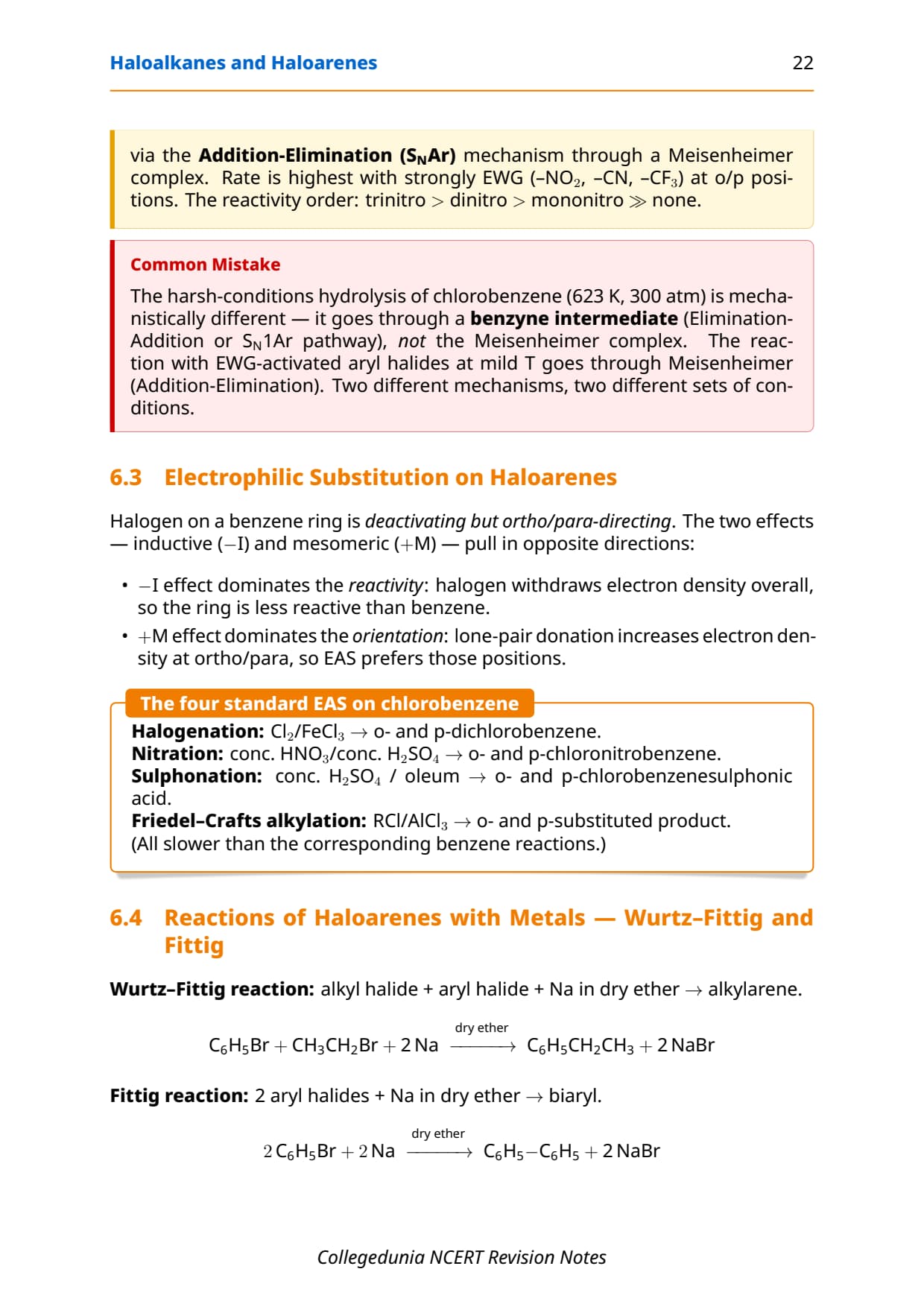
| Wurtz-Fittig reaction | Ar-X + R-X + 2 Na -> Ar-R + 2 NaX | Dry ether |
| Fittig reaction | 2 Ar-X + 2 Na -> Ar-Ar + 2 NaX | Dry ether |
| Sandmeyer reaction | ArN2+Cl- + CuCl -> Ar-Cl + N2 | HCl |
| Gattermann reaction | ArN2+Cl- + Cu / HCl -> Ar-Cl + N2 | Cu powder |
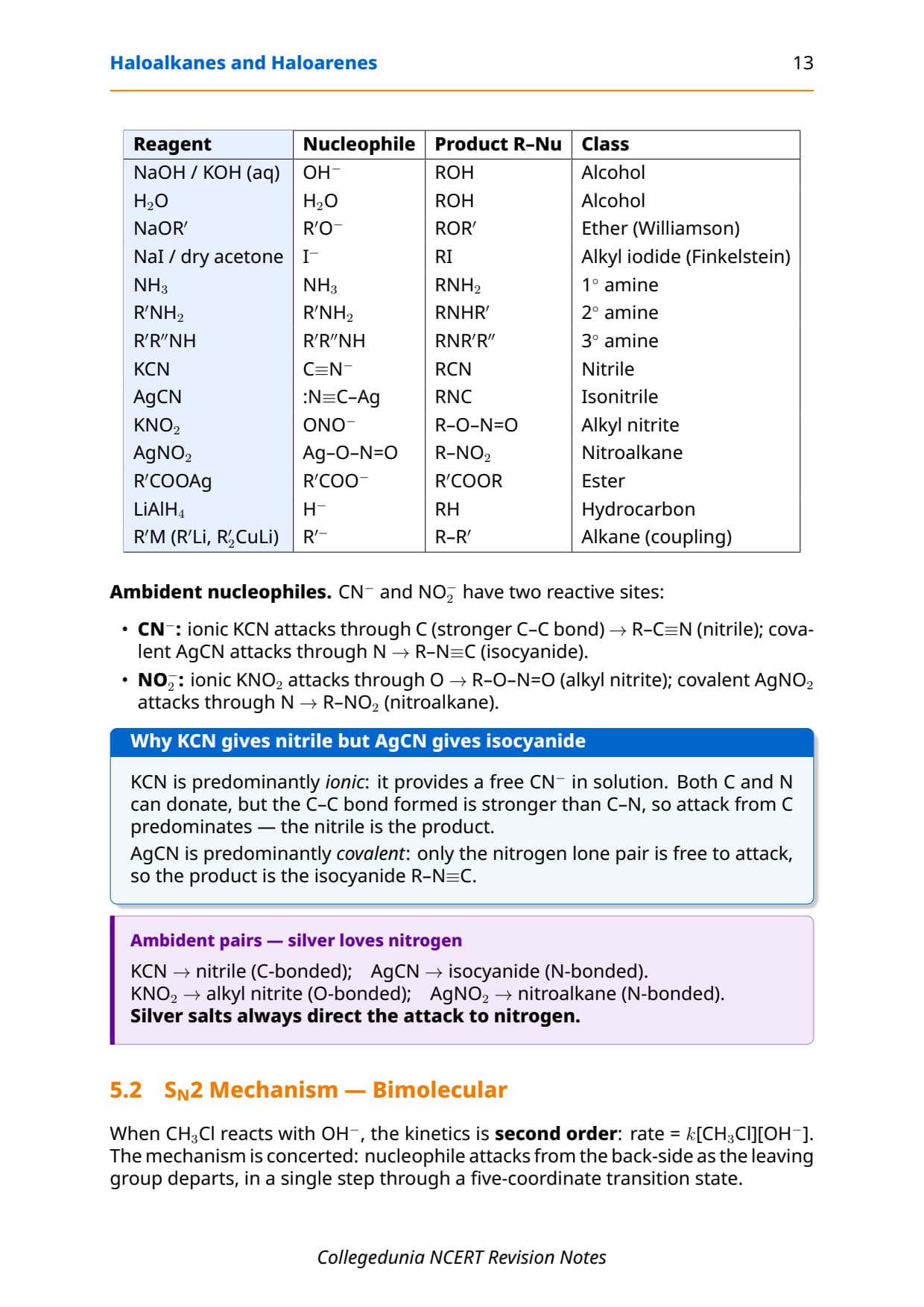
| Finkelstein reaction | R-Cl + NaI -> R-I + NaCl | Dry acetone |
| Swartz reaction | R-X + AgF -> R-F + AgX | Hg2F2, CoF2 |
| Hunsdiecker reaction | RCOOAg + Br2 -> R-Br + CO2 + AgBr | CCl4, heat |
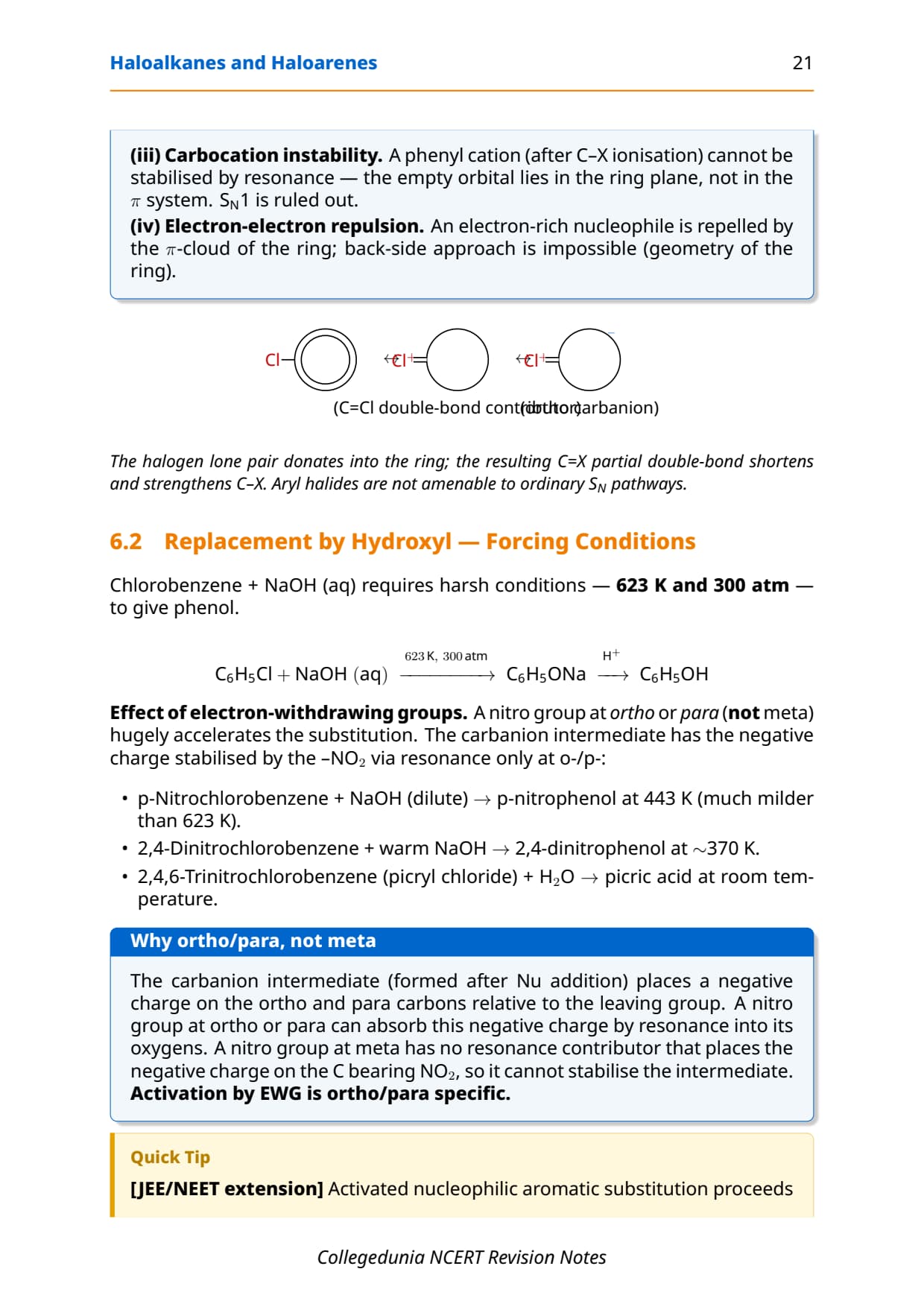
| Dow's process | C6H5Cl + NaOH -> C6H5OH + NaCl | 623 K, 300 atm |
Seven of the nine need dry ether or a Cu/Ag catalyst; the conditions column is CBSE's 1-mark trap.
Common Misconceptions Students Hold in 12th Chemistry Chapter 6
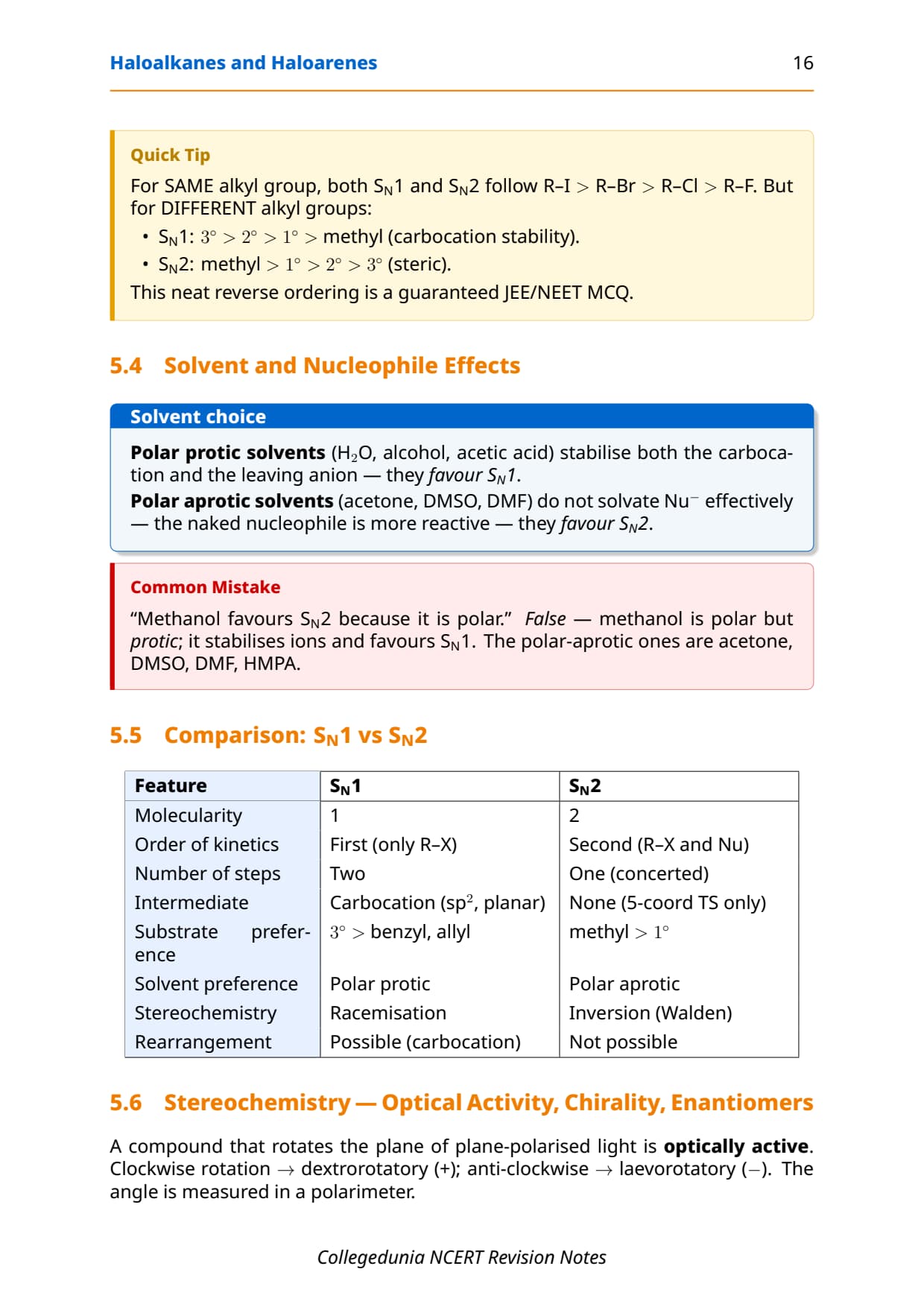
- "Tertiary haloalkanes always react faster." True for SN1, false for SN2 (steric hindrance reverses it).
- "Haloarenes substitute easily." Wrong: resonance makes them resist substitution.
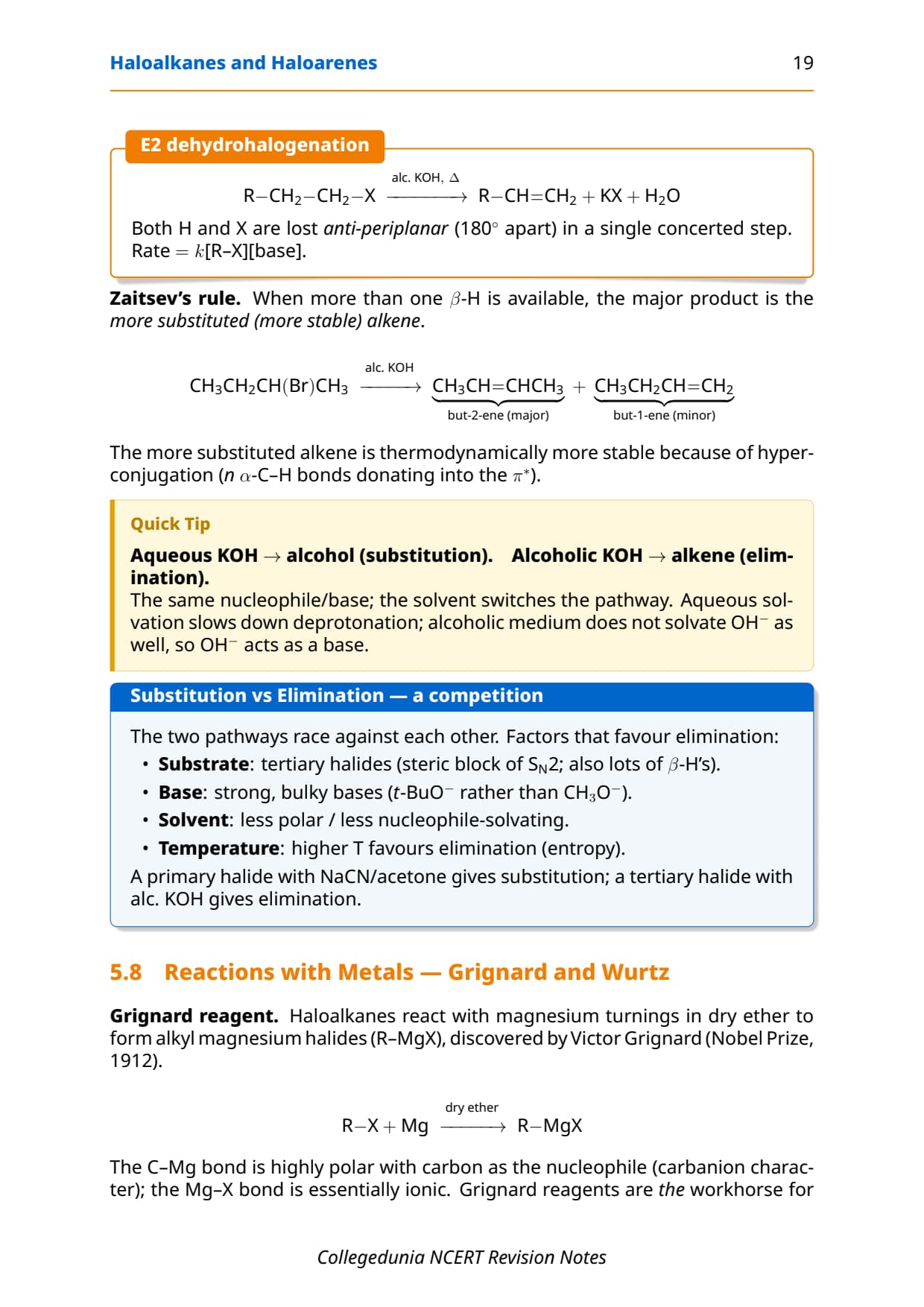
- "Saytzeff product always dominates." Bulky bases (t-butoxide) give the Hofmann alkene.
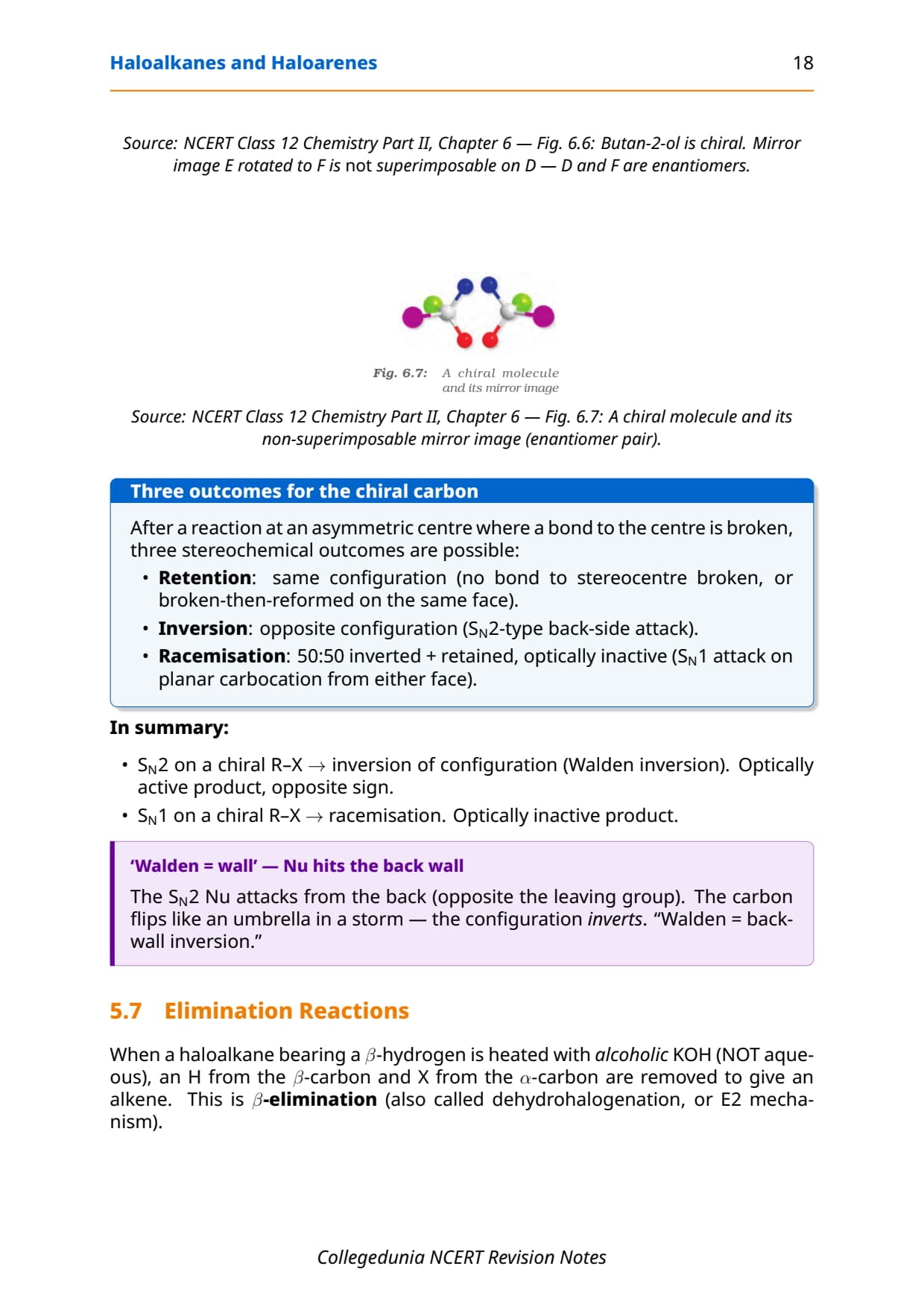
- "SN1 gives a single product." Chiral SN1 gives a racemic mixture.
- "Halogens direct meta." They deactivate but still direct ortho-para via resonance.
Frequently Asked Haloalkanes Questions in CBSE Board Exams (2021 to 2026)
From the official CBSE Board grids of 2021 to 2025; the 2026 cell is the latest sample-paper trend.
| Year | Question Type Asked | Topic |
|---|---|---|
| 2026 (Sample) | 3-mark mechanism + 2-mark reasoning | SN1 vs SN2, haloarene resistance |
| 2025 | 3-mark conversion + assertion-reason MCQ | Wurtz-Fittig, optical activity |
| 2024 | 2-mark naming + 3-mark conditions | IUPAC nomenclature, Sandmeyer |
| 2023 | 3-mark mechanism question | SN2 mechanism with stereochemistry |
| 2022 | 2-mark short answer | Reason why aryl halides are inert |
| 2021 | 3-mark conversion exercise | Alcohol to haloalkane via SOCl2 |
Full year-wise PYQ map: Haloalkanes and Haloarenes Class 12 NCERT Solutions
Haloalkanes Top 5 Formulae for Quick Recall
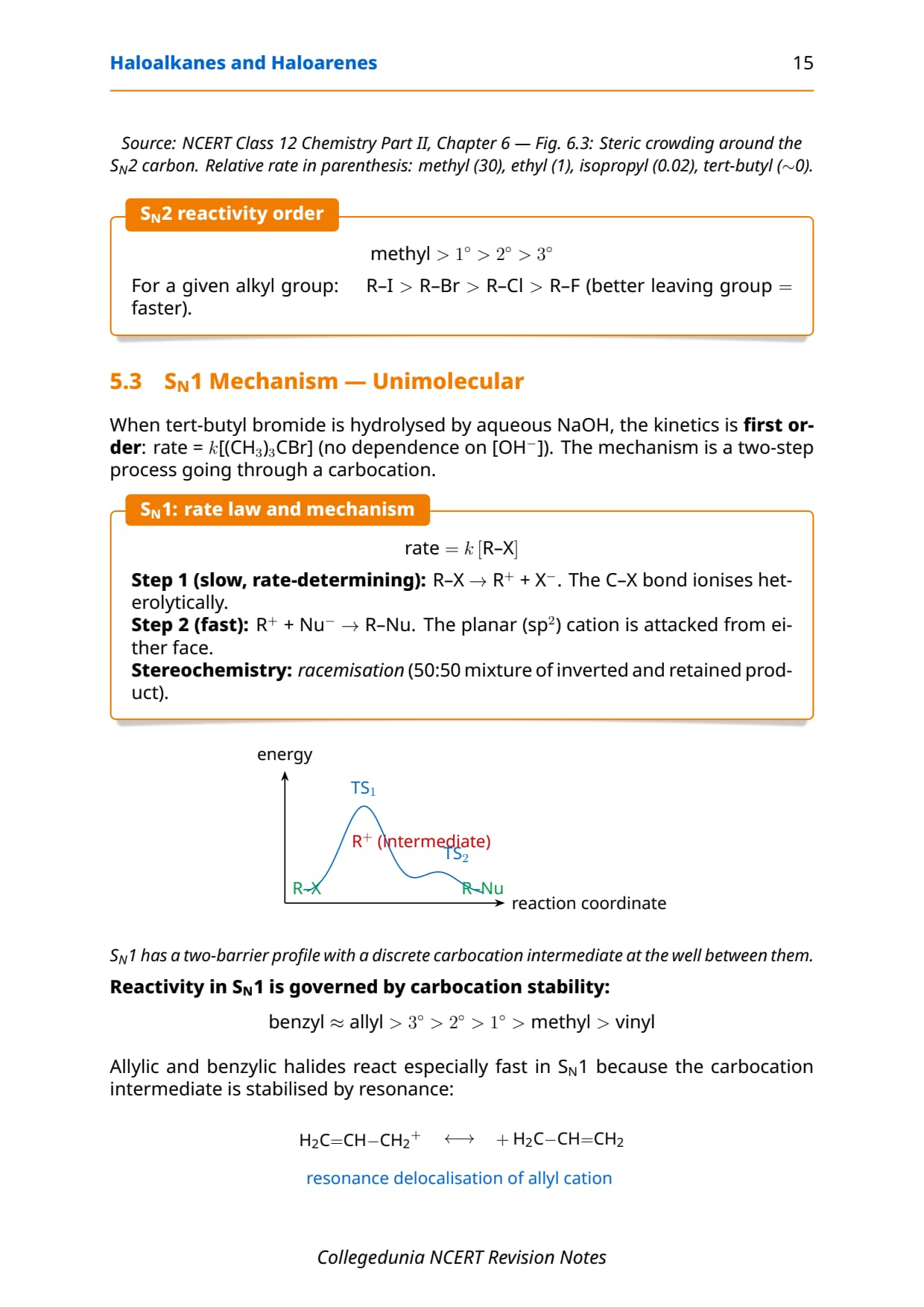
- SN2 rate: rate = k[R-X][Nu-] (second order)
- SN1 rate: rate = k[R-X] (first order)
- Carbocation stability: 3o > 2o > 1o > CH3+
- Markovnikov: H adds to the carbon with more H; halogen to the more substituted one
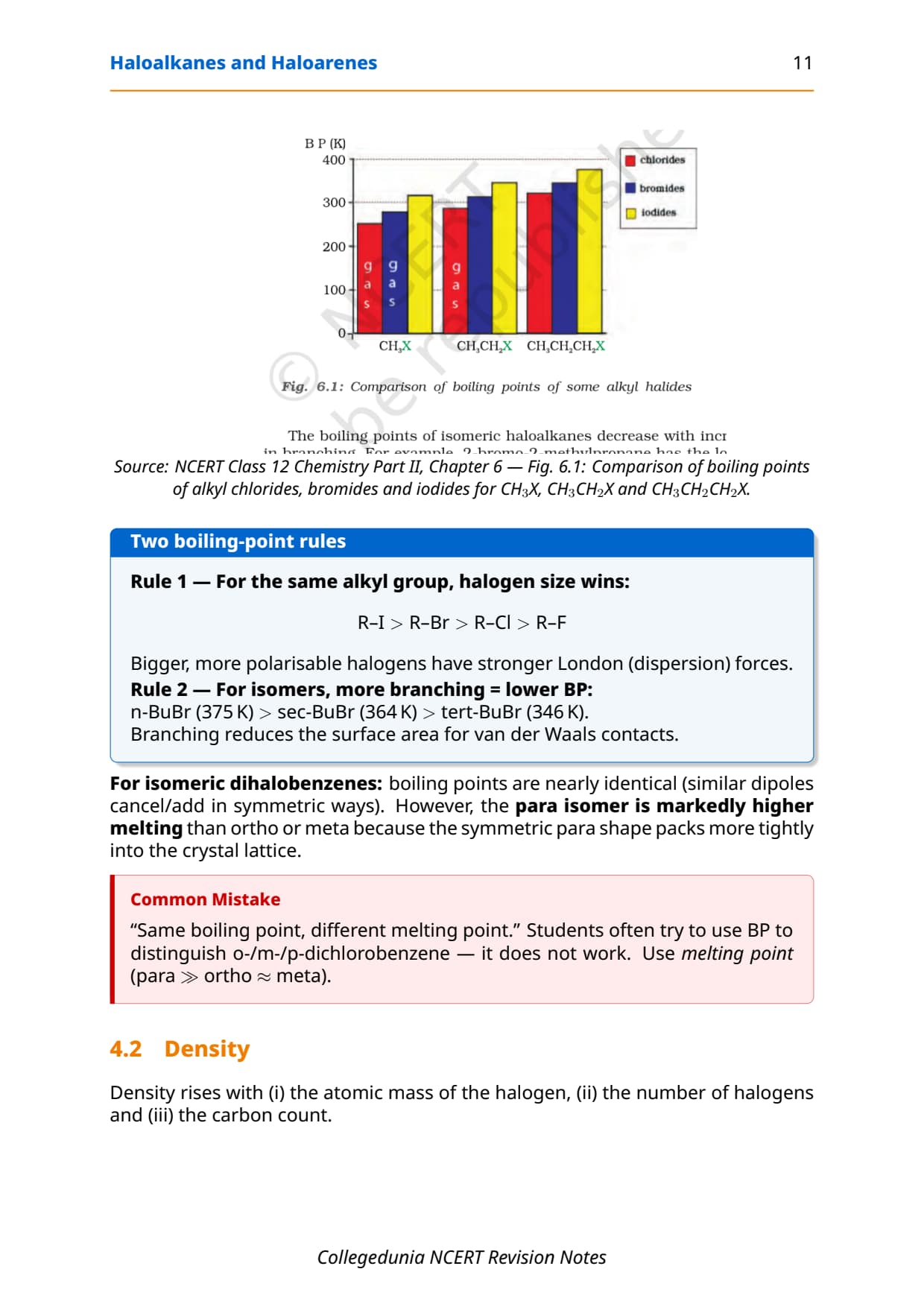
- Dipole trend: CH3Cl (1.86 D) > CH3F (1.85 D) > CH3Br > CH3I
Full master sheet: Class 12 Chemistry Haloalkanes and Haloarenes Formula Sheet
Student Feedback
In a Collegedunia poll of 1,080 Class 12 students, 81% said the SN1-versus-SN2 comparison table cleared their biggest confusion, and 3 in 4 kept the named-reaction memory wall open the night before the exam.
Other Resources for Haloalkanes and Haloarenes Class 12 Chemistry
| Resource | Link |
|---|---|
| NCERT Solutions | Haloalkanes and Haloarenes Class 12 Chemistry NCERT Solutions |
| Formula Sheet | Haloalkanes and Haloarenes Class 12 Chemistry Formula Sheet |
| NCERT Book PDF | Haloalkanes and Haloarenes Class 12 Chemistry NCERT Book PDF |
| Handwritten Notes | Haloalkanes and Haloarenes Class 12 Chemistry Handwritten Notes |
| Exemplar Solutions | Haloalkanes and Haloarenes Class 12 Chemistry Exemplar Solutions |
| Notes | Haloalkanes and Haloarenes Class 12 Chemistry Notes |
NCERT Notes for Class 12 Chemistry: All Chapters
Jump to the Notes PDF for any other Class 12 Chemistry chapter.
| Chapter | Notes Page |
|---|---|
| Chapter 1 | Solutions Notes |
| Chapter 2 | Electrochemistry Notes |
| Chapter 3 | Chemical Kinetics Notes |
| Chapter 4 | d- and f-Block Elements Notes |
| Chapter 5 | Coordination Compounds Notes |
| Chapter 6 | Haloalkanes and Haloarenes Notes |
| Chapter 7 | Alcohols, Phenols and Ethers Notes |
| Chapter 8 | Aldehydes, Ketones and Carboxylic Acids Notes |
| Chapter 9 | Amines Notes |
| Chapter 10 | Biomolecules Notes |
Haloalkanes and Haloarenes Class 12 Notes: Frequently Asked Questions
Ques. What is the difference between SN1 and SN2 reactions in haloalkanes?
Ans. SN1 is a two-step unimolecular reaction through a planar carbocation, favoured by tertiary haloalkanes and polar protic solvents, and gives a racemic mixture. SN2 is a one-step bimolecular reaction with a single transition state, favoured by primary haloalkanes and polar aprotic solvents, and gives inversion of configuration (Walden inversion).
Ques. Why are haloarenes less reactive than haloalkanes towards nucleophilic substitution?
Ans. The C-X bond in haloarenes has partial double-bond character from resonance with the ring, making it shorter and stronger. The sp2 carbon is also more electronegative and holds the halogen tightly, so nucleophilic attack needs very harsh conditions.
Ques. Why is chloroform stored in dark amber-coloured bottles?
Ans. Chloroform reacts with atmospheric oxygen in sunlight to form phosgene (COCl2), a poisonous gas. Dark amber bottles filled to the brim exclude air and light, preventing this photo-oxidation.
Ques. What is the Sandmeyer reaction and why is it important for Class 12 boards?
Ans. The Sandmeyer reaction converts an arenediazonium salt (ArN2+X-) into the aryl halide using cuprous halide (CuCl, CuBr). It reliably places -Cl, -Br, or -CN on an aromatic ring, and CBSE has asked it in three of the last five years.
Ques. Which is more reactive, alkyl iodide or alkyl chloride, and why?
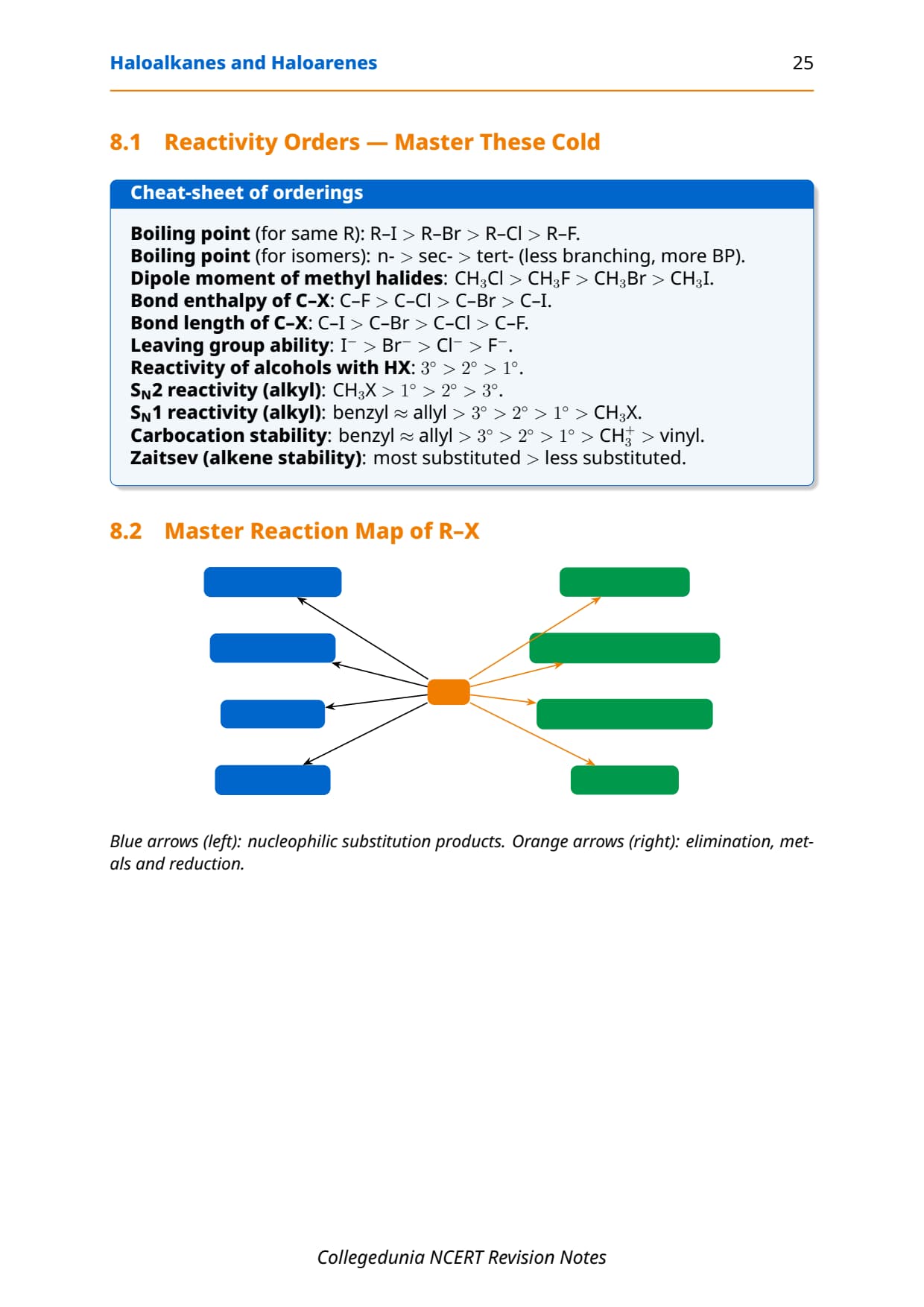
Ans. Alkyl iodide is more reactive because the C-I bond is the longest and weakest C-X bond, so iodide is the best leaving group. The reactivity order is R-I > R-Br > R-Cl > R-F.
Ques. How is DDT prepared and what makes freons (CFCs) environmentally hazardous?
Ans. DDT is made by condensing chlorobenzene with chloral (CCl3CHO) in conc. H2SO4. Freons like CCl2F2 come from CCl4 via the Swarts reaction. DDT bio-accumulates in fat tissue, and CFCs release Cl radicals in the stratosphere that destroy ozone.



Comments