



These Class 8 Social Science Chapter 1 Natural Resources and Their Use notes cover how Nature becomes a resource, how resources are categorised, why they are spread unevenly and how to use them wisely, as set out in the 2026-27 NCERT textbook Exploring Society: India and Beyond, Part 1.
- Chapter Length: a 32-page notes PDF with 15 diagrams, two source maps from the textbook and model answers to all five NCERT questions.
- Ideas Covered: the three conditions for a resource, renewable and non-renewable resources, ecosystem functions and services, the paradox of plenty and stewardship.
- Case Studies: Punjab groundwater, Sikkim organic farming, cement, Kaveri water sharing, tuna and the International Alliance for Solar Energy.
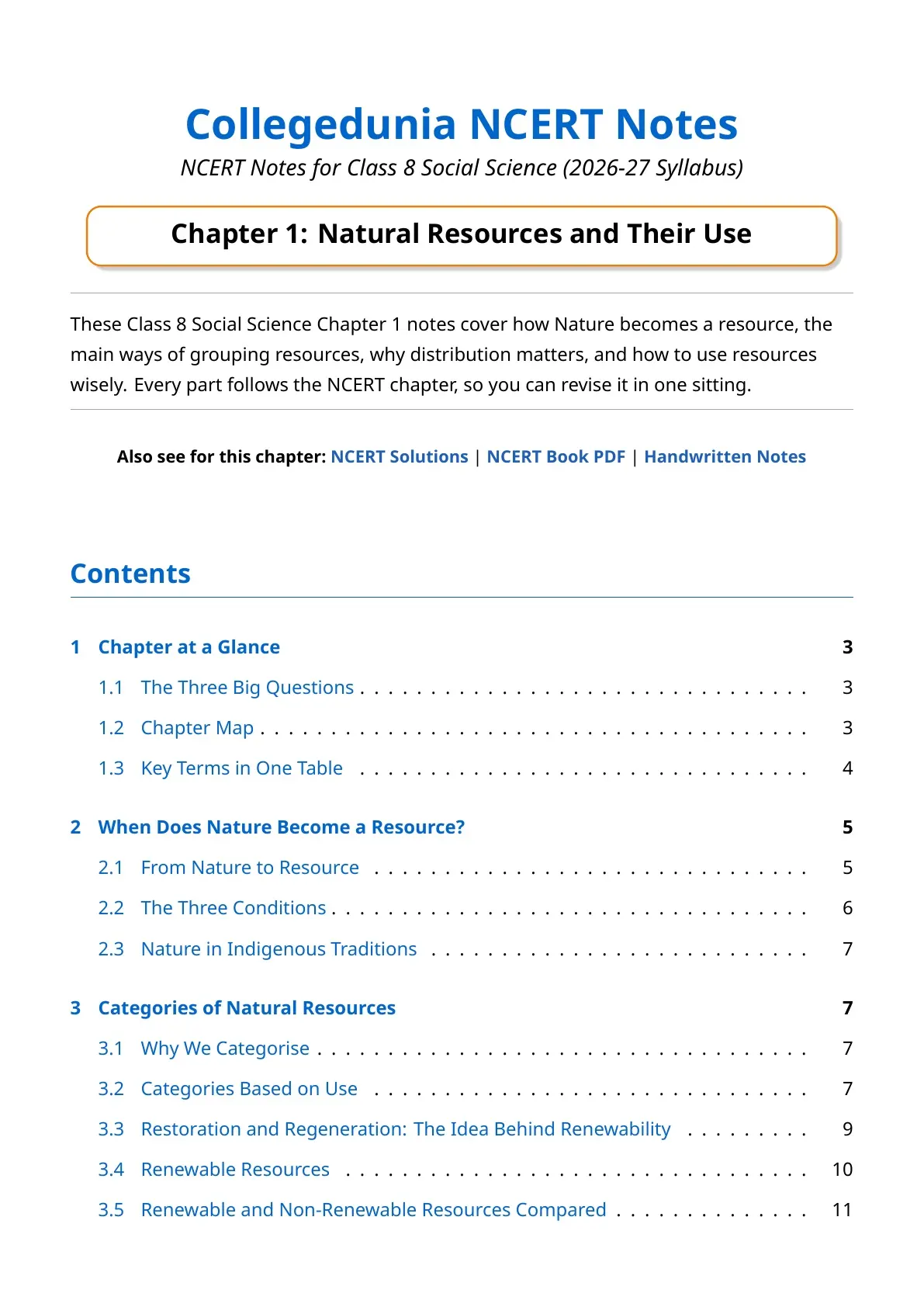
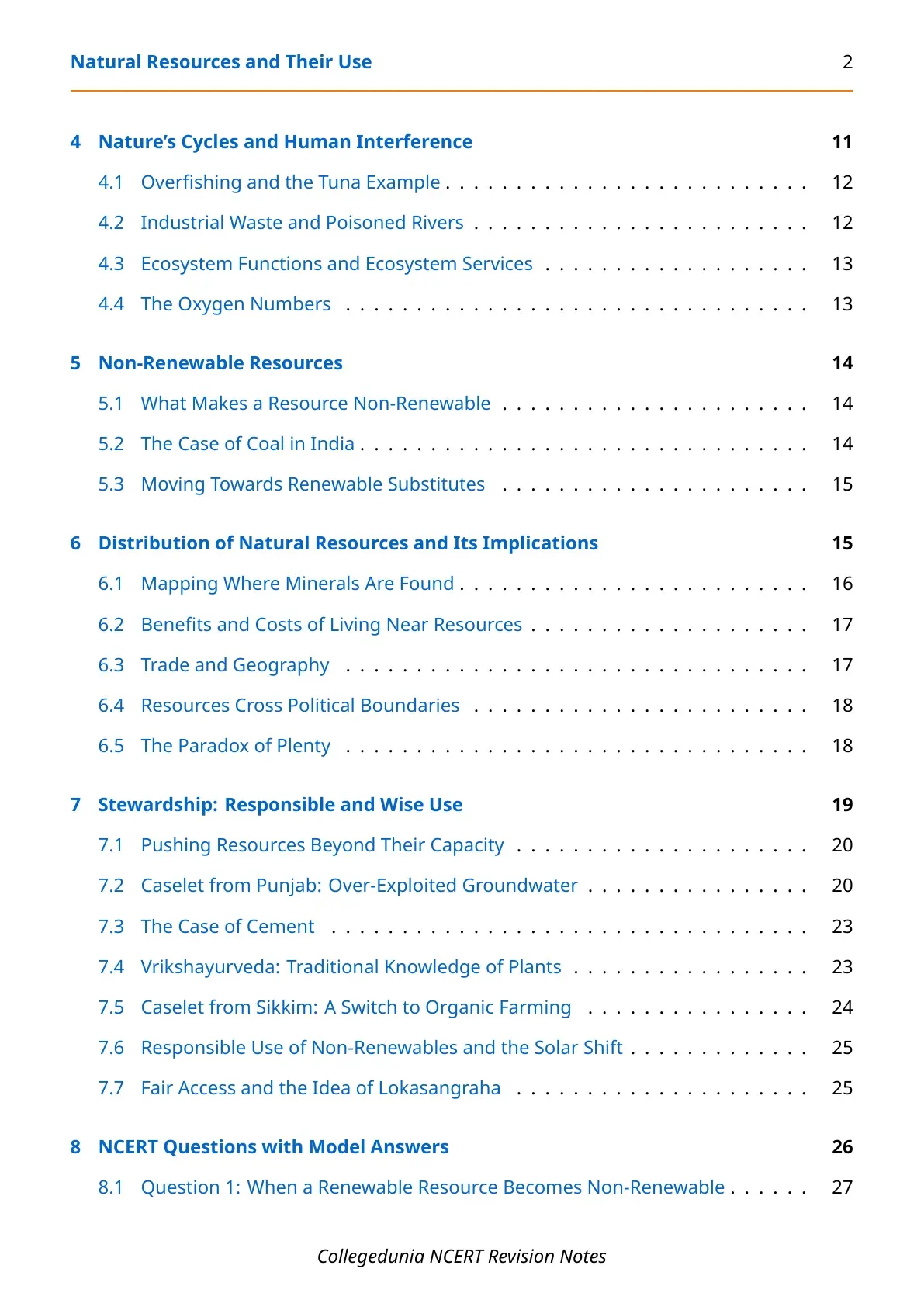
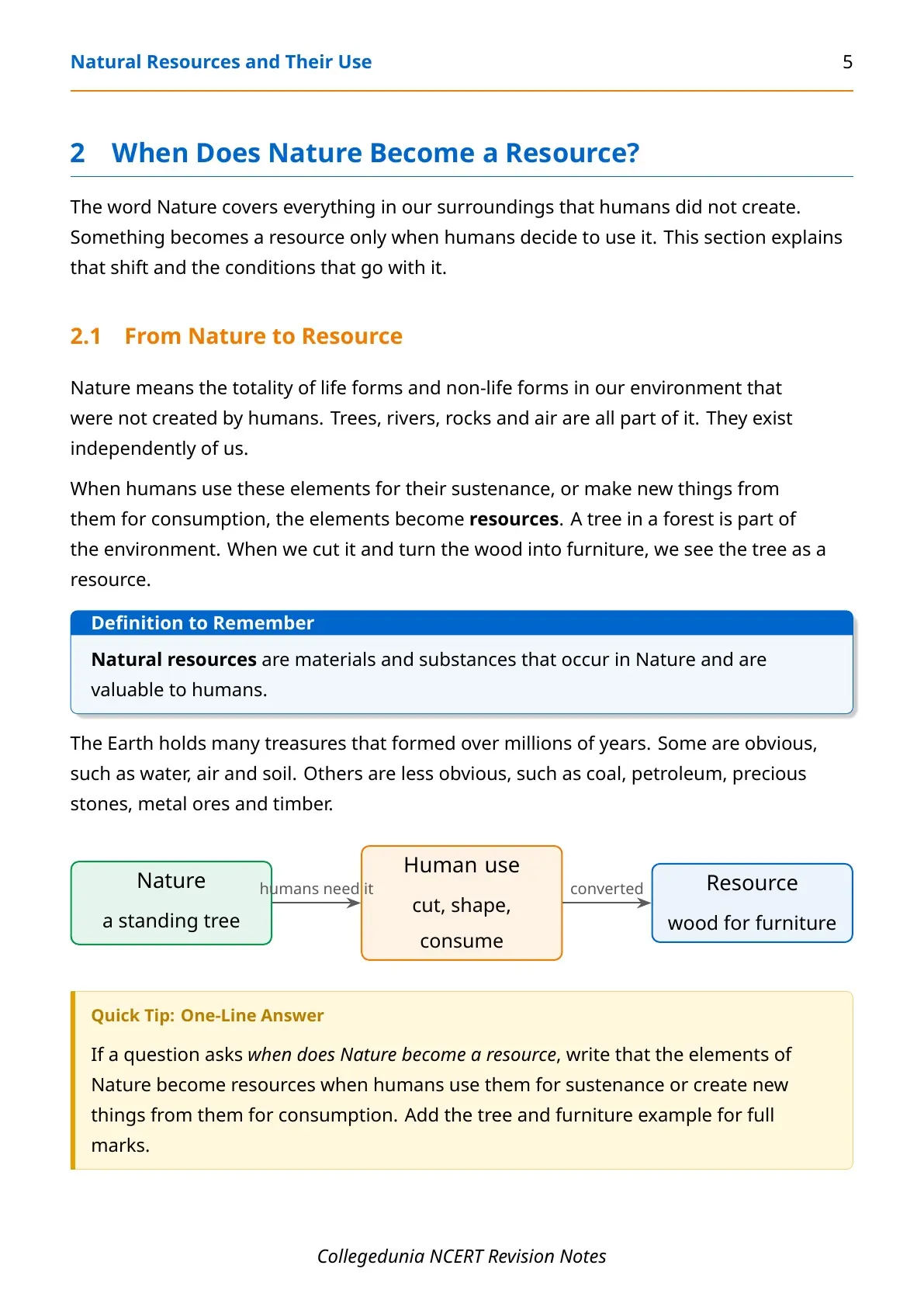
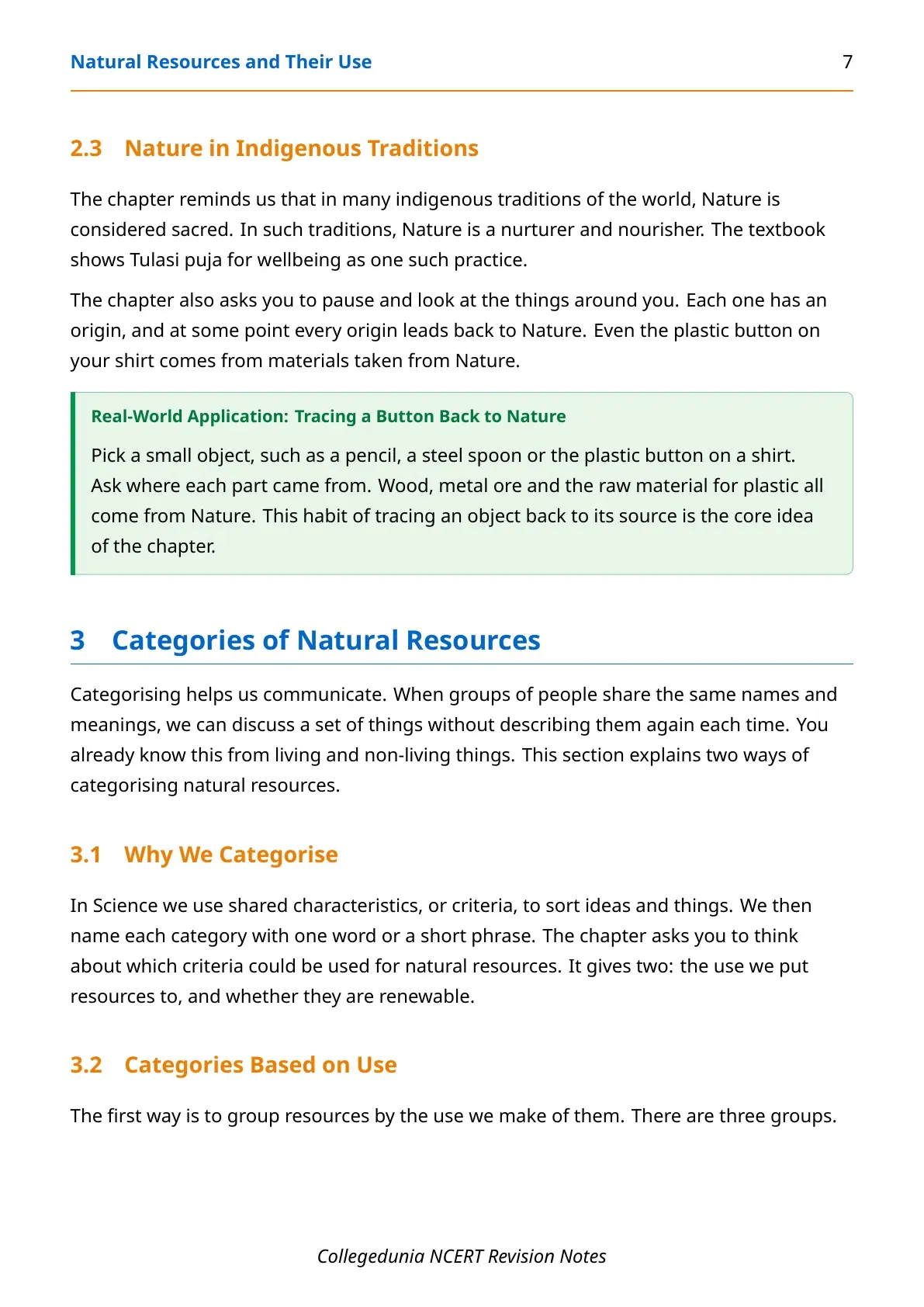
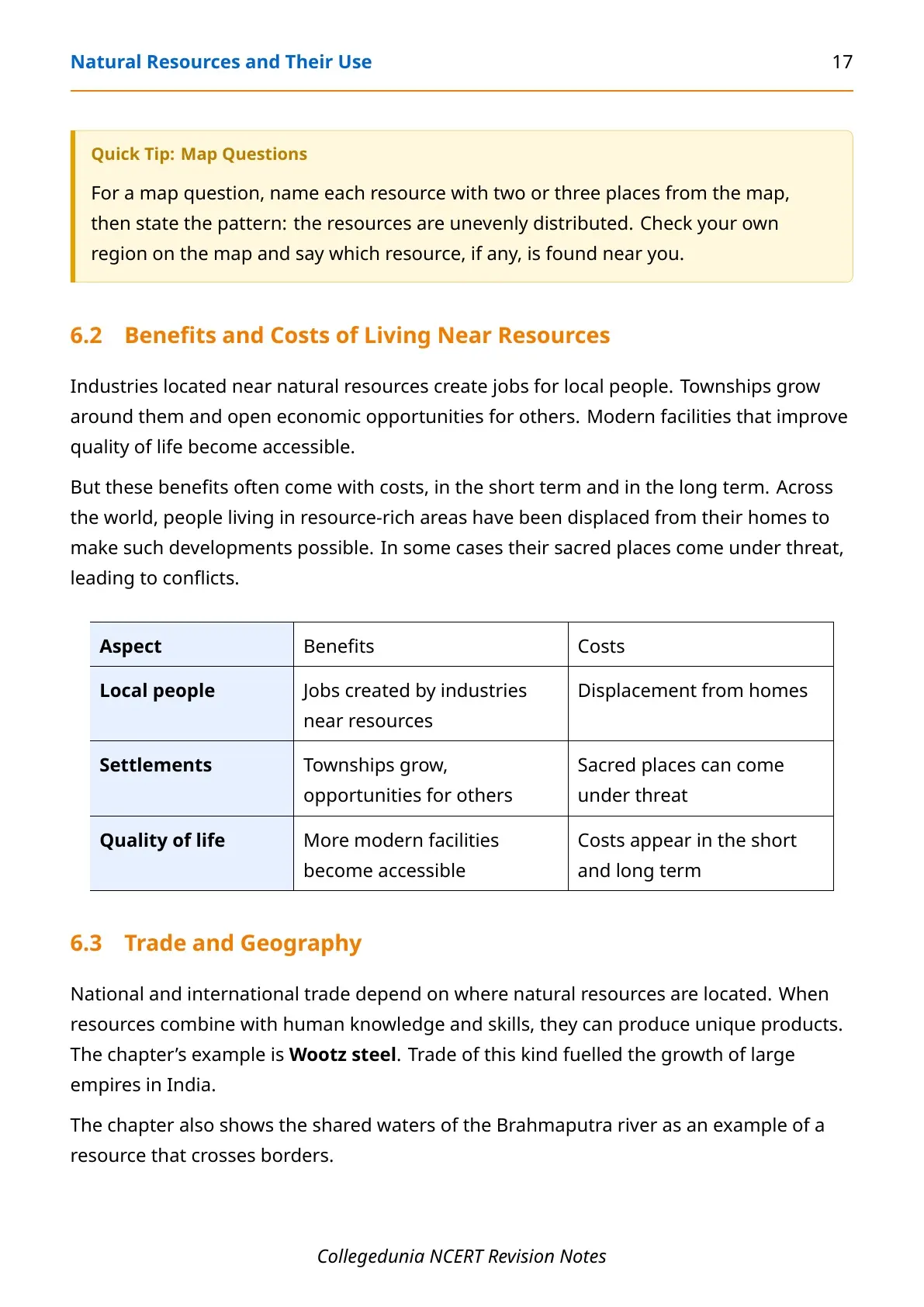
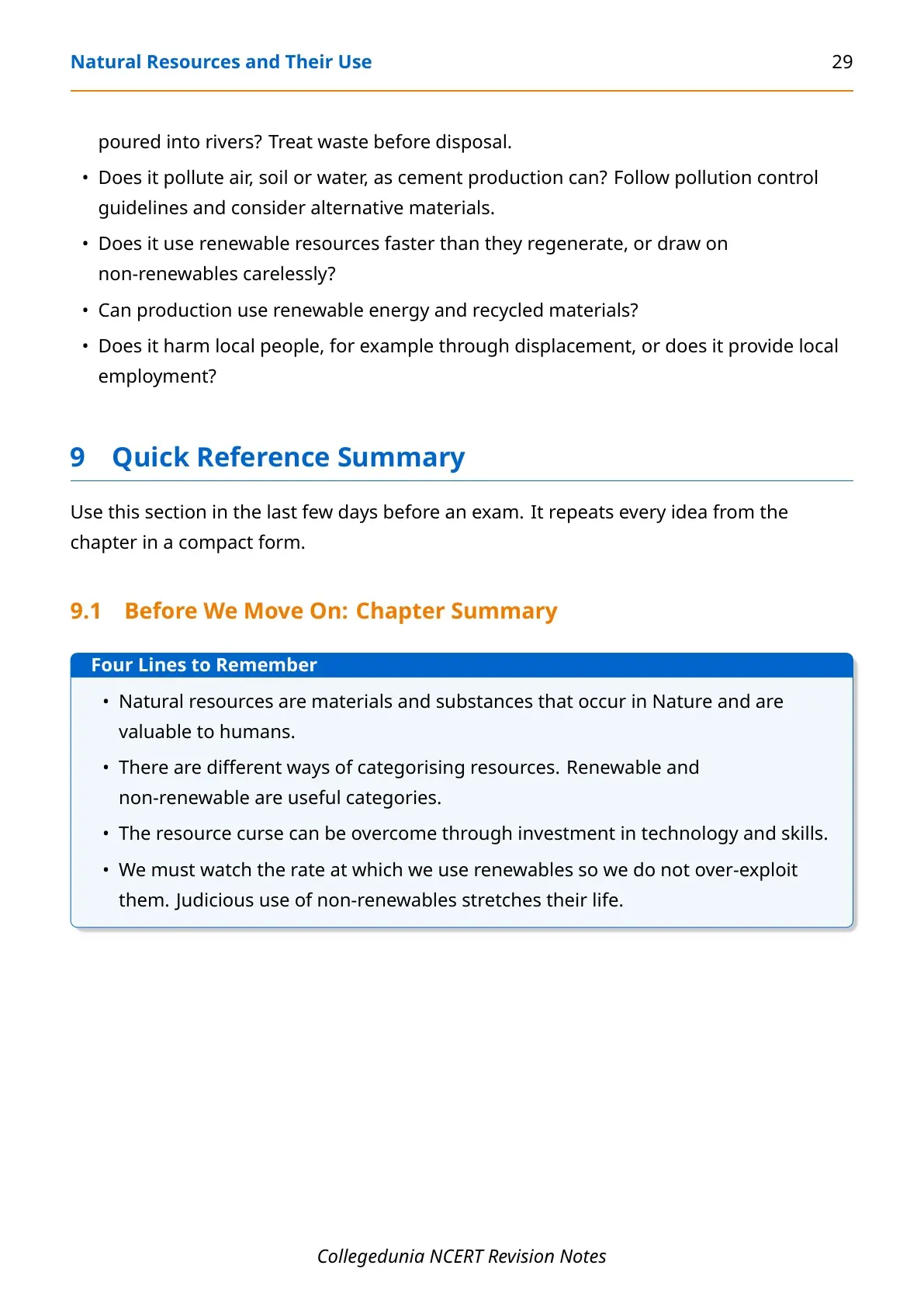
These Class 8 Social Science notes for Natural Resources and Their Use follow the 2026-27 NCERT chapter section by section, from the meaning of a resource to the idea of lokasangraha.
Student Feedback
Students who revise this chapter tell us the same three things trip them up: why renewable resources can still be depleted, how an ecosystem function differs from an ecosystem service, and what the paradox of plenty actually means. The notes explain each of these with the chapter's own examples, so begin with those sections if they are your weak spots.
What Class 8 Social Science Chapter 1 Covers in the 2026-27 NCERT
The chapter sits in the unit India and the World: Land and the People. It opens with three big questions, and every section answers one of them.
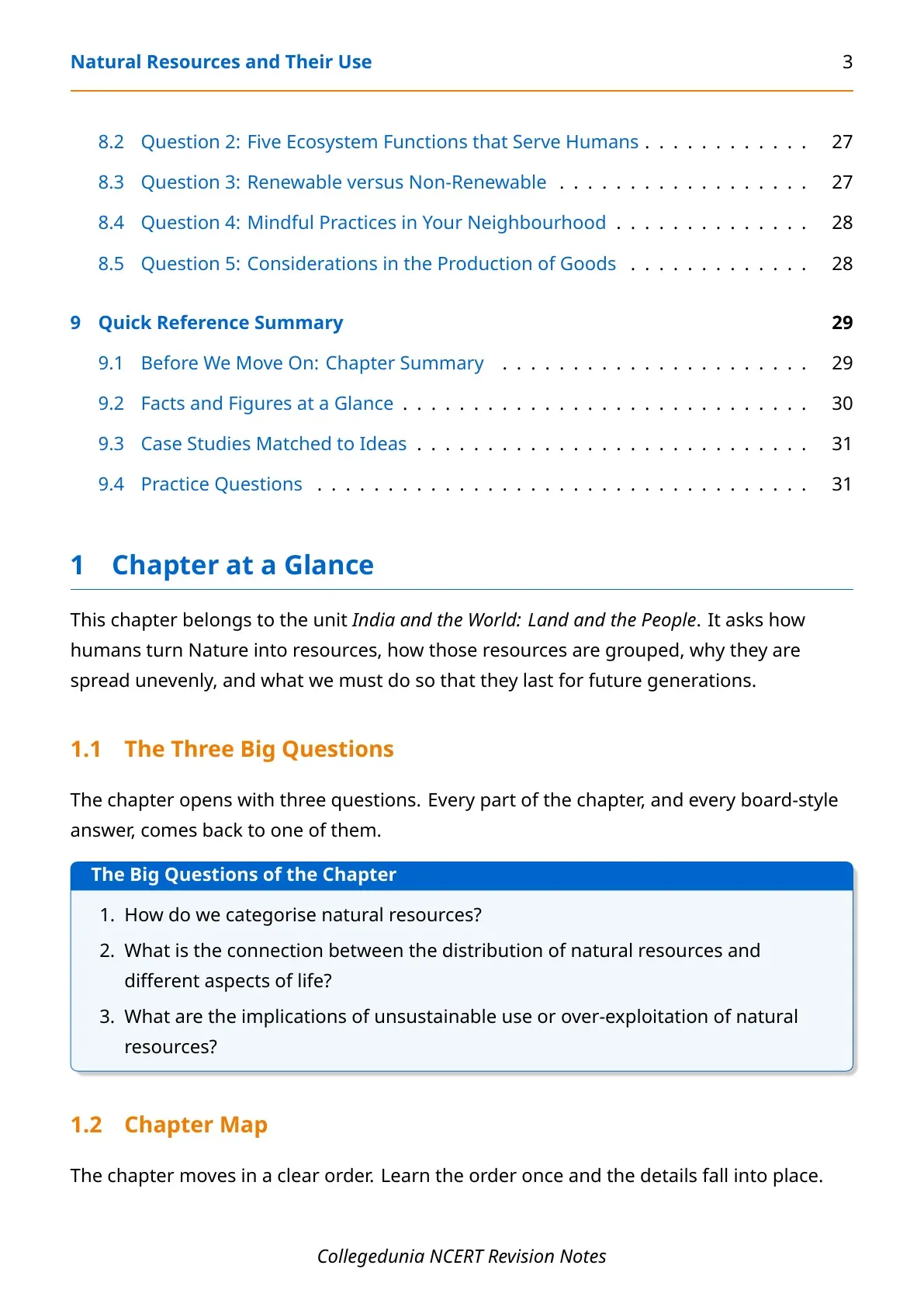
- How do we categorise natural resources?
- What is the connection between the distribution of natural resources and different aspects of life?
- What are the implications of unsustainable use or over-exploitation of natural resources?
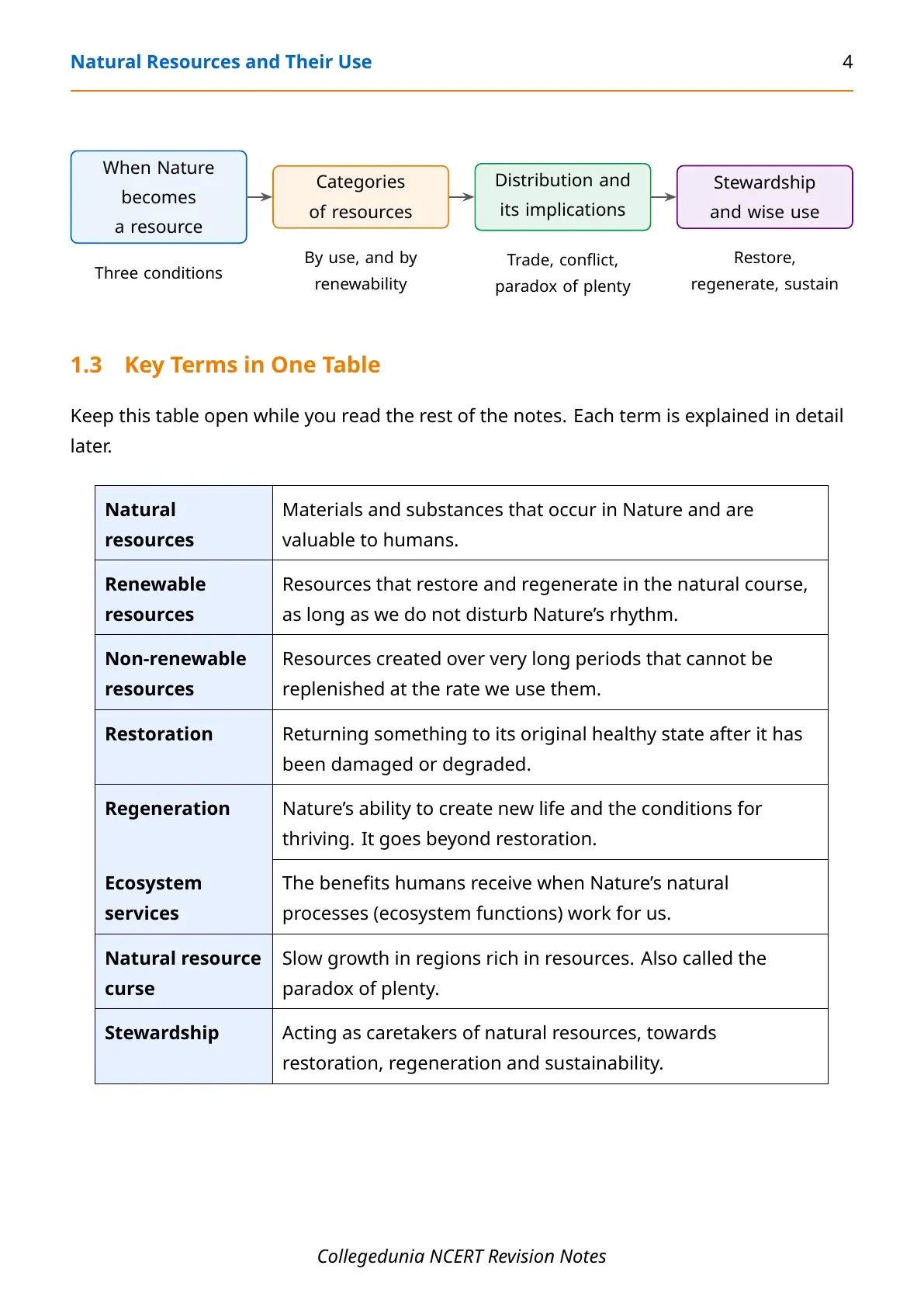
The sections run in a fixed order. The chapter first explains when Nature becomes a resource, then groups resources by use and by renewability, then looks at how they are distributed, and ends with a case for responsible use.
When Nature Becomes a Resource
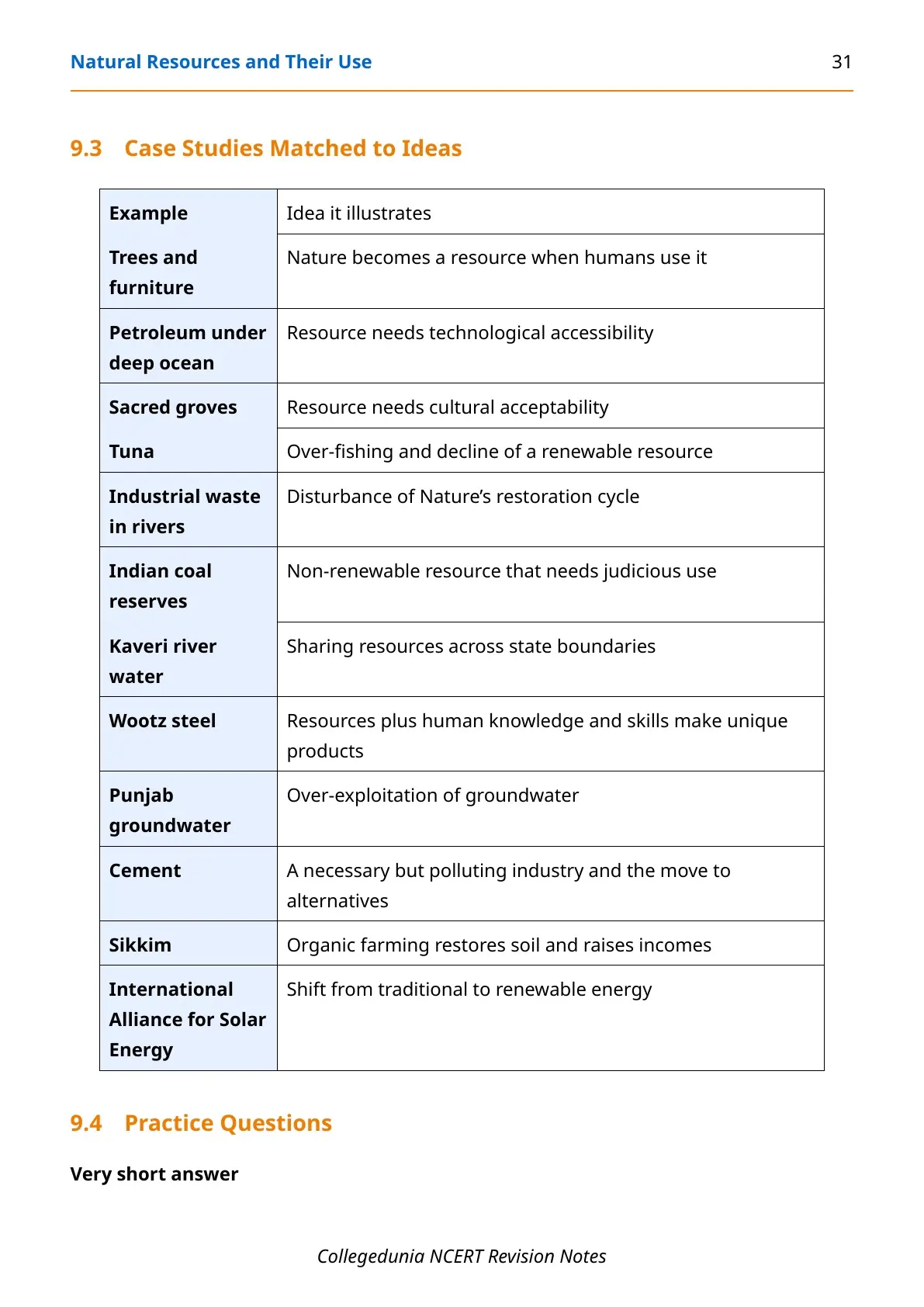
Nature is the totality of life forms and non-life forms in our surroundings that humans did not create. A tree in a forest is part of Nature. When we cut it and make furniture from the wood, we treat it as a resource.
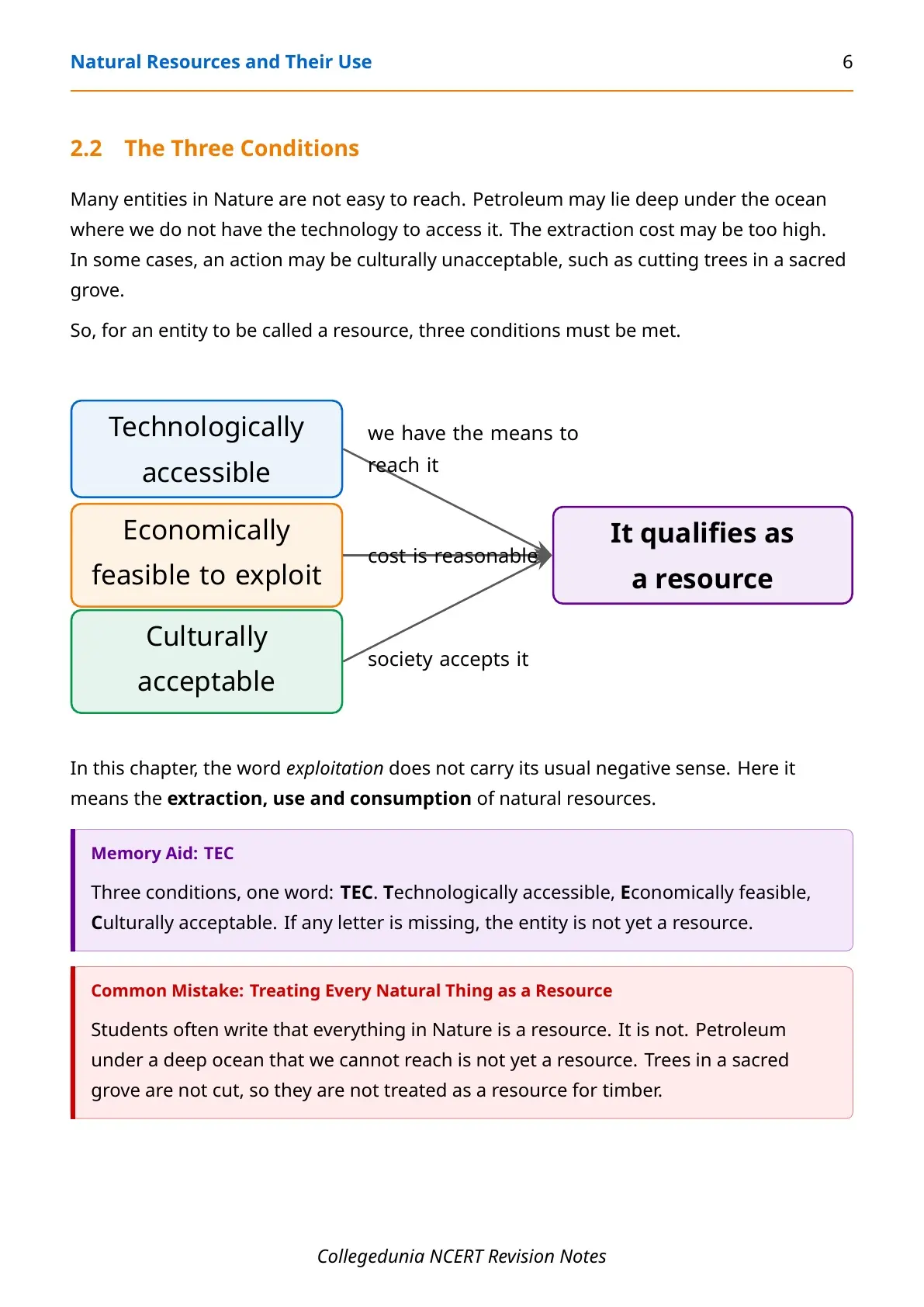
The chapter's definition is short: natural resources are materials and substances that occur in Nature and are valuable to humans. Not everything in Nature qualifies, because three conditions have to be met.
| Condition | Meaning | Example from the chapter |
|---|---|---|
| Technologically accessible | We have the means to reach and extract it | Petroleum deep under the ocean may be out of reach |
| Economically feasible | The cost of extraction is reasonable | Extraction cost may be too high |
| Culturally acceptable | Society accepts using it | Cutting trees in sacred groves |
In this chapter the word exploitation has no negative sense. It means the extraction, use and consumption of natural resources.
Natural Resources and Their Use Class 8 Chapter Revision
Source: Next Toppers Juniors on YouTube
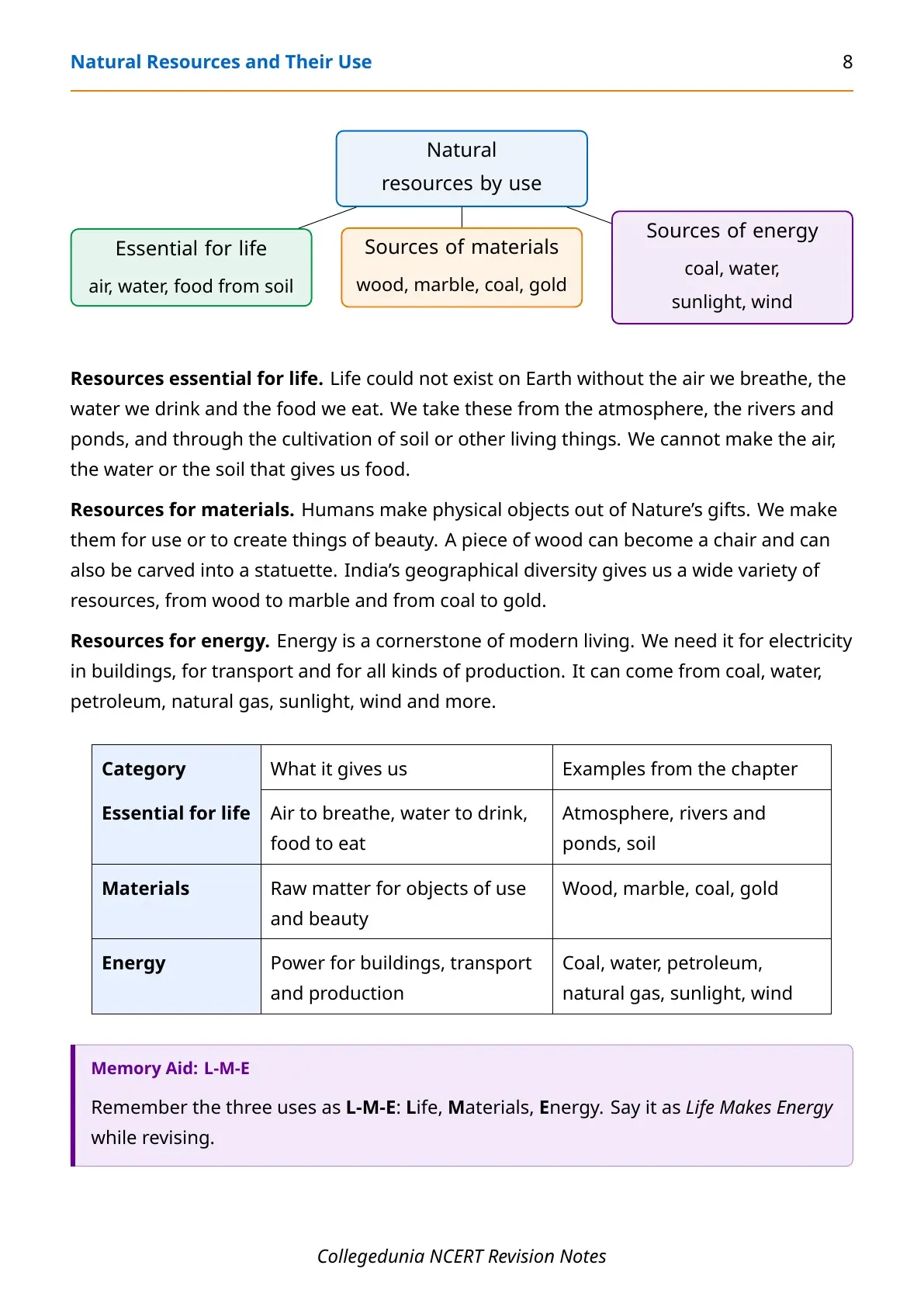
Categories of Natural Resources by Use
Categories help us talk about a group of things with one name instead of describing each one. The first way the chapter sorts resources is by the use we put them to.
- Essential for life: the air we breathe, the water we drink and the food we get from soil. We cannot make these ourselves.
- Sources of materials: wood, marble, coal and gold, which people turn into objects of use and beauty. A piece of wood can become a chair or a carved statuette.
- Sources of energy: coal, water, petroleum, natural gas, sunlight and wind, which power buildings, transport and production.
Renewable and Non-Renewable Resources
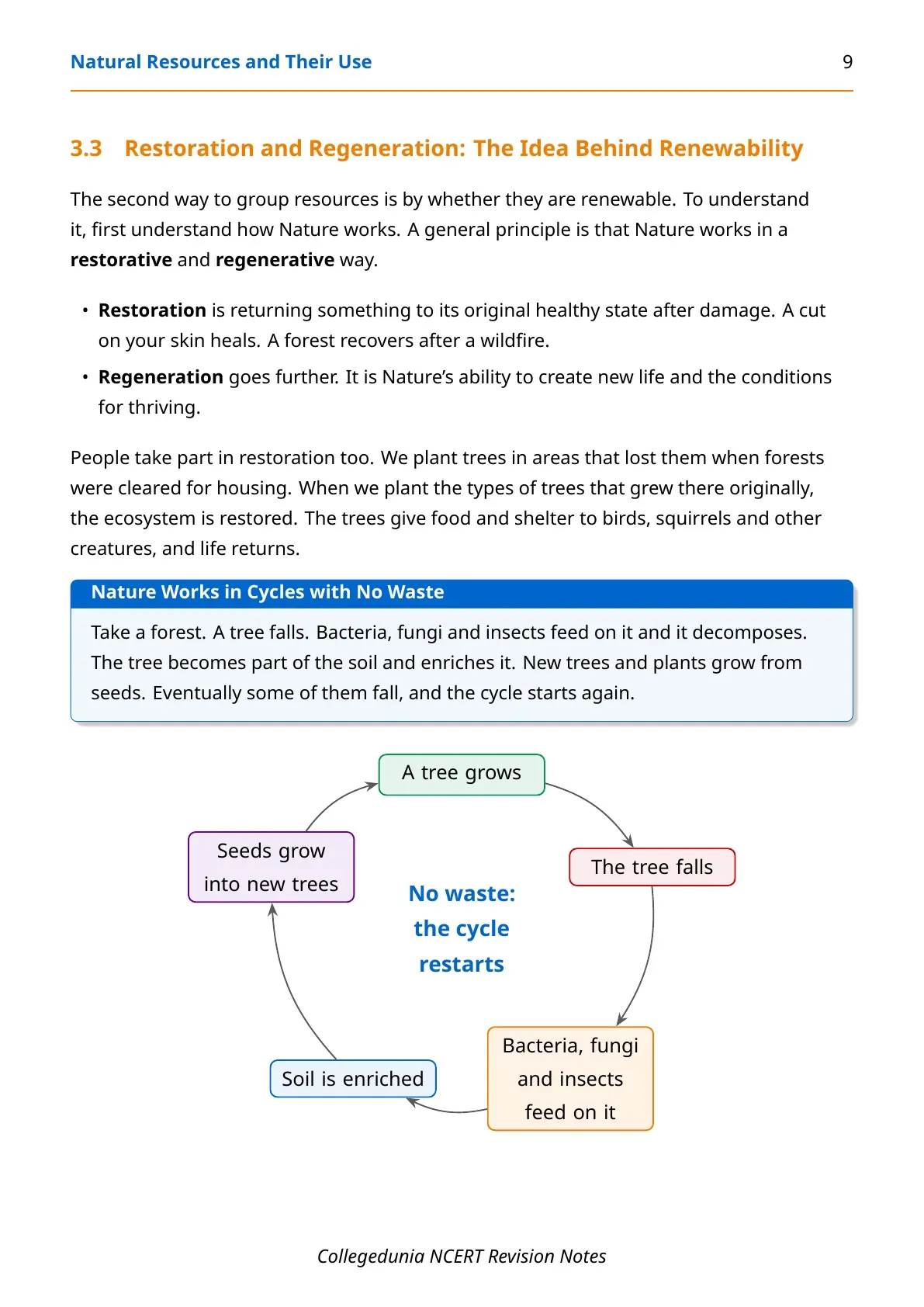
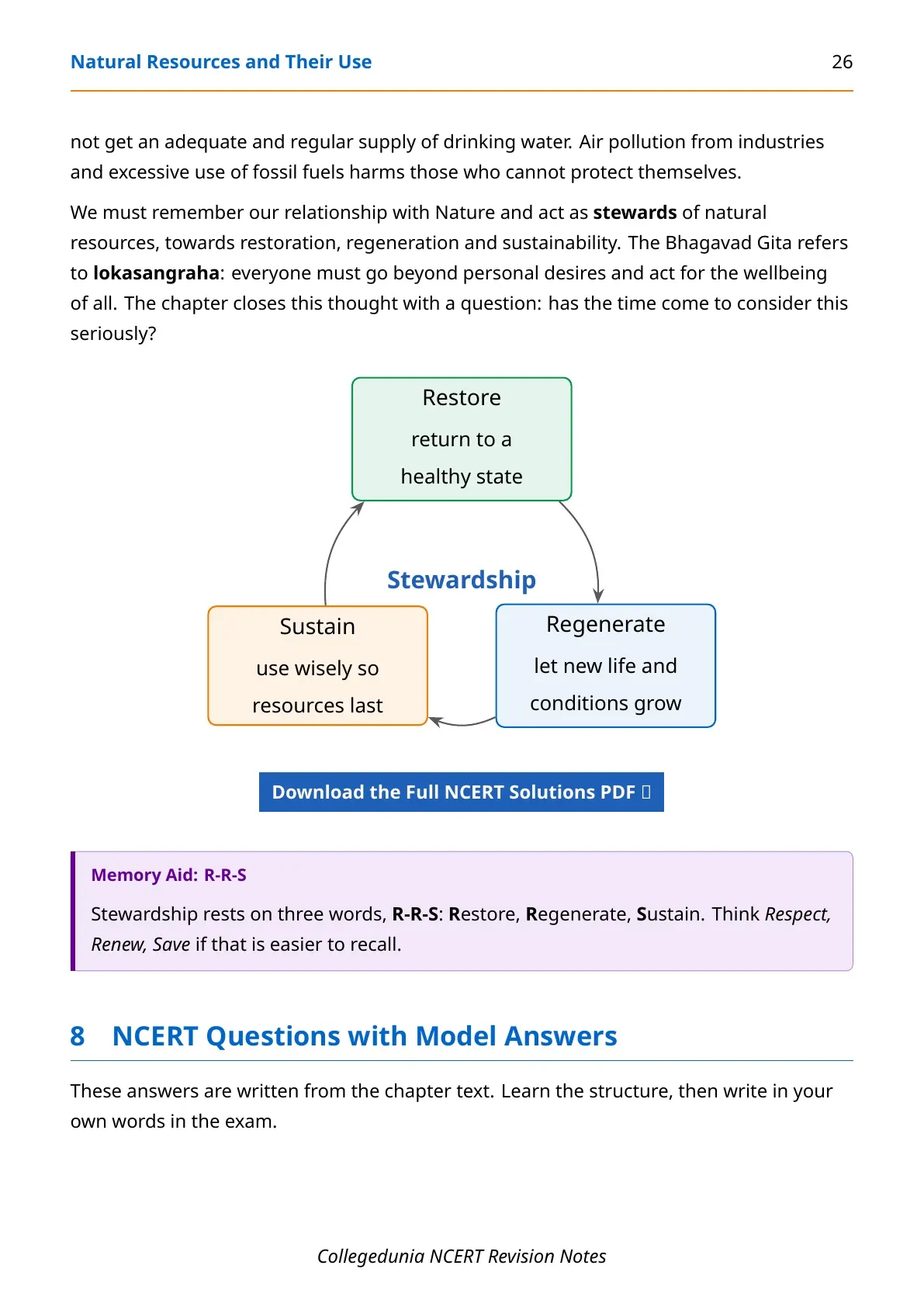
The second way to categorise resources depends on whether they renew. This rests on how Nature works: it restores and regenerates. Restoration returns something to its original healthy state, as a cut on the skin heals or a forest recovers after a wildfire. Regeneration goes further and creates new life and the conditions for thriving.
Nature also works in cycles with no waste. When a tree falls in a forest, bacteria, fungi and insects feed on it, it enriches the soil, and new plants grow from seeds.
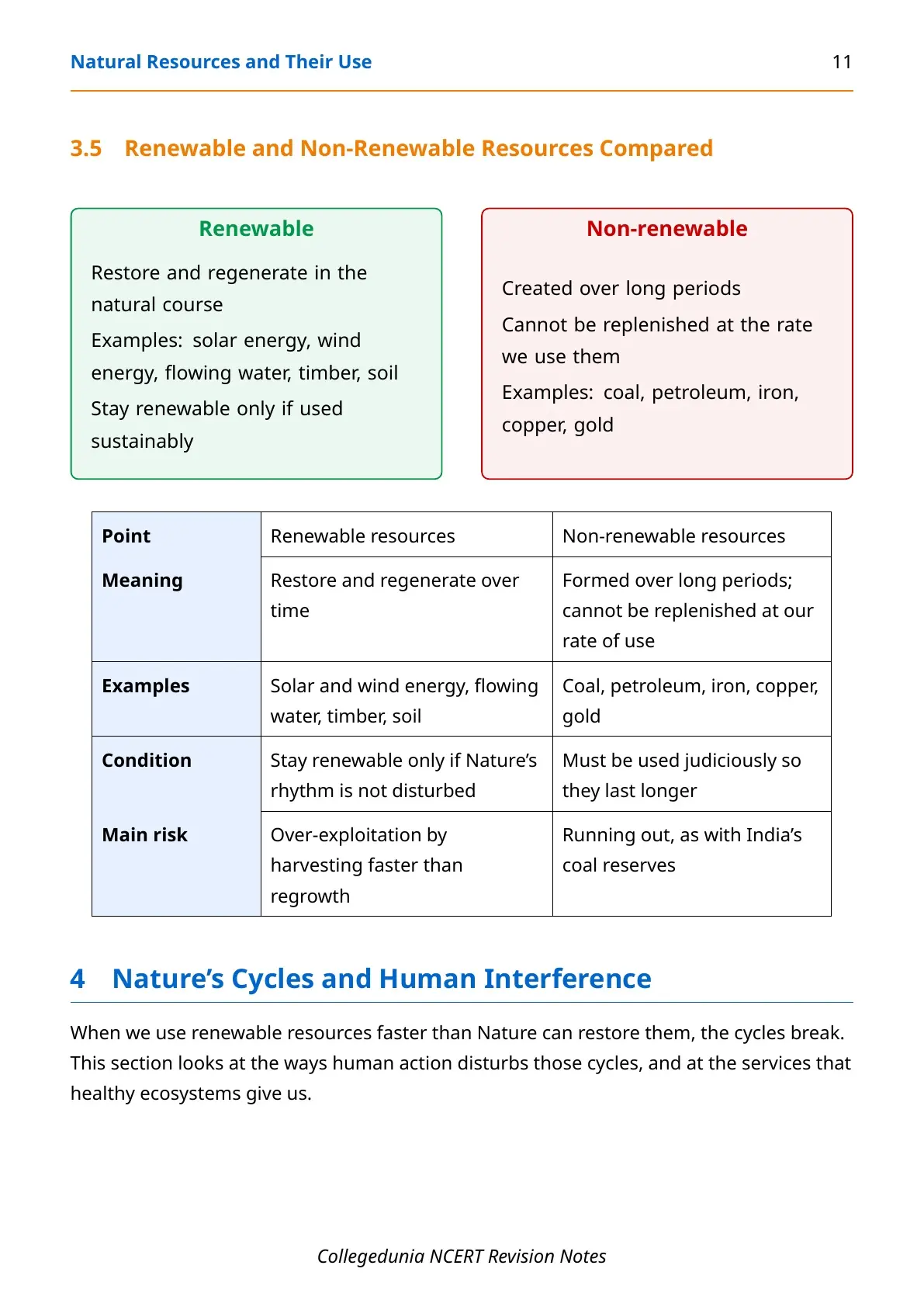
| Point | Renewable resources | Non-renewable resources |
|---|---|---|
| Meaning | Restore and regenerate over time | Created over long periods; cannot be replenished at the rate we use them |
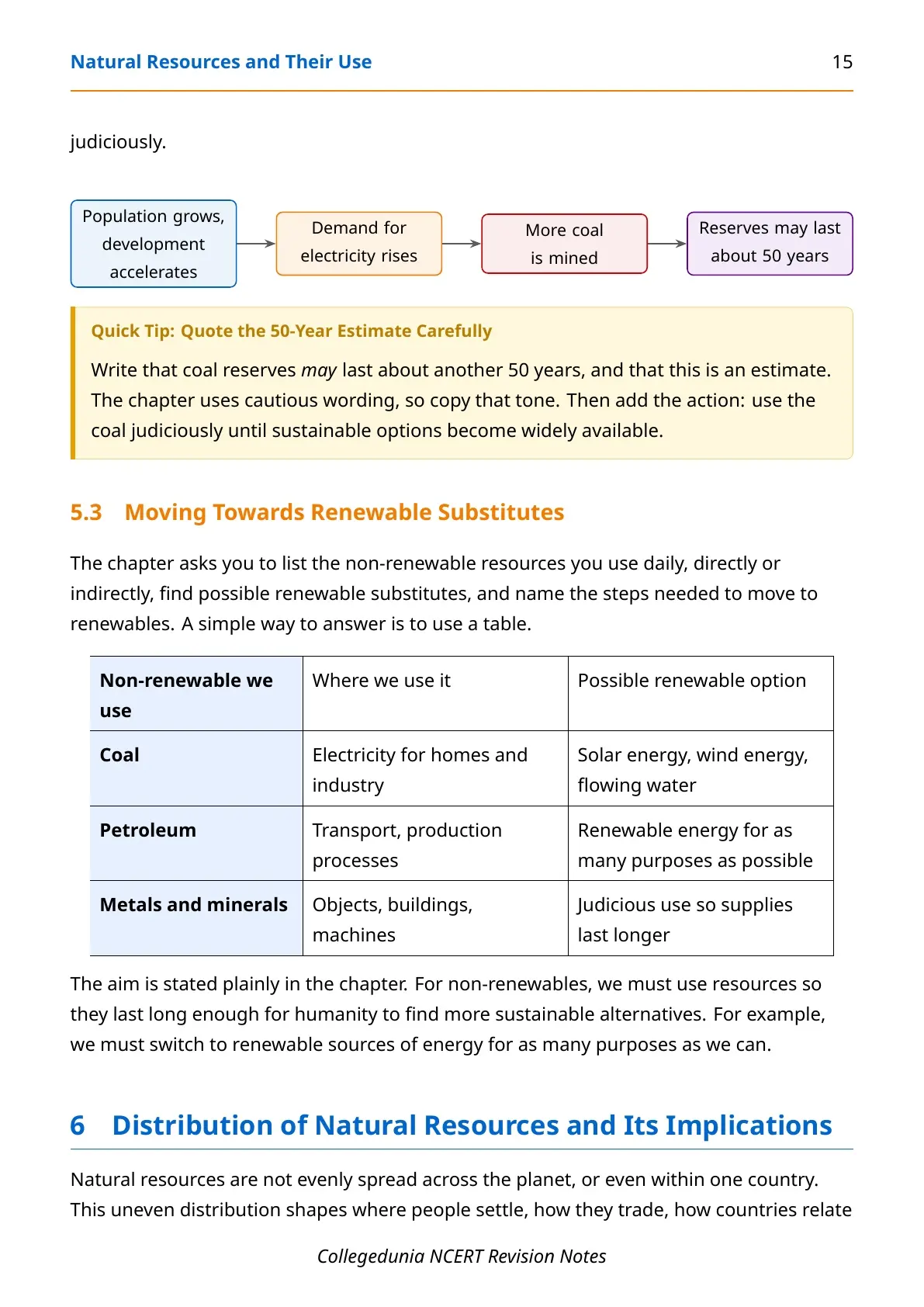
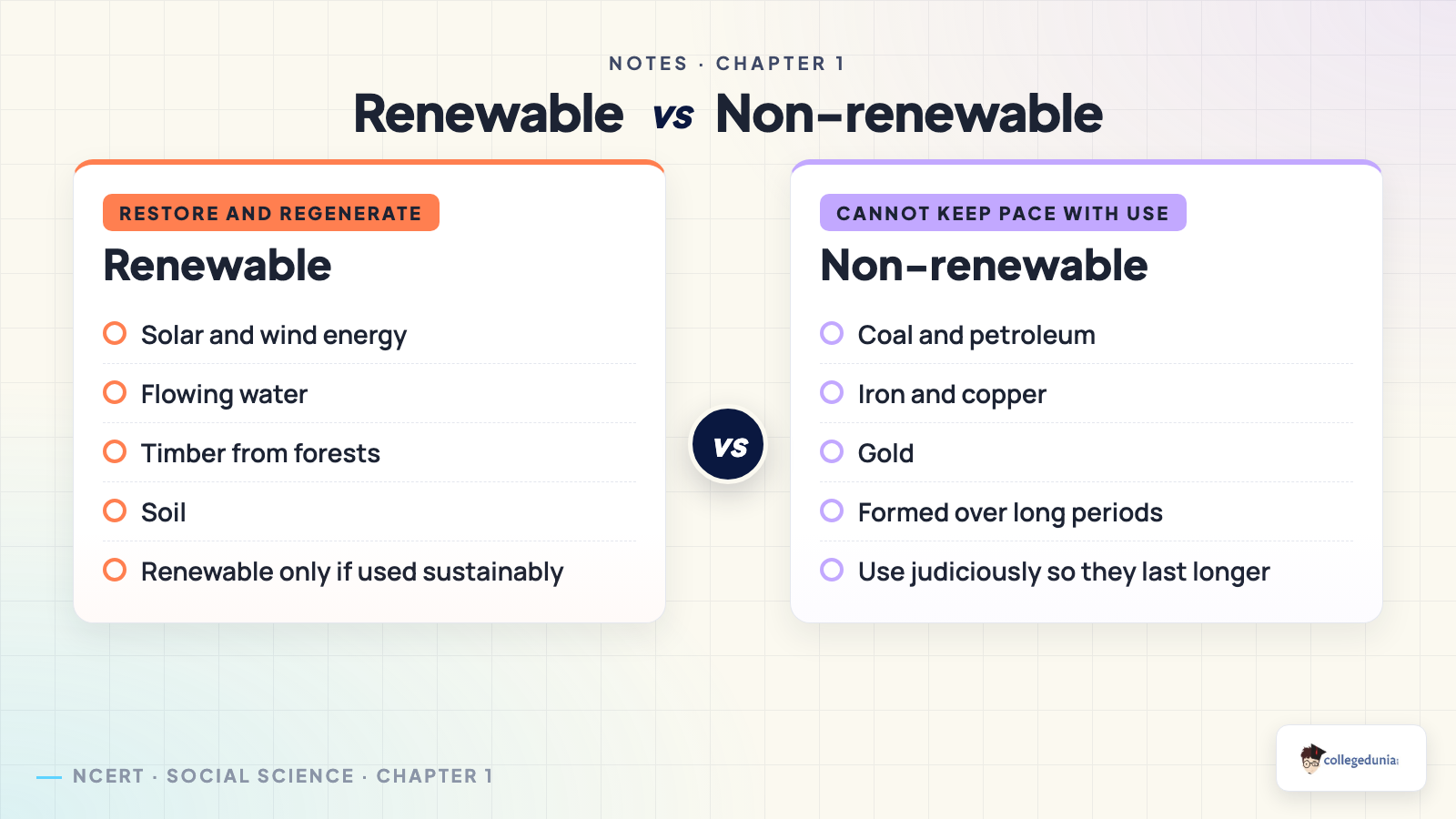
| Examples | Solar energy, wind energy, flowing water, timber, soil | Coal, petroleum, iron, copper, gold |
| Condition | Stay renewable only if Nature's rhythm is not disturbed | Must be used judiciously so they last longer |
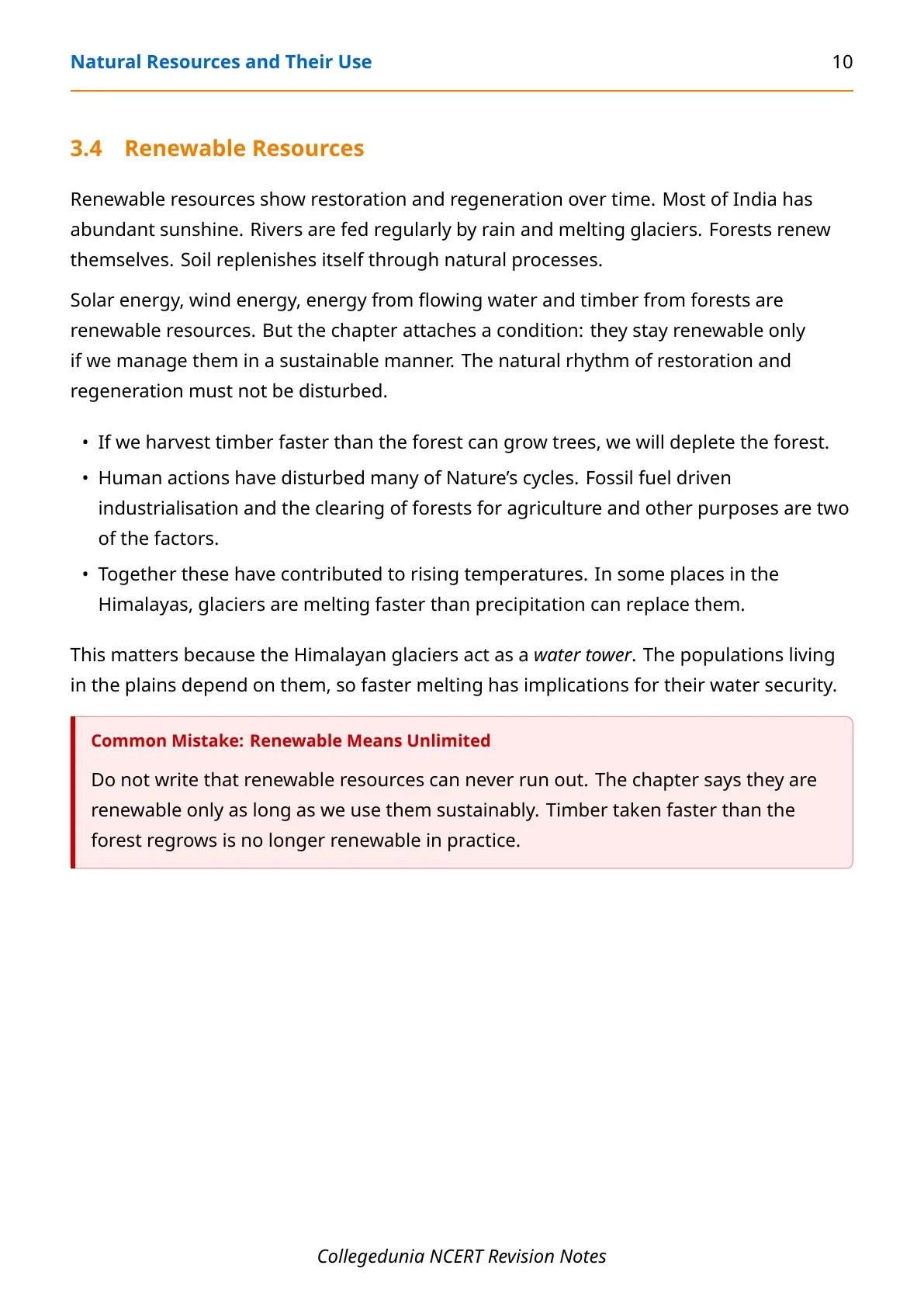
The condition for renewables matters. If timber is harvested faster than a forest can grow trees, the forest is depleted. Human activity has also disturbed several natural cycles. Fossil fuel driven industrialisation and the clearing of forests for agriculture are two of the factors behind rising temperatures, and glaciers in some parts of the Himalayas are melting faster than precipitation replaces them. That affects the water security of people in the plains who depend on this water tower.
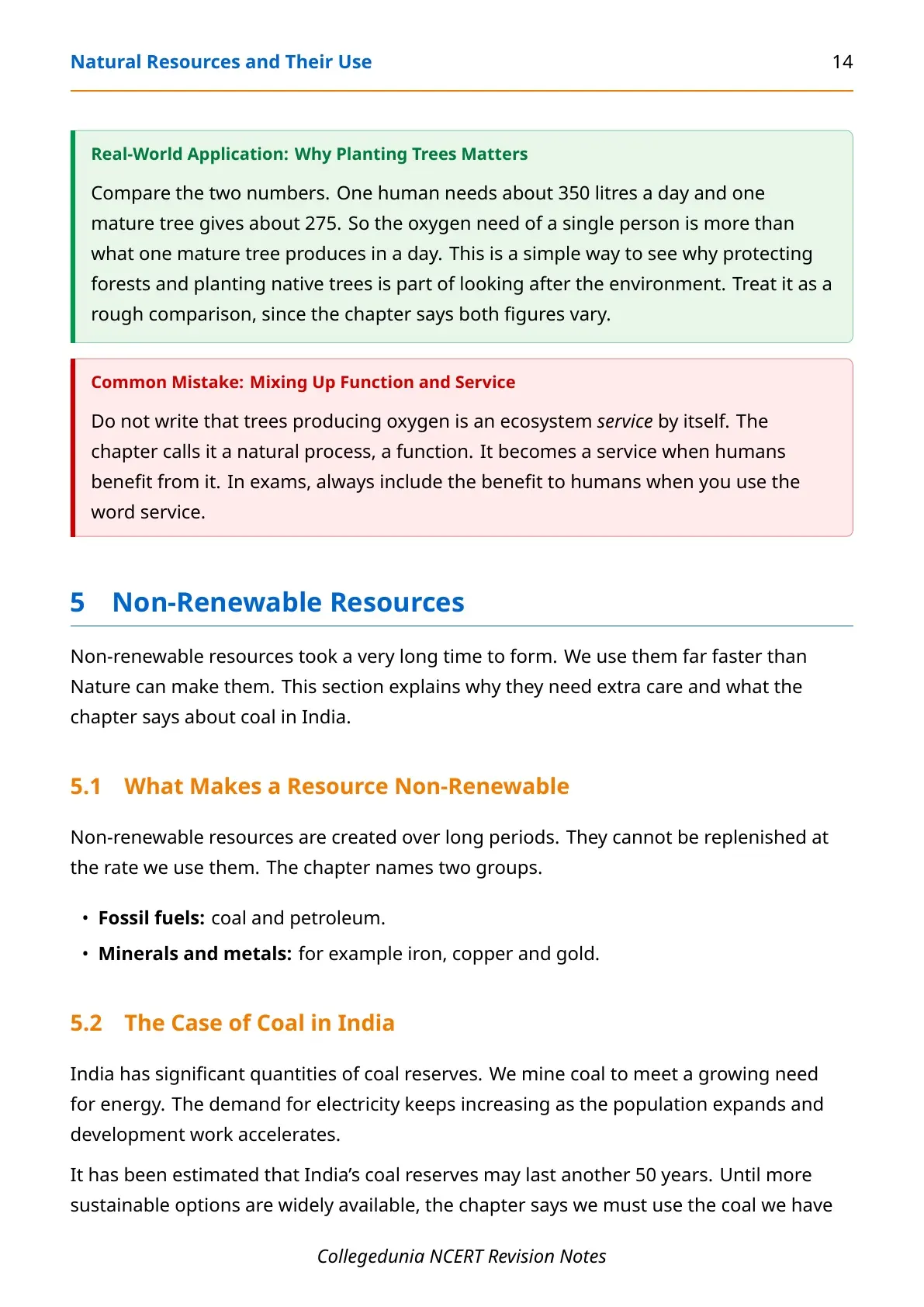
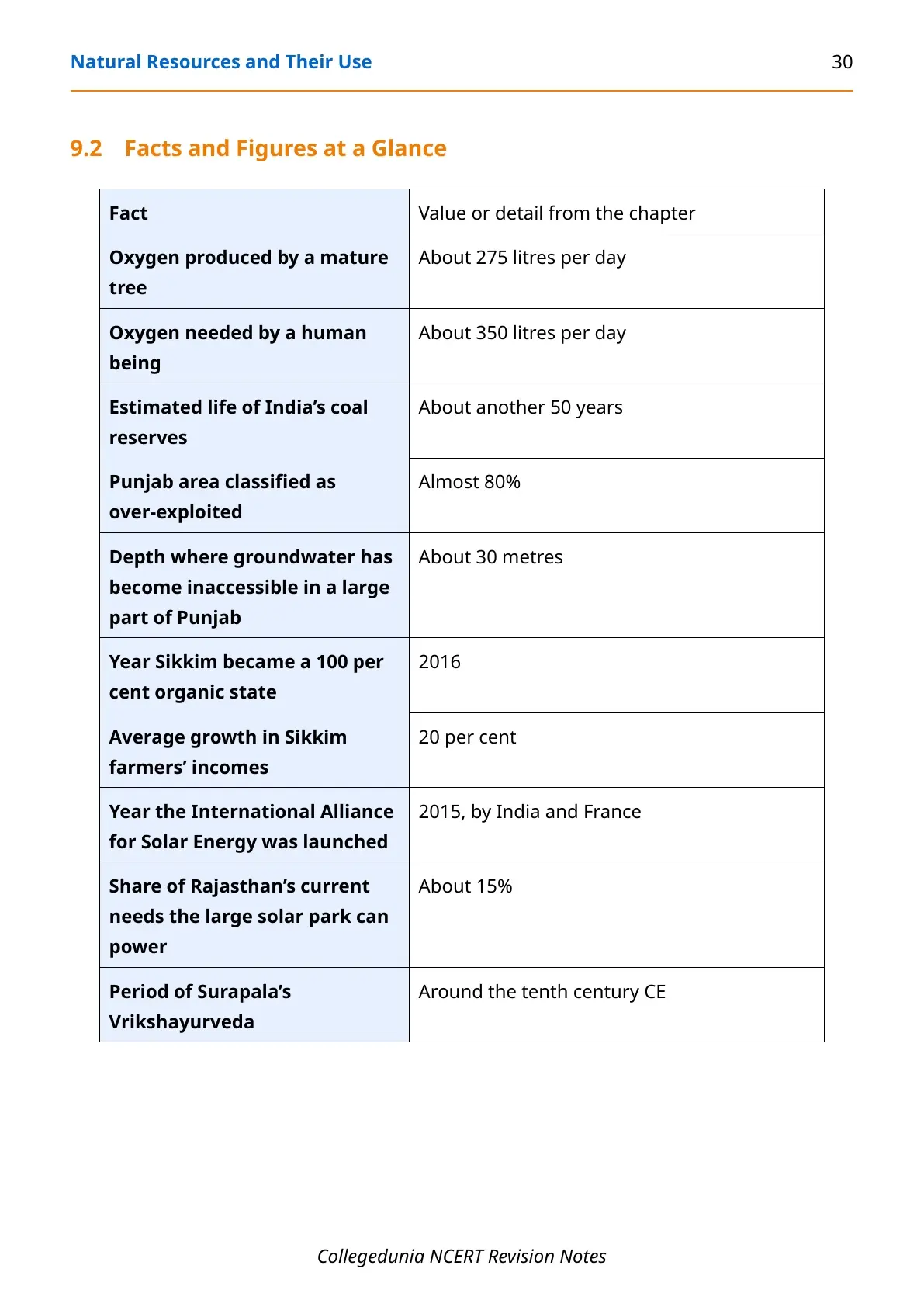
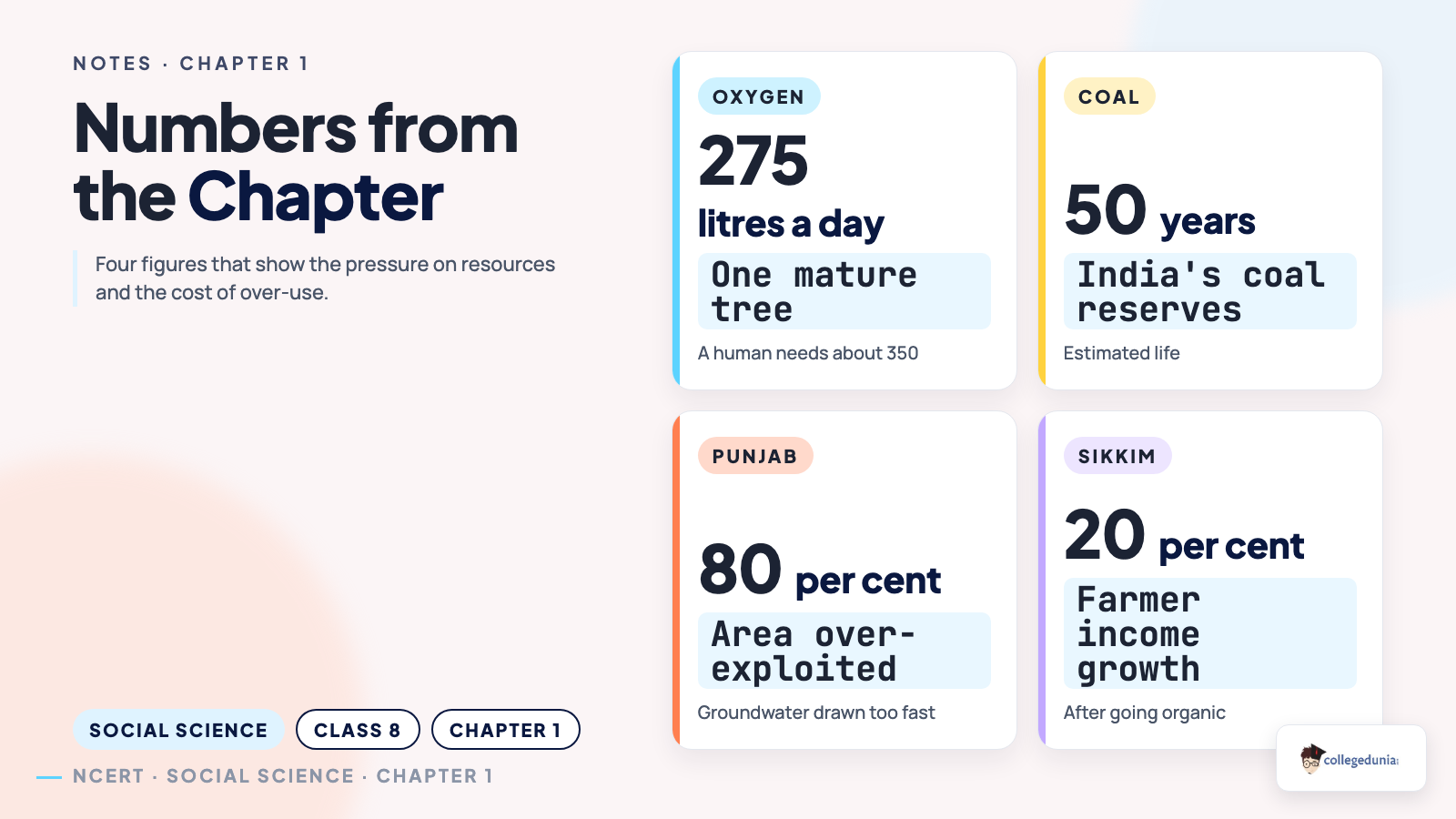
India has significant coal reserves, but it has been estimated that they may last about another 50 years because the demand for electricity keeps rising. Until more sustainable options are widely available, the coal we have must be used judiciously.
Nature's Cycles, Ecosystem Functions and Ecosystem Services
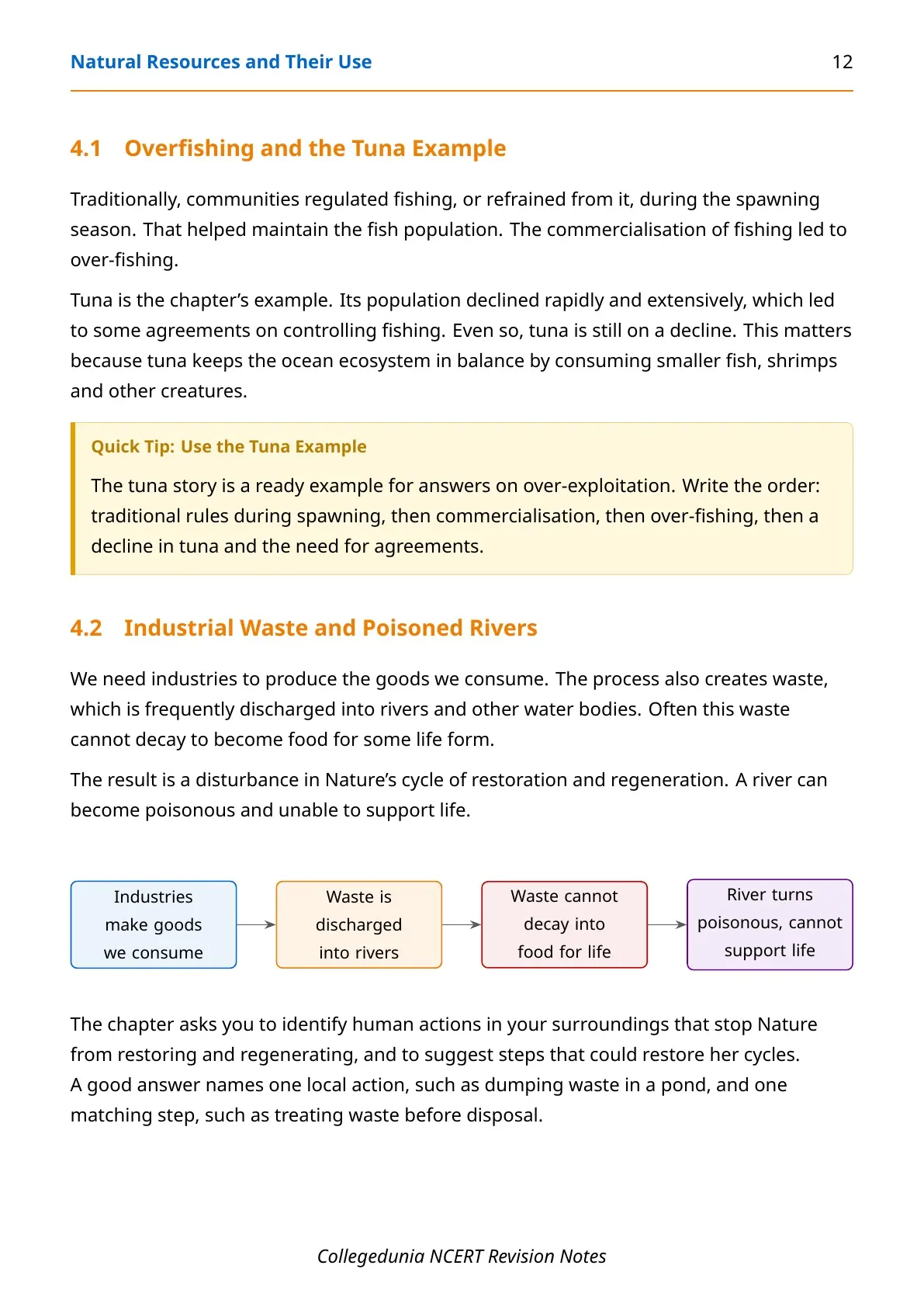
Human actions can break Nature's cycles. Traditional communities limited fishing in the spawning season, but the commercialisation of fishing led to over-fishing. The rapid decline in tuna, which keeps the ocean ecosystem in balance, led to agreements on controlling fishing, yet the fish is still declining.
Industrial waste is another example. When waste is discharged into rivers and cannot decay to become food for some life form, a river can turn poisonous and unable to support life.
The chapter separates two ideas that students often mix up.
| Term | Meaning | Example |
|---|---|---|
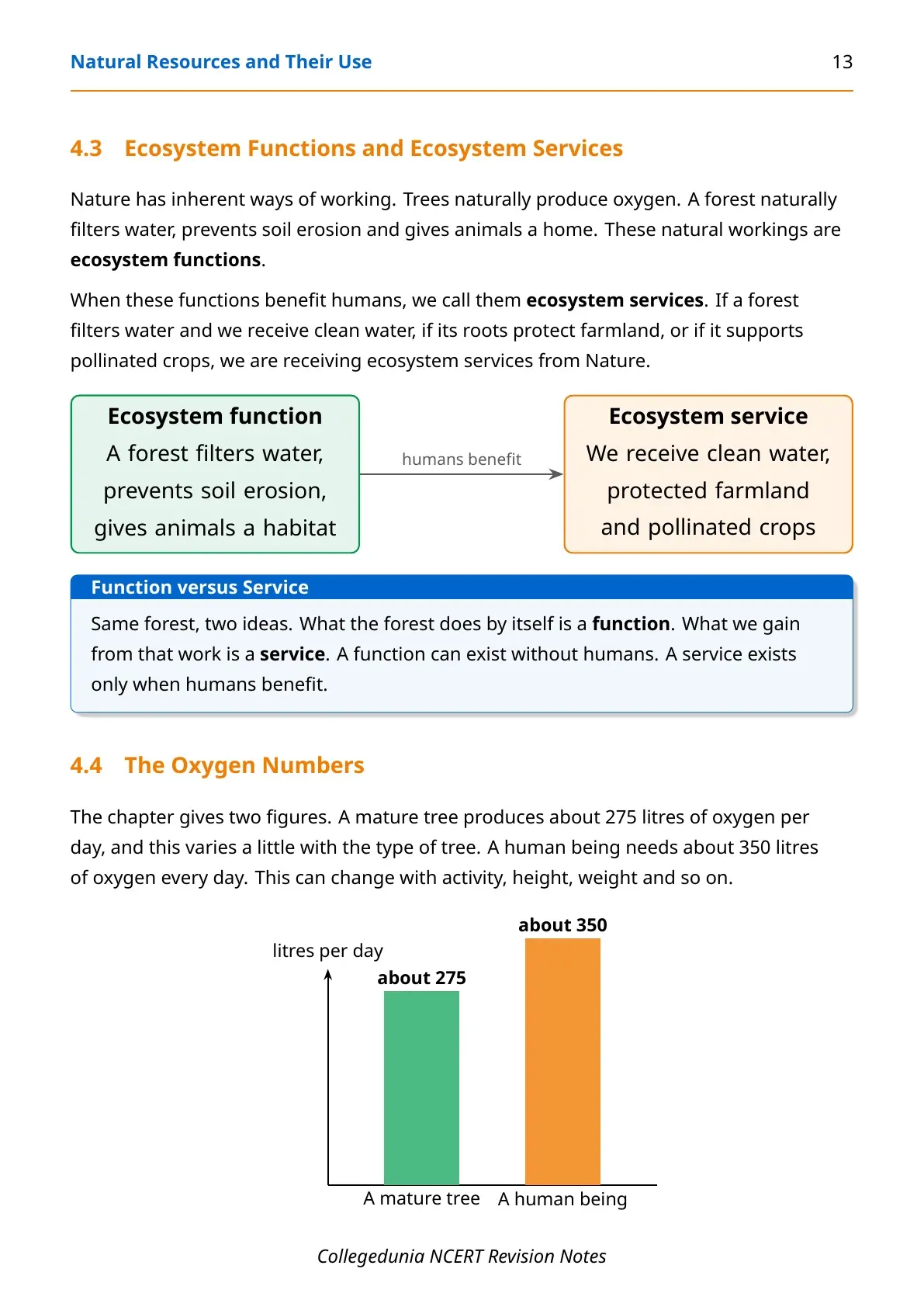
| Ecosystem function | What Nature does by itself | A forest filters water, prevents soil erosion and gives animals a habitat |
| Ecosystem service | The benefit humans receive from that function | Clean water, protected farmland and pollinated crops |
The chapter also gives two oxygen figures. A mature tree produces about 275 litres of oxygen a day, while a human being needs about 350 litres a day. Both vary with the type of tree and the person.
Distribution of Natural Resources and the Paradox of Plenty
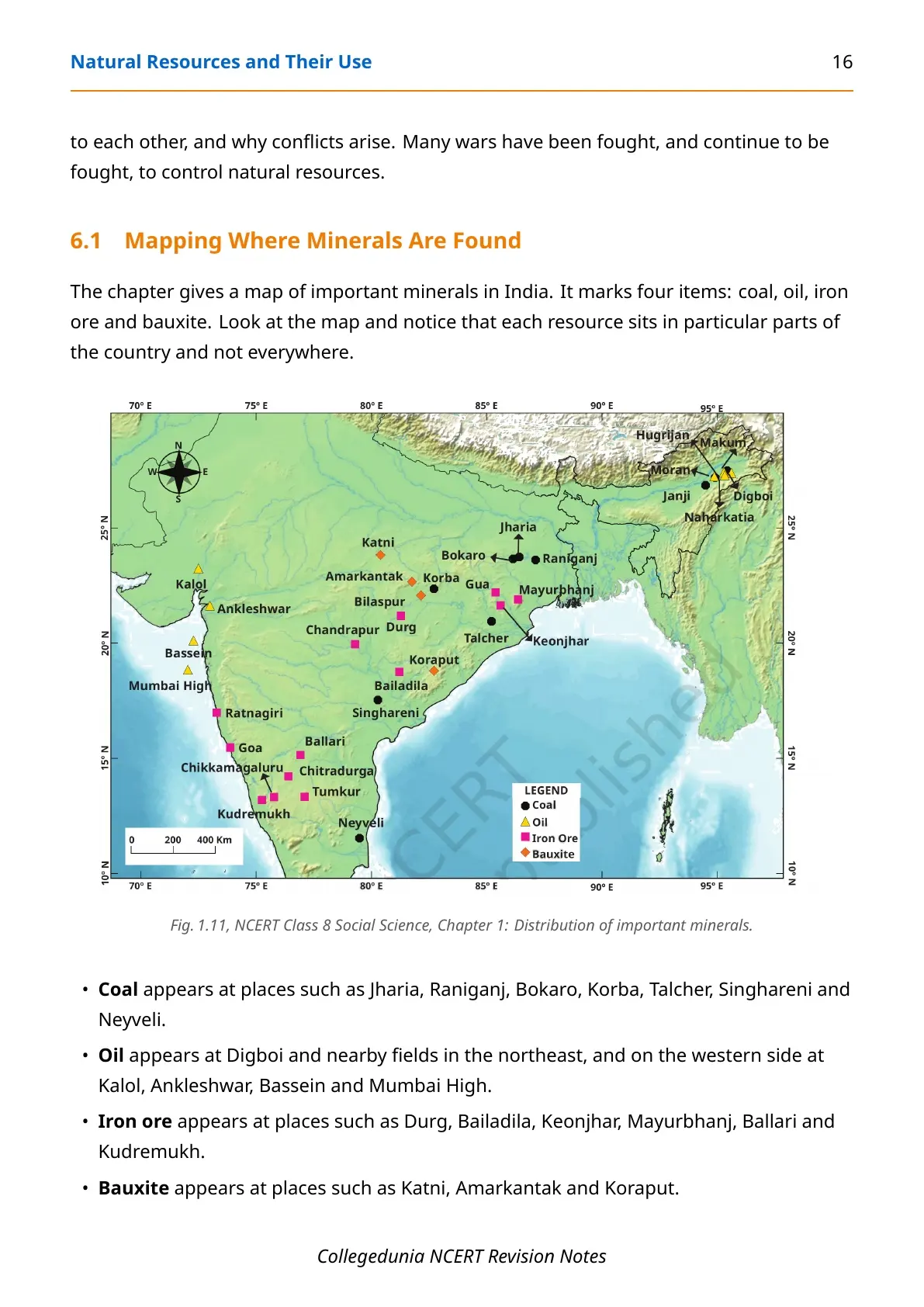
Natural resources are spread unevenly across the world and within countries. This shapes where people settle, how they trade, how countries deal with each other and why conflicts arise. The chapter's map of important minerals marks coal, oil, iron ore and bauxite, and each sits in particular regions.
- Industries near resources bring jobs and townships, but people have also been displaced from resource-rich areas and sacred places have come under threat.
- Trade depends on where resources lie. With human knowledge and skill they make unique products such as Wootz steel.
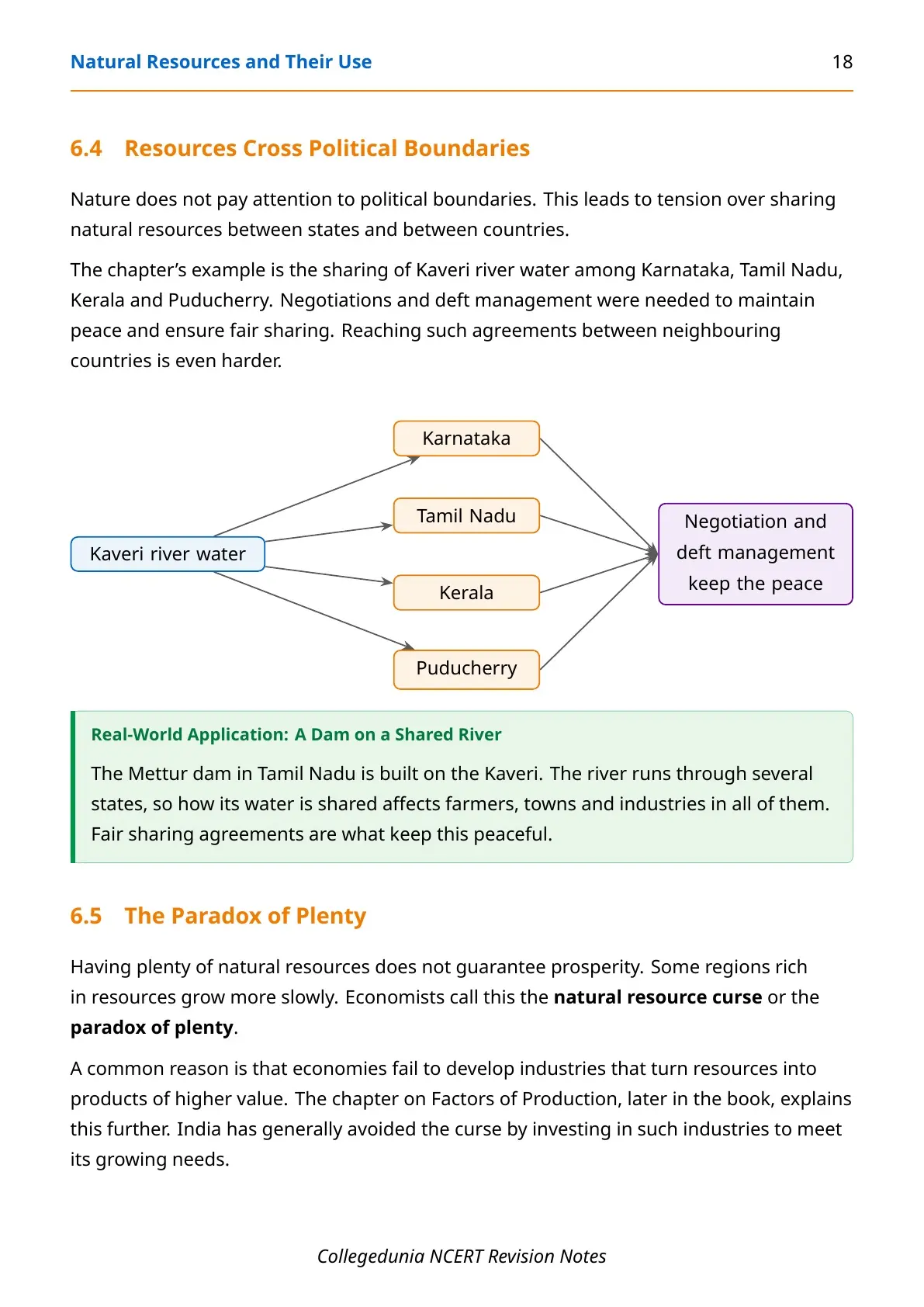
- Nature ignores political boundaries, so sharing river water leads to tension. The Kaveri is shared by Karnataka, Tamil Nadu, Kerala and Puducherry, and negotiation was needed to keep the peace.
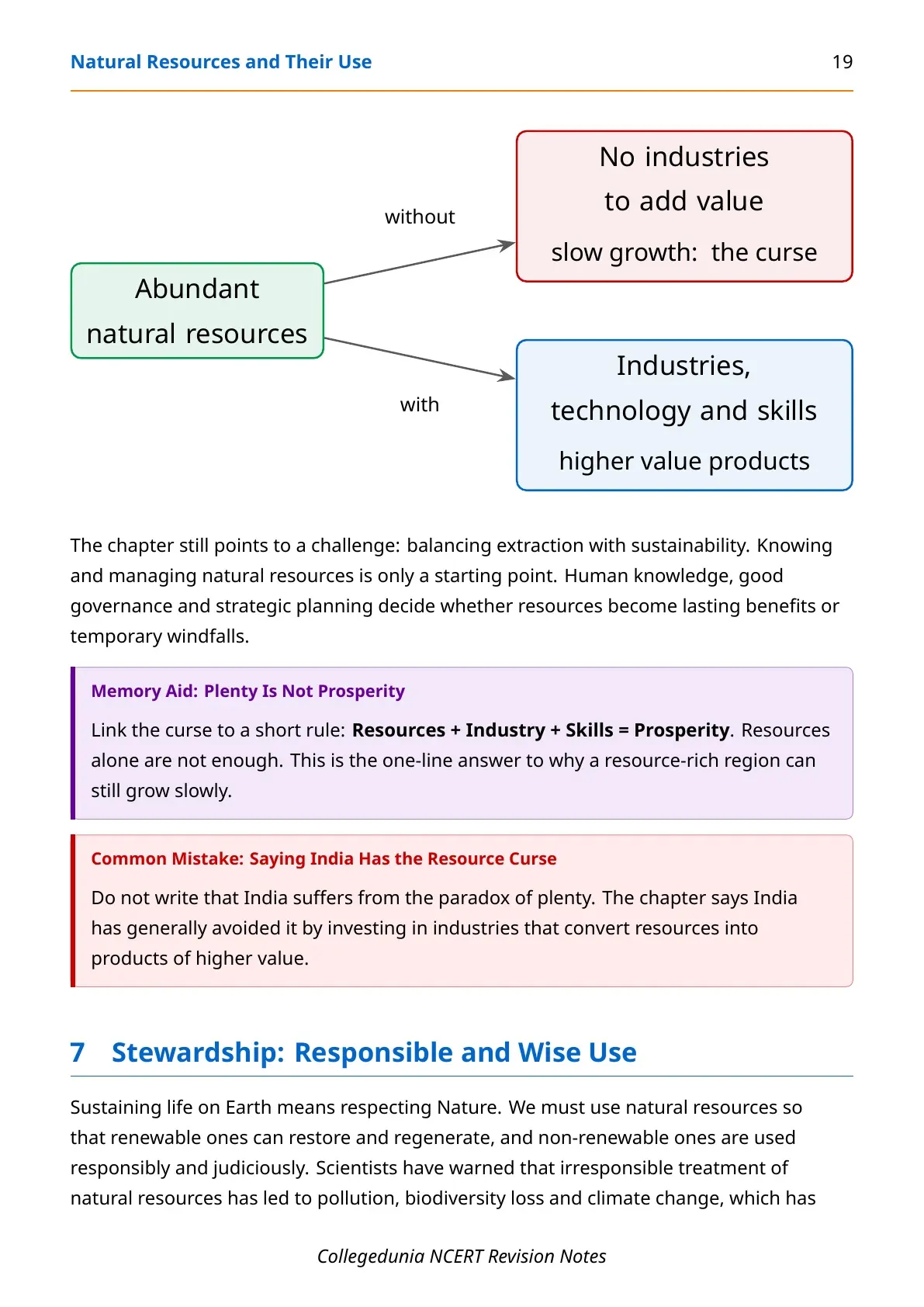
Having plenty of resources does not guarantee prosperity. Economists call slow growth in resource-rich regions the natural resource curse or the paradox of plenty. It happens when an economy cannot build industries that turn resources into higher-value products. India has generally avoided it by investing in such industries.
Stewardship: Groundwater, Soil, Cement and Solar Energy
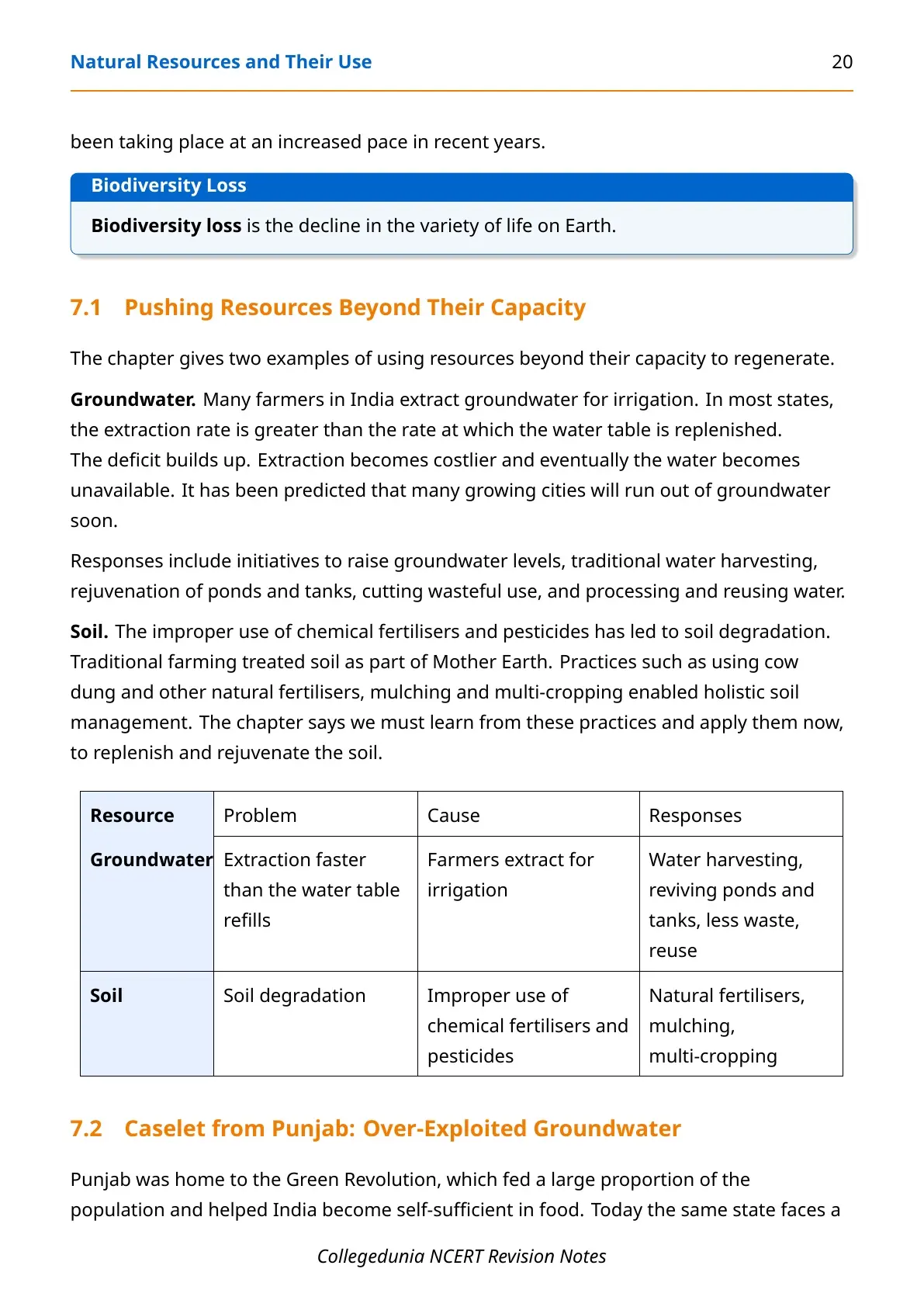
The chapter warns that irresponsible treatment of resources has led to pollution, biodiversity loss and climate change. Its case studies show what over-use looks like and what a fix looks like.
| Case | What happened | Lesson |
|---|---|---|
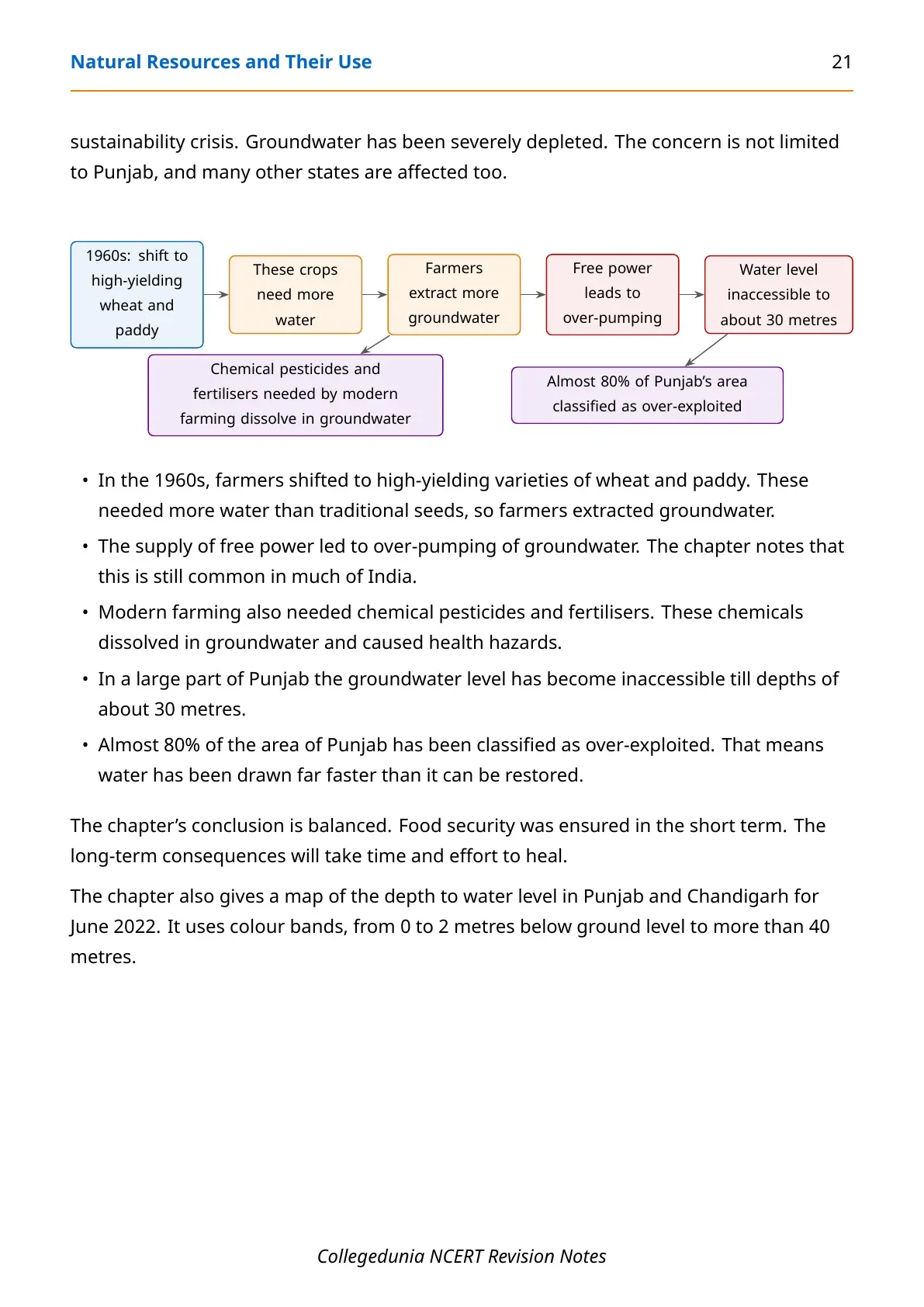
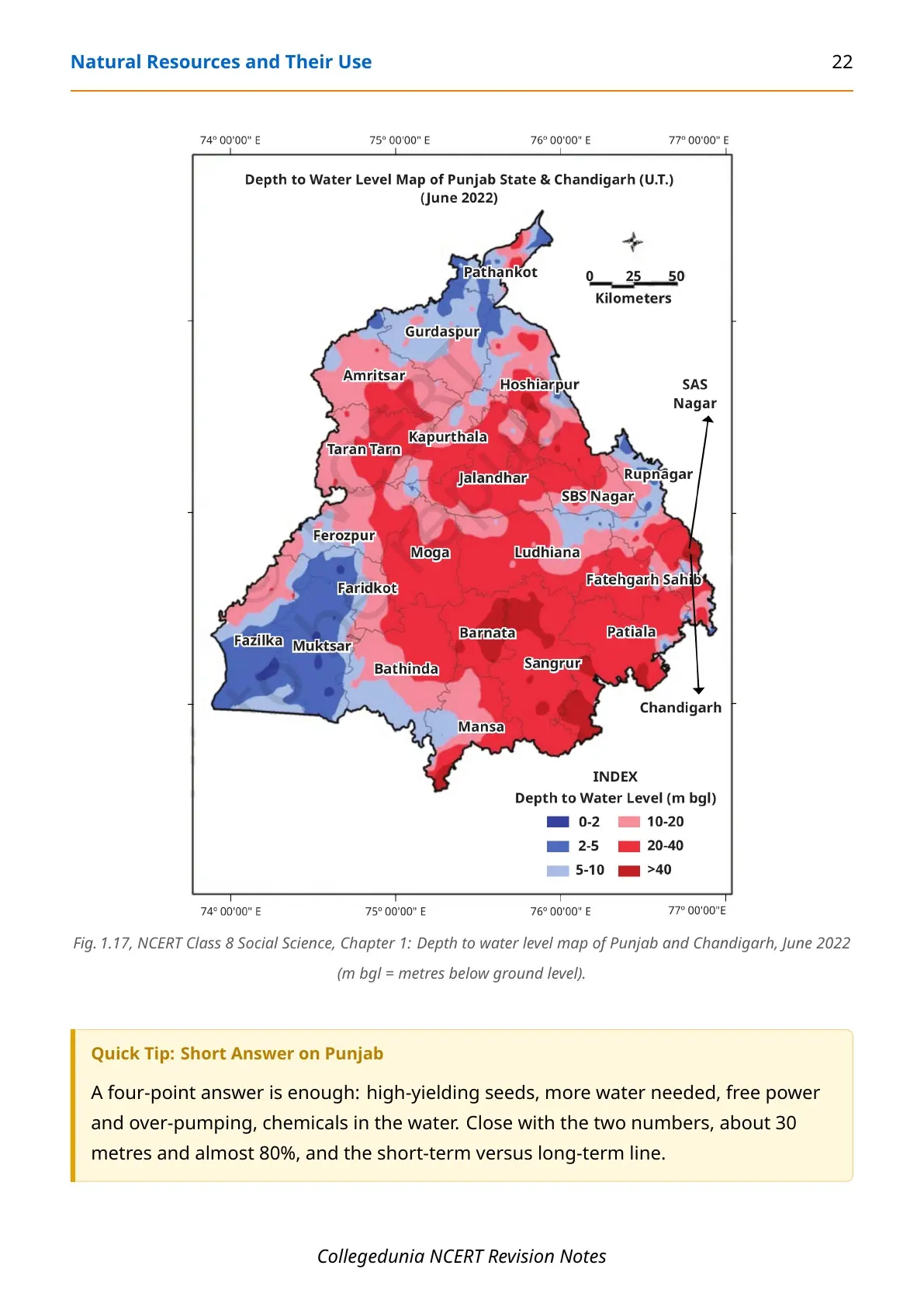
| Punjab groundwater | High-yielding wheat and paddy needed more water, free power led to over-pumping, and almost 80 per cent of the state's area is classed as over-exploited | Short-term food security came at a long-term cost |
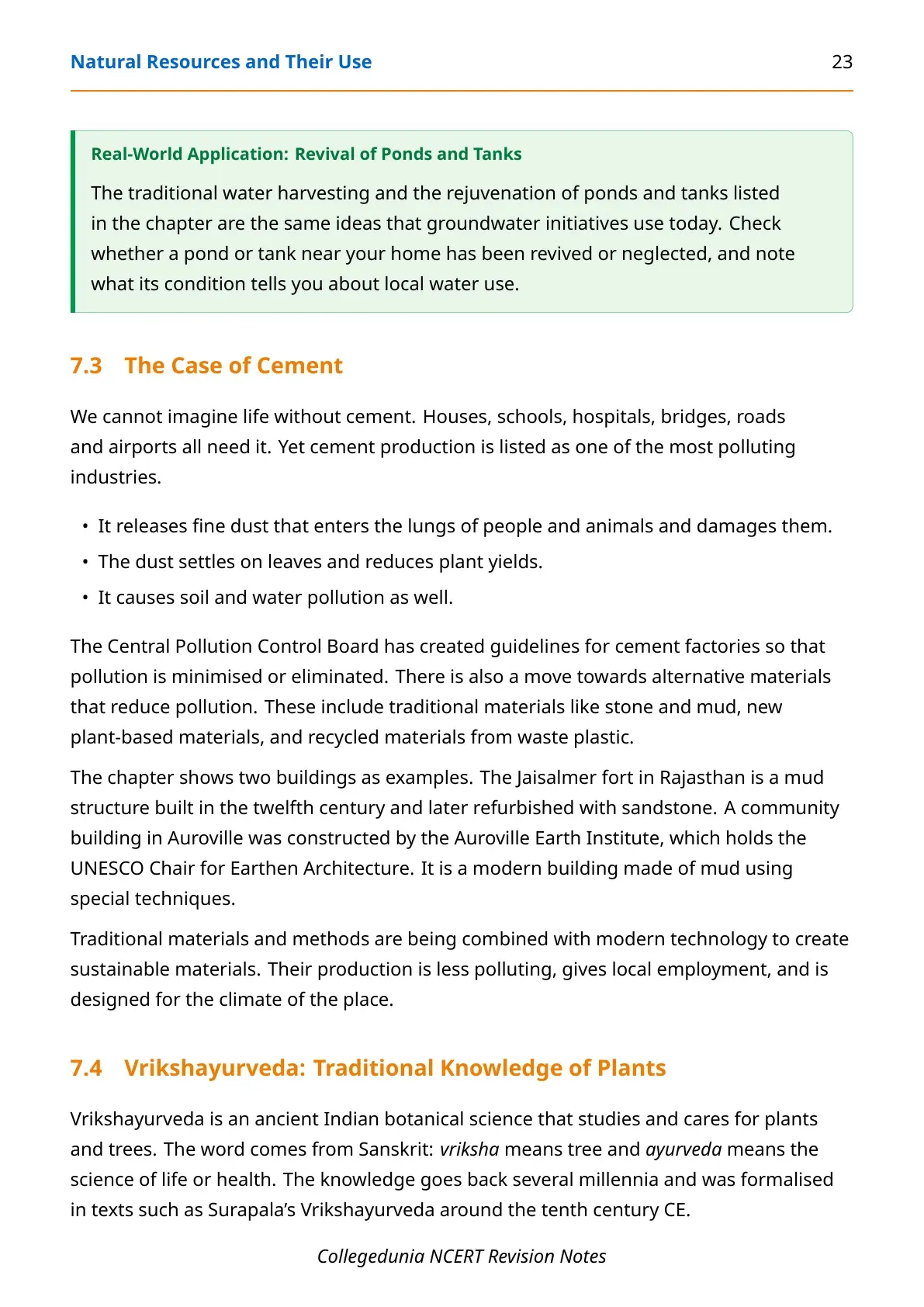
| Cement | One of the most polluting industries; its dust harms lungs, plants, soil and water | Pollution guidelines and alternatives such as stone, mud and recycled materials help |
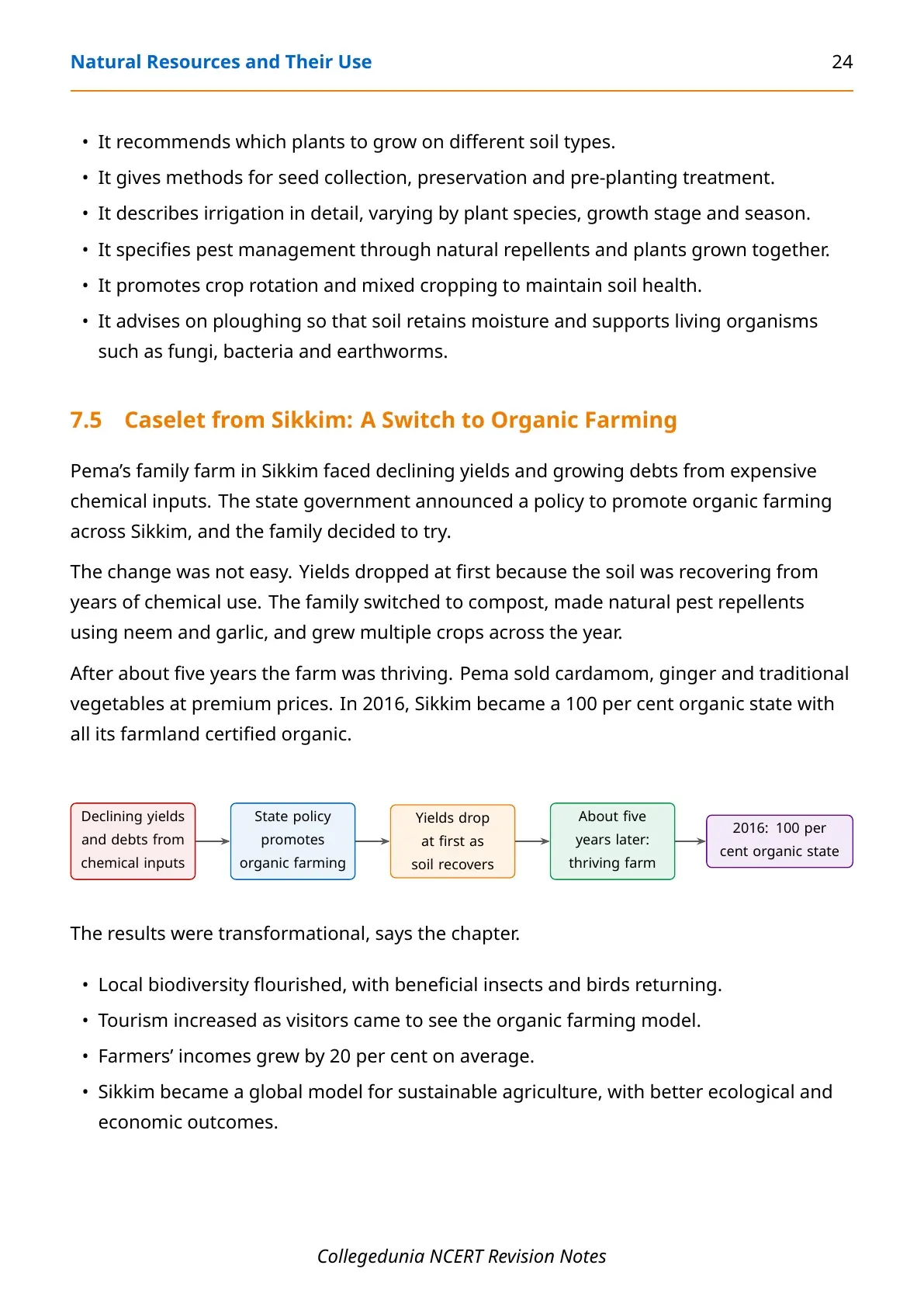
| Sikkim | Became a 100 per cent organic state in 2016; farmers' incomes grew by 20 per cent on average | Restoring soil can raise both ecological and economic outcomes |
| Solar energy | India and France launched the International Alliance for Solar Energy in 2015 | Switching to renewables is both a duty and an opportunity |
Traditional knowledge supports this. Vrikshayurveda, an ancient Indian science of plants, advises on soil types, seed care, irrigation, natural pest control and crop rotation. The chapter closes with the idea of lokasangraha from the Bhagavad Gita, that everyone should act for the wellbeing of all, and asks us to act as stewards of resources.
Key Terms from Chapter 1
- Restoration: returning something to its original healthy state after damage.
- Regeneration: Nature's ability to create new life and the conditions for thriving.
- Biodiversity loss: the decline in the variety of life on Earth.
- Stewardship means caring for resources so they can restore, regenerate and last.
- The paradox of plenty is also known as the natural resource curse.
How to Use the Natural Resources and Their Use Notes
Read the sections on the three conditions and on renewable resources first, since almost every later example refers back to them. Then work through the case studies and try to say, in a line each, what went wrong and what fixed it.
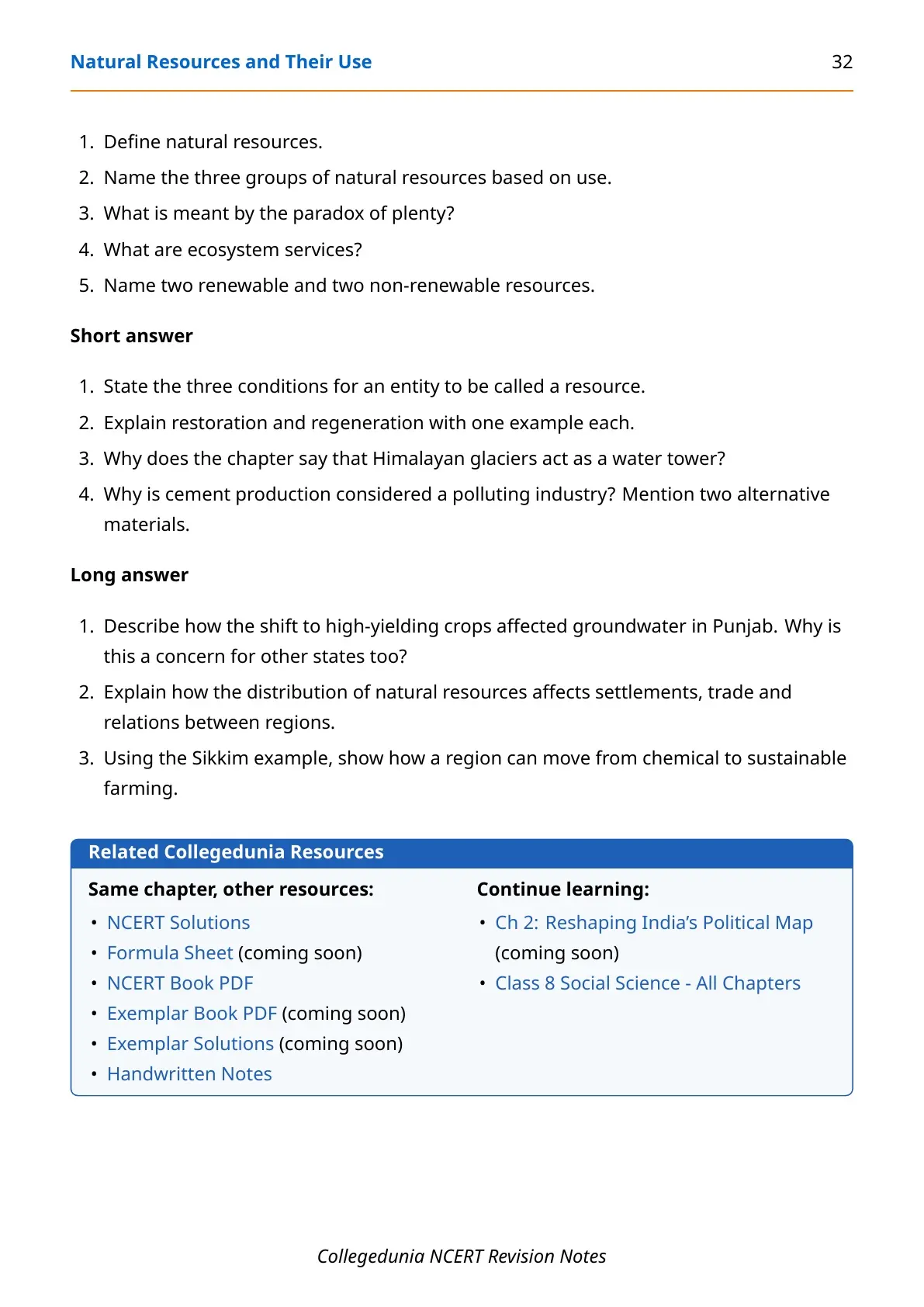
Finish with the model answers to the five NCERT questions at the end of the PDF. Try each question on your own before reading the answer.
More Class 8 Social Science Resources for Natural Resources and Their Use
These resources for the same chapter, and the notes for later chapters of the book, are live.
Natural Resources and Their Use Class 8 Notes FAQs
Ques. Where can I download Class 8 Social Science Chapter 1 Natural Resources and Their Use notes PDF?
Ans. You can download the notes PDF from the card on this page. It is free and needs no login.
Ques. Do these notes follow the 2026-27 NCERT?
Ans. Yes. They follow Chapter 1 of Exploring Society: India and Beyond, Part 1, the Class 8 Social Science textbook for the 2026-27 session.
Ques. How many pages is the notes PDF?
Ans. The PDF runs 32 pages. It covers every section of the chapter, the case studies, model answers to the NCERT questions and a quick revision section.
Ques. When does Nature become a resource?
Ans. Elements of Nature become resources when humans use them for sustenance or make new things from them. An entity must also be technologically accessible, economically feasible to exploit and culturally acceptable.
Ques. What is the difference between renewable and non-renewable resources?
Ans. Renewable resources, such as solar energy, wind energy, flowing water and timber, restore and regenerate in the natural course. Non-renewable resources, such as coal, petroleum, iron, copper and gold, form over long periods and cannot be replenished at the rate we use them.
Ques. What is the difference between an ecosystem function and an ecosystem service?
Ans. A function is what Nature does by itself, such as a forest filtering water. A service is the benefit humans receive from it, such as clean water.
Ques. What is the paradox of plenty?
Ans. It is the situation where regions rich in natural resources grow more slowly, because they cannot build industries that turn resources into higher-value products. It is also called the natural resource curse.
Ques. Why is groundwater over-exploited in Punjab?
Ans. Farmers shifted in the 1960s to high-yielding wheat and paddy that need more water, and free power led to over-pumping. Almost 80 per cent of the state's area is now classified as over-exploited.
Ques. What did Sikkim do to become an organic state?
Ans. The state government promoted organic farming, and farmers moved to compost, natural pest repellents and multiple crops. In 2016 Sikkim became a 100 per cent organic state, and farmers' incomes grew by 20 per cent on average.



Comments