




The NCERT Class 11 Economics Chapter 11 Liberalisation, Privatisation and Globalisation: An Appraisal Book PDF gives students the official Indian Economic Development chapter for the 2026-27 syllabus. Use it to study why India changed its economic policy in 1991 and how the LPG reforms affected growth, jobs, industry and agriculture.
- Book section: official NCERT chapter text, activity boxes and exercise questions.
- Best use: read the PDF before making a three-column LPG reform chart.
- Revision cue: connect every reform to crisis, policy change and appraisal.
Student Feedback: In a Collegedunia check of 11,380 Class 11 Economics students, many students said this chapter became easier after they wrote liberalisation, privatisation and globalisation in separate columns.
Liberalisation Privatisation and Globalisation Class 11 NCERT Book PDF: What It Covers
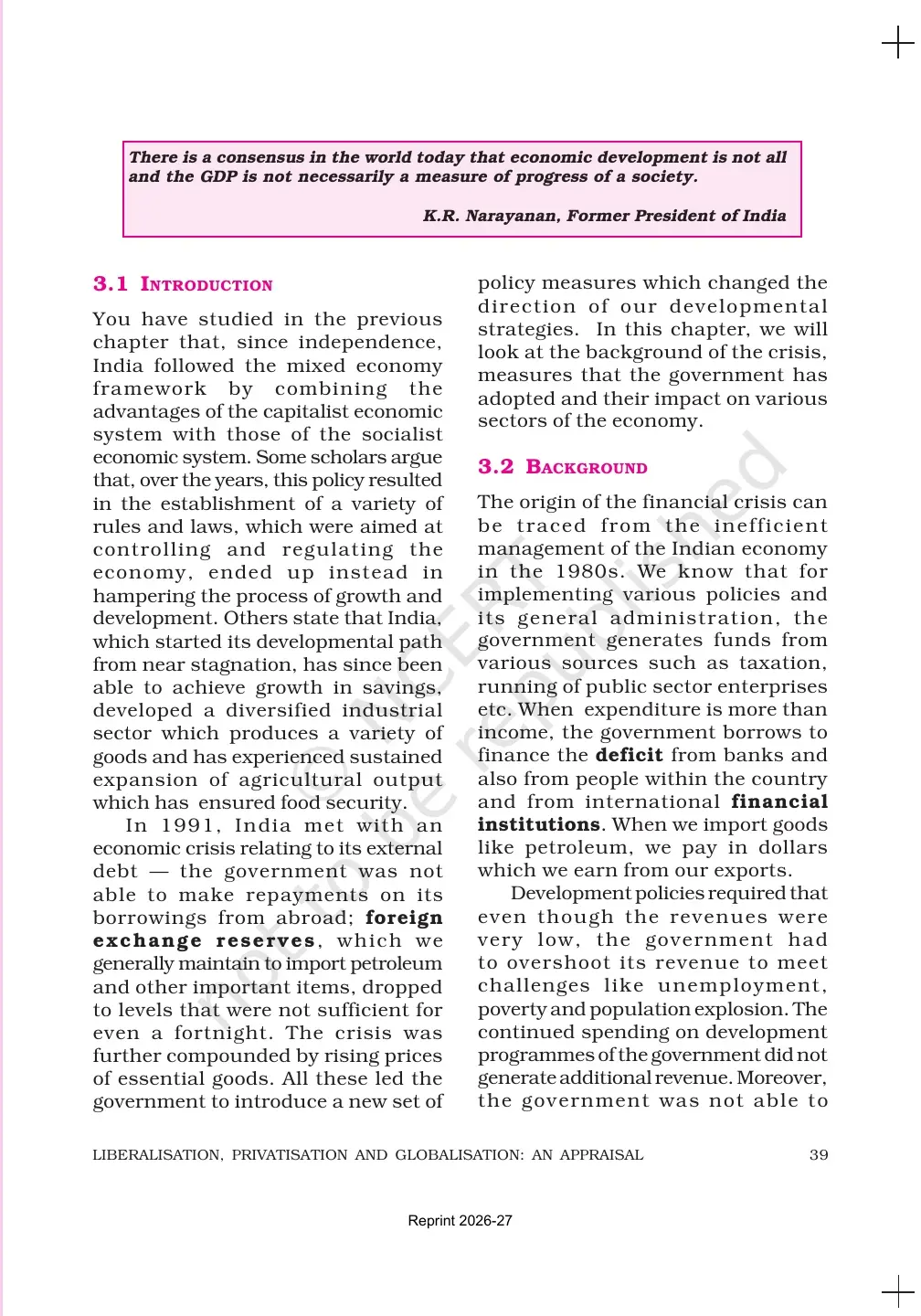
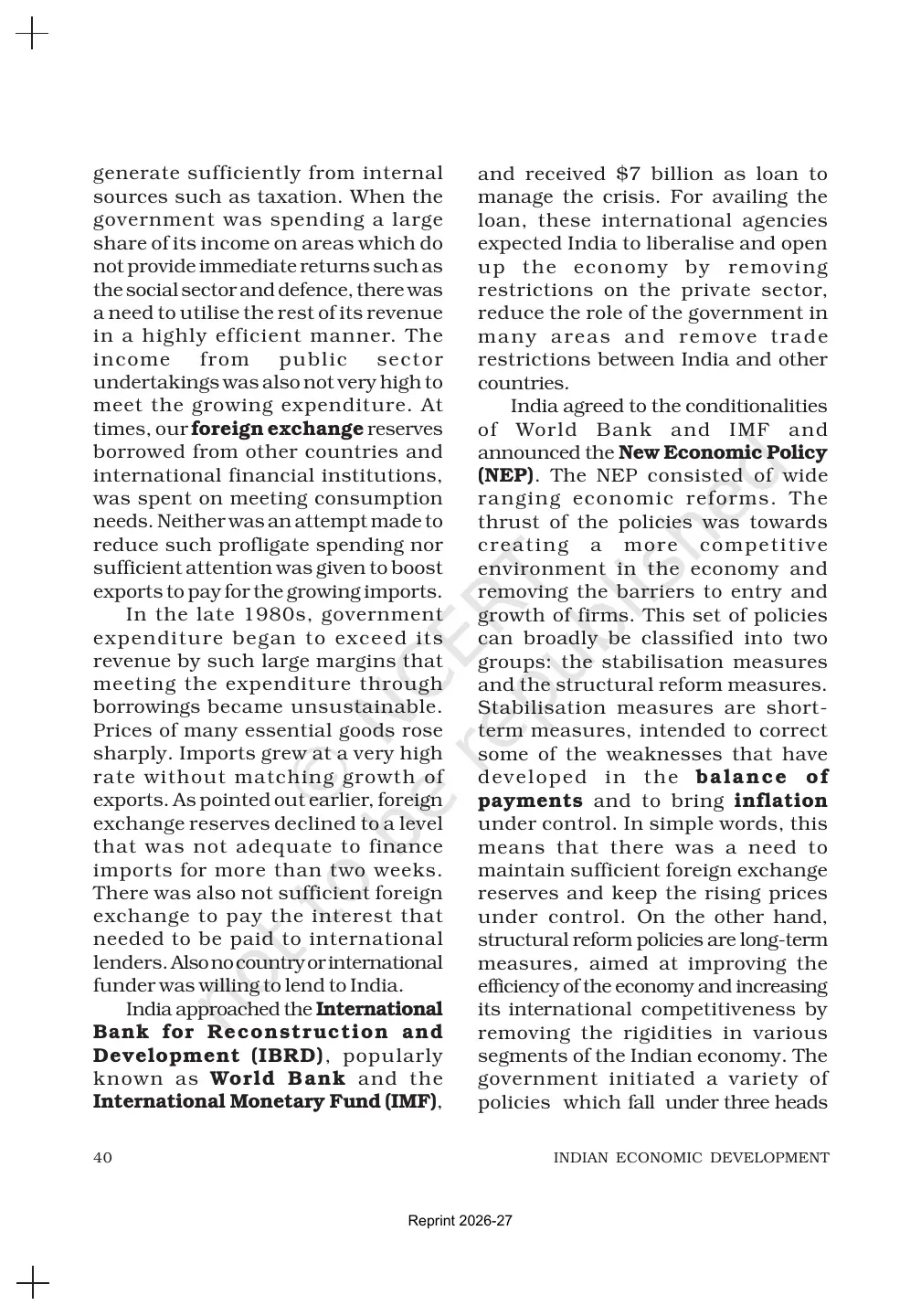
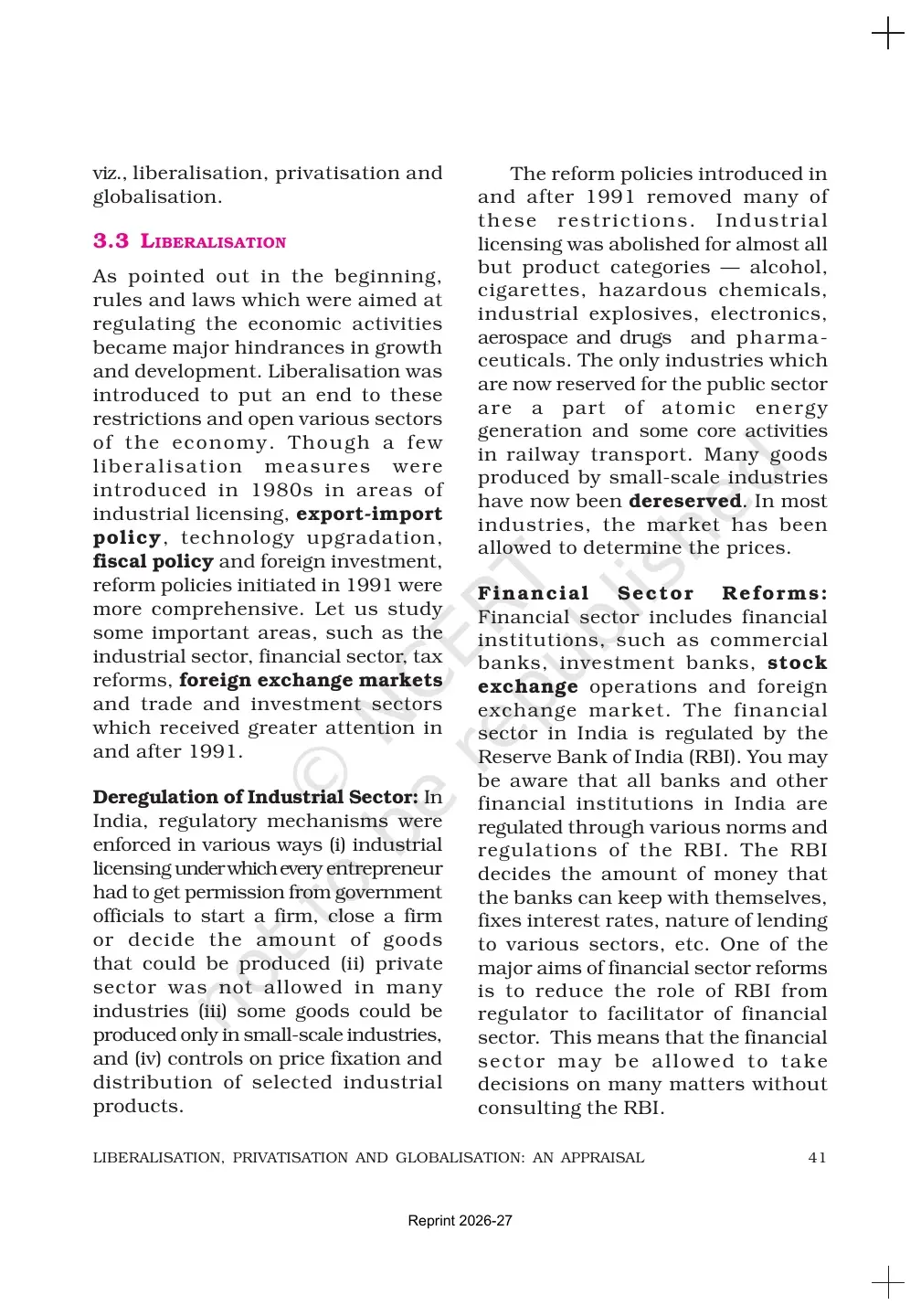
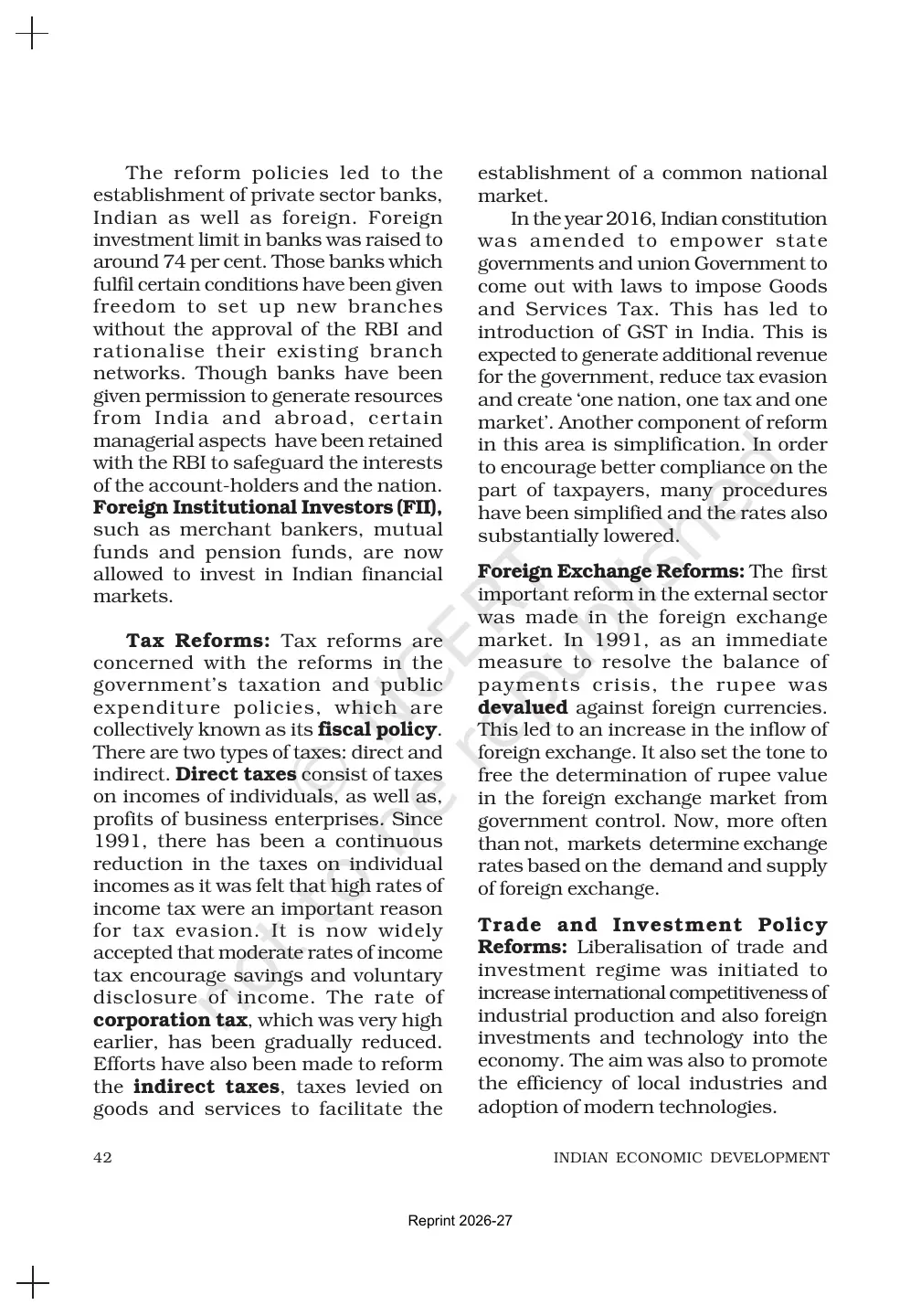
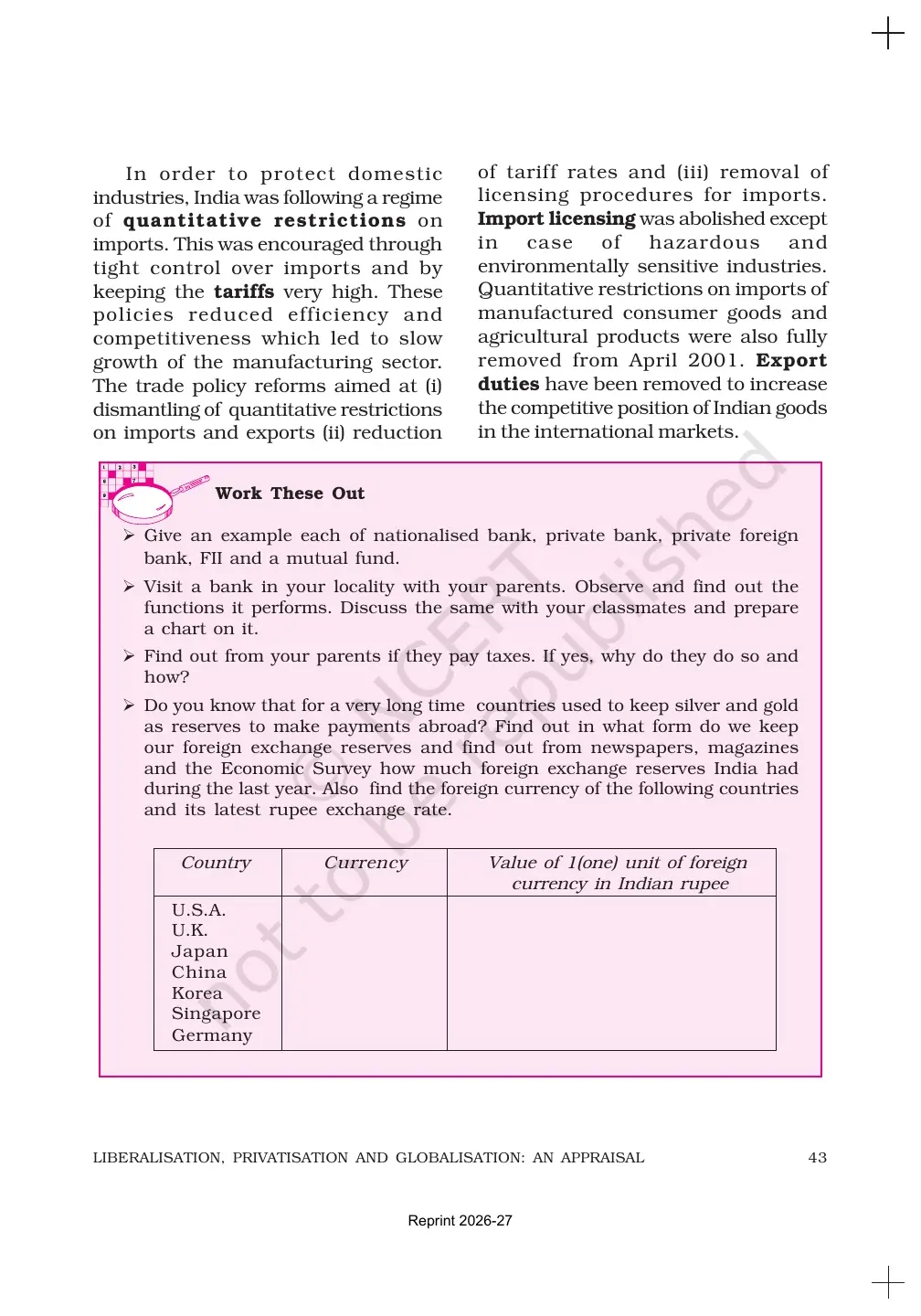
The PDF explains the 1991 economic reforms in a simple NCERT sequence. It starts with the background crisis, then explains liberalisation, privatisation and globalisation.
The chapter also asks students to appraise the reforms. That means you must write both gains and limits in school answers.
| NCERT area | What students should notice | Answer cue |
|---|---|---|
| 1991 crisis | Foreign exchange reserves fell and the government needed a new policy path. | Use it as the reform background. |
| Liberalisation | Controls on industry, trade, tax and finance were reduced. | Explain removal of restrictions. |
| Privatisation | The private sector gained more space in economic activity. | Use disinvestment as a key example. |
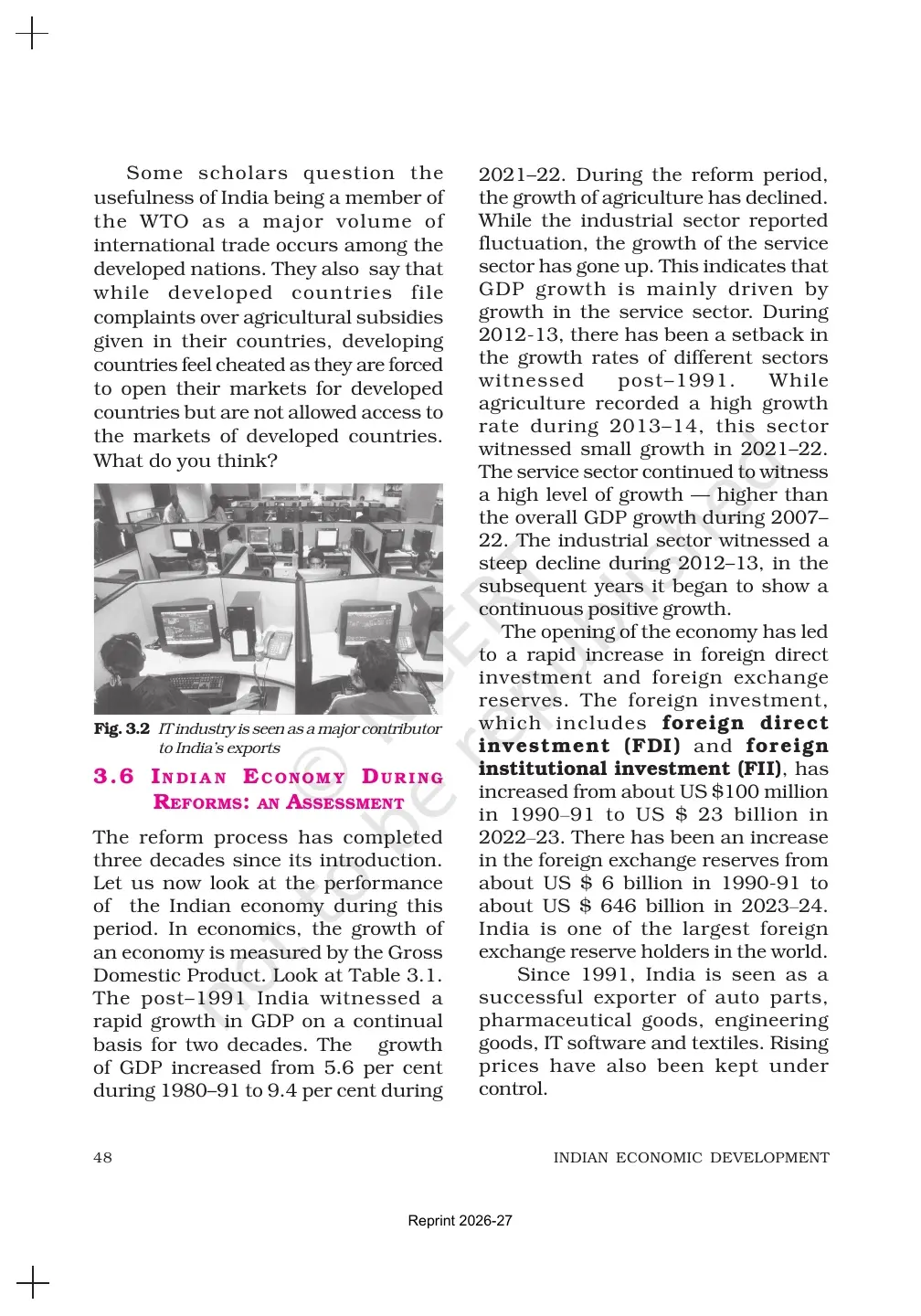
| Globalisation | India became more connected with world trade and investment. | Link it with outsourcing and WTO. |
Liberalisation Privatisation and Globalisation Video Recap
Source: PW OnlyIAS Prarambh on YouTube
1991 LPG Reform Sequence in Class 11 Economics
NCERT shows LPG reforms as a response to pressure, not as a random policy change. The balance of payments crisis is the starting point for the whole chapter.
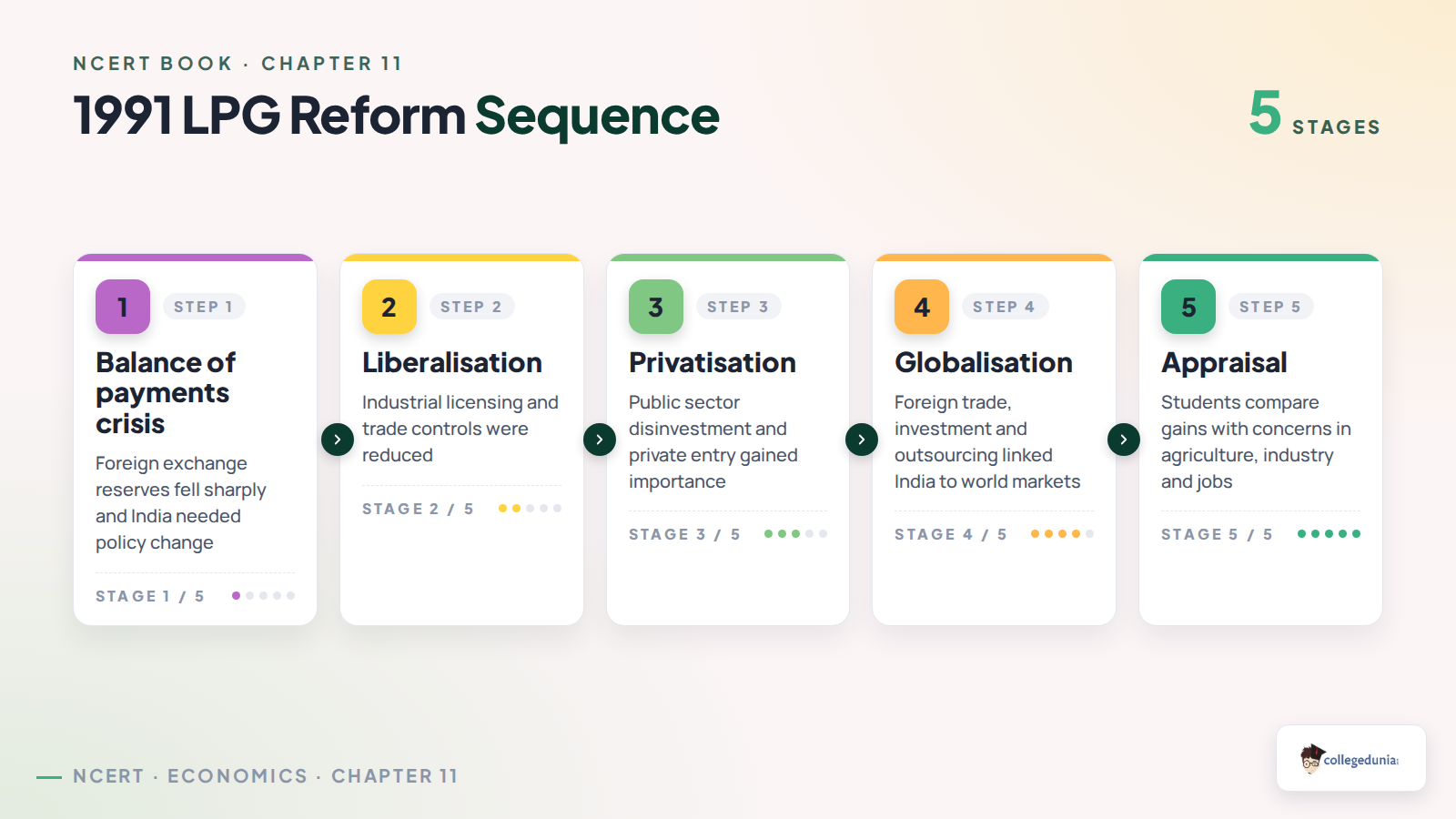
- Liberalisation: reduced licensing and opened many sectors to competition.
- Privatisation: increased private participation and disinvestment in public enterprises.
- Globalisation: linked India more closely with foreign trade, investment and outsourcing.
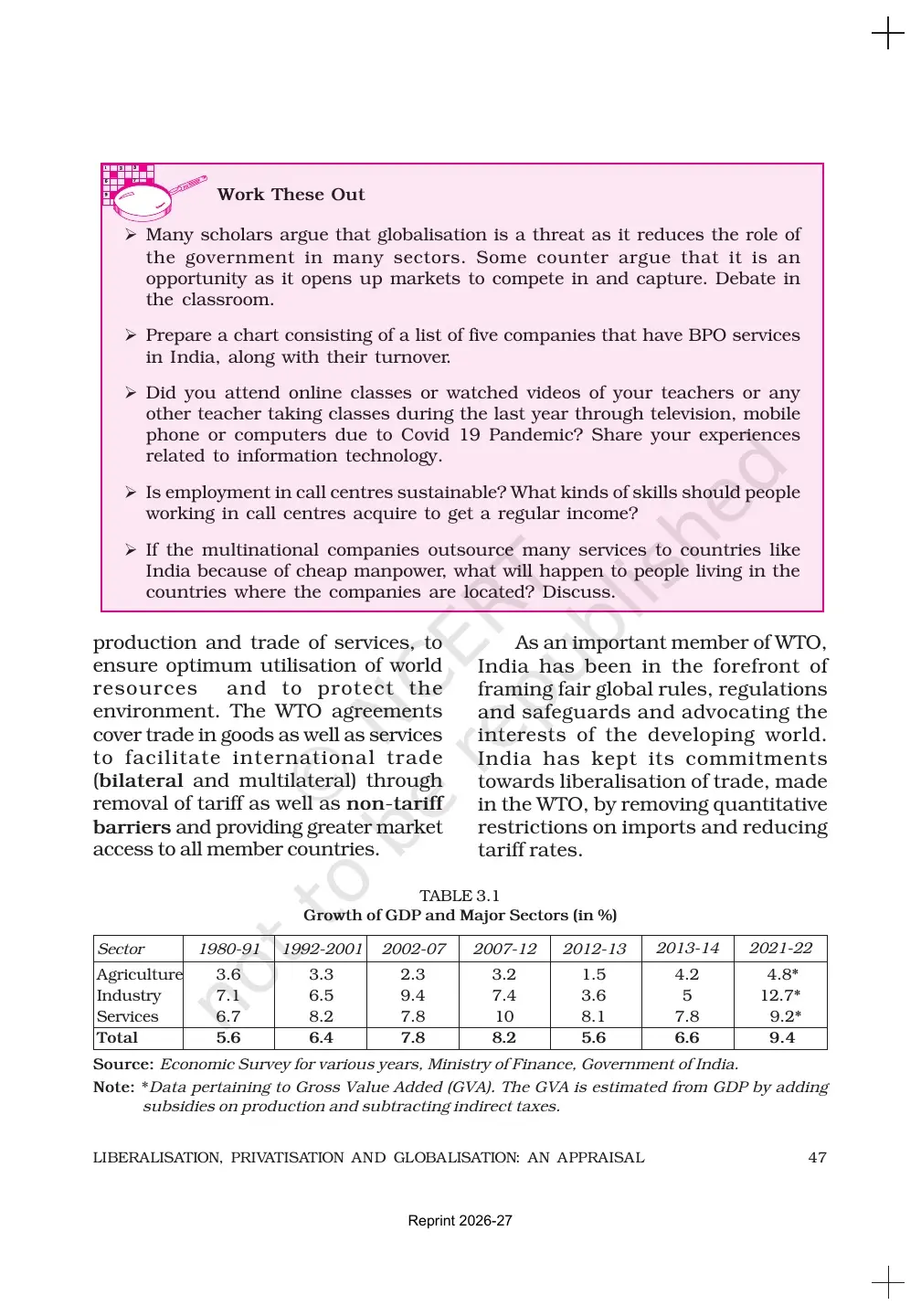
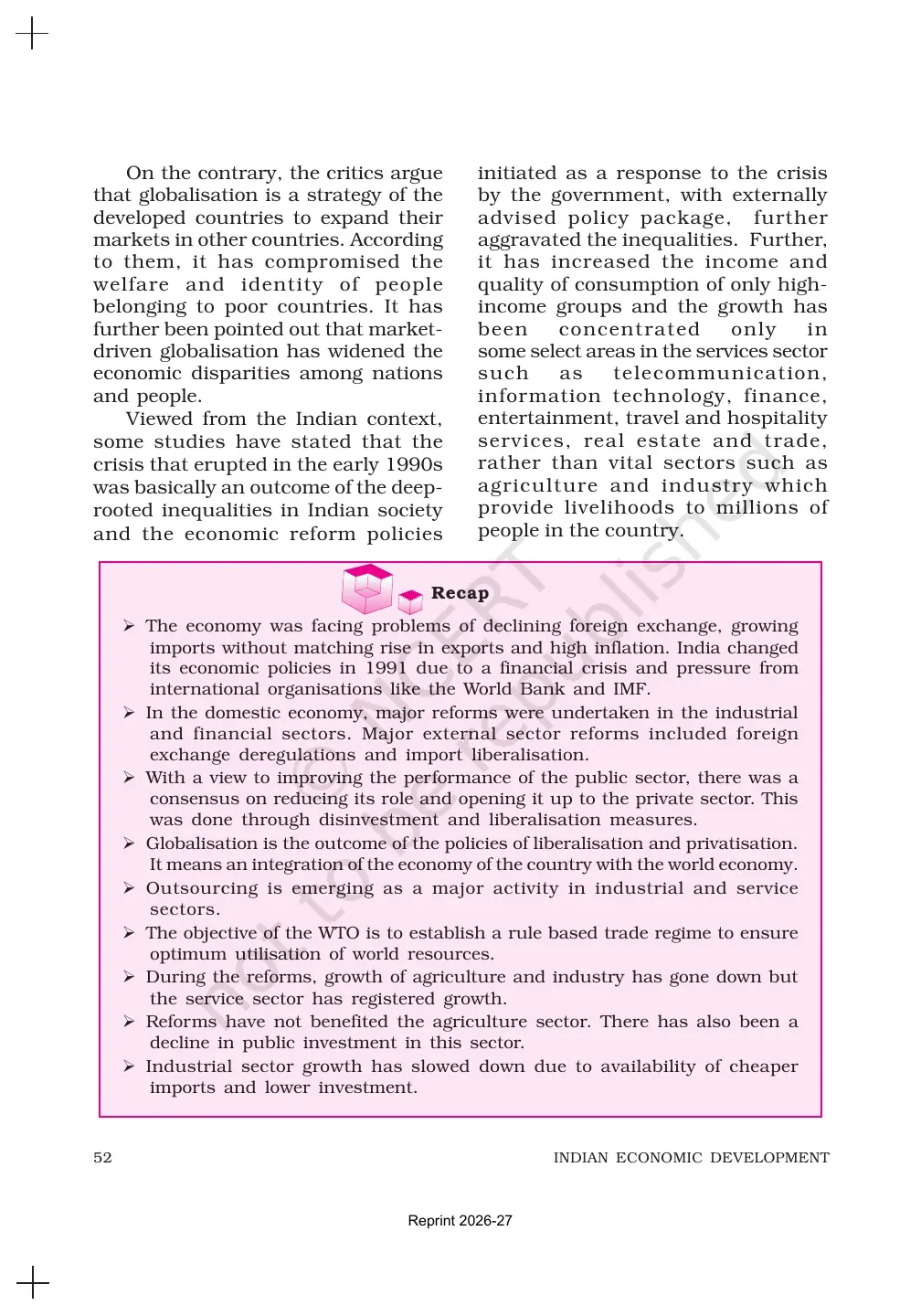
- Appraisal: checks how far reforms helped agriculture, industry, jobs and services.
How NCERT Appraises LPG Reforms
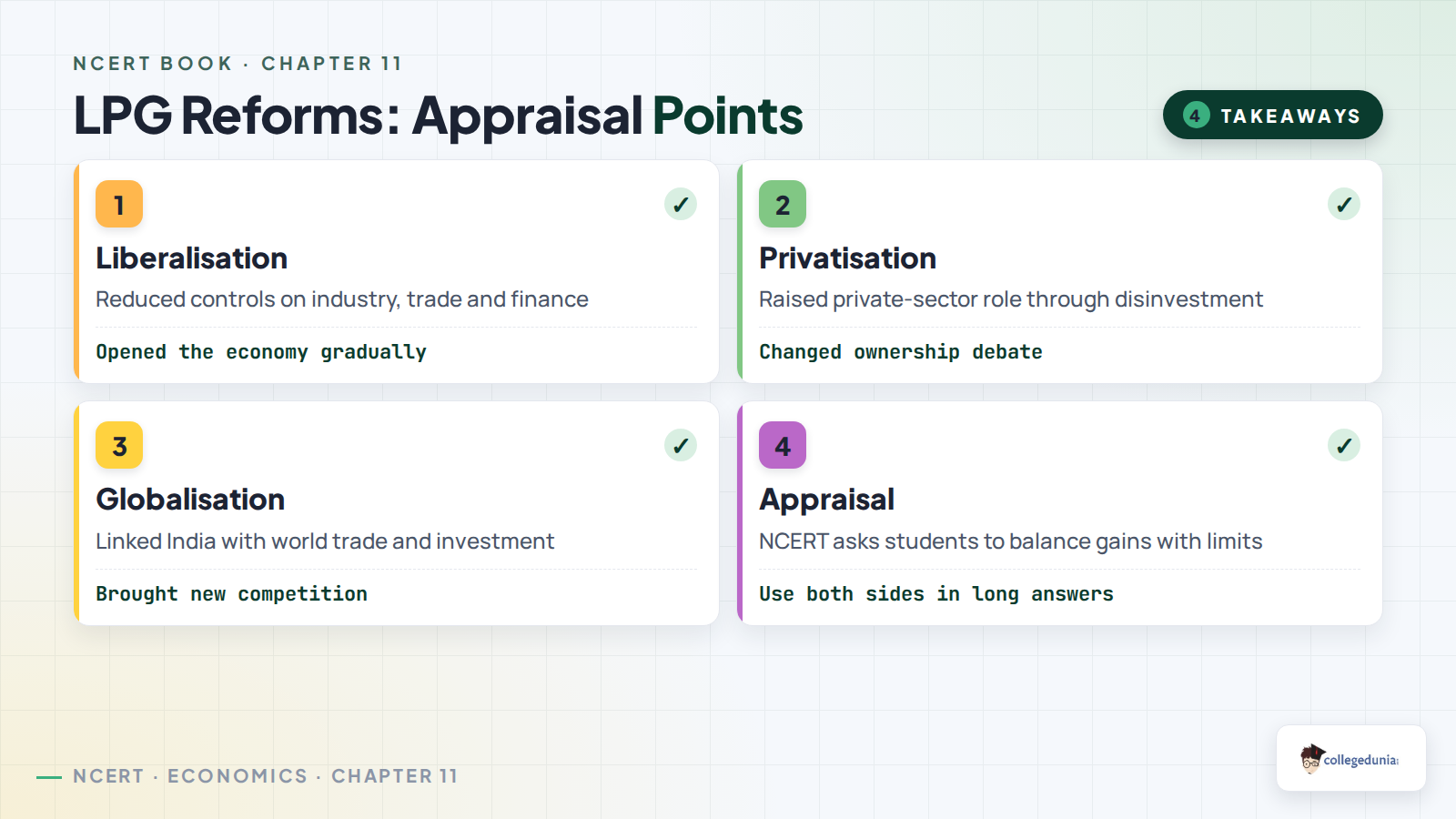
The appraisal section is important because it is balanced. NCERT does not present reforms as fully successful or fully harmful.
| Reform result | NCERT angle | How to write it |
|---|---|---|
| Higher services growth | The service sector benefited strongly after reforms. | Use it as a gain. |
| Slow farm growth | Agriculture did not gain equally from reforms. | Use it as a limit. |
| More competition | Consumers gained choice, but industry faced pressure. | Write both sides. |
| More global links | Trade and investment rose, but external risk also rose. | Connect to globalisation. |
How to Use the Liberalisation Privatisation and Globalisation NCERT Book PDF
Read this PDF in three passes. First, mark the crisis reasons. Second, list the three LPG reform groups. Third, write two gains and two concerns from the appraisal.
- For short answers: define the reform term and add one NCERT example.
- For long answers: divide the answer into background, reform and appraisal.
- For revision: learn WTO, outsourcing, disinvestment and foreign investment together.
- For examples: use industry delicensing, trade reform and public-sector disinvestment carefully.
Related Class 11 Economics Resources for LPG Reforms
Also Check: use the official book PDF with notes and practice resources for the same chapter.
| Resource | Best use | Link |
|---|---|---|
| NCERT Notes | Revise crisis causes, LPG measures and appraisal points quickly. | Liberalisation Privatisation and Globalisation Notes |
| Handwritten Notes | Use for one-shot revision before a class test. | Liberalisation Privatisation and Globalisation Handwritten Notes |
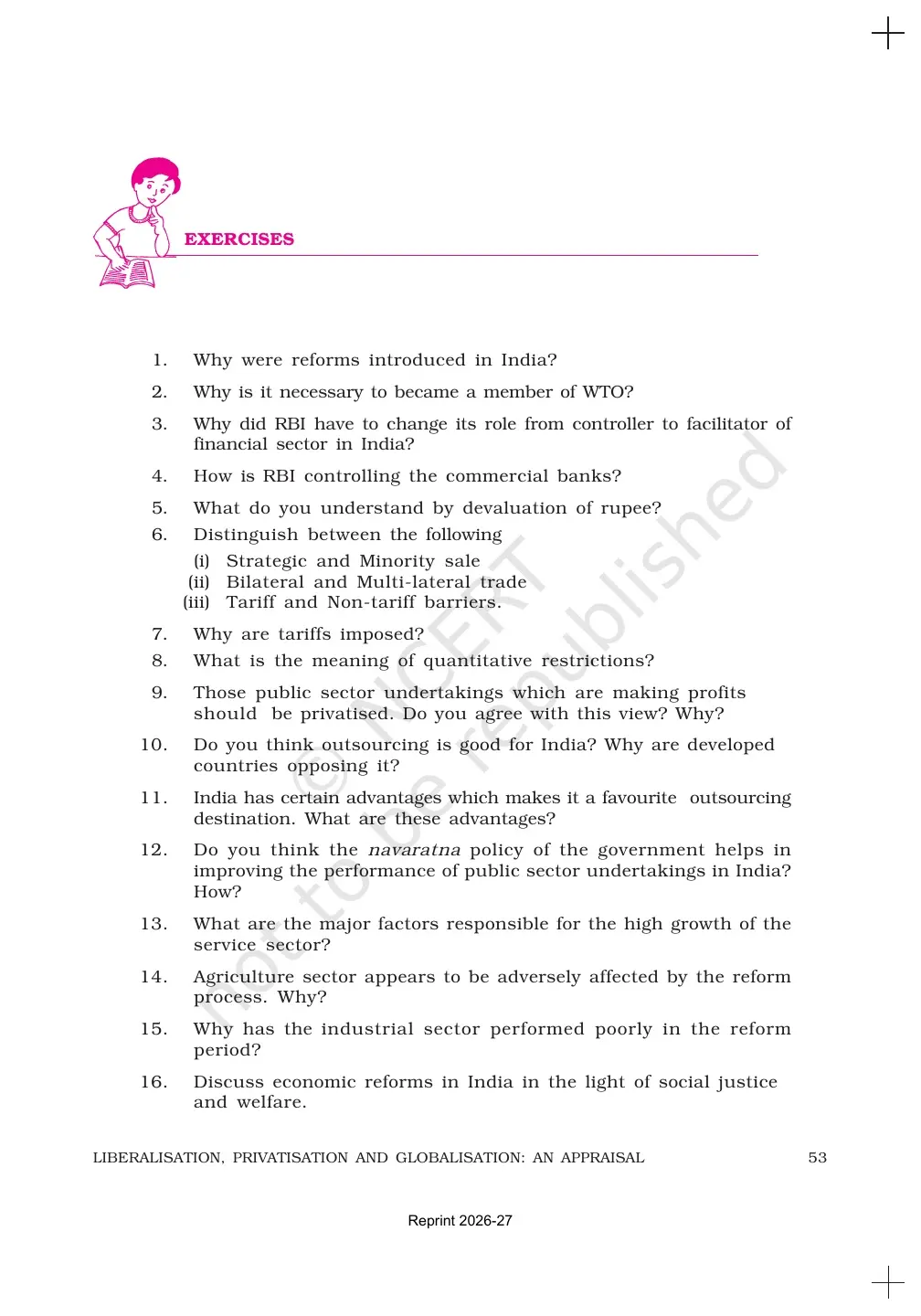
| NCERT Solutions | Practise textbook questions after reading the official PDF. | Liberalisation Privatisation and Globalisation NCERT Solutions |
Class 11 Economics NCERT Book PDFs for All Chapters
The table below keeps the Class 11 Economics NCERT Book PDF chapters in one place. Chapters 1 to 8 come from Statistics for Economics, and Chapter 9 onward covers Indian Economic Development.
| Chapter | Title | NCERT Book PDF |
|---|---|---|
| Chapter 1 | Introduction | NCERT Book PDF |
| Chapter 2 | Collection of Data | NCERT Book PDF |
| Chapter 3 | Organisation of Data | NCERT Book PDF |
| Chapter 4 | Presentation of Data | NCERT Book PDF |
| Chapter 5 | Measures of Central Tendency | NCERT Book PDF |
| Chapter 6 | Correlation | NCERT Book PDF |
| Chapter 7 | Index Numbers | NCERT Book PDF |
| Chapter 8 | Use of Statistical Tools | NCERT Book PDF |
| Chapter 9 | Indian Economy on the Eve of Independence | NCERT Book PDF |
| Chapter 10 | Indian Economy 1950-1990 | NCERT Book PDF |
| Chapter 11 | Liberalisation, Privatisation and Globalisation: An Appraisal | Current NCERT Book PDF |
Liberalisation Privatisation and Globalisation Class 11 Economics NCERT Book PDF FAQs
Ques. What does the Class 11 Economics Chapter 11 NCERT Book PDF include?
Ans. It includes the official NCERT chapter on Liberalisation, Privatisation and Globalisation: An Appraisal, with reform background, LPG measures and appraisal points.
Ques. Is this NCERT Book PDF useful for the 2026-27 syllabus?
Ans. Yes. The PDF follows the official NCERT chapter used for the 2026-27 Class 11 Economics syllabus.
Ques. Which NCERT book contains Liberalisation, Privatisation and Globalisation?
Ans. It belongs to the Indian Economic Development part of Class 11 Economics. It is Chapter 3 in that NCERT book and Chapter 11 in this combined schedule.
Ques. How should students revise this chapter?
Ans. Students should revise it in three parts: crisis background, LPG reform measures and appraisal. This makes long answers easier to organise.



Comments