




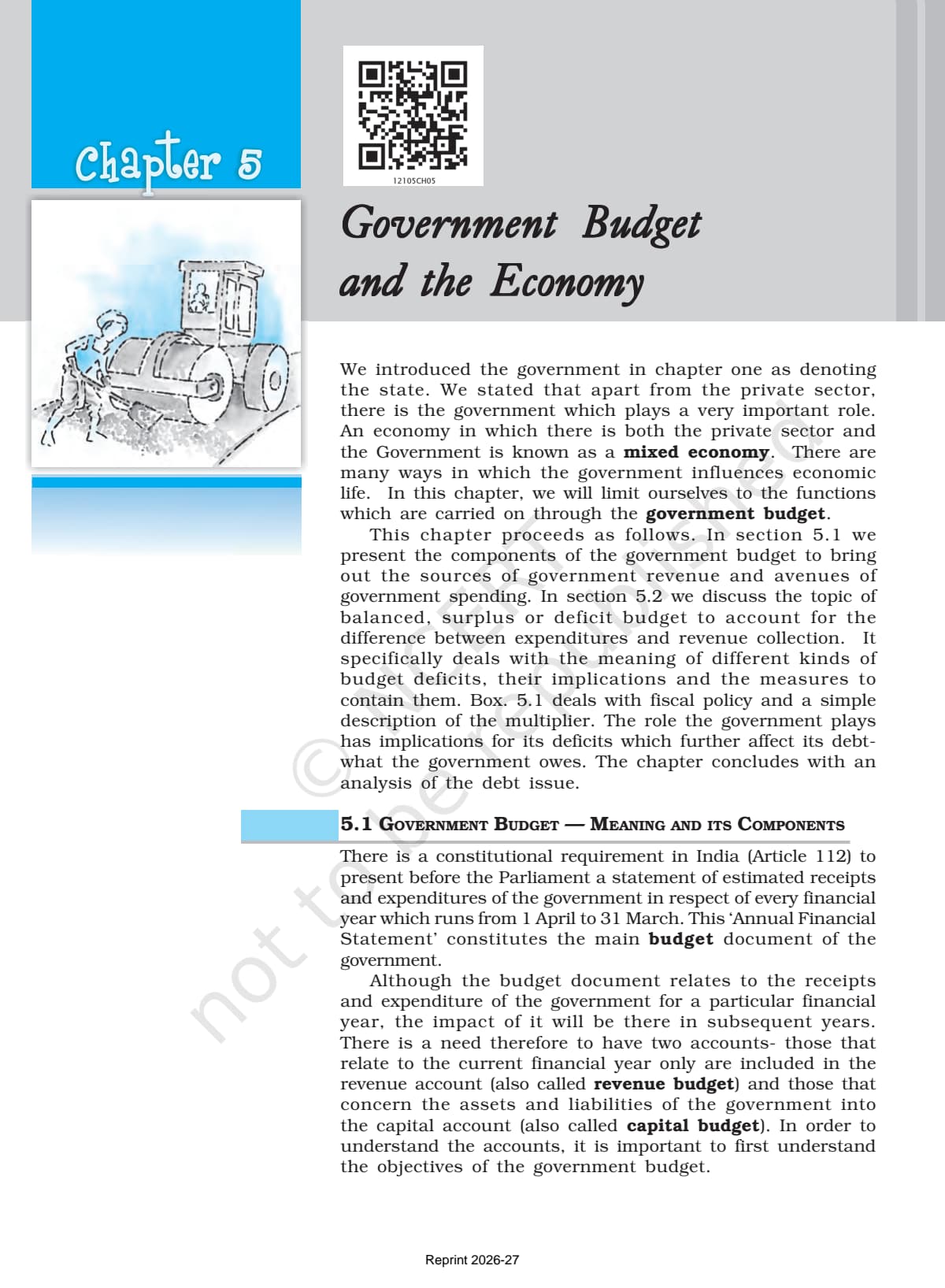
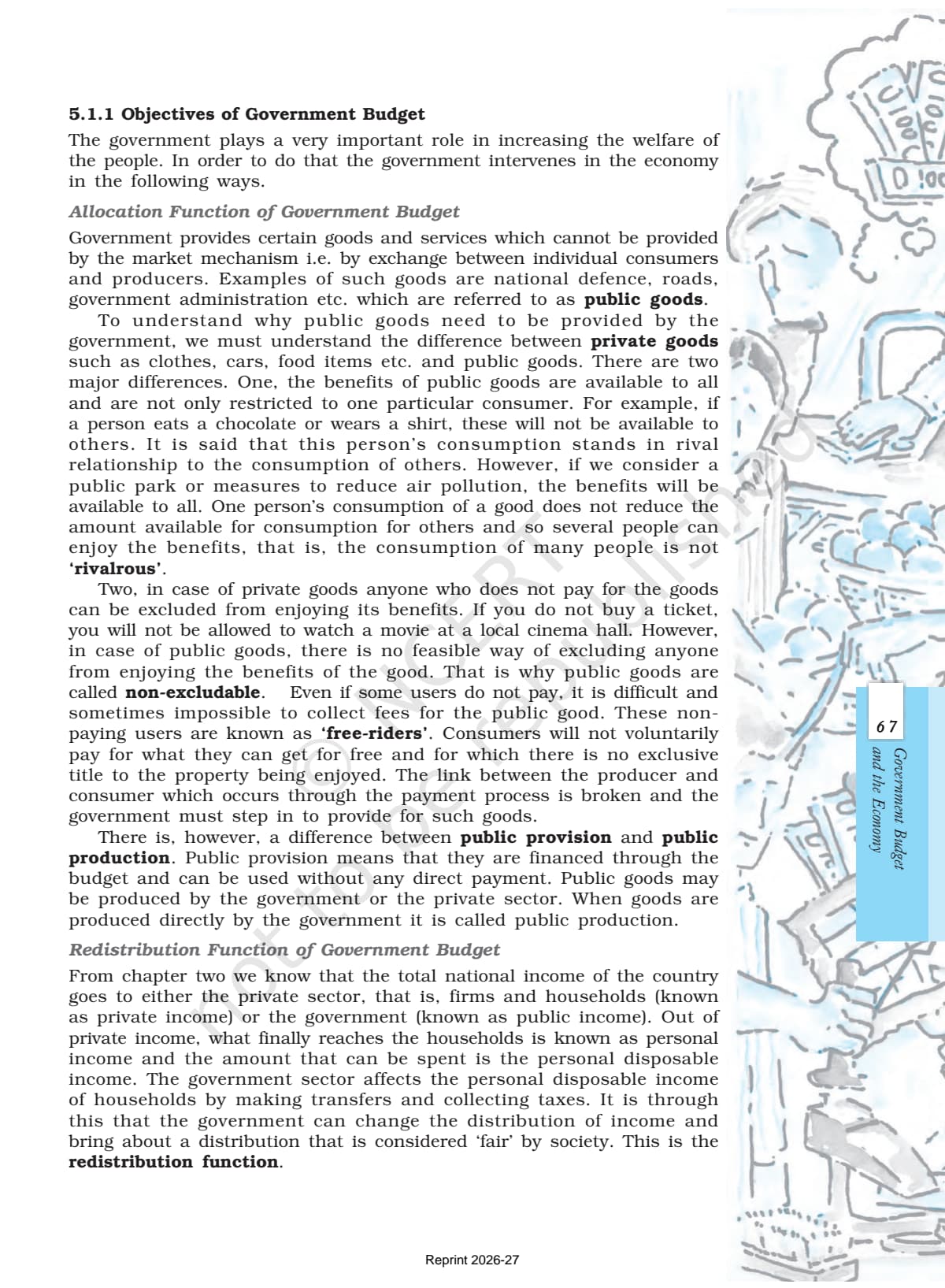
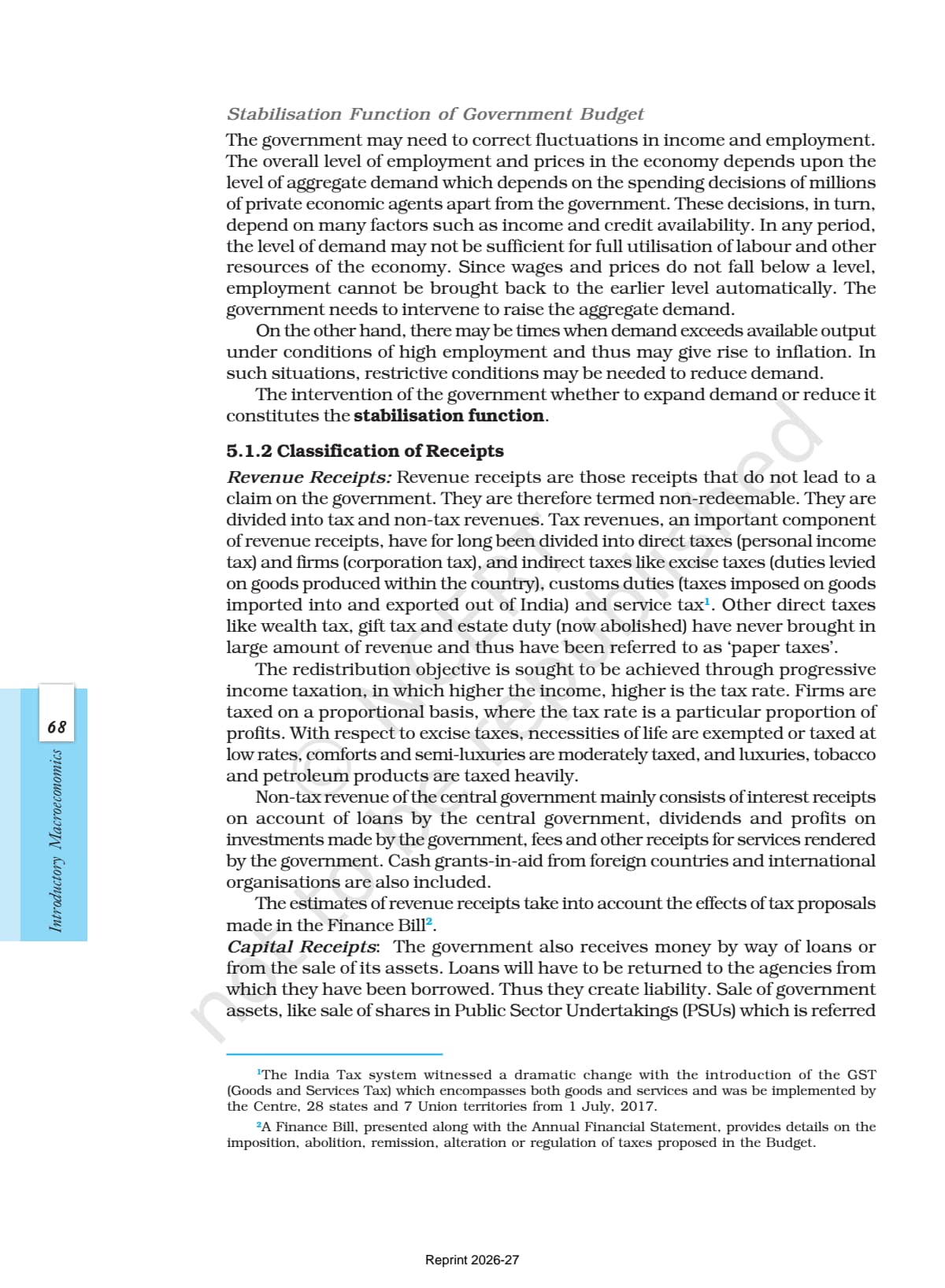
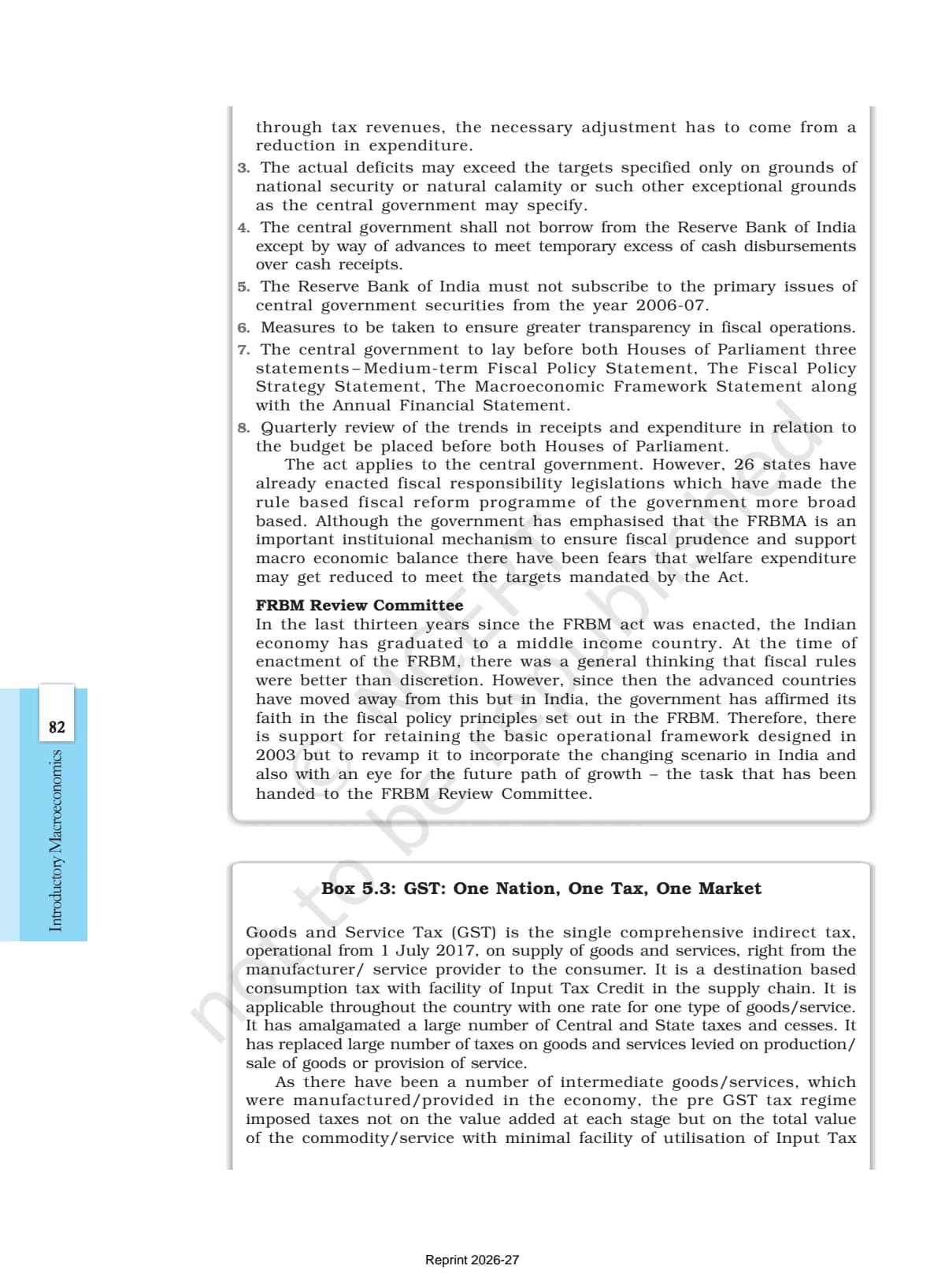
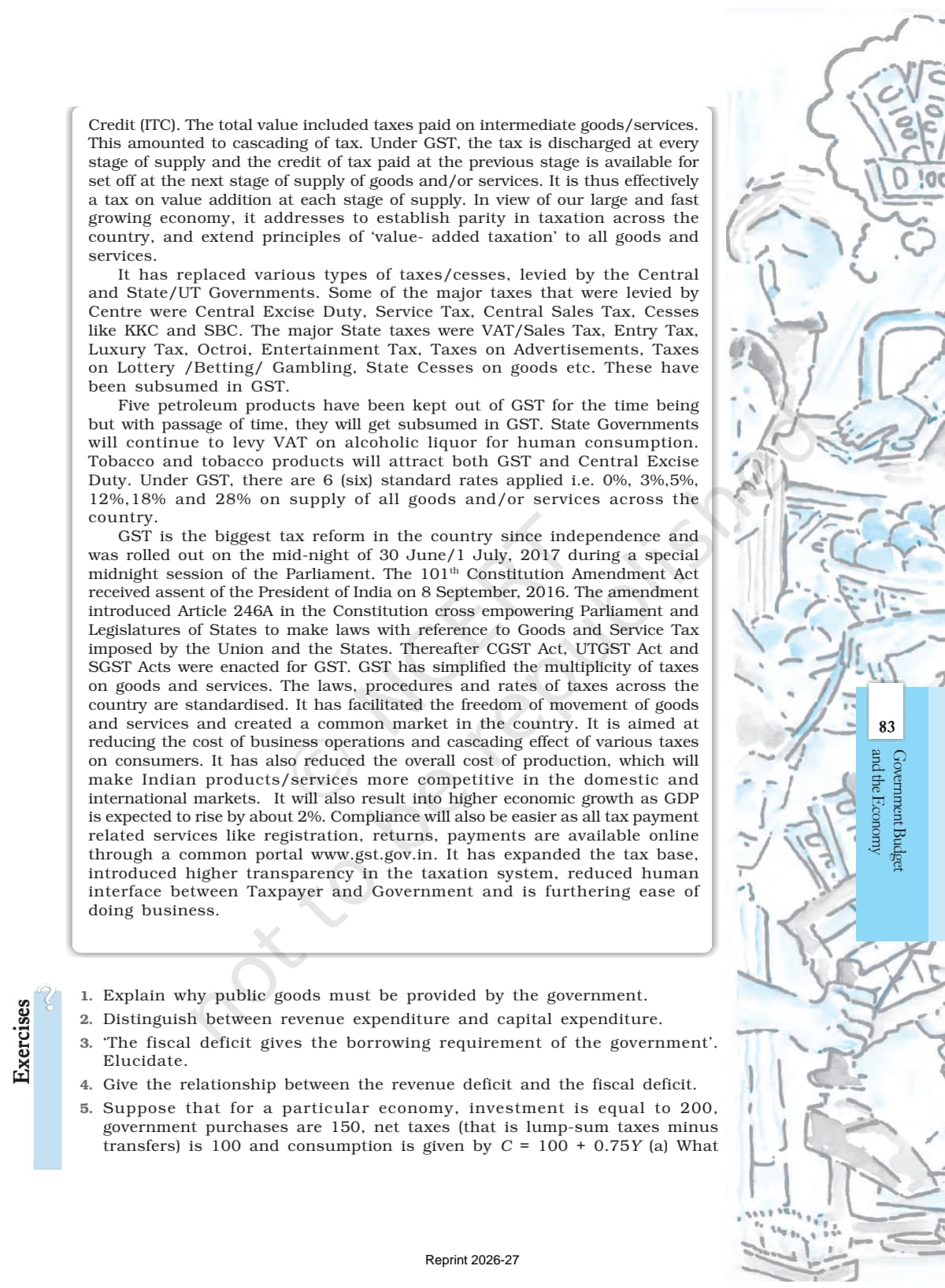
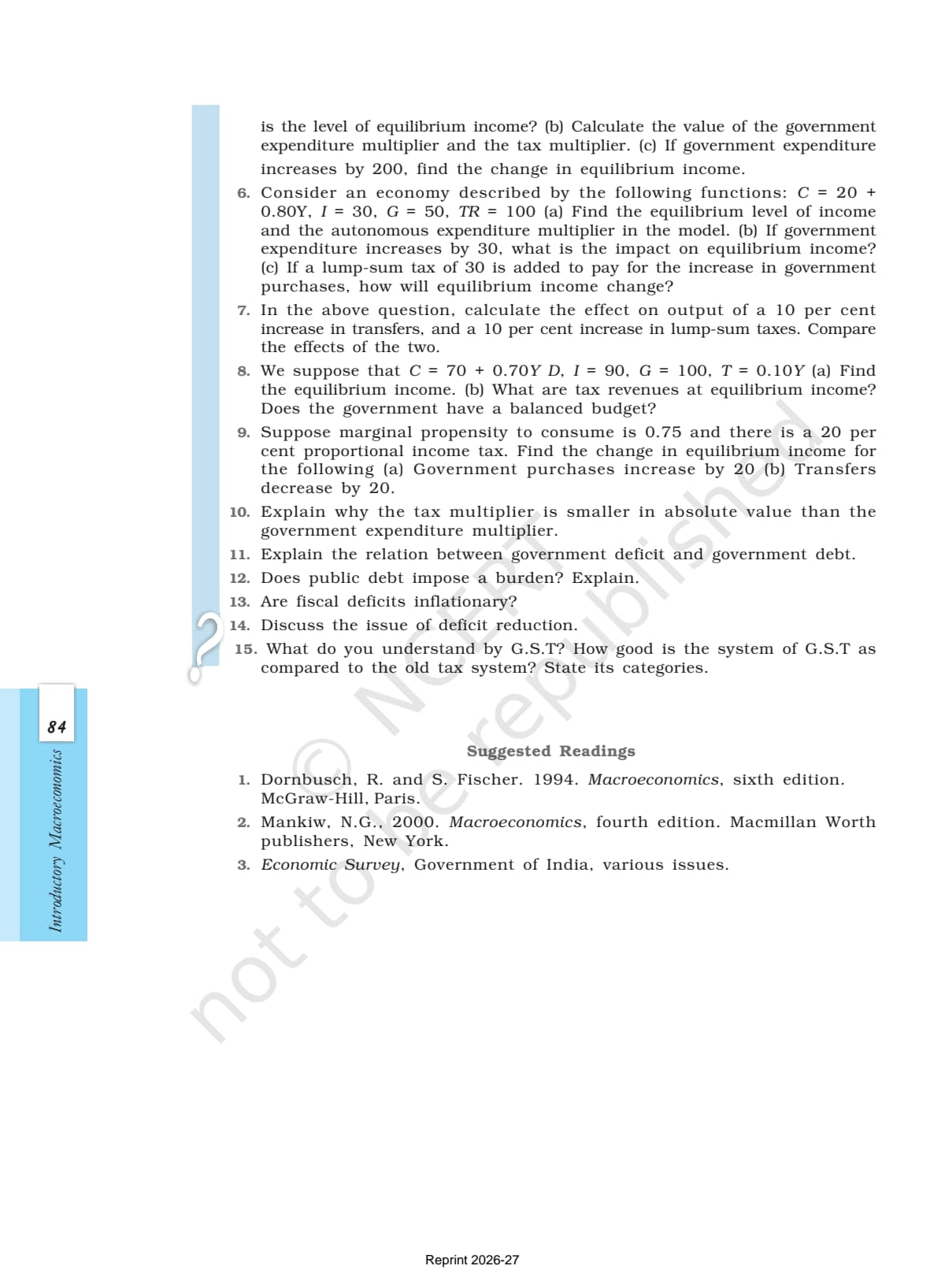
Government Budget and the Economy is Chapter 5 of the Class 12 Macroeconomics book. It explains the budget, its receipts and expenditure, the three deficit measures, and fiscal policy. This page gives you the official NCERT chapter PDF to download for free.
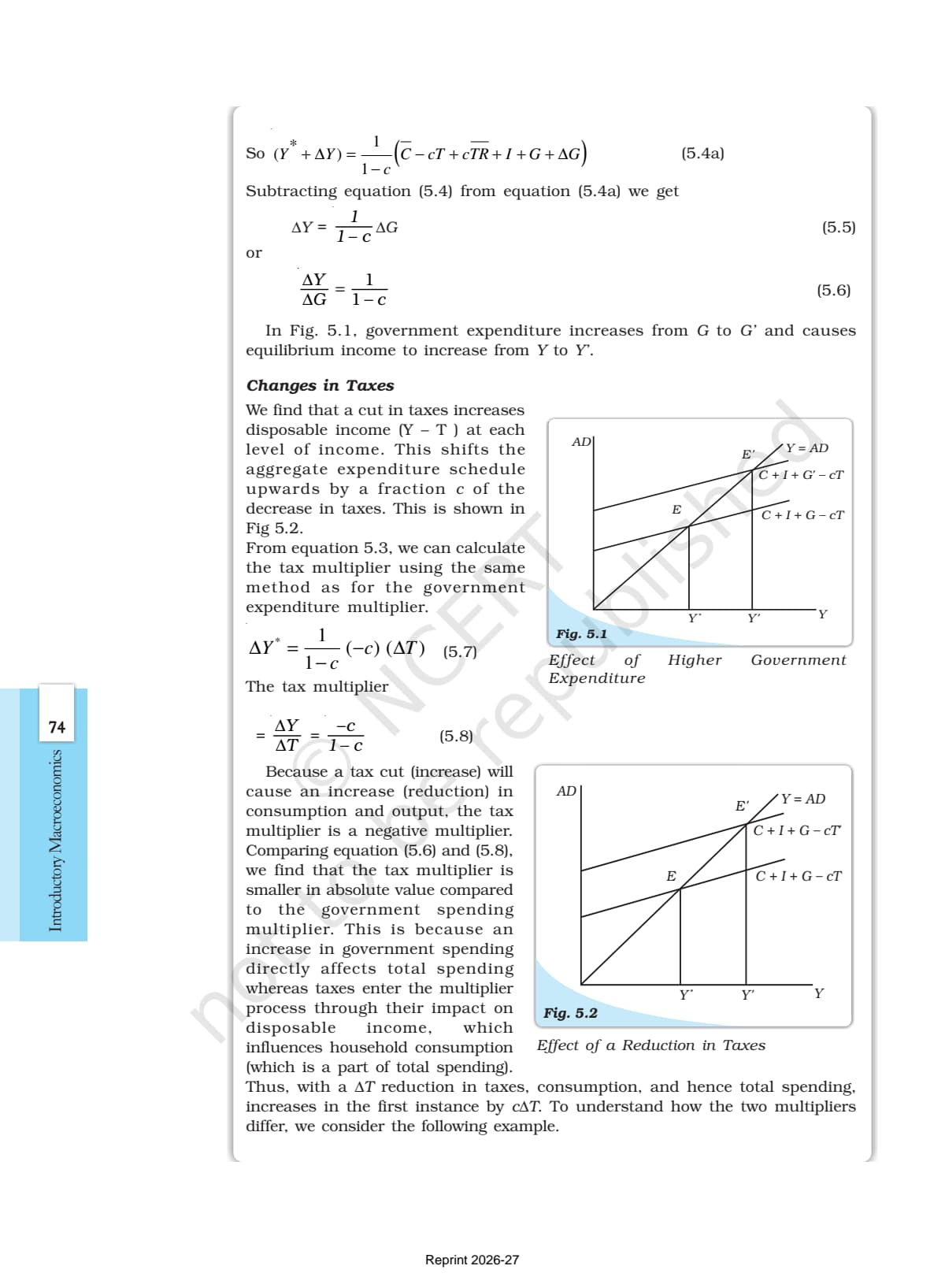
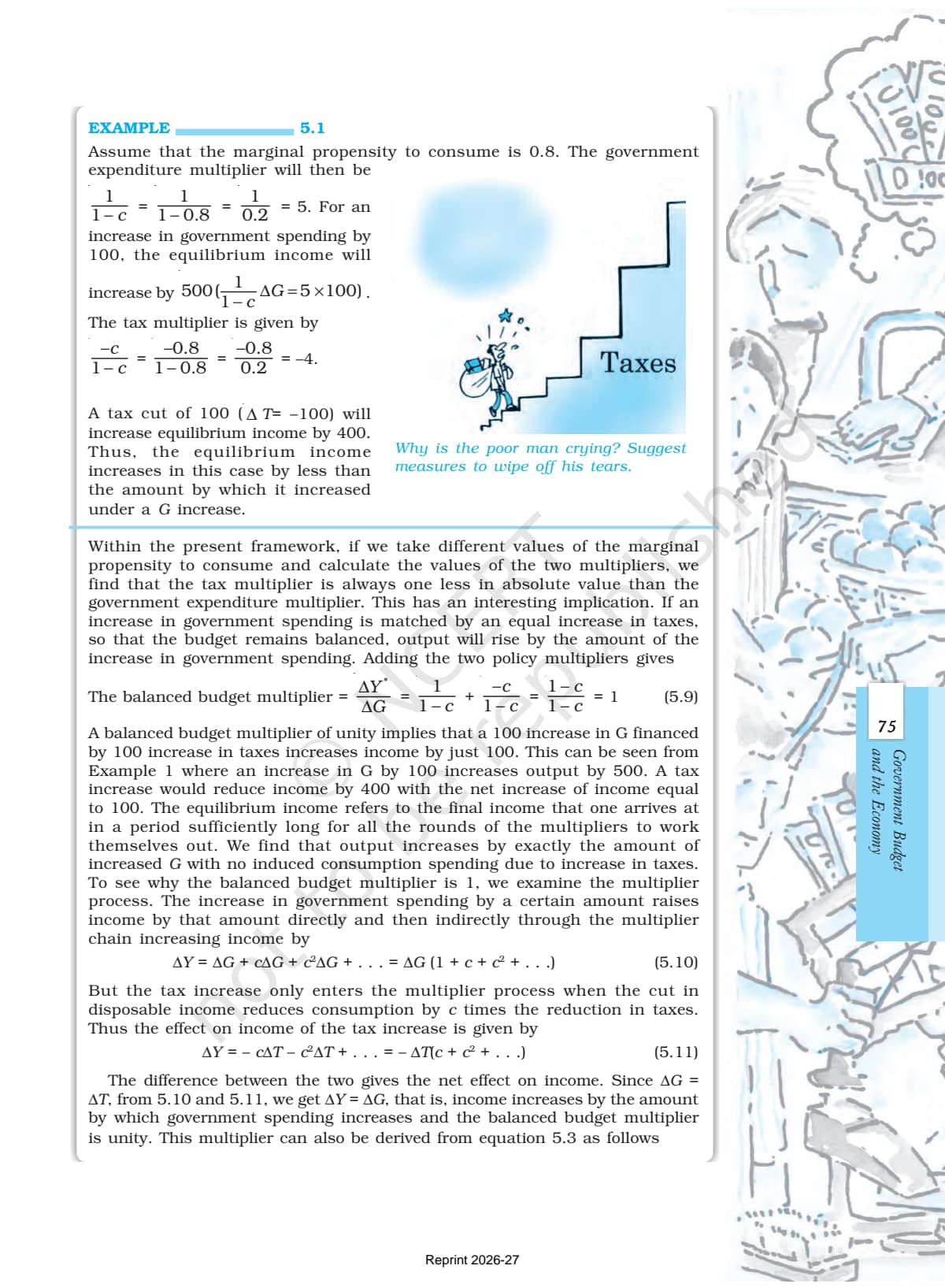
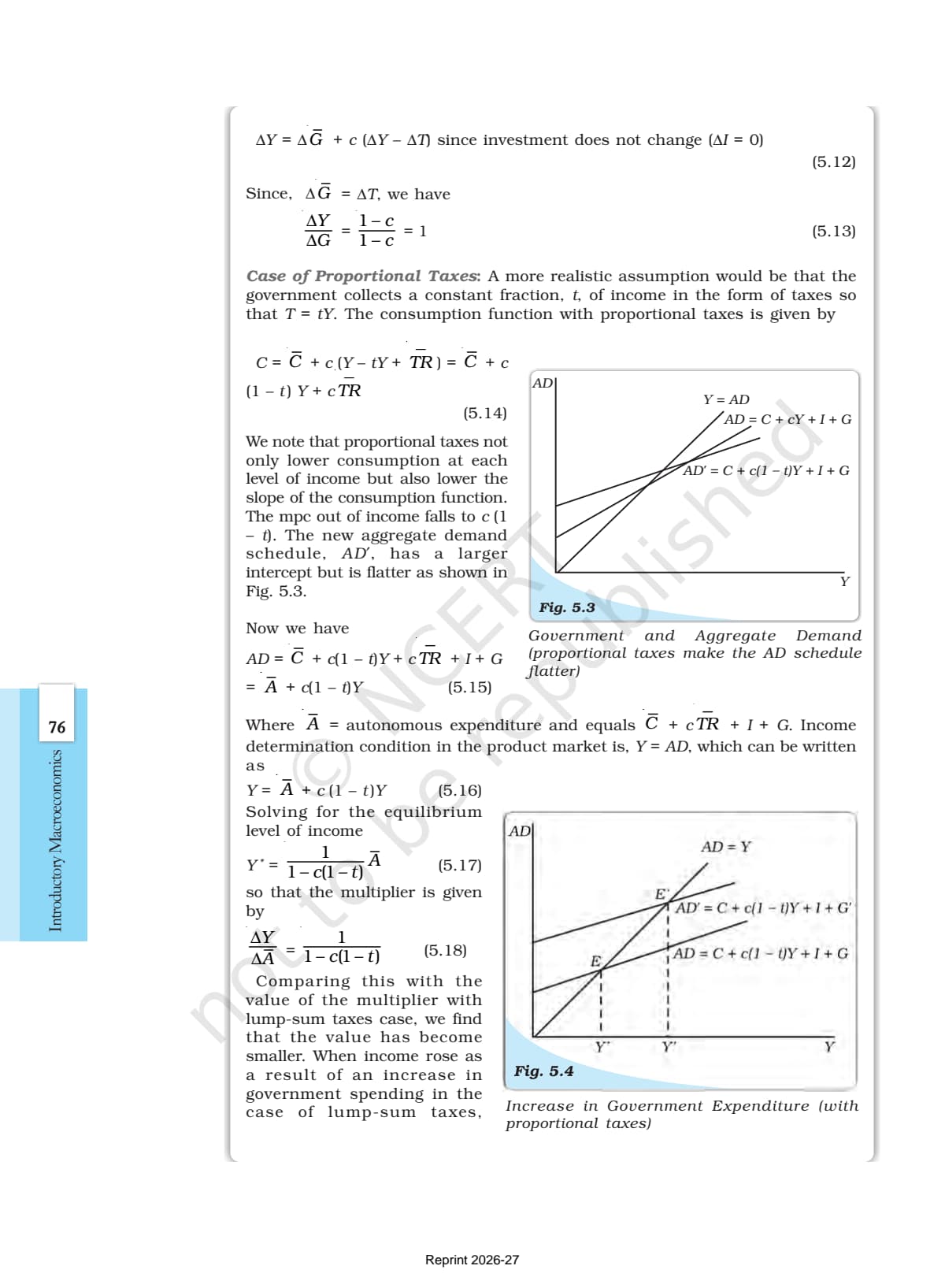
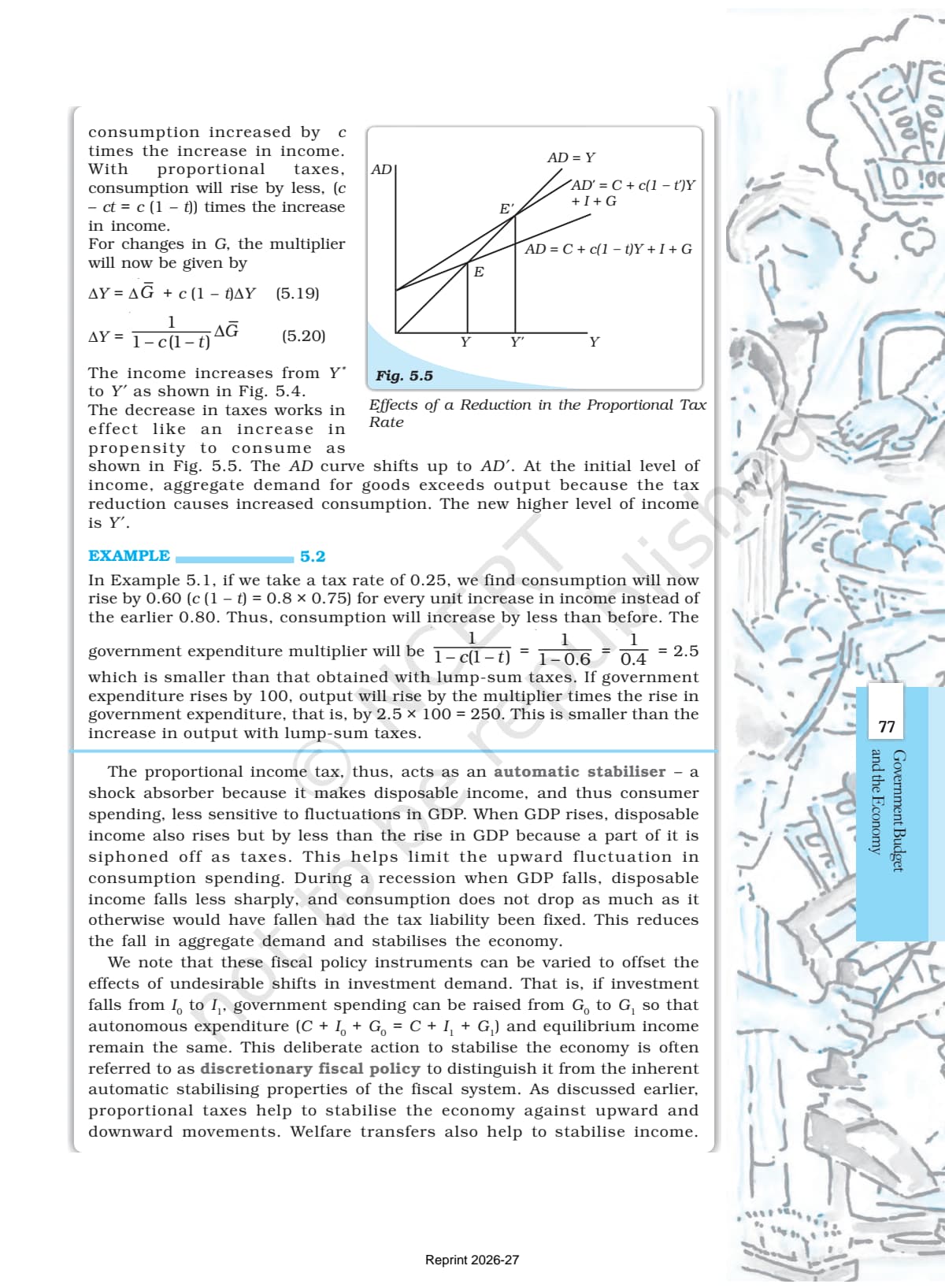
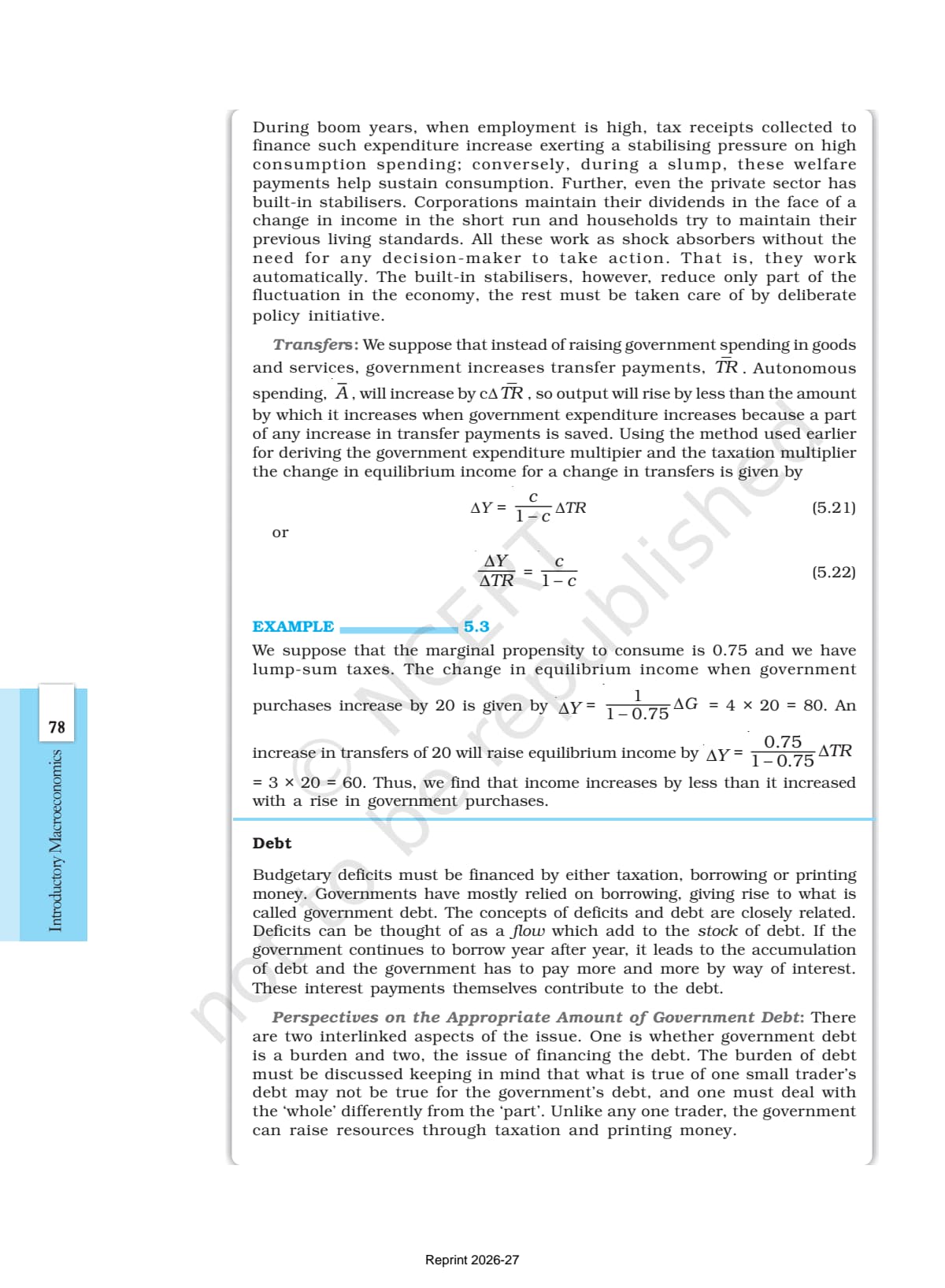
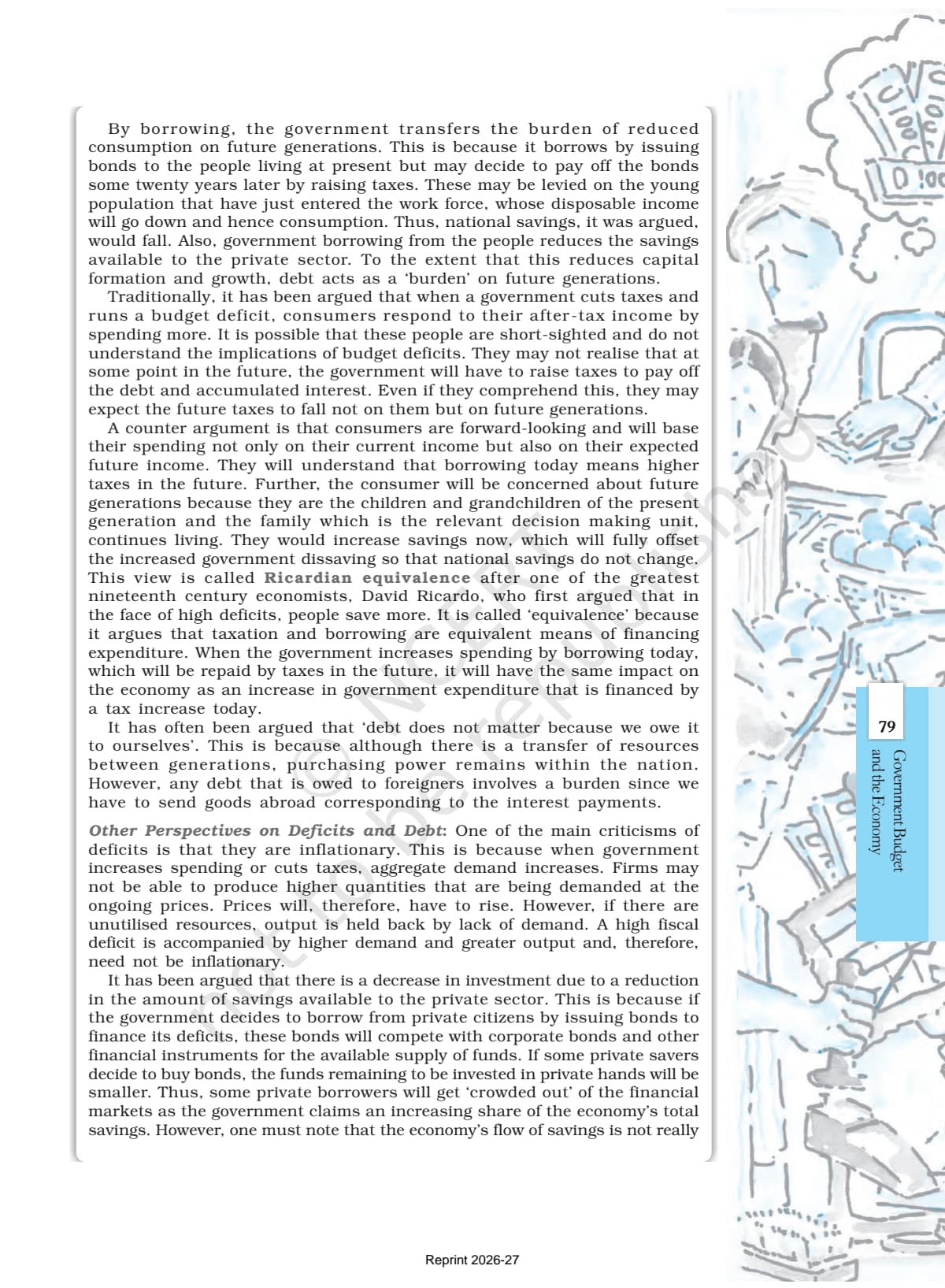
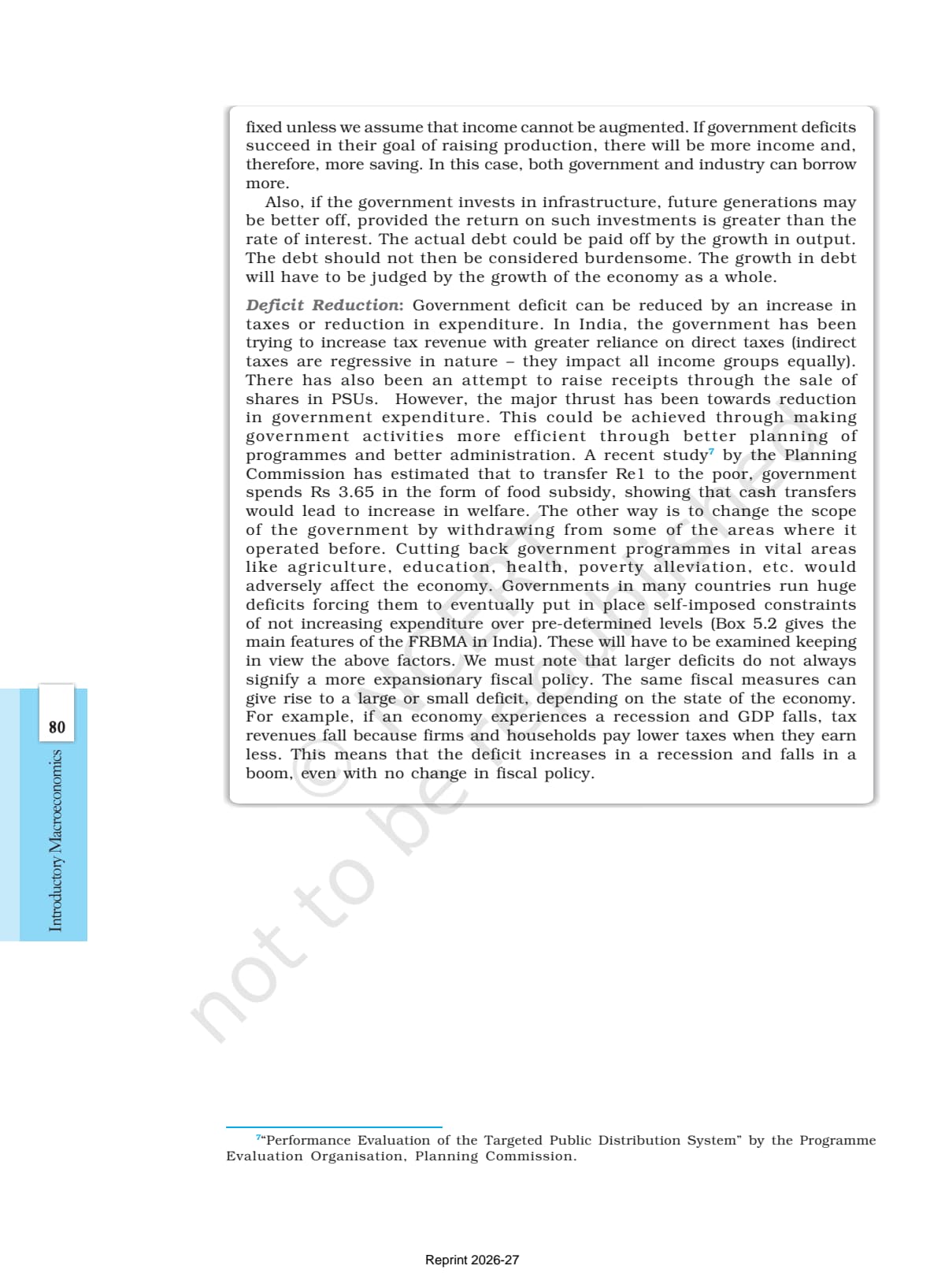
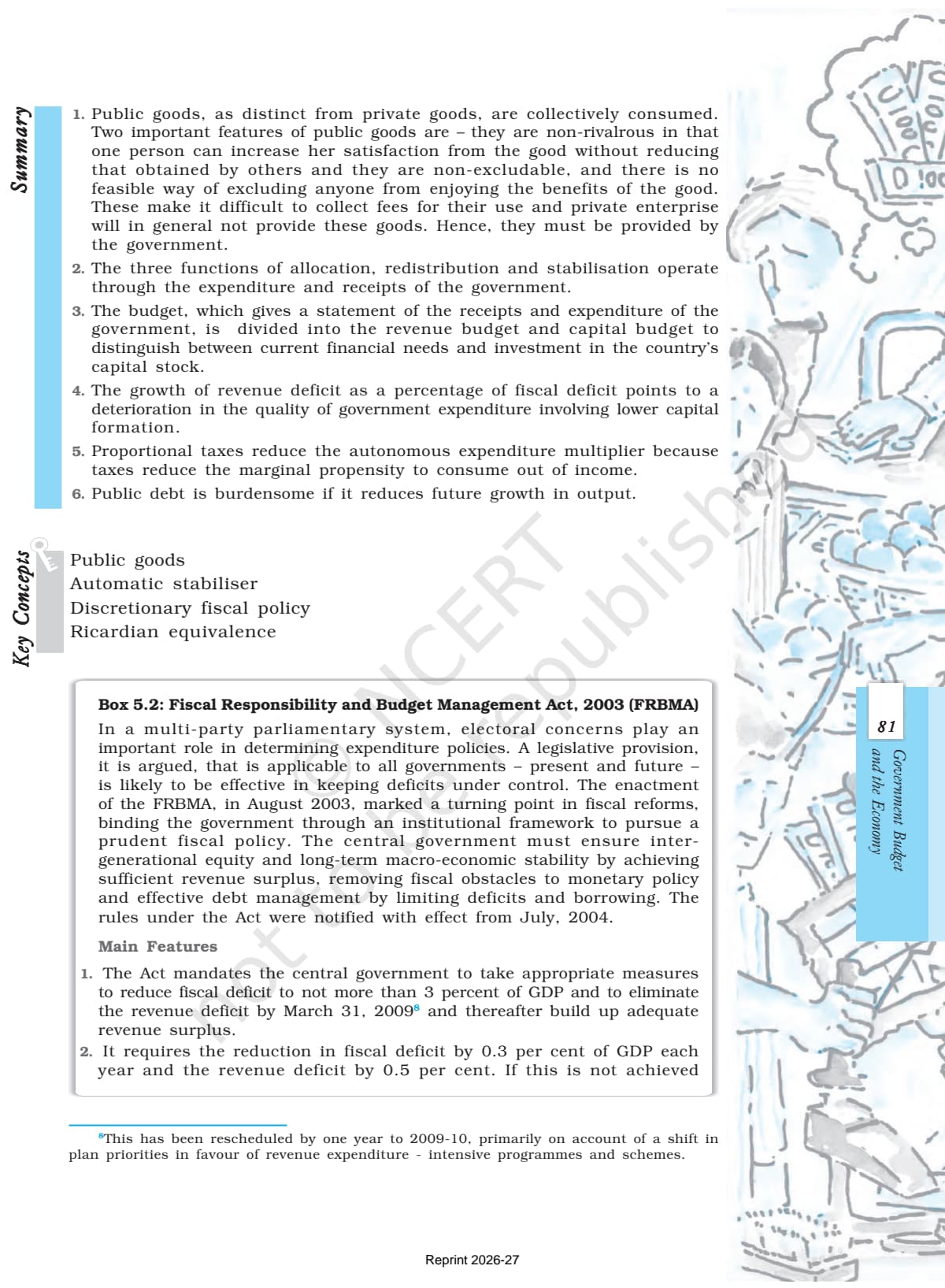
Here is what this chapter is worth in the exam:
- CBSE Boards: about 6 to 8 marks, mostly the three-deficit numerical plus short theory.
- CUET: 2 to 3 questions each year on budget concepts and deficit definitions.
- Revision time: about 40 minutes with this PDF and the matching notes.
What the Government Budget Class 12 NCERT Book PDF Covers
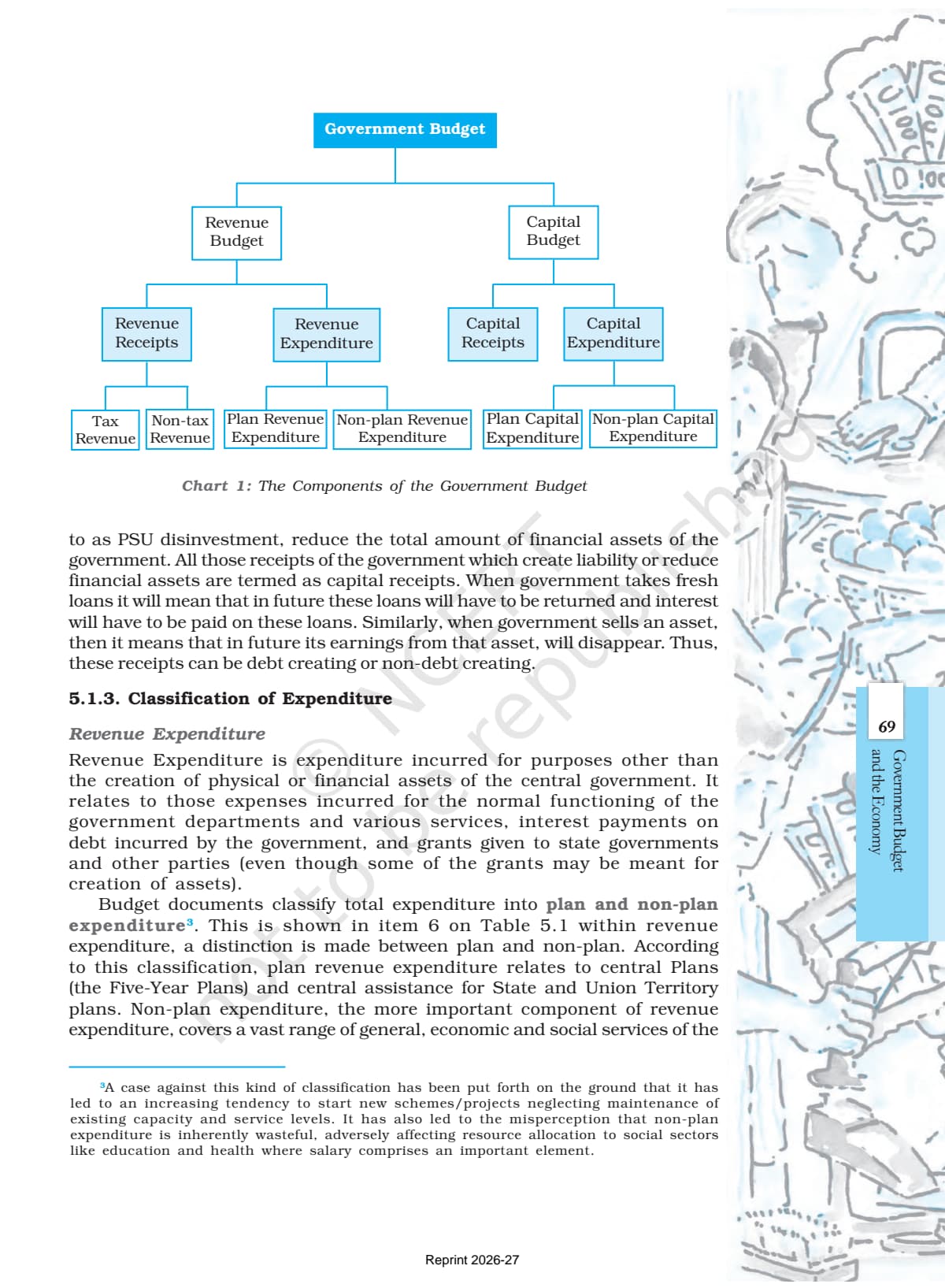
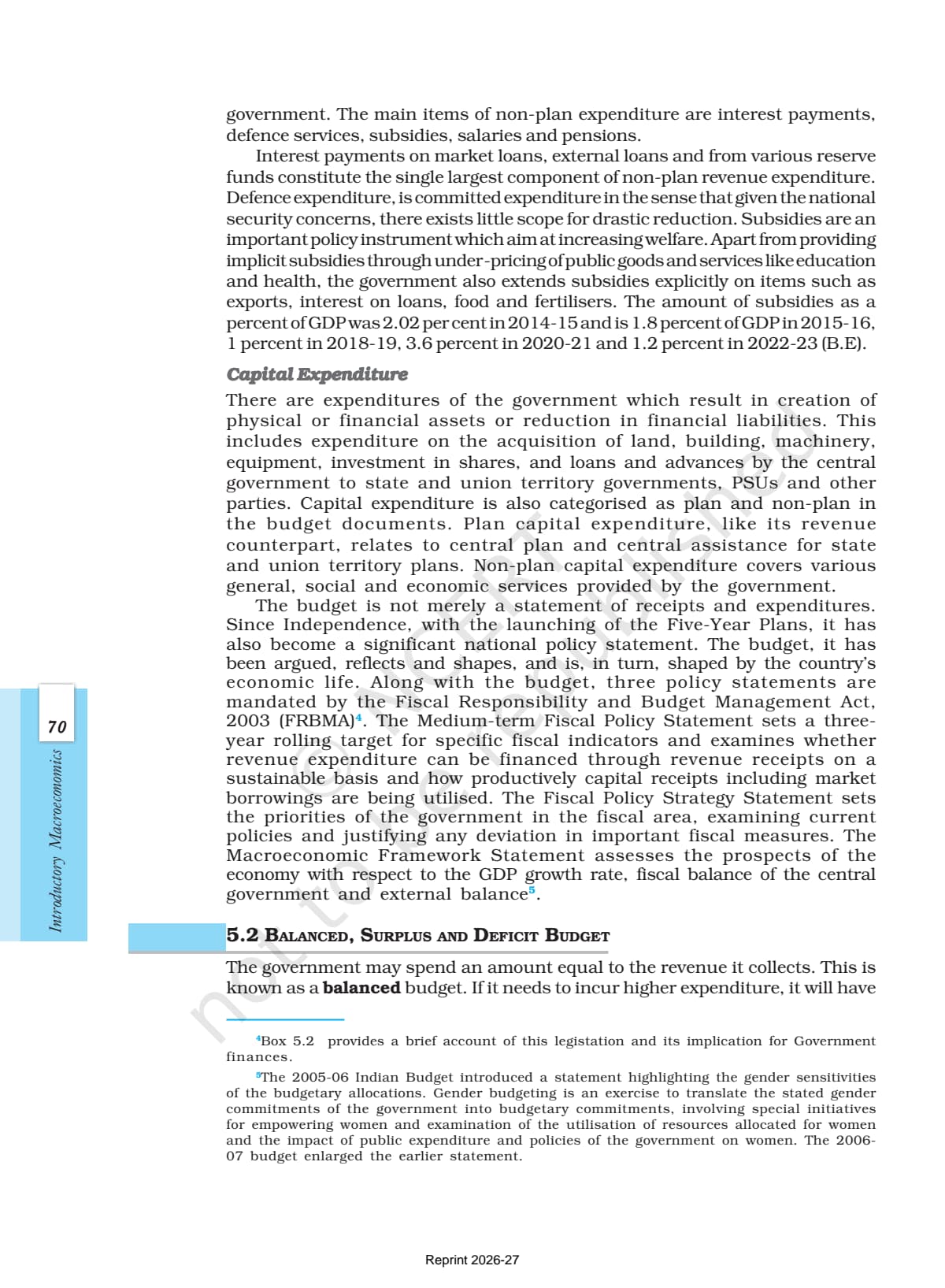
The PDF defines the budget as a statement of expected receipts and expenditure of the government for a financial year. It then covers the three budget objectives, the split of receipts and expenditure, the three deficit measures, fiscal policy and public debt. The chapter is definition-heavy, so reading the exact NCERT wording is the fastest way to score full marks on theory questions.
CBSE sets most theory questions on this chapter from the textbook's own phrasing. So it helps to read this official PDF first, before any reference book.
Topics in the Government Budget Class 12 Chapter
The chapter splits into five small sections. Build your notes around the map below, since every board question fits one of these buckets.
| Section | NCERT sub-topic | Main exam concept |
|---|---|---|
| 5.1 | Budget: meaning and components | Definition; allocation, redistribution, stabilisation |
| 5.2 | Classification of receipts | Revenue receipts vs capital receipts |
| 5.3 | Classification of expenditure | Revenue expenditure vs capital expenditure |
| 5.4 | Balanced, surplus and deficit budget | Revenue, fiscal and primary deficit |
| 5.5 | Fiscal policy and stabilisation | Automatic stabilisers, public debt |
Section 5.4 is the most-tested part, because the three-deficit numerical and the fiscal deficit definition are the highest-frequency questions in the Macroeconomics paper.
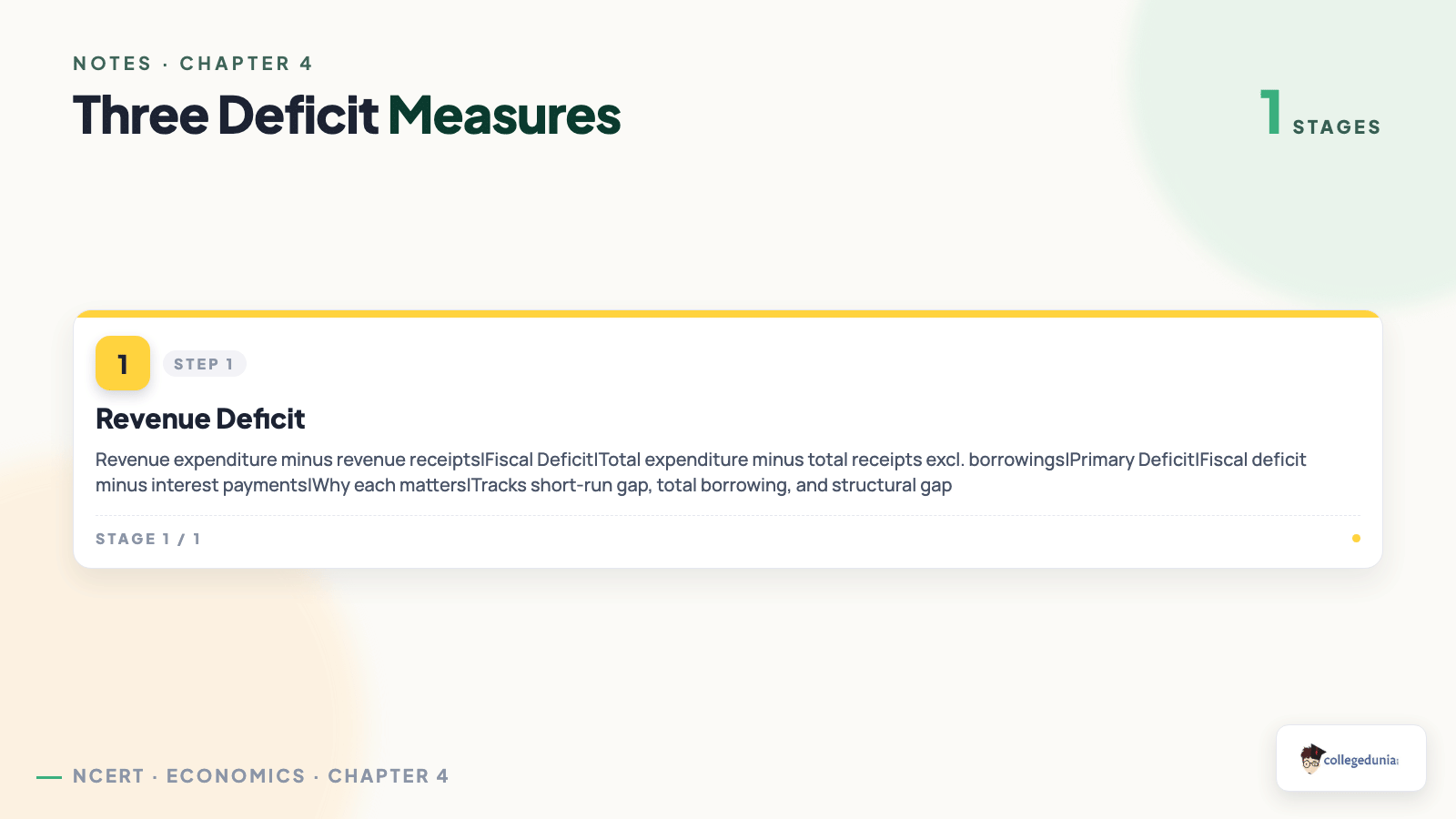
Three Deficit Measures in Government Budget Class 12
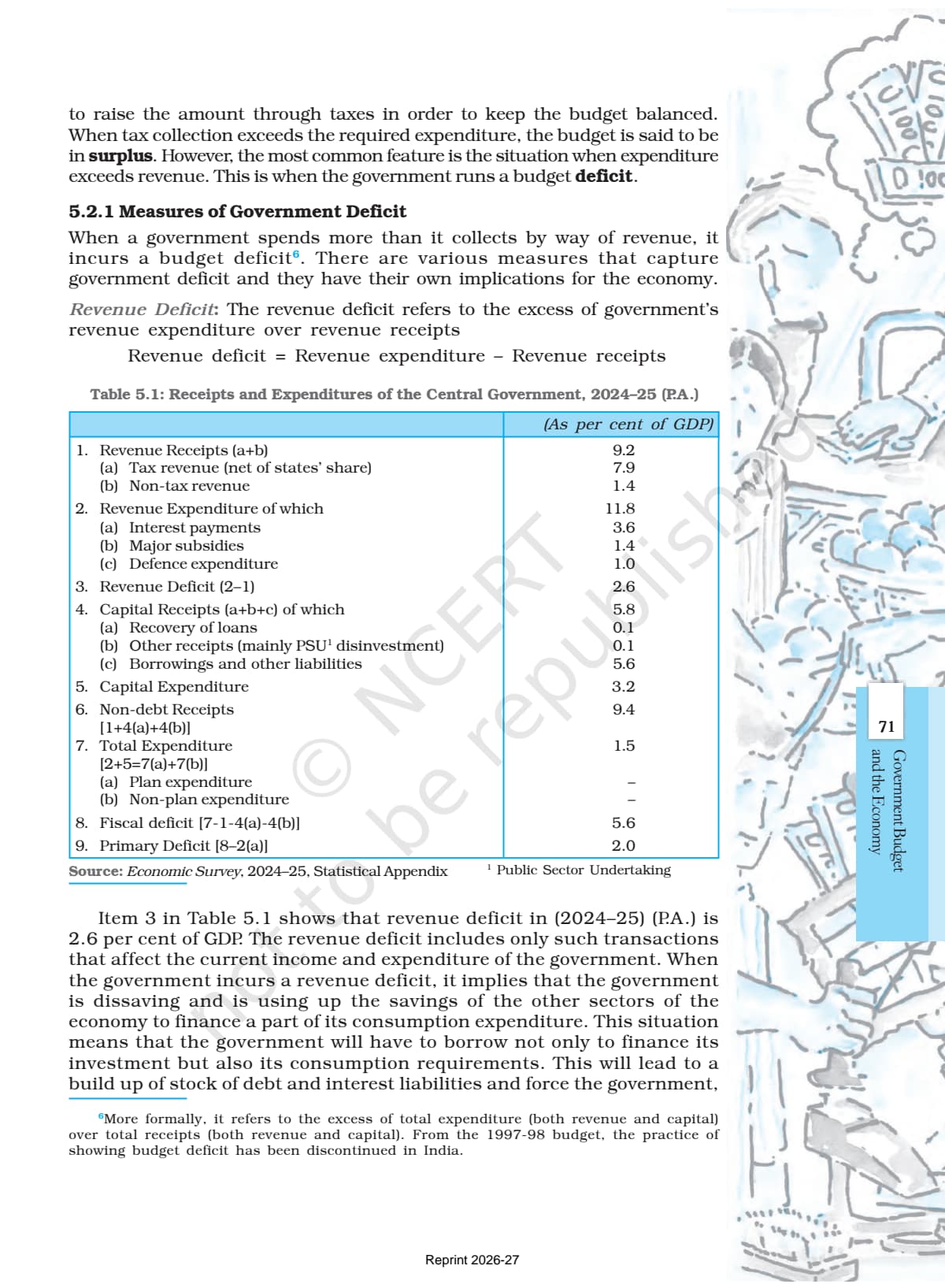
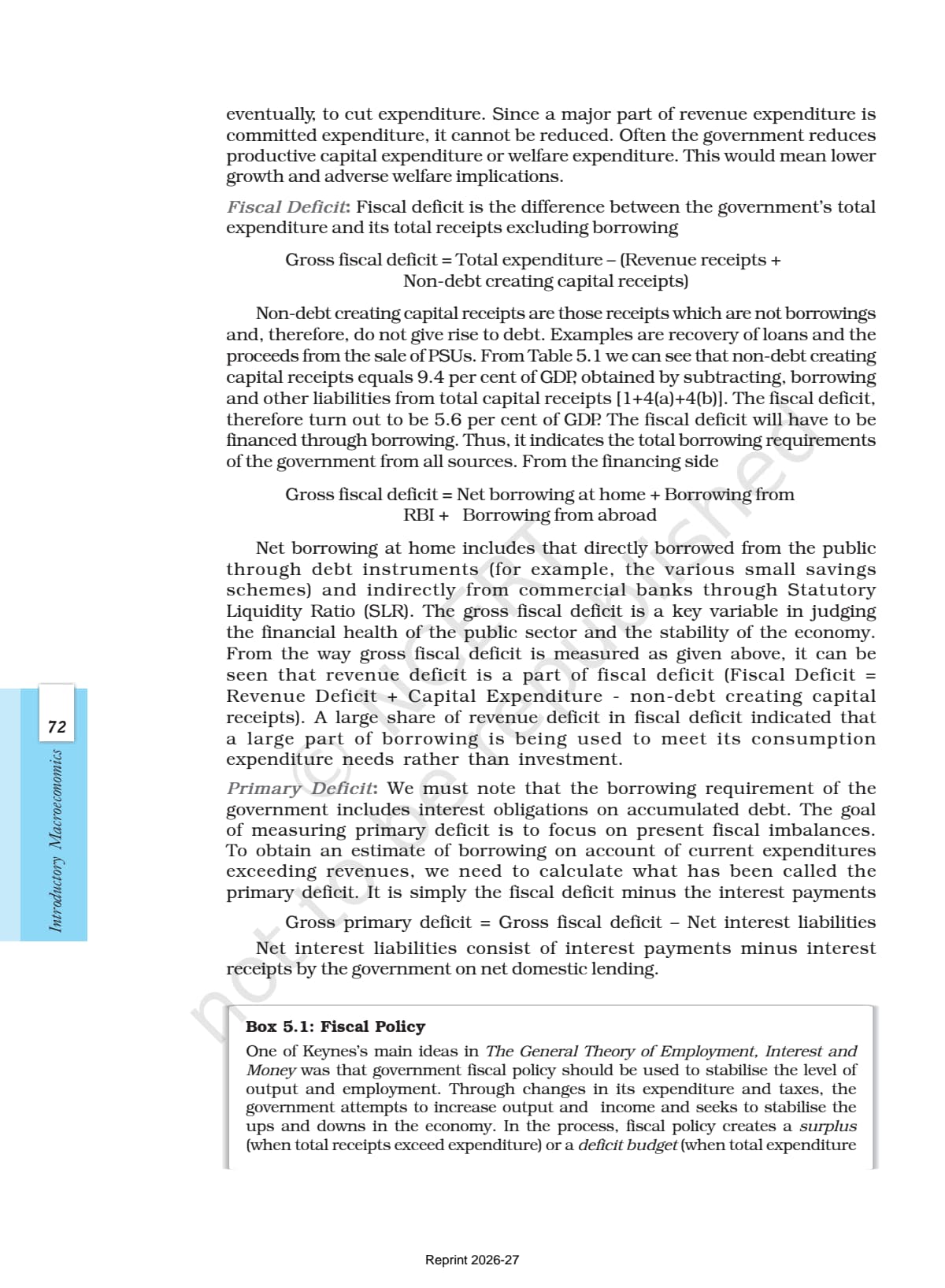
This formula block is the single most testable part of the chapter. Learn the three formulas, what each one signals, and how to compute them from one budget. The table below uses the textbook's own wording.
| Deficit | Formula | What it signals |
|---|---|---|
| Revenue deficit | Revenue expenditure minus revenue receipts | Dis-saving on the current account |
| Fiscal deficit | Total expenditure minus total receipts (excluding borrowings) | Total borrowing need of the government |
| Primary deficit | Fiscal deficit minus interest payments | Fresh borrowing need, net of old debt |
Memory hook: always write "fiscal deficit equals the total borrowing requirement of the government". CBSE looks for this exact line, and it is worth a clean one mark.
A quick worked sum: with revenue receipts 1,200, capital receipts 300 (borrowings 250), revenue expenditure 1,500, capital expenditure 400 and interest payments 200, the revenue deficit is 300, the fiscal deficit is 650, and the primary deficit is 450 crore.
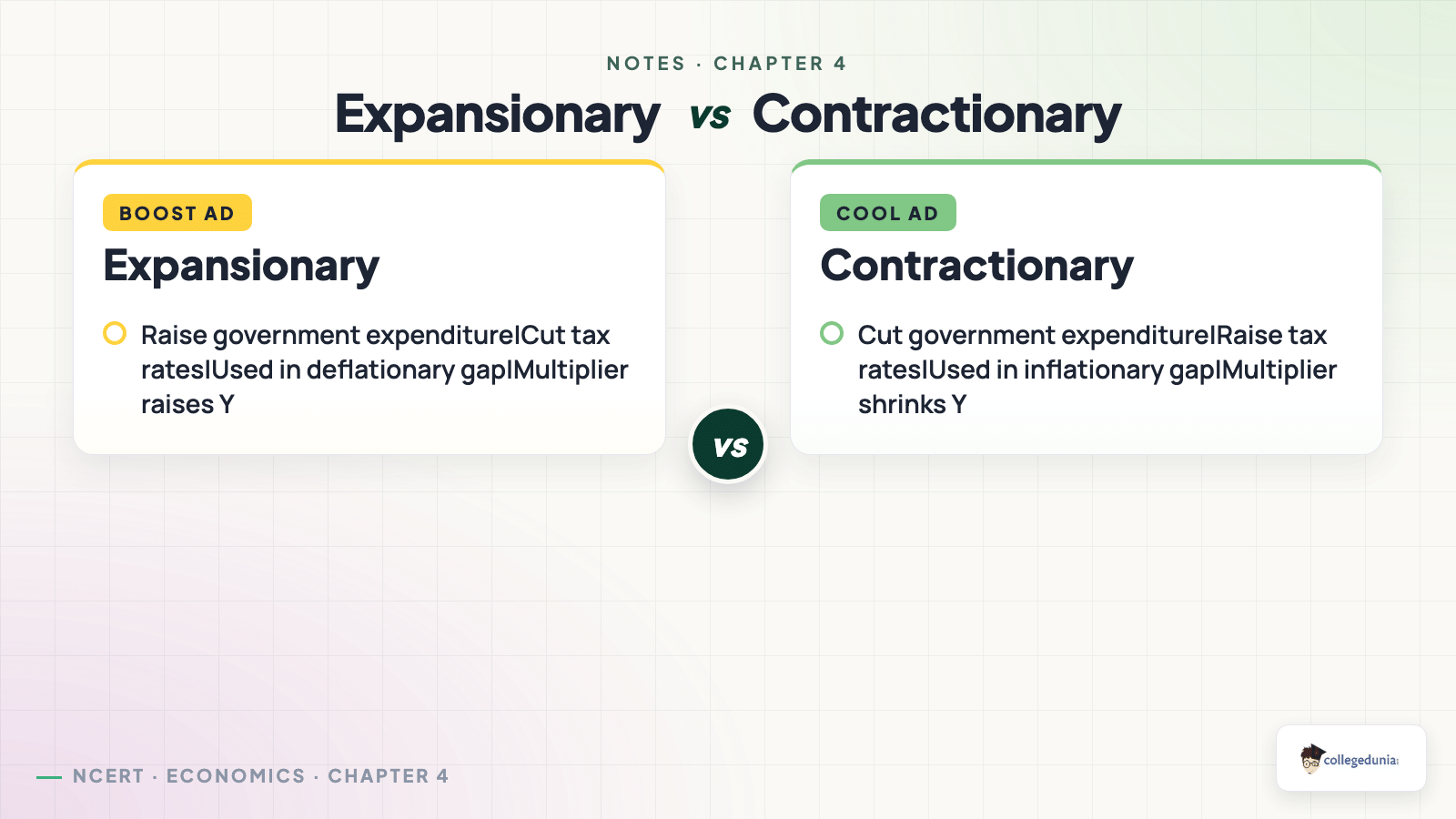
Fiscal Policy in the Government Budget Class 12 NCERT Chapter
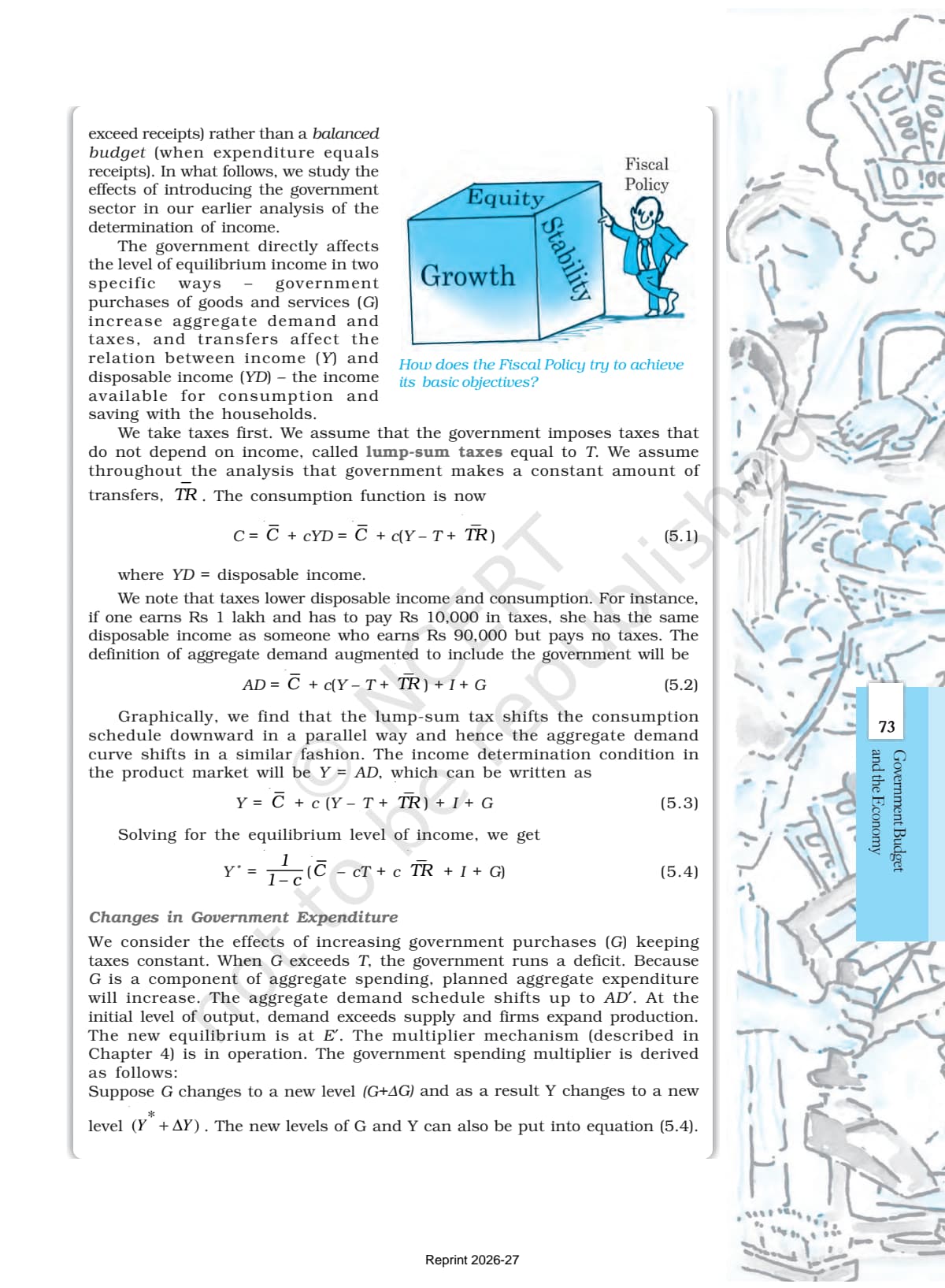
Section 5.5 explains fiscal policy as the government's use of taxes and spending to steady the economy. The chapter splits this into automatic stabilisers, which act on their own, and discretionary policy, which needs a fresh decision.
- Automatic stabilisers: progressive income tax and unemployment benefits that cool a boom and support a slowdown by themselves.
- Expansionary policy: in a recession, raise spending or cut taxes to lift demand.
- Contractionary policy: in a boom, cut spending or raise taxes to cool demand.
- Public debt: the total borrowing of the government; a steady fiscal deficit adds to it each year.
Government Budget Class 12 Weightage in CBSE and CUET
This chapter has stayed at roughly 6 to 8 marks in CBSE. The table maps recent board questions so you can see the pattern.
| Year | CBSE question | Marks |
|---|---|---|
| 2025 | MCQ plus a fiscal deficit calculation | 6 |
| 2024 | Three deficits from a single budget | 8 |
| 2023 | Revenue vs capital receipts | 5 |
| 2022 | Primary deficit definition and calculation | 6 |
| 2020 | Fiscal deficit and public borrowing | 7 |
Student Feedback
We asked 10,400 Class 12 students about this chapter. 76% called it the highest mark-per-page chapter in Macroeconomics, and 74% said Section 5.4 on deficits was the part they revised the most before the board exam.
Other Resources for Class 12 Economics Chapter 5
Pair this PDF with the notes, solutions and handwritten notes for the same chapter.
| Resource | What it covers | Open |
|---|---|---|
| NCERT Book PDF | Official NCERT Macroeconomics Chapter 5 textbook. | Chapter 5 NCERT Book PDF |
| NCERT Solutions | Step-by-step answers to every exercise question. | Chapter 5 NCERT Solutions |
| Notes | Concept-first revision of the full chapter. | Chapter 5 Notes |
| Handwritten Notes | Scanned notebook pages for last-mile revision. | Chapter 5 Handwritten Notes |
All Chapters Class 12 Economics NCERT Book PDF
| Chapter | NCERT Book PDF |
|---|---|
| Chapter 1 Introduction to Macroeconomics | Introduction to Macroeconomics NCERT Book PDF |
| Chapter 2 National Income Accounting | National Income Accounting NCERT Book PDF |
| Chapter 3 Money and Banking | Money and Banking NCERT Book PDF |
| Chapter 4 Income Determination | Income Determination NCERT Book PDF |
| Chapter 5 Government Budget and the Economy | Government Budget and the Economy NCERT Book PDF |
| Chapter 6 Open Economy Macroeconomics | Open Economy Macroeconomics NCERT Book PDF |
Frequently Asked Questions on Class 12 Economics Chapter 5 Government Budget NCERT Book PDF
Ques. Where can students download the Class 12 Economics Chapter 5 Government Budget PDF?
Ans. Students can download the official NCERT PDF from the card at the top of this page. It is the single-chapter file from the NCERT Introductory Macroeconomics textbook, aligned to the 2026-27 CBSE syllabus.
Ques. What are the three objectives of the government budget?
Ans. The three objectives are allocation of resources, redistribution of income and wealth, and economic stabilisation. Allocation funds public goods, redistribution narrows income gaps through taxes and transfers, and stabilisation uses fiscal policy to steady the business cycle.
Ques. What are the three deficit measures in this chapter?
Ans. Revenue deficit is revenue expenditure minus revenue receipts. Fiscal deficit is total expenditure minus total receipts excluding borrowings, and equals the total borrowing requirement. Primary deficit is fiscal deficit minus interest payments.
Ques. What are automatic stabilisers?
Ans. Automatic stabilisers are tax and transfer features of the budget that dampen the business cycle without any fresh policy decision. Progressive income tax and unemployment benefits are the two main examples.
Ques. How many marks does the Government Budget chapter carry in CBSE Class 12?
Ans. Across recent CBSE board papers the chapter has carried about 6 to 8 marks. The most common question is a numerical asking students to compute revenue, fiscal and primary deficits from a single budget.



Comments