




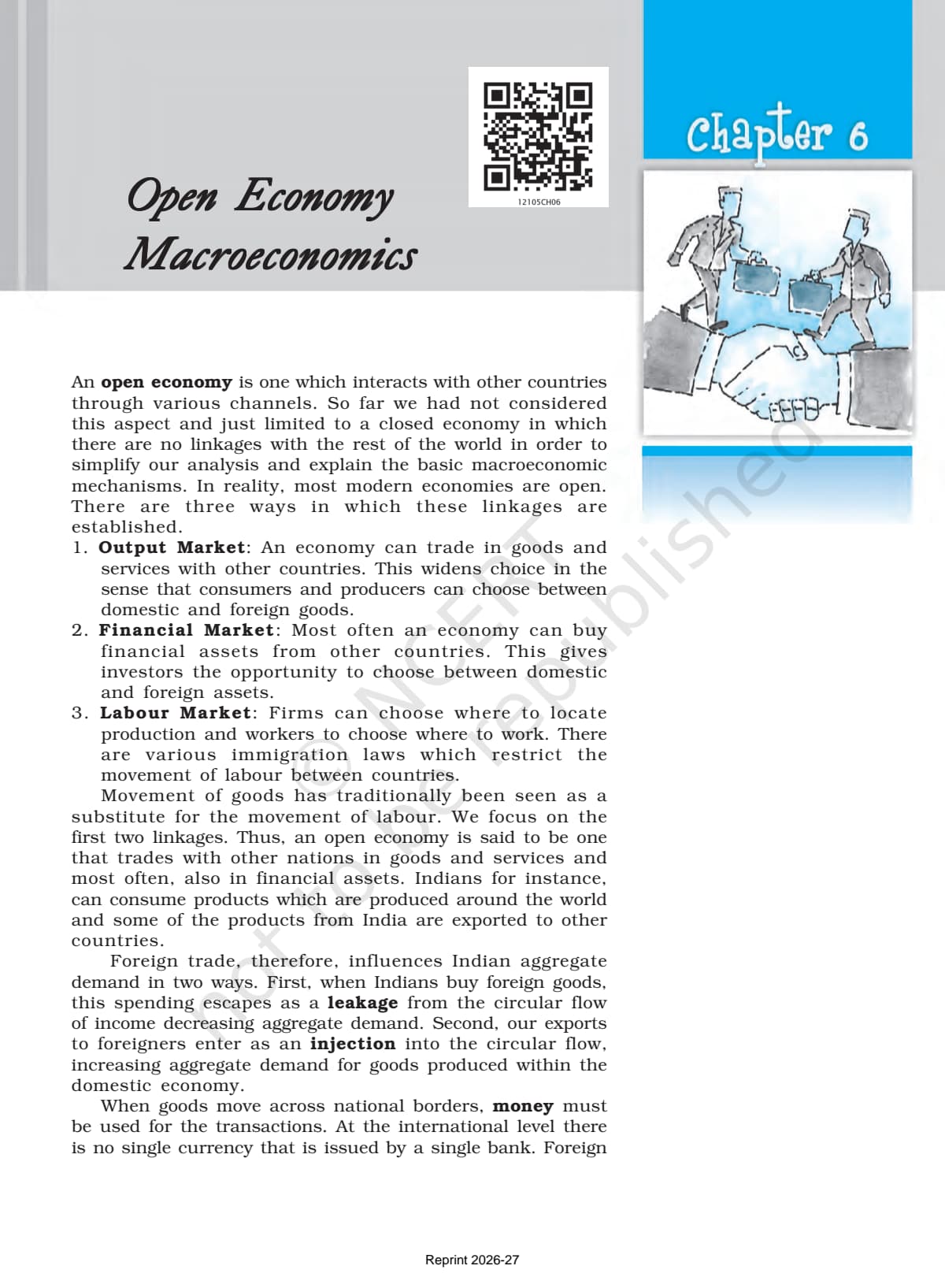
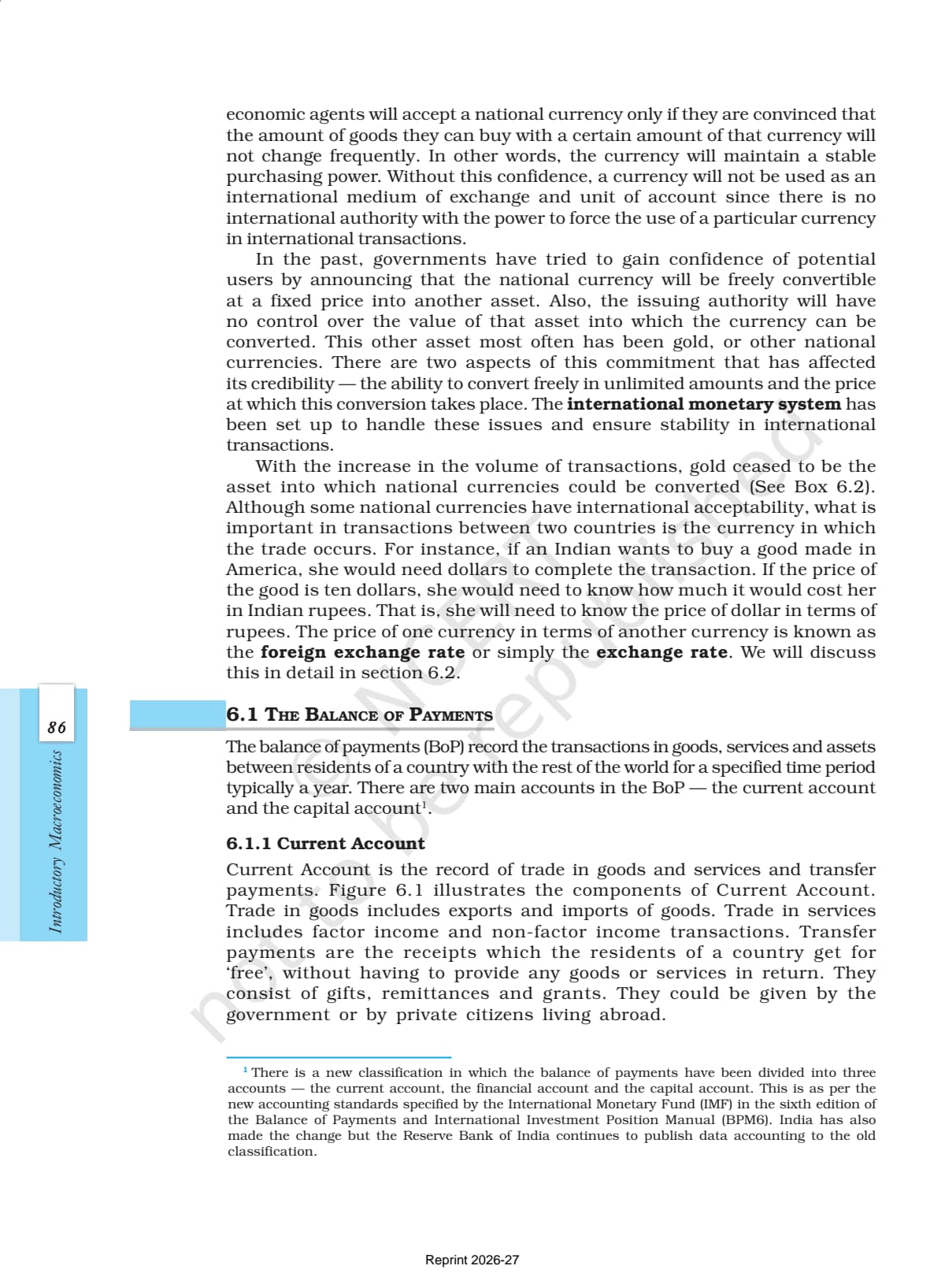
NCERT Class 12 Economics Chapter 6 Open Economy Macroeconomics is the last chapter of the Introductory Macroeconomics book. It covers the Balance of Payments, the foreign exchange market, exchange-rate regimes and the open economy multiplier. This page hosts the official NCERT chapter PDF for free download.
Here is what this chapter is worth in the exam:
- CBSE Boards: about 5 to 6 marks, mostly BoP theory plus one exchange-rate or multiplier question.
- CUET: 2 to 3 questions each year on the BoP accounts and the exchange rate.
- Reading time: about 30 minutes for the full chapter PDF.
What the Class 12 Economics Book Chapter 6 Open Economy Macroeconomics Covers
This is the final chapter of the NCERT Introductory Macroeconomics book. It is the only chapter that drops the closed-economy assumption used in Chapters 1 to 5. The official textbook is the source CBSE uses to set Balance of Payments questions, so students should read this PDF first.
The chapter runs as one short story. It moves from BoP accounting, to the foreign exchange market, to fixed and floating regimes, and ends with the open economy multiplier. Each step builds on the one before, so reading in order matters.
Topics in NCERT Class 12 Economics Chapter 6 (Section-Wise Map)
The PDF is split into three main sections with a few sub-sections. The table maps each part to the concept students must take from it. Section 6.1 alone drives about half the board-paper marks on this chapter.
| Section | NCERT sub-topic | Main exam concept |
|---|---|---|
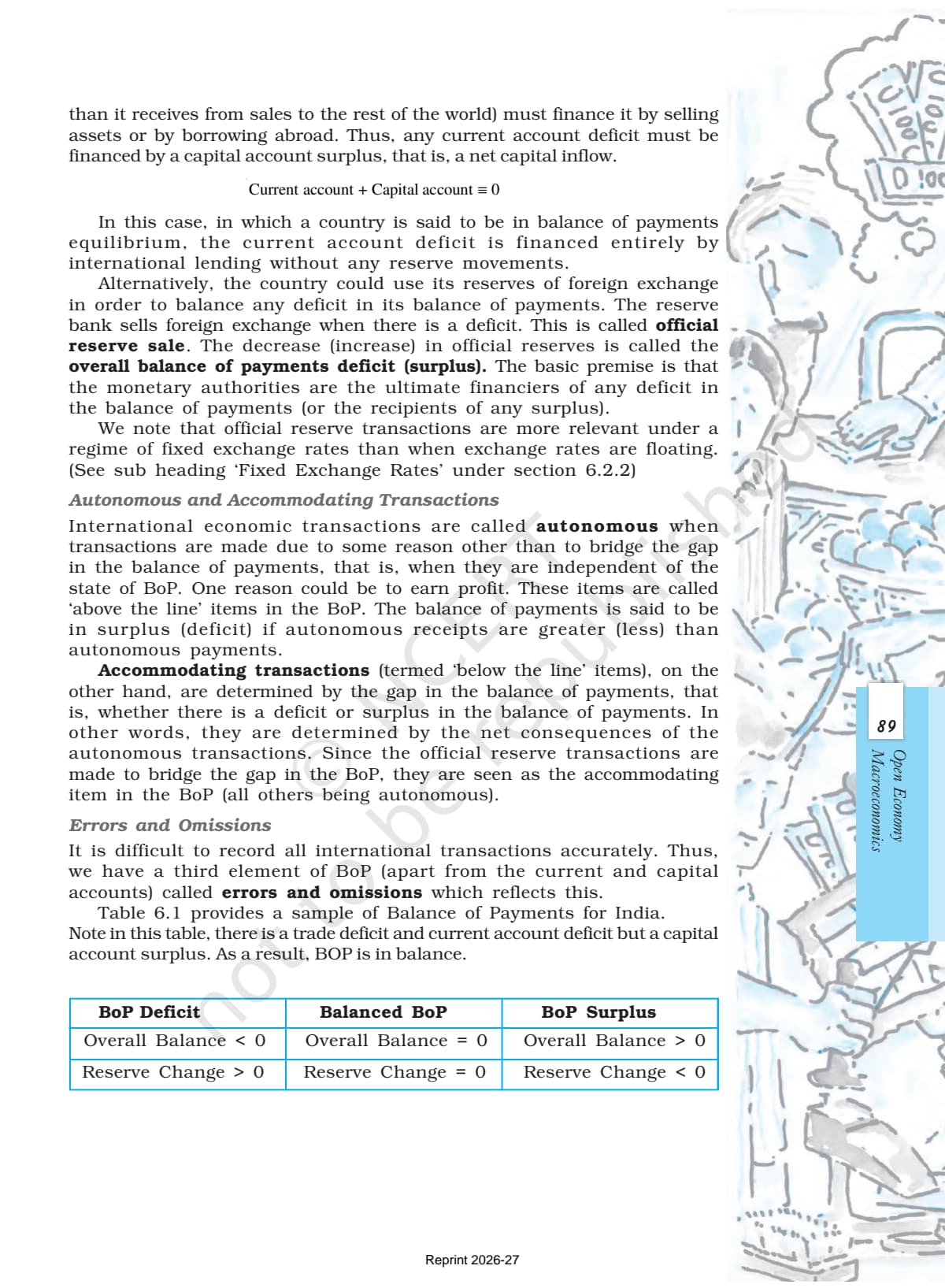
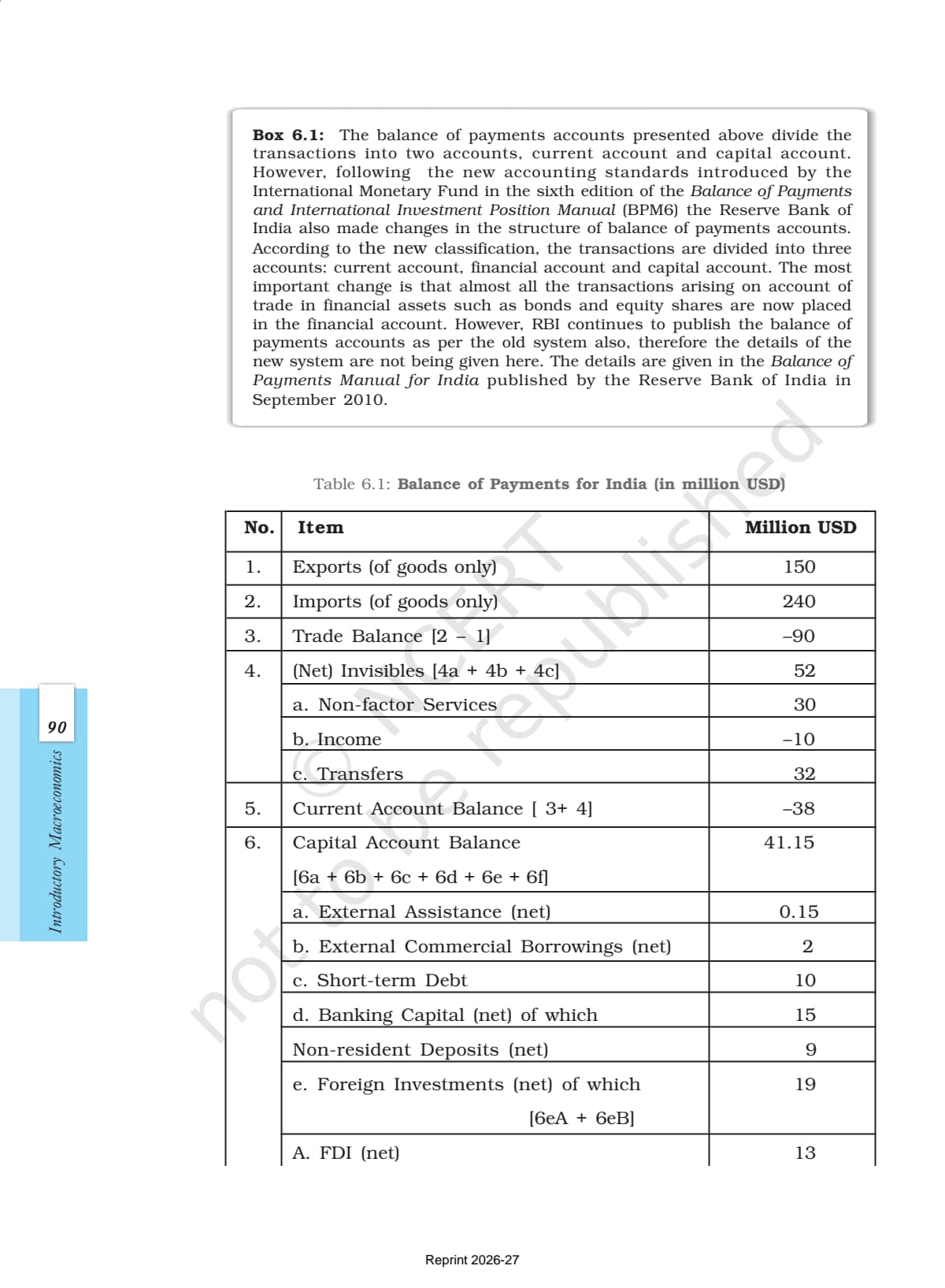
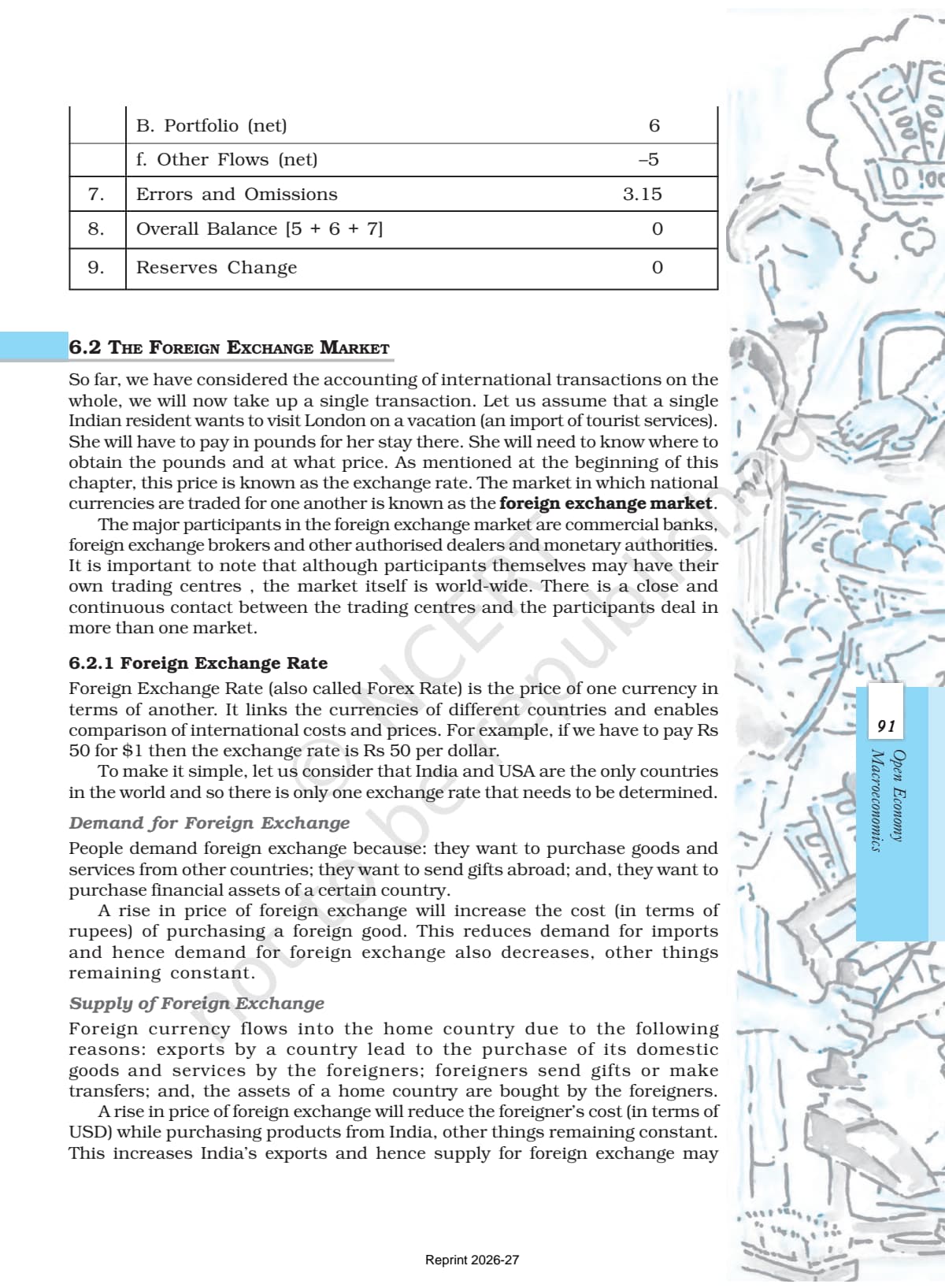
| 6.1 | The Balance of Payments | Current and capital accounts; autonomous vs accommodating items |
| 6.1.1 | BoP surplus and deficit | Why the official BoP always balances after reserves |
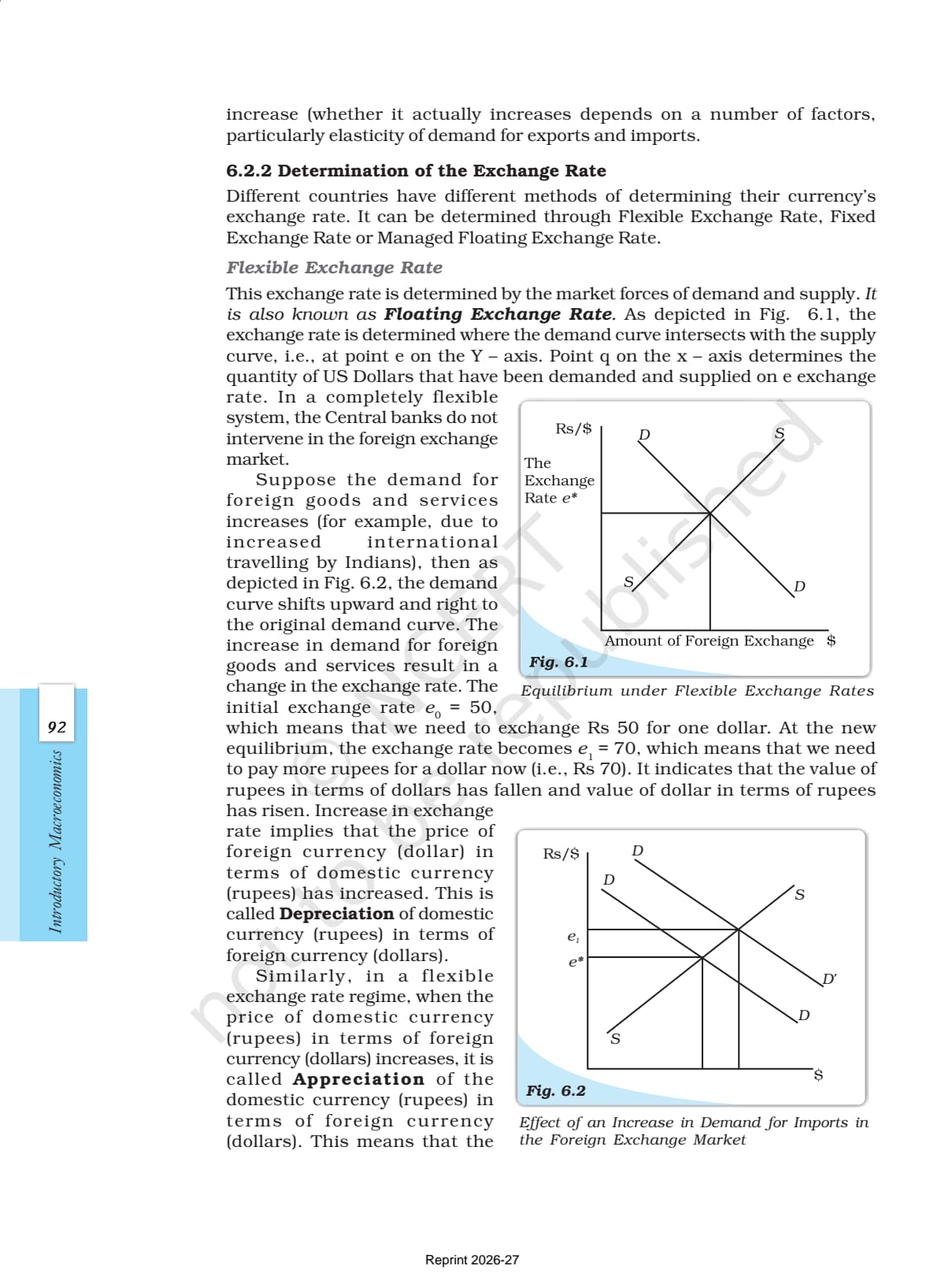
| 6.2 | The Foreign Exchange Market | Demand and supply of foreign currency; equilibrium rate |
| 6.2.1 | Exchange rate determination | Floating market equilibrium |
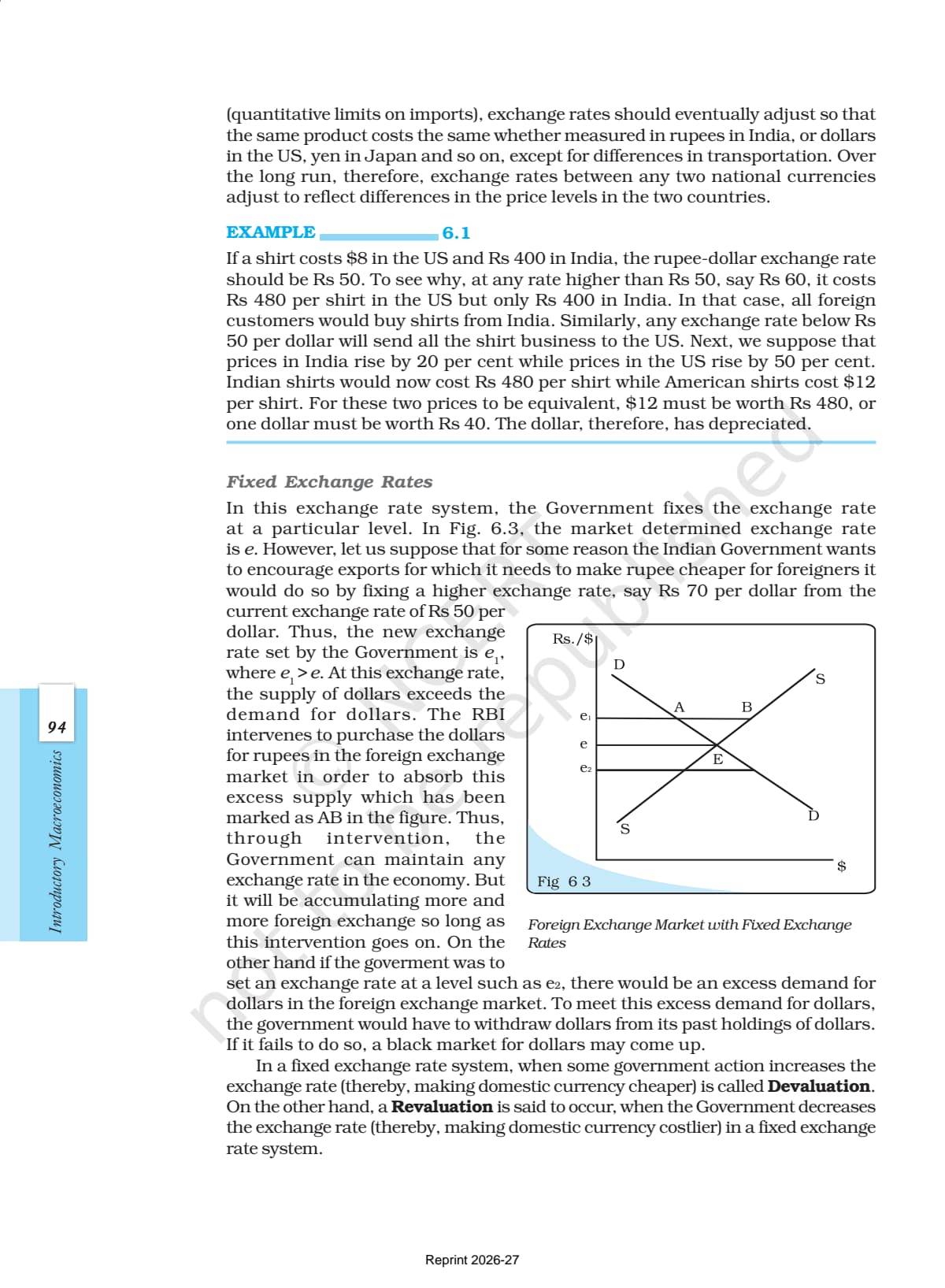
| 6.2.2 | Flexible vs fixed regimes | Merits and demerits; reserve loss under a fixed peg |
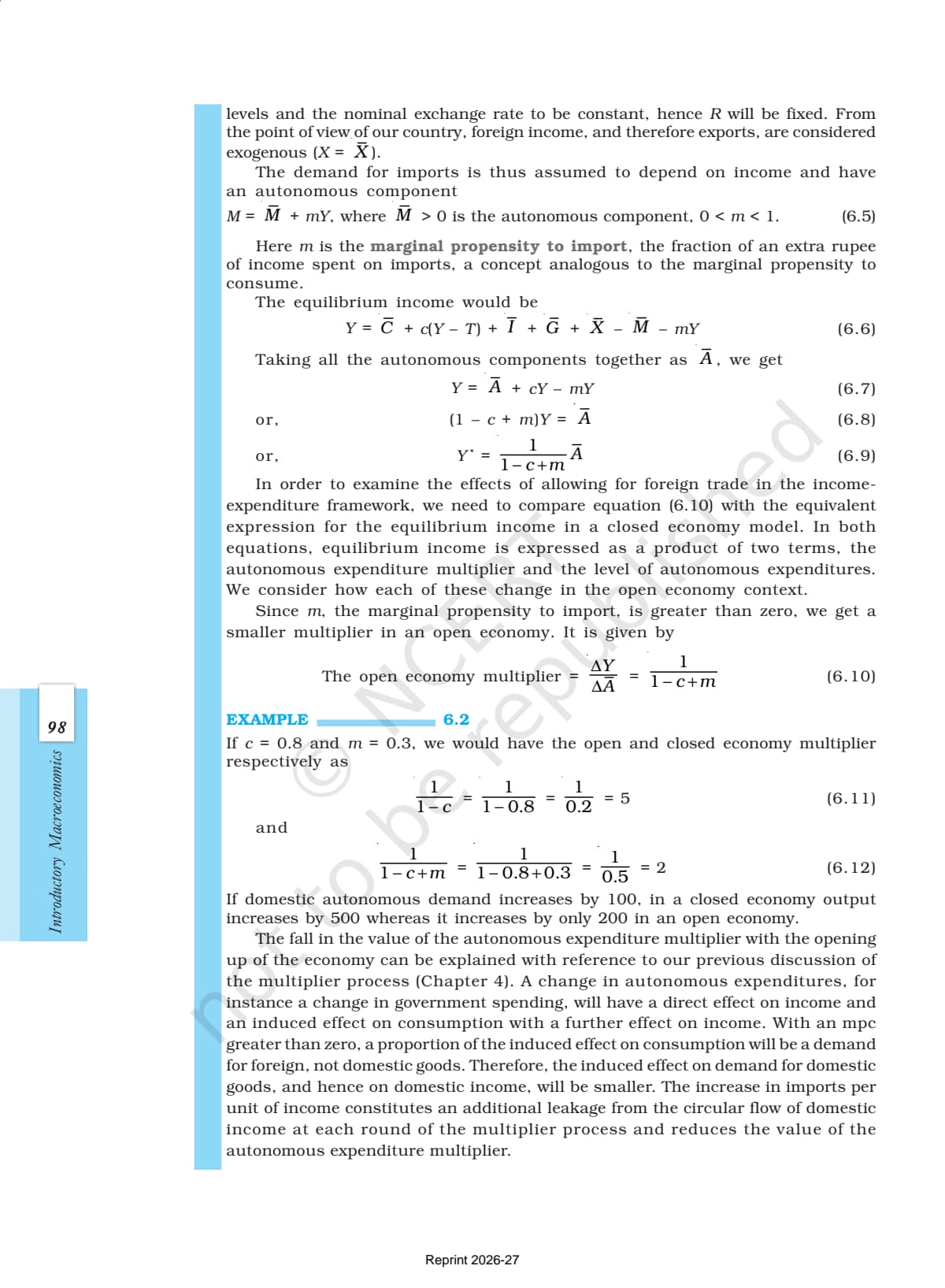
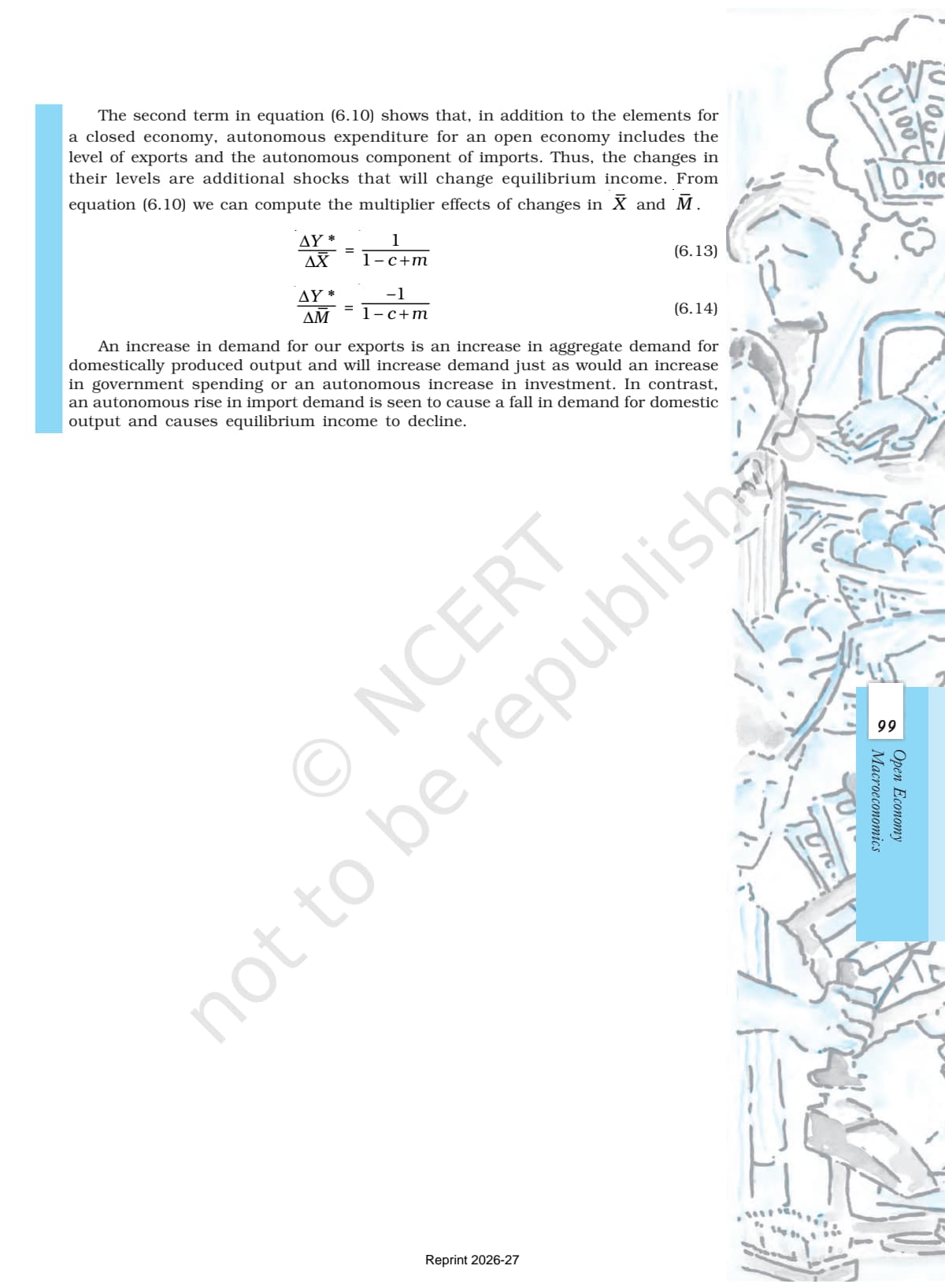
| 6.3 | Income in an open economy | Open economy multiplier with imports |
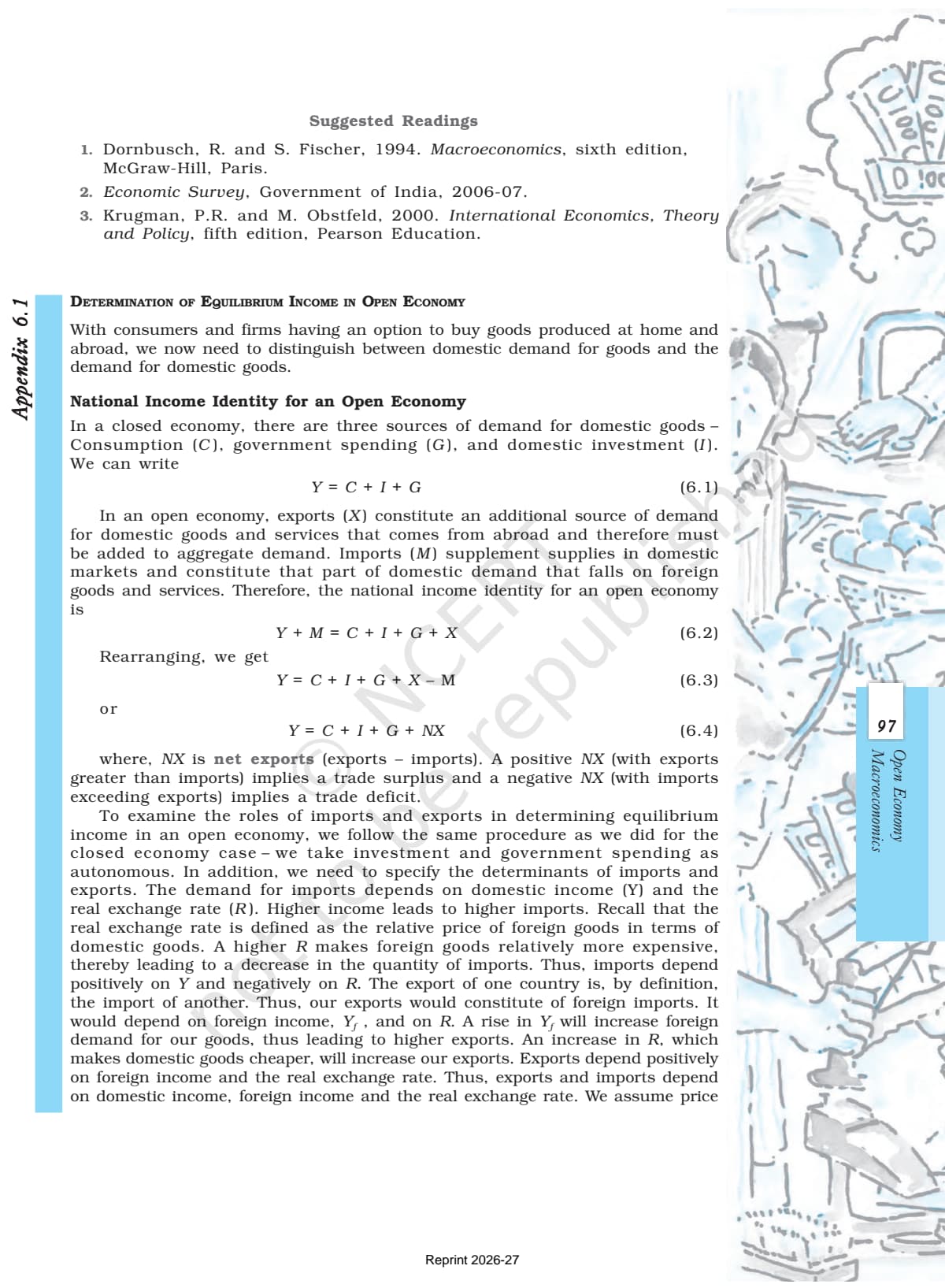
| 6.3.1 | Open-economy income identity | Y = C + I + G + (X - M); leakages and injections |
Map each note page you make to one row above. The autonomous vs accommodating split and the parts of the current and capital accounts are the most-tested items in the chapter.
Source: Magnet Brains on YouTube
Key Concepts in Open Economy Macroeconomics Class 12
The PDF holds the exact NCERT wording for the ideas below. CBSE rewards this wording in theory answers, so it is worth learning it as written.
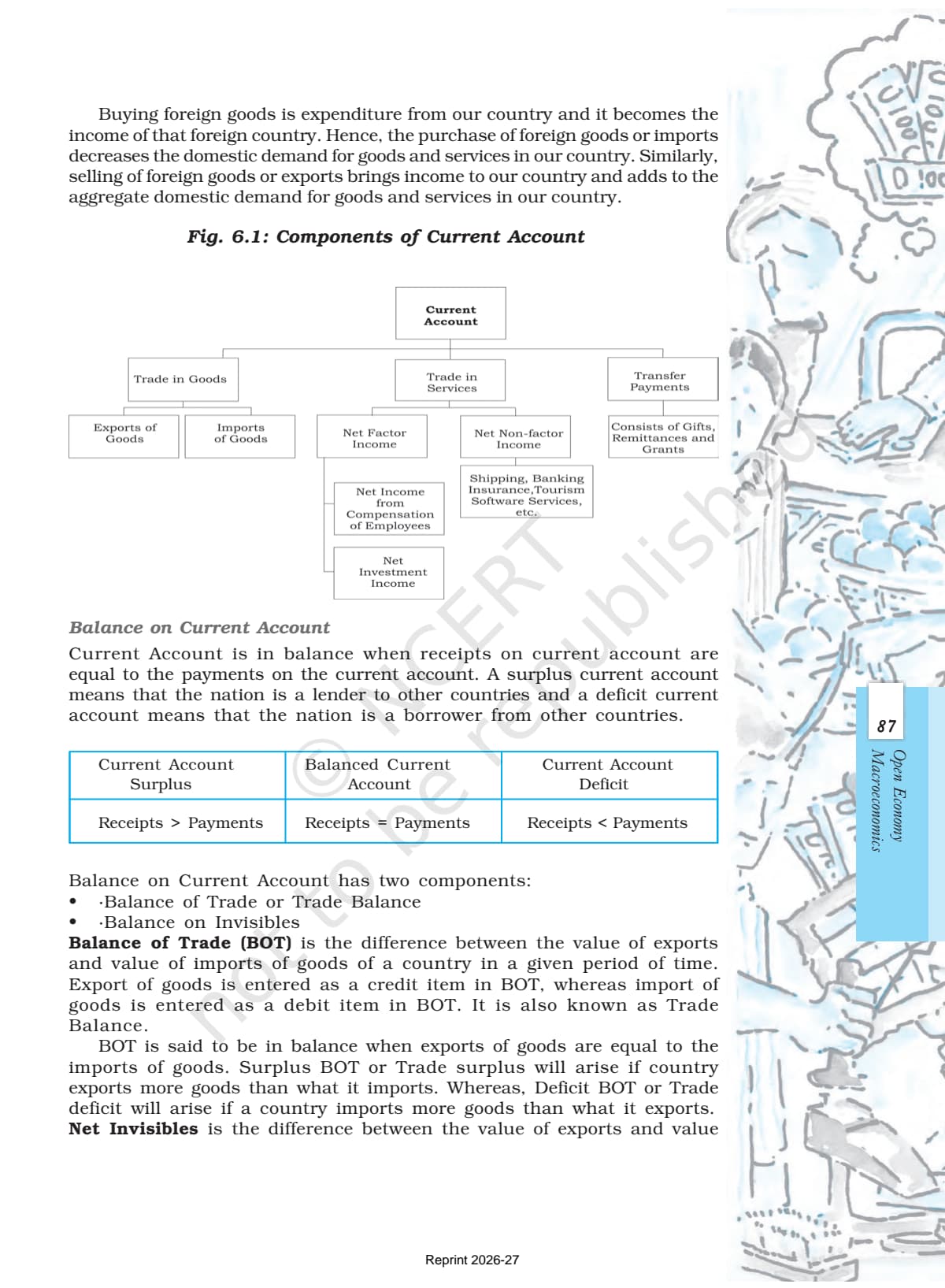
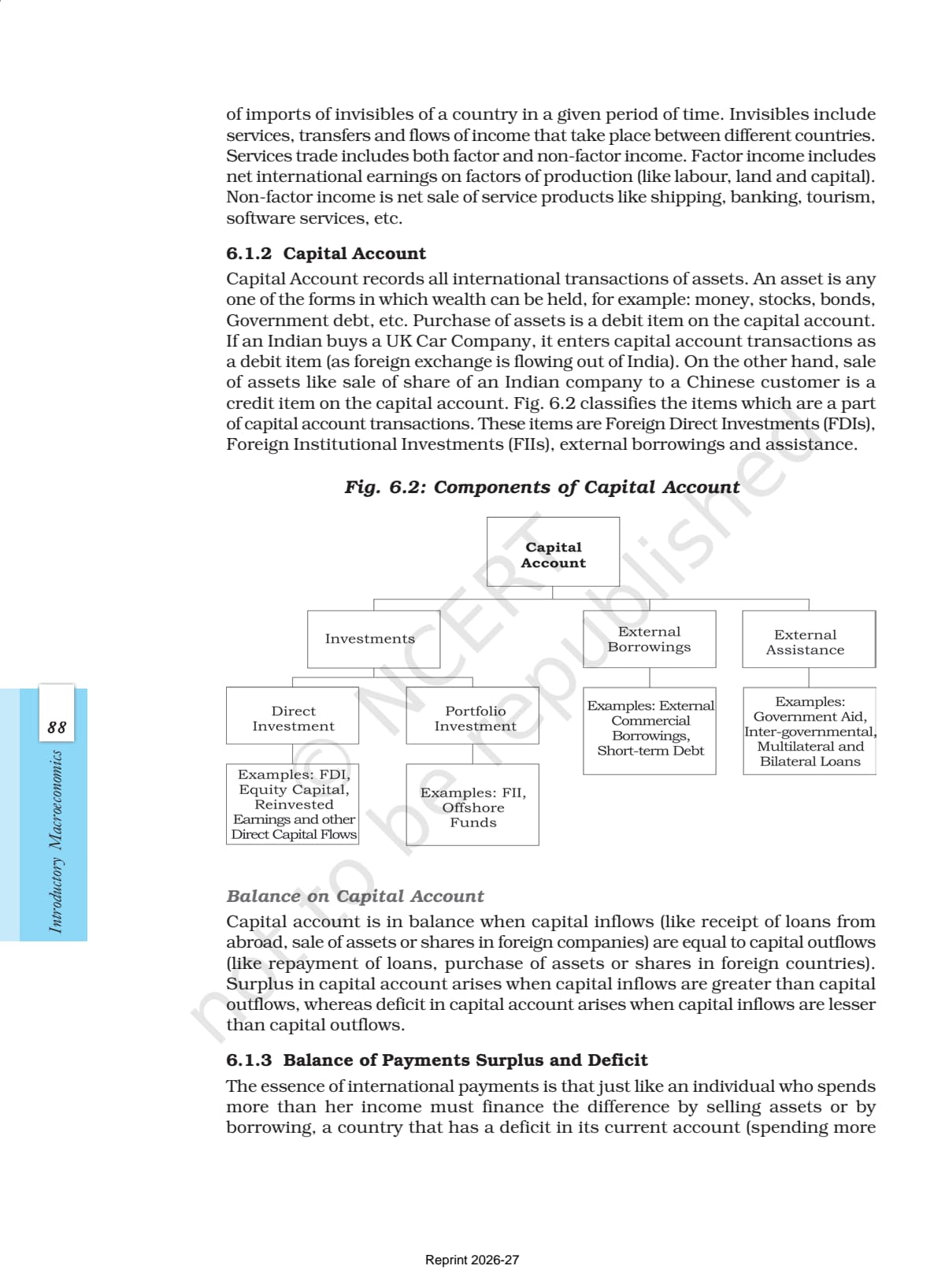
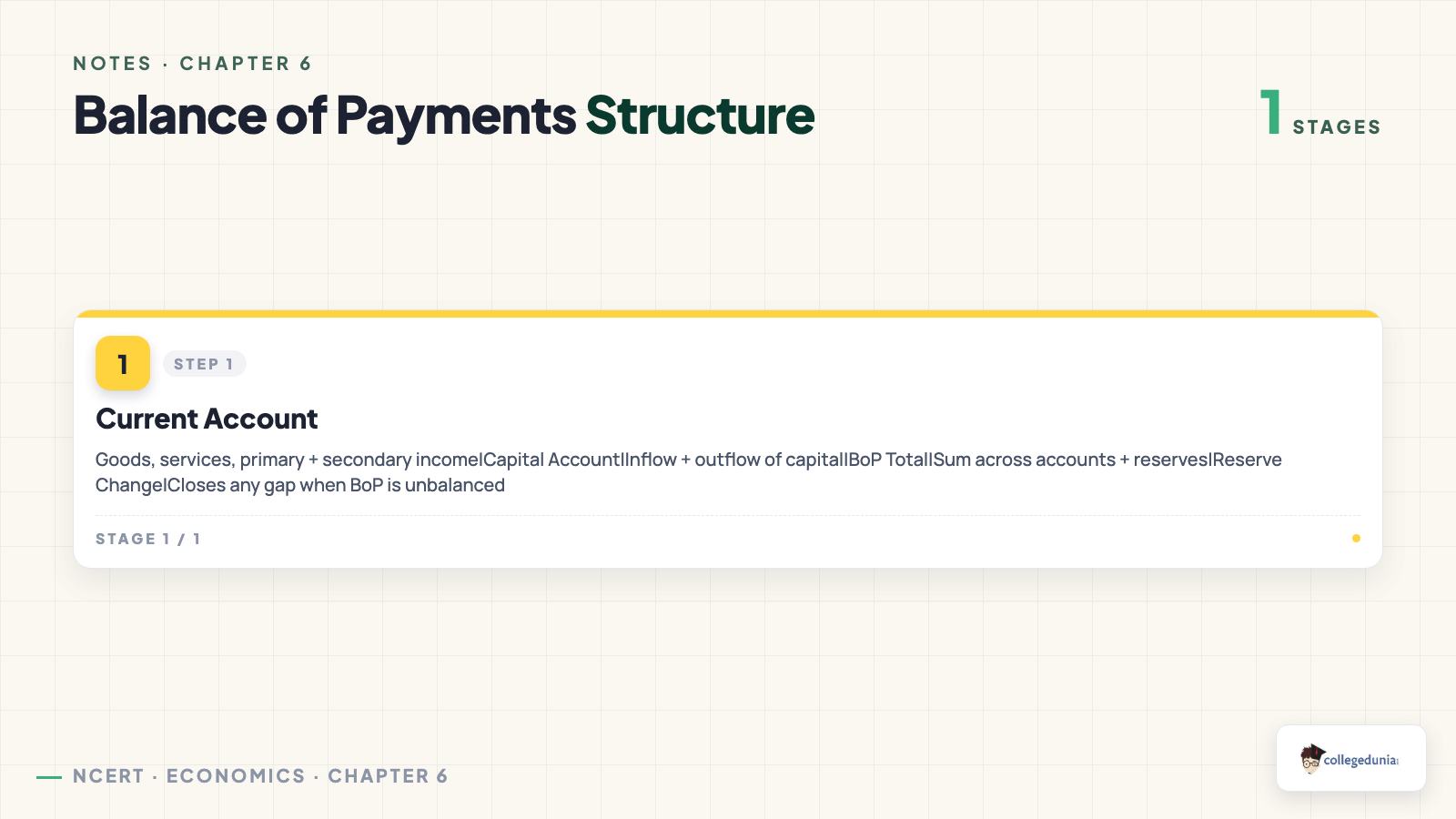
- Balance of Payments: a record of all transactions between a country and the rest of the world in a year. It splits into the current account and the capital account.
- Autonomous vs accommodating: autonomous items happen for profit and sit "above the line"; accommodating items cover the gap and sit "below the line". A deficit or surplus refers only to autonomous items.
- Foreign exchange market: imports and outflows create demand for foreign currency; exports and inflows create supply. The rate settles where they meet.
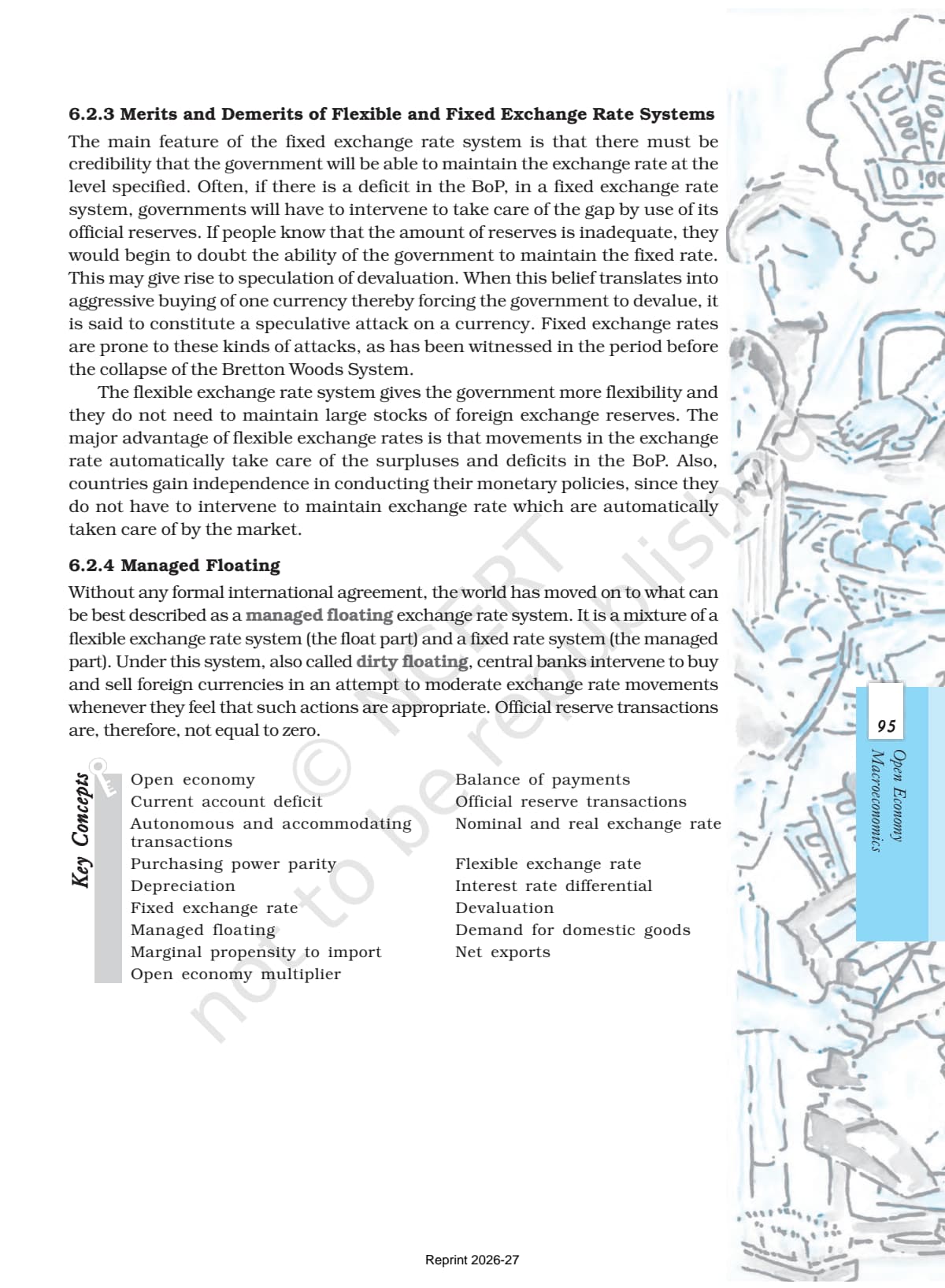
- Depreciation vs devaluation: depreciation is a market fall in a floating regime; devaluation is a deliberate cut in a fixed regime.
- J-curve and the multiplier: the trade balance worsens then improves after a depreciation; the open economy multiplier is 1 / (s + m), smaller than the closed one because imports leak.
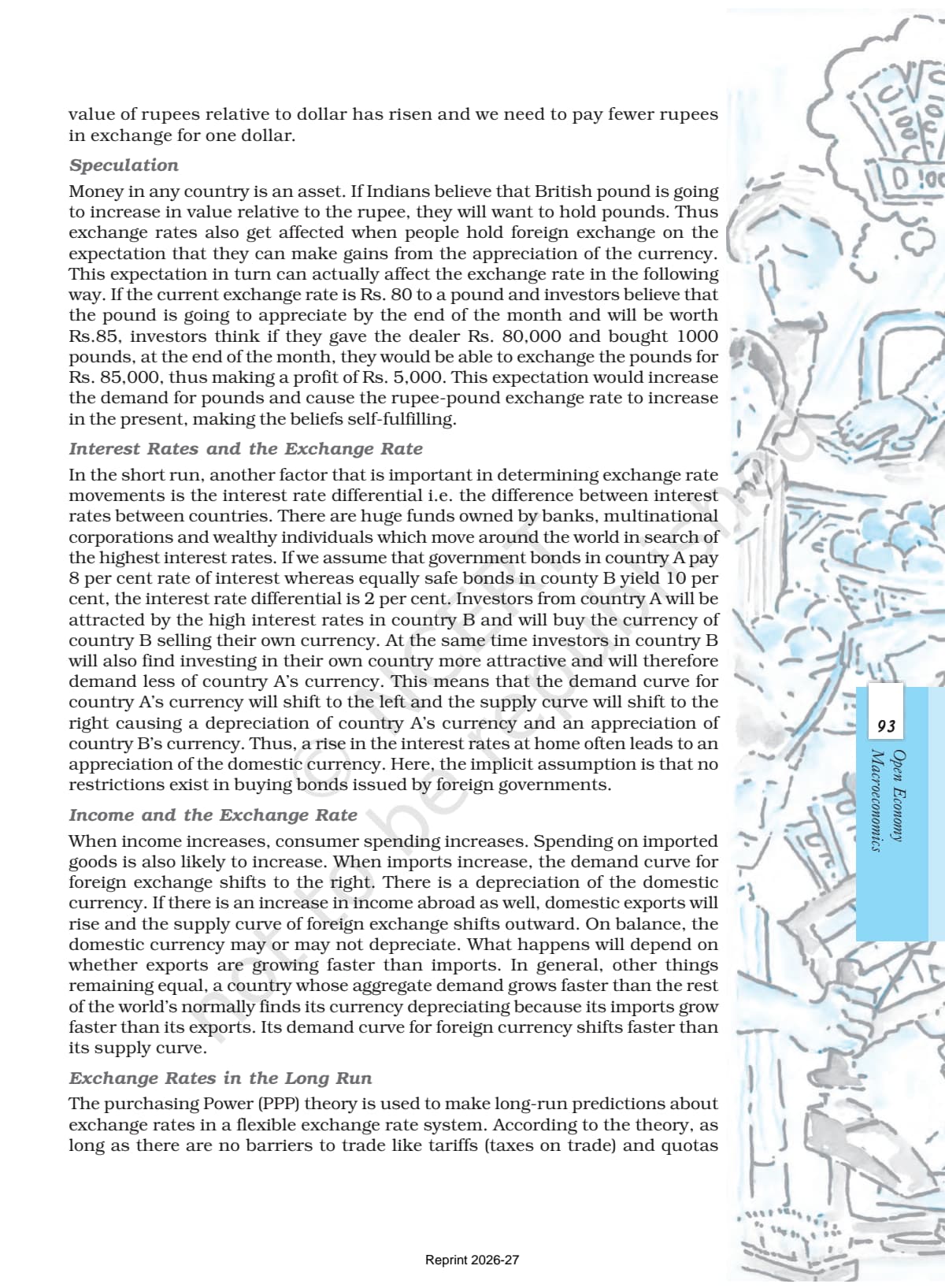
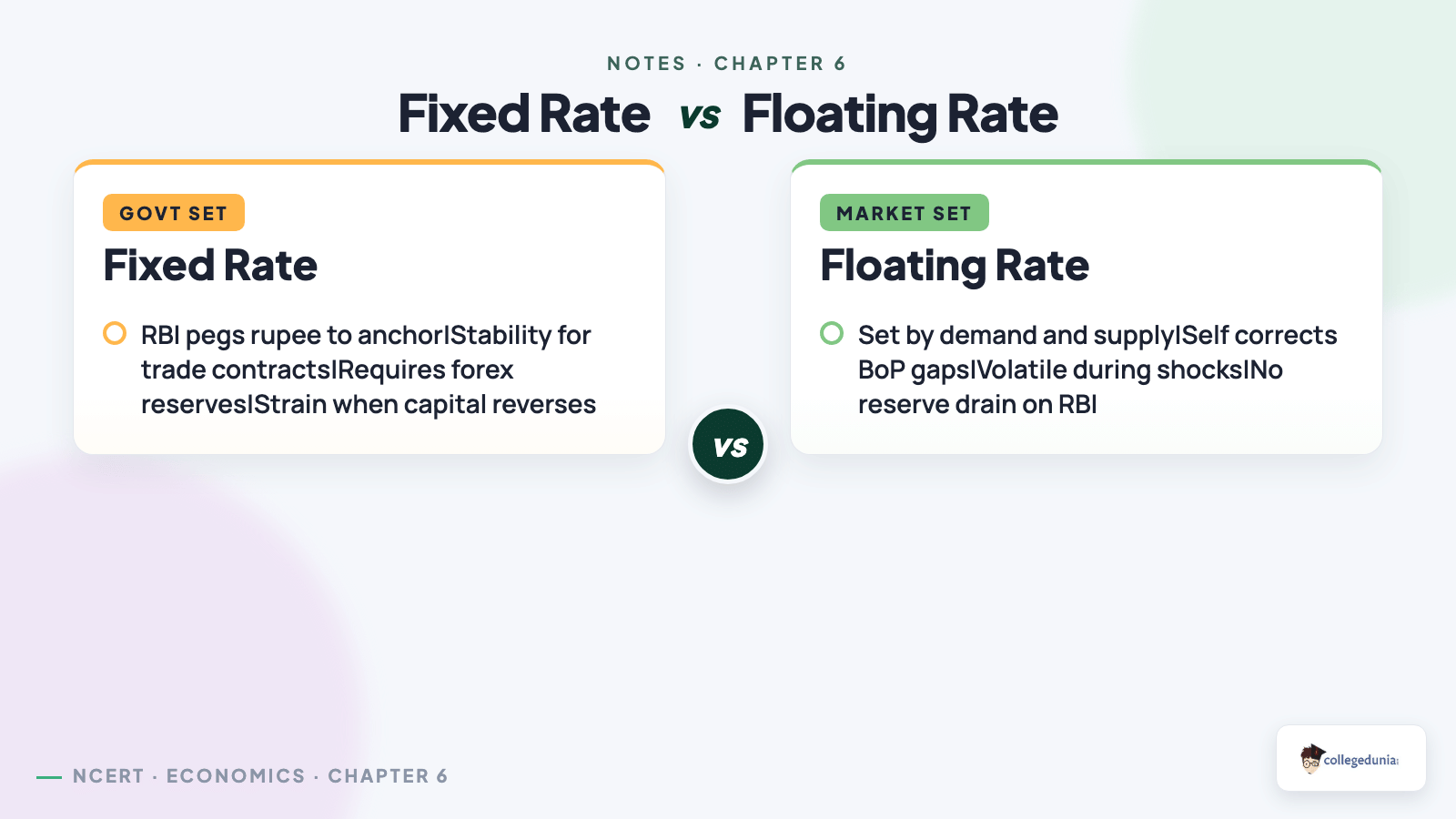
The chapter also compares the two exchange-rate regimes. Learn this as one block, not five separate points.
| Point | Flexible (floating) | Fixed (peg) |
|---|---|---|
| Adjustment | Automatic, through price. | Needs reserves to defend. |
| Monetary policy | Stays free. | Tied to holding the peg. |
| Speculation | Can be high. | Lower while the peg holds. |
| Inflation | Less discipline. | More discipline. |
Why Read the NCERT PDF Directly for Class 12 Economics Chapter 6
Reference books rewrite this chapter into a shorter, sum-heavy form. They cannot replace the official PDF for board prep. Here is why students who score well stay with the textbook.
- CBSE draws theory questions from the exact NCERT phrasing, not from any reference book.
- The autonomous vs accommodating split and the J-curve are treated only the NCERT way.
- The foreign exchange demand and supply diagrams match the marking scheme.
- The open economy multiplier 1 / (s + m) is in Section 6.3, and reference books often drop it.
Previous Year Question Trends in Class 12 Economics Chapter 6
The chapter follows a steady pattern in the CBSE board paper. It has averaged close to 5 to 6 marks over the last five papers. Expect a similar spread in 2026-27.
| Year | Marks | Question types | Most common topic |
|---|---|---|---|
| 2025 | 6 | 1 MCQ + 1 short answer + 1 numerical | BoP autonomous vs accommodating |
| 2024 | 5 | 1 short answer + 1 long theory | Fixed vs floating exchange rate |
| 2023 | 5 | 2 MCQs + 1 short answer | Components of current account |
| 2022 | 4 | 1 short answer + 1 MCQ | Rupee depreciation effects |
| 2020 | 8 | 1 long numerical + 2 short answers | Open economy multiplier |
The top question type is a 5-mark theory question on autonomous vs accommodating items or on fixed vs flexible regimes. Both need textbook phrasing from Section 6.1 and Section 6.2.2.
How to Use This NCERT PDF With Notes and Solutions for Chapter 6
The PDF is the source, but it works best with the other resources. Read the PDF first, then revise with notes, then practise with the solutions.
- First read: read Sections 6.1 to 6.3 in order. Mark new terms like autonomous, accommodating and J-curve.
- With notes: open the Class 12 Economics Chapter 6 Notes and copy the BoP T-account into your own notebook.
- Practice: attempt every in-text exercise, then check it against the NCERT Solutions for Chapter 6.
- Last revision: the day before the exam, scan the handwritten notes to recall the BoP structure and the multiplier formula.
Student Feedback
We asked 13,200 Class 12 Economics students about this chapter. 82% said the NCERT textbook PDF was their main source for Chapter 6, and those who paired it with the matched solutions averaged 5.1 out of 6 marks, against 3.4 for students who used a reference book alone.
Other Resources for Class 12 Economics Chapter 6
Pair this official PDF with the solutions, notes and handwritten notes below for full chapter coverage.
| Resource | What it covers | Open |
|---|---|---|
| NCERT Book PDF | Official NCERT Macroeconomics Chapter 6 textbook. | Chapter 6 NCERT Book PDF |
| NCERT Solutions | Step-by-step answers to every exercise question. | Chapter 6 NCERT Solutions |
| Notes | Concept-first revision of the full chapter. | Chapter 6 Notes |
| Handwritten Notes | Scanned notebook pages for last-mile revision. | Chapter 6 Handwritten Notes |
All Chapters: Class 12 Economics NCERT Book PDF
| Chapter | NCERT Book PDF |
|---|---|
| Chapter 1 | Introduction to Macroeconomics |
| Chapter 2 | National Income Accounting |
| Chapter 3 | Money and Banking |
| Chapter 4 | Income Determination |
| Chapter 5 | Government Budget and the Economy |
| Chapter 6 | Open Economy Macroeconomics |
Class 12 Economics Chapter 6 Open Economy Macroeconomics NCERT Book PDF FAQs
Ques. Where can students download the NCERT Class 12 Economics Chapter 6 PDF?
Ans. Students can download the official Open Economy Macroeconomics Class 12 NCERT book PDF from the download card at the top of this page. It is the single-chapter file from the NCERT Introductory Macroeconomics textbook, aligned to the 2026-27 CBSE syllabus.
Ques. What is the Balance of Payments in this chapter?
Ans. The Balance of Payments is a record of all transactions between residents of a country and the rest of the world in a financial year. It splits into the current account (goods, services, transfers, primary income) and the capital and financial account (loans, FDI, portfolio flows, reserve changes).
Ques. What is the difference between autonomous and accommodating items?
Ans. Autonomous items happen for their own profit motive and are recorded above the line. Accommodating items cover the gap left by autonomous items and are recorded below the line. A deficit or surplus in the economic sense refers only to the autonomous items.
Ques. What is the open economy multiplier in this chapter?
Ans. The open economy multiplier is 1 / (s + m), where s is the marginal propensity to save and m is the marginal propensity to import. It is smaller than the closed-economy multiplier 1/s because imports act as an extra leakage. The full working is in Section 6.3 of the PDF.
Ques. How much weightage does Chapter 6 carry in the CBSE board paper?
Ans. Across the last five board papers the chapter has averaged about 5 to 6 marks, from one-mark MCQs to five-mark theory or numerical questions. The most common type is a five-mark theory question on autonomous vs accommodating items or on fixed vs flexible exchange-rate regimes.



Comments