




The Recent Developments in Indian Politics PDF is the official NCERT chapter on Indian politics after 1989 from Politics in India Since Independence. This page lets students download the original Chapter 8 text and cartoons for the 2026-27 CBSE syllabus. Reading the source chapter is the best way to understand the end of Congress dominance, the coalition era and the rise of the BJP.
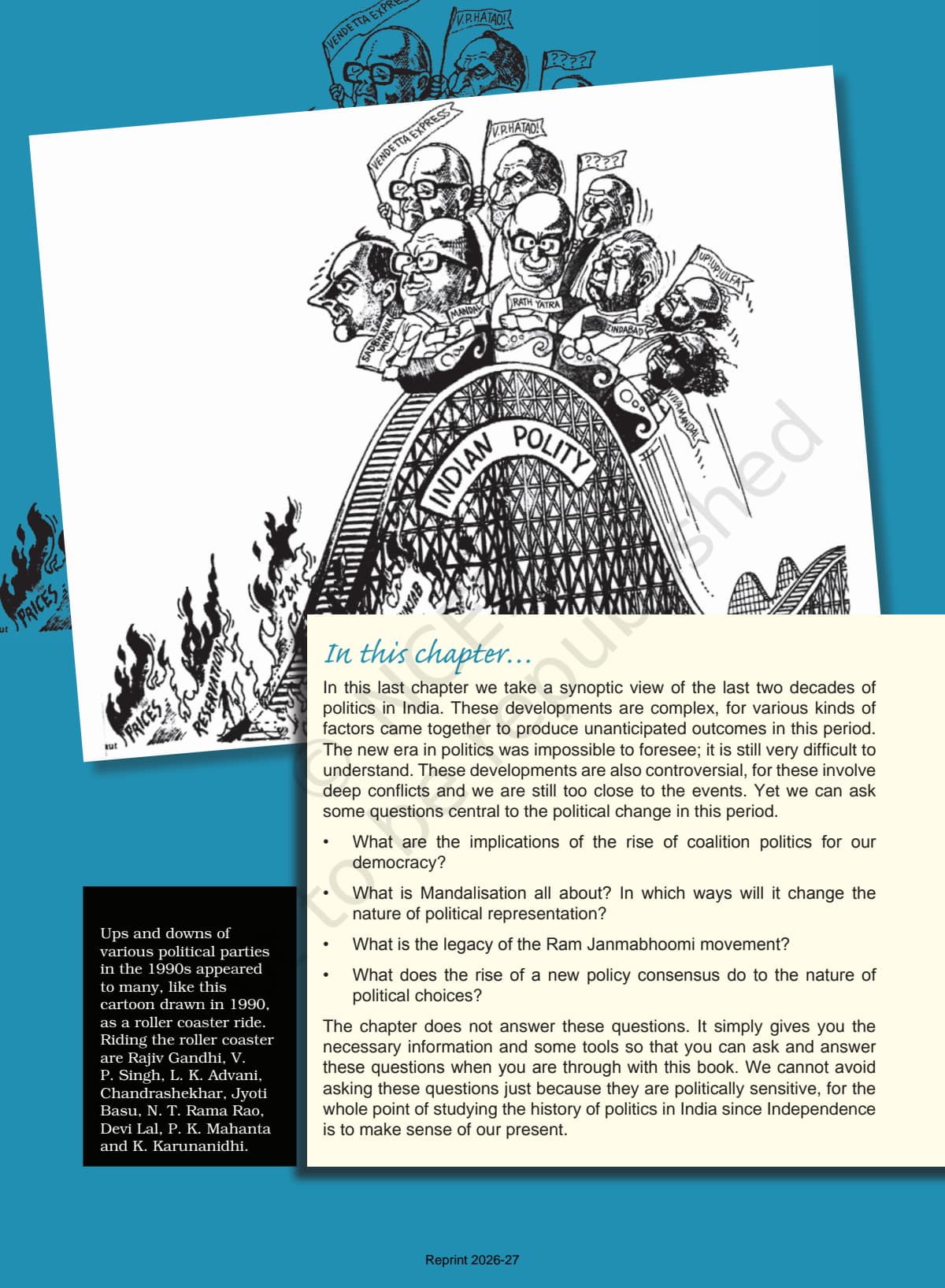
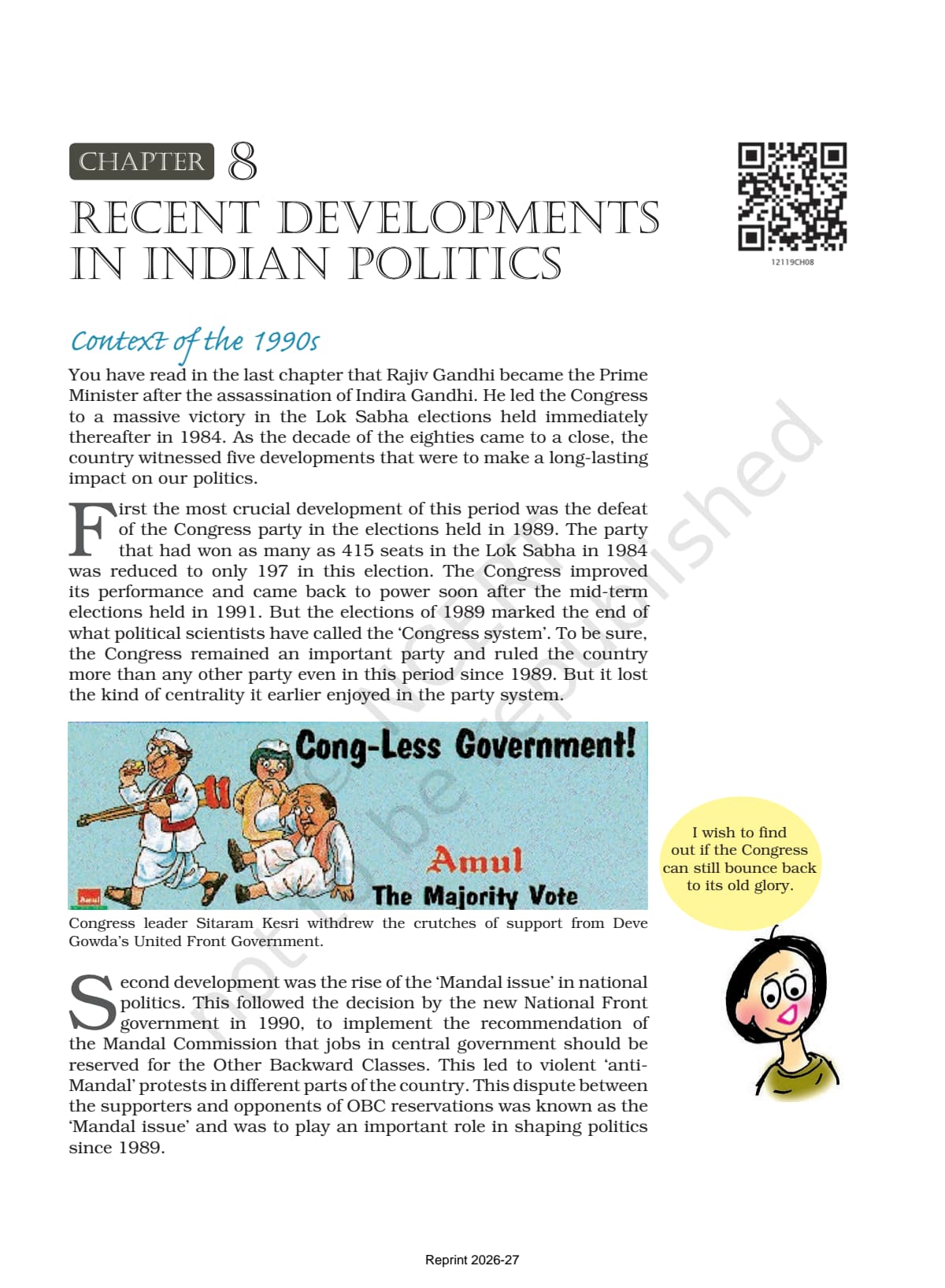
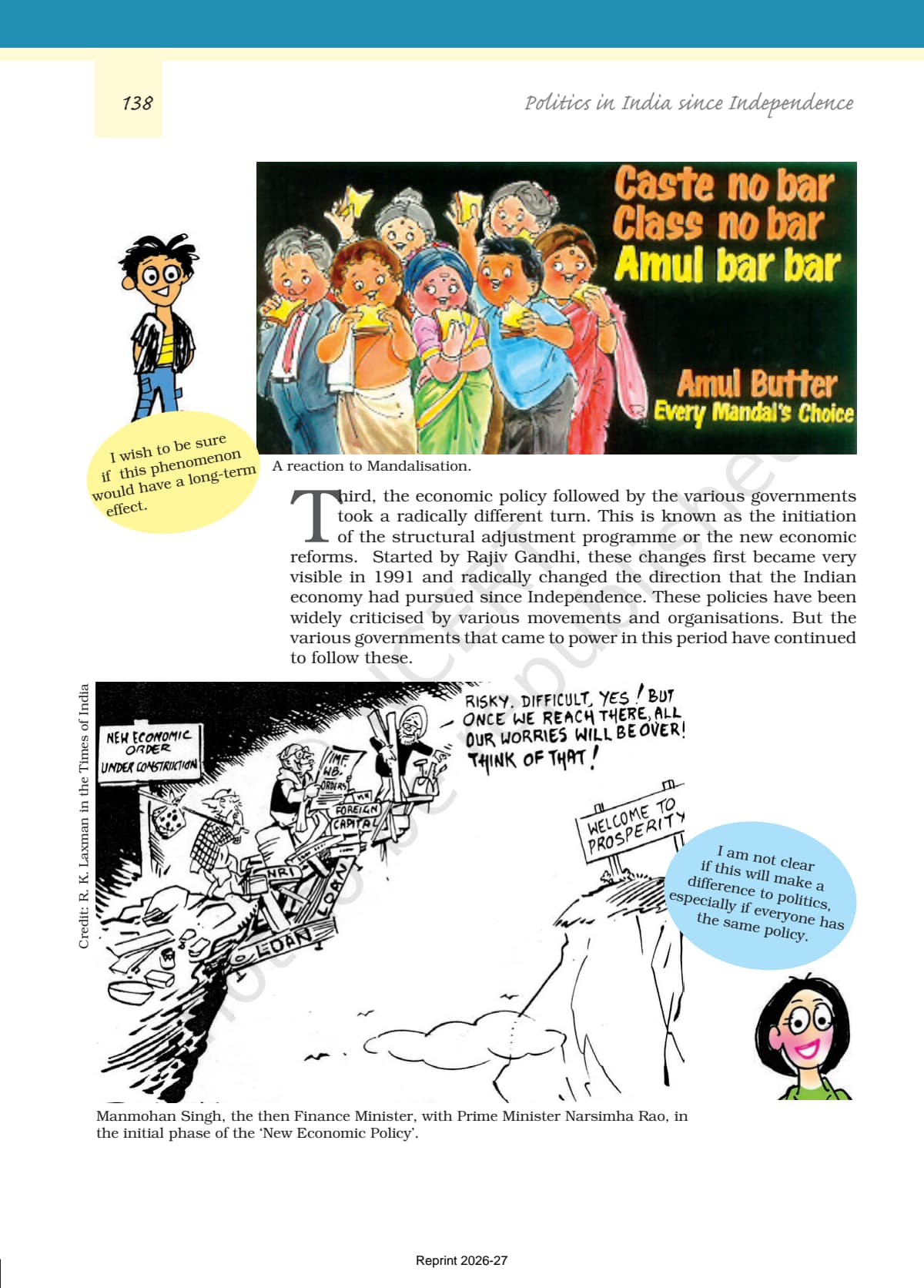
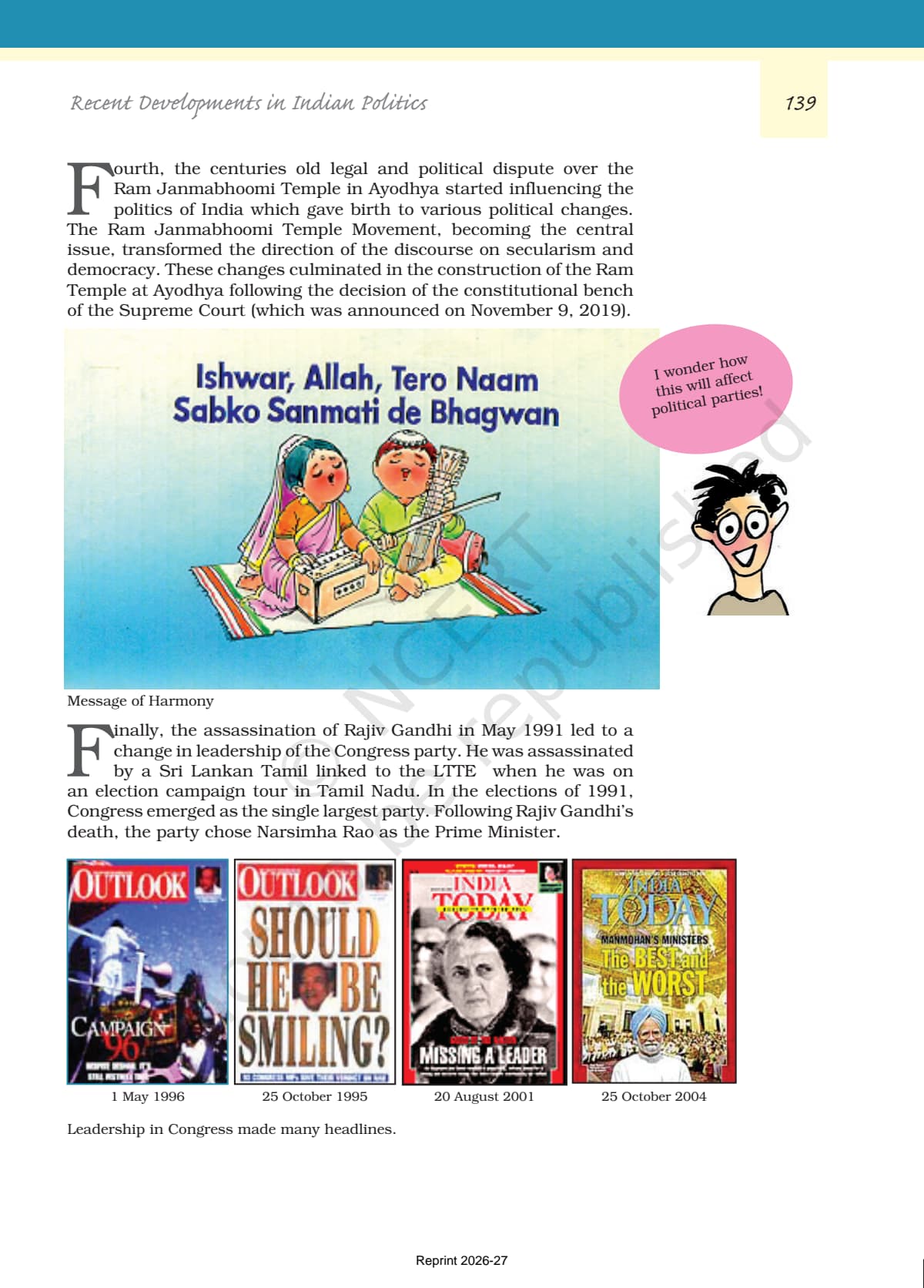
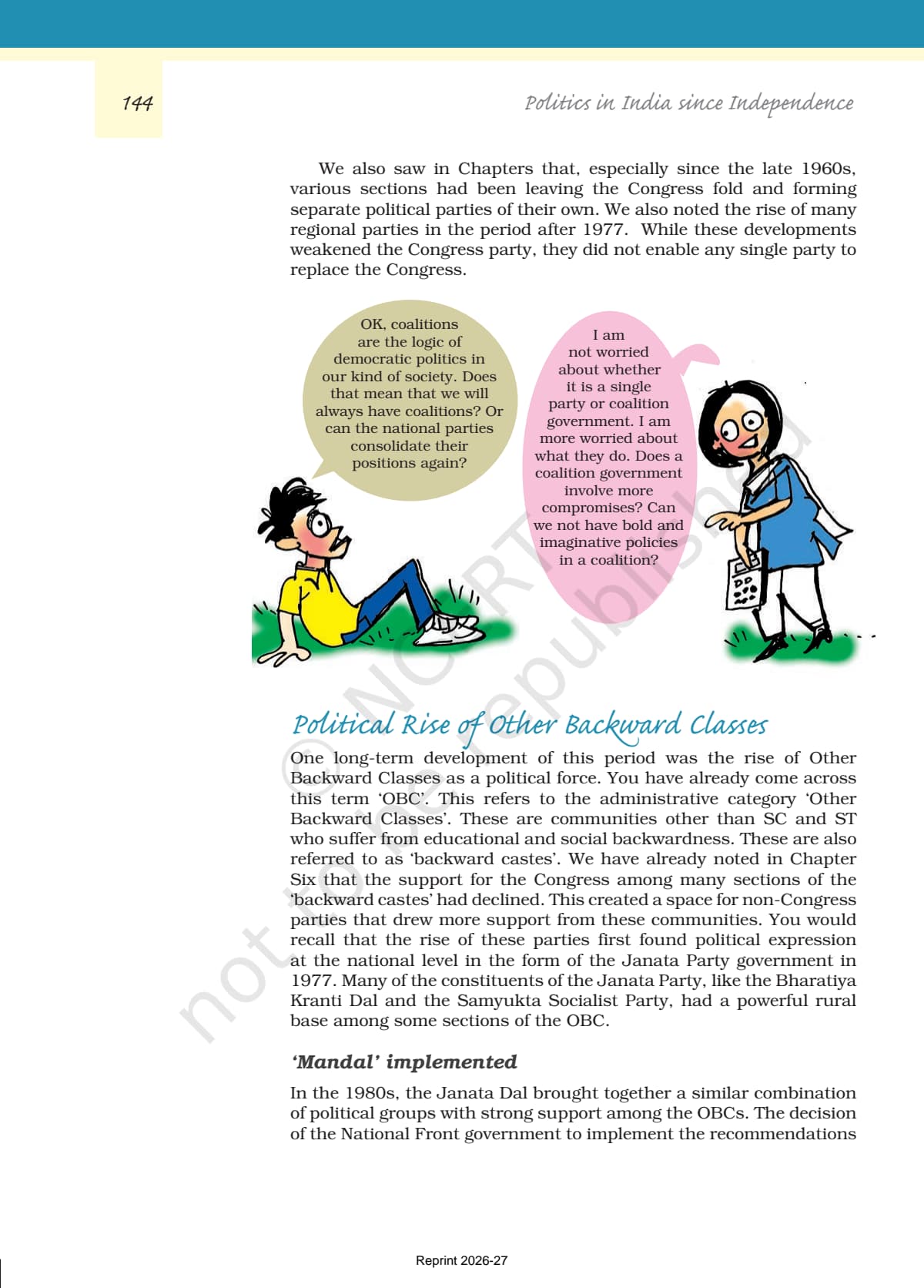
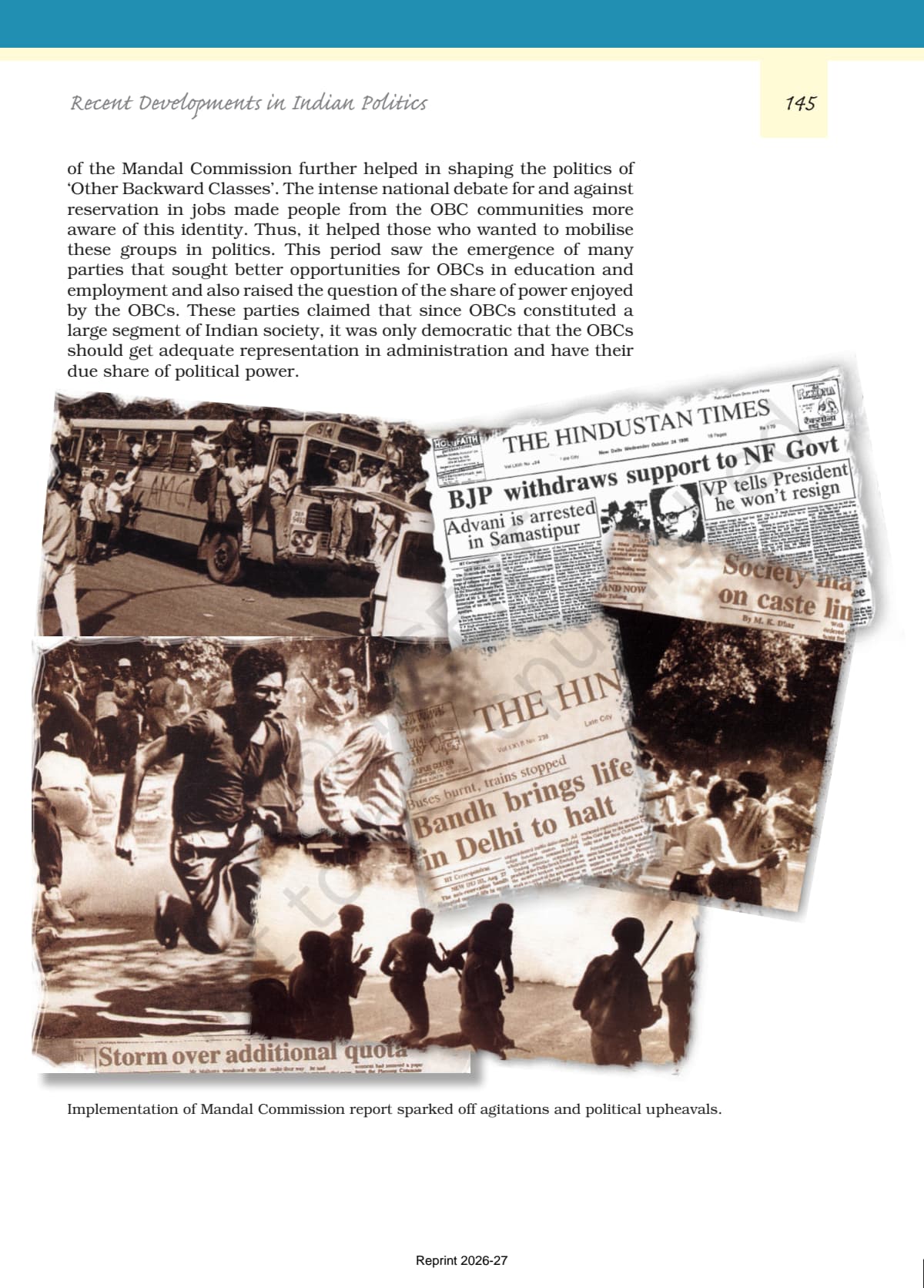
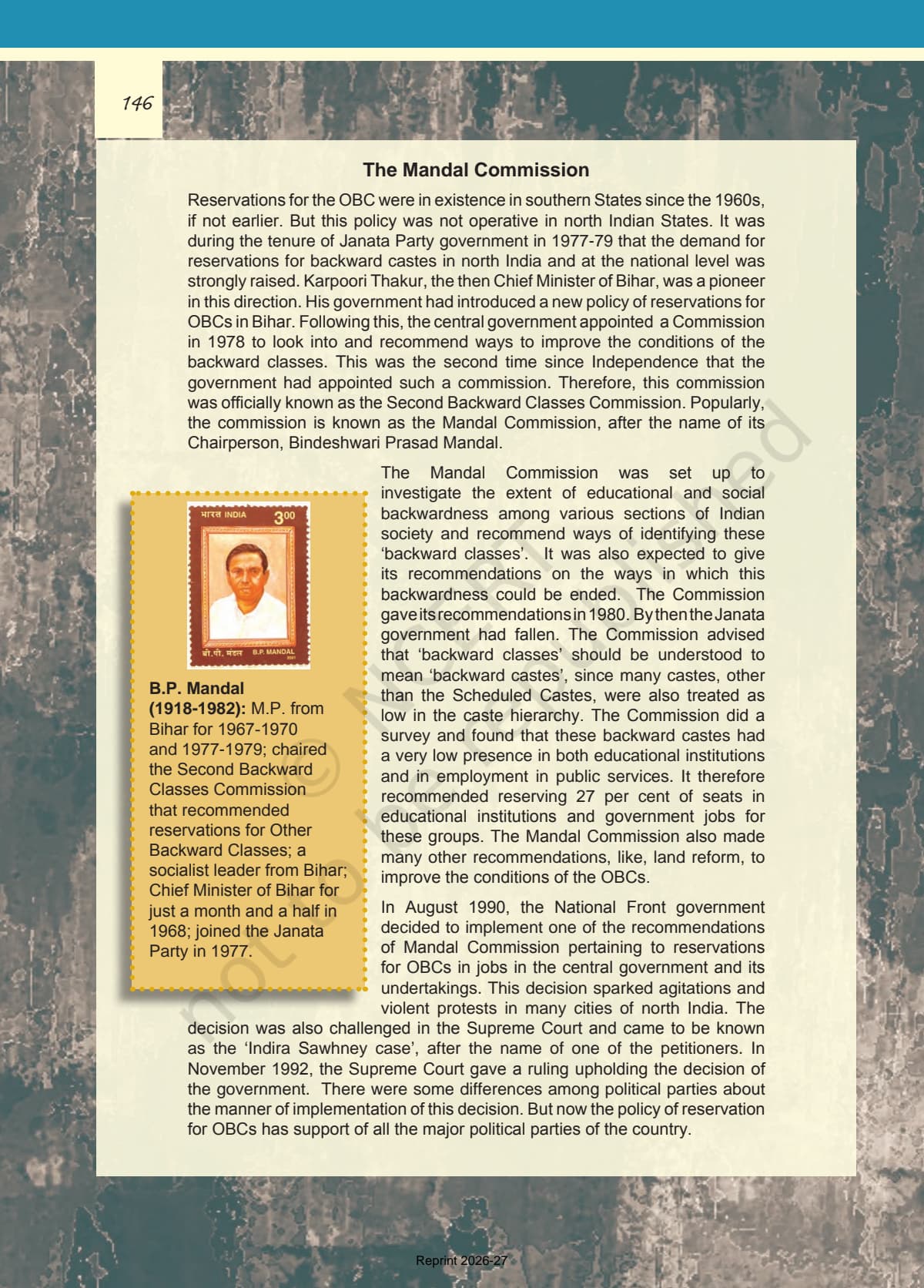
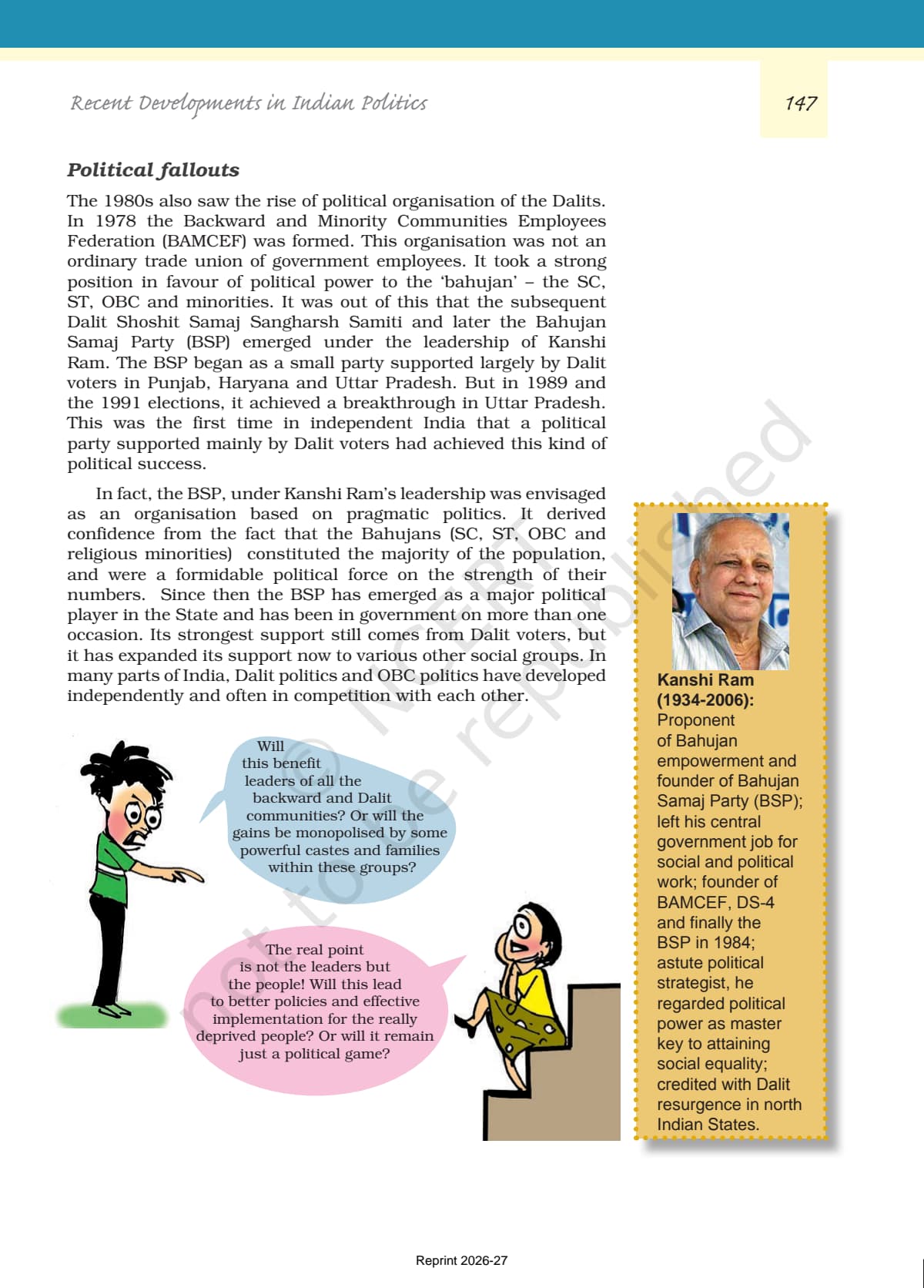
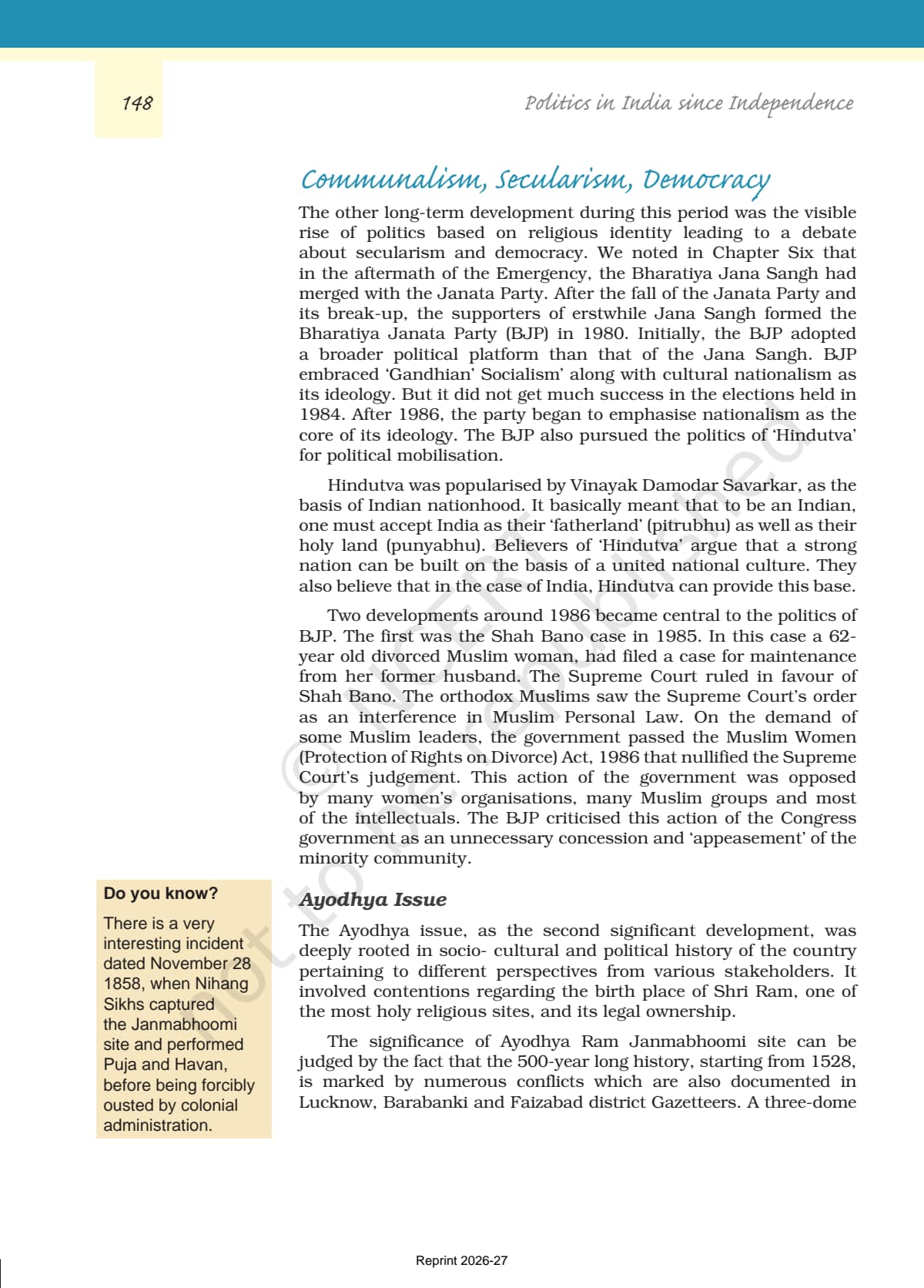
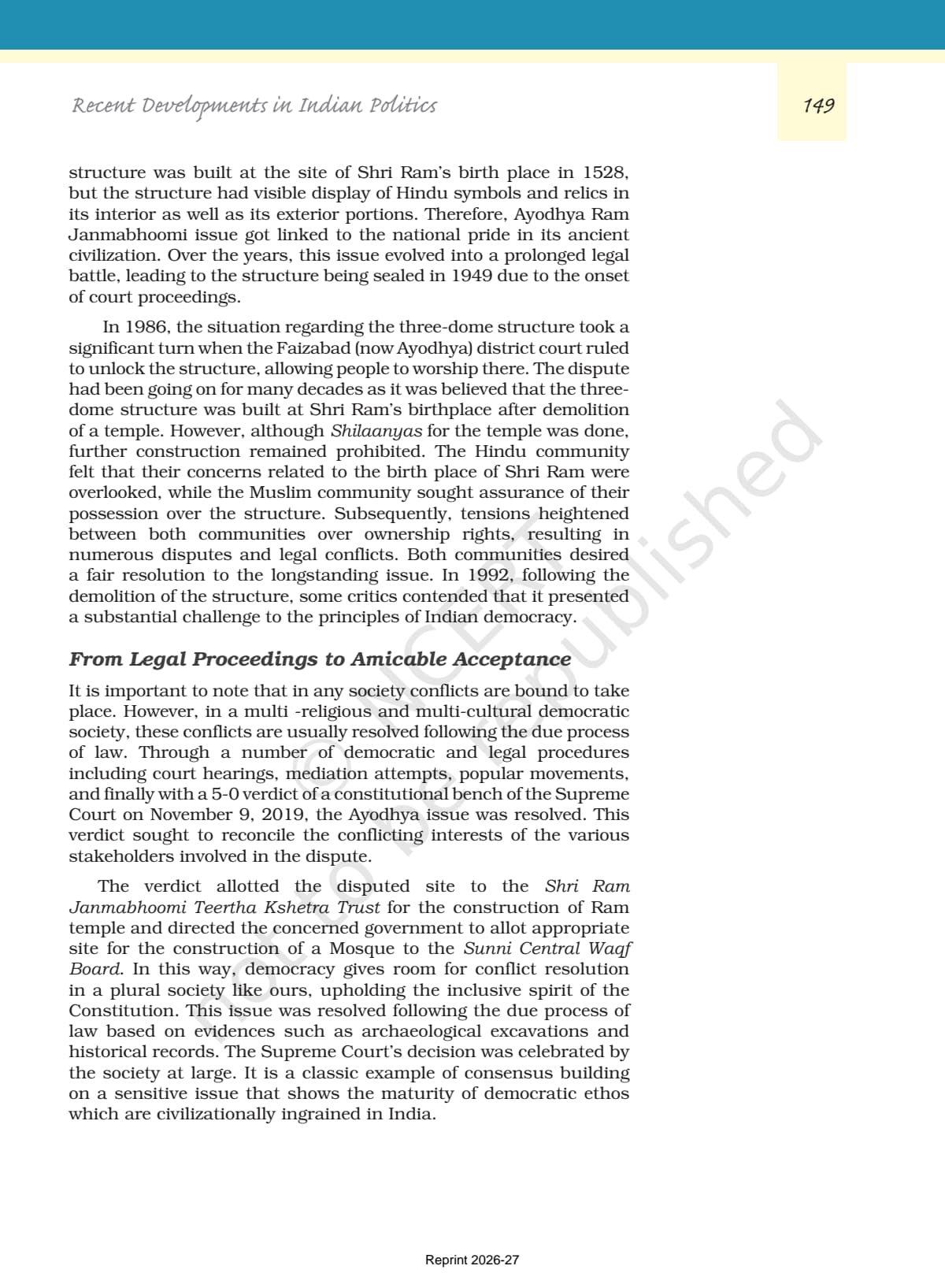
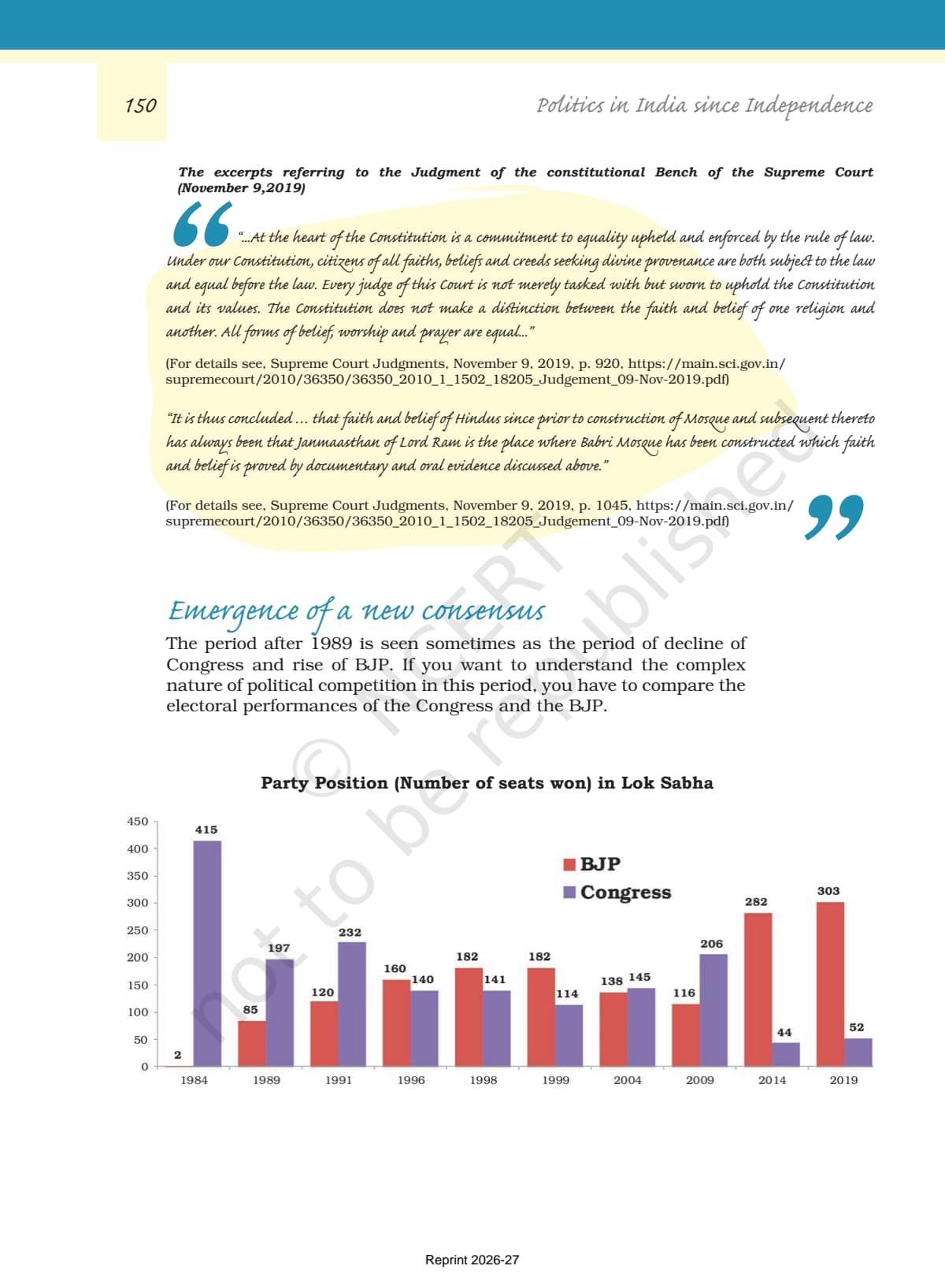
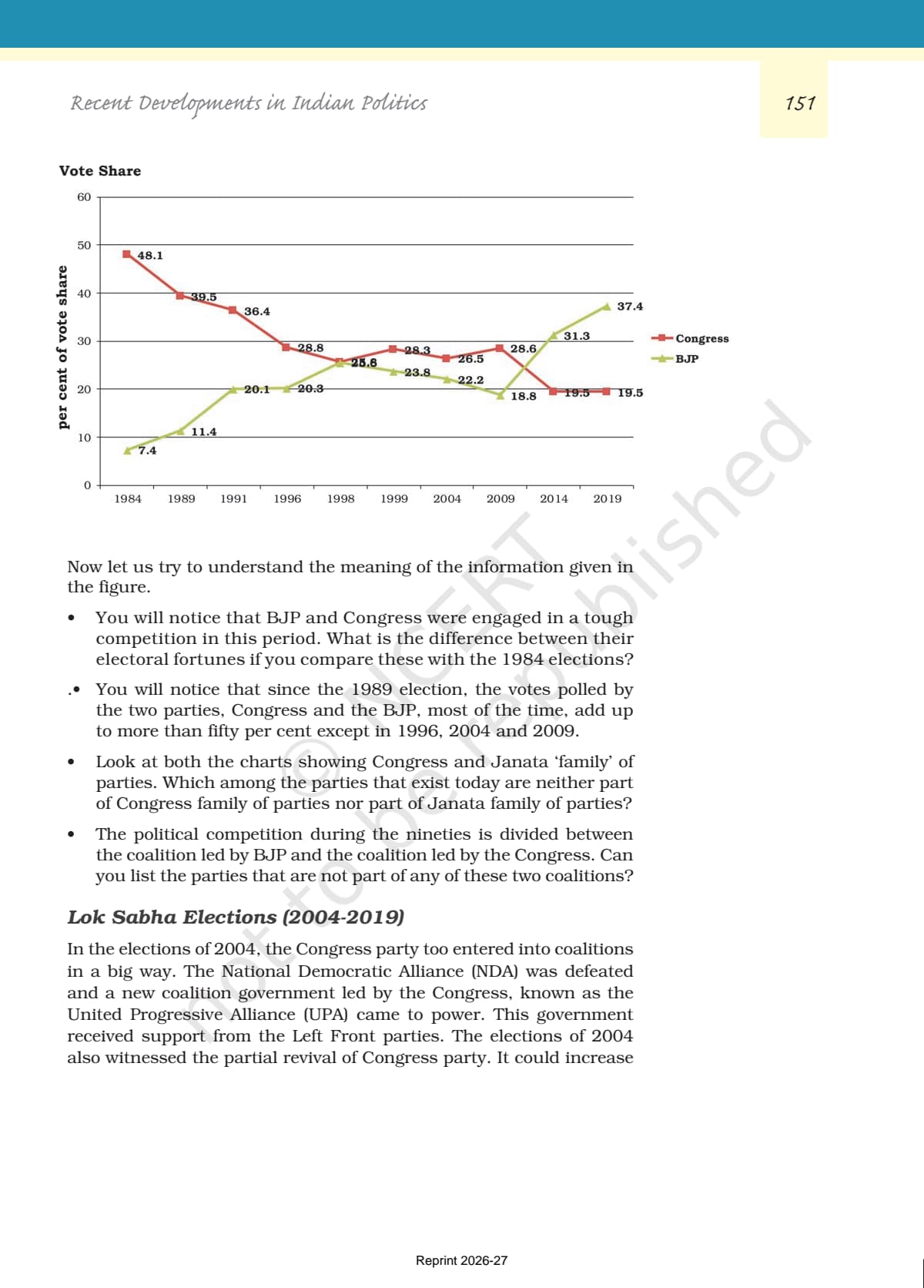
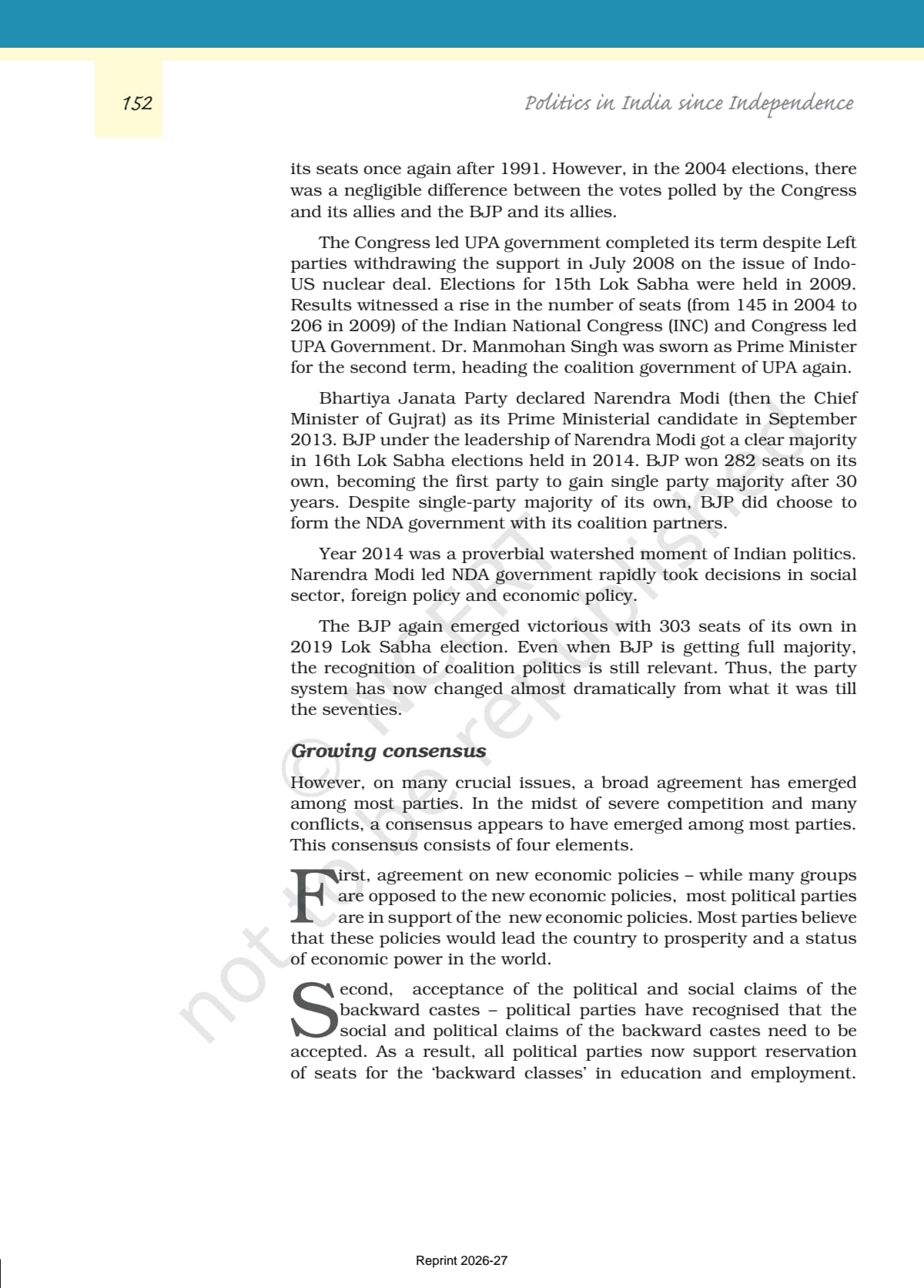
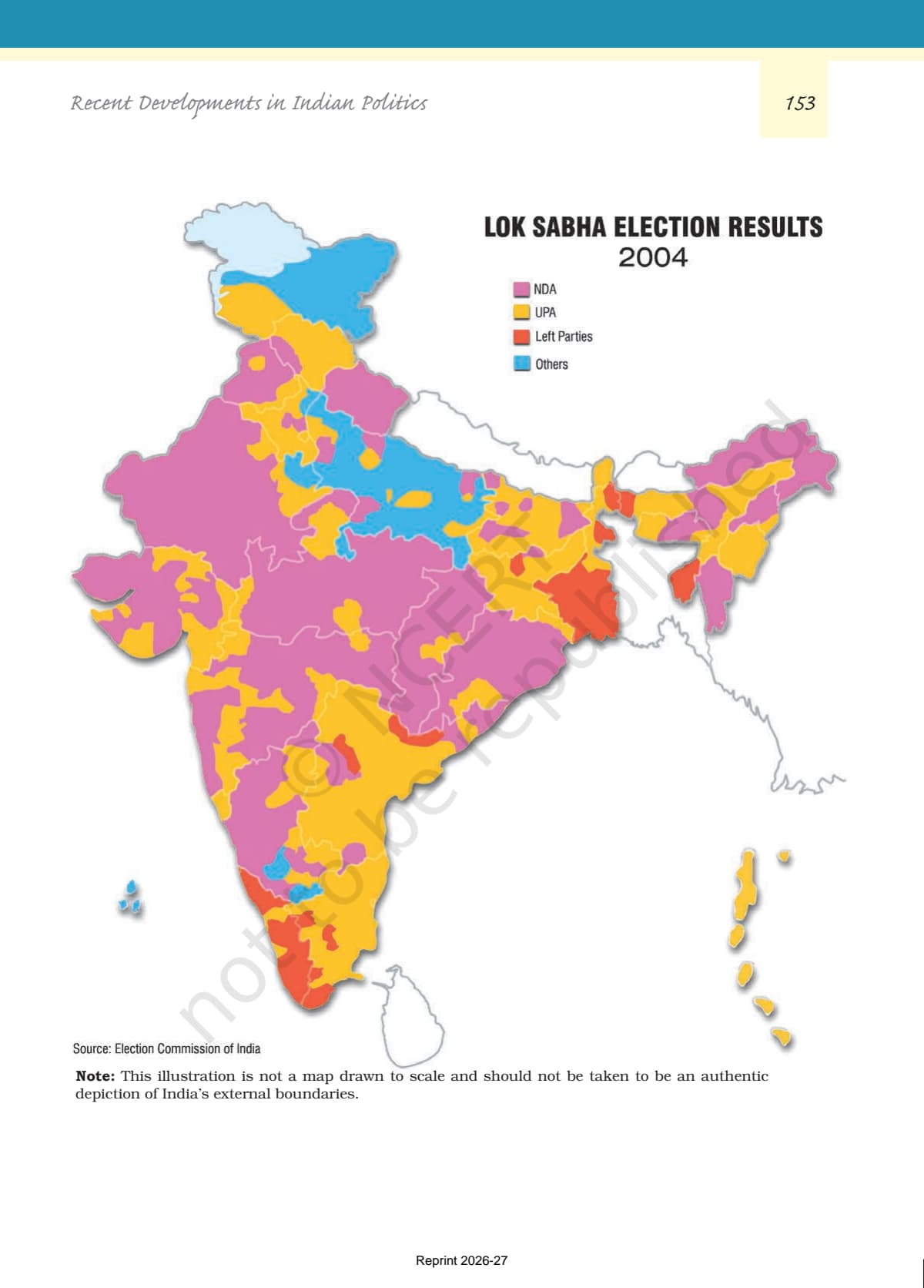
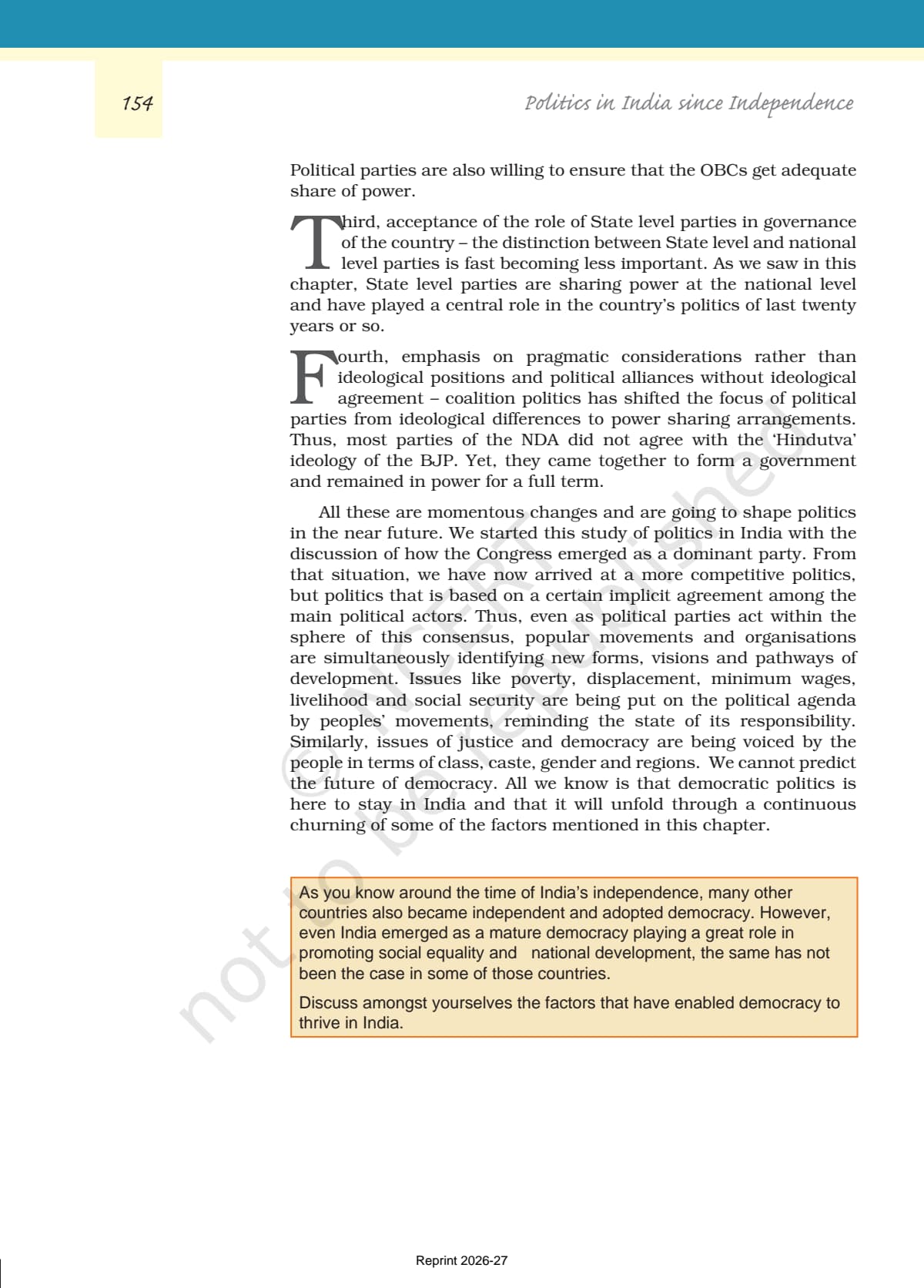
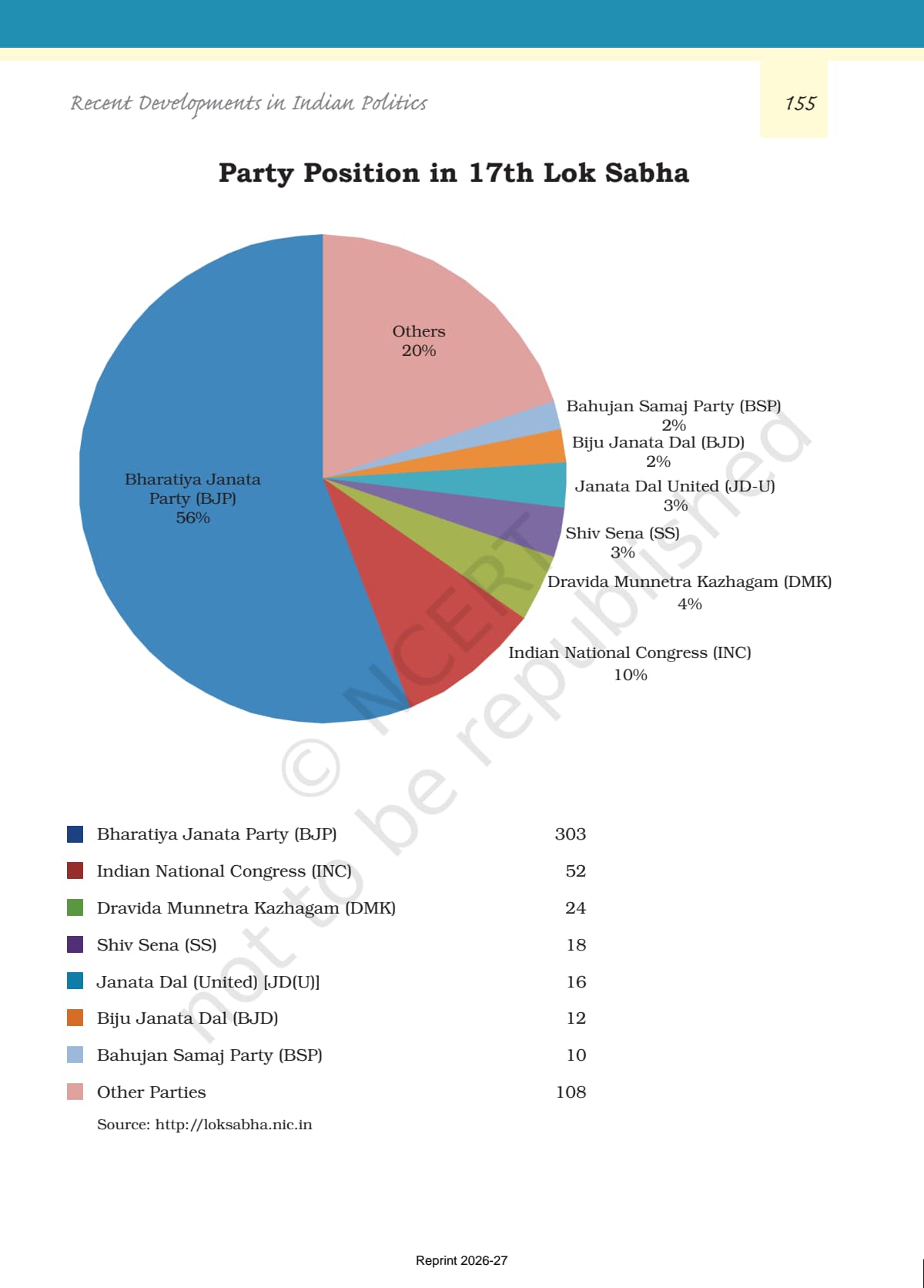
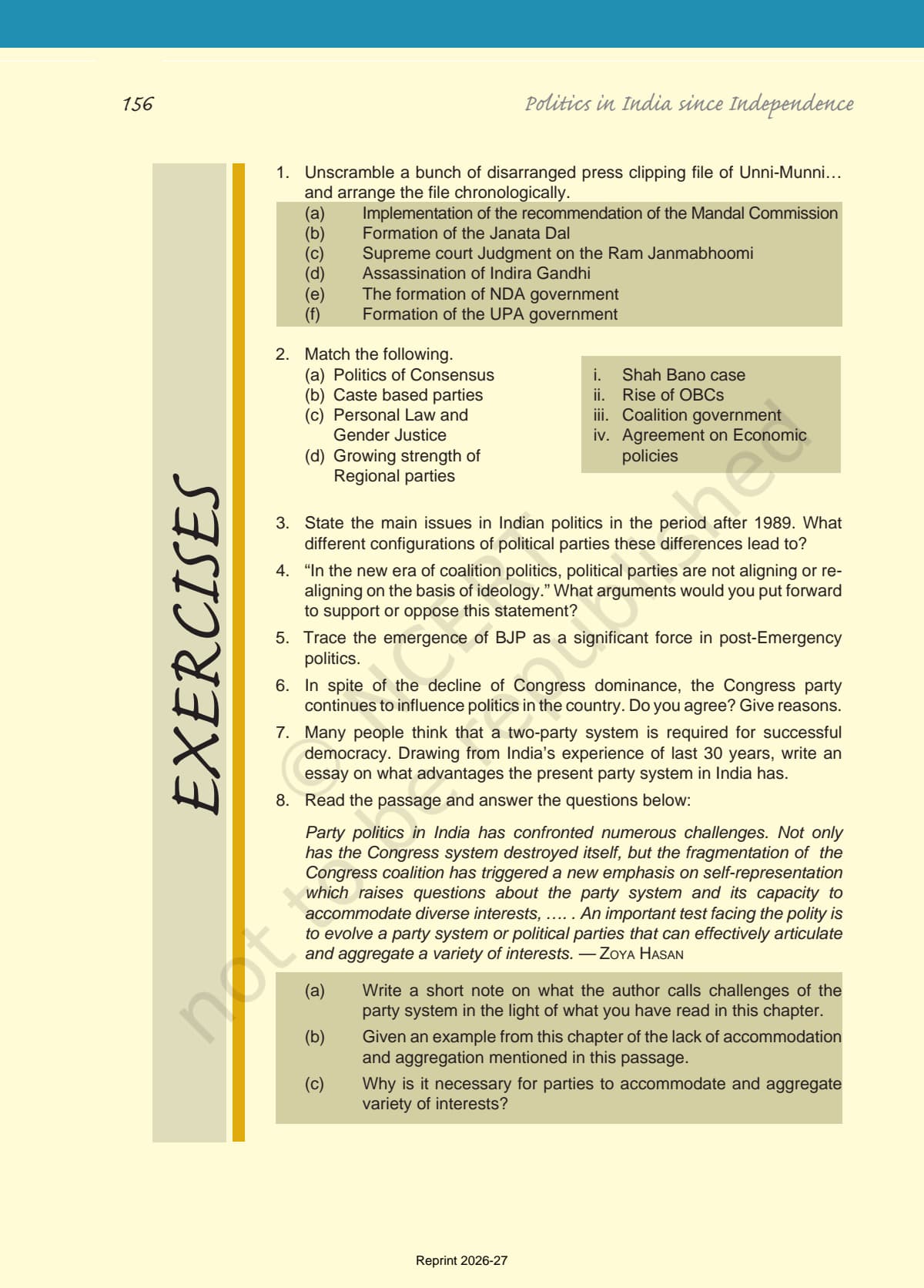
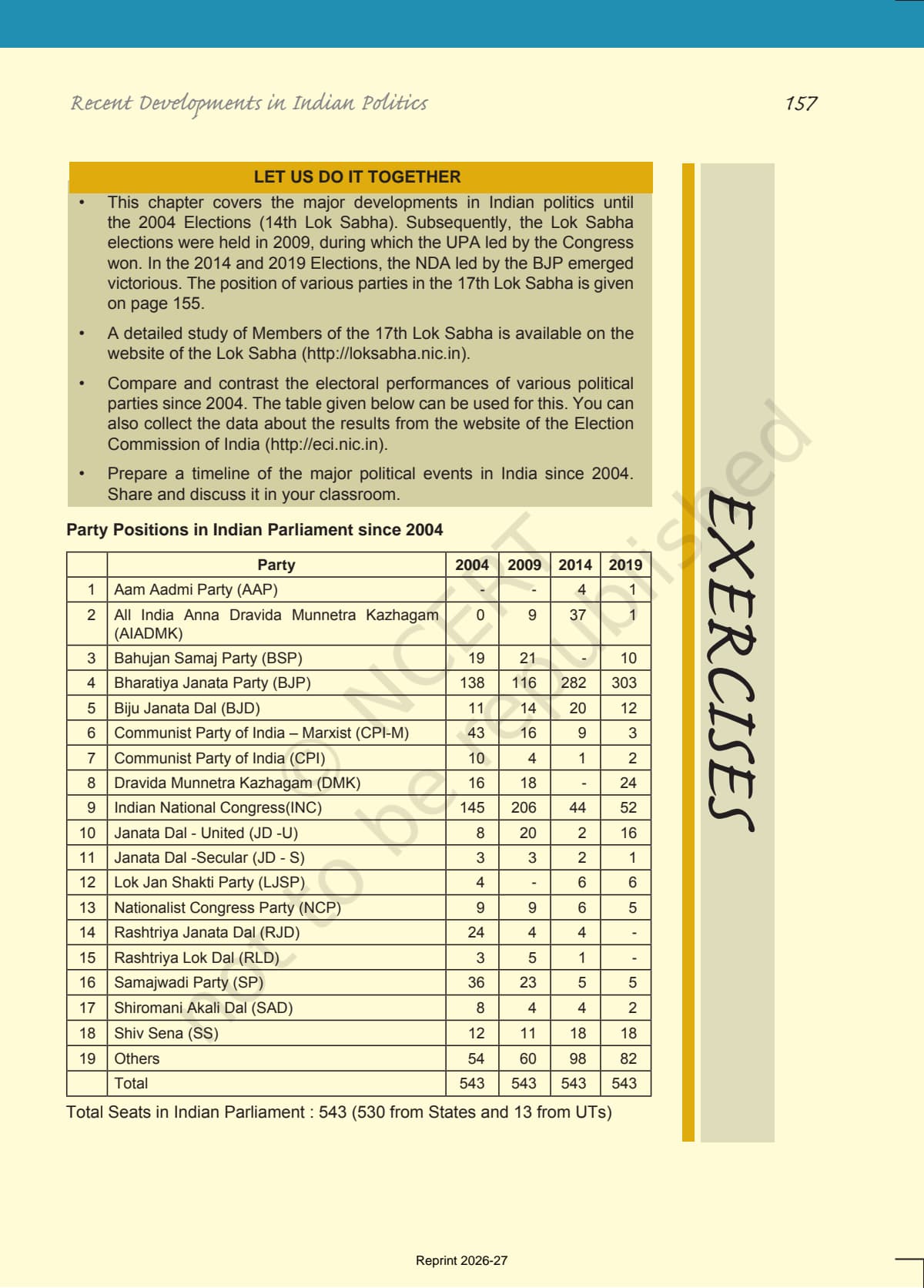
- Official NCERT chapter with the original cartoons, source boxes and the "Central Governments since 1989" material.
- This Class 12 Political Science chapter usually carries 5 to 6 marks in the board paper.
- Pairs with the NCERT Solutions, Notes and Handwritten Notes linked lower on this page.
This is the official NCERT Recent Developments in Indian Politics chapter from Politics in India Since Independence, offered for free download in the 2026-27 edition.
Student Feedback: In a Collegedunia poll of 7,030 Class 12 Political Science students before the 2026 boards, 68% of students said they kept the official NCERT chapter PDF open while solving source-based and cartoon questions, because the passages and cartoons come straight from the chapter itself.
Source: 2026-27 Class 12 Political Science student poll. Sample of 7,030 students from CBSE schools across 12 states.
What the Recent Developments NCERT Chapter Covers
Recent Developments in Indian Politics is the last chapter of Politics in India Since Independence. It takes a wide view of Indian politics after 1989, the year the long "Congress system" ended. Before 1989 the Congress was the central party; after it, no single party could win a majority, so India entered a long era of coalitions.
The chapter is built around four threads, which the NCERT covers in order:
- The end of Congress dominance: the 1989 defeat and the start of multi-party competition.
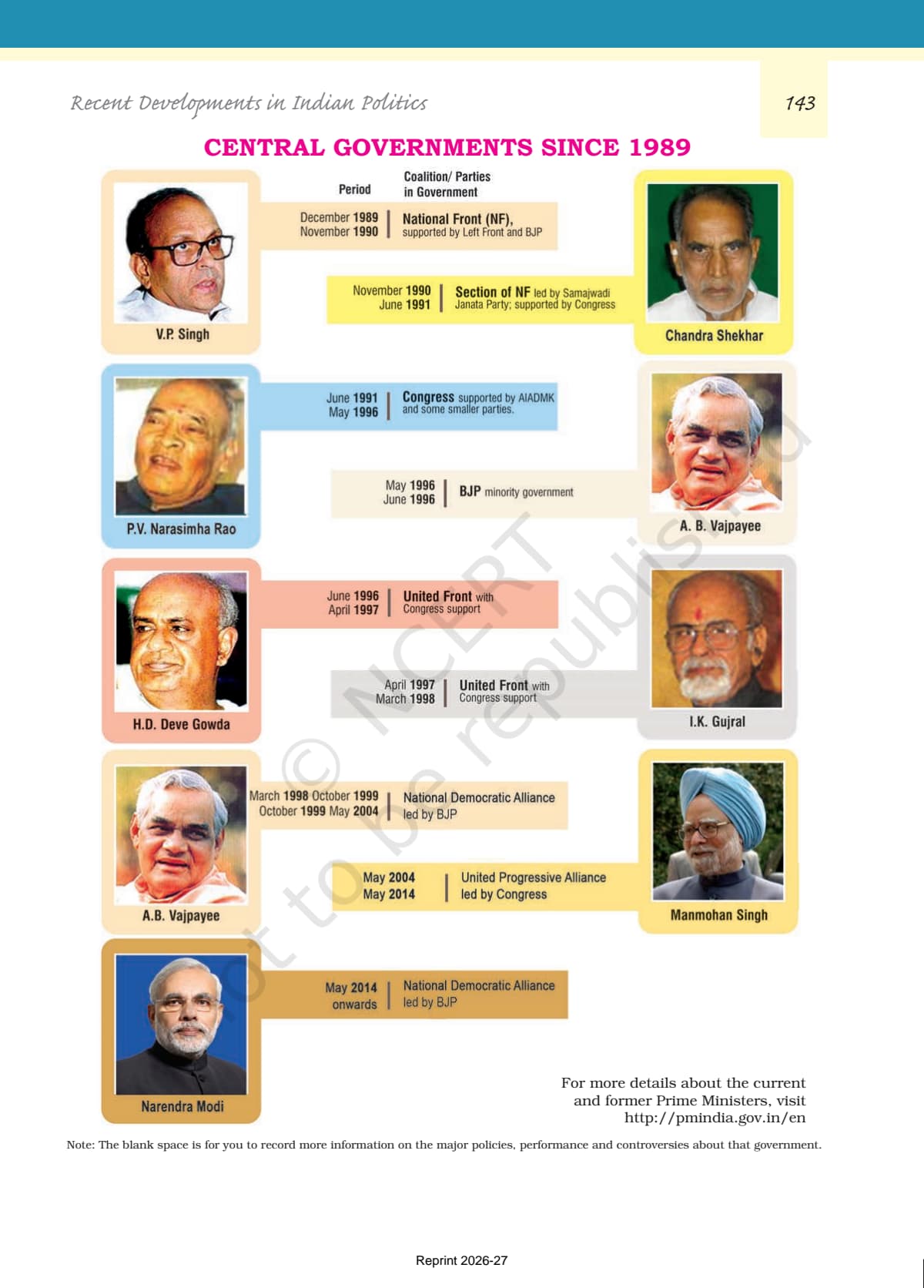
- The era of coalitions: the National Front, United Front, NDA and UPA governments.
- Mandal and Mandir: the OBC reservation issue and the Ayodhya dispute.
- The new consensus: a four-part agreement on economy, backward castes, regional parties and pragmatism.
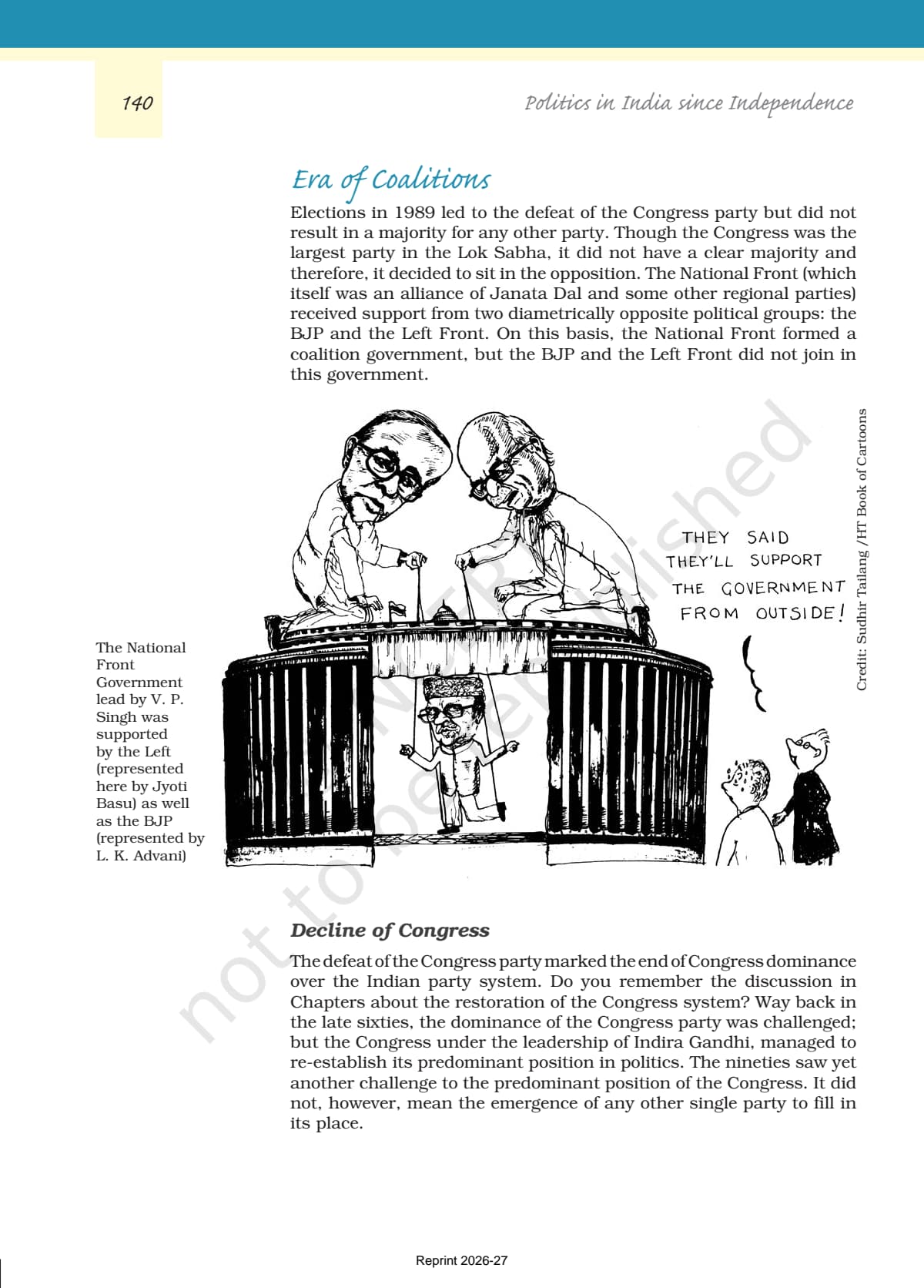
Reading the original NCERT text matters because the cartoons and source boxes in the class 12 political science chapter 8 pdf are exactly what CBSE quotes in source-based questions. A student who knows the chapter's own examples, such as the Sudhir Tailang cartoon of the Left and the BJP propping up the same government, can answer those passages with confidence.
Chapter Highlights and Important Topics
The NCERT chapter is rich with cartoons, source boxes and the "Central Governments since 1989" material that the exam often refers to. Knowing what each highlight covers helps students answer questions quickly. The table below lists the highlights students should study in the original chapter PDF.
| Highlight | Why it matters |
|---|---|
| End of Congress dominance | Sets out the 1989 defeat and the move from one-party rule to coalitions. |
| Coalition governments | The National Front, United Front, NDA and UPA, with the logic of each alliance. |
| Mandal Commission | The 1990 decision on 27% OBC reservation and the anti-Mandal protests. |
| Ayodhya and the BJP | The Ram Janmabhoomi movement, the secularism debate and the rise of the BJP. |
| The growing consensus | Source material on the four-part agreement most parties now share. |
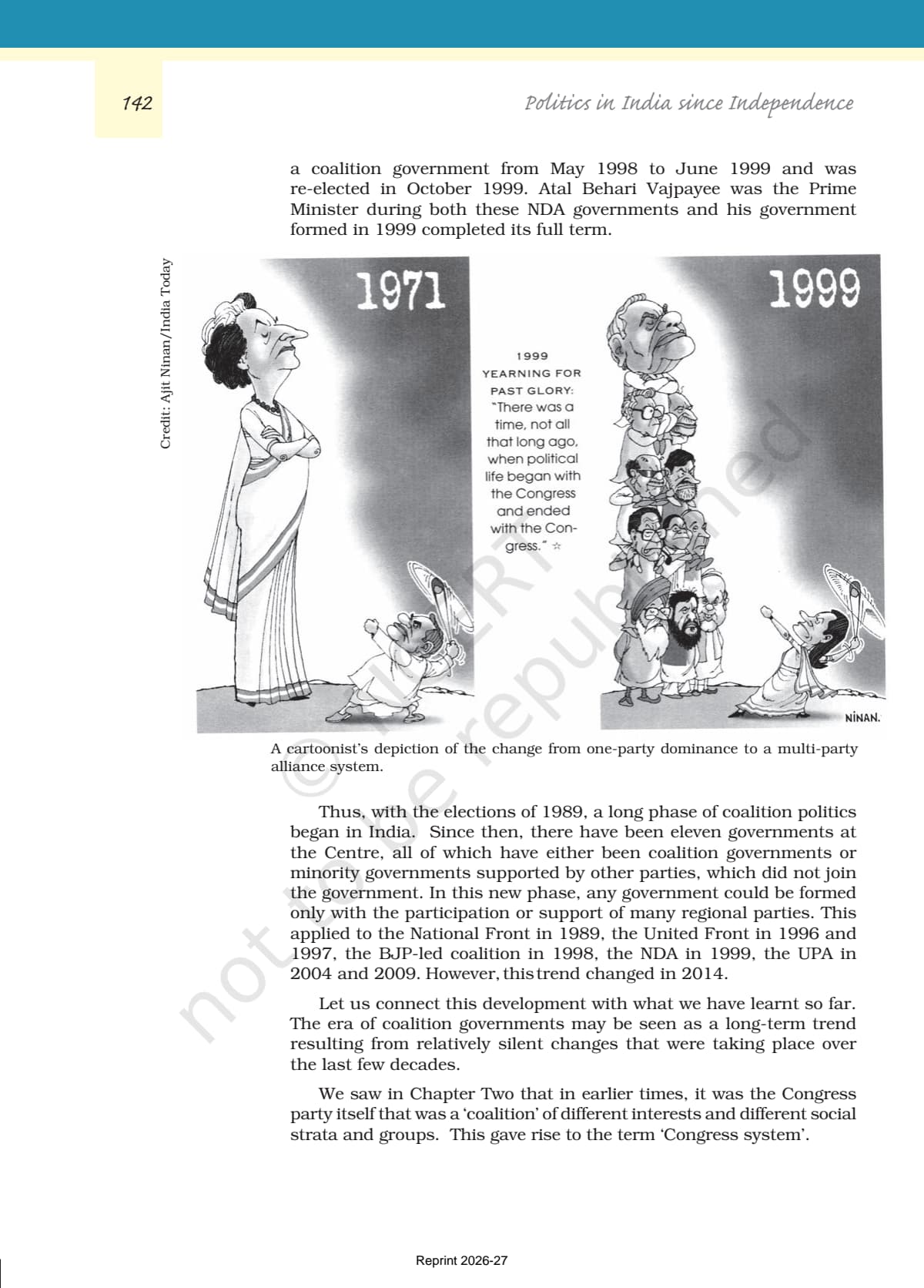
The chapter also carries three famous cartoons (by Sudhir Tailang, Ajit Ninan and the "Indian Polity" roller coaster) that the exam uses for source questions. One point students should mark while reading is that the long Ayodhya dispute was finally settled by the Supreme Court in 2019. That single idea from the chapter rounds off the chronology answer, which appears almost every year.
Congress Decline, Coalitions and Mandal in the Chapter
The chapter devotes whole sections to the fall of the Congress, the rise of coalitions and the Mandal issue. These sections feed the short and long answers, so reading them in the original NCERT helps students quote the right facts. The lists below show what the chapter covers under each theme.
- Congress decline: the fall from 415 seats in 1984 to 197 in 1989, and the end of the "Congress system".
- Coalitions: the National Front (1989), the United Front (1996), then the NDA and the UPA.
- Mandal: the National Front's 1990 decision on 27% OBC reservation and the anti-Mandal violence.
- OBC politics: the lasting rise of caste-based parties after the Mandal issue.
The chapter explains that no single party won a majority in any Lok Sabha election from 1989 to 2014, which made coalitions the normal way to govern. It also gives the chronology students need for the "arrange in order" question, from Indira Gandhi's assassination in 1984 to the 2019 Ayodhya verdict. Because these examples are drawn straight from the source chapter, the chapter 8 political science class 12 ncert book is the most reliable place to learn them.
Ayodhya, the BJP and the New Consensus in the Chapter
The closing sections of the chapter explain the Ayodhya issue, the rise of the BJP and the new consensus. These pages are the most exam-relevant for the "trace" and essay questions, so reading them in the original chapter helps students write balanced answers.
- The BJP's rise: from the Jana Sangh (1980), through the Hindutva turn after 1986, to leading the NDA in 1998-99.
- The Ayodhya issue: the Ram Janmabhoomi movement, the 1992 demolition and the secularism debate.
- The 2019 verdict: the Supreme Court's 5-0 judgment that finally resolved the dispute.
- The new consensus: agreement on economy, backward castes, regional parties and pragmatism.
The chapter is clear that despite the turbulence of the 1990s, a broad consensus emerged among most parties. It ends with the idea that India's multi-party, coalition system, for all its noise, holds a vast and diverse society together. Reading these closing pages in the official PDF gives students the wording NCERT itself uses, which scores best in the board paper.
How to Download and Use the NCERT Chapter PDF
The chapter PDF is free and easy to use on any device. Students can save it for offline reading and pair it with the solutions and notes. The steps below show how to get the most out of the Recent Developments in Indian Politics PDF during revision.
- Download: tap the download card above to save the official Chapter 8 PDF to your device.
- First read: read the chapter once end to end, marking the three cartoons and the "Central Governments since 1989" material.
- Source practice: keep the PDF open while attempting source-based and cartoon questions, since they come from it.
- Revision: use the chapter alongside the notes to fix the coalition timeline and the four-part consensus.
Many students search for the class 12 political science chapter 8 pdf the night before a test so they can revise offline. A saved copy means the cartoons and source boxes are always at hand. After reading the chapter, move to the solutions to check that your answers match the model points, then use the notes for a final quick recall.
How the Book PDF Pairs with the Solutions and Notes
The NCERT Book PDF is the source text. To prepare fully, students should use it with the other resources for the same chapter, all linked in the table below. Read the chapter, fix the ideas with the notes, then test yourself with the solutions.
| Resource | Best used for |
|---|---|
| Recent Developments in Indian Politics NCERT Solutions | Step-by-step answers to all 8 back-exercise questions |
| Recent Developments in Indian Politics Class 12 Notes | Quick chapter summary with all dates and key terms in one place |
| Recent Developments in Indian Politics Handwritten Notes | Last-minute, one-shot revision in a scanned notebook style |
Tip: read the chapter PDF first, then attempt the solutions on your own, and only then check the model answers. Reading the source text and cartoons before the answers builds far stronger source-based skills.
All Class 12 Political Science NCERT Book PDFs by Chapter
The table links the NCERT chapter PDFs for every chapter in both Class 12 Political Science books, so students can move across the course in one click. Recent Developments in Indian Politics is highlighted.
| Chapter | NCERT Book PDF |
|---|---|
| Contemporary World Politics | |
| Chapter 1 | The End of Bipolarity |
| Chapter 2 | Contemporary Centres of Power |
| Chapter 3 | Contemporary South Asia |
| Chapter 4 | International Organisations |
| Chapter 5 | Security in the Contemporary World |
| Chapter 6 | Environment and Natural Resources |
| Chapter 7 | Globalisation |
| Politics in India Since Independence | |
| Chapter 1 | Challenges of Nation Building |
| Chapter 2 | Era of One-Party Dominance |
| Chapter 3 | Politics of Planned Development |
| Chapter 4 | India's External Relations |
| Chapter 5 | Challenges to and Restoration of the Congress System |
| Chapter 6 | The Crisis of Democratic Order |
| Chapter 7 | Regional Aspirations |
| Chapter 8 | Recent Developments in Indian Politics |
FAQs on Recent Developments in Indian Politics NCERT Book PDF
Recent Developments in Indian Politics Class 12 NCERT Book Common Questions
Ques. Where can I download the Recent Developments in Indian Politics NCERT Book PDF?
Ans. You can download the official Recent Developments in Indian Politics Class 12 Political Science chapter PDF directly from this page. It is free, follows the 2026-27 NCERT edition, and carries the original text, cartoons and source boxes of Chapter 8.
Ques. Which book is Recent Developments in Indian Politics from?
Ans. It is the last chapter of Politics in India Since Independence, one of the two Class 12 Political Science textbooks. The chapter studies Indian politics after 1989, the coalition era and the rise of the BJP.
Ques. What does Recent Developments in Indian Politics cover?
Ans. It covers the end of Congress dominance, the coalition era (National Front, United Front, NDA, UPA), the Mandal Commission and OBC reservation, the Ayodhya issue and the rise of the BJP, and the four-part consensus most parties now share.
Ques. Why should I read the original NCERT chapter PDF?
Ans. Because CBSE draws source-based and cartoon questions straight from the chapter's own boxes and the three cartoons by Tailang, Ninan and others. Reading the official chapter 8 political science class 12 PDF gives you the exact wording and examples that score best in the board paper.
Ques. How should I use the chapter PDF with the other resources?
Ans. Read the chapter PDF first, fix the ideas with the notes, then test yourself with the solutions. Keeping the PDF open while practising source-based and cartoon questions helps, since the passages and cartoons come directly from it.



Comments