




The The End of Bipolarity PDF is the official NCERT chapter on the collapse of the Soviet Union from Contemporary World Politics. This page lets students download the original Chapter 1 text and figures for the 2026-27 CBSE syllabus. Reading the source chapter is the best way to understand how the Cold War ended and the world moved from two superpowers to one.
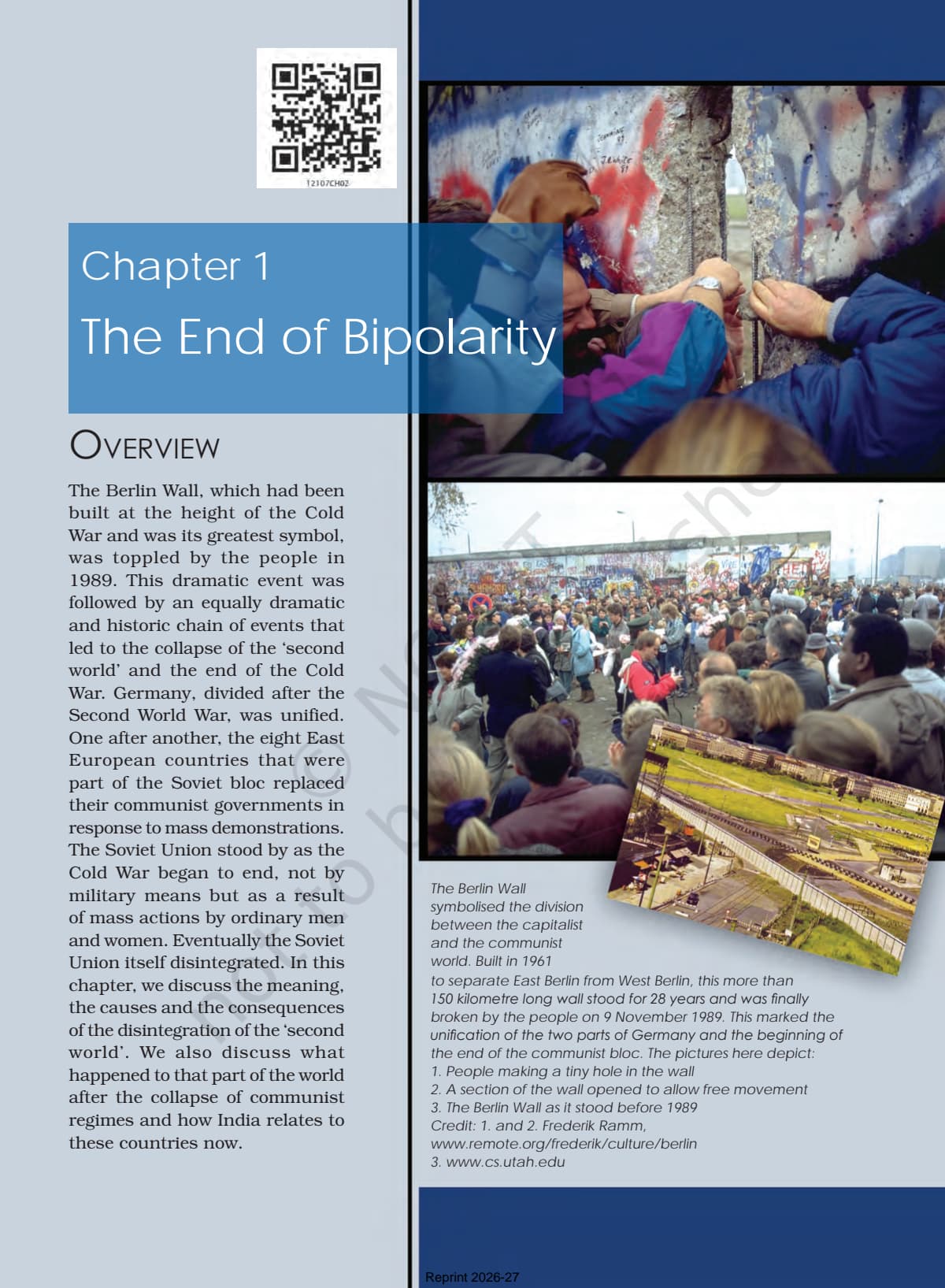
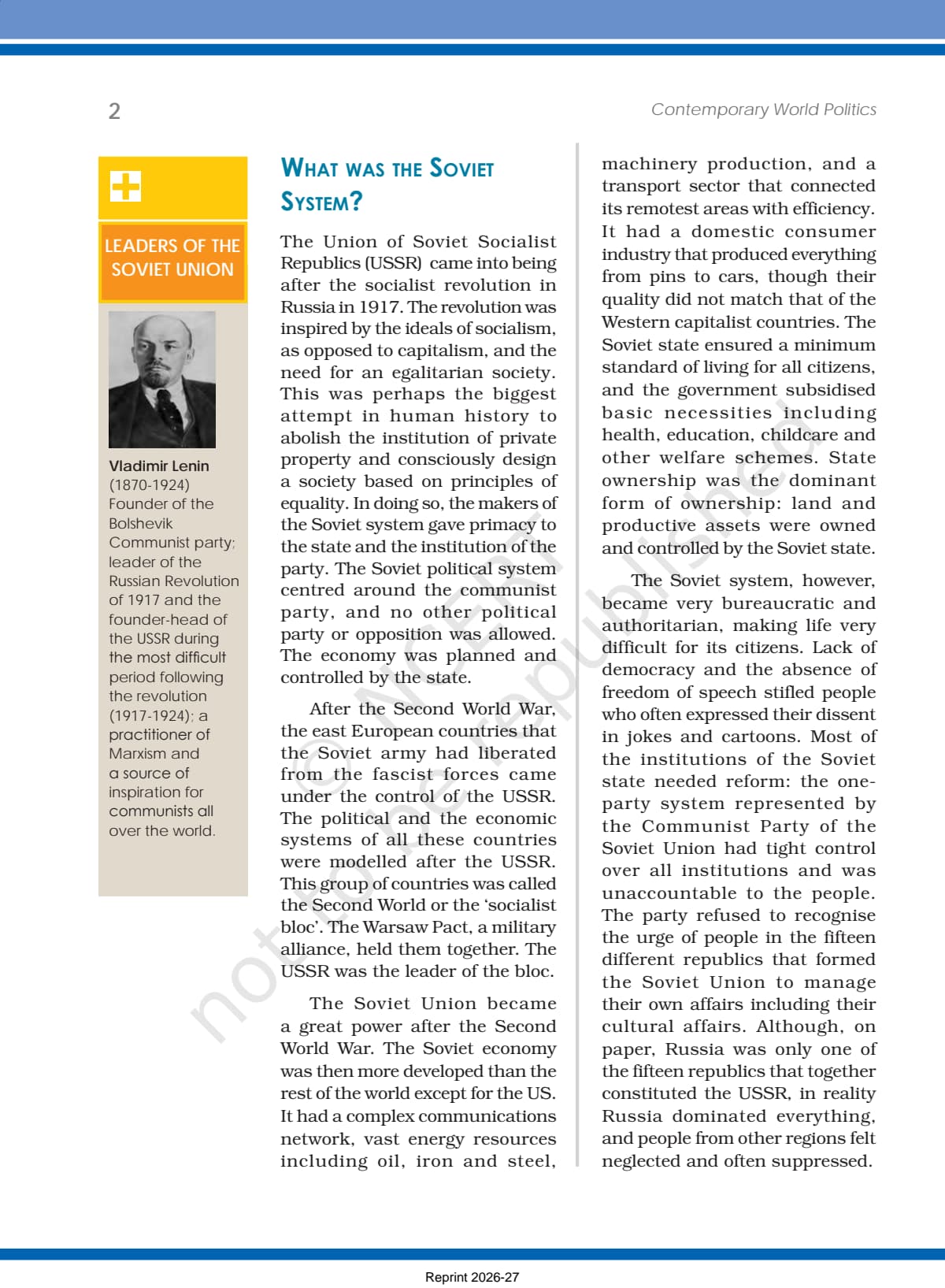
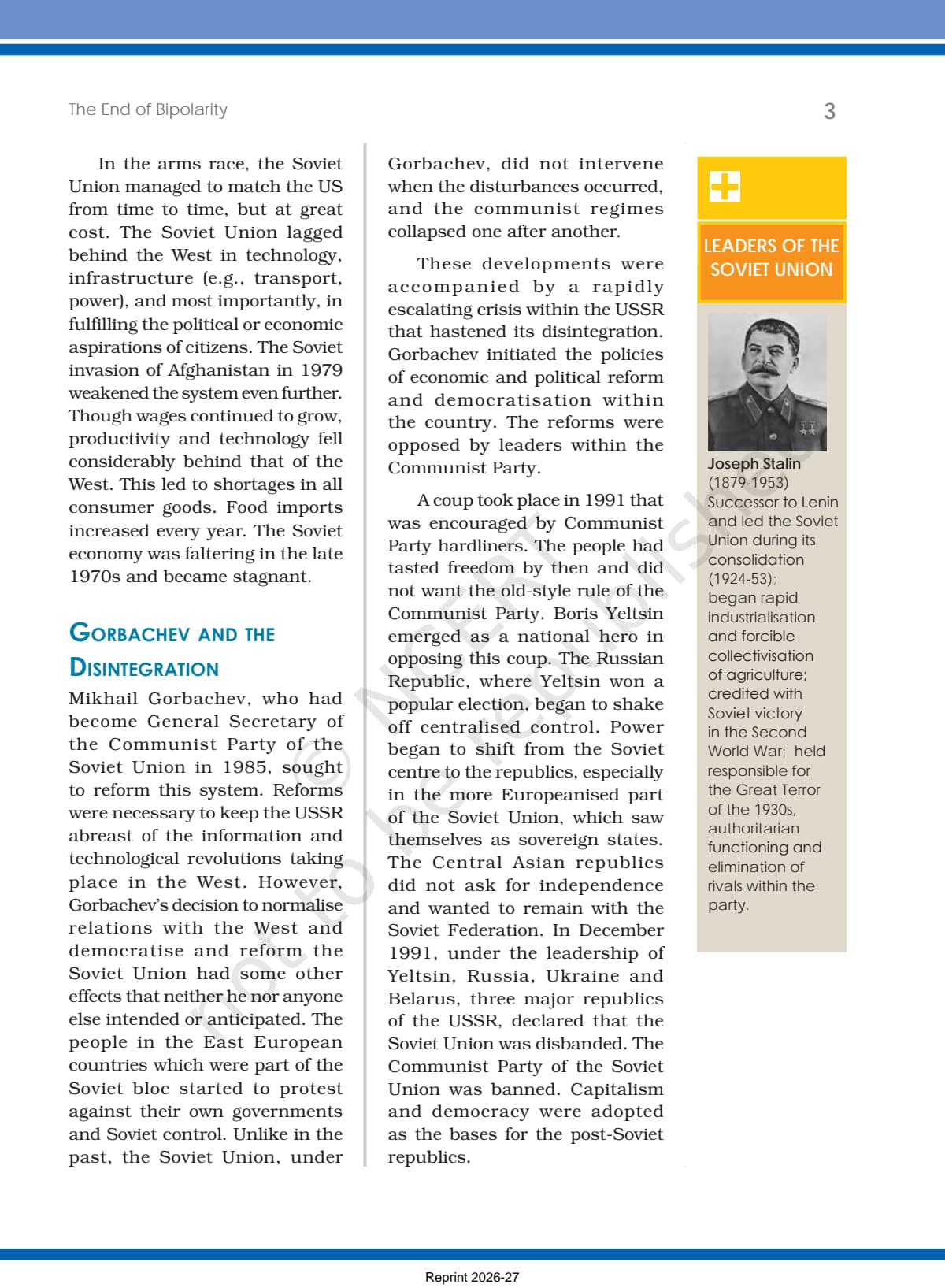
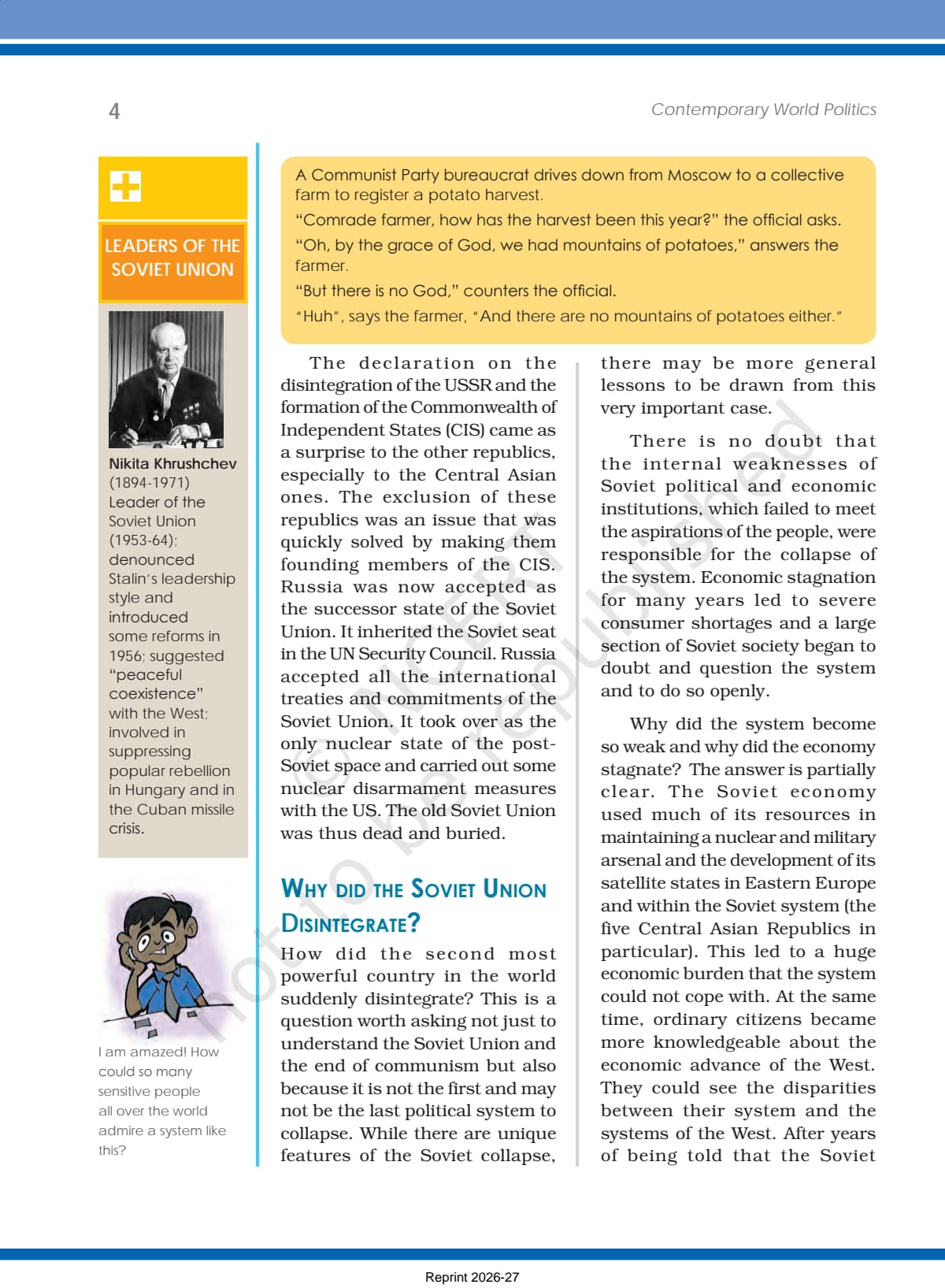
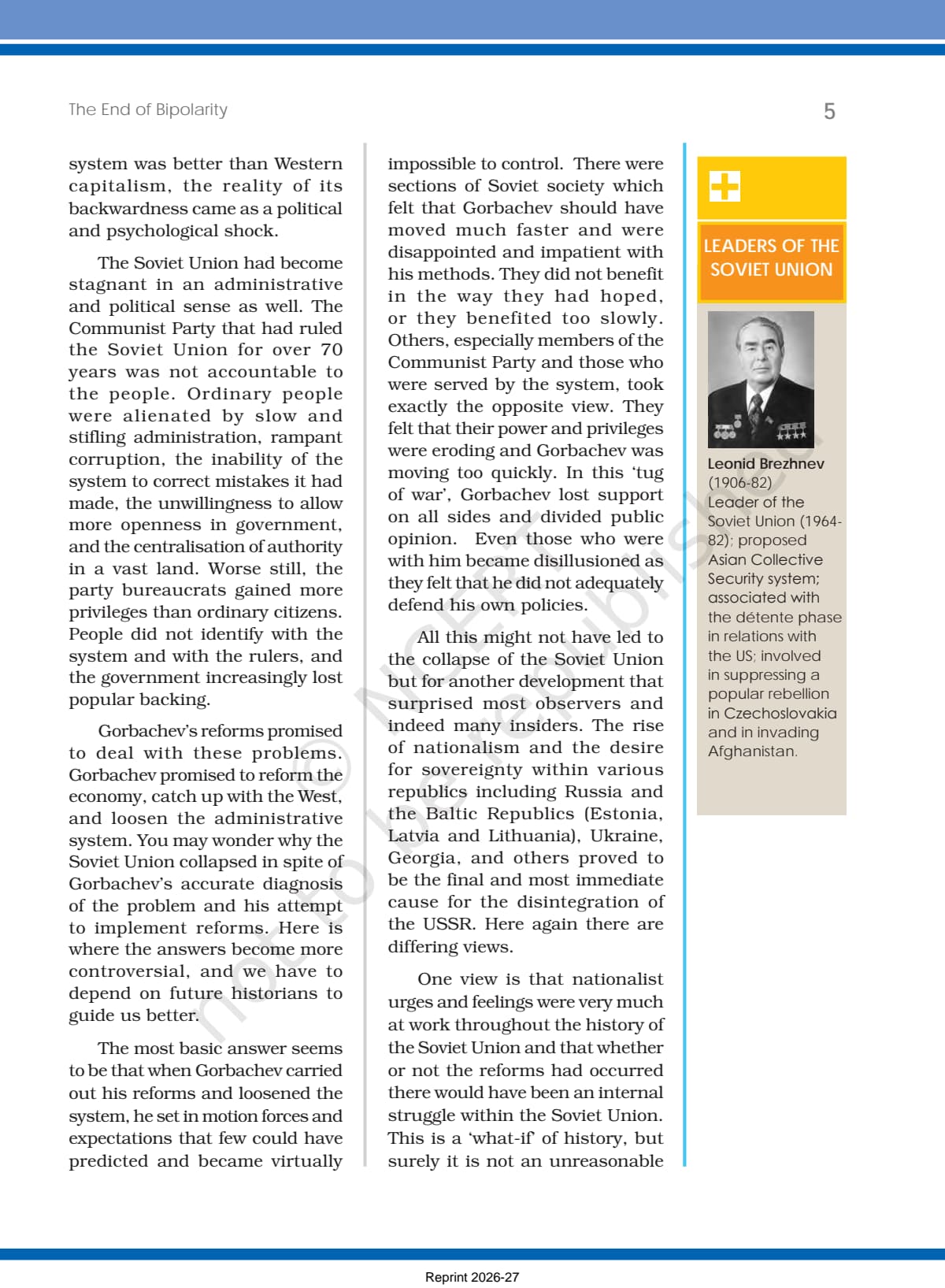
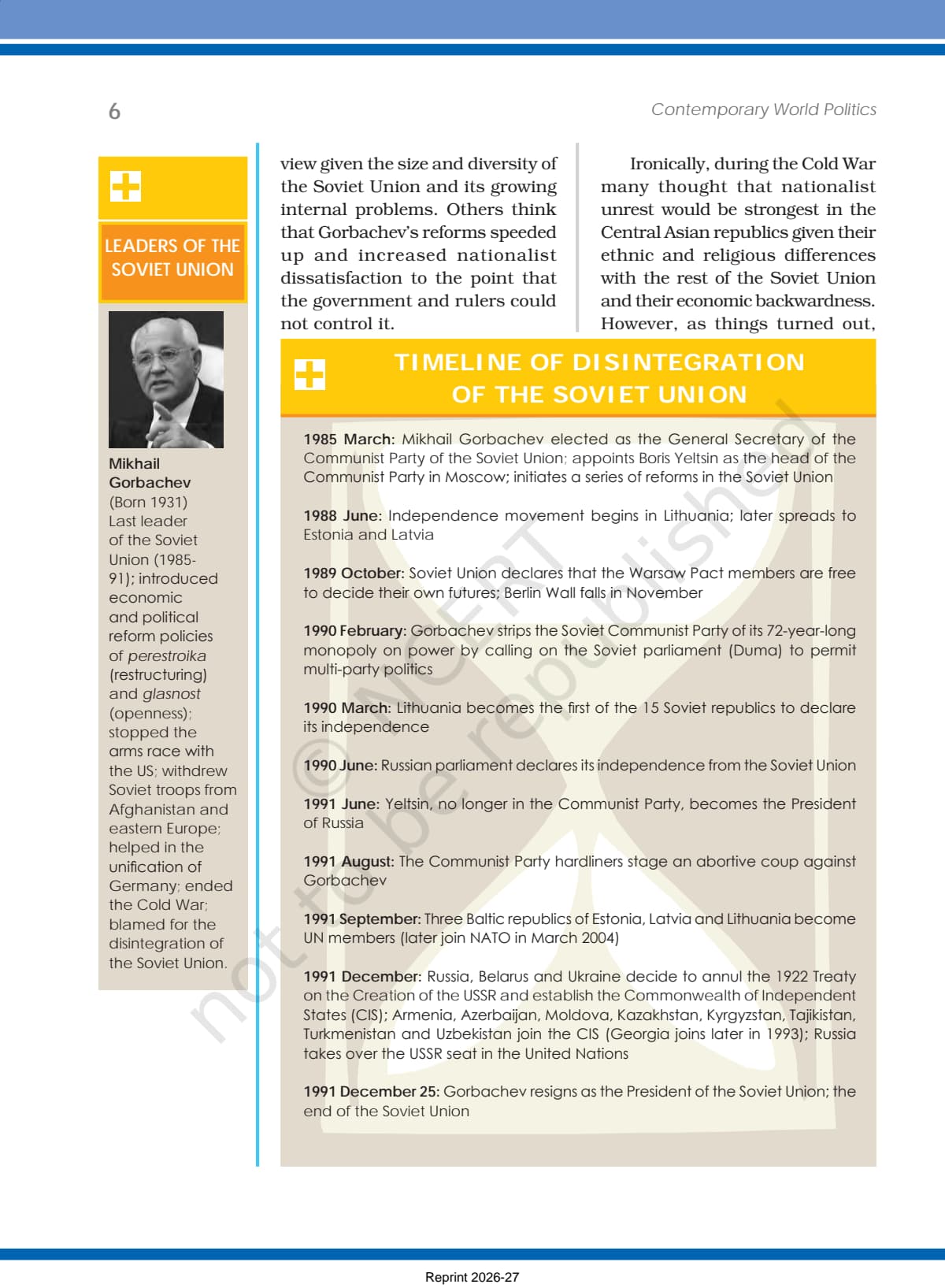
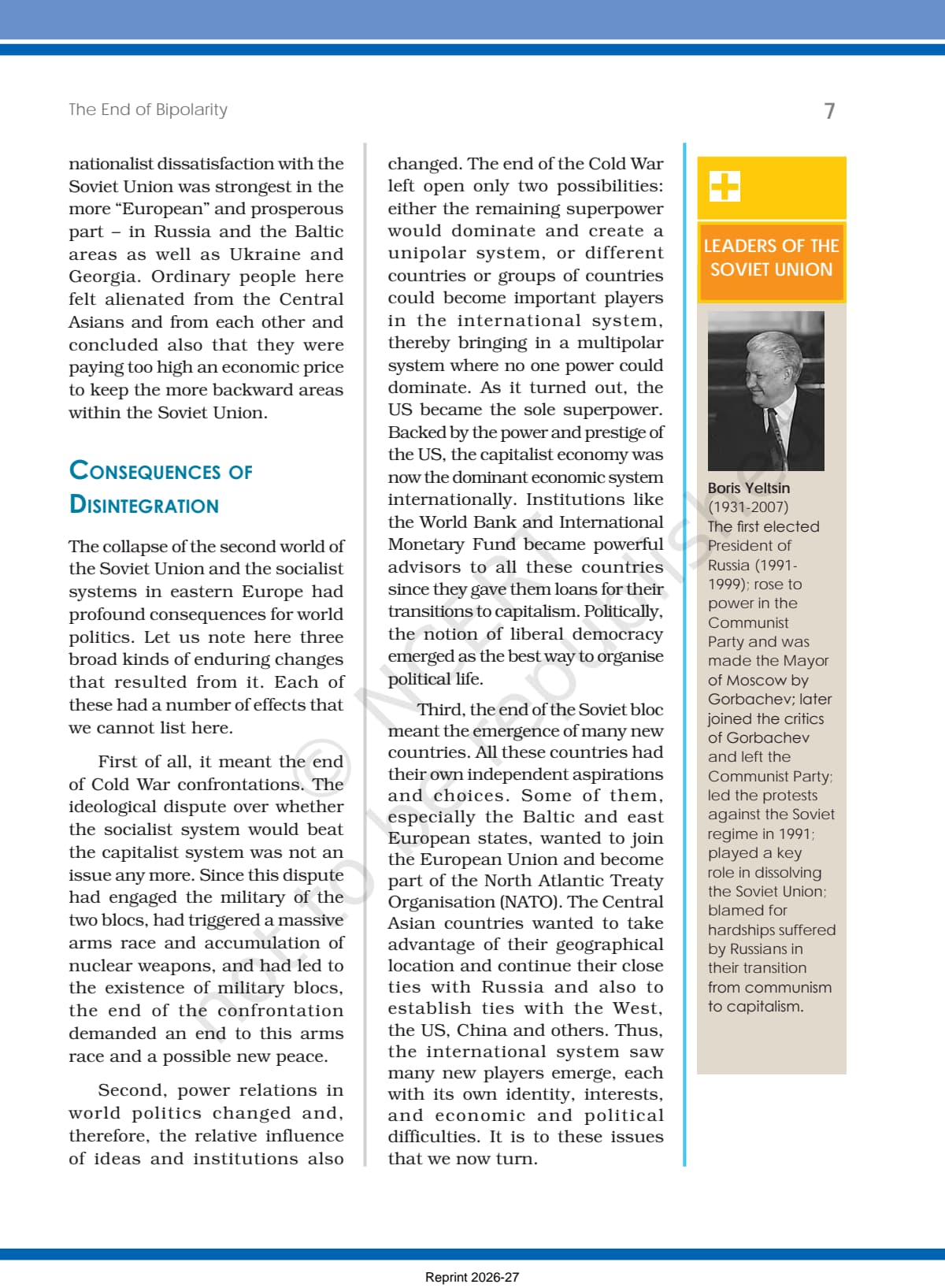
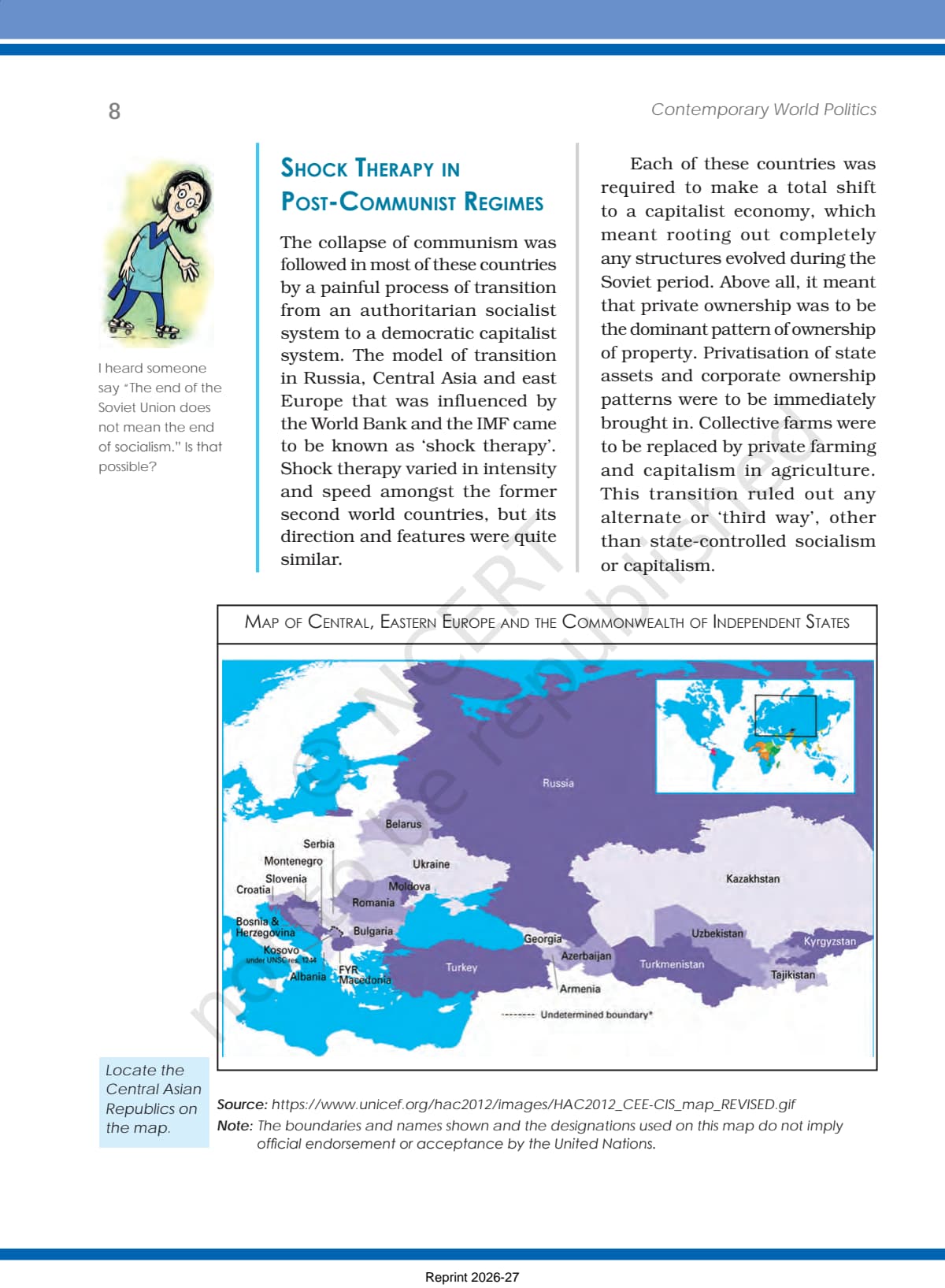
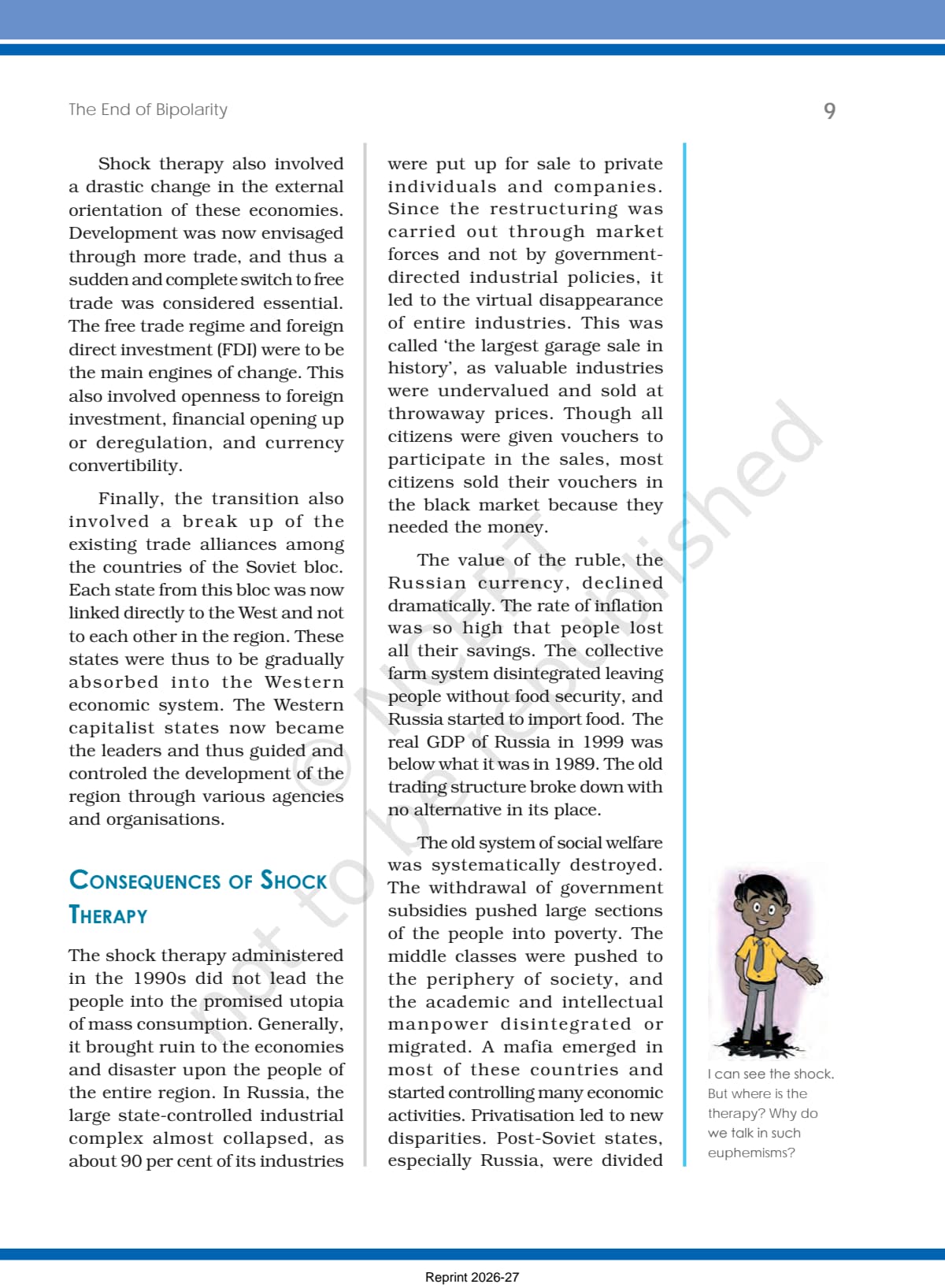
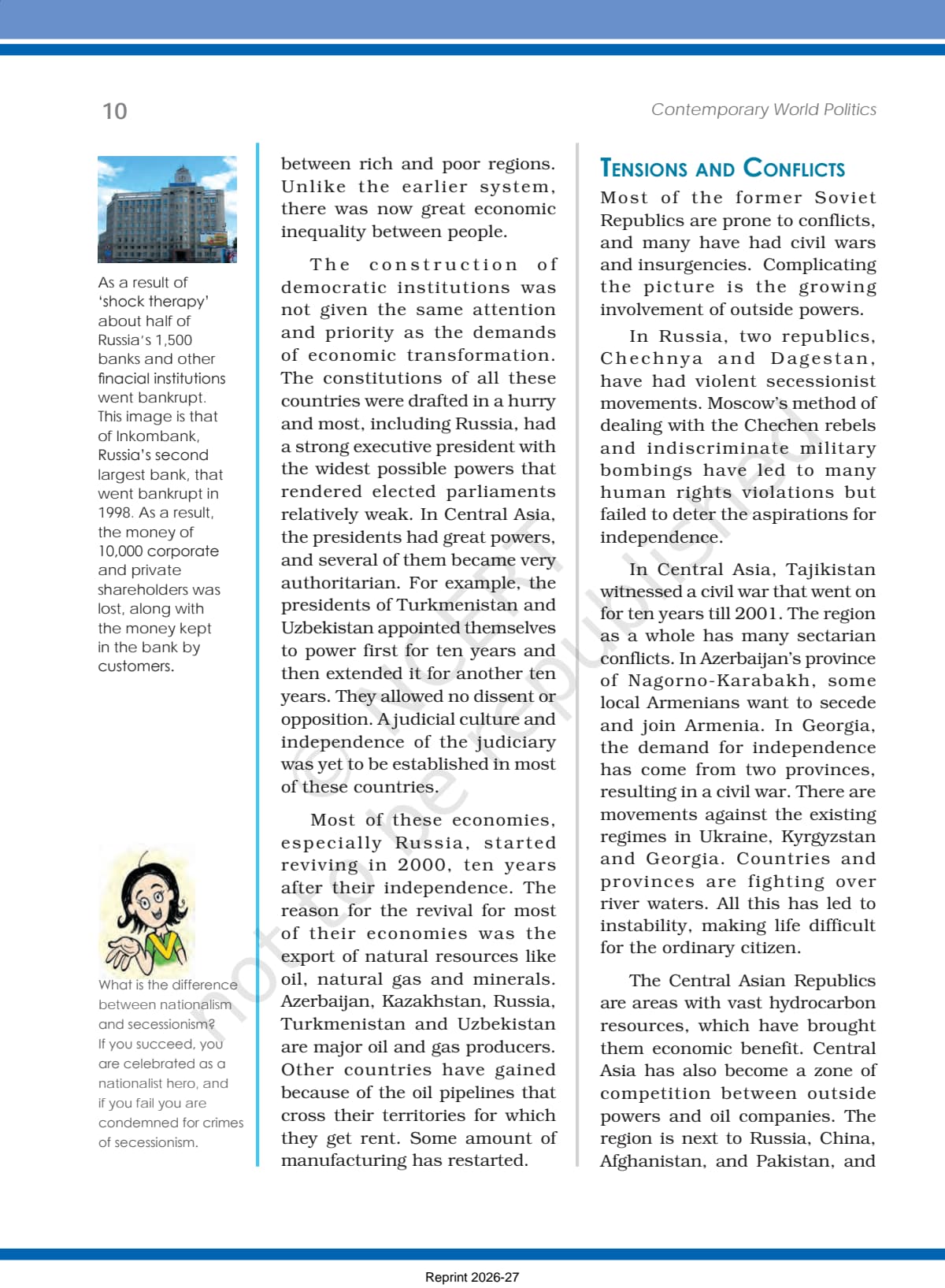
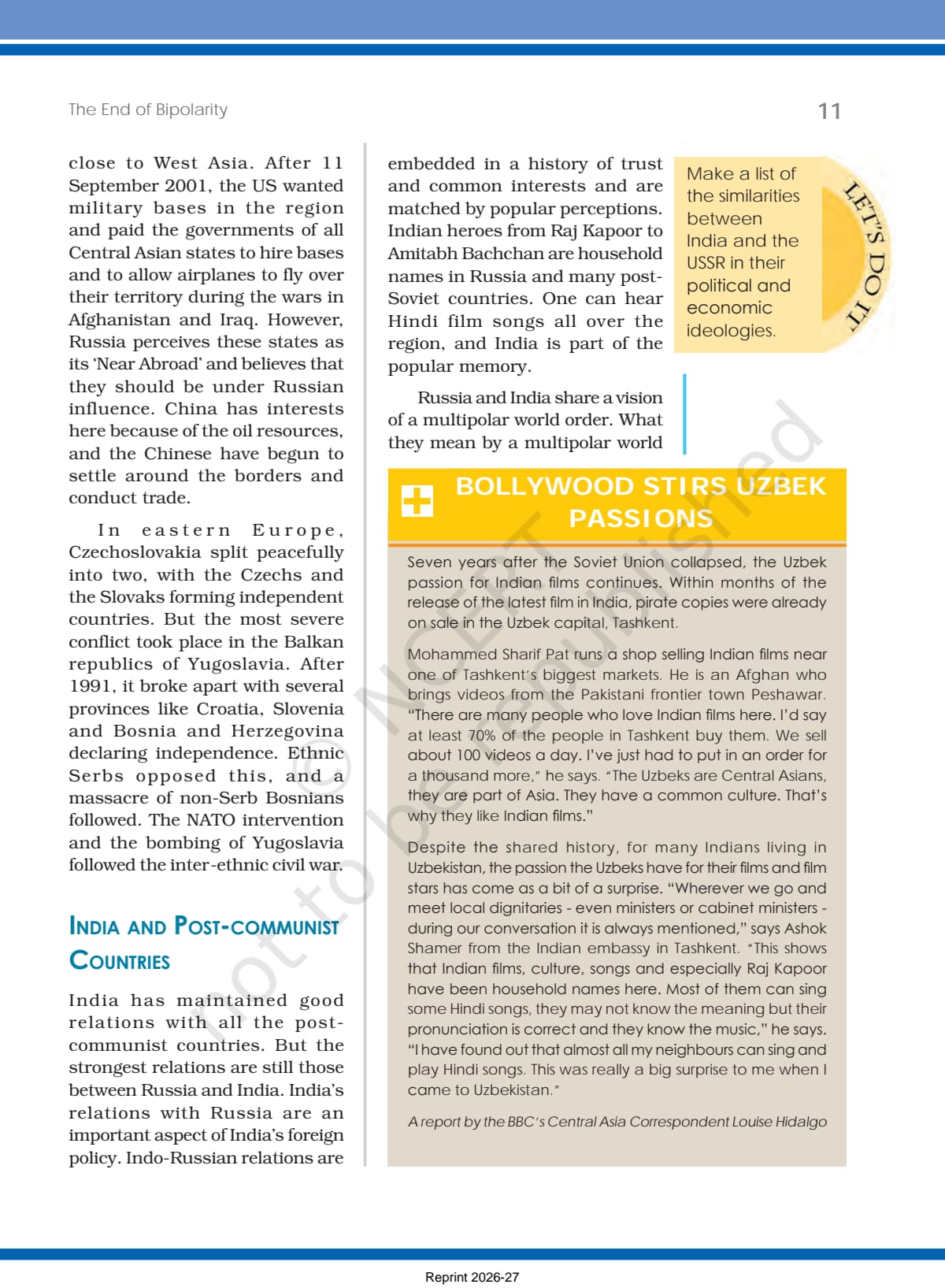
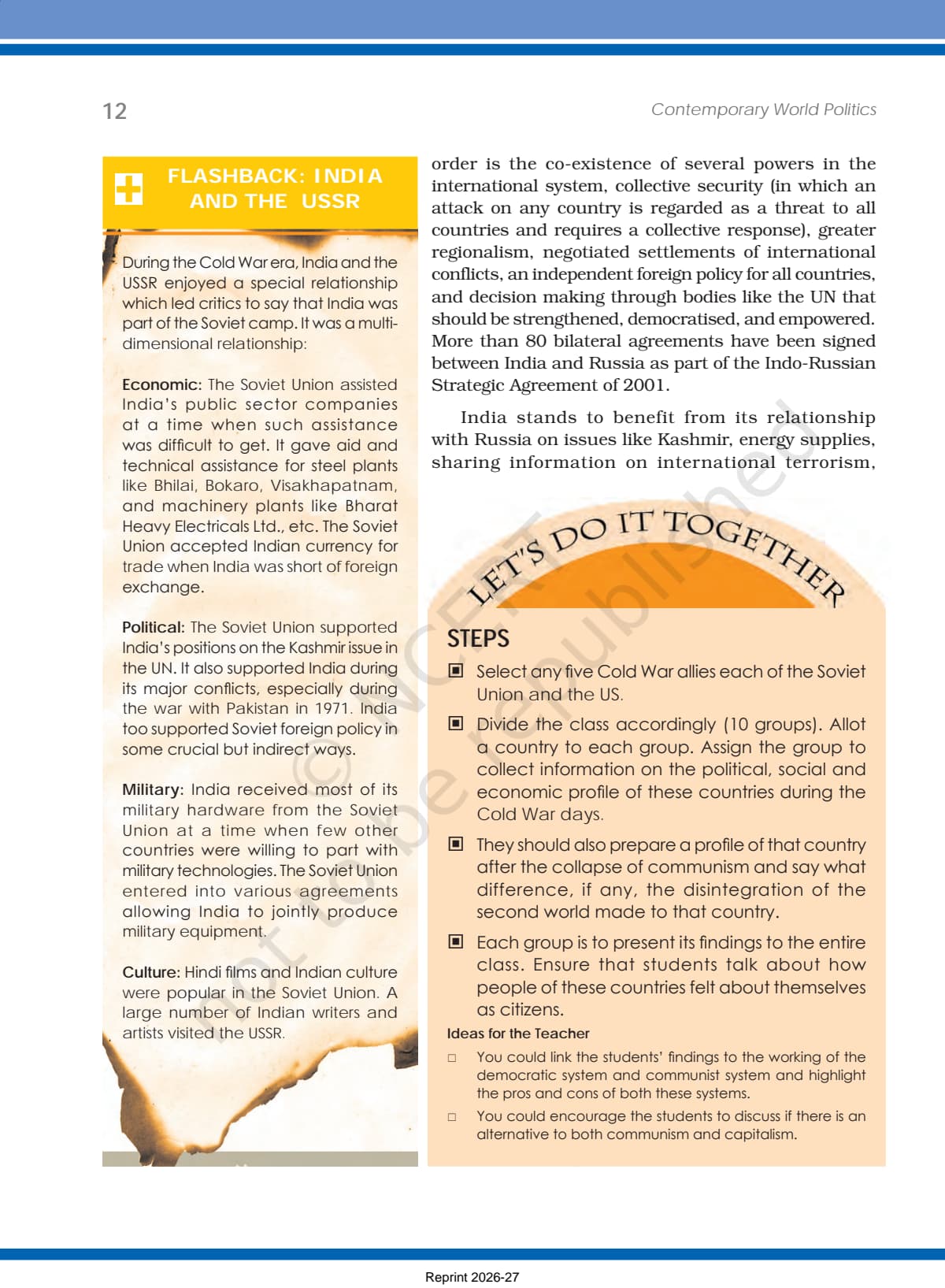
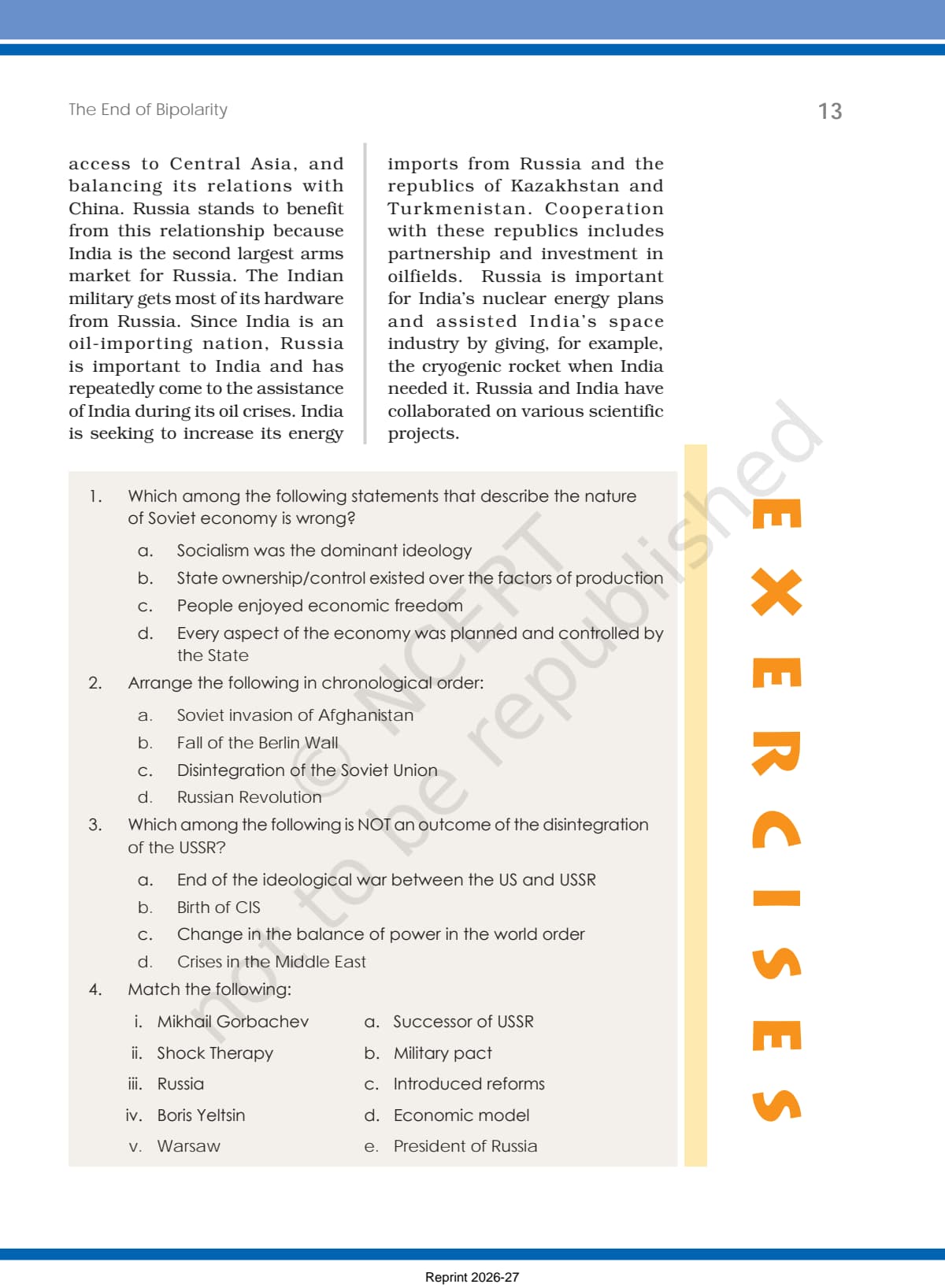
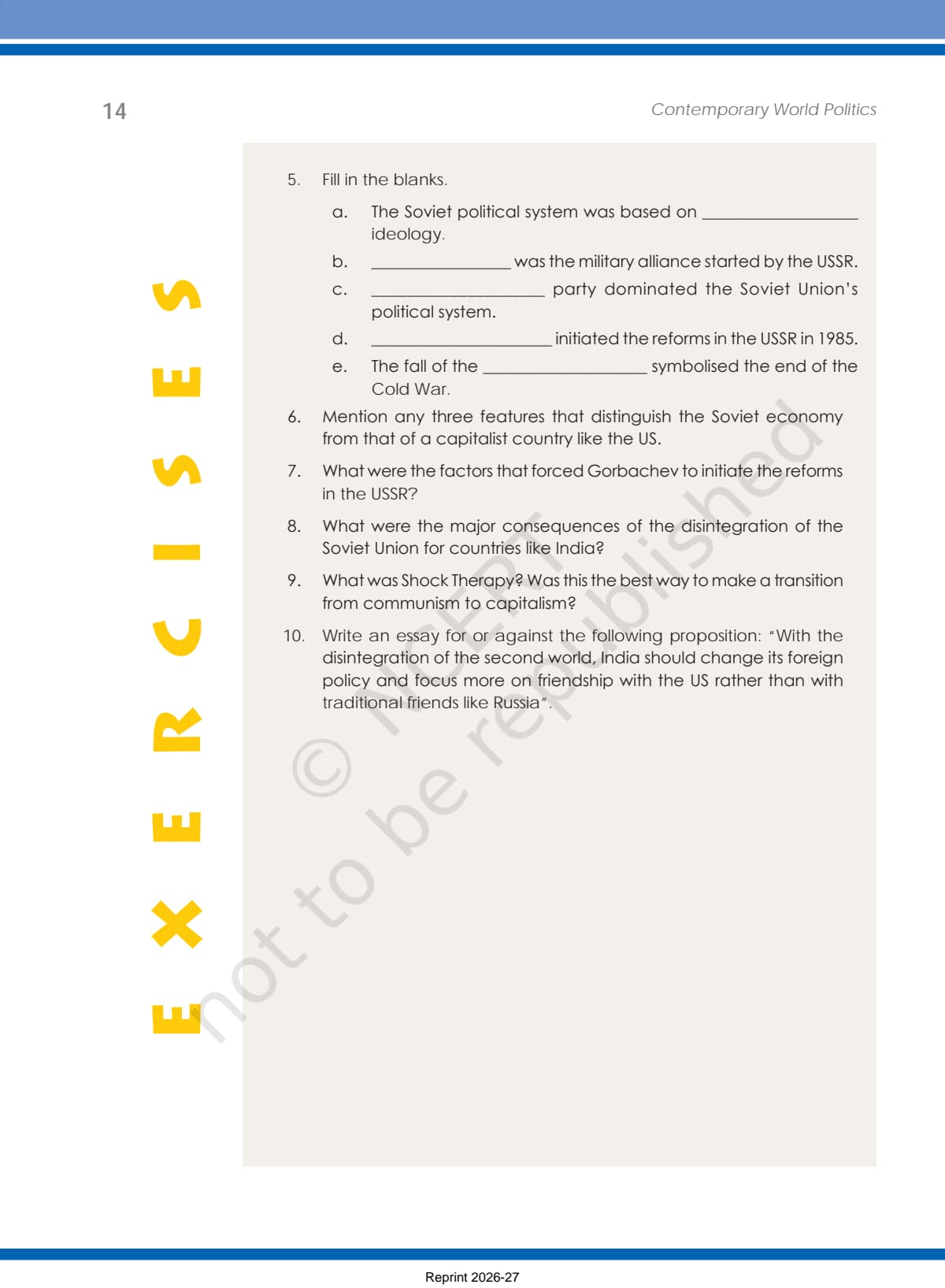
- Official NCERT chapter with the original maps, photographs and source boxes.
- This Class 12 Political Science chapter usually carries 5 to 6 marks in the board paper.
- Pairs with the NCERT Solutions, Notes and Handwritten Notes linked lower on this page.
This is the official NCERT The End of Bipolarity chapter from Contemporary World Politics, offered for free download in the 2026-27 edition.
Student Feedback: In a Collegedunia poll of 7,150 Class 12 Political Science students before the 2026 boards, 67% of students said they kept the official NCERT chapter PDF open while solving source-based questions, because the passages and maps come straight from the chapter itself.
Source: 2026-27 Class 12 Political Science student poll. Sample of 7,150 students from CBSE schools across 12 states.
What the End of Bipolarity NCERT Chapter Covers
The End of Bipolarity is the first chapter of Contemporary World Politics. It studies how the Soviet Union broke apart in 1991 and how this ended the Cold War. Before 1991 the world had two power blocs, one led by the US and one by the USSR, a two-bloc order called bipolarity.
The chapter is built around three threads, which the NCERT covers in order:
- The Soviet system: a socialist state with a planned economy and one-party rule.
- The collapse: the economic, political and nationalist causes of the fall.
- The aftermath: Shock Therapy, the new states, and a unipolar world.
Reading the original NCERT text matters because the source boxes and maps in the class 12 political science chapter 1 pdf are exactly what CBSE quotes in source-based questions. A student who knows the chapter's own examples, such as the "largest garage sale in history" line, can answer those passages with confidence.
Chapter Highlights and Important Topics
The NCERT chapter is rich with maps, photographs and source boxes that the exam often refers to. Knowing what each highlight covers helps students answer questions quickly. The table below lists the highlights students should study in the original chapter PDF.
| Highlight | Why it matters |
|---|---|
| The Soviet system | Sets out socialism, the planned economy, one-party rule and the Warsaw Pact. |
| Causes of collapse | Economic stagnation, the arms race, the Afghan war and rising nationalism. |
| Gorbachev's reforms | Perestroika and Glasnost, and why they sped the fall. |
| Map of new states | Shows the fifteen republics that became independent after 1991. |
| Shock Therapy box | Source extracts on the painful shift from a planned to a market economy. |
The chapter also explains the rise of a unipolar world, with the US as the sole superpower after 1991. One point students should mark while reading is that India kept close ties with Russia even after the Soviet collapse. That single idea from the chapter is the heart of the India-Russia answer, and it appears almost every year.
The Soviet System, Collapse and Shock Therapy in the Chapter
The chapter devotes whole sections to the Soviet system, why it fell and what came after. These sections feed the short and long answers, so reading them in the original NCERT helps students quote the right examples. The lists below show what the chapter covers under each theme.
- The system: socialism, state ownership, a planned economy and Communist Party rule.
- Causes of collapse: economic stagnation, the arms race, the Afghan war and nationalism.
- Gorbachev's reforms: Perestroika (economy) and Glasnost (openness) from 1985.
- Shock Therapy: a fast, total switch to capitalism that caused job losses and hardship.
The chapter explains that Shock Therapy was pushed by the World Bank and the IMF, but it brought deep hardship rather than quick prosperity. It also gives the chronology students need for the "arrange in order" question, from the Russian Revolution to the Berlin Wall and the 1991 disintegration. Because these examples are drawn straight from the source chapter, the chapter 1 political science class 12 ncert book is the most reliable place to learn them.
The New World Order and India in the Chapter
The closing sections of the chapter explain the new world order and what it meant for India. These pages are the most exam-relevant for the essay question, so reading them in the original chapter helps students write balanced answers.
- Unipolar world: with the Soviet bloc gone, the US became the only superpower.
- New states: fifteen republics became independent; the CIS was formed.
- For India: a steady friend was lost, but ties with Russia stayed strong on defence and energy.
- Foreign policy: India also built better relations with the US while keeping its old friendships.
The chapter is clear that the disintegration changed the balance of power but did not break the India-Russia friendship. It ends with the idea that the world became unipolar in the 1990s, though new centres of power would later rise. Reading these closing pages in the official PDF gives students the wording NCERT itself uses, which scores best in the board paper.
How to Download and Use the NCERT Chapter PDF
The chapter PDF is free and easy to use on any device. Students can save it for offline reading and pair it with the solutions and notes. The steps below show how to get the most out of the The End of Bipolarity PDF during revision.
- Download: tap the download card above to save the official Chapter 1 PDF to your device.
- First read: read the chapter once end to end, marking the source boxes and the map of new states.
- Source practice: keep the PDF open while attempting source-based questions, since the passages come from it.
- Revision: use the chapter alongside the notes to fix dates, key terms and the chronology.
Many students search for the class 12 political science chapter 1 pdf the night before a test so they can revise offline. A saved copy means the source boxes and maps are always at hand. After reading the chapter, move to the solutions to check that your answers match the model points, then use the notes for a final quick recall.
How the Book PDF Pairs with the Solutions and Notes
The NCERT Book PDF is the source text. To prepare fully, students should use it with the other resources for the same chapter, all linked in the table below. Read the chapter, fix the ideas with the notes, then test yourself with the solutions.
| Resource | Best used for |
|---|---|
| The End of Bipolarity NCERT Solutions | Step-by-step answers to all 10 back-exercise questions |
| The End of Bipolarity Class 12 Notes | Quick chapter summary with all dates and key terms in one place |
| The End of Bipolarity Handwritten Notes | Last-minute, one-shot revision in a scanned notebook style |
Tip: read the chapter PDF first, then attempt the solutions on your own, and only then check the model answers. Reading the source text before the answers builds far stronger source-based skills.
All Class 12 Political Science NCERT Book PDFs by Chapter
The table links the NCERT chapter PDFs for every chapter in both Class 12 Political Science books, so students can move across the course in one click. The End of Bipolarity is highlighted.
| Chapter | NCERT Book PDF |
|---|---|
| Contemporary World Politics | |
| Chapter 1 | The End of Bipolarity |
| Chapter 2 | Contemporary Centres of Power |
| Chapter 3 | Contemporary South Asia |
| Chapter 4 | International Organisations |
| Chapter 5 | Security in the Contemporary World |
| Chapter 6 | Environment and Natural Resources |
| Chapter 7 | Globalisation |
| Politics in India Since Independence | |
| Chapter 1 | Challenges of Nation Building |
| Chapter 2 | Era of One-Party Dominance |
| Chapter 3 | Politics of Planned Development |
| Chapter 4 | India's External Relations |
| Chapter 5 | Challenges to and Restoration of the Congress System |
| Chapter 6 | The Crisis of Democratic Order |
| Chapter 7 | Regional Aspirations |
| Chapter 8 | Recent Developments in Indian Politics |
FAQs on The End of Bipolarity NCERT Book PDF
The End of Bipolarity Class 12 NCERT Book Common Questions
Ques. Where can I download the The End of Bipolarity NCERT Book PDF?
Ans. You can download the official The End of Bipolarity Class 12 Political Science chapter PDF directly from this page. It is free, follows the 2026-27 NCERT edition, and carries the original text, maps and source boxes of Chapter 1.
Ques. Which book is The End of Bipolarity from?
Ans. It is the first chapter of Contemporary World Politics, one of the two Class 12 Political Science textbooks. The chapter studies the collapse of the Soviet Union in 1991 and the end of the Cold War.
Ques. What does The End of Bipolarity chapter cover?
Ans. It covers the Soviet socialist system, why the USSR disintegrated, Gorbachev's reforms, Shock Therapy, the rise of a unipolar world, and the consequences for India, including its continued friendship with Russia.
Ques. Why should I read the original NCERT chapter PDF?
Ans. Because CBSE draws source-based questions straight from the chapter's own boxes, maps and extracts. Reading the official chapter 1 political science class 12 PDF gives you the exact wording and examples that score best in the board paper.
Ques. How should I use the chapter PDF with the other resources?
Ans. Read the chapter PDF first, fix the ideas with the notes, then test yourself with the solutions. Keeping the PDF open while practising source-based questions helps, since the passages come directly from it.



Comments