




The Meeting Life Challenges PDF is the official NCERT chapter on stress and how we stay healthy in spite of it, from the Class 12 Psychology textbook. This page lets students download the original Chapter 3 text and figures for the 2026-27 CBSE syllabus. Reading the source chapter is the best way to understand the GAS model, the coping styles and the life skills behind every board answer.
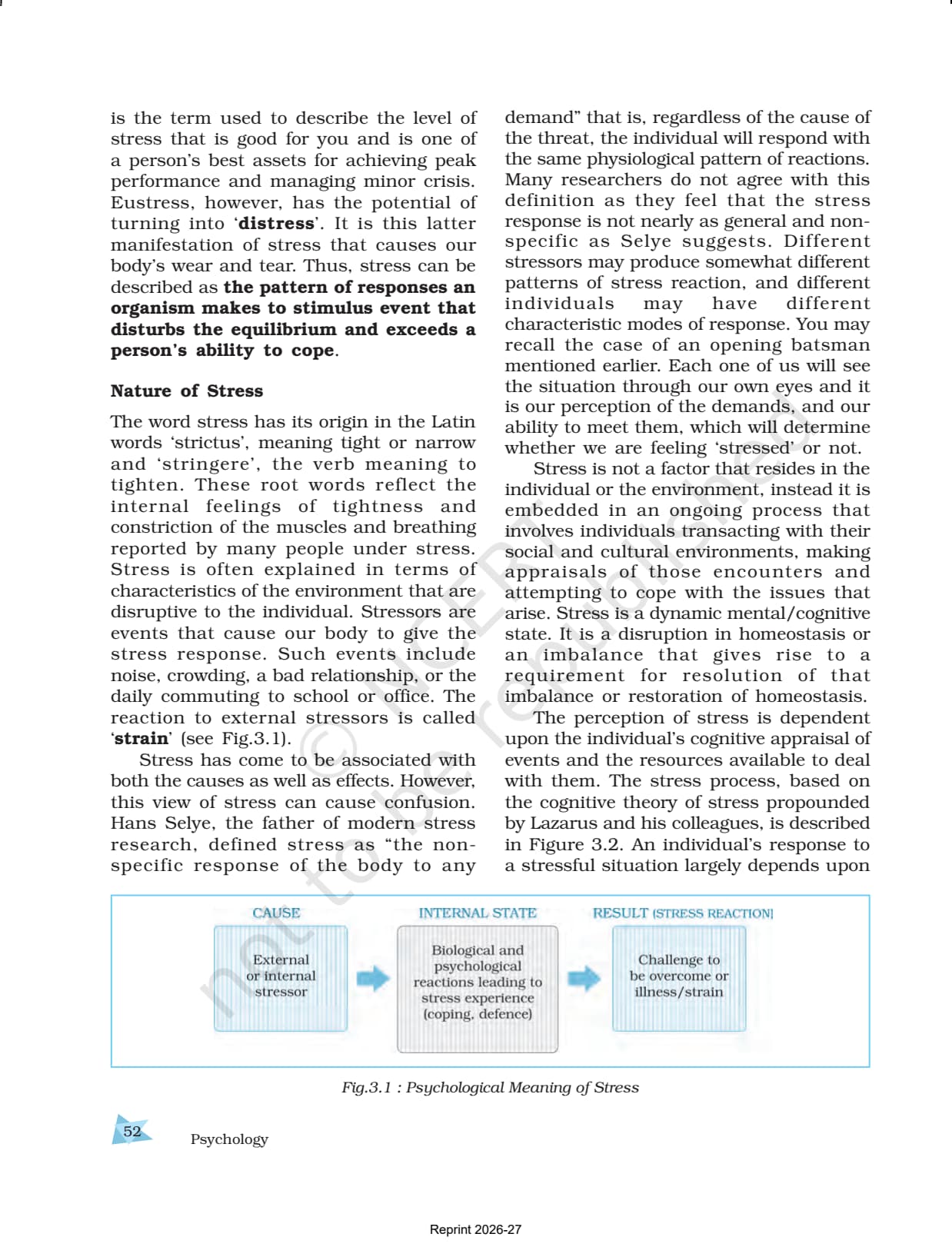
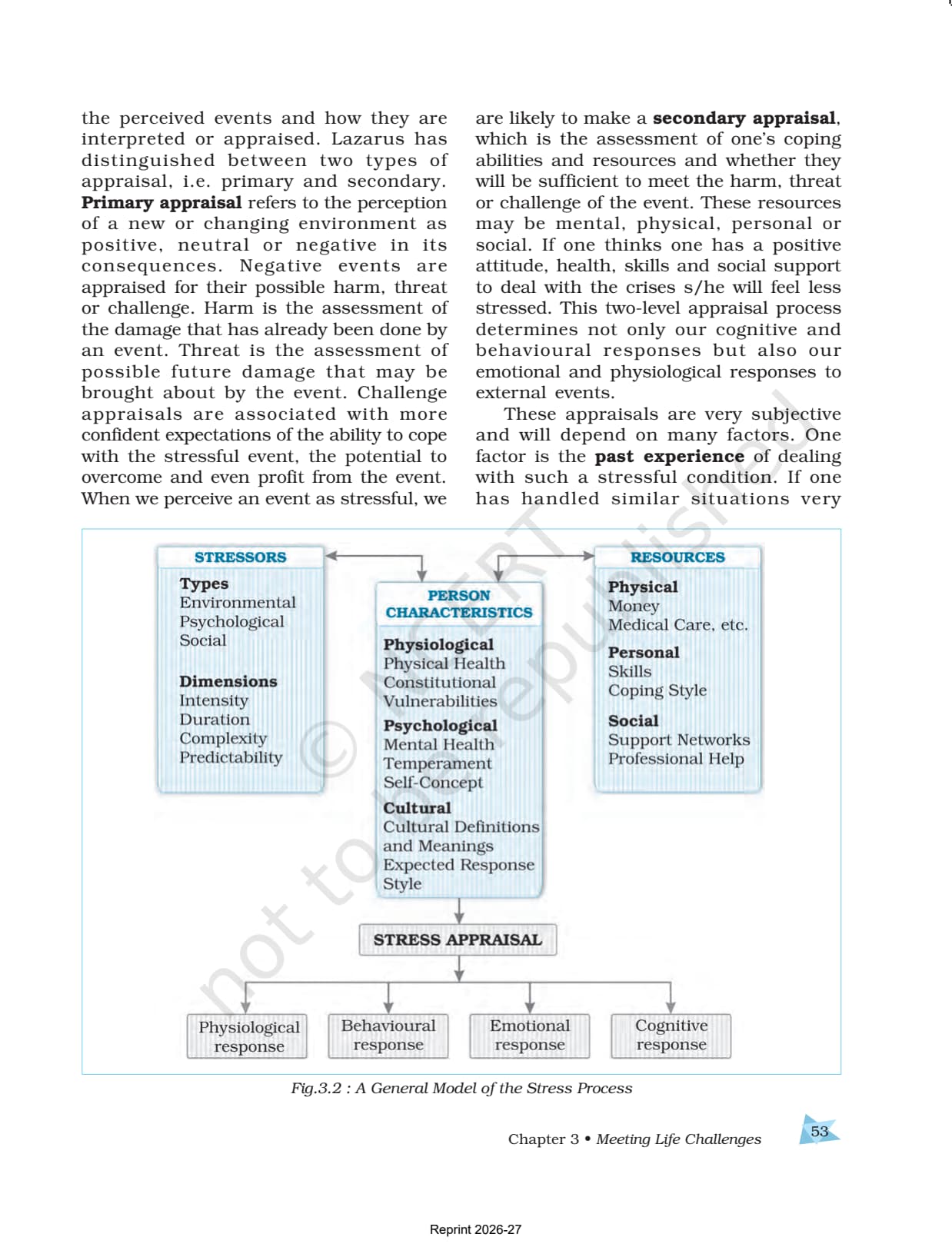
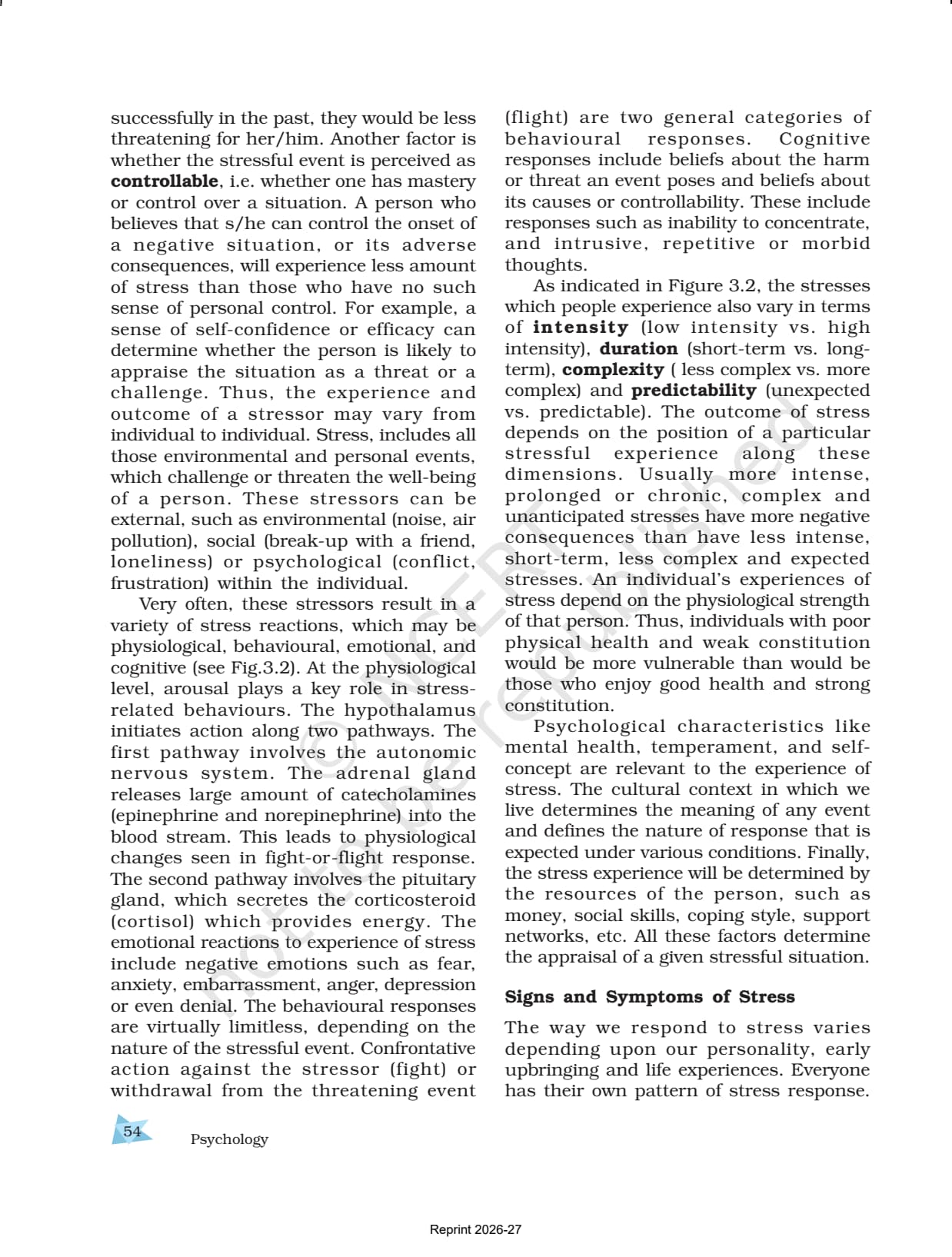
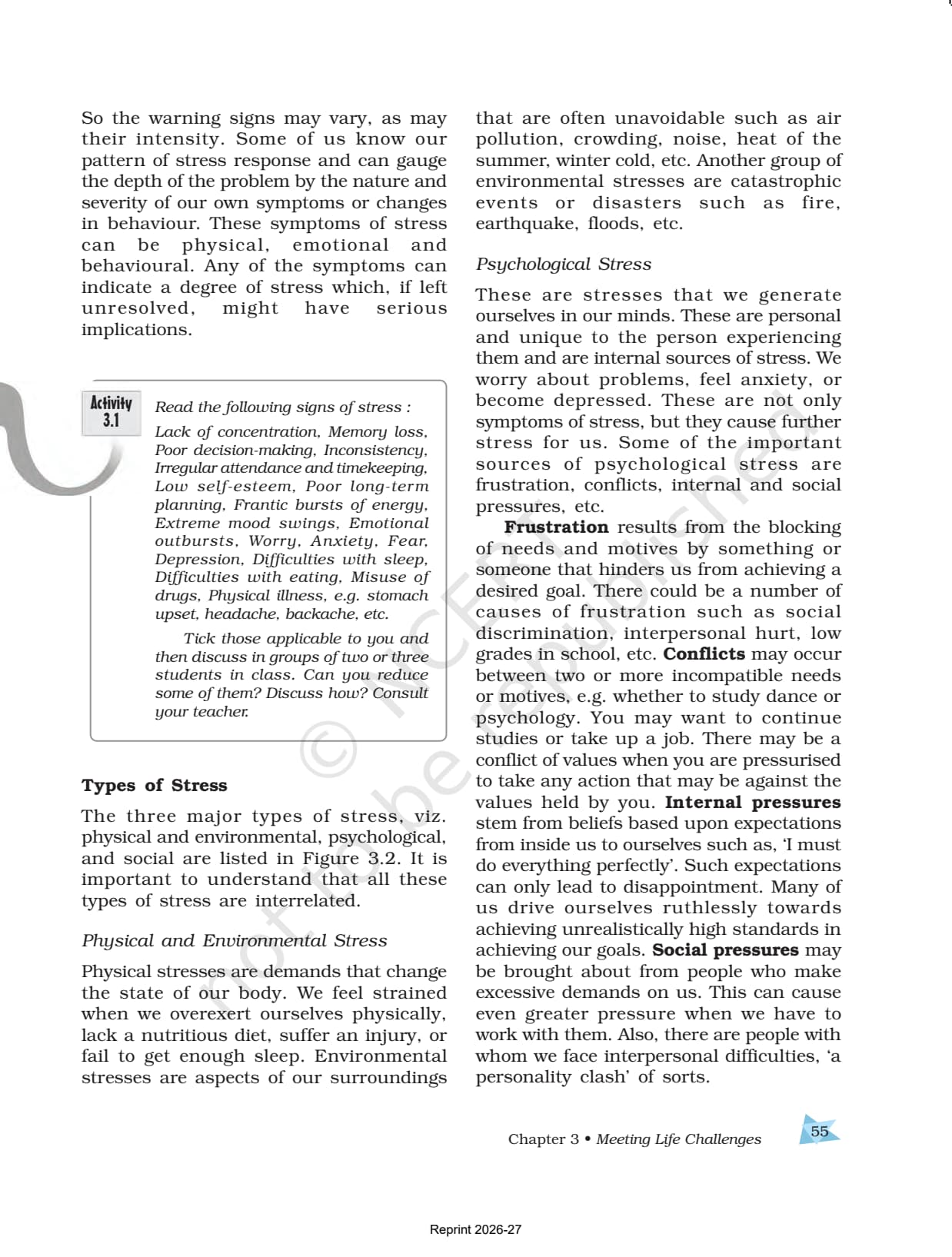
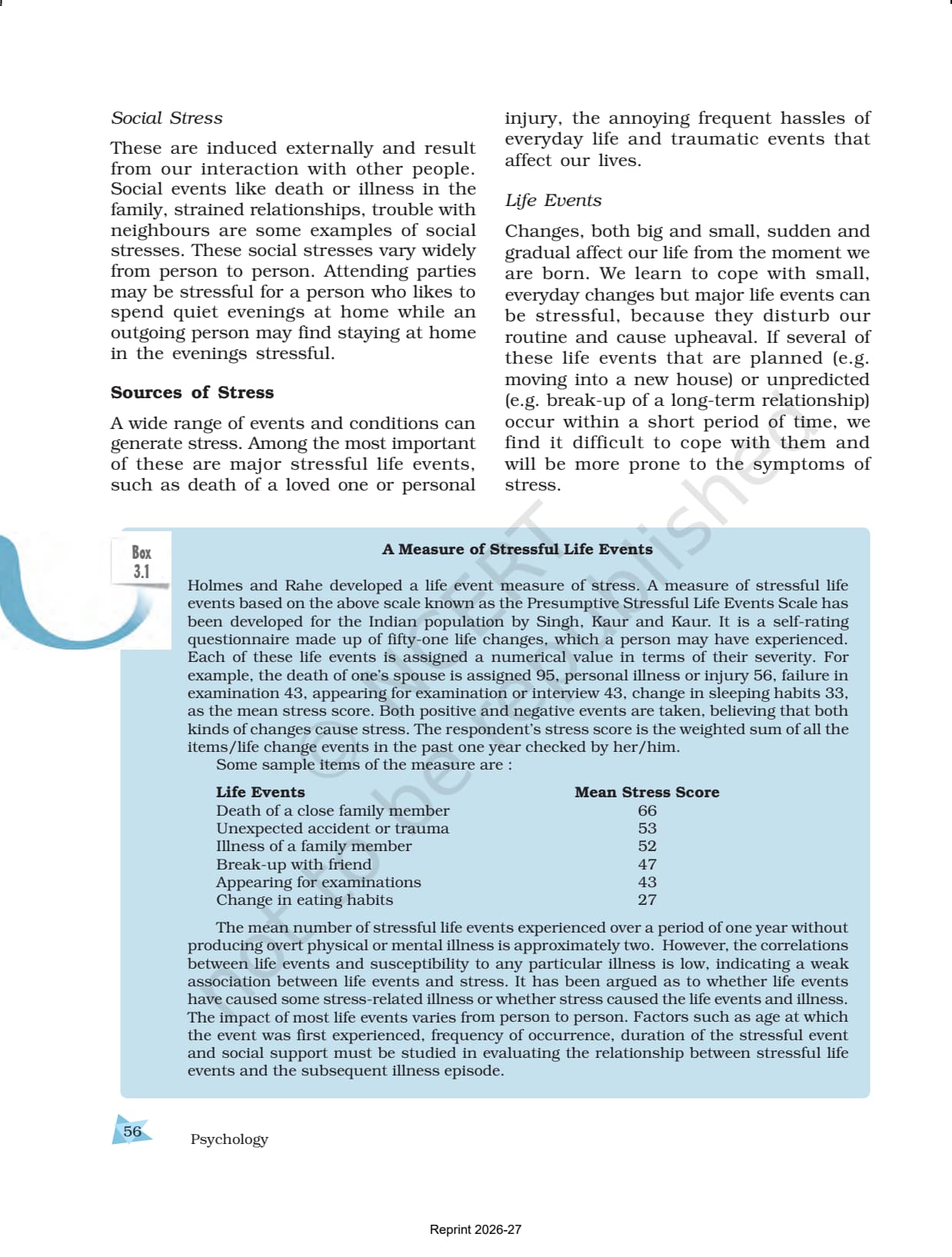
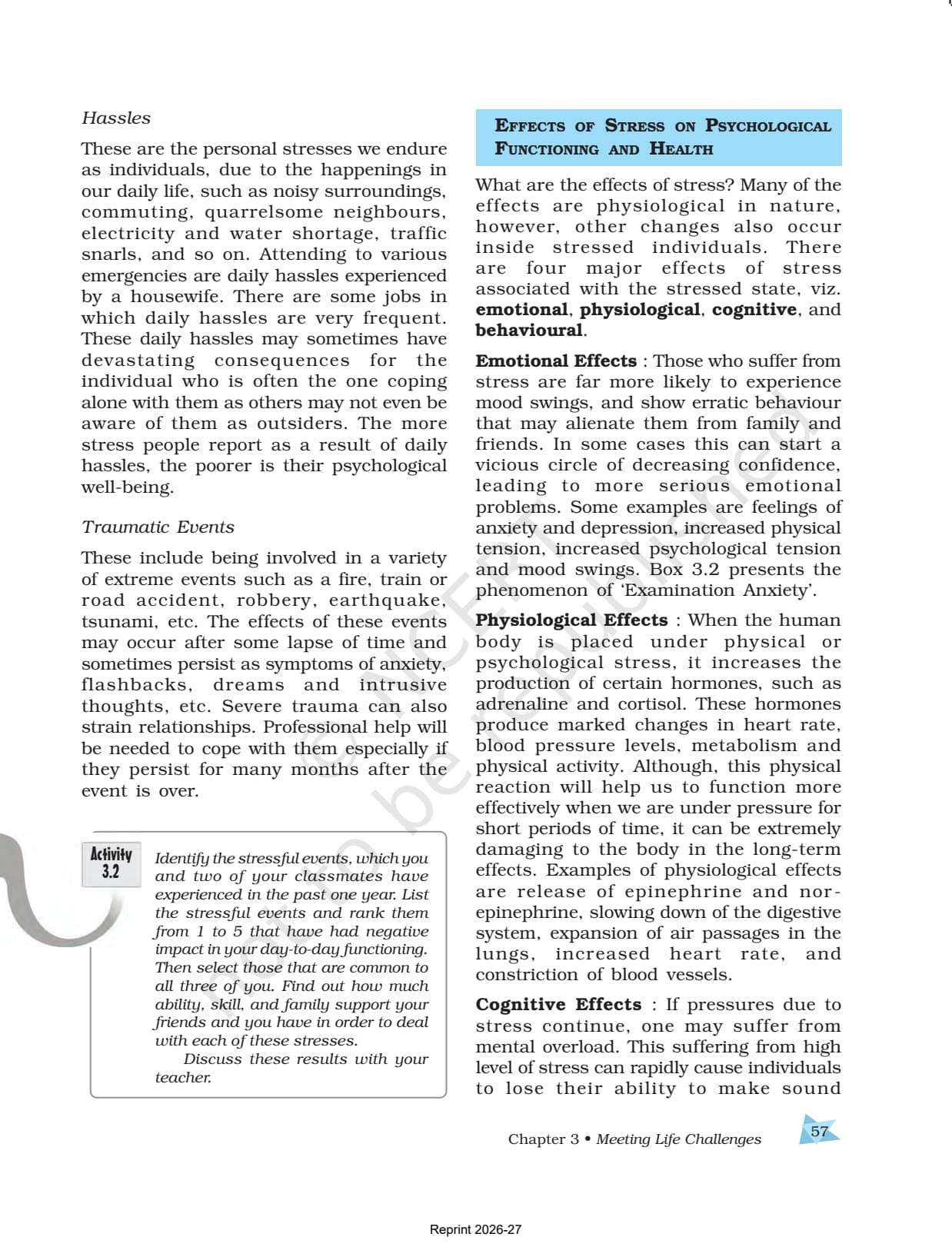
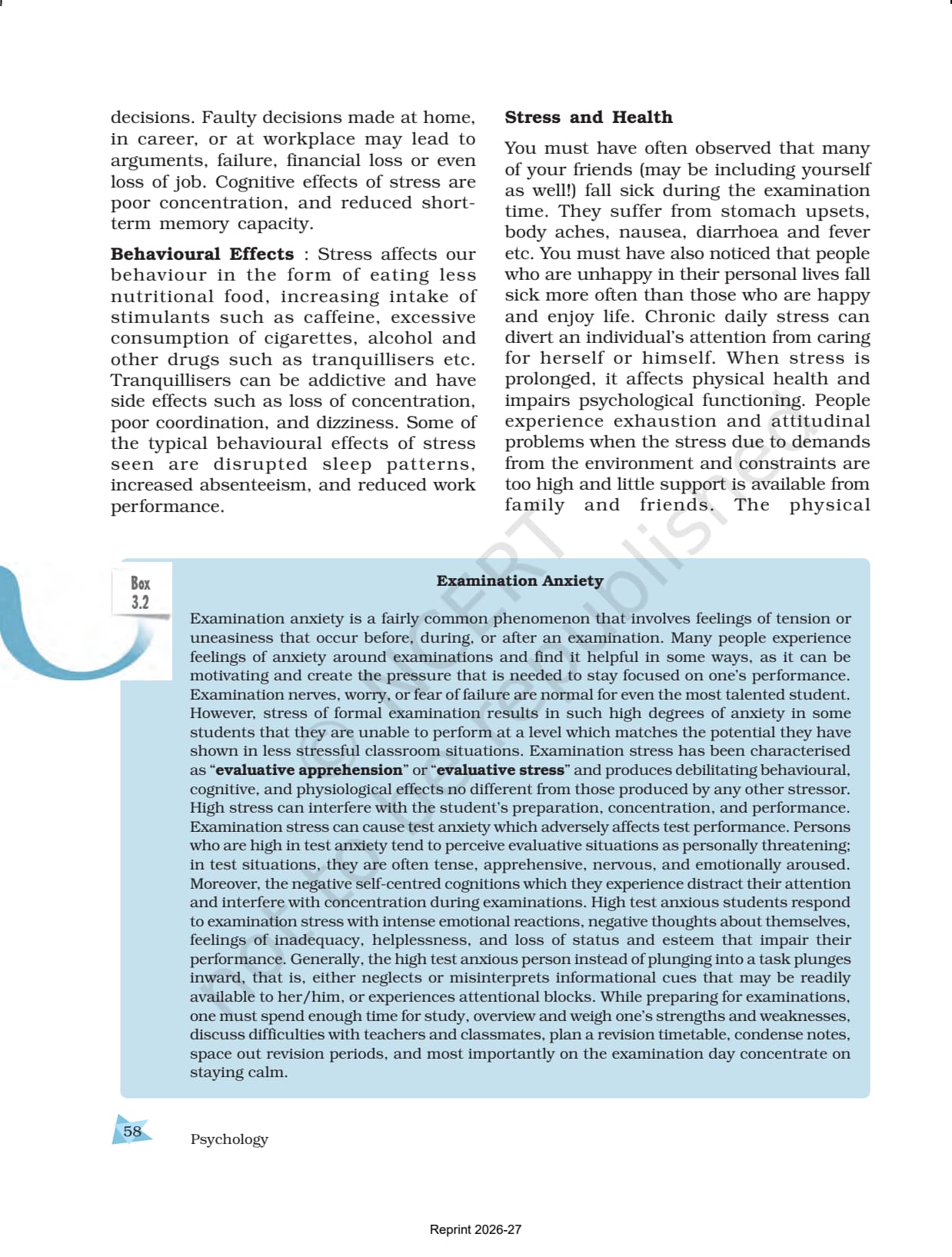
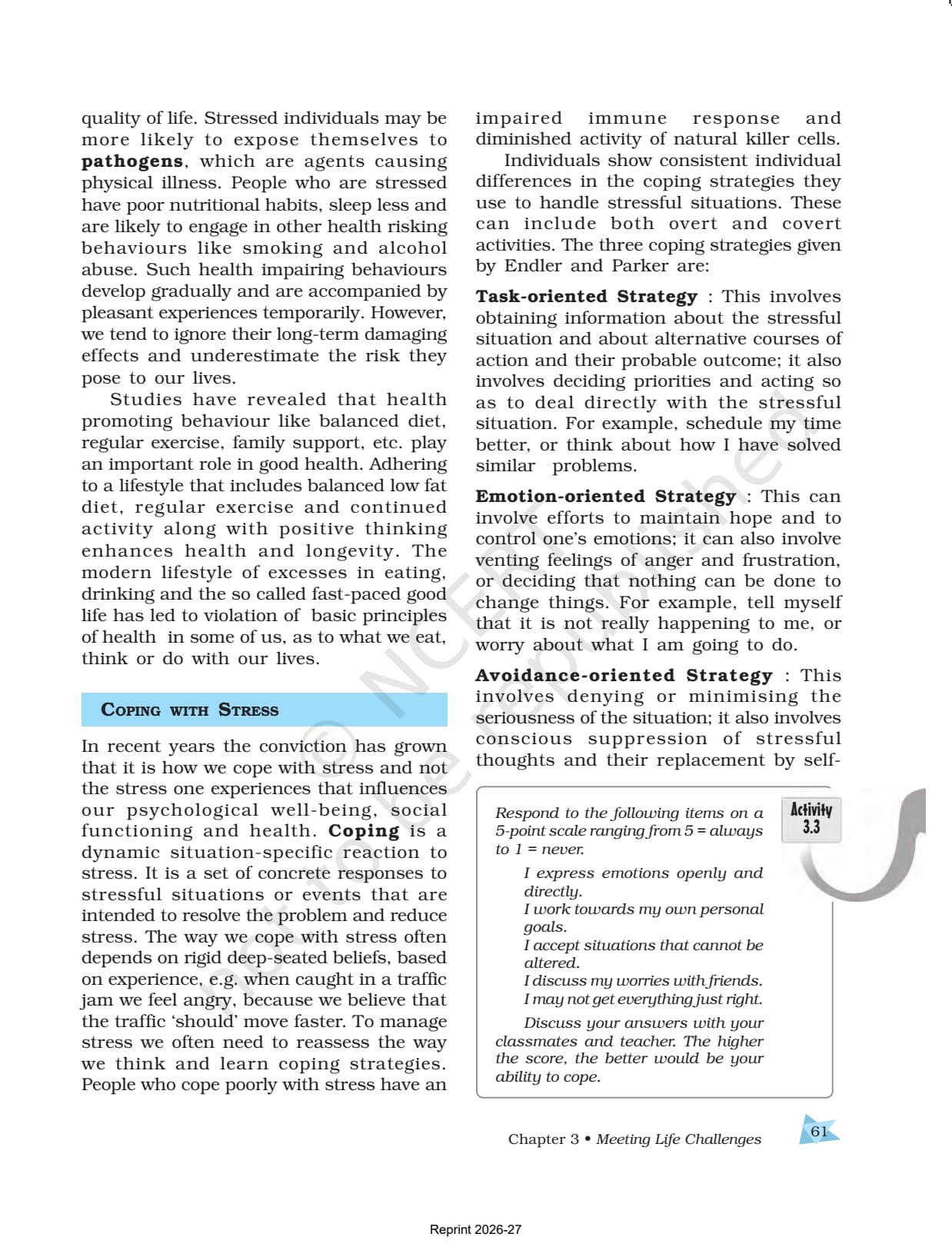
- Official NCERT chapter with the original figures, including the GAS curve and the stress-illness diagram.
- This Class 12 Psychology chapter usually carries 6 to 7 marks in the board paper.
- Pairs with the NCERT Solutions, Notes and Handwritten Notes linked lower on this page.
This is the official NCERT Meeting Life Challenges chapter from the Class 12 Psychology textbook, offered for free download in the 2026-27 edition.
Student Feedback: In a Collegedunia poll of 7,180 Class 12 Psychology students before the 2026 boards, 67% of students said they kept the official NCERT chapter PDF open while revising the GAS model, because the GAS curve and the stress-illness diagram come straight from the chapter itself.
Source: 2026-27 Class 12 Psychology student poll. Sample of 7,180 students from CBSE schools across 12 states.
What the Meeting Life Challenges NCERT Chapter Covers
Meeting Life Challenges is the third chapter of Class 12 Psychology. It studies how stress shapes our lives and how we can stay healthy in spite of it. The central idea is that stress is a transaction between the person and the environment, shaped by how we appraise the demand.
The chapter is built around three threads, which the NCERT covers in order:
- The nature: what stress is, its types and sources, and the role of appraisal.
- The effects: the four effects of stress, the GAS model and the immune system.
- The management: coping styles, stress-management techniques, life skills and positive health.
Reading the original NCERT text matters because the figures and worked examples in the class 12 psychology chapter 3 pdf are exactly what CBSE refers to in the board paper. A student who knows the chapter's own diagrams, such as the GAS curve, can answer the long questions with confidence.
Chapter Highlights and Important Topics
The NCERT chapter is rich with definitions, two key figures and the coping and life-skills sections that the exam often refers to. Knowing what each highlight covers helps students answer questions quickly. The table below lists the highlights students should study in the original chapter PDF.
| Highlight | Why it matters |
|---|---|
| Nature of stress | Selye's definition, the eustress versus distress contrast and Lazarus's appraisal. |
| Sources and effects | Life events, hassles and trauma, plus the four effects of stress and burnout. |
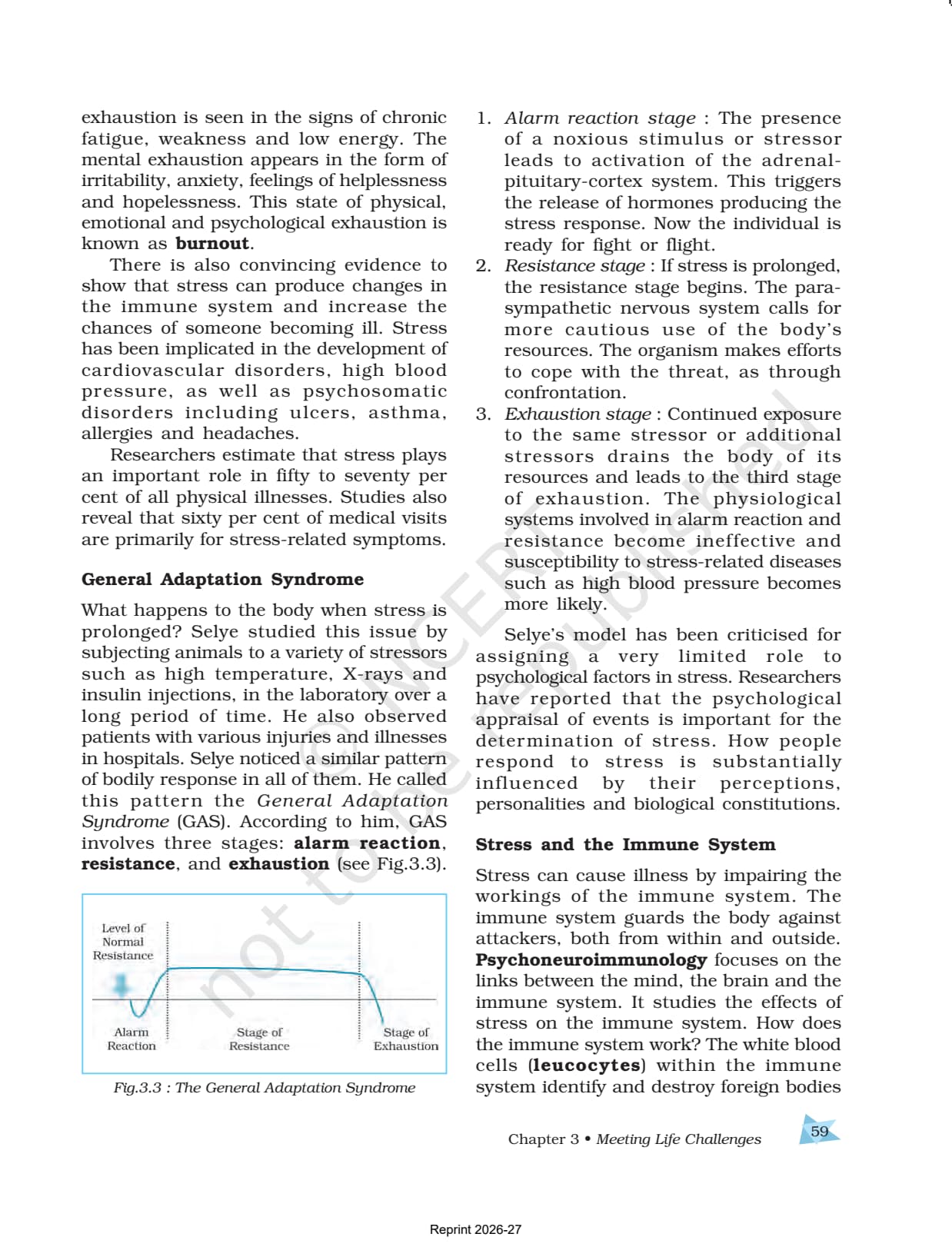
| GAS curve (Fig 3.3) | Selye's three stages: alarm, resistance and exhaustion. |
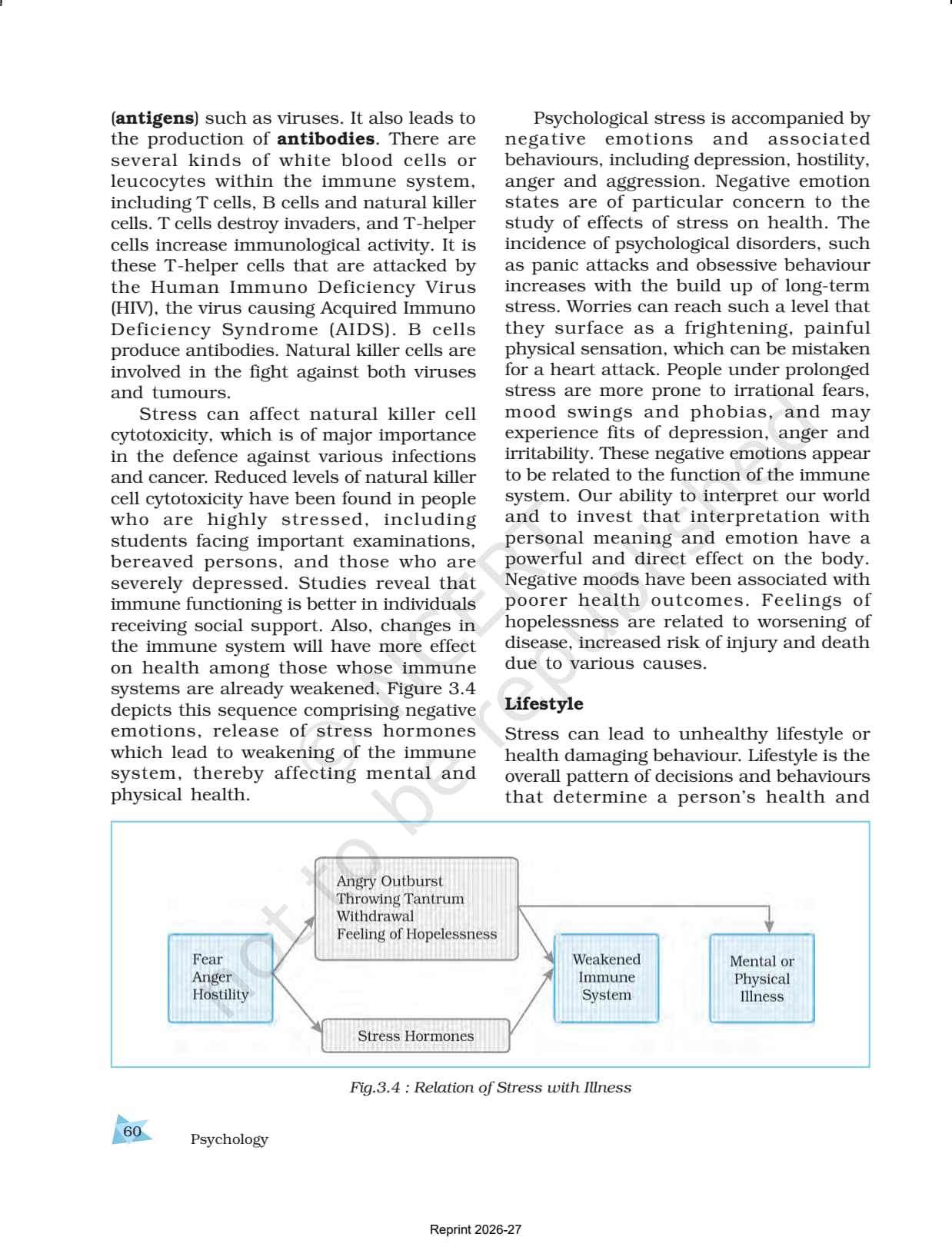
| Stress and illness (Fig 3.4) | How negative emotions release hormones that weaken the immune system. |
| Coping and life skills | Task, emotion and avoidance strategies, plus the six learnable life skills. |
The chapter also explains the factors behind positive health, hardiness and resilience. One point students should mark while reading is that stress is a transaction, so the same event affects people differently. That single idea from the chapter is the heart of the appraisal answer, and it underlies almost every long question.
The Nature and Effects of Stress in the Chapter
The chapter devotes whole sections to what stress is and what it does. These sections feed the short and long answers, so reading them in the original NCERT helps students quote the right terms. The lists below show what the chapter covers under each theme.
- Definition: stress as the non-specific response of the body to any demand (Selye).
- Appraisal: Lazarus's primary (harm, threat, challenge) and secondary (can I cope) appraisal.
- Sources: life events, daily hassles and traumatic events.
- Effects: emotional, physiological, cognitive and behavioural, leading to burnout when prolonged.
The chapter explains that the GAS model describes how prolonged stress runs the body through alarm, resistance and exhaustion. It is clear that stress also weakens the immune system, studied under psychoneuroimmunology. Because these explanations are drawn straight from the source chapter, the chapter 3 psychology class 12 ncert book is the most reliable place to learn them.
Coping, Life Skills and Positive Health in the Chapter
The closing sections of the chapter explain how we manage stress and stay well. These pages are the most exam-relevant for the long answer, so reading them in the original chapter helps students write complete answers.
- Coping strategies: task-oriented, emotion-oriented and avoidance-oriented (Endler and Parker).
- Coping styles: problem-focused and emotion-focused (Lazarus and Folkman).
- Life skills: assertiveness, time management, rational thinking, relationships, self-care, dropping unhelpful habits.
- Positive health: diet, exercise, positive attitude, optimism and social support, plus hardiness and resilience.
The chapter is clear that life skills can be learned and improved, and they work by reshaping how we appraise a demand. It ends on the optimistic note that anyone can build these skills with practice. Reading these closing pages in the official PDF gives students the wording NCERT itself uses, which scores best in the board paper.
How to Download and Use the NCERT Chapter PDF
The chapter PDF is free and easy to use on any device. Students can save it for offline reading and pair it with the solutions and notes. The steps below show how to get the most out of the meeting life challenges class 12 pdf during revision.
- Download: tap the download card above to save the official Chapter 3 PDF to your device.
- First read: read the chapter once end to end, marking the GAS curve and the stress-illness diagram.
- Figure practice: keep the PDF open while revising the GAS and immune-system answers, since the figures come from it.
- Revision: use the chapter alongside the notes to fix the key terms, the GAS stages and the coping styles.
Many students search for the class 12 psychology chapter 3 pdf the night before a test so they can revise offline. A saved copy means the figures and key definitions are always at hand. After reading the chapter, move to the solutions to check that your answers match the model points, then use the notes for a final quick recall.
How the Book PDF Pairs with the Solutions and Notes
The NCERT Book PDF is the source text. To prepare fully, students should use it with the other resources for the same chapter, all linked in the table below. Read the chapter, fix the ideas with the notes, then test yourself with the solutions.
| Resource | Best used for |
|---|---|
| Meeting Life Challenges NCERT Solutions | Step-by-step answers to all 12 review questions |
| Meeting Life Challenges Class 12 Notes | Quick chapter summary with all key terms in one place |
| Meeting Life Challenges Handwritten Notes | Last-minute, one-shot revision in a scanned notebook style |
Tip: read the chapter PDF first, then attempt the solutions on your own, and only then check the model answers. Reading the source text before the answers builds far stronger exam skills.
All Class 12 Psychology NCERT Book PDFs by Chapter
The table links the NCERT chapter PDFs for every Class 12 Psychology chapter, so students can move across the course in one click. Meeting Life Challenges is highlighted.
| Chapter | NCERT Book PDF |
|---|---|
| Chapter 1 | Variations in Psychological Attributes |
| Chapter 2 | Self and Personality |
| Chapter 3 | Meeting Life Challenges |
| Chapter 4 | Psychological Disorders |
| Chapter 5 | Therapeutic Approaches |
| Chapter 6 | Attitude and Social Cognition |
| Chapter 7 | Social Influence and Group Processes |
FAQs on Meeting Life Challenges NCERT Book PDF
Meeting Life Challenges Class 12 NCERT Book Common Questions
Ques. Where can I download the Meeting Life Challenges NCERT Book PDF?
Ans. You can download the official Meeting Life Challenges Class 12 Psychology chapter PDF directly from this page. It is free, follows the 2026-27 NCERT edition, and carries the original text and the two key figures, the GAS curve and the stress-illness diagram, of Chapter 3.
Ques. Which book is Meeting Life Challenges from?
Ans. It is the third chapter of the Class 12 Psychology NCERT textbook. The chapter studies how stress works and how we manage it to stay healthy.
Ques. What does the Meeting Life Challenges chapter cover?
Ans. It covers the nature, types and sources of stress, appraisal, the four effects of stress, the General Adaptation Syndrome, stress and the immune system, coping styles, life skills and the factors behind positive health.
Ques. Why should I read the original NCERT chapter PDF?
Ans. Because CBSE refers to the chapter's own figures and definitions in the board paper. Reading the official chapter 3 psychology class 12 PDF gives you the exact wording and the GAS and immune-system diagrams that score best in the exam.
Ques. How should I use the chapter PDF with the other resources?
Ans. Read the chapter PDF first, fix the ideas with the notes, then test yourself with the solutions. Keeping the PDF open while revising the GAS and immune-system answers helps, since the figures come directly from it.



Comments