




This page offers the Attitude and Social Cognition Class 12 NCERT PDF, the official Psychology Chapter 6 text for the 2026-27 CBSE syllabus. It is the original NCERT chapter, so students get the exact wording, examples and terms the board uses. Read it first, then move to the Notes and Solutions linked lower on this page for revision and practice.
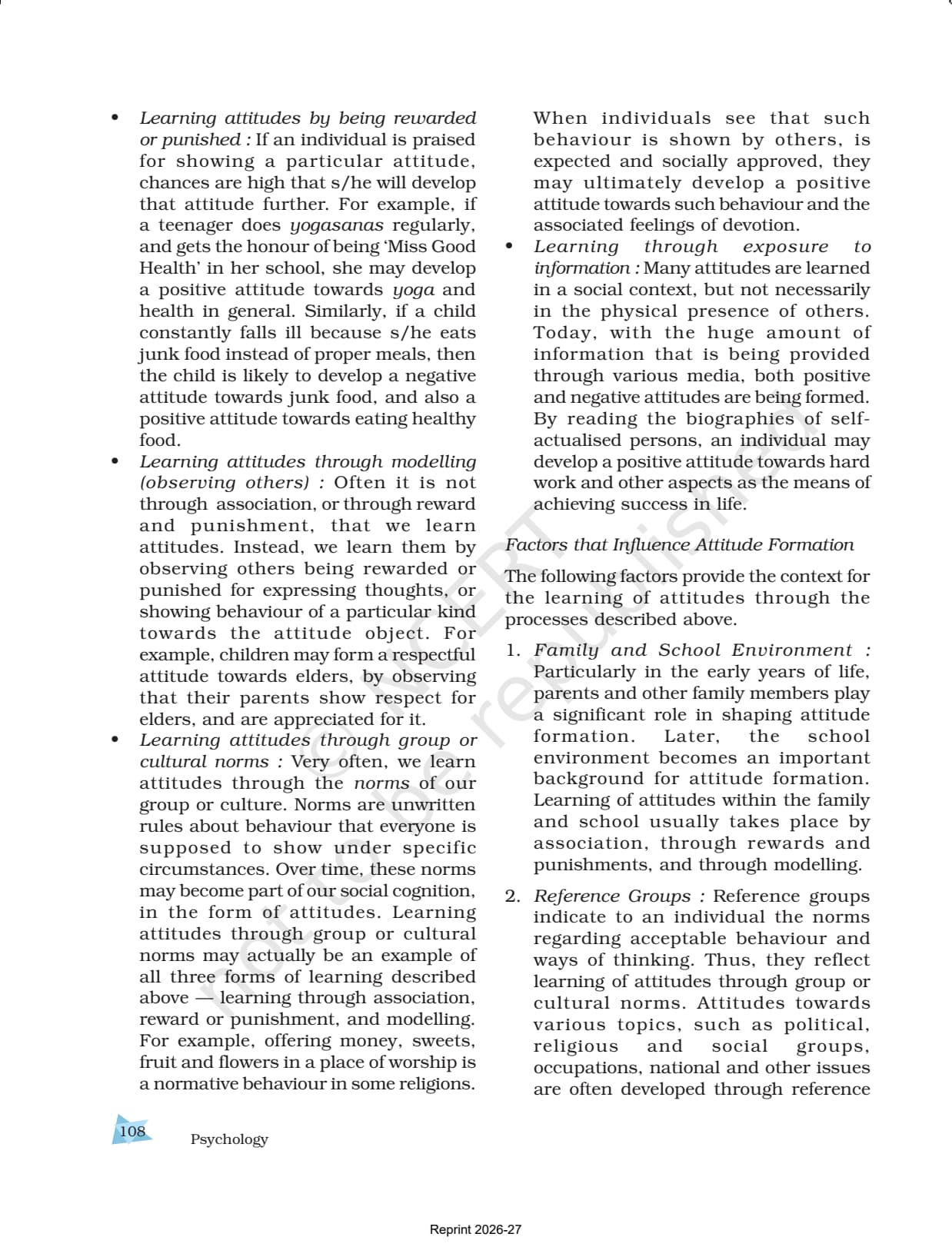
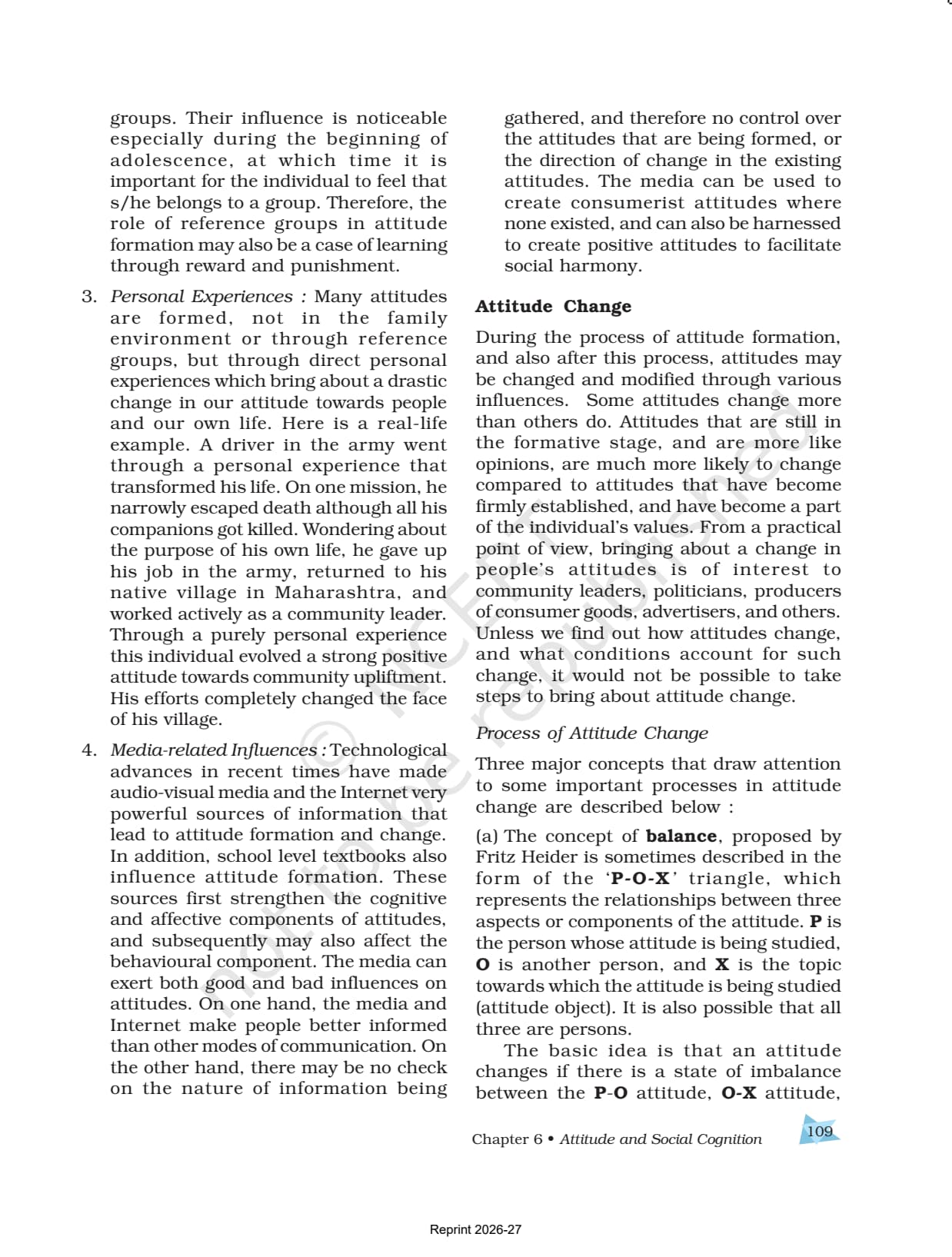
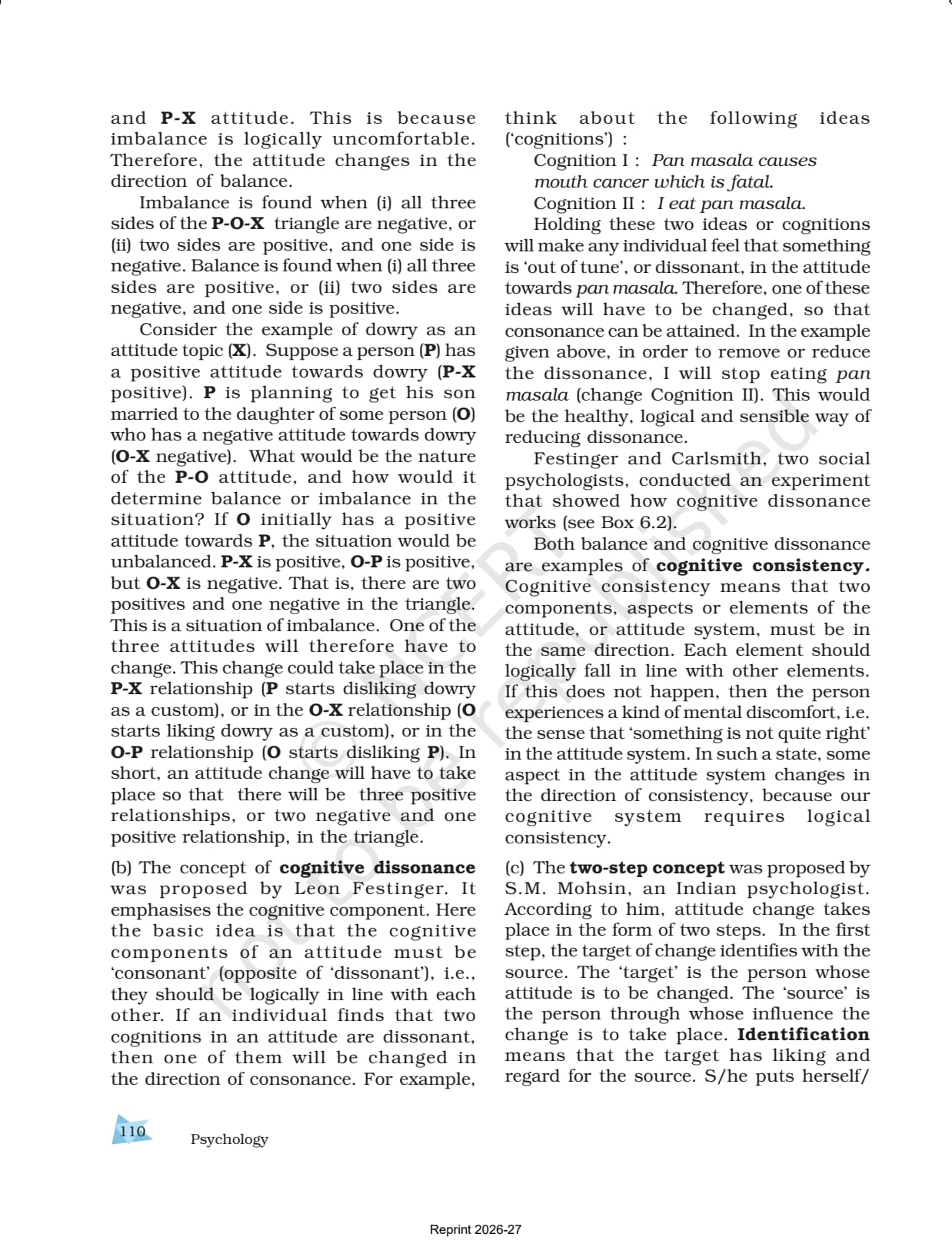
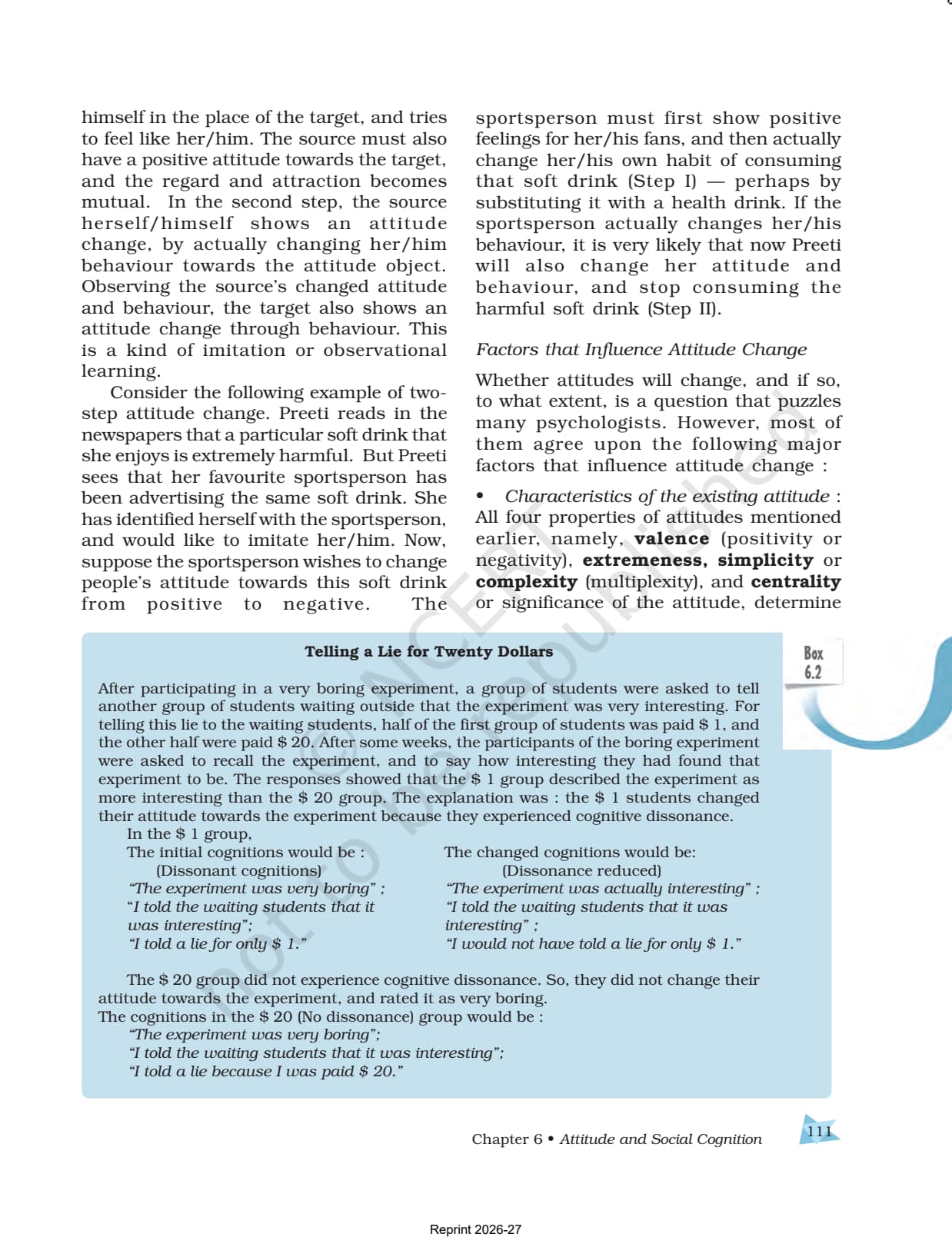
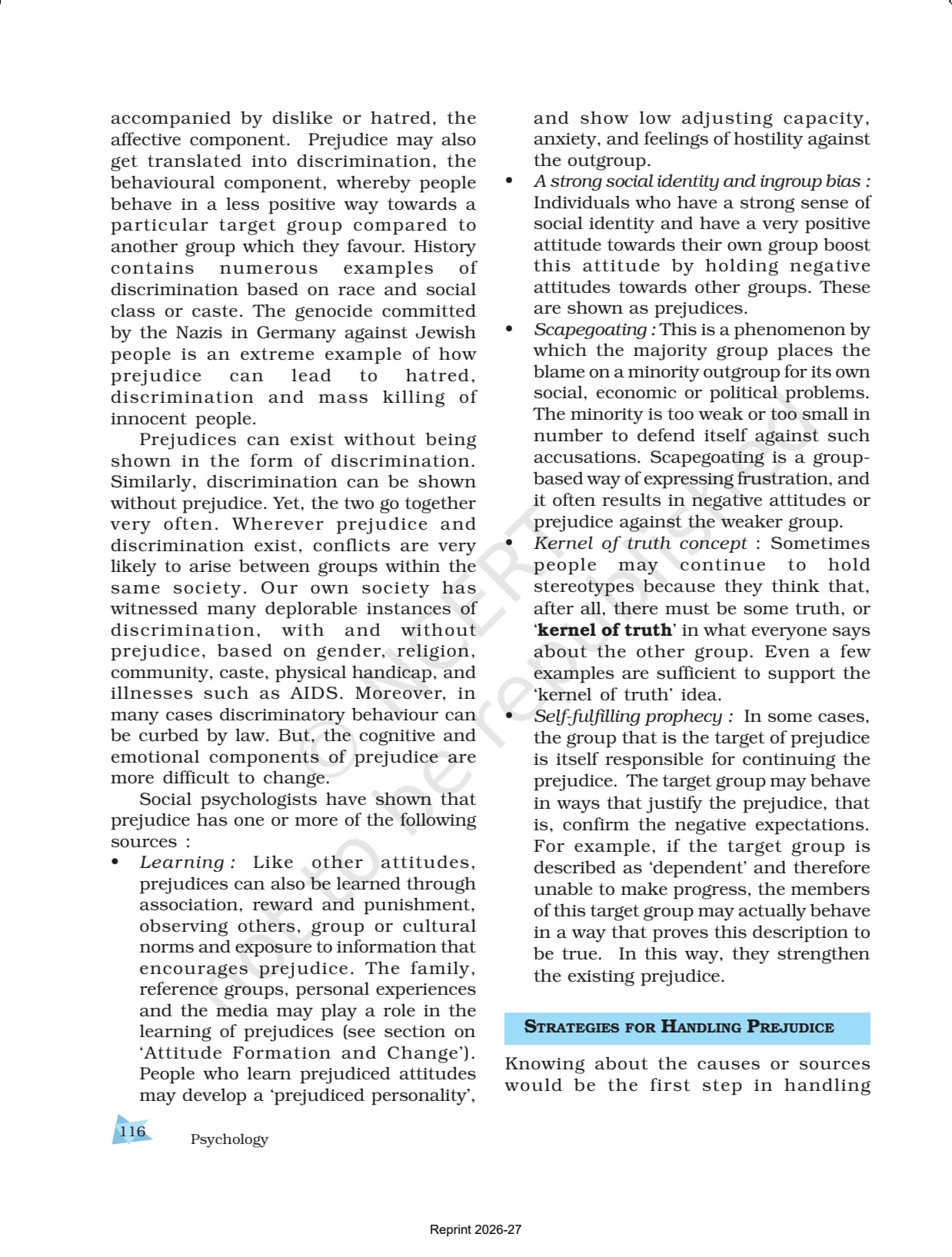
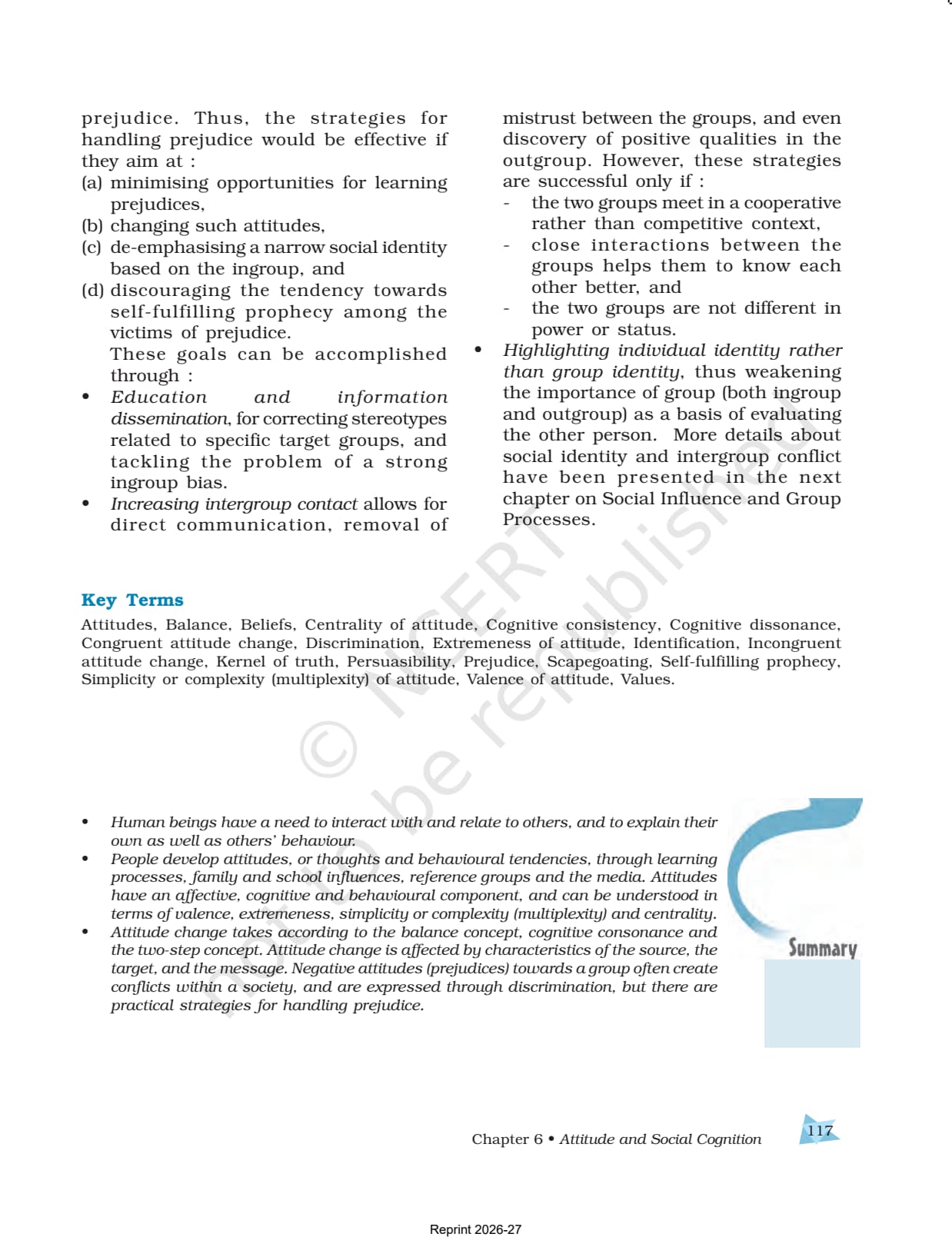
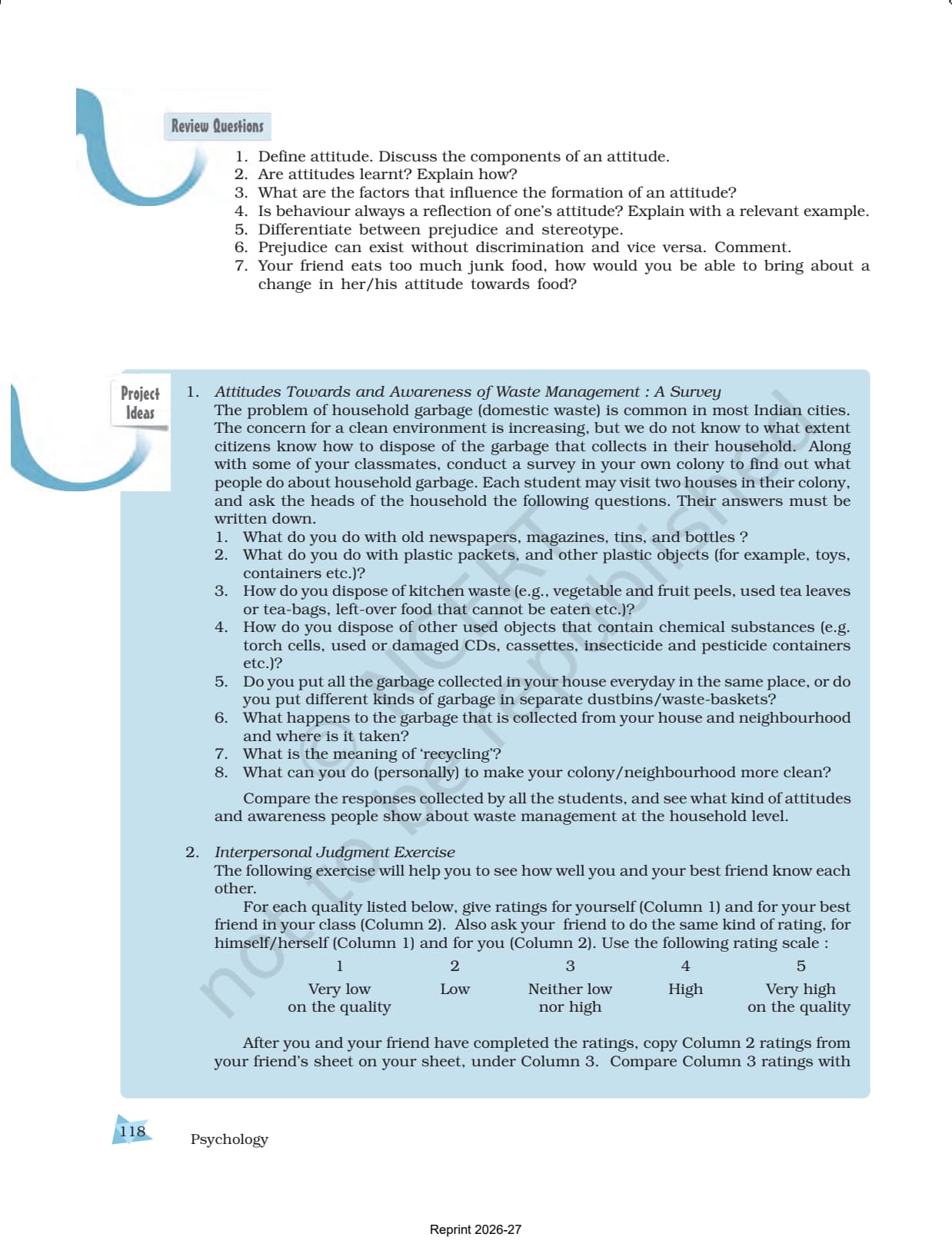
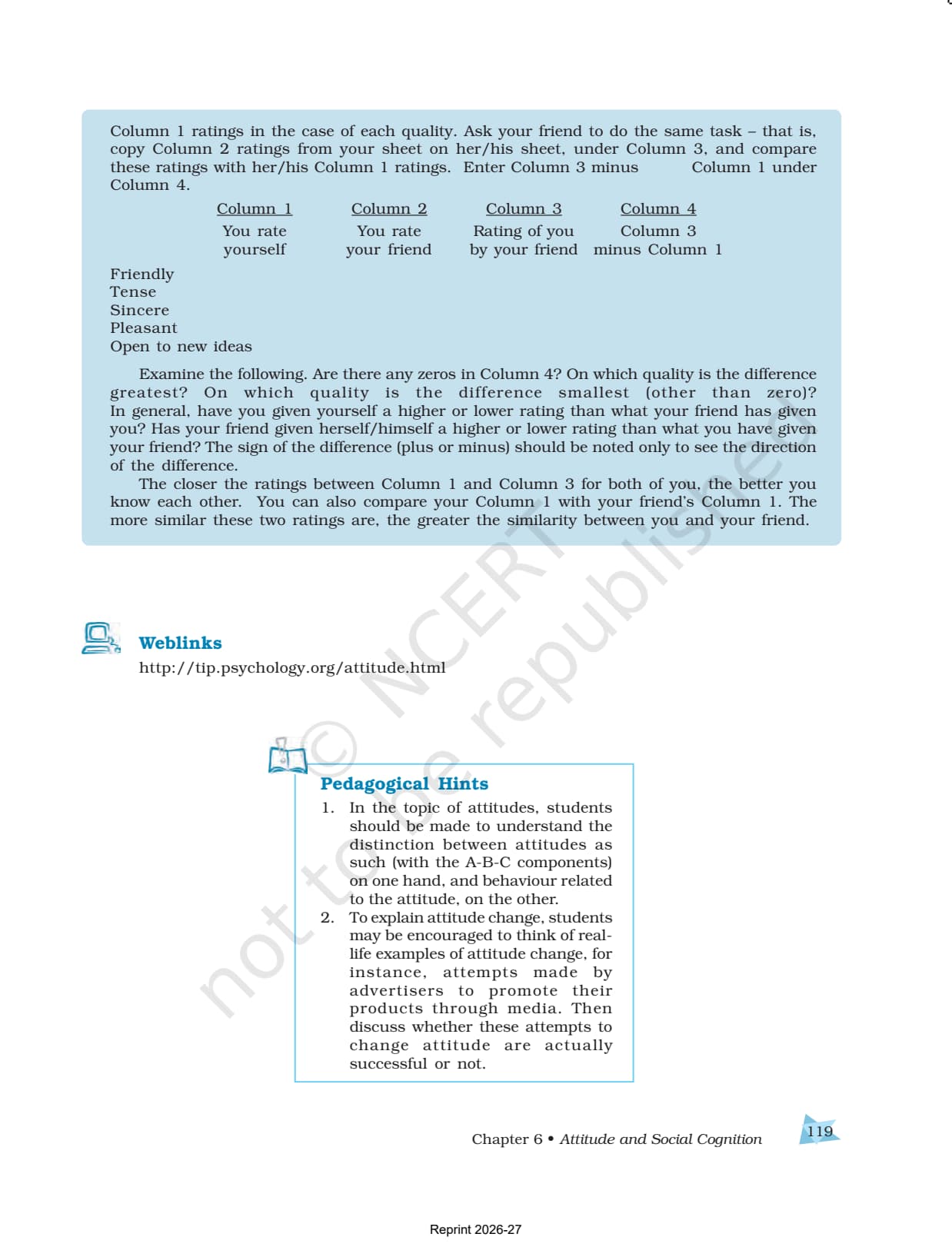
- The full, official NCERT Psychology Chapter 6 text, free to read and download.
- Covers attitudes, their formation and change, the attitude-behaviour link and prejudice.
- Pairs with the NCERT Solutions, Notes and Handwritten Notes linked lower on this page.
This Attitude and Social Cognition Class 12 NCERT PDF is the official Psychology textbook chapter for the 2026-27 CBSE syllabus.
Student Feedback: In a Collegedunia poll of 6,240 Class 12 Psychology students taken before the 2026 boards, 76% of students said they preferred reading the original NCERT chapter before any guide, because the board sets answers in the textbook's own words. Most students kept the PDF open while attempting the Review Questions.
Source: 2026-27 Class 12 Psychology student poll. Sample of 6,240 students from CBSE schools across 11 states.
What the Attitude and Social Cognition NCERT Chapter Covers
Chapter 6 of Class 12 Psychology explains how a person's behaviour is shaped by others and by the social world. It is a core theory chapter, so the board sets answers straight from this text. The chapter builds up three big ideas in order.
- Attitudes: what an attitude is, its A-B-C components and its four features.
- Formation and change: how attitudes are learnt and how they can be changed.
- Social cognition: prejudice, stereotype, discrimination and how to handle them.
Reading the original text first matters because the board often rewards the exact terms the chapter uses, such as evaluative, cognitive dissonance and attitude object. The PDF keeps those words in front of you so your answers match the mark scheme.
Topic-by-Topic Guide to the Chapter
The chapter follows a clear order, from the single attitude to whole-group judgements. The table maps each part of the NCERT text, so students can find the section they need while reading the PDF.
| Section | What the NCERT text covers |
|---|---|
| Nature of attitudes | The meaning of an attitude, the A-B-C components and the four features. |
| Attitude formation | The five learning routes and the four context factors. |
| Attitude change | Balance (P-O-X), cognitive dissonance and the two-step concept. |
| Attitude-behaviour link | When behaviour follows attitude, and the LaPiere study. |
| Social cognition | Prejudice, stereotype, discrimination, their sources and remedies. |
The two sections that carry the most marks are the nature of attitudes and social cognition, so read those slowly and underline the key terms. The Review Questions at the end of the chapter draw almost entirely from these two parts.
How to Use the NCERT PDF for Best Results
The PDF is the starting point, not the only resource. A simple reading routine turns the original text into exam marks, and it pairs naturally with the Notes and Solutions on this page.
- Read once for the story: follow the chapter order to see how the ideas connect.
- Read again for terms: underline every defined word, such as attitude object and stereotype.
- Then revise and practise: move to the Notes for a summary and the Solutions for model answers.
The most useful habit is to keep the PDF open while attempting the Review Questions, so you can check each answer against the exact NCERT wording. That is how the board expects answers to read, and it is the fastest way to a top-band script.
How the Book PDF Pairs with the Notes and Solutions
The PDF gives the original text, but full preparation needs the other resources for the same chapter, all linked in the table below. Read the chapter here first, summarise it with the Notes, then test yourself with the Solutions.
| Resource | Best used for |
|---|---|
| Attitude and Social Cognition NCERT Solutions | Step-by-step answers to all 7 Review Questions |
| Attitude and Social Cognition Class 12 Notes | A quick, point-wise summary of the whole chapter |
| Attitude and Social Cognition Handwritten Notes | Last-minute, one-shot revision in a scanned notebook style |
Tip: read the NCERT PDF first, then summarise with the Notes, and only then attempt the Solutions on your own. That order builds memory faster than copying answers straight away.
All Class 12 Psychology NCERT Book PDFs by Chapter
The table links the NCERT Book PDF for every chapter in Class 12 Psychology, so students can move across the course in one click. Attitude and Social Cognition is highlighted.
| Chapter | NCERT Book PDF |
|---|---|
| Chapter 1 | Variations in Psychological Attributes |
| Chapter 2 | Self and Personality |
| Chapter 3 | Meeting Life Challenges |
| Chapter 4 | Psychological Disorders |
| Chapter 5 | Therapeutic Approaches |
| Chapter 6 | Attitude and Social Cognition |
| Chapter 7 | Social Influence and Group Processes |
FAQs on Attitude and Social Cognition Class 12 NCERT PDF
Attitude and Social Cognition Class 12 Psychology NCERT Book Common Questions
Ques. Where can I download the Attitude and Social Cognition Class 12 NCERT PDF?
Ans. You can download the Attitude and Social Cognition Class 12 Psychology NCERT PDF directly from this page. It is free, is the official Chapter 6 text, and follows the 2026-27 CBSE syllabus.
Ques. What does Chapter 6 of Class 12 Psychology cover?
Ans. It covers the nature of attitudes and their A-B-C components, the four features of an attitude, attitude formation and change, the attitude-behaviour link, and prejudice, stereotype and discrimination, with ways to handle prejudice.
Ques. Is the NCERT PDF enough to prepare this chapter?
Ans. The PDF is the best starting point because the board sets answers in its words. For full marks, pair it with the Notes for a summary and the NCERT Solutions for model answers, both linked on this page.
Ques. Does this PDF follow the latest 2026-27 syllabus?
Ans. Yes. It is the official NCERT Psychology Chapter 6 text for the 2026-27 CBSE syllabus, so the content, examples and terms match the current course.
Ques. How should I read the chapter for the board exam?
Ans. Read it once for the overall flow, then again to underline every defined term such as attitude object, cognitive dissonance and stereotype. Keep the PDF open while you attempt the Review Questions so your answers match the NCERT wording.



Comments