



The NCERT Solutions for Class 11 History Chapter 5 Changing Cultural Traditions cover four brief answers and two short essays. These Collegedunia answers explain Italian towns, humanism, art and changing views of the world for the 2026-27 session. You will compare political ideas and architecture, then connect changes in learning with new ideas about human life.
- Six textbook exercise answers, with explanations and alternative approaches
- Compare Italian and Islamic architecture using clear points
- Explain humanism with evidence from texts, art and urban life
Download desktop PDF (13 pages) | Download mobile PDF (28 pages)
This Collegedunia compilation follows the six exercises in the NCERT Changing Cultural Traditions chapter, Reprint 2026-27.
Which comparison needs more practice: architecture or government? Write both answers before checking the explanations below.
|
Table of Contents |
Changing Cultural Traditions Exercise Questions and Topics
The exercise asks you to explain causes, compare institutions and describe changes in thought. Four questions need brief answers; two need short essays. Use examples rather than a list of names.
| Question | Main task | Evidence to include |
|---|---|---|
| 1 | Classical revival | Greek and Roman writing, art and architecture |
| 2 | Compare architecture | Domes, arches, columns and decoration |
| 3 | Explain Italian leadership | Towns, commerce, universities and patrons |
| 4 | Compare government | Venetian civic ideas, the French crown and Protestant resistance |
| 5 | Explain humanist thought | Classical study, human abilities and critical enquiry |
| 6 | Describe a changed world-view | Science, observation, new geography and individuals |
Changing Cultural Traditions Explained for Class 11
Source: Magnet Brains on YouTube
Humanism and Italian Towns in Changing Cultural Traditions
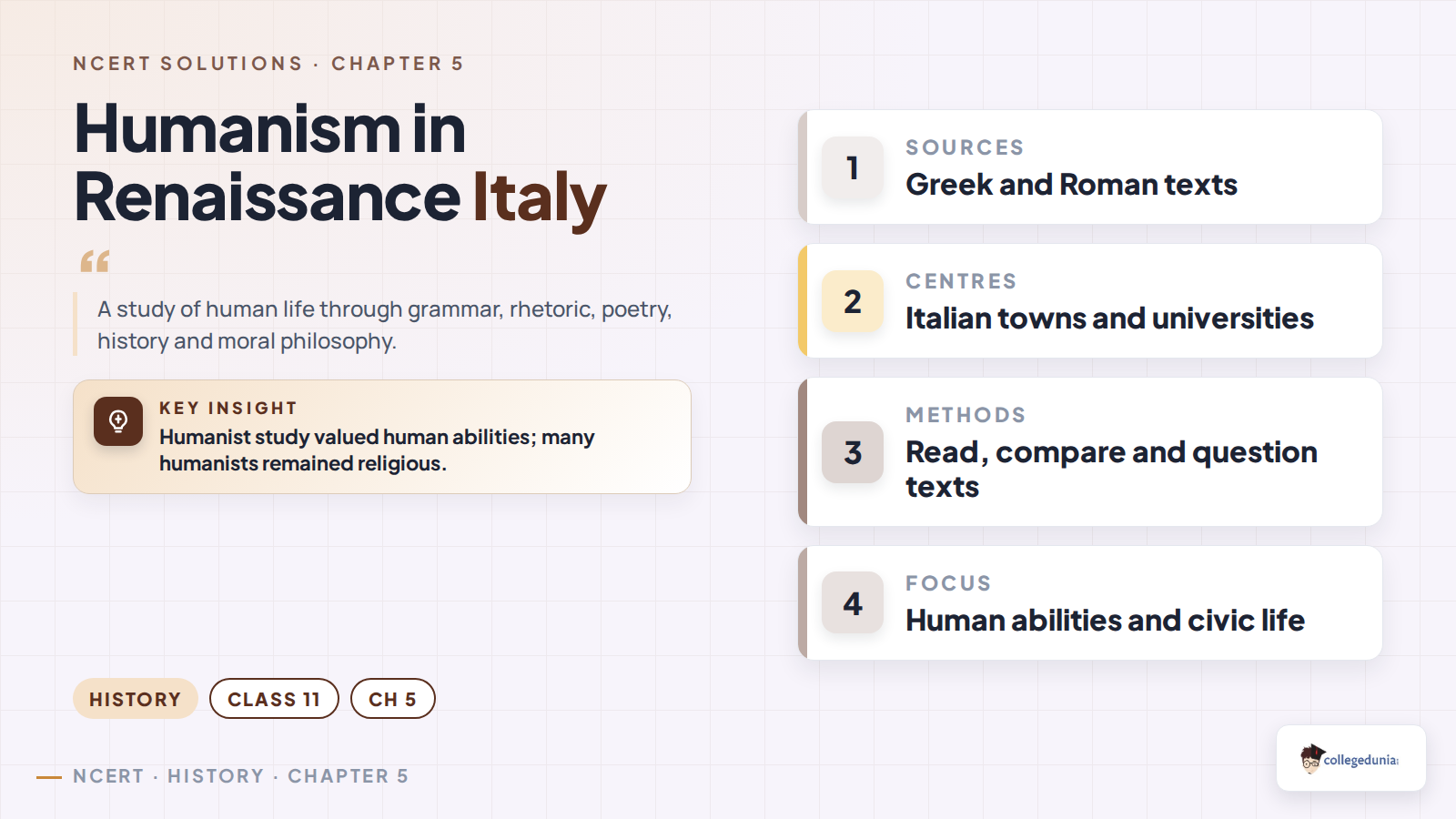
Humanism placed human life and abilities at the centre of study. Scholars studied grammar, rhetoric, poetry, history and moral philosophy. They read Greek and Roman texts closely. This interest did not mean everyone rejected religion.
- Trade made several Italian towns wealthy and linked them with wider regions
- Universities and educated urban groups supported the study of classical texts
- Wealthy families and rulers paid artists and scholars for their work
- Artists studied anatomy, proportion and perspective to show the visible world
Renaissance changes were gradual and uneven. The textbook questions the idea that medieval Europe had no learning or creativity. Europeans also learned from India, Arabia, Iran, Central Asia and China. Explain these connections when discussing a wider cultural change.
Changing Cultural Traditions Comparisons Without Common Errors
For a comparison, use the same headings for both sides. This makes your argument easier to follow. Avoid treating a whole civilisation as if every building or government were identical.
| Comparison | Useful distinction | Common error |
|---|---|---|
| Italian and Islamic architecture | Compare arches and domes, then discuss classical columns and forms of decoration | Claiming the traditions had no shared features |
| Venice and France | Contrast Venice's governing elite with the French crown; include Protestant claims to resist oppressive rulers | Calling Venice a democracy with equal rights for everyone |
| Humanism and religion | Humanists valued human abilities while many remained Christian | Equating humanism with the end of religion |
| Medieval and Renaissance learning | Show both changes and earlier roots | Describing the Middle Ages as a complete intellectual blank |
Changing Cultural Traditions and the Seventeenth-Century World
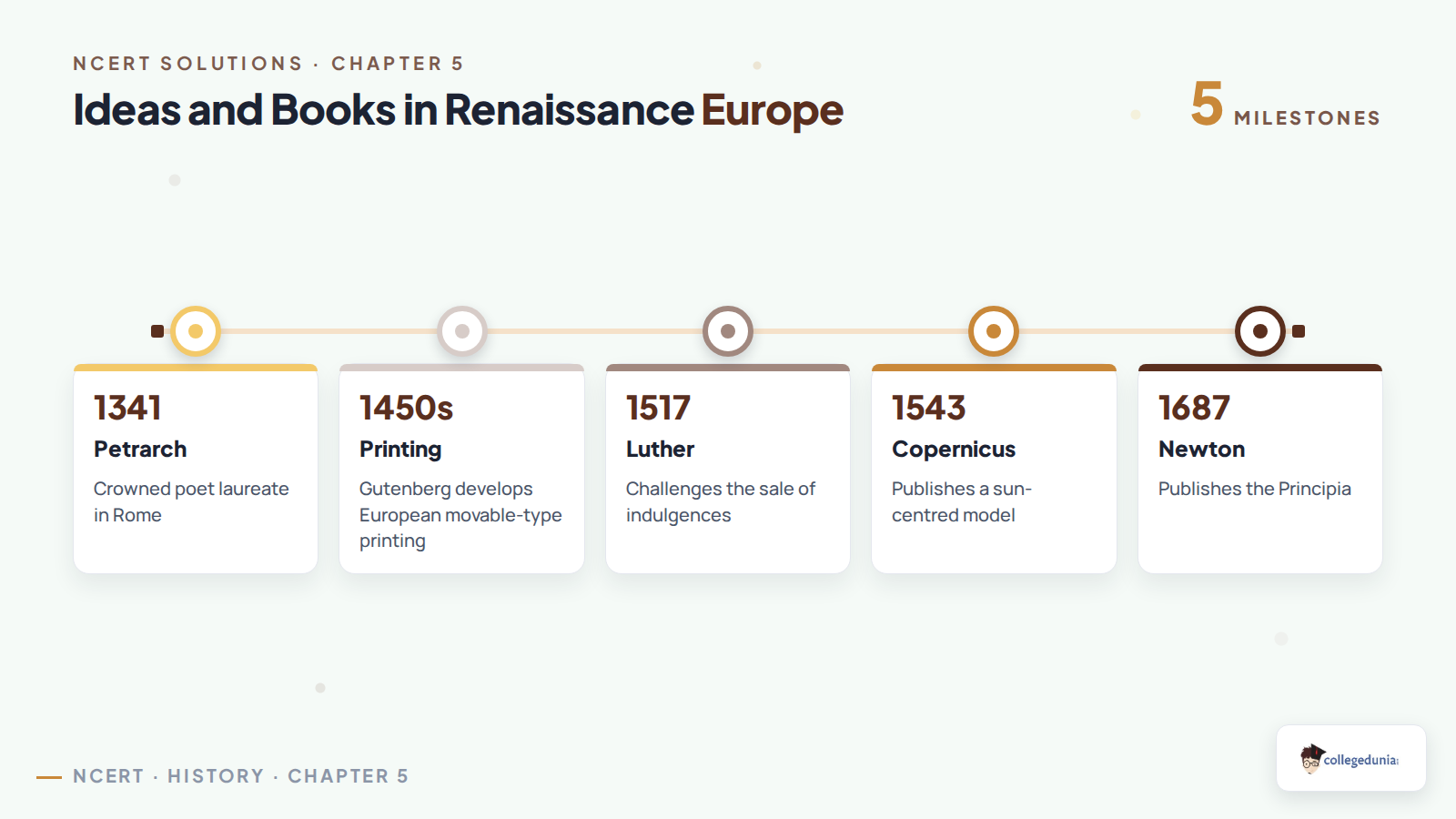
Scientific enquiry changed how some Europeans understood the universe. Copernicus proposed a sun-centred model. Later work by Kepler, Galileo and Newton strengthened mathematical explanations of nature. Observation and experiment gained authority beside inherited texts.
- Connect scientific ideas with changes in methods of finding knowledge
- Explain how printed books helped ideas reach wider groups
- Discuss growing attention to individuals and the private sphere
- Acknowledge that women faced limits despite some prominent writers and patrons
For the short essay, group evidence under science, culture and society. End by showing the limits of change. New ideas did not reach all Europeans equally or replace older beliefs at once.
Changing Cultural Traditions Answers for Practice and Revision
Read each question in the textbook, then write your own response. Compare its evidence and explanation with the answer. For the essays, plan three or four connected paragraphs before writing.
Read all Changing Cultural Traditions questions with Check Solution and Expert Solution panels
Changing Cultural Traditions Resources for Class 11
Read the textbook sources first. Use notes to recall terms, then return to the exercise answers for writing practice.
| Resource | Use |
|---|---|
| Changing Cultural Traditions NCERT Book PDF | Read the sources, images and activities |
| Changing Cultural Traditions Class 11 Notes (not yet available) | Revise terms and changes in thought |
| Changing Cultural Traditions Handwritten Notes (not yet available) | Review key comparisons |
NCERT Solutions for Class 11 History: All Chapters
Compare the Renaissance with earlier societies and later changes. Choose another theme below to continue your exercise practice.
| Chapter | NCERT Solutions |
|---|---|
| 1 | Writing and City Life Class 11 NCERT Solutions (not yet available) |
| 2 | An Empire Across Three Continents Class 11 NCERT Solutions (not yet available) |
| 3 | Nomadic Empires Class 11 NCERT Solutions |
| 4 | The Three Orders Class 11 NCERT Solutions |
| 5 | Changing Cultural Traditions Class 11 NCERT Solutions (not yet available) |
| 6 | Displacing Indigenous Peoples Class 11 NCERT Solutions (not yet available) |
| 7 | Paths to Modernisation Class 11 NCERT Solutions (not yet available) |
More History NCERT Solutions for Further Study
These Class 12 resources offer further practice with evidence and historical explanations.
| Class and chapter | NCERT Solutions |
|---|---|
| Class 12 History Chapter 3 | Kinship, Caste and Class NCERT Solutions |
| Class 12 History Chapter 5 | Through the Eyes of Travellers NCERT Solutions |
| Class 12 History Chapter 9 | Colonialism and the Countryside NCERT Solutions |
All NCERT Solutions for Class 11 History Changing Cultural Traditions with Step-by-Step Solutions
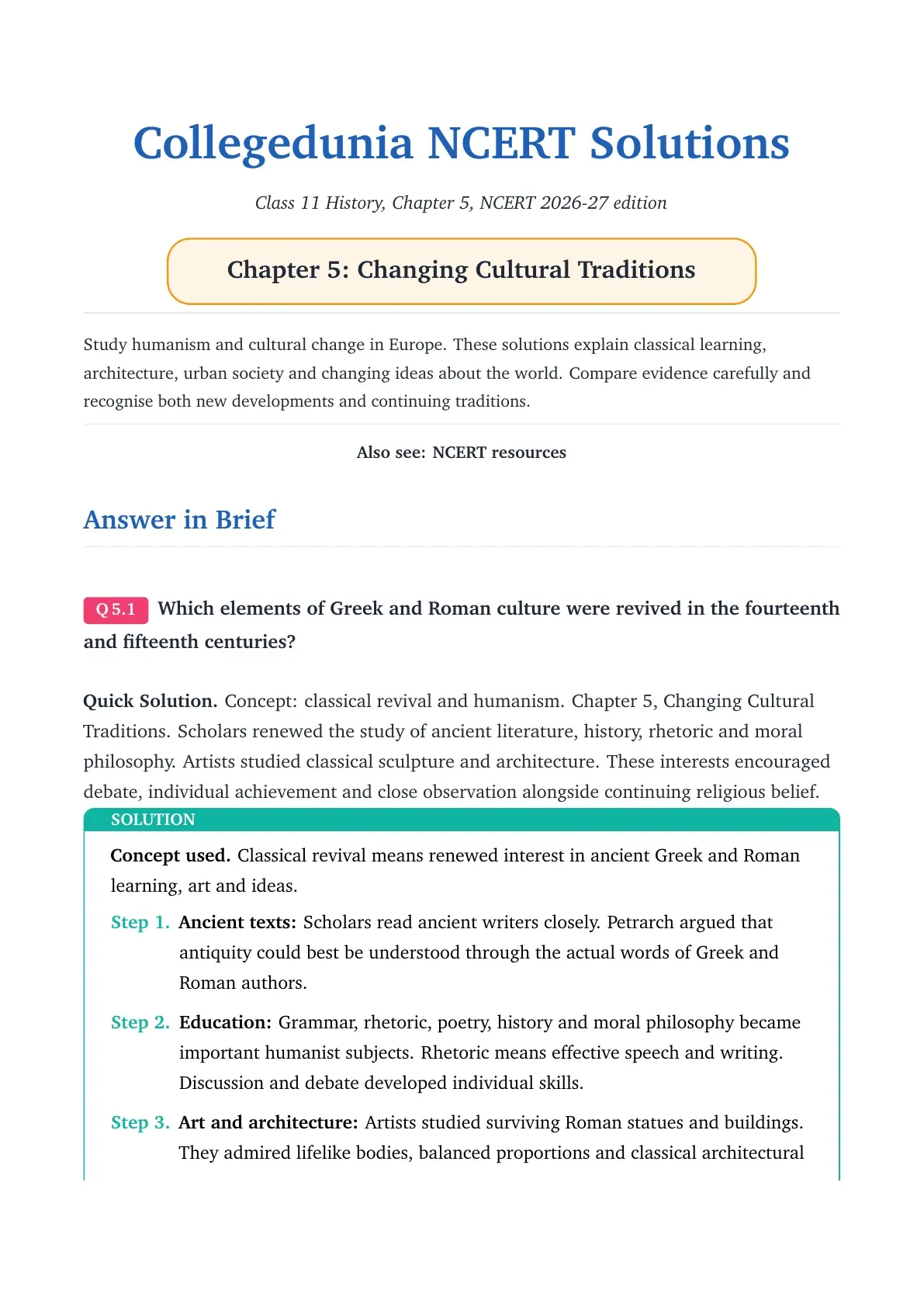
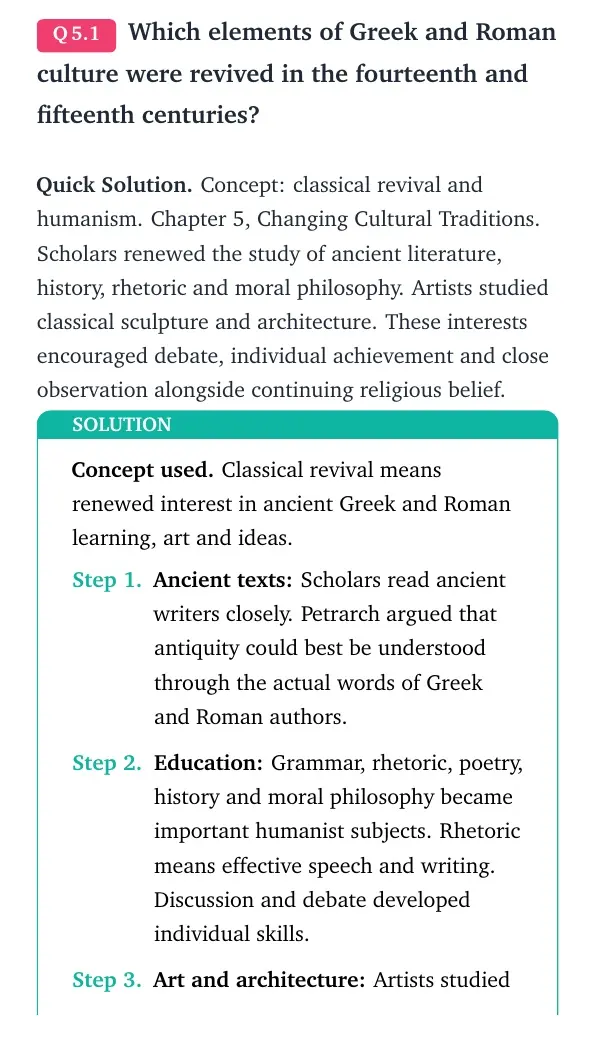
Which elements of Greek and Roman culture were revived in the fourteenth and fifteenth centuries?
Check Solution
Concept used. Classical revival means renewed interest in ancient Greek and Roman learning, art and ideas.
- Ancient texts: Scholars read ancient writers closely. Petrarch argued that antiquity could best be understood through the actual words of Greek and Roman authors.
- Education: Grammar, rhetoric, poetry, history and moral philosophy became important humanist subjects. Rhetoric means effective speech and writing. Discussion and debate developed individual skills.
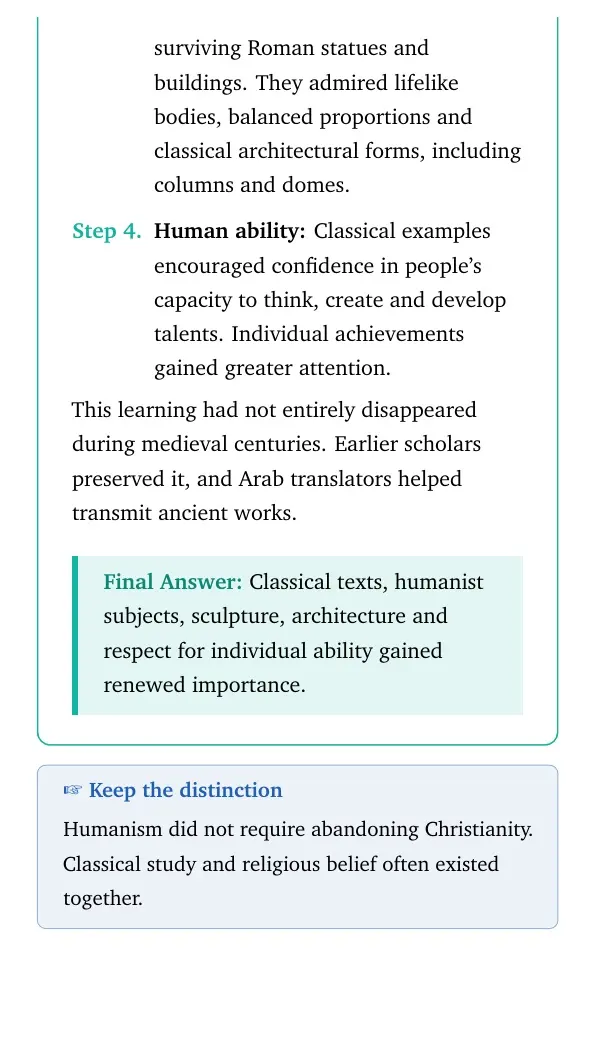
- Art and architecture: Artists studied surviving Roman statues and buildings. They admired lifelike bodies, balanced proportions and classical architectural forms, including columns and domes.
- Human ability: Classical examples encouraged confidence in people's capacity to think, create and develop talents. Individual achievements gained greater attention.
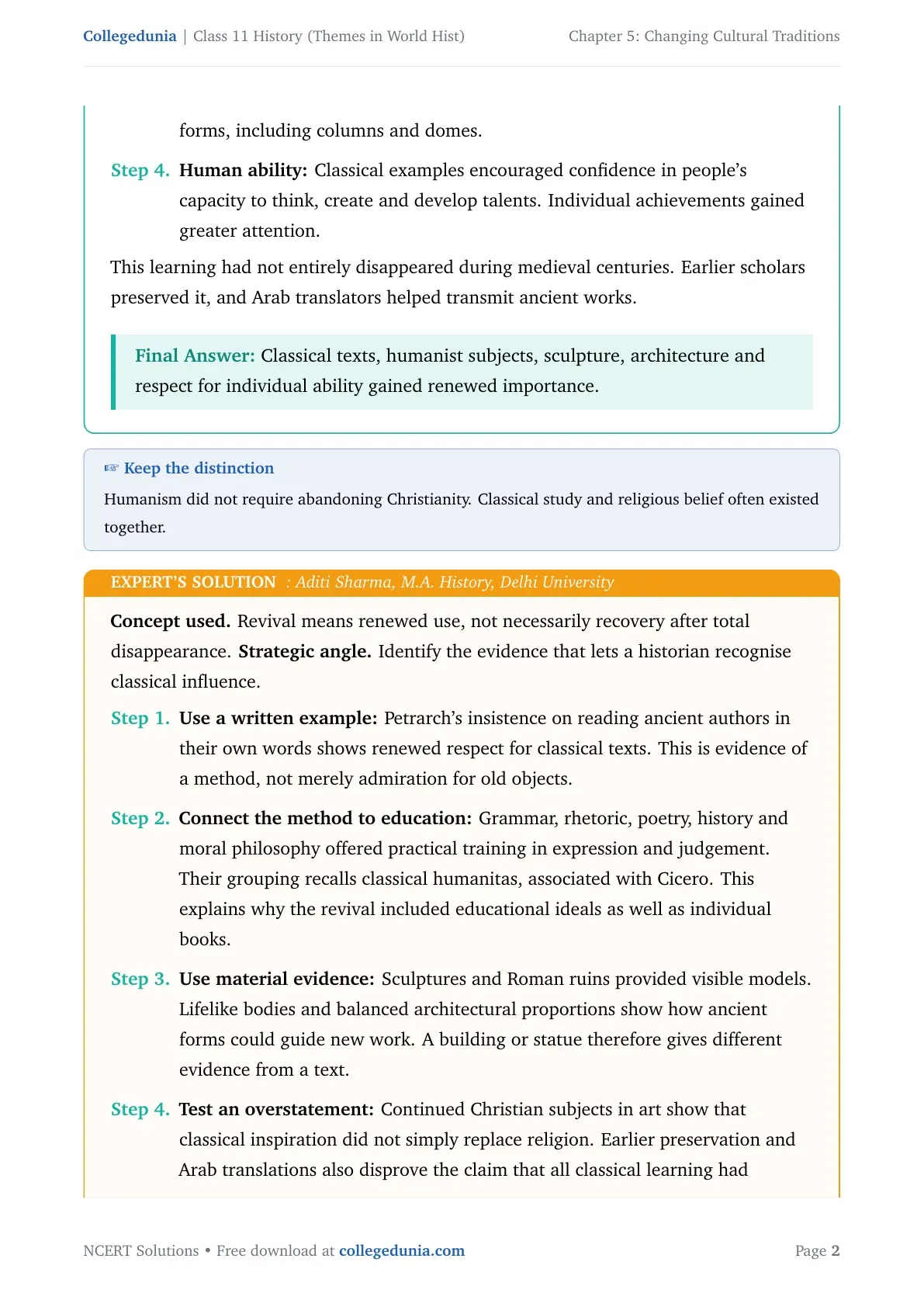
Expert Solution
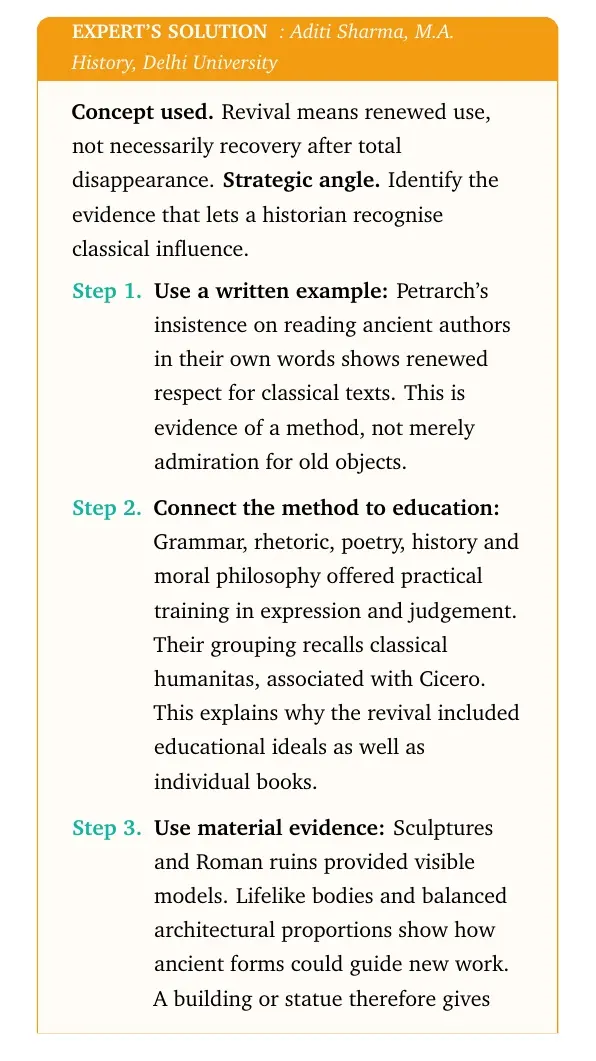
Concept used. Revival means renewed use, not necessarily recovery after total disappearance. Strategic angle. Identify the evidence that lets a historian recognise classical influence.
- Use a written example: Petrarch's insistence on reading ancient authors in their own words shows renewed respect for classical texts. This is evidence of a method, not merely admiration for old objects.
- Connect the method to education: Grammar, rhetoric, poetry, history and moral philosophy offered practical training in expression and judgement. Their grouping recalls classical humanitas, associated with Cicero. This explains why the revival included educational ideals as well as individual books.
- Use material evidence: Sculptures and Roman ruins provided visible models. Lifelike bodies and balanced architectural proportions show how ancient forms could guide new work. A building or statue therefore gives different evidence from a text.
- Test an overstatement: Continued Christian subjects in art show that classical inspiration did not simply replace religion. Earlier preservation and Arab translations also disprove the claim that all classical learning had vanished.
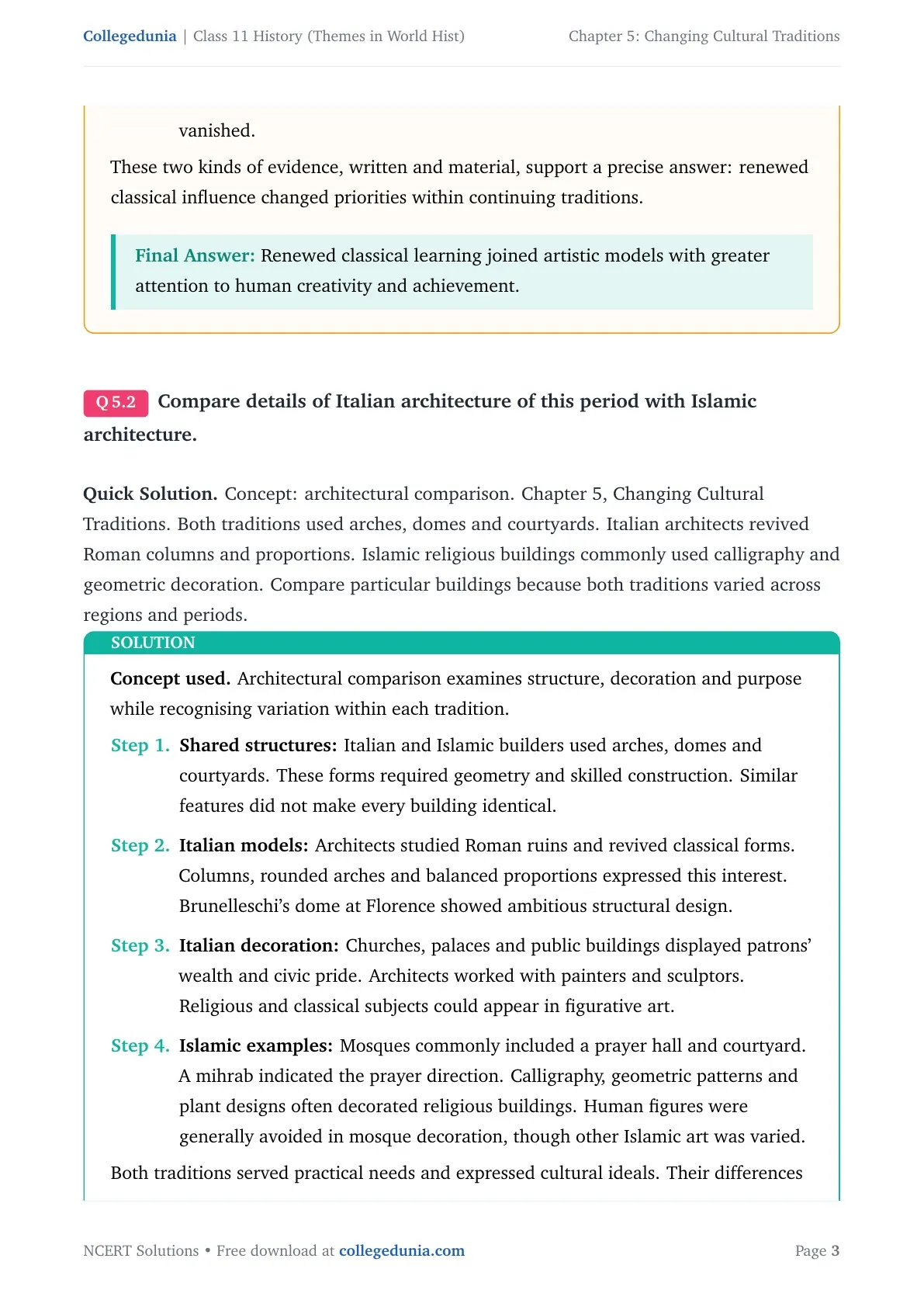
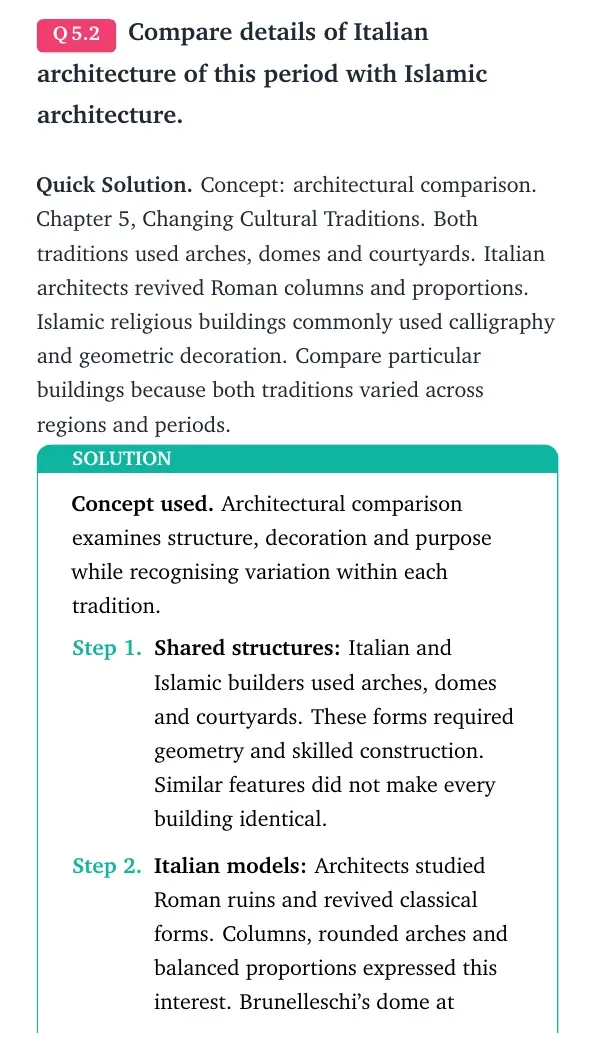
Compare details of Italian architecture of this period with Islamic architecture.
Check Solution
Concept used. Architectural comparison examines structure, decoration and purpose while recognising variation within each tradition.
- Shared structures: Italian and Islamic builders used arches, domes and courtyards. These forms required geometry and skilled construction. Similar features did not make every building identical.
- Italian models: Architects studied Roman ruins and revived classical forms. Columns, rounded arches and balanced proportions expressed this interest. Brunelleschi's dome at Florence showed ambitious structural design.
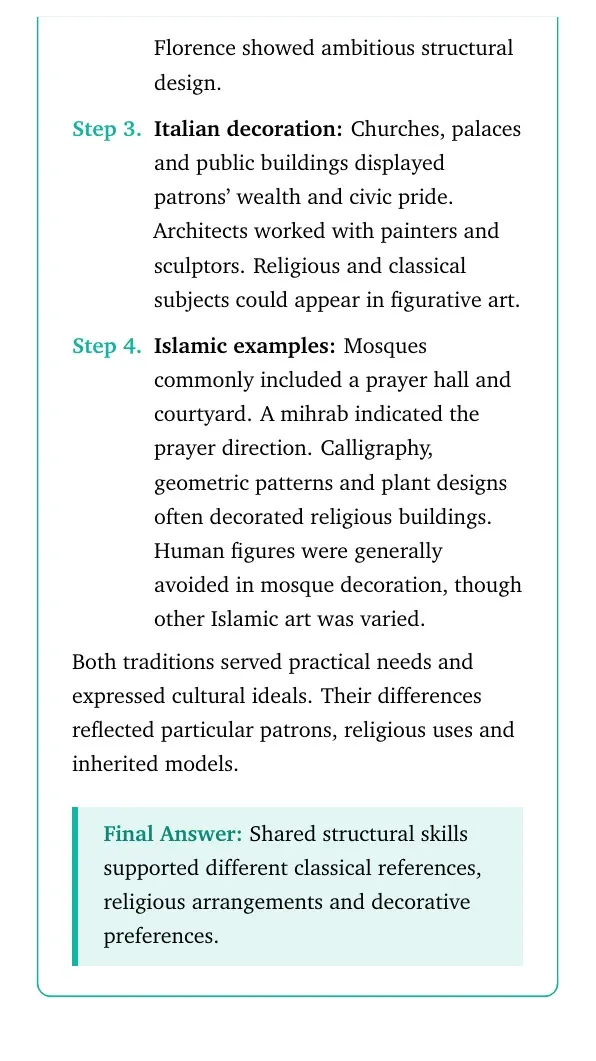
- Italian decoration: Churches, palaces and public buildings displayed patrons' wealth and civic pride. Architects worked with painters and sculptors. Religious and classical subjects could appear in figurative art.
- Islamic examples: Mosques commonly included a prayer hall and courtyard. A mihrab indicated the prayer direction. Calligraphy, geometric patterns and plant designs often decorated religious buildings. Human figures were generally avoided in mosque decoration, though other Islamic art was varied.
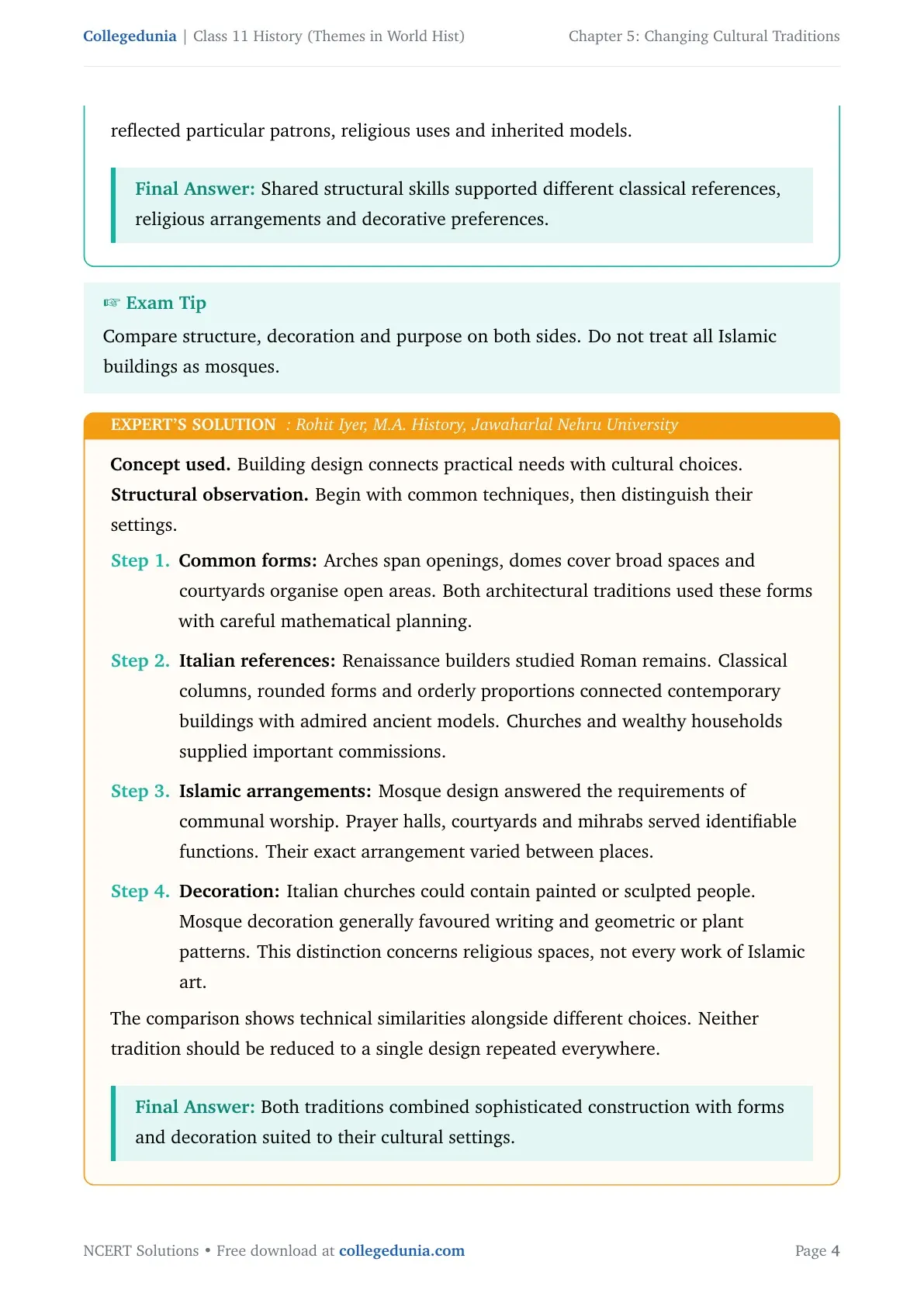
Expert Solution
Concept used. Building design connects practical needs with cultural choices. Structural observation. Begin with common techniques, then distinguish their settings.
- Common forms: Arches span openings, domes cover broad spaces and courtyards organise open areas. Both architectural traditions used these forms with careful mathematical planning.
- Italian references: Renaissance builders studied Roman remains. Classical columns, rounded forms and orderly proportions connected contemporary buildings with admired ancient models. Churches and wealthy households supplied important commissions.
- Islamic arrangements: Mosque design answered the requirements of communal worship. Prayer halls, courtyards and mihrabs served identifiable functions. Their exact arrangement varied between places.
- Decoration: Italian churches could contain painted or sculpted people. Mosque decoration generally favoured writing and geometric or plant patterns. This distinction concerns religious spaces, not every work of Islamic art.
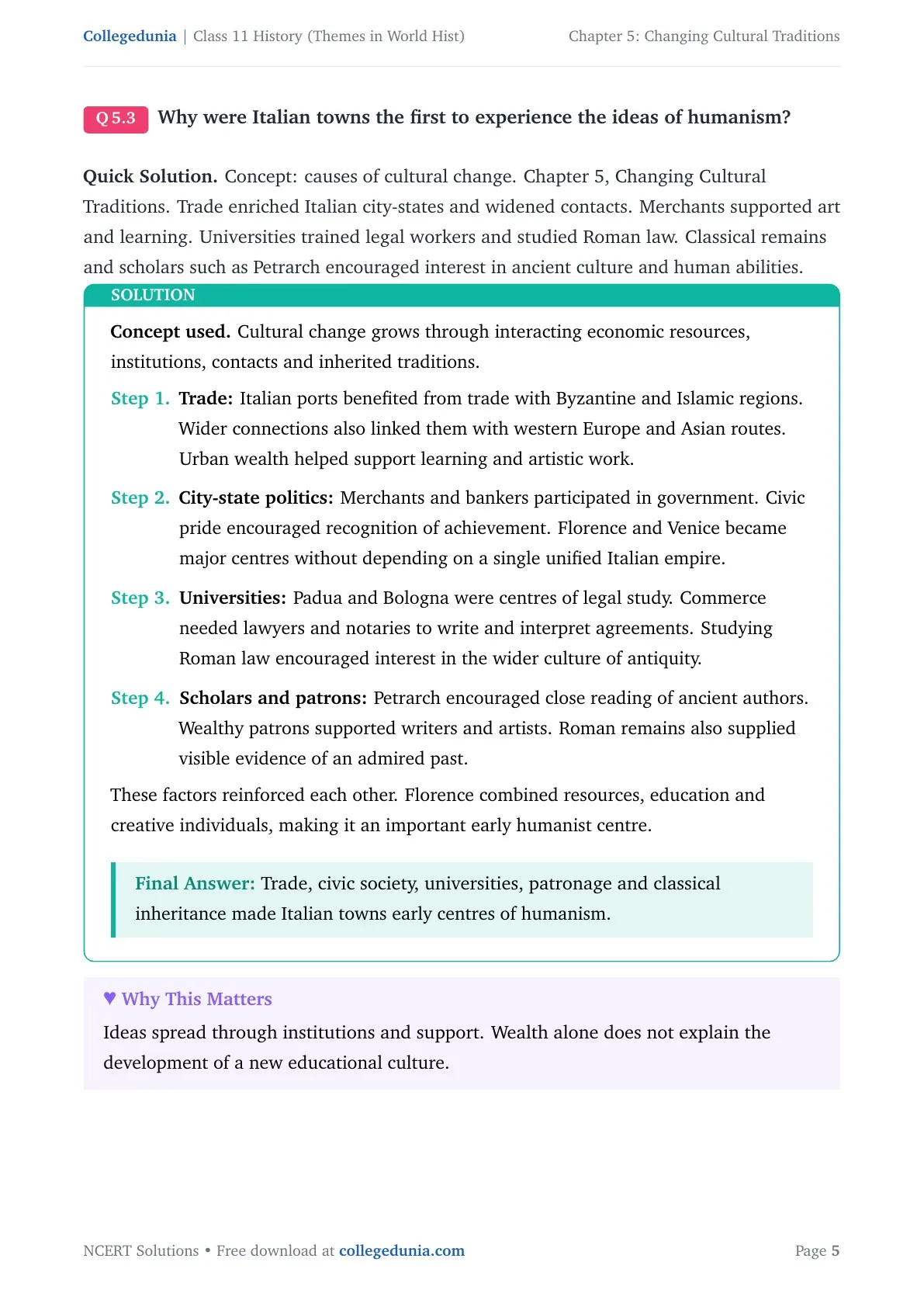
Why were Italian towns the first to experience the ideas of humanism?
Check Solution
Concept used. Cultural change grows through interacting economic resources, institutions, contacts and inherited traditions.
- Trade: Italian ports benefited from trade with Byzantine and Islamic regions. Wider connections also linked them with western Europe and Asian routes. Urban wealth helped support learning and artistic work.
- City-state politics: Merchants and bankers participated in government. Civic pride encouraged recognition of achievement. Florence and Venice became major centres without depending on a single unified Italian empire.
- Universities: Padua and Bologna were centres of legal study. Commerce needed lawyers and notaries to write and interpret agreements. Studying Roman law encouraged interest in the wider culture of antiquity.
- Scholars and patrons: Petrarch encouraged close reading of ancient authors. Wealthy patrons supported writers and artists. Roman remains also supplied visible evidence of an admired past.
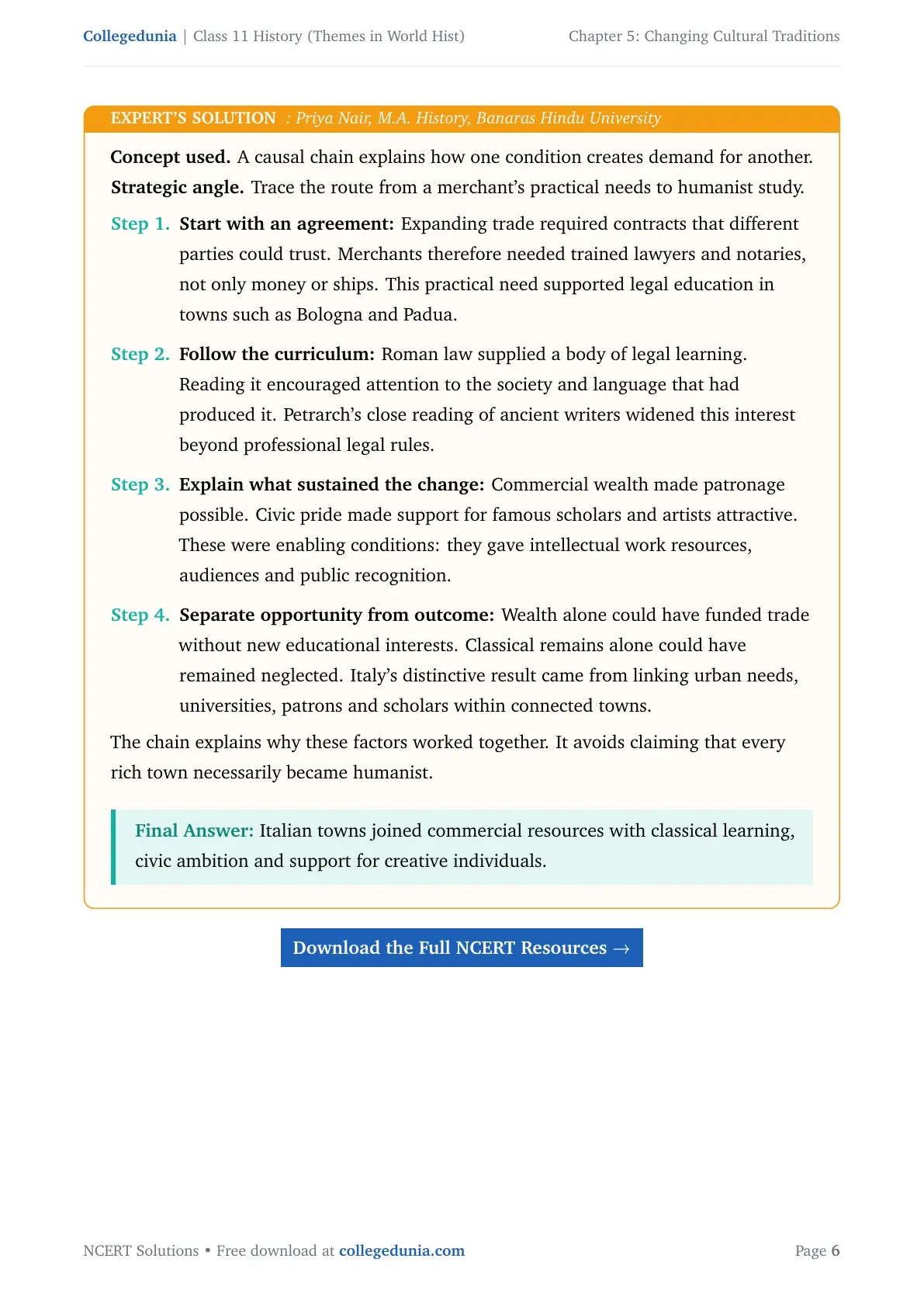
Expert Solution
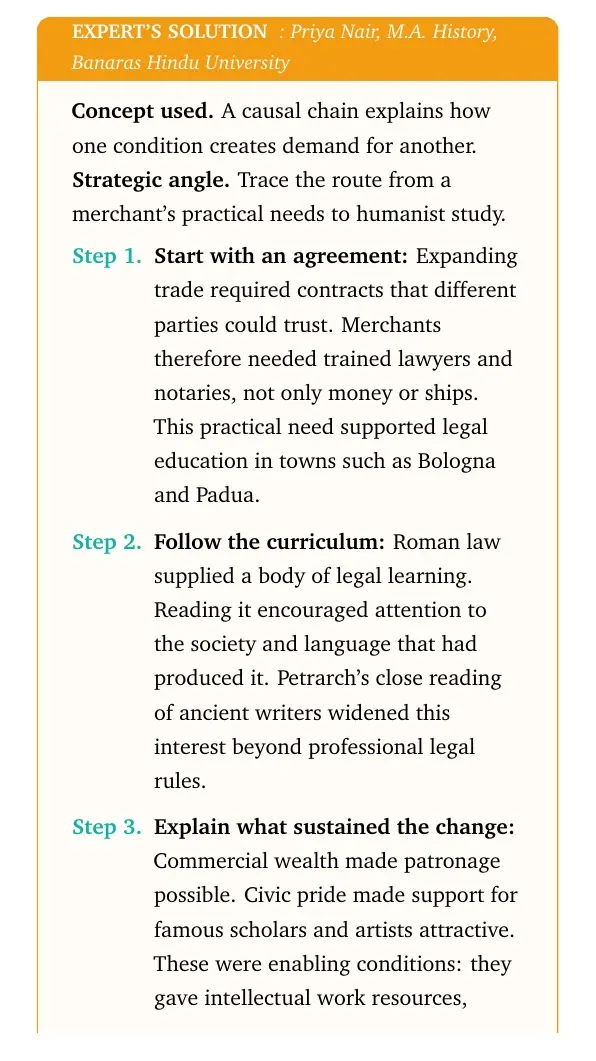
Concept used. A causal chain explains how one condition creates demand for another. Strategic angle. Trace the route from a merchant's practical needs to humanist study.
- Start with an agreement: Expanding trade required contracts that different parties could trust. Merchants therefore needed trained lawyers and notaries, not only money or ships. This practical need supported legal education in towns such as Bologna and Padua.
- Follow the curriculum: Roman law supplied a body of legal learning. Reading it encouraged attention to the society and language that had produced it. Petrarch's close reading of ancient writers widened this interest beyond professional legal rules.
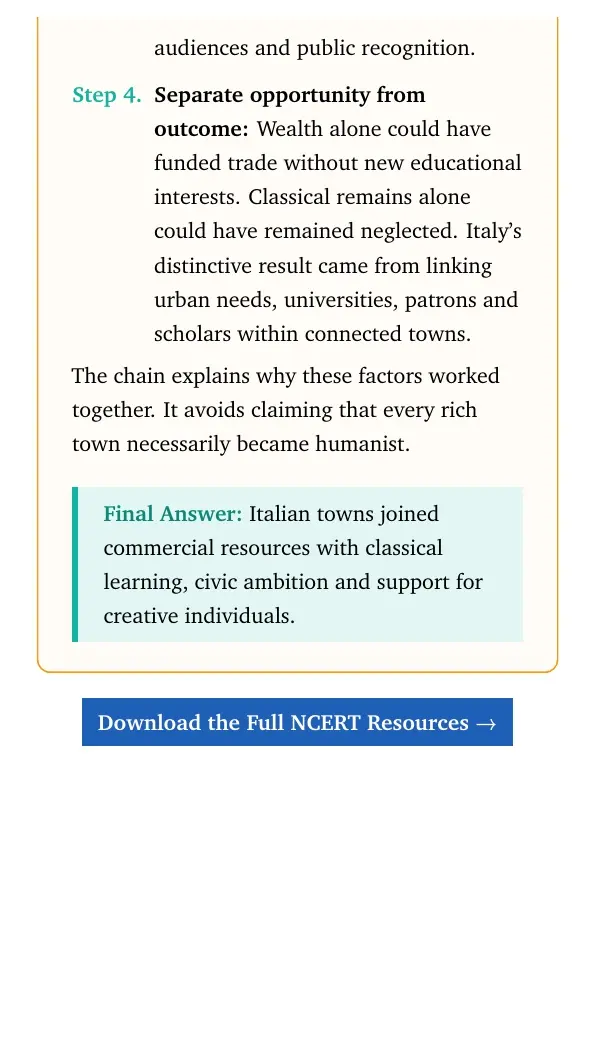
- Explain what sustained the change: Commercial wealth made patronage possible. Civic pride made support for famous scholars and artists attractive. These were enabling conditions: they gave intellectual work resources, audiences and public recognition.
- Separate opportunity from outcome: Wealth alone could have funded trade without new educational interests. Classical remains alone could have remained neglected. Italy's distinctive result came from linking urban needs, universities, patrons and scholars within connected towns.
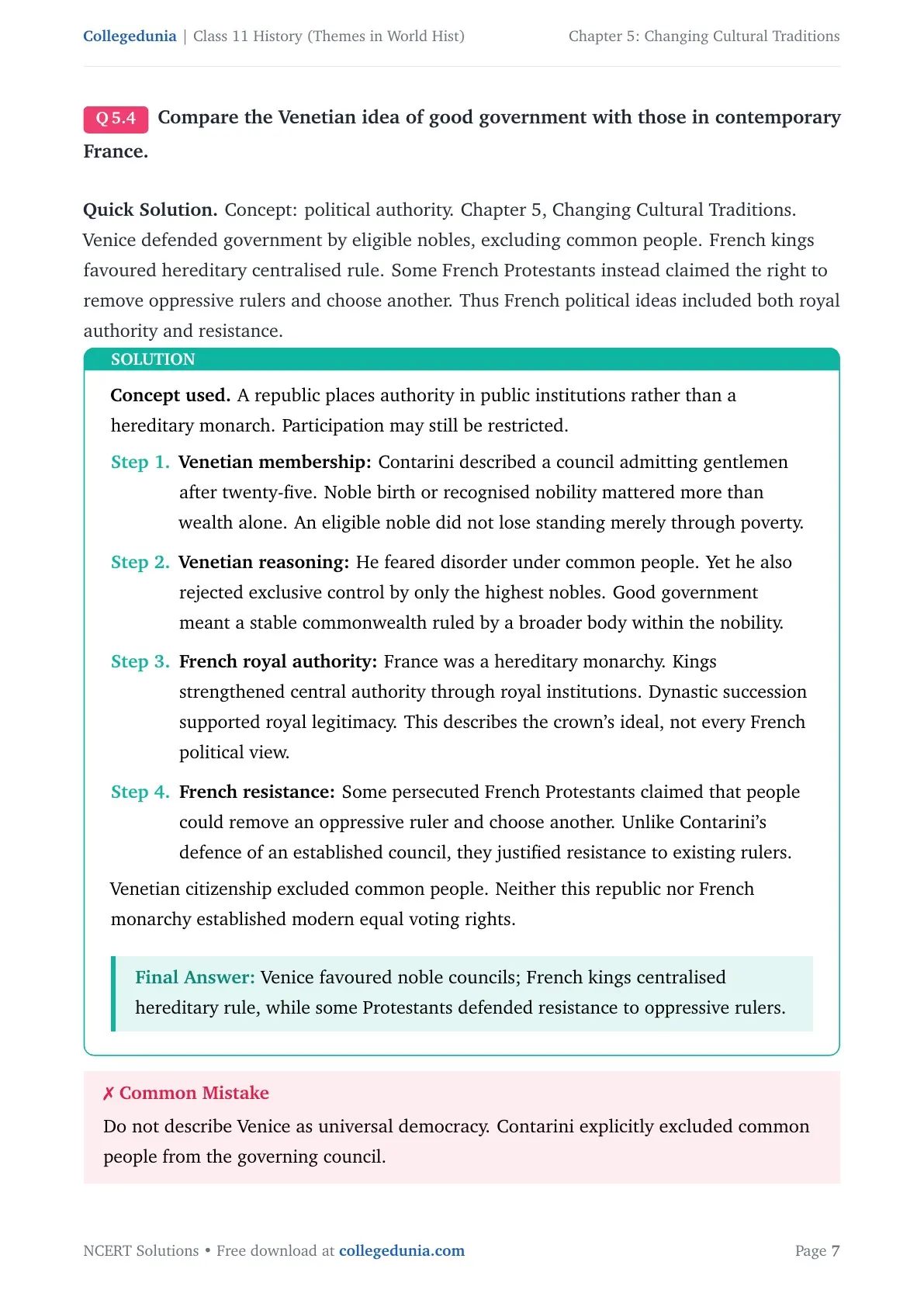
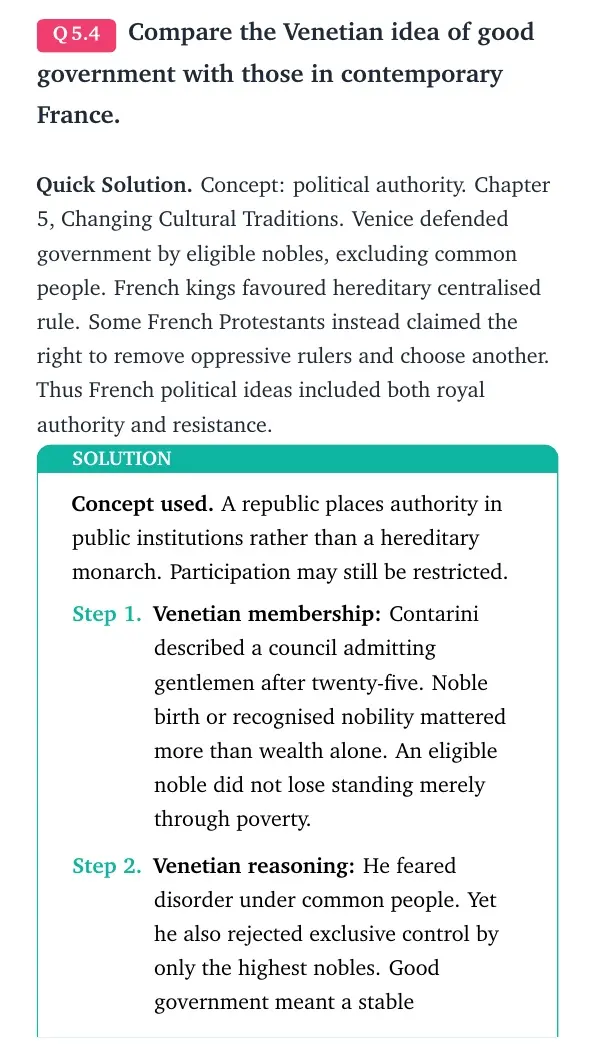
Compare the Venetian idea of good government with those in contemporary France.
Check Solution
Concept used. A republic places authority in public institutions rather than a hereditary monarch. Participation may still be restricted.
- Venetian membership: Contarini described a council admitting gentlemen after twenty-five. Noble birth or recognised nobility mattered more than wealth alone. An eligible noble did not lose standing merely through poverty.
- Venetian reasoning: He feared disorder under common people. Yet he also rejected exclusive control by only the highest nobles. Good government meant a stable commonwealth ruled by a broader body within the nobility.
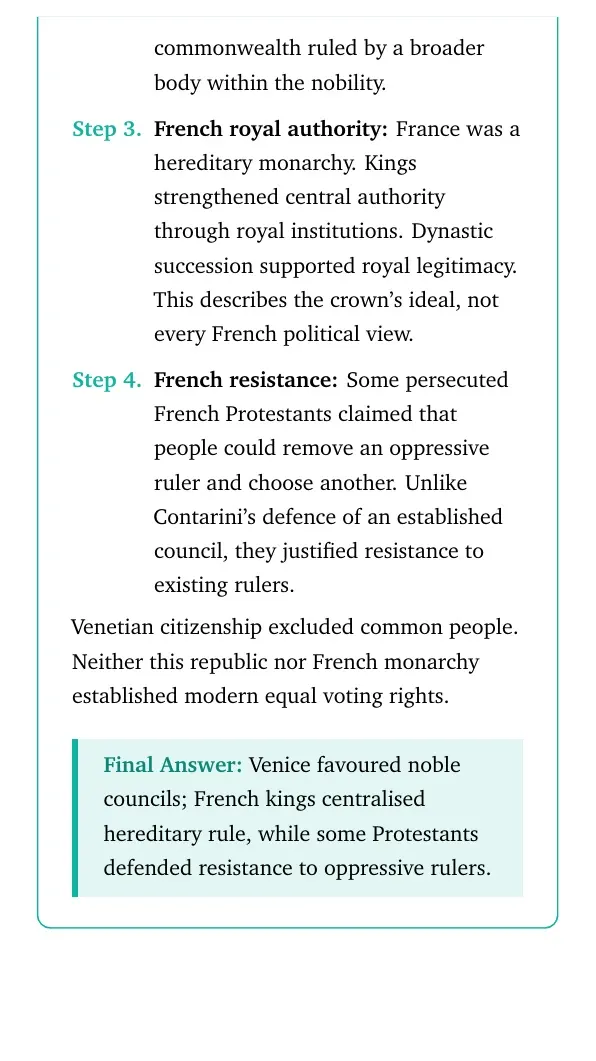
- French royal authority: France was a hereditary monarchy. Kings strengthened central authority through royal institutions. Dynastic succession supported royal legitimacy. This describes the crown's ideal, not every French political view.
- French resistance: Some persecuted French Protestants claimed that people could remove an oppressive ruler and choose another. Unlike Contarini's defence of an established council, they justified resistance to existing rulers.
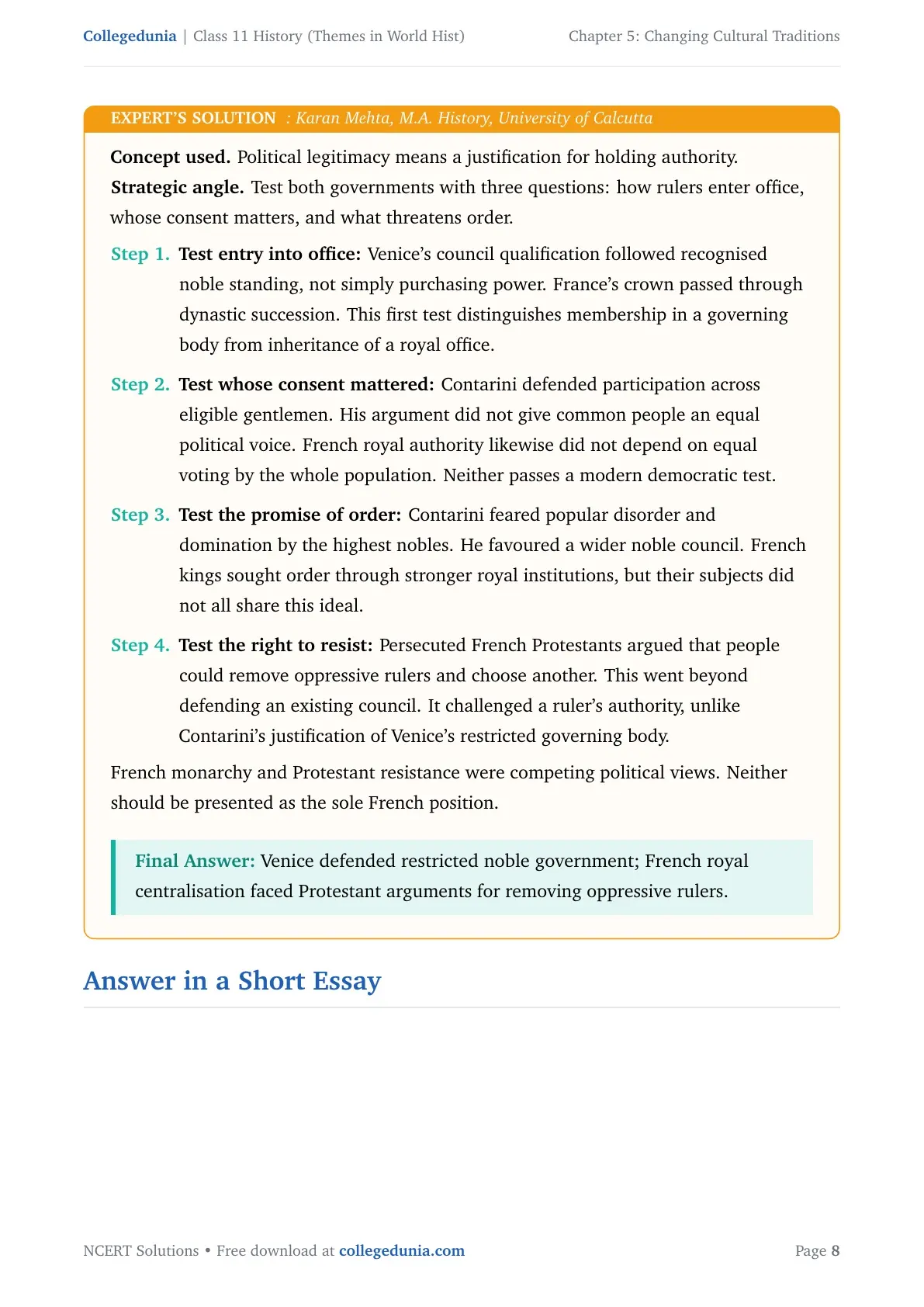
Expert Solution
Concept used. Political legitimacy means a justification for holding authority. Strategic angle. Test both governments with three questions: how rulers enter office, whose consent matters, and what threatens order.
- Test entry into office: Venice's council qualification followed recognised noble standing, not simply purchasing power. France's crown passed through dynastic succession. This first test distinguishes membership in a governing body from inheritance of a royal office.
- Test whose consent mattered: Contarini defended participation across eligible gentlemen. His argument did not give common people an equal political voice. French royal authority likewise did not depend on equal voting by the whole population. Neither passes a modern democratic test.
- Test the promise of order: Contarini feared popular disorder and domination by the highest nobles. He favoured a wider noble council. French kings sought order through stronger royal institutions, but their subjects did not all share this ideal.
- Test the right to resist: Persecuted French Protestants argued that people could remove oppressive rulers and choose another. This went beyond defending an existing council. It challenged a ruler's authority, unlike Contarini's justification of Venice's restricted governing body.
What were the features of humanist thought?
Check Solution
Concept used. Humanism explored human skills through classical study, discussion and moral enquiry.
- Classical reading: Petrarch encouraged close reading of ancient authors. Their words helped scholars understand Greek and Roman civilisation rather than depend only on later explanations.
- Education and debate: Grammar, rhetoric, poetry, history and moral philosophy formed humanist studies. These subjects were not based solely on theology. Debate trained judgement and strengthened intellectual ability.
- Individual achievement: People appeared capable of choosing and developing their talents. The ideal of a person with many skills joined scholarship, public activity and artistic creativity.
- Realistic representation: Artists studied nature, anatomy and geometry. Perspective created the appearance of depth. Art became an effective means of spreading new cultural ideas.
- Historical consciousness: Humanists contrasted their own age with antiquity and the intervening centuries. Modern historians question their sharp division between medieval darkness and modern achievement.
- Religion and limits: Many humanists remained Christian. Northern Christian humanists criticised corruption through textual study. Public opportunities still excluded most women, although Fedele defended women's intellectual abilities.
Expert Solution
Concept used. Humanism placed human learning and judgement at the centre of education. Strategic angle. Explain methods, aims and limits separately.
- Method: read texts. Petrarch treated antiquity as a distinct civilisation. Reading original works offered evidence for understanding it. Classical study encouraged comparison rather than uncritical dependence on inherited accounts.
- Method: argue carefully. Grammar and rhetoric developed communication. Poetry, history and moral philosophy examined human experience. Pico della Mirandola praised debate as exercise that strengthened the mind.
- Aim: cultivate ability. Individuals could develop several talents. Scholars, artists and public figures gained recognition through achievement. Observation and perspective also helped artists represent bodies and spaces more realistically.
- Limit: historical continuity. Humanists often exaggerated medieval darkness. Earlier scholars had preserved learning, and knowledge also reached Europe from other societies. Christianity remained central to many lives.
- Limit: unequal opportunity. Educated elites benefited most. Fedele defended women's learning because access and recognition were restricted. Individualism therefore did not automatically establish social or political equality.
Write a careful account of how the world appeared different to seventeenth-century Europeans.
Check Solution
Concept used. A world-view is a way of understanding nature, society and humanity's place within them.
- A larger geographical world: Voyages and expanding trade showed Europeans lands beyond familiar Mediterranean networks. New navigation techniques widened contact. Knowledge also came from India, Arabia, Iran, Central Asia and China.
- A changing universe: Copernicus placed the earth among planets moving around the sun. Kepler described elliptical planetary paths. Galileo's observations supported a changing picture of the heavens. Earth no longer seemed the fixed centre of everything.
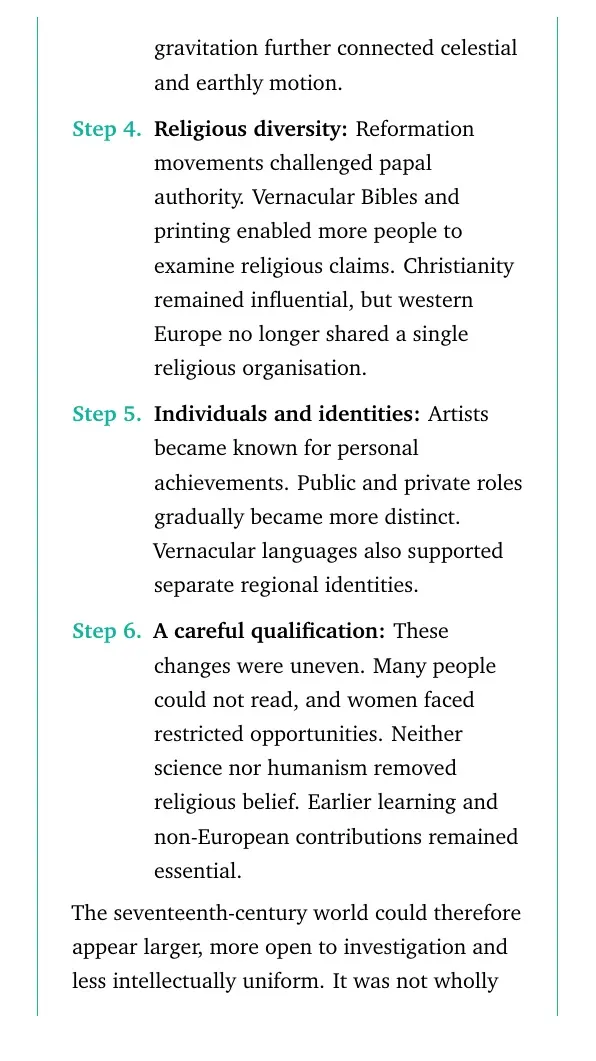
- A new method of knowledge: Observation, experiments and mathematics gained authority in studying nature. Scientific societies promoted discussion and public demonstrations. Newton's theory of gravitation further connected celestial and earthly motion.
- Religious diversity: Reformation movements challenged papal authority. Vernacular Bibles and printing enabled more people to examine religious claims. Christianity remained influential, but western Europe no longer shared a single religious organisation.
- Individuals and identities: Artists became known for personal achievements. Public and private roles gradually became more distinct. Vernacular languages also supported separate regional identities.
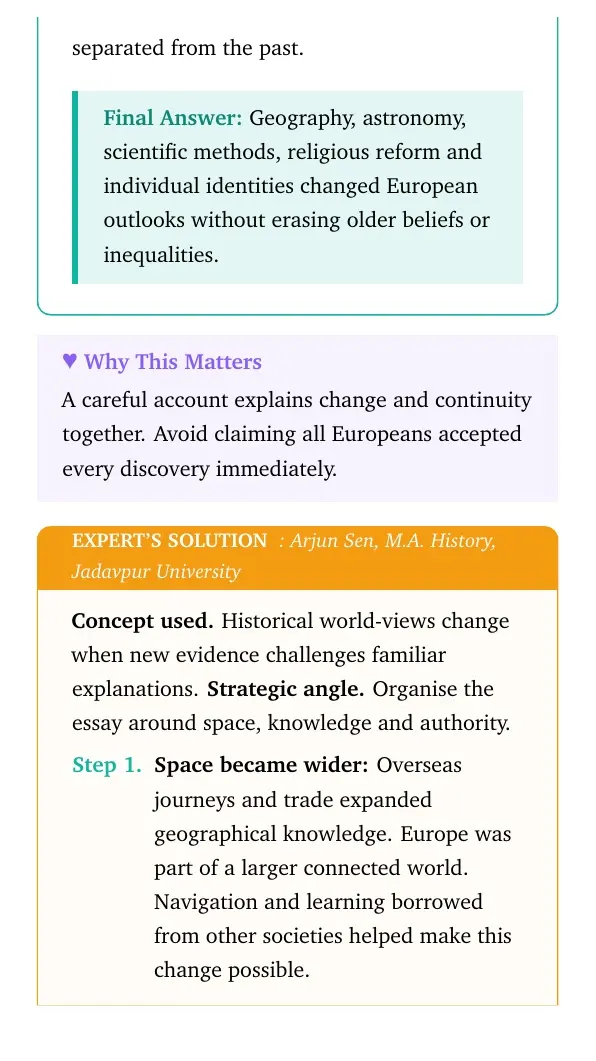
- A careful qualification: These changes were uneven. Many people could not read, and women faced restricted opportunities. Neither science nor humanism removed religious belief. Earlier learning and non-European contributions remained essential.
Expert Solution
Concept used. Historical world-views change when new evidence challenges familiar explanations. Strategic angle. Organise the essay around space, knowledge and authority.
- Space became wider: Overseas journeys and trade expanded geographical knowledge. Europe was part of a larger connected world. Navigation and learning borrowed from other societies helped make this change possible.
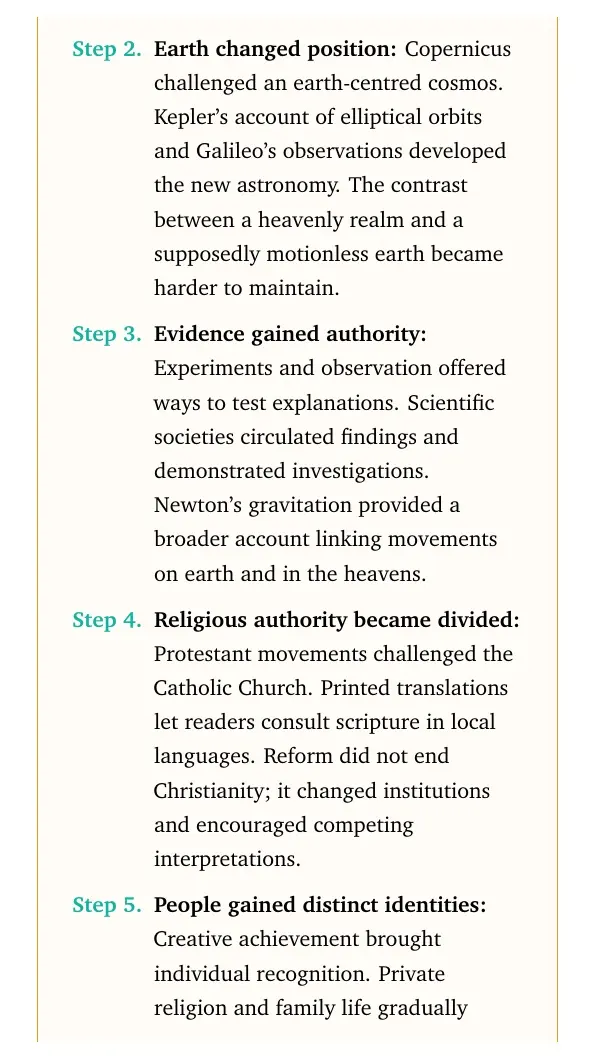
- Earth changed position: Copernicus challenged an earth-centred cosmos. Kepler's account of elliptical orbits and Galileo's observations developed the new astronomy. The contrast between a heavenly realm and a supposedly motionless earth became harder to maintain.
- Evidence gained authority: Experiments and observation offered ways to test explanations. Scientific societies circulated findings and demonstrated investigations. Newton's gravitation provided a broader account linking movements on earth and in the heavens.
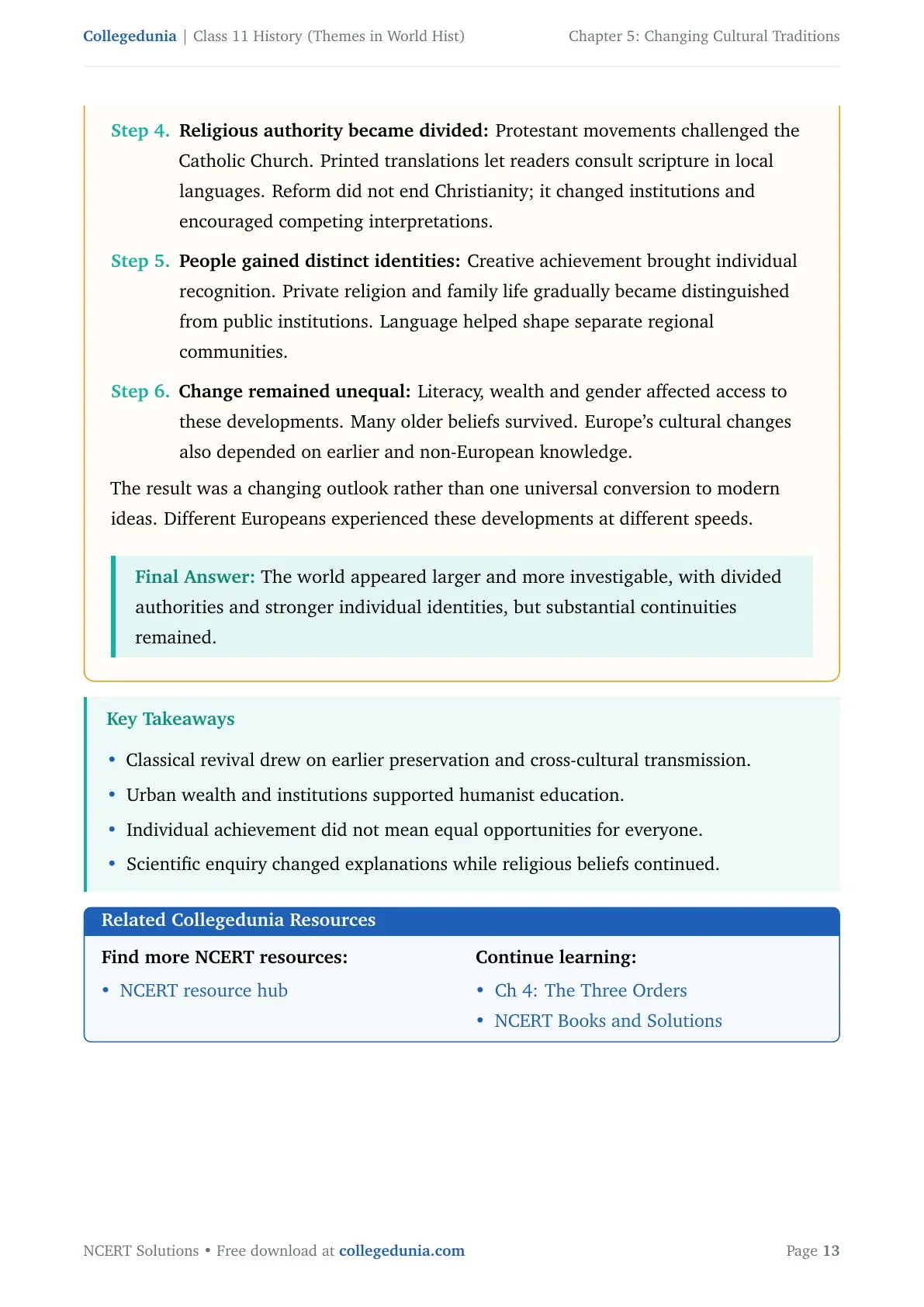
- Religious authority became divided: Protestant movements challenged the Catholic Church. Printed translations let people consult scripture in local languages. Reform did not end Christianity; it changed institutions and encouraged competing interpretations.
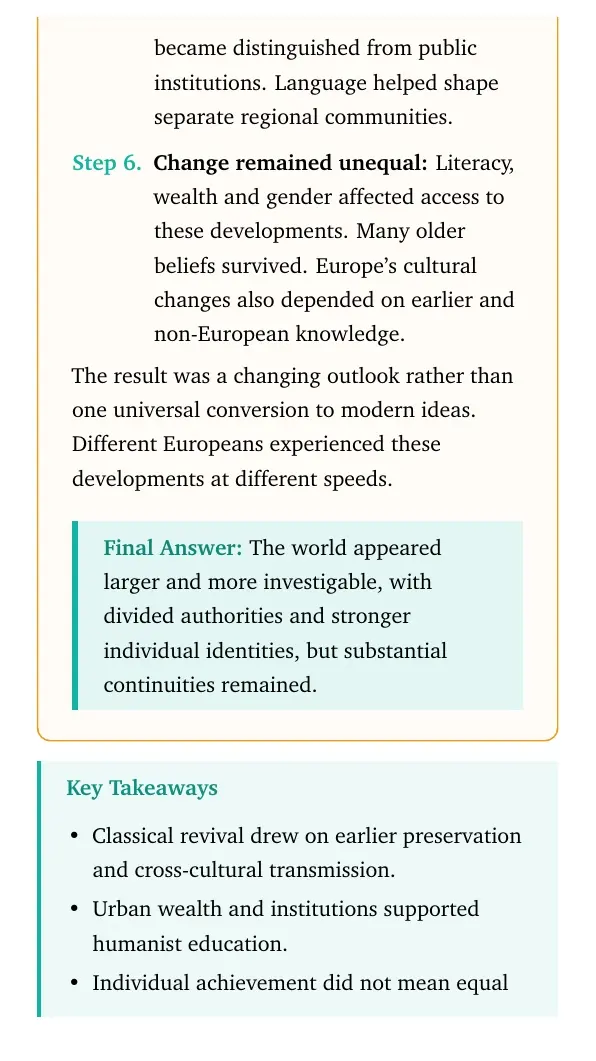
- People gained distinct identities: Creative achievement brought individual recognition. Private religion and family life gradually became distinguished from public institutions. Language helped shape separate regional communities.
- Change remained unequal: Literacy, wealth and gender affected access to these developments. Many older beliefs survived. Europe's cultural changes also depended on earlier and non-European knowledge.
Changing Cultural Traditions Class 11 History NCERT Solutions FAQs
Ques. How many exercise questions are in Changing Cultural Traditions?
Ans. There are six: four brief-answer questions and two short essays. They cover classical revival, architecture, Italian towns, government, humanism and changing world-views.
Ques. What is humanism in Changing Cultural Traditions?
Ans. Humanism was an approach to learning that studied human life through classical texts, history, poetry, rhetoric and moral philosophy. Many humanists remained religious.
Ques. Why did Italian towns experience humanism early?
Ans. Trade supported wealthy towns and educated groups. Universities, classical remains and patrons helped scholars study Greek and Roman texts.
Ques. How should I compare Venetian and French government?
Ans. Compare Venice's governing elite with the French crown. Also explain French Protestants' claim that people could remove an oppressive ruler and choose another. Venice was not a modern democracy with universal political rights.
Ques. Did the Renaissance reject medieval learning completely?
Ans. No. NCERT stresses earlier roots of Renaissance changes and continued religious beliefs. It also recognises learning from regions beyond Europe.
Ques. Can I use these solutions for 2026-27?
Ans. The solutions follow the exercises in the NCERT chapter marked Reprint 2026-27. Check the prescribed syllabus and instructions issued by your school.



Comments