History Mentor, Sri Venkateswara College | Updated on - Jul 21, 2026
The NCERT Solutions for History Class 12 NCERT Solutions Chapter 9 Colonialism and the Countryside cover every textbook question on colonial rule in rural India, as per the latest 2026-27 CBSE syllabus. Each answer is read through official archives: revenue records, surveys and enquiry reports on Bengal, the Rajmahal hills and the Deccan. These solutions help students prepare for the Class 12 History board paper in 2026-27.
Covers all 12 exercise questions from Theme 9, with full source-based, essay, map-work and project points.
This Class 12 History chapter usually carries 6 to 8 marks per board paper.
Pairs with the Notes, Handwritten Notes and NCERT Book PDF linked lower on this page.
Every solution for class 12 history chapter 9 in this Collegedunia compilation is curated by subject experts, written from the official NCERT Themes in Indian History Part III, and checked against the last five years of CBSE board papers.
Student Feedback: In a Collegedunia poll of 10,260 Class 12 History students taken before the 2026 boards, 69% of students rated the "anger of the Deccan ryots against moneylenders" question as the trickiest part of Colonialism and the Countryside. Most students said sorting the answer around injustice, not debt, made it click.
Source: 2026-27 Class 12 History student poll. Sample of 10,260 students from CBSE schools across 13 states.
What the Colonialism and the Countryside Class 12 Chapter Is About
Colonialism and the Countryside is the ninth chapter of Themes in Indian History Part III. Its real subject is how colonial rule changed rural life, read through official archives such as revenue records, surveys, journals and enquiry reports. The chapter moves through three regions, so the easiest way to revise is to keep them apart in your mind.
The three regions, and what each one teaches, are:
Bengal: the Permanent Settlement of 1793, zamindars, jotedars and ryots.
The Rajmahal hills: the Paharias and the Santhals, and the Santhal Revolt of 1855.
The Bombay Deccan: the ryotwari system, moneylenders and the Deccan Riots of 1875.
So the chapter is really about reading the state's own records against the grain. A student who keeps the three regions separate can connect almost any question in chapter 9 history class 12 back to one of them. This is why history 12 class chapter 9 revision works best when you sort each fact under Bengal, the Rajmahal hills or the Deccan first.
Bengal, the Permanent Settlement and the Zamindari Auctions
Bengal is the first region and the source of several questions. The Permanent Settlement of 1793 fixed the revenue each zamindar had to pay forever, and estates that fell short were auctioned. The table below sorts the key facts for fast revision.
Term
What it means
Permanent Settlement
Bengal, 1793, under Cornwallis; revenue fixed in perpetuity.
Zamindar
A revenue collector for the Company, not a true landowner.
Sunset Law
If revenue was not paid by sunset of the due date, the estate could be auctioned.
Benami sale
A fictitious sale used by zamindars to buy back their own auctioned estates cheaply.
Jotedar
A rich, village-based peasant who rose as zamindars declined, strongest in North Bengal.
A key exam insight is that the auction often was not real. Over 95 per cent of the famous Burdwan sale was fictitious, so the zamindar stayed in control. That single point answers the "how did zamindars retain control" question. Students should also remember that the jotedar lived in the village while the zamindar often did not, which is what made the jotedar so powerful.
The Paharias and the Santhals in the Rajmahal Hills
The second region is the Rajmahal hills, where two very different peoples come up in the exam. The chapter frames the contrast as the hoe versus the plough, and questions ask you to compare their lives and explain the Santhal Revolt.
Paharias (the hoe): mobile forest people who practised shifting cultivation, hunted, and gathered mahua, resin and charcoal.
Santhals (the plough): settled farmers invited to clear and farm the Damin-i-Koh (marked out in 1832), growing rice and cotton for the market.
Paharia response: raids and tolls first, then armed resistance, then refusal of Cleveland's allowances, then withdrawal into the hills.
Santhal Revolt (1855 to 1856): led by Sidhu and Kanu, against heavy taxes, moneylenders (dikus) and zamindars pushing into the Damin.
The heart of the Santhal answer is dispossession. The Santhals cleared the forest, then watched the state, the moneylender and the zamindar take the land they had made. After the revolt was crushed, the Santhal Pargana was carved out to conciliate them. For the comparison question, always run the same tests, tools, forest use and mobility, down both columns.
The Bombay Deccan, the Ryotwari System and the 1875 Riots
The third region is the Bombay Deccan, where revenue was settled directly with the ryot under the ryotwari system. High demand forced the ryot to borrow, and debt to the sahukars (moneylenders) built up the anger that exploded in 1875.
Custom broken: the old rule was that interest could not exceed the principal; once a moneylender charged Rs 2,000 interest on a Rs 100 loan.
Cheating through paper: sahukars forged accounts, refused receipts, and used the 1859 Limitation Law to force a new bond every three years.
Deeds of hire: a ruined ryot had to rent back his own bullocks and carts.
The cotton link: the American Civil War (1861) sparked a boom, then a bust after 1865 that deepened ryot debt.
The single most important point for the "anger of the ryots" question is that the anger was about injustice, not debt as such. That is why the rebels' first act in 1875 was to seize and burn the account books and bonds, the very documents of their oppression. The Deccan Riots Commission (1878) then blamed the moneylenders, not the revenue, which is itself a lesson in official bias.
Reading Official Archives and Their Problems
The chapter is titled "Exploring Official Archives" for a reason. Several questions test whether students can use the state's own records while resisting their bias. This method is the heart of the "problems of official sources" question.
Source
What to watch for
The Fifth Report (1813)
Written to attack Company rule, so it exaggerated the collapse of zamindari power.
Deccan Riots Report (1878)
Briefed to test if revenue caused the revolt, it conveniently blamed moneylenders instead.
Buchanan's surveys
A paid Company surveyor with instructions; his eye was angled towards commerce and "progress".
The honest answer to "what are the problems of using official sources" is that they speak with the state's voice, so they reflect official concerns, not peasant ones. The remedy the chapter offers is not to discard them but to read them critically, ask who wrote them and why, and juxtapose them with newspapers, legal records and oral sources. Strong answers state that method clearly.
Colonialism and the Countryside Class 12 Exercise-wise Coverage
The chapter exercise has 12 questions, split into short answers, essays, map work and projects. The table maps each one to its topic so students can plan revision and find the right NCERT answer fast. The full step-by-step solution for each sits in the question set lower on this page.
Question
Topic it tests
Q 1 (100 to 150 words)
Why the jotedar was a powerful figure in rural Bengal
Q 2
How zamindars managed to retain control over their zamindaris
Q 3
How the Paharias responded to the coming of outsiders
Q 4
Why the Santhals rebelled against British rule
Q 5
The anger of the Deccan ryots against the moneylenders
Q 6 (essay)
Why many zamindaris were auctioned after the Permanent Settlement
Q 7
How the livelihood of the Paharias differed from that of the Santhals
Q 8
How the American Civil War affected the lives of Indian ryots
Q 9
The problems of using official sources to write peasant history
Q 10 to 12
Map work and project-style activities
Questions 4, 5 and 8 are the most-asked long answers, so students preparing chapter 9 history class 12 revision should learn those three first. The map and project tasks (10 to 12) are also useful for the history project file class 12 chapter 9 that many schools assign.
Students who want the offline copy can save the class 12 history chapter 9 pdf from the download card above and tick off each question as they finish it.
Colonialism and the Countryside Important Questions and Previous Year Trends
CBSE sets a steady mix of source-based, short and long answers from this chapter. Knowing the pattern helps students decide how much to write. The chapter is a regular source of one 5-mark or 8-mark essay question, which is why a focused list of chapter 9 history class 12 important questions saves a lot of revision time.
Source-based (often 8 marks): an extract from the Fifth Report, a Buchanan journal, or a moneylender's bond, with three sub-parts.
Long answer (5 to 6 marks): the Santhal Revolt, the Deccan riots, or the cotton boom and bust.
Short answer (3 marks): the jotedar, benami sales, or the Paharia response.
Objective and MCQ: dates (1793, 1832, 1855, 1875), names (Sidhu, Kanu, Cleveland) and places.
For quick recall before the exam, students often practise the class 12 history chapter 9 mcq set and a list of class 12 history chapter 9 important questions. The most repeated items are the Santhal Revolt and the Deccan ryots' anger, so keep those answer points ready in your own words.
It also helps to attempt a short history class 12 chapter 9 mcq drill and the class 12 history chapter 9 extra questions and answers after you finish the main exercise. These extra sets test the small facts, such as exact dates and the names of the revolt leaders, that examiners use for one-mark objective questions. Working through the ncert solution class 12 history chapter 9 set twice, once open-book and once from memory, fixes those facts well before the board exam.
Common Mistakes Students Make in the Colonialism and the Countryside Chapter
A few errors cost marks every year in this chapter. Most come from giving only one side of an argument or from reducing a rich answer to a single cause. Avoiding them is the fastest way to lift a score.
Saying the auctions ended the zamindars - most survived through benami sales.
Reducing the Deccan ryots' anger to "they were in debt" - the chapter is clear it was about injustice.
Describing only the cotton boom - the marks lie in the bust after 1865.
Treating official reports as plain fact - the Fifth Report exaggerated and the Deccan Riots Report shielded the state.
Mixing up the Paharias (hoe) and the Santhals (plough) - keep the two peoples apart.
Students who fix these five points usually move from average to high marks on the long answers. The exam rewards balanced wording, so always give both sides of a debate and read the official record against the grain.
Colonialism and the Countryside PDF Download Formats and Languages
The solutions are free to download in more than one format, so students can pick what suits their device and revision style. The download card at the top of the page carries each option for this chapter.
Normal and HD PDF: the history class 12 chapter 9 pdf is offered in a normal size for quick downloads and an HD version for clear printing.
English medium: all 12 answers are written in simple English for the CBSE board paper.
Question-only set: a print-and-practise sheet of class 12 history chapter 9 extra questions for self-testing.
Whole-book pack: the chapter 9 history class 12 ncert solutions sit in one set that runs through every theme.
Many students search for class 12 chapter 9 history answers on their phone the night before a test, so a saved PDF means you can revise even without internet. Keep both the question set and the solved version handy for a full self-check.
How the Colonialism and the Countryside Solutions Pair with Notes and the Book PDF
These NCERT Solutions answer the back-exercise questions. To revise the full chapter, students should use them alongside the other resources for the same chapter, all linked in the table below.
Reading the original NCERT chapter text and figures
Tip: read the Notes first, then attempt these solutions on your own, and only then check the model answers here. That order builds memory faster than copying answers straight away.
All NCERT Solutions for Class 12 History by Chapter
The table links the NCERT Solutions for every chapter in Themes in Indian History so students can move across the book in one click. Chapter 9 is highlighted.
All NCERT Solutions for Colonialism and the Countryside with Step-by-Step Solutions
Below are all 12 NCERT exercise questions for this chapter, exactly as they appear in the textbook. Tap Check Solution for the model answer or Expert Solution for the topper-style approach.
Q 9.1
Why was the jotedar a powerful figure in many areas of rural Bengal?
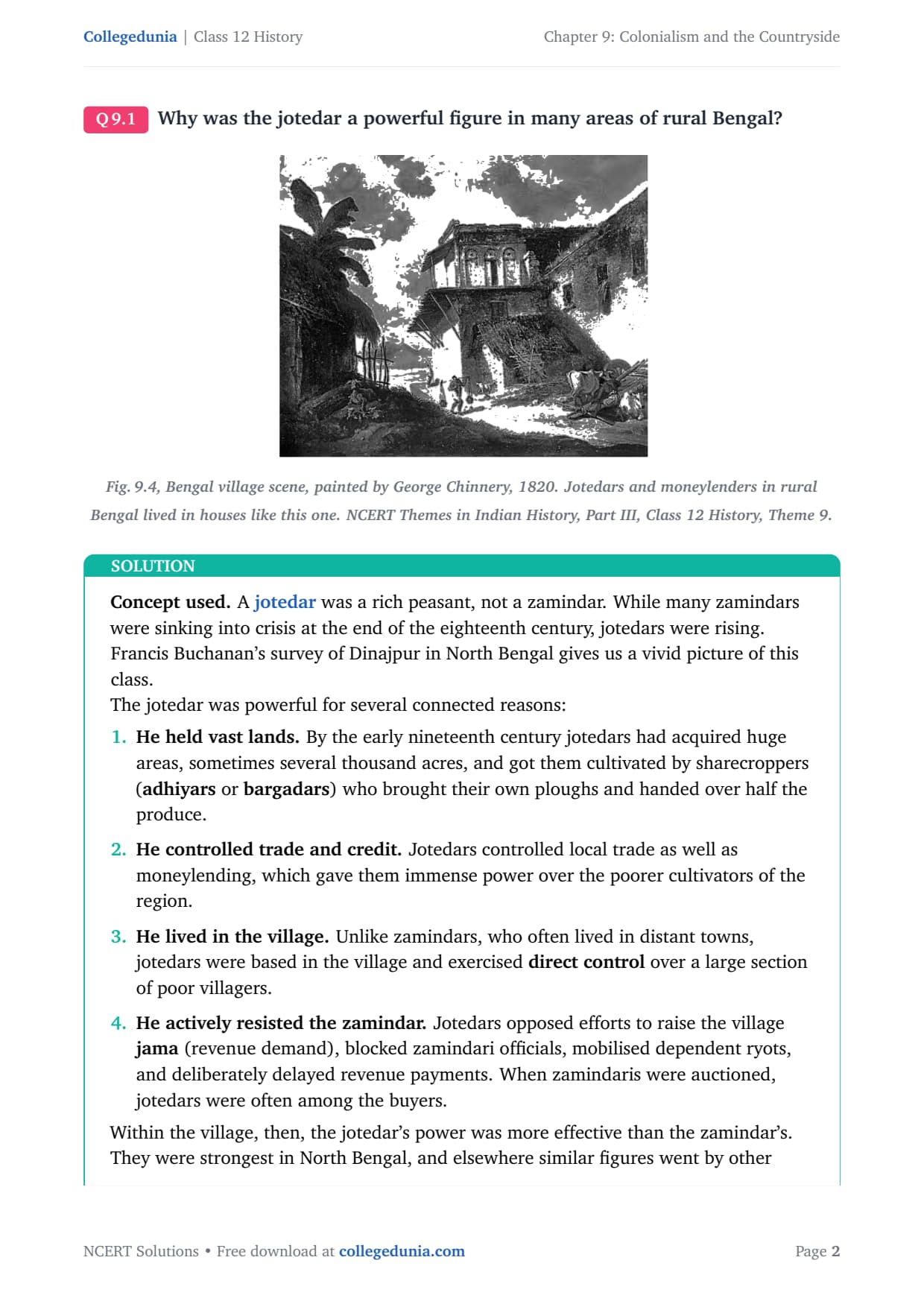
Fig. 9.4, Bengal village scene, painted by George
Chinnery, 1820. Jotedars and moneylenders in rural Bengal lived in houses like
this one. NCERT Themes in Indian History, Part III, Class 12 History, Theme 9.
Concept used. A jotedar was a rich peasant, not a zamindar.
While many zamindars were sinking into crisis at the end of the eighteenth
century, jotedars were rising. Francis Buchanan's survey of Dinajpur in North
Bengal gives us a vivid picture of this class.
The jotedar was powerful for several connected reasons:
He held vast lands. By the early nineteenth century jotedars
had acquired huge areas, sometimes several thousand acres, and got them
cultivated by sharecroppers (adhiyars or bargadars)
who brought their own ploughs and handed over half the produce.
He controlled trade and credit. Jotedars controlled local
trade as well as moneylending, which gave them immense power over the
poorer cultivators of the region.
He lived in the village. Unlike zamindars, who often lived in
distant towns, jotedars were based in the village and exercised
direct control over a large section of poor villagers.
He actively resisted the zamindar. Jotedars opposed efforts to
raise the village jama (revenue demand), blocked zamindari
officials, mobilised dependent ryots, and deliberately delayed revenue
payments. When zamindaris were auctioned, jotedars were often among the
buyers.
Within the village, then, the jotedar's power was more effective than the
zamindar's. They were strongest in North Bengal, and elsewhere similar figures
went by other names: haoladars, gantidars or mandals.
Village-based is the key word
The single most important point is that the jotedar lived in the village
while the zamindar often did not. Direct, on-the-spot control over land, trade,
credit and labour is what made him powerful.
The jotedar was powerful because he held vast lands worked by
sharecroppers, controlled local trade and moneylending, and, crucially, lived
in the village itself, giving him direct control over poor cultivators. He
resisted the zamindar's demands, mobilised dependent ryots, delayed revenue,
and often bought up auctioned zamindaris. Jotedars (also called haoladars,
gantidars or mandals) were strongest in North Bengal.
AS
Ananya Sengupta
MA Medieval Indian History, JNU
Verified Expert
Strategic angle. A 100–150 word question rewards a tight cluster of
reasons, not a story. Build the answer on four pegs: land, credit, location and
resistance. Hit all four and you have every mark in 130 words, with the
village-based point doing the heavy lifting.
Open by placing the jotedar against the zamindar, because the contrast is the
whole point. As zamindars faced auction and decline, jotedars were
consolidating. Then state the sources of power in order. First, land: thousands
of acres farmed by adhiyars and bargadars who gave up half their crop. Second,
the grip on the rural economy: jotedars ran local trade and lent money, so the
poor cultivator was tied to them twice over, as tenant and as debtor. Third,
and decisively, residence: living in the village gave the jotedar a daily,
face-to-face authority the absentee zamindar could never match. Fourth,
political muscle: they raised the village against the zamindar's jama, shielded
defaulting ryots, and snapped up auctioned estates.
Why this matters. The examiner wants you to see that colonial law
created winners as well as losers. The Permanent Settlement was meant to
strengthen zamindars, yet it was the jotedars who quietly rose beneath them,
and who finally took over the countryside during the Great Depression of the
1930s. Naming that long arc shows real command of the chapter.
The jotedar's power rested on huge landholdings worked by
sharecroppers, a tight grip on village trade and moneylending, and above all on
living in the village, which gave him direct control the absentee zamindar
lacked. He resisted the zamindar's jama, protected dependent ryots, and bought
auctioned estates. He was strongest in North Bengal.
Q 9.2
How did zamindars manage to retain control over their zamindaris?
Concept used. Under the Permanent Settlement of 1793,
zamindars who failed to pay the fixed revenue could have their estates
auctioned. Faced with high demand and the threat of auction, zamindars
did not simply collapse. They devised several ingenious ways of holding on.
The main strategies were these:
Fictitious or benami sale. This was the cleverest device. The
Raja of Burdwan first transferred part of his zamindari to his
mother, since the Company had ruled that women's property would
not be seized. Then his agents manipulated the auctions: they bought the
estate, refused to pay the purchase money so it had to be resold, bought
it again, and repeated this endlessly until the estate was finally sold
back cheaply to the zamindar. Between 1793 and 1801, four big Bengal
zamindaris made benami purchases worth about Rs 30 lakh.
Force against outside buyers. When outsiders did buy an estate,
they often could not take possession. The former zamindar's
lathyals (strongmen) attacked their agents and drove them off.
The loyalty of the ryots. Ryots often felt bound to their own
zamindar, seeing themselves as his proja (subjects). They
resisted the entry of outsiders, so the zamindar was not easily
displaced.
Riding out the price slump. The price depression of the 1790s
ended by the early nineteenth century. Those who survived consolidated
their power, helped by more flexible rules of revenue payment.
So through manipulation, muscle and the loyalty of subjects, the zamindars
weathered the storm: their authority did not collapse until the Great Depression
of the 1930s.
The auction was rarely real
The chapter's deepest point is that the law and its outcome diverged. Over 95
per cent of the Burdwan sale was fictitious. The auction looked like the
end of the zamindar, but he stayed in control.
Zamindars retained control mainly through fictitious (benami) sales:
transferring land to female relatives whose property was safe, then having their
own agents buy back auctioned estates cheaply through repeated rigged auctions.
They used lathyals to drive off outside buyers, relied on the loyalty of ryots
who resisted outsiders, and finally consolidated once the price slump of the
1790s ended.
IS
Imran Sheikh
MA History, Jamia Millia Islamia
Verified Expert
Structural observation. List the survival tricks, then name the one
that mattered most. The marks come from the benami sale, so describe its
machinery step by step; the other devices (lathyals, ryot loyalty, the price
recovery) are the supporting cast.
Start with the legal trap the zamindar was escaping: pay the fixed revenue by
sunset of the due date or face auction. Now show how he beat it. The masterstroke
was the fictitious sale, and the Burdwan case is the textbook example. Move one:
shift land to the mother, since the Company exempted women's property. Move two:
let the auction proceed, but have your own men outbid everyone, then refuse to
pay, forcing resale after resale until the exhausted state hands the estate back
at a low price. The result is striking: the raja's lands were "publicly sold",
yet over 95 per cent of the sale was a sham and he never left.
Then add the blunt and the social. Lathyals beat off any genuine outside buyer
who tried to take possession. And the ryots themselves, bound to their zamindar
as proja, refused to accept a stranger. When prices recovered after 1800 and the
revenue rules eased, the survivors emerged stronger than before.
Why this matters. The examiner is testing whether you can read past the
official record. The Fifth Report claimed zamindari power had collapsed; the
benami evidence shows it had not. Spotting that gap between the document and the
reality is the historian's skill the chapter teaches.
Zamindars survived chiefly by benami sale: parking land with female
relatives, then buying back their own auctioned estates cheaply through
repeated rigged auctions (over 95 per cent of the Burdwan sale was fictitious).
Lathyals drove off outside purchasers, loyal ryots resisted strangers, and the
end of the 1790s price slump let the survivors consolidate.
Q 9.3
How did the Paharias respond to the coming of outsiders?
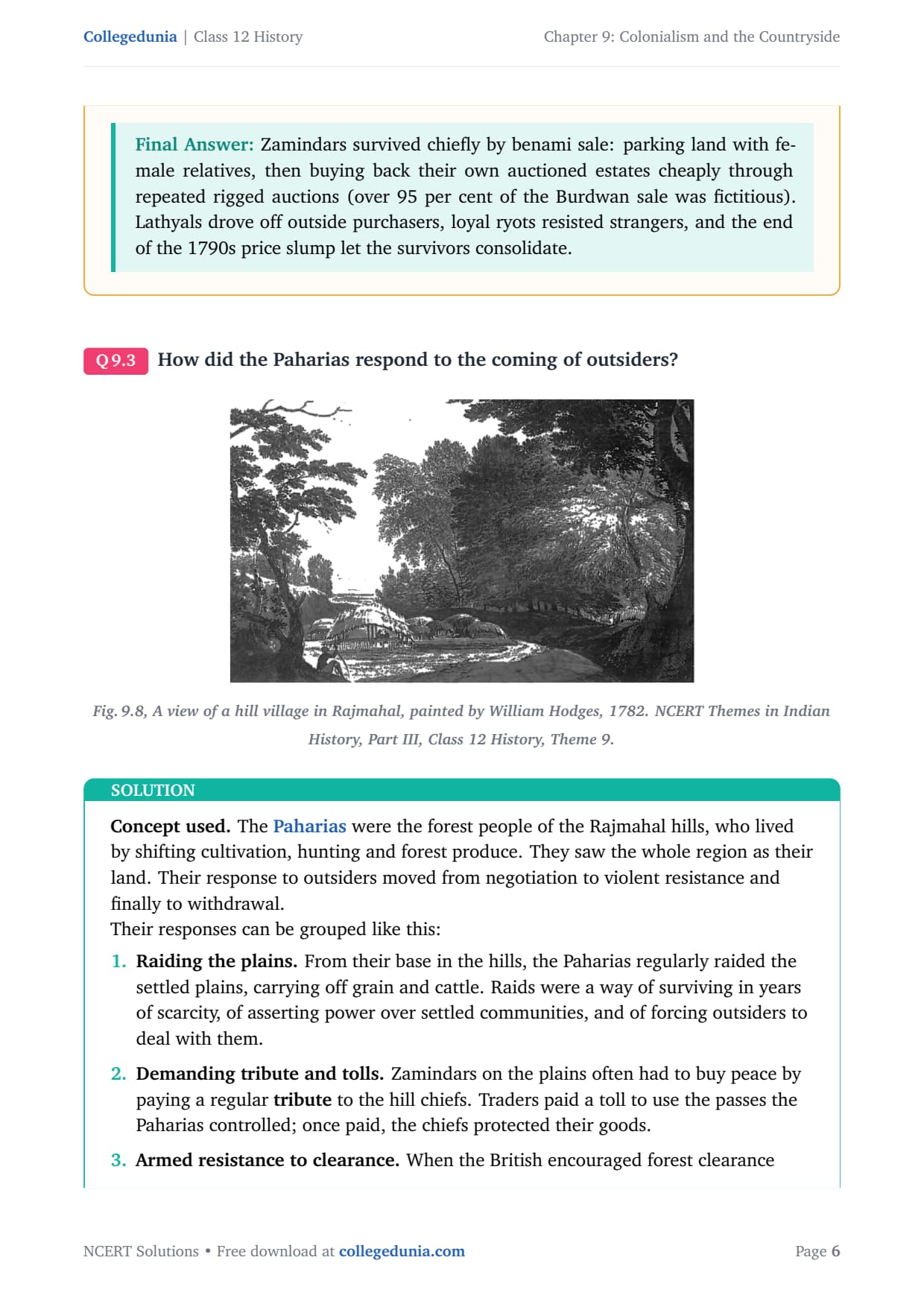
Fig. 9.8, A view of a hill village in Rajmahal,
painted by William Hodges, 1782. NCERT Themes in Indian History, Part III,
Class 12 History, Theme 9.
Concept used. The Paharias were the forest people of the
Rajmahal hills, who lived by shifting cultivation, hunting and forest produce.
They saw the whole region as their land. Their response to outsiders moved from
negotiation to violent resistance and finally to withdrawal.
Their responses can be grouped like this:
Raiding the plains. From their base in the hills, the Paharias
regularly raided the settled plains, carrying off grain and cattle.
Raids were a way of surviving in years of scarcity, of asserting power
over settled communities, and of forcing outsiders to deal with them.
Demanding tribute and tolls. Zamindars on the plains often had
to buy peace by paying a regular tribute to the hill chiefs.
Traders paid a toll to use the passes the Paharias controlled; once paid,
the chiefs protected their goods.
Armed resistance to clearance. When the British encouraged
forest clearance from the late eighteenth century, this fragile peace
broke down. As forests and pastures shrank, the Paharias raided settled
villages with greater frequency.
Rejecting British overtures. When the British tried a policy of
extermination in the 1770s, the Paharias fought back. When
Augustus Cleveland later offered chiefs an annual allowance
(pacification), many chiefs refused; those who accepted lost
authority within the community.
Withdrawal into the hills. As pacification and Santhal
settlement advanced, the Paharias withdrew deep into the
mountains, insulating themselves and treating every white man as a
threat. When Buchanan travelled through in 1810–11, they viewed him with
suspicion and often deserted their villages.
Show the change over time
Do not give one flat answer. The Paharias' response changed: tribute and
tolls first, then armed raids, then refusal of allowances, then retreat. Charting
that shift earns the top band.
At first the Paharias dealt with outsiders on their own terms, raiding
the plains and forcing zamindars and traders to pay tribute and tolls. When the
British pushed forest clearance, they resisted with intensified raids, fought the
extermination campaign of the 1770s, and largely rejected Cleveland's
allowances. As settlers advanced, they finally withdrew deep into the hills,
distrusting every outsider, including Buchanan in 1810–11.
VD
Vikram Desai
MA Ancient and Medieval History, Banaras Hindu University
Verified Expert
Strategic angle. Treat the Paharia response as a timeline of shrinking
options. Each phase, negotiation, resistance, rejection, retreat, is a response
to a fresh pressure. Organise the answer chronologically and it reads as analysis,
not a list.
Begin with the world before the British squeeze, when the Paharias set the terms.
Raids on the plains were their tool: a way to survive lean years and to make the
settled world acknowledge their power. The zamindars' tribute and the traders'
tolls show that, for a time, the plains paid to keep the peace. This was
negotiation from a position of strength.
Then the ground shifts. From the 1770s the British promote forest clearance to
expand revenue land, and they brand forest people as savage and unruly. As
pastures and forests contract, the Paharias hit back with sharper, more frequent
raids. The British answer first with extermination, which the Paharias survive
and resist, then with Cleveland's pacification: an allowance for chiefs who keep
order. The Paharia reading of this is acute. Many chiefs refuse the bribe; those
who take it become "stipendiary chiefs" and lose their people's trust. Finally,
overwhelmed by Santhal settlement, they retreat into the high, barren interior,
which is why Buchanan met only suspicion and deserted villages in 1810–11.
Why this matters. The examiner wants to see resistance as a sequence of
choices, not a single reflex. The Paharias' move from confident raiders to wary
recluses tracks the steady loss of their forest world, which is exactly the human
cost of colonial agrarian expansion the chapter is about.
The Paharias first dealt with outsiders from strength, raiding the
plains and exacting tribute and tolls. As the British pushed forest clearance,
they resisted with fiercer raids and survived an extermination drive. Most chiefs
refused Cleveland's pacification allowances, seeing them as a trap. Finally,
squeezed by Santhal settlers, they withdrew deep into the hills and distrusted
all outsiders, including Buchanan.
Q 9.4
Why did the Santhals rebel against British rule?
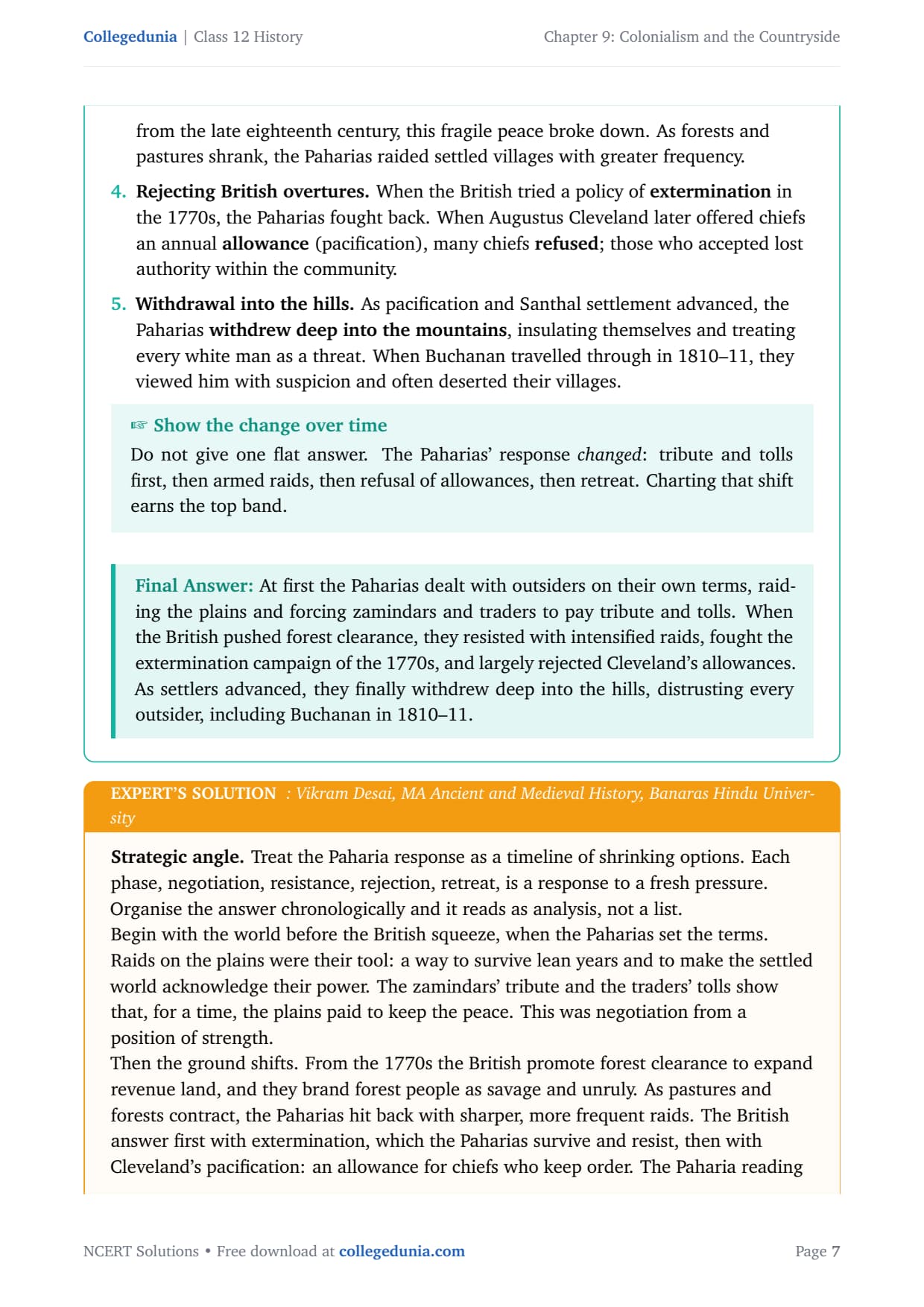
Fig. 9.12, Santhals fight the sepoys of the British
Raj, Illustrated London News, 23 February 1856. NCERT Themes in Indian History,
Part III, Class 12 History, Theme 9.
Concept used. The Santhals were pioneer settlers invited to
clear forests and farm the Damin-i-Koh, the land demarcated for them
around the Rajmahal hills in 1832. Within a generation they found that the very
land they had cleared was slipping out of their hands. The Santhal
Revolt of 1855–56 grew out of this betrayal.
The Santhals rebelled because three forces were squeezing them at once:
The state taxed them heavily. The colonial state levied
heavy taxes on the land the Santhals had laboriously cleared and
cultivated, leaving them little of what they had created.
Moneylenders trapped them in debt. Moneylenders (the
dikus) charged high rates of interest and took over the
land when debts went unpaid. So the Santhals were losing their fields to
outsiders they saw as exploiters.
Zamindars asserted control. Zamindars began asserting
control over the Damin area, the territory that was supposed to be the
Santhals' own.
By the 1850s, the Santhals felt the time had come to rebel against zamindars,
moneylenders and the colonial state together, in order to create an ideal
world where they would rule themselves. The revolt was led by Sidhu and
Kanu Manjhi. It was crushed harshly, after which the Santhal
Pargana was carved out (about 5,500 square miles) in the hope of conciliating
them.
Cleared the land, then lost it
The bitter core of the revolt is dispossession. The Santhals were brought in as
settlers, did the back-breaking work of clearing forest, and then watched the
state, the moneylender and the zamindar take the fruits. That sense of injustice
is what turned settlers into rebels.
The Santhals rebelled in 1855–56 because the land they had cleared in
the Damin-i-Koh was being taken from them on three fronts: the state imposed
heavy taxes, moneylenders (dikus) charged crushing interest and seized fields for
unpaid debts, and zamindars pushed into the Damin. Led by Sidhu and Kanu, they
rose against all three to build a world they could rule. After the revolt was
crushed, the Santhal Pargana was created.
LM
Lakshmi Menon
MA Medieval History, University of Calcutta
Verified Expert
Strategic angle. Name the three oppressors, state, moneylender,
zamindar, and the revolt explains itself. Frame the whole answer around one idea:
the Santhals were promised a land of their own and then robbed of it. That framing
turns a list of grievances into a clear argument.
Set the scene first, because the grievance only makes sense against the promise.
In 1832 the Damin-i-Koh was declared the land of the Santhals; they were told to
settle, plough and prosper, and they did, building 1,473 villages by 1851 where
there had been 40 in 1838. Then turn to the betrayal. The state taxed the cleared
land heavily, so the harder they worked the more they owed. The dikus lent at
ruinous rates and foreclosed on the fields when debts mounted, so ownership
drained away to outsiders. And the zamindars, scenting opportunity, pressed their
claims into the Damin itself.
The trigger, then, is not poverty alone but injustice: a people who had been
given a homeland watching it taken back piece by piece. That is why, by the
1850s, they aimed not at reform but at sovereignty, a world where Santhals would
rule. The colonial answer, crushing the revolt and then creating the Santhal
Pargana with special laws, admits in its own way that ordinary administration had
failed them.
Why this matters. The examiner rewards the link between dispossession
and rebellion. Showing that the revolt sprang from a broken promise, not just
hardship, is the mature reading, and it connects neatly to the chapter's theme of
how colonial revenue and credit systems remade, and unmade, rural lives.
The Santhals rebelled because the Damin-i-Koh, the homeland they had
cleared and farmed, was being seized from them: the state taxed it heavily,
moneylending dikus charged ruinous interest and took the land for unpaid debts,
and zamindars pushed into the Damin. By 1855–56, led by Sidhu and Kanu, they rose
against state, moneylender and zamindar alike to build a world they could rule.
Q 9.5
What explains the anger of the Deccan ryots against the moneylenders?
Concept used. In the Bombay Deccan the revenue was settled directly with
the ryot under the ryotwari system. To pay a high, periodically
rising demand, the ryot had to borrow, and so fell into the moneylender's grip.
The Deccan riots of 1875 were an explosion of accumulated anger against
the sahukars (moneylenders).
What the ryots were really angry about was not debt alone but injustice:
The moneylenders broke custom. The old norm was that
interest could not exceed the principal. Under colonial rule this
broke down: in one case the Deccan Riots Commission found a moneylender
had charged over Rs 2,000 interest on a loan of Rs 100.
They refused loans in hard times. When the cotton boom ended and
revenue rose, the sahukars stopped lending and demanded repayment,
abandoning the ryots just when they were most desperate.
They cheated through paperwork. Moneylenders forged accounts,
refused to give receipts, entered fictitious figures in bonds,
and turned the 1859 Limitation Law against the ryot by making him sign a
new bond every three years, rolling unpaid interest into a fresh
principal.
They seized everything and then charged for it. A ruined peasant
had to hand over land, carts and bullocks, then sign a deed of
hire to rent back his own animals. They also took the ryot's harvest at
low prices without crediting it to his account.
So the deeds and bonds became hated symbols of a new, deceitful system. In the
1875 revolt the ryots' first act was to seize and burn the bahi khatas
(account books) and debt bonds, the very documents of their oppression.
Do not reduce the anger to "they were in debt". The chapter is clear: what
infuriated the ryots was that moneylenders were insensitive and were
violating customary norms, not merely that loans existed.
The Deccan ryots were angry not simply because they were in debt, but
because moneylenders were breaking the customary norms of the countryside.
Sahukars charged interest far above the principal (once Rs 2,000 on a Rs 100
loan), refused loans in hard times, forged accounts, withheld receipts, twisted
the law into endless renewed bonds, and seized peasants' land and animals before
renting them back. The bonds and deeds became hated symbols, which is why the
1875 rebels burned them.
AR
Arjun Reddy
MA History, University of Delhi
Verified Expert
Strategic angle. Lead with the distinction the chapter insists on: the
anger was about injustice, not debt as such. Then back it with the specific
abuses. Open on that idea and the whole answer has a spine the examiner is looking
for.
Make the framing sharp first. Moneylending was old and even necessary in the
Deccan, and custom had long restrained it, above all the rule that interest could
not exceed the principal. The grievance of 1875 was that colonial conditions let
the sahukar smash this restraint. The Riots Commission's own files prove it: Rs
2,000 of interest squeezed out of a Rs 100 loan. That is not lending, it is
plunder dressed as contract.
Now stack the specific wrongs. When cotton prices crashed and the revenue demand
jumped 50 to 100 per cent, the sahukars chose that moment to cut off credit and
call in debts. They manipulated paper the illiterate ryot could not read: no
receipts, fictitious bond entries, and a cynical use of the 1859 Limitation Law,
which capped a bond at three years, by forcing a new bond every three years that
folded old interest into a swollen new principal. The deed of hire was the final
humiliation: a man stripped of his bullocks had to pay monthly rent for animals
that had been his own.
Why this matters. The examiner wants you to read a riot as evidence. The
ryots did not attack people first; they attacked documents, burning the
khatas and bonds. Reading that act tells you the rebellion was aimed at a whole
regime of deceitful paperwork, which is the chapter's central insight about
colonial law in the countryside.
The Deccan ryots' anger was about injustice, not debt alone.
Moneylenders shattered the custom that interest must not exceed the principal
(once Rs 2,000 on Rs 100), refused credit in crisis, forged accounts and withheld
receipts, abused the 1859 Limitation Law to renew bonds endlessly, and seized
peasants' land and bullocks only to rent them back through deeds of hire. The
hated bonds were the first thing the 1875 rebels burned.
Q 9.6
Why were many zamindaris auctioned after the Permanent Settlement?
Concept used. The Permanent Settlement of 1793 fixed the
revenue each zamindar had to pay in perpetuity. The estates of those who
failed to pay were to be auctioned. In the early decades, zamindars
defaulted so regularly that over 75 per cent of the zamindaris changed hands. The
question is why default was so widespread.
The reasons lie in how the settlement was designed and imposed:
The initial demand was very high. Because the demand was fixed
for all time, the Company feared it could never claim a share of future
increases in income. To guard against that loss, it pegged the
revenue high from the start, arguing the burden would ease as production
and prices rose.
Prices were depressed in the 1790s. This high demand fell in a
decade when agricultural prices were low. Ryots could not pay their dues
to the zamindar, so the zamindar could not pay the Company.
The revenue was rigid and the deadline harsh. The demand was
invariable, regardless of the harvest, and had to be paid
punctually. Under the Sunset Law, if payment did not arrive by
sunset of the fixed date, the zamindari was liable to auction.
The zamindar's power to collect was curbed. The settlement
initially limited the zamindar's power to collect rent and manage
his estate. His troops were disbanded, his cutcheries placed under a
Company Collector, and his police and judicial powers removed.
The rich peasants undermined him. Jotedars and village headmen
were glad to see the zamindar in trouble. They withheld rent and stalled
him, while the courts were slow: Burdwan alone had over 30,000
pending suits for arrears in 1798.
So a high, rigid demand, depressed prices, a punishing deadline and a zamindar
stripped of his collecting power together produced mountains of unpaid revenue,
and so the auctions.
Group the reasons
Sort the causes into "the demand" (high, rigid, fixed in bad times) and "the
zamindar's weakness" (curbed powers, hostile jotedars, slow courts). Two clear
clusters read better than a loose list.
Many zamindaris were auctioned because the Permanent Settlement set a
very high revenue demand, fixed for all time, that fell due in the depressed
1790s when prices were low and ryots could not pay. The demand was invariable
regardless of the harvest, and the Sunset Law allowed auction the moment payment
was late. At the same time the zamindar's power to collect rent was curbed,
hostile jotedars withheld dues, and the courts were slow, so unpaid balances
piled up and estates went under the hammer.
PB
Pooja Bhatt
MA Medieval Indian History, Aligarh Muslim University
Verified Expert
Structural observation. A 300-word essay needs visible structure: one
half on why the demand was unpayable, the other on why the zamindar could not
cope. Decide the two halves first and the essay organises itself with full
coverage.
Take the demand first, because it is the root. The Company faced a dilemma: it
wanted a permanent, predictable income, but a fixed sum meant forgoing any share
of future growth. Its solution was to fix the figure high and hope
production would catch up. That gamble failed in the short run, because the high
demand landed in the 1790s, a decade of depressed prices, so the ryot could not
pay the zamindar and the zamindar could not pay the state. Worse, the demand was
utterly rigid: due in full whatever the harvest, and enforced by the Sunset Law,
which auctioned an estate for a payment late by even a day.
Now the zamindar's weakness, the other half. The settlement deliberately clipped
his wings, disbanding his troops, abolishing his customs duties, and subjecting
his cutchery to a Company Collector, so he lost the very authority he needed to
squeeze out the rent. Beneath him, the rising jotedars actively sabotaged
collection, delighting in his distress, while the legal machinery crawled,
30,000 suits pending in Burdwan alone in 1798. Caught between an unbending state
above and obstructive rich peasants below, arrears were almost inevitable.
The result, over 75 per cent of zamindaris changing hands, is best read as the
predictable outcome of a flawed design rather than mere zamindari
incompetence.
Why this matters. The examiner wants cause-and-effect reasoning, not a
catalogue. Showing that an over-pitched, rigid demand collided with depressed
prices and a deliberately weakened zamindar is the analytical answer that earns
the top band.
Zamindaris were auctioned because the Permanent Settlement fixed a very
high, perpetual demand to protect future Company income, but it fell due in the
low-price 1790s when neither ryot nor zamindar could pay. The demand was rigid
regardless of harvest and the Sunset Law auctioned estates for the slightest
delay. Meanwhile the zamindar's collecting power was curbed, hostile jotedars
blocked him, and slow courts let arrears mount, so over 75 per cent of estates
changed hands.
Q 9.7
In what way was the livelihood of the Paharias different from that of
the Santhals?
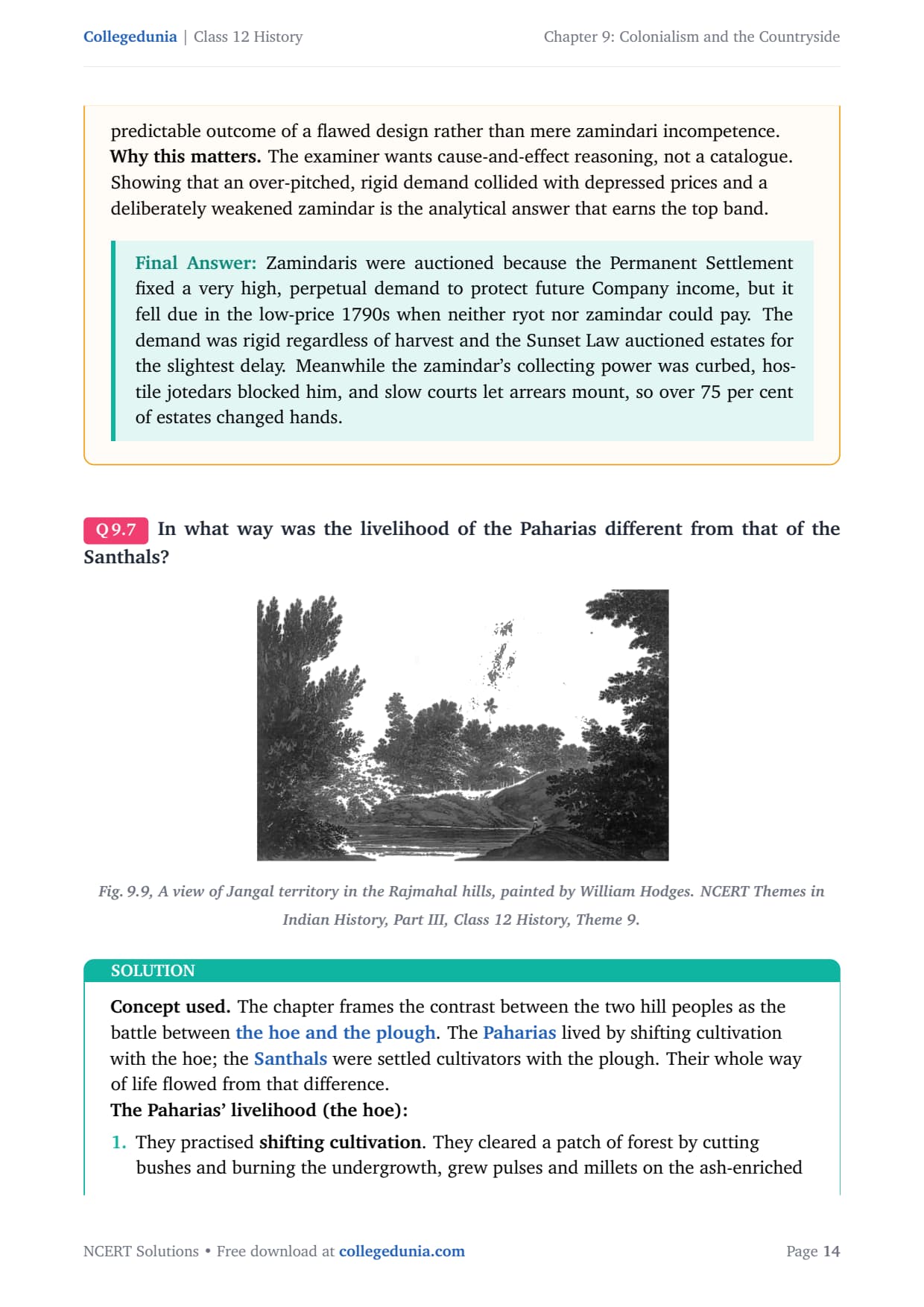
Fig. 9.9, A view of Jangal territory in the
Rajmahal hills, painted by William Hodges. NCERT Themes in Indian History,
Part III, Class 12 History, Theme 9.
Concept used. The chapter frames the contrast between the two hill
peoples as the battle between the hoe and the plough. The
Paharias lived by shifting cultivation with the hoe; the
Santhals were settled cultivators with the plough. Their whole way of
life flowed from that difference.
The Paharias' livelihood (the hoe):
They practised shifting cultivation. They cleared a patch of
forest by cutting bushes and burning the undergrowth, grew pulses and
millets on the ash-enriched soil, scratched the ground lightly with
hoes, farmed it a few years, then left it fallow and moved on.
They depended on the forest. They collected mahua flowers for
food, silk cocoons and resin for sale, and wood for charcoal; they hunted
and gathered, and grazed cattle on the fallow grass.
They were mobile, treating the whole region as their land, and
they resisted the plough and the clearing of forests.
The Santhals' livelihood (the plough):
They were settled plough agriculturists. Invited to clear
forests and farm the Damin-i-Koh, they cut down timber, ploughed the land
and grew rice and cotton.
They produced for the market. They gave up their earlier life of
mobility, cultivated a range of commercial crops, and dealt with
traders and moneylenders.
They were permanent settlers, expanding rapidly from 40 villages
in 1838 to 1,473 by 1851, which is exactly why the British preferred them.
So the Paharias were mobile forest people using the hoe, while the Santhals were
settled farmers using the plough and selling to the market. The arrival of the
Santhals pushed the Paharias deeper into the barren hills, impoverishing them.
The hoe versus the plough
The contrast is not just about tools. It is about two relationships with land:
the Paharias moved with the forest and lived from it lightly; the Santhals fixed
themselves to a plot and turned it into a commercial farm. Colonial policy
rewarded the second and ruined the first.
The Paharias lived by shifting cultivation with the hoe: clearing and
burning forest patches, growing pulses and millets, hunting, gathering mahua,
resin and charcoal, and moving on when the soil tired. The Santhals were settled
plough agriculturists who cleared the forest permanently, grew rice and
commercial crops like cotton for the market, and dealt with traders and
moneylenders. In short, mobile forest life with the hoe versus settled, market
farming with the plough.
DN
Devika Nair
MA Medieval History, IIT Gandhinagar
Verified Expert
Structural observation. "In what way different" is a two-column question.
Build it as hoe-people versus plough-people and run the same three tests, tools,
relation to the forest, mobility, down both columns. Parallel structure guarantees
you cover every point of difference.
Start with the tools, since the chapter itself uses them as symbols. The Paharia
hoe scratches the surface of a forest clearing; the Santhal plough turns settled
soil. That single image carries the whole contrast. Now the relation to the
forest. The Paharias lived from the forest without destroying it: shifting
plots, mahua and resin gathering, hunting, charcoal, fallow grazing. The Santhals
lived by clearing the forest: felling timber to open permanent fields. One
way of life preserved the woodland, the other consumed it.
Then mobility and the market. The Paharia was mobile by necessity, because
shifting cultivation needs fresh land, and stayed largely outside the cash
economy. The Santhal became fixed, raised commercial crops like cotton and rice,
and plugged straight into traders and moneylenders. That is why the British, who
wanted settled, revenue-paying, market-oriented subjects, courted the Santhals
and tried to "tame" the Paharias. And it is why Santhal settlement was a disaster
for the Paharias: locked out of the fertile lower slopes that became the Damin,
they could no longer shift their plots and were pushed into the barren interior.
Why this matters. The examiner wants the difference read as more than a
list of habits. The hoe-and-plough contrast is really about which way of life
colonialism valued, and the answer, the settled market farmer, explains both
Santhal success and Paharia ruin.
The Paharias were mobile forest people who practised shifting
cultivation with the hoe, hunting, gathering mahua and resin, making charcoal and
moving on as soil tired. The Santhals were settled plough agriculturists who
cleared the forest for good, grew rice and commercial crops like cotton for the
market, and dealt with traders and moneylenders. The contrast is the hoe versus
the plough: mobile forest subsistence against fixed, market-oriented farming.
Q 9.8
How did the American Civil War affect the lives of ryots in India?
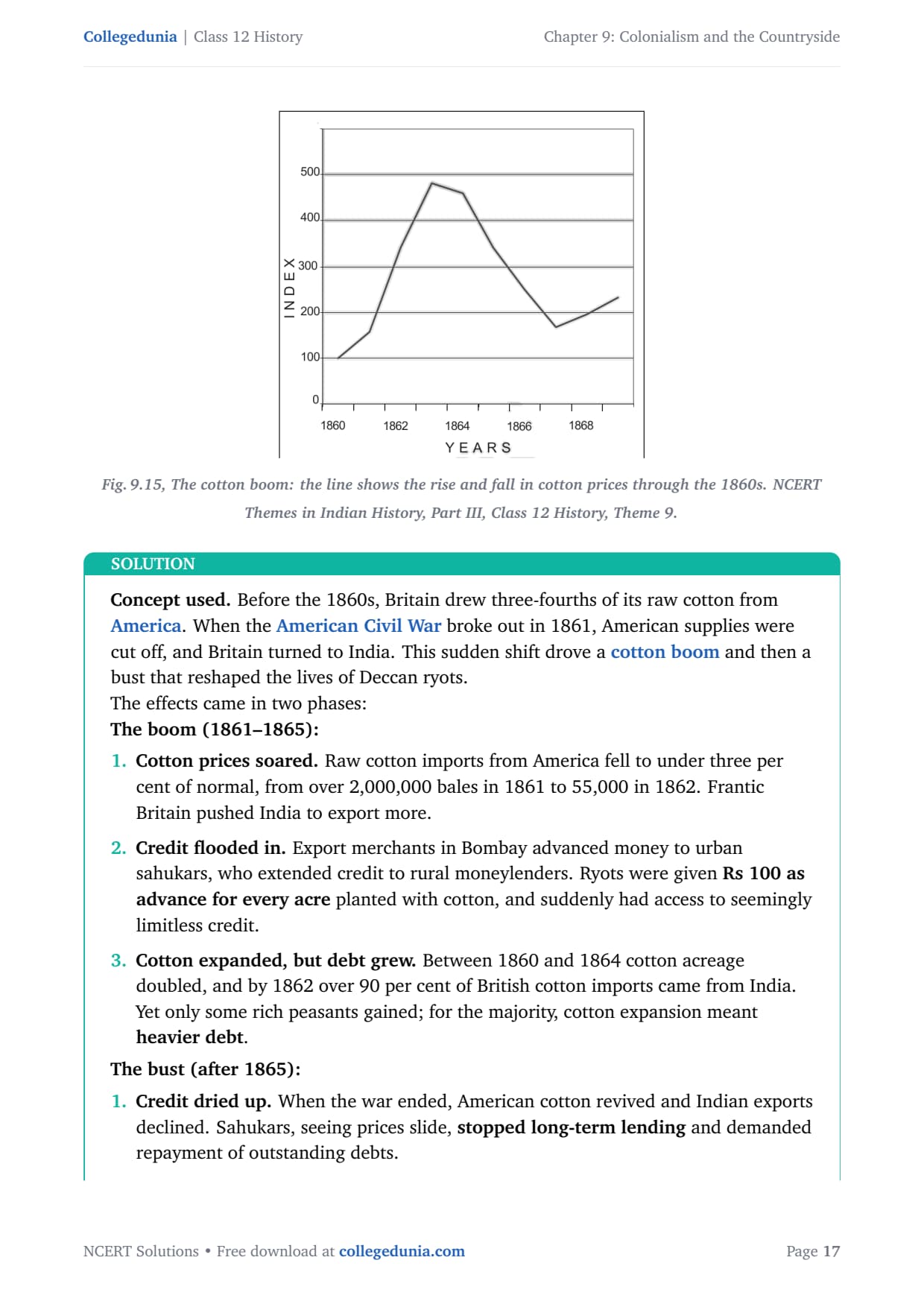
Fig. 9.15, The cotton boom: the line shows the rise
and fall in cotton prices through the 1860s. NCERT Themes in Indian History,
Part III, Class 12 History, Theme 9.
Concept used. Before the 1860s, Britain drew three-fourths of its raw
cotton from America. When the American Civil War broke out in
1861, American supplies were cut off, and Britain turned to India. This sudden
shift drove a cotton boom and then a bust that reshaped the lives of
Deccan ryots.
The effects came in two phases:
The boom (1861–1865):
Cotton prices soared. Raw cotton imports from America fell to
under three per cent of normal, from over 2,000,000 bales in 1861 to
55,000 in 1862. Frantic Britain pushed India to export more.
Credit flooded in. Export merchants in Bombay advanced money to
urban sahukars, who extended credit to rural moneylenders. Ryots were
given Rs 100 as advance for every acre planted with cotton, and
suddenly had access to seemingly limitless credit.
Cotton expanded, but debt grew. Between 1860 and 1864 cotton
acreage doubled, and by 1862 over 90 per cent of British cotton imports
came from India. Yet only some rich peasants gained; for the majority,
cotton expansion meant heavier debt.
The bust (after 1865):
Credit dried up. When the war ended, American cotton revived and
Indian exports declined. Sahukars, seeing prices slide, stopped
long-term lending and demanded repayment of outstanding debts.
Revenue rose at the worst moment. The new revenue settlement
raised the demand by 50 to 100 per cent, just as cotton prices
and incomes were collapsing.
The ryot was trapped. Unable to pay, the ryot turned again to the
moneylender, who now refused, having lost confidence in the ryot's
capacity to repay. Caught between falling prices, rising revenue and
shrinking credit, the ryots sank deeper into debt, feeding the anger that
erupted in 1875.
A common error is to describe only the boom. The crucial part is the
reversal: the same war that brought easy credit also led, when it ended, to
the credit squeeze and debt that ruined the ryots.
The American Civil War (1861) cut off Britain's American cotton, so it
turned to India. Cotton prices soared, credit flooded the Deccan (Rs 100 per acre
advanced), and acreage doubled, but most ryots only sank into deeper debt. When
the war ended in 1865, American cotton revived, Indian exports fell, sahukars
stopped lending and demanded repayment, and the revenue demand rose 50 to 100 per
cent. Trapped between falling prices and rising dues, the ryots were ruined, which
fed the 1875 revolt.
RI
Rohan Iyer
MA Medieval History, Deccan College Pune
Verified Expert
Strategic angle. Tell this as a boom-and-bust story with a clear hinge:
1865, when the war ends. The marks lie in showing that the same event
helped the ryot briefly and ruined him lastingly. Structure the answer around that
reversal.
Open with the mechanism. Britain's cotton industry had long feared its dependence
on American supply; the Civil War turned the fear into crisis, slashing American
imports to under three per cent of normal. India was the obvious substitute, so
prices rocketed and a wave of credit rolled down from Bombay merchants to urban
sahukars to village moneylenders, reaching the ryot as Rs 100 an acre to plant
cotton. On paper this looks like prosperity: acreage doubled by 1864, India
supplying over 90 per cent of British imports. But read it carefully, only some
rich peasants profited; for most, the "boom" simply loaded them with debt they
had taken on to grow more cotton.
Now turn the hinge. With the war's end in 1865, American cotton came back, Indian
exports slid, and the credit that had flowed so freely reversed direction.
Sahukars, who lend eagerly only when they feel secure, now refused new loans and
demanded old ones back. At precisely this moment the state raised the revenue
demand by 50 to 100 per cent. The ryot faced falling income, rising taxes and a
slammed credit door at once, the classic squeeze that turned indebtedness into
desperation and, by 1875, into open revolt.
Why this matters. The examiner wants the global-to-local chain made
explicit: a war in America reshaping a Maharashtra village through the cotton
market and the credit system. Showing that the boom's easy credit and the bust's
debt were two faces of one shock is the insight that lifts the essay.
The American Civil War cut Britain off from American cotton, so it
turned to India, sending prices soaring and credit flooding the Deccan (Rs 100 per
acre). Acreage doubled, but most ryots only deepened their debt. When the war
ended in 1865, American supply revived, Indian exports fell, sahukars stopped
lending and called in debts, and revenue rose 50 to 100 per cent. The resulting
squeeze ruined the ryots and helped trigger the 1875 riots.
Q 9.9
What are the problems of using official sources in writing about the
history of peasants?
Concept used.Official sources are the records produced by the
colonial state: revenue records and surveys, journals of surveyors, and
enquiry commission reports such as the Fifth Report (1813) and
the Deccan Riots Report (1878). They are invaluable, but they have to be
read with great care, because they carry the state's bias.
The main problems are these:
They reflect official concerns, not peasant ones. These sources
record what officials wanted to know and how they interpreted events. We
must always ask who wrote a report and why.
They can exaggerate to make a case. The Fifth Report was written
partly to criticise the Company's maladministration, so it
exaggerated the collapse of zamindari power and overstated how
much land zamindars were losing. As we have seen, auctioned zamindars
were often not displaced at all.
They protect the government's image. The Deccan Riots Commission
was specifically asked whether high revenue demand caused the revolt, and
it conveniently concluded that government demand was not to blame
and the moneylenders were. This shows a persistent colonial reluctance to
admit that popular discontent sprang from government action.
The surveyor's vision is partial. Buchanan was a Company
employee with specific instructions, marching with an army of surveyors
and seen as an agent of the sarkar. His priorities, what crops to
grow, what forests to clear, were shaped by Company commerce and Western
ideas of progress, so he was critical of forest dwellers' lifestyles.
They can mislead through limited data. Generalising from a couple
of years of figures (as the Fifth Report does) can distort the longer
history.
The solution the chapter offers is not to discard these sources but to
juxtapose them with newspapers, unofficial accounts, legal records and,
where possible, oral sources.
Read against the grain
The historian's skill is to use official records while resisting their bias:
asking who wrote them, why, and what they leave out, then checking them against
other evidence. State that method clearly to top the answer.
Official sources, revenue records, surveys and enquiry reports like the
Fifth Report and the Deccan Riots Report, are invaluable but biased. They reflect
official concerns, not peasant ones, can exaggerate to make a political case (the
Fifth Report overstated zamindari collapse), and protect the government's image
(the Deccan Riots Commission blamed moneylenders, not revenue). Surveyors like
Buchanan saw with Company eyes. The remedy is to read them critically and
juxtapose them with newspapers, legal records and oral sources.
TJ
Tara Joshi
MA Medieval Indian History, Visva-Bharati University
Verified Expert
Strategic angle. This is a "method" question, so answer like a
historian. State the central problem, official sources speak with the state's
voice, then prove it from the chapter's own two reports and from Buchanan. End
with the cure, because that is what raises the answer from complaint to craft.
Begin with the core difficulty. Every one of these documents was produced by the
colonial state for its own purposes, so it embeds official concerns and
interpretations. The first duty of the historian is therefore to ask who wrote a
report and why. The chapter hands you two perfect illustrations. The Fifth
Report, written to attack Company maladministration, overstated the ruin
of zamindars, the benami evidence shows many survived. The Deccan Riots
Commission, briefed to test whether revenue demand caused the revolt, returned the
self-serving verdict that the moneylenders, not the government, were at fault,
exposing the state's reluctance to blame itself.
Add the surveyor's bias, because it is a different kind of distortion. Buchanan
was no neutral traveller; he was a paid Company man with instructions, escorted
by an army of surveyors and read by locals as the sarkar's agent. He described
landscapes through the lens of commerce and Western "progress", judging forest
life as something to be cleared away. So even his rich detail is angled. And
beware thin data: the Fifth Report's two years of auction figures cannot safely
carry long-term generalisations.
The point is not to reject these sources but to read them against the grain and
juxtapose them with newspapers, unofficial accounts, legal records and
oral testimony, so the peasant's perspective, almost never the author's, can be
recovered.
Why this matters. The examiner is testing your grasp of historical
method, the real subject of "Exploring Official Archives". Showing that you can
use official records while correcting for their built-in bias is exactly the
skill the chapter is designed to teach.
Official sources carry the state's voice, so they reflect official
concerns, can exaggerate for political ends (the Fifth Report overstated
zamindari collapse), and shield the government (the Deccan Riots Commission blamed
moneylenders, not revenue). Surveyors like Buchanan recorded with Company eyes,
and thin data invites false generalisation. The historian must read them
critically, asking who wrote them and why, and juxtapose them with newspapers,
legal records and oral sources to recover the peasant's view.
Q 9.10
On an outline map of the subcontinent, mark out the areas described in
this chapter. Find out whether there were other areas where the Permanent
Settlement and the ryotwari system were prevalent and plot these on the map as
well.
Concept used. This is a map-work task. From the chapter you
locate the three regions it describes, then add the wider areas where the
Permanent Settlement and the ryotwari system operated. Below is
the guide for what to mark; on the actual map, locate each one.
Areas described in this chapter:
Bengal (the zamindars and the Permanent Settlement), including
Burdwan (Bardhaman) and Dinajpur in North Bengal.
The Rajmahal hills (in present-day Jharkhand, near the
Bihar–Bengal border), home of the Paharias and the
Damin-i-Koh of the Santhals; the Santhal
Pargana.
The Bombay Deccan, especially Poona (Pune) and
Ahmednagar, where the 1875 riots broke out (Supa, in Poona
district).
Other areas of the Permanent Settlement:
Beyond Bengal, the Permanent Settlement also covered Bihar and
Orissa, and parts of the Madras Presidency (the northern
districts of present-day Andhra). The chapter notes it was rarely
extended beyond Bengal.
Other areas of the ryotwari system:
The ryotwari system, where revenue was settled directly with the ryot,
spread across much of the Bombay and Madras
Presidencies, including large parts of present-day Maharashtra,
Tamil Nadu, Karnataka and Andhra Pradesh.
!
[See diagram in the PDF version]
Mark regions, then systems
Do the task in two layers. First mark the three regions of the chapter (Bengal,
Rajmahal, Deccan). Then shade the wider Permanent Settlement zone (Bengal, Bihar,
Orissa) and the ryotwari zone (Bombay and Madras) in two different colours.
Mark the three regions of the chapter: Bengal (Burdwan, Dinajpur), the
Rajmahal hills (Paharias, the Damin-i-Koh and Santhal Pargana), and the Bombay
Deccan (Poona, Ahmednagar). Then shade the wider Permanent Settlement area
(Bengal, Bihar, Orissa, parts of Madras) and the ryotwari area (the Bombay and
Madras Presidencies: Maharashtra, Tamil Nadu, Karnataka and Andhra) in two
different colours.
NV
Nikhil Verma
MA Historical Geography, MS University of Baroda
Verified Expert
Picture-first. Map work scores on correct placement, so think in two map
layers. Layer one: drop the three chapter regions across the subcontinent, east
to west, Bengal, then the Rajmahal hills just inland, then the Deccan in the west.
Layer two: shade the two revenue systems behind them.
Place the regions first and in the right relation. Bengal sits in the east, on the
Ganga delta; mark Burdwan and, to its north, Dinajpur. Move a little inland and
south-west to the Rajmahal hills on the Bihar–Bengal–Jharkhand border, the zone
of the Paharias and the Santhal Damin-i-Koh, later the Santhal Pargana. Then jump
clear across to the west, to the Bombay Deccan plateau, marking Poona and
Ahmednagar where the 1875 revolt spread. Getting these three in their correct
corners, east, near-east interior, and west, is half the marks.
Now the second layer, the systems, in two colours. Shade the Permanent Settlement
across Bengal, Bihar and Orissa, with a patch in the northern Madras Presidency,
and remember the chapter's point that it was rarely taken beyond Bengal. Then
shade the ryotwari belt over the Bombay and Madras Presidencies, today's
Maharashtra, Karnataka, Tamil Nadu and much of Andhra. The visual contrast,
Permanent Settlement clustered in the east, ryotwari spread across the west and
south, is itself the lesson: two different colonial answers to the same problem of
land revenue.
Why this matters. The skill being tested is turning the chapter's
narrative into geography. Correct, ordered placement of the three regions plus a
clear two-colour map of the revenue systems shows you understand not just where
events happened but how colonial policy varied across the subcontinent.
Layer one: mark Bengal (Burdwan, Dinajpur) in the east, the Rajmahal
hills (Paharias, Damin-i-Koh, Santhal Pargana) in the near-east interior, and the
Bombay Deccan (Poona, Ahmednagar) in the west. Layer two, in two colours: shade
the Permanent Settlement over Bengal, Bihar, Orissa and parts of Madras, and the
ryotwari system over the Bombay and Madras Presidencies (Maharashtra, Karnataka,
Tamil Nadu, Andhra).
Q 9.11
Francis Buchanan published reports on several districts of eastern
India. Read one report and collate the information available about rural society,
focusing on the themes discussed in this chapter. Highlight the ways in which
historians can use such texts.
Concept used. This is a research project. There is no single
correct answer; you are marked on how well you read one of Buchanan's
district reports, gather what it says about rural society, and then judge how
historians can use such a text. The guide below shows how to plan it.
Choose one report. Pick a Buchanan (Buchanan-Hamilton) survey of
an eastern district, for example Bhagalpur, Dinajpur,
Purnea or Shahabad. Many are available in libraries and
digital archives.
Collate information on the chapter's themes. Note what the report
says about land and revenue, zamindars and jotedars,
ryots and sharecroppers, forests and shifting
cultivation, crops, trade and moneylending, and minerals
and resources, the very subjects this chapter discusses.
Note Buchanan's purpose and bias. Remember he was a Company
employee with instructions, recording natural resources and judging how
land could be made "more productive". His view of forest dwellers was
critical and shaped by Western ideas of progress.
Highlight how historians use such texts. Show that the report is
a rich source of detail (on agriculture, society and resources) but must
be read carefully, against its official bias, and juxtaposed with other
records.
Detail plus bias
The best reports do two things at once: mine Buchanan for his vivid factual detail
and flag his colonial slant. That double reading is the historical skill the
project is really testing.
Choose one Buchanan district report (such as Bhagalpur, Dinajpur or
Purnea) and collate what it says on the chapter's themes: land and revenue,
zamindars and jotedars, ryots and sharecroppers, forests and shifting
cultivation, crops, trade, moneylending and minerals. Note his purpose as a
Company surveyor and his bias against forest life. Then show how historians use
such texts, mining their detail while reading critically against their official
slant and juxtaposing them with other records.
SQ
Sara Qureshi
MA Medieval History, Aligarh Muslim University
Verified Expert
Structural observation. A source-based project writes itself in three
moves: read the report, sort its contents under the chapter's headings, then judge
its value. Decide your district first, then research straight into those three
moves.
Pick a report you can actually access, Buchanan's Bhagalpur or Dinajpur survey is
ideal, since the chapter already quotes his Dinajpur account of the jotedars and
his Rajmahal journal. Under "what the report says", organise the material exactly
as the chapter does: the land-revenue arrangements; the social ladder of zamindar,
jotedar, ryot and under-ryot; the forest economy of shifting cultivation, mahua,
resin and charcoal; the spread of settled, market-oriented farming; and
Buchanan's obsessive notes on rocks, minerals and salt. Collating his detail under
these heads lets you compare a real district with the chapter's general picture.
The part that turns a school project into history is the critical reading. Buchanan
was not a disinterested observer; he was paid by the Company, instructed on what to
look for, and read by villagers as an agent of the sarkar. So his eye is angled
towards commercial value and "improvement", and he is dismissive of forest
livelihoods. Historians therefore use him in two registers: as an unusually
observant recorder of early-nineteenth-century rural life, and as a witness whose
priorities reveal the colonial project itself. Wherever his judgements betray that
bias, say so, and where possible test his claims against other records.
Why this matters. The project trains the chapter's central skill, using
an official text as evidence without being captured by it. Reading one Buchanan
report for both its facts and its slant is exactly how historians work with
colonial archives.
Read one Buchanan district report (Bhagalpur, Dinajpur or Purnea) and
sort its contents under the chapter's themes: land revenue; zamindars, jotedars,
ryots and under-ryots; the forest economy and shifting cultivation; settled
market farming; and minerals. Then judge its value, showing historians use it for
its rich detail while reading critically against Buchanan's Company bias and
checking it against other sources.
Q 9.12
In the region where you live, talk to the older people within a rural
community and visit the fields they now cultivate. Find out what they produce, how
they earn their livelihoods, what their parents did, what their sons and daughters
do now, and how their lives have changed over the last 75 years. Write a report
based on your findings.
Concept used. This is a fieldwork project. There is no single
correct answer; you are marked on how carefully you interview a rural community and
how clearly you report the change over time, the same kind of agrarian
change this chapter studies. The guide below shows how to plan it.
Choose the community and prepare questions. Pick a rural family or
group of older people you can visit. Write your set questions in advance:
what they produce, how they earn their living, what their parents did, what
their sons and daughters do now, and how life has changed over the last 75
years.
Visit the fields and record the present. Note the crops grown, the
methods (irrigation, machinery, seeds), the size of holdings, and whether
they own or rent the land, and how produce is sold.
Trace the change across generations. Compare three generations:
the grandparents' work, the present generation's, and what the young now
do (farming, migration to towns, other jobs). Look for shifts in crops,
land ownership, debt and credit, and the role of the market.
Write the report. Open with who you spoke to and where, then
describe present livelihoods, then the change over 75 years, and close with
the main causes of change (new technology, market demand, migration,
government schemes).
Compare three generations
Frame your report as a three-generation comparison, just as the chapter compares
rural society across decades. The clearest projects show what was grown and how
people lived then, now, and what the young are moving towards.
Interview older people in a rural community and visit their fields,
recording what they produce, how they earn a living, what their parents did, and
what their children do now. Trace the change over 75 years across three
generations, crops, land, credit, the market and migration, and write it up as a
report that opens with whom you met, describes present livelihoods, charts the
change, and explains its main causes.
MK
Meera Krishnan
MA History, University of Hyderabad
Verified Expert
Structural observation. A fieldwork report is easiest in three blocks: the
present (what the fields look like now), the past (what earlier generations did),
and the change between them. Build that frame before you visit, and the writing is
just filling it in.
Before you go, fix your questions so the conversation stays focused: present crops
and income, the parents' occupations, the children's work, and the big shifts over
75 years. On the visit, look as well as listen, the size of the holding, whether it
is irrigated, what machines and seeds are used, who owns the land and how the crop
is sold. These concrete details are what make a report convincing rather than
vague.
The heart of the project is the comparison across generations, because change over
time is exactly what this chapter is about. Ask what the grandparents grew and how
they held their land; what the present generation does differently; and where the
young are heading, more farming, a move to town, or other work. Watch for the same
forces the chapter highlights in another century: shifting crops, the pull of the
market, the weight of credit and debt, and the loss or gain of land. Close by
explaining the causes, new technology, market demand, migration and government
schemes, so the report reads as analysis, not just description.
Why this matters. The project makes you a recorder of agrarian change, the
very thing historians reconstruct from official archives for the colonial period.
Doing it live, through interviews and field visits, teaches you both the value and
the difficulty of such evidence, which is the chapter's deeper lesson.
Plan the report in three blocks: the present (crops, income, land and
methods today), the past (what the grandparents and parents did), and the change
between them over 75 years. Build the questions before you visit, look as well as
listen in the fields, compare three generations on crops, land, credit and
migration, and close by explaining the causes of change.
FAQs on Colonialism and the Countryside Class 12 NCERT Solutions
Colonialism and the Countryside Class 12 History Common Questions
Ques. Where can I get the class 12 history chapter 9 ncert solutions PDF?
Ans. You can download the Colonialism and the Countryside Class 12 History NCERT Solutions PDF directly from this page. It is free, follows the 2026-27 NCERT, and answers all 12 exercise questions step by step.
Ques. How many questions are there in class 12 history chapter 9 questions and answers?
Ans. The chapter has 12 exercise questions. Nine are written answers and essays, and the last three (10 to 12) are map work and project activities used in the history project file class 12 chapter 9.
Ques. Which are the most important questions in history class 12 chapter 9 question answer practice?
Ans. Why the Santhals rebelled (Q 4), the anger of the Deccan ryots (Q 5), and how the American Civil War affected the ryots (Q 8) are the most-asked long answers. These three top every list of class 12 history chapter 9 important questions.
Ques. What was the Permanent Settlement of 1793?
Ans. The Permanent Settlement was a 1793 revenue system in Bengal under Cornwallis. It fixed the revenue each zamindar paid in perpetuity, and estates that failed to pay could be auctioned under the Sunset Law. Many zamindars survived through benami sales.
Ques. Why did the Deccan ryots attack the moneylenders in 1875?
Ans. The anger was about injustice, not debt alone. Sahukars broke the custom that interest must not exceed the principal, forged accounts, withheld receipts, and seized peasants' land and animals. The rebels' first act was to burn the account books and bonds.
Ques. Is class 12 history chapter 9 hard to score in the board exam?
Ans. No. It is a good scoring chapter if you keep the three regions apart and give both sides of each debate. Practise the source-based extracts and a few class 12 history chapter 9 mcq sets, and keep the Santhal Revolt and Deccan riots ready in your own words.








Comments