




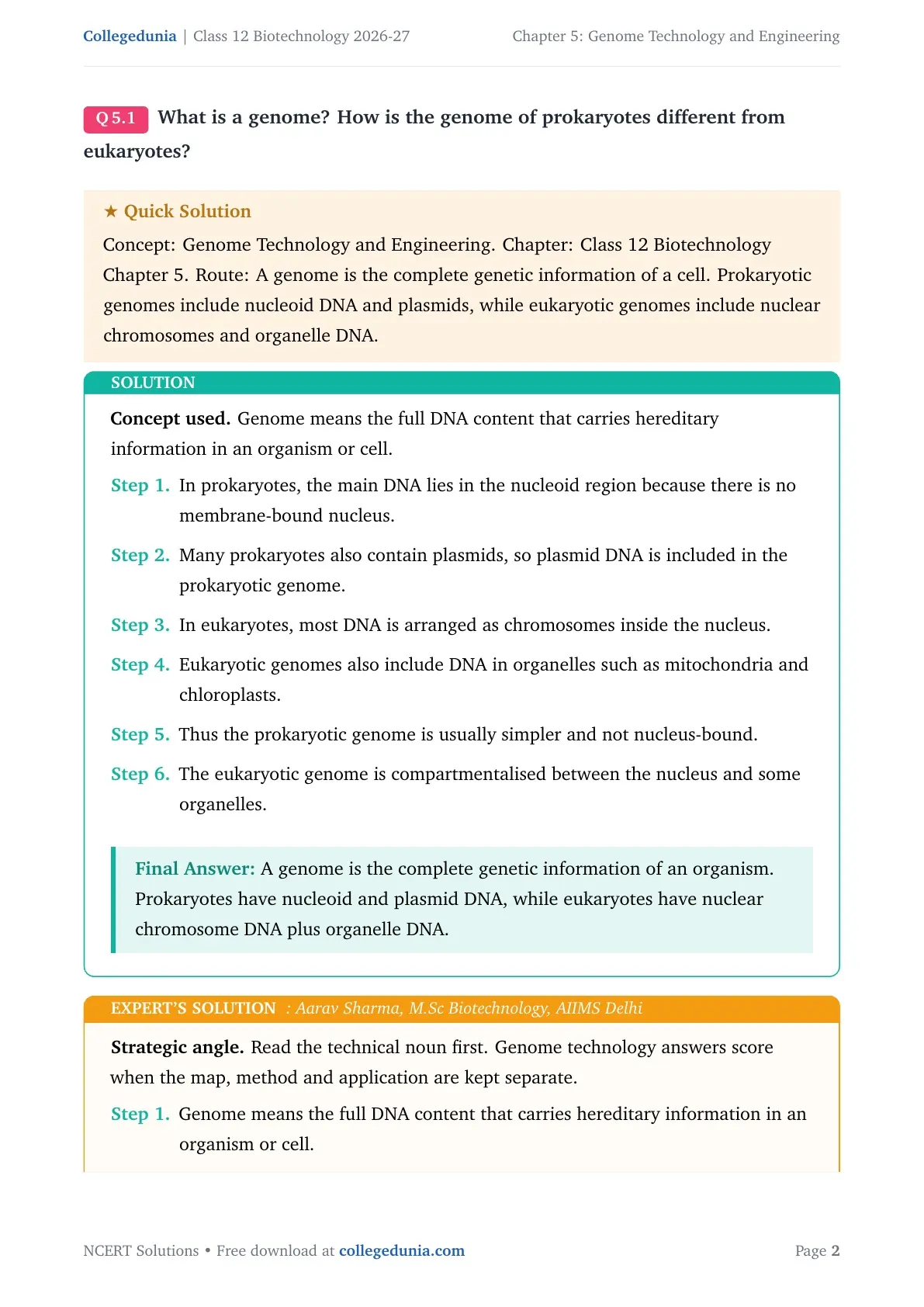
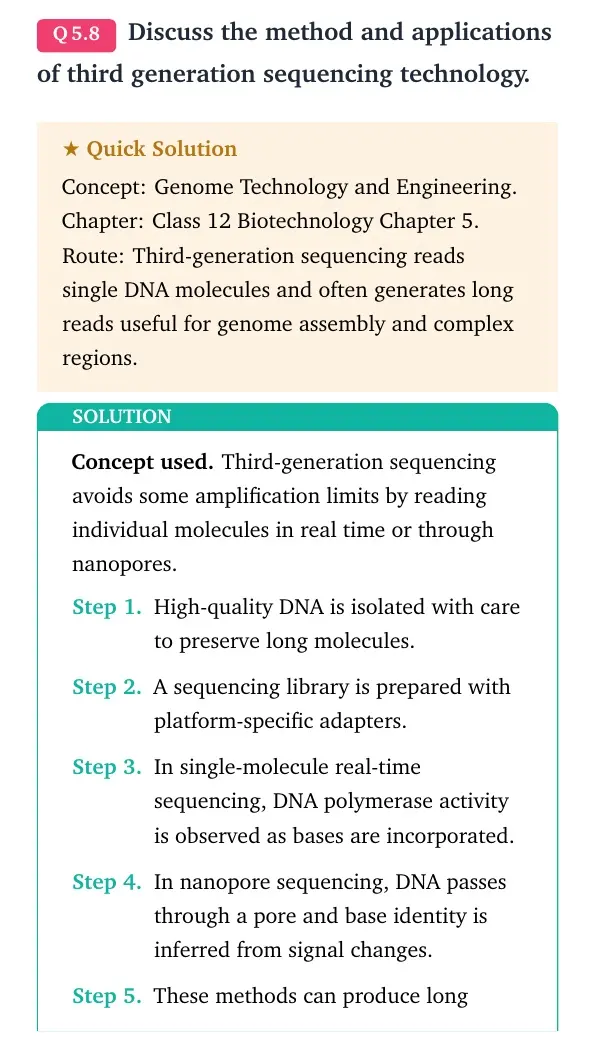
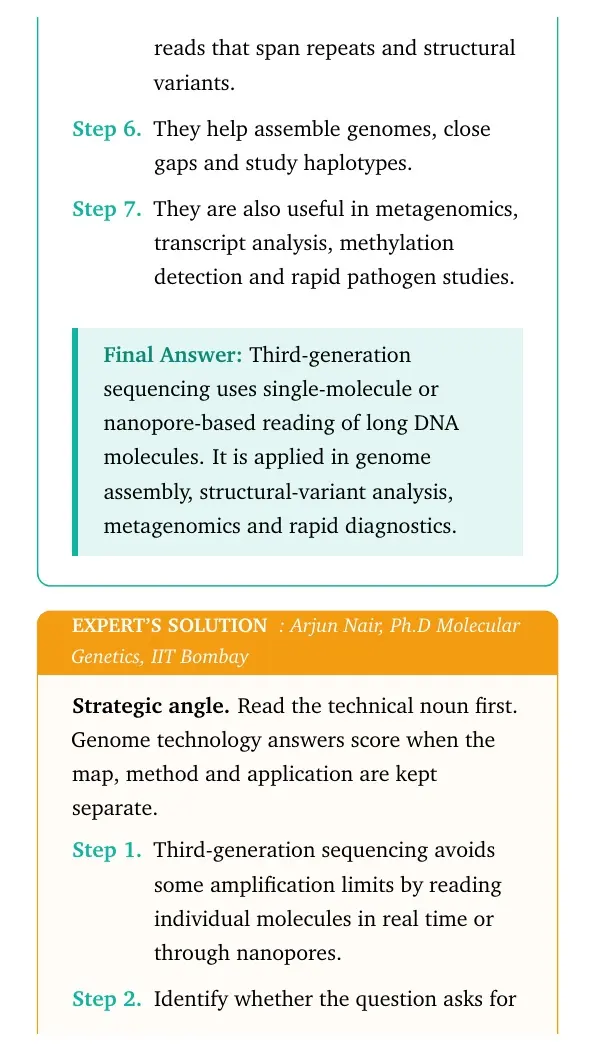
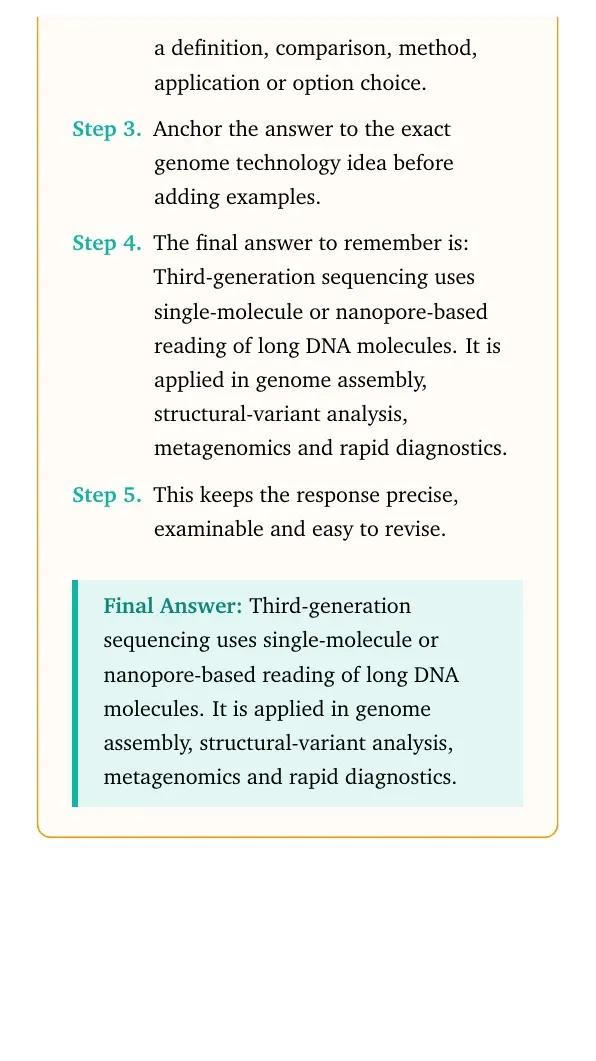
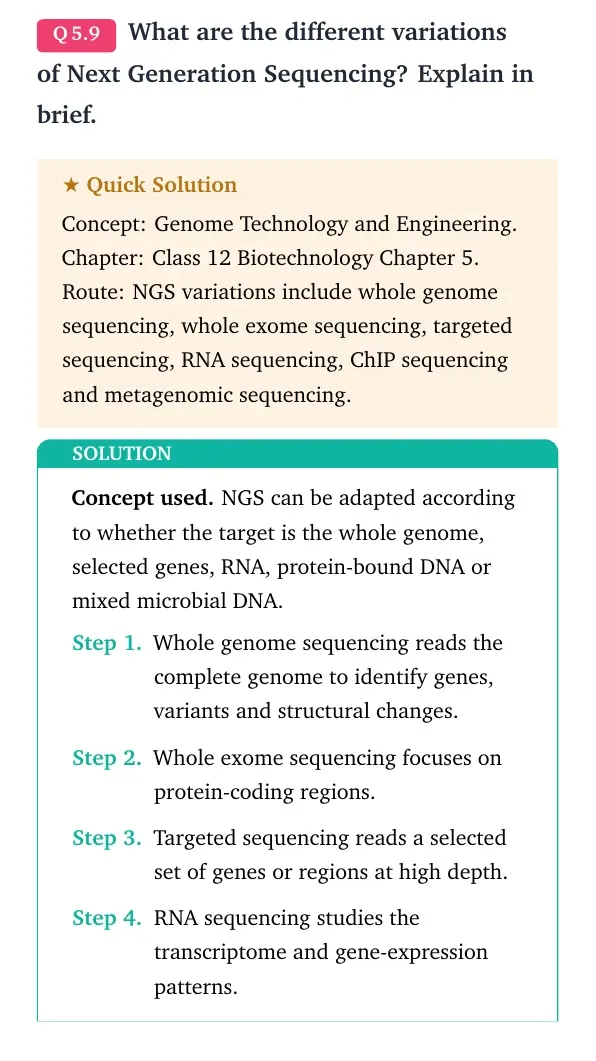
The NCERT Solutions for Class 12 Biotechnology Chapter 5 Genome Technology and Engineering cover all 21 exercise questions from the latest 2026-27 NCERT textbook. The answers explain genome mapping, sequencing technology, CRISPR-Cas9, genomics, protein engineering and assertion-reason items in exam-ready language.
- Question count: 21 solved NCERT exercise questions with assertion-reason answers.
- Best for: board revision, biotechnology viva preparation and one-shot concept recall.
- PDF includes: stepwise solutions, expert explanations and boxed final answers.
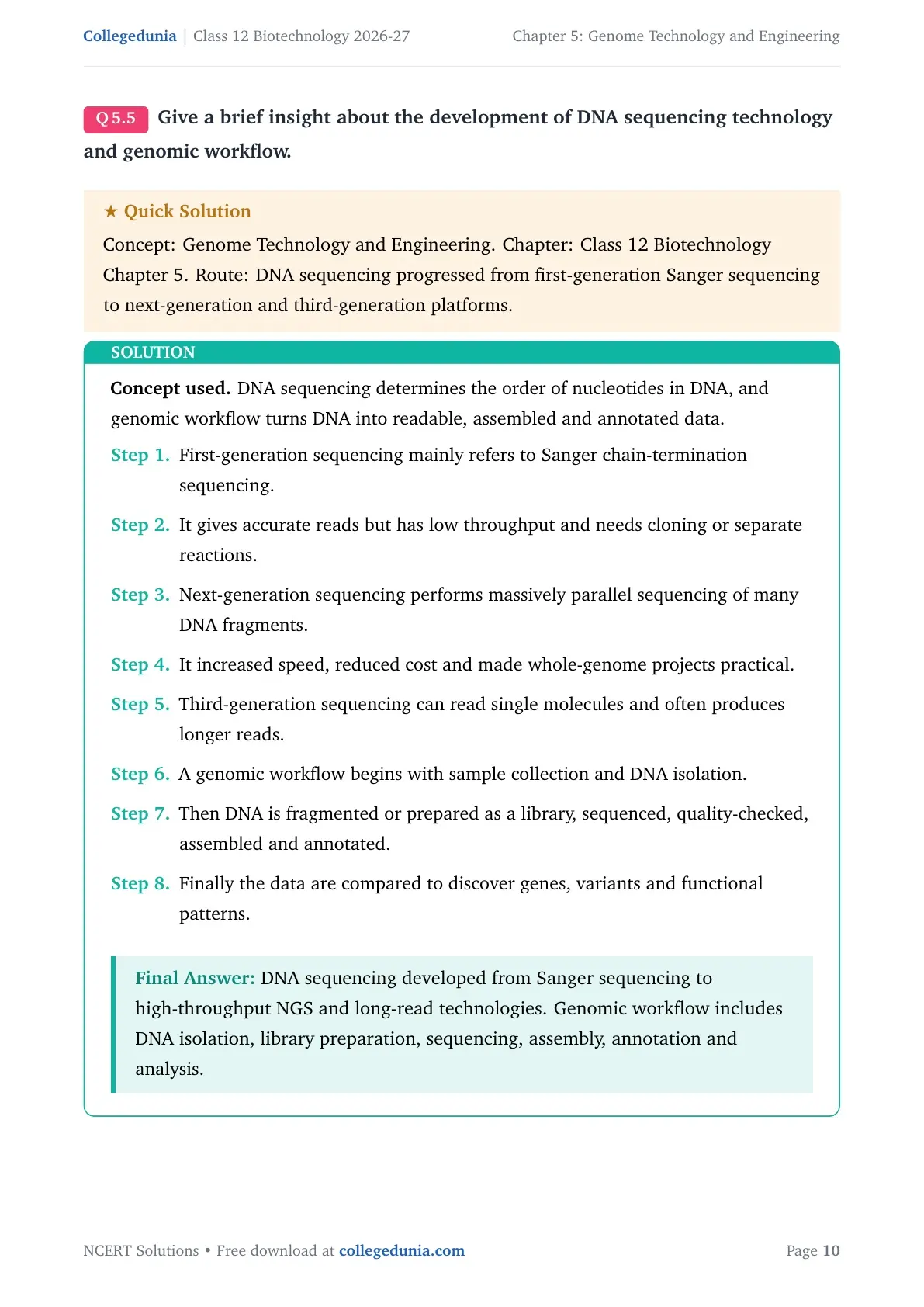
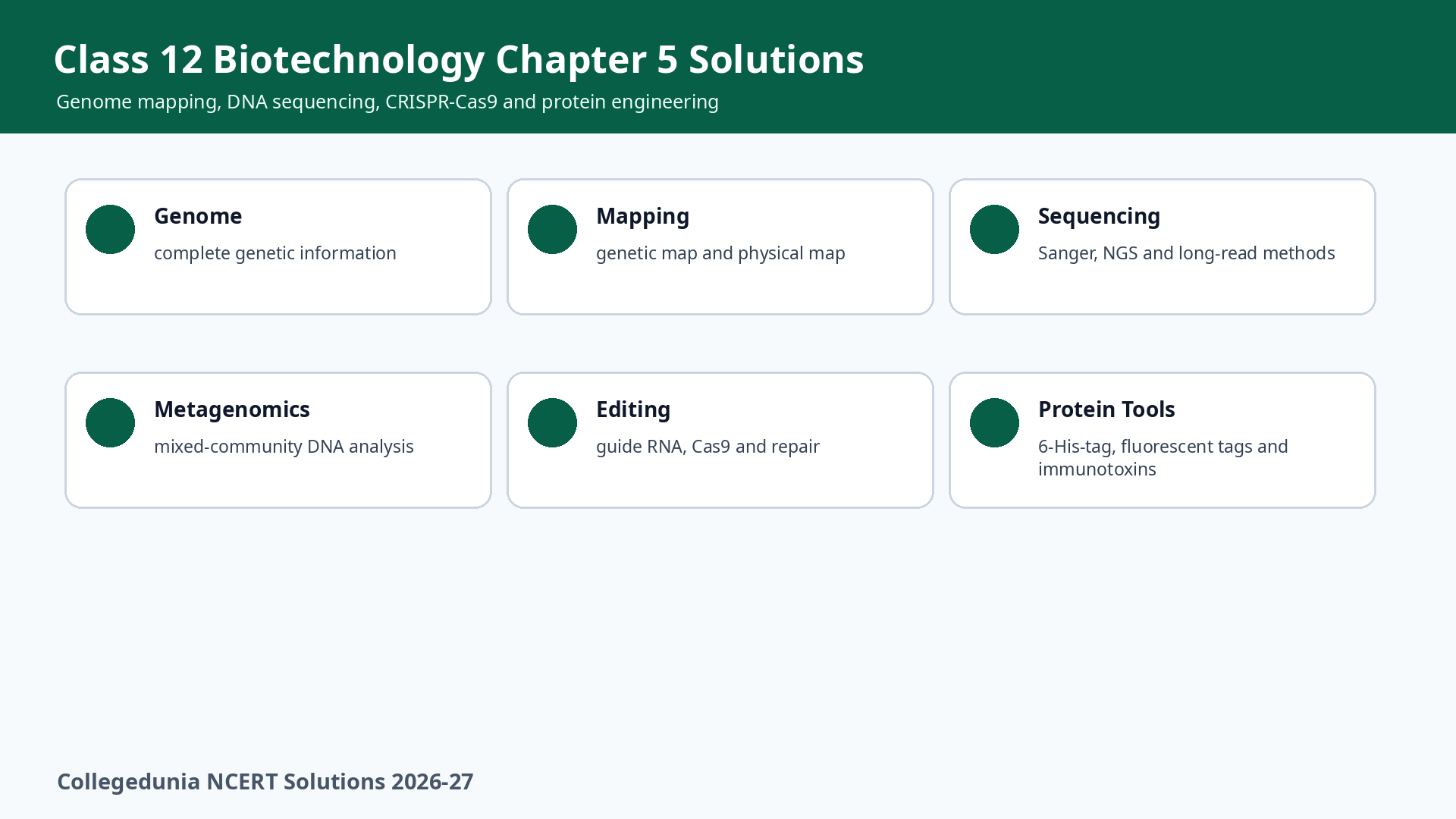
Student Feedback: Students usually find this chapter easier after separating it into three parts: mapping, sequencing and genome editing.
|
Table of Contents |
Class 12 Biotechnology Chapter 5 Genome Technology and Engineering Solutions PDF
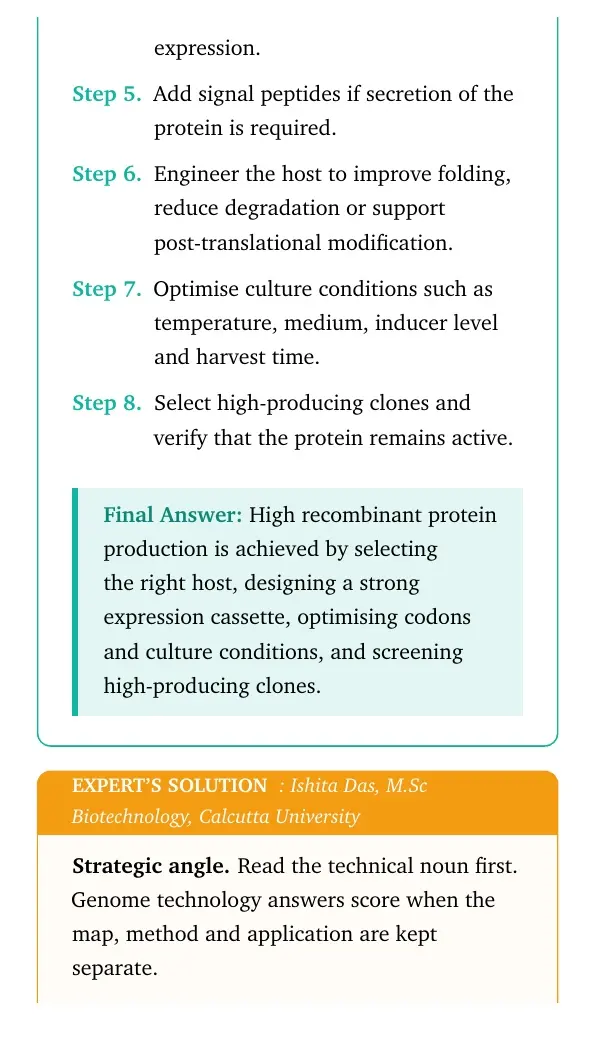
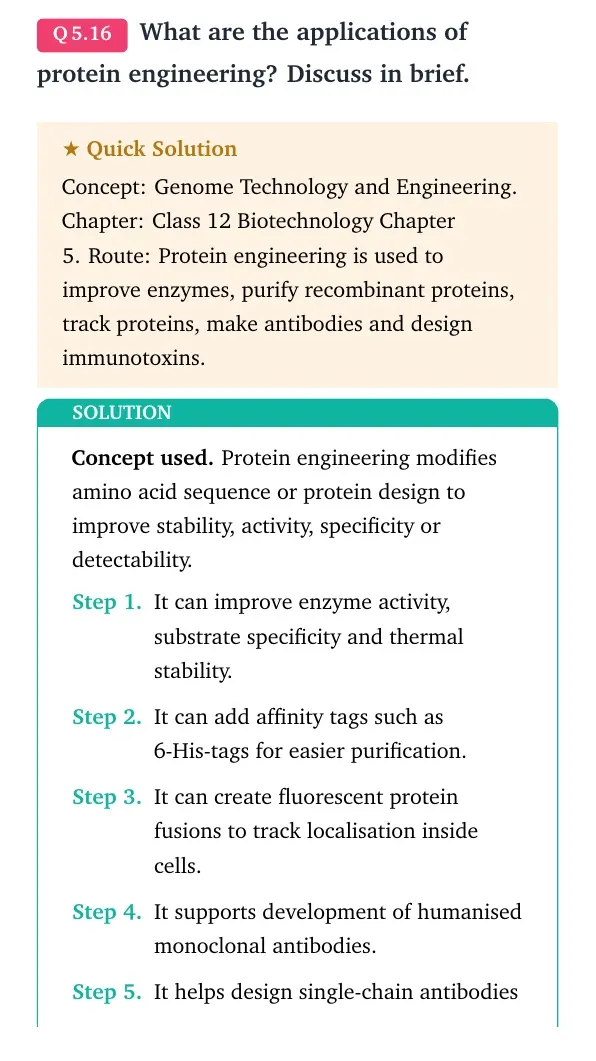
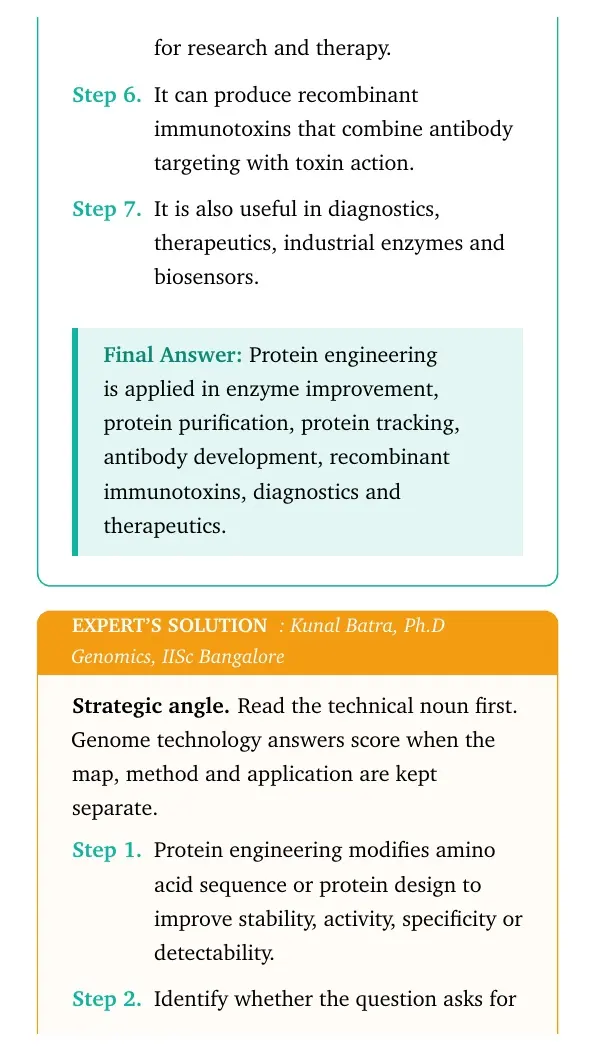
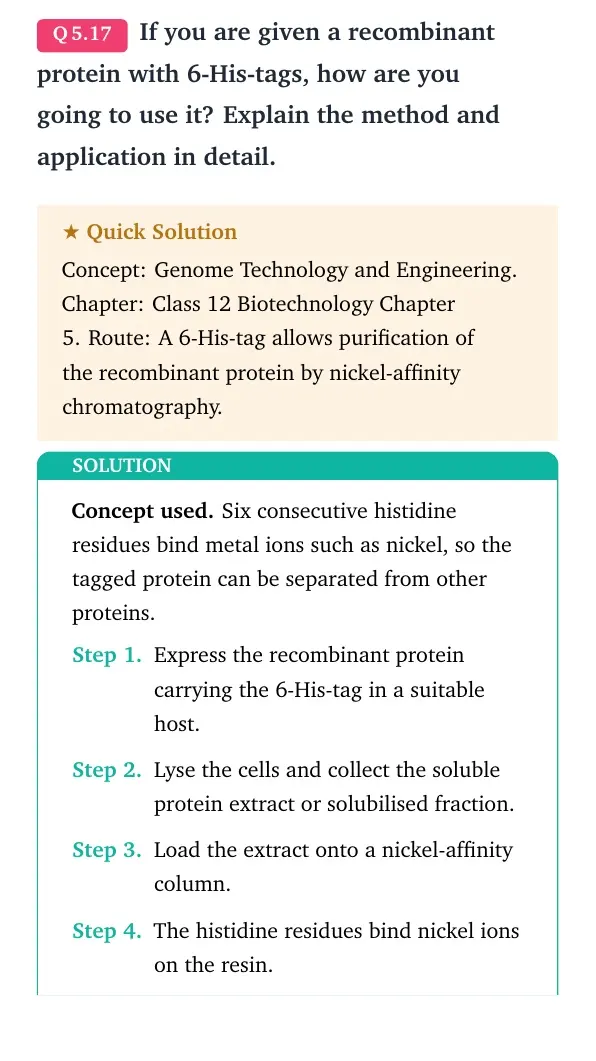
Class 12 Biotechnology Chapter 5 Genome Technology and Engineering NCERT Solutions help students revise how genomes are mapped, sequenced, compared and engineered. The chapter also connects protein engineering with purification tags, fluorescent proteins and recombinant immunotoxins.
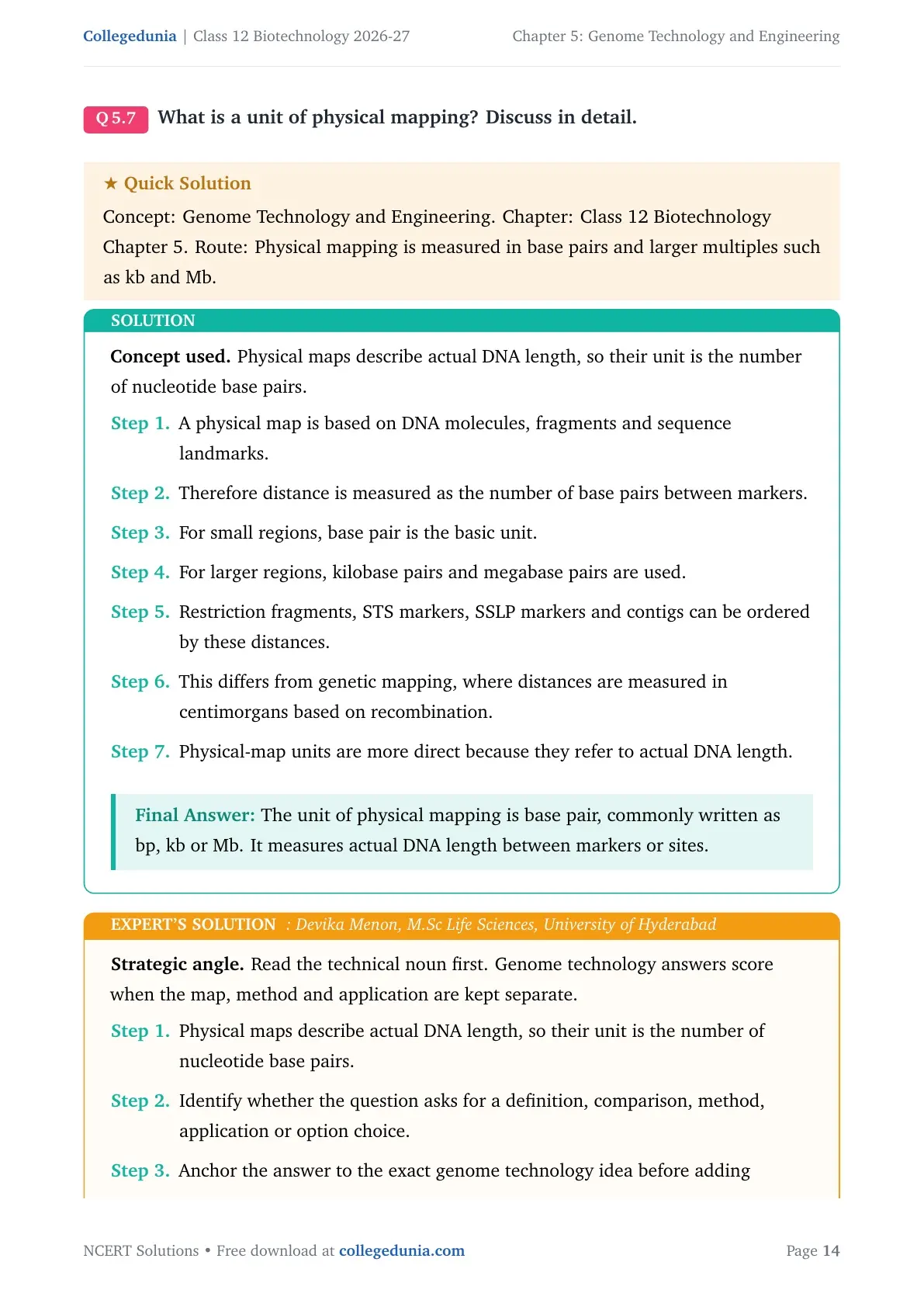
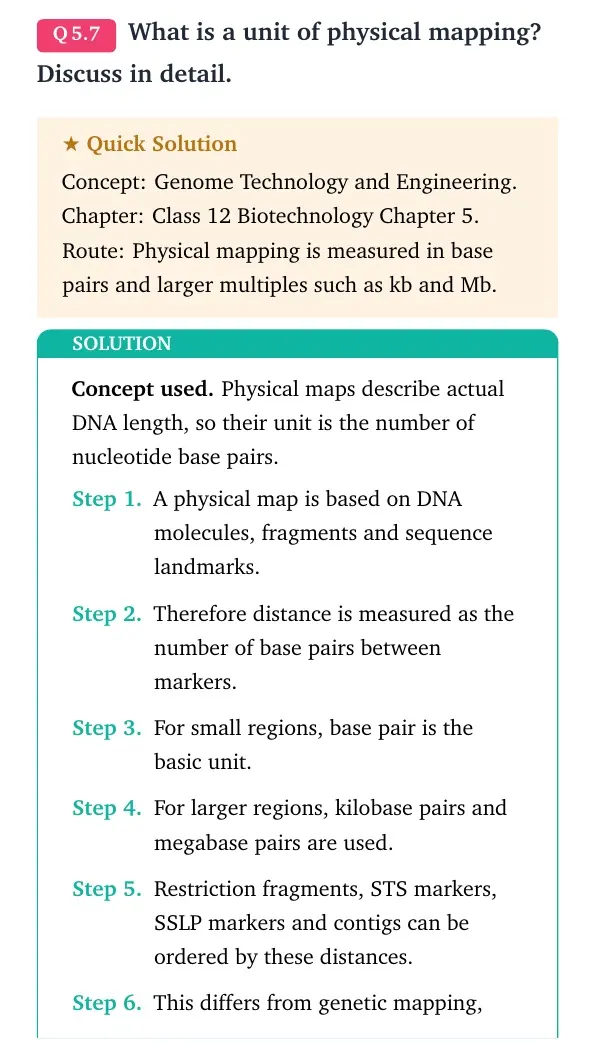
Do not mix the map units: genetic mapping uses centimorgan, while physical mapping uses base pairs, kilobase pairs or megabase pairs.
How to Use These Genome Technology NCERT Solutions
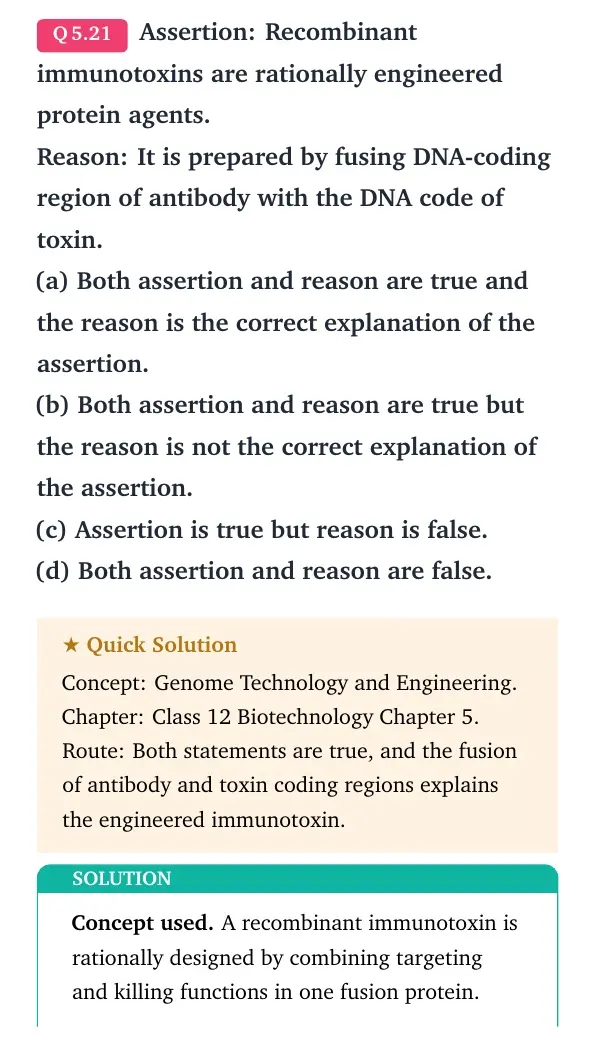
Start with genome mapping because it builds the language for restriction sites, RFLP, SSLP and STS. Then move to sequencing workflow, CRISPR-Cas9 method and protein engineering applications. Finish by revising the two assertion-reason questions.
- Use the boxed answer for quick board-style recall.
- Use the expert answer to understand how the concept connects to applications.
- Revise CRISPR-Cas9 as guide RNA, Cas9 cut and repair pathway.
Genome Mapping Revision Map
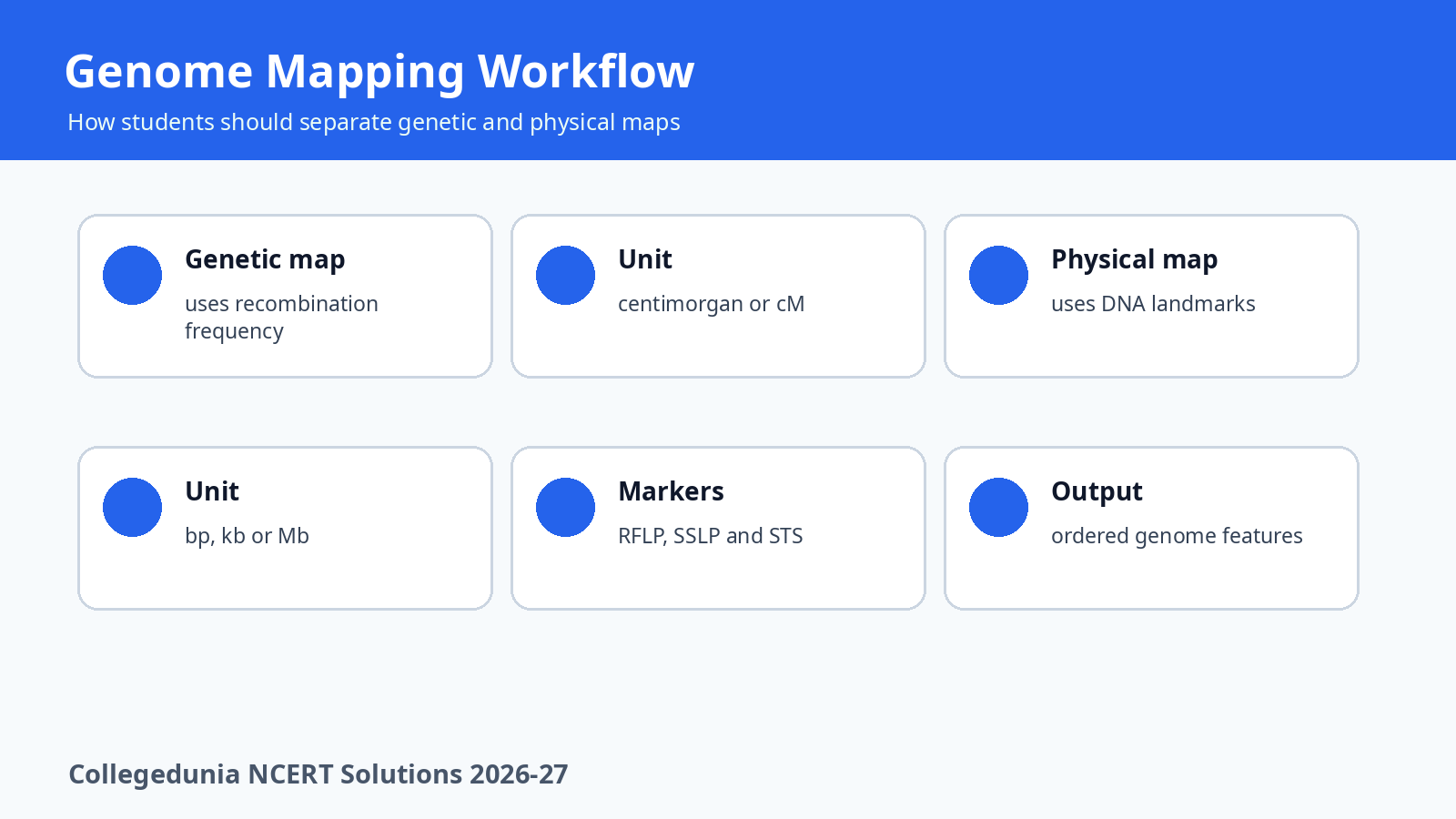
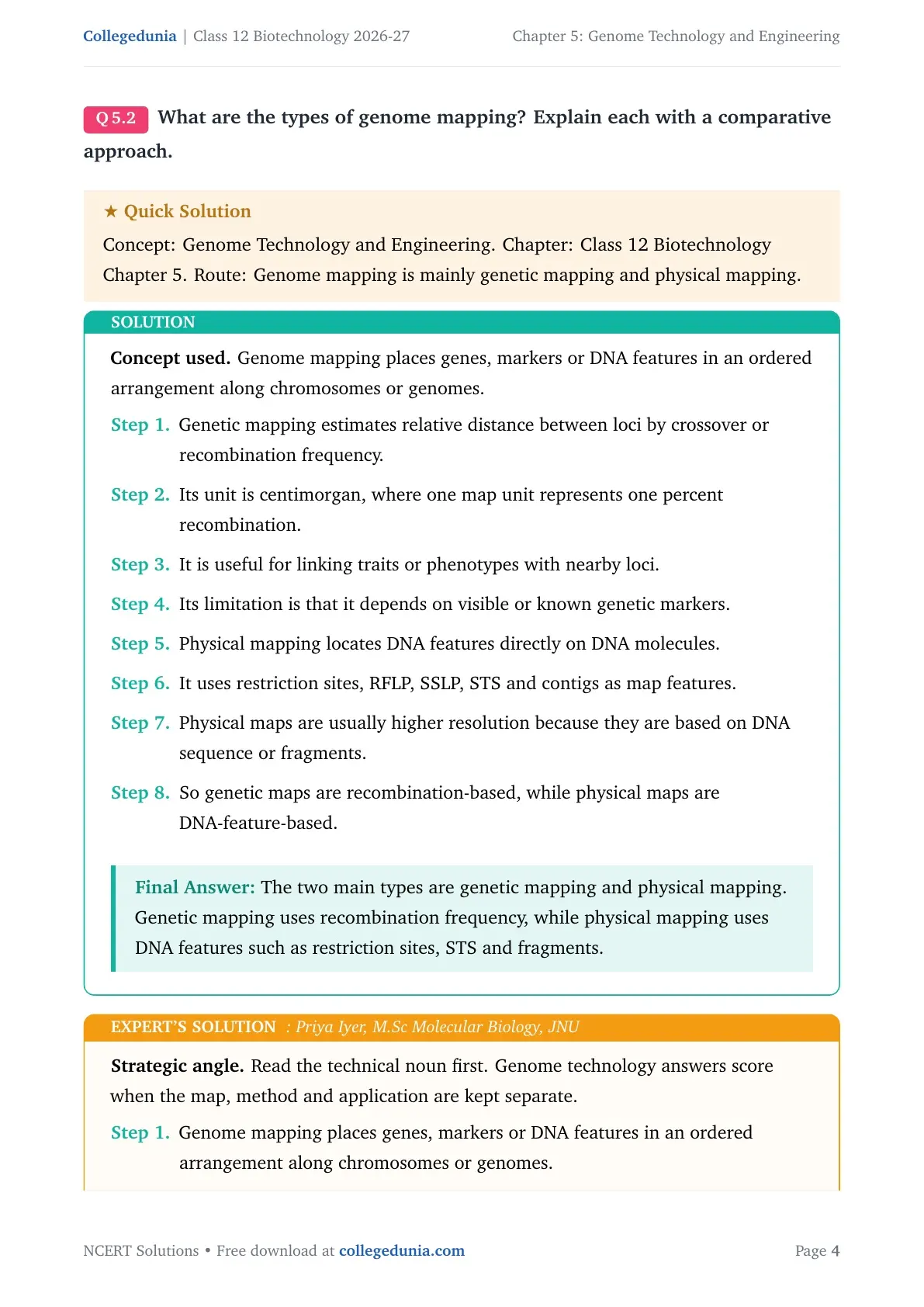
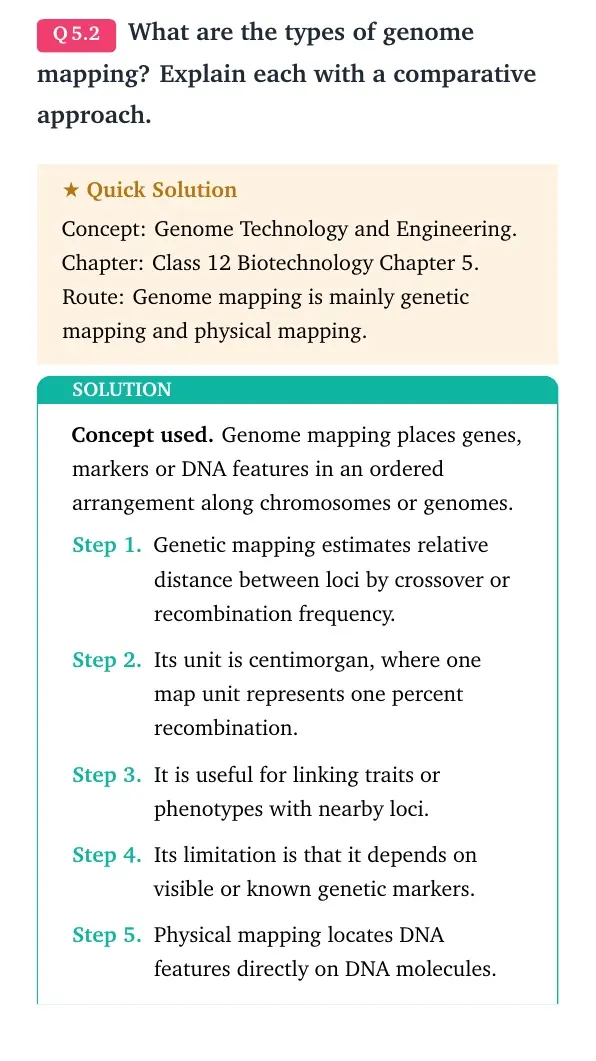
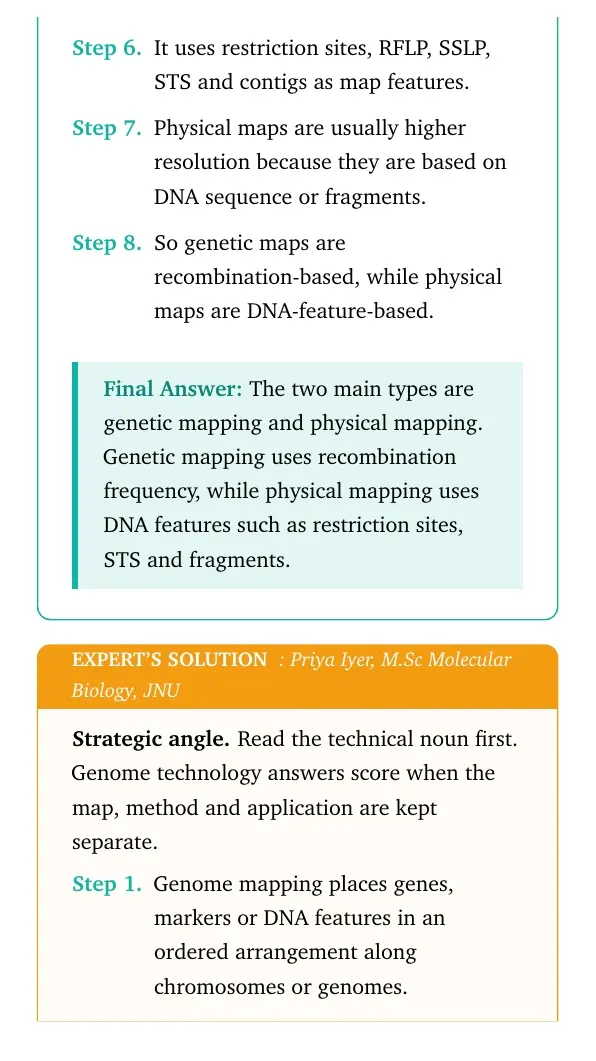
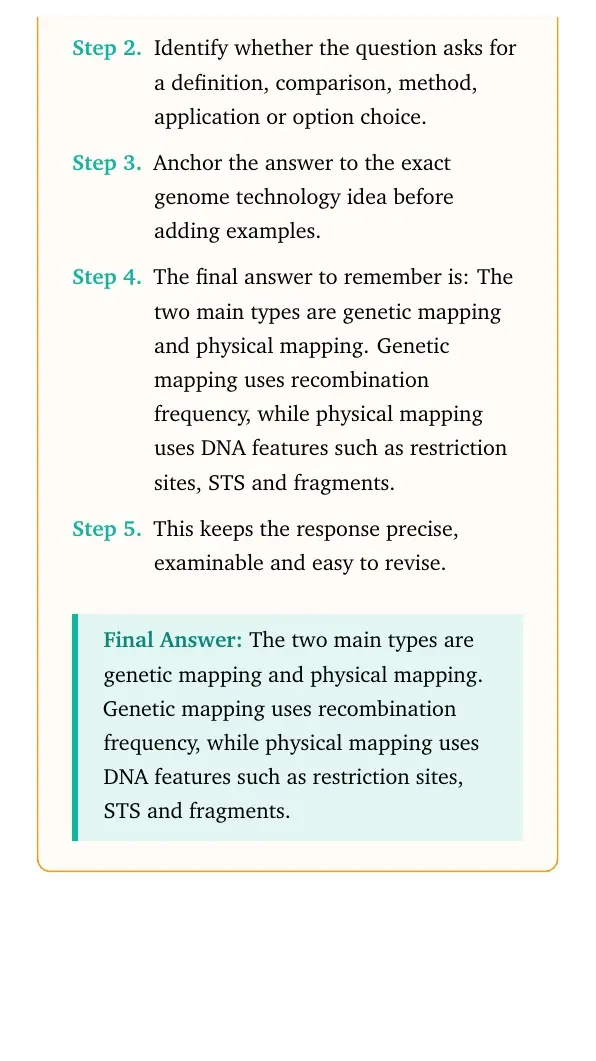
Genome mapping arranges genes, loci or DNA features in an ordered pattern. A genetic map depends on recombination frequency, while a physical map depends on DNA landmarks and actual DNA length.
| Mapping Type | Main Basis | Common Unit |
|---|---|---|
| Genetic mapping | Crossover or recombination frequency | centimorgan |
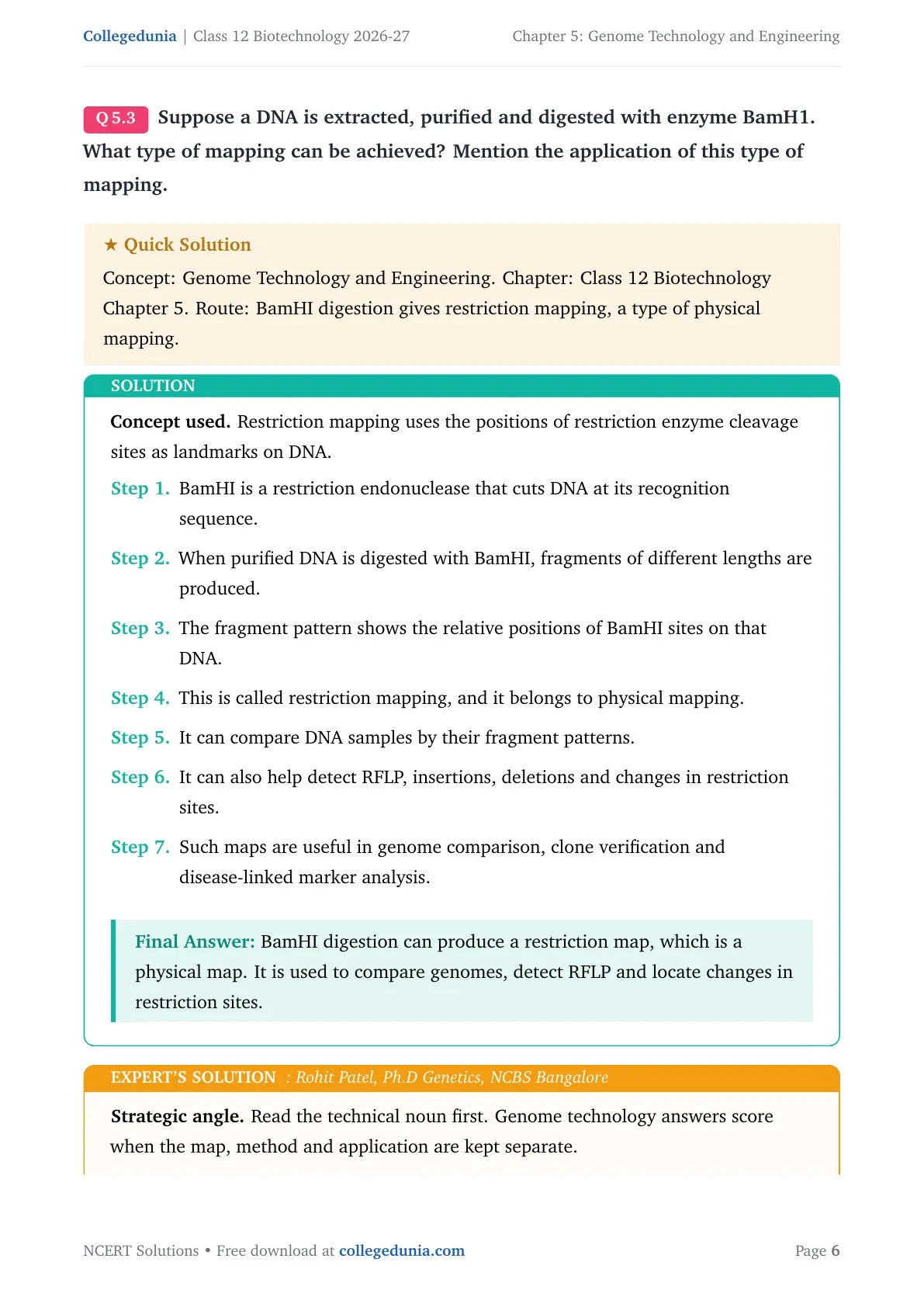
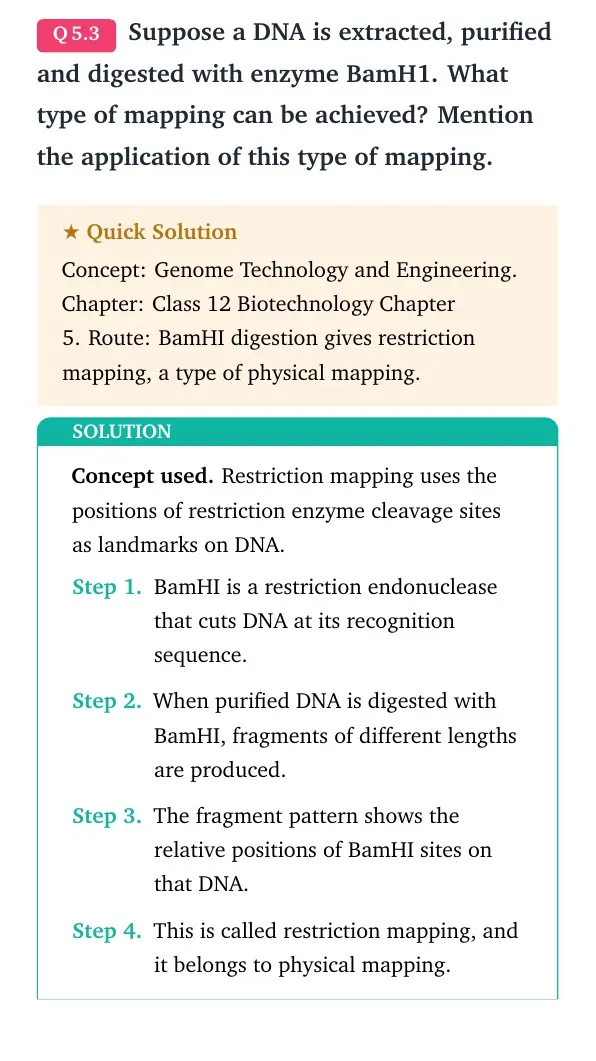
| Physical mapping | Restriction sites, STS, SSLP and contigs | bp, kb or Mb |
CRISPR-Cas9 Genome Engineering Method
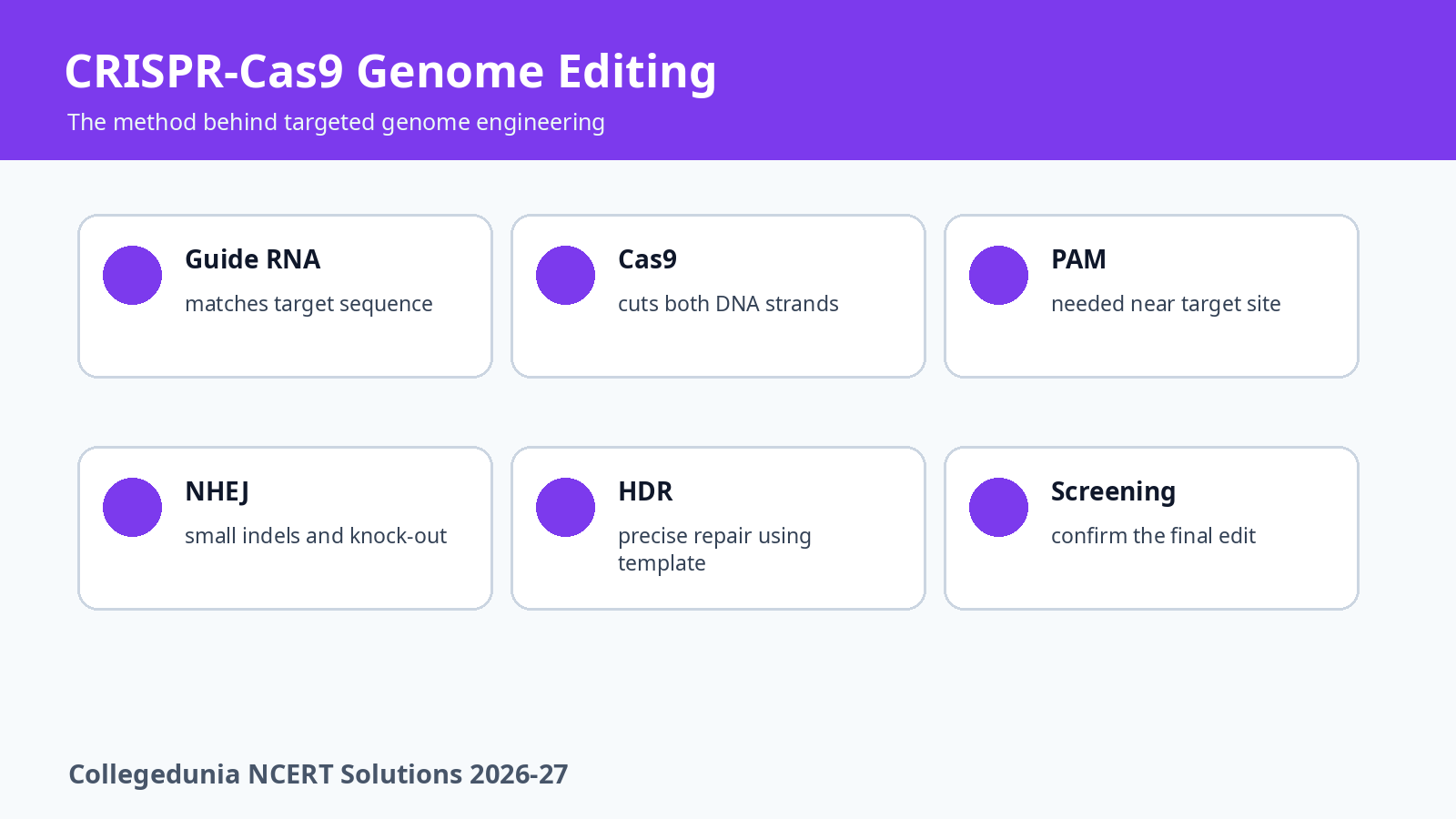
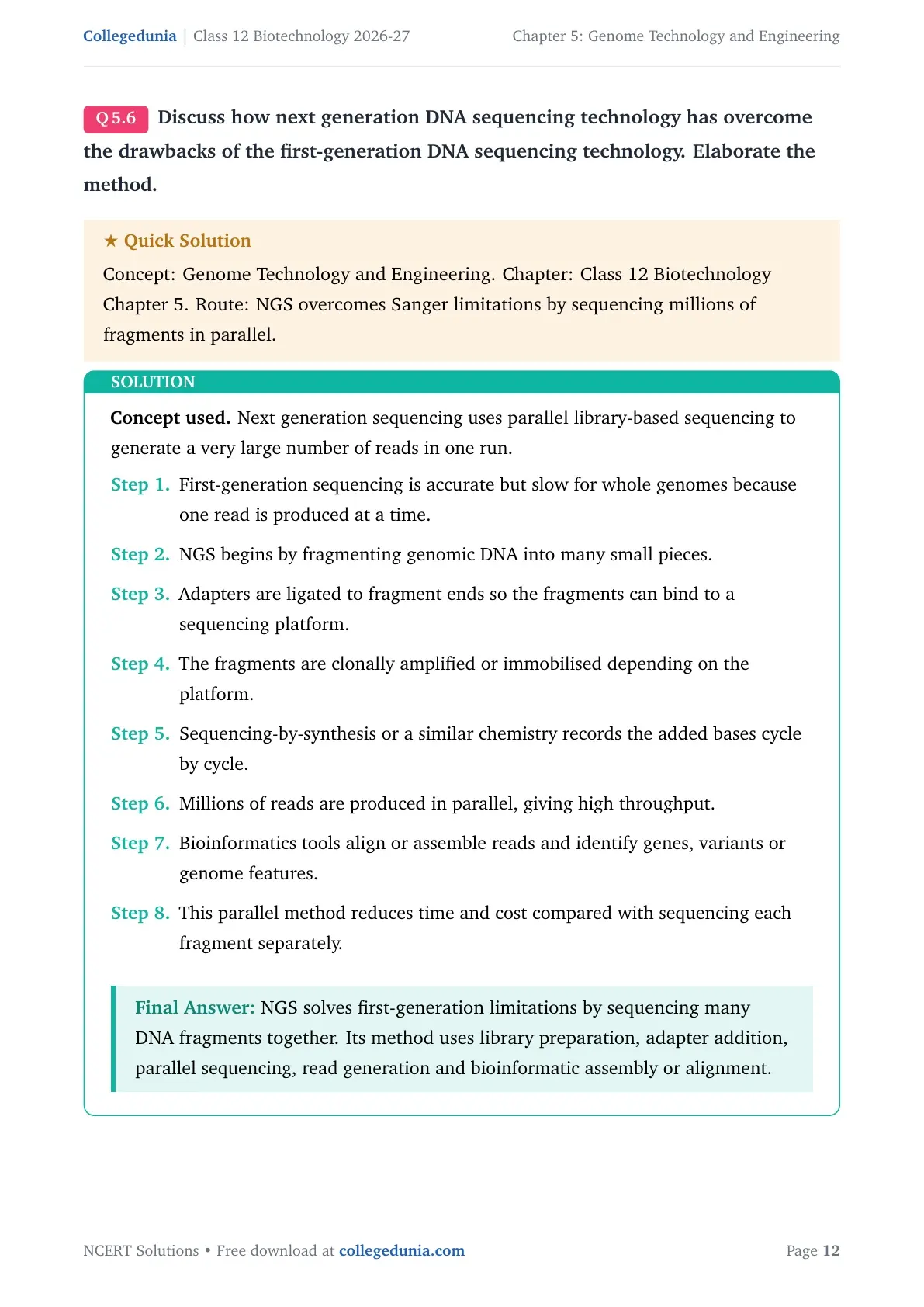
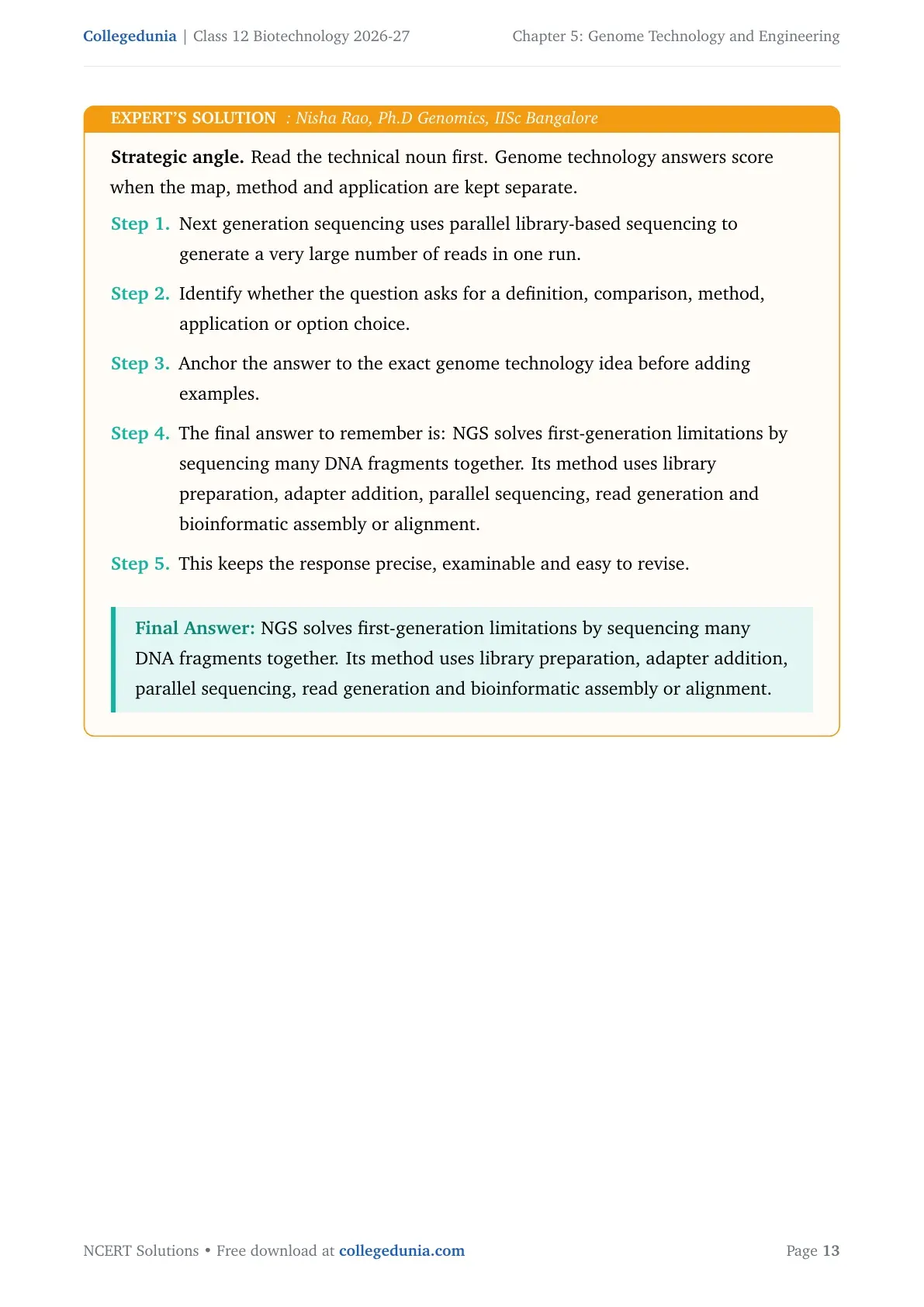
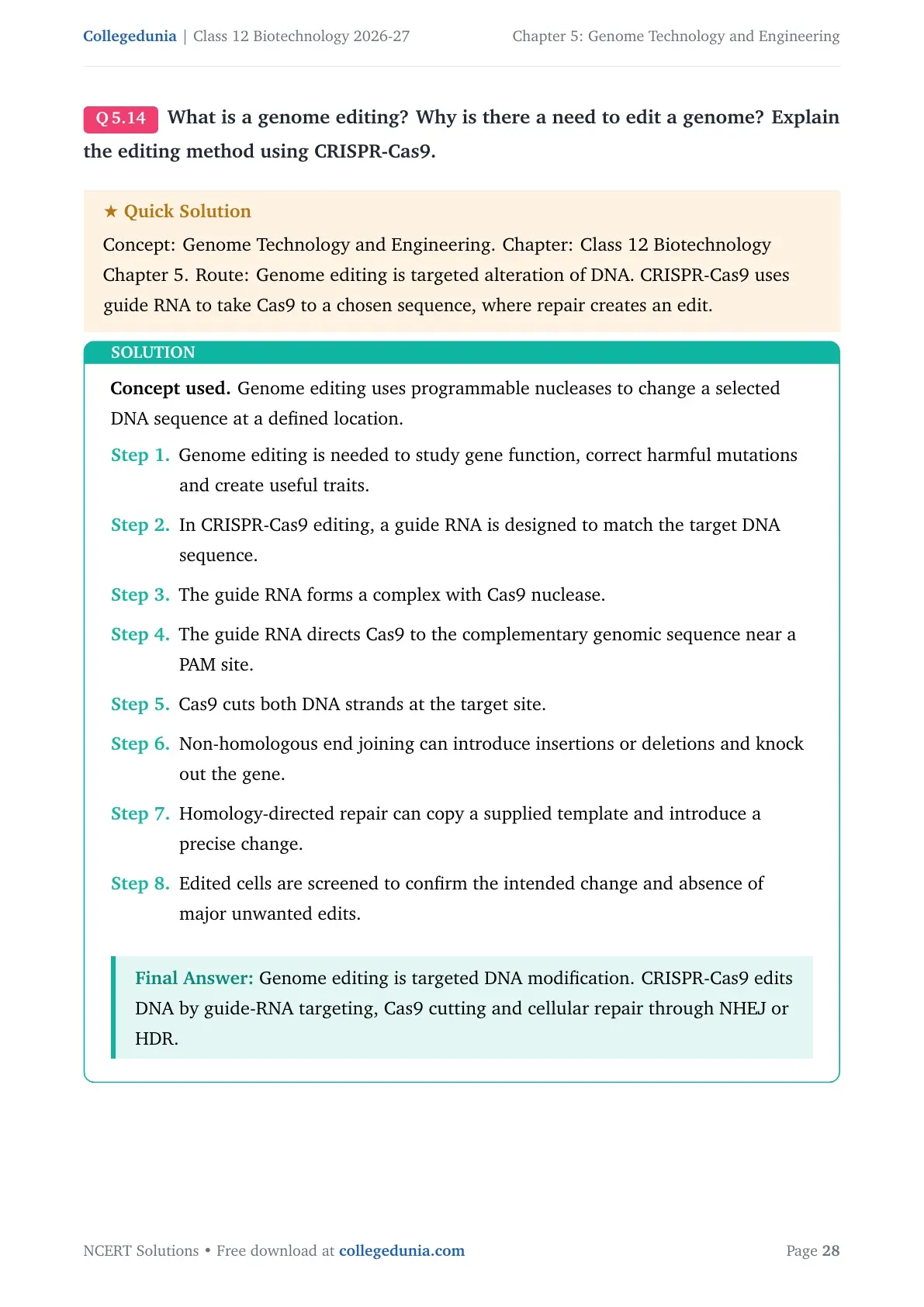
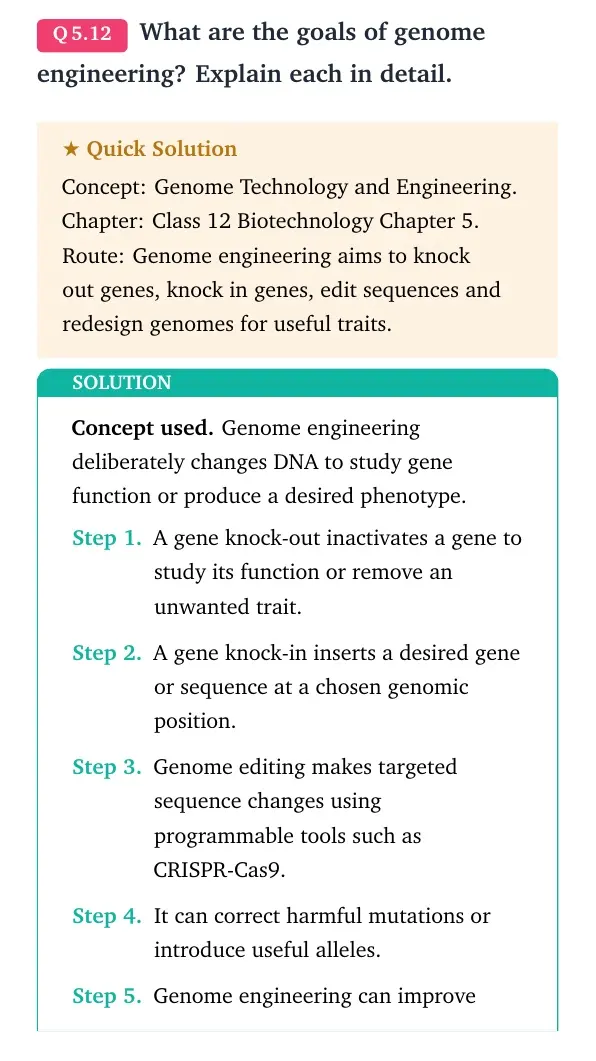
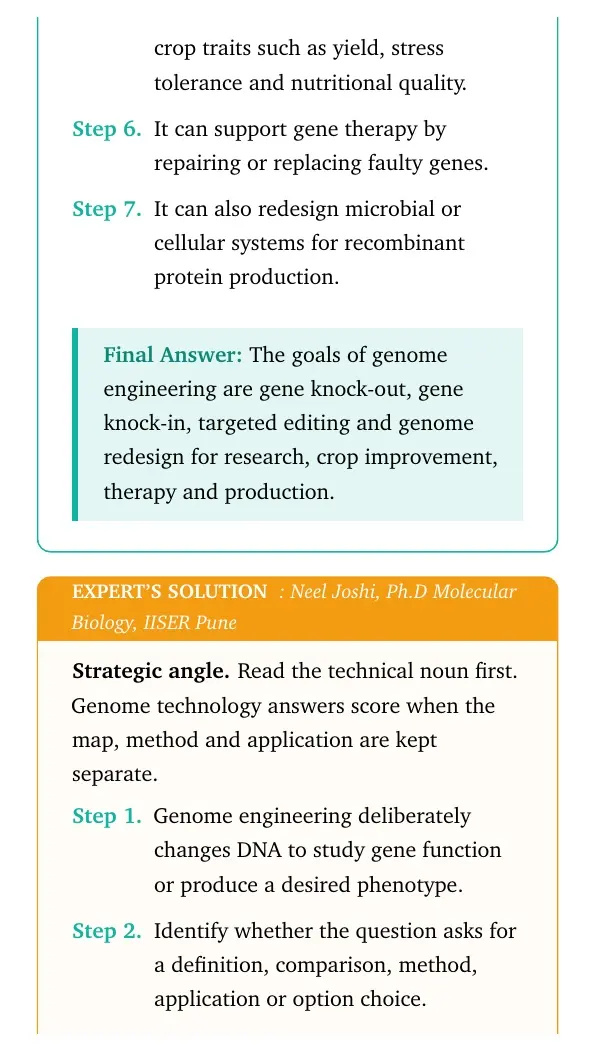
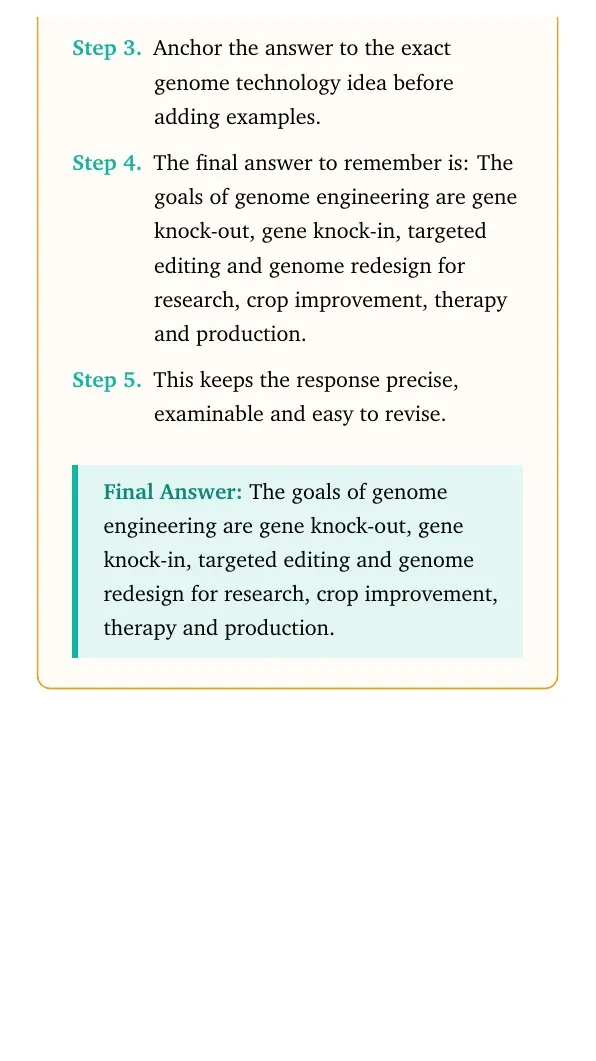
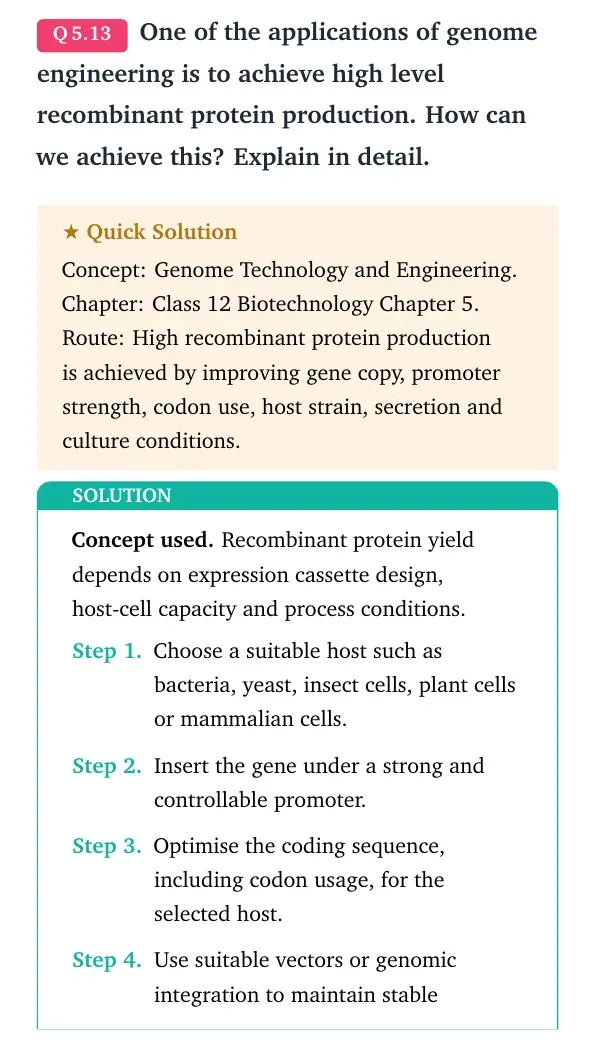
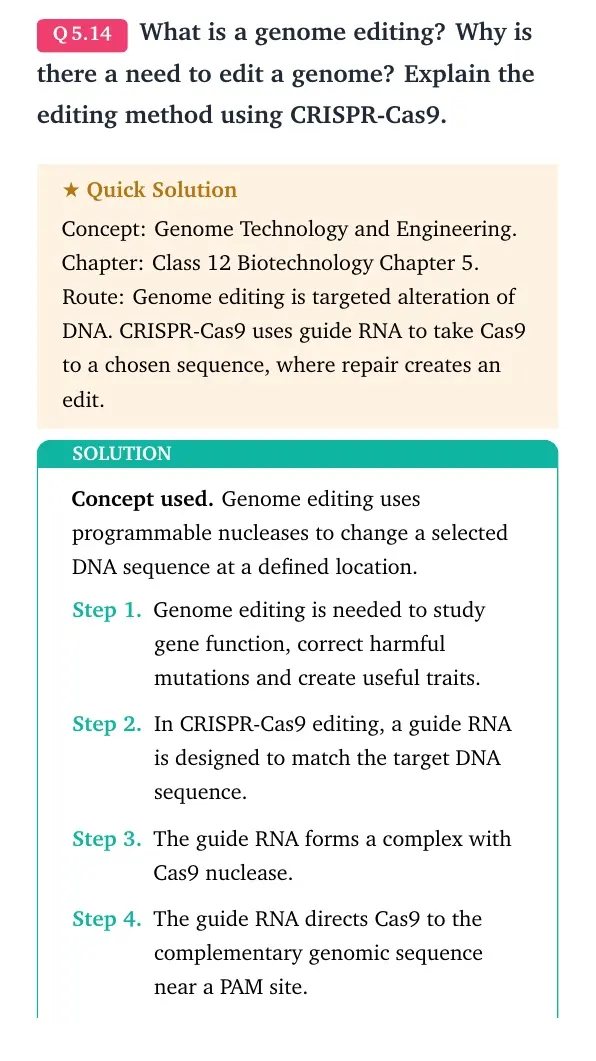
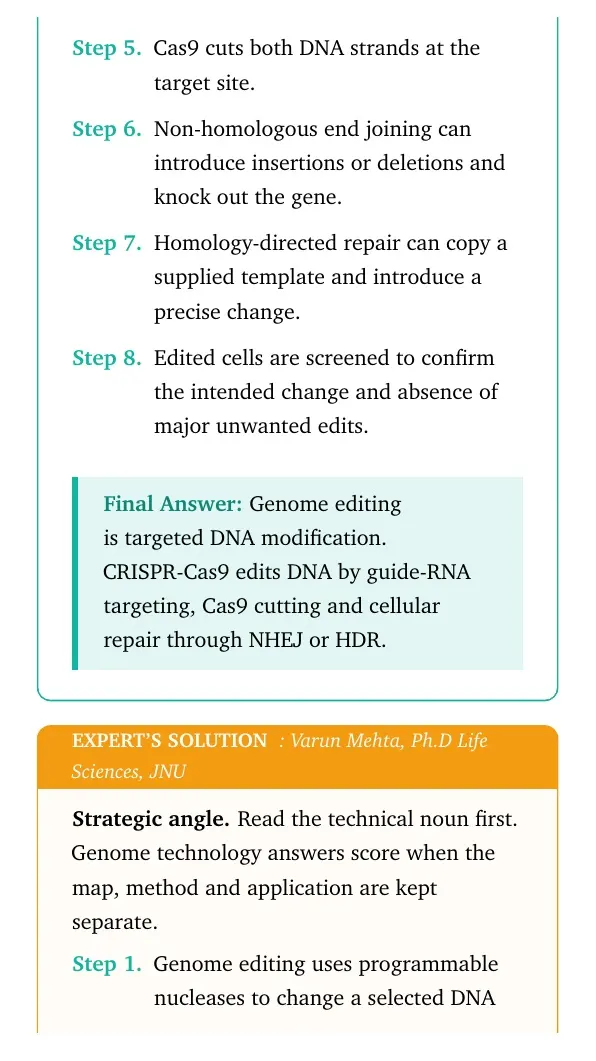
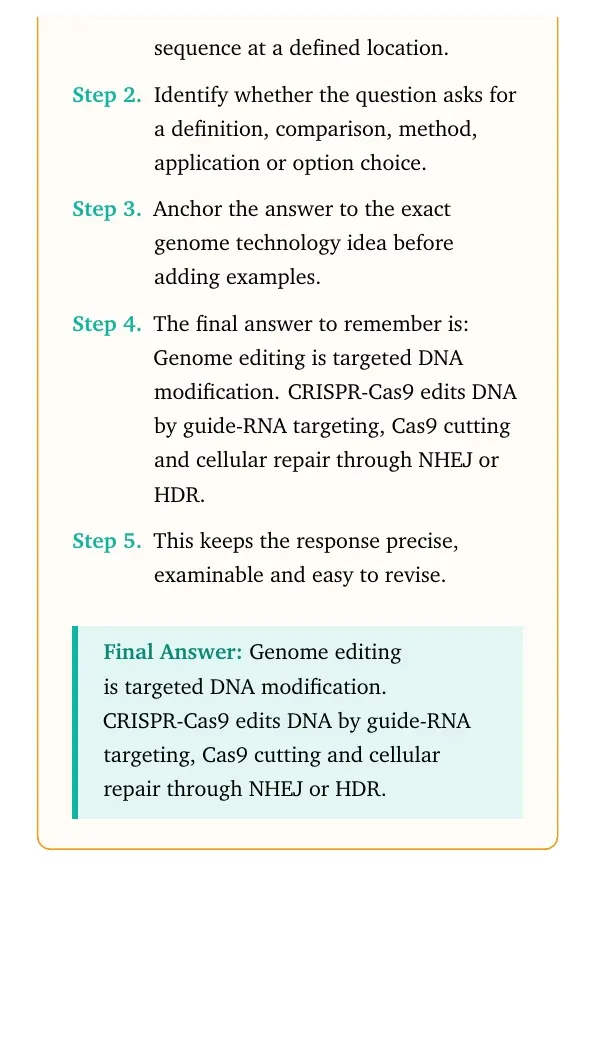
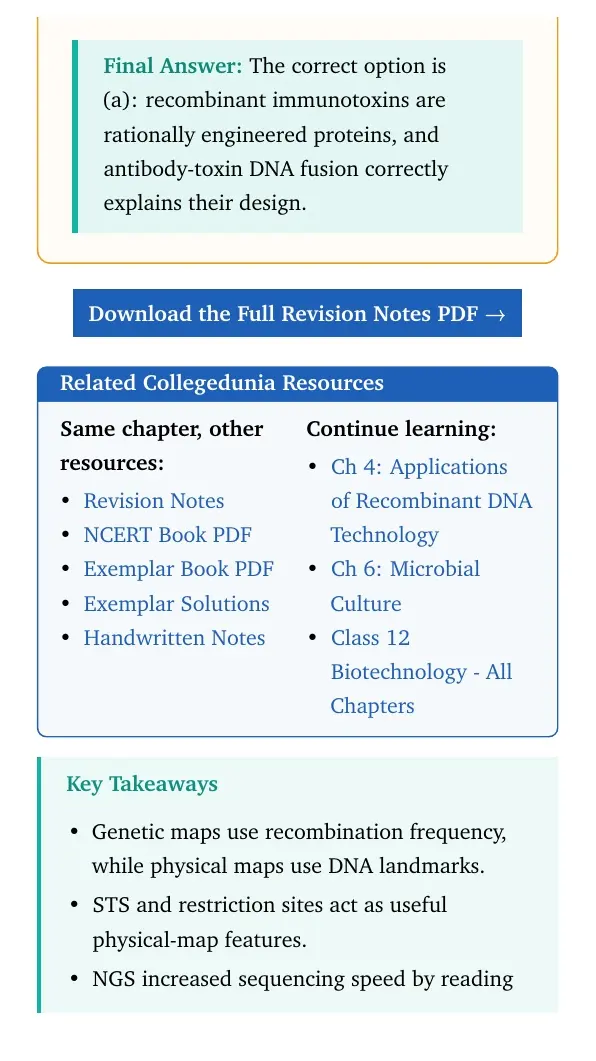
Genome editing changes a selected DNA sequence. In CRISPR-Cas9 editing, guide RNA takes Cas9 to the target site, Cas9 cuts DNA, and the cell repairs the break by NHEJ or HDR.
Genome Technology Video Revision
Source: YouTube biotechnology revision channel
Check All Genome Technology Exercise Answers
The solved question cards below let students open the main solution and expert solution separately.
Practice mode: Open the question-wise Genome Technology solutions cards.
Related Class 12 Biotechnology Resources
| Resource | Use it for |
|---|---|
| Genome Technology and Engineering NCERT Book PDF | Read the official chapter before solving. |
| Genome Technology and Engineering Notes | Revise mapping, sequencing and CRISPR quickly. |
| Genome Technology and Engineering Handwritten Notes | Use for one-shot exam recap. |
All Class 12 Biotechnology NCERT Solutions
| Chapter | NCERT Solutions |
|---|---|
| Chapter 4 Applications of Recombinant DNA Technology | Open Chapter 4 Solutions |
| Chapter 5 Genome Technology and Engineering | Open Chapter 5 Solutions |
| Chapter 6 Microbial Culture | Open Chapter 6 Solutions |
Genome Technology and Engineering NCERT Solutions FAQs
Ques. What is covered in Class 12 Biotechnology Chapter 5 Genome Technology and Engineering NCERT Solutions?
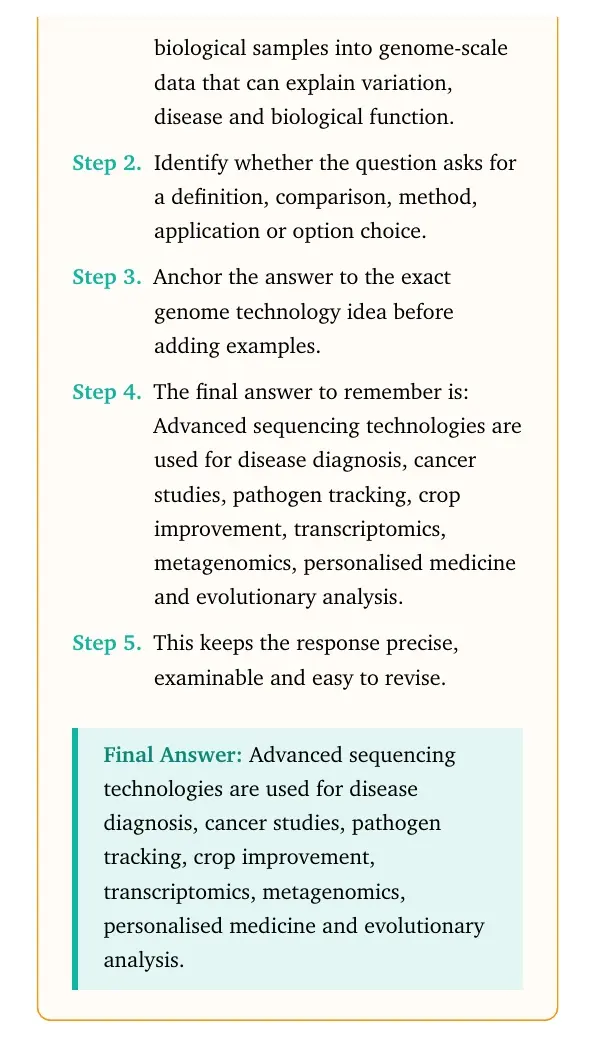
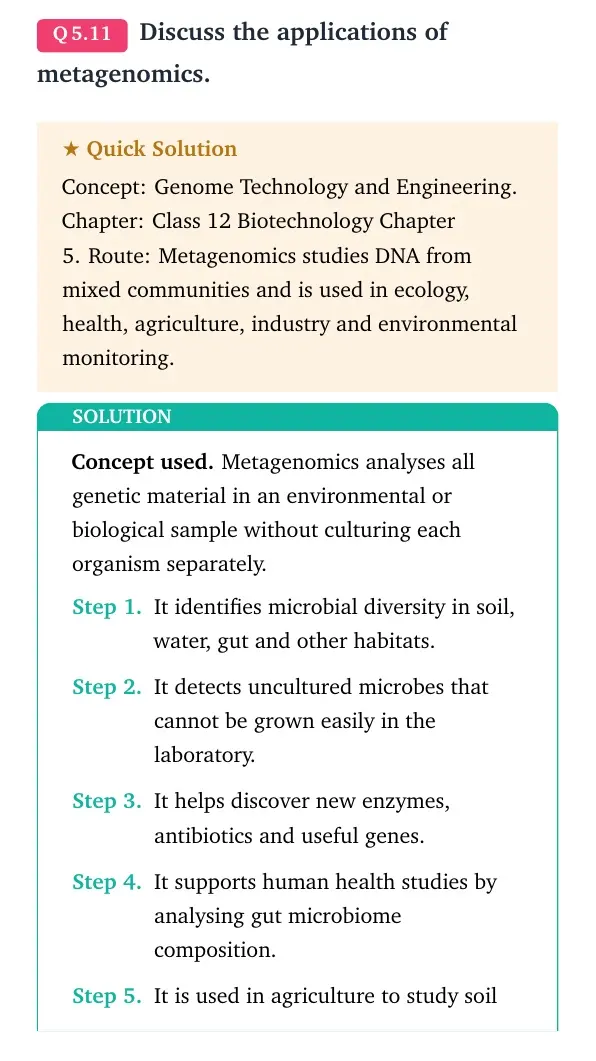
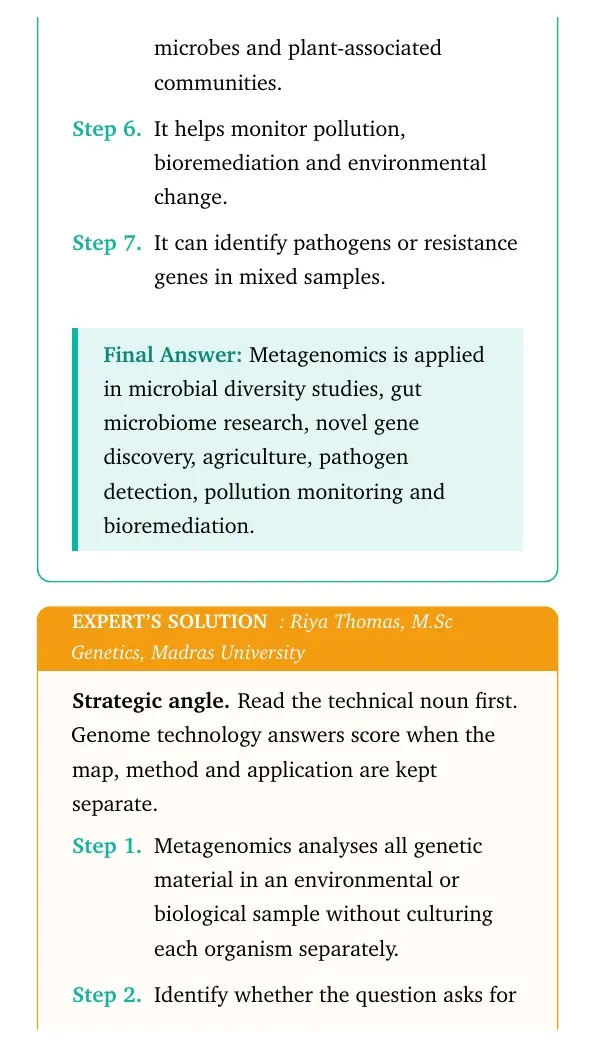
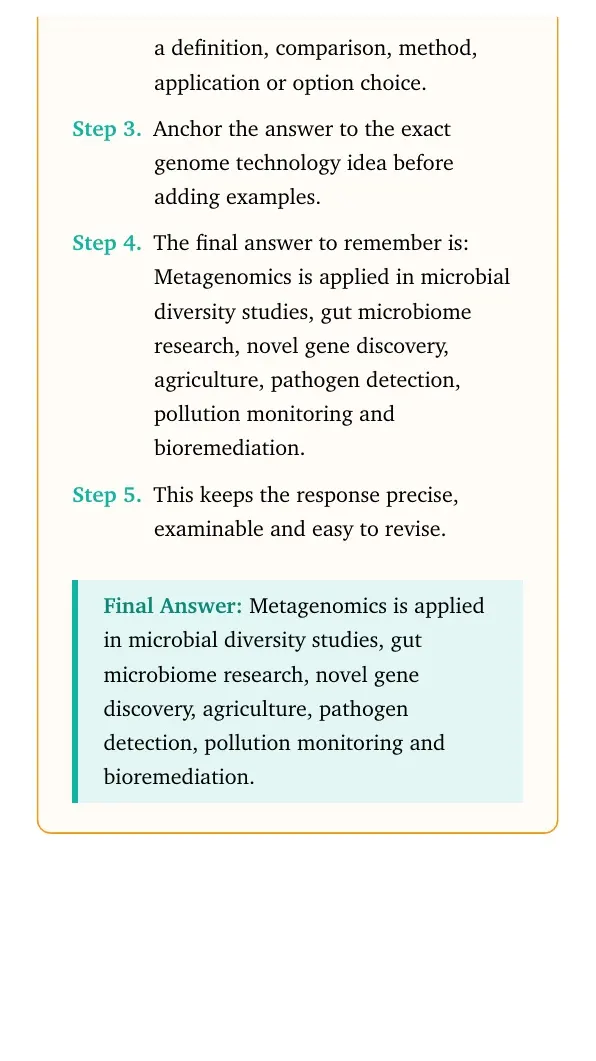
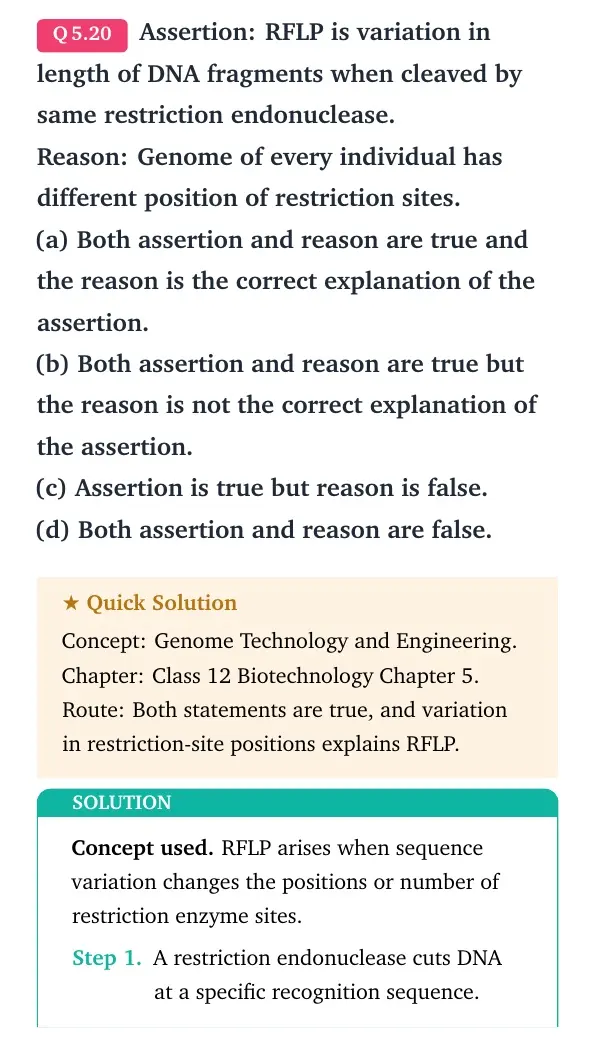
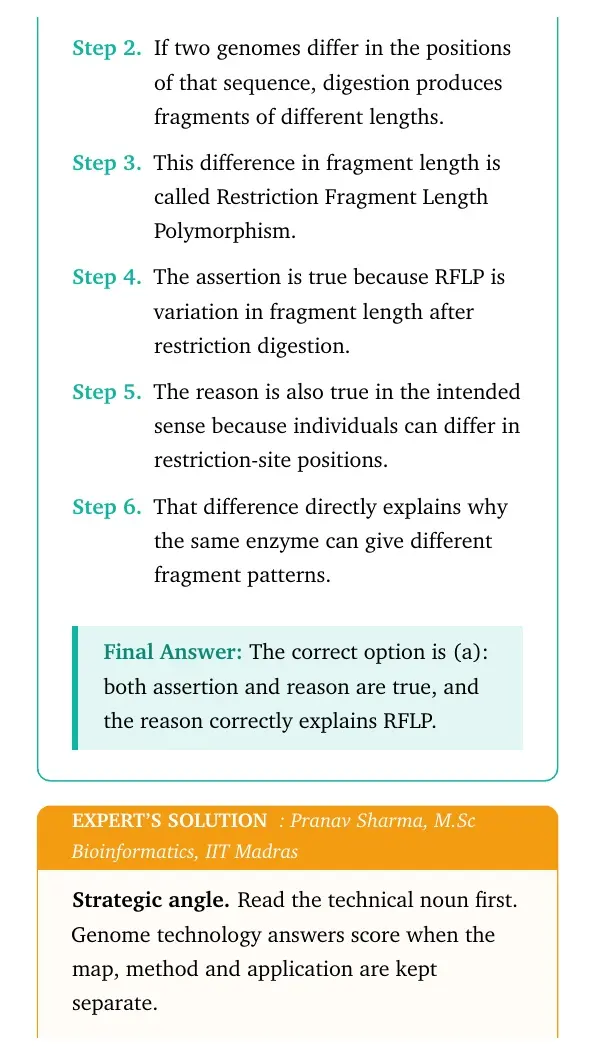
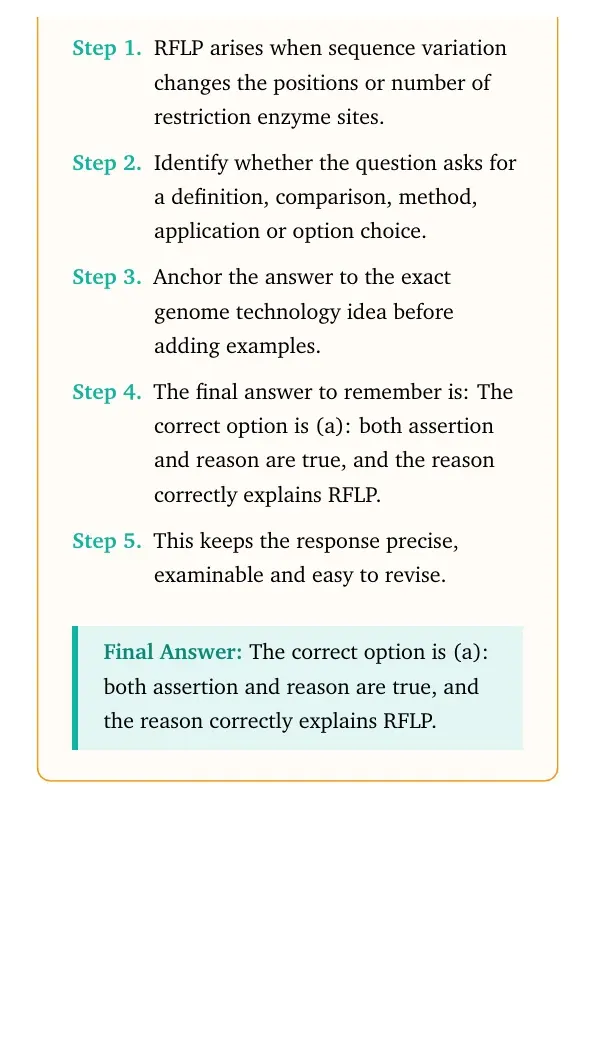
Ans. The solutions cover genome mapping, STS, RFLP, DNA sequencing, metagenomics, genome engineering, CRISPR-Cas9 and protein engineering.
Ques. What is the difference between genetic and physical mapping?
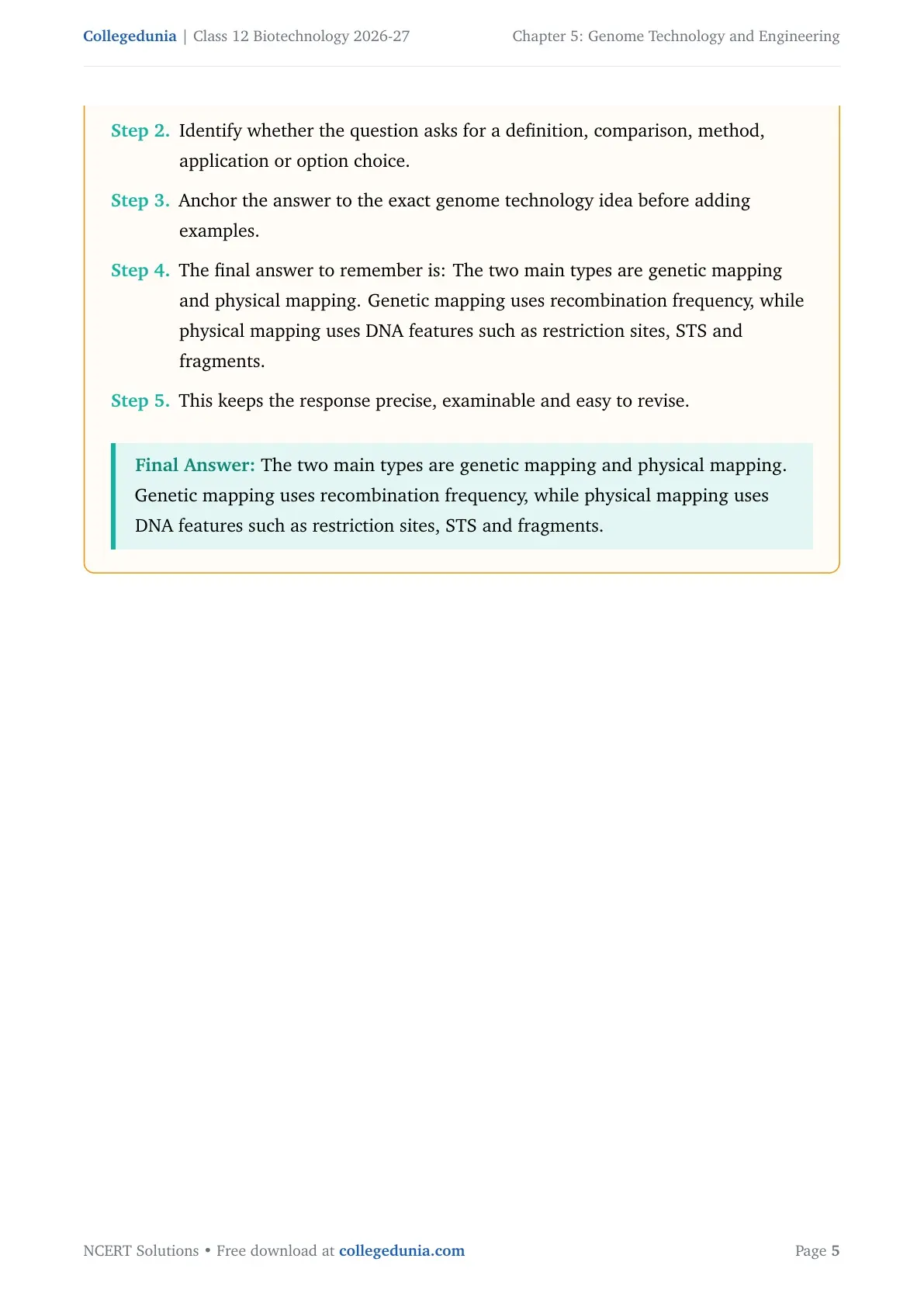
Ans. Genetic mapping uses recombination frequency and centimorgan units, while physical mapping uses DNA landmarks and base-pair distance.
Ques. What is the role of STS in genome mapping?
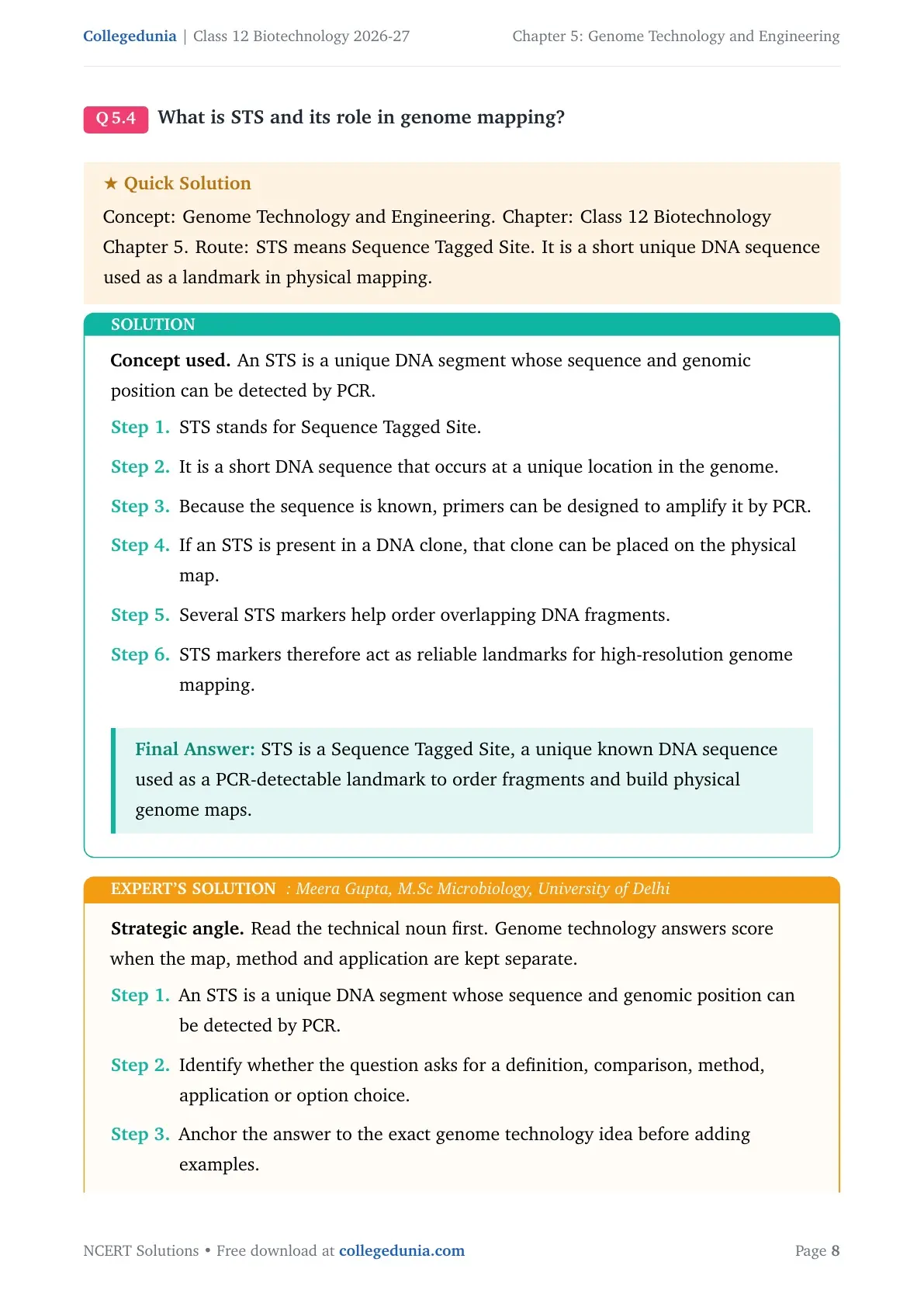
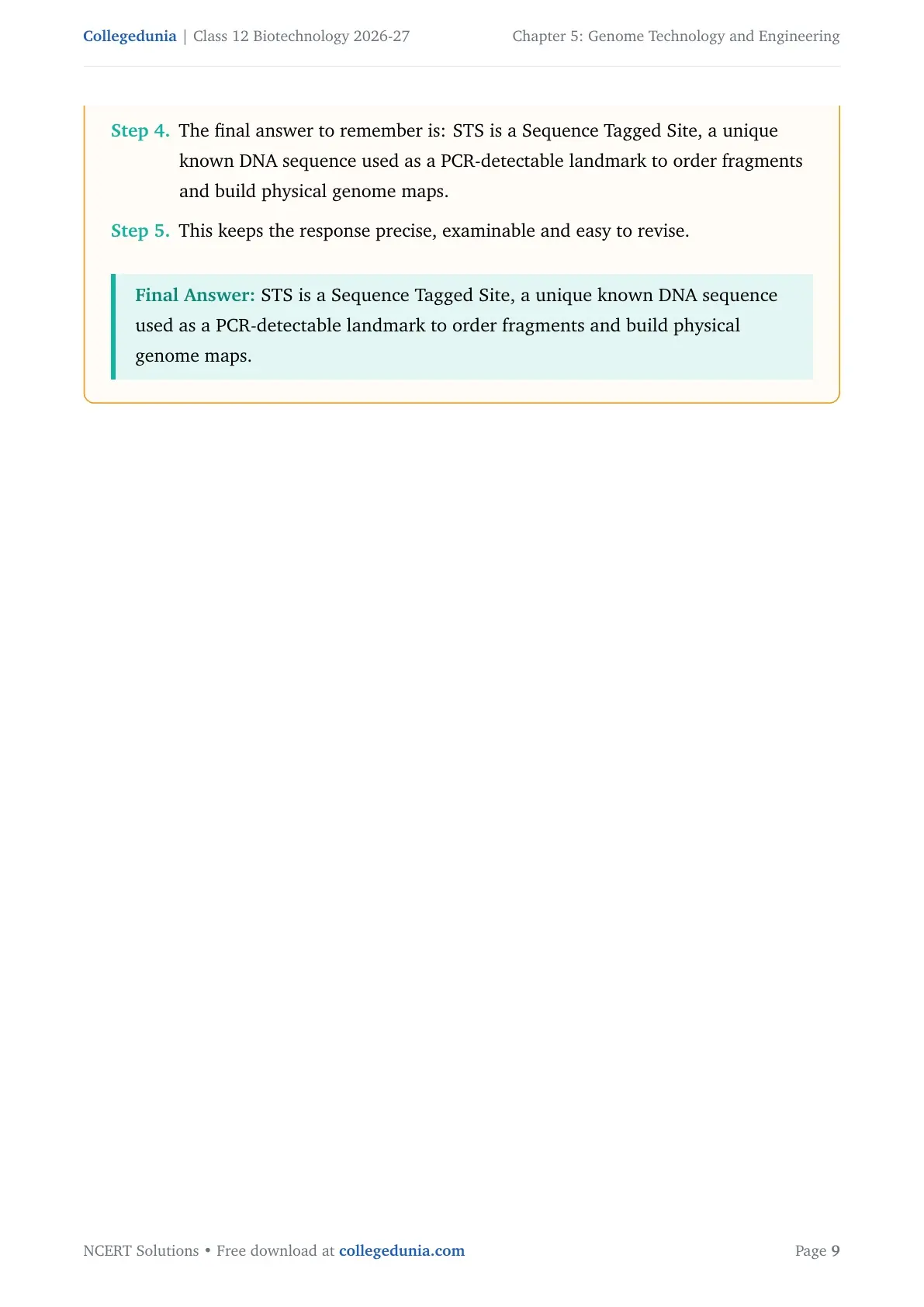
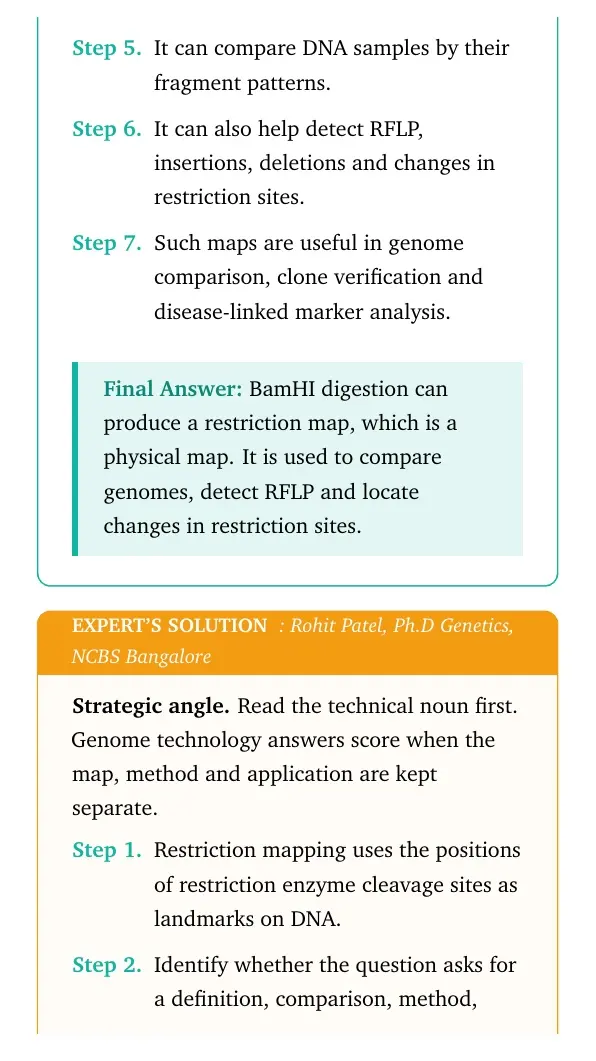
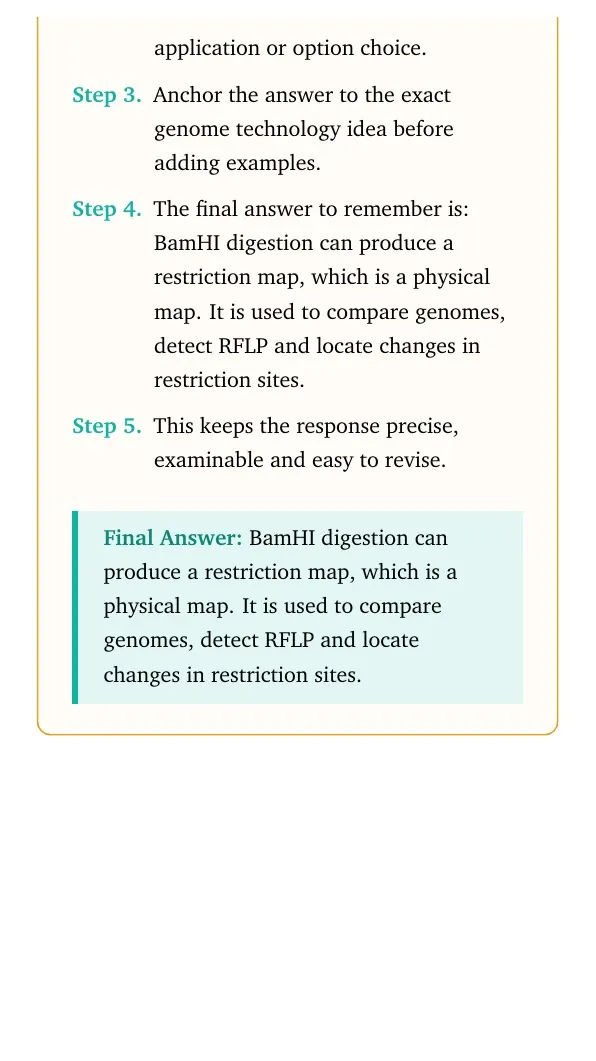
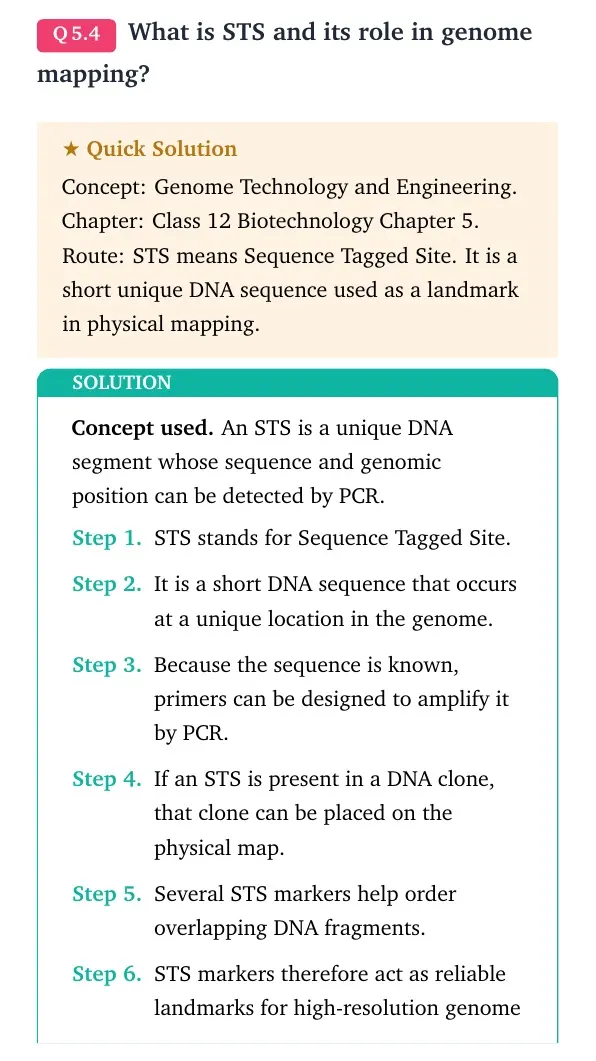
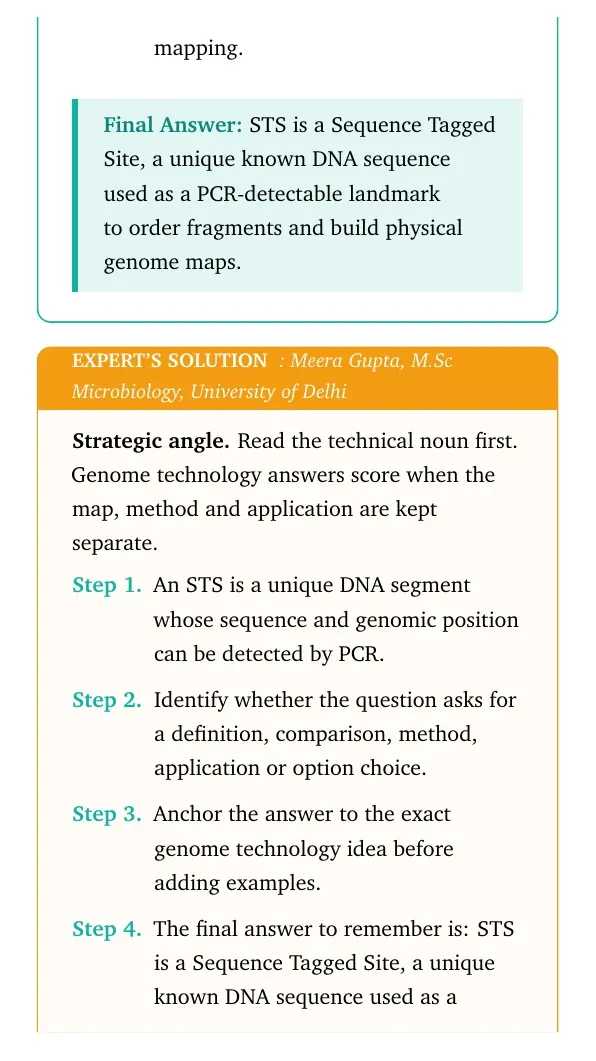
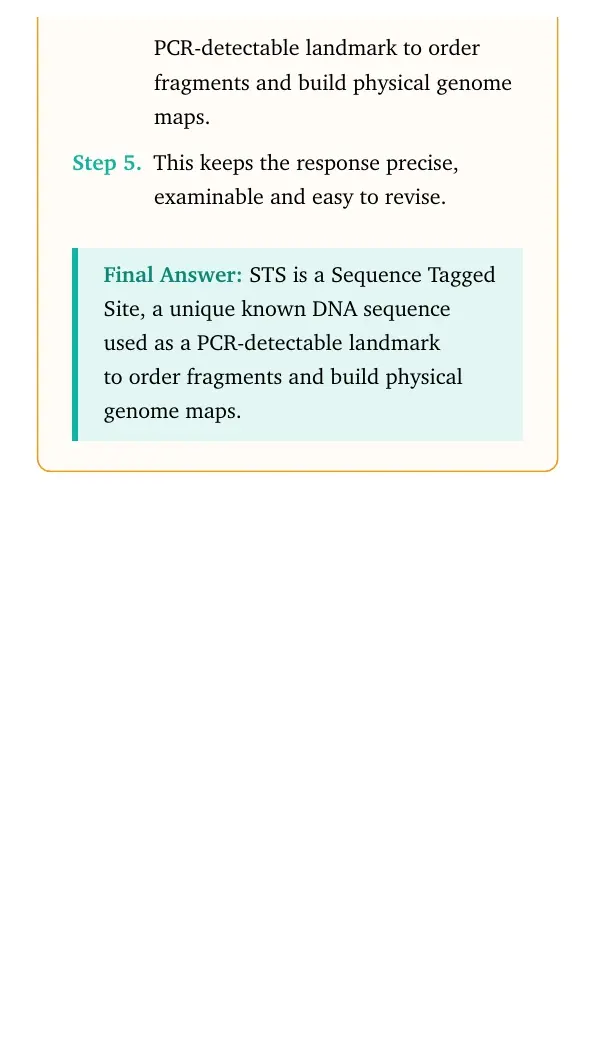
Ans. STS is a unique DNA sequence used as a PCR-detectable landmark to order DNA fragments on a physical map.
Ques. How does CRISPR-Cas9 edit a genome?
Ans. Guide RNA directs Cas9 to a target DNA sequence, Cas9 cuts the DNA, and cellular repair creates a knock-out or precise edit.



Comments