




Empires and Kingdoms: 6th to 10th Centuries carries 6 to 8 marks in the Class 7 Social Science annual paper, more than most other History chapters this year. NCERT Solutions Class 7 Social Science Chapter 3 Empires and Kingdoms: 6th to 10th Centuries on this page answer all 24 Let's Explore, Think About It and Let's Act questions from the chapter, according to the latest 2026-27 NCERT syllabus.
- Question coverage: all 24 questions across Let's Explore, Think About It, Don't Miss Out and Let's Act sections, worked out in full.
- Exam weight: this chapter usually carries 6 to 8 marks in the Class 7 Social Science annual paper.
- Also on this page: a 12-dynasty table, a Kannauj tripartite struggle map guide, and links to the Book PDF and Handwritten Notes.
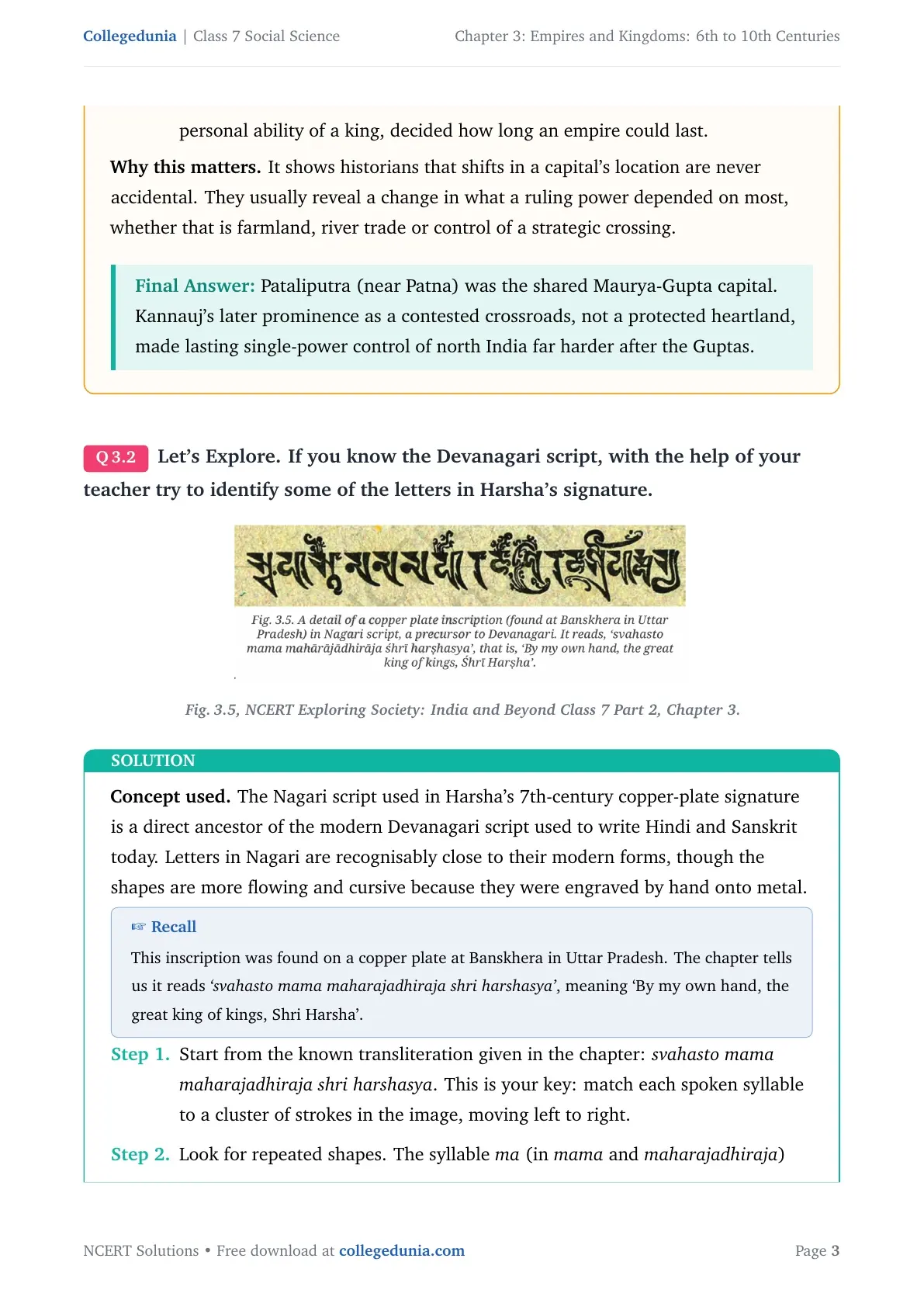
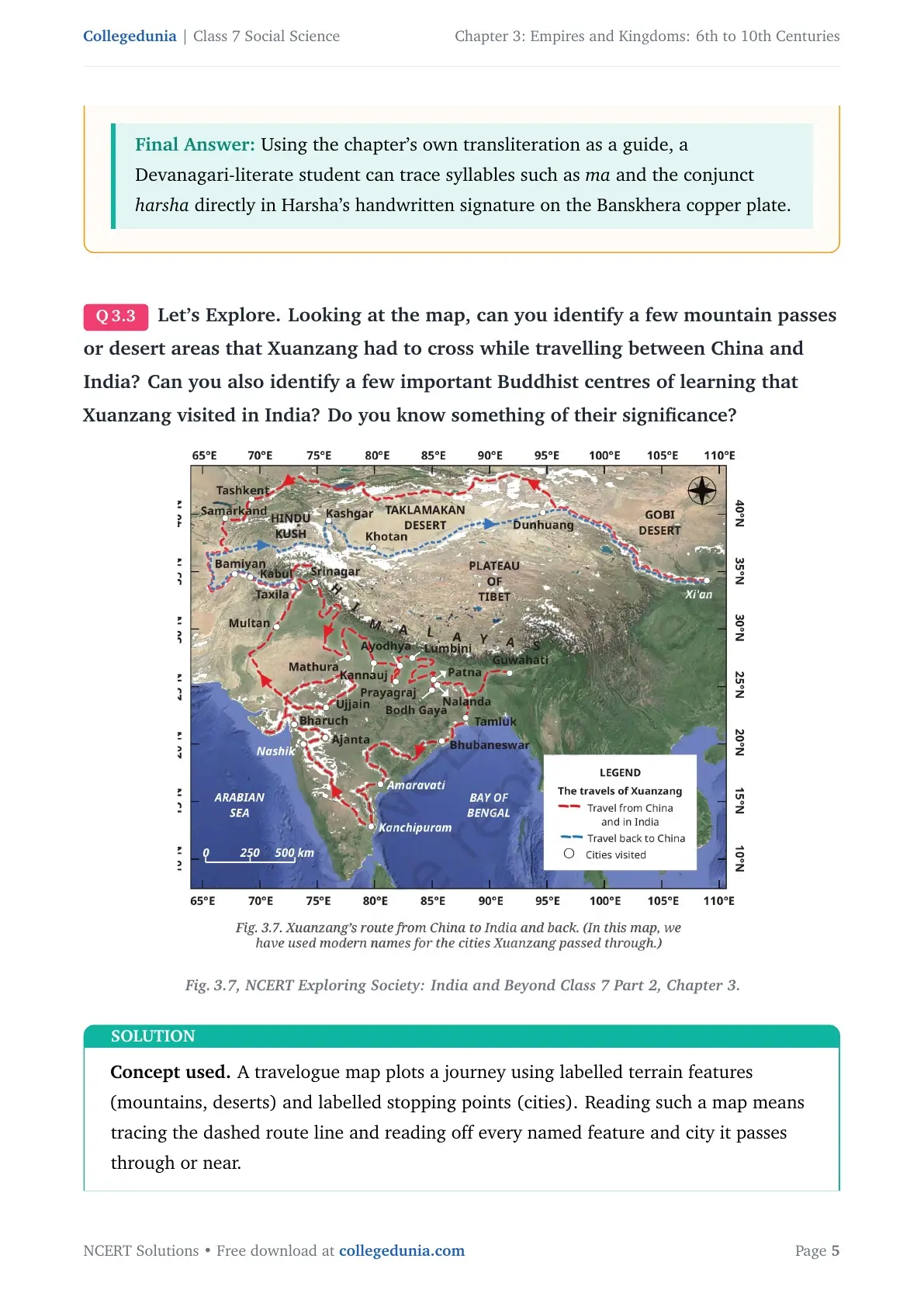
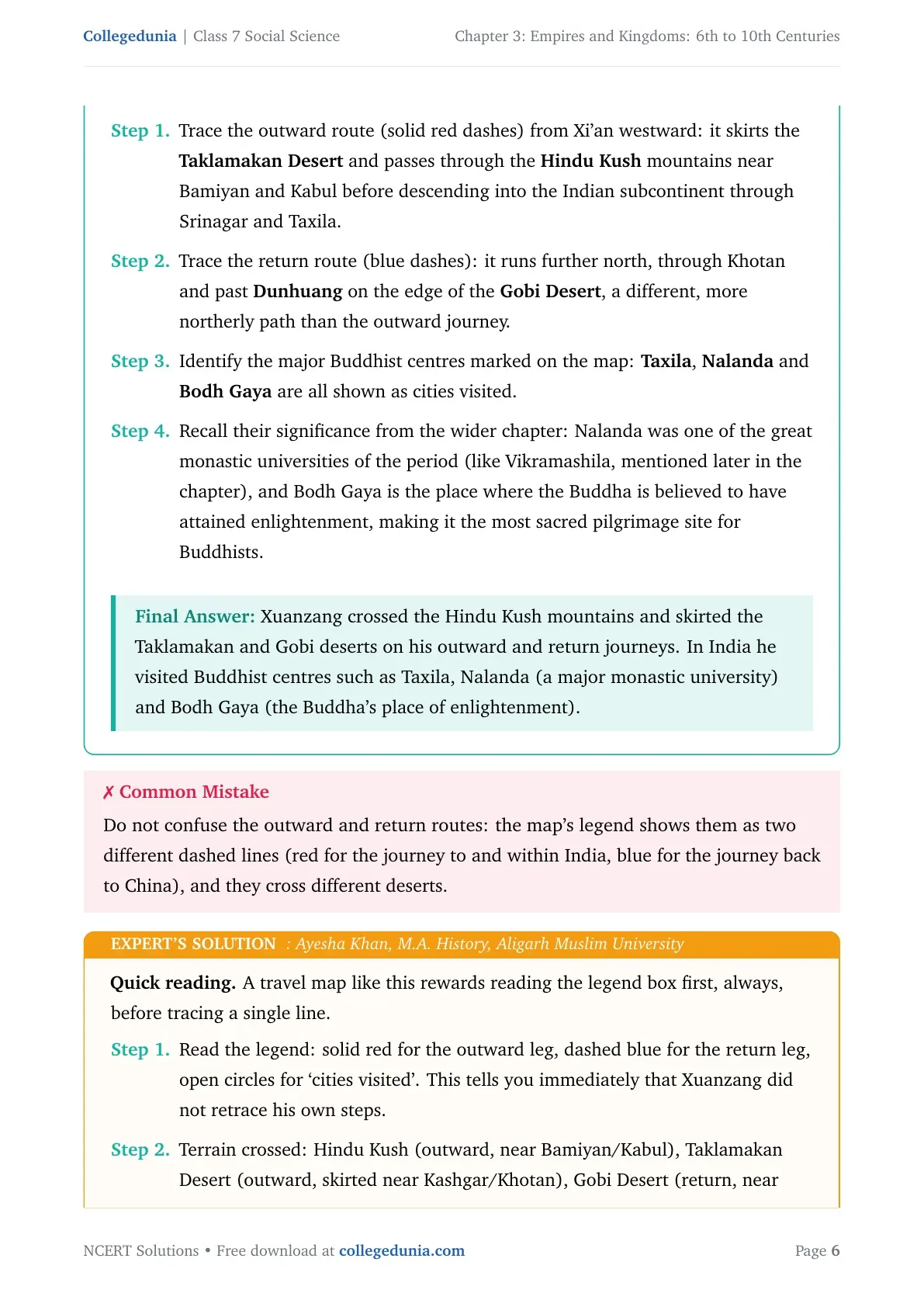
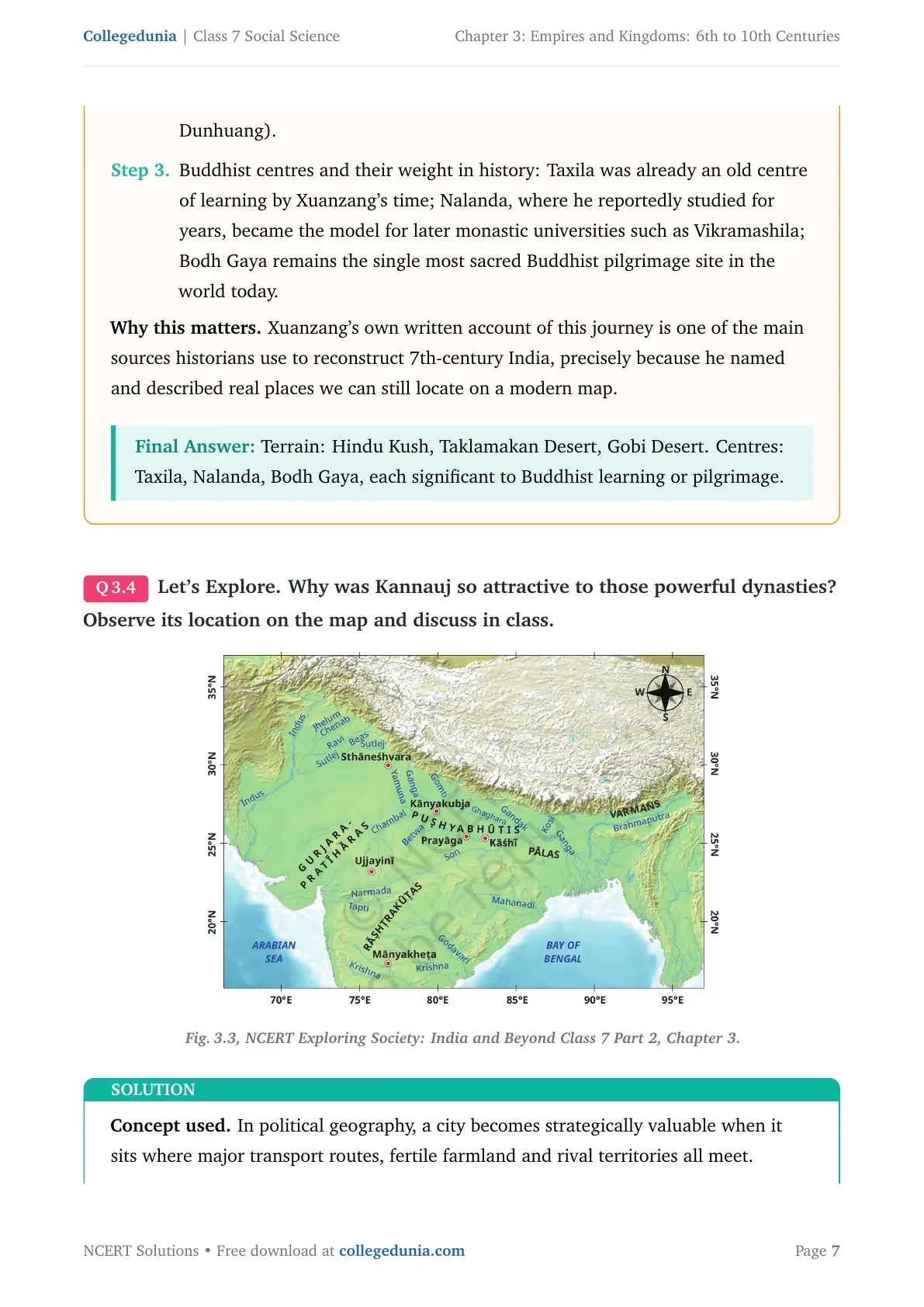
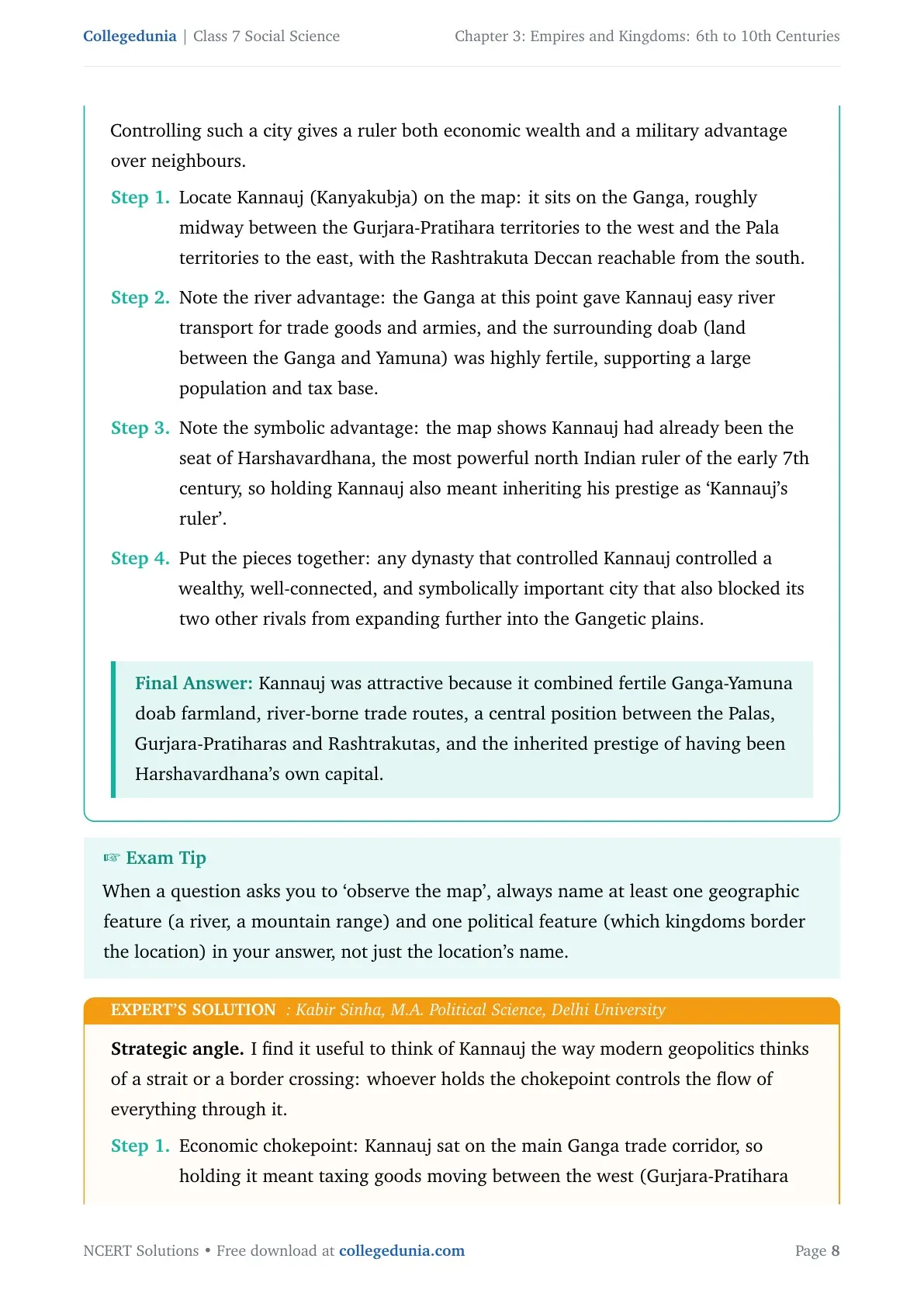
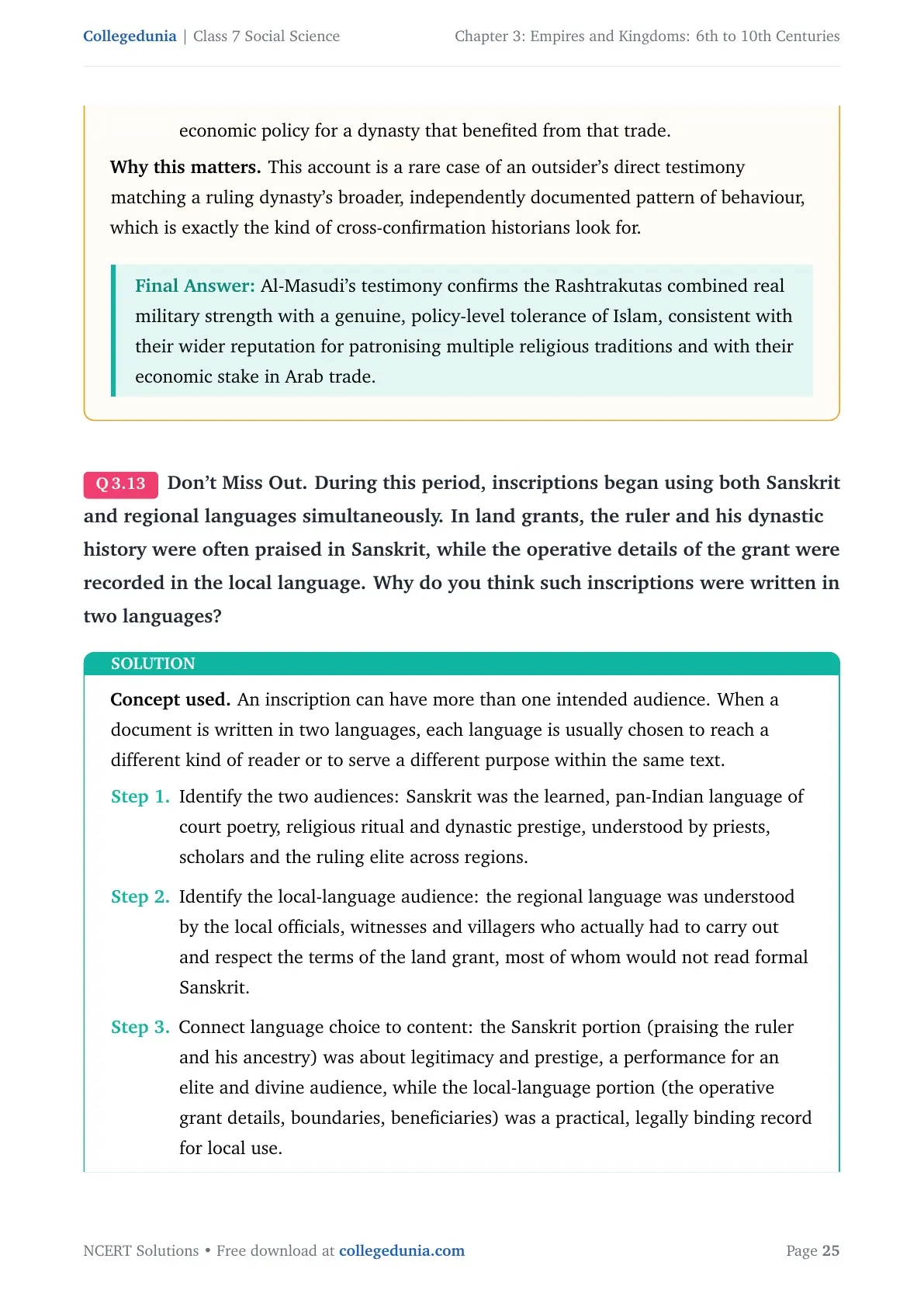
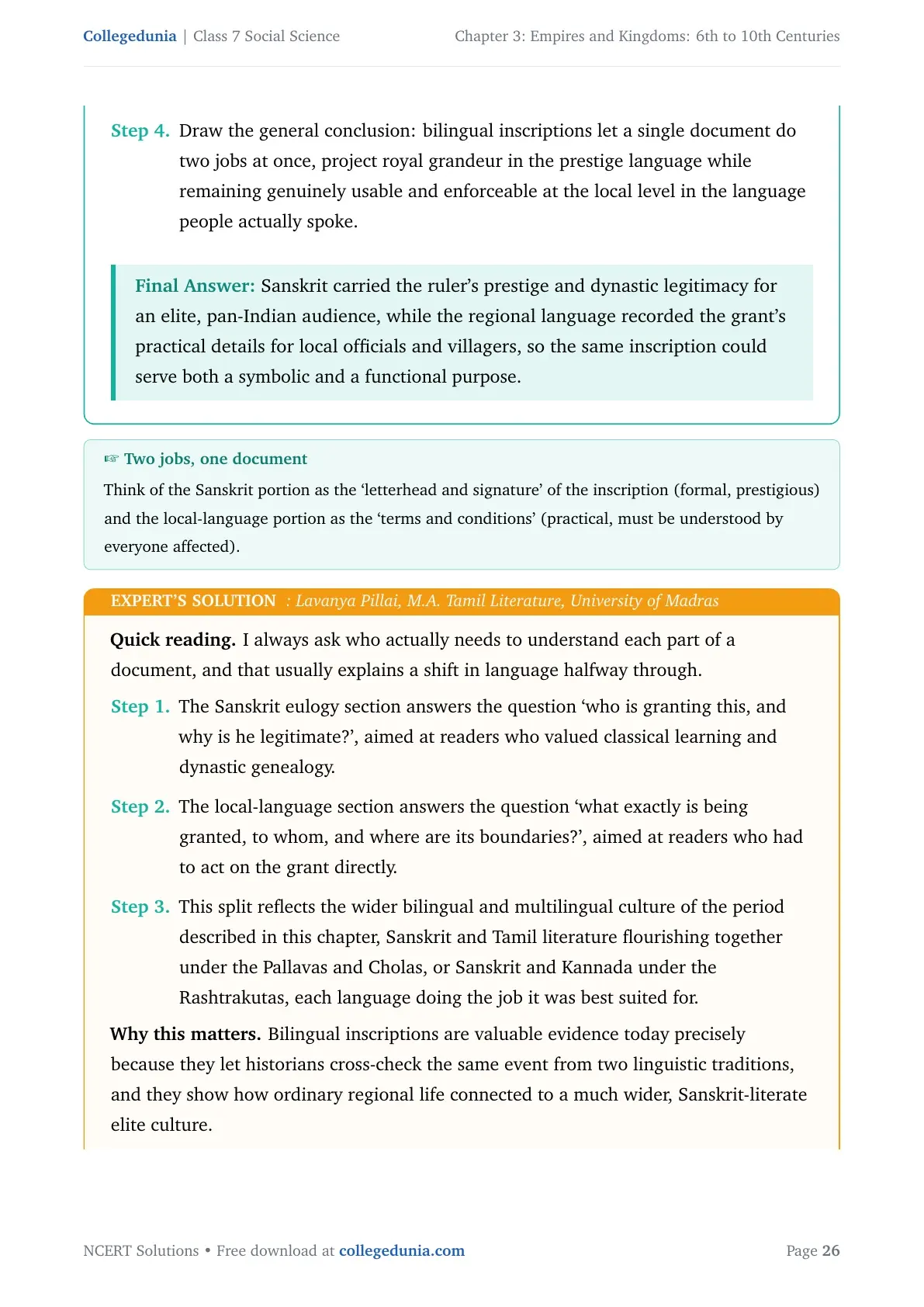
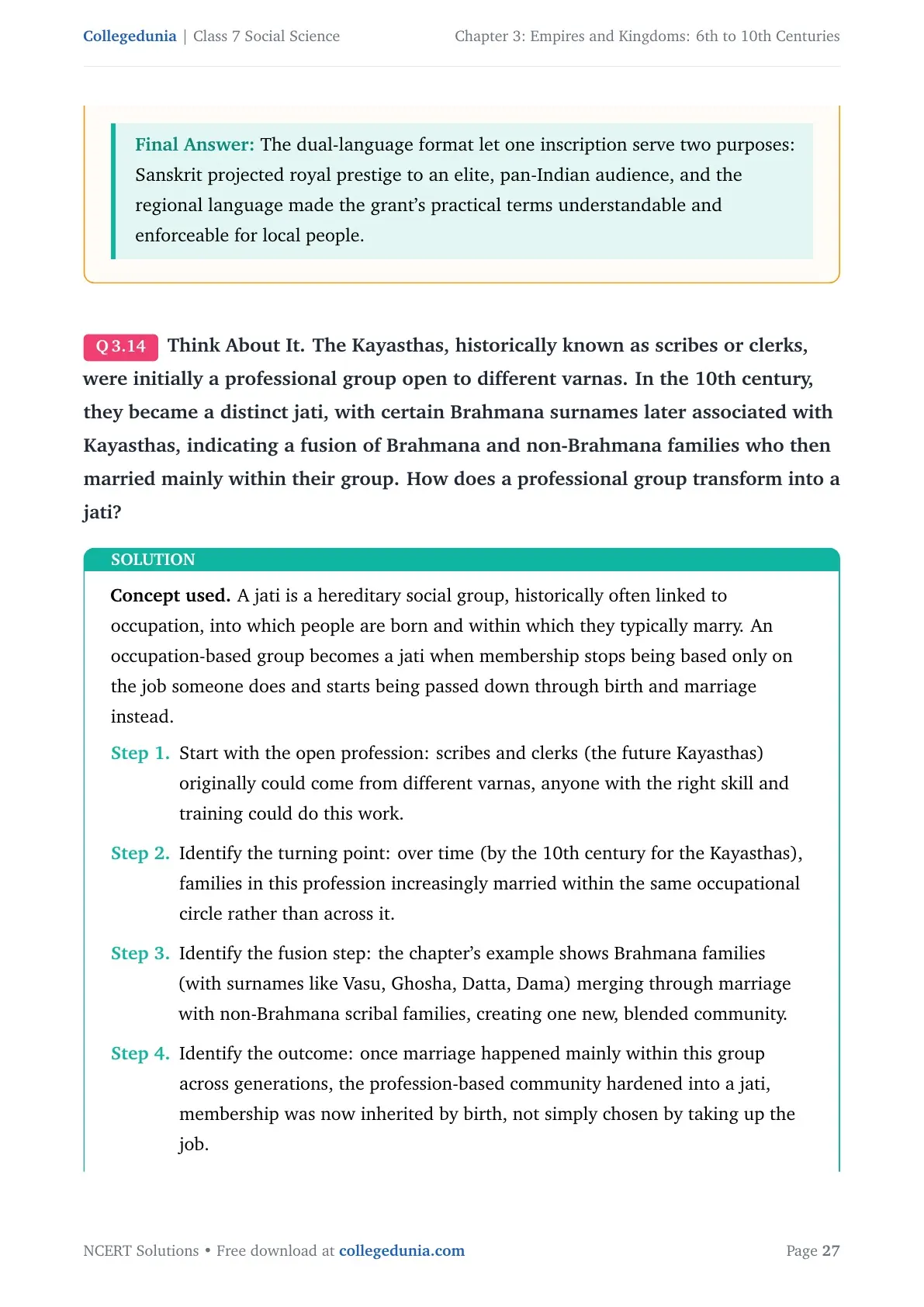
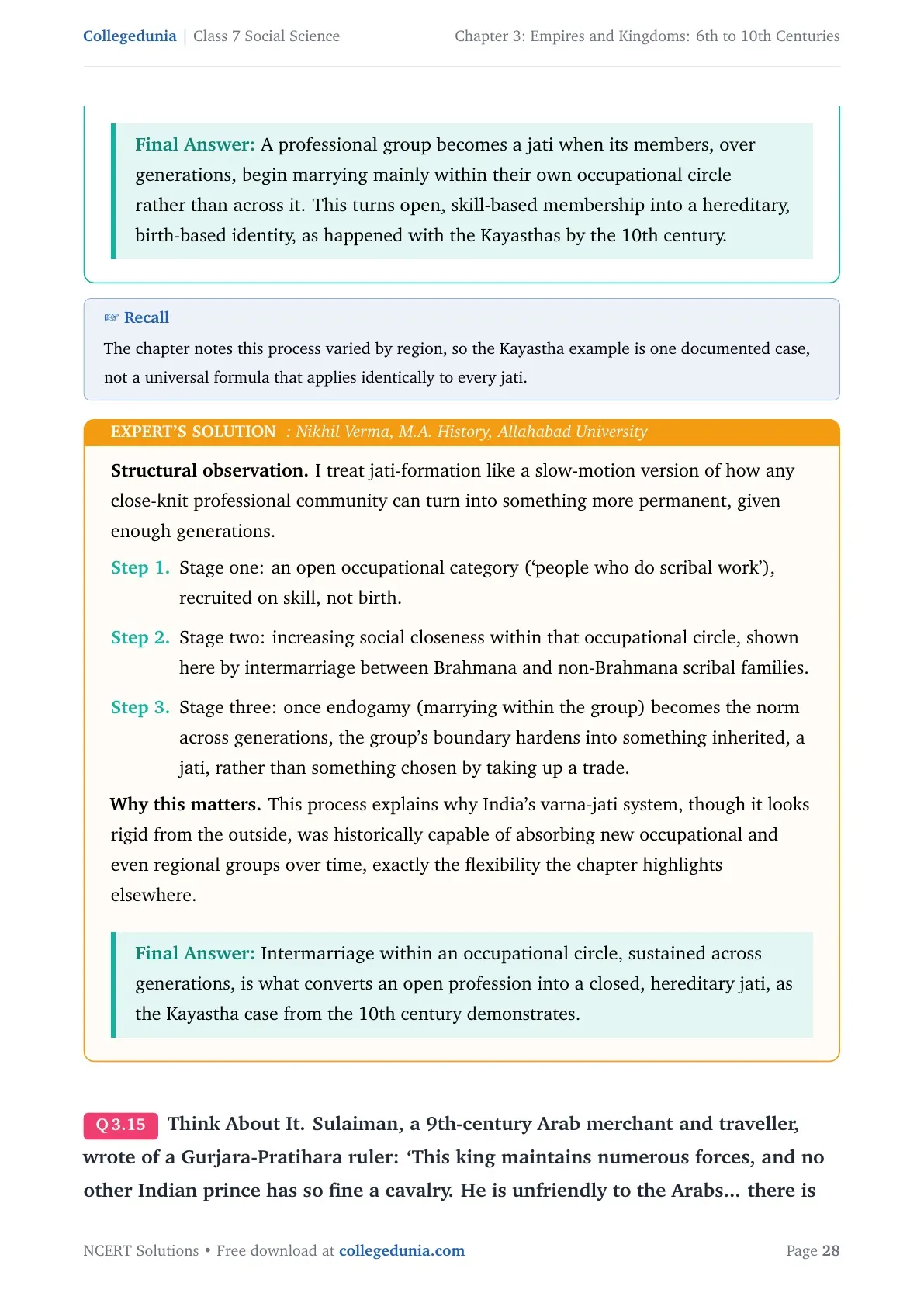
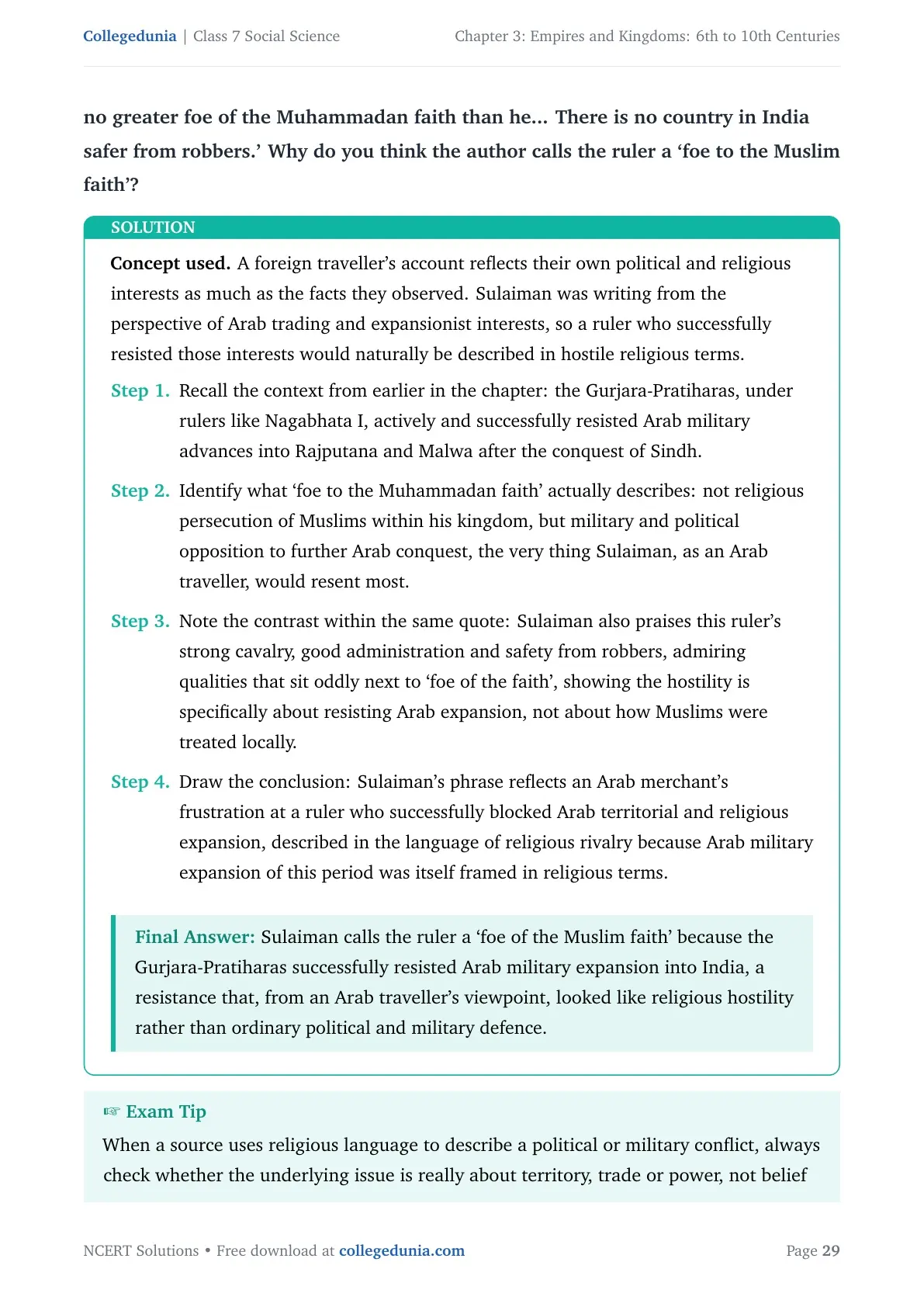
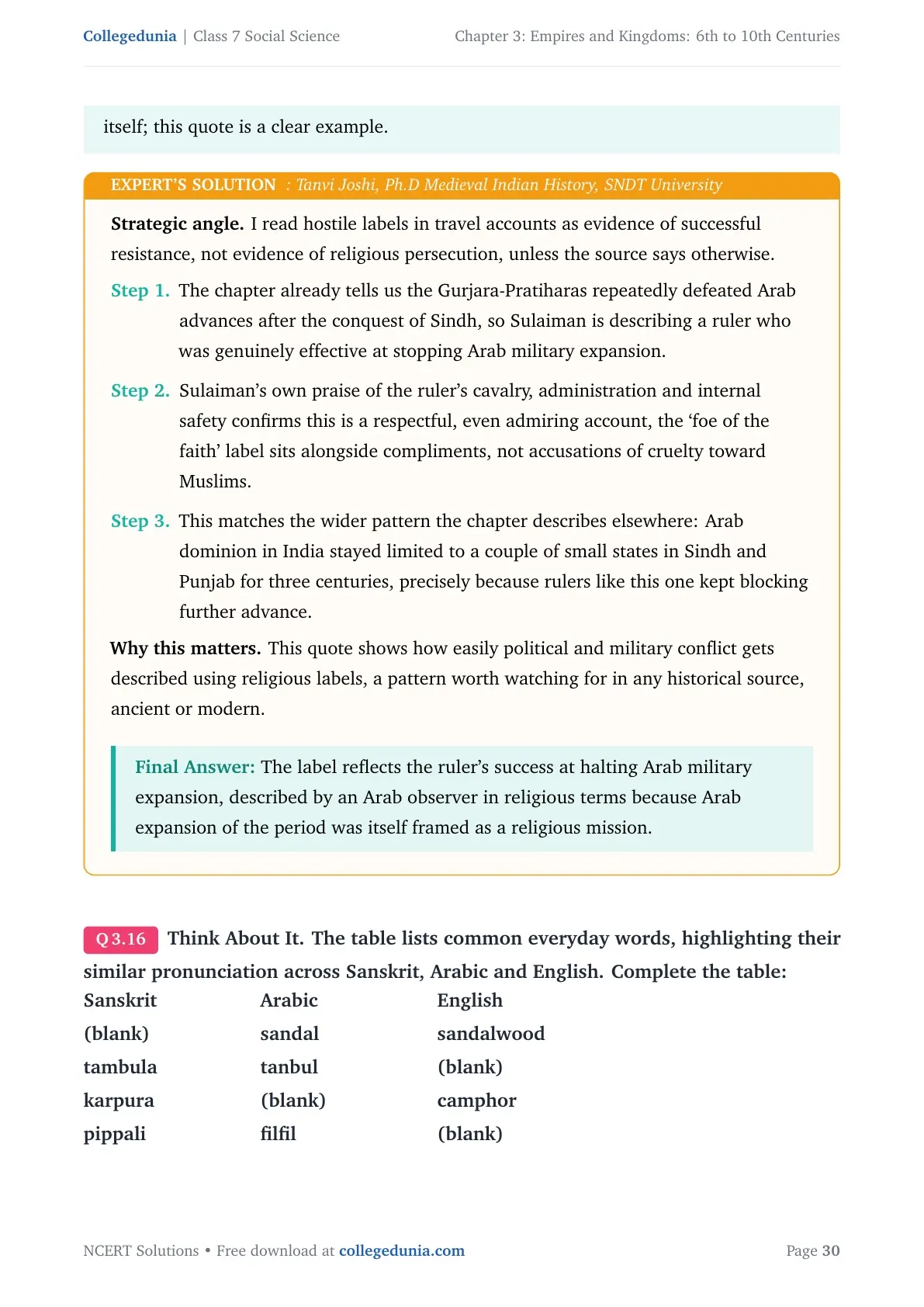
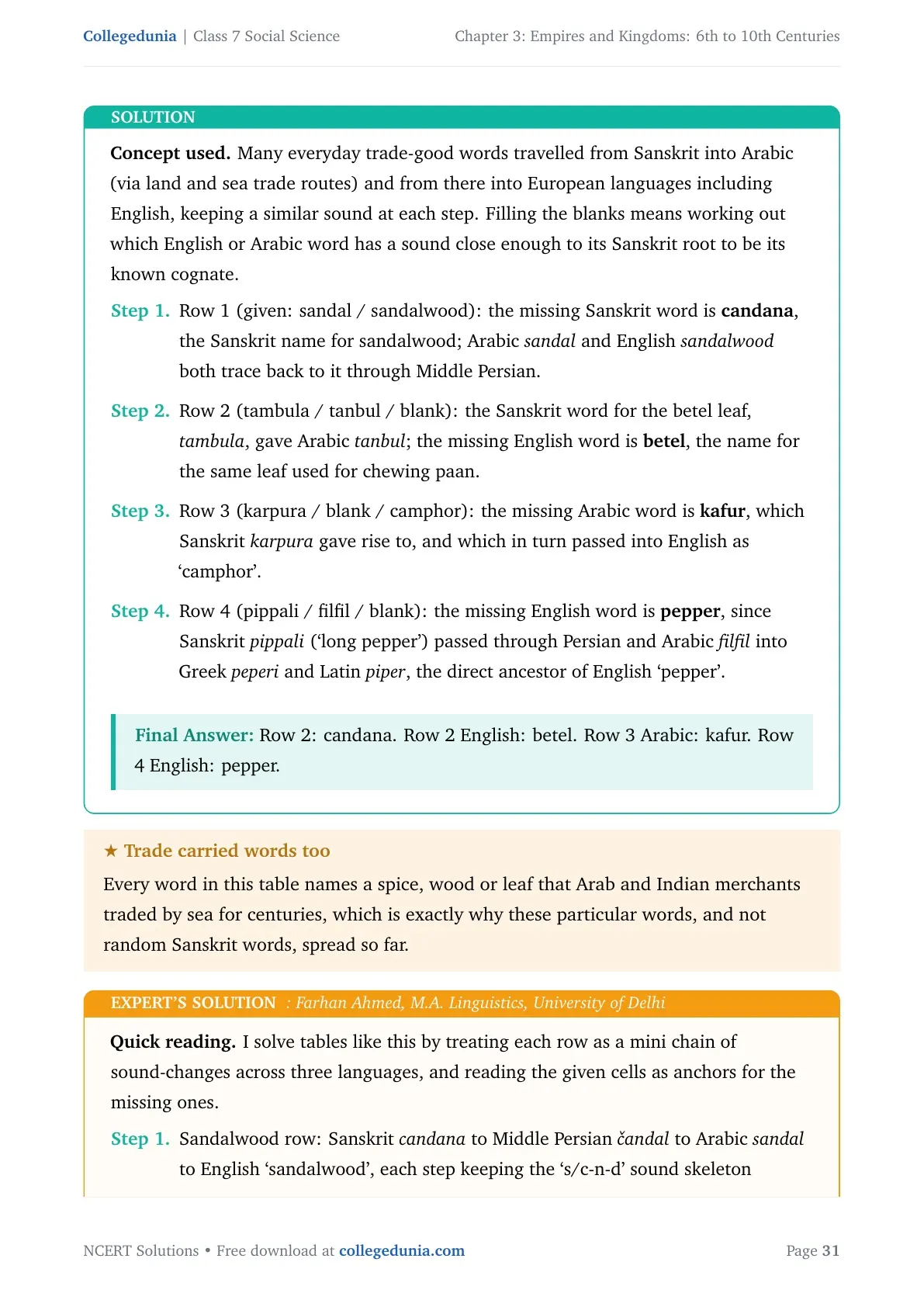
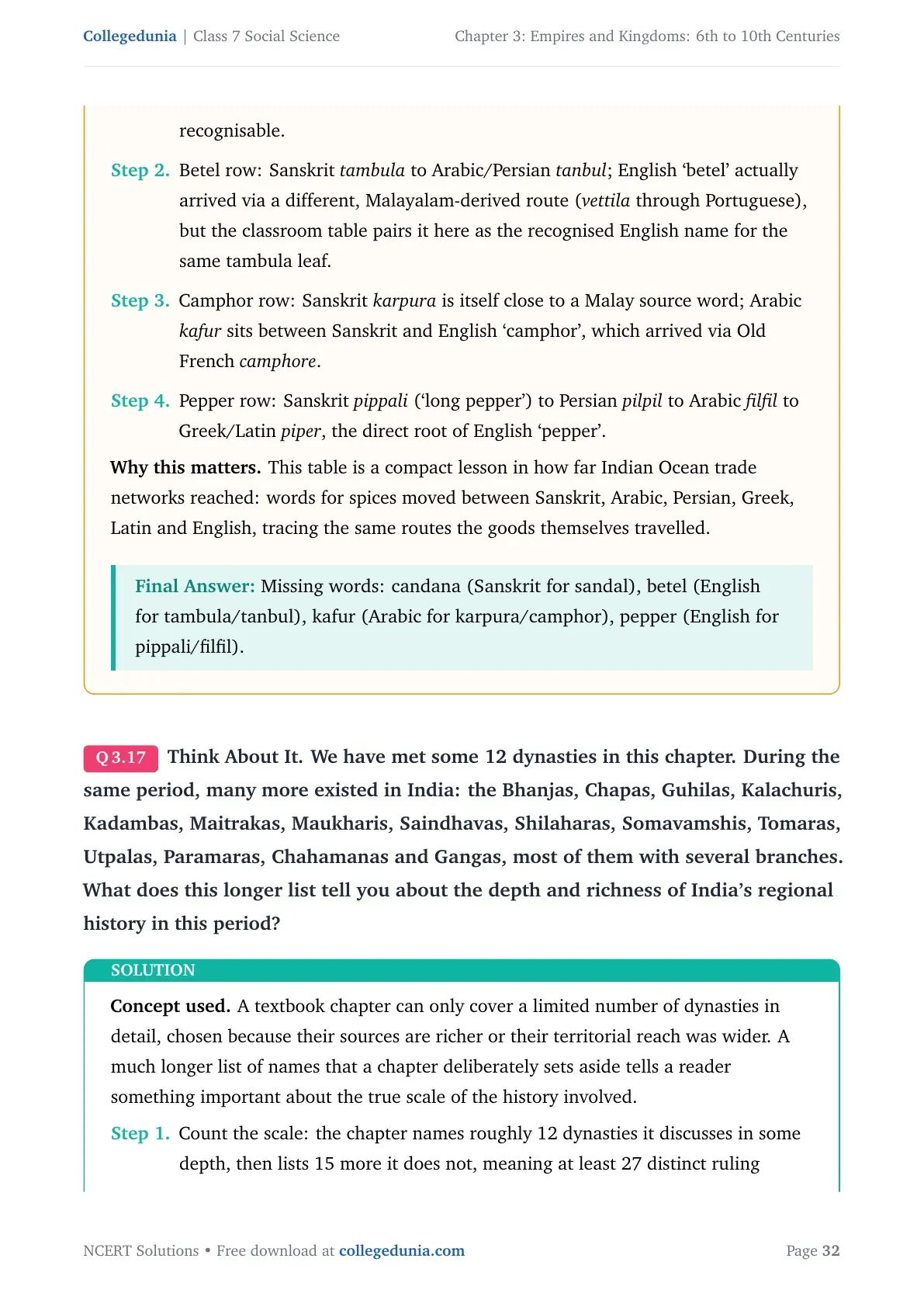
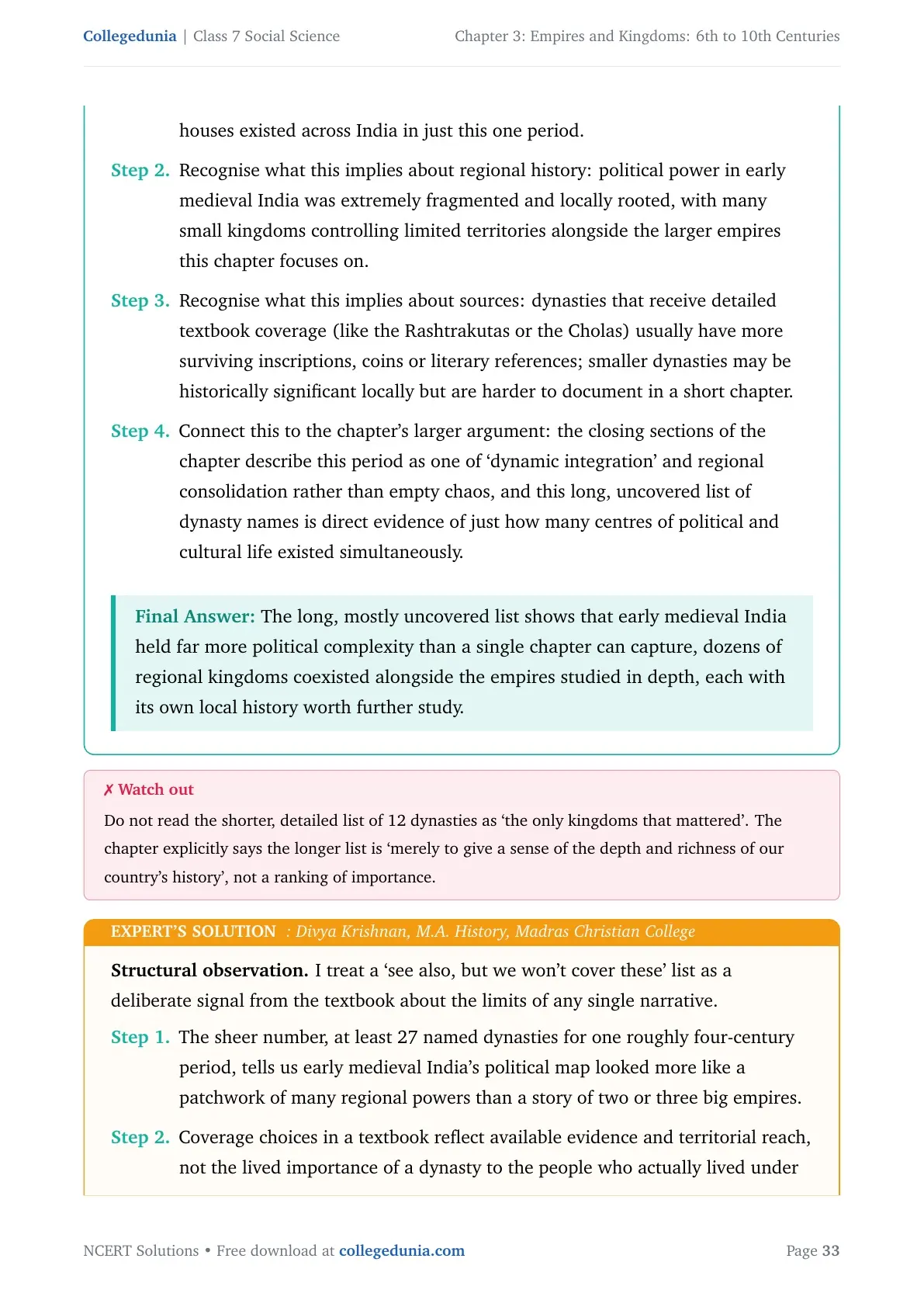
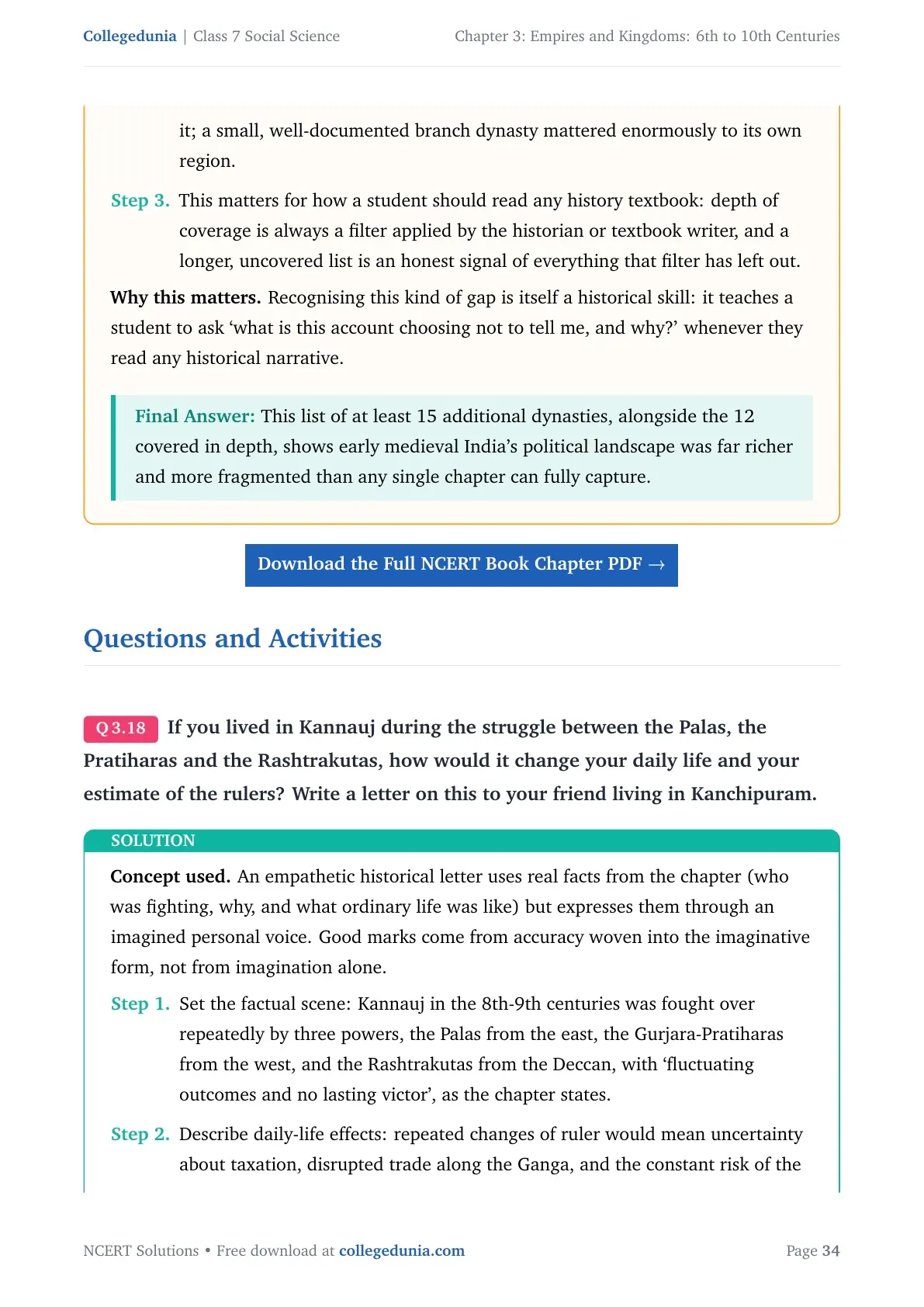
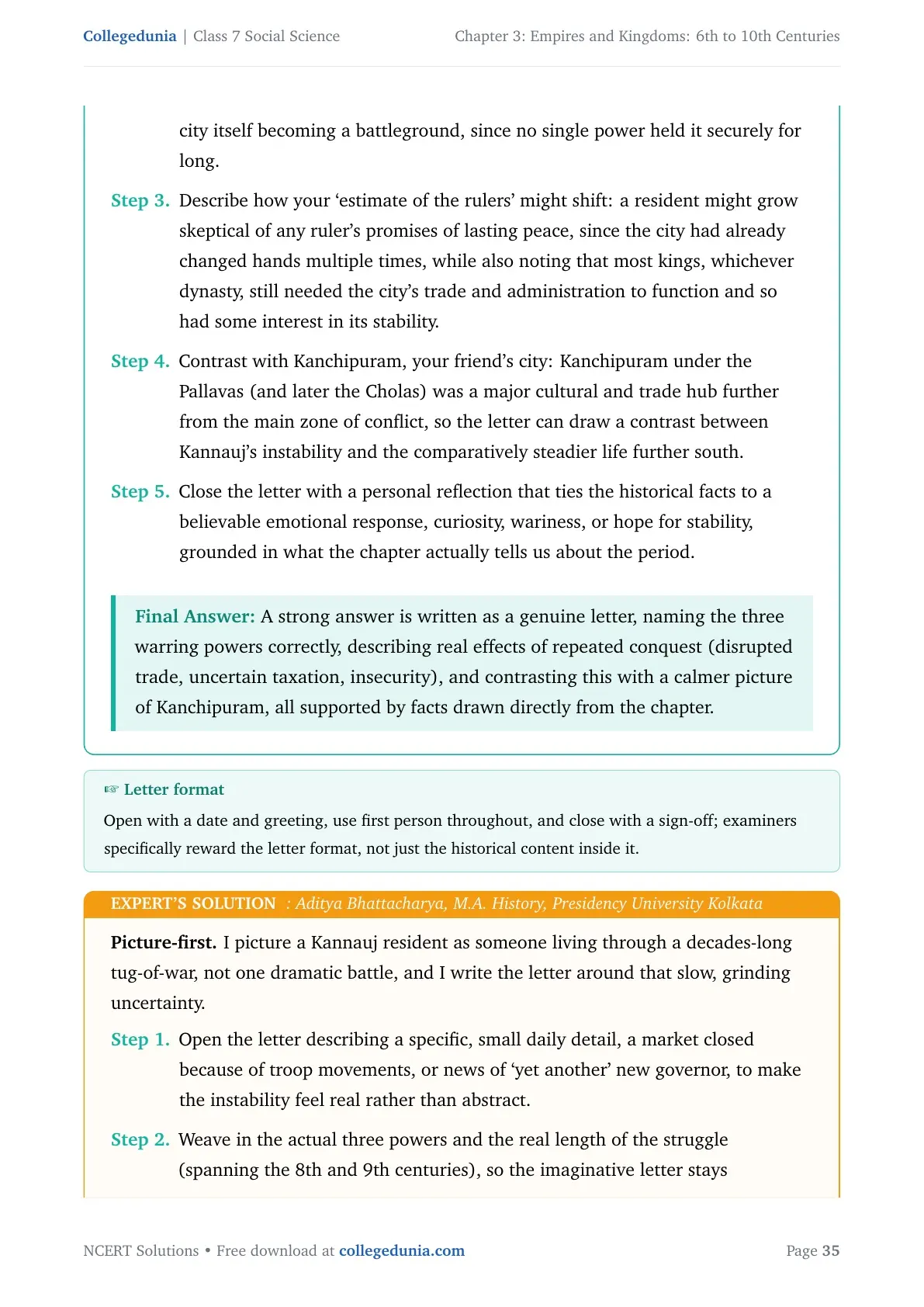
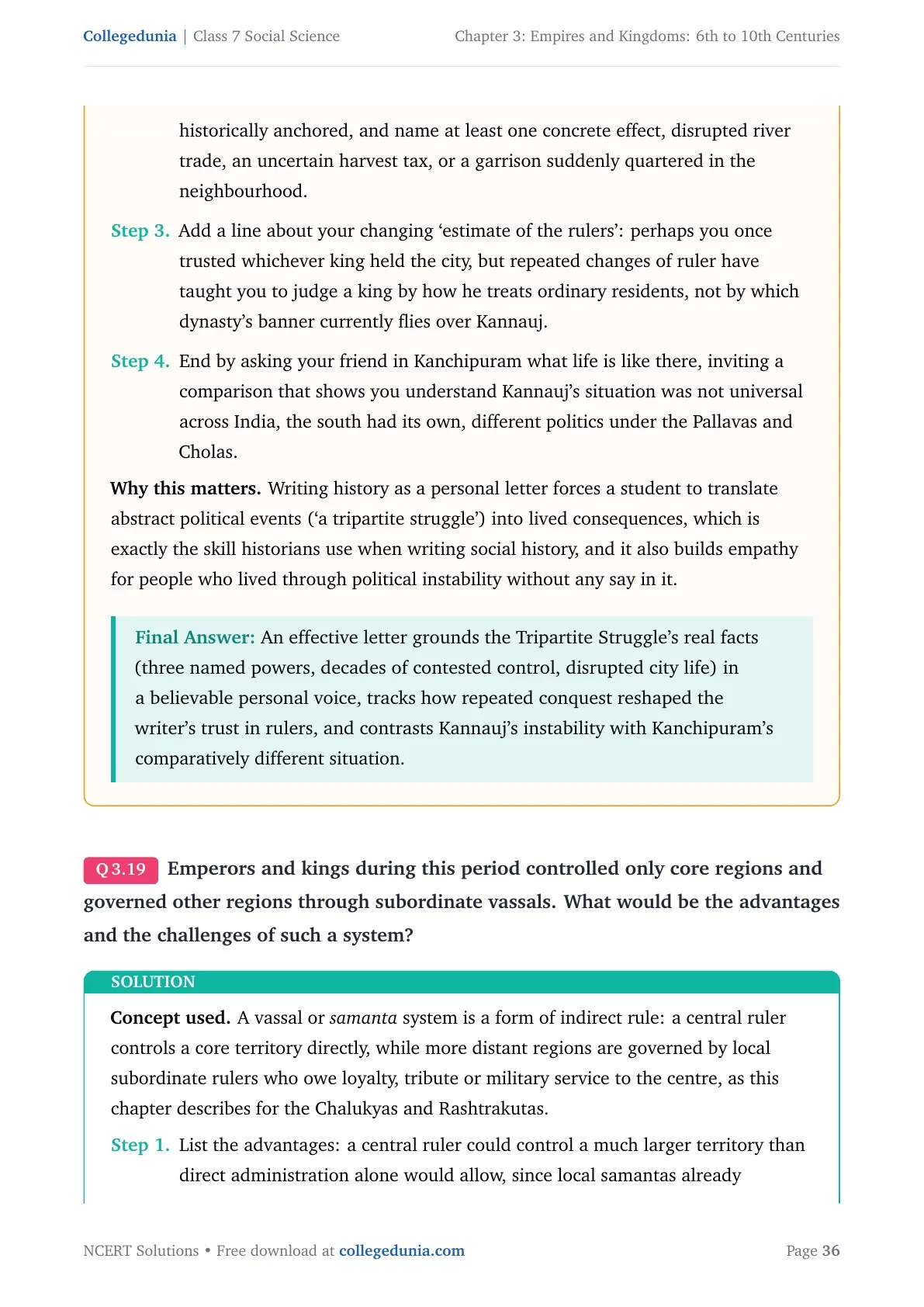
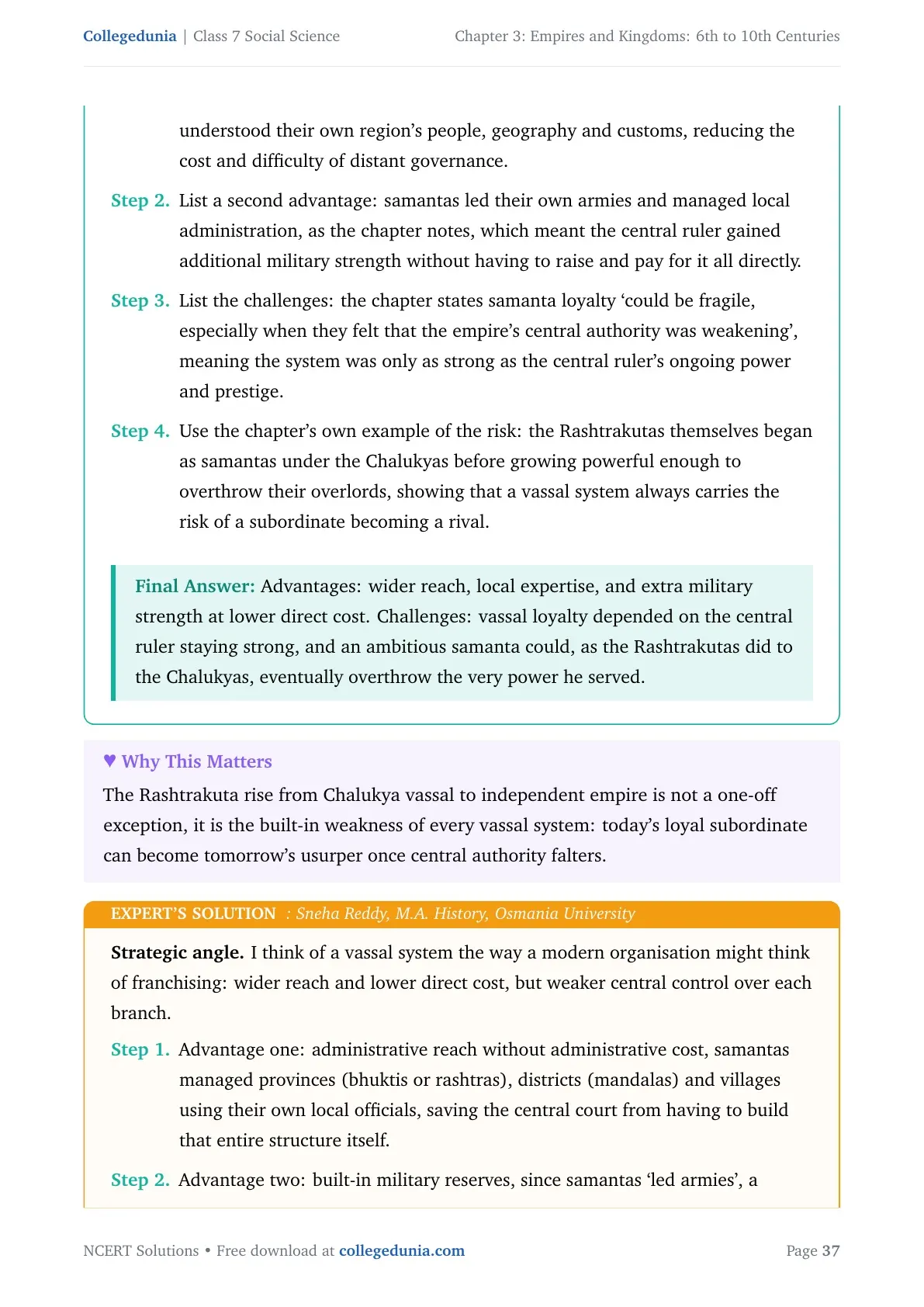
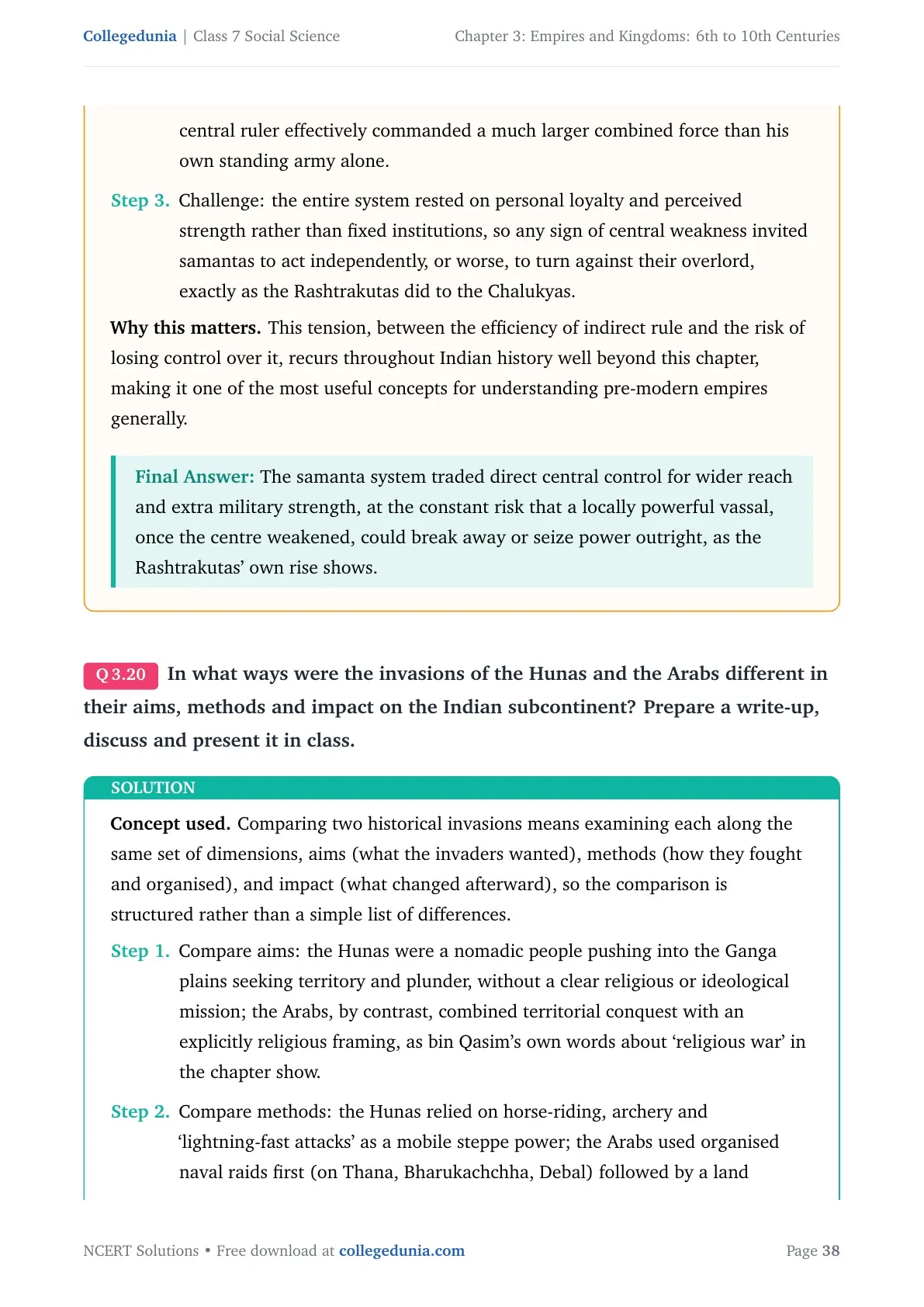
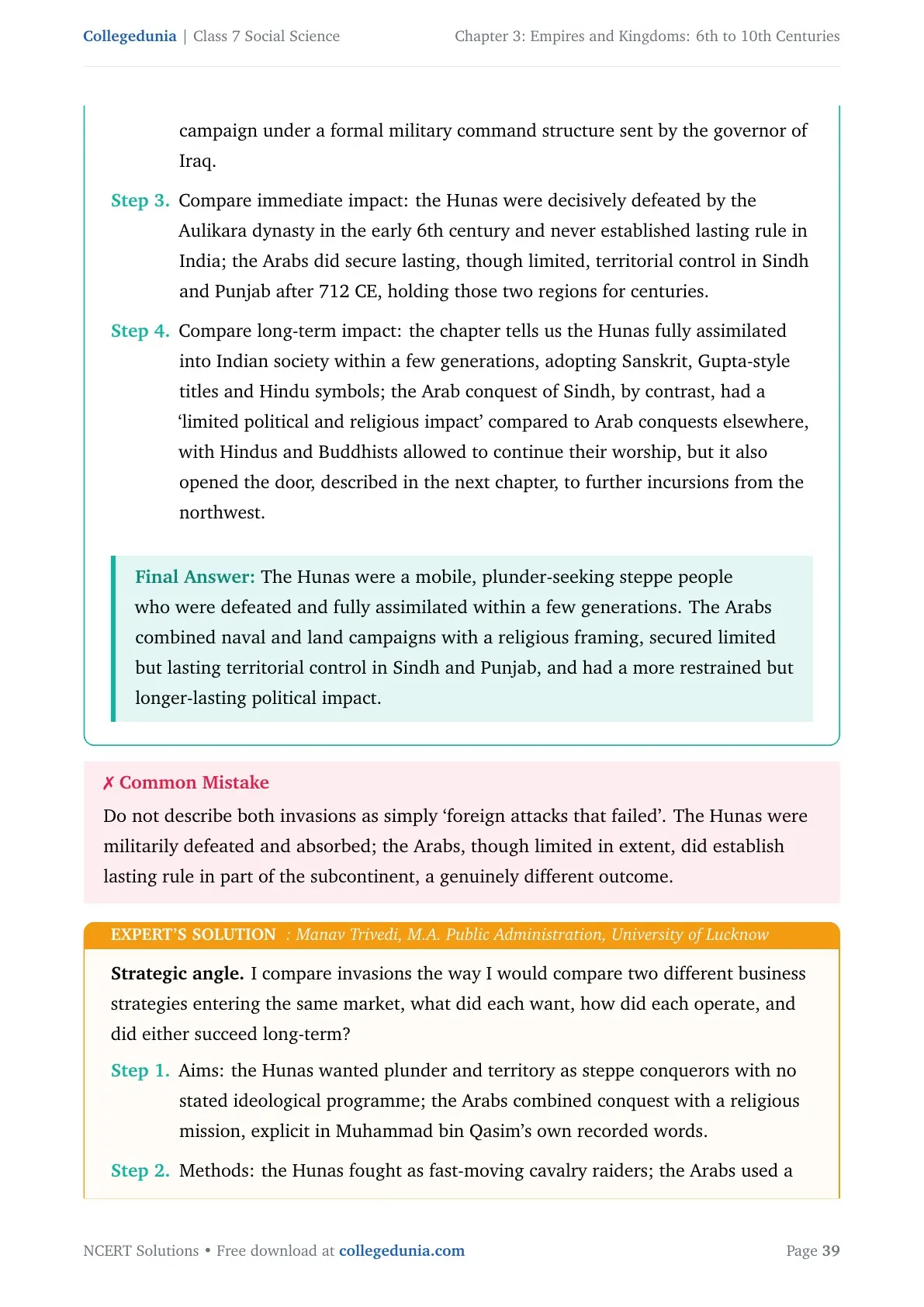
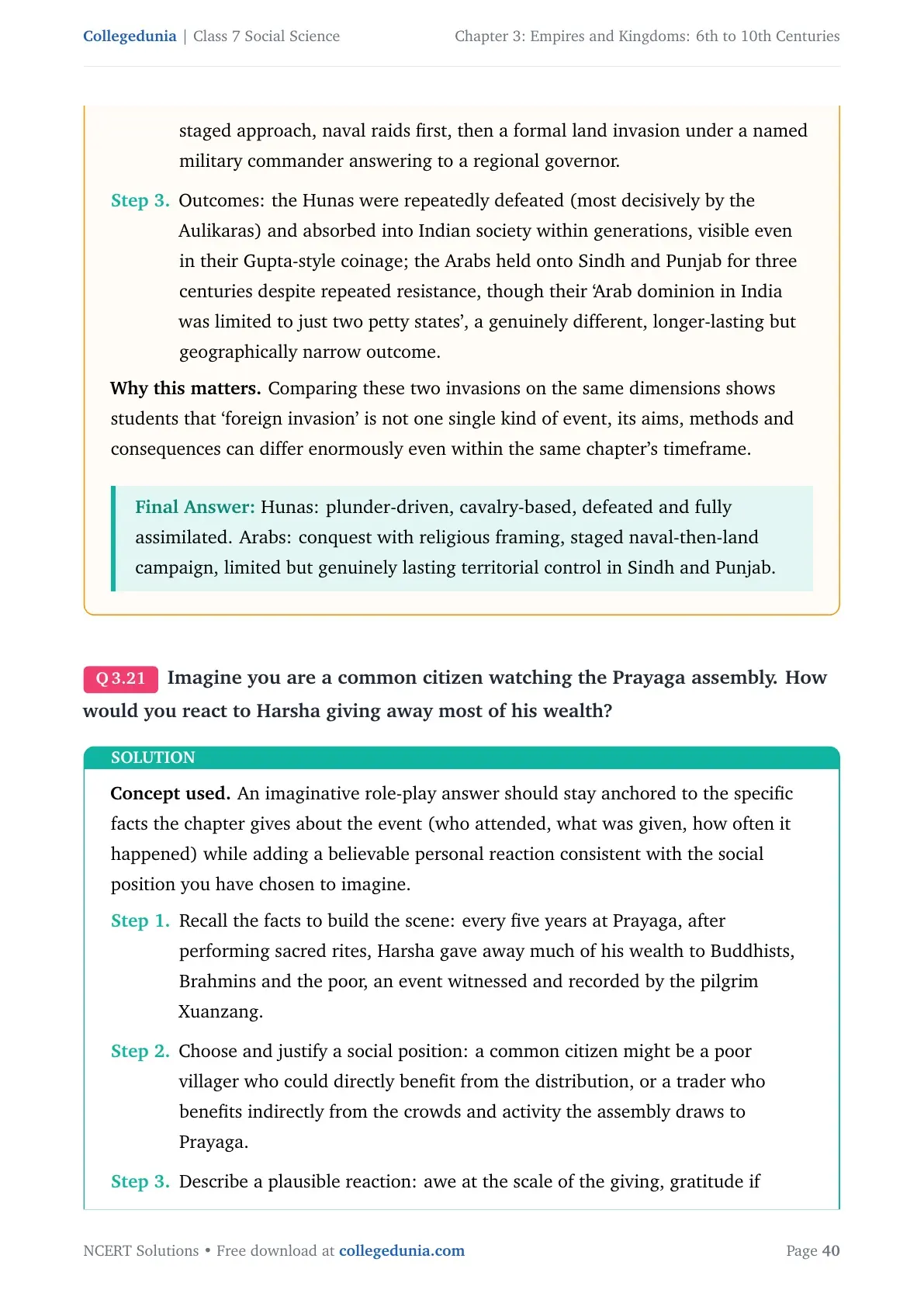
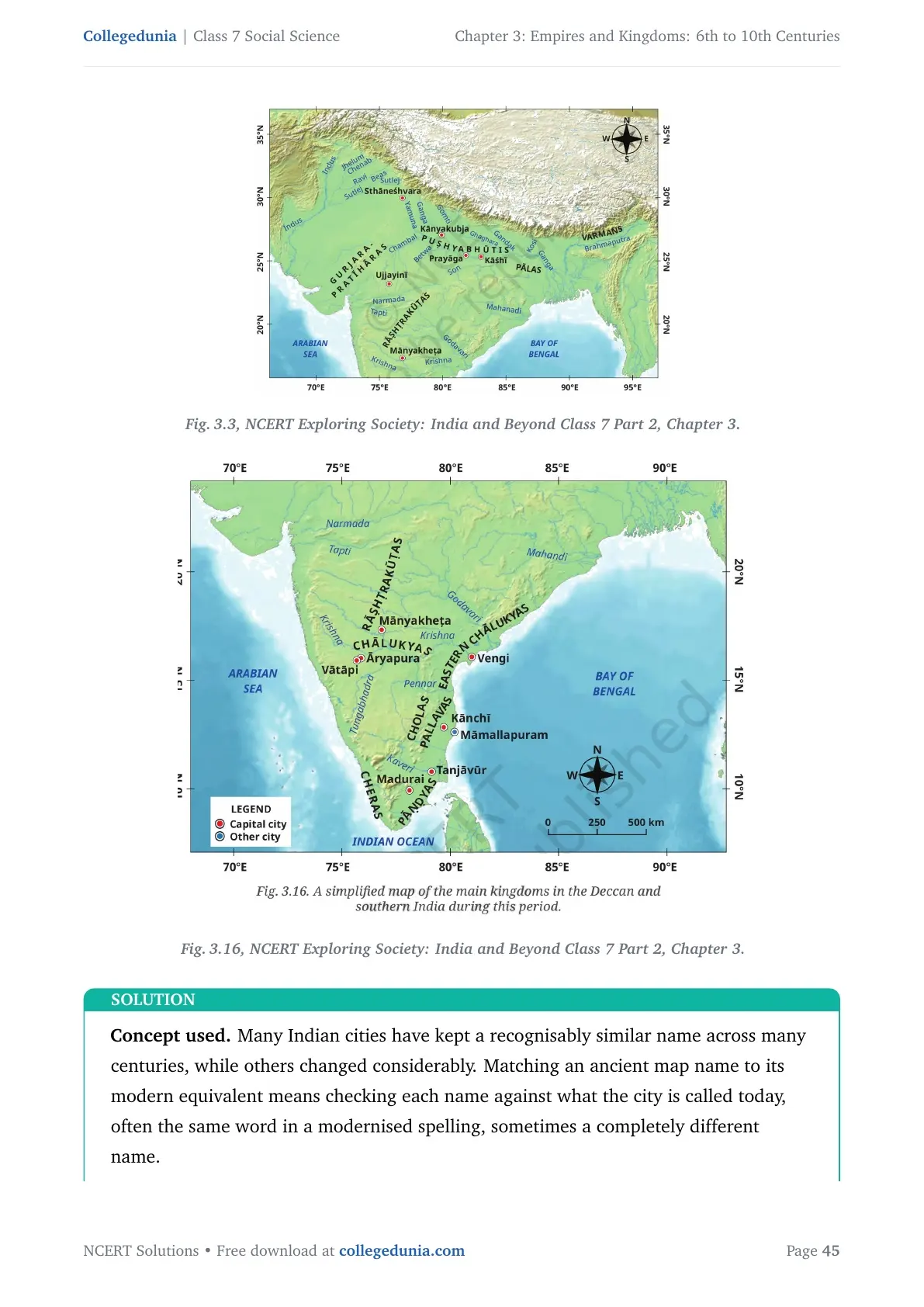
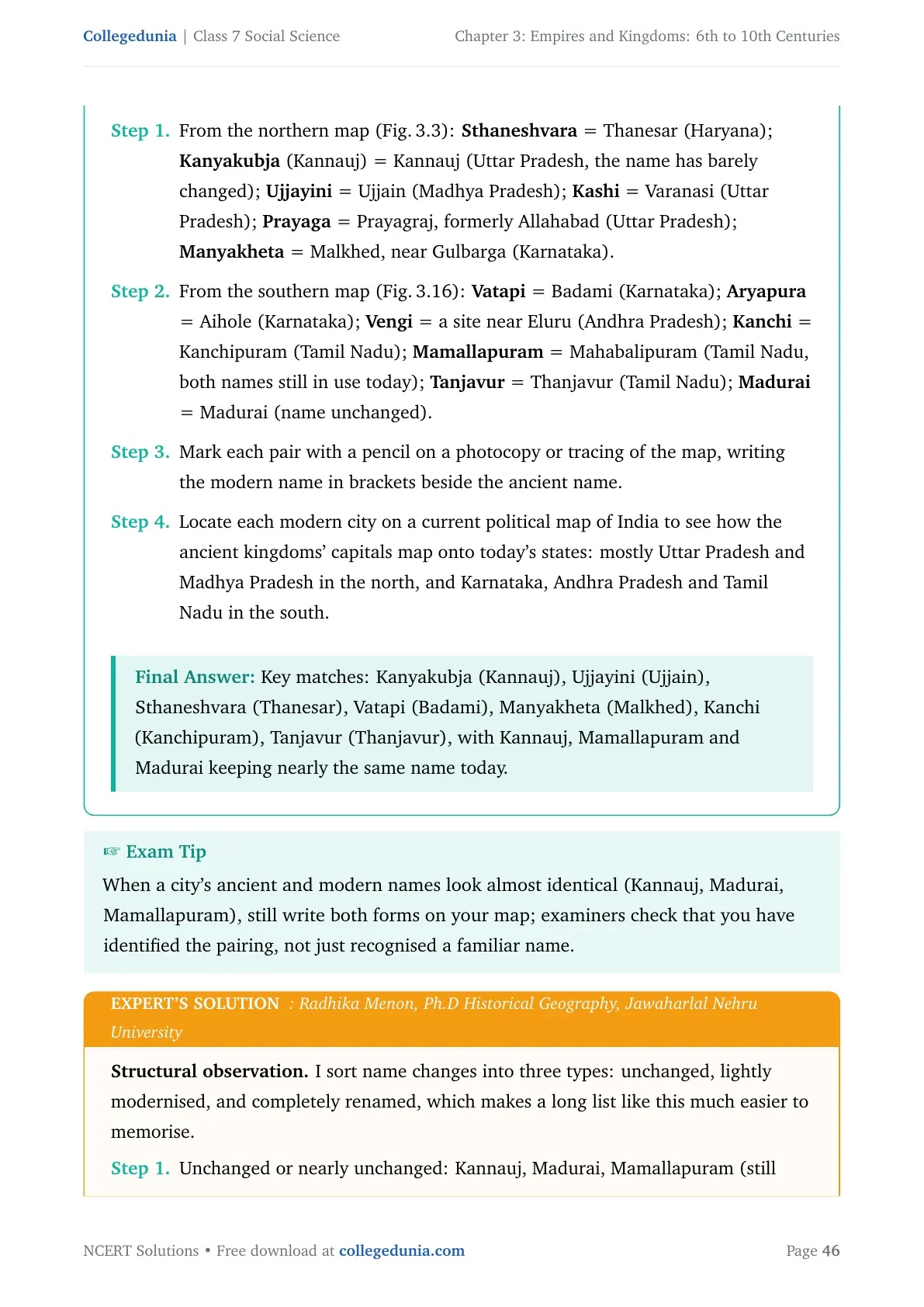
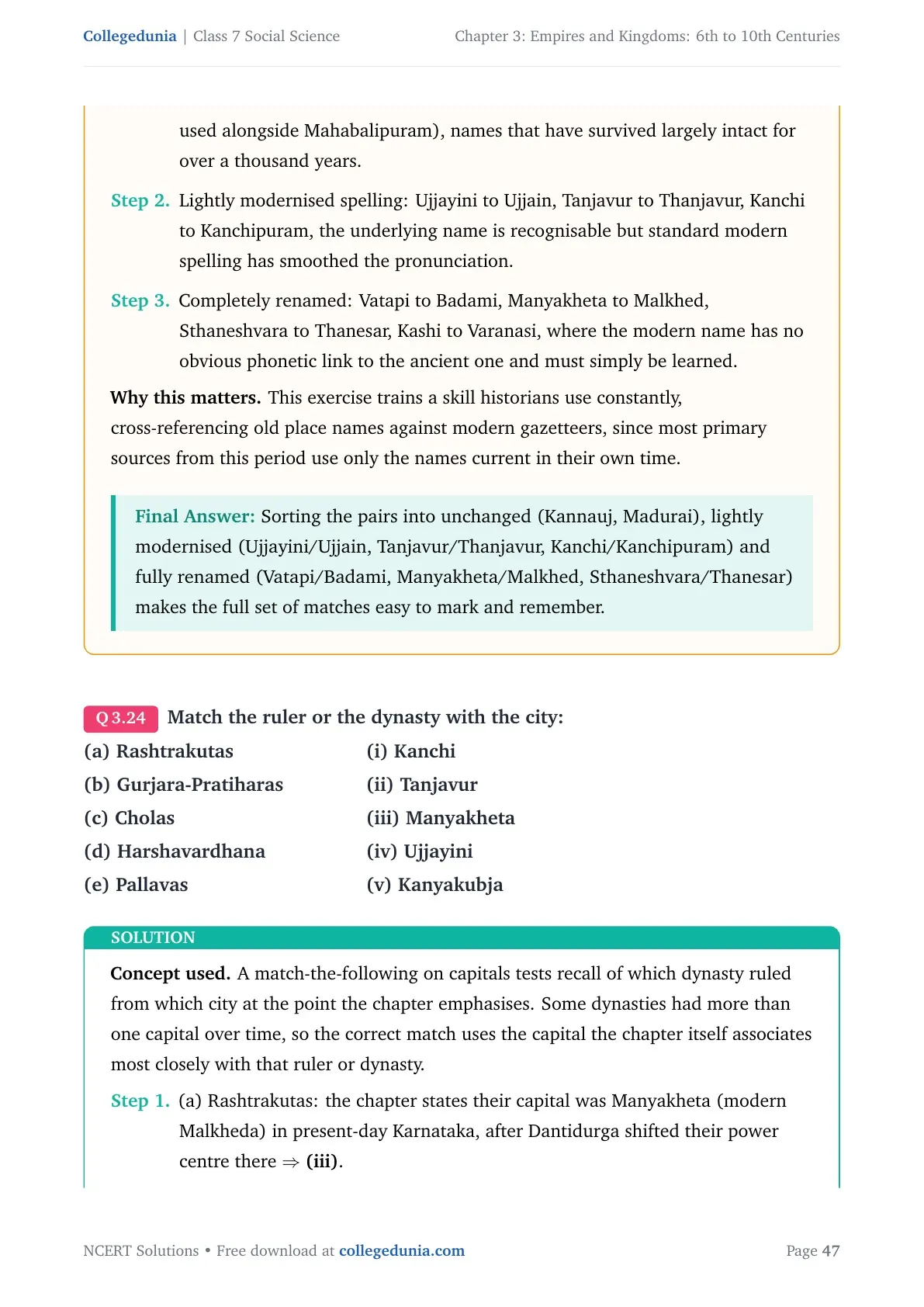
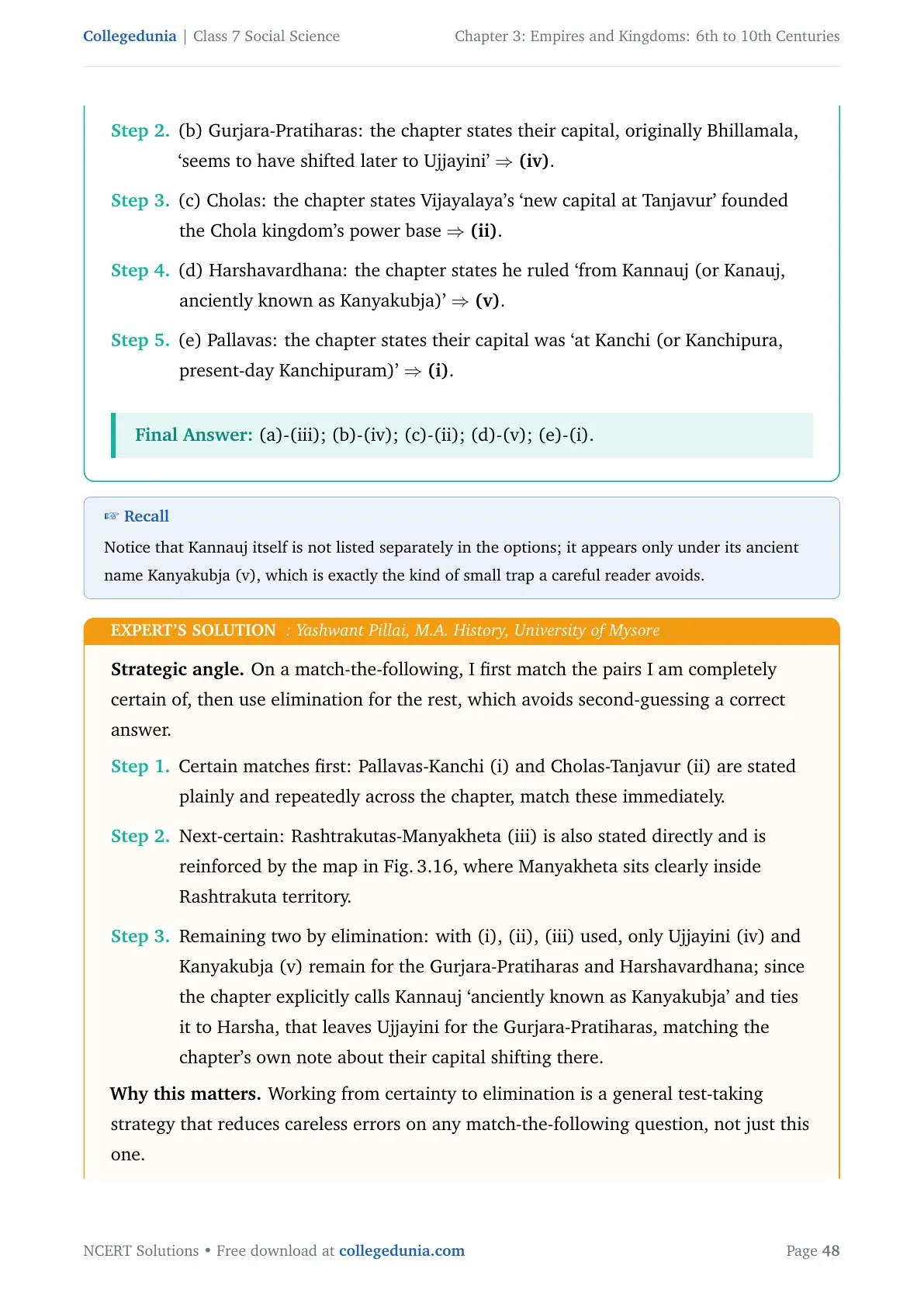
Every answer in NCERT Solutions Class 7 Social Science Chapter 3 Empires and Kingdoms: 6th to 10th Centuries is curated by subject experts, checked against the 2026-27 rationalised NCERT print, and written in the plain language a Class 7 student actually needs.
Want the full worked answers, one question at a time? Open the dedicated question bank below for NCERT Solutions Class 7 Social Science Chapter 3 Empires and Kingdoms: 6th to 10th Centuries. Every answer is worked out step by step, question by question.
Why Empires and Kingdoms Matters for Class 7 Social Science
This page, NCERT Solutions for Class 7 Social Science Chapter 3, opens Theme B of Exploring Society: India and Beyond, Grade 7 Part 2. It picks up right after the Gupta empire's decline and follows India through four centuries of regional kingdoms, invasions and cultural exchange. The chapter is dense with dynasty names, but three big ideas hold it together.
The Gupta empire broke apart under pressure from the Huna invasions and internal weakness, and no single power replaced it for centuries. Instead, regional kingdoms across the north, the Deccan and the south grew strong at the same time. An answer that lists dynasty names without connecting them to one of these big ideas usually loses marks, since the chapter's real point is how power, trade and belief moved together across this period.
| Big idea from the chapter | What it really asks you to explain |
|---|---|
| Political power became regional, not one empire | Why the Gurjara-Pratiharas, Palas, Rashtrakutas, Chalukyas, Pallavas and Cholas all rose at once instead of one dynasty ruling all of India |
| How historians know what they know | Why Kalhana's method in the Rajatarangini, coins, inscriptions and traveller accounts like Xuanzang's matter as much as the events themselves |
| Trade and belief connected distant regions | How the Bhakti movement, Buddhist learning centres and Arab and Chinese travellers linked kingdoms that never shared a border |
Name the big idea your answer responds to, then support it with a real example such as the Kannauj tripartite struggle or Xuanzang's account of Nalanda. This is exactly what these NCERT Solutions for Class 7 Social Science Chapter 3 demonstrate in every worked answer.
The Kannauj Tripartite Struggle Explained
Source: Shiva Virtual Education on YouTube
Empires and Kingdoms Question and Activity Breakdown
The Empires and Kingdoms chapter closes with 24 numbered items, more than any other chapter in this book. NCERT Solutions for Class 7 Social Science Chapter 3 group them into four question types below, and knowing which type you are answering saves time in an exam.
| Section | Questions | What it covers | Answer type |
|---|---|---|---|
| Let's Explore | Q3.1 to Q3.9 | Reading maps, figures, coins and inscriptions from the chapter | Observation-based, short answer |
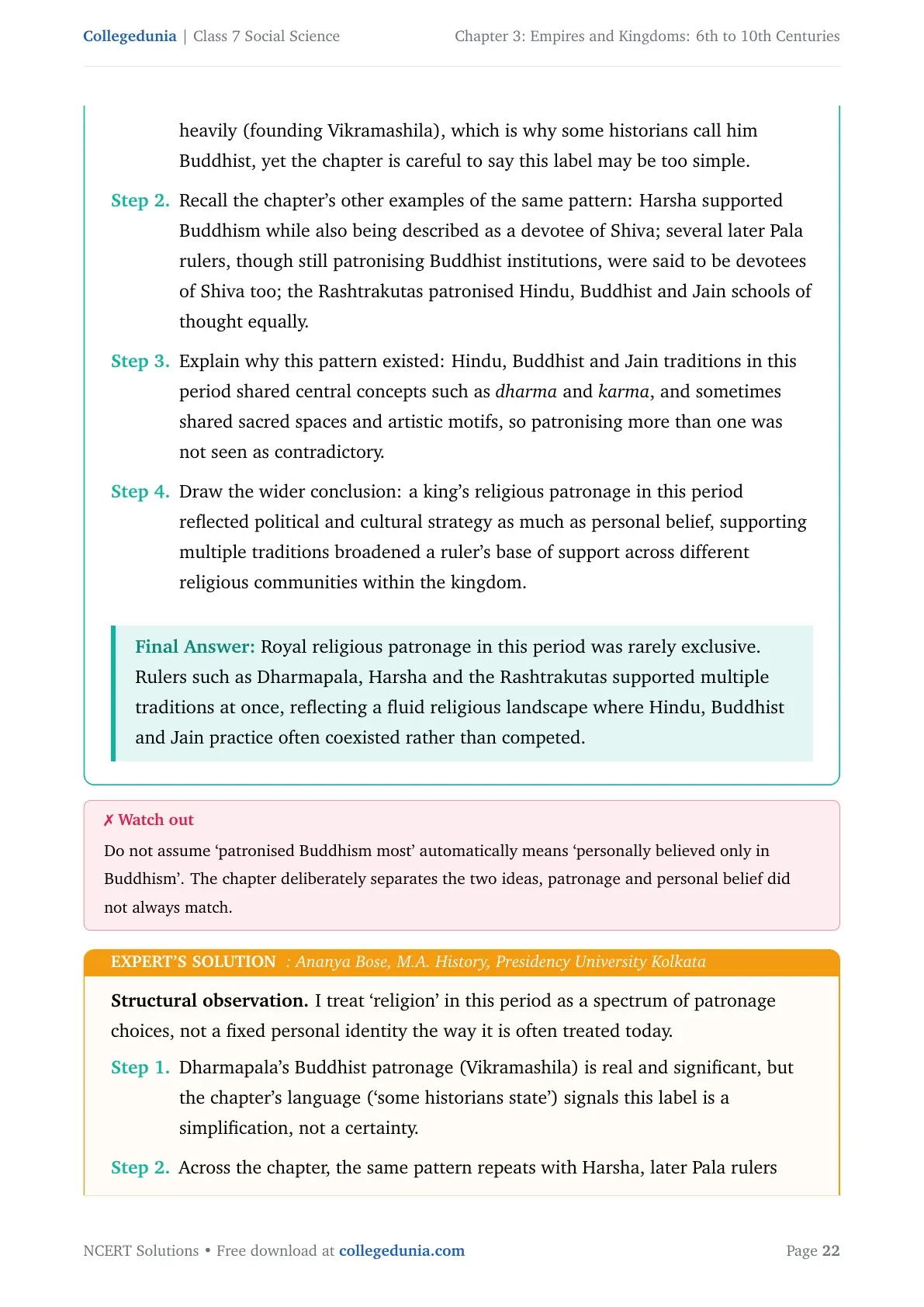
| Think About It | Q3.10 to Q3.12, Q3.14 to Q3.17 | Reasoning from source quotes by Kalhana, Al-Masudi and Sulaiman | Analytical, medium length |
| Don't Miss Out | Q3.13 | Sanskrit, Arabic and English word comparison table | Short, fill-in style |
| Let's Act | Q3.18 to Q3.24 | Letters, debates, posters and a ruler-to-city matching task | Application and creative response |
Nine of the 24 items are Let's Explore questions built around the chapter's maps and images. Teachers usually pick Q3.4, Q3.9, Q3.15 and Q3.20 for periodic tests, since these have clear, source-based answers that are easy to mark.
Regional Kingdoms After the Guptas: The Kannauj Tripartite Struggle
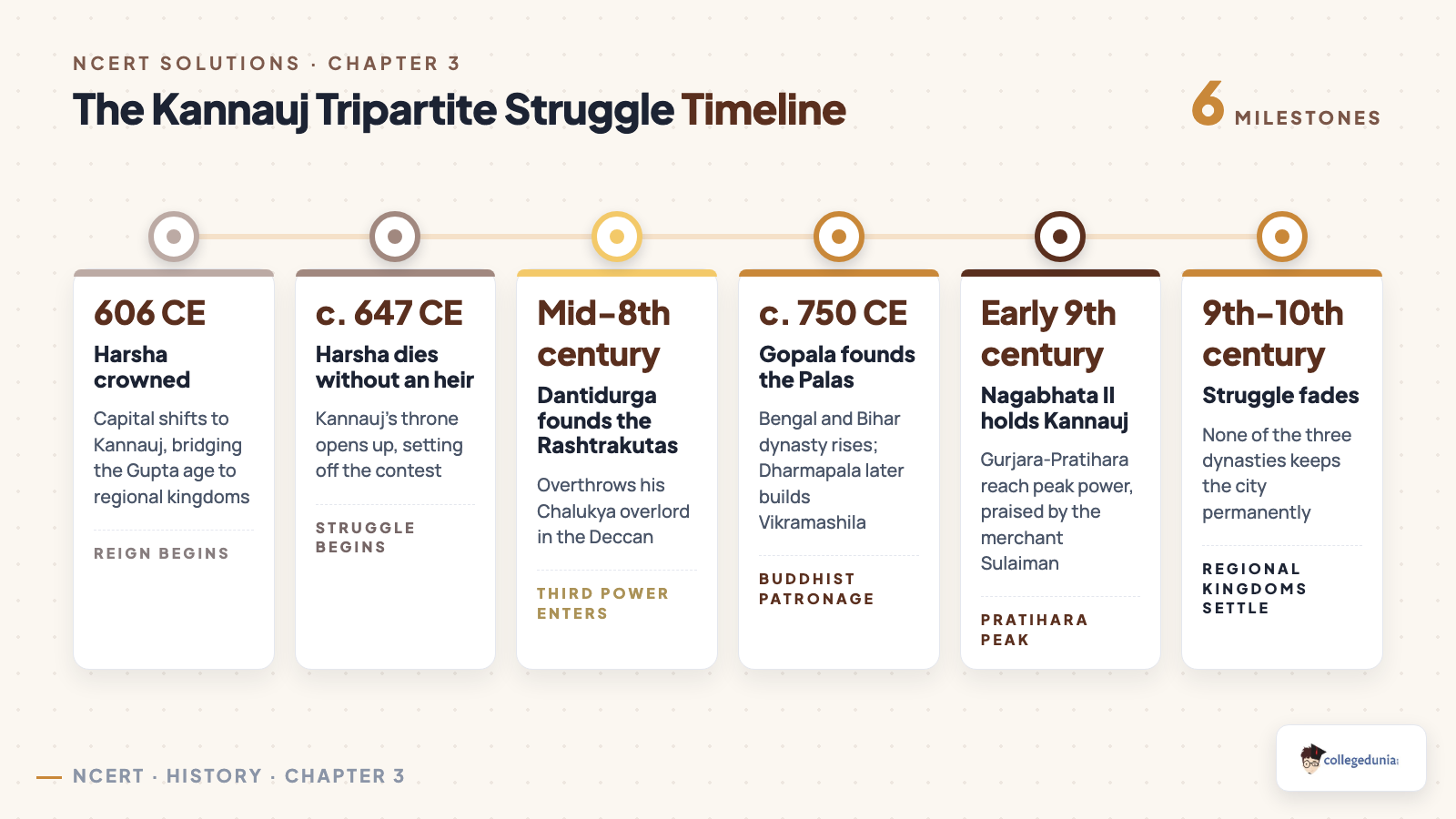
Once the Gupta empire weakened, three dynasties grew powerful enough to fight over the same prize: the city of Kannauj in the Ganga valley. This three-way fight is called the Tripartite Struggle, and it runs through most of this chapter's political history.
| Dynasty | Core region | One fact worth remembering |
|---|---|---|
| Gurjara-Pratiharas | Rajasthan, Malwa and the Kannauj region | The Arab merchant Sulaiman praised a Pratihara ruler as the strongest opponent of Arab expansion into India |
| Palas | Bengal and Bihar | Founded by Gopala; Dharmapala patronised Buddhist learning and helped establish Vikramashila |
| Rashtrakutas | The Deccan, capital at Manyakheta | Dantidurga overthrew his Chalukya overlord in the mid-eighth century to found the dynasty |
Kannauj sat on fertile land with easy river access, which made it worth fighting over for more than a century. Each dynasty held the city at different points, but none kept it permanently. This back-and-forth is exactly what Q3.4 and Q3.18 ask you to explain in your own words.
Harshavardhana and the Assembly at Prayaga
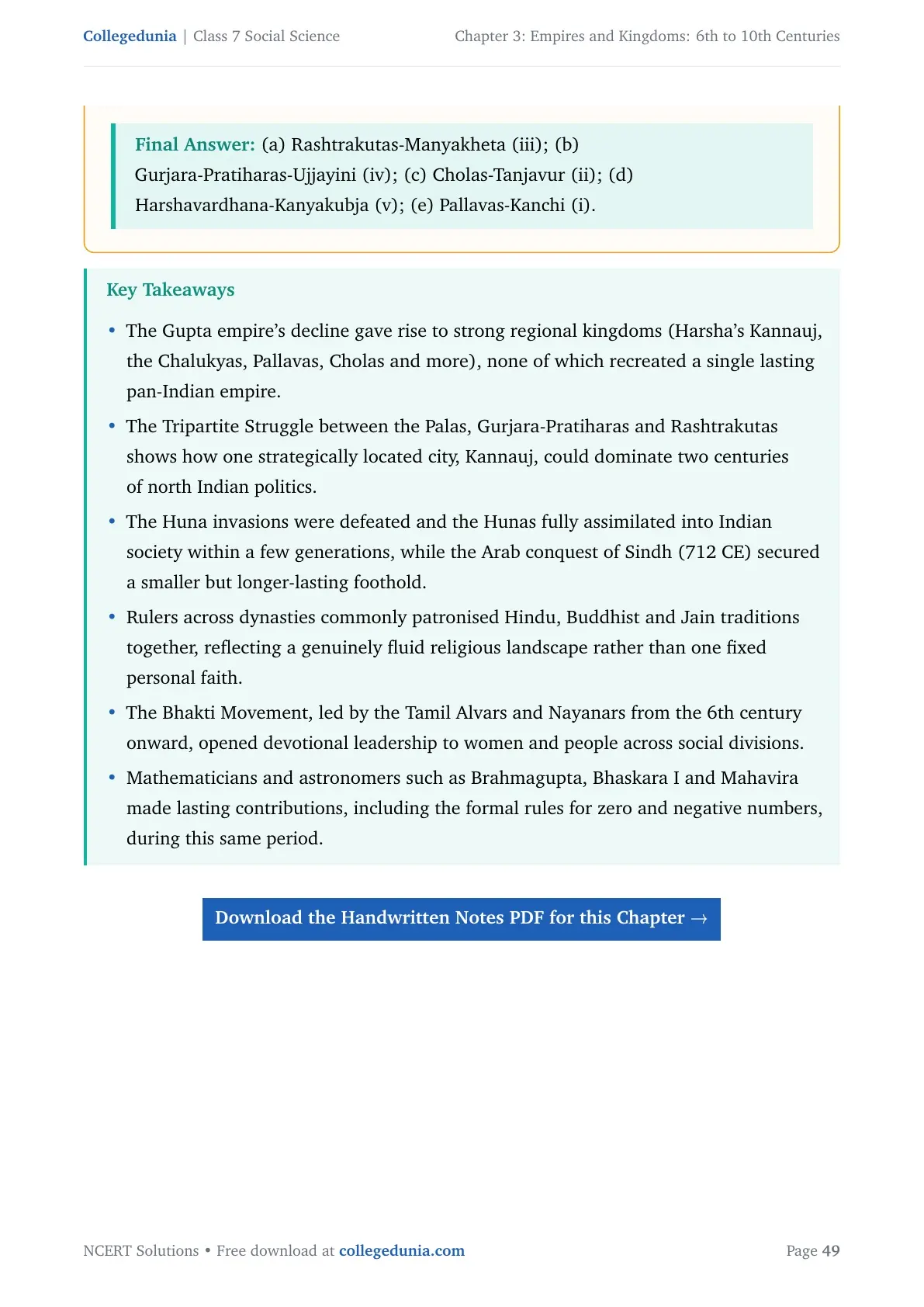
Harshavardhana became king in 606 CE and shifted his capital to Kannauj, ruling much of northern and eastern India for over four decades. His reign is the bridge between the Gupta age and the regional kingdoms that followed.
- Capital shift: Harsha moved his base from Thanesar to Kannauj, making the city politically important long before the tripartite struggle began.
- The Prayaga assembly: every five years, Harsha gave away much of his wealth to Buddhists, Brahmins and the poor at a grand assembly held at Prayaga.
- Xuanzang's visit: the Chinese pilgrim travelled to Harsha's court and left behind the most detailed outside account of his reign.
- No heir, no successor: Harsha's death without a clear heir is exactly what opened the door to the Kannauj tripartite struggle.
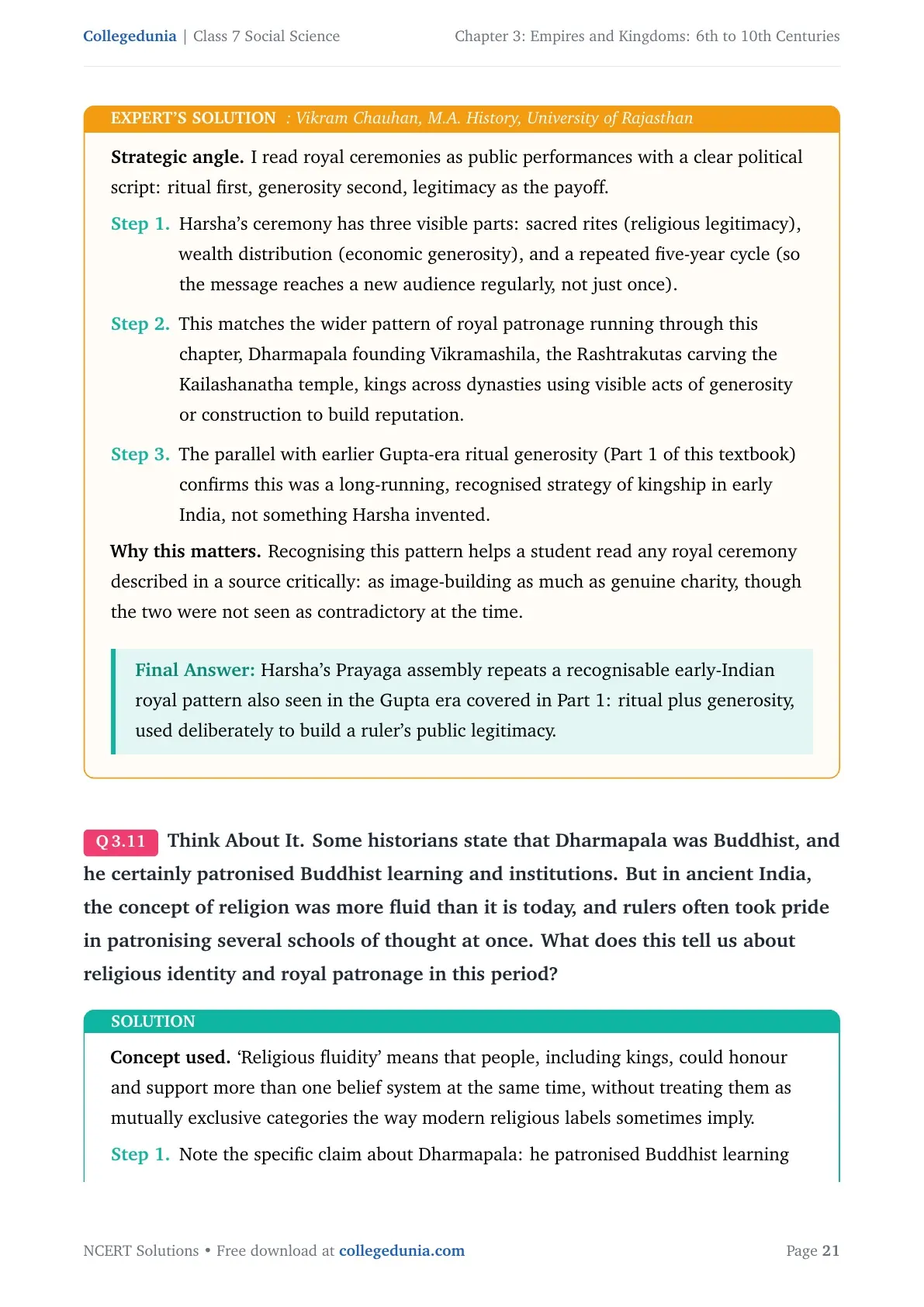
Q3.10 asks you to compare Harsha's Prayaga assembly with a similar event in Part 1 of the textbook. The key link to draw is generous royal giving as a way of building public support and reputation.
The Chalukyas, Pallavas and Cholas of the Deccan and the South
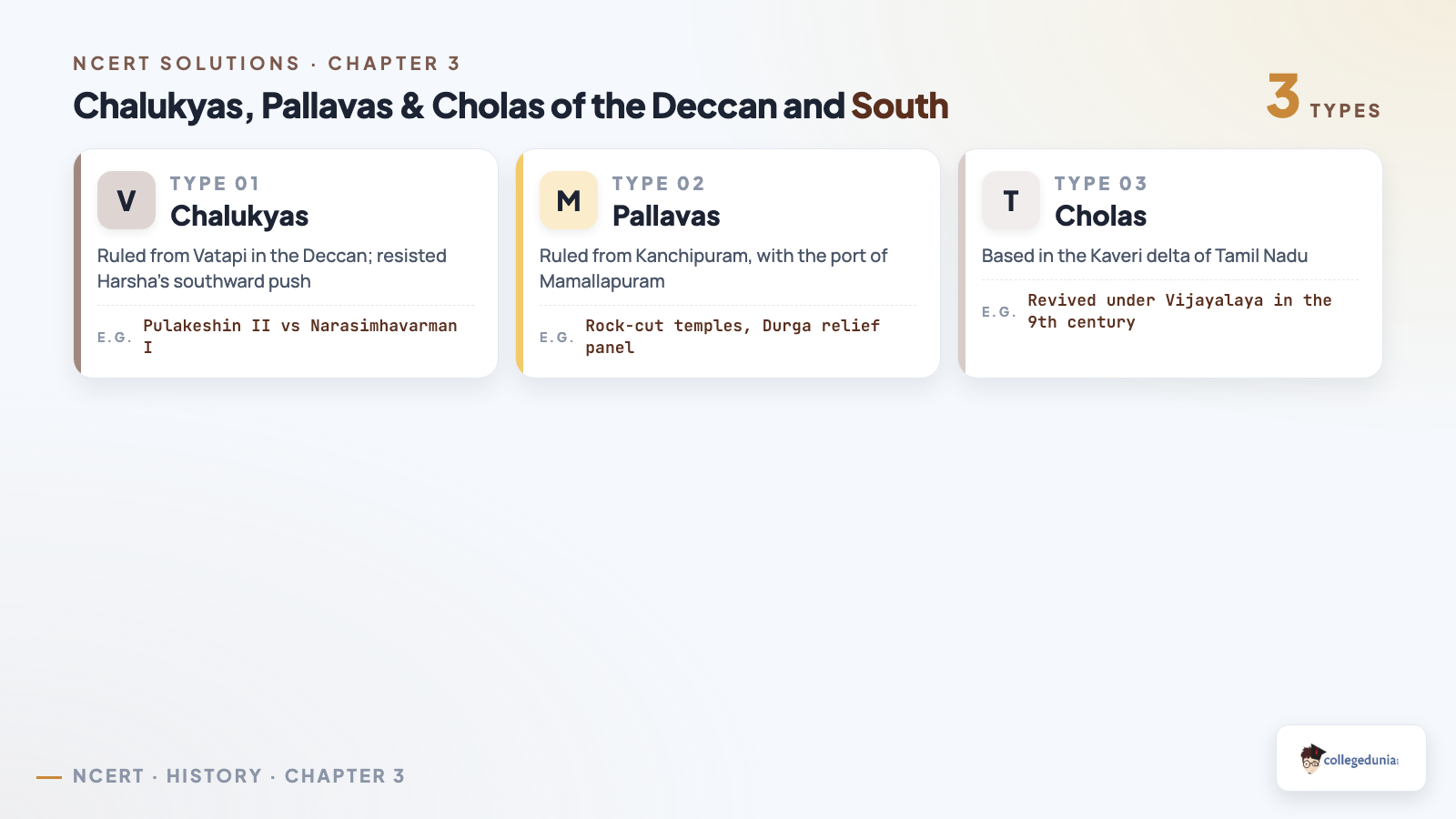
While the tripartite struggle played out in the north, three dynasties shaped the Deccan and the far south. Their rivalry produced some of the finest temple art of the period, alongside constant warfare over territory.
| Dynasty | Capital / base | One fact worth remembering |
|---|---|---|
| Chalukyas | Vatapi (Badami), the Deccan | Pulakeshin II resisted Harsha's southward push but was later defeated by the Pallava king Narasimhavarman I |
| Pallavas | Kanchipuram, with the port of Mamallapuram | Built rock-cut and monolithic temples at Mamallapuram and traded with Sri Lanka and Southeast Asia |
| Cholas | The Kaveri delta, Tamil Nadu | Revived under Vijayalaya in the 9th century after a long period of decline, setting up their later rise |
Notice that the Chalukya-Pallava rivalry is a mirror of the Kannauj tripartite struggle. Both are examples of regional dynasties fighting for the same prize over generations. Questions on this section often ask you to name which ruler defeated which, so keep the Vatapi capture by Narasimhavarman I clear in your notes.
Huna Invasions and the Arab Conquest of Sindh
The Hunas, a Central Asian people, pushed into India as Gupta power weakened. Their ruler Toramana carved out territory in western and central India, and his son Mihirakula continued the invasions with even greater force.
- Yashodharman's victory: the Huna advance was finally checked at Dashapura, ending their expansion into the Indian heartland.
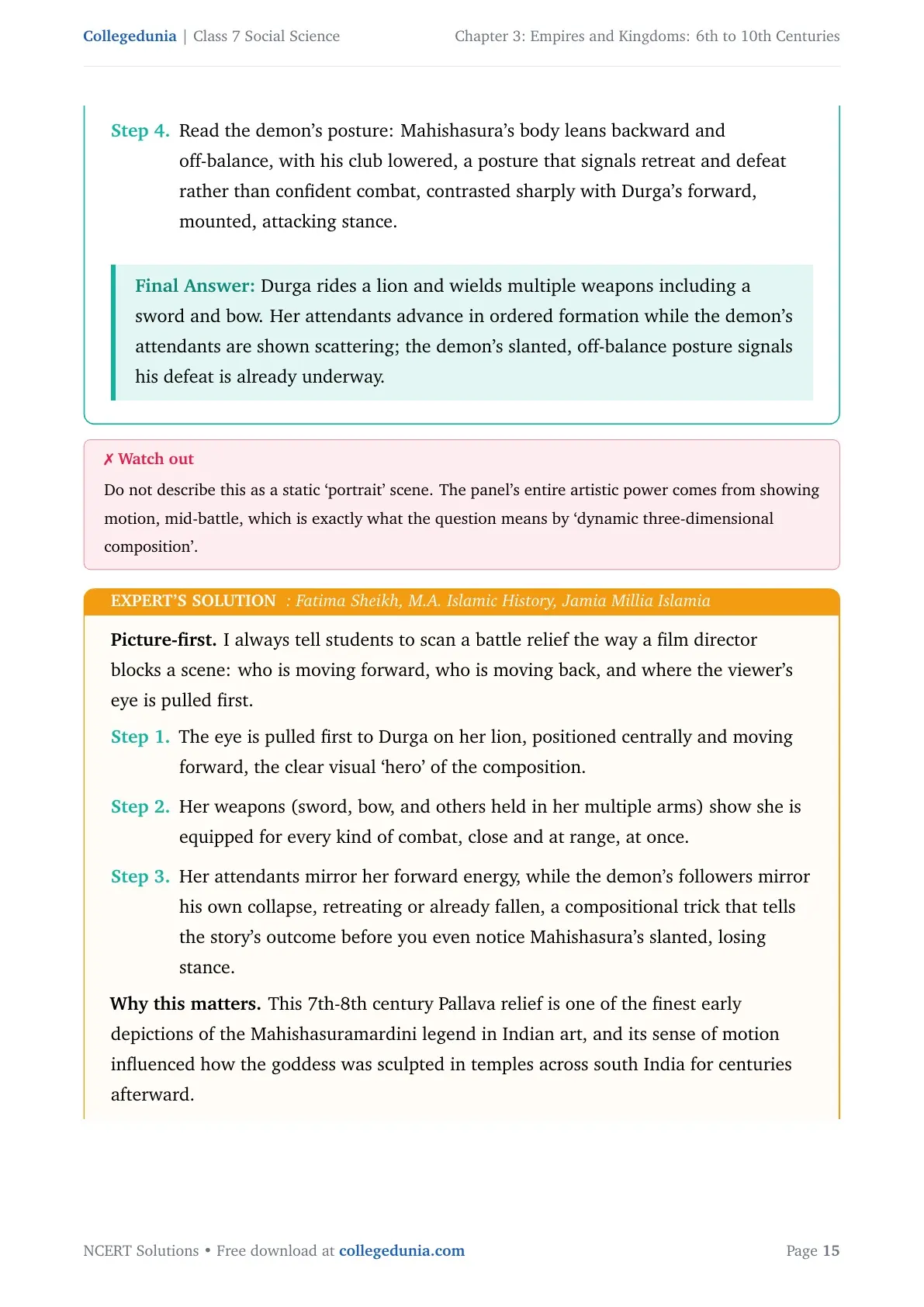
- Coin evidence: Toramana's coins closely resemble Skandagupta's, suggesting the Hunas copied Gupta coin designs to claim similar authority.
- Muhammad bin Qasim's Sindh campaign: Arab forces defeated King Dahar in 712 CE, recorded in detail in the chronicle called the Chachnama.
- The advance was stopped: Gurjara-Pratihara resistance kept further Arab expansion out of the Indian heartland for centuries afterward.
Q3.9 draws on the Chachnama's account of Dahar's queen, who resisted rather than surrender. This is one of the chapter's clearest examples of how ordinary people, not just rulers, responded to invasion.
Xuanzang's Travels and Trade Across Asia
Long before easy travel existed, monks, merchants and pilgrims still crossed deserts and mountain passes between India and the rest of Asia. Their journeys are one of the best sources historians have for this period.
- Xuanzang's route: the Chinese monk crossed Central Asian mountain passes and deserts to reach India in the 7th century, visiting Buddhist centres such as Nalanda.
- What he brought back: over 600 Buddhist manuscripts, along with a detailed written account of Indian politics, culture and religion.
- Arab travellers as sources: Sulaiman, a 9th-century merchant, and Al-Masudi, a 10th-century historian, both wrote about the Gurjara-Pratiharas and the Rashtrakutas.
- Maritime trade: the Pallava port at Mamallapuram linked India to Sri Lanka and Southeast Asia through spices, textiles and ivory.
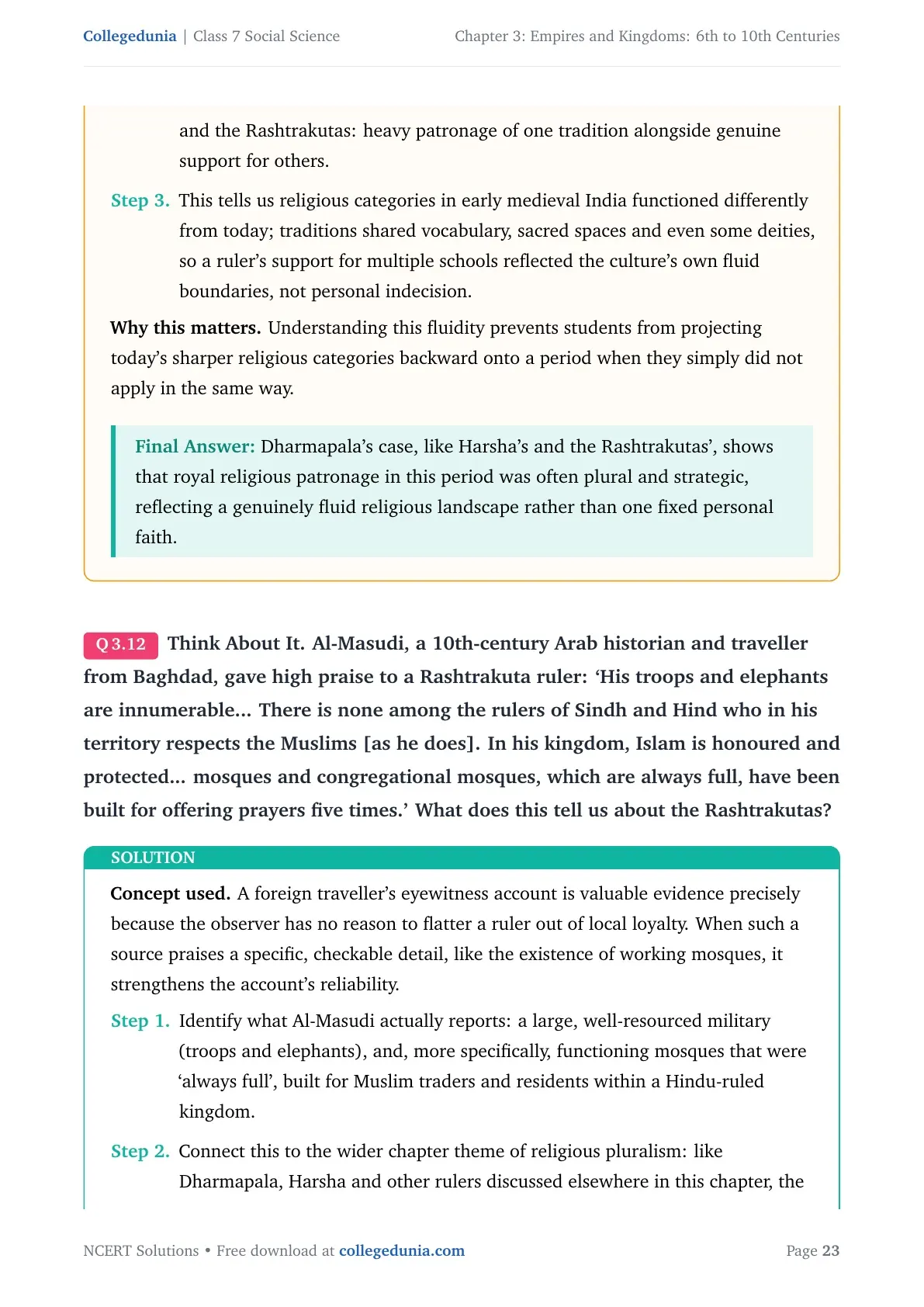
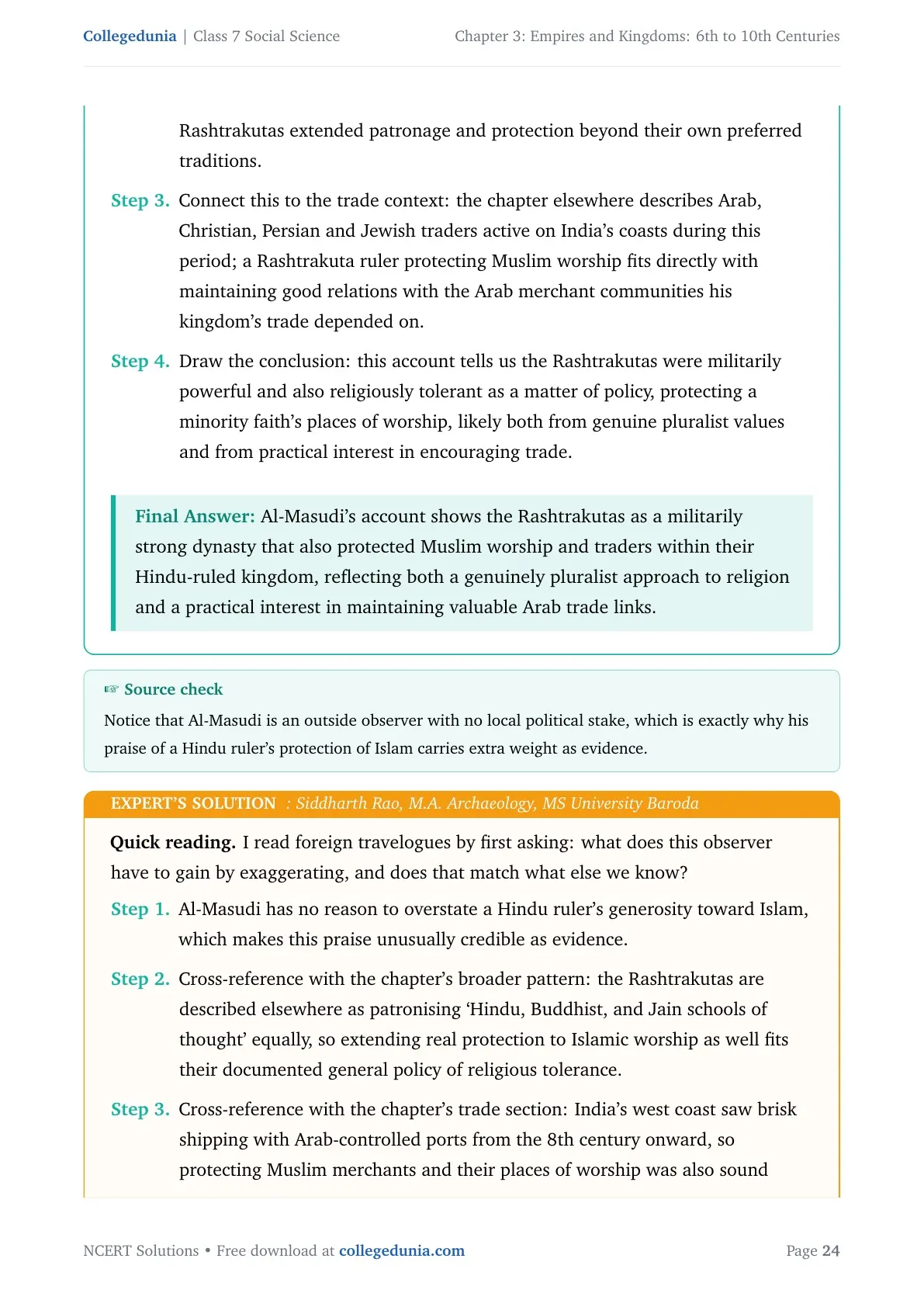
Al-Masudi's account of a Rashtrakuta ruler protecting mosques and honouring Islam in his own kingdom is a strong example for Q3.12. It shows how a Hindu-ruled kingdom could still be genuinely tolerant of a different faith practised by traders and settlers.
Temple Architecture at Mamallapuram and the Bhakti Movement
Two very different kinds of devotion shaped this period. One expressed itself in stone at Mamallapuram. The other expressed itself in poetry and song across the Tamil countryside.
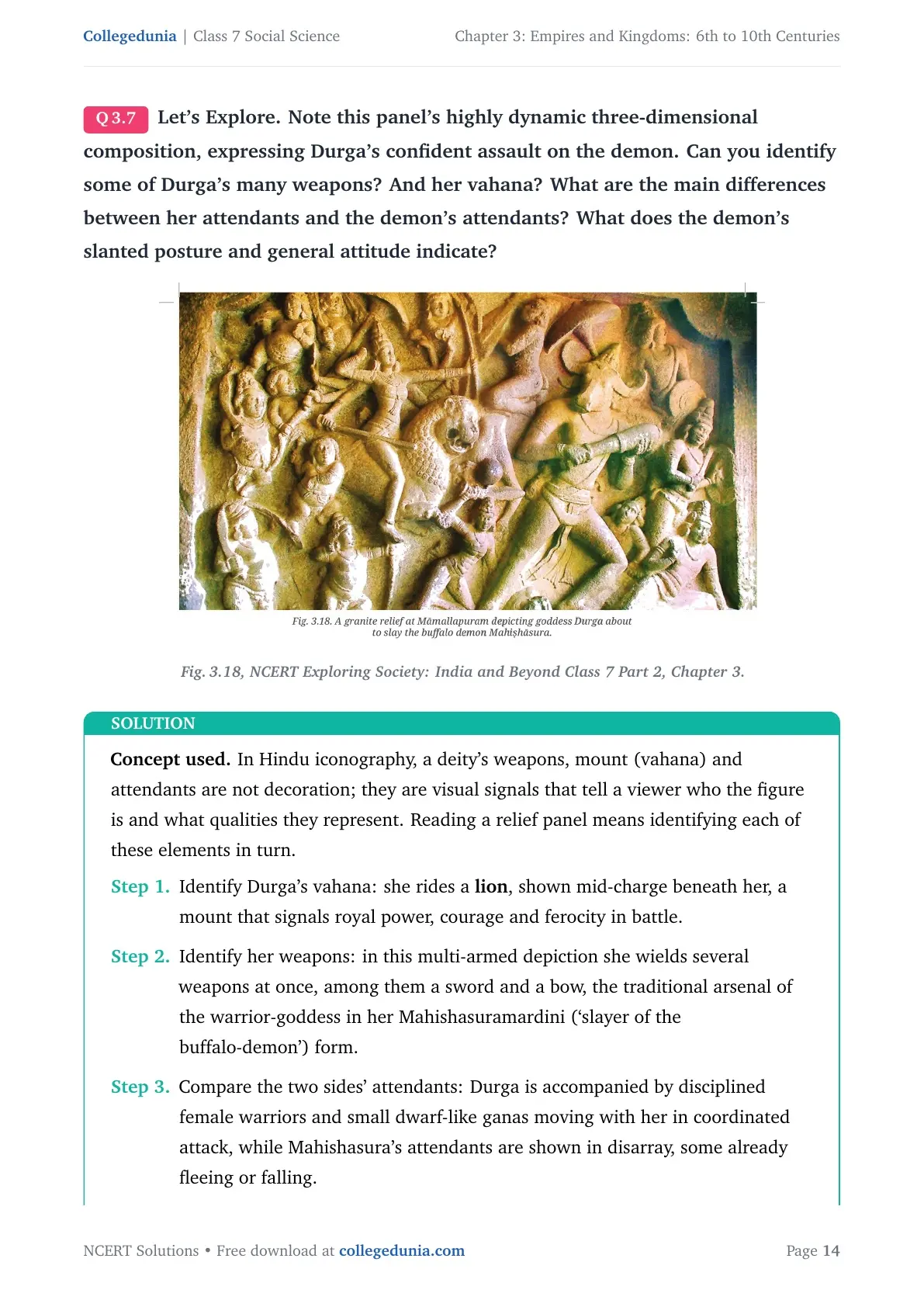
The Pallavas carved rock-cut and monolithic temples at Mamallapuram, including relief panels that still survive today. One famous panel shows the goddess Durga slaying the demon Mahishasura, carved with a dynamic, three-dimensional composition that Q3.7 asks you to describe in detail.
| Group | Region and deity | One fact worth remembering |
|---|---|---|
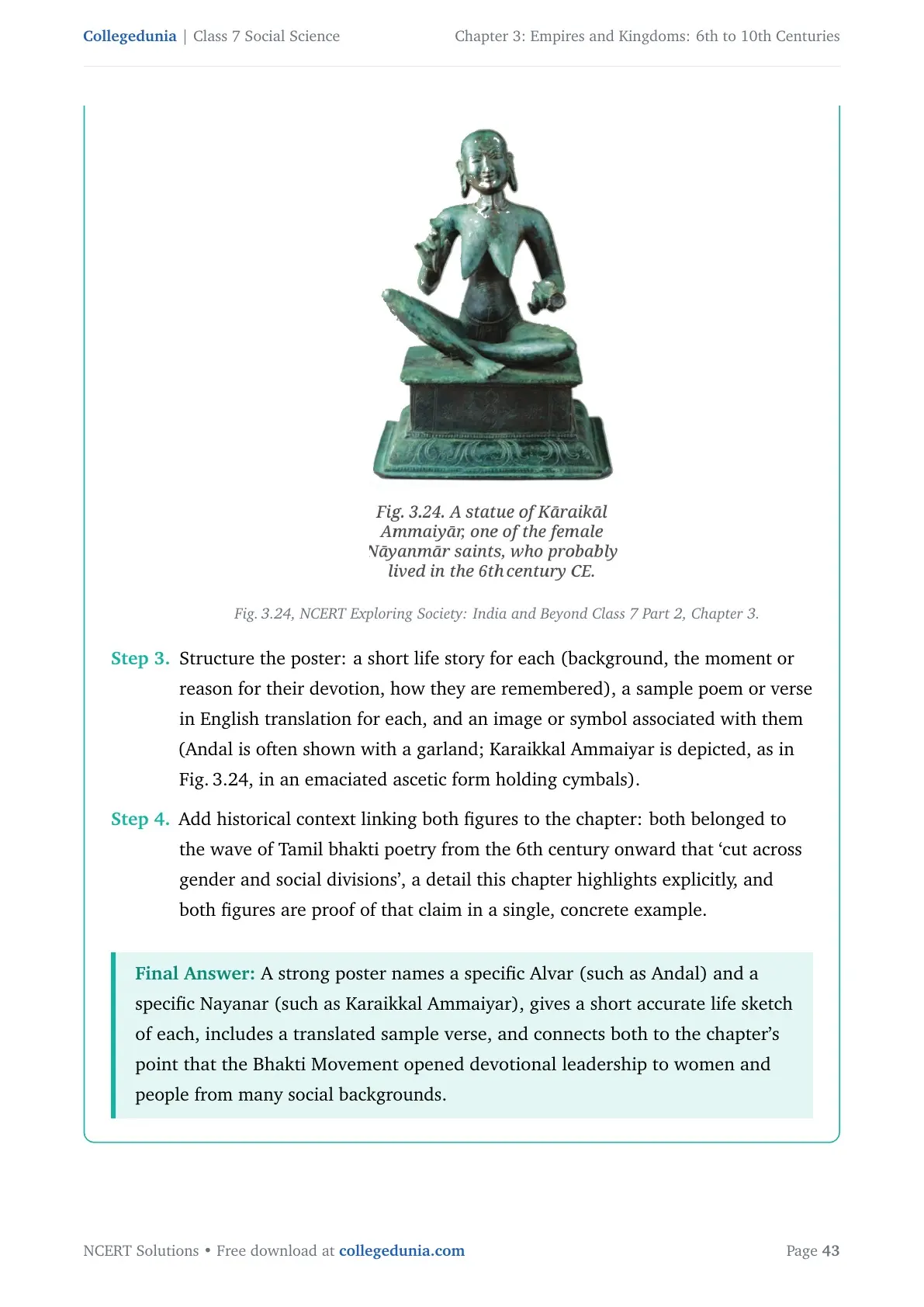
| Nayanars | Tamil region, devoted to Shiva | They came from every caste, including groups then treated as untouchable, such as the Pulaiyar and the Panars |
| Alvars | Tamil region, devoted to Vishnu | They wandered from place to place, composing devotional poetry and music in Tamil rather than Sanskrit |
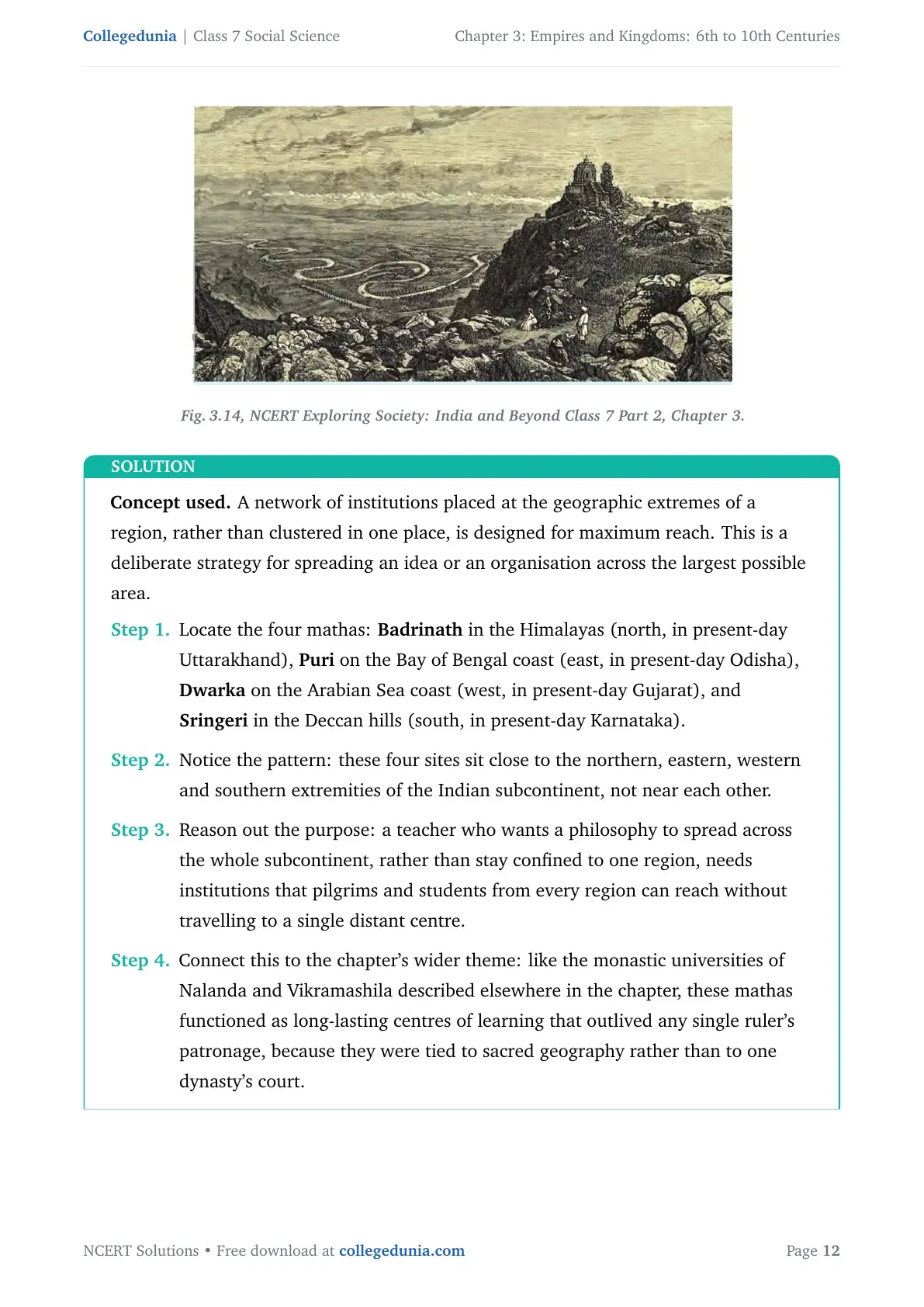
The Nayanars and Alvars are central to the Bhakti movement, which offered an emotional, personal path to devotion open to everyone. Adi Shankaracharya, the 8th-century philosopher, also travelled widely during this period and set up four mathas at Badrinath, Puri, Dwarka and Sringeri.
Common Mistakes Students Make in the Empires and Kingdoms Chapter
Read this list before your next test. Each mistake below has cost real marks on Class 7 papers.
- Mixing up Nayanars and Alvars. Nayanars are devoted to Shiva, Alvars are devoted to Vishnu, and both wrote in Tamil, not Sanskrit.
- Confusing the three tripartite powers. The Gurjara-Pratiharas, Palas and Rashtrakutas fought over Kannauj, not over their own home regions.
- Forgetting who defeated whom in the Deccan. Narasimhavarman I, the Pallava king, defeated Pulakeshin II and captured Vatapi.
- Writing that Harsha's assembly was annual. The Prayaga assembly was held every five years, not every year.
- Naming only the "big six" dynasties. The chapter mentions at least 12 regional powers, including the Kadambas, Maitrakas and Chahamanas, alongside the six major ones.
Student Feedback: In a Collegedunia survey of 10,780 Class 7 students, 61% named keeping the 12 regional dynasties straight as the hardest part of this chapter. Students who scored well shared one habit that helped. They built a single timeline linking each dynasty to its capital before writing any answer.
Source: 2026-27 Class 7 Social Science student survey. Sample of 10,780 students from CBSE schools across 15 states.
How to Study Empires and Kingdoms Effectively
NCERT Solutions for Class 7 Social Science Chapter 3 cover 24 questions and 12 dynasties, so a single reading rarely sticks. Split your revision into short blocks and build a dynasty-to-region map before trying to memorise dates. That is the whole point of NCERT Solutions Class 7 Social Science Chapter 3 Empires and Kingdoms: 6th to 10th Centuries on this page.
- Block 1, 25 minutes. Read the Gupta decline and the rise of regional kingdoms, then note the three tripartite powers and their regions.
- Block 2, 35 minutes. Learn Harshavardhana's reign, the Prayaga assembly, and the Chalukya, Pallava and Chola table.
- Block 3, 35 minutes. Learn the Huna and Arab Sindh section together with Xuanzang's travels and Mamallapuram's temples.
- Night before, 20 minutes. Re-read the Common Mistakes list, then attempt Q3.4, Q3.9 and Q3.20 from memory and check them against the solutions PDF.
Short on time? The Empires and Kingdoms Class 7 important questions to focus on first are Q3.4, Q3.9 and Q3.20. Together they cover the tripartite struggle, the Arab invasion of Sindh and a comparison between the two waves of foreign invasion.
More Empires and Kingdoms Class 7 Resources
Also Check: the same chapter is available in other formats on Collegedunia. Read the solutions first, then the notes for a deeper topic walk-through.
| Resource | Best used for | Open it |
|---|---|---|
| NCERT Notes | Topic-by-topic summary of the tripartite struggle, the Deccan dynasties and the Bhakti movement | Empires and Kingdoms Class 7 Notes (coming soon) |
| NCERT Book PDF | The official 2026-27 chapter text with every figure, coin image and map | Class 7 Social Science Part 2 Chapter 3 Book PDF |
| Handwritten Notes | Quick one-sitting revision in clear handwriting | Empires and Kingdoms Class 7 Handwritten Notes |
The NCERT Solutions Class 7 Social Science Chapter 3 Empires and Kingdoms: 6th to 10th Centuries page pairs well with the Notes and the Book PDF above. Use the solutions first for exam-ready answers, then use the Book PDF to revisit the original maps, coins and temple images.
NCERT Solutions for Class 7 Social Science Part 2: All Chapters
The table below lists NCERT Solutions for every chapter of Part 2. Move to the next chapter once this one is done.
| Chapter | Resource |
|---|---|
| Chapter 1 | The Story of Indian Farming Class 7 NCERT Solutions |
| Chapter 2 | India and Her Neighbours Class 7 NCERT Solutions |
| Chapter 3 | Empires and Kingdoms 6th to 10th Centuries Class 7 NCERT Solutions |
| Chapter 4 | Turning Tides 11th and 12th Centuries Class 7 NCERT Solutions (coming soon) |
| Chapter 5 | India, a Home to Many Class 7 NCERT Solutions (coming soon) |
| Chapter 6 | The State, the Government, and You Class 7 NCERT Solutions (coming soon) |
| Chapter 7 | Infrastructure, Engine of India's Development Class 7 NCERT Solutions (coming soon) |
| Chapter 8 | Banks and the Magic of Finance Class 7 NCERT Solutions (coming soon) |
Empires and Kingdoms Class 7 Social Science NCERT Solutions FAQs
Ques. Where can I download the NCERT Solutions for Class 7 Social Science Chapter 3 PDF?
Ans. Use the download option at the top of this page. The class 7 social science chapter 3 solutions pdf is free, covers all 24 questions from the chapter, and is available in both Normal and HD quality.
Ques. What was the Kannauj tripartite struggle?
Ans. It was a long contest among the Gurjara-Pratiharas, the Palas and the Rashtrakutas to control Kannauj, a wealthy city in the Ganga valley. Each dynasty held the city at different points, but none kept it permanently, and the struggle shaped north Indian politics for over a century.
Ques. Who was Harshavardhana and why does he matter to this chapter?
Ans. Harshavardhana became king in 606 CE, shifted his capital to Kannauj, and ruled much of northern and eastern India. His death without a clear heir opened the way for the tripartite struggle that fills the rest of the chapter.
Ques. How is the class 7 social science chapter 3 empires and kingdoms PDF different from the book?
Ans. The printed book gives you the chapter text, maps and questions. This class 7 social science chapter 3 pdf adds fully worked, step-by-step answers to every Let's Explore, Think About It and Let's Act question, written in simple Class 7 language.
Ques. Who were the Chalukyas, Pallavas and Cholas?
Ans. They were three dynasties that shaped the Deccan and the far south between the 6th and 10th centuries. The Chalukyas ruled from Vatapi, the Pallavas from Kanchipuram and built the temples at Mamallapuram, and the Cholas were revived under Vijayalaya in the 9th century.
Ques. What happened during the Huna invasions?
Ans. The Hunas, led first by Toramana and then his son Mihirakula, invaded India as Gupta power weakened. Their advance was finally stopped by Yashodharman at Dashapura, ending their push into the Indian heartland.
Ques. What does the chapter say about the Arab conquest of Sindh?
Ans. In 712 CE, the Arab commander Muhammad bin Qasim defeated King Dahar of Sindh, an event recorded in the chronicle called the Chachnama. Further Arab expansion into the Indian heartland was later stopped by Gurjara-Pratihara resistance.
Ques. Why is Xuanzang's travel account important to historians?
Ans. Xuanzang was a Chinese Buddhist pilgrim who travelled across India in the 7th century, visiting centres such as Nalanda and meeting Harshavardhana. His detailed written account is one of the best outside sources historians have for politics, religion and daily life in this period.
Ques. Is the class 7 social science part 2 chapter 3 pdf download available for free?
Ans. Yes. The class 7 social science part 2 chapter 3 pdf download on this page is completely free and follows the current 2026-27 edition of Exploring Society: India and Beyond, Grade 7 Part 2.
Ques. How many dynasties does the Empires and Kingdoms chapter mention?
Ans. The chapter names at least 12 regional dynasties. Alongside the six major powers, the Gurjara-Pratiharas, Palas, Rashtrakutas, Chalukyas, Pallavas and Cholas, it also lists smaller dynasties such as the Kadambas, Maitrakas, Chahamanas, Paramaras, Somavamshis and Tomaras.
Ques. Who were the Nayanars and Alvars?
Ans. The Nayanars were Bhakti-movement saints devoted to Shiva, and the Alvars were devoted to Vishnu, both active in the Tamil region between the 6th and 10th centuries. They came from every caste, including groups then treated as untouchable, and composed devotional poetry and music in Tamil rather than Sanskrit.
Ques. What is a land grant, and why does the chapter mention it?
Ans. A land grant was a formal gift of land made by a ruler, usually recorded on a copper plate or stone inscription. The chapter mentions land grants because their inscriptions were often written in two languages at once, Sanskrit for the ruler's dynastic history and a regional language for the practical details.
Ques. Is this NCERT Solutions PDF aligned with the 2026-27 syllabus?
Ans. Yes. This page follows the current 2026-27 edition of Exploring Society: India and Beyond, Grade 7 Part 2, and every answer matches the chapter content and question order printed in that edition.



Comments