




Class 7 Social Science Part 2 Chapter 3 Empires and Kingdoms: 6th to 10th Centuries covers the age of regional powers. These class 7 social science handwritten notes chapter 3 Empires and Kingdoms: 6th to 10th Centuries follow the 2026-27 NCERT and cover rival kingdoms, the Bhakti tradition and cultural pluralism.
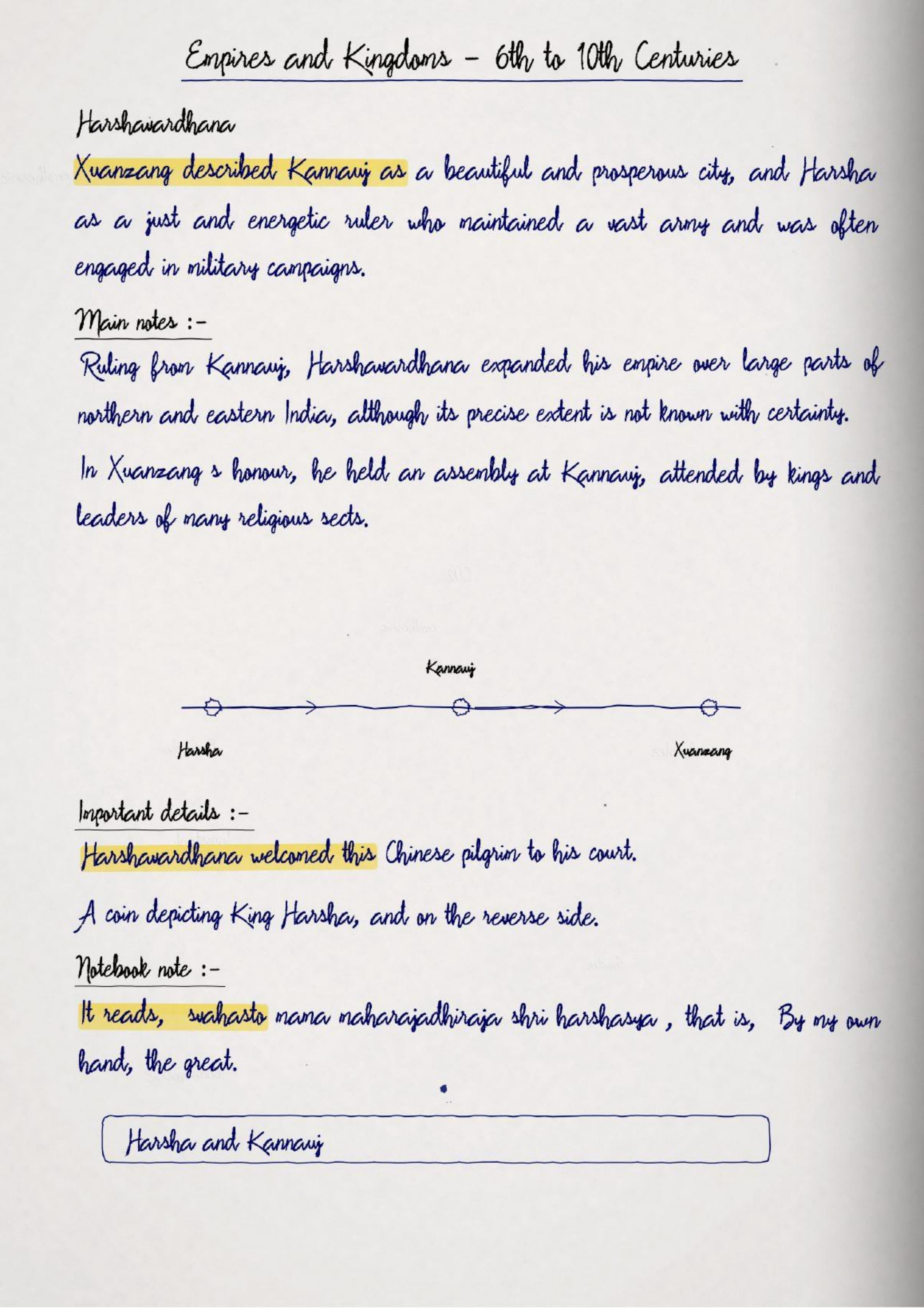
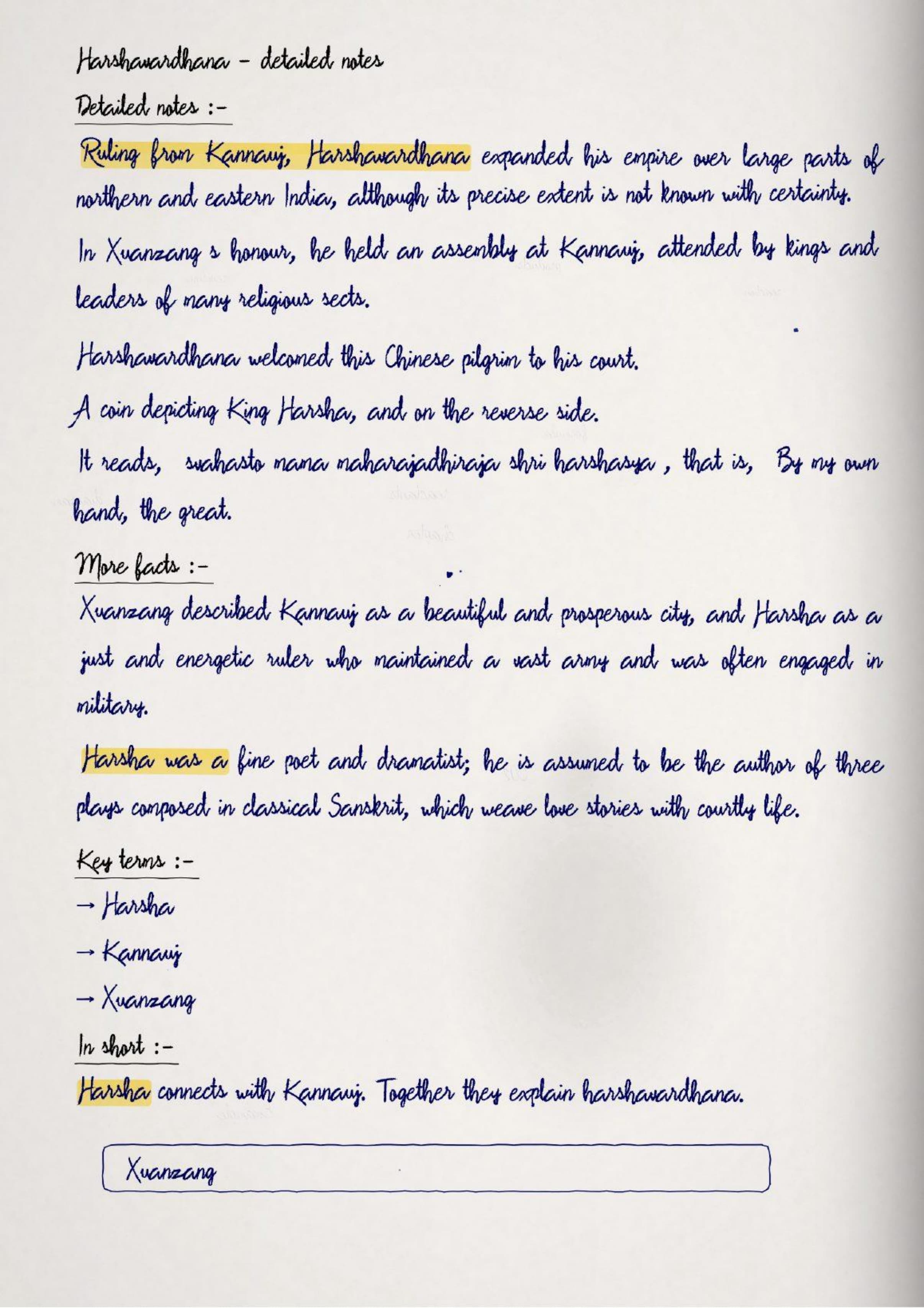
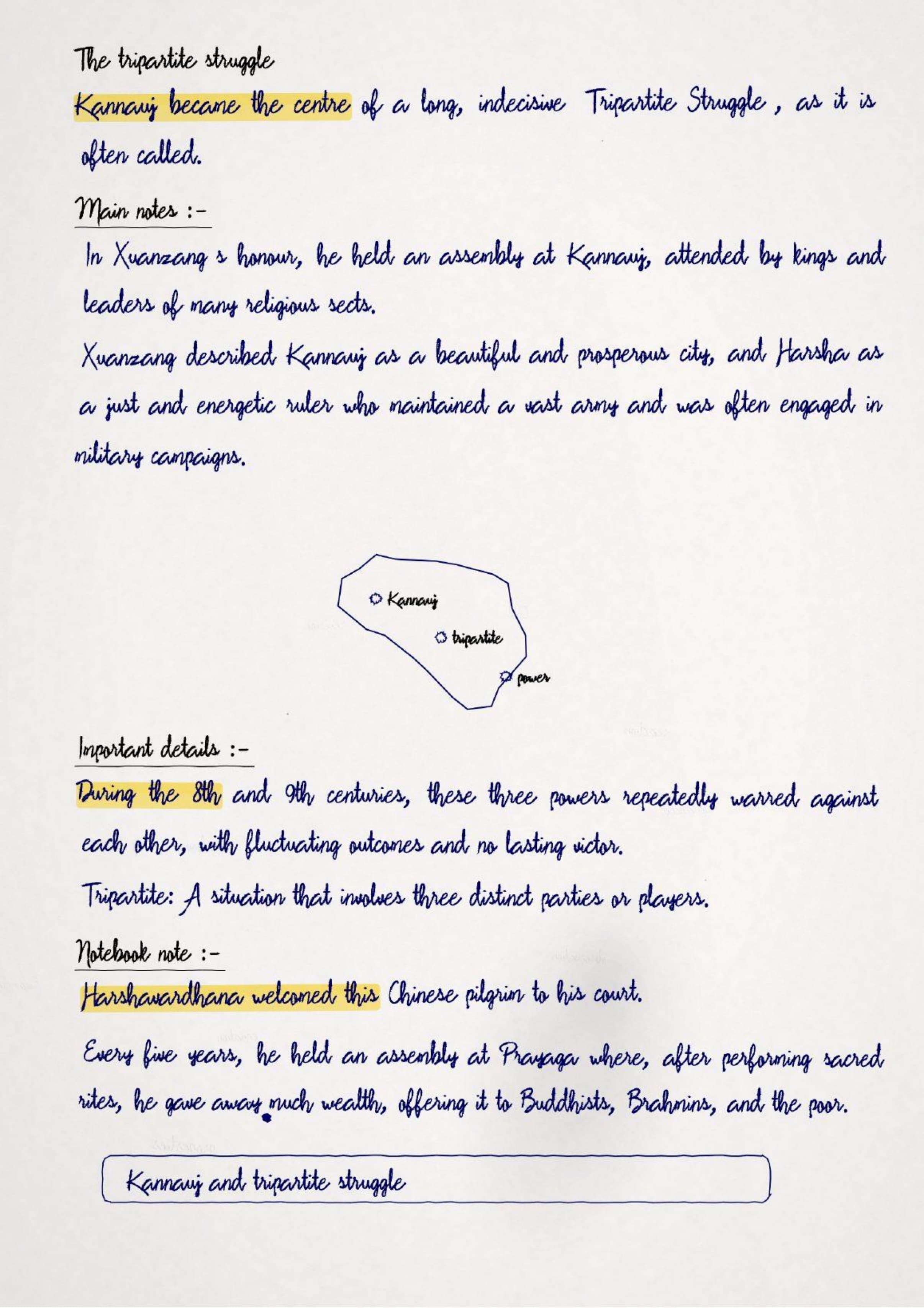
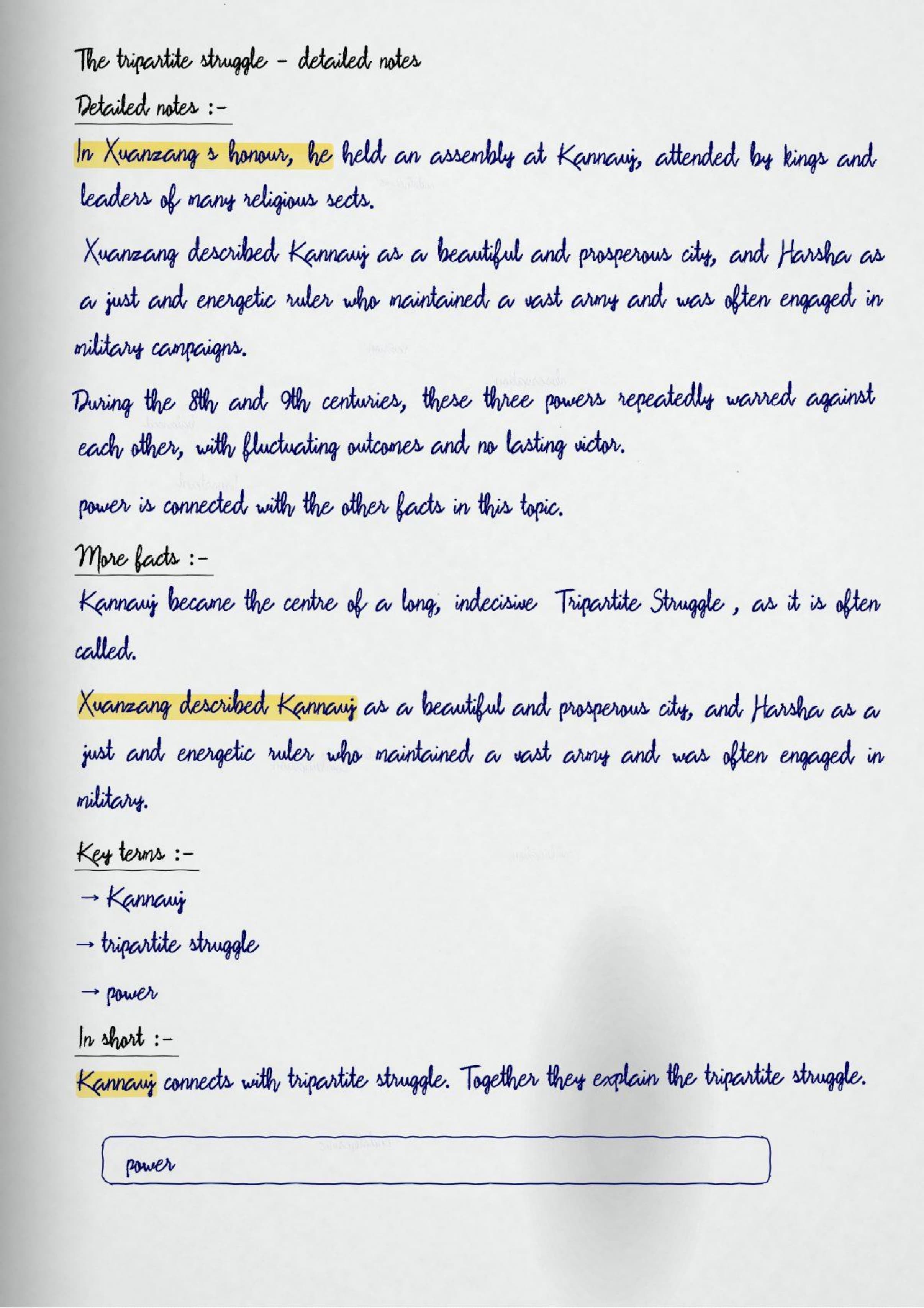
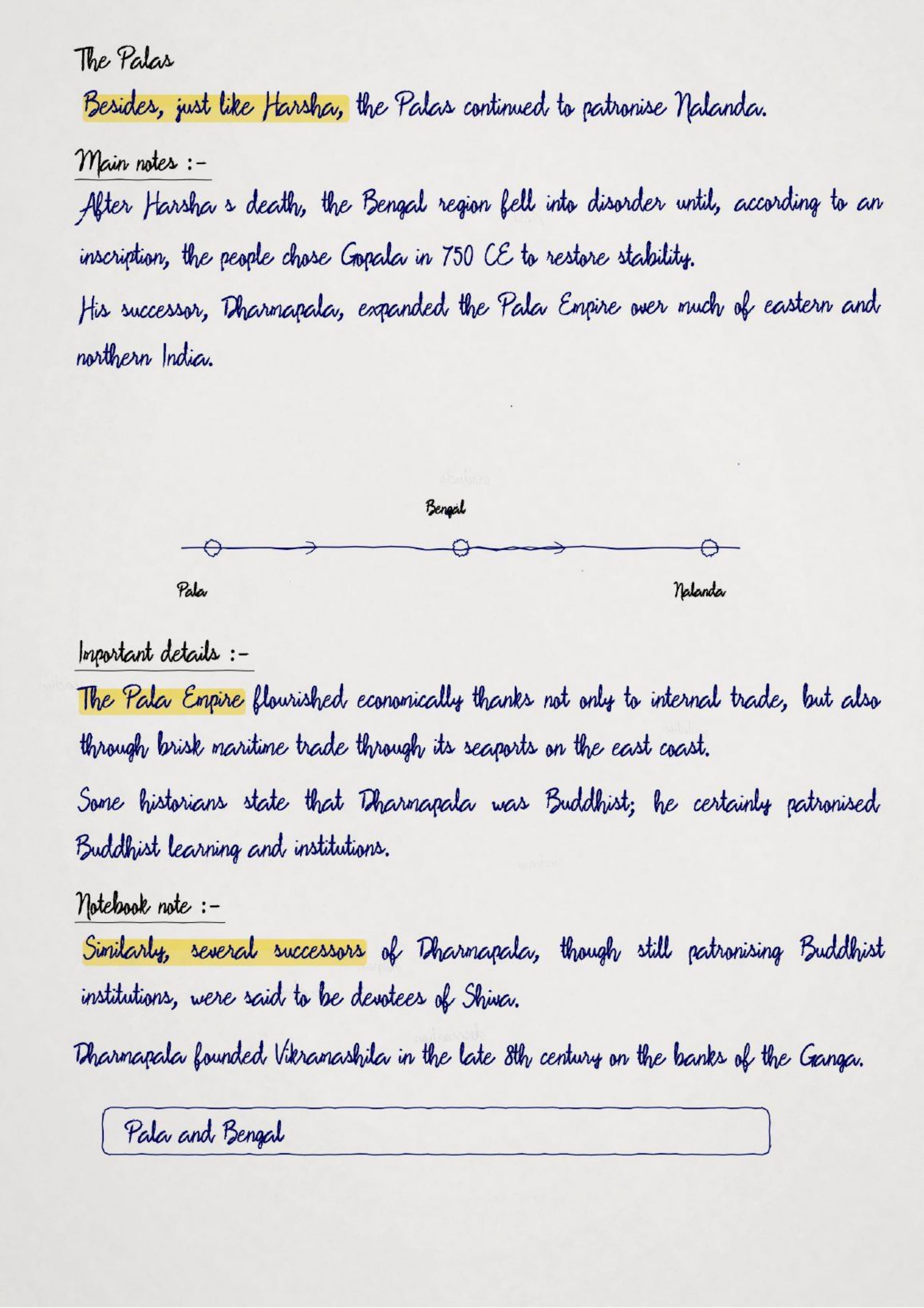
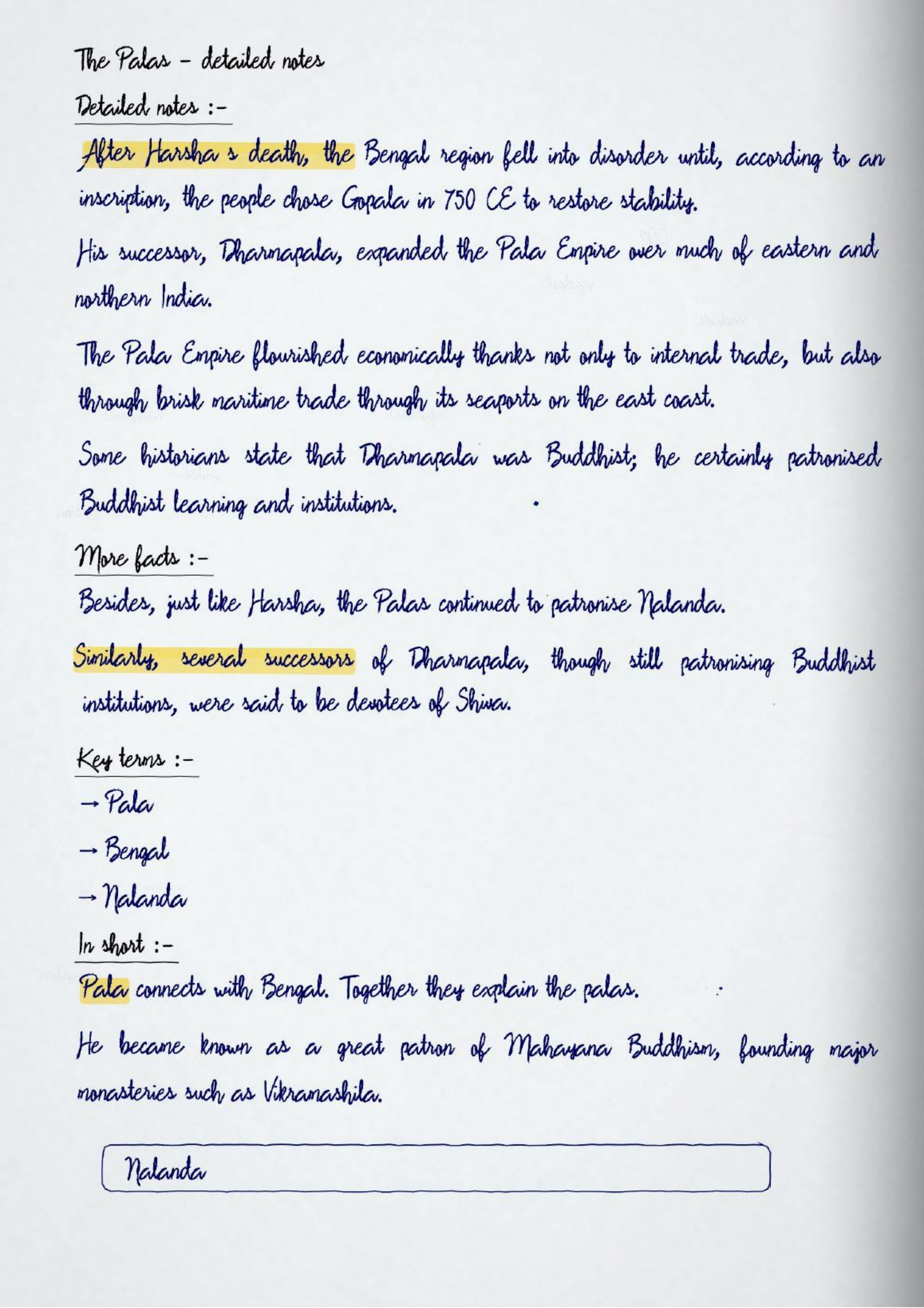
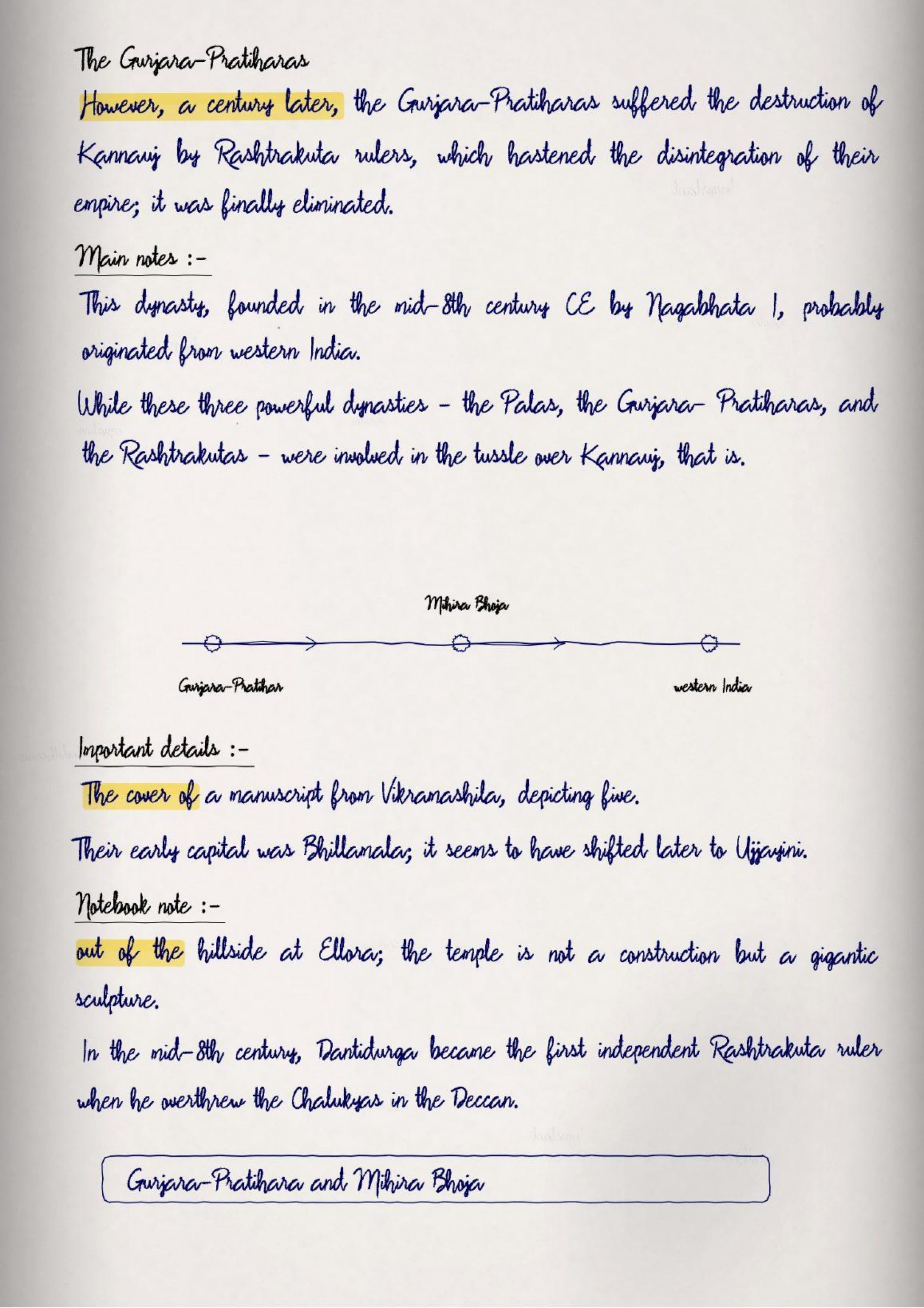
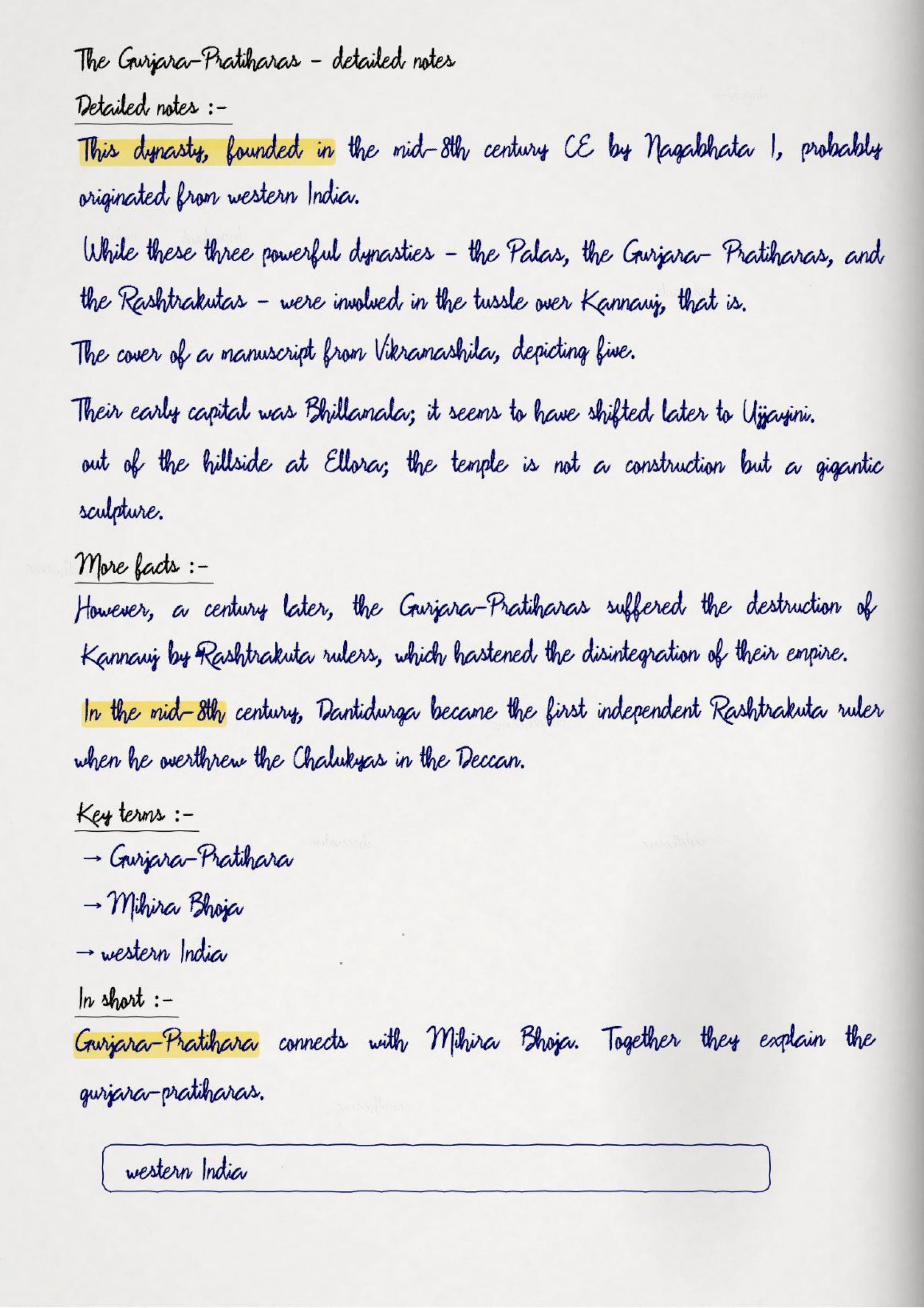
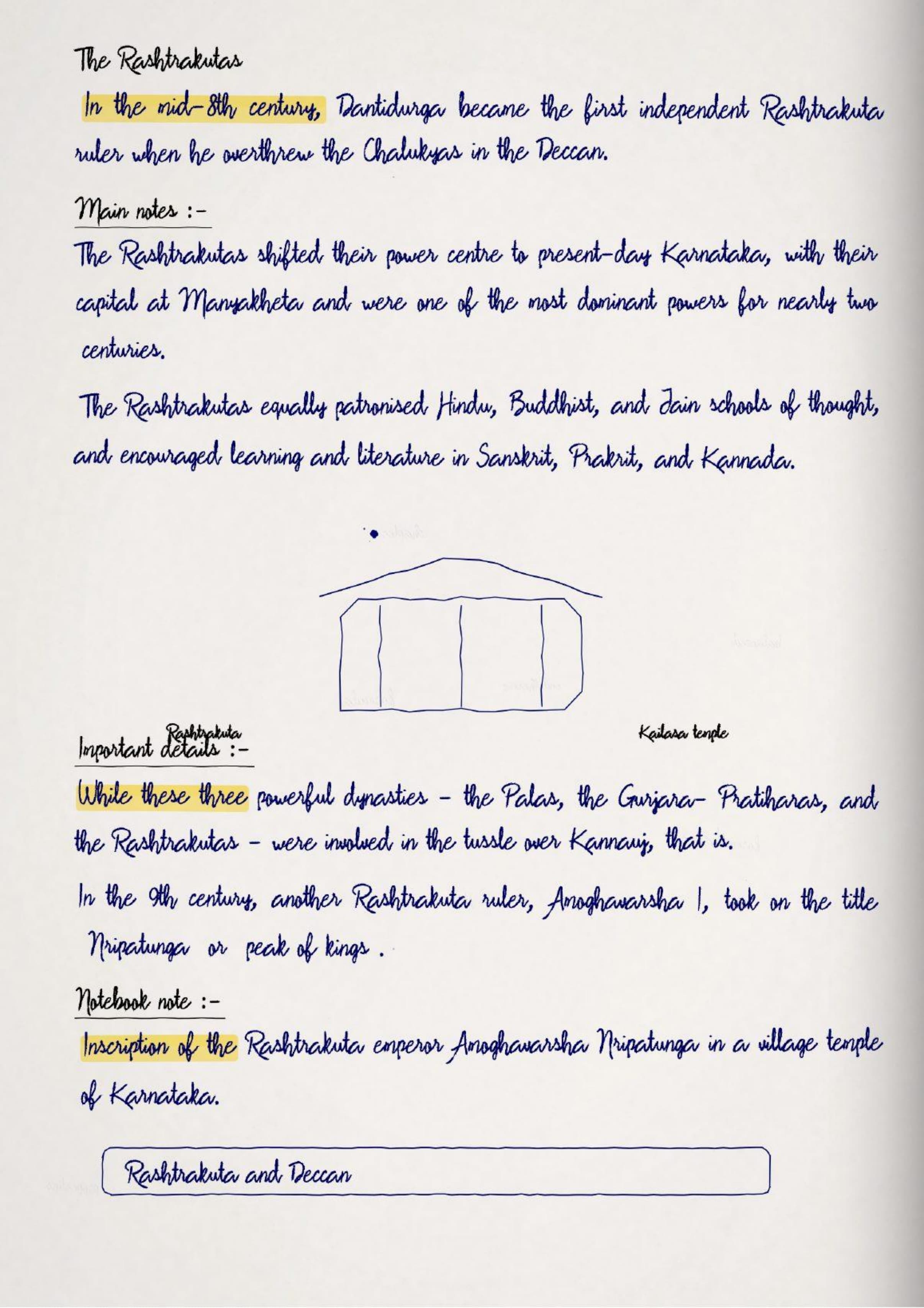
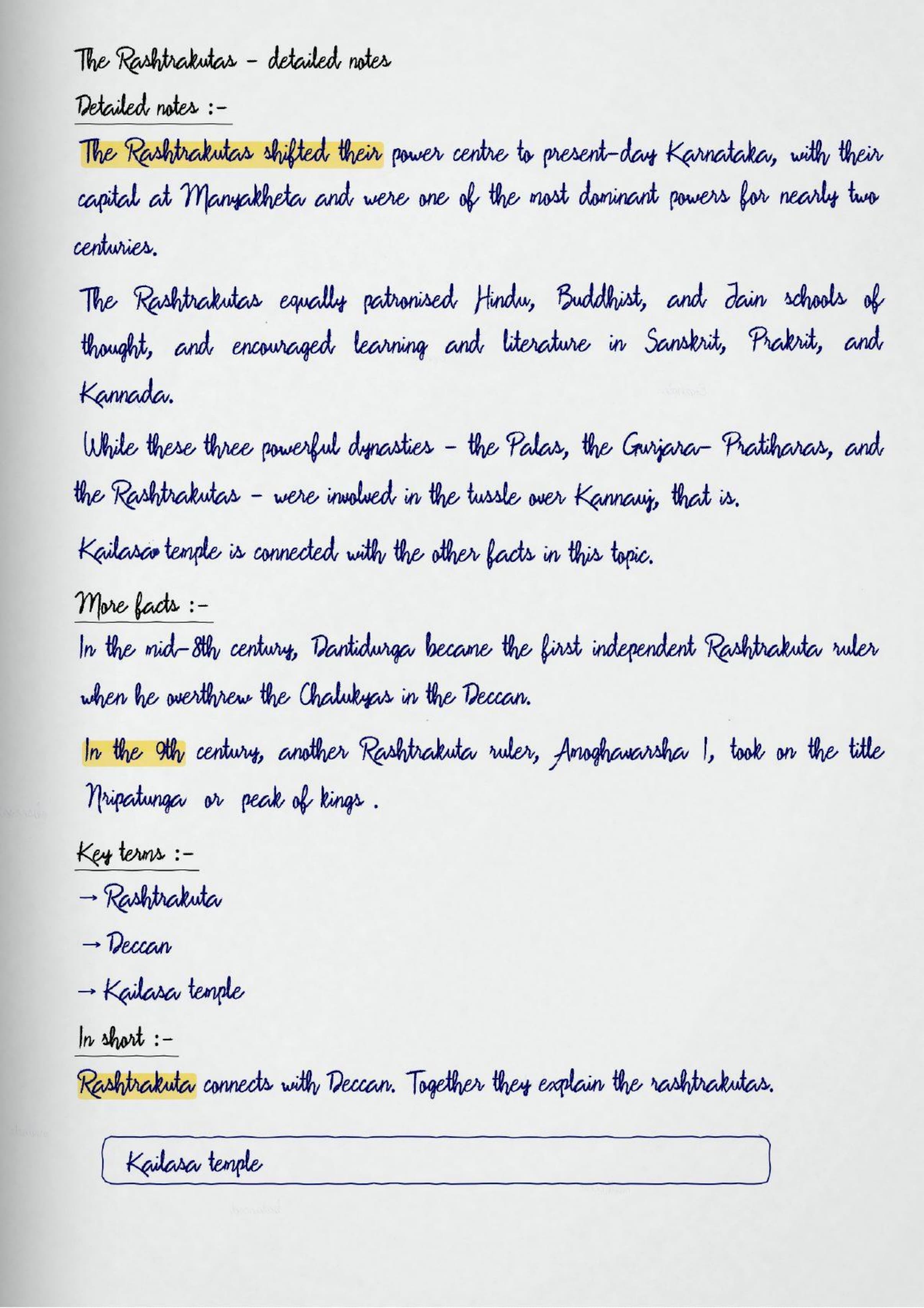
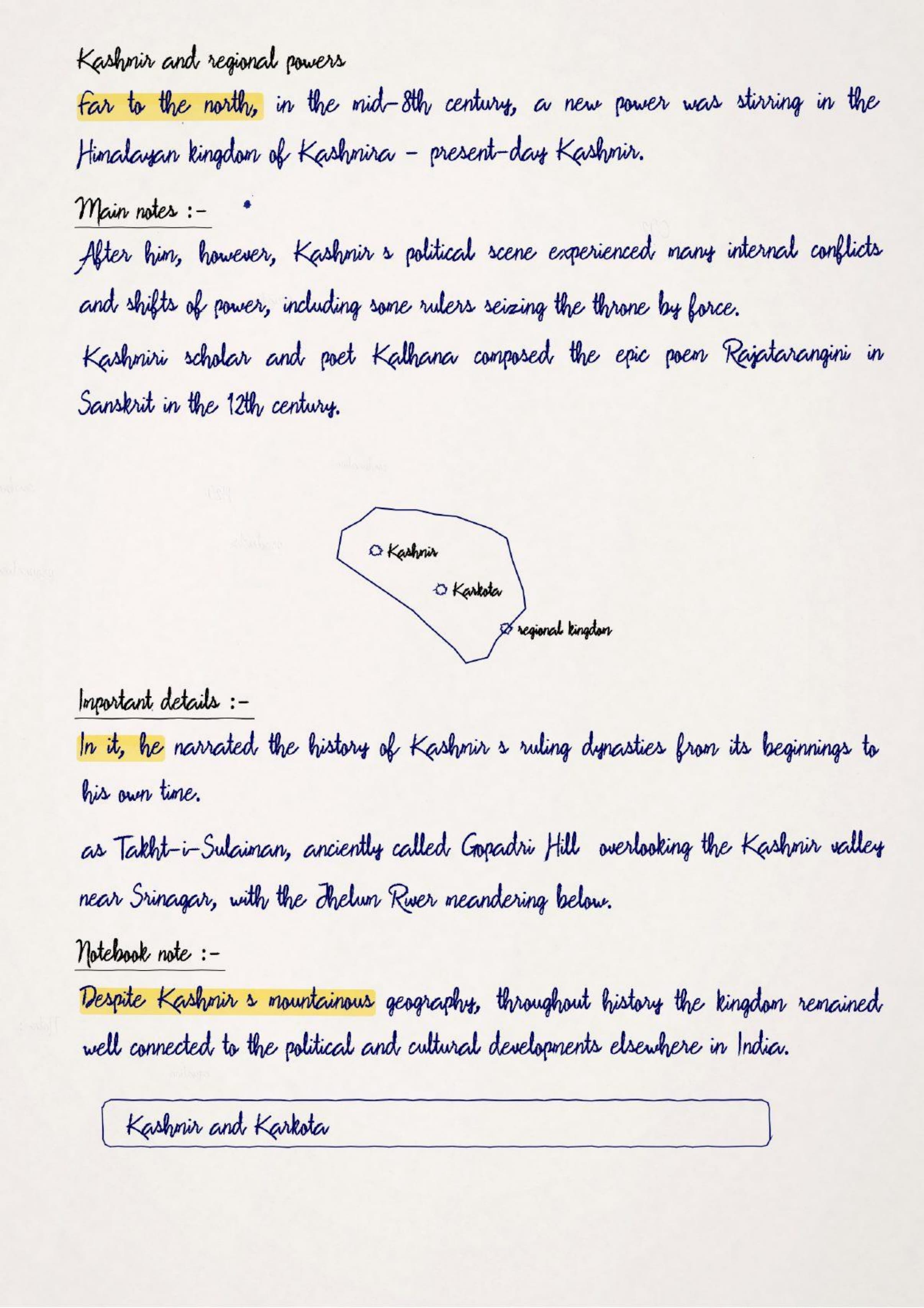
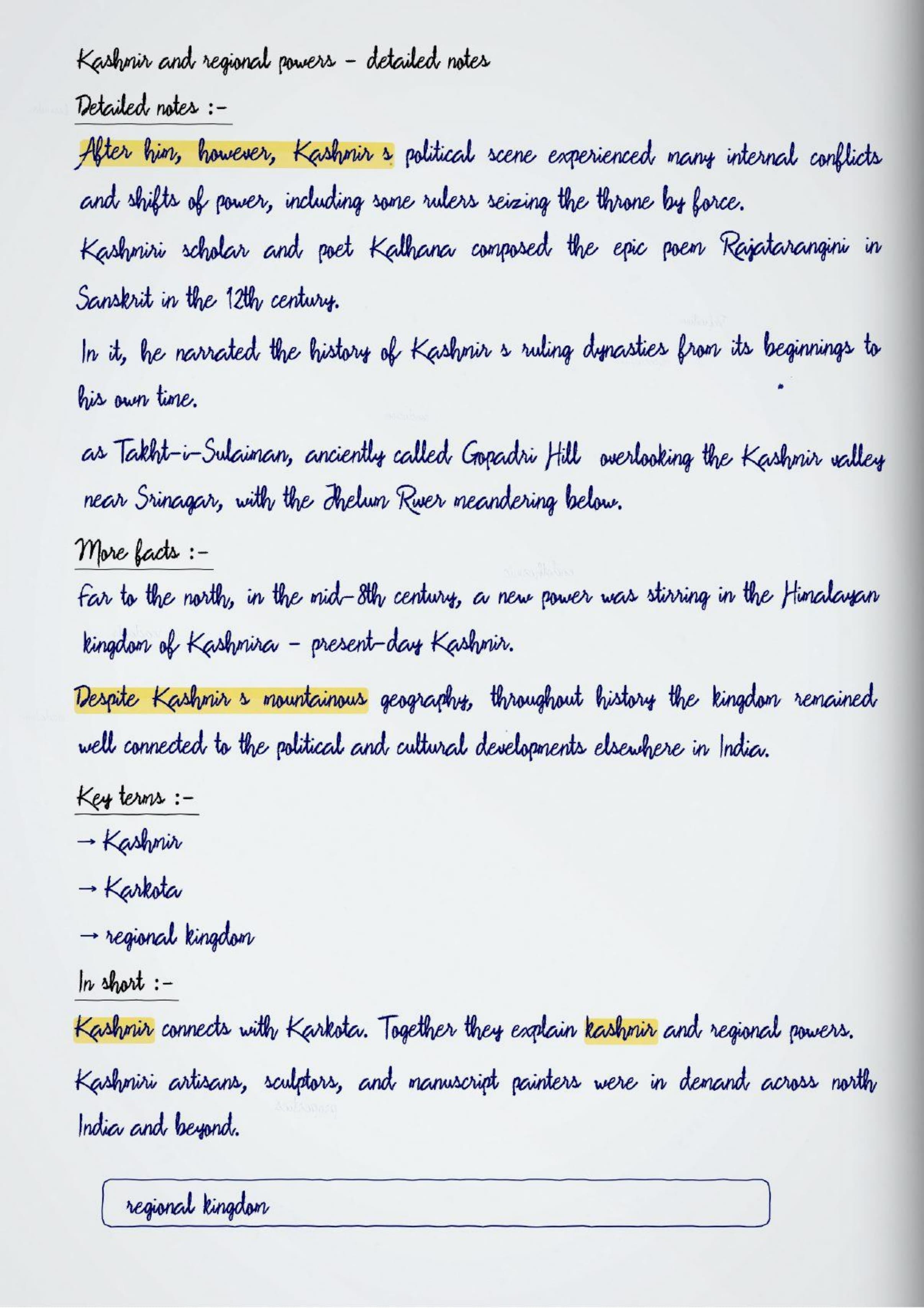
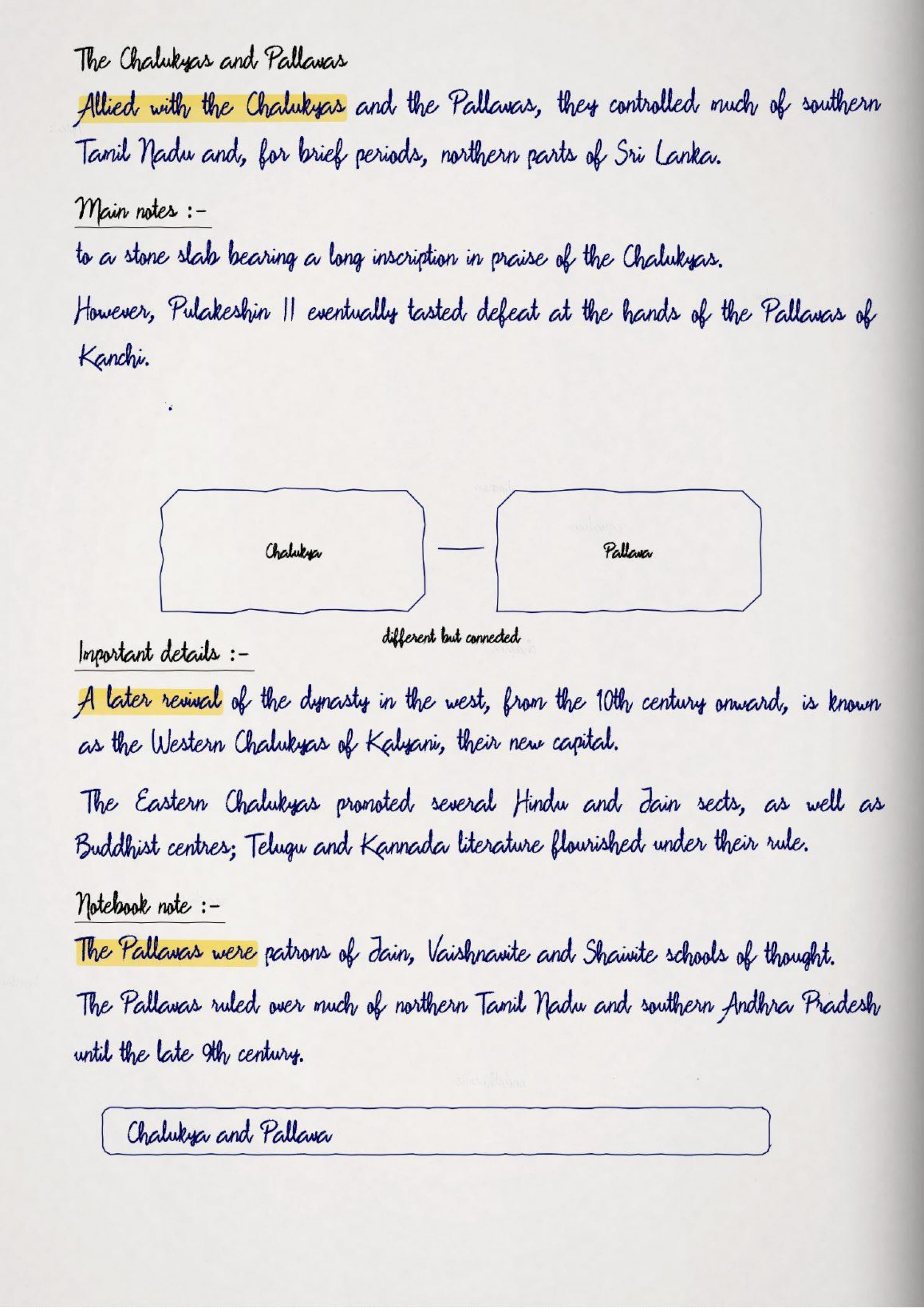
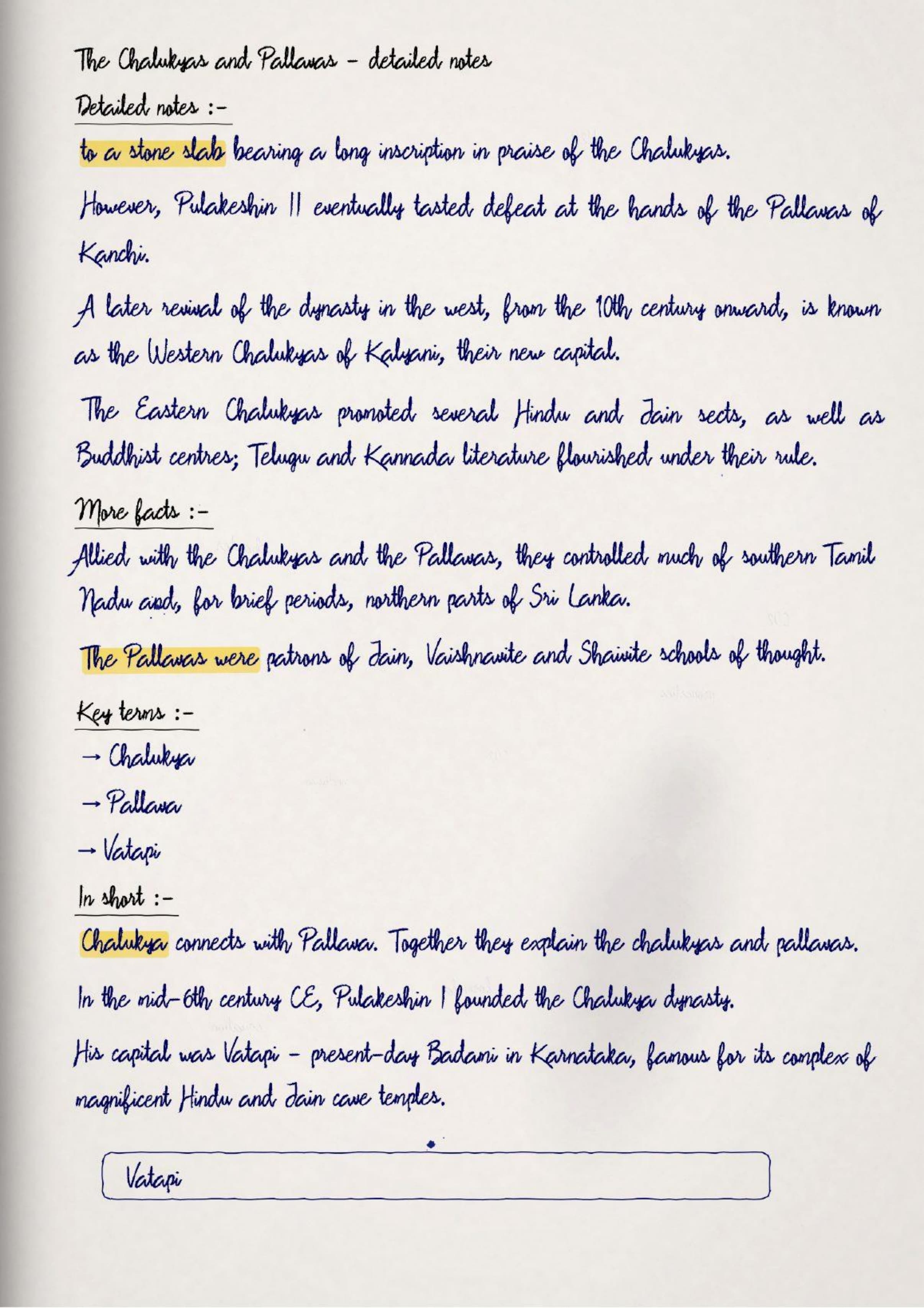
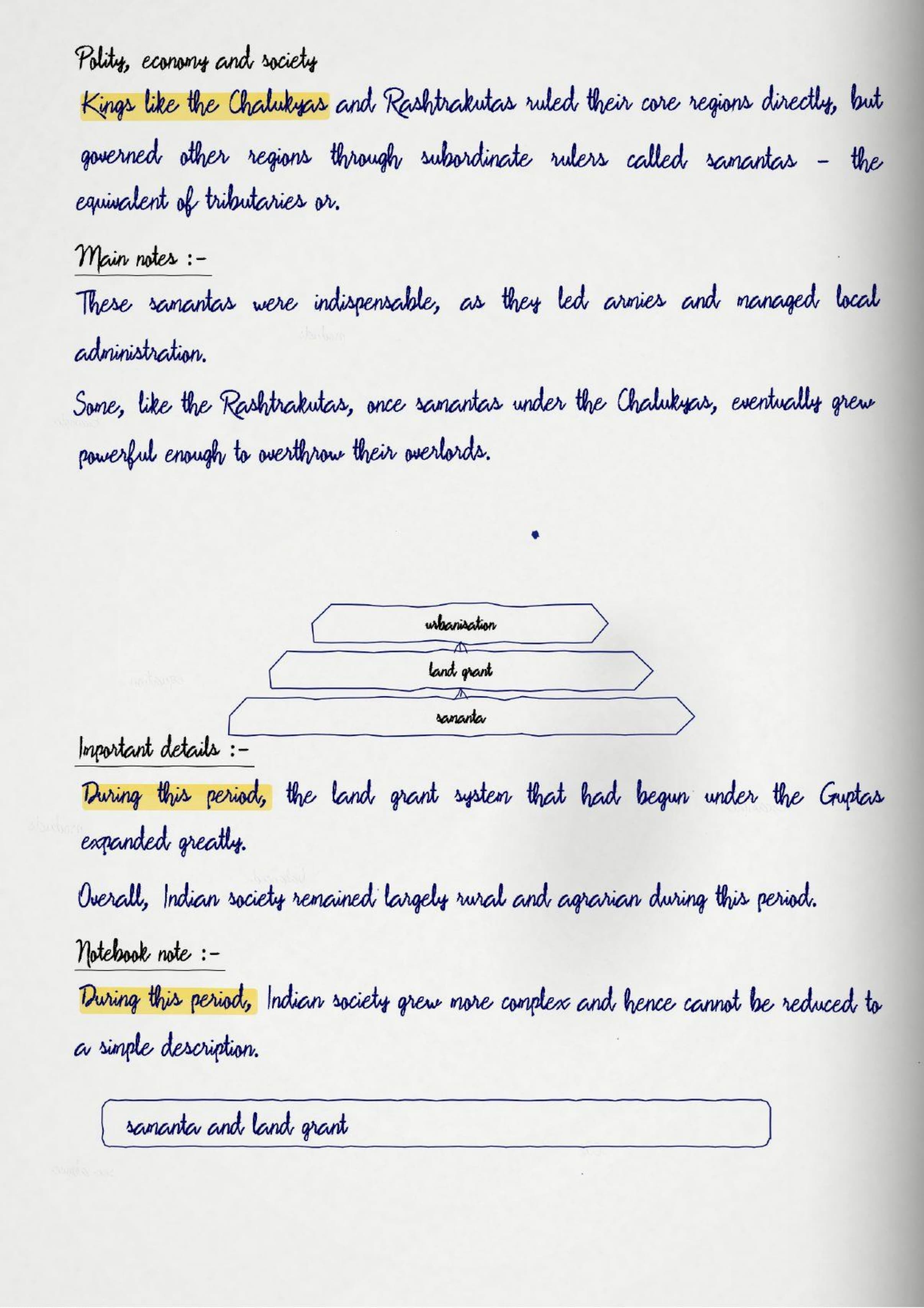
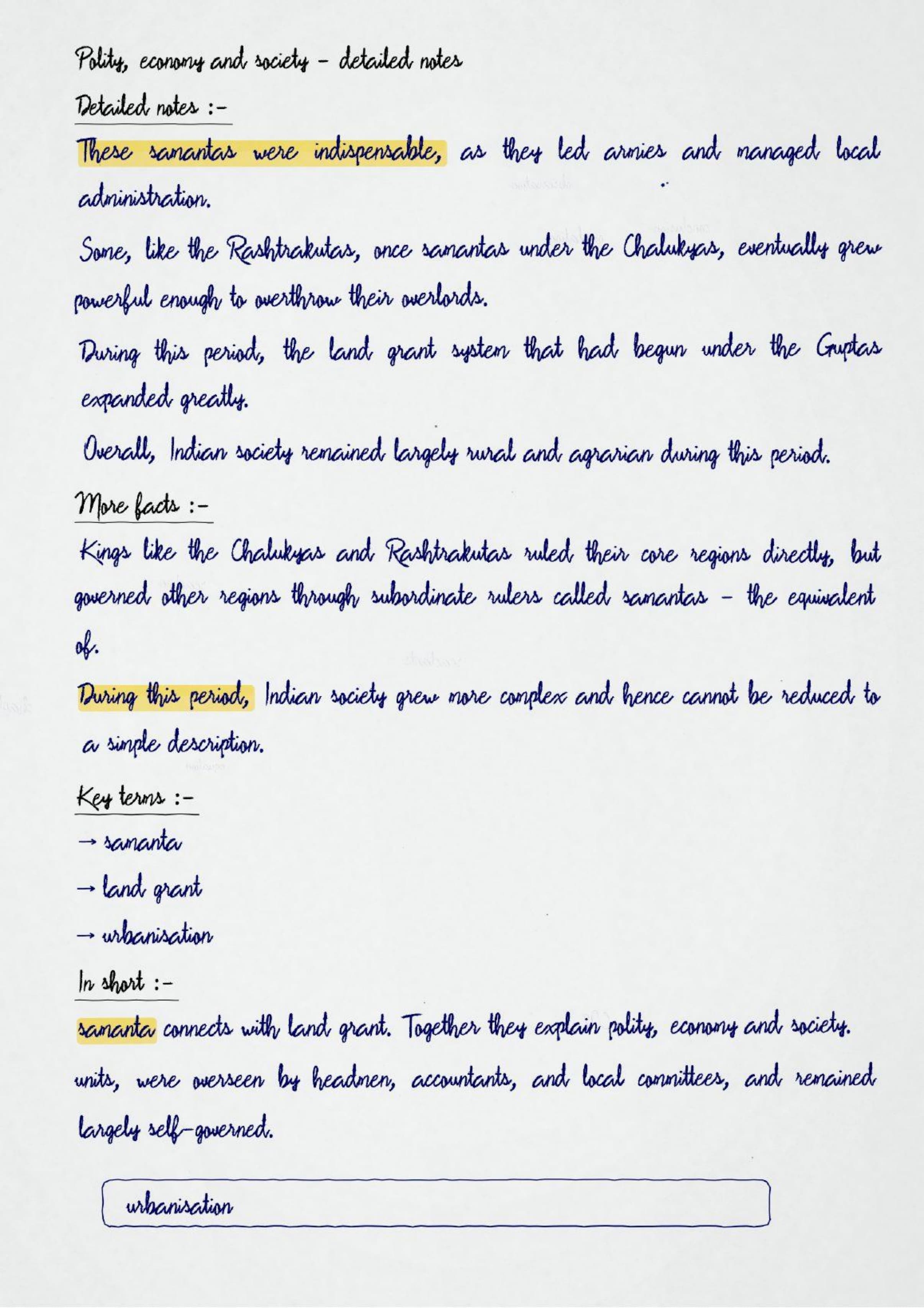
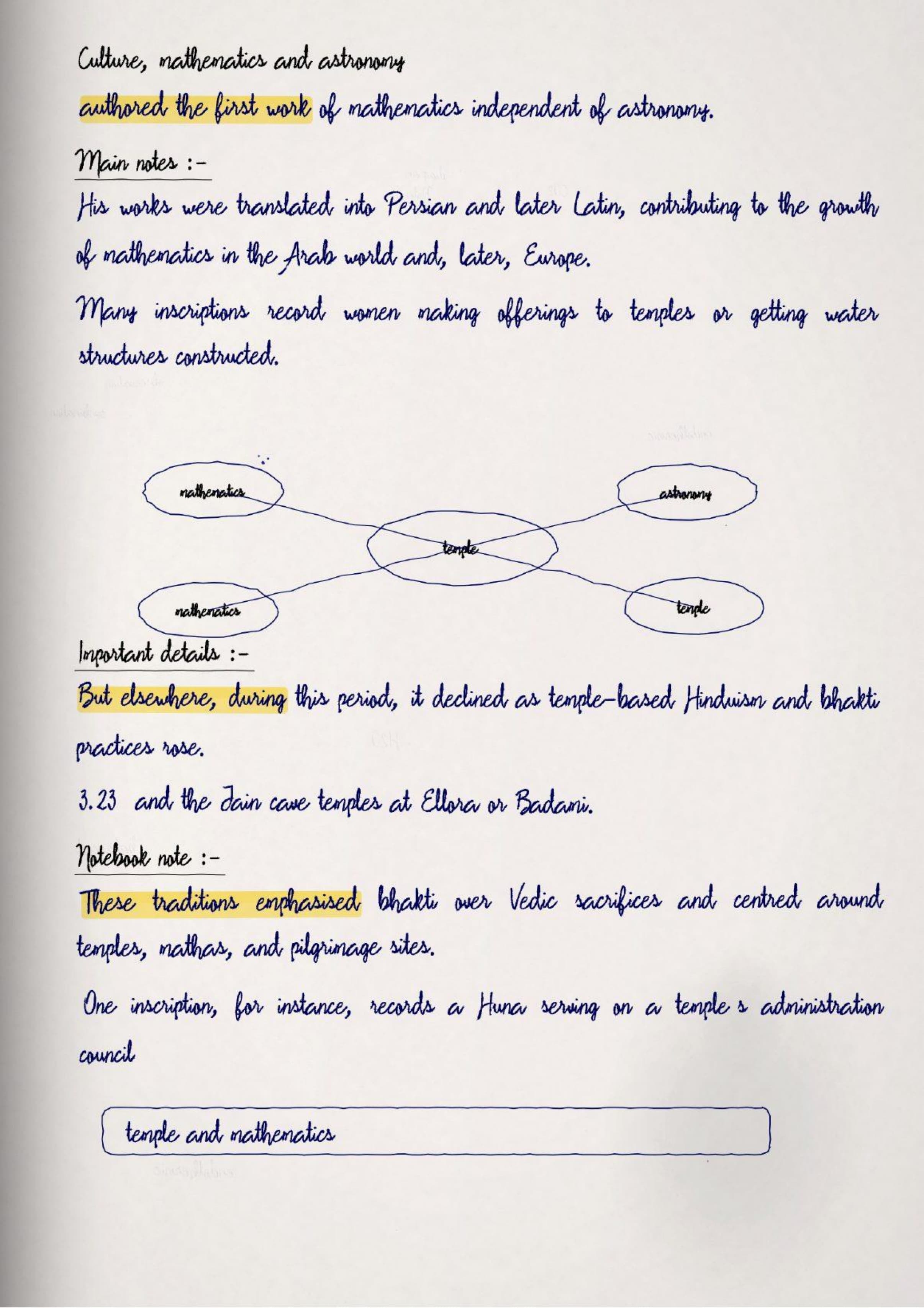
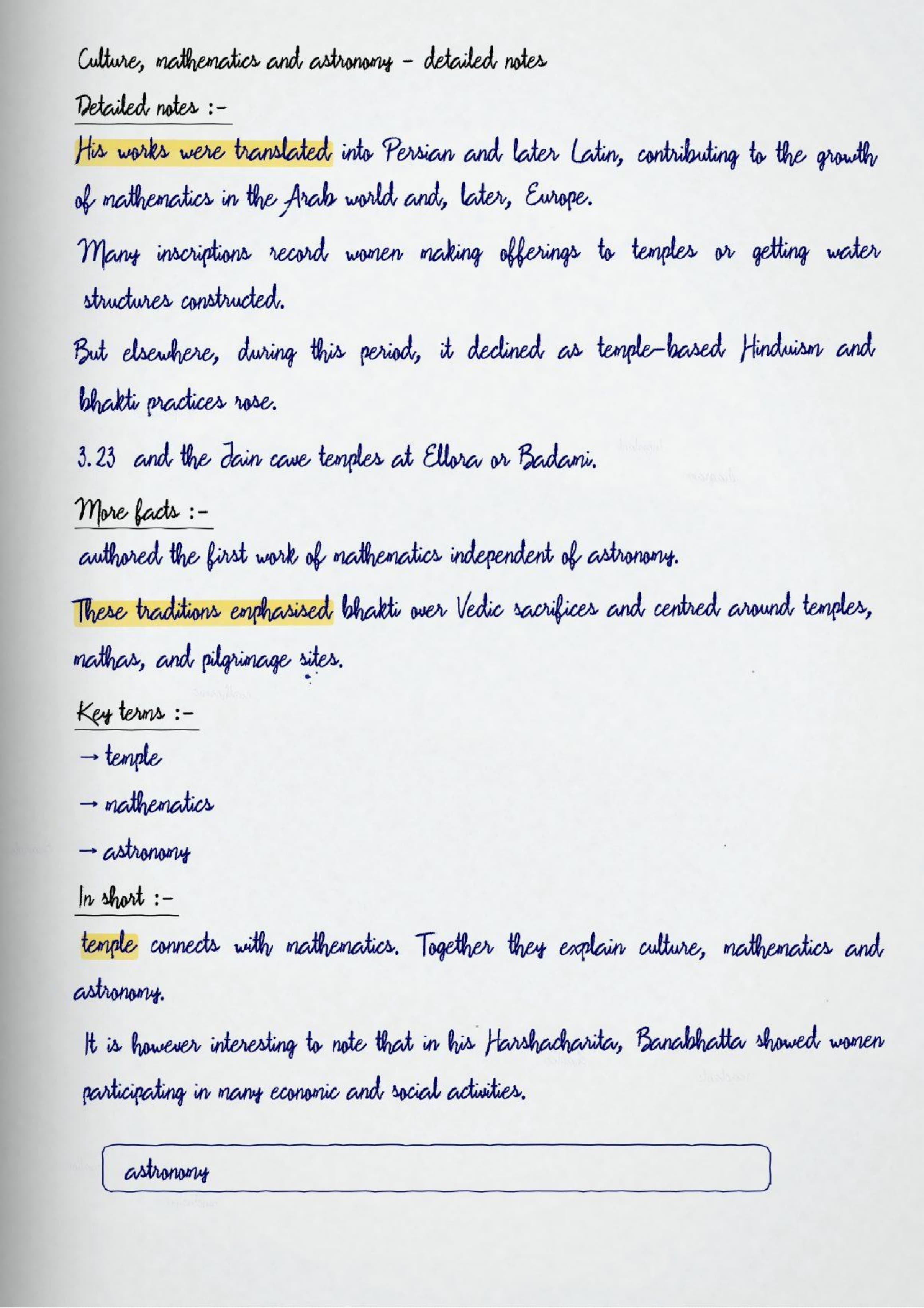
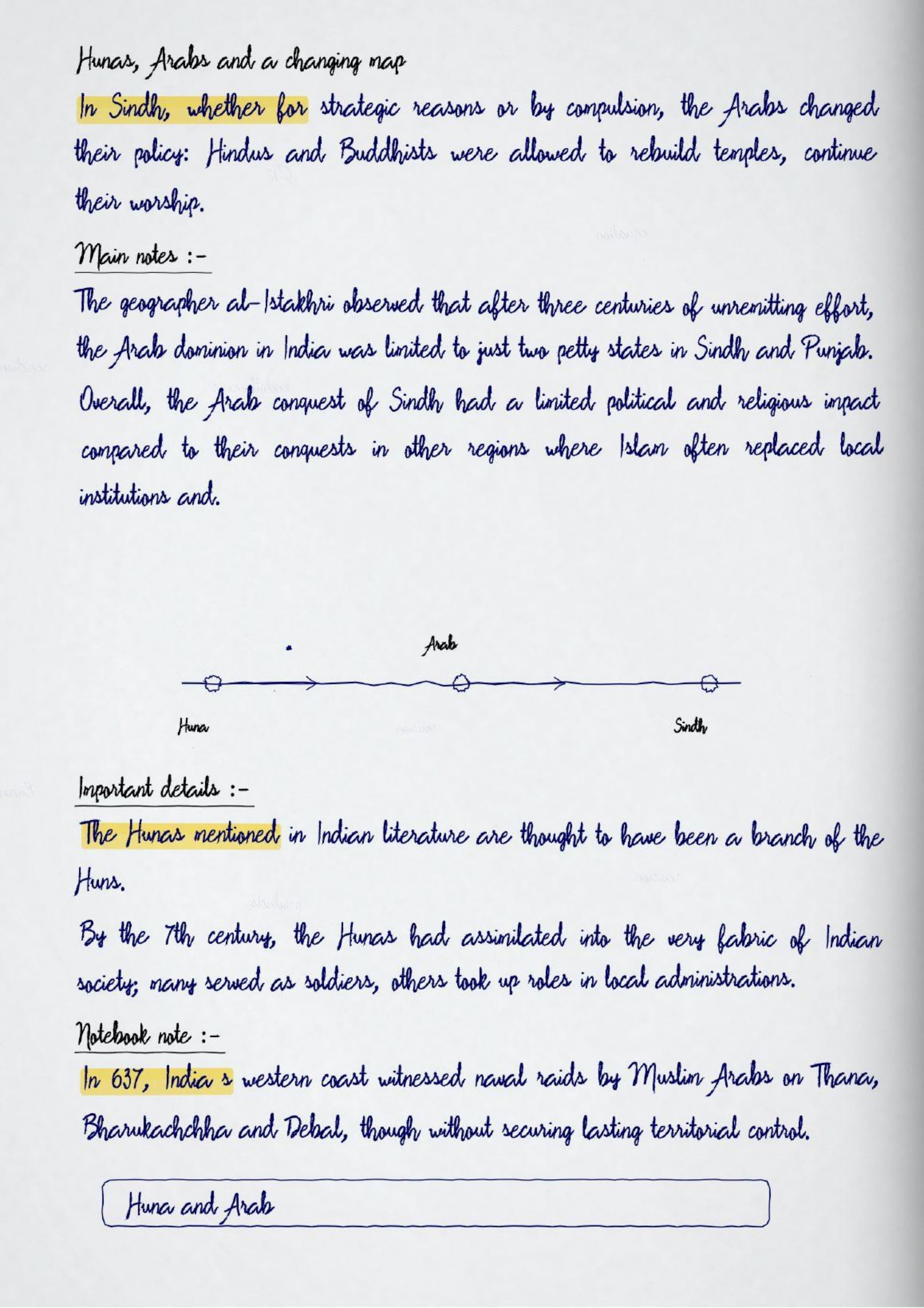
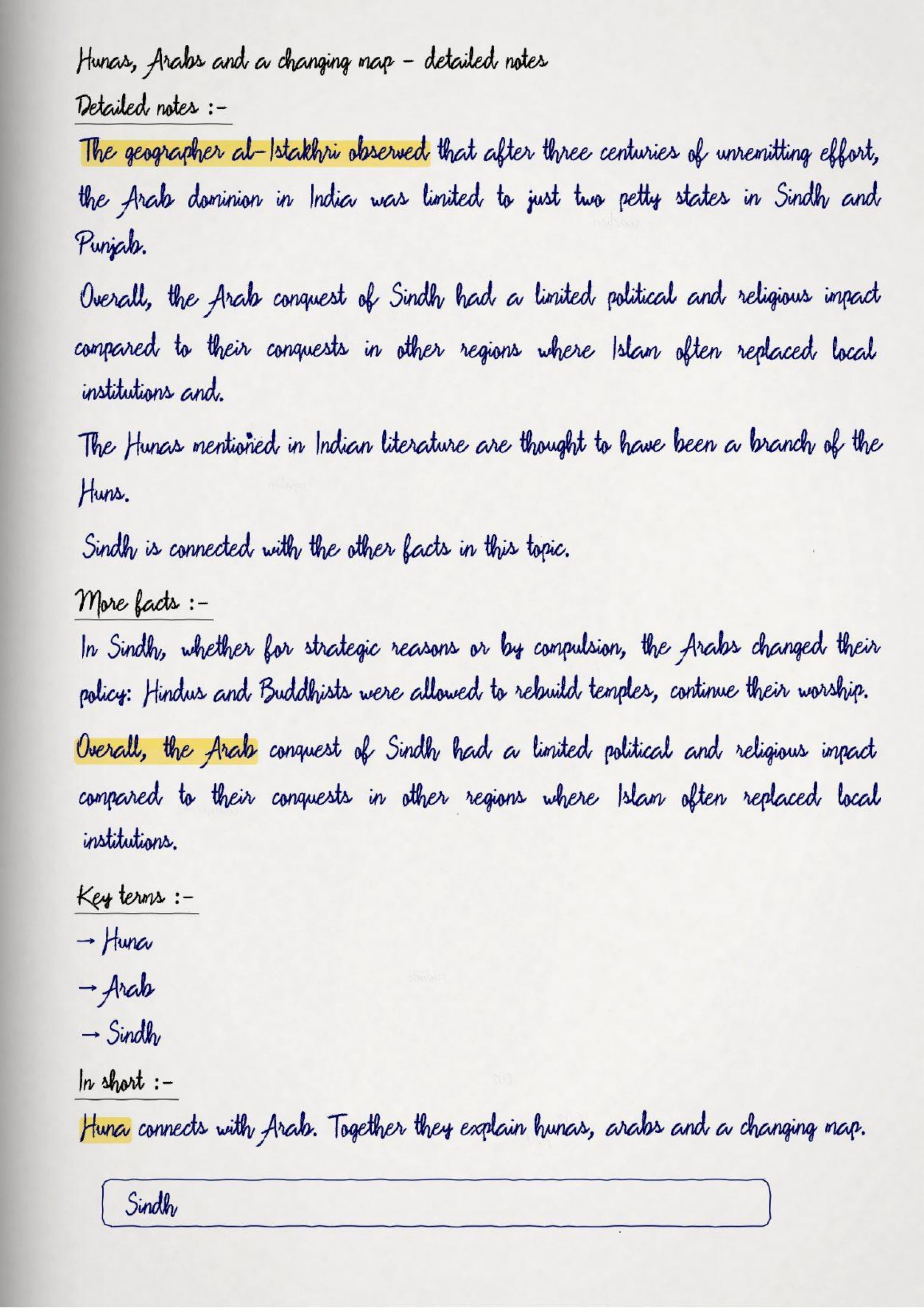
- Kingdoms map boxed: the main regional powers of the 6th to 10th centuries
- What the notes cover: the decline of the Guptas, rival regional kingdoms, the arrival of Islam, the Bhakti tradition and jatis
- Best for: the why-no-single-power question and the Bhakti answer
Everything described here is in the class 7 social science handwritten notes PDF for Empires and Kingdoms: 6th to 10th Centuries, linked below.
These handwritten notes are written by Social Science teachers, mapped to the 2026-27 NCERT Exploring Society book, and checked against Class 7 school question papers.
Section-by-Section Map of the Empires and Kingdoms: 6th to 10th Centuries Notes
After the Guptas declined, powerful regional kingdoms rose. None could stay on top for long, because their rivals matched them in strength.
- The decline of the Gupta empire
- The rise of regional kingdoms
- Why no single power stayed supreme
- Comparable armies, administrations and strategies
- Foreign arrivals and assimilation
- The advent of Islam in the Subcontinent
- Patronage of Hinduism, Buddhism and Jainism
- The rise and spread of the Bhakti tradition
- Achievements in language, literature, art and science
- The multiplication of jatis and social change
How Collegedunia Wrote These Empires and Kingdoms: 6th to 10th Centuries Notes
The kingdoms are drawn on a map with their regions marked, so the balance of power is visible. Collegedunia checks every page of these class 7 social science handwritten notes against the textbook.
- Kingdoms map: the main regional powers with their territories shaded
- Balance box: the three reasons no power could stay supreme
- Bhakti panel: the origin and spread of the Bhakti tradition
- Colour-coded sub-headings: sub-topics in red so each theme is easy to find
How CBSE Class 7 Social Science Splits Marks Across Empires and Kingdoms: 6th to 10th Centuries
The balance of power and the Bhakti tradition are the two big scorers.
| Sub-topic | Weightage | How often asked |
|---|---|---|
| Why no single power stayed supreme | High | asked often |
| The Bhakti tradition and its spread | High | asked often |
| Cultural pluralism and royal patronage | Medium | asked sometimes |
| The advent of Islam in the Subcontinent | Medium | asked sometimes |
| Achievements in language and science | Medium | asked sometimes |
| The multiplication of jatis | Medium | asked sometimes |
The Empires and Kingdoms: 6th to 10th Centuries Vocabulary CBSE Class 7 Social Science Expects
These terms carry the reasoning in this chapter, so keep them exact.
| Term / Idea | What it means |
|---|---|
| Regional kingdom | a kingdom holding power over one region rather than the whole Subcontinent |
| Supremacy | a position of highest power over others |
| Assimilate | to absorb and become part of an existing culture |
| Patronage | the support a ruler gives to religion, art or learning |
| Pluralism | the existence of many traditions side by side |
| Bhakti | a devotional tradition emphasising personal love of the divine |
| Jati | a social group within the wider social order |
Empires and Kingdoms: 6th to 10th Centuries Practice Questions with Answers
Five questions on this period. Tap each to check.
After the Guptas declined, power passed to
(a) one large empire (b) powerful regional kingdoms (c) foreign rule everywhere (d) no rulers
Answer: (b) powerful regional kingdoms
Why could no single power stay supreme?
(a) there were no armies (b) rival states had comparable strength (c) there was no trade (d) rulers refused to fight
Answer: (b) rival states had comparable strength
The Bhakti tradition emphasises
(a) military conquest (b) personal devotion to the divine (c) trade only (d) astronomy
Answer: (b) personal devotion to the divine
Rulers of this period generally patronised
(a) only one religion (b) Hinduism, Buddhism and Jainism (c) no religion (d) foreign religions only
Answer: (b) Hinduism, Buddhism and Jainism
Foreign invaders who came to India in this period often
(a) left immediately (b) assimilated Indian cultural traditions (c) destroyed all trade (d) refused all contact
Answer: (b) assimilated Indian cultural traditions
Why Empires and Kingdoms: 6th to 10th Centuries Matters Beyond Class 7
This chapter explains a long stretch of history in one idea, which makes it good for long-answer questions.
- Why no single power stayed supreme is a standard three-mark answer
- The Bhakti tradition is a common short answer
- Cultural pluralism is a value-based question
- Chapter 4 continues into the 11th and 12th centuries
One-Page Recall Card for Empires and Kingdoms: 6th to 10th Centuries
The card for this history chapter.
- The Gupta decline led to powerful regional kingdoms
- No power stayed supreme because rivals matched them in strength
- Rulers patronised Hinduism, Buddhism and Jainism alike
- The Bhakti tradition arose and spread across India
- Language, literature, art and science all advanced
- The multiplication of jatis reshaped society
What the Empires and Kingdoms: 6th to 10th Centuries Notes Draw Out for You
Maps and panels carry this chapter more effectively than prose.
| Figure drawn by hand | What it shows |
|---|---|
| Kingdoms map | the main regional powers with their territories |
| Balance box | comparable armies, administrations and strategies |
| Bhakti panel | the origin of the tradition and its spread across India |
| Pluralism strip | temples, viharas and Jain shrines side by side |
| Timeline | the 6th to 10th centuries with key events marked |
Fitting the Empires and Kingdoms: 6th to 10th Centuries Notes Into Your Revision Week
Hold the one idea of balance in mind. It answers most questions in this chapter. Treat the class 7 social science handwritten notes as a revision tool, not as a first-time textbook.
- Mark five regional kingdoms on an outline map
- Write the three reasons no single power stayed supreme
- Explain the Bhakti tradition in three sentences
- Before the test, revise the kingdoms map and the balance box
Pair the Empires and Kingdoms: 6th to 10th Centuries Notes With These
Read the notes with the solved questions and the Exploring Society chapter itself.
- Class 7 Social Science NCERT Solutions
- Class 7 Social Science Revision Notes
- Class 7 Exploring Society Book PDF
Class 7 Social Science Handwritten Notes Chapter List
The class 7 social science handwritten notes for all chapters are listed below. Exploring Society Part 1 has twelve chapters and Part 2 has eight.
Empires and Kingdoms: 6th to 10th Centuries Class 7 Social Science Handwritten Notes FAQs
Ques. Where can I download the Empires and Kingdoms Class 7 Handwritten Notes PDF?
Ans. The PDF is available free on this page in both the normal and the HD version.
Ques. Why did no single power stay supreme between the 6th and 10th centuries?
Ans. Because the rival states had comparable military strength, similar administrative systems and similar strategic approaches, so none could hold lasting supremacy over the others.
Ques. How many pages is the Part 2 Chapter 3 handwritten notes PDF?
Ans. It runs 20 pages, with the kingdoms map, the Bhakti panel and a quiz.
Ques. What is the Bhakti tradition?
Ans. A devotional tradition that emphasises personal love of the divine. It rose during this period and soon spread across India.
Ques. How did rulers of this period treat different religions?
Ans. Regardless of their own inclination, rulers generally patronised Hinduism, Buddhism and Jainism, which promoted a vibrant cultural pluralism.



Comments