



Content Curator
Animal husbandry is the branch of agriculture that deals with animals raised for meat, fibre, milk, or other purposes. Daily care, selective breeding, and animal husbandry are all part of it. Animal husbandry dates to the Neolithic Revolution, circa 13,000 BC, when animals were first tamed, predating the first grain farming. Cattle, sheep, goats, and pigs were all being farmed on farms by the time of the ancient civilisations like ancient Egypt.
Also Read: Strategies for Enhancement in Food Production
Key Takeaways: Cattle farming, agriculture, bacteria, parasites, poultry, breeding, agricultural revolution, feeding, farm management.
Cattle Farming
[Click Here for Sample Questions]
Cattles are considered to be one of the most important assets in our daily food intake. Cattle farming, also known as cattle ranching, is the large-scale breeding and raising of Cattles for various agricultural reasons.
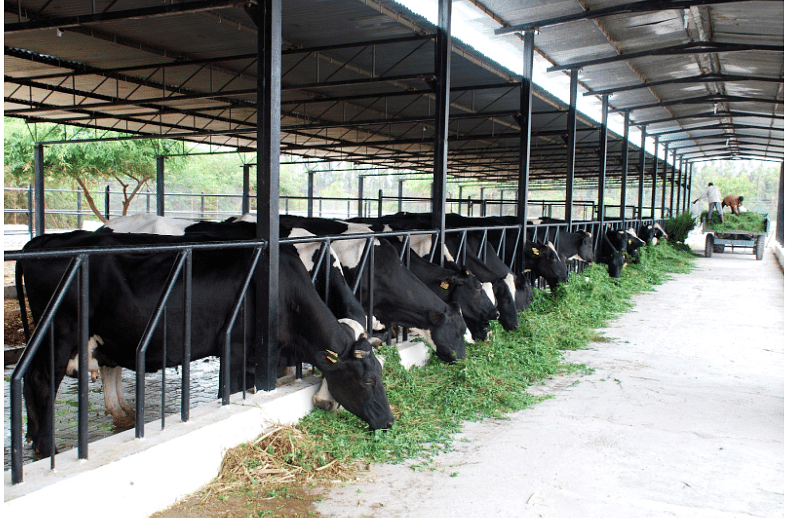
Cattle Farming
Cattle farming is carried out for two main reasons:
- Dairy: Dairy animals are those that are raised solely for the purpose of extracting milk. Cows, goats, buffalos, and other dairy or milch breeds are examples.
- Draught: Animals used for a variety of agricultural and transportation operations such as irrigation, hauling, and so on. Horses, cows, buffalos, and other draught animals are some examples.
Read More:
Types of Animal Husbandry
[Click Here for Sample Questions]
Cattles are reared for a variety of reasons such as dairy, meat, leather, other by-products etc. Depending upon the need, the type of animal husbandry changes.
Dairy
Cow is the most sought after animal to produce milk and milk products for human use around the world. Sheep, goats, camels, buffaloes, yaks, reindeer, horses, and donkeys are also employed to a lesser extent for this purpose.

Dairy Farming
All of these animals have been domesticated over the years, with desirable traits like fertility, productivity, docility, and the ability to thrive in harsh environments being bred into them. Unlike in the past, when cattle were used for a variety of purposes, current dairy cow breeding has produced specialised Holstein Friesian-type animals that produce enormous amounts of milk at a low cost. Artificial insemination is readily available, allowing farmers to select specific qualities that are most suited to their needs.
Read More:
Meat
Meat is a substantial source of dietary protein in most parts of the world, accounting for around 8% of total energy consumption. Cattle, sheep, pigs, and goats are the principal animals involved, and the varieties eaten are determined by local preferences, availability, cost, and other variables. Cows reproduce once every year and it takes more than a year to be ready for slaughter purposes. Sheep and goats frequently have twins, which are ready for slaughter in less than a year. Pigs are more prolific, generating up to 11 piglets per year.

Beef Production Process
Poultry
Chickens, turkeys, geese, and ducks are reared for their eggs and meat. Chickens make up the vast bulk of birds utilised for egg production. Layers are kept in a variety of ways, from free-range systems in which the birds are allowed to roam freely but are housed at night for their safety, to semi-intensive systems in which they are housed in barns with perches, litter, and some freedom of movement, to intensive systems in which they are kept in cages. External feeders, drinkers, and egg collection facilities are included in the battery cages, which are stacked in long rows in numerous tiers.

Poultry Farming
Read More:
Aquaculture
Aquaculture is a term used to describe a type of farming that involves the use of "Aquatic organism. Aquaculture includes the rearing of fish, molluscs, crustaceans, and aquatic plants. It includes some form of intervention in the rearing process to improve production, such as regular stocking, feeding, predator protection, and so on.

Aquaculture Production
Aquaculture can happen in the sea or freshwater, and it can be extensive or intensive. Aquaculture can take up entire bays, lakes, or ponds, or the farmed animal can be kept in cages (fish), artificial reefs, racks, or strings (shellfish). Fish and prawns can be grown in rice fields, either naturally or artificially.
Apiculture
Rearing of honeybees for the production of honey is known as apiculture. Many places of the world use fixed comb hives, which can be manufactured out of any locally accessible material. In more advanced economies, where current domestic bee strains have been selected for docility and productivity, different hive designs are utilised that allow the combs to be removed for honey processing and extraction. Honeybees are crucial pollinators of crops and wild plants, and hives are often relocated over the countryside to assist with pollination.

Apiculture Equipments
Also Read: Artificial Pollination
Agricultural Revolution
[Click Here for Sample Questions]
During the British Agricultural Revolution in the 18th century, Robert Bakewell pioneered selective breeding for desired qualities as a scientific process. Sheep breeding was one of his most important breeding efforts. He was able to quickly select huge, fine-boned sheep with long, lustrous wool using native stock.

Dishley Leicester Breed
Bakewell improved the Lincoln Longwool, which was then used to create the New (or Dishley) Leicester breed. It had a square, meaty body with straight top lines and no horns. These sheep were widely exported and have influenced a variety of modern varieties. English farmers began to breed cattle primarily for beef production under his influence.
Read More:
Farm Management
[Click Here for Sample Questions]
Cattle farming isn't just about producing milk or meat. It has a number of obligations and necessities to fulfill. We must take good care of livestock and manage it properly in order to meet human needs.
Grooming and Shelter: Cattles require consistent grooming practice that includes brushing off hair and grime, washing with clean water, and so on. The cattle's shelter should be clean and spacious enough for them to feel at ease. The shelter's roofs must be sufficiently ventilated in order to protect them from adverse weather conditions.

Good Sheltering of Cattle is Essential
Feeding: Animals employed as livestock are largely herbivorous. Herbivores are classified as "concentration selectors," which preferentially feed on seeds, fruits, and highly nutritious young leaves, "grazers," which primarily eat grass, and "intermediate feeders," who eat a variety of plant material. Ruminants include cattle, sheep, goats, deer, and antelopes; they digest food in two processes, chewing and swallowing normally, and then regurgitating the partially digested cud to chew it again and extract the maximum amount of food value possible.

Cattle Feeding
Read More:
Breeding: Farm animal breeding is rarely spontaneous. It is controlled by farmers to encourage the integration of desired features in the offspring. Hardiness, fertility, docility, mothering abilities, rapid growth rates, low feed consumption per unit of growth, better body proportions, larger yields, and superior fibre quality are some of these traits. Offsprings with undesirable characteristics such as health problems and hostility are weeded out.

Indigenous Breeds of Cattle in India
Animal Health: On the farm, good husbandry, correct feeding, and hygiene are the primary contributors to animal health, resulting in increased productivity and economic rewards. When animals become ill despite these safeguards, the farmer and the veterinarian treat them with veterinary drugs.

Cattle Health Monitoring Parameters
Animals are vulnerable to a variety of diseases and ailments that might have a negative impact on their health. Ailments such as swine fever and scrapie, are exclusive to a particular breed of pig, while others, such as foot-and-mouth disease, afflict all cloven-hoofed animals.
Read More:
Things to Remember
[Click Here for Sample Questions]
- Animal husbandry is the branch of agriculture that deals with animals raised for meat, fibre, milk, or other purposes.
- Cattle farming, also known as cattle ranching, is the large-scale breeding and raising of Cattles for various purposes.
- Meat, primarily from farmed animals, is a substantial source of dietary protein in most parts of the world, accounting for around 8% of total energy consumption.
- Aquaculture is a term used to describe a type of farming of aquatic organisms.
Read More:
Sample Questions
Ques. What are the advantages of cattle farming? (2 marks)
Ans:
- Lactating animals are widely employed in the production of milk.
- Draught cattle are commonly utilised for labour in industries such as agriculture, where they are used for hauling and irrigation.
- The cattle farm is noted for increasing the farmers' overall revenue and improving their level of living.
- The animal residual waste could be utilised as a source of fuel and as a supply of manure for soil improvement.
- A large number of individuals are employed as a result of it.
Ques. Why is Kadaknath so well-known? (2 marks)
Ans: Kadaknath is a popular chicken breed found in parts of Madhya Pradesh and Chattisgarh. It is known for having a protein-rich, delicious grey flesh that's low in fat and cholesterol. It is not only delectable meat, but it also has many medicinal characteristics. It is quite pricey and at the risk of extinction due to its high demand and high consumption rate.

Ques. What exactly is silage? (2 marks)
Ans: Silage is a form of feed created from green foliage crops that have been kept to the point of acidification through fermentation. Cattle, sheep, and other ruminants can be fed (cud-chewing animals). Ensilage, ensiling, or silaging refers to the fermentation and storing process. Silage is typically manufactured from grass crops such as maize, sorghum, or other cereals, with the entire green plant being used (not just the grain).
Ques. What is Scrapie? (2 marks)
Ans: Scrapie is a deadly degenerative illness that affects sheep and goats' neural systems. It's one of numerous TSEs (transmissible spongiform encephalopathies) that are suspected to be caused by a prion. Scrapie has been around since at least 1732, and it does not appear to be human-transmissible. New research, however, suggests that scrapie and sporadic CJD are linked.
Ques. What does animal husbandry have in store for the future? (2 marks)
Ans: Improvements in breeds and our understanding of animal diet and disease are the same as in the past. Contrary to popular opinion, the vast majority of livestock owners are concerned about animal welfare for reasons other than profit. Modern attitudes, as well as a degree of enhanced understanding, will continue to place a greater emphasis on animal health.
Ques. What are ruminants? (2 marks)
Ans: Ruminants (suborder Ruminantia) are herbivorous grazing or browsing mammals with big hoofed hooves that may obtain nutrients from a plant-based diet by fermenting them in a specialised stomach before digestion, primarily by microbial action. The process, known as foregut fermentation, takes place in the front section of the digestive tract and needs the fermented ingesta (also referred to as cud) to be repeated and chewed anew.

Ques. What are Monogastric organisms? (3 marks)
Ans: The stomach of a monogastric creature is a simple double-chambered structure (one stomach). Horses, rabbits, gerbils, and hamsters are examples of monogastric herbivores. Humans, pigs, and rats are examples of monogastric omnivores. Monogastric carnivores, such as dogs and cats, are also present. Monogastric species are similar to ruminant organisms (which have a four-chambered complex stomach) like cattle, goats, and sheep. Monogastric herbivores could digest cellulose in their meals thanks to symbiotic gut microbes. However, they are less efficient than ruminants at extracting energy from cellulose digestion.
Ques. What is the definition of selective breeding? (3 marks)
Ans: Selective breeding (also known as artificial selection) is the process by which humans employ animal and plant breeding to generate specific phenotypic features (characteristics) by selecting which males and females would sexually reproduce and have offspring together. Domesticated animals are referred to as breeds, and they are usually bred by a professional breeder, whereas domesticated plants are referred to as variations, cultigens, cultivars, or breeds. Crossbreeding occurs when two purebred animals of different breeds crossbreed, and hybrid plants are crossbred plants.
Ques. What exactly is Isinglass? (2 mark)
Ans: Isinglass is a material made from fish swim bladders that have been dried. It's a type of collagen that is mostly used for clarifying or fining beer and wine. It can also be made into a paste for use in specialised gluing.

Ques. What are the effects of animal husbandry on the environment? (3 marks)
Ans: The impact of animal husbandry on the global environment is enormous. Animal husbandry, as part of the animal–industrial complex, is the leading cause of climate change, ocean acidification, biodiversity loss, and the crossing of nearly every other planetary barrier, in addition to killing about 60 billion nonhuman terrestrial creatures each year. It consumes between 20 and 33 percent of the world's freshwater, while cattle and the production of feed for them take up nearly a third of the ice-free territory on the planet.
Read More:



Comments