



Content Curator
Digestive Disorders refers to the medical conditions associated with the digestive tract. The digestive tract is also known as the Gastrointestinal tract (GI tract). The gastrointestinal tract extends from mouth to anus. This tract is responsible for the passage of food from the mouth to the stomach via the oesophagus. In the stomach, the food is broken down into smaller units and absorbed in the intestine. The unabsorbed food passes out of the body through the anus. The food we consume provides energy to our body, so if there is any disorder in the digestive system, this will eventually lead to poor health.
| Table of Content |
Key Takeaways: Gastrointestinal Tract, Irritable Bowel Syndrome, Ulcerative Colitis, Crohn’s Disease, Lower Esophageal Sphincter (LES), Food Intolerance, Probiotics
Digestive System
In the stomach, the food is broken down into smaller units and absorbed in the intestine. The unabsorbed food passes out of the body through the anus. The food we consume provides energy to our body, so if there is any disorder in the digestive system, this will eventually lead to poor health. Digestive Disorders refers to the medical conditions associated with the digestive tract.

Digestive System
Types of Digestive Disorders
Digestive disorders mainly fall into two broad categories:
- Structural Disorders
- Functional Disorders
Structural Disorders
These are characterized by an abnormality in structure as well as the functioning of the gut. They can be diagnosed by examining structural changes. Some common examples of structural digestive disorders are Hemorrhoids, Diverticular Disease, Inflammatory Bowel Disease (IBD) etc.

Common digestive disorders
Functional Disorders
In this type, there is no abnormality observed in the structure of the GI tract but it does not function properly. These disorders are hard to diagnose because there are no structural changes taking place. This is a common type of digestive disorder. Some examples of functional digestive disorders are Constipation, Irritable Bowel Syndrome (IBS), food poisoning etc.
Read also:
Common Disorders of Digestive System
Some of the common disorders of the digestive system are as follows.
Inflammatory Bowel Disease (IBD)
IBD refers to the group of disorders that causes chronic inflammation of the gastrointestinal tract. These are mainly of two types:
- Ulcerative Colitis:This condition causes inflammation and ulcers in the linings of the large intestine, mainly the colon and rectum.
- Crohn’s Disease:This causes inflammation and pain in the linings of the gastrointestinal tract.

Inflammatory Bowel Disease
Symptoms: The common symptoms of this disease include:
- Diarrhoea
- Abdominal pain and cramps
- Presence of blood in stool
- Weight loss and reduced appetite
Causes: Malfunctioning of the immune system can be a cause of Inflammatory Bowel Disease. When the immune system fails to distinguish between foreign organisms and its own cells, it attacks the cells of the GI tract. This can cause inflammation of the gastrointestinal tract, resulting in Inflammatory Bowel Disease. In some cases, the cause can also be genetic.
Read also:
Constipation
Constipation refers to a medical condition in which bowel movement occurs less frequently than normal and the person experiences difficulty in passing stools. This can be occasional as well as chronic.
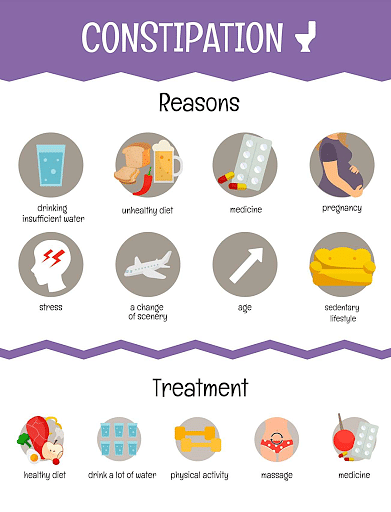
Constipation Reasons
Symptoms: Constipation is characterized by the following symptoms:
- Hard and dry stools
- Painful bowel movements
- Straining to have bowel movements
- Loss of appetite
Causes: The common causes behind constipation include lack of fibre in the diet, dehydration, hormonal imbalance etc. Other causes can be colon cancer, neurological problems that affect the nerves responsible for contraction of muscles in the colon and rectum, rectal cancer etc.
Haemorrhoids
Haemorrhoids, also known as piles, is a condition that causes swelling and enlargement of veins inside or outside the anus and rectum. This is mainly of two types:
- Internal Hemorrhoids:When the veins swell inside the rectum, it is called Internal Hemorrhoids.
- External Hemorrhoids:Swollen veins form around the anus in External Hemorrhoids.

Haemorrhoids
A third type called Prolapsed Hemorrhoids also occurs in which both internal and external haemorrhoids prolapse i.e they stretch and bulge out of the anus.
Symptoms: The symptoms of this disease are as follows:
- Itching and pain in the anal region
- Swelling around anus
- Painless bleeding through anal region
- Difficulty in sitting
Causes: Hemorrhoids can develop due to an increase in pressure in the rectum and anal region. This can be due to sitting for long periods on the toilet seat, obesity, lifting heavy objects, pregnancy, constipation etc.
Also Read:
Gastroesophageal Reflux Disease (GERD)
This is a condition arising due to the flowing of stomach acid back into the oesophagus (food pipe). The Lower Esophageal Sphincter (LES) prevents the flowing back of stomach content into the oesophagus by closing itself. However, in some cases, the sphincter becomes weak and opens up abnormally allowing the food and acid in the stomach to flow backwards.

Gastroesophageal Reflux Disease
Symptoms: The common symptoms include:
- Heartburn, usually after eating
- Difficulty in swallowing food
- Chest pain Chronic cough
Causes: The weakening of the lower oesophagal sphincter allowing acid to flow into the oesophagus is the main cause of Gastroesophageal Reflux Disease. Other causes may include Hiatal Hernia, eating large meals and eating more frequently.
Peptic Ulcer Disease (PUD)
A peptic ulcer is a condition in which sores develop on the lining of the stomach and small intestine. This include:
- Gastric Ulcersoccurring on the stomach lining.
- Duodenal Ulcers occurring on the duodenum region of the small intestine.

Peptic Ulcer Disease
Symptoms: The main symptoms of this disease are as follows:
- Stomach pain
- Heartburn and burning stomach sensation
- Nausea
- Appetite changes
- Food Intolerance
Causes: This condition is mainly caused by infection with the bacterium Helicobacter pylori (H.pylori). Using non-steroidal anti-inflammatory drugs for a long term can also cause peptic ulcers.
Also Read:
Signs of an Unhealthy Digestive System
A healthy digestive system is vital for the overall health of the body. It is believed that our body naturally inhabits some essential microbes in the gut. They are necessary for gut health. But inappropriate lifestyle and eating habits can harm these good microbes and can even cause some serious health problems.

Signs of Unhealthy gut
Here are some common signs of an unhealthy gut:
- Losing or gaining weight occasionally without changing your eating habits can be an indicator of some health problems in the GI tract.
- Insomnia or lack of proper sleep can also be a symptom of an unhealthy gut.
- Food Intolerance refers to a condition in which a person experiences difficulty in digesting certain food items. This might arise due to some immune system response in the body.
- Frequently occurring symptoms like nausea, diarrhoea, heartburn, gas also indicate a diseased state of the body.
Read More: blood pressure
Healthy Habits to Prevent Digestive Disorders
A healthy and active lifestyle can help you avoid some common digestive disorders. Some healthy habits for a healthy gut are as follows:
- Drinking plenty of water keeps the body hydrated and provides essential minerals to the body.
- Consuming probiotics is a good way to maintain the growth of essential microbes present in the intestine.
- Sleeping properly is very important to maintain a healthy gut. Lack of proper sleep might cause diseases and this, in turn, can even worsen sleeping habits.

Maintain Good Gut health
- Eating slowly and chewing properly helps in proper digestion and absorption of nutrients from food. One should avoid eating frequently and swallowing large food particles.
- A healthy diet, rich in fibre, can help in avoiding some common problems like constipation.
Things to Remember
- Digestive disorders refer to diseases of the digestive tract.
- The digestive tract is also called the Gastrointestinal Tract (GI tract).
- Digestive disorders fall into two categories: Structural and Functional.
- LES refers to the lower oesophagal sphincter responsible for the prevention of backflow of stomach content into the oesophagus.
- Food intolerance is a condition in which a person is unable to digest certain food items.
- The presence of some essential microbes in the intestine is necessary to maintain gut health.
Also Read:
Sample Questions
Ques. What is the difference between Probiotics and antibiotics? (2 marks)
Ans. Probiotics help in maintaining the growth of good bacteria in the gut. The intestine naturally inhabits some microbes which are necessary for the overall health of the body. However, due to illness and other reasons, their number might decrease. Probiotics help in restoring that lost good bacteria in the intestine.
On the other hand, antibiotics do the opposite. Antibiotics kill the bacteria present in our bodies. Antibiotics are generally taken when a person encounters a bacterial infection. Though it prevents bacterial growth and treats the infection at the same time it also harms good bacteria in the intestine.
Ques. What would happen if HCl were not secreted in the stomach? (3 marks)
Ans. HCl is secreted by the parietal cells of gastric glands in the stomach. Its main functions are as follows-
- It activates pepsinogen into its active form pepsin and prorenin into renin.
- Due to its acidic properties, it kills the bacteria present in the food.
Pepsin and renin are proteolytic enzymes. If these are not activated by HCl, the digestion of proteins will not take place.
Ques. What is Jaundice and how is it caused? (3 marks)
Ans. Jaundice is caused due to the accumulation of bilirubin in the body. Bilirubin is a chemical substance formed in the body naturally. The red blood cells in the body are replaced after every 120 days. The old red blood cells degrade and new ones arise. During the degradation of old RBCs, bilirubin is formed. This bilirubin is taken up by liver cells where it undergoes some structural changes and becomes water-soluble. This ultimately passes out of the body.
However, when the body fails to pass it out, it can rise to abnormally high levels causing a medical condition called Jaundice. Jaundice is characterized by yellowing of skin, eyes and other body parts.
Here are some possible causes of Jaundice-
- Autoimmune diseases
- Consumption of alcohol
- Viruses like Hepatitis A, B and C
- Presence of gallstones in the gallbladder
- Tumour in pancreas
Also Read: Genetics
Ques. What are the types and functions of Digestive Enzymes? (5 marks)
Ans. Digestive enzymes aid in the process of digestion of food. The food we eat is acted upon by various digestive enzymes to convert them into smaller units that are absorbed by the body. Salivary glands, pancreas, cells in the stomach and small intestine secretes different types of enzymes responsible for digestion. The main types of digestive enzymes are:
- Amylase - It is secreted by the pancreas and salivary glands. It helps in the digestion of carbohydrates.
- Lactase - Lactase is secreted by the cells called enterocytes present in the small intestine. It breaks down lactose into glucose and galactose.
- Lipase - It is mainly produced by the pancreas and is responsible for the digestion of fat. It converts fat into fatty acid and glycerol.
- Protease - They are responsible for the digestion of proteins. They are also called proteolytic enzymes or proteases and convert proteins into amino acids.
- Sucrase - It is secreted by the small intestine and breaks down sucrose into fructose and glucose.
- Maltase - It helps in breaking down maltose into glucose. It is released by the small intestine.
Also Read: Parkinson's disease
Ques. What is lactose intolerance? (3 marks)
Ans. Lactose intolerance is a condition in which a person is not able to digest lactose due to insufficient production of lactase. Lactase is secreted by the small intestine and is responsible for breaking down lactose into glucose and galactose. Lactose is found in dairy products. People with lactose intolerance cannot consume food like milk. Lactose intolerance can be of several types-
- Congenital Lactase Deficiency - It is the inherited form of lactose intolerance caused by mutations in the LCT gene.
- Lactase Non-Persistence - This is common in adults. It is caused by decreased expression of the LCT gene.
- Secondary Lactose Intolerance - It is caused due to the presence of other diseases that damage the small intestine. Disease like Crohn's disease affects intestinal wall and as a result lactase is not produced.
Ques. What is diarrhoea? How is it caused? (3 marks)
Ans. Diarrhoea is a condition in which a person experiences frequent bowel movements and passes out loose, watery stools. Its symptoms include-
- Nausea
- Abdominal pain and cramps
- Bloating Mucus in the stool
Other symptoms may include fever, blood in the stool, vomiting etc.
Diarrhea may be caused due to infection with viruses like norovirus, rotavirus etc. Consuming antibiotics can also cause diarrhea. Eating food or water contaminated with pathogenic bacteria like E.coli is also a common cause of diarrhea.
Ques. Explain histology of Alimentary Canal. (5 marks)
Ans. The wall of Alimentary canal is made up of 4 layers-
- Serosa - It is the outermost layer of the alimentary canal. It is made up of squamous epithelium and areolar connective tissue. The cells of the serosa secrete serous fluid that provides lubrication and reduces friction.
- Muscularis - The muscularis consists of an inner circular and outer longitudinal muscle layer. This layer is responsible for the contractions and peristaltic movements in the GI tract. In the stomach, a third layer called muscularis externa is also present.
- Submucosa - It consists of dense, irregular, loose connective tissue supplied with blood and lymphatic vessels. It also has glands and nerve plexuses. The elements that pass through mucosa are taken up by blood vessels present in submucosa.
- Mucosa - It is the innermost layer surrounding the lumen of the alimentary canal. It is made up of simple epithelium cells. It consists of 3 layers: Epithelium, lamina propria and muscularis mucosae. It helps in absorption and secretion. The mucosa also contains goblet cells that secrete mucus.
Also Read:
Ques. State the role of pancreatic juice in the digestion of proteins. (2 marks)
Ans. The pancreatic juice contains inactive enzymes – trypsinogen, chymotrypsinogen, procarboxypeptidase. Trypsinogen is activated by an enzyme enterokinase, (secreted by the intestinal mucosa) into active trypsin, which in turn activates the other enzymes of the pancreatic juice. Proteins, proteoses and peptones (partially hydrolysed proteins) in the chyme reaching the intestine are acted upon by these proteolytic enzymes of pancreatic juice.

Ques. Bile juice contains no digestive enzymes, yet it is important for digestion. Why? (2 marks)
Ans. Bile has no enzymes but contains bile salts, namely, sodium bicarbonate, sodium glycocholate and sodium taurocholate that reduce the surface tension of large fat droplets and break them into many small droplets by a process known as emulsification. These small fat droplets present a large surface area for lipase (fat-digesting enzyme) to act upon them. Moreover, bile also activates lipases.

Ques. Describe the digestive role of chymotrypsin. Which two other digestive enzymes of the same category are secreted by its source gland? (2 marks)
Ans. Chymotrypsin is a proteolytic enzyme of pancreatic juice secreted by the exocrine part of the pancreas. It helps in the digestion of proteins. It converts proteins, peptones and proteoses into oligopeptides and dipeptides. Two other proteolytic enzymes present in pancreatic juice are trypsinogen and procarboxypeptidase.
Also Read:



Comments