



Content Curator
Hormonal imbalance is a condition that occurs when the presence of hormones in the bloodstream are either too high or too less. Hormones play a very important role in the body, so even a small imbalance can have a major impact on the entire body. It can lead to gaining weight, fatigue, dry skin, or mood swings. They are generally secreted from the glands present in the endocrine system.
What are Hormones?
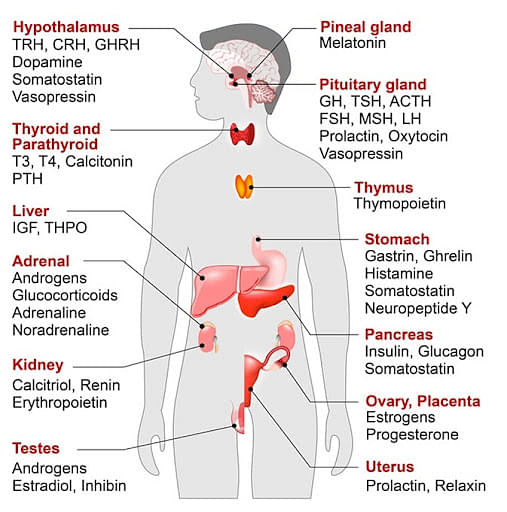
The endocrine system is a network of glands in the human body that produce and release hormones that are used to control many important body functions. Each gland releases certain hormones into the bloodstream. Hormonal imbalances, or endocrine diseases, occur when glands produce too much or too little endocrine hormone, resulting in a hormonal imbalance. When there is an excessive amount of a particular hormone in your body, the endocrine feedback system signals the brain, which in turn signals the appropriate gland to keep secretion under control. However, failure of this process leads to hormonal imbalance. The female body is more prone to diseases caused by hormonal imbalance than the male body. These diseases occur throughout life during puberty, pregnancy, menstruation and menopause.
The Role of Hormones
Hormones are known as chemical messengers of the body because they regulate a whole range of functions in the body. Men and women both are affected by hormones but there are certain specific hormones that are produced according to sex or during some particular event. Some of these functions are:
- Speed of the heartbeat
- Speed of metabolism
- Appetite
- Circadian rhythm (sleep cycles)
- Cycles of reproduction
- Growth and development
- Body temperature
Symptoms of Hormonal Imbalance
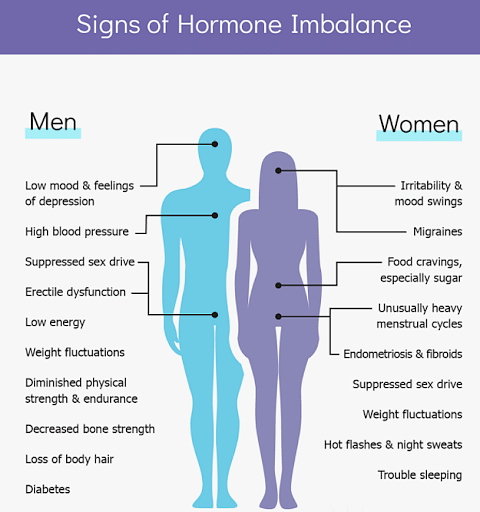
There are certain symptoms of hormonal imbalances depending on specific glands. Some of the most common synonyms of hormonal imbalances are:
- Sleeping difficulty
- Eating too much or too less
- Blood pressure level changes
- Fatigue
- Face swelling
- Vision getting blurry
- Drying of the skin
- Weight loss or weight gain without reason
- Depression
- Anxiety
- Headaches
- Rashes appearing on skin
- Irritation
- Lower sex drive
Causes of Hormonal Imbalance
There are many possible causes of hormonal imbalance. The causes vary depending on which hormones or glands are affected. Common causes of hormonal imbalance are:
Hormone therapy Medications Cancer Treatments such as chemotherapy Tumors, whether cancerous or benign Pituitary tumors Eating disorders Stress injuries or trauma.
While the conditions listed below may initially be caused by hormonal imbalance, such a condition can also lead to further hormonal imbalance:
- Diabetes (type 1 and type 2)
- Diabetes insipidus Hypothyroidism or hypothyroidism Hyperthyroidism or hyperthyroidism Thyroid nodules Thyroiditis Hypogonadism
- Cushing's syndrome or high cortisol Congenital adrenal hyperplasia resulting in low cortisol and aldosterone levels
- Addison's disease
- Specific causes in women
Hormonal imbalances in women occur throughout life during menstruation, puberty, pregnancy, and menopause. Due to differences in glands and cycles, women are more prone to hormonal imbalances than men. Many causes of hormonal imbalance in women have to do with reproductive hormones. Common causes include:
- Menopause Primary ovarian insufficiency, also called premature menopause Pregnancy Breastfeeding.
- PCOS Hormone medications such as birth control pills.
There are several endocrine glands present in the human body which produced particular hormones according to each gland which are:
| Endocrine Gland | Hormones |
| Adrenal glands | Aldosterone and Cortisol |
| Gonads | Estrogen and Testosterone |
| Hypothalamus gland | Somatostatin and Dopamine |
| Pancreatic Islets | Glucagon and Insulin |
| Pineal gland | Melatonin |
| Parathyroid | Parathyroid hormone |
| Pituitary gland | Adrenocorticotropic hormone and growth hormone |
| Thyroid gland | Triiodothyronine (T3) and Thyroxine (T4) |
Treatment for Hormonal Imbalance
Treatment for hormonal imbalance depends on the cause and also on the person. Also, there are different treatment options for women and men. For instance, women who suffer from irregular menstrual cycles can take medications that contain female hormones such as estrogen and progesterone, and they can use birth control. Men with hypogonadism, stunted puberty or similar conditions can be helped by testosterone patches and gels.
Things to Remember
- Hormonal imbalances is a part of CBSE class 10 Science syllabus.
- It comes under unit 2, World of living and carries a total of 5 to 6 marks and 12 to 13 periods.
- If you have a sleep disorder, you are suffering from a hormonal imbalance. This may be due to an increase in progesterone.
- Hormonal imbalance can cause you to experience anxiety and depression.
- Unusual weight gain and fatigue can also cause hormonal imbalance.
- Heavy or painful menstrual bleeding accompanied by other symptoms such as abdominal pain, frequent urination, lower back pain, constipation and painful intercourse, then you may have fibroids. Fibroids grow in or around the uterus and are non-cancerous in nature but they are thought to be stimulated by estrogen, and a family history may also increase your risk.
- Regardless of the disorders mentioned, there are many other factors that can cause hormonal imbalance. So always pay attention to your health and symptoms.
Sample questions
Ques 1. What is Hormonal Imbalance? (1 mark)
Ans. Hormonal imbalance is a condition that occurs when there are too many or too few hormones in the bloodstream.
Ques 2. How do you treat a hormonal imbalance? (1 mark)
Ans. Treatment for hormonal imbalance depends on both the underlying cause and the individual. Also, women and men are treated differently for most conditions because they have different hormonal glands and cycles.
Ques 3. What are the causes of hormonal imbalance? (1 mark)
Ans. Almost everyone experiences periods of hormonal imbalance at certain times in their lives. However, most cases of hormonal imbalance occur when one or more endocrine glands are not functioning properly.
Ques 4. Is hormonal imbalance dangerous? (1 mark)
Ans. Most hormonal imbalances are caused by an underlying condition. Identifying these conditions is important to assess the cause and severity of the condition.
Ques 5. How can hormone levels be checked? (1 mark)
Ans. A blood test is the most common way to check hormone levels.
Ques 6. Name the hormones produced by the following glands: (5 marks)
- Gonads
- Hypothalamus gland
- Pancreatic Islets
- Pineal gland
- Parathyroid
Ans. A. Estrogen and Testosterone
- Somatostatin and Dopamine
- Glucagon and Insulin
- Melatonin
- Parathyroid hormone
Ques 7. State the functions of the hormones in a human. (3 marks)
Ans. Some of the hormonal function in human body are:
- Speed of the heartbeat
- Speed of metabolism
- Appetite
- Circadian rhythm (sleep cycles)
- Cycles of reproduction
- Growth and development
Ques 8. State 4 common symptoms of hormonal imbalance. (2 marks)
Ans. Symptoms of hormonal imbalances are:
- Blood pressure level changes
- Fatigue
- Face swelling
- Vision getting blurry
Previous Year Question
Ques 1. Name the hormones secreted by the following endocrine glands and specify one function of each: (2018)
- Thyroid
- Pituitary
- Pancreas
Ans. 1. Triiodothyronine (T3) and Thyroxine (T4)
Helps in the regulation of metabolism and blood pressure.
- Adrenocorticotropic hormone and growth hormone
Helps in the growth of bone and other parts of the body.
- Glucagon and Insulin
Helps in lowering the level of blood sugar.



Comments