



Content Curator
Freezing point is a temperature at which a liquid changes into a solid. Freezing refers to the phase change of a substance from a liquid state to a solid-state. This is a phase change miracle which means that a substance is converted from one state of matter to another state.
| Table of Contents |
Key Terms: Freezing Point, Chilled Liquid, High Temperature, Low Temperature, Freezing Point Depression, Melting Point, Molecules
What Is The Freezing Point?
[Click Here for Sample Questions]
The freezing point is the temperature of a liquid at which it changes its state from liquid to solid at atmospheric pressure. Freezing point depression is the phenomenon that describes why adding a solute to solvent results in the lowering of the freezing point of the solvent.
When a substance starts to freeze, the molecules decelerate down due to the diminishments in temperature, and the intermolecular forces start to take over. The molecules will also arrange themselves in a pattern, and therefore turn into a solid.
For illustration, as water is cooled to the freezing point, its molecules come slower and hydrogen bonds begin to “ stick” more, ultimately creating a solid. However, the Na and Cl – ions attract the water molecules and intrude with the conformation of the large network solid known as ice. If a swab is added to the water.
To achieve a solid, the result must be cooled to an indeed lower temperature.
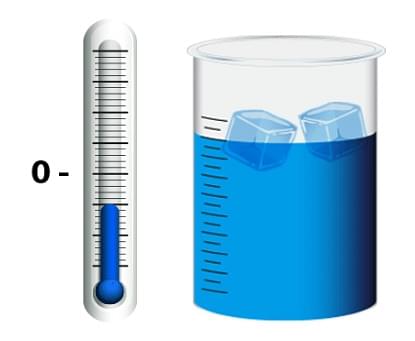
Freezing Point
- Adding solute to a detergent
While adding solute to a detergent will adulterate the detergent molecules, and according to Raoult’s law, this leads to a drop in vapor pressure. Because the vapor pressure of the solid and liquid forms must be the same at the freezing point, or else the system would not be at equilibrium. The lowering of the vapor pressure leads to the lowering of the temperature at which the vapor pressures of the liquid and firmed forms of the result will be equal.
- The molecules in the liquid state are approximately bound, and the intermolecular forces of magnets are lower than that of solids.
- This is because the heat energy transferred to the molecules during the process of conversion from solid to liquid state is larger than the implicit energy of the molecules holding them together in the demitasse chassis of a solid.
- This implicit energy is also reflective of the chassis energy of the solid.
- When the temperature of a substance is lowered by rooting heat from the substance or lowering the pressure, the molecules lose their kinetic energy and come near to each other.
- Gradationally they gain implicit energy and come stable. At this stage, they get converted to solid. This is one of the stable forms of water.
Factors Affecting Freezing Point
[Click Here for Sample Questions]
The main factors are the type of molecules the liquid is made up of.
- If the intermolecular forces between its molecules are strong, there's a high freezing point.
- When intermolecular forces of attraction between the molecules are weak, then its freezing point is fairly low
- The freezing point of a liquid or melting point of a solid occurs at the temperature at which the solid and liquid phases are in equilibrium.
Chilled Liquid
[Click Here for Sample Questions]
Theoretically, the freezing point and the melting point of the substance should be the same. In numerous substances, it is the same but for many substances, slight differences in these two temperatures have been observed.
This is because many substances can be cooled below their freezing point without changing into a solid state.
These substances are known as super-cooled liquids. This is because many solids have special demitasse structures that bear nucleation spots to initiate crystallization which eventually results in solidification.
Also Check: Gauss's Law
Uses of Freezing Point Depression
[Click Here for Sample Questions]
Uses of freezing point depression are as follows:
- In areas where the temperature is low, sodium chloride is spread over the roads to lower the freezing point of water.
- Spreading sodium chloride also benefits in preventing the build-up of ice.
- At places with temperatures below 18℃, calcium chloride is used to melt the ice on the roads. It is due to, CaCl2 dissociating into 3 ions, causing a lesser depression in the freezing point of water.
- Radiator fluids used in numerous motorcars are generally made up of ethylene glycol and water.
Also Check: Freezing Point Depression
Things to remember
- When a substance starts to freeze, the molecules decelerate down due to the diminishments in temperature, and the intermolecular forces start to take over.
- Liquids have a temperature characteristic at which they come into solids, known as their freezing point.
- Tungsten is the chemical element with the loftiest emulsion rate, at 3695K.
- Freezing point depression refers to the lowering of the freezing point of detergents upon the addition of solutes.
- In areas where the temperature is low, sodium chloride is spread over the roads to lower the freezing point of water.
Important PYQs Based On Freezing Point
Sample Questions
Ques. What is endurating? (2 Marks)
Ans. Endurating refers to the phase change of a substance from a liquid state to a solid state. This is a phase change miracle which means that a substance is converted from one state of matter to another state.
Ques. Do all liquids have a freezing point? (2 Marks)
Ans. Liquids have a temperature characteristic at which they come into solids, known as their freezing point. It's possible to observe small differences between these amounts.
Ques. Do different liquids have different freezing points? (2 Marks)
Ans. Yes, different substances freeze at different temperatures because the molecules that make them up are different so when they move closer they attract each other in different mores.
Ques. What has the loftiest freezing point? (1 Marks)
Ans. Tungsten is the chemical element with the loftiest emulsion rate, at 3695K.
Ques. What affects the freezing point? (2 Marks)
Ans. During advanced temperatures, molecules with stronger intermolecular forces are nearly drawn together to form a solid, and their freezing point is advanced. Until the temperature is reduced, molecules with lower intermolecular forces won't solidify.
Ques. Explain freezing point depression? (2 Marks)
Ans. Freezing point depression refers to the lowering of the freezing point of detergents upon the addition of solutes. It is a colligative property of solutions that is mostly proportional to the molality of the added solute.
Ques. What is Chilled Liquid? (3 Marks)
Ans. Theoretically, the freezing point and the melting point of the substance should be the same. In numerous substances, it is the same but for many substances, slight differences in these two temperatures have been observed.
This is because many substances can be cooled below their freezing point without changing into a solid state.
These substances are known as super-cooled liquids. This is because many solids have special demitasse structures that bear nucleation spots to initiate crystallization which eventually results in solidification.
Ques. Why does the freezing point depression occur? (4 Marks)
Ans. The reason for the depression of the freezing point of a detergent upon the addition of a solute is explained below.
- At the freezing point of a detergent, there exists an equilibrium between the liquid state and the solid state of the detergent.
- This implies that the vapor pressures of both the liquid and the solid phase are equal.
- Upon the addition of a solute that is non-volatile, the vapor pressure of the result is planted to be lower than the vapor pressure of the pure detergent.
- This causes the solid and the result to reach equilibrium at lower temperatures.
Ques. List three uses of freezing point depression. (3 Marks)
Ans. Three uses of freezing point depression:
- In areas where the temperature is low, sodium chloride is spread over the roads to lower the freezing point of water.
- Spreading sodium chloride also benefits in preventing the build-up of ice.
- At places with temperatures below 18℃, calcium chloride is used to melt the ice on the roads. It is due to, CaCl2 dissociating into 3 ions, causing a lesser depression in the freezing point of water.
Ques. Is freezing endothermic or exothermic? (1 Mark)
Ans. Fusion, vaporization, and sublimation are endothermic processes, while exothermic processes are freezing, condensation, and deposition.



Comments