



Exams Prep Master
The cloth or material produced by the processes of weaving and knitting is called fabric. Fabric is made of thin strands of thread known as yarn which is further made up of thinner strands known as fibre. Fibres that are obtained from natural sources like plants and animals are known as natural fibres. Examples of natural fibres are cotton, jute, wool and silk. Fibres that are formed from chemical processes and are man-made are called synthetic fibres. Examples of synthetic fibres are polyester, nylon and acrylic.
Plant fibres are the fibres that we get from plants. These fibres are also known as natural fibres as we get these naturally from plants. Some of the examples of natural fibres are cotton, jute, flax, and so on. Moreover, those fibres that we get from animals are also called natural fibres, such as wool. Here, we will discuss the plant fibres in detail along with some important questions.
| Table of Content |
Read More: Precipitation Titration
What is Plant Fibre?
Natural fibres can be classified into two groups based on the source of the fibre. Fibres obtained from the plant source are called plant fibres and those obtained from the animal source are called animal fibres. Examples of plant fibres are cotton and jute.
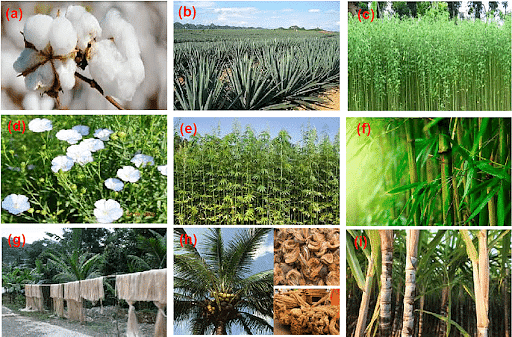
Types of Plant Fibre
Plant fibres obtained from different parts of the plant can be categorized as follows:
- Seed fibre
The fibre produced from the seeds of a plant is called seed fibre. For example cotton.
- Leaf fibre
The fibre obtained from the leaves of a plant is called leaf fibre. For example banana, pineapple, etc.
Read More: Ferrous Sulphate
- Bast fibre
The fibres extracted from the outer cells of the stem of a plant is called bast fibre. For example, flax, jute, ramie, rattan, vine, etc.
- Fruit fibre
The fibres obtained from the fruit of a plant is called fruit fibre. For example, coir is obtained from coconut fibre.
- Stalk fibre
The fibres obtained from the stalks of the plant is called stalk fibre. For example, the stalk of plants like wheat, rice, and bamboo are used to make fibres.

List of Plant Fibres
Cotton, jute, hemp, flax, bamboo, coir, sisal, etc are all examples of plant fibres. Let us discuss some of them in detail.
Also Read:
Cotton
Cotton fibre is very soft to touch and is fluffy. It is a good absorbent of fluids. Cotton is obtained from the cotton balls (fruit) of the cotton plant. This fibre has been in existence since ancient times.

The cotton plant is grown in black soil and places with a warm climate. The cotton balls are small in size. When the balls burst open after maturing, the cotton seeds enclosed in cotton fibre are visible. The cotton fibre is separated from the cotton seeds by a process called ginning. Ginning can be defined as the process of obtaining cotton fibres by combing. Ginning was done by hand before but now it is done using machines.
Also check:
Jute
Jute is a long, coarse fibre obtained from the stem of a jute plant. It can be categorized as a bast fibre. It is grown in the rainy season. Jute requires alluvial soil and standing water for growth. Jute plant is harvested when it is in the flowering stage. The stem of the plant is immersed in water for some days after harvesting. This process is called retting. After the stem rots, the fibre from the stem is separated by hand and dried.

There are two types of jute plants: White jute and Tossa jute. The White jute has been produced traditionally using hand spinning wheels just like cotton. Tossa jute is a variety of jute grown both for making cloths and for cooking purposes.
Also check:
Flax
Flax or more commonly known as linseed is a bast fibre obtained from the internal layers of the stem. The flax plant is grown for its fibre as well as its culinary uses. The fibre is used in making linen cloth which is used as clothing, for bedsheets and table linen. The flax fibre is stronger than the cotton fibre and is very smooth.

Coir
Coir is a natural fibre obtained from the outer husk of the coconut. It is the fibrous part of coconut which lies between the hard shell of the coconut and the outer green covering.

Uses of the Plant Fibres
The uses of some of the fibres obtained from plants are as follows:
- The fibres like cotton, jute and linen (flax) are primarily used in the textile industry for making clothes.
- Jute fibre is used in making bags and sacks for holding goods.
- Flaxseed is used in cooking as a whole and as oil. The residue left after extracting oil from flaxseed is used as fodder for cattle. Flax fibre is used in the textile industry for making cloth.
- Another plant fibre, coir is used in making ropes, doormats, brushes, mattresses, etc. It is also used in potting soil mixes like cocopeat as it is a good soil conditioner.

In conclusion, as plant fibres are natural fibres they are eco-friendly and easily accessible.
Read More:
Things to Remember
- Fibre can be defined as thin strands of thread that can be used to make different types of clothes.
- Fibres can be classified as natural fibres and synthetic fibres based on whether they are obtained naturally or are man-made.
- Natural fibres can again be categorized as plant fibres and animal fibres based on the source of the fibres.
- Types of plant fibres are seed fibre, leaf fibre, bast fibre, fruit fibre and stalk fibre.
- Some of the commonly used plant fibres are cotton, jute, flax and coir.
- Plant fibres are natural and hence eco-friendly and are easily accessible.
- Jute requires alluvial soil and standing water for growth. Jute plant is harvested when it is in the flowering stage. The stem of the plant is immersed in water for some days after harvesting. This process is called retting.
Read More:
Sample Questions
Ques: What is plant fibre called? (1 mark)
Ans: Plant fibres as also called natural fibres as they are obtained from different parts of a plant.
Ques: Which is the strongest natural fibre and which is the weakest natural fibre? (1 mark)
Ans: Silk is the strongest while wool is the weakest natural fibre.
Read More:
Ques: What is ginning? (1 mark)
Ans: The process of separating cotton fibres from cotton seeds by combing is called ginning.
Ques: What is retting? (2 marks)
Ans: The process of immersing the stem of a plant under running water for a few days after harvesting is called retting. In other words, retting is the process of employing the action of microorganisms and moisture on plants in order to dissolve or rot away much of the cellular tissues and pectins surrounding bust-fibre bundles.
Read More:
Ques: What are the different plant parts used for extracting fibre? (1 mark)
Ans: The different parts of the plant used for extracting different types of fibres are seed, leaf, bast, fruit and stalk.
Ques: Where is coir used? (2 marks)
Ans: Coir is a natural fibre obtained from the outer husk of the coconut. It is the fibrous part of coconut which lies between the hard shell of the coconut and the outer green covering. Coir is used in making ropes, mattresses, brushes, upholstery, sack and tiles.
Read More:
Ques: Why is flax fibre strong? (2 marks)
Ans: Flax fibre is extracted from the bast of the flax plant. It is a cellulose polymer which makes it stronger and stiffer.
Ques: Name some plant fibres obtained from the leaf of a plant. (2 marks)
Ans: Some plant fibres obtained from the leaf of a plant are abaca, cantala, henequen, maguey, Mauritius hemp, phormium and sisal.
Read More:
Ques: What is flax? (3 marks)
Ans: Flax or more commonly known as linseed is a bast fibre obtained from the internal layers of the stem. The flax plant is grown for its fibre as well as its culinary uses. The fibre is used in making linen cloth which is used as clothing, for bedsheets and table linen. The flax fibre is stronger than the cotton fibre and is very smooth.
Ques: What are the uses of plant fibres? (4 marks)
Ans: The uses of some of the fibres obtained from plants are as follows:
- The fibres like cotton, jute and linen (flax) are primarily used in the textile industry for making clothes.
- Jute fibre is used in making bags and sacks for holding goods.
- Flaxseed is used in cooking as a whole and as oil. The residue left after extracting oil from flaxseed is used as fodder for cattle. Flax fibre is used in the textile industry for making cloth.
- Another plant fibre, coir is used in making ropes, doormats, brushes, mattresses, etc. It is also used in potting soil mixes like cocopeat as it is a good soil conditioner.
Read More:
Ques: What are jute fibres? What are its uses? (5 marks)
Ans: Jute is a long, coarse fibre obtained from the stem of a jute plant. It can be categorized as a bast fibre. It is grown in the rainy season. Jute requires alluvial soil and standing water for growth. Jute plant is harvested when it is in the flowering stage. The stem of the plant is immersed in water for some days after harvesting. This process is called retting. After the stem rots, the fibre from the stem is separated by hand and dried.
There are two types of jute plants: White jute and Tossa jute. The White jute has been produced traditionally using hand spinning wheels just like cotton. Tossa jute is a variety of jute grown both for making cloths and for cooking purposes.
Also Read:



Comments