



Education Journalist | Study Abroad Lead
Protozoans are heterotrophic, eukaryotic, and unicellular organisms. They do not have a cell wall. Protozoa are a group of organisms that are distinguished by their characteristics. The basic characteristics of more than 65,000 species of animals are the same. Protozoa can be parasites as well as free-living animals. They have been called one-celled animals. They have no tissues or organs and have only one nucleus. Protozoans are microscopic; it is difficult to visualize them without using a microscope. Protozoans are primitive animals they like being alone and they are colonial so they are the most independent animals. Their body shape is usually consistent. The protozoans are commensal in habitat. Protozoans are divided into four main groups based on their characteristics- Mastigophora or Flagellates, Sarcodina or Amoeboids, Sporozoa or Sporozoans and Ciliophora or Ciliates.
| Table of Contents |
Key Terms: Protozoans, Unicellular, Organisms, Classification of Protozoans, Habitat, Eukaryotic, Heterotrophic, Nucleus, Parasites, Sporozoa, Ciliophora, Flagellates
What are Protozoans?
[Click Here for Sample Questions]
The protozoan is single-celled animals that are categorized into different groups based on their characteristics. They are very small in size. They are unicellular organisms. There are four major groups of protozoans, they all are different from each other based on their shape and sizes. Some protozoa have a complex structure with a fixed shape. Protozoans like to live in a moist environment.
Protozoans have many stages in their life cycle in which some of the stages of the life cycle are infectious. The cyst stage of the protozoa is dormant and resistant to environmental stress, while the trophozoite stage is reproductive and causes disease.
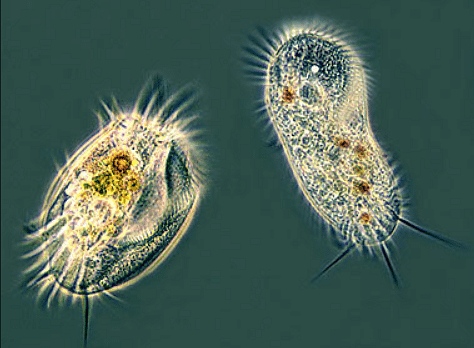
Protozoans
Also Read: Microorganism and Their Types
Characteristics of Protozoans
[Click Here for Sample Questions]
Protozoans are found in the majority of species. These species are free-living. Protozoans move independently. They are microscopic with a simple body structure. They are unicellular. Protozoa have one or more nucleus that is dimorphic. Their body shapes variables are oval, elongated, or flattened. Their characteristics can be classified with the following heads:
Size and Shape
Protozoa are varying substantially; there are so many shapes & sizes of protozoa.
- They have fixed shapes & their structure is complex.
- Protozoa are larger than bacteria in size.
- Protozoa are rod-shaped.
- Protozoa are single-celled organisms.
- They are very small in size & can be visualized through a microscope.
- They are very flexible & can be found in various shapes.
Cellular Structure
Protozoa are unicellular and the details about their cell structure are as follows:
- They have a membrane-bound nucleus in the cell.
- They are different in structure based on their type.
- They can be micronucleus or macronucleus.
- There is a central vacuole present for osmoregulation which removes excess water.
- The plasma membrane encloses locomotory projections & cytoplasm.
- Due to scattered chromatin, the nucleus has a diffused appearance.
- The vesicular nucleus contains a central body called nucleoli or endosomes.
- The membrane-bound cell organelles like mitochondria, lysosomes & other specialized structures are present.
- Protozoa have a eukaryotic cell & they are unicellular.
- The ciliates have a gullet, which is a body cavity that opens outside.
- Some protozoa cytostomes for consuming food.
Habitat
The habitat conditions of Protozoans are as follows:
- Protozoa lives in freshwater or any moist place like the ocean
- It can be easily found in the aquatic environment.
- They are also found in hot springs.
- Some protozoa can be seen in dry environments.
Nutrition
The details about the nutrition process of protozoans are:
- The food of protozoa consists of microorganisms like bacteria, protozoans, diatoms, crustaceans, Jarvis, etc.
- Their food is digested within the food vacuoles.
- The reaction in vacuoles is artistic at first & later it becomes alkaline.
- The amoeboid pseudopodia help in catching out the prey.
Locomotion
Protozoa have diverse modes of locomotion based on their groups.
- They can be divided, into amoeboid & flagella movement.
- Protozoa move here to there in search of food.
- They like to stay away from chemicals that can poison them.
Life Cycle
There are so many stages in the life cycle of the protozoan. But mainly two phases are considered-
- The first is the cyst stage- this stage can survive harsh conditions without nutrients & water.
- The second is the sexual or trophozoites stage- In this stage, they feed & get multiplied. It is an infectious stage.
Reproduction
The reproduction process of protozoans is as follows:
- The protozoa can be sexual or asexual depending on their group.
- They are the one-celled organisms of protozoans.
- The asexual production is done by cell division. In which they produce two actual or unequal cells.
- In some protozoa, sexual reproduction is present which is done by conjugation.
Types of Protozoans
[Click Here for Sample Questions]
They are mainly divided into four main groups of Protozoans.
Amoeboid or Sarcodina
The amoeboid protozoa belong to the protest kingdom.
- They are characterized by their movement.
- They move through projections which are called pseudopods.
- They are the most popular protozoa.
- They are found in moist soil or sea waters.
- Some examples of protozoans are Amoeba, Entamoeba.
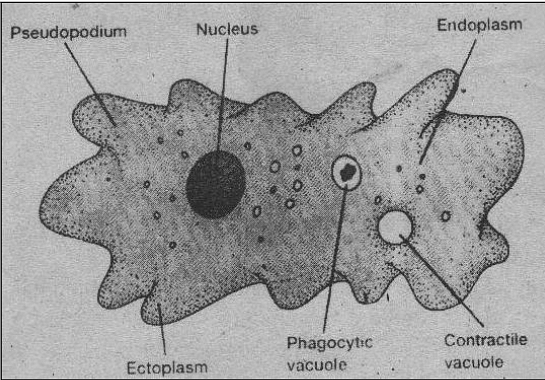
Amoeboid Protozoans
Flagellated or Mastigophora
The protozoan is free-living or parasitic.
- They live in blood strife & they are non-photosynthetic.
- They are called disease-causing protozoa.
- They had a structure of a whip.
- Some examples of flagellated protozoans are Trypanosome, plasmodium.
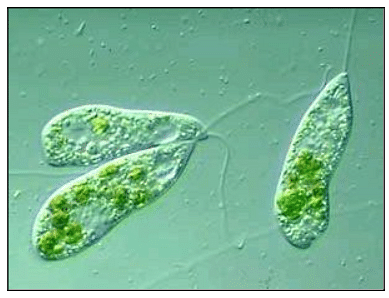
Flagellates
Ciliated or Ciliophora
The ciliated protozoa are found in freshwater.
- They are covered in microscopic projections & look like tiny hairs.
- They are different in pattern from flagella protozoans.
- They are present in large numbers with different patterns.
- Some examples of ciliated protozoans involve vorticella, silica, etc.
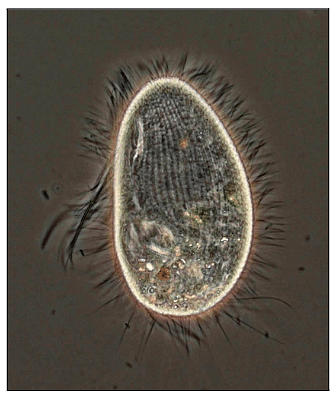
Ciliated Protozoans
Sporozoans
Sporozoans protozoa have a complex life cycle.
- They involve involving both asexual & sexual productions.
- They also include pathogens.
- They are ono-celled, parasitic & spore-forming.
- The Sporozoans are capable of gliding movements.
- Some examples of Sporozoans protozoa are plasmodium, Monocystis.

Sporozoa
Check More: Difference Between Pathogens and Parasites
Disease Caused by Protozoans
[Click Here for Sample Questions]
The diseases caused by protozoans along with the causing factor, symptoms and treatment are tabulated below:
| Name of the Disease | Causal Organism | Vector | Symptoms | Treatment |
|---|---|---|---|---|
| Malaria | Plasmodium parasite | The female anopheles mosquito | Fever, fatigue, vomiting, headache, diarrhoea, anaemia, muscle pain, profuse sweating, etc. | Antimalarial drugs like Chloroquine, Quinine, Mefloquine, etc. |
| Trypanosomiasis or Chagas | Microscopic parasites (from the species Trypanosoma brucei) | The tsetse fly & Glossina sp. | Severe headaches, fever, irritability, aching muscles, swollen lymph nodes, etc. | Pentamidine, Suramin, eflornithine, melarsoprol, etc. |
| Amoebiasis | The parasite Entamoeba histolytica | (NA) because it is transmitted by contaminated water/ food. | Loose bowel movement, loss of appetite, nausea, fever, bloody stool, etc. | Antibiotics like Metronidazole, Tinidazole, Diloxanide furoate, etc. |
| Toxoplasmosis | Toxoplasma Gondii | It is transmitted by polluted water/soil, it can also be transmitted by the fur of the animals like cats. | Eye-redness, blurred visions, flue, etc. | Drugs like pyrimethamine, sulfadiazine, plus Dominic acid, etc. |
| Balantiadisis | The Balantidium coli | Transmitted by animals like pigs. | Due to a lesion in the colon, it can cause an ulcer, blood & mucous in stool, colitis, etc. | Medicines like Tetracycline, Metronidazole, iodoquinol, etc. |
| Giardiasis | Duodenalis or Giardia Lamblia | None, because it is transmitted by contaminated water or food. | Foul-Smelling diarrhoea, flatulence, weight loss, nausea, etc. | Antibiotics like Metronidazole. |
| Leishmaniasis | The Leishmania donovani | The female Sandflies (genus-phlebotomus) | Fever, darken skin, enlarged liver & spleen, etc. | Antibiotics like Pentamidine, miltefosine, etc. |
| Trichomoniasis | The Trichomoniasis aginalis | Transmitted by sexual activities. It is called STD (Sexually Transmitted Disease) | Burning, itching & discharge in the genital organs. In females, it leads to many complications during pregnancy & after birth. | Medicines like Metronidazole, Tinidazole, etc. |
Things to Remember
- The protozoans are likely to be called one-celled organisms.
- Amoeba is the most popular protozoa that can change their shape to paramecium sexual or asexual depending on their belonging groups.
- There are more than 65000 species in the world.
- Protozoa are very small in size & they are not visual without a microscope.
- Protozoans can easily enter the human body.
Sample Questions
Ques. Are protozoans useful for humans? (3 Marks)
Ans. Protozoans eat harmful bacteria that cause infection to humans. They also eat fungi & other harmful bacteria. They are useful in sewage treatment. they live in the body of other organisms & are useful for humans but not all protozoa are harmful and not all of them are useful. Some of them are useful for humans. They keep water safe for drinking & improve the quality of water. They are the decomposer of nature because they decompose the dead organic circumstance.
Ques. What is the food of protozoans? (3 Marks)
Ans. protozoans eat harmful fungi & all the other bacteria that are harmful to us. They digest their food through the vacuoles. They take nutrients from the body fluids of their hosts & feed themselves. They also eat another protozoan. They eat animals & plant debris too. They remove all the harmful bacteria from the water & make it drinkable. Protozoans can easily absorb soluble nutrients like sugar through the cell envelope.
Ques. Write seven important facts about protozoa. (5 Marks)
Ans. Protozoans are Important organisms that are found everywhere. Here are the top 7 facts about protozoa:
- Protozoans clean the water by eating the bacteria of water.
- Protozoans can be harmful & useful.
- Protozoans may look similar to the bacteria but they are different from the bacteria.
- Amoeba is a type of protozoa that can change its bacterial paramecium.
- Protozoans are called the first ancestors of multicellular eukaryotic.
- All the protozoa belong to the Protista kingdom.
- They are too small to be seen with naked eyes.
Ques. Write the name of some useful protozoans. (3 Marks)
Ans. protozoa are harmful but some protozoans are useful for humans. As they are useful in mineralizing the nutrients & cleaning the water for drinking purposes. By doing these things they become a little useful for humans because they decrease the growth of harmful bacteria. Here are the names of some useful protozoAns.
- Acanthamoeba
- Giardia lamblia
- Plasmodium
- Toxoplasma gondii
- Entamoeba histolytica
- Trichomonas vaginalis
- Balantidium coli
- Trypanosoma brucei Gambians
Ques. What is Bacteria? (3 Marks)
Ans. Bacteria are also called germs, they are small-celled organisms. They are found almost everywhere on the earth. They can live under extreme conditions & temperatures. Our human body has a lot of bacteria, it contains a lot of bacterial cells. They are dangerous for humans.
Bacteria cause infections to ancestors the humans. They are found mostly in soil, plants, animals radioactive waste in animals. The structure of bacteria is simple than other organisms.
Ques. Write some characteristics of Protozoans. (5 Marks)
Ans. The characteristics of protozoans are as follows:
- Protozoans do not have any cell walls.
- Protozoa can move by the locomotors during their life entire life cycle.
- The body of protozoa is covered by a pellicle.
- The protozoans are mostly free-living & parasitic.
- Protozoans are single-celled organisms that are found everywhere.
- Protozoans can independently & they can move easily.
- Protozoans are the simplest organisms.
- The binary fission in protozoa is longitudinal.
Ques. What are fungi? Write any 7 types of fungi. (3 Marks)
Ans. Fungi are a group of organisms that have their kingdom. They are not animals, plants, or bacteria. They can be found everywhere. on the land, water, in the air, on plants & in animals too. Fungi reproduce by the means of spores. their cell walls are made up of chitin. The types of fungi are:
- Yeasts
- Rusts
- Truffles
- Puffballs
- Moulds
- Mildews
- Stinkhorns
Ques. Describe the structure of the amoeba. (3 Marks)
Ans. Amoeba is a type of protozoa. It is one of the most popular names of the protozoans. It has a dark speck inside it. It is colourless jelly. It has a barrier to the surface of a cell. This barrier is between the outer & inner surfaces of the cell. An amoeba can change its shape. The structure of an amoeba has three parts:
- The cytoplasm- the colourless jelly
- The plasma membrane- the barrier.
- The nucleus- the dark speck
Read More:



Comments